Two Unforgettable Conversations with HaRav Dovid Feinstein, zt”l
Two Unforgettable Conversations with HaRav Dovid Feinstein, zt”l[1]
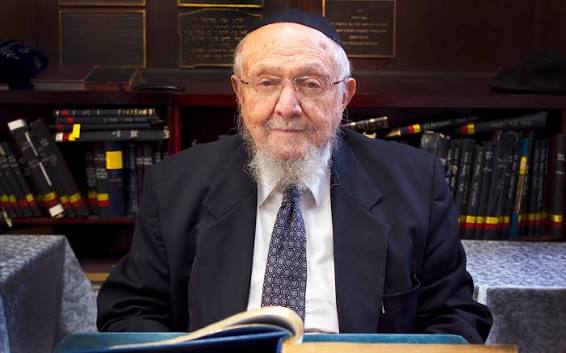 HaRav Dovid Feinstein, zt”l (1929 – 2020)
Source: https://www.rebdovidfeinstein.com/
The 19th of Cheshvan 5787 (corresponding to Friday, October 30, 2026), will mark six years since the passing of HaRav Dovid Feinstein, zt”l. Over the last six years, numerous important articles have been written to memorialize him[2]. In those compositions, the following attributes are emphasized: his complete mastery of all areas of Torah and Halacha, his willingness to share his vast Torah knowledge and wise counsel with all who sought his guidance, the ready ear and the unsparing amount of time that he so willingly shared, as well as his friendly and unassuming nature.
Anyone who was fortunate to interact with Rav Dovid (as he was fondly known) can attest to the truth of those descriptions. Although I cannot count myself among Rav Feinstein’s many Talmidim, I feel privileged to have had several memorable interactions with him. Shortly after his passing, I jotted down some impressions from two of those encounters[3]. After finding some of my notes from 2002, I wrote this article in an effort to share two unforgettable conversations I had with Rav Dovid Feinstein, zt”l.
Conversation Number One
Attending Shul was a major part of my childhood. As a young boy in the early 1980’s, there was an element of Davening together with my father on weekdays (when school wasn’t in session) that was even more special than doing so on Shabbos / Yom Tov. Weekday mornings, after all, are when men and post-Bar Mitzvah aged boys wear their Tefillin. I remember watching everyone around me put on their Tefillin and counting down the days until my Bar Mitzvah – when I’d receive Tefillin of my own.
However, there were two points in the year when I would return home from Shul feeling confused. On the mornings of Chol HaMo’ed Sukkos and Chol HaMo’ed Pesach, I noticed that some of the men / boys would put on their Tefillin, while others did not. When I asked about that inconsistency, I was told that it was a matter of Minhag. After all, not everyone in our Shul came from identical backgrounds. As such, different families had differing customs when it came to wearing Tefillin on Chol HaMo’ed.
By my late teens, that explanation no longer sufficed in satisfying my curiosity. After all, the Torah’s command to wear Tefillin is crystal clear. Additionally, wearing Tefillin is not a rarely observed Mitzvah. Jewish men wear them daily, and all Jews mention this Mitzvah each day while reciting the Shema. How did such radically different Minhagim develop over such a fundamental Mitzvah?
Furthermore, after graduating Yeshiva high school in 1992, I spent a year studying Torah at Yeshivas Chofetz Chaim in Jerusalem, Israel. While there, I was amazed to learn that the universal Minhag in Israel was to refrain from wearing Tefillin on Chol HaMo’ed. How was this to be explained? What had led those who were accustomed to donning Tefillin during Chol HaMo’ed in the Jewish diaspora to jettison that Minhag upon arriving in Israel?
Shortly after my wife and I were married in December of 1999, I began researching this topic. It wasn’t long until I found myself completely engrossed in the subject. For close to two years, I chased down one source after another until a clearer understanding of the matter – as well as a briefcase stuffed with photocopied pages – emerged.[4]
In many ways, this research project was a life-changing experience for me. It opened my eyes to so many new Seforim; I gained a much greater knowledge of Jewish history; I discovered areas of Halacha I was previously unfamiliar with; my explorations broadened my intellectual horizons; my search for clarity brought me into contact with several noted Talmidei Chachomim – some of whom I am still in touch with.
As Pesach of 2002 (5762) approached, I felt that my research was complete, and I longed to speak with a Posek of note who was “holding in the Sugya” and could address some practical Halachic questions I was left with. Additionally, there were some Teshuvos from HaRav Moshe Feinstein, zt”l, on the matter that I wanted to better understand. I immediately thought of turning to HaRav Dovid Feinstein.
After all, Rav Dovid was known to be a towering Talmid Chochom who was more than competent at addressing any area of Halacha. Additionally, who else could better help clarify some of the responsa of Rav Moshe Feinstein – his saintly father – that pertained to this topic? Finally, Rav Dovid Feinstein had a reputation of being extremely approachable and willing to share his valuable time with others. I was certain that if I caught him at the right time, he would help me attain the clarity I was seeking.
It hit me that Chol HaMo’ed Pesach might be the perfect time for making an unannounced visit to Rav Dovid Feinstein. Here’s the plan I came up with: My wife and I were staying with my in-laws in Brooklyn, NY that Pesach. I would Daven at an early Minyan in Brooklyn one Chol HaMo’ed morning and then head to Mesivta Tiferes Yerushalayim (MTJ) on Manhattan’s Lower East Side. If I made it there in good time, I might be able to catch Rav Feinstein after Shacharis at his Yeshiva during the Pesach break – when I assumed he had a lighter schedule.
On the morning of 19 Nisan (the third day of Chol HaMo’ed Pesach) 5762 – corresponding to Monday, April 1, 2002 – I put that plan into action. Thank G-d, every piece of the puzzle fell into place. In fact, I even found metered parking just a short walk from MTJ (considering the challenge of parking in NYC, I saw that as a heavenly Afikoman gift)!
I recently found my notes from that memorable Chol HaMo’ed morning. Although we only spoke for a few minutes, it is amazing how much was covered – and clarified – in a discussion that Rav Dovid had no reason to prepare for. I will attempt to share as many details of that conversation as possible.
I arrived at MTJ during Musaf. After Davening concluded, I approached Rav Dovid as he began walking away from his seat at the front of the Beis Medrash. I introduced myself; he shook my hand and wished me a “Good Mo’ed”.
I told Rav Dovid that I had been spending a lot of time trying to better understand the matter of wearing Tefillin on Chol HaMo’ed. “Can I ask the Rosh HaYeshiva a few questions on the topic”?
At first, Rav Dovid grinned and responded, “What is there to talk about? It’s all a matter of Minhagim”. In the friendliest manner possible, he then prompted me to ask him what was on my mind. I proceeded to ask Rav Feinstein several questions that I had prepared for that much-hoped-for conversation. He patiently – albeit succinctly – answered each of them. Rav Dovid then smiled, wished me well, and proceeded with his planned schedule for that day.
After speaking with Rav Feinstein, I immediately sat in MTJ’s Beis Medrash and jotted down his answers to the questions I had asked him. What follows are not verbatim quotes from Rav Dovid Feinstein, but rather, my notes of what Rav Dovid shared with me in 2002 on the topic of wearing Tefillin on Chol Hamo’ed. I wrote this in a question / answer format trying to reflect that conversation as closely as possible. I also offered some commentary to Rav Feinstein’s answers as footnotes below.
Question 1: How did the Rosh HaYeshiva’s father (i.e. Rav Moshe Feinstein) conduct himself regarding wearing Tefillin on Chol Hamo’ed?
Rav Dovid Feinstein (RDF): He put on Tefillin without reciting a Beracha. However, I don’t know if that was his personal Minhag, or it was the Yeshiva’s Minhag – and he always Davened in the Yeshiva[5]. I never asked him that question.[6]
Question 2: What advice did he give those who asked him how to conduct themselves regarding wearing Tefillin on Chol Hamo’ed?
RDF: He told people to follow their own Minhag – or the Minhag of the place where they Davened.[7]
Question 3: When putting on Tefillin during Chol Hamo’ed, without a Beracha, did the Rosh HaYeshiva’s father hold it was also necessary to make the mental stipulation which the Mishnah Berurah writes of?[8]
RDF: No. He never told me that was necessary.[9]
Question 4: Is it inconsistent for a person who is not living as part of a Chassidishe community to maintain his ancestors’ Minhag of not wearing Tefillin on Chol HaMo’ed?
RDF: No. There is no such thing as “communities” anymore. A person is perfectly justified in following his family’s Minhag.
Question 5: In one of the Rosh HaYeshiva’s father’s Teshuvos[10] he ruled that one who came from a Chassidishe background was free to switch from Davening in Nusach Sefard to Nusach Ashkenaz. Such a change would not be considered abandoning his family’s Minhag. The Igros Moshe explained that many more generations of that person’s ancestors Davened according to Nusach Ashkenaz than Nusach Sefard. As such, Davening in accordance with Nusach Ashkenaz was in fact that person’s family Minhag. Can that principle be applied to other areas where a person coming from a Chassidishe background may want to revert to classic Minhag Ashkenaz?
RDF: Yes. Minhagei Chassidus are relatively new.[11]
Question 6: Can the Rosh HaYeshiva’s father’s principle be applied to one who wants to revert to classic Minhag Ashkenaz and put on Tefillin during Chol HaMoed?
RDF: Yes.
Question 7: Let’s say that one’s ancestors were once part of a Chassidishe community, however, several subsequent generations lapsed in their observance of Torah and Mitzvos. If that person now finds his way back to Shemiras HaMitzvos, what would the Rosh HaYeshiva advise him to do regarding wearing Tefillin on Chol Hamo’ed?
RDF: Assuming that his ancestors were Ashkenazim, it would seem to make the most sense for him to follow classic Minhag Ashkenaz and put on Tefillin during Chol HaMo’ed.[12]
Postscript to Conversation Number One
As described above, Rav Dovid Feinstein, zt”l, held that one with an Ashkenazic background was entitled to revert to classic Minhag Ashkenaz and wear Tefillin on Chol Hamo’ed. After two years of research, followed by this memorable discussion with Rav Feinstein, that is what I chose to do.
However, I first explained my findings to my father to ensure he wasn’t displeased with my decision. My father appreciated the research I had done and completely understood Rav Dovid’s logical approach. In fact, my father even chose to start wearing Tefillin on Chol Hamo’ed himself.[13]
Even with my father’s approval, the matter of fealty to one’s family Minhagim is quite weighty. The first time I put on my Tefillin during Chol HaMo’ed, I wondered if my ancestors were looking down from heaven disappointed with my decision to deviate from their custom. I soon arrived at the following conclusion:
My ancestors are intensely proud to have a descendant living in 21st century America who not only owns Tefillin but also wants to wear them as often as possible.[14]
Conversation Number Two
My wife Layala and I were married in December of 1999. By 2002, we found ourselves dealing with a matter of great concern. Several medical incidents had made it clear that a complex cardiac operation would be necessary for Layala to overcome some developing health challenges and live her life to the fullest.
We spent much of the spring and summer of 2002 intensely researching which surgeon was best suited for the rare cardiac procedure that was needed. After multiple meetings and many deliberations, we arrived at a decision. Layala’s intricate surgery was scheduled to take place at a major New York City hospital in mid-September (just before Sukkos) of 2002.
Having completed our Hishtadlus (efforts), Layala and I recognized that it was now time for prayer. Although my wife and I (and our families) would surely Daven for all to go well, we also remembered Chazal‘s teaching of the great potency of the Tefilos offered by a “Tzadik, the son of a Tzadik” (Yevamos 64a). As such, we arranged to meet with three different senior Rabbanim in the NY area (where we were then living) who fit that bill and enlist their Tefilos. The third – and the most memorable – of those meetings was with Rav Dovid Feinstein, zt”l.
As a child attending elementary school in the early 1980’s, my Rabbeim had enthralled my classmates and me with stories of the legendary Rav Moshe Feinstein, zt”l. Rav Moshe passed away in 1986 when I was just eleven years old. By the time I graduated high school in 1992, my Rabbeim had begun sharing stories of the Piskei Halacha they had received from Rav Moshe’s son and successor as the Rosh HaYeshiva of Mesivta Tiferes Yerushalayim (MTJ) – Rav Dovid Feinstein. From all that I had heard, not only was Rav Dovid a towering Talmid Chochom, but he was also incredibly down-to-Earth, kind, and more than able to apply his vast Halachic knowledge in answering the many complex questions that came his way. After arriving in NY to join Yeshivas Chofetz Chaim (then in the Forest Hills neighborhood of Queens) in December of 1995, I regularly heard more about Rav Dovid – and even met him at a few weddings. Several months earlier, Rav Dovid Feinstein had also shared his wisdom with me when I had approached him for guidance in the matter of wearing Tefillin on Chol HaMo’ed (see above). As such, I was determined to ask him to Daven on Layala’s behalf.
A Rabbi I knew in Queens[15] had a regular Chavrusah learning session with Rav Dovid, and he arranged for my wife and me to meet with Rav Feinstein one morning after Shacharis at MTJ. There are so many layers to what unfolded at that unforgettable visit with Rav Dovid, and I’ll attempt to share as many details of that experience as possible.
Walking through the main doors of 145 East Broadway, we found ourselves in the Yeshiva’s narrow lobby. Marble plaques of all sizes – adorned with the Hebrew names of nearly one hundred years of donors to MTJ – were fastened to every visible part of the walls around us. As we stood before the doors to the Beis Medrash, to our right we noticed a bulletin board with various posted notes, a Pepsi machine, and pay phone booths from a bygone era.
The Rabbi who had arranged our visit promptly met us and said he would take us to Rav Feinstein’s office for our scheduled appointment. Layala and I were ushered just past the old-school phone booths to a nondescript door that was slightly ajar. No signage stated that this was the MTJ Rosh HaYeshiva’s office. What unfolded next nearly left me speechless.
As we were led inside to meet Rav Dovid, I was stunned to realize the room appeared to be more of a large storage closet than a formal office. We immediately noticed a few cases of Pepsi Cola (I later learned that Rav Dovid would personally re-stock the Yeshiva’s soda machine!) that were stacked next to all sorts of cleaning supplies. Although the windowless room was quite spartan, I clearly remember a painted portrait of Rav Moshe Feinstein, zt”l, hanging on a wall near Rav Dovid’s desk.
Rav Dovid Feinstein was seated at his desk, giving something his full attention. Unlike many other Roshei Yeshiva, Rav Dovid was known for not wearing a distinctive Rabbinic frock or a homburg hat. In fact, that morning, he was wearing a (black) straw hat – as Labor Day had not yet arrived to officially end the summer season. As we approached his desk, I wondered what had him so absorbed. Perhaps he was looking something up in a Sefer to answer a pressing Halachic question he had received?
My jaw dropped when I saw what he was focused on. Before him were a few open MTJ Pushkahs that had been dropped off. Piles of quarters, dimes, nickels, and pennies from those now-emptied Tzedakah boxes were stacked on his desk. With the Yeshiva’s office staff away for the brief summer break, Rav Dovid was meticulously sorting and counting all those coins himself!
Rav Dovid took a break from managing MTJ’s finances, looked up, shook my hand, and greeted us with a warm smile. After inviting us to sit, the Rabbi who had arranged our visit left, and Rav Dovid asked us what was on our minds. Layala and I shared our story with him (I was unable to detect whether Rav Feinstein remembered me from my unscheduled visit on Chol HaMo’ed Pesach). We told Rav Dovid about the important medical choices we had to make, and what we had decided. He listened intently and told us that our decision-making process seemed sound to him. Rav Feinstein then offered us a sincere Beracha that everything should go well.
I asked Rav Dovid if he would please Daven for Layala, and he readily agreed – even taking a paper out of his shirt pocket and writing down her full name. After telling him how much we appreciated his Tefilos, I asked Rav Dovid one more question: Was there anything he would suggest we should do as a Zechus for the surgery to go well?
Rav Dovid Feinstein grinned and said the following:
“You told me that you learn full-time in Yeshiva, right?” I nodded in agreement.
“In that case, don’t take on any new additional Torah learning Sedarim. Most likely, that will end up being too much, and you’ll just burn yourself out. Instead, do your best to maximize the time you’re already scheduled to learn Torah. Commit yourself not to Battel or Shmooze with your Chavrusahs and make the most of your Yeshiva’s already existing Sedarim. That’s the best way to increase your Torah learning.”
Somewhat surprised by Rav Dovid’s unexpected, candid, and sensible suggestion, I asked him if there was anything else he would advise. He nodded and said: “Yes – Chessed. In numerous places, Chazal tell us that the most trusted Segulos to protect ourselves from harm are the combined efforts of Torah and Chessed[16]. You said you live in Queens, right? I receive a lot of Shailos from Queens Hatzolah, and I hear they need more volunteer members. I also know that many of the married Talmidim in your Yeshiva are Hatzolah members. Have you thought about joining Queens Hatzolah?”
I told Rav Dovid that with all we were dealing with, it just wasn’t the right time for me to join Hatzolah. He understood and explained that he only suggested Hatzolah as a good example of getting involved in Chessed – especially since he knew they needed additional volunteers. He encouraged both me and Layala to find other opportunities to share our time, skills, and resources with others who needed a helping hand.
Rav Feinstein concluded by remarking with a smile, “So many people look for new-fangled Segulos when Chazal already told us that the best Segulos are Torah and Chessed. You’ll never go wrong by following Chazal.” I couldn’t help but smile in return.
Rav Dovid offered us a final point of encouragement: the timing of my wife’s upcoming surgery was fortuitous. Since the procedure was scheduled for the day after Yom Kippur, he told Layala that she would be heading into the operating room with a clean slate. What could be better than that? That idea hadn’t crossed our minds, and it did help put her at ease.
We thanked Rav Feinstein for his time – and for agreeing to Daven on Layala’s behalf. He smiled and wished us well as we rose to leave. Walking past the stacks of soda cans we exited Rav Dovid’s office, found ourselves in MTJ’s lobby, and then on the bustling sidewalks of New York City’s Lower East Side.
While walking to our parked car, I turned to Layala and said, “I think I’ve got Rav Dovid all figured out . . . he’s in it for the Kavod!” We both enjoyed a hearty laugh.[17]
Layala’s complex cardiac procedure took place just before Sukkos of 2002. Thank G-d, the operation was successful and her recovery went smoothly. A week or two later, she returned to work, and our lives resumed their familiar routines.
My wife and I attribute the positive outcome of that surgery – and her recovery – to Hashem, the exceptional team of doctors and nurses who were His agents, and my loving in-laws who went above and beyond the call of duty. We also thank our many family members and friends who Davened for Layala to be blessed with a Refu’ah Sheleimah.
Finally, we thank the “Tzadikim, sons of Tzadikim” who offered their unique Tefilos to Hashem on Layala’s behalf. In the years since the summer of 2002, we continue to think of their concern, their words of encouragement, and the wise counsel they each shared with us.
Of the three senior Rabbanim we met with that summer, our meeting with Rav Dovid Feinstein, zt”l, is the one that left the greatest impression on us. Rav Dovid’s humility, his loyalty to the teachings of Chazal, and his efforts to encourage a nervous young couple facing a serious challenge are attainable character traits which we strive to emulate.
Notes
- I thank Rabbi Dr. Eliezer Brodt (Ramat Beit Shemesh, Israel) for his important comments to an earlier version of this article. I thank my father, Mr. U. Harold Males (Jerusalem, Israel) for his editorial assistance. ↩
- Many of those articles have been gathered and are available online at: https://ravdovidfeinstein.com/articles/ . For books about Rav Dovid Feinstein, see Besser, Yisroel. (2022). Reb Dovid. Artscroll Mesorah Publications. Additionally, in 2020, Professor Jonathan Boyarin wrote a book about the sabbatical year he spent studying Torah at Mesivta Tiferes Yerushalayim (MTJ). It contains many heartwarming vignettes about Rav Dovid Feinstein – and the unique culture he helped create in his Yeshiva. See Boyarin, Jonathan. (2020). Yeshiva Days. Princeton University Press. ↩
- That article is available online at: https://cross-currents.com/2020/11/12/two-encounters-with-harav-dovid-feinstein-ztl/ ↩
- See the commentaries to the Tur and the Shulchan Aruch, OC 31. Numerous comprehensive articles have been written which cover the important sources of this centuries-spanning debate. For an encyclopedic work on the topic, see volume five of Rabbi Binyamin Shlomo Hamburger’s “Shorshei Minhagei Ashkenaz” (Bnei Brak 5778). See also the late Professor Jacob Katz’s sweeping historical essay”תפילין של חול המועד – חילוקי דעות ומחלוקות ציבוריות בהשפעת הקבלה” – available online at: https://drive.google.com/file/d/0B7D9dwn_TD5KV2FrLXQ2ZWtEMzg/view?resourcekey=0-xKsTe1fO0HxpM3ZyiSaQnA . For shorter compositions in English, an article by Rabbi Chaim Jachter is available here: https://www.koltorah.org/halachah/tefillin-on-chol-hamoed-by-rabbi-howard-jachter , and an article by Rabbi Moishe Dovid Lebovits is available here: https://thehalacha.com/wp-content/uploads/Vol12Issue16.pdf . ↩
- See Shu”t Igros Moshe, YD 2:75 (at the end) where Rav Moshe clearly writes that if a Yeshiva’s Minhagim differ from that of one’s family, the Yeshiva’s customs are to be followed in public. In this case, Rav Dovid was saying that it was conceivable to him that Rav Moshe’s family Minhag was to not wear Tefillin on Chol HaMo’ed (I assume based on the teachings of the Vilna Gaon). However, upon taking on the mantle of leadership at MTJ so many decades earlier, Rav Moshe would have adopted the Yeshiva’s Minhag of putting on Tefillin during Chol HaMo’ed. This speaks volumes about how serious Rav Moshe was about what he wrote in the above cited responsum. See also Mishnah Berurah 31:8 (at the end). ↩
- I remember feeling somewhat surprised when Rav Dovid told me that. I had naively assumed that there was no detail about Rav Moshe’s life, conduct, and Halachic rulings which he had not found an opportunity to discuss and clarify with his father. ↩
- See again Shu”t Igros Moshe, YD 2:75 (at the end) and also Mishnah Berurah 31:8 (at the end). ↩
- See Mishnah Berurah 31:8. This mental stipulation is recorded earlier by the P’ri Megadim (Eshel Avraham) to OC 31:2. ↩
- See Shu”t Igros Moshe, OC 4:105.5 where Rav Moshe advised someone in Israel on the propriety of wearing Tefillin on Chol HaMo’ed. Rav Moshe instructed him to not recite the normal Berachos when privately putting on his Tefillin. He never told his questioner to also make the mental stipulation suggested by the Mishnah Berurah. The Aruch HaShulchan (OC 31:4) also makes no mention of this mental stipulation. See the 13th entry in the encyclopedic work Pachad Yitzchak on the topic of Tefillin on Chol HaMo’ed for a responsa by Rav Chananya Kazis. He writes that omitting the Berachos when donning Tefillin on Chol HaMo’ed is tantamount to making the above-mentioned mental stipulation. That being the case, it follows that making that provision after purposefully refraining from reciting the Berachos would be redundant. This might explain why neither the Aruch HaShulchan or Rav Moshe advised making that mental stipulation. ↩
- Shu”t Igros Moshe, OC 2:24 ↩
- After all, in the big scheme of Jewish history, the late 1700’s was not that long ago. ↩
- This answer seems to be based upon Rav Moshe’s reasoning cited in question number five. It should be noted that I asked Rav Dovid question number seven regarding someone living in the Jewish diaspora. See Shu”t Igros Moshe, OC 4:105.5 which addresses a person residing in / visiting Israel. ↩
- That came to an end once my parents made Aliya in the summer of 2021. Once in Israel, my father joined my brothers already living there in following the prevalent Minhag in Eretz Yisrael of not wearing Tefillin on Chol HaMo’ed. For Rav Moshe Feinstein’s understanding of how that became the prevailing custom there, see Shu”t Igros Moshe, OC 4:105.5. ↩
- In the summer of 2016, my wife and I relocated to Memphis, Tennessee – where I’m proud to serve Young Israel of Memphis as its Rabbi. Interestingly, our Shul follows the Minhagei HaGra on many matters – including not wearing Tefillin on Chol HaMo’ed. As such, after all my research and my decision to revert to classic Minhag Ashkenaz on this matter, whenever Chol HaMo’ed rolls around, I Daven together with my Shul without wearing my Tefillin. However, once Davening concludes and people have left, I look forward to putting on my Tefillin without the usual Berachos (as per Shu”t Igros Moshe, OC 4:105.5 and Mishnah Berurah 31:8). Once my Tefillin are in place, I then recite the three paragraphs of Shema (as per Shulchan Aruch OC 25:4 – based on Berachos 14b). ↩
- Rabbi Boruch Moskowitz of Kew Gardens, NY ↩
- See for example Sanhedrin 98b ↩
- In preparing this article, I wondered what HaRav Moshe Feinstein, zt”l, had used for an office while leading MTJ. I couldn’t believe the world would have allowed him to use the same office space that Rav Dovid had used. In phone conversations with Rabbi Shmuel Fisheles (Rav Dovid’s son-in-law) and Rabbi Yissochor Ginzberg (Principal of MTJ’s elementary school), I learned that the small room lined with Seforim in the back right corner of MTJ’s Beis Medrash had once served as Rav Moshe’s office. When Rav Dovid succeeded his father in heading the Yeshiva in 1986, he repurposed that room into a library and Shiur room. In need of an office, Rav Dovid chose to use a storage room off the Yeshiva’s lobby for that purpose. Shortly after Layala and I met with Rav Dovid in the summer of 2002, MTJ renovated an early childhood center room that had become available, and turned it into a more fitting office for Rav Dovid Feinstein, zt”l. That office (I’m told) was a proper space that included windows – and no cleaning supplies or stacks of soda cans. ↩
13 thoughts on “Two Unforgettable Conversations with HaRav Dovid Feinstein, zt”l”
I received some feedback that people fondly referred to Rabbi Dovid Feinstein as “Reb Dovid” and not “Rav Dovid” like I did in my article.
This may be 100% true (as the title of the Artscroll book about him clearly indicates).
Until this was pointed out to me, I hadn’t realized that I had used “Rav” rather than “Reb”.
Here’s what I think must have happened:
The title “Reb” is more informal than the title “Rav”.
Perhaps those who lived in Rav Dovid Feinstein’s orbit and related to him on a daily basis felt comfortable referring to him as “Reb”.
Others, however, who were further removed and only dealt with him occasionally were simply awed by him.
As such, they just have a hard time referring to a man of his stature in an informal manner.
I’m assuming that’s what led me to use “Rav” rather than “Reb” throughout this article.
A wonderful article! and In Wiki We Trust 🙂 — see https://en.wikipedia.org/wiki/Reb_(Yiddish) — but seriously, seems like nowadays, many use “Reb” the way you [and I] use “Rav”.
RDF: No. There is no such thing as “communities” anymore. A person is perfectly justified in following his family’s Minhag.
============================
Did you find anything on where the concept of a “family” minhag started (assumedly when the community one ended?) and who authorized the official end of communities?
GT
Thanks for your comment.
I wasn’t able to gain any more clarity on all that Rav Dovid meant with that succinct answer.
What was clear from that reply is that if one’s family Minhag is to not wear Tefillin based on the fact that his ancestors were once part of a Chassidic community, he’s perfectly entitled to retain that family Minhag — even if he’s no longer living as part of a Chassidic community.
Thank you Rabbi Males for this great submission!
“the prevalent Minhag in Eretz Yisrael of not wearing Tefillin on Chol HaMo’ed”
FYI, there is a significant population there that does wear tefillin on Chol Hamoed, though I think most such do so בצנעא, privately, rather than בפרהסיא. However, there are also multiple minyanim in various places in EY where tefillin is worn on Chol Hamoed בציבור as well.
Eretz Yisroel contains people with a variety of מנהגים, and there is place in it for מנהג אשכנז as well, which, last I heard, has not been proscribed there.
Thank you for your comment.
See Shu”t Igros Moshe, OC 4:105.5 (cited in footnote #9) where Rav Moshe advises one who’d like to wear Tefillin in Israel during Chol HaMoed to do so in private in deference to the local Minhag.
Within that short Teshuvah he states:
כי אפשר שעתה שכבר באו הרבה מיוראפ יש גם שמניחין תפילין ואין מקום כבוע כעת
With the post-Holocaust influx of Olim, it would make sense that some Shuls / Yeshivas were established throughout Israel that maintained the old Minhag Ashkenaz of putting on Tefillin during Chol HaMoed. In those Minyanim, I would assume they wear their Tefillin publicly. Unfortunately, I just haven’t been in Israel for Sukkos / Pesach enough to know more about that.
(Btw, that brief line of Rav Moshe’s may also explain what Rav Dovid meant when he said: “There is no such thing as “communities” anymore.”
With so many people from different places now living in such close proximity to one another, the older concept of ‘monolithic communities’ no longer exists.)
This short Teshuvah from Rav Moshe can be read online here:
https://www.hebrewbooks.org/pdfpager.aspx?req=920&st=&pgnum=197
See new publication אשכנז מבצר המסורת (https://moreshesashkenaz.org/en/shorshei/290-bastion-tradition), from Rav Binyomin Shlomo Hamburger שליט”א for in depth discussion about the place and status of מנהג אשכנז בארץ ישראל in our time.
Thank you for sharing.
Any idea when the Shorshei Minhag Ashkenaz series will again be available?
Please define “significant”. My impression is that it’s not even 1% of the non-chasidic population (even leaving out the Chasidim and Eidot Mizrach).
However, there are also multiple minyanim in various places in EY where tefillin is worn on Chol Hamoed בציבור as well.
Can you name one or two? I’m sure people who are visiting for yom tov would love to know.
My brother in law was a talmid of Rav Dovid in the 1960s. He described him exactly as you have depicted him.
Thanks for sharing.
That’s a space of nearly 40 years — what a lesson in consistency!
There’s a story that in the early days of Shaare Tzedek Hospital in Yerushalayim, which was established and mainly staffed by Yekkes, after shacharis on chol hamoed, the gabbay would announce, “Don’t forget to put on tefillin בצנעה!”