Quiz Answers; Response to Criticism; Rav Schwab Writes to the Rogochover
Quiz Answers; Response to Criticism; Rav Schwab Writes to the Rogochover
Marc B. Shapiro
1. Let me begin with the riddles from my last post here.
A. Where do we find that Shammai not only disagrees with Beit Shammai, but also agrees with Beit Hillel?
B. In the days of the tannaim a certain item was unquestionably muktzeh. However, in the post-talmudic period, some hold that this item is no longer muktzeh. What item am I referring to? Provide the actual source in the Talmud and later authorities to justify your answer.
The answer for number 1 that I intended is found in Orlah 2:4-5. Mike Wiessenberg, David, Shimi, and Sam got this right.
Yet Moshe Schwartz offered a different answer which I think is also correct. He wrote:
From the baraisa brought down in Beitzah 20a, it could be suggested that only Beis Shammai held that one can’t bring an olah on Yom Tov, but from the fact that Bava Ben Buta said the halacha is in accordance with Hillel, it can be inferred that he is testifying to Shammai’s opinion as well. Especially since the Gemara in Shabbos 15a doesn’t ask from the machlokes of olah on Yom Yov when it says that there was only three times that Hillel and Shammai argued. So, all this suggests to me that here Shammai was in agreement with Beis Hillel and Hillel himself that you can bring an olah on Yom Tov. See also Tosafos in Chagigah 7b.
For number 2, no one gave the answer I intended: In the days of the tannaim a get was muktzeh. That was because you could not do anything with it on Shabbat. You could not even use it to learn the halakhot of writing a get since Torah learning was to be entirely oral. Yet after the Oral Law was written, R Moshe Isserles states, Even ha-Ezer 136:7, that according to some it is now permitted to handle a get on Shabbat as it is not muktzeh. In other words, since you can learn various halakhot by examining the get, one is now permitted to do so on Shabbat. That this is what R. Isserles means is made clear by his comment in Darkhei Moshe, ibid.:
בזמן הזה שנתנה תורה שבע”פ לכתוב לכ”ע מותר לטלטל גט שהרי אדם יכול ללמוד ממנו כמה הלכות גטין
It is interesting to note that while in Darkhei Moshe R. Isserles says that everyone agrees with this opinion, in the Shulhan Arukh he writes “some say”.
The Beit Yosef, Even ha-Ezer 136, also says that everyone agrees that today it is permitted to carry a get, but in the Bedek ha-Bayit he questions this permission.
As mentioned, during the era when the Oral Law was not written all agree that a get was muktzeh (and the same law would apply to a ketubah) since all learning had to be oral. What I don’t understand, and maybe some of our learned readers can enlighten me, is what are we to make of what the Talmud refers to as megilat setarim. These were private notebooks that the Sages had during the period when the Oral Law could not be written down for the public. In order not to forget what they were taught, the Sages wrote things down. Rashi, Shabbat 6b and Bava Metzia 92a, tells us that these notebooks had to be hidden. However, Maimonides, in his introduction to the Mishneh Torah, also notes that the Sages recorded both what they were taught and their own independent Torah insights. Yet, unlike Rashi, he does not mention that they hid their notebooks. Furthermore, unlike Rashi, Maimonides does not view the permission to write down Torah thoughts as intended solely to prevent forgetting. For him, Torah she-be-al Peh signifies that Torah is transmitted orally rather than through written means. Nevertheless, it was never forbidden to write down the Oral Torah for personal use; it was kept hidden only to prevent its use for public teaching.[1]
According to Rashi, in the era of Torah she-be-al Peh one was not allowed to study the Oral Law from a written text. Writing it down was permitted only as an emergency measure, to prevent forgetting, but under normal circumstances it was forbidden. On this view, it makes sense that a get would be considered muktzeh. However, according to Maimonides, it was never forbidden to write down the Oral Law for private use. Since, in his opinion, one could study the Oral Law privately from written texts, why should a get be muktzeh? How is it different from a private notebook used for study? If anyone has an answer to this, I would be interested to hear it.
R. Meir Mazuz offers another interesting example of how halakhah has evolved in response to changing realities. Shulhan Arukh, Orah Hayyim 320:6, states: “One is permitted to squeeze lemons [on Shabbat].” R. Mazuz explains that this ruling is not mentioned by the Geonim or by Maimonides because, in their time, lemons were only primarily for medicinal purposes rather than as a food. Consequently, squeezing them for drinking would have been considered forbidden on Shabbat. This is in line with the halakhah recorded in Shulhan Arukh, Orah Hayyim 328:37: “Anything that is not eaten or drunk by healthy people is forbidden to be eaten or drunk for medicinal purposes [on Shabbat].”
2. In my article “The Brisker Method Reconsidered” and also in my book Studies in Maimonides and His Interpreters, I refer to how R. Hayyim Soloveitchik ignored Maimonides’ own explanation to the sages of Lunel of Mishneh Torah, Hilkhot Nizkei Mamon 4:4.[2] Maimonides informed them that their text of the Mishneh Torah was incorrect and supplied the proper reading. However, R. Hayyim, in his commentary, disregarded Maimonides’ correction, illustrating how the Mishneh Torah had taken on a life of its own such that there was no perceived need to follow even Maimonides’ own assertion that the text was mistaken.[3]
In a recent article, Rabbi Elisha Friedman takes issue with my point:[4]
To correct the record it is worth pointing out one error in Shapiro’s overall excellent discussion of this subject. One of his central proofs for his approach, which he repeats in his Studies in Maimonides and His Interpreters (University of Scranton Press, 2008), 55, refers to R. Hayyim’s explanation in Hilkhot Nizkei Mamon 4:4. The problem is that Rambam, in a letter, revised the text of this halakha, as R. Yosef Karo in his commentary Kesef Mishneh, ad loc., cites. R. Hayyim completely omits any mention of this revision in his discussion, which leads Shapiro into a reflection of how to view halakhic works which are based on faulty texts. This point is made even more emphatically in the book he is reviewing, Norman Solomon, The Analytic Movement: Hayyim Soloveitchik and His Circle (Scholars Press, 1993), 219. While the overall point—that R. Hayyim is impervious to such textual matters—is undoubtedly correct and can be proven from other explanations in his work,[5] Solomon and Shapiro’s example is in fact not one of them. The piece is unrelated to the words Rambam changed in his letter; it works according to all versions. R. Hayyim proves that Rambam must be referring to an animal which pays damages from its own value and then wonders why this halakha appears in the context of the watchman’s larger responsibility for damages. Quoting Rambam’s responsum might have been proper scholarly etiquette for the sake of accuracy, but it would not have changed the overall trajectory.
Let us examine this case. Maimonides writes as follows in Hilkhot Nizkei Mamon 4:4:
When a person entrusts his animal to an unpaid watchman, a paid watchman, a renter or a borrower, these individuals assume the owner’s responsibilities. If the animal causes damages, the watchman is held liable. When does the above apply? When they did not guard the animal at all. If, however, they guarded the animal in an excellent manner, as they should, and it got loose and caused damage, the watchmen are not liable, and the owners are liable.
The problem with this halakhah is that if the watchman guarded the animal properly, and it still got out, why should the owner be liable? Maimonides was asked about this by the Sages of Lunel and he told them that they should correct their texts to read: “If, however, they guarded the animal in an excellent manner, as they should, and it got loose and caused damage, the watchmen are not liable. If the watchmen guarded the animal in an inferior manner, they are not liable if they are unpaid. Instead, the owners are liable, even if the animal kills a person. The watchman is liable if he is paid, a renter, or a borrower.”
What I said—and what Friedman criticizes—is that R. Hayyim offered an analysis of the mistaken text. Looking again at R. Hayyim, I see no reason to retract what I wrote, and I don’t understand how Friedman can criticize me. The issue isn’t whether one of R. Hayyim’s hiddushim works with both the mistaken text and the corrected text. The issue is, as I said, that R. Hayyim analyzes and explains the mistaken text. He does not pay attention to Maimonides’ correction, which he knew as it is mentioned in the Kesef Mishneh. Thus, right at the beginning of R. Hayyim’s commentary to Nizkei Mamon 4:4 he writes:
וא”כ הא קשה רישא שכתב הרמב”ם שבשמירה מעולה הבעלים חייבין, ואמאי חייבין כיון דעיקר הנגיחה הויא נגיחה של פטור
Yet in the corrected text of the Mishneh Torah, it never states that the owners are liable. R. Hayyim continues discussing the uncorrected text, leading the Hazon Ish in his comment on this passage to write: וכבר כתב הכ”מ בשם הר”מ בעצמו שהוא ט”ס
In R. Hayyim’s commentary to Nizkei Mamon 4:11, which I additionally mention in Studies in Maimonides and His Interpreters, his analysis also ignores the corrected text. He cites the uncorrected text and states:
הרי דדעת הרמב”ם דרק בזמן שהשומרין פטורין הוא דהבעלים חייבין
He also writes:
ולפ”ז הרי לכאורה יש למידק מדנקט הכא הרמב”ם הך דינא דהבעלים חייבין
Yet as we have seen, in his responsum to the sages of Lunel, Maimonides says that the underlined words are a mistake, meaning that R. Hayyim’s presentation of Maimonides’ view is not in accord with his corrected text.
In response to what we have just seen from R. Hayyim, the Hazon Ish writes:
צ”ע למה לא נקבל מש”כ הכ”מ בשם רבו בתשובתו לחכמי לוניל
In other words, the Hazon Ish calls attention to the fact that R. Hayyim, in his explanation, operates on the assumption that the printed text is correct, while ignoring Maimonides’ responsum in which he states that the text is mistaken.
In Studies in Maimonides and His Interpreters, p. 55 n. 232, I refer to R. Eliyahu Soloveitchik’s note to an article by Prof. Shlomo Zalman Havlin.[6] Let me cite his words, stated with regard to Nizkei Mamon 4:4, as I think they explain well the phenomenon we are discussing and are in line with my approach.
אמנם עיון בספר חידושי רבנו חיים הלוי מראה (וזוהי גם רוח הדברים בבית מדרשו) שכשהוא נפגש עם שינויי גירסה מסוימים בגמרא או ברמב”ם, אין הוא דן בשאלה “מה יצא מתחת קולמוסו של מר בר רב אשי או של רבנו משה בן מימון”, הוא גם לא דן בשאלה הכללית יותר “מהו הנוסח הנכון”. רבי חיים מתייחס לשינויי גירסה אצל הקדמונים כאל כל מחלוקת אחרת בפשט הסוגיה, שלומדים את שתי הדעות בשווה ואלו ואלו דברי אלקים חיים. מבחינה פרשנית אפשר לומר שרבי חיים קידש את אשר היה לפניו והרחיק את עצמו מכל דיון בשאלות עובדתיות היסטוריות, ובמקומו עסק בחקר התבונה הטהורה של תורתינו הקדושה . . . ומאחר שאין ענייננו “בירור הנוסח” אלא לומדים אנו את הנוסחאות השונות, לכן גם כשהרמב”ם בתשובה מגיה את דברי עצמו, ומנמק את הנוסח הנפוץ בטעות מעתיקים, העובדה שלפני המגיד משנה היה נוסח מסויים ברמב”ם (הנוסח הנפוץ) דיה היא כדי לקבוע שהנוסח הזה תורה הוא, ויש להתייגע על פירושו.
The very point I made, and which Friedman criticizes, is also made by R. Yehoshua Inbal.[7] He writes:
והרי הגר”ח קיצוני בדבר עוד הרבה יותר מהחזו”א, וכנודע גם במקום שהרמב”ם עצמו הסביר את דבריו, והובאו הדברים בנו”כ, וגם במקום שהרמב”ם שלפנינו ט”ס לפי עדות הרמב”ם עצמו המובאת בנו”כ, התעלם מכך הגר”ח.
In his note to this passage, he refers to Nizkei Mamon 4:4 and Maimonides’ correction of the text, and then states:
אבל הגר”ח לא קיבל גילוי זה ומיישב הג’ הישנה ובסו”ד כותב שזה גם ד’ הרמב”ם
I realize that Friedman can criticize Inbal just as he criticized me, but I feel comfortable knowing that I am in such good company.[8]
Turning to a related issue, the Hazon Ish is often cited as one who was opposed to the Brisker approach. However, the most famous opponent was R. Jacob David Wilovsky, the Ridbaz. I have discussed his opposition to what he called “chemistry” (which includes the Brisker method) in earlier posts here, and here. In my earlier writing about the Ridbaz, I was unaware of another example of his criticism of the analytic approach. This appears in his Nimukei Ridbaz, Parashat Terumah, p. 24a:
שבעו”ה נתפרצה במדינות ליטא וביחוד בזאמוט ע”י איזה רבנים לימוד בדרך הכאמי או הגיון והוא לא רוח התורה אך רוח זרה באה מבחוץ והכניסו בעו”ה להתורה שבע”פ ונתפשטה לימוד הזה אצל בחורים בעו”ה עד שהתורה לבשה צורה אחרת בעו”ה והמבינים מועטים והוא רחום יכפר עון
Regarding the Hazon Ish’s critique of R. Hayyim’s hiddushim, R. Elyakim Schlesinger reports that this was not intended for public consumption, meaning that it never should have been published.[9]
R. Hayyim Dov Ber Gulevsky, the grandson of R. Simcha Zelig Reguer, also claimed that the critique of the Hazon Ish was published against the wishes of the Hazon Ish’s family.[10]
והנה בשלהי קיץ שנת תשל”ה, שמוע שמעתי שיצאו אנשים בלתי הגונים, ולא שמעו לקול הורים ומורים, ולמשפחת הגאון החסיד צדיק יסוד עולם בעל החזון איש. והוציאו במרמה נגד רצונם את ההשגות שהחסיד הנ”ל רשם על ספר חדושי רבינו חיים הלוי. והדפיסו את זה יחד עם הספר חדושי רבינו חיים הלוי
R. Hayyim Kanievsky also reported that his father, the Steipler, was unhappy that the Hazon Ish’s critique had been printed, though not because he feared it would be seen as disrespectful. Rather, his concern was that among the Hazon Ish’s comments were some weak proofs. Readers might mistakenly assume that these weak arguments formed the basis of the Hazon Ish’s position, when in fact they were merely supplementary points that did not affect his fundamental argument.[11]
3. In Renewing the Old, Sanctifying the New, I discuss R. Kook’s view about the substitution of vegetarian sacrifices in place of animals. I also refer to what the Nazir—who unlike R. Kook was a vegetarian—says about this. Unfortunately, I overlooked an important passage from the Nazir that appears in Elchanan Shilo, Yahadut Kiyumit (Tel Aviv, 2017), p. 199. This text, written after the Six Day war, was published by Shilo from manuscript:
כל רוחי מתקומם לזביחת זבחים ולהזאת דמם. הן אנו מנוזרים מבשר בהמות ועופות, אני בערך ששים שנה, ובני ביתנו כל ימי חייהם. וכיצד תהי עבודת הקודש והמקדש בזביחת בעלי חיים והזאת דמם
אמנם זה רוח טהור, כמו רוח הקודש, המתקומם נגד זה. אבל זאת היא חוקת התורה, חוקה חקקתי, גזרת התורה, ואין לנו רשות להרהר אחריה
אמנם כבר קדמו חכמינו ז”ל ואמרו בגלוי, עתידים כל הקורבנות שיתבטלו, חוץ מתודה. וכן בשערי אורה. ואולי מתקרב ובא העתיד לבא. ומשום זה מן השמים המניעות והמכשולים, לעכב שלא תתחדש עבודת המקדש בזבחים, כמו קרבן פסח. אמנם יכולה להתחדש העבודה במקדש, בהקרבת המנחות
The Nazir wonders if the future time when there will be no animal sacrifices is almost upon us. This would explain why we are precluded from rebuilding the Temple at present, so as to prevent us from having to offer animal sacrifices. In other words, the Temple will only be rebuilt after we have forsaken animal sacrifices and have moved into the era when only vegetarian sacrifices will be acceptable to God.
4. In a nice post on the Seforim Blog here, R. Shmuel Lesher dealt with aspects of R. Shimon Schwab’s approach to R. Samson Raphael Hirsch. I would like to add a few points.
Lesher deals with the famous letter from R. Schwab to the East European gedolim asking about the validity of the Hirschian approach. Lesher writes: “There seems to be some discrepancies among those who record the story. Marc B. Shapiro dates the letter to 1933, whereas Jacob J. Schacter says it was 1934. Most surprising is R. Dr. Norman Lamm’s assertion that the question was posed from America.”
The letter was sent in 1933. I know this because R. Joseph Rozin’s reply has been published in Leo Levi’s Sha’arei Talmud Torah, p. 348. It is dated 25 Adar, 5693 which corresponds to March 23, 1933. In fact, a copy of R. Schwab’s original letter, which identifies him as assistant rabbi in Darmstadt— the senior rabbi was R. Yonah Merzbach—survives in the R. Joseph Rozin archives at Yeshiva University. It is dated Erev Shabbat, Parashat Ki Tisa, 5693. This corresponds to March 17, 1933. Based on the replies that R. Schwab received, I believe that the identical letter was sent to all the rabbis R. Schwab turned to in 1933.
Leo Levi at one time mistakenly assumed that R. Schwab wrote the letters when he was a yeshiva student in Lithuania.[12] Lesher correctly writes: “Contrary to what Dr. Levi writes that R. Schwab was still a student in a Lithuanian yeshiva when he posed the question, R. Schwab had already left the Mir Yeshiva by 1931.”
But then, Lesher also writes:
Nevertheless, there is reason to believe that Dr. Levi’s record of the story should be the most accurate. In addition to publishing the four responses to R. Schwab, Dr. Levi writes in his Torah Study: A Survey of Classic Sources on Timely Issues (New York: Feldheim, 2002), 363n13, available here, that R. Schwab himself shared R. Yosef Rozen’s response with him personally. It is unlikely that Dr. Levi would not have gotten the context of the letters accurately from R. Schwab. Perhaps one can suggest in Dr. Levi’s defense, that R. Schwab may have posed the question at least twice. Once when he was a yeshiva student in Lithuania and then again in writing later when opening a yeshiva in Bavaria.
Yet this is needless speculation, as there is no question that in the text referred to in note 12 Levi was mistaken about the context of the letters. (As we shall soon see, Levi would get something wrong much more significant than this). In fact, in a later article, Levi correctly writes that R. Schwab sent the letter to the gedolim when he was a young rabbi in Germany, but he was wrong is stating that R. Schwab wrote it when it was rabbi in Ichenhausen.[13] As mentioned, he actually sent it before this, when he was assistant rabbi in Darmstadt.
In Ha-Pardes, December 1939, R. Schwab published what he later said was the letter he sent to the gedolim.[14] Yet this is not correct. The article in Ha-Pardes only includes his halakhic discussion about secular studies, which was the main part of the letter.[15] Missing from Ha-Pardes is the introduction to the letter, which is itself a fascinating historical document that illustrates R. Schwab’s disillusionment with the German Orthodox Torah im Derekh Eretz approach. It is published here for the first time, and in the transcription I have added paragraphs for ease of reading:[16]
מו”צ דק”ק דארמשטאדט והגליל
Rabbin. Ass. S. Schwab
Darmstadt
בעה”י דארמשטאדט עש”ק פ’ כי תשא תרצ”ג לפ”ק
החיים הברכה והשלו’ יחולו על מרום פסגת ראש הר קדש ה”ה עטרת תפארת גאון יעקב מחמד עינינו נשיא ישראל שר התורה קדוש וטהור יאמר להוכקשת”ר רשכבה”ג אדמו”ר מרן הגאון האדיר מו”ר הג”ר יוסף ראזין שליט”א ראב”ד דק”ק דווינסק יע”א
אחרי קידה והשתחוי’ מול הדרת קדשו ופ”ש כנכון!
בזה אגיש נגד פני כקשת”ר שליט”א שאלה חשובה למעשה בבקשה שטוחה שכשת”ר ימחל נא בטובו להשיבני דבר ולהודיעני שמעתתא אליבא דהלכתא בענין דלקמן וכוונתי ללבן ולברר האמת לאמיתו בשאלה זו ואציעה שאלתי ובקשתי בזה רק לידע הלכתא בקושטא ותורה היא וללמוד אני צריך ומעומק מקור חכמת תורתו ידלה נא כשת”ר לי מים חיים ויורני דרך הישר ואורח מישור אלך בה בס”ד
הנה בודאי ידוע להוכקשת”ר שיטת רוב יהודי אשכנז החרידים [!] על דבר ד’ ומקורם הטהור הוא הגרש”ר הירש זצ”ל בענין התחברות חכמת התורה עם חכמות אומות העולם וסברתם היא שכך פירוש המשנה באבות: “יפה תלמוד תורה עם דרך ארץ”, כלומר ללמוד חכמת התורה ביחד עם חכמות חצוניות ויסדו מכאן שיטתם שכל מה שרוח האדם פועל טוב בעולם – ר”ל כל מה שקוראין בלשון אשכנז קולטור ה”ה התרבות האנושית וכל מה שסופריהם וחכמיהם של האומות מפרסמים ומודיעים ומלמדים בעולם – שכל זה נובע ממקור חכמתו של הקבה”ו החונן לאדם דעת ולכן ראוי להגות בכל החכמות ולהתעסק עמן ובכלל להיות “געבילדעט” ככל הגוים אשר סביבותינו ואומרים שגם בדורות הראשונים היתה השיטה הזאת מקובלת בקרב עם ישראל כמו במדינות ספרד שגם שם היו לאנשים היותר חשובים שבכלל ישראל עסק עם כל חלקי החכמה והיתה להם יד בפילוסופיא, ברפואה, בתבונה, ובהנדסה ובשאר המדעות ומציאות זו משמשה לאחבנ”י כאן במדינותינו לראי’ חזקה לתמוך שיטתם. (ובפרט שחושבים הם שע”י התגשמותה של השיטה הזאת תהא להם אפשרות להראות לאפקורסים שיכול אדם להיות בעל תורה ויראה וגם בעל תרבות ומדע. ואין אחת מפרעת חברתה אלא אדרבא יחדיו תהיינה תואמות בשלמות.)
כך שיטתו של הגרש”ר הירש זצ”ל והבאים אחריו המשיכו מזה להתיר לעצמם כל מיני עניני החיצוניות, ועל פי שיטתם הזאת מותר בעיניהם ללמוד כל מיני ספרים חצונים בין ספרי טבע ופילוסופיא בין ספרי אפיקורסים ומינים וכופרים וגם ספרי משוררים שונים ואף ספרי “ראָמאַנעֶן” שבהן נכרכו דברי חכמה ומדע עם דברי חשק וספורי אהבת נשים – ושבר אל שבר יחדיו ידובקו – וגם מותר לגמרי בעיניהם לבקר באוניברסיטאות ששם מתעסקים בקביעות בכל מיני חכמה ומדע ואף הרבה פעמים בתוכן עניני מינות ממש, וגם הבקור בבתי טיאטראות כהיתר גמור נחשב להם שאומרים שבל ישגיחו בדברי עגבים שבהן אך ורק ימצאו ענין בחכמת אומנות – הבימה ובחכמת מעשה הציורים והתוארים שישנם שם – ולא אדבר עוד לא על אדות ענין לימודי החול שילמדו את בניהם עפ”י חוקי הממשלה וגזירת המלכות ואפשר שג”כ יש קצת היתר משום אומנות שכמעט א”א למצא פרוטה מספקה במדינות אלו מבלי איזה ידיעות באותן החכמות וגם בזה לא אדע בעניי עד עתה יסוד חזק של היתר ודאין. אולם לא על זאת עיקר שאלתי שכעת לפ[עמים] אפשר נדונים כמוכרחים עפ”י דינא דמלכותא ללמוד קצת חכמות כלליות בבתי ספר עממיים של כל אתר ואתר אך בראש וראשון אדאג איך למצא היתר לאותם שלומדים בלי הכרח רק מחפץ לבם חכמות אחרות מלבד תלמוד תורה בפרט בבתי הגימנסיות וכדומה
וגם אבקש לידע בבירור פירוש המשנה “יפה ת”ת עם ד”א” אם אפשר בעולם לפרשה על אופן שפרשו תלמידי הג’ רש”ר הירש זצ”ל להתאם תורה וחכמות אחרות יחד, כי כמדומה שהיתה בזמנם אז הוראת שעה אך אין להביא ראי’ מש”ס ופוסקים ליסד הוראת שעה שאין הלכה כמותה בשאר העתים ולפי כל הנ”ל לא היתה מעולם לבי שלמה עם בעלי השטה הנזכרת
R. Schwab lays out the case as follows: Most German Orthodox follow the path of R. Samson Raphael Hirsch regarding joining Torah with worldly wisdom, and they think that this is the meaning of the passage in Avot, “Yafeh Torah im Derekh Eretz”. They believe that culture and literature arise from the wisdom that God grants to humanity, and therefore one should engage in these pursuits in order to become cultured, just like non-Jews. They also maintain that this reflects how Jews lived in medieval Spain, where they were involved in philosophy, medicine, astronomy, and other sciences. Furthermore, they argue that this approach best demonstrates to heretics that one can be a pious and learned Jew while also being cultured and educated. In this way, the different aspects of one’s personality coexist harmoniously rather than creating tension.
R. Schwab states forthrightly that this was the approach of Hirsch, and that those who followed him continued in this path, permitting for themselves all sorts of “external things.” Thus, they studied all kinds of books in science and philosophy, including works written by heretics, as well as poetry and novels in which insights of wisdom and science were interwoven with erotic themes. In their view, it is entirely permissible to attend universities, even though one may encounter heretical ideas. They likewise regard going to the theatre as permissible, advising that any erotic elements simply be ignored.
R. Schwab explains that his question does not concern young people who study secular subjects, since this may be considered obligatory due to government requirements. Moreover, such study may be permitted because it is virtually impossible to earn a livelihood without some secular education. His concern, rather, is with those who engage in secular studies not out of necessity, but out of a desire to immerse themselves in Western culture. He also wants to know if the Mishnah’s expression, “Yafeh Talmud Torah im Derekh Eretz,” can really be understood in accord with the approach of Hirsch’s students, that one should join Torah together with secular studies. He assumes that Hirsch’s approach was a hora’at sha’ah but you cannot apply a hora’at sha’ah to other times. R. Schwab confesses that because of the considerations he lays out, he was never comfortable with the German Orthodox approach to Torah im Derekh Eretz. (In his 1966 work, These and Those, R. Schwab recognized that his earlier understanding, that Torah im Derekh Eretz was intended by Hirsch as a hora’at sha’ah, was a mistake.)
This is the introduction to his letter which is followed by the halakhic section of the letter, and it is this section which was published in Ha-Pardes.
Interestingly, a year after R. Schwab sent his letter to the gedolim of Europe, he sent a shorter but similar letter to R. Kook, together with the halakhic section that had been sent to the other gedolim and would later appear in Ha-Pardes. This letter to R. Kook was first published by Levi.[17] It is striking that R. Schwab, who is identified with the Hirschian separatist ideology, nevertheless included R. Kook among the gedolim he consulted. He also addressed R. Kook with exalted titles:
הגאון הנפלא בצדקתו ובחכמת תורתו מרן הגרא”י הכהן קוק
There is no record of Rav Kook replying to R. Schwab.
One point that Levi does not note is that in the halakhic section sent to R. Kook, R. Schwab added a paragraph that is not found in the original article sent to the gedolim, in which he again expresses his view that Hirsch’s approach was a hora’at sha’ah.
האף למ”ד כי שיטת הגרש”ר הירש זצוק”ל שיש חיוב בלימוד כל חכמות האומות בכדי להתאים התרבות האנושית עם חכמת התורה, בתכלית להיות “געבילדעט” ככל הגוים אשר סביבותנו, כי שיטה זאת שאינה מורה היתר בתנאים המובאים הנ”ל רק מלמד גם חיוב – זו היתה רק ואך הוראת שעה בזמנו ועתו, ויש לחקור אם ההוראה חלה ג”כ בזמננו אנו. עיין געזאמעלטע שריפטען צד 449, 456 חוברת ב’ ועוד מקומות [ועי’ בעל חתם סופר בספרו “תורת משה” פרשת שמות ופרשת בשלח]
Let us now return to Levi, who is cited in Lesher’s post. Although Levi considered himself an advocate of Hirschian Torah im Derekh Eretz, his understanding represents a very restricted version of Hirsch’s ideas. Indeed, his conception of the content of Torah im Derekh Eretz appears to be largely identical to that of R. Schwab. If you examine Levi’s Sha’arei Talmud Torah or his article “Torah im Derekh Erets in Our Time”,[18] the advocacy of secular studies is in order that one is able to make a living—Torah im Parnasah—as through work we join with God in perfecting the world. Levi also regards knowledge of science as an integral part of Derekh Eretz, and he further maintains that art and music, when used in the service of God, are also included within Derekh Eretz.
Yet the humanities, the bedrock of Western Civilization, are completely absent from Levi’s understanding of Torah im Derekh Eretz. Despite the fact that he writes that according to Hirsch, “the Torah affirms all that is true in modern culture,”[19] his presentation of Hirsch’s views completely ignores what modern culture means. He even claims that “it may be argued that it [Hirsch’s Torah im Derekh Eretz educational system] was a hora-at sha’ah, a temporary measure.”[20] Since the notion of Torah im Derekh Eretz as a temporary measure stands in fundamental opposition to Hirsch’s own understanding, Levi’s acknowledgment that this might indeed reflect Hirsch’s view highlights the problematic nature of his approach. I say this even though, after mentioning the point about hora’at sha’ah, Levi adds: “though even if we grant this [that the Torah im Derekh Eretz educational system was a hora’at sha’ah], there may be good reason to maintain that its time has not yet passed.”[21] His footnote to this last sentence is itself enlightening as to how Levi understood Torah im Derekh Eretz.
Today science and technology play an increasingly pervasive role, as we rely more and more on technological devices for our daily needs. Hence all that our sages have said about the importance of scientific knowledge applies today with even greater force.
It would therefore seem that R. Hirsch’s hora-at sha’ah, issued 150 years ago, is no less applicable now. However, any decision on this issue must be made by those rabbinic leaders who are shouldering the responsibility for the community’s spiritual welfare.
Here we see that the Torah im Derekh Eretz educational system is unequivocally regarded as a hora’at sha’ah, unlike in the earlier text, where he presents this as a debatable point.[22] He portrays Torah im Derekh Eretz as focused on science and technology. Finally, Hirsch’s imprimatur is not reason enough for it to be regarded as a valid approach, but contemporary rabbinic leaders must decide on the matter.
In a later article, Levi also notes how Hirsch not only advocated the study of science but also history. He then states:[23]
He encourages the study of nature, of the nature of man (through psychology and anthropology), and of history—but not the study of the humanities, which deal with the meaning of the world, man’s place in the world, aspirations and values, goals and ideas. Even when, on one occasion, dictates of good manners compelled him to eulogize a gentile poet, he praised that poet for having absorbed many lofty Jewish teachings, and for having enriched the gentile world by clothing those teachings in an inspiring form. Nowhere, however, in an address of fourteen pages, did he imply that we, as Jews, should—or need to—absorb ideas from a Gentile.
Levi is referring to Hirsch’s famous speech on Schiller, delivered on the hundredth anniversary of his birth. He is saying that Hirsch felt forced to deliver his speech in order that his school not be seen as departing from what was proper. Elsewhere, he makes the outlandish assertion that Hirsch only “permitted” reading German literature in order to learn the language, but not in order to know the content! [23b]
Contrary to Levi, the issue for Hirsch was not whether Jews need to absorb ideas from non-Jews, but if there is value in non-Jewish wisdom. The notion that Hirsch did not encourage the study of humanities is completely false. He, and his followers, believed strongly that great works of literature can often teach lessons fully compatible with authentic Torah teachings, and these writings are therefore to be included in “Derekh Eretz”. In his Schiller speech he explicitly states that “our forefathers in their wisdom have taught us to look among the ‘wise men of all nations’ for the ‘spirit of wisdom imparted by God to mortals.’”[24] Will anyone be surprised to learn that the study of German literature was included in the curriculum of Hirsch’s school. This was to remain a distinctive feature of Hirschian philosophy. I discuss this at greater length in my article “Rabbi Samson Raphael Hirsch and Friedrich von Schiller,” available here.
Naomi Schwab Schendowich has recently written that Hirsch’s intention in instituting Torah im Derekh Eretz in his school “was that the pupils should have intensive Torah studies as well as a wide secular education in preparation for earning a livelihood.”[25] Yet listen to what Hirsch himself says, completely rejecting the notion that Torah im Derekh Eretz is exclusively about earning a livelihood.
A good secular education can give our young people substantial new insights, added dimensions that will enrich their religious training. . . . Any supporter of education and culture should deplore the fact that when these secular studies are evaluated in terms of their usefulness to the young, too much stress is often placed on so-called practical utility and necessity. Under such circumstances the young are in danger of losing the pure joy of acquiring knowledge for its own sake, so that they will no longer take pleasure in the moral and spiritual benefits to be obtained from study.[26]
* * * * * * * *
[1] See R. Bezalel Zolty, Mishnat Yaavetz, Orah Hayyim, p. 95.
[2] For a recent academic article that deals with R. Hayyim, see Sergey Dolgopolski, “Constructed and Denied: ‘The Talmud’ from the Brisker Rav to the Mishneh Torah” in James A. Diamond and Aaron W. Hughes, eds., Encountering the Medieval in Modern Jewish Thought (Leiden, 2012), pp. 177-200. Despite the title referring to the Brisker Rav, the article is about R. Hayyim. This reminded me of something interesting. I know someone who delivered a Daf Yomi shiur to a Hasidic audience. Unsure how they would react if he quoted Joseph B. Soloveitchik by name, he instead referred to him as the Brisker Rav.
[3] Here are two other points of note regarding R. Hayyim’s commentary.
1. At the end of the introduction the sons include a four-line remembrance of their mother.
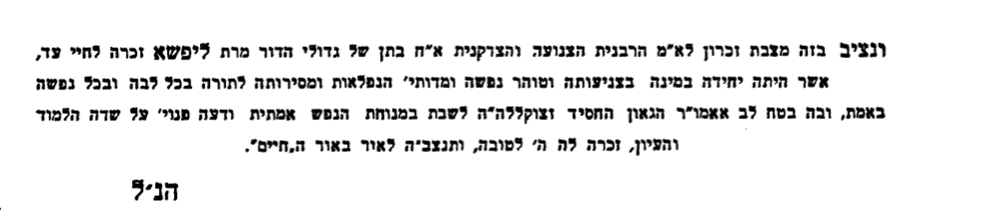
2. It is reported that when R. Hayyim’s commentary was published in 1936, R. Baruch Ber Leibowitz had a ceremony whereby the book was brought into the beit midrash together with music, just as if it were a new Sefer Torah. Students even danced with the book from R. Baruch Ber’s house until the yeshiva. See R. Dov Eliakh, Be-Sod Siah, p. 212.
[4] “Rambam of Brisk: R. Hayyim Soloveitchik’s Relationship with Mishneh Torah,” Tradition 5 (Summer, 2024), p. 2 n. 2.
[5] Friedman, however, points to one example where R. Hayyim suggests that the text of the Mishneh Torah is in error. See Hiddushei R. Hayyim Halevi, Edut 21:9. R. Hayyim supports his suggestion by claiming that his preferred reading appears in an old manuscript. However, this raises the question of where he obtained this information, since the Frankel edition of the Mishneh Torah reports that no manuscripts preserve an alternate reading. See Hiddushei R. Hayyim Halevi, Edut 21:9 and Friedman, “Kelalei Ha-Gaon Rabbi Hayyim mi-Brisk be-Veur ha-Rambam,” Alumot 1 (2026), pp. 390-391.
[6] “Ha-Yahas li-She’elat Nusah be-Sifrei Hazal,” in Yoel Catane and Eliyahu Soloveitchik, eds., Beit ha-Va’ad (Jerusalem, 2003), pp. 27-28, n. 28.
[7] “Yesodot ve-Ekronot Parshanut ha-Talmud,” Ha-Otzar 6 (Av 5777), p. 266.
[8] See also R. Raphael Amihai Hadad in the recently published Ha-Mashbir, vol. 12 (2026), p. 126:
ושמעתי בשם הגרב”ש דויטש זצ”ל שאף שהגר”ח בחידושו הידוע על “שומר שמסר לשומר” (הלכות נזקי ממון פ”ד ה”ד), בונה מערכת שלמה ליישב ולהסביר דברי הרמב”ם בעוד שהרמב”ם עצמו בתשובתו לחכמי לוניל (הובא במעשה רוקח שם) תולה את זה בטעות סופר, “דומה, כי גם אילו היה הגר”ח יודע את תשובת הרמב”ם, לה היה חוזר בו”
This volume of Ha-Mashbir, edited by the indefatigable Rabbis Yissachar Dov Hoffman and Ovadya Hoffman, is as usual a fascinating publication. It includes a previously unpublished commentary by R. Ovadiah Yosef on Tehillim. It also includes letters I received from R. Meir Mazuz in the years after the publication of Iggerot Malkhei Rabbanan. You can see the letters here.
[9] Ha-Dor ve-ha-Tekufah, p. 48. Truth be told, I am hesitant to quote anything from this book. I say this because the following passage (p. 32), citing R. Isaac Zev Soloveitchik in explaining why R. Kook came to London, is so historically uninformed that it raises questions about the reliability of the entire book. There is no way that R. Isaac Zev could have said what he is quoted as saying.
פעם שאל אותי אם יודע אני איך הגיע רב קוק ללונדון, וסיפר לי כי הוא הורחק מישיבת וואלוז’ין לפי שהי’ קייליקער, ועסק בלימודי השכלה, ואח”כ התחתן וחפש רבנות, כשמוע הגר”ח ז”ל שהוא מחפש רבנות, חרה לו ז”ל מאוד, אמרו לו הלא כבר עשה תשובה, אמר להם וכי ממנים בעל תשובה להיות רב, וכתב הגר”ח לכל העירות שבליטא שלא יקבלוהו לרב, ולכן הוכרח לברוח ללונדון
The statement that we would not appoint a baal teshuvah as rav of a community, which was widely accepted throughout the generations, refers to the classic baal teshuvah, namely, someone who “went off the derekh” and then repented. It does not refer to a “tinok she-nishbah,” i.e., someone born into a non-religious family—either a Converso family or a modern non-Orthodox family—who later in life became religious. The same can be said about a hazzan, concerning which Ta’anit 16b states that he must not have had a bad reputation in his youth. See R. Moshe Sternbuch, Teshuvot ve-Hanhagot, vol. 1, no. 99; R. Netanel Meoded, Mizrah Shemesh, vol. 4, no. 1. See also R. Sternbuch, Teshuvot ve-Hanhagot, vol. 2, no. 462, who sees value in having a baal teshuvah as a darshan. R. Avraham Shapiro has a different perspective; see his Rosh Devarkha (Jerusalem, 2010), p. 565:
כאשר ראה הסבא מסלובודקה זצ”ל שכל הישיבה שלו הלכה לשמוע את הרצאתו של החוזר בתשובה – הרב בירנבוים זצ”ל – הוא אמר: אני הייתי רגיל שבעל תשובה יושב בפינה ובוכה, והיום, יושב על במה ונותן הרצאות
I would only make two points about this passage. The first is that Nathan Birnbaum was a classic baal teshuvah in that he abandoned Orthodoxy before later returning, so his situation is not comparable to current baalei teshuvah who grew up irreligious. Second, Birnbaum was not a rabbi, a mistake that can be attributed to the editor of the book, as R. Shapiro would never have referred to him with the rabbinic title. In R. Shapiro’s Siah Ish, attached to his Hag ha-Sukkot (Jerusalem, 2012), p. 96, R. Shapiro’s comment about Birnbaum also appears. Yet here he refers to “Dr. Nathan Birnbaum,” which is what R. Shapiro would have said.
[10] Gulevsky, Lahat ha-Herev ha-Mithapehet, pp. 5-6.
[11] Kanievsky, Orhot Rabbenu (new ed.), vol. 4, p. 169.
[12] See Levi, “Rabbi Samson Raphael Hirsch – Myth and Fact,” Tradition 31 (Spring 1997), p. 11, called to my attention by Lesher.
[13] Ha-Ma’yan 48 (Nisan 5768), p. 37.
[14] See Jacob J. Schacter, “Torah u-Madda Revisited: The Editor’s Introduction,” Torah u-Madda Journal 1 (1989), p. 15, n. 1.
[15] There are also a few minor differences between the original letter and what appears in Ha-Pardes. The following sentence is only found in Ha-Pardes.
ואם אסור מן הדין בודאי גם כן משום פרנסה אסור ובפרט אם יכול האדם למצא אומנות אחרת נקיה וקלה אף גם שאינו מרויח כך כך
[16] The letter is found in the R. Joseph Rozin Collection, Yeshiva University Archives, MS. no. 1142. I thank Yeshiva University for permission to publish the letter. You can see the original letter here.
[17] Ha-Ma’yan 48 (Nisan 5768), pp. 38-39.
[18] Tradition 28 (Fall 1993), pp. 46-81.
[19] “Torah im Derekh Eretz in Our Time,” p. 68.
[20] Ibid.
[21] Ibid.
[22] When Levi reprinted R. Schwab’s article on Torah im Derekh Eretz in Ha-Ma’yan 48 (Nisan 5768), pp. 38-39, he is clear that Hirsch did not regard Torah im Derekh Eretz as a hora’at sha’ah. See ibid., p. 37.
[23] “Rabbi Samson Raphael Hirsch – Myth and Fact,” pp. 7-8.
[23b] Ha-Ma’yan 48 (Nisan 5768), p. 38 n. 12.
[24] Hirsch, Collected Writings, vol. 9, p. 146.
[25] Schendowich, Hermann Schwab: Historian of German Jewry, His Life and Shorter Works (Jerusalem, 2022), p. 79 n. 24.
[26] Hirsch, Collected Writings, vol. 7, p. 88.
27 thoughts on “Quiz Answers; Response to Criticism; Rav Schwab Writes to the Rogochover”
Since you placed a “[!]” after the word “charedi” in R’ Schwab’s introduction, let me just point out that well into the 20th Century it was common to use the word “charedi” as a synonym for “Orthodox” in general, including Modern Orthodoxy. The OU even continued to translate the word “Orthodox” in their name as “Charediot” into the 1990’s. (Granted they may have been using stationary printed some time earlier, but it couldn’t have been that much earlier. By that point they were also transitioning to “אורטודוקסיות”, as is Israeli practice when distinguishing Orthodox from Conservative and Reform- obviously the translation is intended for an Israeli audience.)
I placed an exclamation point after the word חרידים as I didn’t want people to think that the extra yud was a typo.
Your general point about the term “haredi” is of course correct. The Mizrachi movement in the early 20th century referred to itself as haredi.
Ah, thank you!
Shammai argues with Beis Shammai (though also with Beis Hillel) twice in the same perek, במעשר שני פרק ב, משנה ב ומשנה ד.
The phrase חרדים על דבר ה is not the same as the word “Charedim”. No American Jews think of or refer to themselves by that term. One hears of frum, heimish, yeshivish, etc, but not “Charedi”. The word is distinctly Israeli.
But it was still used as described above.
The UOHC in London is officially called Hisachdus Chareidim, so not just Israeli.
I am referring to how the individuals think of themselves, not to formal corporate entity names.
I tend to spell his name Inbal, not Enbal. Why do you think Enbal is more correct?
I don’t know how it is spelled. I see Harvard library has it as Inbal so I will change it
1)How do you know that the Rambam agrees that a get is muktzeh
2)The question could be asked on the beis yosef as well what reason is there for a get to be muktzeh if one can study from it
It would seem that even if one can study from it since that is certainly not the primary purpose of a get a person is מקצה דעתו and therefore it is muktzeh
>>וגם ספרי משוררים שונים ואו [!] ספרי “ראָמאַנעֶן” שבהן נכרכו דברי חכמה ומדע
צ”ל: ואף ספרי “ראָמאַנעֶן”, וכ”ה במקור [וכמובן שיש להשמיט סימן התמיה לציון הטעות].
Yes, thank you. Don’t know how this mistake got in.
אכתוב לקוראים הנכבדים דבר ששמעתי ממו”ר עמוד האמת והאמונה הרב ירחמיאל ישראל יצחק דאמב ז”ל ששמע מאת כ”ק האדמו”ר ממונקאטש שליט”א שפעם היה זקנו רבינו הק’
המנחת אלעזר זי”ע בעיר וכמה בחורים ליוי אותו לרכבת ובקשו ממנו “לעצט געלעט” ענה
איתא איני יודע באיזהו דרך מולכים אותו אבל זה ברור אם אני ימצא שם ר’ שמשון רפאל הירש אני ילך בדרך אחרת
Can you please explain this story about the minchat elazar, and where the quote is from? It’s hard to understand as written (even if one understands Hebrew and Yiddish).
Gemini Google translation:
“I will write for the honorable readers something that I heard from my master and teacher, the pillar of truth and faith, Rabbi Yerachmiel Yisrael Yitzchak Domb, of blessed memory, who heard it from His Holy Eminence, the Munkatcher Rebbe, may he live a long and good life.
Once, his grandfather, our holy master, the Minchas Elazar, of righteous and holy memory, was in the city, and several young men accompanied him to the train. They asked him for a ‘final parting word’ (a final piece of guidance).
He replied: ‘It is written [in the Talmud], “I do not know along which path they are leading me.” But this is clear: if I find Rabbi Samson Raphael Hirsch there, I will walk on a different path.'”
Isn’t that lovely.
And isn’t it lovely that some people take sick pleasure in repeating it today.
The likelihood that this is a true story is extremely low.
Especially since the מנחת אלעזר greatly respected RYY Weinberg, who was pretty similar to RSRH in terms of things that the ME might have found objectionable.
RSRH however in his earlier orations expressed distaste for eastern european mores.That perhaps infiltrated to Munkacs.If anything RYYW would have been more objectionable as he swayed to a pseudo-zionism.Though he was capable of putting on the necessary show.
Just a few side comments. 1. R. Hayyim`s book was published in 1936 not only in Brisk (what the dealers call thick paper) but apparently simultaneously in Vilna at the Lewina press (thin paper) of which, if I remember correctly, is the copy in Lubavitch. I asked a true Brisker once whether this was permitted by the family, and he hit the roof : “pirates pirates”. There are very minor if at all differences in the dageshim of some of the letters on the title page. Vilna printer must have got the book from Brisk, its impossible otherwise. 2. I am very curious to know who “changed” R. Hayyim from a friendly extremely nice social man (as so well described by all those who studied by him in Volozin) to what he is considered today: tough, rigid and Malach hashem zevakot etc. I suspect is was done anywhere between his petira in 1918 and 1936 due to the end of the preface to the book. Whoever did it did a good job.
On a personal level, he was a ” friendly extremely nice social man”, but from an ideological standpoint, he was “tough, rigid” etc., as is known to anyone who studied the history of that period.
In his lifetime, his personal interactions may have played a larger role in his public image than they do 100+ years after his passing (especially in certain circles), when his ideology continues to a major focus.
Guess you are right although it seems obvious to me that his personal very friendly social character and btw humoristix too, was successfully pushed aside and wiped out. I suspect this was done intentionally during those 18 years 1918-1936. One can be rigid and tough ideologically but yet a nice warm humoristic social personality. No more. If you know of any study referring to this notion kindly please inform. These notions were of Rav Eitam Henkin hy”d unique specialties. His loss is present.
R’ Schlesinger’s work is widely considered to be an unreliable source of information (beyond the ahistorical claim about R’ Kook).
I once asked one of his grandchildren if the family considered the work reliable, and he said flat out no, though he then added that his stories have a kernel of truth to them but are distorted as to the details.
Delightful to read a new post from the legendary gaon Dr Shapiro, thank you!
I always enjoy reading everything you write. Looking forward to many more lengthy posts!
” Second, Birnbaum was not a rabbi, a mistake that can be attributed to the editor of the book, as R. Shapiro would never have referred to him with the rabbinic title.”
Semikha hasn’t existed for a millennium, and even when it did the title “rav” didn’t really correlate with it. Today any more-or-less frum man who knows how to lern a bit can be called “rav”. Especially if he’s written seforim, but very often if not.
RSRH however in his earlier orations expressed distaste for eastern european mores.That perhaps infiltrated to Munkacs.If anything RYYW would have been more objectionable as he swayed to a pseudo-zionism.Though he was capable of putting on the necessary show.
re: New frontiers & evolution of halacha :
The Issur of two males in yichud,or a celibate female owning a dog. These were shunted aside justified with that observant jews wouldn’t have such debased proclivities.
However per our progressive orthodox pontificators such proclivities have to be recognized in our present milieu these ” orphaned” ordinances ought then to have been reactivated
So R Chaim would have to hold like R Y Kafah that the letters to Chachmei Lunil are forgeries!