Chanukah books and Etymology, Miracles (?), Dreidel, Cards and Christmas: A Roundup of Previous Posts

Zerachya Licht, “חז״ל ופולמס חנוכה,” and Marc Shapiro, “The Hanukkah Miracle,” discuss the 19th-century controversy regarding the polyglot, Chaim Zelig Slonimsky, and the connection, or lack thereof, the miracle of the candles burning for eight days. Licht discusses Slonimsky in more depth in a two-part post, “Chaim Zelig Slonimsky and the Diskin Family,” part 1 and part 2.   Marc also discusses a potential Maccabean Psalm in his article here.

Mitchell First traces the history and spelling of two terms associated with Chanukah,  “The Identity and Meaning of the Chashmonai,” “The Meaning of the Name Maccabee,” for an earlier post by Dan Rabinowitz, on the latter term, see here.  First recently published his latest book, Words for the Wise: Sixty-Two Insights on Hebrew, Holidays, History and Liturgy.

A recurring theme of articles in the secular and Jewish presses is whether playing dreidel has any sources and if it is even fun. For example, Howard Jacobson, who won the 2010 Man Booker prize in a New York Times editorial, isn’t a fan. “How many years did I feign excitement when this nothing of a toy was produced? The dreidel would appear, and the whole family would fall into some horrible imitation of shtetl simplicity, spinning the dreidel and pretending to care which character was uppermost when it landed. Who did we think we were – the Polish equivalent of the Flintstones?” Marc Tracy, in Tablet Magazine, expressed his sentiment in his post, “The Unbearable Dumbness of Dreidel.” Although this year, two articles in Tablet, “Adapt, Adopt, Subvert, Survive” and “The Miracle of the Dreidel,” argue for the contemporary relevance of the custom.  For our discussion, see “Chanukah Customs and Sources.” For another discussion regarding dreidel and other Chanukah customs, see “The Customs Associated with Joy and their More Obscure Sources.” Another form of Chanukah gameplay, cards, is dealt with in “The Custom of Playing Cards on Chanukah.” The post highlights an important, often overlooked, source for Jewish customs, the memoir of Pauline Wengeroff, Rememberings: The World of a Russian-Jewish Women in the Nineteenth-Century.

Eliezer Brodt tackles the missing tractate for Chanukah in “The Chanukah Omission,” and with an update in his recent talk, available here.  (And a discussion of the other lesser known tractate that implicates Chanukah and an example of censorship.)The Seforimblog, in 2006, published his first post, “A Forgotten Work on Chanukah, חנוכת הבית,” discusses an obscure Chanukah-related work, Chanukas ha-Bayis, cited by Magen Avraham. Subsequently, Eliezer wrote dozens of articles for the Seforimblog and his Ph.D. dissertation on the Magen Avraham. The serious deficiencies of another work on Chanukah, Mitzva Ner Ish u-Beyoto, are highlighted in a review by Akiva Shamesh.  Shamesh deals with the “famous” question of Bet Yosef, why there are eight and not seven nights of Chanukah, in another book review, “Yemi Shemonah.

Finally, the subject of Greek Wisdom is apprised in Eliyahu Krakowski’s article, “How much Greek in ‘Greek Wisdom.'”

This year, as many, Chanukah coincides with Christmas. For our original bibliography on the topic of the Jewish response to Christmas, otherwise referred to as Nitel, see here. That post should be updated to include Rebecca Scharbach, “The Ghost in the Privy: On the Origins of Nittel Nacht and Modes of Cultural Exchange,” Jewish Studies Quarterly 20 (2013), pp. 340-373. Marc Shapiro’s lecture on the topic is available on YouTube. And for an interesting Christmas card by Edmund Wilson, see Elliot Horowitz’s post, “Edmund Wilson, Hebrew, Christma, and the Talmud.” Horowitz’s other posts include one on Bugs Bunny, Isaiah Berlin on Meir Berlin (Bar-Ilan) and Saul Lieberman, non-Jewish reactions to the synagogue, a discussion of the historical application of Amalek, and regarding reading Biblical books to children.


The Pros and Cons of Making Noise When Haman’s Name is Mentioned: A historical perspective (updated)

The Pros and Cons of Making Noise
When Haman’s Name is Mentioned: A historical perspective (updated)
By:
Eliezer Brodt
Severalweeks before Purim, one can already see children of various ages playing with cap guns and other loud noisemakers. All of this is done in the spirit of preparing for the laining of the Megillah and the noise that will be made whenever the name of Haman is mentioned—sort of like reviewing the halachos of Yom Tov 30 days before the chag!
On a more serious note, what are the reasons for the minhag of “banging” whenever the name of Haman is said? In this article I will try to trace some of the sources and their various aspects.[1] This post first appeared last year as an article in Ami Magazine; the current version contains many additions to that article. A much more expanded version of this article will appear in Hebrew (IY”H) in the future.
According to the Yerushalmi, one should say “arur Haman ubanav, Haman and his children should be cursed, but it does not specify when. It then mentions that R’ Yonasan would curse Nevuchadnetzar after he was mentioned during the Megillah.[2] However, in Masechtas Sofrim, where this is also brought down, it says that “arur Haman ubanuv” was said after the Megillah was read. From this it is clear that the reason for saying this is the pasuk in Mishlei, that when one mentions the name of a tzaddik he should say “zecher tzaddik livrachah” and “shem reshaim yirkav” whenever an evil person is mentioned.[3]  Today, the practice is to say “arur Haman ubanav after the Megillah, during the piyyut Asher Heini[4], and specifically when its most famous stanza is recited, Shoshanas Yaakov.[5] In fact, this might be what the Gemara is referring to when it says one should be intoxicated to the point of not knowing the difference between “arur Haman” and “baruch Mordechai.”[6]
The Manhig writes that in Spain the custom was to say “arur Haman baruch Mordechai” after the Megillah reading. The children in France and Provence had a custom to write Haman’s name on the bottom of rocks and bang them together in fulfillment of ““shem reshaim yirkav.”[7] From this source it would appear that this was done specifically by children and each and every time Haman’s name was mentioned.
Rav Aharon Hakohen Miluneil (d. 1330) in his work Orchos Chaim adds that the children of France and Provence did this for the additional reason of fulfilling “macho timcheh es zecher Amalek,” but does not specify when this was done. It appears that this was simply a custom that was done on Purim although not necessarily during the Megillah, reading. [8]
The Avudraham mentions the custom from the Manhig and adds that there is a source in the Midrash saying that one should erase Amalek from wood and stones.[9]
The Sefer HaAsufot cites another Midrash (which we don’t have) to show that the children banged on the wall when Haman’s name was mentioned.[10]  The Shibolei Haleket writes that some people in Italy had the custom of stamping their feet, banging stones and breaking pots, after which everyone would get up and thank Hashem for saving the nation;[11] he writes that while it is not obligatory, it is a good custom. It appears that this was done by everyone, not only the children.
From the Sefer Hatadir, it appears that “children who were zealous to do mitzvos” would break pots when Haman and Zeresh were mentioned.[12] It seems from both of these Italian sources that it was not done during the Megillah reading, but neither gives a reason for this custom.
In yet another Italian source, the Machzor Kiminhag Roma printed by Soncino in 1485-1486, we find that they would
smash pots when the piyyut was recited after the Megillah, but during the Megillah laining they would stamp their feet, clap
their hands and make other sounds. It’s also clear that this was done by everyone.[13]
A bit later, R’ Yehudah Aryeh Modena (1571-1648) wrote about Italy that some would bang when Haman’s name was said.[14]
R’ Zalman of St. Goar, in his work Sefer Maharil, writes that he observed that his Rebbe, the Maharil, did not bang when Haman’s name was said.[15] The Rama brings this down in his Darchei Moshe.[16] Various Acharonim have different explanations as to why the Maharil did not bang.[17] There is, however, a manuscript written by the Maharil’s son saying that his
father did indeed bang when Haman’s name was mentioned.[18]
R’ Avraham Saba writes that some have the custom to bang two stones together, based on the words “vehayah im bin hakos harasha,” as the final letters of the first three words spell Haman[19]. This remez is also brought by the Sifsei Kohen Al Hatorah[20], Minchah Beilulah[21], Levush[22] and Mateh Moshe.[23]
The Rama writes that there was custom among children to make a picture of Haman or write his name on wood or rocks
and erase them in fulfillment of “macho timcheh” and “shem reshaim yirkav.” From this they developed the custom of banging during the Megillah reading, and one should not abolish or belittle any custom because there was a good reason for it being established.[24] In Darchei Moshe he writes that his source is from the Manhig as quoted by the Avudraham.
In the very popular Yiddish book by R’ Shimon Ginsburg, first printed in 1590, we find the custom of the children “banging”[25]. Similarly, the Levush also writes that we should keep this custom, as does the Magen Avraham.[26] The Levush then says that when Haman’s name is mentioned one should actually say “shem reshaim yirkav”[27]. At first glance this appears to be a big chiddush, as talking during the Megillah reading is a hefsek. The Mishnah Berurah[28] and Rav Moshe Feinstein conclude that one should not say this during the Megillah.[29] However, after quoting the Levush, the Magen Avraham writes “see Midrash Rabbah about Nevuchadnetzar”.[30] The Magan Avrhom is referring to the Medrash we quoted in the beginning, of Esther which says R’ Yonasan would curse Nebucadnetzar after it was mentioned during the Megilah. So from this Medrash we see clearly that during  the Megilah reading he would say this and he would not wait for after the Megilah. This supports the Levush.[31]
R’ Avraham Klozner writes that the reason children bang rocks together is that they do not know how to say “shem reshaim yirkav, Whereas the adults say that during the Megillah”.[32] The anonymous comments, in Sefer Haminhagim of Rav Isaac Tirina writes the same.[33]
Those Opposed to “Banging”
R’ Binyamin Halevi writes in the Machzor Maagalei Tzedek (first printed in 1550) that he is opposed to these customs,
as well as the burning of a mock Haman in effigy. Not only do they cause a great disturbance in shul, but we live among non-Jews who are constantly looking for reasons to attack us. In other words, these minhagim are dangerous and should be abolished, as was done with other customs.[34]
To illustrate how these things can get out of control, R’ Eliyahu Capsili describes an incident that occurred in Crete in 1545 when a firecracker went off and caused utter pandemonium in shul. A takanah was subsequently made forbidding this kind of thing on Purim.[35]
R’ Avrohom Chaim Naeh writes about Yerushalayim in the 1940’s :
הרמ”א כתב על מנהג הכאת המן דאין לבטל שום מנהג… אבל המנהג היה להכות בעצים, ויומא כי האדינא חידשו להם הילדים מנהג חדש שמכין עם כדור פולווער [חומר נפץ], שנשמע קול יריה והפולווער הזה מוציא עשן מסריח ומחניק, עד שאי אפשר כלל לעמוד בבית הכנסת. העשן נכנס בגרון הקורא, וקולו נעשה צרוד, ובקושי אפשר לו להמשיך הקריאה, וכן הצבור סובלים מחוסר אויר, ומצפים מתי יגמרו הקריאה. בודאי חובה לעקור המנהג של היריות שעת הקריאה, דזה אינו מנהג וותיקין ועל דבר זה צריך לעמוד לפני הקריאה בכל תוקף, ולהוציא מידם כלי היריות [קצות השלחן, הערות למעשה, עמ’ קמו אות ה].
Another reason to refrain from banging is found in the Shelah Hakadosh, which is that it simply makes too much noise and people can’t fulfill the obligation to hear the Megillah.[36] The Pri Megadim writes something similar, that it confuses people.[37]
Another early source opposed to banging R’ Shmuel Portaleone (1570-1648).[38] One of his concerns was that the non-Jews would make fun of us.
The Seder Hayom (1599) writes that it’s not proper to make a ruckus in shul but if it’s being done by small children there’s no need to be concerned, due to simchas hayom.[39]
In Egypt and in London[40] (1783) they abolished the noisemaking completely.[41] Rabbi Avraham Levinson in Mekorei Haminhaghim[42] and R’ Ovadiah Yosef[43] were also for abolishing it. Similarly, Rav Yosef Henkin writes that the banging should be stopped during the actual Megillah laining.[44]
A Compromise
Rabbi Chaim Benveniste (1603-1673) in his work Sheyarei Knesses Hagedolah writes that in Izmir the chazzan would say the names of Haman and his children very loudly so the children would hear it and bang on the floor;[45] this was the intention of the Orchos Chaim. The banging was only done this one time during the Megillah. However, it’s worth pointing out that eventually the banging was abolished completely in Izmir.[46]
Rabbi Yuzpeh Shamash (1604-1678) of Worms writes that noise was made only when the Haman of “asseres bnei Haman” was said.[47] The Mekor Chaim writes the same but adds that woman and children did stamp their feet when Haman’s name was mentioned.[48] The Ben Ish Chai writes that the community would bang when “asseres bnei Haman” was read in Bagdad, but he himself would stamp with his foot after the first and last Haman.[49]
R’ Avrhom Chaim Naeh writes:
בעיה”ק חברון ת”ו, שהצבור היו אומרים עשרת בני המן לפני שהבעל קורא אומרם, ובזמן זה היו התינוקות מכים, ואחר כך אומרם הקורא מתוך המגילה. ויש לומר, דמשום זה זכו עשרת בני המן שהציבור יקרא אותם תחלה, כדי שיוכלו לספוג המכות, דבזמן שהקורא אומרם אי אפשר להכות כיון שצריך לאמרם בנשימה אחת [קצות השולחן, הערות למעשה, עמ’ קמו].
We find a few sources showing that attempts were made to abolish the minhag but for the most part they were unsuccessful.
In her memoirs, Pauline Wengeroff (b. 1833 in Minsk) wrote: “Whenever the hateful name of Haman was heard the men stamped their feet and the young people made an uproar with shrill graggers. My father was irritated by this and forbade it but it was of no use; every year people did it again”.[50] Her father was R’ Epstein, a talmid of R’ Dovid Tevel, author of Nachalas
Dovid
who was a talmid of R’ Chaim Volozhiner.[51]
R’ Yosef Ginsburg writes that it best to bang only when Haman’s name is mentioned with his father’s, as done in communities in Lita and Rasin.[52]
In a memoir written describing Kovno the author relates how a local talmid chacham unsuccessfully tried to convince the children not to throw firecrackers during the Megillah laining.[53]
In a letter written in Telz in 1915 R’ Avraham Eliyhau Kaplan notes that Purim has passed and the children have already made their disturbances with their graggers.[54]
According to the Orach Hashulchan, one should make sure that the noise does not get out of control; otherwise it is preferable to hear the Megillah at home with a minyan.[55]
Sources that they did bang
Still, it appears that for the most part, the minhag remained.
R’ Yair Chaim Bachrach writes:
כלי נקישה שעושין לתינוקות לנקש כמו בפורים יזהר גדול מלטלטלו, אבל ביד התינוקות אין מוחין, כ”ש כשחל פורים ביום א’ כשהולכין בערב לבה”כ [מקור חיים, סי’ שמג]
This appears to be some sort of noise maker.
R’ Yakov Emden brings down that his father the Chacham Tzvi used to bang with his feet when Haman’s name was said during the Megilah.[56]
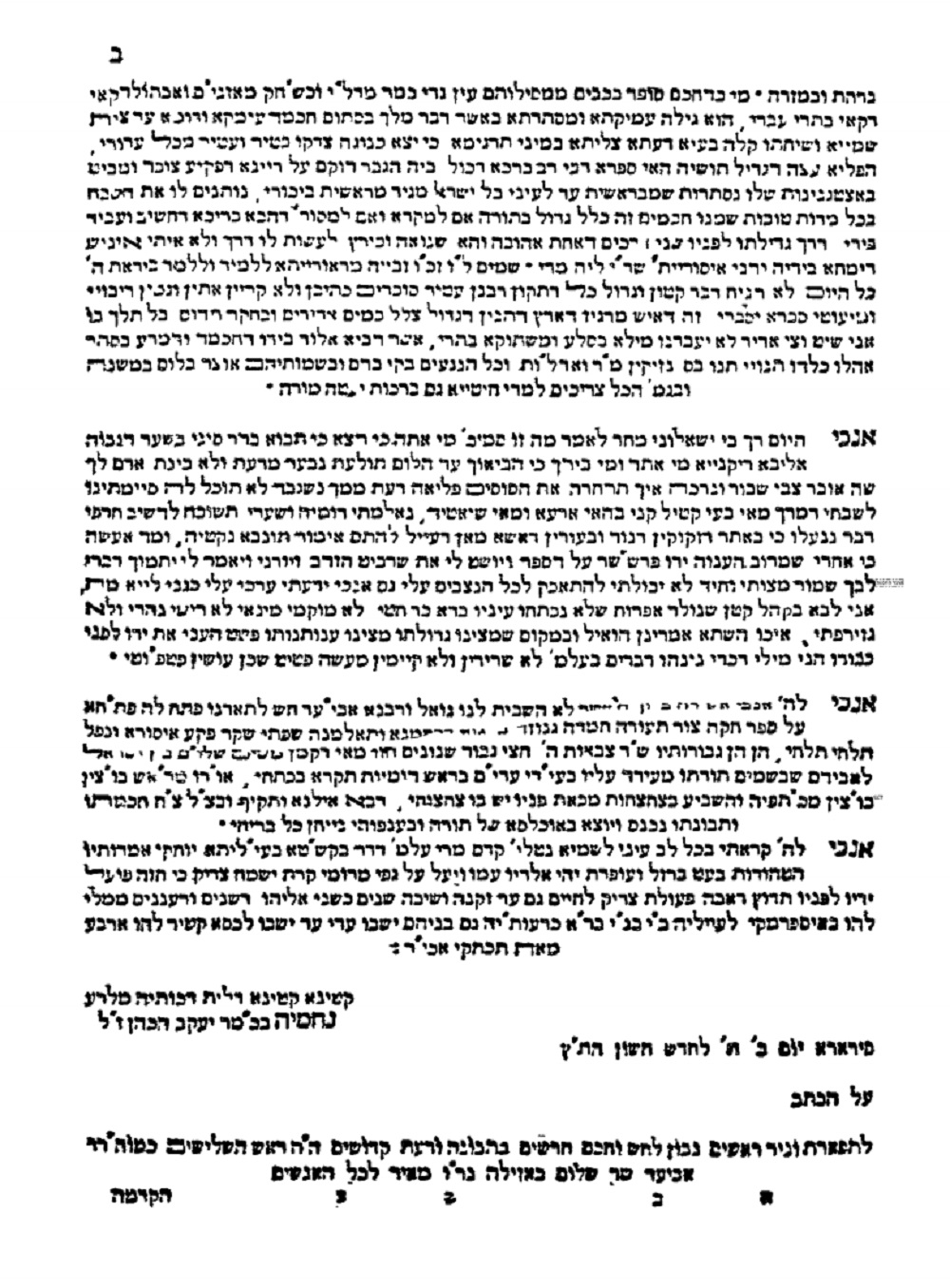
In the cynical, anonymous, satire Ketav Yosher, first printed in 1794 (and attributed to Saul Berlin), we find one of the Minhaghim he makes fun of is the banging by Haman.[57]
In 1824 a parody called the Sefer Hakundos (trickster) was printed in Vilna. This parody was written by a maskil as a vicious attack on the Jews of the time poking fun at many things. The plus about this parody is we get a very interesting glimpse into Jewish life in those days.[58] When discussing Purim he writes “He (the trickster) must bang with all his strength for a long time every time Haman’s name is mentioned until he is either thrown out or quieted down. If he gets thrown out due to his long
banging even better and he must scream welcome when Haman’s name is said”.
See here what On the Main line brings about New York in 1841.
In a very informative Memoir describing life in Lithuania in the 1880’s the author describes: “We all went to the Synagogue equipped with our Haman Dreiers… and each time the reader of the Megillah… mentioned the name haman the nosie of the rattles was deafening”.[59]
In a diary describing Russia in the 1890s the author writes: “At every mention of Haman’s name there are general cries while the children howl and make as much noise as possible with graggers…the adults beat their pews with sticks as a token of their desire to beat Haman”.[60]
S. Ansky writes in his memoirs of World War One: “On Purim I went to Synagogue to hear the reading of the book of Esther. At the the mention of Haman’s name the children traditionally make noise say by clapping but when these children tried to clap, though very softly, their frightened parents hastily shushed them. Why didn’t they let the children make noise? I asked somebody afterword. Someone might object he stammered. Try and prove that they meant the ancient Haman and not the present one.”[61]
R’ Elayshiv, zt”l, never stopped the crowd from making noise but he himself did not.[62]
Jews in the Eyes of Gentiles
Many of sources of information about how various minhaghim were observed come from non-Jews or meshumadim, which must obviously be used with caution because some of these writers were tendentious or may not have fully understood what they observed or heard of even if they tried to be objective. These accounts however seem sound.
Johannes Buxtorf (1564-1629) writes in his Synagoga Judaica: ” There is also the custom that as often as the name of Haman is mentioned the young Jews knock him, and there is a great commotion. They used to have two stones, on one of which was written “Haman,” and they knocked them together until the name had disappeared, and they said and called out: Jimmach Schmo, his name shall be blotted out, or, Schem reschaim jirkabh, the name of the wicked shall rot. Arur Haman, cursed be Haman…”.[63]
In a letter written by John Greenhalgh in 1662 to a minister friend of his we find the following description of his visit to a shul: “My Rabbi invited me afterward to come and see the feast of Purim which they kept he said for the deliverance from Haman’s conspiracy mentioned in the Book of Esther in which they use great knocking and stamping when Haman is named”.[64]
In the Present State of the Jews (1675) Lancelot Addison writes: “Both the women and children…at the naming of Haman make a hideous noise with their hands and stamping with their feet.”
Johann Eisenmenger (1654-1704) writes that “the boys… clench their fists and strike them together, and hissing at the name of Haman make a mighty noise”.[65]
In the Ceremonies of the Present Jews (1728) we find: “They clap their hands or beat the benches to signify that they curse [Haman]”.[66]
In the book Religion, Ceremonies and Prayers of the Jews the pseudonymous Gamaliel Ben Pedazhur (1738) writes: “All the Jews, young and old, stamp their feet on the floor… the children generally have hammers with them at the synagogue… this
is done by way of rendering [Haman’s] memory as obnoxious as they can.”
Hyam Isaacs in Ceremonies Customs Rites and Traditions of the Jews, first printed in 1794, writes (second edition, 1836, p. 89): “and as often as the reader mentions the name Haman… it is customary for the children, who have little wooden hammers to
knock against the wall as a memorial that they should endeavor to destroy the whole seed of Amalek”.
 In his notes, a Christian traveler describes the events of a visit of his in a shul in Jerusalem, he also writes how the kids would make noise with graggers whenever haman’s name was said and the adults would bag with their feet or sticks.[67]
Reasons for this Custom
What follows from all this is that according to some Rishonim it ties specifically to Shem Rishoim Yirkav whereas others tie it to Mochoh Timcha Es Zeicher Amalek. According to some it was done specifically by the children; according to others it was also
done by adults. Some sources report it as being done after the Megilah reading; others say it was done during the Megilah reading.
The Rama (S.A. 690:17), after bringing some of the earlier sources for this custom, writes that one should not abolish or make fun of any custom because there was a good reason for its establishment.
It is interesting that the Rama, who brings many customs throughout his work, specifically chose this case to spell out this rule.[68] Two, the Magan Avrohom specifically here (690:22) has a lengthy discussion as to various “halachos” of Minhaghim. The question is, why?
Throughout history there were many who were against the “banging of Haman”. So the question is, what lies behind this Minhag. If we can understand that then perhaps we can better understand the Rama and Magan Avrohom.
To backtrack a bit, the Gemara in Sanhedrin (64b) mentions something about jumping on Purim “kmashvarta d’puria.” R’ Nissim Gaon and Rashi understand this to be referring to fires that the children made to jump through on Purim. But the Aruch says that it refers to a minhag to make an effigy of Haman that the children would hang from the roofs and burn on Purim, dancing and singing around it.[69] This is mentioned by others such as such as the Orchos Chaim[70] and Avudraham[71] as well as in Mesechtas Purim by R. Kalonymus ben Kalonymus (1286-1328).
Many have also noted that in the year 408 (!) a law was passed banning the Jewish custom of burning an effigy of
Haman on a gallows in the form of a cross.[72]
In Yemen they did not “bang” but fashioned a man out wood, dressed him up and dragged him around the whole day before hanging him in effigy.[73] The same was done in Baghdad[74] and other communities.[75]
Another minhag related to all this; R’ Tzvi Hirsch Koidonover in his classic work Kav Hayashar brings from his Rebbe R’ Yosef MeDubnov that R’ Heschel[76] (known as the Rebbe R’ Heshel) had a custom when he tested out his writing instrument he used to write either the name Haman or Amalek and then he would erase it to “fulfil” Mocho Timcha Es Zeicher Amalek.[77]
The significance of this source is this work was first printed in 1705-1706 in both Hebrew and Yiddish and was printed over eighty times! It was extremely popular amongst all kinds of readers so this custom of R’ Heschel was very famous.
An additional reason for the widespread popularity of this custom was that the Sefer Zechirah from R’ Zecariah Simnar also brings it, first printed in 1709.[78] This work was extremely popular in its time and was printed over 40 times.
It appears that the custom has to do with both Shem Rishoim Yirkav and Mochoh Timcha Es Zeicher Amalek.
But why did they do this?
What follows is an adaptation of Shut Mili D’avos (3:13) by R’ Yisroel Margolis Yafeh, a talmid of the Chasam Sofer, 9 with some additions and elaboration):
The Torah enjoins us to remember what Amalek did to us. The question is how do we go about doing this, and how often do we need to? The Arizal had a custom to say it every day.[79] What is behind this? It’s to remind us how Amalek set out to completely destroy us. But it also represents our other enemies throughout time, even if they are not direct descendants of Amalek.
The Chinuch writes that the reason for this mitzvah is to impress upon us that whoever oppresses us is hated by Hashem and that their punishment is commensurate with their wrongdoing.[80] Doing an action helps us remember. The banging is to help us remember that part of what we are doing is Mocho Timcha Es Zeicher Amalek, when we read the Megilah. Furthermore it takes time to read the Megilah so to constantly remind us, we bang. It’s also to keep us awake during the leining,[81] but even more so, writes R’ Margolis Yaffe, that similar to Pesach where we do many things for the children’s sake, on Purim as well the children were also saved from this decree of Haman. To get them to learn and remember about Purim we do all this, i.e. have them bang etc. Therefore it is not considered a Hefsek to bang or say Shem Rishoim Yirkav.
In various Rishonim we find a custom to say certain Pisukim of the Megilah out loud. The reason given is that it adds to the Simcha[82] while  some add to this that it’s specifically for the children.[83]
On Rosh Hashonah we have a custom to eat various fruits and say Tefilos. Many ask why we do this. Numerous Achronim,[84] when explaining this Minhag point to a Ramban[85] who writes that when an action is done down here it has an affect ‘upstairs’ causing something on earth to happen. To illustrate this a bit better this Ramban is used to explain numerous issues. There is a custom amongst some that when they say Poseach Es Yodecha during Ashrei, where one is supposed to have in mind about asking Hashem for parnasha, they keep their hands open to “receive” the parnasa.[86]
When an action is done ‘down here’ it has an affect ‘upstairs’, thereby causing something to happen in the physical world.[87] When we make noise when Haman’s name is mentioned, it “triggers” Hashem to destroy Amalek and our other enemies. This, R’ Dovid Pardo in his work on the Sifrei writes, is what is behind this Mitzvah of “Remembering what Amalek did to us” and why some say it daily.[88]
Moreover, when R’ Yehudah Hachasid was asked why we bang on the walls when Haman is mentioned, he answered that they do the same thing in gehinom.[89]
Connected to all this is the second reason brought for banging by Haman which is Shem Rishoim Yirkav. The Nezer Hakodesh explains that when evil people are cursed it has a great effect on their punishments in gehinom[90].  According to some this lies behind the reason when referring to Yoshkah we say Yeshu (Yud-Shin-Vav) as it’s the abbreviation of Yemoch shemo Vizichro[91]. With this we can easily understand its connection to Haman and the banging by Haman, all of the above explanations lie behind the custom.
R’ Eliezer Hakalir even wrote a piyyut for Parshas Zachor in which one says “yimach shemo vezichro” after every (other) stanza.[92]
Another reason is found in the Kaf Naki. He writes that we find Jews, children and adults, from all over, bang with sticks and stones for Haman as if he is still alive. He writes that although the Goyim mock us for this, there is a sound reason for all the commotion. The reason is to remind us that Haman and other enemies were destroyed by Hashem, therefore we bang and make a big deal to remind us of this fact and so that the children will learn that if another enemy rises against us, he too will be destroyed.[93]
Perhaps with all this we can understand why the Rama wrote about Minhaghim not to make fun of them; to teach us that even though it appears to not make sense to us, there is more to the story.
[1]The first large collection of sources on this subject was printed by Yom Tov Lewnsky, Keisad Hekahu Es Haman Betufuzos Yisroel, 1947, 89 pp. For other useful collections on this topic see; Rabbi Avrohom Levinson, Mekorei Ha-Minhaghim, Siman 62; R’ Shem Tov Gagin, Keser Shem Tov, 2, pp. 542-545; S. Ashkenazi, Dor Dor Uminhagahv, pp. 98-104; Rabbi Gedaliah Oberlander, Minhag Avosenu Beydenu, 2, pp. 307-324; Rabbi Tuviah Freund, Moadim Li-Simcha, 3, pp. 299-323; Pardes Eliezer, (Purim) pp. 186- 252; Rabbi Gur-Aryeh, Chikrei Minhaghim,1, pp. 218-222; Rabbi Rabinowitz,  Iyuni Halachot, 3,pp.
488-515; Daniel Sperber, Minhagei Yisroel, 3, pp. 156-159; 4, pp. 331-333; 6, pp. 242-246; Ibid, Keisad Mackim Es Haman, 47
pp. See also M. Reuter, The Smiting of Haman in the Material Culture of Ashkenzai Communities: Developments in Europe and the Revitalized Jewish Culture in Israel- Tradition and Innovation, (PhD Hebrew University 2004) (Heb.).
Another important work that was very helpful for this topic is Eliot Horowitz, Reckless Rites, Princeton 2006. I hope to deal with all this more in depth in the future.
[2]  Yerushalmi, Megillah, 3:7. See the comments of the Korban HaEdah; Shiurei Korban; R’ Eliyahu Hacohen, Midrash Eliyhau, 89b; R’ Shlomo Kluger, Chochmas Shlomo, 690. See also R’ Ratner, Ahavas Tzion Vi-Yerushlayim, Megillah pp. 77-78; S. Abramson, Rav Nissim Gaon, p. 279; R’ Yissachar Tamar, Alei Tamar, Megillah, pp. 142-144; R’ Palagi, Yafeh Li-Lev, 690:6-7.
[3]  Mesechtas Sofrim, 14:6-7. See the Mikra Sofrim (on Mesechtas Sofrim), and the sources in the Higger edition of Mesechtas Sofrim, pp.254-255.  For other versions of this Chazal, see the Midrash Bereishis Rabbah (Theodore-Albeck), pp. 496-497; Yalkut Makheri Mishlei printed from a manuscript by Yakov Spiegel, Sidra 1 (1985), pp. 123-125; Torah Sheleimah, Esther, p. 62. 200; Esther Rabbah, (Tabori and Atzmon Ed.) pp. 178-179, 114-115, [on this new edition see here].
[4]  On the Piyyut Asher Heni see I. Davidson, Otzar Hashira Vehapiyyut 1, p. 372, #8215; R’ Fack, Yemei Mishteh Vsimcha, pp. 158-161; Avrohom Frankel, “Asher heniya – toldoteha shel berakhah mefuyetet, available on the Piyyut website here; Rabbi Yakov Stahl. Segulah (2012), p. 32, no. 30-31.
[5]  On the exact Nussach of Shoshanas Yakov and the censors see R’ Yakov Laufer, Mei-Soncino Vi-ad Vilna, pp. 41-43; Sefer
HaZikuk
in Italia 18 (2008), p. 183.
[6]  Some Rishonim assume it is referring to a Piyyut;  See Sefer Hamanhig, 1, p. 242; Zror Ha-Chaim, p. 118; Shita leMesechtas
Megillah,
pp. 34-35; Avudraham, p. 209; Rashash, Megillah 7b; Meir Rafeld, Nitivei Meir, p. 198. I hope to return to this topic;
for now see Rafeld, ibid, pp. 190-209.
[7]  Sefer Hamanhig, 1, pp. 242-243.
[8]  Orchos Chaim, Purim, 41. The Beis Yosef (690) appears to have a different version of the Orchos Chaim than we have.  On
the Orchos Chaim, see Dr. Pinchas Roth, Later Provencal Sages- Jewish Law and Rabbis in Southern France, 1215-1348, (PhD Hebrew University 2012), pp. 38-41.
[9] Avudraham, p. 209. I believe this addition is not a quote from the Manhig, contra Y. Rafael (in his notes to Sefer Hamanhig, 1, pp. 242) and others appear to have understood the Avudraham.
Regarding the source of this Midrash, Rashi at the end of Ke Sisa brings such a Midrash. The Minchas Chinuch writes he does not know the source for it (Mitzvah 604) The Aderes (Chesbonot Shel Mitzvah, pp. 377-378) and R’ Meir Simcha point to the Mechilta in Beshalach [See Mechiltah Di R’ Yishmael at the end of Parshas Bishalach and the Mechiltah Di Rashbi, p. 126; R’ Menachem Kasher, Torah Sheleimah, Beshalach p. 270 (120), 274 (130); See also Menachem Kahana, Hamechiltos Li Parshas
Amalek
, pp. 190-191, 194, 314, 355. See also the important comments of Daniel Sperber, Minhagei Yisroel, 4, pp. 331-333.
[10] Meorot Rishonim, pp. 168-169.
[11] Shibolei Haleket, Purim, 200. See also the Tanyah Rabosi (Purim, 40) who says the same.
[12]  Sefer HaTadir, p. 209. On this work see R’ Rafael Nosson Rabinowitz, Ohel Avrohom, pp. 14-15.
[13] Machzor Ki-Minhag Roma (1485) in the 2012 reprint p. 62a. See Yitzchack Yudolov, Kovetz Mechkarim Al Machzor Ki-Minhag Bnei Roma (2012), p. 34, and pp. 32-33. M. Gidman, Ha-Torah Ve-Hachaim, 2, pp. 189-190 brings another Italian Machzor from manuscript that says the same. See also E. Horowitz, Reckless Rites, p. 272.
[14]  Shulchan Orach, p. 84.
[15]  Maharil, pp. 427-428. On this work see the Y. Pelles, The Book Of Maharil According to its autograph manuscripts and its specialty as a Multi-Draft versions work (PHD, Bar Ilan University 2005).
[16] Darchei Moshe, 690. See Magan Avrohom, 690:19 who brings down the Maharil.
[17] See Shut Maharam Shick, Y.D. # 216
[18]  Maharil, p. 428, note 6.
[19] Eshkol Hakofer, 9:32. About him see the introduction to the recent edition of his work Tzror Hachaim, Jerusalem 2014.
[20] End of parshas Ki Sisa.
[21] Ki Sisa, 25:2.
[22] Levush, 690:17.
[23] Mateh Moshe, 1006.
[24] S.A. 690:17
[25] On this work See Jean Baumgarten, “Prayer, Ritual and Practice in Ashkenazic Jewish Society: The Tradition of Yiddish Custom Books in the Fifteenth to Eighteenth Centuries”, Studia Rosenthaliana, Vol. 36, (2002-2003), pp. 121-146.
[26]The Magan Avrhom (690:19) says to be careful not to miss words [See the Noheg Ketzon Yosef p. 200 who says the same]. The Magan Avrhom says to say a pasuk or two from the Chumash (because might have missed it). However the Mekor Chaim says this is only if you have a kosher Megillah.
[27] 690:17.
[28]  Sharei Tzion, 690:57.
[29] Igrot Moshe (O.C., 1:192). R’ Moshe deals with the intention of the Yerushalmi and more. See also Chazon Ovaadiah, pp. 93-94; Haghot Pnei Menachem, (printed in the back of the Zichron Aron Levush).
[30]  690:21. See the important comment of the Machtzis Hashekel. See also the Yafeh Mareh on the Midrash Raba on parshas Va-Yayra 49:1.
[31]  There is much more to this story, depending on the exact Girsa in the various Midrashim that talk about saying ‘Aror Haman Ubanuv’. I hope to return to this in the future; for now see the important notes in Midrash Rabah (Theodore-Albeck), pp. 496-497; Yalkut Makheri Mishlei printed from a manuscript by Yakov Spiegel, Sidra 1 (1985), pp. 123-125. See also the important Teshuvah of R’ Yissachar Teichtal, Mishnat Sachir, siman 228-229 where he deals with when exactly do we say Shoshanas Yakov, which relates to all this.
[32]  Sefer Ha-Minhaghim Li R’ Avrohom Klozner (2006), p. 74. On this work see Rachel Mincer, Liturgical Minhaghim Books: The Increasing Reliance on written texts in late Medieval Ashkenaz, (PhD JTS, 2012), pp. 91-149.
[33]  Sefer HaMinhaghim Li R Issac Tirina, (2000), p. 48 # 55. On the authorship of these notes see the Introduction Ibid.
[34]  Maagalei Tzedek, (2000), pp. 175-176. I hope to return to this work in the near future.
[35]  Takonot Kandyah, pp. 130-131. See also the Kitzur Shelah, p. 88a, who describes a similar incident. For the most recent work on R’ Capsali see: Aledia Paudice, Between Several Worlds: The life and writings of Elia Capsali, Munchen 2010.
[36]  Shelah, p. 87a.
[37]  The Mishna Berurah quotes this but it’s not clear what his outcome with all this is.
[38]  Printed in Meir Benayhu, Yosef Bechiri, p. 437,418.
[39]  Seder Hayom, p. 240.
[40] Keser Shem Tov (above note 1).
[41] See Niveh Sholom, Dinei Purim, 7; Na-har Mitzrayim, pp, 52b-53b.
[42]  Siman 62. See also R’ Yakov Reifman, Ha-maggid (1858), issue # 11, p. 44.
[43]  Chazon Ovadiah, Purim, pp. 62-63.
[44]  Shut Gevurot Eliyhau, p. 209.
[45]  Shirei Knesses Hagedolah, 690. About him see the recent work of Yakov Barnai, HaMaruh Shel Europia, Jerusalem 2014.
[46]  Yafeh Li-Lev, 690:15.
[47]  Minhaghim De-Kehal Vermeizah, (1988), pp. 259-260.
[48]  Mekor Chaim, 690.
[49] Ben Ish Chai, first year, Parshas Tzaveh, 10.
[50] Pauline Wengeroff, Memoirs of a Grandmother, 2010, p. 113
[51]  Her father authored an important work called Minchas Yehudah. On this work see S. Abramson, Sinai, 112 (1993), pp.1-24; N. Steinschneider, Ir Vilna, pp. 248-249.
[52]  Itim LeBinah, p. 237.
[53]  Yoser Yasrani, 1, p. 168.
[54]  Be-Eikvot Ha-Yeriah, p. 162,
[55]  Oruch hashulchan, 690:23.
[56]  Siddur R’ Yakov Emden 2, p. 472.
[57] Prakim BeSatira Haivrit (1979), p.93.
[58] See the critical edition of this work printed in 1997, p. 67.
[59] Benjamin Gordon, Between Two worlds: The Memoirs of a Physician, p. 37.
[60] M. Zunser, Yesterday, p.42.
[61] The Enemy at his Pleasure (p. 284).
[62]  I witnessed this myself a few times when I davened there. See also Halichos VeHanhagot, (Purim), p. 14; Ish El haedah, 2, p. 275.
[63]  Synagoga Judaica, pp. 556-557.
[64] Dr. A. Cohen, An Anglo-Jewish Scrapbook 1600-1840, London 1943, p. 267.  See also Ibid, p. 260.
[65] Johann Eisenmenger, The Traditions of the Jews, U.S.A. 2006, p. 853. On this work see E. Carlebach, Divided Souls, London 2001, pp. 212-221.
[66] Ceremonies of the Present Jews, p. 44.
[67] Masei Notzrim Le Eretz Yisroel, p. 802.
[68] See Maharatz Chayes, Darchei Horaah, pp.235-235. For general information about the importance of Minhaghim, see R’ Heller, Maoz Hadat, Chapter 3.
[69] Aruch, s.v. Shvar quoted by the Rama in Darchei Moshe (690). See R’ Yakov Shor, Mishnat Yakov, pp. 398-399; S. Abramson, Rav Nissim Gaon, p. 278; Sefer haManhig, Mossad Harav Kook ed. vol. 1, pp. 249;  Herman H. Pollack, Jewish Folkways in Germanic Lands (1648-1806), pp. 175-177,328.
[70]  Orchos Chaim, Purim, 42.
[71]  Avudraham, p. 209.
[72]  See Yom Tov Lewnsky, (above note one), p. 16; Daniel Sperber, Minhagei Yisroel, 1, p.17; E. Horowitz, Reckless Rites, pp. 213-217; Sarit Gribetz, “Hanged and crucified: The book of Esther and Toledot Yeshu”, in Toledot Yeshu Revisited, (Peter Schafer and others ed.), Tubingen 2011, pp. 171-175. See also another early source that appears to be alluding to this, Shirat Bnei Ma-Aravah (Yahlom and Sokolof ed.), pp. 216-217, 33.
See also Levi Ginsburg, Shut Ha-Geonim Min Hagenizah New York 1909, pp. 1-3; R. S. Schick, Sefer Haminhaghim p. 51a; Korot Luv Ve-Yhudehah, p. 198; Israel Davidson, Parody in Jewish Literature, pp. 21-22; E. Horowitz, Reckless Rites, pp. 93-106. See also R’ Reuven Margolis, Margaliyot Hayam, Sanhadrin 64 b (17-18); Israel Yuval, Two Nations in your Womb, pp.165-166; T. Gaster, Festivals of the Jewish Year, pp. 227-229.
[73] See Rabbi Yosef Kapach, Haleichos Teiman (1968), p. 40. Earlier about Teiman the famous traveler R’ Yakov Sapir already describes this, Even Sapir, pp, 86b-87a [R’ Reuven Margolis Nefesh Chayah, 690].
[74] See R’ Dovid Sasson, Maseh Bavel, p. 226. See the nice collection of sources about this in Pineinim 54 (2012); Pineinim 55, (letters to the Editor); Pineinim 64, (letter to the editor) [Thanks to Yisachar Hoffman for sending me these sources].
[75]  This kind of stuff gets out of control in 1932 some youngsters made such a Mock Haman out of R Kook! See Rabbi S. Goren’s autobiography, With Might and strength (Heb.), p. 68; R’ Menachem Porush, Besoch Hachomos, (1948), pp. 323-324. See also the recent collection of Material on this called “Einei Yochel Lehashlim Im Das Hakanoyim“.
[76] E. Horowitz, Reckless Rites, p. 109 identifies this R’ Heshel incorrectly to be R’ Heshel Zoref. However already in the first edition printed by the author in the Yiddish part he writes he is referring to R’ Heshel Av Beis Din of Cracow. See also R’ Shmuel Ashkenazi’s notes to the Kav Ha-Yosher (1999), p. 23.
[77] Kav Ha-Yosher, ch. 99; Yesod Yosef, Ch. 82. On this work see: Y. Schachar, Bikurot Hachevrah, pp. 3-6; Jean Baumgarten, ‘Eighteenth-Century Ethico-Mysticism in Central Europe: the “Kav ha-yosher” and the Tradition’, Studia Rosenthaliana, Vol. 41, Between Two Words: Yiddish-German Encounters (2009), pp. 29-51; see also his Introduction to old Yiddish Literature, index; Yakov Elbaum, ‘Kav Ha-Yashar: Some remarks on its structure, content and literary sources’, Chut Shel Chein (heb.), pp. 15-64.  On the Yesod Yosef, see: Yeshurun 3 (1997), pp. 685-687.
[78] Sefer Zechirah, (1999), p. 273. See R’ Shmuel Ashkenazi’s notes to the Kav Ha-Yosher (1999), pp. 4-5. On this work see my Likutei Eliezer, pp. 13-25. For additional sources on this see E. Horowitz, Reckless Rites, pp. 107-109; Pardes Yosef, Devarim
beis, pp. 1077-1078 [Thanks to Professor Yakov Speigel for pointing me to this source].
[79] See Olat Tamid (O.C. 1:6); Magan Avrohom 60:2 See also his important comment in his Zayis Raanan, p. 51 b; Radal, Pirkei Di R’ Eliezer, Ch.44:5 (Haghot); Malbim, Artzos Hachaim, Eretz Yehudah, 1:4; Moshe Chalamish, Chikrei Kabbaah UTefilah, pp. 209-226 who collects numerous sources on this topic. See also: Aderes, Chesbonot Shel Mitzvah, pp. 382-383; R’ Zevin, Leor Ha-Halacha, (2004), pp. 270-278; Encyclopedia Talmudit, 12, pp. 217-223.
[80] Chinuch, Mitzvah 603.
[81] Some say this is why some pesukim of the Megilah are read out loud by everyone (see more on this further on).
[82] Sefer Hamanhig, 1, p. 243.
[83] See Yakov Spiegel, Pischei Tefilah UMoed, pp. 195-204.
[84] See for example R’ Margolis in his Shut Machlos Hamachanyim, pp. 27b-28a.
[85] Breishis, 12:6; 48:22.
[86] R’ Yosef ben Naim, Noheg BiChochma, pp. 167-168. See Daniel Sperber, Minhagei Yisroel, 3, pp. 113-172.
[87]  See Daniel Sperber, Minhagei Yisroel, 3, pp. 113-172.
[88] Sifri DeBei Rav, 4, (1990), pp. 181-183.
[89] Meorot Rishonim, p. 171; M. Gidman, Ha-Torah Ve-Hachaim, 1, p. 121. A similar idea is found in R’ Eliyahu Hacohen, Midrash Eliyhau, 89b.
[90]  Nezer Hakodesh, 2, (2014) p. 400. On the actual concept of Shem Rishoyim see Chida in his work Kisay Rachamim on Mesctas Sofrim, 14:7 I hope to return to this in the future.
[91]  R’ Avigdor Hazarfati, p. 414. For additional sources on this see R’ Hamberger, Mishichei Sheker Umisnagdeyium, (2009), pp. 121-122.
[92]  In the recently discovered Pirish from the Beis Medrash of Rashi on the piutim [Piyutim LeArbah Parshiyous, (2013), p. 77] it says the reason for saying Yemoch shemo Vizichro in this piyyut is because of the Medrash quoted earlier.
[93]  Kaf Naki, Lud 2014, pp. 95-96. The Chida brings this piece down from manuscript in his Machzik Beracha, Kuntres Achron, Siman 687 and in his Midbar Kadmot, Ois peh:12.


Pesach, Haggadah, Art & Sundry Matters: A Recap of Important Seforimblog Articles

Pesach, Haggadah, Art & Sundry Matters: A Recap of Important Seforimblog Articles

Among the more interesting aspects of the history of Haggados, is the inclusion of illustrations. This practice dates back to the Medieval period and, with the introduction of printing, was incorporated into that medium. Marc Michael Epstein’s excellent book regarding four seminal Haggadah manuscripts, The Medieval Haggadah: Art, Narrative & Religious Imagination, was reviewed here, and a number of those illustrations, were analyzed in “Everything is Illuminated: Mining the Art of IllustratedHaggadah Manuscripts for Meaning.” Epstein edited and wrote an introduction to the recently published facsimile edition of the Brother Haggadah, which resides in the British Library. This is the first reproduction in full color of this important manuscript. Another recent reproduction of a manuscript Haggadah is Joel ben Simon’s Washington Haggadah. This Haggadah is particularly relevant this year, as it contains an alternative text for  Eruv Tavshilin blessing. Whether or not this was deliberate was the subject of some controversy, see “Eruv Tavshilin: A Scribal Error or Deliberate Reformation?

The first illustrated printed Haggadah, Prague, 1526, introduced new illustrations and recycled and referenced some of the common ones in manuscripts (see here for a brief discussion and here for Eliezer Brodt’s longer treatment). That edition would serve as a model for many subsequent illustrated Haggados but also contains surprising elements, at least in some religious circles, regarding the depiction of women, and was subsequently censored to conform with the revisionist approach to Jewish art. See, “A Few Comments Regarding The First Woodcut Border Accompanying The Prague 1526 Haggadah,” and Elliot Horowitz’s response, “Borders, Breasts, and Bibliography.” The Schecter Haggadah: Art, History and Commentary, a contemporary treatment of the art and the Haggadah, (for Elli Fischer’s review, see here), that unintentionally reproduced a version of one of the censored images in the first edition. It was restored in subsequent editions. Women appear in other contexts in illustrated Haggados. The most infamous example is the “custom” that implies a connection between one’s spouse and marror (discussed here), but our article, “Haggadah and the Mingling of the Sexes” documents more positive and inclusive examples of women’s participation in the various Passover rituals in printed Haggados.  Similarly, the c. 1300 Birds Head Haggadah has an image of female figures in snoods preparing the matza and a woman at the center of Seder table.

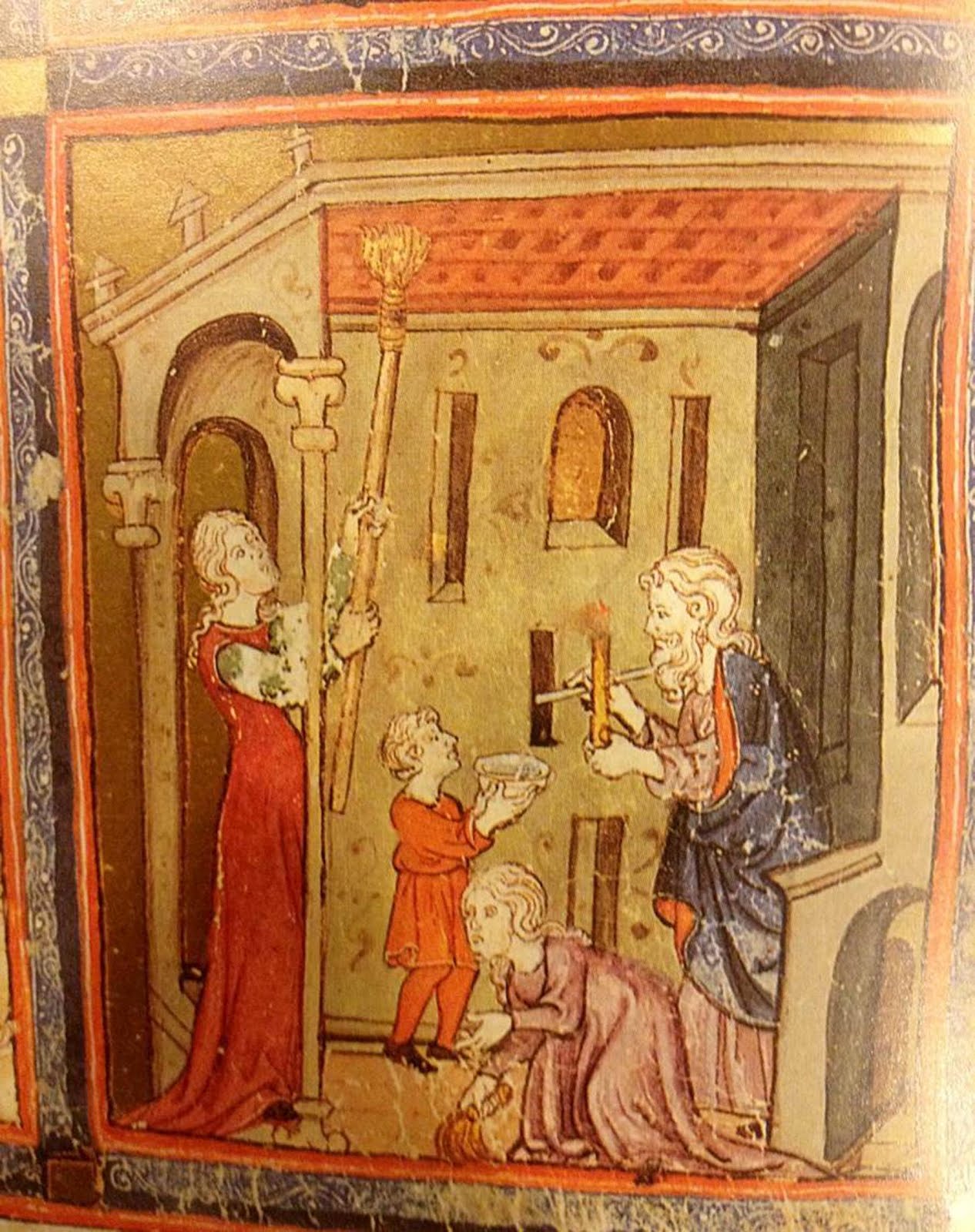
As detailed in chapter 8 of Epstein’s Medieval Haggadah, the early 14th Century Golden Haggadah is perhaps the most female-centric Haggadah and may have been commissioned for a woman. That manuscript emphasizes the unique, positive, and critical role women played in the Exodus narrative. Although it also depicts the practice of overzealous cleaning with a woman sweeping the ceiling. The 1430 Darmstadt Haggadah has a full-page illumination of women teachers, but its connection to the text is opaque. Finally, we argue that one printed Haggadah uses a subtle element in explicating the midrashic understanding of the separation of couples as part of the Egyptian experience.

Sweeping the Ceiling, Golden Haggadah


One of the most creative contemporary Haggados was produced by the artist, David Moss. Moss was commissioned by David Levy to create a Haggadah, on vellum in the tradition of Medieval Jewish manuscripts. Moss worked for years on the project the result surely equals, if not surpasses, many of the well-known Medieval haggados, both artistically and its ability to bring deeper meaning to the text. The manuscript is adorned with gold and silver leaf and contains many paper-cuts (technically vellum-cuts).  One of the most striking examples of the silver decoration is the mirrors that accompany the passage that “in each and every  generation one is obligated to regard himself as though he personally came out of Egypt.” The mirrors appear on facing pages, interspersed with one with male and the other with female figures in historically accurate attire from Egypt to the modern period. Because the portraits are staggered when the page opens, each image is reflected on the opposite page, and when it is completely opened, the reader’s reflection literally appears in the Haggadah — a physical manifestation of the requirement to insert oneself into the story. The page is available as a separate print.

After completing the Haggadah, Moss was asked to reproduce it, and, with Levy’s permission, produced, what the former Librarian of Congress, Daniel Bornstein, described as one of the greatest examples of 20th-century printing. The reproduction, on vellum, nearly perfectly replicates the handmade one. This edition was limited to 500 copies, all of which were sold. From time to time, these copies appear at auction and are offered by private dealers, a recent copy sold for $35,000. President Regan presented one of these copies to the former President of Israel, Chaim Herzog, when he visited the White House in 1987. While that is out of reach for many, this version is housed at many libraries, and if one is in Israel, one can visit Moss at his workshop in the artist colony in Jerusalem, where he continues to produce exceptional works of Judaica and view the reproduction.  There is also a highly accurate reproduction, on paper that is available (deluxe edition) and retains the many papercuts and some of the other original elements, that is still available. This edition also contains a separate commentary volume, in Hebrew and English. (There is also one other available version that simply reproduces the pages, but lacks the papercuts.)

While the entire Moss Haggadah is worth study, a few examples. One paper-cut is comprised of eight panels, each depicting the process of brick making, the verso, using the same cuttings, depicts the matza baking process, literally transforming bricks into matza. The first panel of the matza baking is taken from Nuremberg II Haggadah, which we previously discussed here, and demonstrated that it preserves the Ashkenazi practice of only requiring supervision from the time of milling and not when the wheat was cut.

The illustration accompanying the section of Shefokh, reuses the illustrations of Eliyahu from the Prague 1526 and the Mantua 1528 Haggados to great effect. In the original and vellum reproduction, the cup of Eliyahu physically turns without any visible connection to the page — an extraordinary technical achievement. This section and the illustrations were discussed by Eliezer Brodt in “The Cup of the Visitor: What Lies Behind the Kos Shel Eliyahu, and, in this post, he identified an otherwise unknown work relating to the topic, for another article on the topic, see Tal Goiten’s “The Pouring of Elijah’s Cup (Hebrew).”  Eliezer revisited the topic in (here) his conversations with Rabbi Moshe Schwed, in the series, Al Ha-Daf. In last year’s conversation, he discussed a number of other elements of the history of the Haggadah, and three years ago the controversy surrounding machine produced matza. (All of the episodes are also streaming on Apple Podcasts, Spotify & 24Six.) Additionally, he authored “An Initial Bibliography of Important Haggadah Literature,” and two articles related to newly published Haggados, “Elazar Fleckeles’s Haggadah Maaseh BR’ Elazar ” and XXI. Rabbi Eliezer Brodt on Haggadah shel Pesach: Reflections on the Past and Present ,” regarding Rabbi Yedidya Tia Weil’s (the son of R. Rabbi Netanel Weil author of “Korban Netanel”) edition, and a review of David Henshke’s monumental work, Mah Nistanna. 

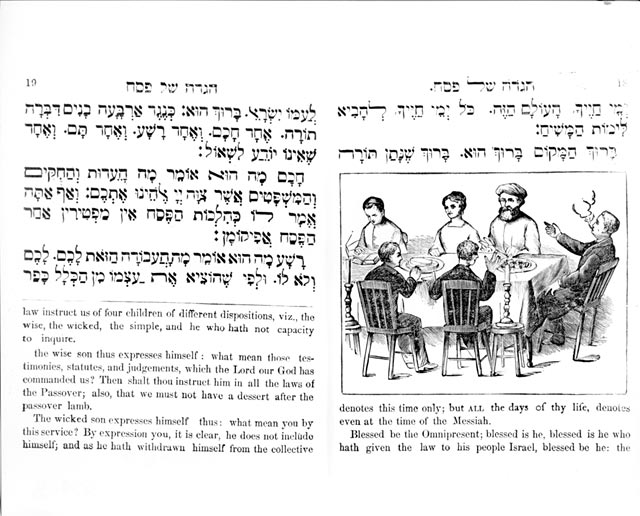
In one of the first haggadot printed in the United State published in 1886 Haggadah contains a depiction of the four sons.  Depicting the four sons is very common in the illustrated manuscripts and printed haggadot. In this instance, the wicked son’s disdain for the seder proceedings shows him leaning back on his chair and smoking a cigarette. According to many halakhic authorities, smoking is permitted on Yom Tov, nonetheless, the illustration demonstrates that at least in the late 19th-century smoking was not an acceptable practice in formal settings. (For a discussion of smoking on Yom Tov, see R. Shlomo Yosef Zevin, Mo’adim be-Halakha (Jerusalem:  Mechon Talmud Hayisraeli, 1983), 7-8).

The cup of Eliyahu is but one of many Passover food-related elements. The identification of Marror with the artichoke in Medieval Haggados, is debated by Dan Rabinowitz and Leor Jacobi , while Susan Weingarten provides an overview of the vegetable, in “The Not-So-Humble Artichoke in Ancient Jewish Sources.” Jacobi also discusses the fifth cup in his article, “Mysteries of the Magical Fifth Passover Cup II, The Great Disappearing Act and this printed article.  The history of the restriction of Kitniyot and the development of the practice of selling hametz is discussed in our article, “Kitniyot and Mechirat Chametz: Paradoxical Approaches to the Chametz Prohibition,” and was revisited on Rabbi Drew Kaplan’s Jewish Drinking podcast (and in an audio version on apple podcasts and spotify). Another guest was Marc Epstein, discussing his book on Medieval Haggados, and Dr. Jontahan Sarna where he gives an overview of the use of raisin wine for the kiddush and the four cups, based on his article, “Passover Raisin Wine,” as was the frequent contributor to the Seforimblog, Dr. Marc Shapiro. His interview, like many of his posts and his book, Changing the Immutable, discusses censorship and, in particular, the censored resposum of R. Moshe Isserles regarding taboo wine (also briefly touched upon in Changing the Immutable, 81-82, and for a more comprehensive discussion of the responsum, see Daniel Sperber, Nitevot Pesikah, 104-113).  For another wine related post, see Isaiah Cox’s article, “Wine Strength and Dilution.” The history of Jewish drinking and Kiddush Clubs was briefly discussed here.

Whether coffee, marijuana and other stimulants falls within the Kitniyot category appears here. Marc Shapiro’s article, “R. Shlomo Yosef Zevin, Kitniyot, R. Judah Mintz, and More,” regarding Artscroll’s manipulation of R. Zevin’s Moadim be-Halakha regarding kitniyot. Another coffee related article explores the history and commercial relationship between the Maxwell House Haggadah.  Finally, the last (pun intended) food discussion centers on the custom of stealing the afikoman.

The Amsterdam 1695 Haggadah was an important milestone in the history of printed illustrated Haggados, it was the first to employ copperplates rather than woodcuts. This new technique enabled much sharper and elaborate illustrations than in past Haggados. While some of the images can be traced to earlier Jewish Haggados, many were taken from the Christian illustrator, Mathis Marin. It also was the first to include a map. As we demonstrated that map, however, is sourced from a work that was a early and egregious example of forgery of Hebrew texts. For an Pesach related plagiarism, see “Pesach Journals, Had Gadyah, Plagiarism & Bibliographical Errors.” Kedem’s upcoming auction of the Gross Family collection includes, with an estimate of $80,00-$100,000, one of the rarest, beautiful, and expensive illustrations of Had Gadya by El Lissitzky published by Kultur Lige, Kiev, 1919. Eli Genauer reviews another number related edition, not in price, but convention, “The Gematriya Haggadah.”

There are two articles regarding the Haggadah text, David Farkes’ “A New Perspective on the Story of R. Eliezer in the Haggadah Shel Pesach,” and Mitchell First’s “Some Observations Regarding the Mah Nishtannah.” First’s other article, “The Date of Exodus: A Guide to the Orthodox Perplexed,” is also timely.
Finally, Shaul Seidler-Feller’s translation of Eli Wiesel’s article, “Passover with Apostates: A Concert in Spain and a Seder in the Middle of the Ocean,” tells the story of an unusual Pesach seder. Siedler-Feller most recently collaborated on the two most recent Sotheby’s Judaica catalogs of the Halpern collection.

Chag kasher ve-sameach!


Young Rabbis and All About Olives

Young Rabbis and All About Olives

Marc B. Shapiro
I am currently working on a book focused on the thought of R. Kook, in particular his newly released publications. A book recently appeared titled Siah ha-Re’iyah, by R. David Gavrieli and R. Menahem Weitzman. It discusses a number of important letters of R. Kook. In addition to the analysis of the letters, each of the letters is printed with explanatory words that make them easier to understand. We are also given biographical details about the recipients of R. Kook’s letters. Here is the title page.
In reading the book, I once again found myself asking the question, how can intelligent people sometimes say nonsensical things? On p. 252 the book states that R. Menahem Mendel Cohen studied in yeshivot in Tiberias and Safed, and was appointed as chief rabbi of the Ashkenazic community of Cairo in 1896 when he was only ten years old!
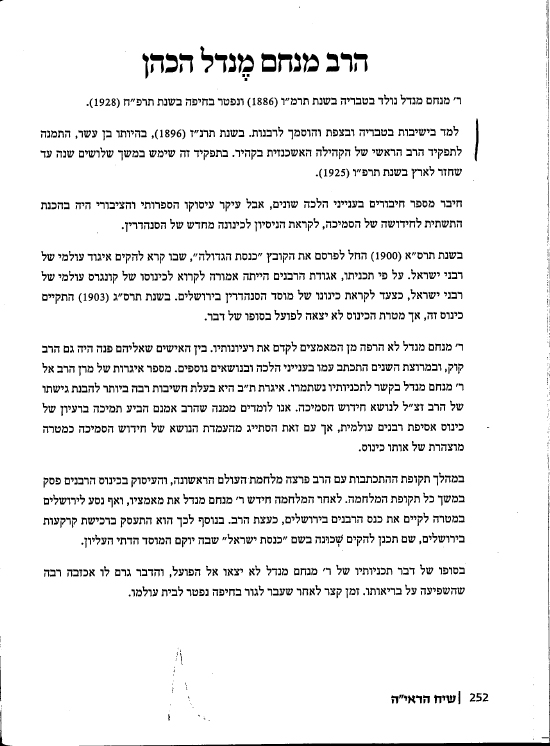
How is it possible for anyone to write such a sentence, that a ten-year-old was appointed as a communal rabbi? Let me explain what happened here, but first, I must note that the name of the man we are referring to is not R. Menahem Mendel Cohen, but R. Aaron Mendel Cohen. Here is his picture, which comes from a very nice Hebrew Wikipedia article on him.
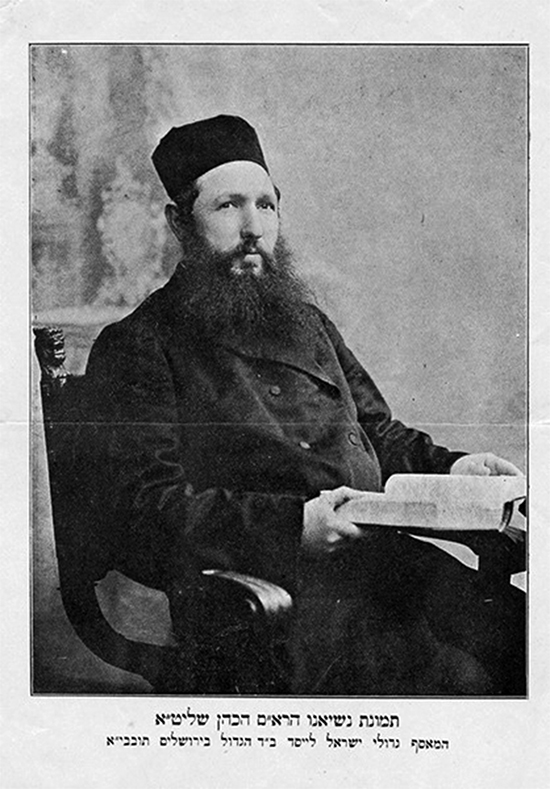
As for R. Cohen being appointed rabbi at age ten, whoever prepared the biographical introduction must have had a source which mistakenly stated that R. Cohen was born in 1886. Since this source also said that he became rabbi in Cairo in 1896, this means that he was ten years old was he was appointed rabbi. Yet we can only wonder how the authors did not see the obvious impossibility of a ten-year-old being appointed rabbi of Cairo, which should have led them to investigate a little further. Simply by googling R. Cohen’s name in Hebrew, the Wikipedia article will come up, and it tells us that R. Cohen was born not in 1886 but in 1866. Thus, instead of a ten-year-old rabbi he is now thirty years old.

With regard to young rabbis, let me repeat, with some slight edits, something I wrote in an earlier post here.

In terms of young achievers in the Lithuanian Torah world, I wonder how many have ever heard of R. Meir Shafit. He lived in the nineteenth century and wrote Sefer Nir, a commentary on the Jerusalem Talmud, when not many were studying it. Here is the title page of one of the volumes, where it tells us that he became rav of a community at the age of fifteen.

The Hazon Ish once remarked that the young Rabbi Shafit would mischievously throw pillows at his gabbaim![1]

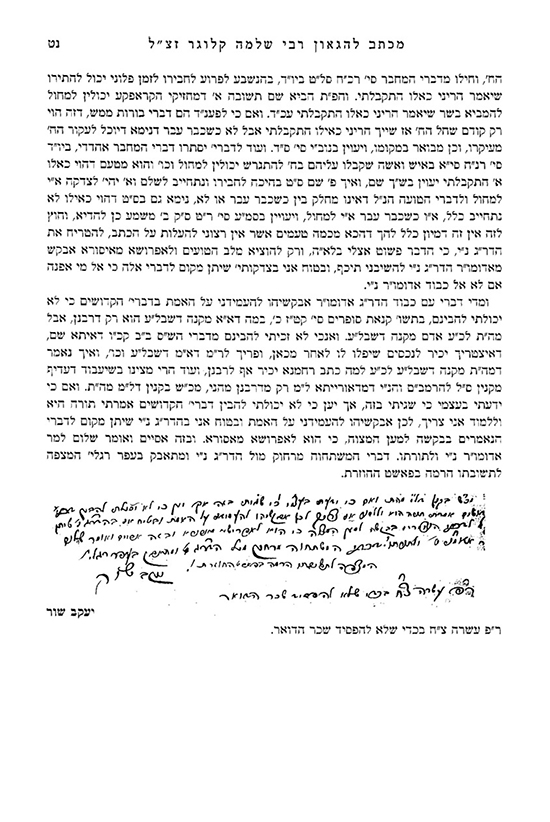
Regarding R. Jacob Schorr [mentioned earlier in the original post] being a childhood genius, this letter from him to R. Shlomo Kluger appeared in Moriah, Av 5767.
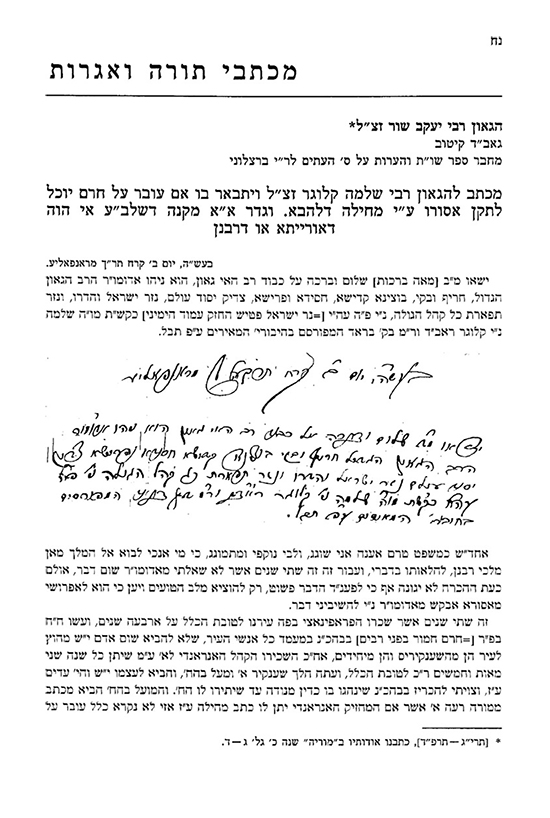
As you can see, the letter was written in 1860 (although I can’t make out what the handwriting says after תר”ך). We are informed, correctly, that R. Schorr was born in 1853, which would mean that he was seven years old when he wrote the letter. This, I believe, would make him the greatest child genius in Jewish history, as I don’t think the Vilna Gaon could even write like this at age seven. Furthermore, if you read the letter you see that two years prior to this R. Schorr had also written to R. Kluger. Are there any other examples of a five-year-old writing Torah letters to one of the gedolei ha-dor? From the letter we also see that the seven-year-old Schorr was also the rav of the town of Mariampol! (The Mariampol in Galicia, not Lithuania.) I would have thought that this merited some mention by the person publishing this letter. After all, R. Schorr would be the only seven-year-old communal rav in history, and this letter would be the only evidence that he ever served as rav in this town. Unfortunately, the man who published this document and the editor of the journal are entirely oblivious to what, on the face of things, must be one of the most fascinating letters in all of Jewish history.

Yet all that I have written assumes that the letter was actually written by R. Schorr. Once again, we must thank R. Yaakov Hayyim Sofer for setting the record straight. In his recently published Shuvi ha-Shulamit (Jerusalem, 2009), vol. 7, p. 101, he calls attention to the error and points out, citing Wunder, Meorei Galicia, that the rav of Mariampol, Galicia was another man entirely, who was also named Jacob Schorr.

This is what I wrote in the prior post. Let me now add some additional information about R. Shafit, the fifteen-year-old communal rav. The first thing I want to point out relates to the city in which R. Shafit became rav at age fifteen. If you look at the title page you can see that its name is מיצד. This is actually an alternate way of spelling the city which is better known as מייצ’ט. Anyone who knows their Lithuanian rabbinic history will recognize this city as Meitchet (Molchad in English), made famous by the great R. Solomon Polachek, known as the Meitcheter Iluy. (R. Polachek was not actually born in Meitchet, but in a small town nearby.) There is so much to say about R. Polachek, but it will have to wait for a future post.

Returning to R. Shafit, although he is hardly a household name, in his day he was actually quite a well-known rabbi. He contributed to R. Israel Salanter’s journal Tevunah,[2] and those who study the Jerusalem Talmud know that his commentary is a very important work.[3] R. Adin Steinsaltz, who is from R. Shafit’s family, even took time away from his own work on the Talmud to publish from manuscript a commentary of R. Shafit on the Jerusalem Talmud. Here is the volume that appeared in 1979.
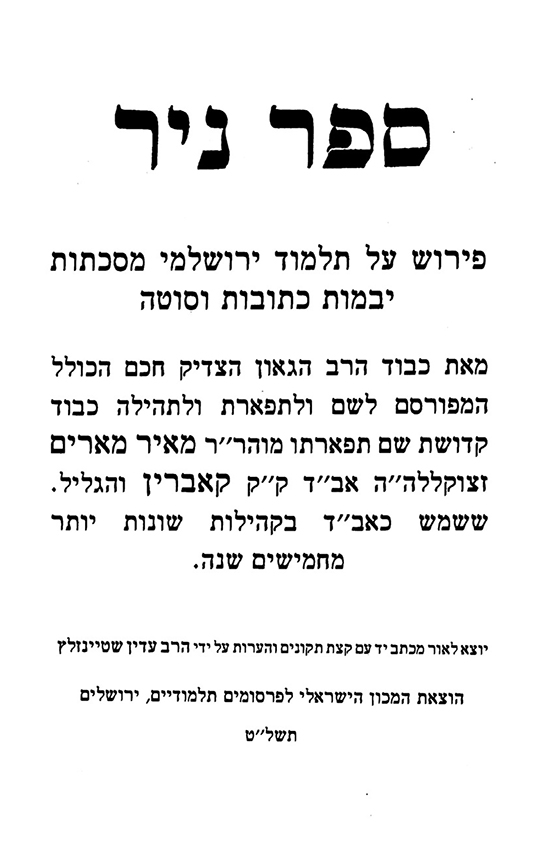
 

In the preface, R. Steinsaltz writes:

כל החכמים הלומדים בירושלמי בכל השיטות, למן חכמי בית המדרש נוסח ליטא העתיקה עד לאנשי המדע המובהקים, כולם כאחד הודו שפירוש “הניר” הוא מחשובי הפירושים שנכתבו אי פעם על התלמוד הירושלמי
I do not need go into more detail on R. Shafit since in 2014 Hillel Rotenberg published an entire book on him.[4] And while it is true that, as mentioned already, R. Shafit is not a household name, there are today people who celebrate his hillula. See here. In case you are wondering what a Lithuanian rabbi is doing with a hillula, R. Shafit was actually a Slonimer Hasid.

In response to my earlier comments about the young R. Shafit, Seforim Blog contributor R. Ovadiah Hoffman sent me another example of a young rabbi: Avigdor Aptowitzer. Aptowitzer, who was one of the twentieth-century’s leading academic scholars of rabbinic literature, is best known as the editor of R. Eliezer ben Joel Halevi’s halakhic work Ra’avyah, concerning which he published another important volume as an introduction to the Ra’avyah, and a book called Hosafot ve-Tikunim le-Sefer Ra’avyah (Jerusalem, 1936). 

According to Abraham Meir Habermann, when Aptowitzer was around seven years old his father, the rabbi of Tarnopol, became ill. Young Avigdor took the place of his father as rabbi. During the week he taught students and on Shabbat people carried him to the synagogue so that he could deliver the derashah.[5] As far as I know, this makes Aptowitzer the youngest person ever to serve as a communal rabbi, even though he was never officially appointed to the position.

It is also reported that R. Shimon Sofer, the son of R. Abraham Samuel Sofer (the Ketav Sofer), was so learned as a child that he received the title חבר from R. Judah Aszod when he was only nine years old.[6]

In speaking about young rabbis, it is also important to mention a passage in R. David Abudarham’s[7] commentary on the Haggadah, s.v. אמר רבי אלעזר הרי אני כבן שבעים שנה. Abudarham cites the Jerusalem Talmud, Berakhot 4:1, that R. Elazar ben Azariah was appointed nasi of the Sanhedrin at age 13. Our version of the Jerusalem Talmud has “age 16”, but the version cited by Abudarham appears in other early sources.[8]

Regarding age 16, R. Solomon Ibn Gabirol wrote his azharot for Shavuot when he was that old. At the beginning of the azharot he wrote (with great self-confidence, I might add):[9]

והנני בשש עשרה שנותי ובי שכל כמו בן השמונים
Avodah Zarah 56b tells about a child who learned Tractate Avodah Zarah when he was six years old. The Talmud describes how he was asked halakhic questions on the tractate, and his replies apparently signify that he was deciding halakhic matters at the age of six.

He was asked, ‘May [an Israelite] tread grapes together with a heathen in a press?’ He replied, ‘It is lawful to tread grapes together with a heathen in a press.’ [To the objection] ‘But he renders it yein nesekh [10] by [the touch of] his hands!’ [he answered], ‘We tie his hands up.’ [To the further objection] ‘But he renders it yein nesekh by [the touch of] his feet!’ [he answered], ‘Wine touched by the feet is not called nesekh.’  

Although not an example of a child rabbi, I think it is worthwhile to mention R. Jacob Berab’s statement that when he was only eighteen years old, and did not yet have a beard, he was the rabbi and halakhic authority for a community of 5000 families in Fez.[11]

Returning to Aptowitzer, R. Meir Mazuz directs a comment at him in a recent issue of his weekly Bayit Ne’eman.[12] In discussing the proper size of a kezayit, R. Mazuz notes that the Ashkenazic rishonim did not have any personal knowledge of olives, and thus did not know how big they were.[13] He cites R. Eliezer ben Joel Halevi, the Ra’avyah, who writes as follows:[14]

וכל היכא שצריך כזית צריך שיהיה מאכל בהרווחה, לפי שאין אנו בקיאין בשיעור זית כדי, שלא תהיה ברכה לבטלה
You cannot get any clearer than this that R. Eliezer, who lived throughout Germany, had no idea how big an olive was.[15] Yet in Aptowitzer’s note to the words לפי שאין אנו בקיאין בשיעור זית, he writes:

כלו’ אלא ע”י מדידה וחשבון, וכאן שבברכה אחרונה אנו עסוקין וכבר אכל ואי אפשר לחשוב ולמדוד, לכן יזהר שיאכל מתחילה שיעור גדול שאין להסתפק בו שהוא כזית
He explains the Ra’avyah to be saying that we do not know how large our portion of food is without measuring it. Since we are dealing with the final blessing and the food is already eaten and thus can no longer be measured, people should eat enough so that there is no doubt that they ate an olive’s worth and thus no problem with a berakhah le-vatalah.

It is hard to understand how Aptowitzer could have written something so obviously incorrect, as there is no doubt as to the passage’s meaning. R. Mazuz writes:

איזה “חכם”, שנכון שאחרי שכבר אכל את הזית לא יכול למדוד, אבל לפני שאכל הוא רואה את הגודל אז למה צריך לאכול בהרווחה?! אלא לא היו מכירים את הזיתים
Here is something else relevant to Aptowitzer. Nahmanides, Commentary to Genesis 31:35, writes (Chavel translation):

The correct interpretation appears to me to be that in ancient days menstruants kept very isolated for they were ever referred to as niddoth on account of their isolation since they did not approach people and did not speak to them. For the ancients in their wisdom knew that their breath is harmful, their gaze is detrimental and makes a bad impression, as the philosophers have explained. I will yet mention their experiences in this matter. And the menstruants dwelled isolated in tents where no one entered, just as our Rabbis have mentioned in the Beraitha of Tractate Niddah: “A learned man is forbidden to greet a menstruant. Rabbi Nechemyah says, ‘even the utterance of her mouth is unclean.’ Said Rabbi Yochanan: ‘One is forbidden to walk after a menstruant and tread upon her footsteps, which are as unclean as a corpse; so is the dust upon which the menstruant stepped unclean, and it is forbidden to derive any benefit from her work.’”

Baraita de-Masekhet Niddah is a strange work, with all sorts of extreme statements not found in mainstream rabbinic literature. This is not the place to review in any detail the various scholarly views about the text’s origin.[16] Suffice it to say that Saul Lieberman thought that the author was a sectarian, but not a Karaite.[17] Aptowitzer, however, took issue with Lieberman and argued that Baraita de-Masekhet Niddah is a Karaite forgery designed to insert Karaite views into the Rabbanite community, and also to make the Sages look like fools. As an example of the latter, Aptowitzer quoted the “halakhah” recorded in Baraita de-Masekhet Niddah that a kohen whose family member – by which it means one he lives with – is a niddah cannot offer a sacrifice or perform birkat kohanim.[18] Aptowitzer concluded that it is “very unfortunate” that some rishonim were misled by this forgery, thinking it an authentic work.[19]

Aptowitzer’s work, Mehkarim be-Sifrut ha-Geonim, in which he expressed this judgment, was published by Mossad ha-Rav Kook. R. Hayyim Dov Chavel also published his commentary on Nahmanides with Mossad ha-Rav Kook, and on the just-mentioned passage of Nahmanides to Genesis 31:35, R. Chavel quotes Aptowitzer’s view.

It is easy to see why, from a traditional perspective, what Aptowitzer said is problematic. After all, he posits that Nahmanides, one of the greatest of the medieval sages, was taken in by a heretic’s forgery. His apology, as it were, that Nahmanides and other medieval sages were not critical scholars, and thus it is not a cause for wonder that they were fooled in this matter, is not the sort of thing that will be seen as respectful in traditional circles. It is one thing to write about more recent sages being fooled by Besamim Rosh and the Yerushalmi on Kodashim, but when dealing with a figure like Nahmanides such a position is bound to be more controversial.

This is exactly what happened, and R. Chavel must have been subjected to criticism for citing Aptowitzer in this matter. In the second edition of his commentary, vol. 1, p. 554, R. Chavel backtracks from what he wrote. Had he been able to reset the type and delete the entire note from the text of the commentary I am sure he would have done so. However, he had to settle for a comment in the hashmatot u-miluim, which most people never bother to look at. He writes as follows:

על דעת בקורתית זו יש להוסיף: אף כי חכם גדול היה ר’ אביגדור אפטוביצר, ונאמן רוח לתורה ולחכמה, נתפס כאן לסברה בעלמא, שלא שזפה עינו החדה כי הברייתא הזאת (ברייתא דמסכת נידה) היא עדות מוכחת עד כמה גידרו קדמונינו עצמם להתרחק מטומאת הנדה. כטומאת הנדה היתה דרכם לפני (יחזקאל לו, יח). ואף שלא היו הדורות נוהגים למעשה בכל החומרות הנזכרות בברייתא זו, הלא כבר כתב ה”חתם סופר” [או”ח  סי’ כג] שאולי נשתנו הטבעים והמקומות, או כיון שדשו בה רבים שומר פתאים ה
As readers can see, R. Chavel’s point is completely dogmatic without any scholarly argument. 

Returning to Nahmanides’ comment to Genesis 31:35, he tells us that he will have more to say on this matter. This is found in his commentary to Leviticus 18:19, where he writes that the blood of menstruation “is deadly poisonous, capable of causing the death of any creature that drinks or eats it.” He further states:

If a menstruant woman at the beginning of her issue were to concentrate her gaze for some time upon a polished iron mirror, there would appear in the mirror red spots resembling drops of blood, for the bad part therein [i.e., in the issue] that is by its nature harmful, causes a certain odium, and the unhealthy condition of the air attaches to the mirror, just as a viper kills with its gaze.

I find it noteworthy that such a great figure as Nahmanides, who was also a doctor, was able to be taken in by these fairy tales. He certainly had never seen any red spots showing up on a mirror so why did he believe such a story without attempting to confirm its accuracy himself? I realize that in medieval times people were much more credulous, and repeated all sorts of far-fetched things that they heard.[20] Nahmanides himself repeats that people in Germany would make use of demons, and he had no reason to doubt this report.[21]

שמעתי בבירור שמנהג אלמניי”ו לעסוק בדברי השדים ומשביעים אותם, ומשלחים אותם ומשתמשים בהם בכמה ענינים
He also believed a report that travelers to the east had discovered the Garden of Eden, but were then killed by the flaming sword that guards the Garden.[22]

 ובספרי הרפואות היונים הקדמונים, וכן בספר אסף היהודי סיפרו כי אספלקינוס חכם מקדוני וארבעים איש מן החרטומים מלומדי הספרים הלכו הלוך בארץ ועברו מעבר להודו קדמת עדן למצוא קצת עלי הרפואות ועץ החיים למען תגדל תפארתם על כל חכמי הארץ, ובבואם אל המקום ההוא ויברק עליהם להט החרב המתהפכת, ויתלהטו כלם בשביבי הברק, ולא נמלט מהם איש
However, when dealing with red spots on a mirror this was something that Nahmanides could have easily confirmed, and yet instead he relied on what he heard, or perhaps read. In seeking to understand how Nahmanides could have been misled in this matter, it helps to be reminded of Bertrand Russell’s famous comment made with reference to Aristotle’s assertion that men have more teeth than women.

To modern educated people, it seems obvious that matters of fact are to be ascertained by observation, not by consulting ancient authorities. But this is an entirely modern conception, which hardly existed before the seventeenth century. Aristotle maintained that women have fewer teeth than men; although he was twice married, it never occurred to him to verify this statement by examining his wives’ mouths.[23]

Returning to the matter of olives, it is noteworthy that the halakhic authorities, including those in the twentieth and twenty-first centuries, who argued that olives have shrunk since the days of the Sages did not actually seek to prove this with historical evidence. Had they done so they would have found that the size of olives has not changed. However, concerning another measurement we find that the Steipler was indeed interested in what the historical record revealed. R. Avrohom Marmorstein and Jacob Djmal both called my attention to a letter of the Steipler that was recently up for auction. Here is the item from Kedem’s January 2018 auction catalog (catalog no. 59), pp. 269-270 (item no. 298).

This letter already appeared in Aleh Yonah (Jerusalem-Bnei Brak, 1989), p. 134.
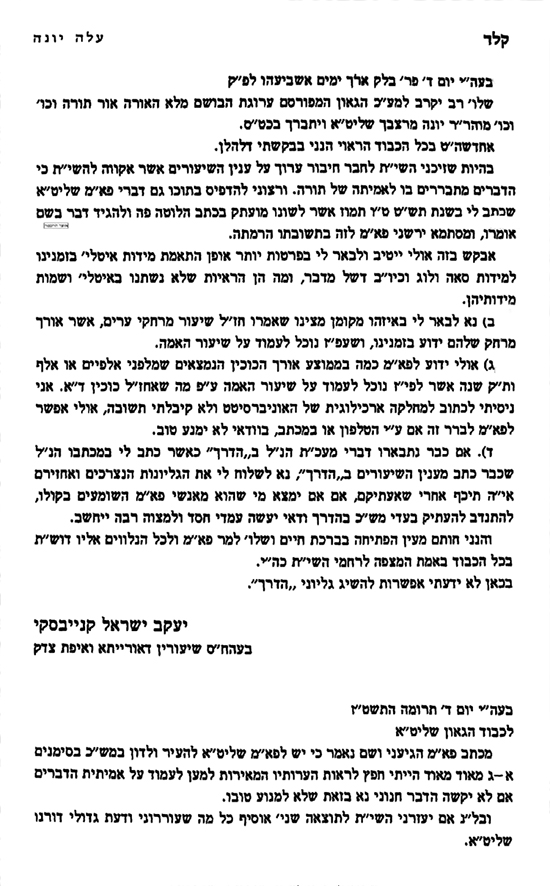
We see that in trying to determine the size of a cubit, the Steipler actually wrote to the archaeology department at “the university” (i.e., Hebrew University). This sort of effort is exactly what is required when trying to investigate a matter such as this. Yet look what happened when this letter was published in the Steipler’s Karyana de-Igarta, vol. 2, no. 402. The section showing that the Steipler reached out to the academic world was simply deleted, with no indication given that anything has been removed from the letter.
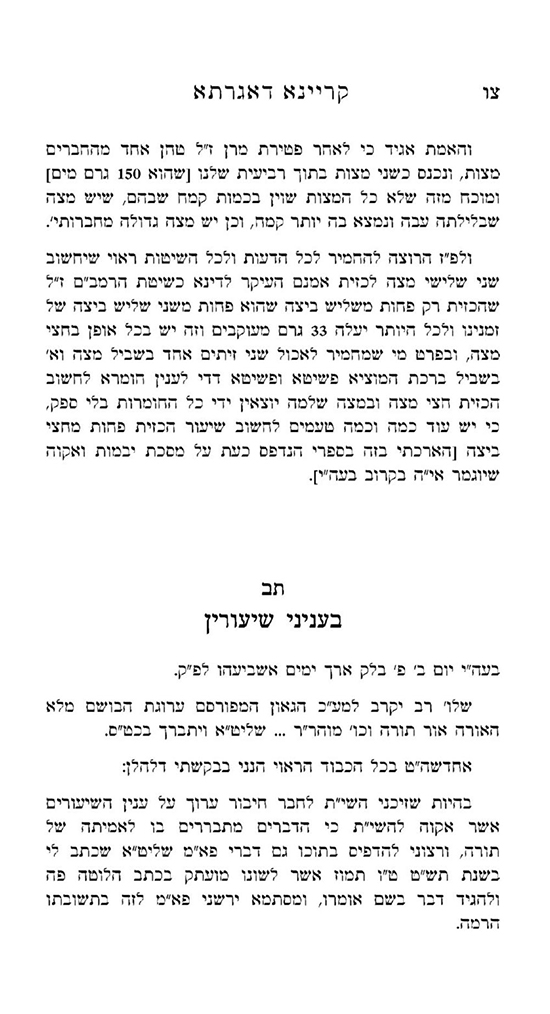
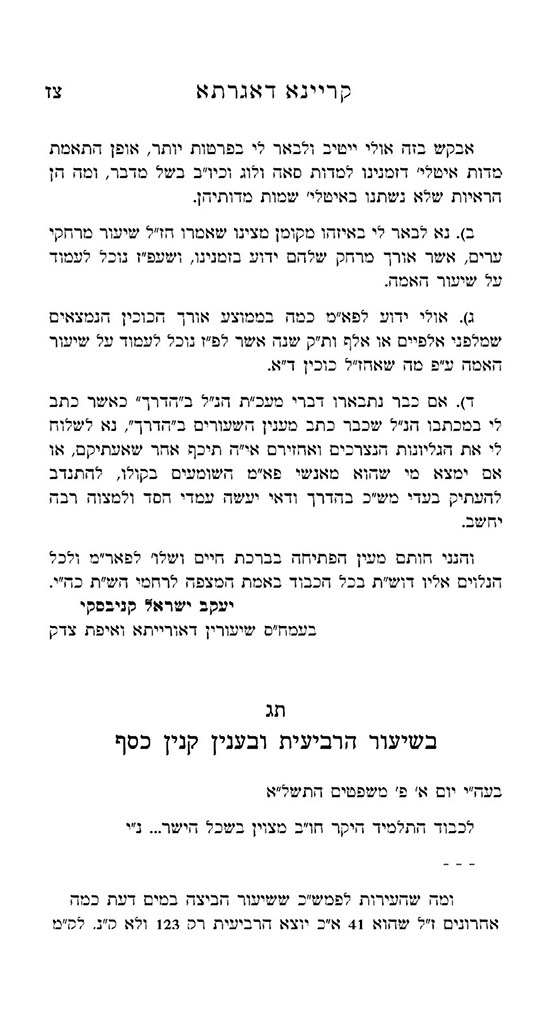
Finally, it is worth mentioning the Hazon Ish’s position that although the various measurements go back to Sinai, the actual size of the measurements required in order to fulfill an obligation was established by the Sages. In other words, while the measurement of a kezayit is mi-deoraita, how big this olive is – as there are different size olives – was given to the Sages to be determined.[24]

וכשנאמרו שיעורין בסיני נאמרו על האומד ומה שנראה לו לאדם זהו שיעורו, ואמנם הדבר מסור לחכמים לקבוע גדרי השיעור לכל ישראל וכמו שאמרו חכמים כזית שנאמרו זה אגורי כשעורה זו מדברית כעדשה זו מצרית לא שנאמרה למשה כך אלא נאמרה סתם והיא הבינונית אלא חכמים עיינו בדבר וקבעו לכל ישראל שכזית אגורי ושעורה מדברית ועדשה מצרית הם הבינונים, וכשם שמסור לדעתו של רואה להכריע על הבינוני של הפרי בין חביריו הגדולים והקטנים כן מסור לחכמים לקבוע את המדידה שיש להגיד עליה שפירותיה הם הבינונים בהגלילים והארצות השונות
Regarding the kezayit measurement, there is one other point worth mentioning. Everyone knows that one is required to eat a kezayit of maror at the Seder. Nevertheless, the practice of the Ropshitz hasidim used to be precisely the opposite, as they were careful not to eat a kezayit of maror. This strange practice goes back to the founder of the Ropshitz dynasty, R. Naphtali Zvi Horowitz (1760-1827). (I don’t know if the practice continues today.) Not only is the lack of a kezayit problematic, but there is the other issue regarding whether one can even say a blessing on the maror with less than a kezayit

R. Aryeh Zvi Frommer deals with Ropshitz practice, and also mentions that he heard that R. Shalom of Belz and R. Ezekiel of Shinova also told people to eat less than a kezayit of maror and to make the blessing on it.[25] R. Frommer attempts to justify this practice halakhically, and he states explicitly that he is doing so in order that the actions of these hasidic masters not be in contradiction to the Mishnah, Pesahim 2:6, the meaning of which appears to be that a kezayit is the minimum amount required for maror.[26] He also notes that he wants to justify the practice of “most of Israel” who use horseradish for maror and also do not eat a kezayit. His justification is only of eating less than a kezayit of horseradish, so it does not seem that this will be of any help with regard to the view of the Ropshitzer, as his avoidance of a kezayit of maror apparently applied to all types of maror, even lettuce. 

Many people probably remember their grandparents telling them that in Europe they used horseradish for maror, but that unlike today there was no concept of being careful to eat a kezayit. If you had any doubts about what your grandparents reported, R. Frommer tells us the exact same thing. Are we to say that most Jews in Europe did not fulfill the mitzvah of maror? This is a conclusion that no rabbi wants to reach, and that is why R. Frommer is motivated to find some justification for the practice.

כנלע”ד ליישב דברי הצדיקים ז”ל שלא יסתרו למשנה מפורשת הנ”ל וליישב מנהג רוב ישראל שאוכלין למרור חריין פחות מכזית ומברכין עליו על אכילת מרור
R. Frommer was obviously concerned that what he wrote would be regarded as too radical. Thus, on the very last page of the book, where one finds the corrections, he stressed that his words were only a limud zekhut because most people do not eat a kezayit, but le-khathilah one cannot rule this way.

כ”ז כתבתי רק דרך למוד זכות מחמת שרוב ההמון ונשים נוהגין כן אבל לכתחלה אין להורות כן וכ”מ באבני נזר סי’ שפ”ג

R. Frommer has another relevant comment on this matter:[27]

ביום ג’ שמות חלם לי, שהגידו לי בשם הרה”צ ר’ פינשע ז”ל מפילץ דאף מי שמגיע לו יסורים ר”ל, סגי ביסורים כ”ש [כל שהוא], דלא עדיף ממרור דלא בעי כזית, ומה”ת סגי במשהו כמ”ש הרא”ש פ”י דפסחים סי’ כ”ה, כמו בזה סגי במשהו
There is no need for me to go into this matter in any detail, as it has been comprehensively analyzed in a wonderful article by Levi Cooper.[28] I would just like to call attention to some sources not mentioned by Cooper. 

1. R. Mordechai Shabetai Eisenberger, Berurei Halakhot (Netanya, 2006), no. 51, offers a halakhic justification for the Ropshitzer, and claims that it is only applicable to horseradish.

2. The following story, quoting R. Aaron Rokeach, the Belzer Rebbe, appears in Aharon Pollak, ed., Beito Na’avah Kodesh (2007), vol. 2, p. 482:

פ”א, בליל הסדר שנת תש”ט, נכח דודי הר”ר יוסף צבי וועבער ז”ל (לאחר שניצל מגיא ההריגה במלחמה  באירופה, וזכה לעלות ארצה אחר החורבן שם), והנה כ”ק מרן זי”ע נתן לו בידו מעט מאוד מה”מרור”. אחד מן הנוכחים שם, הרהיב עוז והעיר למרן זי”ע, ש”זה רק כל שהוא”. נענה מרן זי”ע והתבטא בלשונו “ער האט  שוין געהאט גענוג מרירות”! – (בשם בעל העובדא
3. The following story, that R. Joel Teitelbaum of Satmar refused to follow his father-in-law’s practice of eating less than a kezayit of maror, appears in Aharon Perlow, Otzroteihem shel Tzadikim al ha-Torah ve-ha-Moadim (2006 edition), p. 323, quoting Moshian shel Yisrael, vol. 4, p. 17:

בליל התקדש חג הפסח בעריכת הסדר היה המנהג בבית דזיקוב לברך על אכילת מרור בשיעור פחות מכזית, וכן נהגו גם בפלאנטש. אולם רבינו (כ”ק מרן אדמו”ר מסאטמאר) ז”ל נהג כפשטות לשון הפוסקים וכנהוג בבית אבותיו הק’ לאכול שיעור מרור כזית כדאיפסקא הילכתא. וכשהיה רבינו ז”ל סמוך על שולחן חותנו (מזיוו”ר – הרה”ק רבי אברהם חיים הורביץ מפלאנטש זצוק”ל) לא נתנו לו שיעור מרור כראוי. ורק פחות מכזית – כמנהגם – ולא רצו שרבינו ז”ל יתנהג אחרת ממנהגם. אבל רבינו ז”ל השכיל להכין ולהצניע מראש מקדם בכיס הגלימא שלו שיעור כזית לאכילת מרור, ובעת עריכת הסדר כשהגיע לקיים מצות אכילת מרור אכל רבינו כשיעור
  
4. Matityahu Gutman, Belz (Tel Aviv, 1912), p. 31, states:

רבי יהושע מבלז אמר: אבי היה פוסק, והוא אמר שאין צריך לאכול כזית מרור, ובתשובות הנדפסות בסו”ס אמרי נועם למועדים כותב שמקובל כך מזקנו הק’ מרופשיץ וכן היו נוהגין כל בני ביתו, מחמת אי בריאות

The words I have underlined are how later generations mistakenly attempted to reconcile the practice of the Ropshitzer and his descendants with the halakhah.

Excursus

Another proof that the medieval German sages never actually saw olives is provided by R. Hayyim Benish – the expert in all matters of halakhic measurements and times – in what is still probably the best discussion of the history and halakhah of the kezayit measurement (and he did not need an entire book to make his points). See Benish, “Shiur Kezayit: Berur Da’at ha-Rishonim ve-ha-Aharonim,” Beit Aharon ve-Yisrael 50 (Kislev-Tevet, 5754), pp. 107-116. 

R. Benish calls attention to a medieval Ashkenazic series of halakhic rulings published by Shlomo Spitzer in Moriah 8 (Sivan 5738). On p. 4, in discussing the size of an olive and the problem created by the medieval Ashkenazic assumption that two olives equal one egg, the unknown author writes:

ולי הכותב אינו קשה כי ראיתי זיתים בא”י ובירושלים אפילו ששה אינם גדולים כביצה
From this we see that the medieval Ashkenazic sages did not know what an olive looked like, and because of this they were mistaken in their assumption that two olives equal one egg. The author himself, who had journeyed to Eretz Yisrael and had seen actual olives, was able to correct his Ashkenazic contemporaries. Yet his statement that an olive is not even one sixth the size of an egg is not in line with the Rashba, Torat ha-BayitMishmeret ha-Bayit, Mossad ha-Rav Kook ed., vol. 2, col. 52 (bayit revi’i, sha’ar rishon), who had olives at his disposal and describes them as less than one fourth the size of an olive. (See R. Benish, p. 109, for the common view that according to Maimonides an olive is one third of an egg.) See also R. Jacob Moelin, Sefer Maharil, ed. Spitzer (Jerusalem, 1989), Likutim, no. 55, that whereas two olives equal one egg, three dried figs also equal an egg. In other words, he believed that a fig is smaller than an olive, which could only be said by someone who never saw an olive. Perhaps he never saw a fig either, but the measurement of three figs equaling one egg is held by the geonim and Maimonides. See R. Eliyahu Zini, Etz Erez, vol. 3, pp. 201-202.
There are, of course, different types of olives, and R. Benish, p. 114, has a chart with the different measurements. Regarding the anonymous medieval Ashkenazic author, who stated that an olive is not even a sixth the size of an egg, it is possible that when he returned to Germany he forgot the exact size, and recalled them as being smaller than they actually were.
The editor of Torat ha-Bayit, R. Moshe Brun, finds the Rashba’s statement that an olive is not even a quarter of an egg so significant that he remarks:

חדוש גדול חידש לנו רבינו בהלכות שיעורין, דיותר מד’ זיתים בכביצה
R. Benish concludes that the size of a kezayit is 7.5 square centimeters. Recognizing that this is a good deal smaller than what people are told today, he concludes with the following important words which explain why a kezayit by definition must be a really small size.[29] What he says would appear to be basic to all of the Sages’ measurements, but for some reason I was never taught this in yeshiva:

רבים יתמהו ודאי, האם בשיעור זעיר כל כך מקיימים מצוות אכילה הכתובה בתורה. תמיה זו יסודה בחוסר הבנה במושג שיעורי תורה בכלל, ובשיעור אכילה בפרט. בסיס השיעורים בכל מקום ומקום הוא השיעור המזערי ביותר שעליו ניתן לומר שיש לו מהות. וכמו שיעור רוחב אגודל במדות האורך – מדה מחייבת בענינים התלויים במדות אורך (כמו לאו דהשגת גבול. ראה רמב”ם הל’ גנבה פ”ז הי”א), ושיעור פרוטה, שיעור מתחייב בממון, למרות שהוא שיעור זעיר ביותר . . , ואם יקדש אשה בשיעורי ממון זה – מקודשת. וכן הוא ה”כזית” – שיעור אכילה: השיעור המיזערי ביותר שיצא מכלל פירור ויש בו חשיבות אוכל . . . ואין תנאי במצות אכילה שיהיה בו שיעור מיתבא דעתא או שביעה
See also Beit Aharon ve-Yisrael 53 (Sivan-Tamuz 5754), pp. 91ff., where R. Benish responds to criticisms of his article. On p. 96 he mentions that one person criticized him by saying that the information he wrote about should not be made public!

והנה אמר לי חכם אחד: לא חידשת במאמרך מאומה, הדברים הינם ידועים, אלא שנאמרו, אפילו ע”י גדולי הפוסקים, מפה לאוזן, ואתה הוצאת זאת שלא כדין ושלא לצורך לרשות הרבים
Finally, no mention of the size of an olive would be complete without referring to R. Natan Slifkin’s essay on the topic available here.
One complicating factor in any discussion of the kezayit is that R. Joseph Karo, Shulhan ArukhOrah Hayyim 586:1, writes:

שיעור כזית יש אומרים דהוי כחצי ביצה
R. Karo knew what an olive looked like, so why in his codification of the Passover laws would he record the view that it is the size of half an egg? Furthermore, why does he ignore the views of R. Isaac Alfasi, Maimonides, and R. Asher who held that a kezayit is less than this? And finally, how come in Orah Hayyim 210 when he discusses the kezayit he does not define it as half an egg? 

These points are all raised by R. Hadar Yehudah Margolin in support of R. Benish’s position that when, in the laws of Passover, R. Karo mentions the view that a kezayit is half an egg, this is only to be regarded as a humra. However, R. Karo himself holds that the basic law is that a kezayit is really the actual size of an olive (which is certainly smaller than half an egg). See Beit Aharon ve-Yisrael 51 (Shevat-Adar 5754), p. 119.

In the recently published De-Haziteih le-Rabbi Meir (Jerusalem, 2018), vol. 1, p. 399, we see that R. Meir Soloveitchik did not like the suggestion that medieval Ashkenazic sages did not know how big an olive was.

אמר על כך הגר”מ שהרי ההגהות מיימוניות (פרק א’ ממאכלות אסורות אות מ’) מביאים שרבינו תם נתקשה בסימני עוף טהור, ואז עף אל שולחנו עוף טהור, ועל ידי זה ידע את הסימנים. ומזה רואים כמה סייעתא דשמיא היה להם שלא יטעו לומר דבר שאינו נכון, וא”כ איך אפשר לומר שכיון שלא ראו זיתים לכן לא ידעו מה שיעור כזית
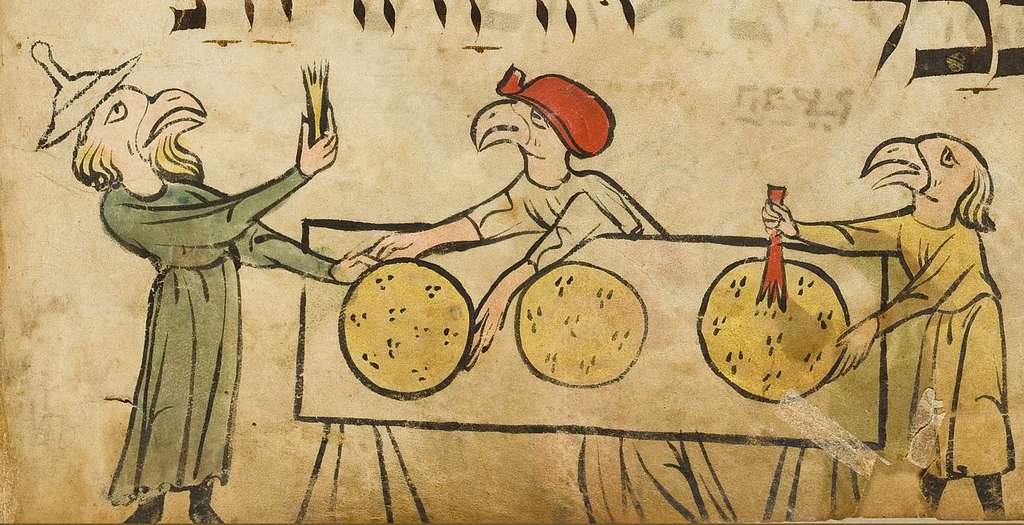
* * * *

My Torah in Motion 2019 summer trips will be to Morocco, Central Europe, and Greece. Information about them will soon be up on the Torah in Motion website.

Notes

[1] A. Horowitz, Orhot Rabbenu (Bnei Brak, 1991), vol. 1, p. 364. Horowitz adds that he asked the Steipler how they could appoint a fifteen-year-old rabbi when it says in Shulhan Arukh, Hoshen Mishpat that a dayan has to be eighteen-years-old. The Steipler replied that a rabbi is not a dayan, as he only decides halakhic questions and is not on a beit din. Horowitz also asked the Steipler about what appears in the Beit Yosef, that semikhah should not be given to anyone under eighteen. The Steipler replied that this is only a general rule, but there are exceptions.

Regarding eighteen as the minimum age of a dayan, contrary to what Horowitz states, this is actually not recorded as halakhah in the Shulhan Arukh. R. Karo writes as follows inHoshen Mishpat 7:3:

יש אומרים שאינו ראוי לדון אלא מבן י”ח ומעלה והביא שתי שערות. וי”א דמבן י”ג ומעלה כשר ואפילו לא הביא שתי שערות
This is actually a case of יש אומרים ויש אומרים, and according to R. Yitzhak Yosef the general rule in such a case is that the second opinion is the one we accept. See Ein Yitzhak, vol. 3, pp. 438ff. (Kelalim be-Da’at ha-Shulhan Arukh, no. 28).

Sefer Meirat Einayim explains the position that allows a thirteen-year-old dayan as due to the fact that being a dayan is only dependent on חריפותו ובקיאותו .
R. Kook refused to give semikhah to a young man as he believed that semikhah should only be given to one who was knowledgeable in the entire Torah (!). See his responsum published in Peri ha-Aretz 5 (1982), pp. 6-9.
[2] Tevunah (1861), nos. 39, 40.
[3] Sections of this commentary that have not yet appeared in print were recently offered for sale at an auction. See here.
[4] Ha-Gaon ha-Hasid Rabbi Meir Marim Shafit. See also the very nice story about R. Shafit recorded here.
[5] Habermann, Anshei Sefer ve-Anshei Ma’aseh (Jerusalem, 1974), p. 139.
[6] R. Asher Anshel Yehudah Miller, Olamo shel Abba (Jerusalem, 1984), p. 181.
[7] The common pronunciation of his name as “Abudraham” is a mistake. See here.
[8] See R. Menahem Kasher, Haggadah Shelemah, p. 17 n. 141.
[9] Israel Davidson, Otzar ha-Shirah ve-ha-Piyut (New York, 1924), vol. 1, p. 303. As Davidson notes, this is the correct version of the text.
[10] This is how the words are pronounced, not yayin nesekh.
[11] See R. Levi Ibn Habib, Teshuvot, no. 147 (Kuntres ha-Semikhah, no. 4), s.v. ומתחלה. R. Baruch Rabinovich, about whom I have written a good deal in recent posts (and more is to come) was appointed גאב”ד of Munkatch immediately upon his marriage, when he was only eighteen years old. See R. Nathan David Rabinowich, ed., Hashav Nevonim (N.Y.-Jerusalem, 2016), p. 9.

This post deals with young rabbis, not precocious children. However, regarding children wise beyond their years, I just came across the following from R. Hayyim ben Bezalel, Be’er Mayim Hayim (London, 1964), vol. 1, p. 165:

ואני בעודי נער כמו בן ז’ שנים פעם אחת בליל שבת של פרשה זו הסיבו יחד זקנים בעלי הוראה ונתנו ונשאו בזאת הקושיא והייתי מקשיב לקולם לאחר דבריהם אמרתי לחוות דעי גם אני ברשותם . . . והודי לי רבותיי והנהתי להם מאד

[11] No. 99 (18 Shevat 5778), p. 6 n. 35. Regarding R. Mazuz, I think readers will enjoy the song devoted to him that recently appeared.


Here are other songs devoted to him


Here is Lipa Schmeltzer on Sukkot 2018 singing before R. Mazuz and R. Shlomo Amar. The first song he sings is a poem that R. Mazuz wrote about Maimonides.

[13] R. Mazuz also shows that the medieval French sages never saw a date, and this explains why they describe it incorrectly. See Bayit Ne’eman, Orah Hayyim, no. 25 (pp. 135, 137-138).

[14] Berakhot no. 107.
[15] See Excursus.
[16] Interested readers can consult the numerous sources listed by R. Eliezer Brodt, Likutei Eliezer, pp. 38ff.
[17] Sheki’in (Jerusalem, 1939), p. 22.
[18] See R. Moses Sofer, She’elot u-Teshuvot Hatam Sofer, Orah Hayyim, no. 23, who discusses the matter of birkat kohanim, as it is also quoted by Rabad in his commentary to Tamid 33b from Sefer ha-Mikzto’ot. R. Efraim Zalman Margulies, Beit Efrayim, Orah Hayyim no. 6, explains the Ashkenazic practice of not reciting birkat kohanim every day as due to the concern that there might be a niddah in a kohen’s house. With reference to the notion that a kohen does not recite birkat kohanim if there is a niddah in his house, which as just noted is quoted by Rabad from Sefer ha-Miktzo’ot, R. Joseph Kafih writes (commentary to Moreh Nevukhim 3:47, n. 31):

והדעות הללו חדרו גם לשכבות מסוימות של היהדות והחלו להתנהג במנהגותיהם, ראה לדוגמא פירוש הראב”ד למסכת תמיד הפרק האחרון בשם ספר המקצעות
In other words, R. Kafih is in agreement with Aptowitzer that this is an example of sectarian ideas finding their way into the writings of rishonim

The late Yaakov Elman even saw Zoroastrian influence in a practice that would become part of the Niddah laws. He wrote the following here:

As to the non-elitist Babylonian Jews, we have a report regarding the ordinary Babylonian Jewish women. Rabbi Zera reports that the “daughters of Israel had undertaken to be so strict with themselves as to wait for seven [clean] days [after the appearance] of a drop of blood the size of a mustard seed [although biblically they are required only to separate for seven days from the onset of menstruation]” (Berakhot, fol. 31a; Megillah, fol. 28b; Niddah, fol. 66a). It is clear from Niddah (fol. 66a) that this stringency was a popular practice and not a rabbinic prohibition, probably in response to a “holier than thou” attitude perceived by the populace as emanating from their Persian neighbors. It seems that Babylonian Jewish women had internalized their Zoroastrian neighbors’ critique of Rabbinic Judaism’s relatively “easy-going” ways in this regard.
[19] Mehkarim be-Sifrut ha-Geonim (Jerusalem, 1941), pp. 166-168.
[20] Of course, in modern times people can also be quite credulous. Since we are discussing menstruation, here is another myth repeated by R. Hayyim David Halevi, Mekor Hayyim, vol. 5, p. 70:

וכבר הוכח שאחיזת יד האשה הנדה בפרחים ממהרת נבילתם
[21] Kitvei Ramban, ed. Chavel, vol. 1, p. 381. See also ibid., p. 149, that he believed it is possible for necromancers to raise the spirits of the dead.
[22] Kitvei Ramban, vol. 2, p. 296. Nahmanides wrote this in the thirteenth century when all sorts of tall tales were believed. Yet I still recall how surprised I was when told by a high school rebbe in the 1980s that he believed that the Ten Tribes were hidden somewhere on earth, waiting to be discovered. Perhaps relevant to this, R. Aharon Leib Steinman writes that the reason we cannot find the Sambatyon river is because of hester panim. See Ayelet ha-Shahar, Devarim, p. 190.
In general, it never ceases to amaze me how even very great figures have been taken in by phony stories. For one example (and I could provide a very long list of similar examples), here is a story about the power of the evil eye that R. Joseph Zechariah Stern records inZekher Yehosef, vol. 4, Tahalukhot ha-Agaddot, p. 13a. It actually upset me when I saw this, as I am a big admirer of R. Stern and was disappointed that he, too, readily accepted a phony story as fact.

ובענין עין הרע שנמצא באגדות הנה גם אנשים שאין להם חלק בתלמוד מחכמיהם ענו אמן על התאמתם וכנודע ע”פ מ”ע [מכתבי עת] כי הרופאים בע”מ פ”ב [בעיר מלוכה פטרבורג] עשו נסיון מבחינה שעשו שהניחו ככר לחם לפני אחד מחייבי מיתות ושהרעיבו אותו שלש ימים מקודם, ואותו חלק מהלחם שהניחו לפניו מבלי ליתן אותו לנגוע בו רק במבטי עיניו נהפך אח”כ לסם המות
This source, and the one from R. Steinman mentioned earlier in this note, are referred to in the recently published Otzar Hemdah (n.p., 2018), pp. 81, 150. See also ibid., p. 219, which cites R. Elijah David Rabinowitz-Teomim, Over Orah (Jerusalem, 2003), p. 237:

כבר נודע שבעת פריחת הגפנים אז גם היין שכבר הוא מכמה שנים במרתפים תוסס, (וכן אנו רואים בעת פריחת התבואות אז העיסה תוססת), ודבר זה נעלם מחכמי הטבע, אבל הכל רואים דבר זה בחוש, וא”כ ודאי שגם מה שכשאומרים דבר שמועה בשמו גורם ששפתותיו דובבות בקבר אין להתפלא כלל, אף שאין אנו מבינים דבר
How is it that R. Rabinowitz-Teomim can write that everyone sees the phenomenon with grapes and wheat he describes when the entire description is completely without basis? Otzar Hemdah, p. 219, cites a similar passage from R. Hayyim Joseph David Azulai,Homat Anakh (Jerusalem, 1986), parashat Matot (p. 67a):

הלא תראה היין שהוא במרתף ומונח בחבית סתומה בעת שדורכים הענבים אף שהוא רחוק מאד היין שבחבית מתנועע והוא פלא
Again, we have to ask, how is it that so many people believed that they saw something which never occurred?
[23] The Impact of Science on Society (London and New York, 2016), p. 6.
[24] Hazon Ish, Hilkhot Shabbat 39:1 (Kuntres ha-Shiurim).
[25] Eretz Tzvi, vol. 1, no. 85.
[26] I say the meaning “appears to be,” as there is a famous comment of R. Asher ben Jehiel, Pesahim, ch. 10, no. 25, which some understand to be suggesting a different approach to maror and the obligation of kezayit. See R. Aryeh Leib Gunzberg, Sha’agat Aryeh, no. 100; R. Mordechai Shabbetai Eisenberger, Berurei Halakhot (Netanya, 2006), no. 51; R. Samuel Pardes, Avnei Shmuel (Jerusalem, 1993), no. 13; R. Asher Weiss, Minhat Asher: Haggadah shel Pesah (Jerusalem, 2004), pp. 203ff.
[27]  Eretz Tzvi, vol. 2, p. 401.
[28] “Bitter Herbs in Hasidic Galicia,” Jewish Studies Internet Journal 12 (2013), pp. 1-40.
[29] See also R. Naphtali Zvi Judah Berlin, Meromei Sadeh, Pesahim 39a, who states that a kezayit is very small:
וזה ברור דשיעור כזית המבואר בשו”ע הוא שיעור קטן מאד


Bridging the Kabbalistic Gap Nefesh HaTzimtzum by Avinoam Fraenkel reviewed by Bezalel Naor

Bridging the Kabbalistic Gap
Nefesh HaTzimtzum by Avinoam Fraenkel
Vol. 1: Rabbi Chaim Volozhin’s Nefesh HaChaim with Translation and Commentary
Volume 2: Understanding Nefesh HaChaim through the Key Concept of Tzimtzum and Related Writings
(Jerusalem: Urim, 2015)
Reviewed by Bezalel Naor
Recently there has been a spate of English translations of the classic of Mitnagdic philosophy, Nefesh ha-Hayyim by Rabbi Hayyim of Volozhin (1749-1821), eminent disciple of the Vilna Gaon. This is perhaps the most glorious—certainly the lengthiest—of the translations, one that attempts to rewrite the debate between Hasidim and Mitnagdim.
The present edition, the most extensive to date, is divided in two volumes. Volume One consists of a Hebrew-English edition of the entire book with the exception of the famous note by the author’s son, Rabbi Isaac (Itzeleh) of Volozhin, known as “Ma’amar Be-Tzelem.” That note and other related writings of Rabbi Hayyim have been translated in Volume Two. In a unique typesetting innovation, the translator divides the complex Hebrew sentences into phrases, easing the English reading.
In the lengthy introduction to Volume Two, entitled “Tzimtzum—The Key to Nefesh HaChaim,” Avinoam Fraenkel has carved out for himself a most ambitious goal: to tackle the perennial problem of latter-day Kabbalah, namely the Lurianic doctrine of Tzimtzum or divine self-contraction. Traditionally, there have been two schools of thought on the matter: those who hold “tzimtzum ki-peshuto,” i.e. the doctrine is to be taken literally; and those convinced that “tzimtzum she-lo ki-peshuto,” i.e. Tzimtzum is not to be taken literally. As Fraenkel points out, this terminology first gained currency in the debate between two Italian kabbalists, Rabbi Joseph Ergas (author Shomer Emunim) and Rabbi Immanuel Hai Ricchi (author Yosher Levav) back in 1736-7.[1]
Fraenkel’s thesis is that even when things are “pashut” (simple), they truly are not so “pashut” (simple). Even when a kabbalist such as Rabbi Shelomo Elyashiv (author Leshem Shevo ve-Ahlamah) writes boldly that he understands the doctrine literally as did the author of Yosher Levav—that requires complexification.
You might ask of what concern is this rarefied debate to the masses of Jews living in the twenty-first century. Ah! It just so happens that many if not most historians have assumed that this debate, which translates into transcendentalist versus immanentist theology, was at the heart of the terrible controversy between the Mitnagdim and Hasidim that tore apart East European Jewry in the late eighteenth century. At that time, the Vilna Gaon issued a herem, an official rabbinic ban excommunicating the followers of the Ba’al Shem Tov.
If it can be proven that there is essentially no difference of theology between the Tanya (the “Bible” of Hasidism), written by Rabbi Shneur Zalman of Liadi, founder of the Habad school of Hasidism, and the Nefesh ha-Hayyim (the “Shulhan ‘Arukh” of Mitnagdic ideology), then we will have dissolved any continuing animus between Hasidim and Mitnagdim, and “Shalom ‘al Yisrael” (Peace to Israel). This is the fondest wish of the author.
The truth is—as the author makes us aware—this is not the first attempt to smooth over theological differences between the Tanya and Nefesh ha-Hayyim. On the eve of World War Two, Rabbi Eliyahu Eliezer Dessler—a preeminent master of the Mussar school, Mashgi’ah Ruhani of Gateshead and later of the Ponevezh Yeshivah in B’nei Berak—then residing in London, wished to issue a proclamation to the effect that there is essentially no mahloket, no difference of opinion between Rabbi Shneur Zalman and Rabbi Hayyim regarding the correct interpretation of Tzimtzum. Rabbi Dessler’s distinguished houseguest at the time was Rabbi Yitzhak Horowitz (known in Lubavitch as “Reb Itche Der Masmid,” on account of his legendary “hatmadah,” or devotion to learning), who acted as fundraiser on behalf of the Lubavitcher Rebbe, Joseph Isaac Schneersohn. Rabbi Dessler asked Rabbi Horowitz to sign on the proclamation.
To make a long story short, eventually Rabbi Dessler’s overtures were forwarded to the son-in-law of the Rebbe, Rabbi Menachem Mendel Schneerson (eventual successor to his father-in-law as Rebbe of Lubavitch), who penned a formal reply. For the life of him, Rabbi M.M. Schneerson could not fathom how someone with competence in Kabbalah (which Rabbi Dessler certainly did possess) could fail to see the obvious differences between the Habad and Volozhin understandings of Tzimtzum. (Rabbi Schneerson further outlined that there was a difference between the Vilna Gaon and his student Rabbi Hayyim of Volozhin regarding Tzimtzum, a point in the letter which continues to rile Mitnagdim to this day. In fact, Rabbi Yosef Zussman of Jerusalem, eminent disciple of Rabbi Ya‘akov Moshe Harlap, wrote several unanswered letters to the Lubavitcher Rebbe remonstrating how absurd it is to entertain the notion that Rabbi Hayyim, who adored his master the Gaon, disagreed with him on so basic an issue.)
Left without a “partner in peace” of the opposite camp, Rabbi Dessler’s proclamation was buried. Where titans such as Rabbis Dessler and Schneerson could not see eye to eye, Avinoam Fraenkel certainly has his work cut out for him. Before we proceed further to the “nuts and bolts” of the Tanya—Nefesh ha-Hayyim debate, the reader may wish to listen to some music pleasing to the ear:

·         When Rabbi Abraham Mordechai Alter, Rebbe of Gur (“Imrei Emet”) asked Rav Kook how he knew so much Hasidut, Rav Kook responded that he had studied Nefesh ha-Hayyim.
·         Rabbi Michael Eliezer Forshlager of Baltimore, a foremost student of Rabbi Avraham Bornstein, Rebbe of Sokhatchov (author Responsa Avnei Nezer) carried in his tallit bag a volume which consisted of Tanya and Nefesh ha-Hayyim bound together at Rabbi Forshlager’s special request.
·         Once around the family table in Brooklyn, Rabbi Menachem Mendel Schneerson (by then Lubavitcher Rebbe) spoke so enthusiastically of Nefesh ha-Hayyim that his brother-in-law Rabbi Shemariah Gurary said in jest: “Then perhaps we Hasidim should take to studying Nefesh ha-Hayyim.”

Back to the mahloket. What are the cold facts concerning the debate?
It is incontrovertible that Rabbi Hayyim has stood the Zohar’s terms “memale kol ‘almin” (“filling all worlds”) and “sovev kol ‘almin” (“surrounding all worlds”) on their heads. What for the Tanya is “memale kol ‘almin,” is for Nefesh ha-Hayyim, “sovev kol ‘almin,” and vice versa. Rabbi Shelomo Fisher of Jerusalem has written that this is merely semantics.[2] Others read into the shift of terminology a substantive controversy as to Weltanschauung. What for Hasidism is common experience, namely the immanence, the immediate presence of God, is for Mitnagdism a recondite mystery reserved for the elite.
In the words of Rabbi Eizik of Homel, a major disciple of Rabbi Shneur Zalman of Liadi and of his son, Rabbi Dov Baer of Lubavitch (Mitteler Rebbe):

This belief is possessed by all the Hasidim, but the Mitnagdim, even those who are not etc. [the word etc. occurs in the original], do not have this faith, only in a very, very concealed manner, as Israel were in Egypt…They have no room for this faith that Altz iz Gott (All is God).[3]

Fraenkel observes that much of the “poisoning of the waters” was done by publication of a spurious letter attributed to the “Alter Rebbe,” Rabbi Shneur Zalman, in the anonymous Matzref ha-‘Avodah (Koenigsberg, 1858). Later the letter was incorporated in Heilman’s more responsible Beit Rebbi (Berdichev, 1902). In the forged epistle, Rabbi Shneur Zalman writes that it has come to his awareness that the Vilna Gaon understands Tzimtzum literally.
This letter contributed to Rabbi Menachem Mendel Schneerson’s formulation concerning the Vilna Gaon’s view of Tzimtzum. One might mistakenly assume that once the letter is exposed as a forgery, Habad should have no problem accepting that there truly was no disagreement between the two rival camps concerning Tzimtzum. But Fraenkel knows that this is not the end of his troubles.
There is the matter of the passage in the second part of Tanya (titled Sha‘ar ha-Yihud ve-ha-Emunah) which reserves some pretty harsh language for the literalists:

…the error of some wise men in their own eyes, may the Lord forgive them, who erred and were mistaken in their study of the writings of the Ari, of blessed memory, and understood the doctrine of Tzimtzum mentioned there literally, that the Holy One, blessed be He, withdrew Himself and His essence, God forbid, from this world, only that He supervises from above.[4]

Who are the unnamed villains of this passage? To endeavor to answer this question, we would do well to research the printing history of the Tanya. The passage in question was missing from all editions of the Tanya printed before the year 1900. In that year, the passage surfaced in the Romm edition printed in Vilna at the behest of Rabbi Shalom Dov Baer Schneersohn of Lubavitch. Until that time, it had been preserved in manuscript in the keeping of the heirs of the Ba‘al ha-Tanya. That means that for over a century since the Tanya was first printed in Slavuta in 1796, this sensitive piece—a sort of J’accuse, if you will—was suppressed. Why was it ever suppressed to begin with, and why was it finally revealed in 1900?
An obvious solution would be that the passage obliquely lambasted the Vilna Gaon, and it was not until a century later that a direct descendant of the author felt that times had changed and that the sociological “climate” had warmed sufficiently to allow for an unexpurgated version of the Tanya to appear in print. This time, no herem would be issued in Vilna.
And for the record, Rabbi Menachem Mendel was not the first Schneerson to assume that the Gaon understood Tzimtzum literally. Earlier, the Rebbe of Kopyst, Rabbi Shelomo Zalman Schneerson (1830-1900), author Magen Avot, wrote in a letter to Rabbi Don Tumarkin: “This is the entire subject of Tzimtzum, and this is the Hasidism of the Ba‘al Shem Tov and the Maggid, may they rest in peace, that the Tzimtzum is not to be taken literally, as opposed to the opinion of the Mishnat Hasidim [i.e. Rabbi Immanuel Hai Ricchi] and the Gaon Rabbi Elijah, of blessed memory.”[5]
Fraenkel is not willing to accept that the passage in Tanya is directed at the Vilna Gaon or earlier Rabbi Immanuel Hai Ricchi. He stands in good company. Upon receipt of Hayyim Yitzhak Bunin’s Mishneh Habad II (Warsaw, 1933), Rav Kook wrote back to the author requesting that he retract his statement that the pejorative “wise men in their own eyes” refers to the author of Mishnat Hasidim and the Gaon of Vilna.[6]
But then the question remains. Who are the “bad guys” of the Tanya? Fraenkel would have us believe that the reference is to the likes of the crypto-Sabbatian Nehemiah Hiyya Hayyon, against whom Ergas inveighed in his polemical works Tokhahat Megulah and Ha-Tzad Nahash (London, 1715).[7]
If that were the case, the language of the Tanya is too mild and reserved. Sabbatians (believers in pseudo-Messiah Shabtai Tzevi) are usually treated to much more invective, such as “blasted be their bones.” There is a parallel passage in the work of Rabbi Aaron Halevi Horowitz of Starosselje, Sha‘arei ha-Yihud ve-ha-Emunah. There the language is even more compassionate and conciliatory. It is hard to imagine that the Ba‘al ha-Tanya and his prime pupil Rabbi Aaron Halevi Horowitz would show such empathy towards a Sabbatian heresiarch. With very few exceptions, members of the rabbinate were not “melamed zekhut” when it came to deviants of the Sabbatian persuasion. The passage reads:

…As it occurred to some latter-day kabbalists who attempt to be wise (mithakmim)…to understand Tzimtzum literally, as if He contracted Himself, and this is a crime, and their sin is too great to forbear, but their merit is that they have not spoken all these things with premeditation, God forbid, but rather from lack of understanding. May the Lord forgive them, “for in respect of all the people it was done in error” (Numbers 15:26).[8]

Tzimtzum-literalism is not a characteristically Sabbatian posture, nor is it the exclusive domain of Sabbatians. Rabbi Jacob Emden, the arch-nemesis of the Sabbatians, took Tzimtzum literally, drawing an analogy to the vacuum created by a pump.[9] In fact, Emden excoriated Ricchi for belaboring the point, when “certainly, absolutely, it is not to be construed other than literally, and it is one of the a priori assumptions for the believer in our holy religion, if not for anti-religious apikorsim who do not concede the creation of the world.”[10]
There is another problem with deflecting the Tanya’s critique away from the Gaon of Vilna toward Sabbatian kabbalists. If Sabbatians were being targeted, then why did the passage need to be suppressed at all? The Vilna Gaon and his disciples were certainly condemnatory of Sabbatianism in all its guises, so there would have been nothing in the passage to give offense to the Mitnagdim, the opponents of Hasidism.
Fraenkel’s work is much more difficult than that of Rabbi Dessler, for Fraenkel has tasked himself with harmonizing the view of Rabbi Shelomo Elyashiv (1841-1926), author of Leshem, as well. Rabbi Shelomo Elyashiv wrote—both in his Helek ha-Bi’urim and in his recently published correspondence with fellow Mitnagdic kabbalist Rabbi Naftali Herz Halevi Weidenbaum—that he subscribes to the literalist interpretation of Tzimtzum as described in Ricchi’s Yosher Levav.[11] The Leshem went so far as to cast aspersions on the Likkutim printed at the conclusion of Bi’ur ha-Gra to Sifra di-Tzeni‘uta, which present a non-literal reading of Tzimtzum.[12]
Professor Mordechai Pachter was struck by the most incongruous dovetailing of the perspectives of Lubavitch and Leshem concerning the Vilna Gaon’s interpretation of Tzimtzum. Both ascribe to the Gaon a literalist interpretation.[13]
“To cut to the chase,” Fraenkel’s strategy for reconciling what appear glaring differences of opinion involves invoking the kabbalistic theory of relativity, namely the distinction between the divine perspective and the human perspective. The Aramaic expressions that convey this thought are “le-gabei dideh” versus “le-gabei didan.”[14] (In Nefesh ha-Hayyim, the Hebrew terms “mi-tzido”/”mi-tzidenu” serve the same purpose.)[15] This distinction is certainly a valuable tool but it should not be overused. It strikes this reader as overly simplistic to assume that all writers (with the exception of Sabbatians) who grasp Tzimtzum literally are necessarily writing from the human perspective, while writers who understand Tzimtzum non-literally are necessarily writing from the divine perspective. And if the distinction should not be overused, a fortiori it should not be misused. To ascribe the human perspective (as opposed to divine perspective) to Rabbi Immanuel Hai Ricchi when he clearly writes the opposite, is to do violence to his words. A key passage in his Yosher Levav (quoted in fact by Fraenkel) reads:

Therefore relative to us (le-gabei didan), it is as if there was no Tzimtzum and we can say that the Tzimtzum is not literal. However, relative to the Ein Sof (le-gabei ha-Ein Sof) itself, it is literal.[16]

How it is then possible to flip around the author’s mindset and reverse his stated position, is beyond me.
At day’s end, the warring factions within Knesset Yisrael may have to make peace with their differences of opinion intact, even in the matter of Tzimtzum.

[1] Prof. Menachem Kallus confided to the writer that in his estimation the earliest discussion whether Tzimtzum was intended literally or not, is to be found in the notes to Vital’s ‘Ets Hayyim penned by Rabbi Meir Poppers (ca. 1624-1662). Poppers writes that it sounds to him as if Luria’s disciples Rabbi Hayyim Vital and Rabbi Yosef ibn Tabul understood from the Rav [Isaac Luria] that “the Tzimtzum is literal” (“ha-tzimtzum ke-mishma‘o”). See Rabbi Meir Poppers, ’Or Zaru‘a, ed. Safrin and Sofer (Jerusalem: Hevrat Ahavat Shalom, 1986), Sha‘ar ha-‘Iggulim ve-ha-Yosher, chap. 2 (p. 29).
[2] See “Derush ha-Tefillin” in Rabbi Shelomo Fisher, Beit Yishai—Derashot (Jerusalem, 2004), p. 355.
[3] Rabbi Eizik of Homel, “Igeret Kodesh” (Holy Epistle) printed at the conclusion of Hannah Ariel—Amarot Tehorot (Ma’amar ha-Shabbat, etc.) (Berdichev: Sheftel, 1912), 4b.
[4] Tanya II, 7 (83a).
[5] Published in M.M. Laufer, Ha-Melekh bi-Mesibo II (Kefar Habad: Kehot, 1993), p. 286.
[6] Rav Kook’s manuscript was published in Haskamot ha-Rayah (Jerusalem: Makhon RZYH Kook, 1988).
Ironically, Rav Kook’s maternal grandfather Raphael Felman was a Hasid of the Rebbe of Kopyst.
Fraenkel dismisses out of hand the notion that the Tanya pilloried Ricchi because of the fact that references to Ricchi’s Mishnat Hasidim figure prominently in the Tanya. See Nefesh HaTzimtzum, vol. 2, p. 79, n. 89. This argument is unconvincing. It is quite conceivable that the Ba‘al ha-Tanya was fond of Mishnat Hasidim, a popular digest of Lurianic Kabbalah, while viewing Ricchi’s other work Yosher Levav as being outside the pale. And for the very reason that such a venerable Kabbalist erred in his judgment concerning Tzimtzum, he was worthy of compassion. Cf. Rabbi Tzadok Hakohen Rabinowitz:
There were already found many great men, authors among the Mekubbalim, who stumbled in this, including the author of Yosher Levav, who explained the matter of Tzimtzum and similarly many matters of Kabbalah in [terms recognizable] to the understanding [as] total corporealization. I have spelled out his name, for some authors published after him already publicized him in order to clarify his errors in this respect. Behold he was a great and holy man, as is known, and erred only in his faith. Though this too is a great error and requires atonement (as explained above), nonetheless it is not such a grievous sin, as explained in the words of the Rabad…”
(Sefer ha-Zikhronot in Divrei Soferim [Lublin, 1913], 32d)
The reference is to Rabad’s animadversion to Maimonides’ statement in MT, Hil. Teshuvah 3:7 that one who professes belief in a corporeal deity has the halakhic status of a “min.”
[7] Fraenkel’s “Shabbetian Tzimtzum Kipshuto” (as opposed to the “Acceptable Tzimtzum Kipshuto”) strikes this writer as a “straw man” contrived for purposes of pilpul.
[8] Rabbi Aaron Halevi, Sha‘arei ha-Yihud ve-ha-Emunah (Shklov, 1820), Part 1, Gate 1, chap. 21, note (f.51).
[9] Rabbi Jacob Emden, Mitpahat Sefarim (Altona, 1768), 35b-36a (i.e. 45b-46a).
[10] Mitpahat Sefarim 35b (i.e. 45b).
To the question of whether Ricchi himself was a crypto-Sabbatian, I devoted an entire chapter of my book Post-Sabbatian Sabbatianism (1999): “Immanuel Hai Ricchi—Literalist among Kabbalists.”
[11] Rabbi Shelomo Elyashiv, Helek ha-Bi’urim (Jerusalem, 1935), 3a-b. The letters of Rabbi Elyashiv to Rabbi N.H. Halevi Weidenbaum were published in Rabbi Moshe Schatz, Ma‘ayan Moshe (Jerusalem, 2011).
[12] Helek ha-Bi’urim, 5b.
[13] Mordechi Pachter, “The Gaon’s Kabbalah from the Perspective of Two Traditions” (Hebrew), in The Vilna Gaon and his Disciples (Ramat-Gan: Bar-Ilan University Press, 2003), pp. 119-136.
[14] See Rabbi Menahem Azariah da Fano, Ma’amar ha-Nefesh, Part 2, chap. 4 in Ma’amrei ha-Rama mi-Fano (Jerusalem: Yismah Lev, 1997), p. 339; Rabbi Immanuel Hai Ricchi, Yosher Levav (Amsterdam, 1737), chap. 15 (10a), Rabbi Moshe Hayyim Luzzatto, Kalah Pithei Hokhmah (Koretz, 1785), petah 27 (31b); idem, Peirush Arimat Yadai in  Adir ba-Marom II, ed. Spinner (Jerusalem, 1988), p. 74; Rabbi Aaron Halevi Horowitz, Sha‘arei ha-Yihud ve-ha-Emunah (Shklov, 1820), Part 1, Gate 1, note to chap. 21 (43b-44a); Rabbi Isaac of Volozhin, “Ma’amar Be-Tzelem” (note to Nefesh ha-Hayyim, Gate 1, chap. 1) in Avinoam Fraenkel, Nefesh HaTzimtzum, vol. 2, p. 397; Rabbi Abraham Isaac Hakohen Kook, Shemonah Kevatzim (Jerusalem, 2004), 2:120 (vol. 1, p. 284).
[15] Nefesh ha-Hayyim III, 6.
[16] Rabbi Immanuel Hai Ricchi, Yosher Levav (Amsterdam, 1737), chap. 15 (10a). Quoted in Nefesh ha-Tzimtzum, vol. 2, pp. 260-261. See also Fraenkel’s discussion of Ricchi’s position on pp. 63-71.


Apostates and More, Part 2

Apostates and More, Part 2

Marc B. Shapiro

Continued from here

1. Another apostate was Rabbi Nehemiah ben Jacob ha-Kohen of Ferrara, who was an important supporter of R. Moses Hayyim Luzzatto during the controversy about him.[1]Here is the the final page of the haskamah he wrote in 1729 for R. Aviad Sar Shalom Basilea’s Emunat Hakhamim.

R. Isaac Lampronte, in a halakhic discussion in his Pahad Yitzhak, refers to Nehemiah, but not by name.[2] He calls him אחד מן החכמים רך בשנים אשר אחרי כן הבאיש ריחו כנודע. In R. Hananel Nepi and R. Mordechai Samuel Ghirondi, Toldot Gedolei Yisrael (Trieste, 1853), p. 229, they write about Nehemiah: שאח”כ נעשה ישמעאלי. Obviously, “Ishmaelite” is a code word for Christian.[3]

The story reported by Samuel David Luzzatto is that Nehemiah used to go to prostitutes, and when the rabbis found out about this they removed the rabbinate from him. Too embarrassed to remain in the Jewish community, Nehemiah apostatized.[4] Cecil Roth cites another Italian source that Nehemiah converted so he could marry a Christian woman. Unfortunately, his son and three daughters apostatized together with him (his wife had apparently already died).[5] 

Another apostate who should be mentioned is Michael Solomon Alexander (1799-1844), first Anglican bishop in Jerusalem. Before his apostasy, Alexander was a rabbi.[6] 

Rabbi Abraham Romano of Tunis also became an apostate. He converted at the end of the seventeenth century when R. Meir Lombrozo was appointed a dayan in his place. After Romano converted, he became well known as a Islamic preacher, and after his death his tomb was venerated by Muslims. He was known as Sidi Sofiane, and the street in Tunis with this name is named after him.[7] It is reported that in the nineteenth century R. Uziel Alheikh, author of the halakhic work Mishkenot ha-Ro’im, would recite Kaddish at Romano’s grave so God would forgive his sin.[8] 

I am sure many readers have heard of Rabbi Israel Zolli, the chief rabbi of Rome who converted after the Holocaust. Not so well known is Rabbi Daniel Zion, who was the chief rabbi of Bulgaria and after World War II served as a rabbi in Jaffa. When it became known that he was a believer in Jesus, he was forced out of his rabbinic position. There is a good deal online about Zion, and entries in English and Hebrew on Wikipedia.

Rabbi Hayyim Asher Hoffmann was another modern rabbi accused of working with missionaries. He was in Argentina at the beginning of the twentieth century, and wrote a haskamah for R. Menahem Mendel Hirschhorn’s 1904 book Magid le-Yisrael. Here is the title page of the book, followed by the haskamah.

In 1907, R. Mordechai Amram Hirsch of Hamburg informed Jewish leaders in Buenos Aires that Hoffmann had worked in the Christian mission in Hamburg. Not long after this, Hoffmann committed suicide.[9]

Hoffmann is not the only rabbi to have committed suicide. In his recent article in Hakirah, Moshe Ariel Fuss deals with R. Moshe Soloveichik’s great dispute with the Polish Agudat Ha-Rabbanim. He also discusses the suicide of one of the dayanim of Tomashov, which was related to the dayan’s role in the dispute.[10]

There was another rabbi and author of a sefer who committed suicide. Let me preface this story with some other relevant information. In the early 1990s there was a project at the Harvard library to put thousands of rare Hebrew books on microfiche. This would then be sold to major university libraries. It was a wonderful idea and involved considerable expense on the part of the company, K.G. Saur, which was carefully photographing the books. (I used to watch the photographer doing his work.) It was very costly to purchase the more than ten thousand fiches, but for a library that wanted to instantly have access to almost five thousand rare Hebrew books, this was a great solution. You can see a 1994 ad for the project here.

Unfortunately for this project, advancing technology made it obsolete almost immediately upon completion. The ability to access rare books online, on hebrewbooks.org, Otzar ha-Chochma, Google Books, and other sites, meant that microfiche readers went the way of typewriters. (I still haven’t gotten rid of my own microfiche reader, as I never know if it might come in handy).

Harvard put out a catalog advertising the microfiche set, which discussed the different genres of books included. The catalog also had pictures of a few of the title pages of the books. Here is one of the pages in the catalog.[11]


Here is a clearer picture of the title page.

The book is Derekh Yam on Tractate Meilah by Rabbi Mordechai Nahman Stieglitz, published in 1900. At the time (almost thirty years ago), I thought nothing of this, and just assumed that Derekh Yam was a random book that was picked for inclusion in the catalog. However, someone who knows a lot about seforim told me that there is no question that Derekh Yam was not randomly picked. He said that whoever chose to use this title page, when there were so many others that could have been picked, must have done so as an inside joke for the benefit of those who knew the history of Rabbi Stieglitz (which at the time I knew nothing about).

Derekh Yam is a fine commentary on a tractate that not so many have written about. Understandably, then, when people study Meilah this is one of the books they will turn to. And why not, seeing that the book has haskamot from such great figures as R. Isaac Schmelkes, R. Shalom Mordechai Schwadron, and R. Aryeh Leibush Horowitz? It also includes an approbation and a lengthy responsum (pp. 47a-58a) by R. Joshua Horowitz, the Rebbe of Dzikov (Stieglitz’s hasidic group[12]) and author of a number of volumes with the title Ateret Yeshuah.

Shortly following the appearance of Derekh Yam, Stieglitz’s life took a different turn. He not only left Poland but abandoned Torah observance as well. Meir Wunder writes that “he went to study at the University of Berlin (and not Vienna).”[13] Wunder’s information that Stieglitz studied in Berlin presumably came from Yehudah Rubenstein (see below), but I don’t know why he felt the need to correct the error that he studied in Vienna, as I haven’t seen anyone make this claim. 

It could be that Stieglitz did study in Berlin (though I know of no evidence for this), and to be sure one would need to check the archives of the University of Berlin. However, Rubenstein and Wunder were unaware that Switzerland was Stieglitz’s primary academic place of study, and his 1908 doctoral dissertation is from the University of Bern. It deals with Baraitot in Tractate Berakhot in the Bavli and Yerushalmi. You can see it here. As was typical in those days in Germany and Switzerland, the doctoral dissertation is short and insignificant. It never ceases to amaze me how easy it was in those countries to receive a doctorate.

Yehudah Rubenstein says the following about Stieglitz:[14] When his book Derekh Yam appeared it was greatly praised by Torah leaders and had an impact on talmudic scholars. It also included a long responsum from R. Joshua Horowitz. Later, a רוח שטות entered Stieglitz and he abandoned his wife and children and went to Berlin to study, where he abandoned Torah observance and fell in love with the daughter of a banker, whom he married after divorcing his wife. He then went to New York where he went into business and made a lot of money on Wall Street. However, during the Depression Stieglitz lost his money and committed suicide.[15]

Rubenstein also notes that Dzikover hasidim, at the command of their rebbe, collected all the copies of Derekh Yam that they could find, from synagogues and private homes, and destroyed them. He concludes:

.והספר דרך ים הוא יקר המציאות, כי נשארו ממנו טופסים מועטים

What used to be a rare book is now, thanks to modern technology, at everyone’s fingertips. Even if, as a result of this post, the book is removed from hebrewbooks.org and Otzar ha-Chochma, you can still see Harvard’s copy here.

In 1976, the descendants of R. Joshua Horowitz published Ateret Yeshuah: Likutei Teshuvot ve-Haskamot.


In the introduction it states that the book includes all the responsa and approbations of R. Horowitz found in the writings of others. However, they purposely did not include the approbation and responsum found in Derekh Yam.[16]

Returning to apostasy by rabbis who produced seforim, I have previously mentioned R. Profiat Duran, the Efodi (see here), and an article by Joseph Hacker has recently appeared which further complicates matters.[17] Let me first note that in Latin documents his name appears as Perfeyt, so from now on this is how I think we should pronounce it. Second, and here Hacker follows on Maud Kozodoy’s earlier research,[18] we have evidence that not only did Duran convert (this we already knew), but that he remained a Christian for the rest of his life, even when he had left Spain and could have returned to Judaism. If that wasn’t enough, both Kozodoy and Hacker believe that he married a Christian woman, as the wife to whom he left his possessions had a different name than his first wife. Yet this latter point is not conclusive. It could be that the woman he was married to at the end of his life was a Jewish woman who apostatized, either the original wife who changed her name on conversion, or a second wife. How Duran continued to write anti-Christian polemical works while living as a Christian is still a mystery.[19] His famous grammatical work, Ma’aseh Efod, the introduction to which Professor Isadore Twersky loved to study with his graduate students,[20] was also written while he was a Christian.


When the information about his life eventually filters out to the Orthodox world, presumably he will no longer be cited as an authority (although all evidence points to his important commentary on Maimonides’ Guide being written before his conversion so perhaps that can still remain in the canon).[21]

I must also mention R. Levi Ibn Habib (ca. 1480-1541), the great sage of Jerusalem. As a young man in Portugal, he converted (or was converted) to Christianity. We don’t know if at this time he was living with his father, R. Jacob Ibn Habib, who is famous for editing the Ein Yaakov. Later, R. Levi journeyed to Salonika where he was together with his father.

We do not know the precise details of R. Levi’s conversion. Scholars often write about Jews being subjected to “forced conversion.” This can mean that one is told he must convert or he will be killed. In this circumstance, Jewish law requires martyrdom, and Jewish history knows of many who chose this path.[22] Yet people who were not strong enough to accept martyrdom, and converted to Christianity to save their lives, are routinely described as forced converts. 

The other meaning of forced conversion is using actual physical force to baptize someone, as occurred in Portugal. R. Levi was in Portugal in 1497, when Jewish life there came to an end. Many Portuguese Jews converted “willingly”  in addition to the strong Christian pressure to convert, some did so to be freed from slavery or after their children were taken from them, as this was the only way to get them back. There was also the unusual circumstance that the King ordered the Jews not yet baptized to be baptized against their will, literally by physical force. (Mainstream Catholic teaching did not regard this as a valid baptism, unlike the case of one who converted to save his life, as this latter act was taken out of free will).[23] As mentioned, we do not know whether R. Levi converted “willingly” or not, but we do know that he lived as a Christian after this conversion.

In the great dispute over the revival of semikhah between R. Levi and R. Jacob Berab, R. Berab saw fit to allude to R. Levi’s conversion as a means of discrediting him. This is quite surprising, as one is not supposed to remind a ba’al teshuvah of his previous sins. Here are some of R. Berab’s words which are clearly designed to contrast his pure history with R. Levi’s history, which included living as a Christian (and thus having a Christian name).[24]

שת”ל מיום הגרוש והשמד שבספרד לעולם הייתי מורה הוראות בישראל . . . ועם היותי ברעב ובצמא ובחוסר כל לעולם הלכתי בדרכי השם יתברך ונתעסקתי בתורתו . . . ות”ל שמעולם לא נשתנה שמי אי רבי קרו לי השתא רבי הווי קרי לי אז וזה שמי לעולם . . סוף דבר שת”ל לעולם השתדלתי שלא ילך להתרעם עלי שום אות מאלף ועד תי”ו, רצוני לומר שלא נתחלל שם שמים על ידי בשום אחד מהאותיות כדי שלא יעלו לשמים להתרעם עלי

R. Levi was understandably quite offended by R. Berab’s words. He expresses his pain that R. Berab would attempt to publicly humiliate him by bringing up the difficult timein Portugal. He makes it clear that he is speaking for many others who were also in his unfortunate circumstance.[25]

לישנא בישא טובא איכא הכא, ובמקום שהיה לו לחכם להודות על האמת ולהשיב כהלכה גרם לשפוך דמי ולהלבין פנים בהזכירו אלי עונות ראשונים . . . לא לכבודי ח”ו כי אם לכבוד כל אותם שנמצאו באותה הצרה ושמו עצמם בסכנות רבות וברחו ולא ראו בטובה עד שזכו להיות בעלי תשובה ורבים מהם נפטרו לחיי הע”ה

R. Levi also mentions that he was not yet a bar onshin when he converted. The evidence we have shows that he was older than 13 in 1497, so when he says that he was not yet a bar onshin, it must mean that he was under the age of 20. This is in accord with an aggadic statement in Shabbat 89b that God does not punish for transgressions in the first twenty years.[26] The Zohar, Bereishit 118b, also states that while an earthly beit din punishes from age 13, the Heavenly Court does not punish for sins committed before age 20.[27]

R. Levi further states that despite his difficult circumstances, in his mind he remained a Jew, loyal to the one true God. While others changed his name to a Christian name, he himself never changed. He adds that while he did not merit to die al kiddush ha-shem, he hopes to achieve a complete repentance for his past. Here are some of R. Levi words, full of pathos:[28]

ואומר כי אני לא אחלל בריתי ברית התורה להשיב לזה החכם על פי דרכו . . . גם לא אכחיש המובן מדבריו בהגדלת אשמתי ולא אציל עצמי בדברתי לומר שאף אם שנו שמי בעונתי בשעת השמד אני לא שניתי, ובוחן לב וחוקר כליות יודע כי תמיד אותו יראתי, ואם לא זכיתי לקדש שמו לבי יחיל בקרבי מפני זעמו הגם שעדיין לא הייתי בר עונשין בבית דינו כלל, מכל זה לא אומר ח”ו כי שקר התנצלותי, ועוד כי יוסיף פשע על חטאתי, אדרבה אבכה יומי ולילי אוי לי אללי ואודה עלי פשעי ואומר ידעתי יי’ רשעי ופשעי וזדוני כי רבו למעלה ראש משורש פורה רוש, ואשמותי גדלו עד לשמים, אבל בטחתי על רוב חסדיך ונשענתי על רוב רחמיך, וכשם שזכיתני לצאת מן ההפכה והבאתני אל העיר ההוללה בתוך השנה להיות שונה שם בכל יום הלכה עד היום שיש יותר מארבעים שנה, כך תזכני להיות בעל תשובה שלמה, ומה גם עתה בהיותי עולב עלבון גדול אשר כזה על לא חמס בכפי, ואתה אדון הסליחות אלדי הרוחות ראה בדמעות אשר זלגו עיני עתה באנחות ויהיו בבית גנזיך מונחות לעת צאת נפשי, ואולי תזכה בהן לשוב למנוחות

It is one thing for contemporaries to slug it out and attack each other. However, that was hundreds of years ago, and in the intervening centuries both R. Levi and R. Berab have been included in the canon of gedolim. R. Berab has the additional distinction of having given semikhah (the real kind) to R. Joseph Karo. As such, we are dealing with important figures who are each deserving of great respect. This is why I found it so unusual that a twentieth-century rabbi, Benjamin Trachtman, who came to the defense of R. Levi, showed considerable disrespect for R. Berab. 

R. Trachtman was a rabbi in a few different places in the United States and Israel, and author of a number of works. In 1930 he was rabbi in Mishwaka, Indiana (near South Bend) when he published his book, Shevet Binyamin. Here is the title page.

The book comes with a number of “haskamot,” among them from R. Moshe Mordechai Epstein and R. Isaac Sher. From the “haskamot” we learn that R. Trachtman had been a student at the Chevron Yeshiva. I put the word haskamot in quotation marks, since even though that is what the letters at the beginning of the book are called, they are not haskamot at all as they have nothing to do with the book. Rather, they testify to R. Trachtman’s Torah knowledge and most of the letters are semikhah certificates.

I find it hard to believe that R. Trachtman’s teachers, and the others whose letters appear in the book, would have approved of his judgment of R. Berab, found on p. 93 of his book. He states that in looking at the dispute between R. Levi and R. Berab, you can see the difference between a person who has mussar values and one who is “lacking mussar and middot”! He claims that R. Berab is an example of someone who had great Torah knowledge but was lacking in the area of ethics. I find it incomprehensible that a twentieth-century scholar would speak this way about one of the recognized Torah sages of centuries ago.

משם יש לראות את הנפ”מ בין אדם בעל מוסר שכל דבריו שקולים במשורה בחשבון ודעת לאדם חסר המוסר והמדות, והינו[!] כי אחד מהדברים אשר אדם נכר בהם הוא בכעסו, בעת אשר מחלוקת לו עם חבירו, והנה המחלוקת של שני החכמים הנ”ל אם כי המחלוקת היה לש”ש לדינא אבל בכל זאת יש לראות שם גם זה הסוג מחלוקת של אנשים השוטים והמחלוקת מזה הסוג בולט הרבה מדברי הר”י בי רב, כי בדבריו אנו רואים התנפלות עזה בדברים בוטים כמדקרות חרב ועלילות מזויפות על הרלב”ח אשר א”א בשום אופן שמחשבון יצאו הדברים ואדרבה הרלב”ח אף כי גם הוא אינו מחריש לו אבל דבריו בנחת נשמעים במתינות ובישוב כנראה משם . . . ואל תאשימני על בואי לבקר את הר”י בי רב כי נתן לי רשות בדבריו, וסוף סוף אנו רואים בחוש גם עתה כי הוא שני דברים נפרדים כי יש למצוא תלמידי חכמים אשר גאונותם בתלמוד הוא עד למאוד וכשבאים לסוגיא “יכיר יכירנו לאחרים” הם נכשלים באופן פשוט אשר בשום אופן אין לחפות עליהם, אם לא כי יצאו מגדר המוסר

Also worth noting is Jacob Katz’s comment at the end of his classic article on the semikhah controversy.

Nor can we ignore the fact that Berab’s personal attacks on ben Habib, and the recounting of his “old sins,” were not germane. He did not dare to give explicit expression to the serious accusation about ben Habib’s conversion in his youth; instead he couched it in words of self-praise (“I myself never changed my name”). Such a tactic is evidence of an emotional need to pretend that one has done nothing wrong, which is a sign of an uneasy conscience.[29]

I must also mention R. Isaac Bar Sheshet, the great Rivash. Did the Rivash actually convert to Christianity during the anti-Jewish persecution of 1391? There is no mention of this in any Hebrew documents. However, in 1983 Jaume Riera published an article in Sefunot based on documents from the Spanish archives which show that during the 1391 anti-Jewish attacks, the Rivash, who served as rabbi of Valencia, converted to Christianity. This is attested to in three separate documents, two of which refer to the rabbi of Valencia and one of which identifies the Rivash by name. The documents show that while many Jews were killed in Valencia during the attacks, most converted to save their lives and the large synagogue was turned into a Church.[30] 

We do not know the exact circumstances that supposedly led the Rivash to convert, and the only important detail in this regard that we learn from the documents is that the Rivash’s death sentence was revoked after his apostasy. Riera offers a suggestion to explain why Rivash chose to convert, but this is based on nothing other than Riera’s vivid imagination. Yet Riera’s imaginings, which conjured up “false witnesses,” a “disgraceful crime,” and other completely fictional events, are presented in the Wikipedia entry on Rivash as actual fact.

In 1391 there occurred the great persecutions of the Jews of Spain in consequence of the preaching of Fernandes Martinez. On the first day of the persecutions, the younger brother of King John I summoned Isaac on July 9, 1391. He explained that to be able to restrain and cease the bloodshed, it would be necessary to promulgate an organized conversion of the Jews, which should obviously start with the communal leaders. Some of the leaders did relent to the heavy pressure laid upon them; but not Isaac, who held steadfast to his faith. After a couple of days, the officials set up false witnesses to testify against Isaac for a disgraceful crime. Due to this accusation, Isaac was condemned to death, by burning at the stake in the city’s central square. On July 11 Isaac was immersed, donned the robe of a Dominican and received the name Jaume De-Valencia.

Around a year and a half after the supposed conversion the Rivash escaped to Algeria, where he was known as a great posek whose responsa remain among the most important ever written. He died in 1408.

Did the Rivash convert? There were a number of rabbis, admittedly not of the Rivash’s level, who converted to Christianity in Spain, so the idea is not impossible. We also have to remember that the conversion of the Rivash, if it indeed occurred, was also only a temporary event. I do not think it casts aspersions on a great rabbi if we find that when faced with the terrible choice, he did not choose martyrdom. Everyone realizes that this is never an easy choice. This was especially the case in Spain which, unlike Germany, never had a culture extolling Jewish martyrdom (and we know that large numbers of Spanish Jews chose conversion over death).

In analyzing this matter, the real issue that experts should focus on is how reliable are the government documents. R. David Bar Sheshet is a descendant of the Rivash and recently published a biography of his illustrious forefather. Some might be surprised that in an “Orthodox” biography he deals with the matter of the supposed conversion. However, being that this is by now a well-known “fact,” it is basically impossible to ignore. Not surprisingly, Bar Sheshet argues against the claim that the Rivash converted.[31] Yet this is not simply a hagiographic perspective, and I myself am not convinced. If indeed the Rivash converted, the Church would presumably have used this as a propaganda tool, yet we have no evidence that this was ever done. Furthermore, does it make sense that no Jewish sources of the time mention the apostasy of such a prominent rabbi?[32]

Among my hobbies are visiting the graves of great Torah sages, and this hobby has taken me around the world. What about visiting the graves of the Rivash, and also R. Simeon ben Zemah Duran, the Tashbetz, both of whom are buried in Algiers?[33] Recently, I was in a Paris airport waiting for my flight to Tunisia. At very next gate was a flight to Algiers. Yet despite how easy it would be to travel there, I have yet to go. There is no Jewish community in the city and I don’t know how safe it is to visit Jewish sites. One day when I am convinced it is safe, I will travel there, much like I will travel to Baghdad to visit the grave of the Ben Ish Hai.

Fortunately, one person did make the trek to Algiers. He has put online pictures of the cemetery where the Rivash and R. Simeon ben Zemah Duran are buried, having been moved there from the original cemetery at the end of the nineteenth century. Even before the move they had been given new tombstones.[34] See his website here.

This is the Rivash’s grave. The picture is taken from the just mentioned website.

This is R. Duran’s grave. The picture comes from the same website.

Excursus

Due to the censor, or perhaps even self-censorship, in certain European prayer books negative expressions directed against idolatry, and hence bearing a possible anti-Christian interpretation, were turned into anti-Islamic expressions. See Leopold Zunz, Die Ritus des synagogalen Gottesdienstes (Berlin, 1919), p. 222. Halakhic works were also affected. See, for example, R. Abraham Danzig, Hokhmat Adam 153:1, where some printings have:

ואם שרוי הוא בין ישמעאלים

Every reader should easily grasp that in this passage ישמעאלים does not really mean Muslims.

Mishneh Torah, Hilkhot Avodah Zarah 9:4 reads:

הנוצרים עובדי עבודה זרה הן ויום ראשון יום אידם הוא. לפיכך אסור לשאת ולתת עמהן בארץ ישראל יום חמישי ויום ששי שבכל שבת ושבת. ואין צריך לומר יום ראשון עצמו שהוא אסור בכל מקום

In the textual notes in the Frankel Mishneh Torah, they cite a manuscript that reads:

ישמעלים [!] עובדי ע”ז הן ויום ששי יום אידם . . . ואין צריך לומר יום ששי עצמו

In the Shabbat morning Amidah, we read:

וגם במנוחתו לא ישכנו ערלים

Steinschneider noted that some texts replace arelim with “Ishmaelites.” See Polemische und Apologetische Literatur in arabischer Sprache zwischen Muslimen, Christen und Juden (Leipzig, 1877), p. 374. This change of text was done in Christian countries for obvious reasons and should fool no one. Thus, it is surprising that Salo W. Baron, A Social and Religious History of the Jews, vol. 6, p. 327 n. 15, writes as follows about the version that contains “Ishmaelites”:

This was hardly an invention of later generations of Jews who, living in Christian countries, sought to avoid difficulties with censors. . . . If Maimonides, in his formulation, substitutes arelim (uncircumcised) for “Ishmaelites” (cf. M.T. Seder Tefillot at the end of the second book; here switched to the Musaf prayer), this was merely in line with his general preference for Islam as against Christianity.

This is complete nonsense. Maimonides did not substitute arelim for “Ishmaelites.” The text he had, which is the authentic text of the prayer, included the word arelim.

Here is a responsum of R. Eliezer Isaac Fried, from Hut ha-Meshulash, no. 28. This responsum is cited in many of the discussions dealing Islam and halakhah, in particular with reference to mosques. In my article on the topic from many years ago I too cited this source. See “Islam and the Halakhah,” Judaism 42 (Summer 1993), p. 337.

I recently had occasion to look at this responsum again, and I see that everyone has misunderstood it. It is obvious that R. Fried is not really speaking about building a mosque but a church. When, in the responsum, he speaks of placing the crescent in the mosque, this is really code for crucifix. In fact, the entire responsum assumes that he is speaking about a religion of avodah zarah, which is the obvious sign that he is really speaking about Christianity.

My excuse for misreading the responsum years ago is that I was young and unsophisticated. However, it is very surprising to me that many great talmidei hakhamim have also cited this responsum without realizing that it is not really referring to Islam. See also here where I discuss a mistake by R. Judah Aszod who assumed that in a particular responsum the Hatam Sofer was discussing candle lighting as part of a religious celebration in India, when it is obvious that the Hatam Sofer is really referring to the practice of European Christians.

For an example of self-censorship in the opposite direction, namely, the removal of references to Islam, see this page of a responsum of R. Rahamim Joseph Franco, Sha’arei Rahamim (Jerusalem, 1881), vol. 1, Orah Hayyim, no. 5, p. 8b (look at the paragraph beginning ושוב).


2. I would like to mention some more mistakes I have found in the ArtScroll siddur and machzor. I believe that it is worthwhile to call attention to such mistakes, not only for their own sake, but because ArtScroll has made corrections in the past when these types of errors have been pointed out, and they no doubt will continue to do so in the future.

I myself have noticed a number of corrections that ArtScroll has made, and it could be that the example I will now discuss is an additional one, but I have not personally seen the correction. In response to an earlier post, R. Elazar Meir Teitz informed me that in the prayer recited before taking the Torah out of the Ark on Shabbat morning, in the words היטיבה ברצונך את ציון, ArtScroll mistakenly puts the accent in ברצונך on the penultimate syllable (and when we sing these words with the popular tune the accent is indeed on the penultimate syllable). I checked my ArtScroll siddurim and machzorim and that is indeed where the accent is. However, I have been told that in the new printings of at least one of the various ArtScroll siddurim (but not of the machzorim) this has been corrected and the accent is now on the final syllable. Can any reader confirm that this is indeed the case?

I noticed over Yom Kippur that ArtScroll has a very strange translation in the על חטא prayer. We say:

ועל חטא שחטאנו לפניך ביודעים ובלא יודעים

ArtScroll translates this: “And for the sin that we have sinned before You against those who know and against those who do not know.” I am certain that this is a mistake, and that ביודעים ובלא יודעים means, “with knowledge or without knowledge,” in other words, “wittingly or unwittingly.” I assume ArtScroll was driven to its translation because earlier in the prayer we say בזדון ובשגגה. Thus, if ביודעים ובלא יודעים means “wittingly or unwittingly,” then it is repeating what was earlier said. Furthermore, we also say earlier בבלי דעת and בדעת ובמרמה, so this would seem to be more of the same. Yet I do not think that a prayer with repetitions creates difficulties, and in this case, I think it makes more sense than translating the passage the way ArtScroll does. I am curious to see if readers agree with me.[35]

The final mistake I would like to call attention to is one that is found in most siddurim and collections of zemirot, so ArtScroll is in good company. It is noteworthy that the Koren siddur and the new RCA siddur get it right. The old RCA-De Sola Pool siddur also got it right.

In the Sbbath song ברוך א-ל עליון, it states:

ואשרי כל חוכה
מאת כל סוכה שוכן בערפל

The meaning, as translated by ArtScroll, is:

Praiseworthy is everyone who awaits a double reward
From the One Who sees all but dwells in dense darkness.

Here is how the Hebrew page appears in the ArtScroll Zemiroth,[36] p. 186.

The problem here is that if you look at the Hebrew you can see that the English has not been translated properly. כל-סוכה does not mean “the One Who sees”, but “everyone who sees.” The word כל has a kamatz which means that it is connected to the following word. In the Zemiroth, ArtScroll puts the makef in, just like almost always in the Masoretic text of Tanakh כל with a kamatz has a makef.[37] But the meaning of the passage is the same even without the makef, and in the siddur ArtScroll does not include it. 

In order for the passage to mean “the One Who sees all,” the word כל must have a holam.[38] This point is actually made by R. Nota Greenblatt, who states that the version found in ArtScroll and many others, where the word כל has a kamatz, is nothing less than heresy since God has been replaced by humans.

3. I want to call readers’ attention to an important volume that has just appeared. Seforim Blog contributor R. Moshe Maimon has published the first volume of his edition of R. Abraham Maimonides’ commentary on Genesis. Maimon’s improvements on the earlier translation from the Arabic make the work a pleasure to read. His explanatory notes are simply fantastic, taking into account all relevant sources, both traditional and academic, that can illuminate the text. This will now become the standard edition of R. Abraham’s commentary, and I can think of no greater honor for Maimon than this. Hopefully, this publication will lead to a surge of interest in the commentary of R. Abraham, much like R. Kafih’s new translation of Maimonides’ Commentary on the Mishnah did for this work. The book is available at Biegeleisen, and can also be purchased online at Mizrahi books here.


[1] See Isaiah Sonne, “Avnei Binyan le-Korot ha-Yehudim be-Italyah,” Horev 6 (1941), pp. 100ff.; Elisheva Carlebach, The Pursuit of Heresy: Rabbi Moses Hagiz and the Sabbatian Controversies (New York, 1990), pp. 237ff.
[2] This is noted by Carlebach, The Pursuit of Heresy, p. 331 n. 18.
[3] See Excursus
[4] Peninei Shadal (Przemysl, 1888), p. 12. See the recent discussion of Nehemiah by Yaakov Spiegel in Hitzei Giborim 11 (2019), pp. 1146ff. Spiegel mentions that Torah writings from Nehemiah remain in manuscript. He also notes that in a recent printing of Basilea, Emunat Hakhamim, Nehemiah’s haskamah was removed (and perhaps surprisingly, the printer acknowledged that it was removed).
[5] Cecil Roth, Studies in Books and Booklore (Farnborough, England, 1972), p. 44 (Hebrew section).
[6] See Alexander’s appendix to John Hatchard, The Predictions and Promises of God Respecting Israel (London, 1825), p. 38. See also Kelvin Crombie, A Jewish Bishop in Jerusalem (Jerusalem, 2006), p. 13, and the entry on him in the Dictionary of National Biography, here.
[7] R. Joseph Tanugi, Toldot Hakhmei Tunis (Bnei Brak, 1988), pp. 233-234; R. Abraham Khalfon, Ma’aseh Tzadikim (Jerusalem, n.d.), p. 309.
[8] L’Univers Israelite, Oct. 7, 1932, available here; André N. Chouraqui, Between East and West: A History of the Jews of North Africa, trans. Michael M. Bernet (Philadelphia, 1968), p. 72.
[9] See Victor A. Mirelman, Jewish Buenos Aires, 1890-1930 (Detroit, 1990), p. 89.
[10] “Ha-Rav Moshe Soloveichik u-Ma’avakav be-‘Moetzet Gedolei ha-Torah’ ve-‘Agudat ha-Rabbanim’ be-Polin,” Hakirah  25 (2018), p. 47.
[11] I thank Menachem Butler for sending me this image.
[12] See Yehoshua Mondshine, Ha-Tzofeh le-Doro (Jerusalem, 1987), p. 37.
[13] Entzyklopedia le-Hakhmei Galizia, vol. 5, col. 154.
[14] Ha-Darom (Tishrei 5723) 16 p. 150.
[15] Another rabbi who met an unfortunate demise was R. Isaiah ha-Levi, author of the first Ba’er Heitev on the Shulhan Arukh (not Ba’er Heitev found in the standard editions). R. Meir Eisenstadt, Meorei Esh, beginning of parashat Shemini, tells us that on his way to Eretz Yisrael, R. Isaiah, his wife, and daughter were killed in a fire in their hotel. Regarding the different commentaries with the name Ba’er Heitev, see R. Yehiel Dov Weller in Yeshurun 17 (2006), pp. 825ff. 

In the old translation of Maimonides’ commentary to Mikvaot 4:4, he writes about a certain rabbi: ונהרג על זה באמה ובזרוע. This led to all sorts of speculations about which rabbi was killed. However, this is a mistaken translation. See R. Kafih’s note in his new translation, and also his commentary to Mishneh Torah, Hilkhot Mikvaot, vol. 2, p. 461. In a future post, I will mention a few rabbis who were killed by Jews, as well as cases of attempted murder. For now, I merely want to call readers’ attention to Prof. Shnayer Leiman’s email published in Chaim Dalfin’s new book, Torah Vodaas and Lubavitch (Brooklyn, 2019), p. 203.

There was a rabbi who allegedly was killed by mobsters. I heard from reliable sources that he was beaten, rolled in the snow and left to die. (Perhaps the goal was to frighten him, not kill him.) He survived the ordeal, but died shortly thereafter from pneumonia. The rabbi was Rabbi Yaakov Eskolsky, famous author and Rabbi of the Bialystocker Shul on the Lower East Side. I’m not aware of any written account that mentions this.

Leiman also mentions that Rabbi Israel Tabak, the son-in-law of R. Eskolsky, in discussing his father-in-law’s death mentions nothing about any foul play. See Tabak, Three Worlds (Jerusalem, 1988), p. 156. 

R. Eskolsky served as a rabbi in Scranton for a few years. See his biography here. I previously wrote a bit about him here. In Tabak’s book, p. 152, it mentions that R. Eskolsky celebrated Thanksgiving, and that at a Thanksgiving dinner Tabak attended, he “emphasized the significance of Thanksgiving Day for our people who came to the United States from Eastern Europe, and especially from Russia. Coming to America, the land of freedom and opportunity, was like emerging from darkness into light and certainly deserved to be marked by thanksgiving, both to G-d and to America that treated its citizens so well.” I believe that for any non-hasidic rabbi in America in the early part of the twentieth century, the notion that there was something religiously problematic with celebrating Thanksgiving would have been incomprehensible.

Shimon Steinmetz sent me this picture from the Forverts, Oct. 23, 1930. I find it fascinating that R. Eskolsky served as a justice on the “Jewish Arbitration Court.” 

[16] See Yehoshua Mondshine, “Aminutan shel Iggerot ha-Hasidim me-Eretz Yisrael,” in Katedra 64 (1992), p. 89 n. 152.
[17] “Perfeyt Duran be-Italyah ve-Goral ha-Sefarim ha-Ivriyim Aharei Meoraot 1391,” Ba-Derekh el ha-Modernah: Shai le-Yosef Kaplan (Jerusalem, 2019), pp. 61-91.
[18] The Secret Faith of Maestre Honoratus (Philadelphia, 2015), pp. 20, 28.
[19] See Kozody’s suggestions to explain this, Secret Faith, pp. 30ff. Regarding when his polemical works were written, see Benzion Netanyahu, The Marranos of Spain (Ithaca, 1999), pp. 221ff.
[20] Twersky discusses this text in “Religion and Law” in S.D. Goitein, ed., Religion in a Religious Age (New York, 1974), pp. 69-82. Regarding Twersky, I recently discovered this video of one of Chaim Grade’s lectures at Harvard from October 1981, and Twersky introduces him at the beginning. Unfortunately, only the first part of the lecture appears in the video. If anyone knows if the second part exists, please let me know. Menachem Butler was kind enough to send this page from the Boston Jewish Advocate, Oct. 22, 1981, announcing the Grade lectures.

Grade had earlier lectured at Harvard in 1977. Regarding these lectures, see Allan Nadler’s recollections here.
[21] Here is the first page of an article by Yehudah Hershkowitz that appeared in Yeshurun 9 (2001), p. 572.

Note how Duran is referred to as “Rabbenu”. The author is aware that Duran apostatized, but he, like everyone before him, assumed that Duran later returned to Judaism.
[22] Regarding martyrdom, R. Moshe Feinstein makes an interesting point in Iggerot Moshe, Yoreh Deah III, no. 108 (p. 353). We all know that a convert must accept the mitzvot for the conversion to be valid. What about if a convert honestly states that while he accepts the mitzvot, if confronted with violating a prohibition for which martyrdom is required, he knows that he will not have the courage to be martyred? Is this to be regarded as rejecting a commandment which means that he cannot be converted? R. Moshe says no, as acceptance of the mitzvot means that you intend to fulfill them under normal circumstances, and extreme cases such as those that involve martyrdom do not impact this acceptance.
[23] For R. Elijah Capsali’s report of the forced conversion, by actual physical force, see Abraham Gross, Struggling with Tradition (Leiden, 2004), p. 81. See also the Christian report in E. H. Lindo, The History of the Jews of Spain and Portugal (New York, 1970), p. 330. Another forced convert in Portugal who later became famous was R. Solomon Ibn Verga, author of Shevet Yehudah. R. Joseph Garson, who later escaped to Salonika, also appears to have undergone forced conversion in Portugal. See Joseph Hacker, “Li-Demutam ha-Ruhanit shel Yehudei Sefarad be-Sof ha-Meah ha-Hamesh Esreh,” Sefunot 2, new series (1983), pp. 29ff. As with R. Levi, we do not know the circumstances of the forced conversions of R. Ibn Verga and R. Garson. Since it appears that R. Jacob Ibn Habib was also in Portugal in 1497, then presumably he too was converted, either “willingly” or not. See, however, Marjorie Lehman, The En Yaaqov: Jacob ibn Habib’s Search for Faith in the Talmudic Corpus (Detroit, 2012), pp. 26-27. Regarding whether R. Isaac Karo was in Portugal then, or if he succeeded in leaving prior to the mass conversion, see Karo, Derashot R. Yitzhak Karo, ed. Shaul Regev (Ramat-Gan, 1995), pp. 9-10.
[24] Kuntres ha-Semikhah, in Teshuvot R. Levi Ibn Habib, no. 147, section 4 (p. 39 in the new edition).
[25] Ibid., no. 148 section 5, p. 52.
[26] R. Solomon ben Adret, She’elot u-Teshuvot ha-Rashba, vol. 6, no. 179, explains that this is because a person’s intellect is not sufficiently developed until age 20.
[27] R. Moses Sofer rejects the notion that one is not punished by Heaven for sins committed before age 20. See She’elot u-Teshuvot Hatam Sofer, vol. 2, Yoreh Deah no. 155. For more on this matter, see R. Pinchas Zabihi, Ateret Paz, vol. 3, no. 1, and here.
[28] Teshuvot R. Levi Ibn Habib, no. 148, section 5 (p. 53 in the new edition).
[29] Divine Law in Human Hands (Jerusalem, 1998), p. 170.
[30] Riera, “Le-Toldot ha-Rivash bi-Gezerot 1391,” Sefunot 17 (1983), pp. 11-20.
[31] Rabbi Yitzhak Bar Sheshet (Beitar Ilit, 2017), pp. 83ff.
[32] In this post, I have not dealt with accusations of rabbis’ apostatizing that arose in the contexts of disputes. For an example where hasidim accused one of their mitnagedic opponents, R. Leib Rakowski of Plock, of apostasy and also of marrying a non-Jewish woman, see Marcin Wodzinski, Studying Hasidism (New Brunswick, N.J., 2019), p. 120. This occurred after they tried to beat up the rabbi. See ibid., p. 119.
[33] In rabbinic literature Algiers is written as ארג’יל. This is due to the influence of the Spanish exiles who settled in North Africa, as in Spanish Algiers is pronounced as Argel. I was surprised to see that a generally careful scholar, Tuvia Preschel, Ma’amrei Tuvyah, vol. 1, p. 58, recorded the following false information.   

הם [יהודי אלג’יר] לא רצו לכתוב אלגיר שהיא מלשון אלה וגם “גירא בעיניך השטן” וע”כ הסבו שם העיר לארג’יל, לשון אור וגיל וסימנה טוב


[34] Regarding the transfer of the remains, see Bar Sheshet, Rabbi Yitzhak Bar Sheshet, pp. 83ff.
[35] In his Derashot Kol Ben Levi, p. 130, R. Jehiel Michel Epstein’s explains ביודעים ובלא יודעים as follows:

היודעים המה העבירות שאין להם מבא בהיתר כלל והלא יודעים הם המותרות מההיתר שאין האדם מרגיש בנפשו כלל שזהו חטא וא”כ אין ידוע כלל שחטאנו לפניך

For a homiletic explanation that is found in many different sources, see R. Zvi Hirsch Ferber, Siah Tzvi, p. 162:

וזה שאנו מתודים על חטא שח”ל ביודעים, זה שהגיע להוראה ואינו מורה, ובלא יודעים, שלא הגיע להוראה ומורה

Yisrael Meir Lau,Yahel Yisrael: Avot, ch. 4, p. 246, writes:

בלא יודעים – הכוונה לחטא שחטאנו, מחמת שהיינו במצב של “לא יודעים”, שבאשמתנו לא ידענו את הדין, ועברנו על  העבירה בלא לדעת כלל שיש בכך איסור. חומרתו של מעשה הנעשה “בלא יודעים” היא, ממש כמעשה הנעשה “ביודעים”, ועל שניהם כאחד אנו מתוודים ומבקשים שהקב”ה יסלח לנו ביום הכיפורים

[36] My copy was published in 1979. Later, ArtScroll changed the transliteration to Zemiros.
[37] כל with kamatz is pronounced as kamatz katan. The only exceptions in Tanakh are Psalms 35:10: כל עצמתי, and Proverbs 19:7: כל אחי-רש. In these cases there is no makef after כל and therefore it is pronounced as kamatz gadol.

Isaiah 40:12 is another biblical verse with the word כל without a makef and it too has a kamatz gadol:

וכל בשלש עפר הארץ

Yet the word כל here is completely different than all other appearances of כל in Tanakh. This passage means, “and comprehended the dust of the earth in a shalish-measure.” The word כל we are all familiar with is from the root כלל. The word כל in Isaiah 40:12 is from the root כול.
[38] I found another mistake in ArtScroll’s version of the song, and again, many others, including Koren and the new RCA siddur, make the same mistake. Yet the RCA-De Sola Pool siddur gets it right, as does Birnbaum. In the first stanza it reads עד אנא תוגיון. ArtScroll vocalizes the last word as “tugyon” (shuruk, holam) Yet this is a verse in Job 19:2 and the correct pronunciation is “togyun” (holam, shuruk).

The fifth stanza ends רוחו בם נחה. ArtScroll puts the accent in נחה on the penultimate syllable. However, in the context of the song, where all the other stanzas have the parallel rhyming word with the accent on the last syllable, I don’t think there is any doubt that נחה should also be read with the accent on the last syllable, despite what the grammatical rule may say.