Apostates and More, Part 1

Apostates and More, Part 1

Marc B. Shapiro

Continued from here

  1. I am aware of two seforim found on both Otzar haHochma and Hebrewbooks.org which were written by men who later apostatized (there are probably more). There are also two seforim on Hebrewbooks.org which were written by someone afterhe apostatized. I realize that after this post appears it is possible that the books mentioned will be removed from Otzar haHochma and Hebrewbooks.org (as has happened in the past with problematic books that I called attention to). I am therefore providing links so that readers can access the books even if they are removed.

The first book by someone who later apostatized is Solomon Florentin’s Doresh Mishpat, published in Salonika in 1655. As mentioned, appears on both hebrewbooks.org and Otzar haHochma.

Here is the title page.
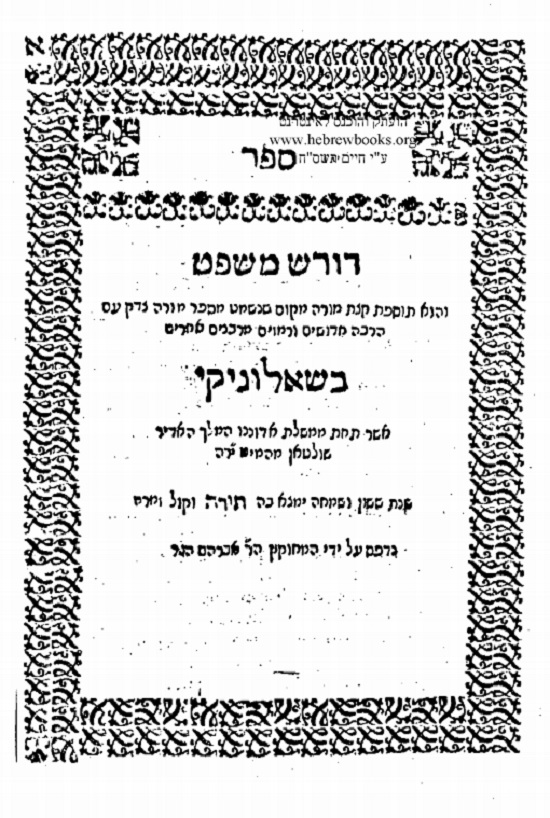

You can view the entire book here here.

Florentin was a follower of Shabbetai Zvi and was one of the group of Salonikan Jews who converted to Islam following Shabbetai Zvi’s own conversion.[1]

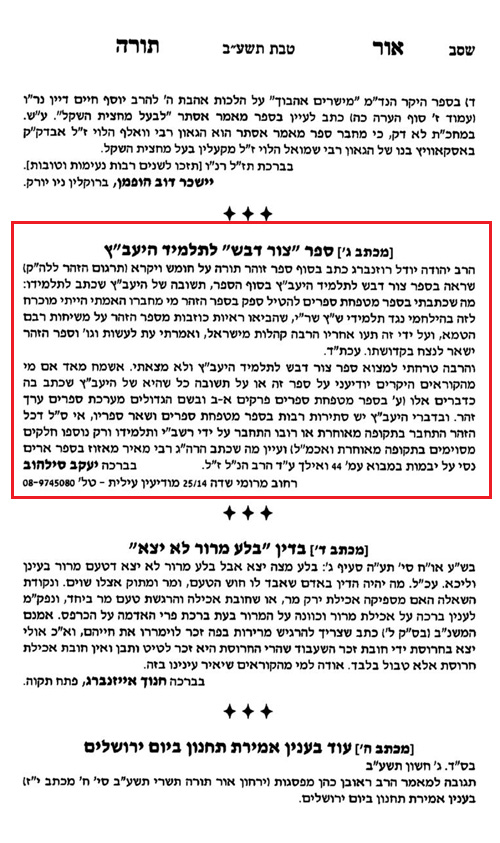
The second future apostate whose book appears on Hebrewbooks.org and Otzar haHochma is Aaron Israel Briman. He wrote Avnei Zikaron, which was published in Amsterdam around 1880.[2] Here is the title page.


You can view the entire book here here.

Briman, who appears to have been an ordained rabbi, was a real scoundrel. After his apostasy, which seems to have been done completely for monetary reasons, he wrote the infamous anti-Semitic work Der Judenspiegel and assisted the anti-Semite August Rohling in his attacks against the Talmud and Judaism in general.[3]  He also abandoned his wife and two small children, leaving his wife an agunah. After becoming a Christian, he engaged in various monetary frauds which landed him in prison. According to the article here in the Jewish Encyclopedia, he studied in the Rabbinical Seminary of Berlin, a point confirmed by Gotthard Deutsch.[4]

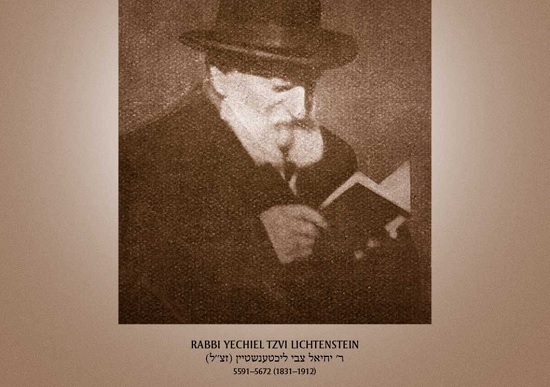
As for seforim written by someone after he converted, this brings us to Jehiel Zvi Lichtenstein (1827-1912; in his earlier years the last name he used was Hirschensohn, and I don’t know why he changed it). Detailed biographical information about Lichtenstein can be found in a good article by Samuel Leib Zitron included in volume 2 of his Me-Ahorei ha-Pargod: Mumarim, Bogdim, Mitkaḥashim that fortunately is also found online here. There is, however, no scholarly article on the writings of Lichtenstein, and although he was infamous in his day, today he is almost entirely forgotten.[5]

Lichtenstein was born in Bessarabia and was already an accomplished scholar as a young man. He was married at 18 to the daughter of a wealthy man, and he could have entered the rabbinate like so many others in his position. Yet as described by Zitron (and it appears that his description has been livened up, so it is not always clear if the facts are correct), various circumstances led him to divorce his wife, abandon his home, and convert to Christianity and become an enthusiastic missionary. Incredibly, even after converting to Christianity he continued to live as a Jew, moving to the town of Lubavitch where by all outward appearances he was a hasid of the Lubavitcher Rebbe.

Following this he went to Berlin where he was an open missionary. He then returned to Russia where he married the sister of the well-known Jewish-Christian missionary, Joseph Rabinowitz. In 1995 Kai Kjaer-Hansen published the English version of his book on Rabinowitz,[6] referring to him on the book’s cover and title page as the “Herzl of Jewish Christianity.”[7]

In 1872, after his apostasy, Lichtenstein published his book Derekh ha-Kodesh. The book was published in Berlin. I don’t know why the title page says it was printed in Russia, though this probably has something to do with taxes or customs for books sent to foreign countries.
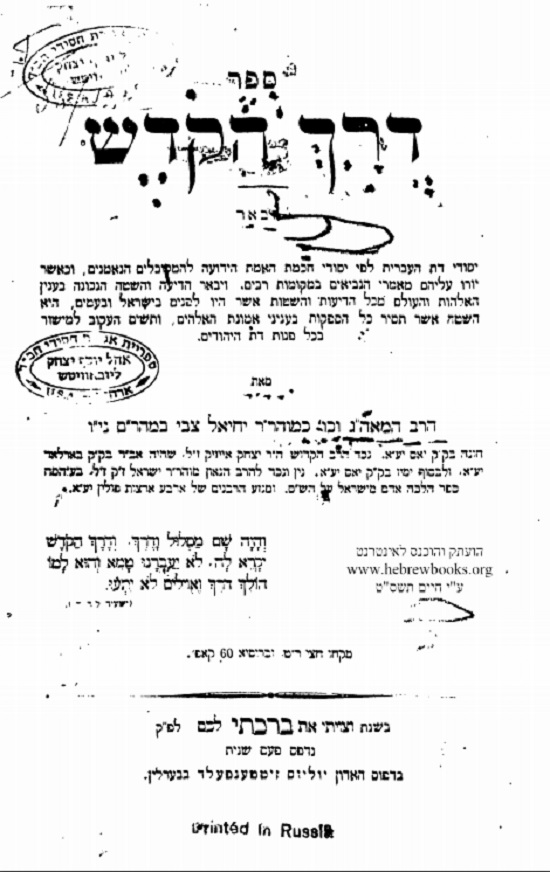
As you can see, this is the second printing and Lichtenstein gave himself a fancy rabbinic title. I have never seen a copy of the first printing, but Ephraim Deinard states that Lichtenstein’s name did not appear on the title page of this edition.[8]

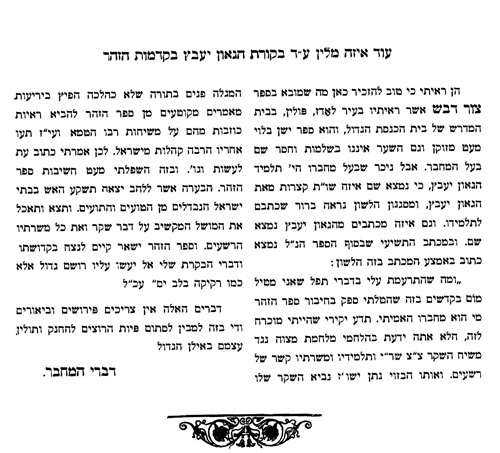
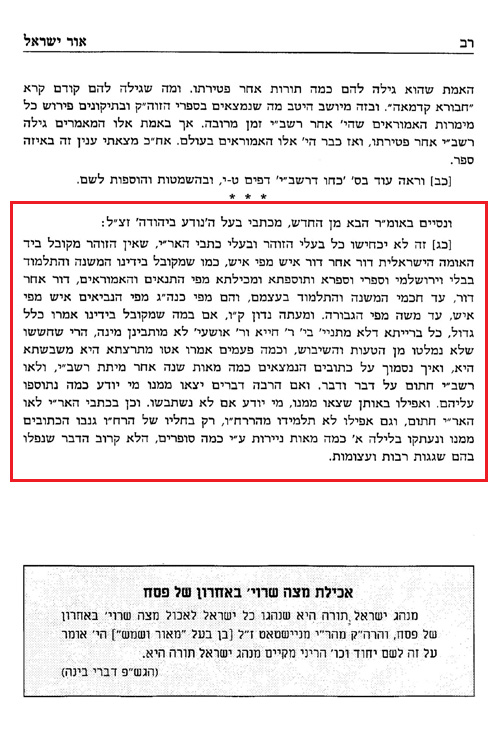
Zitron tells us that Lichtenstein returned to his hometown where he distributed Derekh ha-Kodesh among the local Hasidim. The book reads like a real rabbinic text, and on the very first page he cites both the Baal Shem Tov and R. Shneur Zalman of Liady, and he continues to cite R. Shneur Zalman constantly in the book. It is obvious from what he writes elsewhere that he pretended to be a Chabad hasid. Thus, in his self-defense published in Ha-Magid [9], when he was still pretending to be a faithful Jew, he mentions that he had lived in the town of Lubavitch. In seeking to defend Derekh ha-Kodesh from the accusation that it had Christian elements, he calls for it to be examined by leading Chabad rabbis to see if there is anything problematic in the book.

.ואקרא לשופטי צדק את רבני חב”ד הגדולים אשר ירדו לעמקי הלכה של הקבלה והחסידות הדבקים באלהים חיים המה יאמרו אם עולתה בו

His call was taken up by Jacob Solomon Alschwang who claimed to have a lot of knowledge in Kabbalah and hasidic thought, “like one of the great Chabad rabbis.”[10]  I am sure that this self-judgment contains a good deal of exaggeration, yet Alschwang did come from a Chabad background and received a traditional Chabad education before leaving that world for the world of Haskalah.[11]

Alschwang identifies a number of passages in the book which he thinks are evidence of the author’s Christian sentiments.[12] Experts in Kabbalah and Hasidism can weigh in on whether Alschwang is correct or if the passages he points to can also be supported by classic kabbalistic or hasidic texts.

One of the passages Alschwang points to is on p. 68, which according to Alschwang means that Lichtenstein is speaking of God taking physical form on earth.

וע”ז נא’ עיני ה’ המה משוטטים בכל הארץ (זכריה ד, י) שענין משוטטים היינו שמתפשטים ומתלבשים בכל הארץ, והש”י משגיח בארץ ע”י שמתלבש בהם כי המה הם כלים רוחניים שהאציל וברא להשתמש בהם, והם מתפשטים ומתלבשים בתחתונים, והמה כמו העינים אל [של] האדם שהאדם יביט בהם והשכל מתלבש בהם לראות, וכן הוא הענין באזני ה

So, what do readers think? Does this passage speak of God literally assuming some bodily form? Furthermore, can we find similar passages in standard kabbalistic texts?

Alschwang also calls attention to Derekh ha-Kodesh, p. 42, where Lichtenstein states that God will appear to prophets in a physical form. Although Lichtenstein adds that God does not really take physical form, but only appears this way, Alschwang sees this as an example of Lichtenstein is trying to push a Christian notion. I guess the idea would be to first get Jews used to the notion that God can be imagined looking like a human, and the next step is to identify a real flesh and blood human as God. Here are Lichtenstein’s words:

כי העולם הזה בכללו הוא אלהות גמור מצד שאינו נראה לנו, אך לעינינו עשה האלהים על עצמו גילוי וצורה ויתחפש בדמות גשמי (זיך זעלבסט ענטשטעלט) אשר הנבראים ישיגו בחושיהם הגשמיים (אשר גם הם רק לעיניהם) דמות וצורה גשמית ארבע יסודות ומורכביהם, דומם צומח חי מדבר וכו’, אולם לעומת הש”י הכל אלהות גמור ואין פה גילוי ודמות גשמי ומהות כלל

Alschwang also notes that on page 7 Lichtenstein makes use of the famous expression from Matthew 19:24, “It is easier for a camel to go through the eye of a needle,” which is not what one would expect to find in a rabbinic text.

At one time in his strange life, Lichtenstein actually began serving as a hasidic rebbe of sorts, praying for people and handing out amulets. Ephraim Deinard, who knew Lichtenstein from the latter’s missionary days in Berlin in the 1870s,[13] claims that it was he who exposed Lichtenstein as a fraud. He happened to be in Lichtenstein’s town on a business trip in 1879, and that is how the townspeople learned that the supposedly pious rebbe was actually a Christian missionary.[14] Even after being exposed Lichtenstein did not give up, and a few years later he was in Podolia serving as a rabbi![15]

Derekh ha-Kodesh is only found on hebrewbooks.org, not on Otzar haHochma. You can view it here. The copy on hebrewbooks.org is missing the second half of the book. It appears that not all printings of the book contained the second part which includes a commentary on various biblical passages. (Alschwang mentions that his copy only had 84 pages, which means that it also was missing the second half.). Here is the copy which is found at Harvard, which is almost twice as long as the copy on hebrewbooks.org.[16] Interestingly, in the copy found on hebrewbooks.org (and also in the complete Harvard copy), on the second page, there are corrections applicable to the missing second half of the book. Also of note is at the bottom of this page of corrections it states that the haskamot for the book were published in the first printing. As far as I can determine, no copies of this first printing have survived.

Zitron tells us that in 1882 Lichtenstein came to Odessa with the manuscript of his book, Sheva Hokhmot. He received haskamot for the book from rabbis and maskilim. Here is the title page of the London 1912 edition of Sheva Hokhmot and you can view the book here.[17]

This is a very helpful work which in alphabetical fashion discusses all the geographical sites mentioned in the Talmud and Midrash.[18] The book previously appeared in Lemberg in 1883 and can be viewed here. The title page of the Lemberg edition mentions that Lichtenstein wrote the responsa volume Keren ha-Tzvi and the book Megaleh Sod. While Keren ha-Tzvi never appeared, Megaleh Sod, which is a commentary on the Bible, was published in Budapest in 1906 and can be viewed here. It is incredible that an apostate would write such a commentary which on its face looks like any other traditional commentary. (I haven’t read it carefully to see if he also inserts Christian interpretations.)

The actual text of both editions of Sheva Hokhmot is the same, but there are some differences between the prefaces of the two volumes. In the first edition the preface is longer, contains some notes, and also includes a list of the rabbis and scholars who prepaid for the book. In the London edition, Lichtenstein included a passage from R. Aaron Hyman’s Toledot Tannaim ve-Amoraim (London, 1910), vol. 1, p. 15, which greatly praises the book and the author, with Hyman saying that Lichtenstein is “wise in the wisdom of the Torah.” Hyman obviously must have been unaware of who Lichtenstein was.

That people did not realize who Lichtenstein was explains how a copy of Derekh ha-Kodesh was bound with regular traditional seforim (including R. Moses Cordovero’s Tomer Devorah), as seen in a recent auction here.[19]

As you can see from the title pages of Derekh ha-Kodesh and Sheva Hokhmot, both of these books, now found on hebrewbooks.org, came from the Library of Agudas Chassidei Chabad.[20] You can also see from the title page of Sheva Hokhmot that, before it was acquired by the Library of Agudas Chassidei Chabad, it belonged to the great scholar Jacob Zallel Lauterbach.

With reference to Lichtenstein, Steven J. Zipperstein writes as follows:

His Sheva Hokhmot [The Seven Wisdoms] was introduced by letters of praise from important scholars such as Mattityahu Strashun, Samuel Joseph Fuenn, and others, though the book appeared three years after Lichtenstein was first denounced as a missionary (by the rather mercurial and widely disliked Ephraim Deinard) in the newspaper Ha-Maggid.[21]

Zipperstein’s information about the letters in Sheva Hokhmot comes from Zitron, who also claims that these haskamot were forged by Lichtenstein. Yet there are no such haskamot from these figures, forged or otherwise. In the 1883 edition of the book, p. 6, we are given a list of people who wrote haskamot and letters of praise (including R. Joseph Dov Soloveitchik, the Beit ha-Levi), but these were never published, not even in the 1912 edition. I have no reason to doubt that these haskamot and letters of praise were authentic, otherwise how could he have publicly announced in the various authors’ lifetimes that he received letters from them? However, these letters were also written before news of his apostasy was known.

What makes Derekh ha-Kodesh and Sheva Hokhmot so interesting is that they were both written after Lichtenstein had become a Christian, something you would never know from the title pages. I don’t know of any other such books, namely, seforim written in a rabbinic style by someone who had already converted to Christianity.

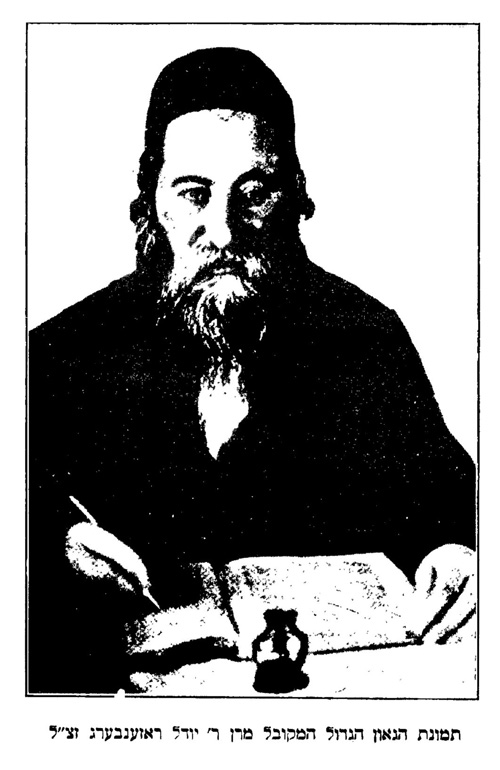
This is a picture of Lichtenstein that I found on a Messianic Jewish website here.

Here is the title page of Lichtenstein’s Hizuk Emunat Emet bi-Yeshua Mashiah ben ha-Elohim.[22]


You can find the entire book here. The author is listed as אבן צהר, which is simply the Hebrew translation of the name Lichtenstein. Also, צהר is the abbreviation of צבי הירשנזון, the birth name of the author.[23]

Lichtenstein also wrote a multi-volume Hebrew commentary on the New Testament, which you can see here. The commentary is preceded by a helpful article on Lichtenstein by Jorge Quiñónez. Lichtenstein’s revised commentary on Matthew can be seen here.[24]

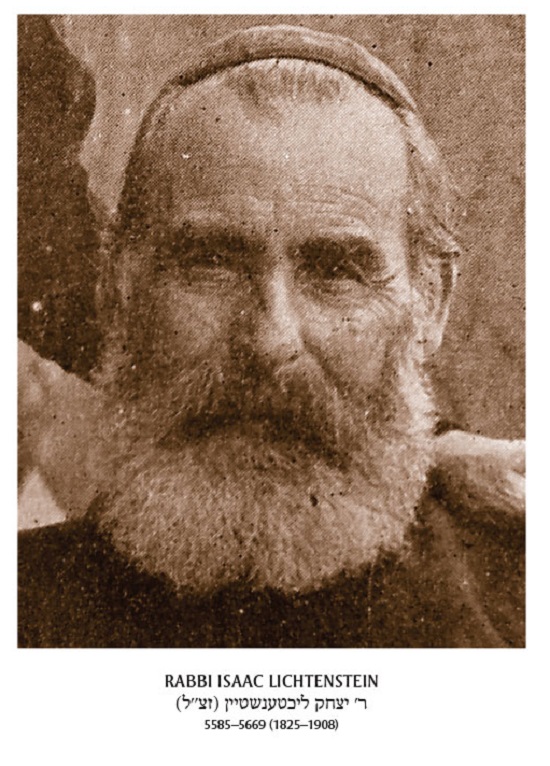
There is an entry on Lichtenstein in Zalmen Reyzen’s Yiddish Lexicon.[25] Yet one of the sources in the bibliography is about Isaac Lichtenstein. This Lichtenstein is often confused with Jehiel Zvi Lichtenstein whom we have been discussing. However, they were two separate people, and Isaac Lichtenstein (1824-1908), who was actually a rabbi, was also a believer in Jesus (although it is reported that he never actually converted to Christianity).

This is his picture taken from here.
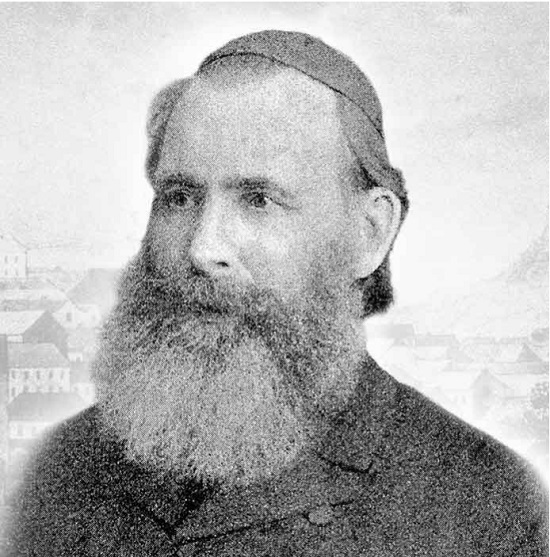
The following picture comes from here
There was another Chabad hasid, Israel Landau, who converted to Christianity and became the chief Russian censor. In Ruth Bachi-Kolodny’s article about him, entitled “The Chabadnik Who Became Czarist Russia’s Chief Censor for Jewish Writings,” available here, he is even referred to as a rabbi, but this is certainly not correct, and the description of him as a rabbi does not appear in the original Hebrew version of the article here. The article states:

Although he became an apostate Jew, he remained, deep in his heart, a devoutly religious Hasid and continued to look the part with his short trimmed beard, earlocks, skullcap and long, broad kapota ‏(the long black jacket of members of Chabad‏); he would eat only in kosher restaurants. In fact, Landau sent his wife and only daughter, Menuha, to Switzerland so they could live as Jews without any external hindrances.[26]

Ben Zion Dinur, who was from a Chabad family, mentions that it was jokingly said about Landau that even after apostatizing he still kept the holiday of 19 Kislev.[27] As for Landau’s wife and daughter, Ephraim Deinard, who knew Landau, states that they left Russia because they did not want to convert, not because Landau sent them out.[28]

My experience has been that as soon as I publish something, I find more relevant material and wish I could go back in time to include it in the publication. Fortunately, with the Seforim Blog I am able to update my writings. Not long ago I published Iggerot Malkhei Rabbanan. On pp. 300-301, R. Meir Mazuz writes that he read in Yated Ne’eman that the apostate Russian censor removed two lines from Bialik’s poem about the Kishinev pogrom of 1903, “In the City of Slaughter,” because he found them heretical and did not want to lose his share in the World to Come! I was not aware of this story but I looked at the poem and immediately identified what these two lines must be. In fact, as I only learned after the book was published, it was actually the following four lines that were deleted, and the censor who was responsible for this was none other than Landau.[29]

,סִלְחוּ לִי, עֲלוּבֵי עוֹלָם, אֱלֹהֵיכֶם עָנִי כְמוֹתְכֶם
עָנִי הוּא בְחַיֵּיכֶם וְקַל וָחֹמֶר בְּמוֹתְכֶם
–כִּי תָבֹאוּ מָחָר עַל-שְׂכַרְכֶם וּדְפַקְתֶּם עַל-דְּלָתָי
!אֶפְתְּחָה לָכֶם, בֹּאוּ וּרְאוּ: יָרַדְתִּי מִנְּכָסָי

Forgive me, beggars of the world, your God is as poor as you,
Poor he is in your living and so much more so in your deaths.
And if you come tomorrow for your due and knock on my doors—
I’ll open for you, come and look: I’ve gone down in the world.[30]

The story of the censorship is told by Benzion Katz in his memoir, in a chapter that deserves to be translated into English.[31] Katz was the founder and editor of the newspaper Ha-Zeman, where Bialik’s poem appeared. If you look in Ha-Zeman you will find that the title of the poem was changed to “Masa Nemirov”, and a note informs the reader of the infamous 1648 massacre in Nemirov. As Katz explains, this new title was suggested by Landau, who was willing to look the other way if Bialik and Katz would pretend that the words were not about the 1903 Kishinev pogrom but about another event 250 years prior.

As for the censorship of the lines mentioned above, Katz writes as follows (p. 135):

כשהיה הכל מוכן נתתי לו לקרוא את השירה. הכל נראה לו כשר, חוץ מנקודות אחדות, שלדעתו התריס שם ביאליק נגד א-לוהים. אין הוא יכול להרשות זאת – אמר הצנזור המומר. – בשביל הממשלה ימצא תמיד תירוץ אבל לא בשביל רבונו של עולם. “אינני צעיר ואצטרך לתת דין וחשבון בעולם הבא. אינני רוצה להפסיד את חלקי בעולם הבא”

Landau would not permit some lines to appear in the poem as he did not want to lose his share in the World to Come. Bialik wrote to the censor to defend himself and the censor replied as follows (as summarized by Katz, p. 135), pointing out among other things that Bialik had misunderstood the Zohar :

הוא הצעיר, אף על פי שהוא משורר גדול, מביא לי ראיות מן הזוהר הקדוש, שבו יש ביטויים שהם כביכול גם כן עלבון לקדוש ברוך הוא, אבל אלה אינם עלבונות אלא ביטויי צער וזעם. אני בקי בזוהר. אני לומד אותו יותר ממנו. אני הרשיתי להדפיס את הזוהר מה שלא הרשו הצנזורים הקודמים. היו מביאים את הספר בגניבה מחוץ לארץ. נגד א-לוהים אי אפשר לעשות כלום

All this goes to show that while you can take the Jew out of the shtetl, often (even with apostates) you can’t take the shtetl out of the Jew.

To be continued

  1. I want to call attention to four recent valuable books. The first is Mitchell First, Roots and Rituals: Insights into Hebrew, Holidays, andHistory. This book is full of interesting chapters on liturgy, history, holidays, and the Hebrew language. If, like me, you have enjoyed First’s posts on the Seforim Blog, then his latest book will be a treat.

The second book is Bezalel Naor’s translation of R. Kook’s Commentary to the Legends of Rabbah bar Hannah. This book only further solidifies Naor’s standing as the leading interpreter of R. Kook in the English language. In addition to extensive notes, Naor also includes 11 appendices which include such topics such as R. Kook’s critique of the Mussar Movement and R. Kook and the Dybbuk in Jaffa.

The third book is a joint effort by the eminent scholars Menachem Kellner and James Diamond. Its title is Reinventing Maimonides in Contemporary Jewish Thought, published by my favorite press, Littman Library. This is a collection of articles by Kellner and Diamond which focus on various important Torah scholars and their understanding of Maimonides.

Here is the table of contents.

Anyone interested in nineteenth- and twentieth-century rabbinic thinkers will find this work of value.

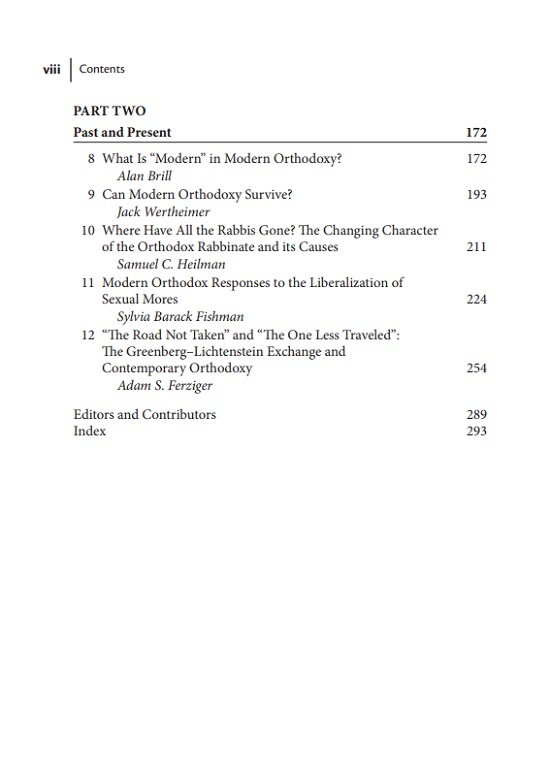
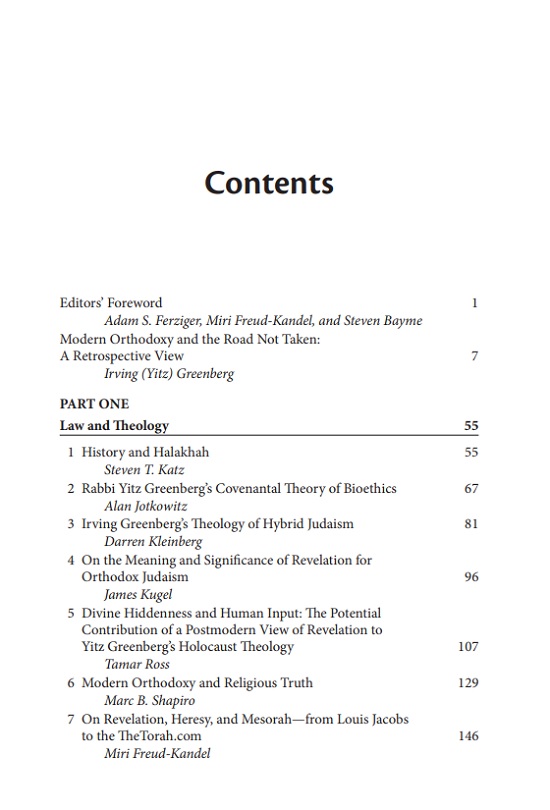
The fourth book is Yitz Greenberg and Modern Orthodoxy: The Road Not Taken, edited by Adam Ferziger, Miri Freud-Kandel, Steven Bayme. This book, which is full of great essays, is available in paperback here, and this is the table of contents.
 

  1. R. Yissachar Dov Hoffman was kind enough to send me this picture of R. Joseph B. Soloveitchik and R. Ovadiah Yosef from April 25, 1974.[32]

My question to readers is, can anyone identify the three young men standing behind the rabbis?

  1. Anyone interested in my summer 2020 trips with Torah in Motion can find details here.
  2. For those in the New York area, I will be speaking at Young Israel-Beth El of Boro Park (4802 15thAvenue, Brooklyn) on Saturday night, December 21 at 8pm. The title of my talk is “Judaism and Islam: Some Halakhic and Historical Perspectives”.

[1] See Meir Benayahu, Ha-Tenuah ha-Shabta’it be-Yavan (Jerusalem, 1971-1978), pp. 35-36.
[2] Regarding Briman and his book, which is actually a complete plagiarism – the entire book lifted word for word from R. Abraham Wallerstein, Mahazeh Avraham, found in Wallerstein’s Ma’amar Avraham (Fuerth, 1757) – see Shmuel Ashkenazi, Asufah (Jerusalem, 2014), pp 53-55.
[3] See Joseph Samuel Bloch, Zikhronot Mimei Hayai, trans. S. Shalom, (Tel Aviv, n. d), vol. 1, pp. 84ff.
[4] See his letter in the Jewish Chronicle, June 26, 1914, conveniently posted in On the Main Line here. See also On the Main Line here for a fascinating post dealing with another apostate who appears to have been a rabbi.

For detailed discussions of Briman, see Samuel Leib Zitron’s article from volume 2 of his Me-Ahorei ha-Pargod: Mumarim, Bogdim, Mitkaḥashim, available here; Joseph Samuel Bloch, Zikhronot mimei Hayai (Tel Aviv, n.d.), vol. 1, pp 81ff.; Ha-Melitz, April 24, 1885, cols. 440-441. For numerous contemporary references to Briman, see Jonatan Meir, Literary Hasidism: The Life and Works of Michael Levi Rodkinson, trans. Jeffrey G. Amshalem (Syracuse, 2016), p. 167 n. 201. Unfortunately, Meir, p. 169 n. 214, cites Chaim Bloch – about whom I have a written a good deal on this blog – without realizing that none of the unpublished material Bloch claimed to possess can be assumed to be authentic. Regarding Bloch, see also Tesla Lee’s 2016 honors thesis at the University of North Carolina at Chapel Hill, “Sigmund Freud and Chajim Bloch: Exploring the Role of the Jewish Joke in European Jewish Identity,” available here. On pp. 5-6, Lee mentions another fabrication by Bloch. Bloch describes how he offered Freud his criticisms of Moses and Monotheism, yet we know that Freud did not begin working on this book until years after Bloch’s supposed conversation with him. For a recent discussion of Bloch and his role in popularizing the Golem story, see Samuel Jacob Spinner, “Jews behind Glass: The Ethnographic Impulse in German-Jewish and Yiddish Literature, 1900-1948” (unpublished doctoral dissertation, Columbia University, 2012) pp. 89ff.
[5] The biographical information I provide about Lichtenstein comes from Zitron. Here is what the Encyclopaedia Judaica, s.v. Hirschensohn-Lichtenstein, Jehiel Zevi Hermann, writes:

Born in Russia, he converted to Christianity in 1855 in Jassy, Rumania, but keeping this secret he spent some time among the Hasidim of Lubavitch and worked on his Derekh ha-Kodesh (“The Way of Holiness,” 1872), which deals with the fundamentals of the Jewish faith, but betrays the authors Christianizing tendencies. From 1868-1878 he worked, under the name of Hermann Lichtenstein, for the Protestant mission in Berlin. He then returned to Russia where, disguised as a hasidic rabbi, he distributed his book. He married in Kishinev, Moldavia, a sister of Joseph Rabinovich, who later, probably under Hirschensohn’s influence, founded the sect called Community of Evangelian Jews. His true character discovered, he had to leave Russia and became lecturer at Franz Delitzsch’s Institutum Judaicaum at Leipzig.

[6] Joseph Rabinowitz and the Messianic Movement (Edinburgh, 1995).
[7] This title was earlier given to Rabinowitz by Hugh J. Schonfield, The History of Jewish Christianity p. 5, available here.
[8] Zikhronot Bat Ami (St. Louis, 1920), vol. 2, p. 134.
[9] Ha-Magid, May 7, 1885, p. 144.
[10] Ha-Magid, June 25, 1885, pp. 208-209.
[11] See his autobiography in Sefer Zikaron le-Sofrei Yisrael ha-Hayyim Itanu ka-Yom (Warsaw, 1889), pp. 203ff, available here. He wrote under the pseudonym ישביאל. See Saul Chajes, Otzar Beduyei ha-Shem (Vienna, 1933), p. 173. The title of the book mentioned at the beginning of this note is of interest, as it is a “memorial volume” for living writers. Today I think we would only use the words “Sefer Zikaron” for people who are deceased. It is also of interest that in the past there were writers who used ז”ל either as זכרונו לברכה or זכור לטוב for living people. See Tovia Preschel, Ma’amrei Tuvyah, vol. 1, pp. 35, 324-325, vol. 4, p. 418.

In 1878, R. Isaac Moses Abulafia published his Lev Nishbar. Here is the title page.

This book is a defense of his halakhic rulings in his responsa Penei Yitzhak against the blistering criticisms of R. Solomon Moses Gaguine in his Yismah Levav. Of interest at present is Lev Nishbar, no. 3 (p. 12b). R. Abulafia notes that R. Gaguine refers to him with ז”ל after his name, and he is certain that this was not done in accord with the view mentioned above that ז”ל can be used even with living people. Rather, he sees this as an intentional insult, and as he puts it, כונתו לרעה. This might mean that he believes that R. Gaguine, by using ז”ל after his name, is hoping for his death.

והן עתה הביאני חדריו וכתב עלי תיבת ז”ל כנז”ל וה’ יודע ועד עליו אם כונתו לרעה עלי והלב יודע אם לעקל וכו’ ועכ”פ מדקפיד בכל דוכתא ודוכתא אך בחלקות ישית להבדיל בין המתים ובין החיים בתיבת ז”ל ונר”ו כנז”ל ומדשינה עתה הפעם לכתוב עלי ז”ל במקום נר”ו הא ודאי דקפידה הוי וכונתו לרעה ב”מ

See also what R. Abulafia writes in his introduction and the first page of the opening responsum, where you can see that he is not inclined to be generous in his interpretation of R. Gaguine’s intent.

Regarding the dispute between Rabbis Abulafia and Gaguin, see Yaron Haarel, “Hashpa’atam shel ha-Sefarim Penei Yitzhak, Yismah Lev ve-Lev Nishbar al ha-Ma’avak Saviv ha-Rabanut be-Damesek,” Asuput 11 (1998), pp. 211-243.
[12] That the book contains hints to Lichtenstein’s belief in Jesus is also stated by Samuel Shraga Feigensohn, Elbonah Shel Torah (Berlin, 1929), p. 28b.
[13] Deinard, Zikhronot Bat Ami (New Orleans, 1920), vol. 2, p. 133.
[14] Ha-Magid, April 9, 1885, p. 112. See here that in his later years, Lichtenstein’s Christian missionary students would call him “Rebbe”. This source describes Lichtenstein as serving as a hasidic rebbe before adopting Christianity, but that is not correct.
[15] Deinard in Ha-Magid, April 9, 1885, p. 112. Deinard, Zikhronot Bat Ami, vol. 2, p. 137, reports that Lichtenstein served as a rabbi in Hungary. In Tzelem ba-Heikhal (New Orleans, n.d.), p. 143, Deinard writes that he was a rabbi for a short time in a town in the Austrian empire. Feigensohn, Elbonah Shel Torah, p. 28b, states that he served as the rabbi in a town in Volhynia for eight years, but there is no evidence to support this statement
[16] See Jacob Solomon Alschwang, Ha-Magid, June 25, 1885, p. 209, that David Kahana had additional pages from the book which are missing from the Harvard copy. These pages, from a section entitled Even Bohan, are explicitly Christian, as they cite Jesus and Paul, and this is no doubt why they were removed. In what looks like a defense of Even Bohan, Lichtenstein, Derekh ha-Kodesh, p. 83 in the note, states that this section was written for Christians and Muslims and deals with the Noahide laws. This is, of course, not believable, as Christians and Muslims would not be reading his Hebrew work.
[17] Deinard, Zikhronot Bat Ami, vol. 2, p. 137, claims that it was actually printed in Eastern Europe, but R. Mazin in London bought the entire printing and put a new title page on the book.
[18] The title “Seven Wisdoms” is strange as it is really not relevant to the subject of the book. Regarding the “Seven Wisdoms,” see Harry Austryn Wolfson, Studies in the History of Philosophy and Religion (Cambridge, MA, 1973), vol. 1, pp. 507ff. Abarbanel, Commentary to Exodus, ch. 25, p. 253, writes:

שבעת הנרות שבמנורה רומזים אל שבע החכמות שכלם ימצאו בתורת הא-להים

[19] In my post here, I briefly discussed the apostate Paul Levertoff. I neglected to mention that before he converted, Levertoff, whose Jewish first name was Feivel, was one of the future historian Ben Zion Dinur’s teachers in heder. See Dinur, Be-Olam she-Shaka (Jerusalem, 1958), p. 26.
[20] This library has a number of heretical books, and R. Joseph Isaac Schneersohn’s earlier collection also contained books of this sort. R. Menachem Mendel Schneerson stated:

When I came to Leningrad, I was surprised to find various [anti-religious] books in my father-in-law’s library. . . . The reason, obviously, was . . . the library attracted non-religious Jews, and even Gentiles. In the meantime, they saw what Lubavitch was and that it shares knowledge, and were drawn to it as a result. This created the opportunity to speak with non-Jews about justice, honesty, and humanity, the Seven Noahide Laws, etc. The benefit was quite evident.

On another occasion, the Rebbe explained that his father-in-law needed such books, for “such things are also necessary for good purposes, as the Mishnah [Avot 2:14] states, ‘Know what to answer a heretic.’” Both of these passages appear in R. Baruch Oberlander’s and R. Elchanan Shmotkin’s beautifully produced work on the Rebbe, Early Years (Brooklyn, 2016), pp. 167, 168.

Ephraim Deinard, Zikhronot Bat Ami, vol. 2, p. 7, reports, as an eye-witness, that R. Shmuel Schneersohn read Haskalah works before he became rebbe of Lubavitch. It is hard to know whether Deinard is to be regarded as reliable in this matter as his antipathy to Chabad is apparent throughout his writings. See especially ibid., p. 16, where among other things he states:

.החסידים היותר רעים ומסוכנים לתורת ישראל, המה חסידי חב”ד

Deinard even falsely claims, ibid., p. 8, that the responsa of R. Menahem Mendel Schneersohn, the Tzemah Tzedek, were really written by R. Hayyim Jacob Widerwitz. In Chabad texts, R. Widerwitz is referred to as the editor of the Tzemah Tzedek’s responsa. See R. Shalom Duber Levin, Toldot Habad be-Artzot ha-Berit (Brooklyn, 1988), p. 3.
[21] “Heresy, Apostasy, and the Transformation of Joseph Rabinovich,” in Todd M. Endelman, ed., Jewish Apostasy in the Modern World (New York, 1987), p. 213. Contrary to what Zipperstein states, Sheva Hokhmot was published in 1883, and only in 1885 did Deinard denounce Lichtenstein. This information appears correctly in Zitron.
[22] The book can be seen here, along with two other Christian works by Lichtenstein and an obituary of him.
[23] See Zitron here.
[24] For more on Lichtenstein, see Ephraim Deinard, Ha-Magid, April 9, 1885, p. 112; Isaac Jacob Weissberg, Ha-Melitz, May 11, 1885, pp. 515-516; Deinard, Ha-Melitz, May 29, 1885, cols. 580-581; S. Mandelkern, Ha-Magid, June 11, 1885, pp. 190-192. See also David Assaf, Hetzitz ve-Lo Nifga (Haifa, 2012), pp. 75-76.
[25] Leḳsiḳon fun der Yidisher liṭeraṭur, prese un filologye (Vilna, 1927), vol. 2, cols. 151-154, available here. An abridged entry is found in the later edition of Reyzen’s lexicon, and you can see an English translation here.
[26] I should note that not everything Bachi-Kolodny cites from Benzion Katz’s memoir, Zikhronot (Tel Aviv, 1963), actually appears there. She also writes: “Interior Minister Vyacheslav Konstantinovich von Plehve issued orders that a pogrom be carried out in Kishinev ‏(now Chisinau, Moldova‏) in April 1903, on Passover, to expedite the Jews’ exit.” This is incorrect, as no such orders were ever issued by the unquestionably anti-Semitic Plehve. See Steven J. Zipperstein, Pogrom: Kishinev and the Tilt of History (New York, 2018), 94ff.
[27] Be-Olam she-Shaka, p. 13. Incidentally, Dinur tells us, pp. 17-18, that in his Chabad home in Russia they drank milk that came from non-Jews, rather than halav yisrael. This is what he writes about his father, who was a real Torah scholar.

זכורני, פעם אחת בא הביתה ואמר לאמא: היתה לי היום עגמת נפש מזה שאת משתמשת בחלב של לא-יהודים. תמהה אמא ושאלה: מאין יודעים? אמר אבא: אני סיפרתי את הדבר. התפלאה אמא: מה ראית להודיע ברבים? אמר: פשוט, התקיפו בבית-המדרש את דוד המלמד, שהוא משתמש בחלב נכרים, והלבינו את פניו. קמתי ואמרתי: מה אתם רוצים ממנו, גם אצלי נוהגים כך! ך

This is significant testimony, as it is well known how seriously Chabad hasidim regard this matter. There is even a story about how a big scholar who came to R. Shneur Zalman of Lyady was suffering from religious doubts. R. Shneur Zalman recognized that these doubts came about because the man had inadvertently drunk non-halav Yisrael milk. See R. Joseph Isaac Schneersohn, Sefer ha-Ma’amarim 5701-5705 (Brooklyn, 2012), Hebrew version, pp. 76-77.
[28] Deinard, Tzelem ba-Heikhal, p. 169. See also Deinard, Shibolim Bodedot (Jerusalem, 1915), pp. 58ff, for Deinard’s letter to Landau which among other things urges him to return to Judaism. See ibid., pp. 176-177, for Landau’s revealing letter to Deinard. As far as I know, neither of these letters have been mentioned by scholars who have discussed Landau. They are, however, mentioned here.

Shimon Steinmetz called my attention to a memoir by another former Chabad hasid who became a missionary. See Elieser Bassin, The Modern Hebrew and the Hebrew Christian (London, 1882), available here.
[29] A reproduction of the original publication from Ha-Zeman (July-Sep. 1904), is found in Michael Gluzan, Hannan Hever, and Dan Miron, Be-Ir ha-Haregah – Bikur Meuhar (Tel Aviv, 2005), pp. 158-168.
[30] Songs from Bialik, translated by Atar Hadari (Syracuse, 2000), p. 5.
[31] Zikhronot, ch. 37.
[32] R. Aharon Rakeffet provides another picture from this particular visit of R. Ovadiah. See The Rav: The World of Rabbi Joseph B. Soloveitchik, vol. 2, in the pictures that begin after p. 135, available here. I thank R. Yissachar Dov Hoffman for providing this information as well. He also called my attention to the following additional picture of the Rav and R. Ovadiah from this visit, taken from here.


Review of Amudim be-Toldot Sefer ha-I…

Review of Amudim be-Toldot Sefer ha-Ivri Haghot u-Maghimby Eliezer Brodt and Dan Rabinowitz
Yaakov S. Spiegel, Amudim be-Tolodot Sefer ha-Ivri Haghot u-Maghim (Chapters in the History of the Jewish Book Scholars and their Annotations), Ramat Gan, 20052, 689 pp.

In 1996, Bar Ilan Press published Amudim be-Toldot Sefer ha-Ivri Haghot u-Maghim from Professor Yaakov S. Spiegel. Shortly thereafter, this edition sold out due to its popularity. A few years later Amudim be-Toldot Sefer ha-Ivri Kitevah ve-haTakah (volume two) was published.  More recently, Amudim be-Toldot Sefer ha-Ivri Haghot u-Maghim was reprinted with over seventy five pages additional pages full of many important additions. In this new edition, Spiegel apologizes to the people who purchased the first edition of his work and would now have to buy the new one if they want the updates.  Spiegel offered that the requirement for a completely new edition rather than an addendum was out of his control.  Although the importance and quality of the book will be obvious shortly, it has not been reviewed or discussed properly in academic journals except for a short review on Hamayan (37, 3: 69-75). This post hopefully is a start in rectifying this omission.  This volume is the first of two (current) volumes discussing the History of the Jewish book – specifically the creation and alteration of the Jewish books.  That is, this volume covers annotating or editing texts.  Essentially, this work is divided into two parts, (Spiegel divides it into four parts) the first, discusses the permissibility of editing texts and the second discusses annotators and editors.  The first portion begins with the sugyah of editing texts in the time of the Mishana (sifrei torah) and moves into the topic of the prohibition of having a unedited sefer. These two chapters play an important role in the background of this topic of editing seforim.  Spiegel then moves into the era of the geonim and rishonim dealing at great length with there methods of editing or annotating texts. He discuses at great length the methods of Rabbenu Gershom, Rashi and Rabbenu Tam.  As is well known Rabbenu Tam prohibited the editing or annotating texts Spiegel discusses the complete background of Rabbenu Tam's opinion going through the myriad of sources when Rabbenu Tam's restriction applies. This discussion includes an analysis of Rabbenu Tam's work Sefer Hayashar and his famous disagreement with R Meshulem. Spiegel, as he does in each of the chapter, quotes all the previous sources on the topics and rechecks it all carefully and comes out with many new important conclusions. Spiegel then proceeds to deal with the different works of haghot in the times of rishonim and the nature of these works. Of particular interest is his sections on the Haghot Ashrei (pp. 183-90) and on the Ravad's comments on the Ramabam discussing if those comments are plain haghot or hasaghot (pp. 198-207).  The second section of the book surveys the story of Haghot u-Maghim from the beginning of the printing press, in approximately 1456, until 1840. He begins with chapters on the importance of the printing press (see also pp. 300-06) and moves in to the job of the annotators and editors and their methods. Dealing with topics such as, did Rabbenu Tam only speak to instances where one is erasing the text and substituting another but if one merely notes an alternative reading and preserves the original that is OK? Or, is it only applicable to manuscripts or does it apply to printed works as well?  The distinction being, in the case of a manuscript, that manuscript may be the only copy and, if one alters the text, the original is forever lost.  Additionally, Spiegel discusses at length the important question of whether one can correct texts based on logic or textual support. An interesting section is where he brings a bunch of sources that there is a special will from God that these mistakes happened and should remain (pg 262-269). There are chapters on the various 'editors' such as R. Betzalel Ashkenazi, R. Yoel Sirkes (Bach), Maharshal, Maharsha, Maharam, R. Jacob Emden, R. Y. Pick, Gra, Rashash, and a host of others.  For each one Spiegel discusses which version of the Talmud they were addressing their emendation and whether their emendations were based on manuscript evidence or their own determination that the text was corrupted. These questions are very important. For example, Spiegel notes that the Maharshal (p. 315) and Maharsha (p. 323) did use manuscript evidence many times whereas the Maharam (p. 325) did not use manuscript evidence frequently.   As to the Bach's emendations, Spiegel notes that weren't published until the 19th century, but the Bach's comments were addressed at earlier, different version of the Talmud.  Thus, at times, it is unclear what the Bach is changing.  Indeed, Spiegel shows how some commentaries have misunderstood the Bach's comments. Spiegel deals with at length what the Bach's goals were. Spiegel also shows that there were additions to the work after the Bach's death. As to the Bach's usage of manuscripts Spiegel shows it's still not proven that the Bach  used them as most of the changes can be found in Ein Yakkov.    Spiegel devotes a long chapter dealing with the Gra notes amongst the topics he discusses are what was the Gra's point in his comments, and to why there are contradictions in his notes on Shas to his other writings (pg 450). As to the question of whether the Gra used manuscripts Spiegel concludes that it appears that he did not [although he did visit libraries and saw old seforim (pg 454-457)]. Another whole section Spiegel devotes to is discussing Rabinowich's Dikdukei Soferim at length. This is especially important in that Dikdukei Soferim is a collection of variant readings of the Talmud.  As many great Rabbis of Rabinowich's time praised this work, this tends to show these Rabbis' position on emending texts. Spiegel shows the may people who used it and how those who did not use it could have benefited from availing themselves to Dikdukei Soferim. Spiegel deals with various theories why it was not used widely. He concludes that it appears that the Dikdukei Soferim is becoming more widespread. He even quotes recent sales of Dikdukei Soferim and notes how quick it sold out after being reprinted after being out of print for quite a while. Although a Otzar haChochma search comes up with well over 2000 hits in over a thousand seforim (of course not all this are good hits as there search engine is still limited although useful). It still does not appear that the Dikdukei Soferim is used widely in the main yeshiva circles. Perhaps that will change.
Spiegel deals extensively with the position of the Hazon Ish regarding manuscripts.  This topic, one which has gotten much attention (see, e.g. the Shnayer Z. Leiman, Kook, Moshe A. Bleich articles in Tradition, Hevlin in Meah Shearim as well as the articles in Beis HaVaad), is discussed in detail with the backdrop of all the nuances Spiegel raises throughout this work. Spiegel discusses the curious fact that the Chazon Ish himself did sometimes use the manuscripts of Gemarah when learning (p. 567 n.126). Spiegel concludes this section with a discussion on to more recent printings of the Shas such as the shas Vilna, Frankel and Oz veHadar. It appears that the methodology of both Shas Vilna (the original one) and Oz veHadar in deciding which texts to use etc are not clear. This is especial important to know with Oz veHadar what the methods that they use as they advertise as if they are making incredible important changes but one only wonders what they are ad on what basis they are made. The last section of the sefer is devoted to the various annotators and editors to various editions of the Ramabam including the editions of Bragadin and Justintine. Spiegel also deals with when were the divisions of halachot put into the Rambam (pp. 637-638).  He also deals at length with the Amsterdam edition and the comments of R. Sholom Leon and showing its influence on later editions. R. Sholom Leon authored other seforim  including Mesectas halacha Le moshe miSinia which was recently printed in a annotated edition including a nice introduction. The editor of this new edition was not aware of Spiegel discussion regarding R. Leon. Spiegel has an interesting discussion about a third work called Merkevet ha-Mishna by R. Leon that was not known to many people and thus people made a mistake attributing a source (pp. 648-49). It is amazing to see Spiegel's mastery of the Talmud and the sources with all its nuances throughout the book. The amount of classical seforim quoted and discussed is breathtaking many very rare works are quoted. Another point is the respect and tone he uses when he speaks about all the authors, a problem some have with many academic books. Another thing is he is not embarrassed to admit mistakes he made – he could have easily left out a specific footnote instead he writes it and explains that he made a mistake (see, e.g., p. 259).  From the above, it should be apparent that this book contains a wealth of information regarding the issue at hand, emending texts.  While that alone would be enough to recommend in the strongest terms this book, it must be noted that Spiegel, mainly in the many footnotes, covers an amazing amount of tangential topics.  Here are some examples:p.29 n. 8 Spiegel has a discussion about the sefer Kol Dodi quoted by Agnon (for more on this work see this post ).p. 41 n.12 sources regarding the custom of placing a possul sefer torah in the ark and whether this violates the prohibition of "al tiskon be-ohelkha" (one should not have uncorrected texts in their home).
p. 65 n.105 testimony from R. Yaakov Katz that Rav Hai Goan was a copyist. 
p. 75 n.153 noting that la"z the term used to indicate a translation should not contain the quote mark as it is not an abbreviation. 
p. 80 n.177 noting that Krochmel in his Moreh Nevukeh haZeman quotes the Mahritz Heyos only as "Hakham Eched."
p. 89 n.29 discusses R. Zevin's offhanded comment that the rishonim did not use "nusach aher."
p. 102 n.110 discusses "nusach Sefard" and whether it is more reliable.
p. 103 n.115 notes that although a statement from the Rosh (responsa, klal 20, no. 20) is used by multiple authors to show that Ashkenazik customs have a long history, those many authors ignored the other implication of the statement regarding the "nusach haTalmud shel beni Ashkenaz."
p. 105 n.123 who authored rashi on Horyois.p.105 n. 126 if one learnsa small daf is it considered a Complete daf.p.107 n.132 discussing the issue of when the Talmud records a pusuk differently than our Sifrei Torah.  p. 131 n.14 corrections of rashi that were later added into the printed edition of Shas.p. 142 n.55 when Rashi says Hachei Garseninon did he have a different version in front of him.
p. 170 n.64 the common meaning of the word "sefer" – as in yodeah sefer which sefer?
p. 218 n.7 Spiegel explains the melitza used by the printers of the 1494 Nevim to describe what they did.  The melitza includes the line "lower the high and raise the lower" (Ezekiel 21:31).  Dr. M. Glaser explained that in the early printing presses the letters would be set and they faced upwards, the printer would coat them in ink and then place the paper on top.  This is in contrast to how writing was done previously – from above. 
p. 230 n.67 citing examples of books where the Soncino press accused the Bomberg press of using (illegally?) Soncino editions.
p. 234 n.79 discussing the alleged apostasy of Yakkov ben Hayyim Ibn Adoniyahu, the editor of the Mikrot Gedolot and other seminal texts.
p. 268 n.95 many sources that say the Havah Minah of the gemarah is true and important.  p. 318 -21  he discusses the methods of R Dovid Meubin a talmid of the Maharshal in annotating the Gemarah including many general rules that he mentions in his sefer.p. 329 -35 discuses the notes of the Levush on shas if they were really from him and dealing with R. Zechariah criticism on this.p. 426 n.18 discuses about Fogelman work on R. Menasha Milyah.p. 464 n.167 the Gra's opinion on the laining on Rosh Chodesh.p. 540 n.29 the plagiarism of the Tolodos Adam.p. 587 n.41 deals with a bit if Chaim Bloch was a forger.p. 652 n.185 Kapach opinon on the Teshuvos of Rambam to Chachemei Lunel.  In the academic world Spiegel work has gotten some attention for his discussion of the Chazon Ish and manuscripts.  Specifically, Benny Brown in his unpulished dissertation, The Hazon Ish Halakhic Philosophy, Theology and Social Policy As Expressed in His Prominent Later Rulings  (Hebrew) pp. 129-40, & Appendix pg 111- 113  deals with Spiegel's discussions with comments and additions. As has been noted here Sperber in his recent work Nesivos Pesikah uses Spiegel's discussions on this topic. And, in his doctorate on R. Betzalel Askenazi B. Toledano uses Spiegel's comments on R. Betzalel. Finally, others have used Spiegel's work, but as Spiegel notes only sometimes do they give Spiegel credit, (see here for more and see the introduction p. 13 and the notes therein and page 183 n.132).  Finally, although Spiegel's work is very comprehensive, there are some additions to some of the topics discussed in the sefer:   In the beginning of the book Spiegel has a chapter about אין כותבין ספרים תפלין ומזוזות במועד ואין מגיהין אות אחת אפילו בספר העזרה בספרים אחרים גורסים ספר עזראTo add to his long list of sources see Archaei Tanamim Vamorim (Rebbe of Rokeach) (Blau edition 2:666-67) and R. Meshulam Roth, Shut Kol Mevaser 2:2823. For the chapter (pp. 39-83) about המחזיק בספר מוטעה אל תשכן באהליך עולה see Efodi in his Maseh Efodie p. 18 in the introduction. For his chapter about Rabbenu Tam's methods of amending texts see also R. Yakov Shor (intro to Sefer haIttim p. vii) where he says he followed Rabbenu Tam's method in his edition of the Sefer haIttim and did make corrections on the actual text.  In chapter twelve where he discusses the Mesectos which are not learned (407-414) Spiegel mentions Nedarim as not being learnt (p. 407). See also the Merei in his Seder Hakabbalah (p. 128 Ofek Edition) where he writes דעו בעדות נאמנה שלא נשנית מסכת נדרים בישיבה זה ק' שנהOn Nedarim see also R. Reven Margolis, Mekharim beDarkei HaTalmud, pp. 81-84; R. Zevin, Sofrim Veseforim (geonim) pp. 46-48; the extensive discussion of R. Zev Rabanovitz in his Shaerei Toras Bavel (pp. 299-310). About Meschates Moed Koton see the important comment of R. Yissacar Tamar, Alei Tamar Moed Koton pg 312; and Yeshurun 20:702. Another mesectah not really learnt in the time of the Rishonim was Mesectas Avodah Zarah see; Professor Chaim Solovetick, Hayayin Byemei Habenyaim pp. 133-36. When discussing Meshtas Chagigah (pg 409) he brings the famous story from the Menorot haMeor that:מעשה בתלמיד אחד, שהיה מתייחד במקום אחד, והיה למד בו מסכת חגיגה. והיה מהדר ומהפך בה כמה פעמים, עד שלמד אותה היטב והיתה שגורה בפיו, ולא היה יודע מסכתא אחרת מן התלמוד זולתה, והיה שונה בה כל ימיו. כיון שנפטר מן העולם הזה, היה לבדו באותו בית שהיה לומד בו מסכת חגיגה, ולא היה שום אדם יודע פטירתו. מיד באה אשה אחת, ועמדה עליו, והרימה קולה בבכי ובמספד, ותרבה אנחתה וצעקתה, כאשה שהיא סופדת על בעלה, עד אשר נקבצו ההמון, ואמרה להם, ספדו לחסיד זה, וקברוהו בכבוד גדול, וכבדו את ארונו, ותזכו לחיי העולם הבא, שזה כבדני כל ימיו ולא הייתי עזובה ולא שכוחה בימיו. מיד נתקבצו כל הנשים וישבו עמה סביב למטתו ועשו עליו מספד גדול, והאנשים נתעסקו בתכריכיו ובכל צרכי קבורתו, וקברו אותו בכבוד גדול. ואותה אשה בוכה במר נפש וצועקת. אמרו לה, מה שמך. אמרה להם, חגיגה שמי. וכיון שנקבר אותו חסיד נעלמה מן העין אותה אשה. מיד ידעו שמסכת חגיגה היתה, שנראית להם בצורת אשה, ובאה בשעת פטירתו לספוד לו ולבכותו ולקברו בכבוד, מפני שהיה שונה בה ושוקד עליה ללמוד אותה. והלא דברים קל וחומר, ומה חסיד זה שלא למד אלא מסכתא אחת בלבד כך, הלמד תורה הרבה ותלמוד הרבה ומעמיד תלמידים הרבה על אחת כמה וכמה. It should be noted that there are eleven versions of the story see S. Askenazi notes to Kav Hayashar and updated to 15 versions in his Alpha Beta Kadmita Deshmuel Zeria pp. 331-36. [These sources were not know to Y. Hacohen in his new annotated edition of the Magid Mesharim (p. 292). The Otzar Yad Chaim (pg 198) goes so far as to say that because of this story some say it's a segulah to learn this Mesechtah on a yarzheit. [See also Megedaim Chadashim introduction to Chaggiah.] In regard to The famous abrevation ענ"י which Mescetas were hard add R. Emden who writes on the Zohar which says עני איהו תמן בסימן עירובין נדה יבמות "בנה סוד על הלצה בעלמא, שהיתה מצויה בפי עוסקי התלמוד בישיבה, שלא יכלו לירד לעמקן של מסכתות הללו החמורות מאד, מחמת ריבוי החלוקות החדודות שבהן, הודו ולא בושו בעניות דעתם וקוצר יד השגתם, שלא יכלו להשוות כל הסוגיות השונות והסתירות הנמצאות בהן, לתרצם וליישבם כדרך שעשו בשאר כל המסכתות, חוץ מאלו קשות ולא מצאו כל אנשי חיל ידיהם. ונתנו בהן סימן על דרך הצחות, שלא יתפלא אדם, גם אם יאמר החכם למצוא פשר דבר לא יוכל, שכבר צווחו בהן קמאי דקמאי ולא אסקו בידייהו, אלא כמאן דמסיק תעלא מבי כרבא ועניא דקרי אבבא, היאומן שדברים כאלה יצא מפי תנא, אין צריך לומר מפי משה רבנו וא משאר נשמות מעולם הנעלם".  (מטפחת ספרים עמ' מו).  See also S. Askenazi, Alpha Beta Kadmita Deshmuel Zeria pp. 422-24. For General sources on this topic of which Mesctas were learnt (partially based on Spiegel) see M. Breuer, Ohelehi Torah, pp. 90-94.  On page 280 Spiegel discusses the famous correction of a godal that the beracha of Pidyon Haben is אשר קרש עובר and not אשר קדש he brings some attribute it to R. Chaim Berlin. In the Zecher Daver, the Aderes has a fascinating chapter showing fifty seven examples how a kutzo shel yud makes a difference.  The Aderes cites his friend, R. Chaim Berlin, who told him this (p. 20). On this see also R. Chanoach Erentru in his Eiyunim Bdevrei Chazal Vleshonoim pp. 144-45; R. Yissacar Tamar, Alei Tamar Shekalim (p. 17) writes he does not believe it's a mistake.Additionally, although Spiegel cites to one of Prins' books discussing this issue, פרנס לדורו p. 460 a discussion regarding this topic appears on page 455 of the same book as well as the other book from Prins, פרנס לדורות on page 270.   On pp. 287-88 Spiegel discusses the Tana De be Eliyeahu with the perish Zikukin Denoroah Ubiyorin. But, see the strong words of the Radal against this pirish in his intro to Pirkei de Reb Eliezer p. 11 saying how this is what the Cherem against changing texts was referring to. See also A. Epstein (Kesavim vol 2, pp. 368-69); M. Ish Sholom, intro to his edition of Tana De be Eliyhu (pp. 4-7). Although Spiegel writes at the outset of his list of those who used Dikdukei Soferim that its not complete – the following can be added: R Sholom Albeck in his incredible sefer, Mishpachet Sofrim where he used the Dikdukei Soferim on almost every page (this sefer has a very warm haskamahs from the Maharsham and R Eleyahu Meisles amongst others). Another work well worth mentioning is the Shaerei Toras Bavel from R Zev Rabanovitz he also used Dikdukei Soferim extensively [in his work on Yerushalmi he also amends texts – but according to R Zevin in Sofrim Vseforim a bit to much]. Another person who used the Dikdukei Soferim was R. Greubart in Chavalim Beniymim (last page of volume 3, he also mentions seeing a shas from 600 hundred years ago in Chicago). Another person who used it was R. Yeruchem Leiner in his Tifres Yeruchem (pp. 115, 189). Another is R. Elyashiv in his teshuvot (1: p. 478) and in his work on Sotah he uses the Munich ed. in the Talmud HaYisraeli edition (p. 234). A Bar Ilan search shows that others not included in Spiegel list use or used it such as Beis Mordechaei and Shevet haLevei (four times), the latter being very interesting as he is close to the camp of Chazon Ishnicks. Bar Ilan search also shows that some of the Gedolim which Spiegel shows used it used it even more than he shows such as R Zodok and the Or Someach.   In Spiegel's discussion of the Adres using Dikdukei Soferim Spiegel does not have too many sources (p. 491). To add to this: first in Knesses haGedolaih the Adres uses it in at least two places – these two pieces are now printed in back of his Har haMorieah printed by Ahavat Sholom pp. 253 and 254. In his sefer Megilat Simanim which explains all the Simanim in Shas he used the Dikdukei Soferim numerous times (see index) this work was printed after Spiegel printed his sefer. In his Tefilah leDovid (Ahavat Sholom edtion pp. 8-9,23, 25, 121, 125, 137) (which is the best edition of thos work) we see he was involved in switching texts some times based on manuscripts of Rishonim.  On page 500 Spiegel leaves one thinking that A. Epstein was not pro the Dikdukei Soferim, which is not true at all (see Epstein's Kesavim vol 2  p. 354) where he criticizes Halevei for בכל ספרו לא נמצא זכר החיבור הנחמד דקדוקי סופרים, שנאספו ובאו בו נוסחאות כתבי יד שונים וספרים עתיקים. (see also pgs 83,51,357).  Another very interesting passage in regarding Dikdukei Soferim was written by A. Berliner:בדרכי לברלין השתמשתי בשעת הכושר לבקר במינכן את ידידי המלומד רבינוביץ ולהציץ למעבדתו הרחונית בה נעשית היצירה הגדולה דקדוקי סופרים שהכרך הששי מאותו הספר הענקי יצא בזמן האחרון. כאן השתוממתי והתפעלתי מאוסף כתבי היד ודפוסים יקרי המציאות, המשמשים יסוד לרבינוביץ בעבודתו. ובאמת ניתן לומר, שאותו מפעל גדול ונהדר, להוציא את התלמוד הוצאת ביקורתית על יסוד כתבי היד ואינקונאבלים הוא מפעל לאומי, הראוי לתמיכה מצד כל אלה, שיש להם הבנה למדעי היהדות ולב פתוח ועד לקידומם. איני יודע חתימה נאה לפרשת מסעי מאשר להביע את משאלתי מי יתן ואותו מפעל גדול יוכתר בהשלמה וסיום מוצלחים". (ששה חדשים באיטליה עמ' עב). On page 426 Spiegel deal with the reliability of M. Fogelman (Plungin) see the interesting piece by A. Korman in Musagim Behalcha p. 203. See also the recent article from D. Kamentsky in Yeshurun vol 20.  On pages 428-29 Spiegel deals a little with the Kol Hatohar.  It should be added the recently printed work Olam Nistar Bemaddei Hazman by R.Shucat pp. 262-91 (see also this post discussing Shucat's work generally.)   To the disscusion of Chazon Ish and manuscripts see also Maseh ish 1:93; 2:72, 218; 3:92  Finally to add to Spiegel's sources on pages 555, 569 regarding the yarhzeit of Yehoshua bin Nun. R. Hamburger, in his Shorshei Minhag Ashkenaz (3:262) points to one such source that Lag b'omer is the yarzeit. Additionally, in the Megillas Ta'anis, the last section, there's a section called Megilas Taanis Basra. In many versions of this text, the death of R' Yehoshua bin Nun is on Lag b'omer. Professor Shulamis Elitzur, in a recent incredible book, Lama Tzamnu, deals with this at great length and brings many early sources from ancient piyutim which verify this (pp. 18, 26, 34, 39, 66, 120, 126, 172). 


Hakirah, Metzitzah, and More


Hakirah, Metzitzah
, and More
Marc B. Shapiro

Hakirah has performed a valuable service in dealing forthrightly with the matter of homosexuality. Issue no. 13 (2012) contains R. Chaim Rapoport’s “Judaism and Homosexuality: An Alternative Rabbinic View,” which I think is an outstanding presentation of the alternative to what has seemingly become the “official” haredi position in this matter. This “official” position is, in my opinion, so misguided that I would like to say a few words on the topic, since R. Rapoport did not go far enough in his criticism.
To remind readers, Hakirah no. 12 had a discussion on homosexuality with R. Shmuel Kamenetsky. This was followed by the publication of a document signed by many rabbis which follows R. Kamenetsky’s approach. It is available here. (The document is also signed by an assortment of mental health professionals,  rebbitzens and “community organizers”.)
There are so many problems with the approach found in this document (called a “Torah Declaration”), some already noted by R. Rapoport in his response to R. Kamenetsky, that it would take a lengthy piece to go through them all. Let me just call attention to a few points that I don’t think have been made yet. To begin with, while many rabbis have signed this document, including a number that I know personally, I have yet to speak to someone who actually believes what the document says, and this includes the people who have signed it! Many will regard what I have just said as pretty shocking, in that I have declared that people who signed the document do not believe what it says. Yet I know this to be true, at least with regard to some of the signatories (those that I know personally), and I suspect that other than R. Kamenetsky, it might be that no one who signed the document really believes what it says (and it wouldn’t be the first time that people sign declarations that they really don’t believe in).
Let me explain what I mean. According to the document,
Same-Sex Attractions Can Be Modified And Healed. From a Torah perspective, the question whether homosexual inclinations and behaviors are changeable is extremely relevant. . . . We emphatically reject the notion that a homosexually inclined person cannot overcome his or her inclination and desire. . . . The only viable course of action that is consistent with the Torah is therapy and teshuvah. The therapy consists of reinforcing the natural gender-identity of the individual by helping him or her understand and repair the emotional wounds that led to its disorientation and weakening, thus enabling the resumption and completion of the individual’s emotional development.
The ideas just quoted are the very foundation of the Torah Declaration, and as we see in his Hakirah interview, R. Kamenetsky has been convinced by the dubious proposition that homosexuals can change their sexual orientation. He goes so far as to say that “no one is born gay with an inability to change” (p. 34 [emphasis added]. Not long after the appearance of the interview and the Torah Declaration, the man most prominently identified with the notion that gays can change publicly rejected his earlier viewpoint.)
Whether people can change their sexual orientation is a scientific or psychological issue, no more and no less. The first objectionable point of R. Kamenetsky’s approach is turning this into a matter of theology. Indeed, R. Kamenetsky has created a new dogma in Orthodoxy. According to him, believing that a homosexual can change his orientation is a basic Torah value. The reason for this is stated in the document: “The Torah does not forbid something which is impossible to avoid. Abandoning people to lifelong loneliness and despair by denying all hope of overcoming and healing their same-sex attraction is heartlessly cruel. Such an attitude also violates the biblical prohibition in Vayikra (Leviticus) 19:14 “and you shall not place a stumbling block before the blind.”[1]
There you have it. Human beings are deciding what God can and cannot do and declaring that it is impossible for someone to be created with an inalterable homosexual nature. That this is completely incorrect is acknowledged by none other than the most extreme advocates of reparative therapy. They themselves acknowledge that there is a significant percentage of people who cannot change their orientation. They have never claimed that everyone can change. What the document gives us, therefore, is a theological statement that is rejected by all scientists and psychologists, including the ones who provide the very basis for reparative therapy. That itself should be reason enough to reject it. (On Nov. 29, 2012 the RCA acknowledged “the lack of scientifically rigorous studies that support the effectiveness of therapies to change sexual orientation.” See here.)
This relates to my point above that no one really believes what they signed. To those who doubt what I say, do the following experiment and report back if your results differ. Ask someone who signed the document if he really believes that every homosexual can change his sexual orientation. The answer you will get will be “Of course not everyone. You can never speak about everyone. But many (or most) can change.” In other words, the signatories will acknowledge that they diverge from the document on a basic point. You will have to ask them why they signed a document if they don’t accept everything it says, and the response will probably be that there is much about the document that they do accept, and that is why they signed it. But I repeat my point that this is an unusual document in that I don’t think that there is any signatory, with the possible exception of R. Kamenetsky, who accepts the Torah Declaration on Homosexuality in its entirety.

Furthermore, it is not a “liberal” idea to say that people can’t change their sexual inclinations. By looking at another example we can see that it is indeed nonsense to say that everyone can change their sexual orientation and recreate themselves as typical heterosexuals. There are some men who have strong urges for pedophilia. No matter what they do, and how much therapy they get, they can’t get rid of these urges. (I am obviously not comparing homosexuals with pedophiles, or implying that there is any connection between the two. I am only using the example of pedophiles to make a point.[2]
) If we adopt the theology of the Torah Declaration, it means that even hardened pedophiles, who have abused lots of children, can change, because God wouldn’t create someone without a possibility for a healthy sex life. Yet we know that this isn’t the case, and some people simply can’t change. They might be able to control their urges, but as they have told us again and again, the urges don’t go away. It is hardwired into them. (Is it perhaps the false theological notion expressed in the Torah Declaration that explains why yeshivot continued to allow known pedophiles to work? That is, did the rabbis assume that just because someone sexually abused children last week, there is no reason to think he can’t repent and cease to be a danger this week?)
And what about the people who are created with uncontrollable urges to kill? We know about these people, as they usually become murderers. And what about the people who are created with diseases that kill them before they are able to marry and have children, or the ones created without arms so they can’t wear arm tefillin[3]? In other words, sometimes people are created a certain way and they are not what we regard as normal. That is the world, and we simply can’t understand why things are the way they are. But one thing I would hope that we can agree on is if people can keep their faith in a good God even while knowing that some children are born with terrible illnesses that will cause their death, it certainly should not shake their faith to believe that some people are born with inalterable homosexual urges. A homosexual who can’t be changed hardly presents a challenge to theodicy the way a child with cancer does, so I can only wonder why the Torah Declaration feels that only the former is theologically untenable.
All traditional sources cited in support of the Torah Declaration’s assumption that people can change their orientation only refer to behavior. That is, it is an accepted belief that all people have the ability to control their behavior. Without this belief, the notion of a mitzvah doesn’t make sense. This distinction between orientation and behavior is so obvious that I don’t know how so many learned rabbis overlooked the document’s collapsing the two categories.
The more problematic element of the document, which I have already mentioned and which verges on the blasphemous, is that the Torah Declaration presumes to tell God what he can and cannot do. Based on the human intellects of the authors of the document, they establish as dogma that God would never create someone whose only sexual attraction is to his own gender. This is all very nice, but since when can humans dictate to God what he can and cannot do? If God “wants” to create a person who only has same-sex attraction, He can, and the proper response is silence, since we can’t understand why God would do that. Humans don’t have all the answers, and the Torah Declaration should stop pretending that we do. Whether homosexuality is nature or nurture is something the scientists and psychologists can discuss, but contrary to the document, all of the evidence is that there are plenty of people who cannot be “fixed.”
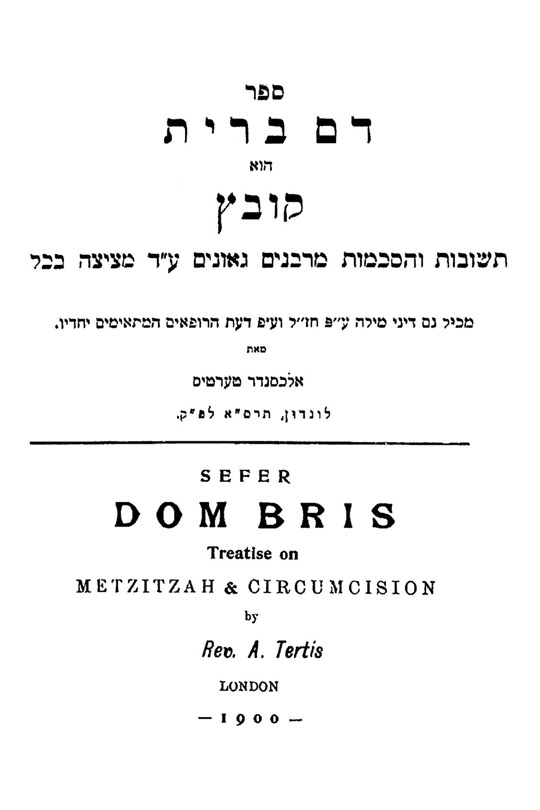
2. In my last post I mentioned that Agudat Israel has transformed itself into a lobbying organization. One of the areas they have been involved with is metzitzah ba-peh, so let me say a few things about this. It is really incredible how for many the debate around metzitzah ba-peh has become one in which the Modern Orthodox are one side, and the traditionalists on the other. I say this because the truth is that the virtually all of the rabbinic greats of Lithuania approved of metzitzah without oral contact. Alexander Tertis’ Dam Berit is a valuable resource that all interested in this matter must consult. Here is the title page.
On p. 33, R. Shlomo Cohen, the famed dayan of Vilna, says the following about metzitzah, which is very relevant to what we ourselves have seen (namely, the rejection of the firm opinions of countless doctors and scientists on the matter, all in the name of tradition).
דבר הזה אינו שייך לרבנים רק לרופאים המומחים ולכן אין לי מה להשיב על שאלתו
According to R. Shlomo, the question of how to perform metzitzah is entirely a medical issue, and the rabbis therefore have nothing to say on this matter, much like in all other halakhot dealing with medical issues the opinions of the doctors are determinative. (It hardly needs to be said that in matters of pikuah nefesh the opinions of thousands of experts, including the world’s most outstanding authorities, cannot be overruled by one idiosyncratic figure who appears to be motivated by non-scientific concerns.) 
Also of interest is that in 1906 R. Hayyim Ozer Grodzinski reported that in Vilna virtually all of the mohalim did metzitzah with a sponge. He wasn’t happy with this, but this was the reality.[4]
An interesting tidbit regarding metzitzah ba-peh is found in the Taz, Orah Hayyim 584:2. Here he mentions that he heard that R. Feivish of Cracow, when he circumcised on Rosh ha-Shanah, would not clean the blood out of his mouth. Rather, he would blow the shofar with the blood in his mouth so that the mitzvot of milah and shofar were joined.
Finally, for those who want to understand why it was only in the nineteenth century that metzitzah came to be regarded as central to the mitzvah of milah, Jacob Katz’s article “Polmos ha-Metzitzah” in his Ha-Halakhah ba-Metzar is crucial. In short, the centrality of metzitzah, and its description as a basic part of milah, is a product of the Orthodox defense of metzitzah in the face of Reform attacks. I think we are seeing something similar today. The digging in of haredi heels in defense of metzitzah ba-peh, complete with over-the-top rhetoric, is understandable (to a certain extent) and due precisely to the fact that it is an outside force that is threatening the practice. Had their own poskim suggested what the government is now insisting on, we would not have seen the same reaction. Yet it is still difficult for outsiders to grasp why some rabbinic leaders of these communities seem entirely oblivious to any medical dangers associated with the practice,  וסלחת לעונם כי רבנים המה
Let me say a few more things about metzitzah ba-peh. 

1. I saw on one of the blogs (I can’t locate it at present) that someone stated as self-evident that metzitzah ba-peh is only done with babies, not adults. The truth is that while the accepted opinion is indeed that metzitzah ba-peh is only done on babies (and maybe also on older child converts – I haven’t been able to find an answer to that), there are indeed opinions that even adult converts have to have metzitzah ba-peh performed on them. R. Moshe Klein (the son of R. Menasheh), Mishnat ha-Ger, p. 71, states without qualification that a convert has to have metzitzah, and if the mohel is afraid of catching a disease he should inquire of a posek if it can be done without the mouth. However, R. Yitzhak Yosef, Yalkut Yosef, Hilkhot Milah 6:1, rejects this viewpoint and states that there is no metzitzah, ba-peh or otherwise, with an adult convert.

2. According to R. Marcus Horovitz, Mateh Levi, vol. 2, Yoreh Deah no. 60, R. Samson Raphael Hirsch was prepared to accept the government’s abolishment of metzitzah without objection. It is difficult to square this assertion with Hirsch’s writings on the topic that show him as a strong defender of the practice.[5] Is it possible that Horovitz’s comment, meant as a criticism of Hirsch, reflects the difficult relationship these two men had?
3. In Iggerot Moshe, Yoreh Deah I, no. 223, R. Moshe Feinstein, in writing to a hasidic rebbe, expresses the standard viewpoint that metzitzah is only a medical procedure and has nothing to do with the mitzvah of milah. There is nothing surprising here. However, his correspondent had written otherwise, that metzitzah was an essential part of the mitzvah. In response to this, R. Moshe writes: חושב אני שהוא רק פליטת הקולמוס. The language R. Moshe uses implies that he did not know that among the hasidim metzitzah isindeed viewed as part of the mitzvah. Is it possible that R. Moshe was unaware of this? I don’t think so. It would appear, therefore, that the words I just quoted are a polite way of R. Moshe telling his correspondent that “what you wrote is without any substance.”
4. In 1994 R. Schachter’s Nefesh ha-Rav appeared. On p. 243 he states that R. Soloveitchik thought that today there is no need for metzitzah at all, not just metzitzah ba-peh. I remember how shocked I was when I read this, and was certain that it had to be wrong. As far as I know, no Orthodox authority has ever agreed to abandon metzitzah entirely, and I therefore couldn’t believe this report. My doubts were strengthened by the fact that R. Schachter quotes the Tiferet Yisrael as agreeing that metzitzah could be abandoned, when the truth is that the Tiferet YisraelShabbat 19:2, says the exact opposite, that metzitzah must be continued no matter what the doctors say.
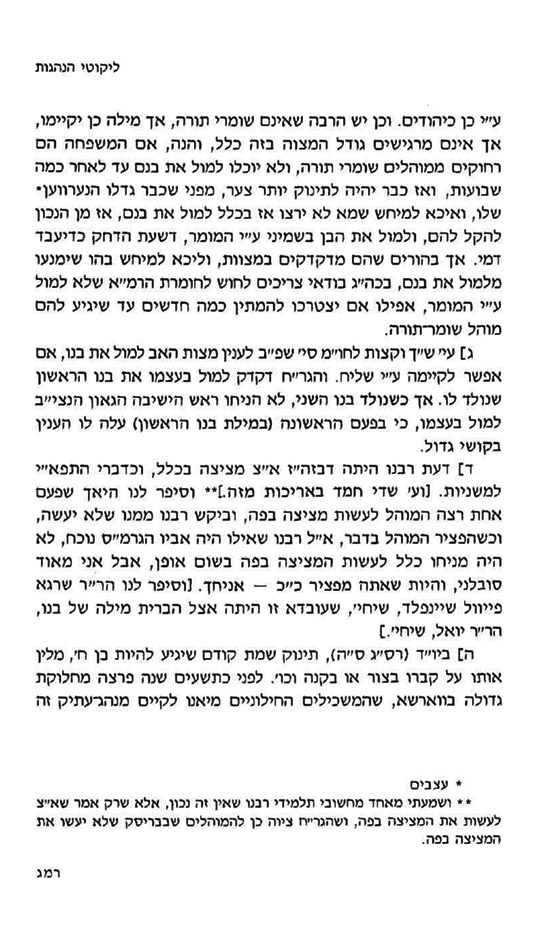
As part of this post I wanted to include this page of Nefesh ha-Rav, so I went to Otzar ha-Hokhmah to download a PDF. Here it is.

Lo and behold, the copy on Otzar ha-Hokhmah is the third edition published in 1999, and there is a note on this page in which R. Schachter states that he has been told that what he wrote was incorrect, and that R. Soloveitchik only opposed metzitzah ba-peh. This makes much more sense and is what I assumed all along, so I was happy to see that my suspicions were confirmed.

R. Schachter recently spoke publicly about metzitzah ba-peh, and he is entirely opposed to it.[6] You can listen to his talk here.
Some might be surprised to hear R. Schachter say, after explaining that the Sages followed the most advanced medicine of their times, “When we look back at Chazal, look at medical statements in the Gemara, we laugh. . . . So you look back in the Gemara, it’s ridiculous, but the Gemara, in the days of the Tannaim, they were following the latest information of the doctors of their generation, of the scientists of their generation.”
I have to say, however, that R. Schachter is mistaken in his description of how the Hasidim understand metzitzah ba-peh. He incorrectly assumes that no one really regards it as a basic part of the mitzvah, i.e., halakhah le-Moshe mi-Sinai. “You know and I know and we all know that it is not halakhah le-Moshe mi-Sinai.” He claims that all those who do say it is halakhah le-Moshe mi-Sinai are exaggerating for rhetorical purposes, much like the expression yehareg ve-al yaavor is used for all sorts of things but is not meant to be taken literally. (R. Schachter himself created a good deal of controversy a couple years ago when he said that the refusal to ordain women was a matter of yehareg ve-al yaavor.)
Finally, I would like to make a general statement about how many in the Modern Orthodox world have been relating to metzitzah ba-peh. There is no question that for those in this segment of Orthodoxy, metzitzah ba-peh should not be done, both for medical reasons and also, I have learnt, for aesthetic reasons. With regard to the latter point, there is a sense among many in the Modern Orthodox world, and I myself have heard this and seen it in writing, that metzitzah ba-peh is “disgusting”. I understand that this is how people feel, but it is an improper feeling. Until the nineteenth century, metzitzah ba-peh was universal at every circumcision. How can observant Jews regard a practice that was basic in every Jewish community of the world as “disgusting”? I understand that it doesn’t fit in with today’s aesthetic sense, and that itself is perhaps reason enough for people not to do metzitzah ba-peh. However, everyone should be careful to avoid any denigration of metzitzah ba-peh that does not originate in medical concerns.
Don’t get me wrong, as I don’t mean that every practice that we find in Jewish communities throughout history should get such a “pass”, but here we are talking about a universal practice over thousands of years. It can’t be denied that there were “repulsive” and “gruesome” practices in Jewish communities.[7] Here are two cited by Shlomo Sprecher in his article mentioned in note 6: 1. Barren women would swallow the foreskin of newly circumcised boys as a segulah so that they could become pregnant. 2. Epileptics drank a potion that contained a girl’s first menstrual blood as a segulah to cure them of their epilepsy.[8]
I recently found another bizarre segulah that also falls under the rubric of “repulsive”, and I think that it would probably also be regarded by law enforcement as a form of sexual abuse. It comes from R. Zvi Hirsch Kaidonover (1646-1712), Kav ha-Yashar, ch. 51. For obvious reasons I am not going to translate this into English.
ועוד סגולה נפלאה לתינוק הנולד שלא יקרה עליו חולי נכפה בר מינן, מיד כשנולד ישימו בפיו ברית קודש של תינוק ויהיה ניצול כל ימיו מחולי נכפה
3. Following one of my previous posts I had correspondence with a reader and the discussion turned to the issue of how much of rabbinic literature is inner directed, that is, from intellectuals to other intellectuals.[9] I assume that this was the mindset of the Sages, and this explains some texts that I don’t think would have been recorded had there been an expectation that the masses would ever see them. In particular, I have in mind the talmudic stories that do not reflect well on certain rabbis. If we understand these texts as scholars talking to other scholars, then it makes sense that they would criticize each other, and even make fun of one another.[10] People in a closed community (in this case, the rabbinic elite) converse with one another in a different way than when outsiders are allowed in.[11] The problem is when the masses are studying Talmud, as today, that they have a difficult time with these texts, and Artscroll needs to explain them in an appealing fashion.
Here is one example of the sort of story I am referring to, that I assume was designed for internal consumption only, as it doesn’t reflect well on one of the Sages who is portrayed as being quite rude and insensitive. Taanit 20a-20b:
Our Rabbis have taught: A man should always be gentle as the reed and never unyielding as the cedar. Once R. Eleazar son of R. Simeon was coming from Migdal Gedor, from the house of his teacher, and he was riding leisurely on his ass by the riverside and was feeling happy and elated because he had studied much Torah There chanced to meet him an exceedingly ugly man who greeted him, “Peace be upon you, Sir”. He, however, did not return his salutation but instead said to him, “Raca,1 how ugly you are. Are all your fellow citizens as ugly as you are?” The man replied: “I do not know, but go and tell the craftsman who made me, ‘How ugly is the vessel which you have made’.” When R. Eleazar realized that he had done wrong he dismounted from the ass and prostrated himself before the man and said to him, “I submit myself to you, forgive me”. The man replied: “I will not forgive you until you go to the craftsman who made me and say to him, ‘How ugly is the vessel which you have made’.” He [R. Eleazar] walked behind him until he reached his native city. When his fellow citizens came out to meet him greeting him with the words, “Peace be upon you O Teacher, O Master,” the man asked them, “Whom are you addressing thus”? They replied, “The man who is walking behind you.” Thereupon he exclaimed: “If this man is a teacher, may there not be any more like him in Israel”! The people then asked him: “Why”? He replied: “Such and such a thing has he done to me.” They said to him: “Nevertheless, forgive him, for he is a man greatly learned in the Torah.” The man replied: “For your sakes I will forgive him, but only on the condition that he does not act in the same manner in the future.” Soon after this R. Eleazar son of R. Simeon entered [the Beth Hamidrash] and expounded thus, A man should always be gentle as the reed and let him never be unyielding as the cedar. And for this reason the reed merited that of it should be made a pen for the writing of the Law, Phylacteries and Mezuzoth.[12]
It appears that we see a continuation of this internal conversation in post-talmudic times. For example, I don’t think the rishonim who so harshly criticize their colleagues — I am referring to the colleagues they respected — would speak this way in a derashah before the common man. However, in internal dialogue they exercised more freedom. I think this can also explain the strange way that R. Isaac of Corbeil, the author of Sefer Mitzvot Katan, is referred to. He is called בעל החוטם. According to tradition, he was called this לפי שהיו לו שערות על החוטם.[13] Here too, I think that this was a humorous nickname that his colleagues knew him as, but not something that the average person would be expected to use. (Those who went to BMT will probably recall how various rabbis would speak of “Whitey Horowitz”. I don’t recall students ever referring to R. Moshe Horowitz this way.)  
I came across another example of what appears to be “internal conversation” from modern times that I think readers will find interesting. Both are found in R. Pinchas Miller’s Olamo shel Abba. Miller’s father, R. Asher Anshel Yehudah Miller, was a posek and author of seforim. I can’t imagine that the following comment, cited in the name of R. Shmelke of Nikolsburg, was something Miller, or R. Shmelke, wanted the masses to hear. Rather, I assume that it was an insider’s joke, designed to be shared among colleagues.
Shabbat 118b states that if Israel observes two Sabbaths properly they will immediately be redeemed. R. Shmelke explained that this refers to Shabbat ha-Gadol and Shabbat Shuvah. It is traditional that on these Sabbaths the rabbis give derashot before the community. R. Shmelke added that the rabbis act as if what they are saying is original to themselves, even though they have taken it from others. The Sages say that if you repeat something in the name of one who said it, you bring redemption to the world (Avot 6:6). Based on this text in Avot, R. Shmelke explained the above talmudic passage as follows: “If Israel observes two Sabbaths properly”, that is, if the rabbis who give the derashot on Shabbat ha-Gadol and Shabbat Shuvah (“two Sabbaths”) actually acknowledge where they get their ideas from (“repeat something in the name of one who said it”), “immediately Israel will be redeemed” (p. 501). This is such a provocative text because not only does it accuse the rabbis of plagiarism, but it states that the redemption itself is being delayed because of their behavior. If it was repeated by the masses it would be regarded as terribly degrading of the rabbis, but seen as a somewhat playful “derashah” to be shared among rabbinic colleagues, it loses much of its sharpness.[14]
There is another interesting passage on p. 326, which despite being humorous, I would have also assumed could only be said among colleagues. Yet Miller’s son tells us that his father used to repeat the following in his derashah at weddings: We know that it is a mitzvah to help the bride and groom to rejoice, but the rabbis come to weddings and instead of doing this, they deliver a long derashah and speak words of mussar to the young couple and thus disturb their joy.[15] That is why at the sheva berakhot we state שמח תשמח רעים האהובים כשמחך יצירך בגן עדן מקדם. In other words, we wish the bride and groom that their joy should be complete like the joy Adam felt when Eve was created for him, because in their time, in the Garden of Eden, there were no rabbis around who were able to disturb their joy!
* * * *
4. I want to call attention to a book that has just appeared. Its English title is Jewish Thought and Jewish Belief and it is edited by Daniel J. Lasker. You can read more about it here. It is available for purchase at Bigeleisen.
This is just the latest in a series of valuable books published by Ben Gurion University Press as part of the Goldstein-Goren Library of Jewish Thought. The articles that I think readers of this blog will find particularly interesting are David Stern, “Rabbinics and Jewish Identity: An American Perspective;” David Shatz, “Nothing but the Tuth? Modern Orthodoxy and the Polemical Uses of History,” Baruch J. Schwartz, “Biblical Scholarship’s Contribution to the Concept of Mattan Torah Past and Present;” Menachem Kellner, “Between the Torah of Moses and the Torah of R. Elhanan;” Tovah Ganzel, “‘He who Restrains his Lips is Wise’ (Proverbs 10:19) – Is that Really True?” and the symposium on Jewish thought in Israeli education, with contributions from R Moshe Lichtenstein and Adina Bar Shalom (R. Ovadia Yosef’s daughter).
Here are a few selections from Shatz’s article:
To be clear, academics, I find, generally shun blogs that are aimed at a popular audience because the comments are often, if not generally, uninformed (and nasty). A few academics do read such blogs, but do not look at the comments. One result of academics largely staying out of blog discussions is that non-experts become viewed as experts. Even when academics join the discussion, the democratic atmosphere of the blog world allows non-experts to think of themselves as experts and therefore as equals of the academicians. Some laypersons, though, as I said earlier, are indeeed experts in certain areas of history.
(In this quotation, one could also substitute “rabbis” or perhaps better, “poskim”, for “academics”, and “areas of halakhah” for “areas of history.”) Shatz is specifically speaking about historians, and contrasting experts vs. non-experts in this area. Yet when it comes to the sort of things I often write about here, I can attest that it is usually non-academics who are the real experts. Time and again I am amazed at the vast knowledge of so many of the people who read this blog. As for the general phenomenon of blogs, there are many people who for whatever reason (usually lack of interest, ability, or patience) are not going to write lengthy articles. Yet they often have a great deal to contribute, much of which is very important to the world of scholarship (almost always in terms of uncovering unknown sources and correcting earlier errors, as opposed to offering new interpretations or original theories). Academics ignore this to their own loss.[16]
In my future book I refer to numerous blog posts, and posts from the Seforim Blog have already been mentioned in a number of scholarly publications. My own reason for writing posts is because most of the material I discuss is, I think, interesting and sometimes even important. While this material is often not of the sort that can be included in a typical article, the genre of the blog post suits them just perfectly. Speaking of the Seforim Blog in particular, its readership encompasses a very large percentage of English speaking traditionally learned Jews of all backgrounds, beliefs, and professions (from Reform rabbis to Roshei Yeshiva and poskim, and everything in between). Thanks again are due to Dan Rabinowitz for providing this unique and wonderful platform.
Here are two more quotes from Shatz:
Be the causes what they may, there is an intramural struggle among the Orthodox, a competition for the soul of Orthodox Judaism, and the primary weapon with which it is being waged is history. For Modern Orthodox Jews today, instead of history being a threat to belief, as in earlier periods, it has become a way of arguing for one version of Othodoxy over another. And it is used for polemical purposes far more than philosophy. There are today few Orthodox philosophers, but comparatively many Orthodox academically trained historians.
Can the Modern Orthodox explain why it is admissible for Hummash and the Sages (in aggadot) to write non-accurately and provide inspiration and memory, but inadmissible for those on the right to write in that genre?
My article in Jewish Thought and Jewish Belief is entitled “Is there a ‘Pesak’ for Jewish Thought.” Those who publish know that it is often the case that only after it is too late does one realize that one’s article or book omits something important. Here too that was the case. In the article I discuss Maimonides’ view in Guide 3:17 that there is no punishment without transgression. That is, he rejects the notion of yissurin shel ahavah. I note that Maimonides claims that this is the opinion “of the multitude of our scholars,” and he cites R. Ammi’s opinion in this regard from Shabbat 55a. What is significant is that later in the sugya the Talmud states that R. Ammi’s opinion was refuted. Maimonides ignores this rejection, and even states that R. Ammi’s opinion is the majority view. This illustrates how Maimonides felt free to reject a talmudic viewpoint in a non-halakhic matter, even when it seems that the opinion is deemed authoritative by the Talmud.
What I unfortunately neglected to mention is that in Guide 3:24 Maimonides also deals with yissurin shel ahavah. Here he acknowledges that there are talmudic sages who accept this notion, but he adds that his own opinion, i.e., the rejection of yissurin shel ahavah, “ought to be believed by every adherent of the Law who is endowed with intellect.” In our own language, we might say that this viewpoint should be obvious to anyone with “half a brain.” Yet this is quite a shocking statement when one considers that there were talmudic sages who had a different perspective. Did Maimonides regard them as lacking intellect?
Here is another point I would like to add: In my Limits of Orthodox Theology I argue that it is most unlikely that Maimonides would choose to establish something as a dogma if it was a matter of debate among the Sages. (If establishing dogma was simply part of the halakhic process, this would not be problematic.) I see that R. Shlomo Fisher apparently has the same perspective, as he writes in his Hiddushei Beit Yishai, no. 107 (p. 413):
וגוף הדברים שכתב הרמב”ם בפה”מ ועשאן עיקר גדול תמוהין מאד. חדא, אם הם עיקר גדול היכי פליג עלה ר’ יהודה.
The issue of deciding matters of hashkafah in a halakhic fashion has also recently been discussed by R. Yaakov Ariel in his new book Halakhah be-Yameinu, pp. 18ff. I have to say that the more I read by Ariel the more impressed I am, as everything he writes is carefully formulated and full of insight. He strikes me as very open-minded with a good grasp of Jewish philosophy. He is, of course, also an outstanding posek. I now understand why it was so important for the haredim, under R. Elyashiv’s lead, to prevent him from being elected Ashkenazic Chief Rabbi of the State of Israel. What the haredim wanted, and were successful in this, was to destroy the Chief Rabbinate as a force to be reckoned with. The way to do this was to make sure that its occupant would be nothing but a “crown rabbi”. That is, they wanted to appoint a chief rabbi who is a figurehead, who interacts with the government on behalf of the haredi leadership, who goes around the world speaking about Jewish topics to the masses, and who can deal with non-Jews. What they absolutely did not want in a chief rabbi was a figure who had any rabbinic standing and who could thus challenge haredi Daas Torah.
At a time when much of the right wing religious Zionist world appears to have gone off the deep end, R. Ariel stands as a voice of sanity. Be it his attack on Torat ha-Melekh (a book which I still plan on discussing) or his strong rejection (together with R. Aharon Lichtenstein and R. Nachum Rabinovitch) of the outrageous letter written by Rabbis Tau, Aviner and others in support of Moshe Katzav, or his defense of women voting (arguing that today R. Kook would not be opposed; Halakhah be-Yameinu, p. 189) he shows that right wing religious Zionism need not be identified with the craziness we have been accustomed to see in recent years. 
Let us return to his recent essay where he argues, in opposition to what I wrote in my article, that Maimonides often does “decide” in matters of hashkafah no different than in halakhah. To illustrate his point, Ariel notes that there is a dispute among the Sages about whether there are reasons for commandments. He claims that Maimonides מכריע ופוסק  in accord with the position that there are reasons. He concludes:
אף על פי שלדעתו כללי ההלכה אינם חלים בענייני אמונה, בכל זאת ניתן להכריע את האמונה על פי דרך הלימוד הנקוטה גם בהלכה.
The notion of a pesak emunah, if it is to be parallel to a pesak halakhah, would mean that after Maimonides gives his pesak, in his mind it is now forbidden to adopt the other viewpoint (just as when Maimonides rules that something is forbidden on Shabbat) .Yet where does Maimonides ever say that there is an obligation to accept his viewpoint about reasons for the commandments? What Maimonides does is show why his viewpoint is correct, and Ariel cites these sources. But just because Maimonides wants his readers to adopt his own viewpoint, in what way is this a “pesak emunah”? Maimonides is simply expressing his strongly held belief. He is not ruling alternative positions out of bounds, as he does in deciding halakhah. This appplies as well to the other examples Ariel brings to prove his point. All he has established is that Maimonides argues for a position in matters such as the nature of prophecy and providence, but that is far removed from the notion that Maimonides saw his opinions as halakhically binding. On the contrary, just because Maimonides tells us what he thinks the Torah’s position is in a matter such as providence, he had no expectation that the masses would (or in some cases even should) follow him in this, and he was fully tolerant of the masses holding to their errant opinions as long as the matter was not an authentic dogma.
5. I have now finished my book on censorship. I can’t say when it will appear as it still has to be properly edited, typset etc., but hopefully this won’t take too long. I have loads of interesting material that for various reasons I was unable to include in the book, so the Seforim Blog will give me a good opportunity to bring it to the public’s attention. Let me begin with something sent to me by Rodney Falk.
Professor Louis Henkin, the son of R. Joseph Elijah Henkin, died in 2010. Here is his obituary as it appeared in Ha-Modia.


Notice what is missing! The obituary won’t even mention who his father was. Had Louis Henkin been a businessman or a doctor this information would not have been excluded, of this there is no doubt. But it is considered a disgrace to R. Henkin’s memory that his son was an intellectual, one who lived the life of the mind, and yet he didn’t become a rav or a rosh yeshiva . People in the haredi world can understand how not everyone is cut out to be a rosh yeshiva or sit in kollel, and these “unfortunates” are therefore forced choose a profession. But apparently, the notion that one who has the brains and intellectual stamina to become a great scholar might choose to devote himself to non-Torah subjects borders on the blasphemous for Ha-Modia. As such, while Louis Henkin can be acknowledged for his achievements, he has to be severed from his father’s house (the same father who sent him and his two brothers to Yeshiva College).
I think Yoel Finkelman has put the matter quite well in discussing the larger issue of which this example is  part and parcel of:
Haredi writers of history claim to know better than the great rabbis of the past how the latter should have behaved. Those great rabbis do not serve as models for the present. Instead, the present and its ideology serve as models for the great rabbis. Haredi historiography becomes a tale of what observant Jews, and especially great rabbis, did, but only provided that these actions accord with, or can be made to accord with, current Haredi doctrine. The historians do not try to understand the gedolim; they stand over the gedolim. Haredi ideology of fealty to the great rabbis works at cross purposes with the sanitized history of those rabbis.[17]
6. Rabbi Jason Weiner, a fine musmach from Yeshivat Chovevei Torah, has recently published a Guide to Traditional Jewish Observance in a Hospital. Formerly assistant rabbi at the Young Israel of Century City, he now serves as Senior Rabbi and Manager of the Spiritual Care Department at Cedars-Sinai Medical Center in Los Angeles. The book comes with approbations from R. Asher Weiss and R. Yitzchok Weinberg, the Talner Rebbe, and the halakhot in the book have been reviewed by Rabbis Gershon Bess, Nachum Sauer, and Yosef Shuterman. The book can be downloaded here.
7. Some readers have asked me about upcoming shul lectures. Here is what is on my schedule through Passover.
Feb. 15-16: Sephardic Institute of Brooklyn
March 1-2: Beth Israel, Miami Beach
March 8-9: Shearith Israel, New York
March 15-16: Beth Israel, Omaha
If any readers are interested in having me speak at their shuls, please be in touch.
8. No one got the answer to the last quiz, so let me do it again. The winner gets a copy of one of the volumes of R. Hayyim Hirschensohn’s commentary on Rashi. If you know the answer to the question, send it to me at shapirom2 at scranton.edu.

What was the first Hebrew book published by a living author?

[1] What does this last sentence mean? How can an attitude violate a biblical prohibition?

[2] As a good illustration of changes in attitude in the last forty years, here is what R. Norman Lamm wrote in his classic article on homosexuality in the 1975 yearbook of the Encyclopaedia Judaica. Such a sentence would, today, be quite politically incorrect, and regarded by gays as incredibly offensive: “Were society to give its open or even tacit approval to homosexuality, it would invite more aggresiveness on the part of adult pederasts toward young people.” 
[3] R. Meir Schiff (Maharam Schiff) is unique in believing that one without arms should put the tefillin shel yad on the head, together with the tefillin shel rosh. This is the upshot of his comment to Gittin 58a.
[4] See R. Sinai Schiffer, “Mitzvat ha-Metzitzah,” p. 106 (printed together with R. Sinai Adler, Devar Sinai [Jerusalem, 1966])
[5] See Eliyahu Meir Klugman, Rabbi Samson Raphael Hirsch, pp. 292-293.
[6] “Following in the Footsteps of Our Fathers,” Nov. 13, 2012.
[7] The words are those of Shlomo Sprecher from his article on metzitzah in Hakirah 3 (2006), p. 51.
[8] Speaking of drinking, take a look at this strange passage. It appears in R. Hayyim Rabbi’s letter at the beginning of R. Haggai Ben Hananyah’s Nimukei Levi (Ashdod, 2008), p. 2. Add this to the long list of texts that I refuse to translate.
בדין חלב אשה. נשאלתי פעם, אם בזמן תשמיש עם אשתו, החלב שלה אסור עליו, או שבעל ואשתו כגופו, ואין בו דין של יונק שרץ. ובפרט לטעם שמא יינק מבהמה טמאה, ובאשתו כגופו שהתירו לו בשעת פיוס וכו’, לא גזרו בזה. ויתכן שמותר כדין פסיק רישיה בדרבנן. ובנידון כזה, שזה חשש גזירה, גם בניחא ליה יש מקום להתיר. כן נראה לכאורה.
[9] The previous post is found here.
In the comments, Yehudah Mirsky wrote:

Fwiw, as I recall, Steve Wald in his book on Eilu Ovrin shows that the genuinely awful am-haaretz passages in Pesachim are a later stammatic addition, and that Jeff Rubinstein argues has a chapter on this in his “The Culture of the Babylonian Talmud” where he argues both that that sugya in Pesachim is sui generis in Hazal and – interestingly – reflects the Stammaim’s needing to justify their very scholastic lifestyle vis-a-vis people who were working for a living. Rubinstein cautions that the whole sugya may have been intended as a series of private jokes and need not necessarily reflect actual social relations between the stammaim and their surrounding society.

[10] Yeshayahu Leibowitz quipped that the Sages must have had a good sense of humor, since they included the following passage in the Talmud: תלמידי חכמים מרבים שלום בעולם. See Sihot al Pirkei Ta’amei ha-Mitzvot (Jerusalem, 2003), p. 289. In all seriousness, however, there are indeed humorous passages in the Talmud, as pointed out by R. Moses Salmon, Netiv Moshe (Vienna, 1897), pp. 45-46. Here is one example he gives (Bava Batra 14a).:
The Rabbis said to R. Hamnuna: R. Ammi wrote four hundred scrolls of the Law. He said to them: Perhaps he copied out the verse  תורה צוה לנו משה
Salmon claims that anyone with a bit of sense can see that R. Hamnuna’s reply is a wisecrack made in response to the obvious exaggeration about R. Ammi.
Nehemiah Samuel Leibowitz states that even in the Zohar we have passages that show a humorous side. One of the many examples he points to is Zohar, Bereshit, p. 27a:
וימררו את חייהם בעבודה קשה בקושיא. בחומר קל וחומר. ובלבנים בלבון הלכתא. ובכל עבודה בשדה דא ברייתא. את כל עבודתם וגו’ דא משנה.
See Leibowitz, “Halatzot ve-Divrei Bikoret be-Sefer ha-Zohar,”Ha-Tzofeh le-Hokhmat Yisrael 11 (1927), pp. 33-45. For more on humor in the Talmud, see Yehoshua Ovsay, Ma’amarim u-Reshimot (New York, 1946), ch. 1; R. Mordechai Hacohen, “Humor, Satirah, u-Vedihah be-Fi Hazal,” Mahanayim 67 (5722), pp. 8-19.
[11] Such a community also establishes special rules for itself, of which I can cite many examples. Here is one, from R. Solomon Luria, Yam Shel Shlomo, Bava Kamma 8:49:
ואם חוזר בפעם השלישי א”כ הוא משולש בחטא, אזי אין מניחין כלל לפדותו מן המלקות אלא ילקה בב”ד ודיו, אם לא שהוא בר אורין שאין ראוי להלקותו
After all we have seen in the last few years, I am quite certain that today the average person would not accept that when it comes to criminal matters that the rabbis should be given special privileges and exemptions.
[12] See also Va-Yikra Rabbah 9:3 where it describes how R. Jannai called his host “a dog”, and then learnt how wrong he was.
[13] See the introduction to the Constantinople 1510 edition of the work, reprinted in the Jerusalem, 1960 edition.
[14] On p. 187 Miller offers a different perspective. Here he quotes another rabbi who said that if necessary it is OK for one to repeat another’s hiddushim in the Shabbat ha-Gadol derashah, because the Sages tell us (Pesahim 6a): שואלין ודורשין בהלכות פסח.  This means:
מותר “לשאול” מאחרים בשעת הדחק ולדרוש בהלכות פסח
[15] I am told that it is still the practice in certain communities for the rabbi to deliver a derashah at a wedding..
[16] I think in particular of S.’s wonderful blog On the Main Line, which routinely provides important, and until now unknown, primary sources that are vital to a wide range of areas of scholarship.
[17] Strictly Kosher Reading, p. 122.


Pesach and Haggadah Themed Posts 2020

Pesach and Haggadah Themed Posts 2020

Here’s a roundup of Pesach and Haggadah-themed posts at the Seforim Blog.

                                                      Illustrations and the Haggadah

I. Racy Title Pages Update II 12.01.2005.

Discusses the title page of the Prague Haggadah of 1526. This particular Haggadah used an illustration of a nude woman in the Haggadah’s quotation of Ezekiel 16:7 (“I cause you to increase, even as the growth of the field. And you did increase and grow up, and you became beautiful: you breasts grew, and your hair has grown, yet you were naked and bare”). This is contrasted with the Venice 1603 Haggadah which not only used an almost identical illustration but even included a note alerting the reader that this is a picture of a man!

II. Prague 1526 Haggadah 3.30.2006.

Discusses this first fully illustrated Haggadah. Since according to rabbinic tradition Abraham was called an Ivri because he came from “the other side” of the river, he is depicted in a rowboat. In the Mantua 160 Haggadah a similar idea is shown, only Abraham rides in a gondola!

III. Separate Beds More on Illustrated Haggadot 4.04.2006.

Discusses the bedroom illustration in the Venice 1629 Haggadah. The Haggadah interprets “our pain” (Deut. 26:7) as referring to the separation of husbands and wives. This is illustrated with husband and wife sleeping in separate beds and a lit lamp.

IV. Haggadah, First Hebrew Map, and Forgery 4.10.2006.

Discusses the Amsterdam 1695 Haggadah. This Haggadah innovated by using copper plates rather than woodcuts, making its illustrations – by the convert Abraham b”r Ya’akov mi-mishpahto shel Avraham avinu – exceptionally intricate and pleasing. Includes one of the earliest Hebrew maps of the land of Israel.

V. Haggadah and the Mingling of the Sexes 3.27.2007.
The Mantua 1560 edition of the Haggadah shows men and women working together to bake matzot. The editors even included a verse from Psalms 148:12, highlighting old and young, bachelor and virgin, seeing matzah production as a fulfillment of this verse. By contrast, in the 1609 Prague Haggadah although a similar illustration is used there is no woman working the matzah oven. The interpretation of verses appearing to sanction the mingling of young boys and girls is also discussed.
VI. Review of Marc Michael Epstein, The Medieval HaggadahArt, Narrative & Religious Imagination.  
Epstein’s book is one of the most comprehensive on the illustrated Haggadah, and specifically four of among the most important illuminated Haggadot.
VII  A Few Comments Regarding the First Woodcut Border Accompanying the Prague 1526 Haggadah
Analysis of the first fully illustrated Haggadah and illustrated Hebrew books and titlepages, and the history of censorship of this Haggadah.
VIII.  Borders, Breasts, and Bibliography by Elliot Horowitz
Elliot Horwitz’s analysis of the 1526 Haggadah and the previous entry, “A Few Comments..”
IX. 1526 Prague Haggadah and its Illustrations by Eliezer Brodt
 Another post discussing this important haggadah.

X.   Halakhah and Haggadah Manuscripts

It highlights how halakha influenced the illustrations in medieval Haggadot.


Artichoke and Marror in Haggadah illustrations 


The Humble Artichoke

The First Artichoke Controversy of 2012 by Leor Jacobi

The Not-So-Humble Artichoke in Ancient Jewish Sources by Susan Weingarten

Elijah’s or the Fifth Cup

X. Eliyahu Drinking from the Cup 3.29.2006.
Discusses various beliefs about Elijah in connection with the Seder, illuminated from Haggadah illustrations.

XI.  The Cup for the Visitor: What lies behind the Kos Shel Eliyahu?  By Eliezer Brodt

XII. Mysteries of the Magical Fifth Passover Cup II, The Great Disappearing Act  by Leor Jacobi

Kitniyot


XIIII.  Shlomo Yosef Zevin, Kitniyot, R. Judah Mintz, and More by Marc B. Shapiro

Highlights a passage of R. Zevin’s Moadim Le-Simcha regarding Kitniyot that was altered in the Artscroll translation.

XIV.  Kitniyot and Stimulants: Coffee and Marijuana on Passover

Whether marijuana and coffee are classified as kitniyot.

Specific Haggadot

XV. On  the Maxwell House Haggadah

Discusses the connection between this coffee house and Passover.

XVI. Old Haggadot for Free 4.10.2006.
A notice that many important and old Haggadot are available online
 XVII. Elazar Fleckeles’s Haggadah Maaseh BR’ Elazar By Eliezer Brodt

XVIII. Book Announcement Gabriel Wasserman’s Haggadah

XIX.  New Book Announcement: Professor David Henshke’s Work on the Seder Night by Eliezer Brodt

XX. The Gematriya Haggadah By Eli Genauer

XXI. Pesach Journals, Had Gadyah, Plagiarism & Bibliographical Errors 3.27.2007.
Discusses Yeshurun’s special Pesach issue. The author of one of the article’s method of essentially repackaging scholarly journal articles for frum Torah journals is exposed.
XXI. Rabbi Eliezer Brodt on Haggadah shel Pesach: Reflections on the Past and Present 3.27.2007.
Discusses the interesting Haggadah of R. Yedidiah Thia Weil (Rav Korban Nesanel’s son). Among other things of note, the author mentions that he heard that Jews have one more tooth than non-Jews.
XXII. Pesach Drasha of the Rokeach by Eliezer Brodt, 4.02.2007.
Discusses a newly published derasha of R. Eleazer Rokeach’s Pesach , which mentions his personal Pesach customs, and of which confirms something long recorded in his name, but never known from his own words.
XXIII. Initial Bibliography of Important Haggadah Literature by Eliezer Brodt, 4.16.2008.
Discusses Haggadot and the historical development of the Haggadah, such as R. Menachem Kasher’s Haggadah Shelemah and Prof. Y. H. Yerushalmi’s Haggadah and History, as well as many others.
Miscellaneous

XXIV.  Afikoman Stealing and other related Minhagim by Elizer Brodt

XXV. Passover with Apostates:  A Concert in Spain and a Seder in the Middle of the Ocean By Eliezer Wiesel
A translation (by Shaul Seidler-Feller) of a Yiddish article written by Elie Wiesel describing a memorable 1949 seder.

XXVI. A New Perspective on the Story of R. Eliezer in the Haggadah Shel Pesach by Dovid Farkes

XXVII. The Date of the Exodus: A Guide to the Orthodox Perplexed by Mitchell First, 4.03.2011.
Discusses possible ways of identifying the specific Pharaoh of the Torah and therefore the date of the enslavement and exodus from Egypt.

Chag kasher ve-sameach!


Concerning the Zohar and Other Matters

Concerning the Zohar and Other Matters
Marc B. Shapiro
1. In the last issue of Milin Havivin I published an article dealing with the Zohar and the supposed obligation to accept that it was written by R. Shimon ben Yohai. You can see it here. In the article I mentioned authorities who pointed to passages that in their minds were certainly post-Rashbi interpolations.[1] At the end of the article I also published a letter from R. Isaac Herzog in which he briefly deals with the issue of non-literal interpretation of the Torah. We see that he was uncertain as to what the boundaries are in this matter, and thought that this was an issue that needed to be worked out. That is, he did not believe that the last word on this issue had been stated.
Subsequent to publication I found some more interesting material and I also received a number of emails making various points, so now is as good a time as ever to return to the topic.
First, let me mention what David Farkas wrote to me in an email. In the article I cited Bruriah Hutner-David who brings the following proof that R. Zvi Hirsch Chajes rejected the traditional authorship of the Zohar: In order to show that the Targum to Ecclesiastes should be dated to the geonic period, Chajes notes that while the angel Raziel is mentioned in this Targum, he is not mentioned in talmudic literature. Hutner-David notes that Raziel is mentioned in the Zohar, a fact that Chajes was presumably aware of, meaning that he was hinting that the Zohar is also a late work.
Chaim Landerer called my attention to the fact that in a talmudic era Aramaic incantation bowl the name Raziel does appear, and I cited this to show that Chajes was incorrect in his assumption that the name Raziel post-dates the rabbinic period. However, Farkas has correctly noted that the name Raziel in the bowl refers to God, while Chajes was specifically referring to Raziel as a name of an angel. In other words, there is no refutation of Chajes. Yet I still think that Chajes assumed that the name Raziel itself was post-talmudic. Once we see that the name existed in the rabbinic period, even if so far the only evidence of its use is for God, it is certainly possible that it was also used for angels as well. If that is the case, there is no evidence that the use of the word Raziel as an angel’s name points to a post-rabbinic date.
I also found that Saul Berlin notes, in the introduction to his Kasa de-Harsana (his commentary to Besamim Rosh), that unlike all other ancient Jewish books, the Zohar has an introduction. Because of this, he writes that when it comes to the authorship of the Zohar he inclines to the view of his great-uncle, R. Jacob Emden.
A few years ago the outstanding scholar, R. Yaakov Yisrael Stoll, published the anonymous Sefer Kushyot. Here are pages 123-124.

I ask readers to look at note 887. He discusses a mistake made by many in assuming that an expression is a biblical verse. He then notes that the Zohar also makes the same mistake, and refers to other such mistakes made by בעל הזוהר. He doesn’t say so explicitly, but I think the way he formulates the note lets the reader, who is attuned to these things, know that in his mind בעל הזוהר is not R. Shimon ben Yohai.

Someone called my attention to this video

I have no idea who the speaker is, and if he has ever even read a page of the Zohar, but he does seem very sure of himself. I have no objection to discussing the authorship of the Zohar and the ideas found there, or Kabbalah as a whole. However, I would think that a little humility is called for when discussing a discipline that was a basic part of the religious worldview of so many central figures. Do the names Nahmanides, R. Joseph Karo, or the Vilna Gaon mean anything to this speaker?
In my article, I cited all sorts of texts by Orthodox figures dealing with the authorship of the Zohar. Yet I overlooked the following by R. Joseph Hertz.
The question of the authorship of the Zohar, like that of Sefer Yetzirah, is one of the cruces of Jewish literature. The authorship by Simeon ben Yochai, or by his immediate disciples, though this is still an article of faith with millions of Jews in Eastern Europe, has from internal evidence long proved to be untenable. The Zohar explains Spanish words, contains quotations from Gabirol, and mentions the Crusades.[2]
As noted, in my article cited a number of sources that point to additions to the Zohar. Rabbi Akiva Males commented to me that I neglected to mention R. Isaac Haver, Magen ve-Tzinah, ch. 21. This book was written in response to R. Leon Modena’s Ari Nohem, a work aimed at disproving the antiquity of the Zohar. Unless one’s head is totally in the sand, it is impossible to deny that there are passages in the Zohar that post-date the tannaitic era. For Modena, this was proof that the Zohar could not have been written by Rabbi Shimon ben Yohai. Haver, who wants to hold onto the ancient dating, adopts the only path open to him, arguing that there are indeed many post-tannaitic additions, but the core of the book is ancient.
ובאמת ספר הזוהר נכתב כמה דורות אחר רשב”י מה שנכתב ונתקבל משמו ומשאר חבריו ותלמידו שהיו בימיו, וגם זה נעשה בו הוספות רבות עד מאוד מן אחרוני האחרונים אחר שבאו בכתב וניתנו להעתיק ושלטו בו ידי רבים כל אחד מה שנראה בדעתו ומה שנתחדש לו וכתב בגליון על ספר הזוה”ק מן הצד ואח”ז בא ריעהו מעתיק מן המעתיק ומצא בגליון דברים רבים ובמעט התבוננות חשב שזה היה חסרון בגוף ספר והכניסם בפנים.
Haver points out that is how we can explain the obviously late passages, where we see that the Zohar includes material that comes from Rashi and R. Tam. Among kabbalists, it was not unheard of to say that Rashi actually knew the Zohar and was influenced by it.[3] But Haver will have none of this and recognizes that the influence is in the reverse direction, i.e., Rashi influencing the Zohar. He states that anyone who understands the Zohar will recognize these additions.
What does Haver mean when he mentions that there is material from R. Tam in the Zohar? I am aware of one obvious example. It says in Kiddushin 30b that “one should always divide his years into three: [devoting] a third to Mikra, a third to Mishnah, and a third to Talmud.” R. Tam explains why the practice in his day was not in accord with what the Talmud states, an explanation that became very influential and served as a justification for the widespread ignoring of the study of Tanakh in the Ashkenazic world[4]
בלולה במקרא ובמשנה וכו’: פירש רבינו תם דבתלמוד שלנו אנו פוטרין עצמנו ממה שאמרו חכמים לעולם ישלש אדם שנותיו שליש במקרא שליש במשנה שליש בתלמוד.
What he says is that since the Talmud itself contains Bible and Mishnah, there is no need to divide one’s time among the three categories. Rather, by studying Talmud one combines all three areas. I always found this a difficult explanation, for if the Talmud agreed with this perspective, it would have said so, instead of stating that one is to divide one’s time. The intention of the talmudic instruction in Kiddushin was that people become well acquainted with all three subjects, and if they only devote themselves to Talmud, there is a great deal of Bible and Mishnah[5] they will never encounter. (According to Maimonides, Hilkhot Talmud Torah 1:12, once one is already a scholar, he does not need to divide his time between the three areas, but can focus almost entirely on Talmud.)
Despite what R. Tam says, R. Samson Raphael Hirsch claims that it was due to a misunderstanding of this opinion that people were led to stop studying Tanakh.[6] Not mentioned by Hirsch is that even before R. Tam some scholars ignored Tanakh. There were even talmudic Sages who were not expert in Bible. Bava Kamma 54b-55a states:
R. Hanina b. Agil asked R. Hiyya b. Abba: Why in the first Decalogue is there no mention of wellbeing [טוב], whereas in the second Decalogue there is a mention of wellbeing?[7] He replied: While you are asking me why wellbeing is mentioned there, ask me whether wellbeing is in fact mentioned or not, as I do not know whether wellbeing is mentioned there or not.
Tosafot, Bava Batra 113a, s.v. travayhu, cites this text to support its contention about the amoraim: .פעמים  היו שלא היו בקיאין בפסוקין After referring to this strange passage in Tosafot (concerning which there is an entire literature), R. Moses Salmon sarcastically declares[8]: ועל זה סומכים הלומדים עמי הארץ וד”ל
Unlike Salmon, R. Samuel Strashun, in his note to Bava Batra 8a, defended those talmudists who were deficient in knowledge of Bible.
משמע דאפשר שיהיו בעלי משנה או בעלי גמרא ולא בעלי מקרא . . . ודלא כאותן ששופכין בוז על מקצת גדולי זמנינו בש”ס ופוסקים ואין להם יד כ”כ במקרא.
So returning to my question, what does Haver mean when he says that there is material from R. Tam in the Zohar? Well it turns out that R. Tam’s explanation, which we have just been discussing, is also found in the Zohar Hadash (ed. Margaliyot), Tikunim p. 107b:
תקינו רבנן לשלש שנותינו במקרא בתלמוד . . . ואוקמוה דמאן דמתעסק (במשנה) [בתלמוד] כאלו התעסק בכלא בגין דאיהי בלילא במקרא במשנה בתלמוד.
There is no question that this passage is adopted from R. Tam, who lived a millennium after R. Shimon ben Yohai.
Incidentally, regarding R. Tam’s view, here is a page of an article by R. Yehudah Aryeh Schwartz that appeared in the Agudah journal Kol ha-Torah, Adar 5765 [2005], p. 102 (second pagination).

The following page comes from R. Yehiel Michel Stern’s Ha-Torah ha-Temimah on the Book of Joshua, p. 84 no. 3, which appeared in 2009.

As you can see, Stern’s comment is lifted word for word from Schwartz’s article. I am not sure what to make of this. That is, are dealing with a simple plagiarism? Perhaps one of the readers has some insight. (Stern may be the world’s most prolific writer of Torah publications.)

In my article I referred to passages in the Zohar which traditional authorities had claimed were really later interpolations. There are examples of the opposite phenomenon as well, namely, attributing things to the Zohar that are not found there. The most famous instance of this that I know of is found in the Bah, Orah Hayyim 4 (and quoted from there in Be’er Heitev, Orah Hayyim 1:2) that upon waking up if you walk four amot without washing your hands you are subject to the death penalty![9]  This Zoharic text is quoted in the name of the work Tola’at Yaakov, authored by R. Meir Ibn Gabai (1480-ca. 1543). The passage is cited over and over again by aharonim in trying to show the importance of the morning washing. Yalkut Meam Loez, Deut. 4:9, doesn’t even mention the Zohar, stating simply:
ואמרו חז”ל כל המהלך ד’ אמות בלי נטילת ידים חייב מיתה
A few scholars actually point out that this passage is not to be found in the Zohar.[10] One of those who realized this is R. Eleazar Fleckeles, Teshuvah me-Ahavah, vol. 1 no. 14, whom we will come back to later in this post. He writes that he looked in the Zohar and didn’t find the passage referred to. With reference to the Tola’at Yaakov, whom he (falsely) thinks cited the Zohar (since that is what it says in the Bah), Fleckeles writes:
ושארי לי’ מארי’ שעשה רוב ישראל לחייבי מיתות
Because very few of the aharonim actually had the sefer Tola’at Yaakov (which is itself a little strange as the book was printed a number of times), they were unable to see that the Tola’at Yaakov never quotes the Zohar!  Here is p. 9a from the Cracow 1581 edition.

If you look in the second paragraph you will see that Ibn Gabai does state that one who doesn’t wash his hands is חייב מיתה, but he doesn’t attribute this to the Zohar. How he derives this idea is worthy of investigation at a different time. For now, it is important to just note that what we have here is an independent idea of a sixteenth-century Kabbalist which for some reason was misquoted by the Bah as if Ibn Gabai was citing the Zohar. This misquotation was to be repeated again and again, down to the present day.

The supposed Zohar text has led to additional stringencies. For example, the hasidic master R. Meshulam Zusha of Anapole stated that that one should not even to put one’s legs on the ground before washing one’s hands.[11]

Here is an interesting story that relates to the false Zohar quotation: A very learned and rich student came to study with R. Simhah Bunim of Peshischa.[12] The problem was that this young man was a bit of an independent thinker, and the Kotzker, who was also there, didn’t think that the young man belonged with them. The story explains how the Kotzker was able to convince the young man to leave. What was it about this man that turned the Kotzker against him? We are told the following:
הוא הגיה בזוה”ק שכתב “ההולך ד’ אמות בלי נטילת ידים חייב מיתה”, והוא הגיה: “והוא שהרג את הנפש”, וזה נגד חז”ל.
So here we have a story of an emendation of a non-existent Zoharic text. And even if we assume that the man was emending the text as it appears in the Bah, we see from the story that the Kotzker thought that the quote was authentic.

I wasn’t sure what to make of this passage. I therefore consulted a learned friend who said that the problem was that the young man who emended the text to read והוא שהרג את הנפש was making a joke at the expense of the (supposed) Zoharic passage. He was saying that you are only deserving of the death penalty if you kill someone while walking the four amot. I then sent him a page from R. Zvi Yavrov, Ma’aseh Ish, vol. 4, p. 113, where it appears that the Hazon Ish took the emendation-explanation just mentioned as an authentic understanding of the passage. The text in Yavrov reads as follows:

על מה שהביא ה”באר היטב” (או”ח סימן א’ סק”ב) שההולך ד’ אמות בלי נטילת ידים שחרית חייב מיתה, אמר רבינו להגאון ר’ שמריהו גריינימן זצ”ל, שמישהו כתב בגליון הספר “והוא שהרג את הנפש” (מבנו הג”ר ברוך שליט”א).

My friend replied by referring me to a discussion on Hyde Park here where the text from Yavrov is also mentioned. One of the commenters there claims that the Hazon Ish was also joking in his remark, and the one who heard this (who was hardly a tyro), or the person who passed on the information to Yavrov, didn’t realize that it was a joke. The commenter also assumes that despite what appears in the Bah and Be’er Heitev, the Hazon Ish would have known that that it wasn’t an authentic quote from the Zohar. I find this very unlikely, as the Hazon Ish is not known to have been an expert in the Zohar, and what reason would there be for him to doubt that which is quoted in numerous earlier sources? 

The one point that the commenter has going for him is that he is correct that there are many examples in this book, and others like it, from which we see that the author does not know how to distinguish between what should and should not be included in a book. The commenter gives an example to illustrate this. In vol. 5, p. 141, Yavrov gives us the following important information about the Hazon Ish, recorded by one of his students: They never saw the Hazon Ish picking his nose! I kid you not.

העיד אחד מגדולי תלמידי רבינו: מעולם לא ראו את הרבי עם אצבע באף (מהרב מרדכי ויספיש)

Regarding this issue, R. Eliezer Melamed – who really is a great halakhic scholar – writes that picking one’s nose in public is forbidden.[13]

ויש מעשים שכשאדם עושה אותם בסתר, אין בכך פגם, אבל בפני אנשים אחרים הם נחשבים למגעילים ואסורים משום ‘בל תשקצו’ ומשום המצוות שבין אדם לחבירו. למשל, המחטט באף או מגרד פצעונים שבפניו, עובר באיסורים אלו. וכן אמרו חכמים (חגיגה ה, א): “כִּי אֶת כָּל מַעֲשֶׂה הָאֱלוֹהִים יָבִא בְמִשְׁפָּט עַל כָּל נֶעְלָם. אמר רב: זה ההורג כינה בפני חבירו ונמאס בה. ושמואל אמר: זה הרק (היורק) בפני חבירו ונמאס בה”. ובמיוחד בעת שאוכלים, צריך להיזהר בכך יותר, כי מעשים מאוסים, וכן דיבורים מגעילים, מבטלים את התיאבון ומעוררים בחילה בקרב הסועדים.
Getting back to the supposed Zoharic passage, R. Yitzhak Abadi discusses this in Or Yitzhak, vol. 1, no. 1. He begins his responsum by pointing out that despite the fact that the Mishnah Berurah records how one is not to walk four amot before washing one’s hands, R. Aaron Kotler did not concern himself with this. Abadi then explains that the words of the Zohar are not intended for everyone,[14] and none of the rishonim write that it is forbidden to walk four amot before washing. He concludes by stating that he is inclined to rule – ולולי דמסתפינא הייתי אומר להלכה למעשה – that the entire practice of negel vasser is no longer relevant to us because ruah ra’ah is no longer a concern.[15] Here again we see that the author of a responsum assumes that the issue he is discussing, of not walking four amot before hand washing, is based on the Zohar, when in fact the Zohar doesn’t mention this at all.

Finally, I must mention that R. Hayyim Joseph David Azulai, Birkei Yosef, Orah Hayyim 1:1, recognizes that there is nothing in the Zohar about being subject to the death penalty for walking four amot. However, he notes that both he and his forefather, R. Abraham Azulai, saw an alternate version which indeed states that one who walks four amot אתחייב מיתא לשמיא. Based on this alternate text, the Hida declares that the Tola’at Yaakov is correct in how he quoted the Zohar, and the criticism of him for the inaccurate quotation is therefore misplaced. Even the Hida didn’t have access to the Tola’at Yaakov, and based on the Bah assumed that the Tola’at Yaakov quoted the Zohar and must indeed have had the alternate text. Yet as we have already seen, the Tola’at Yaakov does not quote the Zohar, and there is no actual alternate version of the text such as quoted by the Hida.

What happened was that someone saw the Bah quoting the Tola’at Yaakov as quoting the Zohar that one who walks four amot is subject to the death penalty. Not finding this passage in the Zohar, this individual inserted it into his text of the Zohar in the section that deals with hand washing in the morning (Zohar, vol. 1 p. 10b). I don’t think this was intended as a forgery. Rather, whoever put it in assumed that it was an authentic Zoharic teaching, found in an alternate text, and he was inserting it where it should be. He thought that it was an authentic Zoharic teaching because the Tola’at Yaakov had testified to it. But as we have already seen, Tola’at Yaakov said nothing of the sort. This alternate girsa can therefore be traced back to the Bah’s misquotation of the Tola’at Yaakov.

How can we explain the Bah? I think the answer is simple. When the Bah cited the Tola’at Yaakov he did not have the book in front of him, and was relying on his memory, the sort of mistake that is found among all of our great sages. That is how this error crept in which has had a great influence on Jewish religious texts and practice for hundreds of years, and yet it all goes back to a simple mistaken quotation.

Returning to my article on the Zohar, Rabbi Akiva Males called my attention to the following paragraphs that appear in an essay by R. Aryeh Kaplan.[16] It would be great if a reader has examined the manuscript and can testify to the accuracy of what Kaplan reported.

Rabbi Yitzchok deMin Acco is known for a number of things. Most questions regarding the authenticity of the Zohar were raised by him, since he investigated its authorship. He was a personal friend of Rabbi Moshe de Leon, who published the Zohar. When questions came up regarding the Zohar’s authenticity, he was the one who investigated, going to the home town of Rabbi Moshe de Leon. The whole story is cited in Sefer HaYuchasin, who abruptly breaks off the story just before Rabbi Yitzchok reaches his final conclusion. Most historians maintain that we do not know Rabbi Yitzchok’s final opinion – but they are wrong.

Around three years ago, someone came to me and asked me to translate parts of a manuscript of Rabbi Yitzchok deMin Acco, known as Otzar HaChaim. There is only one complete copy of this manuscript in the world, and this is in the Guenzberg Collection in the Lenin Library in Moscow. This person got me a complete photocopy of the manuscript and asked me to translate certain sections. I stated that the only condition I would translate the manuscript is if I get to keep the copy. This is how I got my hands on this very rare and important manuscript.

Of course, like every other sefer in my house, it had to be read. It took a while to decipher the handwriting, since it is an ancient script. One of the first things I discovered was that it was written some 20 years after Rabbi Yitzchok investigated the Zohar. He openly, and clearly and unambiguously states that the Zohar was written by Rabbi Shimon bar Yochai. This is something not known to historians, and this is the first time I am discussing it in a public forum. But the fact is that the one person who is historically known to have investigated the authenticity of the Zohar at the time it was first published, unambiguously came to the conclusion that it was an ancient work written by Rabbi Shimon bar Yochai.
Leaving aside for now the important information recorded by Kaplan, there is a good deal that can be said about R. Moses de Leon and the creation of the Zohar, and it is questionable if one can even speak of a single author. One essential point that must be recognized by all who investigate this matter is that De Leon himself was involved in other forgeries, in particular forgeries of geonic responsa.[17] As such, he obviously is not the most reliable source when he announces to the world that he is in possession of a text of mystical lore dating from the tannaitic period.

Regarding the Zohar and forgery, I think readers will also find the following interesting.  (Many already know some of the story, but it is worth repeating for those who don’t.) In the journal Or Torah, Tevet 5772, p. 362, a reader, whose knowledge of Jewish bibliography is not that great, had a question. He saw the following page in R. Yudel Rosenberg’s Hebrew translation of the Zohar to Va-Yikra.


This is important information, as Emden confesses that his attack against the Zohar was only designed to pull the wool out from under the Sabbatians, whose ideology was linked to the Zohar. The man who wrote to Or Torah, not knowing anything about Rosenberg, asked for help from the readers. He tried to locate the book Tzur Devash quoted by Rosenberg, but was unable.

In Or Torah, Adar 5772, pp. 555-557, two individuals let the first writer in on the “not-so-secret” that there is no book Tzur Devash, and that Rosenberg had a long history of making up texts; see here. This is so even though Rosenberg was a respected rabbi and posek. Here, incidentally, is the picture of Rosenberg that appears at the beginning of his Zohar translation.

With some of Rosenberg’s “forgeries”, it seems that what he was doing was creating a form of literature, and anyone who takes the story literally has only himself to blame (much like anyone who thinks that Animal Farm is really about animals has no one to complain to but himself). At times, Rosenberg would even hint to the reader what he was doing, as in Hoshen ha-Mishpat shel ha-Kohen ha-Gadol, where in the preface he mentions that part of the story also appeared in a work of Arthur Conan Doyle. If any reader would have taken the time to find out who this was, he would have realized that we are dealing with a fictional account. At other times, however, Rosenberg offers no such hint, at least none that I am aware of, and what we have appears to be a simple forgery. That would seem to be the case here, with the phony letter from Emden.

The second correspondent in Or Torah also calls attention to R. Yaakov Hayyim Sofer’s discussion in Etz Hayyim 7 (5769), pp. 267-268. While for a long time everyone has known that the Emden letter was a forgery, Sofer identifies another forgery. Rosenberg’s translation (second edition) vol. 1, contains a letter of approbation from R. Hayyim Hezekiah Medini, the Sedei Hemed.[18] Sofer claims, and I think he is correct, that this approbation is a forgery. His prime proof is that in the approbation Medini refers to the Hida as האזולאי. There are many hundreds, if not thousands, of references to the Hida in Medini’s work, and not once does he refer to the Hida as האזולאי, which is a form only used by Ashkenazic rabbis. What Sofer didn’t realize, and further supports his point, is that Rosenberg himself, in his introduction, p. 5a, refers to Hida as האזולאי.

In Or Torah, Iyar 5772, p. 744, another writer called attention to Sedei Hemed, Peat ha-Sadeh, kelalim, mah’arekhet bet, no. 47, where Medini states that it is disrespectful to use this sort of language, referring specifically to the expression האלגאזי.[19] This is another proof, if any was needed, that Medini would never have referred to the Hida as האזולאי. Let me also add that the way Medini (=Rosenberg) concludes the forged haskamah is not like any of his other letters, which are included in Iggerot Sedei Hemed (Bnei Brak, 2006). In the authentic letters, before his name Medini always adds הצב”י or הצעיר , which he does not do in the forged haskamah.. In his authentic letters, he also never closes them by adding to his name רב ומו”ץ בעיר הקדש חברון. Therefore, there can be no doubt that the letter of approbation sent by Medini to Rosenberg is simply another one of the latter’s forgeries.

Now let us turn to the incredible recent publication of a derashah by R. Yehezkel Landau, the Noda bi-Yehudah.[20] But before doing so, it is necessary to say a few words about R. Eleazar Fleckeles, the outstanding student of the Noda bi-Yehudah. (Fleckeles’ grave, entirely ignored by tourists, stands right near that of his teacher.) Ever since the publication over two hundred years ago of the strong comments of Fleckeles downplaying the authority of the Zohar, people have wondered where this came from. It just seemed strange that an 18th-19th century traditional Torah scholar would express himself this way. We now have the answer. Fleckeles was following in his teacher’s footsteps. Thanks to the publication of the Noda bi-Yehudah’s derashah by Michael Silber and Maoz Kahana, a derashah that had previously only appeared in a censored form, we now know that that the Noda bi-Yehudah had a skeptical view of the Zohar, at least in the form that it has come down to us. The issue that the Noda bi-Yehudah was concerned with was the same thing that bothered Emden and Fleckeles, namely, distinguishing the authentic ancient Jewish mysticism from the many later additions that found their way into the Zohar.

What caused the Noda bi-Yehudah in his later years to adopt a skeptical position, one so much at odds with his earlier outlook, is of course worthy of investigation and something for the scholars to fight over (and they already have!).

Regarding Fleckeles, his negative comments about the Zohar that appear in Teshuvah me-Ahavah are well known and have often been cited. In my article I also referred to Fleckeles’ citation of Wessely who quoted R. Jonathan Eibschuetz as supposedly stating that one need not believe in Kabbalah. (Needless to say, it is very difficult to believe that Eibschuetz could have ever expressed himself this way.) In preparing for my Torah in Motion talks on R. Moses Kunitz,[21] I found another relevant text from Fleckeles that as far as I know has gone unnoticed among those who have discussed the matter. It appears in Kunitz’s responsa Ha-Metzaref,[22] which happens to be one of the strangest responsa works ever published. It is also noteworthy in that it contains something extremely rare, namely, a responsum from R. Nathan Adler, the Hatam Sofer’s teacher. Knowing that some people might doubt that the teshuvah could really have been authored by R. Nathan, he also included a letter from the Hatam Sofer testifying to the responsum’s authenticity. 

In Ha-Metzaref, vol. 1 no. 11, Fleckeles again focuses on additions to the Zohar that are not part of the authentic work, but here he adds a new point which is important for an accurate description of Fleckeles’ position. He says that if a Zoharic text is quoted by R. Isaac Luria, R. Moses Cordovero, or R. Menahem Azariah of Fano then you can assume that it is part of the original Zohar, authored by R. Shimon ben Yohai.

One final comment regarding the Noda bi-Yehudah’s derashah: Yehoshua Mondshine somehow got hold of it before it was published by Silber and Kahana. Here is the relevant page, from Or Yisrael, Nisan 5766, p. 202.

Notice how Mondshine doesn’t reveal where this text comes from, something not expected from a careful scholar. Since this is such an amazing passage, and Mondshine’s article was the first time it appeared in print, you can be sure that loads of people must have turned to Mondshine asking him for its source. Presumably, when he was given the text he gave his word not to reveal its source. He might not have even known the source, and was only given the small passage.

2. Due to correspondence with a couple of people, I realized that I forgot to include something about the word מחיה in my last post. So here it is now.

In the Amidah we say מחיה מתים אתה. There is a tzeirei under the yod meaning that this is not a verb. Artscroll correctly translates “Resuscitator of the dead.” Sacks,[23] on the other hand, gives the mistaken translation “You give life to the dead”. The next line reads

מכלכל חיים בחסד, מחיה מתים ברחמים רבים

Is מחיה in this verse a verb? Ifמכלכל  is translated as a verb, then מחיה will also have to be translated this way. The Tehilat ha-Shem siddur has a segol under the yod of מחיה, and with this vocalization it is correct to translate it as a verb. However, for siddurim with a tzeirei the only accurate translation is a noun. Metsudah, which we have seen is consistent in this matter, translates: “Sustainer of the living with Kindliness, Resurrector of the dead with great mercy.” Both Artscroll and Sacks, however, translate מחיה as a verb which is incorrect. But why is it incorrect? It is only incorrect because of the vocalization (tzeirei), but I think that in the sentence מחיה is indeed a verb. This means that it is the vocalization that is incorrect, and that instead of a tzeirei under the yod, there should be a segol, as in the Tehilat ha-Shem siddur[24]. So my recommendation to Artscroll and Sacks would not be to change the translation, but only to change the vocalization.

After reading my last post, Ben Katz sent me an example where of all the translations, only Artscroll gets it right. The last lines of Adon Olam read:
בידו אפקיד רוחי בעת אישן ואעירה
ועם רוחי גויתי ה’ לי ולא אירא

Sacks translates as follows (and Metsudah is similar):

Into His hand my soul I place,
when I awake and when I sleep.
God[25] is with me, I shall not fear;
Body and soul from harm will He keep.
What this means is that God has my soul at all times, when I am awake and when I sleep, and  that that is why I have no fear.

Artscroll translates as follows:

            Into His hand I shall entrust my spirit
            When I go to sleep – and I shall awaken!
            With my spirit shall my body remain.
            Hashem is with me, I shall not fear.
Before getting to what I think is the significant  part of the translation, let us look at the last line: ועם רוחי גויתי, ה’ לי ולא אירא. In his translation, Sacks has turned the order of the sentence around. That is OK as it was done so that the rhyme works (and Sacks deserves enormous credit for having most of the song rhyme in English). The real problem is Sacks’ rendering of the words  ועם רוחי גויתי. There is no way this can be translated as “Body and soul from harm will He keep.” The words imply nothing about keeping from harm. The typical translation sees ועם as referring to God, meaning that God is with my soul and body and therefore I will have no fear.

However, Artscroll gets it right, I think, by translating these words literally: “With my spirit shall my body remain.” To see how Artscroll gets to this translation, we have to look at the previous verse, and that is where we see Artscroll’s brilliance. בידו אפקיד רוחי בעת אישן ואעירה. The other translations understand this to mean that I place my spirit (or soul) in God’s hands when I sleep and when I am awake. The problem with this rendering is that if my spirit is always in God’s hands, then what sense does it make to say that I place it there? If it is always there, during the day and at night, there is nothing for me to place.

Artscroll translates: “Into His hand I shall entrust my spirit when I go to sleep – and I shall awaken!” This is an allusion to the famous Midrash that we are all taught in school, that when you go to sleep your spirit returns to God, and is given back to you in the morning.[26] This isn’t just some random Midrash, but is derived from Psalm 31:6, which states: בידך אפקיד רוחי.[27] In other words, the Midrash is commenting on the exact words used by Adon Olam. This shows that Artscroll’s translation has indeed beautifully captured the correct meaning.

We now can properly understand the next verse. Since my spirit has returned and joined with my body, I know that God is with me and I shall not fear.

3. There is a relatively new publication for all who are interested in Jewish intellectual life. I refer to the Jewish Review of Books, expertly edited by Abraham Socher. Modeled after the New York Review of Books, each issue is full of great material. In the latest issue I published a translation of part of an essay by R. Jehiel Jacob Weinberg on Berdyczewski. Only subscribers can access the essay, but everyone can see the artwork that went along with it. See here. (Due to copyright restrictions, I can’t reproduce the artwork in the post.)

If you examine the picture of Weinberg produced by the artist, you will see that it was modeled after this picture that appears in my book on Weinberg, and also on the front cover of the soft-cover edition.


The original photograph was part of a faculty picture taken when Weinberg taught at the University of Giessen. However, the artistic reproduction adds something that is not found in the original, something that the artist assumed no rabbi should be without; see here.

4. Those outside of the United States who want to post (or read) comments, please access the Seforim Blog site by going to http://seforim.blogspot.com/ncr.  Only by doing this will you be taken to the main site (and not have a country code in the URL). Readers outside the United States do not have access to the comments posted in the U.S. We don’t know why this is, or how to fix it yet, but the above instruction fixes the matter.

* * * *
Quiz

I have an extra copy of one of the volumes of R. Hayyim Hirschensohn’s commentary on Rashi. The person who answers the following question will receive it. Send answers to me at shapirom2 at scranton.edu

1. Tell me the only place in the Shulhan Arukh where R. Joseph Karo mentions a kabbalistic concept? I am referring to an actual concept e.g., Adam Kadmon, Ein Sof, etc.

2. If more than one person answers the above question correctly, the one who answers the following (not related to seforim) will win: Which is the only United States embassy that has a kosher kitchen?

If no one can answer question no. 2, I will do a lottery with the names of those who answer no. 1 correctly.

[1] R. Moshe Zuriel kindly sent me the following additional sources that should be added to my list.

[א] ספר “אור החמה”, ביאור בשלשה כרכים על הזוהר, נלקט ע”י הרב אברהם אזולאי, מביא דברי ר’ אברהם גלאנטי שם על זהר ח”א קסח, והוא בנדפס דף קנט ע”א ראש טור שמאל, “הם דברי מחבר הספר בימי הגאונים או חכמים אחרים שחברו כל המימרות יחד שכתב ר’ אבא, שהיה סופר של רשב”י והם חלקום לפרשיות כל פסוק בפרשה שלו, והם אמרו משלהם”.
[ב] בפירוש ר’ יוסף חיים מבבל (בן איש חי) בשם “בניהו” (דף ד ע”ב בנדפס) פירוש על תיקוני זהר, בתחילת ההקדמה לתקו”ז (ב ע”ב) מזכיר “ועל האי ציפור רמיזו רבנן בהגדה דבתרא דרבה בר בר חנה” כותב הרב: “נראה פשוט בספר בתקונים הראשון אשר הועתק מכתיבת יד חכמי הזוהר כך כתוב ‘קא רמיזו רבנן’ וכו’ אך חכם אחרון שראה דבר זה כתוב בגמרא דבתרא במאמרי רבב”ח הוסיף על הגליון תיבות אלו בהגדה דבתרא דרבב”ח וכו’ ואחר כמה שנים המדפיסים הכניסו בפנים מה שראו כתוב בגליון. ועל חינם הגאון יעב”ץ הרעיש העולם לערער בדבר זה וכיוצא בו”.
[ג] אדמו”ר ר’ יצחק אייזיק קומרנא בספרו “נתיב מצותיך” שביל התורה אלף, מהד’ שנת תש”ל עמ’ קא  כתב: “ור’ אבא היה כותב כל מה ששמע, הן ממנו הן מהחברים וכו’ בסוף ימי רבנן סבוראי תחילת הגאונים היה איש קדוש אאחד שהיה בו נשמת משה רבנו ממש וכו’ וכו’ והוא חיבר ספר רעיא מהימנא וקרא לזוהר חיבורא קדמאה”.
[ד] ר’ צבי אלימלך (מחבר בני יששכר) בספרו “הגהות מהרצ”א” (נמצא בתוכנת אוצר החכמה) על פרשת בא לח ע”א (בנדפס בספר שם דף קכו) כותב: “לפי גירסא הזו ע”כ [על כרחך] צ”ל דהזהר נתחבר בג”ע [בגן עדן] בזמן הגאונים, דהרי רב חסדא אמורא היה בזמן האמוראים” עכ”ל.
[ה] הרב אברהם יצחק קוק, מאמרי הראי”ה, עמ’ 519: מתוך מכתב להרב קאפח: “אפילו אם נשתלשלו דורות רבים והיו בהם הוספות והערות מחכמים שונים, ואם אפילו נתערבו בהם איזה דברים שראויים לביקורת, כמו שעשה הגאון יעב”ץ במטפחתו, אין העיקר בטל בכך”.
[2] Sermons, Addresses and Studies, vol. 3 p. 308. I learnt of this passage from Ben Elton, Britain’s Chief Rabbis and the Religious Character of Anglo-Jewry, 1880-1970, p. 176.
[3] See Studies in Maimonides and his Interpreters, p. 89 n. 376, where I mention that R. Abraham ben ha-Gra, who (for his time) had a critical sense, was among those who thought that Rashi knew the Zohar.
[4] Tosafot, Sanhedrin 24a s.v. belulah. The uncensored text, found in the Venice edition, reads בתלמוד, but the Vilna edition has בש”ס.
[5] Since the Daf Yomi siyum is just about upon us as I write these words, let me add the following: While I don’t think that R. Joseph B. Soloveitchik can be called an opponent of Daf Yomi, I was present at a shiur in the summer of 1985 where he expressed his dismay that due to the growing popularity of Daf Yomi, people were no longer studying all six orders of the Mishnah, much of which has no Talmud and is thus not included in the Daf Yomi cycle. (Due to how the Talmud was printed, Kinnim and Middot are the only tractates of Mishnah included in Daf Yomi. )
[6] Nineteen Letters, Letter Eighteen.
[7] See Deut. 5:15: כבד את אביך ואת אמך כאשר צוה ה’ אלקיך למען יאריכן ימיך ולמען ייטב לך על האדמה אשר ה’ אלקיך נתן לך
R. Samuel Schonblum offers an explanation of the talmudic passage that many will no doubt claim attributes a heretical assumption to one of the Sages. See his edition of R. Isaac Ibn Latif, Rav Pealim (Lemberg, 1885), p. 54:
כפי השקפה הראשונה נוכל לומר כי השנוים שבדברות האחרונות משה אמרן מדעת עצמו כמ”ש הראב”ע ז”ל כמוסיף וגורע ואפשר לומר כי לא נאמר טוב בסיני כלל ע”כ כאשר שאל לו מ”מ [מפני מה] בראשונות לא נאמר טוב ובאחרונות נאמר טוב השיב לו שאלני אם נאמר טוב אם לאו, שאפשר שגם באחרונות לא נאמר טוב כך משה הוסיף או גורע עד שבא לר’ תנחום בר חנילאי ואמר לו כי באמת נאמרו כך בסיני ע”י משה וזה שלא נכתבו על הלוחות הראשונות יען כי היו עתידין להשתבר ע”כ לא נאמר ע”י הדיבור הנעלם רק ע”י משה, ה’ יראני מתורתו נפלאות.
In Limits of Orthodox Theology, I did not discuss the commentary of Ibn Ezra (Ex 20:1) referred to by Schonblum. That is because I assumed that he agreed with the standard medieval view that even though Moses may have written things on his own accord, when these texts were later included as part of the Torah given to the Children of Israel, this was done at God’s direction and that is what sanctified the text. I am no longer convinced of this. All Ibn Ezra says in his commentary to Ex. 20:1 is that minor variations in wording are due to Moses changing God’s original words. Nowhere in his commentary does Ibn Ezra state that Moses’ changes were ever given divine sanction.
[8] Netiv Shalom (Budapest, 1898), p. 33.
[9] I wonder if this exaggeration is related to the seeming exaggerations found in Sotah 4b regarding those who are not careful with netilat yadayim:  כל האוכל לחם בלא נטילת ידים כאילו בא על אשה זונה . . . כל המזלזל בנטילת ידים נעקר מן העולם  See also Yalkut Shimoni, Ki Tisa, no. 386:  כל האוכל בלא נטילת ידים כבא על אשת איש (I say “seeming” exaggerations, because maybe these are not exaggerations. See the story with R. Akiva in Eruvin 21b.) Why were the Sages so strident in this matter? After citing the two rabbinic passages just mentioned, R. Zvi Hirsch Chajes points to an anti-Christian motivation. See Kol Sifrei Maharatz Chajes, p. 1003:
והטעם שהחמירו חז”ל בזה, דענין נטילת ידים הוא הענין הראשון אשר זלזל בו המחוקק לנוצרים, כמבואר בספריהם דשאלו אותו מדוע תלמידיו אוכלים בלי נטילת ידים והשיב מה שיצא מן הפה הוא טמא ומה שהולך לפה הוא טהור, ומפני זה למען לא יהיה לנו השתוות עמהם, החמירו בנטילת ידים, דהמזלזל בזה הוי כמודה להם.
See R. Mordechai Fogelman, Beit Mordechai, part 2, no. 15:2 (p. 224), who uses the Christian angle to explain another talmudic passage dealing with washing of hands. (Those who have read R. Israel Meir Lau’s wonderful autobiography will recognize Fogelman’s name.) See also Abraham Buechler, Am ha-Aretz ha-Gellili, ch. 4.
[10] See e.g., R. Pinchas of Koretz, Imrei Pinhas ha-Shalem (Bnei Brak, 2003), p. 209:
מה שכתב הבאר היטב (או”ח א, ס”ק ב) בשם תולעת יעקב בשם הזוהר, ההולך ארבע אמות בלי נטילת ידים חייב מיתה, הקפיד מאד הרב ז”ל על זה, שאינו בזוהר כלל, וגם במגן אברהם (או”ח ד, א) ובתולעת יעקב עצמו לא כתב בשם הזוהר רק דעת עצמו.
[11] See R. Zvi Elimelech of Dinov, Igra de-Firka, no. 9.
[12] See Menachem Yehudah Baum, Ha-Rabbi Rabbi Bunim mi-Peshischa (Bnei Brak, 1997), vol. 1, p. 212.
[13] See here.

See also R. Shmuel Eliyahu’s responsum on the topic here, R. Yaakov Peretz, Emet le-Yaakov (Jerusalem, 1979), p. 29, and R. Moshe Zuriel, Tziyon be-Mishpat Tipadeh (Bnei Brak, 2007), pp. 107-108. The section in Zuriel’s book is entitled
                               
 בענין הנוהג הנפסד של חיטוט באף ובאוזן, בעת לימוד תורה והתפילה
There might even be enough material for a booklet dealing with the halakhot related to picking one’s nose. I know some of you are laughing right now, but I am entirely serious. See also R. Israel Pesah Feinhandler, Avnei Yoshpeh, vol. 5, Orah Hayyim no. 71, who discusses if it is permissible to pick one’s nose on Shabbat.

See also R. Ovadiah Yosef, Yabia Omer, vol. 5, Orah Hayyim no. 30:

ואתה תחזה שע”פ האמור יש להעיר עמ”ש הגאון מהר”ח פלאג’י בס’ רוח חיים (סי’ שכא סק”ב וסי’ שמ סק”א), ובס’ כף החיים (סי’ ל אות קה), שיש להזהיר לאלה שמקנחים צואת החוטם (ובפרט כשהיא יבשה), שתולשים עי”ז כמה שערות, ואע”ג דדבר שאינו מתכוין מותר, היכא דפסיק רישיה יש להחמיר

There is also the issue of phlegm and hatzitzah that has been dealt with by many. It is interesting that halakhic sources regard putting one’s finger in one’s ear the same way as in one’s nose (e.g., in discussing if you have to wash your hands after this), while contemporary mores sees the latter as being in much poorer taste.

While on the topic of unusual halakhic subjects, let me call attention to a new book by the young scholar R. Yissachar Hoffman, from whom I have learnt a great deal. It focuses on sneezing. In his approbation, R. Gavriel Zinner writes: ראינו חשיבות התורה שיכולים מכל ענין לעשות ספר שלם

Here is the title page.

[14] I heard from a former student of the Lakewood yeshiva that someone once challenged one of R. Abadi’s pesakim by pointing out that the Mishnah Berurah stated that a “ba’al nefesh” should be stringent in the matter. Abadi replied that in the entire yeshiva, of which he was the official posek, maybe there were four people who would fall into the category of what the Mishnah Berurah designates a “ba’al nefesh”.

[15] I asked R. Yehudah Herzl Henkin the following question: Would you have any hesitation telling someone who didn’t believe in demons that it’s OK to only wash one time in the morning, in accordance with the Rambam’s opinion?
He replied:
“I don’t think ruach ra’ah has any operative role nowadays, either, but I hesitate to encourage the abandonment of accepted practices particularly when they are innocuous (as opposed, say, to doing kaparot with a live chicken). There is something to be said for doing what klal Yisrael does even if one doesn’t believe in the activity. That being said, yes, certainly, if the person is bothered about it to that extent, tell him to follow the Rambam.”
Another posek wrote to me: “These are in my view simply matters of minhag yisrael, and not subject to psak in the classical sense of the word. There are questions of minhag ha’avot and the like – but in the end, I do not sense that one would be sinning if one washed only once.”
[16] “The Age of the Universe:  A Torah True Perspective,” pp. 17-18, available here.
[17] See Elliot R. Wolfson, “Hai Gaon’s Letter and Commentary on Aleynu: Further Evidence of Moses de León’s Pseudepigraphic Activity,” JQR 81 (1991), pp. 365-409; and the sources cited by Shmuel Glick, Eshnav le-Sifrut ha-Teshuvot (New York, 2012), pp. 237-238. Meir Bar-Ilan sugests that the Zohar is the first example of what would later become a common practice: the creation of a forgery by attributing one’s own work to an ancient manuscript. In earlier times, pseudepigraphical works made no such claims. See “Niflaot Rabbi Yehudah Yudel Rosenberg,” Alei Sefer 19 (2001), available here
[18] Sofer didn’t realize that the Medini approbation is also found in the first edition, published in 1906.
[19] Medini also says that he will not mention the name of the rabbi who used this expression. Regarding whom he had in mind, see R. Yaakov Hayyim Sofer in Moriah, Av 5769, pp. 143-144. Despite Medini’s feeling, the expression האלגאזי does appear in numerous rabbinic texts.
[20] All bibliographical information for sources cited in this paragraph is found in my article.
[21] Torah in Motion how has a great deal. For only $10.99 you can get a silver membership (good for one month) that allows unlimited access to recorded lectures. See here.
[22] Some have mistakenly transliterated the title as Ha-Matzref. On the title page itself it is spelled in Latin letters Hamzaref; see here.
[23] Regarding the Sacks siddur, I recommend that all listen to the wonderful dialogue between Rabbi Sacks and Leon Wieseltier available here.

I have to say, however, that I was surprised to hear Sacks say at minute 49: “There is no doubt that the actual construction of the Temple was an extraordinarily disastrous moment for the Jewish people.” He then discusses how Solomon, in order to build the Temple, used force labor and thus “turned Israel into Egypt.” What surprises me is that I know of no other Orthodox thinker who sees the building of the Temple as a negative development in Jewish history. Nor, for that matter, have I ever seen an Orthodox thinker read the Bible as criticizing Solomon for this endeavor. If the construction of the Temple was such a negative event, then why on Tisha be-Av are we supposed to mourn its absence?
[24] On my recent trip to Italy, I learnt that the Italian nusah also always puts a segol under the yod of מחיה.
[25] Sacks does not consistently translate ה’ as “Lord”. Metsudah actually translates it as “A-donay”, which I have never seen before.
[26] This is also the meaning of the blessing המחזיר נשמות לפגרים מתים . A similar concept is found among Christians. I am sure many are aware of the Christian prayer recited by children
Now I lay me down to sleep,
I pray the Lord my soul to keep,
If I shall die before I wake,
I pray the Lord my soul to take. Amen.
[27] Midrash Tehillim (ed. Buber), 252::
זהו שאמר הכתוב: ‘בידך אפקיד רוחי’ . . . וכשהוא ישן הוא יגע, ומשלים [ומשליש?] נפשו ונפקדת ביד הקב”ה, ולשחרית היא חוזרת לגופו בריאה חדשה, שנאמר ‘חדשים לבקרים רבה אמונתך’.
See also Devarim Rabbah 5:14
והן ישנים וכל הנפשות עולות אצלו, מנין, שנאמר ‘אשר בידו נפש כל כי’, ובבקר הוא מחזיר לכאו”א נשמתו, מנין, שנאמר ‘נותן נשמה לעם עליה’.
Bereshit Rabbah 78:1 (parallel text in Eikhah Rabbah 3:21) states:
על שאתה מחדשנו בכל בקר ובקר אנו יודעין שאמונתך רבה להחיות לנו את המתים.
See also Tosafot, Berakhot 12a s.v. le-hagid.


Marc B. Shapiro – Responses to Comments and Elaborations on Previous Posts

Marc B. Shapiro holds the Weinberg Chair in Judaic Studies, Department of Theology and Religious Studies, University of Scranton. He is a frequent contributor to the Seforim blog and his most recent posts are “Forgery and the Halakhic Process” and “Forgery and the Halakhic Process, part 2.”

The post below was written as part of “Forgery and the Halakhic Process, part 2,” which the baale ha-blog have split up for the convenience of the readers of the Seforim blog. As such, the footnotes continue from the conclusion of the previous post.

Responses to Comments and Elaborations on Previous Posts

by Marc B. Shapiro

1. Some were not completely happy with an example I gave of an error in the Chavel edition of Ramban in a previous post at the Seforim blog. So let me offer another, also from one of Ramban’s talmudic works (since that was the genre I used last time). In Kitvei Ramban, 1:413, Chavel prints the introduction to Milhamot ha-Shem. The Ramban writes:

וקנאתי לרבנו הגדול רבי יצחק אלפאסי זכרונו לברכה קנאה גדולה, מפני שראיתי לחולקים על דבריו שלא השאירו לו כפי רב מחלוקותיהם ענין נכון בכל מה שדבר, ולא דבר הגון בכל מה שפרש, ולא פסק ראוי בכל מה שפסק, לא נשאר עם דבריהם בהלכות זולתי הדברים הפשוטים למתחיל פרק אין עומדין

In his note, Chavel explains the last words as follows:

רק בסוף הפרק הזה נמצאה השגה אחת מבעל המאור

Yet what Ramban means by למתחיל פרק אין עומדין are the children who begin their talmudic study with Tractate Berakhot. In other words, it is only the explanations and pesakim of the Rif that are obvious even to the beginner that have not been challenged.[21]

Regarding the example I gave in my last post at the Seforim blog, I forwarded to R. Mazuz one of the questions I received, which dealt with the form of the verb אסף found in the Ramban:

וחכמי הצרפתים אספו רובן אל עמן

He answered as follows:

אפשר לפרש אָסְפוּ מלשון ויאסוף רגליו אל המטה, ולשון קצרה הוא. ואפשר לומר אָסְפוּ כמו נאספו. ודומה לו (תהלים קה, כה) “הפך לבם לשנוא עמו”, שהכוונה נהפך. אבל עדיף להגיה אֻסְפוּ מבנין פֻעַל אם כי לא מצינו דוגמא לזה במשמעות זו

I must note, however, that while R. Mazuz’ understanding of Ps. 105:25 is in line with the Targum, this is not how the standard Jewish translations understand the verse.

(Shortly before writing this, I read about the outrage taking place in Emanuel, where in the local Beit Yaakov Sephardi students are being segregated from Ashkenazim to the extent that the two are not even permitted to play together. The Shas party has referred to this as nothing less than Apartheid, which it surely is.[22] What’s next? Mehadrin buses where the Sephardim sit in the back? Of course, when this happens the justification given will once again be that Ashkenazim are on a higher spiritual level and that’s why they can’t sit with Sephardim, not that they are racist, chas ve-shalom.

I mention this because R. Mazuz has made a comment that is relevant in this regard. Speaking to Ashkenazim who like to imagine the tannaim as “white”, he has called attention to Negaim 2:1, where R. Yishmael states that Jews are neither black nor white, but in between. In other words, the tannaim looked like Sephardim.)

2. One of the e-mails to me stated that we Modern Orthodox types love to criticize Artscroll, but how come we never point out errors in the Rav’s works. I can’t speak for anyone else, and it is true that the Rav has now assumed hagiographic standing, meaning that it has become much harder to criticize him or point out supposed errors in his works. However, if I detect what I think is an error I will definitely call attention to it, and I believe the Rav would expect as much, for this is a sign that you are taking his writing seriously. If the Rambam could make careless errors (the focus of a large section of my forthcoming Studies in Maimonides and His Interpreters, available for pre-order on Amazon for only $8) then anyone can err, and it is no disrespect to call attention to these errors. There are actually a number of seforim which have sections in which they call attention to careless errors or things overlooked in the writings of various aharonim.

I understand why students of the Rav and his modern day hasidim might be reluctant to do so, but I never had any real relationship with him and can approach matters as an outsider. My only connection to the Rav was one summer in the Boston kollel (1985, the last year of the kollel. When I lived in Brookline in the 1990’s the Rav was no longer well). I was, however, privileged, together with Rabbi Chaim Jachter, to drive him back and forth to the Twersky’s house, and was thus able to hear some memorable things from him which I will record in a future post at the Seforim blog.

While on the topic of the Rav, let me also state that I used the Rav’s Machzor on Yom Kippur. I found the commentary uplifting and great credit must go to Dr. Arnold Lustiger for the effort he put into the volume. But there is one thing in the Machzor that annoyed me. It relates to what is called Hanhagot ha-Rav. This section includes all of the various practices of the Rav. This is certainly worth knowing and it wouldn’t have bothered me had it simply appeared at the beginning of the Machzor. But that is not the case.

Before I explain the problem, let me start with the following: A number of years ago I asked Prof. Haym Soloveitchik what the practice of his father was in a certain matter. His response was short and crisp. He told me that he never answers questions about his father’s hanhagot, and that to do so would be in total opposition to his father’s outlook.

I assume that today, if it was clear that my concern was of an academic nature, he would be more forthcoming. But back then I was another unknown kid writing to him trying to find some interesting practice of the Rav.

The way I understood Prof. Soloveitchik is that his father, like many gedolim, had practices that diverged from the mainstream. They came to these practices based on their original reading of the sources. Yet these were entirely private practices, reserved at most for other family members and perhaps some very close students. Because they went against the mainstream, they were not for mass consumption. Along these lines, R. Zevin reports, in his article on R. Hayyim Soloveitchik in his Ishim ve-Shitot, that it was such an outlook that explained why R. Hayyim did not want to decide practical halakhah. His original mind would lead him to overturn many accepted halakhot, yet he was not prepared to do so.

Returning to my problem with the Rav’s Machzor, we are told the following in this book: The Rav reversed the order of the final two phrases in the benediction ולירושלים in the Amidah, saying וכסא דוד מהרה לתוכה תכין prior to saying ובנה אותה בקרוב בימינו בנין עולם. This is the way the Sephardic siddurim have it, but certainly the Rav did not expect the entire Ashkenazic world to abandon their long-standing practice because of his practice. Yet when this paragraph (in minhah before Yom Kippur and maariv following Yom Kippur) appears there is a note telling people how the Rav read it. This is certainly encouraging people to abandon the Ashkenazic tradition in favor of the Rav’s reading. From all that I know about the Rav, this is not something he would have wanted.

Another example is that we are told that the Rav omitted the blessing הנותן ליעף כח as it is post-Talmudic. What possible purpose can such information have when provided on the page where this blessing appears, other than to lead people to omit the blessing? Is one to assume that the Rav really wanted people to reject the universal Ashkenazic practice? The Rav never got up at an RCA convention and told people that this is what they should do. Even at the Maimonides minyan and school there is no official minhag to omit this blessing. R. David Shapiro reported to me that almost all those who daven from the amud at the Maimonides synagogue minyan recite the blessing, and everyone does so at the Maimonides school minyan. Yet I wonder how many followers of the Rav are now omitting the blessing after seeing what appears in the Rav’s Machzor.

There are other examples, and as I said above, I don’t believe that this information should be secret. However, when you put it on the relevant pages of the Machzor, where the instructions to the worshipper are designed to be for practical application, you are telling people that if they see themselves as followers of the Rav, then they should follow his practices.

Since my correspondent made the false assumption that I would never point out an error of the Rav, and indeed almost challenged me, let me offer one. In Halakhic Man, page 30, in writing about halakhic man’s relationship with transcendence, the Rav writes:

It is this world which constitutes the stage for the Halakhah, the setting for halakhic man’s life. It is here that the Halakhah can be implemented to a greater or lesser degree. It is here that it can pass from potentiality into actuality. It is here, in this world, that halakhic man acquires eternal life! “Better is one hour of Torah and mitzvot in this world than the whole life of the world to come,” stated the tanna in Avot [4:17], and his declaration is the watchword of the halakhist.

I am not an expert in scholarship on the Rav,[23] so I may have missed it, but I have not seen any articles on Halakhic Man which call attention to the fact that the Rav has misquoted Avot. What the Mishnah says is “Better is one hour of repentance and good deeds in this world than the whole life of the world to come.” Also surprising to me is that the learned translator did not mention the problem with the Rav’s quotation.[24] Is it possible that the Rav’s intellectualism and “halakho-centrism” led him to unknowingly replace בתשובה ומעשים טובים with בתורה ומצוות?

While on the topic of the Rav, which is always of interest to people, let me note another error in the Rav’s writings, although this time the printer is at fault.[25] It has been reprinted a number times and the sentence has also appeared in translation. I realize that it is difficult to say that a text that appeared in the Rav’s own lifetime a few times without correction is a mistake, so I would love to be proven wrong. Yet it does seem that we are confronted with a typo. I would assume that the Rav never knew of the mistake, since people often don’t read their own material after it appears in print. In “U-Vikashtem mi-Sham”[26] the Rav writes:

אבא מרי דיבר תמיד על אודות הרמב”ם. וכך היה עושה: היה פותח את הגמרא; קורא את הסוגיא. אחר כך היה אומר כדברים האלה: זהו פירושם של הר”י ובעלי-התוספות; עכשיו נעיין נא ברמב”ם, ונראה איך פירש הוא. תמיד היה אבא מוצא כי הרמב”ם לא פירש כמותם ונטה מן הדרך הפשוטה

Can there be any doubt that instead of הר”י the text should read רש”י?

R. Aharon Kafih, in his new book Minhat Aharon, 416, calls attention to a similar type of error in Shiurim le-Zekher Abba Mari, 1:14-15, n. 5 (I don’t have this book, so I can’t determine if Kafih is correct). Here the Rav writes:

ועיין ברמב”ן סוף מס’ פסחים (במלחמות) שמתוך דבריו וביאורו בירושלמי . . . עולה שאם לא קרא את ההלל בביהכ”נ חייב לברך על ההלל בהגדה

Kafih writes:

אחר המחילה נראה שיש כאן טעות, ומדובר בר”ן ויובאו דבריו לקמן בגוף החיבור ד”ה וזה שאמרו בירושלמי

3. A few people asked me about R. Mazuz’s reference to the homosexual poem in Judah Al-Harizi’s Tahkemoni (see my previous footnote 15, here). The relevant section, which appears in Gate 50, reads as follows

לאיש עשה שיר מלא זמה וטומאה

לו שר בנו עמרם פני דודי מתאדמים העת שתות שכר
ויפי קוצותיו והוד יופיו לא חק בתורתו ואת זכר

The translation is:

To a man who wrote a poem full of filth and lewdness

Were Amram’s son to see my friend’s face
Blushing when he drinks strong drink
And for the loveliness of his locks and the splendor of his beauty
He would not have inscribed in his Torah
“If a man lie with mankind” (cf. Lev. 20:13).[27]

Following this, Al-Harizi, quotes the poems of nine others, and himself, who condemn the homosexual poet. Some contemporary readers might be shocked to see the language used. It is certainly not anything that those preaching a message of “hate the sin and love the sinner” vis-à-vis the gay community – and this includes R. Chaim Rapoport, the world’s expert on halakhah and homosexuality – would endorse. For example, one of the poems reads:

מוכר קדושת אל בעד טומאה מהר ליד הורג יהי נמכר

He who sells the sanctity of God for defilement
Let him quickly be sold into the hand of the slayer.

Another reads:

שדי שלח מהר עדי מות האיש אשר דתך בחטא מכר

Almighty, deliver speedily into the hand of death
The man who has sold Thy law into sin.

In fact, all of the poems quoted by Al-Harizi call for the gay poet to be struck down, in one way or another.

The gay poet speaks of the face of the young man, and this is actually a popular theme. In particular, the poets focus on the cheeks. There are a number of examples of this in R. Moses Ibn Ezra and Ibn Gabirol, but let give two examples from R. Judah Halevi:

מלחייו עדן בשמי כאשר מעיניו סמי

This means “From his cheeks is my spice garden, as poison comes from his eyes.”[28] Brody notes that the first part is working off Song of Songs 5:13, where the woman says לחיו כערוגת הבושם, “His cheeks are as a bed of spices.” The last section means, to use a modern expression, “his look can kill.” That is, if he gives you non-approving look, it is crushing.

Elsewhere, Halevi writes:[29]

לחי כרצפת אש ברצפת שש

In Norman Roth’s translation: “Cheeks like coals of fire on a pavement of marble,” or as he paraphrases, “ruddy cheeks on pale skin.”[30]

I was asked about the meanings of these poems. I am hardly expert in this area and must leave it to others to determine the exact sense. There has been some dispute about them, although the current scholarly consensus is not something that will make the Orthodox community very happy.[31] I would like to believe that Nehemiah Allony is correct that all of these poems are to be understood as simple imitations of the dominant Arabic style, or as akin to the Song of Songs, where the love poems are to be understood allegorically as symbolizing spiritual matters. R. Shmuel ha-Nagid actually says this explicitly about his poems dealing with man-boy love.[32] (I think we can all agree that writing such verse today will certainly, and deservedly, get a rebbe fired![33])

The issue of homosexuality in the medieval Jewish world even came into the great conflict between R. Saadiah Gaon and David ben Zakkai. This was because the future gaon of Pumbeditha, R. Aaron ben Joseph ha-Kohen Sargado, who was on David ben Zakkai’s side, accused R. Saadiah of having homosexual relations with young men. If that is not bad enough, he adds that this was done with sifrei kodesh in the room and that witnesses can attest to it![34] This is, of course, an abominable accusation, and Harkavy, in his introduction (p. 223), apologizes for having to print what he terms

דברי שמצה ונבול פה שאין הנפש היפה סובלתם

Of course, this is hardly the first example of rabbis, even great ones, hurling outrageous accusations at each other, but it is hard to find anything more disgraceful than this. The only example I can think of that is in this league is found in R. Jacob Emden’s Hit’avkut, 76b-77a, where he publicizes the disgusting accusation that R. Jonathan Eybeschütz fathered a child with his own daughter! If that’s not bad enough, this horrible story is repeated by R. Marvin Antelman in his Bekhor Satan, 37-38. (Antelman and his unusual writings deserve their own post at the Seforim blog.) It was regarding this sort of mudslinging that R. Zvi Yehudah Kook is quoted as follows (Gadol Shimushah [Jerusalem, 1994], 20):

הדגיש בכאב עצום שתחילת המחלוקות החריפות בין גדולים מעבר לאמות מידה מקובלות של מחלוקות, התחילו מבית-מדרשו של רבי יעקב עמדין

Academic scholars such as Scholem have also noted the destructive affect on traditional Jewish society of the battle against Sabbatianism in general, and the Emden-Eybeschütz conflict in particular.

4. Since in my earlier post at the Seforim blog on the Eshkol I mentioned R. Yitzhak Ratsaby, and his negative attitude towards R. Joseph Kafih, I should note that one of Kafih’s students, R. Aharon Kafih (no relation) has recently published his Minhat Aharon.[35] On pages 211 n. 13 and 255 n. 45, there are some very strong attacks on Ratsaby, even accusing him of plagiarism. He also mentions how Ratsaby, when he needs to quote something from R. Yihye Kafih (known among his followers as מו”ר הישיש), will omit the last name so that people won’t know to whom he is referring. As Tamir Ratzon has pointed out, in the 1970’s Ratsaby referred positively to R. Joseph Kafih,[36] yet unfortunately, this is no longer the case. In fact, R. Aharon Kafih reports that Ratsaby tells people that it is forbidden to have any of R. Joseph Kafih’s books, and they must be burnt![37]

This dispute between Ratsaby and Kafih is simply a continuation of the great Yemenite dispute over the legitimacy of Kabbalah. It began with Kafih’s grandfather, R. Yihye, who stood at the head of the anti-Kabbalah forces.[38] Matters reached such extremes that the pro-Kabbalah side was successful in having R. Yihye thrown into jail (much like some mitnagdim conspired to have the same done to R. Shneur Zalman of Lyady). Here is the cover of a rare pamphlet published about 20 years ago. It is directed against both R. Yihye and R. Joseph.5. In my earlier post at the Seforim blog I referred to the anti-Habad book Ve-Al Titosh Torat Imekha. A few people asked me how they can get this book. The author, who wishes to remain anonymous so that he can be spared the personal price paid by anyone who goes up against Habad messianism, told me that when I quote his letter (see below). I should also announce that anyone who is interested in the book should write to him at the following address

הרב יב”א הלוי, ת”ד 57615, ירושלים

This book is interesting because you see that the author is somewhat conflicted. On the one hand, he recognizes how great the Rebbe was and all the positive things Habad has accomplished. On the other hand, he sees what is going on today and reluctantly concludes that the Rebbe himself crossed the line into heretical statements. I asked him why, if he thinks the Rebbe advocated heretical notions, he still shows him great respect? Why doesn’t he treat him as an enemy of traditional Judaism, as he would all others who advanced heresy? He wrote to me as follows.

זו אכן שאלה שכבר נשאלתי עליה מרבים וטובים, והתשובה היא שאם היה מדובר בסתם אדם אז בודאי שאסור להתייחס אליו בכבוד, לעומת זאת הרבי האחרון מחב”ד, שלמרות הבקורת העזה עליו, הוא ג”כ עשה פעולות גדולות והפיץ הרבה תורה בעולם, ולכן צריך לחפש ללמד עליו זכות (הגם שאני בעצמי אינני יודע מה אפשר לומר עליו זכות במה שכתב שהוא “מרגיש” שהקב”ה התלבש בו). ולכן העדפתי לעשות פלגינן, אליו אישית להתיחס בכבוד, ולעומת זאת לכתוב שדבריו הם מנוגדים לי”ג עיקרים, ומי שרוצה להסיק מזה מסקנא לגבי הרב בעצמו עושה זאת על דעתו, כי באמת לא ידוע לי איך צריך להתיחס למי שמצד אחד כתב דברים נוראים ומצד שני הפיץ הרבה תורה, ודוק והבן

So Rabbi Halevi feels that the Lubavitcher Rebbe denied certain of Maimonides Principles and yet he won’t regard him as a heretic because of all the good he accomplished. Once again, theological error in the Thirteen Principles, and the consequences that are supposed to result from this, have been trumped by other considerations. I don’t know how many more examples I need to bring where even the most traditional scholars are not prepared to accept Maimonides’ statement that rejection of one his Principles ipso facto removes one from the faith.[39] Of course, followers of the Rebbe will deny that he has violated any of Maimonides’ principles, but what is important for my purpose is that Rabbi Halevi has no doubt, and elaborates at length, on how the Rebbe has indeed done so. Yet despite this, he still does not regard him as a heretic.

6. In my earlier post at the Seforim blog I wrote that it is unfortunate that one of the only things R. Joseph Messas is known for is being the posek who permitted married women to uncover their hair. Someone wrote to tell me that he was not the only Moroccan rabbi to do so, as R. Moshe Malka, the late chief rabbi of Petah Tikvah, also ruled this way in his responsa Ve-Heshiv Moshe. (Malka published six volumes of responsa entitled Mikveh ha-Mayim; I don’t know why, for his last volume, he picked a new title). The correspondent began his e-mail regarding Malka by noting “I don’t know if you are aware . . . ” In fact, I am well aware of Rabbi Malka’s teshuvot on this topic, as they were addressed to someone I know very well. Since not everyone has access to the volume, here are the responsa. A quick internet search revealed that R. Irving Greenberg picked up on this source.[40] (He obviously saw it in one of R. Michael Broyde’s articles, as Greenberg also cites R. Yehoshua Babad, whose understanding of women’s hair-covering has been one of the bases for Broyde’s own lenient opinion in this matter, and it was Broyde who first publicized Babad’s view.)


7. In my last post at the Seforim blog I mentioned that the version וכל נוצר יורה in Yigdal is found in Birnbaum but not in earlier sources. Noam Kaplan pointed out that this is incorrect and that it is found in at least two early siddurim.[41] It is incredible that Abraham Berliner, who was an expert in manuscripts and early prayer books, overlooked this. R. Mazuz was also unaware of this version, and the Siddur ha-Meduyak only gives וכל נוצר יודה as an alternate. I am grateful to Noam for the correction. It is a good illustration of how the accumulated knowledge of many readers is a great help to all of us.

8. In my first post on the Eshkol, I raised the issue of whether one can accept a pesak even if one is convinced that it is incorrect from the standpoint of modern scholarship. I quoted Prof. David Berger’s view that it is acceptable to do so. Subsequently, I found that Berger also discusses this matter in a recent essay, where he raises the problem without advocating any position.

In the realm of concrete decision-making in specific instances, it is once again the case that the impact of academic scholarship does not always point in a liberal direction. In other words, the instincts and values usually held by academics are not necessarily upheld by the results of their scholarly inquiry, and if they are religiously committed, they must sometimes struggle with conclusions that they wish they had not reached Thus, the decision that the members of the Ethiopian Beta Israel are Jewish was issued precisely by rabbis with the least connection with academic scholars. The latter, however much they may applaud the consequences of this decision, cannot honestly affirm that the origins of the Beta Israel are to be found in the tribe of Dan; here, liberally oriented scholars silently, and sometimes audibly, applaud the fact that traditionalist rabbis have completely ignored the findings of contemporary scholarship.[42]

I have to say that I too struggled with this question, as I was involved in the Ethiopian Jewry cause.[43] My first trip there, in 1987, was memorable, as we were the first group allowed into the villages of Gondar after Operation Moses. (It was also great to be together with Rabbi Dr. Ari Zivotofsky, who in recent years has done such important work on various communal traditions that are in danger of being forgotten.) Yet I vividly recall how even then, when I was quite young, I knew that the notion of the Ethiopian Jews being descended from Dan was a legend without any historical value. The Ethiopians themselves never claimed that they had any connection to the tribe of Dan.

The legend goes back to Eldad ha-Dani and was accepted as authentic by the Radbaz.[44] Based on this, and some other sources that accepted this spurious identification, R. Ovadiah Yosef declared the Ethiopian Jews halakhically Jewish. I regarded R. Ovadiah as a hero for taking this step. Truth be told, I didn’t care how he arrived at this decision; I was just happy he did. My attitude was that it is not for me to be mixing in on these matters, even if I know that certain things being stated don’t stand up to scholarly scrutiny. After all, halakhah operates as an independent discipline with its own rules. The halakhic “truth” need not be identical with what an outsider observer would regard as truth.

Notes:

[21] See R. Meir Mazuz’ note in R. Hayyim Amselem, Minhat Hayyim, 2:15. Incidentally, Amselem is currently a Shas party member of the Knesset. See here.

[22] See here.

[23] Despite this, I am happy to report that I recently discovered a number of interesting letters from the Rav which Prof. Haym Soloveitchik kindly gave me permission to publish. Other than this, my only contribution to studies of the Rav – and I record this only to set the historical record straight – was in locating the material relating to the Rav’s time at the University of Berlin. I gave copies of it to both Dr. Atarah Twersky and the late Dr. Manfred Lehmann for him to publish it in his weekly column in the English section of the Allgemeiner Journal. (How I came to know Dr. Lehmann and why I gave him the material is a story unto itself.) This then became his famous article, “Rewriting the Biography of the Rav,” which has been referred to many times. See here. I am never mentioned in the article, and he even writes, with reference to the Rav’s diploma: “But the fact that it is still housed in Berlin, where I got the copy, might indicate that the Rav never received it, or that he got the original while a copy was kept in the Berlin file — which, together with all other correspondence — survived the war and the near-destruction of Berlin” (emphasis added; when I gave her the material, Dr. Twersky told me that she already had a copy of the diploma). In R. Rakefet’s biographical introduction to his book on the Rav, page 68, he writes: “The author’s student Marc B. Shapiro obtained a copy of a curriculum vitae prepared by the Rav for the University of Berlin while engaged in research for his doctoral dissertation on Rabbi Jehiel Jacob Weinberg. Dr. Manfred Lehmann later published this information about the Rav. . . .”

[24] Lawrence Kaplan went through the entire English translation of Halakhic Man with the Rav. See his “On Translating Ish ha-Halakhah with the Rav: Supplementary Notes to Halakhic Man,” The Commentator (10/23/06), available online. We can therefore view Lawrence Kaplan’s edition as an authorized translation. This makes Marvin Fox’s criticism of one of Kaplan’s translations a bit strange, unless Fox assumed that the Rav didn’t always pay the closest attention to what was in the English. See Marvin Fox, “The Unity and Structure of Rav Joseph B. Soloveitchik’s Thought,” Tradition 24:3 (Spring 1989): 63, n. 7.

[25] I should also note two errors the Rav made in his evaluation of communal matters. 1. He was strongly opposed to changing the charter of YU and turning RIETS into an “affiliate.” Dr. Belkin had been assured by the lawyers he consulted that the change was only a technicality, and that the school would continue to run no differently than before. Yet there were a few hotheads who had the Rav’s ear and had convinced him that this meant the end of Yeshiva University as a real Torah institution. The story of how the Rav, in front of hundreds of people, challenged Belkin on this point, and how Belkin pulled the microphone away from him, has been repeated many times. I have been told (although I don’t know if it’s true) that following this episode YU refused to permit the Rav to speak at university events. With the benefit of hindsight, it is obvious that Belkin was correct and the character of YU did not change. (This reminds me of the doomsayers, and those who were saying tehillim, when it was announced that a non-rabbinic figure would become president of YU. Here again, nothing changed). 2. The second example is the Rav’s firm belief, and in this he was in agreement with R. Jehiel Jacob Weinberg, that a haredi society, and certainly real hasidic societies, could never flourish in the U.S. Here too he was mistaken (as were most observers). This latter error is very important for the Rav’s right-wing students, for they would like to believe that as he saw the development of American Orthodoxy in the 1970’s his view about the necessity for higher secular education changed. One of his leading students has stated on a number of occasions that the Rav could not be a part of Agudah in the 1950’s because the organization opposed all secular education. But today the Agudah convention is filled with lawyers and other professionals, and therefore the Rav would have no reason to leave Agudah – as if the Rav’s position on religious Zionism was not an important factor of his Weltanschauung. For the haredi world, one of the Rav’s great errors was his description of the differences between the Chazon Ish and the Brisker Rav, as expressed in the eulogy he delivered for the latter. During this eulogy R. Dovid Cohen famously screamed his protest at what he thought was the disrespect shown to the Chazon Ish. The Rav’s wife yelled that he should be taken out, and none other than R. David Hartman physically forced Cohen out of the hall. A few weeks ago R. Rakefet faxed me some pages from a new book on the Brisker Rav. Lo and behold, this hagiography says exactly what the Rav said, to wit, the Chazon Ish was prepared to engage in some flattery vis-à-vis Ben Gurion for the sake of kelal Yisrael, but the Brisker Rav was such an ish emet that no matter how good the cause he couldn’t bring himself to do this.

[26] Joseph B. Soloveitchik, Ish ha-Halakhah: Galui ve-Nistar (Jerusalem, 1979), 230.

[27] The translation is that of Victor Emanuel Reichert, The Tahkemoni of Judah al-Harizi (Jerusalem, 1973), 2:404-405 (with slight changes).

[28] Judah ha-Levi, Divan, ed., Heinrich (Hayyim) Brody (Berlin, 1894-1930), 15.

[29] Ibid., 31.

[30] Norman Roth, “‘Deal Gently with the Young Man’: Love of Boys in Medieval Hebrew Poetry of Spain,” Speculum 57:1 (1982): 47.

[31] See Raymond P. Scheindlin, Wine, Women, and Death: Medieval Hebrew Poems on the Good Life (New York, 1986), 77-89.

[32] See Nehemia Allony, “The ‘Zevi’ (=Nasib) in the Hebrew Poetry in Spain,” Sefarad 23 (1963): 311-321. Norman Roth, “‘My Beloved is like a Gazelle’: Imagery of the Beloved Boy in Religious Hebrew Poetry,” in Wayne R. Dynes, and Stephen Donaldson, eds., Homosexuality and Religion and Philosophy (New York, 1992), 271-293, only sees allegory in the religious poems, not the shirei hol.

[33] Part of the problem in responding to the current scandal of sexual abuse is that halakhah, as it has been understood in the past, often stands in the way. For example, R. Menachem Mendel Schneersohn (the third Lubavitcher Rebbe) in Tzemah Tzedek, Yoreh Deah, #237, was asked the following question: A rabbi was playing with a young man on Purim and stuck his hands into the pants of the youth. The rabbi claimed that he did so because he was unable to perform sexually. He thought that this was due to his small testicles and he wanted to see if he was unusual in this regard. In other words, the rabbi was conducting a medical examination on the boy. The Tzemah Tzedek decided that the rabbi should not be removed from his position, as he provided a good explanation for his behavior. One can only wonder how many other boys were subjected to this rabbi’s medical examinations. Regarding another problematic decision, this time by the Aderet, see here.

[34] Abraham Harkavy, ed., Zikaron la-Rishonim (St. Petersburg, 1892), 5:230. Henry Malter writes as follows about R. Aaron (Saadia Gaon [Philadelphia, 1942], 113, 114):

This man hardly deserves the respect and consideration usually accorded to him by modern authors. He may have been a great scholar, as is attested by contemporary sources, and he may also have possessed other good qualities – liberality, devotion to communal interests, and the like. But from all that is related of him in the same sources, he was also a man of violent, quarrelsome, and vindictive temper, and of an absolutely tyrannical bent of mind. . . . Morbidly vainglorious and ambitious, he bore a grudge against the generally admired scholar [R. Saadiah], which may have been enhanced by the latter’s independent spirit and perhaps open disregard for his person.

[35] It is only recent years that scholars have begun to take advantage of Kafih’s enormous contribution to the study of the Mishneh Torah, and R. Aharon Kafih is at the forefront in this area.

[36] “Maharitz u-Minhagei Sefarad,” Mesorah le-Yosef 1-2 (Netanya, 2007), 121, n. 69.

[37] For R. Ovadiah Yosef’s recent condescending reference to Ratsaby, see here.

[38] The most recent article on the topic is Mark S. Wagner, “Jewish Mysticism on Trial in a Muslim Court: A Fatwa on the Zohar – Yemen 1914,” Die Welt des Islams 47:2 (July 2007): 207-231 (called to my attention by Menachem Butler). Here is a famous picture of R. Yihye. It is hanging in R. Joseph Kafih’s house and was sent to me by a friend.

[39] At my request, Rabbi Daniel Eidensohn asked R. Moshe Sternbuch to explain how he can declare that R. Nosson Slifkin’s ideas are heresy, but Slifkin himself is not to be regarded as a heretic. He replied that he holds like the Ra’avad, i.e., that kefirah be-shogeg does not turn a person into a heretic.

[40] Nancy Wolfson-Moche, ed., Toward a Meaningful Bat Mitzvah (Florida: Targum Shlishi, 2002), 30, available online here.

[41] See here (Bologna, 1540), 28, and here (Lisbon, 1490), 10.

[42] “Identity, Ideology and Faith: Some Personal Reflections on the Social, Cultural and Spiritual Value of the Academic Study of Judaism,” in Howerd Kreisel, ed., Study and Knowledge in Jewish Thought (Beer Sheva, 2006), 27.

[43] I also wrote two articles on the topic. See my “Return of a Lost Tribe: The Unfinished Exodus of the Ethiopian Jews,” The World & I 3 (April 1988), available online; and “The Falasha of Ethiopia,” The World & I 2 (December 1987), available online.

Contrary to what it says at the beginning of these articles, I didn’t live with the Ethiopian Jews. Unfortunately, the online versions do not contain the beautiful pictures I took. Here are a few pictures (the men were religious leaders of the village). The book in strange script is the Torah written in Ge’ez. My second trip to Ethiopia was in August 1991, a few months after the overthrow of the Mengistu communist regime. There was still a nighttime curfew in effect during this period and I did not go with a group. While in Addis Ababa I was lucky to become friendly with Asher Naim, the Israeli ambassador. Although this is a story worth telling, for now let me simply recommend his book Saving the Lost Tribe: The Rescue and Redemption of the Ethiopian Jews.

[44] In his famous letter urging that the Ethiopian Jews be rescued, R. Moshe Feinstein also expresses doubts about whether the Radbaz’ information about their origin was accurate. See here.

I can’t find R. Moshe’s letter in Iggerot Moshe (although a different letter, dated one day later, is found in Iggerot Moshe, Yoreh Deah 4, # 41).