Book Announcement-Sale: Iggrot Shmuel, by Rabbi Shmuel Ashkenazi

Book Announcement-Sale: Iggrot Shmuel, by Rabbi Shmuel Ashkenazi

By Eliezer Brodt

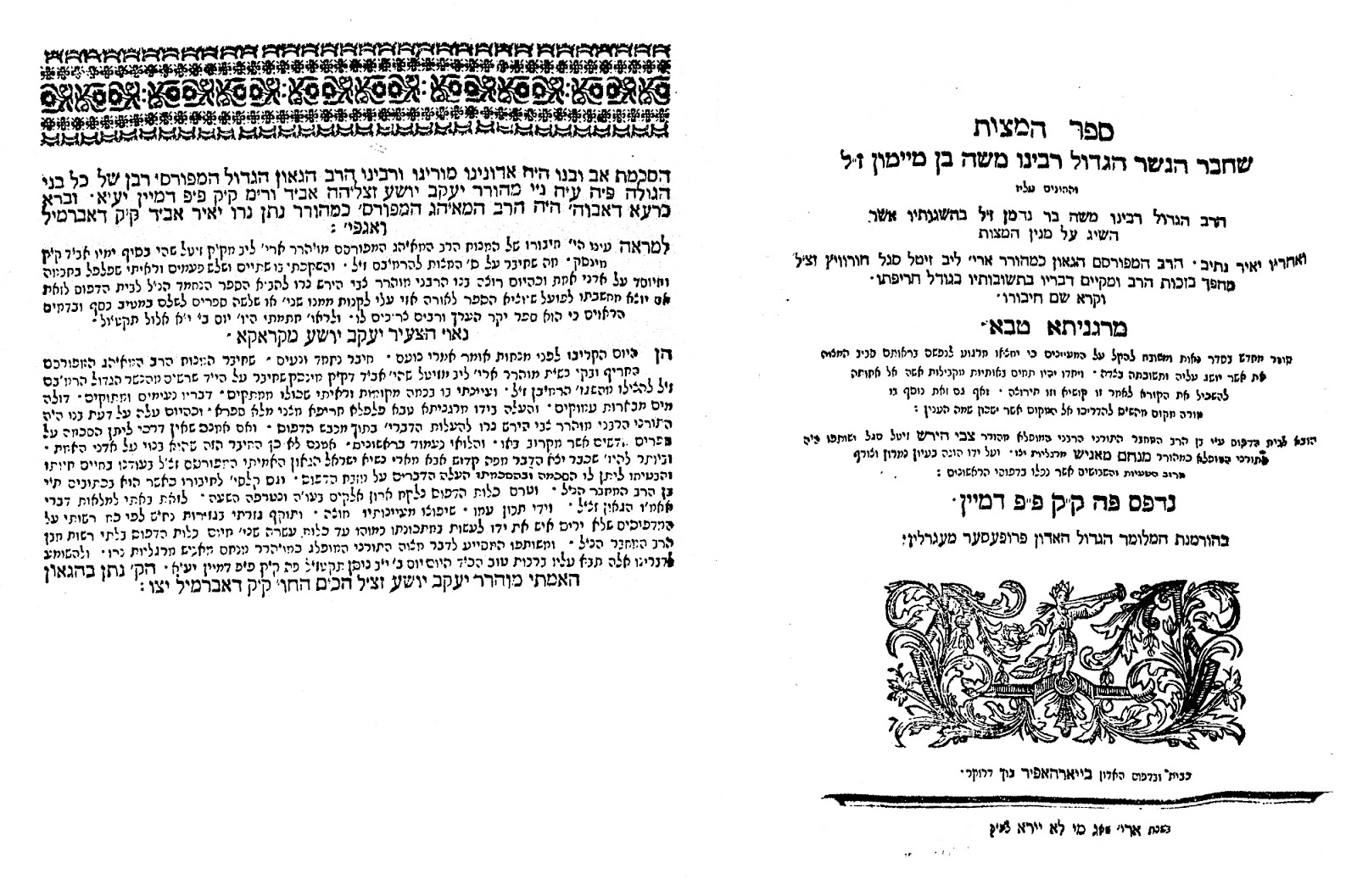
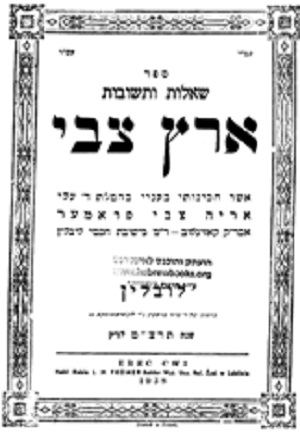
אוצר כתבי רשמואל אשכנזי, אגרות שמואל, אלף חסר תליסר מכתבי תורה וחכמה, א, תשבתשלה; ב, תשלותשנה; ג, תשנותשסט, 1781 עמודים, הובא לדפוס בתוספות מפתחות מפורטים על ידי ריעקב ישראל סטל

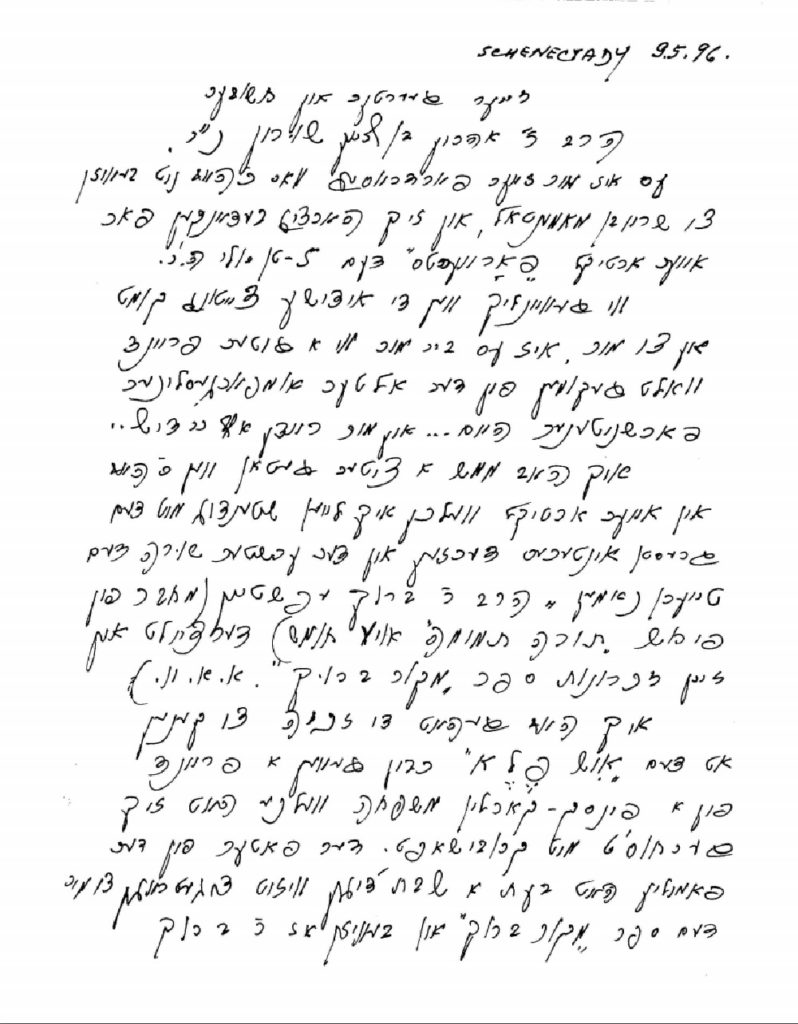
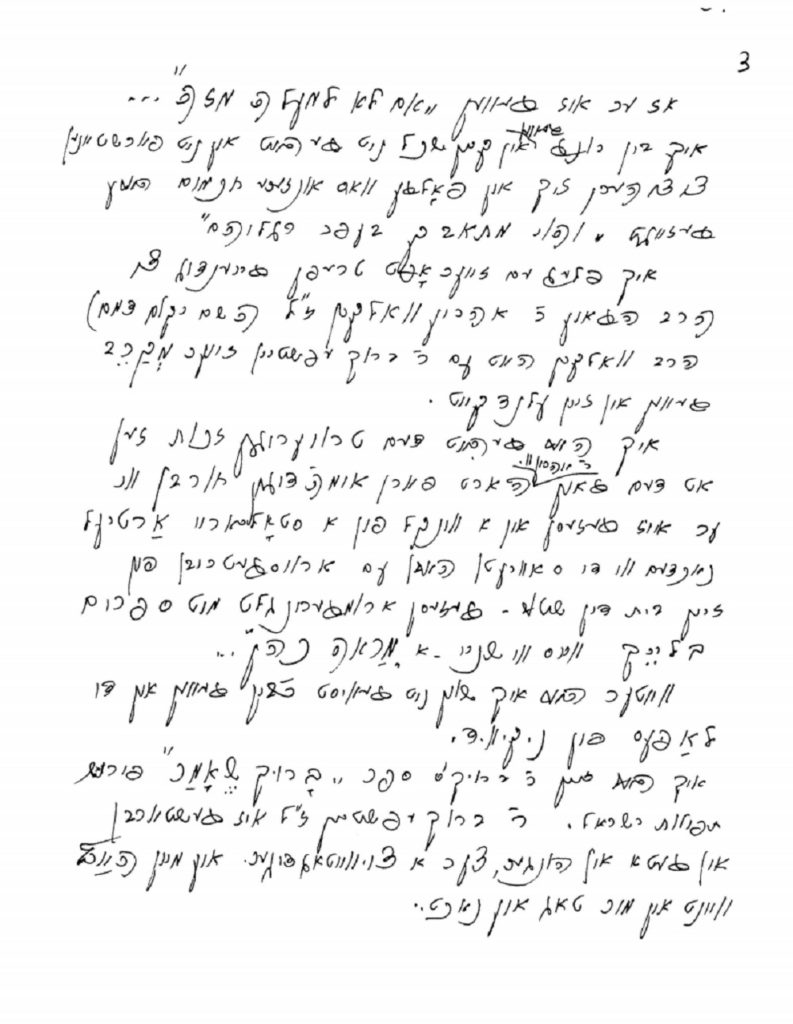
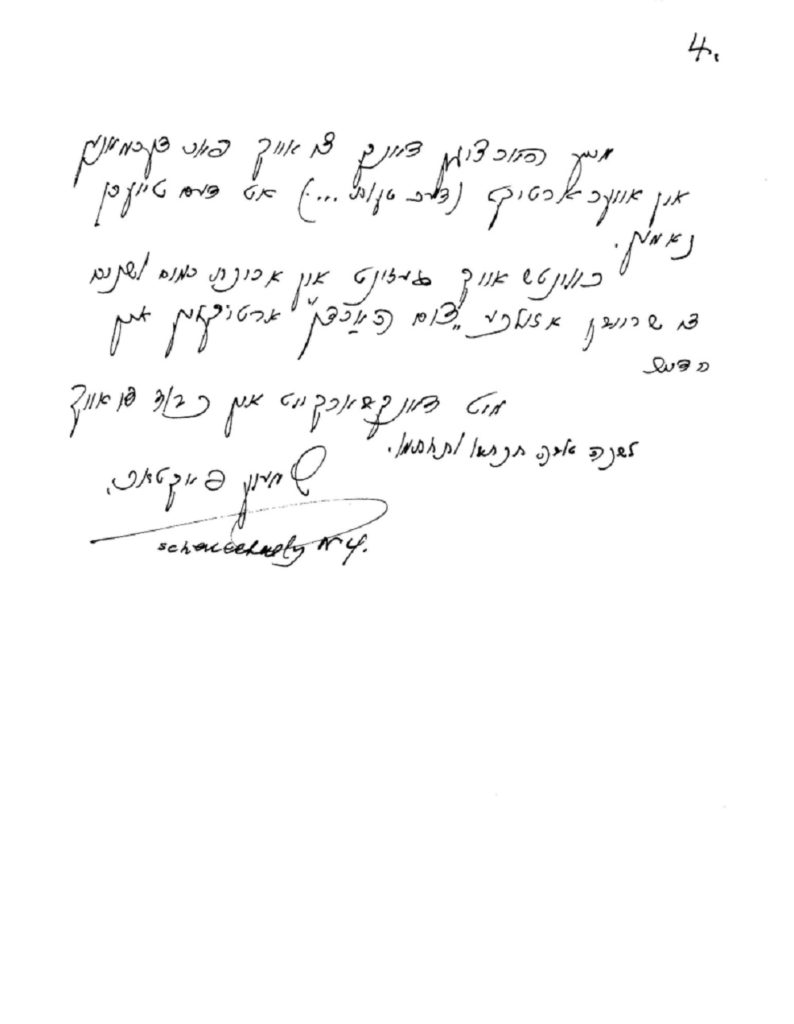
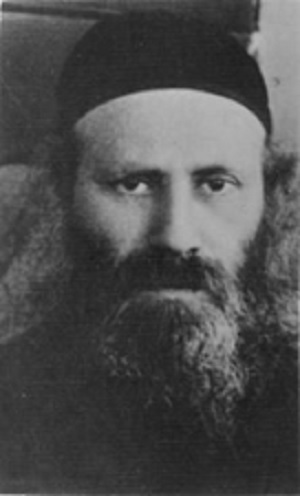
A few months ago, right after Rabbi Shmuel Ashkenazi was niftar I, along with my friend Menachem Butler, initiated a campaign to raise funds to publish R. Ashkenazi’s letters. Baruch HaShem, and thanks to the help of some readers, enough money was raised to go to print and late last Wednesday night the copies of the book, coming in at over 1,700 pages, arrived.

Previously, I provided the following description of R. Ashkenazi’s letters:

The collection is comprised of almost one thousand letters from R. Ashkenazi to correspondents all over the world. Beginning in 1942 and continues until his death. The letters cover a wide-range of topics, from tracing Hebrew expressions to their sources, providing hereto unknown citations for hundreds of Rabbinic statements, exploring the history and language of piyuttim, discussion of minhagim, tracing the evolution of well-known Jewish stories and legends, bibliography, and the list goes on.

It’s a work that anyone interested in the Jewish Book will find many things to enjoy. The work is not a light read but contains so much valuable information on a wide range of topics.

Just to quote one testimony regarding R. Ashkenazi’s letter, from Professor Shnayer Leiman, (for others, collected by Menachem Butler, see here).

Professor Shnayer Leiman wrote:

Reb Shmuel was “bibliographer, bibliophile, and book collector, and his encyclopedic knowledge of all of Hebrew and Yiddish literature remains unparalleled in our time.” His collected writings are an intellectual treasure trove, “covering a wide range of topics in the field of Jewish Studies. Aside from his scholarly distinction, R. Shmuel Ashkenazi wrote in an elegant Hebrew with its own special charm. Not only did he advance discussion, but he did so in an aesthetically pleasing manner. For those of us who knew him personally, he evinced the same charm in his personal relationships that he did in his writings… Let it be said openly: this three-volume set will enlighten every reader and will significantly advance scholarship. Anyone concerned with advancing the cause of quality Jewish scholarship will take special delight in the publication of these volumes.”

During his lifetime [Ashkenazi] corresponded with the greatest Jewish scholars and bibliographers the world over. They wrote to him, for only he could solve the countless historical and literary problems that stumped them. Suffice to list among those who consulted him: Gershom Scholem (distinguished Jewish historian); S.Y. Agnon (Nobel Prize laureate); Judah Leib Maimon Fishman (Minister of Religions, Israel); and a stellar list of prominent Jewish historians, rabbinic scholars, and bibliographers, much too long to list here (e.g., Simha Assaf; Israel Ta-Shma; Meir Benayahu; A.M. Habermann; Avraham Yaari; and Naftali Ben Menahem).

The letters have been printed in a three-volume set, 1781 pp. including an excellent index of eighty-seven pages.

There are less than two hundred copies for sale. It will not be going into a second printing.

To reserve a copy contact me at eliezerbrodt@gmail.com

For a PDF of the introduction (which includes a nice biography about him) sample letters, and the indexes send me an email at eliezerbrodt@gmail.com

In the near future I hope to describe forthcoming plans for the printing of more of Rabbi Shmuel Ashkenazi’s writings.


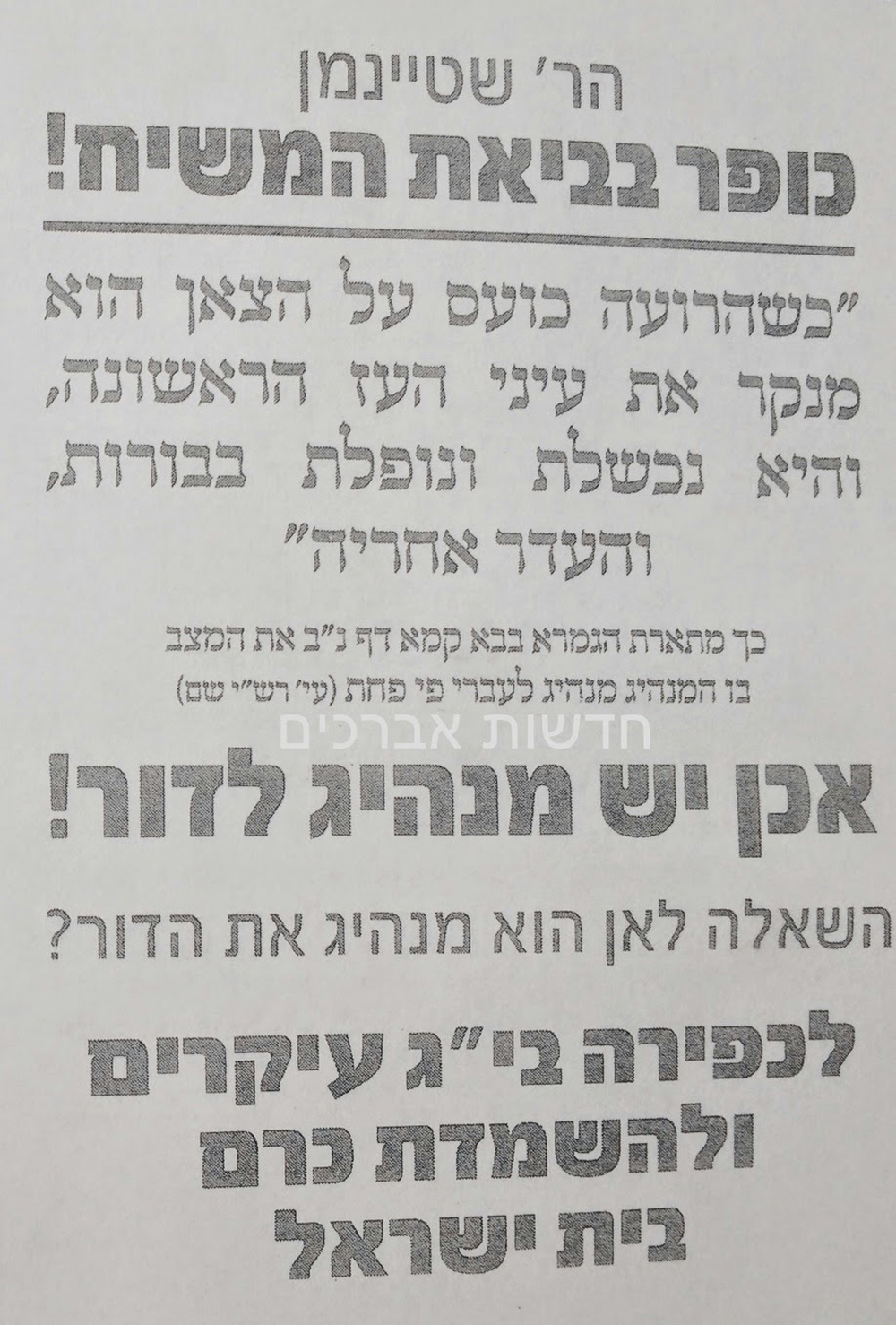
Rabbi Steinman and the Messiah, part 3

 Rabbi Steinman and the Messiah, part 3

Marc B. Shapiro

Continued from here

1. In the last post I wrote: “R. Hayyim Soloveitchik is reported to have said that if the messianic era will bring even one Jewish death, then he doesn’t want it, and if we had a choice in the matter the halakhah would require us to reject the Messiah in such a circumstance.” A perspective quite different than that of R. Hayyim was offered by R. Menahem Mendel of Rimanov. He thought that it would be good if Jews, even many Jews, were killed during Napoleon’s war against Russia, as he believed that this loss of life would bring the redemption.[1]

ואמר כי לדעתו טוב שישפכו דם ישראל ומפריסטיק עד רימנוב ילכו עד ארכבותיהם בדם ישראל כדי שיהי’ הקץ לגאולתנו

R. Moshe Sternbuch has an interesting passage, the upshot of which is that we shouldn’t be so anxious for the Messiah to come, as from at least one perspective, namely, the reward given those who observe the Torah in the pre-messianic era, it is better for us without the Messiah.[2]

וקבלה שמעתי שכמה צדיקים וקדושי עליון לפני פטירתם אמרו כשיעלו למרום לא ינוחו אלא יתחננו ויפצירו שמשיח יבוא ונזכה כבר לגאולה, ובאו אח”כ לתלמידיהם בחלום וגילו שבעולם האמת רואים את הכל אחרת, כשרואים את השכר הגדול הגנוז לעולמים למי ששומר אמונים כראוי לתורה ומצוות בסוף הגלות בזמן הסתר תוך הסתר, אינו [!] מפציר כ”כ לביאת המשיח שאז לא יהא כבר נסיונות ושכר רב, וכ”ש בני תורה בזמנינו שהם כצבא ה’, שכר כפול ומכופל

There are a few more things about the Messiah that I could not include in the last post. I mentioned reasons why rabbinic leaders offered dates for the Messiah’s arrival even though the Talmud, Sanhedrin 97b, states: “Blasted be the bones of those who calculate the end (i.e., the Messiah’s arrival).” I neglected to quote the even stronger passage in Derekh Eretz Rabbah, ch. 11:

רבי יוסי אומר הנותן את הקץ אין לו חלק לעולם הבא

An interesting perspective is suggested by R. Isaac Abarbanel who claims that the opposition to calculating the date of the Messiah was only directed against those who do it by astrological means. However, the talmudic sages did not oppose those who calculate the end by using biblical texts. He also adds that this lack of opposition is only when those who offer predictions are clear that their predictions are not absolute.[3]

I mentioned the concept of Messiah ben Joseph. It is worth noting that Samuel Feigenzohn argues that any passage in rabbinic literature that mentions Messiah ben Joseph, such as Sukkah 52a-b, is a heretical insertion by the early Christians and refers to Jesus (son of Joseph)![4]

Regarding R. Akiva and Bar Kokhba, it is significant that R. Jonathan Eybeschuetz writes that R. Akiva declared Bar Kokhba the Messiah, not because he really believed this – although presumably he had hope that it might be the case – but in order to give strength to the Jewish people, so that they not despair in the face of all their difficulties. In doing so, R. Akiva was following in the path of earlier sages and even prophets who also proclaimed that the Redemption was near even though they did not believe this, or at least were not certain of this. R. Eybeschuetz even sees the rabbinic obligation to observe certain agricultural laws in parts of the Diaspora as part of this plan to keep Jews believing in the soon-to-come Redemption.[5]

ואמר במדרש [איכה פ”א נד] קראתי למאהבי המה רמוני, הם נביאים שתקנו תרומה וחלה בבבל, וכי חייב חוץ לארץ בתרומה, אלא שרמוני. והקשה היפה ענף, ודאי שאמרו להם כי מהתורה פטור רק הם תקנוהו, כי ח”ו לומר להם דין שקר על דבר שמהתורה . . פטור, ולהורות שלא כהלכה, ועל כן תפוג תורה, וכמה מכשולים יבואו על ידי כך, ולאין ספק שאמרו להם שהוא רק חומרא וגזירה שלהם, וא”כ מה רמוני, ומה ערמה יש בזה . . .

אבל הענין, כי אילו ידעו ישראל ההולכים בגולה שיהיה קץ כל כך ארוך, וישבו זמן רב כזה בעוונותינו הרבים בגולה, היו מאבדים עצמם לדעת לרוב השבר, והיה נאבד שארית יעקב, ובפרט בזמן השמדות, בעו”ה לא היו אוזרים חיל כל כך לעמוד בנסיון. ולכך התחכמו תמיד לקרב הקץ, לומר חזו דאתא, חזו דאתא, ובזה חזקו ידים רפות וברכים כושלות אמצו. ותמיד בבוא עקא וגזירא לישראל, תלו אותו בחבלי משיח לומר, הנה מלכנו יבא ויושיענו. ולכך רבי עקיבא תיכף אחר חורבן התחיל לומר משיח על בן כוזיבא וכדומה, כולם כדי לחזק ומבלי להכניע לבבות בני ישראל. ולכך נסתם ונסתר הקץ, שלא ידעו אריכות הגלות.

ועל זה צווח ירמיה (ירמיה יג, יז) במסתרים תבכה נפשי, וכוונתו על קץ שהוא נסתר כל כך עד שלבא לפומא לא גליא, על זה תבכה נפשי, כי זהו לאות שיהיה לזמן ארוך למאוד מאד. והנה לכך הנביאים וחכמי קדם התחכמו לתקוע בלבב ישראל כי קרובה ישועת ה’ לבוא, ובל יתייאשו מן רחמים, ולכך תקנו תרומות ומעשרות בחוץ לארץ באומרם הטעם, מחר ישובו לארץ ישראל ויאמרו כמו שאכלנו בחוץ לארץ בלי תרומה כן בארץ ישראל נאכל בלי תרומה, ושם חיוב גמור, ולכך תקנו אף בחוץ לארץ, והרגל נעשה טבע, וזהו אם הגאולה מהר מהר, אבל אם היא לזמנים ארוכים, ויעברו קרוב לב’ אלפים שנה, מה צורך לתיקון הזה, הלא דורי דורות לא יצטרכו לזה, והנח לחכמים שיהיו בדור אחרון, ואם כן ברואים ישראל שתיקנו כך, ישפטו לאות אמת כי תהיה מהר הגאולה, וזו היתה עורמת נביאים וחכמים.

וזהו אמרו, קראתי למאהבי המה רמוני, כי תקנו תרומות ומעשרות בחוץ לארץ, שאחשוב שישועה תהיה מהר, ובעו”ה עברו דורי דורות, ואין קול ישועה.

In terms of hoping for the Messiah’s arrival, R. Moses Sofer makes a fascinating point. He claims that to pray for the Messiah to come shows a lack of faith, because God has already promised that we will be redeemed. Therefore, he says that one should pray that the Messiah come speedily as this is something extra that has not been promised.[6]

אע”פ שבטוחים אנחנו בביאת המשיח והמתפלל עליו הוא מחסרון אמונה אבל מ”מ יתפלל שימהר ויחיש במהרה בימינו

Once the Messiah arrives, he stills needs to be accepted by the people. Thus, R. Yaakov Kamenetsky stated that the Messiah will have to be a real Torah scholar so that the Litvaks accept him, he will have to pray with enthusiasm so the hasidim accept him, he will have to fight against the evildoers so the zealots accept him, and he will have to rebuild the Land of Israel and work on its behalf so the Religious Zionists accept him.[7]

Let me make another point about the Messiah. The Jerusalem Talmud, Kilayim 9:3 states:

רבי מאיר הוה אידמך ליה באסייא אמר אימורין לבני ארעא דישראל הא משיחכון דידכון

ArtScroll translates:

R’ Meir was dying in Asia. He said [to those surrounding him], “Tell the residents of Eretz Yisrael, ‘This your great one [who has passed away here. Please assist in bringing him to Eretz Yisrael for burial].’”

The first thing I should mention is that there should have been a note on the word “Asia,” as most people who see this word this think about territory such as Russia or China. However, as Jastrow points out, when the word appears in rabbinic literature it usually refers to what we call Asia Minor, which is today part of Turkey.[8] Interestingly, Jastrow himself, following Adolphe Neubauer, assumes that in this case what the Talmud refers to is a town called Essa, east of the Sea of Galilee.[9] However, the commentators, both traditional and academic, generally agree that the Talmud here refers to Asia Minor.

The last part of the sentence has R. Meir saying הא משיחכון דידכון. What does this mean? The literal translation is “This is your Messiah.” Is it possible that R. Meir would refer to himself this way? ArtScroll thinks not and in its note justifies its translation as follows:

The term משיחה is used sometimes in the sense of authority and greatness [and not anointment] (Rashi to Exodus 29:29, from Sifri, Korach §2). That seems to be its sense here.

ArtScroll’s approach is found in the standard commentaries to the Yerushalmi, including that of R. Hayyim Kanievsky, but other approaches have also been suggested.[10]

2. Returning to the passage from R. Hayyim quoted at the beginning of this post, R. Joseph B. Soloveitchik had a different perspective than his grandfather.[11] Here is what he writes in Kol Dodi Dofek, available here

Second, the knock of the Beloved was heard on the battlefield. The tiny defense forces of ‎‎[the ‎State of] Israel defeated the mighty Arab armies. The miracle of “the many delivered into ‎the ‎hands of the few” materialized before our eyes, and an even greater miracle happened! ‎God ‎hardened the heart of Ishmael and commanded him to go into battle against the State of ‎Israel. ‎Had the Arabs not declared war on Israel and instead supported the Partition Plan, the State ‎of ‎Israel would have remained without Jerusalem, without a major portion of the Galilee, ‎and ‎without some areas of the Negev.

R. Soloveitchik sees it as a positive thing that God hardened the hearts of the Arabs so that they went to war against Israel, allowing Israel to conquer more territory than it was given in the Partition Plan. Yet this war brought about many deaths, so wouldn’t R. Hayyim say, “How can we see this as a good thing, and a miracle no less, that God ‘hardened the heart of Ishmael’?”

In a talk after the Six Day War, R. Soloveitchik offers what appears to be a different perspective than what I just quoted, as he stresses the importance of human life over territory, including the Western Wall. The following appears on the Mesora.org website here and was originally posted here.[12] I have underlined the crucial words for the purposes of this post.

Rav Joseph B. Soloveitchik on Territorial Compromise

[Translation of a five-minute segment of the Rav’s 1967 Teshuva drasha (although the drasha was summarized in “Al Hateshuva”, this portion never appeared. From Arnold Lustiger)

I don’t intend here to engage in politics, but this is a matter that has weighed heavily upon me since last June. I am very unqualified to assess the extent of the deliverance that the Ribono Shel Olam accomplished on behalf of Klal Yisrael and the Jewish victory over those who hate Israel. But in my opinion, the greatest deliverance, and the greatest miracle, is simply that He saved the population of Israel from total annihilation. Don’t forget that the Arabs were Hitler’s students, Amalek, and in regard to the Arabs there is a Mitzvah of utterly blotting out Amalek’s memory. Today, they are Hitler, they want to uproot the Jewish people, and it is possible that Russia is together with them in this regard, so the status of Amalek falls upon Russia as well. The blood congeals when one considers what would have happened to the Yishuv, to the hundreds of thousands of religious Jews, of gedolei Yisrael, or to all the Jews in Israel for that matter — “there is no difference” — all Jews are Jews. This is the greatest salvation — but also that the State itself was saved. Because even if the population would remain alive, but if God forbid the State of Israel would fall, there would be a wave of assimilation and apostasy in America as well as in all Western countries. In England I heard that Rothschild said that Israel’s victory saved Judaism in France. He is 100% correct — this was better articulated by him than many Rabbis in Israel regarding the ultimate significance of the victory.

But one thing I want to say. These reasons constitute the primary salvation behind the Six Day War. Indeed, we rejoice in the [capture of] the Western Wall, in the Cave of the Patriarchs, in Rachel’s tomb. I understand the holiness of the Kotel Hamaarovi. I studied Kodshim since I was a child: Kidsha le’asid lavo, kedushas makom, kedushas mechitzos, lifnei Hashem — these are concepts with which I grew up in the cradle. The Kotel Hamaarovi is very dear, and the Har Habayis is very dear to me: I understand the kedusha perhaps much more than many religious journalists who have written so much about the Kotel Hamaarovi. But we exaggerate its importance. Our Judaism is not a religion of shrines, and it seems from this that it lies in the interests of the Ministry of Religions to institute a [foreign] concept of holy sites in Judaism — a concept we never had.

We indeed have the concept of kedushas mokom, this is the Bais Hamikdash, [but] graves are not mekomos hakedoshim. As important as kivrei tzaddikim are, they are not holy. Perhaps there is a different halacha. To visit kivrei tzaddikim is important, like mekomos hakedoshim. I will tell you a secret — it doesn’t matter under whose jurisdiction the Kotel Hamaarovi lies — whether it is under the Ministry of Parks or under the Ministry of Religions, either way no Jew will disturb the site of the Kotel Hamaarovi. One is indeed on a great spiritual level if he desires to pray at the Kotel Hamaarovi. But many mistakenly believe that the significance of the victory lies more in regaining the Kotel Hamaarovi than the fact that 2 million Jews were saved, and that the Malkhut Yisrael was saved. Because really, a Jew does not need the Kotel Hamaarovi to be lifnei (in front of) Hashem. Naturally, mikdash has a separate kedusha which is lifnei Hashem. But there is a lifnei Hashem which spreads out over the entire world, wherever a Jew does not sin, wherever a Jew learns Torah, wherever a Jew does mitzvos, “minayen sheshnayim yoshvim ve’oskim beTorah hashechinah imahem” — through the entire world.

I want you to understand, I give praise and thanks to the Ribono Shel Olam for liberating the Kotel Hamaarovi and for liberating and for removing all Eretz Yisrael from the Arabs, so that it now belongs to us. But I don’t need to rule whether we should give the West Bank back to the Arabs or not to give the West Bank to the Arabs. We Rabbis should not be involved in decisions regarding the safety and security of the population. These are not merely Halakhic rulings. These decisions are a matter of pikuach nefesh for the entire population. And if the government were to rule that the safety of the population requires that specific territories must be returned, whether I issue a halakhic ruling or not, their decision is the deciding factor.

If pikuach nefesh supersedes all other mitzvos, it supersedes all prohibitions of the Torah, especially pikuach nefesh of the yishuv in Eretz Yisrael. And all the silly statements I read in the newspapers — one journalist says that we must give all the territory back, another says that we must give only some territory back, another releases edicts, strictures and warnings not to give anything back. These Jews are playing with 2 million lives. I will say that as dear as the Kotel Hamaarovi is, the 2 million lives of Jews are more important.[13] We have to negotiate with common sense, as the security of the yishuv requires. What specifically these security requirements are, I don’t know, I don’t understand these things. These decisions require a military perspective, which one must research assiduously. The borders that must be established should be based upon that which will provide more security. It is not a topic appropriate for which rabbis should release statements or for rabbinical conferences.

3. In the last post I mentioned a couple of great rabbis from earlier eras, and how the praise they were offered for mastering the Talmud is nowhere near what is said about great rabbis in more recent years. A few people emailed me with examples of how different rabbis in modern times are praised for having completed Shas twenty or thirty times. R. Kook’s father stated that when his son, R. Abraham Isaac Kook, was in Volozhin he completed 60blatta day be-iyun.[14] Chaim Meiselman, whose videos about seforim can be seen here, called my attention to R. Samuel Darmstadt of Mannheim (died 1782),[15] who is reported to have completed Shas 112 times.[16] But this is nothing compared to what R. Shlomo Lorincz writes about R. Moshe Feinstein. He reports in the name of R. Reuven Feinstein that R. Moshe completed Shas over two hundred times. (R. Reuven denies having said this.) If that is not enough to impress you, he also states that R. Moshe finished Tractate Shabbat every week, and he quotes an unnamed member of R. Moshe’s family who claims to have been at a siyum where R. Moshe completed Shabbat for the thousandth time.[17] One would think that a member of the Kenesset for over thirty years would know enough not to repeat such an obviously ridiculous and impossible story.

4. In June 2018 Yaacov Sasson published a letter, found in the Israel State Archives, from R. Joseph B. Soloveitchik to President Chaim Herzog dealing with R. Meir Kahane. See here. In two later posts it was claimed that this letter is a forgery. See here and here. After careful analysis, I, too, agree that the letter is a forgery. (I also know that had I discovered the letter, I would have been very excited to publish it and would have never considered the possibility of forgery.)

Sasson does not mention that the Chaim Herzog archive also contains Herzog’s reply to the Rav upon receipt of the letter. One can only wonder what the Rav’s reaction was when he received this correspondence responding to the forged letter.

I found an interesting letter from Kahane in the Israel State Archives.[18] R. Dov Katz’s reply to Kahane is from December 22, 1954, which means that Kahane’s letter was written when he was 22 years old. Kahane’s letter was not addressed to an individual chief rabbi, but the Chief Rabbinate as a whole. It deals with something he was concerned with his entire life, namely, the place of non-Jews in the State of Israel. In his later years, Kahane was adamant that it was against halakhah for non-Jews to have any political role in Israel, including serving in the Knesset. Here we see that he was not sure about the matter, and wonders if the Meiri’s more liberal view on these sorts of issues should be our guide. It is not surprising that in his response R. Katz dodges the issue.

Regarding Kahane, a few days before his November 5, 1990 assassination, he delivered a public lecture at Brandeis University. I uploaded the video to YouTube.

In 1985 Kahane debated Brandeis Hillel Director Rabbi Albert Axelrad. Only a portion of this debate survives, and I have uploaded it to YouTube.

For R. Shear Yashuv Cohen’s response to Kahane, referring to him as an am ha-aretz, see here. Among other things he writes:

כל מי שחושב, שאפשר לקחת את הסעיפים מ”משנה-תורה” לרמב”ם ולהפוך אותם לחוק המדינה כמות שהם, בלי להתחשב בנסיבות, הוא לא רק עם-הארץ, הוא יותר מזה, הוא טועה ומטעה את הרבים. משום שהרמב”ם לעצמו היה כותב את הלכותיו בפני המדינה, עם בעיותיה העכשוויות, אחרת מאשר הוא כתב אותן בזמנו. לא שהתורה משתנית, חלילה, אלא המושגים החברתיים הם אחרים ולכן הניסוח של ההלכה מוכרח להיות מחודש. ניסוח של הלכה נצחית צריך להתמודד עם בעיות חדשות שעולות לפני הפוסק. אי אפשר לפסוק היום על סמך ניסוח קדום ומבלי להביא בחשבון את השינויים שחלו מאז ועד היום

4. During the Rosh ha-Shanah and Yom Kippur prayers there are times when we prostrate ourselves. Many people use a cloth for this even though technically, if the floor is not stone, there is no need. Where are people supposed to put the cloth, under their head or under their knees? I have looked around and also asked people from a variety of synagogues, including Modern Orthodox, yeshivish, and Hasidic. What I have learned is that while many put the cloth under their head, many also, in all sorts of Orthodox shuls, put it under their knees. In some shuls, almost everyone puts it under their knees.

The ArtScroll Machzors for Rosh ha-Shanah and Yom Kippur state the following in Musaf before Alenu (and I have underlined the relevant sentence):

The Torah forbids one to prostrate himself (i.e., with outstretched arms and legs) on a floor of hewn stone (Leviticus 26:1). The Sages forbade complete prostration even on a floor not of hewn stone, and they forbade even kneeling (without outstretched limbs) on a stone floor. Therefore, if the synagogue has a stone floor, one must cover the surface upon which he will kneel (Rama, Orach Chaim 131:8; Mishnah Berurah §40). There are some views, however, that it is preferable to cover the floor no matter what it is made of. This is the source of the general practice to put something on the floor when kneeling, even if the floor is surfaced with linoleum or carpeting.[19]

ArtScroll states that if there is a stone floor then you must cover the surface upon which you kneel. It doesn’t say to cover the surface upon which you place your head. This means that according to ArtScroll the cloth should be under your knees.

Yet this is mistaken, and the sources ArtScroll cites do not support this claim. Rama, Orah Hayyim 131:8 states:

וכן אסור לכל אדם ליפול על פניו בפישוט ידים ורגלים אפילו אם אין שם אבן משכית אבל אם נוטה קצת על צדו מותר אם אין שם אבן משכית וכן יעשו ביו”כ כשנופלין על פניהם אם יציעו שם עשבים כדי להפסיק בין הקרקע וכן נוהגין

The Rama says nothing about covering the surface where you kneel, and neither does the Mishnah Berurah. The point of the Rama is that on Yom Kippur, when you bring your head entirely to the ground – he does not mention doing this on Rosh ha-Shanah – that you need to have something separating between your head and the ground. The Mishnah Berurah, in the section directly after the one referred to by ArtScroll, 131:41, is explicit that the issue is one’s head touching the floor not one’s knees.

ודוקא כשפניו דבוקים בקרקע אבל אם שוחה בתפלה אפי’ יש שם רצפה שרי

A complete discussion of this issue, with the point of correcting the widespread error, is found in R. Elhanan Printz, Avnei Derekh, vol. 4, no. 99.[20]

5. Since theMishnah Berurah just quoted mentions the word רצפה, let me say something about this as well. There is a common mistake that many readers of Megillat Esther make. From speaking to people, and watching online videos, it seems that at least 75 percent of Ashkenazim who read the Megillah make this mistake. Among Sephardim it is significantly less.

Esther 1:6 reads:

ח֣וּר ׀ כַּרְפַּ֣ס וּתְכֵ֗לֶת אָחוּז֙ בְּחַבְלֵי־ב֣וּץ וְאַרְגָּמָ֔ן עַל־גְּלִ֥ילֵי כֶ֖סֶף וְעַמּ֣וּדֵי שֵׁ֑שׁ מִטּ֣וֹת ׀ זָהָ֣ב וָכֶ֗סֶף עַ֛ל רִֽצְפַ֥ת בַּהַט־וָשֵׁ֖שׁ וְדַ֥ר וְסֹחָֽרֶת

The fifth word from the end of the sentence reads רִֽצְפַת. However, when the Megillah is read this word is usually pronounced as ritzpat. This is a real mistake, the sort that should be corrected. Since it is not pleasant to correct the Megillah reader during the reading, the best thing is to speak to him (or her) beforehand.

The reason this mistake should be corrected is that if you read the word as ritzpat, it is actually a different word, with a different meaning, than the word that appears in the Megillah: רִֽצְפַת. In the Bible, the word for floor or pavement is רִֽצְפָה. There is no dagesh in the פ. For example, II Chron. 7:3 reads:

וַיִּכְרְעוּ֩ אַפַּ֨יִם אַ֤רְצָה עַל־הָרִֽצְפָה֙ וַיִּֽשְׁתַּֽחֲו֔וּ

Ritzpah, with a dagesh in the פ, means glowing stone or hot coal. See Isaiah 6:6:

וַיָּ֣עָף אֵלַ֗י אֶחָד֙ מִן־הַשְּׂרָפִ֔ים וּבְיָד֖וֹ רִצְפָּ֑ה בְּמֶ֨לְקַחַ֔יִם לָקַ֖ח מֵעַ֥ל הַמִּזְבֵּֽחַ

People make the mistake in reading the Megillah since in modern Hebrew, unlike biblical Hebrew, “floor” is ritzpah, with a dagesh in the פ. Eliezer Ben Yehudah in his dictionary, s.v. רצפה, already noted the mistake of Hebrew speakers (כטעות המדברים) who put a dagesh in the פ of רצפה when saying “floor”. Languages change so today we would not say that this is a mistake, but when reading from the Megillah on Purim it certainly is an error, and one that should be corrected.

Some people who are careful readers see that there is no dagesh in the פ and therefore read the word in the Megillah as ritzfat. However, this is also incorrect. If you look in the Bible you will find that all the times the words רצפה and רצפת appear there is a gaya after the ר. You can also see this in the two examples given above. This indicates that the shewa under the צ is a vocal shewa. There are different traditions as to how exactly to pronounce the vocal shewa, but all are in agreement that pronouncing this word as ritzfat is a mistake (though it is not a mistake that needs to be corrected). You can hear the outstanding ba’al keriah R. Jeremy Wieder read the verse here.

6. Since the publication of Changing the Immutable, I have discovered many more instances of censorship, almost enough for a volume 2. Readers have also alerted me to a number of examples, and let me now share one that I was recently sent.

In the Ralbag’s commentary on the Torah, for each parashah he includes all sorts of lessons under the heading תועלת. Here is a page from parashat miketz (in the Birkat Moshe edition).

In no. 13 Ralbag states that the Torah teaches us to avoid inappropriate sexual relations, which only people lacking in intelligence fall into. He adds that Reuben, who slept with Bilhah, is portrayed in the Torah as a חסר דעת, which I guess could be translated as “imbecile.” He gives another example of Reuben’s foolishness in that when attempting to reassure Jacob that he would bring Benjamin back to him after taking him down to Egypt, Reuben states: “Thou shalt slay my two sons, if I bring him not to thee.” Ralbag sees this as unbelievable stupidity, since if Jacob were to lose Benjamin, how would he be comforted by killing two of his own grandchildren?

Here is the corresponding page from the work Toaliyot ha-Ralbag (Jerusalem, 2006). This volume is a collection of all the Ralbag’s “lessons” from the parashiyot of the Torah.

As you can see, lesson no. 13 has been deleted. I am actually surprised that the publisher did not simply renumber the lessons, so people would not realize that no. 13 is missing. The “problem” with what Ralbag wrote is not simply his judgment about Reuben’s intelligence, but that he also understands Reuben to have slept with Bilhah, following the simple meaning of Genesis 35:22 as opposed to the talmudic explanation (Shabbat 55b) that the verse is not to be understood literally.[21]

Once again, we can only wonder where a 21st century editor gets the idea that it is OK for him to censor the writings of one of the great rishonim.

7. In the past, I have shown how material I have posted on the Seforim Blog has appeared in other places, sometimes with acknowledgment and other times without. I also have shown how pictures posted here have become public domain and understandably no one even remembers where they first appeared, and this is indeed the case with all images posted online. Here is another example which I recently came across. In an earlier post I included this picture of myself with the late Rabbi Aharon Felder.

Both The Yeshiva World here and the Keystone-K Kashrus organization here have the following picture of R. Felder on their websites.

I am happy that in looking for a picture of R. Felder they thought that the one he took with me was nice enough to use. In a circumstance like this, there is nothing wrong with cropping the picture (unlike, for instance, in pictures of historical significance, like when R. Soloveitchik was removed from a picture with R. Aaron Kotler or the Hafetz Hayyim’s wife was removed from the famous picture of her standing behind her husband).

I had thought that in this post I would discuss R. Mordechai Elefant’s memoir and offer my take on it, but I see that the post is already long enough so I will return to this in the future.

***************

[1] R. Zvi Ezekiel Michaelson, Ateret Menahem, pp. 35b-36a (no. 182).
[2] Teshuvot ve-Hanhagot, vol. 4, p. 206.
[3] Ma’aynei Yeshuah, printed in Abarbanel’s commentary to the Prophets, p. 283.
[4] Elbonah shel Torah (Berlin, 1929), pp. 24a-b. See similarly Joseph Judah Leib Sossnitz, Ha-Maor (Warsaw, 1889), p. 103.
[5] Ye’arot Devash, vol. 2, Derush 6 (p. 95 in the Jerusalem 1988 edition). See R. Chaim Rapoport, “Shitat ha-‘Ye’arot Devash’ be-Inyan Rabbi Akiva u-Ven Koziva,” Kovetz Divrei Torah 27 (5770), pp. 101-105. The words I have underlined were previously emphasized by R. Rapoport. Elsewhere, R. Eybeschuetz presents a different perspective and states that R. Akiva erred in declaring Bar Kokhba the Messiah. By saying that R. Akiva erred it means that R. Akiva really believed what he said. See Elyasaf Frisch in Ha-Ma’yan 57 (Nisan 5777), pp. 84-85. Because he views R. Eybeschuetz’s opinion as shocking, R. Yaakov Koppel Schwartz suggests that the passage, or at least the section dealing with Bar Kokhba, is not authentic but is either a “mistake” (whatever that is supposed to mean) or was inserted by an unknown heretic. See Yekev Efraim: Mikhtevei Torah, vol. 5, p. 215.

In discussing R. Akiva’s belief that Bar Kokhba was the Messiah, Maimonides writes (Mishneh Torah, Hilkhot Melakhim 11:3):

והוא היה אומר עליו שהוא המלך המשיח ודמה הוא וכל חכמי דורו שהוא המלך המשיח עד שנהרג בעוונות

R. Zvi Yehudah Kook claimed that out of respect Maimonides did not use the wordטעהwith reference to R. Akiva and the other sages. Instead, he used the word דמה. See Yosef Badihi, Yosef Lekah (Jerusalem, 2012), p. 224. See, however, R. Chaim Rapoport, “Be-Inyan Ben Koziva ha-Melekh ve-ha-Lekah Mimenu le-Dorot,” Kovetz Hearot u-Veurim 920 (5766), pp. 11ff., who cites passages from the Mishneh Torah that show that when Maimonides uses the word דמה it means טעה.

One other point about the word דמה is worth noting. In the Bible you find this word, but you also find a similar word whose root is דמם. (There is a another word which also has the root דמה, and means “to cease”, see e.g., Lamentations 3:49. But I will not deal with it at present). The difference between דמה and דמם is seen clearly in a verse that we all know, as it is a part of the daily prayers (Exodus 15:16):

                          בִּגְדֹל זְרוֹעֲךָ יִדְּמוּ כָּאָבֶן

In this verse, the word ידמו comes from the root דמם. As noted by R. Seraya Deblitsky, in his haskamah to R. Yehudah Aryeh Gutman, Kelalei Ta’amei ha-Mikra (Brooklyn, 2001), it is vital that the ba’al keriah reads the word ידמו with a vocal shewa on the ד (indicated by the dagesh). The words then mean: “By the greatness of thine arm, they are as still as a stone.” If, however,  ידמו is read with a silent shewa, it means that the word comes from the root דמה. In that case, the verse means that the Egyptians “appear like a stone”. Correct me if I’m wrong, but it appears clear to me that if ידמו is read this way that the ba’al keriah should be corrected, as the word has a different meaning than what it should have.
[6] Torat Moshe ha-Shalem, vol. 2, p. 66 (parashat Be-Shalah, s.v. מה תצעק אלי). See R. Yaakov Koppel Schwartz, Likutei Diburim, vol. 3, p. 179.
[7] Emet le-Yaakov al Nevi’im u-Ketuvim (Jerusalem, 2015), p. 424 n. 4.
[8] Regarding this place, see Michael Guttmann, Mafteah ha-Talmud, vol. 3, s.v. אסיא.
[9] Neubauer, La géographie du Talmud (Paris, 1868), p. 38.
[10] See e.g., R. Zechariah Frankel, Darkhei ha-Mishnah (Leipzig, 1859), p. 155 n. 7, who suggests a textual emendation. For other suggestions, see R. Jacob Brill, Mavo ha-Mishnah (Frankfurt, 1876), pp. 162-163; R. Judah Leib Landesberg, Hikrei Lev (Satmar, 1909) vol. 4, p. 44; R. Hayyim Fishel Epstein, Teshuvah Shelemah, vol. 2, Yoreh Deah,no. 15.

R. Elijah ben Solomon ha-Kohen,Mizbah Eliyahu(Izmir, 1867), p. 229b, writes:

שרבי מאיר הכיר בעצמו שאם הדור היה זכאי היה ראוי הוא להיות משיח. וכשמת וראה שלא זכה הדור גילה להם הדבר ומה שגרמו עוונותיהם

Interestingly, in the days of R. Saadiah Gaon there was a Karaite scholar named Hasan ben Mashiah, who generally is referred to as simply בן משיח. Ibn Ezra mentions him in the introduction to his commentary on the Torah. In this case משיח must have been an actual name. The nineteenth-century rabbinic scholar R. Israel Moses Hazan, author of Kerakh shel Romi, would occasionally sign his name משי”ח (the letters of his name), but more often he would use המשי”ח (the ה standing for הרב). You also find him writing about himself: אמר המשי”ח


[11] Although he idealized his grandfather, R. Soloveitchik was not a blind follower. See Zorah Warhaftig, Hamishim Shanah ve-Shanah: Pirkei Zikhronot (Jerusalem, 1998) pp. 100-101, who reports that he was told by R. Soloveitchik that his grandfather made three mistakes: 1. He opposed the new aliyah to Eretz Yisrael, as he was worried that it would lead to a religious decline among the settlers. 2. He did not grasp the significance of Jewish immigration to America. 3. He thought that the religious life of Brisk would not be affected by the societal changes sweeping Europe.
[12] See also the recently published letter of the Rav to Prof. Ernst Simon in Yair Kahn and Kalman Neuman, “A Rabbinic Exchange on the Disengagement: A Case Study in R. Aharon Lichtenstein’s Approach to Hilkhot Tsibbur,” Tradition 47 (Winter 2014), pp. 161-162, 185-186, available here.
[13] The Rav has often been quoted as saying that it if it cost even one life to recapture the Kotel, it was not worth it.
[14] See R. Yehoshua Kaniel’s eulogy for R. Kook in Me-Avnei ha-Makom 11 (2000), p. 57. I wonder how many pages a day this amazing kid is doing? At age 11 he already knew the entire Mishnah by heart.

[15] See Isak Unna, Die Lemle Moses Klaus-Stiftung in Mannheim (Frankfurt, 1908), pp. 13-14.
[16] Unna, Die Lemle Moses Klaus-Stiftung in Mannheim, p. 63.
[17] Shlomo Lorincz, Bi-Mehitzatam shel Gedolei ha-Torah, vol. 2, p. 610. He also reports that R. Moshe reviewed fifty pages of Talmud a day, and that he had a siyum upon completing the Shulhan Arukh for the seven hundredth time.
[18] File 8564/4, new call no.: 000i8nt. The file can be seen here.
[19] Is this indeed the general practice? In my experience it seems that many people do not put something on the floor if there is a carpet. See also R. Aharon Leib Steinman’s Ke-Ayal Ta’arog be-Inyanei ha-Moadim, p. 423:

הרה”ג רבי דוד הילמן שלח לשאול את רבנו האם בבתי כנסת שהרצפה מעץ צריך לכרוע בהפסק על פניהם או לא, דהרי כל החסרון הוא באבן דמחזי כאבן משכית ולא בעץ. וענה רבנו שבעיר בריסק הרצפה היתה מאבן וע”כ כולם עשו כורעים עם הפסק, אבל במשך השנים יצא לו להתפלל גם בבתי כנסת מעץ ושם רוב האנשים עשו כורעים בלי הפסק מלבד כמה יחידים (מפי נכדו הרה”ג ר’ אשר שטינמן. ועי’ הליכות שלמה תפילה יט, ו [צ”ל ח] שבשטיח מחובר שהוא קבוע המנהג להחמיר, אם כי מעיקר הדין מותר

[20] Regarding ArtScroll, someone I know mentioned that he thinks it is surprising that ArtScroll does not have יתגדל ויתקדש with a tzere under the ד in accord with the Mishnah Berurah’s opinion (56:2), or at least mention that this is the opinion of the Mishnah Berurah. As he put it, in yeshivish circles, the Mishnah Berurah is king and ArtScroll comes from that world.

I don’t think it is surprising that they did not change the text (although I would have expected them to note the different vocalization in a note). ArtScroll is producing a siddur for the Jewish community as a whole, and the overwhelming majority of people pronounce the words with a patah under the ד. In fact, I am sure that there are a number of other examples where ArtScroll does not follow the Mishnah Berurah’s opinion. I found one such case: In 8:10 the Mishnah Berurah states that when putting on one’s Tallit, in the blessing להתעטף בציצית, there should be shewa under the ב in the word בציצית. Yet ArtScroll places a patah under the ב which is the standard Ashkenazic practice. In fact, other than Tehillat Hashem (Chabad), are there any other current Ashkenazic siddurim that have a shewa under the ב?
[21] For other rishonim who reject the talmudic reinterpretation of the verse, see Changing the Immutable, p. 5.


Rabbi Steinman and the Messiah, part 2

Rabbi Steinman and the Messiah, part 2

Marc B. Shapiro

Continued from here

1. R. Yehudah Herzl Henkin has a different perspective than what we have seen so far.[1] He rejects the notion that “waiting” for the Messiah means that one must believe that he can come at any second, for the Sages already said that the Messiah will not come at certain times. He writes:[2]

ובעיקר הענין הרביתי בראיות מן הגמרא שחז”ל לא ציפו שהמשיח יבוא בכל עת

Contrary to the Brisker Rav (whom he mentions by name), R. Henkin writes: “There is nothing in the Rambam requiring one to believe that the Messiah is ready to come at any moment.”[3] He claims that the Rambam’s real point is that one should not be at ease with the Messiah not having arrived, but rather one should be upset that he hasn’t yet come. A similar argument was made by R. Shmuel Yaakov Weinberg.[4] Unlike R. Shulzinger (see the previous post), R. Henkin does not find a problem with those who mentioned dates for the redemption (and this includes a few important figures[5]), since he suggests that the dates were never intended to be absolutely certain.

Yet R. Henkin adds that it is clear that the sages who gave dates for the Messiah—even if their suggested dates were not certain— did not have אמונה שלמה that the Messiah would come before the dates they predicted, and they obviously are not to be regarded as heretics. He sees this point as contradictory to the Brisker Rav’s claim (as it is usually understood) that one must hope for and await the Messiah’s arrival every day. R. Henkin’s explanation is certainly not in contradiction to the Rambam’s Principle. If the sages who gave dates for the Messiah did not deny that they could be wrong, and that the Messiah could come at any time, then they were not contradicting the Rambam’s Principle. The only thing they were contradicting is the version of the Principle in the siddur which adds the words באמונה שלמה. Yet these words not appear in the Rambam’s formulation.

R. Henkin adds that it is strange that the Brisker Rav would declare that anyone who does not have his understanding of the Twelfth Principle is a heretic, when his understanding is not explicitly found in the Torah, the Talmud, or the rishonim.[6]

ואפילו לדברי הגרי”ז שצריך להאמין שהנה ממש היום הזה הוא בא וכו’ עכ”ל, מן התימה על האי גאון וצדיק ז”ל להחזיק מי שאינו מאמין כן ככופר כיון שהדבר אינו מבואר לא במקרא ולא בחז”ל ולא בראשונים.

R. Henkin concludes that it is enough to believe that the Messiah will come even if you assume that he will not come today or tomorrow. He also cites his grandfather, R. Joseph Elijah Henkin, that “to wait for the coming of the Messiah” does not mean that you think he is ready to come at any instant.[7]

קושטא דמילתא המאמין באמונה שלמה בביאת המשיח ומחכה לו ומתאווה לבואו קדוש ייאמר לו אף על פי שסובר שלפי מאמרי חז”ל לא יבוא היום או מחר, וכן אמר מו”ז הגה”צ זצלה”ה שלחכות לביאת המשיח אין פירושו שעומד לבוא בכל רגע וכן עמא דבר.

In support of R. Henkin, we can cite R. Yohanan ben Torta, who when R. Akiva declared that Bar Kokhba was the Messiah, responded as follows: “Akiva, grass will be growing out of your cheeks and the Messiah will still not have come.”[8] As R. Meir Mazuz notes, R. Yohanan ben Torta believed in the concept of the Messiah, but he did not see any chance that the redemption would come in his generation.[9] In other words, he was not “actively waiting” for the Messiah.

R. Menachem Kasher has another approach. He understands Maimonides’ words that one must wait for the Messiah in a negative sense, namely, that if one despairs of the Messiah’s arrival he is in violation of Maimonides’ words, but not that there is a continuous obligation to wait for the Messiah’s arrival.[10] R. Yisrael Weinman also questions the Brisker Rav’s understanding (although he is not certain the Brisker Rav really said it), since according to some rishonim the Messiah cannot come on Shabbat and Yom Tov. He therefore assumes that it is enough to wait for the Messiah to arrive whenever he is able to come.[11]

R. Yaakov Nissan Rosenthal explains that the siddur’s version of Maimonides’ principle,

עם כל זה אחכה לו בכל יום שיבוא

does not mean that you must believe and expect every day that today is the day the Messiah will come. Rather, the meaning of בכל יום is that every day you must believe in the coming of the Messiah and await his arrival, whenever that will be.[12] He offered an example to illustrate this point: A man’s daughter married and moved to the Diaspora. The father waits every day for his daughter to return to Israel, but on every day he does not expect that all of a sudden he will hear a knock at his door and his daughter is standing there.[13]

אין המאמין מחכה דוקא שלפתע פתאום יבוא האדון אל היכלו באופן ניסי ושיודיעו לו שהיום בא המשיח, אך הוא כן מחכה בכל יום לביאת המשיח

Significantly, R. Shlomo Zalman Auerbach agreed with R. Rosenthal and didn’t even think this was a hiddush, but rather the simple meaning of the words אחכה לו בכל יום שיבוא. R. Rosenthal then tells about how he was at a meeting with R. Shlomo Zalman and other rabbis, and he presented his understanding. A few of the hasidic rebbes present started screaming that what he said was wrong and in contradiction to one of the Principles of Faith. R. Shlomo Zalman didn’t say a word. After the meeting R. Rosenthal asked R. Shlomo Zalman why he didn’t defend him from the attacks of the hasidic rebbes. R. Shlomo Zalman replied that you shouldn’t start up with Hasidim

עם חסידים לא צריך להתחיל

R. Rosenthal couldn’t recall if the following witticism was said to him by R. Shlomo Zalman or someone else later told it to him: In the Amidah we say: על הצדיקים ועל החסידים. We see that the word צדיקים goes before חסידים

כי לא “מתחילים” עם חסידים

It is noteworthy that according to the Vilna Gaon’s understanding, if the Messiah does not come in a “hastened” fashion (see Sanhedrin 98a), it certainly seems that no one would be able to hope for the Messiah to arrive in Tishrei. The reason I say this is because of how the Vilna Gaon describes the terrifying things that will happen if the Messiah arrives in its “due time,” and this is in Tishrei.[14]

אם חלילה לא יזכו ותהיה “בעתה” ואז אם היתה הגאולה בתשרי לא היה להם תקומה ח”ו ולא היו נשארים חלילה אלא אחד מעיר ושנים ממשפחה מפני שמדת הדין שולט בתשרי

Also of interest is the report of how R. Jacob Kamenetsky told someone that the Messiah would not be arriving soon. A certain man had been convinced by people in Chabad that the Rebbe would soon reveal himself as the Messiah, and this had led him to start observing Shabbat. However, R. Kamenetsky thought that it was important to uproot the man’s belief that the Messiah would soon be here, as he worried about the negative consequences to the man’s Judaism when the Messiah did not arrive as he had been expecting.[15]

אל תאמין להם. משיח, לצערנו, עדיין אינו עומד לבוא . . . [רי”ק הסביר לתלמידיו] מה שהשיגו אנשי חב”ד הוא הישג מדומה, שיצא שכרו בהפסדו. בעתיד הקרוב, כשיראה יהודי זה שההבטחה לא נתמלאה והמשיח לא הגיע, יתחיל שוב לחלל את השבת. יתרה מכך, עד עכשיו הוא האמין בתמימות מוחלטת בביאת המשיח, ואם יתאכזב, יפסיד את אחד היסודות החשובים ביהדות – האמונה בביאת המשיח.

Based on this, I think we can say that R. Kamenetsky did not expect the Messiah to arrive in the near future.

Some Jewish traditions speak of a great war that will occur before the coming of the Messiah, and even of the death of Messiah ben Joseph in this war.[16] Other traditions see this great war as occurring after the coming of the Messiah. R. Hayyim Soloveitchik is reported to have said that if the messianic era will bring even one Jewish death, then he doesn’t want it, and if we had a choice in the matter the halakhah would require us to reject the Messiah in such a circumstance. I wonder, therefore, if R. Hayyim was really able to look forward to the messianic era, knowing that its arrival would bring the possibility of Jewish death.

Here is how R. Hayyim is quoted by R. Dov Katz.[17]

מספרים בשמו של ר חיים סולובייצ’יק מבריסק, הגאון של הדור הקודם, שבימי המלחמה כשנפלו כל כך הרבה חללים בחזית המלחמה וסבלו כל כך הרבה, אמרו לו פעם בשיחה, שלוא היתה לכל הפחות מביאה המלחמה הזו את הגאולה, כי אז היה אולי כדאי הדבר. גער בהם ר’ חיים ואמר להם: “תדחינה מאות גאולות ואל תפול נפש אחת מישראל, כי אם היתה באה שאלה לפנינו שאם על ידי קרבן של אדם אחד יבא המשיח, בודאי שהיינו פוסקים שלא יבוא המשיח ולא תמות נפש אחת, כי הלא פיקוח נפש דוחה כל התורה כולה, ואף המשיח והגאולה בכלל.”

I have no reason to doubt the accuracy of this report. It is very much in line with what we know about R. Hayyim’s views both about the value of human life, and also about the downplaying of messianism. R. Joseph B. Soloveitchik stated: “To R. Chaim, a good chidush in Torah and Kodshim – if I may say so, perhaps I shouldn’t say it – was more important than the whole beis ha-mikdash, in his intuitive weighing.”[18] R. Soloveitchik had some hesitations about what he said, because he knew it would be shocking to people, but he said it anyway. R. David Holzer, in his note on this sentence, writes: “Obviously, the Rav is speaking derech guzma, just to express the concept.” Even if the Rav is exaggerating his point is clear, namely, that Torah study is much more important than what will take place in the future Temple.

I think the Rav’s point is that an Ish Halakhah is simply not interested in the messianic era in any practical way. He believes it will come (and thus fulfills Maimonides’ requirement), but he doesn’t focus on it, for he has everything he needs in a non-messianic world, namely, the study of Torah and the fulfillment of mitzvot. As for the study of Torah, as the Rav said, creating a chiddush about the laws of sacrifices is more important than the sacrifices themselves, because at the end of the day Torah study is the focus of our lives, not sacrifices which we have been without the last two thousand years.

Even though I said that I have no reason to doubt what is reported in the name of R. Hayyim, and this report is also cited by R. Ovadiah Yosef,[19] I must note that R. Eliyahu Zini completely rejects the reported statement which he sees as absolute nonsense.[20]

טענות אלו דברי תימא גדולים הן. הלא הן סותרות כל מלחמה יזומה, אף כל מלחמת מצוה, וכ”ש מלחמת רשות! ואם נקבל אותן, נצטרך לגזור אומר, שגם כבוש הארץ בזמן יהושע איסור גמור היה, ושהיה עדיף להשאר במדבר כדי לחסוך בחיי יהודים רבים. ואסור להאמין שגדול בישראל אמר דבר כזה, שהרי טענות מרגלים יש כאן, מסוג “ארץ אוכלת יושביה היא וכל העם אשר ראינו בתוכה אנשי מידות”. ואם נאמץ אותן, עלינו לומר שהיה אף אסור לצאת ממצרים, כי יציאת מצרים הביאה למות דור שלם, ולכן היה עדיף לדחות אפילו גאולת מצרים!

לכן אסור להאמין לעדות זו. וגדול כר’ חיים מבריסק לא יאמר דברי הבל כאלו ויש כאן הוצאת דיבה על גאון זה, ובפרט שעדות זו מוכחשת ממה שכתב במפורש ר’ חיים עצמו [שלפי ר’ חיים אין דין פיקוח נפש חל בשעת מלחמה], והבאנו אותה כבר פעמיים לעיל

I don’t believe that R. Zini’s words, which come from a right-wing religious Zionist perspective, create any difficulty in believing that which R. Hayyim is quoted as saying, namely, given the choice between a Messiah which will require the loss of human life or no Messiah, that he would prefers the latter. What about R. Zini’s point that according to what is reported in R. Hayyim’s name, that human life stands above all, that the concept of milhemet mitzvah makes no sense? I think the answer is clear, namely, that R. Hayyim obviously acknowledged that in a halakhically valid war, and certainly in a war commanded by God (such as to conquer the Land of Israel), human life will be lost and we cannot have “conscientious objection.” (It is, however, hard to imagine how R. Hayyim would have been able to support a milhemet reshut.) 

Yet there is no halakhic imperative to bring the Messiah, and if given a choice between the Messiah with loss of life or no Messiah, R. Hayyim would forego the Messiah. Given the choice between a Jewish state that will require the loss of life—even a state that functions according to halakhah—or no state, R. Hayyim would forego the state. This was one of the two reasons for the anti-Zionism of R. Isaac Zev Soloveitchik, namely, that the actions of the Zionists endangered Jewish life. His other reason was that he believed that the Zionists would persecute religious Jews in a Zionist controlled state.

To be continued

Excursus

The old question is why did rabbis give dates for the Messiah’s arrival when the Talmud, Sanhedrin 97b, states: “Blasted be the bones of those who calculate the end (i.e., the Messiah’s arrival).” Maimonides actually mentions a family tradition as to when prophecy will be renewed, and this will precede the messianic era. See Iggerot ha-Rambam, ed. Sheilat, vol. 1, pp. 152-153.

On the second day of the Ten Days of Penitence, one of the selihot we read (Tohelet Yisrael) states:

חשבון אחר חשבון עמך יפתור

“Thy people interpret reckoning after reckoning.” This refers to predicted dates of the Messiah’s arrival. R. Zev Wolf Leiter sees this as a proof that there is no prohibition in offering dates for the Messiah as long as one does not lose faith in the messianic principle if the projected date comes without the Messiah’s arrival. See his Kevod Melakhim, Hilkhot Melakhim 12:2, found here and on Otzar haChochma.

In agreement with R. Leiter’s perspective, R. Menasheh Grossberg, Shevet Menasheh, no. 46, also suggests that there is no problem in giving dates of the Messiah’s arrival, and what the Talmud is criticizing is those who, if the Messiah does not come on the predicted arrival date, would then deny the principle of messianic redemption. His proof for this interpretation is the passage that comes directly after what I quoted above from Sanhedrin 97b: “For they would say, since the predetermined time has arrived, and yet he has not come, he will never come.” Thus, we see that the Talmud itself explains the reason for the curse of those who predict the Messiah’s arrival, and it is because if the Messiah does not arrive at the predicted date it will lead to heresy in that people will completely deny the principle of the Messiah. R. Grossberg goes so far as to write:

הנה הראשונים שהיו כמלאכים או כבני אדם מאמינים באמונה שלמה להם ראוי לחשוב בקצין ולחקור באמונה

R. Joseph Kafih states that the reason why sages gave dates for the Messiah’s arrival, or in Maimonides’ case the renewal of prophecy, was only in order to strengthen the people, that they not despair of redemption. In other words, the sages themselves did not take the dates seriously, as the point of publicizing this information was for an entirely different purpose. In R. Kafih’s words:

לא פעל רבינו כפי ההלכה לכתחילה, אלא בכדי לעודד את העם

See Teshuvot ha-Rav Yosef Kafih le-Talmido Tamir Ratzon (Kiryat Ono, 2018), p. 389.

This is the very same reason Maimonides gives for R. Saadiah’s messianic calculations. Maimonides writes as follows in his Letter to Yemen (Abraham Halkin and David Hartman, Crisis and Leadership: Epistles of Maimonides [Philadelphia, 1985]), p. 116):

As for Rabbi Saadiah’s calculations, there are extenuating circumstances for them though he knew they were disallowed. For the Jews of his time were perplexed and misguided. The divine religion might have disappeared had he not encouraged the pusillanimous, and diffused, disseminated, and propagated by word of mouth and the pen a knowledge of its underlying principles. He believed, in all earnestness, that by means of the messianic calculations he would inspire the masses with hope to the Truth. Verily all his deeds were for the sake of heaven. Consequently, in view of the probity of his motives, which we have disclosed, one must not decry him for his messianic computations.

R. Meir Leibush Malbim also provided dates for the messianic era. He believed that the initial stage of the Redemption would be between 1868 and 1913. The Temple would be rebuilt in 1925, sacrifices would begin to be offered in 1928, and the resurrection of the dead would take place in 2203. See Noah Rosenbloom, Ha-Malbim (Jerusalem, 1988), pp. 159-160.

R. Judah Leib Maimon reports that his father asked the Malbim how he could offer such dates in opposition to the talmudic statement against this. He replied that the proscription against offering dates was only in the early years after the destruction of the Temple, when the path until the end was still long. However, as we are now close to the end of the Exile it is permitted to give dates. See Maimon, Le-Ma’an Tziyon le Ehesheh (Jerusalem, 1954), p. 19. The same answer in the name of the Malbim is found in R. Yissachar Dov Teichtal, Em ha-Banim Semehah (Jerusalem, 1998), pp. 150-151. In both sources, in order to offer a parable explaining his point, the Malbim tells the story of a father and son taking a long journey. At the beginning of the journey, when the son asks if they almost there, the father is annoyed with him. However, after much time on the road, when the father asks the coachman the same question, he explains to his son that now that they have journeyed far the question is appropriate. It is the same with the exile, the Malbim explains. At the beginning, it was improper to offer predictions of its end. However, now that we are almost near the end, it is OK to do so. (In the version of the story told by Maimon, the young son is none other than the Malbim himself, and the answer comes from his father.)

R. Jacob Isaac Horowitz, the Chozeh of Lublin, is quoted as saying that those who, based on hints in the Torah, predicted dates for the Messiah’s arrival were really just offering a strong suggestion to God that it is time for Him to redeem the Jews. This is just like a son does not explicitly tell his father that he is doing something wrong, but instead shows him the Torah source so his father can draw the proper conclusion.

כי עפ”י הלכה באם בן רואה לאב שאינו עושה חלילה כיאות אז משום כיבוד אב לא יוכל לומר לו שאינו עושה כשורה רק החיוב להראות לו הדין בתורה ופוסקים ולומר לו אבא כך כתוב בתורה (עיין יור”ד סימן ר”מ סעיף י”א מש”ס קידושין דף ל”ב) וכיון שאנו רוצים לחות דעתינו לאבינו שבשמים שירחם על בניו ויגאל אותנו בקרוב וכי אין מן היושר כביכול שיסבלו עוד עול גלות לכן צדיק הדורות מחדשים איזה קץ משיח ועושים על זה רמז באיזה פסוק בתנ”ך איך שבשנה זו יבוא משיח צדקינו והוא להראות לאבינו הבורא ית”ש אבא כך כתוב בתורה היינו דבאותו מקום בתוה”ק כתוב שבשנה זו יבוא משיח בב”א

See R. Moshe Menahem Mendel Walden, Or ha-Niflaot, p. 12a, included in Ohel ha-Rabbi (Petrokov, 1913); Mendel Piekarz, Ha-Hanhagah ha-Hasidit (Jerusalem, 1999), p. 190.

******************

2. In the last post I mentioned Elliot Wolfson’s argument that the Lubavitcher Rebbe’s secret teaching is that there will be no physical redeemer, but the messianic redemption is able to occur within each person. A number of people were surprised to hear about this, as there is, I believe, literally not one person in Chabad who accepts this argument. While I do not believe that Wolfson is correct, it is important to note that one does find in Hasidic thought the concept of inner redemption.[21] Although this is not intended to replace the ultimate physical redemption, these Hasidic teachings do turn passages in the Talmud on their head. For instance, R. Meir of Apta asks why we need to pray for redemption if God has promised that he will redeem us. He quotes the Chozeh of Lublin who said that the Talmud, Megillah 16a, mentions that if you repeat a teaching in the name of someone else, you “bring redemption to the world.” The Chozeh points out that this is difficult, as every page of the Talmud has someone repeating a teaching in the name of someone else, and yet the redemption still has not come. The Chozeh replies that the redemption being spoken about is a personal redemption, that one is delivered from his difficult circumstances. Similarly,  when we pray for redemption, it is a prayer for personal redemption.[22]

דהנה השי”ת הבטיח לנו לפדותינו ולגאלינו מהגלות המר, ולכאורה יפלא מה צורך להתפלל על הגאולה, ההוא אמר ולא יעשה. אך ששמעתי [!] מרבינו הקדוש מוהרי”י זצללה”ה מלובלין על הגמרא כל האומר דבר בשם אומרו מביא גאולה לעולם, והתמיה נשגבה, כי בגמרא מצינו ממש בכל דף שאומר התנא דבר בשם חבירו או בשם רבו, ומדוע עוד לא נושענו מהגלות. ותירץ, כי הבאת הגאולה הוא גאולה פרטית לאיש ישראל ממצוקותיו, כאשר אמרנו, ותקם בעוד לילה שבהגלות יוושעו ישראל ויקומו בהרחבה והרוחה, וע”ז אנו מתפללים, וזה בכלל גאולה

3. In recent months there have been a number of discussions about epidemics in Jewish history and how the rabbis responded. No one has yet cited what the great R. Elijah Klatzkin wrote.[23] You can see this in R. Klatzkin’s Miluim le-Sefer Devar Halakhah (Lublin 1923), pp. 126-128. For some reason, the copy of this book on Otzar haChochma is missing the second half of the book. However, the complete work is available on hebrewbooks.org here.

R. Klatzkin prints an open letter he wrote in 1916 to his community in Lublin, when they were suffering a typhus epidemic. It originally was published in Yiddish and Polish. He obviously thought it was important that his message should be preserved for posterity, and over a hundred years later what he says unfortunately remains relevant to us.

R. Klatzkin tells the community that he has to write to them, rather than speak to them, as due to the danger they can no longer gather together in the synagogue. He mentions that although the government established rules to keep people healthy, nevertheless there are many who are ignoring the laws. (To this I would add, the more things change the more they stay the same.)

R. Klatzkin stresses that the various government rules are also required according to the Torah, and one who violates the rules, which bring danger to him and his neighbors, “his sin is too great to bear.” R. Klatzkin expresses wonder that he needs to warn people about these matters, which relate to their health and the health of their families. What he observed over a hundred years ago has of course repeated itself in our time, when for incomprehensible reasons entire communities simply ignored basic health guidelines which allowed the virus to spread very quickly, leaving a terrible toll.

R. Klatzkin states that he wouldn’t need to warn people to watch over their money, so how is it that people treat their health with less concern than their money? He then turns to the issue of hillul ha-shem, and we see that in his day it was also the case that there were Jews who created a hillul ha-shem in how they responded to the crisis. R. Klatzkin notes that even repentance, Yom Kippur, and personal suffering do not atone for hillul ha-shem.[24] “If we would behave in accordance with the Torah, then we would be a light unto the nations and would sanctify the name of heaven and the honor of the holy Torah.” In R. Klatzkin’s day, one of the reasons for the spread of the epidemic was the unsanitary conditions that the poor lived in, and he concludes his letter by appealing to the wealthy to support the poor so they can improve their living conditions.

In his open letter R. Klatzkin states that he spoke about the issue of hillul ha-shem and kiddush ha-shem in his book אמ”ש. This refers to his responsa Imrei Shefer which appeared in 1896, and he has in mind no. 92 in this book. In this responsum he makes a number of noteworthy points. To begin with, R. Klatzkin makes very clear that when it comes to halakhah there is a great distinction between real idolaters and the nations among whom Jews currently live. He cites the Meiri to back up this position and the entire lengthy responsum is in support of this point.

ורבים טועים ומתעין עצמם לחשוב שכל מה שמבואר בספרים להחמיר בטעות ואונאת אינו יהודי הוא רק מפני איבה ובאמת לא כן הדבר והוא איסור גמור . . . ומזה מבואר דכל מקום שכתוב בטור ושו”ע עכו”ם היינו בדיוק עובדי כוכבים ממש ואינו מדבר כלל מהאומות שבזמנינו המאמינים בהשגחה ושכר ועונש וכמו שמפורש במאירי

This shows that he really means what he says, unlike other works that include a comment at the beginning of the book saying that any time non-Jews are referred to it means idolaters who live in places like India and China. Comments like this were never taken seriously. In fact, the very existence of these comments was said by R. Moshe Feinstein to be a proof, contrary to R. Solomon Luria, that one is allowed to alter Torah teachings in the face of danger.[25]

R. Klatzkin begins his responsum by calling attention to a passage in R. Joseph Albo, Sefer ha-Ikkarim 3:25, where Albo states that one is not allowed to charge interest to a ger toshav. The problem is that this contradicts an explicit Mishnah, Bava Metzia 5:6, as well as the talmudic explanation of this Mishnah, Bava Metzia 71a.[26] R. Klatzkin offers an original explanation that when the Talmud says that you can charge a ger toshav interest this refers to one who is wealthy, but if a ger toshav is poor, and he needs the money to survive, then he is not to be charged interest. Also significant is R. Klatzkin’s point that in this matter, and similar things, contemporary non-Jews who observe the Noahide laws fall into the category of ger toshav. He assumes that Christians are not to be regarded as idolaters, so they too fall into this category.

R. Klatzkin discusses R. Moses Isserles’ responsum in which he tries to find some justification for the practice in Moravia to drink non-Jewish wine.[27] R. Klatzkin suggests that this leniency arose due to theological reasons, because most of the inhabitants of Moravia were followers of Jan Hus (i.e., Hussites) who rejected many Catholic practices, including the veneration of images. In other words, they were distant from any “idolatrous” practices, and thus there was a reason in people’s minds why the prohibition on non-Jewish wine should not apply to them.

R. Klatzkin also takes up the issue of darkhei shalom. He cites the Talmud and Maimonides that when it comes to non-Jews – even idolaters – the Sages said to bury their dead, visit their sick, and support their poor because of darkhei shalom. After mentioning this, Maimonides also quotes Psalms 145:9: “The Lord is good to all; and His tender mercies are over all His works,” and Proverbs 3:17: “Her ways are ways of pleasantness, and all her paths are peace.”[28] R. Klatzkin derives from this that the expression מפני דרכי שלום does not mean that Jews behave a certain way to avoid non-Jewish enmity. Rather, it means that by Jews acquiring the trait of mercy for all people, there will be peace on Israel. He cites the Jerusalem Talmud, Eruvin 7:9, which states:

מפני מה מערבין בחצרות מפני דרכי שלום

In this passage it is obvious that darkhei shalom means something positive, to create neighborliness. R. Klatzkin claims that this is exactly what the expression means when dealing with non-Jews, He states that when Jews extend themselves for non-Jews in the ways mentioned by the Talmud, there will be real peace – in a positive sense – between Jews and non-Jews.[29]

ומוכח מזה דמ”ש מפני דרכי שלום, אין הכוונה שלא ינטרו שנאה לישראל, אלא דקאמר שעי”ז שידבקו ישראל במדת החמלה ורחמים על כל יציר נוצר, יהיה שלום לישראל . . . הרי דפירוש מפני דרכי שלום, היינו שעי”ז אוהבין זא”ז ונעשה ביניהם שלום אמת, וה”נ הפירוש שיהא שלום אמת עם העמים, כאשר ידבקו ללכת בדרכי ה’ המרחם על כל מעשיו

******************

3. In my last post I had a quiz with two questions. A number of people got one of the questions correct, but only a few individuals got them both correct. I won’t mention any names because one of those who answered correctly asked to remain anonymous.

The first question was: Where in Rashi’s commentary on the Talmud does he say that a certain individual knew all of Shas?

In Beitzah 24b s.v. ולערב, Rashi writes about R. Kalonymus ben Shabbetai of Rome who had journeyed from Rome to Worms:[30]

גם עתה בא אלי מכתב מגרמיי”ש שבא לשם אדם גדול זקן ויושב בישיבה מן רומא ושמו ר’ קלונימוס ובקי בכל הש”ס

I took this question from R. Shlomo Schneider, author of the responsa volume Divrei Shlomo. In a work that has not yet been published he has a number of “quiz questions,” and in future posts I will cite more of them.

In terms of “knowing Shas,” it is noteworthy that today we hear about different great rabbis who have completed Shas twenty or thirty times, or even more than this. Yet in earlier days we see that the achievements of great rabbis are described in much more limited fashion. R. Joseph Karo’s maggid said to him that he would finish Shas three times, and that was thought to be a great blessing.[31] This was not just the prediction of the maggid, as R. David Conforte quotes the grandson of R. Karo that when his grandfather was on his deathbed he, too, said that he merited to complete the Talmud three times.[32] R. Karo also testified as to how rare it was in his day for anyone to complete the Talmud:[33]

בדורות אלו לא ימצא מי שלמד כל התלמוד כי אם אחד מעיר

Of course, it must be noted that when R. Karo speaks of completing the Talmud he is not referring to daf yomi style, but rather an in-depth study of every page.

Just like with have seen with R. Karo, in a letter to R. Betzalel Ashkenazi, the author of Shitah Mekubetzet, R. Moses Galante of Safed (1620-1689) writes that he has finished the Talmud three times.[34]

In describing the unique greatness of his teacher, R. Nissim of Gerona, R. Isaac ben Sheshet states that he was expert in three sedarim of the Talmud. Today, saying this about a leading sage would not be viewed as a compliment, as what about the other three sedarim, is he not also an expert in them? But this is what the Rivash writes.[35]

ה’ צב-אות הותיר לנו שריד דַבָּר אחד לדור הוא מורנו הרב הגדול רבינו נסים נ”ר היה כאחד מהם לדעת טוב טעם ודת בקי בשלשה סדרים ודמו לי’ כמאן דמנחי בכיסתיה ודעתו רחבה מני ים ושכלו זך וישר אין ערוך אליו בכל חכמי ישראל

For the other quiz question, I asked about the letters שב that are found after the first and second set of shofar blasts. What is this about?

I was going to discuss this matter and present various sources. However, Moshe Babad alerted me to the existence of a comprehensive article that recently appeared on this very topic, and thus there is no need for me to go into any detail. The article is by R. Yehudah Aryeh Markson and appears in the journal Etz Hayyim 30 (Elul 5778), pp. 408-437 (it is not yet on Otzar haChochma). The title of the article is

שב בני שב – לגלגוליו של מנהג קדמון שנשתכח

R. Markson begins by noting that he, like everyone else, simply paid no mind to the word שב that appears together with tekiat ha-shofar. It was only after he was asked what the meaning of שב is that he investigated the matter. This led him to uncovering the story of what used to be a widespread minhag that for some reason simply disappeared and was almost entirely forgotten from Jewish communal memory (with the exception of a few “pure” German minyanim, such as KAJ in Washington Heights).

R. Markson mentions various explanations that have been offered for שב including the incorrect suggestion that it is one of the holy names that you need to have in mind before shofar blowing. Another incorrect explanation was offered by R. Simhah Bunim of Peshischa that שב is an abbreviation for שוטה בלאז – “Idiot, blow.” In other words, blow the shofar without any special kavvanot and just have in mind to fulfill the mitzvah. (I am sure that R. Simhah Bunim didn’t really think that this is the meaning of שב but was only offering a “midrashic” understanding. This is probably also the case with those who explain the letters to mean שוואנץ בלאז.) A third incorrect explanation is that שב is related to תשובה and is directed to the people to urge them to do teshuvah. A fourth incorrect explanation mentioned by R. Markson is that שב should be read שֵב, as in שב ועל תעשה, and the meaning is that the person who blows the shofar should cease his blowing and wait a bit before resuming the next set of shofar blasts. According to this explanation, the reason for waiting is to give him time for silent prayer or to separate the different groups of shofar blasts. R. Markson records other incorrect explanations as well.

The fourth explanation mentioned in the previous paragraph is closest to the truth, which, as R. Markson shows, has its origin in medieval Ashkenazic minhag where it is first mentioned by Maharil. The word שב should indeed be read שֵב, and it means “sit”. The one calling out the shofar sounds was telling the blower to sit down between the series of blasts. R. Markson, p. 426 n. 71, refers to Maharil as ‘אבי ומייסד מנהג אמירת ה’שב. However, I don’t know on what basis one can say this, as opposed to assuming that Maharil is simply recording a minhag that was already practiced in his day. After all, as R. Markson notes, R. Meir of Rothenburg records the practice of the shofar blower to sit between the series of blasts, though there is no mention of the shofar blower being told שב.

Why is the person blowing the shofar told to sit? R. Markson presents a variety of explanations such as to show that the three groups of shofar blasts are separate from each other, to show that these blasts are the tekiot di-meyushav, to give the shofar blower a chance to focus on teshuvah or just to rest, or to confuse the Satan.

*************

The Seforim Chatter podcasts are fascinating shows conducted by a skilled interviewer. I think Seforim Blog readers will especially enjoy the show focused on Dan Rabinowitz’s book on the Strashun Library. See here.

On December 24, 2020, 9pm Eastern Time, I will be giving a Zoom class on the topic: “Christmas Eve: Is it a Time for Torah Study?” Those interested can sign up here. Those who are interested in my continuing series of classes can sign up at Torah in Motion here, and you can also download my previous classes on the website. The current series is being placed on YouTube here.

Coming soon:

Rabbi Steinman and the Messiah, part 3

Fighting Over the Rav’s Legacy in the Algemeiner

Response to Criticism, part 4

*************

Notes


[1] Benei Vanim, vol. 3, pp. 181ff.

[2] Benei Vanim, vol. 3, p. 42.

[3] Benei Vanim, vol. 3, p. 182.

[4] See R. Yohanan Meir Bechhofer, Even Shetiyah (Ramat Beit Shemesh, 2005), p. 98:

ומו”ר זצ”ל חידש כי המלה “חכה”, אין פירושה להמתין, אלא ר”ל לקוות וליחל לבואו. ומה שבא רבינו לומר כאן הוא שכל יהודי חייב להרגיש בחסרון של העדר המשיח, ולקוות וליחל לבואו ולא להתיאש ממנו אף אם יתמהמה, ולא שאנו צריכים להיות ודאים שהוא יבוא בשעה הקרובה

[5] See Excursus.

[6] Benei Vanim, vol. 3, p. 182.

[7] Benei Vanim, vol. 3, p. 184.

[8] Yerushalmi, Ta’anit 4:5 (24a).

[9] Bayit Ne’eman, no. 222 (18 Av 5780), p. 2.

[10] Ha-Tekufah ha-Gedolah, p. 380.

[11] Mishnat Yisrael, p. 416. He concludes that if the Brisker Rav really said that which is attributed to him, then he retracts what he wrote.

[12] See, similarly, R. Mordechai Peterfreund, “Nusah Yud Gimmel Ikkarim va-‘Ani Ma’amin,’” Yeshurun 22 (2010), p. 711 (called to my attention by Nochum Shmaryohu Zajac).

[13] R. Nahum Stepansky, Ve-Aleihu Lo Yibol, vol. 3, pp. 369-370.

[14] Even Shelemah (Jerusalem, 2013) p. 177 (ch. 11). Many vocalize this as Even Shlomo, and I have also done so in the past. However, based on what the editor, R. Samuel Maltzan, writes in the introduction, it is clear that Even Shelemah is correct.

וקראתי שם הספר הזה אבן שלמה על שם ענינו כי הוא אבן שלמה וצדק לפלס בו דרכי העבודה, וגם ע”ש מרן הגר”א ז”ל אשר ממעינות חכמתו שאבתי בששון הדברים הקדושים האלה וכמ”ש בהקדמה לספר פאת השולחן בשם מרן הגר”א ז”ל כי שמו מרומז בתורה בפ’ כי תצא בתיבות אבן שלמה שהוא ראשי תיבות אליהו בן שלמה, וכמו שאל”ף הוא פל”א ונעלם כך תורתו נסתרת ונעלמת, ולכן שמו בהעלם בראשי תיבות.

This is also how the words are transliterated in Russian on the title page of the first edition (Vilna, 1873).

[15] Shlomo Lorincz, Bi-Mehitzatam (Jerusalem, 2008), vol. 2, p. 588.

[16] R. Judah Leib Landesberg, Hikrei Lev (Satmar, 1905), vol. 1, p. 67, suggests that the entire tradition of Messiah ben Joseph has been misunderstood, and that it really refers to Bar Kokhba. After his defeat, due to fear of the Romans the Sages did not wish to mention him by name. So instead they referred to Bar Kokhba as משיח בן יוסף, which should be understood as “Messiah of the son of Joseph,” and “son of Joseph” refers to R. Akiva, whose father’s name was Joseph. After mentioning this provocative idea, R. Landesberg immediately says that it should be retracted. But this is obviously done so as to prevent him from being attacked for his new idea, since if he really wanted it to be retracted, he would not have published it in the first place.

ויש מן החכמים כמו ר”י בן תורתא היה מקוראי תגר על בר כוכבא עד שאמר לר”ע: עקיבא! יעלה עשבים בלחייך ועדיין משיח לא יבא! אולם ר”ע לא שת לבו ולא השגיח לדבריהם, ובכל עוז עמד למשען לו וקרא עליו: דין הוא מלכא משיחא! ואחרי כי זה ב”כ עלה והצליח שנתיים ימים על במות ההצלחה, רק בהשתדלות ר’ עקיבא “בן יוסף”, נקרא אח”כ בפי חז”ל בשפה הנעלמה, כי יראו באמת לישא שמו על שפתיו מפחד הרומיים – משיח בן יוסף, ר”ל: משיח של “בן יוסף” יען רק ר’ עקיבא בן יוסף גדלוהו ורוממוהו והכתירוהו בכתר משיח – אמנם רק השערה בעלמא הוא התלוי’ בשערה ובדמיון. ועל כגון דא הנני אומר: אל תגעו במשיחי וחלילה לפרש נגד המסורה הטהורה שקודם ביאת המשיח צדקנו יתראה לפניו בהדר גאונו משיח בן יוסף.

[17] Divrei Hagut u-Reut (Jerusalem, 1979), vol. 1, p. 170.

[18] The Rav Thinking Aloud, pp. 174-175.

[19] Masa Ovadiah, p. 340.

[20] Eretz Hemdatenu, p. 131.

[21] See e.g., Gershom Scholem, The Messianic Idea in Judaism and Other Essays on Jewish Spirituality (New York, 1971), pp. 176-202. Regarding hasidic thinkers, Mendel Piekarz, Ha-Hanhagah ha-Hasidit, p. 320, calls attention to the interesting view of R. Shalom Perlow of the Koidanov hasidic dynasty. R. Perlow states that things are better now than they will be in the messianic era, because at present we have free will. Thus, we can perform mitzvot in the proper way, which will not be possible in the messianic era. He also states that the delay in the redemption is to lessen the birth pangs of the Messiah. In other words, it is good for the messianic era to be delayed. This delay also has spiritual benefits for those souls that need a tikun. There appears to be some real ambivalence here about the messianic era, and R. Perlow was not interested in “Moshiach now”. See his Shem Aharon (Warsaw, 1910; bound with R. Pinhas of Koretz, Midrash Pinhas he-Hadash), pp. 5-6:

הנה המון ישראל נכספים ומתגעגעים לביאת המשיח מצד ההטבה, ובאמת עתה יותר טוב, כי ברוחניות הלא ארז”ל ע”פ אשר תאמר אין לי בהם חפץ אלו ימות המשיח, וכוונתם שתתחלש [!] הבחירה והעיקר הוא הבחירה, ע”כ ארז”ל יפה  שעה אחת בתשובה ומעש”ט בעוה”ז מכל חיי העוה”ב, ורבי’ הק’ אמר קודם פטירתו על תורה ומצות קא בכינא, ואם על טובת הגשמיות הלא אם נעיין בדחז”ל התנהגות ביאת המשיח הלא אנשי’ כערכנו תסמר שערות ראשנו, אך באמת אין אנו צריכים להשגיח ע”ע כלל רק צריך לחכות ולצפות לגאולה בשביל שכינתו ית’ וכבוד שמו המחולל, והקב”ה כביכול אינו משגיח על כבוד שמו ומלכותו, ומאחר את הגאולה בשביל טובת ישראל ברוחני וגשמי, כי ידוע מספה”ק שע”י אריכות הגלות ואיחור המשיח יתמעט חבלי משיח, וגם ברוחני ידוע מס”צ אשר הקב”ה חשב מחשבות לבלתי ידח ממנו נידח, ע”כ הקב”ה חס על הנשמות שאינם מתוקנים שיתתקנו [!] קודם ביאת המשיח
 
Piekarz, Hasidut Polin (Jerusalem, 1990), p. 212, cites R. Israel Friedman of Chortkov, who cited his father, R. David Moses, the founder of the dynasty that the hasidic leaders don’t want the Messiah to come so quickly, as they still have a lot of spiritual work to do. See Ginzei Yisrael (Jerusalem, 1986), vol. 1, p. 167:
 
אקדים מה ששמעתי מכ”ק אאמו”ר הקדוש זצ”ל, שאמר פעם, אחר הסדר אומרים העולם, משיח כבר היה בא, לולא הצדיקים שאינם מניחים אותו לבוא. נבאו ולא ידעו מה נבאו. דהאמת היא כן, כי הנה כתיב (ש”ב יד, יד) “כי לא ידח ממנו נדח”, וע”כ הצדיקים חסים שאם יבא משיח קודם הבירור האמתי, מה נעשה איפוא עם הנשמות האלה, על כן מאחרים הם את ביאת המשיח, אולי בינתיים יתוקנו כל הנשמות
 

[22] Or la-Shamayim (Jerusalem, 2003), p. 214 (parashat Be-Hukotai).

[23] I also haven’t seen anyone refer to R. Isaac ben Todros (fourteenth century), who wrote a work Be’er Lahai dealing with a plague in Avignon. This was published in Jubelschrift zum Neunzigsten Geburtstag des Dr. L. Zunz (Berlin, 1884), pp. 91-126 (Hebrew section).

[24] Regarding hillul ha-shem, R. Menachem Genack has recently written:

What we are witnessing in parts of the Orthodox Jewish world today is the greatest desecration of God’s name — chillul Hashem — I have witnessed in my lifetime. Asked by friends outside our community to explain the actions of some within it, I have been at a complete loss. For some reason that I cannot fathom, parts of the Orthodox community today act as if the principle of pikuach nefesh no longer applies and disregard the government regulations enacted to protect their own lives and those of their neighbors.

For R. Mayer’s Twersky’s recent comments about Covid-19 and hillul ha-shem, see here.

[25] See Changing the Immutable, p. 42.

[26] See also Mishneh Torah, Hilkhot Malveh ve-Loveh 5:1.

[27] See Changing the Immutable, pp. 81-82.

[28] Mishneh Torah, Hilkhot Melakhim 10:12.

[29] The same idea is famously expressed by R. Isser Yehudah Unterman, Shevet mi-Yehudah, vol. 3, no. 70.

[30] See Avraham Grossman, Hakhmei Ashkenaz ha-Rishonim (Jerusalem, 1981), pp. 348ff.

[31] Maggid Meisharim (Petah Tikvah, 2000), p. 182 (parashat Va-Yakhel).

[32] Kore ha-Dorot (Modi’in Ilit, 2008), p. 128 (ch. 3).

[33] Avkat Rokhel, no. 202.

[34] Mikavtzi’el 37 (2011), p. 546. This is how the name of the journal is to be transliterated, and this is also how the Ben Ish Hai’s book מקבציאל is to be pronounced. Yet when the word appears in the Bible, 2 Sam. 23:20, it is written מקבצאל with a shewa under the צ, not a hirik. See the discussion here.

[35] She’elot u-Teshuvot ha-Rivash, no. 375.


Some Memories of Reb Dovid Feinstein zt”l: Instead of a Hesped

Some Memories of Reb Dovid Feinstein zt”l: Instead of a Hesped

By Jonathan Boyarin

Jonathan Boyarin is the Diann G. and Thomas A. Mann Professor of Modern Jewish Studies at Cornell University. His latest book is *Yeshiva Days: Learning on the Lower East Side*, available here.


My Rosh Yeshiva, Reb Dovid Feinstein zt”l, was no longer with us on Friday just before Shabbes. This morning, Sunday, we watched online as an East Side Hatzoloh ambulance bearing his coffin waited for a crowd to clear so it could head up East Broadway following his outdoor eulogies. The ambulance lights flashed, almost surreal in the bright November sunshine, seeming at once reluctant to leave the neighborhood, warning of an emergency, and telling us it was already too late.

None of us will see him again, yet in the days and years to come the memories will circulate. I am so grateful that he permitted me to publish my impressions of him and of the Mesivtha Tifereth Jerusalem that he led for decades as successor to his father, Reb Moshe Feinstein. The book is new, and I am no longer a Lower East Side resident. Along with those who did eulogize him and asked mechila, forgiveness, from him on East Broadway this morning, I ask his forgiveness that I did not manage to bring it to him personally.

Those close to him, those who studied with him, referred to him as “Rebbi” or “the Rosh Yeshiva.” To help those who knew him to remember, and to offer some slight glimpse of his special personality to those who did not know him, I share here a few strokes of my sketch of him in that book, Yeshiva Days: Learning on the Lower East Side (Princeton University Press). And I speak of him in the present, as I do in the book, written and published in the sincere hope that I might continue to study with him for years to come. It was not to be.

Unlike the paradigmatic Hasidic leader, similarly addressed and referred to as “the Rebbe,” our Rebbi’s authority is if anything anti-charismatic and reserved. He has not striven to build a community of devoted followers, but rather serves the community as it happens to manifest itself and as it turns to him. One day I overheard my study partner Asher reply to someone: “That’s so not like Rebbi. Rebbi, if he sees someone doing something he disagrees with, he won’t say anything. But if you come to him and try to justify it, he’ll throw the book at you.”

During the week that the Lower East Side was without power after Hurricane Sandy, Elissa and I took refuge with cousins in Washington Heights, and were kindly invited to Shabbes meals at the homes of local residents there. Another guest at dinner that Friday night was a young man who clearly had a “yeshivish” background, and was working on a master’s degree in art history at Bard while working at the Cloisters. He told us had spent some time at MTJ during his high school years. In response to my comment about how remarkable it is to be in a small room with just about ten other guys listening to a shiur by one of the top halachic authorities of our generation, he told me he believed the Rosh Yeshiva had stayed on the Lower East Side precisely because he doesn’t want to be the object of mass veneration.

At least once I heard the Rebbi wonder aloud about the source of his own authority. One day we worked through a very long Tosafos (at Sotah 24) that took up the full hour of his Talmud shiur. The Rebbi introduced this text by saying, “Today we have a Tosafos that has nothing to do” with the ostensible topic of the passage in the Gemara to which it is attached as commentary. Rather, this discussion turned on the fundamental principle of Rabbinic Biblical interpretation that nothing is superfluous in the Torah—and that therefore, every seeming superfluity is available to teach us something not explicitly stated in the text. On the other hand, the Gemara will also sometimes claim that at certain points, rather than redundancies being available for interpretation, the Torah is merely “speaking in human language,” as people would in conversation.

As we studied the Tosafos, the Rosh Yeshiva several times worried the question of the seeming arbitrariness of the principle’s being applied sometimes and not others: “How do we know this one is dibra toyre, and that one is something we interpret? Because his Rebbi told him! But who told his Rebbi? So is it all ultimately halachos lemoshe misinai [laws orally dictated to Moses and not actually derivable from Scripture]? And if so, then are all of these cited verses just asmachtos [prooftexts for citation, but not the actual sources of the law]?”

He did not answer his own question, on this occasion—but he did on another. The Rebbi commented on a series of very general prooftexts presented (at Sotah 23b) for why certain rules pertain to male Kohanim and not to daughters of Kohanim, and certain rules pertain to men generally and not to women: “Don’t try to interpret the verses too closely—they’re very general. It’s all really halacha lemoshe misinai and the rabbis were just trying to convince the masses. You could spend five days trying to read it precisely, and you’d really be wasting your time. You should keep studying the text further instead.” Yet Asher had earlier that same morning quoted the Rebbi to almost the opposite effect: the Rebbi had once quoted the scholar known as Malbim, to the effect that if we really knew Hebrew grammar properly, we would understand why all of the prooftexts the Rabbis cite are compelling.

The Rosh Yeshiva is able to raise these issues, it appears to me, at least in part due to his conviction that we do know in fact what the halacha, the proper Jewish procedure, is, whether or not we are absolutely certain of its particular source in the text. Related to this conviction is his penchant for attempting to make sense of the Talmudic text, in the standard “Vilna edition,” as it is printed, before considering the various emendations that have been suggested over recent centuries and that are duly marked in that same edition. Thus, in a Tosafos as printed at Sotah 25b, the word “ve’ayno,” “and he does not” is left out in a quote from the Gemara elsewhere, so that the entire meaning of the quoted Gemara is obscured. While we were sitting in the library waiting for the Rebbi, several of us noted this. Someone said, “Should we tell the Rosh Yeshiva about it?”

Asher: “No, because maybe he’ll come up with a pshat (a way to make sense of the text as printed), and we would have missed it if we told him.”

In fact, the Rosh Yeshiva puzzled over it for a few seconds, then said, “maybe it’s a mistake.”

Perhaps the Rosh Yeshiva is willing to accept a certain degree of necessary misapprehension of the Rabbinic texts because of his conviction that the halacha for us is what we do. A different time, while ultimately acceding to an emendation, he insisted it was not necessary although it produced an assertion directly contrary to the text as it stands: “Okay, you can do like the Bach and take out the word ‘lo’ [not] here, and that makes it easier to interpret. But we could also interpret it the other way. It wouldn’t change the halacha, because we know what the halacha is, because the halacha is what we do.”

Such an assertion seems to reflect a striking confidence in the integrity of a tradition of halachic practice as handed down to us. The term here is minhag, as the authorized version of practice for a given community. Asher told me of someone who had studied at the famous Yeshiva Torah VoDaas in Brooklyn, who tried to dispute the Rebbi on a particular point of halacha. The disputant “brought a sefer [a printed authority] to show how the halacha should be, and the Rebbi shouted, ‘You’re going to start paskening [deciding the law] from seforim now? That’s not our minhag!’”

The Rebbi has time for moral dilemmas presented by the Talmud as well. The Gemara at Bava Kama 38a discusses whether Gentiles, who are not obligated to observe the vast majority of the commandments in the Torah, are nevertheless rewarded if they do observe those commandments. It concludes that they are indeed rewarded, but less than Jews—because “one who is commanded and does is superior to one who is not commanded and does.” The Rebbi explained that this is because of the anxiety attendant upon the obligation in anticipation: “Why does the one who is commanded get a greater reward? Because the thought, ‘I must do it,’ is weighing on my mind long before the obligation actually comes into force.” He reinforced this argument with the maxim lepum tsaarah scharah, “according to the suffering is the reward.”

Yisroel Ruven protested that this is unfair: if the suffering involved is the measure of the reward, then a Gentile who suffers for the sake of observing a commandment should be rewarded, even if he is not obligated.

The Rebbi responded by pointing to the analogous case of a Jewish woman who is not obligated to do a certain mitsvah, but does it anyway. He stated that “according to the suffering is the reward” applies to her, and concluded that perhaps indeed it should apply to a Gentile as well. This led to a brief mention of women who insist on putting on tefillin, against the usual Orthodox practice and sometimes in the face of mockery and protest. The Rebbi remarked: “Those people [women] who [put on tefillin] must be getting lots of reward, because look at all the grief they’re getting!”

Yet he was still troubled by Yisroel Ruven’s question: It’s hard to understand why a Gentile is not rewarded according to his suffering. He suggested that perhaps God makes sure that righteous gentiles who want to observe commandments don’t suffer for it, and thus they miss out on the corresponding rewards. And he conceded that perhaps those truly “compulsive” Gentiles who not only observe the commandments, but worry about them beforehand, are in fact rewarded commensurately.

“Yeah,” Yisroel Ruven commented when I reviewed this discussion with him after the shiur, “but he also said God wants it that way [with greater rewards for those who are commanded than for those who are not], so we’ll have to work it out ourselves.”

Several of the eulogies this morning addressed both the Rosh Yeshiva’s extraordinary focus on study and his commitment to the welfare of the community, a perennial tension in rabbinic culture. The end of the first chapter of Bava Kama (17a) deals with the question of the relative priorities of Torah study versus the active performance of commandments. The Rosh Yeshiva explained the meaning of the dictum that study is great because it leads to the performance of mitzvos. It’s not because when I study, I know how to do mitzvos; on the contrary, “The more I learn, the more I’m fartift [engrossed], the more I know I don’t know.” This, he suggested, will make me stand in greater awe of Heaven, and thus encourage me to follow the commandments more diligently.

But how much indeed can be conveyed in a brief sketch like this, or even in a whole book of memories? One day Asher, Hillel, and I understood the Gemara (at Bava Kama 21b on the bottom) the same way the Rebbi understood it in shiur, and our agreement that Tosafos’ explanation of the scenario the Gemara was discussing seemed to make the most sense was evidently in accord with the Rosh Yeshiva’s reading as well. I pointed this out to Asher, who replied, “Yeah, wasn’t that satisfying? Every now and then I see that I’m reading the Gemara the way the Rosh Yeshiva learns it. Somebody asked me once years ago why I go to the shiur, and I said it’s because I hope that if I stay long enough, sometimes I’ll learn the way he does. I’ll never really get there, but every year I get a little closer to how the Rebbi learns.”

May his memory bring us blessing.


Rabbi Steinman and the Messiah, part 1

Rabbi Steinman and the Messiah, part 1

Marc B. Shapiro

Since in a recent post I discussed Maimonides and the Principle of the Messiah, let me add one more thing. Yet before doing so, I need to make a few preliminary comments. Many readers know about the Peleg, which has caused all sorts of problems in Jerusalem. After the passing of R. Yosef Shalom Elyashiv, the simmering dispute in the Lithuanian world broke out into the open, and a minority of the Lithuanian community refused to accept the leadership of R. Aharon Yehudah Leib Steinman, who was backed by R. Hayyim Kanievsky. The opponents, known as the Peleg, were led by the late R. Shmuel Auerbach.

While people are aware of the wild behavior of the Peleg youth as they are the ones who block streets in Jerusalem, there is very little awareness of what was another element of the battle in the Lithuanian community, and that was the attempt to delegitimize R. Steinman. An entire literature was created that focused on two things. The first was citing all sorts of things that R. Steinman said which were believed to be in opposition to haredi ideology. The point was to show that because of his supposedly liberal views he was not suited to lead the haredi world, and that he had departed from the approach of R. Shakh.[1]

The other focus, also found in Peleg publications, was to show that R. Steinman did not have the requisite Torah scholarship to lead the community. For obvious reasons, they never made this claim about R. Hayyim Kanievsky, and never explained why they felt able to disagree with R. Kanievsky who was the most outstanding backer of R. Steinman.

While this dispute was playing out, R. Steinman said something that was like manna from heaven for the Peleg, for now they had a chance to use some heavy “ammunition” on him, as they could claim that he rejected the Rambam’s Twelfth Principle which affirms the coming of the Messiah. In response to the attacks on R. Steinman, his defenders claimed that his words were taken out of context. During the dispute, a couple of people in correspondence with me wondered if R. Steinman should be added to the list of people who disagree with one of the Principles.

Here is a poster put up against R. Steinman by some unnamed extremist (found here).

So what did R. Steinman say that created such a mini-explosion in the haredi world. You can find the transcript of R. Steinman’s words here. You can hear the actual conversation here.

R. Meir Zvi Bergman, in discussion with R. Steinman, said that according to the Rambam one must wait for the Messiah’s arrival and not merely believe in his coming.[2] In other words, there are two separate things that are required: 1. Belief that he will come, and 2. Actively awaiting his arrival. R. Bergman referred to the Rambam’s words in the Mishneh Torah, Hilkhot Melakhim 11:1, which seem to say exactly this:

וכל מי שאינו מאמין בו או מי שאינו מחכה לביאתו לא בשאר נביאים בלבד הוא כופר אלא בתורה ובמשה רבנו

R. Bergman later notes that this is also included as part of the Twelfth Principle. What he must mean is the following: In the Principle the Rambam says that we must believe that the Messiah will come, and he cites the verse from Habakkuk 2:3: “Though he tarry, wait for him.” By citing this verse, the Rambam is adding a second aspect to the principle, just like he later does in Hilkhot Melakhim.

I would add to this that presumably the Rambam also had in mind Shabbat 31a, which says that in the next world everyone will be asked if צפית לישועה. How this sentence should be translated is itself a problem. Soncino translates it as “Did you hope for salvation?”, while Koren translates as “Did you await salvation?” Hoping for salvation and waiting for it are two separate things.[3] Artscroll’s translation combines the approaches of both Soncino and Koren: “Did you wait in hope for the [Messianic] salvation?”

In response to R. Bergman’s point, about the need to actively wait for the Messiah, R. Steinman replies that no one fulfills this, namely, no one is really waiting for the Messiah. My understanding of what he said is that no one is consciously focusing on, and anxiously awaiting, the Messiah’s arrival. They believe that the Messiah will come, but in the meantime they are learning Torah and doing mitzvot and when he comes, he comes, but until then Jews have plenty to do to keep themselves busy.

R. Bergman is surprised by R. Steinman’s comment and states that the Rambam says that if one does not wait for the Messiah he is a heretic, to which R. Steinman repeats his earlier point that no one does this. Upon being questioned again, R. Steinman replies that this is a “decree that the community cannot follow.” He adds that people say that the Chafetz Chaim “waited” for the Messiah. “Maybe yes, I don’t know. This is what they say, maybe yes.” R. Steinman then adds that the Chafetz Chaim was unique, but the Torah was not given just for such special people.[4]

R. Steinman’s statements are quite provocative, first, because he expresses uncertainty if the Chafetz Chaim can really be said to have actively waited for the Messiah, and second, because he makes it clear that the other great rabbis did not really wait for the Messiah. It would have been controversial enough if all he said was that he himself, or the people of this generation, do not really wait for the Messiah, but he applied this statement also to great ones of previous generations.

As the conversation continues, R. Bergman insists that waiting for the Messiah is one of the Thirteen Principles, and that in earlier times people indeed did wait for the Messiah. R. Steinman replies that in earlier days the Jews suffered greatly and that is why they had a focus on the Messiah.

R. Moshe Schneider, who was R. Steinman’s havruta and present at the conversation, adds: “The Rambam in the Thirteen Principles says, ‘Even though he may delay, nevertheless, I wait daily for him to come.’ Doesn’t he mean that there is an obligation in the Thirteen Principles to wait [for the Messiah]?” R. Steinman could have pointed out that the version of the Principle found in the siddur which R. Schneider quoted was not written by the Rambam, and its words do not appear in the actual text of the Principle found in the Rambam’s commentary to Mishnah, Sanhedrin. However, I don’t know how much this would help, for as we have seen, in the Mishneh Torah, Hilkhot Melakhim 11:1, the Rambam is explicit about the need to wait for the Messiah.

וכל מי שאינו מאמין בו או מי שאינו מחכה לביאתו לא בשאר נביאים בלבד הוא כופר אלא בתורה ובמשה רבנו

R. Bergman adds that if people do not fulfill this aspect of the Principle, then all the Thirteen Principles are weakened.

So far we see that R. Steinman held that the Principle is to believe in the coming of the Messiah, but this does not mean that one has to “wait” for him, which I think means to have a focus on the Messiah and actively wait in hope for his return.[5] We also see that R. Steinman himself was not “actively waiting” for the Messiah. Although Chabad claims that a focus on the Messiah is basic to Judaism,[6] it appears that R. Steinman thought otherwise. The Hatam Sofer already mentioned—in opposition to Maimonides—that the Messianic idea, while of course true (and denial of it is heresy), is not an essential element of Judaism, namely, basic to the very structure of the religion.[7]

אא לי בשום אופן להאמין שיהי‘ גאולתנו אחד מעיקרי הדתושאם יפול היסוד תפול החומה חלילה . . . ועכפ הגאולה וביאת המשיח איננה עיקר

Many have wondered about these words of the Hatam Sofer. Yet they are simply a repetition of what appears in Nahmanides, and as is well known, the Hatam Sofer greatly valued the writings of Ramban. Here is what Nahmanides states (and as with the Hatam Sofer, despite these words he continues by noting that denial of the messianic idea is indeed heresy):[8]

ודעיעזרך האלהיםכי אם נסכים בלבנו שפשעינו וחטאת אבותינו אבדו ממנו כל הנחמותושיארך ויתמיד עלינו הגלות מאין קץ וסוףוכן אם נאמר שרצה האלהים לענותנו בעולם הזה בשעבוד המלכיות לרצון או לתועלתכל זה לא יזיק בעיקר התורהכי אנחנו אין תכלית גמולנו ימות המשיחואכול פירות הארץ ההיאוהתרחץ בחמי טבריה וכיוצא בהן מן התענוגיםגם לא הקרבנות ועבודת בית המקדש תכלית רצוננו רק גמולנו ומבטנו העולם הבאוהתענג הנפש בתענוג הנקרא גן עדן והנצל מעונש גיהנם

Returning to R. Steinman’s conversation, in response to R. Bergman he cites R. Hillel’s view (Sanhedrin 99a) that there will be no Messiah for Israel, “because they have already enjoyed him in the days of Hezekiah.” It is not clear why he cited this. Was R. Steinman stating that one does not need to believe in an individual Messiah at all, in accord with the commentary to attributed to Rashi’s understanding that R. Hillel’s point is that in the future there will only be a messianic era, not a Messiah? R. Bergman asks R. Steinman point blank if he holds like R. Hillel in opposition to the Rambam, and R. Steinman does not answer the question, instead replying, “It is enough for us to observe the mitzvot that we can.”[9] 

R. Steinman’s point in mentioning R. Hillel could also be that R. Hillel certainly did not “wait” for the Messiah, as he thought that the Messiah had already arrived. Nevertheless, he is not regarded as a heretic, thus showing that this point is not essential. In any event, it is obvious that R. Steinman was not happy with R. Bergman’s focus on the details of the Twelfth Principle, and instead wanted the focus to be on the performance of mitzvot.

Not surprisingly, when the tape of R. Steinman speaking to R. Bergman was released it created a great controversy, which was called סערת המשיח. For attacks on R. Steinman by Satmar rabbis, which degrade him in the most harsh way, including one that says that R. Steinman is “worse than Kook,” see here.

A Chabad rabbi, R. Yechezkel Sofer, also responded to R. Steinman’s words (see here), and he makes a very interesting point which could explain what R. Steinman was getting at. R. Sofer states that one is not a heretic if he is lacking an emotional connection to the coming of the Messiah. The problem is only if one develops an intellectual position that there is no reason to wait for the Messiah. R. Sofer adds, however, that from a hasidic perspective a higher level of “waiting” is required, which he acknowledges not everyone is capable of. Here is how he concludes, and the second part of the sentence must be seen as a put-down of all those who do not put a stress on constantly waiting for the Messiah.

רק במישור החסידות ופנימיותהתורה נדרש רף גבוה של ציפייה‘ שלאו כל מוחא סביל דאובהעדרהציפייה מורהשבתוככינפשוחלשה אמונתו במשיחאחרת ודאי היה כולו משתוקק אמתי קא אתי מר

I think R. Steinman can be explained very simply, that despite what the Rambam says, it is difficult for virtually anyone to be emotionally invested in the coming of the Messiah, and thus have a sense of waiting for him, especially waiting constantly (every day) which is how the Principle is formulated in the siddur. R. Steinman was saying, what is the point of speaking about something which hardly anyone can fulfill? At the end of the day, it is enough to believe in the coming of the Messiah without adding anything else to this basic belief.

R. Avraham Yehoshua Soloveitchik defended R. Steinman, and this is some of what he said before he moved into a general attack on the Peleg:[10]

גאון אחד נכנס לביקור בביתו של ר‘ יחזקאל אברמסקי זצל וראה על השולחן בסמוך אליו ספר שעוסק בציפייה למשיח” שחיבר אדם בן זמנינומיד הוא פנה אל ר‘ חצקל ושאל: “מה הספר הזה עושה אצלך על השולחן“? השיב לו ר‘ חצקל‘: לפניך נכנס כאן יהודי שאיני מכיר והביא לי את הספר הזה שהוא חיברוהוסיף ר‘ חצקל‘: פעם נכנס לרוגוטשובער יהודי שהיה מאוד מוטרד ושאל מה עושים ואיך מחזקים בציבור את העניין של אמונה בביאת המשיחהשיב לו הרוגוטשובערפרנסה כבר יש לךאוכל לאשתך ולילדים אתה נותןקודם כל תדאג לעניינים הללו אחר כך תדאג למשיח.

סיים ר‘ חצקלגם אני רציתי לשאול את היהודי שחיבר את הספר הזה האם פרנסה כבר יש לךאוכל לאשתך ולילדים אתה נותןאלא שנמנעתי רק מפני שחסתי על כבודו

The upshot of R. Soloveitchik’s point is that thinking about the Messiah is not something that needs to be at the top of our concerns. Using Scholem’s terminology, we can say that R. Soloveitchik’s approach is that of neutralization of the messianic impulse. Should we be surprised that after R. Soloveitchik’s words were made public he too was attacked.[11] Here is a poster against him that was plastered on walls in Jerusalem.

Whatever you may think of R. Soloveitchik’s words, I don’t know how to square them with what his grandfather, R. Isaac Zev Soloveitchik (the Brisker Rav), is quoted as saying, that not only must we await the Messiah every day, but we must do so the entire day and every instant.[12] R. Moshe Mordechai Shulzinger notes, based on the Brisker Rav’s understanding, that all those who give dates when the Messiah will arrive are undermining Maimonides’ Principle (which he explains in line with Maimonides’ words in Hilkhot Melakhim), because the result of their predictions is that they (and those who follow them) will not believe that the Messiah can come at any minute, as they will only be expecting him at a future time.[13]

R. Shulzinger also explains the meaning of the Brisker Rav in a different way than his words are usually understood. He says that what the Brisker Rav meant is that one must believe that the Messiah can come at any instant, and that is the meaning of “waiting” for the Messiah. Understood this way, the Brisker Rav’s point is exactly in line with what R. Steinman said, for R. Steinman never denied that the Messiah could come at any time. He simply said that the idea of consciously waiting for the Messiah is not something that a typical person can do. Here are R. Shulzinger’s words:[14]

זה חיוב של אמונהשמאמין שיכול לבוא בכל רגעוהאינו מחכה” – הוא מי שהחליט בלבו חו על זמן מסוים שעדיין לא יבואומפני זה – הזמן ההוא מופקע אצלו מלחכות ולצפותוזה הוא חסרון אמונהוזה מיקרי שאינו מחכה לביאתו“, רחל . . . כשמאמין שיכול לבוא בכל רגע – הרי זה מחכה לביאתו“.

R. Shulzinger also prints a letter he sent to an unnamed rabbi who had argued that when the Rambam speaks of “waiting” for the Messiah, it does not mean that you must really believe that he can come at any minute. This rabbi compares it to someone who has a son in prison. He waits for the son to return home, even though he knows that this will not happen in the near future. According to the unnamed rabbi, this too falls under the Rambam’s understanding of “waiting,” a point that R. Shulzinger strongly rejects.[15]

In line with his understanding of the meaning of “waiting”, R. Shulzinger also makes the following very interesting point, which I don’t know if everyone would agree with: A person says that he would prefer that the Messiah not come in the near future, but only in a few years as he will by then have completed study of the entire Talmud, and will be more prepared to greet the Messiah. Nevertheless, this person knows that God does not take into account his wishes, and he believes that the Messiah can come at any instant. R. Shulzinger says that this person has not violated Maimonides’ Principle. In other words, the Principle requires the belief that the Messiah will come, and can come at any instant. Yet it does not require you to actually desire the Messiah’s arrival. Thus, to give a different example than that offered by R. Shulzinger, if someone has a very good business in the Diaspora, it could be that while he believes in the coming of the Messiah, he does not actually want this to happen, because he thinks that after the Messiah’s arrival all Jews will have move to Israel, and he does not want to give up his thriving business. According to R. Shulzinger, these sentiments would not be in contradiction to Maimonides’ principle:[16]

שהצפי‘ המחכה הוא שיעור בהצהרת גודל האמונה שלי בזה [לא הצהרה של רצון או לא רצון], כמדו‘ שזה נקרא מאמין ומחכה ומצפה לביאתו בכל רגע

To be continued

Excursus

Is there anywhere in tannaitic or amoraic writings where it says that all Jews will live in Israel is messianic days? I ask because this certainly does appear to be a widely held view throughout Jewish history. Maimonides states that “all Israel” will be gathered around the Messiah (Hilkhot Melakhim 12:3), but I don’t think this can be taken literally. I say this since according to Maimonides the messianic era will not be an era of open miracles, and people will still have free will, including free will to sin, so one can assume that some Jews will choose to remain in places outside of Israel. For those who see the messianic era as a time of miracles, when life will not continue as it does now, then it makes sense to imagine a time when all Jews will come to Israel. Thus, R. Isaac Abarbanel states that in messianic days not even one Jew will remain outside of Israel. See his commentary to Ezekiel 39:28 (p. 583), Mashmia Yeshuah, ed. Golan (Bnei Brak, 2014), pp. 72, 208. This is also stated on many occasions by the Lubavitcher Rebbe. See e.g., Likutei Sihot, vol. 11, pp. 1ff.

On the other hand, R. Shmuel Tuvyah Stern understands the issue in a purely naturalistic way. He states that the Jewish people are themselves obligated to go to Israel, as God will not be bringing them there. Those who refuse to go, or delay in going, are preventing the Jewish people in the Land of Israel from the performance of certain mitzvot that come into effect when the majority of the Jewish population lives there. (Regarding these mitzvot, see R. Yehudah Amihai here.) In other words, R. Stern acknowledges that even in messianic times not everyone will follow the Torah path. See She’elot u-Teshuvot ha-Shavit, vol. 9, p. 62:

ובאמת כשם שהקבה הבטיח לגאול אותנו כך חייב אותנו להגאל ולקרב את הגאולהואלו בני עמנו שהם מאחרים לצאת מן הגולה ומעכבים את הגאולה מבטלים אחת מהמצות הכי עיקריות של התורהכי הגאולה היא כמפתח להרבה מצות התלויות בארץ ובגולה . . . ואלו שמעברין זאת מבטלין מצות הרבים מישראלוהנה זכות הגאולה היא מצד הקבה שהוא מזכה אותנו בגאולהוחוב הגאולה היא מטעם ישראל

This topic has relevance to the issue of Yom Tov Sheni. Will it still be celebrated in messianic days for those Jews living outside of Israel? Since we will return to the old way of declaring Rosh Hodesh, rather than by a calendar, the assumption in pre-modern times would presumably have been yes, as far flung places would still not know what day was declared the New Moon. However, with modern communications, it would seem that there will be no Yom Tov Sheni in messianic days, even for people who live in the Diaspora.

Writing before the invention of modern communications, R. Moses Sofer states that there will indeed be Yom Tov Sheni in messianic days. See Derashot Hatam Sofer, vol. 2, p. 274b, s.v. למען. He sees this as in remembrance of our time in exile. See, however, ibid., p. 208a, s.v. כל, where he says that Yom Tov Sheni will be abolished in messianic days, and that this is the meaning of the rabbinic teaching in Yalkut Shimoni, Mishlei no. 944: “All the festivals [i.e., Yom Tov Sheni] are to be abolished in the future [messianic era], but Purim will never be abolished.”

Elsewhere, in speaking of Yom Tov Sheni in the messianic era, R. Sofer refers to it as ב‘ ימים טובים של גאולתינו. He makes this comment while discussing R. Judah’s position in Gittin 8a: “R. Judah holds that all islands fronting the coast of Eretz Israel are reckoned as Eretz Israel” (see his commentary to Beitzah 4b. See also his commentary to Beitzah 24b and She’elot u-Teshuvot Hatam Sofer, Orah Hayyim no. 145 [end]). R. Sofer notes that this means that all islands in the Mediterranean on the same latitude as the biblical Land of Israel (which extends into Lebanon), are regarded as belonging to Israel. If you look on a map (and you can actually see a good one in the Koren Talmud, Gittin 8a) you will see that this means that Cyprus, Crete, and Sicily are part of the territory of Israel. R. Sofer states that Jews who live in these places in messianic days will have to observe a second day of Yom Tov.

It is not clear to me why R. Sofer assumes that R. Judah’s position is accepted. See Tosafot, Gittin 8a, s.v. Rabbi Yehudah, where Rabbenu Tam states that we do not accept his position. Maimonides, Mishneh Torah, Hilkhot Terumot 1:7, also rejects R. Judah’s opinion.

In describing how far the territory of Israel extends, the R. Sofer writes (Teshuvot, Orah Hayyim, no. 145 [end]):

דכל הנסין שבים הגדול עד אוקיינוס שייכים לארץ ישראל והוא עד מצר רמון ספרד

The word נסין, which he uses, is found in Gittin 8a and it means “islands”. See Jastrow, s.v. נס and ניסא.

(Regarding R. Judah’s position about the islands being included as part of Israel, R. Hayyim Kanievsky points to Psalms 97:1: “The Lord reigneth; let the earth rejoice; let the multitude of isles be glad – ישמחו איים רבים.” R. Kanievsky asks why does it say איים in plural. He answers that this makes sense according to R. Judah’s view that the islands opposite Israel are included in the territory of Eretz Yisrael. See R. Kanievsky, Ta’ama de-Kra to Ps. 97:1.)

In the quotation above, R. Sofer refers to רמון ספרד. In medieval Hebrew, this is how the kingdom of Granada is called. The word “Granada” means pomegranate, which are abundant in that part of Spain, and a pomegranate was on the kingdom’s coat of arms (and is also found on the contemporary Spanish coat of arms). The reason the kingdom was generally called Rimon Sefarad and not just Rimon, which would be the literal translation of “Granada”, is because the expression רמון ספרד is a play on the biblical place רמון פרץ that is mentioned in Num. 33:20. See R. Meir Mazuz, Bayit Ne’eman, vol. 1, p. 32. In Yehudah Halevi’s poem בעברי על פני רמון the first line reads בעברי על פני רמון מפחד. Some scholars believe that instead of מפחד it should read ספרד. See Halevi, Diwan, ed. Brody (n.p., 1971), vol. 1, p. 78 (note to poem no. 34). Yet Halevi elsewhere does refer simply to רמון. See Diwan, vol. 1, p. 153, line 59, and vol. 2, p. 280, line 46

Since the Hatam Sofer is absolutely clear in what he writes, that the boundary of Israel extends until the end of Granada, which means the Atlantic Ocean, I don’t understand how R. Mordechai Winkler can cite without objection a report that R. Sofer said that England also falls within the borders of Israel. See Levushei Mordechai, Yoreh Deah vol. 3, no. 49.

R. Hayyim Hirschensohn interprets R. Judah’s position differently than the Hatam Sofer. He assumes that R. Judah is speaking not of the Mediterranean but of the Atlantic Ocean, and thus the territory of Israel extends all the way to the United States. He also interprets R. Judah to be including not merely the islands but also the land territory that is on the same latitude as Israel. What this means is that a good deal of the southern United States is included in the territory of Eretz Yisrael! Furthermore, R. Hirschensohn claims that according to R. Judah you can pray in the direction of these southern states, and those in the U.S. who want to fulfill all opinions should do this!. (Interestingly, he also does not see any significance for people in the U.S., who are so far from Israel, to face the Holy Land in their prayers.) See his article in Avraham Moshe Luntz, ed., Yerushalayim 8 (1909), p. 196:

והרוצה לצאת ידי כל הדעות יתפלל באמירקא [!] נגד הדרום כי לדעת ר‘ יהודה (בגיטין דח עאשכל שכנגד ארץ ישראל הרי הוא כארץ ישראל . . . זה כולל חלק גדול מצפון אלגריאובאמירקאדרום סויט קארליינאצפון דזארזיצפון אלאבאמאצפון מסיסיפיצפון לוזיאנידרום אריקאנסיסצפון טעקסיסדרום ניו מעקסיקודרום אריזאנאדרום קאליפארנעכל אלה המקומות לדעת ר‘ יהודה הם ארץ ישראלוהעומד בתפלה נגדם כעומד נגד ארץ ישראל

See also R. Yeshayahu Steinberg in Ha-Ma’yan, Tishrei 5775, pp. 43-44, who has a different approach according to which even Northern France is perhaps regarded as having the holiness of Eretz Yisrael. He even says that if someone is forced to live in the Diaspora, it is better to live in northern France since it is in some sense part of Eretz Yisrael!

ויש נפמ מסוימת בדיון זה לעניין בדיעבדאם אדם נאלץ לדור בחול ויש לו אפשרות בחירה – יעדיף לגור בצפון צרפת במקום שאותו הזכירו בעלי התוס‘ הנלכי יש במקום זה צד של קדושת אי ומניעה של עזיבת אי לגמרי

If one has to live in the United States (or west of it), then R. Steinberger says that it is best to live in places on the latitude of Israel (that is, the places mentioned by R. Hirschensohn).

I don’t mean the following to be disrespectful, but I can’t help commenting that what R. Steinberger says might make sense on paper, but I am certain that no one in history has ever  made living plans based on the assumption that there is some spiritual advantage due to the holiness of Eretz Yisrael to living in northern France or South Carolina over anywhere else in the Diaspora.

**********

It has been a while since I have done a quiz, so let me offer one now. Email me with answers at shapirom2 at scranton.edu

1. If you look at older machzorim, in the Tekiat ha-Shofar between the first two sets of blasts you find the letters שב. What is this about?

2. Where in Rashi’s commentary on the Talmud does he say that a certain individual knew all of Shas?

***************

[1] In addition to citing “liberal” passages in R. Steinman’s works in order to discredit him, they also cited a number of strange things that he supposedly said, also in order to discredit him. As always with these types of attacks, it is hard to know if R. Steinman really said what they claim he did. There is a long history of famous rabbis being misquoted, both by opponents and even more so by supporters. Thus, I find it incredibly difficult to believe that R. Steinman ever said the following which is quoted in his name by an unnamed student.

פעם אמר רבנו הגראי”ל, שאודות השואה כולם חושבים על האסון שנהרגו הרבה מכלל ישראל, אבל יש כאלו שבאמת היה עדיף שיהרגו, כי הם היו מחללי שבת וע”י זה שנהרגו עשו פחות עבירות. היטלר הרג את כל המשומדים שהתבוללו בזדון, וזה דבר אחד טוב שיצא מהאסון הזה, שנהרגו כל המשומדים

Me-Ahorei ha-Pargod (Bnei Brak, 2012), p. 454.
[2] R. Bergman discusses this matter in his Sha’arei Orah, vol. 1, pp. 264ff.
[3] Generally, we understand “salvation” to mean the Messianic era. However, see R. Zvi Shapira in his commentary on the Sefer Mitzvot Katan, vol. 1, p. 5, who explains that for the Semak, it refers to individual salvation of various kinds.

דרבינו זל אית לי‘ פירושא אחרינא בהך דצפית לישועהוסל דלא קאי אישועה הכלליתאלא קאי אישועה פרטית לפי הזמןוהיינו דכל אחד לפי מצבו בעת שנצרך לאיזה דבר וקשה לו להשיגומקרי שהוא נזקק לישועה ונצטוה לצפות לה

[4] See also the Chafetz Chaim, Mahaneh Yisrael (Jerusalem, 1973), p. 172:

וכמו שאנו אומרים בתפלה כי לישועתך קוינו כל היום וכתבו בספרים שלא דוקא על הגאולה בלבד צריך לצפות אלא על כל מין צרה שלא תבא צריך לצפות לישועת ה‘ וכבר כתבו בשם הארי זל שבכל יום כשאומר כי לישועתך קוינו כל היום יכוין שמצפה לישועה על כל צרה שנמצא בו

Regarding the Chafetz Chaim, in his Mahaneh Yisrael there is an entire chapter (ch. 25 in the 1973 edition [in the first section]) on the issue of the future redemption. The chapter’s title is

גאולת ישראלבו יבואר שצריך האדם לצפות תמיד לגאולת ישראל

At the beginning of the chapter he writes:

שלא דיי [!] באמור בפה שהוא מצפה לישועה אלא צריך להיות מצפה לישועה בלב שלם ואמונה שלמה

R. Shmuel Greineman writes as follows about the Chafetz Chaim (Chafetz Chaim al ha-Torah, p. 229):

והי‘ מרגלא בפומי‘ תמידכי משיח צדקנו יבוא פתאוםאם רק נחכה עליורגילים אנו לומר כי מחכים אנחנו לך“, “ואחכה לו בכל יום שיבוא“, אבל אנו אומרים זה רק בפינוולבנו בל אתנו

R. Yehezkel Levenstein, Or Yehezkel, vol. 3, p, 298, writes:

התעוררתי לדבר בעניני הגאולה מפני שהתעוררתי בעצמי לזה לכן הנני מרגיש שמחובתי לדבר בענינים אלווזכורני שהחפץ חיים זל היה ממשיל את צורת הצפיה למלך המשיח לחולה אנוש היודע כי רופא גדול בא לבקרו ולהמציא תרופה למחלתוועומד וממתין לביאתו וכל נקישה בדלת גורמת לו להתרגשות שהנה בא הרופא אליווכל שעת איחור אינה ממעטת מצפיתו אלא להיפך עומד ומצפה הנה בודאי עתה יבוא וירפאהוכן חייב להיות הציפיה לביאת הגואלוכל שאינו ממתין כן חייב לחזק את עצמו באיזה אופן שהוא כדי שיוכל להיות מהמחכים לביאתו

The same analogy that R. Levenstein cites in the name of the Chafetz Chaim is cited by R. Elijah Dessler in the name of his father-in-law, R. Nahum Zev Ziv. See Beit Kelm, vol. 2, p. 131.
[5] Regarding Maimonides’ Principle of the Messiah, R. Moses Salmon, Netiv Moshe (Vienna, 1897), p. 44, makes the interesting comment that in the days of the Sages, belief in the Messiah was not a dogma, denial of which would have been regarded as heresy:

שבדורות חכמי המשנה והתלמוד לא היתה אמונת המשיח עוד אמונה עיקרית בישראל ככ עד שיהי‘ הכופר בה ככופר בעיקר הדת אשר הוא אמונת האחדות . . . ואף שהרמ זל מנה אותה בעקריםהנה הוא זל דבר מהדורות האחרונים ואילך ולא מהדורות התנאיםכי מצאנו בתנאים את ר‘ הלל שאמר אין משיח לישראל (סנהדרין צט עבורע גם הוא טעה בבר כוזיבא ודרש עליו הפסוק דרך כוכב מיעקב שהוא משיח (איכה רבתי פסוק בלע ה‘) ובכל זאת לא מצאנו שהרחיקום מכל [!] ישראל בעבור זאת.

I don’t understand his point about R. Akiva, as unlike R. Hillel, he did not deny the concept of a Messiah. He just falsely identified Bar Kokhba as the Messiah. Also, it is not clear whether R. Hillel was a tanna or an amora. See my Limits of Orthodox Theology, p. 141 n. 10.
[6] Regarding Chabad and the Messiah, it is worth noting that Elliot Wolfson has argued that the Rebbe’s secret teaching is that there will be no physical redeemer. Rather, the messianic redemption is able to occur within each person. See Open Secret: Postmessianic Messianism and the Mystical Revision of Menahem Mendel Schneerson (New York, 2009).
[7] She’elot u-Teshuvot Hatam Sofer, Yoreh Deah, no. 356. The Hatam Sofer’s descendant, R. Akiva Glasner, was shocked by what his forefather wrote. See R. Glasner, Ikvei ha-Tzon (London, 1958), p. 104:

אני עומד ומתמיה על קז החתס זצוקל אשר בניגוד אל מה שהעתקתי מדבריו הקדושים הנל פלטה קולמוסו הטהורה דבר המפליא ומבהיל כאחד בתשובותיו

[8] Kitvei Ramban, ed. Chavel, pp. 279-280. See also ibid., p. 324, where Nahmanides has strong words about those who only focus on their personal lives rather than praying for God to bring the messianic era.

כולנו כצאן תעינו איש לדרכו פנינויאשים את ישראל בעבור כי הם בגלותם ישימו כל כוונתם בעסקי העולםומשים כל אחד כוונה לעצמו ביתו ועסקיווראוי להם להיות בוכים ולהתפלל לפני ה‘ לילה ויום שיכפר על עוון ישראל ויחיש קץ הגאולה.

[9] R. Meir Mazuz offers the fanciful suggestion that the reason the Ashkenazic version of Kaddish—and I guess he would include R. Amram Gaon as well—did not include ויקרב משיחיה is so as not to decide against R. Hillel. See Or Torah, Tevet 5778, p. 337. Yet as R. Mazuz himself notes, even Ashkenazim say in the Amidah: ומביא גואל לבני בניהם.

In Kevatzim mi-Ketav Yad Kodsho, vol. 1, p. 37, R. Kook explains R. Hillel’s position as follows:

הלל הי‘ חושב שמציאות מלך באומה בא מצד חסרון המוסראמנם ברוממות המוסר צריך רק תוקף לאומי גדול ונעלה,על כן אמר אין משיח לישראלכי אם בא יבא לנו תוקף לאומי נהדר מאדוכח שלטון של ישראל הוא המשיחות

Yeshayahu Leibowitz claims that R. Hillel’s statement was directed against the Christians. He was telling them not to believe that Jesus is the Messiah, as the Jews already enjoyed the messianic era in the days of Hezekiah. See Sihot al Torat ha-Nevuah shel ha-Rambam(Jerusalem, 1997), pp. 400-401. Graetz already offered this suggestion. See Encylopaedia Judaica, s.v. Hillel.
[10] See here where the poster against him that I include is also found.
[11] Unlike R. Avraham Yehoshua, R. Meir Soloveitchik spoke out against what R. Steinman said. See here. As long as we are speaking about the Jerusalem Soloveitchiks, let me also mention that R. Meshulam Dovid Soloveitchik writes that one who truly waits for the Messiah understands what the Zionists are all about. He also adds that those who have any happiness about the State of Israel are lacking in their belief in the coming of the Messiah. See Shiurei Ha-Gaon Rabbi Meshulam ha-Levi: Derush ve-Aggadah (Jerusalem, 2014), p. 601:

והנה מי שברור אצלו לגמרי ענין האמונה והציפיה לביאת המשיח הוא יודע להסתכל כראוי על הציוניםומי שיש לו משהו של שמחה על המדינה ועל השלטון והחוקים שלהם הדבר מוכיח שחסר אצלו באמונה בביאת המשיח.

R. Meshulam Dovid Soloveitchik has many pages in which he blasts Zionism and the State of Israel in the harshest way imaginable. Yet after all this, he adds that nothing he says should lead to the degrading of any Torah scholar who is mistaken in this matter—a lesson Satmar authors would do well to learn— and this was the path of both his father, the Brisker Rav, and his grandfather, R. Chaim. See ibid., pp. 601-602:

אמנם צריך לדעת שכל מה שאנו מדברים . . . זהו על השיטה ולא לזלזל באנשים חרדים אפילו אם טועים בהשקפתם לילך אחריהםובודאי שאסור לבזות תח וצריך להיזהר בכבוד התורה ולהתנהג עמם בדרך ארץובנפש החיים כתב דהמבזה תח שאין לו חלק לעוהב זהו אפילו תח שלומד שלא לשמהצריך לרחם עליהם על שטועים טעות מרה שכזואבל אסור לבזותםבכל השנים שהייתי אצל מרן זל לא ראיתי מעולם שביזה מישהווגם הגרח זל לא ביזה שום אדםהרבה מעשים שמעתי בבית ומעולם לא שמעתי שביזה מישהו.

[12] Haggadah shel Pesah mi-Beit Levi, p. 120. R. Moshe Feinstein had the same basic approach. See Iggerot Moshe, Orah Hayyim 5, no. 8:

משום דהחיוב בכל יום ויום לצפות כעין וודאי שיבא היום

As the Messiah can come at any time, including during the Covid pandemic, R. Gamliel Rabinowitz wonders if kohanim would be permitted to wear masks while performing their service in the Temple. See Or Torah, Elul 5780, p. 1327.
[13] Peninei Rabbenu Ha-Griz, p. 376. R. Yekutiel Yehudah Halberstamm, Shefa Hayyim: Derashot Humash-Rashi 5742, p. 431, goes so far as to say (emphasis added):

שהרמבם הק‘ פוסק הלכה ברורה שאסור לאדם אפילו לחשוב שמא יתאחר זמן ביאתו של מלך המשיחאלא להאמין באמת שמשיח צדקנו יכול לבוא בכל רגע

R. Jacob Sasportas, Tzitzat Novel Tzvi, ed. Tishby (Jerusalem, 1954), p. 41, writes:

 כי אמונת הדת היא שבכל יום ויום ובכל שעה ורגע בוא יבוא האדון אשר אנו מבקשים

[14] Peninei Rabbenu ha-Griz al ha-Torah, p. 383.
[15] Peninei Rabbenu ha-Griz al ha-Torah, pp. 382ff.
[16] Peninei Rabbenu ha-Avi Ezri, p. 417. There are myriads of other possible reasons why one might not wish the Messiah to come soon or even at all. Consider this hypothetical case: A man who intermarried and had children later became a ba’al teshuvah and divorced his wife. He is now hoping that his former wife and children will convert. However, it will take some time for him to convince them that this is the best path. This man, who now goes to Daf Yomi, learned from Yevamot 24b that in the days of the Messiah no converts will be accepted. So while the man believes in the coming of the Messiah, and wants him to come, he does not want him to come too quickly, since he figures he needs a couple of years before his family will be ready to convert. While some will regard this man as a heretic for not waiting in hope for the Messiah every single day, according to R. Shulzinger’s understanding of the Brisker Rav, there is nothing lacking in this man’s belief in Maimonides’ Twelfth Principle.


Of Twice-Told Tales and Ockham’s Razor: A Response to R. Moshe Haberman

Of Twice-Told Tales and Ockham’s Razor: A Response to R. Moshe Haberman

By Elli Fischer

Elli Fischer is an independent writer, translator, and rabbi.  He is editor of Rabbi Eliezer Melamed’s Peninei Halakha series in English and cofounder of HaMapah, a project that applies quantitative analysis to rabbinic literature. He is a founding editor of The Lehrhaus, a web magazine of contemporary Jewish thought, and his writing has appeared in numerous Jewish publications. He holds degrees from Yeshiva University, rabbinical ordination from Israel’s Chief Rabbinate, and is working toward a doctorate in Jewish History at Tel Aviv University.

R. Moshe Haberman’s fascinating recent post on the Seforim Blog, “The Twice-Told Tale of R. Yonason Eybeshutz and the Porger,” traces the provenance of a single copy of the first edition of R. Eybeschutz’s כרתי ופלתי in order to resolve an old and puzzling question about a reference to an apparently nonexistent view of the Semag. The answer – that the reference to Semag (סמג) in the printed edition is a typo and should actually be סהנ, or Sefer Ha-Nikur – was first suggested in 1930 by Rabbi Solomon M. Neches and further clarified by Prof. Shnayer Leiman. Rabbi Neches claimed that this typo was corrected by R. Eybeschutz himself, as the author’s copy of the work was extant, owned by R. Neches, and contained the handwritten emendation. The case seemed to be closed.

However, upon inspection, it seemed that the book was not owned by the author, but by a different R. Yonason Eybeschutz. The conclusion of R. Haberman’s article is that this copy of the 1763 edition of כרתי ופלתי was owned by two different (and unrelated) people named Rabbi Yonasan Eybeschutz.

The post also states that Rabbi Neches, a leading rabbi in Los Angeles (and, as Fred MacDowell discovered, mesader kiddushin at the wedding of Elaine Ackerman to Jerome L. Horowitz, a.k.a “Curly” of the Three Stooges) from the 1920s until his death in 1954, who claimed to have the book in his possession in 1930, did not really have it in Los Angeles in 1930. Rather, he had seen it in his youth in Ottoman Palestine. The copy remained in Eretz Yisrael until 1963, when it was purchased by UCLA through sponsorship of the Cummings family and sent with tens of thousands of other items to Los Angeles. In other words, rather than take R. Neches at his word, that he possessed the book in Los Angeles in 1930, and presumably kept it until his death in 1954, whereupon his personal library was dispersed, R. Haberman posits that the book never reached American shores, let alone R. Neches’s shelves, during his lifetime, yet arrived in the city where he served within a decade of his passing.

The story thus contains two owners who coincidentally shared the name Rabbi Yonason Eybeschutz (RYE), and there is no connection between the fact that it was a Los Angeles rabbi who first mentioned this very item in 1930 and the fact that the item itself was in Los Angeles in 1963. Rather, the book made its way from Europe to Ottoman Palestine some time before 1910 (while its prior owner, the second RYE, was still alive in Poland). There it was viewed by a teenage R. Neches, who remembered, 20 years later, a marginal gloss he found therein. Meanwhile, the book itself falls off the grid for half a century before resurfacing in 1963, in an auction.

After reading the post, I decided that such a great story, filled with the most unlikely coincidences, deserved a Footprint. As I started documenting the copy’s provenance, however, the narrative began to unravel. As I will show, there is a much simpler narrative of the book’s provenance.

R. Haberman determines that two different RYEs owned the book because one signature specifies ownership by “Rabbi Yonasan Halevi Eybeshutz of Leshitz” and another signature bears resemblance to the signature of the original, 18th century RYE, author of כרתי ופלתי. Thus, it must have been owned by both RYE of Leshitz and RYE the author. Since R. Neches owned at least one book by RYE of Leshitz, namely, שער יהונתן, he, too, must have discovered that two distinct RYEs owned the book.

The problem with this theory is that there is no “Rabbi Yonasan Halevi Eybeshutz of Leshitz”. Rather, in the early 20th century, there were two RYEs. One was the rabbi of Kock (Kotzk) and later of Łosice (Leshitz), Poland and author of תפארת יהונתן. He was not a Levi, and he passed away in c. 1915. The second (or third) RYE, who was indeed a Levi, lived in the Praga district of Warsaw and perished in 1943. He was the author of שער יהונתן among other works, and on the title page that appears in Appendix B of R. Haberman’s post, you can see that the author is listed as living in Warsaw, and there is no mention of Leshitz/Łosice.

The pictures that accompany R. Haberman’s post show clearly that the RYE who owned this copy of כרתי ופלתי was from Łosice, but he does not sign that he was a Levi – because he wasn’t. With this in mind, we can now revisit the question: Is there any indication that the original RYE owned the book as well, or can we attribute everything to the non-Levi RYE of Leshitz?

After a bit of searching, I found an item related to RYE of Łosice on an auction site. This item, a copy of R. Eliyahu Mizrahi’s ספר מים עמוקים (Berlin, 5538/1778), contains both the stamp and signature of RYE of Kotzk (before his arrival in Leshitz). Here his signature is immediately to the left of the word ספר.

And here is his stamp (the smaller one):

The auctioneers also included a picture of a marginal note that the owner inscribed in the book, in the name of one Rabbi Isaac of Leszno (Lissa), son of the rabbi of Mezrich (presumably Międzyrzecz, Poland, in Prussia, close to both Leszno and Lozice, and not Mezhyrichi, Ukraine, home of the famed Maggid, or Międzyrzec Podlaski, in eastern Poland):

(Here is another item that contains RYE of Leshitz’s handwriting.)

Moreover, I am no graphologist, but the two RYE signatures that R. Haberman compares in his post seem far from identical. In the signature of the 18th-century RYE, the leg of the ה is more curved, the bottom of the נ does not extend very far below the line, the ת has a shorter leg, and the top of the ן begins at the same level as the tops of all the other letters. Sure, there is some superficial similarity, but it seems very far from dispositive.

Rather, Ockham’s Razor would encourage us to adopt the simpler explanation, namely, that copy of כרתי ופלתי was owned by only one Rabbi Yonason Eybeschutz: the rabbi of Kotzk and then Leshitz, who died in the early 20th century. It was he who wrote the gloss referring to ספר הניקור – an answer that has the ring of truth and which there seems to be no reason to reject, even if the answer was not provided by the author himself. If anything, RYE of Leshitz deserves his due as the one who resolved this question.

Let us now turn to the question of where the book was at various points. Here, the suggestion that R. Neches viewed the book in Eretz Yisrael prior to 1910, when he emigrated to the US, seemed impossible, as the previous owner – whether RYE of Leshitz or RYE Halevi of Warsaw – lived in Europe. When, why, and how would the book have made its way to Ottoman Palestine without its owner? Moreover, R. Neches’s language seemed to indicate quite clearly that the book was in his possession, in Los Angeles, in 1930. This received further confirmation from commenter Ben Sommerfield, who notes that in another article, from 1951, R. Neches again mentioned that the copy of כרתי ופלתי is in his possession and even includes a facsimile of the page with the marginal note. We can thus conclude that the book was in possession of R. Neches in Los Angeles from 1930 to 1951.

In order to have been included in the Cummings Collection, then, the book would have had to get from Los Angeles to Israel and back to Los Angeles in a span of 12 years – 9 years if we presume that R. Neches kept it until his death in 1954. While not impossible, here again, another explanation seems far more likely.

In an article in HaMa’ayan (56:1 [215], Tishrei 5776, pp. 101-2), R. Yaakov Yitzchak Miller, who located the copy of כרתי ופלתי together with R. Haberman (they thank one another in their respective articles), correctly identifies the previous owner of the copy as RYE of Leshitz (even comparing the signature in the copy to the signature in other auctioned items – in which there are likewise marginalia) and thus dismisses R. Neches’s claim that this was the author’s copy. R. Miller also notes (n. 2 ad loc.) that much of R. Neches’s library was donated to UCLA. It would seem far more likely that this copy of כרתי ופלתי was donated to UCLA from R. Neches’s estate than that it was sent to Israel, appended to a much larger collection, and then purchased by UCLA several years later.

So what are we to make of Prof. Arnold Band’s confirmation that כרתי ופלתי was part of the collection whose purchase he orchestrated in 1963, and of the fact that the book is listed in the UCLA catalog as part of the Cummings collection? In my view, the likely answer is that the 1963 purchase indeed included a copy of כרתי ופלתי – perhaps UCLA’s copy of the Vienna 1819 edition. It takes nothing away from Prof. Band and his efforts to secure this collection to suggest that it seems highly unlikely that he remembers, after 57 years, a detail that he never mentioned before about a signature in one specific book out of 30,000. Perhaps he remembered that the purchase included a copy of כרתי ופלתי, even an old one. Or perhaps he mixed up the 1819 copy with the 1763 copy after the former’s arrival in Los Angeles, resulting in the library miscataloging R. Neches’s 1763 copy. Either way, a cataloging error seems more likely than the scenario suggested by R. Haberman.

The final timeline would then look something like this: The copy was owned by RYE of Leshitz until his death in 1915. At some point between 1915 and 1930, R. Neches purchased it – perhaps from a dealer who obtained items from the estate of RYE of Leshitz and convinced buyers that they had been owned by the far more famous 18th century RYE. It remained in R. Neches’s possession until his death in 1954, whereupon it was donated to UCLA and miscataloged.


Rabbi Zalman Nehemiah Goldberg Eulogizes Rabbi Shlomo Goren

Rabbi Zalman Nehemiah Goldberg Eulogizes Rabbi Shlomo Goren

Marc B. Shapiro

The recent passing of R. Zalman Nehemiah Goldberg was a great loss. It was not just a loss for one segment of the Torah world, as R. Zalman Nehemiah was unusual in that he was part of both the haredi world and the religious Zionist world. He was respected in both of these camps and spent his life teaching Torah among haredim and religious Zionists. One of the places he taught at was Yeshivat Ha-Idra, which was established by R. Shlomo Goren (and which closed not long after R. Goren’s death). I was fortunate to discover a eulogy that R. Zalman Nehemiah delivered for R. Goren.[1] From the eulogy you can see that R. Zalman Nehemiah broke with basically the entire haredi world which had written R. Goren off, and wanted nothing to do with him, either in life or after his death. Significantly, R. Zalman Nehemiah also contributed to the memorial volume published for R. Goren.

You can see the original handwritten eulogy in one document here, and my transcription of the eulogy in one document here.

There are a couple of noteworthy points in the eulogy which I would like to call attention to. R. Zalman Nehemiah mentions that R. Goren would complete seven pages of Talmud a day, and in this way would finish the Talmud in a year. In his autobiography, R. Goren mentions that it was R. Moshe Mordechai Epstein, the Rosh Yeshiva of the Chevron Yeshiva, who recommended to the young Shlomo Gorontchik that he learn seven blatt a day. R. Epstein said that this was what he himself did, and he recommended that R. Goren do this in the morning, while in the afternoon he study the Talmud in depth. This was not long after R. Goren entered the yeshiva, when he was not yet twelve years old.[2] Incredibly, he began learning seven blatt a day, and he tells us that during the winter he finished Yevamot twelve times. He also tells us that as he got older he would do 24 blatt a day with Rashi and Tosafot.[3]

The other point worthy of note is that R. Zalman Nehemiah mentions that there was a rumor that R. Goren was going to be engaged with the granddaughter of R. Isser Zalman Meltzer, and when this turned out to be incorrect R. Isser Zalman was very upset and was comforted by R. Aryeh Levin. In his autobiography, R. Goren discusses this matter but without mentioning any names.[4]

בעת ההיאהחלו גם רבנים ושדכנים שונים לנסות ולשדך לי אישהאחת ההצעות הגיעה מאחד מגדולי ישראלמן הגאוניםשהיה מעוניין מאוד לשדך לי את בתו

R. Goren mentions that since his father was a Gur Hasid he had to get the approval of the Rebbe, who for one reason or another was not enthusiastic about the match, meaning that there could be no shiddukh. R. Goren mentions that the woman who was suggested for him ended up marrying a great rabbi, but the marriage ended in divorce.[5]

The woman proposed for R. Goren was none other than R. Aharon Kotler’s daughter, who went on to marry R. Dov Schwartzman. It makes sense that R. Kotler would be interested in R. Goren, as he would have heard from his father-in-law, R. Isser Zalman Meltzer, about the great illui, R. Shlomo Gorontchik. There even exists a letter in which R. Kotler asks his father-in-law about R. Goren in terms of a possible shiddukh. Here is a selection from the letter which first appeared here.

Incidentally, here is a picture of R. Goren and R. Kotler from 1954 at the Agudah Kenessiah Gedolah in Jerusalem. It first appeared here. The man on the right is R. Shabbetai Yogel, who was on the Moetzet Gedolei ha-Torah.

Also noteworthy is that on one occasion R. Kotler accepted an invitation from R. Goren to speak to a group of Israeli soldiers.[6]

As long as we are talking about R. Goren, here are some unknown pictures of him and R. Joseph B. Soloveitchik.

In this picture the man to the left is Rabbi Israel Miller. I don’t know who is standing behind the Rav.

In this picture Rabbi Zevulun Charlop is standing on the left, and on the right are Rabbis Israel Miller and Samuel Belkin.

Here is a picture of R. Goren giving his shiur at YU. Maybe some readers were in attendance.

These pictures are found in the Israel State Archives here, and it is indicated in the file that credit should be given to Yeshiva University. No date is given for R. Goren’s visit, but in the Israel State Archives it indicates that the visit took place when R. Goren was Chief Rabbi of Tel Aviv. While he was elected to this position in 1968, he only started serving in 1971. At the end of 1972 he was elected Chief Rabbi of the State of Israel. From this we would conclude that the visit took place in either 1971 or 1972. We can further pinpoint the date of the visit as the file in the Israel State Archives includes the envelope in which the pictures were sent to R. Goren, and it is postmarked May 24, 1972. We thus see that the visit was in the spring of 1972. I then did a Google search, and lo and behold, I found an article on R. Goren’s visit in the May 19, 1972 issue of the Indiana Jewish Post and Opinion.

With this information I went to the online archives of the YU Commentator, and in the May 17, 1972 issue (p. 8), I found a report of R. Goren’s visit. We see from it that R. Goren spoke at YU on May 3, 1972.

*************

[1] The original letter published here is found in the Israel State Archives. Recently, the website for the Israel State Archives was updated, and I can no longer find the file that contains R. Goldberg’s letter, which is why I have not provided a link.
[2] It is commonly said that R. Goren entered the Chevron Yeshiva when he was twelve years old. However, R. Goren stated that he was born at the end of 1917 and he entered the yeshiva in the fall of 1929. See Be-Oz ve-Ta’atzumot, ed. Avi Rat (Tel Aviv, 2013), pp. 21, 61. Some sources, including the English Wikipedia, state that he was born on Feb. 3, 1917. Israel government sources and the Hebrew Wikipedia state that he was born on Feb. 3, 1918. I have no idea where the date of Feb. 3 comes from, as R. Goren himself said he was born at the end of 1917.
[3] Be-Oz ve-Ta’atzumot, pp. 62-63.
[4] Be-Oz ve-Ta’atzumot, p. 97.
[5] Be-Oz ve-Ta’atzumot, pp. 97-98.
[6] See R. Zalman ha-Levi Ury, Kedushat Avraham, vol. 2, p. 199.


The Twice Told Tale of R’ Yonasan Eybeshutz and the Porger

The Twice Told Tale of R’ Yonasan Eybeshutz and the Porger[1]

Moshe Haberman

Moshe Haberman currently lives in Los Angeles and is a businessman. Originally from New York, he learned in Brisk and publishes the Torah journal Chitzei Giborim.

Introduction

The only Halachic sefer[2] published in the lifetime of R’ Yonasan Eybeshuts was the ספר כרתי ופלתי which is a פירוש on Shuchan Aruch Yoreh Deah, dealing with issues of treifos, basar b’chalav, taaruvos, etc. The sefer was published in 1763, a year before his death in 1764 in Altona, which at that time was in the dominion of the King of Denmark.

In his preface to כרתי ופלתי, R’ Yonasan explains that he had already written other seforim, including Urim Vtumin, B’nei Ahuva, and Ya’aros Dvash. However due to the difficult situation he found himself in over the controversies regarding Kameos ascribed to him, that were allegedly Sabbatean in nature, he felt it was impolitic to publish his works earlier in his lifetime. He also shied away from getting the approbations customary upon the publication of a work, and כרתי ופלתי was published without any haskamos.

Despite the seriousness of the Sabbatean allegations, there is no doubt that he was considered to be a genius in Torah, and his influence over his many students was immense. His works are widely used by later generations of Halachic decisors; in many halachic issues, his views are considered normative.

In סוף סימן ס’ה, which is focused on the issur of Gid Hanasheh, the “displaced” nerve that is not allowed to be eaten, he discusses a story illustrative of how difficult the removal of the nerve can be, ie. Porging. There was someone considered to be a Talmud Chochom and expert in porging that claimed that the nerve that the general practice to remove was in actuality the wrong one, and he was being taken seriously in the German communities. When he came to Prague, he met with R’ Yonasan, who was the acknowledged Posek in this field, and (as R’ Yonasan relates the story) he was told by R’ Yonasan that he was wrong, the nerve that this expert was referencing was only found in male animals and not in female animals. R’ Yonasan showed him in the Semag[3] that Gid Hanashe applies to males and females. Apparently this expert accepted this authority and stopped his agitation.

The problem with this is that there is no such סמ”ג. The סמ”ג does not mention anything about males or females in his section on Gid Hanashe at all.

Worse, due to the fact that the סמ”ג is a sefer that counts and expounds on the 613 Mitzvos, many understood the structure of the סמ”ג to be similar to other Sifrei Hamtizvos (such as the Chinuch) where there is a listing of who the Mitzva applies to. Therefore, it was understood that what R’ Yonasan was actually saying was that since the Mitzva applies to male and female people, it should also apply to male and female animals.

This is a strange logic to say the least. It almost seems that he made a mistake where he fundamentally does not understand the issues.

This was the conclusion of R’ Yechezkel Feivel in his sefer, Toldos Adam[4] that R’ Yonason Eybeshutz just made a mistake and that mistakes just sometimes happen, and he goes on to discuss a number of mistakes that he found in Rabbinic literature.

In his article on this subject, R’ Shnayer Leiman[5] lists a number of Maskilim that used the list of mistakes that are mentioned in Toldos Adam to undermine the authority of the rabbinical leadership, stating surprise how one that studies these texts day and night could possibly make such a grave error, one that a child should be able to spot.

Many other authorities discuss this issue. Some take the approach that an emendation is needed, and that the reference is meant to be to a different sefer with a similar acronym such as Semak[6] or possibly Behag.[7]

Most prominently among these rabbinic authorities, the Chasam Sofer[8] grapples with this issue. He also seems to understand the issue as described, that the סמ”ג does make mention of males and females, however referring to male and female people. He also contemplates the possibility that since the proof that R’ Yonason provided was not correct, maybe we should be careful and not eat the other nerve as well.

Based on this question the Chasam Sofer states that as a general rule men and women are included in any מצות לא תעשה as there is no reason to exclude them, however when there is a reason to exclude women, there would need to be some kind of extra לימוד to include them. Therefore if the nerve is particular to the male animal then that would serve as a reason to exclude women, and there would need to be a לימוד to include them, which we do not have.

I believe that the proper understanding of the Chasam Sofer requires one to look at the source of the reasoning behind why the Gid Hanashe is proscribed in the first place. Yaakov was fighting with the angel of Esav, his brother, and his nerve was displaced due to a blow from that angel. The Torah then states, therefore B’nei Yisroel do not eat the Gid Hanashe (עַל־כֵּ֡ן לֹֽא־יֹאכְל֨וּ בְנֵֽי־יִשְׂרָאֵ֜ל אֶת־גִּ֣יד הַנָּשֶׁ֗ה אֲשֶׁר֙ עַל־כַּ֣ף הַיָּרֵ֔ךְ עַ֖ד הַיּ֣וֹם הַזֶּ֑ה כִּ֤י נָגַע֙ בְּכַף־יֶ֣רֶךְ יַעֲקֹ֔ב בְּגִ֖יד הַנָּשֶֽׁה). If this nerve was only in males (animals and people), it would make sense that women would be excluded, as the whole reasoning has nothing to do with them.

This logic was disputed by R’ Shlomo Kluger[9] for a couple of reasons. One, he doesn’t believe that the type of logic is appropriate to apply to R’ Yonason, who would have explained his thought process more clearly, and second, the logic of the Chasam Sofer should also apply to Shabbos, for example, as it is a Mitzvas Aseh with a set time, which as a general rule women are excluded from, women should not be included in the negative prohibitions of Shabbos without a limud, based on the principle explained by the Chasam Sofer. Especially as in the prohibition regarding Shabbos it also says “speak to the Bnei Yisroel” why would we not exclude the women?

In 1930 in a publication from Chicago known as Hapardes[10], there was an article written by R’ Shlomo Michoel Neches of Los Angeles. He writes that in his possession (אצלי) he has a first print of the כרתי ופלתי, and R’ Yonasan, the author, emends the סמ”ג to סה”נ and then writes Seder Hilchos Nikkur. It is not entirely clear which Sefer this refers to, as there is no sefer of that exact name.

This answer was picked up by the Pardes Yosef[11], and it appeared to be the final word on the matter. As a matter of clarity, this answer rings true as to what the author’s original intent was, for the following reasons;

  1. This “expert” that came to Prague appeared to be satisfied with the answer given to him by R’ Yonason. It is doubtful that someone that went through all that trouble would accept a source that is non-existent, or logic that appears to be dubious.

  2. It is clear that R’ Yonasan himself was not the one that prepared the text for printing. It was a student named R’ Ahron Katz[12] .I have in my possession a 1763 Altona edition, and there are many annotations that would point out where there is a good question or a good answer. Here is an example:

It is highly unlikely that R’ Yonasan himself would write in his own sefer “good answer”.

Rabbi Neches was born in Jerusalem and came to Los Angeles in 1910. He was the Rabbi of the famous Breed Street Shul in Boyle Heights (now listed on the national register of historic places) and was the founder of what is now Sharei Tfilah, a shul in the Hancock park area of Los Angeles. He was a collector of seforim and he published articles in Torah journals.

When I moved to Los Angeles it became a mission of mine to track down this volume of the כרתי ופלתי with emendations in R’ Yonasan’s own hand. I spoke with those that had attempted to find this sefer and had been unsuccessful. Apparently Rabbi Neches’s collection was auctioned off after his death and parts of it were donated to the Jewish Federation. No records of this volume were found.

I was able to track down one of the old librarians of the Federation and she told me that most of what they had went to AJU, but she did remember there were boxes of notebooks and other items that were never cataloged. I went to the AJU library and indeed they had boxes that appeared to be never opened. I spent an afternoon going through everything they had, and alas, no כרתי ופלתי.

However, I did find a handwritten catalog of the seforim that Rabbi Neches had in his collection, it was hard to tell if there were more pages due to the degraded condition, however there was no Kreiti Upleiti listed. Not only that but I started to notice that there were no first prints or older seforim on the list. It appeared to be that he was primarily collecting seforim that were printed contemporaneously.

This got me thinking, what if he never had it in his collection? Maybe he saw it in someone else’s collection? There weren’t too many seforim collectors in Los Angeles in the 1920’s but maybe someone had it in his possession as a family heirloom. I decided to look at the academic libraries in California and see if they had a 1763 edition of the Kreiti Uplaiti. With the help of R’ Yaakov Yitzchak Miller, we found it in the Theodore E. Cummings Collection in UCLA[13].

Just as advertised, the Shaar Blat showed the signature of R’ Yonasan Eybushutz, and the emendation was there in siman 65. However, something was wrong. The signature was from R’ Yonasan Halevy Eybeshutz of Leshitz. The author of כרתי ופלתי wasn’t a Levi, nor was he from Leshitz.

This volume wasn’t the personal property of the author of כרתי ופלתי, who fixed an unintentional error, it was the property of an entirely different person, albeit with the same name, that lived 150 years later.

This information, that Rabbi Neches provided was wrong, and therefore the issue of R’ Yonason’s mistake was back in play, was made public a few years back[14], and it would appear that we are back to square one, that this apparent mistake has other potential answers, including that of the Chasam Sofer.

Is it possible that Rabbi Neches simply made a mistake? It did not appear likely to me as it is pretty clear what it says, and he would know that R’ Yonasan, the author, was not a Levi.

Furthermore, in the private collection of Dr. Steven Weiss, there is a sefer, Shaar Yonason written by R’ Yonasan Eybeshutz of Leshits, that was acquired from the collection of Rabbi Neches, and it has the distinctive binding that Rabbi Neches would put on his seforim, so Rabbi Neches clearly knew of that there was another R’ Yonasan Halevi Eybesutz of Leshitz.(See Appendix B)

Rabbi Neches was right.

Rabbi Neches did not make a mistake. Incredibly, this particular volume that was owned by Rabbi Yonasan Halevi Eybeshutz of Leshitz, was also owned by Rabbi Yonason Eybeshutz, the author of כרתי ופלתי.

The odds would appear to be stacked against this, however if you look at the Shaar Blatt of the volume, reproduced here you can see two distinct handwritings, both say “Yonason Eybeshutz”, one appear to be more elongated and cursive and the other more rounded and of an older type, where each letter was not formed in one continuous stream.

Towards the top middle you can see under the first signature reproduced here

And on the left side center you can see a very different autograph, reproduced here

I was able to obtain with the kind assistance of R’ Shnayer Leiman images of signatures that have been verified to be R’ Yonasan Eybeshutz (see Appendix A), and if you put them together, the conclusion is inescapable.

From a receipt for money received that is verified to be R’ Yonason Eybeshutz, the author. (Appendix A)

From the Shaar Blatt of the כרתי ופלתי in UCLA.

This is clear evidence that this volume was the personal copy of the author himself.

Now let’s turn to the emendation, reproduced here

The letters are the rounder letters that are consistent with the author’s writing than the angular writing of the other R’ Yonason Eybeshutz.

It turns out that my thought process in tracking down this volume was actually wrong. The Cummings collection in UCLA was not donated by a local collector, it was actually purchased in 1963 from Israel, from the defunct publishing firm of Bamberger and Wahrman.[15] Mrs. Cummings merely footed the bill for the acquisition in honor of her husband.[16] I corresponded with Arnold Band, who was in charge of the acquisition, and he confirmed that it only made it to Los Angeles in 1963, and he had personal knowledge that the Kreiti Upleiti was part of the acquired collection. As Rabbi Neches moved to Los Angeles in 1910 and his article was published in 1931, he must have been working off of memory or notes that he took from when he saw it in Israel.

The only issue with that is the language Rabbi Neches used in the article, which that it was in his possession (אצלי), which it clearly wasn’t.

Sefer Hilchos Nikkur

There are a number of candidates for this sefer. Although there are no seforim with this exact title, Leiman[17] makes a persuasive case that the reference is to a 1577 volume printed in Cracow with the title הלכות הניקור , with the section title of סדר הניקור . With the conflation of the two titles, this is probably what R’ Yonason is referring to. The annotations were made by Rabbi Zvi Bochtner, who states that he consulted with Rabbi Moshe Isserles, the Rema, on his conclusions.[18]

This is a sefer that is unusual in that it is highly focused on one area of halacha, annotated by someone that wrote no other sefer and is not a well-known Rav, yet has authority. This sefer would be familiar to those that were in the practical business of porging, however would be unknown to the general learned public. The Rema’s endorsement, of course as the Posek of the German communities would be accepted by the expert as dispositive.

Conclusion

Despite the many twists and turns of this tale, it appears that R’ Yonason Eybeshutz did not make a mistake. The person that prepared the manuscript for printing made an understandable error due to the very unique nature of this particular sefer, and misunderstood which sefer the author was referencing, and subsequently the author himself fixed the issue. Rabbi Neches also did not make a mistake, although some confusion still exists how he actually saw this volume. To use the phrase that Rabbi Neches wrote in his article regarding his discovery of the emendation in R’ Yonason’s own hand, it is a mitzva to publicize this fact.

Appendix A


Appendix B


[1] Porging, or the act of removal of a nerve to make an animal kosher, is actually an English word, it is both in the Oxford English dictionary and Merriam-Webster. The source given is based on Judeo-Spanish. It appears to be highly unusual that a word would be extant in the English language that is specifically related to Jewish halacha, yet does not derive from either Yiddish (טרייבער) or Hebrew (מנקר).
[2] There was a sefer published to defend his case against R’ Yakov Emden called Luchot Edut, published in Altona 1755, and another called V’evoh Hayom El Ha’ayin which had disputed authorship.
[3] Rabbi Moshe of Coucy’s (d.1260) ספר מצוות גדול.
[4] Feivel, Rabbi Yechezkel, “Toldos Adam Chelek Bais”, Vilna 1884, pg. 43.
[5] Leiman, Rabbi Dr. Shnayer Z. “Judaic Studies” No. 4 Fall 2004, “Rabbi Jonathan Eybeshuetz and the Porger” pg. 16.
[6] Rabbi Isaac of Corbeil’s (d. 1280)’s ספר מצוות קטן.
[7] Rabbi Simon Kayyara’s  (d. 8th Century) הלכות גדולות, known in halachic literature as the בעל הלכות גדולות.
[8] In שו”ת חתם סופר סימן ס”ט.
[9] In ‘שו”ת טוב טעם ודעת סימן ק.
[10] Hapardes No. 4 Vol 1 (1930) pg. 18-19.
[11] Pozonovsky, Rabbi Yosef, פרדס יוסף פרשת וישלח.
[12] Introduction to the Kreiti Upleiti, Altona, 1763.
[13] Charles E. Young Research Library, UCLA, “Kereti U’Feleti”, Eybeschuetz, Jonathan, H0000017129.
[14] Wild Wild West-Orthodox Jewish Pioneers in LA, https://youtu.be/LEysLjApKOU ; “Kovetz Hama’eyan” (vol. 215; Tishrei 5776, pg 100 – 102).
[15] https://www.jta.org/1963/04/19/archive/university-of-california-gets-collection-of-33520-books-from-israel
[16] Her son Theodore Cummings served as Ambassador to Austria in the Reagan administration.
[17] Ibid, pg. 27,
[18] Valmadonna Trust London England 4822, שחיטות / של מוהר”ר יעקב ווייל, עם ההגהות והחדושים שליקט ואסף הר”ר צבי בר יצחק יעקב, ממה שבא לידו ובדק ונסה זה כמה שנים, והוגה אות באות על פי מוהר”ר משה איסרליס, בי הירש בן יצחק יעקב, מקראקא.


R. Ahron Soloveichik: “In Defense of My Brother”

R. Ahron Soloveichik: “In Defense of My Brother”

Marc B. Shapiro

In his recent post here Professor Shnayer Leiman showed how almost magically, things from the past, thought to be lost, can be brought back to life as it were. I recently had the same experience. In my Torah in Motion class a couple of weeks ago (see here) I was discussing the Jewish Observer “eulogy” for R. Joseph B. Soloveitchik. I mentioned R. Moshe Tendler’s strong response in the Algemeiner Journal (see here), and I further noted that R. Ahron Soloveichik also wrote a very long article in the Algemeiner in which he defends the Rav against the attack of a certain rabbi. (R. Ahron also deals with the Jewish Observer article).

For many years I have been trying to get a copy of R. Ahron’s article as unfortunately I never saved it years ago. I couldn’t find the particular issue at any of the libraries I checked. Even the family of R. Ahron was not able to provide a copy. Yet as Leiman mentions in his last post, “Miracles sometimes do occur.” In my class, I mentioned how I was not able to find the article, and I hoped that it could still be discovered somewhere. One of the listeners contacted me to let me know that in his grandfather’s papers he found it! ברוך שמסר עולמו לשומרים (The listener’s grandfather was the great R. Shlomo Schneider, author of the four-volume collection of responsa Divrei Shlomo.)

The Seforim Blog is happy to be able to post R. Ahron’s article, thus preserving it for posterity. See here.

Exciting Update: All of the relevant articles from the Algemeiner Journal (and other publications) relating to the passing of Rabbi Joseph B. Soloveitchik will appear in a forthcoming essay at the Seforim blog that I will co-author with Mr. Menachem Butler of Cambridge, MA, who has done extensive research into this episode over many years and has graciously made available his research for the Seforim blog readers.


The Hafetz Hayyim’s Statement on Teaching Torah to Girls in Likutei Halakhot: Literary and Historical Context

The Ḥafetz Ḥayyim’s Statement on Teaching Torah to Girls in Likutei Halakhot: Literary and Historical Context

Rachel Manekin and Charles (Bezalel) Manekin

Rachel Manekin is Associate Professor of Jewish Studies at the University of Maryland.

Charles (Bezalel) Manekin is Professor of Philosophy at the University of Maryland.

The authors live in Jerusalem, Israel.

Dedicated to the memory of our mothers, Matel Becher ע”ה and Dorothy Manekin ע”ה

R. Israel Meir ha-Kohen Kagan’s statement in his Likutei Halakhot that it is “now” a “great mitzvah” to teach Torah to girls, has attracted a great amount of attention in recent years.[1] Benjamin Brown, dating the statement to 1911, suggests that it was instrumental in the founding of the first Bait Yaakov school in 1917 by Sarah Schenirer in Kraków.[2] Haym Soloveitchik, dating the text to 1918, views it as R. Kagan’s (late) perception of the erosion of the mimetic society in the wake of World War I.[3]

We show below that the statement was published some time in תרפ”ב (last third of 1921, first two thirds of 1922), after R. Kagan, known after his book as the Ḥafetz Ḥayyim, returned to Radin (Raduń), then Poland, on 25 Sivan [=July 1], 1921. The Ḥafetz Ḥayyim had spent the previous six years in Russia at a time of revolution, civil war, and the beginnings of communist policy toward Jewish religious institutions.[4] The timing of the statement on Torah education for women is significant. Several months before his arrival in Radin, a gymnasium (high school) for Orthodox girls had been established in Telz, with the direct involvement of the rosh yeshiva, R. Yosef Leib Bloch, his son, and his son-in-law.[5] Girls were taught there ḥumash and nevi’im. A primary school for girls was also established there. This was the latest in a series of Orthodox initiatives for the formal Torah education of women in Lithuania. In Kovno, a Jewish realgymnasium for Orthodox boys and girls had been established already in 1915 through the efforts of the Neo-Orthodox R. Dr. Leopold Rosenak, a brother-in-law of Emanuel Carlebach, and Joseph Carlebach, Emanuel’s brother. These initiatives were introduced as responses to the requirement of mandatory primary education, first by the German military occupying Lithuanian and later by the government of independent Lithuania. Also, in Kovno, at the initiative of Ze‘irei Yisrael, which was composed of representatives of Agudat Yisrael and the Mizrahi, the Yavne Central School System was founded in 1920; in its first year, forty schools were founded; some included girls.[6] In Kraków, then in Habsburg Galicia, Sarah Schenirer founded her afternoon supplementary school in 1917 with the blessing of the Belzer rebbe; several other schools followed in 1921 and 1922. In Warsaw, formerly in Congress Poland, R. Emmanuel Carlebach founded the Chavatzelet Orthodox women’s gymnasium in the same year, with the blessing of the Gerer rebbe. Chavatzelet taught girls ḥumash and nevi’im in the Hirschian spirit of Torah ‘im derech ’ereẓ.[7] In the 1930s the school was attended also by Hasidic girls, including the Gerer rebbe’s granddaughter.[8]

Moreover, in late January, 1922, the year in which the Ḥafetz Ḥayyim’s statement was published, the assembly of the Agudat ha-Rabbanim of Poland issued a series of calls upon its members that included the following:

11. To educate the daughters in the spirit of yiddishkeit and to learn with them from their early childhood some words of Torah and musar, and commensurate with their age to continue to learn with them their obligations in such a manner that when they reach the age of marriage, they will easily accept the obligations pertaining to the purity of the daughters of Israel. And the members are obliged to establish in their towns for this purpose a special school for the young women.[9]

As we shall see below, the resolution that called upon all communal rabbis in Poland to establish schools for women followed an impassioned speech on the challenges facing Torah education in Poland by the Galician rabbi, R. Meir (Maharam) Shapira, then the Rav of Galina, and shortly to become one of Agudat Yisrael’s representatives to the Polish Sejm and the Rosh Yeshiva of Yeshivat Ḥakhmei Lublin.

In light of the above, the Ḥafetz Ḥayyim’s statement on teaching Torah to Jewish daughters should be read as a hekhsher of formal Jewish education for women after and while schools for Orthodox girls were established in Poland and especially in Lithuania. All the aforementioned schools had strong connections with Agudat Yisrael operatives in their various locales. As is well known, the Ḥafetz Ḥayyim was a major rabbinical authority for the Agudah; several months after his return to Poland (which now incorporated parts of Lithuania), he and R. Ḥayyim Ozer Grodzinsky of Vilna, called for the strengthening of the Lithuanian Agudah.[10] He was most likely informed about these schools, certainly the women’s gymnasium in Telz, upon his return to Radin, if not earlier.

In any event, the 1924 decision to have Keren ha-Torah, the education fund of Agudat Yisrael, support a network of Jewish schools for girls was sanctioned by the Ḥafetz Ḥayyim’s aforementioned statement, according to Dr. Leo Deutschländer, the head of Keren ha-Torah, and subsequently one of the administrators of the Bait Yaakov seminary in Krakow.[11]

It is important to emphasize that the educational policies of all Orthodox schools in Poland-Lithuania were subject to rabbinical authority, and that no pedagogical steps were taken without consultation with, and approval, by rabbinical leaders.[12]

Part One. The Literary Context of the Ḥafetz Ḥayyim’s Statement on Women’s Education

The Ḥafetz Ḥayyim’s comment does not appear as a formal response to a halakhic question of the permissibility of teaching Torah to women. Rather it appears as a footnote to the halakha that women should not be taught written Torah ab initio cited in his Likutei Halakhot on Sotah. Likutei Halakhot is a condensation of the halakhic sections of the Gemarah in the manner of R. Isaac Alfasi’s Halakhot Gedolot. Initially a project to provide students with a halakhic digest to sugyot having to do with kodeshim, the study of which the Ḥafetz Ḥayyim considered to be unduly neglected and of capital importance,[13] the project was ultimately expanded to provide a halakhic digest of all sugyot on which there was no Rif or Rosh (R. Asher b. Yehiel). Unlike the Rif, the Ḥafetz Ḥayyim’s’s aim was not to decide the halakha, but rather to provide student with an abridged description of the development of the halakha through the Rambam.[14] The Ḥafetz Ḥayyim believed that by reading halakhic condensations of the Rif with Rashi, and Likutei Halakhot with Rashi, the students would be able to master the fundamental halakhot of the Talmud – something that he felt could not be easily accomplished by reading the Mishneh Torah with its commentaries.[15] In later years he recommended such a program of study for those who lacked the time for in-depth study of the Gemarah.[16]

Before we analyze the footnote, we need to justify dating Likutei Halakhot on Sotah to תרפ”ב. Unfortunately, determining the publication history of Likutei Halakhot is complicated. The work was published serially, beginning with Zevaḥim, in 1899/1900,[17] in the form of kuntresim, which could be bound and published as seen fit by the Ḥafetz Ḥayyim; the published volumes did not carry a separate title page from the individual kuntresim comprising them. The title pages of the kuntresim often do not mention all the titles of the individual tractates contained therein, and, like many Torah publications, their dates of publication on the title page have to be derived from gematriyot of rabbinic statements in which certain letters are in bold typeface. Sometimes tractates that were published earlier were republished with the same title page. The individual tractates themselves have their own pagination. An edition of the entire work was published by the Ḥafetz Ḥayyim’s son-in-law, R. Menaḥem Mendel Yosef Zaks, in Brooklyn in 1960, and in Jerusalem 10 years later. The edition contains, dispersed throughout the work, some of the original title pages, but not always with their original dates. The order of the tractates in the R. Zaks edition is also not always according to the order of publication; sugyot from the same tracate that appeared in different kuntresim are placed together.

As noted above, two dates for Likutei Halakhot on Sota appear in the secondary literature, 1911 and 1918. We have found no textual basis for either date. The 1911 date appears in M. Gellis’s bibliography of the Ḥafetz Ḥayyim’s writings without explanation.[18] We do not know what is the source for the 1918 date.[19]

The volume of Likutei Halakhot including Sotah that we inspected in the National Library of Israel binds three kuntresim together. The first consists of Bekhorot and Keritot, printed by H. H. Fohlman, the second consists of Arakhin, Nazir, and Sotah, with only Arakhin mentioned on the title page, without a date; the third consists of Niddah, printed by M. Cederbaum, undated. Of these tractates, only Sotah and Niddah appear for the first time. (Niddah also appears published with its own title page by Cederbaum in תרפ”ג.) The date on the cover page, תרפ”ב was added in pencil, perhaps by a library cataloger or book seller, after calculating the gematriya; the volume, belonged formerly to the Boston Hebrew College library.
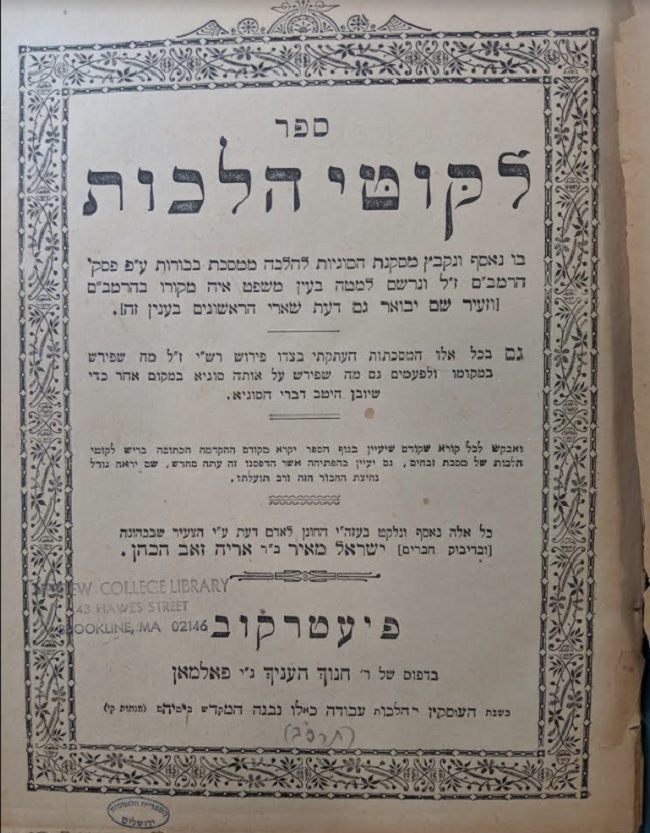


The תרפ”ב date is derived from the gematria of the emphasized letters: The saying (העוסקין בהלכות עבודה כאלו נבנה המקדש בימיהם (מנחות קי totals 682 ( 25 + 49 + 107 + 56 + 87+ 63 + 295), i.e., תרפ”ב.

As noted, the separate cover page for Arakhin (including Sotah and Nazir) is undated:


The Ḥafetz Ḥayyim, who was in charge of the printing and distribution of his books, advises on the title page of Likutei Halakhot on Bekhorot not only to read the Introductions, but also to look at the Preface (הפתיחה) “which we have now newly printed” (אשר הדפסנו זה עתה מחדש). The phrase “which we have now newly printed” is ambiguous; it can mean that the Preface is being reprinted or printed for the first time. Although the natural reading today would be the former, we found the Preface printed only in Likutei Halakhot on Sanhedrin, which we date to late תרפ”ב. And on the title page of Niddah, published by Cederbaum in תרפ”ג, we find a reference to the Preface אשר נקוה שנדפיסה בקרוב (“which we hope to print soon.”) This sort of discrepancy should not worry us, especially since Likutei Halakhot on Sanhedrin was printed by Fohlman and on Niddah by Cederbaum.

The Preface, published for the first time in תרפ”ב enables us to provide a clear terminus a quo for the publication of Likutei Halakhot on Sotah. In the middle of the first paragraph, the Ḥafetz Ḥayyim lists the tractates already completed (parentheses in the text below appear originally in the kuntresim as square brackets; the square brackets here are our own):

Barukh Ha-Shem, we have collected, according to our meager opinion, the words of the Rambam that he codified from the sugyot on thirteen tractates that pertain to matters of kodeshim, namely, Zevaḥim, Menaḥot, Tamid, Pesaḥim (from Tamid ha-Nishḥat to ‘Arvei Pesaḥim), Hagigah, Yoma, Tamid, Temurah, Keritot, Bekhorot [the three final chapters), ‘Arakhim, Me‘ilah, and Nazir (the later also has many things that are relevant to kodeshim), and likewise the first two chapters of Shavuot […] and now, only a few tractates are missing from the Shas, may God grant that over time some Jews will be found to complete the entire Shas […].[20]

And in the second paragraph he writes:

I wrote all this [i.e., the Preface until the present point] more than ten years ago. We have experienced many wanderings because of the war. Barukh Ha-Shem, who has kept us alive and did not allow our feet to falter. And now that I have come from the diaspora to my home, Ha-Shem, yitborakh, has helped me in his abundant kindness and goodness for the merit of Israel to complete Likutei Halakhot on the other tractates of the Shas that do not have the commentaries of the Rif and the Rosh. (And these are: Rosh Hashanah, Makkot, Horayot, Sotah, and Niddah […]).[21]

The second paragraph of the Preface attests to a time gap in both the composition of the Preface and in the publication of the tractates. The first paragraph of the Preface was written more than ten years earlier, i.e., no later than late 1910 or 1911. At that time the Ḥafetz Ḥayyim had completed, but not published, all the tractates mentioned in the first part of the Preface. Again, he did not publish the Preface itself until late 1921 or 1922. So although there is no date on Likutei Halakhot of Sotah itself, we can infer that it was published in תרפ”ב. As for the date of actual composition, we have no evidence in the Preface or anywhere else to suggest that it was written much earlier. Given that Niddah appears separately in תרפ”ג, the kuntres containing Sotah may have appeared late in תרפ”ב, after the aforementioned assembly of the Agudat Rabbanim in Warsaw. The Ḥafetz Ḥayyim would go on to complete other tractates and finish the work in 1925.

In short, the publication of Likutei Halakhot on Sotah is to be dated to late 1921 or the first two-thirds of 1922 (תרפ”ב) and not to 1911 or 1918,[22] according to the date of the aforementioned volume, and no earlier than Summer 1921, the date of the Ḥafetz Ḥayyim’s return to Radin, according to the Preface.

Part II. The Historical Context of the Footnotes on Jewish Education in Likutei Halakhot on Sotah

The Ḥafetz Ḥayyim was 83 years old when he declared it to be a great mitzvah to educate women in various Torah matters. To understand both the context and content of the statement, we first present the text and the two relevant footnotes. The main text of Likutei Halakhot on Sotah 11a (p, 21) may be translated as follows:

Rabbi Eliezer says, “Whoever teaches his daughter Torah teachers her tiflut.” You thought [actual] tiflut? Rather [it is] as if he teaches her tiflut. R. Abbahu says, “What is R. Eliezer’s reason? It is written, ‘I, wisdom, dwell with cunning,’** When wisdom enters a person, cunning enters with it.” And how do the Rabbis understand “I, wisdom”? The verse is needed for [the interpretation] of R. Yossi b. Rabbi Haninah, for R. Yossi b. R”H says, “The words of Torah stand permanently only for the person who makes himself naked for them, as it is written, ‘I, wisdom, dwell with nakedness.” In any event, the reasoning of R. Eliezer is not thereby rejected, and the halakha is according to his statement. [Later] rabbis said that “Torah” here refers davka to the Oral Torah. But even though the Written Torah should not be taught to one’s daughter ab initio,*** [teaching her Written Law] is not as if one teachers her tiflut. And women are obligated to learn from the Oral Torah the laws that pertain to them.[23]

(The asterisks refer to footnotes on this passage. Footnotes are rare in Likutei Halakhot, and rarer still are footnotes that refer to contemporary issues.)

Let us begin with the note preceded by three asterisks, on the prohibition of teaching the written Torah to women ab initio (based on M.T. Hilkhot Talmud Torah 2:13):

It seems that all this [the admonition not to teach written Torah ab initio to women] applies to previous times, when everyone dwelled in the place of his fathers, and the paternal tradition was very strong for each person to behave in the way that his fathers had tread, as the verse says, “Ask your father and he will tell you”. [Then] we could say that [a woman] should not learn Torah but should rely for her conduct on her upright fathers. But now, on account of our many sins, the paternal tradition has weakened considerably, and it is common that one does not dwell in one’s fathers’ location at all, and, particularly for those [women] who have accustomed themselves to learn to write and speak the languages of the nations, it is certainly a great mitzvah to teach them ḥumash, and also nevi’im and ketuvim, and the musar lessons of Ḥazal, such as tractate Avot, and Menorat ha-Ma’or, and the like, in order that our holy faith be confirmed for them. For otherwise, they are liable to stray completely from the way of the Lord, and to transgress all the foundations of the religion, God forbid.[24]

The Ḥafetz Ḥayyim holds that the admonition not to teach women written Torah ab initio pertained to the past, when a woman could rely for her conduct on the example of her fathers. But today, we find a weakening of paternal tradition and the dislocation of the Orthodox from their paternal homes, which requires educating women, especially those women who are accustomed to learn the language of the gentiles; without Torah education, such women are likely to stray from the true path and to become heretics. What historical reality does this reflect?

As is well known, the use of legal literature as a source of history, even literature that purports to refer to historical events, is not unproblematic. On the one hand the geographical dislocation of Polish Jews because of the war indeed meant that many parents and children were no longer in the town and villages that had anchored their faith and practices for generation.[25] On the other hand, it would be wrong to infer from the Ḥafetz Ḥayyim’s remarks that in his view, pre-war Poland reflected a golden age of Jewish observance. Throughout much of his life he had railed against the weakening of observance among the Orthodox, and many of his published works tried to strengthen observance through teaching both the halakha and its centrality in the life of the Jew – and the penalties for its non-observance.

For example, the Ḥafetz Ḥayyim was well aware that for decades there had been a weakening of traditional observance among women from some Orthodox homes. His son, R. Aryeh Leib Kagan, relates that when he came of marriageable age in the early 1880s, his father would not consider a match for him with a young woman from an Orthodox family who had attended a gymnasium (high school), or even an elementary school; such women and their families, even though they were Orthodox, were suspect in his eyes. In one case, the Ḥafetz Ḥayyim ultimately forbade his son to accept an offer of the substantial financial assistance by a wealthy prospective father-in-law; it turned out that the prospective bride’s sister had been sent by her father to learn at a gymnasium in Grodno, where she had fallen in love with a gentile officer whom she had met (“presumably at the theater”), converted, and died in childbirth at the age of 15.[26]

In his 1905 handbook on family purity laws, Taharat Yisrael, the Ḥafetz Ḥayyim attributes the decline of some women observing the mitzvah of mikveh to the shame they feel, not because of any foolish modesty (which is the case with some other women), but because they have been educated to look down at the laws of Torah. These women feel shame because

they have been raised in their free-thinking ways from their youth, when they attended schools, and became “wiser in their own eyes” than their predecessors, to the extent that they feel shame in observing the laws of the Torah according to the law of Moses and Israel, and particularly in a matter they consider to be beyond the boundaries of modesty.[27]

The Ḥafetz Ḥayyim responds to such women’s contempt of the Torah by providing well-worn arguments for its superiority and perfection. His defense is part of the larger project of the book, written both in Hebrew and Yiddish, to educate men and women in the importance of observing family purity laws. Urging Jews to observe Torah and mitzvot, and educating them for that purpose, is the leitmotiv that runs throughout the Ḥafetz Ḥayyim’s writings. Even his Likutei Halakhot on Kodeshim, though ultimately intended as an educational tool for learning Torah, was written as practical halakhic guide for the messianic age that Ḥafetz Ḥayyim thought imminent.[28]

This emphasis on deepening Torah observance in all sectors of the Orthodox community led him to publish a kuntres directed to women, Geder Olam, in 1889, on the importance of covering their hair. The kuntres was published in Hebrew and in Yiddish, and it includes at the end a basic halakhic guide to the laws of Niddah.[29] The halakhic guide was reprinted by the Ḥafetz Ḥayyim in two other works: his book addressed to Jews migrating to places like America and South Africa, Nidhei Yisrael (1895), and his aforementioned book on family purity laws, Taharat Yisrael (1905); The Yiddish translation appears in all three works, which indicates that these sections were intended also for women to read.[30] Indeed, the Ḥafetz Ḥayyim urges women who are literate to teach the book to women who are not, and to learn the Maayan Tahor of R. Moshe Teitelbaum of Ujhely (the Yismah Moshe) (reprinted many times in the Korban Minḥah siddur for women). The Ḥafetz Ḥayyim writes, “We have written only the legal principles that are most common, that all women are obligated to learn abundantly, and to become expert in them, so they not stumble because of them.”[31] This is a clear call for women to learn halakha, albeit in a rudimentary fashion, from books written for them.

From the above we see how important it was for the Ḥafetz Ḥayyim to write educational materials for women on family purity and female modesty. This in itself was a novelty; we are not aware of such materials being written in Lithuania at the time by Orthodox talmidei ḥakhamim of the Ḥafetz Ḥayyim’s stature. Contrast, for example, the words of the Ḥafetz Ḥayyim’s contemporary, Rabbi Yehiel Mikhel Epstein, in Arukh ha-Shulḥan, Yoreh Deah 246:19:

Ours has never been the custom to teach [women] from a book, and we never heard of that custom. Rather every woman teaches the relevant laws to her daughter and daughter-in-law. Recently, laws pertaining to women have been published in the vernacular for women who can read from them. Our women are fervent (zerizot); in every doubtful matter they ask [a rabbi] and don’t decide for themselves in the smallest matter.[32]

To what recently-published laws pertaining to women was R. Epstein referring? Arukh ha-Shulḥan, Yoreh Deah was composed in the years, 1887-1894;[33] the early editions of Geder Olam were 1889, 1893, and 1894. In the latter, the Ḥafetz Ḥayyim admonishes women who need to ask a halakhic question not to ask another women, but only a moreh hora’ah, “and for G-d’s sake, a woman should not dare to decide the law!”[34] It is very likely that R. Epstein was referring to this when he wrote, “Our women are eager; in every doubtful matter they ask [a rabbi] and don’t decide for themselves in the smallest matter.” Here we have two conflicting views on the education of women in practical halakha: R. Epstein sees no need to compose halakhic guidelines in Yiddish for women, since the women with whom he is familiar have learnt the material from their mothers or mothers-in-law and know when to ask questions. The Ḥafetz Ḥayyim, observing women who are lax about observance, writes a halakhic/hashkafic manual in Hebrew and Yiddish that urges them (and their husbands) to study these guidelines diligently and to teach them to other women.

The importance of educating women in their religious duties, especially in the realm of family purity, remained with the Ḥafetz Ḥayyim for the rest of his life. As is well-known, he traveled to Vilna when he was old and frail to deliver a lecture in Yiddish at the central Synagogue on the importance of observing the mitzvah of mikveh in front of an audience of hundreds of women, with men listening in from the women’s gallery.[35]

To be sure, publishing educational materials on family purity for women is not the same as advocating Torah education for girls, but then, again, the situation in 1905 for Polish and Lithuanian Orthodox Jewry was not the same as in 1922. Orthodox Jewry in the Second Polish Republic was under severe stress. Dislocation and pressures – economic, ideological, and governmental — had accelerated the defection of Jews from the tradition; the dire situation provided an opportunity for conservatives to respond positively to new Orthodox initiatives to stem the tide. In particular, Orthodox Jewish education was at a crisis point, even more so for boys than for girls, which explains in part why much more attention was paid by Orthodox politicians and rabbis to the challenges facing the ḥadarim, than to the education of women, since, as we noted above, the compulsory education of law of 1919, which was in the early stages of implementation, required all Polish boys and girls to attend government certified schools. Agudat Yisrael negotiated repeatedly with the Polish authorities to have the ḥadarim certified, which meant that they needed to include subjects mandated by the Polish ministry of education; otherwise, even more ḥadarim would close. The negotiations with the government concerned how many hours of secular subjects would be taught, and what were those subjects to contain.[36] Formal Torah education for girls was already well underway, partly as a response to mandatory education, the general trend in female education, and the prevalence of alternatives to the ḥeder that attracted Orthodox parents, partly as a response to the weakening of observance among the Orthodox.

When the Ḥafetz Ḥayyim returned to Radin in 1921, he was faced not only with the fait accompli of formal Jewish education for women in Telz, Kovno, and elsewhere, but with the threat to both boys and girls posed by the implementation of universal compulsory education by the State. Unlike in Russia and Lithuania, compulsory education for Jewish girls had been the norm in Galicia, the part of Poland that had belonged to the Austrian Empire until the end of the First World War. Galician Jewish Orthodox girls, bereft of formal Jewish education, had attended Polish private and public schools for decades with disastrous consequences; the same now happened elsewhere in Poland. When, in his footnote, the Ḥafetz Ḥayyim refers to “those [women] who have accustomed themselves to learn to write and speak the languages of the nations” he was, whether aware of it or not, referring to all Jewish girls in the Second Polish Republic, since, as Polish citizens even the strictest Hasidim were required to send their daughters to government certified schools. And unlike the case of their brothers, no Orthodox politicians negotiated with the government to exempt girls from these schools. School attendance for Hasidic girls was a well-entrenched tradition, even among the daughters of the zealots.

It is not surprising that the rabbi who raised the issue of women’s education at the assembly of the Polish Agudat ha-Rabbanim in 1922, Maharam Shapira, hailed from Galicia, where the situation had been bleak for decades. In his survey of the state of Orthodox Jewish education, he first turns to the challenges facing the ḥeder from the mandatory education law, on the one hand, and the attacks from the [Jewish] leftists (smoliyim) on the other. If the Polish government wished to spread general education among the people, it should take into consideration the most necessary requirements of the [Jewish] nation, which is the ḥeder. And if the Orthodox try to accommodate the government’s demands, it can only be in such a way that will not destroy the ḥeder. Most importantly, Orthodox boys need to be exempt from the obligation to attend general schools. And since the ḥadarim will now have to limit somewhat their hours for Jewish subjects, it is important that they be subject to universal standards, and that the instruction be overseen by experts and pedagogues. The Maharam Shapira then turned to the question of the education of girls:

We speak a great deal about the education of girls, which is a very painful subject for us. Our situation has become so bad because we have only taken a little interest in the subject for many years. At the same time as we devoted much of our thought, and always concerned ourselves, whether a lot or a little, with the education of boys, we continued to apply to the girls, “Kol kevudah bat melekh pnimah” as in earlier times, when a Jewish daughter did not come into contact and connections with the marketplace and the public sphere, and with the currents of the time that mostly oppose Yahadut. Then we did not need to give her an antidote and a powerful and effective counterforce against them. (“Whoever teaches his daughter Torah is as if he teaches her tiflut. (Sotah 20a).” Only men had in particular to learn Torah, for they needed the antidote – the countercurrent that repels foreign currents. But the daughter and the Jewish woman sat at home, where only that environment acted educationally upon them, and developed them and made them into true Jewish women and fit Jewish daughters.) We thus did not pay attention that the girls, unarmed and lacking any concept pertaining to Torah and Yahadut, have been taken outside from us into cultures and currents. They have become so educated and raised in the lap of foreign culture and anti-Jewish ways that every “common wind” and light attempt to ensnare their spirits, to penetrate into their souls, to poison and uproot them from their place, have wielded their evil ways upon them.

And we are faced with another grave question, which is strongly related with the education of the daughters, and this is the purity of the daughters of Israel….[37]

The Maharam Shapira diagnoses the illness but does not prescribe the remedy, anyway, not in the written version of his address. But as we saw above, the Assembly subsequently called for the establishment of Jewish schools for girls (supplementary to the general schools which they would attend). Connecting the crisis in the observance of the family purity laws with girl’s lack of education meant that rabbis like the Maraham Shapira understood that female observance of Jewish law could not be taken for granted. The Maharam Shapira also called for the production of Jewish youth literature, including textbooks, for the youth that would be free of all defect, and that would educate them in the spirit of faith and religion. This call was also ratified by the Assembly.

The question of the creation of textbooks that would be appropriate for use in ḥadarim seems to be alluded to in the earlier note in Likkutei Halakhot on Sotah on R. Abbahu’s explanation to R. Eliezer’s prohibition that “once wisdom enters into an individual, cunning enters with it.” The Ḥafetz Ḥayyim writes:

According to this, one should be even more careful not to teach boys and girls flippant writings and romances, which consume their heart and soul. One who reads them regularly is in the category of one who reads external books, who was treated with great severity by our sages, as is in the beginning of Helek (Sanhedrin 90). It makes no difference wheteher they are published in the Holy Tongue or the vernacular. See S. A. Orah Ḥayyim.307:16, and in the Mishnah Berurah ad loc.[38]

While attention in recent years has been focused on the footnote on Torah education for women, the Ḥafetz Ḥayyim’s previous footnote on the education of boys and girls appears to have been entirely neglected. Why would a halakhic authority like the Ḥafetz Ḥayyim be concerned with teaching Orthodox Jewish boys and girls “flippant writings and romances”, i.e., literature written by Poles or by Jewish maskilim? Yet his concern makes sense in the context of the new Polish government’s requirement that general studies be included within the curriculum of the ḥadarim, and also in the context of Orthodox parents sending their children to non-Orthodox Jewish schools, like the Tarbut and Yiddishist schools. Even though the Ḥafetz Ḥayyim acquiesced to the limited introduction of secular subjects in the ḥadarim, we see from this note and the passage below that he insisted that only appropriate books be read by children. That was also the line taken by Agudat Yisrael in its attempts to control the growing popular youth literature, both in lending libraries youth, and in curricular materials for the ḥadarim and the Bais Yaakov schools under its auspices.[39]

In short, underlying both footnotes referring to contemporary matters in the Likutei Halakhot on Sotah are not the challenges of “modernity” in general, but rather the specific challenges facing the Polish Orthodox leadership in the interwar period brought about by the weakening of traditional authority, geographical dislocation, the introduction of universal primary education in the Second Polish Republic, and the attraction of Bundism, Zionism, and Socialism to the youth. Although the weakening of traditional authority, and the phenomena of Orthodox women attending Polish schools predated by decades World War I, the situation after the war threatened the very future of Torah Judaism in the eyes of the Orthodox establishment.

Part III. Other Statements of the Ḥafetz Ḥayyim on Torah Education for Women

In the waning years of his life, the Ḥafetz Ḥayyim returned several times to the question of Torah education for girls. Thus we read in his 1930 “Admonition to Kelal Yisrael”:

There is another principle that every talmid hakham in every town needs to enact, namely, to see to it that there is a kosher ḥeder in which our little sons (and also our little daughters) will be provided a kosher education in the way of the Torah, and not in schools that are full of heresy and sectarianism, which are completely bereft of teaching our holy Torah….

[One should accustom his son to learn the the aggadot of the Talmud…]. But even more one should distance his son from schools in which heresy and sectarianism is taught, where instead of the holy ḥumash, they make up books in which are found only stories of the ḥumash that they have copied without any sense of our Holy Torah – and that’s Torah in its entirety for them And all the laws and mitzvot like in Vayikra and Devarim they denigrate and do not copy. A father must be exceedingly careful not to allow his son to go to such schools where he destroys them with his own hands (and likewise he should be careful to educate his daughters in the way of Torah).[40]

And in a public appeal for the strengthening of religion that that he published in Sivan, 1931:

First of all, we must become fortified with all our strength in the education of boys and girls, to establish for them ḥadarim and kosher schools according to the law of our Holy Torah, not to deviate to the right or the left, or to forego anything of our Holy Torah, and not to allow them to attend such schools as are full of heresy and sectarianism, God save us….”[41]

We have found no mention of the importance of educating girls in the Ḥafetz Ḥayyim’s numerous writings devoted to education before World War I: educating women to observe and appreciate family purity, yes, but not teaching Torah to girls. This changed after the Ḥafetz Ḥayyim’s return to Radin in 1921. Already in 1922 there is abundant reason to believe that the Ḥafetz Ḥayyim’s foonote in Likutei Halakhot on Sota referred to formal Jewish education for girls, which was already well underway. As we noted above, his position was used to justify the establishment of schools for girls by the Agudah’s Keren ha-Torah in 1925. From the 1930s he made his position explicit: teaching Torah to Jewish daughters includes establishing “kosher schools” for them.

So it is hardly surprising that in 1933, when attempts to open a Bait Yaakov school in Fristik (Frysztak), Poland, were met with opposition by the local rabbi, R. Menachem Mendel Halberstam, the Ḥafetz Ḥayyim signed a public approbation of Beit Yaakov in order to convince Jewish parents from the town to send their daughters to the school:

B”H 23 Shevat, Tarzag [= Feb. 19, 1933]

To the worthy lovers and esteemers of Torah, the Godfearing people of Fristik, may the Rock guard them,

When I heard that Godfearing people had devoted themselves to establish in the towns a Beit Yaakov school, in which is taught Torah, the fear of Heaven, morals, and manners, which is Torah for the girls of our Jewish brethren, I addressed their fine action [saying] “May the Lord strengthen them and establish the work of their hands!” For [that action] is a greatly needed matter in these day, when the current of heresy, God save us, reigns in all its force, and all sorts of freethinkers lie in wait to ensnare the souls of our Jewish brethren. Whoever’s heart has been touched with the fear of God is obligated to send his daughter to learn in this school. And there is no room for concern in this day and age for all the apprehensions and doubts arising from the prohibition of teaching one’s daughter Torah. This is not the place to elaborate.

For our generation is not as the earlier ones, for in previous generations each Jewish house had a paternal and maternal tradition to walk in the way of Torah and religion, to read Zeenah u’Reenah every Shabbat. But this is not the case, due to our many sins, in our generation. Therefore we must strive to increase schools such as these and to save everything that we possibly are capable of saving.[42]

The appeal seems to have worked because there was still a Beit Yaakov in Fristik in 1935, according to the list of schools provided by Deutschländer.

* * *

We conclude with a final comment: Some have inferred from the Ḥafetz Ḥayyim’s footnote in Likutei Halakhot and the appeal on behalf of Bais Yaakov schools that in his eyes formal education for girls should be considered “bediavad”, i.e., that in an ideal Jewish world, girls would not need to be taught Torah outside the home. If that is true, then the bediavad status of women’s education is somewhat akin to the bediavad status of the compilation of the Mishnah: in a world without the persecution and dispersion of the Jewish people, Rabbi Judah ha-Nasi would not have had to compile the Mishnah and thereby transgress the prohibition of committing Oral Torah to writing.[43] But the Torah, which is eternal, is adapted by the Torah sages in each generation to the world in which God-fearing Jews live. Formal Torah education for girls became for the Ḥafetz Ḥayyim “in this day and age” a “mitzvah gedolah,” in other words, lekhatkhilah, and his statements on the subject reflect that.

On the other hand, to say that it is a mitzvah gedolah to teach Torah and yirat shamayim to women is not to say that the Ḥafetz Ḥayyim wished to extend the commandment of Talmud Torah to include women.[44] That conflates the commandment of Talmud Torah, which applies only to Jewish men, with the obligation of teaching yiddishkeit to Jewish women through teaching them, inter alia, selections from Tanakh. While the Ḥafetz Ḥayyim emphasizes the former repeatedly and at great length in his writings and public activity, he barely mentions the latter. One need only compare his brief mention of teaching girls “ḥumash, nevi’im, ketuvim” in his footnote in Likutei Halakhot with his frequent statements about the necessity of teaching ḥeder boys ḥumash with Rashi “without skipping anything.” Even after his return to Radin, his public activities on behalf of women’s observance focused mainly on family purity, modesty, shabbat, and kashrut – not girls’ education.

Still, it is no wonder that the conservative Ḥafetz Ḥayyim, who had written numerous tracts to strengthen the observance and piety of Jewish baalei ha-batim and their families, embraced in later years the formal Jewish education of girls. Decades earlier he had called upon literate women to teach their illiterate sisters family purity laws from a book. He was not concerned with expanding the study of Torah among women, as much as expanding its observance and taking its message to their hearts. The Torah these girls were to be taught was a combination of Torah, the fear of heaven, morals, and manners. His goals were similar to that of Bais Yaakov movement, which was not to teach Torah to the daughters of Israel as an intellectual activity, or to make them life-long learners of Torah, but to form their character as religiously observant Orthodox Jewish women.[45]

Notes:

[1] Likute Halakhot on Sotah, 11ab (pp. 21-2). Unless otherwise stated, we have consulted the 1969-1970 edition of R. Menahem Mendel Yosef Zaks (Jerusalem, 1969-1970). This appears to be a reprint of the edition published in Brooklyn 10 years earlier.
[2] “This leniency enabled the opening of the first school of Beit Yaakov.” See Benjamin Brown, “The Baal ha-Bayit: R. Yisrael Meir ha-Cohen, the Ḥafetz Ḥayyim,” in Benjamin Brown and Nissim Leon, ed., Ha-Gedolim’: Ishim she-‘izvu et pene ha-Yahudut ha-haredit be-Yisrael. ed. (Jerusalem: Magnes, 2017), 106-151, esp. 133 (Hebrew)
[3] See Haym Soloveitchik, “Rupture and Reconstruction: The Transformation of Contemporary Orthodoxy,” Tradition, vol. 28, no. 4 (Summer 1994): 106-107 note 6.
[4] M. Yashar, Dos leben un shafn fun Ḥofets Ḥayyim (New York, 137), II, 377, 381.
[5] This is inferred from the celebration in Purim of 1931 of the school’s tenth anniversary.
[6] Yizhak Rafael Ha-Levi Etzion (Holzberg), “The Yavneh Educational System in Lithuania,” in Yahadut Lita (Tel-Aviv, 1972), II, 160-163
[7] According to one graduate of the school, “Chavatzelet’s general studies program was of a high caliber. It was headed by a non-religious woman and the teachers were either gentiles or secular Jews, since it was very difficult for a religious Jew to obtain the degree needed to teach secular studies. The religious studies, however, was not so successful […] The religious studies principal was the only religious faculty member – a Yekke (a German Jew). Under his influence Chavatzelet was conducted in the German manner of Torah im Derech Eretz. He taught us Chumash, Navi, history, and basic Hebrew grammar […] At any rate, the Torah portion of our education took only an hour of the day. The other six hours were devoted to secular studies.” Gutta Sternbuch and David Kranzler, Gutta: Memories of a Vanished World (Jerusalem and New York: Feldheim, 2005), 19-20.
[8] Ibid., pp. 17, 21.
[9] יא) לחנך את הבנות ברוח היהדות וללמוד עמהן מראשית ילדותן מעט מעט דת ומוסר, וכפי רבות שנותיהן כן יוסיפו ללמוד עמהן היובים שעליהן באופן כשיגיעו לפרק נישואין יקבלו בנקל החיובים השייכם לטהרת בנות ישראל, והחברים מחויבים להשתדל שיתיסד בעירם בית ספר מיוחד לזה בעד הנערות. Peratei-kol me-ha-ve‘idah ha-rishonah shel agudat ha-rabbanim be-Folin (Warsaw, January 23-25), published at the end of Kovetz Derushim, Ḥelek Rishon, Kera Sheni, ed. M. Warszawiak and Y. M. Sagaloṿits (Piotrkow, 1924), f. 9b.
[10] Mikhtavim u-maamarim mi-Maran Rabenu ba‘al ha-Ḥafetz Ḥayyim, Ḥelek Bet, ed. Z. H. Zaks (Kol Kitvei ha-Ḥafetz Ḥayyim [Jerusalem, 1990], IV, pp. 83-34)
[11] Leo Deutschländer, ed., Beth Jakob: 1928, 1929 (Frankfurt a. M.: Hermon, 1929), p. 7. Deutschländer cites the footnote and refers to it as a pesak din in Keren ha-Torah’s report on the state of Jewish education delivered at the Second World Assembly (ha-Knesiyal ha-Gedola) of Agudat Yisrael (Vienna, Elul,1929), 44-45. (The full report is available at https://hebrewbooks.org/36599.)
[12] In The Rebellion of the Daughters: Jewish Women Runaways in Habsburg Galicia (Princeton UP, forthcoming), p. 204, Rachel Manekin discusses a 1923 letter from Sarah Schenirer, in which she reveals that she consulted with the Belzer rebbe over whether the girls in her school could stage her play, Judith. Although the rebbe forbade staging it as “uqqat ha-goy,” she expressed the hope that it could be performed as a declamation. From this one may infer that the Belzer rebbe was the school’s rabbinic authority until it came under the auspices of the Keren Ha-Torah of Agudat Yisrael in 1924-1925.
[13] See, for example, the letters in Mikhtavim u-ma’amarim, Ḥelek Bet, 24-39 (Kol Kitvei ha-Ḥafetz Ḥayyim, IV, 24-39), and the kuntres, Torah Or at the end of Kol Kitvei ha-Ḥafetz Ḥayyim, II.
[14] See Likutei Halakhot, Second Introduction, f. 6a-b.
[15] Ibid., f. 7a
[16] Likutei Amarim, ch. 7, pp. 10-12, esp. p. 11 (Kol Kitvei ha-Ḥafetz Ḥayyim III).
[17] The Bar Ilan University Library web catalogue lists a copy of Likutei Halakhot on Zevaḥim with prenumerants, bound with the gemarrah of Zevaḥim, that dates from 1891/2. See R. Aryeh Leib ha-Kohen’s account of the delays in publishing Likutei Halakhot in his biography of his father, Mikhtevei ha-Rav ha-Ḥafetz Ḥayyim, ed. Aryeh Leib ha-Kohen, p. 51, in Kol Kitvei ha-Ḥafetz Ḥayyim, III. R. Aryeh Leib saw his father’s decision to write on Kodeshim, in part, as a reaction to the wave of migration to Eretz Yisrael from Eastern Europe following the expulsion of Jews from Moscow in 1890-1891, and the sense of messianic expectation; see ibid., pp. 38-39.
[18] M. Gellis, Kitvei ha-Ḥafetz Ḥayyim…reshimah bibliografit (Jerusalem, 1984), p. 56. Brown (see n. 2 above) relies on Gellis.
[19] The date also appears in Shoshana P. Zolty, And All Your Children Shall Be Learned: Women and the Study of Torah in Jewish Law and History (Northvale, N.J: J. Aronson, 1993), p. 67, n. 34 (The place of publication is given as “St. Petersburg” rather than Piotrków.) An edition of Likutei Halakhot, Part Two, of R. Natan Sternhartz, was published in Warsaw in 1918-1919; perhaps this explains the confusion
[20] ובה על י״ג מסכתות ששייכים לעניני קדשים והם זבחים ומנחות ותמיד ופסחיס (מפרק תמיד הנשחט עד ערבי פסחים) וחגיגה ויומא ותמיד ותמורה וכריתות ובכורות (שלשה פרקים אחרונים), וערכים ומעילה ונזיר (שגם היא יש בה הדבה ענינים ששייכים לקדשים) וכן שני פרקים הראשונים ממסכת שבועות על כל אלו לקטנו בעניות דעתנו מדברי הרמב״ם מה שהעתיק מהסוגיות לדינא […].וכעת אין חסר מן השס רק איזה מסכתות יתן ד׳ שבמשך הזמן ימצאו בישראל משליטים לכל הש״ס […]
[21] והנה כל זה כתבתי יותר מעשרה שנים ועבר עלינו נדודים הרבה מפני המלחמות וב״ה ששם נפשינו בחיים ולא נתן למוט רגלינו. וכעת שבאתי מן הגולה בשלום לביתי עזרני הש״י ברוב חסדו וטובו בזכות כלל ישראל להשלים הליקוטי הלכות גם על יתר מסכתות של הש״ס שאין עליהם רי״ף ורא״ש (ואלו הן ראש השנה וסנהדרין ומכות והוריות וסוטה ונדה […]) ]. The Ḥafetz Ḥayyim mentions that there are other tractates on which there are no Rif and Rosh, and he suggests that others may come to complete his work. In fact, he himself completed the work and revised the Preface in 1926; the revised Preface was published posthumously as chapter seven (“A Worthy Article on the Study of the Holy Torah”) in Likutei Amarim, pp. 10-12 (In Kol Kitvei ha-Ḥafetz Ḥayyim, III.)
[22] Although Deutschländer writes in his 1929 historical account of Bait Yaakov schools that their legal sanction had been provided “decades ago” (vor Jahrzenten) by the Ḥafetz Ḥayyim in Likutei Halakhot on Sota, he may have been unaware of the publication history of Likutei Halakhot. In any event, he does not repeat the claim in his more detailed Hebrew report, published in the same year. For references see n. 8 above.
[23] ראליעזר אומר כל המלמד את בתו תורה מלמדה תפלות. תיפלות סד אלא כאילו מלמדה תפלותאר אבהו מאי טעמא דרבי אליעזר דכתיב אני חכמה שכנתי ערמה מכיון שנכנסה חכמה באדם נכנסה עמו**) ערמומית. ורבנן האי אני חכמה מאי עבדי ליה מיבעי ליה לכדריוסי ברבי חנינא דאמר רבי יוסי ברח אין דת מתקיימין אלא במי שמעמיד עצמו ערום עליהן שנאמר אני חכמה שכנתי ערמה וממ לדינא אין נדחה מפני זה סברת ראליעזר ונקטינן כן להלכה. וכתבו רבוותא דהיינו דווקא תורה שבעפ אבל תורה שבכתב אף שאין ללמדה ***) לכתחילה ממ המלמדה אינו כמלמדה תפלות וגם מתורה שבעפ הדינים השייכים לאשה מחוייבת ללמוד.
[24] **ונראה דכל זה דווקא בזמנים שלפנינו, שכל אחד היה דר במקום אבותיו, וקבלת האבות היה חזק מאוד אצל כל אחד ואחד, להתנהג בדרך שדרכו אבותיו, וכמאמר הכתוב שאל אביך ויגדך‘; בזה היינו יכולים לומר שלא תלמוד תורה, ותסמוך בהנהגה על אבותיה הישרים. אבל כעת בעוונותינו הרבים, שקבלת האבות נתרופף מאוד מאוד, וגם מצוי שאינו דר במקום אבותיו כלל, ובפרט אותן שמרגילין עצמן ללמוד כתב ולשון העמים, בוודאי מצווה רבה ללמדם חומש וגם נביאים וכתובים ומוסרי חזל, כגון מסכת אבות וספר מנורת המאור וכדומה, כדי שיתאמת אצלם עניין אמונתנו הקדושה; דאי לאו הכי עלול שיסורו לגמרי מדרך ד‘, ויעברו על כל יסודי הדת חו
[25] According to Leo Deutschländer’s report of Keren ha-Torah at the Second Kenesiya Gedolah in Vienna in 1929, between 40 and 50 thousand children had been taken from their parents during the war and its aftermath, and these children had grown up without Torah, ethics, education, and faith. See Ha-Kenesiyah ha-Gedolah ha-Sheniyah shel Agudat Yisrael, ed. Shabbetai Sheinfeld (Vienna, 1929), p. 29. The situation among Polish Orthodox youth led Agudat Yisrael to establish, for the first time in Poland, organizations for the purpose of strengthening the faith and commitment of the younger generation. See Gershon C. Bacon, The Politics of Tradition: Agudat Israel in Poland, 1916-1939 (Jerusalem: Magnes, 1996), 181-141.
[26] Mikhtevei ha-Rav ha-Ḥafetz Ḥayyim, pp. 20-22, in Kol Kitvei ha-Ḥafetz Ḥayyim, III.
[27] Taharat Yisrael, ch. 8, pp. 10-11, esp. 10, in Kol Kitvei ha-Ḥafetz Ḥayyim, III.
[28] See Mikhtevei ha-Rav ha-Ḥafetz Ḥayyim, pp. 53-54, in Kol Kitvei ha-Ḥafetz Ḥayyim, III.
[29] This guide is attributed in the early editions of Geder Olam to a יצחק ברז, who says that they are based on the tract, Dinei Niddah, by Shlomo Zalman Lifschutz, the authors of the Ḥemdat Shelomo on the Shulhan Arukh. יצחק ברז is likely the Ḥafetz Ḥayyim’s close associate in Warsaw, R. Isaac b. Zeev (“Itche”) Grodzienski. According to R. Aryeh Leib Kagan, R. Grodzienski translated Geder Olam into Yiddish in a second printing, in 1890, which explains why the name Isaac is on the title page. However, the first 1889 edition also has both Yiddish and Hebrew and more to the point, subsequent editions remove all mention of Isaac. Since the the Yiddish appears in two other books by the Ḥafetz Ḥayyim printed under his own name, one assumes that the Yiddish translation, too, was the work of the Ḥafetz Ḥayyim, perhaps in partnership with R. Grozdienski
[30] The reference to the Dinei Niddah of the Ḥemdat Shelomo is omitted in these works. The Yiddish is absent from R. Zaks’ edition, which also omits the chapter on family purity in Geder Olam. It was not unusual for the Ḥafetz Ḥayyim to reuse parts of his kuntresim.
[31] Geder Olam (Warsaw 1889), f. 19 ,p. 37.
[32] Arukh ha-Shulhan (Jerusalem, 1969), VI, f.18, p. 35.
[33] Eitam Henkin, “The Books of the Arukh ha-Shulhan – The Order of Their Composition and Their Publication,” Ḥitzei Giborim –Pleitat Soferim, vol. 7 (2014): 515-536, esp. 516 (Hebrew), available online here (https://tinyurl.com/y8t7a7ncThis).
[34] Ed. 1895, 15a, p. 29
[35] For the Yiddish address, with Hebrew translation, see Kol Kitvei ha-Hafetz Ḥayyim III, 171-174.
[36] For an account of these negotiations, and the “quiet revolution” in Orthodox education, see Bacon, The Politics of Tradition, pp. 147-177.
[37]מדברים אנו הרבה עד חנוך הבנות, שהוא אצלנו שאלה מכאבת מאד. מצב הענין הזה רע אצלנו כל כך משום שאך מעט מזעיר התענינו בו שנים הרבה, בה בשעה שעל אודות חנוך הבנים הרבינו לחשוב מחשבות ולהתעניין בו תמיד ברב או במעט, השארנו הבנות על חשבון כל כבודה בת מלך פנימה“, כבשנים קדמוניות, בשעה שבת ישראל לא באה כל כך ביחס וקשור עם השוק ורשותהרבים, עם זרמי העת המתנגדים לרוב להיהדות ולא היינו צריכים גכ לתת לה איזו תבלין וכחמנגד חזק נגדם. (‘כל המלמד את בתו תורה כאילו למדה תפלותתורה היו צריכים ללמוד ביחוד רק הגברים, שהיו נחוצים להם תבלין, זרםמנגד ודוחה לזרמים הזרים, אולם הבת והאשה הישראלית ישבו להן בביתן, במקום שרק הסביבה פעלה עליהן פעולה חנוכית ופתחה ועשתה אותן לבנות ישראל כשרות ויהודיות אמתיות). לא שמנו אפוא את לבנו לזה, כי גם הבנות מוצאות לחוץ, ברשות הרביות וזרמים זרים המזורה לרגליהן, בהיותן אימזוינות, בלי היות להן כל מושג בתורה ובהיהדות, נתחנכו ונתגדלו בחיק תרבות זרה, ודרכים אייהודיים, וכל רוח מצויוכל נסיון קל לצודד נפשותיהן ולחדור לתוך נשמותיהן ולהרעיל ולעקרן ממקומן – פעלו עליהן את פעולתם הרעהץ עומדות לפנינו עוד שאלה חמורהת הקשורה בקשר אמיץ עם חנוך הבנות והיא טהרת בנות ישראל.
[38] **) הערה ולפז כש שיש ליזהר מללמד להנערים והנערות כתבי לצון ובדברי חשק שזהו ממש מכלה לבן ונפשן והמרגיל עצמו בזה הוא בכלל הקורא בספרים החצונים שהחמירו החכמים מאוד בזה כדאיתא בריש פרק חלק (סנהדרין דף צ) ואין נמ אם הם נדפסות בלשהק או בלשון לעז ועיין בשוע אוח בסימן שז סטז ובמב שם.
[39] The Maharam Shapira, in the aforementioned address to the Polish Agudat ha-Rabbanim, also remarks on creating appropriate literature for Jewish youth.
[40] עוד ישנו עיקר גדול שעל כל התח שבכל עיר לתקן והוא לראות שיהבעירו חדר כשר שבו יתחנ כובנינו הקטנים (וגם הבנות הקטהות שלנו) בחינוך כשר בדרך התורה ולר בבתי ספר כאלו המלאים כפירה ומינות שאין בהם שום זכר ללמוד תורהקאבל ביותר צריך להרחיק את בנו מבתי ספר כאלו שלומדים שם כפירה מינות, שבמקום החומש הקדוש המציאו ספרים כאילו שבהם נמצאו רק סיפורי החומש שהעתיקו אותם בלי שום טעם וריח של תורהק, וזה להם כל הצורה כולה. וכל דיני התורה והמצוה כמו ספר ויקרא וספר דברים בזו להם ולא העתיקם כללומאד מאד יזהר האב, מלהניח את בניו ללכת לבתי ספר כאלה שהוא מאבד בידים את בניו (והה גם בנותיו יזהר לחנכן בדרך התורה) Mikhtavim u-ma’amarim, Ḥelek Bet, pp. 56-57 (Kol Kitvei ha-Ḥafetz Ḥayyim, IV). For the Ḥafetz Ḥayyim’s attack on the “methods” pedagogy of the non-Orthodox Hebrew schools, see Ḥomat ha-Dat, pp. 20, 52-55 (Kol Kitvei ha-Ḥafetz Ḥayyim, II), and his 1927 appeal against teaching the Bible in this fashion in Mikhtevei ha-Rav ha-Ḥafetz Ḥayyim, pp. 24-26 (Kol Kitvei ha-Ḥafetz Ḥayyim, III)
[41]ראשית הדבר,עלינו להתחזק בכל כחנו בענין חנוך הבנים והבנות,ליסד עבורם חדרים ובתי ספר כשרים כדין תורהק, שלא להטות ימין ושמאל ושלא לוותר על שום דבר מתורהק ולא להניחם ללמוד בבתי ספר כאלו, מלאים כפירה ומינות, רל…. “Appeal for the Strengthening of Religion,” in Mikhtevei ha-Rav ha-Ḥafetz Ḥayyim, p. 99 (Kol Kitvei ha-Ḥafetz Ḥayyim, III).
[42] בה, יום כג לחודש שבט תרצג אל כבוד האלופים הנכבדים חובבי ומוקירי תורה החרדים לדבר האשר בעיר פריסטיק ני. כאשר שמעתי שהתנדבו אנשים יראים וחרדים לדבר דליסד בערים ביס בית יעקבללמוד בו תורה וירש מידות ודרך ארץ זו תורה לילדות אחינו בני ישראל. אמרתי לפעלם הטוב יישר דחילם ומעשה ידיהם יכונן כי ענין גדול ונחוץ הוא בימינו אלה. אשר זרם הכפירה רל שורר בכל תקפו והחפשים מכל המינים אורבים וצודים לנפשות אחבי וכל מי שנגעה יראת דבלבבו המצוה ליתן את בתו ללמוד בביס זה וכל החששות והפקפוקים מאיסור ללמד את בתו תורה אין שום מיחוש לזה בימינו אלה. ואין כאן המקום לבאר באריכות. כי לא כדורות הראשונים דורותינו אשר בדורות הקודמים היה לכל בית ישראל מסורת אבות ואמהות לילך בדרך התורה והדת ולקרות בספר צאינה וראינהבכל שבת קודש מה שאין כן בעוונותינו הרבים בדורותינו אלה. ועל כן בכל עוז רוחנו ונפשנו עלינו להשתדל להרבות בתי ספר כאלו ולהציל כל מה שבידינו ואפשרותנו להציל. הכותב למען כבוד התורה והדת ישראל מאיר הכהן, in Mikhtavim u-ma’amarim, Ḥelek Bet, pp. 24-39 (Kol Kitvei ha-Ḥafetz Ḥayyim, IV).
[43] See Mishneh Torah, Introduction. Although Rambam does not say explicitly that the compilation of the Mishnah was a violation of the prohibition of writing Oral Torah down, he suggests that the compilation was a novelty required by the travails of the time. For a look at this question see Michael Wygoda, “‘You Are Not Permitted to Write Down Oral Statements,’ On the Development of a Forgotten Halakha,” Dimuy 26 (1996): 48-63 (Hebrew).
[44] Cf. Benjamin Brown, “The Value of Torah Learning in the Ḥafetz Ḥayyim’s Writings and His Ruling on Women’s Torah Learning,” Diné Yisrael, vol. 24 (2007): 79-118, esp. 116-11
[45] For this see Manekin, The Rebellion of the Daughters, 182-235.
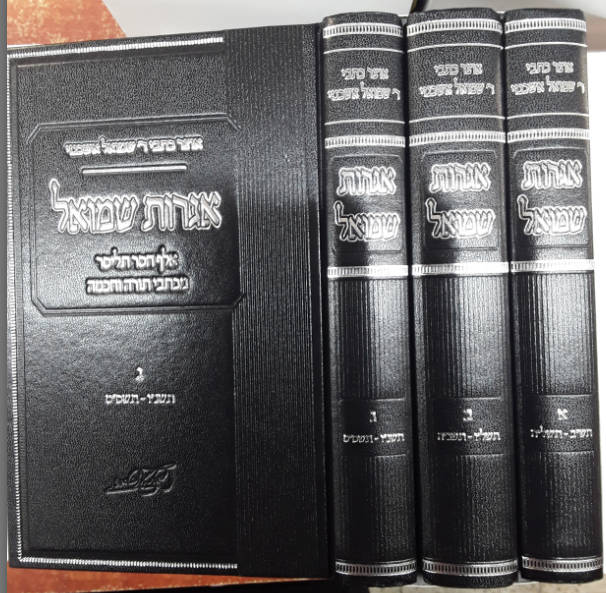
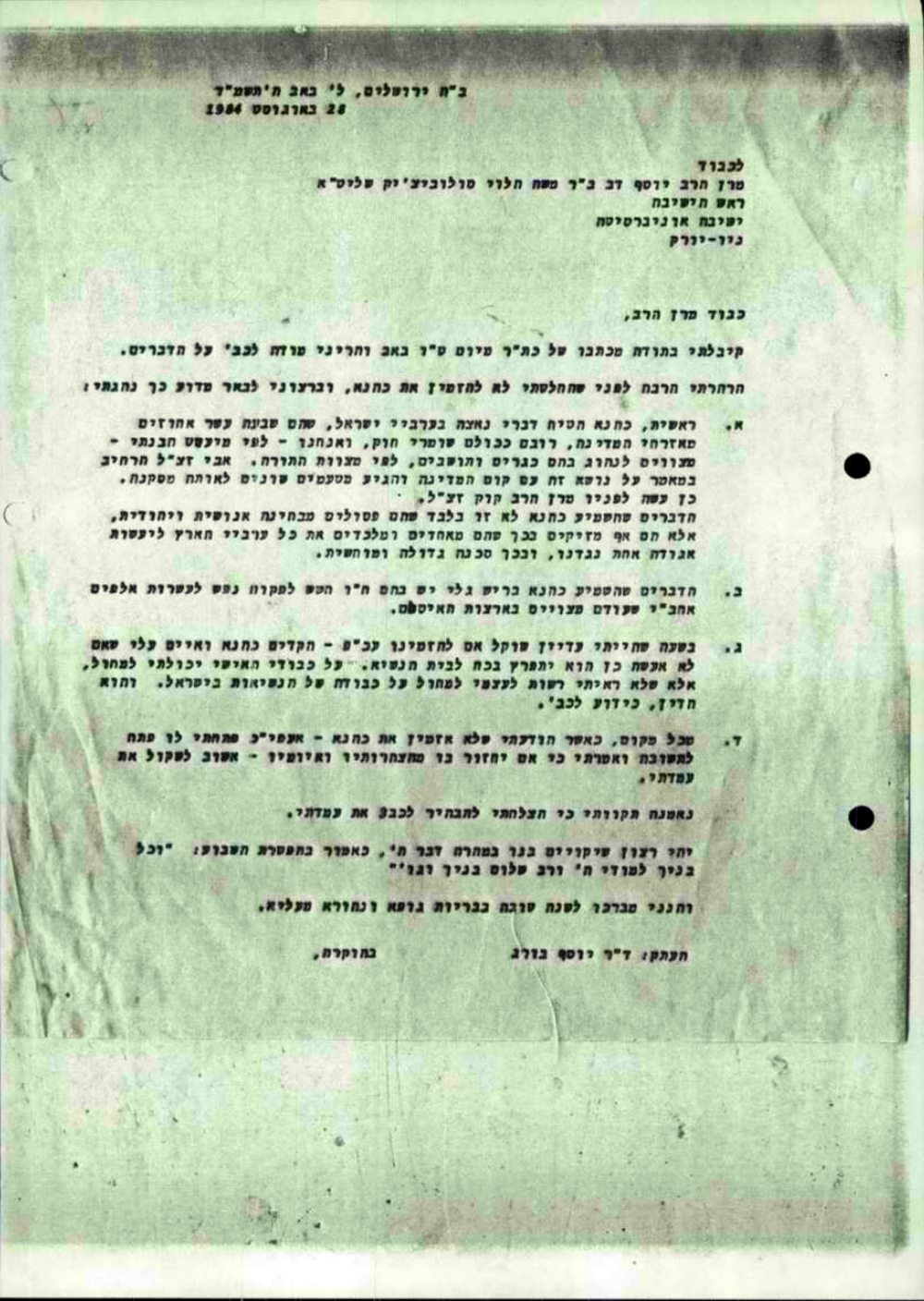


A nay bintl briv: Personal Reminiscences of Rabbis Baruch ha-Levi Epstein and Aaron Walkin from the Yiddish Republic of Letters

A nay bintl briv:

Personal Reminiscences of Rabbis Baruch ha-Levi Epstein and Aaron Walkin

from the Yiddish Republic of Letters

Shaul Seidler-Feller

Editor’s note: The present post is part two of a two-part essay. Part one can be found here.

Second Letter

Approximately eight and a half years after his column on the Hafets Hayyim appeared, Rabbi Aaron B. Shurin penned another essay, entitled “The Mistake of the Austrian Emperor” and about the meaning behind the observance of the Three Weeks, which was published 18 Tammuz 5756 (July 5, 1996), a day after they had begun.[1] In the first line, he quoted Rabbi Baruch ha-Levi Epstein (1860–1941/1942) as citing a story about Austrian Emperor Franz Joseph I’s (1830–1916) negative response to a group of Hungarian nationalists who wished to establish a day of mourning for the loss of their independence in 1848, using the Jews’ observance of Tish‘ah be-Av as a model.[2] This prompted Simon Paktor to write in:


SCHENECTADY 9.5.96.

זייער געערטער און חשובער
.הרב ר״ אהרון בן ציון שוּרין נ״י


עס איז מיר זייער פארדראסיג וואס כ׳האב ניט בעוויזן
צו שרייבן מאמענטאל, און זיך הארציג בעדאנקען פאר
.אייער ארטיקל ״פאָרווערטס״ דעם 5-טן יולי ה.י

ווי געוויינליך ווען די אידישע צייטונג קומט
אן צו מיר, איז עס ביי מיר ווי א גוטער פריינד
וואלט געקומען פון דער אלטער אומפארגעסליכער
..פארשניטענער היים… און מיר ריידן א[וי]ף יידיש

איך האב ממש א ציטער געטאן ווען כ׳האב
אין אייער ארטיקל וועלכן איך לייען שטענדיג מיט דעם
גרעסטן אינטערעס דערזען אין דער ערשטער שוּרה דעם
טייערן נאמען ״הרב ר׳ ברוך עפשטיין (מחבר פון
פירוש ״תורה תמימה״ אויף חומש) דערציילט אין
[3](זיין זכרונות ספר ״מקור ברוּך״ א.א.וו

איך האב געהאט די זכיה צו קענען
אט דעם ״אִיש פֶלֶא״ כבין געווען א פריינד
פון א פינסק-קארלין משפחה וועלכע האט זיך
געיחוס׳ט מיט קרובישאפט. דער פאטער פון דער
פאמיליע האט בעת א שבת׳דיגן וויזיט צוגעטראגן צו מיר
דעם ספר ״מקור ברוך״ און בעוויזן אז ר׳ ברוך

2

ווייזט אן אז אין שׁימל פון ברויט ליגט
דער פאטער אלתר סלוּצקי .PENECiLiN רְפוּאָה ווי
איז געווען א לאַווניק אין שטאט ראַט און די טאכטער האט
געארבעט אין דער יידישער אפטיילונג. אזוי ווי פינסק
האט געהאט א פנקס פון 800 יאר האט זיך זי געהאט די
א מעגליכקייט אויסגעפינען און אנטקעגן קומען ר׳ ברוך עפשטיינס
ביטעס אין די ארכיווע אויסצוזוכן. ער פלעגט זיך שטענדיג
בעדאנקען צו איר דורך שיקן א ״באָמבאניערקע״
דא הייסט עס א באַקס שאקאלאד)… איך)
.מיט טרערן אין די אייגן און מוז א וויילע איבערייסן

.ער האט מיר אויסגעלערנט אן אריטמעטיג פארמוּלע
איך דערמאן זיך ווען כ׳האב שבת נאכן דאוונען אין פינסקער
גרייסער שוּל אראבגעגאנגען צום ברעג פון אונזער
און בעמערקט ר׳ ברוך עפשטיין ז”ל PiNA שיינער טייך
זיצט אויף א באַנק כ׳בין צוגעגאנגען צו עם און געזאגט

״גוט שבת ר׳ ברוּך גום ברוך יהיה״

ער האט געענטפערט ״גם אתם״ און צובייגענדיג צו מיר
געפרעגט ״אפשר האט איר די פאָלקס צייטונג״
(א בונדיסטישע צייטונג וואס איז ארויס אין ווארשע)
(ווען איך האב עס דערציילט א היגן רָב (ניט קיין ראביי
האט ער צו מיר געזאגט יעצט זע איך

3

…אז ער איז געווען ״אם לא למעלה מזה״
איך בין יונג געווען און קיין שכל ניט געהאט און ניט פארשטאנען
צו צוהערן זיך און פאָלגן וואס אונזערע חכמים האבן
געזאגט ״והוי מתאבק בעפר רגליהם״

איך פלעג עם זייער אָפט טרעפן גייענדיג צו
(הרב הגאון ר׳ אהרון וואלקין ז״ל השם יקום דמם
הרב וואלקין האט עם ר׳ ברוך עפשטיין זייער מְקַרֵב
.געווען אין זיין עלנדקייט

איך האב געהאט דעם טרויעריגן זכות זען
אט דעם גאון ר׳ אהרון וו. הארט פארן אימה׳דיגן חורבן ווי
ער איז געזעסן אין א ווינקל פון א סטאָליאריי אַרטיעל
נאכדעם ווי די סאוויעטן האבן עם ארויסגעטריבן פון
זיין בית דין שטוב. געזעסן ארומגערינגלט מיט ספרים
…בליֵיך ווייס ווי שניי. א ״מַראה כהן״

ווייטער האב איך שוין ניט געווּסט כ׳בין געווען אין די
.לאַפּעס פון נ.ק.וו.ד

איך האב זיין ר׳ ברוּך׳ס ספר ״בָרוּך שֶאָמַר״ פירוּש
תפילות ישראל. ר׳ ברוך עפשטיין ז״ל איז געשטארבן
אין געטא אין הונגער, צער א צוּווייטאגדיגער. און מיין האַרץ
..וויינט אין מיר טאג און נאכט

4

מיין הארציגן דאנק צו אייך פאר דערמאנען
אין אייער ארטיקל (דער טעות….) אט דעם טייערן
.נאמען

כווינטש אייך געזונט און אריכת ימים ושנים
צו שרייבן אזעלכע ״צום האַרצן״ ארטיקלען אין
יידיש

מיט דאנקבארקייט און כבוד צו אייך
.לשנה טובה תכתבו ותחתמו
.שמעון פאקטאר
Schenectady NY.

Schenectady 9.5.96

To the highly esteemed and eminent Rabbi Aaron Benzion Shurin, may his light shine,

I am greatly displeased that I did not manage to write immediately to offer my sincere thanks for your column in this year’s July 5th issue of the Forverts.

As is usual when the Yiddish newspaper is delivered, I felt then as if a good friend had arrived from the unforgettable, obliterated old country… and we were having a conversation in Yiddish…

I literally shuddered when I noticed in the first line of your column – which I always read with the greatest interest – the dear name “Rabbi Baruch Epstein (author of the Torah temimah commentary on the Pentateuch) relates in his memoir Mekor barukh,” etc.

I had the good fortune to know that “amazing man.” I was friendly with a family in Pinsk-Karlin that took pride in its kinship with him. The head of the family, during a visit of mine one Sabbath, brought me the book Mekor barukh and showed me that R. Baruch

2

points out that medicine akin to penicillin can be found in moldy bread.[4] The father, Alter Slutzky, was an alderman on the city council, and his daughter worked in its Jewish division.[5] Since Pinsk had a communal register going back 800 years,[6] she had the opportunity to learn of and accommodate R. Baruch Epstein’s requests to search in the archive. He would always thank her by sending a bombonierka (here, we would call it a box of chocolates)…[7] I write this with tears in my eyes and must pause for a moment.

He taught me an arithmetic formula. I remember how one Sabbath, after services in the Great Synagogue of Pinsk,[8] I descended to the banks of our beautiful Pina River and caught sight of R. Baruch Epstein, of blessed memory, sitting on a bench.[9] I approached him and said, “Good Sabbath, R. Baruch – may you, too, be blessed [barukh].”[10] He responded, “The same to you”[11] and, leaning over to me, asked, “Maybe you have a copy of the Folkstsaytung?” (a Bundist newspaper published in Warsaw). When I recounted this story to a local rov (not some non-Orthodox rabbi),[12] he said to me, “Now I see

3

that he was ‘if not even higher than that’[13]…”[14] I was young and foolish and did not realize that I should really listen to and follow that which our Sages taught: “And sit in the dust of their feet.”[15]

I would very often meet him on his way to the ga’on Rabbi Aaron Walkin, of blessed memory (may God avenge their blood). R. Walkin drew quite close to R. Baruch Epstein in his loneliness.

I had the tragic fortune to see that ga’on, R. Aaron W., right before the horrific Holocaust, sitting in a corner of a carpentry workers’ cooperative after the Soviets had banished him from his rabbinic courtroom. He sat surrounded by books, his complexion pale white as snow, like leprosy shown to a priest…[16]

I knew nothing more of him; I was caught in the clutches of the NKVD.

I have R. Baruch’s book Barukh she-amar, a commentary on the Jewish prayers.[17] R. Baruch Epstein, of blessed memory, died in the ghetto a distressed man, starving and suffering. And my heart cries within me day and night…

4

My sincere thanks to you for mentioning in your column (“The Mistake…”) that precious name.

I wish you health and many long days and years so that you might continue writing such “heartwarming” columns in Yiddish.

With gratitude and esteem,
May you be inscribed and sealed for a good year,
Simon Paktor
Schenectady, NY

Although the author of our letter offers precious few details about himself in the body of the document, we know from other sources that he was born to Moishe and Gittel Paktor on January 18, 1913 in Pinsk (then part of Russia, now in Belarus).[18] At the time, Pinsk was one of the most Jewish (percentage-wise) of the major cities in Eastern Europe, with a Jewish population in 1914 of 28,063 out of 38,686 total residents (approximately 72.5%).[19] Presumably because Paktor was young and politically active, the NKVD (Soviet secret police) arrested him toward the beginning of World War II, when Pinsk was occupied by the Red Army, and sent him eastward to a Siberian labor camp, thereby inadvertently saving his life.[20] When he was released, he traveled to Munich where he met and married his first wife, Helen (1925–2019), and the two of them, together with their young son David Leon (b. 1949), immigrated to the United States in 1952.[21] Sometime thereafter the couple divorced, and in 1973 Simon moved to Schenectady to serve as the Ritual Director at Congregation Agudat Achim, a Conservative synagogue (located at 2117 Union Street).[22] There, in 1976, he married Anne Smuckler (1914–2014), whose own husband had passed away three years prior,[23] and continued serving the shul faithfully until his retirement in 1993.[24]

Paktor’s letter, like Dickman’s before it, transports us back in time, providing rare firsthand testimony that sheds light on several aspects of interwar Eastern European rabbinic culture. It deals primarily with the figure of R. Epstein, a brilliant Talmudist and polymath who decided not to enter the rabbinate but instead to support his family as a banker, all the while composing important Torah works in a non-professional capacity.[25] Perhaps the most eclectic of these is Sefer mekor barukh (Vilna, 1928), a multivolume compilation of his novellae and studies in various fields of Jewish scholarship, as well as personal reminiscences about members of his family. Paktor’s letter briefly discusses this book but also, en passant, and intriguingly, references Epstein’s research in the Pinsk Jewish communal archive; could he have been working there on his never-published bilingual (Hebrew and Yiddish) treatise on the history of Pinsk, written in the aftermath of World War I?[26]

Also interesting is Epstein’s request for a copy of the daily Folkstsaytung, not only on account of the paper’s strictly secular orientation – indeed, it, like the Forverts, was published on Shabbat and yom tov[27] – but also because halakhah, according to a number of interpretations, generally disapproves of reading printed matter like newspapers on Shabbat[28] (some would say during the week as well[29]). In apparently seeing nothing wrong with this practice, Epstein was following the example of his maternal uncle and eventual brother-in-law, Rabbi Naphtali Zevi Judah Berlin (Netsiv; 1816–1893), last rosh yeshivah of the famous yeshivah in Volozhin (present-day Vałožyn, Belarus), who, by Epstein’s own account, would regularly peruse a newspaper on Shabbat day.[30]

In addition, the letter opens a window onto the relationship between Epstein and Rabbi Aaron Walkin (alternatively spelled Wolkin; 1865–1941/1942).[31] By the period in question, Epstein had suffered a number of tragedies and personal setbacks: his wife Sophia (Sheyne), the daughter of Eleazar Moses ha-Levi Horowitz (Reb Leyzer Pinsker; 1817–1890), former chief rabbi of Pinsk, had passed away due to influenza in 1899 before the age of 40; the Mutual Credit Society, the large private bank at which Epstein had worked as an officer, closed at the beginning of World War I; and three of his four children were no longer in Pinsk.[32] Though his daughter Fania (Feygl) remained in the city,[33] Epstein was lonely and lived in a hotel.[34] Into this void stepped Walkin, who arrived in Pinsk circa 1923,[35] becoming its chief rabbi in 1933[36] and there growing close to Epstein. The two men had much in common: both had studied at the feet of Netsiv in Volozhin, married around the age of 18, endured great misfortune, visited America but decided to return to Europe, and sympathized (at least somewhat) with the Zionist movement.[37] As Paktor testifies, Epstein, who lived (as of 1930) at 89 Dominikańska (present-day Gor’kogo [renamed by the Soviets]) Street,[38] would often visit Walkin at his home at 71 Dominikańska, a claim confirmed by the latter’s son, Rabbi Samuel David (1900–1979),[39] who refers to Epstein on at least one occasion as yedidi ne’eman beitenu (my friend, a confidante of our household).[40]

Finally, the letter touches directly on the last years of Walkin’s and Epstein’s lives. Shortly after Soviet forces entered Pinsk on September 17, 1939, they banned Hebrew language instruction, abolished the traditional Sabbath and Jewish holidays, and converted the Great Synagogue into a theater.[41] We know from Paktor’s letter and other sources that Walkin, who had been imprisoned by the Russians previously,[42] largely escaped persecution at the hands of the Soviets and even managed to continue performing his rabbinic functions, including scholarly writing, in secret.[43] Epstein, by contrast, was evicted from the hotel in which he had been living and was forced to wander, further weakening him in his old age.[44]

With the Nazi advance into Pinsk on July 4, 1941, an already dire situation was made even more terrifying: Jews were wantonly robbed and beaten, forced to wear Stars of David, ordered to provision the German occupiers, forbidden to leave the city, and detained for labor or ransom. About a month later, on August 5–7, the first Aktion took place, in which the Nazis murdered approximately eight thousand Jewish men outside the city. The following May 1, a ghetto meant to concentrate the approximately twenty thousand remaining Jews was established in the poorest and most crowded part of town; this was later almost completely liquidated in the second Aktion of October 29–November 1, 1942.[45]

What became of Walkin and Epstein during this frightful time? Theories about each man’s demise abound. R. Samuel David refers to his father on several occasions with the acronym reserved for martyrs, H[ashem] y[ikkom] d[amo], following his name.[46] Indeed, at least two Pinsk natives have written that R. Aaron perished together with his flock (presumably in one of the two major Aktionen).[47] Others have hazarded guesses dating his passing to around Passover 1941 or to the summer of 1942.[48] Similarly, as surveyed recently in part by Shemaryah Gershuni, hypotheses regarding Epstein’s date of death range from 1940 to 1942 and, regarding the circumstances of his death, from natural to painful to violent.[49]

In his letter, Paktor himself could not say what had happened to Walkin, while with respect to Epstein, he claimed that he had died in the Pinsk ghetto (he, too, adds Hashem yikkom damam after mentioning them).[50] However, so far as I have been able to ascertain, and as already pointed out by Gershuni, the only eyewitness testimony to have come down to us – that of a nurse named Mila/Michla Ratnowska (b. 1916) who, together with her mother Zlata (1890–1962) and four others, survived the Nazi occupation of Pinsk in hiding – records that both men died (at home) due to illness in the winter of 1941–1942.[51] This timing is corroborated, if only implicitly, by the absence of Walkin and Epstein from the list of over eighteen thousand Jews living in the Pinsk ghetto, drawn up by the Germans “sometime in 1942.”[52] Until additional evidence surfaces, it would seem prudent to accept this as the most reliable version of the events leading up to the passing of these great men, about whom we can say (with a bit of poetic license) that they were “beloved and cherished in their lifetimes, and they never parted, even in death” (II Sam. 1:23).

Conclusion

Like the giants about whom they wrote, Shurin, Dickman, and Paktor have all passed on (in 2012, 2011,[53] and 2003, respectively). How fortunate we are, though, that their memories are preserved for us in this nay (new) bintl briv! Through these simple documents – penned in an age (not too long ago) when people still took the time to correspond thoughtfully with journalists after reading and reflecting on their essays – we are able to reconstruct, if only partially, the lives and deeds of some of the most prominent leaders of Eastern European Jewry in a prewar world now lost.


* I would like to thank Yehuda Geberer for respectfully commenting that he felt I had made a mistake in the first part of this essay, in which I had identified the Chaim Lieberman who assisted Shurin in landing a job at the Forverts as “the famed historian and bibliophile” who lived 1892–1991 (and who often spelled his name Haim Liberman in English). While Geberer is almost certainly correct that Shurin was actually helped by the man of the same name (1890–1963) who, according to his entry in the Leksikon fun forverts shrayber zint 1897, 42-43, worked as a teacher of Yiddish literature and Forverts Yiddish literary critic, I was influenced (apparently unduly so) in my (mis)identification by Yisroel Besser who, in his Mishpacha article (p. 30), writes as follows: “He went to meet the person he considers the greatest Orthodox writer of the century, Chaim Lieberman. Lieberman was a bibliophile, researcher, and historian, who suggested that young Shurin leave him some writings to peruse.”

I also wish to thank Yehudah Zirkind for kindly bringing to my attention another Yiddish-language memoir about the Hafets Hayyim, in which the author, a Radin native, tells a number of interesting stories about the great sage and also notes that he passed away “before reaching his ninety-fourth birthday”; see Abrashka-Kives Rogovski, “Der khofets-khayim in radin,” Oksforder yidish 3 (1995): 193-200, at col. 200.

[1] Aaron B. Shurin, “Der toes fun estraykhishn keyzer,” Forverts (July 5, 1996): 9, 20.
[2] See Baruch ha-Levi Epstein, Sefer mekor barukh, pt. 2 (Vilna: Romm, 1928), 515a-b, citing what he heard from Isaac Hirsch Weiss of Vienna (1815–1905). Epstein refers to the ruler as Franz Joseph II, but in point of fact the relevant Austrian emperor at the time was Franz Joseph I (whose official grand title, interestingly, included the style “King of Jerusalem”).
[3] The quotation of the original Yiddish here is not exact but is certainly close enough.
[4] I have so far been unable to locate the passage referred to.
[5] Jacob-Alter Slutzky was a prominent Orthodox lay leader of the Jewish community of Pinsk who was s/elected to serve on the city council at several points during the interwar period when Pinsk was under Polish rule; see Azriel Shohet, The Jews of Pinsk, 1881 to 1941, ed. Mark Jay Mirsky and Moshe Rosman, trans. Faigie Tropper and Moshe Rosman (Stanford: Stanford University Press, 2012), 469-470, 552-556, 559, 580-581. For the original Hebrew, see Wolf Zeev Rabinowitsch (ed.), Pinsk: sefer edut ve-zikkaron li-kehillat pinsk-karlin, vol. 1, pt. 2 (Tel Aviv; Haifa: Irgun Yotse’ei Pinsk-Karlin bi-Medinat Yisra’el, 1977; also available through the New York Public Library Yizkor Book online portal [accessed August 19, 2019]), using the index. See also Slutzky’s mini-bio in Nachman Tamir (Mirski) (ed.), Pinsk: sefer edut ve-zikkaron li-kehillat pinsk-karlin, vol. 2 (Tel Aviv: Irgun Yotse’ei Pinsk-Karlin bi-Medinat Yisra’el, 1966; also available through the New York Public Library Yizkor Book online portal [accessed August 19, 2019]), 538, where it is noted that Slutzky, like Epstein, was a member of Netsiv’s family (see below) and that he had two daughters, Zhenya and Eve. Based on a daf-ed filed by the former’s sister-in-law, Sonia Goberman (accessed August 19, 2019), it appears that Zhenya was the one who worked in the Jewish division. For Epstein’s endorsement of Slutzky during a campaign season, see “Eyn goldene keyt fun maysim toyvim,” Unzer pinsker lebn 3,42 (102) (October 16, 1936): 5.
[6] An old Pinsker tradition has it that the Jewish community was founded some time in the tenth century; see Benzion Hoffman (ed.), Toyznt yor pinsk (New York: Pinsker Branch 210, Workmen’s Circle, 1941), ix-x (notice the book’s title), and Tamir, Pinsk, 249, 252. Some have averred that an exact date for the start of the community cannot be established at present, given the number of times the Great Synagogue, and any historical documents it may have housed, burned down (on which, see n. 8 below); see, e.g., Saul Mendel ha-Levi Rabinowitsch, “Al pinsk-karlin ve-yosheveihen,” in Judah ha-Levi Levick and Dovberush Yeruchamsohn (eds.), Talpiyyot (me’assef-sifruti) (Berdychiv: Joseph Hayyim Zablinsky, 1895), 7-17, at p. 7. In any event, the current mainstream position holds that it began around 1506, the year in which a privilege issued by Fyodor Ivanovich Yaroslavich, Prince of Pinsk, granted local Jews land for a synagogue and cemetery in perpetuity; see Mordechai Nadav, The Jews of Pinsk, 1506 to 1880, ed. Mark Jay Mirsky and Moshe Rosman, trans. Moshe Rosman and Faigie Tropper (Stanford: Stanford University Press, 2008), 13-14.
[7] For a similar story, see Hillel Seidman, “Ha-rav r. barukh epstein – pinsk,” in Isaac Lewin (ed.), Elleh ezkerah: osef toledot kedoshei [5]700-[5]705, vol. 1 (New York: Research Institute of Religious Jewry, Inc., 1956), 142-149, at p. 145; reprinted with some variations in Seidman’s Ishim she-hikkarti: demuyyot me-avar karov be-mizrah eiropah (Jerusalem: Mossad Harav Kook, 1970), 108-116, at p. 111. Relatedly, see the Rosh Hashanah greetings sent to Epstein by the typesetters and printers of the Pinsker vort 2,40 (86) (September 30, 1932): 1, and of ibid. 3,38 (138) (September 20, 1933): 1.
[8] For some of the turbulent history of the Great Synagogue of Pinsk, which fell victim to fires on multiple occasions, see Nadav, The Jews of Pinsk, 1506 to 1880, 463-465; Shohet, The Jews of Pinsk, 1881 to 1941, 217-220, 300-301, 463, 648, 656; and Tamir, Pinsk, 249-252. For photographs of the synagogue, see here and here (accessed August 19, 2019). For a map of Pinsk from 1864 illustrating the location of the Great Synagogue, see Hoffman, Toyznt yor pinsk, 88-89 (in Yiddish), and Nadav, The Jews of Pinsk, 1506 to 1880, 498-499 (in English). For later maps of Jewish Pinsk, see Hoffman, Toyznt yor pinsk, 232-233, and Tamir, Pinskfoldout preceding p. 97.
[9] Epstein generally prayed not in the Great Synagogue but in the Pinsker Kloyz, a beit midrash with a firmly mitnaggedic orientation. Ze’ev Rabinowitsch reports that, “in years past, it was said that the walls of the Pinsker Kloyz do not give out in deference to R. Baruch Epstein…” (“Akhsanye shel toyre,” in Tamir, Pinsk, 264). See also Rabinowitsch, Pinsk, 412.
[10] See Gen. 27:33.
[11] In Yiddish, one appropriate response to a greeting like gut shabes! is gam atem!, using the plural atem even when only one person is being addressed. See Sol Steinmetz, Dictionary of Jewish Usage: A Guide to the Use of Jewish Terms (Lanham, MD: Rowman & Littlefield Publishers, Inc., 2005), 53.
[12] American Yiddish will often distinguish between Orthodox and non-Orthodox (particularly Reform) rabbis by referring to the former as rov/rabonim (singular/plural) and the latter as rabay/rabays (singular/plural). As essentially transliterations from the English, these terms for non-Orthodox rabbis are usually intended somewhat derogatorily in the mouths of frum Yiddish speakers.
[13] Oyb nisht nokh hekher or, as the phrase appears here in Hebrew, Im lo le-ma‘lah mi-zeh, is the title of a short story by the famous Yiddish and Hebrew classicist I.L. Peretz (1852–1915) about a Litvak who refuses to believe that the Nemirover Rebbe (a fictional character probably based on Rabbi Nathan Sternharz of Niemirów [1780–1845]) ascends on High during the annual period of selihot, as his Hasidim claim he does, instead of coming to the synagogue. Determined to find out where the Rebbe disappears to, he hides under the Rebbe’s bed one night and is amazed to discover that the Rebbe wakes early in the morning, dresses as a Polish peasant, and goes out to the forest to chop firewood for poor bedridden Jewish widows. He thereupon decides to join the Rebbe’s Hasidim, and from then on whenever anyone claims that the Rebbe flies up to Heaven to petition on behalf of his flock before Rosh Hashanah, this Litvak-turned-Hasid responds, “If not even higher than that.”

The story was first published in Yiddish in 1900 as “Oyb nisht nokh hekher! A khsidishe ertseylung,” Der yud 2,1 (January 11, 1900): 12-13. The following year, it appeared, in the author’s own Hebrew adaptation, as “Im lo le-ma‘lah mi-zeh,” Ha-dor 1,17 (1901): 207-211; for the Hebrew text, see here (accessed August 19, 2019). For editions using modern Yiddish orthography, see here and here (accessed August 19, 2019). For side-by-side Yiddish with English translation, see “Oyb nisht nokh hekher/And Maybe Even Higher,” in Itche Goldberg and Eli Katz (eds.), Selected Stories: Bilingual Edition, trans. Eli Katz (New York: Zhitlowsky Foundation for Jewish Culture, 1991), 270-281. For extensive discussions of the story’s subversive messages, historical sources, and inspirations, see Menashe Unger, “Mekoyrim fun peretses folkstimlekhe geshikhtn,” Yidishe kultur 7,3-4 (March–April 1945): 54-59, at pp. 56-57; Samuel Niger, Y.l. perets: zayn lebn, zayn firndike perzenlekhkeyt, zayne hebreishe un yidishe shriftn, zayn virkung (Buenos Aires: Confederacion pro Cultura Judia, 1952), 286-289; and Nicham Ross, Margalit temunah ba-hol: y.l. perets u-ma‘asiyyot hasidim (Jerusalem: Magnes Press, 2013), 17-83 (ch. 2).

In our context, the phrase is deployed by Paktor’s rabbinic interlocutor to express his realization that Epstein was even greater than he had originally thought.
[14] Paktor apparently also shared this story about Epstein and the Folkstsaytung with Mark Jay Mirsky; see the latter’s introduction to Shohet, The Jews of Pinsk, 1881 to 1941, xxix-xxx.
[15] mAvot 1:4.
[16] The Hebrew phrase deployed here is mar’eh kohen, a reference to the requirement that those afflicted with biblical tsara‘at must consult with a priest before the healing/atonement process can move forward (see Lev. 13). The expression, as used by Paktor, does double-duty by playing on the title of the well-known piyyut recited on Yom Kippur, which refers to the priest’s (radiant) appearance, not that of the biblical skin disease.
[17] Barukh she-amar was the last book Epstein printed before he passed away. It originally appeared in Pinsk in 1939 (publisher: Drukarnia Wolowełskiego), but, according to Aaron Z. Tarshish, Rabbi barukh ha-levi epstein[,] ba‘al “torah temimah” (Jerusalem: Mossad Harav Kook, 1967), 189, even though the work achieved great popularity within the city, it did not spread beyond. Epstein sent a single copy to the famous Strashun Library in Vilna, which then passed it on to YIVO, and the latter institution transferred it to its headquarters in New York (see the online catalog record for this copy here [accessed August 19, 2019]). This, then, was apparently the only exemplar of the book to survive the war, and when it was discovered at YIVO some time thereafter, it was used to print the photo-offset reproduction published in Tel Aviv in three parts: vol. 1 on the haggadah (1965), vol. 2 on Pirkei avot (1965), and vol. 3 on the siddur itself (1968). (For a slightly different account of Barukh she-amar’s original publication and rediscovery after the war, see Seidman, “Ha-rav r. barukh epstein,” 148. Based on a helpful personal communication from Lyudmila Sholokhova, Director of the YIVO Library, it would appear that Tarshish’s version of the story is the more accurate one.)

I assume that Paktor owned a copy of the Tel Aviv reprint, not the original Pinsk edition.
[18] See the obituary for Rev. Simon Paktor published in the Albany Times Union (March 2–3, 2003), available here (accessed August 19, 2019).

Franz J. Beranek, in his Das Pinsker Jiddisch und seine Stellung im gesamtjiddischen Sprachraum (Berlin: Walter de Gruyter & Co., 1958), discusses certain distinctive features of the dialect of Yiddish spoken in Pinsk. Upon examination of our letter, we find some of the markers of this litvish (Northeastern Yiddish) dialect reflected in such forms as eygn (eyes; see p. 33, §38, 1), greyser (large; see p. 25, §26), arobgegangen (descended; see p. 53, §48, 2a), em (him; see p. 21, §18, 1), etc. (I suspect that his use of the forms idishe [Jewish/Yiddish], reydn [to speak], and fardrosig/hartsig/shtendig/etc. [displeased/sincerely/always/etc.], instead of the expected yidisheredn, and fardrosik/harstik/shtendik/etc., is the result of Paktor following common journalistic orthographic conventions and is not reflective of his actual pronunciation of those words.) (For a recent look at Beranek’s relationship with some of his Yiddish scholarly contemporaries, see Kalman Weiser, “‘One of Hitler’s Professors’: Max Weinreich and Solomon Birnbaum confront Franz Beranek,” Jewish Quarterly Review 108,1 [2018]: 106-124.)
[19] See Mordechai Nadav, “Pinsk,” in Shmuel Spector (ed.), Pinkas ha-kehillot: polin, vol. 5 (Jerusalem: Yad Vashem, 1990), 276-299, at p. 276 (available in English translation here [accessed August 19, 2019]). See also Dov Levin, Tekufah be-sograyim, 1939–1941: temurot be-hayyei ha-yehudim, ba-ezorim she-suppehu li-berit-ha-mo‘atsot bi-tehillat milhemet ha-olam ha-sheniyyah (Jerusalem: Hebrew University of Jerusalem; Tel Aviv: Hakibbutz Hameuchad, 1980), 26, for a chart comparing the populations of cities in eastern Poland in 1931.
[20] See the aforementioned obituary for Paktor published in the Albany Times Union. On NKVD activity in Pinsk during the Soviet occupation, see Pesah Pakacz, “Shilton ha-soviyyetim be-pinsk,” in Tamir, Pinsk, 315-320, at pp. 317-320, and Shohet, The Jews of Pinsk, 1881 to 1941, 639-650. On NKVD activity among occupied Polish Jewry in general, see Yosef Litvak, Pelitim yehudim mi-polin bi-berit ha-mo‘atsot[,] 1939–1946 (Jerusalem: Hebrew University of Jerusalem; Tel Aviv: Ghetto Fighters’ House; Hakibbutz Hameuchad, 1988), 118-156. As noted by Eliyana R. Adler, the similar situation of Baltic Jews exiled to the east by the Soviets demonstrates that had they not suffered that fate, they most likely would have fallen victim to the Nazis when the latter invaded the Soviet Union on June 22, 1941; see her “Exile and Survival: Lithuanian Jewish Deportees in the Soviet Union,” in Michal Ben Ya’akov, Gershon Greenberg, and Sigalit Rosmarin (eds.), Ha-kayits ha-nora ha-hu…: 70 shanah le-hashmadat ha-kehillot ha-yehudiyyot be-arei ha-sadeh be-lita: historiyyah, hagut, re’aliyyah (Jerusalem: Efrata College Publications, 2013), xxvii-xlix, at pp. xlv-xlvi.
[21] See the Holocaust remembrance seminar announcement published in the Clifton Journal (October 30, 2015), p. 36 (available here [accessed August 19, 2019]; make sure to click “View Details”). The Air Passenger Manifest recording the Paktors’ arrival in New York, available to subscribers through the MyHeritage database (accessed June 20, 2019), is dated May 19, 1952; curiously, it lists Simon’s wife’s name as Sabina.
[22] According to Michael C. Duke, “Historian Is CBY Scholar In Residence, Oct. 8–10,” Jewish Herald-Voice (October 7, 2010) (accessed August 19, 2019), Paktor was trained as a rabbi. While I could find no direct corroborating evidence for this claim elsewhere, it is true that he is sometimes referred to in writing with the title “Reverend.” His work at the shul, for which he came to be well loved and respected, included serving as cantor and Torah reader, running the daily minyanim, preparing youth for their bar and bat mitzvahs, and even teaching Yiddish classes; Stephen M. Berk, Year of Crisis, Year of Hope: Russian Jewry and the Pogroms of 1881–1882 (Westport, CN; London: Greenwood Press, 1985), xv, credits Paktor with introducing him to the world of Yiddish scholarship. See also the aforementioned obituary in the Albany Times Union and the above article by Duke. I thank Robert Kasman, Stephen M. Berk, and Mendel Siegel for the information they provided me on Paktor’s life and service to the shul in personal communications.
[23] See the obituary for Anne Paktor published here (accessed August 19, 2019).
[24] Henry Skoburn, The Agudat Achim Chronicle: Commemorating 120 Years[,] 1892–2012 (Schenectady: Congregation Agudat Achim, 2012), 10, 12.
[25] The only book-length biography of Epstein is Tarshish’s (above, n. 17), though, as noted by Eitam Henkin, “Perakim be-toledot ba‘al arukh ha-shulhan: mishpahto ve-tse’etsa’av,” Yeshurun 27 (2012): 879-895, at p. 879, this work is in need of a thorough update that takes a scholarly-critical approach and considers the abundant literature on Epstein and his oeuvre that has appeared over the past fifty-plus years. For a shorter essay on Epstein’s life, see Seidman’s “Ha-rav r. barukh epstein” (above, n. 7). And for a famous photograph of Epstein in his younger years, see Hoffman, Toyznt yor pinsk, 335; reproduced (seemingly with modifications) as the frontispiece of Tarshish’s biography and in Zvi Kaplan, “Hiddushim ba-halakhah shel gedolei pinsk ve-karlin,” in Rabinowitsch, Pinsk, 367-406, at p. 393. (I find it hard to believe that the person in the portrait accompanying the Epstein mini-biography printed in Tamir, Pinsk, 489-491, is actually him but would be happy to be corrected.)
[26] See Baruch ha-Levi Epstein, Sefer mekor barukh, introduction (Vilna: Romm, 1928), 2 n. 1.
[27] The Folkstsaytung (People’s Paper) was the official organ of the General Jewish Workers Union in Poland, also known as the Bund. As such, it espoused a secularist, socialist Weltanschauung and polemicized against Communists, Zionists, and Orthodox Jews, among others. In addition to covering politics and workers’ issues, the paper devoted space to science and technology, sports, culture, and (Jewish and non-Jewish) literature. At its height in 1935, the Folkstsaytung had an approximate circulation of eighteen thousand. See Jacob Shalom Hertz, “‘Folkstsaytung’ 1918–1939,” in David Flinker, Mordechai Tsanin, Shalom Rosenfeld et al. (eds.), Di yidishe prese vos iz geven (Tel Aviv: Veltfarband fun di Yidishe Zhurnalistn, 1975), 151-169, and Boris Kotlerman, “Folks-tsaytung,” trans. I. Michael Aronson, in the digitized YIVO Encyclopedia of Jews in Eastern Europe (accessed August 19, 2019).

According to Seidman, “Ha-rav r. barukh epstein,” 144-145:

[Epstein] had an expansive [intellectual] horizon. He was interested in and familiar with all that was happening in the world. He read Russian and German newspapers. He also visited Vienna and Berlin in the ’20s, meeting with scholars and intellectuals there, and maintained an epistolary correspondence with the towering Jewish figures of the generation. When they visited Pinsk, he would host them. In 1914, Rabbi Hayyim Soloveichik visited Pinsk and stayed with Rabbi Baruch Epstein for Shabbat.

In addition to regularly reading the paper, Epstein also contributed to a number of (rabbinic and general Jewish) periodicals, including HavatseletYagdil torahHa-levanonHa-maggidHa-melits, and Ha-pardes; see Baruch ha-Levi Epstein, Sefer mekor barukh, pt. 3 (Vilna: Romm, 1928), 701b, and Shemaryah Gershuni, “Rabbi barukh epstein – ba‘al ha-torah temimah: beirur nesibbot petirato,” Yeshurun 29 (2013): 885-892, at pp. 886 n. 13, 889 n. 25. He even wrote a weekly column on the parashah for the Pinsker shtime; see Seidman, “Ha-rav r. barukh epstein,” 145, 148-149. While I have not examined issues of the Pinsker shtime, I know that Epstein’s parashah columns in a different local paper, Pinsker vort, were entitled Fun gebentshtn kval (=Mi-makor barukh); see the announcement in the February 20, 1931 edition, p. 1.
[28] For a summary of some of the halakhic literature on the topic and a defense (in most cases) of the widespread contemporary disregard of this prohibition, see Eitam Henkin, “Keri’at divrei defus be-shabbat be-yameineu le-or din shetarei hedyotot,” Melilot 3 (2010): 49-63 (the pagination in the printed version is slightly different from that of what I presume to be the prepublication copy available on Henkin’s website).
[29] Indeed, the Hafets Hayyim was particularly vociferous in his opposition to the practice of many of his contemporaries to regularly read newspapers, not only because of their often-improper content (heresy, scoffing, leshon ha-ra, licentiousness, etc.), but also due to the drain on one’s time involved in their consumption. See, e.g., Israel Meir ha-Kohen, Kunteres zekhor le-miryam (Piotrków: Hanokh Henekh Fallman, 1925), 8b; Aryeh Leib Poupko, Mikhtevei ha-rav hafets hayyim z[ekher] ts[addik] l[i-berakhah]: korot hayyav, derakhav, nimmukav ve-sihotav, 1st ed. (Warsaw: B. Liebeskind, 1937), 96-98 (second pagination; no. 42); ibid., 42-43 (third pagination; par. 82); idem, Mikhtevei ha-rav hafets hayyim z[ekher] ts[addik] l[i-berakhah], ed. S. Artsi, 2 vols. (Bnei Brak: n.p., 1986), 2:157-158. Relatedly, see also idem, Mikhtevei, 1st ed., 27-29 (second pagination; no. 9). It is clear, however, that the Hafets Hayyim was, at times, exposed to periodical literature; for a letter he sent to the Haredi paper Kol ya‘akov, responding to an earlier issue thereof, see idem, Mikhtevei, ed. S. Artsi, 1:297-298 (no. 122).
[30] See Baruch ha-Levi Epstein, Sefer mekor barukh, pt. 4 (Vilna: Romm, 1928), 895b, 897b-898a. Epstein’s report about his uncle’s behavior in this connection has aroused a good deal of controversy, as discussed by, e.g., Eliezer Brodt, “The Netziv, Reading Newspapers on Shabbos & Censorship,” Seforim Blogpt. 1 (March 5, 2014) and pt. 2 (April 29, 2015). Like Brodt, Marc B. Shapiro, “Clarifications of Previous Posts,” Seforim Blog (January 16, 2008) (accessed August 19, 2019), believes that one can rely upon this account. On the general question of the historical accuracy of Sefer mekor barukh, see, e.g., Eitam Henkin, “R. yehi’el mikhl epstein ve-ha-‘tsemah tsedek’ ba-adashat ha-sefer ‘mekor barukh’,” Alonei mamre 123 (Winter 2011): 189-215, and Moshe Maimon, “Od be-inyan ba‘al ha-torah temimah u-sefarav,” Kovets ets hayyim 12,1 (2018): 409-420 (among many others).
[31] Probably the two most authoritative biographies of Walkin to date are that appended to the beginning of the second volume of the New York, 1951 photo-offset edition of his responsa, Sefer she’elot u-teshuvot zekan aharon, composed by his son, Rabbi Samuel David (on whom, see below), and entitled “Toledot maran ha-ga’on ha-mehabber z[ekher] ts[addik] v[e-]k[adosh] l[i-berakhah]”; and Hillel Seidman, “Ha-rav r. aharon walkin – pinsk,” in Lewin, Elleh ezkerah, 64-71; reprinted with some variations in Seidman’s Ishim she-hikkarti, 20-28. Eliezer Katzman used these two sources in compiling much of his own profile of Walkin – “Ne‘imut ha-torah: ha-g[a’on] r[av] aharon walkin z[ekher] ts[addik] v[e-]k[adosh] l[i-berakhah,] a[v] b[eit] d[in] pinsk[,] ba‘al beit aharon, zekan aharon v[e-]ku[llei],” Yeshurun 11 (2002): 891-904; 12 (2003): 727-739 – but added some material not found in either. (It seems that unacknowledged verbatim use was made of Seidman’s and/or Katzman’s work in the Walkin biography printed in Daniel Bitton’s editions of Sefer beit aharon on Bava kamma [Jerusalem: Mekhon ha-Ma’or, 2003] and of Sefer hoshen aharon [Jerusalem: Mekhon ha-Ma’or, 2005].) For additional appreciations of Walkin’s Torah, see Kaplan, “Hiddushim ba-halakhah,” 399-406, an earlier version of which had appeared as “Ba‘al ha-‘battim’,” Ha-tsofeh 10159 (June 24, 1966): 5, 7; and of his religious persona, see the excerpt from Rabbi Joseph B. Soloveitchik’s letter to R. Samuel David, dated 8 Shevat [5]712 (February 4, 1952) and printed at the foot of the introduction to Aaron Walkin, Sefer beit aharon al massekhet gittin, 2nd ed. (New York: S. Walkin, 1955).

For photographs of Walkin, see Anon., “Shlukhim fun agudes yisroel shoyn do,” Yidishes tageblat (December 11, 1913): 8; Anon., “Visiting Rabbis Explain International Jewish Union,” The Pittsburg [sic] Press (January 27, 1914): 3; Anon., “Noted European Rabbis Greeted by Orthodox Jews of Greater Boston,” The Boston Post (February 7, 1914): 16; Kaplan, “Hiddushim ba-halakhah,” 399; Moshe Rosman, “Pinsk,” in the digitized YIVO Encyclopedia of Jews in Eastern Europe (accessed August 19, 2019); Marc B. Shapiro, “A Tale of Two Lost Archives,” Seforim Blog (August 12, 2008) (accessed August 19, 2019); the Jewish Pinsk memorial page here (accessed August 19, 2019) (Walkin is leading the Agudah procession); and David Zaretsky, “Rabbah ha-aharon shel pinsk: le-hofa‘ato me-hadash shel ha-sefer sh[e’elot] u-t[eshuvot] ‘zekan aharon’,” in Zikhram li-berakhah: ge’onei ha-dorot ve-ishei segullah (Israel: n.p., 2015?), 33-39.
[32] See Jacob Goldman’s obituary for Sophia Epstein, entitled “Allon bakhut,” in Ha-tsefirah 26,60 (March 24, 1899): 293. See also the report issued by Aaron Tänzer, “Von Brest-Litowsk nach Pinsk,” Allgemeine Zeitung des Judentums 80,1 (January 7, 1916): 6-10, at p. 9, in which he mentions Epstein’s widowhood and the bank closure. Of Epstein’s four children – Cecilia (Tsile), Meir, Eleazar Moses, and Fania – Tänzer makes specific reference only to the last, suggesting that the other three were no longer in Pinsk by that point. Indeed, we know that Cecilia’s husband Nathan (Nahum) Bakstansky (Bakst) arrived at Ellis Island in 1907 (see his Geni record here [accessed August 19, 2019]); that they and their children Aaron and Jacob were registered voters as of 1924 (see Anon., “List of Registered Voters for the Year 1924: Borough of Brooklyn—Sixteenth Assembly District,” The City Record [October 16, 1924]: 2); and that Cecilia is registered as the copyright holder for the New York, 1928 edition of her father’s Torah temimah (see Anon., Catalogue of Copyright Entries: Part 1, Group 1 […] for the Year 1929 [Washington: United States Government Printing Office, 1930], 1825-1826). In addition, according to family records made available to Henkin, Eleazar Moses had moved to Leningrad (present-day St. Petersburg, Russia) (see the corrections appended to the online version of his aforementioned article, “Perakim be-toledot”). And if Seidman is correct that one of Epstein’s sons wound up working as a physician in New York (see the Ishim she-hikkarti version of his article, p. 110), that may mean Meir, like Cecilia, made it to America as well. (I find the idea that Meir and Fania died in their youth, as reported on Henkin’s website, difficult to believe, considering that Tänzer makes no mention of this in 1916, based on a visit to Pinsk in November 1915; see also next note. But until additional information becomes available, this will be virtually impossible to definitively reject [or accept].) In this connection, see also Maimon, “Od be-inyan,” 418-419, for an interesting interpretation of a passage in Sefer mekor barukh, pt. 4.
[33] Fania was instrumental in founding a Jewish girls’ gymnasium in Pinsk in the fall of 1915, reportedly with her father’s approval. See Tänzer, “Von Brest-Litowsk,” 9, and Shohet, The Jews of Pinsk, 1881 to 1941, 34, 183, 350-351, 596-597; see also Tamir, Pinsk, 510-512. She apparently passed away during World War II, given that she (like her father) is listed among the martyrs of Pinsk in Tamir, Pinsk, 627. (It is unclear to me whether or not the Meir cited there was R. Baruch’s son.)
[34] As of Tänzer’s visit, it seems that Fania attended to the needs of her father’s house (“Von Brest-Litowsk,” 9). Tarshish notes, however, that at a certain point he began living in a local hotel, whose proprietors took care of him honorably and with dedication (Rabbi, 127; though cf. below, n. 38). Seidman adds that he ate his meals at a restaurant in the city while living in the hotel (“Ha-rav r. barukh epstein,” 144). Three hotels, all under Jewish ownership, are named in the “List of Subscribers of the Telephone Network of the Postal and Telegraph Directorate in Wilno in 1939” (select p. 52 from the drop-down menu) (accessed August 19, 2019). I have not been able to ascertain at which of these three Epstein lived.
[35] See Kaplan, “Hiddushim ba-halakhah,” 399; see also Ben-Mem, “Ha-ga’on r. aharon walkin z[ekher] ts[addik] l[i-berakhah],” in Tamir, Pinsk, 499-500, who notes that Walkin eulogized Rabbi Jacob Mazeh of Moscow (1859–1924) within the first year of his arrival in the city. Cf. the introduction to Aaron Walkin, Sefer beit aharon al massekhet bava kamma (Vilna: Shraga Feivel Garber, 1923), which the author signed (seemingly in 1923) while living in the Jewish community of Amtshislav (present-day Mscisłaŭ, Belarus). Cf. also Anon., “Horav r. arn wolkin vegn zayn raykher lebns-fargangenheyt,” Unzer grodner ekspres 2,79 (April 2, 1929): 1, the second part of an interview with Walkin, which claims that he emigrated from Russia in 1922; as well as Aaron B. Shurin, “Tsvey shayles utshuves sforim fun letstn pinsker rov,” Forverts (October 14, 1977): 3, 6, at p. 3, who writes that Walkin came to Pinsk in 1924. (On his way from Russia to Poland, he had an extended stopover in Danzig; see M. Lyubart, “Vegn yidishn lebn in danzig,” Pinsker vort 2,11 [57] [March 11, 1932]: 5.)
[36] See Anon., “Horav walkin oysgeveylt als rov fun pinsker kehile,” Pinsker vort 3,32 (132) (August 11, 1933): 6, and Shohet, The Jews of Pinsk, 1881 to 1941, 571. Cf. Ben-Mem, “Ha-ga’on r. aharon walkin,” 500, who gives the date as [5]688 (1927–1928). (His election to the rabbinate of neighboring Karlin had taken place over a year earlier; see Anon., “Horav walkin als karliner rov,” Pinsker vort 2,6 [52] [February 5, 1932]: 6.)

Relatedly, see Dov Rabin (ed.), Grodnah-Grodne (Jerusalem: Encyclopaedia of the Jewish Diaspora, 1973; also available through the New York Public Library Yizkor Book online portal [accessed August 19, 2019]), col. 352, on the brief period in 1929 when the Jews of Grodno – then part of Poland but now in Belarus – considered appointing Walkin as the chief rabbi of their community (an episode that deserves fuller historiographic exploration); see also Anon., “Kehile-rat geg[n] horav wolkin,” Unzer grodner ekspres 2,88 (April 12, 1929): 15.
[37] For Epstein, see Tarshish, Rabbi, 70-80 (relationship with Netsiv), 84-89 (marriage at approx. 18), 120-126 (visit to America), 134-135, 148-149 (Zionist sympathies) (all based primarily on passages in Sefer mekor barukh); Shohet, The Jews of Pinsk, 1881 to 1941, 536 (Zionist sympathies); and Gershuni, “Rabbi barukh epstein,” 890-892 (visit to America). For Walkin, see his undated introduction to Sefer beit aharon al massekhet bava kamma (visit to America); the postscript to his undated introduction to the commentary Saviv li-yere’av, vol. 1 (Pinsk: Drukarnia Wolowełskiego, 1935), and the wishes of nehamah printed in Dos naye pinsker vort 7,51 (356) (December 3, 1937): 6 (personal misfortune); his son’s “Toledot maran ha-ga’on ha-mehabber” (relationship with Netsiv, marriage at approx. 18, visit to America); and Ben-Mem, “Ha-ga’on r. aharon walkin,” 500, and Rabin, Grodnah-Grodne, col. 352 (Zionist sympathies). Relatedly, Walkin’s son Hayyim married the daughter of Rabbi Abraham Isaac ha-Kohen Kook (1865–1935); see the mazl tov wishes on the occasion of their engagement printed in Do’ar ha-yom 8,182 (April 28, 1926): 1, and in Ha-arets 9,2041 (May 2, 1926): 4.

For a lecture delivered in Yiddish during Walkin’s visit to the United States, undertaken December 1913–February 1914 in order to help establish Agudath Israel in America, see Aaron Walkin, Di printsipen un tsveke fun agudes yisroel: fortrog gehalten fir amerikaner idn (New York: Office of Agudath Israel, n.d.). (During his trip, Walkin visited the Rabbi Isaac Elchanan Theological Seminary at 156 Henry Street; for his comparison of the yeshivah with that of Volozhin [!], see Anon., “Agudes yisroel shlukhim in yeshives rabeynu yitskhok elkhonen,” Der morgen zhurnal [December 24, 1913]: 4. Cf. Anon., “Horav wolkin begaystert fun idishe anshtalten in amerika,” Der morgen zhurnal [January 13, 1914]: 4.)

Tragically, Epstein and Walkin shared another fate: each printed a sefer in 1939 in Pinsk, only one copy of which survived the war and was later used for photo-offset reprinting. On Epstein’s Barukh she-amar, see above, n. 17, and on Walkin’s Sefer beit aharon al massekhet gittin, see his son’s introduction to the 1955 edition.
[38] See the address given for Epstein on the title page of his Sefer tosefet berakhah ha-kolel he‘arot ve-he’arot le-sefer “megillat sefer” al hamesh megillot ha-kodem (Krakow: [Michael Horowicz], 1930) (the same address appears on the title pages of the five parts of Sefer gishmei berakhah that appeared at the same press in the same year). It is unclear to me at what point he moved into the hotel referred to by Tarshish (see above, n. 34), though it seems, based on the aforementioned “List of Subscribers,” that as of 1939 a fellow named Dawid Giler was living at Epstein’s former address on Dominikańska Street.
[39] For several biographical sketches of R. Samuel David, the only child of R. Aaron to survive the war, see Samuel David Walkin, Sefer ramat shemu’el al ha-torah: sefer be-reshit (Jerusalem: Walkin Family, 1982), 11-27; the unpaginated introductions to idem, Sefer shevivei or: likkutim, ed. Samuel David Walkin [the grandson], 2nd ed. (Jerusalem: n.p., 2011); and idem, Sparks of Light: Jewels of Wisdom from the Chofetz Chaim ZT”L (New York: Kol Publishers, 2012), 83-86. For descriptions of R. Samuel David’s efforts on behalf of his fellow Pinskers, see Rabinowitsch, Pinsk, 547, and Tamir, Pinsk, 598-599. Unsurprisingly, given the interconnectedness of Lithuanian rabbinic dynasties, R. Samuel David became close with both the Hafets Hayyim and R. Soloveitchik; for photographs of him with the former, see the plates at the end of Sparks of Light, and with the latter, see Marc B. Shapiro, “Assorted Matters,” Seforim Blog (February 17, 2016) (accessed August 19, 2019).
[40] See Samuel David Walkin, Sefer kitvei abba mari: hiddushim u-be’urim al tanakh u-midrashav, ed. Moishe Joel Walkin (Kew Gardens: Yeshiva Beth Aron, 1989), 345; see also pp. 73, 132, 160, 266, 497, 512. For other instances of R. Samuel David quoting Epstein, often preceded by honorifics, see idem, Sefer ramat shemu’el al ha-torah, 108-109, and idem, Sefer kitvei abba mari: hiddushim u-be’urim al massekhtot ha-shas, u-mo‘adei ha-shanah[,] ve-nosaf aleihem derashot ve-he‘arot be-inyanei de-yoma, ed. Moishe Joel Walkin (Kew Gardens: Yeshiva Beth Aron, 1982), 33, 176, 193, 277, 314. For a reproduction of a letter written by Epstein (on his own letterhead) to R. Samuel David on the occasion of the latter’s appointment to the rabbinate of Lukatsh (present-day Lokachi, Ukraine) in 1935, see Tamir, Pinsk, 490. On the relationship between Epstein and R. Aaron, see also Seidman, “Ha-rav r. barukh epstein,” 144, 149. (Seidman, “Ha-rav r. aharon walkin,” 69, notes that Walkin opened his home and heart “to anyone suffering or in pain.” See also Zaretsky, “Rabbah ha-aharon shel pinsk,” 36. For a similar description of R. Samuel David, see Aaron B. Shurin, “Horav hagoen r. shmul wolkin, vitse prezident fun agudes horabonim, iz nifter gevorn,” Forverts [August 29, 1979]: 1, 8, at p. 1.) Another home Epstein visited was that of Yankev Epstein in Minsk; see Devora Gliksman, A Tale of Two Worlds (Brooklyn: Mesorah Publications, ltd, 2009), 113-114.
[41] Shohet, The Jews of Pinsk, 1881 to 1941, 642, 648; see also Tamir, Pinsk, 319-320.
[42] Walkin himself refers to this, en passant, in the introduction to Sefer beit aharon al massekhet bava kamma, saying that he was jailed bi-shevil alilah, hattat ha-kahal hu (on account of libel; it is the sin of the community). R. Samuel David, in “Toledot maran ha-ga’on ha-mehabber,” explains that his father was one of those fighting to defend Jewish tradition against the edicts of the Bolsheviks and was therefore imprisoned for about half a year. Seidman, “Ha-rav r. aharon walkin,” 67, adds (perhaps by logical deduction) that the Yevsektsiya (Jewish section of the Communist Party) was responsible for informing on him to the authorities.
[43] For examples of Walkin’s wartime rabbinic activities, see Shohet, The Jews of Pinsk, 1881 to 1941, 649; Tamir, Pinsk, 320; and Seidman, “Ha-rav r. aharon walkin,” 69, 71. For his commitment especially to Torah study and creativity in this period, see the excerpt from the last letter R. Samuel David received from him printed in “Toledot maran ha-ga’on ha-mehabber,” as well as the excerpt from a letter by Rabbi Zalman Sorotzkin (1881–1966) reproduced in the introduction to Aaron Walkin, Sefer beit aharon al massekhet kiddushin, ed. Aaron ben Moishe Joel Walkin (Queens: Aaron Walkin, n.d.).
[44] See Tarshish, Rabbi, 127; see also p. 128 on Epstein’s avoidance of the Soviet authorities, even when it meant skipping meals. Zvi Gitelman, “Afterword: Pinsk in Wartime and from 1945 to the Present,” in Shohet, The Jews of Pinsk, 1881 to 1941, 652-659, at p. 653, notes that local leaders organized a committee to aid impoverished clergy, including Epstein, during this period.
[45] For harrowingly detailed accounts of the fate of Pinsk Jewry during the Nazi onslaught, see Nahum Boneh (Mular), “Ha-sho’ah ve-ha-meri,” in Tamir, Pinsk, 325-388 (a Yiddish translation by Leib Morgenthau appears on pp. 389-458 and an English translation by Ellen Stepak appears online here [accessed August 19, 2019]); Nadav, “Pinsk,” 294-298; Tikva Fatal-Knaani, “The Jews of Pinsk, 1939–1943, Through the Prism of New Documentation,” trans. Naftali Greenwood, Yad Vashem Studies 29 (2001): 149-182; Gitelman, “Afterword,” 652-654; and Katharina von Kellenbach, Nahum Boneh, and Ellen Stepak, “Pinsk,” in Martin Dean with Mel Hecker (eds.), The United States Holocaust Memorial Museum Encyclopedia of Camps and Ghettos, 1933–1945, vol. II, pt. B (Bloomington and Indianapolis: Indiana University Press, 2012), 1442-1444. For a map of the Pinsk ghetto, see Tamir, Pinsk, 334 (in Hebrew), and here (in English) (accessed August 19, 2019). For photographs of the memorials set up on the sites of mass murder, see here (accessed August 19, 2019).
[46] See, e.g., R. Samuel David’s introductions to Sefer she’elot u-teshuvot zekan aharon, vol. 2 (the one entitled “Hakdamat ben ha-mehabber maran ha-ga’on z[ekher] ts[addik] l[i-berakhah]”) and to Sefer beit aharon al massekhet gittin; see also the entries on R. Aaron maintained by Yad Vashem (1234) (accessed August 19, 2019). (I am aware that Hy”d is sometimes used even when a person was not literally killed by an enemy but rather died as a[n in]direct result of enemy persecution.) Strangely, Tamir, Pinsk, 636, does not list any members of the Walkin family among the martyrs of Pinsk.
[47] See Tamir, Pinsk, 500, and Zaretsky, “Rabbah ha-aharon shel pinsk,” 33, 37. For a relatively recent study of rabbinic leadership during the Holocaust, see Havi Dreifuss (Ben-Sasson), “‘Ka-tson asher ein lo ro‘eh’? rabbanim u-ma‘amadam ba-sho’ah,” in Asaf Yedidya, Nathan Cohen, and Esther Farbstein (eds.), Zikkaron ba-sefer: korot ha-sho’ah ba-mevoʼot la-sifrut ha-rabbanit (Jerusalem: Rubin Mass, 2008), 143-167.
[48] See Aaron B. Shurin, “Ha-rav aharon walkin: rabbah ha-aharon shel pinsk,” in Keshet gibborim: demuyyot ba-ofek ha-yehudi shel dor aharon, vol. 3 (Jerusalem: Mossad Harav Kook, 2004), 92-97, at p. 92 (ca. Passover 1941), and Seidman, “Ha-rav r. aharon walkin,” 71 (summer 1942).
[49] See Gershuni, “Rabbi barukh epstein,” 887-890. It seems that Tarshish’s version of the events (Rabbi, 128), according to which Epstein died in a Jewish hospital shortly after the Germans’ invasion in July 1941, has gained some traction. See, e.g., N.T. Erline’s epilogue in Baruch ha-Levi Epstein, My Uncle The Netziv, trans. Moshe Dombey, ed. N.T. Erline (Brooklyn: Mesorah Publications, 1988), 223; Prof. Meir Bar-Ilan’s family tree (accessed August 19, 2019); and Pnina Meislish, “Epstein, barukh, ben yehi’el mikhl,” Rabbanim she-nispu ba-sho’ah (accessed August 19, 2019). By contrast, Gitelman, “Afterword,” 728 n. 7, claims that “Epstein died a natural death in Pinsk in 1940,” while Ber Schwartz, Sefer artsot ha-hayyim (Brooklyn: B. Schwartz, 1992), 23, writes that Epstein was killed by the Nazis in 1942. Here again, Samuel David Walkin, Sefer ramat shemu’el al ha-torah, 108, refers to Epstein with the acronym Hy”d, suggesting martyrdom; see also the entries on Epstein maintained by Yad Vashem (123) (accessed August 19, 2019).
[50] Paktor could not have directly witnessed Epstein passing away in the ghetto, as by the time of its establishment he had long been exiled to Siberia by the Soviets. Interestingly, Aaron B. Shurin, in an article published about six years after Paktor sent this letter, also writes that Epstein died in the ghetto (“Ha-rav barukh epstein: mehabber ‘torah temimah’,” in Keshet gibborim, vol. 3, pp. 38-44, at p. 44). He adds (without citing a source) that Epstein was buried in the Karlin Jewish cemetery next to the grave of Rabbi David Friedman of Karlin (1828–1915). Unfortunately, the Karlin cemetery is no longer extant, making it difficult to verify this claim; see here (accessed November 24, 2019).
[51] Ratnowska’s account (committed to writing twenty years after the Holocaust) is cited by Boneh, “Ha-sho’ah ve-ha-meri,” 333. (Pnina Meislish, it should be noted, accepts this timing with respect to Walkin’s passing only; see “Walkin, aharon, ben yosef tsevi,” Rabbanim she-nispu ba-sho’ah [accessed August 19, 2019].) Cf. Rabinowitsch, Pinsk, 399 n. 3, where he quotes slightly conflicting testimony from Ratnowska, according to which Epstein passed away “suddenly” a few weeks before the establishment of the Pinsk ghetto (which sounds more like springtime than winter). In addition, according to her, Epstein was buried in the cemetery in Pinsk, not in the Karlin cemetery as posited by Shurin (see previous note). For Ratnowska’s description of life in hiding during the war, see Boneh, “Ha-sho’ah ve-ha-meri,” 357.

Interestingly, Irina Yelenskaya places both rabbis’ deaths more specifically in January 1942 in her article on Pinsk for the Shtetl Routes project (accessed November 4, 2019), though I do not know on which of her sources she bases this date.
[52] See the description of the Pinsk Ghetto Database available here (accessed August 19, 2019). By contrast, Rachel Walkin (1876–1942?), R. Aaron’s wife, is listed in the Database as living at 35 Polnocna (in German: Nord) Street (the present-day approximate equivalent is Leningradskaya Street). Also listed are Mila Ratnowska and Eve Slutzky (who is presumably to be identified with the daughter of alderman Jacob-Alter bearing the same name).
[53] See the May 2, 2011 funeral announcement published in the Chicago Tribune and currently available here (accessed August 19, 2019).


The Alleged Blindness of R. Jacob Joshua Falk During the Emden-Eibeschuetz Controversy

The Alleged Blindness of R. Jacob Joshua Falk During the Emden-Eibeschuetz Controversy

by Shnayer Leiman

R. Jacob Emden’s animosity toward R. Jonathan Eibeschuetz throughout the Emden-Eibeschuetz controversy could easily be explained away on grounds that are not necessarily bound up with an accusation of heresy. Emden, who proudly depicted himself as “a zealot the son of a zealot,” would hardly pass for Mister Nice Guy. In his autobiography, and certainly in his polemical works, Emden often emerges as a misanthropic, tempestuous, cantankerous, chronically-ill, and incessantly whining social misfit and rabbinic genius who did not suffer either fools or rabbinic scholars gladly. Indeed, he hardly had a kind word to say about most of the rabbis who succeeded his father, R. Zvi Ashkenazi, as Chief Rabbi of Altona, Hamburg, and Wandsbeck, and served during his (Emden’s) lifetime. Emden, whose father and grandfather had served as Chief Rabbis of Altona, Hamburg, and Wandsbeck surely felt that he should have been appointed to succeed them in the rabbinate. That he (Emden) had to live in Altona for some 15 years (1750-1764) as a lay Jew in the shadow of Chief Rabbi Jonathan Eibeschuetz was simply more than he could bear. And the two rabbis lived virtually around the corner from each other in Altona, then a bedroom community for some 200 Jewish families living outside of Hamburg. Not surprisingly, a long list of historians and apologists would suggest that it was jealousy more than heresy that motivated and drove Emden’s animosity toward Eibeschuetz.[1]

It is far more difficult to explain away R. Jacob Joshua Falk’s animosity toward R. Jonathan Eibeschuetz on grounds other than the accusation of heresy. It is called “the Emden-Eibeschuetz” controversy, and rightly so, for those two rabbis initiated the controversy in 1751, would continue the struggle against each other through 1764 (when Eibeschuetz died), and Emden would continue to denigrate Eibeschuetz’ memory for as long as he lived, i.e., until 1776. But during the key early years of the controversy, from 1751 until 1756, the campaign against Eibeschuetz was directed primarily by R. Jacob Joshua Falk, then serving as Chief Rabbi of Frankfurt am Main, and who had formerly served with distinction as Chief Rabbi of Lvov, Berlin, and Metz. He was arguably the גדול הדור, certainly the זקן הדור, and virtually everyone agreed that no other rabbi in the mid-18th century was in a better position to resolve the controversy. He was even-handed, had no axe to grind, and was unrelated to either Emden or Eibeschuetz. Author of the classic work פני יהושע (the first volume appeared in print in Amsterdam, 1739), no one could question either his learning or integrity. In a battle of titans – now Rabbis Falk and Eibeschuetz – that escalated over a five year period, Falk ultimately called for Eibeschuetz to be defrocked. He placed Eibeschuetz under the ban, specifically ruling that he could no longer function as a rabbi, teacher, or preacher either in Altona or anywhere else, until such time that he would appear before a Jewish court of law and his case would be adjudicated . That, of course, never happened. As indicated, defenders of Eibeschuetz could not easily account for Falk’s seemingly acrimonious stance in the Emden-Eibeschuetz controversy.[2]

A possible early mention of Falk’s suffering from blindness appears in an undated letter by R. Nathan Nota Eibeschuetz (circa 1732-1789), son of R. Jonathan Eibeschuetz. The letter was addressed to a rabbinic colleague, an ardent supporter of R. Jonathan Eibeschuetz, and was published surreptitiously by Emden in 1755, during Falk’s lifetime.[3] In it, Nathan Nota Eibeschuetz notes in a postscript that reports have just reached him from a variety of informants that Falk’s [second] wife had died suddenly in Mannheim. Her sudden death had an immediate traumatic effect on Falk, who was overcome with mental confusion and physical pain. Specifically, Eibeschuetz states that Falk “now walks lonely and desolate, depleted of strength, and is no longer able to see.”[4] Although the letter is undated, we know precisely that Falk’s [second] wife died on Monday, October 18, 1751(= 29 Tishre 5512).[5] The letter could only have been written shortly after the event it describes.

It is difficult to assess how much credibility is to be given to such a report. The author of the letter was not an eyewitness to the event he describes. Moreover, he personally viewed Falk as the “enemy,” and could only take delight in describing his mental and physical breakdown.[6] In any event, we know that some four months later Falk obviously recovered, for he remarried on Shushan Purim in 1752,[7] and clearly regained his eyesight (as we will prove below), even if he had lost it temporarily. Doubtless, this report, published in 1755, played a significant role in influencing the later accounts that had much to say about Falk’s blindness during the Emden-Eibeschuetz controversy.

In the 19th century, reports appeared in print that Falk suffered from blindness toward the end of his life. Even if we assume that these reports are accurate accounts of Falk’s state of health in 1756, they speak only of blindness during the last months, weeks, or days of his life.[8] By the 20th century, apologists broadened the period of Falk’s blindness to the entire span of his involvement in the Emden-Eibeschuetz controversy, from 1751 to 1756.[9] Thus, it was claimed that Falk never saw any of the amulets ascribed to Eibeschuetz and never read any of the polemical works published by the Emden forces between 1751 and 1756. He heard only oral reports, and based his rulings upon the misinformation that he was fed. It follows, then, that Falk’s stance in the Emden-Eibeschuetz controversy cannot be used as evidence against the integrity of Eibeschuetz. In the 21st century, more radical apologists would claim that all the letters and broadsides allegedly signed and published by Falk were in fact forged by the anti-Eibeschuetz forces.[10]

Here, we shall attempt to set the record straight. It would seem from a variety of sources that Falk could see perfectly well during the key years of the Emden-Eibeschuetz controversy. He had no problem reading texts as late as August of 1755, when – some 5 months before he died – he published the very last text he would contribute to the literature of the Emden-Eibeschuetz controversy. What follows is a summary list of some key sources, and their dates.

1. Wednesday, August 7, 1754 (=19 Av, 5514). The חיד”א (R. Hayyim Yosef David Azulai, 1724-1806) met with Falk in Worms. An impostor was bankrupting the חיד”א’s fundraising efforts on behalf of the Jewish community of Hebron. The impostor came with forged papers, claiming he was the true emissary of Hebron. He would reach each town and city in Europe before the חיד”א arrived, collect the funds, and abscond. Falk came to the חיד”א’s rescue by comparing חיד”א’s written credentials against his own collection of rabbinic signatures, and as recorded in חיד”א diary, “וירא כי החתימות דידי ודידיה היו לאחדים.” Falk saw that the signatures on both sets of documents were exactly the same, and declared חיד”א to be the only authorized emissary from Hebron.[11] See here:

2. Monday, April 14, 1755 (=3 Iyar 5515). Falk wrote a letter on behalf of Simon von Geldern (1720-1788), then an itinerant yeshiva student. Falk writes:

“The signature of the Chief Rabbi of Pressburg [on the letter you showed me] is well known to me, and I recognize it at sight. Since he praises you in his letter… I too agree to write a letter on your behalf.”[12]  See here:


3. Monday, August 18,1755 (11 Elul, 5515). Falk wrote his final letter of approbation for authors of rabbinic works. He wrote 42 altogether. See his הסכמה to R. Aryeh Leib Horowitz’ ספר המצות עם פירוש מרגניתא טבא (Frankfurt, 1756). Falk writes that a copy of R. Aryeh Leib’s מרגניתא טבא was placed before his eyes (italics mine, s.z.l.). He examined it two or three times and saw that the comments were wise and true, and agreed to write a letter of approval.[13] See here.

4. Friday, August 29, 1755 (= 22 Elul 5515). In a broadside entitled חרבות צורים , Falk published his final salvo in the Emden-Eibeschuetz controversy.[14] Some 8 weeks earlier, Eibeschuetz had published לוחת עדות (Altona, 1755), his first published book, and the only one which was devoted to a vigorous denial of the charges made against him that he was a closet Sabbatean. In the book, he addressed the amulets that had been ascribed to him, and called to the stand an impressive list of witnesses for the defense, including many of the leading rabbis in Lithuania, Poland, Bohemia, Moravia, Germany, Italy, Turkey and elsewhere, all of whom attested to his innocence of the charges levelled against him. Falk’s חרבות צורים was the first published book review of לוחת עדות, and a devastating one at that.

For our purposes, what is significant is that Falk indicates that he read the book upon publication, and indeed cites chapter and verse with precision. He even notes that he compared the printed version (in לוחת עדות) of a personal letter that Eibeschuetz had addressed to him in 1754, to the original copy still in his possession, and noticed subtle, if only minor, differences. Apparently, Falk could see quite well, as late as August 29, 1755, when the broadside was penned by him.[15] He died some 5 months later on January 16, 1756 (= 14 Shevat 5516). See here.

In sum, R. Jacob Joshua Falk was not blind during the key years that he participated in the Emden-Eibeschuetz controversy. He may well have suffered from blindness toward the end of his life. If so, this is likely to have occurred sometime after he wrote his final salvo in the Emden-Eibeschuetz controversy on August 29, 1755.[16]

Notes

[1] For a scathing rabbinic critique of Emden’s character, and for samples of the negative impact of his character on his writings, see R. Meir Dan Plotzki, “לכותבי הסתוריא” in דגלנו 2 1922, n. 5-6, pp. 108-110, and n. 10-11, pp. 191-194; and 3(1923), n. 12, pp. 230-233. For a typical historian and apologist who explains away Emden’s animosity as being grounded largely in jealousy, see E. Duckesz, חכמי אה”ו (Hamburg, 1908), pp. 55-63. A wide variety of other motivations for Emden’s animosity have been suggested, including economic factors (see, e.g., M.J. Cohen, Jacob Emden: A Man of Controversy ,Philadelphia, 1937); halakhic issues (see, e.g., Rabbi R. Margulies, סיבת התנגדותו של רבינו יעקב מעמדין לרבינו יהונתן אייבשיץ , Tel-Aviv, 1941); and kabbalistic speculation (see, e.g., Rabbi Y.Y. Safrin, נציב מצותיך [first published in Lemberg, 1858] Jerusalem, 1983, p. 117, and Rabbi A.Y. Schlesinger, קונטרוס שמרו משפט תנינא, Jerusalem, 1914, p. 72a).
[2] On Falk’s role in the Emden-Eibeschuetz controversy, see S.Z. Leiman, “When a Rabbi is Accused of Heresy: The Stance of Rabbi Jacob Joshua Falk in the Emden-Eibeschuetz Controversy,” in D. Frank and M. Goldish, eds., Rabbinic Culture and Its Critics (Detroit, 2008), pp. 435-456.
[3] Emden, ויקם עדות ביעקב (Altona, 1755), pp. 79a-80a (the pagination mistakenly reads: pp. 59a-60a).
[4] Ibid., p. 80. The Hebrew reads: אף גם הוא כעת הולך ערירי וכוחו סר ואור עינו אין אתו.

The plain sense of the phrase אור עינו אין אתו is less than certain. Although some are inclined to render it figuratively, e.g, “his eyes lost their sparkle,” in rabbinic literature it is often rendered literally and refers to loss of sight.

For the figurative sense, see 1 Sam 14:29 ארו עיני (my eyes lit up), Psalm 38:17 ואור עיני גם הם אין אתי (my eyes have lost their luster), and cf. M. Yoma 8:6. The figurative sense, then, refers clearly to the restoration or loss of physical and mental well-being. For the sense “loss of sight,” see, e.g., R. Yosef b. Eliyahu Hazzan, עין יוסף (Smyrna, 1675), introduction; R. Jacob Emden, חלי כתם (Altona, 1775), p. 22b; R. Yissachar Lichtenstein, אהל יששכר (Altona, 1826), letter of approbation by R. Michael May of Breslau; R. Abraham Ha-Levi, אברהם זכרון (Lvov, 1837), letter of approbation by R. Yaakov Orenstein; and R. Yekutiel Yehudah Greenwald, פארי חכמי מדינתינו (Sighet, 1910), p. 38, entry 13. In these (and in other) rabbinic passages, the phrase אור עינו אין אתו is often used interchangeably with the terms עיוור, סומא, and סגי נהור.
[5] See D.A.L. Zinz, עטרת יהושע (Bilgoraj, 1936), p. 19. Her tombstone – moved from the old to the new Jewish cemetery – is preserved to this very day in Mannheim’s New Jewish Cemetery.
[6] Nathan Nota Eibeschuetz adds in the postscript that “starting at her funeral, Falk proclaimed that his punishment was due to his opposition to my [i.e., Nathan Nota Eibeschuetz’] Master, Teacher, and Rabbi, my father the Gaon [Jonathan Eibeschuetz].

[7] Zinz, loc. cit.
[8] See G. Klemperer, “Rabbi Jonathan Eibenschütz,” in Pascheles’ Sippurim 4(1856), pp. 284-5 [also published as a monograph entitled Rabbi Jonathan Eibenschütz (Prague, 1858), pp. 76-77]. Cf. Y. Gastfreund, “תולדות רבי יהונתן אייבענשיטץ” in his אנשי שם (Lyck, 1879), p.17, note. None of these sources provide any detail about a progression from partial to total blindness; they simply assume that at some point toward the end of his life Falk suffered from total blindness.
[9] See, e.g., H.Y.N. Silberberg, קונטרס דרך חיים (Piotrkow, 1931), p. 81.
[10] See, e.g., Y.Y. Vidovsky, “הקדמת המו”ל” in יערות דבש השלם המנוקד (Jerusalem, 2000), vol.1, p. 45, n. 95, whose claims are based upon an egregious misreading of the evidence he presents. Falk’s apologists are not discussed in Y. Barnai’s “יחסה של ההיסטוריוגרפיה האורטודוקסית לשבתאות” in his שבתאות: היבטים חברתיים (Jerusalem, 2000), pp.120-141.
[11] H.Y.D. Azulai, מעגל טוב השלם (Jerusalem, 1934), p. 23.
[12] Simon von Geldern, כתבי קודש ומליצות (Amsterdam, 1760), p. 4b.
[13] A.L. Horowitz, ספר המצות עם פירוש מרגניתא טבא (Frankfurt, 1756), הסכמה printed immediately following the title page (courtesy: HebrewBooks.org). See, however, the הסכמה of Falk’s son on the same page, which raises the possibility that Falk’s הסכמה was dictated by him and recorded by his son. Even so, I don’t think this changes the basic facts recorded in Falk’s הסכמה.
[14] Only one copy of חרבות צורים seems to have survived the vicissitudes of time. It is preserved in a private collection, and the owner, who prefers to remain anonymous, has graciously allowed me to publish the full text anew. I plan to do so in the near future. Here I post a scan only of the opening lines and paragraph, which are relevant to the discussion at hand.
[15] It is possible to claim that Falk was already blind when לוחת עדות was published on June 27, 1755. When a copy reached Falk in Frankfurt, it was read to him by an amanuensis, who also recorded Falk’s response as it was dictated to him. The response was then published in the broadside entitled חרבות צורים. Such a claim, however, is meaningless in terms of apologetics, whose ultimate goal is to dismiss Falk’s testimony as uninformed and meaningless. By June 1755, Falk’s role in the Emden-Eibeschuetz controversy was basically over. It’s everything he said, wrote, and did before June 1755 –when he certainly could see and read – that established his unique and unequivocal stance in the controversy. Moreover, specifically with regard to חרבות צורים, every criticism of Eibeschuetz by Falk is referenced with precision to the appropriate page in לוחת עדות. Every criticism is clever, incisive, and right on target – as one would expect from a tried and tested Sabbatean-buster like Falk. None of the criticisms could be dismissed as the uninformed and meaningless testimony of a blind man who could not read and understand the text of לוחת עדות.
[16] Anecdotal evidence (that can neither be authenticated nor dated with precision) preserves a tradition that Falk wore reading glasses in Lvov. If true, it surely suggests that he was able to see at that early stage in his life (and needed glasses only for reading). Indeed, to the best of my knowledge, no one has ever claimed otherwise. See Zinz, op. cit., pp. 95-6. Elsewhere in the same volume (on p. 25), Zinz writes specifically – without adducing any evidence – that Falk “was blind for several months prior to his death.” This is perfectly consistent with our conclusion


A nay bintl briv: Personal Reminiscences of Rabbi Israel Meir ha-Kohen from the Yiddish Republic of Letters

A nay bintl briv:

Personal Reminiscences of Rabbi Israel Meir ha-Kohen from the Yiddish Republic of Letters

Shaul Seidler-Feller

Editor’s note: The present post is part one of a two-part essay. Part two can be found here.

Introduction

Beginning on January 20, 1906, Abraham (Abe) Cahan (1860–1951), the legendary founder and longtime editor of the Yiddish-language Forverts newspaper in New York, published a regular agony uncle column famously entitled A bintl briv (A Bundle of Letters; often Romanized A Bintel Brief).[1] Herein he reproduced missives sent to the daily by its largely Eastern European immigrant readership seeking advice on a range of personal issues, followed by his wise, insightful counsel.[2] While today this once-immensely-popular feature may have quietly evanesced into the mists of Yiddish journalistic history,[3] it is my intention here to revive it, if only briefly and in altered form, via transcription, translation, and discussion of two letters penned to the distinguished Forverts columnist Rabbi Aaron B. Shurin.

Shurin, born in Riteve (present-day Rietavas, Lithuania) on the second day of Rosh Hashanah 5673 (September 13, 1912)[4] to his parents Rabbi Moses and Ruth, learned in his youth at the heder and yeshivah of Riteve (the latter founded by his father) and spent the years 1928–1936 at the yeshivot of Ponevezh (present-day Panevėžys, Lithuania) and Telz (present-day Telšiai, Lithuania).[5] In 1936, he joined the rest of his family in the Holy Land, to which it had immigrated the previous year, and soon thereafter he continued his studies at the yeshivot of Hebron (as transplanted to Jerusalem) and Petah Tikva, as well as at the 1938 Summer Seminar in Tel Aviv under Prof. Yehuda Even Shmuel (Kaufman; 1886–1976).[6] The following year (1939), he received yoreh yoreh and yadin yadin semikhot from Rabbis Meir Stolewitz (1870–1949), Isser Zalman Meltzer (1870–1953), Reuven Katz (1880–1963), and Isaac ha-Levi Herzog (1888–1959) and in 1940 moved again, this time to New York, to which his father had relocated circa 1937.[7] At that point, he began studying at Yeshiva College and Columbia University, and in 1941–1942 he simultaneously taught Bible and Hebrew language and literature in YC; he would later go on to occupy a position on the Judaic studies faculty at Stern College for Women for many years (1949–1956 and 1966–2001).[8]

In the years that followed, in addition to teaching at YU, Shurin served as cofounder and vice president of Poalei Agudath Israel (1941–1947), rabbi of two synagogues (Beth Hacknesseth Anshei Slutsk at 34 Pike Street in Manhattan [1941–1945] and Toras Moshe Jewish Center at 4314 Tenth Avenue in Brooklyn [1945–1947]), and principal of a day school (Talmud Torah Hechodosh at 146 Stockton Street in Brooklyn [1949–1953]), among several other leadership positions.[9] However, it is his sixty-two-plus-year career at the Forverts on which I wish to focus here. Already in his youth, as a talmid in Telz and then in Israel, he began writing articles and studies for various Hebrew and Yiddish publications, and when he came to America (to quote him directly), “Anywhere I could write, I did […] I enjoyed it, and I compiled a portfolio of articles on a wide range of subjects. One day, a friend said to me, ‘You should write for the Forward.’ I laughed.”[10] At the time, the Forverts was by far the most widely read Jewish newspaper, with a daily circulation of over 100,000 copies, and was avowedly secular in orientation, even publishing on Shabbat and yom tov (although it was respectful of the religious).[11] Nevertheless, despite these challenges to a young, aspiring Orthodox journalist, Shurin took the idea of working at the Forverts to the famed historian and bibliophile Chaim Lieberman (1892–1991) who, after reading a sample of his work, recommended him to Harry Lang (1888–1970), a managing editor at the paper, and shortly thereafter editor Hillel (Harry) Rogoff (1882–1971) hired him.[12] From 1944 to 1983, Shurin wrote approximately two columns per week; when the Forverts became a weekly in the latter year, he, too, switched to one column per week until his retirement in 2007.[13]

For the most part, Shurin’s Forverts articles focused on religious topics, Jewish education, social-political issues in Israel (particularly those concerning the Orthodox parties), and the lives of great Jewish historical figures.[14] The aforementioned letters written to Shurin were sent in response to two of these columns, separated by eight years. His son David was kind enough to transfer them to Seforim Blog editor Eliezer Brodt (who then e-mailed scans to me) and to give full permission for their publication and translation below.[15]

First Letter

In honor of the sesquicentennial of what some consider the birth year of Rabbi Israel Meir ha-Kohen, the world-renowned Hafets Hayyim,[16] Shurin published an article in the Forverts treating the most important aspects of this great leader’s biography, focusing on his legendarily superlative piety, as well as his literary, educational, and political activities on behalf of European Jewry.[17] Not long thereafter, he received the following letter:


שיקאַגאָ, 1/31/88

!זייער געערטער הרב שורין

אייער אינטערעסאַנטער אַרטיקל וועגן חפץ חיים האָט מיר
דערמאָנט אַ פּאַסירונג אין מיין היים-שטאָט ווילנע מיט זעכציק
.יאָר צוריק, ווען איך בּין געווען אַ קינד פון קוים פינף יאָר
מיין זיידע האָט געהאַט דעם גרויסן זכות צו זיין אַ פריינט
פון חפץ חיים, ווי אויך זיין דאָקטאָר. ווען דער חפץ חיים
.פלעגט קומען קיין ווילנע פלעגט ער אונדז שטענדיק בּאַזוכן
אַ פּלימעניצע פון חפץ חיים האָט געוואוינט ״נעקסט דאָר״ פון
.אונדז און ער פלעגט נאַטירלעך איר אויך בּאַזוכן

איינמאָל ווען דער חפץ חיים איז געקומען צו אונדז אין הויז
אַריין איז מיין זיידע פּונקט ניט געווען אין דער היים, ער איז
.געווען בּיי אַ קראַנקן. מיין פאָטער איז אויך געווען בּיי אַ פּאַציענט
מיין זיידע און מיין פאָטער האָבּן געהאַט אַ געמיינזאַמע פּראַקטיק
און מיר האָבּן אויך געוואוינט צוזאַמען. מיין מוטער האָט גלייך
געוואָלט עמיצן שיקן רופן דעם זיידן, אָבער דער חפץ חיים
האָט געזאָגט, אַז ער וועט בּעסער וואַרטן בּיז דער זיידע וועט
צוריק קומען. ער האָט ווייזט אויס ניט געוואָלט דער זיידע זאָל
זיך איילן בּיים בּאַהאַנדלען דעם קראַנקן. ער איז געזעסן
אין אַ גרויסן לעדערנעם פאָטעל אין וואַרטע-צימער און ניט
אין די אינעווייניקסטע צימערן, ווייל דאָס וואָלט געמיינט צו
זיין אַליין מיט די פרויען, מיין בּאָבּע און מיין מוטער. דאָס איז
געווען אין 1927 און ער איז שוין געווען א זקן. מיין מוטער

2

האָט מיר געהייסן אַריינגיין אין וואַרטע-זאַל און בּעטן דעם
חפץ חיים ער זאָל מיר בּענטשן. איך בּין געווען אַ קליין מיידעלע
פון פינף יאָר און איך האָבּ זיך געשעמט, האָבּ איך צוערשט
זיך בּאַהאַלטן הינטער אַ דיקער סאַמעטענער פּאָרטיערע וואָס
איז געהאַנגען איבּער דער טיר. איך האָבּ געקוקט אויף אים
פון הינטערן פאָרהאַנג און געזען אַ פנים פון בּלויז
גוטסקייט, האָבּ איך זיך אָנגענומען מיט מוט און בּין
פּאמעלינקערהייט צוגעגאַנגען צו אים. איך האָבּ ניט געזאָגט
קיין וואָרט נאָר בּלויז געקוקט אויף אים און געוואַרט. דער חפץ חיים
האָט מיר דערזען און פאַרשטאַנען. מיט אַ לייכטן שמייכל האָט ער
.אַרויפגעלייגט די האַנט אויף מיין קאָפּ און מיר געבּענטשט
איך האָבּ געשפּירט ווי אַ גרויסע וואַרעמקייט און גוטסקייט
שטראָמט פון אים און איך האָבּ געפילט אַ גרויסע ליבּשאַפט
צו דעם צדיק, ווי נאָר אַ קינד קען פילן, ניט מיטן פאַרשטאַנד
.נאָר מיטן האַרץ

בּיז היינטיקן טאָג גלויבּ איך אַז אין זכות פון זיין ברכה
.בּין איך איבּערגעקומען היטלערס לאַגערן

איך דאַנק אייך געערטער הרב שורין פאַר דעם
פאַרגעניגן וואָס איר פאַרשאַפט אייערע לייענער מיט אייערע
אַרטיקלען און איך ווינטש אייך איר זאָלט זוכה זיין צו
.דערפרייען אונדז מיט אייער שרייבּן נאָך פאַר לאנגע, לאַנגע יאָרן

,מיט אכטונג
.בּעטי דיִקמאַן
1930 W LOYOLA 618

Chicago, 1/31/88

To the highly esteemed Rabbi Shurin!

Your interesting article about the Hafets Hayyim reminded me of a story that took place in my hometown of Vilna sixty years ago, when I was a child barely five years of age. My grandfather was very fortunate to be a friend of the Hafets Hayyim, as well as his physician. When the Hafets Hayyim would come to Vilna, he would always visit us. A niece of his lived next door, and he would also, naturally, go to see her.

One time when the Hafets Hayyim came to our house, my grandfather, as luck would have it, was not home; he was tending to someone ill. My father, too, was with a patient. My grandfather and father had a shared practice, and we also all lived together. My mother immediately suggested sending someone to call for my grandfather, but the Hafets Hayyim said that he preferred to wait until my grandfather returned. He evidently did not want my grandfather to rush his treatment of the sick person. He sat down in a large leather armchair in the foyer,[18] not in the innermost rooms, because that would have meant being secluded with the women – my grandmother and mother. This was in 1927, when he was already an elderly man. My mother

2

told me to go to the hallway[19] and ask the Hafets Hayyim to bless me. I was a small, shy girl of five years, so I initially hid behind a thick velvet portiere hanging over the door. But when I peered at him from behind the curtain and saw a face of pure goodness, I mustered up my courage and slowly approached him. I did not say a word; I just looked at him and waited. The Hafets Hayyim caught sight of me and understood. With an easy smile, he lay his hand on my head and blessed me. I sensed a great warmth and goodness streaming forth from him and felt much love for this righteous man, as only a child can – not with the mind but with the heart.

To this day, I believe that it is on account of his blessing that I survived Hitler’s camps.

I thank you, esteemed R. Shurin, for the joy that you bring to your readers with your columns and wish you the good fortune to continue delighting us with your writing for many, many years to come.

Respectfully,
Betty Dickman
1930 W Loyola 618

On April 14, 1997, Donna Puccini interviewed Betty Dickman about her experiences during the Holocaust on behalf of what is today the USC Shoah Foundation’s Institute for Visual History and Education.[20] From that conversation we learn that Dickman was born Isabella Margolin on April 9, 1922 in Vilna – then part of Poland and called Wilno but today known as Vilnius, Lithuania – as the only child of her parents, Mones (1893–1941) and Henya (1894–1943) Margolin. As already noted in the letter, her maternal grandparents, Chaim and Rose Bruk, lived together with them, and both her grandfather and father were physicians, while her grandmother and mother stayed home with their Polish maid.[21] Chaim Bruk was a prominent member of the Vilna Jewish community who sat on the board of directors of the Tiferes Bachurim Society (at 6 Niemiecka [present-day Vokiečių] Street),[22] helped to found the city’s Miszmeres Chojlim charitable hospital (at 5 Kijowska [present-day Kauno] Street),[23]  and served as gabbai of Zalkin’s (formerly Zemel’s) kloyz (at 2 Rudnicka [present-day Rūdninkų] Street),[24] which was located right next door to the family’s apartment building at 4 Rudnicka Street.[25] According to Dickman, when he passed away in 1936 at the age of 70, all the stores lining the streets through which the funeral procession passed were closed, and “there must have been about twenty-five thousand [!] people at that funeral.”

Aside from its value as a firsthand account of the profoundly human, down-to-earth, and kindhearted character of the Hafets Hayyim, this letter also touches on, and complicates our understanding of, at least three aspects of his biography and religious worldview.[26] First and foremost is his attitude toward medicine. The Hafets Hayyim was famous for his pure, unshakable faith in God,[27] relying on Him to heal the sick even when traditional medical interventions had not been attempted.[28] However, a number of incidents recorded by the Hafets Hayyim’s biographers point to a willingness to, and even insistence on the importance of, consult(ation) with physicians about health-related issues.[29] While I have so far not succeeded in corroborating the letter’s claim that Bruk served as the Hafets Hayyim’s personal doctor,[30] it is evident that both certain members of the Hafets Hayyim’s family and he himself had recourse to medical professionals at various stages of their lives[31] – a point that comes through clearly in Dickman’s writing.

Another interesting aspect of this story concerns the Hafets Hayyim’s willingness to bless the young girl. Though many petitioned him to pray on their behalf or offer them a blessing,[32] the Hafets Hayyim often refused on principle to do so, noting that God makes Himself equally available to every Jew, no matter his status in the community, and that He would actually prefer to hear directly from His children than from an intermediary.[33] The fact that he made an exception in this case, while certainly not unheard-of,[34] is nevertheless noteworthy, and it deepens our appreciation of his paternal conduct with this shy little girl.

Finally, attention should be directed toward the Hafets Hayyim’s halakhic stance on yihud. While most posekim assume that secluding oneself with a married woman whose husband is in town (ba‘alah ba-ir) is permissible even ab initio,[35] the letter reports that the Hafets Hayyim would not allow himself to sit together with Mrs. Bruk and Mrs. Margolin even though their husbands were not far away.[36] Interestingly, this humra, which is based on Rashi’s understanding of a passage in the Talmud,[37] seemingly contradicts the Hafets Hayyim’s own ruling on the matter in his Sefer nidhei yisra’el, intended for Jews who had immigrated to America.[38] It would thus appear that we have here an instance in which the Hafets Hayyim’s personal practice reflected a higher degree of stringency regarding halakhah than he required of others.[39]

━━━━━━━━━━━━━━━━━━━━━━━━━━━━━━━━

* I wish at the outset to express my gratitude to Eliezer Brodt for furnishing me with the opportunity to compose this essay and for his patience during its long gestation. Additional thanks go to his fellow editors at the Seforim Blog, particularly the incomparable Menachem Butler, whose bibliographical reach seems unlimited. Finally, I am indebted to my friends Eliyahu Krakowski, Daniel Tabak, and Shlomo Zuckier for their corrections and comments to an earlier draft of this piece that, taken together, improved it considerably.

[1] On the inception of A bintl briv, see Abraham Cahan, Bleter fun mayn leben, vol. 4 (New York: Forward Association, 1928), 471-478. See also “Treasures From the Forverts’ Archive – Chapter #3. A Bintel Brief (1)” (watch at about 1:13) (accessed August 19, 2019). For the historical background behind, and contemporary influences upon, this feature, see Steven Cassedy, “A Bintel brief: The Russian Émigré Intellectual Meets the American Mass Media,” East European Jewish Affairs 34,1 (2004): 104-120.
[2] After two to three years, Cahan tells us, his many other responsibilities at the paper did not allow him to continue answering the letters personally, so that he had to ask other members of his staff to compose the responses (Bleter, 483).
[3] The most recent column, published in a dedicated corner of The Jewish Daily Forward website called The Bintel Brief, is dated May 24, 2010 (accessed August 19, 2019). Anthologies of selected letters in English translation have appeared as Isaac Metzker (ed.), A Bintel Brief: Sixty Years of Letters from the Lower East Side to the Jewish Daily Forward, trans. Diana Shalet Levy with Bella S. Metzker (New York: Ballantine Books, 1971), and Isaac Metzker (ed.), A Bintel Brief: Letters to the Jewish Daily Forward[,] 1950–1980, trans. Bella S. Metzker and Diana Shalet Levy (New York: The Viking Press, 1981). More recently, some of these missives have been adapted into graphic novel form by Liana Finck as A Bintel Brief: Love and Longing in Old New York (New York: Ecco, 2014).
[4] Anon., “About the Author,” in Aaron B. Shurin, Moadim Lesimcha: Insights[,] Explanations and Stories on the Jewish Holidays (Brooklyn: Aaron B. Shurin, 2006), xi-xx, at p. xi. Some sources date his birth to 1913 or even 1914, but these are clearly mistaken given that when he died on 24 Sivan 5772 (June 14, 2012), he was just a few months shy of his one-hundredth birthday. See, e.g., David Tidhar, Entsiklopedyah la-halutsei ha-yishuv u-bonav: demuyyot u-temunot, vol. 10 (Tel Aviv: Sifriyyat Rishonim, 1959), 3474-3475, at p. 3474, translated/adapted somewhat inaccurately and laconically in Alter Levite, Dina Porat, and Roni Stauber (eds.), A Yizkor Book to Riteve: A Jewish Shtetl in Lithuania (Cape Town: The Kaplan-Kushlick Foundation, 2000), 105-106, at p. 105; Elias Schulman, Leksikon fun forverts shrayber zint 1897, ed. Simon Weber (New York: Forward Association, 1987), 90-91, at p. 90; Berl Kagan, Yidishe shtet, shtetlekh un dorfishe yishuvim in lite biz 1918: historish-biografishe skitses (New York: Berl Kagan, 1991), 556-557, at p. 556; and Alex Mindlin, “A Religious Voice in a Secular Forest,” The New York Times (November 28, 2004). I thank Chana Pollack, Archivist at The Jewish Daily Forward, for sending me a copy of the Leksikon for my personal use.

As an aside, and since I know that the Seforim Blog has a special interest in issues surrounding plagiarism, one can find (mild) examples of this phenomenon in the announcement of Shurin’s passing published by Casriel Bauman, “A Legend in His Time: Rabbi Aharon Ben Zion Shurin z”l,” Matzav.com (June 14, 2012) (accessed August 19, 2019) – subsequently reprinted with minor modifications in the Queens Jewish Link 1,12 (June 28, 2012): 89 – which fails to cite both Tidhar’s encyclopedia entry and the New York Times interview as its sources.
[5] Anon., “About the Author,” xi; see also Tidhar, Entsiklopedyah, 3474. For photographs of Shurin (at that point still going by the original family name, Mishuris) and his friends taken in Telz on 3 Adar II 5695 (March 8, 1935), see the following Ebay listings: 12 (accessed August 19, 2019). For a recent photograph of the dilapidated yeshivah building in Telz, taken by Richard Schofield as part of his photo essay Back to Shul (Vilnius: International Centre for Litvak Photography, 2018), see here (accessed August 19, 2019).
[6] Anon., “About the Author,” xi-xii; see also Anon., “Totse’ot ha-behinot be-seminar ha-kayits mi-ta‘am ha-v[a‘ad] ha-l[e’ummi],” Ha-tsofeh 3,318 (January 13, 1939): 1. (Cf. the 1940 United States Census record for Manhattan [accessed June 21, 2019], according to which Aaron, like the rest of his family, was living in “Tel-a-Viv” as of April 1, 1935. This seems unlikely given the date inscribed on the photographs mentioned in the previous note.) According to Tidhar, Entsiklopedyah, 3474, Shurin also attended a gymnasium at night while learning at the Lomzher yeshivah in Petah Tikva.
[7] Anon., “About the Author,” xii; see also Tidhar, Entsiklopedyah, 3474-3475, and the announcement of his move to America in Ha-mashkif 2,244 (January 25, 1940): 4. His younger brother, Rabbi Israel Shurin (1918–2007), followed a very similar educational path. See the biographical sketch published originally in Yated Neeman with contributions from Rabbi Mordechai Kamenetzky and Sharon Katz, entitled “Rav Yisroel Shurin, z”l: A Revered Rav and a Link to a Lithuanian Past” (accessed August 19, 2019).
[8] Anon., “About the Author,” xii. See also Anon., Columbia University in the City of New York: Supplement to the Directory Number, 1945 (New York: New York, 1945), 45; Tidhar, Entsiklopedyah, 3474; the 1967 volume of Stern’s yearbook, Kochaviah, 35 (where he is referred to as “Arthur,” rather than “Aaron,” Shurin); and YU Review: The Magazine of Yeshiva University (Fall 2005): 30. (For the record, the latest Kochaviah yearbook in which I was able to locate Shurin on the faculty pages was the 1997 volume [p. 21]; he did not appear there in the 1998 and 2000 editions, and neither the YU Archives nor Stern’s Hedi Steinberg Library held copies of the 1999 and 2001 volumes at the time I visited them [if indeed those editions were ever actually published]. I thank Shulamith Z. Berger, Curator of Special Collections and Hebraica-Judaica, for allowing me to examine the Archives’ holdings.) As noted by Tidhar and others, Shurin edited the Hebrew section of Eidenu (New York: Students of the Rabbi Isaac Elchanan Theological Seminary, 1942), a volume dedicated to the memory of YU President Rabbi Dr. Bernard Revel (1885–1940).
[9] Anon., “About the Author,” xii; see also Tidhar, Entsiklopedyah, 3474. For some of his other organizational affiliations, see Anon., “About the Author,” xviii. See also lots 169170191198200205210, and 211 from a Kestenbaum & Company auction held on April 7, 2016, which included letters written to Shurin and his father-in-law, Rabbi Moshe Dov-Ber Rivkin (1892–1976), by some of the leading lights of the Jewish world at the time (accessed August 19, 2019). It is interesting to note that Rabbis Eliezer Silver (1882–1968) and Joseph B. Soloveitchik (1903–1993) both apparently read Shurin’s columns in the Forverts.
[10] Quoted in Yisroel Besser, “Defending the Past in the Pages of the Forward: Rabbi Aaron Benzion Shurin’s Six Decades of Journalism,” Mishpacha (May 26, 2010): 26-33, at p. 29. For more on Shurin’s writing outside of the context of his work for the Forverts, including his many rabbinic publications, see Anon., “About the Author,” xiv-xvii, and Tidhar, Entsiklopedyah, 3474-3475.

Relatedly, Israel Mizrahi notes that Shurin’s personal library of approximately two thousand volumes “included many classics as well as obscure works from the last century as well as a very strong showing of newspapers, from the 19th century through the WWII period, with many bound volumes of rare newspapers present.” See “Recent Acquisitions at Mizrahi Bookstore, the libraries of Aaron Ben-Zion Shurin […],” Musings of a Jewish Bookseller (March 29, 2016) (accessed August 19, 2019). One of his books, Eliezer Ben-Yehuda’s Ad eimatai dibberu ivrit? (New York: Kadimah, 1919), comprised lot 3 of Winner’s Auctions’ July 19, 2016 sale (accessed August 19, 2019).
[11] Gennady Estraikh and Zalman Newfield, “Grandfathers against Bar Mitzvahs: Secular Immigrant Jews Confront Religion in 1940s America,” Zutot 9 (2012): 73-84, at p. 74; see also Gennady Estraikh, “A Mid-Twentieth-Century Quest for Jewish Authenticity: The Yiddish Daily Forverts’ Warming to Religion,” in Eliyana R. Adler and Sheila E. Jelen (eds.), Reconstructing the Old Country: American Jewry in the Post-Holocaust Decades (Detroit: Wayne State University Press, 2017), 111-134, at pp. 111-112. On the occasion of the Forverts’ eightieth anniversary, Shurin himself would reflect that “the Forverts has […] been very friendly to the yeshivah world throughout the years that I have been a collaborator on the Forverts editorial staff.” See Aaron B. Shurin, “Idish lebn in amerike,” Forverts (April 24, 1977): B8, B24, at p. B24.

In his interview with The New York Times, Shurin asserts that the Forverts had a quarter million readers at the time he was hired, but Estraikh and Newfield write that that number was accurate for the 1920s, not the 1940s.
[12] Besser, “Defending,” 30, explains the decision to bring an Orthodox rabbi onboard by noting that “times were changing and the Forward management perceived that they had to provide their Orthodox readership – which was immense – with a column geared to their needs, coverage and perspective of the issues that concerned them.” Similarly, Mindlin of the Times writes that “[Shurin’s] hiring reflected the feeling of the founding editor, Abraham Cahan, that the newspaper needed to speak to the religious Jews who flooded the United States in the 30’s and 40’s.” Indeed, according to Estraikh and Newfield, “Grandfathers,” 75 n. 8, based on an article published in the Forverts in February 1956, “[b]y the mid-1950s, secular readers already belonged to the minority of the Forverts audience.” See also Estraikh, “A Mid-Twentieth-Century Quest,” passim, but esp. pp. 121-122, as well as the comments cited by S. Daniel, editor of Ha-tsofeh, in an article translated as “Faithful Servant” in Shurin, Moadim Lesimcha, xxi-xxiv.
[13] Shurin’s first column appeared as A.B. Rutzon, “‘Mizrakhi’ un ‘agudes yisroel’ – vegn vos zey krigen zikh,” Forverts (November 5, 1944): B3 (Tidhar, Entsiklopedyah, 3475, notes that A.B. Rutzon was one of Shurin’s pseudonyms, a reference to his mother’s name, Ruth). The last article of his that I was able to identify was published April 20, 2007; see the table of contents of that issue here (accessed August 19, 2019). See also Anon., “About the Author,” xv.

Interestingly, Schulman, Leksikon, 90-91, writes that Shurin also managed the Fun folk tsu(m) folk (From People to People) readers’ correspondence section of the paper, although I did not find other references to this point. Also interesting, and curious, is the fact that although Shurin’s passing was mourned at the Kave shtibl and in Der moment (accessed August 19, 2019), I could find no article online in either the Forverts or the Forward reporting his death.
[14] See Anon., “About the Author,” xv; Tidhar, Entsiklopedyah, 3475; and Schulman, Leksikon, 90.
[15] I attempted to be faithful to the originals in transcribing these letters, without adjusting or correcting such features as orthography, vocalization, or punctuation.
[16] We know that he was born 11 Shevat, but the exact year is disputed, with varying accounts claiming it was either 5588 (1828), 5589 (1829), 5593 (1833), 5595 (1835), 5598 (1838), or 5599 (1839). For some of the literature on this issue, see Moses M. Yoshor, He-hafets hayyim: hayyav u-po‘olo, vol. 1 (Tel Aviv: Netsah, 1958), 25 with n. 1; Nathan Kamenetsky, Making of a Godol: A Study of Episodes in the Lives of Great Torah Personalities: Improved Edition, vol. 1, pt. 2 (Jerusalem: P.P. Publishers, 2004), 1106-1108 (Notes and Excursuses 5.1 (2) / Excursus B); and [Dan Rabinowitz], “Chofetz Hayyim[:] His Death, the New York Times and Research Tools,” Seforim Blog (October 31, 2006) (accessed August 19, 2019).
[17] Aaron B. Shurin, “Der ‘khofets khayim’, tsu zayn 150 yorikn geboyrn-yor,” Forverts (January 29, 1988): 13, 27. See also Shurin’s earlier, Hebrew-language reflection on the Hafets Hayyim’s life and works: “He-‘hafets hayyim’ – rabban shel yisra’el,” in Keshet gibborim: demuyyot ba-ofek ha-yehudi shel dor aharon, vol. 1 (Jerusalem: Mossad Harav Kook, 1964), 115-121.
[18] The original Yiddish here reads varte-tsimer, lit., “waiting room”; I take this to refer to the foyer of the home.
[19] The original Yiddish here reads varte-zal, lit., “waiting hall”; I take this to refer to the hallway off the foyer.
[20] The Institute website can be found here, and Dickman’s interview can be found either on the Visual History Archive Online site here or on YouTube here (accessed August 19, 2019).
[21] For three slightly different dappei-ed (pages of testimony) filed by Dickman with Yad Vashem about her father, see 12, and 3; for two she filed about her mother, see 1 and 2; and for two she filed about her grandmother Rose, see 1 and 2 (accessed August 19, 2019).
[22] According to Shemaryahu (Shmerele) Szarafan, “Di religyeze vilne,” in Aaron Isaac Grodzenski (ed.), Vilner almanakh (Vilna: Ovnt Kuryer, 1939; repr. Brooklyn: Moriah Offset Co., 1992), cols. 321-332, at col. 324, the Tiferes Bachurim Society was founded in 1902 by the young Rabbi Jechiel ha-Levi Sruelow (1879–1946) to combat the radical, anti-religious forces on the Jewish street by teaching young workers and craftsmen Torah and Talmud at night and on Shabbat and yom tov, when they had free time. Chaim Bruk was one of the people who did much to ensure the society’s financial security; he is pictured, together with Szarafan, Sruelow, and other members of the board of directors, in Leyzer Ran (ed.), Jerusalem of Lithuania: Illustrated and Documented, vol. 1 (New York: Vilno Album Committee, 1974), 261, and here (accessed August 19, 2019). See also Aliza Cohen-Mushlin, Sergey Kravtsov, Vladimir Levin et al. (eds.), “Appendix: Synagogues, Batei Midrash and Kloyzn in Vilnius,” in Synagogues in Lithuania: A Catalogue, vol. 2 (Vilnius: Vilnius Academy of Arts Press, 2012), 281-353, at pp. 303-304 (no. 12), and Yisrael Rozenson, “‘Ba‘avur tse‘irim kemo gam le-ovedim u-le-ozerim ba-hanuyyot’: al ha-mif‘al ha-hinnukhi ‘tif’eret bahurim’ be-vilnah,” Hagut: mehkarim ba-hagut ha-hinnukh ha-yehudi 10 (2014): 15-72, esp. p. 44. The society eventually moved into the former kloyz of the Lubavitcher Hasidim located in the Vilna shulhoyf (synagogue courtyard); see no. 12 in the diagram of the shulhoyf available here (accessed August 19, 2019).
[23] A. Karabtshinski, “Mishmeres-khoylim,” in Grodzenski, Vilner almanakh, cols. 319-320, reports that the society after which the hospital was named was founded by Rabbi Bezalel Altshuler in 1890 as a branch of Vilna’s general charity fund and that the hospital itself was built in 1913. Ran, Jerusalem of Lithuania, 161, by contrast, writes that the hospital building dedication took place in 1912. See also the photograph of the 1910 cornerstone-laying ceremony on that same page (161) in which, according to Dickman’s interview (watch at approx. 2:49:15), Bruk is pictured on the far right wearing a straw hat and holding a cane. For a photograph of the hospital building before the outbreak of World War II, see here (accessed August 19, 2019).
[24] See Cohen-Mushlin et al., “Appendix,” 317-318 (no. 60). For a photograph of Chaim Bruk praying in the kloyz circa 1935, see Dickman’s interview (watch at approx. 2:50:11); he is pictured on the far right in the first row.
[25] For maps of prewar/wartime Jewish Vilna, see Ran, Jerusalem of Lithuania, insert (in Yiddish), and here (in Polish) (accessed August 19, 2019). For a modern map of Vilna with Jewish sites (including ghetto borders) overlaid, see here (make sure to click “Explore on your own”) (accessed August 19, 2019). Most of the addresses mentioned above can be found in the vicinity of the two Vilna ghetto locations. For a photograph of a 3-D model of the Vilna ghettos created illegally by Jewish artists in 1943, see Leyzer Ran and Leybl Koriski (eds.), Bleter vegn vilne: zamlbukh (Łódź: Farband fun Vilner Yidn in Poyln, 1947; also available through the New York Public Library Yizkor Book online portal [accessed August 19, 2019]), after p. 52. Finally, for photographs of wartime and present-day Rudnicka/Rūdninkų Street, see here (accessed August 19, 2019).
[26] A definitive academic study of R. Israel Meir ha-Kohen’s life and legacy remains a scholarly desideratum. Rabbi Eitam Henkin, who, together with his wife Naama, was cruelly murdered in October 2015 by Palestinian terrorists, had made a major bid to fill the void by submitting a doctoral proposal on the topic to Tel Aviv University. Henkin’s mentor, Prof. David Assaf, posted the proposal online shortly after his death, both as a memorial for this up-and-coming scholar, whose life and brilliant career were cut all too short, and for the benefit of future researchers: “Sheloshim le-retsah eitam henkin: tokhnit ha-mehkar al ‘he-hafets hayyim’,” Oneg shabbat (October 30, 2015) (accessed August 19, 2019). The most recent attempt of which I am aware to critically assess, albeit partially, the work of the Hafets Hayyim was penned by Benjamin Brown, “Ha-‘ba‘al bayit’: r. yisra’el me’ir ha-kohen, he-‘hafets hayyim’,” in Benjamin Brown and Nissim Leon (eds.), Ha-‘gdoylim’: ishim she-itsevu et penei ha-yahadut ha-haredit be-yisra’el (Jerusalem: Van Leer Institute; Magnes Press, 2017), 105-151.

The most extensive research on the Hafets Hayyim’s life conducted outside the academic sphere is that by Rabbi Moses M. Yoshor (1896–1978), a student and eventual personal secretary of this great Torah sage. For the history of Yoshor’s various biographical studies of his revered teacher, see his The Chafetz Chaim: The Life and Works of Rabbi Yisrael Meir Kagan of Radin, trans. Charles Wengrov (Brooklyn: Mesorah Publications, 1984), xv-xviii, xxvii-xxviii, as well as the unpaginated translator’s note and note on the author in the frontmatter.
[27] On the Hafets Hayyim as one of the main Lithuanian representatives of a phenomenon Benjamin Brown has termed “the return of ‘pure faith’” within the Jewish tradition, see his “Shuvah shel ‘ha-emunah ha-temimah’: tefisat ha-emunah ha-haredit u-tsemihatah ba-me’ah ha-19,” in Moshe Halbertal, David Kurzweil, and Avi Sagi (eds.), Al ha-emunah: iyyunim be-mussag ha-emunah u-be-toledotav ba-massoret ha-yehudit (Jerusalem: Keter, 2005), 403-443, 669-683, at pp. 433-436, as well as idem, “Ha-‘ba‘al bayit’,” 143-146.
[28] See the account of his son, Rabbi Aryeh Leib Poupko (ca. 1860–1938), in Mikhtevei ha-rav hafets hayyim z[ekher] ts[addik] l[i-berakhah]: korot hayyav, derakhav, nimmukav ve-sihotav, 1st ed. (Warsaw: B. Liebeskind, 1937), 12 (third pagination): “My mother, of blessed memory, told me in my youth that during my upbringing they almost never consulted with doctors. If one of us fell ill, my father advised [my mother] to distribute a pood of bread to the poor, while he ascended to the attic and prayed, and the sickness departed” (par. 26; subsequently quoted in David Falk, Sefer ha-boteah ba-H[ashem] hesed yesovevennu [Jerusalem: n.p., 2010], 92, 250-251). In two other places, Poupko quotes his father as extolling the value of physical suffering in this world as a means of reaching the next world (ibid., 13 [third pagination; pars. 28-29]); see also ibid., 22 (first pagination). Moses M. Yoshor, Saint and Sage (Hafetz Hayim) (New York: Hafetz Hayim Yeshivah Society, 1937), 135, writes that the Hafets Hayyim refused to heed the advice of his physicians when he trekked approximately eighty kilometers from Radin (present-day Radun’, Belarus) to Vilna in early 1932, toward the end of his life, in order to attend a rabbinical conference.
[29] Several sources treat the Hafets Hayyim’s concern for others’ (particularly his students’) physical well-being: Moses M. Yoshor, He-hafets hayyim: hayyav u-po‘olo, vol. 2 (Tel Aviv: Netsah, 1959), 717; ibid., vol. 3 (Tel Aviv: Netsah, 1961), 846-847, 918; and Aryeh Leib Poupko, Mikhtevei ha-rav hafets hayyim z[ekher] ts[addik] l[i-berakhah], ed. S. Artsi, 2 vols. (Bnei Brak: n.p., 1986), 2:107. In addition, in his magnum opus, Mishnah berurah, the Hafets Hayyim discusses situations in which a doctor’s opinion is accorded halakhic significance, e.g., in the determination of whether someone should fast on Yom Kippur (see his comments to Joseph Caro, Shulhan arukhOrah hayyim 618).
[30] Strangely, I could not find mention of either Bruk or his son-in-law Mones Margolin in the essays about Vilna doctors by A.J. Goldschmidt and Zemach Shabad in Ephim H. Jeshurin (ed.), Vilne: a zamelbukh gevidmet der shtot vilne (New York: Wilner Branch 367, Workmen’s Circle, 1935), 377-437, 725-736.
[31] In his youth, while in yeshivah, the Hafets Hayyim suffered from a condition that interfered with his learning and was instructed by his doctors to take a break from his studies for a year, which he did (Poupko, Mikhtevei, 1st ed., 5 [first pagination]). On his consultation with physicians to heal his son Abraham (1869–1891), see ibid., 39 (first pagination); to heal his first wife Frieda (née Epstein), see ibid., 91 (first pagination); and to heal himself, see ibid., 19 (third pagination; par. 46). In the latter connection, see also Yoshor, He-hafets hayyim, 1:66, 3:1058, as well as Dov Katz, Rabbi yisra’el me’ir ha-kohen[,] ba‘al “hafets hayyim”: toledotav, ishiyyuto ve-shittato (Tel Aviv: Avraham Zioni, 1961), 24, 97-98.

Interestingly, Yoshor, He-hafets hayyim, 1:35-36 n. 4, also reports the following ma‘aseh li-setor: Solomon ha-Kohen (1830–1905), a friend of the Hafets Hayyim who grew up in Vilna, became sick between the ages of 13 and 17, and so the doctors instructed him to take a break from learning. He apparently replied that it would be better for him to die from limmud torah than from bittul torah, continued his studies unabated, and was healed. When the Hafets Hayyim would tell this story, he would grow very emotional and repeat his friend’s words several times. Then again, see ibid., 1:343.

As regards Chaim Bruk, a number of sources mention visits by a physician brought in specially from Vilna to treat the Hafets Hayyim, but none of them names him, and it could very well be that different doctors were called upon on different occasions; for instance, we know from Yoshor, He-hafets hayyim, 3:1058, that the Hafets Hayyim would sometimes be treated by Dr. Zemach Shabad (1864–1935). See Poupko, Mikhtevei, 1st ed., 19 (third pagination); Moses M. Yoshor, Dos lebn un shafen fun khofets khayim, 1st ed., vol. 2 (New York: Moses M. Yoshor, 1937), 481; idem, Saint and Sage, 97; and idem, He-hafets hayyim, 2:614, 624.
[32] See Anon., “Saintly ‘Chofetz Chaim’ Dead; Spiritual Head of World Jewry a Legend in Lifetime; over 100,” Jewish Telegraphic Agency (September 15, 1933); (with slight differences:) Anon., “Chofetz Chaim, 105, Is Dead in Poland,” The New York Times (September 16, 1933): 13; and Yoshor, Saint and Sage, 65.
[33] See Poupko, Mikhtevei, 1st ed., 120 (third pagination; par. 34), 75-76 (fourth pagination; par. 4); Yoshor, Saint and Sage, 131, 175; idem, Dos lebn, 403, 525; and Dov Katz, Tenu‘at ha-musar: toledoteha[,] isheha ve-shittoteha, vol. 4 (Tel Aviv: Avraham Zioni, 1967), 88-89.

Given all of this, it is most surprising, in my opinion, to find the following recorded by the Hafets Hayyim’s son: “Once, when he took ill, he sought to walk to the grave of the ga’on Rabbi Elijah in Vilna and to ask him to arouse heavenly mercy on his behalf, in the merit” of the Haggahot ha-gera that he had printed on Torat kohanim, together with his explanations (vols. 12; Piotrków: Mordechai Zederbaum, 1911). See Poupko, Mikhtevei, 1st ed., 43 (third pagination; par. 83).
[34] In fact, numerous sources testify to the Hafets Hayyim deviating at times from this policy. See Yoshor, Saint and Sage, 97, 108, 256; idem, Dos lebn, 363, 574, 610; Poupko, Mikhtevei, ed. S. Artsi, 2:100-101; and especially Anon., Sefer me’ir einei yisra’el, pt. 2, vol. 2 (Bnei Brak: Ma‘arekhet “Me’ir Einei Yisra’el,” 1999), ch. 28 (pp. 815-868), entitled “The Righteous Man Decrees – The Power of the Hafets Hayyim’s Blessings.” Indeed, even after he published a notice in the Vilna-based Dos vort newspaper in 1925 (not 1927, as some have claimed) requesting that people no longer come to him for blessings due to his weakened state, he would nevertheless warmly greet those who disregarded this plea and grant them their wish. For the text of the announcement, see Poupko, Mikhtevei, 1st ed., 77 (second pagination; no. 32). See also Yoshor, Dos lebn, 464-465, and Katz, Rabbi, 107-108.
[35] See, e.g., the comments of Tosafot to bKiddushin 81a, s.v. ba‘alah ba-ir ein hosheshin lah mi-shum yihud; David Ibn Zimra, Sh[e’elot] u-t[eshuvot] ha-radbaz, vol. 3 (Warsaw: Mordechai Kalinberg; Josefov: Solomon Zetser, 1882), 18a-b (no. 919 [no. 481]); and Solomon Luria, Yam shel shelomoh mi-massekhet kiddushin (Szczecin: n.p., 1861), 44a (ch. 4, par. 22). This would seem to be the simple read of Moses Maimonides, Mishneh torah, Hilkhot issurei bi’ah 22:1, and of Joseph Caro, Shulhan arukhEven ha-ezer 22:8, as well.
[36] Of course, the issue of the husbands’ proximity was not the only halakhically relevant factor in this case. For instance, the Hafets Hayyim’s standing in the Jewish world, his location in the apartment relative to where the women were, his elderliness, and the presence of the young Isabella could all have been brought to bear on the question of the permissibility of yihud in this situation. For a summary of some of the discussion, see Eliezer Judah Waldenberg, Sefer she’elot u-teshuvot tsits eli‘ezer, vol. 6 (Jerusalem: Mossad Harav Kook, 1961), 183-190, 228-231 (no. 40, chs. 7-8, 22).
[37] See Rashi to bKiddushin 81a, s.v. ba‘alah ba-ir ein hosheshin lah mi-shum yihud. Several prominent aharonim (following the aforementioned comments of Tosafot ad loc.) interpreted Rashi’s words as prohibiting yihud even when a woman’s husband is in the area. Probably most famously, Rabbi Joel Sirkes (1561–1640) ruled in accordance with this stringent interpretation of Rashi in his Bayit hadash commentary on Jacob ben Asher, Arba‘ah turimEven ha-ezer 22, s.v. ishah she-ba‘alah ba-ir. Interestingly, Waldenberg, by contrast, read Rashi in a lenient light (and cited others who did so as well); see Sefer she’elot u-teshuvot tsits eli‘ezer, 6:176-177 (no. 40, ch. 4).
[38] See Israel Meir ha-Kohen, Sefer nidhei yisra’el (Warsaw: Meir Jehiel Halter and Meir Eisenstadt, 1893), 62 (ch. 24, par. 6), quoting the Shulhan arukh essentially verbatim. I thank my friend, Jonathan Ziring, for this and a number of the above yihud-related references. If I have missed a relevant citation of the Hafets Hayyim’s own work, I would love to know about it; please message me about this or any other issue with this blogpost here.
[39] As a couple of friends rightly pointed out to me, what impelled the Hafets Hayyim to avoid joining the women in “the innermost rooms” of the apartment may not have been specific  halakhic considerations but rather a more general sense of propriety. The interpretation of his behavior as reflecting a reluctance to be “secluded” (aleyn in the original) with the women despite his advanced age relies on the perceptions of someone who was five years old at the time and who may not have appreciated the complexity of the Hafets Hayyim’s thought process.

One historical question raised by the letter for which I have not yet found a satisfying answer concerns the identity of the niece who lived next door to the Bruks and Margolins in Vilna and whom the Hafets Hayyim would regularly visit when he came to town. Some of the basic information on his family tree can be gleaned from Poupko, Mikhtevei, 1st ed., 2-3 (first pagination), who informs us that the Hafets Hayyim had a number of half-siblings. See also Binyamin of Petah Tikva, “He-hafets hayyim u-mishpahto,” Toladot ve-shorashim – atsei mishpahah (January 14, 2011) (accessed August 19, 2019) for a more extensive discussion of the Hafets Hayyim’s relations. More research into the various branches of his family is required.


Rav Aryeh Tzvi Frommer HY”D: סנגורם של ישראל

 Rav Aryeh Tzvi Frommer HY”D: סנגורם של ישראל

A Closer Look At One of the Greatest Defenders of the Common Jew in Modern Times[1]
Rosh Yeshiva of Yeshivat Chochmei Lublin, Av Beit Din of Kozoglov, Author of Responsa Eretz Tzvi, Siach Ha-Sadeh, Doreish Tov Le’amo[2]

     By Alon Amar

הכל מלמדין זכות” – משנה סנהדרין ד:א”

In the fall of 1933, immediately after the death of Rabbi Meir Shapira zt”l – Rosh Yeshivat Chochmei Lublin, an article appeared in the “Lubliner Tugenblatt” newspaper. The title reads “Who will be the next Rosh Yeshiva?” The article references multiple distinguished candidates for the prestigious appointment, including Rav Menachem Zemba hy”d and Rav Dov Berish Weidenfeld zt”l – The Tchebiner Rav. Interestingly enough, the eventual successor to Rabbi Meir Shapira, was not even mentioned in the article, though his greatness in Torah learning and piety was on par with those aforementioned geonim. Rav Aryeh Tzvi Frommer Hy”d (RATF), also known as The Kozoglover Gaon, was chosen as the next Rosh Yeshiva of Yeshivat Chochmei Lublin and served at its helm until it’s closure during World War II. His unique legacy expanded beyond the four walls of the yeshiva where he inspired and taught students. Through his responsa he engaged real-life issues creatively defending many customs of questionable halachic standing and created the mishna yomi program allowing all Jews, both scholars and laymen, to complete the entirety of Torah Sheb’al peh. His preoccupation with the spiritual needs of the full spectrum of jewry, and the creativity he employed for this task remain defining hallmarks of his inspiring legacy.

Brief Biography

RATF was born in Czeladź, Poland in the year 1884[3]. His father Hanoch-Hendel made his living as a tailor[4] and RATF’s mother Miriam-Kayla passed away when he was three years old.[5]He was sent to study in heder in the town of Wolbrum, residing by relatives of his mother. Some of his formative years of development in Torah learning occurred after leaving Wolbrum to study in the Yeshiva Ketana of Amstov, Poland[6]. The dean of the yeshiva, Rabbi Efraim Tzvi Einhorn zt”l recognized the unique abilities and challenges of the young orphan and took great care in supporting the young boy’s spiritual & physical development.[7] [8]

Rabbi Efraim Tzvi Einhorn Zt”l – Rosh Yeshiva Amstov, Poland

At the age of thirteen, RATF made his way to the court R’ Avraham Borenstein known as the “Avnei Neizer”[9] in Sochaczew (Sochatchov), Poland. Reb Leib Hirsch as RATF came to be known (Yiddish translation of Aryeh Tzvi), studied assiduously under the Avnei Neizer for five years developing a reputation as notable young Torah scholar in Poland and a close student of the venerable Avnei Neizer.[10] RATF was exposed to the unique combination of halacha, gemara, kabbalah and chassidut interwoven in the thought of the Avnei Neizer. At the time the Avnei Neizer was one of the leading poskim of the generation. RATF subsequently married Esther Shweitzer and spent the next eight years studying in the home of his father-in-law. Despite moving  away from his beloved rebbe, RATF maintained close ties with the Avnei Neizer, visiting on holidays as well corresponding on Torah topics.[11]

When the Avnei Neizer passed away in 1910, his son R’ Shmuel Borenstein[12], the “Shem Mi’Shmuel” was crowned the heir to his father’s chassidic court; becoming the second scion of the Sochatchov dynasty. On his father’s first yahrzeit, the Shem Mi’Shmuel established Yeshivat Beit Avraham in his memory. The Shem Mi’Shmuel appreciated the unique talents of RATF, and invited him to be the Rosh Yeshiva of Beit Avraham at the age of 27[13]. It was during this period of learning & teaching that RATF published his first work; Siach Ha’Sadeh. In it, RATF dealt with various talmudic topics with central themes of hilchot berachot & tefillah. The work came with laudatory approbations from leading scholars of the time including: Rav Meir Arik,[14] Rav Yosef Engel[15] and others.[16]RATF remained the Rosh Yeshiva of Beit Avraham, until the city of Sochatchov was destroyed in World War I.

Rabbi Shmuel Borenstein Zt”l – (Shem Mi’Shmuel) The second Sochatchover Rebbe

Cover page of Siach Hasadeh; Pietrikov 1912

The Frommer family had grown to a total of six children, relying on RATF as he sought his next job opportunity. His uncle, Rabbi Yitzchak Gottenstein, the rabbi of a small town in Poland, Koziegłowy (Kozoglov), had passed away and the community needed a new Rabbi. The community was small, and the financial opportunity was no greater. However, due to lack of alternatives this would be RATF’s next stop. There, RATF established a small yeshiva and continued his learning and teaching, jump-starting an environment of Torah learning and scholarship in the small town. Although his tenure there did not last particularly long, he would be forever known by the appellation; “The Kozoglover Gaon”.

After leaving Kozoglov[17], RATF headed to Zbeirtza, Poland. The community of Sochatchover chassidim that lived in the city of Zbeirtza, were “laymen” of an extraordinary caliber. Many of them students of the Avnei Neizer, providing context to appreciate the uniqueness and caliber of RATF and his erudition. RATF had developed into a combination of a classical scholar, chassid and tzadik that made him such a sought-after leader. He was knowledgeable in all areas of the revealed Torah as well as kabbalah and chassidut as is evident from his works. Additionally, he would arise at midnight to recite “tikkun chatzot” and study kabbalah late into the night away from the public eye. It was in Zbeirtza that his students began to compile notebooks with the teachings that RATF would share on shabbat & yom tov.[18]

Once again, the time came for RATF to migrate to the nearby town of Sosnovitz[19]continuing to gain admirers and students. It was at this time that Rabbi Meir Shapiro zt”l, founder of Yeshivat Chochmei Lublin and Rav of Lublin, expressed an interest in having RATF join the faculty of the yeshiva[20]. RATF deflected the requests due to his desire to remain close to his existing students and admirers. However, after Rabbi Meir Shapiro’s untimely death in October 1933, Yeshivat Chochmei Lublin was left without a leader. RATF decided to move to Lublin and became the second Rosh Yeshiva of Yeshivat Chochmei Lublin.

The funeral of Rabbi Meir Shapiro Zt”l at the Yeshiva of Chochmei Lublin

In a fascinating interlude in RATF’s life, he witnessed one of his lifelong dreams materialize; visiting Eretz Yisrael. RATF had a great yearning for the land of Israel.[21]He once remarked to his confidant and host in Tel Aviv, Rabbi Dovid Landa, that “a regular day in Eretz Yisrael contains the same holiness as yom tov sheni shel galuyot in the diaspora”.[22] His trip lasted four months while he visited Jerusalem, Meiron[23], Tel Aviv & Bnei Brak.[24] Afterward, he returned to his new position at the Yeshivat Chochmei Lublin. RATF experienced some of his most productive years of Torah learning & creativity at the helm of the yeshiva. After many years of narrowly avoiding personal financial collapse and constantly being forced to migrate throughout Poland, he had finally arrived at a place where his only concern was Torah.

It was during his tenure as Rosh Yeshiva of Yeshivat Chochmei Lublin that he published his second work, Responsa Eretz Tzvi,[25]in 1938. Eretz Tzvi, is a work of collected responsa, mostly concentrated on the orach hayim section of the Shulchan Aruch with certain discussions regarding Yoreh Deah and Even He’ezer as well. The volume was first published in Lublin, at a printer only steps away from the Yeshivat Chochmei Lublin.[26] A second printing was done in America in 1963 and a third re-printing by RATF’s nephew, Rabbi Dov Frommer in 1975 in Tel Aviv[27]. It is worth noting that a fourth edition including never before collected writings, as well as Siach Hasadeh, became the “second & third cheilek” of the responsa Eretz Tzvi as separate volumes. The collection includes responsa, letters &  glosses on various masechtot, and was printed in 2000 by Rabbi David Abraham Mandelbaum[28] [29]. Throughout Eretz Tzvi, RATF corresponds with many scholars including The Gerrer Rebbe, The Shem Mi’Shmuel of Sochatchov, Rabbi Meir Arik and the Bianer Rebbe on various topics of halacha. It is in this work that his unique approach combining halacha, aggadah and kabbalah is showcased. His creative methodology allowed for uncovering defenses of questionable customs, providing a limud zechut for the masses in many cases. In this way he served as a “Defender of Israel”[30].

Cover page of Responsa Eretz Tzvi; Lublin 1938

In 1938, on the occasion of the second completion of the Daf Yomi cycle, RATF introduced a study program that would complement Daf Yomi: Mishna Yomi[31]. Two mishnayot studied every day; enabling a participant in the Daf Yomi program to finish the entirety of the mishnah, even those tractates which did not include bavli commentary.

The second world war began, and Poland was overrun by the Nazi army. In 1939 RATF together with his family were forced to relocate to the Warsaw Ghetto[32]. It was reported[33] that RATF was leading Torah learning initiatives for the younger students in the ghetto. Additionally, even while in the ghetto he continued to comprise Torah novella as many of his glosses on his own responsa Eretz Tzvi were written during his time in the Warsaw Ghetto.

RATF was forced to take a job making shoes for the German soldiers on the Russian front provided by the “Shultz” company.[34] He worked alongside the third Sochatchover Rebbe – Rabbi Dovid Borenstein and the  Piasetzna Rebbe Rabbi Kalonymus Kalman Shapira[35] along with other great rabbis and scholars .[36]

RATF alongside his Rebbe. Rabbi Dovid Borenstein Zt”l – The third Sochatchover Rebbe

After the liquidation of the Warsaw Ghetto in the spring of 1942 the Frommer family was sent to the Majdanek death camp in Lublin, Poland only 123km away from his beloved Yeshivat Chochmei Lublin. It is documented that as he entered the gas chambers, the holy Kozoglover Gaon exclaimed “Thank G-d, for I am included in the sanctification of G-d’s great name!”.[37]

A newspaper article describing the experiences of Torah scholars in the Warsaw Ghetto.

Key Themes In The Thought of The Kozoglover Gaon

  1. הכל מלמדין זכות – סנגורם של ישראל 

The central theme in the halachic thought of RATF, is his focus on defending existing customs which are at odds with normative practice, often utilizing various non-traditional halachic arguments. RATF not only included kabbalistic and chassidic sources in normative talmudic & halachic discussions, but even allowed them to inform practical decisions in the realm of halacha. Eretz Tzvi strives to support rather than tear down shaky customs. RATF notes in his introduction to Eretz Tzvi when discussing his approach:

“That which we observed, that the students of the Baal Shem Tov zt”l abolished the practice of fasting and self- affliction [to atone for sins], and I am not worthy to enter into this discussion. Rather, I base myself on the mishna ”All may argue in favor of acquittal”[38]

[From this example, one could suggest that RATF saw himself as a halachic expositor of the way of the Baal Shem Tov, utilizing his halachic knowledge to apply the chassidic outlook of focusing on positive actions, rather than becoming mired in the guilt of sin.] Naturally, the very first responsa in Eretz Tzvi begins with this exact objective, foreshadowing the central theme of his halachic work:

“In defense of the widespread custom of wearing a tallit kattan which is smaller than the halachic size delineated in the Shulchan Aruch[39] which ostensibly precludes any fulfillment of the mitzvah tzitzit as many great scholars have protested about…as well as providing a limud zechut regarding the required length of tzitzit”[40]

One common conflict between chassidim and mitnagdim is their opposing halachic attitudes within the area of zmanei hatefillah. Perhaps the most well-known example of RATF’s limud zechut is the defense of the custom of some chassidim for beginning shacharit after 4 halachic hours into the day. The problem being the recital of berachot kriat shema, after their preferred time.  This poses a potential transgression of beracha levatala[41]. RATF defends this custom with various arguments. In the first part of the responsa in Eretz Tzvi[42], RATF begins by neutralizing the potential issue of beracha levatalah by positing that the prayer is considered a tefillat nedava, a voluntary prayer similar to the voluntary offering in the beit hamikdash. A voluntary tefilla is not bound by the common restrictions of an obligatory tefilla.

However, RATF is challenged to explain how one could put aside the halachically preferential time for praying and engage in a seemingly lesser level of voluntary prayer [chovah vs. nedavah]? To answer this secondary question, RATF utilizes the Shulchan Aruch Harav of Rav Shneur Zalman of Liadi – The Ba’al Hatanya.[43] The gemara[44]states that someone who is constantly engrossed in Torah learning (Torato um’nato [Rashbi V’chaveirav]) is not obligated to stop at the proper time and pray shemoneh esreih while engrossed in learning. Additionally, the Ba’al Hatanya adds that praying with the highest level of deveikut (divine cleaving) would take precedence over Torah learning, even for those who are described as torato um’nato.

RATF points out that from the Shulchan Aruch Harav we see that only a prayer with extraordinary intent and focus [A] trumps the Torah learning of someone who’s primary occupation is Torah learning [B] while an ordinary tefillah [C] would not obligated him to interrupt his studies to pray. ([A]>[B]>[C]) Utilizing a similar line of reasoning, we can assume that an individual who delays praying to attain the higher level of prayer will supersede the usual obligation of prayer service at the proper time. ([A]>[C])

Perhaps a more ambitious attempt at justifying the practice of some of the great chassidic masters with respect to zmanei tefillah, is another point in the same responsa. RATF quotes from the Ruzhiner Rebbe[45]who explains that prior to the sin of adam harishon in gan eden, the entire day was equally fit for prayer. However, the post-sin world is not fit for such a structure so the forefathers; Avraham (Shacharit), Yitzchak (Mincha) and Yaakov (Arvit) designated timeframes for each prayer. When the world reaches the ultimate redemption, the framework of zmanei tefillah will revert to their undefined framework similar to pre-sin existence. Utilizing a concept from the Rashba in Masechet Menachot[46] [regarding the halachic status of korban ha’omer], RATF suggests that since prayers of the tzadikim are focused on delivering the ultimate redemption (when the typical time boundaries will cease to exist) these prayers in and of themselves (even in our current pre-redemption era) are not bound by the usual rules and regulations.[47] Additionally, in two separate places RATF defends the practice of regular chassidim (not only great tzadikim as discussed above) who begin to pray Mincha in the time of bein hashmashot[48]employing the concept of safeik d’rabanan lkula.

Rabbi Avraham Mordechai Alter zt”l (seated)  – The “Imrei Emet” of Ger along with his grandson.. A common correspondent of RATF. (Hakira.org)

In another example of limud zechut RATF defends the custom of delivering mishloach manot late in the day of Purim such that it is already past nightfall. While this practice ostensibly has no grounds in halacha as the halachic day has ended, as RATF himself admits, he still uncovers a halachic reasoning for the custom.[49] RATF quotes an explanation from Rabbi Yaakov Yitzchak Rabinowitz, the Yid Hakadosh of Pshiske,[50] who defends the practice of beginning to pray mincha when the prayer will extend past the proper halachic time of shkiah. Rabbi Rabinowitz justifies it based on the gemara and Tosafot in Berachot[51]regarding the curse of Bilaam towards the Jewish people. It is mentioned in the Gemara that Bilaam knew the precise split-second at which Hashem became angry during the day and could fit in a quick curse at that opportune time. However, Tosafot asks “What curse could you fit in a split-second?” and answers that the word kalem (כלם) meaning “they should be cursed” could fit the time allotment. Tosafot offers a second explanation: “even if it was a longer curse, if Bilaam would begin his cursing of the Jewish people in the split-second that Hashem’s anger appears each day even if he would continue after that time it would take effect as well.” Therefore, proves the Yid Hakadosh quoted by RATF, we see from here that beginning a prayer or a mitzvah at the right time will allow one to finish after the allotted time.[52] [53]

RATF (Third from left) administering a bechina at Yeshivat Chochmei Lublin

A limud zechut which came in an alternate form is RATF’s insistence on separating the strict halacha from that of middat hassidut or virtuous behaviour. In a correspondence[54] between RATF and the Imrei Emet of Gur (Rabbi Avraham Mordechai Alter), RATF discusses a specific type of lashon hara treated by the Hafetz Hayim in his work Shemirat Halashon. The Hafetz Hayim discusses the prohibition of speaking negatively about a person “even if he [the speaker] himself saw him [the transgressor] from close proximity doing something that is inappropriate according to the law”.  As a source, the Hafetz Hayim cites Rabbeinu Yonah in Shaarei Teshuva[55]:

”…perhaps the transgressor already repented from his evil ways, is distressed in his thoughts, and the heart knows the bitterness of his soul, and it is incorrect to reveal it.”

RATF points out that the exact words of Rabbeinu Yonah namely, “It is incorrect”, smack of middat chassidut and not strict halachic prohibition, and therefore takes issue with the Hafetz Hayim supporting his halachic decision on such grounds. RATF continues and writes “And since many people fail in this, one ought to find them a defense”.

It is interesting to note, that the work of Rabbeinu Yonah being discussed is the Shaarei Teshuva – a work not typically categorized as halachic. RATF did not object to the use of Rabbeinu Yonah’s “Shaarei Teshuva” on the grounds that it is a mussar work as opposed to a halachic one. One possible explanation is that RATF himself relies on and includes non-halachic sources to inform halachic decisions. RATF employs the full gamut of Torah thought in order to come to the defense of common practices and customs even if they infringe on pietistic sensibilities.[56]

Limud Zechut in Other Writings

As a young Rabbi, RATF published a short letter delineating the basic requirements of hilchot tefillah enabling his fellow Jews to fulfill the obligation of daily prayer. He published this letter anonymously, seemingly to avoid the appearance of haughtiness in a younger scholar lecturing the public.

Part of the letter that RATF published anonymously to remind the general public about the basic requirements of Teifillah in hopes  of zikui harabim

Lastly, in addition to his published works RATF published a kuntres or small pamphlet called Doresh Tov le’amo[57]. The work remained in manuscript and included a defense of “most Jews” who don’t have the requisite intent during the opening birchat avot of shemoneh esreih.  RATF writes that even if a person doesn’t understand the meaning of the words, if they are aware of the fact that they are praying “in front of Hashem” bedieved they fulfill their obligation. [RATF’s position is seemingly in opposition to the well-known position held of Rabbi Chaim Brisker[58]that in the first beracha of shemoneh esreih both the intent of standing in front of Hashem as well as the meaning of the words are necessary even bedieved.]


  1. Innovation Through Connecting all Areas of Torah

RATF utilized existing logic and concepts while applying them to previously unexplained passages and problems providing a framework of creativity that remains in line with tradition. We have already seen from the above mentioned responsa that RATF was open to utilizing kabbalistic and chassidic concepts in order to provide a limud zechut. RATF’s works do indeed draw from chassidut, kabbalah as well as gemara and rishonim. RATF describes his philosophy regarding new interpretations in Torah and their purpose: [59]

“As it is explained in the work Maayan Chaim as he discusses at length to provide support to those who produce Torah novella although it is not clear whether they are true & correct which would be a transgression according to the Zohar. In my humble opinion, the Zohar prohibits writing such novella only in a case where the logic being applied is not true, however if the logic and approach is true and found in earlier works, even if it is being applied in a novel way to explain a certain passage, even if the explanation is not correct this is not a transgression. For this is the honor of Torah and to demonstrate that there is nothing that is not hinted to in the Torah and everything can be “clothed” in Torah.”

RATF in his later years

A great example of his propensity to cross-pollinate between disciplines is a discourse on Sukkot[60]. Regarding the libations of wine and water that took place on Sukkot he writes:

“One could suggest that the libations of wine and of water represent two separate ideas, oneg & simcha. The water libations represent oneg, as the concept of water is the source of all enjoyment as explained in Shaarei Kedusha[61]while wine represents simcha as [the Talmud] says “ein simcha ela b’yayin”. Additionally, we know that oneg & simcha are two separate ideas as explained in the Chatam Sofer’s novella (Shabbat 111a)[62] that on Shabbat there is an obligation of oneg while on Yom Tov there is an obligation of simcha…it would seem that the difference between these two emotions is that oneg involves the five senses while simcha involves only the heart/mind [lev]…and from simcha one arrives at dancing as is written in the Sefer Hakuzari, and the Maharal explains that our custom to raise our feet during Kedushah is to show that our soul naturally longs to take flight and similarly dancing which is initiated by simcha…on the other hand oneg is specifically in the engagement of the five senses as it says in Sefer Yetzira[63] which corresponds to oneg…and this is why all year round the only libation is that of wine representing simcha in the heart/mind however specifically on Sukkot after the forgiveness of sins [Yom Kippur] the body [and senses] are purified we are then given the libations of water representing the enjoyment of the senses as now these too can be used in cleaving to Hashem.”

In this passage RATF quotes from Talmud and a classical commentary as well as kabbalistic and chassidic sources interchangeably and unapologetically. The breadth and depth of RATF’s references adds a layer of relevance as he finds common themes in sifrei kabbalah along with classical rishonim and achronim. [64] In another passage, RATF describes his affinity for combining the hidden and revealed disciplines of Torah learning. He states:[65]

“It is my “way”, myself the pauper, to uncover (l’hamtzi) a source in the revealed Torah for the hidden…”

The word he uses is l’hamtzi which has double connotation of uncovering & creation. Through utilizing the spectrum of Torah literature RATF essentially creates new sources previously unrelated to the topic at hand through exposing them to his unique thought process.

See Responsa Eretz Tzvi[66] where he was asked by someone who accidentally turned on a light on shabbat and wanted to understand how much money he should give for atonement (kaparah). At the end of the discussion, [after finding a lenient opinion in estimating the modern equivalent of the monetary sums discussed in the gemara] RATF adds a reminder lest the questioner miss out on the true purpose of giving the symbolic amount to achieve “kaparah”.

However, the crux (ikar) of teshuva is the remorse and humility and lowliness that a person should be heartbroken that he desecrated the holy Shabbos. Additionally, it would be appropriate to take up oneself to assist the “Chevra Shomrei Shabbos” …for this is considered a tikkun of desecrating Shabbos.”       

RATF’s halachic thought utilized a maximalist approach in finding prooftexts and sources. Besides for the revealed and esoteric areas of Torah, we see from this last example that his responsa took the full religious experience into account.

RATF (bottom right corner) at a an unspecified event in Yeshivat Chochmei Lublin. To his right, Rav M, Ziemba

  • Centrality of Torah for All Jews & Mishna Yomi

In a related theme to limud zechut & providing access to all areas of Torah, it is clear that RATF strived to include the full population of Jewry in his philosophy of learning Torah. It is interesting to note, as Rabbi S.Y. Zevin does in his review of Eretz Tzvi[67], that although RATF was the dean of a yeshiva which was typically focused on the abstraction of talmudic law, Eretz Tzvi is comprised entirely of questions that are practical in nature. He utilized his training in the disciplines of pilpul and sevara as a tool for dealing with everyday people & problems.

An initiative of RATF aiming to elevate the religious experience of common Jewry, was the Mishna Yomi program that he instituted. Upon the second inaugural Siyum Hashas in 1938, RATF created a new study program allowing every Jew to appreciate and complete the entirety of Torah. His initiative was both  complementary and supplementary to the Daf Yomi that was already instituted by Rabbi Meir Shapira zt”l. An adherent to the Daf Yomi schedule would complete the entire Talmud Bavli over the course of the seven-year cycle. However, there are many aspects of torah sheb’al peh left untouched due to the significant amount of mishnayot that have no Bavli commentary. RATF suggested that the geulah (ultimate redemption) is dependent on the Jewish people learning the entirety of the oral Torah. See below for his inspirational words when introducing the program explaining an interpretation provided by the gemara for a cryptic passage in Hoshea.[68]

“Though they hire among the nations, now I will gather them up” (Hoshea 8:10)

“Should they learn it all; then, “now I will gather them up” [the Geulah will come immediately]”(Bava Batra 8a)

One could understand the words of the gemara “It all” in two ways. Either A. All of Bnei Yisrael or B.  Each individual should learn all the mishnayot as they encompass all of the oral law. And there is support for this from the Zohar[69] that one of the methods of teshuva is to learn the entirety of Torah …as every part of Torah has a unique ability to offer salvation for a specific area in one’s life, however the ultimate geulah is the entirety of all individual salvations at once and therefore all areas of the Torah must be covered in order to glean all the unique salvations to arrive at the ultimate collective salvation [of the Jewish people]. It therefore says “אי תנא כולהו” [if they learn it all], utilizing both understandings [A. all of the Jewish people and B. the entirety of the oral Torah] …and this is the purpose of the “Mishna Yomi”, that every Jew young and old, scholar and layman, wealthy & poor can all take part in this great mitzvah.”

RATF felt that the geulah could be hastened through the entirety of the Jewish people learning all the mishnayot which encompasses the oral Torah.[70] It was seen as a great complement to the Daf Yomi, to the extent that there were printings of Talmud with both the Daf Yomi & Mishna Yomi schedule to allow for combined study.[71]

Although RATF conceived the Mishna Yomi prior to WWII, the concept needed a reaffirmation amongst post war Jews. Rabbi Yonah Stenzel, who was a student of RATF in the town of Sosnovitz and eventually emigrated to Tel Aviv and joined its rabbinate, re-instituted the concept of Mishna Yomi & Halacha Yomi in remembrance of those Jews that perished in the holocaust. In a few articles he is credited with creating the Mishna Yomi format, however RATF clearly introduced the concept before the war.

It is noteworthy that the specific vehicle chosen by RATF for bringing the ultimate redemption was Torah study. The gemara mentions other potential deeds that can bring the ultimate redemption in somewhat simpler ways.[72] The accessibility of Talmud Torah to the masses and the potential for each and every Jew to experience the entirety of Torah was RATF’s preferred initiative for bringing about greater spirituality in the community at large. It was through Torah that RATF saw his contribution in hastening the geulah.

Tamud Bavli, Tractate Hagigah and Mo’ed Katan and Mishnayot Shvi’it – special edition for the students of the Daf Yomi and the Mishnah Yomi – Munich 1947

Conclusion

Halachically speaking, any city which is entirely idolatrous is classified in the gemara as an ir hanidachat and condemned to destruction. However, the gemara[73]mentions that if one of the houses within the city maintains a mezuzah on its doorpost the city should not be destroyed. An apocryphal story describes a city facing imminent destruction due to its idolatrous practices that had permeated every household. On the eve of the final verdict there was a Jew who arrived from another city and ran from door to door affixing mezuzot to all bare doorposts. I believe that on a symbolic level, one of the rabbis affixing figurative mezuzot to various embedded customs requiring limud zechut in the last century was the Kozoglover Gaon, Rabbi Aryeh Tzvi Frommer Hy”d.

The concept of limud zechut, that was RATF’s raison d’etre, allowed for needed leniency within the structure and framework of Orthodox Torah observance. At times, we need a limud zechut on our own individual behavior as well as for our various practices and customs as a community. Perhaps, even if the halachic conclusions of RATF aren’t the accepted practice, his willingness to defend questionable practices with the breadth of his learning utilizing both the revealed and esoteric sections of the Torah remind us the importance of limud zechut and our responsibility to engage others and ourselves through it’s lens.

**I would like to dedicate this article in memory of my grandparents:

    Norman Sebrow                                                              Jo Amar

יוסף בן מזל ז”ל                                               נחמן דוד בן צבי אייזק ז”ל

     Jeanette Sebrow                                                    Raymonde Amar

רוחמה בת אסתר ז”ל                                             יוכבד בת אשר זעליג ז”ל

[1] I am grateful to Rabbi Hershel Schachter שליט”א, who introduced me to the Torah of the Kozoglover Gaon amongst a variety of unique thinkers as a student in his shiur. Additionally, I would like to thank the following people for their insight and help in bringing this project from idea to reality: Rabbis Dovid Bashevkin, Yaacov Sasson, Danny Turkel as well as Moshe Rechthand. Lastly, R’ Eliezer Brodt for his insight and breadth of knowledge that he offered to help complete this project.

[2] RATF’s collected writings and teachings can also be found in Eretz Tzvi (Moadim & Al Ha’Torah)  compiled by Erlich, Yehuda; Tel Aviv, 1984. Additionally, his students in Yeshivat Chochmei Lublin compiled a collection of insights called Mekabtz’el.

[3] Frommer, Aryeh Tzvi. Eretz Tzvi, Bnei Brak, 1976, pp. 5–6.

[4] Soreski, Aharon. Geonei Polin Ha’achronim, Bnei Brak, 1982, pp. 182 According to other opinions his father was a coal salesman.

[5] Ibid.

[6] Ibid. pp. 184 RATF’s personality is described as being exceptionally bright while at the same time a שובב or a bit of a “troublemaker”. It was in the yeshiva in Amstov that Rabbi Efraim Einhorn, paid special attention to the young orphan and provided him with the fundamentals for development in learning. It was this special attention that RATF attempted to repay when Rabbi Einhorn’s grandson, Rabbi Moshe Krohn came to study with RATF in Zbeirtza. RATF took extra care to attend to all of Rabbi Moshe Krohn’s physical and spiritual needs.

[7] Regarding the level of studies at the Amstov yeshiva – see Ibid. pp. 185-186 The day began with a shiur from 5AM until 10AM when the yeshiva would pray shacharit.

[8] Some of the other well-known students of the yeshiva; Rabbi Shlomo Stenzel and the Rebbe of Radomsk: Rabbi Shlomo Henich Hacohen Rabinovitz.

[9]1838 -1910. A chassid and son-in-law of the Kotzker Rebbe, after the Rebbe passed away he became a Gerrer chassid. In 1883 he moved to Sochatchov where he founded his own branch of chassidut named after the city, and which gave him the title of “the Sochatchover Rebbe.” His responsa were collected posthumously and published as the Responsa – Avnei Nezer hence his title. He published the sefer Eglei Tal as well, which covers the 39 melachot of Shabbat.

[10] Geonei Polin Ha’achronim, pp.182

[11] Ibid. – As a testament to the esteem regarded by the Avnei Neizer for his student, see Responsa Avnei Neizer, Orach Chaim, 109 where his teacher writes the following. “Greetings to my beloved student, the Harif and Baki our teacher, Rabbi Leib Hirsch. From your letter I see that you have been meditating on my work…You said well and spoke truth. Wishing you great strength and courage in Torah and G-d willing, may you develop into a vehicle for chassidut and fear of Heaven…Abraham”

[12] 1855-1926. Published the work “Shem Mi’shmuel”. The only son of the Avnei Neizer, was both a son and close student of his father and maintained an extremely close relationship with his father until his death. After his father’s death, he was accepted as the next Socatchover Rebbe. He published his father’s works and led Socotchov Chassidut. He died at the age of 70. He was brought to burial in the same ohel (covered grave) as his father, the Avnei Nezer, in Sochaczew. His son, Dovid, succeeded him as third Sochatchover Rebbe.

[13] Bergman, Ben-Tzion. Michoel B’Achat, pp.44 – RATF was not the only one asked to lead the yeshiva. Rav Michoel Forschlager another prized student of the Avnei Neizer was sought along with RATF to lead the yeshiva. It was RATF who served as the dean of the yeshiva while Rav Forschlager was more directly involved with directing the studies of the young students. Among Rav Forschlager’s students were Rabbi Avraham Aaron Price, Rabbi Mordechai Gifter, Rabbi Yitzchak Hoberman and Rabbi Pinchas Hirschprung. Additionally, see the newly reprinted Toras Michael (Machon Avnei Choshen, 2016) a collection of Rav Forschlager’s torah novella.

[14] 1855-1926 – One of the great galician Torah scholars with works such as Imrei Yosher, Tal Torah. His students include the prolific Rav Reuven Margolies and founder of Daf Yomi and Chochmei Lublin Yeshiva – Rabbi Meir Shapiro.

[15] 1858-1920 – Rabbi and Av Beis Din in Krakow, Poland. Author of Gilyonei Ha’Shas, Beit Ha’Otzar. Himself a fascinating Torah scholar who utilized abstract thinking in his conceptual approach to Talmudic study. At the bris of RATF’s first born son, Rabbi Yosef Engel served as the sandak, while RATF himself was the mohel.

[16] Including Rabbi Moshe Nachum Yerushalimsk, 1855-1916. Another of the great Torah luminaries in Poland at the time.

[17] See “Rabbi Aryeh Tzvi Frumer From Kozhiglov: Head of the Rabbinical Court and Rosh Yeshiva: Center for Holocaust Studies” – the reason for his departure from the city as being due to a disgruntled wealthy man that RATF slighted by deciding against him in a din Torah. For another version of the story involving his neighbor being a priest see the introduction to the third printing of Reponsa Eretz Tzvi.

[18] Specifically, Rabbi Yitzchak Yaakov Erlich whose son R’ Yehuda ended up publishing the works of RATF Rav in Israel many years later.

[19] It is in Sosnovitz where Rabbi Yonah Stenzel (1904-1969) became a devoted student of RATF. Rabbi Stenzel, who also studied in Chochmei Lublin, eventually migrated to Tel Aviv where he re-stablished the study of Halacha and Mishna Yomit in memory of all those who perished in the Holocaust.

[20] It is important to emphasize the honor and prestige that even joining the student body of the yeshiva brought along with it. It was said that each student needed to know 200 folio of Talmud by heart to gain admission.

[21] See Responsa Eretz Tzvi I:25 in his letter to the Gerrer Rebbe “Who will give me wings of a dove, I will fly and settle (in the land of Israel), kiss its earth, embrace its stones may it be hastily in our days”

[22] See Geoneil Polin Ha’achronim pp.250

[23] See Eretz Tzvi I:27 where he mentions that a certain hiddush occurred to him in Meiron on Lag Ba’omer

[24] Geoneil Polin Ha’achronim pp.252: It is said that he after meeting with the Chazon Ish zt’l in Bnei Brak, the Chazon Ish praised his brilliant Torah mind saying that he had not met such a brilliant mind in many years.

[25] The name is used as a description of the land of Israel, in the book of Daniel for example (Chapter 11), from which he had recently returned. Additionally, Tzvi for his middle name.

[26] Yeshivat Chochmei Lublin was located at Lubitrovska 57, initially a vacant lot which Rabbi Meir Shapira secured from a wealthy donor. Eretz Tzvi’s first printing was at a press located footsteps away at Lubitrovska 62 as seen on the cover page.

[27] Geonei Polin Ha’achronim, pp 271. Reportedly, the copy used for the third printing was amongst many works that survived the destruction of the holocaust and arrived as part of a larger delivery to the misrad hadatot of Israel. It was this specific copy that had the glosses of the author in the margins. Among other works saved is RATF’s personal copy of Responsa Imrei Yosher with RATF’s glosses.

[28]Rabbi Mandelbaum is a notable scholar of all topics related to Yeshivat Chochmei Lublin and many of the great minds of Polish origin. Rabbi Mandelbaum added a new dimension to the Torah of RATF and many other geonim by collecting their dispersed writings and organizing them while also providing noteworthy glosses and footnotes in various reprintings. Rabbi Mandelbaum’s father was a student of RATF in Yeshivat Chochmei Lublin. Additionally, Rabbi Mandelbaum thanks Rav Shmuel Halevi Vozner Zt”l and other for sharing many of the items found in this second volume as he was in possession of various manuscripts and writings of RATF.

[29]  ‘ שו”ת ארץ צבי, חלק ב ה, Bnei Brak, 2000

[30] סניגורם של ישראל – This term is also used in reference to the great Rav Levi Yitzchak of Berditchev (1740-1809) who repeatedly strove to portray both Jews and Jewish issues in a positive light. For more on this topic see; Luckens, ‘Rabbi Levi Yitzhak of Berdichev’, Ph.D. thesis (Temple University, 1974) pp. 38 citing M. Wilensky, I, 122-131.

[31] His words were recorded and can be found in Eretz Tzvi Moadim pp. 276

[32] ארץ צבי עה”ת pp. 14

[33] Hidden in Thunder: Perspectives on Faith, Halachah and Leadership …, Volume 1, Esther Farbstein,

[34] ארץ צבי עה”ת pp. 14

[35] See http://www.daat.ac.il/daat/shoah/biton37.pdf  based on the daily journals of Hillel Zeidman

[36] [The Last Path for Torah Leaders in the Warsaw Ghetto]. Bais Yaakov (in Hebrew) (47): 7 – Testimony of Avraham Hendel. An additional story is told about Rabbi Aryeh Tzvi that he was desperately searching for someone to help him conduct a chemical experiment with the margarine that was given out at meals in the shoe factory – to test for any treif fat that could have been mixed in and thus prohibited to eat.

[37] Ibid.

[38] Reponsa Eretz Tzvi, Introduction

[39] Siman 17

[40] Eretz Tzvi,

[41] See Shulchan Aruch 58:6

[42] Responsa Eretz Tzvi I:36

[43] Talmud Torah 4:5

[44] Shabbat 10a

[45] Israel Friedman of Ruzhyn (1796 –1850), also called Israel Ruzhin, was a Hasidic rebbe in 19th-century Ukraine and Austria. Friedman was the first and only Ruzhiner Rebbe. However, his sons and grandsons founded their own dynasties, collectively known as the “House of Ruzhin”. These dynasties, which follow many of the traditions of the Ruzhiner Rebbe, are Bohush, Boyan, Chortkov, Husiatyn, Sadigura, and Shtefanesht. The founders of the Vizhnitz, Skver, and Vasloi Hasidic dynasties were related to the Ruzhiner Rebbe through his daughters.

[46] Menachot 4a

[47] It should be noted however, that RATF concedes that this line of reasoning would specifically apply to the great tzadikim whose prayers can be assumed bring the ultimate redemption closer vs. those of the typical petitioner.

[48] See Eretz Tzvi 1:1, 1:60

[49] 1:121

[50] Rabbi Yaakov Yitzchak Rabinowitz (1766–1813). A student of the Chozeh of Lublin (Ya‘akov Yitsḥak Horowitz) with whom he eventually parted ways. See Buber, Martin: Gog und Magog (1949; first published in English translation as For the Sake of Heaven, 1945). The Yid Hakadosh would become the teacher of Rabbi Simcha Bunem of Pshiskhe. See Rosen, Michael: The Quest for Authenticity.

[51] 7a s.a

[52] See Piskei Teshuvot, Purim, Siman 695:5 Note 24. Where this responsa of RATF is brought as an example of an opinion that defends the practice of starting the Purim feast close to the end of the day where most of it will take place after Purim although it was begun before the end of the day.

[53] Additionally, regarding the proof from Tosafot in Berachot referencing Bilaam. See Nefesh Harav (pp.114) that when Rav Joseph B. Soloveitchik heard this proof he laughed and Rabbi Shachter שליט”א explains that it was evident that he was not comfortable with this type of proof.

[54] See “From Principles to Rules and from Musar to Halakhah: The Hafetz Hayim’s Rulings on Libel and Gossip”, for Rabbi Dr. Brown’s discussion the works of the Hafetz Hayim at length and who discusses RATF’s discussion as well.

[55] Shaarei Teshuva, Sha’ar 3

[56] See below for further examples (non-exhaustive list) of limud zechut:

1.See Eretz Tzvi 34 – in defense of the custom for women of the time that didn’t daven everyday, when seemingly this is against the clear gemara (Berachot 20b) & Shulchan Aruch (O”C – 106:2) that women are obligated in tefillah. Rabbi Aryeh Tzvi provides additional support via comparison of tefillah to korbanot thus re-affirming the position of magen Avraham (ibid.) that suggests that the women will at some point request something from G-d and therefore fulfill their Torah obligation according to the Rambam.

  1. See Eretz Tzvi 53 54 – in defense of the common custom to make a borei pri hagefen on wine that includes significant amounts of water which are 6x the wine although this is seemingly at odds with the normative halacha as both the Shulchan Aruch YOD (siman 134) & Rama (YOD 204:5) conclude that one should not make a borei pri hagefen on such a wine.
  2. Eretz Tzvi 75 – in defense of the common custom in an area without an eiruv on Shabbat to use a minor to perform hotzaah.
  3. See Eretz Tzvi 94-95 with respect to finding support for those kohanim who fly on an airplane which might fly directly over graves of Jews thus exposing them to tumas kohanim
  4. Eretz TZvi 96 – in defense of the common custom to make seltzer on Shabbos –
  5. Eretz Tzvi 97 – in defense of the custom of certain chassidim to sit in the sukkah and make a bracha on shmini atzeret – though ostensibly at odds with the gemara.
  6. Eretz Tzvi 125 – finding support for creating a mikvah using snow in a place that no other type of mikvah would be possible.
  7. Eretz Tzvi 30 – in defense of the custom of the Ashkenazim in the diaspora who refrain from reciting the daily birchat kohanim
  8. Eretz Tzvi 35 – in defense of the custom for those washing netilat yadaim and the water does not cover most of their hand

[57] See Geonei Polin Ha’achronim, pp. 262

[58] See Chiddushei Rabbeinu Chaim Halevi al Harambam, Hilchot Tefillah as well as the he’arot of the Chazon Ish

[59] Eretz Tzvi (Torah commentary) Introduction

[60] Eretz Tzvi, Moadim, pp. 110, Sukkot תרפ”ה

[61] Kabbalistic work of the Ari’zal

[62] ד”ה ודע

[63] Chapter 2:7

[64] Another notable exchange is one that appears in the second volume of Eretz Tzvi where RATF engages in correspondence with none other than the Ishbitzer Rebbe, Rabbi Mordechai Yosef Leiner zt”l. It was in 1934 that the Ishbitzer Rebbe sent a question that was bothering him regarding a specific comment of Maimonides related to Hilchot Shevuot. RATF goes on to cite various chassidic and Kabbalistic sources and their bearing on the halachic issues. Thank you to Rabbi Josh Rosenfeld for pointing out this source, in his Sunday Responsa Series.

[65] Responsa Eretz Tzvi, I:12

[66] Siman 62

[67] Sofrim U’Sfarim, Tel Aviv, 1959, pp.189.  [Thank you to Rabbi Eliezer Brodt who brought this source to my attention]

[68] The discourse can be found in it’s entirety in Eretz Tzvi Moadim pp. 276.

[69] Zohar Chadash, Rut

[70] See also Eretz Tzvi, II: 72, 73

[71] This unique edition was printed in the framework of daily Daf Yomi and daily Mishnah. A combined calendar of Daf Yomi and the daily Mishnah is printed at the beginning of the book for the years to come: 5767-1912. The tablet is spread over four columns. Beneath the calendar of Daf Yomi, a special prayer was printed “after the end of a chapter from a daily mishnah.” This prayer was composed by Rabbi Yonah Stenzel zt “l, in memory of the Holocaust victims” who were killed for the sanctification of God … by the German oppressors. [Seen at Tzolman’s auctions (Bidspirit.org)]

[72] See Shabbat 118a – “If only [Bnei] Yisrael would keep two consecutive Shabbatot they would be immediately redeemed”

[73] Sanhedrin, 71a


Book announcement: Ta’aroch Lifonai Shulchan by Rabbi Eitam Henkin, H”YD

Book announcement: Ta’aroch Lifonai Shulchan by Rabbi Eitam Henkin H”YD

By Eliezer Brodt

הרב איתם שמעון הנקין הי”ד, “תערך לפני שלחן: חייו, זמנו, ומפעלו של הרי”ם עפשטיין בעל ערוך השלחן,” הוצאת קורן 413 עמודים

It’s with great pleasure that I announce the second printing of the book Ta’aroch Lifonai Shulchan by R’ Eitam Henkin H”YD, published by Maggid Press. I had the unique privilege to edit this work, together with R’ Eitam’s special,learned parents. The first printing of this book was issued on January 2 earlier this year and sold out shortly after its released.


This book is an intellectual biography of R’ Yechiel Michel Epstein, author of the classic work Aruch HaShulchan. In 2006 R’ Eitam began publishing essays about the Aruch HaShulchan in various journals. Over time they became more and more renowned, for their comprehensiveness, clarity, high quality, and at times for new discoveries. They were read by a wide-ranging audience. In general, R’ Eitam’s numerous writings demonstrate an excellent command in both the halachic aspects and the historical aspects of the topics he set out to write about. Alongside his many historical essays are his many Torah articles and full-fledged halachic works. [Most of which are available here]. He was a unique combination of a first-rate talmid chacham and historian who was also blessed with  gifted writing and research skills. [See earlier on the Seforim Blog for hespedim on him here, here and here].

At one point he was invited to print all his articles related to the Aruch HaShulchan as a book for Touro College Press. R’ Eitam began collecting his unpublished material, updating what he already printed, for this work until the tragic day in 2015, the third day of Chol Hamoed Succos, when R ’Eitam was murdered together with his wife Na’ama.

After his murder his family accessed his computer and found this work on the Aruch HaShulchan amongst many other files of material. Various chapters were in different stages and many were even ready for print. After carefully reading through all the files about the Aruch HaShulchan and figuring out what which version was the most updated. The material which was found to be already printworthy were than then collected and organized into this book. Some other printed articles of his related to the Aruch HaShulchan were added to the book, such as his article about the rebbe of the Aruch HaShulchan.

Among R’ Eitam’s many qualities were his excellent writing skills; he was capable of making bibliographic essays  that of the kind that are generally boring to the regular reader interesting to such audiences. The material in this book was completely written by R’ Eitam, however the order of some sections was shifted around to flow better as a whole. Additionally, as various sections were written for different publications and at different times as were the various citations in the footnotes were adjusted/synchronized with the rest of the work. That said, one chapter was not entirely finished by R’ Eitam (Part 2, Chapter 4); and his parents completed it based on his notes, and another small chapter (Part 1, Chapter 8) was completed by his brother.

We are currently working on printing a several more volumes of his material. The next project which is very near completion is an English translation of twenty-five of his essays [for some articles in English see earlier on the Seforim Blog (here) and in Hakirah (here and here)]. Another project which we are working on is a two-volume Hebrew work consisting of his material related to Eretz Yisrael, shemittah and Rav Kook. Dedication opportunities are still available for these works. Dedications are tax refundable. Email me at eliezerbrodt@gmail.com for more information.

The book should be available for purchase at local seforim stores or via Maggid Press. If one is interested in the introduction of the book and some sample pages, email me at eliezerbrodt@gmail.com.Here are the Table of Contents from Ta’aroch Lefonai Shulchan: