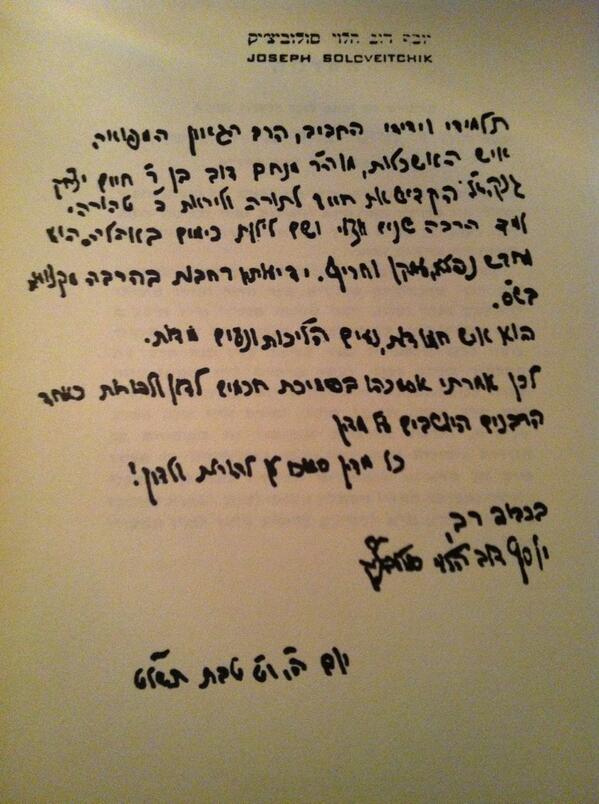
Rabbi Steinman and the Messiah, part 1

Rabbi Steinman and the Messiah, part 1

Marc B. Shapiro

Since in a recent post I discussed Maimonides and the Principle of the Messiah, let me add one more thing. Yet before doing so, I need to make a few preliminary comments. Many readers know about the Peleg, which has caused all sorts of problems in Jerusalem. After the passing of R. Yosef Shalom Elyashiv, the simmering dispute in the Lithuanian world broke out into the open, and a minority of the Lithuanian community refused to accept the leadership of R. Aharon Yehudah Leib Steinman, who was backed by R. Hayyim Kanievsky. The opponents, known as the Peleg, were led by the late R. Shmuel Auerbach.

While people are aware of the wild behavior of the Peleg youth as they are the ones who block streets in Jerusalem, there is very little awareness of what was another element of the battle in the Lithuanian community, and that was the attempt to delegitimize R. Steinman. An entire literature was created that focused on two things. The first was citing all sorts of things that R. Steinman said which were believed to be in opposition to haredi ideology. The point was to show that because of his supposedly liberal views he was not suited to lead the haredi world, and that he had departed from the approach of R. Shakh.[1]

The other focus, also found in Peleg publications, was to show that R. Steinman did not have the requisite Torah scholarship to lead the community. For obvious reasons, they never made this claim about R. Hayyim Kanievsky, and never explained why they felt able to disagree with R. Kanievsky who was the most outstanding backer of R. Steinman.

While this dispute was playing out, R. Steinman said something that was like manna from heaven for the Peleg, for now they had a chance to use some heavy “ammunition” on him, as they could claim that he rejected the Rambam’s Twelfth Principle which affirms the coming of the Messiah. In response to the attacks on R. Steinman, his defenders claimed that his words were taken out of context. During the dispute, a couple of people in correspondence with me wondered if R. Steinman should be added to the list of people who disagree with one of the Principles.

Here is a poster put up against R. Steinman by some unnamed extremist (found here).
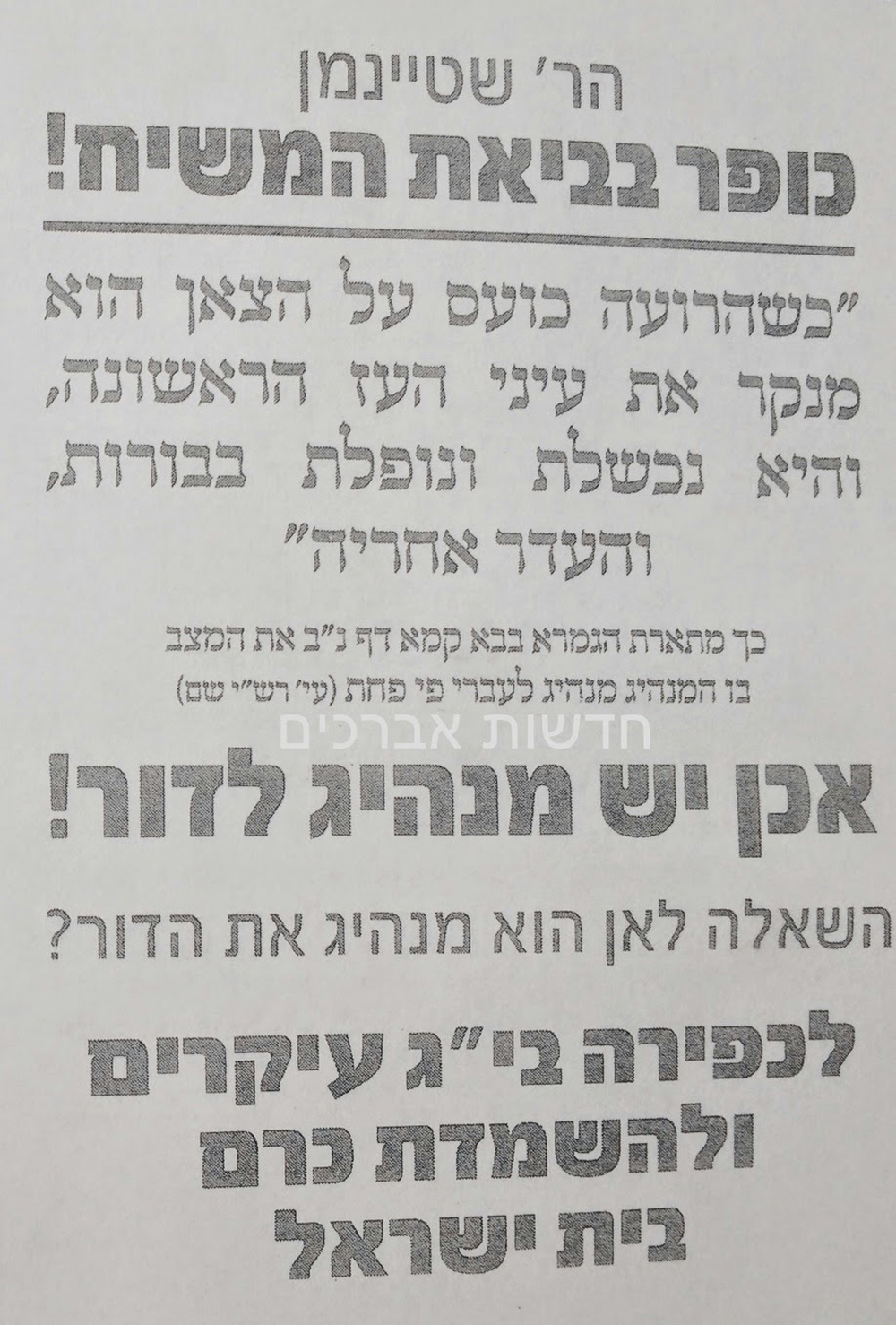
So what did R. Steinman say that created such a mini-explosion in the haredi world. You can find the transcript of R. Steinman’s words here. You can hear the actual conversation here.

R. Meir Zvi Bergman, in discussion with R. Steinman, said that according to the Rambam one must wait for the Messiah’s arrival and not merely believe in his coming.[2] In other words, there are two separate things that are required: 1. Belief that he will come, and 2. Actively awaiting his arrival. R. Bergman referred to the Rambam’s words in the Mishneh Torah, Hilkhot Melakhim 11:1, which seem to say exactly this:

וכל מי שאינו מאמין בו או מי שאינו מחכה לביאתו לא בשאר נביאים בלבד הוא כופר אלא בתורה ובמשה רבנו

R. Bergman later notes that this is also included as part of the Twelfth Principle. What he must mean is the following: In the Principle the Rambam says that we must believe that the Messiah will come, and he cites the verse from Habakkuk 2:3: “Though he tarry, wait for him.” By citing this verse, the Rambam is adding a second aspect to the principle, just like he later does in Hilkhot Melakhim.

I would add to this that presumably the Rambam also had in mind Shabbat 31a, which says that in the next world everyone will be asked if צפית לישועה. How this sentence should be translated is itself a problem. Soncino translates it as “Did you hope for salvation?”, while Koren translates as “Did you await salvation?” Hoping for salvation and waiting for it are two separate things.[3] Artscroll’s translation combines the approaches of both Soncino and Koren: “Did you wait in hope for the [Messianic] salvation?”

In response to R. Bergman’s point, about the need to actively wait for the Messiah, R. Steinman replies that no one fulfills this, namely, no one is really waiting for the Messiah. My understanding of what he said is that no one is consciously focusing on, and anxiously awaiting, the Messiah’s arrival. They believe that the Messiah will come, but in the meantime they are learning Torah and doing mitzvot and when he comes, he comes, but until then Jews have plenty to do to keep themselves busy.

R. Bergman is surprised by R. Steinman’s comment and states that the Rambam says that if one does not wait for the Messiah he is a heretic, to which R. Steinman repeats his earlier point that no one does this. Upon being questioned again, R. Steinman replies that this is a “decree that the community cannot follow.” He adds that people say that the Chafetz Chaim “waited” for the Messiah. “Maybe yes, I don’t know. This is what they say, maybe yes.” R. Steinman then adds that the Chafetz Chaim was unique, but the Torah was not given just for such special people.[4]

R. Steinman’s statements are quite provocative, first, because he expresses uncertainty if the Chafetz Chaim can really be said to have actively waited for the Messiah, and second, because he makes it clear that the other great rabbis did not really wait for the Messiah. It would have been controversial enough if all he said was that he himself, or the people of this generation, do not really wait for the Messiah, but he applied this statement also to great ones of previous generations.

As the conversation continues, R. Bergman insists that waiting for the Messiah is one of the Thirteen Principles, and that in earlier times people indeed did wait for the Messiah. R. Steinman replies that in earlier days the Jews suffered greatly and that is why they had a focus on the Messiah.

R. Moshe Schneider, who was R. Steinman’s havruta and present at the conversation, adds: “The Rambam in the Thirteen Principles says, ‘Even though he may delay, nevertheless, I wait daily for him to come.’ Doesn’t he mean that there is an obligation in the Thirteen Principles to wait [for the Messiah]?” R. Steinman could have pointed out that the version of the Principle found in the siddur which R. Schneider quoted was not written by the Rambam, and its words do not appear in the actual text of the Principle found in the Rambam’s commentary to Mishnah, Sanhedrin. However, I don’t know how much this would help, for as we have seen, in the Mishneh Torah, Hilkhot Melakhim 11:1, the Rambam is explicit about the need to wait for the Messiah.

וכל מי שאינו מאמין בו או מי שאינו מחכה לביאתו לא בשאר נביאים בלבד הוא כופר אלא בתורה ובמשה רבנו

R. Bergman adds that if people do not fulfill this aspect of the Principle, then all the Thirteen Principles are weakened.

So far we see that R. Steinman held that the Principle is to believe in the coming of the Messiah, but this does not mean that one has to “wait” for him, which I think means to have a focus on the Messiah and actively wait in hope for his return.[5] We also see that R. Steinman himself was not “actively waiting” for the Messiah. Although Chabad claims that a focus on the Messiah is basic to Judaism,[6] it appears that R. Steinman thought otherwise. The Hatam Sofer already mentioned—in opposition to Maimonides—that the Messianic idea, while of course true (and denial of it is heresy), is not an essential element of Judaism, namely, basic to the very structure of the religion.[7]

אא לי בשום אופן להאמין שיהי‘ גאולתנו אחד מעיקרי הדתושאם יפול היסוד תפול החומה חלילה . . . ועכפ הגאולה וביאת המשיח איננה עיקר

Many have wondered about these words of the Hatam Sofer. Yet they are simply a repetition of what appears in Nahmanides, and as is well known, the Hatam Sofer greatly valued the writings of Ramban. Here is what Nahmanides states (and as with the Hatam Sofer, despite these words he continues by noting that denial of the messianic idea is indeed heresy):[8]

ודעיעזרך האלהיםכי אם נסכים בלבנו שפשעינו וחטאת אבותינו אבדו ממנו כל הנחמותושיארך ויתמיד עלינו הגלות מאין קץ וסוףוכן אם נאמר שרצה האלהים לענותנו בעולם הזה בשעבוד המלכיות לרצון או לתועלתכל זה לא יזיק בעיקר התורהכי אנחנו אין תכלית גמולנו ימות המשיחואכול פירות הארץ ההיאוהתרחץ בחמי טבריה וכיוצא בהן מן התענוגיםגם לא הקרבנות ועבודת בית המקדש תכלית רצוננו רק גמולנו ומבטנו העולם הבאוהתענג הנפש בתענוג הנקרא גן עדן והנצל מעונש גיהנם

Returning to R. Steinman’s conversation, in response to R. Bergman he cites R. Hillel’s view (Sanhedrin 99a) that there will be no Messiah for Israel, “because they have already enjoyed him in the days of Hezekiah.” It is not clear why he cited this. Was R. Steinman stating that one does not need to believe in an individual Messiah at all, in accord with the commentary to attributed to Rashi’s understanding that R. Hillel’s point is that in the future there will only be a messianic era, not a Messiah? R. Bergman asks R. Steinman point blank if he holds like R. Hillel in opposition to the Rambam, and R. Steinman does not answer the question, instead replying, “It is enough for us to observe the mitzvot that we can.”[9] 

R. Steinman’s point in mentioning R. Hillel could also be that R. Hillel certainly did not “wait” for the Messiah, as he thought that the Messiah had already arrived. Nevertheless, he is not regarded as a heretic, thus showing that this point is not essential. In any event, it is obvious that R. Steinman was not happy with R. Bergman’s focus on the details of the Twelfth Principle, and instead wanted the focus to be on the performance of mitzvot.

Not surprisingly, when the tape of R. Steinman speaking to R. Bergman was released it created a great controversy, which was called סערת המשיח. For attacks on R. Steinman by Satmar rabbis, which degrade him in the most harsh way, including one that says that R. Steinman is “worse than Kook,” see here.

A Chabad rabbi, R. Yechezkel Sofer, also responded to R. Steinman’s words (see here), and he makes a very interesting point which could explain what R. Steinman was getting at. R. Sofer states that one is not a heretic if he is lacking an emotional connection to the coming of the Messiah. The problem is only if one develops an intellectual position that there is no reason to wait for the Messiah. R. Sofer adds, however, that from a hasidic perspective a higher level of “waiting” is required, which he acknowledges not everyone is capable of. Here is how he concludes, and the second part of the sentence must be seen as a put-down of all those who do not put a stress on constantly waiting for the Messiah.

רק במישור החסידות ופנימיותהתורה נדרש רף גבוה של ציפייה‘ שלאו כל מוחא סביל דאובהעדרהציפייה מורהשבתוככינפשוחלשה אמונתו במשיחאחרת ודאי היה כולו משתוקק אמתי קא אתי מר

I think R. Steinman can be explained very simply, that despite what the Rambam says, it is difficult for virtually anyone to be emotionally invested in the coming of the Messiah, and thus have a sense of waiting for him, especially waiting constantly (every day) which is how the Principle is formulated in the siddur. R. Steinman was saying, what is the point of speaking about something which hardly anyone can fulfill? At the end of the day, it is enough to believe in the coming of the Messiah without adding anything else to this basic belief.

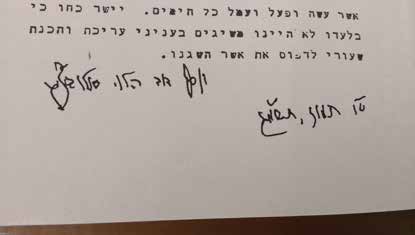
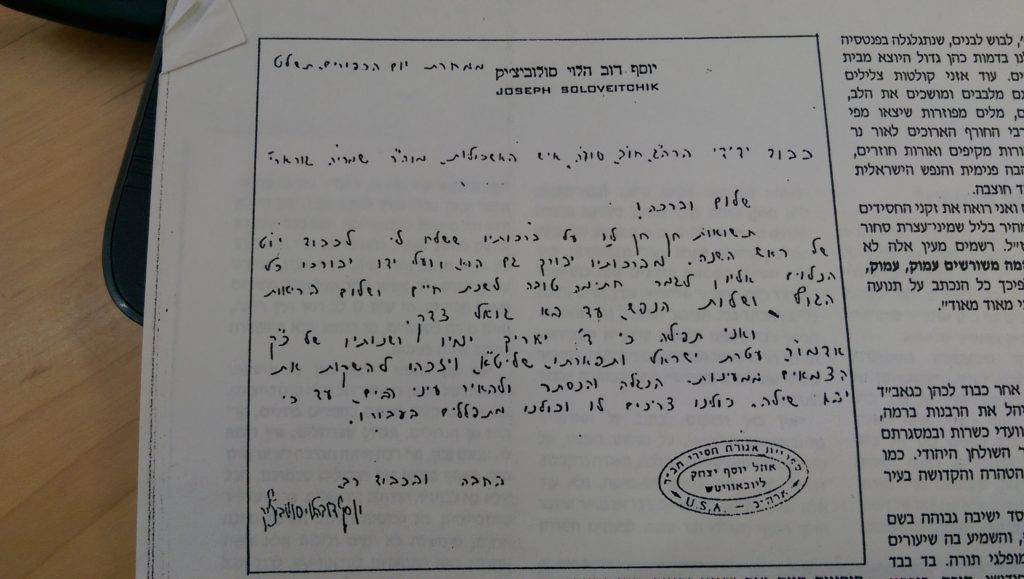
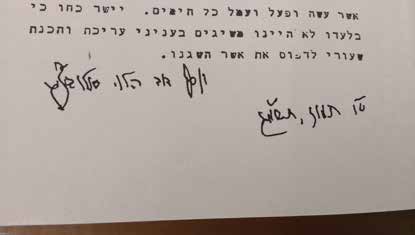
R. Avraham Yehoshua Soloveitchik defended R. Steinman, and this is some of what he said before he moved into a general attack on the Peleg:[10]

גאון אחד נכנס לביקור בביתו של ר‘ יחזקאל אברמסקי זצל וראה על השולחן בסמוך אליו ספר שעוסק בציפייה למשיח” שחיבר אדם בן זמנינומיד הוא פנה אל ר‘ חצקל ושאל: “מה הספר הזה עושה אצלך על השולחן“? השיב לו ר‘ חצקל‘: לפניך נכנס כאן יהודי שאיני מכיר והביא לי את הספר הזה שהוא חיברוהוסיף ר‘ חצקל‘: פעם נכנס לרוגוטשובער יהודי שהיה מאוד מוטרד ושאל מה עושים ואיך מחזקים בציבור את העניין של אמונה בביאת המשיחהשיב לו הרוגוטשובערפרנסה כבר יש לךאוכל לאשתך ולילדים אתה נותןקודם כל תדאג לעניינים הללו אחר כך תדאג למשיח.

סיים ר‘ חצקלגם אני רציתי לשאול את היהודי שחיבר את הספר הזה האם פרנסה כבר יש לךאוכל לאשתך ולילדים אתה נותןאלא שנמנעתי רק מפני שחסתי על כבודו

The upshot of R. Soloveitchik’s point is that thinking about the Messiah is not something that needs to be at the top of our concerns. Using Scholem’s terminology, we can say that R. Soloveitchik’s approach is that of neutralization of the messianic impulse. Should we be surprised that after R. Soloveitchik’s words were made public he too was attacked.[11] Here is a poster against him that was plastered on walls in Jerusalem.

Whatever you may think of R. Soloveitchik’s words, I don’t know how to square them with what his grandfather, R. Isaac Zev Soloveitchik (the Brisker Rav), is quoted as saying, that not only must we await the Messiah every day, but we must do so the entire day and every instant.[12] R. Moshe Mordechai Shulzinger notes, based on the Brisker Rav’s understanding, that all those who give dates when the Messiah will arrive are undermining Maimonides’ Principle (which he explains in line with Maimonides’ words in Hilkhot Melakhim), because the result of their predictions is that they (and those who follow them) will not believe that the Messiah can come at any minute, as they will only be expecting him at a future time.[13]

R. Shulzinger also explains the meaning of the Brisker Rav in a different way than his words are usually understood. He says that what the Brisker Rav meant is that one must believe that the Messiah can come at any instant, and that is the meaning of “waiting” for the Messiah. Understood this way, the Brisker Rav’s point is exactly in line with what R. Steinman said, for R. Steinman never denied that the Messiah could come at any time. He simply said that the idea of consciously waiting for the Messiah is not something that a typical person can do. Here are R. Shulzinger’s words:[14]

זה חיוב של אמונהשמאמין שיכול לבוא בכל רגעוהאינו מחכה” – הוא מי שהחליט בלבו חו על זמן מסוים שעדיין לא יבואומפני זה – הזמן ההוא מופקע אצלו מלחכות ולצפותוזה הוא חסרון אמונהוזה מיקרי שאינו מחכה לביאתו“, רחל . . . כשמאמין שיכול לבוא בכל רגע – הרי זה מחכה לביאתו“.

R. Shulzinger also prints a letter he sent to an unnamed rabbi who had argued that when the Rambam speaks of “waiting” for the Messiah, it does not mean that you must really believe that he can come at any minute. This rabbi compares it to someone who has a son in prison. He waits for the son to return home, even though he knows that this will not happen in the near future. According to the unnamed rabbi, this too falls under the Rambam’s understanding of “waiting,” a point that R. Shulzinger strongly rejects.[15]

In line with his understanding of the meaning of “waiting”, R. Shulzinger also makes the following very interesting point, which I don’t know if everyone would agree with: A person says that he would prefer that the Messiah not come in the near future, but only in a few years as he will by then have completed study of the entire Talmud, and will be more prepared to greet the Messiah. Nevertheless, this person knows that God does not take into account his wishes, and he believes that the Messiah can come at any instant. R. Shulzinger says that this person has not violated Maimonides’ Principle. In other words, the Principle requires the belief that the Messiah will come, and can come at any instant. Yet it does not require you to actually desire the Messiah’s arrival. Thus, to give a different example than that offered by R. Shulzinger, if someone has a very good business in the Diaspora, it could be that while he believes in the coming of the Messiah, he does not actually want this to happen, because he thinks that after the Messiah’s arrival all Jews will have move to Israel, and he does not want to give up his thriving business. According to R. Shulzinger, these sentiments would not be in contradiction to Maimonides’ principle:[16]

שהצפי‘ המחכה הוא שיעור בהצהרת גודל האמונה שלי בזה [לא הצהרה של רצון או לא רצון], כמדו‘ שזה נקרא מאמין ומחכה ומצפה לביאתו בכל רגע

To be continued

Excursus

Is there anywhere in tannaitic or amoraic writings where it says that all Jews will live in Israel is messianic days? I ask because this certainly does appear to be a widely held view throughout Jewish history. Maimonides states that “all Israel” will be gathered around the Messiah (Hilkhot Melakhim 12:3), but I don’t think this can be taken literally. I say this since according to Maimonides the messianic era will not be an era of open miracles, and people will still have free will, including free will to sin, so one can assume that some Jews will choose to remain in places outside of Israel. For those who see the messianic era as a time of miracles, when life will not continue as it does now, then it makes sense to imagine a time when all Jews will come to Israel. Thus, R. Isaac Abarbanel states that in messianic days not even one Jew will remain outside of Israel. See his commentary to Ezekiel 39:28 (p. 583), Mashmia Yeshuah, ed. Golan (Bnei Brak, 2014), pp. 72, 208. This is also stated on many occasions by the Lubavitcher Rebbe. See e.g., Likutei Sihot, vol. 11, pp. 1ff.

On the other hand, R. Shmuel Tuvyah Stern understands the issue in a purely naturalistic way. He states that the Jewish people are themselves obligated to go to Israel, as God will not be bringing them there. Those who refuse to go, or delay in going, are preventing the Jewish people in the Land of Israel from the performance of certain mitzvot that come into effect when the majority of the Jewish population lives there. (Regarding these mitzvot, see R. Yehudah Amihai here.) In other words, R. Stern acknowledges that even in messianic times not everyone will follow the Torah path. See She’elot u-Teshuvot ha-Shavit, vol. 9, p. 62:

ובאמת כשם שהקבה הבטיח לגאול אותנו כך חייב אותנו להגאל ולקרב את הגאולהואלו בני עמנו שהם מאחרים לצאת מן הגולה ומעכבים את הגאולה מבטלים אחת מהמצות הכי עיקריות של התורהכי הגאולה היא כמפתח להרבה מצות התלויות בארץ ובגולה . . . ואלו שמעברין זאת מבטלין מצות הרבים מישראלוהנה זכות הגאולה היא מצד הקבה שהוא מזכה אותנו בגאולהוחוב הגאולה היא מטעם ישראל

This topic has relevance to the issue of Yom Tov Sheni. Will it still be celebrated in messianic days for those Jews living outside of Israel? Since we will return to the old way of declaring Rosh Hodesh, rather than by a calendar, the assumption in pre-modern times would presumably have been yes, as far flung places would still not know what day was declared the New Moon. However, with modern communications, it would seem that there will be no Yom Tov Sheni in messianic days, even for people who live in the Diaspora.

Writing before the invention of modern communications, R. Moses Sofer states that there will indeed be Yom Tov Sheni in messianic days. See Derashot Hatam Sofer, vol. 2, p. 274b, s.v. למען. He sees this as in remembrance of our time in exile. See, however, ibid., p. 208a, s.v. כל, where he says that Yom Tov Sheni will be abolished in messianic days, and that this is the meaning of the rabbinic teaching in Yalkut Shimoni, Mishlei no. 944: “All the festivals [i.e., Yom Tov Sheni] are to be abolished in the future [messianic era], but Purim will never be abolished.”

Elsewhere, in speaking of Yom Tov Sheni in the messianic era, R. Sofer refers to it as ב‘ ימים טובים של גאולתינו. He makes this comment while discussing R. Judah’s position in Gittin 8a: “R. Judah holds that all islands fronting the coast of Eretz Israel are reckoned as Eretz Israel” (see his commentary to Beitzah 4b. See also his commentary to Beitzah 24b and She’elot u-Teshuvot Hatam Sofer, Orah Hayyim no. 145 [end]). R. Sofer notes that this means that all islands in the Mediterranean on the same latitude as the biblical Land of Israel (which extends into Lebanon), are regarded as belonging to Israel. If you look on a map (and you can actually see a good one in the Koren Talmud, Gittin 8a) you will see that this means that Cyprus, Crete, and Sicily are part of the territory of Israel. R. Sofer states that Jews who live in these places in messianic days will have to observe a second day of Yom Tov.

It is not clear to me why R. Sofer assumes that R. Judah’s position is accepted. See Tosafot, Gittin 8a, s.v. Rabbi Yehudah, where Rabbenu Tam states that we do not accept his position. Maimonides, Mishneh Torah, Hilkhot Terumot 1:7, also rejects R. Judah’s opinion.

In describing how far the territory of Israel extends, the R. Sofer writes (Teshuvot, Orah Hayyim, no. 145 [end]):

דכל הנסין שבים הגדול עד אוקיינוס שייכים לארץ ישראל והוא עד מצר רמון ספרד

The word נסין, which he uses, is found in Gittin 8a and it means “islands”. See Jastrow, s.v. נס and ניסא.

(Regarding R. Judah’s position about the islands being included as part of Israel, R. Hayyim Kanievsky points to Psalms 97:1: “The Lord reigneth; let the earth rejoice; let the multitude of isles be glad – ישמחו איים רבים.” R. Kanievsky asks why does it say איים in plural. He answers that this makes sense according to R. Judah’s view that the islands opposite Israel are included in the territory of Eretz Yisrael. See R. Kanievsky, Ta’ama de-Kra to Ps. 97:1.)

In the quotation above, R. Sofer refers to רמון ספרד. In medieval Hebrew, this is how the kingdom of Granada is called. The word “Granada” means pomegranate, which are abundant in that part of Spain, and a pomegranate was on the kingdom’s coat of arms (and is also found on the contemporary Spanish coat of arms). The reason the kingdom was generally called Rimon Sefarad and not just Rimon, which would be the literal translation of “Granada”, is because the expression רמון ספרד is a play on the biblical place רמון פרץ that is mentioned in Num. 33:20. See R. Meir Mazuz, Bayit Ne’eman, vol. 1, p. 32. In Yehudah Halevi’s poem בעברי על פני רמון the first line reads בעברי על פני רמון מפחד. Some scholars believe that instead of מפחד it should read ספרד. See Halevi, Diwan, ed. Brody (n.p., 1971), vol. 1, p. 78 (note to poem no. 34). Yet Halevi elsewhere does refer simply to רמון. See Diwan, vol. 1, p. 153, line 59, and vol. 2, p. 280, line 46

Since the Hatam Sofer is absolutely clear in what he writes, that the boundary of Israel extends until the end of Granada, which means the Atlantic Ocean, I don’t understand how R. Mordechai Winkler can cite without objection a report that R. Sofer said that England also falls within the borders of Israel. See Levushei Mordechai, Yoreh Deah vol. 3, no. 49.

R. Hayyim Hirschensohn interprets R. Judah’s position differently than the Hatam Sofer. He assumes that R. Judah is speaking not of the Mediterranean but of the Atlantic Ocean, and thus the territory of Israel extends all the way to the United States. He also interprets R. Judah to be including not merely the islands but also the land territory that is on the same latitude as Israel. What this means is that a good deal of the southern United States is included in the territory of Eretz Yisrael! Furthermore, R. Hirschensohn claims that according to R. Judah you can pray in the direction of these southern states, and those in the U.S. who want to fulfill all opinions should do this!. (Interestingly, he also does not see any significance for people in the U.S., who are so far from Israel, to face the Holy Land in their prayers.) See his article in Avraham Moshe Luntz, ed., Yerushalayim 8 (1909), p. 196:

והרוצה לצאת ידי כל הדעות יתפלל באמירקא [!] נגד הדרום כי לדעת ר‘ יהודה (בגיטין דח עאשכל שכנגד ארץ ישראל הרי הוא כארץ ישראל . . . זה כולל חלק גדול מצפון אלגריאובאמירקאדרום סויט קארליינאצפון דזארזיצפון אלאבאמאצפון מסיסיפיצפון לוזיאנידרום אריקאנסיסצפון טעקסיסדרום ניו מעקסיקודרום אריזאנאדרום קאליפארנעכל אלה המקומות לדעת ר‘ יהודה הם ארץ ישראלוהעומד בתפלה נגדם כעומד נגד ארץ ישראל

See also R. Yeshayahu Steinberg in Ha-Ma’yan, Tishrei 5775, pp. 43-44, who has a different approach according to which even Northern France is perhaps regarded as having the holiness of Eretz Yisrael. He even says that if someone is forced to live in the Diaspora, it is better to live in northern France since it is in some sense part of Eretz Yisrael!

ויש נפמ מסוימת בדיון זה לעניין בדיעבדאם אדם נאלץ לדור בחול ויש לו אפשרות בחירה – יעדיף לגור בצפון צרפת במקום שאותו הזכירו בעלי התוס‘ הנלכי יש במקום זה צד של קדושת אי ומניעה של עזיבת אי לגמרי

If one has to live in the United States (or west of it), then R. Steinberger says that it is best to live in places on the latitude of Israel (that is, the places mentioned by R. Hirschensohn).

I don’t mean the following to be disrespectful, but I can’t help commenting that what R. Steinberger says might make sense on paper, but I am certain that no one in history has ever  made living plans based on the assumption that there is some spiritual advantage due to the holiness of Eretz Yisrael to living in northern France or South Carolina over anywhere else in the Diaspora.

**********

It has been a while since I have done a quiz, so let me offer one now. Email me with answers at shapirom2 at scranton.edu

1. If you look at older machzorim, in the Tekiat ha-Shofar between the first two sets of blasts you find the letters שב. What is this about?

2. Where in Rashi’s commentary on the Talmud does he say that a certain individual knew all of Shas?

***************

[1] In addition to citing “liberal” passages in R. Steinman’s works in order to discredit him, they also cited a number of strange things that he supposedly said, also in order to discredit him. As always with these types of attacks, it is hard to know if R. Steinman really said what they claim he did. There is a long history of famous rabbis being misquoted, both by opponents and even more so by supporters. Thus, I find it incredibly difficult to believe that R. Steinman ever said the following which is quoted in his name by an unnamed student.

פעם אמר רבנו הגראי”ל, שאודות השואה כולם חושבים על האסון שנהרגו הרבה מכלל ישראל, אבל יש כאלו שבאמת היה עדיף שיהרגו, כי הם היו מחללי שבת וע”י זה שנהרגו עשו פחות עבירות. היטלר הרג את כל המשומדים שהתבוללו בזדון, וזה דבר אחד טוב שיצא מהאסון הזה, שנהרגו כל המשומדים

Me-Ahorei ha-Pargod (Bnei Brak, 2012), p. 454.
[2] R. Bergman discusses this matter in his Sha’arei Orah, vol. 1, pp. 264ff.
[3] Generally, we understand “salvation” to mean the Messianic era. However, see R. Zvi Shapira in his commentary on the Sefer Mitzvot Katan, vol. 1, p. 5, who explains that for the Semak, it refers to individual salvation of various kinds.

דרבינו זל אית לי‘ פירושא אחרינא בהך דצפית לישועהוסל דלא קאי אישועה הכלליתאלא קאי אישועה פרטית לפי הזמןוהיינו דכל אחד לפי מצבו בעת שנצרך לאיזה דבר וקשה לו להשיגומקרי שהוא נזקק לישועה ונצטוה לצפות לה

[4] See also the Chafetz Chaim, Mahaneh Yisrael (Jerusalem, 1973), p. 172:

וכמו שאנו אומרים בתפלה כי לישועתך קוינו כל היום וכתבו בספרים שלא דוקא על הגאולה בלבד צריך לצפות אלא על כל מין צרה שלא תבא צריך לצפות לישועת ה‘ וכבר כתבו בשם הארי זל שבכל יום כשאומר כי לישועתך קוינו כל היום יכוין שמצפה לישועה על כל צרה שנמצא בו

Regarding the Chafetz Chaim, in his Mahaneh Yisrael there is an entire chapter (ch. 25 in the 1973 edition [in the first section]) on the issue of the future redemption. The chapter’s title is

גאולת ישראלבו יבואר שצריך האדם לצפות תמיד לגאולת ישראל

At the beginning of the chapter he writes:

שלא דיי [!] באמור בפה שהוא מצפה לישועה אלא צריך להיות מצפה לישועה בלב שלם ואמונה שלמה

R. Shmuel Greineman writes as follows about the Chafetz Chaim (Chafetz Chaim al ha-Torah, p. 229):

והי‘ מרגלא בפומי‘ תמידכי משיח צדקנו יבוא פתאוםאם רק נחכה עליורגילים אנו לומר כי מחכים אנחנו לך“, “ואחכה לו בכל יום שיבוא“, אבל אנו אומרים זה רק בפינוולבנו בל אתנו

R. Yehezkel Levenstein, Or Yehezkel, vol. 3, p, 298, writes:

התעוררתי לדבר בעניני הגאולה מפני שהתעוררתי בעצמי לזה לכן הנני מרגיש שמחובתי לדבר בענינים אלווזכורני שהחפץ חיים זל היה ממשיל את צורת הצפיה למלך המשיח לחולה אנוש היודע כי רופא גדול בא לבקרו ולהמציא תרופה למחלתוועומד וממתין לביאתו וכל נקישה בדלת גורמת לו להתרגשות שהנה בא הרופא אליווכל שעת איחור אינה ממעטת מצפיתו אלא להיפך עומד ומצפה הנה בודאי עתה יבוא וירפאהוכן חייב להיות הציפיה לביאת הגואלוכל שאינו ממתין כן חייב לחזק את עצמו באיזה אופן שהוא כדי שיוכל להיות מהמחכים לביאתו

The same analogy that R. Levenstein cites in the name of the Chafetz Chaim is cited by R. Elijah Dessler in the name of his father-in-law, R. Nahum Zev Ziv. See Beit Kelm, vol. 2, p. 131.
[5] Regarding Maimonides’ Principle of the Messiah, R. Moses Salmon, Netiv Moshe (Vienna, 1897), p. 44, makes the interesting comment that in the days of the Sages, belief in the Messiah was not a dogma, denial of which would have been regarded as heresy:

שבדורות חכמי המשנה והתלמוד לא היתה אמונת המשיח עוד אמונה עיקרית בישראל ככ עד שיהי‘ הכופר בה ככופר בעיקר הדת אשר הוא אמונת האחדות . . . ואף שהרמ זל מנה אותה בעקריםהנה הוא זל דבר מהדורות האחרונים ואילך ולא מהדורות התנאיםכי מצאנו בתנאים את ר‘ הלל שאמר אין משיח לישראל (סנהדרין צט עבורע גם הוא טעה בבר כוזיבא ודרש עליו הפסוק דרך כוכב מיעקב שהוא משיח (איכה רבתי פסוק בלע ה‘) ובכל זאת לא מצאנו שהרחיקום מכל [!] ישראל בעבור זאת.

I don’t understand his point about R. Akiva, as unlike R. Hillel, he did not deny the concept of a Messiah. He just falsely identified Bar Kokhba as the Messiah. Also, it is not clear whether R. Hillel was a tanna or an amora. See my Limits of Orthodox Theology, p. 141 n. 10.
[6] Regarding Chabad and the Messiah, it is worth noting that Elliot Wolfson has argued that the Rebbe’s secret teaching is that there will be no physical redeemer. Rather, the messianic redemption is able to occur within each person. See Open Secret: Postmessianic Messianism and the Mystical Revision of Menahem Mendel Schneerson (New York, 2009).
[7] She’elot u-Teshuvot Hatam Sofer, Yoreh Deah, no. 356. The Hatam Sofer’s descendant, R. Akiva Glasner, was shocked by what his forefather wrote. See R. Glasner, Ikvei ha-Tzon (London, 1958), p. 104:

אני עומד ומתמיה על קז החתס זצוקל אשר בניגוד אל מה שהעתקתי מדבריו הקדושים הנל פלטה קולמוסו הטהורה דבר המפליא ומבהיל כאחד בתשובותיו

[8] Kitvei Ramban, ed. Chavel, pp. 279-280. See also ibid., p. 324, where Nahmanides has strong words about those who only focus on their personal lives rather than praying for God to bring the messianic era.

כולנו כצאן תעינו איש לדרכו פנינויאשים את ישראל בעבור כי הם בגלותם ישימו כל כוונתם בעסקי העולםומשים כל אחד כוונה לעצמו ביתו ועסקיווראוי להם להיות בוכים ולהתפלל לפני ה‘ לילה ויום שיכפר על עוון ישראל ויחיש קץ הגאולה.

[9] R. Meir Mazuz offers the fanciful suggestion that the reason the Ashkenazic version of Kaddish—and I guess he would include R. Amram Gaon as well—did not include ויקרב משיחיה is so as not to decide against R. Hillel. See Or Torah, Tevet 5778, p. 337. Yet as R. Mazuz himself notes, even Ashkenazim say in the Amidah: ומביא גואל לבני בניהם.

In Kevatzim mi-Ketav Yad Kodsho, vol. 1, p. 37, R. Kook explains R. Hillel’s position as follows:

הלל הי‘ חושב שמציאות מלך באומה בא מצד חסרון המוסראמנם ברוממות המוסר צריך רק תוקף לאומי גדול ונעלה,על כן אמר אין משיח לישראלכי אם בא יבא לנו תוקף לאומי נהדר מאדוכח שלטון של ישראל הוא המשיחות

Yeshayahu Leibowitz claims that R. Hillel’s statement was directed against the Christians. He was telling them not to believe that Jesus is the Messiah, as the Jews already enjoyed the messianic era in the days of Hezekiah. See Sihot al Torat ha-Nevuah shel ha-Rambam(Jerusalem, 1997), pp. 400-401. Graetz already offered this suggestion. See Encylopaedia Judaica, s.v. Hillel.
[10] See here where the poster against him that I include is also found.
[11] Unlike R. Avraham Yehoshua, R. Meir Soloveitchik spoke out against what R. Steinman said. See here. As long as we are speaking about the Jerusalem Soloveitchiks, let me also mention that R. Meshulam Dovid Soloveitchik writes that one who truly waits for the Messiah understands what the Zionists are all about. He also adds that those who have any happiness about the State of Israel are lacking in their belief in the coming of the Messiah. See Shiurei Ha-Gaon Rabbi Meshulam ha-Levi: Derush ve-Aggadah (Jerusalem, 2014), p. 601:

והנה מי שברור אצלו לגמרי ענין האמונה והציפיה לביאת המשיח הוא יודע להסתכל כראוי על הציוניםומי שיש לו משהו של שמחה על המדינה ועל השלטון והחוקים שלהם הדבר מוכיח שחסר אצלו באמונה בביאת המשיח.

R. Meshulam Dovid Soloveitchik has many pages in which he blasts Zionism and the State of Israel in the harshest way imaginable. Yet after all this, he adds that nothing he says should lead to the degrading of any Torah scholar who is mistaken in this matter—a lesson Satmar authors would do well to learn— and this was the path of both his father, the Brisker Rav, and his grandfather, R. Chaim. See ibid., pp. 601-602:

אמנם צריך לדעת שכל מה שאנו מדברים . . . זהו על השיטה ולא לזלזל באנשים חרדים אפילו אם טועים בהשקפתם לילך אחריהםובודאי שאסור לבזות תח וצריך להיזהר בכבוד התורה ולהתנהג עמם בדרך ארץובנפש החיים כתב דהמבזה תח שאין לו חלק לעוהב זהו אפילו תח שלומד שלא לשמהצריך לרחם עליהם על שטועים טעות מרה שכזואבל אסור לבזותםבכל השנים שהייתי אצל מרן זל לא ראיתי מעולם שביזה מישהווגם הגרח זל לא ביזה שום אדםהרבה מעשים שמעתי בבית ומעולם לא שמעתי שביזה מישהו.

[12] Haggadah shel Pesah mi-Beit Levi, p. 120. R. Moshe Feinstein had the same basic approach. See Iggerot Moshe, Orah Hayyim 5, no. 8:

משום דהחיוב בכל יום ויום לצפות כעין וודאי שיבא היום

As the Messiah can come at any time, including during the Covid pandemic, R. Gamliel Rabinowitz wonders if kohanim would be permitted to wear masks while performing their service in the Temple. See Or Torah, Elul 5780, p. 1327.
[13] Peninei Rabbenu Ha-Griz, p. 376. R. Yekutiel Yehudah Halberstamm, Shefa Hayyim: Derashot Humash-Rashi 5742, p. 431, goes so far as to say (emphasis added):

שהרמבם הק‘ פוסק הלכה ברורה שאסור לאדם אפילו לחשוב שמא יתאחר זמן ביאתו של מלך המשיחאלא להאמין באמת שמשיח צדקנו יכול לבוא בכל רגע

R. Jacob Sasportas, Tzitzat Novel Tzvi, ed. Tishby (Jerusalem, 1954), p. 41, writes:

 כי אמונת הדת היא שבכל יום ויום ובכל שעה ורגע בוא יבוא האדון אשר אנו מבקשים

[14] Peninei Rabbenu ha-Griz al ha-Torah, p. 383.
[15] Peninei Rabbenu ha-Griz al ha-Torah, pp. 382ff.
[16] Peninei Rabbenu ha-Avi Ezri, p. 417. There are myriads of other possible reasons why one might not wish the Messiah to come soon or even at all. Consider this hypothetical case: A man who intermarried and had children later became a ba’al teshuvah and divorced his wife. He is now hoping that his former wife and children will convert. However, it will take some time for him to convince them that this is the best path. This man, who now goes to Daf Yomi, learned from Yevamot 24b that in the days of the Messiah no converts will be accepted. So while the man believes in the coming of the Messiah, and wants him to come, he does not want him to come too quickly, since he figures he needs a couple of years before his family will be ready to convert. While some will regard this man as a heretic for not waiting in hope for the Messiah every single day, according to R. Shulzinger’s understanding of the Brisker Rav, there is nothing lacking in this man’s belief in Maimonides’ Twelfth Principle.



R. Ahron Soloveichik: “In Defense of My Brother”

R. Ahron Soloveichik: “In Defense of My Brother”

Marc B. Shapiro

In his recent post here Professor Shnayer Leiman showed how almost magically, things from the past, thought to be lost, can be brought back to life as it were. I recently had the same experience. In my Torah in Motion class a couple of weeks ago (see here) I was discussing the Jewish Observer “eulogy” for R. Joseph B. Soloveitchik. I mentioned R. Moshe Tendler’s strong response in the Algemeiner Journal (see here), and I further noted that R. Ahron Soloveichik also wrote a very long article in the Algemeiner in which he defends the Rav against the attack of a certain rabbi. (R. Ahron also deals with the Jewish Observer article).

For many years I have been trying to get a copy of R. Ahron’s article as unfortunately I never saved it years ago. I couldn’t find the particular issue at any of the libraries I checked. Even the family of R. Ahron was not able to provide a copy. Yet as Leiman mentions in his last post, “Miracles sometimes do occur.” In my class, I mentioned how I was not able to find the article, and I hoped that it could still be discovered somewhere. One of the listeners contacted me to let me know that in his grandfather’s papers he found it! ברוך שמסר עולמו לשומרים (The listener’s grandfather was the great R. Shlomo Schneider, author of the four-volume collection of responsa Divrei Shlomo.)

The Seforim Blog is happy to be able to post R. Ahron’s article, thus preserving it for posterity. See here.

Exciting Update: All of the relevant articles from the Algemeiner Journal (and other publications) relating to the passing of Rabbi Joseph B. Soloveitchik will appear in a forthcoming essay at the Seforim blog that I will co-author with Mr. Menachem Butler of Cambridge, MA, who has done extensive research into this episode over many years and has graciously made available his research for the Seforim blog readers.


In Memoriam: Rabbi Dr. Norman Lamm z”l

In Memoriam: Rabbi Dr. Norman Lamm z”l

by David Berger

In the early modern period, we find reference in the works of Jews in the Islamic orbit to the ideal of a hakham shalem—expert in both Torah and the various forms of wisdom. If we wish to be yet more ambitious, we can imagine an individual who supplements these already daunting characteristics with a constellation of exceptional personal qualities.

Rabbi Norman Lamm came remarkably close to meeting this extraordinary standard. He was a major thinker who articulated and embodied an ideal of interaction between Torah in its purest sense and world civilization and culture. He contributed to the academic study of Jewish thought. He composed works that inspired Jews to renewed and enhanced observance of mitzvot. He delivered shiurim to classroom audiences and to packed auditoriums, and he published a book of hiddushei Torah. He was an orator of almost transcendent talent; no one in the Jewish world—certainly in the Orthodox world–after Rav Soloveitchik came close. He radiated atzilut (which I would translate inadequately as an aristocratic demeanor) while maintaining genuine concern for virtually everyone he knew; he is said to have responded personally to every letter he received, and he sent congratulatory notes to friends and acquaintances upon reading a review or even a letter to the editor of which he approved. He stood at the helm of a religious movement, leading its central, indispensable institution, founding the Orthodox Forum, the Orthodox Caucus, and the Torah u-Madda Project, serving as the first editor of Tradition, and initiating GPATS, the primary expression of Modern Orthodoxy’s commitment to genuinely advanced Talmud study for women.

Several years after Gerson D. Cohen left Columbia to become Chancellor of the Jewish Theological Seminary—and well before his tragic, debilitating illness– he told me, “I am out of commission as a scholar.” Cohen was a brilliant, driven figure of stunning intellectual breadth and vibrant energy. I often thought of this comment when contemplating the remarkable productivity of Norman Lamm as he led a much larger, far more complex institution, and I shook my head in wonderment.

My one opportunity to characterize an aspect of Rabbi Lamm’s multifaceted accomplishments came when I was invited to write the Foreword to the Deuteronomy volume of his Derashot Ledorot, a series made possible by my wife Pearl, who was then Dean of Yeshiva University’s libraries. She spearheaded an initiative—in consultation with Rabbi Lamm– to place the treasure trove of his typewritten sermons in a digitally accessible data base, which continues to register triple-digit hits on a weekly basis, available here.

In that Foreword, I wrote about my reaction to his sermons, noting among other things his linguistic brilliance. My favorite example was his striking reformulation in a sermon about the drug culture of the late 1960’s of a classic line by Marx. “Opium,” said Rabbi Lamm, “is the religion of the masses.”

I conclude with the following passage from that Foreword recording two memorable incidents unrelated to the published sermons:

One [of these incidents] left me with an enduring impression of Rabbi Lamm’s extraordinary sermonic instinct, and the other revealed a sharp, quick, and agile mind that supplemented the deep and serious intellect expressed in his scholarly and philosophical works.

In March of 1987, Yeshiva University held “A Centennial Event Honoring the Establishment of the Yeshiva University Archives.” Because the archives contain major collections relating to the Holocaust, particularly the records of Orthodox organizations like Vaad Hatzalah and Rescue Children, the program was entitled, “Zachor: Written and Oral History,” and Prof. Geoffrey Hartman of Yale, who directed a video archive of Holocaust-related testimonies, was invited to address the gathering. Rabbi Lamm’s role was to provide a brief introduction to the event. He was by no means the principal speaker, and he could have fulfilled his obligation with a routine comment or two requiring barely a moment of thought or preparation. His introduction was indeed brief, but it was more memorable than anything said by the distinguished visitor.

I wondered, said Rabbi Lamm, why the director of an oral archive would be invited to speak at the launching of an archive of written materials. But then, he continued, I realized that when the Torah speaks of the requirement to remember Amalek, the quintessential precursor of the Nazi murderers, it introduces the divine commandment as follows: “Write this as a remembrance in a book, and place it in the ears of Joshua” (Exodus 17:14). Remembering Amalek requires both a written and an oral archive.

The second episode emerged in the wake of a position that Rabbi Lamm took on a controversial issue that need not detain us here. A prominent rabbi in the Traditionalist Orthodox community responded in a public address with the assertion that Rabbi Lamm was a sone’ Hashem, a hater of God. The editor of the Yiddish newspaper The Algemeiner Journal asked the purported God-hater for his reaction. Rabbi Lamm replied with a single, brief quotation from the Talmud: “Those who are shamed and do not shame in return, who hear their disgrace and do not respond…—of them Scripture declares, “All who love Him shall be like the sun rising in strength” (Judges 5:31).

We have suffered the loss of a unique leader whose legacy will remain with us in virtually every nook and cranny of our Jewish lives.


Reuven Elitzur, Saul Lieberman, and Response to Criticism, part 2

Reuven Elitzur, Saul Lieberman, and Response to Criticism, part 2

Marc B. Shapiro

Since I mentioned R. Reuven Elitzur in my post here, let me note two other interesting items from his posthumously published book, Degel Mahaneh Reuven. On pp. 304-305 we learn that when Elitzur studied in Ponovezh, one of the students joined the Irgun. When some other students found out about this, they grabbed the Irgun student one night, covered his head with a blanket, and beat him terribly. The result of this was that the student not only left the yeshiva, but abandoned religion entirely. Only many years later, due to Elitzur’s influence, did he begin to again observe Shabbat.

I also found this story, on page 311, of interest.


We see that Elitzur was in the United States at the time of the great fire at the Jewish Theological Seminary library in April 1966. From the passage we see that he would eat his breakfast at JTS.[1] It could mean that he brought his own breakfast with him, or it could also mean that he ate the breakfast in the Seminary cafeteria. If the latter, it could mean that he only ate the cornflakes or that he even ate cooked items. It is interesting that a text with such ambiguity, and thus liable to create “problems,” appeared in a haredi work. I therefore assume that the grandchildren who put the book together did not understand the significance of where the fire had taken place, namely, that it is not an Orthodox institution.[2]

Regarding Orthodox rabbis visiting the Jewish Theological Seminary, in R. Aharon Rakeffet-Rothkoff’s memoir, he tells the following story about R. Moshe Bick:

Meeting such a figure [R. Bick] in the Seminary library made me feel awkward. Utilizing the rabbinic aphorism, I asked the good rabbi: “What is a kohein doing in a cemetery?” . . . With a kindly smile embracing his face, the Bronx spiritual leader immediately responded: “If the Seminary possesses rare and invaluable rabbinic texts, they must also be available to all Torah scholars. The Seminary cannot withhold these treasures from Klal Yisrael.”[3]

In R. Pinchas Lifshitz, Peninei Hen (Monsey, 2000), pp. 99-100, there is a 1929 letter from R. Shimon Shkop to Cyrus Adler, Chancellor of the Jewish Theological Seminary. In this letter, R. Shkop mentions meeting Adler at his Seminary office, at which time he spoke to him about the difficult financial situation of his yeshiva, Sha’ar ha-Torah in Grodna.

Regarding the Seminary, Nochum Shmaryohu Zajac called my attention to this video. In his discussion with Dr. Dov Zlotnick, we see the Lubavitcher Rebbe’s positive attitude towards Saul Lieberman (which I already mentioned in Saul Lieberman and the Orthodox).[4] It appears, however, that the Rebbe was confusing Lieberman and Louis Finkelstein when he referred to Lieberman’s connection to Torat Kohanim, and that he wrote he’arot and mar’eh mekomot to it. Torat Kohanim, otherwise known as the Sifra, was in fact Finkelstein’s great project.[5]

Another teacher at JTS was R. Abraham Sofer, who published the Meiri. A number of letters from the Lubavitcher Rebbe to him are included in Menahem Meshiv Nafshi (Jerusalem, 2012).

Here is vol. 2, p. 608.

I am quite surprised that R. Sofer is described as a “maggid shiur” at בית מדרש לרבנים. Is it possible that the editors did not realize that בית מדרש לרבנים is not an Orthodox institution?

Returning to Lieberman, in my post here I noted that Genazim u-She’elot u-Teshuvot Hazon Ish, vol. 2, published a lengthy letter from Lieberman to the Hazon Ish. Subsequent to that post, volume 3 of this series appeared, and beginning on page 319 we have two lengthy letters from the Hazon Ish responding to what Lieberman wrote. He begins with the following words which present a traditional perspective in opposition to the academic approach of Lieberman.

אם אמנם הבלשנות ותרגום המילים נוטל חלק בתורה שבעפ לאחר שנתנה לכתובאבל הרצים אחריה מדה ואינה מדהואין התורה מצוי‘ בין אלה שעושים את מלאכתם קבע ואת עיון העמוק עראית או אינם מתעמלים בו כללולאלה שעמלים בתורה אין פרי עבודתם של חוקרי הלשון מועיל רק לעיתים רחוקותובדברים קלי ערךומגמת המתעמל להתוכן ולא לתרגום המלה שהוא בבחינת תיק

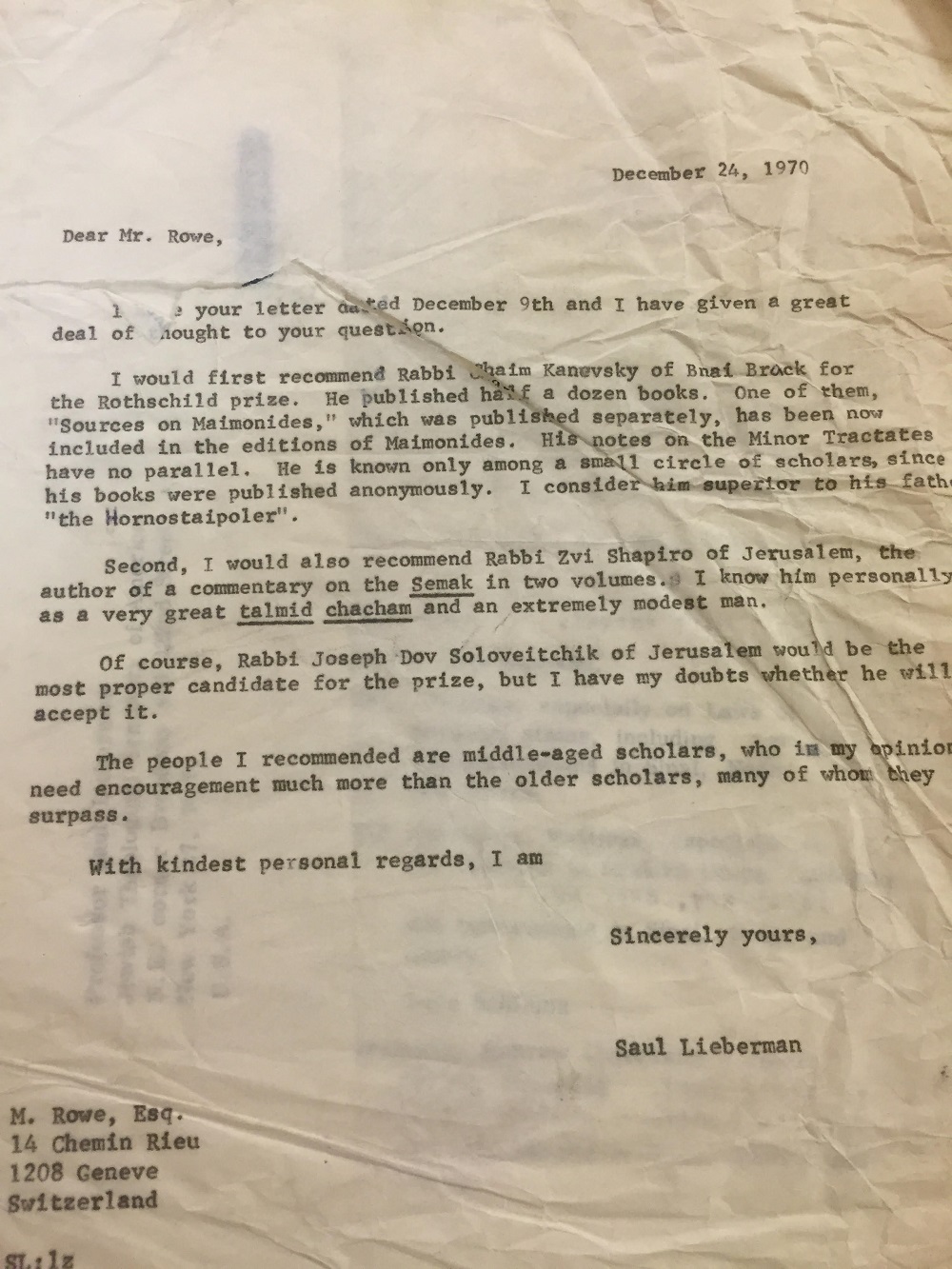
I think readers will also find interesting a letter in the Lieberman archives at the Jewish Theological Seminary of America. I was alerted to this by Ariel Fuss.[6] Max Rowe represented the Rothschild Trust which awarded four monetary gifts to outstanding rabbinic scholars. Rowe turned to Lieberman for his recommendations on who should receive the awards. Although today everyone knows about the greatness of R. Hayyim Kanievsky, we see that Lieberman was aware of this fifty years ago, and recommended him for the grant. He even regarded R. Hayyim as greater than his father, the Steipler. Of all the significant figures Lieberman could have suggested, it is fascinating to see whom he chose.

I still have a good deal to write about Lieberman, as I have collected a lot of new material since the publication of Saul Lieberman and the Orthodox. For now, here is a picture of a young Lieberman and his wife, Judith, that has never before appeared in print or online. I thank Professor Meir Bar-Ilan for sending it to me.

* * * * * *

Continued from hereLet us resume with Grossman’s review, going page by page. First, I must thank everyone who wrote to me offering support. Many of these people are in the haredi world and have been reading my material for years, and others have listened to my Torah in Motion classes. They all knew that I had never mocked rishonim and aharonim,[7] an accusation I referred to as “slander”.[8] A number of people asked me how to explain why Grossman so mischaracterized my book, as it certainly wasn’t intentional. My response to them was that if you come to a task with a preconceived negative view, on a mission of destruction, then you will not be able to judge a book fairly. You won’t even realize how you are not being fair, and this in turn will lead to all sorts of mistakes. In the introduction to the Guide of the Perplexed, the Rambam addresses readers of his book:

If anything in it [the Guide], according to his way of thinking appears to be in some way harmful, he should interpret it, even if in a far-fetched way, in order to pass a favorable judgment. For as we are enjoined to act in this way toward our vulgar ones, all the more should this be so with respect to our erudite ones and the sages of our Law who are trying to help us to the truth as they apprehend it.

What the Rambam is saying is that readers should give authors the benefit of the doubt, and only if an author is clearly incorrect should one then feel comfortable expressing criticism. He says that we should act this way even “toward our vulgar ones,” the category that I and so many others would best be placed in, rather than in the category of the “erudite” and “sages of our Law.”

Unfortunately, Grossman was not careful in the way he wrote. R. Yair Hayyim Bacharach already warned us about the problems that arise from this, with a nice witticism:[9]

ואפילו בכתבי הדיוט אומרים בעלי הלצה השמר פן [פען הוא בלשון יהודי פולין שם לקולמספעדערוהוא מלשון רומית Penna. הערת המולכי אא לפרש דבריו או להתנצל בהם עי חסר או יתור או חלוף מלה כמו שעשה יעשה באמרי פיו.

Another relevant witticism is mentioned by Samson Bloch [10], that the word מבקר (reviewer or critic) stands for מתכבד בקלון רעהו.  

On pp. 38-39, Grossman quotes me as saying that the Rambam’s conception of Ikkarim was an innovation, and that this is not just something mentioned by academics but is also found in traditional writings. There is nothing controversial in this statement, and as many readers know, Rambam was criticized for having too many Principles (R. Joseph Albo) or for having too few (R. Isaac Abarbanel).

Grossman writes (p. 39):

Shapiro writes this despite the fact that an array of classic scholars, among them Alshich, R. Moshe Chagiz, Beney Yisoschar and Mabit believe otherwise. The latter, in a section of his Beys Elokim devoted to the Principles, begins his discussion with this comment. “All the main Principles of the Torah and its beliefs are either explicit or hinted at in Torah, Prophets, the Hagiographa, and in the words of Chazal received from a tradition; in particular, the three Principles which include them all.”

All this is completely irrelevant to what I have said. The issue is not whether the Rambam’s Principles can find support in the Torah, Prophets, Hagiography, or Chazal. Of course Rambam can find support for his Principles in earlier sources. What I and everyone else (rishonimaharonim, and academic scholars) are speaking about is something entirely different. It is whether the Rambam’s specific conception of Principles of Faith – that belief in the Principles, despite all other sins, are enough to ensure a share in the World to Come, and denial or doubt of a Principle, despite one’s piety and halakhic punctiliousness, will prevent one from having a share in the World to Come  is found in any other source before the Rambam. I also stated that no one before the Rambam had picked thirteen specific Principles as the basis of Judaism. As far as I know, every single rishon who wrote about the Principles agrees with this point. Unfortunately, Grossman once again completely misunderstands what I have stated.

Grossman writes (pp. 39-40):

Nothing shows more clearly that the Rambam based his Principles upon the Talmud than the fact that in Hilchos Teshuvah [3:6-8], he lists the various heretics under three classifications: min, apikores and kofer baTorah, all of whom lose their share in the World to Come. Obviously, each group violates a particular fundamental of faith, or else why would they be listed separately? Shapiro explains this by saying: “For his own conceptual reasons which have no talmudic basis, Maimonides distinguishes between the epikorus, the min and the kofer batorah.” [Limits of Orthodox Theology, p. 8 n. 27] But these terms are not, as Shapiro would have them, the Rambam’s inventions. They are taken from an explicit passage of the Talmud in Rosh ha-Shanah 17a which lists these three classes of heretics as those who lose their portion in the World to Come. They are obviously not a product of Rambam’s ‘conceptual reasons.’”

Every reader should be able to see Grossman’s error. Contrary to what Grossman attributes to me, I did not say that the terms epikorus, min, and kofer ba-Torah are the Rambam’s inventions based on his “conceptual reasons.” (He must think I am really ignorant as he assumes that I do not know that the terms epikorus and min are found in the Talmud.) What I said was that the way the Rambam distinguishes between these categories is based on his own conceptual reasons. In other words, why do certain heresies fall into the category of epikorus, others into the category of min, and others into kofer ba-Torah. For some heresies, we can see that the Talmud refers to the holders of these views as minim, but for others, it is the Rambam who determined the divisions, and we cannot find a talmudic basis. There is also no consistency in the Rambam’s own writings for what is included in the category of min.[11]

R. Nachum Rabinovitch writes as follows in his Yad Peshutah to Hilkhot Teshuvah 3:8, in discussing how the Rambam determined who is placed in the category of epikorus (as opposed to say, kofer ba-Torah). What I have underlined is particularly important. Is Grossman now going to be attacking R. Rabinovitch?

כאן שרצה רבינו לחלק בין כופרים שונים לפי מושגים יסודייםלפיכך השתמש במונח אפיקורוס לא כפי הוראתו הרחבה בדברי חזל שהשווהו למלה ארמית אשר שרשה פקראלא כפי מובנו בתולדות הפילוסופיהדהיינומן הכת של הוגה הדעות היווני אפיקורוס . . . על כן הגביל את המונה אפיקורוס למי שכופר בהשגחהזאת אומרתמכחיש שד‘ יודעוממילא כופר גם באפשרות שה‘ מודיע לבני אדם ובתוכם גם משה רבינונמצא שהמונח מין מיוחד לאמונות כוזבות על הבורא עצמוואפיקורס מיוחד לדעות נפסדות על יחס הבורא לאדם


I refer to R. Rabinovitch’s commentary in Limits, p. 9 n. 27, right after the passage cited by Grossman which he misunderstood and found so objectionable. Had he examined what R. Rabinovitch wrote, he might not have misunderstood what I was saying.

In this note I also refer to Menachem Kellner, Dogma in Medieval Jewish Thought, pp. 20-21. On p. 21, Kellner writes: “Maimonides does not carefully distinguish among the terms sectarian, epikoros, and denier.”

I also refer to R. Yitzhak Shilat, who in his note in Iggerot ha-Rambam, vol. 1, pp. 38-39, after discussing the different ways the Rambam refers to heretics in his various works, writes as follows with reference to the term min:

ונראה שהסבר הדבר הואשבהלכות תשובה נכנס הרמבם לחלוקה תיאורטית של סוגי הכפירה השוניםושם הוא מייחד את המונח מין” לסוג מסוים של כפירהדהיינו לכפירה באחד מעיקרי אמונת האלהותאך במובן יותר מעשי ורחב הוא משתמש במונח מינות” לכל כפירה באחד מיסודי האמונה (ובהפניה מהל‘ שחיטה להל‘ תשובה התכוון לכל סוגי הכופרים המנויים שם)

.ואכןהרחבת מושג המינות” והחלתו על כל כפירה באחד מיסידי האמונהמפורשת בדברי הרמבם במקומות אחדים . . . הרחבה נוספת של השימוש במונח מין” אנו מוצאים בהמשך דברי הרמבם

נמצאנו למדים שהרמבם משתמש במונח מינות” לא פחות מאשר בשלושה מובניםזה רחב מזהאכפירה ביסודי האמונה השייכים למציאות ה‘. בכפירה באחד מכל יסודי האמונהגכפירה בתורה שבעל פה


As the reader can see, R. Shilat explains how when it came to categorizing heresy, the Rambam used “his own conceptual reasons.”

In my note in Limits (p. 9 n. 27) I did not refer to R. Kafih’s commentary to Hilkhot Teshuvah 3:7, but it is also important regarding this matter. After mentioning those who questioned why the Rambam included what he did in the category of epikorus, seeing that various talmudic passages define an epikorus differently, R. Kafih states that this matter is easily explained, namely, the Rambam is not using the term epikorus the way it is used in the Talmud. Rather, he is using the Greek term, and placing into this category those heresies that can be identified with Epicurean philosophy.

ולפיכך כל מה שמקשים על דברי רבנו כאן מאפיקורוסים שונים שנאמרו בשסלקמכי שם מדובר בהטית המלה העברית הפקר בלבושה הארמי אפקירותאוכאן מדובר במלה שמקורה יוני עש אפיקורוס

R. Kafih explains further in his commentary to Mishneh Torah, Sefer Nezikin, p. 594:

שכל שבוש תעיה וכפירה השייכים לאלהות נקרא מיןוכל תעייה שבוש וסטייה השייכים לנבואה נקרא אפיקורוסובנדפס טרפו וערבבום יחד

R. Judah Albotini does not even think that we should pay the distinctions the Rambam gives to the different types of heretics much mind, as the different terms are “lav davka”.[12]

ואפילו הרב זל בעצמו משנה דבריו בהם כי פה כתב שהמינים הם אלו הה‘ שמות (ובס‘) [ובהלכותרוצח שהמין הוא העובד עז או האוכל נבלות להכעיס ובה‘ עירובין קרא לישראל העובד עז שהוא כגוי ולא קראו מין וקרא מינים לצדוק ובייתוס וכל הכופרים בתורה שבעל פה ולאלו קרא בכאן כופרים הרי לך שכל אלה השמות לאו דוקא קאמר אלא עד העברה

The most detailed discussion of how the Rambam categorizes the various types of heretics is found in Hannah Kasher, Al ha-Minim, Ha-Apikorsim, ve-ha-Kofrim be-Mishnat ha-Rambam. This book appeared in 2011, too late to be mentioned in Limits. On p. 15 she writes (emphasis added):

הרמבם לעתים הציע הגדרה מכוננת למונחיםוקבע כיצד לטעמו יש להשתמש בהם מעתה ואילך. . . הרמבם המיר לעתים באופן רדיקלי את משמעותו של המונח המסורתי ויצק לתוכו תוכן שונה.

On pp. 40-42, Grossman deals with my suggestion that the Rambam abandoned his Thirteen Principles of Faith as the summation of Jewish dogma in favor of his more detailed formulation in the Mishneh Torah. In support of this suggestion I point out that not only does the Rambam pretty much ignore the Thirteen Principles in his later works, but in discussing what to teach a convert, he also does not mention the Thirteen Principles. (Regarding converts, he only states that they should be instructed in the oneness of God and the prohibition of idolatry.) I also note that both R. Joseph Schwartz and R. Shlomo Goren argued that in his later years the Rambam no longer felt tied to his early formulation of the Thirteen Principles. Readers should examine Limits for more details. My thoughts in this matter were in the way of a suggestion, not an absolute conclusion, that I thought worthy of bringing to the attention of readers.

In response to my point that when evaluating the significance of the Thirteen Principles for the Rambam it is noteworthy that he does not require a future convert to be taught these Principles, Grossman states that the Rambam derived his ruling, that the convert is instructed in the oneness of God and prohibition of idolatry (but not other Principles), from the talmudic recounting (Yevamot 47b) of the dialogue between Naomi and Ruth: Naomi says that Jews are prohibited to serve idolatry, and Ruth replies “Your God is my God.”

The Rambam understands this discussion as referring to the Principles of idolatry and God’s unity. Apparently, adopting these two Principles is the essence of conversion to Judaism. These might be a mere sample of other laws and ideas that we also mention—as implied by the Rambam’s concluding phrase [Hilkhot Issurei Biah 14:2], “and we elaborate (u-ma’arichin) on this.” The Rambam is codifying that which the Talmud prescribes as integral to the conversion process, thus, one cannot ask why the Rambam did not mention other Principles of faith—which is a different topic entirely.

This is a perfect example of how Grossman’s review could have been written, namely, present my points and then explain why he reads the texts differently and why my reading is forced, inconsistent with what the Rambam says elsewhere or with the Rambam’s sources, or just flat out wrong because I misread a text. In this case, I would only note that I still believe that my point about the Rambam not returning to the Thirteen Principles in his later works, even when he discusses the fundamentals of faith, is more than a little curious and leads to my original suggestion that at the time he wrote the Mishneh Torah he had adopted a more detailed list of required beliefs.

As for the matter of conversion, what about the Third Principle? For the Rambam, belief in divine corporeality is a denial of God’s existence, since a corporeal god is not God. Therefore, according to the Rambam, this is something that everyone, from childhood, needs to be instructed in.[13] Belief in divine corporeality usually turns into a form of idolatry, since one who worships a corporeal god is worshipping something other than God.[14] Thus, it is obvious that according to the Rambam instruction about God’s incorporeality would be part of the instruction about the unity of God. However, Principles 4-13 are not included in a convert’s instruction, even though in his Commentary to the Mishnah, when he lists the Thirteen Principles, the Rambam states that all the Principles are obligatory beliefs. It is these missing Principles of faith that I have wondered about, and asked why the Rambam did not require a convert to be instructed in them. Grossman’s explanation for this is that since the only theological matters the Talmud requires instructing a convert in are God’s unity and the prohibition of idolatry, the Rambam would not add to this on his own.

Grossman continues by stating that I am operating under

a misconception of the structure of the Rambam’s work. The Rambam himself states explicitly in his letters—and so it is axiomatic to Torah scholars—that he never made a statement in his Mishneh Torah which did not have a source in the Talmud. Whenever he records his personal opinion, he prefaces it with the words, yeyra’eh li—“it would appear to me.” Anything in his Mishneh Torah that seems different from the Talmud is due to the Rambam’s unique interpretation of the particular passage of Talmud. Thus, the question, “If the Rambam added to the Talmudic prescription, why did he not add the other Principles?” is not applicable. . . . The Rambam is codifying that which the Talmud prescribes as integral to the conversion process, thus, one cannot ask why the Rambam did not mention other Principles of faith—which is a different subject entirely. (pp. 41-42)

Before getting to Grossman’s major criticism, let’s clear up some inaccuracies. The Rambam does not say in his letter to R. Pinhas ha-Dayan, referred to by Grossman (Iggerot ha-Rambam, ed. Shilat, vol. 2, p. 443), that everything in the Mishneh Torah comes from the Talmud. He mentions the Talmud, but he also mentions halakhic Midrash and Tosefta. He then says that if something comes from the Geonim, he indicates so. Furthermore, and this is a very important point, the Rambam is speaking about halakhic matters, that for these there is always a prior rabbinic source.[15]

To say, as Grossman does without further clarification, that the Rambam “never made a statement in his Mishneh Torah” that has no talmudic source is simply incorrect. There are a number of statements in the Mishneh Torah dealing with science and philosophy for which there are no talmudic sources, a point that has been noted by the traditional commentaries. At the end of Hilkhot Kiddush ha-Hodesh, ch. 17, the Rambam tells us that the astronomical information he provides comes from Greek texts, as the Jewish writings on these matters were lost. Many who have studied this section of the Mishneh Torah have wondered if this is to be regarded as Torah study? R. Hayyim Kanievsky cites the Hazon Ish who is quoted as saying that despite the Greek origin of this information, once the Rambam included it in his book it became Torah.[16]

ואמרו בשם מרן החזוא זצל שאעפ שהרמבם העתיק החשבונות שבפרקים האחרונים של קהח מהגוים כמשכ בספיז ממ אחר שהרמבם כתבם נעשה תורה ממש והלומדם לומד תורה

R. Jacob Kamenetsky states[17] that most of what appears in the first four chapters of Hilkhot Yesodei ha-Torah, which the Rambam viewed as basic to Judaism, is not to be regarded as Torah but as פילוסופיא בעלמא.

ובעל כרחנו אנו צריכין לומר שמה שמסר לנו הרמבם בפרקים אלו אין זה לא מעשה מרכבה ולא מעשה בראשיתאלא כתב כל הד‘ פרקים אלה מדעתו הרחבה מתוך ידיעות בחכמות חיצוניותכלומר שלא מחכמת התורהאלא הרי זה פילוסופיא בעלמא – ונאמר שכבר השיג עליו הגרא ביוד סי‘ קע”ט סקיג שהפילוסופיא הטתו ברוב לקחה ועיישוהרמבם כתב פרקים אלו רק בתור הקדמה לספר יד החזקהועיקר הספר מתחיל מפרק ה‘: כל בית ישראל מצווין על קידוש השם וכו‘, ואין לדמות טעויות בהלכות אלו לטעיות בהלכות שבת וכדומה


R. Tzadok ha-Kohen even states that some of the historical information that the Rambam provides at the beginning of the Mishneh Torah is not based on earlier rabbinic sources, but is the Rambam’s own suppositions.[18]

וראיתי להרמב”ם בהקדמת ספר היד מנה סדר הקבלה ממרע”ה עד עזרא כ”ב דורות . . . ואם קבלה נקבל אבל כמדומני כי מסברא והשערת הלב לבד הוא שאמר זה שהרי בהקדמתו לפירוש המשניות כתב רק עד ירמי’ . . . הנה לא הי’ נודע לו עדיין סדר מבואר רק שבעת שחיבר ספר היד המציא מנפשו לכוין סדר מ’ דור מימות משרע”ה עד רב אשי והמציא סדר קבלה מנפשו וכתבו סתם כאלו קבלה היא בידו, אבל באמת יש להשיב ולטעון הרבה על דבריו

Let us now return to Grossman’s main point, which is to discount my question as to why the Rambam does not mention the Thirteen Principles when it comes to converts. He states that there is no talmudic source requiring this, and that if I understood what the Mishneh Torah is about I never would have had this question.[19]

The problem with the way Grossman writes about this is that although he wants people to see that my question shows that I am an amateur, in so doing he ends up disrespecting many great Torah scholars. When I wrote my book, I did not know of anyone else who raised this question, so it looks like it is original to me (and Grossman can therefore use it as part of his attack). However, subsequent to the book’s publication, I have found a number of others who wonder the same thing I did. While I might not understand how the Mishneh Torah works, is Grossman comfortable saying the same thing about the Torah scholars I shall now mention?

R. Hayyim Sofer writes as follows, with reference to the issue of conversion:[20]

והדבר נפלא הלא יש י”ג עיקרי הדת והי’ לו לב”ד להאריך בכל השרשים

R. Yaakov Nissan Rosenthal, author of the multi-volume commentary on the Mishneh TorahMishnat Yaakov, writes as follows in his comment on Hilkhot Issurei Biah 14:2.

צע למה כתב הרמבם עיקרי הדת שהוא ייחוד השם ואיסור עכוםולמה לא כתב כל היג עיקרים שכתבן בפירוש במשניות בפי דסנהדריןוזלשעיקרי דתנו ויסודותיה שלשה עשר יסודותוראה שם בהמשך הדבריםולמה כתב כאןעיקרי הדת שהוא ייחוד השם ואיסור עכוםוצעג

R. Rosenthal sees it as a real difficulty that the Principles are not mentioned. I am sure he would not be bothered, as I am not, by what the Rambam writes in his letter to R. Pinhas ha-Dayan, for we are not dealing here with a technical halakhic matter, but with the basis of Jewish faith, and it is not at all an ignorant question to wonder why the Rambam did not include the Principles. On the very first page of his commentary to Sefer ha-Madda, R. Rosenthal also notes the point I made, that the Thirteen Principles as a unit are never mentioned in the Mishneh Torah, something that surely cries out for explanation.

ותימא למה לא הביא הרמבם בספרו היד החזקה” את הענין הזה של יג עיקרי האמונהוצע

R. Hayyim Amsalem also feels the need to explain why the Rambam does not require instructing converts in the Thirteen Principles:[21]

ולכן לא הצריך גם הרמבם יג עיקרים כולם שאם מודיעים לו איסור עז ויחוד השם די בהודעה הזו עם מה שבא להסתפח בנחלת ה‘ ובשם ישראל יכנהואין מקום לפשפש יותר מדי בעניינים האלו כמו ענייני האמונה אשר מי יאמר זכיתי לבבי

R. Iddo Pachter writes:[22]

בהלכות איסורי ביאה ידבכשהרמבם מציב את העיקרים כראש וכעיקר הנושאים המלמדים את הגרהוא אומר: “ומודיעין אותו עיקרי הדתשהוא ייחוד השם ואיסורי עכוםומאריכין בדבר הזה.” ואילו את העיקרים אחרים של התורה והגמול אין הרמבם מזכיר כללונשאלת השאלהלמה השמיט במקום מרכזי זה של כניסה לכלל ישראל את שאר הדוגמות המהוות תנאי לכניסה

Grossman can still argue that all of these sources are misguided in even raising the issue of why converts are not instructed in the Thirteen Principles. Yet I think we should all agree that this is a matter that reasonable people can disagree about, and it should not be used an example to show the world that I am clueless about the Mishneh Torah. Grossman might not think it is a big deal, but many readers will agree with me that the fact that the Rambam would allow someone to convert without being taught all Thirteen Principles is quite noteworthy.

R. Yisrael Meir writes:[23]

הרי שבשעת גירות איצ לדעת כל היג עיקריןאבל אחכ אם יכפור הז אין לו חלק לעוהב.

Just as the convert does not know all the halakhot, and on the very first Shabbat might make mistakes, so too, according to the Rambam’s instructions about conversion, he will not know all the Principles of Faith. There are endless halakhot and it is not feasible to have a convert become an expert in every area of halakhah. Yet the Principles of Faith are not that many, and contrary to Grossman, I reject the notion that the Rambam would have needed an explicit talmudic text to require this, as he viewed it as basic to Judaism.[24]

Relevant to what we have been discussing, R. Dovid Cohen writes as follows in the seventh volume of his book of questions, Ve-Im Tomar, p. 14, no. 216.[25]


When the questions are not his own, R. Cohen is always careful to record his source. This is a very admirable trait that we should all take to heart. Here is p. 77 no. 216, where he provides the source of the question.


While I am honored to be mentioned, I think that R. Cohen wrote this from memory. I say this since in the book I ask why the Rambam does not mention anything about teaching a prospective convert the Thirteen Principles. I don’t ask this question about talmudic sages.[26]

Before concluding this section of my reply, I want to return to a point I made in the book (p. 7), that the Rambam’s formulation that a convert be instructed in theological matters is something the Rambam added on his own without a specific talmudic source. Grossman rejects this and notes that the Vilna Gaon and others see the Rambam’s source as Yevamot 47b, where Naomi is recorded as telling Ruth that Jews are prohibited in idolatry, and Ruth responded that “your God is my God”.

The first thing I would say is that I am not certain if in this case the Vilna Gaon sees this as the source for the Rambam, or if he is simply citing a source that can be brought in support of what the Rambam, followed by the Shulhan Arukh, write. Chaim Tchernowitz writes about the Gaon’s commentary:[27]

לפעמים הוא מוצא לדין השוע סמך או רמז בכתוב עצמודבר שלא עלה על דעת שום איש ואף לא על דעת אותו המחבר בעצמואחד מן האחרוניםשהמציא את הדין או המנהג ההוא על דעת עצמועל סמך דיוק בגמרא או באיזה ראשון שהמציא בפלפולווהגרא מראה לדין זה מקור מן התורהמן הנביאים או מן הכתובים או מתרגומים עתיקים על פי רמז דק מן הדק


Let me illustrate this question by one example. If you look at Shulhan Arukh, Orah Hayyim 1:1, R. Moses Isserles is citing the Guide of the Perplexed. The Vilna Gaon, who knew the Guide and thus knew the basis of R. Isserles’ formulation, still cites talmudic passages as the source for R. Isserles, or perhaps we should say, as the the source for the Rambam. Does this mean that the Gaon is telling us that the Rambam’s statement in the Guide is actually based on the talmudic passages the Gaon cites? 

Nevertheless, even if the Gaon is not citing Yevamot 47b as the actual source of the Rambam’s requirement for theological instruction for a convert (and I am not sure about this), there are indeed others who do cite this text, so Grossman’s point is well taken.

My response to this is that there are also authorities who do not identify Yevamot 47b as the Rambam’s source, and who instead see the Rambam’s mention of the necessity of instruction of converts in theological truths as something the Rambam added on his own, and not based on any talmudic text. Rather, they believe that the Rambam regarded the necessity of theological instruction as so basic and implicit that there does not need to be a specific talmudic text as a source. This is a dispute among the commentators, so it makes no sense to criticize me for advocating one side of this debate. Before citing some traditional authorities, let me first mention what my teacher, Professor Isadore Twersky, said about this matter. I realize that Grossman, who is not positively inclined to academic scholars, does not need to accept Twersky’s opinion any more than mine, but at least readers will see that nothing I have said is from left field, as it were.

In his Introduction to the Code of Maimonides, pp. 474-475 (and note 293), Twersky states that the notion that “every phrase and nuance of the MT is explicit in some source” is “misleading. It fails to acknowledge the interpretative-derivative aspects of the MT.

Twersky also rejects the notion that the instructions in theology given to a convert are based on a particular talmudic passage (the very point on which Grossman criticized me):

Maimonides’ description of the procedure of conversion to Judaism vividly reflects his uniform insistence upon the indispensability of knowledge of the theoretical bases and theological premises of religion. A potential convert must be carefully informed about Judaism and instructed in its ritualistic patterns and, most emphatically, its metaphysics, its dogmatic principles—Maimonides emphasizes that the latter must be presented at great length. Now the need to expatiate concerning the theological foundations, in contradistinction to the ritual commandments, is not mentioned in the Talmud. Some scholars were inclined to assume that Maimonides found these details in his text of the tractate Gerim, inasmuch as a few other variants can be traced to this source, but this seems to be a gratuitous assumption. Given the Maimonidean stance, this emphasis is a logical corollary or even a self-evident component of the underlying text, which stipulates that the convert be informed about “some commandments.” . . . As a matter of fact, the entire presentation bristles with suggestive Maimonidean novelties which should not be glossed over and obscured.[28]

It is easy to say that I have a “misconception of the structure of the Rambam’s work.” Will Grossman say the same thing about Twersky?[29]

R. Baruch Rabinovich, Heishev Nevonim, ed. R. Nosson Dovid Rabinowich, pp. 13-14 (emphasis added), explicitly rejects Yevamot 47b as the Rambam’s source, and makes the exact same point I did about the Rambam not needing an explicit talmudic source for his statement that a convert is given theological instruction.

בביאור הגרא (שםמציין כמקור לדברי הרמבם אלו ליבמות (מז: ) לדרשת רבי אלעזר מאי קראה וכו‘ שאמרה נעמי לרות אסיר לן עז” ועל זה השיבה רות ואלוקיך אלקי (רות פא פטז) – אבל אין הכרח לומר שמשם לומד הרמבם דין זה אלא שהרמבם מסברא דנפשי‘ פסק כךכמושכל ראשוןשאין גרות ואין שייכות ליהדותכל עוד אין אמונה בייחוד ה‘, והסתייגות מעזוכן דעת ההמבכל אופן מש ומאריכין עמו דבר הזה“, אין זה המקור [!] אלא מסברא דנפשי.

Grossman can reject R. Rabinovich’s statement, but he cannot say that R. Rabinovich did not understand “the structure of the Rambam’s work.”

A commentary on the Mishneh Torah that I often turn to is R. Asher Feuchtwanger’s Asher la-Melekh. He writes as follows in his comment to Hilkhot Issurei Biah 14:2 (emphasis added):

רוב דברי רבנו בפרק הזה מתחלתו עד הלכה ו‘ ועד בכללמקורן בברייתא המובאת יבמות מזאך הודעת עיקרי היהדות לא הוזכרה כללואכ מנל לרבנו לקבוע כן


R. Feuchtwanger goes on to offer an original solution. Does this mean that he too did not recognize the structure of the Mishneh Torah?

In fact, we don’t need to look at twentieth-century commentaries on the Mishneh Torah to make this point. Right on the page, the Maggid Mishneh states:

ומאריכין בדבר זהבייחוד השם ובאיסור עז שאינו מבואר שם שיאריכו עמו בזה אבל הדבר פשוט שכיון שאלו הם עיקרי הדת והאמונה צריך להודיעם בברור ולהאריך עמם בזה שהוא עיקר היהדות והגירות

On the Rambam’s words, Hilkhot Issurei Biah 14:2, that we instruct the convert in basic theology, R. Masud Hai Rakah, Ma’aseh Rakah, ad loc., writes: זה לא הוזכר בברייתא.

In R. Shlomo Tzadok’s commentary to Hilkhot Issurei Biah 14:2, he writes:

ומודיעין אותו עיקרי הדתאף שהודעה זו לא נזכרה בשסרבינו סבור שיסוד ועיקר זההוא דבר המובן מאליו שצריך להודיעו תחלה

Even after all we have seen, it is possible that Grossman is correct, and all the sources I have cited are mistaken. My only point in citing them is to show that nothing I have said in this matter should be regarded as far-fetched or ignorant, as I offered a reasonable approach to an often-discussed text.

To be continued

Notes

[1] Regarding the Seminary library (or any other Conservative institution), R. Moshe Feinstein was asked if one must return books to them, even if the books will not be used at the institution and the person who has them will learn from them. He replied that “it is forbidden for us to permit gezeilah or geneivah.” See Yad Moshe, p. 86. See, however, R. Menasheh Klein, Mishneh Halakhot 17:155, who writes:

ומיהו היכא דשאל ספר מספריה שהם רשעים ואפיקורסים ויכול עי איזה ערמה לעשות שלא להחזיר יש לעיין בדברדבסדעת זקנים מבעלי התוספות עהת פ‘ תולדות עהפ ויבז עשו את הבכורה כתבו וזלפי‘ מכבר היה מבזה אותה ועל כן לקחה יעקב ממנוונמצא בספר ר‘ יהודה החסיד מכאן אתה למד שאם יש ביד רשע סת או מצוה אחרת דמותר לצדיק לרמותו וליטלו ממנו עכולפז היכא דישנם ספרים ביד רשעים ואפיקורסים מותר לרמאותםולפז כש שאם לוה ולא החזיר בזמנו ויכול לרמותו דלא מיבעיא דלא נפסל לעדות אלא מותר לעשות כן לכתחילהולדינא צע


[2] In the days before hebrewbooks.org and Otzar ha-Hokhmah, I often visited the JTS library. It was common to see Orthodox Jews with impeccable standards of kashrut, who would not eat food served in a Conservative synagogue, eating in the Seminary cafeteria.
[3] From Washington Avenue to Washington Street (Jerusalem, 2011), pp. 67-68. I personally was in the Seminary rare book room together with the late R. Ephraim Fishel Hershkowitz.
[4]  Regarding Lieberman and Chabad, see here p. 38, where we see that in 1982 Lieberman sent a check for $1000 to Chabad’s Merkos Leinyanei Chinuch. On p. 39, a section of his will  is published which shows that he left $10,000 for this same charity. This was called to my attention by Nochum Shmaryohu Zajac.

Zlotnick’s loyalty to his rebbe, Lieberman, was legendary. Unfortunately, this led to a slightly unpleasant experience for me, which I think is worth recording for it shows how sensitive Zlotnick was to the memory of Lieberman. Here is page 23 of Saul Lieberman and the Orthodox; look at note 83.

Not long after the publication of Saul Lieberman and the Orthodox, I was at a wedding and someone came over to me to say that Professor Zlotnick would like to speak to me. I had never before met him and someone had obviously told him that I was there. Upon meeting Zlotnick, and with a few others surrounding us, he very firmly told me that it was a big mistake to include the quotation from Wenger in the book, as it mentions that “many faculty members” have questioned if Lieberman wrote a responsum against women’s ordination. I could not understand what he was talking about. I replied that I cited this passage so as to show that it was mistaken. He did not accept my reply, and insisted that to cite such falsehood, even if to show that it is mistaken, was to give it a legitimacy that it did not deserve. He felt that obviously false statements should simply not be dignified with a refutation. Only after he got this point off his chest, which had obviously been bothering him, were we able to have a nice conversation. For months after the conversation, I occasionally wondered if perhaps Zlotnick was correct.
[5]  In Mesorat Moshe, vol. 3, p. 389, R. Moshe Feinstein is recorded as stating that there is no problem using Lieberman’s edition of the Tosefta. R. Moshe adds that since he is religious: אינו חשוד שיזייף את התוספתא.
[6] Document provided courtesy of the Saul Lieberman Archives (ARC 76/8) of the Jewish Theological Seminary Library.
[7] When R. Hayyim Capusi (died 1631) was accused of speaking improperly about the gedolim, he responded as follows (Mikabtze’el 37 [5771] p. 581):

ומה שהוציא דבה עלי שדברתי נגד הגדוליםחלילה לי מרשעוחס ליה לזרעיה דאבא לבוא בגבורות נגד רבותינו זל


[8] Nachum commented to the last post that “‘slander’ is spoken and ‘libel’ is printed (or news, etc.).” While that is the technical definition, all you have to do is google “slanderous article” and you will see that “slander” is also generally used for printed material. Incidentally, when it comes to the word דִבׇּה, which means “slander” in biblical Hebrew, it has a very different meaning in medieval texts. “As Jacob Klatzkin [in his Thesaurus] notes, dibbah in medieval Hebrew does not mean ‘slander,’ but rather a false claim, nonsense, or absurdity.” Y. Tzvi Langermann, Rabbi Yosef Qafih’s Modern Medieval Translation of the Guide,” in Josef Stern, et al., eds., Maimonides’ Guide of the Perplexed in Translation(Chicago, 2019), p. 268.

In the last post I discussed the use of the word “strange” in describing earlier opinions. On p. 270, Langermann mentions how in translating a particular word from the Arabic, which the Rambam used with reference to certain aggadic opinions, while Pines uses “incongruous” and Ibn Tibbon uses “megunneh”, R. Kafih uses “muzar”. Here is the section from Guide2:30 in R. Kafih’s translation:

אבל מה שתמצא לשונות מקצת החכמים בקביעת זמן מצוי קודם בריאת העולם הוא תמוה מאדכי זוהי השקפת ארסטו אשר בארתי לך שהוא סבור כי אין לתאר לזמן התחלהוזה מוזר . . . אמר רבי יהודה בר סימון מכאן שהיה סדר זמנים קודם לכןאמר ר‘ אבהו מכאן שהיה הקבה בורא עולמות ומחריבןוזה יותר מוזר מן הראשון

R. Kafih himself uses this word in describing views of his predecessors. See his commentary to Hilkhot Shabbat 16:17, note 29, where after mentioning how virtually all prior commentaries understand a passage in the Rambam, he writes:

וזה מוזר ומופלא ביותר

Abarbanel often uses the words זר and even זר מאד when discussing earlier interpretations. He also speaks this way when referring to talmudic and midrashic passages. See e.g., Yeshuot Meshiho, vol. 2, ch. 5 (p. 108 in Oran Golan’s 2018 edition):

ואמנם מה שאמר רבי חנינא . . .  הוא מאמר זר מאד

See also his commentary to Joshua 24:25:

ובדברי חז”ל (מכות פ”ב דף י”א ע”א) בספר תורת הא-להים, ר’ יהודה ור’ נחמיה, חד אמר אלו שמונה פסוקים שבתורה, וחד אמר אלו ערי מקלט, ושניהם דעות זרות מאד

I could cite many more such examples. See also Eric Lawee, Isaac Abarbanel’s Stance Toward Tradition (Albany, 2001), p. 95.
[9] Bikkurim 1 (1864), p. 16.
[10] Introduction to his translation of Leopold Zunz, Toldot Rashi (Lemberg, 1840), p. 12 (unnumbered; the first word on the page is שרשי). In the Jewish Encylopedia entry on Bloch, it says as follows about this work:

Besides the above-mentioned works, Bloch also translated into Hebrew Zunz’s biography of Rashi, to which he wrote an introduction and many notes (Lemberg, 1840). This work bears unmistakable traces of decadence, both in style and virility.

I have no idea what this last sentence is supposed to mean.
[11] Grossman writes that the terms “are taken from an explicit passage of the Talmud in Rosh ha-Shanah 17a which lists these three classes of heretics as those who lose their portion in the World to Come”. Here is the talmudic passage:

אבל המינין והמסורות והאפיקורסים שכפרו בתורה ושכפרו בתחיית המתים . . . יורדין לגיהנם ונידונין בה לדורי דורות

Contrary to Grossman, from the language of the Talmud in the standard Vilna edition it would seem that what we have here are not three categories of theological heretics, but two: מינין and אפיקורסים. The Talmud defines אפיקורסים as those who deny the Torah and the Resurrection. See R. Abraham Abba Hertzl, Siftei Hakhamim, ad loc.

מדנקט השס שכפרו“, ולא נקט ושכפרו” בתורהכמו שנקט באחרינא משמע קצת דבחד מנה להווהאפיקורסים שכפרו בתורה


The Rambam, Hilkhot Teshuvah 3:6, sees אפיקורסים as separate from the two types of kofrim, rather than seeing kofrim as explaining what an epikorus is. Presumably, the Rambam’s version of the Talmud read like the Munich manuscript: והאפיקורסין ושכפרו. In other words, this version explicitly distinguishes between the epikorsim and the kofrim, creating separate categories. This distinction is noted in the Soncino translation of the Talmud. R. Raphael Rabbinovics, Dikdukei Soferim, ad loc., notes that the Munich version is found in Ein Yaakov and all rishonim, and is the correct text. (I wonder if indeed all rishonim have ושכפרו)

The Koren edition, while keeping the standard text of the Talmud – והאפיקורסים שכפרו בתורה – provides this incorrect translation: “But the heretics; and the informers; and the apostates [apikorsim]; and those who denied the Torah; and those who denied the resurrection of the dead.” If Koren is translating in accordance with the Munich manuscript, then this should have been noted, as והאפיקורסים שכפרו בתורה cannot be translated as: “and the apostates; and those who denied the Torah,” as if we are dealing with two separate categories. I also do not like the translation of epikorus as “apostate,” as today, most people understand “apostate” to mean an actual meshumad, but this is not what we are dealing with.

ArtScroll also translates incorrectly: “But the sectarians, the informers, the Apikorsim, those who denied the divinity of the Torah, those who denied the resurrection of the dead.”

Steinsaltz translates the passage properly:

והאפיקורסים המזלזלים בתורה ובחכמיה שכפרו בתורה

[12] Yesod Mishneh Torah, Sefer Madda, p. 242.
[13]  See Guide 1:35.
[14]  See Iggerot ha-Rambam, ed. Shilat, vol 2, p. 578:

ושם אלהים אחרים לא תזכירו וכו‘, כי אשר לו קומה הוא אלהים אחרים בלא ספק

[15] Despite the Rambam’s statement in this letter, we know that even with regard to halakhic matters, the Rambam’s originality far exceeds the numerous instances where he mentions that he is offering his own opinion. See my Studies in Maimonides and His Interpreters (Scranton, 2008), pp. 79ff.
[16] R. Kanievsky, Shekel ha-Kodesh, introduction.

[17] Emet le-Ya’akov al ha-Torah, p. 16. The following appears in a note, ibid., and is designed to soften what R. Kamenetsky wrote:

בשיחה פרטית הסביר רבינו כוונתו שעל פי ידיעותיו בפילוסופיא למד כן בחזל”.

Yet this explanation is entirely at odds with what R. Kamenetsky wrote in Emet le-Ya’akov, that what appears in the first four chapters of Hilkhot Yesodei ha-Torah is not based on Torah sources.
[18] Published in Sinai 11 (Nisan-Elul 5707), pp. 11-12 (called to my attention by R. Chaim Rapoport). In Sefer ha-Zikhronot (Har Bracha, 2003), p. 288, R. Tzadok writes:

ולא היה ראוי לו לקבוע ידיעת עניינים כאלה בהלכות יסודי התורה שלו כללדברים שאינם צריכים למאמיני התורה לידיעתםוכל שכן שהרבה מדבריו אינם אמת כפי דעת חכמיהם היוםוהכללמה לדברי חכמי אומות העולם עם דברי התורה שמן השמיםלעשות דבריהם יסודות לתורהוכל מה שאסף שם הם מדברי חכמי אומות העולם


[19] Even though the Rambam does not mention instructing future converts in the Thirteen Principles, this is what is done nowadays. Yet what happens if someone converted while holding a belief that violates one of the Principles? Is the conversion valid? This interesting question is discussed by R. Eliezer Ben Porat, who claims that when it comes to most of the Principles—the ones not dealing with God’s essence—even the Rambam would regard the conversion as valid ex post facto. See “Ger she-Ta’ah be-Ehad me-Ikarei ha-Emunah,” Kol ha-Torah 67 (Nisan 5769), pp. 313-316.
[20] Mahaneh Hayyim, Yoreh Deah 2, no. 25 (p. 139).
[21]  “Inyanei Gerut,” Or Torah, Adar 5770, p. 540.
[22] “’Ein Lo Helek’: Matarat ha-Rambam bi-Keviat Yud Gimmel Ikarei ha-Emunah,” Masorah le-Yosef 8 (2014), p. 490.
[23] Torat ha-Emek 12 (5764), p. 42. See also Pachter, “Ein Lo Helek,” p. 497:

מטקס קבלת הגר המפורט בהלכות איסורי ביאה, שהבאנו לעיל, שמוכח ממנו שאין צורך בקבלת כל י”ג העיקרים כדי להכנס לכלל ישראל

[24]  Ex post facto, if the future convert was not instructed even in the basic principles required by the Rambam, it seems that the conversion would still be valid. See R. Moshe Feinstein, Iggerot Moshe, Yoreh Deah 3, no. 106:

וגם מצינו עוד יותר שאף שלא ידע הגר שום מצווה הוא גרדהא מפורש בשבת דף סח עב גר שנתגייר בין הנכרים חייב חטאת אחת על כל מלאכות של כל השבתות ועל הדם אחת ועל החלב אחת ועל עבודה זרה אחתהרי נמצא שלא הודיעוהו שום מצווה אף לא עיקרי האמונה ומכל מקום הוא גר

[25]  R. Moshe Maimon called my attention to this.
[26] R. Cohen has also published Ha-Emunah ha-Ne’emanah (Brooklyn, 2012). It is obvious that at times in this book he is responding to what I wrote in Limits (and he also deals with many of the sources I cite). While I am not mentioned by name, I am apparently included among the משמאילים referred to on p. 5 (see Limits, pp. 7-8)
[27] Toldot ha-Poskim, vol. 3, p. 212 (emphasis added).
[28] R. Mayer Twersky, in his discussion of the Hilkhot Issurei Biah 14:2, states that the Rambam’s source is Yevamot 47b, and adds: אם כי הרמבם הרחיב את הדברים. See “Im Benei Noah Nitztavu be-Mitzvat Emunah o Lo,” Beit Yitzhak 37 (5765), p. 529. In the continuation of the article, R. Twersky makes the argument, which he acknowledges that at first glance is מאד מחודש, that for the Rambam non-Jews are also obligated to believe in the Thirteen Principles. In Limits, p. 22, I cited R. Zvi Hirsch Broide as saying the same thing.
[29] Regarding the Rambam’s instructions for a convert, see most recently Menachem Kellner, “The Convert as the Most Jewish of Jews? On the Centrality of Belief (the Opposite of Heresy) in Maimonidean Judaism,” in Jewish Thought 1 (2019), pp. 37ff.


Further On A Forged Letter of Rabbi Joseph B. Soloveitchik

Further On A Forged Letter of Rabbi Joseph B. Soloveitchik

By Mosheh Lichtenstein

Rabbi Mosheh Lichtenstein is a co-Rosh Yeshiva of Yeshivat Har Etzion.

He is a grandson of Rabbi Joseph B. Soloveitchik.

It was recently brought to my attention that various readers of the Seforim Blog have expressed skepticism regarding the determination that the letter found in President Chaim Herzog’s archives and supposedly written by my grandfather, Rabbi Joseph B. Soloveitchik zt”l (hereafter, “the Rav”), is a forgery.


Moreover, some of the commentators have engaged in various conspiracy theories regarding the motivation and the accuracy of the claim that this is a fake letter. See here. Although I do not usually attempt to argue with such claims or engage conspiracy theorists and strongly suspect that penning this response will not necessarily convince those who refused to accept the original clarification, I will, nevertheless, attempt to present the evidence that the letter is indeed a forgery since I fear that future researchers may also question the denial and view the letter’s status as an unresolved issue.

Moreover, since there may be sincere individuals who are indeed skeptical of a forgery claim regarding a letter whose subject is a controversial figure and may suspect that there is an agenda behind the denial of the letter’s legitimacy, I am presenting the evidence for their review and evaluation. Thus, if those who expressed skepticism are indeed sincere and open to evaluating the evidence, it is my hope that they will review the evidence presented below and recognize that the letter is fraudulent.

At the outset, I must re-emphasize what was clearly stated by the editors of the Seforim Blog (here); i.e. that the determination of our family members who saw this letter and judged it to be a “crude forgery” was entirely based upon an examination of the signature, stationery and other such considerations and totally independent of any opinion, positive or negative, regarding the subject of the letter. Having stated for the record what should be obvious, I will now present the considerations themselves.

1. First, and this alone should suffice, is the error in the spelling of the name. The Rav spelled his name דוב with a vav in the middle and not דב without a vav. I have never seen a signature of the Rav without the vav and I challenge all of those who doubted our claim to produce a signature of the Rav, in his handwriting, without a vav. As there are a multitude of “semikhah klafim” signed by the Rav, as well as numerous letters that he wrote, I assume that this can be readily verified. I would add that, unlike dates or plain text, it is rare indeed that people make typos in their signature.

2. The Rav’s signature in the letter contains an additional conclusive indication that the Rav didn’t write it which is the mention of his father and his title. The Rav would use the title אבא מרי when referring to his father in his halakhic writings and famously utilized it in the title of a major work, Shiurim le-Zekher Abba Mari (Jerusalem: Mosad ha-Rav Kook, 1984). However, he never used it when referring to his father, Reb Moshe Soloveichik, in his signature. Usually, the Rav signed his name without mentioning his father but if he did mention him, he always used the Brisker title of הגאון החסיד or variations of it and never אבא מרי. Thus, he might sign בן הגאון החסיד or בהגאון מהרמsee Iggerot ha-Grid pp. 139-140 for two such examples – but not אבא מרי as in the letter under discussion.


The vast majority of the letters that I have had occasion to see, as well as those published in *Community, Covenant And Commitment: Selected Letters And Communications*, ed. Nathaniel Helfgot (Jersey City, NJ: Ktav, 2005), and originally written in Hebrew, contain the Rav’s name alone without any reference to his father whatsoever. Moreover, my impression is that the younger the Rav was and the more “rabbinic” and traditional or ceremonial the context (such as HaPardes), he might refer to his father, while in more political or non-rabbinic settings and the older he gets, he rarely signs as his father’s son. This is doubly true of the years when he had physical trouble writing (for examples of 2 late letters in very rabbinic settings in which his father is not referenced in his signature, see the letter published in the beginning of the first volume of the first edition of the Shiurim le-Zekher Abba Mari and/or the letter written to Rabbi Shemariah Gourary in October 1978 and published in a Chabad journal upon his petirah in 1993).

The bottom line is that the vast majority of all his letters don’t mention his father and this is esp. true in the later years. Thus, the very reference to his father in a very late letter to a secular political figure like Chaim Herzog might already raise suspicions about this letter, but the crucial point is that even when mentioning Rabbi Moshe Soloveichik, he is never referred to as אבא מרי. Presumably, the person who wrote this letter was aware of the Abba Mari title because of the book (which had just been published a year earlier), but unfamiliar with the Rav’s normal signature mode and thus blundered into applying the wrong title to Rabbi Moshe Soloveichik.

In an aside, I’ll also mention that the person who wrote this letter was not only woefully unequipped with knowledge of the Rav’s signature, he also didn’t know how to spell אבא מרי properly. Unlike the Rav, who was aware of the phrase’s origin in the Shas (Kiddushin 31b and Sanhedrin 5a) and its usage by the Rambam in Mishneh Torah (Hilkhot Talmud Torah 4:3 and Hilkhot Shehitah 11:10) to refer to his father and, of course, spells it properly, the writer of this letter can’t even spell the title that he chose properly (although I can’t rule out the possibility of a typo, I cannot but have the impression that this is yet another instance of the work of someone who simply doesn’t know what he’s doing).

3. The letter includes the title איש בוסטון together with the signature. I’d love to see another letter of the Rav in which he signed himself as איש בוסטון. Until such a letter is produced, I regard this as an additional example of the fraudulent nature of this letter since the Rav didn’t use such a title to identify himself. He was not Paul Revere and apparently did not consider איש בוסטון to be a defining characteristic.

4. A crucial element in assessing a signature’s authenticity a graphological examination. In our case, the signature of the Rav in the Herzog letter simply fails the most basic graphological test. Since a graphological analysis is by definition subjective, I preferred to present the verifiable objective evidence regarding the Rav’s signature prior to raising this point. I also feel obligated to preface my claim with two preliminary comments about the legitimacy of handwriting comparisons:

a. Halakhah and the American banking system that has utilized handwritten checks for decades as a prime form of payment rely upon comparison and recognition of an individual’s signature. The concept of kiyum shtarot, a major legal mechanism in Halakhah which is crucial to all legal documents, is predicated upon comparing signatures.

b. The Rav’s signature is quite distinctive and remained consistent throughout the years. A clear line runs between all his signatures, from youth to old age. In his later years, the signature is more frail and less forceful than his earlier signatures, but the basic form is constant and readily recognizable. The signature that appears in the Herzog letter is so starkly different from his recognized signature that this is a plain case of black and white and not a grey area. Had it been a grey area which required a judgement call, I would never make such a subjective claim, but the contrast here is so great that it does not require a judgement call. To utilize a Talmudic concept from a somewhat different case of graphological assessment, an average ינוקא דלא חכים ולא טפש could easily make this call.

To back up this claim, I suggest that the interested reader see for himself examples of the Rav’s signature in these years. An example from June 1983 is the letter printed in the first volume of Shiurim le-Zekher Abba Mari (first edition).

A later example, and even more relevant example, from Winter 1984 (probably January-February 1984) is this (from a dedication he inscribed to me in the Shiurim le-Zekher Abba Mari that he sent me):

One can notice 2 things in this signature: 1. Its basic consistency with his younger signatures 2. the frailty of his writing. The signature in the letter to President Herzog, in contrast, is inconsistent with all of the Rav’s signatures and does not express the frailty of his aging motoric skills, despite supposedly being written months later.

For a somewhat earlier, albeit still late, example, one can see the signature in the haskamah published by Rabbi Menachem Genack in his sefer ברכת יצחק, written in Jan. 1979.

In summary, the signature itself in the document under question is so full of errors that if it were a get, you could say that it contains almost all possible פסולים as it includes א. שינה שמו ב. ושם אביו ג. ושם עירו ד. ואינו מקויים .

From the signature, let us turn our attention to the stationery. Anyone who has seen letters of the Rav knows that the letterhead is always the Rav’s name and usually, but not always, his address as well. He does not use Yeshiva University stationery nor RIETS stationery. I have never seen a letter written by the Rav on a YU letterhead. He was not the Rosh Yeshiva of RIETS or president of YU – he was Rabbi Joseph B. Soloveitchik, the Rav, and his stationery reflects this.

It must also be emphasized that this particular letter is purported to have been written in Boston where the chance that the Rav used YU stationaey is nil. I was with the Rav in Boston during the summer of 1984 and I can attest to the fact that he did not have YU stationery in his study that summer (nor at any other time that I was in Boston).

Thus, it seems fairly obvious to assume, although I cannot verify this, that ‘the writer of this letter’ had access to YU stationery which is dispensed to hundreds of locations but not to the Rav’s private stationery and, therefore, chose to present the Rav as writing on YU stationery, unaware that by doing so ‘he’ is undermining rather than bolstering the credibility of his forgery.

Actually, what ‘the writer of this letter’ is doing is even more bumbling since ‘he’ is not using proper YU letterhead stationery either; if one looks carefully at the letter that was reproduced at the Seforim Blog, it can be noticed that it is written on paper designed for internal correspondence as a memo and is not formal institutional stationery of the sort that is appropriate to use in correspondence with a head of state.

Another suspicious element is the copies of the letter that supposedly were sent to Rabbi Norman Lamm, Dr. Burg and Rabbi Michael Strick. Aside from the fact that to the best of my knowledge, it was not the Rav’s custom to copy others on his letters and this alone is room for additional suspicion, it is unfathomable to think that he would have Rabbi Strick’s name as one of those copied to his letter. Was the Rav even aware that Rabbi Strick worked in YU’s Israel office? Even if so, why would he copy him on a letter to Herzog which does not deal with YU affairs? For that matter, why would he copy Rabbi Lamm?

Since the Rav did not ‘CC’ people and was unaware of Rabbi Strick’s position, this, too, is an additional reason that at least parts of this letter must be considered inauthentic and the work of others. [If one were to argue that this anomaly is reason to support the letter’s authenticity as a lectio difficilior, I would counter that such an argument would be reasonable, if it could be established that the Rav was aware of Rabbi Strick’s role in YU Israel, but since this is definitely not the case, he couldn’t have copied on a letter someone who he was unaware of his position. Thus it is not a more difficult reading, but rather an impossible one and, therefore, proves its inauthenticity rather than its authenticity.]

Next, let us turn our gaze to the top of the page and the salutation of בעזרת צור ישראל וגואלו. Once more, I challenge anybody to produce a letter or document in which the Rav used such a phrase to refer to the KBH in a similar context (or any context, for that matter).

Although one could conceivably argue that he did not normally do so but changed his custom when writing to the president of Medinat Yisrael, I would not accept such a line of reasoning because of the reasons outlined below, but I would also emphasize that the Rav’s letter to Prime Minister David Ben-Gurion does not contain such a phrase nor do any of his other letters to various Israeli Religious Zionist leaders. All of these letters were published in *Community, Covenant And Commitment: Selected Letters And Communications* and are readily available for examination. If one were to argue more ingeniously that he used the phrase only in a letter to Chaim Herzog because of his father, Rav Yitzhak Isaac ha-Levi Herzog’s involvement in the formulation of Tefillah Leshalom Hamedinah, he would have not only to claim that the Rav was attempting to compliment Herzog but also to establish that the Rav was aware of Rav Herzog’s role in the formulation of that text. Personally, I am quite skeptical of this for a variety of reasons, but I will not insist upon it in this discussion.

The crucial point regarding the use of צור ישראל וגואלו is that the Rav would never use such a phrase. Without entering into a protracted discussion of the Rav’s attitude to Zionism in general, a topic that much has been written upon, I will allow myself to state that while undoubtedly supportive of Religious Zionism, he was deeply opposed to three elements of Israeli Religious Zionism that he encountered in his contacts with the Israeli Religious Zionist sector. The first was the ideological position that Jewish Nationalism and its political expression are of the highest religious value. The second, not entirely unrelated to the first, was the perspective that viewed the establishment of the State of Israel and its subsequent achievements as highly significant stages in the Redemption. Regarding those who held to a position that he described as the attachment of “excessive value to the point of its glorification and deification” [of the State of Israel] (*Community, Covenant And Commitment: Selected Letters And Communications*, page 164), he defined them as delusional (the original Hebrew uses the phrase “הוזיםwhich is translated in the published text as “dreamers,” but which actually has a much stronger connation of delusion within it) and in total error. He was also very distant from a historical appraisal that saw the Geulah as imminent. As anyone who has read *Kol Dodi Dofek* or *Hamesh Derashot* is well aware, the Rav emphasizes the Man-God relationship in the context of Zionist history rather than the imminent realization of the promised Redemption.

An additional element that the Rav strenuously objected to was various expressions and formulas in liturgical or halakhic settings that were disconnected from traditional forms of expression and exuded a strong sense of a break with the past and the creation of a new religious language. I would not overstate the case if I stated that such expressions actually caused him to cringe. He certainly was emotionally distant from such phrases and did not use them. A famous example of this was his insistence upon the term “Eretz Yisroel” rather than “Israel,” but there were many such examples, some better known (e.g. translating the text of the ketuba into Hebrew), some not so well known. Even wearing a white shirt on Shabbos (“Israeli style”), rather than a suit, would sometimes annoy him if he sensed that it was an expression of non-traditionalism and “anti-Galut” sentiment. I can attest to this first hand כי מבשרי אחזה זאת. I spent time with my grandfather, the Rav, as a wide-eyed 17 year old youth who often expressed his Zionist sentiments in front of him and occasionally raised his ire by doing so. Once, discussing a related topic, he admitted to me that reciting a certain text was rationally the proper thing to do, but, nevertheless, expressed a personal emotional reluctance to do so because of its novelty and lack of traditional moorings.

Therefore, although this is admittedly a subjective criterion that I am attempting to avoid, I cannot believe that any letter that the Rav wrote or authorized – even to a head of state whose father was Rav Herzog – would contain the phrase בעזרת צור ישראל וגואלו.

Finally, I must point out an issue of content regarding the letter. As I stated at the outset, I am not judging the letter based upon any presumed attitude of the Rav regarding Rabbi Meir Kahane. However, the content of the letter is extremely problematic for totally other reasons. As can be seen, the letter concludes with a clear admonition and rebuke to President Herzog in no uncertain terms regarding his level of observance. Not only does the writer allow himself to criticize Herzog’s standards of public observance, an obviously sensitive topic for someone raised as an observant Jew, he also doesn’t shy away from introducing the extremely sensitive and intensely personal issue of Herzog’s relationships with his parents and children in light of his problematic observance of Mizvoth.

I will allow myself to state that the Rav that I knew, and I assume many of the Seforim Blog’s readers as well, would never enter into such personal matters and grant unsolicited advice and judgement upon his correspondent’s personal life and relationships. For that matter, I cannot imagine that any rational individual who is requesting a favor from a person of stature would conclude his message by rebuking the person and making it clear that he is a disappointment to his parents. Why the writer of this letter thought that this is a reasonable text is beyond me, but if he chose to concoct such a text, I do claim that the Rav would not, and could not, have written such a text. While this is admittedly subjective and, therefore, I do not rest my case upon it but rely upon the above-mentioned considerations, I do believe that the Seforim Blog’s readers should be alerted to this perspective as well.

I will not continue to discuss this letter, although much more could be said about it. In conclusion, I will add that I believe that many of the points that I raised above suffice to individually prove that this letter is utterly false; however, it is also important to emphasize that there is a significance to their cumulative effect. Thus, even if one can argue or suggest alternatives to a particular claim, the accumulation of so many suspicious characteristics is an additional consideration to recognize that the text is much too problematic to be trusted or relied upon.

Ironically, whoever thought to send this letter to President Herzog and to appeal to his zekhut avot as part of a letter requesting support for Rabbi Kahane was probably barking up the wrong tree by doing so. Rav Yitzchak Isaac ha-Levi Herzog, whose authority is celebrated in the letter, had the following to say about the issue of retribution and Jewish-Arab relationships in times of terror attacks, published on the front page of the newspaper Davar, Friday, July 8, 1938, and translated into English several months later in Contemporary Jewish Record 1:1 (September 1938):

Why did someone want to counterfeit a letter in the Rav’s name is a question that may be unanswerable, even if we were to identify the person who wrote the letter. It is certainly unanswerable without identifying the writer. It should be recognized, though, that the primary motivation may not have been a political agenda to validate Rabbi Kahane, although it is obvious that the writer’s opinion of him is somewhat favorable and that he is attempting to advance the Kach party’s agenda, but may be rooted in other realms. For instance, the writer may have had a psychological need to empower himself to speak as the Rav, for a variety of reasons, and realized this by counterfeiting a letter in the Rav’s name and sending it to a prominent and famous person.

Whatever the motivation may be – political or psychological – we must recognize that this is a letter that that was not signed or authorized by the Rav and that is what matters.


Correction and Apology For an Earlier Post

Correction and Apology For an Earlier Post

A few months back we featured a fascinating two-part post about newly discovered documents from Rav Herzog’s Archive.

One of the discoveries of the post was a document about Meir Kahane written to President Chaim Herzog by Rabbi Joseph B. Soloveitchik in the summer of 1984 which was surprisingly supportive of Kahane.

A careful examination of the document by the family of Rabbi Soloveitchik reached the opposite conclusion. This letter is a crude forgery. Their conclusion was not derived because they disagree with the opinions expressed in it nor because they know that the Rav would never have expressed such opinions, but because of many characteristics of the signature such as misspelled name, the firm handwriting from the hand of a man suffering from Parkinson’s (comparing it to other autographs of the Rav from even earlier dates and the difference is immense), title and reference of his own father etc. It is simply an egregious forgery.

We apologize to our readers for posting and thereby disseminating this false piece of information.

Seforim Blog Editors.