1

Depression Angles

Depression Angles
By William Gewirtz

Introduction:

Depression angles measure the level of darkness or illumination prior to sunrise and, in a parallel fashion, after sunset.

There are two halakhic disagreements that might appear to relate to the use of depression angles. First, there is a long-standing argument about what defines the transition from one day to the next and what is (merely) an indicator that the transition has occurred. Some consider the appearance of three stars as the basis of a definition, while others assume that darkness is defining, with the appearance of three stars merely being an indicator that a specific level of darkness has already occurred. However, this dispute is not consequential to the use of depression angles. Even though depression angles relate directly to (the level of) darkness, since darkness levels and the appearance of stars occur approximately simultaneous, the argument is primarily of theoretical interest. As a result, the disagreement does not influence the use or the operation of depression angles.[1]

Second, a present disagreement is particularly consequential. Do we adopt fixed zemanim, e.g. 42 or 72 minutes after sunset or one hour before sunrise, or variable zemanim that change based both on location and day of the year? In Talmudic literature, physical events like the first appearance of light across the eastern sky, the ability to differentiate between blue and white, the sky’s apex and the eastern horizon appearing equally dark, the appearance of 3 medium stars, etc. all describe events whose occurrence vary at different locations and during different days of the year; they cannot be specified by a single fixed interval. As a result, I have a strong preference for variable versus fixed zemanim.[2] In spite of this being a still active dispute, I will assume that the argument is settled, and will not address the issue further in this paper. Clearly, depression angles are (largely) irrelevant to those who determine zemanim using fixed intervals. Therefore, this paper provides an explanation focused on depression angles themselves, as a methodology to formalize the use of variable zemanim. In what follows, I will explain the use of depression angles, the scientific method that has emerged over the last 150 years that makes use primarily[3] of both latitude and season / date to calculate various zemanim.

How this disagreement between using fixed versus variable zemanim developed would require its own detailed historical study, which I believe has not yet been attempted. Absent such a study, three factors appear to have had some bearing on the issue.

First, from the 12th through the 18th century, most observant Jews followed what is referred to as the opinion of Rabbeinu Tam, which equated the length of the intervals

  • between sunset and the end of Shabbat and
  • between alot hashaḥar and sunrise.

Because the length of the interval between sunset and the end of Shabbat was never lengthened, logic dictated that the (assumedly) equal interval between alot hashaḥar and sunrise be left invariant as well.[4]

Second, Pesaḥim 94a was (surprisingly)[5] read as implying that the time to walk a four milin interval applied year-round.

Third, in his forceful rejection of the opinion of Rabbeinu Tam, the Vilna Gaon proposed both seasonal and latitude-based variation with respect to both the intervals between sunset and the end of Shabbat and between alot hashaḥar and sunrise. While his view gained broad acceptance with respect to the end of Shabbat, its implications for variation based on both latitude and the time of the year with respect to alot hashaḥar, were (and still are) often ignored.

Without further attention to detailed halakhic issues, we will concentrate on the functional aspects of depression angles, (without requiring familiarity with spherical trigonometry on which they are formally based.) But first, we begin with a brief summary of some fundamental elements in the area of zemanim, which will help anchor the discussion.

Zemanim:

Two areas dominate the study of zemanim:

  • First, how is the length of the 12 halakhic hours of every daytime period, which begins at alot hashaḥar, to be calculated given variation in the length of the daytime period during the different times of the year? Do we calculate from the daytime period’s halakhic beginning at alot hashaḥar or from the point of sunrise?
  • Second, how do we determine the precise delimiters of a day of the week,[6] which almost all agree concludes approximately at the end of the of the bein ha-shemashot period in the evening?[7]

Avoiding the many disagreements in the halakhot of zemanim, we will assume without loss of generality that:

  • The amount of time by which alot hashaḥar precedes sunrise, in the Middle East and around the spring and fall equinox when both the daytime and nighttime periods are equal, is 72 minutes.[8]
  • The transition point between the days of the week and most critically, the end of Shabbat follows the opinion of the geonim (as opposed to Rabbeinu Tam.)[9]

Addressing primarily only alot hashaḥar and the end of Shabbat is sufficient to illustrate how depression angles can be used in halakha. In many communities, the methods used to determine the end of Shabbat versus alot hashaḥar are different and demonstrate concretely the issue that we will address. In those communities, alot hashaḥar is always a fixed 72 minutes before sunrise and the calculation of alot hashaḥar in those communities does not involve use of depression angles. On the other hand, the number of minutes after sunset at which 3 stars appear or a requisite level of darkness has been achieved varies considerably depending on where you are and the time of the year as well. As a result, very often the end of Shabbat is (either explicitly or implicitly) calculated using depression angles or a near equivalent.

Clocks:

Before addressing depression angles some background on the introduction of clocks into the halakhic literature is required. Beginning at the turn of the 16th century, about two centuries after the first introduction of mechanical clocks in Europe, clocks were first mentioned in the halakhic literature; at that time, knowledge of the impacts of latitude and season was still non-existent. Throughout the entire period of the rishonim, time intervals were typically referred to not by the number of minutes on a clock, but primarily as estimated intervals. Clocks added a mechanism that allowed various opinions previously specified in terms like the time required to do X, to be translated into a precise, easily specified interval of time.

Clocks began to proliferate almost 200 years before the first recorded reference to either the impacts of latitude or season appear in the halakhic literature. Those impacts were included by R. Avraham Pimential in his comprehensive sefer on zemanim, Minhat Kohen, written during the 17th century.[10]

The first mention of a clock in the halakhic literature was by R. Yosef ben Moshe, a student of R. Yisroel Isserlein, in Leket Yosher appearing around the turn of the 16th century;[11] it appeared more than a century earlier than Minhat Kohen. During the 14th through 16th century clock making accelerated, well before the nature of variances between zemanim at different locations and during different times of the year were appreciated.

Unfortunately, the precision that clocks provided may have resulted in their increased prominence at the expense of observation. Precision and accuracy are often confused. Clocks provide precision for measurements that may or may not be accurate halakhically. If someone tells you that Shabbat ends at a specific time, that assertion may be very precise but totally inaccurate. Clocks also provided a level of precision that may have been overly seductive. What is yet more disconcerting, clocks allowed pesak to be rendered independent of observation. With an assumed reduced reliance on observation, it is likely that critical halakhic definitions became more subject to disagreement. Examples abound in the halakhic literature:

  1. distinguishing between levels of darkness,
  2. differentiating between medium and small stars, or
  3. establishing the amount of illumination necessary to recognize a friend after dawn

are three clear examples. In each of those three cases, posekim’s opinions often varied significantly and/or recommended caution based on a level of acknowledged doubt.

In the 19th century, as personal timepieces proliferated and greater uniformity between clocks in different locations became necessary with the growth of the railroads, time took on a yet greater role, something we note but do not address further.

Variation by the time of the year and location/latitude:

In the entire period of the rishonim, instead of time-based measures, most mitzvot dependent on zemanim were performed based on the observation of natural events. The effects of latitude and the time of the year were incorporated implicitly by the use of observation. The occurrence of darkness or the appearance of stars varied naturally between locations regulated by a yet unknown science. How zemanim differed at different locations was largely immaterial; as far as I know, prior to the 17th century there is no discussion in the halakhic literature comparing zemanim at different locations.

After a significant interval where clocks proliferated, depression angles first appeared in the halakhic literature at the end of the 19th century. A depression angle[12] measures how far below the horizon the sun appears at a specific moment, providing an accurate measurement of the level of illumination; a larger angle indicates that the sun is further below the horizon with less discernable light coming from the sun. If a depression angle of X degrees occurs at 4:40AM in London and 5:10AM in New York on the same or different days, then one can be certain that the amount of light from the sun is the same at those two times.

If alot ha-shaḥar is defined by the degree of illumination from the sun, to determine alot ha-shaḥar across different latitudes and times of the year, one can[13] utilize depression angles. The first step is to establish the number of degrees below the horizon the sun is located 72 minutes before sunrise in the Middle East around the spring / fall equinox. The second step is to use that same number of degrees to determine alot ha-shaḥar elsewhere and during other times of the year. The 72-minute interval commonly accepted for alot ha-shaḥar corresponds to the sun being approximately 16 degrees below the horizon.

In Israel around the spring / fall equinox, scientists consider the sun to provide no measurable light until approximately 80 minutes before sunrise corresponding to a depression angle of approximately 18 degrees.[14] As the halakhah often disregards miniscule, non-visible quantities, this provides observational support for the standard pesak tacitly assumed that alot ha-shaḥar precedes sunrise by 72 minutes.

From everything I can determine, depression angles capture the halakhic notion of the degree of darkness and light accurately; no alternative for “measuring” ḥashekhah or alot ha-shaḥar has ever been formulated, nor has anyone ever proposed any problem that depression angles might create. Depression angles naturally adjust zemanim based on latitude and the time of the year. Clearly, we may not need such precision; observation was adequate for generations. Nonetheless, a depression angle is to darkness / illumination what a watch is to time.

A small depression angle corresponds to a significant amount of illumination coming from the sun even though the sun is below the horizon. After sunset the level of illumination decreases in a mirror image to the way the level of illumination increases as we approach sunrise. At a depression angle of around 5 – 6 degrees, the halakhic end of a day as specified in the Talmud occurs;[15] at a depression angle of around 11 – 12 degrees we arrive at the point of misheyakir. In between, at a depression angle of 8.5 degrees, Shabbat, as typically practiced currently, concludes. Translating a zeman into a depression angle is neither always straightforward nor undisputed. For certain zemanim, alot hashaḥar for example, the basis is clear: the level of illumination at the beginning of the daytime period, in the Middle East around the spring or fall equinox corresponding to an average time to walk 4 milim. To determine the transition point between days of the week and the end of Shabbat according to the geonim, both biblically and in practice incorporating various ḥumrot, is more complex. Fortunately, following R. Yeḥial Miḥal Tukatzinsky’s calendar for Jerusalem, the practiced end of Shabbat is almost universally accepted by those who rely on depression angles to equate to an angle of 8.5 degrees. Very few posekim following the geonim are more stringent; the practice of the overwhelming majority of 19th century posekim for whom we have calendars (from which depression angle equivalents can be inferred) were more lenient. However, the earlier point of ḥashekha or 3 medium stars, absent any ḥumrot, is still disputed.[16]

Given the earth’s circular shape, tilt, and rotation, computing depression angles involves spherical trigonometry, which is fortunately not needed for purposes of this paper. Similarly, albeit without the precision, Ḥazal used terms like mi-she-yakkir, hikhsif ha-elyon, the appearance of small/medium stars, etc. all of which relate to the degree of darkness or equivalently the amount of residual illumination from the sun. As noted in the introduction, there is a long-standing halakhic dispute pitting the primacy of darkness against the appearance of stars; which is defining, and which is just a useful indicator? I am strongly biased in the direction of darkness as defining; darkness was already recognized as causing the visibility of stars in geonic times. Since the level of darkness and the appearance of stars are strongly correlated, the dispute, as noted in the introduction, is not consequential to this short paper.[17]

Latitude, the time of the year and depression angles:

For any halakhik zeman, besides the level of darkness specified by a depression angle by which it is defined, two additional variables – the location’s latitude and the date of the year – must also be provided to calculate the time at which that halakhik zeman occurs. The intuition is important. To determine the time (after sunset or before sunrise) at which a level of darkness is achieved, we must know

  1. where you are, defined only by your distance from the equator,
  2. where the sun is, which can be calculated knowing the exact time of the year, and
  3. the level of darkness required.

The former two inputs are just unarguable facts; the latter requires a halakhic determination.

Those mathematically inclined, should think of this as a function of three variables: 1) latitude, 2) date, and 3) darkness level, where those inputs generate a number, the value of the function. That number equals the length of time before or after sunrise or sunset, respectively, at that latitude, on that day, when the degree of illumination expressed by that depression angle is achieved.

Both the latitude and the date play a critical role. However, until latitudes exceed 40 degrees, the seasonal variation for alot hashaḥar is less than about 20 minutes. For ease of explanation, the impact of the date, i.e. the seasonal variation, will be covered separately in the next section. To better understand the impact of latitude, the following discussion focuses on an arbitrary but specific day. The critical inputs in addition to that one day selected are 1) the latitude of the location and 3) the desired level of darkness, specified by a depression angle. I can input, for example, 1) latitude: 30 degrees and 3) the degree of darkness associated with a depression angle of 10 degrees.

For that specific day, given the latitude and a specified depression angle, the function calculates how many minutes before sunrise or after sunset the degree of darkness associated with that depression angle is achieved.[18] If you go further away from the equator, getting dark takes longer. What takes 42 minutes in Jerusalem takes approximately 50 minutes in New York. But things are a bit harder. Mathematicians will describe the result as non-linear, something that equates to “it is not simple.” For a depression angle of 8.5 degrees, it takes 8 minutes longer to reach that level of darkness in New York, situated about 9 degrees further from the equator than Jerusalem. If things were simple, i.e. linear, you might guess that it takes about 8 minutes more for every 9 degrees further from the equator that you are located. If you go 18 degrees further north of Jerusalem, you might expect having to wait (only) another 8 minutes, 16 minutes longer after sunset than the time it took to reach that level of darkness in Jerusalem. However, when we go 18 degrees further north of Jerusalem to Prague, an equivalent level of darkness is achieved 26, and not (a linear) 16 minutes, later.

Prague is further south than the locations of most European Jews who lived in Poland and Russia, about 48 to 56 degrees north latitude where change based on latitude accelerated. Additionally, depression angles have a second complicating factor. Instead of varying latitude, let us hold latitude fixed at say 50 degrees, the latitude again of Prague. Compare, for example, the number of minutes after sunset that it takes to reach a depression angle of 8.5 versus 16 degrees, the latter number being less than twice the former. On a day in early May those times for Prague are 58 and 130 minutes respectively, the latter being more than twice the former; a second non-linearity.

As both latitudes and desired level of darkness change, either very careful observation or scientific knowledge is required. It is not all that surprising that such precision was not always exhibited in the halakhic literature. Note that at latitudes further from the equator and at greater levels of darkness, the degree of seasonal variation increases as well, as we will see in the next section.

Dealing with seasonality

Posekim deal appropriately with seasonality in one of two fundamentally different ways:

  1. Some use a simple upper bound for a zeman where use of a such a number does not create significant inconvenience. Some treat R. Moshe Feinstein’s 50-minute zeman for the conclusion of Shabbat in the New York area that way.
  2. Alternatively, a posek can use depression angles; R. Yisroel Belsky adjusted R. Feinstein’s 50-minute zeman using depression angles to vary the conclusion of Shabbat between 40 and 50 minutes after sunset during different times of the year.[19]

To begin with, it is important to recognize that the magnitude of seasonal variation increases (non-linearly) both for:

  1. Locations further from the equator (thus greater variation in Montreal than Miami.)
  2. Greater degrees of darkness (thus greater variation in misheyakir than in the end of Shabbat.) (The average depression angle for misheyakir is approximately 3 degrees greater than the currently prevalent depression angle used to compute the end-time for Shabbat.)

For example, the seasonal variation for the end of Shabbat in Jerusalem is only 6 minutes, from about 36 minutes after sunset near the spring or fall equinox to about 42 minutes after sunset near the summer solstice. On the other hand, the variation in alot hashaḥar in Lithuania is “infinite.” Alot hashaḥar is 102 minutes before sunrise at the spring equinox, 120 minutes before sunrise at the winter solstice, and set to halakhic midnight during periods of the summer. In periods during the summer, the requisite level of darkness equating to a depression angle of 16 degrees does not occur; it never gets that dark during the night, something the Gaon observed.[20] Said differently, illumination from the sun never diminishes to that level either in the evening or equivalently in the morning. The extent to which this was neither recognized by posekim prior to the Gaon nor followed even after the times of the Gaon would require its own (lengthy) essay to illustrate.

The impact on the point of misheyakir provides another interesting topic for study. Pesakim from the Middle East tend to have an earlier point of misheyakir, often equating to a depression angle of between 13 and 11.5 degrees; pesakim from European posekim tend to use 11.5 degrees or less.[21] It suffices to say, posekim from northern Europe need to be read with care in discussions of this issue. Their views on alot hashaḥar and misheyakir are obviously linked; a delayed point of alot hashaḥar would likely delay the point of misheyakir as well.

Those following the 72-minute approach of Rabbeinu Tam should behave equivalently with respect to the end of Shabbat and alot hashaḥar, a practice rarely observed. It is alleged that R. Chaim of Brisk made havdalah Sunday morning, recognizing that Shabbat ends at (halakhic) midnight, coincident with alot hashaḥar and after the time he had already gone to bed. Such practice was rare. Interestingly, in Vilna, using a depression angle of 8.5 degrees to compute the end of Shabbat, a prevalent practice today, even the approach of the Gaon requires waiting 95 minutes after sunset to end Shabbat during the weeks around the summer solstice.

Unfortunately, many incorrect alternatives remain prevalent. Depression angles confirm that the shortest intervals occur in the spring or fall close to either equinox. The longest intervals occur around the summer solstice. Surprisingly to many, the interval around the winter solstice is longer than the interval in the spring or fall, but shorter than the interval in the summer. Because this was not properly understood, an error, going back to R. Pimential[22] persists until today.

While acknowledging that intervals vary by the time of year, in place of depression angles the error links variation in the interval with variation in the length of the period between sunrise and sunset. With this mistaken approach the summer interval is lengthened as it should be, but the variation is calculated imprecisely. In the winter the interval is shortened as opposed to lengthened, a very consequential error.

Interestingly and for reasons I can only suspect, posekim advised against using the implied wintertime reduction in time when it creates a leniency; perhaps the observed result did not conform to expectations or, as some might suggest, their counsel is another example of siyattah di-Shemayah.

A large and well entrenched group chooses not to make any seasonal adjustment. If done to promote simplification, as noted, that is a reasonable approach where implemented with care, (particularly for the end-time for days of the week at latitudes under 45 degrees.)

Often the implementation is entirely indefensible (most often for alot hashaḥar,) very often in combination with an equally poor approach to latitude, and often challenged by careful) observation. The clearest and most prevalent example is given by those who insist that alot hashaḥar is always 72 minutes before sunrise. Using this approach, one can easily end up with misheyakir visibly occurring before alot hashaḥar, a halakhic absurdity of the first order.

Conclusions:

The use of depression angles allows the determination of various zemanim without the need for observation. Given that the observation of various zemanim has become less widely understood and potentionally subject as well to various human frailties, it is likely that depression angles should become (yet more) widely accepted.[23]

[1]
In fact, on some calendars that clearly use depression angles to determine various zemanim, to avoid controversy the time given is stated in terms of the appearance of stars.

[2] A defense of fixed intervals practiced by a considerable number of posekim is provided by Rabbi Yisroel Reisman in his lecture (available on CD) “A Dawn’s Early Light, October 13, 2007.

[3] Other factors like elevation, temperature, humidity level, etc. have relatively minor impact and are not addressed. The halakhic significance of elevation is widely disputed.

[4] To the contrary, in the 17th century, R. Avraham Pimential, in the 19th century both R. Yaacov Loberbaum and R. Moshe Sofer and R. Moshe Feinstein in the 20th century reduced Rabbeinu Tam’s interval between sunset and the end of Shabbat to approximately 50 minutes, a complex topic not pursued further.

[5] This is rather ironic given that many rishonim remarked that the 12-hour day assumed by the gemara occurs only around the spring and fall equinox.

[6] Ironically, in both Hebrew and English, the words yom and day denote both the daytime period and the day of the week.

[7] According to the vast majority of rishonim, the day ends when bein ha-shemashot ends or at most 2 minutes later.

[8] 90 and on rare occasions 120 minutes are two alternatives to 72 minutes.

[9] As is often practiced in the New York area, it is approximately 45 versus 72 minutes after sunset.

[10] R. Pimential was acknowledged as an expert in zemanim by R. Avraham Gombiner, the author of Magen Avraham. Minḥat Kohen was carefully organized and argued; unfortunately, including two significant errors, which haunt us to this very day. Given his halakhic mastery and his unique role in introducing the important notions of latitude and season, his errors are inconsequential compared to his brilliantly organized analysis. In an odd but regrettable way, the persistence of his errors is testament to his monumental impact.

[11] Attempts to understand the use of a clock in those centuries is complex; unlike current clocks, many had astronomical significance linking clock time and real events like sunset, dusk, or midday.

[12] Depression angles were first discussed by R. Dovid Tzvi Hoffman; they were prominently used and advocated by R. Yechial Michel Tukitzinsky. Depression angles were popularized by R. Tukitzinsky in his work Bein HaShemashot and by Prof. Leo Levi in his book Halakhic Times (Jerusalem, 1967). In recent times, most online internet sites that provide zemanim (as well as many printed calendars) use this methodology extensively, albeit disguised on occasion. Among contemporaries, many posekim including R. Belsky and R. Willig and most seforim on zemanim use depression angles extensively.

[13] Even before one reaches the Arctic and Antarctic circles, particularly as one moves more than 60 degrees from the equator, many halakhot must be carefully examined.

[14] There is an interesting comment by R. Hoffman, Melamaid Le-hoil 30, like that of R. Pimential, relating the comment of R. Yehudah that oveyo shel rakiya are 1/10th of the day to 18 degrees being 1/10th of the 180-degree daytime movement of the sun.

[15] That point is relevant according to many posekim to determine the time at which to terminate a rabbinic fast.

[16] Remember that we benefit from a significant amount of artificial illumination at night, something that grew at various rates in many places. In areas where artificial illumination is entirely absent, the above depression angles will appear more reasonable.

[17] In my mind, the following represent the strongest arguments in favor of darkness:

  1. Early tannaic literature speaks almost exclusively of darkness.
  2. Darkness causes the appearance of stars that are present but not visible during the daytime period.
  3. The sugyah about Teveryah and Tzipporri (Shabbat 117a) strongly implies darkness as defining. (I found a visit to Tzipporri extremely helpful in understanding why the sugyah did not choose an elevated location closer than Tzipporri, over thirty miles from Teveryah.)

One side benefit of relying on darkness is that unlike counting the number of stars, measuring the darkness of the eastern horizon versus the top of the sky is less subject to light pollution.

Nonetheless, absent light pollution, by about 30 minutes after sunset in Israel there is little practical difference. Given the larger number of posekim promoting stars as defining, including the Gaon of Vilna, it is hard to be obstinate in maintaining an unrestrained bias for darkness as defining.

[18] With respect to depression angles one will often hear / read the sun appears, as opposed to is, X degrees below the horizon to incorporate accurately the critical importance of the position, i.e. latitude, of the observer. An observer at different latitudes will perceive the sun differently based on both 1) their distance from the equator and 2) whether they and the sun on the same or opposite sides of the equator.

[19] This is strongly implied in his approbation for the website www.myzemanim.com.

[20] See the Gaon’s lengthy comment on O.H. 459.

[21] See the various pesakim quoted in R. Benish, HaZemanim BeHalakha chapter 23.

[22] Without a wintertime observation R. Pimentel (incorrectly) assumed the period was 1/15th of the daytime (sunrise to sunset) period assuming a linear relationship that conformed to his two points of observation at the spring equinox and summer solstice.

[23] This paper is meant to explain the use of depression angles; even for those who completely follow what was presented, halakhic conclusions can be drawn only at the reader’s peril.


New volume of Mekhilta Journal Announcement

New volume of Mekhilta Journal Announcement

By Eliezer Brodt

מכילתא, כתב עת לתורה ולחכמה, רעדיאל ברויאר, יעקב ישראל סטל ומשה דוד צציק (עורכים), גליון ב, כסלו תשפא, 323 עמודים

Volume two of the new Journal Mekhilta just came out. Similar to the first issue it has an all-star lineup of writers on great topics.

Copies of this volume are available for purchase through me (while the limited edition lasts) and will help support the efforts of the Seforim Blog. Contact me at Eliezerbrodt@gmail.com

For sample pages contact me at the above email.

Copies of the first issue are still available.

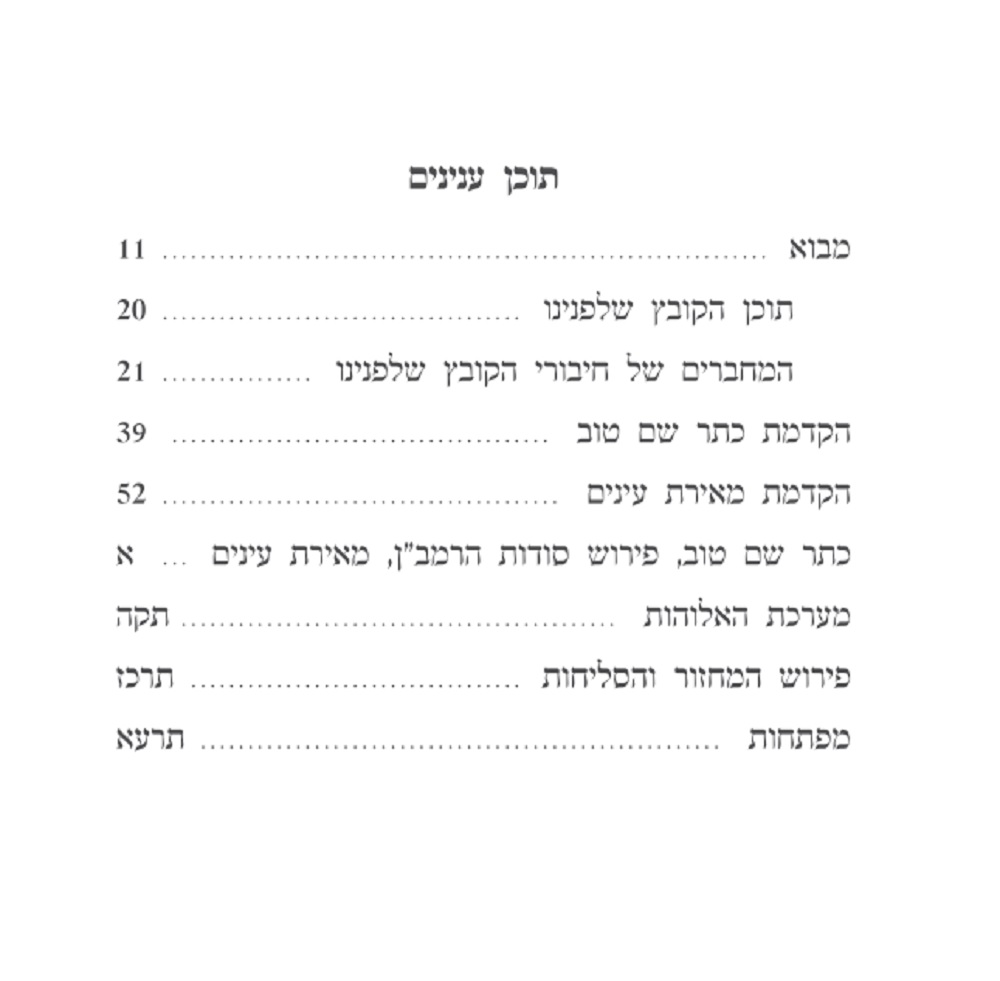
Here is the Table of contents of the new volume.


What if the Maharal of Prague Had Access to Leipzig 1 and Other Manuscripts?

“What if the Maharal of Prague Had Access to Leipzig 1 and Other Manuscripts?”

On Shemos 23:19 – Rashi on ראשית בכורי אדמתך

By Eli Genauer

Summary: There is a statement in Rashi which appears in the overwhelming majority of early Rashi manuscripts, and in early printed editions. But because Gur Aryeh and others did not have access to these manuscripts, and because they felt that what Rashi said was incorrect, they ascribed the statement to a טעות סופר. Knowing that Rashi really did write these words might have changed their approach to this Pasuk.

שמות כג

(יט) רֵאשִׁ֗ית בִּכּוּרֵי֙ אַדְמָ֣תְךָ֔ תָּבִ֕יא בֵּ֖ית ה’ אֱלֹקיךָ לֹֽא־תְבַשֵּׁ֥ל גְּדִ֖י בַּחֲלֵ֥ב אִמּֽוֹ

Rashi in Al HaTorah based on Leipzig 1:

ראשית בכורי אדמתך – אף השביעית חייבת בביכורים, לכך נאמרה אף כאן

Sefaria records it the same except it adds בִּכּוּרֵי אַדְמָתְךָ at the end.

ראשית בכורי אדמתך. אַף הַשְּׁבִיעִית חַיֶּבֶת בְּבִכּוּרִים, לְכָךְ נֶאֱמַר אַף כָּאן בִּכּוּרֵי אַדְמָתְךָ.

Oz VeHadar Rashi HaMevuar records it as above without parentheses but comments that there are some who do not include this comment because one is not Chayav in Bikurim during Shemittah.

The discussion in their Miluim section records many opinions on this matter. It concludes by saying that this statement of Rashi contradicts a statement of his in Yevamot, thereby leaving the impression that the statement in Shemot 23:19 is questionable.

Artscroll Rashi Sapirstein Edition (1994) records these words in parentheses to indicate that there is a true doubt whether Rashi wrote them.[1]

Artscroll notes that “Mizrachi and Gur Aryeh argue that it cannot be Rashi’s work”, but that Nachalat Yaakov defends this version of Rashi.[2]

Chumash Ateret Rashi (Jerusalem 1998) records the words without parentheses but only cites Gur Aryeh who say that Rashi did not write them and Mizrachi who says that there are Seforim which don’t have them.

The position of Mizrachi and Gur Aryeh is based on the fact that they feel that the Halacha is that during the Shemitah year one is not obligated to bring Bikurim. Mizrachi cites some “Nuschaot” which do not have this comment and Gur Aryeh writes that this comment is בודאי טעות סופר

Mizrachi:

ראשית בכורי אדמתך אף השביעית חייבת בבכורים לכך נאמר אף כאן בכורי אדמתך. ברוב הספרים כתיב אף השביעית חייבת בבכורים. ונראה לי שאשר הביאם לזה הוא מפני שראו של גבי וביום השביעי תשבות פירש אף בשנה שביעית לא תעקר שבת ממקומה שלא תאמר כוּ ולגבי שלשה פעמים בשנה פירש גכ לפי שהעניין מדבר בשביעית הוצרך ללמד שלא יסתרסו ג’ רגלים ממקומן חשבו שלגבי בכורים נמי שלא יהיו הבכורים נדחין ממקומן ולכך אמרו אף השביעית חייבת בבכורים ואין הדבר כן שהרי במכילתא שנו גבי וביום השביעי תשבות נאמר כאן שבת בראשית לעניין שביעית שלא תסתרס עניין שבת בראשית ממקומה ולגבי ג’ פעמים בשנה שנו נאמר שלשה רגלים בשביעית שלא יסתרסו ג’ רגלים ממקומן ואלו לגבי ראשית בכורי אדמתך שנו למה נאמרה פרשה זו לפי שנאמר ולקחת מראשית כל פרי האדמה אין לי אלא פירות משקין מניין תל תביא בית ייּ אלהיך

ממ אבל בקצת נוסחאוּ אינו כתוב אלא בכורי אדמחך אדם נכנס לתוך שדהו כוּ

Gur Aryeh:

אף השביעית חייב בבכורים. בודאי טעות סופר הוא, דאיך שייך דיהיה השביעית חייב בביכורים, שאיך קורא אני כאן ועתה הבאתי ראשית פרי האדמה אשר נתת לי” (דברים כו, י), דהא לא לו נתן, ואיך שייך שחייב בביכורים:

Yosef Da’at writes that these words are in some sefarim and not in other sefarim, (בספרים אחרים אינו ), and that “מהר״ל(גור אריה) מוחק ורא״ם(ר׳ אליהו מזרחי) מיישב״

Berliner in Zechor L’Avraham (Berlin 1867) lists only Erfurt #2 (which is now known as Berlin 1222) as a manuscript which doesn’t have these words (“ליתא בכתב יד ערפערט ב׳“). He also cites Mizrachi, Divrei Dovid and Gur Aryeh as saying these words are a ta’us sofer.[3]

Here is Berlin 1222 (13th-14th century) which doesn’t have the comment:

Berliner cites[4] Divrei Dovid דיהרנפורט 1689:

What needs to be determined is whether Rashi wrote these words or not. If he in fact did, one would then need to understand the background to Rashi’s comment but one would not be able to argue that it is a טעות סופר or put forth arguments against this Girsa “MiSevara”.

Gur Aryeh does not cite any books or manuscripts without these words, only that it was בודאי טעות סופר . Berliner cites only one manuscript without this Nusach. Divrei Dovid cites קצת ספרים which do not have it as does Yosef Da’at. Mizrachi says that ברוב הספרים כתיב אף השביעית חייבת בבכורים …… אבל בקצת נוסחאות אינו כתוב אלא בכורי…. Mizrachi does not say if those נוסחאות were books or manuscripts.

We started by citing Leipzig 1 which has this statement in Rashi. To claim that it was a טעות סופר would mean that this mistake ended up involving either Rav Shemayah or Rabbeinu Makhir. v These words are in 13 manuscripts from the 13th century I checked aside from Berlin 1222.[6] I feel it is easier to explain why these words were not included in one manuscript, (possibly for the reasons cited by Gur Aryeh and Mizrachi) than to argue that the words were not written by Rashi and were added by Sofrim later on.

[1] This comment is in parentheses in all Artscroll Chumashim, including the Stone Chumash. While the Artscroll series on Chumash is one of the only modern editions which has this comment in parentheses, it has enjoyed unparalleled distribution. According to its website, the Stone Chumash alone has been printed over a million times. “The Stone Edition of the Chumash, — with 1.5 million copies in print, is the Chumash of choice in the English-speaking world. Its flowing, inspiring translation and commentary speak to today’s Jews.”
[2] This is how it is presented in Yosef Hallel.
[3] It is unclear to me whether Mizrachi says that it is a טעות סופר. Yosef Da’at writes that ורא״ם(ר׳ אליהו מזרחי) מיישב while Berliner lists Mizrachi as one who says that the words are a טעות סופר. Artscroll seems to put Gur Aryeh and Mizrachi together in opinion.
[4] This is how it appears in Berliner 1905 (Frankfurt am Main).
[5] This manuscript was written in the 13th century by R. Makhir b. Karshavyah, who states that he produced it from a copy of the commentary transcribed and annotated by Rashi’s own secretary, R. Shemayah. R. Makhir not only copied Rashi’s base commentary from R. Shemayah’s manuscript, but he also reproduced many of the marginal glosses contained in R. Shemayah’s text, a good number of which R. Shemayah explicitly attributes to Rashi himself. (From Al HaTorah)
[6] Here is a group of manuscripts, aside from Leipzig 1 shown above, available through Al HaTorah “Selected Online Rashi Manuscripts-13th Century:”

https://alhatorah.org/Commentators:Online_Rashi_Manuscripts

Oxford CCC165 (Neubauer 2440) (This one is from the 12th century):

Munich 5:


Hamburg 32 ( Steinschneider 37):

 Hamburg 13 adds שלא תאמר הואל ופטורה מן המעשר תהא פטורה אף מבכורים״:

Berlin 1221:


Parma 3081:


Oxford Bodley Opp. 34 (Neubauer 186):

London 26917 (Neubauer 168) – same as Hamburg 13 with “שלא תאמר”:

Berlin Qu 514:

Florence Plut III 03:

Vatican Urbanati 1:

Paris 155:

Parma 2708:

Parma 2868 is the only manuscript in this group which doesn’t have these words of Rashi embedded in the text, but rather has them written on the side:


Tzevi Hirsch of Nadworna’s Sefer Alpha Beta

Tzevi Hirsch of Nadworna’s Sefer Alpha Beta

by Marvin J. Heller[1]

By the riches of the sea they will be nourished, and by the treasures concealed in the sand. (Deuteronomy 33:19).

Sefer Alpha Beta (1799) Nowy Dwor
Courtesy of the National Library of Israel

A primary component of the corpus of Hebrew literature is ethical works. The Torah is replete with examples of virtuous deeds, such as the patriarch Abraham’s numerous acts of kindness, and moral principles and commandments are a primary component of the taryag (613) mitzvot. Subsequent ethical works are innumerable, among the earliest and undisputedly the most popular being Pirkei Avot

Pirkei Avot, the last tractate of Mishnayot in Seder Nezikin, was redacted in the third century C. E. It has since been copied, studied regularly, and been the frequent subject of commentaries. First printed in the incunabular period, it continues to be reprinted to the present-day. The popularity of Avot is attested to by the number of editions, both independently and together with either Mishnayot or prayer books. Dr. Steven Weiss records, in his authoritative bibliography on Avot, from the first printing through 2015, 1,503 such editions.[2]

Among the many other frequently reprinted ethical works are such classics as R. Bahya ben Joseph ibn Paquda’s (second half of 11th century) Ḥovot ha-Levavot; R. Jonah ben Abraham Gerondi’s (Rabbeinu Yonah, c. 1200–1263) multiple ethical works, Iggeret ha-Teshuvah, Sha’arei Teshuvah, and Sefer ha-Yir’ah; R. Hayyim ben Bezalel’s (c.1520-1588) Sefer ha-Ḥayyim; the anonymous Orhot Zaddikim (Prague, 1581), written in Germany in the 15th century, preceded by an abbreviated Yiddish edition as Sefer ha-Middot (Isny, 1542); R. Moses Hayyim Luzzatto’s (Ramhal, 1707–1746) Mesillat Yesharim; and more recently and most notably R. Israel Meir ha-Kohen’s (Kagan, 1838-1933) Hafetz Hayyim, who is referred to today by that title.

Among the many other ethical works of value but less well known, is a small book, booklet really, by R. Tzevi Hirsch ben Shalom Zelig of Nadworna (d. 1801), entitled Sefer Alpha Beta, aphorisms based on hassidic works arranged alphabetically. Zevi Hirsch was a student (disciple) of R. Dov Baer, the Maggid of Mezhirech (d. 1772) but his primary influence was R. Jehiel Michal of Zloczow (c. 1731–1786), both among the early and foremost proponents of the Hassidic movement. Zevi Hirsch was a preacher in Dolina and afterwards was av bet din in Nadworna (Nadvornaya), in the Ivano-Frankovski section of Galicia, his name being associated with the latter community. According to R. Efraim Zalman Margulies of Brody, Zevi Hirsch “turned many sinners to repentance.” He had several illustrious talmidim (students) among them R. Menahem Mendel of Kosov, R. Tzevi Hirsch of Zydaczov, R. Abraham David of Buczacz, R. Tzevi Hirsch of Dilatin, and R. Isaac Landman of Visnitz.[3]

1818, Sefer Tsemah ha-Shem la-Tzevi, Berdichev
Courtesy of the National Library of Israel

Tzevi Hirsch was the author of several other titles in addition to Alpha Beta, well received and reprinted several times. Yitzhak Alfasi writes that Tzevi Hirsch was unusual for Hassidic rabbis, for, in contrast to other Hassidic leaders whose words were written by others, Tzevi Hirsch wrote his own books. That his father was a prolific author is attested to by R. David Aryeh Leib, Tzevi Hirsch’s son, in the introduction to Sefer Tsemah ha-Shem la-Tzevi (above), hassidic homilies on the weekly Torah readings (Berdichev, 1818), printed between two pages of approbations.[4]

1910, Haggadah shel Pesah, Saigat
Courtesy of Hebrewbooks.org

“This is the blessing which” (Deuteronomy 33:1) I found in his treasured files, a detailed listing of his holy writings, in his actual script, on the Torah, on the Prophets, and on many of the sayings of our sages on the Talmud and Aggadah, “founded on the holy mountains” (cf. Psalms 87:1) according to pardes (literal, allusive, discursive, and esoteric interpretations of Torah), mussar, and insight. All written by the hand of the Lord that guided him. If I brought them as they were to a press, hundreds of pages would be insufficient. . . .

Another of Tzevi Hirsch’s works is Sifte Kedoshim (Lemberg, 1873) also homilies on the weekly Torah readings and Psalms, and Haggadah shel Pesah, described on the title-page as having been concealed from the light for more than a hundred years.

We turn now to our subject book, Alpha Beta. That work, according to Ze’ev Gries, reflects the influence of the Maggid of Mezhirech.5 Initially printed as Otiyyot Mahkimot (Instructive Letters) Alpha Beta consists, as noted above, of ethical maxims arranged according to the letters of the alphabet based on Hassidic works. The date of printing is unclear, bibliographic sources giving conflicting dates and places of publication. The Bet Eked Sefarim dates the first edition to Breznitz (1796), followed soon after by Nowy Dwor (1799) and Berdichev (1817) editions. The Thesaurus of the Hebrew Book records a Russia-Poland (1790) edition followed by Ostrog (1793), Zolkiew (1794), Podberezce (1796), Nowy Dwor (1799), Lemberg (1800), Russia-Poland ([1800]), and then the Berdichev (1818) edition.[6] Among the early imprints of Alpha Beta in The National Library of Israel, which has a large collection of that work, are Ostrog (1794), Nowy Dwor (1799), Poland (c. 1800), and Berdichev (1810).

Among the earliest printings of Alpha Beta is the c. 1794/1800 edition, published in octavo (80: [12] ff.) format. The title-page of that edition does not record the date or the place of printing, thus accounting for the dating variances in the bibliographic records. The Library of Agudas Chassidei Chabad Ohel Yosef Yitzhak records it as a 1794 imprint and the press as Zolkiew. In contrast the National Library of Israel records the same edition as c. 1800, place of publication Poland. The title-pages states that it is,

1794/ 1800, Alpha Beta
Courtesy of The Library of Agudas Chassidei Chabad Ohel Yosef Yitzhak

Alpha Beta
This is the book Otiyyot Mahkimot

“A valiant man of many achievements from Kabzeel” (II Samuel 23:20, I Chronicles 11:22). In it are the order of all the middot tovot (good virtues) and the manner in which one should conduct himself as your eyes can see, “for they are life to him who finds them” (Proverbs 4:22). For the public good we have brought this booklet to press. Certainly, it will be pleasing to our brothers the children of Israel for it is “sweeter than honey” (Judges 14:18; cf. Psalms 19:11). All of your days you will taste of it and say for me it “was acquired at the full price (Genesis 23:9, I Chronicles 21:22, 24)” for it is “a ladder set earthward and its reaching heavenward] (Genesis 28:12).” Small in size but of great value.

Furthermore, we have added to this the sefer Torat ha-Adam.

Written by the rav, ha-Maggid R. Aaron ha-Levi, who is the moreh zedek (righteous teacher) in the [holy community] of Zaksanin and author of the sefer Hasdei Avot,

Tzevi Hirsch’s name does not appear on the title-page. The text follows immediately after the title-page, beginning with the phrase “‘these are the words’ (Deuteronomy 1:1) which a man shall carry out and live by them’ (Leviticus 18:5, Ezekiel 20:11, 13, 21), everlasting life, and whomever fulfills these words will assuredly be a great zaddik.” Below this opening phrase is the text, comprised of entries in alphabetic order.

Examples of the subject matter are אות א (letter alef) emet (truth); א ahavah (love): letter ב bet; bracha (blessing): ג gimmel; gemilat hesed (acts of loving kindness): ד daled, no entry; ה heh; hihor (thoughts); ו vav; ve-tikvah (and hope), ז zayin; zahiros, (caution); and concluding with ר resh ratzon (will); ש shin shtikah (silence); and ת tav: teshuvah (repentance). Entries vary in length. Examples of brief entries are:

חבר ח (friend). It is good for a person to have a friend to speak with concerning serving the Lord and to maintain distance from a bad companion, fulfilling “my sin is before me constantly” (Psalms 51:5) and seek from the Holy One, blessed be He, with a broken heart that I should not repeat these sinful deeds nor anything that is not according to the will of the Holy One, blessed be He. It is a mitzvah to very much strengthen oneself with great zeal to arise at chaztot lilah (middle of the night).7

טהרה ט (purity) A person should be pure at all times by immersing his body [in a mikvah, ritual bath) and be careful to wash his hands immediately afterwards so that there should absolutely not be any defilement on them and if possible so as to not go even daled amos. All the more when washing one’s hands in the morning one is responsible for his life (literally subject to death). Purity of his garments, as it is written “cleanse yourself and change your garments” (Genesis 35:2)and all your utensils , cups and plates shall be [ritually] clean for this arouses purity of the soul.

קדושה ק (holiness). A person should sanctify himself in all the ways that hazal (rabbinic sages) has cautioned him and as what is written, one should be very careful to sanctify all his limbs and senses.

The text of Alpha Beta is followed by Torat ha-Adam written by R. Aaron ben Judah ha-Leṿi (18th cent.), also author of Hasdei Avot.8 Torat ha-Adam is also a collection of moral maxims, concluding with a brief alphabetical list of dictums, a few a bit strange, such as כ “all your companions and your brothers will betray you: and even those who lie in your bosom will forsake you”9 and, more customary, ת “give thanks to the Lord your God and then you may go in safety on your way.”


Sefer Alpha Beta (c. 1799) Nowy Dwor
Courtesy of the National Library of Israel

Shortly after the first printing of Alpha Beta several other editions of Alpha Beta were published. Among them is a clearly dated תקנט (559 = 1799) Nowy Dwor edition (title-page above). Nowy Dwor, located in east-central Poland, thirty-one kilometers from Warsaw, was published at the press of Anton Krieger (Krüger), a Christian German cloth merchant.10 The title-page has a brief text, simply stating that it is Alpha Beta, Sefer Otiyyot Mahkimot and giving the place of printing. Here too Tzevi Hirsch’s name is omitted. The volume begins with a brief preface praising the work and then an introduction by Tzevi Hirsch’s son stating that it was previously printed as Otiyyot Maḥkimot, undated and without the place of publication. This edition, more complete, has added material, among it the following entry,

דיבור ד speech. Speech is very precious and should not be used in vain, and all the more to anger or for dispute, G-d forbid, derogatory speech, talebearing, disparaging speech, mockery, or falsehood . . .

Some letters are amplified, that is they are enlarged subheadings within entries, such as א ahavah (love) has been expanded to highlight אמת (truth), followed by ahavah (love), and then אכילה (eating), but this is infrequent. The text of Alpha Beta is followed by Be-Ezer ha-Zur, an alphabetical listing of concise aphorisms, for example,

ו One should be careful to not go daled amos (approximately 6 feet) without netilat yadaim (washing one’s hands).

ז One should be careful to join day and night times with Torah or tefillah (prayers).

יג One should not look at any animal, wild beast, or bird at the time they are occupied one with the other.

יד One should not look at any idol or graven image for his prayers will not be accepted for forty days, G-d forbid.

כד One should be careful not to embarrass anybody.

Sefer Alpha Beta (1799) Nowy Dwor
Courtesy of the National Library of Israel

There is yet another edition late eighteenth-century edition (below) this with the location unknown but clearly dated “He guards the steps of His devout ones ורעלי חסידיו ישמר (550 = 1790)” (Samuel 2:9). If the date is correct this would be the earliest of our printings of Alpha Beta. It was noted above that the Thesaurus records a 1790 Russia-Poland edition, likely referring to this printing, presumably the first printing, prior to the Nowy Dwor edition, which may have been the second edition and the first complete printing of Alpha Beta, excepting the recorded Breznitz Alpha Beta (1796), which was not seen. However, this 1790 Alpha Beta mentions Otiyyot Mahkimot but otherwise makes no reference to earlier printings.

It stands out, however, for within the entries portions of the text are highlighted so that they now appear as several entries. For example, within the above entry on ד דיבור speech there are now two additional entries, that is, the words are highlighted in the text, for example ד דיבור speech, דין judgement, and דרך ארץ respectfulness.

1818, Alpha Beta, Russia-Poland
Courtesy of the National Library of Israel

Two distinct editions of Alpha Beta are recorded as 1818 imprints. One clearly dated as 1818, lacking the place of publication, is recorded as a Russia-Poland imprint and omits Zevi Hirsch’s name. The second edition, tentatively dated 1818, the place of publication also lacking, is frequently recorded as a Berdichev imprint. It clearly identifies Zevi Hirsch as the author. These are the eighth and ninth editions of Alpha Beta.

The Russia-Poland edition is dated אלך באלפא ביתא (578 = 1818) but no printer is given. It is described as 19 cm. (8 ff.). The title-page states,

Alpha Beta
Sefer
Otiyyot Mahkimot

This brochure Otiyyot Mahkimot was prepared and created by “a valiant man of many achievements from Kabzeel” (II Samuel 23:20; I Chronicles 11:22). In it he arranged all the good middot (traits) and conduct with which a person should conduct himself as “your eyes can behold righteousness” (cf. Psalms 17:2) “for they are life to he who finds them” (Proverbs 4:22).

Selected from all the works of Kabbalah and by God fearing men. For the public good we have brought this brochure to press, and it will certainly be pleasing to our brothers the children of Israel for it is “sweeter than honey” (Judges 14:18) and all your life you should taste of it and say for full silver he acquired it for it is “a ladder set earthward its top reaching heavenward” (Genesis 28:13), of small size.

Tzevi Hirsch of Nadworna’s name does not appear on the title-page nor in the brief introductory paragraph that precedes the text, set in rabbinic letters.

The second 1818 edition is generally recorded as a Berdichev imprint, 16 cm. [28] ff. However, a word of caution. Isaac Yudlov notes that Avraham Yaari, in his article on Hebrew printing in Berdichev, in which Yaari records Bedichev imprints, omits this edition of Alpha Beta, suggesting that Yaari, who recorded fifty-six Berdichev titles, either did not believe it was a Berdichev imprint or omitted items that were questionable.11 Nevertheless, most bibliographies do record this edition as a Berdichev imprint.

The most active printer in Berdichev at this time was Israel Bak, who published Tzevi Hirsch’s Tsemh ha-Shem la-Tsevi, also in 1818 (above), also lacking the date of publication. Tzevi Hirsch’s name is clearly given, in enlarged bold letters, on the title-page of this edition of Alpha Beta. The title-page states,

Sefer
Alpha Beta

Otiyyot Mahkimot. Illuminating as saphires, shining as lightening, standing at the top of the peak of the world, who reflects on them at all times will find in it “good reasoning” (Psalms 119:66), a healing for the soul (cf. Proverbs 16:24) and a tonic for your bones (Proverbs 3:8), arousing hearts, and bringing souls closer to their Father in heaven. That came from the mouth of the righteous, the pious, and humble, holy one of the Lord, the esteemed , the rav, the gaon, illustrious in Torah, the godly man Tzevi Hirsch the light of whose Torah shined in Nadworna and other communities.

A second paragraph states that references in the Talmud to idol worshippers and various terms used to describe them do not apply to contemporary nations who are not idol worshippers but give honor to the Torah and its followers and rule with justice and kindness. Such proforma statements are often found in contemporary Hebrew works and editions of the Talmud. The title-page is followed by the introduction of Tzevi Hirsch’s son, David Aryeh. He writes,

Behold, the above holy words that were already published by one who exited and entered in the tent of the Torah of the Rav [Tzevi Hirsch], placing it in his bag, the identity of the one who took this awesome work[12] הכר”ך הנורא הזה completely unknown (lit. obscured from sight) and there is no reason as to why in places it was abbreviated and others lengthened from the author. Now time has turned, thanks to the will of the Creator, to merit my father . . . and to bring the book to press . . .

1818, Alpha Beta, Berdichev
Courtesy of the National Library of Israel Courtesy of Steven Weiss

Ze’ev Gries and Ya’akov Shemu’el Shpiegel both note, referencing the introduction, that the reason for the omission of Tzevi Hirsch’s name in the previous printings was that, beginning with the 1790 Poland or Russia edition, Alpha Beta was frequently printed without the author’s name as the book was plagiarized or printed with changes unbeknownst to the author. The situation was corrected when Tzevi Hirsch’s son, David Aryeh, issued the Berdichev, 1818 edition.[13]

Gries, after comparing the Berdichev and the previous editions, finds that the errors are insignificant, the differences minor, the texts generally alike. He concludes that David Aryeh’s complaints are primarily based on the unauthorized use of his father’s work and the omission of the aphorisms included at the end of the Nowy Dwor edition, which may have been omitted intentionally or because the manuscript in question lacked them.[14]

Printed with this edition of Alpha Beta is Mille d’Avot, a commentary on Pirke Avot. The latter work frequently printed together with Alpha Beta. In Pirke Avot: A Thesaurus Steven Weiss records eleven editions of Alpha Beta beginning with the 1818 Berdichev edition through a 2011 Benei Brak edition.[15] In the introduction David Aryeh informs that the work of “many pearls” (Proverbs 20:15) Mille d’Avot is printed from a manuscript of his father’s, the author of that work, and also notes the publication of Tsemah ha-Shem la-Tzevi.

1848, Alpha Beta, Zolkiew
Courtesy of Otzar Hahochma

Subsequent editions of Alpha Beta clearly mention Zevi Hirsch’s name, for example the 1848 Zhitomir (Zhytomyr), edition (above). That edition was printed by Ḥanina Lipa, Aryeh Leib and Joshua Heschel Shapira, sons of Samuel Abba and Phinehas Shapira, grandsons of R. Moses Shapira. The original family press, in Slavuta, highly regarded, was forced to close after charges were brought by central authorities, but denied by the local Russian authorities, concerning the alleged murder by the Shapira family of a non-Jewish worker who had denounced the press to the authorities for printing Hebrew books without the approval of the censor. The press was reestablished by the Shapira sons in Zhitomir in 1847.

There is at least one recent edition that not only recognizes Zevi Hirsch as the author of Mille d’Avot but even emphasizes Mille d’Avot over Alpha Beta, the Lodz 1930 edition (below).

1930, Alpha Beta/ Mille d’Avot, Lodz
Courtesy of Steven Weiss

Tzevi Hirsch ben Shalom Zelig of Nadworna’s Alpha Beta has been a moderately popular work. The Thesaurus of the Hebrew Book records thirteen editions, the last being a questionable Zolkiew 1850 printing; The Bet Eked Sefarim records an equal number, the latest being a Lublin 1934 printing. While Alpha Beta is highly regarded this number of printings is not, in comparison to the ethical works noted at the beginning of this work, an impressive number of editions. Alpha Beta is a small brochure, portable and more easily learned than the other books mentioned, which are large and, in some instances, multi-volume works. One would have thought that this would have resulted in many more printings of Alpha Beta rather than the relatively small number noted. Given these considerations and the value (importance) of the ethical teachings in Alpha Beta the verse quoted at the beginning would appear to be appropriate for Alpha Beta.

By the riches of the sea they will be nourished, and by the treasures concealed in the sand. (Deuteronomy 33:19).

[1] I would like to express my appreciation to Eli Genauer for reading this article and for his suggestions, Dr. Steven Weiss and R. Yitzhak Wilhelm, Library of Agudas Chassidei Chabad Ohel Yosef Yitzhak Lubavitch, for their assistance.
[2] Steven J. Weiss, Pirke Avot: A Thesaurus: An Annotated bibliography of Printed Hebrew Commentaries, 1485- 2015 [Hebrew with English introduction]. A reason for the custom of saying Pirkei Avot between Pesah and Atzeret is that in these days each and every member of the people of Israel is obligated to purify himself during the days of Sefirah as the children of Israel purified themselves from the defilement of Egypt as is known from the holy Zohar. Seven weeks comparable to the seven days of niddah. (Ohev Yisrael for the Shabbat after Pesah 3:1).
[3] Yitzhak Alfasi, Entsiklopedyah la-Hasidut: Ishim כ-ת (Jerusalem, 2004), cols 603-07 [Hebrew]; Tzvi M. Rabinowicz, The Encyclopedia of Hasidism (Northvale, London, 1996), p. 335.
[4] Alfasi.
[5] Ze’ev G,ries, Sifrut ha-Hanhagot: Toldoteha u-Mekomah be-haye Haside R. Yisrael Ba’al Shem Tov (Jerusalem, 1989), p. 119 [Hebrew].
[6] Ch. B. Friedberg, Bet Eked Sefarim (Israel n.d.), alef 1422 [Hebrew]; Yeshayahu Vinograd, Thesaurus of the Hebrew Book. Listing of Books Printed in Hebrew Letters Since the Beginning of Printing circa 1469 through 1863. I (Jerusalem, 1993-95), p. 11 [Hebrew].
[7] Arising at chaztot lilah (middle of the night) refers to the kabbalistic custom of arising at the middle of the night to recite prayers and lamentations over the destruction of the Temple. (Aaron Wertheim (Author), Shmuel Himelstein (Translator), Law and Custom in Hasidism (Hoboken, 1992), p. 99.
[8] Torat ha-Adam has been printed independently several times, beginning with an Oleksinetz edition (c.1769) entitled Zot Torah ha-Adam. It is refeered to by that title in the Sudilikov (1819) and Munkatch (1904) printings.
[9] Cf. “Trust no friend, rely on no intimate; be guarded in speech with her who lies in your bosom” (Micah 7:5).
[10] Concerning the Nowy Dwor press see Marvin J. Heller, Printing the Talmud: Complete Editions, Tractates, and Other Works and the Associated Presses from the Mid-17th Century through the 18th Century (Leiden/Boston, 2019), pp. 211-18.
[11] Avraham Yaari, “Hebrew Printing at Berdichev,” Kiryat Sepher (1944), p. 100-24 [Hebrew]; Isaac Yudlov, The Israel Mehlman Collection in the Jewish National and University Library: An Annotated Catalogue of the Hebrew Books, Booklets and Pamphlets. Jerusalem 1984, pp. 190-91 no. 1171 [Hebrew].
[12] Concerning this phrase Gries references Ezekiel 1:22 the letters of הכר”ך reversed, the verse stateing “There was a likeness of an expanse above the heads of the Chayah החיה רקיע כעין הקרח, like the color of the awesome ice, spread out over their heads from above.” Also see TB Bava Mezia 24b and Hullin 95a where the phrase “obscured from sight” appears, albeit in a very different context.
[13] Gries, pp. 120-21; Ya’akov Shemu’el Shpiegel, Amudim be-Toldot ha-Sefer ha-Iṿri: hadar ha-meḥaber: be-Sha’ari ha-Defus (Jerusalem, 2014), pp. 25-26 [Hebrew].
[14] Gries, p. 21.
[15] In a private correspondence, dated May 27, 2020, Dr. Weiss writes that, concerning Alpha Beta, he “only listed the editions with Avot.”


Rav Gorelick, the Rav, and Revision by Omission

Rav Gorelick, the Rav, and Revision by Omission

By: Yaacov Sasson

Many readers of the Seforim Blog no doubt remember Dr. Shapiro’s post from 2009, in which he documented a back-and-forth from the pages of the journal Or Yisrael, regarding whether Rav Yerucham Gorelick zt”l taught Gemara at Yeshiva University.[1] As a refresher, Or Yisrael (Num. 50, Tevet 5768, p. 39) published a summary of a shiur given by Rav Mordechai Leib Gorelick (son of Rav Yerucham), regarding the publication of the Talmud with translation and elucidation (presumably referring to Artscroll). Rav Gorelick argued that such translations are inappropriate, as they make learning Gemara too easy, and learning Gemara requires hard work and toil (ameilus). Furthermore, Talmud study had always been reserved for the elite, not the masses, who studied other topics like Mishnayos and Ein Yaakov; daf yomi study for the masses was only approved reluctantly by the Chafetz Chaim. But it is inappropriate to print these crutches to enable the masses to study the Talmud, which they are incapable of studying on their own.[2]

In a follow up in that same issue of Or Yisrael (p. 42), Rav Yehuda Heller of London raised some doubt about whether Rav Leib Gorelick really said what was attributed to him in Or Yisrael. In the course of attempting to show that Rav Leib never made these claims against English translations and daf yomi, Rav Heller mentioned that Rav Leib’s father, Rav Yerucham, taught Gemara in YU for many years, even though the students there did not meet the very rigorous conditions that Rav Leib required to qualify for learning Gemara. From this, Rav Heller attempted to demonstrate that Rav Leib did not actually say what was attributed to him.[3]

Rav Heller wrote a further follow-up in a later volume of Or Yisrael (Num. 57, Tishrei 5770, p. 255), in which he said that Rav Leib Gorelick told him that his father did not teach Gemara in YU, and he only taught hashkafa there.[4] This statement understandably prompted quite a response, as Dr. Shapiro criticized Rav Leib and these revisionist comments rather harshly. A number of other websites also made note of this episode and added their own criticisms.[5] A follow-up letter written by a former student of Rav Yerucham was also published in Or Yisrael (Num. 58, Tevet 5770, p. 248), titled איך החי יכול להכחיש את החי , in which the writer states that he studied Gemara, Rishonim and Acharonim with Rav Yerucham, as did thousands of other students.

The claim that Rav Yerucham never taught Gemara at YU/RIETS is clearly false. Yet, it would appear that no one followed up with Rav Leib to clarify his statement, or to confirm that he actually made the seemingly impossible statement that had been attributed to him. In a conversation I had with Rav Leib Gorelick this past summer, I took the opportunity to ask him about this claim that his father never taught Gemara there, and only taught hashkafa. Rav Leib immediately informed me that he was misquoted, and his father certainly taught Gemara at YU/RIETS. What he said was that his father’s goal in teaching Gemara at YU was not to teach Gemara per se, but was to impart hashkafa, mussar, and emuna to the talmidim; in Rav Leib’s own words, “He wasn’t teaching them daf yomi.” Recall that the original context of these statements was regarding the propriety of Artscroll English translations enabling the masses to study daf yomi. It was in this context that Rabbi Heller brought Rav Yerucham’s position in YU as a proof, and Rav Leib was responding to this argument, all in the context of English translations and daf yomi. Regarding this point, he was arguing that his father’s position at YU is not relevant to teaching daf yomi to the masses, because his father was using the Gemara as a vehicle to impart mussar and hashkafa.

Interestingly, Rav Hershel Schachter has expressed similar sentiments, but from the perspective of a student (academic year 1957-1958) of Rav Yerucham Gorelick[6]:

Rabbi Gorelick used to give a shiur in the yeshiva, a regular shiur in Gemara, and he used to pepper his shiur with a lot of hashkafa, and a lot of mussar, emunah, he would say over a lot from the Nefesh Hachaim…The year that I was in Rabbi Gorelick’s shiur we learned Sanhedrin, I don’t remember anything that Rabbi Gorelick said about Sanhedrin, but I do remember all the Nefesh Hachaim’s that he said in the course of the year…I remember vertlach that he said from Rav Velvele on chumash…That’s what I remember from the year of learning by him. What he said on Gemara Sanhedrin I don’t remember. I remember what Rav Soloveitchik said, I don’t remember what Rabbi Gorelick said. But I remember all the Nefesh Hachaim’s that he said, and all the vertlach from Rav Velvele on the hagada, and all the vertlach on chumash that he said, and the stories that he told about Rav Velvele, that I remember, he used to tell over stories…”

If we could generalize from Rav Schachter’s experience, it would appear that Rav Yerucham Gorelick’s lasting impact on talmidim was mostly in line with how Rav Leib presented Rav Yerucham’s goals in teaching Gemara in YU.

There have been instances, however, in which Rav Gorelick’s association with YU has been omitted or glossed over. As an example, see the journal U’lYishrei Lev, volume 11, published in honor of the marriage of a son of Rav Shmuel Yeshaya Keller (son of the late Rav Chaim Dov Keller), to a granddaughter of Rav Chaim Ozer Gorelick, a great-granddaughter of Rav Yerucham.[7] This journal contains two letters from Rav Gorelick, which originally appeared in YU/RIETS Torah journals. One of them, shown below, בענין חש בתרומה וריחא מילתא , was originally printed in Beis Yitzchak volume 25 p. 241, and was discovered and arranged for publication by the late Rabbi Joshua (posthumously known as The Hoffer) Hoffman.[8]

There is no mention in U’lYishrei Lev that this letter was found and published in Beis Yitzchak. Similarly, the other letter in U’lYishrei Lev, במצות הפרשת תרומות ומעשרות, was originally published in Kol Zvi volume 2 page 107. It is noteworthy that, in addition to the more recent family connection by marriage, Rav Yerucham Gorelick was Rav Chaim Dov Keller’s rebbe in YU. It was Rav Gorelick who encouraged Rav Keller to go to Telz, and arranged for Rav Keller to learn b’chavrusa with Rav Mordechai Gifter.[9]

The aforementioned letter בענין חש בתרומה וריחא מילתא also appears in Mishor’s 5768 printing of חידושי הגרח על השס on page 32, surprisingly with the disclosure that the piece is taken from Beis Yitzchak.[10] I say surprisingly, because this volume does engage in revision by omission in other cases, specifically those having to do with the Rav, Rav Yosef Dov Soloveitchik. Here is a piece from that volume (page 302) on the topic of אין שליח לדבר עבירה, which is attributed to the very nebulous “Reshimos Talmidim”, but is copied word-for-word from Igros Ha-Grid Halevi, page 9, דה אכן, shown below.

Similarly, the piece in the Mishor volume (page 97) on מצות תקיעת שופר is once again attributed to the nebulous “Kisvei Talmidim”, yet is taken from Igros Ha-Grid Halevi, this time an amalgam of the pieces on page 33-34 and page 91, shown below. Most of the verbiage is taken from pages 33-34, while the phrases “אינו חל לגביה“ and “בכלל מתעסק“ are taken from page 91.

Another recent example of revision by omission as relates to Rav Soloveitchik appears in Yishurun, volume 41 (Elul 5779), in a biographical article on Rav Elya Baruch Finkel, on p. 388. There we are told of Rav Elya Baruch’s safek regarding Erev Shabbos Chanuka. The halacha (Rambam Chanuka 4:12) is that someone who does not have candles must even sell his garment in order to purchase Ner Chanuka. Rav Elya Baruch understood that there is no such requirement for Ner Shabbos according to the Rambam (see Yishurun volume 18 p. 675.[11] The article in Yishurun volume 18 also appears in Mishulchan Rabi Eliyahu Baruch- Moadim, volume 2, p. 283, where a note mentions that it was prepared for print by Rav Elya Baruch’s son.) The halacha (Rambam Chanuka 4:14) also states that someone with one candle on Erev Shabbos Chanuka should use it for Ner Shabbos, as Ner Shabbos takes precedence to Ner Chanuka. In the event that someone has no candles or money on Erev Shabbos Chanuka, he is obligated to sell his garment to buy a Ner Chanuka, but once he has the candle, he is supposed to give precedence to Ner Shabbos over Ner Chanuka, even though he is not obligated to sell his garment for Ner Shabbos. Rav Elya Baruch raised the question – should he use the candle for Ner Chanuka or for Ner Shabbos?

We are told in Yishurun that Rav Elya Baruch presented this question to גאון אחד who was נודע בכשרונותיו העילויים. This Gaon stated that there are three logical possibilities, and these possibilities are laid out in Yishurun volume 18 p. 677.[12] 1) He need not sell his garment, because even if he does he will be unable to fulfill Ner Chanuka, and it is as if he knows that if he buys the Ner Chanuka a lion will eat it, in which case he certainly need not sell his garment. 2) He should sell his garment and use the candle for Ner Chanuka 3) He should sell his garment and buy a candle for Ner Chanuka, but then use it for Ner Shabbos. This Gaon rejected the third possibility out of hand, and he was unsure how to decide between the first two possibilities.

This anonymous Gaon is none other than Rav Soloveitchik. I know this because the same story appears in the name of Rav Elya Baruch Finkel in the book “Read and Remember” by Rabbi Yirmiyahu Cohen, and there it names Rav Soloveitchik as the Gaon who laid out the three possibilities and rejected the third possibility.[13]

Ironically, “Read and Remember” has itself been the object of revision by omission. On p. 161, Rabbi Cohen relates that Rav Nochum Partzovitz was asked if a resident of chutz laaretz who is in Israel for the second night of Pesach could fulfill his mitzva by telling the story of Yetzias Mitzrayim to a resident of Israel, for whom it is not the seder night.

It seems to me that this piece from “Read and Remember” is obliquely referenced in Kuntres B’lev Yam Siman 41 number 2, page 629[14], by the current-day Rav Yaacov Moshe Shurkin, which is appended to the Shiurei Rabi Yaacov Moshe Shurkin of his grandfather (the magid shiur from Chaim Berlin); although this question is attributed to אחד מספרי מחברי זמנינו, with no more precise reference.

In this case, I imagine the omission of a specific reference is not due to hashkafic concerns, nor to the author cited being too modern, as R. Cohen is quite a kanai who is affiliated with Satmar and Natruna, and has written several books espousing anti-Zionism. I think it’s more likely in this case that the reference is obscured because it doesn’t “pas” to quote halachic material in a sefer from an English book.

Another example of revision by omission as relates to Rav Soloveitchik appears in R. Shimon Yosef Meller’s Harav MiBrisk volume 4, p. 17. The story about the Brisker Rav refusing to speak to a Rav who had helped Solomon Freehof is clearly taken without attribution from Rav Schachter’s Mipninei Harav, and Echad Mibnei Mishpachas Maran is obviously the Rav.

Rav Schachter’s omission of this particular Rav’s name is a different kind of omission, as that omission is because the story is rather critical of him. Rav Schachter often omits the names of Rabbanim towards whom Rav Soloveitchik expressed criticism. (This is in contrast to the prior examples of omission, where the omission is meant to prevent someone else from looking bad due to their association with the person or institution whose name is omitted, or because it doesn’t “pas” to cite that person or give him publicity.) I will follow suit and not mention the name of the Rav who helped Freehof, although his identity was first pointed out to me by my good friend Rabbi Dovid Bashevkin, and should be known to those who have thoroughly read through Dr. Shapiro’s “Saul Lieberman and the Orthodox.”

In R. Meller’s new biography of Rav Chaim Soloveitchik, Raban Shel Kol B’nei HaGolah (volumes 1 and 2), he appears to have reversed course somewhat, and does cite many times from Rav Schachter’s Nefesh Harav series, as well as from Ish Hahalacha, and other sources from Rav Soloveitchik. However, some sources still appear be out of bounds for citation. For example, the material from the government archive cited in Raban Shel Kol B’nei HaGolah volume 1 p. 396-399 appears to be taken without attribution from the updated version of Dr. Shaul Stampfer’s Hayeshiva Ha-Litait Be-Hithavuta. The Yesh HaSvurim mentioned on p. 400 who attribute the closing of Volozhin to the government’s concern about the chaos and machlokes in the yeshiva, rather than the government’s desire for secular education, would appear to be referring to Dr. Stampfer.

Another recent example of omission was brought to my attention by my father-in-law, R. Dovid Grosser, and is found in a recent appreciation of Rav Moshe Bick that appeared in Hamodia on September 9, 2020. “Immediately upon his arrival in New York, the young Rav Moshe spent his days in the “Poilishe shtiebel,” learning diligently. Eventually, he joined a suitable yeshivah, led by outstanding Gedolei haTorah… At that time, the renowned Gaon, Harav Shimon Shkop, zt”l, Rosh Yeshivah of Grodno, was in America for a fundraising visit and briefly served as a Rosh Yeshivah there… Subsequently, Harav Moshe Halevi Soloveitchik, zt”l, son of Harav Chaim of Brisk, zt”l, served as Rosh Yeshivah.”

I admit that I am perplexed by the purpose of this omission, as the references to Rav Shimon Shkop and Rav Moshe Soloveitchik make clear that this is referring to Yeshivas Rabeinu Yitzchak Elchanan. I don’t know what is gained by not mentioning the name, when it is clear which yeshiva Rav Bick attended. More misleading, however, is an Editor’s note about Rav Bick that appeared in the Jewish Observer (January 1991).

While it may be true that Rav Bick initially enrolled in Yeshivas Rabeinu Yitzchak Elchanan on the Lower East side before there was a college program, he certainly continued to learn there in Washington Heights, after the college was already operating. The move uptown occurred in January 1929, and Yeshiva College was founded in March of 1928, and graduated its first class in June of 1932.[15] Rav Moshe Soloveitchik only departed from Europe for America on September 18, 1929.[16] For Rav Bick to have learned under Rav Moshe, as the Jewish Observer mentions, he had to have been learning in RIETS in the uptown campus, and after the establishment of the college program. (I am not claiming that Rav Bick himself attended the college program, only that he learned in RIETS after the establishment of the college program, contra to the implication of the Jewish Observer.)

Returning to Rav Soloveitchik, one of the more well-known examples of revision by omission as relates to Rav Soloveitchik is Rav Chaim Dov Altusky’s Chiddushei Basra Al Chiddushei HaMasbir. As is well known, the “Masbir” refers to Rav Soloveitchik. (This has been documented previously on the Seforim Blog by Rav Nosson Kamenetsky.[17] See also Rav Shlomo Pick’s “The Rav: Biography and Bibliography” fn. 6, in BDD volume 6, where Rav Pick sharply criticizes Rav Altusky’s behavior.) As mentioned earlier in this post, Rav Schachter says he does not remember anything that Rav Gorelick said about Sanhedrin from his time in Rav Gorelick’s shiur. However, he did preserve many interesting haaros from Rav Gorelick at the time in his notes, and these have been published in the footnotes of my Shiurei Harav on Sanhedrin. Rav Schachter told me that Rav Gorelick would often ask him what the Rav said about a certain topic, and would then comment on what the Rav said, and these are the comments that Rav Schachter recorded at that time. Some of these comments are also reproduced in Rav Altusky’s Chiddushei Basra Al Chiddushei HaMasbir on Sanhedrin, which is based on Rav Schachter’s notes from the Rav’s shiur, without attribution to either. Rav Altusky, however, misunderstood some of Rav Schachter’s citations of Rav Gorelick. For example, on Sanhedrin 3a (p. 11), he cites an explanation in the name of “Rabeinu Yerucham”, but this is actually Rav Yerucham Gorelick’s explanation.

Rav Schachter attributed the explanation to רירוחם in his notes, and Rav Altusky misunderstood the reference.[18] By Sanhedrin 5b (p. 18), Rav Altusky apparently realized that these references were to Rav Gorelick, and he cites דודי הרהג רירוחם זל. (Rav Altusky’s mother was Rav Gorelick’s sister.)

For more on Rav Gorelick and his family, Rav Simcha Elberg wrote a beautiful appreciation of Rav Gorelick in his Einei Ha-eida. On p. 119, Rav Elberg writes that Rav Gorelick’s home was not an apartment with rooms; his home was a beis medrash. And the crowning achievement of Rav Gorelick’s life’s work was his home, in which he raised all of his sons to be Gedolei Torah Ve-yirah, as well as great marbitzei torah.

I would add that the aforementioned Rav Leib Gorelick is a great talmid chacham and lamdan. In my interactions with him, I have been astonished at his wide-ranging knowledge of even obscure rishonim and other seforim, as well as his analytic abilities. Listen here at approximately 1:35:15 to 1:38:13 where Rav Schachter cites a lomdish explanation from Rav Leib to explain the Rama in 472:4 who says that only women rely on the opinion of the Ravyah that heseiba is no longer required.[19] (Rav Leib has been suffering from some health problems lately and readers are asked to daven for Mordechai Leib ben Chana.[20])

Besides for Rav Leib, another son, Rav Tzvi Abba Gorelick was a Rosh Yeshiva at the Yeshiva Gedolah Zichron Moshe in South Fallsburg. Another son, Rav Chaim Ozer Gorelick, is author of sefer Otzar Chaim, and is currently Rosh Yeshiva of Yeshiva Gedolah of Spring Valley. I think the blog readers will find interesting this excerpt about Rav Chaim Ozer Gorelick, and the continuation about Rav Aharon Lichtenstein, from Alt un Nay in Yisrael, by Nissan Gordon, in 1964.

I will translate the excerpt for those readers who don’t read Yiddish:

The young bochurim and yungeleit who learn by Rav Berel, as Rav Velvel’s bechor is called in the Yerushalmi yeshiva world, sit and learn b’kvius in the Achva neighborhood shul, and to shiur they come to the Rosh Yeshiva’s house. And indeed here, in the illuy’ish chabura, who learn by Rav Soloveitchik, a cousin of our American Rav Soloveitchik from Boston and New York, I found a bochur’l from the Bronx, on whom the Yerushalmi lomdim testified, that he is among the best, if not the very best, student in the Brisker chabura. The bochur’l is called Chaim Ozer Gorelick, a name after the great Rav of Vilna, and a son of Rav Yerucham Gorelick from the Bronx, a Rosh Yeshiva in Yeshivas Rabeinu Yitzchak Elchanan and himself one of the b’nei aliyah in the world of lomdus and actions for Torah in America.”

It seems the original “best bochur in Brisk” was Rav Chaim Ozer Gorelick, who indeed became a great talmid chacham. The following is a translation of the ensuing conversation with Rav Berel about Rav Aharon Lichtenstein:

Do you correspond with your famous cousin in America?”, I asked a quick question to Rav Soloveitchik of Yerushalayim.

In Brisk we don’t write letters[21]”, came a fast answer with an addition, that he did meet with his cousin’s son-in-law, Rav Dr. Aharon Lichtenstein, when the young Rosh Yeshiva and scholar was on a visit in Israel. “We spoke in learning and he is a great lamdan”, did the Yerushalmi Soloveitchik notice about his cousin’s son-in-law, who is an assistant Rosh Yeshiva to his father-in-law in Yeshivas Rabeinu Yitzchak Elchanan, and a professor in Stern College.

Meaning that there is room for both, for Torah and worldly knowledge”, I tried asking Rav Berel, knowing the strong speaking out of the house of Brisk in Yerushalayim against learning anything other than Torah.

Sometimes succeeds…an exception…and from an exception we don’t bring a raya”, he didn’t leave me to wait long for his answer.

One final recent example of revision by omission that I want to call attention to, is from the journal Hamaor (Nissan-Iyar 5779, p.5). A piece from Rav Chaim Soloveitchik’s chiddushim is published there, which was written down in 1932 by his nephew Rav Yisrael Soloveitchik. The piece is an alternate version of the piece that was eventually published in Rav Chaim’s sefer, on Hilchos Chametz U’Matza Perek 6 about greira. We are told that Rav Yisrael attached the divrei torah to a letter from Erev Pesach 1932, and that he wrote to the recipient that it would be an Oneg Yom Tov for him to read.

What we are not told, however, is that this letter and accompanying divrei torah were sent to Rav Herzog, and are found in Rav Herzog’s archive.[22] (I had not yet come across this letter when I wrote my Seforim Blog posts on Rav Herzog’s archive.) Here is the first page of the letter, addressed to Rav Herzog, with the mention of the divrei torah from Rav Chaim, and then the first page of the divrei torah.

Additionally, the transcription in Hamaor contains numerous errors. I plan to publish an accurate transcription in my forthcoming sefer שש אנכי.

These are some examples of revision by omission that I have come across recently. I am certain that there are many more waiting to be discovered.

Regarding Rav Herzog, here are a few photos that the blog readers will enjoy, of Rav Herzog being mesader kiddushin at the wedding of a young Shlomo Gorenczik. The entire photo album is available in Rav Goren’s archive.[23] It is also noteworthy that the wedding seudah was separate seating.

Appendix: The Rav and Professor Saul Lieberman on the Langer Case

Related to Rav Goren’s archive, I know that the blog readers are especially interested in the Rav and Professor Saul Lieberman, so I thought I would make note of their positions on the Langer case, which to the best of my knowledge have not been noted yet.

The Rav addressed the Langer case in his well-known speech in 1975 on the topic of the Rabbi Rackman’s aguna plan.[24]

However, if you think that the solution lies in the reformist philosophy, or in an extraneous interpretation of the Halacha, you are badly mistaken. It is self-evident; many problems are unsolvable, you can’t help it. For instance, the problem of these two mamzerim in Eretz Yisrael – you can’t help it. All we have is the institution of mamzer. No one can abandon it – neither the Rav HaRoshi, nor the Rosh HaGola. It cannot be abandoned. It is a pasuk in Chumash: “לא יבא ממזר בקהל ה‘”. It is very tragic; the midrash already spoke about it, “והנה דמעת העשוקים“, but it’s a reality, it’s a religious reality. If we say to our opponents or to the dissident Jews, “That is our stand” – they will dislike us, they will say that we are inflexible, we are ruthless, we are cruel, but they will respect us. But however, if you try to cooperate with them or even if certain halachic schemes are introduced from within, I don’t know, you would not command love, you would not get their love, and you will certainly lose their respect. That is exactly what happened in Eretz Yisrael! What can we do? This is Toras Moshe and this is surrender. This is קבלת עול מלכות שמים. We surrender.[25]

The Rav is clearly referring to the Langer case, and he considered Rav Goren’s heter to be illegitimate. He refers to the Langers as two mamzerim, and he uses the Langer case as an example of something “unsolvable” and that “you can’t help it.” He seems to be using Rav Goren’s heter as an example of “an extraneous interpretation of the Halacha.” And according to the Rav, the more appropriate response would have been to surrender to halacha; that the attempted heter was a futile attempt to coax love out of dissident Jews. I have not seen this speech of the Rav mentioned in the context of the Langer case and I thought it appropriate to mention here.

It appears that Professor Lieberman felt differently. This is a heretofore unknown, and very fascinating letter that he wrote to Rav Goren supporting the heter, found in Rav Goren’s archive, with my transcription below.[26] (Rav Goren’s response to this letter is printed in “Saul Lieberman and the Orthodox, Hebrew section p. 9.) Lieberman’s cynicism in this letter is biting, and he seems to be rather hurt and bitter. The advice and observations that he shares with Rav Goren are obviously informed by his own experiences. I would ask if any readers (or Dr. Shapiro) have any idea which Gedolei Torah asked Lieberman to review Rav Goren’s psak. I am also not entirely clear on Lieberman’s explanation at the beginning of the letter as to why he is not offering a bracha. I think it is related to what he writes in his postscript from his wife, and that he viewed Rav Goren’s appointment with ambivalence because of the difficulty in the position, but any further suggestions from readers would be appreciated.

בעהי אור ליום גפרוישלח תשלג

לידינ הגאון הגדול וכווכומוהרר שלמה נרו

לא כתבתי לך ברכה מפני שלא היה לבי שלם אתי, אבל התפללתי בלב שלם שהיצליח את דרכך. היום קראו לי מרדיו ירושלים ובקשו ממני לחוות את דעתי על הפסק שלך ולמרות הלחץ עמדתי בשלי ואמרתי שלא חקרתי את הדבר ואין לי מה לומר. אבל לך אכתוב את האמת: יברך אותך הויישר כוחך. אני מכיר גם את תורתך ואת יראת שמים שלך, ובטוח אני שצדקת. לא אמרתי להם כן, מפני שחששתי שאגרום לך רעה. יאמרו הקנאים נמצא עוד רב קונסרבטיבי שמסכים להרב הראש—[27], מצא מין את מינו.

בהיותי בקיץ בירושלים לחצו עלי גדולי תורה מן הרבנים שאקרא את תשובתך בענין, וסרבתי בהחלט. אמרתי: אין לי פנאי. הבינותי את כוונתם. דע לך שבמקום שיש קנאה ושנאה שום דבר אינו מועיל. אף פעם לא תפייס את הקנאים, ובעיקר את המקנאים. אם תכנע להם תאבד את עולמך. אני מכיר יפה מה שעשית בצבא, ולוא נוצרת רק לשם זה כבר קנית את עולמך. אדם ירא שמים אמיתי יחשוב עשר פעמים לצאת נגדך אפילו אם יהיבטוח שלא כיוונת לאמת. עליך להחזיק בידידים שלך יפה, יפה, מפני שקל מאד לאבד ידיד (בפרט אם הוא איננו גדול בתורה ואינו בר דעת), ושונא מקנא לעולם לא תהפוך לידיד, וכל מה שתעשה בשבילו אינו אלא לשעה קלה. יבטל את תורתך ויכפור ביראתך. לך והצלח וישמור שומר ישראל עליך.

בכבוד ובאהבה,

שאול ליברמן

הגבשלי מבקשת למסור דרש להרבנית שתחי‘. רצתה גם היא לכתוב אלא שעדיין אינה מרגישה את עצמה בטוב. היא באמת שמחה על בחירתך, שהרי היא אינה יודעת מהו להיות רב בירושלים.

[1] https://seforimblog.com/2009/10/some-assorted-comments-and-selection-2/
[2] https://www.hebrewbooks.org/pdfpager.aspx?req=50519&st=&pgnum=39
[3] https://www.hebrewbooks.org/pdfpager.aspx?req=50519&st=&pgnum=42
[4] https://www.hebrewbooks.org/pdfpager.aspx?req=50521&st=&pgnum=255
[5] See R. Gil Student’s criticism here: https://www.torahmusings.com/2009/10/reb-yerucham-and-yu/. See also: http://theantitzemach.blogspot.com/2008/01/blog-post_13.html and https://machshavos.wordpress.com/2013/01/02/r-yerucham-gorelick-and-talmud-vs-hashkafa/.
[6] https://www.yutorah.org/lectures/lecture.cfm/741763/rabbi-hershel-schachter/remembering-rav-yeruchim-gorelik/ at approximately 5:08, 11:57 and 18:09
[7] https://matzav.com/engagement-of-grandchildren-of-rav-chaim-dov-keller-and-rav-yitzchok-sorotzkin/
[8] For a full collection of Rabbi Hoffman’s own divrei torah, see http://yeshivasbrisk.freeservers.com/netvort.html. For Rabbi Hoffman’s thesis on Rav Gavriel Zev Margolis, see http://repository.yu.edu/handle/20.500.12202/4899
[9] See Yated Ne’eman (English), August 21,2020, page 46-47
[10] My thanks to Rabbi Menashe Mazurek and Rabbi Avi Harari for bringing this reference to my attention
[11] https://hebrewbooks.org/pdfpager.aspx?req=46424&st=&pgnum=672
[12] https://hebrewbooks.org/pdfpager.aspx?req=46424&st=&pgnum=674. Here, the three possibilities, as well as the rejection of the third possibility, are attributed to “Gedolei Torah”.
[13] My thanks to my good friend Rabbi Nosson Rich for providing the scans from “Read and Remember”.
[14] https://www.hebrewbooks.org/pdfpager.aspx?req=50479&st=&pgnum=629
[15] https://www.yu.edu/about/history
[16] The Rav, volume 1, p. 9
[17] https://seforimblog.com/2012/12/a-letter-from-r-nathan-kamenetsky/
[18] Another error is on 7b (p.30), where Rav Altusky has a discussion about whether דינו לבקר משפט applies to ”אומות העולם”. This entire section is mistaken, because the Rav spoke about “איסור והיתר”, not ”אומות העולם”. Rav Schachter had written אוה in his notes and Rav Altusky opened the abbreviation incorrectly.
[19] See here.
[20] https://www.thelakewoodscoop.com/news/2020/12/tehllim-reb-leib-gorelick-to-undergo-emergency-surgery.html
[21] I assume he was referring specifically to social correspondence that they don’t write in Brisk, not torah correspondence.[22] https://www.archives.gov.il/archives/Archive/0b07170680024756/File/0b071706806d9fc7 on p. 49-53.[23] https://www.archives.gov.il/archives/Archive/0b07170684e17c68/File/0b07170687520f3c
[24] https://www.yutorah.org/sidebar/lecture.cfm/767722/rabbi-joseph-b-soloveitchik/gerus-mesorah-part-1/ at approximately 39:00 to 40:53.
[25] Transcription from https://www.torahweb.org/torah/special/2019/ryds_rietsalumni.html
[26] https://www.archives.gov.il/archives/Archive/0b07170684e17c68/File/0b07170685459764 on p. 281.
[27] I was expecting this word to be הראשי but there appear to be two hyphens at the end. Does it say הראשיי with two yud’s? I don’t believe that is a common spelling. I would be indebted to any reader who can explain what this means.


The Medical Training and Yet Another (Previously Unknown) Legacy of Rabbi Dr. Abraham J. Twerski, zt”l

The Medical Training and
Yet Another (Previously Unknown) Legacy
of Rabbi Dr. Abraham J. Twerski, zt”l

by Edward Reichman and Menachem Butler

Rabbi Dr. Edward Reichman is a Professor of Emergency Medicine and Professor in the Division of Education and Bioethics at the Albert Einstein College of Medicine. He writes and lectures widely in the field of Jewish medical ethics.

Mr. Menachem Butler is Program Fellow for Jewish Legal Studies at The Julis-Rabinowitz Program on Jewish and Israeli Law at Harvard Law School. He is an Editor at Tablet Magazine and a Co-Editor at the Seforim Blog.

On erev Shabbat Shira last week, in the course of a typically wide-ranging conversation between the authors of this article, Menachem mentioned that unfortunately Rabbi Dr. Abraham J. Twerski was critically ill. As hashgachah would have it, Menachem had happened upon a little-known precious work from 1997, entitled Sefer Ye’omar le-Yaakov u-le-Yisrael, compiled by Rabbi Dr. Abraham J. Twerski and comprised of letters written to him by Rabbi Yaakov Yisrael Kanievsky, zt”l (1899-1985), known as the Steipler Gaon and author of the multi-volume work Kehillot Yaakov.[1]

Scion of prominent Hasidic dynasties and related to the current Rebbes of Bobov, Karlin, Klausenberg, Talner, and Skver, Abraham J. Twerski was born in Milwaukee in 1930 to Rabbi Yaakov Yisrael Twerski and his wife Devorah Leah (née Halberstam), where he attended public school as a child.[2] After he received his rabbinic ordination from the Hebrew Theological College in Chicago, he began to serve as an assistant rabbi in his father’s congregation in Milwaukee in the 1950s, as Aaron Katz described in his 2015 profile of Rabbi Dr. Abraham J. Twerski (“The Wisdom of Peanuts”) at Tablet Magazine. He married Goldie (née Flusberg) in March 1952; and starting that summer, directed the Hebrew School at his father’s congregation Beth Jehudah, as well as officiated religious lifecycle events in his father’s community in Milwaukee. However, as he would later reflect in an interview “after I had practiced as a rabbi for a number of years, I felt I was not fulfilled in my work and — after consultation with the Steipler Gaon — I went to medical school to become a psychiatrist.”

Abraham J. Twerski wrote to the Steipler Gaon and expressed concerns about the propriety of attending medical school as an Orthodox Jew. He would regularly visit Rav Kanievsky at his home in Bnei Brak and corresponded with him by mail, maintaining an ongoing relationship with him until the Steipler’s passing in 1985. That year, a volume of collection of letters entitled Karyana de-Igarta was published, and included, for the first time, two letters that the Steipler Gaon had sent some thirty years earlier to a young Abraham J. Twerski in Milwaukee, who was then seeking his advice regarding his career choice.

The first letter was written at the end of the Summer of 1955 by a twenty-four-year-old Abraham J. Twerski and in this letter the Steipler Gaon addresses the value of making one’s livelihood through a non-rabbinic profession. As to the specific profession, he adds that medicine may be a preferred choice, as it is a mitzvah to learn, and additionally, excluded from the ban on secular knowledge of the Rashba.[3] However, this is on the proviso that the education is provided by proper teachers and in an environment conducive to Torah observance. As this is clearly not the case in a modern university, he offers some general guidelines, culled from the seforim hakedoshim, if not to guarantee, at least to enhance the chances of success: 1) kove’a itim – learn in-depth at least two hours daily; 2) recite all tefillos with a minyan; 3) regular mikva immersion; 4) meticulous Shabbat observance; and 5) a daily musar seder.[4]

The second question Abraham J. Twerski posed, the following year, was more specific to his situation. He inquired whether it was preferrable for him to be a rabbi in a largely non-observant community (he was serving as an assistant rabbi to his father in Milwaukee at that time), which would involve immersion in an irreligious environment with potential negative impact on the Jewish education of his children; or should he choose a medical career, which would allow him to remain in an environment of Torah observance.

Suffice it say, the Steipler Gaon’s tone in this letter is less than supportive of a career in medicine than its predecessor. His written response is unequivocal, “the rabbinate is much preferred” (adifa yoter viyoter). He lists no less than five reasons not to become a physician, relating to the challenges in maintaining Torah observance and modesty, as well as the time commitment, which would preclude Torah study. He adds on a personal note that given his estimation of the exceptional talents of the young Rabbi Twerski, the latter would likely become a highly successful and sought-after physician. As such, he would find no rest from those constantly “knocking on his door” and seeking his consultation. He was particularly concerned about what would happen to his Torah learning and observance in such a case.[5]

Notwithstanding the serious concerns expressed by the Steipler Gaon, and perhaps now better informed of the potential pitfalls, Abraham J. Twerski proceeded to pursue his medical education, as he wrote, “I went to medical school with the Steipler’s blessing and continued an ongoing relationship with him for years.”[6] Their fathers both grew up as friends in Hornsteipel, “and spent their boyhood years together and were on first name terms,” reminisced Rabbi Dr. Abraham J. Twerski many years later in a biographical memoir of his Hasidic ancestors.[7]

However, several years into his studies at Marquette University’s medical school, Abraham J. Twerski could no longer afford the tuition.[8] His assistance would come from a most unlikely source, as he would later describe in an interview with the Pittsburgh Quarterly:[9]

By that time, I had several children, so my dad and some members of the congregation helped me to pay for school. I applied for a scholarship through a foundation, but it didn’t come through, so in my third year, I fell two trimesters behind on tuition. One day, I called my wife at lunch as always, and she asked, “What would you do if you had $4,000?” I said, “I’m too busy to talk about fantasies.” She said, “But you really do have $4,000!” I said, “From where?” She said, “From Danny Thomas.” “Who’s Danny Thomas?” She said, “The TV star.” Then she read me an article from The Chicago Sun. Local officials had told Mr. Thomas about a young rabbi who was struggling to get through medical school. Thomas asked, “How much does your rabbi need?” They said, “Four thousand dollars.” He said, “Tell your rabbi he’s got it.”[10] So, I did my internship in general medicine, went to the University of Pittsburgh Psychiatric Institute for three years, and then worked two more years for a state hospital.

While the Steipler Gaon’s assessment of the success of Rabbi Dr. Abraham J. Twerski’s medical career was prophetic, his concerns about Torah observance and learning, at least for Dr. Twerski, would turn out to be unfounded. Upon his graduation from medical school several years later, Time Magazine (June 15, 1959) published a brief article about him entitled “Rabbi in White.” It is worth reprinting in its entirety:

Abraham Joshua Twerski, 28, graduated from medical school this week. It was no mean feat, for Twerski is a Jewish rabbi like his father, two uncles, father-in-law, two older brothers and (when they finish their studies) two younger twin brothers. And to keep the Torah as an Orthodox Jew for six years of studies in Milwaukee’s Roman Catholic Marquette University was something like running a sack race, an egg race and an army obstacle course at the same time.

First there was the problem of keeping his religion from growing rusty: he rose each day at 5:30am, put in an hour’s study of the Talmud before early service at Milwaukee’s Beth Jehuda Synagogue, where he is assistant rabbi. Medical school classes began at 8am, and here real complications set in. His full black beard was a sanitary problem in surgery, requiring special snood-like surgical masks. His tallith katan, a small prayer shawl worn by many Orthodox Jews under their shirts, had to be made of cotton instead of wool – which might set off a static spark and ignite the anesthetic in an operating room.

Lectures on Saturday.[11] Religious holidays sometimes required months of advance planning. The nine-day Feast of Tabernacles, for instance, with four days when work is forbidden, fell during a series of lectures before a make-or-break exam in pathology. Abe, as students and professors call him, met the situation by studying by himself all the preceding summer, put himself so far ahead of his class that he could afford to miss the lectures. “I hated like heck to miss them,” he explains, “but I creamed that exam.”

When lectures came on Saturdays – during which Orthodox Jews are forbidden to work, ride in a vehicle or talk on the phone – Abe would have a friend put a sheet of carbon paper under his lecture notes and hope he remembered to use a ballpoint pen. Sabbath restrictions begin on Friday night, just before sundown, and on occasion Fridays only a lucky break in the traffic has saved him from having to abandon his 1952 De Soto and walk the rest of the way home. On Saturdays Abe was not on duty, but sometimes, to follow up on one of the cases he had been observing, he would leave his car in the garage and walk five miles to the hospital and back.

Work on Tishah Be’ab. Abe brought his own kosher food to school every day and ate it in the student lounge, where he also said his midday prayers in a corner, surrounded by chattering fellow students. Hospital duty during the 24-hour fast without food and water at Tishah Be’ab (commemorating the destruction of the Second Temple in 70 A.D.) Dr. Twerski describes as “murder,” and the last six years have left him hollow-eyed and slightly sallow.[12] But he is eagerly looking forward to the next stage: a year of internship in Milwaukee’s Mount Sinai Hospital, followed by a three-year residency in psychiatry.

“Psychiatric training was the motivation for my going into medicine,” he says. “I felt I could be a better adviser to my people and more help to them with their problems.”

The Time Magazine profile of Abraham J. Twerski included just one photograph (wearing “a snood for surgery” over his yarmulke), but members of the Twerski family have shared in recent years nearly a dozen of the other photographs that were taken by George P. Koshollek Jr., a local photographer with The Milwaukee Journal, and later deposited in the LIFE Photo Archive. The following are two photographs of newly-minted physician Abraham J. Twerski, together with his philanthropic patron who supported his medical school studies, the comedian Danny Thomas:

Upon his 1959 graduation from Marquette University Medical School, Rabbi Dr. Abraham J. Twerski left his pulpit in Milwaukee and moved with his family to Pittsburgh, where he completed his psychiatric training at the University of Pittsburgh’s Western Psychiatric Institute four years later, and was then named clinical director of the Department of Psychiatry at St. Francis General Hospital in Pittsburgh, supervised by Sisters of the Third Order of St. Francis, where he advanced his expertise for treating addiction. In 1972, Rabbi Dr. Abraham J. Twerski founded the Gateway Rehabilitation Center with the Sisters of St. Francis.[13]

Returning to our pre-Shabbat conversation, Menachem suggested that perhaps it might be appropriate for us to study through the 1997 volume of Rabbi Dr. Abraham J. Twerski, Sefer Ye’omar le-Yaakov u-le-Yisrael – one of his only Hebrew-language books of more than his eighty-authored volumes published over the past half-century – as a merit for Rabbi Dr. Abraham J. Twerski’s complete recovery. Menachem further asked if I would perhaps identify any medically related material that might be significant or previously unknown. Before Shabbat, I identified one particular letter, the final one in the book, which was of medical relevance, and I printed it out for learning, with Rabbi Twerski in mind. The topic: the obligation to prolong the life of a critically ill patient.

Just two days after our conversation, we read of the tragic passing of Rabbi Dr. Abraham J. Twerski, whose passing took place on Sunday, Chai Shvat 5781 (January 31, 2021). The nature of the letter from the Steipler Gaon to Rabbi Dr. Abraham J. Twerski, and its heretofore unknown origins, compels us to write this brief note l’zecher nishmato (in honor of his memory) and to add yet an additional item to his legacy.

Rabbi Dr. Abraham J. Twerski’s astonishing accomplishments, known to the Jewish community worldwide, are primarily in the fields of mental health, self-esteem, and addiction medicine.[14] We will leave it those with expertise in these areas to recall and recount his manifold contributions, including his voluminous literary output.[15] Here we note a contribution, which though indirect, may be on par with respect to its Jewish communal impact as those more widely known.

The Letter

In the introduction to this 230-page-work, Sefer Ye’omar le-Yaakov u-le-Yisrael, published in 1997 by the Kollel Bais Yitzchok on Bartlett Street in Pittsburgh (and with an effusive approbation from Rav Chaim Kanievsky, son of the Steipler Gaon), Rabbi Dr. Abraham J. Twerski recounts his unique connection to Rav Yaakov Yisrael Kanievsky, the Steipler Gaon. It stemmed back to the city in present-day Ukraine called Hornsteipel, to which they both trace their roots.[16] Rav Kanievsky had lived there in his youth and the appellation “the Steipler” is derived from the name of the town. Rabbi Dr. Abraham J. Twerski, though born in Milwaukee, Wisconsin is a direct descendant of Rebbe Yaakov Yisrael Twerski of Cherkas, the founder of the Hornsteipel Hasidic dynasty, which originated in that city.[17] His father was named Rabbi Yaakov Yisrael Twerski and was known both as the Hornsteipler Rebbe, and as the Milwaukee Rebbe.[18]

The last letter of this volume presents a medical halakhic query Rabbi Dr. Abraham J. Twerski posed to the Steipler Gaon in the Summer of 1973 about his ailing father. “May a son administer an injection to his ill father?” Despite the fact that Rabbi Dr. Abraham J. Twerski was a physician, and injections were part of his clinical scope of practice, he was acutely aware of the potential halakhic ramification of something as simple as an injection. An injection may cause bodily injury, and it is Biblically prohibited for a son to cause a wound to his father.[19] Rav Kanievsky answered that it would be permitted as long as there are no other options: “On the matter of delivering an injection to one’s father, as it may cause a wound, the law is found in Yoreh De’ah #241:3, that when no one else is available, it is permitted … .”[20]

It appears however that between the sending of the query and the completion of the response, Rabbi Dr. Abraham J. Twerski’s father passed away, as Rav Kanievsky offers condolences: “Behold, I who am bereft of good deeds [an allusion to the introduction to the High Holiday Musaf prayer recited by the chazzan] join in your great sorrow upon the passing of the honorable, great rabbi of the Hornsteipel dynasty. May God comfort you among the mourners of Zion and Jerusalem, and may his memory be a blessing for eternity.”[21]

It is the following paragraph, which includes a general comment about end-of-life issues, to which we draw your attention:

“Regarding the principle that one should do everything possible to prolong the life of the ill patient [even if he is in a terminal state (chayei sha’ah)]. In truth I also heard such a notion in my youth, and I do not know if this derives from a ‘bar samcha’ (authoritative source). In my opinion, this requires serious analysis…”

As I [ER] read these words, they were familiar to me. This letter appears in the Steipler Gaon’s collection of letters entitled Karyana de-Igarta,[22] though the questioner is not identified. It is only from this work of their correspondences that we learn that Rabbi Dr. Abraham J. Twerski is the author of the query!

It is not a lengthy halakhic analysis. In fact, the Steipler Gaon goes on to cite only two sources. The citations relate to the passage in Shulhan Arukh, Yoreh De’ah #339 regarding the treatment of a ‘gosses’, one whose death is imminent. Yet this pronouncement of Rav Kanievsky’s on the approach to the patient at the end of life may possibly be his most cited reference on any medical halakhic topic. Moreover, it is one of the more frequently cited sources in contemporary halakhic discussions on the end of life.

In the Modern era, with the likes of respirators and antibiotics, we now have the ability to prolong life to an extent not imaginable in the past. Must we utilize the entire armamentarium of medicine to prolong life in every circumstance, despite any associated suffering? There are some, such as Rav Eliezer Waldenberg, zt”l, who would answer in the affirmative.[23] Others, like Rav Moshe Feinstein, zt”l, allow for circumstances to refrain from aggressive care.[24] This debate has been the substance of halakhic discussions on end-of-life care in our generation.[25]

For someone of the stature of Rav Kanievsky’s to write that the notion to prolong life in all circumstances and at all costs may not derive from a “bar samcha” (authoritative source) is nothing short of revelational. This statement has guided many a rabbinic authority in their general approach to the treatment of the patient at the end-of-life and has certainly been part of the thought process of countless practical halakhic decisions.

It appears that this noteworthy contribution of Rabbi Dr. Abraham J. Twerski, zt”l to medical halakhic discourse, albeit indirect, has gone largely unnoticed. He is not only to be credited for his legendary contributions to broadening the possibilities of mental health in the Jewish community and beyond,[26] but he is also responsible for eliciting this letter of Rav Yaakov Yisrael Kanievsky, which has informed and guided halakhic-decision-making at the ‘end-of-life’ in the Modern era.

Sadly, we now invoke the same sentiment that the Steipler Gaon expressed above about the loss of another great rabbinic leader and member of the Hornsteipler dynasty:

May his memory be a blessing for eternity.

Notes:

[1] See Marc B. Shapiro, “The Tamim: Rabbi Yaakov Yisrael Kanievsky (‘The Steipler’),” in Benjamin Brown and Nissim Leon, eds., The Gedolim: Leaders Who Shaped the Israeli Haredi Jewry (Jerusalem: Magnes, 2017), 663-674 (Hebrew). A full biographical treatise on The Steipler Gaon along the lines of the magisterial scholarly work of The Hazon Ish, in Benjamin Brown, The Hazon Ish: Halakhist, Believer and Leader of the Haredi Revolution (Jerusalem: Magnes, 2011; Hebrew) remains a scholarly desideratum.
[2] In a December 25, 2020 email to Menachem Butler, Rabbi Dr. Abraham J. Twerski clarified some important details of an anecdote from when he participated in the Christmas play at his Milwaukee public school in his childhood. He wrote here:

That’s not quite the way it was. The week after the play, my mother called the teacher, to meet her. The teacher said, ‘I knew that Mrs. Twerski would reprimand me for putting Abraham in the Xmas play. But all she wanted to know was whether Abraham was self-conscious because he was shorter than the other children.’ I said, ‘I thought you were going to reprimand me for putting Abraham in the Xmas play.’ Mrs. Twerski said ‘If what we have given him at home is not enough to prevent an effect of a Xmas play, then we have failed completely.’

[3] For an overview of the controversy, see David Berger, “Judaism and General Culture in Medieval and Early Modern Times,” in Cultures in Collision and Conversation: Essays in the Intellectual History of the Jews (Boston: Academic Studies Press, 2011), 21-116, esp. 70-78. See also Joseph Shatzmiller, “Between Abba Mari and Rashba: The Negotiations That Preceded the Ban of Barcelona (1303-1305),” Studies in the History of the Jewish People and the Land of Israel, vol. 3 (1973): 121-137 (Hebrew); David Horwitz, “The Role of Philosophy and Kabbalah in the Works of Rashba,” (unpublished MA thesis, Yeshiva University, 1986); David Horwitz, “Rashba’s Attitude Towards Science and Its Limits,” Torah u-Madda Journal, vol. 3 (1991-1992): 52-81; and Marc Saperstein, “The Conflict over the Ban on Philosophical Study, 1305: A Political Perspective,” in Leadership and Conflict: Tensions in Medieval and Early Modern Jewish History and Culture (Oxford: Littman Library, 2014), 94-112.
[4] Avraham Yeshaya Kanievsky, Karyana de-Igarta: Letters of Rabbi Yaakov Yisrael Kanievsky, vol. 1 (Bnei Brak: privately published, 1985), 101-103, no. 86 (Hebrew), dated August 31, 1955.
[5] Avraham Yeshaya Kanievsky, Karyana de-Igarta: Letters of Rabbi Yaakov Yisrael Kanievsky, vol. 1 (Bnei Brak: privately published, 1985), 72-74, no. 66 (Hebrew), dated April 5, 1956.
[6] Rabbi Dr. Abraham J. Twerski, “Who is Honored? He Who Honors Others” (Pirkei Avos 4:1) at TorahWeb.org.
[7] See Abraham J. Twerski, The Zeide Reb Motele: The Life of the Tzaddik Reb Mordechai Dov of Hornosteipel (Brooklyn: Mesorah Publications, 2002), 11.

In 1965, Rabbi Dr. Abraham J. Twerski visited Bnei Brak and requested that he be permitted to take a photograph of Rav Kanievsky. After sharing a story about how Rav Meir Shapiro of Lublin convinced Rav Joseph Rosen, the Rogatchover Gaon, to allow him to take a photograph so that future generations would know what “a true Jew should look like,” the Steipler consented to a photograph to be taken.
[8] Financial difficulties for Jewish medical students are certainly not a new phenomenon. Indeed precisely four hundred years before Rabbi Twerski’s financial woes, in 1658, Chayim Palacco, another rabbi training as a physician in the University of Padua Medical School petitioned the Jewish community of Padua for assistance in paying his medical school tuition. The request, the only one of its kind in the archival records, was granted. See Daniel Carpi, “II Rabbino Chayim Polacco, Alias Vital Felix Montalto da Lublino, Dottore in Filosofia e Medicina a Padova (1658),” Quaderni per la Storia dell’ Universita di Padova, vol. 34 (2001): 351-352.

[9] Jeff Sewald, “Abraham J. Twerski, Psychiatrist and Rabbi: The Psychiatrist and Rabbi in His Own Words,” Pittsburgh Quarterly (Winter 2008), available here.

[10] For further details, see “Catholic Danny Thomas to Help Rabbi Become Doctor,” The Wisconsin Jewish Chronicle (27 June 1958): 1 and 3.

[11] The medical student Judah Gonzago, who trained in Rome in the early 1700s, recounts how one of his final (oral) exams was on Rosh Hashana. He recalls how he left the synagogue after the shacharit (morning) service and returned in time to hear the blowing of the shofar. His other trials and tribulations are reminiscent of those of Rabbi Dr. Twerski, though reflect a different historical reality. Though not a rabbi, Gonzago taught Torah in the local Jewish school. See Abraham Berliner, “Memoirs of a Roman Ghetto Youth,” Jahrbuch für Jüdische Geschichte und Literatur, vol. 7 (1904): 110-132 (German), of which excerpts are summarized and translated in Harry Friedenwald, “The Jews and the Old Universities,” in Harry Friedenwald, ed., The Jews and Medicine: Essays, vol. 1 (Baltimore: John Hopkins University, 1944), 221-240.
[12] How Rabbi Dr. Abraham J. Twerski navigated medical school while simultaneously maintaining meticulous religious observance, not to mention finding time for Torah learning, is truly exceptional. It reflects the challenges that every religious Jew faces in pursuing a medical education. These challenges have existed throughout history, though they have evolved over time. See Edward Reichman, “From Maimonides the Physician to the Physician at Maimonides Medical Center: The Training of the Jewish Medical Student throughout the Ages,” Verapo Yerape: The Journal of Torah and Medicine of the Albert Einstein College of Medicine, vol. 3 (2011): 1-25; Edward Reichman, “The Yeshiva Medical School: The Evolution of Educational Programs Combining Jewish Studies and Medical Training,” Tradition: A Journal of Orthodox Jewish Thought, vol. 51, no. 3 (Summer 2019): 41-56. See also Edward Reichman, “The History of the Jewish Medical Student Dissertation: An Evolving Jewish Tradition,” in Jerry Karp and Matthew Schaikewitz, eds., Sacred Training: A Halakhic Guidebook for Medical Students and Residents (New York: Amud Press, 2018), xvii-xxxvii.
[13] See Abraham J. Twerski, The Rabbi & the Nuns: The Inside Story of a Rabbi’s Therapeutic Work With the Sisters of St. Francis (Brooklyn: Mekor Press, 2013).

On his appointment to this position in August 1965, Sister Mary Adele announced: “The addition of Dr. Twerski to our staff is another important move toward our goal of making complete, comprehensive mental health care and treatment available to all the people of the community.” The following month, both Sister Mary Adele and Rabbi Dr. Abraham J. Twerski rejected the suggestion that his appointment embodies any aspect of the ecumenical movement, and she told The Pittsburgh Press: “The appointment came at an opportune time to fit into the spirit… but it was accidental.” See “St. Francis Ecumenical Movement? Rabbi, Catholic Hospital Team Up In Psychiatry: Mental Ward on the Move,” The Pittsburgh Press (26 September 1965): 11
[14] Rabbi Dr. Abraham J. Twerski’s contributions also extend to the sphere of music. A noted composer of Hasidic melodies (and also of musical grammen that he composed to be delivered at celebratory occasions, such as weddings and sheva brachot), one of his best-known (although often unattributed) compositions is “Hoshia Es Amecha,” which he composed more than six decades ago on the occasion of his brother’s wedding, and set to the words from Tehillim 28:9. The song is often chanted on Simchat Torah following each of the hakkafot in the synagogue, and has become a helpful tune to count the minyan-members ahead of starting prayer services. His story of the song’s composition is recorded here. At his request, there were no eulogies delivered at his funeral. Instead, he requested that his family sing “Hoshia Es Amecha,” which he had once described as his “ticket to Gan Eden…because people dance with it.” See the video of the funeral march here.
[15] For example, see Andrew R. Heinze, “The Americanization of Mussar: Abraham Twerski’s Twelve Steps,” Judaism: A Journal of Jewish Life & Thought, vol. 48, no. 4 (Fall 1999): 450-469.
[16] For the geographic map of the Hasidic dynasties that emerged from Hornsteipel, see Marcin Wodziński, Historical Atlas of Hasidism (Princeton: Princeton University Press, 2018), 159,162.
[17] See his book-length tribute to Reb Motele, the father of Rebbe Yaakov Yisrael Twerski of Cherkas ancestor, see Abraham J. Twerski, The Zeide Reb Motele: The Life of the Tzaddik Reb Mordechai Dov of Hornosteipel (Brooklyn: Mesorah Publications, 2002).
[18] See Israel Shenker, “The Twerski Tradition: 10 Generations of Rabbis in the Family,” The New York Times (23 July 1978): 38, which includes a photo of Rabbi Yaakov Yisrael and Devorah Leah Twerski, with their children and their spouses at a family wedding in 1958.

Peter Leo, “He Defies Melting Pot Tradition,” Pittsburgh Post-Gazette (4 September 1978): 15:

Anita Srikameswaran, “Stories That Give People A Lift,” Pittsburgh Post-Gazette (24 September 1997): B2,B7

[19] For treatise on the topic of providing medical care to one’s parent, see Avraham Yaakov Goldmintz, Chen Moshe (Jerusalem: privately published, 2002; Hebrew), available here.
[20] Abraham J. Twerski, Sefer Ye’omar le-Yaakov u-le-Yisrael (Pittsburgh: Kollel Bais Yitzchok, 1997), 177 (no. 86) (Hebrew), dated August 27, 1973.
[21] Grand Rebbe Yaakov Yisrael Twerski passed away on August 7, 1973.
[22] Avraham Yeshaya Kanievsky, Karyana de-Igarta: Letters of Rabbi Yaakov Yisrael Kanievsky, vol. 1 (Bnei Brak: privately published, 1985), 201, no. 190 (Hebrew)
[23] Alan Jotkowitz, “The Intersection of Halakhah and Science in Medical Ethics: The Approach of Rabbi Eliezer Waldenberg,” Hakirah, vol. 19 (2015): 91-115.
[24] See Moshe Dovid Tendler, Responsa of Rav Moshe Feinstein, vol. 1: Care of the Critically Ill (Hoboken, NJ: Ktav Publishing House, 1996). See also Daniel Sinclair, “Autonomy in Matters of Life and Death and the Withdrawel of Life-Support in the Responsa of Rabbi Moses Feinstein,” Jewish Law Association, vol. 23 (2012): 231-245; and Alan Jotkowitz, “Death as Implacable Enemy – Or Welcome Friend in the Theology and Halakhic Decision Making of Rabbis Moshe Feinstein, Eliezer Waldenberg, and Haim David Halevy,” in Kenneth Collins, Edward Reichman, and Avraham Steinberg, eds., In the Pathway of Maimonides: Festschrift on the Eightieth Birthday of Dr. Fred Rosner (Haifa: Maimonides Research Institute, 2016), 73-99.
[25] For a comprehensive review of the halakhic issues at the end of life – well beyond the scope of this brief essay – see, most recently, Avraham Steinberg, Ha-Refuah ka-Halakhah, vol. 6: The Laws of the Sick, the Physician, and Medicine (Jerusalem: privately published, 2017), 338-388 (section 10) (Hebrew).
[26] See, for example, his books in Abraham J. Twerski, Let Us Make Man: Self Esteem Through Jewishness (Brooklyn: Traditional Press, 1987); Abraham J. Twerski, The Shame Borne in Silence: Spouse Abuse in the Jewish Community (Pittsburgh: Mirkov Publications, 1996); Abraham J. Twerski, Addictive Thinking: Understanding Self-Deception (Center City, MN: Hazelden, 1997); Yisrael N. Levitz and Abraham J. Twerski, eds., A Practical Guide to Rabbinic Counseling (Jerusalem: Feldheim, 2005), and his dozens of other works published over the past half-century, including more than fifty works at the catalog of ArtScroll/Mesorah Publications.