Interview with Rabbi Moshe Maimon About his Edition of R. Avraham b. HaRambam’s Peirush on Chumash

Interview with Rabbi Moshe Maimon About his Edition of R. Avraham b. HaRambam’s Peirush on Chumash

By Eliezer Brodt

Last year I wrote:

The second volume of R. Avraham b. HaRambam’s peirush on Chumash Shemot was released (832 pp.). This new edition was edited by Rabbi Moshe Maimon and was published in a beautiful edition by Machon Aleh Zayis. Last year, Rabbi Maimon published the first volume (678 pp.) I hope to publish very shortly, on the Seforim Blog, an interview with the author where he describes in greater depth his work on R. Avraham b. HaRambam, and his new edition of the Peirush.

The following interview with Rabbi Maimon is the fulfillment of the that promise.  I would like to note that from time to time, I hope to include interviews of this nature with authors and publishers of books on the Seforim Blog.

A few weeks ago, the second slightly updated version of R. Avraham b. HaRambam’s Peirush on Chumash Bereishis was published. [If you want a PDF of the updates, email me at Eliezerbrodt@gmail.co]

Eliezer: Rabbi Maimon, can you briefly tell us a bit about yourself?

Rabbi Maimon : I was born in Monsey to a rabbinic family with Turkish-Sephardic roots that claims ancestry to the Rambam. After marriage to my wife Dena (nee Elbaz) of Cleveland OH, I settled in Lakewood where I learned and taught in BMG for many years. I currently reside with my wife and children in Jackson NJ, which may be the fastest growing Jewish community outside of Lakewood. I’m employed as the eleventh grade Rebbi in Yeshiva High School of Monsey, NY.  Being a lifelong bibliophile drew me into professions such as teaching Holocaust and Jewish history classes in different yeshivahs, and consulting auction houses on antique sefarim and manuscripts. I also spend many hours a week editing and publishing various of works of Torah scholarship.

Eliezer: Can you give readers a brief profile of R. Avraham b. HaRambam?

Rabbi Maimon: Rabbenu Avraham was the Rambam’s only son, and the Rambam took great pride in him, extolling his virtues and predicting that one day R. Avraham would take his place among the Torah greats of the nation. R. Avraham was only 19 years old when his father passed away, yet his father’s careful tutelage had already prepared him to assume the Rambam’s mantle of leadership. He was immediately recognized as his father’s able successor in every endeavor – including holding the position of senior physician to the Sultan. By the time of his untimely passing at the age of 51, R. Avraham had left behind a number of original works, as well as various works dedicated to elucidating his father’s legacy.

Eliezer: What makes this peirush unique?

Rabbi Maimon: The Rambam wrote many works, covering all aspects of Torah sheba’al peh. Yet, he never wrote on Torah shebichtav (the work attributed to him on Megillat Esther is more than likely spurious; it is reminiscent of other Judeo-Arabic Midrashic compendiums that were popularly, if falsely, attributed to the Rambam’s school). True, his voluminous writings contain many rich insights from which various commentarial compendiums have been culled. But scholars have long recognized the dearth of a systematic exposition of the Chumash according to the Geonic pshat system informed by the Rambam’s sparkling ethical and philosophical system. Rabbenu Avraham’s peirush, hewn from the almost forgotten Geonic and Andalusian sources and permeated entirely with the spirit of the Rambam’s original thought, fills this void perfectly.

Eliezer:  What was his Relationship with His father, the Rambam?

Rabbi Maimon: The Rambam’s influence on the Peirush is readily apparent from even a cursory acquaintance with it. Besides for the various peirushim that R. Avraham cites in his father’s name, and the many references to his father’s works, numerous individual peirushim are presented in obvious accordance with the Rambam’s shittah (such as the assertion that Yaakov’s encounter with the malach occurred in a dream). Yet, a closer look at the Peirush reveals that the Rambam’s influence on the Peirush is actually all encompassing. It is present in the way R. Avraham references various pesukim in Tanach, in his penchant for citing ma’amarei Chazal, his usage of Hebrew, as well as Judeo-Arabic phrases, and even his distinctive spelling of various words (such as ירושלם). Throughout R. Avraham’s works, the influence of his father is always present.

Eliezer: Any favorite pieces or themes to which you would like to draw readers’ attention?

Rabbi Maimon: One of the very unique features of R. Avraham peirush, which has almost no parallel in the writings of Rishonim, and was only popularized in recent generation through the Alter of Slabodka, is the view that the various individuals in Tanach whom we view as evil in accordance with their depiction in Midrashim, were actually not entirely wicked. According to this opinion, Eisav, Yishmael, Lot, Lavan, and even Korach and his cadre, all possessed higher spiritual capacities and inclinations that at times straddled the boundaries between good and evil. In line with this approach, R. Avraham asserts that the generation that left Egypt, with all their seeming lapses in the midbar, was a generation of tzadikim, whose spiritual level we can hardly conceive of. They alone are referred to as tzivot Hashem by the Torah; no other generation was ever given this appellation, no other compares to them.

In addition, Rabbenu Avraham’s sefarim opened a window for me to a fascinating but little-known world. I found them to be both illuminating and inspirational, full of his original insights and interpretations, and packed with penetrating mussar and exhortations to embrace a rational, yet mystical, form of chassidus.

Rabbenu Avraham’s oeuvre is also a thoroughly Maimonidean work, and through him one can gain a deep and comprehensive appreciation for the Rambam’s weltanschauung.

Eliezer: Are there any Halacha pieces in this work?

Rabbi Maimon: Many insights into R. Avraham’s halachic approach can be gleaned from the peirush, and this is even true of peirushim on the non-legal aspects of Chumash. Parshat Mishpatim in particular is replete with examples of R. Avraham’s pshat-based understanding of the Halacha, whereby he insists that the simple reading of a passuk be understood as binding to the extent that the rabbinic interpretation can accommodate it. As such, R. Avraham understands that the verse, “thou shall stay far away from falsehood,” is not merely an injunction about perjury in court, as it has been codified by the basic commentators, but also contains a basic admonition for anyone not to lie. There are many examples of this unique approach; I have expanded on this topic in the introduction to volume one.

Eliezer: As is evident from your work and notes, you compared him to other Rishonim, so how would you characterize R. Avraham’s peirush in terms of his comparison to other mefarshim?

Rabbi Maimon: In many respects, R. Avraham is certainly from the rodfei hapshat, to use a term the Ramban coined for the likes of the Ibn Ezra who always prefer the pshat of passuk over the allegorical commentaries proffered by midrashim and preferred by Rashi. Yet, R. Avraham also places a strong emphasis on the underlying intent of Torah’s narrative sections that teach moral and ethical imperatives, as well as the underlying intent of the legalistic sections, often couched in the rational basis for these sections (more on this introduction to the current volume). This synthesis can be found to some extent among other mefarshim like the Ralbag, and even the Ramban on some level, though the commentary of Radak to Bereshit is probably the most similar to that of R. Avraham.

Eliezer: Would you call him a mechadesh? What makes him unique?

Rabbi Maimon: Rabbenu Avraham’s close read and extreme common sense leads him to ask many original questions, and to offer many original interpretations. In some cases he anticipated explanations only offered centuries later by the acharonim, such as the Malbim and the Netziv, and in some cases he is the only source for his original explanations. A good sample of his original interpretations can be found in R. Sholom Spitz’ index of original peirushim appended at the end of each volume.

It must also be noted that the peirush is an invaluable repository for interpretations from his predecessors that would otherwise be lost to posterity. These include many peirushim from R. Saadia and R. Shmuel b. Chofni Gaon and a good number of peirushim quoted by R. Avraham in the name of his Grandfather, R. Maimon ha-Dayyan.

Eliezer: In light of your extensive seven plus years “immersed” in the world of RABH, do you have any thoughts or comments on his famous essay on Aggadah, especially in regard to his views about Chazal and science. More specifically, do you think that it’s a forgery as some have claimed, at the height of some controversies a few years back? Or you think the views expressed in this essay on Aggadah are consistent with his work on Torah?

Rabbi Maimon: In my separate work on that Essay on Aggadah, I endeavored to demonstrate conclusively that Rabbenu Avraham’s statements in the Essay are perfectly in line with the views of the Geonic-Andalasuian Beit Medrash. This is the school of thought espoused by R. Saadia Gaon and his followers through the era of the Kadmonim, who thrived in Muslim Spain until the middle of the 12th century when the Rambam and his family were force to flee. Rabbenu Avraham is a prominent example of this school of thought, and we find ample expression in the works of the Rambam and R. Saadia Gaon among others as well. The claim that some of these statements constitute a Maskilic forgery is ill-informed in my opinion. It is based on the notion that the ideas expressed in the essay are controversial and were created by Maskilim. However, once we realize that these ideas were the accepted norm in the Beit Medrash in which R. Avraham was reared, it becomes quite clear that there is nothing particularly controversial in R. Avraham’s presentation.

The decline of the Judeo-Arabic world caused much of the important works of the Geonic-Andalusian school to go lost. Additionally, the spread of Kabbalah and the influence of the Arizal were very influential in giving rise to a perspective contrary to the one expressed by R. Avraham, with the result that many people today are not aware that R. Avraham’s viewpoint ever held sway.

Yet, even if today we follow a different perspective, that should not mean that we must deny that previously it was Rabbenu Avraham’s perspective that ruled the day. I feel, and this is how I was taught by my rebbis, that our awe of the Rishonim and our fealty to them requires that we study their words and endeavor to understand them, even if we do not subscribe to aspects of their particular viewpoints. As my father writes in his beautiful introduction to the volume on Shemot, this was the way of Beit Hillel who would ponder the opposing views of Beis Shammai before declaring their own, and in fact, this is the very reason why we follow Beit Hillel.

The views in the essay are evident in the Peirush as well, even if they are not prominently featured due to the different nature of the work. For example, in Bereishit, R. Avraham speaks of the sciences as a body of accumulated knowledge, amassed over the generations. This fits well with his stated view in the Essay that the scientific knowledge of Chazal was of the sort that was available to savants at that time, and was not a separate branch of wisdom received by oral tradition from on High.

More importantly, throughout the Peirush, it is clear that R. Avraham’s approach to Aggadah is consistent with his statements in the Essay that Aggadic statements of individual members of Chazal were their own stated opinions and were not part of the authoritative oral tradition of Torah shebaal peh.

Eliezer: How long ago did you begin working on this project?

Rabbi Maimon: Already as a teenager, I was drawn to the Peirush of Rabbenu Avraham and began studying it then to the best of my abilities, though many times I found the Peirush too much to handle and I could not make much sense of it. The impetus to undertake the project of re-issuing it in a new edition came during a moment of inspiration one Rosh Hashanah, about seven years ago.

Eliezer: How did you, a Yeshivish-trained scholar get into this field of study in the first place?

Rabbi Maimon: At first, I thought I would just re-issue the Peirush, newly typeset and punctuated with little intrusion into the text and accompanied only by small marginal commentary. Yet, the more I got into the project, the more invested I became, and each subsequent recension saw the Peirush growing exponentially in terms of elucidation of the text in the notes, and also in terms of improving the translation, where I felt that doing so would enhance readability and comprehensibility.

Eliezer: Were you able to use Friedberg genizah in the course of your work?

Rabbi Maimon: The Friedberg Jewish Manuscript Society (https://fjms.genizah.org/) has been an indispensable resource for me. I have made frequent use of all its resources, and I feel my work has been immeasurably enhanced as a result. The Genizah portal was key in locating as of yet unpublished fragments of Sefer Hamaspik which were useful in elucidating corresponding passages in the Peirush, and the Judeo-Arabic corpus portal was especially crucial in establishing accurate translations for many of R. Avraham’s unique usages of Judeo-Arabic phrases.

Eliezer: Did you find any new passages of the Peirush?

Rabbi Maimon: To date, no corresponding fragments to the Peirush have been found in the Genizah, which lends credence to my contention in the foreword to Volume One that the Peirush was never disseminated. It appears that a lone manuscript (likely an autograph) made its way to Aleppo with R. David Ha-Naggid II, a fifth-generation descendant of R. Avraham, where it was copied over into what is today the sole surviving manuscript of the Peirush. Yet, in two instances I have located fragments of Hamaspik which contain references to the Peirush (incidentally, this was significant on its own because it helped shed light on the ongoing editing process of Hamaspik, which I detailed in the introduction to Volume One). In one of these instances, the reference pertains to a portion of Parshat Bereshit that is missing from our manuscript. I translated this piece and appended it to my addition. Other genizah fragments that were significant are transcribed in the notes where relevant. I shared my discovery of another one of the relevant Genizah fragment from Sefer Hamaspik with Prof. Friedman who was able to use it for an article of his that was recently published (see here).

Eliezer: What challenges were involved in translating the work from Arabic?

Rabbi Maimon: First, it was mostly troubleshooting. Anytime I felt that the language was cumbersome or obscure, I would attempt to re-translate key phrases to improve the flow and make it more understandable. At the same time, I would mine the publications of key Judeo-Arabic experts such as Professors Blau Friedman and Ilan for their observations regarding R. Avraham’s use of difference phrases. As I developed an appreciation and understanding of R. Avraham’s individual “flavor” in his language and syntax, I began to highlight his consistency in the usage of various terms and phrases in specific contexts, which was sometimes lost in the original translation. In all these cases I carefully noted the correction in the notes, typically with a brief explanation for the change.

Eliezer: Can you describe in short, your goal in your comments to the work?

Rabbi Maimon: My notes focus on all the aforementioned qualities for the Peirush. Basic sources have been incorporated into the text, but where some expansion was needed, I moved the discussion to the footnotes. <The rest of this response is detailed at length in the Overview>

Eliezer: Who did you consult while working on this project?

Rabbi Maimon: In the course of my work, I reached out to talmidei chachamim and experts from across the spectrum, and I have been careful to credit them all wherever appropriate. Professors Mordechai Akiva Freidman and Nahem Ilan, both of whom have spent years of research into the writings of Rabbenu Avraham, were particularly helpful in assisting with specific issues related to various translations I was working on. Rabbis Yaakov Wincelberg of Miami and Yehuda Zevald of Bnei Braq, both talmidei chachamim with ample experience in the Judeo-Arabic writings of the Rambam and Rabbenu Avraham, were helpful in this regard as well.

Rav Sholom Spitz, Rosh Yeshivah of Sha’ar HaTorah of Queens was quite gracious in sharing his personal notes on the Peirush and elucidating them when necessary, and I have incorporated these into my own notes with proper attribution.

In general, I have consulted a wide variety of published scholarship pertaining to research into Rabbenu Avraham’s writings, and I have referenced their contribution to my work, in accordance with the Rambam’s own dictum to accept truth regardless of its source.

Readers may also find Rabbi Maimon’s interview on The Seforim Chatter Podcast (here) interesting, and a nice review of Rabbi Maimon’s edition has recently appeared in the Fall issue of Jewish Review of Books here.

Purchasing information:

Email me at Eliezerbrodt@gmail.com for parts of the introduction and some sample pages of this special new work.

Copies are available for purchase at Biegeleisen (Brooklyn), Judaica Plaza (Lakewood), Tuvia’s (Monsey) as well as through many other fine retailers.

On can also purchase it online (or in person) through Mizrahi Book Store at this link.

To purchase a copy in Eretz Yisrael, contact me at Eliezerbrodt@gmail.com


New book announcement: Chochmo Ba’goyim Taamin, By Rabbi Yonason Rosman

New book announcement: Chochmo Ba’goyim Taamin, By Rabbi Yonason Rosman

By Eliezer Brodt

I would like to announce a concise new work which deals with some topics that are sure to be of interest to many of the readers of the blog.

The sefer is titled Chochmo Ba’goyim Taamin, written by Rabbi Yonason Rosman (182 pp.). The goal of the book is to deal with the famous issue of to what extent has Jewish thought and religion been influenced by foreign cultures? This new work explores the above question with its various controversial aspects. From Talmudic times to the contemporary period, from philosophy to music; information is culled from rabbis and academics alike, bringing the relevant material to the reader’s attention.

Here is the Table of Contents and the index of topics discussed in the book:

Currently the book has been printed in a very limited run; for people in the US it is available here at Mizrahi Book Store. If there is an interest, more copies will be printed.

For those in England and Eretz Yisrael please contact eliezerbrodt@gmail.com to reserve a copy.


Daf HaYomi: Seforim on Masseches Rosh Hashanah

Daf Yomi: Seforim on Masseches Rosh Hashanah

By Eliezer Brodt

Daf Yomi just started learning Masseches Rosh Hashanah this week. This past Monday evening I had a conversation with Rabbi Moshe Schwed of All Daf.

The purpose of the conversation was to briefly highlight some of the Rishonim and Achronim “out there” on this Messechtah, adding some tidbits of interest about them. We recorded it and it’s available for viewing here or here.

It’s only half an hour long. Many aspects could have been discussed at greater length but R. Schwed had mercy on potential listeners!

This is an experiment which we are trying on the Seforim Blog and we hope to have other presentations from others over time. Feedback or comments of any sort are appreciated.

This is the third such conversation I had with him of this kind this year (earlier we discussed Yerushalmi Shekalim [here] and Masseches Yoma [here]).


Book Announcement: Mitchell First’s, “Links to Our Legacy: Insights into Hebrew, History, and Liturgy”

Book Announcement: Links to Our Legacy: Insights into Hebrew, History, and Liturgy by Mitchell First

By Eliezer Brodt

The Seforim Blog is proud to announce the publication of our frequent contributor Mitchell First’s newest book Links to Our Legacy: Insights into Hebrew, History, and Liturgy (236 pp.)

Mitchell First’s 66 short articles address interesting questions about the Hebrew language, Jewish history, and liturgy. For example:

• On Hebrew language: insights into the original meanings of the words chamushim, totafot, kohen, minchah, nefesh, netzach, selah, tefillin and many others.

• On Jewish history: the order of the letters in the Hebrew alphabet, the absence of the book of Esther among the Dead Sea Scrolls, the distinction between Neviim and Ketuvim, Rashi’s motivations in writing his Torah commentary, biography of Nehama Leibowitz, and the symbolism of the Israel Postal Company logo.

• On Jewish liturgy: the meaning of sekhvi, the authorship of U-Netanneh Tokef, and the origin of the reading of each of the Five Megillot.

For an article that originally appeared on the Seforim Blog see here.

The book can be ordered here and here

Some reviews of the book can be seen here and here

Here are the Table of Contents:


Rav Shmuel Ashkenazi: a Hidden Genius

Rav Shmuel Ashkenazi: a Hidden Genius
By Eliezer Brodt

This Monday night is the first yahrzeit marking the passing of a unique Talmid Chacham, R’ Shmuel Ashkenazi of Yerushalayim, at the age of ninety-eight. R’ Shmuel was one of the hidden giants of the seforim world, in both ultra-orthodox and academic circles. I had the Zechus to learn much from him and in this article, I wish to describe this fascinating but hardly known Gaon and what we can learn from his life. An earlier abridged version of this article appeared in the Ami Magazine last year. IY”H in the future I will expand this essay.

One day back in 2000, while learning in the Mir as a Bochur, I was having a conversation with a friend, R’ Yaakov Yisrael Stahl, and R’ Shmuel Ashkenazi’s name came up, R’ Yaakov described him as an extraordinary Talmid Chacham. A little while later, during one of my daily seforim store trips I noticed a recent arrival, a very heavy sefer (844 pp.) with a peculiar title, Alfa Beta Kadmita de-Shmuel Zeira. I opened it up and immediately put two and two together, realizing that the author is the same R’ Shmuel Ashkenazi I just heard about. Upon purchasing it, I could not put it down. Learning through it I was immediately able to tell that my friend had not exaggerated in the slightest way. It appeared that this person knew literally everything about anything connected to Torah.

First Meeting

At the time, I had been working on researching and publishing my first article which dealt with tracing everything about the custom of not sleeping on Rosh Hashanah. One of the earliest sources quoted was in the name of a Yerushalmi which appeared to have been lost at some point. I had been searching all over for any information on this topic, and it was then that I noticed that R’ Ashkenazi was planning on writing about this topic in the next volume of his. I am not sure why but at the time I did not make an effort to speak with him about this. I returned to the US for a few years, and while in the US I drafted a letter to him listing all of my issues on this topic but I never got around to sending it. When I returned to Eretz Yisroel in 2004, one of the first of my planned stops was to visit R’ Shmuel Ashkenazi. Almost immediately upon returning a newly made friend, R’ Duvid Vieder, a Toldos Aharon Chossid who was close to R’ Ashkenazi, brought me into him to visit. From then on, I began to visit him regularly, this custom continued until a few weeks before the 2020 coronavirus lockdowns. At times I visited him once a week for an hour or so, other times once a month, other times I would speak to him on the phone.

I must preface my reminiscences by saying that, sadly, I did not heed the advice of the Chasam Sofer who told his children and talmidim that since he won’t be around forever, they should “chap arein” and listen to his stories. Unfortunately, this is not the first person with whom this has happened to me. I took for granted that Rav Ashkenazi would be around forever, (he did die at the age of 98!) and assumed I would always be able to ask him again for a particular story or an idea that he mentioned.

What was the connection?

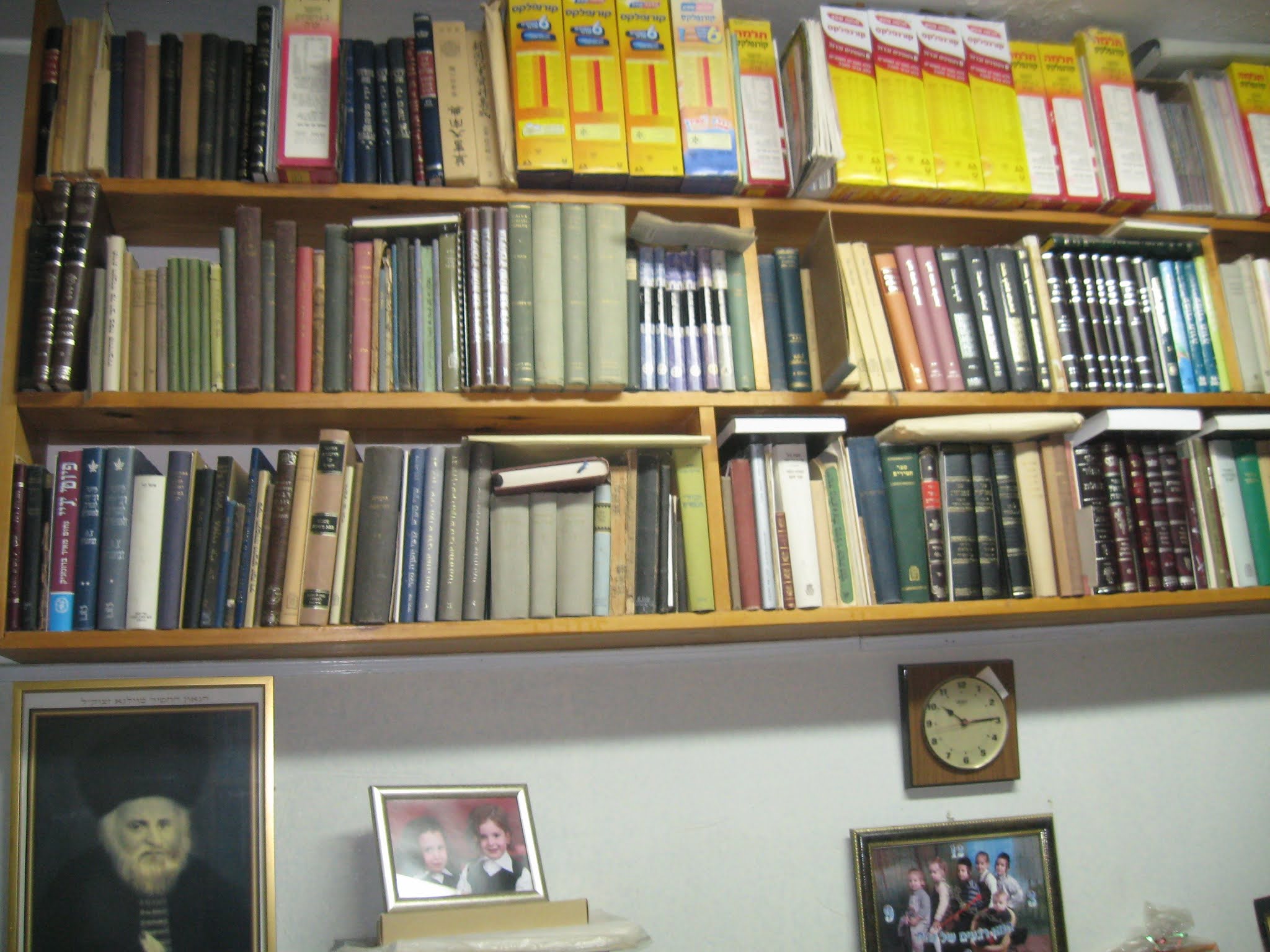
Basically, each visit I would prepare lists of questions to ask him. I would also bring him new seforim or articles (printed out in big letters, to help him read it easier). Sometimes when I would ask him something, he would say he is old and his head does not work, other times it was amazing what he remembered – on the spot. Sometimes he would pull down a file of material stored in – no jokes here – old cornflakes boxes.
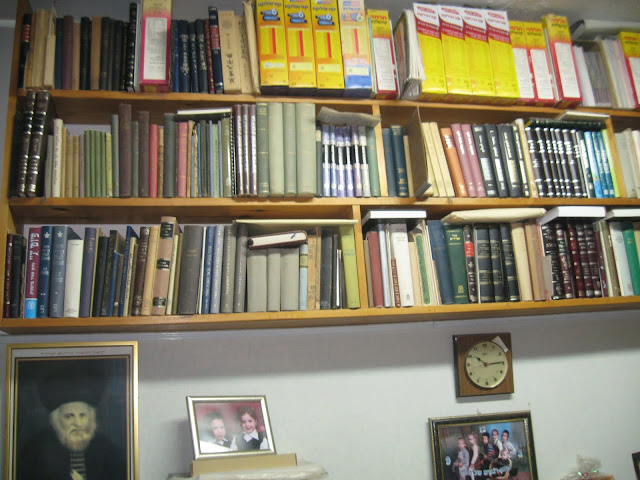
I would then scan some of the material. Other times he offhand did not have anything to add on a particular topic but when looking at a particular sefer I would find a note written on the side or in a paper stored in the sefer that would be related to what I was searching. Other times I would find something else which was of great importance. Rarely did I leave his house empty handed. We both shared a love for seforim and information on a wide range of topics.

Love of Seforim

What drew me to him, and particular developed my relationship with him, was our shared love of seforim. I would update him on new seforim. At times he would ask me to purchase it for him or would borrow my copy for a bit. He told me numerous times how he enjoyed visiting and buying seforim from various shops for many years and that he started collecting when he was seven years old! Now he could not go to stores as he was too old; I got to know him when he was over eighty.

When I joined the editorial board of the journal Yeshurun, I would bring him each new volume as it was printed. Each visit he would ask me to check on the shelf where he kept them, to see if he was up to date and if needed, to update him with any missing volumes. A true lover of seforim, his face would lit up at each new volume. I would then point out some of the articles I thought he would enjoy and he would put in markers to read them.

I always wondered if he read the various volumes of Yeshurun I brought him. After he was niftar, while going through his seforim, I found inserted in one rare book a small paper which he wrote: “for more information about this author see the article in Yeshurun”. Then in a different pen he added another cite from another issue from Yeshrun from a few years later.

This small story also demonstrates a bit of his methodology; he would collect all kinds of information and store them at times in a related sefer and would constantly update these notes.

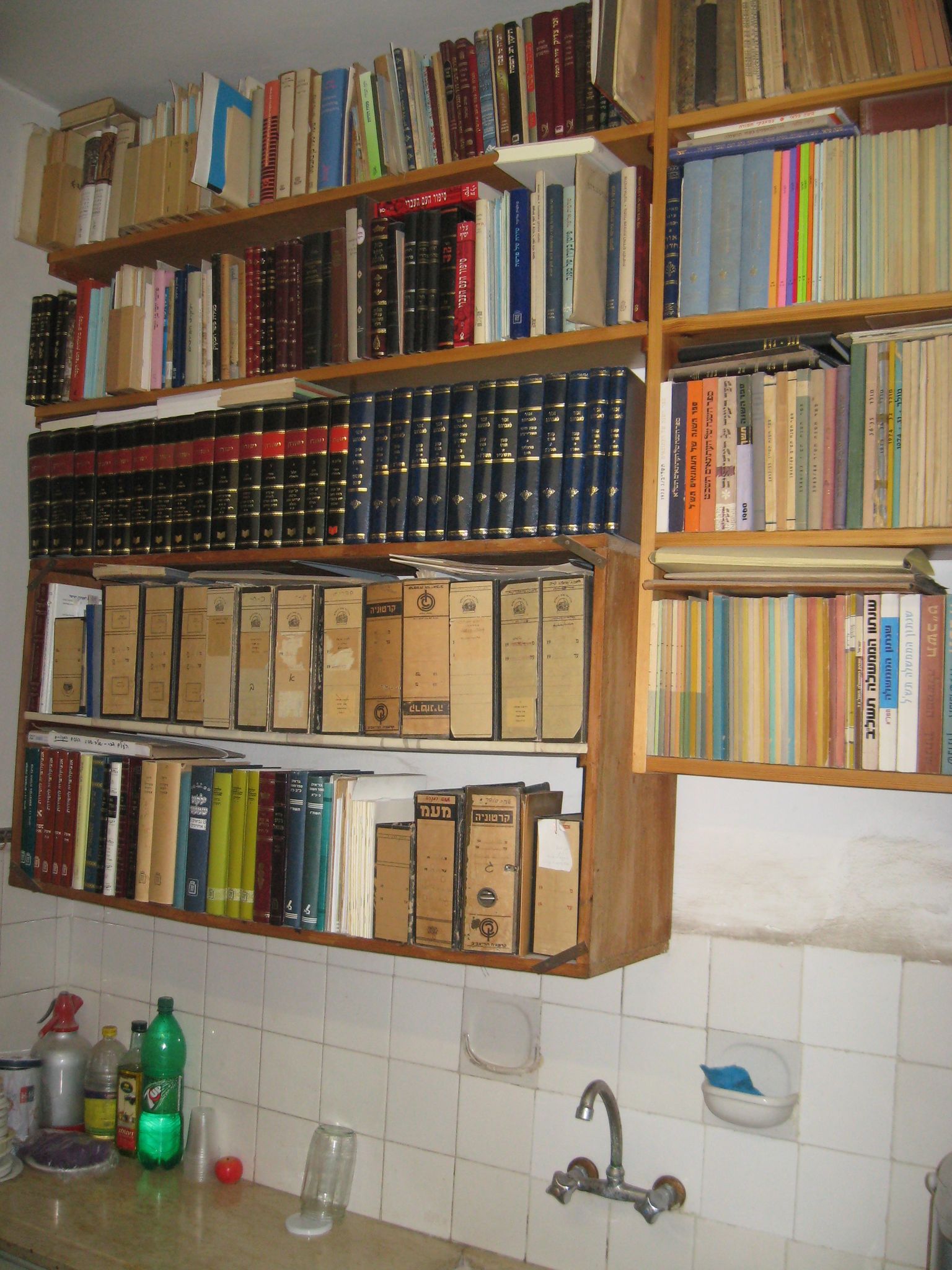
His love for seforim was something unique, the glow on his face when he opened up a new sefer, especially of someone he was into, was simply priceless. He would look carefully at the Shaar and if it was a reprint of an older sefer he would immediately check if they included the front page of the older edition to compare. He had seforim in every space possible in the four rooms of his apartment, including his porch. Many visitors noticed how even his kitchen was lined with seforim!

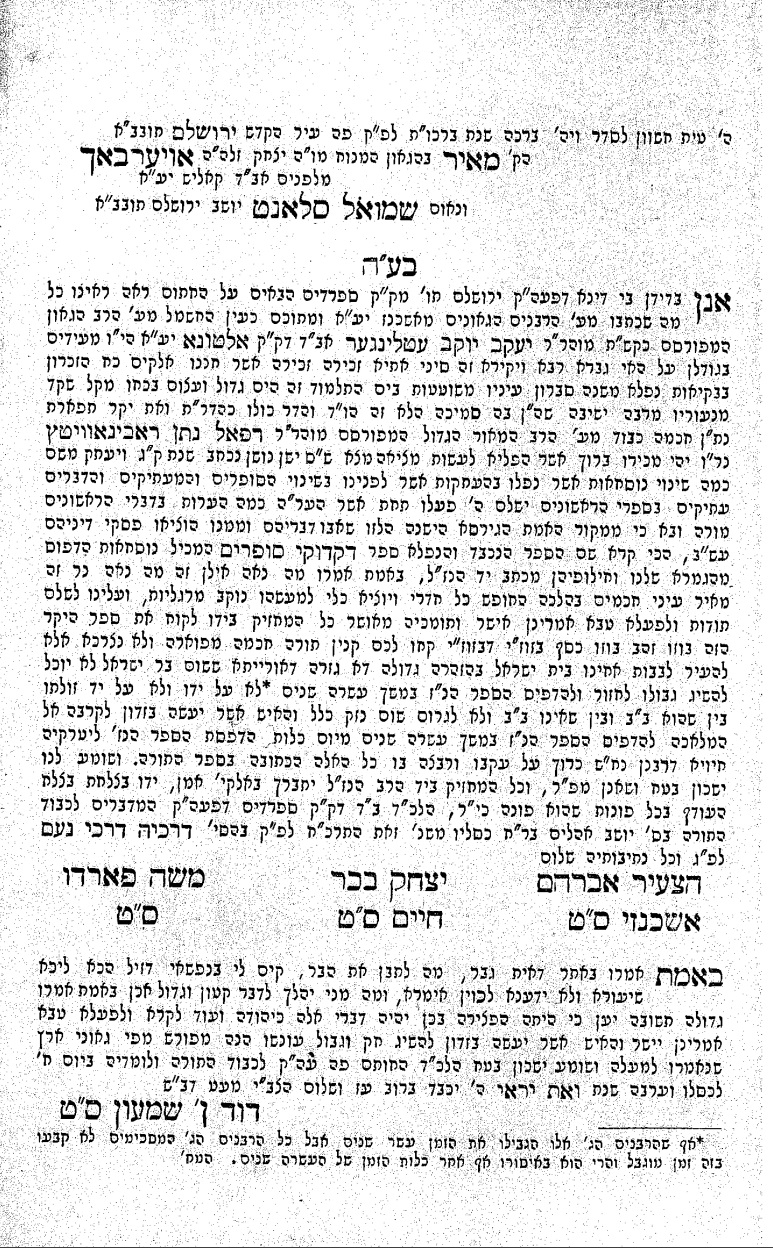
Dikdueki Sofrim Haskomot

An interesting story happened with me and his library. While working on an article about the Dikdueki Sofrim I was unable to track down some recorded Haskomot that the author R’ R.N.N. Rabinowitz had received for the first edition of his work. I, along with other scholars, had searched numerous copies of the first edition, but with no luck. Late one night, I came to R’ Ashkenazi’s house and mentioned to him my problem. He said “show me the issue inside,” keeping with his custom to take care to always view the source material firsthand (Osiosi Machkemios – a topic he wrote a lot about). I took down his copy of the sefer, and lo and behold it was a first edition with the missing Haskamot! I published these missing Haskamot in my article on the Didukei Sofrim, and attributed this rare and miraculous find to his extraordinary library.

His History:

Where this unique Talmid Chacham came from is simply a mystery. He was born in Yerushalayim and lived in Batei Ungarn. He learned by Rav Yosef Tzvi Dushinsky of the Edah HaChareidis. Originally, his name was Deutsch but, at some point changed it to Ashkenazi. He had four children with his wife who died over forty years ago. Since then, he lived alone in his apartment near some of his children. His son did an excellent job of Kibud Av bringing him food every day and looking on him a few times a day. Yom Tov and Simchos he spent time with his family.

When I and others asked him, who was his Rebbe, he would just smile and say no one in particular. The truth is the Mishnah in Avos states: Knei Lecha Chaver. Aside from the simple peshat, Rashi explains this Mishnah by citing some who say it means via Seforim others commentators explain this as ‘buying a pen’ (see R’ Ashkenazi’s in-depth article on this for sources). R’ Ashkenazi employed all of these methods; his friends and teachers were his seforim and his pen.

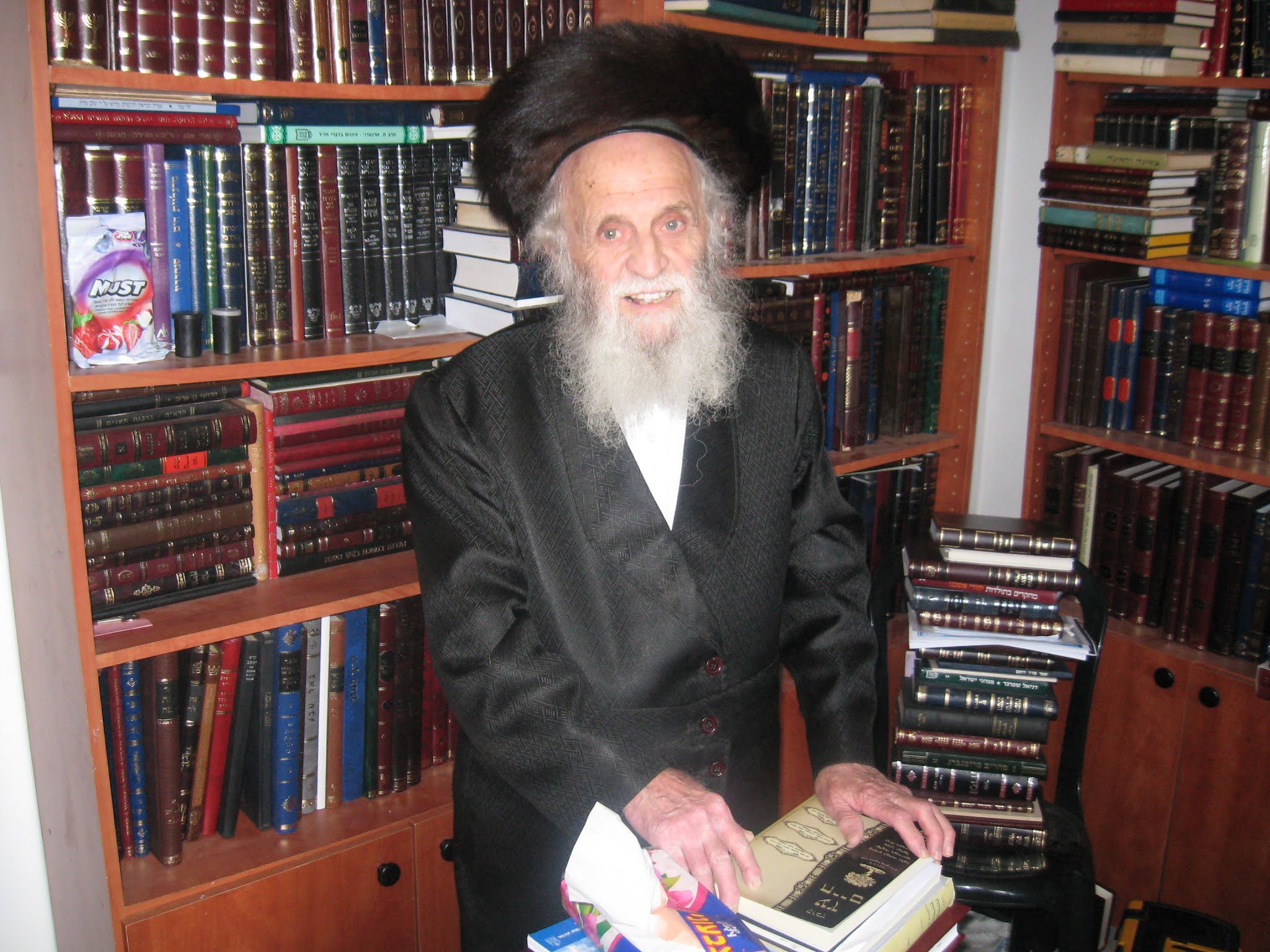
R’ Ashkenazi was a short, quiet and unassuming person. Most, having seen him walking on the street, would never believe he was such an erudite Gaon. Many times, R’ Ashkenazi did not express much emotion except to give a pleasant smile and was friendly and polite in conversation. But there were times he got very excited; for example, when he recalled a good story from his younger years or something unique that he discovered years ago. He was very polite and was a real Yekeh; for example as soon as they bentched Rosh Chodesh Kislev his Menorah was already prepared in the window.

R’ Yechiel Goldhaber, a Talmid Chacham and author of numerous articles and seforim had a close relationship with R’ Ashkenazi for many years. He recalled when he was introduced to R’ Ashkenazi for the first time by his father-in-law, he thought to himself who is this simple looking man? He soon learned that this man was a master of all of Torah and swiftly became a close Talmid of his.

Many times, he would tell me he wishes he could come visit my library. In Later years he would spend his Yomim Tovim at his daughter. One Chol Hamoed Succos, when he was over ninety, he made the difficult trek from her house to mine in order to spend time in my library.

He would love to read everything he could get his hands on. I visited him at many different times of day, even late at night and I always found him learning a sefer – even when he was over ninety. He read everything newspapers, books – he was just curious about everything with an incredible thirst for knowledge.

I recall visiting him a few times when he eighty-five and noticed he was learning the Shelah Hakodosh very carefully. I asked him why (of course he had learned through this sefer numerous times before!) and he responded that someone is reprinting the sefer and asked him to go through the sefer and send comments. He therefore sat down to learn the whole sefer, line by line, after which he wrote a ten-page letter with his comments on the sefer.

Over time, I learned again and again that R’ Ashkenazi personally believed his purpose in this world was to help people with the incredible amounts of information that he had gathered over the years of intense learning. This incredible Middah can be seen in this light; he did not feel that he was the “owner” of this extraordinary wealth of information he had collected, and thus gave very willingly without any conditions. He never asked me to cite him when he gave me some rare source even – although I always told him I would; he just was so happy to help someone else.

He would collect and catalog much of what he read. He had all kinds of systems to file the information he had gathered over eighty plus years of learning. When he would read an important article in a magazine or journal, he would cut out the parts and store them in their appropriate place. He gathered information on thousands and thousands of subjects (not an exaggeration in any form) which had some connection to our rich heritage. What’s more astounding is that R’ Ashkenazi never used a computer or the internet; all of his erudition came about simple by learning through thousands of seforim; a great many of them rare or unknown.

Over the years he helped so many people and for many years after he retired, he would visit the National Library of Israel on Tuesdays, where throngs of people would line up in wait to speak with him about all kinds of subjects.

Many years ago, he received a call from a young chassidish Talmid Chacham living in Monsey who was starting to work on publishing a new edition of the classic historical work Seder Hadorot. He started asking him questions about various issues he had. Over many phone-calls R’ Ashkenazi answered many of his difficulties while training him in proper research and writing skills. This year some volumes finally were published (see here). And this was not a onetime occurrence – he helped so many more people. He used to remark to me that when he was younger so many people would come to visit him – until the late hours of the night.

He was an expert in so many different topics, whether it was the standard ones like Tanach, Chazal, Halacha, Minhag or Chassidus or less commonly studied subjects such as Tefilah, Piyut, Dikduk, Kabbalah, Philosophy, Machshavah, History and Bibliography. In all of these areas his expertise was remarkable.

His Uniqueness

A sample of his bekius; one time I noted that the Maharsha often quotes a “Sefer Yoshon Noshon” and asked if we have any idea which sefer this is? He immediately responded that he found it usually refers to R’ Todros Abulafiah’s Otzar Hakavod.

His incredible Bekius was bolstered by an almost photographic memory, as the following story demonstrates. Once someone used the Bar-Ilan Responsa search engine to locate a passage in the Tana DeBei Eliyahu to no avail. He went to ask R’ Ashkenazi who immediately told him where the passage could be found. Checking the Bar-Ilan text, it was discovered that when the sefer was being entered into their database the passage in question had been mistakenly omitted. I first heard this story from someone else, so to make sure it was accurate I asked him about it and he confirmed it. A similar story happened with him and a passage from the Shut Chasam Sofer.

A few years back a friend was working on publishing out an esoteric Rishon on Mesechet Megillah. He thought no one ever heard of this author and randomly mentioned this to R’ Ashkenazi – without batting an eyelash – replied “of course, and one can find material by this author in the work of Rav Shlomoh Alkabetz on Megillas Esther (Manos Halevi). The fellow was stunned in elation; he had just been gifted new and important material for his project.

This remarkable Bekius which even beat out computer search engines, was just one aspect that made him remarkable. He would receive numerous calls and letters from all over the world from people of all walks of life seeking his assistance in tracking down a statement. He had an incredible knowledge of all of Chazal. I do not just mean the “standards”; Bavli, Yerushalmi and Midrash – even all the numerous and very often almost unknown Midrashim printed over the years. He was also expert in what is known as the lost Midrashim. Over the years many Midrashim we had were lost but some traces of them can be found in various Piyutim, cited by Rishonim or in other obscure places. Through his incredible amounts of learning and his phenomenal memory he was able to recall so much in this field.

To illustrate this with some samples. A few years back someone who was editing for publication a never before printed pirush of a Rishon on Avos came across a few statements in the name of Chazal. This person, a Talmid Chacham in his own right and familiar with tracking down such material, could not locate sources for these statements. Immediately he penned a letter to R’ Ashkenazi. A few days after he received a letter from R’ Ashkenazi with various incredible sources for his questions. This was a very common occurrence.

Piyut, Tefilah and language

Earlier, I mentioned his expertise in Piyut, Tefilah and language. A bit of background is needed to explain this. Rabbi Joseph B. Soloveitchik, when describing Rabbi Elazar Hakalir’s greatness, (Koren Mesorat Harav Kinot (pp. 386-388) wrote the following:

The piyutim of Rabbi Elazar HaKalir, including his kinot, serve two purposes. The first is limmud, learning. Every sentence of the piyut quotes m’aamarei Chazal… The second purpose is tokhaha, rebuking the people for their misdeeds and instructing them in the proper way to act. These piyyutim deal with… repentance… acknowledgment of God’s justice. The shali’ah Tzibbur was not merely a chazan…, but was one of the great scholars of the generation who was the principal… moral critic of the people… Rabbi Elazar HaKalir was (also) a master of the Hebrew language and very creative in his use of Hebrew. If not for him, modern Hebrew could not have come into existence. Before HaKalir, the Hebrew language was very rigid. For example, the noun and verbs were fixed in their form… But HaKalir made a critical contribution to the development of the Hebrew language by endowing the language with flexibility… Rabbi Elazar haKalir’s piyutim served two purposes: limmud, study… As for the element of study, one of the dimensions of HaKalir’s piyyutim is that they are compilations of the statements of the sages. Most of us, who are expert in neither Hebrew nor aggadot Hazal, find HaKalir’s corpus of piyutim boring. But it is not boring at all; it is like a gold mine. His piyutim for Yom Tov explain the essence of the Yom Tov. The midrashim concerning Sukkot are replete with information about the sukka, etrog and lulav, and all the explanations in the Midrash, all the ta’amei sukka, the reasons for the sukka, all of the ma’amarei Hazal, are together in the HaKalir’s piyutim for the first day of Sukkot… If one were to study carefully and thoroughly the piyutim of Rabbi Elazar HaKalir for Rosh HaSahana, Yom Kippur, Sukkot, and Pesah, one would find many applicable halakhot and the entire pertinent Midrash, including many midrashim that are unknown to us from any other source.

Rav Ashkenazi was an expert on everything related to Tefilah and Piyut. He somehow read it all and retained it. But in addition, he was able to use his expertise in Chazal and Hebrew language to understand it on a much higher level and as a result was often contacted by the world experts on Tefilah and Piyut for his assistance. These requests came from experts such as Professor Shalom Speigel, Chaim Schirmann, Avraham Haberman, Ezra Fleischer and Daniel Goldschmidt who constantly sought his assistance while working on their Tefilah and Piyut related projects.

In an interview with Ami Magazine printed a few years back, Professor Shulamit Elitzur mentioned:

“there’s another amazing thing I find when doing research. I am constantly coming across midrashim that were lost to the ages… example, everyone knows that Haman was referred to as ‘the Agagi’ because Shaul allowed Agag to live one extra night, which allowed Haman’s ancestor to be born. However, the earliest makor we find in writing in the 16th century; this fact was discovered by Rav Shmuel Ashkenazi of Yerushalayim. But I found a ktav yad of a piyut about Purim that describes this very story and explains how Haman’s ancestor was born, which gives us a source from 1,000 years earlier! And there are many similar examples of lost midrashim being kept alive through unknown piyutim.”

R’ Ashkenazi wrote some articles on Piyut and Tefilah, but we have found much more among his papers and hopefully if I can raise enough funding all his fascinating material on Tefilah will come to light.

When the important Siddur Ezer Eliyahu (sponsored by his late friend Yeshaya Vinograd) was first printed, one can see R’ Ashkenazi’s name in the introduction, thanking him for his assistance (he assisted them for some of the later additions) and his great knowledge in this field.

I mentioned that he had an incredible knowledge of Dikduk and the Hebrew language and used it towards better understanding Piyut and Tefilah. He also authored articles on these subjects and in 1967, when reviewing an important dictionary, wrote a long article demonstrating this very point – and article that garnered much praise. He was very proud of this essay and mentioned it to me many times. A few years ago, I reprinted it with additions he had made in his own copy and a nine-page topical index.

One of the ways he developed this expertise was via learning Tanach so many times. He was an expert in Tanach and all the Rishonic commentaries (including the unknown ones); he even authored a small book of Riddles of Tanach.

He also used his extraordinary skills to become a master editor. However, in addition to the work he was born with an incredible innate sensitivity for text and language which made him one of the best editors out there. For many years he worked at the famous publishing house Mossad HaRav Kook, editing various works. He told me more than once how there was an expert there who would brag (jokingly) that after he read through an article it was impossible to find mistakes. The only person who could still find mistakes was R’ Ashkenazi. He had razor-sharp vision and could immediately spot a mistake.

Many times, I would bring an edited piece of mine to read. As soon as I put it down in front of him, he would take out a red pen and start marking it up and say to me “are you sure it’s been edited?”. He told me he had to mark up everything before he could read it properly, errata were so painful for him to see that it was hard for him to read something on Shabbos! He told me he was punished; when his work Alfa Beta Kadmita de-Shmuel Zeira came out, although he had edited it numerous times, he still found mistakes.

During his learning over the years, he found many people, great Gedolim as well as famous academics, had made mistakes, sometimes quite basic ones. At one point he printed two articles about this. However, he prefaced his articles that his intent was not to mock those who erred but to vividly illustrate that people are human and mistakes will happen. He was a master of humility and never held it over anyone that they did not know what he knew.

He was not only a great expert in all aspects of the Hebrew language but was an expert in Aramaic and Yiddish, both of which he displayed in various publications of his. Related to his expertise in Aramaic, which is very important for learning Gemara, is a very unique essay which he authored related to the Rambam as a translator of the Gemara. One of the world experts in old Yiddish is Professor Chava Turniansky, who has noted on many occasions that one of the people who have always helped her from her days as a student, was R’ Ashkenazi.

Related to this was another talent of his, which at first appears trivial; he was an expert on acronyms. This led to authoring a thesaurus of acronyms together with Dov Yardan, called Otzar Roshei Tevot, with a multitude of obscure and often almost impossible entries. His sensitivity to the text and work in the field of editing drew him to this field. Anyone who learns a lot, especially older material comes across abbreviations, and many times they cause great difficulty in understanding various passages. Abbreviations were employed in writing, sometimes as mnemonic devices and other times simply to save on printing costs. But over time many meanings were forgotten. This work is an extremely useful tool for solving this issue.

Ghostwriting

One day I was in a used bookstore and I noticed a small sefer titled Harif Umishnaso about the Rif. I recalled that this title appeared in the list in beginning of his work, Alfa Beta Kadmita de-Shmuel Zeira which listed out the various works he helped with over the years. I asked R. Ashkenazi if it’s worth buying and what his connection to the book was, as a different name appears on the cover.

R’ Ashkenazi replied “I can tell you it’s an important sefer and worthwhile to buy.” I noticed he was hesitant to continue the conversation. He then said “I will tell you something I did not tell anyone in over forty years – I wrote the whole sefer from beginning to end and it was one of the most important works I ever wrote.” The original plan was to for him to write a series of biographies on various Rishonim – in this book he already references a work on the Ri Migash – but due to a lack of funding this series was discontinued. However, not all of this remained unpenned; he wrote numerous entries in various encyclopedias. It turns out that R’ Ashkenazi had over fifteen different pen names!

I would like to elaborate on this work a bit more and thus cast further light upon R’ Ashkenazi’s uniqueness and greatness. The Rif’s Halachic work is one of the most important sources in Halacha, but what exactly makes it so unique has remained a mystery. R’ Ashkenazi sought to answer this question by collecting and collating all the authentic information we have about the Rif, from the Rif and from other Rishonim. He went through the Rif carefully examining what he did to each Gemara evaluating if remarks or material was added or not and to figure out why, allowing the reader to begin to understand the Rif’s significance. R’ Ashkenazi’s writing methods were honed to precision. He had an uncanny ability to utilize every piece of information without writing an extra letter and assemble it all in perfect order sans speculations commonly found in historical works. At times one does not need grand theories to understand something; just seeing all the known material in proper order helps one understand things. The wealth of material that Rav Ashkenazi commanded in producing this work is outstanding; this book was written in 1967 – long before any of the various search engines used today.

Haggadah Sheleimah

Similar to this is another work by R’ Ashkenazi, Haggadah Sheleimah. I hope to publish an article about this work in the near future, including the numerous additions R’ Ashkenazi found over the years and kept in his files. This work is highly unique for the following reasons. The collected bibliographies by Avraham Ya’ari and Yitzchak Yudlov bear witness to thousands of Haggados written throughout the generations in a multitude of styles, such as Pilpul, Peshat, Kabbalah, Derush and more. However, until 1955 there was no one work on the Haggadah which collected all the sources for each and every Halacha and minhag related to the Seder night. There was no volume which dealt with the various manuscripts of Geonim and Rishonim and at the same time to deal with the exact text of the Haggadah. Haggadah Sheleimah set out to fill those needs, and at the same time offer a running collection of Pirushim culled from over fifty different commentators focusing just on Peshat. In order to produce such an exacting work, it’s not good enough to just be a talented writer, one must also possess a keen understanding of all the material and relay this with incredible clarity. R’ Ashkenazi was such a person; one who sought out the simple Peshat, able to put this myriad of information together in so beautiful a fashion, and with tremendous clarity. His work in Haggadah Sheleimah is so clearly organized and always straight to the point that it is no wonder that to this day Haggadah Sheleimah remains a classic in both the Torah and Academic worlds.

Rav Ashkenazi once explained to me that one has to write precisely and to the point, not lengthily. He said he believed that one of the reasons Rashi’s works survived was due to his concise way it was written, as opposed to various works of Geonim which did not really survive as they were written in a much lengthier format.

Why didn’t he publish his material?

A few years ago, a partial bibliography of his writings was printed in his Alfa Beta Kadmita de-Shmuel Zeira. The listing is close to three hundred articles and seforim that he wrote or assisted in on some level. He started writing under various pen names over eighty years ago. The background to the publication of this volume was, as I mentioned previously, R’ Ashkenazi had been writing and collection information on thousands of topics for over eighty years. Unfortunately, he did not print much of what he gathered. The main reason for this was R. Ashkenazi’s “weakness”; he demanded incredible levels of perfection from himself. Although he strived for great perfection, nonetheless he stressed to me numerous times that he was mistaken in that approach and that I should not follow in his path. In his words it is better I print my work to the best of my current abilities and that worse comes to worse you can always reprint with additions and corrections. Over twenty years ago, R’ Teflinsky somehow convinced R’ Ashkenazi that his material needed to be printed. Together they began compiling some of his material for print, resulting in a volume over eight hundred pages!

After that experience both R’ Ashkenazi and R’ Teflinsky stopped, with no plans of continuing this project. A few years later my good friend, R’ Yaakov Yisrael Stahl and myself were able to convince him to continue. R’ Stahl took upon himself the daunting task to prepare the material for publishing; since, than three more volumes were printed.

Here is a small video clip of R’ Ashkenazi, when we brought him copies of the second and third volumes of his writings, ten years ago.

The topics that these works deal with cover, on some level, virtually everything; sources for expressions and idioms, for minhag, Halacha, the evolution of famous stories, bibliography, corrections of authors’ errors, encyclopedic style information on thousands of topics culled from thousands of seforim – many of them very rare or unknown. (A PDF of the Table of contents of this work is available upon request).

His Letters

Earlier I mentioned the story of someone who wrote him a letter seeking help. This was not a one-time occurrence. He authored well over a thousand such letters in response to such questions. Some requests were for sources to various Halachos or Minhagim, numerous others are various queries related to out rich literature. R’ Ashkenazi always invested his time to answer properly and clearly. Recently, R’ Stahl and I collected these letters for publication and the result is a three-volume set, available for purchase.

Over seventy years ago he purchased a typewriter which he used until his passing.

In an article written by the late Gaon R’ S. Deblitsky, he writes out various proper actions a Rav should “observe.” One of them is to respond to people who write to him, whether the issues are big or small. R’ Ashkenazi was very careful to try to respond promptly. Many people would send him their seforim after they were printed asking him for his comments. He would usually respond with a multi-page letter, beginning by thanking the author for sending it to him, then listing out some criticisms, usually written delicately, while adding all kinds of comments. He always tried to look to say something positive. Some people who heard of him through various channels over the years contacted him before they printed their works. Many times, he would write a collection of comments and corrections to such works. A sample listing of some of those works that benefited from him before going to print include recent editions of: Sefer Zechirah, Kav Hayasher, Sefer Hachayim and many others.

Thanks to the efforts of my special friend Menachem Butler, various academics wrote some praises about the significances of these letters; to partially quote one letter written by the esteemed Professor Shnayer Z. Leiman:

Reb Shmuel was

“bibliographer, bibliophile, and book collector, and his encyclopedic knowledge of all of Hebrew and Yiddish literature remains unparalleled in our time.” His collected writings are an intellectual treasure trove, “covering a wide range of topics in the field of Jewish Studies. Aside from his scholarly distinction, R. Shmuel Ashkenazi wrote in an elegant Hebrew with its own special charm. Not only did he advance discussion, but he did so in an aesthetically pleasing manner. Let it be said openly: this… set will enlighten every reader and will significantly advance scholarship. Anyone concerned with advancing the cause of quality Jewish scholarship will take special delight in the publication of these volumes…During his lifetime [Ashkenazi] corresponded with the greatest Jewish scholars and bibliographers the world over. They wrote to him, for only he could solve the countless historical and literary problems that stumped them…”

Another person to whom Menachem Butler reached out to via his numerous contacts was former editor of Mekizei Nirdamim’s journal Kabez Al Yad, Professor Shulamit Elizur of the Hebrew University of Jerusalem. In her aforementioned interview in Ami Magazine several years ago she said this:

“I am unequal to the task of adequately singing the praises of Rabbi Shmuel Ashkenazi, an erudite bibliophile. His familiarity with rabbinic writings from throughout Jewish history is unparalleled, and he is well-versed in the research literature of academic Jewish studies as well. I first met Rabbi Shmuel Ashkenazi through my teacher, the late Professor Ezra Fleischer. Prof. Fleischer, who was one of the greatest scholars of all time, would often chat with Rabbi Ashkenazi on scholarly topics, and he was careful to send Ashkenazi every article or book he published, knowing that in return he would receive enlightening comments on his work. When I began my own research, Prof. Fleischer instructed me in turn to send my publications to Rabbi Ashkenazi, and I too was privileged to learn a great deal from his comments. It once happened that I was searching for a particular midrashic theme which was alluded to in a liturgical poem (piyut), and although I consulted the leading scholars of Jerusalem who responded that it was a well-known homily, I was unable to locate its specific source. In my hour of need, I turned to Rabbi Ashkenazi, who immediately gave me several references. It emerged that every one of these references post-dated the piyut by almost a thousand years, and that this ancient tradition alluded to in the poem had been transmitted orally for that long period before being committed to writing in the later midrashim. Rabbi Shmuel Ashkenazi’s correspondence is a tremendous resource of Torah and scholarship. Every paragraph encapsulates a great deal in just a few words, and sometimes even with allusions whose explication require deep learning.”

Here is a short letter from Professor Gershom Scholem to R’ Ashkenazi:

Expressions and famous stories

In his writings some of the topics of these are about tracing expressions or the evolution of famous stories. Based on his knowledge, he was able to contribute a lot to these areas even editing some works on these topics.

One such story related to a supposed legend of a portrait of Moshe Rabbeinu which caused a great controversy over a century ago. In 1830, Rav Yisroel Lipschutz started printing his magnum opus, a commentary on the Mishnah titled Tiferes Yisroel. In the section on Maseches Kiddushin first printed in 1843, he brings a story about a king who lived in the time of Moshe, who, after hearing incredible things about this great leader, hired a painter to paint a picture of him so he could have his features analyzed by experts. The people who analyzed the picture reported that the person pictured was evil. The king went in person to visit Moshe Rabbeinu in the midbar and asked him how was it that an analysis of his pictures showed him to be of such wicked character. Moshe told him that the analysis was indeed true; however, after much work, he changed his character and became the great Moshe Rabbeinu.

In 1894 a booklet by the Vilkomir Maggid was printed railing against this story. This booklet presented numerous sources stating that Moshe Rabbeinu was born a kadosh and it was unthinkable to print such a story about him. Indeed, this story was censored out of the 1956 edition of the Tiferes Yisroel. In truth, this ancient legend can be found in various sources and in regard to different luminaries, some claiming it about Aristotle others, Socrates. In fact, R’ Ashkenazi documented it was long used in various Musar and Chasidus sefarim cited as an important lesson that one can change one’s born nature for the good, but not that it actually was true about Moshe Rabbeinu.

Another such story relates to a famous legend about the site where the Beis Hamikdash was built. Told in short, two brothers inherited a field, one brother had a family one did not. At the end of the harvest they divided up the wheat equally. That night the childless brother felt bad for his brother with a large family and said to himself “it’s unfair that while my brother needs more than I, we shared equally”, so he brought over from his pile to his brothers. The other brother thought that since his brother was childless, he should have a larger share of the crop, as consolation, so he added from his share to his brother’s. In the morning each brother realized their piles remained the same and this went on for two more nights. On the third night they met, realized each of their intentions was out of deep consideration for the other and hugged. Numerous people have searched for the early sources for this story. I decided to ask R’ Ashkenazi if he had any material on the subject. He found his file on the story and within was a letter from R’ Yudlov who had been asked by someone in the Education Ministry for the sources on this story. R’ Ashkenazi traced its first appearance in print to 1832 and from there he traced it to other sources.

Bibliography

I would like to conclude with just one more area in which R’ Ashkenazi was truly a legendary master: Bibliography. For many years, R’ Ashkenazi worked in the (now) National Library’s Bibliography of the Jewish Book Project. He also contributed to some of the important bibliographical works and journals written in the past century such as Kiryat Sefer, Otzar Sefer Haivri (Vinegrad) and Sifrei Yerushalyim Harishonim.

A few years back, while working on an article about the origins of eating Hamantaschen (see here), I found an important article from Dov Sadan containing sources on this topic. One of the sources was the interesting, controversial work Machberet Emanuel. I had a nice conversation with R’ Ashkenazi about this work – he had helped Dov Yardan prepare a critical edition of the work and even wrote a long book review on it (which he said he received a lot of Kovod for).

He mentioned two points of interest which will serve as a sample to some of his expertise. One, he noted that Emanuel of Rome wrote a commentary on sefer Mishlei. Interestingly, the preface to the Mishlei commentary sefer is signed Emanuel son of Yaakov, whereas Emanuel’s father’s name was Shlomo. Some have noted that this discrepancy and explained it is a mistake. R’ Ashkenazi suggested this was not a mistake, rather an intentional typo intended by the author to hide his connection to his controversial Machberes Emanuel. The second point he made to me was how the Chida writes in Shem Hagedolim that the best commentary to learn on Mishlei that by Emanuel of Rome. R’ Ashkenazi said he checked into the words of the Chida and he learned through all the works on Mishlei and concluded that the Chida was quite correct. He once had a dream to write a whole work on Mishlei, he even started to pen his comments in a special notebook, but the plans never worked out.

One final last story about R’ Ashkenazi’s bibliographic acumen. In 2009 my special friend Dr. S. Sprecher z”l (about him see this article on the seforim blog here) wished to reprint and distribute a small work called Tshuvah Be’Inyan Kriat HaKetubah, in honor of his son’s upcoming wedding, under that assumption that, just as the title page and the publisher’s introduction indicated, it represented an actual Halakhic Responsum issued in 1835 by the Chief Rabbi of Bialystok, one Rabbi Nechemiah. Sprecher wrote:

However, our close reading of this Tshuvah led us in an entirely different direction. To us, the work’s style manifested clear Maskilic echoes, and its arguments rejecting the binding nature of centuries-old Minhagim were clearly not in accord with 19th–century Halakhic thought. Our reaction was that the work must certainly be pseudepigraphal and could not have arisen from the pen of the Chief Rabbi of Bialystok. In fact, a quick perusal of the reference literature demonstrated that there never was any Chief Rabbi of Bialystok named Nechemiah.

At an impasse, we reached out to Professor Shnayer Z. Leiman, who suggested that the scholar most likely to solve the mystery would be the doyen of Israeli bibliographers, Rabbi Shmuel Ashkenazi. We were rewarded thanks to the tireless efforts of Eliezer Brodt who, on our behalf, pestered the aged Jerusalem sage until he successfully unmasked the name, but not quite the identity, of the author. Rabbi Ashkenazi concluded that the first line of the introductory poem that prefaced the Halakhic query contained the acrostic – “Meir Ish-Shalom”. (His initial contention was that this could not be the noted 19th–century Viennese scholar, Meir Ish-Shalom, because his heretofore known literary output began only some five years later, with his publication of the Sifre in 1864.)

Once Rabbi Ashkenazi had provided the key to the author’s name via the acrostic, it became apparent that all along the title page had been proclaiming that very same message. Let us recall the passage in Bavli Eruvin 13b where it is recorded that the celebrated Tanna, known to us as Rabbi Meir, was actually named Nehorai, according to one opinion; or alternatively, that both Meir and Nehorai were laudatory appellations reflecting his enlightening wisdom, whereas his actual name was Nechemiah. Recall also that the query first originated with Rabbi “Shalom” of Novgorod, and the word “shalom” appears twice more on the title page and is highlighted by the placement of a circle above one of its appearances.

In his copy of this work that Dr Sprecher printed for the Chasunah which I brought him, I found this paper inside:

A few weeks after R’ Ashkenazi’s Petirah the national library held a session devoted to him where Professor Zev Gries, Professor Chava Turniansky and R’ Yechiel Goldhaber spoke about him (here is a link to the whole session). I too had the privilege of being interviewed about him that night (Here is a link to my interview).

Publication of his writings

Last year, immediately after Rabbi Shmuel Ashkenazi was niftar I, along with my special friend Menachem Butler, initiated a campaign to raise funds to publish R. Ashkenazi’s letters via the Seforim blog. Baruch HaShem, and thanks to the help of some readers, enough money was raised to go to print and in the beginning of this past January copies of the book, coming in at over 1,700 pages, (three volumes!) arrived as announced (here). The Letters sold out in a few days. A second edition was printed right before Pesach (see here). Currently copies of the second edition are available for sale.

Future volumes

Already during the Shivah, R’ Stahl began going through the materials of R’ Ashkenazi to sort out what materials are print worthy.

Here is a picture of R’ Stahl taken during one such session which a friend of his humorously put side by side a famous picture of Solomon Schecter when working on Geniza documents.
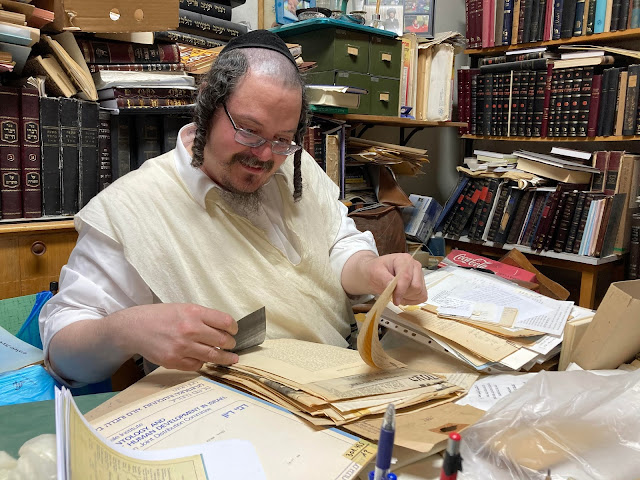
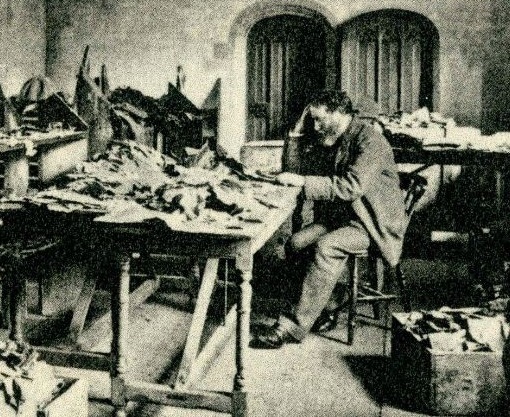
We never imagined we would find so much print-worthy material that we were not previously aware of; at least eight volumes’ worth of prepared writings which we hope to print. Currently, we are in the process of categorizing the material. Among the topics are: Tefilah, Minhag, articles on Seforim and authors – and much, much more. As we sort and scan R’ Ashkenazi’s legacy, some material is already being sent out to be typed up for publication. Each of the above endeavors comes at a price, and every contribution to the cause helps greatly. IY”H in the near future I will make a more formal announcement with precise details regarding the works slated for print. Anyone wishing to help with funding this project can contact me at Eliezerbrodt@gmail.com


Book Week Sale 2021

Book Week Sale 2021

By Eliezer Brodt

This Book list of over four Hundred titles, from many different companies. I have attempted to put them in some sort of categories to make it easier to use. Most of these titles were printed in the past five-six years and are not found in regular stores.

  1. Almost all the books are either brand new or in good shape.
  2. Email your order to eliezerbrodt@gmail.com. I will than send you a bill based on what is available. Payment is with PayPal or Chase QuickPay, but other arrangements can be made.
  3. Shipping is not included in the price; that depends on the order and size of the book.
  4. All books will be air mailed out after I receive payment.
  5. There are other shipping possibilities available depending on the quantity of books ordered.
  6. Most of the titles are only available at these prices for the next two weeks.
  7. For every 5 titles purchased there is a 10 percent discount [not including the shipping] [a set counts as one title].
  8. Feel free to ask for details about any specific book on the list, or for books not found on the list.
  9. All questions should be sent to me at eliezerbrodt@gmail.com
  10. Part of the proceeds of this sale will be going to help support the efforts of the Seforim Blog.
  11. Enjoy!

תפילה ומנהג

  1. מקראה בחקר התפילה, $26
  2. נפתלי וידר, התגבשות נוסח התפילה במזרח ובמערב, 2 חלקים $34
  3. מחזור גולדשמידט, סוכות $25
  4. מחזור גולדשמידט, פסח $26
  5. מחזור גולדשמידט, שבועות $26
  6. עזרא פליישר, תפילה ומנהגי תפילה ארץ-ישראליים בתקופת הגניזה [מהדורה שניה] כריכה רכה, $25
  7. אורי ארליך, תפילת העמידה של ימות החול, נוסחי הסידורים בגניזת הקהירות שורשיהם ותולותיהם $28
  8. משה בר אשר, לשוננו רנה, עיוני תפילות בלשון ובסגנון בתכנים בנוסחות ובמנהגים, 382 עמודים, $27
  9. יעקב גרטנר, עיוני תפילה, מנהגים ותולדות, $25 [מצוין] [ניתן לקבל תוכן הענינים]
  10. יצחק לנדיס, ברכת העבודה בתפילה העמידה, $24
  11. ישראל תא-שמע, מנהג אשכנז הקדמון, $25
  12. ישראל תא-שמע, הלכה מנהג ומציאות באשכנז, $25
  13. ישראל תא-שמע, התפילה האשכנזית הקדומה, $25
  14. אליעזר בראדט, ליקוטי אליעזר 9$
  15. בין כסה לעשור, אליעזר בראדט, 14$
  16. יצחק זימר, עולם כמנהגו נוהג, פרקים בתולדות המנהגים וגלגוליהם [הדפסה שניה] $24
  17. יוסף תבורי, מועדי ישראל בתקופת המשנה והתלמוד $25
  18. ראובן קימלמן, לכה דודי וקבלת שבת, $25
  19. יואל רפל, התפילה לשלום המדינה, תולדותיה תכניה ופירושה $20
  20. יוסף קאפח הליכות תימן $23
  21. ר’ בן ציון אייכארן, זמירת ציון, בעניני זמירת שבת, תולדותיה ומנהגיה ובמיוחד הפיוט כל מקדש שביעי, ונספח בסופו ספר תפלה ורנה מכ”י על זמירת שבת מאת החכם ר’ יעקב רייפמן 15$
  22. יוסף תבורי, פסח דורות $20
  23. ברכה יניב, מעשה רוקם, תשמישי קדושה מטקסטיל בבית הכנסת האשכנזי, הספרדי והאיטלקי $17

מקרא וחזל

  1. עדיאל קדרי, עד שיבוא אליהו, דמותו של אליהו הנביא, בספרות התנאים, 202 עמודים
  2. ר’ אליעזר שמשון רוזנטל, עיונים בספרות התלמוד – שני כרכים, $42
  3. מנחם כהנא, מפני תיקון עולם, פרק ד ממסכת גיטין, $25
  4. משה הלברטל, הולדת הספק, $21
  5. נעה יובל חכם, אמנות ללא דמות – מגמות אנטי־פיגורטיביות באמנות היהודית בשלהי התקופה הביזנטית ובראשית התקופה המוסלמית , $28
  6. ג’פרי רובינשטיין, סיפורים תלמודיים, $23
  7. המשפחה: בשלהי העת העתיקה בין שארות לקהילה, אוריאל סימונסון ויניב פוקס (עורכים), $20
  8. יעקב ליכט, מעולמה הרוחני של יהדות הבית השני פרקי עיון במגילות מדבר יהודה ובספרים החיצונים, $20
  9. רונה טאוזינגר, תמר אשת ער – פואטיקה, מיסטיקה ופוליטיקה של תימה מקראית בספרות העברית, $28
  10. תלמוד האיגוד, גיטין פרק ט, $49
  11. יוסף פליישמן, תורת האבות מבראשית, $21
  12. דוד יעקבסון, קסמו של ההיסוס הנבון, סיפורי התלמוד בתרבות הישראלית , $21
  13. יוסי חקלאי, לא תעשה לך – יחסה של ההגות היהודית לאומנות החזותית, $21
  14. צחי כהן, פסוק לי פסוקך, $21
  15. חגי ארליך, ים סוף הים העצוב, $21
  16. אביגיל ראק, פרשני המקרא, $23
  17. אברהם יהושע השל, תורה מן השמים, א-ג, $48,
  18. אהרן קסל, העולם המופלא של נוסח התורה, $21
  19. אמנון בזק, נצחוני בני, שאלות יסוד בלימוד תורה שבעל פה, 486 עמודים, $25
  20. יונתן גרוסמן, יעקב סיפורה של משפחה, $23
  21. הרב ברנדס, מדע תורתך – על מסכת ברכות, $24
  22. משניות ארץ ישראל, ספראי, נדה, $22
  23. יונתן (תני) פיינטוך, כי בענן אראה – אגדה והלכה במסכת יומא, 292 עמודים, $20
  24. אליהו עסיס, איכה – מייאוש לתפילה, $18
  25. מיכאל רוטנברג, סופה להתקיים; הקיום המשותף בצל המחלוקת, $20
  26. בין יהודים לשומרונים – אידאולוגיה ומציאות בספרות הפולמוסית שבמקרא, $18
  27. ישי רוזן-צבי, בין משנה למדרש, קריאה בספרות התנאית, $26
  28. גנזי הירושלמי, יעקב זוסמן, בהשתתפות בנימין אליצור, בתוספת: שלמה נאה הערות ללשון קטעי הגניזה של התלמוד הירושלמי, 831 עמודים, $56
  29. נורית בארי, יצא לתרבות רעה, אלישע בן אבויה – אחר, 212 עמודים, $20
  30. רבקה חביב, חמודות אתה: דניאל וספרו באספקלריה של ספרות חז”ל, $21
  31. ניסן רובין, מסגרות מתעקמות: תהליכים של שינוי במסורות חז”ל, $21
  32. משה עסיס, אוצר לשונות ירושלמיים, ג’ חלקים, $90
  33. ישראל ייבין, המסורה למקרא $28 [מצוין]
  34. רפאל פוזן, העקיבות התרגומית בתרגום אונקלוס $24
  35. היא שיחתי, על דרך לימוד התנ”ך, ישיבות הר עציון והוצאת קורן [חומר מעניין] $15
  36. אמנון בזק, עד היום הזה [שאלות יסוד בלימוד תנ”ך – חומר חשוב] 24$
  37. ר’ יואל בן נון ור’ שאול ברוכי, מקראות עיון רב תחומי בתורה, יתרו, 278 עמודים $25
  38. ר’ יואל בן נון ור’ שאול ברוכי, מקראות עיון רב תחומי בתורה, משפטים, 608 עמודים $25
  39. מגילת תענית $26 מהדיר: ורד נעם
  40. סדר עולם, מהדורת חיים מיליקובסקי, ב’ חלקים, [מצוין], $67
  41. ספרות חז”ל הארץ ישראלית – מבואות ומחקרים [שני חלקים] [ניתן לקבל תוכן העניינים] $54
  42. חנן גפני, פשוטה של משנה, עיונים בחקר ספרות חז”ל בעת החדשה [מצוין] $20
  43. ספר מקבים ב מבוא תרגום ופירוש $26
  44. עדיאל שרמר, זכר ונקבה בראם הנישואים ימי הבית השני ובתקופת המשנה והתלמוד $21
  45. אהרן אופנהיימר, על נהרות בבל: סוגיות בתולדות בבל התלמודית $13
  46. דניאל שוורץ, אגריפס הראשון: מלך יהודה האחרון $23
  47. ישעיהו גפני, יהודי בבל בתקופת התלמוד $20
  48. ורד נעם, מקומראן למהפכה התנאים: היבטים בתפיסת הטומאה $23
  49. שאול ליברמן, הירושלמי כפשוטו $21
  50. שאול ליברמן, תוספת ראשונים, 2 חלקים, $38
  51. מדרש ויקרא רבה מהדורת מרדכי מרגליות, 2 חלקים, $30
  52. אבות דר’ נתן (שכטר) $20
  53. דוד הנשקה, מה נשתנה, ליל הפסח בתלמודם של חכמים, 650 עמודים $33
  54. דוד הנשקה, שמחת הרגל בתלמודם של תנאים, $24
  55. ספרי זוטא, ליברמן $22
  56. נחמן דנציג, מבוא לספר הלכות פסוקות $20
  57. ליאורה אליאס בר לבב, מכילתא דרשב”י, פרשת נזיקין, נוסח מונחים מקורות ועריכה, בעריכת מנחם כהנא, מאגנס, 392 עמודים, $26
  58. אייל בן אליהו, בין גבולות, תחומי ארץ ישראל בתודעה היהודית בימי הבית השני ובתקופת המשנה והתלמוד, 348 עמודים, [מצוין] $26
  59. מנחם כהנא, ספרי זוטא דברים $32
  60. שמא פרידמן, סוגיות בחקר התלמוד הבבלי $25
  61. מירה בלברג, פתח לספרות חז”ל $22
  62. ברכיהו ליפשיץ, ההלכה על דעת המקום או על דעת הקהל, $27
  63. יעקב זוסמן, תורה שבעל פה פשוטה כמשמעה – כוחו של קוצו של יו”ד, 228 עמודים $25
  64. חנן גפני, מפי סופרים – תפיסת התורה שבעל פה בראי המחקר, 342 עמודים, $25
  65. אהרן שמש, עונשים וחטאים מן המקרא לספרות חז”ל, הדפסה שנייה, מאגנס, 250 עמודים, $23
  66. שמא יהודה פרידמן, לתורתם של תנאים, אסופות מחקרים מתודולוגיים ועיוניים, ביאליק, 534 עמודים [מצוין], [ניתן לקבל תוכן העניינים] $32
  67. משנת ארץ ישראל, שמואל וזאב ספראי, כל כרך $20
  68. שמא פרידמן, מחקרי לשון ומינוח בספרות התלמודית, 565 עמודים [ניתן לקבל תוכן הענינים] $28
  69. משנת ארץ ישראל, ספראי, נדרים $23
  70. משנת ארץ ישראל, ספראי, כתובות, 2 חלקים $40
  71. ענת רייזל, מבוא למדרשים, $23 [מצוין]
  72. מדרש קהלת רבה א-ו, בעריכת מנחם הירשמן, קנ+363 עמודים, $20
  73. תלמוד ירושלמי, מפעל המילון ההיסטורי, הדפסה שלישית עם קו’ תיקונים מורחב, $70
  74. מדרש אסתר רבה, מהדירים: יוסף תבורי וארנון עצמון, קלג+284 עמודים, $20
  75. מדרש חדש על התורה, מהדירה: גילה וכמן, עא+297 עמודים, $20
  76. מדרש שמואל, $20
  77. תמר קדרי, מנחה ליהודה, יהודה תיאודור ועריכתם של מדרשי האגדה הארץ ישראליים, מכון שכטר, 217 עמודים, $19
  78. והנה רבקה יוצאת, עיונים במדעי היהדות לכבוד רבקה דגן, 293 עמודים [ניתן לקבל תוכן הענינים], $15

הלכה

  1. ד”ר יוסף בן לולו, קטניות בפסח, $25
  2. דניאל שפרבר, סדר נשי – הלכות לאשה המודרנית, 332 עמודים $25
  3. תשובות רבי משה יהודה עבאס, בשני כרכים, מהדיר: שמואל גליק, $53
  4. ובשנה השביעית, חלק ב’ / הרב ד”ר בועז הוטרר [מומלץ], $19
  5. ובשנה השביעית, חלק א’ / הרב ד”ר בועז הוטרר, $19
  6. הגהות הגר”א, מועד א / הרב אוריאל שלמוני $16
  7. הגהות הגר”א, מועד ב/ הרב אוריאל שלמוני, $16
  8. הגהות הגר”א, נשים, נזיקין, קדשים וטהרות / הרב אוריאל שלמוני $16
  9. הגהות הגר”א, מסכת שקלים \ הרב אוריאל שלמוני $16
  10. נועה ששר, גברים נעלמים – עגונות במרחב האשכנזי, $23
  11. אבי גורמן, גלגולה של הלכה, איסור נישואי מעוברת ומינקת, $23
  12. אבי גורמן, בין מסורת לחידוש, סוגיות מסדר נשים, $23
  13. יחזקאל ליכטנשטיין, ואמונתך בלילות, סוגיות מימי השואה בראי ההלכה, $19
  14. יחזקאל ליכטנשטיין, והסנה איננו אכל: סוגיות מימי השואה בראי ההלכה, 363 עמודים, $19
  15. יחזקאל ליכטנשטיין, מטומאה לקדושה, תפילה וחפצי מצווה בבתי קברות ועלייה לקברי צדיקים, $20
  16. יחזקאל ליכטנשטיין, המאבד עצמו לדעת, היבטים הלכתים, היסטוריים והגותיים, $20
  17. אברהם אופיר שמש, ריח גן עדן, ריחות בשמים וקטורת במסורת היהודית, 348 עמודים, $31
  18. יעקב כץ, גוי של שבת, $14
  19. דניאל שפרבר, דרכה של ההלכה, $27
  20. דניאל שפרבר, נתיבות פסיקה, $27
  21. ר’ יחיאל גולדהבר, קונדיטון [לשאלת החרם על ספרד; אסון הטיטאניק מנקודת מבטו של העולם היהודי] 15$
  22. יוסף שלמון, ובחוקותיהם לא תלכו, נתיבות בחקר האורתודוקסיה, $22
  23. פנקס דק”ק טיטקין שפ”א-תקס”ו מהדיר מרדכי נדב, 2 חלקים $38

ספרים של ריואל שילה

  1. היא חכמתכם [האסטרונומיה בהלכה] $21
  2. ראשית דגנך [הלכות תרו”מ חלה ערלה כלאים] $14
  3. היקף השבת [עירובין ושתילי זיתים] $14
  4. אור ההלכה [תרו”מ ערלה חלה כלאים עירובין ומקוואות – מתומצת עם תמונות רבות] $10
  5. אל יוציא [תחומין]$10
  6. מקוה טהרה [מקוואות – הלכות, סקירה היסטורית, שיפורים, חימוש חכמים] $10
  7. כל השביעין [הלכות שביעית] $10
  8. ותשקט הארץ [פאה נכרית]$11
  9. ממזרח שמש [זמן התפילה בהנץ החמה] + קו התאריך $10
  10. כעין תער [השימוש במכונת גילוח + איסור לא תקיפו פאת ראשכם] $10
  11. ממלכת כהנים [השימוש בכהן] + שתילי זיתים [שיעורי המצוות] $9

אהבת שלום

  1. תלמוד מסכת הוריות כת”י פאריש רש”י ותוס’ ראש מכתב יד, $16
  2. מנחת סוטה, שיטה על מסכת סוטה, $20
  3. ר’ שלמה סיריליאו, תלמוד מסכת עדיות, $20
  4. דברי יוסף ר’ יוסף סמברי, $20
  5. ספר הזכרונות, לר’ שמואל אבוהב, $17
  6. דרך חיים לר’ מנחם די לונזאני, $20 [מצוין]
  7. שו”ת תורה לשמה, $20
  8. הלכות ראו \ הלכות פסוקות, מכון אהבת שלום, ויד הרב ניסים, מהדיר: יוחנן ברויאר, כח+290 עמודים, $22
  9. מן הגנזים, א-יד, כל כרך $15
  10. אוצר כתבי האדר”ת: מכשירי מצווה, $13
  11. אוצר כתבי האדר”ת: זכור לדוד, אחרית השנים $15
  12. אוצר כתבי האדר”ת: הר המוריה אוזני ירושלים, $15
  13. אוצר כתבי האדר”ת: מגלת סימנים, תשובה מיראה, $15
  14. אוצר כתבי האדר”ת: עיני בנימין, קושט אמרי אמת, $15
  15. שער התפילה, אריז”ל, מהדורה בתרא, $23
  16. רנו ליעקב, מכתב יד, לר’ יעקב צמח , $15
  17. תפארת אדם, לר’ יעקב צמח, $16
  18.  מכתב מאליהו, מכתבים בין ר’ אליהו מני ובן איש חי, רצב עמודים, $19
  19. ספרי מהר”ם פאפרש, תורה אור, אור בהיר, אור הנר, אור השבת, אור צדיקים, $19
  20. מהר”ם פאפרש, אור זרוע, $19
  21. ר’ יעקב הלל, גבורת האר”י, $15
  22. ר’ משה בנימין מבגדאד, מעשה רב, ביאור מאמרי רבה בר בר חנה, $20
  23. ר’ יעקב כולי, משנה כסף על רמב”ם מדע, $16
  24. פחד יצחק, ר’ שם טוב גאגין, ב’ חלקים, $30

ספריות וספרים

  1. ספר הזכרון למאיר בניהו, שני חלקים [מומלץ], $56
  2. דרך ספר – ספר היובל לכבוד זאב גריס, $27 [מומלץ]
  3. עלי ספר כט, $20
  4. שושנה הלוי, ספרי ירושלים הראשונים, $50 [מצוין]
  5. הגדת היטלר, נסים בן שמעון, חיבור יהודי ממרוקו מתקופת מלחמת העולם השנייה, $22
  6. צבי ברסקי, חנות ותווית, מוכרי ספרים בארץ ישראל, 1870-1948, 308 עמודים, $30
  7. יעקב שמואל שפיגל, עמודים בתולדות ספר העברי, הדר המחבר, $25
  8. אמנון רז-קרקוצקין, הצנזור הערוך והטקסט, הצנזורה הקתולית והדפוס העברי במאה השש עשרה $22
  9. שרה צפתמן, הסיפורת ביידיש מראשיתה עד שבחי הבעש”ט, ביבליוגרפיה מוערת [הדפסה שניה], $17
  10. אלפא ביתא קדמיתא דשמואל זעירא – ר’ שמואל אשכנזי חלק א 852 עמודים $95
  11. אלפא ביתא תניתא דשמואל זעירא – ר’ שמואל אשכנזי, 2 חלקים 45$
  12. אגרות שמואל, ר’ שמואל אשכנזי, ג’ חלקים
  13. זאב גריס, הספר העברי פרקים לתולדותיו, $35
  14. מחווה למנחם – אסופת מחקרים לכבוד מנחם שמלצר [ניתן לקבל תוכן העניינים], $28
  15. ספריות ואוספי ספרים, משה סלוחובסקי יוסף קפלן עורכים, $17
  16. גיל וייסבלאי, קב ונקי – תחייתה של אמנות הספר העברי ברפובליקת ויימאר, $36
  17. Benjamin Richler, Guide to Hebrew manuscript collections, Second revised edition, Israel Academy of Sciences and Humanities, 409 pp. $66

לשון ובלשנות

  1. אהרן דותן, אוצר קונטרסי המסורה: מִכְמַנֵּי לָשׁוֹן מִנִּי קֶדֶם, $37
  2. אליצור בר-אשר סיגל, עיונים בלשניים ופילולוגיים בחקר העברית והארמית, $28
  3. עֵת הֵאָסֵף, א: מילים ומילונאות, $37
  4. אילן אלדר, תחייתה והתחדשותה של העברית: מחקרים ועיונים , $22
  5. יוחנן ברויאר, מארמית לעברית: שיטת התרגום בהלכות ראו, $33
  6. גלוסר המילים השאולות מן היוונית ומן הרומית במקורות היהודיים הבתר־מקראיים, $17
  7. ספר ה”מליץ” המיוחס לפינחס הכהן בן יוסף הרבן: מהדורה מדעית בצירוף מבוא ופירוש, $33
  8. ענייני התחביר שבכתאב אלתנקיח (ספר הדקדוק) לר’ יונה אבן ג’נאח, דוד טנא, $21
  9. ספר הההשגה; הוא כתאב אלמסתלחק לר’ יונה אבן-ג’נאח, מהדורת ד’ טנא וא’ ממן, $40
  10. אילן אלדר, תורת טעמי המקרא של ספר הוריית הקורא לפי קריאת ארץ ישראל במאה הי”א, $23
  11. אליקים ח’ וייסברג, הארמית הבבלית ומסורת הטקסט של התלמוד, $32

גאונים והתקופה

  1. יהושע בלאו, עיונים בתרגום רב סעדיה גאון לתורה, כרך א: בראשית, $26
  2. כתאב אלשהאדאת ואלות֒איק והוא ספר העדויות והשטרות לרב סעדיה גאון בעריכת ירחמיאל ברודי ומנחם בן ששון, $50
  3. רב סעדיה גאון במוקד של פולמוס בין-רבני בבגדאד, $21
  4. עוזיאל פוקס, תלמודם של גאונים: יחסם של גאוני בבל לנוסח התלמוד בבלי, 562 עמודים, $25
  5. ירחמיאל ברודי, ציון בן הפרת לחידקל עולמם של גאונים בבל, $28
  6. חיבורים הלכתיים לרב סעדיה גאון, $24
  7. ספר הבגרות לרבי שמואל בן חפני גאון, $23
  8. אוצר הגאונים, מסכת בבא בתרא, $25
  9. המעשים לבני ארץ ישראל הלכה והיסטוריה בארץ ישראל הביזנטית, הלל ניומן, $24
  10. חגי בן שמאי, עיונים במשנתו של רס”ג [מצוין], $33
  11. יורם ארדר, דרכים בהלכה הקראית הקדומה, $20

ראשונים והתקופה

  1. שמחה עמנואל, עטרת זקנים, עיון מחודש בתולדותיהם של חכמים [מצוין], $27
  2. פירוש האגדות לרבי עזריאל (מהדורה חדשה), $25
  3. שרה צפתמן, שבחי רבי שמואל ורבי יהודה חסיד ראשיתה של ספרות השבחים ביהדות אשכנז, $32
  4. עודד ישראלי, ר’ משה בן נחמן, ביוגרפיה אינטלקטואלית [מצוין], $25
  5. פירוש רש”י למסכת סוכה על פי כתבי יד, מהדיר: אהרן ארנד,$31
  6. שו”ת מן השמים, מהדורה חדשה [מלפני כמה שנים] [על פי כת”י] $26
  7. ר’ יהודה ליאון בן ר’ משה משוקני, אבן העזר, על פירוש לר’ אברהם אבן עזרא, ג’ חלקים, בעריכת חיים קרייסל, $52
  8. ר’ שמשון בר צמח דוראן, אוהב משפט על איוב, $20
  9. מורה נבוכים חלקים ב-ג מפעל הרמב”ם, כל כרך $35 [מצוין ומומלץ]
  10. רמב”ם המדויק ב’ חלקים, ר’ יצחק שילת [כל הסט], $92
  11. סידור קטלוניא, $25
  12. מגילת פירנצה – מסע מצויר של עולה רגל יהודי מימי הביניים, $44
  13. יצחק טברסקי, כמעיין המתגבר, הלכה ורוח ביצירת חכמי ימי הביניים, עורך: כרמי הורוביץ, 749 עמודים, $32 [מומלץ]
  14. אור השם מספרד, חייו, פועלו והגותו של ר’ חסדאי קרשקש, $28
  15. יהושע פראוור, תולדות ממלכת הצלבנים בארץ-ישראל, ב’ חלקים, $52
  16. יהושע פראוור, הצלבנים דיוקנה של חברה קולוניאלית , $32
  17. אברהם גרוסמן, רש”י והפולמוס היהודי־הנוצרי, $28
  18. רמי ריינר, רבינו תם פרשנות, הלכה, פולמוס, $31 [מומלץ]
  19. ספר המספיק לעובדי השם מאת ר’ אברהם בן הרמב”ם, מהדורה שניה מתוקנת, 358 עמודים [מומלץ], $32
  20. שרה הלר-וילנסקי, ר’ יצחק עראמה ומשנתו הפילוסופית, הדפסה שניה, $20
  21. מקראות גדולות, הכתר, איוב , $23
  22. מקראות גדולות, הכתר, דניאל, עזרא נחמיה, $20
  23. מקראות גדולות, הכתר, משלי, $19
  24. שלמה קלמן (סטפן) רייף, הגניזה מקהיר, $21
  25. פירוש רש”י למסכת ראש השנה [על פי כ”י], מהדיר אהרן ארנד, $22
  26. ספר הכוזרי, תרגום מיכאל שורץ, $27
  27. דיוואן שמואל הנגיד – קודקס מן הגניזה, יהונתן ורדי ומיכאל רנד, 230 עמודים, $28
  28. ר’ שת הרופא, חמאת החמדה – לחמישה חומשי תורה, מהדיר משה אורפלי, אוניברסיטת תל אביב, $28
  29. רבי אשתורי הפרחי, חלוץ חוקרי ארץ ישראל (קובץ מחקרים), $25
  30. אברהם גרוסמן, אמונות ודעות בעולמו של רש”י, $21
  31. אוריאל סימון, אזן מלין תבחן [מהדורה שניה], מחקרים בדרכו הפרשנית של ר’ אברהם אבן עזרא, 568 עמודים, $35
  32. שמחה עמנואל, מגנזי אירופה, חלק א, 512 עמודים, $26
  33. שמחה עמנואל, מגנזי אירופה, חלק ב, $26
  34. מחקרים במדעי היהדות לזכרו של י’ תא שמע, שני חלקים, $32
  35. שלם יהלום, בין גירונה לנרבונה, אבני בניין ליצירת הרמב”ן, $26
  36. איבן מרקוס (עורך), דת וחברה במשנתם של חסידי אשכנז, $12
  37. חיים סולוביצ’יק, היין בימי הביניים יין נסך פרק בתולדות ההלכה באשכנז, $26
  38. משה הלברטל, הרמב”ם, $20
  39. זאב הרוי, ר’ חסדאי קרשקש, $20
  40. רש”י דמות יצירתו, 2 חלקים, $32
  41. יואל קרמר, הרמב”ם – ביוגרפיה, 593 עמודים, $26
  42. ברכות לאברהם – יום עיון לכבוד אברהם גרוסמן בהגיעו לגבורות, $21
  43. פירוש רש”י לספר משלי, בעריכת ליסה פרדמן, $26
  44. חיים סולוביצ’יק, השו”ת כמקור היסטורי, $15
  45. אברהם גרוסמן, והוא ימשל בך? האישה במשנתם של חכמי ישראל בימי הביניים, $23
  46. שמחה עמנואל, שברי לוחות, ספרים אבודים של ‘בעלי התוספות’ $25 מצוין
  47. אברהם גרוסמן, חסידות ומורדות: נשים יהודיות באירופה בימי הביניים, $19
  48. איבן מרקוס, טקסי ילדות, חניכה ולימוד בחברה היהודית בימי הביניים, $14
  49. טלי מרים ברנר, על פי דרכם, ילדים וילדות באשכנז, $23
  50. א”א אורבך, בעלי התוספות, 2 חלקים, $$40
  51. דב רפל, הרמב”ם כמחנך $19

תקופת האחרונים

  1. מעוז כהנא, תרנגולת בלי לב, דת ומדע בכתיבה הרבנית במאה השמונה-עשרה, 430 עמודים, $23 [מצוין]
  2. ר’ יוסף קארו, היסטוריה, הלכה, קבלה, $29
  3. קונטרס מסעות, יוצא לאור לראשונה מכתב יד של מרן החיד”א, $22
  4. ר’ יוסף הכהן, ספר דברי הימים למלכי צרפת ומלכי בית אוטומאן, מהדיר: ראובן בונפיל, $48
  5. ר’ יוסף הכהן, עמק הבכא, מהדיר: ראובן בונפיל, $24
  6. שמואל פיינר, עת חדשה: יהודים באירופה במאה השמונה עשרה, 1750–  1800 [חלק ב], $31
  7. שמואל פיינר, עת חדשה: יהודים באירופה במאה השמונה עשרה, 1700–  1750 [חלק א], $31
  8. ר’ אהרן תמרת, כנסת ישראל ומלחמת הגויים, $25
  9. סופי בן ארצי, ענף הגדוע של הגרף פוטוצקי, רומן היסטורי על הַגֵּר אברהם בן אברהם, $26
  10. אילן וואיה, המבי”ט לדורו, 206 עמודים, $26
  11. מיכל טיקוצ’נסקי, משפטיך למדני, ניצני הלמדנות המשפטית בספר מנחת חינוך ואצל מחברו ר’ יוסף באב”ד, $50
  12. הראל גורדין, הרב משה פיינשטיין – הנהגה הלכתית בעולם משתנה, $22
  13. מאיר בניהו, מאמרים ברפואה לרבי רפאל מרדכי מלכי, מרבני ירושלים במאה הי”ז, $15
  14. מאיר בניהו, דור אחד בארץ, אגרות רבי שמואל אבוהב ורבי משה זכות בענייני ארץ ישראל, $20
  15. שאול רגב, הרמ”א משלוניקי – תולדותיו והגותו של ר’ משה אלמושנינו, $21
  16. ר’ אליה דלמדיגו, בחינת הדת, $28
  17. הרב יעקב מאיר 1856 – 1939 מחכם באשי לרב ראשי, $26
  18. יואל מרציאנו, חכמי ספרד בעין הסערה, תורה והנהגה במוצאי ימי הביניים, $22
  19. מיכאל גרוס, בן יהוידע, עיונים בפירושי הרב יוסף חיים לאגדוות התלמוד, $22
  20. שו”ת שארית יוסף $30
  21. מהר”ל אקדמות, פרקי חיים, משנה, השפעה, בעריכת אלחנן ריינר, 602 עמודים [ניתן לקבל תוכן הענינים] [מצוין], $22
  22. עמנואל אטקס, הציונות המשיחיות של הגאון מווילנה: המצאתה של מסורת [מומלץ], $24
  23. עמנואל אטקס, יחיד בדורו: הגאון מווילנה, $20
  24. רוני באר-מרקס, על חומת הנייר: עיתון הלבנון והאורתודוקסיה, 350 עמודים $17
  25. עיר ווילנא חלק ב (מהדיר: מרדכי זלקין), $24
  26. חיים גרטנר, הרב והעיר הגדולה הרבנות בגליציה ומפגשה עם המודרנה, 1815-1876, $15 [מצוין]
  27. מעוז כהנא, מהנודע ביהודה לחתם סופר, הלכה והגות לנוכח אתגרי הזמן, 486 עמודים, [מצוין], $20
  28. הגדולים – אישים שעיצבו את פני היהדות החרדית בישראל, בעריכת בנימין בראון ונסים ליאון, 968 עמודים [מהדורה שניה] $35
  29. מרדכי זלקין, מרא דאתרא? רב וקהילה בתחום המושב, 332 עמודים, $22
  30. יהודה פרידלנדר, בכבשונו של פולמוס, פרקים בספרות הפולמוס בין רבנים למשכילים בליטא במאה התשע-עשרה, 332 עמודים [רוב הספר הוא מאמרים של הגאון ר’ יוסף זכריה שטרן מתוך העיתונות] [מומלץ], $30
  31. רחל מנקין, יהודי גליציה והחוקה האוסטרית, ראשיתה של פוליטיקה יהודית מודרנית, 287 עמודים, $16
  32. גליקל: זכרונות 1719-1691, $28
  33. יעקב כץ, במו עיני, אוטוביוגרפיה של היסטריון, $14
  34. סדריק כהן סקלי, דון יצחק אברבנאל, 286 עמודים, $20
  35. מחזות של הרמח”ל ג’ חלקים: מעשה שמשון \ לישרים תהילה \ מגדל עוז $26
  36. ורד טוהר, חיבור המעשיות והמדרשות וההגדות (פירארה שי”ד) $21
  37. יעקב ברנאי, המראה של אירופה, פרקים בתולדות הקהילה היהודית באזמיר במאות השבע עשרה והשמונה עשרה [כולל בין השאר הרבה חומר על ה’כנסת הגדולה’], 433 עמודים, $21
  38. זיכרונות יחזקאל קוטיק, ההדיר: דוד אסף, 2 חלקים, $40 [מומלץ]
  39. מאיר רוט, אורתודוקסיה הומאנית על פר’ אליעזר ברקוביץ, $21

ישיבות

  1. חנה שטרר, הוויה ושברה, על פי הפרוזה של חיים גראדה, 380 עמודים, $50
  2. בן ציון קליבנסקי, כצור חלמיש, תור הזהב של הישיבות הליטאיות במזרח אירופה [מצוין], 550 עמודים, [ניתן לקבל תוכן הענינים], $26
  3. שאול שטמפפר, הישיבה הליטאית בהתהוותה, $17
  4. שלמה טיקוצינסקי, למדנות מוסר ואליטיזם, ישיבת סלבודקה מליטא לארץ ישראל, 394 עמודים, $20
  5. בנימין בראון, תנועת המוסר הליטאית, אישים ורעיונות, 178 עמודים, $20
  6. מרדכי ברויאר, אוהלי תורה: הישיבה תבניתה ותולדתיה, $24
  7. ישיבות ליטא, פרקי זכרונות, $21
  8. אסף ידידיה, ביקורת מבוקרת אלטרנטיבות אורתודוקסיות ל’מדע היהדות’1956-1873 , $21

קבלה

  1. יוסף יובל טובי, יהדות תימן, קבלה ומשיחיות, אסופת מאמרים, 450 עמודים [חדש]
  2. ישעיהו תשבי, תורת הרע והקליפה בקבלת האר”י (מהדורה חדשה), $20
  3. יוסף דן, תולדות תורת הסוד העברית: ימי הביניים – כרך יג, $33
  4. ליקוטים, מאת יוסף וייס, בעריכת יוסף שוויג ואבינעם סטלמן, $20
  5. יונתן מאיר, דמותו המיתולוגית של הבעש”ט, $20
  6. הלל צייטלין, געגועים ליופי, שלש מסות, בעריכת יונתן מאיר ולי ברטוב, $25
  7. הלל צייטלין, בחביון הנשמה, שלש מסות, בעריכת יונתן מאיר ושמואל גלובר-זמרה, $25
  8. יעקב ברנאי: שבתאות – היבטים היסטוריוגרפיים, $37
  9. דפנה לוין, הילכו שניים יחדיו בלתי אם נועדו – בין מורה לתלמיד האר״י ור׳ חיים ויטאל, $37
  10. משה חלמיש, לקט פתגמים וילקוט מאמרים, $37
  11. רפאל שוחט, שיחות ר’ חיים מוולוזין עם תלמידי הישיבה, 274 עמודים, $37
  12. ר’ יוחנן אלימנו, חשק שלמה, שיר השירים, מכתב יד, $56
  13. יוסף אביב”י (מהדיר), קיצור סדר האצילות, כתיבת ר’ חיים ויטל, העתקת ר’ מנחם די לונזאנו, 24$
  14. בועז הוס, כזוהר הרקיע, פרקים בהתקבלות הזוהר ובהבניית ערכו הסמלי, 500 עמודים, $28
  15. יובל הררי, הכישוף היהודי הקדום מחקר שיטה מקורות, $23
  16. יוסף אביב”י, קבלת האר”י, 3 חלקים, $92
  17. גרשם שלום, תולדות התנועה השבתאית, שוקן, 407 עמודים, $20
  18. רונית מרוז, הביוגרפיה הרוחנית של רבי שמעון בר יוחאי – דיון ביסודותיו הטקסטואליים של הזוהר, $29
  19. דוד רוטמן, דרקונים, שדים ומחוזות קסומים, על המפולא בסיפור העברי בימי הביניים, 575 עמודים, $20
  20. ישראל תא-שמע, הנגלה שבנסתר, $20
  21. יובל הררי, חרבא דמשה, $27
  22. יוסף דן, תולדות הסוד העברית ימי הביניים, בעקבות הזוהר, כרך יב, $27
  23. ברית המנוחה, ההדיר: עודד פורת, מהדורה מדעית ומבואות, ספריית הילל בן חיים, מאגנס, 610 עמודים, $25
  24. פאבל מצ’ייקו, ערב רב, פנים וחוץ בוויכוח הפרנקיסטי, 352 עמודים, $23
  25. ספר הבריאה לרבי נתן מעזה [נתן העזתי], 499+82 עמודים, $55
  26. יצחק נתנאל גת, המכשף היהודי משואבך, משפטו של רב מדינת ברנדנבורג אנסבך צבי הירש פרנקל, ספריית הילל בן חיים, 211 עמודים, 20$
  27. מורן הכהן, מחקר הקבלה בישראל, היסטוריוגרפיה אידיאלוגיה ומאבק על הון תרבותי, 315 עמודים
  28. יוסף דן, תולדות תורת הסוד העברית, ימי הביניים, יא, ספר הזוהר, 515 עמודים $28
  29. שד”ל, הויכוח, ויכוח על חכמת הקבלה ועל קדמות ספר הזוהר, וקדמות הנקודות והטעמים, כרמל, 41+142 עמודים, $24
  30. גרשם שלום, זרמים ראשיים במיסטיקה היהודית, 502 עמודים, $25
  31. יוסף אביב”י, זוהר רמח”ל, $21
  32. יוסף יצחק ליפשיץ, אחד בכל דמיונות: הגותם הדיאלקטית של חסידי אשכנז, 234 עמודים, $20
  33. סהדותא דמהימנותא לר’ שלמה לאנייאדו, מהדיר אבי אלקיים, $23
  34. משה חלמיש, סדר יומו של מקובל, $31
  35. כף הקטורת, פירוש קבלי לספר תהילים לרבינו יוסף טאיטאצאק, $56
  36. רות קרא-איוונוב קניאל, קדשות וקדושות, אמהות המשיח במיתוס היהודי, $20
  37. שרה צפתמן, צא טמא, גירוש רוחות ביהדות אשכנז בראשית העת החדשה, 597 עמודים, $30
  38. יהודה ליבס, לצבי ולגאון, משבתי צבי אל גאון מווילנא, 408 עמודים, $30
  39. משה חלמיש, הריטואל הקבלי – שילוב של הגות ומעשה, $24
  40. יהודי ביטי, הפילוסוף המקובל, עיונים בספר קול הנבואה, $20
  41. נמרוד זינגר, בעל שם והרופא, רפואה ומאגיה בקרב יהודי בראשת העת החדשה, $23

חסידות

  1. דוד אסף, הציץ ונפגע: אנטומיה של מחלוקת חסידית $28
  2. דוד אסף, דרך המלכות, ר’ ישראל מרוז’ין, $25
  3. שמואל ורסס, גנזי יוסף פרל, $21
  4. משה רוסמן, הבעש”ט מחדש החסידות, $20
  5. עמנואל אטקס, בעל השם: הבעש”ט מאגיה מיסטיקה הנהגה, $20
  6. עמנואל אטקס, בעל התניא, $20
  7. שמואל ורסס ויונתן מאיר, ראשית חכמה, חיבור גנוז בגונתה של החסידות, $20
  8. אוריאל גלמן, ספר חסידים חיבור גנוז בגונתה של החסידות, $12
  9. אהרן אשכולי, החסידות בפולין, $21
  10. צדיק ועדה, היבטים היסטוריים וחברתיים בחקר החסידות, בעריכת דוד אסף, $21
  11. עדה רפפורט-אלברט, חסידים ושבתאים אנשים ונשים, 522 עמודים, $20
  12. בנימין בראון, כספינה מיטלטלת, חסידות קרלין בין עליות למשברים, $29
  13. אוריאל גלמן, השבילים היוצאים מלובלין, צמיחתה של החסידות בפולין, $23
  14. דוד אסף, נאחז בסבך: פרקי משבר ומבוכה בתולדות החסידות, $20
  15. יוסף פרל, מגלה טמירין, ההדיר על פי דפוס ראשון וכתבי-יד והוסיף מבוא וביאורים יונתן מאיר, מוסד ביאליק.  3 חלקים: כרך ‘מגלה טמירין’ כולל 345 עמודים +מח עמודים; כרך ‘נספחים’ עמ’ 349-620;  כרך ‘חסידות מדומה’ עיונים בכתביו הסאטיריים של יוסף פרל, 316 עמודים, $56
  16. עמנואל אטקס, לשם שמים: חסידים, מתנגדים, משכילים ומה שביניהם, 466 עמודים, [מצוין] $26
  17. מרדכי וילנסקי, חסידים ומתנגדים, 2 חלקים, $35

הרב קוק

  1. יהודה מירסקי, הרב קוק: מבט חדש, 303 עמודים, $20
  2. אגרות הראי”ה, תרצ”א (א), $15
  3. ר’ אברהם וסרמן, קורא לדגל הראי”ה קוק ודגל ירושלים, 388 עמודים, $17
  4. יצחק שילת, בין החסידות לראי”ה, $25
  5. הרב חרל”פ, מי מרום, חלק כ, אגרות, $28
  6. אגרות מרום, מכתבים מאת ר’ יעקב חרל”פ [בעריכת יאיר חרל”פ], 541 עמודים , $28
  7. ר’ אברהם יצחק הכהן קוק, מציאות קטן, פנקס ביכורים [נכתב בעת כהונתו בזוימל שבליטא], תרמז עמודים $30
  8. יוסף אביב”י, קבלת הראי”ה, 4 חלקים [ניתן לקבל תוכן ודפי דוגמה], $92
  9. ר’ אברהם יצחק הכהן קוק, לנבוכי הדור [מצוין] מכתב יד, כולל מבוא והערות, $25
  10. יואל בן נון, המקור הכפול, השראה וסמכות במשנת הרב קוק לאחד את הבלתי מתאחד, 438 עמודים, $21
  11. בנימין איש שלום, בין רציונליזם למיסטיקה [מהדורה חדשה עם הוספות], 465 עמודים,$23
  12. בין שני כהנים גדולים, הקשרים בין החפץ חיים והראי”ה קוק, $20

יהדות זמננו

  1. מנחם קרן-קרַץ, הקנאי, הרבי מסאטמר – רבי יואל טייטלבוים, $29
  2. בנימין בראון, חברה בתמורה: מבנים ותהליכים ביהדות החרדית, 483 עמודים, $21
  3. הרב יהודה ברנדס, יהדות וזכויות אזרח: המסורת האזרחית בישראל, $21
  4. ד”ר ביטון, “הדין השכל והזמן”: מנהיגות, הלכה ומטא-הלכה בתורת הרב יוסף משאש, $14
  5. קיימי קפלן, עמרם בלוי – עולמו של מנהיג נטורי קרתא, $24
  6. ארלה הראל, יערב שיחי, שיחות עם הרב יעקב אריאל על השפקה עבודת ה’ ופרקים חיים, $21
  7. בנימין בראון, מדריך לחברה החרדית, אמונות וזרמים, 451 עמודים, $22
  8. יאיר אטינגר, נסים ליאון, באין רועה ש”ס וההנהגה החרדית מזרחית אחרי עידן הרב עובדיה יוסף, $18
  9. אבישי בן חיים, מרן הרב עובדיה יוסף – מנהיג בין הלכה לקבלה, $33
  10. יוסף פונד, תנועה בחרבות, מנהגיות אגודת ישראל לנוכח השואה, $23

שונות

  1. ר’ יחיאל היילפרין, סדר הדורות, מאנסי תשפ”א, חלק שני: סדר התנאים והאמוראים, ב’ חלקים, [אות א, 820 עמ’\ אותיות ב-ט, 717 עמ’] מהדירים : ר’ ישעיה מילער ור’ יצחק האגער, $40
  2. מכילתא א, $15
  3. מכילתא ב, $16
  4. ר’ אשר וויס, מנחת אשר על קורונה, $23
  5. כתבי תפארת ישראל, ר’ ישראל ליפשיץ, מכתב יד, $15
  6. ר’ אחיקם קשת, דרכי התלמודים, שורשיהם של חילוקים רבים בין הבבלי לירושלמי, 536 עמודים, $22
  7. ר’ טרענק, קונטרס ברא גברא, בדיני גולם, והאם הוא נחשב בר מצוה, $7
  8. ר’ יחיאל מיכל טוקצינסקי, אוצר חיים, $15
  9. ר’ נפתלי הירץ וויזל, פשוטו של מקרא – ביאור על חומש ויקרא , $25
  10. ר’ נפתלי הירץ וויזל, אמרי שפר, ב’ חלקים על חומש בראשית, מכתב יד, $32
  11. ר’ נפתלי הירץ וויזל, רוח חן, $28
  12. ר’ נפתלי הירץ וויזל, יין לבנון, על אבות, $25
  13. ר’ עזריאל קרעלענשטיין, המגיד מלאמזא, שארית עזריאל – ג’ כרכים – על התורה וההפטרות, מכתב יד, $36
  14. עלי מרבצך וערן רביב, הלוח העברי הקבוע – תולדות ומבנה, $15
  15. ר’ שמואל הילמן, אור הישר, דרשות ע”י ר’ פינחס דונר ואחרים [כולל תולדותיו ב-127 עמודים נכתב על ידי ר’ יחיאל גולדהבר], $21
  16. מי כמוך אדון חסדך, מאת ר’ יהודה הלוי בעל הכזורי עם הערות ונספחים על פי כת”י מאת ר’ ישראל אליהו, $15
  17. נחלת אבות, פירוש דון יצחק אברבנאל למסכת אבות, יד הרב נסים $24
  18. מסכת שקלים עם פי’ תקלין חדתין, על פי דפוס ראשון, $10
  19. ביאור הרלב”ג לתורה, פרקי מבוא, מאת ברוך ברנר כרמיאל כהן, הוצאת מעליות, $24
  20. רבינו מנחם מירזבורק, ב’ חלקים, מכתב יד, נימוקים ותשובות על ד’ חלקים שלחן ערוך, וחיבור על שחיטות ובדיקות, מהדיר: ר’ אפרים פישל הערשקאוויטש, $30
  21. פירוש העקידה למגילת רות על פי כתב יד, $10
  22. פרקי שירה, עם פירוש שיח יצחק ושער שמעון, נדפס לראשונה בווינציה תכ”ד, שד עמודים, $23
  23. בר און, הטלת גורל, אלהים ואדם במסורת היהודית, $24
  24. ר’ מרדכי ציון, הלכות קוויטל, $21
  25. ר’ מרדכי ציון, הלכות שטריימל, $21
  26. ר’ מרדכי ציון, הלכות טיש, $21
  27. ר’ מרדכי ציון, ניטל נאכט, $21
  28. ר’ עובדיה חן, הכתב והמכתב חלק ב, $21
  29. ר’ שמואל ואלדבערג, דרכי השינויים, על דרכי מדרש הכתובים בחז”ל, [דפוס מקור] 28$
  30. ספר המצרף, ביאורים והגהות לאגדות חז”ל, אברהם דובזויץ, (דפוס צילום, אודעסא תרל”ו) 9$
  31. ריכב רובין, צורת הארץ, ארץ ישראל במפה העברית מרש”י ועד ראשית המאה העשרים, $36
  32. זהר עמר, בעקבות תולעת השני הארץ ישראלית, 14$
  33. זהר עמר, חמשת מיני דגן, $18
  34. זהר עמר, החן שבאבן, $18
  35. זהר עמר, הארגמן, $18
  36. בתורתו של ר’ גדליה $28
  37. ספר היובל לכבוד מרדכי ברויאר, שני חלקים [הדפסה שניה] כריכה רכה, $35
  38. נטועים כ [חומר חשוב], 283 עמודים, $13
  39. נטועים כא [חומר חשוב], $15
  40. נעמי פריש, אתרוג הלב מסה על ארבעת המינים, 257 עמודים, $21
  41. יעקב אזואלוס, תורת המלאכים בתרגומים הארמיים לתורה, 222 עמודים, $17
  42. פירוש שד”ל על התורה, 5 חלקים על פי כ”י, כולל הרבה הוספות $65
  43. פירוש שד”ל על נ”ך, 5 חלקים על פי כ”י, כולל הרבה הוספות $70
  44. אנציקלופדיה של הסיפור היהודי, ד, $23
  45. מעשה סיפור, ד, $23