The 1908 Student Strike at Rabbi Isaac Elchanan Theological Seminary: A Newly Discovered Document

The 1908 Student Strike at Rabbi Isaac Elchanan Theological
Seminary: A Newly Discovered Document
By Eli Genauer

I would like to thank Dr Zev Eleff for his invaluable assistance in helping me frame this article. I would also like to thank Sharon Horowitz of the Library of Congress for providing research assistance.

The Rabbi Isaac Elchanan Theological Seminary (RIETS), present day Yeshiva University, was officially founded on March 20, 1897. RIETS was the first unequivocally Orthodox Jewish seminary on American soil.  Initially, its mission was entirely religious, limited “to promote the study of the Talmud and to assist in educating and preparing students of the Hebrew faith for the Hebrew Orthodox Ministry.”[1] RIETS’ first years were difficult ones.  It did not move into a building of its own until 1904.[2] Additionally, RIETS faced difficulty meeting its financial obligations.  including a student stipend. As a result, in 1906, RIET’s was beset by a major student strike. Among the student’s demands was that RIETS expand its mission beyond religious education and they demanded that they be instructed in secular subjects, including learning English.[3] While that strike was settled, another student strike and a lockout occurred over similar issues in May 1908. The strike was ended when changes were promised by the board of directors.  Yet, that settlement proved fleeting.
By August 1908, the students were striking again. The students’ strike received notice from the national press, when on August 19th,
the New York Times reported:[4]
the Talmuds are lying idle on the shelves of the Rabbi Isaac
Elchanan Theological Seminary at 156 Henry Street, and the drone of the voices
of the students as they walked back and forth reading aloud from the Hebrew
text is heard no more. For the last few weeks the students have not received
the $3.50 a week which they are paid while they are learning to become Rabbis.
Consequently, they have gone out on strike. Boruch Shapiro, Louis Mahler and
Samuel Broida, the leaders of the demonstration, stationed themselves at the
door of the school yesterday and effectively blockaded the entrance of all the
smaller boys. Nathan Lamport of the Lamport Manufacturing Supply Company, at
278 Canal Street, president of the school, and David Abramowitz of 47 Forsyth
Street, the Secretary, do not know what to do.[5]
On August 20th, citing financial reasons, the board locked out the students and
closed the school.[6] As a result of the closure of the school by the board of directors, some of the students and some Rabbinic leaders tried to form a new school called Yeshiva le-’Rabbanim which was designed to address some of the deficiencies of RIETS.[7]
Although the closure of the RIETS has been documented, the August 1908 student strike that led to the closure is not reflected in any published histories discussing the unilateral closing of the school and lockout of the students by the board ofdirectors on August 20th.[8]
One of the difficulties in piecing together exactly what happened during that August 1908 strike, lockout and its immediate aftermath is the dearth of contemporary records. This lacuna is in part attributable to a general lack of documntation of REITS’ early years.  And, “there are no records extant of the Seminary from its inception in 1897 to its merger with Yeshivat Etz Chaim in 1915. Only the Certificate of Incorporation, scattered newspaper accounts, one or two contemporary citations, and passing references in the memoir literature of the time remain as silent witnesses to the great vision and determination of a few men who…created the first Orthodox rabbinical seminary in America.”[9] As an example, in reporting on the August 1908 closure of the school by the board of directors and its aftermath, one scholar quotes mainly from newspaper accounts of the day.[10] There was an important memoir of that period written by Hayim Reuben Rabinowitz, who was an 18 year old student at the time, but Rabinowitz published his account 60 years later.[11]
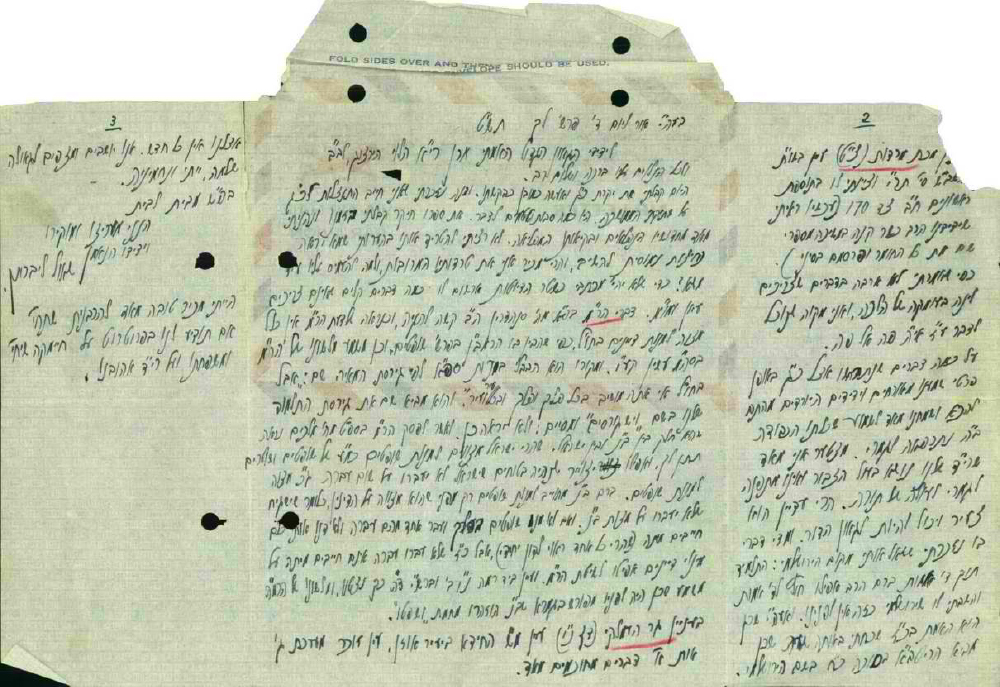
Recently, however, a contemporaneous account of the events of 1908 has come to light.  This account was discovered as a result of construction at Congregation Bikur Cholim Machzikay Hadath in Seattle, Washington, when workers came upon a box of papers labeled, “Rabbi B. Shapiro Papers, 1920s-1960’s.” Rabbi Boruch Shapiro (1883-1970) was born in Szmorgon, Lithuania and was recognized as a Talmudic genius (Iluy) at an early age.[12] He was a student of, and received ordination from, Rabbi Meir Simcha of Dvinsk, (Or Sameakh), one of the outstanding rabbinic leaders of his time.[13] While in Dvinsk, R. Shapiro also received ordination from Rabbi Joseph Rozin, known as the “Rogatchover Gaon”.[14]  R. Shapiro immigrated to America in the early 1900’s and visited Seattle in 1913 on a fundraising trip. His visit became permanent when he ended up marrying a local woman, Hinda Gershonowitz and remained in Seattle until his passing in 1970. Rabbi Shapiro is perhaps best remembered as the Rav of Congregation Machzikay Hadath in Seattle, a position he held for forty years.
Before arriving in Seattle and shortly after arriving in America, Rabbi Shapiro studied at RIETS. Because he already possessed rabbinic ordination, he was considered in a special class of students, receiving a higher weekly stipend than most others who studied there. [15] He was sent by the school to give lectures at a synagogue in Brooklyn during the Sukkot holiday of 1905 as an example of the quality of students that were studying in the yeshiva.[16]
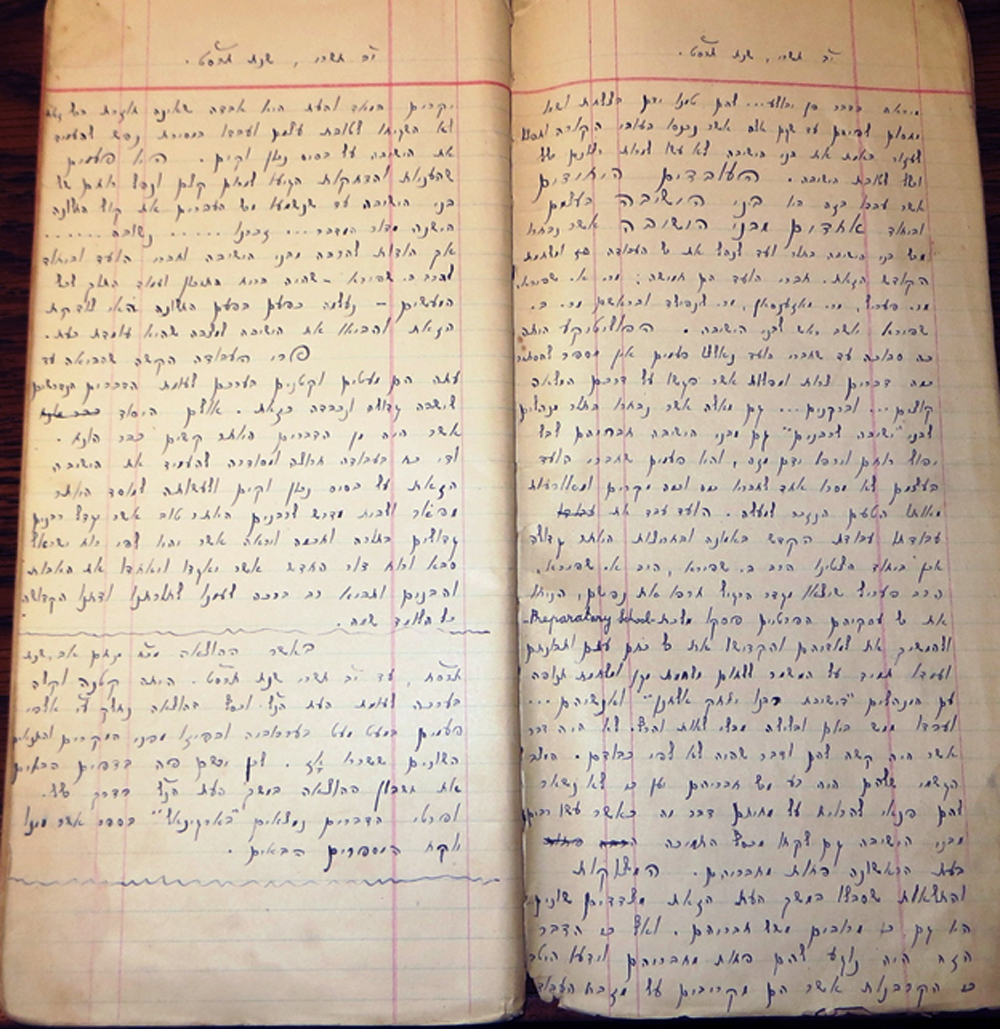
The box of papers discovered contains Rabbi Shapiro’s account of the events surrounding the student strike in August 1908, and the subsequent founding of the Yeshiva Le’Rabbanim. The account was written on October 7th, 1908 and covers the period from August 20 until that time. Because Rabbi Shapiro was one of the three student leaders of the strike, his account is particularly relevant to filling in the picture of the details of the August 1908 RIETS student strike.[17] Rabbi Shapiro’s writings, it should be noted, reflect that he and his fellow students had been involved in a struggle with, in his view, a dysfunctional and stubborn board of directors for over two years.[18]
Rabbi Shapiro records that:
On Thursday night, 24 Av 5668(20 August 1908), the Rabbi Isaac
Elchanan Yeshiva was closed in a very unseemly fashion. Mr. [Jonathan] Shepp,
the treasurer of the Yeshiva called the police several times to evict the
yeshiva students from the building in which they learned.[19]
But despite all his efforts, the police declined to do harm to the students.
They remained there despite his displeasure until midnight and at that time
they left for their residences.”[20]
After the students of the Yeshiva had concluded that there was no
hope to improve both the physical and spiritual conditions of the Yeshiva due
to the obduracy of the leaders whose concern was only for themselves, the
students decided to separate from the above named Yeshiva and move to “Adas Bnei
Yisroel” at 213 East Broadway, which welcomed them with open arms.[21] On
28Av (25 August-1908), the students of the Yeshiva moved their place of Torah
study to the above mentioned address in the company of well-known rabbis, such
as Rabbi [Shalom Elchanan] Jaffee[22],
Rabbi [Chaim Sholom] Shoher[23],Rabbi
[Aaron] Gordon [24],
and others, who had gathered there to guide them. After much discussion, it was
decided that the yeshiva students would study temporarily in Adas Bnei Yisroel,
and that they would acquire a charter. So that the leaders of Yeshiva Rabbeinu
Yitzchak Elchanan would not collect money in their name, they decided that this
yeshiva would be called “Yeshiva L’Rabanim”. Similarly, they decided to send
out boxes to collect members and to try to establish this yeshiva on a proper
foundation.
From 28 Av 5668 until 12 Tishrei 5669, three meetings of well-known
rabbis and prominent lay leaders were held. At the second meeting, an interim
leadership team for Yeshiva L’Rabanim was chosen: Rabbi Jaffe, chairman; Rabbi
Shoher vice chairman and treasurer; Rabbi [Joseph Judah Leib] Sossnitz,
administrator;[25]
Rabbi Dr. Rabinowitz from Brooklyn, administrator; Rabbi [Judah Leib] Lazeroff,
administrator,[26]
and others. The job of developing a “program” both in religious and secular
studies for this yeshiva was also assigned to the above leaders.
Even before the closure of the Yeshiva Rabbi Isaac Elchanan, the
physical situation of the students was very bad because for seven weeks prior
to the closure, all they received was a half a kilogram of bread per week.
However, the situation since they left the Yeshiva until now was much worse,
and the poverty and embarrassment they suffered is difficult to describe. Many
of them could have found other means of support, but because of their love of
Torah, they accepted their lot and did not abandon Torah study with which they
had been engaged their entire lives.
Many Rabbis, in writing, speech and action, promised to help. From
all the promises very little materialized, aside from Rabbi Lazaroff, who had
spoken up a few times in his synagogue on behalf of the Yeshiva. He assembled a
worthy number of members from whom he collected funds. The prominent Mr.
[Abraham J.] Goldstein and his brother-in-law, Mr. [P.] Feinberg from Jersey
City came to the assistance of the Yeshiva in the beginning. [27]With
the help of other prominent members of their congregation who worked alongside
their honored Rabbi [Shlomo David] Posner, that synagogue supported the yeshiva
a bit.[28]
To describe in detail all the problems faced by this new endeavor
and the stumbling blocks that were placed in front of this new Yeshiva from the
beginning until now would amount to an entire book. The task was difficult and
the conflict with the administration of the Yeshiva Rabbi Isaac Elchanan
weighed heavily on us. Many did not want to support the students of the Yeshiva
since they saw that the “Morgen Journal” had “sold out” to those above
mentioned administrators to do their bidding. They also felt that the “Tageblatt”
was leaning in the direction of those administrators, and not on the side of
the Yeshiva L’Rabanim. Many rabbis knew and admitted that the yeshiva students
were right, but kept silent due to fear. So much so, even those who had joined
the new Yeshiva were not really able to help it.
The primary laborers on behalf of the new Yeshiva were the students
themselves and especially a student council that was chosen from among them to
lead the struggle. The five members of this council were Mr. A.[vraham]
Shapira, Mr.[Ben Zion] Perl, Mr. [Chaim Yechezkel] Mosesohn, Mr. [H.S.] Linfeld
and Mr. B.[aruch] Shapira who was the leader.[29]
The politics were so intense that oftentimes those in the Yeshiva did not
confide in their fellow students for fear that they were supporting the other
side. The council worked diligently with the three main activists, Rabbi B.
Shapira, Rabbi A. Shapira, and Rabbi Perl who were most instrumental.  They abandoned all their other pursuits such
as attending “Preparatory School,” working day and night to battle with the
administration of Yeshiva Rabbeinu Isaac Elchanan.  Nothing was too difficult for them or beneath
their dignity. Their physical situation was worse than the conditions of other
students, as they had no other means of sustenance and they also received a
more meager stipend compared to what they had been entitled to. They suffered
immensely during this time. They knew that they were making great sacrifices
and losing precious time. Nevertheless, they did not consider their own
personal situations so that they could help establish this new Yeshiva on a
proper foundation. There were times that matters grew so bad that many of the
yeshiva students echoed the complaints of the Jews in the desert: they wanted
to return to their previous Yeshiva, but thanks to many of the yeshiva students
and the student council, especially Rabbi B. Shapira, these complaints were set
aside and it allowed the Yeshiva to attain the status it claims today. The
result of what has been done so far is small compared to what needs to be
completed. Nevertheless, laying the foundation, which was the most difficult to
accomplish, has been done. More effort is required to establish this Yeshiva on
a firm foundation and to transform it into an excellent school that will train
great rabbis in Torah, wisdom, fear of Heaven; who will work within the spirit
of ancient Israel and the spirit of this new generation; and who will unite
both old and young, thereby bring blessing to our people, our Torah and our
holy faith.”
In the end, Yeshiva Le-Rabbanim did not exist for very long because it never had substantial financial backing and support from the general community.[30] The attempt to form an alternative yeshiva apparently did not deter some of the student dissidents to return to RIETS. In 1917, in a RIETS publication, Rabbi Baruch Shapiro and his brother Rabbi Abraham Shapiro along with Rabbi Ben Zion Perl are listed among those ordained by RIETS now serving as rabbis in America.[31] Even more curious, the strike leader Rabbi Baruch Shapiro went on a fundraising tour in 1917 to raise money for the Rabbinical College of America, one of whose components was RIETS.[32]
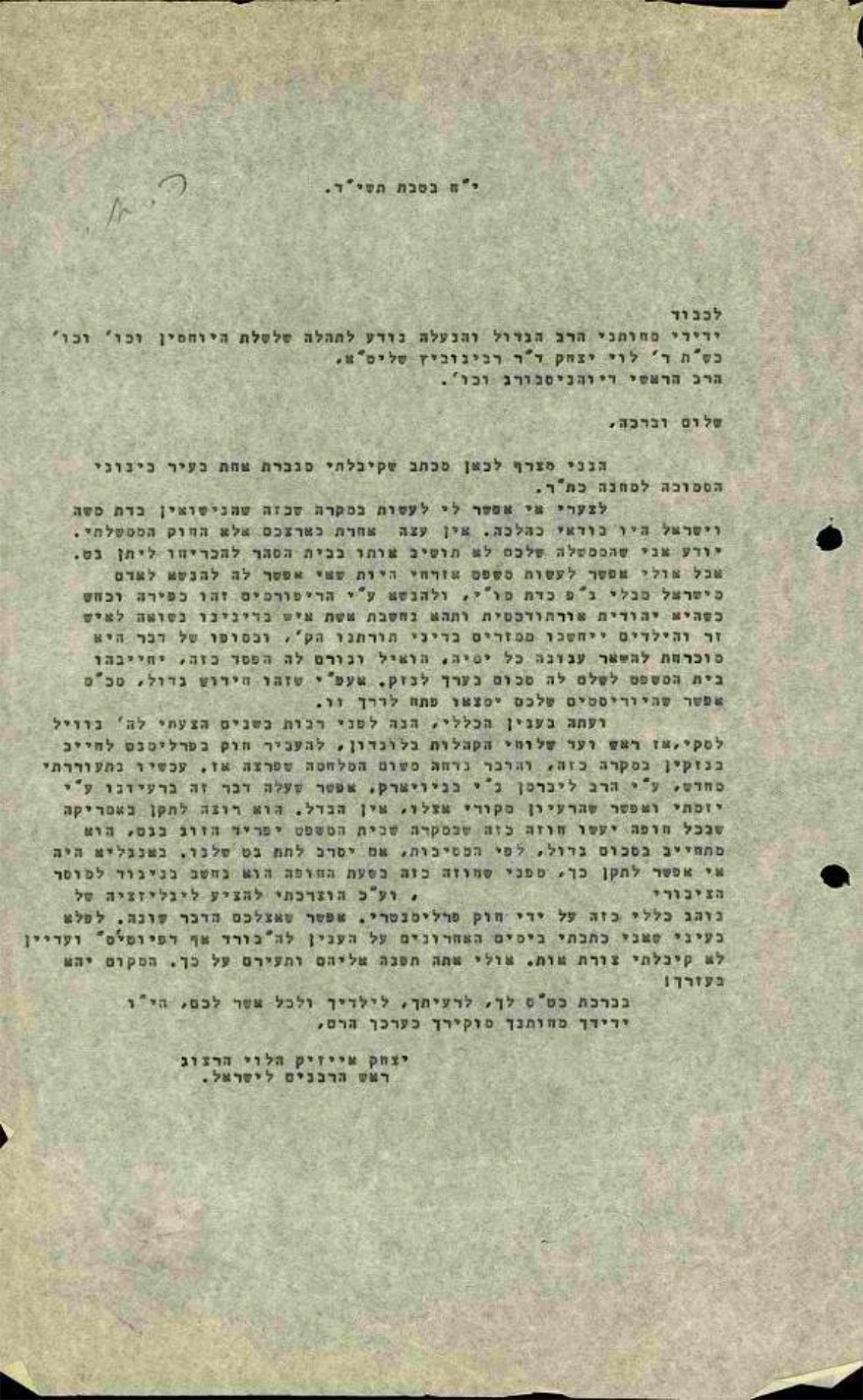
The strike’s impact, however, on one of the most important future leaders of RIETS and Yeshiva University was profound.  Chaim Rabinowitz wrote “The strikes stimulated the mind of a young Rabbi who had recently arrived in America. This young Rav was Rabbi Dov Revel.” Rabinowitz cites a letter that Dr. Revel wrote to Rabbi Zvi Masliansky in the spring of 1908, where he grieves about the turmoil in RIETS that Rabbi Masliansky had told him about and hopes for better days for the Yeshiva. Rabinowitz concludes “the dream of Rabbi Revel came to fruition in 1915 when he became the Rosh Hayeshiva…and instituted great changes in the order of studies.”[33]
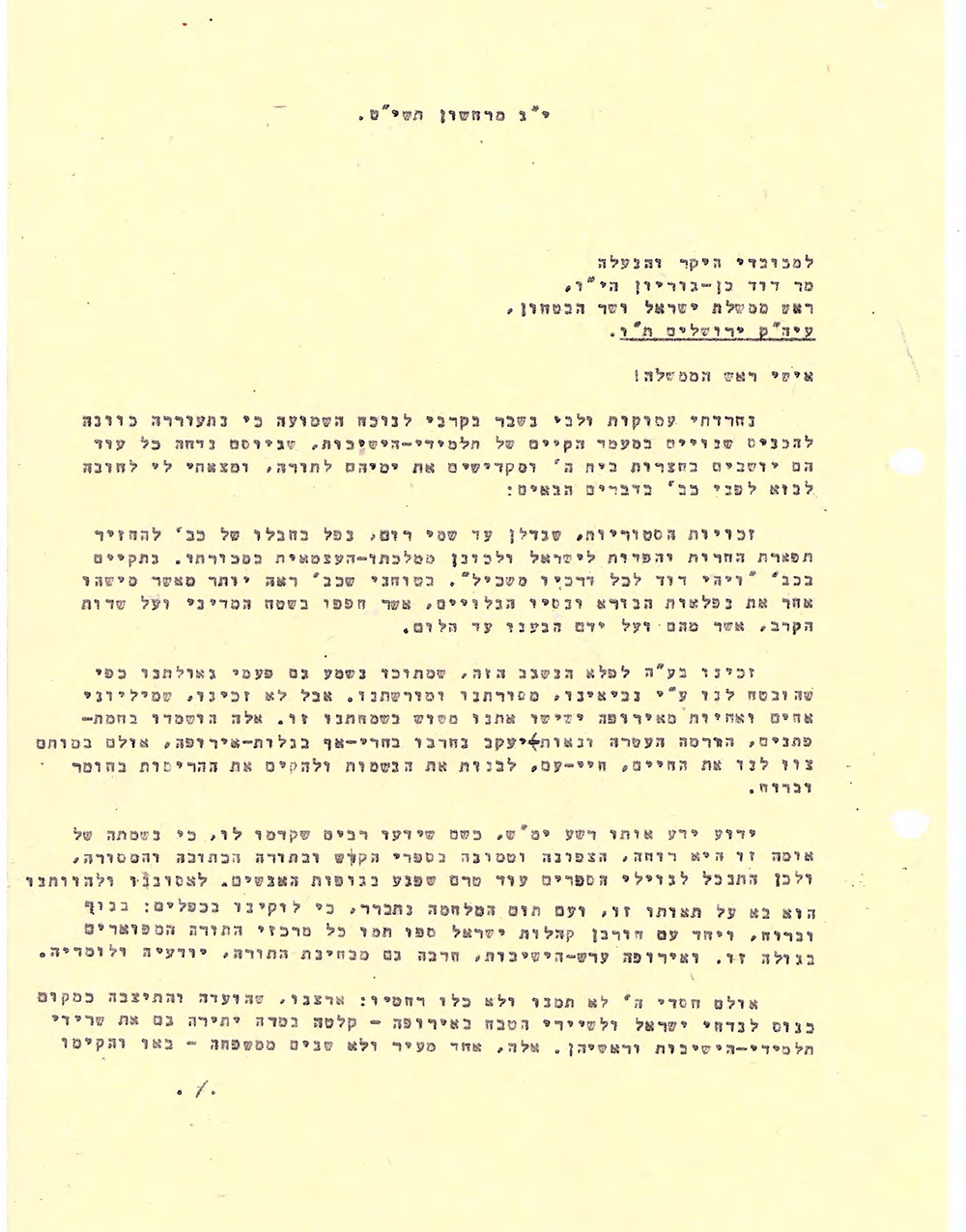
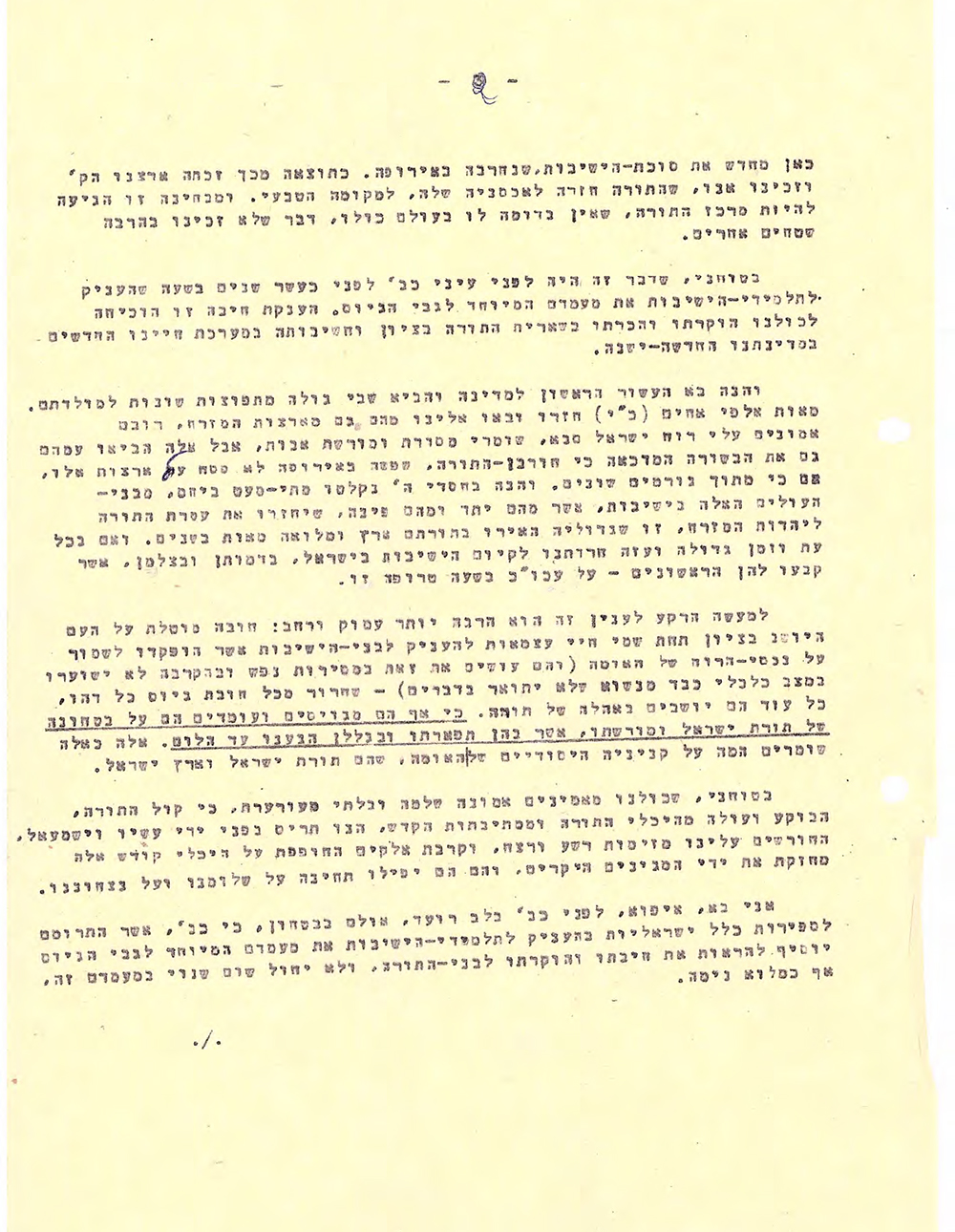
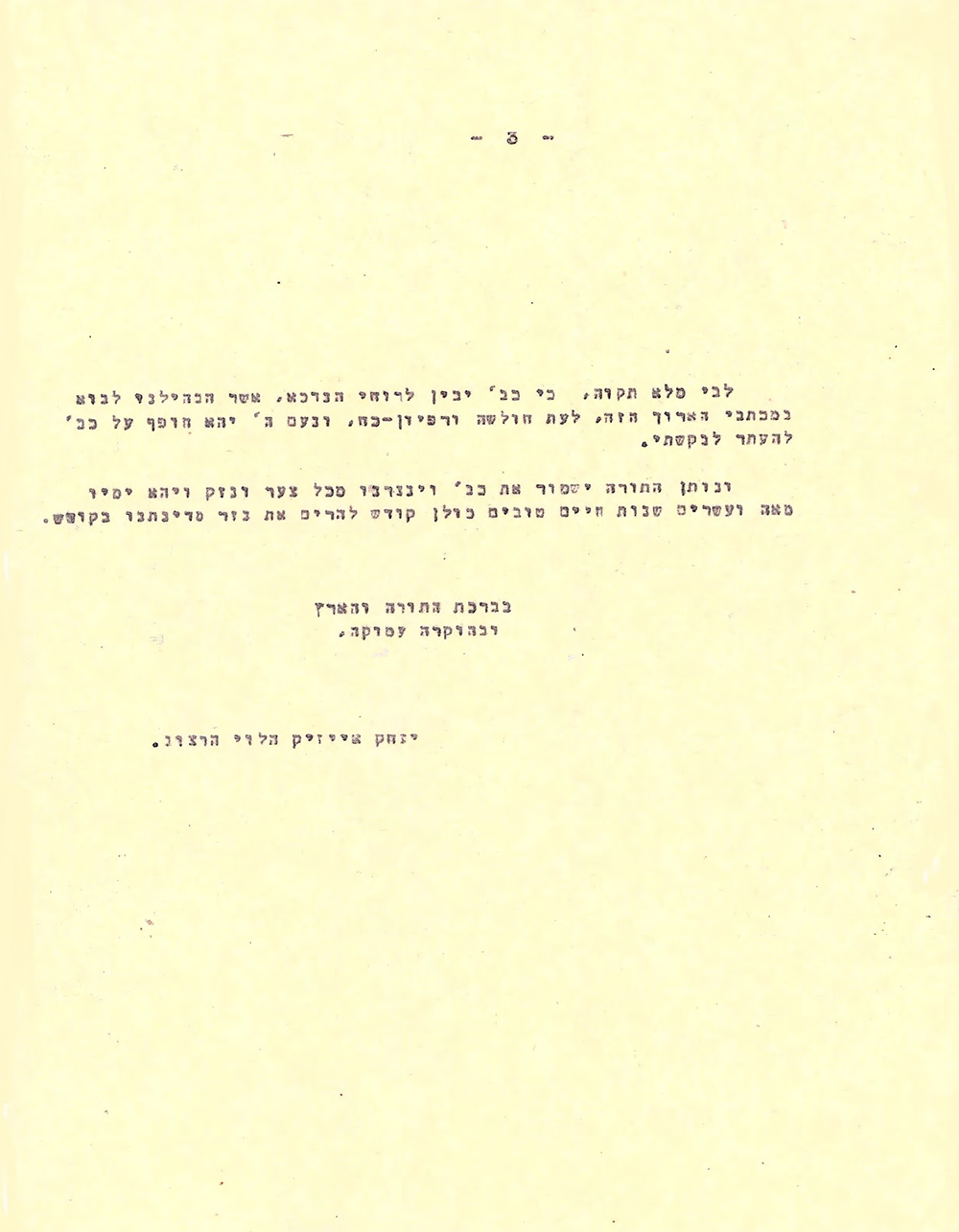
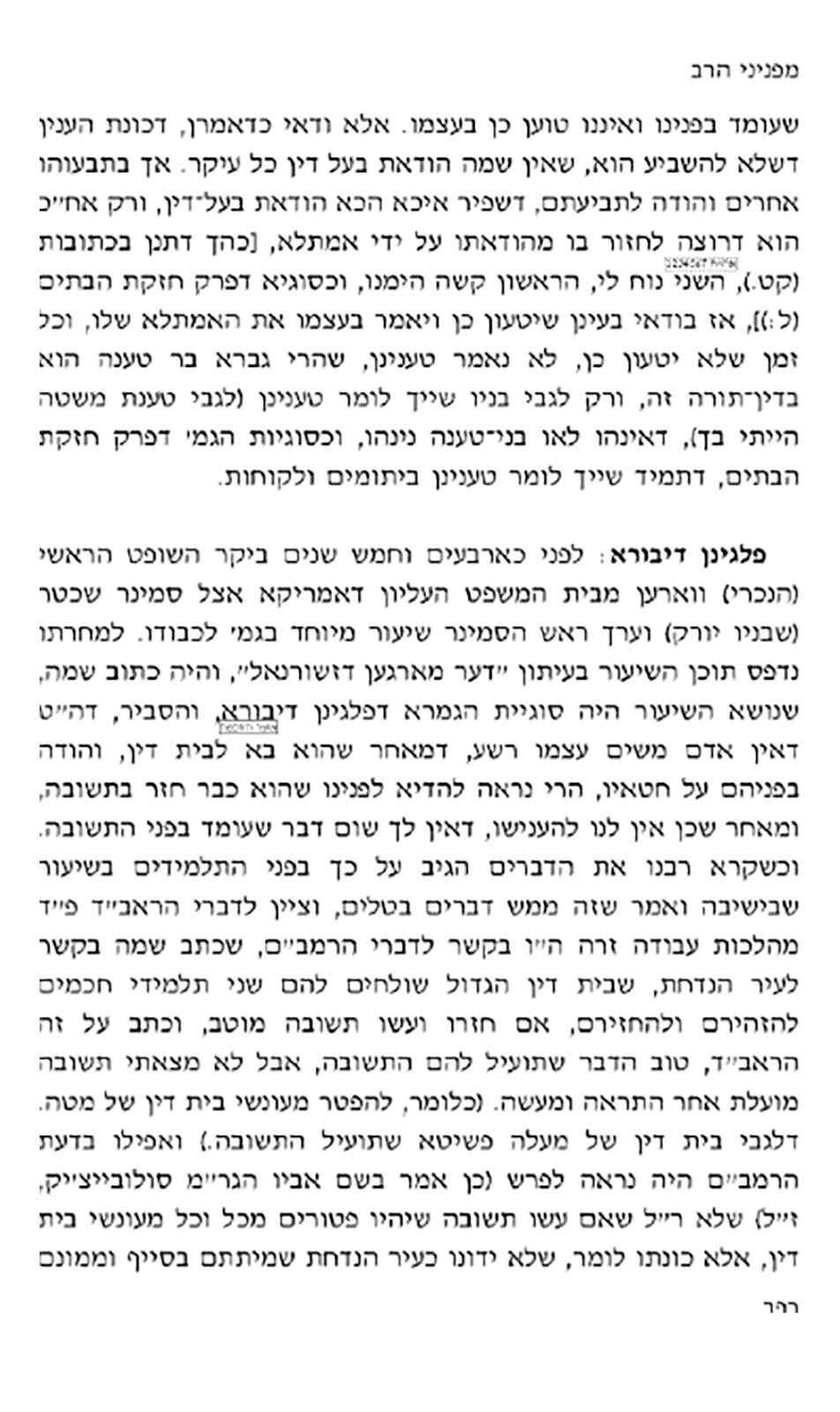
Here is a sample page of the document:


[1]
“Rabbi Isaac Elchanan Theological Seminary Association Certificate of
Incorporation,” March 20, 1897, (quoted in Gilbert Klaperman, “Yeshiva
University:  Seventy-Five Years in
Retrospect,” American Jewish Historical Quarterly 54,1 (September,
1964), 6). William Helmreich, however, states that teaching “the language of
the land” and Talmud was articulated in the RIETS charter, and, as such, “the
first such mention of combining secular and religious studies in one
institution.”  William B. Helmreich, “Old
Wine in New Bottles:  Advanced Yeshivot
in the United States,” American Jewish History, 69, 2 (December 1979),
235.  But, the 1897 certificate does not
mention “language of the land,” and Helmreich’s assertion is without
citation.
[2]
Gilbert Klaperman, The Story of Yeshiva University: The First Jewish
University in America
(New York: Macmillan, 1969) 71-72.
[3]Alexander
Dushkin, Jewish Education in New York City (New York: Bureau of Jewish
Education, 1918), 77-78.
[4]
“Boys Go On Strike,” New York Times, August 19, 1908.
[5] The Times
report may have been the result of the RIETS’ students, who, to gain
sympathy to their cause alerted it to the unrest. See Klaperman, Story,
95
[6] The
most complete report on the student unrest from 1906-1908 can be found in Klaperman,
Story, 94-112.
According
to Rabbi Klaperman, the closure and lockout on August 20th was
reported by the Jewish Morning Journal on Friday August 21st,
1908 and the Judisches Tageblatt on Sunday August 23, 1908. Idem.
217n8.
[7] Gurock,
Men and Women, 40; Rabinowitz, “60 Shana,” 553; and Klaperman, Story,
118.
[8] There
are three discussions regarding the closure of RIETS on Thursday, August 20th,
1908
See Klaperman, Story, 111-12. There is no mention of a
strike immediately preceding the board’s action. Rabbi Klaperman does not cite
the Times article in any of his footnotes. Additionally, in footnote 21,
p.218, he writes that there was no clear picture of presidential succession of
RIETS between February 1906 and fall of 1908, despite an indication in the NY
Times article that Nathan Lamport was the president of the school in August of
1908.
The
second is Hayim R Rabinowitz’s recollections that appeared in Hadoar in
1968. Hayim R. Rabinowitz, “60 Shana le-Shvitot be-Yeshivat Rabbeinu Yitzchok Elchanan,”
Hadoar, June 14, 1968, 552-554. In 1908, Rabinowitz was an
eighteen-year-old student at RIETS, and writes at length regarding the
situation leading up to the closing of the school on August 20th,
with the resultant lockout of the students from the building at 156 Henry
Street, but does not mention that the students had been on strike immediately
preceding this event. Although Rabinowitz was a contemporaneous observer, his
reminiscences were only published sixty years after the events in question.
The third discussion is by Jeffrey Gurock.  Jeffrey Gurock, The Men and Women of
Yeshiva: Higher Education, Orthodoxy, and America Judaism
(New York:  Columbia University Press, 1988) 39-40. Citing
Rabinowitz, p.553, he writes “Frustrated, feeling that a double cross was in
the making, RIETS students were once again talking strike in the late spring
and early summer of 1908.” Gurock, however, does not mention that a strike and
blockade of the building took place in August as indicated by the headline of
the New York Times and in the subsequent article.
[9] Klaperman,
Story, 48.
[10] Idem, 217-19.
[11]
Rabinowitz, “60 Shana,” 552-554, quoted extensively in Gurock, Men and Women,39-41.
[12] The
Jewish American Family Magazine and Gazette (Amerikaner Familian Magazin un
Gazetten)
, vol. XXXIX, no. 47, September 19, 1941, 2.
[13]
Rabbi Meir Simcha was the author of “Ohr Sameach”, an important commentary on
Maimonides’ “Mishna Torah”, and of “Meshech Chochmah”, a commentary on the
Torah. Rabbi Meier Simcha wrote of Rabbi Boruch Shapiro “he has the ability to
formulate outstanding novella acceptable to all”. The Jewish American Family,
2.
[14]
Prior to coming to America, Rabbi Shapiro obtained letters of support from two
other leading rabbinic figures in eastern Europe, Rabbi David Hirsch Eisenstein
and Rabbi Shlomo Vilner. The Jewish American,2. Rabbi Vilner wrote that
he never gives ordination to one so young, but in the case of Rabbi Shapiro, he
was willing to make an exception.
[15]
Rabinowitz, “60 Shana,” 553.  Rabinowitz
also refers to Rabbi Shapiro as a “Gadol B’Torah”
[16] Klaperman,
Story, 62.
[17] The
New York Times article identifies him as one of the three student strike
leaders. See also, Rabinowitz, p.553 As early as 1906, R. Shapiro held a
leadership role.   He was among the four
students chosen to represent the students’ views before RIETS’ board of directors.  Rabinowitz, “60 Shana,” 553; The Jewish American,
2, which states that Rabbi Shapiro was chosen as a representative by the
students in dealing with the board.
[18] Regarding
the student’s relationship with the board of directors, Klaperman describes an interaction
between the students and the directors as follows: “The student’s
dissatisfaction and the obduracy of the directors brought about continuous
agitation in the school and highlighted the confusion of aims in the
curriculum” Klaperman, Story, 86.
[19] Klaperman,
Story,99 writes that in 1906, Jonathan Shepp was elected as the new
treasurer, and that Jonathan Shepp was part of the finance committee appointed
on August 31, 1908 to assist in reopening the school after it was closed on
August 20. Klaperman, Story, 99, 113.
[20] Gurock
indicates that the treasurer threatened to call the police, but that in fact
the police were never called.  Gurock, Men
and Women
, 40 (citing Rabinowitz, “60 Shana,” 553).
[21]
Regarding the address of the building to which the students moved, Rabbi
Shapiro was physically at this new address so it is reasonable to assume that
he recorded it correctly. Additionally, on June 3, 2015, there was an auction
of documents associated with the newly founded Yeshiva La-Rabbanim (Kedem
Auction No.8, Lot 301). One of the documents evidences a stamp which says 213
East Broadway. Rabbi Klaperman lists the address
as 123 East Broadway.  Klaperman, Story,
116, 219n38.
[22] Rabbi
Shalom Elchanan Jaffe (1858-1923) was an important early American Orthodox
Rabbi. He received Semicha from both Rabbi Naftali Zvi Yehuda Berlin and Rabbi
Yitzchak Elchanan Spektor. He arrived in America in 1890 and served as a Rav in
St Louis and in Brooklyn before becoming the Rabbi in 1901 of the prestigious
Beth Midrash Hagadol synagogue on the Lower East Side of New York. He was one
of the most influential of Rabbis at the time, especially when it came to the
supervision of kosher meat. Jaffe’s motivations for his involvement with this breakaway
school, may have less to do with issues than his personality.  According to Klaperman, Jaffe was not one
wedded to the idea of secular education, one of the central demands of the
students. “On the other hand, Rabbi Jaffe was the stormy petrel on the rabbinic
scene, known as an impetuous non conformist who rushed in without fear when his
mind was made up.” Klaperman, Story, 117.
[23] Rabbi
Chaim Sholom Shochar (Rabbi H.S. Shoher) came to Boston in 1882 to be the Rabbi
of Bais Avraham synagogue and subsequently served as the Rabbi of Hadrath
Israel and Mishkan Tefillah among other synagogues in Boston. In 1905, he moved
to New York City to become the Rabbi of the prestigious Shaare Zedek synagogue
located at 38-40 Henry Street. In 1910, he is listed as living at 215 East
Broadway, next door to the location of Yeshiva Le-Rabbanim. He authored a
pro-Zionist book Shalom Yerushalyim in 1909 and passed away in 1918.
[24] Rabbi
Aaron Gordon (1845- 1922) known as the Miadziol (Myadel) Iluy, emigrated to
America in 1890 and was the chief Rabbi of Rochester, New York until 1900 when
he moved to New York City. He was one of the founders of the Agudath Harabanim
and served as head of a Bet Din on the lower east side. He served as the Rabbi
of Congregation Talmud Torah Tiphereth Jerusalem at 147 East Broadway. He was a
prolific writer, authoring many books on Halacha, among them Even Meir
(Pietrokov 1909), Teshuvat Meleat Even (Pietrokov 1912), Minchat Aharon
(Jerusalem, 1920) and Sha’arei Da’at (Jerusalem, 1921).
[25]
Rabbi Joseph Judah Leib Sossnitz (1837-1910) was born in Birzhi, district of
Kovno. He has been described as a Talmudic scholar, mathematician and
scientific author. He settled in New York in 1891 and in 1893, founded a Talmud
Torah on 104th street in Manhattan. In 1899, he was appointed a
lecturer in Jewish ethics at the Educational Alliance at 197 East Broadway.
[26]
Rabbi Judah Leib Lazarov (1875-1939), studied inTelz, Mir, Volozhin and Radin
before immigrating to America in 1898.He was hired as a preacher at Beth
Midrash Hayei Adam at 89 Henry Street in 1903 and succeeded Rabbi S.E. Jaffee
as Rabbi of Beth Midrash Hagadol in 1910. He authored a multi volume work Divrei
Yehudah
(New York, 1906-1910).
Except for Rabbi Dr Rabinowitz who was from Brooklyn, all the above
named rabbinic leaders were from the Lower East Side near both Rabbi Isaac
Elchanan Yeshiva on Henry Street and Yeshiva La’Rabanim on east Broadway. They
most likely would have been aware of the struggles of the students with the
board of the Yeshiva and had possibly allowed them to speak in their synagogues
during the May strike. See Klaperman, Story, 104. It is also possible
they were consulted by the students on an ongoing basis even before they tried
to start a new school.
[27] Abraham
J. Goldstein emigrated to America in 1884 and immediately settled in Jersey
City. One book, Distinguished Jews of America, (New York, 1917), describes
him as “a strict Orthodox Jew in every sense”, “one of the richest and most
prominent citizens of Jersey City”, and “a member of almost every Jewish
organization in Jersey City”. He owned a grocery wholesale business, was
president of the Erie Building and Loan Association, and was one of the largest
real estate owners in Jersey City.
[28] Rabbi
Shlomo David Posner (Rabbi S.D Posner) was a Rabbi in Jersey City, New Jersey,
for many decades. He signed his letters “Rav V’Av Beit Din” of Jersey
City.  He authored a book of homilies Eshed
Hanahar
(New York, 1932). In the introduction, he writes candidly about
being a Rabbi in America over many years. He was involved on a national level
in many Rabbinic organizations and he helped raise money for the Jewish
community in Palestine
[29] It
is interesting to note that Rabbi Shapiro refers to this group as Mr. but later,
refers to three of the group as Rabbi. The two Shapiro brothers and Ben Zion
Perl are referred to by Rabinowitz as having Rabbinic ordination already at
that time. Rabinowitz, “60 Shana,” 553.
The four referred to by Rabbi Shapiro aside from himself are:
(1) Rabbi Abraham Shapiro was the brother of Rabbi Boruch Shapiro.
Like his brother, Abraham already possessed Semicha from Eastern Europe at this
time. He later served as a Rabbi in Canton, Ohio and in Utica, New York. He was
considered to be a prominent Musmach of RIETS in later years.
(2) Rabbi Ben Zion Pearl served as a Rabbi in Harlem. He was the
director of the Uptown Talmud Torah Association which had 2,400 students in
1919. In 1925, he was involved in raising money for the building fund of Rabbi
Isaac Elchanan Yeshiva. He passed away in 1929.
(3) Rabbi Chaim Yechezkel Moseson came
from Lodz Poland, learned in the Yeshiva in Lomza Poland and received Smicha
from Rabbi Yechial Michal Epstein, author of the Oruch Hashulchon. He was the
principal of Yeshiva Torah Vadath, Mesivta Tiferes Yerushlayim, and other
Yeshivot. He wrote many articles for Dos Yiddishe Licht, a newspaper
financed by Cantor Yossele Rosenblatt.
(4) Harry Sebee Linfield
(1889-1978), was a rabbi and statistician. His Jewish Statistical Bureau
conducted research on Jews in America and published numerous reports and other
publications on their findings, specifically the Statistics of Jews. He was born in
Lithuania and came to the United States in 1905. He was awarded a PhD by the
University of Chicago in Semitic language in 1916, and the following year was
ordained a rabbi by the Hebrew Union College in Cincinnati
[30] Klaperman,
Story, 118.
[31] Idem.
262
[32] The
Reform Advocate
, December 29, 1917, p.501
[33]
Rabinowitz, “60 Shana,” 553-554.


What Did the Willows Ever Do to Deserve Such a Beating? An Original Explanation for a Perplexing Custom

What Did the
Willows Ever Do to Deserve Such a Beating?
An Original
Explanation for a Perplexing Custom

By Steven Weiner 

Steven had the privilege and good fortune of
learning from Rav Aharon Lichtenstein ztz”l and Rav Yaakov Meidan
Shlit”a at Yeshivat Har Etzion (1982-83) and prior to that from Rav
Yisroel Mendel Kaplan ztz”l and other Rabbeim at the Talmudical Yeshiva of
Philadelphia.  He is currently working on a series of essays on the theme
of Shivat Tzion and its contemporary resonance.

Introduction
The
seventh day of Sukkot – the day we now call הושענא רבה – has no special significance in the Torah.  The day has no distinctive name; no mitzvot
or rules distinguish it from the rest of Sukkot; its sacrifices follow
precisely the same pattern as the previous six days; and, unlike the seventh day
of Pesach, the seventh day of Sukkot is not even a מקרא קדשIn other words, the seventh day of Sukkot
appears in the Torah as indistinguishable from the other days of המועד חול.
Nevertheless,
the Talmud describes several unique practices that were performed on הושענא רבה.  One such practice is the custom we still
observe today known as חיבוט ערבות (chibut aravot),
beating our ערבות against the ground. 
What is the meaning of this strange ritual, and does it have any meaningful
relationship with הושענא רבה?
In
this article, we suggest an original answer grounded in a deep connection
between the curious practice of beating ערבות and the teachings
of the final נביאים who were active during the early days of
the Second Temple, also known as the period of שיבת ציון.
A
most mysterious
מנהג
נביאים
According
to the Mishna (Sukka 4:5), on each day
of Sukkot the people brought tall ערבות branches to the מקדש and stood them on the
ground surrounding the מזבח,
thereby adorning the מזבח with an overhanging
canopy of leaves.  The Gemara (Sukka
44a-44b) concludes that this practice is rooted in a הלכה למשה מסיני
(an
oral tradition received at Sinai).  However,
while the Mishna describes only a ritual performed inside the מקדש, the Gemara adds that a custom involving ערבות also
developed later outside of the מקדש – but only on one day of Sukkot, הושענא רבה.[1]  The Gemara describes this custom using the
verb חיבוט –
understood by Rashi as waving the ערבות,
and by Rambam as beating them e.g. against the floor.  The familiar custom nowadays is to take a
bundle of ערבות on הושענא רבה and strike it
sharply, several times, against the floor or a chair.
What is the
source and meaning of חיבוט ערבות outside the מקדש?  The Gemara (Sukka 44b) calls this practice a מנהג נביאים (“custom of the
prophets”).  Rashi and other traditional
commentators understand this as meaning that the custom was instituted by the trio
of prophetsחגי
זכרי’ ומלאכי , who prophesied during the early Second Temple period and were
members of אנשי כנסת הגדולה.  However, barely one page earlier (44a), the Gemara indicates חיבוט ערבות is a זכר למקדש!  Indeed, Rambam and numerous other subsequent authorities
who discuss the practice of חיבוט
ערבות echo the Gemara on both counts, dubbing
the practice a זכר למקדש
as
well as a מנהג נביאים.  But performing a זכר למקדש
is
an act of דרישת
ציון, a response to Yirmiyahu’s cry that poor
Zion lies destroyed and abandoned with none seeking her.[2]  How could a זכר למקדש in
the spirit of דרישת ציון possibly make sense in the earliest days
of the Second Temple, centuries before its destruction[3]? 
Furthermore, why
does the Gemara ascribe this custom specifically to the prophets?  The intriguing term מנהג נביאים is not used elsewhere
in the Talmud.  While many familiar practices
are known as enactments of אנשי
כנסת הגדולה (the Rabbinic authority during שיבת ציון, whose
members included חגי זכריה ומלאכי as well as other leading scholars of that period), they are not
labeled as מנהג נביאים.  What significance is to be found in the
Talmud’s attribution of חיבוט ערבות specifically to the prophets of the early Second
Temple?
In addition, the
peculiar way we perform this custom – beating ערבות against the ground[4] –
also cries out for explanation.  What does
beating branches symbolize?  Moreover, if
the custom is intended to remind us of the ערבות ceremony inside the מקדש, shouldn’t we instead encircle and adorn
the שלחן with
our ערבות, just as the מזבח was
encircled and adorned with ערבות in the מקדש?  After all, we commemorate the practice of הקפות in
the מקדש (Mishna Sukka 4:5) by marching around the שלחן in very similar
fashion.  Why then do we commemorate a
ceremony of adorning the מזבח by beating our ערבות against the ground?
A well-known Kabbalistic explanation
views חיבוט ערבות as a rite of atonement, and interprets הושענא רבה as
a day of final judgment and forgiveness. 
Beating the branches symbolizes, and mystically brings about, a
sweetening of the Divine attribute of justice.[5] While a mystical interpretation is certainly possible,
the Talmud never mentions judgment or atonement regarding חיבוט ערבות or הושענא רבה.  For
those of us who might prefer a less esoteric alternative, I wish to propose an
explanation for חיבוט ערבות that is
grounded in Biblical sources, and which also helps to resolve the puzzle of exactly
how and why a זכר למקדש
was
initiated as a מנהג נביאים in the early
days of שיבת
ציון.  I am not sure that
difficulty is tackled by the Kabbalistic approach.
Others have suggested that חיבוט ערבות represents
a prayer for rain, the sound of beating ערבות evoking the sounds
and sights of a rainstorm.[6]  This seems plausible, as the Talmud and
Midrash indicate that arba minim and
other practices of Sukkot are in part connected to our prayers for rain, which
begin at this time of year.  However, once
again this explanation fails to shed light on why the custom was initiated specifically
by the prophets of שיבת ציון, or how we can possibly reconcile the seemingly
self-contradictory, dual status of מנהג
נביאים and זכר למקדש.
Affirming a powerful prophecy by acting
it out
I believe the
key to unlocking the significance of חיבוט ערבות may be found by
examining the visions proclaimed by the prophets of שיבת ציון.
The Second
Temple was built in a climate of intensely mixed emotions.  The austere structure of שיבת ציון paled against the splendid, opulent בית ראשון
constructed
by Solomon.  Celebrating their first
Sukkot shortly after rebuilding the מזבח,
the people of Ezra’s time offered the obligatory holiday offerings בְּמִסְפָּר
כְּמִשְׁפַּט דְּבַר־יוֹם בְּיוֹמוֹ – “by number, according to the obligation of each day.”  In contrast, Solomon offered such bountiful
sacrifices for the inauguration of בית ראשון that the capacity of the מזבח was
overwhelmed and more space had to be specially consecrated![7]  Moreover,
בית ראשון
was
graced with a visible appearance of God’s presence, ‘ה כְּבוֹד, with clouds filling the Temple upon its
dedication, just as occurred in the original משכן.[8]  No comparable revelation is reported for בית שני.  Accordingly, elders who remembered the
magnificent First Temple wept loudly over the Second Temple’s modest foundations,
and the inaugural ceremony was accompanied by a heart-rending mixture of tears
and rejoicing (Ezra 3:12-13).  To make matters even worse, Persia soon
suspended further rebuilding of the Temple
in response to slander against the Jews by their envious, non-Jewish
neighbors (see Ezra 4).
Against this painful
backdrop, the prophet חגי received a stirring vision on the 21st day of Tishrei – i.e.
on
הושענא רבה,
the same date when Solomon had concluded his spectacular חֲנֻכַּת הַמִּזְבֵּחַ for the
First Temple centuries earlier:
חגי פרק ב
(א)
בַּשְּׁבִיעִי בְּעֶשְׂרִים וְאֶחָד לַחֹדֶשׁ הָיָה דְּבַר־יְקֹוָק
בְּיַד־חַגַּי הַנָּבִיא לֵאמֹר:
In a powerful message
of hope and encouragement, God first acknowledged that the Jewish people were demoralized
by the humble stature of בית שני
(“it is nothing in your eyes”) in comparison to the glorious Temple and kingdom
of Solomon:
(ג)
מִי בָכֶם הַנִּשְׁאָר אֲשֶׁר רָאָה אֶת־הַבַּיִת הַזֶּה בִּכְבוֹדוֹ הָרִאשׁוֹן,
וּמָה אַתֶּם רֹאִים אֹתוֹ עַתָּה? הֲלוֹא כָמֹהוּ כְּאַיִן בְּעֵינֵיכֶם:
Nevertheless, God
urged the people and their leaders to strengthen themselves and take action (continue
rebuilding), mindful that He is with them.  God declared that in but a moment He could
shake (מַרְעִישׁ)
the heavens and the earth, overturn (וְהִרְעַשְׁתִּי) powerful empires and deliver their wealth
to Israel, and “fill this house with כָּבוֹד.”[9]  The כָּבוֹד of
the new Temple could then exceed even the כָּבוֹד of
the First Temple, in both material wealth and Divine presence:
(ד) וְעַתָּה חֲזַק זְרֻבָּבֶל נְאֻם־יְקֹוָק, וַחֲזַק יְהוֹשֻׁעַ
בֶּן־יְהוֹצָדָק הַכֹּהֵן הַגָּדוֹל, וַחֲזַק כָּל־עַם הָאָרֶץ נְאֻם־יְקֹוָק,
וַעֲשׂוּ – כִּי־אֲנִי אִתְּכֶם, נְאֻם יְקֹוָק צְבָקוֹת:
(ה) אֶת־הַדָּבָר אֲשֶׁר־כָּרַתִּי אִתְּכֶם בְּצֵאתְכֶם
מִמִּצְרַיִם וְרוּחִי עֹמֶדֶת בְּתוֹכְכֶם אַל־תִּירָאוּ:
(ו) כִּי
כֹה אָמַר יְקֹוָק צְבָקוֹת:
עוֹד אַחַת מְעַט הִיא, וַאֲנִי מַרְעִישׁ
אֶת־הַשָּׁמַיִם וְאֶת־הָאָרֶץ וְאֶת־הַיָּם וְאֶת־הֶחָרָבָה
:
(ז) וְהִרְעַשְׁתִּי אֶת־כָּל־הַגּוֹיִם וּבָאוּ חֶמְדַּת
כָּל־הַגּוֹיִם וּמִלֵּאתִי אֶת־הַבַּיִת הַזֶּה כָּבוֹד אָמַר יְקֹוָק
צְבָקוֹת:
(ט) גָּדוֹל
יִהְיֶה כְּבוֹד הַבַּיִת הַזֶּה הָאַחֲרוֹן מִן־הָרִאשׁוֹן
אָמַר יְקֹוָק
צְבָקוֹת וּבַמָּקוֹם
הַזֶּה אֶתֵּן שָׁלוֹם נְאֻם יְקֹוָק צְבָקוֹת:
I suggest our מנהג נביאים of
beating ערבות has its roots in this prophecy.  When חגי received these powerful words, cutting
to the heart of the difficult challenges that he and his generation faced, he responded
by
acting out his own prophecy
וְהִרְעַשְׁתִּי /אֲנִי מַרְעִישׁ, “God
will shake the heavens and the earth” – by striking the earth sharply with a
bundle of
ערבות.[10]
 Using ערבות poignantly evoked the
similar branches that were used on that same day by the people within the מקדש to
encircle and celebrate their modest, fragile מזבח.
Prophets
in the Bible often acted out the imagery of their prophecies, as a way of affirming
and reinforcing their visions.  Ramban notes
this phenomenon in his commentary to the Torah (Breisheet 12:6).  One famous example
is even highly reminiscent of חיבוט
ערבות: Elisha instructed the King of Israel to bang arrows on the ground,
in order to affirm Elisha’s prophecy that Israel would smite and defeat its enemy
(Melachim II 13:16-17).  It is easy to picture חגי
following
in Elisha’s path and striking the ground with ערבות in place of
arrows, as an affirmation of his own prophecy ofוְהִרְעַשְׁתִּי /מַרְעִישׁ and
as a prayer to God that it be completely and speedily fulfilled.[11]
Thus,
חיבוט ערבות was from its very
inception both מנהג נביאים
and זכר למקדש – a זכר למקדש ראשון!!  Our puzzle is solved!  חגי and his colleagues performed חיבוט ערבות in the purest spirit of דרישת ציון.  Their ritual expressed a heartfelt plea for
the redemptive upheaval (רעש) that they envisioned, so that the full glory of בית ראשון could be
restored and exceeded.  At the same time,
the custom also served as a reminder of God’s command to חגי that we
strengthen ourselves and act courageously in fulfillment of God’s mandate to
continue rebuilding.
Although
בית שני was eventually completed, the longed-for glory of Solomon’s
era remained elusive. Judea was a vassal state for most of the Second Temple
period.  God’s presence (שכינה) was not manifest in בית שני, at least in
comparison with בית ראשון.[12]
 Therefore, it makes sense that חגי
and
his colleagues, and eventually all Jews, would annually repeat the custom of חיבוט ערבות outside
the מקדש on
הושענא רבה, affirming the
yearned-for prophecy on its anniversary.  To this day, in the prayer we recite just
before חיבוט ערבות – known as (“”קול מבשר) אומץ ישעך – we plead for complete and imminent
redemption by evoking “sounds” of deliverance including the earth-shaking upheaval
around Jerusalem foretold by זכרי’ , close colleague of חגי.  Like the original
prophecy of חגי, and much
like אני מאמין,
our custom of beating ערבות expresses both a prayer to God for redemption as well as
an uplifting pledge of faith and determination.
Our
novel interpretation also explains why the custom of חיבוט ערבות outside the מקדש is unique
to הושענא רבה.  The Gemara (Sukka 44a) explains why חיבוט
ערבות is performed on only one day of
Sukkot, as opposed to all seven days, but never explains the choice of which
day.[13]
 According to our explanation, the prophecy
of חגי
is
naturally reenacted and reaffirmed on its anniversary.  Intriguingly, Taz[14] suggests
חיבוט ערבות is
performed on הושענא רבה because of its unique holiness: יותר קדושה ביום זה.  Our proposal offers one way of interpreting
that special holiness.  הושענא רבה, the anniversary of בבית ראשון
חנכת המזבח
and
of נבואת חגי, is a day
of yearning for full redemption and the imminence of God’s presence – precisely
the theme expressed by חיבוט ערבות.
Counterpoint: who dares scorn the day of
small beginnings
?
While
beating ערבות outside of the מקדש expressed a deep longing for more
completion redemption, adorning the מזבח with a beautiful canopy of ערבות sounded a complementary
note inside the מקדש.  I believe this latter
practice acquired particular poignancy during the Second Temple period,
precisely because nagging feelings of disappointment over the limited “glory”
of that redemption were so palpable from the very start.  As cited above from Ezra 3, tears threatened
to drown out the shouts of joy heralding the inauguration of the Second
Temple.  Likewise, חגי
in
his הושענא רבה prophecy hears God say: “Who among you remembers the
glory of the First Temple, and what do you think of this house now?  It is nothing in your eyes!”
In
the prophecy of חגי, God’s primary response to these feelings of disappointment is
a promise that the future can be brighter if the people will only be strong and
act with courage and faith.  However, in 4:10
זכרי’, we hear
a somewhat different response: כִּי מִי בַז לְיוֹם קְטַנּוֹת?  – Who scorns
the day of small things?  I sense a sharp
tone of rebuke in the word “scorn”: Who dares to scorn the גאולה of שיבת ציון simply because it appears “small” and
modest compared to Solomon’s empire?  Shouldn’t
the people be grateful for even the smallest beginnings of גאולה?  Perhaps
חגי
2:3
contains a hint of the same rebuke: is the nascent בית שני really nothing
in your eyes?
I
suggest that for the Jews of the Second Temple[15],
adorning the מזבח with ערבות
became a deeply meaningful way of expressing gratitude and appreciation for the
redemption they enjoyed, imperfect as it was. 
The ceremony became a way of saying: we will never scorn you, oh מזבח, you are precious to
us!  In fact, the Mishna (Sukka 4:5) records that when the
ceremonies in the מקדש were completed on הושענא רבה, the people shouted: יופי לך מזבח, יופי לך מזבח
(“beauty is yours, מזבח”).  The reason for this charming salute to the
altar is not discussed in the Talmud, and several commentaries have commented
on it.[16]  Personally, I cannot help but hear an unmistakable
echo of the “cheers of ‘Beauty! Beauty!’” foretold in 4:7 זכרי’:
מִי־אַתָּה הַר־הַגָּדוֹל לִפְנֵי זְרֻבָּבֶל לְמִישֹׁר וְהוֹצִיא
אֶת־הָאֶבֶן הָרֹאשָׁה תְּשֻׁאוֹת חֵן חֵן לָהּ
:
Whatever great mountain
[obstacle] lies before Zerubavel –will be flattened!  He will present the cornerstone amid cheers of
“beauty, beauty!”
This vision of זכרי’
is adjacent
to his rebuke against those who scorn the day of small things.  The prophet’s message is that when the cornerstone
of the new Temple is placed, the proper response is joyous applause of “beauty,
beauty!”  Do not dare to be so ungrateful
as to scorn the modest beginnings of our new מקדש, thunders זכרי’!  I suggest that for the
people of בית שני,
the ערבות ceremony around the מזבח was an opportunity
to align themselves with those who gratefully cheered the cornerstone, and to
distance themselves from any thoughts of scorn.
Our
novel interpretation of the ערבות ceremony in the מקדש is further supported by the Gemara’s
citation (Sukka 45a) of Tehilim
118:27 – אִסְרוּ־חַג
בַּעֲבֹתִים עַד־קַרְנוֹת הַמִּזְבֵּחַ – as a source for encircling the מזבח with a canopy of ערבות. 
In
this section of Tehilim, familiar to us from Hallel, just a few verses earlier (118:22)
we read:
אֶבֶן מָאֲסוּ הַבּוֹנִים
הָיְתָה לְרֹאשׁ פִּנָּה
The
lowly stone once scorned by many is now the celebrated cornerstone!  This echoes the message and “stone” imagery
of זכרי’ that we
read above.  As Tehilim 118 continues, we
rejoice in this remarkable gift from God (23-24), we bless those who come
paying respects to the מקדש (26), and we gratefully salute the מזבח by encircling it
with leafy boughs (27).  The Gemara’s
citation of this excerpt from Tehilim as a source for adorning the מזבח makes perfect sense.
A Message for Our Own Era
We
have suggested a new interpretation for the mysterious custom of חיבוט ערבות, attributed by the
Gemara to the prophets of שיבת ציון.  We suggest the custom
arose from confrontation with the incomplete redemption of the Second Temple era.  The seemingly bizarre ritual of shaking
branches and striking the ground expressed profound longing for (and faith in) a
more perfect גאולה,
by vividly acting out the vision of חגי that one day God will bring a fully redemptive
“upheaval” when His presence returns to “shake” the earth and overthrow all
oppressors.  This same theme is
emphasized even today on הושענא
רבה in our prayers accompanying חיבוט ערבות.
At
the same time, we have also suggested that the related practice of adorning the
מזבח with
a beautiful canopy of boughs and shouting יופי לך מזבח expressed a complementary
sense of gratitude.  Even as the people
of בית שני pined
for complete redemption, they acknowledged the partial, beautiful redemption
which they had merited to receive, and did not dare scorn it.
How
fortunate are we in contemporary times, two thousand years after the Second
Temple’s destruction, that while still yearning for שלמה
גאולה, we can once again also express gratitude
for an imperfect but precious redemption already granted us.  Indeed today’s Jerusalem and Israel are
beautiful gifts – יופי לך
– as well as a work-in-progress.  As we
continue to beat our branches against the earth crying out for the קול מבשר heralding our ultimate redemption, and committing ourselves to the national
project of rebuilding (materially and spiritually), we dare not forget to appreciate
the remarkable gifts God has already bestowed upon us.
[1] It is evident
from the Gemara’s complicated discussion on Sukka 43b-44a, and is universally
accepted by all subsequent authorities, that חיבוט ערבות outside the מקדש is
performed only on הושענא רבה.
[2] Sukka 41a, ditto Rosh Hashana 30a, citing Yirmiyahu
30:17.
[3] One might attempt
to answer that חיבוט ערבות was originally a מנהג נביאים, but after המקדש חורבן it became instead, or in addition, a זכר למקדש.  See Tosafot Yom Tov
(Sukka 4:5), the only source I have seen so far who addresses this apparent
contradiction between מנהג
נביאים and
זכר למקדש.  But this answer seems
problematic.  Following Gemara Sukkah
44b, all of the major poskim rule that we recite no blessing on חיבוט ערבות precisely because it is a mere custom,
a מנהג נביאים.  But
if the practice was converted after the חורבן into a זכר למקדש, then why shouldn’t it warrant a blessing, just like holding arba minim after the first day of Sukkot
זכר למקדש?  Evidently then, even
the זכר למקדש
aspect
of חיבוט ערבות itself only has
the authority of a מנהג נביאים, which leaves our question unanswered.
[4] This question
is strongest according to Rambam and others who understand חיבוט as
banging against a surface, as is our common practice nowadays.  According to Rashi, who interprets חיבוט as
a synonym for waving or shaking, the ritual would not stand out as so unusual per se.
[5] Zohar parshat Tzav (end of 31b); see also
Ramban on Bamidbar 14:9.
[6] E.g. Rabbi Dr. Louis
Jacobs, in The Jewish Religion: A Companion, reprinted  here.
[7] Compare Ezra 3:4 versus Melachim I 8:63-64 and Divrei
HaYamim II 7:5, 7
.
[8] Melachim I 8:10-11, Divrei HaYamim II 7:1-3, Exodus
40:34-35
.
[9] Compare Melachim I 8:11 and Divrei HaYamim II 7:1-2 (כִּי־מָלֵא כְבוֹד־יְקֹוָק אֶת־בֵּית יְקֹוָק).
[10] The same verb רעש

upheaval, literally shaking the earth – also appears prominently in the visions
of final redemption recorded by זכרי’
(contemporary of חגי) and יחזקאל (slightly earlier, during the Babylonian exile), traditionally
read as haftarot during Sukkot.
[11] There is also
Midrashic precedent for the notion that shaking the branches of ארבע מינים symbolizes
the overthrow of our enemies and the redemption of Israel.  See ספר הרוקח,
in the attached source sheets.
[12] Yoma 21b. 
See also Yoma 9b
: because the Jews of that era did not return to
Israel en mass “like a wall”, and instead mustered only a relatively weak
return, God’s presence likewise returned only to a limited extent.
[13] Admittedly, the
choice of הושענא רבה might be
arbitrary: might as well pick the last day, if we must pick one.  Compare Sukka 43a, explaining why ערבה was
taken in the מקדש
on הושענא רבה even on Shabbat.  Essentially, the Gemara explains that הושענא רבה was selected by Chazal for this purpose not necessarily due to its inherent special
character, but perhaps simply because it happens to be “the last day.”  Beit Yosef and Bach (O.C. 664) both suggest explaining
the assignment of חיבוט ערבות to הושענא רבה in a similar manner.  However, it is more satisfying to find an underlying
connection between the day and its practices, if we can.
[14] Taz O.C. 664
note 2; cited by Mishna Berura in note 11. 
Taz also connects the special holiness of הושענא רבה to the performance of seven הקפות in
the מקדש; we hope and intend בעזרת
ה’ to
explore the meaning of הקפות in a separate, companion essay.
[15] The precise
origin of adorning the מזבח with a tall canopy
of ערבות is unclear.  I am not aware of any indication that it was an
essential part of the original הלכה למשה מסיני of
holding extra ערבות in the מקדש.  However, for our
purposes, it doesn’t really matter if the practice originated during the Second
Temple era, or if it was initiated earlier and simply took on additional
meaning later.
[16] See Aruch
Le-Ner (Sukka 45a); Tiferet Yisrael in הלכתא גבירתא
on Mishna Sukka chapter 4.


Can Orthodoxy Decide Its Own History?

Can Orthodoxy Decide Its Own History?

Rabbi Shmuel Lesher 

The Making of a Godol

In his 2004 review of Rabbi Nosson Kamenetsky’s controversy-sparking Making of a Godol,[1] Professor Mordechai Breuer notes a marked change happening within haredi culture, specifically book culture:

The contents of the traditional Haredi bookshelf have expanded and transformed beyond recognition in recent generations. Alongside … the rabbinic classics … the shelves are now filled with books of types our ancestors could not have imagined.[2]

Breuer is referring to the proliferation of a new form of biography, or hagiography, of gedolim, or “Torah scholars” sometimes referred to as “Shivhei Tzaddikim” (Praises of the Righteous).

To be sure, historically, the practice of telling stories of praise and piety about gedolim is not new. Records of this literature can be found as early as the 19th century.[3] However, the recent proliferation and high demand for these works within contemporary haredi society is a fairly recent phenomenon.

It is against this backdrop that, in his review, Breuer celebrates R. Kamenetsky’s publication of Making of a Godol. He correctly notes that this book is not just another routine addition to the existing genre of hagiography. Quite the contrary, employing the rigorous research of an academic, the book makes a serious effort to depict the lives of Lithuanian yeshiva personalities as they truly were, without embellishment or distortion. In stark contrast to those who advocate for the idealized and sanitized portrayal of gedolim as saintly individuals devoid of human flaws or weakness, R. Kamenetsky authored a book whose content was subject to a single test: the test of truth.[4]

It is for this very reason that others did not celebrate the publication of Making of a Godol. In fact, shortly after the book was published in 2002, it was subject to a ban and removed from bookstores.

Breuer has his own critiques of the book. In addition to a number of serious methodological issues he raises with the book from an academic historical perspective, Breuer takes issue with a number of passages from a religious perspective, some of which may have been the reasons why it was banned within parts of the haredi community:

It is unfortunate that the author did not refrain from delving into minutiae that lack historical significance, including the personal weaknesses of Torah scholars… Yet, the author makes no effort to reconcile this phenomenon with the ideal of shemirat halashon (guarding one’s speech) …. The extensive treatment of such topics, without any attempt to analyze or integrate them into a cohesive picture of the “Making of a Godol” borders on gossip for its own sake. It would have been better to omit such material altogether.[5]

Jewish History: Lashon Harah?

Although Breuer categorizes the inclusion of some trivial and negative descriptions of gedolim in R. Kamenetsky’s book as “bordering on gossip for its own sake,” someone who levels the claim of actual lashon harah (prohibited negative speech) against any and all accurate history-keeping is Rabbi Shimon Schwab.

R. Schwab correctly notes that history must be accurate:

History must be truthful, otherwise it does not deserve its name. A book of history must report the bad with the good, the ugly with the beautiful, the difficulties and the victories, the guilt and the virtue. Since it is supposed to be truthful, it cannot spare the righteous if he fails, and it cannot skip the virtues of the villain. For such is truth, all is told the way it happened.[6]

Clearly, there is little use for inaccurate history books. 

R. Schwab further notes that since the canonization of Tanakh, no works of Jewish history were composed by our Sages. It appears that when prophecy ceased, the recording of Jewish history stopped at the same time.[7]

This phenomenon was noted by historian Yosef Hayim Yerushalmi. He writes that after the canonization of the Bible, it appears that Jewish historiography abruptly stopped:

After the close of the biblical canon the Jews virtually stopped writing history…. It is as though, abruptly, the impulse to historiography had ceased.[8]

This, Yerushalmi writes, is remarkable. Biblical Jewry and subsequent generations of Jews drew deep meaning from history. Their people’s history was deeply wedded to their sacred scripture. They came together weekly to read aloud from these passages in synagogues for thousands of years. Generation of scribes would copy and transmit these texts to the next generation with the utmost care and concern for their sacred task.[9]

Moreover, the Torah itself commands the Jewish people to remember “the days of old and to contemplate the years of every generation”:

זכר ימות עולם בינו שנות דור ודור שאל אביך ויגדך זקניך ויאמרו לך

Remember world history, study the generational epochs. Ask your father and he will relate to you, your elders and they will tell you (Devarim 32:7).

Therefore, R. Schwab asks: Why did our great Torah leaders not deem it necessary to register in detail all the events of their period just as the Torah and the prophets had done before them? 

R. Schwab’s answer will likely be shocking to all those who love history:

Only a prophet mandated by his Divine calling has the ability to report history as it really happened, unbiased and without prejudice….An historian has no right to take sides. He must report the stark truth and nothing but the truth…if an historian would report truthfully what he witnessed…He would violate the prohibition against spreading loshon harah which does not only apply to the living, but also to those who sleep in the dust and cannot defend themselves any more. What ethical purpose is served by preserving a realistic historic picture? Nothing but the satisfaction of curiosity. [10]

Using the imagery of Shem and Yefet who covered the nakedness of their father Noah when he became intoxicated, preserving their saintly memory of their father (Bereishit 9:23), R. Schwab argues for a more synthetic and sterilized version of Jewish history:

We should tell ourselves and our children the good memories of the good people, their unshakeable faith, their staunch defense of tradition, their life of truth, their impeccable honesty, their boundless charity and their great reverence for Torah and Torah sages. What is gained by pointing out their inadequacies and their contradictions? We want to be inspired by their example and learn from their experience. Rather than write the history of our forebears, every generation has to put a veil over the human failings of its elders and glorify all the rest which is great and beautiful. That means we have to do without a real history book….We do not need realism, we need inspiration from our forefathers in order to pass it on to posterity. 

Because a historian must record the facts, and the facts remain lashon harah and therefore forbidden, R. Schwab argues that Torah-true “historians” should engage in the genre of “story-telling” rather than truthful history focusing on telling the stories that will inspire, leaving out the truth if unflattering.

Is R. Schwab correct in asserting that the reading or writing of all accurate history is in violation of the formal prohibition(s) of lashon harah and therefore renders the field of Jewish history decidedly quite “un-Jewish”? Any serious student of history must respond to this question.[11]

It appears from the literature that the standard prohibition of lashon harah only applies to the living. The Gemara in Berakhot (19a) cites Rabbi Yitzhak who states, “Anyone who speaks negatively about the deceased is as if he speaks about a stone. Some say this is because the dead do not know, and some say that they know, but they do not care [about such speech].

Simply understood, R. Yitzhak’s statement means that just as there is no formal prohibition of lashon harah for slandering inanimate objects, there is no lashon harah when speaking negatively about the dead.[12]

Although the Raavya[13] and the Mordekhai[14] quote an ancient heirem (ban) against falsely libeling the deceased which is codified in Shulhan Arukh,[15] this would not constitute formal lashon harah.[16]

Interestingly, the father of the aforementioned R. Nosson Kamenetsky, Rabbi Yaakov Kamenetsky, writes that even this ban, which reaches beyond the scope of normative lashon harah, only forbids false libel. Whereas lashon harah is forbidden when speaking about living persons even when true,[17] one is permitted, according to the elder R. Kamenetsky, to tell negative stories about people from the past as long as they are true. R. Gil Student notes that when applied to history, this principle would provide a heter (allowance) for the accurate, albeit occasionally negative, recording of facts.[18]

On the other hand, R. Binyamin Yehoshua Zilber argues, contrary to the simple reading of the Gemara cited above, the dead do, in fact, know about and are affected by what is said about them. Therefore, he rules that one may not say anything bad about the dead, false or true.[19]

The Allowance of “Toelet

Either approach one takes to lashon harah about the dead, the allowances to permitted lashon harah would seem to apply to the dead just as it applies to the living. Regarding history, two allowances outlined by the Hafetz Haim seem particularly relevant: one permitting the “sharing of public knowledge”[20] and another based on “toelet” — having a legitimate or constructive purpose.[21] If something is already public knowledge, its inclusion in history books is permitted under the category of “sharing public knowledge.” If it is not already known, I would argue that documenting it for posterity, when it serves a constructive purpose for the historical record, should also be allowed.

Returning to Making of a Godol, R. Kamenetsky was aware of the potential for Breuer’s critique of lashon harah. In defense of his choice to include some less than savory passages in his book apparently for the sake of the historical record, R. Kamenetsky appears to utilize the “toelet argument”:

It goes without saying that R. Mordekhai Schwab [brother of R. Shimon Schwab who supported the study of accurate Jewish history] did not approve of revealing faults in any man without constructive purpose; and neither do I.[22]

R. Kamenetsky makes another argument to support disclosing even unsavory information. He claims there is some form of halakhic statute of limitations on people’s embarrassment. Things that transpired over a century ago are no longer subject to the rules of lashon harah:

I did not give much consideration to concealing then-sensitive matters for the reason that when my father talked about these long-past episodes he specifically applied the verse גם שנאתם גם קנאתם כבר אבדה (Both their [the principals’] enmity and their envy are already bygone)[23]…. In fact, my father considered the passage of only 50 years – a יובל (which the Torah labels ” לעולם [forever]”) – to have enough of a cumulative effect to erase one world and bring a new society in its stead.[24]

This rationale goes well beyond the toelet allowance or limiting lashon harah to the living. If one accepts this contention, any information that is at least 50 years old can be written even if the individual would not want this information shared.

Whatever the assumed allowance is, in recent years, it appears that many, even within the haredi community, have taken a more open approach to the study of Jewish history. 

Although Making of a Godol was banned, this did not impede the public’s interest in historical scholarship. Over twenty years after the Making of a Godol ban, interest in the academic study of Jewish history has only grown. Today, there is a new wave of Jewish historians, writers, and podcast hosts who are engaged in rigorous study and writing of Jewish history. In their weekly column in Mishpacha magazine “For the Record,” Yehuda Geberer and Dovi Safier cite directly from historical documents and materials from Jewish history. Geberer hosts a popular podcast entitled “Jewish History Soundbites (here).”Nachi Weinstein of Lakewood, New Jersey, the host of the Seforim Chatter podcast (here), routinely interviews academic historians and professors well outside the typical sources found in the more insulated Yeshiva community.

Although there is still a strong presence of the typical biographical or hagiographical, any careful observer of the Jewish community can discern a largely different approach being taken to the study of Jewish history.

The Ethical Imperative of Accurate Historiography

I have shown that, although debated, there is a halakhic basis for the study of accurate and truthful Jewish history. However, is there a moral imperative to study Jewish history? It may be permitted halakhically, but is there inherent value in the recording of history?

According to Rabbi Samson Raphael Hirsch, we can derive from the Torah itself that there is an ethical value in preserving history. R. Hirsch notes that the Torah “does not hide from us the faults, errors, and weaknesses of our great men” and narrates events simply “because they took place”:

The Torah never hides from us the faults, errors, and weaknesses of our great men. Just by that it gives a stamp of veracity to what it relates . . . The Torah never presents our great men as being perfect, it deifies no man, says of none ‘here you have the ideal, in this man the divine became human’ . . . The Torah is no collection of examples of saints. It relates what occurred, not because it was exemplary, but because it did occur.[25]

In fact, recording the mistakes of our biblical heroes provides more credibility to the Torah.

R.Yehuda Leib Bloch, the Rosh Yeshiva of Telshe, Lithuania makes a similar point:

At the very moment it describes the greatness and holiness of the Patriarchs, [the Torah] does not remain silent about their shortcomings. It does not conceal their flaws, nor does it portray them as divine beings possessing every virtue without defects or shortcomings….Our Torah is a Torah of truth, a Torah of life. It teaches us that a person, by virtue of being human, cannot be divine.[26]

Aside from the lesson of our Patriarchs’ and Matriarchs’ humanity and the credibility gained by the Torah, the fact that the Torah records events simply “because they took place” is significant for R. Hirsch. The very notion that something occurred, in and of itself merits being recorded in the Torah because the Torah values the truth of history. Throughout many of his works, R. Hirsch emphasizes the importance of historical awareness and the necessity of the study of history.[27] One citation will suffice:

To obtain knowledge of Nature and History…is not only something permitted but something which is desirable to the fullest extent, for only a mind armed with such a wide panoramic view on all matters can draw the right conclusions of the Jewish position in the world, in the whole of its speciality.[28]

Censoring the “Inconvenient Truths” of History 

Rabbi Dr. Jacob J. Schacter has argued in a number of important essays that there is an ethical imperative to preserving historical truth about our past and “facing the truths of history.”[29]

In support of his position, which he notes has historically been the minority one, R. Schacter draws from R. Yaakov Emden,[30] R. Hirsch,[31] and the Hazon Ish.[32] Critical of hagiographic works that censor or remove “inconvenient truths” about gedolim, R. Schacter writes:

Is overlooking part of the truth, in fact, any less of a lie than actively distorting it? Do not both result in a less than true—let us call it what it really is, i. e., false—picture of the facts or figure being presented? W. E. B. Du Bois wrote: “One is astonished in the study of history at the recurrence of the idea that evil must be forgotten, distorted, skimmed over.”[33]

R. Schacter also responds to R. Schwab’s rationalization for omitting parts of history:

It is interesting that Rabbi Schwab does not deny that “important people” and “good people” have failings and inadequacies. Rather, he suggests that they are best overlooked and forgotten. However, even this…explains only the neglect and disregard of history; it does not justify the distorting of history. While it may explain why one should not write about the past, it does not justify distorting the past when one does write about it. Inventing the past is as foolish as foretelling the future, but more scandalous.[34]

Suffice it to say, although “facing the truths of history” may be difficult, even prohibitive according to some, according to R. Schacter and those of his school, it is imperative.

The Miracle of Jewish Survival 

There may be yet another reason to study Jewish history from a religious perspective. In an often-cited passage, R. Yaakov Emden writes that Jewish history very well may be the repository of the greatest miracle known to man:

Who is so blind as to not see the divine providence?… We the exiled nation, a dispersed sheep. After all the troubles and shifts for two thousand years. No nation in the world is as pursued as us….[Our enemies] have brought on us great sufferings but were never able to triumph over us…All these ancient, powerful nations have gone by, their strength has withered, their protection has eroded. But we who cling to G-d are all alive today…Can the hand of chance do all this? I swear by my soul that…these ideas are greater [miracles] in my eyes than all the great open miracles G-d has performed for our forefathers in Egypt, the Sinai Desert, and in the land of Israel. The longer the exile lasts, the more the miracle is confirmed…[35]

If, as R. Emden argues, the story of Jewish people’s survival is even more miraculous and contributes more to our faith than the Exodus, it would follow that the study of the Jewish people’s history and its survival would be a critical part of Jewish education and faith-building.

In fact, R. Emden’s theory of the significance of the Jewish story of survival and its place within history, was felt by Catholic historian Paul Johnson. In the prologue to his A History of the Jews, Johnson gives his fourth and final reason why he chose to write this book and to study the Jewish people:

The book gave me the chance to reconsider objectively…the most intractable of all human questions: what are we on earth for? Is history merely a series of events whose sum is meaningless?….No people has ever insisted more firmly than the Jews that history has a purpose and humanity a destiny. At a very early stage in their collective existence they believed they had detected a divine scheme for the human race, of which their own society was to be a pilot. They worked out their role in immense detail. They clung to it with heroic persistence in the face of savage suffering. Many of them believe it still….The Jews, therefore, stand right at the centre of the perennial attempt to give human life the dignity of a purpose.[36]

For Johnson, the Jews stand at the centre of the very question of history and of human existence itself. Believing and arguing, by their very existence, that mankind does matter, and that there is moral significance to the history of the human race. 

In sum, the value of the rigorous and accurate study of Jewish history has been the subject of debate. From the standpoint of halakhah, I have argued that even negative information that can provide a greater understanding of our history is permitted to be recorded if it serves a constructive purpose for the historical record. However, more fundamentally, I believe that the proper study of Jewish history is not only a moral imperative ensuring an accurate picture of the past, it provides us with a deep sense of memory and Jewish identity. 

Rabbi Jonathan Sacks notes that although Jews were the first people to write history, biblical Hebrew has no word for “history.” Instead it uses the root zakhor, meaning “memory.”[37] History and memory are not the same thing. History is about facts, memory is about identity. History is about something that happened to someone else. It is “his story.” Memory is my story, the past that made me who I am, of whose legacy I am the guardian for the sake of generations yet to come. While, as I have argued, the study of history is crucial, without memory, there is no identity, and without identity, we are “mere dust on the surface of infinity.”[38]

[1] R. Nosson Kameneksty, Making of a Godol: A Study of Episodes in the Lives of Great Torah Personalities (Mesorah, 2002).
[2]
 Mordechai Breuer, “Gidulo Shel Gadol (Making of a Godol)” Hamayan 44:2 Teves 5764, pp. 81-82. For more reviews of Making of a Godol see Zev Lev, “Al Gidulo shel Gadol,” Hamayan 50:1 (Tishrei 5770) , pp. 100-104; “Teguvah le-divrei Prof. Lev z”l al ha-sefer Gidulo shel GadolHamayan 50:7 (Tishrei 5770), pp. 77-104.
[3]
See Immanuel Etkes, “On Shaping the Image of ‘the Gedolim’ in Ultra-Orthodox Lithuanian Hagiographic Literature,” in Benjamin Brown and Nissim Leon, eds., The Gedolim: Leaders Who Shaped the Israeli Haredi Jewry (Magnes, 2017), p. 26 (Hebrew). I was introduced to this and several other sources referenced in this article through R. Dovid Bashevkin. See his “Is Jewish History Lashon Harah,” Reading Jewish History in the Parsha (April 10, 2024) (available here).
[4]
 Breuer, “Gidulo Shel Gadol,” p. 81.
[5]
 Breuer, “Gidulo Shel Gadol,” pp. 83-84. For more on Making of a Godol and the ban on it see R. Nosson Kameneksty, “Anatomy of a Ban: the Story of the Ban on the Book Making of a Godol; R. Nosson Kamenetsky, “Making of a Ban: A Look At the Banning of Making of A Godol,” YUTorah.org (March 12, 2005) (available here); Marc B. Shapiro, “Of Books and Bans,” The Edah Journal 3:2 (2003) (available here) and his “On Re-Reading a Banned Book: Nathan Kamenetsky’s Making of a Godol,” Jewish Review of Books (Spring 2022); Dovid Lichtenstein, “Supermen or Super Men: Acknowledging the Faults and Mistakes of Gedolim,” Headlines 3: Halachic Debates of Current Events (Mekor, 2021), pp. 385-413 and his Halacha Headlines podcast on the topic.
[6] R.
Shimon Schwab, Selected Writings, (1988), p. 233.
[7] Ibid.
[8]
 Yosef Hayim Yerushalmi, Zakhor: Jewish History and Jewish Memory (Seattle and London, 1982), 15-16.
[9]
 Yerushalmi’s thesis has been the subject of much debate in academic circles. See perhaps most notably,  Robert Bonfil, “How Golden was the ‘Golden Age’ of Jewish Historiography?” History and Theory, Vol. 27, No. 4, Beiheft 27: Essays in Jewish Historiography (Dec., 1988), pp. 78-102. Also see Amos Funkenstein’s Perceptions of Jewish History (University of California Press, Berkeley, 1993); David N. Myers and Amos Funkenstein, “Remembering “Zakhor”: A Super-Commentary [with Response], History and Memory, Vol. 4, No. 2 (Fall – Winter, 1992), pp. 129-148; David Berger, “Identity, Ideology and Faith: Some Personal Reflections on the Social, Cultural and Spiritual Value of the Academic Study of Judaism,” in Howard Kreisel (ed.), Study and Knowledge in Jewish Thought (Ben-Gurion University, 2006), pp. 15-16. Thanks to Dr. Marc Herman and Dr. Tamar Ron Marvin for these sources.
[10] R.
Schwab, p. 234.
[11]
 For a discussion of the position of the Rambam on this question see R. Zev Eleff, “The Intersection of Halakhah and History,” Beit Yitzhak, Vol. 42 (5770), p. 425n4.
[12]
It should be noted that R. Yosef Shalom Elyashiv is cited as reading this Gemara differently and thereby prohibits lashon harah spoken of the dead the same as the living. See R. Benzion Kook (ed.), Shiurei Maran HaGrish Elyashiv, Berakhot 19a, with nn. 53-54.
[13]
Yoma, no. 531.
[14]
Yoma, no. 724.
[15]
 Orah Hayim 606:4.
[16]
 Mishnah Berurah 606:16.
[17]
Emet Liyaakov al Hatorah, Vayeishev, p. 194.
[18] R.
Gil Student, “Toward a Halakhic Philosophy of History,” Torah Musings (March 15, 2011).
[19]
 Shu”t Az Nidberu 14:68. For more see R. Daniel Feldman, False Facts and True Rumors: Lashon Hara in Contemporary Society, (2015), pp. 228-230 and R. Eleff, pp. 422-431.
[20]
 Hafetz Hayim 1:2:2.
[21]
 Ibid. 1:10:2.
[22] R.
Nathan Kamenetsky, Making of a Godol, Vol. 1 (Improved Edition, 2004), p. xxv.
[23]
Kohelet 9:6.
[24] R.
Kamenetsky, Making of a Godol, pp. xxiii-xxiv.
[25] R.
Samson Raphael Hirsch, The Pentateuch, Genesis 12:10-13.
[26] R.
Yosef Yehuda Leib Bloch, Shiurei Daat, Vayikra Bishem Hashem, p. 157.
[27]
 See R. Hirsch, “On Hebrew Instruction As Part of General Education,” Judaism Eternal, Vol. 1 (Soncino, 1956), p. 199; The Nineteen Letters, Letter Eighteen (Feldheim, 1995), p. 273; Pentateuch, Devarim 4:32, 6:4, and 16:1. I am indebted to Professor Yehuda (Leo) Levi for many of these citations. See his “Rabbi Samson Raphael Hirsch: Myth and Fact,” Tradition (Spring 1997), 31.3, p. 7 and 18.
[28]
 Pentateuch, Devarim 4:32.
[29]
See his “Haskalah, Secular Studies and the Close of the Yeshiva in Volozhin in 1892,” The Torah u-Madda Journal, vol. 2 (1990), pp. 76-133 (available here) and “Facing the Truths of History,” The Torah u-Madda Journal, vol. 8 (1998-1999), pp. 200-276 (available here).
[30]
 “Facing the Truths of History,” pp. 203-204.
[31] R.
Jacob J. Schacter, “On the Morality of the Patriarchs: Must Biblical Heroes be Perfect?” in Zvi Grumet, ed., Jewish Education in Transition (2007), p. 5.
[32] Koveitz Iggerot Meiet Hahazon Ish, Vol. 2, no. 133.
[33]
 “Facing the Truths of History,” pp. 230-231.
[34] “Haskalah, Secular Studies,” pp. 111-112.
[35]
Siddur Yavetz, Vol. 1, Introduction.
[36]
 Paul Johnson, A History of the Jews (1988), p. 2.
[37] R.
Jonathan Sacks, “A Nation of Storytellers,” (Ki Tavo), Lessons in Leadership (2015), p. 278.
[38] R.
Sacks, Morality (2020), p. 15.


Response to Criticism, Part 3

Response to Criticism, Part 3

Marc B. Shapiro

Continued from here.

Let me continue with Rabbi Herschel Grossman’s review. [1] This post will complete my response to around a quarter of his review, so we still have a long way to go.

Grossman writes (p. 42)

According to Shapiro, “Maimonides would be surprised that . . . later generations of Jews . . . latched onto his earlier work;” and it “is certainly one of the great ironies of Jewish history that the Thirteen Principles became the standard by which orthodoxy was judged.” Finally, “the characteristic that gave them their afterlife . . . is precisely their outer form . . . Had Maimonides listed a different number of principles in the Mishneh Torah . . . these would have become the Principles of Judaism.” In other words, after postulating that Rambam innovated these obligatory beliefs, Shapiro concludes that it was the popular acceptance of these Principles that established halachic practice.

If you look at the quotations from my book that Grossman has cited, you can see ellipses. The problem here, and this would be unknown to the average reader who does not bother to see what I actually wrote, is that the complete sentences without the ellipses mean something very different than what Grossman wants the readers to think they say. Here is the complete first sentence that he cites (from p. 7 in my book): “Presumably, Maimonides would be surprised that in seeking to define the essentials of Judaism, later generations of Jews, both scholars and masses, had latched onto his earlier work rather than his more detailed formulation in the Mishneh Torah.” I think all readers will agree that the part of the sentence that Grossman quotes, with strategic ellipses, does not give the reader the true sense of the sentence. I can’t say whether this is a result of bad faith or careless writing.

Here is the complete second sentence that Grossman cites (from p. 15 in my book): “It is certainly one of the ironies of Jewish history that the Thirteen Principles became the standard by which orthodoxy was judged, for, as is well known, Maimonides himself was attacked for supposedly holding heretical views, at odds with his very own Principles.” Again, we see that by use of a strategic ellipsis, Grossman give the reader a false impression of what I wrote.

Here is the complete third selection that Grossman cites (from p. 14 in my book).

Returning to the Thirteen Principles, the characteristic that gave them their afterlife and caused them to become the formulation of the Jewish creed is precisely their outer form, that is, the fact that they were formulated as a catechism with all the Principles listed together. Had Maimonides listed a different number of Principles in the Mishneh Torah (e.g., twelve or fourteen), these would have become the principles of Judaism. But he did not, and thus the Thirteen Principles stuck.

In this case, the use of ellipses does not distort what I said.

Grossman states that I postulated that “Rambam innovated these obligatory beliefs.” We have already seen that this is complete nonsense. I never said that Maimonides invented the “obligatory beliefs,” as this would mean that before Maimonides there was no conception of traditional Jewish beliefs, which is a ridiculous notion.

In his final sentence, Grossman states that I concluded “that it was popular acceptance of these Principles that established halachic practice.” This is indeed my opinion, but I would also add that it obviously took time for the Principles to achieve widespread acceptance. Nothing I have said here is unusual or radical, and it is also opinion of many others who have written on the subject. Here, for example, is what R. Meir Orian writes in his book on the Rambam (published by Mossad ha-Rav Kook).[2]

ראינו כי בעצם ערר רבנו משה התנגדות בכל חיבור שכתב . . . גם קביעתם של שלשה עשר העיקרים של היהדות – שבמרוצת השנים נתקדשו בקדושת התורה והאומה – לא היתה לפי רוח גדולי הדור שבזמנו

There were other competing systems of dogma, but I state that none of them could compete with Maimonides’ formulation, both because of Maimonides’ supreme authority and also because popular piety prefers more dogmas to fewer. It is no accident that there are almost a hundred different poetic versions of the Principles, of which Yigdal is only the most famous. These are reflections of the popular attachment to the Principles, not to any rabbinic decision in favor of Maimonides. So if we conclude that the Principles establish halakhic practice, then yes, it was popular acceptance of these Principles that established the halakhic practice, much like popular acceptance and rejection of halakhic rulings throughout history has established halakhic practice.

Had the religious masses accepted an alternative formulation of Jewish dogma, then this would have become the standard. The rabbis can give rulings, but from talmudic times to the present it is the masses of religious Jews that determine if a halakhic ruling is accepted or not. Even with regard to the greatest poskim, you find that for some of their rulings the religious masses simply refused to accept them (perhaps because they found them too difficult and were already accustomed to do things in a different way, e.g., R. Moshe Feinstein and time clocks on Shabbat). I am not sure what Grossman’s problem is with the notion that popular acceptance can determine halakhic practice. Maybe he thinks that halakhah is only about the posek issuing a ruling. However, especially when speaking historically, we must also take into account that the religious masses (the “olam”) also have a crucial role to play in how halakhah develops.

This important notion is elaborated upon in the recent book by R. Ronen Neuwirth, The Narrow Halakhic Bridge, pp. 293ff. Here is one passage from R. Kook that R. Neuwirth quotes (from Eder he-Yekar, p. 39): “All of the mitzvot of the rabbis that we fulfill – their main foundation is the acceptance of ‘the entire nation’ which is the honor of the nation.”

Grossman, pp. 42-43, quotes the following sentence from my book (p. 17, mistakenly omitting a few words in his citation):

It seems that there is even halakhic significance to the Principles, as seen in the fact that R. Israel Meir Hakohen [Mishnah Berurah 126:2] records that one who denies the divinity of the Torah, reward and punishment, the future redemption, and the resurrection cannot serve as a prayer leader. Had Maimonides not included these Principles in his list, it is unlikely that denial of the last two, which are not necessarily of prime importance to a religious life, would disqualify one in this way.

Grossman writes:

Contrary to Shapiro’s hasty assumption, the Rambam is not the source for this Halacha. The source is the Talmud Yerushalmi, cited by the Tur [Orah Hayyim 126] as follows: “A prayer leader who skips two or three words does not have to go back to say them, except for one who does not mention ‘the Resurrection of the Dead,’ for perhaps he is a disbeliever [kofer] in the Resurrection of the Dead, and [the blessing] ‘Who rebuilds Jerusalem,’ for perhaps he does not believe in the Coming of the Mashiach.” Obviously, the ruling of the Mishnah Berurah is not an “invention” based on the Rambam.

Grossman’s translation is not exact as אין מחזירין אותו does not mean “does not have to go back”, and the translation also omits the words ומכניע זדים שמא מין הוא, but for our purposes this is not crucial.

The first thing to note is that I never said that the Mishnah Berurah’s source for his ruling is the Rambam’s Principles. What I said is that had the Rambam not included the Messianic era and Resurrection among his principles, denial of them would not have been enough to affect a Jew’s status (so that he couldn’t be a prayer leader, etc.). I will explain what I mean, as Grossman has once again completely misunderstood my point.

Let us take Resurrection, which is mentioned in the Mishnah as an obligatory belief. Nevertheless, the Rambam was suspected by both opponents and supporters as not really believing in it literally. In response to this suspicion, he wrote his famous Letter on Resurrection, which affirms the literalness of Resurrection and tells us that when he included it in his Principles he really meant it. Imagine if Maimonides, in his Letter on Resurrection, had not affirmed literal Resurrection, but instead defended the notion that it is to be understood metaphorically, as referring to the World to Come. Had that occurred, then the Rambam’s great authority would have ensured that belief in Resurrection would not be required.

My point is therefore simple: If the Rambam had declared that belief in Resurrection is not required, I do not believe that the Mishnah Berurah would have regarded this approach as heretical and thus invalidated a hazzan who held such a view, despite what other rishonim might have held. Similarly, had the Rambam not included the Messianic Era as a Principles of Faith, I do not believe that it would have been regarded as an obligatory belief, denial of which is heresy. It might have been a “recommended” belief, but not a generally accepted “obligatory” belief. In my opinion, this shows the great significance of the Rambam from both a theological and a halakhic perspective.

If you look at Jewish history, you will find that while many have asserted that certain beliefs are obligatory (e.g., gilgul, existence of demons, Divine Providence encompassing the animal kingdom, Daas Torah, R. Shimon Ben Yohai authored the Zohar, the Sages were infallible in matters of science), these beliefs have never become generally accepted to the extent that those who do not share them are regarded by the wider Orthodox world as outside the fold. Only Maimonides’s Principles were able to do such a thing. This explains what I mean when I say that had Maimonides not regarded the Messianic Era or Resurrection as obligatory beliefs, that “it is unlikely that denial” of them would have been enough to place the stamp of heresy on such a person, and thus to disqualify him from being a hazzan.

On p. 44 of his article, Grossman returns to the matter that I (and others) raised, that the Thirteen Principles are not mentioned in the Mishneh Torah. I also suggested that in his later works Maimonides was not attached to his earlier formulation of thirteen principles, as he presents a more detailed formulation of required beliefs in the Mishneh Torah.

In response to my point that one would have expected the Thirteen Principles to be listed in Hilkhot Yesodei ha-Torah, Grossman writes (p. 44)

Here, too, Shapiro indicates that he is unaware of the structure of the Mishneh Torah. The entire work is an expansion of the 613 Mitzvos: The entire work is introduced by Rambam’s Sefer haMitzvos which lists all 613 Mitzvos, and each of the sections (Halachos) has a listing of the Mitzvos included therein. Consequently, there is no place to highlight the Thirteen Principles in Hilchos Yesodey haTorah, since there are explicit Mitzvos for only three of them—emunah, yichud and avodah zarah, which he in fact does list in the introduction to this section. He could not have listed all the rest since they are not Mitzvos.

I reject this paragraph. There is a good deal in Hilkhot Yesodei ha-Torah that has nothing to do with “explicit Mitzvos.” For that matter, there is a good deal in the Mishneh Torah as a whole that is not related to “explicit Mitzvos.” In addition to what I mentioned in my last post, one can also add the last two chapters of Hilkhot Melakhim, which are about the messianic era and have nothing to do with mitzvot. The Rambam included these chapters because he felt that this material is important, and he did not limit himself in the Mishneh Torah to only matters that derive from ‘explicit Mitzvos”. Therefore, there is nothing about the “structure of the Mishneh Torah” that would have prevented him from listing the Thirteen Principles as a unit in Hilkhot Yesodei ha-Torah or elsewhere. In fact, most of the Principles are already listed in Hilkhot Yesodei ha-Torah, but just not together as a unit (which was my point), which shows that he had no problem listing them even though “they are not Mitzvos.”[3]

As for my wondering why the Principles are not listed together as a unit, which Grossman sees as an illustration of how I am unaware of the structure of the Mishneh Torah, let me begin by repeating what I wrote in my last post: R. Yaakov Nissan Rosenthal, on the very first page of his commentary Mishnat Yaakov to Sefer ha-Madda, also wonders about the point I made, that the Thirteen Principles as a unit are never mentioned in the Mishneh Torah. (Had I known this when I wrote my book, I certainly would have cited it.)[4]

ותימא למה לא הביא הרמב“ם בספרו ה”יד החזקה” את הענין הזה של י“ג עיקרי האמונה, וצ”ע

R. Avraham Menahem Hochman writes:[5]

. . .מאחר וכל כך חמורה הכפירה, וגדולה החובה לדעת את י”ג העיקרים, כיצד זה השמיטם מספרו ה”יד החזקה”, ולא כתבם כפי שסדרם בפירוש המשנה

והנה אחר שהתבאר שהאמונה בי”ג העיקרים היא בסיס לתורה נשוב לשאלה הרביעית (בסוף פרק ה’) אשר לכאורה היא פליאה עצומה מדוע השמיט הרמב”ם ביד החזקה את החובה הגדולה להאמין בי”ג עיקרים, באופן חיובי, ולא סדרם כי”ג יסודי האמונה שחובה להאמין בהם

R. Hochman goes on to explain that most of the Principles are indeed mentioned in Hilkhot Yesodei ha-Torahin a positive sense (even if not as a unit of Thirteen Principles). He also notes the following important point, that when principles of faith are mentioned in the Talmud, they are never listed in a positive sense, that one must believe X. Rather, they are listed in a negative sense, that one who denies X has no share in the World to Come. Why Maimonides, in his Commentary on the Mishnah, chose to formulate the Principles in a positive sense and require active belief as a necessity for all Jews—something the Talmud never explicitly required—is an interesting point which we will come back to. Regarding some of the Principles the difference is clear. For example, according to the Talmud, denial of Resurrection is heresy, but one who has never heard of the Resurrection and thus does not deny it, or affirm it, is a Jew in good standing. For Maimonides, however, the doctrine of Resurrection must be positively affirmed. In a future post we can come back to which Principles even the Talmud implicitly requires positive affirmation of (obviously number 1, belief in God, but there could be others as well).

Even when it comes to other basic ideas of Maimonides, which are not included as part of the Thirteen Principles, we find that scholars wondered why Maimonides did not include them in Hilkhot Yesodei ha-Torah. For example, R. Joseph Ibn Caspi writes:[6]

.הנה תמהתי על כבודו בספרי המכונה ספר הסוד, כי [אם] כן עשה הוא דעת תורתנו ויסוד הדת למה לא מנה זה בהלכות יסוד [!] התורה בתחלת מנותו היסודות

With regard to the Thirteen Principles themselves, in R. Jacob Yitzhaki’s popular Sephardic Mahzor Oholei Yaakov: Rosh ha-Shanah, p. 59b, he states:

.ובאמת גם הרמב”ם ז”ל לא זכר מהעיקרים הללו לא בספרו הגדול משנה תורה ולא בס’ המורה שחבר אחריו בזקנותו. ואם היה עודנו מחזיק בם היה לו להזכירם בס’ המדע והמורה, כי שם מקומם, ורק נזכרו בפי’ המשנה שחבר בבחרותו כידוע

R. Yitzhaki agrees with my point that it is significant that the Thirteen Principles as a unit are not mentioned in the Mishneh Torah(or in the Guide of the Perplexed; he is obviously aware that the individual principles appear in various places in the Mishneh Torah). His words, ואם היה עודנו מחזיק בם היה לו להזכירם, show that he, too, is not certain that the notion of Thirteen Principles was still something the Rambam held to when he wrote the Mishneh Torahand Guide of the Perplexed. Grossman can reject R. Yitzhaki’s point the same way he rejects what I wrote, but readers can see that what we have written is not something completely ignorant, as Grossman would have people believe.

On pp. 44-45, in response to my suggestion that in his later years the Rambam did not feel bound to the Thirteen Principles as the ultimate summation of Judaism, Grossman refers to a passage in the Rambam’s Letter on Resurrection. Here the Rambam mentions that in his commentary to Sanhedrin he expounded on fundamentals of Judaism, and he mentions that he did likewise in the Introduction to the Mishnah and the Mishneh Torah. I myself refer to this source in Limits, p. 6, as one of the few times the Rambam mentions the Principles subsequent to his the Commentary on the Mishnah. This does not change the fact that the Rambam does not refer to the Principles as a unit in the Mishneh Torah or the Guide, and the understanding of Judaism found in these latter works is not always the same as what we see in the Principles. I would assume that it is in the Rambam’s later, and indeed greater, works that we should look in order to identify his final statements on matters of Jewish belief.

The real problem is that again, Grossman simply does not understand what I am saying. He concludes this section of his criticisms by stating that, “Clearly the Rambam has not retracted his opinion that there are Principles, or roots – lacking belief in which, one is missing the fundamentals of Judaism.” Of course, I never said that in his later years the Rambam did not believe that there are Principles of Judaism. Even if we never had his Thirteen Principles, you can look at the Mishneh Torah and see that there are beliefs that if you deny them, you are missing the fundamentals of Judaism. My point about the Rambam not being tied to the Thirteen Principles has nothing to do with this. It thus makes no sense for Grossman, p. 46, to write that in the Guide the Rambam refers to the fundamentals of faith, and then to cite chapters from this work that require belief in God’s incorporeality, as if this has anything to do with what we are talking about. Let us not forget that it was the Rambam who chose thirteen principles.[7] He did not find this in the Torah or in the Talmud. When you examine the Mishneh Torah you see that he could just as easily have chosen fourteen principles, or even more (and later writers indeed added additional principles).

There is no need to belabor this any longer, but let me call attention to an error Grossman makes on pp. 46-47. He states that R. Joseph Albo refers to the Guide of the Perplexed “in explicating Rambam’s Principles.” He then cites Albo’s Sefer ha-Ikarim 1:3: “And why did he not include the dogma of creation, which everyone professing a divine law is obliged to believe, as Maimonides himself explains in the twenty-fifth chapter of the second part of the Guide of the Perplexed?” This is not an example of Albo using the Guide to explicate the Rambam’s Principles. In this chapter of Sefer ha-Ikarim, Albo asks why the Rambam does not include creation as one of the Thirteen Principles. He cites the Guide not to explicate the Principles but to show that the Rambam regarded creation as an essential doctrine, and therefore it should have appeared in the Principles. (Albo was unaware that later in life the Rambam added to the Fourth Principle the belief in creation ex nihilo.)

One point that Grossman is adamant about is that it is improper to suggest that the Rambam changed his mind when it comes to the Principles. That is because, Grossman states, the Rambam revised his Commentary on the Mishnah throughout his life, so if he did not change what he wrote in the Principles, it is “an indisputable indication” (p. 46) that it remained his opinion. The reader of Grossman’s essay will not realize that it is not a major point of my book to argue that the Rambam changed his mind about his formulations in the Principles. What I do suggest is that the Thirteen Principles as a unit is not his final statement of dogma, because he does not mention it in the Mishneh Torah or the Guide, and in those works you find other doctrines that are regarded as principles of faith which are not included in the Thirteen Principles. Furthermore, as we shall see in future posts, the Rambam has different emphases and even outright contradictions to the Thirteen Principles in his later works, so we are left with assuming that either he changed his mind or that his formulations in the Thirteen Principles were intended for a certain audience, but did not represent his true view, which would only later be revealed in the Guide – and perhaps even in the Mishneh Torah – to the spiritual and intellectual elites. I will deal with this in greater detail in a future installment of my response to Grossman. For now I just want to note that the approach that he regards as ignorant as well as apparently blasphemous, that the Rambam changed his views about certain matters in the Principles, is not unknown even among rabbinic figures.

In Limits, p. 148, I noted that R. Meir Don Plotzki claimed that while in the Twelfth Principle the Rambam requires that the Messiah be descended from Solomon, he does not mention this in the Mishneh Torah. For R. Plotzki, this shows that the Rambam retracted his earlier view (even though he never corrected what he wrote about this principle in the Commentary on the Mishnah).[8] This again illustrates the problem with so many of Grossman’s criticisms of me. He points to things I wrote that he thinks are absurd and ignorant, but what happens when I show that great rabbinic figures have said the same thing? Obviously, Grossman would not criticize them in the same way. Is this an example of the old “they could say it but you can’t”?

R. Eliyahu Meir Feivelson notes that in the Sefer ha-Mitzvot, Positive Commandment, no. 4, the Rambam includes as part of “fear of God,” fear of punishment. However, when he describes this mitzvah in the Mishneh Torah, Hilkhot Yesodei ha-Torah2:1-2, there is no mention of fear of punishment, only what is called יראת הרוממות. R. Feivelson writes[9]:

ויש להעיר עוד, שאולי יותר נכון לומר בדעת הרמב”ם, שהוא חזר בו מדבריו בספר המצוות, ולכן בספר משנה תורה נקט את יראת הרוממות. ורגליים לדבר, שהרי בהקדמתו לפרק חלק מנה הרמב”ם את האמונה בשכר ועונש, וכאחד מי”ג עיקרי אמונה. ואילו בהלכות תשובה (פ”ג הל, ו’-ח’) מנה את כל עיקרי האמונה פעם נוספת (ותחת זה מנה שם את האמונה בתורה שבכתב ושבע”פ לשני עיקרים), ולא הזכיר שם את האמונה בשכר ועונש, ושמא זה מוכיח על שינוי דעתו בענין זה

R. Feivelson mentions that in the Mishneh Torah, Hilkhot Teshuvah3:6-8, when the Rambam lists the different types of heretical beliefs, there is nothing about Reward and Punishment. He therefore suggests that the Rambam changed his mind and no longer regarded this as a Principle.

If Grossman would read R. Feivelson like he reads me, he would protest that it is outrageous to suggest that the Rambam stopped believing in, or requiring belief in, Reward and Punishment. But this would be a mistake. R. Feivelson knows full well that Reward and Punishment is an important Jewish belief. He also knows that Hilkhot Teshuvah, chapter 8, is all about Reward and Punishment. All he is suggesting is that the Rambam ceased to regard this as one of the Principles of Judaism, denial of which is heresy, and which everyone must also positively affirm to be regarded as part of the Jewish community. Or perhaps he only means to say that the Rambam removed Reward and Punishment from the Principles so people would not focus on this as a motivation to observe of the Torah. If R. Feivelson is correct, then Reward and Punishment is no different than other true beliefs which the Rambam didn’t see fit to include in the Thirteen Principles.[10]

R. Feivelson’s basic idea, that the Rambam changed his mind about including Reward and Punishment as one of the Principles, was actually earlier suggested by R. Solomon of Chelm in his classic commentary Mirkevet ha-Mishneh, Hilkhot Teshuvah3:8:

(. . .וזה מכוון נגד י”ג עיקרים שבפירוש המשנה אלא שבחדא יש חזרה, ושם מונה שכר ועונש, וכאן בחיבורו השמיטו (לפי דמצוה לעבוד שלא ע”מ לקבל פרס מאהבה

Let me turn to one other place where it is possible that the Rambam changed his mind in a matter of dogma. There are a number of discussions of the Rambam’s view of the Messiah, and it is typically stated that he believes that the Messiah will be a prophet. Since R. Alter Hilewitz was recently mentioned in the Seforim Blog here, let me cite him.[11]

שהמלך המשיח בעצמו יהיה נביא, ולא סתם נביא, אלא נביא יותר גדול מכל הנביאים פרט למשה

That the Messiah will be a prophet is often stated as part of the dogma of belief in the Messiah, yet there is nothing in the Twelfth Principle about the Messiah being a prophet. Why then do so many assume that this is part of the Rambam’s Principle? I think the answer is because in the Mishneh TorahHilkhot Teshuvah 9:2, the Rambam states that the Messiah will be a great prophet, close to the level of Moses. He also mentions this in his Letter to Yemen.[12]

As mentioned, there is nothing in the Twelfth Principle about the Messiah being a prophet. Does this mean that the Rambam changed his mind? I don’t think we can say for sure. Yet it is noteworthy that in the Mishneh Torah, Hilkhot Melakhim, ch. 11, when the Rambam speaks about the Messiah, he also does not mention anything about the Messiah being a prophet. In fact, in Hilkhot Melakhim 11:3 he tells us that R. Akiva thought that Bar Kokhba was the Messiah. Since Bar Kokhba was not a prophet, this is a proof that the Messiah does not need to be a prophet. Another relevant point is that in Hilkhot Melakhim 12:3 the Rambam speaks of the Messiah as having ruah ha-kodesh, which is a lower level than prophecy. Thus, it appears clear that according to Hilkhot Melakhim the Messiah will not be a prophet, or at least does not need to be a prophet.[13]

How to explain the fact that in Hilkhot Teshuvah the Rambam says that the Messiah will be a great prophet, while in Hilkhot Melakhim he does not mention this at all, and he refers to Bar Kokhba, thus showing that the Messiah does not need to be a prophet? R. Joseph Kafih states that the Rambam changed his mind on this matter. When writing his Letter to Yemen and Hilkhot Teshuvah the Rambam thought that the Messiah needed to be a prophet, however, his later position is reflected in Hilkhot Melakhim.[14] R. Kafih makes this claim even though there is no evidence that the Rambam ever altered what he wrote in Hilkhot Teshuvah. My point in mentioning this is not to claim that R. Kafih is correct in his assumption, only to show, in opposition to Grossman, that great commentators have indeed been prepared to state that the Rambam changed his mind, even if we have no evidence that he later corrected his earlier works.[15]

Regarding prophecy, R. Shlomo Aviner cites R. Kook that Adam was a greater prophet than Moses. I found this formulation noteworthy, as it contradicts Maimonides’ principle that Moses was the greatest prophet. In response to my question, R. Aviner replied to me that Adam is not to be included in regular history, and was thus not the among the prophets Maimonides was referring to.[16]

אדם הראשון הוא מחוץ לחשבון ההסטורי הרגיל ולפניו, ושורש כל בני האדם

R. Aviner cited as his source Orot ha-Kodesh, vol. 1, p. 280, which refers toזיהרא עילאה דאדה”ר. In fact, I found a more apt source in Shemonah Kevatzim3:66, where R. Kook puts the matter very clearly:

זיהרא עילאה דאדם הראשון היא כוללת מדה עליונה זו העולה עד למעלה מהאספקלריא המאירה של נבואת משה רבנו

The concept of Adam’s זיהרא עילאה is found throughout kabbalistic literature (which also states that Enoch would later receive this זיהרא עליאה). I had never understood it as also including prophecy, as opposed to simply greatness, but after investigating the matter I do not think that R. Kook is saying anything out of the ordinary by excluding Adam from the Rambam’s Principle. I think that this is also the sense you get from R. Hayyim of Volozhin when he discusses Adam.[17] In Nefesh ha-Hayyim 1:20, he also stresses the greatness of the Messiah, and he cites a rabbinic text that the Messiah will surpass Abraham, Moses, and Adam.[18] R. Hayyim adds that he will only surpass Adam after the Sin, but not before.

Regarding Adam before the Sin, R. Solomon Elyashiv writes:[19]

השגת אדה”ר קודם החטא שהשיג אז את כל האצילות הנה היה במדרגת האצילות של אז שהיה גבוה ונעלה מאד . . . כי מציאת אדה”ר שקודם הטא היה למעלה לגמרי מכל חק סוג אנושי אשר מאחר החטא ולהלאה

R. Isaiah Horowitz discusses Adam from a kabbalistic perspective on a few occasions. In Shenei Luhot ha-Berit[20], sectionToldot Adam: Beit Yisrael (p. 9a in the first printing, Amsterdam 1749; no. 104 in the newer printings), he writes:

והנה אדם עולה במספר קטן ט’ כי אדם לא בא בסוד יחידה מצד כתר המעלה העליונה עשירית, וזהו “אדם אחד מאלף לא מצאתי” א”ל [אל תקרי] אֶלֶף בסגול אלא אַלף שהיה חסר

This is exactly how the text appears in the first printing including the vowels. R. Horowitz cites Ecclesiastes 7:28, however the verse actually states: אדם אחד מאלף מצאתי. Only later in the verse does it say: ואשה מכל אלה לא מצאתי. It seems clear that this is simply a mistake and that R. Horowitz was citing from memory.[21] We find the same verse misquoted later in the Shelah, where the derash seems to be clearly based on the mistake:[22]

חותמו של הקב”ה אמת רומז על אה”יה אשר אהיה כי אהיה פעמי’ אה”יה עולה כמנין אמת. אדם הוא מעשר אמת כי ד”ם מעשר מ”ת ומהאלף לא שייך מעשר וזה רמז אדם אחד מאלף לא מצאתי כלומר אחד מאלף לא נמצא מעשר

This is all quite strange as using Otzar ha-Chochma I found two other places in the Shelah where the verse is cited correctly.[23]

Regarding Moses’ prophetic level, in Limits, p. 89, I cited authorities who understand Midrash Tanhuma’s statement that the Messiah will be “more exalted than Moses” to mean that he would be a greater prophet than Moses. Subsequent to the book’s publication, I found that the Lubavitcher Rebbe also leaves this as a possibility,[24] for in his Sefer Sihot: 5751, vol. 2, p. 789, he writes:

ובתנחומא (ס”פ תולדות) משמע שהוא נביא גדול ממשה – ראה לקו”ש ח”ו עמ’ 254 – ועצ”ע

Here is one additional point which is I think of interest. Although Judah David Eisenstein was not a religious authority, he was an Orthodox Jew and his works became quite popular in Orthodox homes.[25] It is noteworthy, therefore, that in his Otzar Dinim u-Minhagim, p. 325, he writes as follows, completely rejecting the Rambam’s system of dogma:

ואיך יעלה על הדעת לומר כי היהודי שאינו מאמין בלבו באיזה מן הי”ג עקרים חוץ מאמונת ה’ לבדו כי הוא יוצא מכלל ישראל. בפרט כי דת ישראל לא נוסדה על מחשבות ורעיונות רק על המעשה, מצות עשה ומצות לא תעשה, והיהודי המקיים כל המצוות הוא בודאי יהודי כשר אע”פ שאינו מאמין בלבו ברוב העקרים שמנה הרמב”ם

He then suggests that the Rambam retracted his understanding of ikkarim.

ונראה כי גם הרמב”ם חזר מעקריו אלה שכתב בערבית לפירוש המשניות, כי בספרו היד החזקה שכתב בעברית להלכה למשה [למעשה] הורה בגר שבא להתגייר, מודיעין אותו עקרי הדת שהוא ייחוד השם ואיסור ע”ז, ומאריכין בדבר הזה, ומודיעין אותו מקצת מצות קלות ומקצת מצות חמורות ואין מאריכין בדבר זה

Notice how Eisenstein requires belief in God, without which one is not part of Israel. But this takes us back to the question of what actually is belief in God. For the Rambam, someone who believes in a corporeal God is not really believing in God at all, and is thus a heretic, while Rabad disagrees. In Limits and in subsequent writings I have cited a number of authorities who agree with Rabad, which shows that the Rambam’s’ approach in this matter was not universally accepted. While it is true that Rabad and the others I cite believe that God is incorporeal, they do not accept that one who errs in this matter is to be regarded as a heretic, which is a major break with the Rambam as it means that denial of one of the Principles does not equal heresy.[26]

Here is another source that we can add to the list. The Hasidic master R. Meir Horowitz of Zhikov states that one who has a defect in his belief in God – which I assume can also include believing in God’s corporeality – but is part of a Hasidic community and accepts a rebbe, is not to be regarded as wicked. This is because by being devoted to the rebbe he will eventually be brought to a proper belief in God. What he is saying, if I am interpreting him correctly, is that you can have members of the Orthodox community whose beliefs might be incorrect, even heretical, but they should not be regarded as wicked because their very belonging to the community and acceptance of its rabbinic leadership is itself significant. I don’t know how many would agree with R. Meir, but what he says is quite fascinating.[27]

וכמו כן יש בנמצא בני אדם אשר יש להם חסרון באמונת הבורא כביכול, ועם כל זה יש להם אמונת צדיקים, ומקבלים עול הצדיק על עצמם . . . וגם אנשים כאלו אינם בכלל רשעים, יען כי על ידי אמונת צדיקים בודאי יבוא אחר כך לאמונת הבורא, כי על ידי התקשרות לצדיק במשך הזמן יזכה גם לאמונה גמורה. וכמו שפירשו בספרים הלואי אותי עזבו ואת תורתי שמרו היינו לשמור מה שהתורה מרבה בתיבת את ד’ א-להיך לרבות תלמידי חכמים

Finally, let me call attention to another unconventional view of R. Michael Abraham. R. Abraham states that since it impossible to force people to believe, the Thirteen Principles of Faith of the Rambam must be understood as only a suggestion which people are free to reject, not an obligation, as only behavior can be legislated, but not thought.[28]

באופן מהותי אי אפשר לצוות על אנשים להאמין דווקא בדבר מסוים. אתה יכול לצוות על אנשים שיתנהגו באופן מסוים, אבל אי אפשר להכתיב להם מה לחשוב, וגם איך תדע שהם חושבים אחרת מכפי שצוו. אז גם 13 עיקרי האמונה של הרמב”ם הם לא הלכה, אלא הצעה של הרמב”ם, ובהחלט אפשר גם לחשוב אחרת.

* * * * * * * *

[1] Regarding Grossman’s review, it is apt to cite the words of R. Yissachar Tamar, Alei Tamar, Shabbat, p. 6 (referred to by R. Neriah Guttel, Or Yekarot [Elkana, 2016], p. 290):

ומכאן אזהרה חמורה למבקרי ספרים שיעיינו הדק היטב עד שחורצים משפטם על ערך הספר וחשיבותו

In a future post I hope to also discuss another critique of my book, that of Seth Kadish. While I have argued that the Thirteen Principles reflect a conservative approach sometimes at odds with Maimonides’ other works, Kadish, in his very interesting and significant article, offers an alternative, I would even say revisionist, perspective. Here is some of what appears in the summary at the beginning of the article.

Such an attitude assumes that Maimonides’ famous list of the “thirteen foundations of the Torah” reflects a conservative stance (regardless of his wider agenda). This paper argues, to the contrary, that his dogma is best read in context as a natural reflection of radical formulations found in his pre-Guide rabbinic writings. It further argues that the great Iberian critics of Maimonidean dogma understood it in exactly this way and rejected it as such, offering meaningful alternatives in its place. They designed their alternative systems to reflect their views about the nature and substance of the Torah, not just to address the semantics of dogma.

Seth (Avi) Kadish, “Jewish Dogma after Maimonides: Semantics or Substance,” Hebrew Union College Annual 85 (2015), pp. 195-263.
[2] Ha-Moreh le-Dorot (Jerusalem, 1956), p. 92 (emphasis added).
[3] See R. Isaac Abarbanel, Rosh Amanah, ch. 19; Menachem Kellner, Dogma in Medieval Jewish Thought (Oxford, 1986) p. 228 n. 60; R. Dovid Yitzhaki’s essay in R. Jacob Emden, Luah Eresh (Toronto, 2001), p. 466. R. Yehezkel Sarne, Beit Yehezkel: Hiddushim u-Veurim be-Inyanim Shonim (Jerusalem, 1995), p. 242, has an interesting perspective:

.יסודי התורה אינו ענין לעיקרי התורה או עיקרי האמונה שהרי לא כלל הרמב”ם כאן כל העיקרים שאם אינו מאמין בהם נעשה כופר על ידן. אלא יסודי התורה היינו שהתורה עומדת עליהם ומי שאין לו היסודות גם תורה אין לו

Earlier in this note, I refer to R. Emden’s work לוח ארש. This is sometimes written as Luah Eres, yet this is a mistake. The second word is Eresh, as in the word ארשת (see Ps. 21:3) which has the connotation of “speech”. This is explained by R. Dovid Yitzhaki in his edition of Luah Eresh (referred to above), p. 3 n. 1 (second pagination).

In Shaharit of Yom Kippur, we recite the piyyut אדר יקר, the first line of which reads: אחוה בְּאֶרֶשׁ מלולי.

R. Aaron Samuel Katz’s commentary on Midrash Rabbah has the title Kore me-Rosh(Berdichev, 1811). It is divided into two sections, one of which is called ארש רבה. This is obviously a play on ארץ רבה (Ps. 110:6), and ארש also contains letters from the names אהרן שמואל.

Sephardic melitzah often uses the word ארש, such as in the expression ותשקוט הארש (sometimes written as האר’ש). Its meaning is that all speech or utterance should cease, that is, there is no need for any more discussion or argument about the issue. Another melitzah is באתי אל הארש (a play on Deut. 26:3), which means “this is what I have to say”.

There is also a melitzah ארש קדם (a play on Gen. 25:6) which means “words of introduction”.

Here is the beginning of R. David Pipano’s Avnei ha-Efod, vol. 1 (Sofia, 1913).

On pp. 24a and 171a R. Pipano uses another melitzah that I love, and which you can occasionally find in other Sephardic works: ובחפשון יצאתי (a play on Deut. 16:3). This means that he searched in rabbinic literature.

The title of R. Emden’s book, לוח ארש, is a play on לוח ארז that appears in Song of Songs 8:9. In the Bible, ארז is vocalized אׇרֶז as it comes at the end of a sentence. Does that mean that seforim with the title לוח ארז should also be vocalized Arez, and לוח ארש should be Aresh? The answer is no, because when we cite the title we are not quoting a biblical verse. Similarly, with R. Isser Zalman Meltzer’s book אבן האזל, just because in I Sam. 20:19 we read האבן הַאׇזֶל does not mean that when citing the name of the book, where it is not the end of a sentence, that we should write Even ha-Azel. Rather, the title is Even ha-Ezel. (The information in this paragraph has been confirmed with R. Dovid Yitzchaki.)
[4] Regarding R. Rosenthal, I think it is noteworthy that he held that at least in certain cases, such as with women who are unable to get married, it is permissible for single women to be artificially inseminated, and he ruled this way in practice. See R. Yehudah Berakhah, Birkat Yehudah, vol. 7, p. 267. R. Aharon Lichtenstein also held this position. See R. Shmuel David, “Teshuvot Ba’al Peh shel ha-Rav Aharon Lichtenstein,” Tzohar 40 (2016), p. 32:

?שאלהרווקה מבוגרת, כבת 41, מבקשת היתר לקבל תרומת זרע מגוי כדי לזכות להיות אם, האם ניתן להתיר לה

תשובה: אנחנו איננו ששים למצב שילד יגדל בלא אב, אך אי אפשר לראות את דמעתה ולחשות, ולכן כיוון שאין כאן איסור, הרי שמותר לה לקבל תרומת זרע מגוי, ורופא יזריק אותו, כמו שעושים לזוג נשוי

I believe that this is now the accepted position in the Modern Orthodox world, for the simple reason that strictly speaking there is no halakhic prohibition. In the haredi world, rabbis often forbid things for communal reasons, even though there is no real halakhic prohibition. But these types of rulings do not carry as much weight in the Modern Orthodox community.

It is also of note that before the creation of the State of Israel, R. Rosenthal went on the Temple Mount, as there was a tradition where it is permissible to go. However, he agreed that in contemporary times this should not be allowed. See the interview with his student, R. Shlomo Amar, here.
[5] Ha-Emunah ve-Yud Gimmel Ikareha (Jerusalem, 2005), pp. 84, 103-104.
[6]Amudei Kesef u-Maskiyot Kesef (Frankfurt, 1848), p. 113. See also ibid., p. 101:

למה לא מנה זה הדעת בהלכות יסודי התורה עם הייחוס בא-ל

[7] See R. Shimshon Dovid Pincus, Nefesh Shimsohn: Be-Inyanei Emunah (Jerusalem, 2005), p. 99:

הרמב”ם היה הראשון שמנה את י”ג העיקרים . . . מה הרמב”ם חיפש כשהוא יסד את אותם “עיקרים”, ובכלל מה הם “עיקרים”? . . . הרמב”ם פסק את י”ג העיקרים להלכה, וכנראה שקבלנו את שיטתו

[8] Hemdat Yisrael (Petrokov, 1927), vol. 1, p. 14a (final numbering; in Limits I referred to this as p. 14b, as it is found on the second column). Interestingly, on the very next page, p. 14b, R. Plotzki writes:

בשיעור שלמדתי בישיבת ר’ יצחק אלחנן ז”ל בפה ניויארק יום ב’ ט”ז תמוז באספת כל גדולי מורי הישיבה והרבה מגדולי הרבנים בנויארק

This shiur at Yeshivat R. Yitzchak Elchonon took place in 1926, during a fundraising visit to the United States.
[9] Va-Yavinu be-Mikra: Va-Yikra, p. 175 (emphasis added).
[10] Regarding R. Feivelson, see the recent news report here about how two young men from the extremist Peleg group took out a knife and threatened R. Feivelson that he stop giving shiurim or else suffer the consequences. In a future post, I hope to discuss why there has been strong opposition in some quarters to R. Feivelson’s approach.
[11] “Yemot ha-Mashiah be-Mishnato shel ha-Rambam,” Sinai 41 (1957), p. 17.
[12] Iggerot ha-Rambam, ed. Shilat, vol. 1, p. 106 (Arabic), pp. 154-155 (Hebrew). This is in line with the Rambam’s Seventh Principle which states that other prophets cannot reach Moses’ level of prophecy. In Limits, ch. 6, I discuss those who disagreed with this principle. I subsequently found what seems to be another example of disagreement with the Rambam in this matter. In speaking of the prophets in the Messianic era, R. David Kimhi, commentary to Joel 3:1, writes:

וכן יהיו בהם [הנביאים] מעלות זה למעלה מזה כמו שהיו בנביאים שעברו עד שאולי יקים בהם כמשה רבינו עה

In his final words he offers the possibility that future prophets will be as great as Moses.
[13] R. Hananel Sari writes as follows with reference to Maimonides’ description of the Messiah in Hilkhot Melakhim:

כאן המלך המשיח נמדד רק במידת הצלחתו להקים מחדש את הממלכה לפי חוקי התורה. כלומר, מבחן התוצאה בעניין זה בלבד, ואינו צריך להיות נביא, ובוודאי שאינו צריך להיות נביא גדול!

“Tekufatenu vi-Yemot ha-Mashiah be-Mishnat ha-Rav Kafih,” Masorah le-Yosef 7 (2012), p. 97.
[14] Commentary to Hilkhot Teshuvah, p. 650 n. 21. See also R. Kafih’s note to his edition of Iggerot ha-Rambam, p. 50 n. 26.
[15] Regarding Maimonides not correcting the Mishneh Torah to bring all of the halakhot in line, see my Studies in Maimonides and His Interpreters, pp. 6, 68 n. 275.
[16] See my Iggerot Malkhei Rabbanan, no. 120. Copies of this work are available here.
[17] Nefesh ha-Hayyim 2:17, 4:28.
[18] The rabbinic text R. Hayyim refers to is a Midrash, but he was apparently citing from memory, as the Midrash does not mention anything about Adam but instead mentions Abraham, Moses, and the angels. This Midrash is usually quoted from Midrash Tanhuma, ed. Buber, vol. 1, p. 70a, but this edition was not yet published in R. Hayyim’s lifetime, so he would have known the Midrash from Yalkut Shimoni, Zechariah, no. 571.
[19] Leshem Shevo ve-Ahlamah: Sefer ha-Deah (Petrokov, 1912), vol. 1, p. 85b. Following this passage, on the same page, R. Elyashiv says something noteworthy (and difficult to accept). He cites the following from Shemot Rabbah 41:6:

Another explanation of And He gave unto Moses (Ex. 31:18). R. Abbahu said: All the forty days that Moses was on high, he kept on forgetting the Torah he learned. He then said: “Lord of the Universe, I have spent forty days, yet I know nothing,” What did God do? At the end of the forty days, He gave him the Torah as a gift, for it says, And He gave unto Moses. Could then Moses have learned the whole Torah? Of the Torah it says: The measure thereof is longer than the earth, and broader than the sea (Job 9:9): could then Moses have learned it all in forty days? No, but it was the principles (kelalim) thereof which God taught Moses.

R. Elyashiv believes that the entire text just cited was stated by R. Abbahu, but it appears to me that the words beginning “Could then Moses have learned” were not said by R. Abbahu. Be that as it may, R. Elyashiv has a difficulty with the midrashic statement, which he attributes to R. Abbahu, that Moses was only taught the principles of the Torah, as this contradicts other aggadic statements that Moses was taught all the details as well. He therefore concludes that R. Abbahu did not really believe what he said, but his statement was only directed towards the heretics, whom he would sometimes dispute (see Avodah Zarah4a).

I find this quite difficult, since if his statement was directed towards the heretics, why does it appear in the Midrash without any such indication. This is quite apart from what many will regard as a more fundamental difficulty, namely, the assertion that a sage’s words in a classic rabbinic text are to be understood as a false statement designed to merely “shut up” the heretics. Here is what R. Elyashiv writes:

אך העיקר נראה לי כי ר’ אבהו לא אמר זה אלא כנגד המינין כי הוא היה רגיל להתווכח עם המינין. וכמ”ש בעבו”ז דף ד’ ע”א. וכדי שלא ליתן פתחון פה למינים להעיז נגד קבלת חז”ל אמר כמה דברים גם מה שהוא נגד דעתו, ע”ד שאמרו חולין כ”ז ב’ לאויבי דחיתי בקש. וע”ד ששינוי [!] הע”ב זקנים כמה דברים בתורה בהעתקתם לתלמי המלך כמ”ש במגילה ט’ ע”א . . . וכן הוא בענינינו כי מה שאמר ר’ אבהו בשמו”ר פ’ מ”א סי’ ו’ הנז’ שלא למדה משה רק כללים לא אמר זה אלא כנגד המינים וכדי לסכור את פיהם אבל הוא עצמו ודאי סובר ככל המאמרים הנז’ שלמד הקב”ה למשה כל דקדוקי תורה ודקדוקי סופרים

In Changing the Immutable, ch. 8, I discuss some who make the same claim as R. Elyashiv regarding other texts. Recently, I found that R. Judah Leib Landesberg also makes this point. In his Hikrei Lev (Satmar, 1905), vol. 1, p. 57, he discusses R. Judah’s statement in Sanhedrin 92b that Ezekiel’s vision of the Dry Bones coming to life was not something that happened in reality, but was only a parable (mashal). R. Landesberg cannot accept that R. Judah really meant this. He assumes that the point of his statement was polemical, and directed against the early Christians who spoke about the resurrection of Jesus and were strengthened in their false belief by the story of the resurrection of the Dry Bones.

מפני הוראת שעה ופריצת הדור החדש אשר על יסוד זה חפץ לבנות בנין שקר וכזב, מותר לומר שכל התחיה בימי יחזקאל היה “רק משל”, למען לא תתגבר ותתחזק האמונה הבדויה, שחנוך והתלוי קמו חיים ועלו השמים

On p. 66, he adopts the same approach regarding R. Hillel’s statement in Sanhedrin 99a: “There shall be no Messiah for Israel, because they have already enjoyed him in the days of Hezekiah.” As R. Landesberg sees it, R. Hillel did not believe what he said, but his statement was directed against those Jews who were being influenced by the followers of Jesus who claimed that the Messiah had arrived. R. Hillel was telling these people that Jesus could not be the Messiah, as there will be no Messiah since the prophecies were already fulfilled in the days of Hezekiah. According to R. Landesberg, R. Hillel’s false statement was justified as a “hora’at sha’ah”, an emergency measure to save Jewish souls from going astray. He also identifies R. Hillel with the Nasi Hillel II, and suggests that the Roman government required him to make the statement that there would be no Messiah.

ולא לבד העכו”ם גם רבים מהיהודים מתנצרים וטענותם והתנצלותם הי’ “כי משיח כבר בא” ע”כ היה הנשיא הילל מוכרח במעשה מטעם הממשלה, ומפני “הוראת שעה” לפרסם בישראל שלא יאמינו ברע ולא יבטחו בו ובשלוחיו, וחלילה להאמין כי הוא המשיח המקוה לישראל ע”כ גזר ואמר “אין משיח לישראל”! ונבואת ישעי’ כבר נתמלאה בימי חזקיה

[20] See R. Herschel Schachter, Divrei ha-Rav, p. 184, in the name of R. Joseph B. Soloveitchik, that the practice developed of calling this work the Shelah ha-Kadosh rather than its actual title, Shenei Luhot ha-Berit, because people thought that Shenei Luhot ha-Berit as a title was a bit “over the top”.
[21] See Eliezer Zweifel in Ha-Karmel, March 13, 1866, p. 249.
[22] P. 178b in the first printing. In more recent printings see section Masekhet Pesahim, no. 524.
[23] First printing, p. 348b, in more recent printings see section Bamidbar, no. 27; first printing, p. 409b, in more recent printings see section Torah she-Be’al Peh, no. 384.
[24] See the discussion of the Rebbe’s words by Aharon Meir Felder in Tamim be-Hukekha (Brooklyn, 2008), pp. 26ff.
[25] Regarding Eisenstein, see Robert L. Samuels, “The Life and Work of Judah David Eisenstein as Reflected Primarily in His Memoirs” (unpublished masters dissertation, Hebrew Union College-Jewish Institute of Religion, 1960), available here.

R. Binyamin Lau, Mi-Maran ad Maran (Tel Aviv, 2005), pp. 137ff., discusses R. Ovadiah Yosef’s attitude towards Eisenstein’s Hebrew encyclopedia, Otzar Yisrael. He first notes that in a responsum about the permissibility of using the secular calendar, R. Ovadiah cites Otzar Yisraelas a source that the secular year is not to be traced to Jesus’ birth, since he was actually born before the beginning of the Common Era. See Yabia Omer, vol. 3, Yoreh Deah, no. 9. R. Lau notes that R. Ovadiah is not consistent in how he relates to this encyclopedia. In R. Ovadiah’s responsum dealing with the halakhic status of the Ethiopian Jews, he refers to R. Eliezer Waldenberg’s reliance on Otzar Yisrael to demonstrate that they are not descended from Jews, and harshly attacks R. Waldenberg for relying on this work “which contains some matters of heresy.” Yabia Omer, vol. 8, Even ha-Ezer, no. 11:3.

R. Lau is content to note the inconsistency without probing further if perhaps this can be explained as R. Ovadiah delegitimizingOtzar Yisraelbecause it stood in opposition to his halakhic conclusion that the Ethiopians are Jewish. It appears likely that the delegitimization was ad hoc polemical rather than substantive, and thus able to be used when R. Ovadiah felt warranted. For another negative comment about Otzar Yisrael, see Yalkut Yosef, Orah Hayyim 131, p. 415.

In 1993, R. Hayyim Kanievsky’s notes to Eisenstein’s Otzar Midrashim were published. I received a copy of the pamphlet from David Farkas, who informs me that it was included with the recent reprint of Otzar Midrashim, obviously in order to make the book more “kosher”. It is interesting to examine what R. Kanievsky states should be deleted from Otzar Midrashim, as it is not merely references to academic scholars but also phrases that most will see as quite innocuous. Even Eisenstein’s comment that some scholars regard Eldad ha-Dani as a charlatan is to be deleted (R. Kanievsky’s note to p. 19), perhaps because this would reflect poorly on the rabbis who were taken in by him. (Shimon Steinmetz suggests that the reason is actually the reverse, that including this information would reflect poorly on those who were skeptical of Eldad.)

R. Kanievsky also says to delete any references to non-Jewish influence on these so-called Midrashim. To give one example, Eisenstein, p. 251, writes as follows about the medieval Midrash known as Sefer ha-Yashar:

.כנראה נתחבר ספר הישר במאה התשיעית או העשירית בזמן הגאונים. המקורים שמהם שאב המחבר הם מדרשות חז”ל ספר יוסיפון, והגדות הערביים

R. Kanievsky says to delete the words והגדות הערביים. I don’t understand why R. Kanievsky feels this way. I could just as easily imagine a great Torah scholar going through Eisenstein’s book and showing the problems with many of these Midrashim, precisely because of the questionable material in them, which would explain why they were never “accepted”. Even with regard to Sefer Zerubavel (Otzar Midrashim, pp. 158ff.), which is a seventh-century apocalypse that has no religious authority in traditional Judaism and is full of strange passages, R. Kanievsky objects to Eisenstein’s historical comments. Again, I don’t see why R. Kanievsky sees this as a religious imperative when dealing with such a work as Sefer Zerubavel, and am frankly surprised that he did not recommend deleting this entire “Midrash,” as he did with other “Midrashim” included by Eisenstein that he did not regard as authentic (see his notes to pp. 371, 372, and see also his notes to pp. 35, 400, where he expresses doubt that these “Midrashim” are from the Sages). Regarding Sefer Zerubavel, see David Berger, Cultures in Collision and Conversation(Boston, 2011), pp. 268ff.

Also of interest is the following passage from Otzar Midrashim, p. 583, about Midrash Tanhuma. I have underlined the word that R. Kanievsky said to remove:

.אמנם הוא [ר’ תנחומא] לא מחבר המדרש הזה ולא מסדרו, רק הבאים אחריו קבצו רוב דרשותיו וספחו אליהם דרשות מבעלי אגדה זולתו, וקראוהו על שמו מפני שהיה דרשן מצוין בזמנו

I do not know why R. Kanievsky was bothered by Eisenstein declaring that R. Tanhuma was a great darshan. Is it because this might imply that other sages were not such great darshanim? But how is this any different than saying, for example, that R. Akiva was a great Torah scholar, a statement that no one would object to?

Finally, R. Kanievsky (notes to p. 214) appears to be defending the so-called letter of R. Yohanan Ben Zakai. This is an obvious forgery, and according to Moshe Hillel was written in Poland in the eighteenth century. See Hillel, Megilot Cochin (Jerusalem, 2018), pp. 259ff. See also pp. 190ff., where Hillel discusses other scholars’ views about the matter
[26] Regarding the Rambam and Rabad, there is a very strange passage in R. Isaac of Komarno, Shulhan ha-Tahor, 167:3. I shudder to think what a Lithuanian rosh yeshiva would say if you mentioned to him the explanation offered for Rabad’s words.

אבל המצוה שיהיה מלח על השולחן ובפרט מי שהוא משורש קין יזהר מאד, מרן האר”י, ובזה תבין דברי הרמב”ם [הל’ חמץ ומצה ח, לח] שפסק לאכול מצה בחרוסת, הוא הטעם כיון שיש לפניו דבר שהוא משובח מן המלח מחוייב לאכול פרוסת הבציעה בדבר שמשובח כיון שעומד לפניו הכרח שיטבול בו את הבציעה המצה כי חרוסת שלהם הי’ מפירות יקרים הרבה מוטעם ביותר וכתב עליו הראב”ד זה הבל ותמהו עליו למה לו לההביל את הדבר שהוא מוזכר אצל הגאונים הראשונים עיין שם, אבל באמת כוונת רבינו רוח הקודש שלו הי’ זה הבל מי ששורשו הבל א”צ למלח ודי בלפתן אבל מי שהוא משורש קין בהכרח שיטבל במלח ולא בחרוסת והוא ענין נפלא

R. Nahum Abraham writes that it is forbidden to print this explanation, as it is so bizarre. See Darkhei ha-Ma’amarim, p. 13 (first pagination).
[27] Imrei Noam (Brooklyn, 2003), vol. 1, p. 225 (to Ex. 4:8-9). See Mendel Piekarz, Ha-Hanhagah ha-Hasidit (Jerusalem, 1999), p. 37.
[28] See here.


Gems from Rav Herzog’s Archive (Part 1 of 2): Giyus, Professor Lieberman and More

Gems from Rav Herzog’s Archive (Part 1 of 2):
Giyus, Professor Lieberman and More
By Yaacov Sasson
A tremendous resource that will be of great interest to Seforim Blog’s readers has been made available to the public. The entire archive of the great Rav Yitzchak Eizik Halevi Herzog, Ashkenazi Chief Rabbi of Israel, has been scanned and is now available online.[1] The archive contains hundreds of files on a wide range of topics, including Rav Herzog’s Piskei Halacha and Torah novellae, extensive correspondence on Israeli politics, Rav Herzog’s efforts to save Jews of Europe, and much more. Each file is dedicated to a specific topic, and many of these files contain upwards of a hundred pages of material. In short, the archive is a veritable treasure trove, and will be of great interest to those who are students of Torah, Halacha and Jewish history. Much of Rav Herzog’s Torah has been published in his numerous seforim; however, there is a significant amount of unpublished material in the archive. The purpose of this article is to make readers aware of some of the gems found in the archive, in particular the significant unpublished material. I have only begun to look through the vast amount of material that is available, and I am certain that there is much more to be found. The following are a select number of documents and files that I think will be of interest to the Seforim blog’s readers.
Giyus Bnai Yeshivot
The archive contains an entire file dedicated to the always controversial issue of giyus bnai yeshivot, whether yeshiva students ought to be drafted to the army or exempted from the draft.[2] Within this file, there is an approximately 50-page kuntres written by Rav Herzog in 1948, dedicated to a halachic analysis of the topic. To the best of my knowledge, this very significant kuntres was never published, and it does not appear in any of Rav Herzog’s seforim.[3]
Rav Herzog addresses the issue in an extremely thorough manner, and deals with a wide variety of relevant sources and issues, such as the definition of milchemet mitzvah, and the words of the Rambam at the end of Hilchot Shemita VeYovel, among other issues. For example, on page 27, he discusses the possibility of milchemet mitzvah in the absence of a king, and concludes that milchemet mitzvah is still possible if the community of Jews living in Eretz Yisrael approves of the war. On page 12, Rav Herzog suggests, based on a diyuk, that the Rambam’s words at the end of Hilchot Shemita VeYovel exempting talmidei chachamim from waging war do not apply to a war of ezrat yisrael miyad tzar. (A similar reading of the Rambam was suggested by Rav Aharon Lichtenstein, in “The Ideology of Hesder” (Tradition Fall 1981), and was reprinted in Leaves of Faith Volume 1.) Rav Herzog also makes a fascinating contention (on page 2), that the British were the current-day manifestation of Esav, putting forward their split hoof and hypocritically claiming to seek justice, while quietly attempting to undermine the Jewish cause by supporting their enemies. It is obviously not feasible to summarize a 50 page kuntres in a single blog post; I will simply present Rav Herzog’s main conclusion. Rav Herzog suggests (pages 12 and 34) that yeshiva students should not be subject to giyus malei, full conscription, even during wartime. Rather, they should be subject to giyus chelki, partial conscription of a few hours a week, doing what Rav Herzog terms “hishtatfut” in the war effort, such as local shemira and the like.
While this was Rav Herzog’s halachic conclusion in the kuntres, when the issue of forced conscription became a potential reality ten years later, Rav Herzog sent a heartfelt letter to Ben-Gurion, pleading for the exemption of bnai yeshivot, since they are already conscripted to the security of Torah and the heritage of Am Yisrael, and their Torah learning is a shield for Am Yisrael. This letter, which is found in the file of Rav Herzog’s correspondence with Ben-Gurion[4], appears below:

Another noteworthy document in the file on giyus bnai yeshivot is a 1948 telegram from the Roshei Yeshiva of the American yeshivot, expressing their shock at the possibility of giyus bnai yeshivot, and urging Rav Herzog and Rav Uziel to make sure that bnai yeshivot remain exempt from army service. The telegram appears below, as well as my transcription of the telegram into Hebrew:
נבהלנו מאד לשמוע שאומרים לבטל השחרור של בני ישיבות ולקחתם לצבאהדבר נוגע לנפש ורוח חיי אומתנו ויגרום חילול השם בין הגויים המשחררים בני ישיבות מעבודת הצבא אפילו בשעת מלחמההשתדלו בכל תוקף להעביר רוע הגזירהואין מעצר להש[םלהושיעבשם כל הישיבות,

Kotler Gordon Grosowski Zaks Joffen Levenstein Kalmanowitz Kamenetzki Bloch Belkin Shatz[k]es Soloveitchik Feinstein Ehrenfeld Hutner Lifshitz Leibowitz Korb Ruderman Rothenberg[5]
The telegram is especially noteworthy because of the appearance of the names of the Charedi Roshei Yeshiva, such as Rav Aharon Kotler, Rav Reuven Grozovsky, Rav Moshe Feinstein etc. together with the names of the more modern Roshei Yeshiva of RIETS: the Rav, Rav Yosef Dov Soloveichik, and Dr. Samuel Belkin. Such collaboration would seem to be almost impossible in later years.
II Professor Saul Lieberman on Rav Herzog’s Torat Ha-Ohel
Rav Herzog maintained a close relationship with Professor Saul Lieberman, as Dr. Marc Shapiro has mentioned previously on the Seforim blog[6], and noted in his “Saul Lieberman and the Orthodox”, page 22.[7] It should therefore come as no surprise that Rav Herzog’s archive contains correspondence between him and Lieberman. The letter that appears below was sent by Lieberman to Rav Herzog, and contains Lieberman’s haarot on Rav Herzog’s Torat Ha-Ohel, his sefer on the Rambam’s Hilchot Sanhedrin.[8] In this letter, Lieberman first discusses the proper girsaot in the relevant Rambam and the gemara in Makot regarding minuy dayanim. He then addresses Rav Herzog’s question of how it could be possible that bnai noach have a more extensive obligation of dinim than do Yisrael,[9] and Lieberman offers an elegant yeshiva-style distinction between dinei yisrael and dinei bnai noach to answer the problem. (A similar distinction was offered by Rav Aharon Lichtenstein, in Beit Yitzchak 8, page 89, and reprinted in his Minchat Aviv.) He offhandedly mentions that Rav Menachem Kasher had recently “acquired” some of his material, and then bemoans the fact that RY”D is too involved in the ol ha-tzibur and is not dedicating himself sufficiently to his Torah study, although he has the potential to become the Gaon Ha-Dor.
Lieberman’s letter appears below, and a transcription appears in Appendix A.
It is most likely that the RY”D to whom Lieberman referred was Rav Yaakov David Herzog, Rav Herzog’s son, as the context within the letter is dealing with Rav Herzog’s family. Rav Yaakov David had already published a scientific/critical edition of Mishnayot Brachot/Peah/Demai in 1945, at the young age of 24, and Lieberman wrote a Foreword to the volume.[10] Rav Yaakov David Herzog was eventually selected as Chief Rabbi of Great Britain in the 1960s, but declined the post due to his ill health.[11]
I also entertained the possibility that the RY”D to whom Lieberman referred is the Rav, Rav Yosef Dov Soloveichik. While this seems unlikely, it would fit nicely with the comments made by Rabbi Jacob Radin, as quoted by Rav Aaron Rakeffet[12], contrasting the Rav and Lieberman:
You know that I have attended classes in both the Seminary and the Yeshiva. I have studied with Professor Lieberman and the Rav. The Professor lectures a few times a week. He hurriedly finishes and rushes back to his research. Outside of his formal lectures, he is barely available to the students. On the other hand, the Rav is never alone. He has never finished a lecture on time. He always goes overtime. He remains in the classroom afterwards to carry on the Talmudic give and take with the students who cannot part from him. Even when he rises to leave, his disciples surround him and the discussion continues…This is the basic manifest difference between these two prodigious scholars.[13]
On Lieberman’s mention of Rav Kasher, this is the page that Lieberman referenced from Tosefet Rishonim:
And the page from Rav Kasher’s article in Sinai, Volume 18:
A number of the rather obscure sources in Rav Kasher’s lengthy footnote 2 appear to be taken from Lieberman’s Tosefet Rishonim.
III The Lieberman Ketuba
As is well-known, Lieberman introduced a new clause into the ketuba in the early 1950s in order to alleviate the aguna problem. The clause stipulated that the couple recognizes the authority of the beit din of the Rabbinical Assembly, and that upon dissolution of the marriage, the beit din would be empowered to administer penalties as it sees fit. The aim of these penalties would be to pressure the husband to give a get. In a number of letters from the 1950s (in a file regarding Even HaEzer issues[14]), Rav Herzog mentions that he himself came up with such an idea many years earlier when he was still Chief Rabbi of Ireland. He envisioned a separate document which would empower the beit din of London to administer financial penalties on a husband withholding a get. He mentions that he is unsure of Professor Lieberman came up with this idea himself, or if Lieberman actually got the idea from Rav Herzog.

Rabbi Emanuel Rackman wrote that it was widely believed that the Lieberman clause was examined by Rav Herzog, and that he had no objections.[15] This belief is certainly false, as Rav Herzog penned a strong protest to the proposed addition to the ketuba.[16] Rav Herzog’s main protest was due to the authority granted to the Conservative beit din. It is possible that the root of this misconception (that Rav Herzog approved of the Lieberman clause) is the fact that Rav Herzog independently envisioned a similar document or agreement, and that he entertained the possibility that Lieberman actually got the idea from him.
IV The Epstein Proposal
Another fascinating exchange between Rav Herzog and Lieberman is found in Rav Herzog’s file dedicated to Reform[[17] and Conservative Jewry[18], and relates to the Rabbinical Assembly’s 1957 attempt to resuscitate the Epstein proposal. Rabbi Louis Epstein had proposed, in his 1930 book Hatzaa Lemaan Takanat Agunot, that every husband, at the time of marriage, ought to designate his wife as a shliach to deliver her own get, in order to eliminate the aguna problem in the case of a missing husband or a get-refuser. The proposal was never implemented, in large part due to Orthodox opposition. In May of 1957, the Rabbinical Assembly attempted to resuscitate the Epstein Proposal at their Annual Convention at the Concord Hotel in Kiamesha Lake, New York. However, this attempt to revive the Epstein proposal must be viewed in light of the politics within the Conservative movement at that time. The following is an excerpt from the Presidential Report of Rabbi Aaron Blumenthal at the Rabbinical Assembly Convention[19]:

Note in particular Rabbi Blumenthal’s comments that the Seminary is an Orthodox institution, that its synagogue has separate seating and does not use the Rabbinical Assembly siddur, and that practically every faculty member added to the Talmud faculty in the last 15 to 20 years thinks of himself as an Orthodox Jew and has little regard for the Conservative movement. Given that Lieberman was the de-facto Rabbi of this synagogue, and that Lieberman ensured that the synagogue did not use the Rabbinical Assembly siddur, and that the synagogue maintained separate seating until Lieberman’s death[20], it would seem that Rabbi Blumenthal’s words were directed primarily at Lieberman, who arrived at the Seminary some 17 years prior.
It is against this backdrop that the Rabbinical Assembly passed a Resolution that the Rabbinical Assembly Committee on Jewish Law and Standards review the Epstein proposal and submit a plan for its implementation.
The report below from the National Jewish Post and Opinion makes clear that the left wing of Conservative Judaism felt that the Lieberman ketuba did not go far enough in addressing the aguna problem and therefore sought to institute the Epstein proposal. On the other hand, the more traditional wing of Conservative Judaism, led by Rabbi Louis Finkelstein, Chancellor of JTS, wanted the proposal referred to a joint committee made up of JTS faculty and RA members. Rabbi Blumenthal’s complaint about the Orthodox character of the Seminary faculty was not just an observation, but also a charge to the RA regarding the Epstein proposal, that they not allow the Seminary faculty to torpedo the proposal. Rabbi Finkelstein’s group lost the vote 92-88, in what was, in a sense, a repudiation of Lieberman’s Orthodox influence, and a rejection of his ketuba as too Orthodox and not impactful enough.[21] The majority of the RA membership was prepared to head in a more liberal direction.
After the passage of the Rabbinical Assembly resolution, the Agudat HaRabbanim turned to Rav Herzog in the letter below, asking him to intervene and prevent this breach of kedushat hamishpacha beyisrael.[22] (It is not clear to me why they termed the Epstein proposal nisuin al tnay, or conditional marriage, which is a different attempted mechanism to prevent aguna situations.)
In response to the request of Agudat HaRabbanim, Rav Herzog turned to Lieberman in the letter below, asking him to intervene and prevent the implementation of the proposed nisuin al tnay.[23] (Rav Herzog apparently understood the proposal to be literally one of conditional marriage, and thus referred Lieberman to the book Ain Tnay Benisuin, rather than the book LeDor Acharon, mentioned in the Agudat HaRabbanim letter, which deals with the Epstein proposal.)
In response to Rav Herzog’s letter, Lieberman sent Rav Herzog the very fascinating letter below. (A transcription of this letter appears in Appendix B.) Lieberman tells Rav Herzog that the Orthodox Rabbis are simply looking for excuses to make machloket, that Rabbi Finkelstein strongly protested the re-introduction of the Epstein proposal (as we noted was reported in the National Jewish Post), and that the President of the Assembly (Rabbi Blumenthal) also denied the claim of the Agudat HaRabbanim. He then says that the entire purpose of his revised ketuba was to bury the possibility of the Epstein proposal! He also mentions that some Orthodox Rabbis have claimed that any wedding which uses the new ketuba is invalid, and the kiddushin are not tofsin. (I have been unable to find any documented source of a Rabbi who made such a claim. I would be indebted to any of the readers who could provide such a source.) Lieberman concludes by assuring Rav Herzog that he would be the first to protest the implementation of the Epstein proposal, and that such a nevala could never happen while he is at the Seminary.
Rabbi Blumenthal’s denial was in fact reported by the JTA.[24] He said that the Assembly only authorized a committee to re-study the problem.
Some points remain unclear to me, as Rabbi Finkelstein’s group did indeed lose the vote, and the RA did pass a resolution that the Rabbinical Assembly Committee on Jewish Law and Standards submit a plan for the implementation of the Epstein proposal. I find it hard to understand Rabbi Blumenthal’s denial, or how Lieberman could claim that the Orthodox Rabbis were simply seeking machloket, when the RA passed a resolution for implementation (even documented in the RA Proceedings), with the left-wing defeating the traditional wing.
(to be continued)
Appendix A
Letter from Lieberman to Rav Herzog about Torat Ha-Ohel
בע”ה אור ליום ד’ פרש’ לך תש”ט
לידידי הגאון הגדול האמתי מרן רי”א הלוי הירצוג, לב”ב ולכל הנלוים עליו שלום רב.
היום קבלתי את יקרת כ”ג ואעשה כמובן כבקשתו. והנה נזכרתי שאני חייב התנצלות לכ”ג על שתיקתי הממושכה. היו כמה סיבות וטעמים לדבר. את ספרו היקר קבלתי בזמנו ונהניתי מאד מחידושיו הנפלאים ובקיאותו המפליאה. לא רציתי להטריד אותו בהערותי שמא יראה נחיצות נמוסית להשיב, והרי מכיר אני את טרדותיו המרובות, ולמה להעמיס עליו עוד משא? כדי שלא יהי’ מכתבי כשטר הדיוטות ארשום לו כמה דברים קלים שאינם צריכים עיון ומו”מ. דברי הר”מ בפ”א מהל’ סנהדרין ה”ב קשה להגיה, וכנראה שלדעת הר”מ אין כלל מצוה למנות דיינים בחו”ל, כפי שהבין בו הרמב”ן בפרש’ שופטים, וכן משמע מלשונו של הר”מ בסה”מ עשין קע”ו ומקורו הוא הבבלי במכות ספ”א[25] לפי גירסת המאירי שם: “אבל בחו”ל אי אתה מושיב בכל פלך ופלך ובכל עיר ועיר.” והוא מביא שם את גירסת התלמוד שלנו בשם “ויש גורסים” ומסיים: ולא נראה כן. ואשר לפסק הר”מ בספ”ט מה’ מלכים נראה שהוא חלק בין ב”נ ובין ישראל. שהרי ישראל מצווים למנות שופטים כמ”ע של שופטים ושוטרים תתן לך, ואפילו יצוייר שנהיה בטוחים שישראל לא יעברו על שום עברה ג”כ מצוה למנות שופטים. ברם ב”נ מחוייב למנות שופטים רק מפני שהוא מצווה על הדינין, כלומר שישגיח שלא יעברו על מצות ב”נ. ואם לא מנה שופטים בפלך ועבר אחד מהם עברה ולא דנו אותו כלם חייבים מיתה (שהרי כל אחד ראוי לדון יחידי), אבל כ”ז שלא עברו עברה אינם חייבים מיתה על מינוי דיינים אפילו לשיטת הר”מ.[26] ועיין ביד רמה נו ע”ב וברש”י ד”ה כך נצטוו, ומלשונו של הרמ”ה משמע שכן היה לפניו מפורש בגמרא שבני נח הוזהרו מחמת “ושפטו.”
בענין גר העמלקי (דף נ”ו) עיין מ”ש החיד”א ביעיר אוזן, עין זוכר מערכת ג’ אות א’ דברים מחוכמים מאד.
[בעני]ן מכת מרדות (צ”ט) עיין בשו”ת [הר]שב”ש סי’ תר”י וציינתי לו בתוספת ראשונים ח”ב צד 170 (עכשיו ראיתי שידידנו הרב כשר קנה במשיכה מספרי שם את כל החומר ופרסמם בסיני.)
כפי שאמרתי לא ארבה בדברים שצריכים לינה בעומקה של הלכה, ואני מקוה שנוכל לדבר ע”ז אי”ה פה אל פה.
על כמה דברים שנתחדשו אצל כ”ג באופן פרטי שמענו מאורחים וידידים היורדים מהתם להכא ושמחנו מאד לשמוע שכלתו הכבודה ב”ה נתרפאה לגמרי. מצטער אני מאד שרי”ד[27] שלנו נושא בעול הצבור ואינו מתפנה לגמרי לעולה של תורה. הרי עדיין הוא צעיר ויכול להיות לגאון הדור. ומדי דברי בו נזכרתי ששאל אותי מקום הירושלמי: התלמיד תוך ד’ אמות ברם הרב אפילו חוץ לד’ אמות והשבתי לו שירושלמי כזה אין לפנינו. ואעפ”י שכן הוא האמת בכ”ז שכחתי באותה שעה שכן מביא הריטב”א בסוכה כ”ח בשם הירושלמי.
אצלנו אין כל חדש. אנו יושבים ומצפים לגאולה שלמה, ייתי ונחמיניה.
בפ”ש מבית לבית
הנני מעריצו ומוקירו וידידו הנאמן
שאול ליברמן
הייתי מכיר טובה מאד לרבנית שתחי’ אם תודיע לנו בפרוטרוט על חיימקה שיחי’ ומשפחתו ועל רי”ד אהובנו.[28]
Appendix B
Letter from Lieberman to Rav Herzog about the Epstein Proposal
בעה”י יום ה’ פרש’ מטות תשי”ז
לכבוד ידידינו הגאון הגדול האמיתי מרן הרי”א הלוי הירצוג הרב הראשי לא”י ברכה ושלום רב.
יקרת כ”ג מי’ תמוז הועברה אלי לכרם מרתה[29], ומאד מאד התפלאתי שכ”ג האמין לדיבת הרבנים כאן. אמנם בכנסיית הרבנים השמרנים דברו על עיון מחדש בשאלת תנאי בקידושין, אבל ד”ר פינקלשטיין יצא בכל תוקף נגד חידוש העיון. ונשיא הכנסיה הנ”ל הכחיש בעצמו את דיבת הרבנים. אבל הללו מחפשים רק אמתלאות למחלוקת. כל עניין הכתובה היה כדי לקבור לגמרי את שאלת התנאי. הסברתי להם שאם ליחיד אפשר פעם לחשוב ע”ז הרי לרבים אין הדבר בא כלל בחשבון שהתנאי יעשה ע”פ דין, וישתקע הדבר ולא יעלה שוב על הפרק. וכולם הסכימו ל[י]. עכשיו יש מהם שבאים בטענות ואומרים: הרי הרבנים הארתודוכסים טוענין שאף הכתובה נעשתה שלא כדין, ויש מהם (כלומר מהרבנים הארתודוקסים) שאמרו שהמתחתן בכתובה החדשה אין הקידושין תופסין, והאשה מותרת בלי גט (ממש לא יאומן כי יסופר! אבל לצערי נאמרו הדברים), א”כ הרי מוטב לעשות תנאי בקידושין, ולהפטר מכל שאלת העגונה בבת אחת. והנני מבטיח את כב”ג שאין לשמועה שום יסוד, אחרת הייתי אני בין הראשונים למחות, וכל זמן שאני בסמינר לא יתכן שיעשו נבלה כזו.
בפ”ש ובברכה לכל המשפ[חה]
בהערצה ובידידות
שאול [ליברמן]
[1] See here.
[2] See here.
[3] A short one-page summary of the kuntres appears in R’ Zorach Warhaftig’s Chuka Leyisrael, page 236. However, R’ Warhaftig neglects to mention that Rav Herzog advocated only giyus chelki.
[4] See here.
[5] Every name on the telegram is relatively well known, except for Rothenberg. I assume this is Rav Moshe Rothenberg, founder of Yeshivat Chachmei Lublin of Detroit. See Toldot Anshei Shem page 126, here.
[6] See here.
[7] For the following sections related to Lieberman, I made extensive use of Dr. Shapiro’s “Saul Lieberman and the Orthodox.”
[8] See here.
[9] Here in Yeriot Ha-Ohel 1.
[10] See here. Interestingly, Lieberman signed the Foreword as “Saul Lieberman, Dean, Harry Fischel Institute, Jerusalem”, even though Lieberman had been teaching in JTS for five years already. (In the Foreword, he notes that the publication of the volume coincided with Harry Fischel’s 80th birthday, in 1945.) In fact, Lieberman’s name appeared atop the Harry Fischel Institute’s stationery as late as 1949 (can be seen in Rav Herzog’s file on Machon Harry Fischel.) It would appear that Lieberman continued to serve in some capacity as Dean of the Harry Fischel Institute even after he left Israel to come to America. Incredibly, he held one foot in each world simultaneously, as Dean of the Harry Fischel Institute and Professor in JTS, a fact that has heretofore eluded his biographers. My good friend Rabbi Dovid Bashevkin reports in the name of Mr. Carmi Schwartz, Executive Vice President of the Council of Jewish Federations, that Lieberman willed most of his considerable life savings to the Harry Fischel Institute after his death, and not to JTS.
[11] See here.
[12] Mentor of Generations, page 119.
[13] For more on the Rav and Lieberman, see Rav Rakeffet’s “A Note on R. Saul Lieberman and the Rav”, in Tradition, Winter 2007. Also noteworthy is the following story that appears in Rav Hershel Schachter’s Mipninei Ha-rav:
The head of the Seminary who gave the shiur with which the Rav disagreed so vehemently is none other than Lieberman. Warren’s visit to the Seminary was covered on the front page of the New York Times (September 14, 1957.) (For a humorous account of how Lieberman sipped tea through a sugar cube that weekend in the presence of former president Harry Truman, see “The Rabbi as Symbolic Exemplar” by Jack Bloom, page 37.) Here is the New York Times’ account of Lieberman’s shiur:
A similar account of the shiur appears in the Sentinel (September 26, 1957)
Regarding Lieberman’s suggestion that the principle of Ain Adam Meisim Atzmo Rasha is predicated on the presumption of teshuva, there appears to be another difficulty, in addition to that raised by the Rav. The gemara in Makot 13b states:
חייבי מיתות ב”ד אינו בכלל מלקות ארבעים שאם עשו תשובה אין ב”ד של מטה מוחלין להן
The gemara states explicitly that teshuva is not efficacious in absolving a sinner of capital punishment, which would seem to contradict Professor Lieberman’s thesis. My good friend Rabbi Dovid Bashevkin has offered the following original suggestion to resolve the problem. Professor Lieberman might have believed that the gemara in Makot which states that teshuva does not absolve capital punishment is referring to after gmar din, when the sinner has already been tried and sentenced. At that point, teshuva is no longer effectual. However, the principle of Ain Adam Meisim Atzmo Rasha applies before trial and sentencing, and teshuva would absolve a sinner before sentencing. This reading of the gemara in Makot is certainly plausible, although it does run contrary to the reading of the Noda B’Yehuda (Orach Chaim 34, s.v. ela), who assumes that the gemara is referring to before gmar din as well. Additionally, it would seem difficult to assume that a confession is indicative of teshuva if a sinner is aware that he can absolve himself of punishment by simply admitting his guilt in beit din. However, this approach would explain why the Rav raised a difficulty based on the words of the Raavad, and not the gemara in Makot, as the gemara in Makot is not a conclusive proof.
[14] See here.
[15] “Conflict and Consensus in Jewish Political Life”, page 120, also cited in “Saul Lieberman: the Man and his Work”, page 45. My thanks to my good friend Dr. Josh Lovinger for bringing this to my attention.
[16] Techuka leYisrael al pi Torah, volume 3 page 210.
[17] The correspondence in that file also shows the effort that Rav Herzog expended in an attempt to prevent the Reform movement from gaining any foothold whatsoever in Israel.
[18] See here.
[19] Proceedings of the Rabbinical Assembly of America 21, 57th Annual Convention (1957), pages 41-42.
[20] See here.
[21] National Jewish Post and Opinion, June 14, 1957.
[22] See also HapardesTamuz, 1957 for details of the protest arranged by Agudat HaRabbanim.
[23] This letter also appears in “Saul Lieberman and the Orthodox”, Hebrew section, page 6.
[24] See here.
[25] Makot 7a
[26] This would also answer the (similar) question of the Gvurot Ari in Makot 7a, s.v. UveChu”l.
[27] As mentioned, I believe that this refers to Rav Yaakov David Herzog.
[28] Future president of Israel, Chaim Herzog, and Rav Yaakov David Herzog.
[29] Martha’s Vineyard.


Book week & The International Book Fair 2017 Updated

Book week & The International Book Fair 2017 Updated
By  Eliezer Brodt
Book week just began in Eretz Yisrael. As I have written the
past ten years, every year in Israel, around Shavous time, there is a period of
about ten days called Shavuah Hasefer – Book Week (for previous years
lists see  herehere, here, hereherehereherehere,  here and here). Many of the companies offer sales for the whole month. Shavuah
HaSefer
is a sale which takes place all across the country in stores, malls
and special places rented out just for the sales. There are places where
strictly “frum” seforim are sold and other places have most of the secular
publishing houses.
Many publishing houses release new titles specifically at
this time, some books are released during the week (thus the Update). Not all
of the books listed below can be found at the various fairs as some companies
do not come to the fairs and only offer sales via the Web.
Some of the sales end this week others other expire only at
the end of the month.
Some of the frum companies began their sale last week [such
as Ahavat Sholom] others like Mechon Yerushlayim and Zichron Aron begin their
sales this coming Sunday [PDF of Catalogs available upon request.]
This year International Book week is taking place right next
to the Book fair in Jerusalem. For the Most part, the booths worth visiting are
from Urim, Gefen, Pomerantz (Kodesh books), and Maggid (they have booths at
both fairs). [See below for some recommendations].
In my lists, I sometimes include an older title, from
a previous year, if I just noticed the book. As I have written in the past, I
do not intend to include all the new books.
Eventually some of these titles
will be the subject of their own reviews. I try to include titles of broad
interest. As this list shows although book publishing in book form has dropped
greatly worldwide, (and continues to drop) Academic books on Jewish related
topics are still coming out in full force.
As in previous years I am offering a service, for a small
fee
to help one purchase these titles (or titles of previous years). For
more information about this email me at Eliezerbrodt-at-gmail.com. Part of
the proceeds will be going to support the efforts of the the Seforim Blog.
בן צבי
1.     
שלמה דב גויטיין,
התימנים: היסטוריה, סדרי חברה, חיי רוח, מבחר מחקרים [הדפסה שניה], מכון בן צבי,
374 עמודים
2.     
עפר אליאור, רוח
חן, יחלוף על פניי, יהודים, מדע וקריאה 1210-1986, בן צבי, 360 עמודים
3.     
בית דינו של
שמואל, תשובות רבי שמואל לאנייאדו וחכמי דורו, ההדירה: לאה בורנשטיין-מקובצקי, בן
צבי, ב’ חלקים
4.     
גנזי קדם יב
5.     
מרדכי עקיבא
פרידמן, מילון הערבית היהודית מימי הביניים, 1017 עמודים
6.     
מוטי בנמלך, שלמה
מולכו, חייו ומותו של משיח בן יוסף, 438 עמודים
7.     
נעמה וילוז’ני,
שערות לילות וקרני אשמדאי, דמות וצורה במאגיה ובאמנות העממית בין בבל לארץ ישראל
בשלהי העת העתיקה, 444 עמודים
8.     
צפי זבה אלרן,
זיכרונת חדשים אסופות האגדה ועיצובו של קנון עברי מודרני, 318 עמודים
9.     
קיימי קפלן, עמרם
בלוי – עולמו של מנהיג נטורי קרתא, 593 עמודים
10. 
יהושע בלאו,
סימון הופקינס, הערבית-היהודית הקדומה בכתיב פונטי, חלק א, טקסטים מקראיים משלהי
האלף הראשון, 586 עמודים
מאנגס
1.     
ברית המנוחה, ההדיר:
עודד פורת, מהדורה מדעית ומבואות, ספריית הילל בן חיים, מגנס, 610 עמודים
2.     
אריאל פורסטנברג,
שפת השיח התלמודי, עיון פילוסופי בדרכי ההתהוות של ההלכה האמוראית, מגנס, 262
עמודים
3.     
שלום צדיק, מהות
הבחירה בהגות היהודית בימי הביניים, מגנס, 348 עמודים
4.     
אהרן שמש, עונשים
וחטאים מן המקרא לספרות חז”ל, הדפסה שנייה, מגנס, 250 עמודים
5.     
יובל בלנקובסקי,
חטא לשם שמים, עבריה לשמה בעולמם של חכמים, מגנס, 224 עמודים
6.     
דב שוורץ, רחק
וקרוב הגות יהודית בביזנטיון בשלהי ימי הביניים, מגנס, 540 עמודים
7.     
יצחק ברנד, יש
מאין, עסקאות בנכסים מופשטים במשפט התלמודי, 484 עמודים
8.     
הגדולים – אישים שעיצבו את פני היהדות החרדית בישראל, בעריכת בנימין בראון ונסים ליאון, 968 עמודים [מהדורה שניה]

9.     
אדם
לאדם, מחקרים בפילוסופיה יהודית בימי הביניים ובעת החדשה מוגשים לפרופ’ זאב הרוי
על ידי תלמידיו במלאות לו שבעים, 726 עמודים

10. 
יחזקאל, ב’
חלקים, מקרא לישראל
11. 
אילן אלדר,
הבלשנות העברית בימי הביניים, 426 עמודים
12. 
דוד צרי, חוץ
מיראת שמים, בידי שמים ובידי אדם בדרושי ראשית החסידות, 395 עמודים
13. 
משה פלאי, כוכבי
יצחק, כתב העת של ההשכלה באימפריה האוסטרו הונגרית, 629 עמודים
14. 
נפש האדם, פירוש
קהלת לר’ שמואל בן יהודה אבן תיבון, מהדיר יעקב רובינסון, איגוד, 610 עמודים
15.  דרשות
משנות הזעם, ב’ חלקים [אש קודש], ההדיר: דניאל רייזר
ביאליק
2.     
אברהם גרוסמן,
תמורות בחברה היהודית בימי הביניים, 559 עמודים
3.     
ירון צור, גבירים
ויהודים אחרים במזרח התיכון העות’מאני 1750-1830
4.     
יעקב בלידשטיין,
‘ובהם נהגה’ – עיונים בהלכות תלמוד תורה לרמב”ם
5.     
התפילה בישראל:
היבטים חדשים, בעריכת אורי ארליך
6.     
מדרשי גאולה,
בעריכת יהודה אבן שמואל, עם מבוא מאת עודד עיר שי
כרמל
1.     
עמנואל אטקס, לשם
שמים: חסידים, מתנגדים, משכילים ומה שביניהם, 466 עמודים
מגיד-אופק
1.     
חיים סולוביצ’יק,
יינם, סחר ביינם של גויים על גלגולה של הלכה בעולם המעשה, 232 עמודים [מהדורה שניה
עם הוספות]
2.     
תוספות ר”י
הזקן ותלמידיו, ג, אופק
3.     
חידושין על התורה
לרבינו תם ובית מדרשו, אופק, 121+תקפט עמודים
4.     
Rabbi
J. D. Bleich, Contemporary Halakhic Problems, Volume VII, 524 pp.
5.     
Rabbi
Joseph B. Soloveitchik, Halakhic Morality, Essays on Ethics and Masorah,
237 pp.
6.     
Rabbi
Aron Lichtenstein, By his Light Character and Value in the service of God,
252 pp.
7.     
Rabbi
Daniel Z. Feldman, False Facts and True Rumors, Lashon Hara In Contemporary
Culture
,333 pp.
כנרת-דביר
1.     
ספר האגדה
2.     
יעקב נגן, נשמת
המשנה, קריאה ספרותית וחיפוש משמעות, דביר, 462 עמודים
3.     
דוד
רוטמן, דרקונים, שדים ומחוזות קסומים, על 
המפולא בסיפור העברי בימי הביניים, 575 עמודים
4.     
שלו’ ירושלמי,
יוסי אליטוב ואריה אלריך, ברגע האמת, הרבי מלובביץ’ והדיאלוג הביטחוני מדיני עם
מקבלי החלטות בישראל, 476 עמודים
5.     
יונתן
סרנה,
לינקולן והיהודים, 288 עמודים
מכון שכטר – JTS
1.     
חברה יהודית
ים-תיכונית בשלהי ימי הביניים לאור גניזת קהיר, אברהם דוד
2.     
מדרש קהלת רבה א- ו, בעריכת מנחם הירשמן, קנ+363 עמודים
ספריית הילל בן
חיים
1.     
יהודי ביטי,
הפילוסוף המקובל, עיונים בספר קול הנבואה, ספריית הילל בן חיים, 300 עמודים
2.     
יהודית וייס,
משיח נוצרי קבלי ברנסנס, גיום פוסטל וספר הזוהר, ספריית הילל בן חיים, 355 עמודים
3.     
יוסף שטרן, החומר
וצורה במורה נבוכים לרמב”ם
4.     
ורד טוהר, חיבור
המעשיות והמדרשות וההגדות (פירארה שי”ד)
מרכז זלמן שזר
1.     
בין בבל לארץ
ישראל, שי לישעיהו גפני, שזר, 500 עמודים
2.     
סדריק כהן סקליל,
דון יצחק אברבנאל, שזר, 286 עמודים
3.     
רוני באר-מרקס, על חומת הנייר: עיתון הלבנון והאורתודוקסיה, 350 עמודים
4.     
תמונת עבר, שי לירחמיאל כהן, בעריכת עזרא מנדלסון, 423 עמודים
5.     
חב”ד היסטוריה, הגות ודימוי, בעריכת גדי שגיב יונתן מאיר
6.     
שמואל פיינר, עת חדשה יהודים באירופה במאה השמונה עשרה, 583
עמודים
7.     
אהרן אופנהיימר, על נהרות בבל: סוגית בתולדות בבל התלמודית
8.     
אורית רמון, מהר”ל באור חדש, זהות יהודית בסדר עולם
משתנה, 288 עמודים
9.     
סנג’יי
סוברהמניים, שלוש דרכים להיות זר
10.  דברה
קפלן, שטרסבורג, יהודים נוצרים רפורמציה
מכללת הרצוג
1.     
נטועים כ [חומר
חשוב], 283 עמודים
2.     
יונתן גרוסמן,
מגילת רות גשרים וגבולות, הרצוג, 414 עמודים
3.     
דב שוורץ, דילוג
אל האור [מושגי יסוד בהגהות חב”ד], 353 עמודים
4.     
ר’ דוד פוקס,
לנטוע שמים
ראובן מס
1.     
רחל רייך, מעשה
פילגש בגבעה, ניתוח ספרותי, ראובן מס, 200 עמודים
2.     
משה בר אשר,
לשוננו רנה, עיוני תפילות בלשון ובסגנון בתכנים בנוסחות ובמנהגים, 382 עמודים
3.     
ישראל נתנאל
רובין, מה שאלוקים לא יכול,
בר אילן
1.     
אריאל רוט, כיצד
לקרוא את ספרות חב”ד, 300 עמודים
2.     
דרכי דניאל,
מחקרים במדעי היהדות לכבוד הרב פרופסור דניאל שפרבר, בעריכת אדם פרזיגר, 992
עמודים
3.     
איתי מרינברג-מיליקובסקי,
לא ידענו מה היה לו: ספרות ומשמעות באגדה התלמודית, 236 עמודים
4.     
בד”ד 31
5.     
סידרא לא
6.     
דעת 82
7.     
דעת 83
8.     
צבי שטיינפלד,
הוריות, מחקרים במשנה ובתלמודים,  572
עמודים
9.     
פירוש קדמון על
מורה נבוכים, 556 עמודים
10. 
אוריאל סימון,
אזן מלין תבחן [מהדורה שניה], מחקרים בדרכו הפרשנית של ר’ אברהם אבן  עזרא, 568 עמודים
11. 
צבי קדרי, מילון
העברית המקראית [הדפסה שלישית]
12.   
A Dictionary of
Jewish Palestinian Aramaic of the Byzantine Period
[מהדורה שלישית]
13.  אברהם
אופיר שמש, ריח גן עדן, ריחות בשמים וקטורת במסורת היהודית,348 עמודים
ידיעות ספרים
1.     
ר’ יצחק אייזיק
הלוי הרצוג, המוסדות העיקרים של המשפט העברי, ב’ חלקים,
2.     
נמרוד זינגר, בעל
שם והרופא, רפואה ומאגיה בקרב יהודי בראשת העת החדשה
3.     
ר’ לוי יצחק
מברדיצ’ב, בעריכת צבי מרק
4.     
יואל בן נון
ושאול ברוכי, מקראות עיון רב תחומי בתורה, יתרו, 278 עמודים
רסלינג
1.     
נעמי פריש, אתרוג
הלב מסה על ארבעת המינים, 257 עמודים
2.     
יעקב אזואלוס,
תורת המלאכים בתרגומים הארמיים לתורה, 222 עמודים
3.     
מורן הכהן, מחקר
הקבלה בישראל, היסטוריוגרפיה אידיאלוגיה ומאבק על הון תרבותי, 315 עמודים
אוניברסיטת תל אביב:
1.     
אופיר מינץ־מנור,
הפיוט הקדום,
2.     
תומר פרסיקו מדיטציה
יהודית: התפתחותן של תרגולות רוחניות ביהדות זמננו,
3.     
מור אלטשולר, חיי מרן יוסף קארו
4.     
שניצר מימון, אונס בין הלכה למציאות- היחס לכפיית מין על נשים
בקהילות יהודי גרמניה בימי הביניים
האקדמיה ללשון העברית
1.     
תלמוד ירושלמי, קונטרס תיקונים מורחב
2.     
תלמוד ירושלמי, מפעל המילון ההיסטורי, הדפסת שלישית עם קו’
תיקונים מורחב
3.     
ענייני התחביר שבכתאב אלתנקיח (ספר הדקדוק) לר’ יונה אבן
ג’נאח, דוד טנא
4.     
שמעון שרביט,
תורת ההגה של לשון חכמים
5.     
אילן אלדר,
לתולדת תורת הלשון העברית בימי הביניים 
האסכולה האנדלוסית, 208 עמודים
בית אל
1.     
הילה וולברשטין,
איש כי יפליא, על ר’ דוד הנזיר,
2.     
ד”ר חנה
קהת, ביחד, מדריך לבניית אינטימיות זוגית בריאה, 128 עמודים
3.     
תחומין, כרך לז
4.     
נעם ארנון,
המערה, תגליות ומחקרים במערת המכפלה
כתר
1.     
משה אידל,
שלשלאות קסומות, טכניקות וריטואלים במיסטיקה היהודית, 277 עמודים
הוצאת אדרא
1.     
יהודה ליבס, לצבי
ולגאון, משבתי צבי אל גאון מווילנא, 408 עמודים
2.     
משה חלמיש,
הריטואל הקבלי- שילוב של הגות ומעש
The following titles
were at the International Book Fair:
Gefen Books
1.     
Georges
Weisz, Theodor Herzel: A New Reading, 295 pp.
2.     
Albert
Londres, The Wandering Jew Has arrived, 203 pp.
3.     
Shaul
Meizlish,The Rabbinate in Stormy Days, The Life and Teachings of Rabbi Yitzhak
Isaac HaLevi Herzog, The First Chief Rabbi of Israel
Urim
1.     
Maimonides Between Philosophy and Halakhah, Rabbi Joseph
Soloveitchik’s Lectures on the Guide of the Perplexed, Edited with and
Introduction by Lawrence Kaplan, 256 pp.
2.     
Yitzchak
Etshalom, Between the lines of the Bible: Exodus:  220 pp. (reviewed here)
3.     
Yitzchak
Etshalom, Between the lines of the Bible: Genesis, 268 pp. Revised and
Expanded
4.     
Moshe
Sokolow, Tanakh, And Owners Manual :Authorship Canonization, Masoretic
Text, Exegesis, Modern Scholarship and Pedagogy, 219 pp. [Excellent]
5.     
Rabbi
Michael Broyde, A Concise Code of Jewish Law for Converts, 180 pp.
Pomerantz
-Kodesh Books
1.     
Mitchell
First, Esther Unmasked, Solving Eleven Mysteries of the Jewish Holidays and
Liturgy
, 241 pp., Kodesh Press
2.     
When God Becomes History: Historical
Essays of R’ Kook Edited by Bezalel Naor,263 pp.
3.     
Rabbi
Haim Sabato, Seeking His Presence, Conversations with Rabbi Aharon
Lichtenstein, 368 pp. [Excellent]