Pets on Shabbat, Rabbi Morenu, and Epidemics

Pets on Shabbat, Rabbi Morenu, and Epidemics

Marc B. Shapiro

1. In my last post here I wrote as follows:

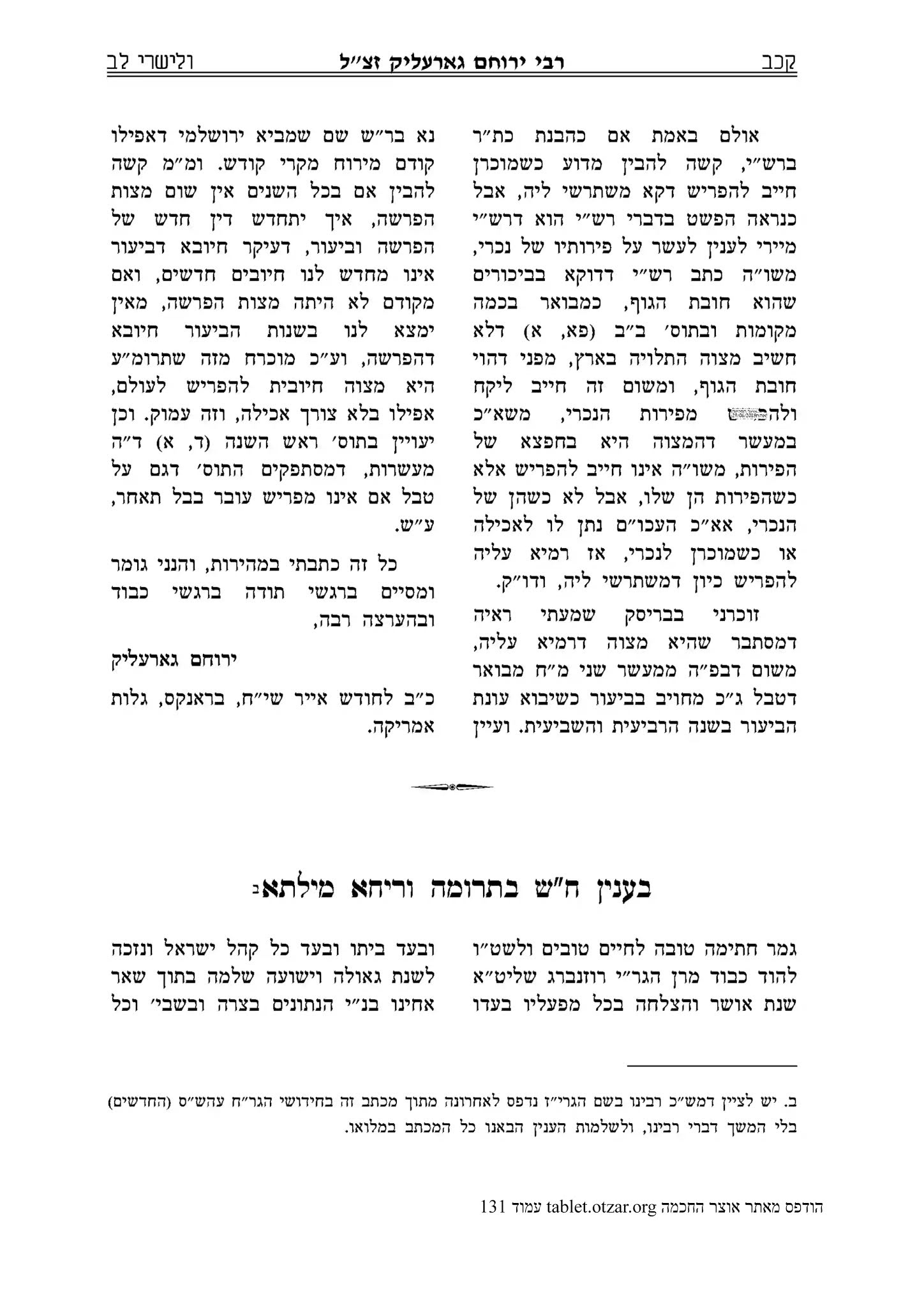
R. Yitzhak Nahman Eshkoli calls attention to what he sees as another mistake made by those who published R. Moshe Feinstein’s works.[1] Here is Iggerot Moshe,Orah Hayyim 5, 22:21.

According to the text of R. Moshe’s responsum, animals are muktzeh, even those that children play with. This means that R. Moshe held that pets are also muktzeh. Yet in the small print the editor added that pets are permitted, even though this completely contradicts the first part of the sentence. See also Iggerot Moshe, Orah Hayyim 4, no. 16 (end), where R. Moshe forbids moving a fish tank on Shabbat and Yom Tov: דבע”ח מוקצין.

If you search online you will find a number of people who deal with R. Moshe’s view of pets on Shabbat. R. Chaim Jachter, referring only to Iggerot Moshe, Orah Hayyim 4, no. 16, states that R. Moshe held that pets are muktzeh. See here. Rabbi Dov Lev writes:

See Orach Chaim 308:39 that all animals are considered muktzeh. However, see Shu”t Igros Moshe (Orach Chaim 5:22:21) that rules that designated pets are exceptional and are not muktzeh. On the other hand, Rabbi Y. P. Bodner writes (Halachos of Muktzeh, Feldheim, p. 118) that he heard from Rabbi Feinstein that pets are indeed muktzeh. This is supported by Rabbi Feinstein’s responsum (#24) at the end of the book as well as by Shu”t Igros Moshe (Orach Chaim 4:16).

There are two interesting things here. The first is that R. Lev cites the most recent responsum in Iggerot Moshe that pets are not muktzeh without taking note of what many have seen as a contradiction between what R. Moshe wrote and the small print added by the editors. Also of significance is that R. Pinchas Bodner, who wrote a book on muktzeh and consulted with R. Moshe, claims that R. Moshe told him that pets are muktzeh. See also R. Natan Slifkin, Man and Beast: Our Relationships with Animals in Jewish Law and Thought, p. 237 n. 1.

R. Yonason Rosman, Petihat ha-Iggerot, p. 314, quotes R. Moshe Kaufman, a son-in-law of R. Mordechai Tendler, that after R Moshe gave his stringent answer to R. Bodner, he then reconsidered and came to a lenient opinion. R. Kaufman adds that  R. Moshe permitted his son-in-law, R. Moshe Tendler, to handle his cat on Shabbat.

R. Doniel Yehuda Neustadt, The Daily Halacha Discussion, p. 115, n. 108, writes that “there are conflicting sources regarding Harav M. Feinstein’s opinion on this subject.”

R. Anthony Manning writes:

In the 8th volume of Iggrot Moshe (published posthumously) (O.C. 5:22:21) Rav Moshe again rules that animals are muktza. However Rav Moshe’s grandson, R. Mordechai Tendler, adds afterwards – (אלא א”כ הם מיוחדים לשעשועים (פעטס. It is not clear if Rav Moshe agreed with this addition. Rabbi Pinchas Bodner writes (Halachos of Muktza p. 119 footnote 6) that he heard directly from Rav Moshe that pets are muktza.

R. Zvi Ryzman was also troubled by the apparent contradiction inIggerot Moshe,Orah Hayyim 5, 22:21. He wrote to R. Shabbetai Rapoport, as it was R. Rapoport and R. Mordechai Tendler who were the editors of this posthumous Iggerot Moshe volume and the ones responsible for the small print. Ryzman published his correspondence with R. Rapoport in Moriah 36 (Nisan 5778), pp. 358-359.[2]


I think that for most people R. Rapoport’s letter will settle the matter that R. Moshe did not regard pets as muktzeh. It would thus be permissible to handle your own cat that lives in your home, but not to do so with a stray cat or with an animal on a farm, as they are not pets. While we must be grateful to R. Rapoport for explaining matters, there is no question that this should have been properly explained in Iggerot Moshe, as the poor editing job there has created an enormous amount of confusion.[3]

Ryzman provides a number of sources in traditional texts that express a negative view of having dogs as pets. Chronologically, the first on his list is R. Jacob Emden in She’elat Ya’avetz, vol. 1, no. 17.[4] It is worth noting that R. Emden also discusses this matter in Birat Migdal Oz (Warsaw, 1912), p. 127a (5:16):

.ולגדל לשחוק בהן אית ביה איסור מוסיף אחד אנשים ואחד נשים ביחוד אותן המשתעשעים ומגעגעים בכלבים חלקים מעשה עכו”ם הוא ר”ל

R. Emden had another issue with dogs, in that he tells us that one of the leading members of the Ashkenazic community of Amsterdam named his dog after R. Emden’s father, as a way of showing how he despised him. This matter greatly upset R. Emden, and all he can write is:[5]

‘שהיה מגדל כלב וקורא לו שם כו
‘הוא גידל כלב וקרא שמו כו

We thus don’t know what exactly he called the dog. Azriel Shohet writes that he called it “Hakham Zvi,”[6] but that is not in the text, and he could have just as easily called the dog simply “Zvi” or some other form of the name.

Regarding dogs, the Shulhan Arukh, Even ha-Ezer 22:18, states:

אלמנה אסורה לגדל כלב מפני החשד

“A widow is forbidden to raise a dog, because of suspicion [people will suspect her of bestiality].”

As far as I can tell, there is agreement among the aharonim that this law also applies to a divorced woman, but there is no consensus about a single woman. There also seems to be agreement that there is no problem with a female dog.

Despite the fact that this halakhah is found in the Shulhan Arukh, there is no question that it is ignored in the Modern Orthodox world, either because people don’t know about it or because they find it far-fetched or even offensive. The Taz, Even ha-Ezer 22:10, brings a limud zekhut for ignoring this law from Tosafot, Bava Metzia 71a, s.v. lo, who understood the matter as being in the realm of humra, but that there is no actual prohibition as Jews are not suspected of bestiality:

לא תרבי כלבא: משום לזות שפתים בעלמא לפי שהולך אחריה שלא נחשדו ישראל על הזכור ועל הבהמה וגם אין אסור להתייחד

(The Taz’s words should be examined in the Machon Yerushalayim or Rosh Pinah editions which are corrected based on manuscripts.)

R. Isaac Lampronte (1679-1756) testifies that in eighteenth-century Italy theShulhan Arukh‘s ruling was ignored and the rabbis did not protest.[7]

אלמנה לא תגדל כלב בתוך ביתה . . . והאידנא לא ראיתי מוחים באלמנה מלגדל כלב אולי דעתה לא נחשדו ישראל על כך

In general, dogs don’t come out looking too well in rabbinic literature, something which must be distressing for all of us dog lovers. In a future post I will give examples of what I am talking about. However, there are a few positive things said about dogs as well. For example, Yalkut Shimoni, Shemot ch. 11 (no. 187), tells us that the dogs were rewarded for not whetting their tongues against the Israelites (Ex. 11:7):

שזכו לעבד עורות מצואתן לכתוב בהן ספר תורה תפילין ומזוזות

In this same section of Yalkut Shimoni there is the following passage about dogs, but I don’t think you can regard it as saying anything positive about them:

כת’ לכלב תשליכון אותו (שמות כב, ל) ללמדך שהכלב מכובד מן הגוי שהרי טריפה לכלב ונבילה לגוי

Let me make one final point about dogs. In Louis Jacob’s autobiography, Helping With Inquiries, pp. 54-55, he writes:

Before leaving my account of the Gateshead Kolel, I feel it would be incomplete unless I said something more about Rabbi Dessler, one of the most remarkable men I have ever met. Until he became the spiritual guide of the Ponievezh Yeshivah in B’nai B’rak, near Tel Aviv, Rabbi Dessler was the moving spirit behind the Kolel and his wise counsel was sought by its members even when he had moved to Israel. He was physically small and had a full but neatly trimmed beard until he went to Ponievezh, when he allowed it to grow long. He had studied in his youth at the famed Musar School in Kelm, presided over by the foremost disciple of Reb Israel Salanter, R. Simhah Züssel. He married the daughter of Reb Nahum Zeev, son of Reb Simhah Züssel. Reb Nahum Zeev was also an outstanding Musar teacher. He earned his living as a merchant in Koenigsberg, where he dressed and conducted his life in Western style. His wife and daughters dressed in the latest fashion. He even had a dog. Rabbi Dessler told us of the occasion when a Polish rabbi, in Koenigsberg to consult a physician, was invited by Reb Nahum Zeev to be a guest in his home. Witnessing the Western style in which the home was conducted, the rabbi was careful to eat very little, suspecting that the food was not completely kosher. Late at night, the Polish rabbi was awakened from his sleep by the sound of bitter weeping from a nearby room. Thinking someone needed help, the rabbi went on tiptoe to the room from which the sobs were coming only to hear the “Westernised gentleman” sobbing his heart out as he chanted the verse from Ecclesiastes: “Vanity of vanity; all is vanity.” Needless to say, after this experience, the rabbi had no further qualms about eating at Reb Nahum Zeev’s table.[8]

I cite this passage because it reports that that R. Ziv had a dog, and this information must have come from R. Dessler.

R. Ziv was a very great man and there is a lot more that can be said about him. R. Jehiel Jacob Weinberg reports that when he lived in Germany, not only did he dress in a modern fashion, but he also trimmed his beard and shook the hands of women. R. Yosef Yozel Horowitz of Novardok was very upset about these things and asked the young R. Weinberg, at this time serving as a rabbi in Pilwishki, to rebuke R. Ziv. R. Ziv told R. Weinberg, “What does he want from a Jew in Germany? I am just a simple Jew and I do not wish to cause ahillul ha-Shem. I behave like the other German Orthodox Jews.”[9] R. Weinberg added that all of R. Ziv’s actions were infused with Mussar ideals, and when he had a question, he traveled to the Hafetz Hayyim to consult with him.[10]

2. In my last post here I gave an example where the people who put together Mesorat Moshe from R. Mordechai Tendler’s notes did not understand what was being discussed. Here is another example from Mesorat Moshe, vol. 3, p. 343, no. 1.

It begins by saying that R. Moshe Feinstein receive a letter from רב מורינו. The editor explains that this refers to Jacob Rosenheim. When I read this I immediately knew it was a mistake. This volume of Mesorat Moshe covers Tevet 5735-Tevet 5736, and Rosenheim died ten years prior to this, in 1965.

Leaving this aside, the editors were led to think that the story concerned Rosenheim as he was given the honorary title “Morenu ha-Rav” by the Agudat Israel organization.[11] Yet even if he was alive at the time of the story, no one would have referred to him as “Rabbi Morenu.” In fact, he was not a rabbi even though subsequent to his death and continuing until now he is constantly given this title,[12] much like today every askan or writer associated with the Agudah is referred to as “Rabbi”. (R. Jehiel Jacob Weinberg commented that for the Agudah every rabbi who joins them is treated like a great gaon,[13] to which we can add that every askan is treated like a rabbi. For the haredi critics of the Agudah, it is not only that the askanim are treated like rabbis, but that they are often treated like gedolim. A recurring theme in haredi criticism of the Agudah, since the beginning and continuing until today, is that many of the important decisions taken by Agudat Israel in the past century were made by the askanim without consultation with the Torah leaders who are supposed to be in charge.[14])

Although I knew that Mesorat Moshe could not be referring to Rosenheim, I had no idea who רב מורינו was, and assumed that there was some problem in the transcription. It never occurred to me that מורינו here was actually a name. I have to thank R. Mordechai Berger who pointed out to me that the letter is referring to R. Zev Moreno (Morejno in Polish), who served as rabbi in Lodz until 1973 when he came to New York. R. Moreno has a Wikipedia page devoted to him here.

Even after leaving Lodz, R. Moreno continued to be regarded as the chief rabbi not only of this city but of the entire country of Poland. R. Moshe Feinstein even ruled that in all matters dealing with religious life in Poland, such as appointing rabbis or shochetim, R. Morenu had to give his approval. See here and here. When R. Menahem Joskowitz arrived in Warsaw in 1989 and started functioning as the Chief Rabbi of Poland, this caused a big dispute with R. Morenu who travelled to Warsaw to confront the new rabbi. See here.

R. Morenu was clearly somewhat of a character, as only such a person would have written letters to President Ephraim Katzir, Prime Minister Menachem Begin, and Foreign Minister Moshe Dayan with the following “genius” suggestions, in which great rabbis are placed in the highest political offices as figureheads, while the politicians do all the real work: The president of the State of Israel should be the Satmar Rebbe, three vice presidents (a position that Israel does not even have) should be R. Moshe Feinstein, the Gerrer Rebbe, and the Lubavitcher Rebbe, who will serve together with Katzir. R. Zvi Yehudah Kook should be appointed prime minister, while the real work of the prime minister’s office should be conducted by Begin. The foreign minister should be R. Yosef Shalom Elyashiv while Dayan carries out the actual duties of the foreign ministry. You can read all about his political suggestionshere.

R. Berger also called my attention to another source relevant to my last post where I discussed R. Abraham Sofer. In 2018 Minhagei Yeshivat Torah va-Da’at (Torah Vodaath)[15] was published. On p. 23 n. 45, the following story about Sofer appears. Particularly interesting is the report that the Satmar Rebbe told the young man who refused to allow Sofer to get an Aliyah and publicly embarrassed him to ask Sofer for forgiveness.

פעם נכנס לישיבת ביהמ”ד עליון תלמיד חכם נכבד נכד החת”ס, אשר מחמת דוחק הפרנסה עבד במוסד של קאנסרבטיבים. כאשר כבדו הגבאי בעליה, קפץ אחד מתלמידי הישיבה ועלה במקומו לס”ת, והוכיח את החכם הנכבד האיך יכול הוא לעבוד אצל פוקרים בעוד שסבו נלחם במסי”נ נגד הניאולוגים, וביישו ברבים עד שההוא יצא מביהמ”ד מבוייש. כאשר סיפרו זאת להרב ראובן גרוזובסקי זצ”ל, אמר שהוא בבחינת הלכה ואין מורין כן, וכשסיפור זה הגיע לאזניו של האדמו”ר מסאטמאר זצ”ל הגיב שהבחור עשה כהוגן, אך משום כבודו של החת”ס שהוא זקנו של הלה .הורה לבקש ממנו מחילה.

3. Since so many have recently discussed rabbinic responses to epidemics, let me add the following. In years past there were two understandings of how diseases were spread. One is known as the Miasma Theory, and I can do no better than to quote the opening lines of the Wikipedia entry on the topic: “The miasma theory (also called the miasmatic theory) is an obsolete medical theory that held diseases—such as cholera, chlamydia, or the Black Death—were caused by a miasma (μίασμα, ancient Greek: ‘pollution’), a noxious form of ‘bad air’, also known as night air. The theory held that the origin of epidemics was due to a miasma, emanating from rotting organic matter.”

The other theory is Germ Theory, which in non-scientific language must be regarded as a fact. Germ theory explains the spread of disease as coming about through the spread of living organisms. Until the second half of the nineteenth century, both the Miasma Theory and Germ Theory (in earlier versions) found supporters in the scientific community.

In an article published in 1851,[16] Joseph Loewy claims that the amora Samuel accepted the Miasma Theory. He calls attention to Bava Metzia 107b: “And the Lord shall take away from thee all sickness (Deut. 7:15). . . . Samuel said: This refers to the wind. Samuel follows his views, for he said: All [illness] is caused by the wind.”

Loewy also cites Ta’anit 21b:

Once Samuel was informed that pestilence was raging amongst the inhabitants of Be Hozae, and he ordained a fast. The people said to him: surely [Be Hozae] is a long distance away from here. He replied: Would then a crossing prevent it from spreading?

4. In my last post I discussed letters from R. Hayyim Ozer Grodzinski and R. Jehiel Jacob Weinberg to R. Isaac Unna that were sold by two auction houses. I mentioned how these letters came from the Unna archive at Bar Ilan University which had disappeared. A third auction house has also gotten into the act, and on June 30, 2020 the following letter from R. Grodzinksi to R. Unna is being auctioned. See here.

I refer to this letter in Between the Yeshiva World and Modern Orthodoxy, p. 126 n. 69.

Obviously, the person who acquired the Unna archive has decided to unload it, and as mentioned in my last post, Bar-Ilan University could not care less that documents that it agreed to watch over are now being sold at public auctions. In the previous post I showed how the Bar-Ilan manuscript numbers are clearly visible on the letters that were sold. Take a look at the letter above from R. Hayyim Ozer to R. Unna. There is no manuscript number visible. Yet this is how the letter really looks (ignore my handwriting at the top of the page).

The manuscript number appears right above the name “Grodzienski,” but has been removed from the image used by the auction house (yet presumably is still found on the actual letter).

Excursus

The general practice is to transliterate יעבץ in שאילת יעבץ as Ya’avetz. Yet in I Chron. 4:9-10, the Bible mentions a righteous man named יעְבּץ, and his name is spelled with a sheva under the ע and a dagesh in the ב. When speaking of R. Jacob Emden, יעבץ stands for יעקב בן צבי. Yet in the introduction to שאילת יעבץ, R. Emden tells us that the title also alludes to the righteous man named יעבץ in I Chron. 4:9-10, as both of their births came with pain. On the title page of his responsa, in giving the publication date, R. Emden also cites I Chron. 4:10 with the name of יעבץ.

I assume, therefore, that R. Emden intended us to pronounce the word in the title as Ya’betz. This is also grammatically correct, as there is a sheva under the ע. Regarding the title, also note that the word is written as יעבץ and not יעב”ץ.

In the introduction to שאילת יעבץ, R. Emden mentions that the mother of Othniel ben Kenaz named him Ya’betz because of her painful childbirth. It is true, as Jacob J. Schacter points out, that there is nothing in Chronicles “to support Emden’s assertion that Yavez and Athniel were the same person.” See Schacter, “Rabbi Jacob Emden: Life and Major Works” (unpublished doctoral dissertation, Harvard University, 1988), p. 70 n. 18. However, when R. Emden writes

קראתי בשם ספרי זה שאילת יעבץ, נסמך הכתוב בד”ה שאמו של עתניאל בן קנז קראתו יעבץ לאמר כי ילדה בעוצב

he has in mind Temurah 16a: “A tanna taught: Othniel is the same as Ya’betz. . . . He was called Othniel because God answered him, and Ya’betz because he counselled and fostered Torah in Israel.”

In I Chron. 2:55 it mentions “the families of scribes that dwelt at יעבץ.” Does this city have anything to do with the person Ya’betz mentioned in I Chron. 4:9-10? We have no evidence, but Radak, I Chron. 2:55, suggests that perhaps Ya’betz built the city and it was named after him. Rashi, ibid., connects יעבץ with the city אבץ in Josh. 19:10.

There is another noteworthy point about the name יעבץ. We find the following in Derekh Eretz Zuta, ch. 1:

ט’ נכנסו בחייהם בג”ע ואלו הן חנוך בן ירד ואליהו ומשיח ואליעזר עבד אברהם וחירם מלך צור ועבד מלך הכושי ויעבץ בנו של רבי יהודה הנשיא ובתיה בת פרעה וסרח בת אשר ויש אומרים אף ר’ יהושע בן לוי

This is a list of those who entered Paradise during their lifetimes. A few of the names are not what we would expect and need to be explained. There is also a textual issue, as another version has R. Joshua ben Levi replacing Hiram of Tyre rather than being added. Why Hiram should be on the list in the first place is something I can take up on another occasion. For now, I just want to note that the son of R. Judah ha-Nasi (other versions read בן בנו) was also named Ya’betz, and that he is reported to have entered Paradise alive.

There is another version that lists Ya’betz separately from the son of R. Judah ha-Nasi. See R. Matityahu Strashun, Mivhar Ketavim, pp. 90-91. Alfa Beita de-Ben Sira (Warsaw, 1927), p. 23, has both עבדו של רבי יהודה and Ya’betz.

The Jerusalem Talmud, Hagigah 2:1, refers to an amora named Ya’betz. For a list of post-talmudic figures named יעבץ, see R. Zev Aharon Teller in Beit Va’ad le-Hakhamim (Tishrei 5769), p. 504 n. 88. See also Asher Weiser, “Ya’betz,” Sinai 78 (1975), pp. 6-8. Masoretic scholars know of Ya’betz ben Shlomo. See e.g., Shlomo Zalman Havlin, Masoret Torah she-Be’al Peh (Jerusalem, 2012), p. 611.

For others who referred to themselves as יעבץ, including Judah Leib Gordon, see Saul Chajes, Otzar Beduyei ha-Shem (Vienna, 1933), pp. 162-163.

A very important figure called יעבץ is R. Emden’s contemporary, R. Jacob Ibn Tzur (Abensur; 1673-1753) of Fez, author of the responsa work Mishpat u-Tzedakah be-Ya’akov. For generations, all Moroccan Jews knew R. Ibn Tzur, who was also a poet, yet he is pretty much unknown in the Ashkenazic world. Menachem Elon recalls how he learned about R. Ibn Tzur. He was doing research on a topic and יעבץ was mentioned, but he could see that it did not refer to R. Emden. He investigated the matter and learned that there was another great halakhic authority who also is known as יעבץ. He writes:

גאון מופלג זה, שיותר ויותר התודעתי לתורתו ולאישיותו, היה זמן ניכר בבחינת נעלם בעולם התורה והישיבות הגדולות שבפולין, ליטא ואשכנז, וכמעט לא היה ידוע בין החוקרים, ומאד חוששני שכך הוא הדבר, עד עיצומם של ימים אלה

See Elon, “Yihudah shel Halakhah ve-Hevrah be-Yahadut Tzafon Afrika mi-le-Ahar Gerush Sefarad ve-Ad Yamenu,” in Moshe Bar-Yuda, ed., Halakhah u-Fetihut: Hakhmei Morocco ke-Foskim le-Dorenu (Tel Aviv, 1985), p. 24.

After R. Emden, the most famous יעבץ is R. Joseph Jabez of Spain, author of Or ha-Hayyim among other works. His name is often written as Yavetz or even Yaavetz, but I don’t know how he himself pronounced the first three letters. The one thing I can say is that he did not pronounce the final letter of his name as “tz”, as that is an Ashkenazic (inauthentic) pronunciation which never would have been heard in Spain and won’t even be heard today among Sephardim who have had a traditional Sephardic upbringing. See R. Benzion Cohen, Sefat Emet (Jerusalem, 1997), pp. 114ff. This explains why, for instance, in Hebrew Barcelona is written as ברצלונה and Safed is written as צפת.

With regard to צפת, the modern pronunciation is Tzefat. However, R. Meir Mazuz notes that the correct pronunciation is indeed Safed (using “s” for צ and the accent on the first syllable), and this is in line with the Arabic pronunciation. See his introduction to R. Hayyim Joseph David Azulai, He’lem Davar (Bnei Brak, 2006), p. 27. See also R. Jacob Saphir, Even Sapir (Lyck, 1866), p. 1a. In previous generations, this is how the Sephardim in Eretz Yisrael would pronounce it. See R. Elijah Hazan, Ta’alumot Lev, vol. 3, no. 19 (p. 38b). In the page on Otzar HaChochma the vowels are not clear, but you can see them clearly here.

R. Ovadiah Bartenura, in a letter sent from Eretz Yisrael, refers to the city as ספיתה. It should be vocalized as סׇפֵיתׇה as this is how the locals pronounced it, non-Jews and Jews alike. See Avraham Yaari, Iggerot Eretz Yisrael(Ramat-Gan, n.d.), p. 151.

It is true that there is a city צְפֵת (Tzefat) mentioned in Judges 1:17, yet this is a city in the south and has nothing to do with the northern city of Safed we all know so well. צְפֵת is never again mentioned in the Bible, which is understandable as Judges 1:17 tells us that the city was destroyed and its name was changed to Hormah.

As for the original pronunciation of צפת, R. Mazuz does not note that R. Elazar Kalir indeed pronounced the name of the city as Tzefat. Look at the first two lines below, which come from Kalir’s kinah איכה ישבה חבצלת השרון (from the Goldschmidt edition of Kinot, p. 50).

As you can see, the final word צפת can only be read as צְפַת. It thus seems that the pronunciation as Safed only dates from the medieval period. See Encyclopaedia Judaica, s.v Safed: “Between the talmudic period and the Crusades the history of Safed is not known. The town reappears in 1140 under the name Saphet.”

* * * * * *

[1] Tza’ar Ba’alei Hayyim be-Halakhah ve-Aggadah, p. 514 n. 1171
[2] This was called to my attention by Yonatan Emett. R. Rapoport mistakenly refers to R. Shimon Eider as the recipient of R. Moshe’s responsum instead of R. Pinchas Bodner. He also refers to R. Eider as shlita, even though he passed away in 2007.
[3] From the various quotations, you can see that there are different ways people have transliterated the first word of R. Moshe’s responsa, אגרות. There is a dagesh in the gimel perhaps because of a nun that dropped off. Regarding the word, see R. Solomon Judah Rapoport, Toldot Rabbenu Natan Ish Romi (Warsaw, 1913), p. 24; R. Matityahu Strashun, Mivhar Ketavim (Jerusalem, 1969), p. 82 n. 9.
[4] See Excursus regarding the word יעבץ.
[5] Megilat Sefer, ed. Bombach (Jerusalem, 2012), pp. 41, 64.
[6] Im Hilufei Tekufot (Jerusalem, 1960), p. 104.
[7] Pahad Yitzhak, s.v. almanah.
[8] The same story, with slight variations, is found in Kitvei ha-Saba ve-Talmidav mi-Kelm, vol. 2, p. 649.
[9] That German Orthodox Jews shook hands with women is mentioned by R. Solomon Carlebach, who states that he also does so if the woman puts her hand out and to not shake it would embarrass her. See Meir Hildesheimer, et al., eds. Le-David Tzvi (Berlin, 1914), p. 218 (Hebrew section).
[10] From an unpublished letter of R. Weinberg.
[11] At the beginning of the Hebrew section of the Festschrift fuer Jacob Rosenheim (Frankfurt, 1931), the Agudah declaration is printed.

[12] For R. Zvi Yehudah Kook, the “original sin,” as it were, of Agudat Israel is precisely that it was founded by a layperson (Rosenheim), and R. Zvi Yehudah contrasts this to Mizrachi which was founded by a great Torah scholar, R. Isaac Jacob Reines. See Be-Ma’arakhah ha-Tziburit (Jerusalem, 1986), p. 76. In his eulogy for Rosenheim, R. Jehiel Jacob Weinberg, Li-Frakim (2016 edition), p.  607, also refers to him as the founder of Agudat Israel. Yet it is more correct to say that Rosenheim was the major force in the founding of Agudat Israel, as he cannot be identified as the organization’s sole founder.
[13] “Scholars and Friends: Rabbi Jehiel Jacob Weinberg and Professor Samuel Atlas,” Torah u-Madda Journal 7 (1997), p. 111.
[14] See here for a recent example of the Agudah rabbinic leadership responding to such a claim (regarding synagogue closures and coronavirus). See here regarding Yaakov Litzman serving as minister in the current Israeli government, which was never approved by the rabbinic leadership of Yahadut ha-Torah. See also here.

In R. Jehiel Jacob Weinberg’s letter to R. Moshe Soloveitchik, dated Oct. 20, 1949, and published here for the first time, R. Weinberg writes (ellipsis in original):

.וצדק הרבי ממונקאטש ז”ל שאמר לי כי עתידה האגודה להעביר את מרכז היהדות מביה”מ לאולם האספות ושם ימחאו הרבנים מחיאות כף לנאומים והאדמורי”ם יתכבדו באמירת ברכות . . . חכם עדיף מנביא

[15] On its hundredth anniversary in 2019, Torah Vodaath put out a beautifully produced book, America’s Yeshiva: Celebrating a Century of Torah Leadership in America. The pictures are wonderful and the story of the yeshiva’s beginning and growth are told in an honest way. Also noteworthy is that the yeshiva has a website with a lot of historical information, including most of the high school yearbooks that were produced. See here. Just going through the yearbooks, looking at the pictures, and reading the entries on each of the graduating students makes history come alive. The following yearbooks are missing from the website: 1944, 1947, 1948, 1951, If anyone has these yearbooks, please reach out to the yeshiva so they can be uploaded. The last yearbook on the website is 1978, which I assume means that the students did not publish any more yearbooks.

I do have two comments about the Torah Vodaath website and book. On the website herethere are biographies of the roshei yeshiva. However, there is no biography for R. Dovid Leibowitz, even though the book, pp. 150-152, devotes three pages to him, as well as mentioning him elsewhere. I hope that the omission from the website is not an intentional slight because of the dispute between R. Leibowitz and R. Shraga Feivel Mendlowitz that led to R. Leibowitz leaving Torah Vodaath and founding his own yeshiva. See Moshe D. Sherman, Orthodox Judaism in America (Westport, CT, 1996), p. 129.

While I think the book as a whole is great, there is a real blemish on p. 630 when the newest rosh yeshiva is discussed. I think most will understand why this is a terrible bizayon ha-Torah (a double bizayon ha-Torah, i.e., omitting mention of grandfather and father).

We are grateful that in 2018, just as Torah Vodaath began to mark its milestone centennial year, the Yeshiva welcomed Rav Yitzchok Lichtenstein, a descendant of Rav Chaim Soloveitchik and a grandson through marriage of Rav Reuven Grozovsky, to lead the Yeshiva. Rav Lichtenstein was a talmid of Rav Dovid Soloveitchik in Yerushalayim.

On p. 628 the other rosh yeshiva, R. Yosef Savitsky, is introduced as follows: “Rav Yosef Savitsky was raised in Boston by his father Rav Mordechai, a highly-respected Rav.”

If R. Lichtenstein had distanced himself from his family, I could understand the omissions (not that it would be right, but I could understand it). Yet not only has R. Lichtenstein not done so, but he himself has contributed to the legacy of his grandfather, with his most popular contribution undoubtedly this edition of R. Soloveitchik’s insights on the Haggadah.

[16] “Toldot Shmuel,” Kokhvei Yitzhak 15 (1851), p. 31.


The Aderet (part 2); Sonya Diskin and R. Yitzhak Yeruham Diskin; Zvi Glatt; and a New Letter from R. Herzog

The Aderet (part 2); Sonya Diskin and R. Yitzhak Yeruham Diskin; Zvi Glatt; and a New Letter from R. Herzog

Marc B. Shapiro

Continued from here

1. Regarding R. Kook and the Aderet (R. Eliyahu Rabinowitz-Teomim), we find that R. Kook omitted something that the Aderet wrote. I don’t know if, strictly speaking, we can call this censorship, but R. Kook definitely omitted something that he was not comfortable with. Here is the Aderet speaking about himself in Nefesh David, p. 113, published by a leading student of R. Kook, R. Moshe Zvi Neriah (and printed together with the Aderet’s autobiography, Seder Eliyahu.[1a]).

Look at the second paragraph of section 5 and section 6. The Aderet first speaks of his great love for Torah scholars. In the next paragraph, the first one of section 6, he speaks of his hatred for sinners. Finally, in the second paragraph of section 6, he says that he has no ill feelings toward non-Jews who do not hate Jews, and that he only hates those whom the Sages commanded us to hate.

Now, look at R. Kook’s Eder ha-Yekar, published in 1906, beginning with the last line on p. 71 and continuing to the end of the paragraph on p. 72.


If you compare this to Nefesh David, sections 5-6, you will find that R. Kook leaves out the three paragraphs I mention above. I can see why he would leave out the second paragraph, about sinners, as it would not be in line with his own understanding of the irreligious in the Land of Israel. But why also leave out the first and third paragraphs? The only explanation I can think of is that he figured that by removing the entire section—where the Aderet speaks of his love for Torah scholars, hatred for sinners, and his lack of negative feelings toward non-Jews—this would not be regarded as censorship, as he is removing the whole section, even the non-objectionable parts. If anyone has a better idea, I would love to hear it.

Speaking of the Aderet and censorship, see the article by Yaakov Fuchs here which shows how the Aderet’s strong criticism of the Rogochover was censored. Fuchs has also found that when the Aderet’s book Shema Eliyahu was published (under the title Over Orah [Jerusalem, 2003]) there was also censorship of the Aderet’s negative judgment of the Rogochover, whom he saw as disrespecting great sages of the past. The original manuscript of the Aderet can be seen here, and below is a transcription of the missing passages as prepared by Fuchs, which can be compared with the censored version that appears in Over Orah, pp. 43-44.

The Aderet’s words are very sharp and align with how he spoke about other rabbis whom, for one reason or another, he had a negative view of. Regarding the Rogochover, while recognizing his unbelievable knowledge, the Aderet could not accept what he saw as the Rogochover’s disregard for the accepted conventions of halakhic procedure and his disrespect for prior sages. He goes so far as to state that if we lived in a time of great rabbis—rabbis who had real authority—they would not allow the Rogochover to issue halakhic rulings.

Eliezer Brodt called my attention to another sharp comment by the Aderet against the Rogochover, found in Shmuel Kol, Ehad be-Doro, vol. 1, p. 202. Brodt also noted that this was censored when reprinted in a footnote in the Mossad ha-Rav Kook edition of the Aderet’s Seder Eliyahu, p. 122, and the Rogochover’s name was omitted when the passage was included in an article in Etz Hayyim 19 (5773), p. 55.

The Aderet, who was older than the Rogochover, can be forgiven for speaking the way he did, and he was not the only contemporary of the Rogochover who had these feelings.[1b] But just as we can find negative statements by great rabbis about other rabbis who were their contemporaries, and now we can see how misguided these negative statements were,[2] I think it is the same with regard to the Aderet and the Rogochover. The rabbis of the generation after the Aderet all related to the Rogochover with enormous respect, even if they did not accept his halakhic rulings.

Regarding the Aderet’s book Shema Eliyahu, one thing that was not censored when it was published appears on p. 223, and I thank Yosef Ginsberg for calling it to my attention.

We see that the Aderet and his interlocutor, R. Getzel Horowitz, assumed that the concept of Tikkunei Soferim is to be taken literally, meaning that the text of the Torah was changed from its original version given to Moses. The Aderet suggests that the Tikkunei Soferim are actually halakhah le-Moshe mi-Sinai.

For more concerning the Aderet and censorship, or rather non-censorship, I must recall my very first post on the Seforim Blog, from January 25, 2007, found here. It is titled “Uncensored Books”. I provide two examples where I state that had the publishers known who was being spoken of, they would have censored the text. Regarding the Aderet, I wrote as follows:

Recently many books by the Gaon R. Eliyahu Rabinowitz-Teomim (the Aderet) have appeared, by publishers with very different hashkafot. The volume of teshuvotMa’aneh Eliyahu, was published by Yeshivat Or Etzion in Israel, whose Rosh Yeshivah is R. Hayyim Druckman. It is obvious that the editors have no knowledge of American Jewish history, otherwise, the words I quote (from p. 352) would never have been allowed to appear. The editors no doubt assumed that the Aderet was attacking some phony. The name Jacob Joseph [called Jacob Harif by the Aderet] means nothing to them.

וידענו היטב היטב את האיש ואת שיחו תהלוכותוי ותחבולותיו מתחילה ועד סוף . . . ואותו הרב ה’ יעקב, שלא שמש תלמידי, חכמים ומלך מעצמו, ע”פ תבונתו כי פקח גדול הוא אינו מגיע לקרסולי תלמידי תלמידיו של הגאון חתם סופר ז”ל, לא בתורה ולא במעשים טובים, והרי לפנינו שעזב עיר ווילנא תפארת ליטא, והלך לנוע אל ארצות אמעריקא להיות שם רב ראשון בנויארק כחלומו אשר חלם. והרואה דברי הר”מ פ”ו ה”א מדיעות, יעוי’ שם היטב בלשונו, יראה עד כמה מלאה לבו יראת שמים לעשות כן

He goes on demeaning the Chief Rabbi of New York, but you get the picture.[3]

Ad kan what I wrote in the post. After the post’s appearance it was pointed out to me that the index to Ma’aneh Eliyahu properly identifies R. Jacob Joseph (Harif). So perhaps I was mistaken, or it is also possible that the people who put the sefer together did not know who R. Jacob Joseph was, and the person who put together the index was someone else entirely.

Returning to haskamot, let me mention another interesting point. Someone recently sent me a picture of a haskamah to the newly published book by the late R. Dov Yaffe, Ha-Va’adim shel Motzaei Shabbat.

What makes the haskamah (mikhtav berakhah) so significant is that it is by a woman, namely, his widow. I was also surprised that she is identified by her first name, something not always seen in haredi circles in Israel.

This is actually not the first published letter of this sort by a woman. R. Yehoshua Zev Zissenwein’s Tzir Ne’eman was published in Jerusalem at the end of the nineteenth century.[4]

After a group of haskamot from a wide range of rabbis whom he got to know in his work as a meshulah (including R. Jacob Joseph and R. Hillel Klein of New York and R. Abraham Abba Werner of London), comes what is called Mikhtevei Tehillah. This is a list of people who signed up to receive the book and positive comments they made. On the last page the names of three women are given, including Sonya (Sarah) Diskin,[5] the widow of R. Joshua Leib Diskin.[6]

Sonya Diskin was a very influential person in the Old Yishuv community of Jerusalem, because she had a great deal of influence on her husband. After her passing, the following letter appeared in Eliezer Ben Yehuda’s newspaper Hashkafah,[7] signed by someone who called himself a student of the Brisker Rebbetzin (i.e., Sonya Diskin, whose husband was rav of Brisk before moving to Jerusalem).[8]

There is a lengthy and fascinating Wikipedia entry on Sonya Diskin here, from which I learned that her marriage to R. Diskin, which was a second marriage for both and did not produce any children, even made its way into an Agnon story. For other stories told about her, see Yitzchak’s Seforim Blog post here, and the כבר היה לעולמים blog here. You can definitely say she “made it”, as she had a pashkevil directed against her in Jerusalem, which I am certain makes her the first woman to be given this honor. Also of note is that the pashkevil dates from when her husband was still alive. (In later years, Golda Meir and Aliza Bloch, the mayor of Beit Shemesh, also had paskevilim directed at them.)

The pashkevil is found in Binyamin Kluger, Min ha-Makor, vol. 3, p. 46, and in what it regards as fake piety, it refers to how Sonya Diskin wore tzitzit and that she put socks on her cat, so that the cat would not move crumbs of hametz from room to room. (Elsewhere it is reported that she did this on Passover and her fear was that the cat would bring in hametz from the street on its feet.[9] According to Pesahim 9a we need not be concerned for this.) Regarding Passover, it is also reported that Sonya Diskin told her husband, after he scolded her for her humrot, “If I rely on you and your Shulhan Arukh, we’ll be eating chametz on Passover.”[10]

The latter story is very similar to a story told about Mrs. Tonya Soloveitchik, the wife of R. Joseph B. Soloveitchik. The way I heard the story, in the name of Prof. Haym Soloveitchik, is that when Mrs. Soloveitchik came home from the hospital and saw milk and meat plates in the sink, she started rebuking her husband. The Rav defended himself: “According to the Shulhan Arukh, this is OK.” To this, Mrs. Soloveitchik replied: “Your Shulhan Arukh is going to treif up my kitchen.”

After seeing what Sonya Diskin told her husband, I found it too much of a coincidence that two great rebbitzens would have expressed themselves in the same fashion. I turned to Prof. Soloveitchik, presented him the story with his mother as I heard it, and asked if it is true. He replied as follows: “The story is half-true. My mother said: ‘You are making my kitchen treif.’ My father said nothing and neither did I. People have prettied-up the story by fusing it with the well-known story of Sonya the rebbetzin, the wife of R. Yehoshua Leib Diskin.”

There is another Passover story told about Sonya and her husband: R. Diskin saw Sonya working very hard to clean the house of hametz. Exasperated, he jokingly said to her that the only hametz in the house is her. To this, she replied bitingly: “Don’t worry about me. A long time ago my father sold me to a goy [i.e., R. Diskin].”[11] This is actually an old Yiddish joke, see here, that was apocryphally connected to Sonya.

Returning to Zissenwein’s book, the introduction is noteworthy as it reveals that Zissenwein was one of the founders of the early settlement Yesud ha-Ma’ala, and that this was done at the direction of R. Diskin.

Regarding R. Diskin, it is notable that R. Jacob Moses Harlap wrote to R. Kook about a dream he had in which R. Diskin requested that R. Harlap ask R. Kook not to hold anything against his son, R. Yitzhak Yeruham, and not to degrade him. R. Diskin explained that his son is his only child, and his mistake did not come from a bad place.[12] What this alludes to is that R. Yitzhak Yeruham was opposed to R. Kook being appointed rav of Jerusalem. In fact, there is a letter from R. Zvi Pesah Frank to R. Kook explaining that R. Yitzhak Yeruham wanted to be appointed rav himself, and he was upset with R. Frank for not supporting him in this matter.[13] (R. Frank was a big backer of R. Kook.[14])

Innocent mistake or not, in later years, R. Yitzhak Yeruham, together with R. Joseph Hayyim Sonnefeld, would give cover to those who continuously degraded R. Kook in the most objectionable ways imaginable. Yet for the sake of the Yishuv in Eretz Yisrael, R. Kook told R. Diskin and R. Sonnenfeld that he forgave everyone who attacked him and wanted to work together with R. Diskin and R. Sonnenfeld. Here is his open letter in Iggerot ha-Re’iyah, vol. 4, no. 274, where he is very direct in telling R. Yitzhak Yeruham and R. Sonnenfeld that they have not behaved in a manner befitting Torah scholars.


See also this letter in Iggerot ha-Re’iyah, vol. 4, no. 201, where R. Kook mentions that R. Yitzhak wanted to be appointed rav of Jerusalem, and that out of respect for him and his late father, R. Diskin, R. Kook delayed accepting the offer to become rav of Jerusalem.


Regarding R. Yitzhak Yeruham, it is worth noting that when he was still in Europe, he was regarded as a very modern person who dressed in European fashion, knew French, and valued secular studies. It is even reported that he identified as a Zionist. This all changed when he came to Eretz Yisrael.[15]

Since this post has dealt with the Aderet as well as various women, it is a good place to note that R. Baruch Epstein mentions that the sister of the Aderet was quite learned and that a comment of hers was published in the Odessa Torah journal Yagdil Torah.[16] I searched Yagdil Torah on Otzar ha-Hokhmah but could not find what Epstein referenced. I thank Eliezer Brodt for solving this mystery, as he called my attention to where the Aderet mentions his sister, in Yagdil Torah, vol. 9, no. 128. This issue is not found on Otzar ha-Hokhmah, and must be what Epstein was referring to.

Brodt also mentioned to me that in his Zekhor le-David, pp. 69-71, the Aderet has a list of learned women mentioned in rabbinic literature.

2. In the prior post I mentioned that, while studying in Israel, the first sefer I read was written by R. Moshe Zuriel. Not that anyone is wondering, but the second book I read was Zvi Glatt’s posthumously published Me-Afar Kumi.

This book focuses on the importance of living in Eretz Yisrael and is divided into halakhic and aggadic sections. For those who don’t know, Glatt, who was a student at Merkaz ha-Rav, was killed in a terrorist attack in Chevron. Of particular interest is the chapter where Glatt takes issue with R. Moshe Feinstein’s position that living in Israel is a mitzvah kiyumit rather than an obligatory mitzvah. R. Moshe wrote a haskamah to Me-Afar Kumi and responds to Glatt’s discussion, stating that he thinks that Glatt went too far (הפריז על המדה) and that he sees no reason to retract his view.

Also of note are the approbations from R. Avraham Shapiro and R. Shaul Yisraeli, roshei yeshiva at Merkaz ha-Rav. R. Yisraeli notes that Glatt, who could have studied at great yeshivot in the U.S., chose to come to Israel. Glatt could not understand why religious Jews in the Diaspora, by and large, choose to ignore the very important mitzvah of settling the Land of Israel, and it was this focus on Eretz Yisrael that led him to write the sefer.

From a halakhic perspective, the most important aspect of the sefer is the appendix by R. Avraham Shapiro, in which he takes issue with R. Moshe’s opinion. According to R. Shapiro, when it comes to mitzvot mentioned in the Torah, there is no concept of a mitzvah kiyumit as advocated by R. Moshe (namely, that there is no obligation to live in Eretz Yisrael, but if you do, you fulfill a mitzvah and receive reward). Some have compared R. Moshe’s view to the wearing of tzitzit, where there is no obligation to wear them unless you choose to wear a four-cornered garment. Yet R. Shapiro states that tzitzit is absolutely a mitzvah hiyuvit (an obligatory mitzvah). True, one can choose whether to wear a four-cornered garment, but once one puts it on, tzitzit is now an obligation. My question to the learned readers is: Is R. Shapiro correct in saying that there is no concept of a mitzvah kiyumit about one of the 613 mitzvot? Isn’t shehitah an example of a mitzvah kiyumit? You don’t have to eat meat, but if you choose to, you can fulfill the mitzvah of shehitah. Furthermore, in criticizing R. Moshe’s position, R. Shapiro refers to the mitzvah of living in Eretz Yisrael as one of the 613 mitzvot, which makes the concept of it being a mitzvah kiyumit problematic. Yet there is no reason to think that R. Moshe regarded living in Eretz Yisrael as one of the 613 mitzvot, and that is precisely why it could be regarded as a mitzvah kiyumit.

It appears that the Vilna Gaon has the concept of mitzvah kiyumit in mind when he speaks of eating matzah on all days of Passover as a mitzvah but not an obligation, as only on the first night is there an obligation. It seems that he regards the eating of matzah after the first night as a mitzvah kiyumit. Here is how his view is described in Ma’aseh Rav, no. 185:

“שבעת ימים תאכל מצות”, כל שבעה מצוה, ואינו קורא לה רשות אלא לגבי לילה ראשונה שהיא חובה, ומצוה לגבי חובה רשות קרי לה. אעפ”כ מצוה מדאורייתא הוא

Hizkuni makes a similar point in his commentary to Ex. 12:18:

יש לך דברים שמקבלין שכר בעשייתן ועונש כשאין עושין אותן, כגון מצה בלילה הראשון, ויש לך דברים שאין מקבלין שכר בעשייתן ועונש כשאין עושין אותן, כגון מצה מליל ראשון ואילך, ומ”מ מצות תאכלו שבעת ימים כתיב, כלומר אם אכל מצה כל שבעת הימים מכל מקום קיים הוא הפסוק זה של: שבעת ימים מצות תאכלו

3. In my new book on Rav Kook, available here, I discuss how R. Isaac Herzog struggles with the conflict between the biblical record of how long humanity has been on earth and the historical record accepted in the academic world. I cite several of his letters on this topic, in which he suggests that it could be that the Torah’s “history” at the beginning of Genesis is not meant to be regarded as factual.

Only after the book was already near publication did I find another letter from R. Herzog on this very issue, which I share with you now.[17]

The original letter, which R. Herzog would have signed, was sent to R. Zev Gold and is dated December 30, 1952. R. Herzog made copies of the letter, which he must have also distributed, and that is how it made its way to R. Moshe Zvi Neriah, where I found it among his papers.

R. Herzog focuses on his often-discussed—but never realized—plan to write a modernGuide of the Perplexed, addressing new intellectual problems that have arisen for traditional Jews. Without a proper response to these issues, people might be led to deny the doctrine of Torah from heaven. R. Herzog tells R. Gold that his approach in dealing with conflicts between what appears in the Torah and the historical record as established in the academic world is based on two principles:

  1. The Torah speaks in the language of man. What this means is that the Torah can describe matters in the way they were generally understood by people at the time the Torah was given, even if this is not strictly factual. In Renewing the Old, Sanctifying the New, I cite a letter from R. Herzog to Aron Barth where he makes the same point.
  2. Maimonides’ statement in Guide for the Perplexed 2:25, where he asserts that he would be able to explain the Torah in accord with the doctrine of the eternity of the world, should this idea be proven.[18] In other words, if there is a proven fact in contradiction to the Torah’s simple meaning, then the Torah needs to be reinterpreted.

R. Herzog tells us that the most pressing intellectual challenge to Jewish traditional faith comes from archaeology. So, for instance, if we know from archaeology that there were communities of humans 10,000 or 100,000 years ago, and this is a fact—not just a theory—then, in line with Maimonides’ guidance, we would have to reinterpret the Torah’s chronology which puts humanity on earth for under 6000 years. While in R. Herzog’s time, people in the religious world were focused on the scientific view of a universe billions of years old versus the Torah’s record of when creation occurred, or what to do with dinosaurs that predate the Torah’s account of creation, R. Herzog was focused on a more problematic matter which, for some reason, did not get the same attention: If the historical record shows that people have been living continuously all over the world for a lot longer than 6000 years, what are we to do with the biblical record that places humanity in the world for less than 6000 years? What are we to make of the biblical idea that everyone is descended from Adam and Eve, and also descended from Noah? How are we to understand the stories of the Flood and Tower of Babel?

These are issues that cannot be answered with the famous Midrash that God created worlds and destroyed them, because R. Herzog is concerned with the current world and how long humanity has been part of it. He recognizes that there are passages in the Torah that might need to be reinterpreted in a non-literal fashion. What he is struggling with is what the religious boundaries are, beyond which one cannot go. In other words, when can you interpret the Torah in a non-literal fashion, and when not? Or, to put the matter differently, beginning with which chapter in Genesis must we assume that the Torah is speaking historically and, therefore, non-literal interpretation is not permitted? This was to be a major focus in R. Herzog’s planned work, which, to our great misfortune, was never authored.

He adds that philosophy will also have to be a part of this book. Knowing that this was not one of his many areas of specialty, he points to R. Joseph B. Soloveitchik as the only person in the generation who could make a vital contribution to his project from the philosophical side. While R. Herzog would focus on the historical problems I have just mentioned, R. Soloveitchik would provide a Jewish response to philosophical challenges.

2. In the last post I noted how the Chafetz Chaim wondered how he could eat at inns if the owners did not tovel their dishes. He did not question the kashrut of the food, and we see both then, and today, that one can be regarded as strict in matters of kashrut while not toveling one’s dishes, which for some reason has not always been regarded by all as an important halakhah.[19] We also find regarding other halakhic matters that people who are strict in one sphere do not necessarily lose their halakhic reliability if in a different area their halakhic observance leaves something to be desired.[20]

Based on this notion, we can understand the following 1955 letter from R. David Grunwald, rav of Santiago, to R. Jehiel Jacob Weinberg.[21]

R. Grunwald wanted to know whether one can rely on the kashrut of the owner of an inn if the man also serves non-kosher wine to the guests. Today, people would find the question incomprehensible, but it wasn’t that long ago when many otherwise observant Jews were not careful about kosher wine.[22] It is also important to note that R. Grunwald was referring to the old type of inns where people ate there because they trusted the kashrut of the owner. These establishments did not have any official hashgachah.

R. Grunwald refers to a famous responsum of R. Akiva Eiger, no. 96, where R. Eiger notes that Jews who shave with a razor are still able to be accepted as witnesses in a beit din. This is because shaving with a razor was so common in the Orthodox world, that people who did so did not realize how serious the prohibition is.

י”ל דהשחתה בתער דנתפשט בעו”ה אצל הרבה לא חשב שזהו איסור כ”כ דלא משמע להו לאינשי דאסור, וכאשר באמת נזכר בג”ע דהשיב להמוכיח שהרבה אנשים חשובים עושים כן, וכיון דבאמת פשתה המספחת בזמנינו גם לאותן הנזהרים בשאר דברים נדמה להם דאינו איסור כ”כ

If R. Eiger adopted this approach with the Torah prohibition of shaving with a razor, all the more so, R. Grunwald suggests, that it should apply to the rabbinic prohibition of non-kosher wine. This would mean that religious Jews could stay at the inn in question, enjoy the food, and simply avoid the non-kosher wine. Yet not willing to make this decision on his own. R. Grunwald turned to R. Weinberg, and unfortunately we do not know if R. Weinberg replied.[23]

Related to R. Grunwald’s question, I was told that in its final years, Grossinger’s hotel offered non-kosher wine in the dining room. I don’t know if this was after R. Chavel’s passing in 1982. (The hotel continued until 1986). There used to be a restaurant in a major European city that was kosher, but the bar in the restaurant served non-kosher wine. The philosophy of the hashgachah (which was not a weak hashgachah) was that they are giving a hashgachah on the food. What happens at the bar is not their concern, and if someone brings a glass of non-kosher wine to the table that also is not their concern. This is not something that would ever be allowed by mainstream hashgachot in America, but in places without large observant Jewish populations, sometimes the rabbis feel they have to adopt a different approach in order to enable a kosher restaurant to be viable. Some years ago, there was a kosher Indian restaurant under the hashgachah of the late R. Yaakov Spivak. This restaurant allowed people to bring their own bottles of wine (maybe because it didn’t have a liquor license and thus couldn’t provide kosher wine). I asked R. Spivak why he allowed this, and he replied simply that there is no halakhic issue if people bring their own non-kosher wine. Again, this is not something that a mainstream U.S. hashgachah would allow.

Returning to the Aderet’s report of the Chafetz Chaim asking about eating in kosher inns where the dishes were not toveled, when I read that I thought of something similar. In the past, I have written about various kosher establishments that were not under hashgachah, but people ate there because they trusted the owners. Perhaps the most famous of these places was Sam Schechter’s and Leo Gartenberg’s Pioneer Country Club in Greenfield, N.Y. The kashrut there was trusted by all, and Agudath Israel held its annual conventions there. Here is a picture I published some years ago.[24]

The picture was taken at the wedding of R. Moshe Dovid Tendler’s daughter, Rivka, to R. Shabtai Rappaport. The man on the left is R. Isaac Tendler, R. Moshe Dovid’s father. The wedding took place at the Pioneer on June 17, 1971. I thank Jack Prince who was at the wedding for allowing me to make a copy of the picture in his possession.

Regarding the Pioneer Country Club, I think the younger readers will have a hard time understanding not only how even the most religious would stay at a hotel without a hashgachah, but the Pioneer also had mixed swimming and evening entertainment, including mixed dancing and women singers. (I wonder if out of respect, these things did not take place during the Agudah conventions.) It was a different era and people of different religious levels were happy to stay together in one resort.[25] I am sure many readers from my generation and older remember Grossinger’s which was the same sort of place, although, as mentioned, Grossinger’s was under R. Chavel’s hashgachah.

I bring all this up because of a fascinating tape of R. Fabian Schonfeld discussing R. Aharon Kotler available here. At minute 22:25 he tells how R. Aharon was at the Torah u-Mesorah convention which was held at the Pioneer. R. Aharon learned that the kitchen was not careful with having a Jew light the pilot light. R. Aharon explained to Gartenberg what the halakhah required in this matter. and he trusted Gartenberg that from that point on there would be no bishul akum issues. Today, such a scene would be unimaginable, as the mashgiach would be careful about this matter, but as mentioned already, we are talking about a different era.

I wonder if the general practice among Orthodox Jews in America in those days was to rely on either the view of R. Abraham ben David that there is no bishul akum when a non-Jew cooks in a Jew’s home, or the view held by others that there is no bishul akum with hired help.[26] According to R. Moses Isserles, although the halakhah is not in accord with R. Abraham ben David’s view, bediavad, food cooked by a non-Jew in a Jew’s home can be eaten. He then adds the following which might explain how a more lenient approach to bishul akum developed than what is standard today:

ואפילו לכתחלה נוהגין להקל בבית ישראל שהשפחות והעבדים מבשלים בבית ישראל כי אי אפשר שלא יחתה אחד מבני הבית מעט

See also here where R. Schonfeld recollects about the early history of Jewish Kew Gardens Hills. He recounts that the only halakhically reliable kosher butcher was the Main Street Kosher Meat Market owned by Mr. Herman. This was not under hashgachah, but since, R. Schonfeld tells us, Mr. Herman was known as a pious Jew, “this was the only one [butcher] at that time that we could tell people you can buy [from]”

* * * * * * *

[1a] Regarding censorship of Seder Eliyahu, see Dan’s earlier post here and also the discussion here.
[1b] See R. Raphael Mordechai Barishansky, Mikhtavim Mehutavim, pp. 167ff., where he responds to the Rogochover’s demeaning comment about the Vilna Gaon. I published the Rogochover’s interview, which so upset Barishansky, in the Jewish Review of Books, Summer 2017, available here.
[2] Readers will probably be thinking about how great rabbis spoke of the early hasidic leaders, R. Moses Hayyim Luzzatto, and R. Jonathan Eybschuetz. Another example is how great rabbis spoke about the leaders of the Mussar movement. My 19-part series on the Mussar Dispute is available on youtube here.
[3] Interestingly, in R. Jacob Joseph’s haskamah to R. Shalom Israelson, Neveh Shalom (Chicago, 1905), he refers to the Aderet as his friend. This point is also mentioned here.
[4] The first title page has the year 1897, but the second title page has 1898. Rabbi Mendel Moinster’s haskamah is dated Nov. 28, 1898, so it is possible that the book was only published in 1899.
[5] Regarding her, see most recently Menachem Keren-Kratz and Motti Inbari, “The Sociological Model of Haredi Rebbetzins: ‘Two-Person Single Career’ vs. ‘Parallel-Life Family,’” AJS Review 46 (2022), pp. 270-290.
[6] I have not been able to determine when the name “Moses” was added to his first names.
[7] Nov. 2, 1906, p. 3 (Issue 8:10). See also the eulogy for her in Hashkafah, Oct. 19, 1906, pp. 2-3 (Issue 8:6). There is something very unusual about this paper. Here is the first page of the November 2, 1906, issue.

Look at the date: 14 Heshvan 1838. Rather than using the date from Creation, Ben Yehuda used the years since the destruction of the Temple, which he assumed to be the year 68.
[8] In this regard, I would like to call attention to another interesting reference to a woman that I learned about from R. Dov Katz, Tenuat ha-Mussar, vol. 2, pp. 107–108. In 1938, R. Moshe Rosenstein, the mashgiach of the Lomza Yeshiva, published the second volume of his work Yesodei ha-Da’at. In the introduction, he mentions three teachers to whom he owes so much: R. Zvi Braude, R. Yerucham Levovitz, and R. Shimon Shkop. He then refers to his fourth “teacher,” Nechama Liba, the daughter of R. Simhah Zissel of Kelm, describing her as a great student of her father and emphasizing how much he learned from her.

Such a description would never appear in haredi literature today. First of all, the very notion that a yeshiva leader mentions learning so many things from a woman—והרבה הרבה למדנו ממנה— would not be allowed to appear in print. Also, look at his description of how he observed her wisdom and piety:

והיה לי ההזדמנות להתבונן על דרכיה ומנהגיה ותהלוכתיה בחכמה ויראת ה’ ומעשיה הטובים

I believe that today such a description would be regarded as lacking in tzeniut, as it showed that he paid attention to the actions of a woman.
[9] See Margalit Shilo, Princess or Prisoner, trans. David Louvish (Waltham, 2005), p. 78, and here.
[10] Elimelekh Weissblum, Havai Tzefat (Tel Aviv, 1969), p. 34, translated in Shilo, Princess or Prisoner, p. 78. See also here.
[11] See R. Michael Abraham’s post here. Regarding women cleaning for Passover, in a comment to Abraham’s post, a reader referred to the following fascinating passages in R. Moses Sofer’s responsa.

She’elot u-Teshuvot Hatam Sofer, vol. 1, Orah Hayyim, no. 136:

והיותי חוץ לחדר לימודי כי גרשוני נשים צדקניות המכבדים ליום טוב של פסח על כן לא יכולתי להאריך ככל הצורך

She’elot u-Teshuvot Hatam Sofer, vol. 6, no. 30:

יקרת מכתבו הגיעני בימים האלו ימי טלטולא דגברא דהני נשי דידן מפנים חפצים מזוית לזוית אפילו ספרים אינם מוכנים לי לעיין

[12] Harlap, Hed Harim (Elon Moreh, 1997), pp. 94-95.
[13] Kook, Iggerot ha-Re’iyah, vol. 3, p. 306.
[14] See R. Frank’s letter in R. Hayyim Hirschensohn, Malki ba-Kodesh, vol. 4, pp. 22-23, where he explains the situation in Jerusalem, and how the extremists controlled Rabbis Sonnenfeld and Yitzhak Yeruham Diskin.
[15] See Menahem Mendel Porush, Be-Tokh ha-Homot (Jerusalem, 1948), pp. 199ff., Or Hadash 17 (2012), pp. 68ff. R. Yitzhak Yeruham’s father, R. Diskin, was also more open-minded before he moved to Eretz Yisrael. See the valuable post by Zerachya Licht here and his earlier post here.
[16] Mekor Barukh, vol. 4, pp. 1957-1958.
[17] The letter is found in the Moshe Zvi Neriah Archive, Israel National Library, ARC.4*21300411.
[18] For my understanding of Maimonides, which diverges from that of R. Herzog and what seems to be the standard approach, see my Seforim Blog post here. I argue that Maimonides was only prepared to accept Plato’s view of eternal matter, but not Aristotle’s view of the eternity of the universe, though Maimonides acknowledges that the biblical verses can be read in accord with Aristotle’s approach.
[19] Perhaps there is a limud zekhut for these people in that the Rogochover held that utensils produced by non-Jews for commercial purposes do not require tevilah. See Tzafnat Paneah, Ma’akhalot Asurot 17:3 (called to my attention by Rabbi Sholom Berger). R. Abraham Price reacted with shock at this radical ruling which completely abolishes the whole concept of tevilat kelim in the modern world. See his edition of the Sefer Mitzvot Gadol, vol. 2, p. 444:

ונדהמתי לראות דברים כאלו כתובים מידי גאון אדיר, כי לפי דבריו בזמנינו בטל כל דין של טבילת כלים, שיש הרבה ראשונים הסוברים שהוא דאורייתא כדלעיל. שהרי כמעט כולנו קונים רק כלים הנעשים בבית תוצרות של נכרים ואין אחד מן רבבה שיקנה כלים ממה שהנכרי עשה בשביל עצמו. ודברים הנ”ל של הצ”פ הם כנגד דברי הש”ע וכנגד כל הראשונים

R. Price says that the Rogochover’s view is against “all therishonim.” Yet see R. Yehoshua Ben-Meir,Mi-Pekudekha Etbonen, pp. 276-277, who argues that the Rogochover’s view is also held by Rashi, Rashba, and Ritva.

See also R. Menasheh Klein, Mishneh Halakhot, vol 5, no. 110 (end), who mentions the Rogochover’s view and is not prepared to accept it. However, he raises the question about utensils that are produced by machine, and all the non-Jew does it touch a button. R. Klein think that it is possible that in such a case tevilah is not required, although he does not rule this way in practice.

Even as we continue to tovel dishes produced by non-Jews for commercial purposes and also by use of machine, I wonder if the doubts that have been raised mean that all toveling should be done without a berakhah. I have not seen any posek make this point.
[20] See R. Shmuel Khoshkerman’s responsum in Sefer Zikaron Penei Moshe, pp. 289ff., where he permits a man who is careful about Shabbat, kashrut and tefillah, but does not observe taharat ha-mishpahah, to serve as a kashrut mashgiach. Among the sources he cites is Shulhan Arukh, Yoreh Deah 2:7: מומר לערלות דינו כמומר לעבירה אחת

He also cites Yoreh Deah 119:7:

מי שהוא מפורסם בא’ מעבירות שבתורה חוץ מעבודת כוכבים וחלול שבת בפרהסיא או שאינו מאמין בדברי רבותינו ז”ל נאמן בשאר איסורים ובשל אחרים נאמן אפילו על אותו דבר לומר מותר הוא

He further cites R. Yitzhak Zilberstein, Hashukei Hemed, Bekhorot 30b, who thinks that someone who does not wash before eating bread is not to be disqualified from serving as a mashgiach. This is because his personal sins do not affect his feeling of responsibility to the community, and there is no reason to think that he would allow others to eat non-kosher just because he is not careful with netilat yadayim. R. Zilberstein does, however, cite his brother-in-law R. Chaim Kanievsky, who disagreed.

R. Khoshkerman explains his own lenient view:

והנה עינינו הרואות שהרבה אנשים זהירים בכשרות יותר מטהרת המשפחה, כיון שהוא יודע שאם הוא לא יהיה זהיר בכשרות הוא חוטא ומחטיא את הרבים, אבל בדיני טהרת המשפחה רק הוא חוטא. לפיכך נראה שיכולים לסמוך עליו. ועוד שאינם יודעים גודל חומרת האיסור של טהרת המשפחה, אבל על כשרות המטבח הם מקפידים, וכן על מצוות אחרות כגון שבת טלית ותפילין

R. Khoshkerman concludes:

המורם מכל האמור: שאדם שחשוד על טהרת המשפחה, אינו חשוד על כשרות, ולכן יכולים לסמוך עליו בתור משגיח כשרות. אבל רק בתנאי שהוא שומר מצוות אחרות כמו תפלה, טלית ותפילין ושבת, ורק על ענין טהרת המשפחה הוא עובר, או מפני שאינו יודע שזה דבר חמור, או מסיבות אחרות

R. Shalom Mordechai Schwadron, She’elot u-Teshuvot Maharsham, vol. 2, no. 62, already wrote as follows (and R. Khoshkerman will no doubt see this as support for his conclusion):

 די”ל שמ”מ לאינשי חמיר טפי איסורי מאכלות ועינינו רואות בכמה נשים שאין טובלות לנדתן ועוד כהנה ובכ”ז נזהרין מאיסורי מאכלות

I would also add that R. Moses Isserles’s words in Yoreh Deah 119:7 are relevant:

מי שהוא חשוד בדבר דלא משמע לאינשי שהוא עבירה לא מקרי חשוד

[21] The letter is found in Ganzach Kiddush ha-Shem in Bnei Brak.
[22] R. Aharon Rakeffet has often told about his shock in discovering, soon after being hired in 1961, that congregants at the Lower Merion Synagogue, his first rabbinic pulpit, drank non-kosher wine. He would have found the same thing at Modern Orthodox synagogues across the country. Rakeffet has also recorded his story in From Washington Avenue to Washington Street (Jerusalem, 2011), pp. 167-168. I discuss Jews drinking non-kosher wine in Changing the Immutable, and will return to it in a future post
[23] Jews shaving with a razor is also mentioned by R. Ezekiel Landau, Noda bi-Yehudah, Orah Hayyim Tinyana, no. 101, and R. Moses Sofer, She’elot u-Teshuvot Hatam Sofer, Orah Hayyim, no. 154: בעו”ה רבו המשחיתים בעם בתער

This was a such a problem among otherwise observant Jews in early twentieth-century America that R. Hayyim Hirschensohn tried to come up with a heter for shaving with the modern T-shaped razors. See Hiddushei Ha-Rav Hayyim Hirschensohn, vol. 3, no. 12. R. Hirschensohn’s position is discussed by R. Nachum Rabinovitch, Melumdei Milhamah, pp. 283-284.
[24] For stories of R. Moshe Feinstein and the Pioneer Country Club, see R. Yaakov Heftler (Leo Gartenberg’s son-in-law), “Zikhronot,” Kol ha-Torah 54 (2003), pp. 67ff. One story Hetfler describes is how his father passed away on the Shabbat of his aufruf, which took place at the Pioneer with some 250 guests in attendance. The wedding was supposed to be on Sunday. However, R. Moshe Feinstein, who was at the hotel in honor of the simhah, ruled that the funeral should be postponed to Monday and the wedding should take place on Sunday, when Heftler was an onen.

Here is the report about the wedding in Ha-Pardes, Tishrei 5720, p. 47.

[25] There was a well-known askan named Julius Steinfeld. You can read about him here. He did amazing things during the Holocaust and was responsible for saving thousands of Jews. I mention him here because he was very upset that the Agudah had their convention at the Pioneer and wrote a very sharp letter of protest. He even rejects the entire concept of a convention in which both men and women are in attendance.

[26] See Tosafot, Avodah Zarah 38a, s.v. Ela mi-de-Rabbanan, and the wide discussion of R. Ovadiah Yosef, Yehaveh Da’at, vol. 5, no. 54.


Crafting the Commandments

Albert D. Friedberg’s Crafting the Commandments has just appeared. The Seforim Blog is happy to present the following excerpt from the book’s conclusion.
Scholars have ascribed far too much importance to Maimonides’ enumeration of the commandments and far too little to the motivations that lay behind his appropriation of R. Simlai’s aggadah as the basis for the enumeration and to the significance that Maimonides attached to this aggadah. The proximate reason for creating an enumeration was his need to have a reasoned and methodical outline of all Torah legislation in front of him, a reminder of topics to guide his preparation of the upcoming code of law, a massive and unique undertaking. Thus we find him saying in the introduction to the ShM [Sefer ha-Mitzvot]:
All this [I would do] in order to guard against omitting any topic [emphasis added] from discussion, for only by including them in the enumeration of the commandments [heading the various treatises] would I insure against such omission.
This sense is reinforced by some of the Rules, especially Rules 7 and 10-14, which are essentially taxonomic rules rather than definitions of what constitutes a mitsvah. I posited that the logically unnecessary identification of this outline with R. Simlai’s count of 613 commandments owed its existence to Maimonides’ desire to incorporate the two fundamental beliefs of the Jewish faith, God’s existence and His oneness, into the legal realm, and thus transform their intellection into obligations, a dramatic departure from the preceding geonic paradigm. I inferred this conclusion from a dispassionate and unapologetic assessment of the mitsvah count. Maimonides stretched the meaning of mitsvat ‘aseh well beyond its common rabbinic usage, relying uncharacteristically on an aggadah of questionable legal worth, a homiletic creation with didactic aims and no pretensions of being precise, and resorted to a contrived and hardly compelling logic to arrive at the numerical target, likely fully aware of the variant results that could be legitimately obtained.
The enumeration, qua a reasoned list of commandments, has diverted the attention of the countless students of his works ever since the ShM left his hands. But I posit that it was not R. Simlai’s dictum that 613 commandments were given to Moses at Sinai that was significant, but rather R. Hamnuna’s accompanying exegesis. Maimonides used R. Hamnuna’s midrashic exegesis that the verses I am the Lord thy God and Thou shalt have no other God before Me specifically formed part of the count of 613 commandments to prove that to intellect the existence of God and His oneness constituted a positive, performative obligation. The credibility of R. Hamnuna’s exegesis was even more firmly established when Maimonides inferred from its language what he believed was a theological truth: the nature of the commandments to believe in the existence of God and to believe in His oneness was categorically distinct from the nature and motivation underlying the rest of the commandments. He explained this distinction by averring that the former were philosophically demonstrable truths, capable of being apprehended without the medium of revelation, while the latter were only conventions, necessitating the mediation of a lawgiver and prophet.
The two articles of faith occupy the most prominent position in the MT, appearing in the opening lines of the Sefer ha-Madda’. In a letter to his disciple, Joseph b. Judah, Maimonides wrote that he undertook to compile a code of law in his zeal for the glory of God, “in seeing a nation bereft of a truly comprehensive book (diwan) of law, and bereft of clear and correct [theological] notions.”  Only the inclusion of these two beliefs in the canon of law could have satisfied the requirements of “a truly comprehensive book (diwan)” containing “correct theological notions.”  In sum, the unequivocal and unique statement found in R. Simlai’s aggadah, that the beliefs in God’s existence and His oneness constituted positive obligations, led Maimonides to appropriate the aggadah, adopt its numerical value of 613, and conflate it with the outline that he was preparing—all despite the constraints that it imposed.
In the second half of the book, I turned my attention to the sub-section of positive commandments and drew some conclusions from the way they are described and defined in the Halakhot. While my readings hinged on what Maimonides actually wrote, I recognized that, being human, Maimonides was bound to make the occasional mistake. That said, the exceptional (but more than occasional) omission of the formulaic phrase “X is a mitsvat ‘aseh” at the start of a topical discussion held my special attention because of the implausibility of it being forgotten: the phrase is rich, bold, highly informative, and consistent with Maimonides’ sustained interest for making categorical distinctions. Additionally, and just as importantly, my readings focused on how Maimonides expressed himself. The rhetoric, the literary presentation of his ideas, and the logic of composition mattered as much to me as the slight inferences one could arrive at by noting the absence or presence of a particular term, elements which have constituted the more traditional way of studying his works.
I began the book’s second section by noting that in the Halakhot, Maimonides moves away from the contrived artificiality adopted in the ShM of using the term mitsvat ‘aseh to designate all types of legal themes: here he applies the term to a very specific case, that of an absolute and unconditional obligation. Combing scriptural and rabbinic sources, Maimonides searches for clear indications of unconditional commands and imperatives to perform well-defined acts. These he designates boldly and prominently at the commencement of each topical
discussion, with a formulaic phrase that states that the directive at hand is a mitsvat ‘aseh. Where Maimonides withholds the mitsvat ‘aseh designation, I theorized that he must have done so because the scriptural and/or rabbinic evidence was insufficient to make such a determination. I tested for this evidentiary insufficiency, and when confirmed, I theorized further that under the influence of reigning Islamic legal theory (which was also heavily if not wholly influenced by rabbinic thinking), Maimonides opts for a softer definition. As a result, certain scriptural directives are categorized as recommendations rather than orders, wise pieces of advice rather than commands. Supporting these with scriptural proof texts, he labels them with the solo term mitsvah, a label that he also uses to designate rabbinical directives. The scriptural mitsvot include such prominent directives as to love and fear God, to imitate Him, to appoint a king, to heed the call of a prophet, to rebuke the sinner, to honor the wise, to testify in court, and a few others.
I conjectured further that Maimonides deliberately withheld the scriptural designation from certain commandments that had been labeled as scriptural in the ShM when the plain reading of the scriptural text did not appear to provide sufficient evidence for them, even when rabbinic interpretation suggested otherwise. To this end, he chose an artful but somewhat concealed literary device to designate them as such, the participle of correct practice. This is the case with such prominent practices as the recitation of the Shema, the binding of the tefillin, the writing and placing of the mezuzah and the study of Torah.
In the heavily politicized atmosphere of Cairo, where Rabbanites were both assiduously courted and continuously attacked by sectarian groups (largely Karaites) over the role of the oral law in interpreting Scripture, Maimonides chose to keep his radical opinions hidden yet recoverable. When applied to the legal sections of the Torah, Maimonides’ peshateh di-qera hermeneutics would likely raise hackles among his own co-religionists and, worse yet, give comfort to the deniers of the oral law. His carefully planted literary cues could lead the reader who is familiar with rabbinic terminology and unburdened by popular and superficial conclusions to discover the Master’s true opinion or at the very least sense his ambivalence.
Maimonides was informed by a hermeneutics of peshateh di-qera that was firmly and demonstrably anchored in the Andalusian tradition. His insistence on presumed philological validity, however, left him uneasily placed, uncomfortably close to sectarian investigation and interpretation. Ironically, this led him at times to mount a struggling defense of his own traditional Rabbanite views, well aware that the plain sense of Scripture did not lend convincing support for such a stance.
Consciously or unconsciously, Maimonides navigated his legal system between the Rabbanites and the Karaites, upholding the former’s respect for authoritative tradition and the latter’s insistence on relying only on philologically informed readings. Maimonides’ extraordinarily novel application of peshateh di-qera to the halakhic corpus threatened the very foundations of a Rabbanism, one that was intimately intertwined with the Talmud and its authority. Nahmanides understood this too well when he criticized Rule 2:
[F]or this book of the master, its content is delightful, full of love [based on Song of Songs 5:16] except for this principle, which uproots great mountains of the Talmud and throws down fortified walls of the Gemara. For the students of the Gemara, this notion is evil and bitter. Let it be forgotten and not said.
Of course, Maimonides would not have conceded this point: he would have maintained that his paradigm flowed quite naturally from the pages of the Talmud. Did not the Talmud’s quest for peshateh di-qera support the distinction between divine and man-made law? Did not the rabbis of the Talmud acknowledge that explicitly stipulated scriptural laws enjoyed an epistemic advantage over and a distinction from man-made laws? To Maimonides the answer to these two questions was a resounding yes.


Thanks to his remarkable codification, Maimonides left an indelible mark on Jewish law. Unfortunately, an important part of his jurisprudence, the exquisitely fine distinctions he made between divine and human law and between command and advice, was never fully appreciated, perhaps because of its radical import—or perhaps because Maimonides, for his own good reasons, hid many of these contributions behind formulaic omissions, terminological nuances, and subtle literary devices. It is this rich and layered nuancing that in some modest way I have tried to recover.


Marc B. Shapiro – Rabbis and Communism

Rabbis and Communism
By
Marc B. Shapiro
I had intended my newest post to be on the Rav’s famous essay “Confrontation,” but I recently received the latest issue of Tradition with Rabbi Yitzchak Blau’s article “Rabbinic Responses to Communism,” so let me make a few comments about it. First, I must say that it is a good read, like all of Blau’s writing, and I was impressed with the range of topics he attempts to tackle. My only suggestion for improvement would have been to examine the larger context of Jewish communist anti-clerical sentiment, which made it very hard for the rabbis to be sympathetic to communism.
Yet this anti-clerical feeling did not arise in a vacuum. Quite apart from the traditional Marxist aversion to religion, the rabbis, like their non-Jewish religious counterparts, were generally aligned with the aristocracy, who paid their salary and took their sons as marriage partners for their daughters. The rabbis were thus seen as standing in the way of economic justice. In fact, there has been a long plutocratic tradition in the Jewish world, which meant complete disenfranchisement of the poor from all communal decisions. I don’t know of any Jewish community in history where people who could not afford to pay taxes were given communal voting rights. (This would be the modern equivalent of not giving welfare recipients the right to vote – wouldn’t the Republicans love to make this the law of the land!)
R. Samuel de Medina goes so far as to argue that the wealthy are qualitatively superior to the poor, citing in support of this horrible notion Eccl. 7:12: “For wisdom is a defense, even as money is a defense.” For him, money and wisdom are two sides of the same coin. [1] He also gives another proof to support his pro-wealth point of view. Gen. 41:56 states: “And the famine was over all the face of the earth (פני הארץ).” Upon this the Midrash comments that the face of the earth refers to the rich people (Tanhuma, ad loc.). From this we see, says de Medina, that the rich are at the head of the community and everyone else in the rear, not a position from which one leads.[2] As he puts it (and note how the poor and the ignorant are treated as one group):
Accepting the will of the majority, when that majority is composed of ignorant men, could lead to a perversion of justice. For if there were one hundred men in a city, ten of whom were wealthy, respected men, and ninety of whom were poor, and the ninety wanted to appoint a leader approved by them, would the ten prominent men have to submit to him regardless of who he was? Heaven forbid, this is not the accepted way (“the way of pleasantness”).[3]
None of this means that de Medina was insensitive to the needs of the poor. This was not the case at all, and he has a responsum in which he requires people to contribute to the building of houses that will be used, among other things, for poor visitors to spend the night.[4] Yet we see in him a sense of paternalism that was common in traditional societies all over the world, and was one of the factors which convinced the lower class that it was time to take matters into their own hands.[5]
When dealing with anti-clericalism in Russia, we must also not forget the masses’ long memory of how some (many?, most?) rabbis were silent during the era of the chappers. This was when children were grabbed for 25 years of military service in the Cantonists, often never again to see their parents and usually succumbing to incessant pressure (including torture) to be baptized. Yet it wasn’t the children of the rich or the rabbis who were taken, but the poor children. Jacob Lifshitz’ defense of the way the Jewish community dealt with the Cantonist tragedy – which he regards as worse than even the destruction of the Temple![6] – and his insistence that no one can judge the community leaders unless they themselves had been in such a difficult circumstance, is something we must bear in mind.[7] Yet all such ex post facto justifications would have no impact on the outlook of those that actually suffered during the Cantonist era, and it is no wonder that many of the common people would not regard the rabbis in a sympathetic light. The rabbis were certainly able to come up with a justification why their sons, the future Torah scholars, should not be taken to the army, just as they continue to make this argument. Yet this would only serve to show the masses that some children’s blood was indeed redder than others.[8]
In his memoir of this era, Yehudah Leib Levin wrote:
“I was relatively calm and personally did not fear the chappers, because my father was an important landlord, distinguished in Torah and highly regarded by everyone. My mother was the daughter of the most famous tzaddik (righteous person) of his generation, Rabbi Moshe Kabrina’at. And I, I was one of the “good children,” a prodigy the likes of whom were not touched by the hand of the masses. Free both of fear and of schoolwork, because the teachers and pupils had all gone into hiding and the chedarim [schools] were closed, I wandered daily around the city streets seeing the little “Russians,” and my heart burst when I realized they were in the hands of non-Jews, who forced them to eat pork – oh dear me!”[9]

Elyakum Zunser was seized when he was away from his hometown. Many years later he wrote:

“Many private individuals engaged in this traffic, seizing young children and selling them to the Kahal “bosses.” Reminiscent of the sale of Joseph by his own brothers, these betrayals occurred daily. Lesser rabbis of small towns assented to such transactions, rationalizing that it was more “pious” to save the children of their own towns than to concern themselves with the fate of strangers.

“Though many important rabbis wept at these outrages, most dared not protest. They were afraid of the consequences if the Jewish community would defy the Tsar’s quota. The rabbis held their positions at the discretion of the Kahal leaders and feared the consequences of displeasing them. They were afraid to be denounced to government officials and exiled to Siberia.[10]”
Michael Stanislawski notes that in one community the communal leaders wanted to grab a poor tailor since he wasn’t observant, but the local rabbi forbid it. Stanislawski also tells us that in Vilna the communal leaders had their sights on a larger prize.
[T]he traditionalist kahal authorities later attempted to forestall the opening of the government-sponsored rabbinical seminaries by drafting the sons of several of its proposed teachers, but this was discovered by the local administration and forbidden.[11]
He also quotes the Hebrew writer Y. L. Katsenson, who describes his grandmother’s shock when she discovered that the chappers in her town were not Gentiles:
No, my child, to our great horror, all khappers were in fact Jews, Jews with beards and sidelocks. We Jews are accustomed to attacks, libels, and evil decrees from the non-Jews – such have happened from time to time immemorial, and such is our lot in Exile. In the past, there were Gentiles who held a cross in one hand and a knife in the other, and said: “Jew, kiss the cross or die,” and the Jews preferred death to apostasy. But now there come Jews, religious Jews, who capture children and send them off to apostasy. Such a punishment was not even listed in the Bible’s list of the most horrible curses. Jews spill the blood of their brothers, and God is silent, the rabbis are silent. . . .[12]
What is incredible is that after all the pressure to convert, some Cantonists remained Jewish. In fact – and here I mention something that I only learnt after my book on R. Jehiel Jacob Weinberg was published – Weinberg’s grandfather was a Cantonist. His father was also a soldier in the post-Cantonist Czarist army.[13] In the book I mentioned that Weinberg’s family was undistinguished, yet if I was writing it now I would speak about how the two generations of army service signifies that this was in fact a very low-class family, and shows how significant Weinberg’s rise to fame was. As I pointed out, while in theory the yeshivot were equal-opportunity institutions, in reality the aristocratic element in them was generally well established and self-perpetuating.[14]
In a strong defense of the rabbis against the charge that they collaborated with the rich people in order to ensure that the poor were taken, R. Moses Solomon Kazarnov calls attention to all that the rabbis did to defend the children of the lower class.[15] But he acknowledges that the rabbis would hand over the non-religious kids, including their own![16] (While I have no doubt that the rabbis joined with the parnasim to hand over the non-religious youth, it strains imagination to believe that there were more than a few who did this with their own irreligious sons.) As Kazarnov puts it (51-52, in words that must cause loathing in any contemporary parent, and I would assume in virtually all parents even one hundred years ago):
והרבנים איפא כבנים נאמנים לתלמודם הורו למעשה את אשר מצאו כתוב להלכה, ותמיד הורו לא אך לאחרים, אך גם לעצמם, אם בניהם לא נהגו כשורה, לנדותם להבזותם ולתת גם את חלקם לטובים מהם; כמה אבות רבנים או חרדים גרידא הנך זוכר קורא יקר, אשר בניהם יצאו לתרבות רעה ואשר התפללו לה’ תמיד כי יחמול ה’ עליהם ויקח את בניהם אלה מהם, כמה מהם השתדלו בעצמם להשיג את בניהם שנתפקרו למען מסרם לצבא תחת יתר בניהם הרודים עם א-ל?
Talk about conditional love! I don’t even want to imagine what it did to the mental state of a child who knew that his father would hand him over to the Czar’s army if he decided that he no longer wanted to be Orthodox. Kazarnov continues:
ואם כן אפוא מי זה יאשימם על הוראתם למסור למלכות לעבודת הצבא את החטאים תחת הכשרים? . . . הלא לא עשו לבני העניים יותר מאשר עשו לבניהם המם. את הכשרים שמרו כבבת עינם, אם שלהם ואם של אחרים, ואת החוטאים מסרו לצבא אם מירכם יצאו או מירך זולתם! . . . במאכלות אסורות ובנבלות, זמה ורשע, בזדונות כאלה שמו החרדים את פניהם להמעיטם מקרב עמם, מקרב משפחתם ומקרב בני ביתם, ומה היא כל החרדה הזאת?
Concerning the general issue of the rabbis being allied with the wealthy, Dan Rabinowitz called my attention to what R. Judah Margaliot wrote in his Beit Middot:
Some of the leaders of Israel do not think of the glory of their Creator but only of their own. They employ all their power merely to terrorize the community. [He then elaborates on how they do this] . . . Do not think that one can turn for help to the great figures of the generation, to our rabbis, whose duty it is to be the protectors and defenders of the people. For they are in league with the oppressors, walk together with the powerful men and rulers of the city, become collaborators of every mischief-maker, give protection to every swindler. They exploit the rabbi’s title and authority for all kinds of evil deeds. Everything obtains the approval of the community rabbi. He who ought to be the guardian of righteousness and justice becomes the protector of robbers and bandits. The righteous judge joins the league of the swindlers. . . . . And these are our judges and lawgivers! Calmly they look on at the robberies and injustices that take place in the community and flatter the rich and powerful from whom every quarrel and plague come.[17]
Returning to the issue of poverty, which de Medina sees as a disqualifier for communal leadership, we can also find more positive evaluations of it. Nedarim 81a tells us not to neglect the children of the poor, for the Torah goes out from them. If you examine the commentaries on this passage you will certainly find those who point out that it is easier for a poor person to study Torah, as he does not have the same attachment to the material world as does the wealthy man, and it is this attachment that prevents one from focusing on Torah. I read these sources as designed to be encouraging. In other words, they are ex post facto judgments of the positive that can be found in poverty, so that people in this unfortunate state don’t think that all is lost.
Yet in the entire history of the Jewish people I don’t know of any source that says that it is good to be poor, and that this is something that one should strive for. In fact, the Talmud states that one who is poor is like one who is dead (Nedarim 64b), and puts poverty in the same category as childlessness, leprosy, and blindness, all things that we hope we never have to deal with. Similarly, R. Phineas b. Hama stated: ”Poverty in one’s home is worse than fifty plagues” (Bava Batra 116a). In Eruvin 41b extreme poverty is listed as one of the three things that “deprive a man of his senses and of a knowledge of his Creator.”
The notion that it is harder for a rich person to get into heaven than to put a camel through the eye of a needle has never been a Jewish teaching, and Jews have regarded wealth as a blessing. It is a challenging blessing, but a blessing nonetheless.
Yet when questioned by those who pointed out how difficult poverty is for the kollel students in Israel, R. Aryeh Leib Steinman responded with what, to my knowledge, is a completely new approach, one which idealizes poverty in a manner not very different than the Christian notion of “Blessed be ye poor, for yours is the kingdom of God.” (Luke 6:20):
While everyone must distance themselves from unnecessary expenditures and luxuries just as they would be careful of fire, Bnei Torah have an especial obligation as the simple life is recommended for acquiring Torah, and they have it better if they live a life of simplicity and tsnius, and even poverty and want. It says: This is the way of Torah – eat bread with salt. But it is important to stress that what is necessary is strengthening emunoh and dedication to Torah. One should definitely not look for solutions that might cause avreichim to leave learning, G-d forbid.
I was asked if it would be a good idea to open offices for chareidi men in the large chareidi cities so that they could work in an appropriate atmosphere. It is obvious that the idea is a bad one though the intentions are good. The fact that the workplaces would be especially suited to the needs of chareidi men, and set up by chareidi people, might encourage people in difficult financial situations to leave learning. It is a spiritual stumbling block for the community at large. It would be terrible even if it would cause just one man to leave full-time learning. . . .
What are the effects of poverty? The answer is that it is better to be poor than to be rich, as Torah comes forth from the poor; they are the ones that become talmidei chachomim. The Jewish People has always undergone difficult trials. Historically, it’s been the poor people who have maintained their commitment to Judaism, despite the difficulties. It was among the rich people that some failed to withstand the temptations and trials. They are the ones that lost their children and grandchildren to Torah. It was the poor who remained especially steadfast in their dedication.
I have personally witnessed, and history testifies, that in all of the places where people learned Torah in poverty, they were able to maintain the Mesorah. In the places where the people had a comfortable standard of living, their learning was not immune to the Haskalah’s influences and many abandoned the Jewish and Torah way of life.[18]
Returning to Blau’s article, I was happy to see that he cited R. Jacob Emden who expressed admiration for shared property. I would just note that as with so many other issues in his writings, Emden had an alternate opinion as well, and here he comes out looking like his contemporary, Adam Smith. Emden explains how poverty is essential to a successful economic order. He notes that without the motivating factor of those who are in need – what Gordon Gekko would call “greed”[19] and what others will call “self-interest” – no economic progress will ever be made. If people are not able to improve their economic state, they will not take the risks that stand behind all new ideas and discoveries, which are precisely what keeps the economic engine of a society going. Communism, which took away the hope of personal gain, stifled all of this creativity.
Showing keen insight, Emden writes that if everyone had sufficient economic security, no one would travel on ships to far-away places and bring back the goods that are so important to people, no one would agree to do the back-breaking work required to build society’s great structures, and no one would take the time to come up with new inventions such as clocks and מחזות, which Azriel Schochet[20] suggests means glasses but I think telescopes is just as likely.
The passage appears in Birat Migdal Oz, 138b, but since the edition I have access to (on Otzar ha-Hokhmah) does not have page nos., I will cite it as it appears in Schochet, Im Hillufei Tekufot, 224-225:
והפלא מהשגחת הבורא הפרטית לתועלת עולמו ולהשלים תקנת בני אדם דרי תבל למלא חסרונם בהמצא בהם עניים ודלים. כי זולתם לא היתה הארץ נעבדת לתת יבולה ופריה, ולא היו מתגלים מחצבי הכסף והזהב ואבנים יקרות וסממני הרפואה ומיני הצבעים הנחפרים מן הארץ להודיע טובה ושבחה ושפעה הרב, לא תחסר כל בה. ואם היו כולם שבעים ומושפעים בשוה לא היה אחד מהם טורח להשיג דבר מן הדברים הנזכרים, ואצ”ל שלא היה שום אדם מסכים לרכוב אניות ולדרוך אניות להביא לחמו ממרחק ולמלא חסרון המדינות נעדרי התבואות והדברים היקרים וראשי בשמים והסמים הפשוטים, ולא היה מי מהם שירצה להעמיס על עצמו המלאכות הכבדות כבנית הבנינים הגדולים והיכלות תמלכים ומגדלים, ערים בצורות וחפירות הבורות והבארות, והיה העולם שמם. וכל שכן שלא היה אחד טורח בשכלו ובכח ידו להמציא תחבולות ואומניות נפלאות, כמו כלי השעות והמחזות והדומה להם מהאריגה והציורים ופתוחי חותם, והרבה מה שיארך זכרו, ולא היה ניכר שוע לפני דל, ובסיבת העוני ישיגו בני אדם כל הטובות הגדולות הרבות ההנה, והעני והחסר ישיג בהם די מחיתו והשלמת חסרונו ברצונו. מלבד מה שישיגו ע”י כך אורחות חיים כי יחלץ עני בעניו ע”י שנצרף בכור העוני, והעושר זוכה בו ומהנהו מנכסיו, מאיר עיני שניהם ה’.
I was also happy to see that Blau mentioned R. Jehiel Jacob Weinberg’s views, although he overlooked Li-Frakim (2002 ed.), 578-582 and Kitvei ha-Rav Weinberg, vol. 2, 404-408,[21] the latter of which is devoted to Marx.
As can be expected, the rabbinic figures Blau surveys in his recent article in Tradition were no great fans of communism.[22] He writes: “My research failed to turn up a single Rabbi [!] of recognized stature who endorsed the communist program.”
.יגעתי ומצאתי After the February 1917 Russian Revolution which brought Kerensky to power, the Orthodox formed a group called Masoret ve-Herut. It contained both Zionists and non-Zionists and was supposed to send a delegation to the All Russian Jewish Congress, which because of the Bolshevik revolution never took place. The group also envisioned itself becoming a real political power with the establishment of the new government. On the seventeenth of Tamuz, 1917, over fifty rabbis came to Moscow for discussions about this, including R. Avraham Dov Shapiro of Kovno, R. Abraham Aaron Burstein of Tavrig,[23] R. Isaac Rabinowitz of Ponovezh (R. Itzele), and R. Aaron Walkin of Pinsk. The Hafetz Hayyim sent greetings but was too ill to attend.
Since the masses did not have any property, one of the issues the new group would have to take a stand on was agrarian redistribution. With the Czar overthrown, it was possible to take not just his land but also the land that belonged to the wealthy princes, noblemen, and magnates and redistribute it, and this was certainly what the average person wanted. However, is this in accord with Jewish law? Can one confiscate another’s property? This was a subject of great controversy among the rabbis, and as can be imagined, many opposed this step. R. Itzele got up and, as recorded by R. Judah Leib Graubart,[24] said the following
החלק הפוליטי נחוץ, כי על ידו נמשוך את בני הנעורים והרחוב להסתדרותנו. גם הלא אנו רואים, כי כלל ישראל חפץ בו, בוודאי מאת ד’ הייתה זאת. וכלל ישראל הוא גבוה ונעלה מגדולי התורה. ישראל אם אינם נביאים, בני נביאים הם.
In other words, if the Jewish people think that the concentration of land in the hands of a minority is unjust and should be redistributed, even if the rabbis claim that redistribution of the land is robbery, the opinion of the Jewish people overrides that of the rabbis.[25] Certainly, all would agree that R. Itzele is a rabbi of recognized stature.
Zalman Alpert called my attention to Jacob Mark’s discussion of R. Itzele in his Bi-Mehitzatam shel Gedolei ha-Dor, 116. Mark mentions that R. Itzele was greatly respected by the radicals (which included at least one of his own sons who was arrested in 1905 for revolutionary activities).[26] He was also very interested in socialism and carefully went through Marx’s Das Kapital. He was greatly impressed by Marx’s ideas, yet Mark notes that he commented: “I cannot agree with his positions, because they oppose the Torah law that protects private property.” I don’t deny that he said as much to Mark, but as we see from Graubart’s book, at the time of the Revolution he had a different perspective.[27] As to how, from a halakhic standpoint, he could have supported redistribution of wealth if the Torah protects private property, this is not a difficult problem. After all, as far as the Rabbis are concerned, governments have the right to engage in all sorts of taxation and redistribution of wealth.[28]
Eliezer Brodt called my attention to R. Moshe Shmuel Shapiro, Rabbi Moshe Shmuel ve-Doro (New York, 1964), 134-135, who tells an interesting story about R. Menashe of Ilya, one of the great students of the Vilna Gaon. (I can’t say whether the story is apocryphal.) R. Menashe was greatly bothered by the terrible poverty in the Jewish community and came up with a revolutionary idea long before Marx. He proposed organizing a meeting of all the great rabbinic and lay leaders in the Jewish community, and their job would be to divide the Jewish wealth evenly. By doing so, the poverty problem would be solved and all would be equal. It is said that he turned to R. Hayyim of Volozhin and asked him to put his stature behind such a gathering. R. Hayyim replied that he is willing to be involved in one half of the program, i.e., the part where the poor receive the money, but the second part, in which the rich have to give up their money, he leaves to R. Menashe. Supposedly, R. Menashe understood from this answer that his plan had no hope.
R. Judah Leib Ashlag was another great rabbi who supported communism (see here ). It is very ironic that today Ashlag’s torch is carried by a few capitalist entrepreneurs, who have become very rich through the Kabbalah Centre.[29]
Isaac Steinberg, while not a rabbi, is a figure that should be mentioned. He was a leader of the Social Revolutionary Party and served as commissar for law in the first Soviet government. There is a lengthy article and picture of Steinberg in the Encyclopedia Judaica. Here is another picture of him.
Steinberg was also an Orthodox Jew. His ability to combine revolutionary views and Torah might be due to the influence of his teacher, the brilliant Rabbi Shlomo Barukh Rabinkow, who was himself “a convinced socialist and revolutionary.”[30]
Abraham Bick (Shauli) is also worth mentioning. He was the brother of R. Moshe Bick, who was a leading posek in the Bronx and later in Boro Park. (This is incorrect. A family member has pointed out that they were distant cousins, not brothers). An early musmach of RIETS (in the days of R. Moshe Soloveichik), he was well accepted in the haredi world.[31] (I recall how happy I was to once stumble upon his shul in Boro Park, having finally found a place that davened nusach ashkenaz.) The Bick brothers were direct descendants of R. Jacob Emden, and Abraham Bick is known for publishing a new edition of Emden’s autobiography, Megilat Sefer. He also published a biography of Emden, Rabbi Yaakov Emden (Jerusalem, 1974).
As has already been pointed out on at the Seforim blog,[32] Jacob J. Schacter commented about Bick’s biography that “is uncritical, incomplete and simply sloppy. It is barely more useful than an earlier historical novel in Yiddish about Emden by the same author with the same title published in New York, 1946. In general, all of Bick’s work is shoddy and irresponsible and cannot be taken seriously.” In R. Meir Mazuz’s recently published Arim Nisi (Bnei Brak, 2008), 42-43, he strongly criticizes Bick’s edition of Emden’s Zoharei Ya’avetz (Emden’s notes to the Zohar). He was unaware that R. M. M. Segal-Goldstein has an article in Or Yisrael 43 (5756): 208ff., in which he deals with Bick’s fraudulence in this work, and much more. Following this article, Yehoshua Mondshine added his condemnation as well.[33] Schacter’s judgment is that Bick’s work is “shoddy and irresponsible.” While there is certainly a good deal of this, the more serious problem with Bick is that he was a forger, pure and simple. (Unlike Chaim Bloch, he didn’t forge complete works, only small sections of otherwise authentic works)
Bick also has an article on religious life in the Soviet Union[34] and he co-edited a volume of Torah writings of rabbis in the Soviet Union.[35] Yet what is most fascinating is that he himself was a communist, and even published a Hebrew volume on Marx.[36] In his early years he also published two volumes on religious socialism, both of which had contributions from Steinberg.[37] According to one source, his attraction to communism began when he was a young man in Eretz Yisrael, during which time he was also close to R. Kook.[38] In 1947 Bick was even identified in Congressional testimony, before the Committee on Un-American Activities, as being on the board of the communist School of Jewish Studies (Institut far Yidisher Bildung) located in New York.[39] In 1950 this institution was placed on the Attorney General’s list of Totalitarian, Fascist, Communist and Subversive Organizations.[40] During World War II Bick was also involved with the Jewish Committee for Assistance to Soviet Russia.[41]
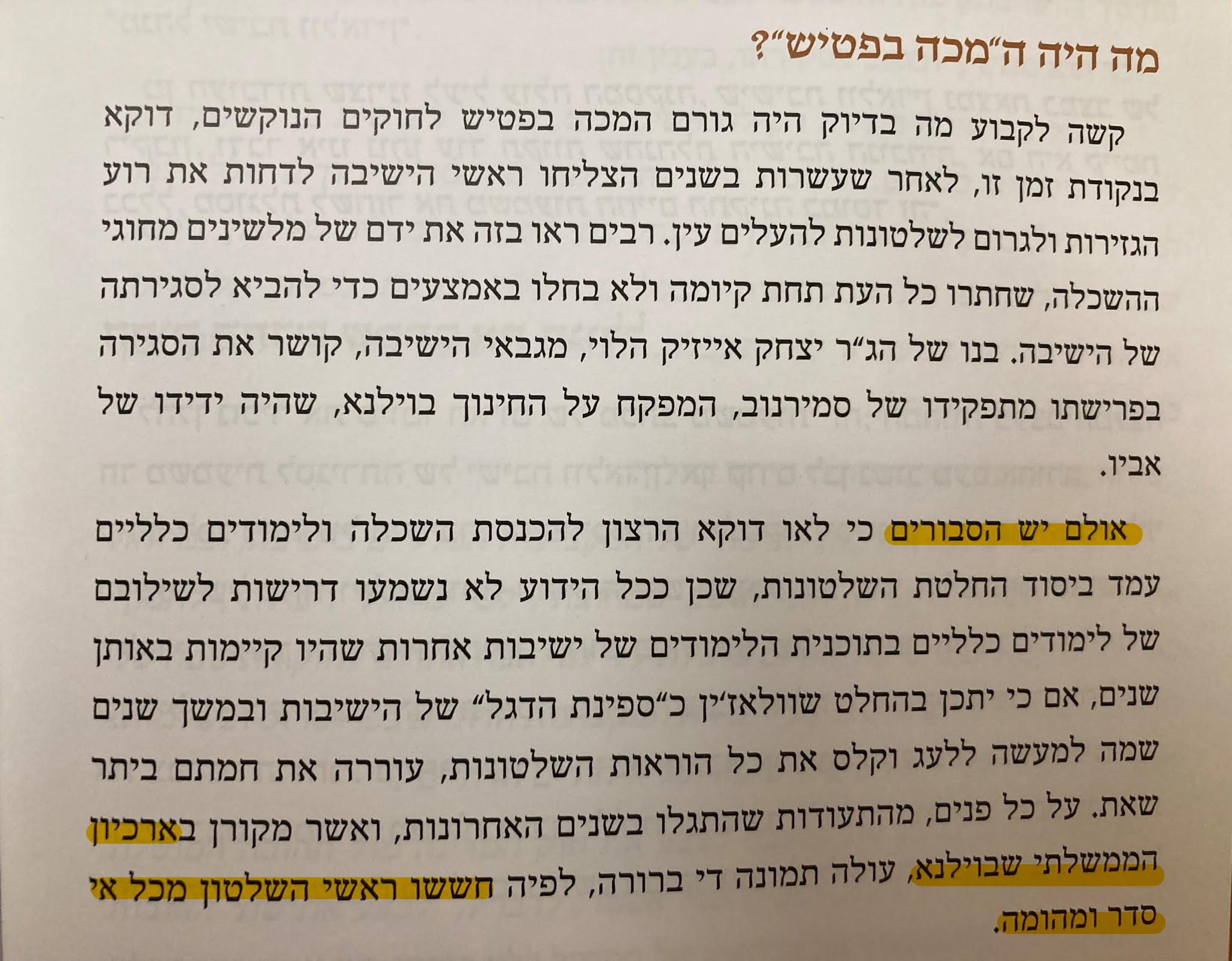
R. Chaim Ozer Grodzinski in a 1923 letter refers to someone whom the communists called “the Bolshevik Rrabbi.”[42] R. Chaim Ozer speaks of him with contempt, and regards him as a phony. Yet this rabbi obviously had an audience, as R. Chaim Ozer writes as follows:
וגם בהיותם פה דרוש דרש כמה פעמים והי’ מטיף להתאחדות הסוחרים הקטנים ללמוד מלאכה, ובתוך הדברים הרבה להטיף בשבח הקומוניסטים ולהביא ראי’ מן התורה ומדברי חכז”ל לשיטתם.
Wouldn’t it be interesting to know whom R. Chaim Ozer was talking about? The reason we don’t know is because the editors of the volume have removed the name. Unlike the Chazon Ish’s letters, names are not generally removed in the letters of R. Chaim Ozer. Does the fact that in this case the name was removed mean that we are dealing with someone who is not an unknown figure, maybe someone who later regretted his actions and became a more conventional rabbi? I have no doubt that examination of the Yiddish press of the period would enable one to identify the figure pretty easily.
In fact, thanks to Zalman Alpert’s assistance, I suspect that R. Chaim Ozer was referring to R. Chaim Faskowitz. Faskowitz studied in Eishishok, Lida, Slobodka and Brisk. He then was a preacher in Vilna and later served as a rabbi in Star-Daragi and Minsk before going on Aliya. He was known as the “Red Rabbi” for his sermons supporting the Soviet Union.[43]
Yet for the best of all quotes in this regard, one which really needs to be unpacked, no one can do better than R. Kook (Shemonah Kevatzim 1:89-90):
הנשמה הפנימית, המחיה את השטה הסוציאלית כפי צורתה בימינו, היא המאור של התורה המעשית, במלא טהרתה וצביונה. אמנם שהשטה בעצמה עומדת היא באמצע גדולה, ואיננה יודעת עדיין את יסוד עצמיותה. אמנם ימים יבאו ותהי למוסר נאמן לאמץ התורה והמצוה, במלא שיגובם וטהרתם.
האנרכיה היא נובעת מיסוד יותר נעלה מהסוציאלי[ו]ת. איננה יסוד לתורה המעשית וקיומה, כי אם להדבקות האלהית, העליונה מכל מעשה וסידור חיובי. על כן היא עוד יותר רחוקה ממקורה, שהוא עומד רחוק מאד משפלות החיים של ההוה, מהסוציאליות, ובמצבה של עכשיו, ומצב החיים של ההוה, היא פרועה כולה, למרות הניצוץ האלהי הנשגב המסתתר בתוכיותה.
Regarding opposition to communism, the following interesting passage is found in Eliezer Zweifel, Sanegor (Warsaw, 1885), 164:
הרב הגדול ר’ יוסף חיים קרא אבד”ק וולאצלאוועק יאריך ה’ ימיו, אמר לי שלדעתו כנו חז”ל את כת הקומוניסטים בשם ע”ה, והם אותה האומרים כיס אחד יהיה לכולנו והכל יהיו עמלים לאמצע, וכמו שהממלכות שבימינו מוצאות אנשי הכת הזו להורסים שלום המדינה, ולמנתקים קשרי החבורה האנושית, כן הרחיקו חז”ל את החבורה המזקת הזו, ולפי דעתו השערתו זו מבוארת היא בדחז”ל עצמה, שהם ז”ל הגדירו תאר ע”ה בזה, באמרם בפרקי אבות, שלי שלך ושלך שלי עם הארץ ע”כ. הנה כללו את כל השטה הזו במלות קצרות, ע”כ.
Returning to Graubart’s Sefer Zikaron, it is actually quite a fascinating text and an important source for Orthodox history during the final days of Czarist Russia and the post-Revolution era. In addition, he includes letters from various rabbis and descriptions of numerous figures in East European Jewish life. He also records the following joke in the name of R. Solomon Zalman Lipshitz (1765-1839), the first chief rabbi of Warsaw (217):
מחבר “חמדת שלמה”, הרב מוורשה, כתב מכתב לרב אחד ויתיארהו בשם “גאון”. וכאשר נשאל: “מה ראה על ככה, הן האיש ההוא אין העטרה הולמתו”? השיב בבדיחות: “הלא הגאונים )אחרי רבנן סבוראי) לא ידעו מה שנאמר ברש”י ותוספות וכמוהם כמוהו איננו יודע. ואם כן, הוא משרידי “הגאונים” הקדמונים.
On the previous page, Graubart asks where the practice arose of addressing people with all sorts of elaborate titles that are a standard feature of the rabbinic literary world, especially in the introductory sections of letters. His answer is very interesting and also relates to the issue of sensual medieval Hebrew poetry, which I have mentioned in a few previous posts at the Seforim blog:
וקרוב לאמת, כי זאת השפעה מן הערביים, שהיו מספיקים בגוזמאות והפרזות, וכמו שחקו אותם משוררינו הספרדים לפנים בשירי יין ואהבה, אף שהמשוררים ההם שתו יין ארבע כוסות אחת בשנה ומעודם לא טעמו טעם חטא, ורק מודה ספרותית היתה בזה.
With regard to elaborate titles and the extreme respect generally shown to halakhic authorities with whom one disagrees, it is worth noting what appears in the recently published Or Bahir of R. Moses Samuel Glasner, concerning whom has recently been two posts on the Seforim blog (here and here). He writes (25):
הסיבה לזה הוא שבדורנו השפל האמת נעדרת, ואין מי שיתחמם בעבורה כבדורות שלפנינו, ולעומת זה גדלה החנופה, ובשלה פרי רעל לדבר אחד בפה ואחד בלב, ומלא הארץ חנף וצביעות בתוארים שונים מגוזמים ומופרזים המחרידים אוזן השומע ועין הקורא.[44]
As I mentioned, Graubart’s book is fascinating reading, but I think many will be upset by the reason he gives for the exclusion of women’s testimony in court (208):
להרוג נפש או להוציא ממון מבעליו, צריך עדות ברורה ואין לסמוך על דברי נשים, שטבען נוטה לדמיונות, הזיות וגוזמאות והן רפות רוח ורכות לבב; ויוכל היות כי מה שאומרות ומעידות שראו עיניהן, הן מרבין לשער אומדות.
To support this understanding he also quotes a few non-Torah sources. One is Josephus who wrote: “Let not the testimony of women be admitted, on account of the levity and boldness of their sex” (Jewish War 4:8). He also quotes Socrates who is said to have made three blessings every day, one of which was that he was not made a woman. The other two blessings were that he was not made a barbarian or a slave – sound familiar?[45]
(To those women who are bothered by the blessing shelo asani ishah, R. Zvi Yehudah Kook has the answer, but you will have to wait until Messianic days! [Ittturei Kohanim, no. 167 (5759), 4-5]):
[ ]הברכות נקבעו על פי ההרגשה האנושית היחסית . . . לעומת זאת, ההשקפה האלהית, האמת המוחלטת, אינה ענין של הרגשה חולפת, אלא האמת הנצחית מראשיתה ועד סופה. לעתיד לבוא, כאשר גם האדם יכיר את האמת, ויהיה כולו מבחינת “הטוב והמטיב”, לא יוכל לברך “שלא עשני אשה”, שהרי אז יכיר שבניינה של האשה יותר רם, יותר אלהי ופחות אנושי, ממצבו הוא.
Following this logic, what about all those men who even in pre-Messianic days don’t regard women as second class in any way? Shouldn’t they be able to dispense with the blessing as early as tomorrow morning?)
Graubart, 65, also notes that many great scholars make simple grammatical errors וכמעט שלשון .עלגים היא סימן ללמדנות
He then tells the following joke, in the name of the Hakham Zvi, which everyone can repeat at their Passover seder.
רבים שואלים, בהגדה של פסח, למה מגנים ומחרפים את הרשע, על אמרו לכם ולא לו, הלא גם החכם אומר “אתכם” ולא “אותנו” – אך באמת, כונת החכם (הלמדן) הוא “אותנו” ורק מפני טרדתו בלמוד הגמרא והפוסקים הוא טועה בכנויים ומבטא “אתכם” תחת “אותנו” שלא בדקדוק, ואין לחשוד אותו כי בכונה אומר “אתכם”. לא כן הרשע שאיננו עוסק בגמרא, והוא מבעלי הדקדוק ויודע את ההבדל בין לכם ולו וב”דעת” שפתיו ברור מללו, אם הוא אומר “לכם” בכונה הוציא את עצמו מן הכלל.
Graubart also explains why Poland wasn’t blessed with the sort of great figures who were found in Lithuania, men who were able to be true rabbinic leaders and respond to problems as the times demanded. He places the blame with the Hasidim. In a passage that could well be written today (although it would then also have to include the contemporary Lithuanian “courts”) Graubart writes (173):
אבל “רבי החסידים”‘, אשר שפכו את ממשלתם על ההמון, קצצו את כנפי הרבנים ולא נתנו להם להרים ראש ולהראות פעלם והדרם. מפני הרביים רפו ידי הרבנים ולא יכלו לעשות תושיה; ואמת נתנה להגיד, כי לא את הרבי היו יראים לעשות דבר, אך מפני בני הרבי וחתניו, והגבורים שומרי משמרת החצר, השוקלים ומודדים את המעשים והפעולות, אם הם מתאימים עם שיטתם ומטרתם הם, והם אשר נתנו חתיתם על הרבנים ומוראם עליהם, כי כל דבר לא יבצר מהם לכבוד שמים, היינו לכבודם ולכבוד בית אביהם. ומי יקשה אליהם וישלם? והרבנים שפטו, כי אם יפרוץ סכסוך בינם לבין חצר הרבי, אז אף אם לא יהי הנצחון על צד השני, ולא ידיחום משאתם, אבל – הלא תהי מריבה בישראל, וגדול השלום.
Among the ideas of new Masoret ve-Herut organization Graubart helped organize was to open new schools (gymnasiums) where all the Jewish studies would be taught in Hebrew, and also to teach secular studies. Graubart tells us that the Lubavitcher Rebbe, R. Shalom Dov Ber Schneersohn, was opposed. This aroused the anger of R. Itzele who declared that anyone who opposes the approach of Masoret ve-Herut is destroying the nation. Graubart then tells us about his own dealings with the Lubavitcher Rebbe, and reveals a little known historical fact that certainly will never appear in any Lubavitch historical literature (120-121):
הגדתי לו, כי אחשוב שאינו יודע כי רוב אנשי חסידיו, היושבים בערים הגדולות, שולחים את בניהם ובנותיהם לבתי ספר העמים ומחללים שבת. וכאשר שאלני: “מנין אתה יודע, שאין אני יודע זאת?” עניתיו: “אם כן יגדל התמהון יותר; מדוע אתה מתנגד לגימנזיות עבריות, אשר תהיינה תחת השגחת חרדים?” ויחשה ולא ענה דבר.
The approach of the Rebbe is not surprising, and a similar thing occurred in Lithuania where, as R. Dessler explained, the rabbinic elite was prepared to see many “go off the derekh” rather than institute any changes in the “Torah-only” approach that dominated in yeshivot.[46]
Yet Graubart’s own approach is seen in the following, which shows his more enlightened Orthodox perspective (98):
התורה קוראת תגר: למה כל הרופאים והסוללים [47] היהודים אינם שומרי דת? בשום אופן אין אנו מודים, כי מי שהוא מתפלל ומניח תפילין, אי אפשר לו להיות רופא אמן, וכי המדקדק בשמירת שבת ובאכילת בשר כשר, לא יהיה למהנדס ותוכן; כל העבר שלנו מעיד נגד זה: רב סעדיה גאון, רמב”ם, רמב”ן, ר’ אברהם זכות, אברבנאל, ר’ יש”ר, ר’ מנשה בן ישראל, יתנו עדיהם כי לא בחלול שבת – פילוסופיה ותכונה – ולא באכילת טרפה – חכמה הרפואה.
His description (55) of his interaction with R. Joseph Rozin is also worth quoting, as it is line with so many other portrayals of the Rogochover, especially that of Rav Tzair in his Pirkei Hayyim.
הוא איש מופת יחיד בדור (וגם בדור ודור) יודע את כל תלמוד בבלי וירושלמי רש”י תוספות ורמב”ם בעל-פה. מן הראשונים הוא מחזיק לאוטוריטטים רק את רש”י ורמב”ם. הוא מכיר היטב את ערך עצמו ומבטל את גדולי הדור, מזכירם בשמם בלי תואר “רבי” ואיננו חושש להוציא עליהם משפט, שאינם יודעים את התורה כלל . . . הוא איש טוב ותמים כילד: שוקד על למודו תמיד; בהוויות עולם איננו בקי. חסידי לובוויץ מפרנסים אותו, ולא בהרחבה כראוי לשר התורה כמוהו, כי ראיתי כלי ביתו מעטים וקלי-ערך.
Notes
[1]Teshuvot Maharashdam, Orah Hayyim no. 37:
שחמשה או י’ אנשים חשובים עולים לאלף בין מצד החכמה ובין מצד העושר כי העושר קרוב למעלת החכמה . . . שמה שאמרו רוב הוא רוב טובי העיר בעלי כיסים הם מה שנקראים רוב אפי’ הם מיעוט בערך דלת העם מ”מ הם הנקראים רוב . . . והעיק’ לילך אחר רוב מנין כשיהיו רוב בנין דאז ודאי לא יבחרו אלא האמת והיושר משא”כ ברוב ההמון
[2] Note how de Medina is arguing from Aggadah to prove a halakhic point, a fact already discussed by Menachem Elon, “Modes of Halakhic Creativity in the Solution of Legal and Social Problems in the Jewish Community” (Hebrew), Yitzhak F. Baer Memorial Volume [= Zion 44] (1979): 259ff. Since Aggadic sources and darshanut can be easily manipulated to say what one wants, do we not really have here an early version of Daas Torah? The only real difference between the modern exponents of Daas Torah and the earlier ones seems to be that the earlier authorities felt the need to support their opinions, which they came to based on logic and intuition, with Scriptural and Aggadic proofs. The modern exponents often feel no need to offer any justification of their views.
[3] Translation in Menachem Elon, “On Power and Authority: The Halakhic Stance of the Traditional Community and Its Contemporary Implications,” in Daniel J. Elazar, ed., Kinship and Consent: The Jewish Political Tradition and Its Contemporary Uses (Washington, D.C., 1983), 309.
[4] Orah Hayyim, no. 20.
[5] R. Shabbetai Hayyim strongly supported de Medina’s approach. See Torat Hayyim, vol. 2, no. 40.
ופוק חזי בעירנו זאת שאלוניקי עיר ואם בישראל מימי קדם בימי איתני גאוני עולם, הממונים המפקחים על ענייני צבור הם העשירים מביני מדע בעצת החכמים השלמים, ואינם משגיחים על דברי רוב רובי דלת העם, והדעת נותן כן שהרי רוב ענייני הצבור הם בהוצאות ופרעונות ולראות ולדקדק להוציא בעת הצורך ובמקום הצורך שלא יצא הממון לאיבוד, ומי יחוש על זה לכוין ולדקדק חוץ מהם שמוציאים הממון.
Yet this opinion was not unanimous, and the poor found at least one defender in R. Isaac Adarbi, de Medina’s Salonikan colleague. According to Adarbi, only in matters concerning outlay of money do the wealthy have authority. In other matters there is no such discrimination. In line with this understanding, he comes to the defense of a community that ousted its parnasim who were ruling in a dictatorial fashion and not responding to the needs of the poor. See Divrei Rivot, Yoreh Deah, no. 224.
[6] See Zikhron Yaakov, vol. 2, p. 196:
אני קורא מגילת איכה, חורבן בית המקדש, אינקוויזיציות ופוגרומים, משא נמירוב, כל הצרות והפגעים שעמדנו בהם כאין נחשבו נגד גזרת הקנטאָניסטין
[7] See Zikhron Yaakov, vol. 1, 122f
[8] R. Barukh Epstein describes how his grandfather stood up to the chappers. See Mekor Barukh, vol. 2, 964ff. I see no reason to doubt the general thrust of his story, although, as is often the case with regard to Esptein, fictional details have no doubt been added to create a better story. Hayyim Karlinsky, Ha-Rishon le-Shoshelet Brisk (Jerusalem, 2004), 214ff., has a long description of how R. Joseph Baer Soloveitchik (the Beit ha-Levi) also stood up to the communal leaders and demanded to know why only the poor kids should be taken. Regarding the future Torah scholars, see ibid., 217: תועבה נעשתה בעיר סלוצק למסור לעבודת הצבא בן-תורה שעתיד להיות גדול בישראל. As with Mekor Barukh, I see no reason to doubt the basic story Karlinsky presents, but this book – which the author tells us in the preface took him over forty years to write – also has all sorts of fictional details added for literary purposes. One might even say that Epstein, Karlinsky and Judah Leib Maimon, the author of Sarei ha-Meah, are midrashic writers, in that they take a story and elaborate on it, thus creating a nice tale that keeps the reader’s interest. While the original story would leave many things unexplained, the midrashic “historian” provides the answers. For Yehoshua Mondshine’s attack on Karlinsky’s reliability, see here.
In “Polmos ‘ha-Rabbanim ve-ha-Shohetim’ be-Harkov,” Zekhor le-Avraham (1999), 383 n. 10, Mondshine writes the following about Karlinsky’s book:
מבחינת ערכו לתיאור ההיסטוריה, משתווה ספר זה לספרים “מקור ברוך” ו”שרי המאה”, שכל דמיון בין המתואר בהם לבין המציאות הוא מקרי בהחלט.
[9] Larry Domnitch, The Cantonists: The Jewish Childrens’ Army of the Tsar (Jerusalem, 2003), 70.
[10] Ibid., p. 127.
[11] Tsar Nicholas I and the Jews. The Transformation of Jewish Society in Russia 1825-1855 (Philadelphia, 1983), 29.
[12] Ibid., p. 33.
[13] See Malkah Peles (Maisler) Va-Yehi ([Haifa], 1988). I thank Dr. Amihai Mazar for sending me the relevant pages from this privately printed volume. Weinberg was a cousin of the Mazar (Maisler) family (famous for its archaeologists).
[14] See my Between the Yeshiva World and Modern Orthodoxy: The Life and Works of Rabbi Jehiel Jacob Weinberg, 1884-1966 (London, 1999), 4.
[15] Ha-Peles 2 (1902): 49ff.
[16] R. Samuel Landau and the Hatam Sofer opposed this approach and believed that that all should be included in the lottery when the community was required to meet a draft quota. (The one exception to this statement is that the Hatam Sofer states that Torah students must be exempted.) See Judith Bleich, “Military Service: Ambivalence and Contradictions,” in Lawrence Schiffman and Joel Wolowelsky, eds., War and Peace in the Jewish Tradition (New York, 2007), 423 (called to my attention by Menachem Butler).
[17] Israel Zinberg, A History of Jewish Literature, vol. 6, pp. 218-219.
[18] See here
[19] See here.
[20] Im Hillufei Tekufot (Jerusalem, 1960), 225.
[21] Volumes 1 and 2 of this set have recently been reprinted. See here.
[22] R. Isaac Bunin, Hegyonot Yitzhak (New York, 1953), no. 2, has a fascinating responsum from 1908, when he was a rabbi in Russia. This was the era of anarchist communists terrorizing the population for “contributions” to the cause. It was this circle that gave us the slogan “From each according to his means, to each according to his needs.” One man decided to shoot the anarchists the next time they came to his town, and the question for Bunin was if he is also permitted to shoot them on Shabbat. The rabbi decided in the affirmative.
[23] Although he is entirely forgotten today, during his lifetime Burstein was regarded as one of the Torah world’s top scholars. Nathan Kamenetsky, Making of a Godol: A Study of Episodes in the Lives of Great Torah Personalities (Jerusalem: Hamesorah Publishers, 2002), 400, quotes a source that “he was considered the third-greatest rosh yeshiva of his time – after R. Hayyim Soloveitchik and R. Itzel Ponivezher.” When R. Jehiel Jacob Weinberg was asked in 1925 about the problem of Austritt, he recommended that his questioner turn to a few different East European gedolim, one of whom was Burstein. See Kitvei ha-Gaon Rabbi Jehiel Jacob Weinberg, vol. 2, 235 (In this letter, Weinberg states that R. Meir Simhah of Dvinsk is a גדול-הדור באמת.) Towards the end of his life, Burstein went on aliyah and taught at Merkaz ha-Rav. His Ner Aharon is currently sold by the yeshiva. See here. Burstein’s son was Reuven Barkat, an important Labor party figure in Israel who also served as speaker of the Knesset. See here
[24] Sefer Zikaron (Lodz, 1926), 107.
[25] See R. Avraham Shapira, Morashah (Jerusalem, 2005), 15.
[26] Mark writes . לר’ איצל היה צער גידול בנים ולא שבע נחת מבניו This is a polite way of saying that his sons did not remain Orthodox, which was a very common phenomenon in those days.
[27] Mark, Bi-Mehitzatam, 118, claims that R. Itzele concluded his speech at the Moscow gathering by stating that the government should only be able to remove property from landowners if payment was made, but this is not what appears in Graubart’s record of his speech and I don’t believe it is correct.
[28] R. Joseph Elijah Henkin used this logic in his defense of rent control laws, which are a terrible intrusion into the rights that a landlord has over his private property. R. Henkin wrote as follows, unfortunately falling into some Democratic class warfare rhetoric (Kitvei ha-Gaon R. Yosef Eliyahu Henkin, vol. 2 [New York, 1980], 175):
חוק הדירות של הממשלה הוא ישר, מתוקן ומקובל בפרט בערים הגדולות, כי הוא מכוון נגד מפקיעי שערים ופושטי עורות עניים. ואף שלפעמים נראה כעול נגד בעלי בתים שאינם עשירים, הנה כן דרך החוק שלפעמים נפגע ביושר ואזלינן בתר רובא. ומה שהחק מפלה בין דירות עניים לבתי לוקסוס אינו מגרע כח החק אלא מעדיפו ומטהו אל צד היושר, וכן מה שהחק משתנה מזמן לזמן.
For a recent attempt by rabbis to enforce a rent control scheme, see here, here, and here. There is an inverse proportion between these rabbis’ talmudic knowledge and their knowledge of economics and what drives markets.
[29] Jody Myers has recently published an entire book about the Kabbalah Centre. See Kabbalah and the Spritual Quest: The Kabbalah Centrein America (Westport, 2007).
[30] See Jacob J. Schacter, “Reminiscences of Shlomo Barukh Rabinkow,” in Leo Jung, ed., Sages and Saints (Hoboken, 1987), 102, 106.
[31] There was one time, however, when he broke ranks with them and this created some controversy. When the divorce rates in the Orthodox world began to move up, R. Bick publicly declared that a few dates were not enough to determine that one had found one’s life partner and people should therefore should stop hurrying to get engaged but take more time to get to know each other better.
[32] Dan Rabinowitz, “Mayim Hayyim, the Baal Shem Tov, and R. Meir the son of R. Jacob Emden,” the Seforim blog (January 29, 2008), available here.
[33] See here
[34] “Glowing Embers: Maintaining Religious Life in the U.S.S.R.,” Tradition 24:1 (Fall 1988): 91-103.
[35] Bick and Zvi Harkavy, eds., Shomrei ha-Gahelet: Divrei Torah me-et Rabbanei Berit ha-Moatzot ve-Artzot ha-Demokratyah ha-Amamit (Jerusalem, 1966).
[36] Netser mi-Shorashav: Motsa’o ve-Olamo ha-Yehudi shel Karl Marx (Tel Aviv, 1984). See also his Me-Rosh Tzurim: Metaknei Hevrah al Toharat ha-Kodesh: Shalshelet ha-Yuhasin shel Avot ha-Socialism (Jerusalem, 1972), and “Between the Holy Ari and Karl Marx” (Hebrew), Hedim 110 (1980): 174–181. I don’t have access to the volume at present, but in Shvut 7 (1980), Bick also has an article on the Jewish roots of various communist figures.
[37] Grunt-Printsipn fun Religyezn Sotsyalizm (New York, 1938), Kemper un Hiter: Di Sotsyaletische Idee in der Yidisher religyezer Literatur un Lebn (New York, 1940).
[38] See here
[39] See here
[40] See here and here

[41] See here

[42] Iggerot R. Chaim Ozer, vol. 2, 69.
[43] See David Tidhar,Entziklopeyah la-Halutzei ha-Yishuv u-Vonav, 1875.
[44] Just glancing through the book, I also found a fascinating passage on p. 31. Here Glasner daringly suggests that the reason for keeping kabbalistic considerations out of halakhic decision-making – and he is referring specifically to a pesak of R. Hayyim Halberstam – is that it permits non-halakhic subjectivity to enter the halakhic process.
ומי שמכוון פסקיו לחכמת הקבלה, מי יודע איזה רעיון קדמה בזמן. ואם הוא מופשט מן החומר וקרוב לשמים ואדוק בעולמות העליונים קרוב לודאי שרואה תחילה בסוד אלקי, וממילא משוחד הוא לכוון ולהתאים הנגלה להאי סוד שראה. לכן לאו דסמיכנא הוא מהאי טעמא גופא.
For a discussion of R. Halberstam’s perspective on the role of Kabbalah on halakha, see Iris (Hoyzman) Brown, “Rabbi Hayyim Halberstam of Sanz: His Halakhic Ruling in View of His Intellectual World and the Challenges of His Time,” (PhD dissertation, Bar-Ilan University, 2004), 162-164 (chap. seven).
[45] See Martin Hengel, “The Interpenetration of Judaism and Hellenism in the pre-Maccabean Period,” in W. D. Davies and Louis Finkelstein, eds., Cambridge History of Judaism (Cambridge, 1989), 184. R. Aharon Lichtenstein commented that some people, upon learning of Socrates’ blessings and the corresponding Jewish blessings, will find that their attitudes towards the latter are “undermined.” He continues: “A different mentality could of course, as did Newman analogously, revel in the scope of its tradition’s prevalence – even if, as with respect to gender here, for radically different reasons – and not feel threatened at all.” See “Torah and General Culture: Confluence and Conflict,” in Jacob J. Schacter, ed., Judaism’s Encounter with Other Cultures: Rejection or Integration (Northvale, 1997), 278. I am certain that R. Lichtenstein knows that there are indeed voices in the “tradition” that approximate the common Greek view of women. R. Lichtenstein is in general opposed to positing outside influences on Hazal’s outlook. See, for example, the following (“Of Marriage, Relationship and Relations,” in Rikvah Blau, ed., Gender Relationships In Marriage and Out [New York, 2007], 23):
To be sure, post-Hazal gedolim, rishonim, or aharonim may be affected by the impact of contact with a general culture to which their predecessors had not been exposed and to whose contact and direction they respond. Upon critical evaluation of what they have encountered, they may incorporate what they find consonant with tradition and reject what is not. In the process, they may legitimately enlarge the bounds of their hashkafa and introduce hitherto unperceived insights and interpretations.
Note how outside influence upon Jewish thought is limited to the post-Hazal era. While this may be good theology, and in some circles is even viewed as obligatory, it is certainly bad history. To mention only one example, Yaakov Elman’s groundbreaking work is revealing all sorts of influences that provide us with a completely new picture of talmudic law and thought. See Yaakov Elman, “The Babylonian Talmud in Its Historical Context,” in Sharon The Talmud in Translation” in Sharon L. Mintz & Gabriel M. Goldstein, eds., Printing the Talmud: From Bomberg to Schottenstein (New York: Yeshiva University Museum, 2005), 19-27; now available online here.
[46] Mikhtav me-Eliyahu, vol. 3 (Jerusalem, 1963), 355ff.
[47] I have no idea what this word means, but it clearly refers to some white-collar profession.


The Religious-Zionist Manifesto of Rabbi Yehudah Leib Don Yahya

The Religious-Zionist Manifesto of Rabbi Yehudah Leib Don Yahya

by Bezalel Naor

In 1901 there appeared in Vilna a 32-page booklet entitled, Ha-Tsiyoniyut mi-nekudat hashkafat ha-dat (Zionism from the Viewpoint of Religion). The author was Yehudah Don Yahya.[1] The final eight pages of the work contain a supplement (Milu’im) by one Ben-Zion Vilner, criticizing the anti-Zionism of the Rebbe of Lubavitch. (One ventures that “Ben-Zion Vilner” is a pseudonym.)

What is remarkable about this manifesto that argues that Zionism is totally compatible with traditional Judaism, is that the author, Rabbi Yehudah Leib Don Yahya, was an intimate student of Rabbi Hayyim Soloveitchik, a most outspoken opponent of the Zionist movement.[2]

To add to the intrigue, Don Yahya’s grandfather, Rabbi Shabtai Don Yahya of Drissa, had been an ardent Hasid of Rabbi Menahem Mendel of Lubavitch (known by his work of Halakhic responsa as “Tsemah Tsedek”).[3] Yehudah Leib himself would go on to serve as rabbi of the Habad Hasidic community of Shklov.[4] Although, as we shall see, within the Habad community, there were differing responses to Zionism along the fault line of the Kopyst—Lubavitch dispute.

Today, students who immerse themselves in the Torah novellae of Rabbi Hayyim Soloveitchik may come across the name of Rabbi Yehudah Leib Don Yahya, but they have no idea who this disciple was. Appended to Hiddushei ha-GRaH he-Hadash ‘al ha-Shas (issued upon the ninetieth anniversary of Rabbi Hayyim’s passing in 2008) are Don Yahya’s memoirs of his beloved mentor in the Volozhin Yeshivah. In 2018 (coincidentally a century since Rabbi Hayyim’s passing) there appeared in print a Tagbuch or diary, in which Rabbi Hayyim jotted down his insights on Talmud and Maimonides’ code.[5] In his introduction to the volume, the editor, Rabbi Yitshak Abba Lichtenstein, notes that Rabbi Hayyim would allow some scholars to copy down entries from the journal. Indeed, one such scholar was Rabbi Yehudah Leib Don Yahya. Two novellae that appear in the Tagbuch were previously published in Don Yahya’s Bikkurei Yehudah (1939).[6]

One asks: What would prompt such a devoted disciple to break from his master’s ideology concerning Zionism?

To understand how such a phenomenon as Yehudah Leib Don Yahya was possible, one needs to trace his membership in Nes Ziyonah, the underground proto-Zionist movement that existed in the Volozhin Yeshivah from 1885 until its disbandment in 1890.let

This was the era of Hovevei Zion (Lovers of Zion), a Russian Jewish movement to settle the Land of Israel that predated Herzlian political Zionism. Nes Ziyonah, which blossomed independently within the ranks of the student body of the famed Volozhin Yeshivah, interfaced with Hovevei Zion, presided over by Rabbi Samuel Mohilever of Bialystok. Members of Nes Ziyonah were sworn to secrecy. The membership included such illustrious scholars as Moshe Mordechai Epstein of Bakst,[7] Menahem Krakovsky,[8] and Isser Zalman Meltzer. Moshe Mordechai Epstein would eventually become Rosh Yeshivah of Slabodka. Menahem Krakowsky would one day assume the position of “Shtodt Maggid” of Vilna. Finally, Isser Zalman Meltzer would become Rosh Yeshivah of Slutzk and later ‘Ets Hayyim of Jerusalem.[9]  It was through the last-mentioned disciple, who was especially close to Rabbi Hayyim Soloveitchik, that Rabbi Hayyim was able to discover the identities of the students who belonged to Nes Ziyonah.[10]

Nes Ziyonah had sprung up without the knowledge of the elder dean of the Yeshivah, Rabbi Naftali Tsevi Yehudah Berlin (NeTsIV). In fact, according to Israel Kausner, who wrote a history of Nes Ziyonah, the members of the secret society prided themselves that they had been able to prevail upon Rabbi Berlin to join the greater Hovevei Zion movement and to assume a role of leadership alongside Rabbis Samuel Mohilever and Mordechai Eliasberg of Bausk.[11] In 1890, somehow Nes Ziyonah came to the attention of the Russian government authorities. One of its leaders (Yosef Rothstein) was arrested but subsequently released. When Rabbi Berlin learned that such a society had sprung up in the Yeshivah under his very nose, he was aghast. He feared that Nes Ziyonah might jeopardize the existence of the Yeshivah, which was under constant government scrutiny.[12] Leaving aside pragmatic considerations, in principle, Volozhin had always been a bastion of pure Torah learning; there was no room in it for Zionist activism.[13] Nes Ziyonah ceased to exist. (Hovevei Zion, with its office in Odessa, was legalized by the Tsarist government in 1890.)[14]

The idealistic young men who had formed Nes Ziyonah were not ones to easily give up. Nes Ziyonah morphed into Netsah Yisrael, whose express goal was to advocate on behalf of Zionism and religion. (Nes Ziyonah had restricted its activities to settling the Land of Israel.) Most prominent in this reincarnation of Netsah Yisrael was—Yehudah Leib Don Yahya.[15]

It is against this backdrop—the publicistic activity of Netsah Yisrael—that one must view Don Yahya’s tract, Zionism from the Viewpoint of Religion.

Let us briefly sum up some of the more salient points of the booklet.

Don Yahya begins by clarifying that the return of the nation to its land can in no way be viewed as the complete redemption prophesied in Scripture. The prophets’ vision, while including the ingathering of exiles, extends beyond that to global mankind’s acknowledging God and embracing His Torah.[16]

On the other hand, Don Yahya is flummoxed by various rabbis who adopt an all-or-nothing attitude to the Zionist organization’s striving to secure from the Ottomans a safe haven for Jews in the Holy Land. Just because the Zionist dream does not encompass the comprehensive vision of our prophets of old, is no reason to reject Zionism. Granted that the Zionist goals are much more modest in scope; that still does not justify opposing the movement. Don Yahya’s own reading of the sources—Biblical and Rabbinic—is gradualist. He anticipates a phased redemption. The Jews’ return to the Land is certainly the beginning, the first installment in a protracted process which will eventually—upon completion of “the full and encompassing redemption” (“ha-ge’ulah ha-sheleimah ve-ha-kelalit”)—culminate in the restoration of the Davidic dynasty in the person of King Messiah and the rebuilding of the Temple.[17]

The author adopts as his paradigm the Second Temple period. Taking issue with those who construe the return from Babylonian captivity as a “temporary remembrance” (“pekidah li-zeman mugbal”), Don Yahya maintains that the Second Commonwealth had the potential to develop into full-blown redemption. With that model in mind, he writes that return from exile and settling the Land can evolve beyond that to greater spiritual dimensions.[18]

After having made his case for the compatibility of the nascent Zionist movement and Judaism, Don Yahya tackles the painful question why some of the great Torah geniuses oppose Zionism.[19]

Don Yahya has a couple of explanations. First, knowledge of Torah is divided into Halakhah and pilpul, on the one hand, and matters of belief and opinion, on the other. Contemporary ge’onim (unlike their medieval predecessors Maimonides and Nahmanides) have devoted their lives to Halakhah, to the exclusion of emunot ve-de‘ot (beliefs and opinions). “In regard to the portion of Torah which is beliefs and opinions, their view does not exceed the view of an average Jew.”[20]

Rather conveniently, Don Yahya holds up as examples of recent Torah authorities who plumbed the depths of the beliefs contained in the Aggadah, and who concluded that the redemption shall begin with the Jews receiving permission to settle the Land of Israel—Rabbis Naftali Tsevi Yehudah Berlin and Mordechai Eliasberg—two rabbis who stood at the helm of Hovevei Zion.[21]

A second reason for the opposition of some ge’onim to Zionism is that they have been fed misinformation (or disinformation) by those of lesser stature who surround them. As the great men eschew reading newspapers, they must rely for information on extremists (kana’im) who skew their perception. They are told that the leaders of the Zionist movement are men who are not simply unobservant in their private lives, but furthermore, intent on uprooting Judaism.[22]

According to Don Yahya, the Zionist leaders profess no proficiency in matters of religion and are amenable to working with the great rabbis in matters pertaining to religion. He cites the example of a responsum from one of the great halakhic decisors of the generation to accommodate the Colonial Bank so that the prohibition of charging interest (ribit) be not transgressed. Don Yahya personally witnessed both the question from Zionist officialdom and the responsum issued by the elderly ga’on.[23] (Undoubtedly, “the elderly ga’on” [“ha-ga’on ha-yashish”] was Don Yahya’s own father-in-law, Rabbi Shelomo Hakohen, the dayyan or chief justice of Vilna.)[24]

Don Yahya points out the democratic character of the Zionist congresses. If more religious Jews would join the ranks of the Zionist movement, they would be able to turn the tide and steer the movement in a more religious direction.[25]

The author chides those religious elements opposed to Zionism not to gloat and say, “We told you so.” In the event that Zionism deviates from Judaism, this will be a self-fulfilling prophecy of doom; the anti-Zionist agitators will then be held responsible for bringing about that outcome by instructing observant Jews to stay clear of the movement.[26]

II.

As stated above, the Milu’im or Excursus of the pamphlet is a harshly worded rejoinder to the Rebbe of Lubavitch, Rabbi Shalom Dov Baer Schneersohn (1860-1920), who had made public his vehement opposition to Zionism on religious grounds.[27]

Again, one asks: How is possible that a staunch Habad Hasid such as Rabbi Yehudah Leib Don Yahya appended such an excursus to his work? From a remove of more than a century this seems inconceivable.

We need once more to place this pamphlet within the context of the times. Today, Habad has assumed a monolithic character, but at the turn of the twentieth century there existed a great divide between two competing “courts” within Habad Hasidism: Kopyst and Lubavitch. When Rabbi Menahem Mendel Schneersohn of Lubavitch (author of the responsa Tsemah Tsedek) passed in 1866, a dispute erupted over succession to the throne. The youngest son, Shmuel (Maharash), remained in Lubavitch and inherited control of that city. An older son, Yehudah Leib (Maharil), moved to the city of Kopyst, taking some of the Hasidim with him.[28] When within a year of the Tsemah Tsedek’s passing, Yehudah Leib passed, his son Shelomo Zalman (author of the Hasidic work Magen Avot) became the Kopyster Rebbe. And when in 1900 the Kopyster Rebbe passed, he was succeeded by his younger brother Rabbi Shemaryah Noah Schneerson (author of the Hasidic work Shemen la-Ma’or). Though there was a brief attempt on the part of Rabbi Shemaryah Noah Schneerson to establish himself in the city of Kopyst, eventually he returned to his rabbinate in Bobroisk, which then became the center of this branch of Habad Hasidism.[29] With the passing of the Rebbe of Bobroisk in 1923, this branch ceased to exist, leaving only the Lubavitch faction. At that point, remnants of the Bobroisker Hasidim transferred their allegiance to the Lubavitcher Rebbe.

In the early years of the twentieth century there erupted a major financial dispute between Bobroisk and Lubavitch regarding control of the purse strings of Kollel Habad in Erets Yisrael. (One may find evidence of the dispute in letters of Rav Kook from this period, when as Rabbi of Jaffa he offered guidance how to come to a compromise.)[30] The tension arose because each Rebbe wanted his representative in Erets Yisrael to be responsible for disbursement of the funds raised by the Hasidim in Russia for the support of their brethren in the Holy Land.

Thus, there are historians who would explain the tension between Bobroisk and Lubavitch as being purely financial.[31] Truth be known, there were ideological issues dividing the two cousins, Rabbi Shemariah Noah of Bobroisk and Rabbi Shalom Dov Baer of Lubavitch. In general, it may be said that the Bobroisker was more progressive, more forward-looking. The Lubavitcher was more old-school, more conservative in outlook. These different Weltanschauungen found expression on many fronts.

When the Russian government sought to demand of the rabbis proficiency in the Russian language, the Bobroisker (as Rabbi Meir Simhah Cohen of Dvinsk) found this a reasonable demand; the Lubavitcher (as Rabbi Hayyim Soloveitchik of Brisk and Rabbi Israel Meir Kagan [a.k.a. Hafets Hayyim]) fought against this proposal tooth and nail.[32]

When it came to deciding which city should serve as the center of Habad Hasidism in Erets Yisrael—Hebron or Jerusalem—Rabbi Shalom Dov Baer militated to retain the center in the provincial town of Hebron rather than allow the center to shift to Jerusalem.[33] In this way, the Lubavitcher Rebbe believed he could shield the Hasidim from the distractions of urban civilization. The Bobroisker did not think it realistic to keep the Hasidim “down on the farm.” Willy-nilly, establishment of a lending library in Hebron would bring secular literature to the curious eyes of Hasidic youth.[34]

And finally, we arrive at the issue with which we began: Zionism. While Lubavitch would have no truck with Zionism, out of the “Kibbutz” (study-hall for advanced rabbinic students) of Bobroisk there would emerge prominent rabbis of the Mizrahi or Religious Zionist movement.[35]

The answer to the question how Rabbi Yehudah Leib Don Yahya, a fervent Habad Hasid, could oppose the Rebbe of Lubavitch is simple: Don Yahya was a Kopyster Hasid,[36] not a Lubavitcher Hasid.

Epitaph on Tombstone of Rabbi Eliezer Don Yahya in Ludza (Lutzin)

צנא מלא ספרא

כלו ספרא מבעל —-

מגזע רבני —-

מחבר אבן שתיה

הרב הגאון ר’ אליעזר

בהרב ר’ שבתי

דון יחייא

ויאסף אל עמיו

ד’ ימים לחדש תמוז

שנת תרפו

[1] Yehudah Leib Don Yahya was born in Drissa (today Verkhnyadzvinsk, Belarus) in 1869 and passed in Tel-Aviv in 1941. Besides this Zionist manifesto, Rabbi Don Yahya published two volumes of Halakha and essays and sermons: Bikkurei Yehudah, vol. 1 (Lutzin, 1930); vol. 2 (Tel-Aviv, 1939).

Volume One of Bikkurei Yehudah was published in Lutzin (Ludza) by the author’s cousin, Rabbi Benzion Don Yahya, Rabbi of Lutzin. At that time Rabbi Yehudah Leib served as Rabbi of Chernigov, Soviet Russia. In his preface to the work, Benzion Don Yahya explains that the manuscript was sent to him for publication because there is no longer a Hebrew press in Russia. On pages 36-38, the Editor traces the lineage of the Don Yahya family. We learn that his paternal grandfather was Rabbi Shabtai Don Yahya, Rabbi of Drissa for sixty years until his death at approximately age 90 in 1907. One of Rabbi Shabtai’s sons, Rabbi Eliezer, became Rabbi of Lutzin (Ludza), a rabbinate inherited by his son, the Editor (Rabbi Benzion). In 1840, there were born to Rabbi Shabtai twins: Menahem Mendel and Hayyim. Menahem Mendel served as Rabbi of Kopyst for some years, passing there in 1920. Hayyim served as Rabbi of Shklov, and after his father Shabtai’s passing, as Rabbi of Drissa, until his own passing in 1913. Hayyim’s son, Yehudah Leib, served as Rabbi in Shklov and Vietka, until he inherited from his father the Rabbinate of Drissa in 1913. (In Bikkurei Yehudah, vol. 2, f. 159, there is a letter dated 5673 [i.e. 1913] from Rabbi Meir Simhah of Dvinsk to Rabbi Don Yahya congratulating him on assuming the rabbinate of his father and grandfather in Drissa.) In 1925, Yehudah Leib was accepted as Rabbi of Chernigov.

In Shklov, Rabbi Yehudah Leib Don Yahya ministered to the “Kehal Hasidim” (exclusive of the Mitnagdim, who would have had their own Rav). (See below note 4.) However, it should be mentioned that the communities of Vietka and Chernigov as well figure prominently in the annals of Habad Hasidism.

The Rabbi of Vietka, Rabbi Dov Baer Lifshitz, author of an important commentary on Tractate Mikva’ot, Golot ‘Iliyot (Warsaw, 1887), refers to Rabbi Shneur Zalman of Liadi as “dodi zekeini” (“my great uncle”). See ibid., Addendum to Introduction, and 7c.

The man who immediately preceded Rabbi Don Yahya as Rabbi of Chernigov, Rabbi David Tsevi (Hirsch) Hen (referred to by the Hasidim as “RaDaTs”) was acknowledged as one of the greatest of Habad Halakhists in his day. In 1925, through the intervention of Chief Rabbi Kook, he was able to emigrate from the Soviet Union to Erets Yisrael together with his daughter Rahel, son-in-law Rabbi Shalom Shelomo Schneerson (brother of Rabbi Levi Isaac Schneerson, Rabbi of Yekaterinaslav, today Dnieperpetrovsk, and uncle of Rabbi Menahem Mendel Schneerson, Lubavitcher Rebbe of Brooklyn), and granddaughter Zelda, who would later achieve fame as a Hebrew poet. See Igrot Re’iyah, vol. 4 (Jerusalem, 1984), Letter 1330 (p. 251), in which Rav Kook attempts to install the recently arrived Rabbi S.S. Schneerson as Rav of Haderah. Rav Kook’s involvement in bringing RaDaTs and family to Erets Israel is discussed in the recently published annals of the Hen Family, Avnei Hen, ed. Eliezer Laine and S.Z. Berger (Brooklyn, NY: Kehot, 2015).

Reviewing the second volume of Bikkurei Yehudah, Rabbi Zevin wrote an especially insightful appreciation of Rabbi Yehudah Leib Don Yahya. Rabbi Zevin, himself a Habad Hasid, noted how rare it was to find in the twentieth century a Habad Hasid who combined both persona of the maskil (intellectual) and the ‘oved (master of contemplative prayer). (In the latter connection, Rabbi Zevin observed that Rabbi Don Yahya wore daily three pairs of tefillin: Rashi, Rabbenu Tam, and Shimusha Rabbah.) Beyond Habad Hasidism, Don Yahya mastered Rabbi Hayyim Soloveitchik’s method of Talmudic analysis and the process of pesikah (Halakhic decision) of Don Yahya’s father-in-law, Rabbi Shleimeleh Hakohen, the Dayyan of Vilna. See Rabbi Shelomo Yosef Zevin, Soferim u-Sefarim (Tel-Aviv: Abraham Ziyoni, 1959), pp. 296-300.

It is noteworthy that the volume contains a responsum to Rabbi Mordechai Shmuel Kroll, the Rav of Kefar Hasidim in Erets Yisrael, and a Halakhic novella of Rabbi Kroll. See Bikkurei Yehudah, vol. 2, ff. 121-129, 160-162. Rabbi Kroll was the eminent disciple of Rabbi Don Yahya.

[2] Rabbi Hayyim Soloveitchik’s opposition to Zionism is well known. One particular statement should illustrate how extreme was Rabbi Hayyim’s opposition to the new movement. The following incident took place in Minsk in 1915 (when many Jews were forced to flee their homes before the German invasion and seek refuge in the large city located farther east).

Young Raphael Zalman Levine was walking down the street with his father, Rabbi Abraham Dov Baer Levine (known as the “Mal’akh,” the “Angel”). Pinned to the adolescent’s lapel was an insignia of the Keren Kayemet le-Yisrael (Jewish National Fund), to which he had recently donated. The elder Levine was adamantly opposed to the Zionist enterprise and demanded that his son remove the pin, which he found offensive. Father and son were in the midst of an intense argument when, lo and behold, they saw approaching them from the opposite direction none other than the great Rabbi Hayyim Soloveitchik.

Rabbi Levine said to Rabbi Soloveitchik: “My son wants to ask you a she’elah (question).”

Rabbi Soloveitchik turned to Raphael Zalman: “You can ask your father.” (Rabbi Levine and Rabbi Soloveitchik were friends.)

Rabbi Levine persisted: “My son wants to ask you a she’elah in emunah (a matter of faith).”

“Emunah?” Rabbi Soloveitchik’s face now assumed a serious expression.

Young Raphael Zalman was put on the spot and forced to ask Rabbi Hayyim what he thought of his donation to the Jewish National Fund.

It just so happened that across the street was a church.

Rabbi Hayyim responded to his young questioner: “If you have a few spare kopecks in your pocket, you can place them there rather than in the pushke of the Keren Kayemes.”

(Reported by RYYL and by Prof. Richard Sugarman who both heard this anecdote from the mouth of Rabbi Raphael Zalman Levine of Albany, New York, on two separate occasions.)

The episode is also reported in Rabbi Raphael Zalman Levine’s name in Rabbi C.S. Glickman, Mi-Pihem u-mi-Pi Ketavam (Brooklyn, NY, 2008), pp. 119-120.

Though the sharpness of Rabbi Hayyim Soloveitchik’s statement is shocking, Halakhic opposition to donating to the Zionist cause was shared by several East European rabbinic leaders. A decade later in 1925, four distinguished leaders of Polish Jewry, the Hasidic Rebbes of Gur, Ostrovtsa, Radzyn, and Novominsk, addressed a letter to Rav Kook adjuring him to curtail his support of Keren Kayemet le-Yisrael and Keren ha-Yesod. See Igrot la-Rayah, ed. B.Z. Shapiro (Jerusalem, 1990), Letter 199 (pp. 303-304); facsimile on p. 590.

Rav Kook, unlike the Polish Rebbes, differentiated between the two funds, lending his support to Keren Kayemet le-Yisrael, which directed funds to the physical reclamation of the land, but not to Keren ha-Yesod, which funded secular (and perhaps anti-religious) culture. See Rabbi Tsevi Yehudah Hakohen Kook, Li-Sheloshah be-Ellul, vol. 1 (1938), par. 44 (p. 22); Igrot ha-Rayah, vol. 5: 5682, ed. Ze’ev Neuman (Jerusalem, 2019), pp. 407-413.

[3] According to his namesake and great-grandson, journalist Shabtai Don Yahya (who wrote under the pen name of “Sh. Daniel”), the Rabbi of Drissa was known in Lubavitch as “Reb Shebsel Drisser.” Sh. Don Yahya wrote that it was said that the Rabbi of Drissa might have become one of the great men of the generation in terms of Talmudic learning, but his Hasidic exuberance stunted his academic growth. See Shabtai Don Yahya, Rabbi Eliezer Don Yahya (Jerusalem, 1932), pp. 10-11.

(The title-page makes the point that the book bears the encomium of Chief Rabbi Kook. Shabtai Don Yahya was one of the first students of Merkaz Harav and a devoted disciple of Rav Kook. Rabbi Eliezer Don Yahya is a biography of the author’s paternal grandfather, the Rabbi of Lutzin, son of Rabbi Shabtai Don Yahya. As a youth, Avraham Yitshak Hakohen Kook studied under Rabbi Eliezer Don Yahya in Lutzin. Rabbi Eliezer Don Yahya was born 4 Tammuz 5598 [i.e. 1838] and passed on his birthday, 4 Tammuz 5686 [i.e. 1926]. See the epitaph on his tombstone at the conclusion of this article. A photograph of the funeral of Rabbi Eliezer Don Yahya in Lutzin in 1926 may be found in Rabbi Yitzhak Zilber’s autobiography, To Remain a Jew. Zilber’s original surname was “Ziyoni.” Rabbi Eliezer Don Yahya inherited the rabbinate of Lutzin from his illustrious father-in-law Rabbi Aharon Zelig Ziyoni.)

Rabbi Yehudah Leib Don Yahya often quotes the Tsemah Tsedek in his Halakhic responsa.

[4] In the biography of Rabbi Yehudah Leib Don Yahya in Shmuel Noah Gottlieb’s Ohalei Shem (Pinsk, 1912), p. 207, s.v. Shklov, it states that Don Yahya assumed the rabbinate of Shklov in 1906. However, as early as Friday, 17 Menahem Av [5]664,” i.e. 1904, Rabbi Shelomo Hakohen addressed his son-in-law as “Rav Av-Beit-Din of the congregation of Hasidim of Shklov.” See Bikkurei Yehudah, vol. 2 (Tel-Aviv, 1939), 145a.

In Shklover Yidden (1929) and Feter Zhoma (1930), the Yiddish and Hebrew poet and writer Zalman Shneur portrayed the Hasidim of his birthplace.

Earlier, Rabbi Yehudah Leib’s father, Rabbi Hayyim Don Yahya, had served as Rabbi of Shklov. A halakhic responsum of Rabbi Hayyim Don Yahya (datelined “5653 [i.e. 1893], Shklov”) was published in the journal of the Skvere Kollel, Zera‘ Ya‘akov 26 (Shevat 5766 [i.e. 2006]), pp. 17-21. On p. 20, Rabbi Hayyim mentions the learned opinion of his brother from Kopyst [i.e. Rabbi Menahem Mendel Don Yahya].

[5] Rabbi Yitshak Lichtenstein writes in the introduction to the volume that there were many such Tagbikher that were lost to posterity. This particular journal was inherited by Rabbi Hayyim’s son, Rabbi Moshe Soloveitchik. (Behind the scenes, the Tagbuch was made available to Rabbi Lichtenstein by his maternal uncle, Prof. Haym Soloveitchik of Riverdale, son of Rabbi J.B. Soloveitchik of Boston, son of Rabbi Moshe Soloveitchik.)

[6] See Bikkurei Yehudah, vol. 2 (Tel-Aviv, 1939), 142a-144b. The volume was edited by the author’s son-in-law Rabbi Yitshak Neiman. Rabbi Zevin explains that though the volume was submitted for publication in 1939, it was not issued until 1941, a few weeks before the author’s passing. See S.Y. Zevin, Soferim u-Sefarim (Tel-Aviv: Abraham Ziyoni, 1959), p. 297. The two novellae of Rabbi Hayyim Soloveitchik (to Bava Kama 13a and Ketubot 21a) were reprinted in the memorial volume for Rabbi Neiman, Zikhron Yitshak (Jerusalem, 1999), along with several novellae of his father-in-law, Rabbi Don Yahya.

[7] See Israel Klausner, Toledot “Nes Ziyonah” be-Volozhin (Jerusalem: Mossad Harav Kook, 1954), pp. 25, 65, 113. Moshe Mordechai Epstein appears in a group photo on p. 26.

[8] Ibid. p. 24.

[9] Rabbis Epstein and Meltzer would eventually become brothers-in-law by their marriage to two sisters, daughters of the Maecenas Shraga Feivel Frank of Kovno.

[10] Heard from Rabbi Yosef Soloveichik of Jerusalem (son of Rabbi Ahron Soloveichik of Chicago), a great-grandson of Rabbi Hayyim Soloveitchik. Rabbi Yosef Soloveichik explained the exact halakhic reasoning whereby his ancestor was able to release young Isser Zalman Meltzer from his solemn oath.

This Soloveichik family tradition, which reflects Rabbi Hayyim’s disapproval of Nes Ziyonah, seems to fly in the face of Yosef Rothstein’s memoir, whereby Rabbi Hayyim rejoiced at Rothstein’s release after he had been arrested by the Russian police:

Also the Gaon Rabbi Hayyim of Brisk, of blessed memory, greatly rejoiced over me. He received me with joy and brought me before the NeTsIV, of blessed memory, who was pleased by my return, though he did say to me that this is not the place [for activism]. “A mitsvah that can be performed by others, we do not cancel for it the study of Torah” [MT, Hil. Talmud Torah 3:4]…Evidently, the NeTsIV too was content but had to act as if he disapproved…

(Yosef Rothstein, in Israel Klausner, Toledot “Nes Ziyonah” be-Volozhin, p. 123)

See earlier on p. 13 the NeTsIV’s opposition to students taking time out from their Torah study for activism—even on behalf of a cause as dear to NeTsIV’s heart as Yishuv Erets Yisrael.

[11] Ibid. p. 14.

[12] Ibid. p. 19.

[13] See above note 10.

[14] Klausner, Toledot “Nes Ziyonah” be-Volozhin, p. 21.

[15] Ibid. pp. 22-24. The members of Netsah Yisrael were also sworn to secrecy. Netsah Yisrael lasted until the closing of the Volozhin Yeshivah by the Russian authorities in 1892.

[16] Ha-Tsiyoniyut mi-nekudat hashkafat ha-dat, pp. 5-6.

[17] Ibid. pp. 6-7.

[18] Ibid. pp. 7-10.

[19] Ibid. p. 15.

[20] Ibid.

[21] Ibid. p. 16.

[22] Ibid.

[23] Ibid. pp. 16-17. Don Yahya does not go into Halakhic details. Usually, the way to circumvent the problem of ribit (interest) is by drafting a “heter ‘iska.” Rabbi Tsevi Yehudah Hakohen Kook relates that when the Zionist Colonial Bank was founded, his father, Rabbi Avraham Yitshak Hakohen Kook, entered into negotiations with the Zionist officials and rabbis, which resulted in a “shtar heter ‘iska.” See Rabbi Tsevi Yehudah Hakohen Kook, Li-Sheloshah be-Ellul, vol. 1 (1938), par. 17 (pp. 11-12).

[24] The elderly Dayyan of Vilna, Rabbi Shelomo Hakohen (author of Heshek Shelomo) was exceptionally respectful of Theodor Herzl when the latter visited Vilna, extending to him the priestly benediction at a reception in Herzl’s honor. See Israel Cohen, History of Jews in Vilna (Philadelphia: Jewish Publication Society of America, 1943), p. 350; and Israel Klausner, Vilna: “Jerusalem of Vilna,” 1881-1939, vol. 2 (Hebrew) (Israel: Ghetto Fighters’ House, 1983), p. 339.

Another son-in-law of Rabbi Shelomo Hakohen, Rabbi Nahum Greenhaus of Trok (Lithuanian, Trakai), a suburb of Vilna, was, like Don Yahya, an outspoken advocate of Zionism. Because of their support of the movement, both Rabbi Shelomo Hakohen and Rabbi Nahum Greenhaus suffered persecution by anti-Zionist elements in Lithuanian Jewry. See Klausner, ibid. pp. 330-333.

Rabbi Nahum Greenhaus’ namesake was Rabbi Nahum Partzovitz (known in his youth as “Nahum Troker”), who would one day become the illustrious Rosh Yeshivah of the Mirrer Yeshiva in Jerusalem. Rabbi Nahum Partzovitz’s father, Rabbi Aryeh Tsevi Partzovitz, inherited the rabbinate of Trok from his father-in-law, Rabbi Nahum Greenhaus.

A third son-in-law of Rabbi Shelomo Hakohen of Vilna was Rabbi Meir Karelitz, older brother of Rabbi Abraham Isaiah Karelitz (author of Hazon Ish), who was prominent in Agudah circles, both in Vilna and later in Erets Yisrael.

[25] Ha-Tsiyoniyut mi-nekudat hashkafat ha-dat, p. 17.

[26] Ibid.

This modern disagreement sounds vaguely reminiscent of the disagreement between Resh Lakish and Rabbi Yohanan in Talmud Bavli, Yoma 9b-10a. Resh Lakish said of Babylonian Jewry: “God hates you. If you had gone up to the Land of Israel en masse in the days of Ezra, the divine presence would have rested in the Second Temple and there would have been a resumption of full-blown prophecy. Now that you have gone up in pitifully small numbers (dalei dalot), but a remnant of prophecy remains, the bat kol (heavenly voice).” Rabbi Yohanan responded: “Even if all of Babylonian Jewry would have gone up to the Land in the days of Ezra, the divine presence would not have rested in the Second Temple, for it is written: ‘God will broaden Japheth and dwell in the tents of Shem’ [Genesis 9:27]. Though God will broaden Japheth, the divine presence rests only in the tents of Shem.” Rashi explains that the divine presence was prevented from resting in the Second Temple because it was built by the Persians; the divine presence rested only in the First Temple which was built by Solomon of the seed of Shem.

Evidently, Rabbi Don Yahya (like Resh Lakish) was convinced that that what was crucial to effecting a spiritual revolution in Erets Yisrael was a critical mass. His opponents (like Rabbi Yohanan) could not be swayed that it was merely a matter of numbers. To their thinking, non-Jewish influence at the very inception of the Zionist movement would preclude it from bringing about the hoped for spiritual renascence so woefully lacking in the Jewish collective.

[27] See ’Or la-Yesharim (Warsaw, 1900), pp. 57-61. For other (later) recordings of Rabbi Shalom Baer Schneersohn’s anti-Zionist stance, see Bezalel Naor, When God Becomes History: Historical Essays of Rabbi Abraham Isaac Hakohen Kook (New York, NY: Kodesh Press, 2016), p. 168, n. 10.

[28] In his autobiography, Chaim Tchernowitz (“Rav Tsa‘ir”) revealed some of the intrigue in the aftermath of the Tsemah Tsedek’s passing that led to the Kopyst-Lubavitch schism. See Ch. Tchernowitz, Pirkei Hayyim (New York, 1954), pp. 104-106.

[29] See Hayyim Meir Heilman, Beit Rabbi (Berdichev, 1902), vol. 3, chap. 9.

[30] See Igrot ha-Rayah, vol. 1 (1962), Letter 39 (pp. 34-36), to Rav Kook’s maternal uncle, Rabbi Yehudah Leib Felman of Riga, a Kopyster Hasid. The letter is datelined, “Jaffa, 3 Marheshvan, [5]667,” i.e. 1906.

[31] Roughly thirty years ago I heard this monetary explanation from Rabbi Chaim Liberman, who had served as personal secretary and librarian of Rabbi Joseph Isaac Schneersohn of Lubavitch.

Interestingly enough, in the 1880s there emerged a theological dispute between the Rebbes of Kopyst and Lubavitch. The way it came about was in the following manner. After the passing of Rabbi Samuel (Maharash) of Lubavitch in 1882, his sons published an edition of their ancestor Rabbi Shneur Zalman of Liadi’s Torah ’Or on the first three parshiyot or pericopes (Bereshit, Noah, Lekh Lekha). Entitled Likkutei Torah, it was brought out in Vilna in 1884. The publishers took the liberty of incorporating into the text comments of the recently deceased Rabbi Samuel Schneersohn. The Kopyster Rebbe, Rabbi Shelomo Zalman Schneerson (author of Magen Avot) was outraged and penned a public letter of protest.

One comment of his uncle Rabbi Samuel (to Parashat Noah) in particular provoked the Kopyster Rebbe, this touching on the proper way to understand Rabbi Isaac Luria’s metaphor of Tsimtsum. In three letters to Rabbi Dan Tumarkin of Roghatchov (a Lubavitcher Hasid), the Kopyster Rebbe clarified his position on Tsimtsum and how it differed from that of Rabbi Samuel Schneersohn. The correspondence is briefly alluded to in H.M. Heilman, Beit Rabbi, vol. 3, chap. 10, s.v. Rabbi Dan Tumarkin. The entire exchange is available in Rabbi Mordechai Menashe Laufer, Ha-Melekh bi-Mesibo, vol. 2 [Kfar Habad, 1993], pp. 283-293. (This truly fascinating correspondence was brought to my attention a generation ago by Baruch Thaler.)

Regarding the publication of Likkutei Torah (Vilna, 1884), see further Hayyim Meir Heilman, Beit Rabbi, vol. 1, 87a; vol. 3, 16a, 28a; Rabbi Yehoshua Mondshine, “‘Likkutei Torah’ le-Shalosh Parshiyot,” Kfar Habad, nos. 931, 933. Available online at http://www.shturem.net/index.php?section=blog_new&article_id=29

[32] This issue was raised at the rabbinical conference held in St. Petersburg in 1910. The decisions reached by the delegates were relayed to Stolypin, Minister of the Interior. Some of the heated exchange between the Bobroisker and the Lubavitcher behind closed doors has been preserved in the memoirs of Isaac Schneersohn, one of the delegates to the conference; see I. Schneersohn, Leben un kamf fun Yiden in Tsarishen Rusland 1905-1917 (Paris, 1968). The chapters concerning the 1910 conference were translated from Yiddish into Hebrew by Rabbi Yehoshua Mondshine, “Asifat ha-Rabbanim be-Rusya bi-Shenat ‘Atar,” Kfar Habad, no. 898. Availble online at: http://www.shturem.net/index.php?section=blog_new&article_id=24

According to Isaac Schneersohn, it was none other than he (Crown Rabbi of Chernigov) who proposed abolishing the position of Kazyonny Ravin (in Hebrew, “Rav mi-Ta‘am,” or Crown Rabbi), thus wresting authority from the secular-trained, modern “Rabbiner” and consolidating communal power in the hands of the Talmudically-trained traditional Rav—provided he be proficient in the Russian language.

[33] Historically, the Habad community in Hebron preceded that of Jerusalem. In 1823, Rabbi Dov Baer Shneuri of Lubavitch (“Mitteler Rebbe”), the second-generation leader of the Habad movement, founded a Habad community in Hebron. Later, in 1847, a group of Habad families from Hebron relocated to Jerusalem.

[34] See Kuntres me-Admo”r shelit”a mi-Bobroisk: Teshuvot nitshiyot va-amitiyot ‘al Kuntres Admo”r shelit”a de-Libavitz (1907).

[35] Two names come to mind: Rabbi Nissan Telushkin in the United States and Rabbi Shelomo Yosef Zevin in Erets Yisrael. Both studied in the “Kibbutz” of the Bobroisker Rebbe and received ordination from him. Eventually, with the extinction of Bobroisker Hasidism, both Telushkin and Zevin would transfer their allegiance to Lubavitch. However, their affiliation with the Religious Zionist movement could at times place them in an unenviable position. Particularly Rabbi Zevin oftentimes found himself between a rock and a hard place. Rabbi Menachem Mendel Schneerson, the Lubavitcher Rebbe residing in Brooklyn, would on occasion expect of Rabbi Zevin to promote positions at variance with his Mizrahi colleagues in Erets Yisrael (such as Chief Rabbi Isaac Halevi Herzog). See Marc B. Shapiro, Changing the Immutable: How Orthodox Judaism Rewrites Its History (Oxford: Littman, 2015), pp. 235; 238, n. 87.

A brief autobiographical sketch of Rabbi Telushkin (a native of Bobroisk) is found at the conclusion of his Halakhic work on mikva’ot (ritual baths), Tohorat Mayim (Brooklyn, NY: Kehot, 1990), pp. 355-356 (“Le-Zikaron”).

[36]In Rabbi Don Yahya’s letter to Rabbi Shelomo Yosef Zevin concerning the counterintuitive thought process that informed Rabbi Hayyim Soloveitchik’s Halakhic decisions, Rabbi Don Yahya refers to himself as a “Hasid [of] Kopyst.” The context is Rabbi Hayyim’s desire to procure a “Yanover esrog” (citron from Genoa, Italy) to fulfill the commandment, in compliance with the tradition of Habad, and earlier the Hatam Sofer, Orah Hayyim, no. 207. See Hiddushei ha-GRaH he-Hadash ‘al ha-Shas (B’nei Berak: Mishor, 2008), p. 586.

However, in Zikhron Yitshak (Memorial Volume for Rabbi Yitshak Neiman) (Jerusalem, 1999), p. 141 (which is the source of Hiddushei ha-GRaH), Rabbi Don Yahya refers to himself as a “Hasid (Habad).” It would be interesting to see the original of the letter, which may yet be in the hands of the heirs of Rabbi Zevin. From the fact that the word “Habad” is placed in parentheses, one is inclined to assume that this is an addition on the part of an editor (Rabbi Zevin?). According to the Introduction (“Petah Davar”) to Zikhron Yitshak, this is the first publication of the letter from Rabbi Don Yahya to Rabbi Zevin.

Klausner, Toledot “Nes Ziyonah” be-Volozhin, p. 17, records that in 1889, the members of Nes Ziyonah were able to elicit letters of support for the conception of Yishuv Erets Yisrael from the Hasidic Rebbes of Kopyst and Bohush (a branch of Ruzhin).


Rav Gorelick, the Rav, and Revision by Omission

Rav Gorelick, the Rav, and Revision by Omission

By: Yaacov Sasson

Many readers of the Seforim Blog no doubt remember Dr. Shapiro’s post from 2009, in which he documented a back-and-forth from the pages of the journal Or Yisrael, regarding whether Rav Yerucham Gorelick zt”l taught Gemara at Yeshiva University.[1] As a refresher, Or Yisrael (Num. 50, Tevet 5768, p. 39) published a summary of a shiur given by Rav Mordechai Leib Gorelick (son of Rav Yerucham), regarding the publication of the Talmud with translation and elucidation (presumably referring to Artscroll). Rav Gorelick argued that such translations are inappropriate, as they make learning Gemara too easy, and learning Gemara requires hard work and toil (ameilus). Furthermore, Talmud study had always been reserved for the elite, not the masses, who studied other topics like Mishnayos and Ein Yaakov; daf yomi study for the masses was only approved reluctantly by the Chafetz Chaim. But it is inappropriate to print these crutches to enable the masses to study the Talmud, which they are incapable of studying on their own.[2]

In a follow up in that same issue of Or Yisrael (p. 42), Rav Yehuda Heller of London raised some doubt about whether Rav Leib Gorelick really said what was attributed to him in Or Yisrael. In the course of attempting to show that Rav Leib never made these claims against English translations and daf yomi, Rav Heller mentioned that Rav Leib’s father, Rav Yerucham, taught Gemara in YU for many years, even though the students there did not meet the very rigorous conditions that Rav Leib required to qualify for learning Gemara. From this, Rav Heller attempted to demonstrate that Rav Leib did not actually say what was attributed to him.[3]

Rav Heller wrote a further follow-up in a later volume of Or Yisrael (Num. 57, Tishrei 5770, p. 255), in which he said that Rav Leib Gorelick told him that his father did not teach Gemara in YU, and he only taught hashkafa there.[4] This statement understandably prompted quite a response, as Dr. Shapiro criticized Rav Leib and these revisionist comments rather harshly. A number of other websites also made note of this episode and added their own criticisms.[5] A follow-up letter written by a former student of Rav Yerucham was also published in Or Yisrael (Num. 58, Tevet 5770, p. 248), titled איך החי יכול להכחיש את החי , in which the writer states that he studied Gemara, Rishonim and Acharonim with Rav Yerucham, as did thousands of other students.

The claim that Rav Yerucham never taught Gemara at YU/RIETS is clearly false. Yet, it would appear that no one followed up with Rav Leib to clarify his statement, or to confirm that he actually made the seemingly impossible statement that had been attributed to him. In a conversation I had with Rav Leib Gorelick this past summer, I took the opportunity to ask him about this claim that his father never taught Gemara there, and only taught hashkafa. Rav Leib immediately informed me that he was misquoted, and his father certainly taught Gemara at YU/RIETS. What he said was that his father’s goal in teaching Gemara at YU was not to teach Gemara per se, but was to impart hashkafa, mussar, and emuna to the talmidim; in Rav Leib’s own words, “He wasn’t teaching them daf yomi.” Recall that the original context of these statements was regarding the propriety of Artscroll English translations enabling the masses to study daf yomi. It was in this context that Rabbi Heller brought Rav Yerucham’s position in YU as a proof, and Rav Leib was responding to this argument, all in the context of English translations and daf yomi. Regarding this point, he was arguing that his father’s position at YU is not relevant to teaching daf yomi to the masses, because his father was using the Gemara as a vehicle to impart mussar and hashkafa.

Interestingly, Rav Hershel Schachter has expressed similar sentiments, but from the perspective of a student (academic year 1957-1958) of Rav Yerucham Gorelick[6]:

Rabbi Gorelick used to give a shiur in the yeshiva, a regular shiur in Gemara, and he used to pepper his shiur with a lot of hashkafa, and a lot of mussar, emunah, he would say over a lot from the Nefesh Hachaim…The year that I was in Rabbi Gorelick’s shiur we learned Sanhedrin, I don’t remember anything that Rabbi Gorelick said about Sanhedrin, but I do remember all the Nefesh Hachaim’s that he said in the course of the year…I remember vertlach that he said from Rav Velvele on chumash…That’s what I remember from the year of learning by him. What he said on Gemara Sanhedrin I don’t remember. I remember what Rav Soloveitchik said, I don’t remember what Rabbi Gorelick said. But I remember all the Nefesh Hachaim’s that he said, and all the vertlach from Rav Velvele on the hagada, and all the vertlach on chumash that he said, and the stories that he told about Rav Velvele, that I remember, he used to tell over stories…”

If we could generalize from Rav Schachter’s experience, it would appear that Rav Yerucham Gorelick’s lasting impact on talmidim was mostly in line with how Rav Leib presented Rav Yerucham’s goals in teaching Gemara in YU.

There have been instances, however, in which Rav Gorelick’s association with YU has been omitted or glossed over. As an example, see the journal U’lYishrei Lev, volume 11, published in honor of the marriage of a son of Rav Shmuel Yeshaya Keller (son of the late Rav Chaim Dov Keller), to a granddaughter of Rav Chaim Ozer Gorelick, a great-granddaughter of Rav Yerucham.[7] This journal contains two letters from Rav Gorelick, which originally appeared in YU/RIETS Torah journals. One of them, shown below, בענין חש בתרומה וריחא מילתא , was originally printed in Beis Yitzchak volume 25 p. 241, and was discovered and arranged for publication by the late Rabbi Joshua (posthumously known as The Hoffer) Hoffman.[8]

There is no mention in U’lYishrei Lev that this letter was found and published in Beis Yitzchak. Similarly, the other letter in U’lYishrei Lev, במצות הפרשת תרומות ומעשרות, was originally published in Kol Zvi volume 2 page 107. It is noteworthy that, in addition to the more recent family connection by marriage, Rav Yerucham Gorelick was Rav Chaim Dov Keller’s rebbe in YU. It was Rav Gorelick who encouraged Rav Keller to go to Telz, and arranged for Rav Keller to learn b’chavrusa with Rav Mordechai Gifter.[9]

The aforementioned letter בענין חש בתרומה וריחא מילתא also appears in Mishor’s 5768 printing of חידושי הגרח על השס on page 32, surprisingly with the disclosure that the piece is taken from Beis Yitzchak.[10] I say surprisingly, because this volume does engage in revision by omission in other cases, specifically those having to do with the Rav, Rav Yosef Dov Soloveitchik. Here is a piece from that volume (page 302) on the topic of אין שליח לדבר עבירה, which is attributed to the very nebulous “Reshimos Talmidim”, but is copied word-for-word from Igros Ha-Grid Halevi, page 9, דה אכן, shown below.

Similarly, the piece in the Mishor volume (page 97) on מצות תקיעת שופר is once again attributed to the nebulous “Kisvei Talmidim”, yet is taken from Igros Ha-Grid Halevi, this time an amalgam of the pieces on page 33-34 and page 91, shown below. Most of the verbiage is taken from pages 33-34, while the phrases “אינו חל לגביה“ and “בכלל מתעסק“ are taken from page 91.

Another recent example of revision by omission as relates to Rav Soloveitchik appears in Yishurun, volume 41 (Elul 5779), in a biographical article on Rav Elya Baruch Finkel, on p. 388. There we are told of Rav Elya Baruch’s safek regarding Erev Shabbos Chanuka. The halacha (Rambam Chanuka 4:12) is that someone who does not have candles must even sell his garment in order to purchase Ner Chanuka. Rav Elya Baruch understood that there is no such requirement for Ner Shabbos according to the Rambam (see Yishurun volume 18 p. 675.[11] The article in Yishurun volume 18 also appears in Mishulchan Rabi Eliyahu Baruch- Moadim, volume 2, p. 283, where a note mentions that it was prepared for print by Rav Elya Baruch’s son.) The halacha (Rambam Chanuka 4:14) also states that someone with one candle on Erev Shabbos Chanuka should use it for Ner Shabbos, as Ner Shabbos takes precedence to Ner Chanuka. In the event that someone has no candles or money on Erev Shabbos Chanuka, he is obligated to sell his garment to buy a Ner Chanuka, but once he has the candle, he is supposed to give precedence to Ner Shabbos over Ner Chanuka, even though he is not obligated to sell his garment for Ner Shabbos. Rav Elya Baruch raised the question – should he use the candle for Ner Chanuka or for Ner Shabbos?

We are told in Yishurun that Rav Elya Baruch presented this question to גאון אחד who was נודע בכשרונותיו העילויים. This Gaon stated that there are three logical possibilities, and these possibilities are laid out in Yishurun volume 18 p. 677.[12] 1) He need not sell his garment, because even if he does he will be unable to fulfill Ner Chanuka, and it is as if he knows that if he buys the Ner Chanuka a lion will eat it, in which case he certainly need not sell his garment. 2) He should sell his garment and use the candle for Ner Chanuka 3) He should sell his garment and buy a candle for Ner Chanuka, but then use it for Ner Shabbos. This Gaon rejected the third possibility out of hand, and he was unsure how to decide between the first two possibilities.

This anonymous Gaon is none other than Rav Soloveitchik. I know this because the same story appears in the name of Rav Elya Baruch Finkel in the book “Read and Remember” by Rabbi Yirmiyahu Cohen, and there it names Rav Soloveitchik as the Gaon who laid out the three possibilities and rejected the third possibility.[13]

Ironically, “Read and Remember” has itself been the object of revision by omission. On p. 161, Rabbi Cohen relates that Rav Nochum Partzovitz was asked if a resident of chutz laaretz who is in Israel for the second night of Pesach could fulfill his mitzva by telling the story of Yetzias Mitzrayim to a resident of Israel, for whom it is not the seder night.

It seems to me that this piece from “Read and Remember” is obliquely referenced in Kuntres B’lev Yam Siman 41 number 2, page 629[14], by the current-day Rav Yaacov Moshe Shurkin, which is appended to the Shiurei Rabi Yaacov Moshe Shurkin of his grandfather (the magid shiur from Chaim Berlin); although this question is attributed to אחד מספרי מחברי זמנינו, with no more precise reference.

In this case, I imagine the omission of a specific reference is not due to hashkafic concerns, nor to the author cited being too modern, as R. Cohen is quite a kanai who is affiliated with Satmar and Natruna, and has written several books espousing anti-Zionism. I think it’s more likely in this case that the reference is obscured because it doesn’t “pas” to quote halachic material in a sefer from an English book.

Another example of revision by omission as relates to Rav Soloveitchik appears in R. Shimon Yosef Meller’s Harav MiBrisk volume 4, p. 17. The story about the Brisker Rav refusing to speak to a Rav who had helped Solomon Freehof is clearly taken without attribution from Rav Schachter’s Mipninei Harav, and Echad Mibnei Mishpachas Maran is obviously the Rav.

Rav Schachter’s omission of this particular Rav’s name is a different kind of omission, as that omission is because the story is rather critical of him. Rav Schachter often omits the names of Rabbanim towards whom Rav Soloveitchik expressed criticism. (This is in contrast to the prior examples of omission, where the omission is meant to prevent someone else from looking bad due to their association with the person or institution whose name is omitted, or because it doesn’t “pas” to cite that person or give him publicity.) I will follow suit and not mention the name of the Rav who helped Freehof, although his identity was first pointed out to me by my good friend Rabbi Dovid Bashevkin, and should be known to those who have thoroughly read through Dr. Shapiro’s “Saul Lieberman and the Orthodox.”

In R. Meller’s new biography of Rav Chaim Soloveitchik, Raban Shel Kol B’nei HaGolah (volumes 1 and 2), he appears to have reversed course somewhat, and does cite many times from Rav Schachter’s Nefesh Harav series, as well as from Ish Hahalacha, and other sources from Rav Soloveitchik. However, some sources still appear be out of bounds for citation. For example, the material from the government archive cited in Raban Shel Kol B’nei HaGolah volume 1 p. 396-399 appears to be taken without attribution from the updated version of Dr. Shaul Stampfer’s Hayeshiva Ha-Litait Be-Hithavuta. The Yesh HaSvurim mentioned on p. 400 who attribute the closing of Volozhin to the government’s concern about the chaos and machlokes in the yeshiva, rather than the government’s desire for secular education, would appear to be referring to Dr. Stampfer.

Another recent example of omission was brought to my attention by my father-in-law, R. Dovid Grosser, and is found in a recent appreciation of Rav Moshe Bick that appeared in Hamodia on September 9, 2020. “Immediately upon his arrival in New York, the young Rav Moshe spent his days in the “Poilishe shtiebel,” learning diligently. Eventually, he joined a suitable yeshivah, led by outstanding Gedolei haTorah… At that time, the renowned Gaon, Harav Shimon Shkop, zt”l, Rosh Yeshivah of Grodno, was in America for a fundraising visit and briefly served as a Rosh Yeshivah there… Subsequently, Harav Moshe Halevi Soloveitchik, zt”l, son of Harav Chaim of Brisk, zt”l, served as Rosh Yeshivah.”

I admit that I am perplexed by the purpose of this omission, as the references to Rav Shimon Shkop and Rav Moshe Soloveitchik make clear that this is referring to Yeshivas Rabeinu Yitzchak Elchanan. I don’t know what is gained by not mentioning the name, when it is clear which yeshiva Rav Bick attended. More misleading, however, is an Editor’s note about Rav Bick that appeared in the Jewish Observer (January 1991).

While it may be true that Rav Bick initially enrolled in Yeshivas Rabeinu Yitzchak Elchanan on the Lower East side before there was a college program, he certainly continued to learn there in Washington Heights, after the college was already operating. The move uptown occurred in January 1929, and Yeshiva College was founded in March of 1928, and graduated its first class in June of 1932.[15] Rav Moshe Soloveitchik only departed from Europe for America on September 18, 1929.[16] For Rav Bick to have learned under Rav Moshe, as the Jewish Observer mentions, he had to have been learning in RIETS in the uptown campus, and after the establishment of the college program. (I am not claiming that Rav Bick himself attended the college program, only that he learned in RIETS after the establishment of the college program, contra to the implication of the Jewish Observer.)

Returning to Rav Soloveitchik, one of the more well-known examples of revision by omission as relates to Rav Soloveitchik is Rav Chaim Dov Altusky’s Chiddushei Basra Al Chiddushei HaMasbir. As is well known, the “Masbir” refers to Rav Soloveitchik. (This has been documented previously on the Seforim Blog by Rav Nosson Kamenetsky.[17] See also Rav Shlomo Pick’s “The Rav: Biography and Bibliography” fn. 6, in BDD volume 6, where Rav Pick sharply criticizes Rav Altusky’s behavior.) As mentioned earlier in this post, Rav Schachter says he does not remember anything that Rav Gorelick said about Sanhedrin from his time in Rav Gorelick’s shiur. However, he did preserve many interesting haaros from Rav Gorelick at the time in his notes, and these have been published in the footnotes of my Shiurei Harav on Sanhedrin. Rav Schachter told me that Rav Gorelick would often ask him what the Rav said about a certain topic, and would then comment on what the Rav said, and these are the comments that Rav Schachter recorded at that time. Some of these comments are also reproduced in Rav Altusky’s Chiddushei Basra Al Chiddushei HaMasbir on Sanhedrin, which is based on Rav Schachter’s notes from the Rav’s shiur, without attribution to either. Rav Altusky, however, misunderstood some of Rav Schachter’s citations of Rav Gorelick. For example, on Sanhedrin 3a (p. 11), he cites an explanation in the name of “Rabeinu Yerucham”, but this is actually Rav Yerucham Gorelick’s explanation.

Rav Schachter attributed the explanation to רירוחם in his notes, and Rav Altusky misunderstood the reference.[18] By Sanhedrin 5b (p. 18), Rav Altusky apparently realized that these references were to Rav Gorelick, and he cites דודי הרהג רירוחם זל. (Rav Altusky’s mother was Rav Gorelick’s sister.)

For more on Rav Gorelick and his family, Rav Simcha Elberg wrote a beautiful appreciation of Rav Gorelick in his Einei Ha-eida. On p. 119, Rav Elberg writes that Rav Gorelick’s home was not an apartment with rooms; his home was a beis medrash. And the crowning achievement of Rav Gorelick’s life’s work was his home, in which he raised all of his sons to be Gedolei Torah Ve-yirah, as well as great marbitzei torah.

I would add that the aforementioned Rav Leib Gorelick is a great talmid chacham and lamdan. In my interactions with him, I have been astonished at his wide-ranging knowledge of even obscure rishonim and other seforim, as well as his analytic abilities. Listen here at approximately 1:35:15 to 1:38:13 where Rav Schachter cites a lomdish explanation from Rav Leib to explain the Rama in 472:4 who says that only women rely on the opinion of the Ravyah that heseiba is no longer required.[19] (Rav Leib has been suffering from some health problems lately and readers are asked to daven for Mordechai Leib ben Chana.[20])

Besides for Rav Leib, another son, Rav Tzvi Abba Gorelick was a Rosh Yeshiva at the Yeshiva Gedolah Zichron Moshe in South Fallsburg. Another son, Rav Chaim Ozer Gorelick, is author of sefer Otzar Chaim, and is currently Rosh Yeshiva of Yeshiva Gedolah of Spring Valley. I think the blog readers will find interesting this excerpt about Rav Chaim Ozer Gorelick, and the continuation about Rav Aharon Lichtenstein, from Alt un Nay in Yisrael, by Nissan Gordon, in 1964.

I will translate the excerpt for those readers who don’t read Yiddish:

The young bochurim and yungeleit who learn by Rav Berel, as Rav Velvel’s bechor is called in the Yerushalmi yeshiva world, sit and learn b’kvius in the Achva neighborhood shul, and to shiur they come to the Rosh Yeshiva’s house. And indeed here, in the illuy’ish chabura, who learn by Rav Soloveitchik, a cousin of our American Rav Soloveitchik from Boston and New York, I found a bochur’l from the Bronx, on whom the Yerushalmi lomdim testified, that he is among the best, if not the very best, student in the Brisker chabura. The bochur’l is called Chaim Ozer Gorelick, a name after the great Rav of Vilna, and a son of Rav Yerucham Gorelick from the Bronx, a Rosh Yeshiva in Yeshivas Rabeinu Yitzchak Elchanan and himself one of the b’nei aliyah in the world of lomdus and actions for Torah in America.”

It seems the original “best bochur in Brisk” was Rav Chaim Ozer Gorelick, who indeed became a great talmid chacham. The following is a translation of the ensuing conversation with Rav Berel about Rav Aharon Lichtenstein:

Do you correspond with your famous cousin in America?”, I asked a quick question to Rav Soloveitchik of Yerushalayim.

In Brisk we don’t write letters[21]”, came a fast answer with an addition, that he did meet with his cousin’s son-in-law, Rav Dr. Aharon Lichtenstein, when the young Rosh Yeshiva and scholar was on a visit in Israel. “We spoke in learning and he is a great lamdan”, did the Yerushalmi Soloveitchik notice about his cousin’s son-in-law, who is an assistant Rosh Yeshiva to his father-in-law in Yeshivas Rabeinu Yitzchak Elchanan, and a professor in Stern College.

Meaning that there is room for both, for Torah and worldly knowledge”, I tried asking Rav Berel, knowing the strong speaking out of the house of Brisk in Yerushalayim against learning anything other than Torah.

Sometimes succeeds…an exception…and from an exception we don’t bring a raya”, he didn’t leave me to wait long for his answer.

One final recent example of revision by omission that I want to call attention to, is from the journal Hamaor (Nissan-Iyar 5779, p.5). A piece from Rav Chaim Soloveitchik’s chiddushim is published there, which was written down in 1932 by his nephew Rav Yisrael Soloveitchik. The piece is an alternate version of the piece that was eventually published in Rav Chaim’s sefer, on Hilchos Chametz U’Matza Perek 6 about greira. We are told that Rav Yisrael attached the divrei torah to a letter from Erev Pesach 1932, and that he wrote to the recipient that it would be an Oneg Yom Tov for him to read.

What we are not told, however, is that this letter and accompanying divrei torah were sent to Rav Herzog, and are found in Rav Herzog’s archive.[22] (I had not yet come across this letter when I wrote my Seforim Blog posts on Rav Herzog’s archive.) Here is the first page of the letter, addressed to Rav Herzog, with the mention of the divrei torah from Rav Chaim, and then the first page of the divrei torah.

Additionally, the transcription in Hamaor contains numerous errors. I plan to publish an accurate transcription in my forthcoming sefer שש אנכי.

These are some examples of revision by omission that I have come across recently. I am certain that there are many more waiting to be discovered.

Regarding Rav Herzog, here are a few photos that the blog readers will enjoy, of Rav Herzog being mesader kiddushin at the wedding of a young Shlomo Gorenczik. The entire photo album is available in Rav Goren’s archive.[23] It is also noteworthy that the wedding seudah was separate seating.

Appendix: The Rav and Professor Saul Lieberman on the Langer Case

Related to Rav Goren’s archive, I know that the blog readers are especially interested in the Rav and Professor Saul Lieberman, so I thought I would make note of their positions on the Langer case, which to the best of my knowledge have not been noted yet.

The Rav addressed the Langer case in his well-known speech in 1975 on the topic of the Rabbi Rackman’s aguna plan.[24]

However, if you think that the solution lies in the reformist philosophy, or in an extraneous interpretation of the Halacha, you are badly mistaken. It is self-evident; many problems are unsolvable, you can’t help it. For instance, the problem of these two mamzerim in Eretz Yisrael – you can’t help it. All we have is the institution of mamzer. No one can abandon it – neither the Rav HaRoshi, nor the Rosh HaGola. It cannot be abandoned. It is a pasuk in Chumash: “לא יבא ממזר בקהל ה‘”. It is very tragic; the midrash already spoke about it, “והנה דמעת העשוקים“, but it’s a reality, it’s a religious reality. If we say to our opponents or to the dissident Jews, “That is our stand” – they will dislike us, they will say that we are inflexible, we are ruthless, we are cruel, but they will respect us. But however, if you try to cooperate with them or even if certain halachic schemes are introduced from within, I don’t know, you would not command love, you would not get their love, and you will certainly lose their respect. That is exactly what happened in Eretz Yisrael! What can we do? This is Toras Moshe and this is surrender. This is קבלת עול מלכות שמים. We surrender.[25]

The Rav is clearly referring to the Langer case, and he considered Rav Goren’s heter to be illegitimate. He refers to the Langers as two mamzerim, and he uses the Langer case as an example of something “unsolvable” and that “you can’t help it.” He seems to be using Rav Goren’s heter as an example of “an extraneous interpretation of the Halacha.” And according to the Rav, the more appropriate response would have been to surrender to halacha; that the attempted heter was a futile attempt to coax love out of dissident Jews. I have not seen this speech of the Rav mentioned in the context of the Langer case and I thought it appropriate to mention here.

It appears that Professor Lieberman felt differently. This is a heretofore unknown, and very fascinating letter that he wrote to Rav Goren supporting the heter, found in Rav Goren’s archive, with my transcription below.[26] (Rav Goren’s response to this letter is printed in “Saul Lieberman and the Orthodox, Hebrew section p. 9.) Lieberman’s cynicism in this letter is biting, and he seems to be rather hurt and bitter. The advice and observations that he shares with Rav Goren are obviously informed by his own experiences. I would ask if any readers (or Dr. Shapiro) have any idea which Gedolei Torah asked Lieberman to review Rav Goren’s psak. I am also not entirely clear on Lieberman’s explanation at the beginning of the letter as to why he is not offering a bracha. I think it is related to what he writes in his postscript from his wife, and that he viewed Rav Goren’s appointment with ambivalence because of the difficulty in the position, but any further suggestions from readers would be appreciated.

בעהי אור ליום גפרוישלח תשלג

לידינ הגאון הגדול וכווכומוהרר שלמה נרו

לא כתבתי לך ברכה מפני שלא היה לבי שלם אתי, אבל התפללתי בלב שלם שהיצליח את דרכך. היום קראו לי מרדיו ירושלים ובקשו ממני לחוות את דעתי על הפסק שלך ולמרות הלחץ עמדתי בשלי ואמרתי שלא חקרתי את הדבר ואין לי מה לומר. אבל לך אכתוב את האמת: יברך אותך הויישר כוחך. אני מכיר גם את תורתך ואת יראת שמים שלך, ובטוח אני שצדקת. לא אמרתי להם כן, מפני שחששתי שאגרום לך רעה. יאמרו הקנאים נמצא עוד רב קונסרבטיבי שמסכים להרב הראש—[27], מצא מין את מינו.

בהיותי בקיץ בירושלים לחצו עלי גדולי תורה מן הרבנים שאקרא את תשובתך בענין, וסרבתי בהחלט. אמרתי: אין לי פנאי. הבינותי את כוונתם. דע לך שבמקום שיש קנאה ושנאה שום דבר אינו מועיל. אף פעם לא תפייס את הקנאים, ובעיקר את המקנאים. אם תכנע להם תאבד את עולמך. אני מכיר יפה מה שעשית בצבא, ולוא נוצרת רק לשם זה כבר קנית את עולמך. אדם ירא שמים אמיתי יחשוב עשר פעמים לצאת נגדך אפילו אם יהיבטוח שלא כיוונת לאמת. עליך להחזיק בידידים שלך יפה, יפה, מפני שקל מאד לאבד ידיד (בפרט אם הוא איננו גדול בתורה ואינו בר דעת), ושונא מקנא לעולם לא תהפוך לידיד, וכל מה שתעשה בשבילו אינו אלא לשעה קלה. יבטל את תורתך ויכפור ביראתך. לך והצלח וישמור שומר ישראל עליך.

בכבוד ובאהבה,

שאול ליברמן

הגבשלי מבקשת למסור דרש להרבנית שתחי‘. רצתה גם היא לכתוב אלא שעדיין אינה מרגישה את עצמה בטוב. היא באמת שמחה על בחירתך, שהרי היא אינה יודעת מהו להיות רב בירושלים.

[1] https://seforimblog.com/2009/10/some-assorted-comments-and-selection-2/
[2] https://www.hebrewbooks.org/pdfpager.aspx?req=50519&st=&pgnum=39
[3] https://www.hebrewbooks.org/pdfpager.aspx?req=50519&st=&pgnum=42
[4] https://www.hebrewbooks.org/pdfpager.aspx?req=50521&st=&pgnum=255
[5] See R. Gil Student’s criticism here: https://www.torahmusings.com/2009/10/reb-yerucham-and-yu/. See also: http://theantitzemach.blogspot.com/2008/01/blog-post_13.html and https://machshavos.wordpress.com/2013/01/02/r-yerucham-gorelick-and-talmud-vs-hashkafa/.
[6] https://www.yutorah.org/lectures/lecture.cfm/741763/rabbi-hershel-schachter/remembering-rav-yeruchim-gorelik/ at approximately 5:08, 11:57 and 18:09
[7] https://matzav.com/engagement-of-grandchildren-of-rav-chaim-dov-keller-and-rav-yitzchok-sorotzkin/
[8] For a full collection of Rabbi Hoffman’s own divrei torah, see http://yeshivasbrisk.freeservers.com/netvort.html. For Rabbi Hoffman’s thesis on Rav Gavriel Zev Margolis, see http://repository.yu.edu/handle/20.500.12202/4899
[9] See Yated Ne’eman (English), August 21,2020, page 46-47
[10] My thanks to Rabbi Menashe Mazurek and Rabbi Avi Harari for bringing this reference to my attention
[11] https://hebrewbooks.org/pdfpager.aspx?req=46424&st=&pgnum=672
[12] https://hebrewbooks.org/pdfpager.aspx?req=46424&st=&pgnum=674. Here, the three possibilities, as well as the rejection of the third possibility, are attributed to “Gedolei Torah”.
[13] My thanks to my good friend Rabbi Nosson Rich for providing the scans from “Read and Remember”.
[14] https://www.hebrewbooks.org/pdfpager.aspx?req=50479&st=&pgnum=629
[15] https://www.yu.edu/about/history
[16] The Rav, volume 1, p. 9
[17] https://seforimblog.com/2012/12/a-letter-from-r-nathan-kamenetsky/
[18] Another error is on 7b (p.30), where Rav Altusky has a discussion about whether דינו לבקר משפט applies to ”אומות העולם”. This entire section is mistaken, because the Rav spoke about “איסור והיתר”, not ”אומות העולם”. Rav Schachter had written אוה in his notes and Rav Altusky opened the abbreviation incorrectly.
[19] See here.
[20] https://www.thelakewoodscoop.com/news/2020/12/tehllim-reb-leib-gorelick-to-undergo-emergency-surgery.html
[21] I assume he was referring specifically to social correspondence that they don’t write in Brisk, not torah correspondence.[22] https://www.archives.gov.il/archives/Archive/0b07170680024756/File/0b071706806d9fc7 on p. 49-53.[23] https://www.archives.gov.il/archives/Archive/0b07170684e17c68/File/0b07170687520f3c
[24] https://www.yutorah.org/sidebar/lecture.cfm/767722/rabbi-joseph-b-soloveitchik/gerus-mesorah-part-1/ at approximately 39:00 to 40:53.
[25] Transcription from https://www.torahweb.org/torah/special/2019/ryds_rietsalumni.html
[26] https://www.archives.gov.il/archives/Archive/0b07170684e17c68/File/0b07170685459764 on p. 281.
[27] I was expecting this word to be הראשי but there appear to be two hyphens at the end. Does it say הראשיי with two yud’s? I don’t believe that is a common spelling. I would be indebted to any reader who can explain what this means.