Should we celebrate birthdays or not? Is it better to ignore them?

Should we celebrate birthdays or not? Is it better to ignore them?
By Rav Binyamin Wattenberg

This post was originally an answer posted on july 25 2016 on the French website techouvot.com (https://www.techouvot.com/feter_les_anniversaires-vp46393.html).

The author agreed to have it translated into English but did not review the translation.

The author, Rav Binyamin Wattenberg teaches Talmud in Neuilly sur Seine, France, among other talmudic activities (techouvot.com…)

This subject is widely debated in our sefarim. Some are convinced that it is entirely a “non-Jewish” custom which is important not to follow, but I think that it is rather because of ignorance of what has been written on the subject.

I will try to summarize the different rabbinical positions with their reason, and as we will see we can find anything and everything.

GOOD MAZAL

The Yerushalmi Rosh Hashana (III, 8) relates that Amalek placed soldiers on their birthday at the battle front because they would have a good “mazal” and Moshe had to “mix mazalot”. Korban Haeda explains that by raising his hands, Moshe “mixed / disturbed” the Mazalot to counter the good mazal of Amalek’s warriors.

This idea is also found in the Chida who writes (Chomat Anakh, Iyov 3) on behalf of the Kabbalists that the birthday is a day of good mazal.[1]

That would explain the wish of the day: Mazal Tov!

There is also Rabbi Tsadok Hacohen Rabinovicz of Lublin in his Resisei Layla (Divrei Chalomot 20) who writes that a man has nothing to fear on his birthday and while the Gmara Kiddushin (38a) says that Tzadikim die on their birthday (and therefore have something to fear about), it is because for them, death is an accession to a higher level (and is therefore a positive occasion).[2]

There is a more plausible explanation of the Maguen Avraham in his Zayis Raanan on Yalkut Shimoni (‘Habakkuk 3) who answers that it is a blessing for the tzaddik to die on his birthday because “the Holy One, Blessed be He, sits and completes the years of the righteous from day to day” (Kiddushin 38a, Sotah 13b and Rosh Hashana 11a).[3]

But some consider that this good mazal on this day concerns only non-Jews (like Amalek).[4]

This is perhaps why we find several authors who are very reluctant about the idea that a Jew could celebrate such a day.

AGAINST CELEBRATING:

For example, in his Torah Shleima (Vayeshev p.1522 note 49), Rav Menachem Kasher quotes a manuscript (Chemat Hachemda) commentary on Bereshit 40, 20, that still today, non-Jews celebrate birthdays (meaning that Jews do not).[5]

Certainly, in the Gmara (Moed Katan 28a) we are told that Rav Yossef celebrated his 60th birthday, but that also indicates that he did not celebrate his other birthdays – neither he nor the other Amoraim – and it is only for its 60th that he wished to celebrate because – as he says it – it excluded Karet’s punishment.

The Minchat Elazar (the Munkasz’ Rebbe) writes[6] that there is nothing to celebrate on one’s birthday since the Sages tell us (Eruvin 13b) that it would have been better for the man not to be born.[7]

It is also the position of many authors, such as : Rav Horovitz of Strasbourg (and then of Badats of Jerusalem) in his Shout Kinian Torah Bahalacha (III, §21), Arugat Habossem (II, §215),[8] Abelsohn (Shut Knesset Avraham Yoel, §6 p.116 – linked with Shut Etz Chaim),[9] R. Tsadok Hacohen (Likutei Maamarim §13, p.140), the Klausenburg-Sanz Rebbe (Michtevei Torah II, 82 p.55), Rav Shlomo Zalman Bloch (Hatzadik R. Shlomo, p.29, ot 18), Patsovsky rav (Pardes Yosef Vayeshev Milouim p.48 and in the new edition, Bereshit II, p.777), Rav Dunner (Leket Sheelot Hametzuyot IV, p.13 and Kol Hatorah 65, p.164), Rav Stern (Beer Moshe) and Rav Wozner (Shevet Halevy) both quoted by Rav Harfenes in Beit Vaad LaChachamim (adar 2009, p.356), Shut Lehorot Natan (IX, §5, 9),[10] Gdulat Yehoshua (Chelek 2, Hakdama), Rav Shmuel Mohliver (Midei Chodesh BeChodsho, II, Jerusalem 1957, p.192 and Shana Beshana 1976, p.237).

In Hapeles (shana III, 1903, p.633) it cites the Beer Yitzchak of rav Itzchak Ber Levinzohn (p.34) stating that birthdays were non-Jewish holidays close to Avoda zara, although this Rav himself was close to Haskala![11]

The Kinian Torah Bahalacha (III, §21) is also opposed to celebrating birthdays, and quotes in support the Vizhnits’ Rebbe, Ahavat Israel, who refused to make a seuda for his 70th birthday and recited a lot of Tehilim and Bakachot instead.[12]

Rav Israel of Rouzhin also vigorously refused the surprise birthday organized by his wife and dismissed all the guests.[13]

The Otsar Kol Minhaguei Yeshurun (4th ed., §XXVII, 4, p.60 and 3rd ed., St Louis 1917-8, Hashmatot §14, p.304) considers that celebrating one’s birthday is a non-Jewish custom and the only character in the Choumash that one finds celebrating his birthday is Paro.[14]

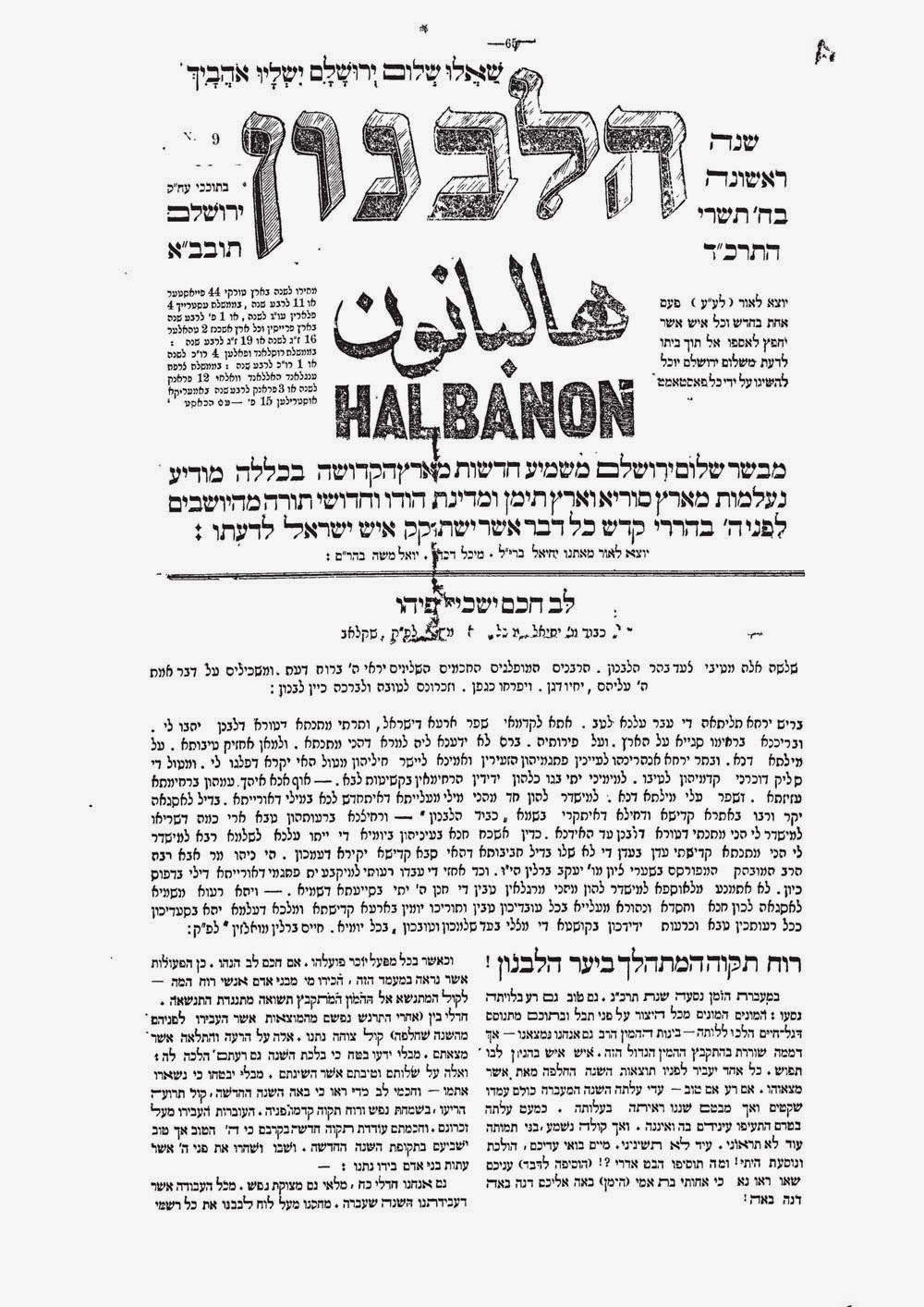
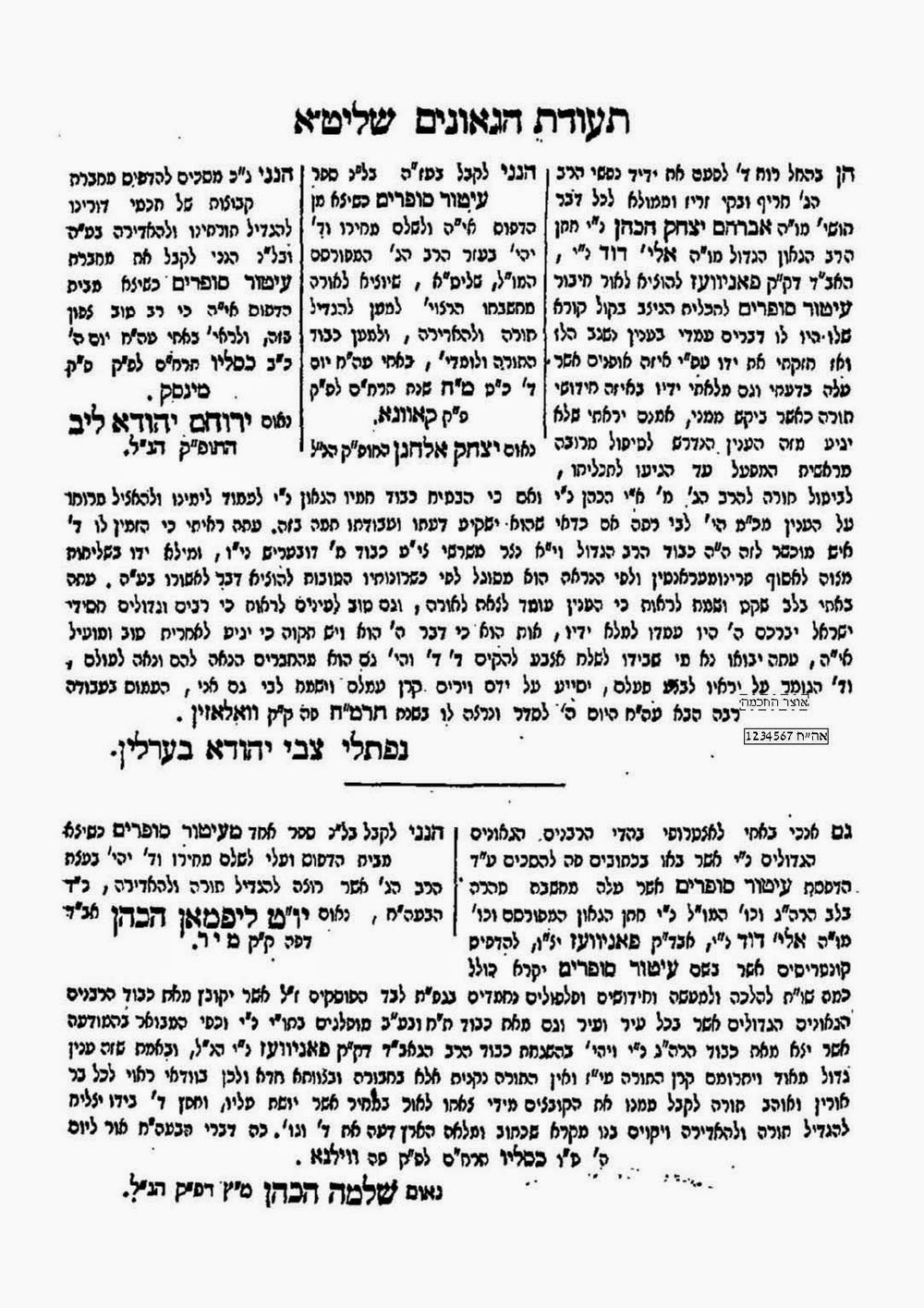
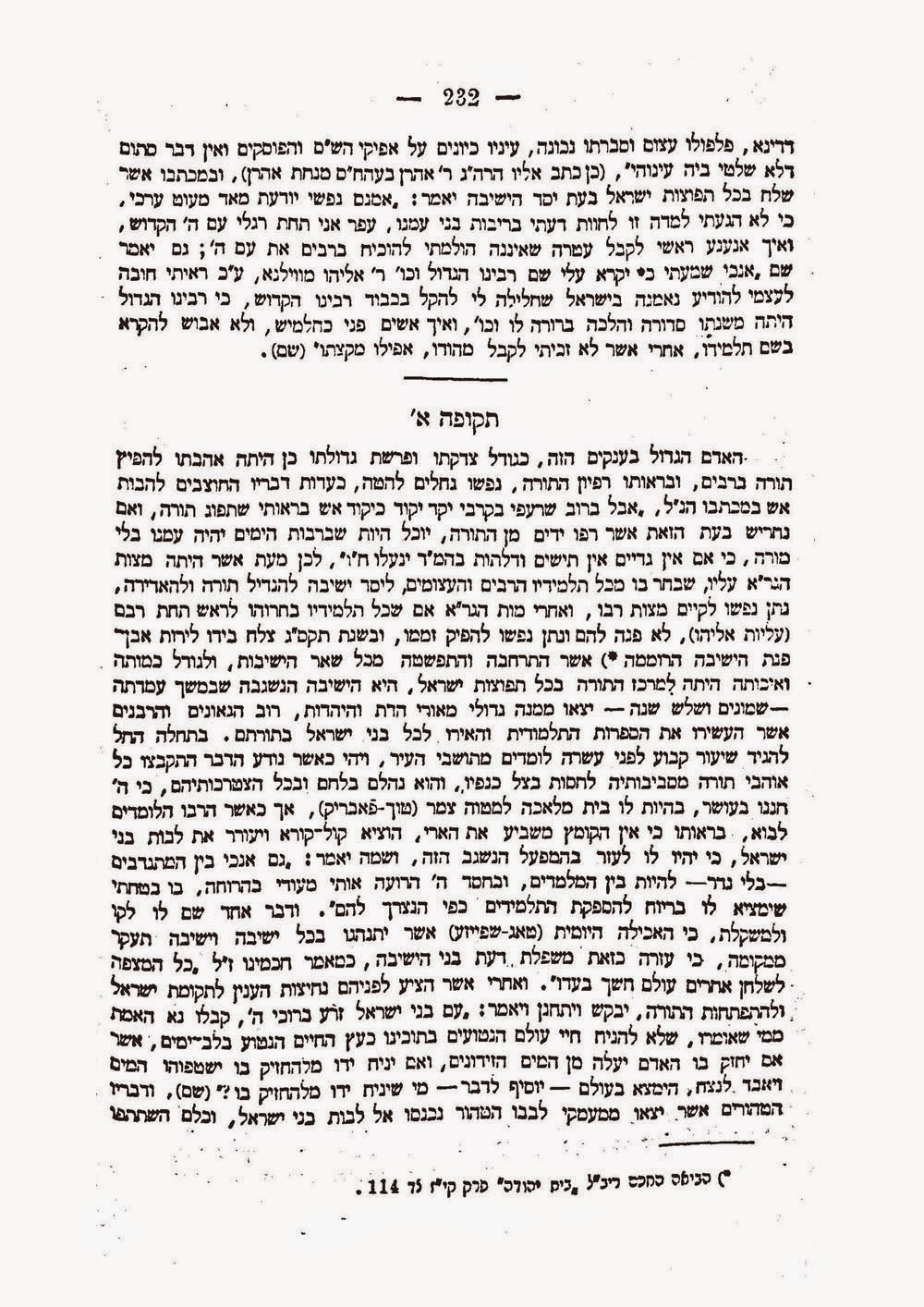
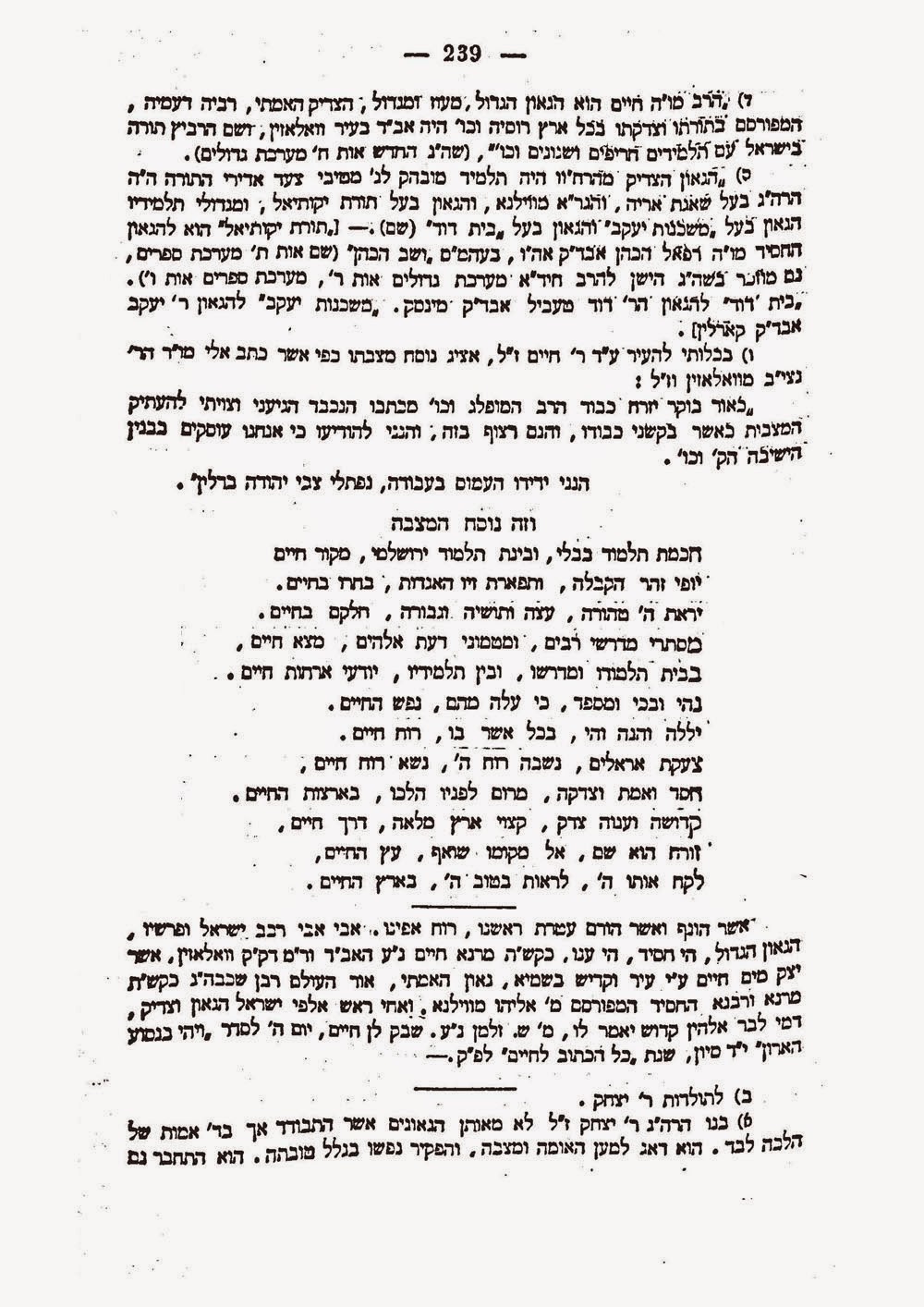
It seems that it is also the opinion of the Aderet in his Nefesh David (p.129) who did not appreciate when we wished him a happy birthday, saying that it was never a holiday among the Jews and that the only one that one finds celebrating his birthday in the Chumash is Pharaoh, while the Gmara Erouvin (13b) tells us that it would have been better not to be born … He even states that he tries to forget that it is his birthday because it causes him great sadness[15] (because “it is better not to be born …”).[16]

He emphasizes, however, that the Tzadikim have something to celebrate their birth, according to the opinion of Tosfot (Avoda Zara 5a).

He nevertheless rejoiced on the day of his 60 years for the same reasons as Rav Yosef in Moed Katan (28a), as he wrote in a letter (Eder Hayakar II, Igrot, p.93, §14 ).

Not that you have to be ashkenaz to oppose birthdays. The Rav Chalfon Moshe HaC ohen in his Yad Moshe (Vayeshev, §63 daf 70b) writes that the custom of celebrating birthdays is very present in Europe, but we (the Jews) mark this date with fasting and repentance, preferring in this the useful to the pleasant.

There is in any case a very clear tendency to connect the birthday party to Pharaoh and that would therefore be considered as a “non-Jewish” rejoicing.[17]

IN FAVOR OF CELBRATING BIRTHDAYS :

However, one could just as easily see things differently.

For the Sadigura Rebbe,[18] if the Torah tells us that there was a celebration in honor of Pharaoh’s birthday, it is not in vain, it is here for us to learn that we must celebrate birthdays. And even though Pharaoh is not a good person, the fact that the Torah mentions it indicates it has to be a followed practice. He brings as a support we learn the principle of not mixing two feasts (ein mearvin simcha bessimcha) from the Torah relating the habit of the non-Jews and particulary Lavan (see Bereshit XXIX, 27 and see Yeroushalmi Moed Katan I, 7) ; and Lavan is also the source for the idea of the seven days of wedding’s festivities.

Therefore, it should not be considered as a non-Jewish minhag, and there is no problem of Chukot hagoyim in celebrating birthdays (see also Shut Beth David, §176).

Rabbi Meir Mazouz also writes (annotations on Ben Ish Chai shana 1, Ree §7, p.580) that he has heard that some people are against celebrating birthdays but since he remembers reading that the Baal Shem Tov was celebrating his – on Elul 18th – and deduces that there is no problem.[19]

His brother-in-law, Rav Yitzchak Berdah, is even clearer in his Shut Yitzak Yeranen (V, §54) and validates the birthdays minhag by writing that those who do so have whom to rely upon.

Rav Nissim Karelitz (Chut Hashani, §195, 1, 6 p.215), unlike Rav Zeldner cited above, does not seem to consider it problematic to offer a birthday present.[20]

Ben Ish Chai (I, Ree, §17) writes that it is a good custom to celebrate birthdays every year and note that some are celebrating the anniversary of their circumcision, indicating that in his family, they usually follow the first minhag (= celebrate the day of birth).[21]

R. Avraham Pallagi in his Veavraham Zaken (Yod, §19) mentions also the minhag of celebrating birthdays. Yabia Omer (VI, WH, §29) also finds this positive.

The custom of a birthday seuda, has also been endorsed by multiple and different authors such as’ Havot Yair (§70), Shout Beth Israel (Landau) (§32), Beer Moshe (Yeroushalaimsky) (Maamar Zikhron Tov, daf 138a, §5).

The Tiferet Israel, in his will prompts his children to mutually wish each other good wishes on the days of their respective birthdays (Hamaayan -Tamuz 1971- ot 6).

It is also a habit taken seriously by Loubavitsh Chassidim. The chabad literature is full of advice and remarks on to conduct oneself on one’s birthday and even tracks sources for it in Kabbalah (Shaarei Halakha UMinhag II, §302).

We also find many Tzadikim who have celebrated their birthdays themselves.

Rabbi Avraham Pallagi already mentioned, celebrated his birthday every year from the age of 70 – according to the testimony of his son Rabbi Avraham Pallagi (Tsavaa Mechaim §40 and see also Guinzei Chaim, yud §16). And this is also the case of Rabbi David Chazan quoted in Yishrei Lev (daf 2b).[22]

We also find the Midrash Sechel Tov (XL, 20 ; p.247) stating that “the majority of “people” enjoy (mechavevim) their birthday, rejoice and make a feast”. (But it’s not clear if he speaks only of gentiles or also of jews.)

The Ktav Sofer probably did not celebrate each of his birthdays with great fanfare, but celebrated his 50th one publicly (see Shut Ktav Sofer Y “D, §148).[23]

We also know – as mentioned above – that Rav Yosef celebrated his 60th birthday (Moed Katan 28a).

And this habit was followed by several rabanim, such as the Trumat Hadeshen, quoted by his pupil (Leket Yosher II, Y “D, p.40), or the Tshortkov Rebbe and the Rudzimin’s Rabbi both cited by R.A Nayerman in his Toafot Reem (volume 1, Warsaw 1936, p.30, §23).

We also find the idea of especially ​​thanking G-d on one’s 60th birthday, as Pele Yoets in his Chesed Laalafim (§221-230, sk.8, p.372) who advocates reciting Shehechiyanu without shem UMalchut or else to prepare a fruit or a new garment for that. This is also the Ben Ish Chai’s opinion (I, Ree, §9) for the 60th and 70th birthday.

For the 70th birthday, we find in Shut Chavot Yair (§70) that it is necessary to recite Shehechiyanu (without restriction). But this opinion is not followed and the Chida (Birkei Yosef-Shiyurei Bracha §223, sk.2) will impose the same restrictions as for 60th birthday, i.e without pronouncing the name of G-d or wearing a new garment (or eating a new fruit).

See as well the Pri Megadim (Mish Zahav §444, sk.9), Shut Tzitz Eliezer (XVIII, §33), Shut Tshuva Meahava (II, §239), Samach Nefesh (erekh Shehechyanu), Rabbi Avraham Pallagi (Tsavaa Mechaim, §40), Hagahot Chatam Sofer (O.C §225), Shut R. Yedidia Tia Weill (Y “D §106 p.224 of the recent edition), Kaf Hachaim (§223, sk.28), Shut Beth Israel (Landau) (§32), Shut Beth David (§176), Chesed Laalafim (§221-23, sk.8), Divrei Israel (II, p.175) and Afarkasta Deania (I, §123), who all oppose reciting shehchiyanu “only because of the 70th birthday”, since this blessing should only be recited for the situations indicated by Chazal, as Shut Olat Shmuel (Kauder) writes (I, §22 ).[24]

However, it will still be necessary to mark the hit. The Chafetz Chaim, for his 70th birthday, invited rav Elchanan Wasserman and rav Yossef Shlomo Kahaneman for a little cake and drink and recited Shehechiyanu! (Mishnat Yaakov II, §225).

But according to other sources (Hechafetz Chaim, chayav UPealo, p.312), he did it (on his 70th birthday) on a new garment.[25]

The Chafetz Chaim also celebrated his 90th birthday and finished his Beth Israel that day (see Hechafetz Chaim, chayav UPealo, p.25).

I was myself invited to the 80th birthday (the last one) of my teacher Rabbi Chaim Yaakov Rottenberg (see Shut Beth Israel -Landau- §32), he did not recite shehechiyanu, but there was cake anyway.

Rav Fishman-Maïmon also celebrated his 80th birthday, and Rav Reuven Margulies participated to the “party” (Machanayim LXXII of Elul 5722 -1962, page 41).

Rav Nathan Adler, from London, traveled to Hanover, Germany for his mother’s 80th birthday (Letter from Rav Shlomo Eiger, printed in Igrot Sofrim, 1, p.83).

It seems that Rav Sonnenfeld also “celebrated” his 80th birthday and Rav Mendel Alter (son of the Sfas Emes) presented him his wishes despite some hesitation about the dubious origin of the birthday minhag (see his letter printed in Kerem Shlomo – Bobov – vol.205, p.47).

But for the 60 years, it is likely that there was nothing dubious, since his older brother, since the Imrei Emes, organized his (the Imrei Emes) 60th birthday party and during the meal he explained the reason for rejoicing, i.e Moed Katan 28a (Shut Maharaav – R. Avraham Binyamin Zilberberg – NY 1941, Volume 2, §61).

Returning to the 70th birthday, Rav Schneebalg (Shut Shraga Haméir IV, §69) was in favor of celebrating it.

Sdei Chemed also celebrated his (Hameassef X, Tevet 5665, IV, p.43 and p.46), and it is also the case of the Vizhnitz rebbe who celebrated it joyfully with his pupils (Israel Saba Kadisha, II, p. 177). This is also what Rav Michael Goldberger did.[26]

In 1860, for Shir’s 70th birthday (Rav Shlomo Yehuda Rapoport), his students had prepared a feast and honors for him, but he refused the honors, humbly explaining that he was born in the year Takan / TIKEN (1790) but he has not been Metaken – Ma Tikanti? (Toldot Shir of Bernfeld, p.126).

See also Voice of Truth (p.282-3) or in Hebrew Kol Chotsev (p.263-4) about the 70th birthday of Rav Schwadron.[27]

We ca find another rationale for the celebration of the 70th birthday. In the Mekor Chesed (Rav Reouven Margulies) on Sefer Chasidim (§213, note 1 ), it brings that the Yerushalmi (Yevamot VIII, 3) states that a plague occurs (at least) once every 60 or 70 years. Therefore, whoever reaches his 70 years has certainly escaped the plague that has declared “in his day”, and that’s a good reason to make a “seudat Hodaa”!

Finally, we even find in the Orchot Chaim (Bukhner) (Krakow edition 1654, §16) that the 60th and 70th birthday’s meals are of the nature of a Seudat Mitzvah.

We realize therefore that many (to the exception of those mentioned in the previous part) view positively the birthday party, and especially those of the 60th and 70th one. But we still have to define what should be done to celebrate a birthday properly.

HOW TO CELEBRATE?

On one’s birthday, it is proper to :

– as we have seen bless Shehechyanu on a fruit or a new garment (Shut Guinzei Yossef §4, 2 quoting his father-in-law, Rav Deutsch, author of Shut Pri Hassadé);

– give a lot of tzedakah (R. Chaim Pallagi in Tzedaka Lechaim – maarechet ayin §555)

– make it a “day of prayer” (Melitsei Esh p.54)

– dedicate this day or at least most of it for divine service (Torat Shalom-Schneersohn-p.398 ; Kerem Habad II, p.102 ; see also Hapardes, year 62 volume 9, p.2 on the name of the Lubavitsh Rebbe)

– learn a lot (Shut Hillel Omer, O “H §139).[28]

One should also be careful to reserve a moment for introspection and Cheshbon Hanefesh over the past year, as the Chut Hameshoulash (Munkasz edition 1893, volume 1, daf 59b-60a footnote) brings about the Ktav Sofer who had locked up hiself on his birthday (54th one) and someone who mistakenly entered the room found him sitting on the floor crying, and asked him what was happening to which he replied that he was crying over the loss of time over the past years (see also the preface to Ktav Sofer Al Hatorah, p.29)

In Shut Hadar (§18), the author states that his master – the Rav of Stretin – wanted to have an aliyah to the Torah on his birthday (which is not feasible every year …). In the same vein, the Divrei Yechezkel Shraga (parshat Vayakel) and the Tehilat Caim (p.409) bring down that the Divrei Yechezkel of Shinova wanted to be shaliach tzibur on his birthday (which is practicable more often). And this is also what R. Shaul Broch did (Shaul Behir Hashem, Ashkavta derabbi, p.275)

See also Torat Shalom (p. 406) who – for his birthday – advocates having an aliyah to the Torah, giving tzedakah, adding moments of prayer, tehilim, study and introspection, bless shehechiyanu on a fruit or a garnment (etc).

I have also read in the name Spinka Rebbe quoted in the Shut Chakal Yitzchak (I, 3) that it is appropriate on one’s birthday, to take upon oneself the commitment on something one knows he has to work on.[29]

There is also a notion of making a Siyum on a birthday.

Several rabanim wanted to make a siyum on their birthday, the Terumat Hadeshen did one on his 60th birthday (Leket Yosher II, Y “D, p.40).

See also Leket Hakemach (131) that it is appropriate to mix this rejoicing with a siyum massechet.

Thus, the Chatam Sofer planned that the end of the cycle of chumash study with his pupils falls on his birthday – the 7th Tishri (Minhaguei CS, VII, §14, p.31).[30]

His son Ktav Sofer also completed a massechet each year on his birthday (Chout Hameshoulash ed Munkasz 1893, Volume 1, daf 59b footnote).

Another fact deserves to be emphasized:

In the Sheerit Natan (p.392 ; quoted in Or Israel 46, p.249) we find a very particular siyum minhag that was taking place at Yeshivat Chachmei Lublin, every 7th Adar, birthday of the Rosh yeshiva Rabbi Meir Shapira (initiator of the study of Daf Yomi). Talmud treatises were “dispatched”, and each student took a massechet or half of it, in order that they altogether fnished Shas in one night, so that on the next day, the 7th of Adar, they were all together making a great Siyum Hashas with the Rav.

All this being said, personally, I will be tempted to give an argument in favor of those who celebrate their birthdays, but I have not seen any Acharon underlining this aspect (except Torat Shalom -Schneersohn (p.399-400 ) I found recently):

The halacha is to celebrate annually a miracle that would have happened to us (see Mishna Berura end of §218), for example the one who survives a fatal accident must celebrate this event every year.

If it is so, given the great danger of a baby birth, one could consider that it is necessary to celebrate the miracle of his birth each year.

True, nowadays, in civilized countries, the risk of miscarriage is pretty much reduced and infant mortality has also fallen down, B “H, but if the minhag has been implanted since a time when it was not the case, we may continue this custom because the danger is still not totally absent.

Only that according to this, it should also be that each mom celebrates the birthday of each of her children, because she also escaped death that day.

And, according to this rationale, we should celebrate the Hebrew date rather than the civil one.[31]

Anyway, even if no halakhic argument would push to celebrate the birthdays (and it is probable because we proved Moed Katan 28a that the Amoraim did not celebrate any birthday, only Rav Yosef distinguished itself by celebrating 60 years old – and only that one …), there is another reason, especially for children: nowadays this custom is widespread and children are sometimes misled and are tempted to move away from family. It is beneficial to show each child in the family that he is important and at least one day a year, we celebrate together. He becomes the hero of a day.

See also, a bit in this way, Kitvei Reb Eizik (Schwei) (p.273) and Torat Shalom (p.405).

At the time of the Talmud, it was not necessary, but today it can be according to the situations, the families and the place.

It would be inappropriate to say that since the Amoraim did not celebrate them, we must refrain from doing so.

To refrain from them at their time meant nothing particular, because no one was celebrating them (among the Jews at least). Today it would have another meaning for the child …

It cannot be said that he fails to celebrate, but that those who are accustomed to it should not lose it under a “religious” pretext, they must perhaps channel its spirit and enhance it by making it look, more “kadosh”, by giving more meaning to it.

See also Shut Mayim Hahalacha (Metzger) (IV, §46) who writes that it is necessary to know how to give a kedusha spirit to birthdays and not to celebrate them in frivolity.

More generally, Rav Shach used to say (see Machshevet Zkenim p.342 and also p.141 and 332) that each birthday brings us closer to death, so why rejoice? That is why only the “ben aliya”, the one who progresses from year to year in the Torah, must rejoice, because each passing year carries a new advance in Avodat Hashem, so it is closer to Chayei Netsach, the reverse of death, for the tzaddikim are called alive even after their death (Brakhot 18a).

Once a rav had suggested to the great and famous Rav Yechezkel Lewinstein – when he was mashgiach of Ponovez – to suppress the minhag of the “Santukha” (small celebration among friends of the Yeshiva when one of them is engaged) for it is systematically engaged in flattery to highlight the qualities of the chatan and the speaker, in a laudatory spirit, sometimes praises too much, which necessarily leads to a uncontrollable feeling of pride so repudiated by Baalei Moussar.

Rav Lewinstein exclaimed: “Once in the life of a man it happens that his friends give him compliments and even that you want to suppress?! “

IN CONCLUSION: It is perfectly legitimate to wish and celebrate birthdays, but you must know how to do it.

Those who are not used to accompany a family snack with Cheshbon Hanefesh are not required to adopt this minhag. But those who already celebrate this day with a small party should not abandon this beautiful habit because of some rabbis who grumble against birthdays; as we have seen, the rabbis who attached importance to these moments of rejoicing are very numerous and to the extent that one does not feast bestially but for a constructive purpose, with a feeling of Hodaa, Tshuva and introspection, it’s a very good Minhag.

[1] See also Ben Yehoyada Brachot 28a, that if a miracle happens on one’s birthday, it does not diminish his merits…
[2] It seems that some Tzadikim were not so happy to leave this world. The story that is told about the Gaon or the ‘Hazon Ish (or others, depending on the version), who would have cried before dying while saying regret a world where we can buy mitzvot for some pennies like Tzitzis, shows us that feelings are mixed ….
[3] Which means that by dying on that day, it indicates that they could have died before but have benefited from an extension, so it is “positive”.
[4] Taam Vodaas Bereichit XL, 20, however, see Nefesh Chaya (Orach Chaim §580).
[5] From Rav Aharon Zeldner’s Mate Aharon (p.68) it is deduced that giving a gift to a friend on his birthday is a non-Jewish custom not to follow.
[6] Minchat Elazar in his Divrei Torah (V, §88).
[7] This argument seems strange. In fact, we find in the prayers, all kind of different expressions of gratitude to G-d for the life He gives us (the Gomel, for example), which seems to indicate that life has its interest …

Moreover, Ramban (Shemot XIII, 16) writes that we must thank G-d for creating us.

We must therefore temper the teaching quoted (Erouvin 13b), since it is impossible to interpret it as if God had made a mistake by creating us!

It is only from men’s viewpoint that he would have been “noach“, pleasant/easier, to not have been created. Easier, certainly, but not “preferable” since G-d knows what He does.
[8] But his son (Shut Migdalot Merkachim, O.C, §31) greatly relativizes his father’s opposition by explaining the very particular context of this responsum and the specific case of the person who was concerned. Shut Vayaan Yossef (§73) also diminish the opposition of Arugat Habossem stating he was only opposed to big feasts, but not to small family party at home (see also in the same way Kvod Chachamim (Jerusalem 1982 – p.208, rav Meir Eisenstein’s maamar).
[9] See also in his Knesset Chachmei Israel, kountras 3, §66, 4 daf 65b and Kountras 6, §115, 1 daf 125a.
[10] Though he tolerates a birthday meal if it is exclusively reserved for scholars, as Rav Yossef did in Moed Katan 28a – see Lehorot Natan IX, § 5, 11.
[11] Rav H.D Halévy (Asse Lecha Rav IV, §26) has not read it, but writes that it is obvious that there is no issur Avoda Zara nor Chukot Hagoyim, because the Avoda Zara part was only the sacrifices they brought to their gods, but to celebrate a birthday is in itself a healthy idea.
[12] He quotes also his grandfather Rav Pinchas Chaim Horovitz, the Pitcha Zuta, whom he was surprised to see on his birthday – on the 18th Tamouz 1938 – crying while reading Tehilim. He explained to his grandson (the Ahavat Israel) that he was crying over the suffering he had cause to his mother when he was born 80 years earlier … However, see how Rav Eisenstein (Zichron Shlomo, p.214 and following) rejects every argument of Rav Horovitz.
[13] Shout Knesset Avraham Yoel – Abelsohn – §6 p.116 and Knesset Chachmei Israel §115, 1 daf 125a.
[14] He also states that when the pupils of Rav Yitzchak Elhanan Spektor of Kovno in 1889 wanted to celebrate the anniversary of his 50th year in the rabbinate, he was firmly opposed it – but this was not really a birthday [Actually, it was for his 25th years (not the 50th) in Kovno, as we see in Hatzfira (No. 68) and later on in Shana Beshana (1976, p.237), even if it was already his 52th in the rabbinate in different cities].

The opposition of the Rav was also published in Hatzfira (No. 77 – 11 Nissan 1889) and for more on this subject see Toldot Yitzchak p.114 of Rav Yaakov Lifshitz, Darkenu (shana II , guilion 3, p.16) and Pardes Yosef (Vayeshev Miluim p.48) who quotes several opponents of birthdays, including “the Toldot Yitzchak of an Italian rav with the Kotna rav’s haskama” [There is indeed a Toldot Yitzchak of the rav Yitzchak Luzzato but it is a book of poems and songs which does not contains neither an approval of the Kotna’s rav, nor opposition to birthdays party. In fact, the Pardes Yossef mixed up when copying the references on this subject from the Darkenu (op cit) which quotes Toldot Yitzchak and then Kochav MiYaakov of an Italian rav with approval of Kotna’s rav (in the Kochav MiYaakov it’s p.54)].

As an aside, many other rabanim did not mind celebrating the anniversary years of their rabbinate or action for Torah, often by the publication of a sefer Hayovel, as for R. Shimon Schkop for his 50 years of teaching (see what Moshe Avigdor Amiel writs in this collection, in 1943 there will also be a sefer Hayovel for him), Rabbi Meir Shapira from Lublin (in 1930) for his 20 years in the service of the Torah, Rav Fishman-Maïmon for his 50 years (in 1926), sefer Hayovel for Rav Rabinovicz’s 70th birthday (NY 1930), another for 70 years of rav Azriel Hildesheimer (Shay Lemora), and for his rav, rav Yitzchak Bernays, for whom his 25 years of rabbinate in Hamburg were celebrated with great fanfare in 1846 (Shana Beshana 5736 p.238).
[15] Rabbi David Pardo, author of many sfarim including Lamnatzeach LeDavid and Chasdei David, writes at the end of his commentary Shoshanim LeDavid that he finished it on his 34th birthday, 1st Nissan 1752, and it does not seem to sadden him at all …
[16] But he himself writes in his Har Hamoria (Ahavat Shalom ed., P.59) that he requoted the Bracha of Shehechiyanu for his birthday with great joy! [However, in this instance, he was sick, with 41 ° C fever (!) and thought he would pass away. So, when he had the strength to pray Shavuos Maariv BeTzibur, he rejoiced (and thus the Shehechiyanu blessing). Especially since having been born in Shavuot, he perhaps said it for the Yom Tov, although he wrote that he requoted it for his birthday).
[17] We also find some who were opposed to the celebration of a death day (yohrtseit) of a tzaddik! In 1890, some wanted to celebrate the 50 years of the death of Chatam Sofer, but his students, Rav Naftali Sofer (see the beginning of Kountras Beth Efraim printed at the end of Et Sofer Volume 2) and Rav Yehuda Modern (strange name for a disciple of Chatam Sofer, symbol of the opposition to modernism deviating from the massoret) for whom it was a non-Jewish custom directly inspired by Maskilim who had recently (in 1886) celebrated the 100 years of the death of their master Mendelssohn, opposed it. “Yohrtzeit” yes, but “specifically for the 50th years”, no ! (Leket Shoshana (1942, §19) and Beth Vaad Lachachamim (Nissan 5771, p.463)). It is the idea that there would be a particular reason to celebrate only the symbolic years because “round”, which displeased these Rabanim.

Personally, I do not see why this notion should be classified as heretical / non-Jewish, if not – and it is this their real motive – in my opinion – because of the likeness with the Maskilim whose aspirations were rarely holy. The Rabanim at that time were doing everything to remove their flock from the Maskilim in order to stop the spread of the Haskala “virus”, it is a kind of prophylactic disposition. It would have been purely conjunctural, so, nowadays “the prohibition” would no longer be appropriate, but disbanded. And it is probably what could explain why for the 100th years of the death of Chatam Sofer (in 1940), they published a Sefer Hazikaron with a great ceremony in Pressburg, presided over by R. Akiva Sofer himself.
[18] Quoted in Messilot-Kislev 5747 ; see also Abir Yaakov – of the Sadigura Rebbe- p.161
[19] He does not remember where he has read this about the Baal Shem Tov, but I suppose it’s in Chabad literature, for example in Sefer Hasichot (1943, p.154, 187), Kountras Chay Elul, and Kerem Chabad (II, p.100).
[20] See also Rav Halevy in Assé Lecha Rav (IV, §26) for whom there is also no problem.
[21] Shut Beer Eliyahu (Katz) (II, Y “D §32) writes that, in his opinion, the advantage of the day of circumcision can only concern the first twelve birthdays, but from the Bar Mitzvah and on, it is more logical to celebrate the day he took upon himself to commit to the mitzvos, which is birth.
[22] See the Knesset ChaChmei Israel – kountras 3 – §115, 1 for which only birthdays of 60 and 70 deserve attention, but not the following ones.
[23] see Afarkasta Deania (I, §123) who is surprised about it because it seems to be against his father’s position. In fact, the Chatam Sofer states (Torat Moshe, Vayera, Bereshit XXI, 8) that Avraham used to celebrate every year on his son Yitzchak’s circumcision day – not his birthday.
[24] This rationale is rejected by the Tshuva Meahava for whom the Chavot Yair is not absurd (when advocating the shehechiyanu blessing in other occasion than those of takanat chazal) because, as the Bach (où, O.C 225 ?) writes, it is a bracha that has been instituted on man’s joy (and not only on the precise situations listed by chazal.

The Komarno Rebbe (Chulchan Hatahor §223, 7) sides with the Chavot Yair and indicates – at odds with all the poskim listed- to recite the bracha (he often has marginal positions in this book).

See also Rav Shlomo Tzvi Shik (Shout Rashban I, §61). According to whom, Chavot Yaïr does not hold one should recite shehechiyanu (!), but he personally thinks we should.
[25] Hard to know who to trust when the two are also contradicted by Rav Shlomo Zalman Bloch who, when he heard that the Chafetz Chaim would have given a small snack for his 70th birthday, exclaimed : “Sheker Gomur! Dos iz nit kein arbeit far Chofetz Chaim, s’iz nit a yiddishe weg!” (Hatzadik R. Shlomo, p.29, ot 18). In other words, according to him, it is absolutely impossible for the Chafetz Chaim to do so, because it is not “Jewish” to celebrate his birthday … (see Or Israel 24, p.193 note 103).
[26] see Shut Rashban I, §61 where Rav Shik wrote to him that he learned from his son (the son of rav Goldberger) that his father (rav Michael Goldberger) was about to celebrate his 70th birthday and according to him (rav Shik) it would be appropriate to recite Shehechyanu, and that he himself, if he was able to attend, would have recited it (because of Haroe et chavero achar 30 yom) as well as shechalak MeChoChmato liyereav (which is recited at the sight of a great sage in Torah).
[27]
To celebrate the 70th years of a Tzadik is noble and desirable according to the Chesed LeAvraham (Brudno) (volume 2, pticha, p.6 §4)

We also find the idea of ​​rejoicing on the birthday -at least a tzadik’s one- in the Midrash Tanchuma (Pekoudei XI) which states that G-d wished to mix the joy of the Mishkan with the joy of the birthday of Yitzchak (the 1st Nissan).

See also Tosfot and Rosh (Nazir 14a) explaining there is a doubt arising when someone says “I will be as Moshe the 7th adar” (is he Nazir or not?) because this person might allude to Moshe’s death a sad day when mourners engage in a Nezirut, or he alludes Moshe’s birthday a day of celebration and joy …

Still on the subject of celebrating important people birthdays, it seems (from see Oshea (VII, 5) “yom malkenou” and Metzudas David, ad loc) that contrary to what Rav Fraenkel writes in his Labar-mitzvah Encyclopedia (p.217), Jews did celebrate their kings’ birthdays, who explains that this is the birthday of the king and there was a feast. However, Malbim (ad loc) explains otherwise.
[28] In yeshivos, the custom is to “have a mishmar”, i.e to study all the night of the 20 years anniversary.
[29] If we do not find one (we are a great tzaddik or we do not understand the concept), we can always work on acquiring a ” Jewish spirit “. In fact, it is sometimes thought that doing all the mitzvot makes us a good Jew, but the truth is that we can do lots of mitzvot, pray three times a day, put on tfilin and tzitzit, keep Shabbat, eat strictly kosher etc. … and yet … being far from a true Judaism.

The Piaseczner Rebbe, R. Kalmish Shapiro (killed by the Nazis in Trawniki camp on 4th Heshvan 1943 after being deported from the Warsaw Ghetto in April 1943 following the insurrection), had a diary in which he wrote on his 40th birthday (19 Iyar 1929) that he should take a commitment on himself, but that he does not know what to take as “kabala” this year, “to study more? it seems to me that I’m not wasting a moment in my schedule; stay away from Taavos ? Baruch Hashem I am not dependent on any material Taava ; so what do I lack ? What I lack … is being “a Jew”! I feel like a human form, with its colors and shapes etc. to which only one thing is missing: the Neshama! Master of the world! … This is what I wish for this year (from now on), I want to convert and become a Jew! “(Quoted in Mimaayanot Hanetsach p.294).
[30] However, in the Shut Afarkasta Deania (§123), he quotes the Chatam Sofer as being opposed to choosing the birthday rather than circumcision day (see on this subject Or Israel 49, p.142, note 46).
[31] But Zichron Shlomo (Jerusalem 1994, p.219) emphasizes that according to the idea that birthdays are days of good Mazal (as mentioned in the first part), as it is related to the stars (mazalot), one must follow the solar/civil calendar ! But more on this (which date someone should celebrate) in a future post.


A Review of Parashas Hamelech – Al Mitzvas Hakhel, by Rabbi Moshe Parnes

A Review of Parashas Hamelech – Al Mitzvas Hakhel, by Rabbi Moshe Parnes

Reviewed by: Rabbi Moshe Maimon, Jackson, NJ

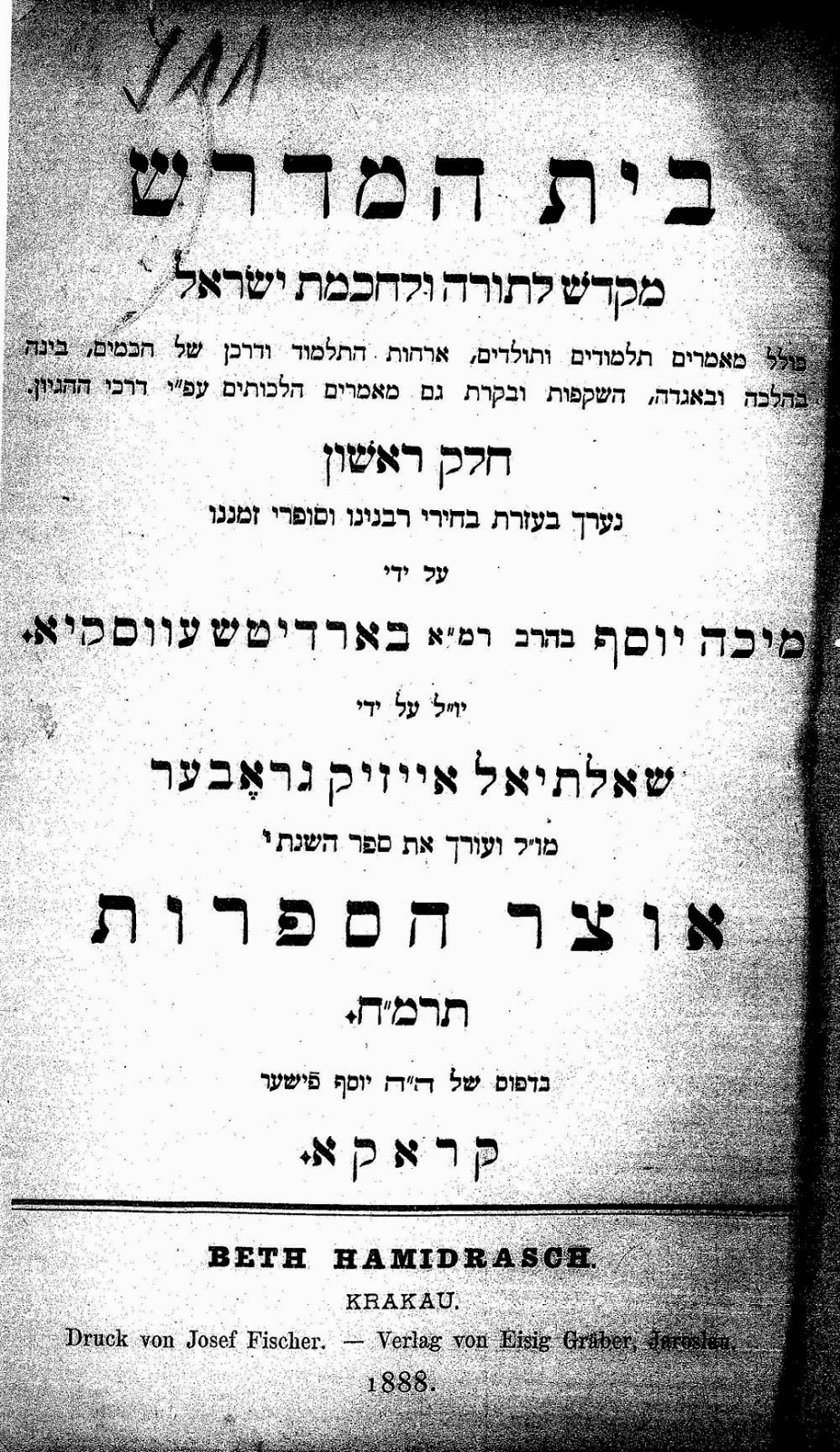
Sefer Parashas Hamelech on the mitzvah of Hakhel offers a unique and illuminating contribution on one of the lesser-studied mitzvos of the Torah. It fits the modern genre of encyclopedias on arcane subjects, while also combining elements of older and more established trends in Torah publications, weaving it all together in deft scholarly fashion. It is both an exhaustive accumulation of sources primary and secondary on its topic as well as a lively sefer iyun, providing fresh and penetrating perspectives on everything it touches.

The little explored, but very timely mitzvah of Hakhel which in the Temple era entailed a mass gathering at the Beis Hamikdash in the post-sabbatical year, where the assemblage would hear the Jewish King perform a special Torah reading, has been largely uncharted by the major halachic compendiums. A noteworthy exception is the Rambam who included it in his Hilchos Chagigah; the section of Mishneh Torah pertaining to the tri-annual Temple pilgrimage. The obvious reason for its exclusion from the codes is that this mitzvah was not of practical relevance for the Jewish Diaspora, and thus became a topic for theoretical discussion by experts only.

Interest in this mitzvah, however, was generated in scholarly circles with the return to the Land of Israel by large segments of World Jewry. Late in the 19th century, the illustrious R. Eliyahu David Rabinowitz-Teumim (“the Aderes”) published (anonymously) what to this point has been considered the most exhaustive treatment of the topic, his Zecher Lemikdash. (A major focus of the Aderes has been the possibility of reestablishing this mitzvah in modern times, even if only as a testimonial—an idea elaborated upon by R. Shmuel Kalman Mirsky in his article in Talpiyot vol. 6 pp. 92-118).
Additionally, besides for being virgin halachic ground, this topic also leads into fascinating discussions on more classical halachic topics such as laws the pertaining to daily prayer, the reverential treatment of Torah scrolls, and the specific requirements for the weekly Torah reading. Naturally, an incisive treatment of the unique Hakhel service in the Beis Hamikdash is of necessity accompanied by deep dives into the broader context of other mitzvos that were specifically pertinent in the Temple era, as well as close examinations of various elements of the Temple services and the qualifications necessary for Jewish royalty along with other such related topics.

With every passing shmittah cycle, interest in Hakhel seems to swell and this year is no different. Our author, Reb Moshe Parnes, a self-described businessman living in Boro Park but clearly a gifted scholar who devotes a good portion of his day to intense Torah study, timed the launch of Parashas Hamelech perfectly. His magnum opus was primed and perfected just in time for the culmination of the current shmittah cycle.

The volume begins with a thorough introduction devoted to the “aggadic” aspects of Hakhel and presents various different perspectives on the unique mitzvah, all culled from a wide variety of classical sources, such as the following:

  • A mass Torah-study session.

  • A demonstration geared for enhancing fear of Heaven among the masses.

  • An outgrowth of the mitzvah to make pilgrimage to the Beis Hamikdash during the shalosh regalim (a perspective enhanced by the Rambam’s placement of this mitzvah in Mishneh Torah as mentioned previously).

  • A reenactment of kabbalas haTorah.

The main body of the sefer is divided into three parts: The primary text is written in the style of a Shulchan Aruch with short, anonymous pronouncements given in the form of chapters (simanim) and paragraphs (se’ifim), which cover all the halachos of Hakhel divided into three main categories:

A] The section on the general aspects of the mitzvah covers the exact time and place for the mitzvah; the technical aspects of how the platform is constructed and the Torah scroll that is to be used for the reading.

This section ends with a spirited discussion of the sources regarding the fulfillment of this mitzvah in contemporary times. It concludes that since the mitzvah is dependent on mitzvas r’iyah (the Temple pilgrimage) which cannot be practically fulfilled without the Beis Hamikdash, the mitzvah of Hakhel cannot either be fulfilled at this time. To counter the suggestion of the Aderes that we at least make a remembrance for this mitzvah, the author points out that a zecher is not enacted when the mitzvah itself was never performed outside of the Beis Hamikdash. (The Aderes himself, following the Yaavetz, adopted the view that the custom of reading Sefer Devarim on Hashanah Rabbah evolved out of a zecher for Hakhel. If this were true, the author’s point would be considerably weakened, but it should be noted that this idea is purely speculative and does not account for the fact that the custom is practiced every year, whereas Hakhel was only relevant once in seven years).

B] The second section is devoted to the unique Torah reading that constitutes the actual mitzvah of Hakhel, and encompasses all aspects of this reading. At the end of this section, the author shows how many sources understood that this Torah reading was intended to lead into a practical mussar shmooze by the king, who would even exhort the people to be more pious in their religious observance. One prominent Italian sage, R. Shmuel Yehuda Katzenellenbogen (d. Padua, 1597), illustrates this point with a sampling of a schmooze targeting the ills of his own time—married women who did not cover their hair, or who wore wigs!

C] Section three covers all the rules regarding who is obligated by this mitzvah and who is exempt. No scenario is left unexplored, from children to converts to people with physical disabilities and much more. It is here that we can find detailed discussions pertaining to all aspects of life, even one as seemingly mundane as whether someone with impaired vision necessitating eyeglasses is considered “blind” and thereby exempted from Hakhel.

The main text is rather comprehensive and treats pretty much every aspect of the halachos of Hakhel, but it is in the two subtexts where we are treated to full blown halachic expositions of a great array of topics. The section titles “biurim” deals primarily with the material treated in the main text, providing the sources for the cited opinions with a good deal of breadth and thorough analysis—sure to delight those with a lomdishe bent.

The “iyunim” section, on the other hand, branches off the “biurim” section and includes in its scope interesting dives into topics which may be tangential to the main discussion but are compelling on their own. A sampling: What are the halachic prerequisites for determining who is a shoteh (insane)? Did the Israelite kings of the ten tribes have the halachic status of Jewish kings? What are the parameters of the mourner status conferred on one who has been placed in niddui (excommunication)? What is the reason for reading the Aseres Hadibros with the taam elyon? These and many more discussions are listed in the detailed topical index included at the end of the sefer.

The source material used for this work is exceptionally rich. When we read in the introduction the passionate dedication to the author’s late father, who possessed a tremendous library and knew how to utilize it well in his scholarly pursuits, we get the sense that the son is likewise in possession of these blessings. The fifteen-page bibliography at the end of the volume provides the authors’ names and dates of publication for the roughly 500 titles cited in the text.

A section at the end of the sefer includes a lively back and forth between the author and other scholars pertaining to their comments on his work, in which Rabbi Parnes credits his colleagues generously for their insights.

Recent years have seen a flurry of new sefarim which seem, more and more, to deal exclusively with highly specialized topics. This may just be an expression of the development of new directions in Torah scholarship in the contemporary “Torah world.” As celebrated masters of kol hatorah kulah become ever more scarce, their places are taken by localized experts who specialize in specific areas of Torah.

Perhaps, however, this trend is merely symptomatic of the nature of supply and demand in the sefarim market; a sort of Torah capitalism if you will. Consumers, sensing that previous generations have already sowed all that are worthwhile in the field of rabbinic scholarship, trend towards the encyclopedic, targeting sefarim that will reap all the fruits of the generations of labor and serve as a repository of all the information generated by scholars–both ancient and recent–on a given topic. Contemporary authors are simply aiming to meet that demand.

Whether indicative of new trends in Torah study or simply of changing patterns in the marketplace, sefarim focusing exclusively on issues that previously took up a few simanim (or, in some cases, no simanim) in Shulchan Aruch have become commonplace of late. Typically, these works excel more in their bekiyus than in their iyun. While these sefarim can be very effective for research purposes, one who still wishes to revel in that old time iyun is often better served looking for a title authored by one of the greats of the past.

Yet, as evidenced by the sterling example of Parashas Hamelech, the sources that have supplied countless generations with grist for the iyun mills are still capable of inspiring further significant halachic developments when utilized properly by capable baalei iyun. Rabbi Parnes should thus be commended for his wonderful and singular offering to the world of Torah scholarship that combines both of the aforementioned trends.

May the merit of the additional Torah study spurred on by this engaging work contribute to the tipping of the Heavenly scales and hasten us to that long-awaited moment where we can once again practice this monumental mitzvah.


The Aderet (part 2); Sonya Diskin and R. Yitzhak Yeruham Diskin; Zvi Glatt; and a New Letter from R. Herzog

The Aderet (part 2); Sonya Diskin and R. Yitzhak Yeruham Diskin; Zvi Glatt; and a New Letter from R. Herzog

Marc B. Shapiro

Continued from here

1. Regarding R. Kook and the Aderet (R. Eliyahu Rabinowitz-Teomim), we find that R. Kook omitted something that the Aderet wrote. I don’t know if, strictly speaking, we can call this censorship, but R. Kook definitely omitted something that he was not comfortable with. Here is the Aderet speaking about himself in Nefesh David, p. 113, published by a leading student of R. Kook, R. Moshe Zvi Neriah (and printed together with the Aderet’s autobiography, Seder Eliyahu.[1a]).

Look at the second paragraph of section 5 and section 6. The Aderet first speaks of his great love for Torah scholars. In the next paragraph, the first one of section 6, he speaks of his hatred for sinners. Finally, in the second paragraph of section 6, he says that he has no ill feelings toward non-Jews who do not hate Jews, and that he only hates those whom the Sages commanded us to hate.

Now, look at R. Kook’s Eder ha-Yekar, published in 1906, beginning with the last line on p. 71 and continuing to the end of the paragraph on p. 72.


If you compare this to Nefesh David, sections 5-6, you will find that R. Kook leaves out the three paragraphs I mention above. I can see why he would leave out the second paragraph, about sinners, as it would not be in line with his own understanding of the irreligious in the Land of Israel. But why also leave out the first and third paragraphs? The only explanation I can think of is that he figured that by removing the entire section—where the Aderet speaks of his love for Torah scholars, hatred for sinners, and his lack of negative feelings toward non-Jews—this would not be regarded as censorship, as he is removing the whole section, even the non-objectionable parts. If anyone has a better idea, I would love to hear it.

Speaking of the Aderet and censorship, see the article by Yaakov Fuchs here which shows how the Aderet’s strong criticism of the Rogochover was censored. Fuchs has also found that when the Aderet’s book Shema Eliyahu was published (under the title Over Orah [Jerusalem, 2003]) there was also censorship of the Aderet’s negative judgment of the Rogochover, whom he saw as disrespecting great sages of the past. The original manuscript of the Aderet can be seen here, and below is a transcription of the missing passages as prepared by Fuchs, which can be compared with the censored version that appears in Over Orah, pp. 43-44.

The Aderet’s words are very sharp and align with how he spoke about other rabbis whom, for one reason or another, he had a negative view of. Regarding the Rogochover, while recognizing his unbelievable knowledge, the Aderet could not accept what he saw as the Rogochover’s disregard for the accepted conventions of halakhic procedure and his disrespect for prior sages. He goes so far as to state that if we lived in a time of great rabbis—rabbis who had real authority—they would not allow the Rogochover to issue halakhic rulings.

Eliezer Brodt called my attention to another sharp comment by the Aderet against the Rogochover, found in Shmuel Kol, Ehad be-Doro, vol. 1, p. 202. Brodt also noted that this was censored when reprinted in a footnote in the Mossad ha-Rav Kook edition of the Aderet’s Seder Eliyahu, p. 122, and the Rogochover’s name was omitted when the passage was included in an article in Etz Hayyim 19 (5773), p. 55.

The Aderet, who was older than the Rogochover, can be forgiven for speaking the way he did, and he was not the only contemporary of the Rogochover who had these feelings.[1b] But just as we can find negative statements by great rabbis about other rabbis who were their contemporaries, and now we can see how misguided these negative statements were,[2] I think it is the same with regard to the Aderet and the Rogochover. The rabbis of the generation after the Aderet all related to the Rogochover with enormous respect, even if they did not accept his halakhic rulings.

Regarding the Aderet’s book Shema Eliyahu, one thing that was not censored when it was published appears on p. 223, and I thank Yosef Ginsberg for calling it to my attention.

We see that the Aderet and his interlocutor, R. Getzel Horowitz, assumed that the concept of Tikkunei Soferim is to be taken literally, meaning that the text of the Torah was changed from its original version given to Moses. The Aderet suggests that the Tikkunei Soferim are actually halakhah le-Moshe mi-Sinai.

For more concerning the Aderet and censorship, or rather non-censorship, I must recall my very first post on the Seforim Blog, from January 25, 2007, found here. It is titled “Uncensored Books”. I provide two examples where I state that had the publishers known who was being spoken of, they would have censored the text. Regarding the Aderet, I wrote as follows:

Recently many books by the Gaon R. Eliyahu Rabinowitz-Teomim (the Aderet) have appeared, by publishers with very different hashkafot. The volume of teshuvotMa’aneh Eliyahu, was published by Yeshivat Or Etzion in Israel, whose Rosh Yeshivah is R. Hayyim Druckman. It is obvious that the editors have no knowledge of American Jewish history, otherwise, the words I quote (from p. 352) would never have been allowed to appear. The editors no doubt assumed that the Aderet was attacking some phony. The name Jacob Joseph [called Jacob Harif by the Aderet] means nothing to them.

וידענו היטב היטב את האיש ואת שיחו תהלוכותוי ותחבולותיו מתחילה ועד סוף . . . ואותו הרב ה’ יעקב, שלא שמש תלמידי, חכמים ומלך מעצמו, ע”פ תבונתו כי פקח גדול הוא אינו מגיע לקרסולי תלמידי תלמידיו של הגאון חתם סופר ז”ל, לא בתורה ולא במעשים טובים, והרי לפנינו שעזב עיר ווילנא תפארת ליטא, והלך לנוע אל ארצות אמעריקא להיות שם רב ראשון בנויארק כחלומו אשר חלם. והרואה דברי הר”מ פ”ו ה”א מדיעות, יעוי’ שם היטב בלשונו, יראה עד כמה מלאה לבו יראת שמים לעשות כן

He goes on demeaning the Chief Rabbi of New York, but you get the picture.[3]

Ad kan what I wrote in the post. After the post’s appearance it was pointed out to me that the index to Ma’aneh Eliyahu properly identifies R. Jacob Joseph (Harif). So perhaps I was mistaken, or it is also possible that the people who put the sefer together did not know who R. Jacob Joseph was, and the person who put together the index was someone else entirely.

Returning to haskamot, let me mention another interesting point. Someone recently sent me a picture of a haskamah to the newly published book by the late R. Dov Yaffe, Ha-Va’adim shel Motzaei Shabbat.

What makes the haskamah (mikhtav berakhah) so significant is that it is by a woman, namely, his widow. I was also surprised that she is identified by her first name, something not always seen in haredi circles in Israel.

This is actually not the first published letter of this sort by a woman. R. Yehoshua Zev Zissenwein’s Tzir Ne’eman was published in Jerusalem at the end of the nineteenth century.[4]

After a group of haskamot from a wide range of rabbis whom he got to know in his work as a meshulah (including R. Jacob Joseph and R. Hillel Klein of New York and R. Abraham Abba Werner of London), comes what is called Mikhtevei Tehillah. This is a list of people who signed up to receive the book and positive comments they made. On the last page the names of three women are given, including Sonya (Sarah) Diskin,[5] the widow of R. Joshua Leib Diskin.[6]

Sonya Diskin was a very influential person in the Old Yishuv community of Jerusalem, because she had a great deal of influence on her husband. After her passing, the following letter appeared in Eliezer Ben Yehuda’s newspaper Hashkafah,[7] signed by someone who called himself a student of the Brisker Rebbetzin (i.e., Sonya Diskin, whose husband was rav of Brisk before moving to Jerusalem).[8]

There is a lengthy and fascinating Wikipedia entry on Sonya Diskin here, from which I learned that her marriage to R. Diskin, which was a second marriage for both and did not produce any children, even made its way into an Agnon story. For other stories told about her, see Yitzchak’s Seforim Blog post here, and the כבר היה לעולמים blog here. You can definitely say she “made it”, as she had a pashkevil directed against her in Jerusalem, which I am certain makes her the first woman to be given this honor. Also of note is that the pashkevil dates from when her husband was still alive. (In later years, Golda Meir and Aliza Bloch, the mayor of Beit Shemesh, also had paskevilim directed at them.)

The pashkevil is found in Binyamin Kluger, Min ha-Makor, vol. 3, p. 46, and in what it regards as fake piety, it refers to how Sonya Diskin wore tzitzit and that she put socks on her cat, so that the cat would not move crumbs of hametz from room to room. (Elsewhere it is reported that she did this on Passover and her fear was that the cat would bring in hametz from the street on its feet.[9] According to Pesahim 9a we need not be concerned for this.) Regarding Passover, it is also reported that Sonya Diskin told her husband, after he scolded her for her humrot, “If I rely on you and your Shulhan Arukh, we’ll be eating chametz on Passover.”[10]

The latter story is very similar to a story told about Mrs. Tonya Soloveitchik, the wife of R. Joseph B. Soloveitchik. The way I heard the story, in the name of Prof. Haym Soloveitchik, is that when Mrs. Soloveitchik came home from the hospital and saw milk and meat plates in the sink, she started rebuking her husband. The Rav defended himself: “According to the Shulhan Arukh, this is OK.” To this, Mrs. Soloveitchik replied: “Your Shulhan Arukh is going to treif up my kitchen.”

After seeing what Sonya Diskin told her husband, I found it too much of a coincidence that two great rebbitzens would have expressed themselves in the same fashion. I turned to Prof. Soloveitchik, presented him the story with his mother as I heard it, and asked if it is true. He replied as follows: “The story is half-true. My mother said: ‘You are making my kitchen treif.’ My father said nothing and neither did I. People have prettied-up the story by fusing it with the well-known story of Sonya the rebbetzin, the wife of R. Yehoshua Leib Diskin.”

There is another Passover story told about Sonya and her husband: R. Diskin saw Sonya working very hard to clean the house of hametz. Exasperated, he jokingly said to her that the only hametz in the house is her. To this, she replied bitingly: “Don’t worry about me. A long time ago my father sold me to a goy [i.e., R. Diskin].”[11] This is actually an old Yiddish joke, see here, that was apocryphally connected to Sonya.

Returning to Zissenwein’s book, the introduction is noteworthy as it reveals that Zissenwein was one of the founders of the early settlement Yesud ha-Ma’ala, and that this was done at the direction of R. Diskin.

Regarding R. Diskin, it is notable that R. Jacob Moses Harlap wrote to R. Kook about a dream he had in which R. Diskin requested that R. Harlap ask R. Kook not to hold anything against his son, R. Yitzhak Yeruham, and not to degrade him. R. Diskin explained that his son is his only child, and his mistake did not come from a bad place.[12] What this alludes to is that R. Yitzhak Yeruham was opposed to R. Kook being appointed rav of Jerusalem. In fact, there is a letter from R. Zvi Pesah Frank to R. Kook explaining that R. Yitzhak Yeruham wanted to be appointed rav himself, and he was upset with R. Frank for not supporting him in this matter.[13] (R. Frank was a big backer of R. Kook.[14])

Innocent mistake or not, in later years, R. Yitzhak Yeruham, together with R. Joseph Hayyim Sonnefeld, would give cover to those who continuously degraded R. Kook in the most objectionable ways imaginable. Yet for the sake of the Yishuv in Eretz Yisrael, R. Kook told R. Diskin and R. Sonnenfeld that he forgave everyone who attacked him and wanted to work together with R. Diskin and R. Sonnenfeld. Here is his open letter in Iggerot ha-Re’iyah, vol. 4, no. 274, where he is very direct in telling R. Yitzhak Yeruham and R. Sonnenfeld that they have not behaved in a manner befitting Torah scholars.


See also this letter in Iggerot ha-Re’iyah, vol. 4, no. 201, where R. Kook mentions that R. Yitzhak wanted to be appointed rav of Jerusalem, and that out of respect for him and his late father, R. Diskin, R. Kook delayed accepting the offer to become rav of Jerusalem.


Regarding R. Yitzhak Yeruham, it is worth noting that when he was still in Europe, he was regarded as a very modern person who dressed in European fashion, knew French, and valued secular studies. It is even reported that he identified as a Zionist. This all changed when he came to Eretz Yisrael.[15]

Since this post has dealt with the Aderet as well as various women, it is a good place to note that R. Baruch Epstein mentions that the sister of the Aderet was quite learned and that a comment of hers was published in the Odessa Torah journal Yagdil Torah.[16] I searched Yagdil Torah on Otzar ha-Hokhmah but could not find what Epstein referenced. I thank Eliezer Brodt for solving this mystery, as he called my attention to where the Aderet mentions his sister, in Yagdil Torah, vol. 9, no. 128. This issue is not found on Otzar ha-Hokhmah, and must be what Epstein was referring to.

Brodt also mentioned to me that in his Zekhor le-David, pp. 69-71, the Aderet has a list of learned women mentioned in rabbinic literature.

2. In the prior post I mentioned that, while studying in Israel, the first sefer I read was written by R. Moshe Zuriel. Not that anyone is wondering, but the second book I read was Zvi Glatt’s posthumously published Me-Afar Kumi.

This book focuses on the importance of living in Eretz Yisrael and is divided into halakhic and aggadic sections. For those who don’t know, Glatt, who was a student at Merkaz ha-Rav, was killed in a terrorist attack in Chevron. Of particular interest is the chapter where Glatt takes issue with R. Moshe Feinstein’s position that living in Israel is a mitzvah kiyumit rather than an obligatory mitzvah. R. Moshe wrote a haskamah to Me-Afar Kumi and responds to Glatt’s discussion, stating that he thinks that Glatt went too far (הפריז על המדה) and that he sees no reason to retract his view.

Also of note are the approbations from R. Avraham Shapiro and R. Shaul Yisraeli, roshei yeshiva at Merkaz ha-Rav. R. Yisraeli notes that Glatt, who could have studied at great yeshivot in the U.S., chose to come to Israel. Glatt could not understand why religious Jews in the Diaspora, by and large, choose to ignore the very important mitzvah of settling the Land of Israel, and it was this focus on Eretz Yisrael that led him to write the sefer.

From a halakhic perspective, the most important aspect of the sefer is the appendix by R. Avraham Shapiro, in which he takes issue with R. Moshe’s opinion. According to R. Shapiro, when it comes to mitzvot mentioned in the Torah, there is no concept of a mitzvah kiyumit as advocated by R. Moshe (namely, that there is no obligation to live in Eretz Yisrael, but if you do, you fulfill a mitzvah and receive reward). Some have compared R. Moshe’s view to the wearing of tzitzit, where there is no obligation to wear them unless you choose to wear a four-cornered garment. Yet R. Shapiro states that tzitzit is absolutely a mitzvah hiyuvit (an obligatory mitzvah). True, one can choose whether to wear a four-cornered garment, but once one puts it on, tzitzit is now an obligation. My question to the learned readers is: Is R. Shapiro correct in saying that there is no concept of a mitzvah kiyumit about one of the 613 mitzvot? Isn’t shehitah an example of a mitzvah kiyumit? You don’t have to eat meat, but if you choose to, you can fulfill the mitzvah of shehitah. Furthermore, in criticizing R. Moshe’s position, R. Shapiro refers to the mitzvah of living in Eretz Yisrael as one of the 613 mitzvot, which makes the concept of it being a mitzvah kiyumit problematic. Yet there is no reason to think that R. Moshe regarded living in Eretz Yisrael as one of the 613 mitzvot, and that is precisely why it could be regarded as a mitzvah kiyumit.

It appears that the Vilna Gaon has the concept of mitzvah kiyumit in mind when he speaks of eating matzah on all days of Passover as a mitzvah but not an obligation, as only on the first night is there an obligation. It seems that he regards the eating of matzah after the first night as a mitzvah kiyumit. Here is how his view is described in Ma’aseh Rav, no. 185:

“שבעת ימים תאכל מצות”, כל שבעה מצוה, ואינו קורא לה רשות אלא לגבי לילה ראשונה שהיא חובה, ומצוה לגבי חובה רשות קרי לה. אעפ”כ מצוה מדאורייתא הוא

Hizkuni makes a similar point in his commentary to Ex. 12:18:

יש לך דברים שמקבלין שכר בעשייתן ועונש כשאין עושין אותן, כגון מצה בלילה הראשון, ויש לך דברים שאין מקבלין שכר בעשייתן ועונש כשאין עושין אותן, כגון מצה מליל ראשון ואילך, ומ”מ מצות תאכלו שבעת ימים כתיב, כלומר אם אכל מצה כל שבעת הימים מכל מקום קיים הוא הפסוק זה של: שבעת ימים מצות תאכלו

3. In my new book on Rav Kook, available here, I discuss how R. Isaac Herzog struggles with the conflict between the biblical record of how long humanity has been on earth and the historical record accepted in the academic world. I cite several of his letters on this topic, in which he suggests that it could be that the Torah’s “history” at the beginning of Genesis is not meant to be regarded as factual.

Only after the book was already near publication did I find another letter from R. Herzog on this very issue, which I share with you now.[17]

The original letter, which R. Herzog would have signed, was sent to R. Zev Gold and is dated December 30, 1952. R. Herzog made copies of the letter, which he must have also distributed, and that is how it made its way to R. Moshe Zvi Neriah, where I found it among his papers.

R. Herzog focuses on his often-discussed—but never realized—plan to write a modernGuide of the Perplexed, addressing new intellectual problems that have arisen for traditional Jews. Without a proper response to these issues, people might be led to deny the doctrine of Torah from heaven. R. Herzog tells R. Gold that his approach in dealing with conflicts between what appears in the Torah and the historical record as established in the academic world is based on two principles:

  1. The Torah speaks in the language of man. What this means is that the Torah can describe matters in the way they were generally understood by people at the time the Torah was given, even if this is not strictly factual. In Renewing the Old, Sanctifying the New, I cite a letter from R. Herzog to Aron Barth where he makes the same point.
  2. Maimonides’ statement in Guide for the Perplexed 2:25, where he asserts that he would be able to explain the Torah in accord with the doctrine of the eternity of the world, should this idea be proven.[18] In other words, if there is a proven fact in contradiction to the Torah’s simple meaning, then the Torah needs to be reinterpreted.

R. Herzog tells us that the most pressing intellectual challenge to Jewish traditional faith comes from archaeology. So, for instance, if we know from archaeology that there were communities of humans 10,000 or 100,000 years ago, and this is a fact—not just a theory—then, in line with Maimonides’ guidance, we would have to reinterpret the Torah’s chronology which puts humanity on earth for under 6000 years. While in R. Herzog’s time, people in the religious world were focused on the scientific view of a universe billions of years old versus the Torah’s record of when creation occurred, or what to do with dinosaurs that predate the Torah’s account of creation, R. Herzog was focused on a more problematic matter which, for some reason, did not get the same attention: If the historical record shows that people have been living continuously all over the world for a lot longer than 6000 years, what are we to do with the biblical record that places humanity in the world for less than 6000 years? What are we to make of the biblical idea that everyone is descended from Adam and Eve, and also descended from Noah? How are we to understand the stories of the Flood and Tower of Babel?

These are issues that cannot be answered with the famous Midrash that God created worlds and destroyed them, because R. Herzog is concerned with the current world and how long humanity has been part of it. He recognizes that there are passages in the Torah that might need to be reinterpreted in a non-literal fashion. What he is struggling with is what the religious boundaries are, beyond which one cannot go. In other words, when can you interpret the Torah in a non-literal fashion, and when not? Or, to put the matter differently, beginning with which chapter in Genesis must we assume that the Torah is speaking historically and, therefore, non-literal interpretation is not permitted? This was to be a major focus in R. Herzog’s planned work, which, to our great misfortune, was never authored.

He adds that philosophy will also have to be a part of this book. Knowing that this was not one of his many areas of specialty, he points to R. Joseph B. Soloveitchik as the only person in the generation who could make a vital contribution to his project from the philosophical side. While R. Herzog would focus on the historical problems I have just mentioned, R. Soloveitchik would provide a Jewish response to philosophical challenges.

2. In the last post I noted how the Chafetz Chaim wondered how he could eat at inns if the owners did not tovel their dishes. He did not question the kashrut of the food, and we see both then, and today, that one can be regarded as strict in matters of kashrut while not toveling one’s dishes, which for some reason has not always been regarded by all as an important halakhah.[19] We also find regarding other halakhic matters that people who are strict in one sphere do not necessarily lose their halakhic reliability if in a different area their halakhic observance leaves something to be desired.[20]

Based on this notion, we can understand the following 1955 letter from R. David Grunwald, rav of Santiago, to R. Jehiel Jacob Weinberg.[21]

R. Grunwald wanted to know whether one can rely on the kashrut of the owner of an inn if the man also serves non-kosher wine to the guests. Today, people would find the question incomprehensible, but it wasn’t that long ago when many otherwise observant Jews were not careful about kosher wine.[22] It is also important to note that R. Grunwald was referring to the old type of inns where people ate there because they trusted the kashrut of the owner. These establishments did not have any official hashgachah.

R. Grunwald refers to a famous responsum of R. Akiva Eiger, no. 96, where R. Eiger notes that Jews who shave with a razor are still able to be accepted as witnesses in a beit din. This is because shaving with a razor was so common in the Orthodox world, that people who did so did not realize how serious the prohibition is.

י”ל דהשחתה בתער דנתפשט בעו”ה אצל הרבה לא חשב שזהו איסור כ”כ דלא משמע להו לאינשי דאסור, וכאשר באמת נזכר בג”ע דהשיב להמוכיח שהרבה אנשים חשובים עושים כן, וכיון דבאמת פשתה המספחת בזמנינו גם לאותן הנזהרים בשאר דברים נדמה להם דאינו איסור כ”כ

If R. Eiger adopted this approach with the Torah prohibition of shaving with a razor, all the more so, R. Grunwald suggests, that it should apply to the rabbinic prohibition of non-kosher wine. This would mean that religious Jews could stay at the inn in question, enjoy the food, and simply avoid the non-kosher wine. Yet not willing to make this decision on his own. R. Grunwald turned to R. Weinberg, and unfortunately we do not know if R. Weinberg replied.[23]

Related to R. Grunwald’s question, I was told that in its final years, Grossinger’s hotel offered non-kosher wine in the dining room. I don’t know if this was after R. Chavel’s passing in 1982. (The hotel continued until 1986). There used to be a restaurant in a major European city that was kosher, but the bar in the restaurant served non-kosher wine. The philosophy of the hashgachah (which was not a weak hashgachah) was that they are giving a hashgachah on the food. What happens at the bar is not their concern, and if someone brings a glass of non-kosher wine to the table that also is not their concern. This is not something that would ever be allowed by mainstream hashgachot in America, but in places without large observant Jewish populations, sometimes the rabbis feel they have to adopt a different approach in order to enable a kosher restaurant to be viable. Some years ago, there was a kosher Indian restaurant under the hashgachah of the late R. Yaakov Spivak. This restaurant allowed people to bring their own bottles of wine (maybe because it didn’t have a liquor license and thus couldn’t provide kosher wine). I asked R. Spivak why he allowed this, and he replied simply that there is no halakhic issue if people bring their own non-kosher wine. Again, this is not something that a mainstream U.S. hashgachah would allow.

Returning to the Aderet’s report of the Chafetz Chaim asking about eating in kosher inns where the dishes were not toveled, when I read that I thought of something similar. In the past, I have written about various kosher establishments that were not under hashgachah, but people ate there because they trusted the owners. Perhaps the most famous of these places was Sam Schechter’s and Leo Gartenberg’s Pioneer Country Club in Greenfield, N.Y. The kashrut there was trusted by all, and Agudath Israel held its annual conventions there. Here is a picture I published some years ago.[24]

The picture was taken at the wedding of R. Moshe Dovid Tendler’s daughter, Rivka, to R. Shabtai Rappaport. The man on the left is R. Isaac Tendler, R. Moshe Dovid’s father. The wedding took place at the Pioneer on June 17, 1971. I thank Jack Prince who was at the wedding for allowing me to make a copy of the picture in his possession.

Regarding the Pioneer Country Club, I think the younger readers will have a hard time understanding not only how even the most religious would stay at a hotel without a hashgachah, but the Pioneer also had mixed swimming and evening entertainment, including mixed dancing and women singers. (I wonder if out of respect, these things did not take place during the Agudah conventions.) It was a different era and people of different religious levels were happy to stay together in one resort.[25] I am sure many readers from my generation and older remember Grossinger’s which was the same sort of place, although, as mentioned, Grossinger’s was under R. Chavel’s hashgachah.

I bring all this up because of a fascinating tape of R. Fabian Schonfeld discussing R. Aharon Kotler available here. At minute 22:25 he tells how R. Aharon was at the Torah u-Mesorah convention which was held at the Pioneer. R. Aharon learned that the kitchen was not careful with having a Jew light the pilot light. R. Aharon explained to Gartenberg what the halakhah required in this matter. and he trusted Gartenberg that from that point on there would be no bishul akum issues. Today, such a scene would be unimaginable, as the mashgiach would be careful about this matter, but as mentioned already, we are talking about a different era.

I wonder if the general practice among Orthodox Jews in America in those days was to rely on either the view of R. Abraham ben David that there is no bishul akum when a non-Jew cooks in a Jew’s home, or the view held by others that there is no bishul akum with hired help.[26] According to R. Moses Isserles, although the halakhah is not in accord with R. Abraham ben David’s view, bediavad, food cooked by a non-Jew in a Jew’s home can be eaten. He then adds the following which might explain how a more lenient approach to bishul akum developed than what is standard today:

ואפילו לכתחלה נוהגין להקל בבית ישראל שהשפחות והעבדים מבשלים בבית ישראל כי אי אפשר שלא יחתה אחד מבני הבית מעט

See also here where R. Schonfeld recollects about the early history of Jewish Kew Gardens Hills. He recounts that the only halakhically reliable kosher butcher was the Main Street Kosher Meat Market owned by Mr. Herman. This was not under hashgachah, but since, R. Schonfeld tells us, Mr. Herman was known as a pious Jew, “this was the only one [butcher] at that time that we could tell people you can buy [from]”

* * * * * * *

[1a] Regarding censorship of Seder Eliyahu, see Dan’s earlier post here and also the discussion here.
[1b] See R. Raphael Mordechai Barishansky, Mikhtavim Mehutavim, pp. 167ff., where he responds to the Rogochover’s demeaning comment about the Vilna Gaon. I published the Rogochover’s interview, which so upset Barishansky, in the Jewish Review of Books, Summer 2017, available here.
[2] Readers will probably be thinking about how great rabbis spoke of the early hasidic leaders, R. Moses Hayyim Luzzatto, and R. Jonathan Eybschuetz. Another example is how great rabbis spoke about the leaders of the Mussar movement. My 19-part series on the Mussar Dispute is available on youtube here.
[3] Interestingly, in R. Jacob Joseph’s haskamah to R. Shalom Israelson, Neveh Shalom (Chicago, 1905), he refers to the Aderet as his friend. This point is also mentioned here.
[4] The first title page has the year 1897, but the second title page has 1898. Rabbi Mendel Moinster’s haskamah is dated Nov. 28, 1898, so it is possible that the book was only published in 1899.
[5] Regarding her, see most recently Menachem Keren-Kratz and Motti Inbari, “The Sociological Model of Haredi Rebbetzins: ‘Two-Person Single Career’ vs. ‘Parallel-Life Family,’” AJS Review 46 (2022), pp. 270-290.
[6] I have not been able to determine when the name “Moses” was added to his first names.
[7] Nov. 2, 1906, p. 3 (Issue 8:10). See also the eulogy for her in Hashkafah, Oct. 19, 1906, pp. 2-3 (Issue 8:6). There is something very unusual about this paper. Here is the first page of the November 2, 1906, issue.

Look at the date: 14 Heshvan 1838. Rather than using the date from Creation, Ben Yehuda used the years since the destruction of the Temple, which he assumed to be the year 68.
[8] In this regard, I would like to call attention to another interesting reference to a woman that I learned about from R. Dov Katz, Tenuat ha-Mussar, vol. 2, pp. 107–108. In 1938, R. Moshe Rosenstein, the mashgiach of the Lomza Yeshiva, published the second volume of his work Yesodei ha-Da’at. In the introduction, he mentions three teachers to whom he owes so much: R. Zvi Braude, R. Yerucham Levovitz, and R. Shimon Shkop. He then refers to his fourth “teacher,” Nechama Liba, the daughter of R. Simhah Zissel of Kelm, describing her as a great student of her father and emphasizing how much he learned from her.

Such a description would never appear in haredi literature today. First of all, the very notion that a yeshiva leader mentions learning so many things from a woman—והרבה הרבה למדנו ממנה— would not be allowed to appear in print. Also, look at his description of how he observed her wisdom and piety:

והיה לי ההזדמנות להתבונן על דרכיה ומנהגיה ותהלוכתיה בחכמה ויראת ה’ ומעשיה הטובים

I believe that today such a description would be regarded as lacking in tzeniut, as it showed that he paid attention to the actions of a woman.
[9] See Margalit Shilo, Princess or Prisoner, trans. David Louvish (Waltham, 2005), p. 78, and here.
[10] Elimelekh Weissblum, Havai Tzefat (Tel Aviv, 1969), p. 34, translated in Shilo, Princess or Prisoner, p. 78. See also here.
[11] See R. Michael Abraham’s post here. Regarding women cleaning for Passover, in a comment to Abraham’s post, a reader referred to the following fascinating passages in R. Moses Sofer’s responsa.

She’elot u-Teshuvot Hatam Sofer, vol. 1, Orah Hayyim, no. 136:

והיותי חוץ לחדר לימודי כי גרשוני נשים צדקניות המכבדים ליום טוב של פסח על כן לא יכולתי להאריך ככל הצורך

She’elot u-Teshuvot Hatam Sofer, vol. 6, no. 30:

יקרת מכתבו הגיעני בימים האלו ימי טלטולא דגברא דהני נשי דידן מפנים חפצים מזוית לזוית אפילו ספרים אינם מוכנים לי לעיין

[12] Harlap, Hed Harim (Elon Moreh, 1997), pp. 94-95.
[13] Kook, Iggerot ha-Re’iyah, vol. 3, p. 306.
[14] See R. Frank’s letter in R. Hayyim Hirschensohn, Malki ba-Kodesh, vol. 4, pp. 22-23, where he explains the situation in Jerusalem, and how the extremists controlled Rabbis Sonnenfeld and Yitzhak Yeruham Diskin.
[15] See Menahem Mendel Porush, Be-Tokh ha-Homot (Jerusalem, 1948), pp. 199ff., Or Hadash 17 (2012), pp. 68ff. R. Yitzhak Yeruham’s father, R. Diskin, was also more open-minded before he moved to Eretz Yisrael. See the valuable post by Zerachya Licht here and his earlier post here.
[16] Mekor Barukh, vol. 4, pp. 1957-1958.
[17] The letter is found in the Moshe Zvi Neriah Archive, Israel National Library, ARC.4*21300411.
[18] For my understanding of Maimonides, which diverges from that of R. Herzog and what seems to be the standard approach, see my Seforim Blog post here. I argue that Maimonides was only prepared to accept Plato’s view of eternal matter, but not Aristotle’s view of the eternity of the universe, though Maimonides acknowledges that the biblical verses can be read in accord with Aristotle’s approach.
[19] Perhaps there is a limud zekhut for these people in that the Rogochover held that utensils produced by non-Jews for commercial purposes do not require tevilah. See Tzafnat Paneah, Ma’akhalot Asurot 17:3 (called to my attention by Rabbi Sholom Berger). R. Abraham Price reacted with shock at this radical ruling which completely abolishes the whole concept of tevilat kelim in the modern world. See his edition of the Sefer Mitzvot Gadol, vol. 2, p. 444:

ונדהמתי לראות דברים כאלו כתובים מידי גאון אדיר, כי לפי דבריו בזמנינו בטל כל דין של טבילת כלים, שיש הרבה ראשונים הסוברים שהוא דאורייתא כדלעיל. שהרי כמעט כולנו קונים רק כלים הנעשים בבית תוצרות של נכרים ואין אחד מן רבבה שיקנה כלים ממה שהנכרי עשה בשביל עצמו. ודברים הנ”ל של הצ”פ הם כנגד דברי הש”ע וכנגד כל הראשונים

R. Price says that the Rogochover’s view is against “all therishonim.” Yet see R. Yehoshua Ben-Meir,Mi-Pekudekha Etbonen, pp. 276-277, who argues that the Rogochover’s view is also held by Rashi, Rashba, and Ritva.

See also R. Menasheh Klein, Mishneh Halakhot, vol 5, no. 110 (end), who mentions the Rogochover’s view and is not prepared to accept it. However, he raises the question about utensils that are produced by machine, and all the non-Jew does it touch a button. R. Klein think that it is possible that in such a case tevilah is not required, although he does not rule this way in practice.

Even as we continue to tovel dishes produced by non-Jews for commercial purposes and also by use of machine, I wonder if the doubts that have been raised mean that all toveling should be done without a berakhah. I have not seen any posek make this point.
[20] See R. Shmuel Khoshkerman’s responsum in Sefer Zikaron Penei Moshe, pp. 289ff., where he permits a man who is careful about Shabbat, kashrut and tefillah, but does not observe taharat ha-mishpahah, to serve as a kashrut mashgiach. Among the sources he cites is Shulhan Arukh, Yoreh Deah 2:7: מומר לערלות דינו כמומר לעבירה אחת

He also cites Yoreh Deah 119:7:

מי שהוא מפורסם בא’ מעבירות שבתורה חוץ מעבודת כוכבים וחלול שבת בפרהסיא או שאינו מאמין בדברי רבותינו ז”ל נאמן בשאר איסורים ובשל אחרים נאמן אפילו על אותו דבר לומר מותר הוא

He further cites R. Yitzhak Zilberstein, Hashukei Hemed, Bekhorot 30b, who thinks that someone who does not wash before eating bread is not to be disqualified from serving as a mashgiach. This is because his personal sins do not affect his feeling of responsibility to the community, and there is no reason to think that he would allow others to eat non-kosher just because he is not careful with netilat yadayim. R. Zilberstein does, however, cite his brother-in-law R. Chaim Kanievsky, who disagreed.

R. Khoshkerman explains his own lenient view:

והנה עינינו הרואות שהרבה אנשים זהירים בכשרות יותר מטהרת המשפחה, כיון שהוא יודע שאם הוא לא יהיה זהיר בכשרות הוא חוטא ומחטיא את הרבים, אבל בדיני טהרת המשפחה רק הוא חוטא. לפיכך נראה שיכולים לסמוך עליו. ועוד שאינם יודעים גודל חומרת האיסור של טהרת המשפחה, אבל על כשרות המטבח הם מקפידים, וכן על מצוות אחרות כגון שבת טלית ותפילין

R. Khoshkerman concludes:

המורם מכל האמור: שאדם שחשוד על טהרת המשפחה, אינו חשוד על כשרות, ולכן יכולים לסמוך עליו בתור משגיח כשרות. אבל רק בתנאי שהוא שומר מצוות אחרות כמו תפלה, טלית ותפילין ושבת, ורק על ענין טהרת המשפחה הוא עובר, או מפני שאינו יודע שזה דבר חמור, או מסיבות אחרות

R. Shalom Mordechai Schwadron, She’elot u-Teshuvot Maharsham, vol. 2, no. 62, already wrote as follows (and R. Khoshkerman will no doubt see this as support for his conclusion):

 די”ל שמ”מ לאינשי חמיר טפי איסורי מאכלות ועינינו רואות בכמה נשים שאין טובלות לנדתן ועוד כהנה ובכ”ז נזהרין מאיסורי מאכלות

I would also add that R. Moses Isserles’s words in Yoreh Deah 119:7 are relevant:

מי שהוא חשוד בדבר דלא משמע לאינשי שהוא עבירה לא מקרי חשוד

[21] The letter is found in Ganzach Kiddush ha-Shem in Bnei Brak.
[22] R. Aharon Rakeffet has often told about his shock in discovering, soon after being hired in 1961, that congregants at the Lower Merion Synagogue, his first rabbinic pulpit, drank non-kosher wine. He would have found the same thing at Modern Orthodox synagogues across the country. Rakeffet has also recorded his story in From Washington Avenue to Washington Street (Jerusalem, 2011), pp. 167-168. I discuss Jews drinking non-kosher wine in Changing the Immutable, and will return to it in a future post
[23] Jews shaving with a razor is also mentioned by R. Ezekiel Landau, Noda bi-Yehudah, Orah Hayyim Tinyana, no. 101, and R. Moses Sofer, She’elot u-Teshuvot Hatam Sofer, Orah Hayyim, no. 154: בעו”ה רבו המשחיתים בעם בתער

This was a such a problem among otherwise observant Jews in early twentieth-century America that R. Hayyim Hirschensohn tried to come up with a heter for shaving with the modern T-shaped razors. See Hiddushei Ha-Rav Hayyim Hirschensohn, vol. 3, no. 12. R. Hirschensohn’s position is discussed by R. Nachum Rabinovitch, Melumdei Milhamah, pp. 283-284.
[24] For stories of R. Moshe Feinstein and the Pioneer Country Club, see R. Yaakov Heftler (Leo Gartenberg’s son-in-law), “Zikhronot,” Kol ha-Torah 54 (2003), pp. 67ff. One story Hetfler describes is how his father passed away on the Shabbat of his aufruf, which took place at the Pioneer with some 250 guests in attendance. The wedding was supposed to be on Sunday. However, R. Moshe Feinstein, who was at the hotel in honor of the simhah, ruled that the funeral should be postponed to Monday and the wedding should take place on Sunday, when Heftler was an onen.

Here is the report about the wedding in Ha-Pardes, Tishrei 5720, p. 47.

[25] There was a well-known askan named Julius Steinfeld. You can read about him here. He did amazing things during the Holocaust and was responsible for saving thousands of Jews. I mention him here because he was very upset that the Agudah had their convention at the Pioneer and wrote a very sharp letter of protest. He even rejects the entire concept of a convention in which both men and women are in attendance.

[26] See Tosafot, Avodah Zarah 38a, s.v. Ela mi-de-Rabbanan, and the wide discussion of R. Ovadiah Yosef, Yehaveh Da’at, vol. 5, no. 54.


The Netziv, Reading Newspapers on Shabbos & Censorship (Part Two)

The Netziv, Reading Newspapers on Shabbos & Censorship (Part Two)*.
By Eliezer Brodt
  Updates and clarifications

This post is devoted to discuss some of the various comments I have received from many different people regarding part one (here). I will also add in some of the material which I had forgotten to quote for part one [some of which I was reminded of by readers] along with additional material that I have recently uncovered. I apologize for the delay in posting this.  From the outset, I would like to thank all those people who sent in comments regarding the post. I hope to publish the next two parts to this article in the near future.
My email address is eliezerbrodt@gmail.com; feel free to send comments.
Firstly, on the general topic of censorship and especially related to this post, I forgot to mention Professor S. Stampfer’s remarks to me when I discussed with him the general idea of this post: “Those who impose censorship presumably assume that they are wiser than the author whose text they wish to suppress“. [See also his work Lithuanian Yeshivas of the Nineteenth Century, p. 11].[1]
 In the beginning of the first part of this post [and in note two], I wrote that that this is a work in progress. In the future, I hope to write an in-depth article exploring other Heterim for reading newspapers on Shabbos. I forgot to mention Rabbi Eitam Henkin’s article on the subject available here. Rabbi Henkin deals with the Netziv Heter in note 24. [Thanks to J. for reminding me about this source].
Rabbi Henkin shows 1 the similarity of between the Pesak by R’ Moshe Feinstein to that of the Netziv’s.
ושוב שאלתיו איך לנהוג בטילטול איגרת שלום.
תשובה: כיוון דמותר לקראות איגרת שלום בשבת, מותר לטלטלו. דהטעם שאסרו איגרת שלום בטילטול, הוא משום שמא ימחוק (רמב”ם שבת פכ”ג הי”ט, ועי’ או”ח סי’ ש”ז ט”ז ס”ק י”א), וכיוון דאנו נחשבים לגבי האי דינא כחשובים, אין לחשוש שמא ימחוק, כמו דלא חיישינן בחשובים לשמא יטה (סימן ער”ה סעיף ד’). דבאיסור קריאת איגרת נאמרו שני טעמים, אחד משום שמא ימחוק, והשני משום ודבר דבר. ואיסור ודבר דבר הוא רק באופן שקורא בפה, אבל עיון וקריאה שלא בפה מותר. ואיסור קריאה בדרך עיון בעלמא הוא רק משום שמא ימחוק, ועל טעם זה יש בו היתר דאנו נחשבים כחשובים [שו”ת אגרות משה, או”ח, ה, סי’ כב אות ד].
This Teshuvah was purportedly written to Rabbi Y.P. Bodner. However, a check in Rabbi Bodner’s work, The Halachos of Muktza, pp. 7-8, where he publishes the Teshuvot that he received from R’ Moshe Feinstein, nothing of the sort appears regarding this issue. On the other hand, it bears note that in the introduction to this Teshuvah in Igrot Moshe (#21), the editors write that R’ Moshe Feinstein had later added to them comments and corrections. [Thanks to Moshe Kaufman for this source].
In note five I deal with relying on R’ Baruch Halevei Epstein’s Mekor Baruch. I predicted (to myself) that CFP would comment about this [as he has in the past]. Others, as well, have complained to me about relying on this work. I am not going to get into the whole subject at this time; it has been dealt with in the past by many and will probably be dealt with in the future by many more. I plan to write my own thoughts on the topic in the future, B”N. For now, I will quote something related to this [and to some of the other sources I used in this post] from Professor Stampfer’s introduction to his work Lithuanian Yeshivas of the Nineteenth Century, (p. 11) related to all this:

The sources I have used in this book… and memoirs are worthy of note. The last category is the most important, and like every other source it has both advantages and disadvantages. Memoirs sometimes provide a more detailed picture than official documents, but most were written many years after the events described and more than likely in consequence to suffer from only partial recall; they also reflect their authors attitudes at the time of writing rather than at the time of the events they describe. In most cases I have assumed that, although what was written may only be part of the truth, the authors would not have deliberately lied. Moreover, almost all my conclusions are based on several sources, so that if one source proves unreliable it does not usually affect my general conclusions.

In the case of the Netziv reading newspapers, I have provided enough ancillary evidence. As for his having permitted reading them on Shabbas and himself having done so, I believe I have provided enough sources for that as well.
CFP commented:

“I don’t know why you assume that the MB’s fabrications – to the extent that they were such – were “common knowledge”. How would the Netziv’s activities, in the privacy of his house on Shabbos, be “common knowledge”? As an insider, RBE had free reign to claim whatever he wanted. The same applies also to R’ Kook. He may not have known what his rebbe did Shabbos morning in his house. But even if he did, there’s no reason to assume that R’ Kook read the entire MB before giving a haskama on it. When assessing the validity of historical evidence, it can be useful to imagine that we’re assessing this same evidence today. Do insiders make claims about great rabbis’ practices that are of dubious veracity? Do people give haskamos on things that they’ve not read in full? It was probably no different then.”

The reason why I assume it was common knowledge is this: Volozhin itself was a small town. Almost whatever the Netziv did was noted by the hundreds of Bochurim who learnt there; other than learning there was almost nothing else to talk about. In present-day Yeshivas, one of the hot topics which Yeshivah Bochurim enjoy discussing is what their Rebbe said or did; I believe this was no different in those days. The simplest way for everyone knew that the Netziv received newspapers was that they noticed his incoming mail. As for their knowledge of what went on in his house, many bochurim ate in his house on Shabbas and Yom Tov, as is clear from the various memoir literature. Thus, I do not think that R’ Epstein had free reign to claim whatever he wanted about the goings on inside the Netziv’s home.
I agree that I cannot prove that R Kook read the whole work in its entirety; I assume it is reasonable that he read all the parts about his Rebbe. Anyone familiar with how much the Netziv meant to him should be able to understand why I believe this. Conversely, I fully agree that people give haskomos to works they do not read, however that specific point has no direct bearing on my conclusions.
One of the memoir sources I quoted a few times in part one was from the various articles written by Micha Yosef Berdyczewski. Micha came from a chassidic home, learned in Volozhin for a short time, and ended up becoming a famous non-religious writer and thinker.[2] Thus, it begs the question how one could rely on such a source.
Berdyczewski wrote a lengthy article about Volozhin in Volume three of HaAssif (1886), pp. 231-242. This article was recently reprinted in his collected writings volume one (pp. 65-75) However, they did not reprint the five page appendix to the article. See the end of this post for the complete article.
The article is well written and appears to be a very accurate portrayal of Volozhin.[3] Many who wrote on Volozhin used it.
Reading the appendix we find that the Netziv helped Berdyczewski, providing him with some information for this article. Berdyczewski quotes two pieces from the Netziv (p. 239, 240).
I contacted the world-renowned expert on Berdyczewski, Professor Holtzman, to inquire if this letter is still around. He was kind enough to send me a scan of the letter and another letter of the Netziv to Berdyczewski. To the best of my knowledge, these letters have never been printed.[4] Follows are the aforementioned letters, with Professor Holtzman’s kind permission, followed by my transcription.

Letter 1

Letter 2

מכתב א

ב”ה ה’ לסדר ויברך אתכם. תרמ”ו. וולאזין.
כאור בוקר יזרח כבוד הר”ר האברך המופלג ושנון שלם ומשכיל על דבר יקר רוח כ”ש מ’ מיכה יוסף ני”ו.
מכתבו הגיע וציו[י]תי להעתיק המצבות. והנם רצוף בזה. והנני להודיעו. כי היינו עוסקים בבנין חומת הישיבה ה”ק. וגם מאריכים אותו כמה אמות. ואנו מקוים ב”ה, כי בחורף הבעל”ט נשוב ללמוד בו.
ע”ד השאלה שהכשיר שו”ב אחד שני ורדות.[5] ונפלא ממני הוראה זו בשתים. חלילה לילך נגד פסק הרמ”א, אשר כבר קבלנו כל מנהגיו שהנהיג. ואפי’ אם הי’ מקום להתיר, אין זה אלא בדעת הרב המו”ץ בקהלה, ולא השוחט. אכן אם להעביר את השו”ב מחמת זה או לא, אין לנו להגיד בזה מרחוק. ואין כל המדינות שוות בהתנהגות השו”ב עם הרבנים.
וה’ ישמרנו מלכד. הנני ידידו העמוס בעבודה
נפתלי צבי הודא ברלין.
מכתב ב

ב”ה א’ בין כסא לעשור תרמ”ז
ישא ברכת המועד כבוד ידידי החכם המופלג ושלם משכיל על דבר כ”ש מ’ יוסף בארדיטשווסקיא ני”ו
מכתבו הגלוי הגיעני [ו]הנה ספרי מטיב שיר[6] למכירה אין לי כעת כי נשרפו ביום זעם ר”ל. ואלו הי’ לי הייתי שולחו למעל[ת]ו חנם כי מחירו מצער.
ע”ד מבוקשו לספחו לעשרה הנבררים[7] כבר נבררו. ואין עוד מקום. אך אם ירצה מע”כ נ”י להיות שקד בתורה, יכול לבא ולא יחסר לחמו כדרכה של תורה בעת הזאת.
הנני העמוס בעבודה רבה
ידידו נפתלי צביהודא ברלין
In 1888 Berdyczewski printed a journal called Beis Hamedrash which included an article from Rabbi Chaim Berlin [!] where Reb Chaim corrects and adds some important information to Berdyczewski famous article about the History of Yeshivat Volozhin. In this article, which it is obvious Reb Chaim Berlin read, Berdyczewski mentions the Netziv’s reading newspapers and a listing of the many newspapers the Bochurim of Volozhin read in his time.
Rabbi Chaim Berlin’s article was recently reprinted in the Nishmat Hayyim, Mamorim u’Mechtavim, (pp. 329-331) but the name of the person this letter was addressed to, Micha Yosef Berdyczewski, was edited out. [It appears that the commenters on this forum were not aware of this]. See the end of the post for the original article of Rabbi Chaim Berlin.
Professor Holtzman sent me the original letter of Rabbi Chaim Berlin to Berdyczewski and an additional letter of Rabbi Chaim Berlin to him. These letters were not printed before to the best of my knowledge.

Letter 1

Letter 2


מכתב א

בעזהי”ת. ג’, ך”א אלול, התרמ”ו. ביאלא.
כבוד הרב וכו’ ה’ ה’ רבא דעמי’ מדברנא דאומתי’
מ’ מיכה יוסף בארדיטשעווסקי הי”ו
ביום ה’ שבוע שעבר, פ’ כי תבא, שבתי ממעינות הישועה דרוזגעניק. אשר הלכתי שמה, עפ”י עצת הרופאים, להחליף כח [מ]צאתי מכתב מעלתו ערוך אלי, עוד בחדש תמוז העבר. אשר לדעתי [כ]בר עבר זמן שאלתו, כי בלי ספק כבר נדפס גם מאמרו הראשון [בה]אסיף. וגם המילואים, בעלי הצפירה. – ובר מן דן, אין אוכל [ל]מלאות בקשתו, טרם היות לנגד עיני, מאמרו הראשון. לזאת חדלתי [מ]חפצו זה.
אך. על ד”ת. אשר שאל בטעם פסק הרמ”א בשם מהרי”ו ז”ל. להטריף גם בחסר וורדא, גם בשתי וורדות. והדברים סותרים זא”ז. ומה גם לפי מנהגינו להכשיר יתרת מקמה?. ובלי ספק. כבר שלטו עיניו בכל [ה]אמור בזה, בט”ז ס”ק ד’. ובש”ך ס”ק י”ז. ולא הונח לו. וע’ עוד בפלתי [ס”ק] ב’. אבל האמת הוא, כמו שביאר רבינו הגר”א ז”ל, בביאורו ס”ק ה’ וס”ק ו’. [?] דבס”ק ה’ כתב. דמש”ה נהגו להטריף בחסר וורדא. כיון שדרכו להיות בכל הבהמות. והיינו. דבבאור הסוגיא קיי”ל כרש”י. דעובדא הוי בוורדא אחת. וא”כ מדינא דש”ס חסר וורדא כשר. כדפירש”י ז”ל. אלא דזה הי’ בזמן הש”ס, דלא הי’ שכיח וורדא אפי’ אחת. אבל לדידן דנשתנו הטבעים. ונמצא וורדא בכל הבהמות שלנו, ממילא, אם חסרה הוורדא, הויא שינוי והוי בכלל חסר. וטרפה. וכ”כ הר”ן בשם הרב אלברגלוני, דעכשיו שיש [לכל] הבהמות שלנו, עינוניתא דוורדא, אי משכחת דלית לה טרפה. וע’ בב”ח שביאר דבריו, דאזיל בשיטת רש”י ז”ל. וכמו שכתבתי.-. ואח”כ בס”ק ו’ ביאר רבינו הגר”א ז”ל, דמשום הכי נהגו להטריף בנמצאו שתי וורדות. משום כל יתר כנטול דמי, והו”ל חסרה הוורדא.-. זהו אמתות הדברים. וכן מצא[תי] גם בלבושי שרד ס”ק נ”ד. שבאות ו’. הקשה כקושיית מעלתו. ובאות ז’ יישב כדעת רבינו הגדול הגר”א ז”ל. ע”ש באריכות.-. ויש עוד לדבר בזה אך לעצר אני צריך. וכבר נתיישבה קושיית מעלתו, בדברים האלה. והי’ זה שלום לו, ולשנה טובה ומתוקה, יכתב ויחתם עם כל הכתוב לחי[ים] טובים בספר. כאשר עם לבבו. וכברכת המוקירו, מבלי הכירו, ומכבדו כערכו, ידידו”ש וטובו לעד. חיים ברלין בהג”מ נצי”ב הי”ו מוולאזין אב”ד דמאסקווא וכעת בביאלא.
מכתב ב

בעזהי”ת. ב’ דחנוכה, שנת “דע את אלהי אביך ועבדהו” לפ”ק
פה ביאלא.
כבוד הרב החכם, משכיל ושלם. חוקר קדמוניות. וחובר חברים.
מ’ מיכה יוסף באדיטשעווסקי הי”ו [??]
הגיעני מכתבו. ולמלאות בקשתו והפצרתו ממני, זה פעמים. במכתב גלוי [וב]מכתב חתום, שמתי עיני על מאמרו, “תולדות ישיבת עץ החיים” בהאסיף [שנ]ת תרמ”ז. ומצאתיו מלא טעויות ושגיאות. והנני סופר ומונה אותם, בפרט, [ב]גליון מיוחד, הרצוף הֵנה – כבקשתו.-.
ואשר הקשה לשאול ממני עוד. לשום עין על ספרו, “תורת העולם והאדם, לפי דרכי התלמוד, והבדילם מן היונים, כולל שטה כוללת מהשקפות התלמוד על עולם ההויה, ועל האנושות. על תורת האדם בפרט חובתו לעצמו ולאחר [ע]רוכים עפ”י דרכי ההגיון וחקירה העיונית”, כל זה לשון כבודו במכתבו [ש]דרש ממני לתת לו הסכמה על ספרו זה. בתתו לפני מפרק אחד ממנו. ואנכי מה אשיב לו. – האמת אגיד לכבודו. כי מעולם לא ראיתיו, ולא שמתי שמו וזכרו. ואינני יודעו ומכירו. אך את זה אני רואה שהגיע להוראה [ו]הוא גם מורה ואב”ד בישראל. ואחרי אשר כבר פנוי הוא להתעסק בענינים [א]לה. בלי ספק. כבר כל מקצועות שבתורה, הנחוצים להוראה, והם ש”ס בבלי וירושלמי, ותוספתא, וספרי רבותינו הראשונים, הרי”ף והרמב”ם [וה]רא”ש, וכל נושאי כליהם. וספרי ארבע טורים, וארבע שו”ע עם כל נושאי כליהם האחרונים הגאונים ז”ל. אשר כל אלה, נחוצים המה לרב ומורה, ובפרט בזה”ז. שא”א להורות. מבלי שיהא הרב בקי גם בספר פרי מגדים, בית אפרים, תבואות שור, לבושי שרד, סדרי טהרה, וכדו[מה.] ובלי ספק. כבר כל הספרים האלה, ערוכים ושמורים על דל שפתיו וד[מי] לי’ כמאן דמנחי בקופסי’. ואשר ע”כ הוא פנוי לבלות זמנו על ענינים אלה – [אבל] אנכי העני, אודה ולא אבוש, כי עדין לא הגעתי לידי מדה זו להיות כל התורה כלה, ערוכה על דל שפתי, ועוד זמני יקר לי, למיהדר תלמודא, ולא לעסוק בענינים אלה, ובאתרא דעייל ירקא, ליעול בשרא וכוורי.-. ואשר ע”כ רחוק אני מִתֵת הסכמה, על ענינים אלה. אשר עוד לא ירדתי לכוונתם ולתכליתם. ולא ידעתי מה המה. ובספרי רבותינו הגאונים הראשונים והאחרונים ז”ל. לא מצאתי דוגמתם. והמקום יפתח לבי בתורתו, דבר ה’ זו הלכה. וישים בלבי אהבתו ויראתו, לעשות [רצונו] ולעבדו בלבב שלם. כאשר עם לבבי.-.
מתולדות הגאון ר’ משה חפץ ז”ל. לא ידעתי מאומה. אם כי ספרו מלאכת מחשבת נמצא בידי. אך בלי ספק. נמצא הוא גם ביד כבודו. ויוכל לשאוב ממנו, את הדרוש לתולדות ימיו. ויותר מזה לא ידעתי.-.
יהי ה’ עמו, ויענה את שלומו, ככל חפצו, וחפץ ידידו, המכבדו כערכו, ומוקירו, מבלי הכירו, דו”ש וטובו לעד. חיים ברלין
A short time later Berdyczewski published several more articles related to Volozhin, one of which was a five chapter piece about the Yeshivah, titled Olam Ha-Atzeilus, printed in Hakerem in 1888. While this article does contain valuable information, it’s written in a different style than his earlier article. It was reprinted in the excellent collection Yeshivot Lita (pp. 132-151) and in the small Booklet Pirkei Volozhin (1984).
Another series of articles about Volozhin, written at the same time, was called Tzror Mechtavim Me-Eis Bar Be Rav and caused a great commotion. The series was printed in Ha-Melitz, starting from January 1888 and onwards. The series was written under a pen name, and only in the last issue did Berdyczewski sign his name.
In a memoir from someone who learnt in Volozhin at the time Berdyczewski’s articles were printed we find:
בעת ההיא הופיע בהמליץ פיליטון שנתן לדפוס ע”י בערדיצעוסקי… במאמר ההוא ציר הסופר בציורים נאמנים את חייהם של בני הישיבה את ענים ומרודם ואת לחציהם ובשבט עברתו הכה על ימין ועל שמאל את מנהלי הישיבה את חקיהם ומשפטיהם וכמעביר צאנו תחת שבטו כן העביר תחת שבט הבקורת את כל המנהגים מן ראש הישיבה עד השמש. המאמר ההוא עשה רושם גדול על מנהלי הישיבה וביחוד על ראשי הישיבה. בני הישיבה התיחסו אל המאמר ההוא בכובד ראש והעריצו את הסופר… [יהושע ליב ראדוס, זכרונות, עמ’ 68].
Radus continues in his autobiography that they had suspected someone specific in the Yeshiva for having authored these articles and that although Berdyczewski was involved in their writing, he was not the author. Radus writes that while this person was thrown out of Volozhin, he eventually became a renowned Rav. Unfortunately he does not name the person.
Regarding the Mekor Baruch, I wrote: “His work received a glowing haskamah from Rav Kook”.
In volume four of Mekor Baruch, at the end of the volume (pp. 14-15) R’ Epstein prints a letter from Rav Kook about the sefer but he does not print the whole letter. Rav Kook writes:
אבל יחד עם סדרי הזכרונות… וחותם האמת הטבוע עליהן…
For recent discussion about this letter see Eitam Henkin and Shmaria Gershuni, Alonei Mamreih 122 (2009)  (p.186).
Another comment regarding Mekor Baruch’s report was sent to me from Moshe Maimon:

R. Mazuz in his Mekor Ne’eman references the Mekor Baruch’s report twice. On p. 95 he relies on it to be Matir reading newspapers on shabbos and on p. 254 in a letter to Moshe Chavusha he quotes it to defend himself for citing R. Ovadia’s practice of listening to the radio every day.

More on the Netziv and reading newspapers:

In 1881, Rabbi Baruch Epstein wrote an article in Hamelitz about Volozhin defending it from various attacks in the newspapers. He describes Volozhin and the Netziv in depth:
מה אומר ומה אדבר על תכונת נפש נעלה של האיש הדגול מרבבה הגאון הנאור ר’ נצי”ב הי”ו… רוב מכ”ע לב”י ואחד בשפת רוססיא נמצאים בביתו, והוא אחד מן הזריזים הקודמים לקנות ספר חדש היוצא בעברית, יהיה מאיזה רוח ושיטה שהוא…”. [המליץ, יז, יום ב אדר תרמ”א (1881), גליון 3, עמ’ 54].
I am doubtful he would write something like this in a public forum, during the Netziv’s lifetime, if it was not true.
More on the Netziv and reading newspapers

In Shut Meishiv Davar we find a few more times that the Netziv refers to articles he read in newspapers.
ראיתי בכבוד הלבנון (משיב דבר, ב, סי’ קח)

ע”ד מאמר הגירושין בצרפת, הגיע לפה עלה הצפירה נו’ 44 וראיתי מאמר ותרגז בטני… (משיב דבר,ג, סי’ מט).
This last Teshuvah was actually printed in the Ha-Tzefirah before it was printed in the Meishiv Davar. Here is the original article:

But elsewhere in Meishiv Davar we find the Netziv writes:
 ראיתי שהמופלג ומדקדק הר’ אברהם לאנדמאן שי’ דקדק אחרי מש”כ בהעמק דבר… [משיב דבר, ב, סי’ קט].
In Igrot HaNetziv Me-Volozhin (p. 60) this teshuvah was printed with a few more words:
ראיתי בהמליץ נו’ 120 אשר המפולג ומדקדק הר’ אברהם לאנדמאן שי’ דקדק אחרי מש”כ בהעמק דבר…
Even more interesting is this letter was originally printed in the Hameilits. Here is the original:

Rabbi Chanoch Taubes writes about R’ Epstein’s claims of the Netziv Reading newspapers:
‘המגיד’ בטאונם של חוגי ההשכלה. בהעדר חלופה מתאימה היה נכנס גם לבתים כשרים. אם נכונה היא עדותו של ר’ ברוך עפשטיין בזכרונותיו עמ’ 1974 הרי שהמגיד היה דרכו להתקבל בביתו של הנצי”ב מוולוז’ין זצ”ל בכל ערב שבת לפנות ערב, ובלילה לא קרא אותו [הנצי”ב], מפני שליל שבת היה קדוש לו לחזור בעל פה על המשניות ממסכתות שבת… כותב הטורים כשלעצמו, חושד שמפאת נטיותיו המשכיליות של ר’ ברוך עפשטיין ביקש להכשיר את השרץ בעובדות שאינן מדויקות… חיזק להשערה זו תמצא בעמוד שאחריו ביחסו הלעגניי והעוקצני לשבועון המתחרה הלבנון. גם את חיצי הלעג ירה על בסיס עובדות לא מדויקות, בלשון המעטה. הלבנון עיתון כשר היה אשר ביוזמתו של רבי ישראל סלנטר, מחולל תנועת המוסר, קיבל על עצמו רבי מאיר להמן זצ”ל אב”ד מיינץ את מלאכת עריכתו… [סופה וסערה, א, בני ברק תשע”ה, עמ’ 77-78 [=סופה וסערה, א, בני ברק תשס”ח, עמ’ 63-64].
However, it is apparent that based upon further evidence, Rabbi Taubies claim has no basis.
In part one of this article I cited a remarkable story from R’ Eliyahu Milikovsky about a Response that the Netziv wrote to an article in the HaMaggid. One might say that R’ Milikovsky’s memory failed him and he recalled the wrong newspaper. However here is the newspaper article written by the Netziv in the HaMaggid, referred to in this story. [Quoted in Igrot HaNetziv Me-Volozhin, pp. 54-56]

The Netziv was responding to this article.


That aside, as we have shown in part one of this article, the Netziv quotes HaMaggid in his seforim. These quotes and their subsequent censorings were discussed there as well.
Here are some additional articles by the Netziv published in HaMaggid


This is reprinted in Igrot HaNetziv Me-Volozhin, (pp.198-199)

There are more pieces of the Netziv in HaMaggid which will be discussed in a later post.
It bears mention that many other Gedolim also read and wrote in HaMaggid; see for example this piece of the Dikdukei Sofrim (one of many).

R’ Chaim Berlin (more on this shortly) also read the HaMaggid.
New evidence about the Netziv reading newspapers on Shabbas (and Censorship):

At the end of the January 7, 1869 issue of the Ha-Levonon newspaper there appeared an announcement regarding a new sefer that was to be printed soon for the first time from manuscript, namely The Ritva’s work on Nidah and his Sefer Ha-ZechronSefer Ha-Zechron is a defense of the Rambam from the Ramban’s various critiques in his Pirish Al Hatorah. After the announcement, Zalman Stern wrote a comment dealing with the subject of the Rambam’s reasoning for Korbonos.[8]

Less than a month later, in the February 11th issue of the Ha-Levonon newspaper, the Netziv wrote a lengthy response to Stern’s comment. The article is a beautiful essay by the Netziv, related to the reasoning for Korbonos.[9]

The Netziv begins his article with the following sentences:

הגיעני מווילנא על ש”ק שני עלי לבנון משנת ששית. וקראתי לשבת עונג מפרשת העלים ומדברי מע”כ שי’ המפקידים חן ודעת שכל טוב. ובהגיעי לנו 2 בבשורת סי’ הזכרון להריטב”א ז”ל נרגשתי במה שהעיר חכם א’ מעצמו וגם בשם האברבנאל ז”ל השגה…

Here we have, in black and white, the Netziv writing about himself that he read the newspaper on Shabbas![10]


In 1993, this article was reprinted in the previously mentioned new edition of the Meishiv Davar  (5:90). While they do cite that the source of this article is from the Ha-Levonon (but not an exact location) the first three lines I just quoted are missing and the piece begins with the words נרגשתי במה שהעיר חכם א’

Rabbi Chaim Berlin and Reading Newspapers in general:

In a letter[11] to Avraham Eliyhau Harkavy he writes:

האמנם כי מתענג אנכי לעתים, למצוא את דברי חכמת, המאירים כספירים, על דלתי מכה”ע השונים, וגם בספרים מיוחדים, יקרים מפנינים, אבל משנה שמחה הי’ לי הפעם, בשלח ידידי את הספר, לי לשמי, וארא, כי כמוני כמוהו, עודנו זוכרים איש את רעהו, וכי נאמנו דברי המלך החכם, כי כמים הפנים, כן הלבב, ואהבה טהרה ונאמנה לעולם עומדת [שנות דור ודור, א, עמ’ קצט (=נשמת חיים, מאמרים ומכתבים, עמ’ שלט)].

Elsewhere he writes:

הן ראיתי את הרב מי’ שאול הכהן קאצענעלינזאהן, עומד על המצפה, בצופה נומר 30… [אוצר רבי חיים ברלין, נשמת חיים, א, סי’ רח].

הנני להודיע לכבודו את הרשום אצלי… אשר זה מקרוב גמגמו מהבנת לשונו גדולים חקרי לב העומדים על המצפה בצופה להמגיד שנה זו… [נשמת חיים, סי’ קצט].
Although Rabbi Chaim Berlin read newspapers he writes:

את העלה ממכתב העתי ההולאנדי הגיעני, ואם כי עלי להודות לו כי חובב הוא את דברי לפרסמם ברבים בשמי, בכל זה האמת אגיד לו, כי אין דעתי נוחה כל כך מהדפסת דברי תורה במכתב עתי, מטעם המבואר בפ”ק דרה”ש יח ב’ שבטלו חכמים להזכיר שם שמים בשטרות שלמחר נמצא שטר מוטל באשפה. ומי לא ידע, שמכתבי העתים מסוגלים לזה, שלוקחים אותם בחניות לכרוך בהם כל מיני סחורות וכדומה ולמחר מוטלים באשפה ח”ו על כן לא ירד בני בזה [אור המזרח, לה:א (תשמ”ו), עמ’ 44-45 (=ר’ אליעזר ליפמן פרינץ, פרנס לדורו, ירושלים תשנ”ב, עמ’ 326-327 ; נשמת חיים, מאמרים ומכתבים, עמ’ קסט)][12].

The Netziv writes about printing newspaper articles in Torah:

טרם אענה אני אומר, שאין הדבר נוח לי לפלפל בד”ת בעלי עתים, וכבר אמרו חז”ל חמוקי ירכיך נמשלו ד”ת לירך מה ירך בסתר אף ד”ת בסתר, ורק בראותי דבר מפליא שהיה אפשר להרבות ממזרים בישראל ח”ו, ראיתי חובה להודעי במקום רבים כי אין זה הוראה אלא טעות… (אגרות הנצי”ב ממלאזין, עמ’ נז).

Newspaper articles by Rabbi Chaim Berlin:

Although it appears from the above quoted letter that Rabbi Cham Berlin was against writing newspaper articles, we do find that he did write some. For example:

In the June 24, 1868 issue of Ha-Levonon we find an article of Rabbi Chaim Berlin.[13]


A few months later in the August 26, 1868 issue Ha-Levonon we find another article of Rabbi Chaim Berlin.[14]

It could be that he wrote those two articles as they were important issues but in general he did not write articles of Random Torah.

However, in 1863, the Newspaper Ha-Levonon‘s first year, in the ninth issue we find a nice long article from Rabbi Chaim Berlin related to Sefirat Ha’omer. Rabbi Berlin comes to the conclusion if one forgot to count Sefirah one night so although the next night he cannot count the days with a Beracha he may count number of the weeks with a Beracha!  


In the 1993 edition of the Shut Meishiv Davar, after reprinting this piece by Rabbi Chaim Berlin, they print a letter that the Netziv wrote to him on the subject.

בבואי ראיתי ביד חתן גיסי… שי’ עלה לבנון… מכתבך בראש הלבנון עולה על שלחן מלכי רבנן… הוספתי גיל לראות כי מצא בני מחמדי שליט”א להפיץ תורה בישראל, אף כי להגיד בראש הלבנון הוראה למעשה, יוסיף ה’ לאמץ חילך ולבבך בני להגדיל תורה בלי לב ולב עקוב את המאושרה, ואז תעש חיל וגבורה.
אמנם בני שמתי עין העיון בדבריך האוהבים… אחר כל זה תשכיל כי שגגתם בהוראה… ולא יפול לבבך על זה בני יקירי. וכבר אמרו ז”ל והמכשלה הזאת תחת ידך כו’ כידוע… והנני מוסיף בזה דבר… אם אתה נכשל בהוראה אזי הוא תחת ידיך להתבגר על התשוקה לקיימה ולהחזיקה ולעשות סניגורין, אלא אתה מודה על האמת דברים שאמרתי טעות הן בידי או אז ודאי ראוי להוראה בישראל. [משיב דבר, ה, סי’ טז].
Rabbi Rafael Shapiro, brother in law of R’ Chaim,[15] also argues on this Pesak and begins his Teshuvah as follows:

הן הגיעני זה כשתי שבועות עלי הלבנון נו’ ט’ שם ראיתי את חידושיו… ולדעתי לא כן ידמה…

R’ Chaim’s great-uncle, Rabbi Meir Berlin, also has a Teshuvah on the subject. He takes issue with R’ Chaim’s Pesak, begining his teshuva stating:

הובא לפני עלה א’ מלבנון… [אוצר רבי חיים ברלין, שו”ת נשמת חיים, א, עמ’ שיב-שיד].

In his memoirs about Volozhin, a student writes:
בנו הרב הגא’ ר’ חיים ברלין שנתמנה אחר זמן לרב במסקבה היה כותב במ”ע מאמרים על דרך השכלה והיה סופר מצוין בכתב ולשון ארמית שכתב בה מאמרים על טהרת לשונה… [משה יאפעט, רשומות וזכרונת, קובנה תרפ”ד, עמ’ 10]

Rabbi Chaim Berlin and Reading Newspapers on Shabbas:

Printed in Igrot HaNetziv Me-Volozhin is a letter by Rabbi Chaim Berlin, dated Sunday 1892.[16] In the letter he writes as follows:

בשבת אתמול בסעודת ש”ק [=שבת קודש] בחברת מרעים כבדים, אהובים וידידים, רבנים מצוינים, וגבירים אדירים, עלה לפנינו עלה מכה”ע [=מכתב עת] המליץ, מיום ג’ העבר, נו’ 139, ושם נאמר…

Here is an image of the Newspaper that they were reading:


Additions to note six about the Journal ‘Ittur Sofrim’: I should have mentioned that the Netziv was not happy about it at first, as he thought it would take away too much time from Rav Kook’s learning.[17] 

Worth pointing to is Berdyczewski’s quote from the Netziv when he was asked about starting a Torah Journal for the Bochurim to print some of their ideas

דכירנא כד הוינא בהישיבה, התעוררו הרבה תורנים משכילים ליסד מכתב עתי תורני, אשר בו יבואו חידושים כתובים ברוח הגיון, כללים הנמצאים בש”ס, מאמרים העוסקים בחכמת ישראל וספרותו, וכשאר באו להנצי”ב לבקש כי ישתדל בעדם רשיון הממשלה על זה אז גער בהם פן… התעדו קוראים נכבדים מה הוא הפן הזה? לא דבר אשר יכול להורס חלילה את מוסדי הישיבה מהשקידה הגשמית, על ידי עסקם בכתיבה… [הכרם תרמ”ח (=כתבי מיכה יוסף ברדיצ’בסקי, א, עמ’ 97]

As one can see from the Netziv’s Haskamah to Ittur Sofrim here:


Rabbi Aaron Felder writes that he once asked Rav Moshe Feinstein about Rav Kook, to which Rav Moshe responded:

שבצעירותו היה הרב קוק אורך של ירחון תורני, והיו טוענים מכיריו שאין ראוי לאדם גדול שכמותו להיות אורך ירחון ומבחינת שאינו לפי כבודו [רשומי אהרן, א, עמ’ כח].

 Moshe Reines wrote in an article in the journal Beis Hamedrash printed in 1888:

גם חסרון ספ”ע מקדש לתורה ולהגיון לחקירה ולבקרת הוא חסרון מורגש בספרותנו, אולם החסרון הזה ימנה כנראה בקרוב, כי הנה הרה”ג ר’ אברהם יצחק הכהן קוק רב בעיר זימעל… אומר לה”ל מכ”ע חדשים כזה בשם עיטור סופרים, המקדש לתורה ולתועדה, וכבר נתנה החברת הראשונה בדפוס נחכה נא ונראה היצליח ד’ את דרכו אם לא [בית המדרש 1888, עמ’ 86].

See also R. Shmuel Alexandrov, Michtavei Meckar Ubikurut, 1, Vilna 1907, p. 7; R’ Mordechai Gimpel Yoffe’s letter to Rav Kook in Igrot LiRaayah, p. 17; R’ Kluger’s letter Ibid, pp. 26-27; Y. Mirsky, Rav Kook, Mystic in a time of Revolution, pp. 20-21.

Addition to note seven: The new version of ‘Ittur Sofrim’ does not say where their copy of Rav Zev Turbavitz’s letter about the Heter of the Netziv is from.

Rabbi Baruch Oberlander sent me a reference to Rav Zev Turbavitz’s Shut Tifres Ziv (1896), pp. 51-55 where he has a lengthy Teshuvah about reading newspapers on Shabbas in the beginning he writes:

 אמנם כעת יצא לאור ספר אחד ראיתי בו מכתב מאחד מגדולי הזמן שהביא….

In this Teshuvah he does not write the Netziv’s name nor the journal’s name nor does he write as sharply as he does in the letters I quoted from him to the Aderet and Rav Kook. But he does take strong issue with the Netziv’s Heter, going through the Sugyah at great length.

Addition to note eight: Both editions of Rabbi Chaim Berlin’s Teshuvot fail to mention the source of this Teshuvah; it’s printed in the back of the Shut Bikurei Shlomo (1:321). See also Shut Nishmat Chaim, p. 343, where he mentions he printed the Teshuvot found in Shut Bikurei Shlomo but he does not say where he did so.
Addition to note nine: The reference Shut Bikurei Shlomo siman, 3-4 includes a Letter of Rabbi Yehosef Zechariah Stern on this topic. In the new edition of the Shut Zecher Yehosef printed by Mechon Yerushalyim (2014), they reprinted this Teshuvah with many additions (2, pp. 437-440) from the notes of R’ Stern which he wrote on the side of his copy of Shut Bikurei Shlomo.

Who censored the 1894 edition of the Meishiv Davar?
In the Shar of the Sefer of both editions it says it was printed:
בהוצאת אשת הגאון זצלה”ה ובניה
I am not sure how much the sons Meir and Yakov had to do with the printing. Meir was fourteen years old at the time and Yakov was about seventeen[18].

R’ Chaim Berlin wrote to Rabbi Eliezer Lipman Prins:

מכ”י מר אבא הגאון החסיד זצלה”ה נדפס אחר פטירתו, שו”ת משיב דבר ע”י אלמנתו, הדרה בוורשא, ואך ממנה יכול רום מעלתו להשיגו, על פי האדרססא שארשום בשולי מכתבי, ובידי לא נמצא כי אם ספר אחד למעני [אור המזרח, לה:א (תשמ”ו), עמ’ 44-45 (=ר’ אליעזר ליפמן פרינץ, פרנס לדורו, ירושלים תשנ”ב, עמ’ 324; נשמת חיים, מאמרים, עמ’ עח)].

I would say the Netziv’s wife had much more to do with the printing than her sons, however I do not think that Batyah Mirel Berlin[19] was the type to censor such a thing. According to her granddaughter’s description of her:

בשעות הפנאי המעטות שלה עיינה סבתא בעיתונים ובספרי הקודש בחומש ובנביאים, בהם הייתה בקיאה למדי [טובה ברלין פפיש, ספר וולוז’ין, עמ’ 481 (= צלילים שלא נשכחו, עמ’ 55)].

Furthermore her father the author of the Aruch Hashulchan writes:

נ”ל דכתבי העיתים אינם בכלל זה ומותר בחול לקרותן שהרי הם מודיעים מה שנעשה עתה וזה נצרך להרבה בני אדם לדעת הן במה שנוגע לעסק והן במה שנוגע לשארי עניינים אבל עניינים שכבר עברו מן העולם מה לנו לדעת אותם וכן כל דברי הבלים שיש בהם שחוק וקלות ראש וק”ו דברי עגבים עון גדול הוא ובעוה”ר נתפשטו עתה בדפוסים ואין ביכולת למחות בידם  (ערוך השלחן, סי’ שז ס”ק ט).

Here is an advertisement published shortly after the Netziv died, asking for financial assistance for completing the printing of the Meishiv Davar.


Appendix One:


Appendix Two:

*Special thanks goes to my good friend Yisroel Israel for all his time and help in preparing this article. I would also like to thank my friend Rabbi Yosaif M. Dubovick for editing this article.
[1]  See Hama’yan 202 (2012) pp. 41-46, regarding the question if there exists a Heter to censor another’s works.
[2] On Berdyczewski see: Rabbi Yechiel Yaakov Weinberg, Kisvei Hagaon Rabbi Yechiel Yaakov Weinberg, 2, pp. 270-282; Marc Shapiro, Between the Yeshiva World and Modern Orthodoxy, p.74; Avner Holtzman, Micha Yosef Berdyczewski 2011; Avner Holtzman, El Hakerah Sheblev (1995).
[3]  See S. Stampfer’s Lithuanian Yeshivas of the Nineteenth Century, (p. 159) who cites Bialik that everything Berdyczewski wrote in HaAsif about Haskalah was false. However this is a major issue with relying solely upon autobiographical information; each person is referring to the time he was in the Yeshivah.
[4] A facsimile of one of the Netziv’s letter to him was reprinted in volume one of the collection of Berdyczewski writings, Kesavim 1,(1996) p.64.
[5] כאן משפט מחוק: “דיש כ[ת]ב ניתן להמו”ץ בעיר”
[6] Berdyczewski wrote a very positive review of this work. See his collected writings volume one pp. 196-197.
[7] כנראה לכולל ברודסקי. לתקנות הכולל ראה: ר”מ רבינוביץ, ‘תעודות לתולדות הישיבה בוולוזי’ן’, קבץ על יד (תשי”א), עמ’ רלא; ת’ פראנק, תולדות בית ה’ בוואלאזין, ירושלים תשס”א, עמ’ 118 ואילך. על פי התקנות, בכל תקופה נבחרו עשרה אנשים לכולל. שם, עמ’ 121, פורסמה רשימת הנבררים משנת תרמ”ז ואילך, ושם מבואר שכבר היה עשרה אנשים בהכולל [הערת ידידי ר’ שלמה הופמן].
[8] I hope to return to this topic in the future. For now, see: Rabbi Kalman Kahana, Cheker Viyun, 2, pp. 66-78
[9] See also the Netziv’s work on Shir Hashirim (1:8).
[10] After patting myself on the back for this discovery, I found this source, in the name of Dr. Leiman, buried in a footnote in Jacob J. Schacter’s classic article “Haskalah, Secular Studies and the Close of the Yeshiva in Volozhin in 1892“, Torah u-Madda Journal 2 (1990), on page 126, footnote 105. However they do not note the censorship from the 1993 edition of Meishiv Davar, as this article was printed in 1990. 
[11]  I will return to this letter in part four B”n.
[12]  The Chazon Ish wrote a similar thing to Rav Zevin:
הרב זוין שליט”א… לא אמנע מלהעיר כי הערות של בקרת של הרב הנ”ל שיחי’ מקומן הנכבד בחוברת מיחדה מזמן לזמן אבל אין מקומן יפה להן במקום שהוא נותנן והתורה בבחינת שבויה, מלבר שסופן ליעשות תכריך לחמאה.
This letter was first printed without Rav Zevin’s name in Kovetz Igrot Chazon Ish (1:183) and more recently with his name on it in Hashakdan (1:117), including a facsimile of the original letter.
[13] Shut Nishmat Hayyim (2002), pp. 231-233; Otzar Rabbi Chaim BerlinShut Nishmat Hayyim, 3, pp. 375-377.
[14] Shut Nishmat Hayyim (2002), pp. 149-151; Otzar Rabbi Chaim BerlinShut Nishmat Hayyim, 2, pp. 135-136. See also the 1993 edition of the Meishiv Davar where this Teshuvah is printed. All three of these places include an additional teshuvah on the topic of the Netziv which begins with the words:
הגיעני עלה מהלבנון באו בו דבריך…
[15] Torat Refael, 3:37; Otzar Rabbi Chaim BerlinShut Nishmat Hayyim,1, p. 312. The 2002 edition of Shut Nishmat Hayyim (pp. 99-103) only prints Rabbi Chaim Berlin’s piece on the subject and not the Netziv’s letter to him, despite their norm to print the related letters by the Netziv about the subject being discussed.
See R’ Yosef Zecariah Stern, Shut Zecher Yehosef, (#194):
וכבר שמעתי בשם  הרצה”ל ברלין מוואלאזין שחקר לענין ספירת העומר אם לא ספר יומי דמ”מ כשמגיע כלות  השבוע מברך כיון דהוה תרי מצות למימני יומי ושבועי… ומ”מ לא מסתבר לי…”.
Although RYZ”S possessed a phenomenal memory, apparently he confused the Netziv with his son R’ Chaim.
[16]Igrot HaNetziv Me-Volozhin, pp. 148-150; Sefer Nishmat Hayyim, Mamorim u’Mechtavim, p. 119. See Shaul Stampfer, Lithuanian Yeshivas of the Nineteenth Century, p. 231.
[17] Mirsky [Rav Kook, Mystic in a time of Revolution, p. 20] mistakenly attributes this fear to R’ Yitzchak Elchanan.
[18]  For the dating of Yakov Berlin’s birth, see the Netziv’s letter to R’ Shmuel Salant in Igrot HaNetziv Me-Volozhin,p. 207. For more information about R’ Yakov Berlin, see his daughter Tova Papish’s autobiography Tselilim Shel Nishkehu, pp. 58-62. [Thanks to Mr. Y. Israel for pointing me to this book].
[19]  See also what her son Rabbi Meir Bar Ilan writes in Me-Volozhin LeYerushalim, 1, 118-122. 


The Unintended Perils of Plagiarizing

While we have previously discussed several instances of plagiarism, I wanted to discuss one more which is interesting in its irony.

Originally printed in Vienna, in 1820, Hut HaMeshulash b’Sha’arim, was reprinted in 1998. This sefer is actually three-seforim-in-one arranged based on the order of the parshiyot. The three are from a grandfather, father and son. They are, respectively, Sha’ar Asher by R. Asher Lemel HaLevi, chief rabbi of Eisenstadt; Sha’ar HaMayim by his son-in-law, R. Jehiel Mihel, also the chief rabbi of Eisenstadt; and Sha’ar HaKoton by R. Asher’s grandson and R. Jehiel’s son, R. Moshe, the chief rabbi of Tzeilheim. This book was published by R. Moshe and has haskamot from the Hatam Sofer, R. Tzvi Hirsch Brody, and R. Dovid Deitch, which all offer extensive praise of these works. As I mentioned, this sefer was reprinted in a nice edition in 1998 which includes a newly set type, citations, an index, as well as a short introduction. The introduction notes that this reprint is the third printing of the sefer, with the second reprint in Munkatch, in 1931. While this is technically correct, a portion of the sefer was reprinted, but under a different name a different author.

In 1910 a similar family type sefer was published in Warsaw. As with the Hut HaMeshulash, it contains multiple commentaries from relatives. In this case, the Amudei Yonason by R. Jonathan Eybeschütz and the Amudei Shmuel by R. Nachman Shmuel Miodoser, a descendant of R. Jonathan Eybeschütz. The Amudei Yonason is claimed to be from a manuscript, however, it is R. Nachman’s commentary which we will focus on. Both of these seforim have rather nice haskamot from R. Hayyim Ozer Grodzinski, R. Eliezer Rabinowich, R. Eliyahu Meisels as well as R. Chaim Soloveitchik. It seems that R. Nachman actually had a more difficult time securing R. Chaim Soloveitchik’s haskamah due to R. Nachman’s first piece in his sefer. In that piece, R. Nachman ties the controversy of the earth or sky being created first, to that of Moshe and Betzalal about the construction of the mishkan and use it to explain a Midrash. R. Chaim said that such a interpretation is inappropriate, as according to R. Nachman’s explanation there are opinions which argue with Moshe and no one can argue with Moshe. [It would appear that R. Chaim took the ani ma’amins literally although, as we have recently seen at the Seforim blog, such a formulation has little support and even the Rambam’s position is not unopposed.] R. Nacham attempted to assuage R. Chaim Soloveitchik’s concern by pointing out the Hafla’ah has a similar explanation with the same end result – someone disagreeing with Moshe. R. Chaim Soloveitchik was unsatisfied with this justification so R. Nachman agreed to remove that explanation. But, when R. Nachman reached Warsaw, that page had already been printed thus, R. Nachman instead of removing the piece, included the above story to let R. Chaim’s position be known. [Reproduced below – you can click on any of the images for a larger version.]

R. Chaim Soloveitchik’s Haskama and R. Nachman’s Disclaimer
R. Nachman attempted to justify his position by pointing to earlier authorities who said similar ideas; however, R. Nachman could have pointed to an earlier authority which said the exact same thing. The vast majority of R. Nachman’s commentary is taken almost word for word from the Sha’ar HaKoton, including the controversial explanation. It appears this plagiarism went undetected as the book was reprinted three years later in 1913 (and even more approbations appear which due to their late arrival were not included in the first edition) and then again in Bnei Brak in 1946. R. Nachman died in 1948 in Bnei Brak.

From the Amudei Yonason
the Original – Sha’ar HaKoton


The Longest Masechta is …

The Longest Masechta is …

By Ari Z. Zivotofsky

As Jews, we are often intrigued with trivia about our holy books, and the more esoteric and harder to verify, the better. An example of such trivia is the longest masechta in shas. While it is relatively easy to verify that the longest masechta in terms of pages in the Vilna Shas is Bava Batra, with 176 pages,[1] until modern times it was much more difficult to determine which is the largest masechta in terms of words or characters. Once something is difficult to measure, rumors abound, and this topic is no different. To cite just three examples. Meorot haDaf Yomi on 23 Shvat 5770 (vol. 559), stated (in Hebrew) that if not for the lengthy commentary of Rashbam, Bava Batra would have considerably fewer pages and that the Gra had said that really the longest masechta in terms of words is Berachot, although it is only 64 pages. Rabbi Yaakov Klass in the Jewish Press (20 Tammuz 5777 / July 13, 2017) wrote: “as the Vilna Gaon observes, Berachos is actually the longest tractate”. Rabbi Aaron Perry in his “The Complete Idiot’s Guide to the Talmud” (2004) states in a section “the least you need to know” (p. 57): “Brachot (Blessings) is the longest tractate in words”.

As often happens with urban legends. once an assertion is accepted as “fact”, it is then claimed to have been verified. In the journal Ohr Torah (Sivan 5766 [465], p. 719) the claim is made that a computer check was performed and it was found that the largest masechet based on words is Berachot. But alas, it ain’t so and in the next issue of Ohr Hatorah (Tammuz 5766, p. 784) the error was pointed out.

In actuality, and before presenting the results from a computer count, it is worth noting that ambiguity regarding sizes of masechtot only arose when commentaries began to be put on the same page as the text of the gemara. In other words, until the era of the printing press there was no ambiguity as to which masechta was the longest. Prof. Yaakov Shmuel Spiegel (Amudim B’toldot ha’Sefer ha’Ivri: Hagahot u’magihim [Chapters in the History of the Jewish Book: Scholars and Annotations], 2005, 105-106) credits Prof. Shlomo Zalman Havlin in his monumental “Talmud” entry in the Encyclopedia HaIvrit with the idea that the relative size of tractates can be determined based on the number of pages they occupy in the Munich manuscript. This unique manuscript, completed in 1342, was transcribed by one individual and had the entire Bavli in one 577 page volume. Simply comparing the number of pages of the various tractates provides the relative length in terms of characters/words. This ranking may be more accurate that a computer count of the words or letters as the single author may have been more consistent in terms of abbreviations and other factors that can influence the count.

Using the Munich ms, the rank ordering is similar, but not identical to that obtained from a computer count, although in all cases it is clear that Berachot is far from the largest. Using the Munich ms, the top five (with number of pages) are:

Shabbat (55.5)
Hullin (51)
Yevamot (47)
Sanhedrin (45.5)
Bava Kamma (45)

..

Berachot (36) is number 11.

A similar system can be used to estimate the size of masechtot using the monumental one-volume shas edited by Zvi Preisler (Ketuvim Publishers, Jerusalem, 1998). It is straight text of Talmud with no commentaries of Rashi or Tosafot and is a uniform font. References to biblical verses are included and thus sections with more aggadatah might appear slightly longer. The text is arranged in three columns per page. Counting pages in this volume, the longest mesechtot (and number of pages) are:

Shabbat (77⅓)
Sanhedrin (66⅓)
Hullin (58⅙)
Bava Batra (56½)
Pesachim (55⅓)
Yevamot (55⅙)

..

Berachot (47⅓ pages)

The simplest way to answer this question today is with a computer count of the number of words. Using the Bar Ilan Responsa project for this, the number of words in all of shas is about 1.865 million. And the 5 largest tractates are:

Shabbat (118k)
Sanhedrin (107k)
Hullin (90k)
Bava Batra (89k)
Bava Metzia (86.5k)

……

Berachot (73k) is in 11th place

The 5 smallest tractates are Chagigah (19k), Makot (18k), Horayoat (13k), Me’ilah 8k), and Tamid (5k). Other computerized calculations yield slightly different counts, but they do not significantly alter the rankings.

So why might one have been (mis)led to think that Berachot is the largest? It is easy to understand because Berachot does indeed win the prize in one category – words/daf. Berachot is king, with over 1115 words/daf. The next 5 are: Krisos (975), Horayot (972), Megilla (934), Sanhedrin (932 – the last perek probably plays a big role in raising this number!), Taanit (890). What might interest some daf yomi learners are the bottom 5, and those are (from bottom up): Nedarim (383), Meilah (384), Nazir (431), Baba Batra (509), Tamid (512).

The rumor is that the Gra stated that Berachot is the longest tractate, and it is hard to abandon such a tradition. A noble effort was recently made to vindicate that tradition. The book Mitzvah V’oseh (Shmuel David Hakohen Friedman, 2015, ch. 44, p. 564) quotes the famous statement that the Gra said Berachot is the longest in words, corrects this by pointing out that Shabbat is longer, and then gives a clever reinterpretation – the Gra was referring to Yerushalmi. And in the Yerushalmi, the author avers, Berachot is indeed the longest tractate by words. In a collection[1] of “trivia” that Rav Chaim Kanievsky was wont to discuss with his grandchildren, it is quoted that he said Berachot is the longest mesechta in Yerushalmi. That assertion is indeed much closer to being accurate but is still not correct.

In the Bar Ilan responsa project there are two versions of the Yerushalmi, the Vilna edition with almost 795k words and the Venice edition with almost 815k words, both considerably shorter than the Bavli.

In the Vilna edition of the Yerushalmi, the four largest tractates with their word count are:

Shabbat (47,685)
Yevamot (44,369)
Sanhedrin (40,008)
Berachot (39,478).

Using the Venice edition, the top four are:

Shabbat (49,161)
Yevamot (45,293)
Berachot (41,030)
Sanhedrin (41,004)

In the Yerushalmi too, one can use the monumental one-volume Yerushalmi edited by Zvi Preisler (Ketuvim Publishers, Jerusalem, 2006) to estimate the size of masechtot. Counting pages in this volume, the longest masechtot (and number of pages) are: Shabbat (37) and Yevamot (32 ⅔). This is followed by Brachot (30), Sanhedrin (29 7/9) and Pesachim (26 ⅔).

While these numbers are clearly influenced by many extrinsic factors such as which ms text used, abbreviations opened or closed, etc, they demonstrate that although Berachot is much closer to being the largest tractate in the Yerushalmi than it is in the Bavli, it is still behind the unquestioned largest in Bavli and Yerushalmi, Shabbat, and behind Yevamot.

Did the Gra actually make such a statement about what is the largest tractate in shas? There are no early records of it and I have not been able to find any mention of such a claim earlier than the late 20th century. Irrespective, the rumor that he stated that Berachot is the largest is fairly “common knowledge”. Yet it is clear using both counting ms pages and computer tabulated results, Berachot is far from being the largest in either the Bavli or Yerushalmi. Berachot does have one claim to fame in regard to size; it is by far the most words/pages.

[1] It is actually 175 pages; it goes up to page 176, but like all masechtot it starts on daf bet. But that would ruin the beautiful symmetry that the longest parsha in the Torah is naso with 176 pesukim and the longest chapter in Tanach is Tehillim chapter 119 with 176 verses.
[2]
In Gedalia Honigsberg, “HaSeforim”, 5777, ch. 10 is “tests” Rav Kanievsky would give and pages 199-201 is trivia for the grandchildren. On p. 200 it states that the largest mesechta in Bavli is Bava Batra followed by Shabbat. It then quotes in the name of the Gra about Berachot being largest in terms of words but that it is unlikely he said that because in reality Shabbat is larger. It then says that in the Yerushalmi the largest mesechta is Berachot.