Rashbam the Talmudist, Reconsidered

Rashbam the Talmudist, Reconsidered
by David S. Farkas*
Abstract
Rashbam (Rabbi Samuel ben Meir of Troyes) is known today primarily for his Biblical commentary, which is often seen as a forerunner to modern academic study of the Bible. Rashbam’s Talmudic commentary, by contrast, is often dismissed as merely a more “prolix” version of his grandfather Rashi, devoid of the critical methods that make his Biblical commentary unique.  While a proper study of Rashbam’s Talmudic exegesis has yet to be written, this exploratory essay seeks to demonstrate that many of the hallmarks of modern academic study are all featured regularly in Rashbam’s Talmudic commentary.  Several examples are cited for each of a wide variety of academic fundamentals, including Rashbam’s awareness of the development of the Talmudic text; appreciation of general Talmudic methodology; distinctions made between the stama d’gmara editors and the actual statements of chazal they edit; and the Rashbam’s preference for critical editions of the Talmud.
Likewise, examples are shown highlighting Rashbam’s use of field research, and his aversion to wild or exaggerated statements of
fact.  In brief, the essay takes some initial steps towards dispelling the prevailing notion of a “split personality” Rashbam when it comes to his commentaries to the Torah and the Talmud, and seeks to show the uniformity and consistency shown throughout his entire corpus.
*Mr. Farkas, an attorney practicing as in-house labor counsel for FirstEnergy Corporation, received his rabbinic ordination from Ner Israel Rabbinical College in 1999. He lives with his family in Cleveland, Ohio.
Rashbam the Talmudist, Reconsidered
David S. Farkas
Professors of academic Talmud are not known for their practical social experiments, but here’s one that would be interesting to try:
Take two men, each unknown to each other, and each reasonably knowledgeable in both traditional learning and modern methods of study. Put each of them in separate rooms, one with a Rabbinic Bible (Mikraos Gedolos) on the complete Torah, and one with the tractates of Bava Basra and Pesachim of a standard edition of the Babylonian Talmud.  Tell each individual he can take as long as he needs to study the commentary of Rashbam upon each [perhaps this is why the experiment remains only a hypothetical] and report back when he’s done. When the subjects return, ask each of them independently: Is Rashbam a traditional commentator, or is he a modern academic? As a corollary, the professor should ask his students a follow-up question: What do you think the two subjects will answer?
No hard data exists for a definitive answer, but I suspect most students would answer that subject #1, holding the Bible, would think Rashbam an academic, while subject #2, with the Talmud, would think him a traditional commentator.  However, and paradoxically, I also think the subjects themselves, having just studied the material in isolation, would both provide the identical answer, and would find the Rashbam thoroughly modern in both.
To be sure, the question in the experiment above is somewhat misleading, as obviously Rashbam was a traditionalist through and through, and no one would ever seriously claim otherwise. Rabbi Samuel ben Meir of Troyes (c. 1085-1158), the grandson of Rashi, was clearly well grounded in the learning of his times and fellow Ballei Tosafos. But his commentary to the Torah has long stood out for its eye-opening and often daring interpretations of scripture.  Rashbam does not hesitate to state what he believes to be the straightforward meaning of the verse, the peshat, even when it conflicts with the opinion of chazal before him.  In this way Rashbam is often seen as something of a forerunner to academic students of the Torah, who use modern methods of study to arrive at what they believe to be the original meaning of the text.[1]
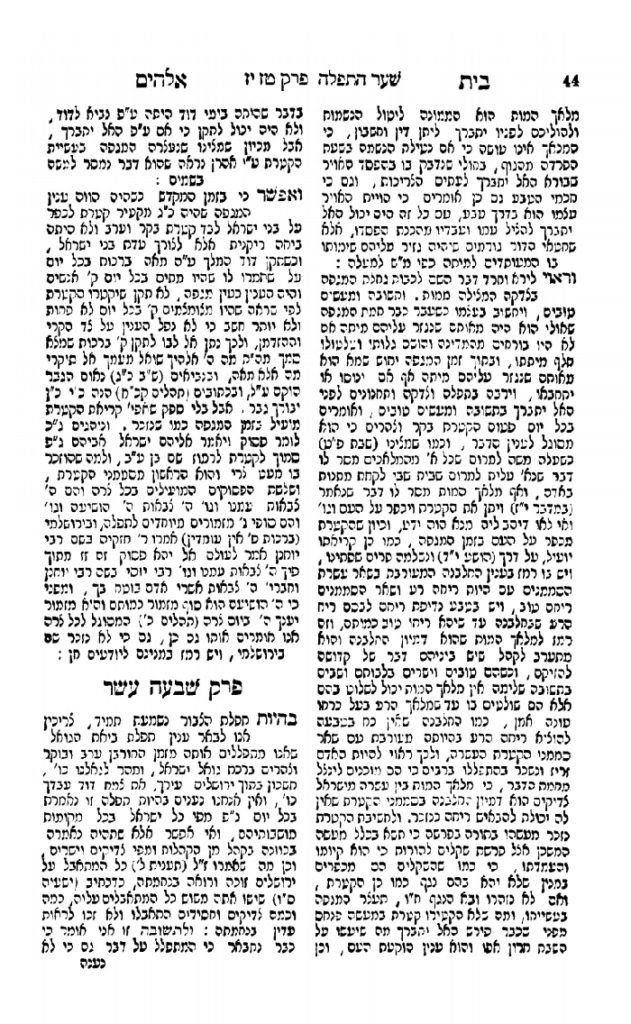
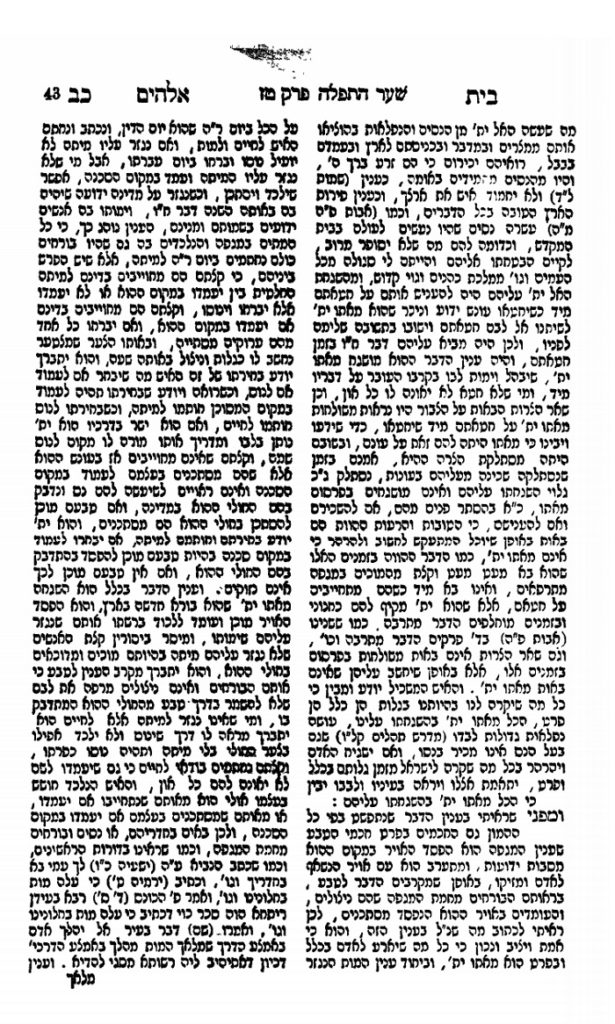
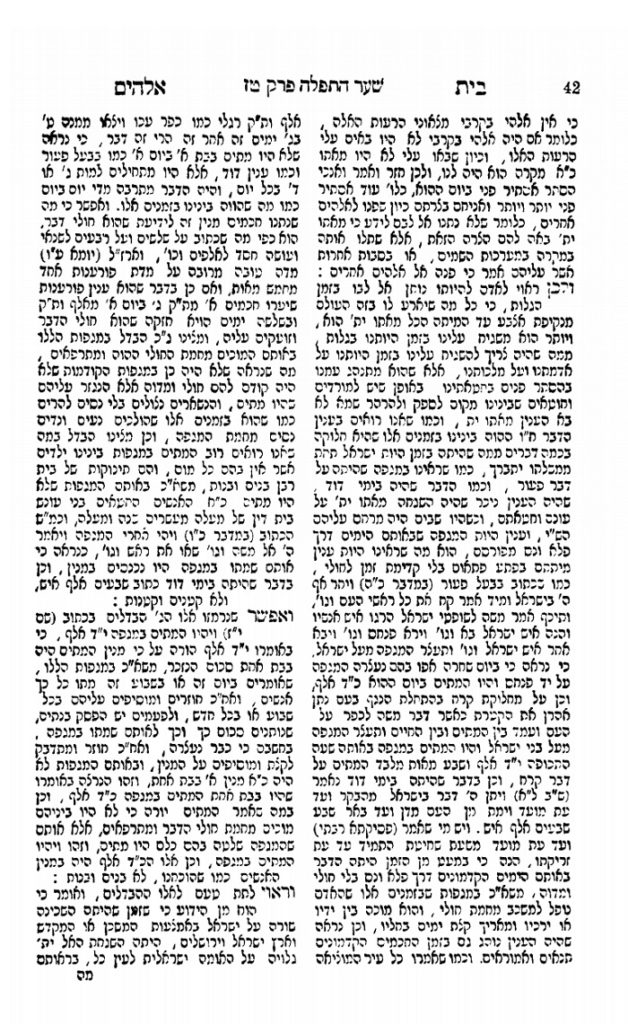
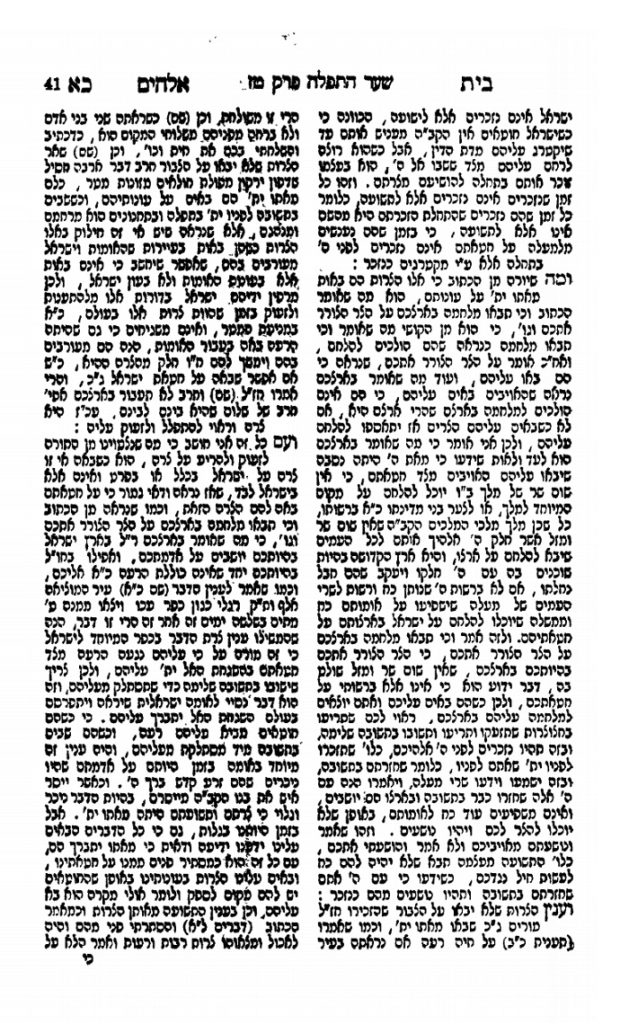
Despite this, Rashbam’s commentary to the Talmud is often entirely ignored by academics, not to say disdained. In her book concerning Rashbam’s commentary to Job, Sara Japhet notes that a proper study of the characteristics of Rashbam’s Talmudic exegesis has yet to be written.[2] In its entry on Rashbam, the Jewish Encyclopedia devotes considerable space towards analyzing his biblical commentary, but dispenses with his Talmudic commentary with little more than a single sentence, and that only to dismiss it as “much weaker than Rashi.”[3]  And in his review of Elazar Touitou’s Rashbam Scholarship in Perpetual Motion, Mordechai Cohen concludes with three suggestions to augment existing scholarship on Rashbam, one of which urges a greater focus upon Rashbam’s biblical commentaries beyond the Pentateuch.[4] Nowhere, however, is any suggestion made to consider Rashbam’s Talmudic output.
This neglect shows no sign of change anytime soon.  Typical are the comments of one knowledgeable blogger, who writes, concerning a major conference organized by Bar Ilan University in 2011 devoted to the study of Rashbam:
 “It amazes me, the amount of attention that scholars of medieval biblical exegesis lavish on a fairly limited corpus. I must admit that it also frustrates me that despite all this enthusiasm for studying Rashbam’s biblical exegesis, his Talmudic commentaries and, to an even greater degree, his Halakhic writings have received virtually no attention whatsoever.”[5]
Indeed, the conference referenced by the writer focused exclusively on Rashbam as a pashtan on Torah and Kesuvim – with not a single session devoted to his writings on shas.
We do not have Rashbam’s commentary to shas. Although there is evidence that he wrote much more, we are left essentially with his commentary to most of Bava Basra (“BB”) and the last chapter of Pesachim.[6]  Still, this amounts to nearly 370 pages of commentary, more than enough to get a firm sense of his methods. “Prolix” is a word often used to describe his Talmudic commentary. “Peshat”, however, is not. This seems strange. Why would one man’s commentary be so markedly different from one arena to the next? If Rashbam’s commentary displays all the signs of modern methods of study in his commentary to the Torah, why, then, does his commentary to the Talmud seem so devoid of the same?
The purpose of this brief essay is to show that, contrary to the common misconception, Rashbam’s Talmudic commentary displays precisely the same hallmarks of intellectual honesty and modern methods as he displays in his work on the Torah. Below I cite concrete examples to prove the point.  However, there needs to be a framework for this type of study. Nearly every single Tosafos in shas probes into the text, yet few would mistake their methods for that of a modern critical approach.  What, then, are the hallmarks of the modern method in which we can test the hypothesis we began with?
There is certainly no definitive answer to this question. One writer identifies no less than six different aspects of what he calls the “scientific-academic” approach to the Talmud, and in passing notes that “the approaches termed “academic” or “scientific” today are actually closer to the approaches of classical Talmudic scholars than those in use by traditional religious institutions today.”[7]  Many others have written about the academic study of the Talmud without any attempt to reduce the approach down to a specific list of methods.[8]  Accordingly, with no pretenses to believing the following to be exhaustive, this author will follow in the footsteps of at least one of his forebears in identifying the following six prerequisites necessary for a proper academic approach to the study of Talmud:[9]
1)    An understanding of how the Talmudic text developed over time; a recognition of the layers within each sugya and how the existence of such layers can help us better understand the text;
2)    A recognition of the stama d’gmara; an appreciation of the fact that the anonymous editors of the Talmud sometimes paraphrased or
otherwise edited the actual statements of the tannaim and amoraim;
3)   An attempt to use the best critical editions available;
4)   A feeling for the overall methodology of the Talmud as an organic whole, to aid with understanding the immediate text at hand;
5)   A general sense of rationalism, or an aversion to wild or exaggerated notions;
6)   A willingness to use field research beyond the bare text to clarify the meaning of difficult or obscure terminology.
No doubt others could add or subtract from this list, or refine it in some other way.  However, the foregoing represents at least a decent summary of some of the more fundamental elements of a modern critical approach to the study of Talmud.  And with that in mind, let us see if these methods are employed by Rashbam in his commentary to Bava Basra and Pesachim.[10]
*   *
*
Development of the Text
In the following examples Rashbam demonstrates a keen understanding of how the development of the Talmud affects the understanding of the passage in front of him.
1)   אמר רבא א”ר נחמן מחאה בפני שנים ואין ואין צריך לומר כתובו מודעא בפני שנים ואין צריך לומר כתובו הודאה בפני שנים וצריך לומר כתובו קנין בפני שנים ואינו צריך לומר כתובו וקיום שטרות בשלשה
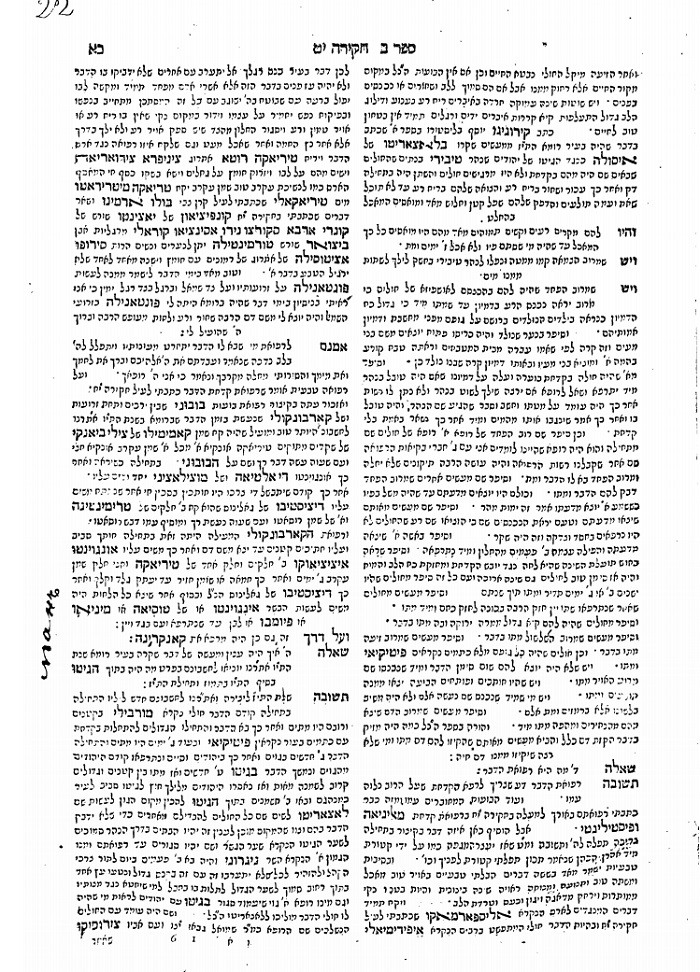
ואין צריך לומר כתובו. שטר מודעא כללא דמילתא כל מידי דזכות הוא לו אין העדים צריכין ליטול הימנו רשות והא דלא כייל ותני להו ולימא מחאה ומודעא וקנין בפני ב’ ואין צריך לומר כתובו היינו משום דרבא קאמר להו משמיה דר”נ ולאו בחד יומא שמעינהו אלא כל מילתא שמעה באפי נפשיה והדר חברינהו רבא כחדא כסדר כמו ששמען .  . . .
2)   וכדרבא דאמר רבא כל האומר אי אפשי בתקנת חכמים כגון זאת שומעין לו מאי כגון זאת כדרב הונא אמר רב דאמר רב הונא אמר רב יכולה אשה שתאמר לבעלה איני ניזונת ואיניA עושה
מאי כגון זאת. באיזו תקנת חכמים היו מדברים בבהמ”ד שעליה אמר רבא כל האומר אי אפשי בתקנת חכמים כגון זאת התקנה שאנו מדברים בה שומעין לו:
3)    תנן התם אמר רבן שמעון בן גמליאל לא היו ימים טובים לישראל כחמשה עשר באב וכיום הכפורים שבהן בנות ירושלים יוצאות בכלי לבן שאולין שלא לבייש את מי שאין לו בשלמא יום הכפורים יום סליחה ומחילה יום שנתנו בו לוחות אחרונות אלא חמשה עשר באב מאי היא אמר רב יהודה אמר שמואל יום שהותרו שבטים לבא זה בזה מאי דרוש זה הדבר דבר זה לא יהא נוהג אלא בדור זה רבה בר בר חנה אמר רבי יוחנן יום שהותר שבט בנימן לבא בקהל דכתיב ואיש ישראל נשבע במצפה לאמר איש ממנו לא יתן בתו לבנימן לאשה מאי דרוש ממנו ולא מבנינו רב דימי בר יוסף אמר רב נחמן יום שכלו בו מתי מדבר דאמר מר עד שלא כלו מתי מדבר לא היה דיבור עם משה שנאמר ויהי כאשר תמו כל אנשי המלחמה למות מקרב העם וסמיך ליה וידבר ה’ אלי לאמר אלי היה הדיבור עולא אמר יום שביטל בו הושע בן אלה פרדסאות שהושיב ירבעם על הדרכים שלא יעלו ישראל לרגל רב מתנה אמר יום שנתנו הרוגי ביתר לקבורה דאמר רב מתנה אותו היום שנתנו הרוגי ביתר לקבורה תקנו ביבנה הטוב והמטיב הטוב שלא הסריחו והמטיב שנתנו לקבורה רבה ורב יוסף דאמרי תרוייהו יום שפוסקין בו מלכרות עצים למערכה
יום שהותר שבט בנימן. כל הנך אמוראי לא פליגי אלא מר גמיר האי מרביה ומר גמיר האי מרביה
In the first example (BB 40a), Rava records a series of halachic rulings he heard in the name of Rav Nachman, concerning the amount
of witnesses various transactions had to be conducted in front of, and which transactions, if they were to be recorded, required explicit verbal instructions from the parties. Rashbam wonders why all the like instructions were not presented as one simple rule, rather than stating each separately.  He explains that what appears to be one statement in the name of Rav Nachman, actually took place over many separate occasions. Rav Nachman, at various times, taught about the various types of transactions, and Rava himself wove them together into a single statement.  Thus, while it might appear verbose in our text, Rava would have misquoted his teacher were he to have quoted him as though Rav Nachman had given a general rule. Instead, Rashbam explains, Rava quoted him accurately, one statement at a time.
In the second example (BB 49b), Rava pronounced a ruling that when one declines a rabbinic ordinance designed as an aid, “in such a situation” we accept his decision. The Gemara asks what exactly “such a situation” is.  Rashbam clarifies that Rava issues his ruling in the context of a live discussion in the beis midrash.  Thus, he explains, what the Gemara really wants to know is, “what subject were they studying that day, when Rava made his pronouncement?” In so stating, Rashbam demonstrates an awareness that the give-and-take on any page of the Talmud did not take place in a vacuum (as we read it today), but rather, in the context of a lively study hall.  This awareness leads to a clearer understanding of the text.
In the third example (BB 121a), we read a long series of explanations from amoraim, explaining why the 15th day of Av is considered a day of celebration. On the surface of the cold page of the Talmud it appears to be a great debate.  Rashbam explains that it is no debate;
rather, each amora is merely registering what he heard from his teacher in an isolated setting. In other words, the amoraim might indeed differ in their explanations, but it was not in the context of an actual argument.  The difference is significant, because an actual debate implies that one does not agree with the reason advanced by the other.  As Rashbam explains it, there is reason to suspect that the amoraim would have disagreed with the other explanations.  They may well have agreed with these other explanations, they simply never heard them offered.
Here, then, are several examples where Rashbam shows a keen understanding of the development and background of the Talmudic passage. These examples, and others like it provide vivid illustrations of how knowing the background of a Talmudic passage gives one a clearer picture of the text being studied.[11]
Editors (Stama D’Gemara) of the Text
In recent years an approach to the study of Talmud known as Revadim (“layers”) has gained some degree of traction.  The approach seeks to uncover the various historical layers, or strata, often present in the Talmud, as a means to achieving clarity. In the following two, Rashbam provides us with the kernel of this idea, by showing the importance of knowing when an amora or tanna is speaking, and when the
anonymous editors of the Gemara are speaking.  It is not often easy to pick up where the one ends and the other begins.
4)     איתמר רב הונא אמר רב הלכה הלכה כדברי חכמים ורב ירמיה בר אבא אמר שמואל הלכה כרבי עקיבא אמר ליה רב ירמיה בר אבא לרב הונא והא זמנין סגיאין אמריתה קמיה דרב הלכתא כרבי עקיבא ולא אמר לי ולא מידי א”ל היכי תניתה א”ל איפכא תנינא משום הכי לא אמר לך ולא מידי
אמר ליה איפכא. לר’ עקיבא בעין רעה ולרבנן בעין יפה וגמרא הוא דקמפרש דאיפכא הוה תני רב ירמיה ומיהו איהו לא אמר לרב הונא לשון זה איפכא תנינא שאם היה יודע שאין רב הונא שונה כמותו לא היה לו לתמוה דהיינו הך דבין לרב הונא בין לרב ירמיה הלכתא דבעין רעה מוכר
 (5
    אמר רב הלכה כדייני גולה אמרו ליה רב כהנא ורב אסי לרב הדר ביה מר משמעתיה אמר להו מסתברא אמרי כדרב יוס 
כדרב יוסף. גמרא הוא שקיצר דברי רב אבל רב לא הזכיר רב יוסף שהרי קדם לו רב הרבה דורות
Example # 4 (BB 65a) is cited by Professor Ta-Shma, in his survey of the literary history of European and North African Talmudic commentary, as a “particularly interesting” example of Rashbam’s focus on Talmudic methodology.[12]  The passage concerns a debate between R. Akiva and the Sages over an easement in a particular piece of property, and whether or not it is automatically included in a bill of sale. Rav Huna said in the name of Rav that the halacha follows the Sages, rather than R. Akiva. Rav Yirmiyahu then told Rav Huna that he often said “the opposite” to Rav, and wondered why Rav never said anything to him.
 Rashbam explains that Rav Yirmiyahu himself did not actually use the words “the opposite”, because it would then have been obvious to him why Rav never said anything.  Rather, says Rashbam, when the discussion between the two men occurred, Rav Yirmiyahu actually detailed how he had heard the halacha reported.  The report was – as the stama d’gemara tells us in a paraphrase – the opposite of how Rav himself reported the halacha. In other words, the discussion between Rav Yirmiyahu and Rav Huna never transpired in the way one would think from reading the text of the Gemara alone.
In the fifth example (BB 51a) the Gemara discusses whether one can obtain adverse possession (chazaka) in the property of a married woman. Rav held one could not, while the “Judges of the Exile” [Shmuel and Karna] held one could. When two of his students later heard a contrary ruling from Rav and asked about it, Rav said he was referring to the case mentioned by Rav Yosef.  Rashbam explains that Rav could not possibly have mentioned Rav Yosef by name, since the latter lived several generations later. Rather, he continues, the stama d’gemara is abridging Rav’s statement. In actuality, Rav proceeded to describe a case similar to a case described earlier by Rav Yosef, in which case Rav would agree that one could have chazaka.  In this way, the text of the Gemara makes perfect sense.
Here, then, are two examples where Rashbam demonstrates how knowing when the first person is speaking, and when the editor
is speaking, helps us with our grasp of the Gemara.
Use of Critical Editions
Although “critical editions” as we know them did not exist in his time, Rashbam’s frequent citations to the “precise editions” or his usage of comparative texts is based upon the very same principles of scholarship used in preparing today’s critical editions.  In a famous statement, Rashbam’s brother Rabbeinu Tam remarked that for every statement amended by Rashi, his brother Shmuel, basing himself upon older texts, would amend twenty.[13]  The following are some examples.
6)                      וכדברי ר”ע בית רובע מאי לאו דזבין ליה סאה לא דזבין ליה חצי סאה
ה”ג וכדברי ר”ע בית רובע מאי לאו דזבין ליה סאה לא דזבין ליה חצי סאה. והכי קפריך מאי לאו דזבין ליה סאה ואפ”ה לא אמרי’ נותן חצי רובע לכל חצי סאה דהוי מחילה אלא כיון דהוי ליה בין כל המותרות שיעור גנה הדרי כרב הונא חצי רובע הוי מחילה לחצי סאה כי היכי דרובע הוי מחילה לסאה ומשני דזבין ליה חצי סאה הלכך חצי רובע הוי מחילה וטפי מחצי רובע יעשה חשבון רובע דהוי שיעור גנה יחזיר כן נראה בעיני ועיקר וכן מצאתי כתוב בספרים מדויקים
7)        אמר רבא בלע מצה יצא בלע מרור לא יצא בלע מצה ומרור ידי מצה יצא ידי מרור לא יצא כרכן בסיב ובלען אף ידי מצה נמי לא יצא
בלע מרור לא יצא. דבעינן טעם מרור וליכא דמשום הכי קפיד רחמנא למרר את פיו של אוכל זכר לוימררו את חייהם (שם א) כך מצאתי כתוב בכל הספרים ובפי’ ר”ח ורבינו פי’ בלע מרור יצא א”א שלא יהא בו טעם מרור בלע מצה ומרור יחד ולא אכל עדיין לא מזה ולא מזה ידי מצה יצא ידי מרור לא יצא הואיל ולא לעסו ואכל מצה עמו אין לו שום טעם ולפי הכתוב בספרים צריך לפרש בלע מצה ומרור ידי מצה מיהו יצא דלא תימא אף ידי מצה לא יצא דאיכא תרתי לריעותא שלא טעם טעם מצה וגם לא נגע בגרונו שהמרור חוצץ בינתיים
In these two examples (BB 104b) and (Pesachim 115b) Rashbam shows how he uses the best available texts.  In the first example Rashbam recites the explanations of the text, stating that it (the explanation) is based upon what he found in the most “precise” texts. Similarly, in the second example he gives an explanation from what he found in “all the books”, implying that he used more than one edition in preparing his commentaries.
These examples can also be multiplied, see Pesachim 108b (Ketani Mihas) and BB 85b (bein pesak) (in some editions) for similar usages. On other occasions Rashbam tells us he consulted “older texts” (e.g., BB 87a and 87b.)   In general, Rashbam frequently employs language telling us how the proper text should read.  As noted by R. Ephraim Urbach, “Rashbam devoted great attention to clarifying the Talmudic text.”[14]
Talmudic Methodology
In his Biblical commentary, Rashbam devoted great attention to uncovering the conventions and methodology of scripture.[15]  In the following examples, we shall see that Rashbam devoted no less attention to the general principles and postulates used by the Talmud.
8)     איידי דתנא רישא כו’. לא גרסינן ושיבוש הוא ויש מפרשים דאשובר קאי ולמימרא דאיהי יהבה השכר ולא הבעל ואיידי דתנא רישא בדידיה משום גט שהבעל נותן שכר תנא נמי בדידיה גבי שובר ולאו דוקא ואין זה שיטת גמרא למיתניה בדידיה שיקרא משום רישא
9)     יתיב רב אידי בר אבין קמיה דרב חסדא ויתיב רב חסדא וקאמר משמיה דרב הונא הא דאמרת שינוי מקום צריך לברך לא שנו אלא מבית לבית אבל ממקום למקום לא א”ל רב אידי בר אבין הכי תנינא לי’ במתניתא דבי רב הינק ואמרי ליה במתניתא דבי בר הינק כוותיך ואלא רב הונא מתניתא קמ”ל רב הונא מתניתא לא שמיע ליה ותו יתיב רב חסדא וקאמר משמיה דנפשיה הא דאמרת שינוי מקום צריך לברך לא אמרן אלא בדברים שאין טעונין ברכה לאחריהן במקומן אבל דברים הטעונין ברכה לאחריהן במקומן אין צריך לברך מאי טעמא לקיבעא קמא הדר
ה”ג במתני’ דבי רב הינק כוותיך ותו יתיב רב חסדא וקאמר משמיה דנפשיה ולא גרסי’ מתני’ אתא לאשמועי’ ושיבוש גמור היא שכן הוא שיטת הגמרא להשמיענו האמורא דבר המפורש בברייתא דזימנין שאין הכל בקיאין בברייתא וגם האמורא עצמו זימנין דלא ידע לה לההיא ברייתא עד דמייתי ליה סייעתא מיני’ ולפי שראו דיתיב רב חסדא וקאמר משמיה דנפשיה וטעו לומר מכלל שחזר בו ממה שאמר למעלה משמיה דרב הונא והגיהו בספרים קושיא זו ואינה אלא שני דברים אמר רב חסדא בההיא ברייתא חדא משמיה דרב הונא וחדא משמיה דנפשיה
In example #8, cited above with no Talmudic text, Rashbam tell us (BB 168a) that a certain proposed text should be deleted or otherwise not included in the Talmudic passage.  The particulars need not concern us, but Rashbam dispenses with the proposed text by calling it mistaken, and observing that is not the method of the Talmud to teach us a mistaken ruling, simply in order to bring us to a different conclusion.
In example #9 (Pesachim 101b), Rashbam employs nearly identical language, again in deleting the existing text, which had questioned why an amora (Rav Chisda, in this case) would teach us a halacha if it was already known from an earlier baraisa.  Rashbam rejects the text, explaining that it is indeed the way of the Talmud for an amora to teach us something, even thought that “something” might be found explicitly in an earlier baraisa, because not all amoraim were familiar with all the baraisos.  In the particular case in front of us, Rashbam proceeds to explain, someone had thought to amend the text because Rav Chisda appeared to be retracting from a statement he made earlier.  Rashbam explains that there was no retraction, and it was a mistake to amend the text.
Thus, here again are two examples where Rashbam’s knowledge of what Talmudic methodology consists of, and what it does not consist of, not only clarifies the meaning of the Talmudic passage, but actually helps us with establishing the correct text itself. Other examples are adduced by Professor Ta-Shma.[16]  In this regard, Rashbam was simply employing the same methods and methodology he had already established in his Biblical commentary.
Aversion to Exaggeration
As it is important for students of any discipline to separate fact from fiction, it is likewise important to distinguish the literal from the exaggerated. Understanding the difference, Rashbam demonstrates, can bring meaning to otherwise incomprehensible Talmudic passages.
10)      א”ר לוי משאוי שלש מאות פרדות לבנות היו מפתחות בית גנזיו של קרח וכולהו אקלידי וקליפי דגלדא
משוי שלש מאות. לאו דוקא וכן כל שלש מאות שבש”ס
11)      אמר רב זביד האי יומא קמא דריש שתא אי חמים כולה שתא חמימא אי קריר כולה שתא קרירא
כולה שתא חמימא. כלומר רוב השנה
12)      ארבעה דברים צוה רבינו הקדוש את בניו אל תדור בשכנציב משום דליצני הוו ומשכו לך בליצנותא ואל תשב על מטת ארמית איכא דאמרי דלא תיגני בלא קרית שמע ואיכא דאמרי דלא תינסב גיורתא ואיכא דאמרי ארמאית ממש ומשום מעשה דרב פפא ואל תבריח עצמך מן המכס דילמא משכחו לך ושקלי מנך כל דאית לך ואל תעמוד בפני השור בשעה שעולה מן האגם מפני שהשטן מרקד בין קרניו
שהשטן מרקד. לאו דווקא אלא משוגע כדמפרש לקמן
In example #10 (Pesachim 119a) R. Levi informs us it took three hundred mules to carry the keys of Korach’s treasure houses. Rashbam, in a typically understated way, tells us the number 300 is an exaggerated number, “and so too are all uses of the number 300 in shas”.  Presumably Rashbam would say the same of other such common numbers in shas, such as 400 or 13. They are mere exaggerations, and not to be taken literally.[17]
In example #11 (Bava Basra 147a), R. Zvid posits a sort of “Groundhog Day” rule for predicting the weather: If the first day of the New Year is warm, all the rest of year will be warm. If it is cold, all the rest of year will be cold. Rashbam is sensitive to the overstatement, and explains that “all” merely means “most”, thus removing the hyperbole from R. Zvid’s statement.
In example #12, Rabbeinu Hakodesh [R. Yehuda Ha-Nasi] gave four bits of advice to his children.  The fourth directive is to avoid standing in the path of an ox when it comes out of the swamp, because at that time “the accuser (satan) is to be found between its horns.”  Here again, Rashbam informs us that the statement is not intended to be literal, and merely means that an ox at that time will be found in a state of agitation.
Thus, in these cases and others like it, the Rashbam displays a marked tendency towards the rationalist point of view, and away from
the hyperbolic or exaggerated.
In one important way, however, the sense of rationalism found within Rashbam’s commentary must be qualified, and that is when it comes to matter of halacha.  In his commentary to the Torah, Rashbam focused simply on explaining the meaning of the text, with no attempt to grapple with or address the halacha.  Thus, Rashbam felt no constraints in explaining the plain meaning of the verse as he saw it.  In his Talmudic commentary, however, Rashbam has an entirely different goal. This does not mean Rashbam was a “halachically
responsive, but anti-peshat Talmudic exegete”, as one notable authority has argued.[18]  Rather, it simply means Rashbam allowed himself more freedom in his works on the Torah than he did on shas. To refer to Rashbam as “anti-peshat”, seems to this writer an unfair characterization of Rashbam’s Talmudic commentary.
Field Research
A charming old tale, whose origins are lost in time, speaks of a heated debate among scholars debating the number of teeth in a horse’s mouth. After many days and nights of arguing, a novel solution is proposed: head to the nearest stable and count! The outrageous proposal is met with frowns and disgust, and thus the scholars are doomed to continue the debate forever more.
The moral, of course, is that “book-learning” alone is insufficient; it must be accompanied by actual field research into the realia of the subjects being studied.  In our times, this issue has often been characterized as the debate over knowing what Rashi wore as opposed to what he said.[19]  The truth is that both are important, as demonstrated by Rashbam in the following examples.
13)       אמר רב יהודה אחד אומר אכלה חטים ואחד אומר אכלה שעורים הרי זו חזקה מתקיף לה ר”נ אלא מעתה אחד אומר אכלה ראשונה שלישית וחמישית ואחד אומר אכלה שניה רביעית וששית הכי נמי דהויא חזקה
מתקיף לה ר”נ אלא מעתה כו’. ר”נ לא היה יודע טעמו של רב יהודה המפורש לפנינו דבין חטין ושעורין טעו אינשי אלא ס”ל דהא דקאמר רב יהודה אחד אומר אכלה חטין ואחד אומר אכלה שעורין כו’ לאו באותן ג’ שנים דקמסהיד האי מסהיד האי דא”כ עדות מוכחשת היא ותיבטל אלא ס”ל לר”נ דה”ק רב יהודה אחד אומר אכלה חטין ג’ שנים כפי מנהג עובדי אדמה ואחד אומר אכלה שעורים שלש שנים כפי מנהג עובדי אדמה והיינו שש שנים בדילוג ושאלתי לעובדי האדמה ואמרו לי שלעולם כך הוא המנהג שנה אחת חטין ושנה אחת שעורין כן כל הימים ואינה צריכה שביתה כלום ה”ז חזקה שהרי אין מכחישים זה את זה כלל וממ”נ כל אחד מעיד שאכלה שני חזקה והלכך הויא חזקה דדמיא להא דר’ יהושע בן קרחה דאמרי’ בפירקין לעיל (דף לב.) אין עדותם מצטרפת עד שיראו שניהם כאחד ר’ יהושע בן קרחה אומר אפי’ בזה אחר זה וטעמא דר’ יהושע מפורש בסנהדרין בפ’ זה בורר דאע”ג דאמנה דקמסהיד האי לא מסהיד האי מיהו תרוייהו אמנה קמסהדי והכא נמי תרוייהו אחזקה קמסהדי
14)     אמרו עליו על רבי עקיבא שהיה מחלק קליות ואגוזין לתינוקות בערב פסח כדי שלא ישנו וישאלו
קליות. קלי מחטים ישנים דחדש אסור עדיין בלילה הראשון של פסח ומקומות יש בספרד שמייבשין חטים ישנים במחבת על גבי האור ואוכלין אותם עם אגוזים בקינוח סעודה מפי רבינו שמואל החסיד
In example #13 (BB 56b), the issue at hand concerns adverse possession. If one witness sees the occupier taking wheat, and the other says he observed him taking barley, this is sufficient to take possession. R. Nachman demurred, observing that were this to be the case, if one witness observed the occupier taking crops in the first, third, and firth years, while another witness reported it in the second, fourth, and sixth years, it would also be sufficient.  In explaining why this troubled R. Nachman, Rashbam asserts that the passage is dealing with the method of crop farming.  In passing, Rashbam tells us “I asked the farmers, and they told me this was their custom, to plant wheat one year, and barley the next year, without any need to leave the ground fallow.”  The Rashbam thus approached the experts – farmers, in this case – to know their precise methods, so that it would help him understand the sugya.
In the 14th and final example (Pesachim 109a), Rashbam wishes to explain the word “keliyos”, which are to be distributed to children on Passover eve, as a mean to keep the children up.  Rashbam explains (citing another source) that such “keliyos” are actually made from the old grain (yoshon), and reports that there are places in Spain where such “Keliyos” are eaten regularly as a sort of dessert.
Thus, in these examples we see how Rashbam would cite others or speak to others to ascertain technical terms or practices.  Rashbam would not hesitate to use field research or go “outside the page”, if it helped him understand the text.
*
*   *
      We have shown, I hope, that the impression some have of a Rashbam whose greatness shines through only in his Biblical works is profoundly mistaken. The examples above show the Rashbam using the full range of modern research tools to examine the Talmudic text in front of him.  Far from using dual approaches to the Torah and the Talmud, Rashbam employs a single, unified method throughout his
commentary.
 Though unquestionably lengthier than that of his illustrious grandfather, Rashbam’s Talmudic commentary displays all the hallmarks of intellectual rigor that have endeared him to so many moderns.  If the academic community, or indeed, anyone wishes to see a complete picture of the man and his methods, it would do well to look again, for the first time, at Rashbam’s commentary to shas.


[1] See, e.g., Oxford Dictionary of the Jewish Religion (Oxford University Press, 2011) “Since its emergence in the Middle Ages, Peshat has remained an important focus of Jewish Bible Study (and in modern times has been viewed as a forerunner of the historical critical method) (etc.)” (Entry on Peshat); Cf. also the remarks of Professor Martin Lockshin upon the publication of his two-volume edition of Rashbam’s commentary to the Torah, referring to Rashbam as the most prominent among the Northern French scholars whose style “closely resembles the work of modern academic Bible scholars today.” (Cited in York University YFile, 9/11/09.)
[2] Sara Japhet, The Commentary of Rabbi Shmuel ben Meir (Rashbam) on the Book of Job (Jerusalem, Magnes Press, 2000) p 9-10, cited by Mayer Gruber, Rashi’s Commentary to Psalms, (JPS, 2004) at 43.
[3] Entry on Samuel ben Meir (Rashbam). The entry found in Encyclopedia Judaica (Jerusalem 1972) is no different substantially.
[4] Rashbam Scholarship in Perpetual Motion (Mordechai Cohen) JQR 98:3 Summer 2008, 388-408.
[5] http://manuscriptboy.blogspot.com/2011/05/peering-through-conferenceshttpwwwblogg.html.
[6] Ephraim Urbach, Ballei Ha-Tosafot, Volume I, p.53. As Urbach explains, two different editions of Rashbam’s commentary on Bava Basra exist. In this essay I have used the (lengthier) edition found in the standard volumes of the Vilna shas.
[7]Pinchas Hayman, Implications of Academic Approaches to the Study of the Babylonian Talmud for the Beliefs and Religious Attitudes of the Student, printed in Abiding Challenges: Research Perspectives on Jewish Education (Freund Publishing House, Bar Ilan University 1999) pp 375 ff.  See also the (negative) review of Dr. Hayman’s article by Rabbi Gil Student on the popular Torah Musings (formerly Hirhurim) website, May 24, 2004.
[8] Shamma Friedman, Five Sugyot From the Babylonia Talmud: The Society for the Interpretation of the Talmud (Jerusalem 2002) English Introduction; idem, “The Talmud Today” appearing in Jewish Book Annual, www.atranet.co.il/sf.talmud_today.pdf.
and the extensive bibliography and websites listed therein.
[9] Some (but not all) of these points overlap with the six points listed by Hayman, supra.
[10] Of note, in Rashi’s Methodology in his Exegesis of the Babylonian Talmud (Jerusalem, Magnes Press 1980), the late Dr. Yona Frankel writes only that Rashbam “occasionally followed the approach of Rashi in Bava Basra, and occasionally did not follow him.” (p. 201.) It is beyond the scope of this exploratory essay to examine the influences upon Rashbam’s Talmudic commentary, and the ways in which he contributed to the Tosafos (“Tosafos shelanu”) that appear in standard texts of the Talmud. The academic nature of Rashbam’s Talmudic commentary is evident there as well. (See e.g., Zevachim 102b s.v. Parich, where Rashbam deduces from the unusual language of R. Achai that the passage must date from Geonic times.) However, our limited inquiry must be limited to an examination of Rashbam’s sustained running commentary, rather than selected statements as they appear in Tosafos.
[11] See also Rashbam to BB 141a (D’tanya) for a similar example.
[12] Yisrael Ta-Shma, Ha-Safrut Ha-Parshanit La-Talmud (Jerusalem 1999) at 63. Ta-Shma devotes several pages to Rashbam’s commentary, but not specifically to the more academic features of it.
[13] Sefer Hayashar, Introduction (Zhitomir 1869)
[14] Ballei Ha-Tosafot,supra, at 47.
[15] See The Torah Commentary of Rabbi Samuel Ben Meir (1982, unpublished doctoral dissertation for Harvard University) by מורי Rabbi Moshe Berger, at 77. (“A major characteristic of both Rashi and Rashbam’s Torah exegesis is their search for darkei hamikraot . . . . Indeed, it is probably this element more than any other that has won for these exegetes the admiration of modern scholars . . . (etc.)”
[16]Ta-Shma, supra, citing Rashbam to BB 39a amar rava; 43a yihu; 51a kidirav Yosef, and several others.
[17] See Rashi to Shabbos 119a s.v. treisar, stating the number 13 is an exaggerated number. (תריסר עיליתי דדינרי. עליות מלאות דינרי זהב וגוזמא בעלמא הוא כלומר הון עתק מאד כך פירש רבינו הלוי וכן בכל מקום כגון תליסר גמלי ספיקי טריפתא (חולין דף צה:) וכן תליסר טבחי דלעיל)
[18] David Weiss Halivni, Peshat and Derash: Plain and Applied Meaning in Rabbinic Exegesis (Oxford University Press 1991) at 170
[19] See Shamma Friedman, Five Sugyot, supra.
Dr. Samuel Vita Della Volta (1772-1853): An Underappreciated Bibliophile and his Medical “Diploma”tic Journey

Dr. Samuel Vita Della Volta (1772-1853): An Underappreciated Bibliophile and his Medical “Diploma”tic Journey

Rabbi Edward Reichman, MD

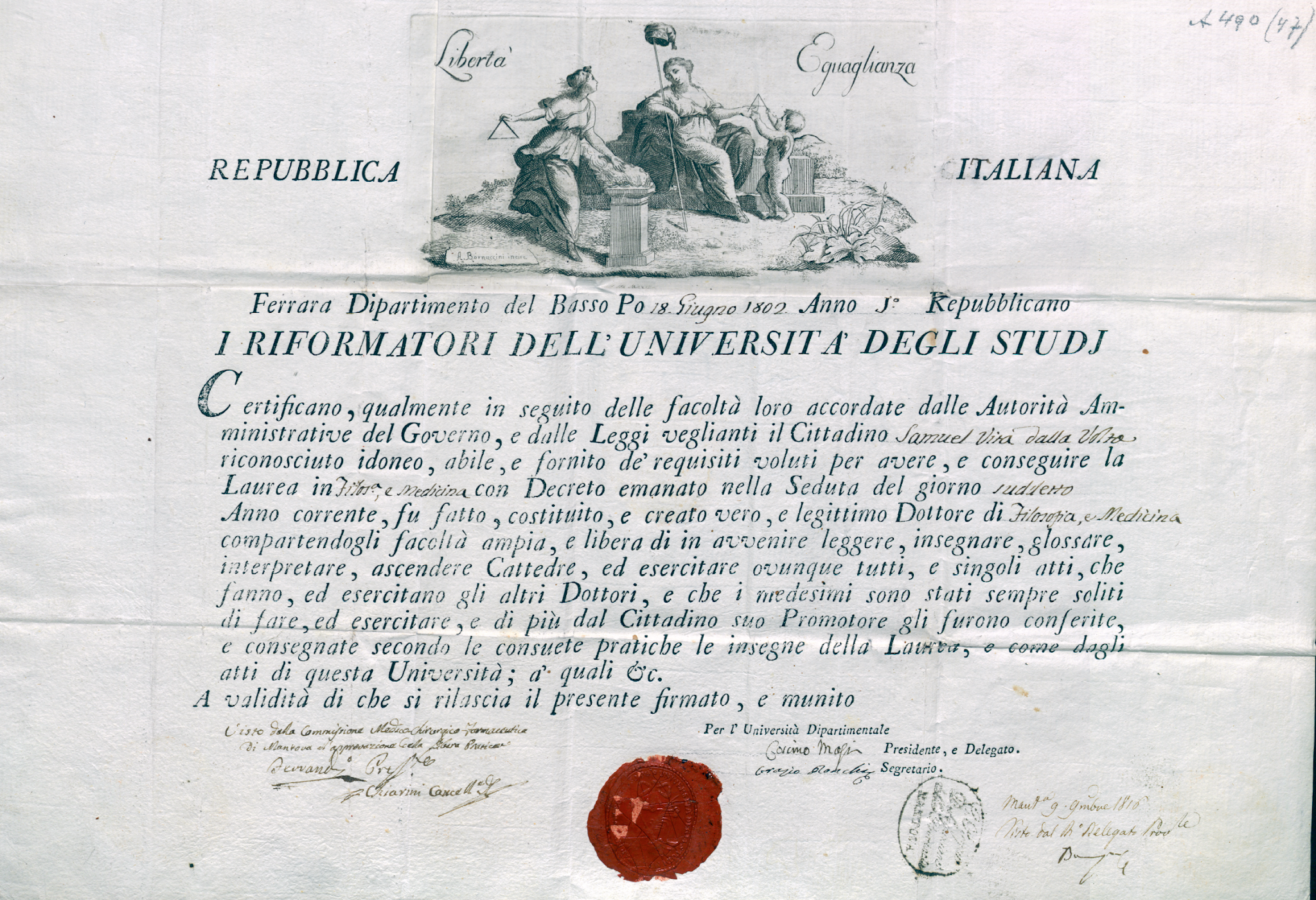
I came upon the name Samuel Vita Della Volta through my usual historical pathway, the world of Jewish medical history, and my continued quest for medical diplomas of Jewish physicians from the premodern era. While the lion’s share of the diplomas I have identified come from the University of Padua,[1] there are some extant Jewish diplomas from other Italian universities, including Siena, Rome, and Ferrara. One of two Jewish diplomas I have procured from the University of Ferrara is that of Samuel Vital Della Volta, a graduate of 1802.

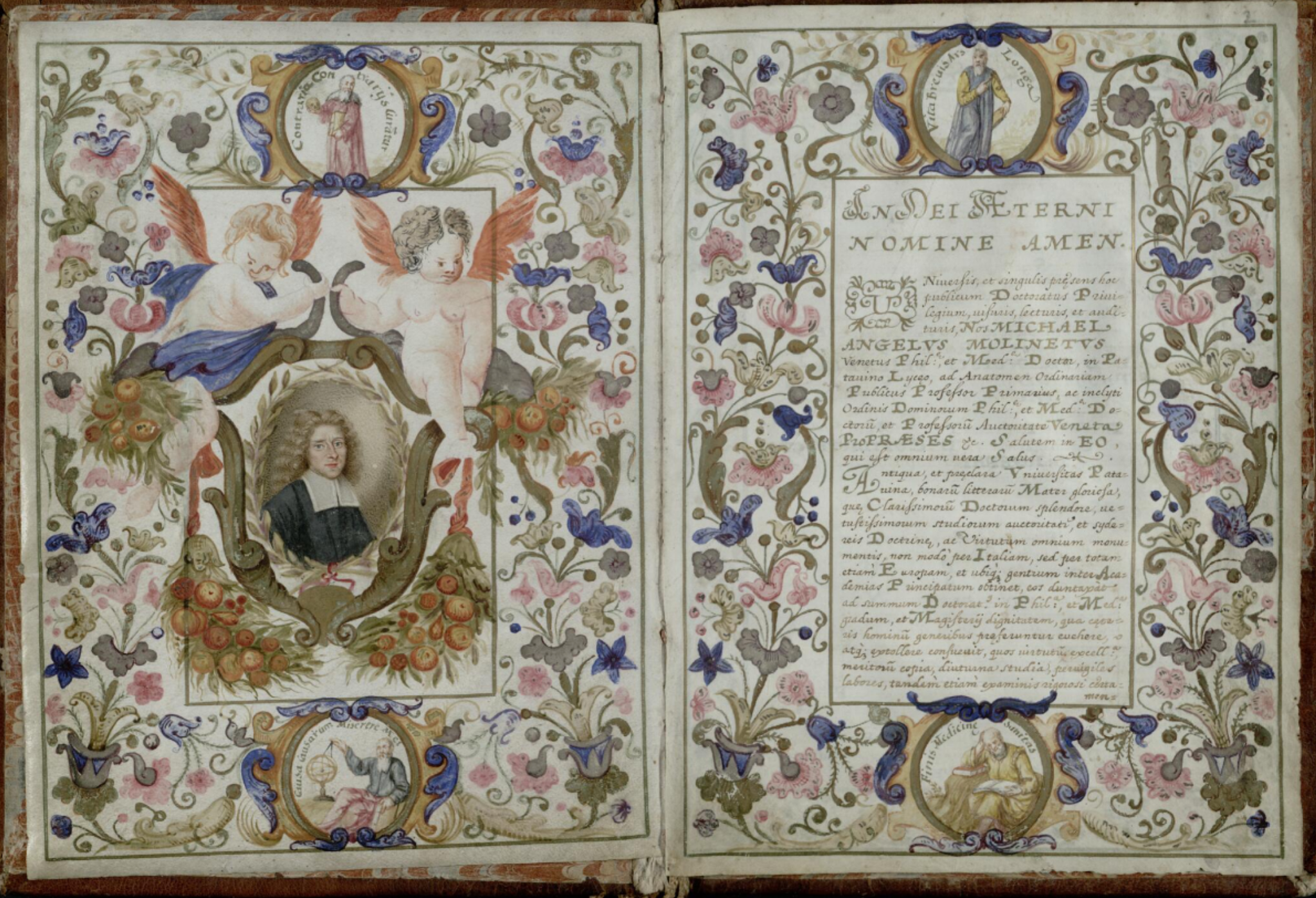
From an artistic perspective, it pales in comparison to the diplomas of his Paduan predecessors. See, for example, the diploma of the 1695 Jewish Padua graduate, Copilius Pictor (AKA Jacob Mehler), below.[2]

In contrast to this profusely hand illustrated spectacular example of Renaissance art, Della Volta’s is a templated diploma with both text and illustration printed. Only the graduate’s particulars are written, or I dare say squeezed in, by hand. To be fair, by this time not all Padua medical diplomas were as ornate as in the past, as evidenced by the diploma of Andrea di Domenico Rossi (Padua, 1788).[3]

However, the university did not entirely abandon its practice of issuing such diplomas, as evidenced by the diploma of Carlo Tomasini (Padua, 1794).[4]

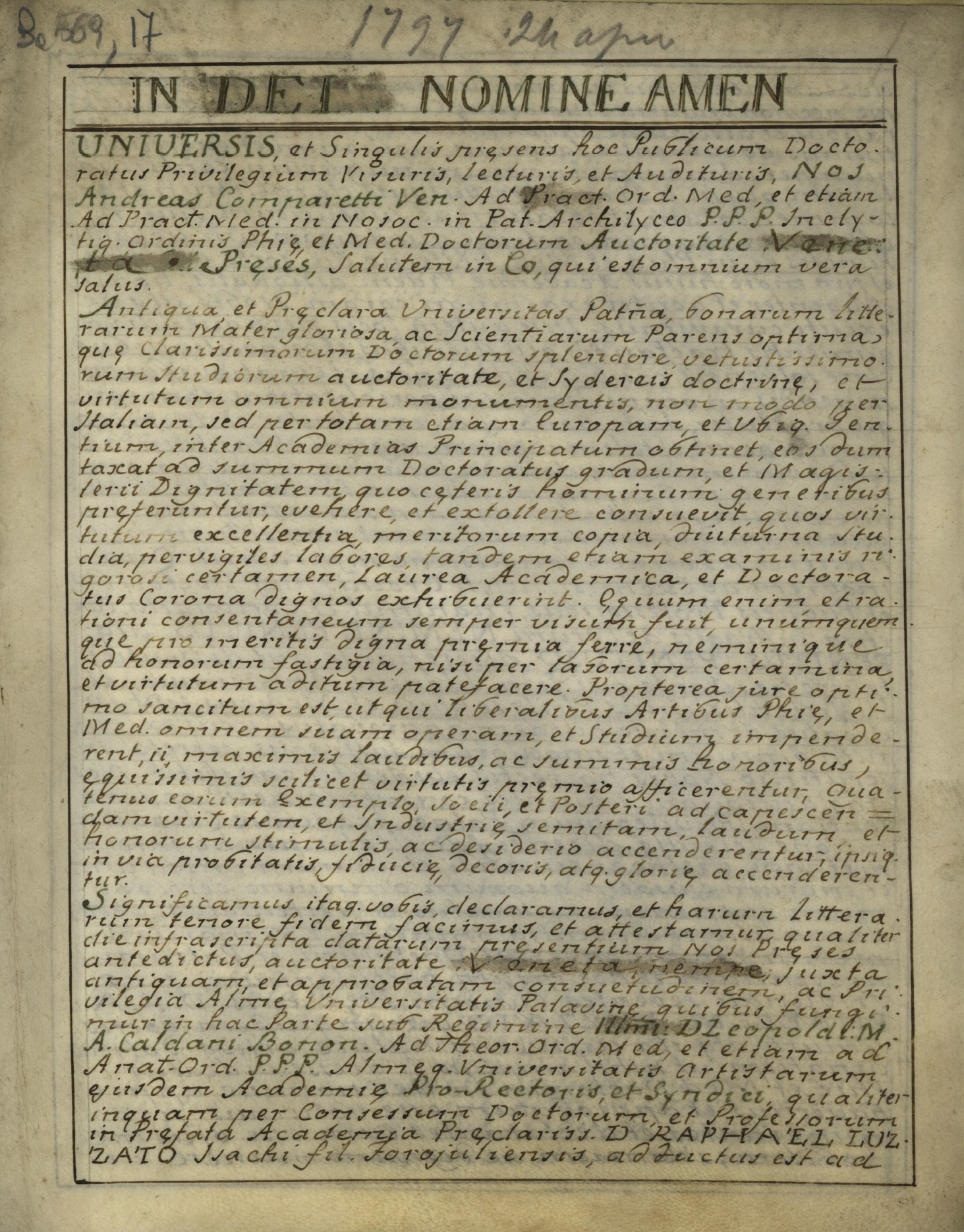
The diploma below of Jewish Padua graduate Rafael Luzzatto from 1797[5] is more in line with Della Volta’s, though at least Luzzatto’s diploma was hand calligraphed.[6]

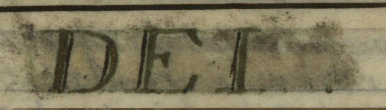
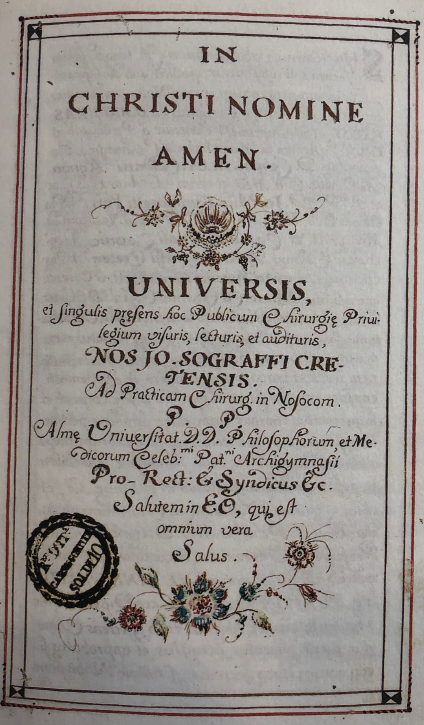
This diploma bears the invocation, “In Dei Nomine Amen” (in the name of God, Amen), typical for the Jewish student, instead of the standard invocation, “In Christi Nomine Amen” (in the name of Christ, Amen), used for the Christian students. Close inspection of this diploma reveals that the word “Dei” was written over an erasure of a longer word.

I have a strong suspicion that this was a standard templated diploma and that the calligrapher erased the word “Christi” and replaced it with “Dei.”

While the medical diplomas of the Jewish students of Padua,[7] as well as those from other universities such as Siena,[8] contained unique emendations, one finds no such alterations in Della Volta’s case.[9]

What caught my attention about Della Volta’s diploma was not its esthetics, or lack thereof, but rather its place of residence. This lackluster diploma currently resides in Budapest, Hungary in the Library of the Hungarian Academy of Sciences. The extant diplomas I have identified can be found mainly in Italy, Israel, and the United States. While each diploma has had its unique journey, these are by and large locations where the physicians lived, or their descendants migrated. For example, the diploma of Isaac Hellen can be found in a library in Germany,[10] but this is where Hellen lived and practiced. Della Volta was a Mantuan physician who lived and died in Italy. There is no record of his descendants migrating to Hungary. By what route then did this document reach such a wayward destination? Tracing the circulation of Jewish books “through time and place” is the laudable goal of the wonderful “Footprints” project.[11] While one may not always be able to track the exact journey of a book or manuscript through time, in this case we possess a passport of sorts with only three stops over some two hundred years that lead us directly to our final destination. The origin of this journey lies in the lifelong pursuits of our graduate.

Samuel Vita Della Volta (שמואל חי מלאוולטא) (1772-1853) was a physician and scholar born in Mantua whose writings include Biblical and Talmudic commentaries, sermons, and responsa. His works remain in manuscript and to my knowledge he has not been the subject of an academic biography.[12]

As a modest initiation into his writings, I share with you some observations from a few chapters selected from his unpublished work, Dan Yadin (1797).[13] The work is a miscellany of responsa and halakhic discussions. While the topics I have chosen are medical in nature, this reflects more my interest than the nature of the work.

Chapter 8 – Tefillin and Apoplexy (Stroke)[14]

This chapter takes the form of a classic responsum. The question is about a person who suffers from apoplexy, what today we would call a stroke or cerebrovascular accident (CVA).

While his cognitive function remains intact, he has lost motor function and sensation of his left arm. Is he still obligated to put on his tefillin shel yad, and if so, on which hand?

One of the more remarkable descriptions in Jewish literature of a stroke and its subsequent religious impact appears in the introduction to a work by another Jewish physician, Abraham Portaleone (d. 1612).[15] Portaleone came from a long line of physicians and graduated the University of Pavia in 1563.[16] He served as physician for the Dukes of Mantua, receiving special permission from Pope Gregory XIV to treat Christian patients. While he authored a number of medical works, it is only later in life that he wrote his Shiltei Ha-Gibborim on religious matters. The passage below from the book’s introduction explains why:

In June of 1605, Portaleone, a renowned and accomplished physician, reports how he experienced the sudden loss of function of the left side of his body, incapacitating him for some nine months. While he does not discuss how he observed the mitzvah of tefillin, he does mention his prayer, supplication, repentance, and religious self-reflection, which led him to undertake the writing of his magnum opus. This encyclopedic work was written for his children as a guide to proper religious prayer and observance,[17] focusing on the Temple service. It includes chapters on the musical instruments of the Beit Ha-Mikdash, the composition of the incense, and the details of the daily sacrifices. Della Volta would likely have read, if not owned, this work.

Returning to the halakhic question, Della Volta cites the Shevut Yaakov’s case of one born with only one arm on the right.[18] Rabbi Reischer debates whether such a person would be free of any obligation as he does not possess a yad keihe (non-dominant arm); or whether perhaps since he was born this way, his sole arm has the status of both a dominant and non-dominant arm combined. Rabbi Reischer accepts the latter approach and as such, requires the donning of tefillin. One who sustains a traumatic complete amputation of his non-dominant arm, however, would no longer be required to wear tefillin on that arm. (The obligation to wear tefillin shel rosh remains undisturbed.) Support for this position comes from Rama, the Bach and Mazik Brakhah. Della Volta argues that this would not apply to his case, where the physical arm is completely intact, albeit nonfunctional. With additional support from Rabbi Yeḥezkel Landau’s Dagul MeRevava, he concludes that the one who suffers a stroke with loss of function of his left arm would be required to wear tefillin accompanied by the requisite blessing.

Chapter 25[19] Anatomical Dissection

The topic of discussion for this chapter is anatomical dissection.

This appears to be a narrative bibliography of sorts. Della Volta cites a reference to a passage “at the end of Yoreh De’ah.” The halakha[20] to which he refers is:

אין מפרקין את העצמות ולא מפסיקין את הגידים

One must not separate the bones of the body, nor sever the gidim (however these are to be defined, possibly includes veins, arteries, nerves, and tendons).[21]

This halakha is in the context of a discussion on likut atzamot, collecting the bones for reburial after initial temporary burial, often in caves or kukhin (niches).[22] This halakha is not typically invoked in contemporary halakhic discussions about the prohibition of autopsy. The now famous teshuva of the Noda biYehuda on autopsy (Tinyana Y.D., 210) had already been published in 1776, but Della Volta does not appear to have been familiar with it.

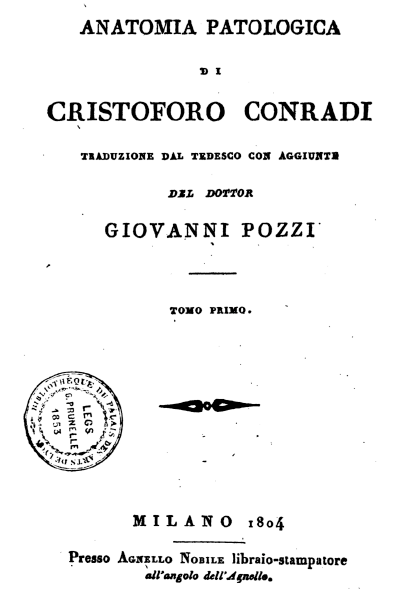
While the Hebrew source seems to oppose dissection, the other sources marshalled appear to be supportive. In his discussion on the use of tefillin in a case of stroke, there is no mention of secular or medical sources, as they would be noncontributory. In a discussion on the value of dissection, such material would certainly be relevant. He cites, for example, the preface to a work on pathology by Christoforo Conradi which lauds the educational benefits of anatomical dissection.[23]

Della Volta cites from a number of additional medical sources, including Biblioteca Medica Browniana Germanica.

Of particular interest is his reference to another Jewish source:

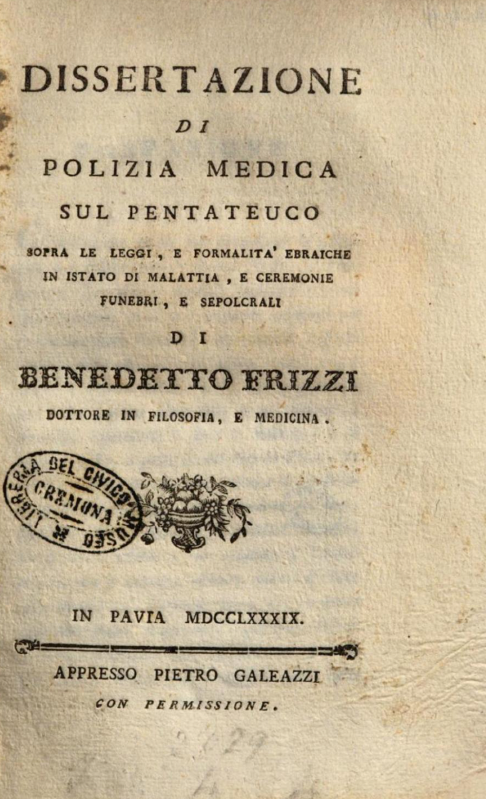
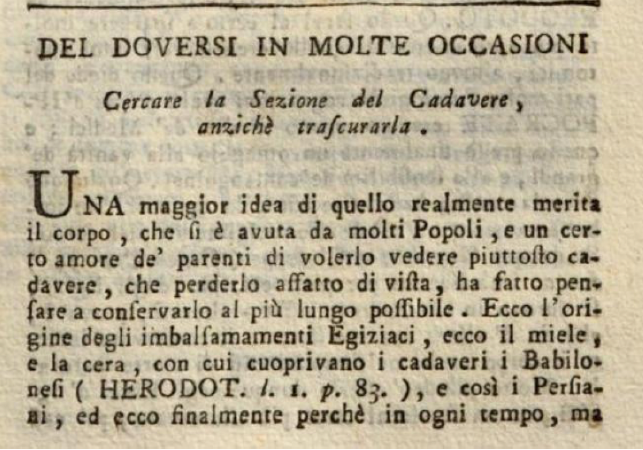
Here he refers to the work of Benzion Raphael Kohen (Benedetto) Frizzi titled, Dissertazione di Polizia Medica sul Pentateuco (Pavia, 1787–1790), which is a thematic analysis of medicine and public health in the Torah and Jewish tradition.[24]

This volume, published in 1789, is one of six such dissertations written by Frizzi over four years. The exact passage referenced by Della Volta begins below:

This may be one of the earliest, if not the earliest, Jewish references to the works of Frizzi.

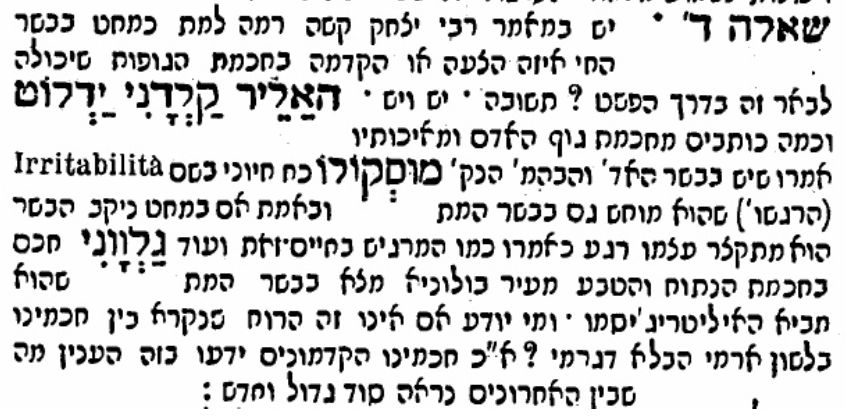
Frizzi subsequently expanded his research to produce a little-known work in Hebrew of over a thousand pages, P’tah Einayim (Leghorn, 1815–25), addressing the medical and scientific aspects of the Talmud.[25] In a section from this work, not cited by Della Volta, Frizzi addresses another rabbinic passage which is conspicuously omitted from modern halakhic discussions on autopsy.

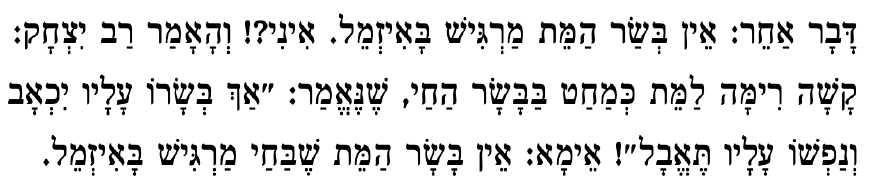
Frizzi focuses on the statement, “Didn’t Rav Yitzḥak say: The gnawing of maggots is as excruciating to the dead as the stab of a needle is to the flesh of the living.”[26] While this passage and its corollary rabbinic passages has received ample treatment,[27] Frizzi’s lesser-known interpretation is exceptional:

Recent medical research, by the likes of Albrecht Haller and Luigi Galvini, who explored bioelectricity (or animal electricity) and muscle irritability, even after death,[28] led him to consider the possibility that this statement was meant literally, i.e., the corpse experiences physiological pain. At least one posek of his day cited Frizzi’s interpretation as a reason to prohibit autopsy.[29]

A most remarkable aspect of this entry is the signature of the author.

הרופא ולא לו הצעיר וזעיר(?) שמואל חי מלאוולטה

I recently completed an article about the various interpretations of a rarely used physician epithet, “A Physician, and Not for Himself,” after serendipitously discovering its use in a manuscript.[30] After an extensive, though not exhaustive, search, I was able to identify only nine physicians throughout history who have used this epithet. As hashgaah would have it, we now know of at least ten.[31] Its use here, however, does not shed any further light on the meaning of this expression.

Chapters 38,[32] 116[33] and 128[34] Bathhouse Insemination

These three chapters discuss one who is born sine concubito, through artificial insemination, or as in the Talmudic case, through bathhouse insemination.[35]

(Chapter 128)

Della Volta is equally versed in both the halakhic and contemporary medical literature. While his then current medical references, such as Commentarii Medici by Brugnatelli and Brera,[36] may be unfamiliar to us, his halakhic sources ring remarkably familiar. Amongst others, he cites from Ḥida,[37] Mishneh LiMelekh, Maharil regarding Ben Sira, Rashbetz, R. Yaakov Emden, R’ Yitzḥak Lampronti’s Paad Yitzak, elkat Meokek, as well as Frizzi, including Peta Einayim.[38] This reads like a contemporary article on artificial insemination by Dr. Rosner or Rabbi Bleich, though for Della Volta this was a purely hypothetical halakhic question. It would only be in the late 19thearly 20th century that this would take on practical halakhic relevance with the development of therapeutic artificial insemination. Indeed, the very same sources can be found in today’s discussions. In my historical discussion of artificial insemination, I discuss all the aforementioned sources, including Frizzi.

A casual glance at the remainder of Dan Yadin reveals countless detailed references to medical, secular, and Jewish sources, replete with chapter and verse. Della Volta was clearly a doctor of the book. In fact, he wrote for the journal Otzar Nehmad, corresponded with the likes of Shmuel David Luzzatto, Joseph Almanzi and Lelio Della Torre,[39] and contributed an introduction to Shlomo Norzi’s Minhat Shai. But his bibliophilia did not stop at reading and writing; he ventured into the world of book and manuscript acquisition, amassing an impressive library by the end of his life. Della Volta’s name would not appear on a list of prominent Jewish book collectors, nor even as an afterthought for that matter. Names such as Azulai, Oppenheim,[40] Almanzi or Strashun[41] are more likely to come to mind. Yet, his library caught the eye of some of the greatest Jewish scholars of his day, a virtual who’s who of Jewish biobibliographers, including Marco Mortara, Moritz Steinschneider, Shmuel David Luzzatto (Shadal) and Moshe Soave.

Marco Mortara (1815-1894) was one of Shadal’s prize students at the Rabbinical Seminary of Padua and later served as the Chief Rabbi of Mantua.[42] Mortara became a renowned scholar and bibliographer[43] and would go on to collaborate with Steinschneider for decades. Their very first correspondence was about the biographical details of Della Volta. Della Volta’s library was of great interest to Steinschneider, as evidenced by the multiple correspondences to both Shadal and Soave on this matter. It is only from the letters of Shadal to Steinschneider that we learn how Mortara had acquired Della Volta’s library, which by that time contained some 130 unique manuscripts that bibliophiles across Europe had unsuccessfully tried to purchase. How Mortara came to possess such a valuable library, especially given his financial situation, whether by inheritance or monetary acquisition, is a matter of debate.[44] In any case, this represents the first stamp in our passport, but a brief journey for Della Volta’s diploma within the city limits of Mantua. Della Volta’s library and diploma, at least for now, remained in his hometown.

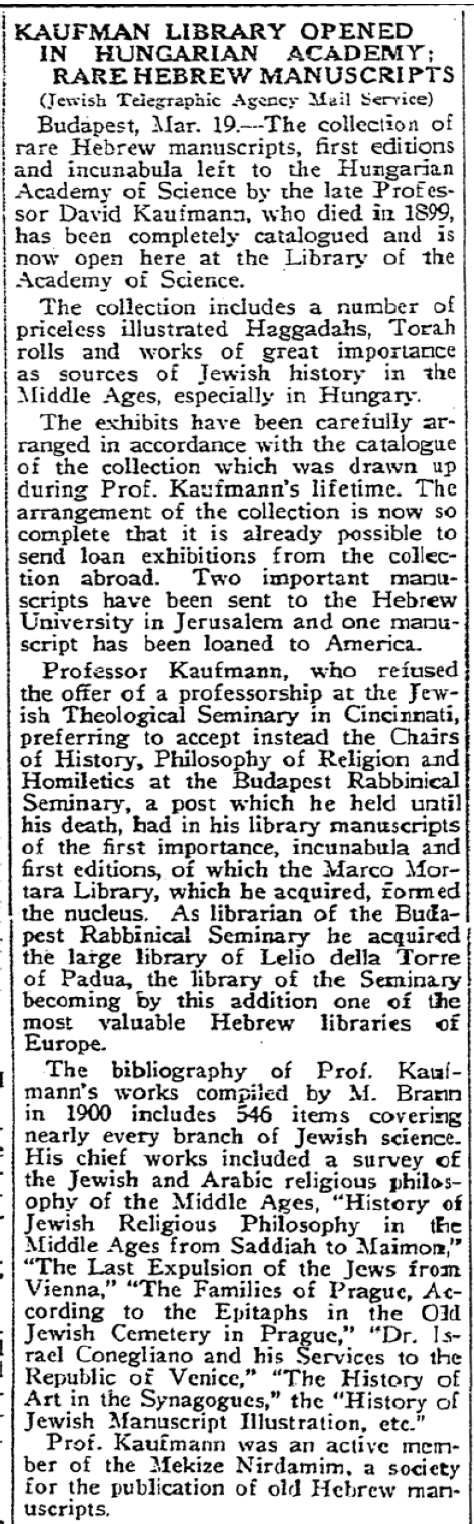
It is in the Summer of 1877 that the second journey of our graduate’s diploma commenced. As librarian of the Budapest Rabbinical Seminary, David Kaufman, a prodigious historian and bibliophile, had acquired the collection of Lelio Della Torre, an Italian Jewish scholar. While in Italy making arrangements for the transfer of the library, he made the acquaintance of Mortara. Kaufmann was well aware of the extent and value of Mortara’s collection, and that it included Della Volta’s library as well.[45] Kaufmann and Mortara would correspond for some time thereafter.

When Mortara died in 1894, you can well imagine the great interest in his collection, which the family was motivated to sell. A number of individuals and institutions, including Kaufmann, were vying for the opportunity, but family and logistical issues delayed the process, not the least of which being the absence of a comprehensive catalogue of the holdings. It would ultimately be David Kaufmann who would walk away with the treasure, his success partially attributed to his earlier visit in 1877, his previous familiarity with the collection, and his continued contact with Mortara and his family.

The transfer of this library from Mantua to Budapest, where it arrived in February 1896, was apparently no small feat, with some of the Mortara collection somehow finding their way into non-Kaufmann hands.[46] Yet, it represents the second entry in our passport and longest journey for our diploma.

Alas, Kaufmann would die only three years after acquiring the Mortara collection. Would Della Volta’s collection now be transferred to the hands of a new scholar in yet another country, perhaps America or Israel? Fortunate for our diploma, its third and final journey would again be only a brief intracity trek, akin to its earlier trip in Mantua. Kaufmann bequeathed his collection to the Hungarian Academy of Science, where it remains to this day.

Fortunate for scholars unable to journey to Hungary, reference, and often digitized copies, of items in the Kaufmann collection can be found on the National Library of Israel website.

I doubt that Della Volta would have envisioned that the final resting place for his collection would be in Budapest, but nor would he have imagined a Jewish doctor in Woodmere writing about, of all the valuable items in his library (including his original compositions), his medical diploma.

[1] See Edward Reichman, “Confessions of a Would-be Forger: The Medical Diploma of Tobias Cohn (Tuvia Ha-Rofeh) and Other Jewish Medical Graduates of the University of Padua,” in Kenneth Collins and Samuel Kottek, eds., Ma’ase Tuviya (Venice, 1708): Tuviya Cohen on Medicine and Science (Jerusalem: Muriel and Philip Berman Medical Library of the Hebrew University of Jerusalem, 2021).
[2] Harry Friedenwald Collection in the National Library in Israel.
[3] G. Baldissin Molli, L. Sitran Rea, and E. Veronese Ceseracciu, Diplomi di Laurea all’Università di Padova (15041806) (Padova: Università degli studi di Padova, 1998), 251.
[4] Baldissin Molli, op. cit., 255.
[5] University of Padua Archives, Ms. V. 106.
[6] This was a period of transitioning away from the smaller diploma booklet to larger size and less illustrated documents. See Baldissin Molli, op. cit.
[7] For further discussion, see E. Reichman, “The ‘Doctored’ Medical Diploma of Samuel, the Son of Menaseh ben Israel: Forgery of ‘For Jewry’,” Seforim Blog, March 23, 2021.
[8] I have only identified one extant diploma from a Jewish medical graduate of the University of Siena. For discussion of this graduate, as well as a picture of his diploma, see E. Reichman, “The Physicians of the Rome Plague of 1656, Yaakov Zahalon and Hananiah Modigliano,” Seforim Blog, February 19, 2021.
[9] The religious references are in any case removed from this standard Ferrara diploma, but neither do we find the often-seen identifier for Jewish students, Hebreus.
[10] Germanisches Nationalmuseum, Studiensaal Archive, HA, Pergamenturkunden, Or. Perg. 1649 Juli 09. On this diploma, see Moritz Stern, “Das Doktordiplom des Frankfurter Judenarztes Isaak Hellen (1650),” Zeitschrift fur die Geschichte der Juden in Deutschland 3 (1889), 252-255.
[11] https://footprints.ctl.columbia.edu.
[12] The most expansive biobibliographical reference I have found is in Asher Salah, La Republique des Lettres: Rabbins, Ecrivains et Medecins, Juifs en Italie au XVIIIe Siecle (Brill: Leiden, 2007), 661-662. See also 428.
[13] NLI 990001918010205171.
[14] Folios 27-28 of the manuscript.
[15] On Portaleone, see H. A. Savitz, “Abraham Portaleone: Italian Physician, Erudite Scholar and Author, 1542-1612,” Panminerva Medica 8:12 (December, 1966), 493-5; S. Kottek, “Abraham Portaleone: Italian Jewish Physician of the Renaissance Period – His Life and His Will, Reflections on Early Burial,” Koroth 8:7-8 (August, 1983), 269-77; idem., “Jews Between Profane and Sacred Science: The Case of Abraham Portaleone,” in J. Helm and A. Winkelmann (eds.), Religious Confessions and the Sciences in the Sixteenth Century (Brill, 2001). For a full text of his will, see D. Kaufman, “Testament of Abraham Sommo Portaleone,” Jewish Quarterly Review 4:2 (January 1892), 333-41; A. Berns, The Bible and Natural Philosophy in Renaissance Italy (Cambridge University Press, 2014). Shadal discovered a remarkable letter by Portaleone recounting his brush with death on February 25, 1576, when he escaped unscathed from a vicious attack. Although his cloak was perforated in sixteen places from the perpetrator’s sword, miraculously no blood was drawn. See Y. Blumenfeld, Otzar Nehmad 3 (Vienna, 1860), 140-1.
[16] For a copy of the text of his diploma, see V. Colorni, Judaica Minora (University of Ferrara Press, 1983), 487-9.
[17] This work has recently been reissued in an expansive, copiously footnoted edition with introductory essays and biography. See Y. Katan and D. Gerber (eds.), Shiltei Ha-Gibborim (Makhon Yerushalayim, 5770).
[18] 1:3.
[19] Folio 78 of the manuscript.
[20] Y. D. 403:6.
[21] For a discussion on the history of anatomical dissection in rabbinic literature, including the identification of the 248 evarim, as well as the gidim, see Edward Reichman, The Anatomy of Jewish Law: A Fresh Dissection of the Relationship Between Medicine, Medical History and Rabbinic Literature (OU Press, YU Press, Maggid Press: Jerusalem, 2021), forthcoming.
[22] For a discussion on the history of Jewish burial practices in antiquity and the use of kukhin, see Patricia Robinson, The Conception of Death in Judaism in the Hellenistic and Early Roman Period (Ph.D. Dissertation: University of Wisconsin-Madison, 1978).
[23] I thank Filippo Valle for his assistance in both translation and research for this passage.
[24] See Ephraim Nissan, Benedetto Frizzi, a Physician, Medical Editor, Jewish Apologist, and Johann Peter Frank’s Pupil, Who Interpreted Moses’ Law as a Sanitary Code in Line with Frank’s Theory of Public Hygiene,” Korot 25 (2019-2020), 259-293.
[25] On Frizzi, see S. Simonsohn, History of the Jews in the Duchy of Mantua (Kiryat Sefer, 1977), 649, n. 226; Friedenwald, op. cit., 115; L. Dubin, “Medicine as Enlightenment Cure: Benedetto Frizzi, Physician to Eighteenth-Century Italian Jewish Society,” Jewish History 26(2012), 201–221. On his work, see B. Dinaburg, “Ben Tzion Hakohen Frizzi and His Work Petaĥ Einayim,” (Hebrew) Tarbitz 20(1948/49), 241–64. For an exchange between Frizzi and Shadal about a work of the latter, see Moshe Shulweiss, “Shmuel Dovid Luzzatto, Pirkei Hayyim,” (Hebrew) Talpiyot 5:1-2 (Tevet, 5711), 41. For a reference to Frizzi dining with Hida, see Aron Freiman, ed., Ma’agal Tov haShalem of Rabbi Hayyim Yosef David Azulai (Mekize Nirdamin: Jerusalem), 94.
[26] Shabbat 13b. Full translation of passage (from Sefaria): Alternatively: The flesh of a dead person does not feel the scalpel [izemel] cutting into him, and we, too, are in such a difficult situation that we no longer feel the pains and troubles. With regard to the last analogy, the Gemara asks: Is that so? Didn’t Rav Yitzḥak say: The gnawing of maggots is as excruciating to the dead as the stab of a needle is to the flesh of the living, as it is stated with regard to the dead: “But his flesh shall hurt him, and his soul mourns over him”(Job 14:22)? Rather, say and explain the matter: The dead flesh in parts of the body of the living person that are insensitive to pain does not feel the scalpel that cuts him.
[27] I am presently working on a more expansive analysis of this passage titled, “On Pain of Death: Postmortem Pain Perception in Rabbinic Literature.”
[28] See, for example, Hubert Steinke, Irritating Experiments: Haller’s Concept and the European Controversy on Irritability and Sensibility, 1750-90, Vol. 76 of Clio Medica, Wellcome Series in the History of Medicine (Amsterdam: Editions Rodopi, 2005); Dominique Boury, “Irritability and Sensibility: Key Concepts in Assessing the Medical Doctrines of Haller and Bordeu,” Science in Context 21:4 (2008), 521-535.
[29] R’ David Zacuto D’Modena (d. 1865). This manuscript responsum by D’Modena on autopsy was published by Yitzhak Raphael, “Two Responsa on Autopsy,” (Hebrew) Sinai 100 (1987), 737-748.
[30] See E. Reichman, “’A Physician, and Not for Himself’: Revisiting a Rare Jewish Physician Epithet That Should So Remain,” forthcoming. For earlier discussions of this expression, see Joshua O. Leibowitz, “‘Physician and Not for Himself,’ An Unusual Hebrew Medical Epithet,” Koroth 7:7-8 (December, 1978), CXXIX- CXXXIII; Meir Benayahu, “Physician and Not for Himself,” Koroth 7:9-10 (November, 1979), 725-725; Abraham Ohry and Amihai Levi, “Physician and Not for Himself,” Koroth 9:3-4 (1986), 82-83 (Hebrew) and 399*-401* (English).
[31] Della Volta does not appear to use this signature elsewhere throughout this manuscript, and I only found it in chapter 25. A review of his other manuscripts, which I did not do, would be instructive.
[32] Folio 89 of the manuscript.
[33] Folio 122 of the manuscript.
[34] Folio 126 of the manuscript.
[35] On bathhouse insemination and the story of Ben Sira in rabbinic literature, see E. Reichman, “The Rabbinic Conception of Conception: An Exercise in Fertility,” Tradition 31:1 (Fall 1996), 33-63, reprinted with additions and revisions in Reichman, The Anatomy of Jewish Law, op. cit.
[36] An eight-volume work published between 1796-1799.
[37] Ya’ir Ozen, En Zokher, ma’areet aleph, n. 93 and Birkei Yosef E.H. 1:14.
[38] Volume 4 (I. Costa: Livorno, 1879), 57b-58a.
[39] See NLI system n. 990001918190205171, pgs. 45, 98, and 116. This is a collection of his letters to Italian maskilim.
[40] See Joshua Teplitsky, Prince of the Press (Yale University Press: New Haven, 2019).
[41] See Dan Rabinowitz, The Lost Library: The Legacy of Vilna’s Strashun Library in the Aftermath of the Holocaust (Tauber Institute Series for the Study of European Jewry, 2018).
[42] On Mortara, see Asher Salah, “The Intellectual Networks of Rabbi Marco Mortara (1815–1894): An Italian “Wissenschaftler des Judentums,” in Paul Mendes-Flohr, et. al. eds, Jewish Historiography Between Past and Present, Studia Judaica, Band 102 (2019), 59-76. On his library, see idem, “La Biblioteca di Marco Mortara,” in Mauro Perani and Ermanno Finzi, eds., Nuovi Studi in Onore di Marco Mortara nel Secondo Centenario della Nascita (Firenze: Giuntina, 2016), 149-168. What follows is drawn primarily from these works.
[43] In addition to countless articles in the periodicals of his day, Mortara is known for his Catalogo della Biblioteca della Communita Ebraica de Montova and Indice Alfabetico dei Rabbini e Scrittori Israeliti di Cose Guidaiche in Italia.
[44] See Salah, “La Biblioteca,” op. cit., 152.
[45] See Salah, “La Biblioteca,” op. cit., 155.
[46] See Salah, “La Biblioteca,” op. cit., 157. Somewhere along the way, Harry Friedenwald acquired a book that was part of the Della Volta library, a prayer book according to the German rite published by the physician and Padua graduate Eliezer Solomon d’Italia. Della Volta added a 9-page manuscript to the copy which includes a history of the d’Italia family chronicles. See H. Friedenwald, Jewish Luminaries in Medical History (Johns Hopkins Press, 1946), 88.


Towards a Bibliography of seforim related to Shavous and Megilas Rus (new and old)


Towards a Bibliography of seforim related to Shavous and Megilas Rus (new and old)

By Eliezer Brodt

In this post I intend to start a list towards a more complete bibliography to the various seforim (new and old) and articles related to Shavous. I hope to update it much more in the future as my computer (with all my information just died).

When learning the Halachos of Shavous, one is struck how the Tur does not mention anything special for Shavous except for instructions related to davening and Keriyas Hatorah. The only custom he mentions that is unique to Shavous is saying Azharot. Rabbi Yosef Caro in both of his works, Beis Yosef and Shulchan Aruch pretty much follows in this path. In the Codes is not until the Rema that some of the famous customs related to this Yom Tov are brought down, such as the custom of placing flowers in shuls and houses, the custom of eating Milchigs and eating special lechem to remember the Shtei Halechem. Only afterwards through the writings of the Matteh Moshe, Knesses Hagedolah and especially the Magen Avraham are the other customs related to this Yom Tov brought forward, among  them, when exactly is one supposed to daven Maariv Shavous night, staying up the whole night learning, saying Akdamus, using a special Trope when leining the Aseres Hadibros,and leining Megilas Rus[1].

The first work worth mentioning, as its one of my all time favorites, is Rav Zevin’s Moadim Be-halacha. In this work he has four pieces, none of which needs my approval ! – related to Shavous. He has a general piece, one related to various issues about the Shtei Halechem, another related to Megilas Rus and one related to various aspects of Aseres Hadibros.

Regarding general aspects of Aseres Hadibros one should see the collection of articles in the volume called
Aseres  Hadibros
edited by B. Segal (Magnes Press, 1986) and the work
Aseres  Hadibros Ve-keriyas Shema
from Moshe Weinfeld (2001).

For a discussion of the special Trope used when leining the 
Aseres  Hadibros see the article from Amnon Shiloah in the volume
Aseres  Hadibros
edited by B. Segal. See also Rabbi Dovid Yitzchaki in the back of his edition of Luach Eresh pp. 524- 540; the series of articles of Y. Laufer (available here, here and here) [special thanks to my good friend Mr. Yisroel Israel for bringing this to my attention]; this article from Y. Ofer.

For discussion of the custom to stand during the leining of 
Aseres  Hadibros see this earlier post by Dan Rabinowitz available here and especially the sources listed at the end. To add to the usage of the Teshuvos Harambam mentioned there, see Rav Zevin, Moadim Be-halacha, p. 389-390. See also what I mention here, and also Rabbi Oberlander, Minhag Avosenu Beyadenu, pp.605-622.

Regarding Shtei Halechem see the excellent work Birchat Haaretz from Rabbi Y. Mashbaum available here.

Regarding the time when to daven Maariv Shavous night see Rabbi Binyomin Hamburger, Shorshei Minhag Ashkenaz, 4:344-369.

Regarding staying up Shavous night, see R. Hamburger, Shorshei Minhag Ashkenaz, 3:268-364, where he traces this minhag and deals with, at great length, the minhag of saying Tikun. See also Professor Moshe Chalamish, Ha-Kabalah, pp. 595- 612. See also J.D. Wilhelm, “Sidrei Tikkunim,” in Alei Ayin: Essays Presented to Salman Schocken (Jerusalem: Schocken 1948-1952), pp. 125-146, (Hebrew). Of course I must mention my good friend Menachem Butler’s favorite article relating to all this, Elliott Horowitz, “Coffee, Coffeehouses, and the Nocturnal Rituals of Early Modern Jewry,” AJS Review 14:1 (Spring 1989) pp. 17-46. For other Halachic issues related to staying up all night see the recent work, Ha-niyur Kol Ha-laylah.

Regarding saying Akdamot see this earlier post from Dan Rabinowitz available here. See also Rabbi Dovid Yitzchaki in the back of his edition of Luach Eresh, pp. 541-542. See also Jeffrey Hoffman, “Akdamut: History, Folklore, and Meaning,” Jewish Quarterly Review 99:2 (Spring 2009) pp. 161-183.

Regarding the custom of saying Azharot on Shavous see what I wrote here. I hope to update this post in the near future. Meanwhile, see what I wrote in Yeshurun 25:447-449.

Another area worth learning about is Bikurim. For this I recommend the volume of the Safrai Family from their series of Mishnas Eretz Yisrael.

Regarding the custom of placing flowers in Shul and at home, see the works of Rabbi Oberlander, Minhag Avosenu Beyadenu, pp. 573-604 and the collections of material found in Moadim Li-simcha and Pardes Eliezer.

Regarding the custom of eating Dairy on Shavous, much has been written. See the works of Rabbi Oberlander, Minhag Avosenu Beyadenu, pp. 623-647 and the collections of material found in Moadim Li-simcha and Pardes Eliezer. Recently Rabbi Moshe Dinin collected 160 reasons (!) for this custom in  Kuntres Matamei Moshe (2008). Even more recently Rabbi Yosef Ohev Zion printed a work called Yoma De-atzartah (2009) [thanks to Yissochor Hoffman for bringing this work to my attention]. For important discussion related to this topic see the articles of my friend Rabbi Yehudah Spitz available here and here.

Related to this one should read the great article by Aviad A. Stollman, “Halakhic Development as a Fusion of Hermeneutical Horizons: The Case of the Waiting Period Between Meat and Dairy,” AJS Review 28:2 (November 2005) pp. 1-30 (Hebrew) [expanded from his M.A. on Perek Kol Habassar.

Another custom that originally took place on Shavous was when a child turned three they used to conduct a special seder with eating cakes and reciting various pesukim and the like. This custom was dealt with by many; for a recent discussion of this topic, including sources, see my article in Yerushasenu 5 (2011), pp. 337-360. [A PDF is available upon request].

Another issue of interest worth mentioning related to Shavous is the plagiarism of the highly controversial Sefer Chemdas Yamim discussed many times on this blog (see here). Isaiah Tishbi in his various essays where he proves the plagiarism’s of the Chemdas uses many different topics related to Shavous. See the collection of his articles Chikrei Kabbalah Veshiluchoseh pp. 374-376 (regarding when to daven Maariv), 382-383 (which day was Matan Torah), pp. 389-391 (regarding standing during Aseret hadibrot), pp. 391-393 (regarding the Maggid visiting the Beis Yosef on Shavous night) and pp. 340-341 (regarding eating meat after milk).

Here is a listing of some general works related to Shavous that deal with many of the above aspects and more:

א. ר’ שלמה קלוגר, קהלת יעקב, ירושלים תשס”ו, תמז עמודים.

ב. ר’ פנחס שווארטץ, מנחה חדשה, תרצ”ז, נו עמודים.

ג. ר’ יצחק ווייס, בינה לעתים, בני ברק תשסד.

ד. ר’ שריה דבליצקי, קיצור הלכות מועדים, תשס”ו, פב עמודים.

ה. ר’ אבוגדר נבנצל, ירושלים במועדיה.

ו. ר’ עובדיה יוסף, חזון עובדיה, יום טוב, ירושלים תשס”ג.

ז. ר’ אהרן מיאסניק, מנחת אהרן, ירושלים תשס”ח, רצב עמודים.

ח. ר’ גדליה אבערלאנדער, מנהג אבותינו בידינו, מאנסי תשס”ו.

ט. פרדס אליעזר.

י. ר’ טוביה פריינד, מועדים לשמחה, ירושלים תשס”ח.

יא. ר’ יצחק טעסלער, פניני המנהג, מונסי תשס”ח, תצב עמודים, ספר זה כולל אלפי מקורות וס”ד פרקים על עניני החג.

יב. ר’ יוסף חיים אוהב ציון, יומא דעצרתא, ירושלים תשס”ח.

Over the centuries numerous works have been written explain this Megilah. Just to mention a few: until last year the best collection of Rishonim was in the Toras Chaim edition printed by Mossad Rav Kook. This edition has the commentaries of nine Rishonim printed based on manuscripts.

A few year ago the Even Yisrael company printed a nicely done edition which had a few Rishonim and Achronim. But I cannot offer an opinion if it does not have mistakes and the like. More recently they reprinted this, adding many more Rishonim and Achronim. If one is interested in buying any one volume related to Rus this is the best to buy for your money, as you get a bunch of commentaries all in one volume.

Another work worth mentioning is called Tosfos Haslem this is a collection from many different manuscripts of the Baalei Hatosfos on the Megilah.

Another work on Rus worth mentioning is the Shoresh Yeshai from Rabbi Shlomo Alkabetz. There are many editions of this work, but I recommend the one printed a few years ago edited by Rabbi Shmuel Askhkenazi, as it includes a very good introduction, many notes and some very useful indices.

Another beautiful work on Rus worth learning through is the Meshivos Nefesh from the Bach. This perush goes through everything related to the megilah very thoroughly. He also wrote a work on Rashi called Be’er Mayim. This work was printed many times.

Another work is the Torah Sheleimah continuing in the path of Rabbi Menachem Kasher’s Torah Sheleimah on the Torah, collecting the many Midrashim on the Megilah. However the great notes of Rav Kasher are definitely missed by many.

Another work I enjoyed on Rus was from Rabbi Yosef Zechariah Stern – one of my favorite Gedolim – his bekius here is simply remarkable (as it is in all his other works).

Another collection of useful works on Megilas Rus was printed a few years ago by my good friend Rabbi Moshe Hubner. The title of the volume is Uryan Toilessyah (314 pp.). This volume contains four works, the first being his own called Uryan Toilessyah. The style of this work is to deal with many of the issues that come up while learning the Megilah.The questions and answers are based on a very wide range of sources. He also includes many nice ideas of his own to various problems. It is very organized clear and to the point. He also printed three other earlier works, the first being Invei Hagefen first printed in 1863, the second being Rishon Mekor Hachaim first printed in 1697. He also reprinted some Teshuvos and articles related to Shavous from his grandfather Rabbi Shmuel Hubner, author of the Nimukei Shmuel. [A few copies of this work are still available; email me for more details].

This year a few more important works related to Megilas Rus were just printed. First worth mentioning is the Mikraot Gedolot Haketer from Bar Ilan. This series began a few years back and has fallen asleep for awhile. Last week the project “woke up” and five volumes were released in the small size. The point of this series is to offer the most accurate texts of various Rishonim on Tanach based on all the manuscripts.

Another excellent work just printed is the Eshkol Hakofer from Rabbi Avraham Sbba, author of the Tzeror Hamor (259 pp.). This work had been printed many years ago based on one manuscript but this edition is printed based on numerous manuscripts and contains many pieces not found in the printed edition. This work is simply beautifully done, with a nice introduction and many useful notes.

Another great work that just was printed for the first time was the Toldos Shlomo by  Rabbi Shlomo Kluger (436 pp.).

Another new work on Megilas Rus is called Megilas Rus Im Otzros Hameforshim (482 pp.) This work contains a few sections the first part contains separate extensive perushim on Targum, Rashi, Rav Yosef Kara and Ibn Ezra’s perushim. Besides for this, it contains an extensive peuish on the Megilah. Another section has in-depth lengthy discussions on various topics related to the Megilah, Rus and David Hamelech. As the bibliography at the end of the sefer shows it is based on many seforim.

Another work worth mentioning is the Ke-Motzo Shalal Rav on Rus and Shavuos. This work continues in the path of Rabbi Rosenthal’s earlier works on chumash and Yomim Tovim with the same name, collecting and presenting nice material, written clearly, and easy to understand related to Rus and Shavous from famous and less famous works.

Regarding whether or not to stand for the recitation of the Aseres Hadibros, see here. Thanks thanks for Yissachar Hoffman for sending me this. In the work Shiurei Rav Elyashiv on Berachos (p. 93) it says that he says its assur to stand based on this teshuvah of the Rambam. I will add that I davened for many years at Rav Elyashiv’s minyan on shabbos. I always wanted to see if he would sit or stand but he almost always got that aliya – until one time he did not and I was able to see that he indeed stayed seated!

[i] The Rema mentions this minhag earlier (490:9) but not in hilchos Shavous.


Towards a Bibliography of Coronavirus-related Articles & Seforim written in the past month (updated): Black Weddings and others Segulot

Towards a Bibliography of Coronavirus-related Articles & Seforim written in the past month (updated)

Black Weddings and others Segulot

By Eliezer Brodt

Introduction

When the lockdown began in Israel a few weeks ago, a friend of mine e-mailed me an article about plagues he was about to complete, asking if I had anything to add. Upon checking my collections of material, I found I had nothing special marked down in my indexes about the topic. At the time I had no plans of writing anything about it. However, a few weeks later, when I started preparing my e-mail of reading material which I send out a few times a year, I saw that I indeed had several articles related to different aspects of the current Coronavirus pandemic, articles which I had either received or collected from various sources. By that time, I myself was deep into writing an article on R’ Akiva Eiger and the 1831 Cholera outbreak (which I hope to complete shortly IYH).

I had originally planned on including an appendix to that article with some of the material published in the past few weeks. I then decided to just make it into its own blog post, which was published last week. I was not attempting to put up everything I saw or collected on this topic – there is just so much out there! Normally, I do not update such a post so early on, however this time I decided to make an exception. I would like to thank all those that sent me material and links, I hope people will continue to do so.[1]

In my first version of the bibliography I included about twenty-five booklets and articles. This new Version has more than double, listing over fifty items, plus new links and information on the subject.

The purpose of the post is to collect a wide range of material, covering many different aspects of the Coronavirus pandemic and making it available for people to learn from. I am not necessarily endorsing the various pieces or links mentioned.

I also included Two new Appendices. One related to a famous old segulah, the so-called ‘Black Wedding’. Another one relates to a Segulah of R. Shimshon of Ostropoli. (See also Footnotes 2 & 7).

Many of us have been under some sort of lockdown for over a month – some of us for less, some for more. However, this has not silenced the ‘voice of the Torah’; all kinds of Shiurim & classes on a wide range of topics have been made available via various methods. Otzar Hachochmah has made their database available free of charge as have the Bar Ilan Responsa Project and Project Kotar. Others have chosen to spread Torah by putting digital pen to Digital paper.

The truth is, like almost every other topic, it’s hard come up with something new; plagues and the like have occurred numerous times throughout our long history.

The famous bibliographer Avraham Ya’ari already devoted a chapter of a book of his to listing some of the Seforim which were written during plagues.[2]

One thing of note is that in contrast to the past, the speed which material is coming out in typeset, PDF form etc, is simple remarkable. Many of these booklets are being updated with new material every few days making it even more difficult to keep track; some of these booklets have been updated over five times!

I believe there has never been a time when so much material on a specific topic has been flowing at such speeds. This is due to the new age of technology and new information becomes available so fast. One suggestion I would make is based on the Rambam who wrote:

וממה שראוי שתדעהו, שהאדם אין ראוי לו לדבר ולדרוש באזני העם עד שיחזור מה שרצונו לדבר פעם ושנים ושלש וארבע, וישנה אותו היטב, ואחר כך ידבר, וכן אמרו עליהם השלום, והביאו ראיה מלשון הכתוב: “אז ראה ויספרה הכינה וגם חקרה”, ואחר כך “ויאמר לאדם”. זה נאמר על מה שצריך לאדם לדבר בו בפיו. ואולם מה שיחוק האדם בידו ויכתבהו על הספר, ראוי לו שיחזירהו אלף פעמים אילו יתכן זה; וזה האיש שלא עשה דבר מזה, אבל כתב אלו הענינים הנכבדים בטופס, ולא ראה לכתבם תחלה ולתקנם, מפני שהיה דברו אצלו בלי ספק בענין שלא היה צריך לחזור עליו, ומסרו ביד איש שישוט בם בכל עיר ובכל מדינה, והאפיל בם לבות בני אדם, שלח חושך ויחשיך ,איגרות הרמב”ם, מהדורת ר’ יצחק שילת, איגרות השמד, עמ’ לג-לד

He wrote this long before the printing press! I would say how much more so in our times, with computers and the world wide web, and the speed with which our words are disseminated; one should be even more careful as to what they say, and especially what they print, and realize it has lasting effects, not only now but in many years to come.

During each of these times in the past, many discussions related to aspects of plagues and epidemics arose.[3] The sources range from descriptions of the situation, discussions of what one should do, i.e. stay put or run,[4] tefilot[5] and/or segulot,[6] Hashkafah discussions,[7] to Halachik rulings regarding observing various Halachos.[8]

Right before Pesach, Machon Yerushalayim released a 300-pp. digital work collecting hundreds of such sources (item #20).

In the most recent issue of the journal Ha-Ma’ayan (#233) released this past month my good friend R’ Moshe Dovid Chechik wrote an article titled “The Prohibition or the Obligation to Flee the city during an Epidemic” (item #18). Since, others have written about it [see below (#4&5)]. [Here is a link to a recent Shiur on this topic from Rabbi Dr. Dovid Katz on the subject].

Much has been written about R’ Akiva Eiger and the 1831 Cholera outbreak (see below – R’ Eli Fisher and Dr. Eddie Reichman’s articles items 1,2 and 20). [See also Rabbi Pinni Dunner here].

This week, I received an excellent work from Rabbi Guttman all about the 1831 Cholera outbreak (item #24) [available upon request]. I too am working on an article on the topic and hope to complete it IYH within the next few days.

This terrible time has already seen many Teshuvot written, in regard to Pesach, Sefirah, and Minyanim. Especially of note is the vast amount written and that will continue to be written about davening with a Minyan (see below #34, and item # 35 and many others below, see also R’ Avishay Elbaum’s recent post [here]).

See below (Appendix five for a Teshuvah I came across recently, about a wedding with less than 10 people for a minyan, published in Russia in 1928 in the Journal Yagdil Torah edited by Rav Zevin and R’ Abramsky.

Databases – Blogs

There are also some online databases of material devoted specifically to the current Coronavirus pandemic. Kol Corona (here) is an excellent collection of material related to the Halachic aspects of Coronavirus pandemic, with many links.

Another is a database with links of material for a comparative study of Responses in Judaism, Islam and Christianity.

The Lehrhaus Blog also has many valuable articles related to the Coronavirus pandemic (see this link), as does the Torah Musing blog (see this link).

Worth mentioning is the online Newspaper-Journal Called Zarich Iyun: Charedi Thoughts and Ideas. Most of its articles are in Hebrew (below # 45-48). However, some of its Coronavirus pandemic related articles have been translated into English (see below #13-16). Some of the articles (especially # 48) have generated numerous comments as, one can see from the links. Related to some of this is Rav Michael Abraham’s article, available here, which also generated numerous comments.

Each week, Rabbi Y. Sprung of the The Beit Medrash Govoha for Medical Halacha (affiliated with Technion Medical School and under the leadership of Rav Asher Weiss) releases an article (in Hebrew and English) relating to the parsha and medicine. The past few weeks (from Ki Sisa) have related to coronavirus. See this link for these articles.

All of the items mentioned in the Bibliography bellow are available from me free of charge – just E mail me at eliezerbrodt@gmail.com

English

  1. Rabbi Eli Fischer, Rov in a Time of Cholera (here)

  2. Dr. Eddie Reichman, From Cholera to Coronavirus: Recurring Pandemics, Recurring Rabbinic Responses (here)

  3. Dr. Eddie Reichman, Incensed by Coronavirus: Prayer and Ketoret in Times of Epidemic (here)

  4. Rabbi Gil Student, Talmudic Advice on Epidemics (here)

  5. Dr. Tamara Morsel-Eisenberg, “Is It Permitted to Flee the City?” (here)

  6. Rokhl Kafrissen, Plague Weddings (here)

  7. Dr. Jeremy Brown, A Long-Forgotten Jewish Remedy for the Coronavirus Outbreak (here)

  8. Rabbi Shlomo Zuckier, Making Seder out of the Zoom Controversy (here)

  9. Rabbi Shlomo Brody, Does Jewish Law Oblige Doctors to Risk Their Own Health to Heal the Sick? (here)

  10. The Layman’s Guide to the laws of Mourning, By R’ Holzer, Based on the Rulings of Rav Asher Weiss

  11. Rabbi Prof. Avraham Steinberg, The Corona Virus Pandemic 2019-20- Historical Medical and Halakhic Perspectives, (41 pp.)

  12. Rabbi Michael Broyde, An Introduction to Pandemic Jewish Law, Responsa of Rabbi Hershel Schacter and Rabbi Asher Weiss (here)

  13. Rabbi Yehoshua Pfeffer, Coronavirus: The Charedi Response (here)

  14. Rabbi Reuven Leuchter, COVID-19: A view From Above (here)

  15. Rabbi Eli Stern, Coping without Community (here)

  16. Rabbi Moshe Farkash,COVID19: A community in Crisis (here)

  17. Professor Shaul Magid, COVID-19, Haredi Jewry, And Magical Thinking (here)

Hebrew

  1.  משה דוד צ’צ’יק, האיסור או החובה לברוח מן העיר בשעת המגפה [כאן]
  2. ר’ מנחם מענדל רוזנפלד, זמן מגיפה: הורים ילדים ומפחדים [כאן]
  3. ר’ דוד אברהם, נאמנו מאד, עדויות גדולי ישראל על הליכותיהם ומנהגיהם בימי חולי ומגיפה, אשר נאספו ונלקטו מתוך כתביהם וחיבוריהם, מכון ירושלים [ספר שלם, 300 עמודים]
  4. שמירת הסופר להינצל מחולי ומגפה מתורת החתם סופר [ספר שלם, קמא עמודים + חלק חדש של עוד 35 עמודים]
  5. ר’ שמואל ויטל, סדר משמרה לזמן המגפה, מכתב יד, בההדרת ר’ ישראל זאב גוטמאן
  6. אדם ישר, סגולות ותפילות לזמן המגפה, שחיבר ר’ יצחק אייזיק סאפרין מקאמרנא, בעל היכל הברכה [מהודרה חדשה], מא עמודים
  7. ר’ ישראל זאב גוטמאן, קונטרס טללי נוחם, כולל מכתב אגרות שפירין
  8. קונטרס תפילות מיוחדת למניעת מגיפת הקורונה, כבקשת… המקובל רבי בניהו שמואלי שליט”א, 40 עמודים [וגם קמיע למניעת המגיפה]
  9. הרב זלזניק, לוח ההלכות ומנהגים לחודש אייר, מיוחדת עם הלכות הנוגעות למגיפת הקורונה, 17 עמודים
  10. אוסף של 35 תשובות של הרב צבי שכטר שליט”א [בעברית וחלקם גם באנגלית]
  11. פסקי קורונה מאת הרב צבי שכטר שליט”א [51 עמודים]
  12. מנחת אשר, לקט שיעורים תשובות אגרות ומאמרים הנוגעים למגפת הקורונה מאת הרב אשר וייס שליט”א [100 עמודים]
  13. מנחת אשר, לקט שיעורים תשובות אגרות ומאמרים הנוגעים למגפת הקורונה מאת הרב אשר וייס שליט”א, מהדורה תניינא, [172 עמודים]
  14. הרב פרופ’ אברהם שטינברג, מגפת הקורונה התש”פ, היבטים היסטוריים, רפואיים והלכתיים, 30 עמודים
  15. ווי העמודים וחשוקיהם, ליקוט משעורי וחידוש ר’ יצחק זילברשטיין, קנו עמודים
  16. ר’ שלמה אבינר, קונטרס כתר יתנו לך, קורונה בהשקפה ובהלכה
  17. קונטרס פסקי הלכות, בשאלות שהזמן גרמן, מתוך כתבי ר’ אברהם יחיאל סגל דויטש
  18. ר’ צבי רייזמן, ‘צירוף למנין תפילה בציבור וברכת כהנים ב’בידוד בקורונה’
  19. ר’ יששכר אייכארן, פי כהן, בענין אם העומדין בשתי רשיות ורואין אלו את אלו מצטרפין למנין עשרה, 35 עמודים
  20. ר’ משה מרדכי קארפ, בדין צירוף לדבר שבקדושה ע”י חבורות ויחידים הרואין זא”ז ומניני המרפסות, 15 עמודים
  21. אליעזר יהודה בראדט, סגולת ברכת לבנה, [כאן]
  22. ר’ אברהם מימון, קונטרס בדד ישב, נח עמודים
  23. גליון עיטורי מרדכי, הלכות למגיפת הקורונה ע”י הרב מרדכי יעקב מאיר, 23 עמודים
  24. ר’ נהוראי אוחנה, הקורונה בהלכה, מהדורה חמישית, 123 עמודים
  25. ר’ יצחק לובינשטיין, המגיפה בתורה, 72 עמודים
  26. ר’ אברהם דרברמדיקר, קונטרס הקורונה, 23 עמודים
  27. קונטרס הסתר פנים, [חמישה שערים: שער חולי, שער בידוד, שער מגפה, שער חיים ושער בשורה טובה], 93 עמודים
  28. ר’ יהושע פפר, חרדים מהקורונה [כאן]
  29. ר’ ראובן לויכטר, מהותה של מגפה: מבט על [כאן]
  30. ר’ אלי שטרן, מי אנחנו ללא הקהילה? [כאן]
  31. ר’ משה פרקש, לעמוד על נפשנו [כאן]
  32. לקט מקורות ‘שומר מצוה לא ידע דבר רע’
  33. מעלת אמירת פרשת הקטרות להינצל ממגפה [מכון תורת הקרבנות], 16 עמודים
  34. קובץ תורני מה טובו אהליך יעקב, גליון י [כל הקובץ] [585 עמודים] [עניני פסח וקורונה]
  35. קישור לאוסף מאמרים על חג הפסח והמגיפות בהיסטוריה, בספרות בפיוט ובהגות. המאמרים פרי עטם של חברי וחברות סגל הפקולטה למדעי היהדות באוניברסיטת בר-אילן [כאן]
  36. לשונות של גאולה, אסופת שירה וספרות, 37 עמודים
  37. קובץ עץ חיים גליון לג [יש כמה מאמרים על קורונה]
  38. ירחון האוצר # 40 [יש כמה מאמרים על קורונה]


[1] Thanks to Nathan Hirsch from the NLI for sending me a few items which I did not see or did not have digital versions of.
[2] Mechkaray Sefer, pp. 90-99. See also Marvin Heller, Further Studies in the making of the early Hebrew Book, pp.79-90. See these recent posts here & here.

One of works mentioned by Ya’ari is R’ Chaim of Friedberg’s (the brother of the Maharal), beautiful work Sefer HaChaim (first printed in 1593) which, as he states in his introduction, he wrote during a plague in 1578. Less known (and not mentioned by Ya’ari) is that his earlier work Igerret Hatiyul was also written during an earlier Plague, in 1569. [For more information about these works see Eric Zimmer, The Fiery Embers of the Scholars, (heb.), pp. 177-219].

One bibliographical note about the Sefer HaChaim is the Haskamah of the Apta Rav who writes in the 1817 reprint:

…כל דיבור ודיבור מרגינותי’ תחותיה וברוח הקודש נאמרה

Recently the first draft of the Sefer HaChaim was printed in Yerushaseinu 10 (2019), pp. 19-55.

See note 7 for additional comments on Yaari’s article.
[3]See for example about one in Italy 1630-1631: R’ Yehudah Aryeh Modena, The Autobiography of a Seventeenth Century Venetian Rabbi, pp. 134-136; Sefer Olam Hafukh, a History of the Plague in Padua in the Year 1631, by Abraham Catalano, Kovetz Al Yad 4 (XIV) (1946), pp. 65-101 (printed by Cecil Roth). See Appendix Three about another plague in Italy in 1656.

For a description of one in 1866 see Y. Kotik, Ma SheRuetee, Edited by David Assaf, pp.349-354 (PDF available upon request).
[4] See Asher Ziv, HaRama, pp. 112-116.

See also, R’ Raphael Mordechai Malchi, Medical Essays, (ed. M. Benayahu), pp, 139-140. See also his Grandson, R’ David De Silva, Pri Megaddim, [Zohar Amar, Ed.], pp. 71-74.
[5] Two weeks, ago Rabbi Guttman released online, a PDF of a manuscript of R’ Shmuel Vital of Seder Tefilos based on Kabbalah, to say during such times (item #22). See also item # 23 & 25. See also #3, Dr. Eddie Reichman’s article on the topic.
[6] About Fasting, see Omer Ahituv, Fasting in Ashkenaz at the Beginning of the Seventeenth Century, MA thesis, Tel Aviv University 2019, (Heb.) pp. 70-74.

For other Segulot, see the various collections listed below. See also Appendix One about ‘Black Weddings’ and items # 6 &7.
[7] See Appendix Four, for an important chapter from the Mabit’s incredible work Beis Elokiym, related to plagues in Hashkafah. The Mabit was writing about this based on experience as he lived through a few plagues himself and even authored a small work during one such plague called Igrot Derech Hashem, first printed in 1553. [Interestingly enough this work too is lacking from Ya’ari above cited chapter]. See Meir Benayahu, Yosef Bechiri, pp. 28-30,121-122. See also Ibid, p.131 about the story behind the writing of the Igrot Derech Hashem.

In an autobiography of The Mabit’s son the Maharit we find him describing some of these plagues (and others):

שנת השל”ג היתה מגפה בעיר והלך הרב אבא מארי ז”ל עמי לבוק”ע ובתחלתה נח נפשיה של הרב מהר”ר יצחק אשכנזי ז”ל מפני הרעה נאסף הצדיק. ובסוף המגפה נפל ממנו רב רב עתה הרף ידך הרב מהר”ר דוד ן’ זמרא ז”ל [שלם א (תשל”ד), עמ’ 215].

השל”ט באלול בבירייא הוכתי במגפה ובאתי בשערי שאול לולי אלקי’ אבי בעזרי בזכות א”מ והתענה עלי כל ח’ ימים ובחסדו העלה ארוכה לי [שם עמ’ 217].

השמ”ז ירדתי למצרים… בברחי מפני אימת המגיפה… [שם, עמ’ 219].

השנ”ה שנת השמיטה גלינו מאימת המגיפה בפורים לטבריא ובפסח לירושלים עיר הקדש… ושם חיברתי קונטריסין צרות הבית… [שם, עמ’ 221].

השס”ב ברחנו מחמת המגיפה כשמנה חדשים לבוקיעה… [שם, עמ’ 222].

In this autobiography we learn about an additional work written during a plague, by the Maharit. Now Yaari writes:

ר’ יוסף ב”ר משה מטראני ברח בשנת שנד מפני מגיפה מצפת… ושם חיבר את ספרו דרך הקודש על צורת בית המקדש שנדפס רק בשנת תע בקושטאדינא יחד עם הספר מגיד בראשית…”.

Yaari then quotes a passage from the Maharit at the end of the Derech Hakodesh where he describes writing this work during a plague. This complete passage from Ya’ari was quoted in a recent article in HaMevasser on the subject of seforim written during plagues without attribution. However, this information is incorrect. The Sefer that the Maharit wrote during the plague in 1595 was called Tzurot Habayis (as the Maharit wrote in the above passage). R’ Chayim Alfandri saw a manuscript copy of this work (as he writes in his introduction) and when he wrote his sefer Derech Hakodesh on the same subject he quoted numerous passages from it. However, the actual sefer by the Maharit was never printed. In 2007 Machon Zichron Aharon reprinted the Derech Hakodesh with numerous footnotes and indexes. On page 270 they list the numerous times the Maharit’s Tzurot Habayis is quoted (along with other manuscript works by Maharit that R”C Alfandri used).
[8] See the very special work by H.J. Zimmels, Magicians, Theologians and Doctors, pp. 99-110, 228-233 who has an excellent collection of material on this. See also the excellent work, Julius Preuss, Biblical and Talmudic Medicine, (translated by Fred Rosner), pp. 151-160; Herman Pollack, Jewish Folkways in Germanic lands (1648-1806) Studies in Aspects of Jewish Life, pp. 130-133, 304-305.

The Shvut Yaakov wrote in middle of a Teshuvah about money set aside for Pidyon Shivyoim, if one can use it instead for people suffering from a plague,:

אבל עכשיו בעו”ה שנתרבה עלינו עול הגלות ועלילות שקרי’ משונאינו שמעלילין עלינו כאלו הדבר בא ע”י ישראל דוקא וכשהיה הדבר בשנת תע”ג ברוב מקומות שהיו שמה מבני עמינו היה סוגרים רחוב היהודים באין יוצא ואין בא ממש ובדוחק ע”פ שתדלנו’ גדול שהניחו להביא להם צרכי מזונותיהם ובאיזה מקומות הוצרכו לילך ולחבות עצמן ביערים ומערות וישראל שהיו בדרך ועל פני השדה היו ממש מופקרים למות ואשרי מי שלא חמאן בצער ודוחק גדול כזה ואין לך שבי גדול מזו דגרע מכולהן דכולהן איתנהו ביה על כן אין צריך לפנים דמצוה זו הוי ממש פדיון שבוים ואפשר דגדול ממנו ולא הוי שינוי מדעת הנותן כי אין שעת הדחק גדול מזו (שבות יעקב, ב, סי’ פד).

[9] More sources for this can be found in H.J. Zimmels, Magicians, Theologians and Doctors, p. 233, footnote 141; David Assaf in his edition of Y. Kotik’s, Ma SheRuetee, p. 350 Hanna; Wegrzynek, Shvartze Khasene Black Weddings Among Polish Jews, Holy Dissent, 2011, pp. 55-68; Tzvi Friedhaber, Plague Marriages as Reflected in Hebrew Literature and the Hebrew Press, Dappim: Research In Literature 7 (1990), pp. 305-316; Kulmos 21, p. 26.
[10] On this work See A. Yaari, Shiluchei Eretz Yisroel, pp.96-97.
[11] Y. Kotik’s, Ma SheRuetee, p. 350.
[12] Nathaniel Deutsch, The Jewish Dark Continent: Life and Death in the Russian Pale of Settlement, p.233

Appendix One: Graveyard weddings of orphans

Recently (here, here and here) there has been some discussion about an old Segulah, performed by some towns during plagues, ; make a Wedding for Orphans in a graveyard.[9] One was even recently done in Bnei Brak (see here and here).

I would like to add some more sources to this segulah. One of the earliest sources quoted is R’ Moshe Reisher’s excellent work Sharei Yerushlayim, first printed in 1868.10 R’ Weiss, after quoting the Sharei Yerushlayim, writes:

[וגם אני שמעתי מזקני שער שעשו כן בשנת תרל”ג בפ”ב [שו”ת שיח יצחק, סי’ תצא

However, Y. Kotik, in his excellent memoir writes about a plague in 1866:

Due to the cholera epidemic, Jews resorted to all sorts of remedies; in other words: a crippled, mute virgin was married to a blind man. The wedding ceremony was held in the graveyard in the hope that they would produce a generation of righteous offspring…”.[11]

Another source from 1901 writes:

ראיתי להעלות על שלחן מלכים… על מה שנהו בסביבותנו בהרבה מקומות בעידן ריתחא ומחלת הח”ר ר”ל משיאין יתום ויתומה … ומעמידים החופה על בית הקברות ובעירנו בשנת תרנ”ג העמידו החופה סמוך שער גדר בית הקברות מבחוץ…. [ציוני שלום, יד שלום, עמ’ 154-155

While searching for something else I came across mention of this in an article in Hamelitz 1871 (Year Eleven, Issue 33, p.263)


In the early 1900’s, the famous author and ethnographer who went by the pen-name S. Ansky started working on collecting and cataloging hundreds of details about every aspect of Jewish life in Europe. One of the ways he was planned on doing this was through a survey. The survey, in Yiddish, was a 200-page questionnaire with 2,087 questions about the Jewish life cycle. Sadly, he never got to finish the project. But each set of questions gives us a fascinating window into what Jewish life was like before World War I. In his introduction he set forth his goal:

“In order to revive traditional Jewish culture with all its customs, traditions, practices and beliefs, the team has put together a survey, hoping to reach everyone who remembers how people behaved in the past as well as in the present, in those places where Jewish life still continues in the old manner. When numerous responses to all the questions are collected, it will be possible to bring to life the entire structure of the traditional Jewish community, the Jewish family and communal life.”

In the wedding section[12] of the survey we find the following:

Do you know stories about weddings in cemeteries carried out as protections against misfortune? Does this occur only during a plague, or also in other cases, and if so which ones?

One last source related to this can be found in the Shut Maharsham (4:40)

ועד”ש לאשר נפרץ בעירו חולאת ילדים ר”ל ומורגל בין ההמון סגולה להעמיד חופה של יתום ויתומה בביה”ק וזה כמה שבועות עשו שם ביה”ק חדש שהקצוה לזה וגם כבר קברו שם כמה מתים ובנו סביבה מחיצות אבל לא נגמרו המחיצות עוד סביב רק ברוב המקומות כבר מקיף מחיצות.

והנה חתן היתום הוא כהן ונשאל מעכ”ת אם מותר להעמיד החופה בביה”ק תוך מקום המחיצות רחוק ד”א מהקברות עצמן. ורו”מ אסר מב’ טעמים מחשש הברכות על הבה”ק משום לועג לרש… אבל יל דוקא לזרוע ולנטוע שמרגילים רגל אדם משאכ בנד דהוי דבר מקריי פעם איש להקל וכיון דרוב מקום הפנוי אין בו קבר יל דכיון דלש בזה כל קבוע כמש הרש מקינון ועיחד סיקי אכ תלינן ברובא להקל וגם הרי לדבר מצוה מותר לילך בשדה שנחרש בה קבר כמש ביוד סישעב והנ הוי דבר מצוה להשקיט המיית המון העם ופחדם בעת ההוא:

Appendix Two: R’ Shimshon Ostropoler

I recently wrote an article about a book called The Rabbis Suitcase by Eli Friedwald. This book is based on Letters found in a suitcase buried in an attic, which contained over one thousand documents, as well as numerous letters from many Gedolim across the Globe. The correspondence belonged to two Litvish Rabonim in England who became dayanim on the Chief Rabbi’s Beis din during the years 1879-1905: Rabbi Yaakov Reinowitz (1818- 1893) and his son in law, Rabbi Sussman-Cohen (1841-1907). They included letters with the Netziv, R’ Yitzchok Elchonan Spektor, R’ Shmuel Salant, R’ Yehoshua Leib Diskin, R’ Yisroel Salanter, R’ Shmuel Mohilever and, R’ Eliezer Gordon, just to list a few names.

The author Eli Friedwald sent me a document found in a suitcase dated from 1754 which was headed as a segula of R. Shimshon Ostropoler.


I reached out to Rabbi Bombach who has written and collected the existing material on R’ Shimshon who replied:

.אכן זו הסגולה נגד המגפה שהדפיס רבי פסח מזאלקווא בן אחותו של רבי שמשון בספרו זבח פסח (נדפס תפ”ג בערך) על סגולות ורפואות. ונדפסה בספרי ניצוצי שמשון פרשת מסעי, עם ביאור על פשר הדבר

Appendix Three

In a post from a few years back I wrote about R’ Yaakov Zahalon (1630-1693), a graduate of medical college in Rome, became a doctor at the age of twenty-six, and for several years, was also a Rav and Baal Darshan in Rome. He was famous for his important medical work, Otzar Ha-Hayyim. I also wrote a little about the work (see here).

He was very involved in the famous plague in the ghetto of Rome in 1656, which he describes at length in his work, Otzar Ha-Hayyim. Here is the very interesting passage about it which has relevance today.

Appendix Four Mabit


Appendix Five Yagdil Torah:


Towards a Bibliography of seforim related to Shavuos and Megilas Rus (both new and old) – updated

Towards a Bibliography of seforim related to Shavuos and Megilas Rus (both new and old)

By Eliezer Brodt

Originally posted May 24, 2012 – Updated June 3, 2019

In this post I intend to start a list towards a more complete bibliography to the various seforim (new and old) and articles related to Shavuos (including many links). I hope to update it in the future.

When learning the Halachos of Shavuos, one is struck how the Tur does not mention anything special for Shavuos except for instructions related to davening and Keriyas Hatorah. The only custom he mentions that is unique to Shavuos is saying Azharot. Rabbi Yosef Caro in both of his works, Beis Yosef and Shulchan Aruch pretty much follows in this path. In the Codes is not until the Rema that some of the famous customs related to this Yom Tov are brought down, such as the custom of placing flowers in shuls and houses, the custom of eating Milchigs and eating special lechem to remember the Shtei Halechem. Only afterwards through the writings of the Matteh Moshe, Knesses Hagedolah and especially the Magen Avraham are the other customs related to this Yom Tov brought forward, among  them, when exactly is one supposed to daven Maariv Shavuos night, staying up the whole night learning, saying Akdamus, using a special Trope when leining the Aseres Hadibros, and leining Megilas Rus[1].

The first work worth mentioning, as its one of my all-time favorites, is Rav Zevin’s Moadim Be-halacha. In this work he has four pieces, none of which needs my approval! – related to Shavuos. He has a general piece, one related to various issues about the Shtei Halechem, another related to Megilas Rus and one related to various aspects of Aseres Hadibros.

Regarding general aspects of Aseres Hadibros one should see the collection of articles in the volume called Aseres Hadibros edited by B. Segal (Magnes Press, 1986) and the work Aseres Hadibros Ve-keriyas Shema from Moshe Weinfeld (2001).

For a discussion of the special Trope used when leining the  Aseres Hadibros see the article from Amnon Shiloah in the volume  Aseres Hadibros edited by B. Segal. See also Rabbi Dovid Yitzchaki in the back of his edition of Luach Eresh pp. 524- 540; the series of articles of Y. Laufer (available here, here and here) [special thanks to my good friend Mr. Yisroel Israel for bringing this to my attention]; this article from Y. Ofer. See also Jordon, Penkower, ‘Maimonides and the Alepp Codex‘, Textus IX (1981), pp. 115-117.

For discussion of the custom to stand during the leining of  Aseres  Hadibros see this earlier post by Dan Rabinowitz available here and especially the sources listed at the end. To add to the usage of the Teshuvos Harambam mentioned there, see Rav Zevin, Moadim Be-halacha, p. 389-390. See also what I mention here, and also Rabbi Oberlander, Minhag Avosenu Beyadenu, pp.605-622. In addition see here [thanks for Yissachar Hoffman for sending me this source]. In the work Shiurei Rav Elyashiv on Berachos (p. 93) it says that he held it’s assur to stand based on this teshuvah of the Rambam. I will add that I davened for many years at Rav Elyashiv’s minyan on shabbos. I always wanted to see if he would sit or stand but he almost always got that aliya – until one time he did not and I was able to see that he indeed stayed seated!

Regarding the dating of Matan Torah see A. Lifshitz, The Date of the Giving of the Torah In Rabbinic Sources, Netuim 16 (2010), pp. 33-68.

Regarding Shtei Halechem see the excellent work Birchat Haaretz from Rabbi Y. Mashbaum available here.

Regarding the time when to daven Maariv Shavuos night and making Kiddish see Rabbi Binyomin Hamburger, Shorshei Minhag Ashkenaz, 4:344-369. See also Eliezer Brodt, Halachic Commentaries to the Shulchan Aruch on Orach Chayim from Ashkenaz and Poland in the Seventeenth Century, PhD, Bar Ian University) July 2015, pp. 338-341.

Regarding staying up Shavuos night, see R. Hamburger, Shorshei Minhag Ashkenaz, 3:268-364, where he traces this minhag and deals with, at great length, the minhag of saying Tikun. See also Professor Moshe Chalamish, Ha-Kabalah, pp. 595- 612. See also J.D. Wilhelm, “Sidrei Tikkunim,” in Alei Ayin: Essays Presented to Salman Schocken (Jerusalem: Schocken 1948-1952), pp. 125-146, (Hebrew). Of course, I must mention my good friend Menachem Butler’s favorite article relating to all this, Elliott Horowitz, “Coffee, Coffeehouses, and the Nocturnal Rituals of Early Modern Jewry,” AJS Review 14:1 (Spring 1989) pp. 17-46 [available here for download]. For other Halachic issues related to staying up all night see the recent work, Ha-niyur Kol Ha-laylah. See Also my article Tracing the history of Shavuos night learning available in English here and Here. See also Eliezer Brodt, Halachic Commentaries to the Shulchan Aruch on Orach Chayim from Ashkenaz and Poland in the Seventeenth Century, PhD, Bar Ian University) July 2015, pp.354-360.

Regarding saying Akdamot see this earlier post from Dan Rabinowitz available here. See also Rabbi Dovid Yitzchaki in the back of his edition of Luach Eresh, pp. 541-542. See also Jeffrey Hoffman, “Akdamut: History, Folklore, and Meaning,” Jewish Quarterly Review 99:2 (Spring 2009) pp. 161-183. See also the recent work, from Rabbi Strickoff, Inside Akdamus and Yetziv Pisgam, 2019 (176 pp.) See also my extensive article on this in hebrew available here and updated here in the latest volume of Yerushaseinu (2018), pp.514-534, which also deals with Yetziv Pisgam. I hope to complete part two shortly.

Of course, I need to mention an earlier book related to this from one of my favorite writers, Y. Rivkind, Di Historishe Alegorye Fun R. Meir Shats, Vilna 1929 (Yiddish) (64 pp.) [A PDF is Available upon request]. Also, worth mentioning is the very valuable PHD on the topic originally written in Hungarian in 1946 from Naftoli Berger, Tefilos UPiutyim… Shirat Akdamut. It was translated into Hebrew in 1973.

For an interesting older Perush on Akdamus with a nice overview see here. See also this work.

Regarding the custom of saying Azharot on Shavuos see what I wrote here and available in pdf form here]. I hope to update this post in the near future. Meanwhile, see what I wrote in Yeshurun 25:447-449.

Another area worth learning about is Bikurim. For this I recommend the volume of the Safrai Family from their series of Mishnas Eretz Yisrael.

Regarding the custom of placing flowers in Shul and at home, see the works of Rabbi Oberlander, Minhag Avosenu Beyadenu, pp. 573-604 and the collections of material found in Moadim Li-simcha and Pardes Eliezer. See also Rabbi Yehuda Spitz, Adorning the Shul with Greenery on Shavuos (part one & part two). See also this earlier article on the seforim blog & my Hebrew article on it here (IyH, A more complete version is going to print shortly].

Regarding the custom of eating Dairy on Shavuos, much has been written. See the works of Rabbi Oberlander, Minhag Avosenu Beyadenu, pp. 623-647 and the collections of material found in Moadim Li-simcha and Pardes Eliezer. Recently Rabbi Moshe Dinin collected 160 reasons (!) for this custom in Kuntres Matamei Moshe (2008). Even more recently Rabbi Yosef Ohev Zion printed a work called Yoma De-atzartah (2009) [thanks to Yissochor Hoffman for bringing this work to my attention]. For important discussion related to this topic see the articles of my friend Rabbi Yehudah Spitz available here and here.  See More recently my articles on the topic , “The Mysteries of Milchigs”, Ami 71 (2013), pp. 89-93 (here) and the updated version, Tracing the history of eating milchigs on Shavuos (here). See also Rabbi Yehuda Spitz, The Halachic Challenges of the Cheesecake (here).

Related to this one should read the great article by Aviad A. Stollman, “Halakhic Development as a Fusion of Hermeneutical Horizons: The Case of the Waiting Period Between Meat and Dairy,” AJS Review 28:2 (November 2005) pp. 1-30 (Hebrew) [expanded from his M.A. on Perek Kol Habassar. See Also R’ Eitam Henkin HYd article available here.

Another custom that originally took place on Shavuos was when a child turned three, they used to conduct a special seder with eating cakes and reciting various pesukim and the like. This custom was dealt with by many; for a recent discussion of this topic, including sources, see my article in Yerushasenu 5 (2011), pp. 337-360. [A PDF is available upon request or its downloadable here].

Another issue of interest worth mentioning related to Shavuos is the plagiarism of the highly controversial Sefer Chemdas Yamim discussed many times on this blog (see here). Isaiah Tishbi in his various essays where he proves the plagiarisms of the Chemdas, uses many different topics related to Shavuos as samples. See the collection of his articles Chikrei Kabbalah Veshiluchoseh pp. 374-376 (regarding when to daven Maariv), 382-383 (which day was Matan Torah), pp. 389-391 (regarding standing during Aseret hadibrot), pp. 391-393 (regarding the Maggid visiting the Beis Yosef on Shavuos night) and pp. 340-341 (regarding eating meat after milk).

Here is a listing of some general works related to Shavuos that deal with many of the above aspects and more:

  1. ר’ שלמה קלוגר, קהלת יעקב, ירושלים תשס”ו, תמז עמודים..
  2. ר’ פנחס שווארטץ, מנחה חדשה, תרצ”ז, נו עמודים
  3. ר’ יצחק ווייס, בינה לעתים, בני ברק תשסד
  4. ר’ שריה דבליצקי, קיצור הלכות מועדים, תשס”ו, פב עמודים
  5. ר’ אבוגדר נבנצל, ירושלים במועדיה
  6. ר’ עובדיה יוסף, חזון עובדיה, יום טוב, ירושלים תשס”ג
  7. ר’ אהרן מיאסניק, מנחת אהרן, ירושלים תשס”ח, רצב עמודים
  8. ר’ גדליה אבערלאנדער, מנהג אבותינו בידינו, מאנסי תשס”ו
  9. פרדס אליעזר
  10. ר’ טוביה פריינד, מועדים לשמחה, ירושלים תשס”ח
  11. ר’ יצחק טעסלער, פניני המנהג, מונסי תשס”ח, תצב עמודים, ספר זה כולל אלפי מקורות וס”ד פרקים על עניני החג.
  12. ר’ יוסף חיים אוהב ציון, יומא דעצרתא, ירושלים תשס”ח.
  13. ר’ שמעון קרסנר, נחלת שמעון, ב’ חלקים, באלטימאר תשע”ה, תסו+של עמודים.

Over the centuries numerous works have been written explain this Megilah. Just to mention a few: until last year the best collection of Rishonim was in the Toras Chaim edition printed by Mossad Rav Kook. This edition has the commentaries of nine Rishonim printed based on manuscripts.

A few year ago, the Even Yisrael company printed a nicely done edition which had a few Rishonim and Achronim. But I cannot offer an opinion if it does not have mistakes and the like. More recently they reprinted this, adding many more Rishonim and Achronim. If one is interested in buying any one volume related to Rus this is the best to buy for your money, as you get a bunch of commentaries all in one volume.

Another work worth mentioning is called Tosfos Haslem this is a collection from many different manuscripts of the Baalei Hatosfos on the Megilah.

Another work on Rus worth mentioning is the Shoresh Yeshai from Rabbi Shlomo Alkabetz. There are many editions of this work, but I recommend the one printed a few years ago edited by Rabbi Shmuel Askhkenazi, as it includes a very good introduction, many notes and some very useful indices.

Another beautiful work on Rus worth learning through is the Meshivos Nefesh from the Bach. This perush goes through everything related to the megilah very thoroughly. He also wrote a work on Rashi called Be’er Mayim. This work was printed many times.

Another work is the Torah Sheleimah continuing in the path of Rabbi Menachem Kasher’s Torah Sheleimah on the Torah, collecting the many Midrashim on the Megilah. However, the great notes of Rav Kasher are definitely missed by many.

Another work I enjoyed on Rus was from Rabbi Yosef Zechariah Stern – one of my favorite Gedolim – his bekius here is simply remarkable (as it is in all his other works).

Another collection of useful works on Megilas Rus was printed a few years ago by my good friend Rabbi Moshe Hubner. The title of the volume is Uryan Toilessyah (314 pp.). This volume contains four works, the first being his own called Uryan Toilessyah. The style of this work is to deal with many of the issues that come up while learning the Megilah.The questions and answers are based on a very wide range of sources. He also includes many nice ideas of his own to various problems. It is very organized clear and to the point. He also printed three other earlier works, the first being Invei Hagefen first printed in 1863, the second being Rishon Mekor Hachaim first printed in 1697. He also reprinted some Teshuvos and articles related to Shavuos from his grandfather Rabbi Shmuel Hubner, author of the Nimukei Shmuel. [A few copies of this work are still available; email me for more details].

This year a few more important works related to Megilas Rus were just printed. First worth mentioning is the Mikraot Gedolot Haketer from Bar Ilan. This series began a few years back and has fallen asleep for awhile. Last week the project “woke up” and five volumes were released in the small size. The point of this series is to offer the most accurate texts of various Rishonim on Tanach based on all the manuscripts.

Another excellent work just printed is the Eshkol Hakofer from Rabbi Avraham Sbba, author of the Tzeror Hamor (259 pp.). This work had been printed many years ago based on one manuscript but this edition is printed based on numerous manuscripts and contains many pieces not found in the printed edition. This work is simply beautifully done, with a nice introduction and many useful notes.

Another work on Rus worth mentioning is Nachlas Yosef from R’ Yosef Lipovitz available here. About this Interesting personality see Hillel Goldberg, Between Berlin and Slobodka, pp. 137-145 and more recently in Sholomo Tikochinski, Torah Scholarship, Mussar and Elitism (2016), pp. 309-310.

Another great work that just was printed for the first time was the Toldos Shlomo by Rabbi Shlomo Kluger (436 pp.).

Another new work on Megilas Rus is called Megilas Rus Im Otzros Hameforshim (482 pp.) This work contains a few sections the first part contains separate extensive perushim on Targum, Rashi, Rav Yosef Kara and Ibn Ezra’s perushim. Besides for this, it contains an extensive peuish on the Megilah. Another section has in-depth lengthy discussions on various topics related to the Megilah, Rus and David Hamelech. As the bibliography at the end of the sefer shows it is based on many seforim.

Another work worth mentioning is the Ke-Motzo Shalal Rav on Rus and Shavuos. This work continues in the path of Rabbi Rosenthal’s earlier works on chumash and Yomim Tovim with the same name, collecting and presenting nice material, written clearly, and easy to understand related to Rus and Shavuos from famous and less famous works.

 [1] The Rema mentions this minhag earlier (490:9) but not in hilchos Shavuos.


The Religious-Zionist Manifesto of Rabbi Yehudah Leib Don Yahya

The Religious-Zionist Manifesto of Rabbi Yehudah Leib Don Yahya

by Bezalel Naor

In 1901 there appeared in Vilna a 32-page booklet entitled, Ha-Tsiyoniyut mi-nekudat hashkafat ha-dat (Zionism from the Viewpoint of Religion). The author was Yehudah Don Yahya.[1] The final eight pages of the work contain a supplement (Milu’im) by one Ben-Zion Vilner, criticizing the anti-Zionism of the Rebbe of Lubavitch. (One ventures that “Ben-Zion Vilner” is a pseudonym.)

What is remarkable about this manifesto that argues that Zionism is totally compatible with traditional Judaism, is that the author, Rabbi Yehudah Leib Don Yahya, was an intimate student of Rabbi Hayyim Soloveitchik, a most outspoken opponent of the Zionist movement.[2]

To add to the intrigue, Don Yahya’s grandfather, Rabbi Shabtai Don Yahya of Drissa, had been an ardent Hasid of Rabbi Menahem Mendel of Lubavitch (known by his work of Halakhic responsa as “Tsemah Tsedek”).[3] Yehudah Leib himself would go on to serve as rabbi of the Habad Hasidic community of Shklov.[4] Although, as we shall see, within the Habad community, there were differing responses to Zionism along the fault line of the Kopyst—Lubavitch dispute.

Today, students who immerse themselves in the Torah novellae of Rabbi Hayyim Soloveitchik may come across the name of Rabbi Yehudah Leib Don Yahya, but they have no idea who this disciple was. Appended to Hiddushei ha-GRaH he-Hadash ‘al ha-Shas (issued upon the ninetieth anniversary of Rabbi Hayyim’s passing in 2008) are Don Yahya’s memoirs of his beloved mentor in the Volozhin Yeshivah. In 2018 (coincidentally a century since Rabbi Hayyim’s passing) there appeared in print a Tagbuch or diary, in which Rabbi Hayyim jotted down his insights on Talmud and Maimonides’ code.[5] In his introduction to the volume, the editor, Rabbi Yitshak Abba Lichtenstein, notes that Rabbi Hayyim would allow some scholars to copy down entries from the journal. Indeed, one such scholar was Rabbi Yehudah Leib Don Yahya. Two novellae that appear in the Tagbuch were previously published in Don Yahya’s Bikkurei Yehudah (1939).[6]

One asks: What would prompt such a devoted disciple to break from his master’s ideology concerning Zionism?

To understand how such a phenomenon as Yehudah Leib Don Yahya was possible, one needs to trace his membership in Nes Ziyonah, the underground proto-Zionist movement that existed in the Volozhin Yeshivah from 1885 until its disbandment in 1890.let

This was the era of Hovevei Zion (Lovers of Zion), a Russian Jewish movement to settle the Land of Israel that predated Herzlian political Zionism. Nes Ziyonah, which blossomed independently within the ranks of the student body of the famed Volozhin Yeshivah, interfaced with Hovevei Zion, presided over by Rabbi Samuel Mohilever of Bialystok. Members of Nes Ziyonah were sworn to secrecy. The membership included such illustrious scholars as Moshe Mordechai Epstein of Bakst,[7] Menahem Krakovsky,[8] and Isser Zalman Meltzer. Moshe Mordechai Epstein would eventually become Rosh Yeshivah of Slabodka. Menahem Krakowsky would one day assume the position of “Shtodt Maggid” of Vilna. Finally, Isser Zalman Meltzer would become Rosh Yeshivah of Slutzk and later ‘Ets Hayyim of Jerusalem.[9]  It was through the last-mentioned disciple, who was especially close to Rabbi Hayyim Soloveitchik, that Rabbi Hayyim was able to discover the identities of the students who belonged to Nes Ziyonah.[10]

Nes Ziyonah had sprung up without the knowledge of the elder dean of the Yeshivah, Rabbi Naftali Tsevi Yehudah Berlin (NeTsIV). In fact, according to Israel Kausner, who wrote a history of Nes Ziyonah, the members of the secret society prided themselves that they had been able to prevail upon Rabbi Berlin to join the greater Hovevei Zion movement and to assume a role of leadership alongside Rabbis Samuel Mohilever and Mordechai Eliasberg of Bausk.[11] In 1890, somehow Nes Ziyonah came to the attention of the Russian government authorities. One of its leaders (Yosef Rothstein) was arrested but subsequently released. When Rabbi Berlin learned that such a society had sprung up in the Yeshivah under his very nose, he was aghast. He feared that Nes Ziyonah might jeopardize the existence of the Yeshivah, which was under constant government scrutiny.[12] Leaving aside pragmatic considerations, in principle, Volozhin had always been a bastion of pure Torah learning; there was no room in it for Zionist activism.[13] Nes Ziyonah ceased to exist. (Hovevei Zion, with its office in Odessa, was legalized by the Tsarist government in 1890.)[14]

The idealistic young men who had formed Nes Ziyonah were not ones to easily give up. Nes Ziyonah morphed into Netsah Yisrael, whose express goal was to advocate on behalf of Zionism and religion. (Nes Ziyonah had restricted its activities to settling the Land of Israel.) Most prominent in this reincarnation of Netsah Yisrael was—Yehudah Leib Don Yahya.[15]

It is against this backdrop—the publicistic activity of Netsah Yisrael—that one must view Don Yahya’s tract, Zionism from the Viewpoint of Religion.

Let us briefly sum up some of the more salient points of the booklet.

Don Yahya begins by clarifying that the return of the nation to its land can in no way be viewed as the complete redemption prophesied in Scripture. The prophets’ vision, while including the ingathering of exiles, extends beyond that to global mankind’s acknowledging God and embracing His Torah.[16]

On the other hand, Don Yahya is flummoxed by various rabbis who adopt an all-or-nothing attitude to the Zionist organization’s striving to secure from the Ottomans a safe haven for Jews in the Holy Land. Just because the Zionist dream does not encompass the comprehensive vision of our prophets of old, is no reason to reject Zionism. Granted that the Zionist goals are much more modest in scope; that still does not justify opposing the movement. Don Yahya’s own reading of the sources—Biblical and Rabbinic—is gradualist. He anticipates a phased redemption. The Jews’ return to the Land is certainly the beginning, the first installment in a protracted process which will eventually—upon completion of “the full and encompassing redemption” (“ha-ge’ulah ha-sheleimah ve-ha-kelalit”)—culminate in the restoration of the Davidic dynasty in the person of King Messiah and the rebuilding of the Temple.[17]

The author adopts as his paradigm the Second Temple period. Taking issue with those who construe the return from Babylonian captivity as a “temporary remembrance” (“pekidah li-zeman mugbal”), Don Yahya maintains that the Second Commonwealth had the potential to develop into full-blown redemption. With that model in mind, he writes that return from exile and settling the Land can evolve beyond that to greater spiritual dimensions.[18]

After having made his case for the compatibility of the nascent Zionist movement and Judaism, Don Yahya tackles the painful question why some of the great Torah geniuses oppose Zionism.[19]

Don Yahya has a couple of explanations. First, knowledge of Torah is divided into Halakhah and pilpul, on the one hand, and matters of belief and opinion, on the other. Contemporary ge’onim (unlike their medieval predecessors Maimonides and Nahmanides) have devoted their lives to Halakhah, to the exclusion of emunot ve-de‘ot (beliefs and opinions). “In regard to the portion of Torah which is beliefs and opinions, their view does not exceed the view of an average Jew.”[20]

Rather conveniently, Don Yahya holds up as examples of recent Torah authorities who plumbed the depths of the beliefs contained in the Aggadah, and who concluded that the redemption shall begin with the Jews receiving permission to settle the Land of Israel—Rabbis Naftali Tsevi Yehudah Berlin and Mordechai Eliasberg—two rabbis who stood at the helm of Hovevei Zion.[21]

A second reason for the opposition of some ge’onim to Zionism is that they have been fed misinformation (or disinformation) by those of lesser stature who surround them. As the great men eschew reading newspapers, they must rely for information on extremists (kana’im) who skew their perception. They are told that the leaders of the Zionist movement are men who are not simply unobservant in their private lives, but furthermore, intent on uprooting Judaism.[22]

According to Don Yahya, the Zionist leaders profess no proficiency in matters of religion and are amenable to working with the great rabbis in matters pertaining to religion. He cites the example of a responsum from one of the great halakhic decisors of the generation to accommodate the Colonial Bank so that the prohibition of charging interest (ribit) be not transgressed. Don Yahya personally witnessed both the question from Zionist officialdom and the responsum issued by the elderly ga’on.[23] (Undoubtedly, “the elderly ga’on” [“ha-ga’on ha-yashish”] was Don Yahya’s own father-in-law, Rabbi Shelomo Hakohen, the dayyan or chief justice of Vilna.)[24]

Don Yahya points out the democratic character of the Zionist congresses. If more religious Jews would join the ranks of the Zionist movement, they would be able to turn the tide and steer the movement in a more religious direction.[25]

The author chides those religious elements opposed to Zionism not to gloat and say, “We told you so.” In the event that Zionism deviates from Judaism, this will be a self-fulfilling prophecy of doom; the anti-Zionist agitators will then be held responsible for bringing about that outcome by instructing observant Jews to stay clear of the movement.[26]

II.

As stated above, the Milu’im or Excursus of the pamphlet is a harshly worded rejoinder to the Rebbe of Lubavitch, Rabbi Shalom Dov Baer Schneersohn (1860-1920), who had made public his vehement opposition to Zionism on religious grounds.[27]

Again, one asks: How is possible that a staunch Habad Hasid such as Rabbi Yehudah Leib Don Yahya appended such an excursus to his work? From a remove of more than a century this seems inconceivable.

We need once more to place this pamphlet within the context of the times. Today, Habad has assumed a monolithic character, but at the turn of the twentieth century there existed a great divide between two competing “courts” within Habad Hasidism: Kopyst and Lubavitch. When Rabbi Menahem Mendel Schneersohn of Lubavitch (author of the responsa Tsemah Tsedek) passed in 1866, a dispute erupted over succession to the throne. The youngest son, Shmuel (Maharash), remained in Lubavitch and inherited control of that city. An older son, Yehudah Leib (Maharil), moved to the city of Kopyst, taking some of the Hasidim with him.[28] When within a year of the Tsemah Tsedek’s passing, Yehudah Leib passed, his son Shelomo Zalman (author of the Hasidic work Magen Avot) became the Kopyster Rebbe. And when in 1900 the Kopyster Rebbe passed, he was succeeded by his younger brother Rabbi Shemaryah Noah Schneerson (author of the Hasidic work Shemen la-Ma’or). Though there was a brief attempt on the part of Rabbi Shemaryah Noah Schneerson to establish himself in the city of Kopyst, eventually he returned to his rabbinate in Bobroisk, which then became the center of this branch of Habad Hasidism.[29] With the passing of the Rebbe of Bobroisk in 1923, this branch ceased to exist, leaving only the Lubavitch faction. At that point, remnants of the Bobroisker Hasidim transferred their allegiance to the Lubavitcher Rebbe.

In the early years of the twentieth century there erupted a major financial dispute between Bobroisk and Lubavitch regarding control of the purse strings of Kollel Habad in Erets Yisrael. (One may find evidence of the dispute in letters of Rav Kook from this period, when as Rabbi of Jaffa he offered guidance how to come to a compromise.)[30] The tension arose because each Rebbe wanted his representative in Erets Yisrael to be responsible for disbursement of the funds raised by the Hasidim in Russia for the support of their brethren in the Holy Land.

Thus, there are historians who would explain the tension between Bobroisk and Lubavitch as being purely financial.[31] Truth be known, there were ideological issues dividing the two cousins, Rabbi Shemariah Noah of Bobroisk and Rabbi Shalom Dov Baer of Lubavitch. In general, it may be said that the Bobroisker was more progressive, more forward-looking. The Lubavitcher was more old-school, more conservative in outlook. These different Weltanschauungen found expression on many fronts.

When the Russian government sought to demand of the rabbis proficiency in the Russian language, the Bobroisker (as Rabbi Meir Simhah Cohen of Dvinsk) found this a reasonable demand; the Lubavitcher (as Rabbi Hayyim Soloveitchik of Brisk and Rabbi Israel Meir Kagan [a.k.a. Hafets Hayyim]) fought against this proposal tooth and nail.[32]

When it came to deciding which city should serve as the center of Habad Hasidism in Erets Yisrael—Hebron or Jerusalem—Rabbi Shalom Dov Baer militated to retain the center in the provincial town of Hebron rather than allow the center to shift to Jerusalem.[33] In this way, the Lubavitcher Rebbe believed he could shield the Hasidim from the distractions of urban civilization. The Bobroisker did not think it realistic to keep the Hasidim “down on the farm.” Willy-nilly, establishment of a lending library in Hebron would bring secular literature to the curious eyes of Hasidic youth.[34]

And finally, we arrive at the issue with which we began: Zionism. While Lubavitch would have no truck with Zionism, out of the “Kibbutz” (study-hall for advanced rabbinic students) of Bobroisk there would emerge prominent rabbis of the Mizrahi or Religious Zionist movement.[35]

The answer to the question how Rabbi Yehudah Leib Don Yahya, a fervent Habad Hasid, could oppose the Rebbe of Lubavitch is simple: Don Yahya was a Kopyster Hasid,[36] not a Lubavitcher Hasid.

Epitaph on Tombstone of Rabbi Eliezer Don Yahya in Ludza (Lutzin)

צנא מלא ספרא

כלו ספרא מבעל —-

מגזע רבני —-

מחבר אבן שתיה

הרב הגאון ר’ אליעזר

בהרב ר’ שבתי

דון יחייא

ויאסף אל עמיו

ד’ ימים לחדש תמוז

שנת תרפו

[1] Yehudah Leib Don Yahya was born in Drissa (today Verkhnyadzvinsk, Belarus) in 1869 and passed in Tel-Aviv in 1941. Besides this Zionist manifesto, Rabbi Don Yahya published two volumes of Halakha and essays and sermons: Bikkurei Yehudah, vol. 1 (Lutzin, 1930); vol. 2 (Tel-Aviv, 1939).

Volume One of Bikkurei Yehudah was published in Lutzin (Ludza) by the author’s cousin, Rabbi Benzion Don Yahya, Rabbi of Lutzin. At that time Rabbi Yehudah Leib served as Rabbi of Chernigov, Soviet Russia. In his preface to the work, Benzion Don Yahya explains that the manuscript was sent to him for publication because there is no longer a Hebrew press in Russia. On pages 36-38, the Editor traces the lineage of the Don Yahya family. We learn that his paternal grandfather was Rabbi Shabtai Don Yahya, Rabbi of Drissa for sixty years until his death at approximately age 90 in 1907. One of Rabbi Shabtai’s sons, Rabbi Eliezer, became Rabbi of Lutzin (Ludza), a rabbinate inherited by his son, the Editor (Rabbi Benzion). In 1840, there were born to Rabbi Shabtai twins: Menahem Mendel and Hayyim. Menahem Mendel served as Rabbi of Kopyst for some years, passing there in 1920. Hayyim served as Rabbi of Shklov, and after his father Shabtai’s passing, as Rabbi of Drissa, until his own passing in 1913. Hayyim’s son, Yehudah Leib, served as Rabbi in Shklov and Vietka, until he inherited from his father the Rabbinate of Drissa in 1913. (In Bikkurei Yehudah, vol. 2, f. 159, there is a letter dated 5673 [i.e. 1913] from Rabbi Meir Simhah of Dvinsk to Rabbi Don Yahya congratulating him on assuming the rabbinate of his father and grandfather in Drissa.) In 1925, Yehudah Leib was accepted as Rabbi of Chernigov.

In Shklov, Rabbi Yehudah Leib Don Yahya ministered to the “Kehal Hasidim” (exclusive of the Mitnagdim, who would have had their own Rav). (See below note 4.) However, it should be mentioned that the communities of Vietka and Chernigov as well figure prominently in the annals of Habad Hasidism.

The Rabbi of Vietka, Rabbi Dov Baer Lifshitz, author of an important commentary on Tractate Mikva’ot, Golot ‘Iliyot (Warsaw, 1887), refers to Rabbi Shneur Zalman of Liadi as “dodi zekeini” (“my great uncle”). See ibid., Addendum to Introduction, and 7c.

The man who immediately preceded Rabbi Don Yahya as Rabbi of Chernigov, Rabbi David Tsevi (Hirsch) Hen (referred to by the Hasidim as “RaDaTs”) was acknowledged as one of the greatest of Habad Halakhists in his day. In 1925, through the intervention of Chief Rabbi Kook, he was able to emigrate from the Soviet Union to Erets Yisrael together with his daughter Rahel, son-in-law Rabbi Shalom Shelomo Schneerson (brother of Rabbi Levi Isaac Schneerson, Rabbi of Yekaterinaslav, today Dnieperpetrovsk, and uncle of Rabbi Menahem Mendel Schneerson, Lubavitcher Rebbe of Brooklyn), and granddaughter Zelda, who would later achieve fame as a Hebrew poet. See Igrot Re’iyah, vol. 4 (Jerusalem, 1984), Letter 1330 (p. 251), in which Rav Kook attempts to install the recently arrived Rabbi S.S. Schneerson as Rav of Haderah. Rav Kook’s involvement in bringing RaDaTs and family to Erets Israel is discussed in the recently published annals of the Hen Family, Avnei Hen, ed. Eliezer Laine and S.Z. Berger (Brooklyn, NY: Kehot, 2015).

Reviewing the second volume of Bikkurei Yehudah, Rabbi Zevin wrote an especially insightful appreciation of Rabbi Yehudah Leib Don Yahya. Rabbi Zevin, himself a Habad Hasid, noted how rare it was to find in the twentieth century a Habad Hasid who combined both persona of the maskil (intellectual) and the ‘oved (master of contemplative prayer). (In the latter connection, Rabbi Zevin observed that Rabbi Don Yahya wore daily three pairs of tefillin: Rashi, Rabbenu Tam, and Shimusha Rabbah.) Beyond Habad Hasidism, Don Yahya mastered Rabbi Hayyim Soloveitchik’s method of Talmudic analysis and the process of pesikah (Halakhic decision) of Don Yahya’s father-in-law, Rabbi Shleimeleh Hakohen, the Dayyan of Vilna. See Rabbi Shelomo Yosef Zevin, Soferim u-Sefarim (Tel-Aviv: Abraham Ziyoni, 1959), pp. 296-300.

It is noteworthy that the volume contains a responsum to Rabbi Mordechai Shmuel Kroll, the Rav of Kefar Hasidim in Erets Yisrael, and a Halakhic novella of Rabbi Kroll. See Bikkurei Yehudah, vol. 2, ff. 121-129, 160-162. Rabbi Kroll was the eminent disciple of Rabbi Don Yahya.

[2] Rabbi Hayyim Soloveitchik’s opposition to Zionism is well known. One particular statement should illustrate how extreme was Rabbi Hayyim’s opposition to the new movement. The following incident took place in Minsk in 1915 (when many Jews were forced to flee their homes before the German invasion and seek refuge in the large city located farther east).

Young Raphael Zalman Levine was walking down the street with his father, Rabbi Abraham Dov Baer Levine (known as the “Mal’akh,” the “Angel”). Pinned to the adolescent’s lapel was an insignia of the Keren Kayemet le-Yisrael (Jewish National Fund), to which he had recently donated. The elder Levine was adamantly opposed to the Zionist enterprise and demanded that his son remove the pin, which he found offensive. Father and son were in the midst of an intense argument when, lo and behold, they saw approaching them from the opposite direction none other than the great Rabbi Hayyim Soloveitchik.

Rabbi Levine said to Rabbi Soloveitchik: “My son wants to ask you a she’elah (question).”

Rabbi Soloveitchik turned to Raphael Zalman: “You can ask your father.” (Rabbi Levine and Rabbi Soloveitchik were friends.)

Rabbi Levine persisted: “My son wants to ask you a she’elah in emunah (a matter of faith).”

“Emunah?” Rabbi Soloveitchik’s face now assumed a serious expression.

Young Raphael Zalman was put on the spot and forced to ask Rabbi Hayyim what he thought of his donation to the Jewish National Fund.

It just so happened that across the street was a church.

Rabbi Hayyim responded to his young questioner: “If you have a few spare kopecks in your pocket, you can place them there rather than in the pushke of the Keren Kayemes.”

(Reported by RYYL and by Prof. Richard Sugarman who both heard this anecdote from the mouth of Rabbi Raphael Zalman Levine of Albany, New York, on two separate occasions.)

The episode is also reported in Rabbi Raphael Zalman Levine’s name in Rabbi C.S. Glickman, Mi-Pihem u-mi-Pi Ketavam (Brooklyn, NY, 2008), pp. 119-120.

Though the sharpness of Rabbi Hayyim Soloveitchik’s statement is shocking, Halakhic opposition to donating to the Zionist cause was shared by several East European rabbinic leaders. A decade later in 1925, four distinguished leaders of Polish Jewry, the Hasidic Rebbes of Gur, Ostrovtsa, Radzyn, and Novominsk, addressed a letter to Rav Kook adjuring him to curtail his support of Keren Kayemet le-Yisrael and Keren ha-Yesod. See Igrot la-Rayah, ed. B.Z. Shapiro (Jerusalem, 1990), Letter 199 (pp. 303-304); facsimile on p. 590.

Rav Kook, unlike the Polish Rebbes, differentiated between the two funds, lending his support to Keren Kayemet le-Yisrael, which directed funds to the physical reclamation of the land, but not to Keren ha-Yesod, which funded secular (and perhaps anti-religious) culture. See Rabbi Tsevi Yehudah Hakohen Kook, Li-Sheloshah be-Ellul, vol. 1 (1938), par. 44 (p. 22); Igrot ha-Rayah, vol. 5: 5682, ed. Ze’ev Neuman (Jerusalem, 2019), pp. 407-413.

[3] According to his namesake and great-grandson, journalist Shabtai Don Yahya (who wrote under the pen name of “Sh. Daniel”), the Rabbi of Drissa was known in Lubavitch as “Reb Shebsel Drisser.” Sh. Don Yahya wrote that it was said that the Rabbi of Drissa might have become one of the great men of the generation in terms of Talmudic learning, but his Hasidic exuberance stunted his academic growth. See Shabtai Don Yahya, Rabbi Eliezer Don Yahya (Jerusalem, 1932), pp. 10-11.

(The title-page makes the point that the book bears the encomium of Chief Rabbi Kook. Shabtai Don Yahya was one of the first students of Merkaz Harav and a devoted disciple of Rav Kook. Rabbi Eliezer Don Yahya is a biography of the author’s paternal grandfather, the Rabbi of Lutzin, son of Rabbi Shabtai Don Yahya. As a youth, Avraham Yitshak Hakohen Kook studied under Rabbi Eliezer Don Yahya in Lutzin. Rabbi Eliezer Don Yahya was born 4 Tammuz 5598 [i.e. 1838] and passed on his birthday, 4 Tammuz 5686 [i.e. 1926]. See the epitaph on his tombstone at the conclusion of this article. A photograph of the funeral of Rabbi Eliezer Don Yahya in Lutzin in 1926 may be found in Rabbi Yitzhak Zilber’s autobiography, To Remain a Jew. Zilber’s original surname was “Ziyoni.” Rabbi Eliezer Don Yahya inherited the rabbinate of Lutzin from his illustrious father-in-law Rabbi Aharon Zelig Ziyoni.)

Rabbi Yehudah Leib Don Yahya often quotes the Tsemah Tsedek in his Halakhic responsa.

[4] In the biography of Rabbi Yehudah Leib Don Yahya in Shmuel Noah Gottlieb’s Ohalei Shem (Pinsk, 1912), p. 207, s.v. Shklov, it states that Don Yahya assumed the rabbinate of Shklov in 1906. However, as early as Friday, 17 Menahem Av [5]664,” i.e. 1904, Rabbi Shelomo Hakohen addressed his son-in-law as “Rav Av-Beit-Din of the congregation of Hasidim of Shklov.” See Bikkurei Yehudah, vol. 2 (Tel-Aviv, 1939), 145a.

In Shklover Yidden (1929) and Feter Zhoma (1930), the Yiddish and Hebrew poet and writer Zalman Shneur portrayed the Hasidim of his birthplace.

Earlier, Rabbi Yehudah Leib’s father, Rabbi Hayyim Don Yahya, had served as Rabbi of Shklov. A halakhic responsum of Rabbi Hayyim Don Yahya (datelined “5653 [i.e. 1893], Shklov”) was published in the journal of the Skvere Kollel, Zera‘ Ya‘akov 26 (Shevat 5766 [i.e. 2006]), pp. 17-21. On p. 20, Rabbi Hayyim mentions the learned opinion of his brother from Kopyst [i.e. Rabbi Menahem Mendel Don Yahya].

[5] Rabbi Yitshak Lichtenstein writes in the introduction to the volume that there were many such Tagbikher that were lost to posterity. This particular journal was inherited by Rabbi Hayyim’s son, Rabbi Moshe Soloveitchik. (Behind the scenes, the Tagbuch was made available to Rabbi Lichtenstein by his maternal uncle, Prof. Haym Soloveitchik of Riverdale, son of Rabbi J.B. Soloveitchik of Boston, son of Rabbi Moshe Soloveitchik.)

[6] See Bikkurei Yehudah, vol. 2 (Tel-Aviv, 1939), 142a-144b. The volume was edited by the author’s son-in-law Rabbi Yitshak Neiman. Rabbi Zevin explains that though the volume was submitted for publication in 1939, it was not issued until 1941, a few weeks before the author’s passing. See S.Y. Zevin, Soferim u-Sefarim (Tel-Aviv: Abraham Ziyoni, 1959), p. 297. The two novellae of Rabbi Hayyim Soloveitchik (to Bava Kama 13a and Ketubot 21a) were reprinted in the memorial volume for Rabbi Neiman, Zikhron Yitshak (Jerusalem, 1999), along with several novellae of his father-in-law, Rabbi Don Yahya.

[7] See Israel Klausner, Toledot “Nes Ziyonah” be-Volozhin (Jerusalem: Mossad Harav Kook, 1954), pp. 25, 65, 113. Moshe Mordechai Epstein appears in a group photo on p. 26.

[8] Ibid. p. 24.

[9] Rabbis Epstein and Meltzer would eventually become brothers-in-law by their marriage to two sisters, daughters of the Maecenas Shraga Feivel Frank of Kovno.

[10] Heard from Rabbi Yosef Soloveichik of Jerusalem (son of Rabbi Ahron Soloveichik of Chicago), a great-grandson of Rabbi Hayyim Soloveitchik. Rabbi Yosef Soloveichik explained the exact halakhic reasoning whereby his ancestor was able to release young Isser Zalman Meltzer from his solemn oath.

This Soloveichik family tradition, which reflects Rabbi Hayyim’s disapproval of Nes Ziyonah, seems to fly in the face of Yosef Rothstein’s memoir, whereby Rabbi Hayyim rejoiced at Rothstein’s release after he had been arrested by the Russian police:

Also the Gaon Rabbi Hayyim of Brisk, of blessed memory, greatly rejoiced over me. He received me with joy and brought me before the NeTsIV, of blessed memory, who was pleased by my return, though he did say to me that this is not the place [for activism]. “A mitsvah that can be performed by others, we do not cancel for it the study of Torah” [MT, Hil. Talmud Torah 3:4]…Evidently, the NeTsIV too was content but had to act as if he disapproved…

(Yosef Rothstein, in Israel Klausner, Toledot “Nes Ziyonah” be-Volozhin, p. 123)

See earlier on p. 13 the NeTsIV’s opposition to students taking time out from their Torah study for activism—even on behalf of a cause as dear to NeTsIV’s heart as Yishuv Erets Yisrael.

[11] Ibid. p. 14.

[12] Ibid. p. 19.

[13] See above note 10.

[14] Klausner, Toledot “Nes Ziyonah” be-Volozhin, p. 21.

[15] Ibid. pp. 22-24. The members of Netsah Yisrael were also sworn to secrecy. Netsah Yisrael lasted until the closing of the Volozhin Yeshivah by the Russian authorities in 1892.

[16] Ha-Tsiyoniyut mi-nekudat hashkafat ha-dat, pp. 5-6.

[17] Ibid. pp. 6-7.

[18] Ibid. pp. 7-10.

[19] Ibid. p. 15.

[20] Ibid.

[21] Ibid. p. 16.

[22] Ibid.

[23] Ibid. pp. 16-17. Don Yahya does not go into Halakhic details. Usually, the way to circumvent the problem of ribit (interest) is by drafting a “heter ‘iska.” Rabbi Tsevi Yehudah Hakohen Kook relates that when the Zionist Colonial Bank was founded, his father, Rabbi Avraham Yitshak Hakohen Kook, entered into negotiations with the Zionist officials and rabbis, which resulted in a “shtar heter ‘iska.” See Rabbi Tsevi Yehudah Hakohen Kook, Li-Sheloshah be-Ellul, vol. 1 (1938), par. 17 (pp. 11-12).

[24] The elderly Dayyan of Vilna, Rabbi Shelomo Hakohen (author of Heshek Shelomo) was exceptionally respectful of Theodor Herzl when the latter visited Vilna, extending to him the priestly benediction at a reception in Herzl’s honor. See Israel Cohen, History of Jews in Vilna (Philadelphia: Jewish Publication Society of America, 1943), p. 350; and Israel Klausner, Vilna: “Jerusalem of Vilna,” 1881-1939, vol. 2 (Hebrew) (Israel: Ghetto Fighters’ House, 1983), p. 339.

Another son-in-law of Rabbi Shelomo Hakohen, Rabbi Nahum Greenhaus of Trok (Lithuanian, Trakai), a suburb of Vilna, was, like Don Yahya, an outspoken advocate of Zionism. Because of their support of the movement, both Rabbi Shelomo Hakohen and Rabbi Nahum Greenhaus suffered persecution by anti-Zionist elements in Lithuanian Jewry. See Klausner, ibid. pp. 330-333.

Rabbi Nahum Greenhaus’ namesake was Rabbi Nahum Partzovitz (known in his youth as “Nahum Troker”), who would one day become the illustrious Rosh Yeshivah of the Mirrer Yeshiva in Jerusalem. Rabbi Nahum Partzovitz’s father, Rabbi Aryeh Tsevi Partzovitz, inherited the rabbinate of Trok from his father-in-law, Rabbi Nahum Greenhaus.

A third son-in-law of Rabbi Shelomo Hakohen of Vilna was Rabbi Meir Karelitz, older brother of Rabbi Abraham Isaiah Karelitz (author of Hazon Ish), who was prominent in Agudah circles, both in Vilna and later in Erets Yisrael.

[25] Ha-Tsiyoniyut mi-nekudat hashkafat ha-dat, p. 17.

[26] Ibid.

This modern disagreement sounds vaguely reminiscent of the disagreement between Resh Lakish and Rabbi Yohanan in Talmud Bavli, Yoma 9b-10a. Resh Lakish said of Babylonian Jewry: “God hates you. If you had gone up to the Land of Israel en masse in the days of Ezra, the divine presence would have rested in the Second Temple and there would have been a resumption of full-blown prophecy. Now that you have gone up in pitifully small numbers (dalei dalot), but a remnant of prophecy remains, the bat kol (heavenly voice).” Rabbi Yohanan responded: “Even if all of Babylonian Jewry would have gone up to the Land in the days of Ezra, the divine presence would not have rested in the Second Temple, for it is written: ‘God will broaden Japheth and dwell in the tents of Shem’ [Genesis 9:27]. Though God will broaden Japheth, the divine presence rests only in the tents of Shem.” Rashi explains that the divine presence was prevented from resting in the Second Temple because it was built by the Persians; the divine presence rested only in the First Temple which was built by Solomon of the seed of Shem.

Evidently, Rabbi Don Yahya (like Resh Lakish) was convinced that that what was crucial to effecting a spiritual revolution in Erets Yisrael was a critical mass. His opponents (like Rabbi Yohanan) could not be swayed that it was merely a matter of numbers. To their thinking, non-Jewish influence at the very inception of the Zionist movement would preclude it from bringing about the hoped for spiritual renascence so woefully lacking in the Jewish collective.

[27] See ’Or la-Yesharim (Warsaw, 1900), pp. 57-61. For other (later) recordings of Rabbi Shalom Baer Schneersohn’s anti-Zionist stance, see Bezalel Naor, When God Becomes History: Historical Essays of Rabbi Abraham Isaac Hakohen Kook (New York, NY: Kodesh Press, 2016), p. 168, n. 10.

[28] In his autobiography, Chaim Tchernowitz (“Rav Tsa‘ir”) revealed some of the intrigue in the aftermath of the Tsemah Tsedek’s passing that led to the Kopyst-Lubavitch schism. See Ch. Tchernowitz, Pirkei Hayyim (New York, 1954), pp. 104-106.

[29] See Hayyim Meir Heilman, Beit Rabbi (Berdichev, 1902), vol. 3, chap. 9.

[30] See Igrot ha-Rayah, vol. 1 (1962), Letter 39 (pp. 34-36), to Rav Kook’s maternal uncle, Rabbi Yehudah Leib Felman of Riga, a Kopyster Hasid. The letter is datelined, “Jaffa, 3 Marheshvan, [5]667,” i.e. 1906.

[31] Roughly thirty years ago I heard this monetary explanation from Rabbi Chaim Liberman, who had served as personal secretary and librarian of Rabbi Joseph Isaac Schneersohn of Lubavitch.

Interestingly enough, in the 1880s there emerged a theological dispute between the Rebbes of Kopyst and Lubavitch. The way it came about was in the following manner. After the passing of Rabbi Samuel (Maharash) of Lubavitch in 1882, his sons published an edition of their ancestor Rabbi Shneur Zalman of Liadi’s Torah ’Or on the first three parshiyot or pericopes (Bereshit, Noah, Lekh Lekha). Entitled Likkutei Torah, it was brought out in Vilna in 1884. The publishers took the liberty of incorporating into the text comments of the recently deceased Rabbi Samuel Schneersohn. The Kopyster Rebbe, Rabbi Shelomo Zalman Schneerson (author of Magen Avot) was outraged and penned a public letter of protest.

One comment of his uncle Rabbi Samuel (to Parashat Noah) in particular provoked the Kopyster Rebbe, this touching on the proper way to understand Rabbi Isaac Luria’s metaphor of Tsimtsum. In three letters to Rabbi Dan Tumarkin of Roghatchov (a Lubavitcher Hasid), the Kopyster Rebbe clarified his position on Tsimtsum and how it differed from that of Rabbi Samuel Schneersohn. The correspondence is briefly alluded to in H.M. Heilman, Beit Rabbi, vol. 3, chap. 10, s.v. Rabbi Dan Tumarkin. The entire exchange is available in Rabbi Mordechai Menashe Laufer, Ha-Melekh bi-Mesibo, vol. 2 [Kfar Habad, 1993], pp. 283-293. (This truly fascinating correspondence was brought to my attention a generation ago by Baruch Thaler.)

Regarding the publication of Likkutei Torah (Vilna, 1884), see further Hayyim Meir Heilman, Beit Rabbi, vol. 1, 87a; vol. 3, 16a, 28a; Rabbi Yehoshua Mondshine, “‘Likkutei Torah’ le-Shalosh Parshiyot,” Kfar Habad, nos. 931, 933. Available online at http://www.shturem.net/index.php?section=blog_new&article_id=29

[32] This issue was raised at the rabbinical conference held in St. Petersburg in 1910. The decisions reached by the delegates were relayed to Stolypin, Minister of the Interior. Some of the heated exchange between the Bobroisker and the Lubavitcher behind closed doors has been preserved in the memoirs of Isaac Schneersohn, one of the delegates to the conference; see I. Schneersohn, Leben un kamf fun Yiden in Tsarishen Rusland 1905-1917 (Paris, 1968). The chapters concerning the 1910 conference were translated from Yiddish into Hebrew by Rabbi Yehoshua Mondshine, “Asifat ha-Rabbanim be-Rusya bi-Shenat ‘Atar,” Kfar Habad, no. 898. Availble online at: http://www.shturem.net/index.php?section=blog_new&article_id=24

According to Isaac Schneersohn, it was none other than he (Crown Rabbi of Chernigov) who proposed abolishing the position of Kazyonny Ravin (in Hebrew, “Rav mi-Ta‘am,” or Crown Rabbi), thus wresting authority from the secular-trained, modern “Rabbiner” and consolidating communal power in the hands of the Talmudically-trained traditional Rav—provided he be proficient in the Russian language.

[33] Historically, the Habad community in Hebron preceded that of Jerusalem. In 1823, Rabbi Dov Baer Shneuri of Lubavitch (“Mitteler Rebbe”), the second-generation leader of the Habad movement, founded a Habad community in Hebron. Later, in 1847, a group of Habad families from Hebron relocated to Jerusalem.

[34] See Kuntres me-Admo”r shelit”a mi-Bobroisk: Teshuvot nitshiyot va-amitiyot ‘al Kuntres Admo”r shelit”a de-Libavitz (1907).

[35] Two names come to mind: Rabbi Nissan Telushkin in the United States and Rabbi Shelomo Yosef Zevin in Erets Yisrael. Both studied in the “Kibbutz” of the Bobroisker Rebbe and received ordination from him. Eventually, with the extinction of Bobroisker Hasidism, both Telushkin and Zevin would transfer their allegiance to Lubavitch. However, their affiliation with the Religious Zionist movement could at times place them in an unenviable position. Particularly Rabbi Zevin oftentimes found himself between a rock and a hard place. Rabbi Menachem Mendel Schneerson, the Lubavitcher Rebbe residing in Brooklyn, would on occasion expect of Rabbi Zevin to promote positions at variance with his Mizrahi colleagues in Erets Yisrael (such as Chief Rabbi Isaac Halevi Herzog). See Marc B. Shapiro, Changing the Immutable: How Orthodox Judaism Rewrites Its History (Oxford: Littman, 2015), pp. 235; 238, n. 87.

A brief autobiographical sketch of Rabbi Telushkin (a native of Bobroisk) is found at the conclusion of his Halakhic work on mikva’ot (ritual baths), Tohorat Mayim (Brooklyn, NY: Kehot, 1990), pp. 355-356 (“Le-Zikaron”).

[36]In Rabbi Don Yahya’s letter to Rabbi Shelomo Yosef Zevin concerning the counterintuitive thought process that informed Rabbi Hayyim Soloveitchik’s Halakhic decisions, Rabbi Don Yahya refers to himself as a “Hasid [of] Kopyst.” The context is Rabbi Hayyim’s desire to procure a “Yanover esrog” (citron from Genoa, Italy) to fulfill the commandment, in compliance with the tradition of Habad, and earlier the Hatam Sofer, Orah Hayyim, no. 207. See Hiddushei ha-GRaH he-Hadash ‘al ha-Shas (B’nei Berak: Mishor, 2008), p. 586.

However, in Zikhron Yitshak (Memorial Volume for Rabbi Yitshak Neiman) (Jerusalem, 1999), p. 141 (which is the source of Hiddushei ha-GRaH), Rabbi Don Yahya refers to himself as a “Hasid (Habad).” It would be interesting to see the original of the letter, which may yet be in the hands of the heirs of Rabbi Zevin. From the fact that the word “Habad” is placed in parentheses, one is inclined to assume that this is an addition on the part of an editor (Rabbi Zevin?). According to the Introduction (“Petah Davar”) to Zikhron Yitshak, this is the first publication of the letter from Rabbi Don Yahya to Rabbi Zevin.

Klausner, Toledot “Nes Ziyonah” be-Volozhin, p. 17, records that in 1889, the members of Nes Ziyonah were able to elicit letters of support for the conception of Yishuv Erets Yisrael from the Hasidic Rebbes of Kopyst and Bohush (a branch of Ruzhin).