The Chanukah Omission

The Chanukah Omission

by Eliezer Brodt

    Every Yom Tov has its famous questions that show up repeatedly in writings and shiurim. Chanukah, too, has its share of well-known questions. In this article, I would like to deal with one famous question that has some not-very-famous answers. A few years ago I dealt with this topic on the Seforim Blog (here). More recently in Ami Magazine (# 50) I returned to some of the topics related to this. This post contains new information as well as corrections that were not included in those earlier articles. The question is, why there is no special masechta in the Mishna devoted to Chanukah, as opposed to the other Yamim Tovim which have their own masechta?[1] Over the years, many answers have been given, some based on chassidus, others based on machshava, and still others in a kabbalistic vein.[2] In this article, I will discuss a few different answers. While, answering this question I will touch on some other issues: what exactly is Megillas Taanis, when was it written, and what role did Rabbenu Hakadosh have in the writing of the Mishna.

A first source and the seven masechtos

At the outset, I would like to point out that the first source I have found thus far that deals with this question is Rabbi Yosef Karo in his work Maggid Mesharim.[3]It is interesting to note, that the most famous question related to Chanukah was also asked by Rabbi Yosef Karo, and is commonly referred to by the name of his sefer, as the “Bais Yosef’s Kasha.[4] That question, is: Why is Chanukah eight days? Since there was enough oil for one night, what exactly was the miracle of the first night? One of the answers given to the question is based on a famous Rambam that gives an important insight about what Rabbenu Hakodesh included in the Mishna. According to the Rambam, the halachos of tefillin, tzitzis, and mezuzos, as well as the nusach of tefillah and several other areas of halacha are not included in the Mishna at all because these halachos are well-known to the masses; there was no need to include them.[5]

אבל דיני הציצית והתפלין והמזוזות וסדר עשייתן והברכות הראויות להן וכן הדינים השייכים לכך והשאלות שנתעוררו בהן אין ממטרת חבורנו לדבר בכך לפי שאנחנו מפרשים והרי המשנה לא קבעה למצות אלו דברים מיוחדים הכוללים את כל משפטיהם כדי שנפרשם, וטעם הדבר לדעתי פרסומן בזמן חבור המשנה, ושהם היו דברים מפורסמים רגילים אצל ההמונים והיחידים לא נעלם ענינם מאף אחד, ולפיכך לא היה מקום לדעתו לדבר בהם, כשם שלא קבע סדר התפלה כלומר נוסחה וסדר מנוי שליח צבור מחמת פרסומו של דבר, לפי שלא חסר סדור אלא חבר ספר דינים (פירוש המשנה, מנחות פרק ד משנה א.

(There are some achronim who posit that this rationale applies to Chanukah, as well. That is, Chanukah was also well-known, and that’s why it was not necessary to include it in the Mishna.[6] Rabbi Yaakov Schorr has a problem with the statement by the Rambam that the laws and details of tefillin and mezuzah were well known—these mitzvos are very complicated and contain many details. Indeed, they are arguably much more complex than Kriyas Shema, which does have its own mesechta. To illustrate this point, the Chofetz Chaim’s son writes that his father spent months working on just two simanim of Hilchos Tefillin for his work, the Mishna Berura.[7] So too, there are many halachos related to Chanukah, and it is hard to believe that everyone knew all the halachos. However, the Maharatz Chayes, who bases his answer to the question on this same concept of the Rambam, adds an important point which would answer Rabbi Schorr’s problem. He says that the masses all knew about lighting the menorah. All the rest of the halachos of Chanukah which are discussed in the Gemara are from after the period of the Mishna, he says, and that is why Rebbe did not include them in the Mishna.[8] Rabbi Schorr resolves his own problem by suggesting that there was a Maseches Soferim devoted to the laws of tefillin, but it was lost. He claims that it forms the basis of the Maseches Soferim which we have today.[9] With this introduction, we can perhaps understand the following answers to our question, which are based on the assumption that there was a Maseches Chanukah which was lost. The Rishonim refer to “seven minor masechtos“; however, the earlier Achronim did not have these masechtos. Today, we do have “seven masechtos “, although, as we shall see, not everyone agrees that these are the same seven masechtos that the Rishonim had. During the period that these masechtos were unknown, there was some speculation as to what they contained. Rav Avraham Ben HaGra quotes his father, the Gra, in regard to what the exact titles of the seven masechtos were, and he told him that amongst the titles was Maseches Chanukah.[10]

אמנם שמעתי מאדוני אבי הגאון נר”ו שהשבע מסכות קטנות המה חוץ מאשר נמצא לנו והן מסכת תפלין ומסכת חנוכה ומסי’ מזוזה. (רב ופעלים הקדמה דף ח ע”א) As far as we know today, we have all the seven masechtos and none of them are about Chanukah.[11]

But it is possible that there was such a masechta which was lost. Rav David Luria (Radal) assumes as much and uses this assumption to understand the Teshuvos Hagaonim and says that it evidences additional masechtos that are no longer extant.[12]

ובא אלינו איש חכם וחסיד זקן ודרש בישיבה כתיב ופן תשא עיניך השמימה וראית את השמש זה נדר ואת הירח זו שבועה… וסדר משנה תוספת על סדרי שלנו ראינו בידו שהיה מביא ולא זכינו להעתיק שסבתו גדולה ונחפז ללכת ואתם אחינו הזהרו בענין זה וטוב לכם (שערי תשובה, סימן קמג).

The Vilna Gaon’s great-nephew reports that the Gra said there was even a masechta titled Maseches Emuna, which also appears to have been lost.[13]

ואמר לי איך ששמע מדו”ז הגאון מו”ה אלי’ ז”ל שהיו כמה וכמה מסכות על המדות כמו מסכתא ענוה ומסכתא בטחון וכדומה רק שנאבדה ממנו.

The one we already had

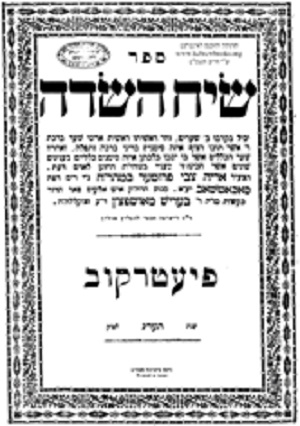
A different answer given by many [14] is that the reason why Rebbe did not have a whole masechta about Chanukah was because there was one already: Megillas Taanis! In fact, in one of the editions of Megillas Taanis (the original edition with the Pirush ha-Eshel), it says on the frontispiece: “Megillas Taanis, which is Masseches Chanukah.” The Perush ha-Eshel on Megilas Taanis wants to suggest that the Gra did not mean that there was a masechta titled Chanukah. Instead, the Gra meant Megillas Taanis. Indeed, in earlier printings of the Shas, Megillas Taanis was included with the Masechtos Ketanos.[15] Whether or not the Gra himself meant Megillas Taanis, many do say that Megillas Taanis is really Maseches Chanukah, since the most important and lengthy chapter is about Chanukah. Therefore the answer to why Rebbi did not include a masechta about Chanukah was simply because there was one already— Megillas Taanis. This answer is backed up with a statement found in the Behag, which says “that elders of Beis Shamai and Hillel wrote Megillas Taanis.”[16] זקני בית שמאי ובית הלל,… והם כתבו מגילת תעניות… To better understand this, an explanation about the nature of Megillas Taanis is needed. Megillas Taanis is our earliest written halachic text, dating from much before our Mishnayos. Some say it was so well-known that even children knew it by heart.[17] In the standard Megillas Taanis, there are two parts: one written in Aramaic, which is a list of various days which one should not fast or say hespedim on. This part is only two hundred and seventy words long. The other part was written in Hebrew and includes a lengthier description of each particular day. The longest entry in the latter part is about Chanukah. It contains reasons for the Yom Tov and some of the halachos. With this in mind, it’s not so strange to say that there is no need for a special masechta about Chanukah. Since in the earliest written text we have there is a lengthy entry about Chanukah, why would Rabbenu Hakodesh have to repeat it? The problem with this answer is that while Megillas Taanis dates from before our Mishnayos, it contains significant additions from a later time. The Maharatz Chayes and Radal say that the Aramaic part was written very early, at the point when it was not permissible to write down Torah Sheba’al Peh. At a later point, when it was permitted, the Hebrew parts were added. Maharatz Chayes says that it was after the era of Rabbenu Hakodesh. Earlier than him, Rav Yaakov Emden wrote (in his introduction to his notes on Megillas Taanis) that it was completed at the end of the era of the Tannaim. The bulk of the discussion regarding Chanukah that appears in Megillas Taanis is in the Hebrew part. It doesn’t make sense that Rebbi did not include Chanukah in the Mishna because of sections of Megillas Taanis that had yet to be written.[18] The Gedolim who first suggested that Megillas Taanis is the reason that Rabbenu Hakodesh did not include Chanukah in Mishnayos did not realize that it was written at two different time periods. However, Rabbi Dovid Horowitz in an article in Hapeles turns the historical difficulty on its head when he argues, based on Tosafos, that the person who wrote the Hebrew parts of Megillas Taanis was Rabbenu Hakodesh.[19] The problem with Rabbi Horowitz’s point is that it seems most likely that the Hebrew portion was written later than Rabbenu Hakodesh, and most do not agree with Tosafos on this point. [20] Therefore, this answer does not explain the omission of Chanukah from the Mishna according to most authorities.[21] Another answer in the same vein was suggested by Rabbi S.Z. Schick. Rav Schick conjectures that there was a Sefer Hashmonaim written by Shammai and Hillel which recorded the nissim of Chanukah, and therefore, there was no separate Mishna.[22] This seems to be based on the quote from the Behag we brought earlier. Others say this might be a reference to Sefer Makabbim or Megillas Antiyochus. Although it is likely that these two works are from early times, it is not clear how early.[23] As an aside, there is a book bearing the title Maseches Chanukah, but it was written as a parody, similar to Maseches Purim of Rav Kalonymus[24].

Rebellion, Romans, and the Power of Tradition

Another explanation for the Chanukah omission is from the Edos Beyehosef, who quotes a Yerushalmi[25] which relates the following: A child was born to the King Trajanus on Tisha B’av, and the child died on Chanukah. The Jews were not sure whether or not to light neros Chanukah, but in the end, they did. The king’s wife told him to come back from a war that he was in middle of fighting in order to fight the Jews who were rebelling against him!

בימי טרוגיינוס הרשע נולד לו בן בתשעה באב והיו מתענין מתה בתו בחנוכה והדליקו נירות שלחה אשתו ואמרה לו עד שאת מכבש את הברבריים בוא וכבוש את היהודים שמרדו בך חשב מיתי לעשרה יומין ואתא לחמשה אתא ואשכחון עסיקין באורייתא בפסוקא ישא עליך גוי מרחוק מקצה הארץ וגומ’ אמר לון מה מה הויתון עסיקין אמרון ליה הכין וכן אמר לון ההוא גברא הוא דחשב מיתי לעשרה יומין ואתא לחמשה והקיפן ליגיונות והרגן אמר לנשיהן נשמעות אתם לליגיונותי ואין אני הורג אתכם אמרון ליה מה דעבדת בארעייא עביד בעילייא ועירב דמן בדמן והלך הדם בים עד קיפרוס באותה השעה נגדעה קרן ישראל ועוד אינה עתידה לחזור למקומה עד שיבוא בן דוד (תלמוד ירושלמי,סוכה, פרק ה)

The Edos Beyehosef writes that Rabbenu Hakadosh chose not to include Chanukah in the Mishna. If a simple lighting of neiros caused such a reaction from our enemies, all the more so if this would be included in our crucial text—the Mishna.[26]

וכתיבת דיני נר חנוכה יש בה פירסום יותר מהדלקה מפני שהדלקה היא בבתי ישראל בזמן מועט חי’ ימים בשנה חצי שעה בכלל לילה ואפ’ זה סמיה בידן להדליק בפנים אם יש חשש סכנה אבל דבר בכתב קיים כל הימים ומתפשט בעולם על ידי כל אדם המעתיקם כל מה שרוצה… ומפני זה השמיט רבי כתיבת דיני חנוכה…

Rabbi Yehoshua Preil in Eglei Tal relates that the Roman emperor, Antoninus, was a good friend of Rebbi, and he allowed the Jews to start keeping Shabbos and other Mitzvos. However, since he had just become king, allowing the Jews to celebrate Chanukah was dangerous for his kingdom. Therefore, Rebbi did not speak about this Yom Tov openly. [27]

כי הנה אנדריונוס קיסר אחרי הכניעו את המורדים בביתר שפך כאש חמתו על כל ישראל וישבת חגם, חרשם ושבתם כי גזר על שבת ויום טוב מלה ונדה וכיוצא בו, אולם בימי המלך הבא אחריו אנטוניוס פיוס ידידו של רבי רוח לישראל כמעט, אך כנראה לא השיב את גזרת ההולך לפניו בדבר חנוכה, כי באמת יקשה גם על מלך חסיד כמוהו להניח חג לאומי כזה לעם אשר זה מעט הערה למות נפשו ואך בעמל רב נגרע קרנו זה שנות מספר, ועל כן לא היה יכול רבינו הקדוש נשיא ישראל לדבר בזה בפומי…

Rabbi Reuven Margolios answers, along these lines, that the Romans at the time were interested in the Torah She-be’al Peh, specifically concerned that there was nothing in Torah She-be’al Peh that was against the non-Jews. Thus, in order that the Romans shouldn’t have the wrong idea about the Jews’ loyalty to the government, Rebbi did not want to include Chanukah in the Mishna.[28]

ובכן כאשר תלמי המלך בזמנו צוה להעתיק לו התורה שבכתב לידע מה כתיב בה כן התענייה הנציבות לידע תוכן התורה שבעל פה … דרישה כזאת היא אשר יכלה להמריץ את נשיא ישראל להתעודד ולערוך בספר גלוי לכל העמים תורת היהודים וקבלתם יסודי התורה שבעל פה להתודע ולהגלות שאין בה הטחת דברים נגד כל אומה ולשון ולא כל תעודה מדינית. ואחר אשר חשב רבי שספרו יבוקר מאנשי מדע העומדים מחוץ ליהודת שיחרצו עליו משפטם לפני כס הממשלה המרכזית ברומא. נבין למה השמיט ממשנתו דברים חשובים עקרים בתורת ישראל … כן לא שנה ענין חנוכה והלכותיה במשנה, בעוד אשר להלכות פורים קבע מסכת מיוחדת, שזהו לאשר כל כאלו היו למרות רוח הרומיים שחשבום כענינים פוליטיים חגיגת הנצחון הלאומי ותוקת חפשיותו.

Rabbi Dov Berish Ashkenazi writes that since the Chanukah miracle was to show us the authenticity of the transmission of Torah from Moshe Rabbeinu, the story of Chanukah was not written down— it is just based on mesorah[29]. Along these lines, Rabbi Alexander Moshe Lapidos answers that the reason Chanukah isn’t written down is to show the power of Torah She-be’al Peh.[30]

לא נכתבה מגילת חנוכה, לפי שנתקנה להורות תוקף תורה שבעל פה, ותולדתיה כיוצא שלא נכתבה… חנוכה המורה על תורה שבעל פה ע”כ לא ניתנה להכתב…

(תורת הגאון רבי אלכסנדר משה, עמ’ רנו)

Rav Shlomo Zalman Auerbach says something similar. He answers that the main bris between us and Hashem is the Torah She-be’al Peh. The Greeks wanted to take this away from us, yet Hashem made miracles so that it remained with us. That is why this mitzvah is so special to us and that is why it is not written down openly.[31]

יש להבין אם מצוה זו כ”כ חביבה היא לנו, כמו שכתב הרמב”ם שמצוה חביבה היא עד מאד, למה באמת לא ניתנה ליכתב, אולם עיקר כריתת ברית שכרת הקב”ה עם ישראל הוא רק בעבור תורה שבעל פה כמו שכתב בגיטין ס’ ע”ב ומשום כך הואיל ומלכות יון הרשעה רצתה שלא יהי’ לנו ח”ו חלק באלקי ישראל, לכן נתחבבה מצוה זו ביותר שנשארה כולה תורה שבעל פה אשר רק על ידי תורה שבעל פה איכא כריתת ברית בינינו ובין ה’ ולכן אפילו במשניות לא נזכר כלל דיני חנוכה וכל ענין חנוכה כי אם במקומות אחדים בדרך רמז בעלמא.

Another answer given by Rav Alexander Moshe Lapidos is that when Torah She-be’al Peh was allowed to be written, not everything was allowed to be written. Only later on, the Gemara was allowed to be written. Rabbenu Hakadosh only wrote down things that had sources in the Torah, or gezeros (decrees) to make sure one kept things in the Torah. Chanukah does not fall into those categories. Only later on, in the times of the Gemara, was it allowed to be recorded.[32]

דבקושי התירו לכתוב תורה שבעל פה והיו פסקי פסקי. מתחלה סתימת המשנה בימי רבנו הקדוש. ואחר זה בימי רבינא ורב אשי חתימת התלמוד, והשאר היו נוהגין במגלת סתרים עד שלאחר זה הותר לגמרי לפרסם בכתב כל מה שתלמיד ותיק מחדש. ורבנו הקדוש לא הרשה רק מה שהוא לפירוש לתורה שבעל פה ומה שיש לו סמך בכתוב, או מה שהוא לסייג, כמו הלל וברכות, ערובין, נטילת ידים, נר שבת ומגלה (מחיית עמלק). אבל חנוכה שאיננו לא פירוש ואין לו סמך בכתוב, ולא לסייג, לא היה נהוג רק במגלת סתרים בבריתות דר”ח ור”א… רק נרמזה במשנה ב”ק סוף פ”ו ואחריה הורשה לפרסם בכתב בתלמוד.

Rav Shmuel Auerbach writes: ובזה יבואר החביבות המיוחדת שבנס חנוכה, והטעם שאינו מפורש במשנה. בהשתלשלות, כל שלב יסודו מהמצב הקודם, והמשנה שהיא השלב הראשון של תורה שבעל פה, יש לה שייכות לתורה שבכתב, כי היא ראשית החלק הגלוי של תושבע”פ. וחנוכה כל מהותה היא גילוי תושבע”פ בלי מפורש בתורה שבכתב´היינו מציאות שחסר גילו שכינה ונבואה, בזמן של חושך וחורבן, ולזה לא שייך בנס החנוכה כתיבה. ודוקא המציאות שנס חנוכה לא נכתבה במשנה היא הסימן לחביבות מיוחדת, והיינו שחלקי התורה הפחות כתובים הם עילאיים. ומצב של של נס שכולו בתורה שבעל פה, ולא בתורה שבכתב, הרי כל כולו בין הקב”ה לעמו ישראל, ולא מופיע בחלקי התורה שנקראים גם על ידי הגוים בשבעים לשון (אהל רחל, חנוכה, עמ’ ל-לא).

Another answer given by Rav Shmuel Auerbach is: ונתבאר בזה גם הטעם שרבי לא פירוש דיני חנוכה במשנה. אמרו חז”ל עה”פ אילת השחר, שאסתר סוף הנסים, ופירושו, סוף הנסים הכתובים בכתבי הקודש. והמשנה אע”פ שהיא תחילת תורה שבעל פה, מכל מקום דיני המשנה הם דינים שיש להם שורשים בתורה שבכתב, וכל ענינו של חנוכה אינו שייך לתורה שבכתב, אלא הוא כל כולו תושבע”פ, שהתקוף של גילוי האור של תושבע”פ היא דוקא במצב של חושך והסתר פנים, שכבר נפסקה הנבואה, וזכו לכך דווקא מתוך ובגלל החושך, שהוצרכו לעמל ומסירות נפש כדי לגלות את אור התורה (אהל רחל, חנוכה, עמ’ קיח).

The Chasam Sofer’s answer

One of the most famous answers given to this question is by the Chasam Sofer, who is quoted by his grandson Rabbi Shlomo Sofer in the Chut Hameshulash as having said many times that the reason why the miracle of Chanukah is not in the Mishna is because Rabbeinu Hakadosh was a descendant of David Hamelech and the miracle of Chanukah was through the Chashmonaim who illegitimately took away the kingdom from the descendants of David. Since this was not to his liking, he omitted it from the Mishna, which was written with Ruach Hakodesh.[33]

מרגלא בפומי’ כי נס חנוכה לא נזכר כלל במשנה ואמר טעמו כי רבנו הקדוש מסדר המשנה הי’ מזרע דוד המלך ונס חנוכה נעשה על ידי חשמונאים שתפסו המלוכה ולא היה מזרע דוד וזה הרע לרבנו הקדוש ובכתבו המשנה על פי רוח הקודש נשמט הנס מחיבורו (חוט המשולש, דף נ ע”א).

This statement generated much controversy, and many went so far as to deny that the Chasam Sofer said such a thing.[34] The bulk of the issues relating to this answer of the Chasam Sofer were dealt with by Rav Moshe Zvi Neriah in an excellent article on the topic.[35] The most obvious objection to the Chasam Sofer is that the issue is not that Chanukah is never mentioned in the Mishna—in fact, it is a few times. The question is why there isn’t a complete mesechta devoted to it. Another problem raised by Rabbi Neriah is that, as we have seen above, the Behag writes that the elders of Shammai and Hillel, an ancestor of Rebbi, did record the story of Chanukah. Due to these and other issues, some have tried to explain the words of the Chasam Sofer differently.[36] This is not the first statement in the Chut Hameshulash that has been questioned. A daughter of the Chasam Sofer is reported to have said that the work is full of exaggerations.[37] דע לך כי מה שכתוב הרב ר’ שלמה סופר, רבה של בערעגסאס בספרו חוט המשולש על אבא שלי זה מלא הגוזמות. However Rabbi Binyamin Shmuel Hamburger of Bnei Brak, an expert on the Chasam Sofer, writes that today we are able to defend all the statements of R. Shlomo Sofer from other sources, and that it is, indeed a reliable work.[38] This explanation of the Chasam Sofer seems to be based in part on the Ramban, who writes that although the Chashmonaim were great people and without them Klal Yisroel would have been destroyed, in the end they were doomed because they were not supposed to become kings, not being descendants of Yehudah.

זה היה עונש החשמונאים שמלכו בבית שני, כי היו חסידי עליון, ואלמלא הם נשתכחו התורה והמצות מישראל, ואף על פי כן נענשו עונש גדול, כי ארבעת בני חשמונאי הזקן החסידים המולכים זה אחר זה עם כל גבורתם והצלחתם נפלו ביד אויביהם בחרב. והגיע העונש בסוף למה שאמרו רז”ל (ב”ב ג ב) כל מאן דאמר מבית חשמונאי קאתינא עבדא הוא, שנכרתו כלם בעון הזה. ואף על פי שהיה בזרע שמעון עונש מן הצדוקים, אבל כל זרע מתתיה חשמונאי הצדיק לא עברו אלא בעבור זה שמלכו ולא היו מזרע יהודה ומבית דוד, והסירו השבט והמחוקק לגמרי, והיה עונשם מדה כנגד מדה, שהמשיל הקדוש ברוך הוא עליהם את עבדיהם והם הכריתום: ואפשר גם כן שהיה עליהם חטא במלכותם מפני שהיו כהנים ונצטוו (במדבר יח ז) תשמרו את כהונתכם לכל דבר המזבח ולמבית לפרכת ועבדתם עבודת מתנה אתן את כהונתכם, ולא היה להם למלוך רק לעבוד את עבודת ה’ (בראשית מט,י).

It should be noted that not everyone agrees with the Ramban. [i][39] R. Kosman shows[40] that there was some playing around with this piece of the Chasam Sofer. In the first edition it says:

מרגלא בפומי’ כי נס חנוכה לא נזכר כלל במשנה ואמר טעמו כי רבנו הקדוש מסדר המשנה הי’ מזרע דוד המלך ונס חנוכה נעשה על ידי חשמונאים שתפסו המלוכה ולא היה מזרע דוד וזה הרע לרבנו הקדוש ועל כן נשמט הנס מחיבורו

But in the second edition a piece was added to say:

מרגלא בפומי’ כי נס חנוכה לא נזכר כלל במשנה ואמר טעמו כי רבנו הקדוש מסדר המשנה הי’ מזרע דוד המלך ונס חנוכה נעשה על ידי חשמונאים שתפסו המלוכה ולא היה מזרע דוד וזה הרע לרבנו הקדוש ובכתבו המשנה על פי רוח הקודש נשמט הנס מחיבורו

Interestingly enough, the Chasam Sofer in his chiddushim on Gittin explains the Chanukah omission based on the Rambam we mentioned earlier that says that since Chanukah was well-known Rebbe did not include it in the Mishna.[41] Whether or not the Chasam Sofer did say the explanation quoted in the Chut Hameshulash, we have testimony from a reliable source that another gadol said it. The Chasdei Avos cites this explanation from the Chidushei Harim and he ties it to the Ramban mentioned above.[42]

דבשביל שהי’ לבם של בית הנשיא מרה על החשמונאים, שנטלו מהם המלוכה, והוא נגד התורה דלא יסור משבט יהודה, כמו שכתב ברמב”ן ויחי, לכן לא הזכיר רבנו הקדוש דיני חנוכה במשנה.

Rabbi Aryeh Leib Feinstein also offers this explanation on his own and uses it to explain many of the differences between the versions of the miracle of Chanukah found in the Gemara and Megillas Taanis, and to explain who authored the different parts (Aramaic and Hebrew) of Megillas Taanis.[43] Rabbi Avraham Lipshitz says that, based on the answer of the Chasam Sofer, it is possible to answer another famous difficulty raised by many, which is why we don’t mention Chanukah in the beracha of Al Hamichya. Rabb Liphsitz says that in Al Hamichya we mention Zion, which is Ir Dovid. Since the Chashmonaim took away the kingdom at that time from the descendants of Dovid, we do not mention Chanukah in connection to Zion.[44] Another answer suggested by Rav Chanoch Ehrentreu is that the Mishna is composed mostly of various parts from much before Rabbenu Hakodesh, from the time of the Anshei Knesses Hagedolah and onwards, which is before the story of Chanukah took place. When Rebbe began to compose the Mishna there was no place for the halachos of Chanukah, so he did not put them in.[45]With this he answers another problem – we find that the early Tannaim dealt with Chanukah as we see in a beraisa in Shabbos from Ziknei Beis Shammai and Hillel so why isn’t there a Massechtah devoted to Chanukah.

שגוף המשנה על חלקיה העיקריים הוא מעשה אנשי כנסת הגדולה… לאחר ימי אנשי כנסת הגדולה השלימו תנאים במקום שהיה טעון השלמה והוסיפו בשעה שנזקקו להוסיף, וחלקו על פירושה של משנה ראשונה וגם מסרו מחלוקות אלה לדורות. אך המשנה עצמה עתיקה מהלכות חנוכה. לכן ברור שתנאים שנו הלכות בענין חנוכה ונר חנוכה, אך כיון שכבר לא נמצא להם מקום בגוף המשנה נאספו אלה בברייתות

This answer is based on the assumption that there were parts of the Mishna that existed earlier than Rebbe, and that he was just the editor. This topic of when the Mishna was exactly written has been dealt with from the time of the Geonim and onwards and is beyond the scope of this article.[46] However, I would like to make one point that also relates to this and the Chasam Sofer’s answer discussed above. What was Rabbenu Hakodesh’s role in writing the Mishna? Was he an editor that just collected previous material, or did he add anything of his own? Rav Ishtori Haparchi writes in his Kaftor Vaferach that Rebbe never brings something that he does not agree with in the Mishna.

ורבנו הקודש לא יבא לעולם כנגד המשנה שהוא סדרה וחברה

(כפתור ופרח, פרק חמישי)

The Sefer Hakrisus disagrees. He says that Rebbe was mostly an editor. He gathered existing Mishnayos and, together with other Chachomim, chose what to include.[47] מצינו בלשון משנה על רבי הא דידיה הא דרביה… נראה אף על פי שרבי סדר המשניות היו סדורות קודם לכן אלא שסתם הילכתא, וגם על פי עשרים בני תלמידי חכמים זה היה אומר בכה וזה היה אומר בכה והוא בחר את אשר ישר בעיניו אבל המשנה והמסכתא לא זזה ממקומה וסדרה הוא כבראשונה… It would seem that the Chasom Sofer’s answer could only work according to the Kaftor Vaferach and Rabbi Ehrentreu’s answer is only possible according to the Sefer Hakrisus. According to the Sefer Hakrisus, even had Rabbeinu Hakadosh not wanted to include the story of Chanukah for some reason, it was not only his say that was important. This explanation of the Chasam Sofer was the accepted explanation for many years among Jewish historians as to why the Mishna omits the story of Chanukah. For example Zechariah Frankel wrote in his Darchei Ha-Mishnah[48]:

והנה גם מצות חנוכה באה לבד בדרך העברה … ולהדלקת נר חנוכה לא מצינו במשנה אפילו רמז (ועיין ב”ק פ”ו מ”ו). ואפשר שבזמן הבית לא חלקו כ”כ כבוד למצות זאת, כי גם מלכי בית חשמונאי אשר על ידי אבותיהם נעשתה התשועה לישראל, הכבידו עולם על העם ולא נחה דעת החכמים במלוכתם, ומצאו להם די בהזכרתם בתפילה חסדי השם עם עמו, ובמשך הימים כאשר נשכחו הצרות הראשונות תחת המלכים אלה נהגו בנר חנוכה, וגם אז נראה שלא לחובה כ”א למצוה, ונתנו המצוה ביד כל איש ואיש כפי דעתו…

(דרכי המשנה, עמ’ 321).

A while back, Gedaliah Alon wrote a classic article proving that this theory was not true at all. Subsequently, Shmuel Safrai backed this up. They both showed that there is positive mention of the Chashmonaim in many places in halachic literature. Therefore, this explanation does not suffice to explain the omission of Chanukah from the Mishna.[49]

Hidden halachos

The following answers relate to the concept found in the Gemarah numerous times, known as, chisura mechsara, something is missing, when trying to understand a specific statement in the Mishna. The Gemarah says that something is missing and really the Mishna should say this… The question asked by many is how did this happen. Many years ago I heard from one of my High school Rabbyim, Rabbi Lobenstein who heard from his Rebbi, Rav Hutner that this was done on purpose. The whole Heter to write down Torah She Bal Peh was a Horot Sho as Rabbenu Hakodesh saw that it was going to be forgotten. However he did not want all of it to be come accessible to all he wanted to retain a strong part of it to be dependent on Torah She Bal Peh on a mesorah from the past. Therefore he made that certain parts could only be understood based on a transmission from a previous generation. One of the ways he did that was to leave out certain sentences from the Mishna. I later found that Rav Hutner says this concept to explain why there is no special Mishna devoted to the Halchos of Chanukah:

ומקבלת היא נקודה זו תוספת בהירות מתוך עיון בכללי סדור המשנה ובמה שהורונו רבותינו בביאורם. בתוך כללי סידור המשנה נמצא כאלה שאינם נראה כלל כמעשי סידור, כגון אין סדר למשנה, חסורי מיחסרא… וכדומה. והורונו רבותינו בזה כי גם לאחר שהותרה כתיבתה של תורה שבעל פה, ומשום עת לעשות הוכרחו לכתבה או לסדרה לכתיבה, מכל מקום השאירום בשיעור ידוע כדברים שבעל פה גם לאחר שנכתבו, בכדי שגם הכתב יהא נזקק לסיוע של הפה, וסוף סוף לא תעמוד הכתיבה במקומה של הקבלה מפה לאוזן. ודברים הללו הם יסוד גדול בסדר עריכתם של דברי תורה שבעל פה על הכתב… מאורע מועד החנוכה יהא מופקע מתורת כתב, שכן כל עצמו של חידוש מועד החנוכה אינו אלא בנקודה זו של מסירות נפש על עבודת יחוד ישראל בעמים… ופוק חזי דגם במשנה לא נשנו דיני נר חנוכה, ולא נזכר נר חנוכה כי אם אגב גררא דענינים אחרים, והיינו כמו שהורונ רבותינו דגם לאחר שנכתבה המשנה עדיין השאירו בה מקום לצורת תורה שבעל פה על ידי החיסורי מיחסרא וכדומה, ובנר חנוכה בא הוא הענין הזה לידי השמטה גמורה, מפני שאורו של נר חנוכה הוא הוא האור שניתגלה על ידי מסירת נפש על אורות מניעת כתיבתם של דברים שבעל פה. בכדי שעל ידי זה תסתלק יון מלהחשיך עיניהם של ישראל על ידי תרגום דברים שבעל פה, כדרך שהחשיכה עיניהם של ישראל בתרגומם של דברים שבכתב

(פחד יצחק, עמ’ כח-כט).

A little different explanation of the concept of chisura mechsara without tying into Chanukah can be found in the incredible work from the Chavos Yair called Mar Keshisha where he writes as follows:

ובזה מצאנו טעם חכמי משנה שדברו דבריהם בקיצור נמרץ ובדרך זר ורחוק מתכלית הבנתו והמבוקש, וטעם שניהם להרגיל התלמידים בהתבוננות וחידוד, שיבינו דברים ששמעו אף כשהם עמוקים ועלומים, ומתוך כך יוסיפו מדעתם, ויבינו עוד דבר מתוך דבר… ובזה יישבנו גם כן מה שלפעמים דקדקנו בלשון התנא בסידור דבריו ובחיסור ויתור אות אחת… ולפעמים אמרינן חסורא מחסרא במשנה… והכל הוא להלהיב הלבבות ולחדדם ע”י שיעמיקו וידקדקו בלשון התנא, ולפעמים ליישב הדין והמבוקש… (מר קשישא, עמ’ כח-כט; שם, עמ’ נו).

The Rashash says:

ונראה דלפי שהיתר כתיבת המשנה לא היה רק משום עת לעשות וגו’ לכן לא באו בה רק עקרי הדינים בלבד בלי ביאור הטעמים, וכן לא בארה במחלקות הנמצאים בה טענות כל אחד מהצדדים ופעמים לא בארה גם עיקר הדין בשלמותו… וכן חסורי מחסרא והכי קתני, כי לא באה רק שעל ידה יזכרו לגרוס הענינים בשלימותם כפי הקבלה בעל פה, ולזאת תמצא ג”כ רבות שלשון המשנה איננו סובל את הענין כפי ישוב הגמ’ בה רק בדרך רחוק ודחוק, הכי רבינו לא היה יכול לדבר צחות ולבחור לשון ערומים.. שפעמים לא ביאר את הענין בדרך רמז… ויתכן לומר דלכן קראו לאיזו מהם מגילת סתרים

(נתיבות עולם,דף קי”א, ע”א).

Another answer to the mystery of the Chanukah omission is from Rabbi Gedaliah Nadel as I will explain this too has to do with the concept of chisura mechsara. There is a famous concept of various Rishonim and Achronim. Many times, the Gemara uses the phrase chisura mechsara, something is missing, when trying to understand a Mishna. Some Rishonim say that there is nothing actually missing in the Mishna. What appears to be missing is really there, but the naked eye cannot see it. That is what the Gemara means when it says something is missing and then adds the missing text. Just to list some sources for this concept: Rabbenu Bechayh writes:

ורבינו הקדוש שחבר המשנה ולמד אותם ברבים וכתבוה הכל בימיו, כונתו היתה כדי שלא תשכח תורה מישראל שראה הרשעה מתפשטת בעולם וישראל מתפזרין בגלות, על כן הותר לו לעשות כן משום שנאמר:

(תהלים קיט, קכו)

“עת לעשות לה’ הפרו תורתך”, וכתב וחבר המשנה שהיא תורה שבעל פה, ועל כן קראה “משנה” לפי שהיא שניה לתורה שבכתב ורובה לשון הקדש צח כתורה שבכתב… ואחרי כן נתמעטה החכמה וקצרו הלבבות ועמדו רבינא ורב אשי וחברו התלמוד שהוא פירוש המשנה, כי לרוב חכמת רבינו הקדוש וחכמת בני דורו היה פירוש התורה אצלם מבורר ופשוט מתוך המשנה, ואצל דורות רבינא ורב אשי היה עמוק וסתום מאד, ומזה אמרו בתלמוד על המשנה:

(ברכות יג ב)

חסורי מחסרא והכי קתני, שאין הכוונה להיות המשנה חסרה כלל חלילה, אבל הכוונה שהיא חסרה אצלנו מפני חסרון שכלנו מפני שאין אנו מגיעים לעומק חכמת דור של חכמי המשנה…

(רבנו בחיי, כי תשא, לד:כז).

Reb Avrhom Ben HaGra writes:

ומ”ש לפעמים חסורי מחסרא והכי קתני, שמעתי מא”א הגאון החסיד המפורסם נר”ו שאין במשנת רבי שום חסרון בלישנא ומה שהוסיפו הוא מובן בזך הלשון של רבינו הקדוש ז”ל, אפס כדי להסביר לעיני המון הרואים בהשקפה ראשונה לפיהם צריך להסביר יותר, והמעיין בדבריו יראה שהוא כלול בדבריו ביתרון אות אחת, ואחוה לך אחד לדוגמא… (רב פעלים, עמ’ 107).

Reb Yisroel Shklover also writes about the Gra: והיה יודע כל חסורי מחסרא שבתלמוד בשיטותיו דלא חסרה כלל בסדר שסידר רבינו הקודש המתני’

(פאת השלחן, הקדמה).

Rabbi Gedaliah Nadel says that most of Hilchos Chanukah can be found in the Mishna. The Mishna in Bava Kamma (62b) says that if a camel was walking in the public domain with flax, and the flax caught fire from a fire that was in a shop and did damage, the owner of the camel has to pay the damages. However, if the storekeeper’s fire was out in the public domain, then the storekeeper has to pay damages. Reb Yehudah says that if the fire was from neiros of Chanukah, then the storekeeper is not obligated to pay. From here, says Rabbi Nadel, we can learn the basic halachos of Chanukah: the neiros have to be lit outside, over ten tefachim and when people are passing by. The halachos of Hallel and Krias Hatorah are found in other places in the Mishna. The rest of the halachos are side issues.[50]

ולפי זה יש ליישב דענין נס חנוכה ומצות נרות וואדי היה מפורסם לחיוב ולא היה צריך להקדמה כלל, ואף דמ”מ היה צורך להכניס יסוד הדינים במשנה מ”מ לזה סגי לפרש הדברים בדרך רמז במשנה דב”ק. דאם נדקדק בדברי המשנה שם נמצא כל עיקר דין נר חנוכה דילפינן מינה דאיכא חיוב להניח הנר בחוץ ובתוך עשרה טפחים ושיהא בזמן שעוברים בשוק, ורק אנינים צדדים כמו מהדרין וכו’ לא חשש להזכיר. ודין דמדליקין מנר לנר וכו’ איכא למילף מדיני בזוי מצוה. ויתר הלכות חנוכה הוזכר אגב אורחא כל אחד במקומו, וכגון חיוב הלל גבי קרבן עצים (תענית פ”ד מ”ה). וחיוב קריאת התורה גבי דיני קרה”ת (מגילה פ”ג מ”ד ומ”ו), ודין אמירת על הנסים לא נזכר כמו שאר נוסחי תפלות שלא הוזכרו מפני שהיו ידועים ומוסרים

(ליקוט מתוך שעורי ר’ גדלי’, עמ’ מ).

I would like to suggest [51] that this answer is similar to the famous concept of various Rishonim and Achronim [52] mentioned above, nothing actually missing in the Mishna. What appears to be missing is really there, but the naked eye cannot see it. Similarly here, Chanukah is in the Mishna, but it’s not clear to the regular person. As Rav Nadel shows, the basic laws of Chanukah are hidden in the Mishna in Bava Kamma. The Chanukas Habayis, first printed in 1641, is a special work devoted to the halachos of Chanukah. This work explains how all of the halachos of Chanukah are found in a piece of Masseches Soferim—in Haneiros Hallalu.[53] Masseches Soferim, although it was composed at a late date, is really based on an earlier work from the time of Chazal. In other words, it contains halachos which date back to early times.[54] I would like to suggest that perhaps this piece was much earlier—from the times before Rabbenu Hakodesh composed the Mishna. And because it had hidden in it all of the laws of Chanukah, this could be another reason why Chanukah was not included in the Mishna, as there existed a halacha that had in it hidden all of the laws of Chanukah—Haneiros Hallalu.

A famous controversy

This whole issue of the Chanukah omission was a small part of a famous debate. In 1891, Chaim Selig Slonimski wrote a short article in Hazefirah (issue #278) questioning why there is no mention in Sefer Hashmonaim and Josephus of the miracle of the oil lasting eight days. Furthermore, he questioned why the Rambam omits the miracle of the oil when detailing the miracles of Chanukah. He contended that the answer is that a miracle did not actually occur, but the Kohanim created that impression to raise the spirits of the people. As can be expected, this article generated many responses in the various papers and journals of the time and even a few sefarim were written devoted to this topic. A little later, while defending his original article, Slonimski wrote that we do not find the halachos of Chanukah mentioned in the Mishna, only in the Gemara. Rabbi Ginsberg, in his work Emunas Chachimim, pointed out that the halachos are mentioned in Baba Kama.[55] Rabbi Lipshitz in his work Derech Emunah, written to deal with this whole issue, defended this omission based on Chanukah’s mention in Megillas Taanis, as mentioned above. Rabbi Y. Sapir also wrote such a defense.[56]

Appendix one: Megilat Taanis and Chanukah

Earlier I quoted some that some say that the reason why Rebbe did not have a whole masechta about Chanukah was because there was one already: Megillas Taanis! I would like to elaborate on what I wrote earlier and clarify a bit more on the work Megillas Taanis, especially its relationship to Chanukah. Megillas Taanis is our earliest written halachic text, dating from much before our Mishnayos. In the standard Megillas Taanis, there are two parts: one written in Aramaic, which is a list of various days which one should not fast or say hespedim on. This part is only four hundred and seventy words long. The other part was written in Hebrew and includes a lengthier description of each particular day. The longest entry in the latter part is about Chanukah. It contains reasons for the Yom Tov and some of the halachos. A few Achronim already used the MT for Chanukah to show that the famous Bais Yosef’s Kasha of why is Chanukah eight days has been asked by the author of the MT. [58] It would appear that the Bais Yosef did not have a copy of the MT.[59] Be that as it may when one compares the passages about Chanukah in the MT to the Bavli one will find some similarities and many differences. The question is which work influenced which, did the MT influence the bavli or vice versa. The Netziv writes: ת”ר נר חנוכה מצוה כו’ עיקרן של ברייתות אלו המה במגילת תעניות פ”ט, והוסיף שם ואם מתייראין מן הלצים מנחיה על פתח בית (מרומי שדה, שבת דף כא ע”ב). The Chida writes that the Bavli was aware of the MT: מאי חנוכה… דלא על עצם חנוכה שואל, דהרי המשנה סמכה על מגילת תעניות (חדרי בטן, עמ’ צז). There is an interesting little-known correspondence on this topic between the Aderes and R. Yaakov Kahana (Shut Toldos Yakov, Siman 29) about the topic of a Mesechet Chanukah and Megillat Tannis. Rav Kahana was bothered why the Bavli left out most of the MT from its discussion in regard to Chanukah.

וצ”ע מ”ה השמיטו הבעל הש”ס דידן האי בבא ממג”ת הלא דבר הוא… וקצ”ע על בעל הש”ס ירושלמי שלא הביאו האי עובדא דחנוכה המוזכר במג”ת פ”ט המובא בשבת כ”א ב’ וגם פלוגתת ב”ש וב”ה בנרות לא מוזכר שם.

The Aderes responded to R. Kahana: ומה שתמה על הש”ס למה לא הביאו האי בבא דמגילת תענית גם אנכי הערתי בזה ומצאתי תמי’ זו בהגהת הרצ”ה חיות ז”ל ובימי עולמו כתבתי מזה בס”ד ולא אדע אנה. ואשר התפלא מדוע לא נמצא הא דחנוכה בירושלמי באמת גם במשנה לא נמצא אולם בסוף פ”ו דב”ק שם נמצא וגם מעט בירושלמי בשלהי תרומות. ואנכי מתפלא מאד דגם מצות כתיבת ספר תורה לא נמצא במשנה…

R. Kahana wrote a lengthy response. He explained that it does not bother him that the Mishana does not mention this story of Chanukah from MT as the Bavli does not mention any of the incidences in MT. He is more bothered by the omission of the Yerushalmi of this story as found in the MT, as the Yerushlmi does mention other incidences of MT.[59] As to writing a sefer Torah not being mentioned in the Mishna R. Kahana gives a lengthy list of all the Mitzvos that are not discussed in the Mishna (and the list is long). Rabbi Lifshitz writes:

העתקתי כל דברי המגלת תענית כי יש ללמוד ממנו הרבה, האחד כי כל הברייתות המובאות בגמרא אינם ברייתות מאוחרות ודברי אגדה.. רק כולם המה לקוחים מהמג”ת הקדומה הרבה… דרך אמונה, עמ’ 17). Rav Zevin writes: הברייתא של מאי חנוכה שמקורה במגלת תענית והובאה בבלי… (המועדים בהלכה, עמ’ קפז).

We see from all these Achronim that it was obvious to them that the Bavli was written well after the MT. The question is when, was the MT written. Rav Yaakov Emden writes (in his introduction to his notes on Megillas Taanis) that it was completed at the end of the era of the Tannaim. The Chida writes it was written before the Mishna.[60] Earlier I mentioned that while Megillas Taanis dates from before our Mishnayos, it contains significant additions from a later time. Maharatz Chayes and Radal say that the Aramaic part was written very early, at the point when it was not permissible to write down Torah Sheba’al Peh. At a later point, when it was permitted, the Hebrew parts were added. Maharatz Chayes says that it was after the era of Rabbenu Hakodesh. But was it written before the Bavli or after? The Maharatz Chayes concludes that the Bavli did not have the same version of Chanukah as the MT as MT that part of MT was written later. The Maharatz Chayes observes that whenever the Bavli quotes the MT and it uses the words De-khesiv it is referring to the early part written in Aramaic when it says De-tanyah it is referring to the later part.[61] To answer this a bit of background is needed; MT as we have it was first printed in Mantua in 1514. Over the years various editions were printed some with Perushim on them. In 1895 Adolf Neubauer printed a version based on the manuscripts. In 1932 Hans Lichtenstein printed a better version based on the manuscripts.[62] S. Z. Leiman has already noted[63] that this work is to be used with great discretion. As late as 1990, Yakov Zussman noted in his classic article on Halacha and the Dea Sea Scrolls that a proper critical edition was still needed.[64] A little later a student of his, Vered Noam, began working on such a project and in 2003 a beautiful edition of this work was released by the Ben Tzvi publishing house.[65] Over the years Noam has written many articles about her finds unfortunately not all of these important articles are included in this final work printed in 2003.[66] Amongst the points discovered by Noam was that the scholion[67] part (as it was coined by Graetz) exists in two different manuscripts (besides for other fragments) and that each one of these versions are very different and include different things. At a later point these two independent works were combined into a hybrid version which is the basis of our printed text today. The hybrid version included both of the earlier versions and even added things not found in either version of the scholion. In her work, Noam deals with trying to identify when all this was done.[68] One of the key questions in her work is did the scholion have the Bavli or vica versa. She demonstrates that it is not a simple issue and each piece of MT has to be dealt with accordingly to compare the versions and the like. As far as Chanukah is concerned she concludes that most of the parts from the MT are from other sources but parts are from the Bavli but these parts from the bavli that are found in the scholion versions are from a later time. [69] Shamma Friedman argues on Noam’s conclusions in regard to Chanukah; he has many indications to show that as far as Chanukah is concerned the scholion was influenced by the Bavli.[70] One of indications for Friedman was that in one of the two additions of the scholion it says כדאיתא בבמה מדליקין! To clarify this point, in one version of the scholion it says: מצות נר חנוכה נר אחד לכל בית והמהדרין נר אחד לכל נפש והמהדרין מן המהדרין וכו’ כדאיתא בבמה מדליקין. However this passage does not appear at all in the other manuscript of the scholion but it does appear in the Hybrid version with changes. In the Hybrid version it says as follows:

מצות חנוכה נר איש וביתו והמהדרין נר לכל נפש ונפש והמהדרין מן המהדרין בית שמאי אומרים יום ראשון מדליק שמנה מכאן ואילך פוחת והולך ובית הלל אומרים יום ראשון מדליק אחד מכאן ואילך מוסיף והולך. שני זקנים היו בצידן אחד עשה כדברי בית שמאי ואחד כדברי בית הלל זה נותן טעם לדבריו וזה נותן טעם לדבריו זה אומר כפרי החג וזה אומר מעלין בקדש ואין מורידין. מצות הדלקתה משתשקע החמה ועד שתכלה רגל מן השוק ומצוה להניחה על פתח ביתו מבחוץ ואם היה דר בעליה מניחה בחלון הסמוך לרשות הרבים. ואם מתירא מן הגויים מניחה על פתח ביתו מבפנים ובשעת הסכנה מניחה על שלחנו ודיו.

As an aside over here we can see the differences between each version of the manuscripts of the scholion versions one has it in one line one does not have the passage at all and one has a very lengthy version of the passage. Now these words כדאיתא במה מדליקין are not the only factor for Friedman to reach his conclusions in regard to the sources of this passage of the scholion version of MT. He has many other points but just to list one more of them. Friedman has a whole discussion about the origins of the word “Mehadrin.” Louis Ginzburg noted that:

הברייתא שם, מצות חנוכה… והמהדרין וכו’ נראה שהיא בבלית שאין לשון מהדרין לשון חכמי המשנה שבארץ ישראל

(פירושים וחידושים, א, ברכות, עמ’ 279).

Friedman has an article with various proofs to show that this is true.[71] If this is so the fact that MT uses the word Mehadrin would be another indicator that at least in this case the MT was influenced by the Bavli. According to all this it would be impossible to answer that the reason why Rabbenu Hakodesh did not write a Mascetah about Chanukah was because he was relying on MT. As discussed here this part of the MT was written long after the Mishna and possibly even after the Bavli! I would like to conclude this section with some words about the Oz Ve-hador edition of Megilat Taanis. In 2007, the Oz Vehador publishing house released a new edition of Megilat Taanis. A few years back I wrote on the Seforim Blog about some of their censorships in regard to this work. Today I would like to turn to some other issues with this particular edition. In the introduction of this work they explain that one of the benefits of this work is that they used manuscripts and on the side of each page they indicate various differences based on the manuscripts. They write that they only include the differences that are important. They then include a nice long list of all the pieces of manuscripts and Genizah fragments that they used for this work. Ten such items were consulted and used they even give abbreviations for each one of the items in the list. The problem is as follows all this is plagiarized straight from Vered Noam’s edition of the MT printed in 2003. They copied her list and order, word for word, without bothering to even try to cover up their tracks. The reason this is obvious is that Noam made up abbreviations for each of the works, as is common in all critical editions to make it easier when quoting them. Now for whatever reason she decided to choose these abbreviations, for each one of the works Oz Ve-Hador happened to pick the exact same abbreviation. For example, for one genizah fragment she labeled, Gimel Peh and for another one she labeled it Gimel Aleph. Oz Ve-Hador did the same. Now what is interesting is Noam uses all these pieces in her work, as a quick look at her apparatus will show. Oz Ve-Hador only substantially quotes two manuscripts throughout their whole work, the Oxford MS and the Parma MS. They never use any Genizah fragments so why do they even mention them with abbreviations in their introduction? If that is the case, why did they bother to even copy this whole list from her, if they did not even bother to look at any other of the manuscripts or quote them? Why in the world are the abbreviations needed in the first place? The only reason why she has abbreviations is to make the usage of her scientific apparatus user friendly, something which Oz Ve-Hador does not even attempt to do. This would indicate that the person who copied the list did not even have a clue to what it was that he was copying. One other point is that almost all the changes seem to be a minor correction or spelling mistake. When one compares this to the apparatus in Noam’s addition this is absurd. What in the world was their basis for making corrections in the work, only correcting these few things when there are many, many things to correct or at least point out to the reader? Now a careful examination of the MT from Oz Ve-Hador will leave one wondering what exactly they did as far as using manuscripts are concerned. In the Chanukah piece of MT which there are many differences and pieces in each version they were able to come up with three differences! For example the important words כדאיתא בבמה מדלקין or that this whole long piece about Mehadrin etc. does not appear in one version of MT at all, and as explained earlier both of these issues are important. This would indicate to me even more, the person or persons involved in this part of their edition had no real clue to what he was doing, he chose some differences from the manuscripts and that was it. I would even go so far as to say that they did not bother to look at any of the actual manuscripts but rather just used Noam’s work and took a few differences from the two key manuscripts and put them in their work. However I do not have the patience to prove that so it will just remain a strong hunch for now. In short we have yet again another work of Oz Ve-Hador which shows how good and accurate they are in dealing with manuscripts.[72] Another small point of interest to me was that the Oz Ve-Hador edition was careful to never call the Hebrew part of MT the “scholion,” as that was a word coined by Maskilim. One last small point of interest to me in about the Oz Ve-Hador was that they seem to have no problem with the Maharatz Chayes as they quote his piece on the MT word for word with proper attribution. It would seem they argue (as do I) with Rebbetzin Bruriah David who concluded that the Maharatz Chayes was a Maskil.

[1] Chanukah is mentioned a few times in Mishnayos but the issue here is why there isn’t a whole mesechta devoted to it. See Machanayim 34:81-86 [See Tiferes Yeruchem pp. 60, 414]. As an aside, in the Zohar there is also no mention of Chanukah. See Tiferes Zvi (3:397,465) and Rabbi Yaakov Chaim Sofer in Beis Aharon ve-Yisroel (18:2, p. 110) and his Menuchos Shelomo (11: 43). [2] For chassidus sources: see Bnei Yissaschar , Ohev Yisroel and Moadim le-Simcha p. 38. For machshava sources see: R. Teichtal, Mishnat Sachir, Moadim, pp. 411-417; Sifsei Chaim (2:131); Pachad Yitzchak (pp. 29-32); Alei Tamar (Megilah p. 87); Rav Munk, Shut Pas Sadecha, (introduction, p. 7). As to kabbalah, the Yad Neman writes (p. 2b) that when he met Rabbi Dovid Pardo, author of the classic work on Tosefta, Chasdei Dovid, he told him a reason based on kabbalah. As to why the Sugyah of Chanukah in the Bavli is in Messechtas Shabbas, see Rabbi Shmuel Auerbach, Ohel Rochel, p.82, 113; N. Amenach, Sidra 14 (1998), pp. 59-76. For general sources on this topic see Rav Moshe Tzvi Neriyah, Shana Be-shanah 1988, pp. 159-68. It was then included in his Tznif Melucha pp. 177- 182 and then later translated into English in the journal Jewish Thought, Spring 5753, 2:2, pp.23-35. Rabbi Yona Metzger brings most of this piece in his Mayim Halacha (siman 111). (Thanks to my friend Yisroel Tzvi Ickovitz for bringing this and the Shana Be-shanah piece to my attention.) Rav Freund in Moadim Lisimcha relied heavily on this article of Rabbi Neriyah as he drops a few hints in middle of his piece on this topic such as on (p. 34 n.74), but of course without mentioning Rav Moshe Neriyah name as he was a Zionist. The Hebrew Kulmos of Mishpacha magazine, issue 19 (2005), p. 22-23 has a small article on this topic from R. Rosenthal which was then included and updated in his Kemotzo Shalal Rav. He definitely did not use Rav Neriyah article as he has a very small amount of sources on the topic. This year in the latest Hebrew Kulmos, issue 107 (2012), R. Kosman revisited this topic. His article is a rewritten version of Rav Neriyah article on the topic. He also buries the source of Rav Neriyah in one of the last footnotes of his article and does not really add anything to the story as Rav Neriyah presents it. I will mention one nice new point which he adds to this topic. There are also three very important, excellent articles related to this topic from M. Benovitz, See: Tarbitz, 74 (2005), pp. 5-20; Zion, 68 (2003), pp. 5-40; Torah Lishma, 2007, pp. 39-78. I have not included much of the important information found in these articles related to this topic. See also Y. Yerushalmi, Zakor, pp. 24-26. [3] This piece is not found in the regular editions of the Maggid Mesharim but only in one manuscript printed in Tzefunot, 6 (1990), p. 86. He writes: ומסכת מגילה גם כן נאמרה בסיני, כי הראה הקב”ה למשל דור ודור… וענין חנוכה אף על פי שהראהו הקב”ה בסיני, לא ניתן ליסדה בכלל המשנה, לפי שהיה אחר שנחתם חזון. I would like to thank Professor Shnayer Z. Leiman for bringing this important source to my attention. On this work in general see my Likutei Eliezer, pp. 90-118. [4] Although it has been pointed out that many rishonim and even the Megillas Taanis deals with this issue, it’s still called the Bais Yosef’s kasha. [5] Rambam, Perush Hamishna, Menochos 4. See also Melchemes Hashem, (Margolis ed.) p. 82. Regarding the Rambam’s comments in general, see Rabbi Reuven Margolis in Yesod Hamishna Vearichasa (pp. 22-23) who raises some issues with it. He shows that there are many sources that Jews were negligent in Tefilin so how can the Rambam say that there was no need to record the Halachos as they were well known. See my Bein Kesseh Lassur, p. 230. For additional sources on this Rambam see. Y. Brill. Movo Ha-Mishna, pp. 110-112, 156; Z. Frankel, Darchei Ha-mishna, p. 321. [6] The earliest source who gives this answer is Rav Chaim Abraham Miridna, Yad Neman, Solonika, 1804, p. 2b. Subsequently, many others give this answer on their own, such as the Maharatz Chayes (Toras Haneviyim p. 105), Rav Yaakov Reifmann (Knesses Hagedolah (3:90)), Pirish ha-Eshel on Megillas Taanis (p. 58b), Beis Naftoli son (#28), Yad Yitchach (#295) Rav Hershovitz in Minhagei Yeshurun (p. 48) Dorot Harishonim (4:46a) [see also Rav Eliyahu Schlesinger in Moriah (25:123) and in his Ner Ish Ubeso pp. 338-339]. [7] Michtivei Chofetz Chaim, p. 27. [8] Kol Kisvei Maharatz Chayes, vol. 1, pp.105-106. [9] Rav Y. Shor, Mishnas Ya’akov Jerusalem 1990, pp. 33-34. [10] Rav U’Pealyim, Intro, 8a. He also brings this down in his introduction to his edition of Midrash Agadah Bereishis. See also Yeshurun 4:228. On this work see here and Yeshurun, 24:447; Yeshurun, 25: 679-680. [11] See Heiger in his introduction to Masechtos Ketanos p. 6; M. Lerner in The Literature of the Sages, volume I, pp. 400-403; and Rav Brody, The Geonim of Babylonia and the Shaping of Medieval Jewish Culture, 1998, p. 109. [12] Sharei Teshuvah, siman 143; Radal notes to Midrash Rabbah Emor (22:1). See Rav Nachman Greenspan, Pilpulah Shel Torah p. 60 and his Maleches Machsheves p. 6. See also the Radal’s comments in Kadmus Hazohar at the end of section two; Rav Dovid Hoffman, Mishna ha-Rishona, pp.12-14;Yesod Hamishna ve-Arechsa p. 29 (and nt. 15) and 17. [13] See his introduction to his work on Avos, Bais Avos. [14] The earliest source who says this is Rav Yosef Hayyim ben Siman, Edos Beyosef, Livorno, 1800 (2:15). The Chida quotes this explanation in the collection of derashos entitled Devarim Achadim (derush 32). See also his Chedrei Beten, p. 97. Rabbi Lipshitz in Derech Emunah p. 24 also provides this explanation. See also Aishel Avraham in his introduction to his work on Megillas Taanis. [15] Pirush ha-Eshel p. 58, see also his introduction to MT. The piece on pg 58 is not found in the new Oz Vehadar edition as the Pirish Haeshel was printed only partially see this post. See what I wrote in Yeshurun, 25:456. [16] Behag, 3:335. On this statement see V. Noam, Migilat Tannis, pp. 383-385. [17] Rabbi M. Grossburg, Megilat Tannis, p. 26. [18] Mahritz Chayes, vol. 1, pp. 153-54; Radal, Kadmus Hazohar, p. 269. [19] Haples 1:182. On the authorship of the MT and Tosfoes, see: Chesehk Shlomo, RH. 19a; Shut Reishis Bikurim, p. 94; Sharei Toras Bavel, p. 60. [20] For more on all this see the Appendix. Rav Neriyha (above, note two), tries to answer how this answer can work out with the assumption that it was written at two different times but what he says is incorrect. [21] This is a brief explanation of the topic of Migilat Tannis. Here is a list of some of the sources on the time period of the Megillas Taanis and the two versions (and the nature of the work in general): see Y. Tabori, Moadei Yisroel Betekufos Hamishna Vehatalmud, pp. 307-22; Yesod Hamishna ve-Arechsa, p. 12 & n.26, p. 20 ; Rav N. D. Rabanowitz, Beno Shnos Dor Vedor, pp. 28-46; See also the nice introduction to the Oz Vehadar edition of Megillas Taanis; M. Bar Ilan, Sinai 98 (1986) pp. 114-37. See also the important points in Yechusei Tanaim ve-Amorim (Maimon edition) pp. 398-399. [22] Torah Shleimah 3:156a. See also his Shut Rashban, Siman 258 .On the statement of the Be-hag see V. Noam, Megilat Taanis, pp. 383-385. [23] On these works See Radal in his introduction to Pirkei De Reb Eliezer; Iyunim B’divrei Chazal Ubileshonam, p. 116; Binu Shnos Dor Vedor, pp. 121-150; N. Fried in Minhaghei Yisroel, vol. 5, pp. 102-20; Areshet vol.4 p. 166; Y. Tabori, Moadei Yisroel Betekufos Hamishna Vehatalmud, p. 390; Moadim le-Simcha p. 253-265, and Hasmonai U-Banav p. 2, On this Megilah in general see R. M. Strashun, Mivchar Kesavim p. 144; R. M. Leiter, Mamlechet Kohanim pp. 40-159. [24]The manuscript was printed in Areshet, 3:182-191. See also I. Davidson in Parody in Jewish Literature pg 39. One of the things we see from this parody is the widespread custom of playing cards on Chanukah. Another similar parody which also has in it a Masechta Chanukah was printed in New York in 1909 and was called Talmud Yankee. [25] Edos Beyosef (2:15) based on Yerushalmi, Succah 5:1. See Y. Tabori, Moadei Yisroel be-Tekufat ha-Mishna ve-HaTalmud, p. 373 [26] Rabbi Y. Buczvah in Shut Beis Halachmei (#4) does not like this answer as than other yom tovim also should not be included. Regarding this Yerushalmi, see: Yesod Hamishna ve-Arechsa p.22 nt.5; Ali Tamar, Sukkah p. 152; Tzit Eliezer, 19:26. [27] Eglei Tal pp.17-18. [28] Yesod Hamishna ve-Arechsa pp. 21-22. See also Rav Freidman in Machanayim 16:12 and Rav M. Cohen in Machanayim 37:43. [29] Nodeh Besharyim, 110b. [30] Toras Hagon Rebbi Alexander Moshe, p. 256. [31] Halechot Shlomo (p. 306 n.42). See also Shalmei Moed p. 254. [32]This answer is brought by R. Yakov Reiffmann in Knesses Hagedolah (3:90) where he brings that R. Alexander Moshe Lapidos wrote this answer to him. This is historically interesting as it shows that there was a connection between the two even though he was a known maskil (for more on R. Yakov Reiffmann ties with Litvish Gedoilm see here ). As an aside this piece of R. Alexander Moshe Lapidos is omitted from the otherwise excellent, recently printed, collection of all of R. Alexander Moshe Lapidos Torah in Torat Hagoan Reb Alexander Moshe. A similar idea to this is found in Tifres Zvi (3:465). [33] Chut Hameshulsesh, p. 50a. Others bring this answer without saying a source see Shut Beis Naftoli (# 28); Machanyim issue # 17:11. [34] See Mishmar Halevi (Chagigah #46-47); Or Torah (1991) p. 156); Zikhronos u-Mesoros Al ha-Chasam Sofer pp. 13-14; Otzros ha-Sofer (10:96); Hasmonai u-Banov pp. 111-112. [35] Shana Be-shanah 1988 (pp. 159-68, See above note 2. It seems that Rav Neriah was not aware that it was in the Chut ha-Meshulash as he cites only to the Ta’emi ha-Minhagaim (p. 365). [36] Shut MaHaryitz (#78). [37] Me-pehem, p. 171. [38] Rav B. Hamburger in his introduction to his Zikhronos u-Mesoros Al ha-Chasam Sofer, pp. 13-14. [39] Bereshis 49:10. For some sources see Yad Neman (p. 2b); Tzitz Eliezer (19:26), Rav Yaakov Kamenetsky, Emes le-Yaakov pp. 239-40, 271-73 and Chasmonai U-Banav pp.106-113. [40] Kulmos, above note two, p. 13. [41] Chasam Sofer, Chidushim on Gittin,78a. Some want (some of the sources at the end of note two above such as R. Neriyah and R. Kosman) to use this as proof that the Chasam Sofer could not have have said what the Chut ha-Meshulash brings in his name. I think this is a weak issue as the Chasam Sofer could have given different answers at different times. [42] Chasdei Avos (#17). In general on this passage from the Chasdei Avos see Benu Shneos Dor Vedor pg 52-71. [43] Kuntres Aleph Hamagen, pp. 69-72. [44] Yalkut Avrhom, p. 203. For more sources on this topic see Rabbi Reven Margolis, Hagadah Shel Pessach, Ber Miriam, 2002, p. 109; Rabbi Ovadia Yosef, Shut Yabbia Omer, 3:36. [45] Iyunim B’divrei Chazal Ubileshonam, p. 117. [46] This explanation and this whole issue in general gets involved with the famous discussion of what was Rebbe’s role in the writing of the Mishna. Just to list a few basic sources on the topic see: Rav Dovid Hoffman, Mishnah ha-Rishonah; Y.N. Epstein, Movo le-Nussach ha-Mishnah, 2: 692-706; C. Elback, Movo le-Mishna, pp. 99-116; Rav Margolis, Yesod Hamishna ve-Arechsa pp.59-64. Y. Sussman, Mechkarei Talmud, 3, pp. 209-384. See also the excellent doctorate of C. Gafni, The Emergence of Critical Scholarship on Rabbinic Literature in the Nineteenth-Century:Social and Ideological Contexts, pp. 41-111. See also this nice new book on this topic. A. Yoreb, Ha-Shelsheles Mish Lesefer. [47] Sefer Hakriesus, Part 5, Section 2:58. I just mention this issue here briefly for more on this see the important comments of Rabbi Yeruchem Fischel Perlow to the Kaftor Vaferach, pp. 141b- 114b. [48] On Using FrankeI’s work see my Likutei Eliezer, p. 35. I hope to return to the issue of using Frankel’s work shortly but for now see the interesting letter of the Sredei Eish who writes: כבר כתבתי לו כי אני מחוסר ספרים לגמרי… וכן ספרים במקצוע חכמת ישראל, כמו… דרכי המשנה… (יד יוסף, עמ’ תסב-תסג). [49] G. Alon, Mechkarim Betoldos Yisroel, 1:15-25; S. Safrai, Machanyim issue # 37 p. 51-58; M. Cohen, Machanyim issue #37 p. 43; Ben Zion Luria, in his introduction to his edition of Megillas Taanis p.20-32. See also Y. Tabori, Moedei Yisroel Betekufos Hamishna Vehatalmud, pp.372-373; Y. Gafni,Yemei Beis Chashmonyim, pp. 261-276. [50] Likut Me-toch Shiurei Reb Gedaliah, 2003, p. 40. On this work see Y. Shilat, Betoraso Shel Rav Gedaliah, p. 9. [51] Rabbi Nadel connects his answer to the Rambam mentioned in the beginning. The connection to the topic of chisura mechsara is mine. [52] Z. Frankel, Darchei Ha-mishna, p.295; Y.N. Epstein, Movo le-Nussach ha-Mishnah,1, pp. 595-598. [53] Chanukhas Habayis, p.21. [54] See Radal, Kadmus Hazohar, beginning of section three; Rav Dovid Zvi Rothstein, Sefer Torah Menukod, in Kovetz Ohel Sarah Leah, 1999, pp.773 and onwards; Higger, introduction to Masechtos Ketanos; M. Lerner in The Literature of the Sages, volume one pp. 396-403; Rav Brody, The Geonim of Babylonia and the Shaping of Medieval Jewish Culture, 1998, p. 112. [55] pp. 4a-4b. [56] Nes Pach Shel Shemen, p. 30.This controversy generated much discussion. See the article in Sinai, 100:202-09. Amongst those who responded about this was Rav Alexander Moshe Lapidos printed in Torat Hagoan Reb Alexander Moshe p. 456-58. A very sharp response against Slonimski was written by Rav Yaakov Reiffmann, printed from manuscript by M. Hershkowitz in Or Hamizrach (18:93-101). Hershkowitz wrote a bibliography on the topic which, unfortunately the editors Or Hamizrach did not include and, to the best of my knowledge, was never printed. I am currently working on an article collecting all the material on this controversy. A response (from manuscript) on the topic from the Aderes was printed where he wrote to his friend R. Reiffmann after seeing Reifmann’s response here הנני למלא רצונו להגיד לו דעתי על מאמרו הערות בעניני חנוכה, כי כל דבריו כנים ונאמנו בדבר הזה הייתי בר מזלי’, וחלילה לעלות על הדעת כי הרמב”ם לא האמין כלל בגוף נס השמן, וראיותיו צודקות ונאמנות, והחושב על הכהנים מחשבת פיגול במומו פוסל, כפי שידענו מן התורה נביאים וכתובים היו הכהנים העומדים בראש כל ישראל ומהם יצאה תורה לכל העם כולו והם הם שהיו המורים והשופטיםובכל זאת עליהם היו ממונים סנהדרין גדולה ששפטה אותם, ושטות ואולת גדולה לחשוב מה שכתב פלוני על אודות החשמונאים, והיא רק שיחה קלה להשיב לקלי דעת המאמינים לכל דבר ולא לתורתינו ועבדי’ חכמי התלמוד הנאמנים לד’ ולתורתו, אין ספק שמידי מעתיקי הרמב”ם בא אשמת החסרון בדבריו, ואין לדון מאומה מדברי ידידי מעכ”ת שי’ שהר”מ ז”ל האמין בלבבו הטהורה פשוטו כמשמעו, ככל המון בית ישראל, כפשטות ד’ הגמ’, וחלילה לנו להשליך דברי אלקים חיים מבעלי התלמוד אשר מימיהם אנו שותים אחרי גיוינו ולנוע אחרי ספרים חיצונים אשר לא בא זכרם בתלמוד הקדוש ומוקדש קודש הקדשים, ואין המאמר שוה להפסיד העת בבקורתו ילך לו בעל המאמר בשיטתו ואנחנו בשם אלקינו ועבדיו נזכיר אנחנו ובנינו אותו נעבוד כל ימינו לטוב לנו סלה” [57] See for example; Eliyhu Rabah, 670:9; Chida, Devarim Achadim (derush 32); Yemei Dovid, p. 142, 148; Zera Yakov, Shabbas, p.13a; Mahratz Chayis. Shabbas 21b; Shut Minchas Baruch, siman 109; Rav Tavyumi, Tal Oros, 1, p. 93-94. See also R. Illoy, Melchemet Elokyim, p. 203, 215. Rav Kook, Mitzvos Rayehu, (siman 670) [58] As far as a Bar Ilan search shows. See also the article in Ha-mayan 34 (1994), pp. 21-42, about the library of the Beis Yosef. [59] For more on the Yerushalmi’s omission see L. Ginsburg (Ginzei Schechter 2:476) who writes: וראוי להעיר שבתלמוד ארץ ישראל כמעט לא נזכרו דיני חנוכה כלל לא בדברי התנאים ולא בדברי האמוראים ורק בבבל שעובדי האש גזרו על מצוה זו וככל מצוה שמסרו ישראל נפשם עליה נתחזקה מאד בידיהם… See also G. Alon, Mechkarim Betoldos Yisroel, 1:15-2; M. Benovitz, Torah Lishma, 2007, pp. 39-78. [60] Shem Hagedolim, entry for MT. [61] Mahratz Chajes, vol. 1, pp. 153-54; Radal, Kadmus Hazohar, p. 269. The question is who said all this first Krochmal in his Moreh Nevuchei Hazeman (p. 254) brings this idea and adds the Maharatz Chayes proof from the way the Gemara quotes MT and on this last part he attributes it to the Maharatz Chayes. This indicates according to S. Friedman in Zion, 71 (2006), p. 33, in a Yakov Zussman like footnote, that Krochmal was the first to say this actual idea. On the close relationship between them see M. Hershkowitz, Rabbi Zvi Hirsch Chayes, pp. 233-275. However see, A. Rosenthal, Mechkarei Talmud, 2. p. 484. See also R. Elyaqim Milzahagi, Sefer Raviah, pp. 10b-11a, who said this idea himself around the same time. [62] H. Lichtenstein, ‘Die Fastenrolle – Eine Untersuchung zur jüdisch-hellenistischen Geschichte’, HUCA, VIII-IX (1931-2), pp. 317-351 [63] S.Z. Leiman, Scroll of Fasts: The Ninth of Tebeth, Jewish Quarterly Review 74:2 (October 1983), p. 174. [64] Tarbitz, 59 (1990), p. 43, Note 139. [65] For reviews on this work see here. M. Bar Ilan, Moed, 16 (2006), pp. 114-130. [66] See V. Noam in The Literature of the Sages volume two, pp. 339-62. It is worth noting that in 2008 another important page of a manuscript of MT was discovered from the 1300’s See Y. Rosenthal, Tarbiz, 77 (2008), pp. 357-410; V. Noam, Ibid, pp. 411-424. [67] On the name scholion, see S. Friedman, Zion 71 (2006), pp. 31-33. [68] The Scholion to the Megilat Ta‘anit: Towards an Understanding of Its Stemma, Tarbiz 62 (1992-93): 55-99 (in Hebrew); “Two Testimonies to the Route of Transmission of Megillat Ta‘anit and the Source of the Hybrid Version of the Scholion”, Tarbiz 65 (1995-96): 389-416 (in Hebrew). [69] The Miracle of the Cruse of Oil: A Source for Clarifying the Attitude of the Sages to the Hasmoneans? Zion 67 (2001-2): 381-400 (in Hebrew); The Miracle of the Cruse of Oil”, HUCA 73 (2003): 191-226. See also her MT, pp. 266-276. [70] Zion 71 (2006), pp. 5-40. [71] Leshonenu, 67 (2005), pp. 153-160. See also the articles of M. Benovitz cited above in note two. See the latest Hebrew Kulmos, issue 107 (2012), p. 36 for a small article on this topic which was obviously not aware of Friedman’s article on the topic. For more on this word see; Sefer Ha-Tishbi, Erech Hadar; ibid, Raglei Mevaser; Rav Teichtal, Shut Mishna Sachir, Siman 198 [= Mishna Sachir, Moadyim 1, p. 513]; M.B. Lerner, in Torah Lishma, 2007, p. 184. [72] For another recent example of such work by Oz Ve-Hador see the latest Yeshurun 25 (2011), pp. 724-735 in regard to the supposed work of the Malbim on Koheles which was printed from manuscript. [For an updated version of this piece one can e-mail me at Eliezerbrodt@gmail.com]


The Customs Associated with Joy on Chanukah and Their More Obscure Sources

The Customs Associated with Joy on Chanukah and Their More Obscure Sources
by: Eliezer Brodt

In previous posts we have discussed some of the customs relating to Chanukah, in this post I wanted to address those customs connected to Simcha (joy) and do so by highlighting some rather unknown sources. Amongst the topics I will discuss are eating a seudah, dairy products, sefuganiot, playing cards and dreidel.

1. Seudah

R. Eliezer Ashkenazi (1512-85) writes in the introduction to his classic work on Megliat Esther, Yosef Lekakh (first printed in Cremona, 1576), the reason that only on Purim do we celebrate with a seudah and not on Chanukah is because

שעם היות שהמלחמה חשמונאי נצחה, ועל ידו היתה הרוחה אף גם זאת בהיותה על ידי מיתת כמה מישראל לא נס יגון ואנחה. מה שאין כן בזמן מרדכי ואסתר ובימיהם היתה נח מאויבהם והרוג בשונאיהם ואין שטן ואין פגע במחניהם ואיש לא עמד בפניהם

What R. Eliezer Ashkenazi is saying is that since on Chanukah we suffered many causalities so we do not celebrate with a seudah as opposed to Purim where there were no casualties.

The R. Mordechi Yaffa (1530-1612) in his Levush gives a different reason why there is no seudah on Chanukah:

ומפני שלא נמסרו ישראל באותו זמן ביד מושל אחד שהיה מושל עליהם להריגה כמו שהיה בימי המן אלא שבא האויבים עליהם למלחמה ואל בקשו אלא הכנעה ולהיות ידם תקופה על ישראל ולהבערים על דתם כידוע ממעשה אנטיוכס שלא גזר עליהם להרוג ולהשמיד רק צרות ושמדות כדי להמיר דתם

Meaning that since on Purim there was no option to convert as opposed to Chanukah so therefore Chanukah was not as bad as Purim and we do not celebrate with a seudah. [Much has been written on this Levush but we will have to deal with this on a different occasion.]

Many Rishonom hold there is no obligation to eat a seudah and that is what the Mechaber in Shulchan Orach writes ריבו הסעודות שמרבים בהם הם סעודת הרשות שלא קבעום למשתה ושמחה

The Rambam (Hilcos Chanukah Perek Gimel Halacha gimel), however, writes:

ומפני זה התקינו חכמים שבאותו הדור שיהיו שמונת הימים האלו שתחלתן מליל חמשה ועשרים בכסלו ימי שמחה והלל

At first glance it does not appear that the Rambam is saying one has to eat a seudah rather its just days of “simcha and joy.” However, R. Zev Boskowitz (1740-1809) in his work Seder Hamishana (recently printed from manuscript in 1989) writes the Rambam in fact means a seudah is required and furthermore such a seudah would considered a seudas mitzvah.

While until now, we have been parsing the words of the Rambam to locate an authority that holds there is an obligation to have a seuda, other Rishonim write straight out that there is an obligation to eat a seudah on Chanukah amongst them, Rashaba (vol 1, Siman 699) Tosofos (Tanis 18b), Marshal and Chanukas Habayis (p. 71). Additionally, R. Yeshuah Ibn Shu’eib, a talmid of the Rashaba, in Ibn Shu’eib’s Derashot al HaTorah (first printed in Istanbul, 1523 – end of parsha Meketz) also writes ותקנו ז”ל… ולעשותן כמועדים שהם ימי שמחה this could imply a seudah.[1]

Some have used the Megilas Antioches [2] to adduce a seudah obligation on Chanukah. The Megilas Antioches (first printed in Mantau 1557 and typically dated sometime between the 2nd and 5th centuries of the Common Era, for more see the sources in note 2) describes Chanukah as ימי משתה ושמחה thus, according to some, the “משתה” would obligate a meal. But, this line in Megilas Antioches is only found in the Hebrew translations, whereas in the older Aramaic versions it only says שמחה and is lacking the key word משתה

2. Instruments and Jokes.

As far as other aspects of Simcha on Chanukah in the Sefer Hamaskil (end of the 13th century) from the nephew of the Rosh, writes that although during the rest of the year it is prohibited to tell jokes (pg 12) or play musical instruments (pg. 22) on Chanukah it is permitted. This implies that Chanukah is days of joy, a joy on some level more than rest of the year.

3. Maseh Yehudis and eating Dairy products.

Rabenu Bechayu (lived at the end of the 13th century) writes in his work Kad haKemach (first printed in Istanbul, 1515) that וכן דרשו ז”ל בנס חנוכה שהיה על ידי משתה. It is unclear, however, what the source in Chazal for this statement is. R. Chaim Bright in his pirish on the Kad haKemach called Tzipchas Hasheman (first published in the Lvov, 1880 edition of the Kad haKemach) brings that the source for Rabenu Bachayu is the sefer Maseh Yehudis (Book of Judith) [3] as part of what she did was tied to food. Specifically, Yehudis gave the enemy General Holofernes food and then proceeded to cut off his head.(p. 92) All this could be another possible source to make a seudah on Chanukah. The truth is the story of Yehudis is the source for another Halacha related to Chanukah and food. The Ramah writes some eat milchig (dairy) products as the miracle (of Yehudis) came about thru dairy products. Much has been gathered on this topic just to add one more source, R. Avrohom Saba (1440-1508) in his work on Megilas Esther, Eshkol Hakofer, (p. 40) writes
כמו שאמרו בירושלמי על בתו של ר’ יוחנן שהי’ בימי היונים וגזרו על כל בתולה שתבעל להגמון תחלה… ויהי כאשר נתפסה בתו של ר’ יוחנן להבעל להגמון אמרה לו שקודם שישכב עמה היא רוצית שיאכלו וישתו ביחד והאכילתו תבשיל של גבינה… ונרדם והוציאה סכין… ונעשה נס לישראל… ולכן תקנו לאכול תבשיל גבינה בחנוכה זכר לאותו נס.
The Chanukas haBayis also writes to eat Milchigs (p. 136). Chaim Chemerinsky [early 1900’s] also writes that in his home they specifically ate dairy products during their seudah on Chanukah (Eiyuriti Motele p. 181). [4]

However, it is not so clear if one can use the sefer Maseh Yehudis as a source because many write the event in question did not even happen during Chanukah. The Meor Eynaim (end of ch 51), R. Yehudah Aryeh Modena (Shulchan Orach, p. 83), R. Yakov Emden (Meor Uketziah beginning of Hal. Chanukah) and the Orach Hashulchan (siman 670, 8) all write the event was not on Chanukah.

4. Seufgoniot

Another food eaten by Jews on Chanukah is Seufgoniot (doughnuts). In Eretz Yisroel they start selling them a month before Chanukah and incredible amounts of these sefgoniot are sold each year. This custom also has very early sources just to mention two of them. R. Mamion the father of the Rambam writes[5]

אין להקל בשום מנהג ואפילו מנהג קל. ויתחייב כל נכון לו עשית משתה ושמחה ומאכל לפרסם הנס שעשה השם יתברך עמנו באותם הימים. ופשט המנהג לעשות סופגנין, בערבי אלספינג, והם הצפחיות בדבש ובתרגום האיסקריטין הוא מנהג הקדמונים משום שהם קלויים בשמן לזכר ברכתו – כלומר לנס שבפך שמן

[Additionally, from this source, it appears from this that R. Mamion holds one should make a seudah on Chanukah.] Another early source who writes that people used to eat these סופגנין on Chanukah is R. Kalnomus Ben Kolumnus (1286 – died after 1328) in his Even Habochen (p. 30) [more on him in a future post].

5. Latkes

Based on the words of R, Mamion it’s easy to understand how the minhag of eating latkes came about as they are fried in oil as R. Maimon’s highlights that the sufganiyot are “fried in oil.”

Pauline Wengeroff records in her excellent memoir, Rememberings: “On the fifth night my mother invited all our friends and relatives…. The Invitation read, ‘You are invited for latkes.'” It’s very likely that this is the food described by R. D. Sassoon in his travels that people in Baghdad ate on Chanukah (Maseh Bavel p. 183).

6. Getting drunk and Cross-dressing

Besides for eating elaborate seudos and special foods we find other methods of entertainment that Jews did on Chanukah. R. Kalnomus Ben Kolumnus writes in his Even Habochen (p. 30) that people used to get drunk. The Sefer Hamaskil (end of the 13th century) [6] indicates that although he strongly disapproves of the customs, there was a custom to cross-dress on Chanukah. He writes:

טובה תנחל ושלוה תירש אם תשמור מלאו דלא ילבש גבר שמלת אשה כגון בחורים הנותנים צעיך בראשיהם ולובשים בגדי נשים בחנוכה… ואל תהיה כאחד מהם בדבר הרע הזה ואפילו אם תעשהו לשם מצוה יצא השכר בהפסד

Meaning do not this terrible sin of cross dressing on Chanukah. [7]

7. Card Playing

Another pastime observed on Chanukah was card playing. [8] Professor M. Breuer brings early sources for card playing on Chanukah (Ohelei Torah p. 355). R. Yehudah Aryeh Modena writes about himself in his autobiography how “during Chanukah of the year 5355 (1594) Satan fooled me into playing games of chance causing me no small amount of damage.” (The Autobiography of a Seventeenth Century Venetian Rabbi, p. 97). R. Yakov Emden writes against this custom in his Meor Uketziah which he says people used to do on Chanukah [introduction to hilchos Chanukah and end of siman 670].

Eliezer Friedman [1870’s] describes in his memoirs (Zikhronos, Tel Aviv, 1926) how his grandfather, an old litvack taught him one Chanukah exactly how to play cards (p. 61).

Both Chaim Chemerinsky (Eiyruti Motele pp. 43, 178) and Pauline Wengeroff (op. cit., pp. 65-6) elaborately describe the card games that used to take place in their homes on Chanukah. R.M. Braver describes in his autobiography [mid 1800’s] how in Galicia the yeshiva boys used to waste their whole Chanukah playing cards (Zecronot Av U’beno p. 67). His son, R. A. Braver in his autobiography also describes the card games that used to take place in Galicia on Chanukah (pp. 244-45). Elsewhere in his book he describes when the month of Kislev began how the boys started getting their cards ready for card playing on Chanukah (p. 352).

8. Dreidel

Another game played by Jews until today is Dreidel although it’s unclear from where it came from but some sources of playing this game are: M. Zlotkin printed an autobiography from a Litvish Rav (available here) who supposedly lived in the time of the Vilna Goan who writes how how in an effort to try to connect to the children on Chanukah he used to give them Dreidels (pp. 244- 245). In 1824 an extremely cynical parody work was printed called Sefer Kundes [in a future post I hope to write an elaborate post on this work] it describes things found in the pocket of a kundes – a trickster one of the items is a dreidel [In 1997, M. Zalkin thru the Dinur Center printed a critical edition of this very rare work, see p. 48].

R. Y. Weiss brings that the Chasam Sofer used to play dreidel on the first night (Eleph Kesav p. 145) Pauline Wengeroff writes that another popular game on Chanukah was dreidel (op. cit., p. 66). R. A. Braver in his autobiography writes before Chanukah they used to prepare their dreidels (p. 231) Later on he describes exactly how the game was played (p. 244).

R. Y. Falk in his Choshvei Machshovos (printed in 1970), an excellent unknown work on minhaghim writes a few reasons for playing dreidel on Chanukah at the end he writes

מה שמשחקין בחנוכה בדרעדרל כי אי’ בספרים שהאותיות נגה”ש שכותבים עליו הוא ר”ת נס גדול הי’ שם וי”ל משום שראו חכמים שבאותו דור שהנס של חנוכה התחיל להתמעט בעיני העולם על כל קבעו מסמרות והנהיגו לעשות דרעדרל ולכתוב עליו נגה”ש שהוא ר”ת… להזכיר ולעורר בני ישראל שלא יוקטן בעיניהם הנס של חנוכה שהי’ באמת נס גדול

(p. 160)

Some recent sources on these topics [just to whet ones appetite]:

[1] On eating a Seudah on Chanukah See; R. S. Shick, Seder Haminhagim p. 32b; Eleph Kesav, 1, p. 37 ; M. Rafeld in Minhaghei Yisroel, vol. 5, pp. 85-101; R. Nosson D. Rabinowitz, Benue Shnos Dor Vdor pp. 47-48; Moadim Lisimcha pp. 230-252; Pardes Eliezer pp. 463- 556; Chazon Ovadiah pp. 15-18.

[2] On this point see: R. Nosson D. Rabinowitz, Benue Shnos Dor Vdor pp.140-142 :M. Rafeld in Minhaghei Yisroel, vol. 5, pp. 85-86; Moadim Lisimcha pp 258- 259; R. M. Leiter, Mamlechet Kohanim pp. 56,117-19.

On this Megilah in general see R. M. Strashun, Mivchar Kesavim p. 144; N. Fried in Minhaghei Yisroel, vol. 5, pp. 102-20; Areshet vol.4 p. 166; R. Nosson D. Rabinowitz, Benue Shnos Dor Vdor pp. 121- 151; R. M. Leiter, Mamlechet Kohanim pp. 40-159.

[3] On Maseh Yehudis in general see R. Nosson D. Rabinowitz, Benue Shnos Dor Vdor pp. 80-105 (especially p. 109); Moadim Lisimcha pp. 276-312; Chasmunu Ubobov pp. 114-129; R. M. Leiter, Mamlechet Kohanim pp. 359-442.

[4] For more on eating Milchigs see Moadim Lisimcha, pp. 286-292; Pardes Eliezer, pp. 557-581.

[5] On this statement of R. Mamion see S. Abramson, Rav Nissim Goan p. 328.

[6] On the Sefer Hamaskil see the excellent article by R. M. M. Honig, Yerushcanu, 1, pp. 196-240.

[7] On cross dressing and yom tovim see the excellent forthcoming article of Y. Speigel.

[8] On card playing in general see; I. Davidson, Parody in Jewish Literature, pp.148-151;Y. Rivkind, Yiddishe Gelt; A. Shochet, Em Chelufei Tekufos (pp. 40-41) ; L. Landman J.Q.R.Vol. 57, No.4.(Apr.,1967) pp. 298-318 and J.Q.R.Vol. 58, No.1.(Jul.,1967) pp.34-62.


Rav Aryeh Tzvi Frommer HY”D: סנגורם של ישראל

 Rav Aryeh Tzvi Frommer HY”D: סנגורם של ישראל

A Closer Look At One of the Greatest Defenders of the Common Jew in Modern Times[1]
Rosh Yeshiva of Yeshivat Chochmei Lublin, Av Beit Din of Kozoglov, Author of Responsa Eretz Tzvi, Siach Ha-Sadeh, Doreish Tov Le’amo[2]

     By Alon Amar

הכל מלמדין זכות” – משנה סנהדרין ד:א”

In the fall of 1933, immediately after the death of Rabbi Meir Shapira zt”l – Rosh Yeshivat Chochmei Lublin, an article appeared in the “Lubliner Tugenblatt” newspaper. The title reads “Who will be the next Rosh Yeshiva?” The article references multiple distinguished candidates for the prestigious appointment, including Rav Menachem Zemba hy”d and Rav Dov Berish Weidenfeld zt”l – The Tchebiner Rav. Interestingly enough, the eventual successor to Rabbi Meir Shapira, was not even mentioned in the article, though his greatness in Torah learning and piety was on par with those aforementioned geonim. Rav Aryeh Tzvi Frommer Hy”d (RATF), also known as The Kozoglover Gaon, was chosen as the next Rosh Yeshiva of Yeshivat Chochmei Lublin and served at its helm until it’s closure during World War II. His unique legacy expanded beyond the four walls of the yeshiva where he inspired and taught students. Through his responsa he engaged real-life issues creatively defending many customs of questionable halachic standing and created the mishna yomi program allowing all Jews, both scholars and laymen, to complete the entirety of Torah Sheb’al peh. His preoccupation with the spiritual needs of the full spectrum of jewry, and the creativity he employed for this task remain defining hallmarks of his inspiring legacy.

Brief Biography

RATF was born in Czeladź, Poland in the year 1884[3]. His father Hanoch-Hendel made his living as a tailor[4] and RATF’s mother Miriam-Kayla passed away when he was three years old.[5]He was sent to study in heder in the town of Wolbrum, residing by relatives of his mother. Some of his formative years of development in Torah learning occurred after leaving Wolbrum to study in the Yeshiva Ketana of Amstov, Poland[6]. The dean of the yeshiva, Rabbi Efraim Tzvi Einhorn zt”l recognized the unique abilities and challenges of the young orphan and took great care in supporting the young boy’s spiritual & physical development.[7] [8]

Rabbi Efraim Tzvi Einhorn Zt”l – Rosh Yeshiva Amstov, Poland

At the age of thirteen, RATF made his way to the court R’ Avraham Borenstein known as the “Avnei Neizer”[9] in Sochaczew (Sochatchov), Poland. Reb Leib Hirsch as RATF came to be known (Yiddish translation of Aryeh Tzvi), studied assiduously under the Avnei Neizer for five years developing a reputation as notable young Torah scholar in Poland and a close student of the venerable Avnei Neizer.[10] RATF was exposed to the unique combination of halacha, gemara, kabbalah and chassidut interwoven in the thought of the Avnei Neizer. At the time the Avnei Neizer was one of the leading poskim of the generation. RATF subsequently married Esther Shweitzer and spent the next eight years studying in the home of his father-in-law. Despite moving  away from his beloved rebbe, RATF maintained close ties with the Avnei Neizer, visiting on holidays as well corresponding on Torah topics.[11]

When the Avnei Neizer passed away in 1910, his son R’ Shmuel Borenstein[12], the “Shem Mi’Shmuel” was crowned the heir to his father’s chassidic court; becoming the second scion of the Sochatchov dynasty. On his father’s first yahrzeit, the Shem Mi’Shmuel established Yeshivat Beit Avraham in his memory. The Shem Mi’Shmuel appreciated the unique talents of RATF, and invited him to be the Rosh Yeshiva of Beit Avraham at the age of 27[13]. It was during this period of learning & teaching that RATF published his first work; Siach Ha’Sadeh. In it, RATF dealt with various talmudic topics with central themes of hilchot berachot & tefillah. The work came with laudatory approbations from leading scholars of the time including: Rav Meir Arik,[14] Rav Yosef Engel[15] and others.[16]RATF remained the Rosh Yeshiva of Beit Avraham, until the city of Sochatchov was destroyed in World War I.

Rabbi Shmuel Borenstein Zt”l – (Shem Mi’Shmuel) The second Sochatchover Rebbe

Cover page of Siach Hasadeh; Pietrikov 1912

The Frommer family had grown to a total of six children, relying on RATF as he sought his next job opportunity. His uncle, Rabbi Yitzchak Gottenstein, the rabbi of a small town in Poland, Koziegłowy (Kozoglov), had passed away and the community needed a new Rabbi. The community was small, and the financial opportunity was no greater. However, due to lack of alternatives this would be RATF’s next stop. There, RATF established a small yeshiva and continued his learning and teaching, jump-starting an environment of Torah learning and scholarship in the small town. Although his tenure there did not last particularly long, he would be forever known by the appellation; “The Kozoglover Gaon”.

After leaving Kozoglov[17], RATF headed to Zbeirtza, Poland. The community of Sochatchover chassidim that lived in the city of Zbeirtza, were “laymen” of an extraordinary caliber. Many of them students of the Avnei Neizer, providing context to appreciate the uniqueness and caliber of RATF and his erudition. RATF had developed into a combination of a classical scholar, chassid and tzadik that made him such a sought-after leader. He was knowledgeable in all areas of the revealed Torah as well as kabbalah and chassidut as is evident from his works. Additionally, he would arise at midnight to recite “tikkun chatzot” and study kabbalah late into the night away from the public eye. It was in Zbeirtza that his students began to compile notebooks with the teachings that RATF would share on shabbat & yom tov.[18]

Once again, the time came for RATF to migrate to the nearby town of Sosnovitz[19]continuing to gain admirers and students. It was at this time that Rabbi Meir Shapiro zt”l, founder of Yeshivat Chochmei Lublin and Rav of Lublin, expressed an interest in having RATF join the faculty of the yeshiva[20]. RATF deflected the requests due to his desire to remain close to his existing students and admirers. However, after Rabbi Meir Shapiro’s untimely death in October 1933, Yeshivat Chochmei Lublin was left without a leader. RATF decided to move to Lublin and became the second Rosh Yeshiva of Yeshivat Chochmei Lublin.

The funeral of Rabbi Meir Shapiro Zt”l at the Yeshiva of Chochmei Lublin

In a fascinating interlude in RATF’s life, he witnessed one of his lifelong dreams materialize; visiting Eretz Yisrael. RATF had a great yearning for the land of Israel.[21]He once remarked to his confidant and host in Tel Aviv, Rabbi Dovid Landa, that “a regular day in Eretz Yisrael contains the same holiness as yom tov sheni shel galuyot in the diaspora”.[22] His trip lasted four months while he visited Jerusalem, Meiron[23], Tel Aviv & Bnei Brak.[24] Afterward, he returned to his new position at the Yeshivat Chochmei Lublin. RATF experienced some of his most productive years of Torah learning & creativity at the helm of the yeshiva. After many years of narrowly avoiding personal financial collapse and constantly being forced to migrate throughout Poland, he had finally arrived at a place where his only concern was Torah.

It was during his tenure as Rosh Yeshiva of Yeshivat Chochmei Lublin that he published his second work, Responsa Eretz Tzvi,[25]in 1938. Eretz Tzvi, is a work of collected responsa, mostly concentrated on the orach hayim section of the Shulchan Aruch with certain discussions regarding Yoreh Deah and Even He’ezer as well. The volume was first published in Lublin, at a printer only steps away from the Yeshivat Chochmei Lublin.[26] A second printing was done in America in 1963 and a third re-printing by RATF’s nephew, Rabbi Dov Frommer in 1975 in Tel Aviv[27]. It is worth noting that a fourth edition including never before collected writings, as well as Siach Hasadeh, became the “second & third cheilek” of the responsa Eretz Tzvi as separate volumes. The collection includes responsa, letters &  glosses on various masechtot, and was printed in 2000 by Rabbi David Abraham Mandelbaum[28] [29]. Throughout Eretz Tzvi, RATF corresponds with many scholars including The Gerrer Rebbe, The Shem Mi’Shmuel of Sochatchov, Rabbi Meir Arik and the Bianer Rebbe on various topics of halacha. It is in this work that his unique approach combining halacha, aggadah and kabbalah is showcased. His creative methodology allowed for uncovering defenses of questionable customs, providing a limud zechut for the masses in many cases. In this way he served as a “Defender of Israel”[30].

Cover page of Responsa Eretz Tzvi; Lublin 1938

In 1938, on the occasion of the second completion of the Daf Yomi cycle, RATF introduced a study program that would complement Daf Yomi: Mishna Yomi[31]. Two mishnayot studied every day; enabling a participant in the Daf Yomi program to finish the entirety of the mishnah, even those tractates which did not include bavli commentary.

The second world war began, and Poland was overrun by the Nazi army. In 1939 RATF together with his family were forced to relocate to the Warsaw Ghetto[32]. It was reported[33] that RATF was leading Torah learning initiatives for the younger students in the ghetto. Additionally, even while in the ghetto he continued to comprise Torah novella as many of his glosses on his own responsa Eretz Tzvi were written during his time in the Warsaw Ghetto.

RATF was forced to take a job making shoes for the German soldiers on the Russian front provided by the “Shultz” company.[34] He worked alongside the third Sochatchover Rebbe – Rabbi Dovid Borenstein and the  Piasetzna Rebbe Rabbi Kalonymus Kalman Shapira[35] along with other great rabbis and scholars .[36]

RATF alongside his Rebbe. Rabbi Dovid Borenstein Zt”l – The third Sochatchover Rebbe

After the liquidation of the Warsaw Ghetto in the spring of 1942 the Frommer family was sent to the Majdanek death camp in Lublin, Poland only 123km away from his beloved Yeshivat Chochmei Lublin. It is documented that as he entered the gas chambers, the holy Kozoglover Gaon exclaimed “Thank G-d, for I am included in the sanctification of G-d’s great name!”.[37]

A newspaper article describing the experiences of Torah scholars in the Warsaw Ghetto.

Key Themes In The Thought of The Kozoglover Gaon

  1. הכל מלמדין זכות – סנגורם של ישראל 

The central theme in the halachic thought of RATF, is his focus on defending existing customs which are at odds with normative practice, often utilizing various non-traditional halachic arguments. RATF not only included kabbalistic and chassidic sources in normative talmudic & halachic discussions, but even allowed them to inform practical decisions in the realm of halacha. Eretz Tzvi strives to support rather than tear down shaky customs. RATF notes in his introduction to Eretz Tzvi when discussing his approach:

“That which we observed, that the students of the Baal Shem Tov zt”l abolished the practice of fasting and self- affliction [to atone for sins], and I am not worthy to enter into this discussion. Rather, I base myself on the mishna ”All may argue in favor of acquittal”[38]

[From this example, one could suggest that RATF saw himself as a halachic expositor of the way of the Baal Shem Tov, utilizing his halachic knowledge to apply the chassidic outlook of focusing on positive actions, rather than becoming mired in the guilt of sin.] Naturally, the very first responsa in Eretz Tzvi begins with this exact objective, foreshadowing the central theme of his halachic work:

“In defense of the widespread custom of wearing a tallit kattan which is smaller than the halachic size delineated in the Shulchan Aruch[39] which ostensibly precludes any fulfillment of the mitzvah tzitzit as many great scholars have protested about…as well as providing a limud zechut regarding the required length of tzitzit”[40]

One common conflict between chassidim and mitnagdim is their opposing halachic attitudes within the area of zmanei hatefillah. Perhaps the most well-known example of RATF’s limud zechut is the defense of the custom of some chassidim for beginning shacharit after 4 halachic hours into the day. The problem being the recital of berachot kriat shema, after their preferred time.  This poses a potential transgression of beracha levatala[41]. RATF defends this custom with various arguments. In the first part of the responsa in Eretz Tzvi[42], RATF begins by neutralizing the potential issue of beracha levatalah by positing that the prayer is considered a tefillat nedava, a voluntary prayer similar to the voluntary offering in the beit hamikdash. A voluntary tefilla is not bound by the common restrictions of an obligatory tefilla.

However, RATF is challenged to explain how one could put aside the halachically preferential time for praying and engage in a seemingly lesser level of voluntary prayer [chovah vs. nedavah]? To answer this secondary question, RATF utilizes the Shulchan Aruch Harav of Rav Shneur Zalman of Liadi – The Ba’al Hatanya.[43] The gemara[44]states that someone who is constantly engrossed in Torah learning (Torato um’nato [Rashbi V’chaveirav]) is not obligated to stop at the proper time and pray shemoneh esreih while engrossed in learning. Additionally, the Ba’al Hatanya adds that praying with the highest level of deveikut (divine cleaving) would take precedence over Torah learning, even for those who are described as torato um’nato.

RATF points out that from the Shulchan Aruch Harav we see that only a prayer with extraordinary intent and focus [A] trumps the Torah learning of someone who’s primary occupation is Torah learning [B] while an ordinary tefillah [C] would not obligated him to interrupt his studies to pray. ([A]>[B]>[C]) Utilizing a similar line of reasoning, we can assume that an individual who delays praying to attain the higher level of prayer will supersede the usual obligation of prayer service at the proper time. ([A]>[C])

Perhaps a more ambitious attempt at justifying the practice of some of the great chassidic masters with respect to zmanei tefillah, is another point in the same responsa. RATF quotes from the Ruzhiner Rebbe[45]who explains that prior to the sin of adam harishon in gan eden, the entire day was equally fit for prayer. However, the post-sin world is not fit for such a structure so the forefathers; Avraham (Shacharit), Yitzchak (Mincha) and Yaakov (Arvit) designated timeframes for each prayer. When the world reaches the ultimate redemption, the framework of zmanei tefillah will revert to their undefined framework similar to pre-sin existence. Utilizing a concept from the Rashba in Masechet Menachot[46] [regarding the halachic status of korban ha’omer], RATF suggests that since prayers of the tzadikim are focused on delivering the ultimate redemption (when the typical time boundaries will cease to exist) these prayers in and of themselves (even in our current pre-redemption era) are not bound by the usual rules and regulations.[47] Additionally, in two separate places RATF defends the practice of regular chassidim (not only great tzadikim as discussed above) who begin to pray Mincha in the time of bein hashmashot[48]employing the concept of safeik d’rabanan lkula.

Rabbi Avraham Mordechai Alter zt”l (seated)  – The “Imrei Emet” of Ger along with his grandson.. A common correspondent of RATF. (Hakira.org)

In another example of limud zechut RATF defends the custom of delivering mishloach manot late in the day of Purim such that it is already past nightfall. While this practice ostensibly has no grounds in halacha as the halachic day has ended, as RATF himself admits, he still uncovers a halachic reasoning for the custom.[49] RATF quotes an explanation from Rabbi Yaakov Yitzchak Rabinowitz, the Yid Hakadosh of Pshiske,[50] who defends the practice of beginning to pray mincha when the prayer will extend past the proper halachic time of shkiah. Rabbi Rabinowitz justifies it based on the gemara and Tosafot in Berachot[51]regarding the curse of Bilaam towards the Jewish people. It is mentioned in the Gemara that Bilaam knew the precise split-second at which Hashem became angry during the day and could fit in a quick curse at that opportune time. However, Tosafot asks “What curse could you fit in a split-second?” and answers that the word kalem (כלם) meaning “they should be cursed” could fit the time allotment. Tosafot offers a second explanation: “even if it was a longer curse, if Bilaam would begin his cursing of the Jewish people in the split-second that Hashem’s anger appears each day even if he would continue after that time it would take effect as well.” Therefore, proves the Yid Hakadosh quoted by RATF, we see from here that beginning a prayer or a mitzvah at the right time will allow one to finish after the allotted time.[52] [53]

RATF (Third from left) administering a bechina at Yeshivat Chochmei Lublin

A limud zechut which came in an alternate form is RATF’s insistence on separating the strict halacha from that of middat hassidut or virtuous behaviour. In a correspondence[54] between RATF and the Imrei Emet of Gur (Rabbi Avraham Mordechai Alter), RATF discusses a specific type of lashon hara treated by the Hafetz Hayim in his work Shemirat Halashon. The Hafetz Hayim discusses the prohibition of speaking negatively about a person “even if he [the speaker] himself saw him [the transgressor] from close proximity doing something that is inappropriate according to the law”.  As a source, the Hafetz Hayim cites Rabbeinu Yonah in Shaarei Teshuva[55]:

”…perhaps the transgressor already repented from his evil ways, is distressed in his thoughts, and the heart knows the bitterness of his soul, and it is incorrect to reveal it.”

RATF points out that the exact words of Rabbeinu Yonah namely, “It is incorrect”, smack of middat chassidut and not strict halachic prohibition, and therefore takes issue with the Hafetz Hayim supporting his halachic decision on such grounds. RATF continues and writes “And since many people fail in this, one ought to find them a defense”.

It is interesting to note, that the work of Rabbeinu Yonah being discussed is the Shaarei Teshuva – a work not typically categorized as halachic. RATF did not object to the use of Rabbeinu Yonah’s “Shaarei Teshuva” on the grounds that it is a mussar work as opposed to a halachic one. One possible explanation is that RATF himself relies on and includes non-halachic sources to inform halachic decisions. RATF employs the full gamut of Torah thought in order to come to the defense of common practices and customs even if they infringe on pietistic sensibilities.[56]

Limud Zechut in Other Writings

As a young Rabbi, RATF published a short letter delineating the basic requirements of hilchot tefillah enabling his fellow Jews to fulfill the obligation of daily prayer. He published this letter anonymously, seemingly to avoid the appearance of haughtiness in a younger scholar lecturing the public.

Part of the letter that RATF published anonymously to remind the general public about the basic requirements of Teifillah in hopes  of zikui harabim

Lastly, in addition to his published works RATF published a kuntres or small pamphlet called Doresh Tov le’amo[57]. The work remained in manuscript and included a defense of “most Jews” who don’t have the requisite intent during the opening birchat avot of shemoneh esreih.  RATF writes that even if a person doesn’t understand the meaning of the words, if they are aware of the fact that they are praying “in front of Hashem” bedieved they fulfill their obligation. [RATF’s position is seemingly in opposition to the well-known position held of Rabbi Chaim Brisker[58]that in the first beracha of shemoneh esreih both the intent of standing in front of Hashem as well as the meaning of the words are necessary even bedieved.]


  1. Innovation Through Connecting all Areas of Torah

RATF utilized existing logic and concepts while applying them to previously unexplained passages and problems providing a framework of creativity that remains in line with tradition. We have already seen from the above mentioned responsa that RATF was open to utilizing kabbalistic and chassidic concepts in order to provide a limud zechut. RATF’s works do indeed draw from chassidut, kabbalah as well as gemara and rishonim. RATF describes his philosophy regarding new interpretations in Torah and their purpose: [59]

“As it is explained in the work Maayan Chaim as he discusses at length to provide support to those who produce Torah novella although it is not clear whether they are true & correct which would be a transgression according to the Zohar. In my humble opinion, the Zohar prohibits writing such novella only in a case where the logic being applied is not true, however if the logic and approach is true and found in earlier works, even if it is being applied in a novel way to explain a certain passage, even if the explanation is not correct this is not a transgression. For this is the honor of Torah and to demonstrate that there is nothing that is not hinted to in the Torah and everything can be “clothed” in Torah.”

RATF in his later years

A great example of his propensity to cross-pollinate between disciplines is a discourse on Sukkot[60]. Regarding the libations of wine and water that took place on Sukkot he writes:

“One could suggest that the libations of wine and of water represent two separate ideas, oneg & simcha. The water libations represent oneg, as the concept of water is the source of all enjoyment as explained in Shaarei Kedusha[61]while wine represents simcha as [the Talmud] says “ein simcha ela b’yayin”. Additionally, we know that oneg & simcha are two separate ideas as explained in the Chatam Sofer’s novella (Shabbat 111a)[62] that on Shabbat there is an obligation of oneg while on Yom Tov there is an obligation of simcha…it would seem that the difference between these two emotions is that oneg involves the five senses while simcha involves only the heart/mind [lev]…and from simcha one arrives at dancing as is written in the Sefer Hakuzari, and the Maharal explains that our custom to raise our feet during Kedushah is to show that our soul naturally longs to take flight and similarly dancing which is initiated by simcha…on the other hand oneg is specifically in the engagement of the five senses as it says in Sefer Yetzira[63] which corresponds to oneg…and this is why all year round the only libation is that of wine representing simcha in the heart/mind however specifically on Sukkot after the forgiveness of sins [Yom Kippur] the body [and senses] are purified we are then given the libations of water representing the enjoyment of the senses as now these too can be used in cleaving to Hashem.”

In this passage RATF quotes from Talmud and a classical commentary as well as kabbalistic and chassidic sources interchangeably and unapologetically. The breadth and depth of RATF’s references adds a layer of relevance as he finds common themes in sifrei kabbalah along with classical rishonim and achronim. [64] In another passage, RATF describes his affinity for combining the hidden and revealed disciplines of Torah learning. He states:[65]

“It is my “way”, myself the pauper, to uncover (l’hamtzi) a source in the revealed Torah for the hidden…”

The word he uses is l’hamtzi which has double connotation of uncovering & creation. Through utilizing the spectrum of Torah literature RATF essentially creates new sources previously unrelated to the topic at hand through exposing them to his unique thought process.

See Responsa Eretz Tzvi[66] where he was asked by someone who accidentally turned on a light on shabbat and wanted to understand how much money he should give for atonement (kaparah). At the end of the discussion, [after finding a lenient opinion in estimating the modern equivalent of the monetary sums discussed in the gemara] RATF adds a reminder lest the questioner miss out on the true purpose of giving the symbolic amount to achieve “kaparah”.

However, the crux (ikar) of teshuva is the remorse and humility and lowliness that a person should be heartbroken that he desecrated the holy Shabbos. Additionally, it would be appropriate to take up oneself to assist the “Chevra Shomrei Shabbos” …for this is considered a tikkun of desecrating Shabbos.”       

RATF’s halachic thought utilized a maximalist approach in finding prooftexts and sources. Besides for the revealed and esoteric areas of Torah, we see from this last example that his responsa took the full religious experience into account.

RATF (bottom right corner) at a an unspecified event in Yeshivat Chochmei Lublin. To his right, Rav M, Ziemba

  • Centrality of Torah for All Jews & Mishna Yomi

In a related theme to limud zechut & providing access to all areas of Torah, it is clear that RATF strived to include the full population of Jewry in his philosophy of learning Torah. It is interesting to note, as Rabbi S.Y. Zevin does in his review of Eretz Tzvi[67], that although RATF was the dean of a yeshiva which was typically focused on the abstraction of talmudic law, Eretz Tzvi is comprised entirely of questions that are practical in nature. He utilized his training in the disciplines of pilpul and sevara as a tool for dealing with everyday people & problems.

An initiative of RATF aiming to elevate the religious experience of common Jewry, was the Mishna Yomi program that he instituted. Upon the second inaugural Siyum Hashas in 1938, RATF created a new study program allowing every Jew to appreciate and complete the entirety of Torah. His initiative was both  complementary and supplementary to the Daf Yomi that was already instituted by Rabbi Meir Shapira zt”l. An adherent to the Daf Yomi schedule would complete the entire Talmud Bavli over the course of the seven-year cycle. However, there are many aspects of torah sheb’al peh left untouched due to the significant amount of mishnayot that have no Bavli commentary. RATF suggested that the geulah (ultimate redemption) is dependent on the Jewish people learning the entirety of the oral Torah. See below for his inspirational words when introducing the program explaining an interpretation provided by the gemara for a cryptic passage in Hoshea.[68]

“Though they hire among the nations, now I will gather them up” (Hoshea 8:10)

“Should they learn it all; then, “now I will gather them up” [the Geulah will come immediately]”(Bava Batra 8a)

One could understand the words of the gemara “It all” in two ways. Either A. All of Bnei Yisrael or B.  Each individual should learn all the mishnayot as they encompass all of the oral law. And there is support for this from the Zohar[69] that one of the methods of teshuva is to learn the entirety of Torah …as every part of Torah has a unique ability to offer salvation for a specific area in one’s life, however the ultimate geulah is the entirety of all individual salvations at once and therefore all areas of the Torah must be covered in order to glean all the unique salvations to arrive at the ultimate collective salvation [of the Jewish people]. It therefore says “אי תנא כולהו” [if they learn it all], utilizing both understandings [A. all of the Jewish people and B. the entirety of the oral Torah] …and this is the purpose of the “Mishna Yomi”, that every Jew young and old, scholar and layman, wealthy & poor can all take part in this great mitzvah.”

RATF felt that the geulah could be hastened through the entirety of the Jewish people learning all the mishnayot which encompasses the oral Torah.[70] It was seen as a great complement to the Daf Yomi, to the extent that there were printings of Talmud with both the Daf Yomi & Mishna Yomi schedule to allow for combined study.[71]

Although RATF conceived the Mishna Yomi prior to WWII, the concept needed a reaffirmation amongst post war Jews. Rabbi Yonah Stenzel, who was a student of RATF in the town of Sosnovitz and eventually emigrated to Tel Aviv and joined its rabbinate, re-instituted the concept of Mishna Yomi & Halacha Yomi in remembrance of those Jews that perished in the holocaust. In a few articles he is credited with creating the Mishna Yomi format, however RATF clearly introduced the concept before the war.

It is noteworthy that the specific vehicle chosen by RATF for bringing the ultimate redemption was Torah study. The gemara mentions other potential deeds that can bring the ultimate redemption in somewhat simpler ways.[72] The accessibility of Talmud Torah to the masses and the potential for each and every Jew to experience the entirety of Torah was RATF’s preferred initiative for bringing about greater spirituality in the community at large. It was through Torah that RATF saw his contribution in hastening the geulah.

Tamud Bavli, Tractate Hagigah and Mo’ed Katan and Mishnayot Shvi’it – special edition for the students of the Daf Yomi and the Mishnah Yomi – Munich 1947

Conclusion

Halachically speaking, any city which is entirely idolatrous is classified in the gemara as an ir hanidachat and condemned to destruction. However, the gemara[73]mentions that if one of the houses within the city maintains a mezuzah on its doorpost the city should not be destroyed. An apocryphal story describes a city facing imminent destruction due to its idolatrous practices that had permeated every household. On the eve of the final verdict there was a Jew who arrived from another city and ran from door to door affixing mezuzot to all bare doorposts. I believe that on a symbolic level, one of the rabbis affixing figurative mezuzot to various embedded customs requiring limud zechut in the last century was the Kozoglover Gaon, Rabbi Aryeh Tzvi Frommer Hy”d.

The concept of limud zechut, that was RATF’s raison d’etre, allowed for needed leniency within the structure and framework of Orthodox Torah observance. At times, we need a limud zechut on our own individual behavior as well as for our various practices and customs as a community. Perhaps, even if the halachic conclusions of RATF aren’t the accepted practice, his willingness to defend questionable practices with the breadth of his learning utilizing both the revealed and esoteric sections of the Torah remind us the importance of limud zechut and our responsibility to engage others and ourselves through it’s lens.

**I would like to dedicate this article in memory of my grandparents:

    Norman Sebrow                                                              Jo Amar

יוסף בן מזל ז”ל                                               נחמן דוד בן צבי אייזק ז”ל

     Jeanette Sebrow                                                    Raymonde Amar

רוחמה בת אסתר ז”ל                                             יוכבד בת אשר זעליג ז”ל

[1] I am grateful to Rabbi Hershel Schachter שליט”א, who introduced me to the Torah of the Kozoglover Gaon amongst a variety of unique thinkers as a student in his shiur. Additionally, I would like to thank the following people for their insight and help in bringing this project from idea to reality: Rabbis Dovid Bashevkin, Yaacov Sasson, Danny Turkel as well as Moshe Rechthand. Lastly, R’ Eliezer Brodt for his insight and breadth of knowledge that he offered to help complete this project.

[2] RATF’s collected writings and teachings can also be found in Eretz Tzvi (Moadim & Al Ha’Torah)  compiled by Erlich, Yehuda; Tel Aviv, 1984. Additionally, his students in Yeshivat Chochmei Lublin compiled a collection of insights called Mekabtz’el.

[3] Frommer, Aryeh Tzvi. Eretz Tzvi, Bnei Brak, 1976, pp. 5–6.

[4] Soreski, Aharon. Geonei Polin Ha’achronim, Bnei Brak, 1982, pp. 182 According to other opinions his father was a coal salesman.

[5] Ibid.

[6] Ibid. pp. 184 RATF’s personality is described as being exceptionally bright while at the same time a שובב or a bit of a “troublemaker”. It was in the yeshiva in Amstov that Rabbi Efraim Einhorn, paid special attention to the young orphan and provided him with the fundamentals for development in learning. It was this special attention that RATF attempted to repay when Rabbi Einhorn’s grandson, Rabbi Moshe Krohn came to study with RATF in Zbeirtza. RATF took extra care to attend to all of Rabbi Moshe Krohn’s physical and spiritual needs.

[7] Regarding the level of studies at the Amstov yeshiva – see Ibid. pp. 185-186 The day began with a shiur from 5AM until 10AM when the yeshiva would pray shacharit.

[8] Some of the other well-known students of the yeshiva; Rabbi Shlomo Stenzel and the Rebbe of Radomsk: Rabbi Shlomo Henich Hacohen Rabinovitz.

[9]1838 -1910. A chassid and son-in-law of the Kotzker Rebbe, after the Rebbe passed away he became a Gerrer chassid. In 1883 he moved to Sochatchov where he founded his own branch of chassidut named after the city, and which gave him the title of “the Sochatchover Rebbe.” His responsa were collected posthumously and published as the Responsa – Avnei Nezer hence his title. He published the sefer Eglei Tal as well, which covers the 39 melachot of Shabbat.

[10] Geonei Polin Ha’achronim, pp.182

[11] Ibid. – As a testament to the esteem regarded by the Avnei Neizer for his student, see Responsa Avnei Neizer, Orach Chaim, 109 where his teacher writes the following. “Greetings to my beloved student, the Harif and Baki our teacher, Rabbi Leib Hirsch. From your letter I see that you have been meditating on my work…You said well and spoke truth. Wishing you great strength and courage in Torah and G-d willing, may you develop into a vehicle for chassidut and fear of Heaven…Abraham”

[12] 1855-1926. Published the work “Shem Mi’shmuel”. The only son of the Avnei Neizer, was both a son and close student of his father and maintained an extremely close relationship with his father until his death. After his father’s death, he was accepted as the next Socatchover Rebbe. He published his father’s works and led Socotchov Chassidut. He died at the age of 70. He was brought to burial in the same ohel (covered grave) as his father, the Avnei Nezer, in Sochaczew. His son, Dovid, succeeded him as third Sochatchover Rebbe.

[13] Bergman, Ben-Tzion. Michoel B’Achat, pp.44 – RATF was not the only one asked to lead the yeshiva. Rav Michoel Forschlager another prized student of the Avnei Neizer was sought along with RATF to lead the yeshiva. It was RATF who served as the dean of the yeshiva while Rav Forschlager was more directly involved with directing the studies of the young students. Among Rav Forschlager’s students were Rabbi Avraham Aaron Price, Rabbi Mordechai Gifter, Rabbi Yitzchak Hoberman and Rabbi Pinchas Hirschprung. Additionally, see the newly reprinted Toras Michael (Machon Avnei Choshen, 2016) a collection of Rav Forschlager’s torah novella.

[14] 1855-1926 – One of the great galician Torah scholars with works such as Imrei Yosher, Tal Torah. His students include the prolific Rav Reuven Margolies and founder of Daf Yomi and Chochmei Lublin Yeshiva – Rabbi Meir Shapiro.

[15] 1858-1920 – Rabbi and Av Beis Din in Krakow, Poland. Author of Gilyonei Ha’Shas, Beit Ha’Otzar. Himself a fascinating Torah scholar who utilized abstract thinking in his conceptual approach to Talmudic study. At the bris of RATF’s first born son, Rabbi Yosef Engel served as the sandak, while RATF himself was the mohel.

[16] Including Rabbi Moshe Nachum Yerushalimsk, 1855-1916. Another of the great Torah luminaries in Poland at the time.

[17] See “Rabbi Aryeh Tzvi Frumer From Kozhiglov: Head of the Rabbinical Court and Rosh Yeshiva: Center for Holocaust Studies” – the reason for his departure from the city as being due to a disgruntled wealthy man that RATF slighted by deciding against him in a din Torah. For another version of the story involving his neighbor being a priest see the introduction to the third printing of Reponsa Eretz Tzvi.

[18] Specifically, Rabbi Yitzchak Yaakov Erlich whose son R’ Yehuda ended up publishing the works of RATF Rav in Israel many years later.

[19] It is in Sosnovitz where Rabbi Yonah Stenzel (1904-1969) became a devoted student of RATF. Rabbi Stenzel, who also studied in Chochmei Lublin, eventually migrated to Tel Aviv where he re-stablished the study of Halacha and Mishna Yomit in memory of all those who perished in the Holocaust.

[20] It is important to emphasize the honor and prestige that even joining the student body of the yeshiva brought along with it. It was said that each student needed to know 200 folio of Talmud by heart to gain admission.

[21] See Responsa Eretz Tzvi I:25 in his letter to the Gerrer Rebbe “Who will give me wings of a dove, I will fly and settle (in the land of Israel), kiss its earth, embrace its stones may it be hastily in our days”

[22] See Geoneil Polin Ha’achronim pp.250

[23] See Eretz Tzvi I:27 where he mentions that a certain hiddush occurred to him in Meiron on Lag Ba’omer

[24] Geoneil Polin Ha’achronim pp.252: It is said that he after meeting with the Chazon Ish zt’l in Bnei Brak, the Chazon Ish praised his brilliant Torah mind saying that he had not met such a brilliant mind in many years.

[25] The name is used as a description of the land of Israel, in the book of Daniel for example (Chapter 11), from which he had recently returned. Additionally, Tzvi for his middle name.

[26] Yeshivat Chochmei Lublin was located at Lubitrovska 57, initially a vacant lot which Rabbi Meir Shapira secured from a wealthy donor. Eretz Tzvi’s first printing was at a press located footsteps away at Lubitrovska 62 as seen on the cover page.

[27] Geonei Polin Ha’achronim, pp 271. Reportedly, the copy used for the third printing was amongst many works that survived the destruction of the holocaust and arrived as part of a larger delivery to the misrad hadatot of Israel. It was this specific copy that had the glosses of the author in the margins. Among other works saved is RATF’s personal copy of Responsa Imrei Yosher with RATF’s glosses.

[28]Rabbi Mandelbaum is a notable scholar of all topics related to Yeshivat Chochmei Lublin and many of the great minds of Polish origin. Rabbi Mandelbaum added a new dimension to the Torah of RATF and many other geonim by collecting their dispersed writings and organizing them while also providing noteworthy glosses and footnotes in various reprintings. Rabbi Mandelbaum’s father was a student of RATF in Yeshivat Chochmei Lublin. Additionally, Rabbi Mandelbaum thanks Rav Shmuel Halevi Vozner Zt”l and other for sharing many of the items found in this second volume as he was in possession of various manuscripts and writings of RATF.

[29]  ‘ שו”ת ארץ צבי, חלק ב ה, Bnei Brak, 2000

[30] סניגורם של ישראל – This term is also used in reference to the great Rav Levi Yitzchak of Berditchev (1740-1809) who repeatedly strove to portray both Jews and Jewish issues in a positive light. For more on this topic see; Luckens, ‘Rabbi Levi Yitzhak of Berdichev’, Ph.D. thesis (Temple University, 1974) pp. 38 citing M. Wilensky, I, 122-131.

[31] His words were recorded and can be found in Eretz Tzvi Moadim pp. 276

[32] ארץ צבי עה”ת pp. 14

[33] Hidden in Thunder: Perspectives on Faith, Halachah and Leadership …, Volume 1, Esther Farbstein,

[34] ארץ צבי עה”ת pp. 14

[35] See http://www.daat.ac.il/daat/shoah/biton37.pdf  based on the daily journals of Hillel Zeidman

[36] [The Last Path for Torah Leaders in the Warsaw Ghetto]. Bais Yaakov (in Hebrew) (47): 7 – Testimony of Avraham Hendel. An additional story is told about Rabbi Aryeh Tzvi that he was desperately searching for someone to help him conduct a chemical experiment with the margarine that was given out at meals in the shoe factory – to test for any treif fat that could have been mixed in and thus prohibited to eat.

[37] Ibid.

[38] Reponsa Eretz Tzvi, Introduction

[39] Siman 17

[40] Eretz Tzvi,

[41] See Shulchan Aruch 58:6

[42] Responsa Eretz Tzvi I:36

[43] Talmud Torah 4:5

[44] Shabbat 10a

[45] Israel Friedman of Ruzhyn (1796 –1850), also called Israel Ruzhin, was a Hasidic rebbe in 19th-century Ukraine and Austria. Friedman was the first and only Ruzhiner Rebbe. However, his sons and grandsons founded their own dynasties, collectively known as the “House of Ruzhin”. These dynasties, which follow many of the traditions of the Ruzhiner Rebbe, are Bohush, Boyan, Chortkov, Husiatyn, Sadigura, and Shtefanesht. The founders of the Vizhnitz, Skver, and Vasloi Hasidic dynasties were related to the Ruzhiner Rebbe through his daughters.

[46] Menachot 4a

[47] It should be noted however, that RATF concedes that this line of reasoning would specifically apply to the great tzadikim whose prayers can be assumed bring the ultimate redemption closer vs. those of the typical petitioner.

[48] See Eretz Tzvi 1:1, 1:60

[49] 1:121

[50] Rabbi Yaakov Yitzchak Rabinowitz (1766–1813). A student of the Chozeh of Lublin (Ya‘akov Yitsḥak Horowitz) with whom he eventually parted ways. See Buber, Martin: Gog und Magog (1949; first published in English translation as For the Sake of Heaven, 1945). The Yid Hakadosh would become the teacher of Rabbi Simcha Bunem of Pshiskhe. See Rosen, Michael: The Quest for Authenticity.

[51] 7a s.a

[52] See Piskei Teshuvot, Purim, Siman 695:5 Note 24. Where this responsa of RATF is brought as an example of an opinion that defends the practice of starting the Purim feast close to the end of the day where most of it will take place after Purim although it was begun before the end of the day.

[53] Additionally, regarding the proof from Tosafot in Berachot referencing Bilaam. See Nefesh Harav (pp.114) that when Rav Joseph B. Soloveitchik heard this proof he laughed and Rabbi Shachter שליט”א explains that it was evident that he was not comfortable with this type of proof.

[54] See “From Principles to Rules and from Musar to Halakhah: The Hafetz Hayim’s Rulings on Libel and Gossip”, for Rabbi Dr. Brown’s discussion the works of the Hafetz Hayim at length and who discusses RATF’s discussion as well.

[55] Shaarei Teshuva, Sha’ar 3

[56] See below for further examples (non-exhaustive list) of limud zechut:

1.See Eretz Tzvi 34 – in defense of the custom for women of the time that didn’t daven everyday, when seemingly this is against the clear gemara (Berachot 20b) & Shulchan Aruch (O”C – 106:2) that women are obligated in tefillah. Rabbi Aryeh Tzvi provides additional support via comparison of tefillah to korbanot thus re-affirming the position of magen Avraham (ibid.) that suggests that the women will at some point request something from G-d and therefore fulfill their Torah obligation according to the Rambam.

  1. See Eretz Tzvi 53 54 – in defense of the common custom to make a borei pri hagefen on wine that includes significant amounts of water which are 6x the wine although this is seemingly at odds with the normative halacha as both the Shulchan Aruch YOD (siman 134) & Rama (YOD 204:5) conclude that one should not make a borei pri hagefen on such a wine.
  2. Eretz Tzvi 75 – in defense of the common custom in an area without an eiruv on Shabbat to use a minor to perform hotzaah.
  3. See Eretz Tzvi 94-95 with respect to finding support for those kohanim who fly on an airplane which might fly directly over graves of Jews thus exposing them to tumas kohanim
  4. Eretz TZvi 96 – in defense of the common custom to make seltzer on Shabbos –
  5. Eretz Tzvi 97 – in defense of the custom of certain chassidim to sit in the sukkah and make a bracha on shmini atzeret – though ostensibly at odds with the gemara.
  6. Eretz Tzvi 125 – finding support for creating a mikvah using snow in a place that no other type of mikvah would be possible.
  7. Eretz Tzvi 30 – in defense of the custom of the Ashkenazim in the diaspora who refrain from reciting the daily birchat kohanim
  8. Eretz Tzvi 35 – in defense of the custom for those washing netilat yadaim and the water does not cover most of their hand

[57] See Geonei Polin Ha’achronim, pp. 262

[58] See Chiddushei Rabbeinu Chaim Halevi al Harambam, Hilchot Tefillah as well as the he’arot of the Chazon Ish

[59] Eretz Tzvi (Torah commentary) Introduction

[60] Eretz Tzvi, Moadim, pp. 110, Sukkot תרפ”ה

[61] Kabbalistic work of the Ari’zal

[62] ד”ה ודע

[63] Chapter 2:7

[64] Another notable exchange is one that appears in the second volume of Eretz Tzvi where RATF engages in correspondence with none other than the Ishbitzer Rebbe, Rabbi Mordechai Yosef Leiner zt”l. It was in 1934 that the Ishbitzer Rebbe sent a question that was bothering him regarding a specific comment of Maimonides related to Hilchot Shevuot. RATF goes on to cite various chassidic and Kabbalistic sources and their bearing on the halachic issues. Thank you to Rabbi Josh Rosenfeld for pointing out this source, in his Sunday Responsa Series.

[65] Responsa Eretz Tzvi, I:12

[66] Siman 62

[67] Sofrim U’Sfarim, Tel Aviv, 1959, pp.189.  [Thank you to Rabbi Eliezer Brodt who brought this source to my attention]

[68] The discourse can be found in it’s entirety in Eretz Tzvi Moadim pp. 276.

[69] Zohar Chadash, Rut

[70] See also Eretz Tzvi, II: 72, 73

[71] This unique edition was printed in the framework of daily Daf Yomi and daily Mishnah. A combined calendar of Daf Yomi and the daily Mishnah is printed at the beginning of the book for the years to come: 5767-1912. The tablet is spread over four columns. Beneath the calendar of Daf Yomi, a special prayer was printed “after the end of a chapter from a daily mishnah.” This prayer was composed by Rabbi Yonah Stenzel zt “l, in memory of the Holocaust victims” who were killed for the sanctification of God … by the German oppressors. [Seen at Tzolman’s auctions (Bidspirit.org)]

[72] See Shabbat 118a – “If only [Bnei] Yisrael would keep two consecutive Shabbatot they would be immediately redeemed”

[73] Sanhedrin, 71a


Towards Decoding Ha-Yeriah Ha-Gedolah (The Great Parchment), A Cryptic 14th Century Italian Kabbalistic Text

Towards Decoding Ha-Yeriah Ha-Gedolah (The Great Parchment), A Cryptic 14th Century Italian Kabbalistic Text

By Ezra Brand

Ezra Brand is an independent researcher based in NYC. He has an MA from Revel Graduate School at Yeshiva University in Medieval Jewish History. His main research focus is currently 13th and 14th century sefirotic Kabbalah, and he is interested in using digital and computational tools in historical research. His previous contributions to the Seforim Blog can be found here, and a selection of his academic research can be found here. He can be reached at ezrabrand-at-gmail.com; any and all feedback is greatly appreciated.[1]

Sefirotic Kabbalah has its origins in thirteenth century Provence and Spain. It reached its apotheosis in the Zohar, which began to appear in Castile in the late thirteenth century. Kabbalistic literature started appearing in Italy soon after. Moshe Idel, in his masterly survey of kabbalah in medieval Italy, shows how “Rome was a place where Catalan Jewish culture, philosophical and kabbalistic, were already well established in the 1280s.”[2] And further: “Thus, in one decade, approximately 1280-1290, the Jewish culture in Rome was enriched by the arrival of a variety of Jewish esoteric material: theosophical and ecstatic Kabbalah, as well as Ashkenazi esoteric material.”[3] Idel raises the possibility that “a massive importation of kabbalistic literature took place in Italy at the very end of the thirteenth century.”[4] Idel make programmatic statement that “a pluralistic vision of the history of Kabbalah, which entails deemphasizing the centrality of Spain in the history of Kabbalah, will help to distinguish more precisely the specific contributions of Kabbalah in Italy.”[5]

Ha-Yeriah Ha-Gedolah (from here on: YG) is a fascinating, enigmatic work, which provides a window into this first flourishing of Italian Kabbalah. According to Giulio Busi, the academic scholar who first published YG from manuscript in 2004, “Ha-Yeri‘ah ha-Gedolah was probably written at the beginning of the 14th century by an author whose name remains unknown to us. Most likely, he was an Italian kabbalist, since all the preserved manuscripts have been copied by scribes working on the Italian peninsula.”[6]

The first modern academic scholar to mention YG was Gershom Scholem in his 1937 list of commentaries on the Ten Sefirot. Scholem also mentioned the line-by-line commentary on YG written by the fourteenth-century Italian kabbalist Reuven Tzarfati.[7] Scholem’s student Efraim Gottlieb, in a pioneering study on Tzarfati, discusses YG briefly.[8]

In 2004, Giulio Busi, with Simonetta M. Bondoni and Saverio Campanini, published YG for the first time, based on the extant manuscripts.[9] It comes out to 71 pages, with at most around 13 lines on a page.[10] Busi gives an introduction summarizing previous research and presenting his own research on this work, and an overview of the extant manuscripts of YG and Tzarfati’s commentary. (Busi’s introduction is available online.)

Like the thirteenth-century Zoharic literature[11] and related kabbalistic works, YG interprets biblical stories and topics in terms of the interplay between the sefirot. Busi describes it as a “forgotten masterpiece of kabbalistic literature,[12] and as “one of the most obscure texts of the whole kabbalah”.[13]

Even after its appearance in print, YG does not appear to have evinced very much interest, either among academic scholars or among enthusiasts of Kabbalistic literature. I am not aware of any further scholarship on this work. In a previous paper of mine, I gave an overview of some aspects of YG. Here, I’d like to revisit this enigmatic work, provide some suggestions for a way forward in decoding it, and hopefully spur further interest and research.[14]

YG is set up as work made up of sixteen “Sections” (sippurim).[15] Busi describes YG as “a booklet of a few extremely dense and symbolic pages.”[16] He further writes: “There is no doubt, however, that the Great Parchment is one of the most obscure texts of the whole kabbalah.”[17] Busi in his introduction gives an overview of each story based on Tzarfati’s commentary, prefacing: “Obviously, there is no guarantee that Sarfatti’s exegesis always reflects the thought of the unknown author of the work. Nevertheless, the detailed analysis of this early commentator represents the only starting point we possess with which to explore this still unknown chapter of late medieval kabbalah.”

I would claim that Busi overstates the obscurity of this work. I would like to point out a few aspects of YG that would aid in making progress in decoding this fascinating work.

Indexing Sefirotic Correspondences

Busi writes: “Apparently rebelling against the laws of meaning, [YG] is striking for its capacity to evoke waves of esoteric implications without ever mentioning directly the kabbalistic secrets.”[18] And further: “The key is offered by a scheme of correspondences that the author never enunciates openly but the reader must be aware of”.[19]

Again, I believe that this is somewhat overstated. Admittedly, the overarching narrative of the sections is often unclear.  The work is dense with biblical and Talmudic quotations and allusions, and written in a kind of associative, stream-of-consciousness style, making the overall narrative difficult to untangle. There are often what appear to be throwaway lines that don’t seem to be relevant in context. As I mention below, it may be that the author was simply writing with stream-of-consciousness, and never intended every line to have a deeper meaning. In any case, YG is by no means the only esoteric work to have been composed in a purposefully enigmatic style.

With all this in mind, the fact is that throughout the work, YG explicitly mentions sefirotic correspondences. Unlike the Zoharic literature, YG is replete with explicit usage of the standard terms for the ten sefirot. The Temple is a clear theme throughout (see below), and YG explicitly indexes the one-to-one correspondences between ten items in the Temple and the ten sefirot, using the sefirot’s standard names.[20] Another explication of symbols can be found in YG’s discussion of Ezekiel’s Vision of the Chariot, where the correspondence of the Four Faces with specific angels, cardinal directions, and sefirot are given, again using the sefirot’s standard names.[21]

Certain terms are used consistently for Evil (or closeness to Evil) throughout, such as Sha’atnez, Woman, Snake, Calf, Donkey, Limping Thigh, Mixture.[22] Specific terms recur with presumably consistent sefirotic equivalences, such as Ruth and Upper Pool.[23]

Even if YG never explicitly defines the meaning of a symbol, comparison with other thirteenth- and fourteenth-century works should allow for fairly certain elucidation.[24]

Close Commentary of Biblical Texts or Specific Topics

In many sections, YG very closely hews to biblical texts, quoting the biblical words and performing an extremely close interpretation, sometimes phrase-by-phrase, or even word-by-word. Busi’s edition does a tremendous service by italicizing the biblical quotes, but many quotes fall through the cracks and are not italicized. YG is often written in a way that only a single word is added to biblical text, or a biblical word is paraphrased, the order of words is switched, words are skipped words, or a pastiche between two biblical verses is made. These techniques presumably impart meaning. Closely separating the biblical quotes from YG’s additions or paraphrase helps clarify what exactly YG is attempting to convey.

Even when YG is not closely interpreting a biblical text line-by-line, the topic is often still clearly defined.

By comparing how other thirteenth- and fourteenth-century kabbalistic works interpret these biblical stories and topics, it is likely that much light would be shed on the discourses of YG.

Please see the appendix of this article for a chart comparing YG’s Sections with corresponding biblical stories or topics.

Word Associations

A striking aspect of YG is the continuous flow of writing, using word associations and wordplay. This is true both in terms of how it interprets biblical verses, as well as how it segues into new topics seemingly based on linguistic similarities alone. This interest in wordplay likely ties in to the ideas of “Linguistic Kabbalah,” which were influenced by Abraham Abulafia.[25] As mentioned earlier, YG was most likely written by an Italian kabbalist at the beginning of the fourteenth century, a time when Abulafia’s influence was strongly felt.

Some particularly notable examples of this can be found in Section 7, which is devoted to Jacob/Tiferet. I’ll adduce one example from there, a riff on the word “Tiferet” (my underlines, italics of biblical verses and biblical citations in Busi’s original, with small changes in punctuation where it seems appropriate):[26]

ועל כן לא יאכלו בני ישראל את גיד הנשה [בראשית לב לג]. לא יכרתו החוט הבא עליהם בשפע אמיתי, הנשה שלא ישכחו התורה, הה״ד ישראל לא תנשני [ישעיה מד כא]. והחוט הוא הוא״ו הנאצלת על תפארת הה״ד <ישראל> אשר בך אתפאר [ישעיה מט ג] ולקדוש ישראל כי פארך [ישעיה ס ט] זה ואלהי יעקב.[27] אפריון עשה לו המלך שלמה מעצי הלבנון [שיר השירים ג ט]. ובית תפארתי אפאר [ישעיה ס ז]. ועם כל זה לא תפאר אחריך [דברים כד כ] בעשרה היניקות היונקות ונאצלות מן הקו האמצעי קדוש ונורא [תהלים קיא ט]. כי תחלת העשרה הוא השם הגדול א׳[28]. על כן <לא> תסיר האצילות מהם. אם הם שפלים (אם) בעיניך, פאר הראש הם וגדולים, כי בן בג בג עומד על גבה. 

The overall message of this passage is fairly clear: First, the author closely interprets the verse in Genesis as saying that Jews should not block the flow (YG interprets “gid” to mean “chut”), and should not forget the Torah (interpreting the next word “hanashe” to mean “forgetting”, using the verse in Isaiah to show that “hanashe” can mean forgetting[29]).

The passage then clearly begins to riff on the root “Pe’er,” which is the root of the word Tiferet, the sefirah under discussion in this Section. YG brings quotes which use “Pe’er” in five different ways (התפאר, פאר, אפריון, תפארת, פיאר). The passage is saying not to “remove” the ten sefirot which emanate from Tiferet,[30] since the beginning of the ten sefirot are Keter. It may very well be that the individual verses do not add an additional mystical meaning, and the author is simply reveling in adducing additional verses with the same root.

Post-Biblical Sources

As mentioned, YG is dense not just with biblical quotes and allusions, but also with quotes of and allusions to Talmud, Midrash, and other medieval sources.[31]

YG mentions the messianic figures of Menachem ben Amiel and Nehemiah ben Hushiel,[32] who appear in early medieval works, such as the apocalyptic Sefer Zerubavel and Pirkei D’Rabbi Eliezer.

YG supports an idea with a quote that seems to be an adage that was popular among medieval Jewish authors:[33]

״הה״ד אשרי המדבר באוזן שומעת״

The first source that I could find for this adage is Ramban in his early work Milhamot Hashem, at the end of a long piece, where he lyrically writes that a certain opinion is correct:[34]

״והדברים מודיעים שכולם נכוחים למבין וישרים למוצאי דעת ואשרי המדבר לאוזן השומעת״

It therefore seems clear that YG’s ״באוזן״ should correctly be ״לאוזן״ as the Munich manuscript has it.[35] Soon after Ramban, this saying is used by Meiri and Sefer HaHinuch in a similar way: As an exhortation at the end of passage, and certainly not as a quote.[36]

Some Greek philosophical concepts are mentioned in YG, such as the Five Senses and the tripartite soul.[37]

A sampling of interesting scientific statements made by YG: “Water is good at all times and for all living creatures, which is not the case for other liquids”. [38] “The dove has no gallbladder.”[39]

While discussing YG’s sources and quotations, I can’t help but discuss a fascinating passage found in the discussion on the Sotah:[40]

״מה שאמרו ז״ל סוטה לא הייתה ולא נבראת, ר״ל במעשה מפורסם, ואם תאמר המעשה שמביאין שאשה אחת שתתה מי סוטה בחילוף אחותה ולא הזיקו לה ואחרי כן <באה> אצל אחותה ונקשה ומן הריח מיד <וצבתה> בטנה ונפלה ירכה [במדבר ה כז] כי היא הייתה טמאה, זה סיוע לדברינו, ורצו באומרם [זה המעשה][41] כי כל הדיעות[42] חוצבו ממקום אחד ואדם אחד ישיג השגת <העדן ואדם אחד ישיג השגת> גיהנם.״

YG starts off with a(n allegedly) rabbinic quote which makes the shocking statement that the Sotah ritual never actually happened. The quote is cryptically explained by YG to mean “במעשה המפורסם”, presumably meaning that in fact the Sotah ritual occurred, but that there was never a “famous” (or “publicly-known” or “well-known”) case.[43] YG then continues that if you may question this explanation on the basis of “a story which is brought” (״ואם תאמר המעשה שמביאין״). The story appears as described in more than one Midrashic source.[44] For convenience, I’ll quote the Midrash Tanhuma’s rendition with the online Sefaria translation:

“[There is] a story about two sisters who resembled each other. Now one was married in one city and the other was married in another city. The husband of one of them wanted to accuse her of infidelity and have her drink the bitter water in Jerusalem. She went to that city where her married sister was. Her sister said to her, “What was your reason for coming here?” She said to her, “My husband wants to have me drink [the bitter water].” Her sister said to her, “I will go in your place and drink it.” She said to her, “Go.” She put on her sister’s clothes, went in her place, drank the bitter water, and was found clean. When she returned to her sister’s house, she joyfully went out to meet her, then embraced and kissed her on the mouth. As soon as the one kissed the other, she smelled the bitter water and immediately died, in order to fulfill what is stated (in Eccl. 8:8), “No human has control over the wind to contain the wind, nor is there control on the day of death […].”

YG goes on to say that on the contrary, this story actually supports his explanation (״זה סיוע לדברינו״). It is likely that what YG means is that since in the story of the two sisters the actual death of the sister occurred in private, it was not a publicly-known case.[45]

YG next says the story of the two sisters can be understood allegorically to mean that all “knowledge” (or “evil”) comes from one place. In other words, the story of the Sotah water being passed from the innocent sister to the guilty sister should be understood allegorically. The Sotah water has inherent power, but the power that it has really depends on the person imbibing it. The innocent sister was unharmed by the Sotah water, but when it reached her unfaithful sister, it had an effect. In the same way, all knowledge starts off the same, but whether this knowledge is reified as good or evil depends on the person comprehending the knowledge.

I could not find any source for YG’s quote that “סוטה לא הייתה ולא נבראת”. YG prefaces the quote with ״ומה שאמרו ז״ל״, which generally means that it’s a quote from the Talmud or Midrash.  The Talmud Bavli in Sanhedrin 71a uses the formulation “לא היה ולא נברא” regarding the Wayward Son and City of Idol Worshippers (בן סורר ומורה ועיר הנידחת), but not about Sotah.

Ishay Rosen-Zvi made this very same claim from a critical historical perspective in his 2008 book (based on his doctoral dissertation), that the Sotah ritual never actually happened and was essentially a purely theoretical law.[46] Meir Bar-Ilan harshly criticized Rozen-Zvi’s thesis, in a review article called “Between False Reality and Fictional History”, available on his homepage here.[47] Bar-Ilan admits that there are instances where even the Talmudic rabbis said that a biblical story or a biblical ritual never actually occurred, but he believes that Sotah is not one of these cases. It would be interesting to discover additional traditional sources that state that the Sotah ritual (or “Sotah ordeal”, as Bar-Ilan believes is the more accurate appellation) never actually took place.

Let me point to another case of YG claiming that a story recounted in an authoritative text was not an actual historical event. This time, shockingly, it is regarding the Sacrifice of Isaac, where YG claims that this was a dream:[48]

“שעשה חסד לעקוד את יצחק בנו להיות זריז על מצות המלך שעקדת יצחק חלום היה ולא דבר אחר”.

 Marc Shapiro in his book Changing the Immutable cites other medieval sources (including possibly Maimonides) which also say that the Sacrifice of Isaac never happened, and shows how this idea was considered so problematic by a later printer of Moreh Nevuchim that it was censored out of the Ephodi commentary.[49]

In any case, the two parts of the statement would seem to contradict each other : If YG assumes that the Akedah was only a dream, then what was the great “kindness” (״חסד״) to offer up Isaac? It is very likely that this line in YG needs to be read sefirotically: Isaac is a common reference to Gevurah while Abraham is a reference to Hesed. The Akeda is being read as an amelioration of Gevurah by Hesed. If this is true, the meaning of this line in YG is as follows: Since the Akedah was a dream, and not a historical event, we cannot explain the story in a straightforward way, for example as illustrating Abraham’s submission to God’s will. Rather, it must be understood sefirotically, as illustrating the interplay of Gevuah and Hesed.[50]

Temple Vessels and Rituals

Many of the of biblical sections interpreted by YG, as well as topics discussed, relate to the Temple. As I mentioned earlier, YG clearly indexes the correspondences between items in the Temple and the sefirot.[51] A majority of the Sections begin with an item from the Temple. The Scapegoat, sent into the desert by the High Priest on Yom Kippur as part of the Yom Kippur Temple service, is a recurring symbol of evil in YG.[52] Most of Section 11 is an extended discussion of the Candelabrum, in turn interpreting the verses relating to the Candelabrum in Zachariah, Ezekiel, and the Pentateuch. The entireties of Sections 14 and 15 are devoted to verse-by-verse interpretations of the Bible verses on the Sotah and the Red Heifer, respectively. Both of these rituals were performed at, or at least near, the Temple.

Conclusion

YG is an early, fascinating, and cryptic work. I have attempted in this article to give an overview of some themes of the work, as well as some fascinating statements that I could not find elsewhere. I am hoping that someone will take upon themselves to publish Reuven Tzarfati’s commentary in some form, which should greatly further progress in understanding YG.[53]

Appendix

Breakdown by Section of Interpretation of Biblical Texts or Topics

Story # biblical verses topic page(s)
1 layout of Eden; creation of Adam and Eve; eating from Tree of Knowledge; curse on the Snake (Genesis 2: 9-14, 25; 3: 6)   119-121
  Golden Calf (Exodus 32:1)   121-122
  Staff of Moses   122
  Bala’am   122
  Phineas / Eliyahu   123-124
  Snake   124
2 Flood   125-128
  Moses in Egypt   128-129
  Flood (continued)   129-130
  Sacrifice of Isaac   130-131
3      
  Yom Kippur service   131
  Circumcision / Orla (Foreskin and Tree)   132-135
4 Hagar and Ishmael   135-138
5      
6   Foreplate 140
    Phylacteries 140-141
    Dove 141
    Foreplate (continuation) 141
7 Death of Jacob   142
    World-to-Come 142-143
  Jacob’s fight with angel   144
    Tiferet 144-145
    Even Shetiyya 145-146
  Korah   146
  Moses hitting the rock   146-148
8 Abraham and Covenant of the Pieces   148-151
    Ruth; Keter; Messiah 151-152
  Abraham and Covenant of the Pieces (continuation)   153-154
9   Netzach  
10   Gilgul and Levirate marriage 158-160
  Levirate marriage (Deuteronomy 25: 6-10)   158-159
  Song of Songs 4:3,8,11,15   158-161
  Ruth lies with Boaz (Ruth 3:8-14)   160-163
11 Zachariah lights menorah (Zachariah 3:4-5; 4:2-3, 14)   164-165
  Ezekiel and menorah (Ezekiel 40:5, 6, 9; 41:2)   166-167
  Menorah in tabernacle (Exodus 25:31-32)   167-168
  Ezekiel’s chariot (Ezekiel 1:10)   168-169
    Scapegoat 169-170
12   Manna 170-173
13   Prayer 173-174
    Sha’atnez prohibition 174-177
14 Sotah (Numbers 5)   177-181
15 Red Heifer (Numbers 19)   182-188

[1] I would like to thank Binyamin Goldstein and my father  for looking over a draft of this article and making very helpful comments and corrections.

[2] Moshe Idel, Kabbalah in Italy, 1280-1510: A Survey, pg. 99.

[3] Idel, pg. 102.

[4] Idel, pg. 111.

[5] Pg. 113.

[6] Pg. 23.

[7] For more on Tzarfati, see Idel, Kabbalah in Italy, pp. 148-150, and index.

[8] In Efraim Gottlieb, Studies in the Kabbala Literature (Hebrew), ed. J. Hacker (Tel Aviv: Tel Aviv University, 1976).

[9] Busi’s book includes Flavius Mithridates’s Latin translation of YG, which Mithridates had prepared for the well-known fifteenth-century Italian Renaissance nobleman and philosopher Giovanni Pico della Mirandola. Busi also includes an English translation of the Latin.

[10] The actual text of YG is pp. 119-191.

[11] I use “Zoharic literature” to mean “The Zohar”, as is now common in academic scholarship.

[12] The Great Parchment. Flavius Mithridates’ Latin Translation, the Hebrew Text, and an English Version, Edited by Giulio Busi with Simonetta M. Bondoni and Saverio Campanini, Turin, Nino Aragno Editore, 2004, pp. 21, 28.

[13] Pg. 29.

[14] I still have not had a chance to study Tzarfati’s full commentary to YG. Busi says he has a transcription of it (pg. 29, footnote 19). Unfortunately I could not get access to this transcription. A few manuscripts of Tzarfati’s commentary are available through National Library of Israel’s Ketiv website. I read through a few pages of the commentary in Moscow RSL 134, which had the advantage of being available for download (the manuscript pages on Ketiv’s online reader load very slowly, and often buffer endlessly and don’t load at all).

I was excited to discover a new automated tool being developed for transcribing Hebrew manuscripts, which launched a few months ago, called Tikkoun Sofrim:  https://tikkoun-sofrim.firebaseapp.com/en. I read their documentation and contributed a few lines to each of the two manuscripts they have up, and I was quite impressed. I look forward to being able to use the tool to assist in transcribing additional manuscripts.

[15] Although YG is called in some manuscripts “Iggeret Sippurim”, “sippurim” in this context likely means “sections”, as pointed out by Gottlieb. This is because there are no “stories” per se being told. For this reason I use the term “Sections” for YG’s “sippurim”, contra Busi who uses the term “Tales” to describe the Sections. That YG doesn’t contain any literal tales is in contrast to the Zoharic literature, where kabbalistic and midrashic interpretations are generally framed within tales of R’ Shimon bar Yochai and his circle. For a recent comprehensive study of this important aspect of the Zohar, see Eitan Fishbane’s, The Art of Mystical Narrative: A Poetics of the Zohar, Oxford University Press, 2018.

[16] Pg. 21.

[17] Pg. 29.

[18] Pg. 28

[19] Pg. 29.

[20] Pg. 163, beginning of Section 11.

[21] Pg. 169. The correspondences there are not completely clear to me, as mixed in with the standard names for sefirot are other superlatives, and it’s not completely clear to me how to punctuate the text. The sefirot seem to be grouped there into four parts as follows: 1) Keter; 2) Tiferet, Chochma, Bina; 3) Shechina (=Malchut); Gedulah (=Chessed), Gevurah; Netzach; 4) Hod, Yesod.

As an aside, I want to point out another confusing detail in this passage :

״וצורת אדם גבריאל ד׳ אלפין מרוח ימה.״

It would appear that רוח ימה in this context actually means East, and not West as it typically does. This is for two reasons: First of all, on pg. 183 YG states explicitly that צורת אדם corresponds with East. In addition, it is clear that it is actually צורת שור that corresponds to West, as it says in the continuation of pg. 169, as well as on pg. 183.

[22] שעטנז, אשה (חוה), נחש, עגל (הזהב), חמור, ירך צולע, ערב.

[23] רות, בריכה עליונה.

[24] Eliyahu Peretz’s index of sefirot of selected thirteenth- and fourteenth-century kabbalistic works is especially useful in this respect: E. Peretz, Ma’alot ha-Zohar, Jerusalem 1987. I would like to thank Dr. Daniel Matt for bringing this work to my attention.

[25] For more on this, see my previous article on YG, as well as my article “Joseph Gikatilla’s “Hasagot on the Moreh”: A Linguistic Kabbalist Reads Moreh Nevuchim”, which can be found here.

[26] Pg. 144. Another very interesting illustrative example can be found earlier in that page, where one of the words in the association is not explicit:

״ואשרי המחכה ויגיע [דניאל יב יב] לקץ הימין, בזמן שהם עושים רצון השלשלת העליונה, ולא לקץ השמאל, הצולעה שנשמט מירך יעקב, ולא מישראל כי שרה עם אלהים, שאמר <גרש> האמה <הזאת> ואת בנה [בראשית כא י]״.

It seems clear that the connection being made is due to the wordplay of the homonyms spelled שרה, in the two verses, which is explicitly quoted in the first verse (where it means “struggled”), and implicit in the second verse (where “Sarah” is the speaker). Incidentally, this is an example of the word “Limping” being used a symbol for Evil, “Limping” being a common symbol in YG for Evil.

[27] “Velohei Yaakov” seems to be a reference to a biblical phrase, which appears three times in the Bible. See Mithradates’ translation (pg. 216). It is unclear to me if Mithradates’ interpretation is correct.

[28] This letter most likely is a shortening of “Akatriel,” which is used throughout the work to mean Keter.

[29]  This may also be a play on “Yisrael” used in the verse in Isaiah, which can also mean Jacob.

[30] The idea of each sefirah having its own secondary emanation of ten sefirot emanating from it, is a theme of YG, as Busi mentions in his introduction.

[31] Busi’s edition does give those sources a handful of times, but mostly does not, even when a source is explicitly being quoted.

[32] Pg. 165.

[33] Pg. 133.

[34] Milhamot Hashem on Rif Shabbat 12a, last line.

[35] Apparatus fn. 184.

[36] Meiri in his commentary to Bavli Berahot 3b s.v. “לעולם” (last line); Sefer HaHinuch, Parshat Va’ethanan, Mitzvah  419, s.v. “ומה שאמרו”. In subsequent generations, the adage is almost exclusively formulated in a more biblical style, as ״אשרי המדבר על אוזן שומעת״, on the pattern of Proverbs 25:12. It is formulated this way already by Meiri in his Magen Avot, Topic 1, s.v. ״ואף בשאלתות״ (last line).

[37] Pg. 187. The manuscript on which the text is based only has two parts of the soul, but the apparatus in fn. 1025 says that the JTS manuscript has all three parts written.

[38] Pg. 187: ״המים טובים בכל זמן ולכל בעלי חיים, מה שאין כן בשאר משקים״.

[39] Pg. 141: ״ועל כן היונה אין לה מרה״. I also found this, using a search, in the Rashba (in his commentary on Bavli Hulin 42a s.v. “kol”) and in other medieval works.

[40] Pg. 180.

[41] This word is added in a MS, according to the apparatus.

[42] According to the apparatus, one MS has “הרעות” in place of “הדיעות”, which may be the more correct version, based on the context.

[43] See my footnote below for a discussion of this explanation and how to parse the whole passage of YG.

[44] This story appears in Midrash Tanhuma parshat Naso (on one of the Sotah verses – Numbers 5:12),  §10 in the Buber edition, and §6 in the regular version, and in Bamidbar Rabbah (on that same verse) 9:9. As an aside, the story is also referenced by Rashi in his commentary on Numbers 5:13.

[45] I would like to thank Binyamin Goldstein for clarifying this for me. Admittedly, the flow of the passage is confusing, with first stating the story as a question, and then suddenly saying that it’s in fact support.

[46] Rosen-Zvi, The Rite that Was Not: Temple, Midrash and Gender in Tractate Sotah, Jerusalem: Magnes, 2008 (Hebrew).

[47] Pp. 12-19. (See there pp.19-22 for an interesting discussion about the authenticity of Mishnaic descriptions of the Yom Kippur service in the Temple and the Red Heifer.) Bar-Ilan there in a footnote (fn. 42) points out that another scholar previously posited in her 1984 book that the Sotah ritual never happened and is totally theoretical.

I’d like to point out what appears to be a clear error made by Rozen-Zvi, not pointed out by Bar-Ilan (even though Bar-Ilan, pg. 13, quotes this passage in Rozen-Zvi verbatim). Rozen-Tzvi remarks, pg. 156, in reference to a story about a Sotah in the Mishnah in Eduyot 5:6 (parentheses and exclamation mark in the original):

״זוהי העדות היחידה (בכלל, לא רק בספרות חז״ל!) שנותרה על מאורע מסוים של השקיית סוטה בתקופת הבית.״

The Midrashic story quoted by YG is at least one instance of exactly such a textual witness. (As to whether the Midrash Bamidbar Rabbah and the Tanhuma are within the bounds of “Hazalic literature” is a separate discussion, but Rozen-Zvi explicitly adds there’s no such witness even outside of Hazalic/Talmudic literature.)

[48] Pg. 138.

[49] Shapiro, Changing the Immutable, pp. 67-73. I’d like to thank Marc Shapiro for telling me about this by email a few years ago, before Changing the Immutable was published.

[50] I would like to thank Marc Shapiro and Jonathan Dauber for their insightful comments on this passage, when I was writing my first paper on this topic.

[51] Pg. 163, beginning of Section # 11.

[52] See especially the lines at the end of Section #11 (pp. 169-170):

״ושעיר המשתלח הפך המנורה. שמים חשך לאור ואור לחשך [ישעיהו ה כ], הה״ד בפיו ובשפתיו כבדוני ולבו רחוק ממני ותהי יראתם אותי מצות אנשים מלומדה [ישעיהו כט יג]. ושעיר המשתלח היה מעור סמאל. והמשלח את השעיר [לעזאזל] יכבס בגדיו [ויקרא טז כו].״

It is possible that עור סמאל is a play on אור, mentioned earlier in the section quoted,  as עור being the opposite of אור is a common idea in Kabbalah. In general, I would be remiss if I didn’t mention the relevant well-known comment of the Ramban in his commentary on the biblical verse of the Scapegoat, where he makes the surprising comment that sending the Scapegoat to the desert is intended as a way to appease the forces of evil.

[53] Reuven Tzarfati is an important Kabbalist in his own right, whose works deserve further study, according to Moshe Idel, one of the pre-eminent scholars of kabbalah. See Idel, Kabbalah in Italy, 1280-1510: A Survey, pp. 148.


Talmudic Humor and Its Discontents

Talmudic Humor and Its Discontents
by Ezra Brand
In honor of Purim, I’d like to discuss a few aspects of humor in the Talmud[1]. But first, a short overview of topic of Jewish humor in general.
A lot has been written about Jewish humor[2]. A very good overview of Jewish humor, in general, is that of Avner Ziv in the second edition of Encyclopedia Judaica, under the entry “Humor”[3]. However, most of the piece is about Jewish humor from the eighteenth century and on, with only a little bit at the beginning about humor in Tanach, the Talmud, and the time of the Rishonim. He writes a fascinating few lines in the beginning of the entry:
What is generally identified in the professional literature as Jewish humor originated in the 19th century, mainly, but not
exclusively, in Eastern Europe. Today in the U.S., Jewish humor is considered as one of the mainstreams of American humor.
At the beginning of the 19th century, sense of humor was not associated with Jewishness. Herman Adler, the chief rabbi of
London, felt impelled to write an article in 1893 in which he argued against the view that Jews have no sense of humor. It is perhaps interesting to note that not only Jews but non-Jews as well consider today “a good sense of humor” as one of the noble characteristics of Jews.
Even H.N. Bialik had a similar sentiment about the lack of humor in earlier Jewish sources[4]:
“To our great distress, there is very little humor in our literature. It is hard to find five continuous lines in Tanach with humor.” The above-mentioned Avner Ziv writes elsewhere: “Even in the Talmud there appear references (though few) to humor, but in total there is not a “treasury” of humor […] not until the end of the 19th century did there appear anything but a few references to Jewish humor.”
However, David Lifshitz begs to differ. In 1995, he wrote an entire doctorate on the topic of humor in the  Talmud[5]. He wasn’t the first to collect pieces of humor from the Gemara. Israel Davidson collected humorous pieces from throughout Jewish literature in chronological order, starting from Tanach and ending with Modern Hebrew literature[6].
A few articles discuss different aspects of humor in the Talmud, and there are some seforim that collect humorous pieces from the Gemara[7].  However, by far the most comprehensive discussion is that of Horowitz.
As mentioned, Lifshitz wrote an entire dissertation on the topic, running to 312 pages. He writes that the view that there isn’t a substantial amount of humor in earlier sources is mistaken. He feels that this mistake stems from the fact that there has been little research done on the subject of humor in the Gemara, which in turn stems from the fact that humor is looked at as lowly “leitzanus.” Therefore, the great amount of humor in the Gemara was ignored.
Critical Humor
One specific aspect of humor in the Gemara is critical humor[8]. Although not necessarily the best example of humor in the Gemara, this genre of humor caused some uncomfortableness[9], which I will also discuss.
Here are some Gemaras where critical humor is used, taken at random. (Translations are from Soncino, with slight changes[10].)
1  Kiddushin 79b[11]:
R’ Yosef son of R’ Menasia of Davil gave a practical ruling in accordance with Rav, whereupon Shmuel was offended and exclaimed, “For everyone [wisdom] is meted out in small measure, but for this scholar it was meted out in large measure!”
2) Yoma 76a[12]:
And it long ago happened that R’ Tarfon, R’ Yishmael and the elders were seated and occupied with the portion referring to the manna, and also R’ Eleazar of Modi’in commenced [to expound] and said: “The manna which came down unto Israel was sixty cubits high.” R’ Tarfon said to him: “Modite! How long will you rake words together to bring them up against us?” –He answered: “My master! I am expounding a Scriptural verse.”
Beitza 24a[13]:
3
R’ Yosef said in the name of R’ Yehuda in the name of Shmuel: “The halacha is as Rabban Shimon ben Gamaliel”. Abbaye said to him: “The halacha is [etc.], from which it would follow that they [the Sages] dispute it!” –He said to him: “What practical difference does it make to you?” –He replied to him: “It should be for you as a song” [Rashi: “This is a parable of fools […] ‘Study!’ the student says to the fool: learn both truth and mistakes, and it will be for you as a song!”].
A famous responsum of the Chavos Yair, R’ Yair Chaim Bachrach, discusses the harsh language sometimes used by one Amora against another[14]. This tshuva was made famous by the Chafetz Chaim, who printed it at the beginning of his Chafetz Chaim.[15] The Chavos Yair is at great pains to show how each “insult” is in fact a subtle compliment. For example, he says that when R’ Sheshes says, as he often does, on a saying of Rav, “I say, Rav said this statement when he was sleeping,” that this is fact a display of R’ Sheshes’ great respect for Rav that he never could haved erred so easily. A more difficult kind of attack to explain is the “ad
hominem” attack, where one Amora attacks another Amora personally.
Interestingly, some want to say that these kinds of attacks are much more frequent in the Bavli than in the Yerushalmi. In a Hebrew article by Yisrael Ben-Shalom, “ואקח לי שני מקלות לאחד קראתי נעם ולאחד קראתי חבלים”[16], the author shows many instances of negative criticism by Chachamim in the Bavli that don’t appear in their parallels in the Yerushalmi. Recently, R’ Achikam Kashet has drawn up a long list of 82 basic differences between the Bavli and the Yerushalmi in his very impressive אמרי במערבא (n.p. 2010). This difference is number 53 (page 889)[17].
Later, the Ra’avad was one of the more harsh attackers. When he disagreed, he did so in very strong terms. In general, he was most harsh in his hassagos on the Razah. The following is one of the harsher attacks[18]:
הנה שם השם שקר בפיו וזאת עדות על כל שקריו ופחיזותיו אשר אסף רוח בחנפיו להנבא שקרים ולהתעות הפתיים והסכלים בעדיי אחרים אשר נתעטר בהם ספרי הסירוס אשר חיבר.
Closer to our own time, R’ Yitzchak Isaac Halevy, author of Dorot Harishonim, is famous for his harsh language he used against people he disagreed with. While in his magnum opus, Dorot Harishonim, this language is generally used against maskilim and non-Jews, his harshness was not limited to them. R’ Halevy’s biographer notes[19]:
While Halevy had his reasons which led him almost singlehandedly into battle against the foremost historians, he, in turn, became the target of a formidable list of critics […] Undoubtedly, Halevy’s sharp pen was an added factor that irked many to retaliate in kind. Halevy’s inordinate style of writing might have been a carryover from a number of classic rabbinical works […] Thus Halevy’s correspondence relating to his own followers at times was penned in a tone which was similar to that reserved for the targets of his ire in the Dorot Harishonim.
After discussing many sources in Chazal of negativity, Efrayim Elimelech Urbach writes that although in the Beis Medrash the Chachamim could be very harsh with each other, in the “real world” a big stress was put on talmidei chachamim looking out for each other, and on the respect that a talmid chacham deserves.[20]It seems clear that although internally there were strong disagreements, towards the outside, there was strong cohesiveness, and the less disagreement and strife exhibited in public, the better[21].  In other words, what goes on the Beis Midrash, stays in the Beis Midrash! In our own time, one of the controversial passages in R’ Natan Kamenetski’s Making of A Godol was the story of R’ Aharon Kotler calling a red-headed student who interrupted his shiur with a question “parah adumah.” Marc Shapiro, in one
of his recent posts
(paragraph 3), makes the same point: that certain off the cuff remarks were never meant to be publicized.
To end off on a
not-so-Purim-like note, I’d like to note a word of caution. In our own time, where recording devices are ubiquitous, talmidei chachamim must be far more careful about what they say and how they say it. Even if a talmid chacham says something in a setting where it is perfectly acceptable, such as in a “Beis Medrash”-like setting, with a recorder the statement can easily be spread outside these “walls.” We have reached a point where עין רואה ואזן שומעת, וכל מעשיך בספר נכתבין (Avos 2:1) is not
just true in Shamayim, but on Earth also.
[1] In a previous post on the Seforim Blog, Eliezer Brodt discussed some parodies from medieval times and on. Another previous
post
discussed some modern Purim parodies. Some of my favorite modern parodies are those by Moshe Koppel, a Professor of Computer Science in Bar-Ilan University, who has contributed to the Seforim Blog. Professor Kopple has produced a number of parodies of “pashkevillim.” (“Pashkevillim”—“broadsides” in English—are large notices stuck on walls in Chareidi neighborhoods,
especially in Meah Shearim. They are often polemical, and written in a flowery
Hebrew.) (For a review of the Valmadonna’s collection of broadsides see here). A sampling of these parodies, as well as an interview with Koppel, can be seen here. A parody of his about fundamentalist anti-science is a favorite of R’ Natan Slifkin.
[2] See the bibliography in Eli Yassif, The Hebrew Folktale, Bloomington 1999,  pg. 500 n. 96; see also the bibliography of the Encyclopedia Judaica article in the next footnote.
[3] Volume 9, pg. 590-599. It first appeared in the 1986-1987 Yearbook, one of the many yearbooks that were published as a supplement to the first edition of Encyclopedia Judaica.  I remember reading that the reason that there wasn’t an entry on “Humor” in the first edition of the Encyclopedia is because the editors couldn’t find someone someone qualified to write it. I could not find the source for this recently.
[4] ח”נ ביאליק, דברים שבעל פה, ספר ראשון, דביר, תל אביב תרצ”ה, עמ’ קמד. This quote and the next are taken from Lifshitz, Humor (see next footnote), pg. 11.
[5] דוד ליפשיץ, איפיונו ותיפקודו שההומור בתלמוד, חיבור לשם קבלת התואר דוקטור לפילוסופיה, רמת גן תשנ”ה. I have not read enough of the doctorate to get a feel for how good of a job he did. One major lack in this work is an index, especially since such a large amount of texts from the Talmud are quoted.  It is often difficult to find where a source is discussed.
[6] אפרים דוידזון, שחוק פינו, חולון תשל”ב. The layout is very similar to that of Bialik’s “Sefer Ha’agadah,” which Davidson was clearly influenced by. Many translations of passages from Aramaic to Hebrew are taken from Sefer Ha’agadah (with ascription).
[7] See, for example, בנימין יוסף פארקאש, עת לשחוק, הוסיאטין תרע”ד.
[8] These sources in the Gemara are brought by Lifshitz, Humor, pg. 158-183. See also a wide variety of sources in this vein which are brought and discussed by E.E Urbach in his Sages (Hebrew ed.), pg. 557- 564.
[9] R’ Yitzchak
Blau, at the beginning of a lecture entitled “Does the Talmud have a Sense of
Humor?” (available on YU Torah) only
mentions the following categories “play on words”; “slapstick”; “sharp lines”.
He does not mention critical humor, even though it is fairly common in the
Gemara, for obvious reasons. As an aside most of the lecture is not about the
Talmud and humor, but how someone should spend his free time. R’ Blau’s opinion
on the matter has caused some controversy, see Hirhurim blog here
and here.
[10] The Soncino translation is now available in the public domain, see Torah Musings blog here.
[11] Lifshitz, Humor, pg. 160.
[12] Lifshitz, Humor, pg. 165
[13] Lifshitz, Humor, pg. 172.
[14] Siman 152.
[15] In later editions of Chafetz Chaim, this addition is generally printed at the end.
[16] In דור לדור: משלהי תקופת
המקרא ועד חתימית התלמוד, ירושלים תשנ”ה, עמ’ 235-250.
[17] R’ Kashet made a similar list of basic characteristics (in Hebrew “לשיטתם”), this time with specific Tannaim and Amoraim, in his earlier, \just as impressive, קובץ יסודות וחקירות (Yerushalayim 2004). The issue of “Leshitasam” is a fascinating topic in its own right. Research into this topic only began in the mid-eighteenth century, especially with the publishing of R’ D.Z. Hoffman’s (German) Mar Samuel. This sefer/book caused a small storm \in its time.
[18] Quoted by
Twersky, Rabad of Posquierres, Cambridge 1962, pg. 121 n. 24. See
Twersky there for more such examples. For a list of hassagos of this sort in
the Ra’avad’s hassagos on Mishneh Torah, see Davidson, Moses Maimonides: The
Man and His Works,
Oxford 2005, in the chapter on Mishneh Torah.
[19] R’ Asher
Reichel, Isaac Halevy, New York 1969, pg. 64-65.
[20] Pg. 564
(idem, footnote 10).
[21] The Gemara
itself seems to say so explicitly. See the story in Sanhedrin 31a, where the
Gemara first brings a halacha regarding a member of a beis din that has just paskened:
תנו רבנן מניין לכשיצא לא יאמר הריני מזכה וחבירי מחייבין אבל מה אעשה שחבירי רבו עלי תלמוד לומר (ויקרא יט, טז) לא תלך רכיל בעמך ואומר (משלי יא, יג) הולך רכיל מגלה סוד
The Gemara then goes on to bring the following story:
ההוא תלמידא דנפיק עליה קלא דגלי מילתא דאיתמר בי מדרשא בתר עשרין ותרתין שנין אפקיה רב אמי מבי מדרשא אמר דין גלי רזיא:
It is not clear what the nature of the “secret” thing that had happened in the beis medrash was. Rashi simply says that the talmid
spoke lashon hara. It is possible that in the heated discussion in the beis medrash, someone had made an off the cuff remark that was not meant to be heard outside the walls of the beis medrash. When the talmid revealed what was said 22(!) years later, he was expelled from the beis medrash for his impropriety. Alternatively, it is possible that he had revealed some internal disagreement about a halacha that the Chachamim wanted to appear unanimous, similar to the case of the psak of a beis din brought before. Either way, the story proves our point.


Rabbis &amp: History A Review of the Koreh HaDorot, Ahavat Shalom ed

Rabbis & History: A Review of the Koreh HaDorot, Ahavat Shalom ed. by Eliezer Brodt  This is the first post in what I hope to be a series on various attitudes towards studying history.  The prism through which we will examine this issue is that of the many works written by gedolim discussing history.  The subject of this post is a new edition of the classic work Koreh Hadoros (KH) by R. Dovid Conforte (printed recently by Ahavat Sholom).  After discussing the actual sefer and its author,  I will conclude with a few comments about this recently printed edition.   R. Conforte was born in Salonika around 1617 and died sometime after 1678. Throughout his life he traveled to many places (including Eretz Yisroel), and in KH he describes his meetings with many great personalities, including R. Menachem Lonzano, author of Sheti Yadot, and R. Hayyim Benevisti, author of the Keneset Hagedolah. As he enumerates throughout the book, R. Conforte studied with R. Moredcahi Kalai and many others (see, for example, pg. 163, 175, 176, 179; all page references are to the new edition).  At times he also emphasizes with whom and when he studied Kabalah (pg. 172-73), which he started to learn at the young age of seventeen (p. 150). He seemed to have authored a few other works, most of which are lost. Recently, a responsum of his was printed in the journal Yeshurun (vol. 7, pg. 55ff). [In that article, the authors write of a plan to collect all R. Conforte's torah as well as to reprint the KH]. In Sinai (28:279-295), R. Toledano published a manuscript called Zikhron Yerushalim about gravesites in Eretz Yisroel, which the author proves was written by R. Conforte.   The KH is one of the most famous historical works written by a talmid chacham and continues to be studied to this day. This sefer was printed a few times (once even under a mistaken name –  see R. M. Strashun, Mivchar Kesavim, p. 240), and remains very popular amongst gedolim and scholars alike. Most notably, the Chida quotes this work extensively in all his seforim (as an aside, it's rather strange that his entry on R. Conforte in Shem Hagedolim is very small and uninformative). Indeed, when, many years ago, R. Meshulam Roth created a curriculum for his yeshiva, he included the Koreh Hadoros as an essential sefer for his talmidim to read (among other interesting things in the program; see Mivasar Ezra, pg. 176, and Mivasar Vomer, pg. 119); R. Meir Shapira even asked R. Roth if he could use the latter's curriculum for Yeshivat Chachemei Lublin (see Mivasar Ezra, pg. 172).  Even today scholars use this work extensively; check the index of almost any of the works of Meir Benayhu and one can see how often he quotes the KH.    KH begins with the era of the Rabbonan Savorei ("Saboraim"), continues with the geonic period and the rishonim, and ends with R. Confotre's own generation, in total covering a period of a few hundred years. The idea of this work is to list the different gedolim from each period and include basic information about them, such as when they were born and died, with whom they stiudied, and what they wrote. At times the KH includes a more lengthy entry on a specific person. Much of this information, especially that of R. Conforte's own period, is very important,  as we have no other such sources for it.  Much of the other material is taken from other classic "history" works, as R. Conforte himself notes (e.g. Igerres R. Shreriah Goan, Sefer Hakablah l'Ha'Ra'avad, Sahlsheles Hakablah, and Sefer Yuchsin, all of which will hopefully be subjects of their own posts in the future); yet, though R. Conforte uses these works extensively, he will at times disagree with these works. One work which, for some unknown reason, R. Conforte does not use, and which R. D. Kassel already pointed out, is the Zemach Dovid, obvious from the fact that the section on Askenaz achronim is quite weak. Finally, throughout the sefer he quotes many interesting things he heard from purportedly reliable sources, rare seforim, and manuscripts which he saw. In the recent Ahavat Sholom edition, they discuss about fifty such works which R. Conforte mentions. Indeed, Koreh HaDoros shows an incredible bikiyut in shas, rishonim, and achronim (and all of this in the pre-Bar-Ilan days!).   In 1842, D. Kassel printed an annotated version of KH. Though he included many short notes on various points in the sefer, his additions included nothing extensive. Among the reasons Kassel provides for this is that he was told Leopold Zunz was working on his own edition.  However, Zunz never ended up publishing his own edition and, as such, Kassel's edition, which still left room for much work, became the standard edition. More recently, this sefer was reprinted by Ahavat Sholom. One of the benefits of the Ahavat Shalom edition is that it collects all the Chida's comments on the sefer (scattered throughout his writings) and prints it here in the proper places. The truth is that Kassel already references when and where the Chida discusses particular points in KH; still, the Kassel edition only includes citations to the Chida's works without reproducing what the Chida says.  The Ahavat Shalom edition, on the other hand, includes the full text of the Chida's relevant comments. To be sure, even a cursory Bar-Ilan project search shows that the Ahavat Shalom edition missed a few of the Chida's comments, and I am sure that this is true of the many other seforim of the Chida not included the in the Bar-Ilan database.  Another plus of their edition are the indexes, which are very extensive- over a hundred pages (which include every time any sefer or name is mentioned)! Finally, the edition also has a retyped set,  making the sefer  more readable and clearly marking paragraph and topic breaks. They were also kind enough to reference pages numbers of the first edition, a useflul tool in tracking down quotes from the original edition. Another positive aspect of this edition is a very thoroughly researched introduction about the author and the sefer. The Ahavat Shalom printing includes an entire section devoted to many of the manuscripts and seforim that R. Conforte may have seen (discussing what happened with the seforim if they were printed since then, etc.). Just to point out some additions to their discussion: The KH mentions a sefer from R. Yisroel Nigra which is a collection of his derashos called Mikveh Yisroel. They write (p. 35) that it exists in many manuscripts and that one derasha was printed already in Yeshrun (10:134). The truth is that this manuscript was printed partially in the early 1900s, but, more recently, S. Regev printed all the dershos (Bar Ilan Press, 2004) in a critical edition (675 pgs.), including an excellent introduction to the work Interestingly, R. Y. Goldhaver seems not to have been aware of this edition as he only quotes the manuscript (see his Minhaghei Hakehilos, 1:287). Another sefer that the KH mentions, also authored by R. Yisroel Nigra, is Sheris Yisroel, which is a collection of Nigra's songs. In the Ahavat Sholom introduction they mention that it exists in manuscript. It is interesting to note that the manuscript was in the collection of R. Aryeh Lipshiz, as mentioned in his Avos Atrah Lebanim (p. 109).                                                                                                             The main weakness of this new edition are the notes. Aside for putting in all the comments of the Chida taken from Shem Hagedolim, there is almost nothing as far as notes go. On the one hand, one could argue that Ahavat Shalom did not feel it is necessary to put in more notes than they did. However, in a recent issue of a journal called Mikabsel (# 32) – published by Ahavat Shalom – the editors include the introduction to KH, including the history of the author and a sampling of over fifty notes on various topics in the sefer. Even these notes, too, could have been more comprehensive, they are still very useful. For some odd reason, most of these notes were not included in the published edition of KH. In sum, Ahavat Sholom should be thanked for printing an important sefer which has not been around for some time; nevertheless, a critical edition is definetely still needed and eagerly awaited.  I would just like to give a list of some of the many points and discussions which R. Conforte brings up in the sefer. As previously mentioned, he deals with the Geonic period, mostly basing himself on the earlier works available to him such as Iggerot R. Sherirah Gaon and Sefer Hakablah of the Ra'avad.     He records the famous puzzling statement about the death of R. Sherirah Goan that: ונתלה רב שרירא מידו אחת והוא כבן מאה שנה, ולא הוסרו מגאונות.   For a recent summary of the discussions of this statement and a new suggestion as to its interpretation, see R. Nosson Dovid Rabonvitz, Rishumot Teshuvos R. Sherirah Gaon, pp. 42-45.   Another one of the interesting things R. Conforte brings up, and which is rather famous (and hopefully the subject of its own post shortly), is the dictum:  ומצאתי כתוב שיש אומרים כי הגאונים נקרא כל אחד מהם בלשון גאון על שם שהיה יודע שם ס' מסכתות כמנין תיבת גאון (עמ' יח).   In a footnote of the Ahavat Sholom edition, the editors note that the Meiri makes the same point in his Seder Hakablah. In the introduction, they note (p. 31) that the KH probably saw this in the Meiri's  manuscript. However, from R. Conforte's discussion of the Meiri, it appears to me that he never saw the sefer (see p. 83). Furthermore, if he had seen this particular sefer of the Meiri (which, parenthetically, could have helped him much in this work), he would have quoted it as he quoted from his other sources. A more likely source where R. Conforte could have seen this phrase is from the Sefer HaTishbi (pg. 122), which he did see and from which he often quotes.    He includes a nice amount of information on the Rambam, including the famous legend regarding him being buried in Tevariah (Tiberias) and why the Ra'avad wrote a critical work on the Rambam. One of the things R. Conforte points out (as do many others) is that the Rambam studied under the Ri Migash (though the Chida comments that this is not chronologically possible).  What is less well known is what R Avraham Ben Ha-Rambam wrote about this:  ואבא מארי זצ"ל למרות היותו נמנה עליהם וקורא להם בחיבורו הגדול רבותי משום שאביו שהוא רבו הנו תלמידו של רבינו יוסף ז"ל  (המספיק לעובדי השם מהדורת נ' דנה עמ' 177-178).  KH mentions the famous legend about the death of R. Yehudah Halevi (already discussed previously here ). He also includes many interesting points about Rashi. Amongst them, he deals with a famous question that many ask: if Rashi died in middle of writing his work on Baba Basra, how is it that others say he died while working on Makos? R. Conforte's seemingly obvious answer is that Rashi must have been working on both at the same time (p. 56).  He includes an extensive list (almost fifteen pages) of all the various Rishonim quoted by Tosofos, including places where they quote from the Rambam and Ibn Ezra., further portraying the author 's tremendous bekiyut in Shas. In the new Ahavat Sholom edition, the editors actually provide the exact sources for all these pages.   The KH writes a very interesting possibility about the authorship of the Kol Bo: ושמעתי אומרים שאשה חכמה חברה ספר זה, אבל אין דעתי נוטה לזה, מפני שחכמת הספר ההוא אינו מדעת אשה אלא מדעת איש חכם גדול ורב מובהק, ומחמת ענוה יתירה שהיה בו לא רצה להזכרי ולפרסם שמו בתוך הספר. For more on this point, see Y. Levine in her introduction to Simchat Torah L'yad Rivkah Tiktiner, pg. 17 (as well as my Ben Keseh Lassur, pg. 143). Although the possibility is mentioned (and dismissed) by the KH that a woman wrote this work, A. Grossman's excellent book Chasidos U'morodos (pp. 282-289) does not mention it at all, though he provides a lengthy list of many of the learned woman in times of Rishonim (as an aside, I did not see a discussion of this list in the Sefer Toras Emechah, which deals with at length with the issur to teach Torah to women).   The KH has a lengthy discussion of the authorship of the Sefer Tanya, as it is well known that it appears to be a direct copy of the Shibbolei Ha-leket (pg. 76-77). In the latest volume of Yeshurun (20:696-697), R. Yakov Chaim Sofer goes so far as to discuss whether a similar point made by both the Shibbolei Ha-leket and the Sefer Tanya can "count" as two Rishonim or only as one. He proves at the end that the Eliyahu Rabah (in many places) counts them as two Rishonim. R. Conforte concludes that the author was most likely R. Yecheil, the author of the Malos Hamidos, and perhaps more famous as the sofer who copied the Yerushalmi Leiden. Throughout the past few centuries, the authorship of this sefer has been constantly aruged and discussed. Recently, Profesor Feintuch (Mesoros Venuscos B'talmud, pp. 65-76) proved conclusively that the KH is certainly correct (see also, I. Ta-Shma, Creativity and Tradition, pp. 77-79).   When discussing the place where the Reshis Chochma is buried, he mentions, as an aside, that the Matnes Kehunah is buried next to him (p. 146). Others disagree on this point, showing that the Matnes Kehunah was actually buried in Poland (see Zev Gris, Safrus V'hanhagos, pp. 41-42).   When talking about R. Shlomo Halevi, R. Conforte writes (p. 165):  וצוה בשעת פטירתו… שהספסל שהיה משים עליו הספרים כשהיה לומד, שיעשו ממנו ארון כדי לקוברו בו.     On this topic of burying one using the table on which one studied, see the many sources of R. S. Askenazi in his notes on the Kav Hayashar, and his updates in his Alpha Beta Kadmidta Deshmuel Zeria, pp. 487-93.   When discussing the Lechem Mishna, R. Conforte brings down an incredible story which he heard (pg. 153):  ושמעתי מפי זקנים כי נפטר בערב שבת במגפה ונקבר בין השמשות ובא השמש, והתחילו מצטערים לומר שחללו את השבת. וכשחזרו מבית הקברות לבתיהם זרחה השמש והאיר להם היום ושמחו על שלא חללו את השבת.   As D. Tamar notes (Areshet, Vol. 1, p. 474), the KH is the first historical sefer (p. 127) to attribute the Magid Mesahrim to R. Yosef Karo (contrary to what R. Y. Greenwald writes in his book R. Yosef Karo Ve'doro, pg. 192). Of course today we have much earlier and excellent proof as to the authenticity of this work; see, in partiuclar, the works of R. J.Z. Werblosky and M. Benayhu (in Yosef Becherei).   The KH also brings (p. 128) an incredible tidbit about the Beis Yosef which he heard from the Beis Yosef desendants:  ספר לנו קצת משבחי זקנו ז"ל, ובכלל שבחיו אמר לנו שהרב זקנו אמר בשעת פטירתו שזכה ללמד התלמוד כלו שלשה פעמים.    In the introduction to the Ahavat Sholom edition, the editors note that this sefer was also used to learn halacha, such as in the discussion of teaching torah to Karaties. They reference, for example, how the first source on this topic in the Sdei Chemed is the KH (Sdei Chemed, Klal Beis, Siman 34:13). While it is true that the Sdei Chemed does quote the KH, in reality he is only quoting Shut Mizrachi as brought in the KH. However, a Bar-Ilan search does show a few cases where the Shut Minchat Yitzcahk uses this sefer in his works. As far as Halachos of Klalei Ha'pesak, I am certain that KH could play a role.   In the recent ("controversial") book Reckless Rites Elliot Horowitz has a excellent extremely comprehensive chapter on local Purims throughout history. One of the Purims he discusses is the Purim of Cairo (pp. 286-89) he mentions that we have various sources showing it was observed over several centuries. Another source, not mentioned by Horowitz, is that a reference to this Purim can be found in the KH where he mentions that in his times it was also celebrated (p. 119).   One last point of great interest about R. Conforte is that although he lived in the time of Shabetai Tzvi, no mention of Shabetai Zvi can be found in the entire sefer. This point was made by B. Deblitski in his article in Mekabseil (pg. 606); however, the introduction of the Ahavat Sholom edition omits this very important and interesting point.