Israel ben Shabtai [Hapstein]. ‘Avodat Yisrael – Book review by Bezalel Naor
Israel ben Shabtai [Hapstein]. ‘Avodat Yisrael (B’nei Berak: Pe’er mi-Kedoshim, 5773 / 2013). 66, 738 pages.
Reviewed by Bezalel Naor
Rabbi Israel ben Shabtai Hapstein, the Maggid of Kozienice (or more commonly, the “Kozhnitser Maggid”) (d. 1814) was a major figure in the third generation of East-European Hasidism founded by Rabbi Israel Ba’al Shem Tov, and specifically, a towering luminary within Polish Hasidism. Like his contemporary Rabbi Shneur Zalman of Liozhno (and later Liadi), Rabbi Israel studied under Rabbi Dov Baer, the Maggid of Mezritch (who led the Hasidic movement after the death of the founder, Ba’al Shem Tov). Unlike Rabbi Shneur Zalman, whose school of Hasidism, Habad, continues to this very day, Rabbi Israel founded no school and has no hasidim, no followers to speak of, today.
The same goes for Rabbi Israel’s book. Whereas Rabbi Shneur Zalman’s most famous work, Tanya, has earned the sobriquet (at least among Habad Hasidim) “the written Torah of Hasidism” (“torah she-biketav shel hasidut”), relatively few have studied Rabbi Israel’s magnum opus, ‘Avodat Yisrael (Service of Israel), a commentary on the Pentateuch. Indicative of neglect in this respect, until today the book has been an example of poor typography. First published in 1842, ‘Avodat Yisrael has been reissued periodically with pitifully broken letters of “Rashi” script (today unfamiliar to Hebrew readers without rabbinic training). About now the cognoscenti will chime in, “Afilu sefer torah she-be-heikhal tsarikh mazal” (“Even a Torah scroll in the ark requires luck”) and “Habent sua fata libelli” (“Books have their fates”).
Thankfully, this horrendous situation has now been remedied. Enter Pe’er mi-Kedoshim, a publishing concern headed by Rabbi Israel Menachem Alter, son of the present Rebbe of Gur. Pe’er mi-Kedoshim has committed itself to re-issuing the classic texts of Hasidic thought in deluxe, state-of-the-art editions. The Kozhnitser Maggid’s ‘Avodat Yisrael is the premier volume in a series envisioned to include: Degel Mahaneh Efraim by Ba’al Shem Tov’s grandson, Rabbi Moses Hayyim Ephraim of Sudylkow (next on the agenda); No’am Elimelekh by Rabbi Elimelekh of Lizhensk; Zot Zikaron by Rabbi Jacob Isaac Horowitz (the “Seer of Lublin”), et cetera.
The book displays all the benefits that the modern age of Hebrew printing has brought to the sacred realm. The cursive “Rashi” script has been replaced by the square characters familiar to every Hebrew reader, which have then been provided with vowel points and modern punctuation. Sidebars caption the highlights of the Maggid’s comments. Footnotes reference sources in rabbinic and kabbalistic literature, as well as cross-referencing to parallel passages in the Maggid’s own works. As is customary, the book is preceded by “Toledot” (Biography) of the Author, and followed by “Maftehot” (Indices). (At present these indices are purely topical. It is hoped that in the future there will be included an index of the works cited by the Maggid, which will allow students of his thought a glimpse of his library, and the horizon of his intellectual and spiritual world.)
Quoting the Psalmist, “Who can understand errors?” (Psalms 19:12), the Editors have encouraged readers to offer constructive criticism, including pointing out errata in the present printing. Let us take them up on their kind offer.
In Parashat Bereshit, end s.v. vayyasem H’ le-Kayin ‘ot (6a), the Maggid observes “that there are times when miracles are performed by the Other Side, as we find in the Gemara, and in the Midrash, Parashat Toledot, that through Arginiton miracles were performed for Rabbi Judah the Prince and his companions, and the Omnipresent has many emissaries.” Where the Maggid alludes to an unspecified “Gemara,” the Editors have supplied within the text itself, within parentheses, “Me’ilah 17b.” If one consults the text of that passage in the Talmud Bavli, one discovers that it concerns miracles wrought by Ben Temalyon (name of a demon) for Rabbi Shim’on ben Yohai during his mission to Rome. When offered the demon’s help, rather than rebuffing him, Rabbi Shim’on resigned himself to accepting his intervention by saying: “Yavo’ ha-ness mi-kol makom.” (“Let the miracle come from any place.”) This statement of Rabbi Shim’on is similar in tenor to the Maggid’s conclusion: “Harbeh sheluhim la-Makom.” (“The Omnipresent has many emissaries.”)
Clearly, the Editors have read the text of ‘Avodat Yisrael in a disjointed fashion, interpreting that the “Gemara” and the “Midrash, Parashat Toledot” refer to two different stories. My own reading of the situation is that the “Gemara” and the “Midrash, Parashat Toledot” refer to the identical story whereby Rabbi Judah the Prince and his companions were spared the imperial wrath of Diocletian through the intervention of the demon Arginiton (or in the version of the Yerushalmi, “Antigris”). The “Gemara” of course is not the Gemara Bavlit, but rather the Gemara Yerushalmit, and the reference is to the Talmud Yerushalmi at the end of the eighth chapter of Terumot. I rather like my suggested reading for two reasons. First, we are told in the biographical introduction to the book that Rabbi Hayyim of Volozhin attested that the Kozhnitser Maggid was “familiar with Talmud Yerushalmi” (“baki be-Shas Yerushalmi”) (p. 30). Second, in recent years, the Hasidic court of Gur has expended great energy in promoting the study of the hitherto neglected Talmud Yerushalmi, so I believe it especially appropriate that the edition of ’Avodat Yisrael under the guidance of Rabbi Israel Menachem Alter shelit”a offer this alternate solution to deciphering the Maggid’s cryptic reference to “the Gemara.”
In Parashat Shemot, beginning s.v. ve-sham’u le-kolekha (91a), the Maggid writes that Moses was confronted with a conundrum. On the one hand, he was pressing for some kind of divine assurance that his mission to Egypt be crowned with success and that the Hebrews indeed hearken to his voice. On the other hand, he was concerned that by its very nature a divine guarantee would rob the Hebrews of their free will, forcing them into belief. The assumption is that the Hebrews were redeemed from Egypt in the merit of their faith or emunah. (See Exodus Rabbah, Beshalah [parashah 23] playing on the words “tashuri me-rosh Amanah” [Song of Songs 4:8].) It is a tribute to the originality of the Kozhnitser Maggid that while most Biblical commentators busied themselves with the philosophic problem of God’s hardening the heart of Pharaoh, thereby depriving him of the free will to respond affirmatively to the divine demands, the Maggid explored in the opposite direction the problem of preserving the Hebrews’ free will to disbelieve. The Maggid’s solution to the problem involves some rather esoteric doctrines of Kabbalah, namely “hanhagat gadlut” (“governance of greatness”) versus “hanhagat katnut” (“governance of smallness”), best left for the adept in Jewish mysticism. I would just point out for the record that the Editors missed a cue here. When the Maggid writes “’Ve-hen’ she-hu ahat,” he is clearly referencing the Talmud Bavli, Shabbat 31b: “She-ken bi-leshon yevani korin la-ahat ‘hen’.” (“Hen in Greek is one.”)
In the section for the festival of Shavu’ot, s.v. u-Moshe ‘alah el ha-Elohim (200a), the Maggid writes: “Since all Israel prepared themselves for the sanctity of the Lord, and a leader is commensurate to his generation, therefore Moses was able to ascend above.” Now the crucial words, the key to understanding this thought, “u-parnas lefi doro” (“and a leader is commensurate to his generation”), have been emended by the Editors to: “kol ehad le-fi koho” (“each according to his ability”). Granted that in the old edition there was some fuzziness concerning these words (“u-parush lefi doro”), but they could still be made out simply by correcting “u-parush lefi doro” to “u-parnas lefi doro,” a well-known Hebrew adage. In the present version, one is at a loss to glean the Maggid’s meaning. (I see now that the wording “kol ehad lefi koho” does occur in the Warsaw 1878 edition of ‘Avodat Yisrael. Unfortunately, the edition I possess is without place or date. Unable to locate a copy of the editio princeps of 1842, I have no way of knowing which version occurs there.)
In Parashat Mas’ei, end s.v. eleh mas’ei b’nei yisrael (240a), in regard to Tish’ah be-Av, the Maggid discusses the difference between the “batei gava’ei” (“inner chambers”) and the “batei bara’ei” (“outer chambers”), alluded to by the Rabbis in TB, Hagigah 5b. The Maggid’s remarks in this passage are consonant with what he wrote elsewhere in Ner Israel, his commentary to the Likkutim me-Rav Hai Gaon (2a): “In the outer chambers there is sadness and mourning, but for one who is able to ascend to the inner chambers, to the will of the Creator, blessed be He, certainly there is happiness.” (By the way, the kabbalists’ reading of the passage in Hagigah, while opposite Rashi’s, coincides with the version of Rabbenu Hananel. See Rabbi Solomon Elyashev, Hakdamot u-She’arim [Piotrkow, 1909], sha’ar 6, chap. 6, “avnei milu’im” [24b-27b].)
In Parashat Devarim, end s.v. eleh ha-devarim (246a) there is a quote from Rabbi Isaac Luria’s commentary to the Idra Zuta. The Maggid supplies the exact page number: folio 120. The problem is that the passage does not occur there. The Editors have left the reference in the text untouched. At least in a footnote we should be told that the quote may be found in Rabbi Jacob Zemah, Kol ba-Ramah (Korets, 1785), 122a. (I am indebted to my dear friend Prof. Menachem Kallus for the correct address.) See also Rabbi Hayyim Vital, Sefer ha-Derushim (Jerusalem, 5756 /1996), 214 (left column); and Rabbi Shalom Buzaglo, Hadrat Melekh, 139a.
In the section for Tu be-Av, s.v. meyuhasot she-bahen (256b-257a), the Maggid writes that there are times that ki-ve-yakhol (as it were), God so delights in Israel that He becomes as a young man (bahur). The Maggid writes that he has dealt with this in his commentary to the line in Avot (beginning Chap. 6), “Barukh she-bahar bahem u-be-mishnatam.” As the Editors point out, the comment is not to be found in the Maggid’s remarks on Avot. Instead, they refer us to a parallel passage in Re’eh, s.v. ve-hineh ha-Midrash (270a). By the same token, they might have referred us to Ner Israel (commentary to Likkutim me-Rav Hai Gaon), 4b: “Ve-nikra bahur ka-arazim…”
In the section for Rosh ha-Shanah, there is a lengthy kabbalistic homily, the thrust of which is that on that day we ask the Holy One, blessed be He, to reinvest himself in the particular role of “Elohei Yisrael” (“God of Israel”). “The God of these [Jews] is asleep.” Which is to say, [the nations] were not foolish enough to assert that the Sibat Kol ha-Sibbot (Cause of All Causes) is in a state of slumber, only “the God of these [Jews],” in other words, this particular hanhagah (governance) referred to as “Elohei Yisrael” (the God of Israel) is in a state of sleep…and unconsciousness, and there is but “Elaha de-Elahaya” (the God of Gods). Based on this, you will understand the kavvanot (mystical meditations) of Rabbi Isaac Luria for Rosh Hashanah. We awaken Him with the shofar (ram’s horn). (‘Avodat Yisrael, 290b) The Editors duly noted the reference to Rabbi Hayyim Vital, Peri ‘Ets Hayyim, Sha’ar ha-Shofar, chap. 1. But what they should have noted is the following reference which would have been even more instructive: “Now in the days of Mordecai was the mystery of the time of dormita of Zeir Anpin, and the mystery that Haman said ‘There is (yeshno) one people spread and separated among the peoples’ [Esther 3:8]. The Rabbis, of blessed memory, commented on the word ‘yeshno,’ that Haman alleged ‘their God is asleep.’” (Rabbi Hayyim Vital, Sha’ar ha-Purim, beginning chap. 5) The Holy Maggid loaded the kavvanot of Purim on to the kavvanot of Rosh Ha-Shanah!
The Kozhnitser Maggid was a preeminent halakhist (specializing in heter ‘agunot, permitting wives of missing husbands to remarry), kabbalist, thinker (penning commentaries to the works of Maharal of Prague), and statesman. With all that, the following anecdote sent a shiver down my spine: The Kozhnitser Maggid was on friendly terms with several prominent members of the Polish nobility. In the eighteenth century, Poland, dismembered and subjected to a tripartite division—whereby Prussia annexed the western portion of Poland; Austro-Hungary annexed Galicia in the south; and Russia annexed the east—simply ceased to exist. A certain Polish nobleman importuned the Maggid to intercede with Heaven on behalf of the Polish nation. The gentleman would not leave the Maggid’s home until promised Polish independence. Finally, the Maggid foretold that at a time in the future Poland would once again be a sovereign nation—for a span of “three shemitin” (three sabbatical cycles or 21 years). When the Jews of Warsaw were being subjected to aerial bombardment by the Luftwaffe in September of 1939, they recalled the Maggid’s prediction. In the aftermath of World War I, in 1918 to be precise, Poland once again declared its independence. Three shemitin had passed from 1918 until 1939. Warsaw capitulated to the Nazis on the eve of Sukkot, the yahrzeit of the Kozhnitser Maggid! This anecdote was told by a witness to Warsaw’s destruction, Rabbi Joseph Friedenson, editor of Dos Yiddishe Vort, the Yiddish magazine of Agudath Israel of America (“Toledot,” p. 37).
Where are the Temple Vessels?
It seems that among many, it is assumed the temple vessels (klei haMikdash) are housed in the Vatican.
In 2004, Rabbis Amar and Metzger asked the Pope to return the temple vessels. Earlier, Shimon Shetreet, the minster of religion, also asked the Pope to return these, and, according to Shetreet’s account, told the Pope he was unwelcome in Israel until he did so. But, it seems that although these people were willing to issue demands about these vessels, they did not do any research prior to establish whether in all likelyhood the vessels are actually in the vatican.
Josephus records that various vessels, clothing and materials were taken by Titus and brought back to Rome. These were eventually housed in the Temple of Peace. In all likeyhood, this is were various Tanaim saw some of the vessels. Most notably, the headplate (tzit) as well as the curtain (perochet) was seen in Rome in about the second century CE. Additionally, famously, the Menorah and the Table from the Temple is recorded (a point to which we will return in a bit) on the Arch of Titus.
So, up to around the second century we have some evidence of the location of the vessels, but what happened after that? To simplfy Roman history, Roman was sacked and its treasures were taken. It seems that the Vandals or Gizrac took the various treasures, including the “treasures that Titus took.” According to one account these were sent back to Jerusalem to a Church (not longer extant and its location unclear) or they were plundered by someone else. Yet, it would appear this has ignored and instead been assumed that if the vessels were in Rome at some point they would remain there for close to 2,000 years. Additionally, if one assumes that these vessels remained in Rome, why is that they were never displayed? One cannot claim out of fear that Jews would claim them as there own. Jews, for much of the period under discussion were in no position to make such a claim.
Now to return to the Arch of Titus. In truth, it is far from clear that the Menorah depicted on the Arch is actually that which was in the Temple. The most basic problem is the base. The base as depicted is hexagonal, while according to Rambam and Rashi, the base rested upon three legs. Additionally, the base contains depictions of a sea dragon which would more or less run afoul of the commandment not to have idols. Although for this last issue, the Tosefta in Avodah Zara does allow for smooth (no scales?) sea dragons, it still seems a bit strange to have this in the Temple, in the Holy section.
To answer the first problem R. Herzog, the former Chief Rabbi of Israel, offered that the legs broke during transport and the Romans replaced it with this base. (This is somewhat questionable as this type of base does not seem to be common even among Roman vessels of the time). Or, some claim this was a Hellenstic change done to the Menorah or the legs are really there and the “base” merely surrounds the legs. Be it as it may, what results is that this is less than conclusive and perhaps not even a Jewish invention.
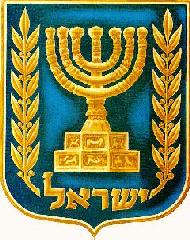
This leads us to another issue, the State of Israel. The State of Israel adopted as its emblem the Menorah as it appears on the Arch of Titus. This very Menorah with the sea dragons and the “wrong” base. Rabbi Herzog aside from his comments above, questioned the use by the State for this very reason. He said, that they should use a three legged Menorah instead. What is curious is that the State actually slightly altered the original version. Originally, it was as it more or less appeared on the Arch. Subsequently, the dragons or animals on the base were changed from facing each other to their current position which makes them look more like jumping gazelles than sea dragons. Perhaps, this was to accommodate the religous sensiblities of those like R. Herzog.
Sources: Hans Lewy, Olmot Nifgashim, 255-58; A. Berliner, Divrei Yemi HaYehudim B’Rome, vol. 1 107-110; Josephus, Wars of the Jews 6,8,3 (357); id. 7,5 (148-152); id. (158-161); the best work on the Arch is Yarden, “Spoils of Jerusalem on the Arch of Titus.” Yarden attempts to reconstruct the Arch to its original state and discusses all the various issues with it, including the change in the State of Israel emblem. What is surprising is that Prof. Daniel Sperber’s article on this topic fails to use Yarden, leading to a few errors in Sperber’s article. Sperber’s article can be found in Minhagei Yisrael vol. 5 171-212. See also, the fairly recent work on the history of the entire temple destruction Elef Dor by Y. Horowitz vol. 1 380-397 where he discusses some more stories of others who assumed the vatican still houses the temple vessels. See Sefer haYovel l’Kovod Shmuel Mirsky 220-21 for R. Herzog’s position.
The Hanukkah Miracle
The Hanukkah Miracle
Marc B. Shapiro
In an earlier post I mentioned that I hoped to write about the nineteenth-century dispute about the historicity of the Hanukkah miracle of the oil. This dispute broke out after the publication of Hayyim Zelig Slonimski’s article claiming that Maimonides did not believe in the miracle. Fuel was added to the fire when R. Samuel Alexandrov publicly supported Slonimski and argued that the miracle of the oil was intended to be understood in a non-literal fashion, with the oil representing Torah. (He later retracted this view, presumably due to public pressure.) There is no longer a need for me to write in any detail about this matter after Zerachyah Licht’s recent comprehensive Seforim Blog post here, which also includes Slonimski’s original article.[1]
However, there are a few points I would like to add.
To give an example . . . of how [R. Samuel Moses] Rubenstein’s later thought broke with tradition, see his Ha-Rambam ve-ha-Aggadah (Kovno, 1937), p. 103, where he claims that the story of the miracle of Hanukkah is almost certainly a late aggadic creation, and like many other miracle stories in aggadic literature was not originally intended to be understood as historical reality:[2]
ספק הוא אם הנס של “פך השמן” הוא אפילו הגדה עממית קדומה, קרוב שהוא יצירה אגדית חדשה מבעל הברייתא עצמו או מאחד מבעלי האגדה, ונסים אגדיים כאלו רבים הם בברייתות וגמרא ומדרשים ע”ד ההפלגה כדרכה של האגדה. ולבסוף הובן נס זה למעשה שהיה. עיין שבת כ”ג א’. [טעם ברייתא זו הובא גם במגילת תענית (פ”ט) אבל כמו שנראה היא הוספה מאוחרת, ועיין (שם) ובפסיקתא רבתי (פיסקא דחנוכה) עוד טעם להדלקת נרות חנוכה[.
During the most recent Hanukkah I was using R. Joseph Hertz’s siddur, the Authorized Daily Prayer Book. Based upon how he describes the holiday and the lighting of the menorah, omitting any mention of the miracle of the lights (pp. 946-947), I assume that he also didn’t accept it literally. Note how he states that the lights were kindled during the eight-day Dedication festival, and this is the reason for the eight days of Hanukkah, rather than offering the traditional reason that the eight days of Hanukkah commemorate the eight days that the menorah miraculously burnt.
Three years to the day on which the Temple was profaned by the blaspheming foe, Kislev the 25th 165, Judah Maccabeus and his brethren triumphantly entered the Holy City. They purified the Temple, and their kindling of the lights during the eight-day festival of Dedication—Chanukah—is a telling reminder, year by year, of the rekindling of the Lamp of True Religion in their time.
Ad kan my words in the prior post. Some time ago I was asked if I know of any other traditional authors who deny the literalness of the Hanukkah miracle. It could be that R. Isidore Epstein should be added to the list, as in his classic work Judaism he describes Hanukkah and the kindling of lights, but mentions nothing about the miracle. However, unlike Hertz whose comments were in a siddur and directed to Jews, Epstein’s book is directed towards a general reader, and can still be used as a college text. Understandably, one would hesitate to include in such a book anything about a miracle. Yet I think it is telling that he does not even say something like, “according to tradition a cruse of oil with enough for one day burnt for eight.”
Another traditional author who must be mentioned in this regard is R. Zev Yavetz. Here is his picture.
And to remind people of what Slonimski looked like, here is his picture.[3]
And here is a picture of R. Alexandrov.
Yavetz was one of the leaders (and founders) of the Mizrachi movement, and Kfar Yavets, a religious moshav, is named after him. After his death, R. Kook wrote about how Yavetz was able to combine Torah and secular wisdom without being negatively affected and distorting religious values.[4] Yavetz is best known for his writings on Jewish history. His magnum opus is his 14 volume Toldot Yisrael. In volume 4, pp. 89-91, he discusses the Hanukkah story.
As you can see, there is no mention of the miracle of the oil. The eight day holiday is portrayed as a commemoration of the original eight day celebration that took place when the Temple was rededicated. I don’t think there is any other conclusion that can be drawn other than that Yavetz did not regard the miracle of the oil as an actual historical event.
In 1900 R. Aryeh Leib Feinstein published his Elef ha-Magen. On p. 35b he writes that whereas R. Judah (bar Ilai) believed in the Hanukkah miracle, R. Yose and R. Judah ha-Nasi did not, and that is the reason why R. Judah ha-Nasi did not include the laws of the Hanukkah lights in the Mishnah.
חיוב נר חנוכה עתה אינו בשביל המלוכה רק מפני הנס שנעשה בפך השמן שהדליקו בו שמונה ימים, ואף שגם טעם זה תלוי במחלוקת שבין ר’ יודא ור’ יוסי בהוריות [יא ע”ב] שלדעת ר’ יודא נסים רבים אירעו בשמן המשחה, ור’ יוסי חולק עליו שלא היה בו שום נס, ומטעם זה ג”כ השמיט רבי דיני נר חנוכה, ולא הזכירו בשום משנה, רק מזכירו לענין ניזקין בשם ר’ יודא שפוטר החנוני, לפי שר’ יודא לשיטתו סובר שנר חנוכה הוא מצוה לזכר הנס שאירע בפך שמן המשחה. אבל רבי פוסק כר’ יוסי לפי שנימוקו עמו. אך התלמוד אוחז בזה כר’ יודא לפי שהנס מהשמן כבר נתפרסם בהאומה.
On p. 36a Feinstein refers to the dispute between Slonimski and the rabbis, and says that many good Jews adopted Slonimski’s position. He tells us that he informed Slonimski that the dispute between him and the rabbis was actually an old dispute.
ואחריו נמשכו עוד רבים וכן שלמים שמהרו ויחליטו כדבריו . . . והראיתיו לדעת שבאמת ענין זה כבר דשו בו רבים, ונחלקו עליו משפחות משפחות, וביחוד ר’ יודא ור’ יוסי בהוריות. אך בכ”ז רבינו הקדוש אף שנטה למלכות בית דוד ולדעת ר’ יוסי, לא ערב לבו לנגוע במנהג ישן שקימו וקבלו עליהם הדורות שלפניו.
Not long ago I was listening to some recordings from R. David Bar-Hayim of Machon Shilo. One of them is entitled “The Story of the Macabees, part 2.” You can find it here. In this lecture, beginning at minute 27, R. Bar-Hayim explains that in his opinion there was no miracle of the oil, and it is simply a legend that developed in Babylonia, “because without that Hanukkah makes no sense for a Jew in galut.” Rather than attempt to summarize his perspective, it is preferable for readers to listen to his entire shiur.
Because of his originality, I would not have been surprised had R. Chaim Hirschensohn adopted the same sort of approach. Yet this is not the case, and R. Hirschensohn writes that the Hanukkah miracle was the final open miracle in Jewish history, by which he means that after this Jewish history is to be explained in a more naturalistic way, just like the history of other peoples. However, he adds that it must also be recognized that the very existence of the Jewish people over so many years in exile is itself a miracle.[5]
נר חנוכה הוא חותם הניסים בדברי ימי עמנו, כמלאכי חותם הנביאים.
אחרי נצחון החשמונאים החלו אצלנו דברי הימים כאשר לכל העמים, אם שאין ספק שגם מקודם היה לנו דברי הימים אבל המסופר לנו המה רק מעשה ניסים ובתוכם עלינו לבקש גרעיני דברי הימים, אבל המסופר לנו אחרי מלחמת החשמונאים כלו דברי הימים אבל הדברי הימים בעצמו הוא כלו מעשה נסים כי בארצות הגולה בנס אנו עומדים.
Since Slonimski claimed that Maimonides did not believe in the Hanukkah miracle, I think it is worth noting that although Maimonides could have stated that Hanukkah commemorates the military victory or the rededication of the Temple, he actually appears to say that the entire holiday is in commemoration of the lighting of the Menorah.[6] There are many sources[7] that state that the real miracle commemorated by Hanukkah is not the oil but the military victory, but this does not seem to be Maimonides’ perspective. Here is what he writes in Mishneh Torah, Hilkhot Hanukkah 3:2-3[8]:
ב. וכשגברו ישראל על אויביהם ואיבדום בחמישה ועשרים בחודש כסלו היה ונכנסו להיכל ולא מצאו שמן טהור אלא פך אחד ולא היה בו להדליק אלא יום אחד בלבד והדליקו ממנו נרות המערכה שמונה ימים עד שכתשו זיתים והוציאו שמן טהור.
ג. ומפני זה התקינו חכמים שבאותו הדור שיהיו שמונת הימים האלו שתחילתן מלילי חמישה ועשרים בכסלו ימי שמחה והלל ומדליקין בהן הנרות בערב על פתחי הבתים בכל לילה ולילה משמונת הלילות להראות ולגלות הנס וימים אלו הןן הנקראין חנוכה.
In fact, this is the talmudic perspective as well. Shabbat 21b asks what is the reason for the holiday of Hanukkah (מאי חנוכה), and rather than speak about the military victory or rededication of the Temple all it mentions is the miracle of the oil. Many will find this strange, since can this really be the reason for the holiday? It is one thing to say that this is the reason for the eight days of celebration, but can this be the reason for the holiday itself? The Sheiltot of R. Ahai Gaon[9] preserves another version of the talmudic text. Instead of מאי חנוכה it reads מאי נר חנוכה. With this as the question, the answer which explains about the miracle of the oil makes much more sense.[10]
Slonimski did not argue that Maimonides’ philosophy does not leave room for the Hanukkah miracle. He simply pointed out that when Maimonides records the talmudic story of the miracle he leaves out three words: נעשה בו נס. Here is the relevant section of the talmudic text in Shabbat 21b. I have underlined the crucial words:
וכשגברה מלכות בית חשמונאי ונצחום בדקו ולא מצאו אלא פך אחד של שמן שהיה מונח בחותמו של כהן גדול ולא היה בו אלא להדליק יום אחד נעשה בו נס והדליקו ממנו שמונה ימים לשנה אחרת קבעום ועשאום ימים טובים בהלל והודאה.
Here is what Maimonides writes in Hilkhot Hanukkah 3:2, and as you can see the underlined words do not appear.
וכשגברו ישראל על אויביהם ואיבדום בחמישה ועשרים בחודש כסלו היה ונכנסו להיכל ולא מצאו שמן טהור אלא פך אחד ולא היה בו להדליק אלא יום אחד בלבד והדליקו ממנו נרות המערכה שמונה ימים עד שכתשו זיתים והוציאו שמן טהור.
According to Slonimski, the omission of the words נעשה בו נס indicates that Maimonides does not believe that there was any miracle. Rather, Maimonides is telling us that since there was not enough oil to last for more than one day, they used a little of the oil on each of the eight days, until they were able to get more oil.
A weakness in Slonimski’s argument, which of course was pointed out, is that in the very next halakhah, 3:3, Maimonides appears to explicitly mention the miracle.
ומדליקין בהן הנרות בערב על פתחי הבתים בכל לילה ולילה משמונת הלילות להראות ולגלות הנס
It is hard to see the underlined words as referring to anything other than the miracle of the oil.
Needless to say, Slonimski would have been very happy to learn that these underlined words, although they appear in the standard printed editions of the Mishneh Torah going back to early printings, do not appear in manuscripts and are not authentic (and have thus been removed from the Frankel edition). Presumably, these words were added by someone to “correct” Maimonides’ omission of the miracle of the oil.[11] (Slonimski, who did not know that להראות ולגלות הנס was a later addition, was forced to claim that these words referred to the military victory.[12])
If this was all we had to go by, I might agree that Maimonides is hinting to us that he did not accept the historicity of the miracle of the oil. However, if we examine Mishneh Torah, Hilkhot Hanukkah, chapter 4, we find that Maimonides mentions “the miracle,” and again, the miracle he refers to appears to be that of the oil.[13]
In 4:12 he writes:
מצות נר חנוכה מצוה חביבה היא עד מאוד וצריך אדם להיזהר בה כדי להודיע הנס ולהוסיף בשבח הא-ל והודיה לו על הנסים שעשה.
In 4:13 he writes
הרי שאין לו אלא פרוטה אחת ולפניו קידוש היום והדלקת נר חנוכה מקדים שמן להדליק נר חנוכה על היין לקידוש היום הואיל ושניהם מדברי סופרים מוטב להקדים נר חנוכה שיש בו זכרון הנס.
Isn’t the most likely understanding that these two halakhot refer to the miracle of the oil? In 4:12 he first mentions “the miracle,” which I believe refers to the miracle of the oil, and then mentions “the miracles” in plural, which would also include the military victory. I don’t believe that Maimonides generally leaves esoteric hints in the Mishneh Torah, so I don’t think leaving out the words נעשה בו נס are intended to hint to us that he rejects the historicity of the miracle. In fact, since Maimonides denies the historicity of some events recorded in the Bible, regarding them as dreams or visions, it would not have been a theological problem for him to do so with the miracle of the oil, the source of which is a talmudic aggadah. However, as we have seen, he seems to explicitly affirm this miracle in the Mishneh Torah. Therefore, one who wants to claim that Maimonides did not believe in the miracle (despite what he says in the Mishneh Torah), will have to base this claim on an interpretation of Maimonides’ approach to miracles as set out in the Guide.
As mentioned, Slonimski’s rejection of the miracle of the oil created a great controversy, but what appears to be unknown is that he was not the first of the Hebrew writers to bring this matter to the fore. The newspaper Ha-Magid published articles by both maskilim and traditional Torah scholars. On December 9, 1868[14] Nahum Bruell[15] published an article which states: “In truth, the story of this miracle is not accepted by all sages of the Talmud and Midrash.” He then cites Pesikta Rabbati, ch. 2, which asks why we light נרות on Hanukkah. Its answer is not the story of the miracle but that after the Jews entered the Temple they took eight spears and put נרות on them.
נכנסו לבית המקדש מצאו שם שמונה שפודין של ברזל וקבעו אותם והדליקו בתוכם נרות.
Bruell also cites the medieval tosafist R. Isaac ben Judah ha-Levi who in his Pa’neah Raza,[16] in explaining why the Hasmoneans decreed lighting of the נרות, mentions nothing about the miracle:
נסמכה פרשת נרות לחנוכת המזבח וע”ז סמכו בית חשמונאי לתקן נרות בחנוכה
Although Bruell cited this text to show that not everyone accepted the Hanukkah miracle, I find it impossible to believe that R. Isaac (or any other medieval Ashkenazic sage) did not accept the traditional story of the miraculous burning of the oil. If I am correct that R. Isaac’s explanation is not in place of the Hanukkah miracle but only to offer an additional explanation, then perhaps even a text like Pesikta Rabbati cites the explanation it does, not because it did not know or accept the story of the miraculous oil, but because it wanted to offer another explanation, perhaps one not as well known.
Bruell further suggests that the talmudic aggadah about the Hanukkah miracle was never meant to be taken literally:
ואפשר גם בתשובתם על השאלה מאי חנוכה רמזו לנו כעיון גדול ועמוק כי אין מעצר לד’ להושיע ברב או במעט ואם גם נמשכו כל כוכבי התקוה ורבים חללו את ברית קדש מ”מ מפך שמן טהור המונח בחותמו של כה”ג דהיינו משארית הצדיקים אשר יחזיקו במעזם ויבטחו בד’ נעשה נס, יבא עזרם מעם ד’ עשה שמים וארץ ועוד יזרח להם אור התשועה.
One more point worth noting is about the number 8. According to the traditional story of the miracle of the oil, what is special about the number 8? Most people have probably heard the reason, also accepted by Maimonides, Hilkhot Hanukkah 3:2, that in the days of the Hasmoneans this is how long it would take for those in Jerusalem to get new olive oil.[17] I never understood this explanation as why should getting new oil be a problem. It is not like olive trees are a rare thing in the Land of Israel. In any event, this explanation does not appear in the Talmud but is first found in a geonic responsum.[18]
למה אנו עושין שמונה ימי חנוכה מפני הנס שאירע שטמאו יונים וכו’. ומה טעם יש לשמנה לילות ולא הספיקו ממנו פחות או יותר.
מפני שהשמנים באים מחלקו של אשר כדכתיב (דברים לג, כד) וטובל בשמן רגלו ומקום היה לו שנקרא תקוע כדאמרינן תקוע אלפא לשמן שממנו השמנים יוצאים ומשם עד ירושלים היה מהלך שמנה ימים בין הליכה וחזרה והכי אמרינן במנחות ולפיכך המתין להם עד שיביאו משם שמן טהור וזה שנעשה להם נס לשמנת ימים.
There are a number of difficulties with this responsum. To begin with, we are told that olive oil came from the area of the tribe of Asher which is in the extreme north of the Land of Israel. This information is based on the fact that in Moses’ blessing for the tribe of Asher in Deuteronomy 33:24, he states, “let him dip his foot in oil.” This means that there would be lots of olive trees in Asher’s territory, but since there were plenty of olive trees closer to the Temple, why did they have to travel all the way to the land of Asher which, we are told, would require an eight day round trip. Even if one supposes (without any evidence) that normally they would go there since that was where the best olive oil was to be found, if they only had enough to light the menorah for one day, it is hard to imagine that they would not set out to find olive oil closer to the Temple.
The next point in the responsum is that there was a specific place in Asher’s territory called Tekoa, and that was where the oil came from. It cites Menahot 85b where the Mishnah states that “Tekoa ranks first for the quality of its oil.” Yet as I’m sure most people reading this know, Tekoa is near Jerusalem in the territory of Judah, not in the land of Asher. II Chronicles 11:5-6 states: “And Rehoboam dwelt in Jerusalem, and built cities for defense in Judah. He built even Bethlehem, and Etam, and Tekoa.”
As proof for the statement that it would take eight days to travel to the north and back in order to get the olive oil, we are told והכי אמרינן במנחות. Yet nowhere in Menahot is this information found. In Sefer Abudarham, Seder Hadlakat Ner Hanukkah, this geonic passage is quoted, but instead of referring to Menahot, we are told that the information is found in the Jerusalem Talmud. The same reference to the Jerusalem Talmud also appears in Hiddushei R. Yehonatan mi-Lunel, Shabbat 21b, and Sefer ha-Eshkol, ed. Auerbach, vol. 2, p. 20. For those who assume that Auerbach’s edition of Sefer ha-Eshkol is a forgery, this reference is just another example of the work incorporating passages from other writings.
I don’t have an answer as to why anyone assumed that the oil had to come from the land of Asher, but as for the city of Tekoa, it could be that there was another city also named Tekoa, in addition to the one we know about in the territory of Judah. The Soncino Talmud, Menahot 85b, informs us that both Graetz and Bacher think that the Tekoa mentioned there is in the Galilee, which could be said to include part of the territory of Asher.[19] Furthermore, Samuel Klein, the leading geographer of the Land of Israel, also argues that there was a city named Tekoa in the Galilee.[20]
What about the Tekoa that Amos came from? If you look at R. David Kimhi’s commentary to Amos 1:1, he tells us that Tekoa was a large city in the land of Asher (see also his commentary to Amos 7:10). In his commentary to II Samuel 14:2, he writes, quoting the Talmud in Menahot 85b (except for the first four words):
העיר בחלקו של אשר דכתיב ביה וטוב בשמן רגלי שמושך שמן כמעין
The biblical story Radak is commenting on is when Joab fetched a wise woman from Tekoa and told her to go to King David and pretend to be a mourner. I am surprised that Radak would assume that Joab was summoning a woman from all the way in the territory of Asher. In his response to Radak, R. Profiat Duran (Efodi[21]) states that it is obvious that the story is dealing with a city near Jerusalem.[22]
והשכל הישר ישפוט כי תקוע היה קרוב לירושלם כי איך ישלח לקרות אשה מארץ אשר היה רחוק מירושלם.
Again we have to ask, just because a city named Tekoa happened to be known for its olive oil, why should anyone assume that it is in the territory of Asher? The fact that the tribe of Asher was blessed with having a lot of olive trees in its territory does not mean that the other tribes did not also have a good supply. In fact, it appears to me that the peshat of Menahot 85b, where the Mishnah speaks of Tekoa as having good olive oil, is that it is speaking about the Tekoa near Jerusalem.[23] It is true that in the talmudic discussion Tekoa and the land of Asher are mentioned regarding olive oil, but their only connection would seem to be this, not that Tekoa has anything to do with Asher’s territory.[24]
Jeremiah 6:1 states: “Gather the sons of Benjamin from the midst of Jerusalem, and blow the horn in Tekoa.” Here Jeremiah is telling the tribe of Benjamin, who lived near Jerusalem, to blow the horn in Tekoa in order to warn the people about the danger from the approaching enemy. Malbim on this verse comments that Tekoa is part of Asher. I don’t understand how Malbim could view this as peshat. Why would the people of Benjamin travel to the territory of Asher to blow the shofar? This territory was occupied by foreign troops, the local inhabitants having been deported a long time before. Here are Malbim’s words:
העיזו אתה בני בנימין התאספו מקרב ירושלים, כי בני בנימין לא היו מבני העיר ורצו לחסות שם בירושלים, אומר כי יתרחקו משם, וגם בתקוע שהוא בחלק אשר, תקעו שופר.
Based on Jeremiah 6:1, Efodi states that Tekoa is actually in the territory of Benjamin and not, as I mentioned before, in Judah’s territory.[25]
Returning to our discussion of the Hanukkah miracle, R. Sharon Shalom recently published a very interesting book entitled Mi-Sinai le-Ethiopia (Tel Aviv, 2012). This book, which is a code of halakhah for Ethiopian Jews, has haskamot from R. Nachum Rabinovitch and R. Shabtai Rappaport. It is significant in that it takes into account that it is not so easy for the older generation of Ethiopian Jews to entirely reject their traditions in order to become modern rabbinic Jews. As such, R. Shalom permits certain things that would not make sense in the larger Jewish world but are part of what he terms “Ethiopian halakhah.” For example, R. Shalom permits Ethiopian Jews, especially of the older generation, to carry items regarded as muktzeh when this is related to holy matters, for example, bringing money to synagogue on the Sabbath for charity. This was not regarded as prohibited in Ethiopia and R. Shalom allows the practice to continue today (pp. 170-171).
This is a fascinating book as it attempts to slowly ease the Ethiopian community into the wider halakhic community rather than requiring an immediate abandonment of long-standing practices, something that would certainly be demanded by haredi poskim. You can see R. Shalom discuss his book here, and he is introduced by R. Rappaport.
While the book deserves detailed analysis, I only want to call attention to one additional point that is relevant to this post. Here is R. Shalom’s discussion of Hanukkah, from pp. 214-215 in the book. There is no mention of the Hanukkah miracle in explaining why we celebrate an eight day holiday.
I would like to call readers’ attention to a short essay by R. Nosson Fried on Megilat Antiochus.[26] Here is the title page.
R. Fried points out that in the version of Megilat Antiochus that he published in Kovetz Beit Aharon ve-Yisrael[27] there is no mention of the miracle of the oil. He is quite surprised by this for as he says, “this is the central miracle in commemoration of which they established the lighting on Hanukkah.” He adds that this miracle is not mentioned in Al ha-Nisim or in Pesikta Rabbati which has a good deal to say about Hanukkah. He then notes that all of the Eretz Yisrael paytanim, which includes Yanai and R. Eleazar ha-Kalir, and some of the European paytanim also do not mention the miracle. (Other European paytanim, such as R. Menahem ben Machir, do mention the miracle.) How can this be explained?
R. Fried’s answer is quite unexpected (p. 8): “The sages of the Land of Israel in the time of the Talmudim and Midrashim knew nothing about the miracle of the cruse of oil.” He explains that the story of the miracle is a Babylonian tradition and thus was not known in the Land of Israel, or even by some of the early European paytanim. He writes (p. 9):
שכל אותן המקורות הקודמים, החל מספרי החשמונאים וכלה בפייטני א”י ומקצת מפייטני אירופה הקדמונים, לא ידעו כלל שאמנם היה נס בשמן . . . [הנקודות במקור] לשיטתם נקבע חג החנוכה לזכר הנצחונות והנסים שאירעו לבני חשמונאי במלחמותיהם נגד היונים.
Coming from a haredi writer this is quite surprising, and let me explain why. All of the scholars who have argued against the historicity of the miracle of the oil have pointed out that none of the oldest texts dealing with Hanukkah mention this miracle. This includes 1 and 2 Maccabees, the earliest version of Megilat Ta’anit, tannaitic texts, and Josephus. Josephus even suggests a different explanation for why the holiday is called “Lights.” Those who defend the historicity of the miracle have to explain why these sources chose not to mention it.Before Fried, no traditional author had ever suggested that the miracle story was unknown to the tannaim and later rabbinic authors, and that is for an obvious reason. If you say that the tannaim did not know the miracle, to say nothing of the authors of the Book of Maccabees 1 and 2, the earliest version of Megilat Ta’anit, and Josephus, how is it possible that someone who lived a few hundred years later in Babylonia would know about the miracle? By saying that the people who lived in the Land of Israel close to the time of the events did not know the miracle, Fried is providing an argument that the miracle never happened and that the much later story recorded in the Babylonian Talmud is an aggadah which is not to be regarded as historical but rather teaches a lesson as many aggadot do. In other words, Fried’s argument leads to the same conclusion as Slonimski and R. Alexandrov, and for some reason he doesn’t see it.
R. Tuvyah Tavyomi has another approach to the matter.[28] He claims that since the miracle of the oil was only seen by a small group, the leaders of the generation were afraid that the masses, many of whom were hellenized, would not believe the story and thus not adopt the holiday. Therefore, they ordained the lighting of נרות without giving a reason, hiding the real reason from the people. The masses would believe that it was because of the military victory, while those who knew that holidays are only proclaimed for “out of the ordinary” miracles, they would find out about the story of the oil and would certainly believe it. According to R. Tavyomi, this explains why in the Al ha-Nissim prayer which is to be said by all people there is no mention of the miracle of the oil.
Finally, I was surprised that an article by Avraham Ohayon could be published in Shenaton Shaanan, the annual of Shaanan, a religious teachers college.[29] Ohayon’s article not only critically examines the story of the Hanukkah miracle, which he calls מיתוס נפ”ה (נס פך השמן) (p. 59), but concludes that that it is most likely that the miracle never happened and was invented by the Sages for religious reasons. On pp. 58-59 he writes:
שתיקתם של המקורות ההיסטוריים, ובמידה מסוימת גם של חז”ל ומקורות הלכתיים בעניין נפ”ה – מעוררת שאלות בקשר למשמעות העובדתית של נס זה: האם הנס התרחש, וכתוצאה ממנו קבעו חז”ל את סממניו ההלכתיים, או שכדי לקבוע הלכות לדורות היה צריך קודם לסמוך להם נס?
חלק הארי של המקורות דלעיל – מחזק יותר את קיומה של האפשרות השנייה. . . .
חז”ל החילו שני שינויים במהותו של החג, ושניהם קשורים זה בזה:
האחד – שינוי עיקרו של הנס, מסגידה לניצחון הצבאי – לנס על-טבעי שהוא נפ”ה.
השני – הענקת צביון דתי לחג על-ידי קביעת איסורים שונים, תפילות מיוחדות ומצוות הדלקת הנרות שמונה ימים – כזכר לנפ”ה.
In a note on this passage, Ohayon cites Gedaliah Alon who explains what would have led the Sages to invent the Hanukkah miracle:
[אלון] תומך בדעה השנייה מן הטעם, שחז”ל רצו להשכיח את שם החשמונאים וגבורתם מזיכרון האומה, ואולם לא יכלו לעקור את חג החנוכה גופו. לכן קבעו טעם אגדי ובדרך זו “קיפלו” בו את תקופת החשמונאים, שהרי סיפור נפ”ה התחיל ממקורות חז”ל בלבד. הוא מביא גם נימוקים ליחס זה של חז”ל לחשמונאים.
Nothing Ohayon writes would be surprising if it appeared in a general academic journal, but as mentioned, his article appeared in a religious journal and that is what I find significant.
Returning to R. Samuel Alexandrov, who as mentioned at first supported Slonimski, Geulah bat Yehudah has a nice article on him[30] as does Ehud Luz,[31] and there is a master’s dissertation on him by Tsachi Slater.[32] Yet I would like to call attention to a few things that these authors have not mentioned. To begin with, R. Alexandrov reports that after the death of R. Shemariah Noah Schneersohn he was asked to take the latter’s place as rav of Bobruisk (R. Alexandrov’s place of residence), yet he refused this offer.[33]
In Mikhtevei Mehkar u-Vikoret (1932), pp. 86-87, R. Alexandrov offers a provocative suggestion in explaining why Maimonides was so opposed to rabbis taking money from the community. He calls attention to Hullin 132b which states: “R. Simeon says. A priest who does not believe in the [Temple] service has no portion in the priesthood.” Rashi explains this to mean a priest who thinks the Temple service is nonsense and rather than having been commanded by God was invented by Moses. As for having no portion in the priesthood, Rashi explains that he does not receive a portion of the sacrificial meat.
Maimonides, Hilkhot Bikurim 1:1, codifies the law as follows:
וכל כהן שאינו מודה בהן אין לו חלק בכהנים ואין נותנין לו מתנה מהן.
According to R. Alexandrov, this is the key to understanding why Maimonides opposes rabbis taking money from the community. R. Alexandrov assumes based on what Maimonides writes in the Guide of the Perplexed that he did not really believe in the value of sacrifices. )R. Alexandrov himself did not believe that there would ever be a return to the sacrificial system.[34]) He further states that Maimonides realized that if he were a kohen he would have no portion in the priestly dues. Since the rabbinate, as the religious leadership of the community, replaces the old system of the kehunah, Maimonides reasoned that just as if he were a kohen he could not receive any priestly dues, so too as a rabbi he could take nothing from the community.
בספרו המורה הלא איננו מודה בקרבנות לפי המובן המורגל, ולכן חש בנפשו הנפש היפה שאין לו חלק במתנות כהונה . . . [הנקודות במקור] ובכן על פי טבעו ורוחו אוסר לקבל שכר רבנות, כי אמנם הרבנות הוא דמות זעיר אנפין של הכהונה בימים הקדמונים, כנודע.
R. Alexandrov also says a few things that some haredi readers will appreciate. For example, he explains Avot 2:2: וכל תורה שאין עמה מלאכה סופה בטלה וגוררת עון in a very original fashion. He understands מלאכה to mean the work of creating Torah novellae! This passage in the Mishnah is always used against the Israeli haredi approach of shunning work in favor of study, and I have never seen a good justification offered as to why the Mishnah’s words can be so easily set aside. Yet with R. Alexandrov’s explanation, this is no longer a problem.[35]
ומה שאמר “כל תורה שאין עמה מלאכה סופה בטלה וגוררת עון”, יש לכוין על מלאכת החדוש והפלפול וההגיון בתורתנו, ואומר כי תורה שאין עמה מלאכה ר”ל מלאכת החדוש סופה בטלה כי באמת רק כח החדוש הנותן פנים להתורה הקדושה בכל דור ודור לפי הרוח השורר אז, הוא הוא המקיים את התורה הישנה בעם ישראל.
* * * * *
1. Dov Weinstein called my attention to the following very significant responsum by R. Ovadiah Yosef that appeared in the journal Beit Yosef, Iyar 5776, no. 169. Over a century ago, R. Shalom Mordechai Schwadron suggested a way of “cleansing” a mamzer by having the husband send his wife a get and then void it before it is delivered. According to the Talmud, in such a case the marriage is to be regarded as annulled despite the fact that the husband voided the get. The problem the Sages had to deal with was if the husband was allowed to void a get after having sent it, the woman who received it would not know that it was invalid and would remarry. Although it would not be her fault, such a situation would result in her future children being mamzerim. The way around this was to decree that in such a case her original marriage was to be regarded as never having been actualized, something which the rabbis have authority to do. R. Schwadron’s originality comes in suggesting that this mechanism could also be used to solve the problem of mamzerut even after the fact, since if the original marriage is annulled in this fashion, by sending a get and then cancelling it before delivery, there is no subsequent adultery. This proposal, which was never put into practice by R. Schwadron, is discussed by R. J. David Bleich in Contemporary Halakhic Problems, vol. 1, pp. 162ff.
R. Ovadiah’s responsum is of great importance since his approach would solve the problem of mamzerut in many case. In earlier years, R. Isser Yehudah Unterman suggested that R. Schwadron’s approach be followed in a particular case,[36] and R. Zvi Pesach Frank actually did so in another case.[37]
2. Is it significant that a haredi website recently published an article from a woman in which she argues that women should be able to become halakhic authorities? Was the website just looking to stir up trouble or is this a sign of something afoot even in the haredi world?
3. There has recently been a problem with the commenting whereby many comments that have Hebrew in them are rejected as spam. One of the rejected comments was by R. Moshe Maimon and is very insightful. Responding to R. Hershel Schachter’s point, discussed here, that Daas Torah authorities must be poskim, R. Maimon wrote:
Here is the Rambam’s formulation of the ‘Daas Torah’ concept:
כן ראוי להמון שימסרו הנהגתם לנביאים בעלי העינים באמת, ויסמכו על מה שיודיעום שהדעת הפלונית אמתית והדעת הפלונית שקר. ואחר הנביאים – החכמים הדורשים יומם ולילה הדעות והאמונות, עד שידעו ויכירו האמת מן השקר.
I don’t recall seeing this passage from אגרת תימן (Sheilat ed. p. 149) quoted in the various articles on the subject, but at any rate it seems to serve as a clear repudiation of Rav Schachter’s view that only poskim can issue Daas Torah directives.
Regarding Daas Torah, someone challenged my statement in my post here that R. Kanievsky actually declared in a formal way that R. Steinman is to be regarded as the new leader. Readers can look at the actual words where R. Kanievsky indeed declares that everyone is “obligated” to follow what R. Steinman says. (An English translation is found here.) I don’t know of any other such declaration in Jewish history. The gedolim have always been “created” by the religious community at large, and the gadol ha-dor (when there has been such a figure) emerged from this group of gedolim based on public acknowledgment. Yet here we have a declaration from one gadol establishing who the gadol ha-dor is and obligating everyone to follow his guidance. Will this be the new model in the haredi world for how to determine who the gadol ha-dor is?
Thanks to the person who doubted what I wrote, I was motivated to find R. Kanievsky’s statement and I see that I did say something incorrect. I wrote that R. Kanievsky’s statement was made after R. Elyashiv’s death, but in fact it was made shortly before R. Elyashiv’s passing, when he was no longer in the position to serve as leader of the generation.
[1] One source not cited by Licht is a recent article by Yisrael Rozenson that focuses on R. Alexandrov and the miracle of the oil. “‘Asukh shel Shemen Ehad,’ Al Nes ve-Hukiyut be-Mishnato shel Shmuel Alexandrov,” Badad 30 (Elul 5775), pp. 103-116.
[2] There is a good deal of interesting material in R. Rubenstein’s Ha-Rambam ve-ha-Aggadah. Relevant to what I mentioned in the text is that R. Rubenstein claims that many aggadot are not intended to be viewed as historical, and he refers to a number of such examples. See e.g., p. 101, that when the Talmud states that Solomon came up with the idea of an eruv, this is not to be taken literally but only means that it is an old idea which was later attributed to Solomon.
והמצאת היתר זה נעשה בזמן מן הזמנים שלא נדעהו, ומפני שתקנה זו היא המצאה מחוכמת מאד מאנשים חכמים נתנו למיסדי התקנה שם שלמה ואמרו שבשעה שתקן שלמה ערובין וכו’ והוא מאמר אגדי.
He also mentions that some aggadot about biblical figures were created for their dramatic effect and that those who take them literally are missing the point. See p. 94:
אבל באמת ספורים כאלו אינם מעשיות שהיו לא בהקיץ ולא בחלום אלא הן יצירות דרמטיות במעלי האגדה כיד השירה הטובה עליהם. ויצירות כאלו הרבה הן בש”ס ובמדרשים וביחוד מהאנשים הקדמונים שנזכרו בתנ”ך. עיין לדוגמא האגדה ע”ד האבן שבקש עוג מלך הבשן לזרוק על ישראל (ברכות נ”ד א’ [צ”ל ב’]) [מחזה התולי משונאי ישראל המבקשים להמיט רעה על ראשי ישראל וחוזר על ראשיהם עצמם בעטים של ישראל]. והאגדה ע”ד מיתתו של דוד שבת ל’ א’ [צ”ל ב’]) [מחזה על יקרת ערך החיים]. והאגדה ע”ד מפלתו של המן (מגילה ט”ז א’) [מחזה נקמי]. והאגדה ע”ד דוד וישבי בנוב (סנהדרין צ”ה א’) [מחזה מרחמי האב על זרעיו . . .] כל אגדות כאלו אינן מעשיות שהיו אלא יצירות דרמטיות.
I know there are some people who treat aggadot as if they are historical, but when it comes to the sort of aggadot mentioned by R. Rubenstein, do any really disagree with his understanding?
[3] It is perhaps noteworthy that Slonimski’s two sons apostatized and it appears that Slonimski himself, despite being an observant Jew, deserves some blame for this. See Eliyanah Tzalah, “Tenuat ha-Hitbolelut be-Polin,” in Yisrael Bartal and Yisrael Guttman, eds., Kiyum ve-Shever: Yehudei Polin le-Doroteihem (Jerusalem, 1997), pp. 344-345. See also Avraham Aryeh Akaviah, “HaZaS, Hayyim Yehiel Bornstein, Pesah Shapira,” Areshet 5 (1972), p. 387.
[4] S. Arnst, Sefer Yavetz (Tel Aviv, 1934), pp. 34-35.
[5] Apiryon 2 (1925), pp. 99-100.
[6] He also leaves no doubt that the obligation to light the menorah dates from the Hasmonean period. I say this even though R. Moshe Sternbuch argues that Maimonides agrees with R. Sternbuch’s own view that the obligation for individuals to light the Menorah only dates from after the destruction of the Temple. See Moadim u-Zemanim, Hanukah, vol. 6, no. 89. For a rejection of R. Sternbuch’s position, see R. Simhah Lieberman, Bi-Shevilei ha-Nisim, p. 11. R. Lieberman’s many volumes encompass vast areas of Torah scholarship and show incredible erudition. Yet for some reason, I hardly ever see his works quoted, while other books which don’t approach his level of scholarship are quoted very often.
[7] See R. Simhah Lieberman, Bi-Shevilei ha-Nisim, pp. 52ff.; R. Menahem Kasher, Divrei Menahem, vol. 4, pp. 134ff.
[8] This point is made by R. Yaakov Koppel Schwartz, Likutei Diburim (Brooklyn, 2015), p. 159.
[9] Parashat Va-Yishlah, section 26 (p. 177 in the Mossad ha-Rav Kook edition with the commentary of R. Naphtali Zvi Judah Berlin). This source was noted by Nahum Bruell, “Mai Hanukkah,” Ha-Magid, Dec. 2, 1868, p. 373, and Jacob Reifman. See Reifman’s letter in Or ha-Mizrah 18 (Tishrei 5729), p. 95. Regarding this matter, R. Naphtali Zvi Judah Berlin mentions Bruell by name in Ha-Amek She’alah, vol. 1, p. 178. For some reason, the Netziv refers to Bruell as בעל המגי’ which is strange, as Bruell only contributed articles to Ha-Magid but was not the editor.
[10] The Sheiltot, vol. 1, p. 178, preserves another important alternate text of the Talmud. Our version of Shabbat 21b reads: ולא היה בו להלדיק אלא יום אחד
The Sheiltot reads: ולא היה בו להדליק אפילו יום אחד
The word I have underlined means that the oil they found was not even enough for one day. This means that the burning of the oil for the complete first day was also a miracle, and thus provides an answer to the famous question why there is an eighth day of Hanukkah if there was enough oil for one day, meaning that the miracle was only for seven days.
Of all the answers to this question, the strangest one has to be that of R. Yerahme’el Yisrael Yitzhak Danziger (1853-1910), the Rebbe of Alexander. He claims that the cruse of oil they found was completely empty, and this empty cruse produced enough oil for eight days. He says this even though the Talmud, Shabbat 21b, states explicitly that they found .פך אחד של שמן See R. Danziger, Yismah Yisrael (Bnei Brak, 2007), vol. 1, p. 98a (Hanukkah, no. 58).
[11] Another addition that is not found in manuscripts is in 3:2 where Maimonides writes:
ונכנסו להיכל ולא מצאו שמן טהור אלא פך אחד
The standard printed versions read: .ולא מצאו שמן טהור במקדש Even though the word במקדש is not found in manuscripts in this case for some unknown reason Frankel includes this mistaken word in his text and only in the textual note on the page informs the reader that it is not found in the manuscripts.
[12] Ha-Tzefirah, Nov. 28, 1892, p. 1069.
[13] R. Abraham Joel Abelson, the editor of the Torah journal Keneset Hakhmei Yisrael, which appeared from 1893-1900, polemicizes against those who deny the miracle of the oil. Yet interestingly enough, he accepts Slonimski’s point that Maimonides does not mention the miracle, and even explains why Maimonides omits it. Contrary to what I have written, he assumes that the miracle Maimonides refers to in Hilkhot Hanukah, ch. 4, is the military victory, as the lighting of the candles is a commemoration of this (Keneset Hakhmei Yisrael 6 [1896], p. 131.).
אין מקום כלל להקשות על הרמב”ם מה שלא הביא ביד החזקה מהנס של פך השמן, כי אין מדרכו לכתוב בכל הלכותיו טעמים עליהן כידוע, וגם נס פך השמן הלא רק כעין טעם על מה שקבעו הזקנים ימי החנכה לדורות . . . ועיקר הנס הלא הי’ במלחמות החשמונאים שע”ז קבעו להדליק נרות חנכה גם לדורות ולהודות ולהלל לשמו הגדול.
[14] “Mai Hanukkah,” p. 382.
[15] Bruell was the grandson of R. Nahum Trebitch, chief rabbi of Moravia and predecessor to R. Samson Raphael Hirsch in this position. Bruell himself became rabbi of the Reform community of Frankfurt in 1870, succeeding Abraham Geiger.
[16] Beginning of parashat Be-Ha’alotkha.
[17] As we know, the oil in the Temple was made impure by the Greeks, as the Talmud, Shabbat 21b, states: טמאו כל .השמנים שבהיכל
What does this mean? How could the oil have been made impure and what about the halakhic principle of טומאה הותרה בציבור which would have allowed them to light the menorah even with impure oil? Daniel Sperber argues that when the word “impure” is used it does not mean טמא in a technical ritual sense. Rather, it means that the oil was uses for idolatrous purposes and in a colloquial sense it was regarded as טמא. See Sperber, “Al ha-Mesorot be-Hanukat ha-Bayit,” Sinai 54 (1964), pp. 218-225.
[18] Otzar Geonim, Shabbat: Teshuvot, p. 23. See also Meiri, Beit ha-Behirah, Shabbat 21b; R. Nissim, Shabbat, p. 9b in the pages of the Rif, s.v. תנו רבנן.
[19] I haven’t found the reference in Bacher. For Graetz, see Geschichte der Juden (Leipzig, 1893), vol. 4, p. 183.
[20] Eretz ha-Galil (Jerusalem, 1967), pp. 20-21. R. Israel Horowitz also believes that there were two cities named Tekoa. See his Eretz Yisrael u-Shkenoteha (Vienna, 1923), index, s.v. Tekoa.
[21] Duran is known as Efodi because this is how his commentary on Maimonides’ Guide of the Perplexed was named by the first printer. Yet he actually referred to himself as Efod אפד, not Efodi. This is usually understood to be an acronym of אני פרופיאט דוראן. Yet Norman Roth sees this as unlikely. He assumes that the name Efod alludes to Arakhin 16a which states that the efod atones for idolatry, “i.e., he sought atonement for his own conversion and for others in his generation.” See Roth, Conversos, Inquisition, and the Expulsion of the Jews from Spain (Madison, 2002), p. 192. See also Maud Kozodoy, The Secret Faith of Maestre Honoratus: Profayt Duran and Jewish Identity in Late Medieval Iberia (Philadelphia, 2015), pp. 4-5, 20, 25-26.
[22] Ma’aseh Efod (Vienna, 1865), p. 199. See also Abarbanel, II Sam. 14:2, who cites Efodi.
[23] See R. Yehosef Schwartz, Divrei Yosef, vol. 3, pp. 14a-b.
[24] Regarding oil and the tribe of Asher, there is a theory that the Bene Israel of India, who for centuries were engaged in oil pressing, originated from the upper Galilee which was famous for its oil. See Shirley Berry Isenberg, India’s Bene Israel (Berkeley, 1988), p. 8.
[25] See Ma’aseh Efod, p. 199.
[26] Megilat Antiochus Murhevet (n.p., 1992).
[27] No. 38 (Kislev-Tevet 5752), pp. 111-121.
[28] Tal Orot vol. 1, pp. 91ff. This source is cited by Yaakov Rosenblum in Datche 17 (27 Kislev 5768), p. 11.
[30] “Rabbi Shmuel Alexandrov,” Sinai 100 (1987), pp. 195-221.
[31] “Spiritualism ve-Anarchism Dati be-Mishnato shel Shmuel Alexandrov,” Da’at 7 (1981), pp. 121-138.
[32] “Leumiut Universalit: Dat u-Leumiut be-Haguto shel Shmuel Alexandrov” (unpublished master’s dissertation, Ben Gurion University, 2014). See also Slater’s recent article, “Tziyonut Ruhanit Datit – Dat u-Leumiut be-Haguto shel Shmuel Alexandrov,” Daat 82 (2016), pp. 285-319.
[33] Mikhtevei Mehkar u-Vikoret (Jerusalem, 1932), p. 56.
[34] See Mikhtevei Mehkar u-Vikoret (Vilna, 1907), p. 12, where R. Alexandrov writes as follows to R. Kook:
ואמנם כן היא שהמוסריות המתפתחת מעצמה באה להחליט כדעת האומר שכל הקרבנות בטלים . . . גם אנכי הנני מסכים כי כל הקרבנות בטלים מפני שלא היו קדושים רק לשעתן.
In Mikhtevei Mehkar u-Vikoret (1932), p. 24, he speaks of the abolishment of sacrifices as a natural result of humanity’s developing sense of morality:
הנה נודעה היא למדי השקפת הרמב”ם ע”ד עבודת הקרבנות איך היתה מוכרחת בזמן הקדום ואיך היא נבטלת לאט לאט מעצמה ע”י התפתחות הרוח של האדם, ובאופן שמין האדם מבטל מעצמו את מצות הקרבנות וכל אבזרייהו מבלי הופעה דתיית משמי מרומים, והנה תקון דתיי כזה הוא תקון שהזמן עושה, כלומה זה נעשה על פי התפתחות המוסריית האנושיית התלויה בזמן, ובאופן שהכל נעשה יפה בעתו ובזמנו, ולו עמדו כעת מתקנים במין האדם הנאור שהיו חפצים להנהיג את עבודת הקרבנות מחדש אז היה החפץ הזה נדחה מפני המוסריות האנושיות המנגדת לעבודה דתיית כזאת בכל כחה, ואין כל ספק כי יד המוסרית תהיה על העליונה כי לכל זמן ועת לכל חפץ תחת השמים.
In another letter to R. Kook, Mikhtevei Mehkar u-Vikoret (1907), p. 15. Alexandrov explains that the reason why in their day so many of the Orthodox youth, including sons of rabbis, were “going of the derech,” is because they saw their fathers up close and this turned them off religion.
רואה אנכי כי הנסבה הראשית להרחקת בני הרבנים והחרדים מדרכי אבותיהם ואשר עפ”י הרוב הלכו למקום שלא ישובו עוד לנו הוא מפני שנסתכלו במעשי אבותיהם לפני ולפנים . . . כמובן מעצמו שישנם אבות ובנים יוצאים מן הכלל אבל הרוב הניכר הנראה לעינים ילמדנו דעת כי שחת ישראל דרכו מחטאת כהניו ונביאיו ודור לפי פרנסו.
[35] Tal Tehiyah (Vilna, 1897), p. 8a.
[36] Shevet mi-Yehudah, vol. 2, no. 12.
[37] Details of this will be provided in a future post.
New seforim, books and some random comments
New seforim, books and some random comments
[Updated]
By: Eliezer
Brodt
Here is a list of some new seforim and books printed in the past few months.
1.
מערכת האלקות כולל פירוש מנחת יהודה להר’ יהודה חייט ופ’ פ”ז השלם [על פי כת”י], 301 עמודים, + מפתחות ועוד 25 עמודים
2.
רבנו שמעיה השושני, [מגדולי דורו של רש”י], סוד מעשה המשכן עם מ”מ והערות ע”י ר’ גור אריה הרציג, 20 עמודים
3.
ספר הכוונת [ישן] להר’ חיים ויטל עם הגהות הרמ”ז, תרסו עמודים
4.
אגרת הגר”א השלם, עלים לתרופה, עם מקורות ליקוטי הגר”א ביאורים והערות, כתבי יד, כולל שיעורים של רבי מיכל ליפקוביץ ורבי אהרן ליב שטינמן על הספר.
I am enjoying this edition so far and think it is full of very useful information. It has a few parts including an in-depth running commentary of the entire work and a collection of material from other places where the Gaon writes similar ideas. It also includes a photocopy of one of the earlier manuscripts of the work. Just to point out some minor issues with the sefer. It does not say who put it out, I am not sure the point in this modesty it’s well known what the Chida writes about such a practice. In the beginning of the work where he talks about the various editions of the sefer a reference should have been made to Yeshayahu Vinograd’s Otzar Sifrei Hagra where he lists over hundred editions of the letter of the Gra.
Of interest to bibliographers on the subject is what R’ Moshe Sternbuch writes:
ובמשפחתו יש דעה גם שכתבו באידיש ותורגם
He has a few pages about the Gra’s trip to Eretz Yisroel and why he did not end up going. I do not expect him to quote the discussion of Aryeh Morgenstern in his various works such as in The Goan of Vilna and his Messianic Vision. However I would have thought he would quote some of the sources found in Eliach’s Hagaon.
The ‘author’ writes (p. 205):
והנה מפורסם דהגר”א לא לקח יותר מכדי פרנסתו ופרנסת אנשי ביתו, ואדרבה אפילו לבני ביתו לא היה כל צרכם… כידוע חי הגר”א בדחקות עצומה… (שם, עמ’ קכז)
I am not sure where he gets this from but Shaul Stampfer in his work Families, Rabbis and Education (pp. 327-328) and more recently Eliyah Stern in his work The Genius (pp. 30-31) based on manuscripts printed by Yisroel Klausner and other sources prove that this is not true at all.
Stamfer writes: “The Gaon certainly did not live in poverty… the Gaon did not have the highest income of the individuals on the Vilna community payroll. However his income was near the top and it was several times the salary of minor communal functionaries…”
Another interesting discussion of his is about how the Gra writes about dealing with children:
ועל הקללה ושבועה וכזב תכי אותם במכות אכזריות… (עמ’ קח) שתכי את בנינו מכות אכזריות (עמ’ רכב)
The last two words are only found in some versions of the manuscripts. The Author collects some sources on this subject of hitting children and even points to the Gra elsewhere which appears to contradict this. In an appendix he quotes at length the opinion of Rabbi Chaim Kanievsky pro such methods. I think he should have included many more sources on such an important topic [I hope to return to this in the future] especially what R’ Wolbe writes in his letters (Igrot Ukesavim, p. 121) against such methods. Another important source he should have quoted is from the Menucha Ukedusha (from a talmid of R’ Chaim Volzhiner, which he quotes elsewhere) who writes that one should certainly not hit children after the age of thirteen (p.136). See here.
One last point related to this edition where the Gra writes about learning tanach
ושילמדו מקדם כל החומש שיהיו רגילים כמעט בעל פה…
The author brings a Teshuvah from R’ Wosner which I do not think is like the Gra at all. The author has an appendix about this, much can be added to this but here to he should have quoted the previously quoted work Menucha Ukedusha.
5.
ר’ חיים פאלאג’י, כף החיים, תשמח עמודים, מכון שובי נפשי כולל הערות
6.
ר’ חיים פאלאג’י, תנא דבי אליהו עם פירוש לוח ארז, מכון שובי נפש, תתכו עמודים
7.
מכילתא עם פירוש ברכת הנצי”ב [פורמט קטן], שמא עמודים + פירוש ברכת הנצי”ב על תורת כהנים, מ’ עמודים
8.
דרשות וחידושי רבי אליהו גוטמאכר מגריידיץ על התורה, שמות, שסד עמודים
9.
ר’ חיים סופר, קול סופר, על משניות ג’ חלקים
10.
ר’ יוסף צבי הכהן, קב ונקי על הלכות תפילין, נדפס לראשונה בברדיטשוב תרנ”ח, 20 עמודים
11.
ר’ חיים הירשנזון, מלכי בקודש, חלק שני, בעריכת דוד זוהר, מכון שכטר,
12.
ר’ אריה לוין, משנת אריה, על משניות נזיקין, ב’ חלקים [כולל מסכת אבות]
13.
גנזים ושו”ת חזון איש, חלק שלישי, שפז עמודים
14.
ר’ חיים פרידלנדר, שפתי חיים, רינת חיים, ביאורי תפילה: ברכות השחר, פסוקי דזמרא, קראית שמע ועוד, שצו עמודים
15.
ר’ אהרן פעלדער, רשומי אהרן, כולל פסקי הלכה מו”ר הרב משה פיינשטיין זצ”ל, מה עמודים+ שאילת אהרן ח”ג, לב עמודים ועוד
16.
תשובות הרב קאפח, נערך ע”י ר’ שלום נגר, חלק א תשל”ד-תשלו, תסז עמודים
17.
תאות דוד בענין כתיבת סת”ם, על הספר הזכרונות לר’ שמואל אבוהב אם ק’ אמירה נעימה, רמ עמודים
18.
ר’ אליהו זייני, בין השמשות דר”ת, וזמן הדלת נרות חנוכה, 110 עמודים
19.
ר’ דוד דבליצקי, ברכות לראש צדיק, כל עניני כוס של ברכה, נט עמודים
20.
ר’ יהושע ברוננער, קונטרס איש על העדה, הליכות והנהגות של רבינו הגרי”ש אלישיב זצוק”ל, נח עמודים
21.
ר’ יהודה שושנה, קונטרס נהג בחכמה, הלכות ומנהגי בית הכנסת הנוהגים בישיבת בית מדרש גבוה לייקוואוד במעגל השנה, כולל הלכות נחוצות לסדר התפלה וקריאת התורה, מנהגי הישבות, מקורות המנהגים, ק’ עמודים
22.
ר’ שמואל אוסטערליץ, ילקוט חלוקא דרבנן עניני לבוש במשנת רבוה”ק מסקווירא, עם ליקוטים יקרים מפי ספרים וספרים, קכב עמודים
23.
אגן הסהר, על רבי אברהם גנחובסקי זצ”ל, 247 עמודים
24.
יום אידם ניטל, ילקוט מקורות אמרות ועובדות, ריב עמודים
26.
ר’ דוד קאהן, האמונה הנאמנה, על יג עקרים של הרמב”ם, 308 עמודים, ארטסקרל
27.
ר’ דוד קאהן, השקפה הנכונה, הערות והארות על הקדמת הרמב”ם לפירוש המשניות, 168 עמודים, ארטסקרל
28.
ר’ דוד קאהן, ממשה עד משה, הערות על יד שרשים של הרמב”ם לספר המצוות והשגות הרמב”ן, 372 עמודים, ארטסקרל
29.
ר’ קלמן קרון, הרחק מעליה דרכך, על האיסור החמור של קריאת ספרי מינות ואפיקורסות וחובת ההתרחקות מהם, [ארבעה שערים], רסא עמודים
30.
ר’ אברהם מנדלבוים, דרשות לבר מצוה, מאות דרשות שנשאו גדלי ישראל לכבוד יום הבר מצוה, ב’ חלקים
31.
קובץ מוריה שבט, ראה שם, מאמר מיוחד מידידי ר’ יעקב ישראל סטל, ‘הוראות והנהגות לרבינו יהודה החסיד’ ונספח: מנהג השלכת עפר ותלישת עשבים בבית הקברות’.
A PDF of this article is available upon request.
32.
קובץ אור ישראל, גליון סו, שפד עמודים
33.
קונטרס כי רחק ממני מנחם, על ר’ בנימין מנחם פלס, קלג עמודים
34.
ר’ ישראל מורגנשטרן, מכירים אלקטרוניים בשבת, קכח עמודים
35.
ר’ מרדכי טנדלר, מסורת משה, הוראות והנהגות שנשמעו מאת רבן של כל בני הגולה ופוסק הדור הגאון האדיר רבי משה פיינשטיין זצוק”ל, תרכא עמודים.
Of course there is much to say about such a sefer as it’s full of hundreds upon hundreds of pesakim. It appears to be the first of a few volumes. The haskamah of R’ Dovid Cohen is nice where he writes
ספר זה נדיר הוא ככמעט מיוחד במינו, אע”פ שמצינו יומן מהגאון האדר”ת זצ”ל, וגם אוטו-ביגרפיה (שיש מערערים אם הו מזויף מתוכו) של הגאון רב יעקב עמדין זצ”ל במסורת משה נמצאים חידושים נפלאים להלכה וגם מצר מתוכו כו”כ השקפות של מרן זצ”ל… ומודה להם על התענוג הרוחני שהרגשתי שקשה לתאר הטעם להזולת ורק יכולים לומר לו טעם וראה…
Just to point out a few things of interest: he has a lengthy piece where Rav Moshe said a certain piece in the Ramban’s work on chumash has additions not from him, that are kefirah [Korach, 17:6] (pp. 522-523), another piece of Rav Moshe about the manuscript of R’ Yehudah Hachassid Al Hatorah (p. 552), that R’ Reuven Margolis came to hear Rav Moshe Say a shiur in Yerushlayim (p. 501). Anyone reading this work is sure to find many more things of great interest.
ספרים על פורים
36.
ר’ יוסף ניזר, פורים סראגוסא, בהלכה ואגדה, 77 עמודים
This work is well done and collects a nice amount of material on Purim of Saragossa. Just to add two important sources on this subject not quoted in this work, most likely because they do not know English, Elliot Horowitz, Reckless Rites, pp. 279-286 and Yosef Yerushalmi, Zakhor, pp. 46-48.
38.
ר’ יהודה זולדן, מגילה במוקפות חומה, מקרא מגילה בערים מוקופות חמה מימות יהושע בן נון, 470 עמודים [יסוד של הספר הוא עבודה לשם קבלת תואר שלישי מהמחלקה לתלמוד באוניברסיטת בר אילן]
39.
ר’ עמרם טיגרמן, מחייב איניש לבסומי בפוריא, ליקוט ובירור דעת הפוסקים בדין זה, ובענין חמר מדינה בזמנינו ומיץ ענבים לארבע כוסות,שיא עמודים
40.
ר’ יוסף יונה, ספר מיני מעדנים, בירורי הלכה במצות משלוח מנות, קעה עמודים מחקר ועוד
1.
שלום יהלום, בין גירודנה לנרבונה, אבני בנייין ליצירת הרמב”ן, יצחק בן צבי, 414 עמודים [מצוין]
2.
משנת ארץ ישראל, שמואל וזאב ספראי, מסכת כתובות, ב’ חלקים, 677 עמודים
3.
חיים גרטנר, הרב והעיר הגדולה, הרבנות בגליציה ומפגשה עם המודרנה 1815-1867, מרכז זלמן שזר, 448 עמודים [ספר מצוין]
4.
בד”ד 27 הוצאת בר אילן
5.
רון קליינמן, דרכי קנין ומנהגי מסחר במשפט העברי, הוצאת בר אילן
6.
יהושע פישל שניאורסון, חיים גראביצר סיפרו של נופל, ידעות ספרים 583 עמודים
After being out of print for years this classic is back in print.
7.
קתרסיס, גילון 18 כולל מאמר ביקורות של ר’ שלמה זלמן הבלין על בנימין בראון ‘החזון איש’ [61 עמודים!]
A PDF of this article is available upon request.
English
The Challenge of Received Tradition: Dilemmas of Interpretation in Radak’s Biblical Commentaries, by Naomi Grunhaus, Oxford University Press, 2012. Dialogue, volume 3
Rabbi Chaim Rapoport, The Afterlife of Scholarship, A critical review of The Life and Afterlife of Menachem Mendel Schneerson Samuel Heilman and Menachem Friedman
R. Shabbtai the Bassist, the First Hebrew Bibliographer
The JNUL has just put up the first Hebrew bibliography, Siftei Yeshenim. This work is written by R. Shabbtai Bass. R. Shabbtai is perhaps most well known for his commentary on Rashi ‘al haTorah titled Siftei Hakhamim.
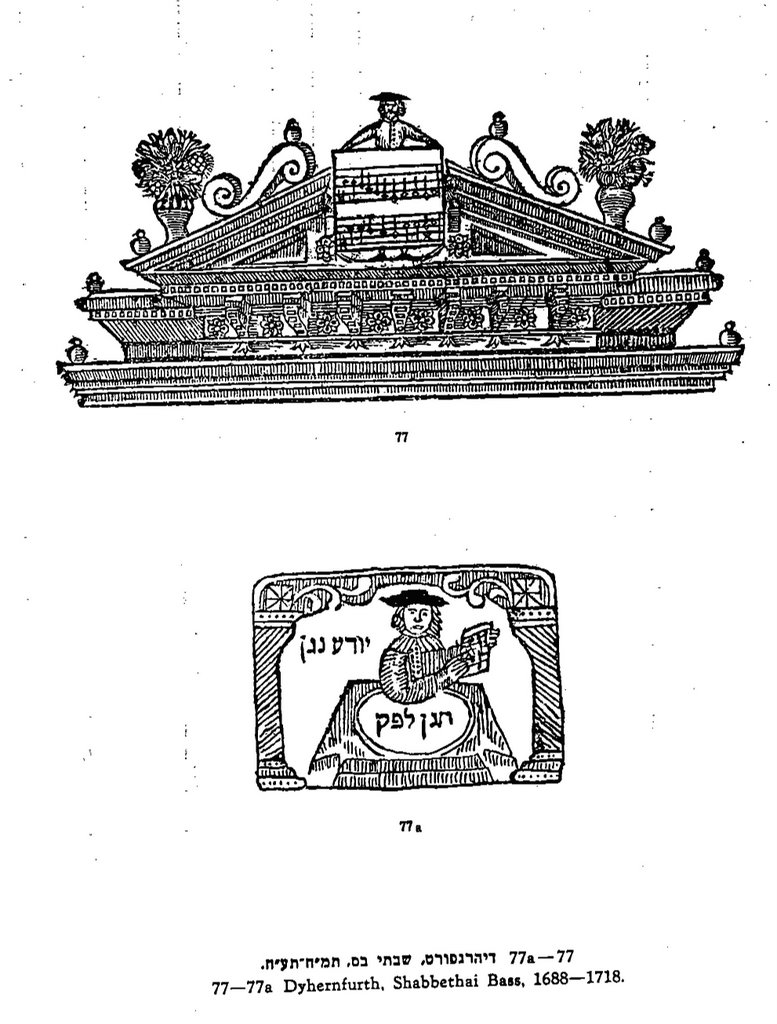
R. Shabbtai was born in 1641 in Kalisz, Poland. When he was 14, both his parents were killed in a pogrom by the Cossacks. R. Shabbtai went to Prague. It was in Prague where he would gain his last name and begin his career as a printer. In Prague he began taking music lessons and became a bassist for the Altneushul. He, in all likelihood participated in that shul’s choir which would weekly welcome in the Shabbat with musical accompaniment. [Later on, this music would become central to the debate of allowing for an organ in the Shul as well as playing music in any religious services]. R. Shabbtai took his musical calling seriously and the printers mark he used had musical elements to them. [The two relevant ones are reproduced on the side]. Additionally, he became known as alternatively, R. Shabbtai the Bassist Singer or just R. Shabbtai the Bassist. Aside from gaining an interest in music as well as his general Torah education, he also studied Latin while in Prague.
From Prague, R. Shabbtai, went west, eventually ending up in Amsterdam. It was during these travels he visited numerous libraries and began compiling his bibliography. [Although he did begin the project in Prague, it seems to have really taken off after he left.] In 1680, he published the bibliography in Amsterdam and titled it Siftei Yeshenim the lips of the sleeping ones. This title is appropriate for many reasons. First, it comes from Shir haShirim which has the highest density of book titles, and thus, I think is appropriate for a book listing books. Second, as R. Shabbtai points out in his introduction where he offers ten reasons for bibliography, just reciting the names of books the ignorant can earn a similar reward to those who actually study them. R. Shabbtai based this upon R. Isaiah Horowitz (Shelah).
This work lists about 2,200 titles. Of these, 825 were manuscripts. R. Shabbtai provides an index by category at the beginning of the book. Although the bulk of the lists are books by Jewish authors, he also included about 150 Judaica works by non-Jewish writers.
The work was “updated” in 1806 by Uri Zvi Rubenstein, however, he “demonstrated weak bibliographical abilities and his effort is to be considered a step backwards in the history of Jewish Bibliography.” (Brisman at 13).
After spending about 5 years in Amsterdam, R. Shabbtai he moved to Dyhernfurth and opened his own press. He began to print works of Polish Rabbis and printed some of the seminal works on Halakha. He printed R. Shmuel b. Uri Shraga’s commentary on Even Ezer, the Bet Shmuel as well as R. Avrohom Abeli’s commentary, Mogen Avrohom. While he was in Dyhernfurth, he hoped to reprint his Siftei Hakhamim which had been printed in Amsterdam in 1680. He had made extensive corrections and additions which he hoped to include. During the interim, he found out that the publisher in Amsterdam was also readying a reprint and had secured the normal copyright harems. Thus, R. Shabbtai was forced to buy out the Amsterdam printer so he could reprint he own book! This is of particular interest in one’s understanding of copyright under Jewish law. It would seem from this case that the author does not automatically hold a copyright to his own works. Instead, copyright is dependent upon who has a money interest. Unfortunately, none of the many articles or books on Jewish law and copyright cite or discuss this case.
R. Shabbtai’s commentary on Rashi has been reprinted many, many times, and now is standard fare even with Humashim which contain no other commentaries other than Rashi and Onkelos. However, this commentary is typically an abriged version – Ikar Siftei Hakhamim. This abrigment was done by the famed Romm Press in Vilna in the 1872 edition of their Torah Elokim. Although we don’t know for certain who did the abrigment as the title page just allows “two talmdei hakamim” were the ones who did this. It is assumed these would have been editors at the Romm Press. At that time R. Mordechi Plungin was the editor at the press. He was involved with the printing of many “classics” such as the Eiyn Yakkov and the Shulkhan Orakh. In this last book, although he always remain anonymous and never takes any credit for anything he does, he included in Yoreh Deah a few comments under the title Miluim. Now, some don’t like R. Plungin (he was a maskil) most notably the father of the Hazon Ish. Thus, in the Tal-man edition of the Shulkahn Orakh his comments were excised.
So, if one follows that opinion, one should view as important and sensitive task as abriging a commentary with some skepticism. Perhaps, as the editors remained anonymous this hasn’t been noticed – yet. Or, the two talmdei hakamim were not R. Plugin. Be it as it may, R. Shabbtai, the bassist, printer, bibliographer, has left an indelible mark across numerous disciplines.
Sources. For biographical sources, you can look at any one of these as they all just regurgitate what the others prior to them do without adding much, if anything. EJ vol. 4 col. 313. Friedberg, B. History of Jewish Typography of Amsterdam et. al., Antwerp, 1937, 53-64; Y. Rafel, Sinai vol. 8 and 9 reprinted in his Rishonim v’Achronim; and the JE here. See also on R. Shabbtai and Jewish bibliograpy in general S. Brisman, “A History and Guide to Judaic Bibliography.” It is worth reading Zinberg’s nice biography of R. Bass in The History of Jewish Literature, vol. 6, pp. 150-52.
For his printers marks, see Ya’ari, Printers marks. On his Siftei Hakhamim see the new bibliography on Rashi commentary, P. Krieger, Parshan-Data, p. 41-46.
Finally, there is a discussion regarding the first edition of Siftei Yeshanim and why in some edition a Siddur is apended to it. For this, see H. Liberman, Ohel Rochel vol. 1 p. 370-71.
Talmudic Humor and Its Discontents
Talmudic Humor and Its Discontents
by Ezra Brand
In honor of Purim, I’d like to discuss a few aspects of humor in the Talmud[1]. But first, a short overview of topic of Jewish humor in general.
A lot has been written about Jewish humor[2]. A very good overview of Jewish humor, in general, is that of Avner Ziv in the second edition of Encyclopedia Judaica, under the entry “Humor”[3]. However, most of the piece is about Jewish humor from the eighteenth century and on, with only a little bit at the beginning about humor in Tanach, the Talmud, and the time of the Rishonim. He writes a fascinating few lines in the beginning of the entry:
What is generally identified in the professional literature as Jewish humor originated in the 19th century, mainly, but not
exclusively, in Eastern Europe. Today in the U.S., Jewish humor is considered as one of the mainstreams of American humor.
At the beginning of the 19th century, sense of humor was not associated with Jewishness. Herman Adler, the chief rabbi of
London, felt impelled to write an article in 1893 in which he argued against the view that Jews have no sense of humor. It is perhaps interesting to note that not only Jews but non-Jews as well consider today “a good sense of humor” as one of the noble characteristics of Jews.
Even H.N. Bialik had a similar sentiment about the lack of humor in earlier Jewish sources[4]:
“To our great distress, there is very little humor in our literature. It is hard to find five continuous lines in Tanach with humor.” The above-mentioned Avner Ziv writes elsewhere: “Even in the Talmud there appear references (though few) to humor, but in total there is not a “treasury” of humor […] not until the end of the 19th century did there appear anything but a few references to Jewish humor.”
However, David Lifshitz begs to differ. In 1995, he wrote an entire doctorate on the topic of humor in the Talmud[5]. He wasn’t the first to collect pieces of humor from the Gemara. Israel Davidson collected humorous pieces from throughout Jewish literature in chronological order, starting from Tanach and ending with Modern Hebrew literature[6].
A few articles discuss different aspects of humor in the Talmud, and there are some seforim that collect humorous pieces from the Gemara[7]. However, by far the most comprehensive discussion is that of Horowitz.
As mentioned, Lifshitz wrote an entire dissertation on the topic, running to 312 pages. He writes that the view that there isn’t a substantial amount of humor in earlier sources is mistaken. He feels that this mistake stems from the fact that there has been little research done on the subject of humor in the Gemara, which in turn stems from the fact that humor is looked at as lowly “leitzanus.” Therefore, the great amount of humor in the Gemara was ignored.
Critical Humor
One specific aspect of humor in the Gemara is critical humor[8]. Although not necessarily the best example of humor in the Gemara, this genre of humor caused some uncomfortableness[9], which I will also discuss.
Here are some Gemaras where critical humor is used, taken at random. (Translations are from Soncino, with slight changes[10].)
R’ Yosef son of R’ Menasia of Davil gave a practical ruling in accordance with Rav, whereupon Shmuel was offended and exclaimed, “For everyone [wisdom] is meted out in small measure, but for this scholar it was meted out in large measure!”
And it long ago happened that R’ Tarfon, R’ Yishmael and the elders were seated and occupied with the portion referring to the manna, and also R’ Eleazar of Modi’in commenced [to expound] and said: “The manna which came down unto Israel was sixty cubits high.” R’ Tarfon said to him: “Modite! How long will you rake words together to bring them up against us?” –He answered: “My master! I am expounding a Scriptural verse.”
3
R’ Yosef said in the name of R’ Yehuda in the name of Shmuel: “The halacha is as Rabban Shimon ben Gamaliel”. Abbaye said to him: “The halacha is [etc.], from which it would follow that they [the Sages] dispute it!” –He said to him: “What practical difference does it make to you?” –He replied to him: “It should be for you as a song” [Rashi: “This is a parable of fools […] ‘Study!’ the student says to the fool: learn both truth and mistakes, and it will be for you as a song!”].
A famous responsum of the Chavos Yair, R’ Yair Chaim Bachrach, discusses the harsh language sometimes used by one Amora against another[14]. This tshuva was made famous by the Chafetz Chaim, who printed it at the beginning of his Chafetz Chaim.[15] The Chavos Yair is at great pains to show how each “insult” is in fact a subtle compliment. For example, he says that when R’ Sheshes says, as he often does, on a saying of Rav, “I say, Rav said this statement when he was sleeping,” that this is fact a display of R’ Sheshes’ great respect for Rav that he never could haved erred so easily. A more difficult kind of attack to explain is the “ad
hominem” attack, where one Amora attacks another Amora personally.
Interestingly, some want to say that these kinds of attacks are much more frequent in the Bavli than in the Yerushalmi. In a Hebrew article by Yisrael Ben-Shalom, “ואקח לי שני מקלות לאחד קראתי נעם ולאחד קראתי חבלים”[16], the author shows many instances of negative criticism by Chachamim in the Bavli that don’t appear in their parallels in the Yerushalmi. Recently, R’ Achikam Kashet has drawn up a long list of 82 basic differences between the Bavli and the Yerushalmi in his very impressive אמרי במערבא (n.p. 2010). This difference is number 53 (page 889)[17].
Later, the Ra’avad was one of the more harsh attackers. When he disagreed, he did so in very strong terms. In general, he was most harsh in his hassagos on the Razah. The following is one of the harsher attacks[18]:
הנה שם השם שקר בפיו וזאת עדות על כל שקריו ופחיזותיו אשר אסף רוח בחנפיו להנבא שקרים ולהתעות הפתיים והסכלים בעדיי אחרים אשר נתעטר בהם ספרי הסירוס אשר חיבר.
Closer to our own time, R’ Yitzchak Isaac Halevy, author of Dorot Harishonim, is famous for his harsh language he used against people he disagreed with. While in his magnum opus, Dorot Harishonim, this language is generally used against maskilim and non-Jews, his harshness was not limited to them. R’ Halevy’s biographer notes[19]:
While Halevy had his reasons which led him almost singlehandedly into battle against the foremost historians, he, in turn, became the target of a formidable list of critics […] Undoubtedly, Halevy’s sharp pen was an added factor that irked many to retaliate in kind. Halevy’s inordinate style of writing might have been a carryover from a number of classic rabbinical works […] Thus Halevy’s correspondence relating to his own followers at times was penned in a tone which was similar to that reserved for the targets of his ire in the Dorot Harishonim.
After discussing many sources in Chazal of negativity, Efrayim Elimelech Urbach writes that although in the Beis Medrash the Chachamim could be very harsh with each other, in the “real world” a big stress was put on talmidei chachamim looking out for each other, and on the respect that a talmid chacham deserves.[20]It seems clear that although internally there were strong disagreements, towards the outside, there was strong cohesiveness, and the less disagreement and strife exhibited in public, the better[21]. In other words, what goes on the Beis Midrash, stays in the Beis Midrash! In our own time, one of the controversial passages in R’ Natan Kamenetski’s Making of A Godol was the story of R’ Aharon Kotler calling a red-headed student who interrupted his shiur with a question “parah adumah.” Marc Shapiro, in one
of his recent posts (paragraph 3), makes the same point: that certain off the cuff remarks were never meant to be publicized.
To end off on a
not-so-Purim-like note, I’d like to note a word of caution. In our own time, where recording devices are ubiquitous, talmidei chachamim must be far more careful about what they say and how they say it. Even if a talmid chacham says something in a setting where it is perfectly acceptable, such as in a “Beis Medrash”-like setting, with a recorder the statement can easily be spread outside these “walls.” We have reached a point where עין רואה ואזן שומעת, וכל מעשיך בספר נכתבין (Avos 2:1) is not
just true in Shamayim, but on Earth also.
[1] In a previous post on the Seforim Blog, Eliezer Brodt discussed some parodies from medieval times and on. Another previous
post discussed some modern Purim parodies. Some of my favorite modern parodies are those by Moshe Koppel, a Professor of Computer Science in Bar-Ilan University, who has contributed to the Seforim Blog. Professor Kopple has produced a number of parodies of “pashkevillim.” (“Pashkevillim”—“broadsides” in English—are large notices stuck on walls in Chareidi neighborhoods,
especially in Meah Shearim. They are often polemical, and written in a flowery
Hebrew.) (For a review of the Valmadonna’s collection of broadsides see here). A sampling of these parodies, as well as an interview with Koppel, can be seen here. A parody of his about fundamentalist anti-science is a favorite of R’ Natan Slifkin.
[2] See the bibliography in Eli Yassif, The Hebrew Folktale, Bloomington 1999, pg. 500 n. 96; see also the bibliography of the Encyclopedia Judaica article in the next footnote.
[3] Volume 9, pg. 590-599. It first appeared in the 1986-1987 Yearbook, one of the many yearbooks that were published as a supplement to the first edition of Encyclopedia Judaica. I remember reading that the reason that there wasn’t an entry on “Humor” in the first edition of the Encyclopedia is because the editors couldn’t find someone someone qualified to write it. I could not find the source for this recently.
[4] ח”נ ביאליק, דברים שבעל פה, ספר ראשון, דביר, תל אביב תרצ”ה, עמ’ קמד. This quote and the next are taken from Lifshitz, Humor (see next footnote), pg. 11.
[5] דוד ליפשיץ, איפיונו ותיפקודו שההומור בתלמוד, חיבור לשם קבלת התואר דוקטור לפילוסופיה, רמת גן תשנ”ה. I have not read enough of the doctorate to get a feel for how good of a job he did. One major lack in this work is an index, especially since such a large amount of texts from the Talmud are quoted. It is often difficult to find where a source is discussed.
[6] אפרים דוידזון, שחוק פינו, חולון תשל”ב. The layout is very similar to that of Bialik’s “Sefer Ha’agadah,” which Davidson was clearly influenced by. Many translations of passages from Aramaic to Hebrew are taken from Sefer Ha’agadah (with ascription).
[7] See, for example, בנימין יוסף פארקאש, עת לשחוק, הוסיאטין תרע”ד.
[8] These sources in the Gemara are brought by Lifshitz, Humor, pg. 158-183. See also a wide variety of sources in this vein which are brought and discussed by E.E Urbach in his Sages (Hebrew ed.), pg. 557- 564.
[9] R’ Yitzchak
Blau, at the beginning of a lecture entitled “Does the Talmud have a Sense of
Humor?” (available on YU Torah) only
mentions the following categories “play on words”; “slapstick”; “sharp lines”.
He does not mention critical humor, even though it is fairly common in the
Gemara, for obvious reasons. As an aside most of the lecture is not about the
Talmud and humor, but how someone should spend his free time. R’ Blau’s opinion
on the matter has caused some controversy, see Hirhurim blog here
and here.
[10] The Soncino translation is now available in the public domain, see Torah Musings blog here.
[15] In later editions of Chafetz Chaim, this addition is generally printed at the end.
[16] In דור לדור: משלהי תקופת
המקרא ועד חתימית התלמוד, ירושלים תשנ”ה, עמ’ 235-250.
[17] R’ Kashet made a similar list of basic characteristics (in Hebrew “לשיטתם”), this time with specific Tannaim and Amoraim, in his earlier, \just as impressive, קובץ יסודות וחקירות (Yerushalayim 2004). The issue of “Leshitasam” is a fascinating topic in its own right. Research into this topic only began in the mid-eighteenth century, especially with the publishing of R’ D.Z. Hoffman’s (German) Mar Samuel. This sefer/book caused a small storm \in its time.
[18] Quoted by
Twersky, Rabad of Posquierres, Cambridge 1962, pg. 121 n. 24. See
Twersky there for more such examples. For a list of hassagos of this sort in
the Ra’avad’s hassagos on Mishneh Torah, see Davidson, Moses Maimonides: The
Man and His Works, Oxford 2005, in the chapter on Mishneh Torah.
[19] R’ Asher
Reichel, Isaac Halevy, New York 1969, pg. 64-65.
[21] The Gemara
itself seems to say so explicitly. See the story in Sanhedrin 31a, where the
Gemara first brings a halacha regarding a member of a beis din that has just paskened:
תנו רבנן מניין לכשיצא לא יאמר הריני מזכה וחבירי מחייבין אבל מה אעשה שחבירי רבו עלי תלמוד לומר (ויקרא יט, טז) לא תלך רכיל בעמך ואומר (משלי יא, יג) הולך רכיל מגלה סוד
The Gemara then goes on to bring the following story:
ההוא תלמידא דנפיק עליה קלא דגלי מילתא דאיתמר בי מדרשא בתר עשרין ותרתין שנין אפקיה רב אמי מבי מדרשא אמר דין גלי רזיא:
It is not clear what the nature of the “secret” thing that had happened in the beis medrash was. Rashi simply says that the talmid
spoke lashon hara. It is possible that in the heated discussion in the beis medrash, someone had made an off the cuff remark that was not meant to be heard outside the walls of the beis medrash. When the talmid revealed what was said 22(!) years later, he was expelled from the beis medrash for his impropriety. Alternatively, it is possible that he had revealed some internal disagreement about a halacha that the Chachamim wanted to appear unanimous, similar to the case of the psak of a beis din brought before. Either way, the story proves our point.