The Future of Israeli Haredi Society: Can The Written Word Offer Some Insight? (And Assorted Other Comments)

The Future of Israeli Haredi Society: Can The Written Word Offer Some Insight? (And Assorted Other Comments)
by Marc B. Shapiro

 1. Months ago I was asked to write about the situation in Beit Shemesh that everyone was then focused on (and which will probably heat up again in the future). At the present, I don’t have anything to add to the discussion, and if I did it would be with reference to Jewish books, as this is, after all, a site devoted to seforim. While I have in the past given my views on various issues, it was in the context of Jewish books, and this case would be no different. This point was actually sorely missing in discussions of the Beit Shemesh situation and the haredi world in general. While what happens in real life does not always correspond to what appears in the books, knowledge of the latter is a great help in understanding what is going on in the community, at least with regard to the rabbinic elite. For example, if I were going to write something about the Neturei Karta faction that cozies up to Iran and Hamas, I would deal with how these people have tried to justify their actions from talmudic sources. They have even attempted to justify the sending of congratulations to Hamas after the latter succeeded in blowing up Jews in a terrorist attack.

I have also been asked a number of times to write about the more basic issue of haredi ideology and democracy, which is on many people’s minds. They are wondering if the Israeli haredi community really believes in democracy and allowing everyone the freedom to live as they see fit. More than one has asked me straight out if a haredi majority would mean the end of a democratic Israel.[1] I can’t speak about the haredi man on the street, but examination of the writings of the haredi leadership – and in the haredi world that is what really matters – shows that time and again they have expressed opposition to democratic values as well as democracy as a governmental system.

From the haredi leadership’s perspective, while at the present time the haredi world is forced to take part in the democratic process, they assume that if haredim ever became a majority they would dismantle Israel’s democracy and institute a Torah state (i.e., a theocracy led by the haredi gedolim).[2] Since that is their goal, stated explicitly, we have to wonder what such a society would look like. To begin with, if haredim were ever the majority, funding for non-Orthodox (and perhaps even Religious Zionist/Modern Orthodox) schools would be halted. There would be massive decreases of funding for universities, with the humanities taking the biggest cuts, and money for the arts, culture, and institutions connected to Zionism would dry up. Freedom of the press would be abolished, artistic freedoms would be curbed, and organ transplants would almost entirely vanish. Public Shabbat observance and separate-sex public transportation would likely be required. There would also be restrictions on what forms of public entertainment and media are permissible and on public roles for women. Of course, women’s sporting events would no longer be televised and men would not be permitted to attend them. From the haredi perspective, these steps are all halakhic requirements, and no one who reads haredi literature can have any doubt that these sorts of things are intended when haredi writers refer to the time when it will be possible להעמיד הדת על תלה. How many non-haredim will be affected by this is questionable, because as soon as the haredi numbers come close to a majority, the non-religious and non-haredi Orthodox emigration will begin (followed no doubt by the yeridah of some haredim as well). No one who has lived in a Western style democracy will want to live in a society where cherished freedoms are taken away.

Everything I am saying now could change. It is indeed possible that the haredi leadership could do a complete turn-around and decide that it is not helpful to take the country in a direction which while more “pious” would end up destroying it at the same time. But this would take some incredible acts of courage by the haredi leadership. They would have to break with a message that has been advocated for the last thirty years or so.

Here is what R. Shakh wrote about democracy (Mikhtavim u-Ma’amarim, vol. 5, p. 124):

בל נחשוב, שהשיטה הנקראת “דמוקרטיה” היא דבר חיובי . . . האמת היא שהיא אסון לעולם. היא נותנת הרגשה מדומה של “חופש” בו בזמן שלאמיתו של דבר היא רק הפקר, ותו לא . . . הדמוקרטיה היא דבר טרף, וכל כוונתם לעקור דרכה של עם ישראל ולהרסו

On p. 127 he writes:

ואנו תפילה להרבונו של עולם, אנא פטור אותנו מקללת הדמוקרטיה החדשה שנשלחה לעולם, שהיא ממש כמו מחלת הסרטן שנשלחה לעולם. כי רק התורה הקדושה היא הדמוקרטיה האמיתית.

If the “curse” and “cancer” of democracy is so bad, what would take its place in a haredi dominated society? The answer is obvious, namely, a theocratic state with a religously sanctioned parliament along the models of Iran. Reading the history of Iran in the years prior to and immediately following the revolution provides great insight into how religious figures learned to make use of the mechanisms of power which they had never before had access to. Just like in Iran the theocracy is for the people’s “own good”, so too will be the case in a haredi theocracy. Here is R. Shakh again, offering the paternalistic explanation as to why people should be denied democratic freedoms, freedoms that are the only guarantee that different types of Orthodoxy can flourish (forgetting for a moment about the non-Orthodox[3]; p. 126):

 האדם חייב לחיות בתוך מגבלות, לצורך אושרו וטובתו. ודוקא הדמוקרטיה ההורסת את המגבלות היא המחריבה את האנושות

Do any American haredi leaders agree with these sentiments, that it is democracy that is destroying humanity? I highly doubt it. But by the same token, I don’t think there can be any doubt that the Israeli haredi political parties, if they ever achieved electoral success, would put R. Shakh’s vision into practice by dismantling Israeli society’s democratic protections. So yes, the non-haredi segment of Israel has plenty of reason to be worried about the growth of the haredi electorate, especially when they hear the haredi triumphalist assertions that the future will be theirs. If the comments one sees on Voz is Neias and elsewhere are any indication, there are also many in the haredi world who recognize that the haredi ideology is really only suited for a minority community, and that troubles begin when people attempt to impose this ideology on others, or insist that no matter how large the haredi community is, its young men should never have to go to the army or receive any vocational training.[4] It didn’t have to be this way, as there are plenty of precedents even in haredi writers for a different perspective. But those alternative views are entirely forgotten today.

If anyone still has doubts that the future growth of the haredi parties will present a serious threat to Israeli democracy, here is a passage, from R. Yissachar Meir, that appeared in an official Degel ha-Torah publication, Ve-Zarah ha-Shemesh (Bnei Brak, 1990), p. 630 (emphasis added; many other similar passages could be cited). What will take the place of democracy in the haredi state is spelled out right here:

טעות אחת טעו מנהיגיה הראשונים של המדינה, הם חוקקו חוק הנקרא “דמוקרטיה”. כל אחד יודע דמוקרטיה זו מהי, על פי השיכורים הנמצאים במדינה – שלוש מאות אלף מסוממים חיים במדינה – ועל פי זקנים מסוידים וכו’ נקבע השלטון. כמו כן בכל מיני שוחד, ודרכי כפיה, נקבע ע”י מה שנקרא “בחירות”, איך תנהג המדינה בכל הנושאים העולים על הפרק. על פי דרך התורה, גדולי התורה הם הקובעים את המנהיגות.

Meir could have used a little lesson in history, because just like the Islamic world never had a theocracy until the Iranian revolution, Jewish history also does not know of theocracies (and the closest example we had, with High Priests involved in rulership, did not bring good results).[5]

The truth of the matter is that we get no honesty from haredi spokesmen in these matters. They go on about how the non-religious have such a negative view of them. Well, what about the reverse, namely, what the haredim think of the non-religious? One of the leaders of the extremist haredim is R. Moshe Sternbuch. Here is the first page of a responsum he wrote (Teshuvot ve-Hanhagot, vol. 1, no. 816) in which he states that if a non-religious store owner makes a monetary mistake (e.g., gives you too much money) there is no obligation to point out the error.

He even quotes a 19th-20th century authority (and one who has a fairly moderate reputation) that there is no obligation to save his life! If this is what a well known haredi posek is teaching his followers, by what right can one criticize the non-religious for what they think of the extremist haredim? Let me pose this question to Avi Shafran and the rest of the apologists: How exactly should the non-religious feel about the extremist haredim when the latter are being taught that they don’t have to deal with the non-religious in an honest fashion, and that their lives are not important?

(Quite apart from his religious views, Sternbuch’s political views are perhaps even more distasteful. At the recent protest against haredim serving in the army, he said that “the Zionists expelled the Arabs from the Land of Israel.” See here).

Here is another responsum, by R. Israel David Harfenes, Nishmat Shabbat, vol. 5 no. 500:4.

I know that people wouldn’t believe me without seeing with their own eyes. The author is asked if you can violate Shabbat to save the lives of irreligious Jews who came from the former Communist countries, that is, Jews who never had the benefit of a Jewish education. His answer is absolutely not, and he questions whether it is even permitted to save their lives during the week! Incredibly, he puts the Reform and Conservative in a better position than the secular Russian Jews, seeing the former as brainwashed by a false ideology. There is thus a possible limud zekhut regarding them.

None of this makes any sense, as people can be under the influence of a secular or anti-religious ideology much like they are under the influence of a Reform or Conservative ideology. If you can apply the logic of tinok she-nishbah to one, there is no coherent reason not to apply it to the other. For good measure, Harfenes also throws in that one who doesn’t believe in the Rambam’s Thirteen Principles is among those who should be killed. Taking a line from the Inquisition, he adds that killing these people is actually good for their souls, not to mention a benefit to the community at large.

In a previous responsum, 400:1, he discusses the same question with regard to the typical secular Jew and concludes likewise that one cannot save them on Shabbat. The only heter he can find is that if the haredi doctors don’t save them, then the secular doctors will refuse to save haredi patients. But unbelievably, rather than seeing this as a natural reaction of the secular Jews upon learning how people like Harfenes don’t value their lives, and are even are prepared to let them die, Harfenes sees this as an example of anti-Orthodox hatred! You can’t make this stuff up.

שאם יתפרסם שרופאים חרדיים אינן מטפלין בשבת עם החולים החילוניים אז הרופאים החילוניים ינקמו נקם ולא ירצו גם הם לטפל להציל חולים מסוכנים מן יהודים חרדיים  (כידוע תוקף שנאת הדת הארצינו הקדושה ירחם ה’).

Some might assume that this extremist Satmar outlook [6] is not to be found in the non-hasidic yeshiva world. However, this is not the case. I can cite parallels to what we have just seen in non-hasidic authors as well. I will mention just one such text, as it happens to be among the most depressing, and extreme, of the books to appear in recent years.[7] I refer to R. Menahem Adler’s Binah ve-Daat. Here is the title page.

This book engages in the most crude incitement of hatred for the non-religious that I have ever seen in a sefer, all packaged as a typical halakhic text. Are the views expressed in this book taught in any heders or yeshivot or held by any but the most extreme in Israel? Perhaps the fact that the standard haskamot from figures such as R. Elyashiv, R. Wosner, R. Scheinberg and others are missing is a sign that they didn’t agree with the author. It would take a complete post to cover this book properly (some aspects of the book were already discussed on Hyde Park here).

I will call attention to only some of the points Adler puts forth as halakhah. When I read things like this I wonder, how big can the Orthodox tent really be? When are the various communities in Orthodoxy so much at odds with each other that we must speak of two entirely different communities, much like the Protestants are divided into various sects?

One of the main points of the book is to argue that contemporary non-Orthodox Jews are not to be regarded as tinok she-nishbah, and thus they are subject to all the disabilities of brazen Sabbath violators. This means that they do not need to be treated with any respect or dignity. Those who know the relevant halakhot know what I am referring to, but let me cite some examples that you might not have thought of and which are results of his position. These come from chapter 31 and are stated with reference to most contemporary non-religious Jews (since only very few of them qualify as a tinok she-nishbah). How should the non-religious respond when they hear that this is what a rabbi is saying about them:

אין להקדים שלום לאדם רשע . . . אסור לראות פני הרשע . . . ונראה דהוא הדין תנוק שנשבה
In other words, although he denies that contemporary non-religious are tinok she-nishbah, even if you want to argue that they are, you still can’t look at them.

אין נוהג בו איסור אונאת דברים . . . נראה דאין כלפיו איסור “לא תחמוד”
And talking about humrot, how about this one?
יש מחמירים ליטול ידים אחר שנגעו בהם

When I saw this I thought of the following wonderful story recorded in R. Asher Anshel Yehudah Miller, Olamo Shel Abba, p. 415:

פעם ביקר אצל הרבי יהודי חילוני מגולח ובכ”ז הושיט לו הצדיק [ר’ ישראל האגער] את ידו וקבל אותו בסבר פנים יפות, כדרכו בקודש. ישב שם אחד מחסידי צאנז, שהיה מוכר כמתנגד לבית-וויז’ניץ. לחש החסיד באזני הרבי ושאל “מדוע פושט הרבי ידו לפושעי-ישראל זה?” אמר לו הצדיק: “עד שאתה מתפלא עלי, תתפלא על הקב”ה, שגם הוא דרכו בכך, כמו שנאמר ‘אתה נותן יד לפושעים וימינך פשוטה לקבל שבים


On p. 408 Adler writes:
המחלל שבת בפרהסיא (גם אם מחלל לתיאבון) יוצא לענין דינים שונים מכלל “אחיך” עמיתך” “רעך” ומכיון שיצא מכלל עמיתך, אין כלפיו את המצוות הנוהגות “בין אדם לחבירו” וכן אין נוהגים כלפיו את האיסורים, כגון הכלמה ולשון הרע.

Is there anyone in the kiruv world who believes this? Would anyone ever become religious if he even had an inkling that there are rabbis who advocate this position about the future baal teshuvah’s parents?[8] Aren’t the many haredi hesed organizations that don’t distinguish between Jews’ levels of religiosity a good sign that the mainstream haredi world rejects the viewpoints of Adler and Sternbuch?

On p. 470 he says that it is forbidden to belong to an organization that has non-Orthodox members, and this even includes charitable organization. The reason given for this position is as follows:

כיון שהישיבה עמהם גורמת קירור בעבודת השי”ת, ומלבד זאת, אופן החשיבה וקבלת ההחלטות אינם לפי דעת תורה.

So we see that it is problematic for an Orthodox Jew to have any dealings with the non-Orthodox. Although the author cites R. Samson Raphael Hirsch to justify this extreme position, this is a complete distortion. Hirsch opposed membership in organizations that were led by the non-Orthodox or even had organizational ties with non-Orthodox groups. He never said that individual non-Orthodox Jews would not be welcome to join with the Orthodox for the betterment of the Jewish community.

On p. 406 Adler tells us that one cannot sell or rent an apartment in a religious neighborhood to a non-religious person. Will the author then complain when the non-religious don’t want to sell or rent to haredim (especially if they think that these haredim might hold the same views as Adler)? If it is OK for haredim not to want to live together with secular Jews because of  the “atmosphere” the latter bring, why have the haredi Knesset members cried racism when secular residents don’t want an influx of haredim for exactly the same reason? In a democracy one can’t have it both ways.[9]

Adler is part of a growing trend in haredi writings not to see the secularists as tinok she-nishbah, with all the halakhic implications this entails. While Adler acknowledges the existence of tinok she-nishbah as a category, note what he puts in brackets which pretty much empties the category of any meaning (p. 31):

ולענין הלכה, מכיון שאין בנו כח להכריע, במחלוקות אלו, וגם אין כל הענינים שוים, מתי נקרא בשם “תנוק שנשבה” ומתי לא, ובפרט קשה ההכרעה המציאותית של “שיעור ידיעת כל אחד ואחד” בזמנינו, לכן, בכל הנוגע לדיני תורה, יש להחמיר ולנהוג כלפי מחלל שבת בפרהסיא [שלא ידוע ככופר] ככל דיני “אחיך”, כגון לענין דיני גמילות חסד, לבקרו בחוליו, לתת לו צדקה, להלוות לו, להשיא לו עצה טובה. וכן יש להצילו ולהחיותו.

But when it comes to Shabbat, Adler states that it is absolutely forbidden to violate the Sabbath to save a non-religious person, even if he is a tinok she-nishbah! (p. 556).

I realize that, with only some exceptions, Adler hasn’t made up any of the material in his book, and even the most extreme rulings can be found in earlier traditional sources. So what does it say about so much of contemporary Orthodoxy, be it haredi, Habad, or Modern Orthodox, that its adherents would never dream of relating to the non-Orthodox the way Adler prescribes?[10] The reason they wouldn’t dream of relating to the non-Orthodox this way is not because they can point to other halakhic sources that disagree with the ones Adler cites (although the scholars among them can indeed point to these sources). There is something much more basic at work, namely, the moral intuition of people which even when it comes into conflict with what appears in halakhic texts does not agree to simply be pushed aside. Most Orthodox Jews of all stripes refuse to believe that what Adler is advocating is what God wants. It is impossible for them to accept that the Judaism they know and cherish, which has been taught to them by great figures, would have such a negative outlook, and all the halakhic texts in the world won’t be able to change their minds.

Since we are dealing with Adler, let me also note that he gives us advice on how to create anti-Semitism in the world and reinforce the stereotype of the “cheap Jew” (p. 415):

אין לתת לגוי מתנת חינם [כגון “טיפ” (-תוספת) הנהוג לשלם למלצר או נהג מונית]

On p. 417 he writes (emphasis added):

אין איסור לייעץ לגוי עצה שאינה הוגנת ולא זו בלבד אלא שאסור להשיא לו עצה הוגנת

As the source for the underlined halakhah he cites Sefer ha-Hinukh no. 232. To begin with, there is the methodological problem of recording something as halakhah because it is found in the Sefer ha-Hinukh when it is not found in the Shulhan Arukh or any of the classic responsa volumes. This is what I call cherry picking halakhot, and is quite common today. People write books on the most arcane topics and in order to fill the pages they cite opinions from any book ever written, and record all the opinions they find as if they are halakhah. In this case, however, the halakhah cited here does not explicitly appear in the Sefer ha-Hinukh. All the Sefer ha-Hinukh states is that there is a biblical prohibition to give bad advice to a fellow Jew. But who says that this means that it is permitted when dealing with a non-Jew? It could still be forbidden for a variety of other reasons (perhaps even rabbinic), just not from this particular verse. Even if the Sefer ha-Hinukh does mean what Adler says (and the Minhat Hinukh also assumes that this is the meaning), only in the note does Adler reveal that the Minhat Hinukh explicitly holds an opposing position. This is the general trend in the book. He puts extreme positions in the text itself, which are on some occasions based on his own understanding, while only in the notes does he reveal the authorities who disagree.

(R. Chaim Pinchas Scheinberg defends the Minhat Hinnukh‘s position in his Mishmeret Hayyim, vol. 1, pp. 125-126. But it still makes for uncomfortable reading as he writes:

כיון דבעלות דגוי אינו חשוב כל-כך אין לאו דגזל שייך גבי גוי, וכן באיסור רציחה דהאיסור הוא דנוטל נשמתו וגבי גוי דלא חשוב נשמתו כל-כך לא שייך לאו זה

It would be pretty hard to be an Or la-Goyim while at the same time following Adler’s prescriptions. In a previous post I already mentioned that there is no Modern Orthodox synagogue in the country that would hire someone who had his perspective, and this shows a real cultural divide between at least some haredim and the Modern Orthodox. (I say “some haredim” because I believe that in this matter many, and perhaps most, haredim share the Modern Orthodox perspective.)[11]

At the end of the section in which Adler records what I quoted from him about tipping waiters or cab drivers, he adds:

מפני דרכי שלום מותר

I would like someone to explain to me how it could ever not be darkhei shalom?[12] Adler is speaking to people who wear black suits and hats, the sort that everyone recognizes as Jewish. So by definition if you stiff the cab driver or the waiter it is an immediate hillul ha-shem? Therefore, what sense does it make to even quote the halakhah mentioned above? Isn’t it irresponsible to allow yeshiva students on their own to determine when their actions will cause a hillul ha-shem and when not?

Since this post has dealt with how to relate to the non-religious and non-Jews, let me now turn once again to something relevant in Artscroll. Originally I thought that the example I will now point to was an intentional falsehood, because the Hebrew Artscroll gets it right. However, based upon the note to the passage that we will see, I am now no longer sure. It is one thing to translate a censored passage in the name of good relations, but it is hard to imagine that people who know the truth would go so far as to insert a false note. As thousands of people doing daf yomi have been misled as to the meaning of the talmudic passage we will see, if the distortion is intentional this would seem to be a classic case of ziyuf ha-Torah. When authors added a note at the beginning of their books stating that all references to non-Jews referred to those pagans in China and India, everyone knew it wasn’t to be taken seriously, so there was no ziyuf ha-Torah. Yet people who reads the Artscroll translation and note assume that they are getting the Torah truth. As such, I am more inclined to think that what we will now see is a simple error, rather than a “tactical” mistake.

Avodah Zarah 26a-b reads:

העובדי כוכבים ורועי בהמה דקה לא מעלין ולא מורידין אבל המינין והמסורות והמומרים היו מורידין ולא מעלין

Artscroll translates: “Idol worshipers and shepherds of small animals, the law is that we neither raise them up from a pit nor lower them into a pit. But as for the minin, the informers and the renegades, they would lower them into pits and not raise them up.”

This is, indeed, a proper translation of what appears in the Talmud. Yet in every edition of the Talmud before the Vilna Shas of 1883 the text states אבל המינין והמסורות והמומרים מורידין ולא מעלין  . That is, the word היו, which makes the passage past tense (and thus no longer relevant), is not authentic but was added to avoid problems with the censor. The Oz ve-Hadar edition of the Talmud points out that the word היו was only recently added. Soncino and Steinsaltz also recognize this. What is particularly noteworthy is that the Hebrew Artscroll also knows this, and tells the reader that the word היו is not authentic.

In its note on the passage in both the Hebrew and English editions, Artscroll quotes the Hazon Ish, Yoreh Deah 2:16, that the type of actions referred to in the Talmud are no longer applicable. Why then didn’t Artscroll mention in the English edition that the word היו is not authentic? Furthermore, Artscroll’s citation of the Hazon Ish is mistaken, although as mentioned, I am not sure whether it is an intentional falsification. Contrary to what Artscroll states, the Hazon Ish’s comment was only made with reference to heretics. His “liberal” judgment was never stated with regard to informers.

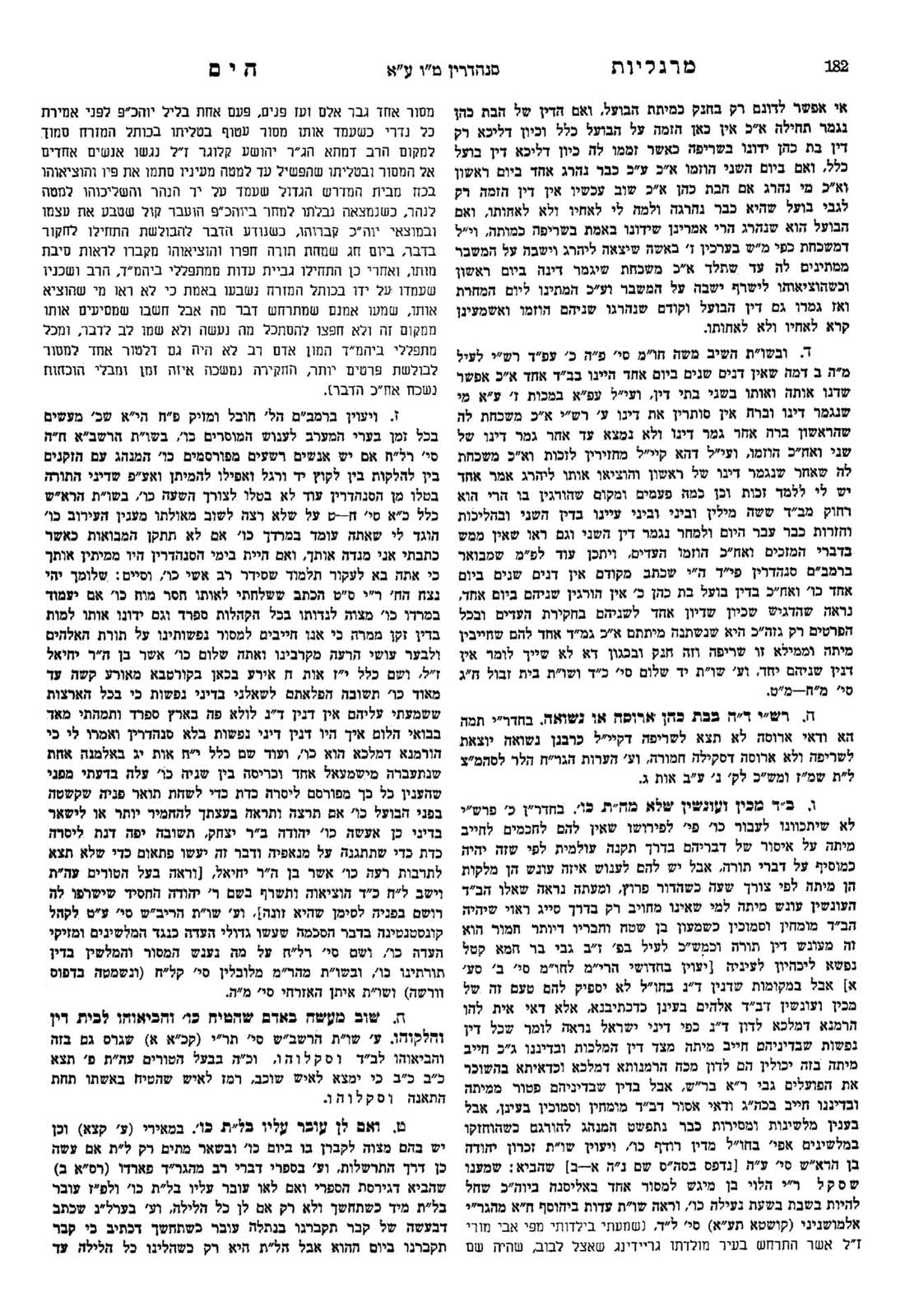
In its note, Artscroll states: “It goes without saying that the law never applied in places where government regulations would prohibit such an act.” Once again, I am not sure whether Artscroll really believes that this is true. As a historical statement it is false. Here is a page from R. Reuven Margaliyot’s Margaliyot ha-Yam, vol 1, p. 91b (to Sanhedrin 46a), that shows how even in the not-so-distant past an informer could be killed.

2. In this post I mentioned the outrageous accusation, based on nothing at all, that the telegram from Kobe was actually sent by the Chief Rabbinate in order to be able to pressure other rabbis to accept the Chief Rabbinate’s position on the dateline issue. Dr. Dov Zakheim sent me the following valuable email:

I noted in your recent blog you point out that some chareidim are asserting there was never a telegram from Kobe. There was. My father zt”l sent it. He had been the legal counsel of the Jewish community of Vilna (as well as a musmach of Ramailes) and also Reb Chaim Ozer ztl’s personal assistant and legal advisor (see his introduction to his sefer Zvi ha-Sanhedrin). He escaped from Vilna in 1941 and managed the Mirer Yeshiva’s legal affairs (where my uncle zt”l was a talmid) when they left Vilna, on the trans-Siberian, in Kobe and then in Shanghai.

Also in the post I referred to the letter published by R. Kasher in which lots of great rabbis refer to the State of Israel as the beginning of the redemption. I noted how Zvi Weinman has shown that this is a religious Zionist forgery, as at least some of the rabbis never signed such a letter. I mentioned that we don’t know if Kasher was responsible for the forgery (as Weinman appears to think) or someone else. Sholom Licht was kind enough to call my attention to this source from where we see that the letter Kasher published already appeared in Ha-Tzofeh many years prior, so Kasher clearly had nothing to do with the forgery.

3. In the last few posts I have dealt with Artscroll a good deal, as is only proper since Artscroll is the most significant Jewish publishing phenomenon of our time. I still have a lot more to say, but let me now turn to R. Jonathan Sacks’ siddur, and give an example where Sacks gets it wrong while Artscroll gets it right.

The blessing to be recited upon lightning and Birkat ha-Hamah is עושה מעשה בראשית This goes back to Mishnah Berakhot 9:2. Although the standard version of the Mishnah omits the word מעשה, it is recorded in various medieval texts and this is how the blessing has come down to us.

What does עושה מעשה בראשית mean? The first thing we must do is figure out if there is a segol or a tzeirei under the shin in עושה. Looking at the siddurim in my house that have English translations, I found that Sacks, Birnbaum, Sim Shalom, and Artscroll, have a segol.[13] This is also what appears in the Kaufmann Mishnah. See here. However, the Metsudah siddur and the Blackman Mishnayot have a tzeirei.

What is the difference between the vocalizations? If there is a segol than the words עושה מעשה בראשית should be translated in the English present, as עושה is a verb. If there is a tzeirei then עושה  is a noun, as in the words of Hallel (from Ps.115:15): עושה שמים וארץ, which means “Maker of heaven and earth.” Let us see if the translations follow this rule. Artscroll, which has a segol, translates: “Who makes the work of Creation.” This translation is correct, although I don’t know why the C in creation is capitalized. This translation implies the continuing work of creation, as reflected in the words of the prayer: המחדש בטובו בכל יום תמיד מעשה בראשית

Birnbaum translates עושה מעשה בראשית as: “Who didst create the universe.” This is incorrect, as the passage is not in the past tense. Sacks, who also has a segol, translates: “Author of creation.” This too is incorrect, as עושה with a segol is a verb, not a noun. Sim Shalom, also with a segol, translates: “Source of Creation.” This too is incorrect.

Now for the texts that have a tzeirei: Blackman translates: “the author of the work of the creation”, which is a correct rendering. Metsudah, on the other hand, translates: “Who makes the work of Creation.” Leaving aside the capital “C”, this is a mistaken translation. While Metsudah has עושה with a tzeirei under the shin, it translates as if there was a segol.[14]

Artscroll, while being correct when it comes to this blessing, does not get a pass when it comes to the word עושה. In the Artscroll siddur, pesukei de-zimra, p. 70, we find the words עושה שמים וארץ. This comes from Psalm 146:6. There is a segol under the shin which means that it is a participle and should be translated here with the English present tense, as are all the other verbs in this Psalm. Yet Artscroll translates עושה שמים וארץ as “Maker of heaven and earth”, which is incorrect. Sacks follows many other translations by rendering the words: “who made heaven and earth”. Yet this too is not correct and doesn’t follow the model of the Psalm, which has a series of participles that are to be translated as the present tense:
עושה שמים וארץ
השומר אמת לעולם
עושה משפט לעשוקים
נותן לחם לרעבים
מתיר אסורים
פוקח עורים
זוקף כפופים
אוהב צדיקים
שומר את הגרים

What about the word בונה in the blessing בונה ירושלים? There is a tzeirei under the nun in בונה which means that it is not a verb. Artscroll correctly translates the phrase as “Builder of Jerusalem”. Birnbaum and Metsudah also get it right. However Sacks (and also De Sola Pool and Sim Shalom) are mistaken in their translation. Sacks renders בונה ירושלים as if the nun had a segol: “Who builds Jerusalem.”

Since בונה ישראל must be translated as “Builder of Jerusalem”, and all translations are in agreement that גואל ישראל means “Redeemer of Israel”, does this mean that the conclusion of all the blessings of the Amidah should follow this model? What about חונן הדעת? Artscroll translates : “Giver of wisdom”, seeing חונן as a noun. Birnbaum and Metsudah do likewise. However, Sacks assumes חונן is a verb and translates: “who graciously grants knowledge.” This rendering (which I thinnk is in error) is also found in De Sola Pool and Sim Shalom.

How about מחיה המתים? Is the word מחיה a verb? Artscroll assumes yes and translates: “Who resuscitates the dead.” Sacks agrees with this, but Metsudah, striving for consistency, translates: “Resurrector of the dead.” Metsudah is, in fact, the only siddur that as a rule translates the concluding blessings of the Amidah along this model, while the other translations alternate between verb and noun. Here are some of Metsudah’s translations:

רופא חולי עמו ישראל – Healer of the sick of His people Israel
מברך השנים – Blesser of the years
מקבץ נדחי עמו ישראל – Gatherer of the dispersed of His people Israel
שובר אויבים ומכניע זדים – Crusher of enemies and subduer of the insolent

Although Metsudah follows this rule, for every rule there are exceptions, and even Metsudah translates שומע תפלה as “Who hears prayers”. Yet perhaps this is not an exception, and even here Metsudah intended “The hearer of prayers”, but since this doesn’t sound so good in English they came up with a more felicitous wording. It is true that the underlined words of the blessings המחזיר שכינתו לציון and המברך את עמו ישראל בשלום  have to be seen as verbs, and Metsudah translates them as such. But I think that these are a different type of blessings than the ones in the middle of the Amidah.

The question to be asked is must we assume that there is a consistency of form in a prayer like the Amidah? If the answer is yes, then Metsudah is the only translation to get it right, and they must be recognized as having picked up on something that eluded all their predecessors and successors.

Finally, let me return to the blessing מחיה המתים. I asked if the word מחיה is a verb, and noted that Artscroll and Sacks indeed translated it this way. However, they are both incorrect for the simple reason that in their siddurim there is a tzeirei under the yud of מחיה. There are siddurim, such as Tehilat ha-Shem, that have a segol under the yud. In such a case,  the word should be translated as a verb. However, when there is a tzeirei it must be translated as a noun. Metsudah once again gets it right, translating “Resurrector of the dead.” [15] Right before this, we find the words מלך ממית ומחיה. Here there is a segol under the yud, meaning that it is a verb and is to be translated as “Who causes death and restores life”.

Artscroll and Sacks also err in their translation of מחיה מתים במאמרו in Magen Avot in the Friday night service. There is a tzeirei under the yud meaning that it must be translated as “Resurrector of the dead with His utterance.” Artscroll mistakenly renders: “Who resuscitates the dead with His utterance,” using the same translation from the Amidah for the words  מחיה המתים.

I can’t figure out Sacks’ method here. In the Amidah he translates מחיה מתים as: “who revives the dead”, but in Magen Avot he translates: “By his promise, He will revive the dead.” This is incorrect, as it turns the sentence into the future tense, which it is not. Furthermore, if it was to be translated as such, why not do so in the Amidah as well, as the words are identical? Indeed, Magen Avot is nothing but an abridged version of the Amidah, so by definition the translation must be the same.[16] Translating במאמרו as “By His promise”, which I assume means “in accordance with His promise,”[17] is also incorrect, as the passage refers to God’s word, or better yet, the power of God’s word, not any promise.[18]
3. I want to briefly call attention to three books that have recently appeared and which I hope to discuss in future posts. The first is Gil Perl’s The Pillar of Volozhin: Rabbi Naftali Zvi Judah Berlin and the World of 19th Century Lithuanian Torah Scholarship. The second is Eugene Korn and Alon Goshen-Gottstein, ed., Jewish Theology and World Religions. The third is Ben Zion Katz, A Journey Through Torah: A Critique of the Documentary Hypothesis. I know that there are many Seforim Blog readers who will find these books worth reading.

4. Those who want to post (or read) comments, please access the Seforim Blog site by going to http://seforim.blogspot.com/ncr  Only by doing this will you be taken to the main site (and not have a country code in the URL). We have recently learnt that readers outside the United States do not have access to the comments posted and in the U.S. We don’t know why this is, or how to fix it, but the above instruction fixes the matter.

[1] As a result of these discussions, which led to investigations of haredi literature and discussions with haredi friends, another point became ever more obvious to me. It appears – and I welcome being corrected – that once someone has been crowned a gadol in the haredi world, it is almost impossible for him to lose this status, no matter what he says (and we have seen examples of this time after time). If, for instance, a recognized gadol expresses racist or misanthropic sentiments, or declares that a known and continuing sexual abuser or wife abuser must not be turned over to the authorities, even that would not be sufficient to “defrock” him. In other words, the “immunity” given to haredi (and hardal) gedolim is much more far-reaching than anything that could be imagined in the Modern Orthodox world.
[2] A January 2012 Avi Chai poll found that 7 percent of the Israeli population defines itself as haredi, 15 percent as dati, and 32 percent as traditional. Only 3 percent defines themselves as secular anti-religious. However, approximately 20 percent of primary school students are haredi, which shows the direction the future is going.
[3] It was actually the Religious Zionists who were responsible for creating the undemocratic situation in which Israel is perhaps the only country in the world in which Jews are not free to be married by the rabbi of their choice. I would like someone to show me where, in the entire history of halakhic literature, it is stated that people who are not observant must be forced, or even encouraged, to have a halakhic marriage. The current situation means that when secular Israelis leave Israel and then get divorced, being that they are secular most will simply get a secular divorce. Thus, any future marriage will be halakhically adulterous and the children will be mamzerim. Outside of Israel this is almost never an issue since non-Orthodox people generally don’t get married by Orthodox rabbis, which means that in the event of a divorce we can assume that the first marriage was not halakhically binding. But in Israel, where everyone gets married halakhically, it opens the doors to mamzerut on a massive scale. This was actually recognized by R. Eliyahu Bakshi Doron when he was chief rabbi. He created a big controversy when he revealed that it is a practice among some rabbis that when they perform weddings for the non-religious, they make sure that the marriage is not halakhically binding, precisely in order to prevent future mamzerut. Just this week R. Yaakov Yosef publicly advocated this position. See here.

[4] R. Eliyahu Pinchasi writes as follows in his Dibrot Eliyahu, vol. 1, p. 19:
החכמה נמצאת בגוי אבל היא רחוקה מאוד מלהיות דוגמת התורה. שהרי הוגי דעות נודעים בנו לעצמם פילוסופיה מתוחכמת הממלאים ספרים עבי כרס להצדיק את ההפקרות שנקראת בלשונם דמוקרטיה חופש הבטוי, רעיונות זדוניות מחרבי העולם.
The sheer ignorance of what democracy means is beyond comprehension. Do people like Pinchasi have so little knowledge of basic history that they do not know that it is only democracy that ensures protections for Jews around the world? Does he want the world to go back to the era of dictators when Jews suffered so terribly? Presumably yes, as he feels democracy is destroying the world.. I can easily provide parallels to the language used by Pinchasi in the writings of communists and fascists, especially from Weimar Germany. I was also shocked to read what R. Elhanan Wasserman writes in his Ikveta di-Meshiha, par. 2, published on the eve of the Holocaust.
“ראו כי אני אני הוא”. הגיע כבר העת שתבינו, כי בלעדי אין מושיע. אבל העם מסרבים להבין. עוד נאחזים בשולי הדמוקרטיה הגוססת. אף היא לא תועיל, בדומה לעבודות הזרות הקודמות.
I can’t for the life of me understand how he could regard democracy as avodah zarah, and why he sees democracy as being in opposition to proper faith in God, as if we are dealing with a zero-sum game. Instead of democracy, what political system did R. Elhanan want the Jews to support?
[5] I have many other sources regarding democracy, including traditional sources very much in favor of it (especially in pre-messianic times). I hope to provide them on a future occasion. Reading the haredi attacks on democracy, I can’t help but be reminded of Pius IX’s 1864 Syllabus of Errors and the later silencing of John Courtney Murray. The Church identified certain doctrines as false, yet now recognizes that its position in these matters was mistaken. I mention these examples because I am convinced that the American haredi world also rejects the anti-democratic sentiments that I have quoted, seeing them as out of step with where their world is. 
It is worth contrasting the anti-democratic sentiments of haredi leaders with the response of the Church, which fortunately was able to examine its own long history of anti-democratic abuses and come to the conclusion (much later than it should have) that in modern times democracy is the only viable system. As Pope Benedict put it (see here), democracy “alone can guarantee equality and rights to everyone.” He continues with the following valuable words:

Indeed, there is a sort of reciprocal dependence between democracy and justice that impels everyone to work responsibly to safeguard each person’s rights, especially those of the weak and marginalized. This being said, it should not be forgotten that the search for truth is at the same time the condition for the possibility of a real and not only apparent democracy:  “As history demonstrates, a democracy without values easily turns into open or thinly disguised totalitarianism”  (Centesimus Annusn. 46).

[6] R. Asher Anshel Yehudah Miller, Olamo shel Abba (Jerusalem, 1984), p. 308, reports that the Satmar Rav, R Yoel Teitelbaum, once declared that there were 50,000 Jews in the world. When asked how he could give such a figure when there were many millions of Jews, he replied:
בעיני, יהודים הם רק יהודים שששומרים תורה ומצוות כמוני . . . [שאר היהודים] או שיחזרו בתשובה, או שצריך להוציא אותם מכלל ישראל

[7] I will deal with Torat ha-Melekh in a future post.
[8] Alan Brill, Judaism and Other Religions: Models of Understanding (New York, 2010), p. 255 n. 43, has recently noted that since many laws stated with reference to non-Jews apply equally to heretical Jews: “the main problem is the fundamental use of a double ethic as described by Max Weber in his description of an ethnic economy.”
[9] Interestingly, R. Avraham Yosef has recently spoken of the spiritual advantages of living together with the non-religious. See here.

For Israeli haredim, there is now a mindset that they can only live among other haredim, and this is why they create exclusively haredi neighborhoods and towns. Such a concept is entirely new, and not only did it not exist in Europe but didn’t even exist in Israel in the first decades of the State. Many readers probably recall the time when hasidic rebbes lived in Tel Aviv.

[10] I have to admit, however, that one sometimes does find even moderate haredim who seem to have sympathy with Adler’s approach. R. Moshe Eisemann, who used to have a great deal of influence in the moderate haredi camp, wrote as follows with reference to the Jerusalem fanatics who throw stones at passing cars (not knowing, of course, if the drivers are Jewish or Arab): “If it is true that he who hurls a stone were well-advised to be pretty sure that he is doing the right thing, I believe that the one who feels no urge to do so, must engage in even deeper soul-searching.” Tradition 26 (Winter 1992), p. 34. Maybe I was absent that day in yeshiva, but I was never taught that it is normal to have an urge to throw a stone at a fellow Jew (which of course could kill him, as we have seen with the Palestinian stone-throwers). On the contrary, I was taught that I should have an urge to show the non-religious Jew about the beauty of Shabbat, which an invitation to a Shabbat table will accomplish much better than a rock in his windshield. 
[11] What is one to make of R. Shmuel Baruch Genot, Va-Yomer Shmuel (Elad, 2008), no. 84, that it is forbidden for Jews to oppose the death penalty in places where Jews are not affected (unless done for reasons of darkhei shalom): דאסור להציל גוף נכרי. This is the sort of pesak (and I can cite many similar examples) that in the Modern Orthodox world is regarded not simply as wrong, but as deeply immoral (especially since during the Holocaust so many non-Jews adopted Genot’s position vis-à-vis the Jews!).
While at least since Jacob Katz’s Exclusiveness and Tolerance scholars are now no longer deterred from studying the medieval Jewish view of “the other”, there is still great reluctance to examine contemporary views, for fear of how this might play into the hands of anti-Semites. I am curious to hear what readers think about this. How long can we keep all of this “under the carpet,” and should we even be attempting to do that?
Ruth Langer has discussed the medieval tradition in her new book Cursing the Christians? A History of the Birkat HaMinim (Oxford, 2012), p. 12:
For Jews engaged in dialogue, it has been much easier to identify the problems within Christianity than to turn that scrutiny back on our own heritage. Jews, after all, were very much the victims, not just of the Holocaust, but also of centuries of Christian anti-Jewish venom and oppression. Consequently, traditions developed among those studying Judaism in the wissenschaftflich mode to obscure embarrassing elements of the tradition rather than to confront them. . .  Christian anti-Judaism in its many expressions led to Jewish responses and attitudes that were equally vicious; the power relationships between the two communities prevented Jews from expressing this with physical violence, but Jews still lacked respect for their neighbors. . . . In our time, Jewish publishers are restoring uncensored versions of many texts, reclaiming a difficult heritage. While from an academic perspective, this has merit, there has been all too little discussion about its impact on the Jewish community.
I would, however, dispute the use of the expression “equally vicious.” Once Langer assumes that it was Christian anti-Judaism (and I would add “anti-Semitism”) that led to the Jewish responses and attitudes, then I don’t think it is correct to portray them as “equally vicious.” The one who is responding to widespread murder of his coreligionists, and responding only through the pen, cannot be regarded as “equally vicious.” Furthermore, considering the oppression that Jews suffered in medieval times, all the anti-Gentile sentiments found in texts from this period are completely understandable.
[12] I have often heard people pronounce דרכי as darkei. This is incorrect. There is no dagesh in the kaf.
[13] The Artscroll Talmud also has a segol but the Artscroll Mishnah has a tzeirei.
[14] There are times in the Bible where the word עושה with a tzeirei is to be translated as if it has a segol, but these are exceptions. When it comes to vocalizing a text, one should certainly not insert a tzeirei if one is going to translate the word as a verb. The exceptions, where we find a tzeirei under the shin, are Ex. 15:11: עושה פלא, which appears to mean “doing wonders”, although,  as R. Mazuz pointed out to me, it could also be translated as “doer of wonders”= עושה-הפלאים. Amos 5:8: עושה כימה וכסיל, and Ps. 14:1, 3, 53:2, 4: עושה טוב, could perhaps also be read in this way. However, in Jer. 51:15: עושה ארץ בכחו, the word appears to be a verb.
[15] See R. Mazuz’s comment in R. Yosef Hayyim Mizrahi, Yosef Hayyim (Jerusalem, 1993), p. 123, Or Torah, Adar 5772, p. 568.
[16] See Abudarham ha-Shalem (Jerusalem, 1963), p. 148:
וכיצד היא ברכה זו מעין שבע, מגן אבות בדברו כנגד מגן אברהם. מחיה מתים במאמרו כנגד מחיה מתים. הא-ל הקדוש שאין כמוהו כנגד הא-ל הקדוש . . .
[17] See Daniel 12:2.
[18] See Abudarham ha-Shalem, p. 148: מחיה מתים במאמרו על שם (יחזקאל לז) כה אמר ה’ הנני פותח את קברותיכם


Apostates and More, Part 2

Apostates and More, Part 2

Marc B. Shapiro

Continued from here

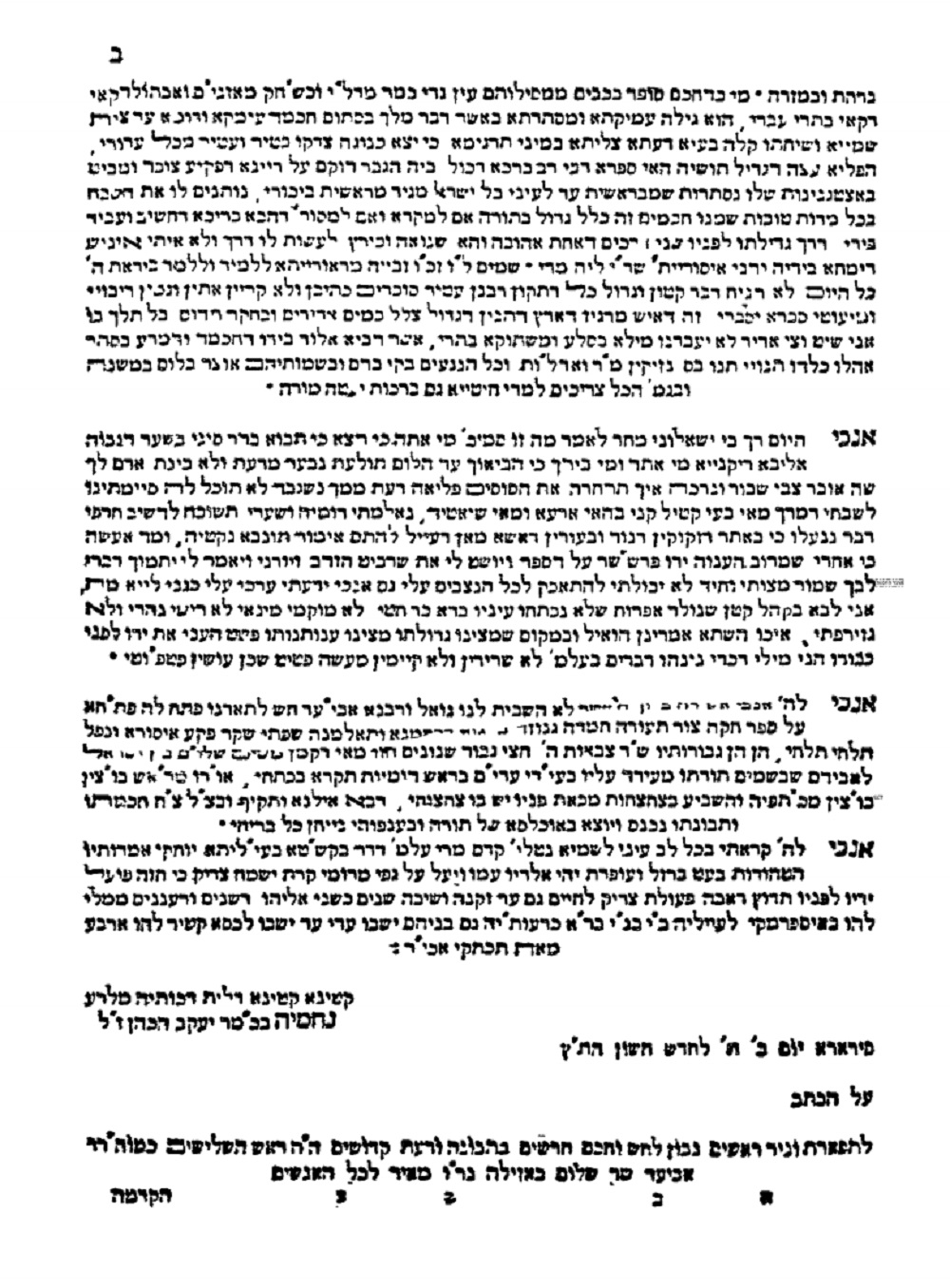
1. Another apostate was Rabbi Nehemiah ben Jacob ha-Kohen of Ferrara, who was an important supporter of R. Moses Hayyim Luzzatto during the controversy about him.[1]Here is the the final page of the haskamah he wrote in 1729 for R. Aviad Sar Shalom Basilea’s Emunat Hakhamim.

R. Isaac Lampronte, in a halakhic discussion in his Pahad Yitzhak, refers to Nehemiah, but not by name.[2] He calls him אחד מן החכמים רך בשנים אשר אחרי כן הבאיש ריחו כנודע. In R. Hananel Nepi and R. Mordechai Samuel Ghirondi, Toldot Gedolei Yisrael (Trieste, 1853), p. 229, they write about Nehemiah: שאח”כ נעשה ישמעאלי. Obviously, “Ishmaelite” is a code word for Christian.[3]

The story reported by Samuel David Luzzatto is that Nehemiah used to go to prostitutes, and when the rabbis found out about this they removed the rabbinate from him. Too embarrassed to remain in the Jewish community, Nehemiah apostatized.[4] Cecil Roth cites another Italian source that Nehemiah converted so he could marry a Christian woman. Unfortunately, his son and three daughters apostatized together with him (his wife had apparently already died).[5] 

Another apostate who should be mentioned is Michael Solomon Alexander (1799-1844), first Anglican bishop in Jerusalem. Before his apostasy, Alexander was a rabbi.[6] 

Rabbi Abraham Romano of Tunis also became an apostate. He converted at the end of the seventeenth century when R. Meir Lombrozo was appointed a dayan in his place. After Romano converted, he became well known as a Islamic preacher, and after his death his tomb was venerated by Muslims. He was known as Sidi Sofiane, and the street in Tunis with this name is named after him.[7] It is reported that in the nineteenth century R. Uziel Alheikh, author of the halakhic work Mishkenot ha-Ro’im, would recite Kaddish at Romano’s grave so God would forgive his sin.[8] 

I am sure many readers have heard of Rabbi Israel Zolli, the chief rabbi of Rome who converted after the Holocaust. Not so well known is Rabbi Daniel Zion, who was the chief rabbi of Bulgaria and after World War II served as a rabbi in Jaffa. When it became known that he was a believer in Jesus, he was forced out of his rabbinic position. There is a good deal online about Zion, and entries in English and Hebrew on Wikipedia.

Rabbi Hayyim Asher Hoffmann was another modern rabbi accused of working with missionaries. He was in Argentina at the beginning of the twentieth century, and wrote a haskamah for R. Menahem Mendel Hirschhorn’s 1904 book Magid le-Yisrael. Here is the title page of the book, followed by the haskamah.

In 1907, R. Mordechai Amram Hirsch of Hamburg informed Jewish leaders in Buenos Aires that Hoffmann had worked in the Christian mission in Hamburg. Not long after this, Hoffmann committed suicide.[9]

Hoffmann is not the only rabbi to have committed suicide. In his recent article in Hakirah, Moshe Ariel Fuss deals with R. Moshe Soloveichik’s great dispute with the Polish Agudat Ha-Rabbanim. He also discusses the suicide of one of the dayanim of Tomashov, which was related to the dayan’s role in the dispute.[10]

There was another rabbi and author of a sefer who committed suicide. Let me preface this story with some other relevant information. In the early 1990s there was a project at the Harvard library to put thousands of rare Hebrew books on microfiche. This would then be sold to major university libraries. It was a wonderful idea and involved considerable expense on the part of the company, K.G. Saur, which was carefully photographing the books. (I used to watch the photographer doing his work.) It was very costly to purchase the more than ten thousand fiches, but for a library that wanted to instantly have access to almost five thousand rare Hebrew books, this was a great solution. You can see a 1994 ad for the project here.

Unfortunately for this project, advancing technology made it obsolete almost immediately upon completion. The ability to access rare books online, on hebrewbooks.org, Otzar ha-Chochma, Google Books, and other sites, meant that microfiche readers went the way of typewriters. (I still haven’t gotten rid of my own microfiche reader, as I never know if it might come in handy).

Harvard put out a catalog advertising the microfiche set, which discussed the different genres of books included. The catalog also had pictures of a few of the title pages of the books. Here is one of the pages in the catalog.[11]


Here is a clearer picture of the title page.

The book is Derekh Yam on Tractate Meilah by Rabbi Mordechai Nahman Stieglitz, published in 1900. At the time (almost thirty years ago), I thought nothing of this, and just assumed that Derekh Yam was a random book that was picked for inclusion in the catalog. However, someone who knows a lot about seforim told me that there is no question that Derekh Yam was not randomly picked. He said that whoever chose to use this title page, when there were so many others that could have been picked, must have done so as an inside joke for the benefit of those who knew the history of Rabbi Stieglitz (which at the time I knew nothing about).

Derekh Yam is a fine commentary on a tractate that not so many have written about. Understandably, then, when people study Meilah this is one of the books they will turn to. And why not, seeing that the book has haskamot from such great figures as R. Isaac Schmelkes, R. Shalom Mordechai Schwadron, and R. Aryeh Leibush Horowitz? It also includes an approbation and a lengthy responsum (pp. 47a-58a) by R. Joshua Horowitz, the Rebbe of Dzikov (Stieglitz’s hasidic group[12]) and author of a number of volumes with the title Ateret Yeshuah.

Shortly following the appearance of Derekh Yam, Stieglitz’s life took a different turn. He not only left Poland but abandoned Torah observance as well. Meir Wunder writes that “he went to study at the University of Berlin (and not Vienna).”[13] Wunder’s information that Stieglitz studied in Berlin presumably came from Yehudah Rubenstein (see below), but I don’t know why he felt the need to correct the error that he studied in Vienna, as I haven’t seen anyone make this claim. 

It could be that Stieglitz did study in Berlin (though I know of no evidence for this), and to be sure one would need to check the archives of the University of Berlin. However, Rubenstein and Wunder were unaware that Switzerland was Stieglitz’s primary academic place of study, and his 1908 doctoral dissertation is from the University of Bern. It deals with Baraitot in Tractate Berakhot in the Bavli and Yerushalmi. You can see it here. As was typical in those days in Germany and Switzerland, the doctoral dissertation is short and insignificant. It never ceases to amaze me how easy it was in those countries to receive a doctorate.

Yehudah Rubenstein says the following about Stieglitz:[14] When his book Derekh Yam appeared it was greatly praised by Torah leaders and had an impact on talmudic scholars. It also included a long responsum from R. Joshua Horowitz. Later, a רוח שטות entered Stieglitz and he abandoned his wife and children and went to Berlin to study, where he abandoned Torah observance and fell in love with the daughter of a banker, whom he married after divorcing his wife. He then went to New York where he went into business and made a lot of money on Wall Street. However, during the Depression Stieglitz lost his money and committed suicide.[15]

Rubenstein also notes that Dzikover hasidim, at the command of their rebbe, collected all the copies of Derekh Yam that they could find, from synagogues and private homes, and destroyed them. He concludes:

.והספר דרך ים הוא יקר המציאות, כי נשארו ממנו טופסים מועטים

What used to be a rare book is now, thanks to modern technology, at everyone’s fingertips. Even if, as a result of this post, the book is removed from hebrewbooks.org and Otzar ha-Chochma, you can still see Harvard’s copy here.

In 1976, the descendants of R. Joshua Horowitz published Ateret Yeshuah: Likutei Teshuvot ve-Haskamot.


In the introduction it states that the book includes all the responsa and approbations of R. Horowitz found in the writings of others. However, they purposely did not include the approbation and responsum found in Derekh Yam.[16]

Returning to apostasy by rabbis who produced seforim, I have previously mentioned R. Profiat Duran, the Efodi (see here), and an article by Joseph Hacker has recently appeared which further complicates matters.[17] Let me first note that in Latin documents his name appears as Perfeyt, so from now on this is how I think we should pronounce it. Second, and here Hacker follows on Maud Kozodoy’s earlier research,[18] we have evidence that not only did Duran convert (this we already knew), but that he remained a Christian for the rest of his life, even when he had left Spain and could have returned to Judaism. If that wasn’t enough, both Kozodoy and Hacker believe that he married a Christian woman, as the wife to whom he left his possessions had a different name than his first wife. Yet this latter point is not conclusive. It could be that the woman he was married to at the end of his life was a Jewish woman who apostatized, either the original wife who changed her name on conversion, or a second wife. How Duran continued to write anti-Christian polemical works while living as a Christian is still a mystery.[19] His famous grammatical work, Ma’aseh Efod, the introduction to which Professor Isadore Twersky loved to study with his graduate students,[20] was also written while he was a Christian.


When the information about his life eventually filters out to the Orthodox world, presumably he will no longer be cited as an authority (although all evidence points to his important commentary on Maimonides’ Guide being written before his conversion so perhaps that can still remain in the canon).[21]

I must also mention R. Levi Ibn Habib (ca. 1480-1541), the great sage of Jerusalem. As a young man in Portugal, he converted (or was converted) to Christianity. We don’t know if at this time he was living with his father, R. Jacob Ibn Habib, who is famous for editing the Ein Yaakov. Later, R. Levi journeyed to Salonika where he was together with his father.

We do not know the precise details of R. Levi’s conversion. Scholars often write about Jews being subjected to “forced conversion.” This can mean that one is told he must convert or he will be killed. In this circumstance, Jewish law requires martyrdom, and Jewish history knows of many who chose this path.[22] Yet people who were not strong enough to accept martyrdom, and converted to Christianity to save their lives, are routinely described as forced converts. 

The other meaning of forced conversion is using actual physical force to baptize someone, as occurred in Portugal. R. Levi was in Portugal in 1497, when Jewish life there came to an end. Many Portuguese Jews converted “willingly”  in addition to the strong Christian pressure to convert, some did so to be freed from slavery or after their children were taken from them, as this was the only way to get them back. There was also the unusual circumstance that the King ordered the Jews not yet baptized to be baptized against their will, literally by physical force. (Mainstream Catholic teaching did not regard this as a valid baptism, unlike the case of one who converted to save his life, as this latter act was taken out of free will).[23] As mentioned, we do not know whether R. Levi converted “willingly” or not, but we do know that he lived as a Christian after this conversion.

In the great dispute over the revival of semikhah between R. Levi and R. Jacob Berab, R. Berab saw fit to allude to R. Levi’s conversion as a means of discrediting him. This is quite surprising, as one is not supposed to remind a ba’al teshuvah of his previous sins. Here are some of R. Berab’s words which are clearly designed to contrast his pure history with R. Levi’s history, which included living as a Christian (and thus having a Christian name).[24]

שת”ל מיום הגרוש והשמד שבספרד לעולם הייתי מורה הוראות בישראל . . . ועם היותי ברעב ובצמא ובחוסר כל לעולם הלכתי בדרכי השם יתברך ונתעסקתי בתורתו . . . ות”ל שמעולם לא נשתנה שמי אי רבי קרו לי השתא רבי הווי קרי לי אז וזה שמי לעולם . . סוף דבר שת”ל לעולם השתדלתי שלא ילך להתרעם עלי שום אות מאלף ועד תי”ו, רצוני לומר שלא נתחלל שם שמים על ידי בשום אחד מהאותיות כדי שלא יעלו לשמים להתרעם עלי

R. Levi was understandably quite offended by R. Berab’s words. He expresses his pain that R. Berab would attempt to publicly humiliate him by bringing up the difficult timein Portugal. He makes it clear that he is speaking for many others who were also in his unfortunate circumstance.[25]

לישנא בישא טובא איכא הכא, ובמקום שהיה לו לחכם להודות על האמת ולהשיב כהלכה גרם לשפוך דמי ולהלבין פנים בהזכירו אלי עונות ראשונים . . . לא לכבודי ח”ו כי אם לכבוד כל אותם שנמצאו באותה הצרה ושמו עצמם בסכנות רבות וברחו ולא ראו בטובה עד שזכו להיות בעלי תשובה ורבים מהם נפטרו לחיי הע”ה

R. Levi also mentions that he was not yet a bar onshin when he converted. The evidence we have shows that he was older than 13 in 1497, so when he says that he was not yet a bar onshin, it must mean that he was under the age of 20. This is in accord with an aggadic statement in Shabbat 89b that God does not punish for transgressions in the first twenty years.[26] The Zohar, Bereishit 118b, also states that while an earthly beit din punishes from age 13, the Heavenly Court does not punish for sins committed before age 20.[27]

R. Levi further states that despite his difficult circumstances, in his mind he remained a Jew, loyal to the one true God. While others changed his name to a Christian name, he himself never changed. He adds that while he did not merit to die al kiddush ha-shem, he hopes to achieve a complete repentance for his past. Here are some of R. Levi words, full of pathos:[28]

ואומר כי אני לא אחלל בריתי ברית התורה להשיב לזה החכם על פי דרכו . . . גם לא אכחיש המובן מדבריו בהגדלת אשמתי ולא אציל עצמי בדברתי לומר שאף אם שנו שמי בעונתי בשעת השמד אני לא שניתי, ובוחן לב וחוקר כליות יודע כי תמיד אותו יראתי, ואם לא זכיתי לקדש שמו לבי יחיל בקרבי מפני זעמו הגם שעדיין לא הייתי בר עונשין בבית דינו כלל, מכל זה לא אומר ח”ו כי שקר התנצלותי, ועוד כי יוסיף פשע על חטאתי, אדרבה אבכה יומי ולילי אוי לי אללי ואודה עלי פשעי ואומר ידעתי יי’ רשעי ופשעי וזדוני כי רבו למעלה ראש משורש פורה רוש, ואשמותי גדלו עד לשמים, אבל בטחתי על רוב חסדיך ונשענתי על רוב רחמיך, וכשם שזכיתני לצאת מן ההפכה והבאתני אל העיר ההוללה בתוך השנה להיות שונה שם בכל יום הלכה עד היום שיש יותר מארבעים שנה, כך תזכני להיות בעל תשובה שלמה, ומה גם עתה בהיותי עולב עלבון גדול אשר כזה על לא חמס בכפי, ואתה אדון הסליחות אלדי הרוחות ראה בדמעות אשר זלגו עיני עתה באנחות ויהיו בבית גנזיך מונחות לעת צאת נפשי, ואולי תזכה בהן לשוב למנוחות

It is one thing for contemporaries to slug it out and attack each other. However, that was hundreds of years ago, and in the intervening centuries both R. Levi and R. Berab have been included in the canon of gedolim. R. Berab has the additional distinction of having given semikhah (the real kind) to R. Joseph Karo. As such, we are dealing with important figures who are each deserving of great respect. This is why I found it so unusual that a twentieth-century rabbi, Benjamin Trachtman, who came to the defense of R. Levi, showed considerable disrespect for R. Berab. 

R. Trachtman was a rabbi in a few different places in the United States and Israel, and author of a number of works. In 1930 he was rabbi in Mishwaka, Indiana (near South Bend) when he published his book, Shevet Binyamin. Here is the title page.

The book comes with a number of “haskamot,” among them from R. Moshe Mordechai Epstein and R. Isaac Sher. From the “haskamot” we learn that R. Trachtman had been a student at the Chevron Yeshiva. I put the word haskamot in quotation marks, since even though that is what the letters at the beginning of the book are called, they are not haskamot at all as they have nothing to do with the book. Rather, they testify to R. Trachtman’s Torah knowledge and most of the letters are semikhah certificates.

I find it hard to believe that R. Trachtman’s teachers, and the others whose letters appear in the book, would have approved of his judgment of R. Berab, found on p. 93 of his book. He states that in looking at the dispute between R. Levi and R. Berab, you can see the difference between a person who has mussar values and one who is “lacking mussar and middot”! He claims that R. Berab is an example of someone who had great Torah knowledge but was lacking in the area of ethics. I find it incomprehensible that a twentieth-century scholar would speak this way about one of the recognized Torah sages of centuries ago.

משם יש לראות את הנפ”מ בין אדם בעל מוסר שכל דבריו שקולים במשורה בחשבון ודעת לאדם חסר המוסר והמדות, והינו[!] כי אחד מהדברים אשר אדם נכר בהם הוא בכעסו, בעת אשר מחלוקת לו עם חבירו, והנה המחלוקת של שני החכמים הנ”ל אם כי המחלוקת היה לש”ש לדינא אבל בכל זאת יש לראות שם גם זה הסוג מחלוקת של אנשים השוטים והמחלוקת מזה הסוג בולט הרבה מדברי הר”י בי רב, כי בדבריו אנו רואים התנפלות עזה בדברים בוטים כמדקרות חרב ועלילות מזויפות על הרלב”ח אשר א”א בשום אופן שמחשבון יצאו הדברים ואדרבה הרלב”ח אף כי גם הוא אינו מחריש לו אבל דבריו בנחת נשמעים במתינות ובישוב כנראה משם . . . ואל תאשימני על בואי לבקר את הר”י בי רב כי נתן לי רשות בדבריו, וסוף סוף אנו רואים בחוש גם עתה כי הוא שני דברים נפרדים כי יש למצוא תלמידי חכמים אשר גאונותם בתלמוד הוא עד למאוד וכשבאים לסוגיא “יכיר יכירנו לאחרים” הם נכשלים באופן פשוט אשר בשום אופן אין לחפות עליהם, אם לא כי יצאו מגדר המוסר

Also worth noting is Jacob Katz’s comment at the end of his classic article on the semikhah controversy.

Nor can we ignore the fact that Berab’s personal attacks on ben Habib, and the recounting of his “old sins,” were not germane. He did not dare to give explicit expression to the serious accusation about ben Habib’s conversion in his youth; instead he couched it in words of self-praise (“I myself never changed my name”). Such a tactic is evidence of an emotional need to pretend that one has done nothing wrong, which is a sign of an uneasy conscience.[29]

I must also mention R. Isaac Bar Sheshet, the great Rivash. Did the Rivash actually convert to Christianity during the anti-Jewish persecution of 1391? There is no mention of this in any Hebrew documents. However, in 1983 Jaume Riera published an article in Sefunot based on documents from the Spanish archives which show that during the 1391 anti-Jewish attacks, the Rivash, who served as rabbi of Valencia, converted to Christianity. This is attested to in three separate documents, two of which refer to the rabbi of Valencia and one of which identifies the Rivash by name. The documents show that while many Jews were killed in Valencia during the attacks, most converted to save their lives and the large synagogue was turned into a Church.[30] 

We do not know the exact circumstances that supposedly led the Rivash to convert, and the only important detail in this regard that we learn from the documents is that the Rivash’s death sentence was revoked after his apostasy. Riera offers a suggestion to explain why Rivash chose to convert, but this is based on nothing other than Riera’s vivid imagination. Yet Riera’s imaginings, which conjured up “false witnesses,” a “disgraceful crime,” and other completely fictional events, are presented in the Wikipedia entry on Rivash as actual fact.

In 1391 there occurred the great persecutions of the Jews of Spain in consequence of the preaching of Fernandes Martinez. On the first day of the persecutions, the younger brother of King John I summoned Isaac on July 9, 1391. He explained that to be able to restrain and cease the bloodshed, it would be necessary to promulgate an organized conversion of the Jews, which should obviously start with the communal leaders. Some of the leaders did relent to the heavy pressure laid upon them; but not Isaac, who held steadfast to his faith. After a couple of days, the officials set up false witnesses to testify against Isaac for a disgraceful crime. Due to this accusation, Isaac was condemned to death, by burning at the stake in the city’s central square. On July 11 Isaac was immersed, donned the robe of a Dominican and received the name Jaume De-Valencia.

Around a year and a half after the supposed conversion the Rivash escaped to Algeria, where he was known as a great posek whose responsa remain among the most important ever written. He died in 1408.

Did the Rivash convert? There were a number of rabbis, admittedly not of the Rivash’s level, who converted to Christianity in Spain, so the idea is not impossible. We also have to remember that the conversion of the Rivash, if it indeed occurred, was also only a temporary event. I do not think it casts aspersions on a great rabbi if we find that when faced with the terrible choice, he did not choose martyrdom. Everyone realizes that this is never an easy choice. This was especially the case in Spain which, unlike Germany, never had a culture extolling Jewish martyrdom (and we know that large numbers of Spanish Jews chose conversion over death).

In analyzing this matter, the real issue that experts should focus on is how reliable are the government documents. R. David Bar Sheshet is a descendant of the Rivash and recently published a biography of his illustrious forefather. Some might be surprised that in an “Orthodox” biography he deals with the matter of the supposed conversion. However, being that this is by now a well-known “fact,” it is basically impossible to ignore. Not surprisingly, Bar Sheshet argues against the claim that the Rivash converted.[31] Yet this is not simply a hagiographic perspective, and I myself am not convinced. If indeed the Rivash converted, the Church would presumably have used this as a propaganda tool, yet we have no evidence that this was ever done. Furthermore, does it make sense that no Jewish sources of the time mention the apostasy of such a prominent rabbi?[32]

Among my hobbies are visiting the graves of great Torah sages, and this hobby has taken me around the world. What about visiting the graves of the Rivash, and also R. Simeon ben Zemah Duran, the Tashbetz, both of whom are buried in Algiers?[33] Recently, I was in a Paris airport waiting for my flight to Tunisia. At very next gate was a flight to Algiers. Yet despite how easy it would be to travel there, I have yet to go. There is no Jewish community in the city and I don’t know how safe it is to visit Jewish sites. One day when I am convinced it is safe, I will travel there, much like I will travel to Baghdad to visit the grave of the Ben Ish Hai.

Fortunately, one person did make the trek to Algiers. He has put online pictures of the cemetery where the Rivash and R. Simeon ben Zemah Duran are buried, having been moved there from the original cemetery at the end of the nineteenth century. Even before the move they had been given new tombstones.[34] See his website here.

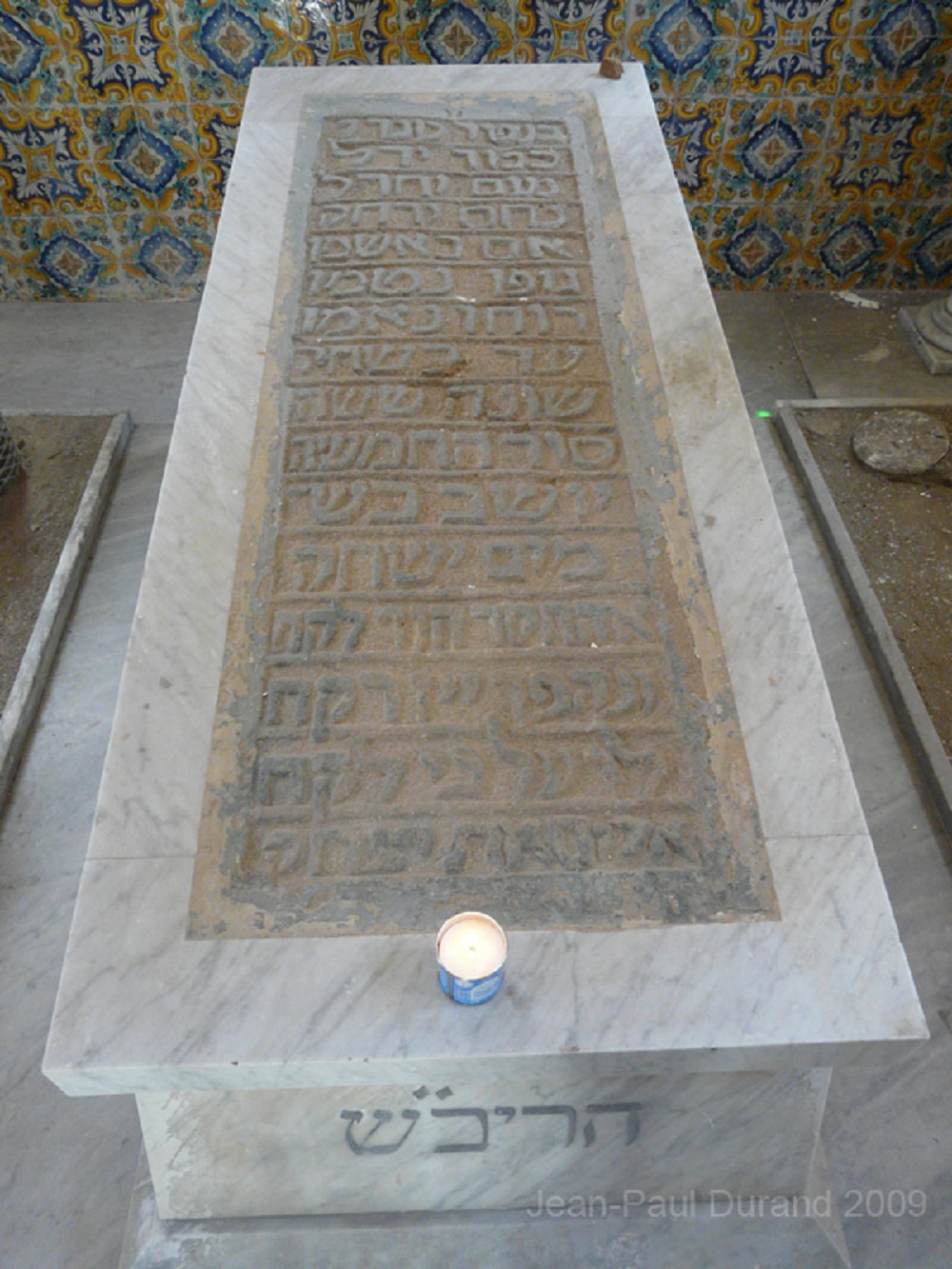
This is the Rivash’s grave. The picture is taken from the just mentioned website.

This is R. Duran’s grave. The picture comes from the same website.

Excursus

Due to the censor, or perhaps even self-censorship, in certain European prayer books negative expressions directed against idolatry, and hence bearing a possible anti-Christian interpretation, were turned into anti-Islamic expressions. See Leopold Zunz, Die Ritus des synagogalen Gottesdienstes (Berlin, 1919), p. 222. Halakhic works were also affected. See, for example, R. Abraham Danzig, Hokhmat Adam 153:1, where some printings have:

ואם שרוי הוא בין ישמעאלים

Every reader should easily grasp that in this passage ישמעאלים does not really mean Muslims.

Mishneh Torah, Hilkhot Avodah Zarah 9:4 reads:

הנוצרים עובדי עבודה זרה הן ויום ראשון יום אידם הוא. לפיכך אסור לשאת ולתת עמהן בארץ ישראל יום חמישי ויום ששי שבכל שבת ושבת. ואין צריך לומר יום ראשון עצמו שהוא אסור בכל מקום

In the textual notes in the Frankel Mishneh Torah, they cite a manuscript that reads:

ישמעלים [!] עובדי ע”ז הן ויום ששי יום אידם . . . ואין צריך לומר יום ששי עצמו

In the Shabbat morning Amidah, we read:

וגם במנוחתו לא ישכנו ערלים

Steinschneider noted that some texts replace arelim with “Ishmaelites.” See Polemische und Apologetische Literatur in arabischer Sprache zwischen Muslimen, Christen und Juden (Leipzig, 1877), p. 374. This change of text was done in Christian countries for obvious reasons and should fool no one. Thus, it is surprising that Salo W. Baron, A Social and Religious History of the Jews, vol. 6, p. 327 n. 15, writes as follows about the version that contains “Ishmaelites”:

This was hardly an invention of later generations of Jews who, living in Christian countries, sought to avoid difficulties with censors. . . . If Maimonides, in his formulation, substitutes arelim (uncircumcised) for “Ishmaelites” (cf. M.T. Seder Tefillot at the end of the second book; here switched to the Musaf prayer), this was merely in line with his general preference for Islam as against Christianity.

This is complete nonsense. Maimonides did not substitute arelim for “Ishmaelites.” The text he had, which is the authentic text of the prayer, included the word arelim.

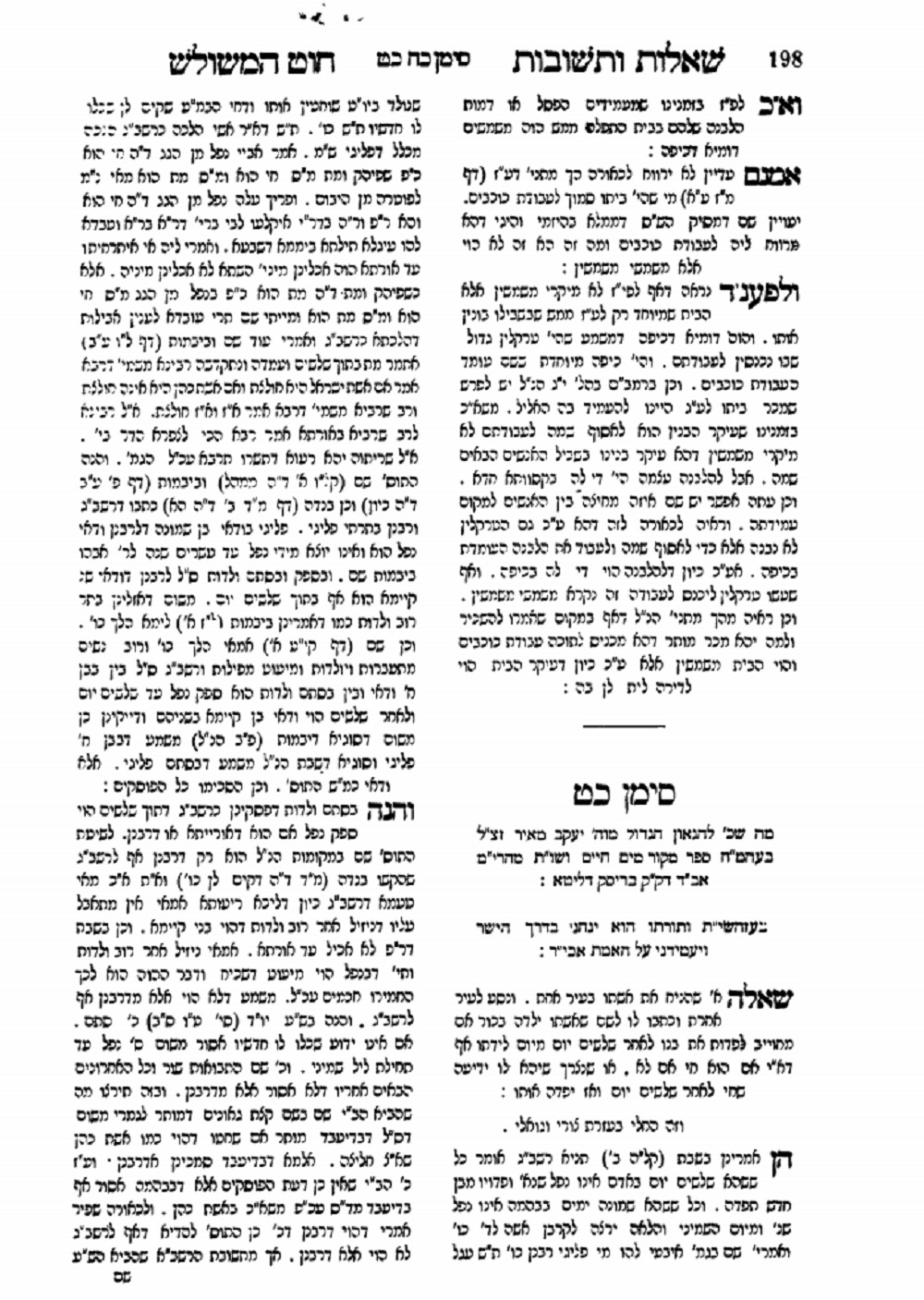
Here is a responsum of R. Eliezer Isaac Fried, from Hut ha-Meshulash, no. 28. This responsum is cited in many of the discussions dealing Islam and halakhah, in particular with reference to mosques. In my article on the topic from many years ago I too cited this source. See “Islam and the Halakhah,” Judaism 42 (Summer 1993), p. 337.

I recently had occasion to look at this responsum again, and I see that everyone has misunderstood it. It is obvious that R. Fried is not really speaking about building a mosque but a church. When, in the responsum, he speaks of placing the crescent in the mosque, this is really code for crucifix. In fact, the entire responsum assumes that he is speaking about a religion of avodah zarah, which is the obvious sign that he is really speaking about Christianity.

My excuse for misreading the responsum years ago is that I was young and unsophisticated. However, it is very surprising to me that many great talmidei hakhamim have also cited this responsum without realizing that it is not really referring to Islam. See also here where I discuss a mistake by R. Judah Aszod who assumed that in a particular responsum the Hatam Sofer was discussing candle lighting as part of a religious celebration in India, when it is obvious that the Hatam Sofer is really referring to the practice of European Christians.

For an example of self-censorship in the opposite direction, namely, the removal of references to Islam, see this page of a responsum of R. Rahamim Joseph Franco, Sha’arei Rahamim (Jerusalem, 1881), vol. 1, Orah Hayyim, no. 5, p. 8b (look at the paragraph beginning ושוב).


2. I would like to mention some more mistakes I have found in the ArtScroll siddur and machzor. I believe that it is worthwhile to call attention to such mistakes, not only for their own sake, but because ArtScroll has made corrections in the past when these types of errors have been pointed out, and they no doubt will continue to do so in the future.

I myself have noticed a number of corrections that ArtScroll has made, and it could be that the example I will now discuss is an additional one, but I have not personally seen the correction. In response to an earlier post, R. Elazar Meir Teitz informed me that in the prayer recited before taking the Torah out of the Ark on Shabbat morning, in the words היטיבה ברצונך את ציון, ArtScroll mistakenly puts the accent in ברצונך on the penultimate syllable (and when we sing these words with the popular tune the accent is indeed on the penultimate syllable). I checked my ArtScroll siddurim and machzorim and that is indeed where the accent is. However, I have been told that in the new printings of at least one of the various ArtScroll siddurim (but not of the machzorim) this has been corrected and the accent is now on the final syllable. Can any reader confirm that this is indeed the case?

I noticed over Yom Kippur that ArtScroll has a very strange translation in the על חטא prayer. We say:

ועל חטא שחטאנו לפניך ביודעים ובלא יודעים

ArtScroll translates this: “And for the sin that we have sinned before You against those who know and against those who do not know.” I am certain that this is a mistake, and that ביודעים ובלא יודעים means, “with knowledge or without knowledge,” in other words, “wittingly or unwittingly.” I assume ArtScroll was driven to its translation because earlier in the prayer we say בזדון ובשגגה. Thus, if ביודעים ובלא יודעים means “wittingly or unwittingly,” then it is repeating what was earlier said. Furthermore, we also say earlier בבלי דעת and בדעת ובמרמה, so this would seem to be more of the same. Yet I do not think that a prayer with repetitions creates difficulties, and in this case, I think it makes more sense than translating the passage the way ArtScroll does. I am curious to see if readers agree with me.[35]

The final mistake I would like to call attention to is one that is found in most siddurim and collections of zemirot, so ArtScroll is in good company. It is noteworthy that the Koren siddur and the new RCA siddur get it right. The old RCA-De Sola Pool siddur also got it right.

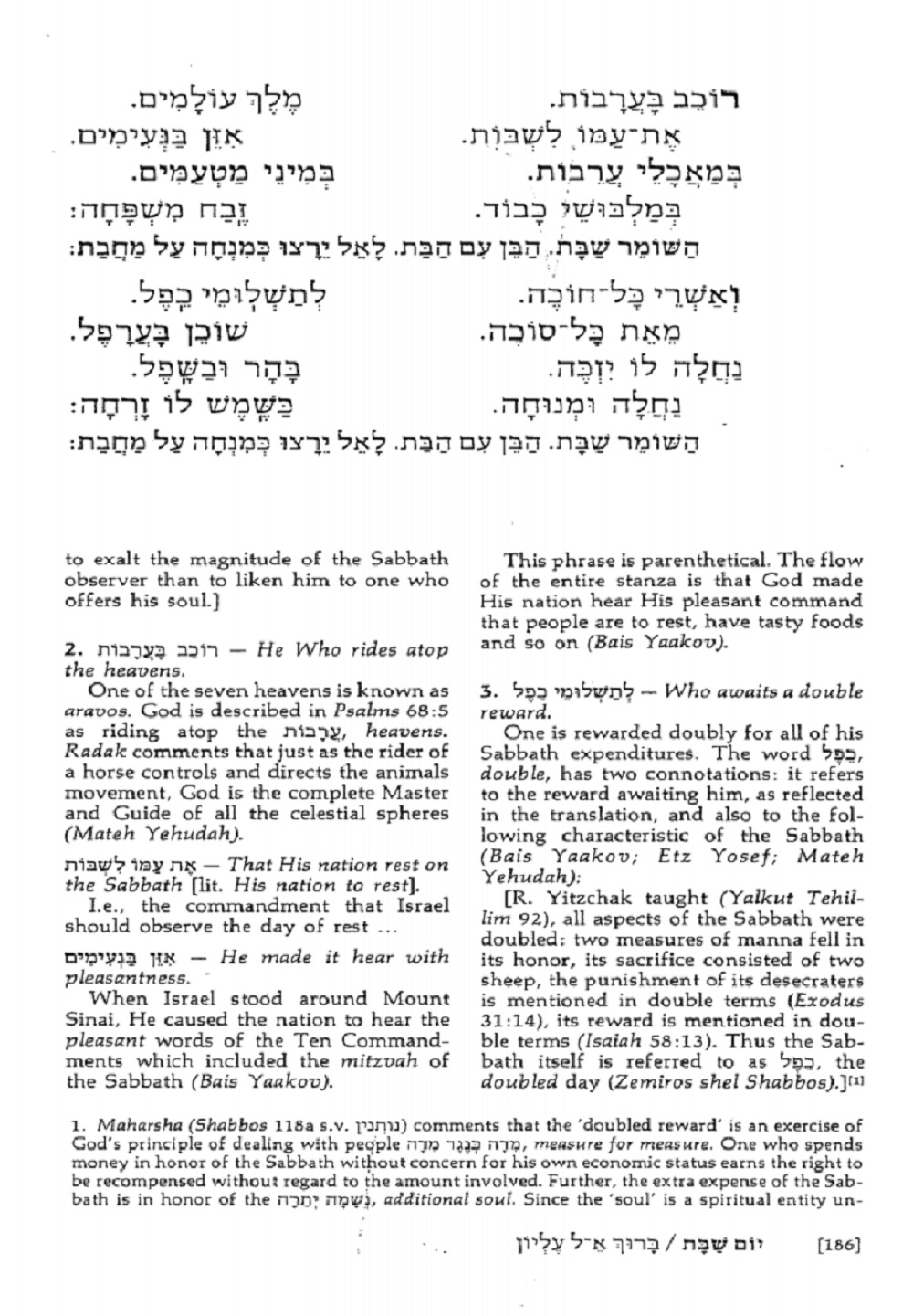
In the Sbbath song ברוך א-ל עליון, it states:

ואשרי כל חוכה
מאת כל סוכה שוכן בערפל

The meaning, as translated by ArtScroll, is:

Praiseworthy is everyone who awaits a double reward
From the One Who sees all but dwells in dense darkness.

Here is how the Hebrew page appears in the ArtScroll Zemiroth,[36] p. 186.

The problem here is that if you look at the Hebrew you can see that the English has not been translated properly. כל-סוכה does not mean “the One Who sees”, but “everyone who sees.” The word כל has a kamatz which means that it is connected to the following word. In the Zemiroth, ArtScroll puts the makef in, just like almost always in the Masoretic text of Tanakh כל with a kamatz has a makef.[37] But the meaning of the passage is the same even without the makef, and in the siddur ArtScroll does not include it. 

In order for the passage to mean “the One Who sees all,” the word כל must have a holam.[38] This point is actually made by R. Nota Greenblatt, who states that the version found in ArtScroll and many others, where the word כל has a kamatz, is nothing less than heresy since God has been replaced by humans.

3. I want to call readers’ attention to an important volume that has just appeared. Seforim Blog contributor R. Moshe Maimon has published the first volume of his edition of R. Abraham Maimonides’ commentary on Genesis. Maimon’s improvements on the earlier translation from the Arabic make the work a pleasure to read. His explanatory notes are simply fantastic, taking into account all relevant sources, both traditional and academic, that can illuminate the text. This will now become the standard edition of R. Abraham’s commentary, and I can think of no greater honor for Maimon than this. Hopefully, this publication will lead to a surge of interest in the commentary of R. Abraham, much like R. Kafih’s new translation of Maimonides’ Commentary on the Mishnah did for this work. The book is available at Biegeleisen, and can also be purchased online at Mizrahi books here.


[1] See Isaiah Sonne, “Avnei Binyan le-Korot ha-Yehudim be-Italyah,” Horev 6 (1941), pp. 100ff.; Elisheva Carlebach, The Pursuit of Heresy: Rabbi Moses Hagiz and the Sabbatian Controversies (New York, 1990), pp. 237ff.
[2] This is noted by Carlebach, The Pursuit of Heresy, p. 331 n. 18.
[3] See Excursus
[4] Peninei Shadal (Przemysl, 1888), p. 12. See the recent discussion of Nehemiah by Yaakov Spiegel in Hitzei Giborim 11 (2019), pp. 1146ff. Spiegel mentions that Torah writings from Nehemiah remain in manuscript. He also notes that in a recent printing of Basilea, Emunat Hakhamim, Nehemiah’s haskamah was removed (and perhaps surprisingly, the printer acknowledged that it was removed).
[5] Cecil Roth, Studies in Books and Booklore (Farnborough, England, 1972), p. 44 (Hebrew section).
[6] See Alexander’s appendix to John Hatchard, The Predictions and Promises of God Respecting Israel (London, 1825), p. 38. See also Kelvin Crombie, A Jewish Bishop in Jerusalem (Jerusalem, 2006), p. 13, and the entry on him in the Dictionary of National Biography, here.
[7] R. Joseph Tanugi, Toldot Hakhmei Tunis (Bnei Brak, 1988), pp. 233-234; R. Abraham Khalfon, Ma’aseh Tzadikim (Jerusalem, n.d.), p. 309.
[8] L’Univers Israelite, Oct. 7, 1932, available here; André N. Chouraqui, Between East and West: A History of the Jews of North Africa, trans. Michael M. Bernet (Philadelphia, 1968), p. 72.
[9] See Victor A. Mirelman, Jewish Buenos Aires, 1890-1930 (Detroit, 1990), p. 89.
[10] “Ha-Rav Moshe Soloveichik u-Ma’avakav be-‘Moetzet Gedolei ha-Torah’ ve-‘Agudat ha-Rabbanim’ be-Polin,” Hakirah  25 (2018), p. 47.
[11] I thank Menachem Butler for sending me this image.
[12] See Yehoshua Mondshine, Ha-Tzofeh le-Doro (Jerusalem, 1987), p. 37.
[13] Entzyklopedia le-Hakhmei Galizia, vol. 5, col. 154.
[14] Ha-Darom (Tishrei 5723) 16 p. 150.
[15] Another rabbi who met an unfortunate demise was R. Isaiah ha-Levi, author of the first Ba’er Heitev on the Shulhan Arukh (not Ba’er Heitev found in the standard editions). R. Meir Eisenstadt, Meorei Esh, beginning of parashat Shemini, tells us that on his way to Eretz Yisrael, R. Isaiah, his wife, and daughter were killed in a fire in their hotel. Regarding the different commentaries with the name Ba’er Heitev, see R. Yehiel Dov Weller in Yeshurun 17 (2006), pp. 825ff. 

In the old translation of Maimonides’ commentary to Mikvaot 4:4, he writes about a certain rabbi: ונהרג על זה באמה ובזרוע. This led to all sorts of speculations about which rabbi was killed. However, this is a mistaken translation. See R. Kafih’s note in his new translation, and also his commentary to Mishneh Torah, Hilkhot Mikvaot, vol. 2, p. 461. In a future post, I will mention a few rabbis who were killed by Jews, as well as cases of attempted murder. For now, I merely want to call readers’ attention to Prof. Shnayer Leiman’s email published in Chaim Dalfin’s new book, Torah Vodaas and Lubavitch (Brooklyn, 2019), p. 203.

There was a rabbi who allegedly was killed by mobsters. I heard from reliable sources that he was beaten, rolled in the snow and left to die. (Perhaps the goal was to frighten him, not kill him.) He survived the ordeal, but died shortly thereafter from pneumonia. The rabbi was Rabbi Yaakov Eskolsky, famous author and Rabbi of the Bialystocker Shul on the Lower East Side. I’m not aware of any written account that mentions this.

Leiman also mentions that Rabbi Israel Tabak, the son-in-law of R. Eskolsky, in discussing his father-in-law’s death mentions nothing about any foul play. See Tabak, Three Worlds (Jerusalem, 1988), p. 156. 

R. Eskolsky served as a rabbi in Scranton for a few years. See his biography here. I previously wrote a bit about him here. In Tabak’s book, p. 152, it mentions that R. Eskolsky celebrated Thanksgiving, and that at a Thanksgiving dinner Tabak attended, he “emphasized the significance of Thanksgiving Day for our people who came to the United States from Eastern Europe, and especially from Russia. Coming to America, the land of freedom and opportunity, was like emerging from darkness into light and certainly deserved to be marked by thanksgiving, both to G-d and to America that treated its citizens so well.” I believe that for any non-hasidic rabbi in America in the early part of the twentieth century, the notion that there was something religiously problematic with celebrating Thanksgiving would have been incomprehensible.

Shimon Steinmetz sent me this picture from the Forverts, Oct. 23, 1930. I find it fascinating that R. Eskolsky served as a justice on the “Jewish Arbitration Court.” 

[16] See Yehoshua Mondshine, “Aminutan shel Iggerot ha-Hasidim me-Eretz Yisrael,” in Katedra 64 (1992), p. 89 n. 152.
[17] “Perfeyt Duran be-Italyah ve-Goral ha-Sefarim ha-Ivriyim Aharei Meoraot 1391,” Ba-Derekh el ha-Modernah: Shai le-Yosef Kaplan (Jerusalem, 2019), pp. 61-91.
[18] The Secret Faith of Maestre Honoratus (Philadelphia, 2015), pp. 20, 28.
[19] See Kozody’s suggestions to explain this, Secret Faith, pp. 30ff. Regarding when his polemical works were written, see Benzion Netanyahu, The Marranos of Spain (Ithaca, 1999), pp. 221ff.
[20] Twersky discusses this text in “Religion and Law” in S.D. Goitein, ed., Religion in a Religious Age (New York, 1974), pp. 69-82. Regarding Twersky, I recently discovered this video of one of Chaim Grade’s lectures at Harvard from October 1981, and Twersky introduces him at the beginning. Unfortunately, only the first part of the lecture appears in the video. If anyone knows if the second part exists, please let me know. Menachem Butler was kind enough to send this page from the Boston Jewish Advocate, Oct. 22, 1981, announcing the Grade lectures.

Grade had earlier lectured at Harvard in 1977. Regarding these lectures, see Allan Nadler’s recollections here.
[21] Here is the first page of an article by Yehudah Hershkowitz that appeared in Yeshurun 9 (2001), p. 572.

Note how Duran is referred to as “Rabbenu”. The author is aware that Duran apostatized, but he, like everyone before him, assumed that Duran later returned to Judaism.
[22] Regarding martyrdom, R. Moshe Feinstein makes an interesting point in Iggerot Moshe, Yoreh Deah III, no. 108 (p. 353). We all know that a convert must accept the mitzvot for the conversion to be valid. What about if a convert honestly states that while he accepts the mitzvot, if confronted with violating a prohibition for which martyrdom is required, he knows that he will not have the courage to be martyred? Is this to be regarded as rejecting a commandment which means that he cannot be converted? R. Moshe says no, as acceptance of the mitzvot means that you intend to fulfill them under normal circumstances, and extreme cases such as those that involve martyrdom do not impact this acceptance.
[23] For R. Elijah Capsali’s report of the forced conversion, by actual physical force, see Abraham Gross, Struggling with Tradition (Leiden, 2004), p. 81. See also the Christian report in E. H. Lindo, The History of the Jews of Spain and Portugal (New York, 1970), p. 330. Another forced convert in Portugal who later became famous was R. Solomon Ibn Verga, author of Shevet Yehudah. R. Joseph Garson, who later escaped to Salonika, also appears to have undergone forced conversion in Portugal. See Joseph Hacker, “Li-Demutam ha-Ruhanit shel Yehudei Sefarad be-Sof ha-Meah ha-Hamesh Esreh,” Sefunot 2, new series (1983), pp. 29ff. As with R. Levi, we do not know the circumstances of the forced conversions of R. Ibn Verga and R. Garson. Since it appears that R. Jacob Ibn Habib was also in Portugal in 1497, then presumably he too was converted, either “willingly” or not. See, however, Marjorie Lehman, The En Yaaqov: Jacob ibn Habib’s Search for Faith in the Talmudic Corpus (Detroit, 2012), pp. 26-27. Regarding whether R. Isaac Karo was in Portugal then, or if he succeeded in leaving prior to the mass conversion, see Karo, Derashot R. Yitzhak Karo, ed. Shaul Regev (Ramat-Gan, 1995), pp. 9-10.
[24] Kuntres ha-Semikhah, in Teshuvot R. Levi Ibn Habib, no. 147, section 4 (p. 39 in the new edition).
[25] Ibid., no. 148 section 5, p. 52.
[26] R. Solomon ben Adret, She’elot u-Teshuvot ha-Rashba, vol. 6, no. 179, explains that this is because a person’s intellect is not sufficiently developed until age 20.
[27] R. Moses Sofer rejects the notion that one is not punished by Heaven for sins committed before age 20. See She’elot u-Teshuvot Hatam Sofer, vol. 2, Yoreh Deah no. 155. For more on this matter, see R. Pinchas Zabihi, Ateret Paz, vol. 3, no. 1, and here.
[28] Teshuvot R. Levi Ibn Habib, no. 148, section 5 (p. 53 in the new edition).
[29] Divine Law in Human Hands (Jerusalem, 1998), p. 170.
[30] Riera, “Le-Toldot ha-Rivash bi-Gezerot 1391,” Sefunot 17 (1983), pp. 11-20.
[31] Rabbi Yitzhak Bar Sheshet (Beitar Ilit, 2017), pp. 83ff.
[32] In this post, I have not dealt with accusations of rabbis’ apostatizing that arose in the contexts of disputes. For an example where hasidim accused one of their mitnagedic opponents, R. Leib Rakowski of Plock, of apostasy and also of marrying a non-Jewish woman, see Marcin Wodzinski, Studying Hasidism (New Brunswick, N.J., 2019), p. 120. This occurred after they tried to beat up the rabbi. See ibid., p. 119.
[33] In rabbinic literature Algiers is written as ארג’יל. This is due to the influence of the Spanish exiles who settled in North Africa, as in Spanish Algiers is pronounced as Argel. I was surprised to see that a generally careful scholar, Tuvia Preschel, Ma’amrei Tuvyah, vol. 1, p. 58, recorded the following false information.   

הם [יהודי אלג’יר] לא רצו לכתוב אלגיר שהיא מלשון אלה וגם “גירא בעיניך השטן” וע”כ הסבו שם העיר לארג’יל, לשון אור וגיל וסימנה טוב


[34] Regarding the transfer of the remains, see Bar Sheshet, Rabbi Yitzhak Bar Sheshet, pp. 83ff.
[35] In his Derashot Kol Ben Levi, p. 130, R. Jehiel Michel Epstein’s explains ביודעים ובלא יודעים as follows:

היודעים המה העבירות שאין להם מבא בהיתר כלל והלא יודעים הם המותרות מההיתר שאין האדם מרגיש בנפשו כלל שזהו חטא וא”כ אין ידוע כלל שחטאנו לפניך

For a homiletic explanation that is found in many different sources, see R. Zvi Hirsch Ferber, Siah Tzvi, p. 162:

וזה שאנו מתודים על חטא שח”ל ביודעים, זה שהגיע להוראה ואינו מורה, ובלא יודעים, שלא הגיע להוראה ומורה

Yisrael Meir Lau,Yahel Yisrael: Avot, ch. 4, p. 246, writes:

בלא יודעים – הכוונה לחטא שחטאנו, מחמת שהיינו במצב של “לא יודעים”, שבאשמתנו לא ידענו את הדין, ועברנו על  העבירה בלא לדעת כלל שיש בכך איסור. חומרתו של מעשה הנעשה “בלא יודעים” היא, ממש כמעשה הנעשה “ביודעים”, ועל שניהם כאחד אנו מתוודים ומבקשים שהקב”ה יסלח לנו ביום הכיפורים

[36] My copy was published in 1979. Later, ArtScroll changed the transliteration to Zemiros.
[37] כל with kamatz is pronounced as kamatz katan. The only exceptions in Tanakh are Psalms 35:10: כל עצמתי, and Proverbs 19:7: כל אחי-רש. In these cases there is no makef after כל and therefore it is pronounced as kamatz gadol.

Isaiah 40:12 is another biblical verse with the word כל without a makef and it too has a kamatz gadol:

וכל בשלש עפר הארץ

Yet the word כל here is completely different than all other appearances of כל in Tanakh. This passage means, “and comprehended the dust of the earth in a shalish-measure.” The word כל we are all familiar with is from the root כלל. The word כל in Isaiah 40:12 is from the root כול.
[38] I found another mistake in ArtScroll’s version of the song, and again, many others, including Koren and the new RCA siddur, make the same mistake. Yet the RCA-De Sola Pool siddur gets it right, as does Birnbaum. In the first stanza it reads עד אנא תוגיון. ArtScroll vocalizes the last word as “tugyon” (shuruk, holam) Yet this is a verse in Job 19:2 and the correct pronunciation is “togyun” (holam, shuruk).

The fifth stanza ends רוחו בם נחה. ArtScroll puts the accent in נחה on the penultimate syllable. However, in the context of the song, where all the other stanzas have the parallel rhyming word with the accent on the last syllable, I don’t think there is any doubt that נחה should also be read with the accent on the last syllable, despite what the grammatical rule may say.


Hirschian Humanism After the Holocaust: An Analysis of the Approach of Rabbi Shimon Schwab

Hirschian Humanism After the Holocaust:
An Analysis of the Approach of Rabbi Shimon Schwab
By Rabbi Shmuel Lesher

Rabbi Shmuel Lesher is a Machon Beren Kollel fellow at RIETS / Yeshiva University. Prior to completing his rabbinic ordination at RIETS, Rabbi Lesher studied at the Mirrer Yeshiva in Jerusalem and Yeshiva of Greater Washington in Silver Spring, Maryland. Rabbi Lesher lives in Washington Heights, with his wife Leora and their three children.

This is his first contribution to the Seforim Blog.

In 1959, Rabbi Shimon Schwab[1] made a unique contribution to the way his community and others commemorate the Holocaust. Shortly after he joined the rabbinate of K’hal Adath Jeshurun in Washington Heights, Manhattan, R. Schwab was asked by R. Joseph Breuer[2] to compose a special Tisha B’av kinnah for their kehillah. Although it was originally written for the KAJ community, many other congregations have adopted the custom of reciting it on Tisha B’av.[3] To be sure, there have been others who authored kinnot to commemorate the Holocaust.[4] However, it appears that, especially in America, R. Schwab’s kinnah is perhaps one of the first written by a rabbinic figure to gain widespread popularity.

In addition to his innovative Holocaust kinnah, the events of the Holocaust played a significant role in how R. Schwab interpreted and perpetuated the Torah Im Derekh Eretz philosophy to which he was heir. According to R. Schwab, Torah Im Derekh Eretz was seen by R. Samson Raphael Hirsch as the ideal model. However, openness to secular culture has historically been the minority opinion among gedolei yisrael.[5]

R. Schwab reached this conclusion after re-evaluating his position multiple times throughout his life. In a speech he delivered in 1990,[6] he recalled how the events of Kristallnacht (Nov 9, 1938 – Nov 10, 1938), and later the Holocaust, shook his belief in Torah Im Derekh Eretz to the core. How could R. Hirsch have believed the humanism of Germany would lead to an uplifted and righteous society when the same humanistic society ended up committed genocide without much protest from the “enlightened students of Schiller and Goethe?”[7] R. Hirsch must not have seen German humanistic Bildung[8] as anything more than a time-bound compromise in order to save his community from assimilation.[9] R. Schwab was referring to an essay he wrote in 1934 entitled Heimkehr ins Judentum (Homecoming To Judaism).[10] Here R. Schwab claimed R. Hirsch only intended Torah Im Derekh Eretz as a temporary allowance. This book was the first substantial rejection of Torah Im Derekh Eretz written by someone who grew up in the Hirschian community.[11]

An English version of this essay, prepared by K’hal Adath Jeshurun translator Gertrude Hirschler, appeared in 1978.[12]

Around the same time he published Heimkehr ins Judentum, R. Schwab wrote to a number of Eastern European Torah leaders asking them about the permissibility of incorporating secular studies into a yeshiva curriculum.[13] Dr. Marc B. Shapiro notes that this was yet another sign of the waning popularity of Torah Im Derekh Eretz at the time, even in Germany itself.[14] Apparently, R. Schwab, who had studied in Lithuanian yeshivot, was not convinced of the permissibility of what had been established as normative practice in his own country. Dr. Shapiro’s analysis is correct. However, consider R. Schwab’s query in light of his unequivocal rejection of Torah Im Derekh Eretz in his Heimkehr ins Judentum. Based on the dates of his letters and the responses of his interlocutors, it appears that even as he published Heimkehr ins Judentum, R. Schwab felt the viability of Torah Im Derekh Eretz was still an open question — or at least one still worthy of inquiry.[15]

Later in his life, after re-assessing R. Hirsch writings, R. Schwab came to believe that his earlier view was incorrect. In this later re-evaluation, R. Schwab felt that Hirsch did, in fact, wholeheartedly believe in the significance of humanism for society. After this realization, in 1966, R. Schwab wrote an essay entitled, “Elu ViElu: These and Those,” which showed the validity and necessity of both the “Torah Only” approach of many gedolei yisrael and the Hirschian “Torah Im Derekh Eretz” approach. R. Schwab wrote this 47-page pamphlet in the form of a series of dialogues intended as the “echoes of endless discussions amongst our searching youth.”[16]

On the 48th anniversary of Kristallnacht, in 1986, R. Schwab echoed his previous concern, expressing that in a post-Holocaust world, although he accepted R. Hirsch’s Torah Im Derekh Erech application to science, medicine, and history, he could no longer believe in the power of culture and secular humanism.[17] Although R. Hirsch celebrated Schiller, and all the values of ethics and humanism he represented, this vision was “broken by the shattering of windows and the screaming of frightened children in the night.”[18] “We do not extend Torah Im Derekh Eretz to include philosophy, ethics, morality or humanism…No longer are we going to seek out Schiller to teach us about humanity. It no longer interests us.”[19] He therefore discouraged the study of these disciplines, stating unequivocally:

“The age of Humanism was a passing episode in the annals of history…The lessons of Kristallnacht – don’t believe there is Torah among the goyim (gentiles). Let us not make the same mistake as our ancestors, to believe there is any other ethical culture for us beside the Torah.”[20]

However, as forceful as this statement was, it is unclear if this was in fact R. Schwab’s final position. In his last comments on the matter in 1990, he argued for Torah Im Derekh Eretz as an ideal model.[21] Although he did caution about the dangers of the arts and literature influencing our moral compass, he did not vouch for a complete break with those disciplines.[22] As indicated by the title of his essay, R. Schwab believed, “Elu ViElu divrei Elokim hayim” – These and those are the words of the Living God.[23] Both the “Torah Only” approach of the majority of gedolei yisrael, and the “Torah Im Derekh Eretz” approach are of equal validity and importance for the Jewish community.[24] However, as the Holocaust demonstrated, we should be cautious when approaching secular humanism. Ultimately, there is no other true ethical code that produces an uplifted and righteous society other than the Torah. Although commitment to both disciplines – Torah and humanism – was seen by R. Hirsch as the ultimate goal, it appears that the same cannot be said for R. Schwab.[25]

Although R. Schwab apparently regained some of his conviction in Hirschian humanism, the Holocaust challenge has been posed to the Hirschian position and to religious humanism in general. How can one believe the study of the humanities can guarantee humaneness? R. Aharon Lichtenstein marshals the words of the literary critic George Steiner:

“We now know that a man can read Goethe or Rilke in the evening, that he can play Bach and Schubert, and go to his day’s work in Auschwitz. To say he has read them without understanding or that his ear is gross, is cant. In what way does this knowledge bear on literature and society, on the hope, grown almost axiomatic from the time of Plato to that of Mathew Arnold, that culture is a humanizing force, that the energies of the spirit are transverse to those of conduct?”[26]

R. Lichtenstein notes this is a “terrifying question for believers in the self-sufficiency of secular humanism, [and] a formidable one for advocates of religious humanism.”[27] In response to this challenge, R. Lichtenstein argues as long as the ultimate source of morality is the Torah and our humanism is fettered in religious conviction, religious life can gain much from the study of the humanities.[28]

We cannot know how R. Hirsch himself would respond to this challenge, however, one can certainly hear echoes of Hirschian thought in R. Lichtenstein’s defense of religious humanism.[29] According to the Hirschian authority Dayan Isidor Grunfeld, R. Hirsch argued for a religious humanism anchored by divine revelation. In fact, Grunfeld loosely translated Torah Im Derekh Eretz, the slogan most commonly associated with R. Hirsch, as “God-rooted religious humanism.”[30]

In this view, an irreligious or secular humanism is bound not to elevate man, but rather to debase him. Religious humanism, on the other hand, embraces the intrinsic dignity of man because he was created in the image of God.[31] For R. Hirsch, this principle is fundamental to his view of all of mankind joined in one universal “brotherhood.”[32] By ceasing to regard man as being of a higher and divine origin, secular humanism, paradoxically results in the diminishing of man’s value.[33]

In fact, R. Hirsch in his commentary on the Torah, argues for the intrinsic value of Torah Im Derekh Eretz, or culture, even in the face of the potential negative impact of secular culture:

“Culture starts the work of educating the generations of mankind and the Torah completes it; for the Torah is the most finished education of Man…culture in the service of morality is the first stage of Man’s return to God. For us Jews, Derekh Eretz and Torah are one. The most perfect gentleman and the most perfect Jew, to the Jewish teaching, are identical. But in the general development of mankind culture comes earlier…

But of course, where culture and civilisation are used in the service of sensuality and degeneration only gets all the greater. But still such misuse of culture does not do away with the intrinsic value and blessing of Derekh Eretz.”[34]

Although what can be called “low culture” or “degenerative humanism” corrupts Torah ideals, this does not negate the intrinsic value of “good and true culture.” Indeed, according to R. Hirsch, “Jews rejoice whenever or wherever culture elevates people to a perception of true values and to nurture goodness.”[35]

Perhaps the Hirschian response to the Holocaust challenge is that if we do not believe we are the ultimate arbiters of truth and morality, fundamentally, our value system remains sacrosanct even when it is not recognized by society, namely, even in Nazi Germany. The utter failing of a secular humanistic society does not undermine the value of a God-fettered humanism. Even after the horrors of the Holocaust, Hirschian humanism remains intact. In the words of Jacob Breuer, Torah Im Derekh Eretz is indeed a “Timeless Torah.”[36]

Notes:

Thank you to Dan Rabinowitz and the editors at the Seforim Blog for their assistance. Thank you to my father-in law R. Hanan Balk and Yehuda Geberer who shared some important sources with me. I am indebted to my rebbe and mentor R. Netanel Wiederblank in general, and in particular for his advice and insight into this topic.

[1] R. Schwab served as a rabbinic leader K’hal Adath Jeshurun from his arrival in 1958 until his passing in 1995. For biographical details on R. Schwab, see R. Moses L. Schwab, “Rav Simon Schwab: A Biography,” in Moreshet Tzvi – The Living Hirschian Legacy: Essays on ‘Torah im Derech Eretz’ and the Contemporary Hirschian Kehilla (New York: K’hal Adath Jeshurun, 1988), 45-51. For other essays in this volume, see the Table of Contents:
See also R. Moshe L. Schwab, “Biography of Rav Shimon Schwab,” in Rav Schwab on Prayer (Brooklyn: ArtScroll Mesorah, 2001), ix-xx available here; R. Eliyahu Meir Klugman, “The Ish Ha’Emes: The Man of Impeccable Integrity, Rabbi Shimon Schwab,” The Jewish Observer, vol. 28, no. 5 (Summer 1995): 11-22, available here.
[2] Rabbi Dr. Joseph Breuer, the grandson of R. Samson Raphael Hirsch, was the founding Rav of K’hal Adath Jeshurun in Washington Heights, Manhattan. For biographical details on R. Breuer, see David Kranzler and R. Dovid Landesman, Rav Breuer: His Life and His Legacy (New York: Feldheim, 1998) and Dr. Ernst J. Bodenheimer and R. Nosson Scherman, “Rav Dr. Joseph Breuer zt”l, One Year After His Passing,” The Jewish Observer, vol. 15, no. 6 (May 1981): 3-10, available here.
[3] See R. Avrohom Chaim Feuer and R. Avie Gold, eds., Tefillah L’Moshe: The Complete Tisha B’av Service (Brooklyn: Artscroll Mesorah, 1992), 392-394, who cite the background story to the kinnah from R. Schwab himself. Also see Moshe Schwab, “A Biography of Rav Shimon Schwab,” Rav Schwab on Prayer, xix, who also references the story. For the text of R. Schwab’s Holocaust Kinnah, see here, courtesy of ArtScroll/Mesorah.
[4] For other kinnot composed for the Holocaust, see Mordechai Meir, “Zakhor Na Ha-Bikhiot Bi-Tahom HaGoyot: Kinnot L’zekher HaShoah,” Akadamot, vol. 9 (2000): 77-99 (Hebrew), available here; and Jacob J. Schacter, “Holocaust Commemoration and Tish’a be-Av: The Debate Over ‘Yom ha-Sho’a’,” Tradition: A Journal of Orthodox Jewish Thought, vol. 41, no. 2 (Summer 2008): 164-197, available here, especially 194-195n36-41 for sources on R. Joseph B. Soloveitchik’s position. See also Jacob J. Schacter, “The Rav and the Tisha B’Av Kinot,” in Zev Eleff, ed., Mentor of Generations: Reflections on Rabbi Joseph B. Soloveitchik (Jersey City: Ktav, 2008), 303-314, available here, and earlier in Jacob J. Schacter, “Rabbi Joseph B. Soloveitchik zt”l on the Tisha B’Av Kinos,” Jewish Action, vol. 54, no. 4 (Summer 1994): 11-12, available here.

[5] Anonymous, “A Letter Regarding ‘the Frankfurt Approach’,” ha-Ma’ayan, vol. 6, no. 4 (1966): 4-7 (Hebrew)

A translation of this anonymous essay appears in Shnayer Z. Leiman, “From the Pages of Tradition – R. Shimon Schwab: A Letter Regarding the “Frankfurt’ Approach,” Tradition: A Journal of Orthodox Jewish Thought, vol. 31, no. 3 (Spring 1997): 71-77, available here. Dr. Leiman writes in 77n4 that members of ha-Ma’ayan’s editorial board confirmed his suspicion that the Anonymous author was R. Shimon Schwab.
[6] R. Shimon Schwab, “Torah Im Derech Eretz – A Second View,” in Selected Speeches: A Collection of Addresses and Essays on Hashkafah, Contemporary Issues and Jewish History (New York: C.I.S. Publishers, 1991), 236-252, the transcript of an address delivered at K’hal Adath Jeshurun on February 19, 1990.
[7] Ibid.
[8] Referring to the German tradition of self-formation through acculturation and education attributed to Wilhelm Von Humboldt (1791-1810).
[9] R. Shimon Schwab, “Torah Im Derech Eretz – A Second View,” in Selected Speeches: A Collection of Addresses and Essays on Hashkafah, Contemporary Issues and Jewish History (New York: C.I.S. Publishers, 1991), 239.
[10] R. Shimon Schwab, Heimkehr ins Judentum (Homecoming To Judaism) (Frankfurt: Hermon-Verlag, 1934; German).
[11] Marc B. Shapiro, Between The Yeshiva World and Modern Orthodoxy: The Life and Works of Jehiel Jacob Weinberg 1884-1966 (Portland: Littman Library, 1999), 152. Dr. Shapiro notes that one of the first articles written by the great Jewish historian Jacob Katz was a review of Heimkehr ins Judentum. See Jacob Katz, “Umkher oder Rückkehr – Review of ‘Heimkehr ins Judentum’, by Simon Schwab,” Nahalat Tsevi, vol. 5 (1935): 89-96, available here; and Jacob Katz, With My Own Eyes: The Autobiography of an Historian, trans. Ziporah Brody (Hanover, NH: New England Universities Press, 1995), 96.
[12] R. Shimon Schwab, Heimkehr ins Judentum (Homecoming to Judaism), trans. Gertrude Hirschler (New York, 1978).
[13] See Marc B. Shapiro, Between The Yeshiva World and Modern Orthodoxy: The Life and Works of Jehiel Jacob Weinberg 1884-1966 (Portland: Littman Library, 1999), 152, who notes that a copy of the original letter exists in the Joseph Rozin Archive, Yeshiva University. The four Eastern European rabbis who are known to have responded in writing are R. Elhanan Wasserman, R. Barukh Ber Leibowitz, R. Avraham Yitzhak Bloch, and R. Yosef Rozen. Their replies are printed in Yehuda (Leo) Levi, Shaarei Talmud Torah (Jerusalem: Feldheim, 1981), 296-312 (Hebrew) and R. Bloch’s response was first published in Proceedings of the Association of Orthodox Jewish Scientists, vol. 1 (New York: AOJS, 1966), 107-112, available here. For more on the background of R. Schwab’s letter and the responses he received, see Jacob J. Schacter, “Torah u-Madda Revisited: The Editor’s Introduction,” The Torah u-Madda Journal, vol. 1 (1989): 1-22, available here, especially 15n1-2; Yehuda (Leo) Levi, “Rabbi Samson Raphael Hirsch-Myth and Fact,” Tradition: A Journal of Orthodox Jewish Thought, vol. 31, no. 3 (Spring 1997): 5-22, esp. 11, available here, and Marc B. Shapiro, “Torah im Derekh Erez in the Shadow of Hitler,” The Torah u-Madda Journal, vol. 14 (2006-2007): 84-96, esp. 85-86,95 available here.
[14] See Marc B. Shapiro, Between The Yeshiva World and Modern Orthodoxy: The Life and Works of Jehiel Jacob Weinberg 1884-1966 (Portland: Littman Library, 1999), 152.
[15] There seems to be some discrepancies among those who record the story. Marc B. Shapiro dates the letter to 1933, whereas Jacob J. Schacter says it was 1934. Most surprising, is R. Dr. Norman Lamm’s assertion that the question was posed from America. See R. Norman Lamm, Torah Umadda: The Encounter of Religious Learning and Worldly Knowledge in the Jewish Tradition (Northvale, NJ: Jason Aronson, 1990), 39. Either way, contrary to what Dr. Levi writes that R. Schwab was still a student in a Lithuanian yeshiva when he posed the question, R. Schwab had already left the Mir Yeshiva by 1931. By September of 1933 he had already accepted a rabbinic position in Ichenhausen, Bavaria. See Moshe L. Schwab, “Biography of Rav Shimon Schwab,” Rav Schwab on Prayer, x-xi. It appears more likely that R. Schwab sent his letters as he started making arrangements to open a yeshiva in Bavaria. This is, in fact, how I heard the story from R. Dovid Landesman, R. Breuer’s biographer. See his R. Dovid Landesman, There Are No Basketball Courts In Heaven (McKeesport, PA: Jewish Educational Workshop, 2010), 142-143. Nevertheless, there is reason to believe that Dr. Levi’s record of the story should be the most accurate. In addition to publishing the four responses to R. Schwab, Dr. Levi writes in his Torah Study: A Survey of Classic Sources on Timely Issues (New York: Feldheim, 2002), 363n13, available here, that R. Schwab himself shared R. Yosef Rozen’s response with him personally. It is unlikely that Dr. Levi would not have gotten the context of the letters accurately from R. Schwab. Perhaps one can suggest in Dr. Levi’s defense, that R. Schwab may have posed the question at least twice. Once when he was a yeshiva student in Lithuania and then again in writing later when opening a yeshiva in Bavaria.
[16] It was published by Philipp Feldheim, Inc., and included a brief preface by R. Dr. Joseph Breuer. See also the related essay by R. Joseph Breuer, “Torah im Derech Eretz: A Hora’at Sha’ah?” Mitteilungen, vol. 26 (August – September 1965): 1-2 (German), and then translated into Hebrew as R. Joseph Breuer, “Torah ‘im Derekh Erez. —Hora’at Sha’ah?” ha-Ma’ayan, vol. 6, no. 4 (1966): 1-3 (Hebrew). See also Shnayer Z. Leiman, “Rabbinic Responses to Modernity,” Judaic Studies, no. 5 (Fall 2007): 1-122, available here, especially pp. 57-96 on R. Samson Raphael Hirsch, and esp. 84-85n122 on this article by R. Breuer. It is beyond the scope of this essay to explore this article by R. Schwab.
[17] R. Shimon Schwab, “Kristallnacht: A Historical Perspective,” in Selected Writings: A Collection of Addresses and Essays on Hashkafah, Jewish History and Contemporary Issues (New York: C.I.S, 1988), 81-87. See also R. Shimon Schwab, “Fifty Year After Kristallnacht,” in Selected Speeches: A Collection of Addresses and Essays on Hashkafah, Contemporary Issues and Jewish History (New York: C.I.S. Publishers, 1991), 30-36, the transcript of an address delivered at K’hal Adath Jeshurun on October 30, 1988.
[18] R. Shimon Schwab, “Kristallnacht: A Historical Perspective,” in Selected Writings: A Collection of Addresses and Essays on Hashkafah, Jewish History and Contemporary Issues (New York: C.I.S, 1988), 84-86.

For further on R. Samson Raphael Hirsch and Friedrich von Schiller, see the annotated translation of R. Samson Raphael Hirsch’s address delivered at “the Celebration of the Israelitischen Religionsgesellschaft’s School in Frankfurt am Main on November 9, 1859 on the Eve of the Schiller Festival,” which was first translated to English in Marc B. Shapiro, “Rabbi Samson Raphael Hirsch and Friedrich von Schiller,” Torah u-Madda Journal, vol. 15 (2008-2009): 172-187, available here. Several years later, in 2012, the official publication committee of R. Samson Raphael Hirsch’s writings for the Hirschian community published an English translation of R. Samson Raphael Hirsch, “Address Delivered on the Eve of the Schiller Centenary,” in The Collected Writings of Rabbi Samson Raphael Hirsch, vol. 9: Timeless Hashkafah (New York: Rabbi Dr. Joseph Breuer Foundation, 2012), 137-152, with the translation having been decades earlier by Gertrude Hirschler.
[19] R. Shimon Schwab, “Kristallnacht: A Historical Perspective,” in Selected Writings: A Collection of Addresses and Essays on Hashkafah, Jewish History and Contemporary Issues (New York: C.I.S, 1988), 86.
[20] Ibid. Also see Rav Schwab on Prayer, 54 where R. Schwab noted on November 10th, 1990, on the anniversary of Kristallnacht, that “this nation [Germany] of poets and thinkers’ was, at its core, really nothing but a horde of highly organized wild animals. All their developments in medicine, science, art, music, and philosophy did not make them one iota more human.”
[21] R. Shimon Schwab, “Torah Im Derech Eretz – A Second View,” in Selected Speeches: A Collection of Addresses and Essays on Hashkafah, Contemporary Issues and Jewish History (New York: C.I.S. Publishers, 1991), 236-252. In fact, in his Ma’ayan Beit Ha-Shoevah (Brooklyn: ArtScroll Mesorah, 1994), Parshat Yitro, 194 (Hebrew) he takes a more humanistic approach to explain the very same Midrash he mentioned as the lesson of Kristallnacht – “If a person tells you there is Torah among the nations of the world, do not believe him. However, if a person tells you there is wisdom among the gentiles, believe him (Eicha Rabba 2:13).
[22] R. Shimon Schwab, “Torah Im Derech Eretz – A Second View,” in Selected Speeches: A Collection of Addresses and Essays on Hashkafah, Contemporary Issues and Jewish History (New York: C.I.S. Publishers, 1991), 246.
[23] A reference to Eruvin 13b.
[24] R. Shimon Schwab, These and Those (New York: Feldheim, 1966), 40-42.
[25] For more on the development of R. Schwab’s position vis a vis Torah Im Derekh Eretz as well as his criticisms of Modern Orthodoxy and Torah u-Madda, see Zev Eleff, “American Orthodoxy’s Lukewarm Embrace of the Hirschian Legacy, 1850-1939,” Tradition: A Journal of Orthodox Jewish Thought, vol. 45, no. 3 (Fall 2012): 35-53, available here; and Zev Eleff, “Between Bennett and Amsterdam Avenues: The Complex American Legacy of Samson Raphael Hirsch, 1939-2013,” Tradition: A Journal of Orthodox Jewish Thought, vol. 46, no. 4 (Winter 2013): 8-27, esp. 20-26, available here.
[26] George Steiner, Language and Silence: Essays, 1958-1966 (London: Faber and Faber, 1967), 15-16.
[27] R. Aharon Lichtenstein, “Torah and General Culture: Confluence and Conflict,” in Jacob J. Schacter, ed., Judaism’s Encounter with Other Cultures – Rejection or Integration? (Northvale, NJ: Jason Aronson, Inc, 1997), 217-292, quote at 316.
[28] Ibid., 317.
[29] Ionically, R. Lichtenstein was critical of R. Hirsch’s humanism. He wrote that, “it is precisely the sense of accommodation and concession – at times, even apologetics – that is persistent, if not pervasive. The humanism is genuine and genuinely Jewish; and yet at many points, the sense that we are dealing with an element that has been engrafted is inescapable.” See R. Aharon Lichtenstein, “Legitimization of Modernity: Classical and Contemporary,” in Moshe Z. Sokol, ed., Engaging Modernity: Rabbinic Leaders and the Challenge of the Twentieth Century (Northvale, NJ: Jason Aronson, Inc., 1997), 3-33, quote at 30. See also R. Aharon Lichtenstein, “‘Mah Enosh’: Reflections on the Relation between Judaism and Humanism,” Torah u-Madda Journal, vol. 14 (2005-2006): 1-61, available here, where although he does not quote R. Samson Raphael Hirsch, he does quote from his son in Dr. Mendel Hirsch, Humanism and Judaism, trans. J. Gilbert (London: Beddo Press, 1928), at 51n2. See also Mendel Hirsch, “Humanism and Judaism,” in Jacob Breuer, ed., Fundamentals of Judaism: Selections from the works of Rabbi Samson Raphael Hirsch and outstanding Torah-true thinkers (New York: The Rabbi Samson Raphael Hirsch Society, 1949), 167-179, available here. This critique predates R. Lichtenstein. See Gershom Scholem, “Politik der Mystik, Zu Isaac Breuer’s ‘Neuen Kusari’,” Jüdische Rundschau, vol. 39, no. 57 (17 July 1934): 1-2 (German), available here and cited in Mordechai Breuer, The Torah Im Derekh Eretz of R. S.R. Hirsch (New York: Feldheim, 1970), 61n117, available here.
[30] Dayan Isidor Grunfeld, Introduction to Horeb (London: Soncino, 1962), xciii.
[31] See R. Akiva’s statement in Avot (3:14), “Beloved is man for he was created in the image [of God].”
[32] R. Samson Raphael Hirsch, The Pentateuch, trans. Isaac Levy (London: L. Honig & Sons, 1959), Genesis 5:1.
[33] Dayan Isidor Grunfeld, Judaism Eternal, vol. 1: S.R. Hirsch – The Man and His Mission (London: Soncino, 1956), xx.
[34] R. Samson Raphael Hirsch, The Pentateuch, Genesis 3:11.
[35] Ibid.
[36] See the title of Jacob Breuer, ed., Timeless Torah: An Anthology of the Writings of Rabbi Samson Raphael Hirsch (New York: The Rabbi Samson Raphael Hirsch Society, 1957).
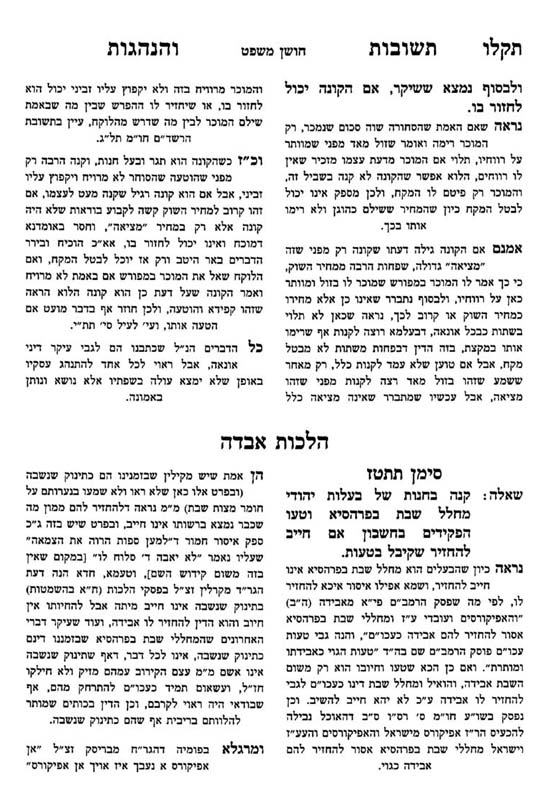
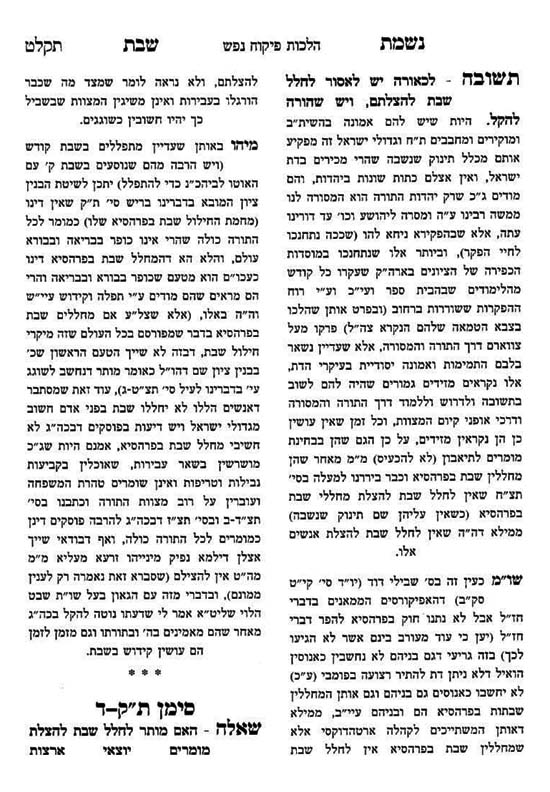
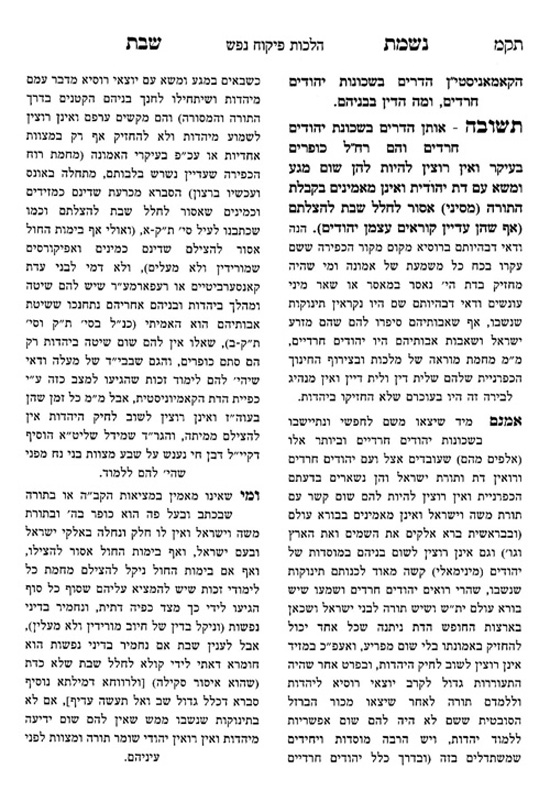
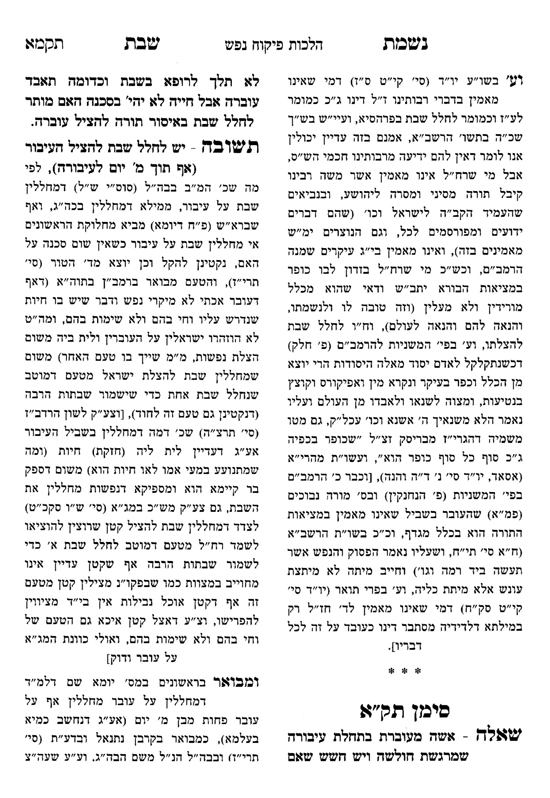
Interesting Legacy Judaica Auction lots

Legacy Judaica
is holding an auction on June 13, 2017, and we wanted to highlight a few items
of interest (for our previous post regarding the auction house and previous
auctions see here.  There are, of course, some old and rare books
from the 16th and early 17th centuries (lots 1-7), and over
forty manuscripts and a number of letters from rabbinical luminaries, R. Yosef
Dov Solovetchik (Beis ha’Levi) (lot 198), R. Yitzhak Ze’ev Solovetchik (Brisker
Rav) (lot 199), R. Hayim Ozer (lot 172), R. Kook (lot 183), R. Henkin, R.
Yechiel Michel Epstein (Arukh ha-Shulkhan) (lot 168), and the Netziv (lots
161-62), (there is also an amulet (lot 163) from his son, R. Chaim Berlin, that
apparently was written at the Netziv’s direction).
Two
particularly important manuscripts relate to the late 18th century
controversy regarding the nascent Chassidic movement.  One, lot 84, is a copy of the 1796 letter
condemning Chassidim that is signed by the Gaon, among others (this is a transcript
of the letter and does not contain the Gaon’s actual signature).  The second, lot 85, is contains two virulent
letters against Chassidim, both of which have been shown to be forgeries.  The first is written in the name of R. Akiva
Eiger, and the second is attributed to R. Yoel of Amtzislav.  Wilensky analyzed both and concluded that
they are forged.  The document also
includes the (real) transcript of the proclamations of the Bet Din of Shklov
against the Chassidim. Unrelated to the forgery, the various condemnations against
the early Chassidim were the subject of a recent controversy when many of them were
reprinted in a three volume history of the Vilna Gaon, Ha’Gaon.  The book was burnt (with hametz) and subject
to bans, one by the Bedatz Bet Din (see our earlier posts herehere, and  here).
Other items
include, R. Aaron Shmuel Koidonover, Birkat ha’Zev’ah, Amsterdam, 1669
(lot 12).  That book contains a number of
bibliographical items of note. The title page indicates that the book was
printed by two different publishers, the first abandoned because of poor
workmanship. But the identity of the sloppy printer is not provided.  This led to complaints by one of the (then) two
Amsterdam publishers, Uri Phoebus.  He
alleged that many were wrongly assuming him to be the offending publisher.  To address Phoebus, in some number of copies
a page was added that identified the culprit as Joseph Athias, the other
Amsterdam publisher.  There was little
love lost between Athias and Phoebus, and ten years later they famously clashed
over competing luxury editions of Yiddish translations of the Bible.
The title page
of the book itself is elaborately illustrated, and depicts at the top, King
David surrounded by two cherubs, and on the sides of the page, four biblical
scenes with corresponding verses relating to various events in David’s
life.  A similar title page, although
significantly more controversial appears in the Amsterdam 1706, book, Hemdat
Tzvi
.  In that instance, however, the
illustrations were used to broadcast the author, Tzvi Hirsch Chotsh’s affinity
for Shabbatai Tzvi (see Bezalel Naor, Post-Sabbatian Sabbatianism,
80-82).
A book related
to Shabbatai Tzvi appears in lot 16, R. Shmuel Aboab’s D’var Sh’mu’el,
Venice 1702.  This copy contains the
section, Zikharon L’veni Yisra’el, that provides two documents regarding
the Shabbatai Tzvi episode.  Many copies
of this edition lack this section. 
The book, Zeh
Sefer Shevach v’Zimra
, (lot 124) relates to the Napoleonic wars. This book,
printed in 1796, relates that when Fasano, Italy (it is located in the heel of
the boot), was under siege by Napoleon, the Jews were charged as spies on his
behalf.  The Jews holed up in the
synagogue and a mob formed outside.  When
all seemed lost, a French cannon went off and the mob was scared off, saving the
Jews.  This book contains the story and a
poem written in commemoration of the event that was to be said yearly.  Napoleon was a mixed bag for the Jews.  Many welcomed him and saw him as an opportunity
to improve the lives of the Jews (some even considered him a messianic
figure).  R. Shneur-Zalmen of Lyadi, the
founder of the Habad movement, was famously against Napoleon, and explained
that “if Bonaparte wins, the wealth of the Jews will be increased and their
status raised, but they will be distanced in their hearts from their father in
heaven.”  On the other hand – and R.
Shneur-Zalman was writing in the Russian Empire – “if Tsar Alexander wins,
poverty will increase among the Jews, their status will be lower, but they will
be bound and tied in their hearts to their father in heaven.”  
For further
information and for online bidding see http://legacyjudaica.bidspirit.com


The History behind the Ashkenazi/Sephardi divide concerning lighting Chanukah candles

The History behind the Ashkenazi/Sephardi divide concerning lighting Chanukah candles

By Zachary Rothblatt

Zachary Rothblatt learned in Kerem B’Yavneh, Ner Yisroel, and will be receiving Semicha soon from RIETS. He is finishing a graduate degree in Bible and Talmud at the Bernard Revel Graduate School for Jewish Studies. He is a Judaic studies teacher at the Idea School in Tenafly, New Jersey.

One of the most famous halachic debates of Chanukah is the debate concerning how many sets of candles a family should light. Ashkenazim believe, with some variances, that each family member should light a menorah, while Sephardim believe that only one menorah should be lit per family. In this essay I would like to map out the history of how lighting Chanukah candles has been practiced and attempt to explain why in fact Ashkenazim and Sephardim do as they do.

The Shulchan Aruch (Orach Chaim 671:2) records the Sephardic practice of lighting only one set of candles per family. Rema (ad loc) records that the widespread minhag in Ashkenazi communities is for each member of the household to light his or her own set of Chanukah candles. The Taz (‘ס״ק א) notes that this is a unique situation in that Sephardim follow the opinion of Tosafot and that Ashkenazim follow the opinion of the Rambam. Some have taken this as proof of cross-cultural interaction between Sephardim and Ashkenazim. Beit Yosef does indeed say that Sephardic custom is based conceptually on Tosafot and Darkei Moshe Ha’Aruch says that Ashkenazi practice is based on the Rambam. That may be true from a conceptual standpoint. From a historical perspective, I believe the bases of these minhagim are to be found elsewhere.

The details of the Rabbinic commandment to light Chanukah candles are found in the Babylonian Talmud (Shabbat 21b) as well as in the Scholion of Megillat Ta’anit. For our purposes, the textual differences between the two corpora and internally within the manuscripts of the Bavli are negligible. The Talmud quotes a Baraita[1]:

ת”ר מצות חנוכה נר איש וביתו והמהדרין נר לכל אחד ואחד והמהדרין מן המהדרין ב”ש אומרים יום ראשון מדליק שמנה מכאן ואילך פוחת והולך וב”ה אומרים יום ראשון מדליק אחת מכאן ואילך מוסיף והולך

The Sages taught: The mitzvah of Chanukah is each day to have a light kindled by a person, the head of the household, for himself and his household. And the mehadrin, i.e., those who are meticulous in the performance of mitzvot, kindle a light for each and every one in the household. And the mehadrin min hamehadrin, who are even more meticulous, adjust the number of lights daily. Beit Shammai and Beit Hillel disagree as to the nature of that adjustment. Beit Shammai say:On the first day one kindles eight lights and, from there on, gradually decreases the number of lights until, on the last day of Hanukkah, he kindles one light. And Beit Hillel say: On the first day one kindles one light, and from there on, gradually increases the number of lights until, on the last day, he kindles eight lights.

The first level of the mitzvah is defined as one candle per family. The second level, mehadrin, mandates a candle for each member of the family (See later for a discussion concerning who is to light these candles). The level of Mehadrin min HaMehadrin is debated by Beit Shammai and Beit Hillel. As per the general rule we follow Beit Hillel. The fundamental question is whether the third level of Mehardin min Hamehadrin is in addition to the second level, i.e. each household member should have a menorah and light from one to eight candles, or that only one menorah should be lit in such a manner. This point is debated between Rambam and Tosafot, as referenced earlier.

Tosafot writes as follows (ad loc s.v. V’hamehadrin)[2]

והמהדרין מן המהדרין. נראה לר”י דב”ש וב”ה לא קיימי אלא אנר איש וביתו שכן יש יותר הידור דאיכא היכרא כשמוסיף והולך או מחסר שהוא כנגד ימים הנכנסים או היוצאים אבל אם עושה נר לכל אחד אפי’ יוסיף מכאן ואילך ליכא היכרא שיסברו שכך יש בני אדם בבית:

It seems to Ri (Isaac of Dampierre, 12th century) that Beit Shammai and Beit Hilel are referring only to “Man and his household” because in this way there is more beautification of the Mitzvah because there is something recognizable when he keeps adding or leaving out (candles) which corresponds to days that are entering or exiting. However, if he makes a candle for each one (i.e. each member of his household gets his own candle), even if he adds (candles) from this moment and onwards, there is nothing recognizable, because (the people) would think that so is the number of people in the household. (i.e. in this case, instead of attributing the increase or decrease in candles to the intention of the owner to match the corresponding day of Chanukah, people would attribute it to the intention to match the number of people in the household.)

Ri feels that for the Mehadrin min HaMehadrin only one set of Chanukah candles should be lit in order to preserve the distinctiveness of each day. We will return to the Tosafot later.

Rambam writes as follows (Mishneh Torah 4:1-3)[3]

רמב”ם הלכות מגילה וחנוכה פרק ד:א-ג

א. כמה נרות הוא מדליק בחנוכה, מצותה שיהיה כל בית ובית מדליק נר אחד א בין שהיו אנשי הבית מרובין בין שלא היה בו אלא אדם אחד, והמהדר את המצוה מדליק נרות כמנין אנשי הבית נר לכל אחד ואחד בין אנשים בין נשים, והמהדר יתר על זה ועושה מצוה מן המובחר מדליק נר לכל אחד ואחד בלילה הראשון ומוסיף והולך בכל לילה ולילה נר אחד.

ב. כיצד הרי שהיו אנשי הבית עשרה, בלילה הראשון מדליק עשרה נרות ובליל שני עשרים ובליל שלישי שלשים עד שנמצא מדליק בליל שמיני שמונים נרות.

ג. מנהג פשוט בכל ערינו בספרד שיהיו כל אנשי הבית מדליקין נר אחד בלילה הראשון ומוסיפין והולכין נר בכל לילה ולילה עד שנמצא מדליק בליל שמיני שמונה נרות בין שהיו אנשי הבית מרובים בין שהיה אדם אחד.

1. How many lamps should one light on Chanukah? It is a commandment that one light be kindled in each and every house whether it be a household with many people or a house with a single person. One who enhances the commandment should light lamps according to the number of people of the house – a lamp for each and every person, whether they are men or women. One who enhances [it] further than this and performs the commandment in the choicest manner lights a lamp for each person on the first night and continues to add one lamp on each and every night.

2. How is this? See that [if] the people of the household were ten: On the first night, one lights ten lamps; on the second night, twenty; on the third night, thirty; until it comes out that he lights eighty lamps on the eighth night.

3. The widespread custom in all of our cities in Spain is that all of the people of the household light one lamp on the first night. And they continue to add one lamp on each night, until it comes out that one lights eight lamps on the eighth night – whether the people of the household were many or whether it was [only] one man.

Maimonides writes his personal opinion that Mehadrin min HaMehadrin is defined as each individual having a set of candles and adding to it successively over the days of Chanukah. He notes though that the common Minhag in Spain was for a family to only light one set of candles.

As we have seen the Rema codifies the minhag of each individual family member lighting his or her own Chanukah candles. In Darkei Moshe Ha’Aruch he explicitly quotes this idea in the name of Rambam. Similarly, Maharshal in his responsa (no. 85), says the Ashkenazi minhag is based on Rambam. Rav Dovid Novhardoker (19th century) in his Shut Galya Masechet (Responsa no. 6) believes this is an incorrect reading of the Rambam. He believes that a precise reading of the Rambam leads to the conclusion that only one individual should light all the candles corresponding to the number of individuals in a house, based on Rambam’s use of the singular form of the verb (מדליק עשרה). He argues forcefully that there is no source for the concept of each individual lighting his or her own menorah in any Rishon and worries that there may be a concern of bracha l’vetala to follow the standard Ashkenazi minhag.

It is entirely possible that Rema and Maharshal disagreed with the validity of the inference of the Galya Masechet. It’s also possible that they were merely trying to find an early source that is conceptually similar to Minhag Ashkenaz and weren’t concerned for the particular details.

The objections of the Galya Masechet notwithstanding, Rav Ariav Ozer Shlit”a of Yeshivat Itri has pointed[4] to early Geonic evidence that there is a concept of an individual lighting of the Menorah. The relevant responsum is found in a number of places, and in some sources is attributed to the mid-9th century Suran Gaon Sar Shalom b. Boaz. The Genizah version (published in Geonica, no. 343) reads as follows:

גאוניקה 343 (וכן בשי׳ בעשרת הדברות ובשע״ת וה״פ ומובא בטור סי׳ תרע״ז)

ואנשים הרבה בחצר אחת שורת הדין אם משתתפין כולן בשמן יוצאין כולם בנר אחת מדנר שיש לה שתי פיות עולה לשני בני אדם ומדר׳ חונא מילא קערה שמן וכו׳ ומדר׳ זורא מראש הוה משתתפנא בפריטי אלמא בשותפות סגיא אבל הרוצה לחבב ולהדר מצות כל אחד ואחד מדליק נר לעצמו דתנו רבנן מצות נר חנוכה נר איש וביתו והמהדרין נר לכל אחד וא׳ וכו׳

The basic issue in the responsum concerns the possibility of multiple individuals living in one courtyard using one menorah. The Gaon says they technically can chip in together to use one set of candles. Ideally though, they should each light his own menorah as we find concerning the Mehadrin of the Talmud. This reading of the Talmud assumes that the 2nd level of Mehadrin is in fact an individual obligation for each member to light, unlike the Galya Maseches.

It terms of other Geonic material there is an important Genizah find (T-S G2.132 1v) that as of now has only been published in a footnote.[5] The fragment reads as follows:

כחשבון הנפשות, שאם יש חמשה מדליק חמשה או עשרה מדליק עשרה. והמהדרין מן המהדרין הוא טעם שלישי מופרש מן הטעמים הראשונים ובו נחלקו בית שמאי ובית הלל ולא בר…ם ומצוה מן המובחר לעשות כדברי בית הלל כטעם השלישי להדליק לילה הראשונה נר אחד ומיכאן ואילך מוסיף והולך נרות וכך אנו נוהגין מדליקין אנו לילה הראשונה נר אחד בשניֿ שני נרות וב…מוסיפין נר.. ש

It appears the source is saying that the 3rd level is to only light one set of Chanukah candles. If this is the correct inference this would indicate that what eventually became the ‘Sephardic’ custom was already being practiced at a very early period, possibly even in one of the Geonic yeshivot.

As well, In the Siddur of R’ Saadya Gaon[6] we find the following interesting comment (quote is from Assaf’s Hebrew translation)


ומצוותיו הן להדליק נר על פתח כל דירה שלנו, מן ליל כ״ה כסליו עד סוף שמונה ימים, ומהדר ישים נר לכל נפש מאנשי הבית.


Rav Saadya curiously only mentions the 2nd level of Mehardrin. This may be an innocuous omission or it may be an indication that it was not common to light according to the level of Mehadrin min haMehadrin. R. Elazar Hurvitz notes a parallel between Rasag’s words and a Gaonic responsum he published.[7] The responsum contains surprising details both concerning the practice mentioned by the questioner and the Gaon’s response. It reads:

ואשר כתבתם, מנהגנו בחנוכה להדליק בהיכל שמנה נרות, בלילה ראשונה עושין אחת משמאל ושבע לימין ובכל לילה מעתיק אחת מימין לשמאל ע(ל)(ד) לילה שמיני יעשו כולן לשמאל. יודיענו אדונינו גאון היאך עושה. שיש מי שאמר ששה עשרה, שמנה מימין ושמנה משמאל. ילמדינו אדונינו היאך מנהגכם וכיצד נעשה. אנו מנהגינו בבית להדליק כמנין אנשים שיש בבית, כדתנן המהדרין נר לכל אחד ואחד. ובבתי כנסיות עושין כבית הלל, לילה הראשון מדליק אחד, מכאן ואילך מוסיף והולך, ואין עושין כלום מהן מימין, וכך יפה לעשות.

The questioner mentions his own minhag to light eight candles every night! What distinguished one night from the next is that every night one candle was moved from the left to the right. The questioner inquires as to what the Gaon’s practice is, as he has heard some recommend lighting 16 candles (!), eight to the right and eight to the left. The Gaon answers that in fact his minhag is to only fulfill the level of Mehardin min HaMehadrin in the synagogue, while at home the minhag was to perform the 2nd level of mehadrin. So we have explicit proof that there were Gaonim who only lit the level of mehadrin, and Rav Saadya is likely precise in his formulation.

As quoted above, Maimonides noted that the widespread Spanish minhag was for each family to light only one set of Chanukah candles. This minhag is attested in several sources, including the Gaonic responsum above. Another early source for the minhag is the 12th century siddur of Rabbi Shelomo b. Natan.[8] While scholars had originally thought R. Shlomo was from Sijilmassa, Morocco, there has been a growing lack of consensus on the issue. Uri Erlich[9] has suggested the possibility that R. Shlomo was from an area near Aleppo, Syria.

Other later evidence for Spanish practice comes from, among other sources, Ritva,[10] Rabbi Hayim of Toledo,[11] and the Nimukei Yosef.[12] From all these sources it is apparent that the Sephardic custom has unquestionably been to light one set of Chanukah candles per family, in variance with Rambam’s own opinion.

The same minhag is attested in Provence by, among others, both Meiri[13] and Rabbi Meiri HaMeili.[14] Against this, R. Yehonatan of Lunel in his novellae on the Rif[15] says that for Mehadrin min HaMehadrin each individual should have their own set of candles. It is very possible that R. Yehonatan, an avid follower of Rambam, followed Rambam’s personal opinion on the matter. It is unclear if such was ever practiced by a Provencal community.

Returning to Ashkenazic practice, the first explicit source for the minhag to have every individual light appears in the writings of Maharil (c. 1365-1427). Both in his responsa[16] and in the Sefer Maharil,[17] Maharil says the current minhag is for each individual to light, explicitly saying they do not follow the opinion of the Ri. Additionally, Maharil and his students[18] devote significant discussion concerning the possibility for a husband to light separate Chanukah candles when not home (The sources take for granted that even within Minhag Ashkenaz a couple would light only one set of candles, hence the question). These issues were debated extensively by scholars, but no prior discussion of this topic appears. While it is an argument from silence, this alone makes one wonder how popular was the current Minhag Ashkenaz before Maharil (one could also suggest that the minhag used to be that spouses lit their own candles, but this contradicts the simple reading of Shabbat 23a).
Looking through the Ashkenazic Halachic material that precedes Maharil one finds repeated mention of the opinion of Ri that there should be only one set per family. The Mordechai explicitly endorses Ri[19] and quotes that it is the minhag (both in our printed version as well as in Vatican ms. 141, which is the manuscript most authentic to the original Mordechai). As well, the opinion of the Ri is codified in the Agudah[20] (early 14th century), by R. Mendel Klausner[21] (early 14th century) in his Pesakim, and by R. Hizkiya of Magdeburg (late 13th century) in his Pesakim.[22] Not a single source belies any suggestion of the later Ashkenazi minhag.

This leads us back to Tosafot. From the presentation of Tosafot as it appears in our printed Gemaras there is no way of telling how the approach of the Ri related to the contemporaneous practice of lighting in 12th century France and Germany. I had even seen a number of years ago someone cautiously propose that the reason that Mehadrin min HaMehadrin was up for debate in Tosafot was because Jews did not actually light Mehadrin min HaMehadrin and there was no set minhag. A review of the manuscript evidence of Tosafot solves this issue. Guenzburg ms. 636 contains a unique Tosafot on Shabbat authored by a student of Ri.[23] The version of Ri in that manuscript reads as follows:

והמהדר’ין מן המהדרין בית שמי וכו’.נר’אה לר’ דלא קאי אנר לכל אחד ואחד כדי לקיים המנהג שלנו. וטעם נותן ר’בי לדבר דהא לא הוי פרסומי ניסא דהא לא ידיע כמה ימים עברו וכמה יש לבא. וא”ת בפחות או ביתר ידיע שיש בלילה אחת יותר או פחות מחבירתה. בהא לא מינכר משום דאמרי אינשי נתרבו או נתמעטו בני הבית. מ”ר.

In this version, the Tosafot writes that Ri offered this explanation of the sugya specifically in order to substantiate the minhag! This is also found explicitly in the version of Tosafot that appears on the side of the Rif in many manuscripts, and is known as Tosafot Alfas. These Tosafot were gathered by Rabbi Yisrael b. Yoel, also known as R. Zuslein, in the 14th century. He seems to also be the collator of the Rashi on the Rif.[24] His version of Tosafot appears as follows[25]

המהדרין נר לכל אחד נר׳ לר”י שיש הידור כב”ה ליל ראשון אחת ומוסיף כל לילה אחת כמו שאנו נוהגי דאז איכא הכר כל הימים כנגד ימים הנכנסים אבל אם עושה נר לכל אחד ואחד ואפי’ יוסיף מכאן ואילך ליכא הכר שהנכנסים יסברו שכך דרך יש בני אדם בבית…

While not as direct as the previous Tosafot, it is clear that the Ri is explaining the Gemara to be in consonance with the minhag. In fact, upon reexamination, it appears that the Mordechai is in fact just quoting this exact version of the Tosafot when he writes

ולמהדרין נר לכל א’ נראה לר”י שיש יותר הידור לב”ה לילה הראשון א’ ומוסיף בכל לילה א’ כמו שאנו נוהגין…

It turns out then that originally the minhag for Ashkenazim and Sepharadim was the same. Only in the late 14th century is there any explicit evidence of a counter minhag. It is plausible that the rupture of the Black Plague and the related pogroms could have been a factor. Why specifically the minhag would have switched to requiring more people to light candles, and hence cost more money, would be unclear.

But that is not the end of the discussion on Minhag Ashkenaz. Some scholars disagreed with the Ri’s reading of the gemara. They presumably thought it was too farfetched to think that Mehadrin min haMehadrin does not directly build on Mehadrin. Two sources provide a very different way to defend the minhag of lighting only one set of candles. The first is found in the margins of Frankfurt Ms. Oct 81, which is a copy of the Piskei Mahariach on Shabbat.[26] The anonymous author, quoting his father R. Shlomo’s Tosafot, writes as follows:

מתוספות מורי אבי ה”ר שלמה נר”ו, וא”ת למה אין אנו עושין כמו מהדרין, שפירושו נר אחד לכל אחד מבני הבית. טעמא שלא יאמרו הגוים שעושין כשפים בשביל שאין רואין בכל בית בשוה:

While he mentions Mehadrin, I believe he is really inquiring as to why we don’t similarly mandate that each individual light his or her own menorah for Mehadrin min haMehadrin. He says that there is a concern that the non-Jews will think that the Jews are engaged in witchcraft if they see different numbers of candles in different houses. R. Avraham Shoshana in his notes on the Mahariach notes that Ritva quotes the same idea.[27] He writes

ופי’ הר’ יוסף דלהכי אין אנו כמהדרים ולא כמהדרים מן המהדרים פן יחשדו בכשפים (כי) אם היה לכל אחד נר.

This opinion of R. Yosef is immediately contrasted in the Ritva with the Ri. R. Shoshana suggests that this R. Yosef is in fact none other than Ri Porat, a 12th century Tosafist who disputes the Ri concerning a number of Chanukah topics. If this is true then even as early as the 12th century the Ri and Ri Porat were debating if it is possible to read the gemara in accordance with the minhag. Ri Porat is suggesting that there is an external factor that is causing the minhag to differ from dina d’gemara. According to this logic, if circumstances would change it would be appropriate for each individual to light his or her own menorah. This approach may have been a factor behind the switch within minhag Ashkenaz.

There may be some evidence from medieval Italy that would suggest they lit multiple sets of Chanukah candles. The Riaz (13th century) explicitly endorses the opinion that each individual should have their own set of candles.[28] Like Ri MiLunel, it is entirely unclear from the source whether such was practiced in any institution. Unlike Provence though, we do not have the same unequivocal evidence about what the Italian minhag was. In Sefer Tanya, a 13th century work modeled to a large degree on Shibbolei HaLeket, the author writes the following[29]

מצות נר חנוכה מדליק נרות כנגד כל בני הבית ולפחות נר אחד לכולן. ויום ראשון מדליק בה פתילה אחת. וביום שני שתים. וכן מוסיף והולך עד יום השמיני

The Tanya begins by saying that “the candles are lit ‘kneged’ all the members of the house, and at minimum one candle for everyone.” He then begins to describe the level of mehadrin min hamehadrin. From the flow of his comments it seems that kneged means that candles are lit according to the number of household members, and it is possible to add to each set as per mehadrin min hamehadrin, like the Riaz.

Many of the manuscripts of Mahzor Bnei Roma carry a common set of Halachot. Six manuscripts[30] I surveyed all state that on the 25 of Kislev we begin lighting candles

כל אחד ואחד בביתו

Which could be understood that every individual member of the household lights his or her own set of candles. The parallel text is found in Sefer HaTadir[31] (Italy 14th century) that states.

וכן בכל בתי בני ישראל שמנה לילות זו אחר זו כל בעל הבית לעצמו ובכל לילה מוסיפין פתילה אח׳ עד שיעלו בליל האחרון לסכום שמנה.

Which is clear that only the head of the household lights candles. So it is possible there were two competing minhagim in Italy and one may have even influenced minhag Ashkenaz but the data currently is too meager to fully resolve the issue.

[1] Translation and elucidation from The William Davidson digital edition of the Koren Noé Talmud, available on Sefaria.org. Transliteration slightly changed.
[2] Translation from Sefaria.org with some changes
[3] Translation from R. Francis Nataf (2019) available on Sefaria.org
[4] In one of his weekly shiurim that are then typed, I can’t currently find the original write-up.
[5] Transcription is my own from the original fragment  (4 תשובות הגאונים עם תשובות ופסקים מחכמי פרובינציה (ישיבה אוניברסיטה תשנ״ה עמוד 233 הערה
[6] סידור רס״ג עמודים רנד-רנה מהד׳ ש. אסף ירושלים תש״ה
[7] תשובות הגאונים הנ״ל (n. 5) שם חלק ב׳ תשובה צא עמודים 232-233 והערה 2
[8] סידור רבי שלמה בן נתן ירושלים תשנ״ה (עמוד עג) בתרגום
[9] In כנישתא, vol. 4 (pages 23-26)
[10] Commentary on BT Shabbat ad loc, s.v. והמדהרים
[11] Student of Rashba (late 13th- early 14th cen.), in his צרור החיים.
 הדורת ש’ חגי ירושלמי, ירושלים תשכ”ו page 110, משפט חנוכה וראש חדש סימן ב׳
[12] Commentary on BT Shabbat ad loc, s.v. והמהדרין מן המהדרין, Blau ed. page 34 link
[13] In his commentary Beit HaBechirah on BT Shabbat ad loc, s.v. מצות חנוכה
[14] In his commentary ספר המאורות on Shabbat ad loc, sv מצות נר חנוכה, Blau ed. Page 69
[15] 9b in the pagination of the Rif, s.v. נר איש וביתו
[16] No. 145
[17] In the chapter on Chanukah section 8
[18] ׳עיין חידושי דינין והלכות למהר”י ווייל סימן לא, תרומת הדשן סימן קא, לקט יושר הל׳ חנוכה, ושו”ת מהר”י מברונא סימן נ
[19] רמז רע בדפוס
[20]שבת פרק ב׳ סימן לב׳
[21] שבת פרק ב׳ דף כ: מהד׳ בלוי עמוד של״ב link
[22] Piskei Mahariach Shabbat 21b, page 162 in the Blau ed. link
[23] It has been published by Machon Ofeq under the title תוספות ר״י הזקן ותלמידו
[24] For more information concerning the Tosafot written on the Rif see the article from R’ Avraham Chavatzelet of Machon Yerushalayim in Moriah (Yr. 18, Gilyon 11-12, Shevat 5753, Pp 95-102)
[25] Text is transcribed from British Library Add. Ms. 17049
[26] These notes were published as the Gilyon in both Rabbi Blau’s ed. (see note 22) and in R. Shoshana’s edition of the Piskei Mahariach on Shabbat (which is included at the end of vol. 3 of תוספות ר״י הזקן ותלמידו)
[27] Commentary on BT Shabbat ad loc, s.v. והמדהרים
[28] In his Pesakim on Shabbat 21b
[29] Warsaw 1879 ed. page 77 link, I’ve also compared it with ms. versions.
[30] Paris ms. hebr. 599, Parma nos. 2221, 2228, 2405, 3132, and Saraval no. 60
[31] Published by Blau from Parma 2999, Sefer HaTadir also appears in the margins of Mahzor Bnei Roma in Lon BL ms. Harley 5686, text is found in Blau on pgs 204-205 link


New Book: The Living Tree: Studies in Modern Orthodoxy by Rabbi Shlomo Riskin

Rabbi
Shlomo Riskin’s new book,
The Living Tree: Studies in Modern Orthodoxy, has just
appeared. The Seforim Blog is happy to present this selection from it.

Halakhic Pluralism in the Eyes of Rishonim and
Aharonim

In many of the off-hand remarks of the early
commentators, their advocacy of the principle of halakhic pluralism is plain to
see, regardless of whether these great authorities stemmed from Ashkenaz,
Sepharad, or Provence. They repeatedly express the pluralistic principle of
“these and those are the words of the Living God.”
Rashi, in his commentary
to Ketubot 57a, writes:
W hen two [sages] argue
over the statement of one [who was their master], and one sage says that this
is what the master said and the other says that this is what the master said,
one of them is lying. But when two Amora’im argue regarding a civil or ritual
halakhic issue, and each one maintains the logic of his position, there is no
falsehood. Each one is expressing his logic, the one master giving a reason for
permitting and the other master giving a reason for prohibiting, one master
compares issue to issue in such a fashion, and the other master compares it in
another fashion. It is necessary to say, “these and those are the words of the
Living God”; sometimes this logic pertains and sometimes that logic pertains,
because the logic changes even on the basis of a small change in the issues at
hand.
The Ritba (Rabbi Yom Tov ben Avraham Asevilli,
1250–1330) on Eruvin 13b comments as follows:
“These and those are the
words of the Living God.” The rabbis of France asked, How is it possible for
both views to be those of the Living God when one prohibits and the other
permits? And they answered: W hen Moses went on high to receive the Torah he was
shown forty-nineways to permit and forty-nine ways to prohibit every object. He
asked the Almighty concerning this, and He said, “Let these [matters about
which there are so many possibilities] be handed over to the sages of Israel in
every generation, and let the resolution be in accordance with their will.”
 Rabbi
Menaĥem Meiri (1248–1316), in his work Beit HaBehira, commented on Yevamot
14a:
That which the Torah
commanded lo titgodedu (“Do not slice yourselves up” – Deut.14:1), even
though its principal meaning is not to wound oneself as an expression of
mourning for one who has died, there is a nuance [within the word titgodedu
which may be interpreted to mean] not to turn the commandments into separate
divisions [agudot], and this is to prohibit several individuals from
performing ritual in one way while others per- form the ritual in a different
way, until it appears as though we are being led by two Torahs. But this
prohibition applies only when a city has only one court, and when even this
court is itself divided, with one component group deciding in accordance with
one view and another component group in accordance with another view. But
whenever there are two judicial courts, albeit in one city, and one court is
accustomed to deciding in accordance with this view and the other court is
accustomed to deciding in accordance with that view, this does not represent
separate divisions because it is impossible for everyone to always agree on one
opinion. This is certainly true regarding actions based upon custom, where
there is no objection if these act in such a way and those in another way.[1]
Even during the period of the later
commentators, the idea of halakhic pluralism finds expression. Admittedly,
works such as the Kitzur Shulhan Arukh of Rabbi Shlomo Ganzfried, which
records only one authoritative opinion – unlike the original Shulhan Arukh,
which includes the opposing views of Rabbi Karo and the Rema – seem to imply a
more monistic halakhic approach. A ringing defense of pluralism is to be found
in the words of Rabbi Chaim ben Rabbi Bezalel, brother of the Maharal, who
studied together with Rabbi Moshe Isserles (the Rema) in the mid- sixteenth
century in the yeshiva of Rabbi Shalom Shachna. He wrote Viku’ah Mayim Hayim
(usually included at the end of the Rema’s Torat Hatat), in which he
vigorously argues against any written halakhic codification reflecting only one
halakhic opinion:
Only after [the decisor]
has studied all of the legal disputes which have arisen regarding a specific
law can his word run quickly into the sea of wisdom…Moreover, the mind of an
individual is not always consistent and perhaps his mind is not disposed to
give the same halakhic ruling which he gave yesterday; there is not in this any
change or deficiency [which would lead us] to say that through him the Torah is
becoming like two Torahs, God forbid. The opposite is the case; this [manner of
halakhic investigation, exploring multiple opinions] is the path of Torah, and
“these and those are the words of the Living God.” (Elon, Mishpat HaIvri,
37)
A fascinating contrast is to be found in the
writings of two cotemporary religious leaders, Rabbi Moshe Feinstein and Rabbi
Yitzhak Hutner. The former, world-renowned halakhic decisor of our generation,
utilizes the expression “these and those are the words of the Living God,” but
nevertheless posits that one argument may ultimately be more correct than the
others:
And this is the matter
concerning all of the disputes of our earlier and later sages, when one forbade
and the other permitted: whenever the [law] was not resolved in accordance with
one [of them], any [rabbi] could rule in his locality in accordance with his
logic, even though the true law is only in accordance with one of them…Both are
the words of the Living God, but the real truth, revealed before heaven, is
only like one of them.
Nevertheless, Rabbi Moshe Feinstein insists that
with regard to reciting the blessings on learning Torah and fulfilling the
commandment to study Torah, no differentiation should be made between texts
containing majority opinions and texts containing minority opinions. All Torah
texts are worthy since “these and those are the words of the Living God” (Iggrot
Moshe, Orah Haim
4:9, 24).
Rabbi Yitzhak Hutner, on the other hand, accepts
the talmudic view that disputes arose as a result of insufficient study or
forgetfulness, a view which we initially equated with the monistic approach to
halakha. Nevertheless, he resoundingly affirms the positive role of disputes in
enlarging the scope of Torah and initiating novel ideas therein. He even reads
into this view of the origin of halakha a bold concept of halakhic pluralism:
Sometimes, the
nullification of Torah is its very confirmation, as it is written, “the tablets
which you have broken.” [God said to Moses], “May your strength increase
because you have bro- ken them; the act of breaking the tablets is an act of
confirming the Torah through its nullification.” Our sages have said, “Were the
tablets not broken, Torah would not have been forgotten in Israel” (Eruvin
54a); we find therefore that the breaking of the tablets contains an aspect of
forgetting of the Torah. We learn from this an awesome and novel idea: it is
possible for Torah to be increased through its having been forgotten, and it is
possible to be blessed with increased strength because of the Torah having been
forgotten!
Go out and see what our
sages have taught: three hundred laws were forgotten during the mourning period
for Moses, and Otniel ben Kenaz restored them with his logic and casuistry (Temura
16a). And even more than that: every dispute in halakha stems from the fact
that Torah was forgotten, and nevertheless our sages declared, “Even though
these purify and those defile, these invalidate and those permit, these exempt
and those obligate, these and those are the words of the Living God.” Hence,
all different opinions and differing views contribute to the growth of Torah
and its majesty, which…is emphasized to a greater extent by the Oral Law which
is revealed in disputes rather than by agreement, because “these and those are
the words of the Living God” includes the principle that even the rejected view
in halakha remains Torah knowledge as long as it was expressed as part of the
give-and-take of the Oral Law…and if there will be a vote afterwards and the
decision is in accordance with the rejected view, from then on halakha will be
different in truth.
The “battles” within
Torah are not simply one of many possible ways of (acquiring) Torah, but rather
the positive creation of new Torah values which cannot be found in the words of
Torah… And the two sides which clash in halakha become partners in the creation
of a new Torah value whose name is “the battle of Torah.” (Pahad Yitzhak,
Hanukka
pp. 36–37)
Despite all this, pluralism is obviously not
open-ended. Starting with the biblical story of the Tree of the Knowledge of
Good and Evil which opens the Book of Genesis and serves as an introduction to
the entire Torah, it is clear that God demands that the definition of what is
good and what is evil must emanate from an objective source beyond the
subjective individual. Indeed, even though the fruit was “good to eat, a
temptation to the eyes, and a desirable way to gain wisdom,” the Almighty
nevertheless decided that it was evil to partake of it. And from the talmudic
period until the Emancipation, the partners to the “these and those are the
words of the Living God” disputes each accepted upon themselves an external and
objective halakha. Submission to a higher autonomous system was the axiom of
halakhic dispute. Hence, a non- Orthodox system cannot claim halakhic
legitimacy under the rubric of “these and those are the words of the Living
God.” While we may certainly learn from serious Jews of any or no religious
persuasion, both tradition and logic dictate that halakhic legitimacy can only
be accorded to those who accept upon themselves the axioms upon which the
halakhic system is based.
Although a non-halakhic theological system
cannot claim for itself a voting voice in a forum of halakhic discourse, I
believe it is crucial that the tent of Orthodoxy be as broad, open, and
inviting as possible. Even a halakhic position which the Orthodox majority
rejects, but which, nevertheless, has a legitimate halakhic basis to rely upon,
should be given due consideration.
Within the world of halakhic Judaism, the most
striking affirma-tion of the benefits of a pluralistic approach is to be found
in the words of Rabbi Avraham Yitzhak HaKohen Kook, in Olat Re’iya,
volume 1, p. 336:
The multiplicity of
views which arise as a result of the differences of personalities and
educational backgrounds is specifically the fact which most enriches and
broadens wisdom. Ultimately, all issues will be properly understood, and it
will be recognized that it would have been impossible for the Building of Peace
[the Third Temple] to have been erected had it not been for all those
influences which appeared to have been in conflict.
According to Rabbi Kook, it is the sum total of
many different ideas and ideologies which will ultimately lead to a shared
vision that expresses true peace; the authentic symphony is the product of many
different musical instruments melding together in majestic harmony.

[1] It is interesting to
note that according to Rabbi Ben-Zion Uziel, the first Sephardic chief rabbi of
the State of Israel, in his Piskey Uziel (page 26, siman 10), Rashi
would permit two different courts – for example, Sephardic and Ashkenazic – in
one city, since he explains the prohibition of making divisions “lest it appear
that we are acting in accordance with two Torahs” (Rashi on Yevamot 13b)
and different communal customs do not suggest two Torahs. Maimonides, on the
other hand, would prohibit this since he maintains that the prohibition of
making divisions, “that there not be two courts in one city, this one in accord
with this custom and that one in accord with that custom, for this matter
causes great dissension” (Mishneh Torah, Hilkhot Avoda Zara, chapter 12,
law 14). Rabbi Avraham Yitzĥak HaKohen Kook, in Ezrat Kohen, siman 103,
par. 17, rules that the Sephardic and Ashkenazic communities in one city are
separate, and the prohibition of making halakhic divisions does not apply to
them. Rabbi Kook cites the Shakh to Yoreh De’ah 242, who limits the
prohibition, “Do not slice yourselves up” to dissension within the same court
in one city.