R. David Nieto’s Matteh Dan, Life on Other Planets and Jewish Reactions to Copernicus

R. David Nieto’s Matteh Dan, Life on Other Planets and Jewish Reactions to Copernicus

by Eliezer Brodt


R. David Neito and the Mateh Dan

R. David Nieto was born in 1654 in Venice and died in England in 1728. Aside for being a tremendous talmid hakham, Nieto also had degrees in science, philosophy, and was a medical doctor. He was a Rav, Dayan and Darshan in Leghorn for a while. He then was hired to be Rav of the Sefardi Kehila in England in 1701. Besides for being a multi-talented Rav, he was a prolific writer authoring numerous works. Including on dealing with the calendar Pascologia, another work, De la divina Providencia was authored in his own defense after he gave a sermon claiming that G-d and nature are one, some people in the community called him a heretic for this. A copy of this sermon was sent to the Chacham Zvi who defended R. Nieto. This defense was printed in his Shu”t Chacham Zvi (#18). This incident is also mentioned in R. Jacob Emden’s autobiography Megilat Sefer (Bick Ed.),(p.55). See also Chida in Shem Hagedolim (Erech Mateh Dan) who quotes this; C. Dembeister, Klelas Yofee 1:95b; Cecil Roth, Essays and Portraits in Anglo Jewish History (Philadelphia: Jewish Publication Society, 1962), 118; Jacob J. Schacter, “Rabbi Jacob Emden: Life and Major Works,” (PhD dissertation, Harvard University, 1988), pp. 272 & 331; David B. Ruderman, Jewish Thought and Scientific Discovery in Early Modern Europe (New Haven: Yale University Press, 1995), 317-318]. See also here and here.

Another of R. Nieto’s works is Esh Dat which was written against Nechemiah Chiyyon. As far as halakhic literature we do not have any printed works but R. Nieto did produce works in this field yet they remain in manuscript until today (see Cecil Roth ibid.), one was recently auctioned off at a Asufa auction. Most of his works have never been translated into Hebrew.

Much has been written on R. Nieto in general, just to cite a few sources: see Moritz Steinschneider, Jewish Literature, (1967) p. 263; Israel Zinberg, Toledot Safrut Yisrael, vol. 3, pp. 243-44; especially Cecil Roth, Essays and Portraits in Anglo Jewish History, 113-29, later translated into Hebrew in the Mossad Rav Kook 1968 edition Mateh Dan; Raphael Loewe, “The Spanish Supplement to Nieto’s Esh Dath,” Proceedings of the American Academy for Jewish Research 48 (1981): 267-296; and David B. Ruderman, “Jewish Thought in Newtonian England: The Career and Writings of David Nieto (In Memory of Jacob J. Petuchowski),” Proceedings of the American Academy for Jewish Research 58 (1992): 193-219, later expanded in his work, Jewish Thought and Scientific Discovery in Early Modern Europe, 310-31; and the recently published article by Matt Goldish, “The Spirit of the Eighteenth Century in the Anti-Sabbatean Polemics of Hakham David Nieto,” in Jeremy D. Popkin, ed., The Legacies of Richard Popkin (=International Archives of the History of Ideas – Archives internationales d’ histoire des idées, no. 198 [2008]), 229-243. See, as well, Menachem Butler, “Hakham David Nieto and Hakham Zebi,” the Michtavim blog (14 November 2008), available here, which includes, as well, a picture of R. Nieto. Additionally, R. Nieto is mentioned in the excellent work of historical fiction by David Liss, A Conspiracy of Paper, pp. 109-10. David B. Ruderman shows in his Jewish Enlightenment in an English Key (Princeton Press, 2000), pp.185-86, that R. Nieto was the first Jewish thinker to grapple with Newton in his works although not by name.

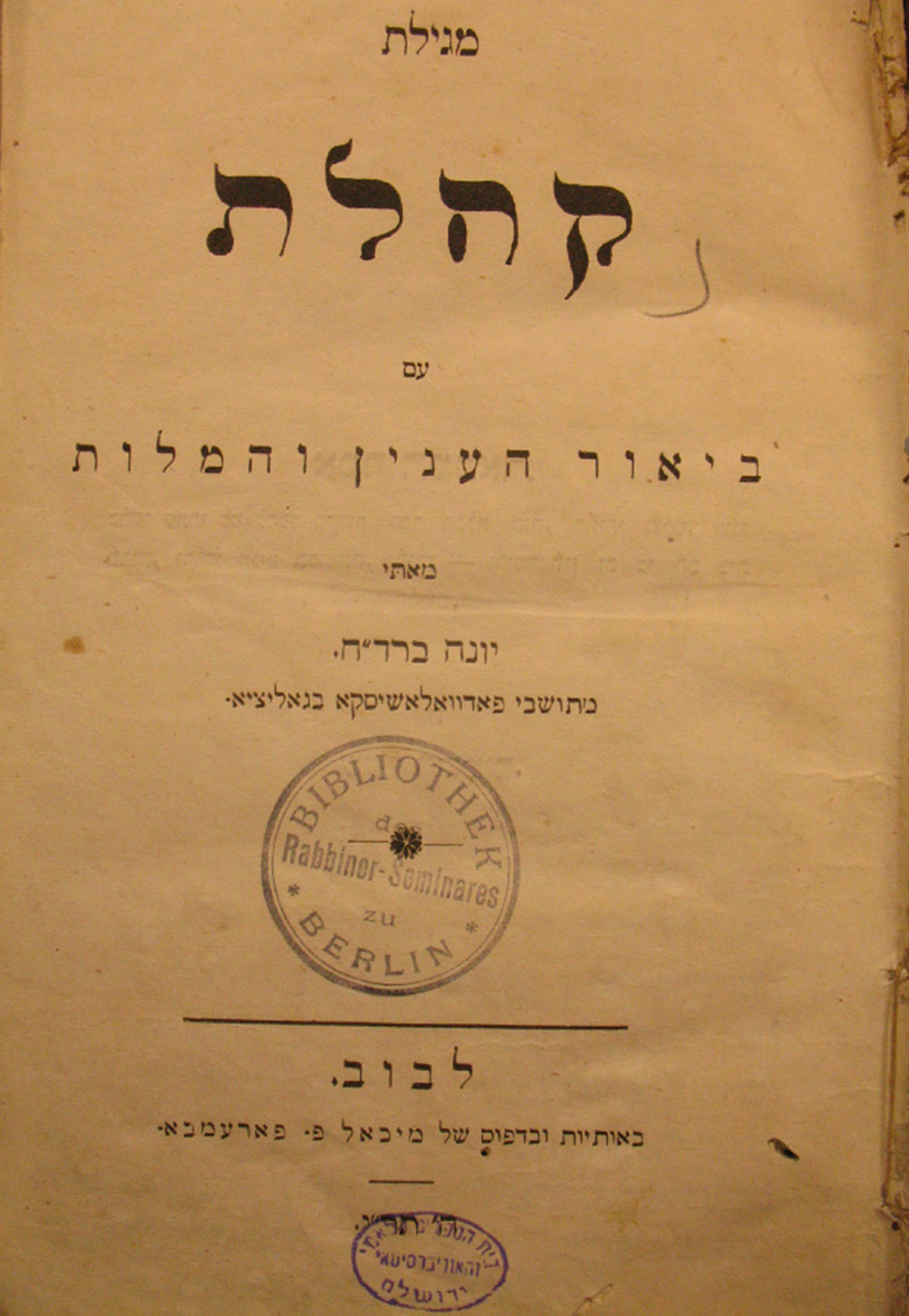
R. Nieto is most well known for his Matteh Dan or the Kuzari Hashenei. First printed in 1714, this edition was issued in three versions at the same time, one in Hebrew one in Spanish and one in both Hebrew and Spanish. The Spanish only edition is exceedingly rare. According to one source there are but three complete copies of this edition extant. See Israel Solomons, “David Nieto and Some of his Contemporaries,” in Jewish Historical Society of England Transactions, vol. XII (1931) pp. 26-27. All of the various versions of the first edition include a drawing of Rabenu Hakodesh on the title page which some speculate was done by Nieto as he was an artist (see Roth, ibid, p. 128, but he is mistaken in claiming the drawing was of Moshe when the legend underneath the portrait states that is Rabbenu Hakodesh and the figure is pointing at a book that has the word “Mishna” in large letters). In 1779 the Matteh Dan was reprinted with a beautiful Haskama from the Shages Aryeh (also mentioned by the Chida in his Shem Hagedolim entry on R. Nieto). The title page of the 1884 edition of the Mateh Dan mentions these two Gedolim (Shages Aryeh and Chida) and the Chacham Zvi all endorsing this work. The Steipler (Chayhe Olam) includes the Mateh Dan in a small list of recommended reading material on emunah and refers to the Mateh Dan as “הספר הנפלא”. This work is quoted in many seforim just to cite a few: R. Y. Heller. Maoz Hadas, p. 35a, Meshiv Nefesh (p.18a), R. Kemlar in Talmud u-Maddah numerous times (pp. 16, 31, 58, 69) Shut Beis Mordecahei (#63) and even in some of the recent works on Bircas ha-Chammah, see, e.g., R. J. D. Bleich, Bircas Hachammah, p. 58; R. M.M. Gerlitz, Bircas Hachamah KeHilchosah,p.148; R. A. Brisk, Otzar Hazemanim, pp. 209, 225, 238. R. Meshulam Roth created a curriculum for his yeshiva, he included the Kuzari Hashnei as an essential sefer for his talmidim to read (among other interesting things in the program; see Mivasar Ezra, p.177, and Mivasar Vomer, p. 119); R. Meir Shapira even asked R. Roth if he could use the latter’s curriculum for Yeshivat Chachemei Lublin (see Mivasar Ezra, p. 172).


In 1968, Mossad ha-Rav Kook published an edition of the Mateh Dan based on the first printing. This edition is visually very nice, they did a nice job of laying out the sefer including a table of contents before each section of the sefer. But the notes although are helpful are very minimal [all quotes in this post are from this edition].

A few months ago a new English critical-edition of R. David Nieto’s Matteh Dan was translated from the Hebrew by Louis Loewe and completed by Raphael Loewe, published by the Spanish and Portuguese Jews’ Congregation of London, and Mechon Haktav of Jerusalem. This work was edited and prepared for publication by Yehuda Hershkowitz. This new edition is two volumes including a beautiful facsimile edition of the first printing on high quality paper leather bound. The facsimile volume reproduces the original edition of Hebrew with a Spanish translation on the side. The English translation had been done in 1845 by Louis Loewe. [I am aware that there is another English translation of this work published by Yashar Books, although it is only a partial translation and I never had a chance to see it.] This translation of L. Loewe was reprinted in this new set with some of the translation adjusted to our current English but as a whole remains the same. Many small useful notes were added in by the editors Raphael Loewe and Yehuda Hershkowitz. Besides for the nice interesting introduction by R. Loewe this new edition has an excellent overview by Yehuda Hershkowitz entitled “A Brief Survey of Calendar Making” (pp. 318-48). The purpose of Hershkowitz’s overview is to aid the reader in understanding the fifth section of Mateh Dan which deals with the calendar. Some other additions found in this edition were the many comments of R. Moshe Rimoni written in 1794 which were already included in the Mossad Rav Kook edition. In addition to this Yehuda Hershkowitz printed for the first time a manuscript from 1819 written by R. A. Lampronti about life on other planets.This manuscript comes from the now well known Valamadonna collection of Jack Lunzer.

I would like to highlight some of the very many points of interest in the Matteh Dan. The work pretty much starts where the Kuzari ends (hence the alternative title – Kuzari ha-Sheni), and the main focus of the Mateh Dan is to defend the legitimacy of Torah Shel bal Peh. It is written in debate format similar to the Kuzari. In the introduction of his work he writes:

ולפי שיש מחלוקות על מלך כוזר הראשון ועל מלכותו… יש אומרים שהרב המחבר המציא בדעתו מלך ומלכותו אשר לא היה ולא נברא. ויש אומרים שמעשה שהיה כך היה ככתוב בספר כדי שלא לאפושי במחלוקות על הכוזרי שלי אני מודיע נאמנה לכל קורא בספרי שלא נהיה כדברים האלה כי מלבני אני בודאם

The sefer is divided into five sections. In the first section he sets out to prove that the Jews always had Torah Shel Bal Peh from the times of Moshe and onwards. He shows how various Mitzvas its impossible to understand if we do not have Torah Shel Ba’al Peh. One of the many nice pieces in this section that he writes when dealing with the prohibition of carrying on Shabbas (p.12):

איסור משא קל כמעט שמפורש בתורה שהרי דוד המלך ע”ה אמר בדבר ה’ שמים נעשו ובכן היתה הבריאה ביום הראשון אמר השם יתברך יהי אור ויהי אור… ויכלו השמים והארץ וכל צבאם וכתבי וישבות ביום השביעי. נמצא שכששבת לא שבת אלא ממאמר בעלמא שהוא דבר שאינו יכול לגרום לו ליאות ויגעה משני טעמים חדא מפני שבו יתברך שהוא בלתי תכלית וכחו בלתי בעל תכלית לא יתכן ליאות ויגעה ב’ שאפילו תימה ח”ו שהיה ראוי לכך אי אפשר שייעף ויגע על הוצאת שתי מלות בכל יום בלבד נמצינו למדים שהקב”ה שבת ממה שלא היה יכול לייגעו בב’ טעמים, ולכן האיש הישראלי אשר ישבות ממשא כבד בלבד לא ישבות כמו ששבת הקב”ה אבל כשישבות אף ממשא קל אזי באמת שומר שבת מחללו ומחזיק בבריתו יתברך.

In section two he continues proving the truth of Torah Shel Bal Peh. A nice piece in this section is while proving that the esrog is the fruit the Torah requires one to take on Succos he writes (p.25):

בחג הסוכות אמר הכתוב ולקחתם… פרי עץ הדר… ואפשר שהכוונה היא על רמון נאה… אבל הם ז”ל פירשו שהוא אתרוג דווקא ופסלו כל מה שאינו אתרוג ממש כפי הסימנים אשר מסרונו אף על פי שיהיה מאותו המין, וזה גורם הוצאה רבה ועגמת נפש גדולה ליושבי ארצות ואקלים הקרים לפי שצריך שיביאו להם אתרוג מארץ הרחוקים לחוג בו את חג הסכות בהוצאה רבה. ולא עלתה תלונותי כי אין ציבור עני, אלא שלפעמים יש להם ההוצאה אבל לא השבח של המצוה כגון כשלא הגיע לידם אלא בתוך ימי החג או אחריו התאימין אדוני המלך שאנשים חכמים ונובנים בדו כל זה מלבם טעם ויסוד אחר אלא להתשרר על הצבור.

When dealing with the writing of the Mishnayos he writes (p.43):

אלא אפילו לאותן שנזכרו בהם תנאים באין חולק עליהם שכולם קבלה, לפי שרבינו הקודש לא היה אלא מלקט ומסדר ופוסק מה ששמע ואסף מימי התנאים אשר היו לפניו עד האחרונים אשר הוא אחד מהם.

When talking about asmactos he says (p.52):

אסמכתא… כח משפט חז”ל לסמוך העיקר המקובל על איזה פסוק אף על פי שהוא רחוק במטחוי קשתת מפשוטו, כי זה אינו אלא לעורר הזכירה. ובכן ברמז בעלמא סגי, כמו שעושין בני אדם, שקושרין קשר בסודר לזכור איזה דבר.

This understanding of asmactos follows the Rambam and other Rishonim yet there are other Rishonim disagree, at times rather sharply. For example, the Ritva who writes:

ומשום הכי קתני ר”ע שאמר הקב”ה אמרו לפני מלכיות זכרונות וכו’ שכל מה שיש לו אסמכתא מן הפסוק העיר הקב”ה שראוי לעשות כן אלא שלא קבעו חובה ומסרו לחכמים, וזה דבר ברור ואמת, ולא כדברי המפרשים האסמכתות שהוא כדרך סימן שנתנו חכמים ולא שכונת התורה לכך, חו ישתקע הדבר ולא יאמר שזו דעת מינות הוא, אבל התורה (העידה) [העירה] בכך ומסרה חיוב הדבר לקבעו [ל]חכמים אם ירצו כמו שנאמר ועשית על פי הדבר אשר יגידו לך, ולפיכך תמצא החכמים נותנין בכל מקום ראיה או זכר או אסמכתא לדבריהם מן התורה כלומר שאינם מחדשים דבר מלבם וכל תורה שבע”פ רמוזה בתורה שבכתב שהיא תמימה וח”ו שהיא חסירה כלום (ריטבא, ראש השנה דף טז ע”א).

This topic is dealt by many just to list some sources see: R. Yosef Engel, Beit Haotzar,1:190; R. Meshullam Roth, Shu”t Kol Mivasar, 2:21-22; Mivasar Ezra, 20-22; R. Yaakov Hayyim Sofer, Yeshurun 20:678; R. Yonah Martsbach, Aleh Yonah, 101-105; R. Gedaliah Nadel, Betorato Shel Rav Gedaliah, pp. 28-30; R. Gedaliah Nadel, Mila Dehespeda, pp. 130-31. In section three he discusses many specific points in regard to Torah Shel Bal Peh just to list some of the many interesting ones: When dealing with how exactly did arguments begin in Klal Yisrael in the times of the talmedei of Hillel and Shamaei he goes has a lengthy historical discussion of that period to explain what happened listing all the terrible decrees and persecutions that the Jews went through at that time. At the end the Kuzari asks him (p.65):

אבל מה תשיב על שכחת דברים הנוהגים בכל יום כגון קידוש והבדלה שמצינו בית שמאי ובית הלל חולקים בקידוש אם מברכין על היום תחילה או על היין וכן בהבדלה… וכי לא ראו ולא שמעו איך היו מקדשים אבותם ורבותם בשבתות וימים טובים, היאמן כי יספור ששכחו דברים כאלו שהם תמידים? אמר החבר: אין מקום לקושייתך משום דקי”ל סדר ברכות אין מעכבות… ולכן בראשונה כל אחד ואחד היה מקדים או מאחר שהיה רוצה, עד שבאו בית שמאי ובית הלל ועמדו למנין על סדר הברכות ונפסקו ההלכה. ואף על פי כן אם הקדים המאוחרת או איחר המוקדמת יצא. וכן יש לומר בכל המחלוקות שתמצא מזה המין…

[This answer applies to all such questions which others have dealt with at length like how did a argument between Rashi and Rabenu Tam evolve over the order of the Parshiyos in Tefilin why didn’t they check what previous generations did. The answer in short which is given is both were done by some.]

When dealing with the famous question dealt with by many of why can’t Amoraoim disagree with Tannoim he writes (p.68):

שלא חילקו האמוראים על התנאים מפני שהכירו שהיו גדולים מהם בכל הבחינות ודלא כמו שכתב הכסף משנה שקבלו על עצמם שלא לחלוק…

Then he writes that there is a constant yeridot ha-dorot when it comes to people’s knowledge (a point which not all agree with) so he wonders why do we say הלכה כבתראי. So he answers:

על דרך המשל הידוע שננס רוכב על גבי ענק רואה יותר ממה שרואה הענק אף על פי שהננס הוא כנמלה לגבי הענק.

Much has been written on this משל see the Alpha Beta Kadmita Deshmuel Zeriah from R. Shmuel Ashkenazi pp. 322-27; see also S. Leiman, “Dwarfs on the Shoulders of Giants,” Tradition 27:3, pp. 90-94 in both of these articles, the Kuzari Hashenei is not included. Just to add three more sources on the topic, not on either of the previously mentioned extensive lists see Simchat Hanefesh, p. 112; R. Y. Heller, Maoz Hadas, p.34b; A. Lipshitz, Avos Atorah Levonim. p. 175 n.6. On this topic in general see; I. Ta-Shmah, Halacha, Minhag Umitzyius Baskenaz, pp. 58-79; Daniel Sperber, Netivot Pesikah, p. 31 n.51, Joseph Davis, Yom-Tov Lipmann Heller Portrait of a Seventeenth- Century Rabbi, pp. 46-47, and A. Melamad, Al Kesefei Anakim. When listing the מצות דרבנן he writes that (p.72) they are:

מגלה, חנוכה, נר שבת ויום טוב, הלל , עירובין, נטילת ידים, יום טוב שני של גליות, שבעת ימי המשתה, שבעת ימי אבלות וארבע תעניות.

Not all agree with this listing as this topic has been discussed at great length in his usual incredible style by R. Shmuel Ashkanazi in Kovetz Beis Aron ve-Yisrael (issue # 35, pp. 97-114 and issue #38, pp.139-154). While discussing the reason why we do not blow Shofar when Rosh Hashonah falls out on shabas he writes about the masses of the Jews at the time (p.80):

שרוב עם בני ישראל היו עמי הארץ ומיעוטא דמיעוטא היו חכמים, וכיון שרובא היו עמי הארץ ממילא לא היו בקיאין בדוקדוקי מצות ולכן כשחל ראש השנה וסוכת בשבת ילך אצל בקי עם השופר או עם הלולב כדי שיתקע או יברך לו או כדי ללמוד נטילתו או ברכותו ויוליכנו ארבע אמות ברשות הרבים ויבוא לידי איסור סקילה ואף את יתרו בו לא ישמע לקול מוריו כי יאמר שאינו רוצה לבטל המצוה.

When discussing the topic of why we have two days of Yom Tov even thought we understand the calendar today he writes (p.83):

שאם מלך המושל בארץ ישראל קודם ביאת משיחנו ועודנו בגלות יתן רשות לישראל לשבת על אדמתם ולמנות עליהם סנהדרין יחזור העיבור ליושנו והיו מקדשין על פי הראיה כימי קדם קדמתה ואז לא היינו חוגגין לעולם יחד ביום אחד אלא לפעמים ג’ משום שכל דבר שבמנין צריך מנין אחר להתירו, וכיון שכל ישראל הרחוקים מארץ ישראל קבלו עליהם לעשות שני ימים להסתלק מן הספק, צריך שיסכימו כולם גם כן לבטל תקנה זו וזה איפשר דרך טבע מפני שאנו מפוזרים ומפורדים בין כל האומות העולם אחת הנה ואחת הנה ויש כמה וכמה מבני ישראל במדינות רחוקות, אשר אין אנו יודעים זה מזה ולא יש דרך הכרה ביניהם ובינינו בשום פנים, כגון במלכיות פרס והודו וכוש, ובמלכות גינה וטארטאריאה, כפי מה שמצאתי ראיתי בספרי המלחים והההלכים.

R. Menachem Kasher (Torah Shelemah, vol. 13, p. 129) already points out that the Meshech Chochma (Bo, 12:1) and others say the same thing. In section four he deals with many topics related to Chazal and their knowledge in science. He begins this section dealing with what exactly are the seforim chizonim that chazal prohibit one from learning and why are they prohibited (pp. 97-100). He is of the opinion as are many others that there is a connection between kabalah and philosophy (p. 98). He shows that chazal had great knowledge in philosophy (pp. 129-57), geometry, and mathematics including a whole lengthy discussion of the mathematical Gemaras in Succah (pp. 113-25). He also deals at great length showing there tremendous knowledge in understanding the calendar etc. (pp. 182-90). Many others have also shown Chazal knowledge in all areas of science just to mention one interesting work on the topic is R. Y. Kemhlar’s Hatalmud Vmadei Hatevel. In addition R. Nieto also has a lengthy discussion showing there expertise in the and anatomy of humans and animals (pp. 104-06). Others have also shown this for example see Meshiv Nefesh (p. 14b, 22a) R. Aron Marcus, Keses Hasofer (p. 78) and Hatalmud Vmadei Hatevel (p. 24). One additional source related to this is found in Chut Hamishulash (p.29a) where he writes about the Chasam Sofer:

לתכלית גדול הזה לברר הלכה לאמיתו ולהעמיד כל ענין על בוריו הי’ לו לכל שיעורי תורה כלים מיוחדים מדודים מאתו בדקדוק הדק היטב להראות לתלמידיו וכן הי’ לו בארגז מיוחד שני צורות תבנית זכר ונקבה מעשה אומן מופלא והיו נעשים פרקים פרקים וכל חלקי הפנימים מעשה חדש נפלא ללמוד וללמד חכמת הניתוח ולא הראה זה רק לתלמידים מובהקים אשר יראת ה’ אוצרם בעת למדו אתם הלכות נדה וכדומה.

After this R. Nieto brings that “the Kuzari asked him “(pp. 106-07) “I have no doubt that they knew science etc. but how did they have time to learn and time for the sciences”. To which R Nieto replied that they although some were real experts in science like Shmuel but most just knew what was necessary for them to understand those areas of Torah that required such knowledge.

R. David Nieto and life on other planets

He writes about life on other planets a very interesting thing (p. 128):

ר’ מאיר אגוז מצא תוכו אכל קליפתו זרק. וכן ראוי לנו לעשות בסברות חכמי האומות, שכל מה שהוא מנגד לתורתנו הקדושה והתמימה בין שבכתב בין שבעל פה שקץ תשקצנו ותעב תתעבנו כי חרם הוא, אבל מה שאינו נגד דבריה ולא נגד פירושה הרשות ביד כל איש ישראל להאמין או למאן בו לפי שכלו. ובכן כיון שאין שטן ואין פגע רע להאמין שכל הכוכבים בין המהלכים בין הקובעים בגלגל השמיני הם עולמות אשר בהם מכל בעלי חיים, בצדקתה החזקת ולא ארפה. ואפשר שלזה כיוונו רז”ל כשכתבו בסוף מסכת עוקצין עתיד הקבה הוא להנחיל לכל צדיק וצדיק שלש מאות ועשרה עולמו.

R. Pinchas Hurwitz in his Sefer Habris (pp.33-34) also says there could be life on other planets bringing proof from various Chazal and Zohar including the some of the same Chazal that R. Nieto uses.

However not everyone understands this Chazal literally just to list one other explanation R. A. Shor writes:

טעם מספר ש”י עולמות נראה לפי שעשרת הדברות יש בהן תר”ך אותיות נגד תרי”ג מצות ושבע מצות בני נח במספר כת”ר עליון ונראה שכנגדן יש לו לאדם תר”ך עולמות אלא לפי שהאדם נברא דו פרצופין זכר ונקבה ויקרא את שמם אדם וכן כל הנשמות זכר ונקבה נבראו ובין שניהם נשלם ונעשה האדם במלואו וטובו לשמור ולעשות את כל מצות ה’ לכך גם אותן תר”ך עולמות יחדיו יחלוקו מחציתן לזכר ומחציתן לנקבה והיינו ש”י עולמות לכל צדיק וצדיק (תורת חיים, סנהדרין, דף ק ע”א).

[On this Toras Chaim see R. S. Askanazi in Kovetz Beis Aron Vyisroel (issue #38, p.142)]. R. Yosef Zechariah Stern (Ma’amar Betalocas Aggaddos, p. 45) suggests even more that there is a printing mistake and it should say two (שני) not three hundred and ten (ש”י) worlds. [As an interesting bibliographical note R. Yakov Shor [Mishnat R. Yakov, p. 41] this chazal is not really the end of Ukztin rather it was stuck in from elsewhere because we like to end with something good]. This topic has been dealt with by many see for example the Ri Barcellona in his work on Sefer Yetzirah (pp.171-173) where he writes:

יח אלף עלמות שברא… שאפשר שזה העולם חביב לפניו יותר מכל שאר העלמות כי אולי באותן השאר עולמות לא נתן להם תורה… ואולי אפשר נמי לומר כי באותן היח עולמות אין בהם בריות בחטא ועון כמו באלה ואולי אותן הבריות מלאכים רוחות הן שברא המקום לכבודו או אולי קרובים להן והן בלא חטא שאין יצר הרע שולט בהן…

As mentioned earlier, Y. Hershkowitz printed for the first time a manuscript from R. Lampronti about life on other planets where the author deals with this topic at length. See also R. Chasdaei Crescas in Or Hashem (4:2), his rebbe, R. Albo in Ikryim (4:2); Ma’aseh Tuviyyah, 3:1; Sefer Elim, (p. 141a), Kol Yehudah (commentary on Kuzari 2:20 p. 68); Aryeh Kaplan, The Aryeh Kaplan Reader, pp. 170-75; A. Korman, Hemunah Hayisreleis, pp. 275-77; Evulutzyah ve-Yehadus pp.139-40; Y. Shabtei, Sha’ar Yosef vol. 1, p. 152; R. Kemeil, Shar Reveun, p. 269; N. Lamm in Challenge, pp. 354-98. When R. Nieto deals with the hard to understand famous Gemaras of Raba Bar Bar Chanah he writes (p.171):

שמא שנראה דבר תמוה ובלתי ראוי להאמין, כגון מה שסיפר רבה בר בר חנא מההוא טייעא, הוא דבר מורגל במקומות רחוקים מגלילותינו ואם נראה זר בעינינו הוא מפני חסרון ידיעתנו, לא מפני שהדבר בעצמו בלתי אפשר.

In section five he deals with explanation of how our calendar works very extensively and in depth. This section is not easy to understand if one does not have proper background.Just to mention one point from this section as its Inyana Deyomah and many are bothered with this issue – if the calendar according to Shmuel is off so why do we Pasken like him:

.(שמואל היה יודע שיעור שנת רב אדא ומכיר בו שהוא אמיתי ונכון, אך ביקש דרך קצרה וקלה להמון העם ואותה נתן להם למען ידעו בחשבון הגס שיעור השנה בקירוב בלי דקים וחלקים (ויכוח חמישי, אות קמו

[On this topic see: R. Alexander Moshe Lapides, Toras Hagoan R. Alexander Moshe pp.6-8; R. J. D. Bleich, Bircas Hachammah, pp.58-64; R. A. Brisk, Otzar Hazemanim, pp.223-226; R. M.M. Gerlitz, Bircas Hachamah KeHilchosah, pp. 145-59; R. Yehuda Hershkowitz, The Sun Cycle, pp. 137-38] Some other topics he deals with: are stars alive (pp. 125-26), how many Jews were there in the time of the second Beis ha-Mikdsash (pp. 79-80), the invention of the barometer and thermometer (p. 148) and a whole section on explaining the Thirteen Midos that we use to darshan (pp. 89-95). R. Nieto writes that R. Srug was a Talmid of Arizal (p. 99). This point has been dealt with by many, see the fabulous discussion by Y. Avivi in his recent classic work Kabballas ha-Ari (1:224-44); see also R. S. Deblitski, Benu Shenosu Dor Vedor, pp. 50-52; E. Katzman, Toldos Hamegalah Amukos, pp. 36-39; R. A. Marcus, Keses Hasofer, p.6. R. Nieto seems to hold that the Asra Harugei Malchus died during the same time frame (p. 64). This difficult historical riddle has been dealt with by many just to list some sources see Erchei Tanaim Vamorim, (Blau Ed.) vol. 2, pp. 708-15; S. Kraus in his series of articles in Hasholach 1925 (recently reprinted in Mered Bar Kochchba, pp. 239-76) and the recent book on the topic by E. Vilnar, Asreh Harugei Malchus printed by Mossad Rav Kook. R. Zev Rabanowitz writes when talking about this:

ובכלל רואים אנו, שמחברי אגדות כאלה לא היו בקיאים בדברי הימים ובסדרי הדורו, ורבותינו ז”ל הקדמונים בתמימותם האמינו לאגדות הכתובות וייסדו את פיוטיהם על פיהם למען עורר מספד והרבות בכי, ובזמננו מצוה להסירם מן המחזורים והקינות, כי דובר שקרים לא יכון נגד ה’ ותמה אני על הקדמונים שכבר ידעו ולא מחו מלומר פיוטים כאלה. ואולי מחו ולא נשמעו (שערי תורת בבל, עמ’ 410).

R. Nieto and Copernicus

One of the more famous things which R. Nieto is famous for is not accepting Nicolaus Copernicus‘s theories that the earth revolves around the sun and is not stationary.

He writes:

מיום ברוא אלהים אדם ועד קרוב לזמנו כל יושבי תבל ושוכני ארץ האמינו שהששה כוכבי לכת הם גופים חשוכים שמקבלים האור מהשמש, שהוא אחד מהם והגדול שבהם. ועתה האחרונים המציאו שהם ארצות ושהארץ אשר אנו יושבים היא אחת מהן, מפני שסוברים שהשמש באמצע בלי תנועה כמלך במסבו והששה מקיפים… ואם אדם ימאן בסברא הקודמת ויאמין בזאת תחזיקהו למין או אפיקורוס?… ודאי שמתקבלות על הסברא, אבל אין אנו יכולים להחזיק במונח הזה במה שהוא מבטל תנועת השמשף דביהושע כתיב שמש בגבעון דום … הרי שסובב והולך כשאר כוכבי לכת. ואף על פי שבעלי הסברא הזאת נתחבטו לתרץ הקושיא לריק יגיעו, כי אין תשובתם מספקת ולכן נטשתיה וגרשתיה מהסתפח בנחלת ה’… אמרו שהנביא אמר שמש בגבעון דום מפני המון העם דסבירא להו שהשמש מהלך ואינו יודע תנועת הארץ (כוזרי השני, ויכוח רביעי אות קי-קלב. וראה שם אות רנח, וויכוח חמישי אות ד).

The first reference to Copernicus, but not by name in Jewish literature, is by the Maharal who writes:

וכמו שבא אחד שהיה נקרא בעל תכונה חדשה, אשר נתן ציור אחר וכל אשר הבינו הראשונים אשר לפניהם ונתנו הראשונים ציור ומהלך לכוכבים ומזלות ולגרמים השמים סתר את כלם ונתן ציור חכמה חדשה רק שהוא עצמו כתב כי עדיין לא יוכל ליישב את הכל (נתיבות עולם, נתיב התורה, פרק יד).

[See Andre Neher in Jewish Thought and the Scientific Revolution of the Sixteenth Century (Littman Library, 1986), pp. 208-10]. The first reference to Copernicus by name in Jewish literature is by David Ganz in his small work Magen Dovid (of which only one known copy survives in Bodleian Library) first printed in Prague in 1612 (a year before he died). Quoted by Neher, idem p.1; see also, Y. Elbaum, Pseichot ve-Hestagrot, p. 250. What is even more interesting is this small work received Haskomos from R. Yom Tov Heller (author of the Tosfos Yom Tov), R. Ephraim Lenshitz (Klei Yakar) and R. Y. Cohen (son in law of Maharal) all these people were talmidim of the Maharal.[For a copy of this interesting and rare Haskamah of the Tosfos Yom Tov see; M. Hershkowitz, Shnei Kruvim, pp. 105-111; see also J. Davis, Yom-Tov Lipmann Heller Portrait of a Seventeenth- Century Rabbi, pp. 90-91. In Ganz’s other work, Nechmad Ve-Naim (which is really part of Magan Dovid), there is also reference to Copernicus but this work was first printed in 1743. Quoted by Neher, idem, p. 197. In both these works Ganz refers to Copernicus in a very positive light. Although, M.Steinschneider in Jewish Literature writes (p.262) that although Ganz was acquainted with the system of Copernicus Ganz follows the Ptolemaic system. But see the in depth discussion of Neher, idem, pp. 200-04, 224-28; see also A. Ziv, Ha-Ramah, p. 83. Another early reference to Copernicus is by R. Y. Delmedigo in Sefer Elim printed in 1629. In this work as well Copernicus is mentioned in a very positive light. What is even more significant about Ganz and Delmedigo endorsing of Copernicus is because besides for both of them being great Talmedei Chachamim they were both expert astronomers having trained by the worlds greatest experts of their times (Ganz by Tycho Brahe and Delmedigo by Galileo). [For more on Ganz in general see R. M. Strashun, Mivchar Kesavim pp. 234-42; A. Ziv, HaRamah, pp. 82-85;Y. Elbaum, Pseichos Vehestagros, pp. 250-52 and index]. However Nieto was not the only one to oppose Copernicus R. Tuviyyah Cohen did so earlier and much sharper as he writes in Masseh Tuviyyah first printed in 1707:

ראוי לכל פילסוף אלקי שיבטל דעת קופירניקוש ונלוים עליו כי כל אותן ראוי’ שהביא הוא וחבריו הם נגד כתבי הקדוש ודברי נבאי אמת הנאמנים בדבריהם מפני שכתוב בקהלת והארץ לעולם עומדת אבל כפי דעת קופירניקוש איננה עומדת כלל והשמש לא יזרח ולא ישקע… ואם כדבריו כן הוא למה כתוב וזרח השמש ובא השמש… הנך רואה שבכמה מקומות הפסוקים יתנו עידיהן ויצדקו שתשמש והלבנה יותר הכוכבים מסבבים סביב הארץ ולא שהארץ מסבבת סביב השמש ואם יבוא קופירניקוש בטענותיו וראיותיו ומופתיו כזביות אף אתה הקהה את שניו… ודע מה שתשיב לו כי בכור שטן הוא (מעשה טוביה, חלק ב, סוף פרק ג-ד).

[On R. Tuviyyah Cohen and Copernicus see David B. Ruderman, Jewish Thought and Scientific Discovery in Early Modern Europe, pp. 231 & 239-40.] Besides for these two Gedolim opposing Copernicus, R. Yonsan Eybshutz who was also knowledgeable in Astronomy was also opposed as he writes in 1779:

ועבור זה נתטפשו הרבה מתוכנ’ קופרניקוס וסעייתו באמרם שהארץ מסבב אבל שקר נחלו והאמת עד לעצמו כי הארץ לעולם עומדת… (יערות דבש, חלק א, דרוש ד, דף לו ע”א).

(Neher, idem, p. 253, is incorrect when he writes that Eybshutz was positive towards Copernicus’ theory). Here, again, we have Eybshutz’s antagonist, R. Yakov Emden, arguing and defending Copernicus as Emden writes:

ויקרא אלקים ליבשה ארץ… יש מפרשים מלשון רץ וכן פירשו רבותינו ז”ל שרצתה לעשות רצון קונה. ויהיה מזה גם כן סעד לדעת בעלי תכונה החדשה (קאפירניקוס) שהארץ סובבת, ולא תקשי מוהארץ לעולם עומדת [קהלת א’, ד’] כאשר מבואר במקום אחר בס”ד (סידור יעבץ, אשכול, ח”ב, מעמדות ליום שלישי, עמ’ תקפח).

As a bibliographical point the way R. Emeden concludes this piece is by saying כאשר מבואר במא בס”ד (and that is how it is in the first edition). For some reason some, (R. M.M. Gerlitz, Bircas Hachamah KeHilchosah, p. 31, Y. Bloch, Kuntres Hashemesh Begevorso, p.40 and some earlier prints of the siddur) understood this to be an abbreviation that R. Yakov Emden was referring to a work of his called מכתב אלקים which was never printed. While it true that he authored such a work it and it appears to have been lost but it does not talk about such topics based on the extant quotes [See Y. Rafel, Arshet, 3:276 & J. J. Schacter, “Rabbi Jacob Emden: Life and Major Works,” (PhD dissertation, Harvard University, 1988), p.143-144] we have from it from although one can never be sure for certain and the abbreviation could just mean simple כאשר מבואר במקום אחר בס”ד.

[On R. Emden comment see The Sun Cycle by R. Yehuda Hershkowitz p. 18 n.78; J. Elias edition of The Nineteen Letters, p.43]

Although R. Emden writes positively about Copernicus here elsewhere R. Emden writes very negatively about the science of astronomy on the whole including Copernicus:

חכמת התכונה של אומת העולם, רחוקה מכליותי לייחס דעת זו המגונה לרז”ל חלילה וחס להו לרבנן קדישי שיתפארו בחכמת הגויים. רעיוני אנשי העולם הבודים מלבם חכמה שאין לה עיקר ויסוד רק כפי העולה על רוחם נשענים על יסודות הנולדות במוחם לקרב כל דבר אל השכל להוליכו במנהגי הטבע המוחש. ועם כל זה הם עצמן נבוכים מאד. ומודים שאין מציאות אמתי לגלגל יוצא מרכז וגלגל נושא והדומה להם… והרבה כאלה קשות נמצאו באותה חכמה ונתחלקו לכתות כתות בהנחותיה ולא נחו ושקטו גלגלי רעיוניהם. עד שהמציאו תכונה חדשה לגמרי מקרוב באה לא שערוה ראשוניהם (וי”א שנמצא גם בקדמונים מאד מי שחשב עליה כזאת של קופירניקוס) יהי מה אינה ראויה להקרא חכמה כלל. אחר שאינה אל דמיונות ורעיונות ודתיה שונות כפי מחלוקת לבב בני אדם אשר חכמה מה להם… (עץ אבות, אבות פרק ג משנה יח).

[About R. Emden, Copernicus and astronomy in gerneral see: J. J. Schacter, “Rabbi Jacob Emden: Life and Major Works,” (PhD dissertation, Harvard University, 1988), p.620-621,685 nt.55].

André Neher, “Copernicus in the Hebraic Literature from the Sixteenth to the Eighteenth Century,” in Journal of the History of Ideas, Vol. 38, No. 2 (Apr. – Jun., 1977), pp. 211-26 and in his Jewish Thought and the Scientific Revolution of the Sixteenth Century (pp. 251-60) concludes (p. 253): “With the exception of the two earliest works, which we shall speak about in a moment, [Nieto and Cohen, E.B.] all the works on this list remained in the tradition of the pioneers of the sixteenth and seventeenth centuries: that is to say they were theologically positive towards Copernicus, even if they had practical reservations.” To demonstrate his point he lists many sources of mainstream Gedolim in favor of Copernicus.

Natan Slifkin writes in The Challenge of Creation (p.127): “It was not only the Church that strongly opposed the insights of Copernicus. With few exceptions, the rabbis of the seventeenth and eighteenth centuries condemned Copernican astronomy as being opposed to Scripture and as being scientifically flawed. It contradicted the simple meaning of the Scriptural statement that “the world stands forever”, as well as the account in Joshua of time halting by the sun miraculously standing still (as opposed to the earth standing still). “In a footnote listing sources for this statement, Slifkin also refers the reader to Neher; However, in reality, Neher concludes just the opposite. Another positive quote about Copernicus is found in the Yad HaKetnah first printed in 1800 anonymously:

לכת פילוסופים הקדמונים לפני שנים אלפים דעתם שכדור הארץ סובב תמיד. והשמים וכל צבאם עומדים. והפילוסופים שאחריהם קיימו וקבלו, שכל הגללים סובבים והארץ לעולם עומדת. ואחר כך בימים האחרונים זה קרוב לשלשה מאות שנים קם פילוסוף חכם מופלג והחזיק בדעת הקדמונים שהארץ סובבת והשמים עומדים. וחיבר על זה חיבר נפלא עמוק עמוק עד שמתקן כל דרכי התכונה לדעתו וכמובא בהקדמת הספר נחמד ונעים שחיבר בעל המחבר צמח דוד (יד הקטנה, שער י, שער דרכי הניסים, פרק ד).

There are those who show Copernicus theory is found in the Zohar:

ובספרא דרב המנונא סבא, פריש יתיר דהא כל ישובא מתגלגלא בעיגולא ככדור אלין לתתא ואלין לעילא וכל אינון בריין משניין בחזווייהו משינויא דאוירא כפום כל אתר ואתר וקיימין בקיומייהו כשאר בני נשא, ועל דא אית אתר בישובא כד נהיר לאלין חשיך לאלין לאלין יממא ולאלין ליליא, ואית אתר דכוליה יממא ולא אשתכח ביה ליליא בר בשעתא חדא זעירא )זוהר, ויקרא, דף י ע”א).

R. Herzog writes about this (translated from English):

תיאוריה הקשורה לשמו של קופרניקוס… הענין מוזכר באופן לא מפורש במקורות התנאיים. ניסוח מלא ישנו בזוהר בפסקה המצוטטת משמו של רב במנונא סבא. שאלת ייחוסו של ספר הזוהר אינה נוגעת לעניין כי רבי משה די לאון שאליו מייחסים המבקרים את החיבור הנפלא נפטר זמן רב לפני קופרניקוס… (יהדות חוק ומוסר, עמ’ 102)

R. Aron Marcus, writes about this:

יש לציין כי הזוהר מבטל את השיטה הפטולמאית, כבלתי מדעית ונוטה לצד השיטה הקופרניקאית, שהקדים אותה במאות שנים. נוסף על כך לפי דעתו של ר’ שמעון בר יוחאי, הרי השקפות של בני דורו בשטח התכונה, אינן אלא סברות של הדיוטות… (החסידות, תל אביב תשיד, עמ’ 78.).

Interestingly enough A. Neher claims in his Jewish Thought and the Scientific Revolution of the Sixteenth Century (pp. 104-05) that one could imagine that this was written by a pupil of Copernicus! The truth is that R. Yakov Emden on this Zohar writes

:כל ענין זה הולך על דרך חכמי מחקר לא על דרך רז”ל בתלמוד (מטפחת ספרים, עמ’ לז).

However R. Moshe Kuntz (Ben Yochai, p. 81) does not have a problem with Chazal saying this including the Zohar as he has other indications from Chazal like this. But others show that there might be a contradiction in the Zohar about this [see: R. Shpitzer, Nevrashet, Vol.2, p.18a; R. M.M. Gerlitz, Bircas Hachamah KeHilchosah, pp.29-30 and Y. Bloch, Kuntres Hashemesh Begevorso, pp.21-22]. C. Solonski in his introduction to his Kochva Deshvet, (p.14) also brings this Zohar to show that Chazal held like Copenicus. R. P. Hurwitz in his Sefer Habris (p.99) brings the Zohar when dealing with Copernicus but after a lengthy discussion he concludes by disagreeing with Copernicus (pp.98-102). [About this Zohar, See also R. Schick, Seder Haminhaghim, 2:24b; Y. Levi, The Science in Torah, pp.115]. The Chasam Sofer who was known for his knowledge in astronomy [see: Chut Hamishlush p. 29a & Zichronis Vmesoros Al Hachasam Sofer, pp. 58, 102, 305] writes about Copernicus in a work he started writing on astronomy (see ibid p.305) after quoting the Yavetz:

מעניני גלגלים וככבי לכת… . דמזה סיוע לכת קאפירניקוס שהארץ סובבת, ולא תקשי מוהארץ לעולם עומדת כאשר מבואר במקום אחר, עכ”ד. הנה במ”ש שאין קושיא מוהארץ לעולם עומדת, הדין עמו לפע”ד, לא דבר שם מסיבובי ארץ בגלגל, כי גם לדעת הזאת אין הכוונה שהארץ תסוב על צירה, אלא כל הכדור היסודות כמות שהוא, הוא מתגלגל, אשר הארץ באמצעי לו… מכל מקום אין בידי לדחות קופארניקוס ולא צד שכנגדו כי ראיותיהם עצומות משני הצדדים. ולדעת אותה הכת יש לנו תנועה חדשה, מלבד ג’ תנועות שהזכרתי בפרק דלעיל שסימנם אמ”י, ועתה יתחדש התנועה הסבובי’, אמנם אין לנו עסק בדעת זאת הכת, ונייח (ונייחס) תנועה הסבובי’ לגלגלים שאין להם תנועה אחרת זולתי הסבובים הלז (שות חתס, קובץ תשובות, סי’ כו, לאחרונה נדפס גם במאורות הסופר, עניני קידוש החמה, עמ’ צח).

[As an aside the Chasam Sofer was a very big fan of the Yavetz besides for what he writes about Mitpachat Seforim:

הנה נמצא בשכונתך ס’ מטפחת ספרים למהריעב”ץ תמצא שם כי דבר גדול דבר הנביא ז”ל בענין זה הלא ישתוממו רואיו וד”ל (שות חתס, חו”מ ליקוטים, סי’ נט)

See also B. Hamberger, Moriah, 17:1 pp.237-238 who cites many sources about the Chasam Sofer and Yavetz]. Elsewhere the Chasam Sofer writes about Copernicus:

אשר חלק ה’ אותם לכל העמים יש לפרש על פי דאיתא דקופערניקוס אחד מחכמי העמים אמר דהארץ סובבת לקבל אור השמש דאיך עצם השמים הטהורה יסבב וישמש את הארץ והאחרים הביאו ראייה כנכדו דאם הארץ מסבב איך אפשר שיזרוק חץ בעוף וישיגהו ויפול שם כיון שהארץ כבר השתנה מקומה ועל זה השיב די”ל דהארץ וכל אשר עליה וגם האויר מסבב האמנם ראייותיו מכח השכל שאינו רואי שישמש העליון לתחתון הוא רק לפי דיעות האומת העולם אבל לנו בני ישראל אדרבא הארץ אשר בה בני אדם וישראל עם קדושו הם תכלית הבריאה ובעבורם נברא העולם תבל וכל אשר בה וגלגלי השמים ושמי השמים לצורך האדם ואם כן ראוי שישמשו שאר חלקי העולם לעולם התחתון שבו ישראל וגם עי”ז כל העולמות הם אחד ולתכלית אחד נברא דלא כדעת האוה”ע שכל אחד הוא עולם בפני עצמו ולתכליתו נברא וזה שאמר אשר חלק ה’ אותם לכל העמים דאצלם הוא חלק משא”כ אצלנו הכל חד (תורת משה, פ’ ואתחנן, דף טו ע”א).

R. Y. Margolis a Talmid of the Chasam Sofer who also was an expert on astronomy (Zichronis Vmesoros Al Hachasam Sofer, p.305) writes:

אמנם מי שיאמן בה’ ובתורתו ויאמן כי הקב”ה בא במתן תורה ונגלה על סיני הר קטן לא יוקשה אם השמש שהיא א’ ממשרתיו תשמש את הארץ אשר עליה האדם הלומד התורה הזאת, וראי’ מבוררת ממה שאמר הכתוב ויתן אותם אלקים ברקיע השמים להאיר על הארץ הרי’ מבואר כי המאורות הגדולים נבראו להשתמש את הארץ (חזון למועד, סי’ א אות א, וראה גם סוף סי’ח וסי’ ט אות ד).

In 1889 R. Y Ginsburg, printed a sefer on astronomy called Ittim Levinah he endorses Copernicus theories in a few places in the sefer (pp. 7,9 & 409-10). The significance of this sefer is that it received many nice Haskomos from great Gedolim in Europe of the time (over twenty are printed and he received even more) amongst them the Adres, R. Eliezer Moshe Horowitz, R. Eliezer Gordon and R. Eliyhua Chaim Miesles.[See also Archos Rabenu, 1:282-283]. However a few years later a work was printed in Jerusalem called Nevrashet through out the work the author R. Shpitzer attempts to “prove” that Copernicus is wrong scientificaly and is against the Torah (see for example vol. 1, pp. 30b-36b, Vol.2, pp. 5a-12a,14b-17a). He goes so far as to write (1:31a) that none of the Rabonim who gave haskomos to the sefer Ittim Levinah noticed that he goes with Copernicus theories. He brings someone (2:17b) who says that R. Y. Leib Diskin was asked how does Copernicus work out with the Torah:

וזרח השמש ובא השמש וגו’ וענה לו שהכתוב אמר לפי ראות עיני האדם.

But he denies that R. Y. Leib Diskin ever said such a thing [see also Y. Bloch, Kuntres Hashemesh Begevorso p.40]. Even recently there are those who still say that Copernicus is Kefirah see here. Other recent source that do not appear to acknowledge Copernicus is Bircas Hachammah called Otzar Hazemanim by R. A. Brisk where he writes (p.3):

מעגל היומי של השמש: השמש סובבת את הארץ בכל יום… ובהערה 5: יש לציין כי לאסטרונמיה המודרנית ישנה הבנה אחרת בכל מהלכי גרמי השמים היא טעונת שהארץ סובבת סביב השמש ולא השמש סביב הארץ…

Even more recently Y. Bloch put out a booklet called Kuntres Hashemesh Begevorso, 56 pages long demonstrating that Copernicus besides for being against the Torah is false scientifically. In Bircat Hachamah Betekufoseah, R. Genot brings (p.131) from R. Chaim Kanievseky who says:

כי הנוקט כך הריהו כמכחיש מסורת וכופר באמונתנו.

On Copernicus see: Arshet, 2:190 it appears that there was an argument about this between R. A. Worms author of Meorei Or and E. Carmoly [thanks to Dan Rabinowitz for this source]; M. Steinschneider, Jewish Literature, p. 190; C. Solonski, Kochva Deshvet, pp.7-9; R. Zvi Cohen, Bircat Hachamah, pp. 65-68; A. Korman, Evulutzyah Vyehadus pp. 52; R. M.M. Gerlitz, Bircas Hachamah KeHilchosah, pp.26-34; see also N. Gutel in Hishtanyois Nateviyum Be-halacha pp. 172, 183 where he deals with R. Lampronti’s opinion in Pachad Yitzchack on this and p. 190 where he deals with R. Kook’s approach to this. See, David B. Ruderman, Jewish Thought and Scientific Discovery in Early Modern Europe, pp. 266-67 regarding R. Lampronti’s opinion; see also idem, p. 351; David B. Ruderman, Kabbalah, Magic and Science, pp. 99-100; J. Davis, Yom-Tov Lipmann Heller Portrait of a Seventeenth- Century Rabbi, p.167; see also the very recent excellent doctorate of Shua Englman, Harav Samuel Strashun (HaRaShaSh) VHaggahot Al Talmud Bavli, Bar Ilan 2009, p.223. [See also some comments in this thread.]

After completing this post R. Chaim Rapoport sent me an article of his on Jewish attitudes on Copernicus which will be published shortly, in the next Or Yisroel (I did not incorporate any of his sources into this post). See also his Bircat Hachamah Al Pei Minhag Chabad, pp.48-50. [My understanding of this topic in general was enhanced greatly from the work of André Neher, ‘Copernicus in the Hebraic Literature from the Sixteenth to the Eighteenth Century’ in Journal of the History of Ideas, Vol. 38, No. 2 (Apr. – Jun., 1977), pp. 211-226 and in his Jewish Thought and the Scientific Revolution of the Sixteenth Century especially pp. 169-228 & 251-60, but see Y. Tzvi Langerman’s reservations about Nehr’s work in Langerman’s review of Nehr’s work in Isis, vol. 81, no. 1, (Mar. 1990), pp. 105-07, (thanks to Dr. J. Brown for this source)]. In conclusion this sefer is full of important information it’s a shame that none of the editions I have seen have a proper index to the sefer. However as one can see from just from the few samples I brought this sefer has a wealth of material and should be studied. One only hopes that someone will collect all of R. Nieto’s writings translate them (both in other languages and from manuscript) into Hebrew and print a critical edition of these works including a real critical edition of this sefer Mateh Don. Until than one will have to do with this useful new edition. This edition is available for purchase by Biegeleisen, and for more information contact Yehuda Herskowitz at seforimlover-at-yahoo.com.

Kuntres Hashemesh Begevorso

I mentioned the recent booklet printed by R. Y. Bloch called Kuntres Hashemesh Begevorso, 56 pages long demonstrating that Copernicus besides for being against the Torah is false scientifically. I am not in any way qualified to deal with the scientific aspects of this booklet but I would like to point out some inaccuracies in the booklet not dealing with science. In the beginning he writes how the Rambam already writes not like Copernicus (pp. 9-11), that the earth is stationary and its Kefirah to go against this (I am just writing the gist as he builds it up much better but my point is still true) even though some say that the Rambam in the first four chapters of Hiclos Maadah is not Torah so one can argue on but he claims that this is a false Shita about the Rambam and it is against our Emunah to say such a thing he writes:

והגיד לי מרן הגאון רבי יהודה זאב סגל זצוקל המ”מ ממאנטשעסטר דאפילו הי’ אומר כן בעל החת”ם סופר או הנודע ביהודה לא היינו מקבלים דברים כאלה ממנו…

Now the first problem with this is that we have a very well known Godol who does say exactly what R. Bloch says is kefirah to say and that is R. Yakov Kamentsky who writes:

ודברי הרמב”ן אלה הם שעמדו לי בשעה שראינו איך שבני אדם יורדים מעל המטוס על ידי סולם על גלגל הלבנה וחשבתי בלבי מה יענה כעת הרמב”ם ז”ל שכתב שהלבנה היא בעלה צורה רוחנית… אבל כפי שאנחנו מתייחסים לדברי הראשונים שסוברים אנו בגדר של אלו ואלו דברי אלקים חיים אם כן אע”פ שבמקום זה אין הלכה כמותו אבל שיהיו דבריו דברי טעות לא יכלתי להשלים, ואם טעה הרמב”ם בהלכות יסודי התורה מדוע לא יטעה בהלכות שבת וכדומה? והנראה בזה דהנה לכאורה יש לתמוה על כל העינינם שכתב הרמב”ם בארבע הפרקים הראשונים של הלכות יסודי התורה…ובעל כרחנו אנו צריכין לומר שמה שמסר לנו הרמב”ם בפרקים אלו אין זה לא מעשה מרכבה ולא מעשה בראשית אלא כתב כל הד’ פרקים אלה מדעתו הרחבה מתוך ידיעות בחכמת חציונות כלומר שלא מחכמת התורה… ואין לדמות טעויות בהלכות אלו לטעויות בהלכות שבת וכדומה (אמת ליעקב על התורה, עמ’ טו-טז).

[He is not the only one to say such a thing see: Sefer Habris, pp.27-28 & my Bein Kesah L’Asur, p.182].

However, even if one does not want to side with R. Yakov Kamentsky, one can turn to the Rambam himself and what he writes about Chazal’s knowledge of astronomy:

לא תבקש ממני שיסכים כל מה שזכרוהו מענין התכונה למה שהענין נמצא, כי החכמות הלמודיות היו בזמנים ההם חסרות, ולא דברו בהם על דרך קבלה מן הנביאים, אבל מאשר הם חכמי הדורות בענינים ההם, או מאשר שמעום מחכמי הדורות ההם, ולא מפני זה אומר בדברים שאמצא להם שהם מסכימים לאמת שהם בלתי אמתיות או נפלו במקרה, אבל כל מה שאפשר לפרש דברי האדם עד שיסכים למציאות אשר התבאר מציאותו במופת, הוא יותר ראוי באדם המעולה המודה על האמת לעשותו (מורה נבוכים, חלק ג סוף פרק יד).

So if the Rambam could write such a thing on chazal so why can’t somone say the same about the Rambam’s knowledge of astronomy [See also R. Gedaliah Nadel, Betoroso Shel R’ Gedaliah, pp. 79-80].Another mistake in this work is on p. 42 R. Y. Bloch writes that Tycho Brahe was a friend of R. Yonsan Eybshutz. That is simply impossible as Tycho Brahe was born in 1546 and died in 1601 and R. Yonsan Eybshutz was born in 1690! Another inaccuracy in this work is that he claims that the Chasam Sofer was against Copernicus (pp. 32-34) but he fails to quote the statement of the Chasam Sofer in its entirety which is quoted above where the Chasam Sofer specifically writes about Copernicus:

דמזה סיוע לכת קאפירניקוס שהארץ סובבת, ולא תקשי מוהארץ לעולם עומדת כאשר מבואר במקום אחר, עכ”ד. הנה במ”ש שאין קושיא מוהארץ לעולם עומדת, הדין עמו לפע”ד, לא דבר שם מסיבובי ארץ בגלגל, כי גם לדעת הזאת אין הכוונה שהארץ תסוב על צירה, אלא כל הכדור היסודות כמות שהוא, הוא מתגלגל, אשר הארץ באמצעי לו… מכל מקום אין בידי לדחות קופארניקוס ולא צד שכנגדו כי ראיותיהם עצומות משני הצדדים. ..

He only quotes the last line which I put in bold but not the whole piece which shows the Chasam Sofer did not hold its in issue when it contradicts the possuk. Furthermore he gives much more weight to what I brought earlier from Chasam Sofer in Toras Moshe than this piece which is a work on the topic of astronomy. One last point about this work is that he says it is also very problematic to claim דברה תורה כלשון בני אדם to answer all the Pesokim against Copernicus (pp. 23-25). On this a great godol R. Yonah Martzbach who besides for being a Rosh Yeshiva of Kol Torah with R. Shlomo Zalman Aurbach, Martzbach was also a mathametician [On R. Yonah Martzbach see the excellent work from R. B. Hamberger, R. Yonah Martzbach Pirkei Chayov Darco Upolov], writes at length specifically when dealing with Copernicus and says it is not Kefirah and he specifically says that

דברה תורה כלשון בני אדם: לבעלי רוח הקדוש ולהם בלבד מתגלים דברי הטבע וחוקיו מתוך פסוקי המקרא בדברי חז”ל. אנשים אחרים עלולים לטעות בהם. לא נכתבה תורה להיות ספר מדעי הטבע ולא לשם כך אמרו חז”ל מה שאמרו. מי שרצה והיו אי פעם כאלה להוכיח שיש קצת לשמים ממזרח וממעריב, ושהאדמה שטח היא ולא כדורית, הסתמכו על מאמרי חז”ל וטעו, כי לא הבינו ש’דיברה תורה כלשון בני אדם’… וכן דיברו חז”ל, וכן מצוי במליצות תפלותינו ותשבחותינו, ואין המלים אלא לבוש חציוני לדברים עמוקים מאוד מאוד, וחידות להביע בהם סודות… ויש שדיברו בלשון ידיעות תקופתם אל בני דורם. וככל שאדם ירחיב ידיעותיו ישנה דיבורו, אלא שדבר ה’ יעמוד לנצח ודברו ניצב בהלכותיו וברעיונתיהם הנשגבים ומחשבותיהם הטמונות בלבוש דבריהם (עלה יונה, עמ’ עג-עד).

This Kuntres Hashemesh Begevorso is available for purchase at Biegeleisen and Girsa.


Taliban Women and More

Taliban Women and More

Marc B. Shapiro

1. In this post I am going to respond to a number of emails and requests to deal with certain topics. I can’t get to everything I was asked about, and will only touch on some topics, but here is a start.
Let’s begin with the common practice in the Israeli haredi world of ignoring what the Sages tell us in Kiddushin 29a and not teaching young men a trade so that instead they can devote themselves to Torah study.[1] People assume that this is a late twentieth-century phenomenon. While it is true that the numbers of people who currently follow this approach is much larger than ever before in history, it must be noted that even in previous years there were those who acted in the same fashion. We see this from R. Pinhas Horowitz’ strong words against this approach in his Sefer ha-Berit, vol. 2, ma’amar 12, ch. 10.
R. Meir Mazuz has recently suggested that this negative attitude towards work explains a passage in one of the most popular Shabbat zemirot.[2] The following lines appear in Mah Yedidot.

חפציך בו אסורים וגם לחשוב חשבונות, הרהורים מותרים ולשדך הבנות, ותינוק ללמדו ספר למנצח בנגינות
Artscroll, Family Zemiros, translates as follows:

Your mundane affairs are forbidden on it [Shabbat] and also to calculate accounts; Reflections are permitted and to arrange matches for maidens; To arrange for a child to be taught Scripture, to sing a song of praise.

(R. Jonathan Sacks, in his siddur, p. 388, translates the last words similarly: “singing songs of praise.”)
The first thing to note is that the translation is incorrect. The words למנצח בנגינות do not mean “to sing a song of praise”. The word למנצח is not an infinitive (that would be לנצח, patah under the nun). It is a noun with a prefix, and means “to the choirmaster” or something like that. Artscroll, in its Tanach (Ps. 6:1), translates למנצח בנגינות: “For the conductor, with the neginos.” The note tells us that neginos are a type of musical instrument.
I sympathize with Artscroll when confronted with the need to translate the words למנצח בנגינות in the song. It is obvious that the words make no sense. Until then the passage was speaking about what was permitted on the Sabbath and then you have למנצח בנגינות .
This is an old problem and while a couple of forced answers have been suggested, others have argued that what we have here a mistaken reading, and instead of למנצח בנגינות it should read וללמדו אומנות (perhaps even reading אומנות with a final holam in order to make it rhyme). The entire paragraph in Mah Yedidot is derived from Shabbat 150a, and there it states: משדכין על התינוקות ליארס בשבת ועל התינוק ללמדו ספר וללמדו אומנות. After seeing this, can anyone still have a doubt that the standard version is incorrect?

R. Mazuz is apparently unaware that others before him had already suggested that וללמדו אומנות was the original version,[3] but he is the only one to suggest why the text was changed. Although it strikes me as a bit far-fetched, he assumes that when people stopped teaching their sons a trade this verse became problematic, and therefore someone took it upon himself to alter the text.
After criticizing Artscroll’s translation (and in future posts I will have more such examples), let me now mention an instance where of all the translations I have consulted, only Artscroll gets it right.

Every Friday night we say the following (which is based on Isaiah 52:1):
התנערי מעפר קומי לבשי בגדי תפארתך עמי
Sacks translates: “Shake yourself off, arise from the dust! Put on your clothes of glory, My people.” All the translations I have consulted render along these lines. The problem, however, is obvious. If “My people” is being addressed, then why are the verbs and the suffix of תפארתך  feminine?
Artscroll recognized the problem and translates: “Shake off the dust – arise! Don your splendid clothes, My people.” The translation is explained in the note: “Jerusalem – your most splendid garment is Israel. Let the redemption come so that they may inhabit you in holiness once more.” In other words, Jerusalem is being addressed, not the people of Israel. “My people” is therefore identified metaphorically with “your splendid clothes.” The stanza thus needs to be read as a continuation of the prior stanza – מקדש מלך עיר מלוכה – which is also addressed to Jerusalem.
Furthermore, if you look at Isaiah 52:1, upon which the text is based, it reads: לבשי בגדי תפארתך ירושלים עיר הקודש  “Put on your beautiful garments, O Jerusalem, the holy city.” So we see that also in the original verse it is Jerusalem that is being addressed. Artscroll cites this interpretation in the name of Iyun Tefillah (found in Otzar ha-Tefilot) and refers to it as “novel”. This understanding (which is actually the peshat of the words) was also suggested by R. Kook[4] R. Baruch Epstein,[5] and R. David Hadad.[6] 
2. A long time ago I was asked to deal with the so-called Jewish Taliban women, who completely cover their faces when they go out. I know that everyone has downplayed their significance and referred to them as crazy. I think that this is too optimistic an assumption. Although I am not predicting it, I would not be surprised if this turned into a real phenomenon. All these women need is one somewhat respected Torah scholar to support them and they will then become just another faction in extremist Orthodoxy. You will then have groups that don’t allow women to drive (or smoke, or use a cellular phone, etc.), and another group that also requires that they cover their faces when they leave home. The real difference today is that while with the other groups we have men telling women how to behave for reasons of tzeniut, the Taliban group is completely female driven and led.

The truth of the matter is that the Taliban women make a certain amount of sense. They are part of a community that forbids women’s (and even little girl’s) pictures to appear in printed matter because seeing this might arouse sexual thoughts in men.[7] Even though these women never studied Talmud, we know that one doesn’t need to be talmid hakham to derive a basic kal va-homer. Even these uneducated women can conclude that if men’s souls can be destroyed by seeing a picture of a woman or a little girl, how much more so can they be driven to sexual frenzy by seeing a live woman or girl? As such, it makes perfect sense that when they go out on the street they are completely covered and only their husband and children are permitted see their faces.[8] It is their opponents in the haredi word who have to explain why it is permitted to see the faces of real live women but forbidden to see their pictures. It doesn’t make a lot of sense, as the Taliban women have rightly concluded.
I am sure that any rabbinic authorities that come to support the Taliban women will be able to find relevant sources to defend this lifestyle. I know this will surprise readers, especially as many rabbis have declared that the Taliban women are completely distorting Jewish rules of modesty. These rabbis have claimed that unlike Arabs, Jewish women have never dressed this way (unless they were forced to) as the face is not ervah. Therefore, these rabbis have asserted, Jewish tzeniut has never, has ve-shalom, seen it as a value for women to completely cover their faces.

Lines like this are good for applause in a Modern Orthodox (and even a haredi) shul, among people anxious to be reassured that these Taliban women couldn’t possibly have any sources in our tradition for their actions. The truth of the matter is that, whether we like it or not, there are sources that are strong supports for the Taliban women, and there is no reason to deny that they exist.[9] Sotah 10b is clearly praising Tamar when it mentions that she was so modest that she covered her face in her father-in-law’s house. R. Joseph Messas (Mayim Hayyim, vol. 2, Orah Hayyim no. 140) points out that Shabbat 6:6 refers to Arabian Jewish women going out veiled, which means that their entire face was covered except for their eyes. He also points to Shabbat 8:3: כחול כדי לכחול עין אחת, which as explained in the Talmud refers to those women who were so modest that they were completely veiled, with only one eye showing in order for them to see (see Rashi, ad loc. See also Rashi to Isaiah 3:19.) Messas tells us that in his youth he personally saw Jewish women who dressed like this: וכן ראינו בימי נעורנו. R. Meir Mazuz’s mother testified that brides in Djerba would only show one eye, also for reasons of modesty.[10]

Here we have evidence that the Taliban dress was actually a traditional Jewish dress, just the sort of material that can be used to support the new dress code. In fact, one doesn’t even need to look to Morocco or Djerba, or even to talmudic literature, to find sources that women dressed this way. It is found right in the Song of Songs 4:9. This verse states: “Thou has ravished my heart with one of thine eyes.” The Soncino translation explains: “It is customary for an Eastern woman to unveil one of her eyes when addressing someone.” In other words, normally, for reasons of modesty, the woman is entirely covered (although this covering would be see-through so she could walk properly), and only at certain times would she remove it to reveal one eye. I know some people are thinking that this is exactly the sort of explanation you can expect from Soncino, which loves to quote non-Orthodox and even non-Jewish commentators, and if you look at the various traditional commentaries they do indeed provide all sorts of allegorical meanings for this verse. Yet the Jerusalem Talmud, Shabbat 8:3, also understands the verse as giving an example of modest behavior on the part of the woman, that she only uncovers one eye. As explained by Korban ha-Edah:
מביא פסוק זה לראיה שדרך הצנועות לצאת באחת מעיניה מכוסה ואחת מגולה
(Korban ha-Edah and all the other traditional commentaries I have seen assume that the woman always goes with one eye uncovered, while Soncino explains that she only uncovers this one eye on special occasions.)
R. Baruch Epstein takes note of this passage in the Jerusalem Talmud in his commentary to Song of Songs, and adds.
לפנים בעת שהיו נוהגות הנשים ללכת עטופות היו מגלות רק עין אחת כדי לראות מהלכן, ומכאן רמז שמנהג כזה הוא מנהג כשר וצנוע, שהרי כן משבחה הכתוב שלבבתו בעין אחת.
If this practice is, as Epstein says, a מנהג כשר וצנוע, then I don’t think we should be surprised if some circles attempt to bring it back into style.
A few paragraphs above I quoted a responsum of R. Joseph Messas.[11] In this teshuvah he also explains why women can’t be given aliyotAs is well known, in earlier days this was permitted but the Sages later forbid it on account of kevod ha-tzibbur (Megillah 23a). There have been lots of interpretations of what kevod ha-tzibbur means, but Messas has a very original perspective. He claims that the reason women were banned from receiving aliyot is because this would lead to sexual arousal among the male congregants. Messas believes that this came from the actual experience of the Sages, who saw what happened when women received aliyot. He also assumes that these women would have been dressed in a Taliban-like fashion[12]: בהסתר פנים כמנהג נשים קדמוניות. But even such a woman, covered head to toe, still created problems with the sexually fixated men.[13]
ובדורות שאחריהם ראו שיש בזה מחשבת עריות, שהצבור היו שואלים זה לזה, מי זאת עולה . . . ואם היה קולה ערב מוסיף להבעיר אש היצר, ולכן עמדו ובטלו את הדבר.
Knowing how concerned the Sages were about avoiding situations that could lead to sexual thoughts, it makes sense that they would ban the practice if they thought that women’s aliyot would lead in this direction.[14] But Messas now has a problem, because the Talmud doesn’t give this as a reason for abolishing women’s aliyot. Instead, it states that they were abolished because of kevod ha-tzibbur. This leads Messas to offer one of the wonderfully original interpretations that can be found so often in his writings. He claims that because the Sages didn’t want to insult the (male) community by telling them the real reason why they abolished the aliyot, namely, that even during Torah reading men can’t control themselves from sexual thoughts, therefore they invented the concept of kevod ha-tzibbur! However, this is not the real reason, and therefore all attempts to explain the meaning of the term are irrelevant. The real reason is the male sexual desire which as Messas states, is always in need to being fenced in:[15]
וכדי שלא להראות את הצבור שחשדו אותם, תלו הטעם מפני כבוד הציבור, שלא תהא האשה הפטורה מן הדבר מתערבת עם האנשים המחוייבים בו וכן בכל דור היו גודרים גדרים בעריות
Based on this male weakness, Messas claims that the mehitzah has to be built in such a fashion that the men cannot see the women. He even has a most original way to explain to the women why they are placed in what amounts to a completely other room. Rather than being a sign of their insignificance, it is a sign of how important they are. The proof of this importance is that men are constantly drawn to look at them. Therefore, by building a high mehitzah we are able to save the men from themselves.
I haven’t yet mentioned the shawls that some women have started wearing (and which was the practice in the days of the Rambam; see Hilkhot Ishut 13:11) Most shawl-wearers are not so extreme as to completely cover their faces, and because of this the practice has been defended by some fairly mainstream people. According to R. Ovadiah Yosef’s son-in-law, R. Aharon Abutbol, and R. David Benizri, R. Ovadiah sees the practice in a positive light for those women who are able to take it on.[16] Among others who have spoken out in favor of the shawls are R. Yitzhak Ratsaby,[17] R. Avraham Baruch,[18] and R. Mendel Fuchs, a dayan for the Edah Haredit (who refers to the “heilige shawl”).[19] There is even a fairly recent book that discusses the matter in detail. It is Ahoti Kalah, by R. Avraham Arbel. Here is the title page.
Arbel is a great talmid hakham.[20] His book carries haskamot from mainstream figures, including R. Ovadiah, R. Neuwirth, and R. Nebenzahl. In the book, he explains the importance of the shawl, how women are not supposed to leave their home and if they must go out they should appear unattractive so that men are not drawn to them, and how it is absolutely forbidden for women to wear jewelry outside their home. (Recently, Arbel expanded the section of the book dealing with women’s tzeniut into a full-fledged book of its own.)

3. In the last post I quoted R. Kook’s comments about the holiness of the am ha’aretz. This is not a sentiment that has been widely shared among the rabbinic elite, and negative comments about the am ha’aretz abound in rabbinic literature from all eras. Most of these comments appear in non-halakhic contexts, but there are plenty that are found in classic halakhic works. See for example Shulhan Arukh, Yoreh Deah 198:48, where R. Moses Isserles states that if a woman coming home from the mikveh enounters a דבר טמא או גוי , if she is pious she will immerse again. This is obviously not so applicable today, as in any big city in the Diaspora, where people walk to the mikveh, it is impossible not to come across a non-Jew on the way home. The formulation of Rama was made in an era when Jews lived in their own quarters, and at night it wouldn’t be common to come into contact with non-Jews. On this halakhah, the Shakh quotes the Sha’arei Dura who expands the lists of things a woman hopes to avoid on the way home to include an am ha’aretz. (This formulation obviously troubled some, and Pithei Teshuvah quotes the opinion that only an am ha’aretz gamur is meant, i.e., one who doesn’t even recite keriat shema [due to his ignorance]. This definition of an am ha’aretz is found in Berakhot 47b and Sotah 22a. Examination of rabbinic literature shows that the term “am ha’aretz” has a variety of meaning, ranging from a simple ignoramus to one who is actually quite wicked and hates the Sages.)
Speaking of the am ha’aretz, here is something interesting, as it includes both a difficult comment of Rashi (actually, the commentary falsely attributed to Rashi) and what might be is an example of Artscroll purposely omitting mention of it because of how problematic it would be to explain. Nedarim 49a states: “Rav Judah said: The soft part of a pumpkin [should be eaten] with beet; the soft part of linseed is good with kutah. But this may not be told to the am ha’aretz.”
Why don’t we tell this to the am ha’aretz? Artscroll quotes the explanation of the Ran that if the boors knew about this, they would uproot the plants before they could be harvested. Tosafot claims that the ignoramuses won’t believe what we tell them and they will mock the teaching of the Sages. “Rashi” has a completely different explanation. He writes:
משום דדבר מעולה הוא לרפואה ואסור לומר להם שום דבר שיהנו ממנו
What this means is that we don’t let the am ha’aretz know about the medicinal property of this plant. In other words, we don’t want the am ha’aretz, even though he is another Jew, to benefit, and he is thus treated no differently than an idolater. (Tosafot cites this explanation and rejects it.) Even though “Rashi” is referring to a real am ha’aretz, as per the Talmud’s description in Berakhot 47b, it is still quite a shocking explanation. It is true that there is a passage in Pesahim 49b which states: “R. Eleazar said: An am ha’aretz, it is permitted to stab him [even] on the Day of Atonement which falls on the Sabbath . . . R. Samuel b. Nahmani said in R. Johanan’s name: One may tear an am ha’aretz like a fish.” Still, these passages are according to almost everyone not meant to be taken literally,[21] while “Rashi,” on the other hand, means exactly what he says.
[1] Many have discussed why Maimonides doesn’t explicitly record this halakhah in the Mishneh Torah. See the interesting approach of R. Hayyim Eleazar Shapira, Divrei Torah, Eighth Series, no. 18 (p. 974), which can be used to justify the Israeli haredi perspective.
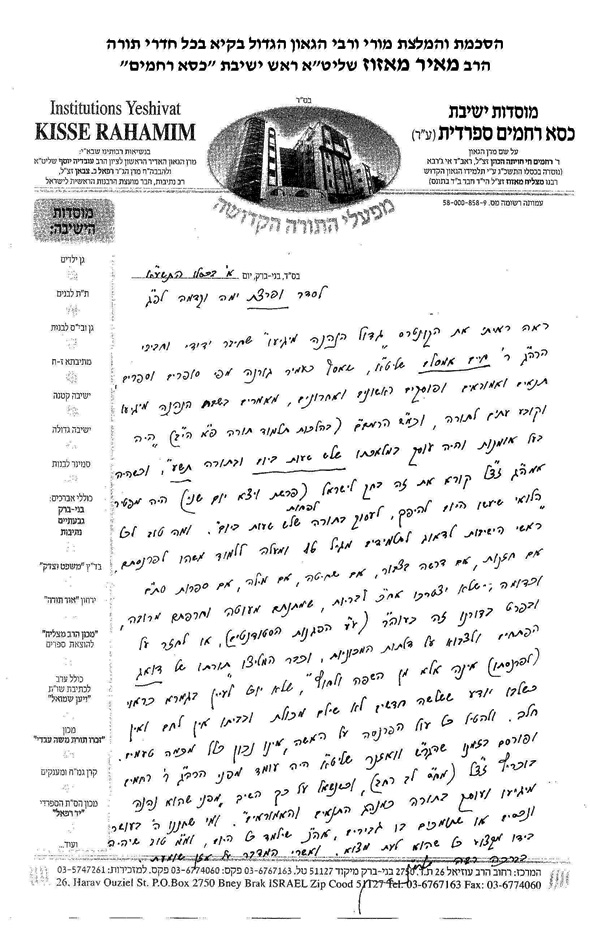
[2] See Or Torah, Heshvan 5772, pp. 169-170. R. Mazuz’s own attitude towards yeshiva students preparing themselves to earn a living is seen in his haskamah to R. Hayyim Amsalem’s Gadol ha-Neheneh mi-Yegio. The book is available here.
Here is R. Mazuz’s haskamah.

Here is the letter of R. Mazuz that appears at the end of the volume.

There are numerous texts I could bring in opposition to the approach of Amsalem and Mazuz (which I believe is also the approach of the Sages). One noteworthy one is found in Ateret Menahem, p. 23a, where R. Menahem Mendel of Rimanov is quoted as follows:

אם א’ אומר לחתנו היושב ולומד תורה בהתמדה שיתחיל לעסוק במו”מ עבור כי איתא [אבות פ”ב מ”ב] יפה ת”ת עם דרך ארץ וכו’, זה הוא מערב רב חו”ש
[3] See e.g., Naftali ben Menahem, Zemirot shel Shabbat (Jerusalem, 1949), p. 134.
[4] See Zev Rabiner, Or Mufla, p. 92.
[5] Barukh She-Amar, p. 238.
[6] See R. Meir Mazuz, Darkhei ha-Iyun, pp. 127ff.
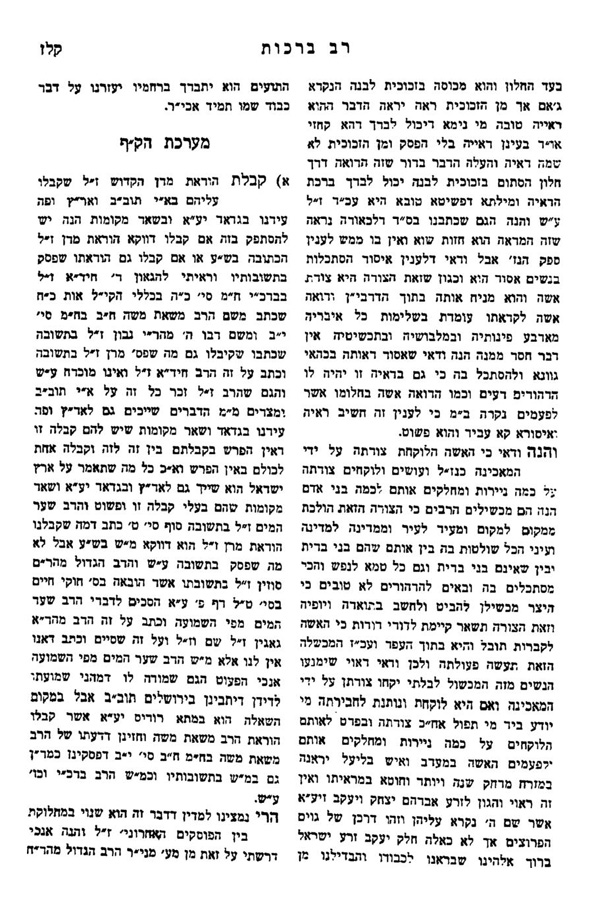
[7] Regarding not seeing women’s pictures, this position can also find sources to support it. R. Joseph Hayyim, Rav Berakhot, ma’arekhet tzadi (p. 137), writes quite strongly against women’s pictures, because men will come to look at them. Here is the page.

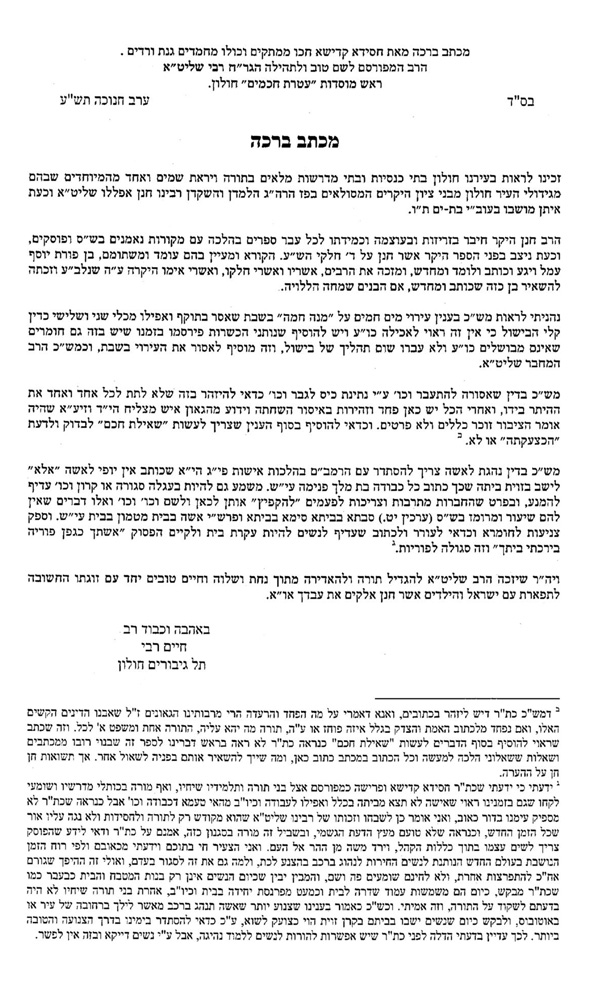
[8] For some, it is better if the women basically do not go out of the house at all at all. Such a position is held by R. Hayyim Rabbi, a mainstream Sephardic rabbi (who like all significant Sephardic rabbis, also has a website. See here).
Here is his haskamah to R. Hanan Aflalo’s, Asher Hanan, vol. 3, and see Aflalo’s response that a rabbi has to actually be part of a community and know its situation in order to properly decide matters for it.

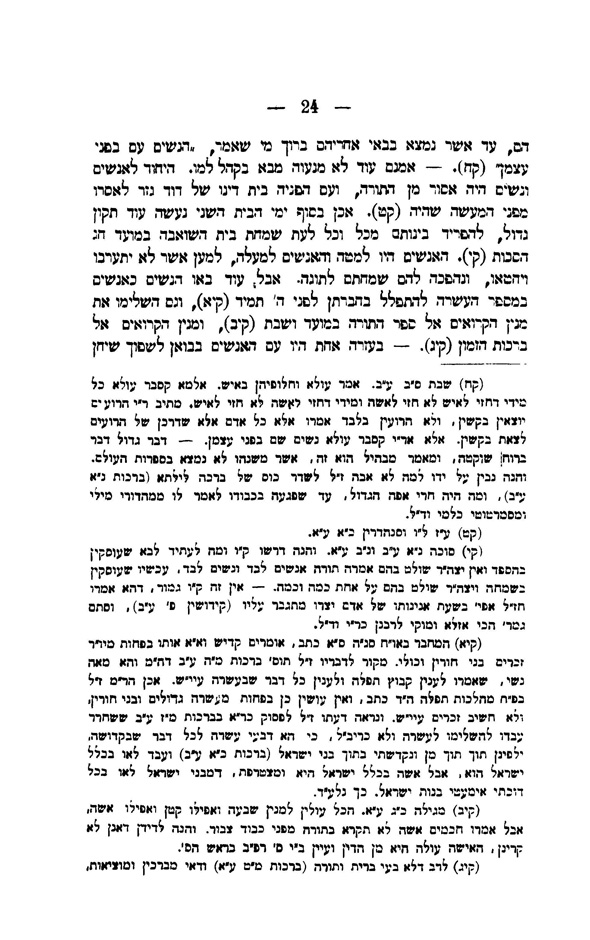
While Aflalo’s reply is phrased very respectfully, his feeling that Rabbi is way off base comes through very clearly.

Rabbi’s position about a woman not leaving the house can find support in a variety of traditional texts (not least, the Rambam, Hilkhot Ishut 13:11). What makes it significant is that he offers this advice even today. While it is true that in the Islamic world Jewish women were more accustomed to stay inside than their co-religionists in Europe, we also find European rishonim who see this as something to strive for. See e.g.,, Radak to 2 Samuel 13:2: ודרך הבתולות בישראל להיות צנועות בבית ולא תצאנה החוצה. See also Rashi, Deut. 22:23: פרצה קוראה לגנב הא אלו ישבה בביתה לא אירע לה. For other relevant sources, see R. Mazuz’s comment in R. Raphael Kadir Tzaban, Nefesh Hayah, vol. 2, p. 267.
I was surprised to find that the Moroccan R. Raphael Ankawa, in the twentieth century, ruled that a husband could forbid his wife from leaving the house without his permission. If she didn’t listen, she would lose her ketubah. See Toafot Re’em, no. 3. In a letter of support for Ankawa by R. Shlomo Ibn Danan and R. Mattityahu Serero they go so far as to state that if the woman doesn’t go along with the husband’s command and take an oath binding herself in this matter, the husband can, if he wishes, refuse to divorce her and she will remain an “agunah” her entire life without any financial support from him! He, of course, will be given permission to remarry.
ואם לא ירצה לגרשה תשב עד שתלבין ראשה ונותנין לו רשות לישא אשה אחרת אחר ההתראות הראויות והיא אבדה כתוב’ ואין לה לא מזונות ולא פרנסה ולא שום תנאי מתנאי הכתובה.
(As late as 1965, another Moroccan posek, R. Yedidyah Monsenego, ruled that where the husband had reason to suspect his wife of being unfaithful, he could require her to never leave home without him, even to visit relatives, except when she had to go to work. See Peat ha-Yam, no. 24)
All I can say is that contemporary women should be thankful that the RCA beit din and many of the rabbinic courts in the State of Israel have realized that in modern times men and women must be treated equally in the divorce proceedings, and women can no longer be held prisoner in a dead marriage as was often the case in earlier times. With this in mind, let me remind people that in an earlier post, available here, I wrote as follows:
R. Hayyim Benveniste, Keneset ha-Gedolah, Even ha-Ezer 154, Hagahot Beit Yosef no. 59, in discussing when we can force a husband to give a divorce, writes:
ובעל משפט צדק ח”א סי’ נ”ט כתב דאפי’ רודף אחריה בסכין להכותה אין כופין אותו לגרש ואפי’ לו’ לו שחייב להוציא.
Can anyone imagine a posek, from even the most right-wing community, advocating such a viewpoint? I assume the logic behind this position is that even if the man is running after her with the knife, we don’t assume that he will actually kill her. He must just be doing it to scare her, and that is not enough of a reason to force him to divorce her. And if we are wrong, and he really does kill her? I guess the reply would be that this isn’t anything we could have anticipated even if we saw the knife in his hand, sort of like all those who have let pedophiles run loose in the yeshivot, presumably on the assumption that just because a man abused children in the past, that doesn’t mean that he will continue to do so.
(I will return to the issue of sexual abuse in a future post, because readers might recall that I expressed doubt that any rabbis would ever join the Agudah’s proposed rabbinic panel to determine if an accusation warranted going to the police. See here. The Agudah has just acknowledged that it was impossible to form such a panel precisely because of the legal jeopardy it would place the rabbis in. See here. Since it looks like all the public pressure will lead to clergy being made mandated reporters, it will be interesting to see what the Agudah response will then be. Will they instruct their followers to follow the law or expect them to go to jail in order to avoid mesirah?)
Regarding Aflalo’s point mentioned earlier in this note that a rabbi has to know the situation of a community, I recently found a very interesting comment by R. Levi Yitzhak of Berdichev, Kedushat Levi ha-Shalem (Jerusalem, 1958), Likutim, pp. 316-317. He asks why we say תשבי יתרץ קושיות ואבעיות, that in Messianic days Elijah will answer all problems. Since Moses will be resurrected, and he is the giver of the Torah, why don’t we say that he will provide the answers? R. Levi Yitzhak explains that only one who is living in this world knows what the situation is and how the halakhah should be decided. This is not the case with one who is dead and has lost his worldly connection. This explains why Elijah will provide all the answers, as he never died and was always part of the world. Therefore, unlike Moses, Elijah is the one qualified to decide matters affecting us. The lesson here is obvious, especially for those who think that every issue must be decided in Israel by authorities who really have really no conception of how American Jews live.

[9] I can’t tell you how often I have been with people (usually at Shabbat meals) who go on about how backwards the Muslims are, the proof being how they treat their women. This is usually contrasted to Judaism, which puts women on a pedestal. As an example of this “backwardness” people have pointed out that in Saudi Arabia (which is only one Muslim country, mind you), women are not even permitted to drive. I never have the heart to point out that there are hasidic sects, less than an hour away from where we are, that also don’t allow women to drive.
[10] See Ma’amar Esther, printed together with Va-Ya’an Shmuel (n.p., 2001), vol. 4, p. 19 (third numbering).
[11] Messas’ responsum is analyzed by Avinoam Rosenack, “Dignity of the Congregation” as a Defense Mechanism: A Halakhic Ruling by Rabbi Joseph Messas,” Nashim 13 (2007), pp. 183-206. On p. 201 n. 41, he provides references to scholarly literature that discusses medieval Jewish women’s adoption of Muslim modes of dress.
[12] Contrary to what Messas assumes, as far as I know there is absolutely no evidence that Jewish women generally dressed like this in the Rabbinic period. The fact that the Mishnah specifies the Arabian Jewish women shows that only one specific group dressed this way.
[13] Since he mentions women’s voices, let me return briefly to my second to last post which dealt with kol isha. I neglected to note the pesak of R. Abraham Yaffe-Schlesinger, Be’er Sarim, vol. 2, no. 54, who sees it as obvious that a woman is permitted to sing in front of non-Jews.
In the post, I mentioned three Modern Orthodox high schools that allow young women to sing solos. I was informed that the North Shore Hebrew Academy also has to be added to this list. See here.
My correspondent further wrote: “I wanted to let you know that the son of Rabbi _____ (former president of the RCA [name deleted by MS]) told me that his father used to go to see Broadway shows based on the Psak of the Rav, who felt that if you couldn’t totally make out the face of the female singer it would be permitted.”
One of the commenters on the post called attention to R. Yehudah Herzl Henkin, Bnei Vanim, vol. 4, no. 7. In this responsum, he says a couple of things very relevant to the post. To begin with, he writes that it is permitted to listen to the singing of a single woman if this is something that you are used it, and it will not be sexually arousing.
לע”ד מדינא מותר לשמוע קול שיר של בתולות אם רגיל בקולן שאז שמיעתן זהה לראיית שערן
This is the same viewpoint I quoted from R. Jacob Pardo, who distinguishes between married women, whose singing is always forbidden, and single women whose singing is only forbidden if it is sensual song. Also noteworthy is that R. Henkin rejects the viewpoint found in various aharonim that a post-pubescent female (i.e., niddah) has the same status as a married woman, and her singing is therefore forbidden:
וכיון שנהגו להקל בשערן של בתולות ולא חלקו בין נדות לטהורות הוא הדין בקולן, כל שהוא רגיל בו ואינו מהרהר.
He concludes his responsum by stating that if the song is not sensual, and the woman’s voice is heard on the radio or out of a loudspeaker, since this is not really “her” voice it is permissible to listen. What this apparently means is that any time a woman sings into a microphone, it is permissible to listen to her (assuming her very appearance is not arousing). This basically gets rid of the entire kol isha prohibition in our time (when the songs aren’t sensual), since today every event with a woman singer uses a microphone. Based on R. Henkin’s responsum, all Modern Orthodox high schools could once more return to having young women sing solos (even though I am certain that this is not his intention).. Here is his conclusion (emphasis added):
ולא מפני שאנו מדמים נעשה מעשה להתיר לכתחילה לשמוע קול אשה המזמרת לפננו לבדה, אבל בשירה ברדיו או דרך רמקול וכו’ שעל פי דין אינה קולה ממש ובצירוף עוד טעמים [ראה להלן מאמר כ’] ובתנאי שהשירה אינה של עגבים נראה פשוט להקל.
In Bnei Vanim, vol. 2, p. 211, he quotes his grandfather as even permitting watching a woman sing on the television, because again, the voice is not her actual voice. He also notes that his grandfather later expressed doubt on this point.
שמעתי מפיו הקדוש שקול אשה על הרדיו אינו נקרא קול אשה ומותר לשמעו [בפעם הראשונה ששאלתי אותו על זה אמר בפירוש שגם בטלביזיה אינו נקרא קול אשה ומותר לשמעו, אבל כשחזרתי ושאלתי אותו על זה אחרי זמן לא היה ברור אצלו – ואולי מפני חולשתו]

In vol. 4, p. 30, he refers to a woman singing the national anthem, which based on his argumentation would, I think, be quite easy to permit, even watching on television. As he notes, this is not the sort of song that arouses sexual thoughts:
ורבים מקילים לשמוע קול שיר של אשה ברדיו כשהיא אינה לפניהם, ואינה שרה שירי עגבים אלא שירי מולדת וכיוצא באלה ורחוק שיהרהרו בה ואינו תלוי באם מכירה או לא.
I would also like to share an email I received from Benny Hutman which relates to R. Moshe Feinstein’s opinion. In my post I called attention to a responsum of R. Moshe Feinstein which I claimed cast doubt on R. Mordechai Tendler’s assertion that according to R. Moshe kol isha is entirely situational and depends on whether or not someone is aroused.
Benny writes:

It seems to me that R’ Moshe must hold that the prohibition on Kol Isha depends on whether a person is used to hearing women sing. R’ Moshe holds like the Aruch Hashulchan that nowadays one can say Shema in front of a woman with uncovered hair because the reality is that we are constantly confronted with such hair and therefore it is no longer arousing. For this to make sense we need to understand the Gemara in Berachos when it says “sear b’isha erva” to mean that hair could be ervah, meaning I would have thought that ervah by definition could only refer to parts of her body, ka mashma lan that hair despite not being skin can be ervah. However it won’t actually be ervah unless it is normally covered. Since the language of the Gemara is exactly the same (as is the source) it follows that the gemara means that Kol Isha could be ervah despite not physically being attached to the body at all. However, just as R’Moshe says that our constant exposure to uncovered hair makes sear no longer be ervah, the same logic dictates that if someone has been listening to women sing all his life kol isha will not be ervah. Arguably it can also be situational so that if someone has been going to the opera all his life such singing will not be kol isha, but pop music will be. It seems to me that this heter should apply to almost all Modern Orthodox men. This would explain how Rabbi Tendler could say that R’ Moshe held that the prohibition is situational despite R’ Moshe’s tshuva apparently holding it is forbidden. It depends on who is asking the question and the time, place and manner of the singing.

Finally, R. Hayyim Amsalem, in his recently published Derekh Hayyim, p. 45, states that it is a well known fact that great Torah scholars and chief rabbis have in the past been present at various official events that included women singing, and they did not walk out. As he explains:
הם ידעו לחשב שכר “מצוה” כנגד הפסדה, ושגדול כבוד הבריות שדוחה לא תעשה שבתורה (ברכות דף יט ע”ב), שלא לדבר על העלבת פנים העלולה להגרם, והרי המלבין פני חברו ברבים אין לו חלק לעוה”ב (בבא מציעא דף נט ע”א), יתכן וכשהיו יכולים להשתמט מלהופיע בטקס כזה שידעו מראש שיכלול גם שירת נשים היו נמנעים מלהופיע, אבל היכן שההכרח אלצם להשתתף הרי שמעולם לא נשמע רינון אחריהם על השתתפותם, או על העלבת המעמד ביציאה פומבית.
[14] Rosenack writes (“Dignity”, p. 190): “Messas’s remarks allow the inference that he knew of an ancient tradition—either from the days of his own ancestors, or from the time of the talmudic sages—of women going up to the Torah, before the institution of the [talmudic] prohibition discussed here.” This is incorrect. What Messas is doing in this responsum is describing what he imagines the situation was like in the era that women received aliyot, and why this was later prohibited. There is not even the hint that he knew of any ancient tradition in this regard, and he certainly did not.
In terms of women’s aliyot, in my post here I called attention to R. Samuel Portaleone’s opinion that in theory it is permitted to give a woman an aliyah in a private synagogue. Without knowing of Portaleone’s view, R. Yehuda Herzl Henkin concluded that ”if done without fanfare, an occasional aliyyah by a woman in a private minyan of men held on Shabbat in a home and not in a synagogue sanctuary or hall can perhaps be countenanced or at least overlooked.” “Qeriat Ha-Torah by Women: Where We Stand Today,” Edah Journal 1:2 (5761), p. 6. (Henkin also assumes that women’s aliyot on Simhat Torah are permissible.) There is another source in this regard that has been overlooked by those arguing for women’s aliyot in so-called partnership minyanim (I hate this term!). R. Moses Salmon, Netiv Moshe (Vienna, 1899), p. 24 n. 112, sees no problem with women getting aliyot today. As mentioned already, women are denied aliyot because of kevod ha-tzibur. Yet according to Salmon, since today men who get aliyot no longer read from the Torah, kevod ha-tzibur is no longer a concern. This was all theoretical for Salmon, as no one in his Hungarian town was dreaming of calling women up to the Torah, but from the standpoint of pure halakhah, he saw no objection. He also claims that according to Maimonides, women can be counted in a minyan. See ibid., n. 111. Here is the page from Salmon.
[15] The same approach is adopted by R. Matzliah Mazuz, Ish Matzliah, vol. 1 no. 10. He writes:
לע”ד כבוד ציבור דהתם, אינו כפשוטו, אלא לישנא מעליא, ועיקר הכוונה כאותה ששנינו בסוכה דנ”א תיקון גדול

[16] See here and here.
[17] See here and here. See also his Shulhan Arukh ha-Mekutzar, vol. 6, pp. 246ff., and here for a placard signed by some leading Sephardic rabbis.
[18] See here. He thinks that a woman who refuses to say good morning to her male neighbor is demonstrating proper tzeniut.
[19] See here.
[20] Incidentally, in no. 328:2, he states that there is no longer a problem taking medicine on Shabbat, since people today do not grind their own medicine.

  • [21] See the numerous explanations of these passages in R. Moshe Zuriel, Leket Perushei Aggadah, ad loc. Tosafot, ad loc., quotes one opinion that does take the passage literally, but this opinion assumes that the am ha’aretz spoken of is a violent person suspected of murder


Response to Criticism, Part 3

Response to Criticism, Part 3

Marc B. Shapiro

Continued from here.

Let me continue with Rabbi Herschel Grossman’s review. [1] This post will complete my response to around a quarter of his review, so we still have a long way to go.

Grossman writes (p. 42)

According to Shapiro, “Maimonides would be surprised that . . . later generations of Jews . . . latched onto his earlier work;” and it “is certainly one of the great ironies of Jewish history that the Thirteen Principles became the standard by which orthodoxy was judged.” Finally, “the characteristic that gave them their afterlife . . . is precisely their outer form . . . Had Maimonides listed a different number of principles in the Mishneh Torah . . . these would have become the Principles of Judaism.” In other words, after postulating that Rambam innovated these obligatory beliefs, Shapiro concludes that it was the popular acceptance of these Principles that established halachic practice.

If you look at the quotations from my book that Grossman has cited, you can see ellipses. The problem here, and this would be unknown to the average reader who does not bother to see what I actually wrote, is that the complete sentences without the ellipses mean something very different than what Grossman wants the readers to think they say. Here is the complete first sentence that he cites (from p. 7 in my book): “Presumably, Maimonides would be surprised that in seeking to define the essentials of Judaism, later generations of Jews, both scholars and masses, had latched onto his earlier work rather than his more detailed formulation in the Mishneh Torah.” I think all readers will agree that the part of the sentence that Grossman quotes, with strategic ellipses, does not give the reader the true sense of the sentence. I can’t say whether this is a result of bad faith or careless writing.

Here is the complete second sentence that Grossman cites (from p. 15 in my book): “It is certainly one of the ironies of Jewish history that the Thirteen Principles became the standard by which orthodoxy was judged, for, as is well known, Maimonides himself was attacked for supposedly holding heretical views, at odds with his very own Principles.” Again, we see that by use of a strategic ellipsis, Grossman give the reader a false impression of what I wrote.

Here is the complete third selection that Grossman cites (from p. 14 in my book).

Returning to the Thirteen Principles, the characteristic that gave them their afterlife and caused them to become the formulation of the Jewish creed is precisely their outer form, that is, the fact that they were formulated as a catechism with all the Principles listed together. Had Maimonides listed a different number of Principles in the Mishneh Torah (e.g., twelve or fourteen), these would have become the principles of Judaism. But he did not, and thus the Thirteen Principles stuck.

In this case, the use of ellipses does not distort what I said.

Grossman states that I postulated that “Rambam innovated these obligatory beliefs.” We have already seen that this is complete nonsense. I never said that Maimonides invented the “obligatory beliefs,” as this would mean that before Maimonides there was no conception of traditional Jewish beliefs, which is a ridiculous notion.

In his final sentence, Grossman states that I concluded “that it was popular acceptance of these Principles that established halachic practice.” This is indeed my opinion, but I would also add that it obviously took time for the Principles to achieve widespread acceptance. Nothing I have said here is unusual or radical, and it is also opinion of many others who have written on the subject. Here, for example, is what R. Meir Orian writes in his book on the Rambam (published by Mossad ha-Rav Kook).[2]

ראינו כי בעצם ערר רבנו משה התנגדות בכל חיבור שכתב . . . גם קביעתם של שלשה עשר העיקרים של היהדות – שבמרוצת השנים נתקדשו בקדושת התורה והאומה – לא היתה לפי רוח גדולי הדור שבזמנו

There were other competing systems of dogma, but I state that none of them could compete with Maimonides’ formulation, both because of Maimonides’ supreme authority and also because popular piety prefers more dogmas to fewer. It is no accident that there are almost a hundred different poetic versions of the Principles, of which Yigdal is only the most famous. These are reflections of the popular attachment to the Principles, not to any rabbinic decision in favor of Maimonides. So if we conclude that the Principles establish halakhic practice, then yes, it was popular acceptance of these Principles that established the halakhic practice, much like popular acceptance and rejection of halakhic rulings throughout history has established halakhic practice.

Had the religious masses accepted an alternative formulation of Jewish dogma, then this would have become the standard. The rabbis can give rulings, but from talmudic times to the present it is the masses of religious Jews that determine if a halakhic ruling is accepted or not. Even with regard to the greatest poskim, you find that for some of their rulings the religious masses simply refused to accept them (perhaps because they found them too difficult and were already accustomed to do things in a different way, e.g., R. Moshe Feinstein and time clocks on Shabbat). I am not sure what Grossman’s problem is with the notion that popular acceptance can determine halakhic practice. Maybe he thinks that halakhah is only about the posek issuing a ruling. However, especially when speaking historically, we must also take into account that the religious masses (the “olam”) also have a crucial role to play in how halakhah develops.

This important notion is elaborated upon in the recent book by R. Ronen Neuwirth, The Narrow Halakhic Bridge, pp. 293ff. Here is one passage from R. Kook that R. Neuwirth quotes (from Eder he-Yekar, p. 39): “All of the mitzvot of the rabbis that we fulfill – their main foundation is the acceptance of ‘the entire nation’ which is the honor of the nation.”

Grossman, pp. 42-43, quotes the following sentence from my book (p. 17, mistakenly omitting a few words in his citation):

It seems that there is even halakhic significance to the Principles, as seen in the fact that R. Israel Meir Hakohen [Mishnah Berurah 126:2] records that one who denies the divinity of the Torah, reward and punishment, the future redemption, and the resurrection cannot serve as a prayer leader. Had Maimonides not included these Principles in his list, it is unlikely that denial of the last two, which are not necessarily of prime importance to a religious life, would disqualify one in this way.

Grossman writes:

Contrary to Shapiro’s hasty assumption, the Rambam is not the source for this Halacha. The source is the Talmud Yerushalmi, cited by the Tur [Orah Hayyim 126] as follows: “A prayer leader who skips two or three words does not have to go back to say them, except for one who does not mention ‘the Resurrection of the Dead,’ for perhaps he is a disbeliever [kofer] in the Resurrection of the Dead, and [the blessing] ‘Who rebuilds Jerusalem,’ for perhaps he does not believe in the Coming of the Mashiach.” Obviously, the ruling of the Mishnah Berurah is not an “invention” based on the Rambam.

Grossman’s translation is not exact as אין מחזירין אותו does not mean “does not have to go back”, and the translation also omits the words ומכניע זדים שמא מין הוא, but for our purposes this is not crucial.

The first thing to note is that I never said that the Mishnah Berurah’s source for his ruling is the Rambam’s Principles. What I said is that had the Rambam not included the Messianic era and Resurrection among his principles, denial of them would not have been enough to affect a Jew’s status (so that he couldn’t be a prayer leader, etc.). I will explain what I mean, as Grossman has once again completely misunderstood my point.

Let us take Resurrection, which is mentioned in the Mishnah as an obligatory belief. Nevertheless, the Rambam was suspected by both opponents and supporters as not really believing in it literally. In response to this suspicion, he wrote his famous Letter on Resurrection, which affirms the literalness of Resurrection and tells us that when he included it in his Principles he really meant it. Imagine if Maimonides, in his Letter on Resurrection, had not affirmed literal Resurrection, but instead defended the notion that it is to be understood metaphorically, as referring to the World to Come. Had that occurred, then the Rambam’s great authority would have ensured that belief in Resurrection would not be required.

My point is therefore simple: If the Rambam had declared that belief in Resurrection is not required, I do not believe that the Mishnah Berurah would have regarded this approach as heretical and thus invalidated a hazzan who held such a view, despite what other rishonim might have held. Similarly, had the Rambam not included the Messianic Era as a Principles of Faith, I do not believe that it would have been regarded as an obligatory belief, denial of which is heresy. It might have been a “recommended” belief, but not a generally accepted “obligatory” belief. In my opinion, this shows the great significance of the Rambam from both a theological and a halakhic perspective.

If you look at Jewish history, you will find that while many have asserted that certain beliefs are obligatory (e.g., gilgul, existence of demons, Divine Providence encompassing the animal kingdom, Daas Torah, R. Shimon Ben Yohai authored the Zohar, the Sages were infallible in matters of science), these beliefs have never become generally accepted to the extent that those who do not share them are regarded by the wider Orthodox world as outside the fold. Only Maimonides’s Principles were able to do such a thing. This explains what I mean when I say that had Maimonides not regarded the Messianic Era or Resurrection as obligatory beliefs, that “it is unlikely that denial” of them would have been enough to place the stamp of heresy on such a person, and thus to disqualify him from being a hazzan.

On p. 44 of his article, Grossman returns to the matter that I (and others) raised, that the Thirteen Principles are not mentioned in the Mishneh Torah. I also suggested that in his later works Maimonides was not attached to his earlier formulation of thirteen principles, as he presents a more detailed formulation of required beliefs in the Mishneh Torah.

In response to my point that one would have expected the Thirteen Principles to be listed in Hilkhot Yesodei ha-Torah, Grossman writes (p. 44)

Here, too, Shapiro indicates that he is unaware of the structure of the Mishneh Torah. The entire work is an expansion of the 613 Mitzvos: The entire work is introduced by Rambam’s Sefer haMitzvos which lists all 613 Mitzvos, and each of the sections (Halachos) has a listing of the Mitzvos included therein. Consequently, there is no place to highlight the Thirteen Principles in Hilchos Yesodey haTorah, since there are explicit Mitzvos for only three of them—emunah, yichud and avodah zarah, which he in fact does list in the introduction to this section. He could not have listed all the rest since they are not Mitzvos.

I reject this paragraph. There is a good deal in Hilkhot Yesodei ha-Torah that has nothing to do with “explicit Mitzvos.” For that matter, there is a good deal in the Mishneh Torah as a whole that is not related to “explicit Mitzvos.” In addition to what I mentioned in my last post, one can also add the last two chapters of Hilkhot Melakhim, which are about the messianic era and have nothing to do with mitzvot. The Rambam included these chapters because he felt that this material is important, and he did not limit himself in the Mishneh Torah to only matters that derive from ‘explicit Mitzvos”. Therefore, there is nothing about the “structure of the Mishneh Torah” that would have prevented him from listing the Thirteen Principles as a unit in Hilkhot Yesodei ha-Torah or elsewhere. In fact, most of the Principles are already listed in Hilkhot Yesodei ha-Torah, but just not together as a unit (which was my point), which shows that he had no problem listing them even though “they are not Mitzvos.”[3]

As for my wondering why the Principles are not listed together as a unit, which Grossman sees as an illustration of how I am unaware of the structure of the Mishneh Torah, let me begin by repeating what I wrote in my last post: R. Yaakov Nissan Rosenthal, on the very first page of his commentary Mishnat Yaakov to Sefer ha-Madda, also wonders about the point I made, that the Thirteen Principles as a unit are never mentioned in the Mishneh Torah. (Had I known this when I wrote my book, I certainly would have cited it.)[4]

ותימא למה לא הביא הרמב“ם בספרו ה”יד החזקה” את הענין הזה של י“ג עיקרי האמונה, וצ”ע

R. Avraham Menahem Hochman writes:[5]

. . .מאחר וכל כך חמורה הכפירה, וגדולה החובה לדעת את י”ג העיקרים, כיצד זה השמיטם מספרו ה”יד החזקה”, ולא כתבם כפי שסדרם בפירוש המשנה

והנה אחר שהתבאר שהאמונה בי”ג העיקרים היא בסיס לתורה נשוב לשאלה הרביעית (בסוף פרק ה’) אשר לכאורה היא פליאה עצומה מדוע השמיט הרמב”ם ביד החזקה את החובה הגדולה להאמין בי”ג עיקרים, באופן חיובי, ולא סדרם כי”ג יסודי האמונה שחובה להאמין בהם

R. Hochman goes on to explain that most of the Principles are indeed mentioned in Hilkhot Yesodei ha-Torahin a positive sense (even if not as a unit of Thirteen Principles). He also notes the following important point, that when principles of faith are mentioned in the Talmud, they are never listed in a positive sense, that one must believe X. Rather, they are listed in a negative sense, that one who denies X has no share in the World to Come. Why Maimonides, in his Commentary on the Mishnah, chose to formulate the Principles in a positive sense and require active belief as a necessity for all Jews—something the Talmud never explicitly required—is an interesting point which we will come back to. Regarding some of the Principles the difference is clear. For example, according to the Talmud, denial of Resurrection is heresy, but one who has never heard of the Resurrection and thus does not deny it, or affirm it, is a Jew in good standing. For Maimonides, however, the doctrine of Resurrection must be positively affirmed. In a future post we can come back to which Principles even the Talmud implicitly requires positive affirmation of (obviously number 1, belief in God, but there could be others as well).

Even when it comes to other basic ideas of Maimonides, which are not included as part of the Thirteen Principles, we find that scholars wondered why Maimonides did not include them in Hilkhot Yesodei ha-Torah. For example, R. Joseph Ibn Caspi writes:[6]

.הנה תמהתי על כבודו בספרי המכונה ספר הסוד, כי [אם] כן עשה הוא דעת תורתנו ויסוד הדת למה לא מנה זה בהלכות יסוד [!] התורה בתחלת מנותו היסודות

With regard to the Thirteen Principles themselves, in R. Jacob Yitzhaki’s popular Sephardic Mahzor Oholei Yaakov: Rosh ha-Shanah, p. 59b, he states:

.ובאמת גם הרמב”ם ז”ל לא זכר מהעיקרים הללו לא בספרו הגדול משנה תורה ולא בס’ המורה שחבר אחריו בזקנותו. ואם היה עודנו מחזיק בם היה לו להזכירם בס’ המדע והמורה, כי שם מקומם, ורק נזכרו בפי’ המשנה שחבר בבחרותו כידוע

R. Yitzhaki agrees with my point that it is significant that the Thirteen Principles as a unit are not mentioned in the Mishneh Torah(or in the Guide of the Perplexed; he is obviously aware that the individual principles appear in various places in the Mishneh Torah). His words, ואם היה עודנו מחזיק בם היה לו להזכירם, show that he, too, is not certain that the notion of Thirteen Principles was still something the Rambam held to when he wrote the Mishneh Torahand Guide of the Perplexed. Grossman can reject R. Yitzhaki’s point the same way he rejects what I wrote, but readers can see that what we have written is not something completely ignorant, as Grossman would have people believe.

On pp. 44-45, in response to my suggestion that in his later years the Rambam did not feel bound to the Thirteen Principles as the ultimate summation of Judaism, Grossman refers to a passage in the Rambam’s Letter on Resurrection. Here the Rambam mentions that in his commentary to Sanhedrin he expounded on fundamentals of Judaism, and he mentions that he did likewise in the Introduction to the Mishnah and the Mishneh Torah. I myself refer to this source in Limits, p. 6, as one of the few times the Rambam mentions the Principles subsequent to his the Commentary on the Mishnah. This does not change the fact that the Rambam does not refer to the Principles as a unit in the Mishneh Torah or the Guide, and the understanding of Judaism found in these latter works is not always the same as what we see in the Principles. I would assume that it is in the Rambam’s later, and indeed greater, works that we should look in order to identify his final statements on matters of Jewish belief.

The real problem is that again, Grossman simply does not understand what I am saying. He concludes this section of his criticisms by stating that, “Clearly the Rambam has not retracted his opinion that there are Principles, or roots – lacking belief in which, one is missing the fundamentals of Judaism.” Of course, I never said that in his later years the Rambam did not believe that there are Principles of Judaism. Even if we never had his Thirteen Principles, you can look at the Mishneh Torah and see that there are beliefs that if you deny them, you are missing the fundamentals of Judaism. My point about the Rambam not being tied to the Thirteen Principles has nothing to do with this. It thus makes no sense for Grossman, p. 46, to write that in the Guide the Rambam refers to the fundamentals of faith, and then to cite chapters from this work that require belief in God’s incorporeality, as if this has anything to do with what we are talking about. Let us not forget that it was the Rambam who chose thirteen principles.[7] He did not find this in the Torah or in the Talmud. When you examine the Mishneh Torah you see that he could just as easily have chosen fourteen principles, or even more (and later writers indeed added additional principles).

There is no need to belabor this any longer, but let me call attention to an error Grossman makes on pp. 46-47. He states that R. Joseph Albo refers to the Guide of the Perplexed “in explicating Rambam’s Principles.” He then cites Albo’s Sefer ha-Ikarim 1:3: “And why did he not include the dogma of creation, which everyone professing a divine law is obliged to believe, as Maimonides himself explains in the twenty-fifth chapter of the second part of the Guide of the Perplexed?” This is not an example of Albo using the Guide to explicate the Rambam’s Principles. In this chapter of Sefer ha-Ikarim, Albo asks why the Rambam does not include creation as one of the Thirteen Principles. He cites the Guide not to explicate the Principles but to show that the Rambam regarded creation as an essential doctrine, and therefore it should have appeared in the Principles. (Albo was unaware that later in life the Rambam added to the Fourth Principle the belief in creation ex nihilo.)

One point that Grossman is adamant about is that it is improper to suggest that the Rambam changed his mind when it comes to the Principles. That is because, Grossman states, the Rambam revised his Commentary on the Mishnah throughout his life, so if he did not change what he wrote in the Principles, it is “an indisputable indication” (p. 46) that it remained his opinion. The reader of Grossman’s essay will not realize that it is not a major point of my book to argue that the Rambam changed his mind about his formulations in the Principles. What I do suggest is that the Thirteen Principles as a unit is not his final statement of dogma, because he does not mention it in the Mishneh Torah or the Guide, and in those works you find other doctrines that are regarded as principles of faith which are not included in the Thirteen Principles. Furthermore, as we shall see in future posts, the Rambam has different emphases and even outright contradictions to the Thirteen Principles in his later works, so we are left with assuming that either he changed his mind or that his formulations in the Thirteen Principles were intended for a certain audience, but did not represent his true view, which would only later be revealed in the Guide – and perhaps even in the Mishneh Torah – to the spiritual and intellectual elites. I will deal with this in greater detail in a future installment of my response to Grossman. For now I just want to note that the approach that he regards as ignorant as well as apparently blasphemous, that the Rambam changed his views about certain matters in the Principles, is not unknown even among rabbinic figures.

In Limits, p. 148, I noted that R. Meir Don Plotzki claimed that while in the Twelfth Principle the Rambam requires that the Messiah be descended from Solomon, he does not mention this in the Mishneh Torah. For R. Plotzki, this shows that the Rambam retracted his earlier view (even though he never corrected what he wrote about this principle in the Commentary on the Mishnah).[8] This again illustrates the problem with so many of Grossman’s criticisms of me. He points to things I wrote that he thinks are absurd and ignorant, but what happens when I show that great rabbinic figures have said the same thing? Obviously, Grossman would not criticize them in the same way. Is this an example of the old “they could say it but you can’t”?

R. Eliyahu Meir Feivelson notes that in the Sefer ha-Mitzvot, Positive Commandment, no. 4, the Rambam includes as part of “fear of God,” fear of punishment. However, when he describes this mitzvah in the Mishneh Torah, Hilkhot Yesodei ha-Torah2:1-2, there is no mention of fear of punishment, only what is called יראת הרוממות. R. Feivelson writes[9]:

ויש להעיר עוד, שאולי יותר נכון לומר בדעת הרמב”ם, שהוא חזר בו מדבריו בספר המצוות, ולכן בספר משנה תורה נקט את יראת הרוממות. ורגליים לדבר, שהרי בהקדמתו לפרק חלק מנה הרמב”ם את האמונה בשכר ועונש, וכאחד מי”ג עיקרי אמונה. ואילו בהלכות תשובה (פ”ג הל, ו’-ח’) מנה את כל עיקרי האמונה פעם נוספת (ותחת זה מנה שם את האמונה בתורה שבכתב ושבע”פ לשני עיקרים), ולא הזכיר שם את האמונה בשכר ועונש, ושמא זה מוכיח על שינוי דעתו בענין זה

R. Feivelson mentions that in the Mishneh Torah, Hilkhot Teshuvah3:6-8, when the Rambam lists the different types of heretical beliefs, there is nothing about Reward and Punishment. He therefore suggests that the Rambam changed his mind and no longer regarded this as a Principle.

If Grossman would read R. Feivelson like he reads me, he would protest that it is outrageous to suggest that the Rambam stopped believing in, or requiring belief in, Reward and Punishment. But this would be a mistake. R. Feivelson knows full well that Reward and Punishment is an important Jewish belief. He also knows that Hilkhot Teshuvah, chapter 8, is all about Reward and Punishment. All he is suggesting is that the Rambam ceased to regard this as one of the Principles of Judaism, denial of which is heresy, and which everyone must also positively affirm to be regarded as part of the Jewish community. Or perhaps he only means to say that the Rambam removed Reward and Punishment from the Principles so people would not focus on this as a motivation to observe of the Torah. If R. Feivelson is correct, then Reward and Punishment is no different than other true beliefs which the Rambam didn’t see fit to include in the Thirteen Principles.[10]

R. Feivelson’s basic idea, that the Rambam changed his mind about including Reward and Punishment as one of the Principles, was actually earlier suggested by R. Solomon of Chelm in his classic commentary Mirkevet ha-Mishneh, Hilkhot Teshuvah3:8:

(. . .וזה מכוון נגד י”ג עיקרים שבפירוש המשנה אלא שבחדא יש חזרה, ושם מונה שכר ועונש, וכאן בחיבורו השמיטו (לפי דמצוה לעבוד שלא ע”מ לקבל פרס מאהבה

Let me turn to one other place where it is possible that the Rambam changed his mind in a matter of dogma. There are a number of discussions of the Rambam’s view of the Messiah, and it is typically stated that he believes that the Messiah will be a prophet. Since R. Alter Hilewitz was recently mentioned in the Seforim Blog here, let me cite him.[11]

שהמלך המשיח בעצמו יהיה נביא, ולא סתם נביא, אלא נביא יותר גדול מכל הנביאים פרט למשה

That the Messiah will be a prophet is often stated as part of the dogma of belief in the Messiah, yet there is nothing in the Twelfth Principle about the Messiah being a prophet. Why then do so many assume that this is part of the Rambam’s Principle? I think the answer is because in the Mishneh TorahHilkhot Teshuvah 9:2, the Rambam states that the Messiah will be a great prophet, close to the level of Moses. He also mentions this in his Letter to Yemen.[12]

As mentioned, there is nothing in the Twelfth Principle about the Messiah being a prophet. Does this mean that the Rambam changed his mind? I don’t think we can say for sure. Yet it is noteworthy that in the Mishneh Torah, Hilkhot Melakhim, ch. 11, when the Rambam speaks about the Messiah, he also does not mention anything about the Messiah being a prophet. In fact, in Hilkhot Melakhim 11:3 he tells us that R. Akiva thought that Bar Kokhba was the Messiah. Since Bar Kokhba was not a prophet, this is a proof that the Messiah does not need to be a prophet. Another relevant point is that in Hilkhot Melakhim 12:3 the Rambam speaks of the Messiah as having ruah ha-kodesh, which is a lower level than prophecy. Thus, it appears clear that according to Hilkhot Melakhim the Messiah will not be a prophet, or at least does not need to be a prophet.[13]

How to explain the fact that in Hilkhot Teshuvah the Rambam says that the Messiah will be a great prophet, while in Hilkhot Melakhim he does not mention this at all, and he refers to Bar Kokhba, thus showing that the Messiah does not need to be a prophet? R. Joseph Kafih states that the Rambam changed his mind on this matter. When writing his Letter to Yemen and Hilkhot Teshuvah the Rambam thought that the Messiah needed to be a prophet, however, his later position is reflected in Hilkhot Melakhim.[14] R. Kafih makes this claim even though there is no evidence that the Rambam ever altered what he wrote in Hilkhot Teshuvah. My point in mentioning this is not to claim that R. Kafih is correct in his assumption, only to show, in opposition to Grossman, that great commentators have indeed been prepared to state that the Rambam changed his mind, even if we have no evidence that he later corrected his earlier works.[15]

Regarding prophecy, R. Shlomo Aviner cites R. Kook that Adam was a greater prophet than Moses. I found this formulation noteworthy, as it contradicts Maimonides’ principle that Moses was the greatest prophet. In response to my question, R. Aviner replied to me that Adam is not to be included in regular history, and was thus not the among the prophets Maimonides was referring to.[16]

אדם הראשון הוא מחוץ לחשבון ההסטורי הרגיל ולפניו, ושורש כל בני האדם

R. Aviner cited as his source Orot ha-Kodesh, vol. 1, p. 280, which refers toזיהרא עילאה דאדה”ר. In fact, I found a more apt source in Shemonah Kevatzim3:66, where R. Kook puts the matter very clearly:

זיהרא עילאה דאדם הראשון היא כוללת מדה עליונה זו העולה עד למעלה מהאספקלריא המאירה של נבואת משה רבנו

The concept of Adam’s זיהרא עילאה is found throughout kabbalistic literature (which also states that Enoch would later receive this זיהרא עליאה). I had never understood it as also including prophecy, as opposed to simply greatness, but after investigating the matter I do not think that R. Kook is saying anything out of the ordinary by excluding Adam from the Rambam’s Principle. I think that this is also the sense you get from R. Hayyim of Volozhin when he discusses Adam.[17] In Nefesh ha-Hayyim 1:20, he also stresses the greatness of the Messiah, and he cites a rabbinic text that the Messiah will surpass Abraham, Moses, and Adam.[18] R. Hayyim adds that he will only surpass Adam after the Sin, but not before.

Regarding Adam before the Sin, R. Solomon Elyashiv writes:[19]

השגת אדה”ר קודם החטא שהשיג אז את כל האצילות הנה היה במדרגת האצילות של אז שהיה גבוה ונעלה מאד . . . כי מציאת אדה”ר שקודם הטא היה למעלה לגמרי מכל חק סוג אנושי אשר מאחר החטא ולהלאה

R. Isaiah Horowitz discusses Adam from a kabbalistic perspective on a few occasions. In Shenei Luhot ha-Berit[20], sectionToldot Adam: Beit Yisrael (p. 9a in the first printing, Amsterdam 1749; no. 104 in the newer printings), he writes:

והנה אדם עולה במספר קטן ט’ כי אדם לא בא בסוד יחידה מצד כתר המעלה העליונה עשירית, וזהו “אדם אחד מאלף לא מצאתי” א”ל [אל תקרי] אֶלֶף בסגול אלא אַלף שהיה חסר

This is exactly how the text appears in the first printing including the vowels. R. Horowitz cites Ecclesiastes 7:28, however the verse actually states: אדם אחד מאלף מצאתי. Only later in the verse does it say: ואשה מכל אלה לא מצאתי. It seems clear that this is simply a mistake and that R. Horowitz was citing from memory.[21] We find the same verse misquoted later in the Shelah, where the derash seems to be clearly based on the mistake:[22]

חותמו של הקב”ה אמת רומז על אה”יה אשר אהיה כי אהיה פעמי’ אה”יה עולה כמנין אמת. אדם הוא מעשר אמת כי ד”ם מעשר מ”ת ומהאלף לא שייך מעשר וזה רמז אדם אחד מאלף לא מצאתי כלומר אחד מאלף לא נמצא מעשר

This is all quite strange as using Otzar ha-Chochma I found two other places in the Shelah where the verse is cited correctly.[23]

Regarding Moses’ prophetic level, in Limits, p. 89, I cited authorities who understand Midrash Tanhuma’s statement that the Messiah will be “more exalted than Moses” to mean that he would be a greater prophet than Moses. Subsequent to the book’s publication, I found that the Lubavitcher Rebbe also leaves this as a possibility,[24] for in his Sefer Sihot: 5751, vol. 2, p. 789, he writes:

ובתנחומא (ס”פ תולדות) משמע שהוא נביא גדול ממשה – ראה לקו”ש ח”ו עמ’ 254 – ועצ”ע

Here is one additional point which is I think of interest. Although Judah David Eisenstein was not a religious authority, he was an Orthodox Jew and his works became quite popular in Orthodox homes.[25] It is noteworthy, therefore, that in his Otzar Dinim u-Minhagim, p. 325, he writes as follows, completely rejecting the Rambam’s system of dogma:

ואיך יעלה על הדעת לומר כי היהודי שאינו מאמין בלבו באיזה מן הי”ג עקרים חוץ מאמונת ה’ לבדו כי הוא יוצא מכלל ישראל. בפרט כי דת ישראל לא נוסדה על מחשבות ורעיונות רק על המעשה, מצות עשה ומצות לא תעשה, והיהודי המקיים כל המצוות הוא בודאי יהודי כשר אע”פ שאינו מאמין בלבו ברוב העקרים שמנה הרמב”ם

He then suggests that the Rambam retracted his understanding of ikkarim.

ונראה כי גם הרמב”ם חזר מעקריו אלה שכתב בערבית לפירוש המשניות, כי בספרו היד החזקה שכתב בעברית להלכה למשה [למעשה] הורה בגר שבא להתגייר, מודיעין אותו עקרי הדת שהוא ייחוד השם ואיסור ע”ז, ומאריכין בדבר הזה, ומודיעין אותו מקצת מצות קלות ומקצת מצות חמורות ואין מאריכין בדבר זה

Notice how Eisenstein requires belief in God, without which one is not part of Israel. But this takes us back to the question of what actually is belief in God. For the Rambam, someone who believes in a corporeal God is not really believing in God at all, and is thus a heretic, while Rabad disagrees. In Limits and in subsequent writings I have cited a number of authorities who agree with Rabad, which shows that the Rambam’s’ approach in this matter was not universally accepted. While it is true that Rabad and the others I cite believe that God is incorporeal, they do not accept that one who errs in this matter is to be regarded as a heretic, which is a major break with the Rambam as it means that denial of one of the Principles does not equal heresy.[26]

Here is another source that we can add to the list. The Hasidic master R. Meir Horowitz of Zhikov states that one who has a defect in his belief in God – which I assume can also include believing in God’s corporeality – but is part of a Hasidic community and accepts a rebbe, is not to be regarded as wicked. This is because by being devoted to the rebbe he will eventually be brought to a proper belief in God. What he is saying, if I am interpreting him correctly, is that you can have members of the Orthodox community whose beliefs might be incorrect, even heretical, but they should not be regarded as wicked because their very belonging to the community and acceptance of its rabbinic leadership is itself significant. I don’t know how many would agree with R. Meir, but what he says is quite fascinating.[27]

וכמו כן יש בנמצא בני אדם אשר יש להם חסרון באמונת הבורא כביכול, ועם כל זה יש להם אמונת צדיקים, ומקבלים עול הצדיק על עצמם . . . וגם אנשים כאלו אינם בכלל רשעים, יען כי על ידי אמונת צדיקים בודאי יבוא אחר כך לאמונת הבורא, כי על ידי התקשרות לצדיק במשך הזמן יזכה גם לאמונה גמורה. וכמו שפירשו בספרים הלואי אותי עזבו ואת תורתי שמרו היינו לשמור מה שהתורה מרבה בתיבת את ד’ א-להיך לרבות תלמידי חכמים

Finally, let me call attention to another unconventional view of R. Michael Abraham. R. Abraham states that since it impossible to force people to believe, the Thirteen Principles of Faith of the Rambam must be understood as only a suggestion which people are free to reject, not an obligation, as only behavior can be legislated, but not thought.[28]

באופן מהותי אי אפשר לצוות על אנשים להאמין דווקא בדבר מסוים. אתה יכול לצוות על אנשים שיתנהגו באופן מסוים, אבל אי אפשר להכתיב להם מה לחשוב, וגם איך תדע שהם חושבים אחרת מכפי שצוו. אז גם 13 עיקרי האמונה של הרמב”ם הם לא הלכה, אלא הצעה של הרמב”ם, ובהחלט אפשר גם לחשוב אחרת.

* * * * * * * *

[1] Regarding Grossman’s review, it is apt to cite the words of R. Yissachar Tamar, Alei Tamar, Shabbat, p. 6 (referred to by R. Neriah Guttel, Or Yekarot [Elkana, 2016], p. 290):

ומכאן אזהרה חמורה למבקרי ספרים שיעיינו הדק היטב עד שחורצים משפטם על ערך הספר וחשיבותו

In a future post I hope to also discuss another critique of my book, that of Seth Kadish. While I have argued that the Thirteen Principles reflect a conservative approach sometimes at odds with Maimonides’ other works, Kadish, in his very interesting and significant article, offers an alternative, I would even say revisionist, perspective. Here is some of what appears in the summary at the beginning of the article.

Such an attitude assumes that Maimonides’ famous list of the “thirteen foundations of the Torah” reflects a conservative stance (regardless of his wider agenda). This paper argues, to the contrary, that his dogma is best read in context as a natural reflection of radical formulations found in his pre-Guide rabbinic writings. It further argues that the great Iberian critics of Maimonidean dogma understood it in exactly this way and rejected it as such, offering meaningful alternatives in its place. They designed their alternative systems to reflect their views about the nature and substance of the Torah, not just to address the semantics of dogma.

Seth (Avi) Kadish, “Jewish Dogma after Maimonides: Semantics or Substance,” Hebrew Union College Annual 85 (2015), pp. 195-263.
[2] Ha-Moreh le-Dorot (Jerusalem, 1956), p. 92 (emphasis added).
[3] See R. Isaac Abarbanel, Rosh Amanah, ch. 19; Menachem Kellner, Dogma in Medieval Jewish Thought (Oxford, 1986) p. 228 n. 60; R. Dovid Yitzhaki’s essay in R. Jacob Emden, Luah Eresh (Toronto, 2001), p. 466. R. Yehezkel Sarne, Beit Yehezkel: Hiddushim u-Veurim be-Inyanim Shonim (Jerusalem, 1995), p. 242, has an interesting perspective:

.יסודי התורה אינו ענין לעיקרי התורה או עיקרי האמונה שהרי לא כלל הרמב”ם כאן כל העיקרים שאם אינו מאמין בהם נעשה כופר על ידן. אלא יסודי התורה היינו שהתורה עומדת עליהם ומי שאין לו היסודות גם תורה אין לו

Earlier in this note, I refer to R. Emden’s work לוח ארש. This is sometimes written as Luah Eres, yet this is a mistake. The second word is Eresh, as in the word ארשת (see Ps. 21:3) which has the connotation of “speech”. This is explained by R. Dovid Yitzhaki in his edition of Luah Eresh (referred to above), p. 3 n. 1 (second pagination).

In Shaharit of Yom Kippur, we recite the piyyut אדר יקר, the first line of which reads: אחוה בְּאֶרֶשׁ מלולי.

R. Aaron Samuel Katz’s commentary on Midrash Rabbah has the title Kore me-Rosh(Berdichev, 1811). It is divided into two sections, one of which is called ארש רבה. This is obviously a play on ארץ רבה (Ps. 110:6), and ארש also contains letters from the names אהרן שמואל.

Sephardic melitzah often uses the word ארש, such as in the expression ותשקוט הארש (sometimes written as האר’ש). Its meaning is that all speech or utterance should cease, that is, there is no need for any more discussion or argument about the issue. Another melitzah is באתי אל הארש (a play on Deut. 26:3), which means “this is what I have to say”.

There is also a melitzah ארש קדם (a play on Gen. 25:6) which means “words of introduction”.

Here is the beginning of R. David Pipano’s Avnei ha-Efod, vol. 1 (Sofia, 1913).

On pp. 24a and 171a R. Pipano uses another melitzah that I love, and which you can occasionally find in other Sephardic works: ובחפשון יצאתי (a play on Deut. 16:3). This means that he searched in rabbinic literature.

The title of R. Emden’s book, לוח ארש, is a play on לוח ארז that appears in Song of Songs 8:9. In the Bible, ארז is vocalized אׇרֶז as it comes at the end of a sentence. Does that mean that seforim with the title לוח ארז should also be vocalized Arez, and לוח ארש should be Aresh? The answer is no, because when we cite the title we are not quoting a biblical verse. Similarly, with R. Isser Zalman Meltzer’s book אבן האזל, just because in I Sam. 20:19 we read האבן הַאׇזֶל does not mean that when citing the name of the book, where it is not the end of a sentence, that we should write Even ha-Azel. Rather, the title is Even ha-Ezel. (The information in this paragraph has been confirmed with R. Dovid Yitzchaki.)
[4] Regarding R. Rosenthal, I think it is noteworthy that he held that at least in certain cases, such as with women who are unable to get married, it is permissible for single women to be artificially inseminated, and he ruled this way in practice. See R. Yehudah Berakhah, Birkat Yehudah, vol. 7, p. 267. R. Aharon Lichtenstein also held this position. See R. Shmuel David, “Teshuvot Ba’al Peh shel ha-Rav Aharon Lichtenstein,” Tzohar 40 (2016), p. 32:

?שאלהרווקה מבוגרת, כבת 41, מבקשת היתר לקבל תרומת זרע מגוי כדי לזכות להיות אם, האם ניתן להתיר לה

תשובה: אנחנו איננו ששים למצב שילד יגדל בלא אב, אך אי אפשר לראות את דמעתה ולחשות, ולכן כיוון שאין כאן איסור, הרי שמותר לה לקבל תרומת זרע מגוי, ורופא יזריק אותו, כמו שעושים לזוג נשוי

I believe that this is now the accepted position in the Modern Orthodox world, for the simple reason that strictly speaking there is no halakhic prohibition. In the haredi world, rabbis often forbid things for communal reasons, even though there is no real halakhic prohibition. But these types of rulings do not carry as much weight in the Modern Orthodox community.

It is also of note that before the creation of the State of Israel, R. Rosenthal went on the Temple Mount, as there was a tradition where it is permissible to go. However, he agreed that in contemporary times this should not be allowed. See the interview with his student, R. Shlomo Amar, here.
[5] Ha-Emunah ve-Yud Gimmel Ikareha (Jerusalem, 2005), pp. 84, 103-104.
[6]Amudei Kesef u-Maskiyot Kesef (Frankfurt, 1848), p. 113. See also ibid., p. 101:

למה לא מנה זה הדעת בהלכות יסודי התורה עם הייחוס בא-ל

[7] See R. Shimshon Dovid Pincus, Nefesh Shimsohn: Be-Inyanei Emunah (Jerusalem, 2005), p. 99:

הרמב”ם היה הראשון שמנה את י”ג העיקרים . . . מה הרמב”ם חיפש כשהוא יסד את אותם “עיקרים”, ובכלל מה הם “עיקרים”? . . . הרמב”ם פסק את י”ג העיקרים להלכה, וכנראה שקבלנו את שיטתו

[8] Hemdat Yisrael (Petrokov, 1927), vol. 1, p. 14a (final numbering; in Limits I referred to this as p. 14b, as it is found on the second column). Interestingly, on the very next page, p. 14b, R. Plotzki writes:

בשיעור שלמדתי בישיבת ר’ יצחק אלחנן ז”ל בפה ניויארק יום ב’ ט”ז תמוז באספת כל גדולי מורי הישיבה והרבה מגדולי הרבנים בנויארק

This shiur at Yeshivat R. Yitzchak Elchonon took place in 1926, during a fundraising visit to the United States.
[9] Va-Yavinu be-Mikra: Va-Yikra, p. 175 (emphasis added).
[10] Regarding R. Feivelson, see the recent news report here about how two young men from the extremist Peleg group took out a knife and threatened R. Feivelson that he stop giving shiurim or else suffer the consequences. In a future post, I hope to discuss why there has been strong opposition in some quarters to R. Feivelson’s approach.
[11] “Yemot ha-Mashiah be-Mishnato shel ha-Rambam,” Sinai 41 (1957), p. 17.
[12] Iggerot ha-Rambam, ed. Shilat, vol. 1, p. 106 (Arabic), pp. 154-155 (Hebrew). This is in line with the Rambam’s Seventh Principle which states that other prophets cannot reach Moses’ level of prophecy. In Limits, ch. 6, I discuss those who disagreed with this principle. I subsequently found what seems to be another example of disagreement with the Rambam in this matter. In speaking of the prophets in the Messianic era, R. David Kimhi, commentary to Joel 3:1, writes:

וכן יהיו בהם [הנביאים] מעלות זה למעלה מזה כמו שהיו בנביאים שעברו עד שאולי יקים בהם כמשה רבינו עה

In his final words he offers the possibility that future prophets will be as great as Moses.
[13] R. Hananel Sari writes as follows with reference to Maimonides’ description of the Messiah in Hilkhot Melakhim:

כאן המלך המשיח נמדד רק במידת הצלחתו להקים מחדש את הממלכה לפי חוקי התורה. כלומר, מבחן התוצאה בעניין זה בלבד, ואינו צריך להיות נביא, ובוודאי שאינו צריך להיות נביא גדול!

“Tekufatenu vi-Yemot ha-Mashiah be-Mishnat ha-Rav Kafih,” Masorah le-Yosef 7 (2012), p. 97.
[14] Commentary to Hilkhot Teshuvah, p. 650 n. 21. See also R. Kafih’s note to his edition of Iggerot ha-Rambam, p. 50 n. 26.
[15] Regarding Maimonides not correcting the Mishneh Torah to bring all of the halakhot in line, see my Studies in Maimonides and His Interpreters, pp. 6, 68 n. 275.
[16] See my Iggerot Malkhei Rabbanan, no. 120. Copies of this work are available here.
[17] Nefesh ha-Hayyim 2:17, 4:28.
[18] The rabbinic text R. Hayyim refers to is a Midrash, but he was apparently citing from memory, as the Midrash does not mention anything about Adam but instead mentions Abraham, Moses, and the angels. This Midrash is usually quoted from Midrash Tanhuma, ed. Buber, vol. 1, p. 70a, but this edition was not yet published in R. Hayyim’s lifetime, so he would have known the Midrash from Yalkut Shimoni, Zechariah, no. 571.
[19] Leshem Shevo ve-Ahlamah: Sefer ha-Deah (Petrokov, 1912), vol. 1, p. 85b. Following this passage, on the same page, R. Elyashiv says something noteworthy (and difficult to accept). He cites the following from Shemot Rabbah 41:6:

Another explanation of And He gave unto Moses (Ex. 31:18). R. Abbahu said: All the forty days that Moses was on high, he kept on forgetting the Torah he learned. He then said: “Lord of the Universe, I have spent forty days, yet I know nothing,” What did God do? At the end of the forty days, He gave him the Torah as a gift, for it says, And He gave unto Moses. Could then Moses have learned the whole Torah? Of the Torah it says: The measure thereof is longer than the earth, and broader than the sea (Job 9:9): could then Moses have learned it all in forty days? No, but it was the principles (kelalim) thereof which God taught Moses.

R. Elyashiv believes that the entire text just cited was stated by R. Abbahu, but it appears to me that the words beginning “Could then Moses have learned” were not said by R. Abbahu. Be that as it may, R. Elyashiv has a difficulty with the midrashic statement, which he attributes to R. Abbahu, that Moses was only taught the principles of the Torah, as this contradicts other aggadic statements that Moses was taught all the details as well. He therefore concludes that R. Abbahu did not really believe what he said, but his statement was only directed towards the heretics, whom he would sometimes dispute (see Avodah Zarah4a).

I find this quite difficult, since if his statement was directed towards the heretics, why does it appear in the Midrash without any such indication. This is quite apart from what many will regard as a more fundamental difficulty, namely, the assertion that a sage’s words in a classic rabbinic text are to be understood as a false statement designed to merely “shut up” the heretics. Here is what R. Elyashiv writes:

אך העיקר נראה לי כי ר’ אבהו לא אמר זה אלא כנגד המינין כי הוא היה רגיל להתווכח עם המינין. וכמ”ש בעבו”ז דף ד’ ע”א. וכדי שלא ליתן פתחון פה למינים להעיז נגד קבלת חז”ל אמר כמה דברים גם מה שהוא נגד דעתו, ע”ד שאמרו חולין כ”ז ב’ לאויבי דחיתי בקש. וע”ד ששינוי [!] הע”ב זקנים כמה דברים בתורה בהעתקתם לתלמי המלך כמ”ש במגילה ט’ ע”א . . . וכן הוא בענינינו כי מה שאמר ר’ אבהו בשמו”ר פ’ מ”א סי’ ו’ הנז’ שלא למדה משה רק כללים לא אמר זה אלא כנגד המינים וכדי לסכור את פיהם אבל הוא עצמו ודאי סובר ככל המאמרים הנז’ שלמד הקב”ה למשה כל דקדוקי תורה ודקדוקי סופרים

In Changing the Immutable, ch. 8, I discuss some who make the same claim as R. Elyashiv regarding other texts. Recently, I found that R. Judah Leib Landesberg also makes this point. In his Hikrei Lev (Satmar, 1905), vol. 1, p. 57, he discusses R. Judah’s statement in Sanhedrin 92b that Ezekiel’s vision of the Dry Bones coming to life was not something that happened in reality, but was only a parable (mashal). R. Landesberg cannot accept that R. Judah really meant this. He assumes that the point of his statement was polemical, and directed against the early Christians who spoke about the resurrection of Jesus and were strengthened in their false belief by the story of the resurrection of the Dry Bones.

מפני הוראת שעה ופריצת הדור החדש אשר על יסוד זה חפץ לבנות בנין שקר וכזב, מותר לומר שכל התחיה בימי יחזקאל היה “רק משל”, למען לא תתגבר ותתחזק האמונה הבדויה, שחנוך והתלוי קמו חיים ועלו השמים

On p. 66, he adopts the same approach regarding R. Hillel’s statement in Sanhedrin 99a: “There shall be no Messiah for Israel, because they have already enjoyed him in the days of Hezekiah.” As R. Landesberg sees it, R. Hillel did not believe what he said, but his statement was directed against those Jews who were being influenced by the followers of Jesus who claimed that the Messiah had arrived. R. Hillel was telling these people that Jesus could not be the Messiah, as there will be no Messiah since the prophecies were already fulfilled in the days of Hezekiah. According to R. Landesberg, R. Hillel’s false statement was justified as a “hora’at sha’ah”, an emergency measure to save Jewish souls from going astray. He also identifies R. Hillel with the Nasi Hillel II, and suggests that the Roman government required him to make the statement that there would be no Messiah.

ולא לבד העכו”ם גם רבים מהיהודים מתנצרים וטענותם והתנצלותם הי’ “כי משיח כבר בא” ע”כ היה הנשיא הילל מוכרח במעשה מטעם הממשלה, ומפני “הוראת שעה” לפרסם בישראל שלא יאמינו ברע ולא יבטחו בו ובשלוחיו, וחלילה להאמין כי הוא המשיח המקוה לישראל ע”כ גזר ואמר “אין משיח לישראל”! ונבואת ישעי’ כבר נתמלאה בימי חזקיה

[20] See R. Herschel Schachter, Divrei ha-Rav, p. 184, in the name of R. Joseph B. Soloveitchik, that the practice developed of calling this work the Shelah ha-Kadosh rather than its actual title, Shenei Luhot ha-Berit, because people thought that Shenei Luhot ha-Berit as a title was a bit “over the top”.
[21] See Eliezer Zweifel in Ha-Karmel, March 13, 1866, p. 249.
[22] P. 178b in the first printing. In more recent printings see section Masekhet Pesahim, no. 524.
[23] First printing, p. 348b, in more recent printings see section Bamidbar, no. 27; first printing, p. 409b, in more recent printings see section Torah she-Be’al Peh, no. 384.
[24] See the discussion of the Rebbe’s words by Aharon Meir Felder in Tamim be-Hukekha (Brooklyn, 2008), pp. 26ff.
[25] Regarding Eisenstein, see Robert L. Samuels, “The Life and Work of Judah David Eisenstein as Reflected Primarily in His Memoirs” (unpublished masters dissertation, Hebrew Union College-Jewish Institute of Religion, 1960), available here.

R. Binyamin Lau, Mi-Maran ad Maran (Tel Aviv, 2005), pp. 137ff., discusses R. Ovadiah Yosef’s attitude towards Eisenstein’s Hebrew encyclopedia, Otzar Yisrael. He first notes that in a responsum about the permissibility of using the secular calendar, R. Ovadiah cites Otzar Yisraelas a source that the secular year is not to be traced to Jesus’ birth, since he was actually born before the beginning of the Common Era. See Yabia Omer, vol. 3, Yoreh Deah, no. 9. R. Lau notes that R. Ovadiah is not consistent in how he relates to this encyclopedia. In R. Ovadiah’s responsum dealing with the halakhic status of the Ethiopian Jews, he refers to R. Eliezer Waldenberg’s reliance on Otzar Yisrael to demonstrate that they are not descended from Jews, and harshly attacks R. Waldenberg for relying on this work “which contains some matters of heresy.” Yabia Omer, vol. 8, Even ha-Ezer, no. 11:3.

R. Lau is content to note the inconsistency without probing further if perhaps this can be explained as R. Ovadiah delegitimizingOtzar Yisraelbecause it stood in opposition to his halakhic conclusion that the Ethiopians are Jewish. It appears likely that the delegitimization was ad hoc polemical rather than substantive, and thus able to be used when R. Ovadiah felt warranted. For another negative comment about Otzar Yisrael, see Yalkut Yosef, Orah Hayyim 131, p. 415.

In 1993, R. Hayyim Kanievsky’s notes to Eisenstein’s Otzar Midrashim were published. I received a copy of the pamphlet from David Farkas, who informs me that it was included with the recent reprint of Otzar Midrashim, obviously in order to make the book more “kosher”. It is interesting to examine what R. Kanievsky states should be deleted from Otzar Midrashim, as it is not merely references to academic scholars but also phrases that most will see as quite innocuous. Even Eisenstein’s comment that some scholars regard Eldad ha-Dani as a charlatan is to be deleted (R. Kanievsky’s note to p. 19), perhaps because this would reflect poorly on the rabbis who were taken in by him. (Shimon Steinmetz suggests that the reason is actually the reverse, that including this information would reflect poorly on those who were skeptical of Eldad.)

R. Kanievsky also says to delete any references to non-Jewish influence on these so-called Midrashim. To give one example, Eisenstein, p. 251, writes as follows about the medieval Midrash known as Sefer ha-Yashar:

.כנראה נתחבר ספר הישר במאה התשיעית או העשירית בזמן הגאונים. המקורים שמהם שאב המחבר הם מדרשות חז”ל ספר יוסיפון, והגדות הערביים

R. Kanievsky says to delete the words והגדות הערביים. I don’t understand why R. Kanievsky feels this way. I could just as easily imagine a great Torah scholar going through Eisenstein’s book and showing the problems with many of these Midrashim, precisely because of the questionable material in them, which would explain why they were never “accepted”. Even with regard to Sefer Zerubavel (Otzar Midrashim, pp. 158ff.), which is a seventh-century apocalypse that has no religious authority in traditional Judaism and is full of strange passages, R. Kanievsky objects to Eisenstein’s historical comments. Again, I don’t see why R. Kanievsky sees this as a religious imperative when dealing with such a work as Sefer Zerubavel, and am frankly surprised that he did not recommend deleting this entire “Midrash,” as he did with other “Midrashim” included by Eisenstein that he did not regard as authentic (see his notes to pp. 371, 372, and see also his notes to pp. 35, 400, where he expresses doubt that these “Midrashim” are from the Sages). Regarding Sefer Zerubavel, see David Berger, Cultures in Collision and Conversation(Boston, 2011), pp. 268ff.

Also of interest is the following passage from Otzar Midrashim, p. 583, about Midrash Tanhuma. I have underlined the word that R. Kanievsky said to remove:

.אמנם הוא [ר’ תנחומא] לא מחבר המדרש הזה ולא מסדרו, רק הבאים אחריו קבצו רוב דרשותיו וספחו אליהם דרשות מבעלי אגדה זולתו, וקראוהו על שמו מפני שהיה דרשן מצוין בזמנו

I do not know why R. Kanievsky was bothered by Eisenstein declaring that R. Tanhuma was a great darshan. Is it because this might imply that other sages were not such great darshanim? But how is this any different than saying, for example, that R. Akiva was a great Torah scholar, a statement that no one would object to?

Finally, R. Kanievsky (notes to p. 214) appears to be defending the so-called letter of R. Yohanan Ben Zakai. This is an obvious forgery, and according to Moshe Hillel was written in Poland in the eighteenth century. See Hillel, Megilot Cochin (Jerusalem, 2018), pp. 259ff. See also pp. 190ff., where Hillel discusses other scholars’ views about the matter
[26] Regarding the Rambam and Rabad, there is a very strange passage in R. Isaac of Komarno, Shulhan ha-Tahor, 167:3. I shudder to think what a Lithuanian rosh yeshiva would say if you mentioned to him the explanation offered for Rabad’s words.

אבל המצוה שיהיה מלח על השולחן ובפרט מי שהוא משורש קין יזהר מאד, מרן האר”י, ובזה תבין דברי הרמב”ם [הל’ חמץ ומצה ח, לח] שפסק לאכול מצה בחרוסת, הוא הטעם כיון שיש לפניו דבר שהוא משובח מן המלח מחוייב לאכול פרוסת הבציעה בדבר שמשובח כיון שעומד לפניו הכרח שיטבול בו את הבציעה המצה כי חרוסת שלהם הי’ מפירות יקרים הרבה מוטעם ביותר וכתב עליו הראב”ד זה הבל ותמהו עליו למה לו לההביל את הדבר שהוא מוזכר אצל הגאונים הראשונים עיין שם, אבל באמת כוונת רבינו רוח הקודש שלו הי’ זה הבל מי ששורשו הבל א”צ למלח ודי בלפתן אבל מי שהוא משורש קין בהכרח שיטבל במלח ולא בחרוסת והוא ענין נפלא

R. Nahum Abraham writes that it is forbidden to print this explanation, as it is so bizarre. See Darkhei ha-Ma’amarim, p. 13 (first pagination).
[27] Imrei Noam (Brooklyn, 2003), vol. 1, p. 225 (to Ex. 4:8-9). See Mendel Piekarz, Ha-Hanhagah ha-Hasidit (Jerusalem, 1999), p. 37.
[28] See here.


Plagiarism, Halakhic Paradox, and the Malbim on Kohelet

Plagiarism, Halakhic Paradox, and the Malbim on Kohelet
by
Marc B. Shapiro
1. A story recently appeared alleging plagiarism in the writings of R. Yonah Metzger.[1] Such accusations are nothing new and the topic of plagiarism in rabbinic history is of great interest to me. Many of the scholars of Jewish bibliography have also written about the phenomenon,[2] and a good deal on the topic has appeared on the Seforim Blog.[3] Suffice it to say that every generation has had problems in this regard, and we see even see apparent instances of it in the Talmud.[4] The examples range from taking another’s ideas (including one’s teacher[5]), to copying sections of another work, to reprinting an entire book and changing the title page.[6] It is interesting that R. Moses Sofer, unlike others, is reported not to have been troubled by people plagiarizing from him. As he put it, he doesn’t mind if they attach his hiddushim to their names, as long as they don’t attribute their own hiddushim to him.[7]
R. Isaac Sternhell, in the introduction to his Kokhvei Yitzhak, vol. 1, gives a good illustration of how widespread the problem of plagiarism has been in explaining why R. Joseph Karo and R. Moses Isserles don’t mention anything in the Shulhan Arukh about the obligation to repeat a Torah teaching in the name of one who said it (itself of great importance, not to mention the geneivat da’at involved if one doesn’t give proper credit [8]). R. Sternhell states that that since so many people plagiarize, including תלמידי חכמים שיראתם קודמת לחכמתם, therefore, just like it is a mitzvah to say that which people will listen to, so too it is best to be quiet about something they won’t pay attention to [9]. R. Sternhell reports that this reason was actually given by R. Yissachar Dov Rokeah of Belz in explanation of why there is nothing in the Shulhan Arukh about the prohibition of leshon hara.[10]
והם מתוך שחששו מלהביא קטרוג על כלל ישראל התעלמו מדינים אלה בפסקי הלכה והשמיטום. ובכך קיימו דברי הנביא עמוס (ה’ ג’) והמשכיל בעת ההיא ידום
R. Sternhell then lists a few books that plagiarized, and the books from which they stole. The problem is that he only identifies the plagiarizing books by their initials, which makes identifying them quite hard.
Today we have Otzar ha-Hokhmah which makes spotting plagiarism easier. Let me share with you one example. I am a long time reader of the journal Or Torah, which is where so many of R. Meir Mazuz’s writings have been published. In Tamuz 5758 an article appeared by a certain R. Daniel Weitzman. Here are the first two pages. On the second page there is something suspicious, which I don’t know if anyone other than me would take notice of. He cites R. Weinberg’s famous responsum on abortion but instead of citing it from Seridei Esh, he refers to an earlier appearance in Ha-Pardes. This sort of thing immediately sets off bells for me, since how would a rabbi in Israel in the pre-hebrewbooks.org and pre-Otzar ha-Hokhmah era have access to a thirty-year-old issue of Ha-Pardes? How would he ever come to that? In fact, if you look at the article, it seems that he doesn’t even know what Ha-Pardes is, referring to it as Pardes. The title he gives to R. Weinberg’s article is also not correct and is taken from the source he plagiarized from.


Now compare what Weitzman wrote with what appears in R. Shmuel Hayyim Katz’s Devar Shmuel (Los Angeles, 1986).


Weitzman has not just plagiarized, but he has copied word for word from Katz. Needless to say, I was quite distressed when I saw this. Since it is rare that someone plagiarizes only once, I decided to check Weitzman’s other articles that appeared in Or Torah.

Here is an article from Tamuz 5757 (first page, but here is a link to the complete article).

This article is also plagiarized from R. Katz’s Devar Shmuel.

And here Weitzman’s article from Or Torah, Av 5758, and it too is plagiarized from R. Katz’s Devar Shmuel.


Here are the pages from Devar Shmuel:

With the aid of Otzar ha-Hokhmah I was able to find the following. Here is the first page of Weitzman’s article that appears in Or Torah, Heshvan 5761.

It is taken almost word for word from R. Mordechai Friedman’s Pores Mapah (Brooklyn, 1997).


Pores Mapah is not a well-known book (although it has much to recommend it), and having been published in the U.S. was probably hard to come by in Israel. This is the perfect sort of book for an Israeli to plagiarize from, and years ago it would have been virtually impossible for anyone to realize what had happened. Yet with Otzar ha-Hokhmah I was able to locate the plagiarism in a matter of seconds.
I think the explanation for plagiarisms like this is simply because people are greedy. They not only want that which they can achieve, but want to take from others as well. To once again cite the Gaon R. Mizrach-Etz, “a man’s got to know his limitations.”
Yet I must also note are cases of men who plagiarized in their early years but later became great Torah scholars, showing that a youthful error need not determine the course of one’s subsequent development.[11]
Sometimes, what appears to be a plagiarism has a much simpler explanation.[12] Here is a page from R. Moses Teitlebaum’s Heshiv Moshe, no. 87.

Compare this responsum with what appears in R. Abraham Bornstein, Avnei NezerHoshen MishpatLikutei Teshuvot no. 101. The responsa are basically identical except for the dates and addressee.

What is going on here? I think it is obvious that R. Bornstein had a handwritten copy of the responsum, which he presumably copied out of Heshiv Moshe, a work published in 1866. After his death the one who put together his responsa did not realize that this was a responsum of R. Moses Teitelbaum, so he published it adding Bornstein’s signature and a new date. He also assumed that when the original responsum referred to the questioner as ש”נ it meant שינאווי when in fact it means שיאיר נרו or שיחיה נצח. Furthermore, in the original responsum it states דבר זה מתורת משה ילמדני which is an allusion to the one being asked the question, R. Moses Teitelbaum. Yet this was overlooked when the responsum was included in the Avnei Nezer.

Here is another example of what has been alleged to be plagiarism.[13] It is a passage from the Beur Halakhah, 494, s.v. מבחודש השלישי.


Now look at the Shulhan Arukh ha-Rav, 494:8-11, and you can see that it has been copied word for word, even though at the end of the Beur Halakhah it states: זהו תמצית דברי האחרונים


What to make of this? One of the commenters on the site that calls attention to this text sees here an indication that the Hafetz Hayyim’s son was also involved in the writing of the Mishnah Berurah (as he claimed), since the Hafetz Hayyim himself would not do such a thing. Yet matters are more complicated than this, as there are also other places where the Mishnah Berurah copies word for word from the Shulhan Arukh ha-Rav (and presumably from others sources as well).[14] Are we to assume that these were all inserted by his son?

It appears that the Hafetz Hayyim’s conception of what was proper in using earlier sources differed from what is accepted today, much like standards were also different in medieval times. Furthermore, since the Hafetz Hayyim writes זהו תמצית דברי האחרונים, even from a contemporary perspective we are not dealing with plagiarism. But the question is – and I don’t have the answer – why in some places the Hafetz Hayyim did not indicate when he was taking material from the Shulhan Arukh ha-Rav. He does mention in the introduction that the Shulhan Arukh ha-Rav is one of the sources from which his own commentary derives its material, and he constantly refers to it, so why in this case is there no indication of his source? Maybe one of the readers can answer if the Shulhan Arukh ha-Rav is unusual in this regard, or if this is done with other sources as well. As far as I know, we don’t yet have an edition of the Mishnah Berurah that provides all the sources used in the text.
2. In Ha-Ma’ayan, Tishrei 5771 and Tevet 5771 there are articles on the idea of “Halakhic Paradox” by R. Michael Avraham and R. Meir Bareli. You can see Ha-Ma’ayan online here.
Here is another halakhic paradox that I found in the journal Ohel Yitzhak, Sivan 5668, p. 4b. Take a look at R. Menahem Ratner’s second question. I tried to actually put what he is asking into English but was unsuccessful as my mind kept going in circles. As with all such cases, and one immediately thinks of Zeno’s paradoxes, the problem is to determine if we are indeed dealing with a real paradox or if the paradox is only apparent. So I ask those readers who want to try to get their head around what Ratner is saying, is this a real paradox or is he missing something?

3. In the past few years there were many topics I wanted to get to, but simply didn’t have the time. These matters are not much in the news now so I won’t discuss them in detail as I had originally hoped to. However, I will make a few comments as I think readers will still find the topics of interest.
Let’s start with the commentary of the Malbim on Kohelet that was published in 2008. Here is the title page.

Understandably, there was much excitement when this book appeared since it is quite an event when an unknown commentary of such a major figure is discovered. However, the excitement was short-lived, as it soon became known that the commentary was not by the Malbim but by a nineteenth-century maskil, Jonah Bardah. Even more embarrassing for the publisher, Machon Oz ve-Hadar, is that Bardah’s commentary even appeared in print in 1850. Here are the title pages.


This would be bad no matter who the publisher was, but the fact that Machon Oz ve-Hadar is from New Square, which is as far removed from Haskalah imaginable, makes the mistake drip with irony.
How did such a blunder happen? Today, it seems that everyone is looking for unknown material to publish. There are a number of journals that devote a good deal of space to this, and I often wonder what will happen when we run out of unpublished documents. With this mindset you can imagine how excited the publisher was when he was informed that someone had located a previously unknown commentary by the Malbim. The assumption that this was the Malbim’s text was due to the similarity between the method of commentary in the newly discovered work and other commentaries of the Malbim. Without careful examination, the Kohelet commentary was published and this would in turn lead to great embarrassment, not to mention a lot of wasted time and money.
The story of this mistake is found in a document entitled Sheker Soferim. Here is the title page.

(A softened version of this article appeared in Yeshurun 25 [2011], pp. 724ff., and there the author’s name is revealed: R. Avraham Yeshaya Zecharish.[15]) This is really a damning document as it shows that the publisher had already been told that the handwriting of the commentary was not that of Malbim. I am not going to say that the publisher knowingly printed a fraud in order to profit by the Malbim’s name. But I think it is obvious that that the publisher’s great desire to publish the work caused him ignore what he had been told and to instead rely on his own “experts.” Whoever edited the work also showed his (their?) ignorance, since when the commentary referred to רמבמ”ן , not knowing that this referred to Mendelssohn the text was “corrected” to read רמב”ן!
Despite my sense that there was no intentional fraudulence in this publication, I don’t entirely discount the possibility that the publisher knew the commentary was not by Malbim but printed it anyway. I say this because as shown in Sheker Soferim there is one passage in the commentary where the “Malbim” claims that there is a mistake in the biblical text. The editors censored this passage, and this to be expected as from a haredi perspective such a comment is heretical. But if so, could the publisher actually believe that the Malbim wrote that which was censored?
Lest people think that things like this don’t have real effects in the world, let me just note that, as pointed out by Eliezer Brodt, an entire chapter of a doctoral dissertation is devoted to the false Malbim commentary on Kohelet.[16] Just think of how many hours were devoted to this dissertation chapter, all of which were wasted.
While Zecharish points to various “problematic” elements of the commentary that the publisher should have been aware of, he misses one right on the first page.

The notes at the bottom of the page are found in the original manuscript and publication. Here is the page.

In the commentary to the first verse the “Malbim” explains how the beginning of biblical books, where the author is introduced, is written by a later person.
.ואדמה כי לא יטעה כל משכיל לחשוב אשר המחבר בעצמו דיבר אלה הדברים
In the note the “Malbim” adds:
.עיין בהראב”ע בהתחלת ספר דברים
The beginning of Deuteronomy states: “These are the words which Moses spoke unto all Israel beyond the Jordan.” Upon these words Ibn Ezra introduces his “secret of the twelve” which focuses on post-Mosaic additions to the Torah. It is incredible that while the “Malbim’s” intention is crystal clear, namely, that the beginning of Deuteronomy was written after Moses, the editors didn’t catch this and see anything problematic in the comment, a comment that would never have been made by the Malbim.[17]
——

[1] See here. For former French Chief Rabbi Gilles Bernheim’s plagiarism, see the statement in First Things available here.
I think this sentence, from the article, is particularly apt:

One of the perversions of our era is to make a god of intellectual property. Most commentators described Bernheim as “stealing” words and sentences. This is wrongheaded. Plagiarism is a sin against truth, not property. It’s first and foremost a kind of lying, not a kind of stealing. He violated our trust by speaking in a voice that was not his own, which is why in this and other cases of plagiarism the writer loses intellectual and moral authority broadly.

The importance of our spiritual leaders speaking the truth cannot be stressed enough. R. Kook writes about how forces of heresy were strengthened when people saw unethical behavior among בעלי תורה ואמונה. See Eder ha-Yekar, p. 43.
R. Joseph Ibn Caspi explains at length how a prophet, who models himself on God who is called א-ל האמת, always speaks the truth, even when speaking to his wife and children (!). See Shulhan ha-Kesef, ed. Kasher (Jerusalem, 1996), pp. 146, 163. This is so important to Ibn Caspi that he deals with a number of biblical examples where it appears that a prophet did not speak truthfully, and he argues that the meaning is not what appears at first glance. The one case where he acknowledges that we are dealing with a lie is Jacob telling Isaac, “I am Esau your firstborn” (Gen 27:19). Yet this does not affect Ibn Caspi’s thesis because he claims, p. 150, that when Jacob told this lie he was not yet a prophet.
.הנה כחש אבל עדין לא הגיע למדרגת הנבואה עד היותו בדרך חרן וראה הסולם
After his discussion about prophets and how they were always truthful, Ibn Caspi concludes, p. 163, that this is also how a חכם should behave. Our rabbis now stand in place of the prophets of old, thus they too much be paragons of truth.
With regard to Ibn Caspi’s Shulhan ha-Kesef, I would like to make one further point. In a previous post, see here, I discussed how, according to Ibn Caspi, the Torah contains statements that are not actually true, but were believed as such by the ancients. We see another example of this in Shulhan Kesef, p. 147, where he writes, in seeking to explain an example where it appears a prophet lied:
.כי הנביא שם משותף וכבר הרחיב הכתוב ואמר “חנניה הנביא” בסתם
What Ibn Caspi is saying is that even though the Bible refers to someone as a prophet, this doesn’t mean he was really a prophet. It could be that he is referred to as such because this is what the people believed, even though the people were incorrect. In other words, the Bible incorporates the incorrect view of the people in its narrative. The proof he brings is from Jeremiah 28 where Hananiah is referred to as a prophet but in reality he was a fraud.
[2] See most recently Shmuel Ashkenazi, “Ha-Gonev min ha-Sefer,” Yeshurun 25 (2011), pp. 675-690.
[3] See here.
[4] See e.g., Bekhorot 31b, Menahot 93b; R. Moses Zweig, Ohel Moshe, vol. 1, no. 41. The fact that the Sages had this problem in their own day is probably also why they stressed the importance of proper attribution. This is pointed out by R. Nathan Neta Olevski, Hayei Olam Nata (Jerusalem,1995), p. 241:
מזה נראה כי גם בימיהם כבר פשתה המספחת להתגדר בגנבי גנובי את תורת אחרים ולכן ראו חז”ל להגדיל ערך המשתמר מזה ולחשוב דבר זה בין המ”ח דברים שהתורה נקנית בהן
[5] See e.g., R. Yekutiel Yehudah Greenwald, Mekorot le-Korot Yisrael (n.p., 1934), p. 48.
[6] See e.g., Nahum Rakover, Zekhut ha-Yotzrim bi-Mekorot ha-Yehudi’im (Jerusalem, 1991), pp. 38ff.
[7] Otzrot ha-Sofer 14 (5764), p. 91:
.זה אני מוחל לכם אם אתם אומרים חידושיי בשמכם, אבל אם אתם אומרים חידושים שלכם בשמי זה אינני מוחל לכם
For a communal rabbi, who was expected to prepare his own derashot, it was unacceptable to inform his listeners that he was using material from others. However, R. Asher Anshel Yehudah Miller, Olamo shel Abba (Jerusalem, 1984), p. 187, reported one tongue-in-cheek justification of this practice if due to circumstances beyond his control the rabbi was unable to properly prepare for his Shabbat ha-Gadol derashah. Since the Talmud, Pesahim 6a, states שואלין ודורשין בהלכות פסח, one can derive from this that מותר “לשאול” מאחרים בשעת הדחק ולדרוש בהלכות פסח
[8] I mention geneivat da’at, yet according to some one who plagiarizes actually violates the prohibition against actual geneivah. See R. Yaakov Avraham Cohen, Emek ha-Mishpat, vol. 4, nos. 2, 24; R. Yaakov Hayyim Sofer, Hadar Yaakov, vol. 5, no. 38. R. Isaiah Horowitz, Shenei Luhot ha-BeritMasekhet Shevuot, no. 71, writes about plagiarism:  יותר גזילה מגזילת ממון
R. Eleazar Kalir states that the plagiarizer violates a positive commandment. See Havot Yair (Vilna, 1912; printed as the second part of the Malbim’s Eretz Hemdah), p. 26a:
ואומרים חידושי תורה מה שלא עמלו בו רק מפי השמועה שמעו ואומרים משמיה דנפשם ועוברים על עשה . . . שכך אמרו כל האומר דבר בשם אומרו מביא גאולה לעולם
See also the very harsh comments of R. Joseph Hayyim David Azulai in his Berit Olam to Sefer Hasidim, no. 224, which should be enough to scare away at least some of the plagiarizers:
אם כותב ספר וגנב תורת אחרים . . . בחצי ימיו יעזבנו ואחריתו יבא בגלגול אחר ויהיה נבל ויהיה מזולזל כי נבל הוא ונבלה עמו. רחמנא ליצלן
[9] Robert Klein called my attention to the final part of R. Solomon Ephraim Luntshitz’s introduction to his Keli Yekar, where he suspects that some of the commentators who preceded him were guilty of plagiarism. See also his Olelot Ephraim, at the end of the introduction, where he claims that all the plagiarisms are delaying the arrival of the Messiah. He plays on the verse עשות ספרים הרבה אין קץ  and explains that since so many new books are full of plagiarisms, עשיית ספרים הרבה גורם איחור קץ הימים.
R. Solomon Alkabetz, Manot ha-Levi (Lvov, 1911), p. 91b, also refers to the plagiarizers of his day. I called attention to R. Eliyahu Schlesinger’s plagiarism in my review of Avi Sagi’s and Zvi Zohar’s book on conversion, available here. See p. 9 n. 29. See also my post from June 25, 2010, available here, where I cite another case of plagiarism from Schlesinger. I found these examples by chance, and I am sure that if I were to carefully examine the latter’s writings I would come up with more. Yet there doesn’t seem to be much point in doing so, since in the haredi world there simply is no accountability in matters like this.
A number of scholars have discussed plagiarism with regard to Abarbanel, and I hope to return to this. For now, let me just note the following. In his introduction to Trei Asar, p. 13, Abarbanel explicitly denies that he plagiarized, while at the same time accusing R. David Kimhi of doing so.
שהמובחרים והטובים מהפירושים שזכר רבי דוד קמחי מדבר [!] הראב”ע לקחה [!], עם היות שלא זכרם בשמו ואני איחס כל דבר לאומרו פן אהיה ממגנבי דברים
At the end of his commentary to Amos, he repeats the accusation:
ומה שפירש עוד בהלא כבני כושיים בשם אביו הנה הוא לקוח מדברי הרב רבי אברהם בן עזרא ומה לו לגנוב דברים
See R. Dovberish Tursch, Moznei Tzedek (Warsaw, 1905), p. 195; Abraham Lipshitz, Pirkei Iyun be-Mishnat Rabbi Avraham Ibn Ezra (Jerusalem, 1982), p. 131.
[10] It is hard to take this explanation seriously. Talking during the repetition of the Amidah has always been common, yet rather than omit mention of this matter, the Shulhan ArukhOrah Hayyim 124:6, writes:
לא ישיח שיחת חולין בשעה שש”צ חוזר התפלה ואם שח הוא חוטא וגדול עונו מנשוא וגוערים בו
R. Zvi Yehudah Kook reported that his grandfather, R. Shlomo Zalman Kook, once strongly rebuked someone for talking during the repetition of the Amidah. When it was pointed out to him that דברי חכמים בנחת נשמעים, he replied that the Shulhan Arukh uses the word גוערים and that does not mean a gentle suggestion but a sharp rebuke. See R. Yair Uriel, Be-Shipulei ha-Gelimah (n.p., 2012), p. 32. (The story immediately following this one is also of interest. It records that R. Zvi Yehudah opposed the common practice [at least in America] of singing אשמנו בגדנו:
יש לומר את הדברים ברצינות, בצער ובכאב, ולא מתאימה לזה שירה 
It seems that R. Abraham Isaac Kook followed in the path of his father. See ibid., pp. 58-59, for the famous story of how R. Kook, while rav in Bausk, once slapped a “macher” in the face when he insulted R. Zelig Reuven Bengis. (The story is told in great detail in R. Moshe Zvi Neriyah, Sihot ha-Re’iyah [Tel Aviv, 1979], ch. 22.) R. Kook later explained that he did not slap the man in a fit of anger, but was of completely sound mind and did it in order to follow the Sages’ prescription of how to respond to one who degrades a Torah scholar:
“וכך אמר: “דינא הכי, מי ששומע זילותא של צורבא מרבנן צריך למחות
All I would say is that one must be careful with who one slaps. R. Yekutiel Yehudah Greenwald, Li-Felagot Yisrael be-Ungaryah (Deva, 1929), p. 25, records a story from mid-eighteenth-century Hungary where in the synagogue and in front of the congregation the head of the community slapped the rabbi in the face. This was the last straw for the rabbi (who was really a phony), and he, his wife, and children converted to Christianity.
R. Naphtali Zvi Judah Berlin would occasionally slap a student in the face. On one occasion it even led to a noisy protest by the students. Because the students refused to back down, the Netziv unable able to deliver his shiur. This led to him making a public apology to the students, which they happily accepted. See M. Eisenstadt, “Revolutzyah bi-‘Yeshivah,’” Ha-Tzefirah, June 2, 1916, pp. 1-2 (referred to by Shaul Stampfer, Lithuanian Yeshivas of the Ninteenth Century [Oxford, 2012], p. 113).
Since we are on the subject of slapping in the face, and since I mentioned R. Yitzhak Zilberstein in my last post, here is something else from his Hashukei Hemed on Bava Kamma, pp. 492-493.


I think it is quite interesting that he takes it as a given that policemen in Israel will beat thieves until they confess. Is there any truth to this at all? He himself thinks it is good that thieves be given a good slap in the face.

There are many more examples I could cite of people being slapped in the face, including by rabbis. One thing that is clear is that face-slapping has gone out of style.. It is like fainting, which was common in old movies. But when was the last time you saw a woman faint? It just doesn’t happen anymore.
Returning to R. Bengis, it is noteworthy that he and R. Kook were great friends from their days in Volozhin.  See the booklet Or Reuven (Jerusalem, 2011), which is devoted to their relationship R. Bengis’ letters to R. Kook in Iggerot la-Rei’yah show that he regarded R. Kook as rav of Jerusalem and chief rabbi of the Land of Israel. Only after R. Kook’s death did R. Bengis become Rosh Av Beit Din of the Edah Haredit in Jerusalem. His life-long admiration for R. Kook, even in his new position with the Edah Haredit, is, of course, not usually mentioned in haredi discussions of him. Since in the past I have criticized Yeshurun for its conscious distortions (all in the service of the haredi cause), let me now praise it for including the following in vol. 12 (2003), p. 156 n. 35.

Rabbi Nathan Kamenetsky, Making of a Godol, pp. 305-306, reports in the name of R. Yosef Buxbaum that R. Bengis knew the poetry of Pushkin. (He also quotes a report that R. Bengis did not know Russian and when tested by a government official to ensure that secular studies were being taught in Volozhin, he just repeated the page of Pushkin from memory which he had prepared ahead of time by having another student read it for him. This strikes me as an apologetic attempt to “kasher” R. Bengis, as followers of the Edah Haredit will not take kindly to the knowledge that R. Bengis knew Russian poetry.)
For a recent discussion of R. Bengis and his brother, who went by the name of “Ben Da’at”, see here.
According to an unpublished collection of Brisker stories in my possession, R. Velvel Soloveitchik said about R. Bengis that just because one is a great talmid hakham does not mean that he is also a leader. Perhaps R. Velvel had this view of R. Bengis because the latter’s extremist credentials left something to be desired.
[11] Marvin J. Heller, Studies in the Making of the Early Hebrew Book (Leiden and Boston, 2008), p. 204, writes as follows about R. David Lida: “I would suggest, and this is highly speculative and certainly not a justification, that Lida’s acts of literary piracy were youthful improprieties, albeit of a most serious nature. A young man, inexperienced, perhaps immature, from whom much was expected, hoping to impress others and to further a burgeoning career, erred and claimed authorship of works he had not written, but rather discovered in manuscript.”
[12] The following example, with some of the explanations I give, is found here.
[13] This too was noted here.
[14] In a comment to my last post, someone wrote:

“The part about Anshei Keneset ha-Gedolah requiring the Amidah to be recited twice a day and that women are also obligated in this is not from Nahmanides. This is the Mishnah Berurah speaking.”

Actually, these are the words of the Shulchan Aruch HaRav (או”ח קו,ב), quoted here verbatim.

This practice of the MB citing whole paragraphs from the SAH – without attributing the author – is common throughout the his work, in leads many times to run-on sentences and disambiguation such as the one at hand.

[15] See also the online discussion here.
[16] “Ha-Sinonomyah bi-Leshon ha-Mikra al Pi Shitat Malbim,” (unpublished doctoral dissertation, Bar Ilan University, 2009).
[17] See here where I mention how R. Yosef Reinman also didn’t know anything about Ibn Ezra’s “critical” views. In the post I also discuss the controversy regarding Reinman co-authoring a book with a Reform rabbi. In the introduction to his Avir Yosef (Lakewood, 2008), Reinman defends himself.


ענין הריגת עשו והמסתעף

ענין הריגת עשו והמסתעף

Shlomo (Steven) Flamer is a fourth-year medical student at the Albert Einstein College of Medicine. He previously studied at Yeshivas Ohr Hachaim (Queens, NY), and holds an M.A. in Jewish Studies from Touro College

רש”י לפרשת ויחי (מט, כא) ד”ה הנותן אמרי שפר מביא דברי חז”ל אודות מיתת עשו, ז”ל רבותינו דרשוהו על יום קבורת יעקב כשערער עשו על המערה במסכת סוטה דף יג עכ”ל. ובאמת יש לכל הפחות ד’ דיעות מי הרג לעשו: (א) חושים בן דן, (ב) יהודה, (ג) חושים בן דן ויהודה, (ד) יעקב אבינו; וכמו שנבאר.

א. הסוברים שחושים בן דן הרג את עשו

כמעט שגור בפי כל שחושים בן דן הרג את עשו, וכמו שמבואר להדיא בגמ’ (סוטה יג.) ז”ל, אמר להו [עשו לבני יעקב], הבו לי איגרתא. אמרו ליה, איגרתא בארעא דמצרים היא, ומאן ניזיל, ניזיל נפתלי דקליל כי איילתא, דכתיב (בראשית מט, כא) נפתלי אילה שלוחה הנותן אמרי שפר, אמר רבי אבהו אל תקרי אמרי שפר אלא אמרי ספר, חושים בריה דדן תמן הוה ויקירין אודניה, אמר להו מאי האי, ואמרו ליה, קא מעכב האי עד דאתי נפתלי מארעא דמצרים, אמר להו ועד דאתי נפתלי מארעא דמצרים יהא אבי אבא מוטל בבזיון, שקל קולפא [פירש”י מקל] מחייה ארישיה, נתרן עיניה ונפלו אכרעא דיעקב, פתחינהו יעקב לעיניה ואחיך” וכו’, עכ”ל הגמ’.

ועיין במדרש ספר הישר (פרשת ויחי) שהביא כל הסיפור עם קצת שינויים, דבגמ’ איתא שחושים הכהו במקל, ובספר הישר איתא שהתיז את ראשו בחרב ונתגלגל ראשו. וז”ל שם: “ויהי בהבינו הדברים אשר עשה עשו ובניו, ויחר אפו מאד עליהם, וימהר ויקח חרב וירץ אל עשו אל תוך המלחמה, ויך את עשו בחרב ויכרות את ראשו וילך למרחוק ויפול עשו בתוך אנשי המלחמה, ויהי בעשות חושים את הדבר הזה ויגברו בני יעקב על בני עשו”.

התזת ראשו של עשו בחרב מוזכרת גם בתרגום יונתן בן עוזיאל (נ, יג), וז”ל: “מן יד אזל נפתלי ורהט ונחת למצרים, ואתא בההוא יומא ואייתי אוניתא דכתב עשו ליעקב אחוי על פלגות מערת כפלתא, ומן יד רמז [1] לחושים בר דן, ונטל סייפא וקטע רישה דעשו רשיעא, והוה רישיה דעשו מתגלגל עד דעל לגו מערתא ואתנח בגו עיטפה [פירוש חיקו] דיצחק אבוי, וגופיה קברו בנוי דעשו בחקל כפילתא, ובתר כן קברו יתיה בנוי ליעקב במערת חקל כפלתא”.

וכן הוא בפרקי דרבי אליעזר (פ’ לט), ז”ל: “מיד שלף את חרבו והתיז את ראשו ונכנס לתוך מערת המכפילה, ואת גוייתו שלחו לארץ אחוזתו להר שעיר, [2] מה עשה יצחק, אחז בראשו של עשו, והיה מתפלל לפני הקדוש ברוך הוא ואומר לפניו, רבונו של עולם יוחן רשע וכו’ ” (וע”ע בגמ’ מגילה ו: תפילת יצחק).

ועיין עוד בילקוט שמעוני (תהלים רמז, תשעו) נוסח שלישי, שחושים הסיר ראשו של עשו בידים בלי שום מקל או חרב, ז”ל: “עד שהוא הולך בא לו חושים בן דן והיה חרש, כשראה שהיו מונעין לקבור את יעקב, הכהו בידו על צוארו

והתיז את ראשו, ונפלו שני אזניו על מטתו של יעקב”. [3] וביותר תיאור כתב המושב זקנים לבעלי התוספות (מט, כא) ז”ל: “בא חושים בן דן ורקד בידיו על צואריו והתיז את ראשו”.

והנה, ידוע ומפורסם שראשו של עשו נקבר במערת המכפלה, אבל באמת בגמ’ במס’ סוטה נאמר רק על עיניו שנתגלגלו לשם, ובילקו”ש (שם) נאמר רק על אזניו שנפלו על יעקב, ובמדרש ספר הישר נאמר רק שראשו הלך למרחוק, אבל לא נזכר שראשו נתגלגל ונקבר בתוך מערת המכפלה. אמנם בתרגום יונתן ובפרקי דרבי אליעזר שהבאנו נמצא מפורש שראשו של עשו נכנס ונקבר בתוך מערת המכפלה.

ובספר פנים יפות (ויחי מט, לא) ביאר באופן נפלא, שאפילו לאחר שמכר עשו חלקו ליעקב, עדיין נשארה לו טענת אמת שיש לו חלק ששית ממקום קבורת יעקב, ולפיכך קברו שם ראשו שהוא חלק ששית מן האדם, ע”ש מה שהאריך בזה.

ועיין עוד בספר אוצר פלאות התורה (ויחי עמ’ תש הערה קסד, אמור עמ’ תתפט) שציין לשו”ת מנחת אלעזר (ח”ג סי’ סד) בשם מקובלים הראשונים והרמ”ע מפאנו, שכל ראשו של עשו קבור בתוך המערה, וכמו שמבואר בפרקי דרבי אליעזר. ועל פי זה כתב המנחת אלעזר, שאין להביא ראיה שקברי צדיקים כמו האבות מטמאים, ממה שרבי בנאה ציין את מערת המכפלה כדי לסמן מקום הטומאה (גמ’ ב”ב נח.), כי אפשר שקברי צדיקים אינם מטמאים, ואף על פי כן הוצרך לציין הקבר, משום שראשו של עשו קבור שם, והגולגולת מטמא באהל אפילו אם אין בשר עליו, ואף שקברי עכו”ם אינם מטמאים באהל (יבמות סא.), לעשו יש דין של ישראל מומר [4] שמטמא באהל. וכ”ה בשו”ת אבני נזר (יו”ד סי’ תסט, אות ג).

ב. הסוברים שיהודה הרג את עשו

למרות שבגמ’ סוטה הנ”ל נאמר שחושים הרג את עשו, בשני מקומות בירושלמי (גיטין פ”ה ה”ז, כתובות פ”א ה”ה) למדו מהפסוק בברכת יעקב ליהודה “ידך בעורף אויביך” (בראשית מט, ח) שיהודה הרג את עשו, וז”ל הירושלמי כתובות: בראשונה גזרו שמד על יהודה, שכן מסורת בידם מאבותם יהודה הרג את עשו, דכתיב ידך בעורף אויביך, עכ”ל. וכן הביאו כדבר פשוט כמה ראשונים הנזכרים בתחילת דברינו (תוס’, רבנו קרשקש, תלמידי רבינו יונה, מאירי). וצריך ביאור אם ולמה דעה זו חולקת על דברי הגמ’ במסכת סוטה (יג.) שחושים בן דן הרג את עשו.

ובאמת כבר עמדו בזה התוס’ (גיטין נה: ד”ה ביהודה), וכתבו, שע”פ הירושלמי הנ”ל והספרי (וזאת הברכה סי’ שמח) שדרש “ידיו רב לו, בשעה שהרג את עשו” צ”ל שיהודה הרג את עשו, וכתבו ליישב זאת עם הסיפור של חושים בגמ’ סוטה, וז”ל: “שמא לא מת [עשו] באותה הכאה, עד שעמד עליו יהודה והרגו”. וכ”ה במושב זקנים לבעלי התוספות (תולדות כז, מה), בתוס’ הרא”ש (גיטין שם), בתוס’ איוורא (סוטה שם), ובתוס’ שאנץ (סוטה שם, לפי הנוסח המוגה בהערות מהדורת עוז והדר “ויכול להיות ששניהם הרגו לעשו באותו שעה”).

ומלבד מהירושלמי וספרי הנ”ל, יש כמה עוד מדרשי חז”ל שיהודה הרג את עשו. למשל, ז”ל המדרש אגדת בראשית (פרק פג): “ידך בעורף אויביך” שהוא הרג לעשו, עכ”ל. וכעין זה איתא במדרש תנאים (הובא בתורה שלמה ויחי פמ”ט אות קיג), ז”ל: “ידיו רב לו” בהריגתו את עשו, שנאמר “ידך בעורף אויביך”, עכ”ל.

וראה במדרש שוחר טוב (תהלים יח, לב) “ואויבי נתתה לי עורף, פסוק זה מדבר ביהודה, אמר רבי יהושע בן לוי, מסורת אגדה יהודה הרג את עשו, אימתי בשעה שמת יצחק אבינו, הלכו עשו ויעקב וכל השבטים לקבור אותו, שנאמר ויקברו אותו עשו ויעקב בניו, והיו כולן במערת המכפלה יושבין ובוכין, והשבטים עומדין וחולקין כבוד ליעקב, ויוצאין חוץ למערה, כדי שלא יהא יעקב בוכה ומתבזה לפניהם, השחיל עשו עצמו ונכנס למערה, ואמר עכשיו אני הורגו לאחר שמת אבי, שנאמר (בראשית כז, מא) יקרבו ימי אבל אבי ואהרגה את יעקב אחי, נסתכל יהודה וראה שעשו נכנס אחריו, ואמר מיד הוא הורג לאבא בפנים, [5] מיד השחיל וצף הוא בעצמו, ונכנס ונמצא עשו שהיה מבקש להרוג את יעקב, מיד עמד יהודה והרגו מאחריו, ולמה לא הרגו מנגד פניו, לפי שהיה קלסתר פניו דומה לאביו, לפיכך חלק לו כבוד והרגו מאחריו, והוא שיעקב אביו מברכו, ידך בעורף אויביך”.

והנה, במדרש שוחר טוב מבואר שיהודה הרג את עשו בשעת קבורת יצחק, ובגמ’ סוטה איתא, שחושים בן דן הרגו בשעת קבורת יעקב. ומכח זה כתבו החיד”א (ברכי יוסף או”ח סי’ קלא ס”ק ד) והגהות בן אריה (על התוס’ בגיטין שם) שעל כרחנו נחלוק על דברי התוס’, משום שאי אפשר ליישב את כל הסתירות, אלא צריך לפרש שיש מדרשים חלוקים אי יהודה או חושים בן דן הרג את עשו, ואם נהרג בשעת קבורת יצחק אביו או בשעת קבורת יעקב אחיו.

והשתא דאתית להכי שיש מחלוקת בין המדרש שוחר טוב לבבלי, מסתברא שגם אין צורך לדחות כמו שדחו התוס’ שרצו להשוות הירושלמי והספרי עם הגמ’ בסוטה ולפרש שיהודה גמר מה שהתחיל חושים בן דן, שהרי בירושלמי לא נאמר מתי נהרג עשו על ידי יהודה, ויתכן שסבר כדעת השוחר טוב שהרגו יהודה בשעת קבורת יצחק. [6] והוסיף החיד”א (ראש דוד פר’ וישב) לבאר, שרק קשה על התוס’ “בהגלות נגלות מאמר השוחר טוב”, ונראה שלא היה לפניהם מדרש זה.

ועיין בהדר זקנים לבעלי התוספות (ויחי מט, ח) שגם סובר שיש כאן מדרשים חלוקים, ז”ל: “ידך בעורף אויביך”, מדרש, שהרגו יהודה לעשו הרשע כשביקש להרוג את אחיו ויהודה בא והרגו, ולפי שקלסתר פניו דומים קצת ליעקב לא רצה יהודה להרגו דרך פניו משום כבוד יעקב אביו, והכי איתא במדרש בחנוכה שגזרו גזרות על שבט יהודה לבד, לפי שקבלה היא בידם שהרג עשו, ודלא כאותו מדרש דאמר דחושים בן דן הרגו כדמפורש בחלק בשעה שערער על המערה, עכ”ל.

שוב ראיתי, שהוא גם להדיא בילקוט שמעוני (ויחי רמז קסב) שיש מחלוקת על ידי מי ומתי נהרג עשו, שכתב שם בתחילה כסיפור הדברים שיש במס’ סוטה, שחושים הרג את עשו בשעת קבורת יעקב. ואחר כך כתב “אית דאמרי” והביא את דברי המדרש שוחר טוב הנ”ל שיהודה הרגו בשעת קבורת יצחק.

וכעין כל זה נמצא גם בסדר הדורות (ב”א רנ”א) בקיצור, וכתב שם, שאם יהודה הרג את עשו בשעת קבורת יצחק עולה, שחי מאה ועשרים שנה, כי יצחק היה בן ששים כשנולדו יעקב ועשו, ויצחק חי לאחר מכן ק”כ שנה (שהרי מת בן ק”פ), נמצא לפי החשבון שיעקב ועשו היו בני ק”כ שנה כשמת יצחק. אבל אם חושים בן דן הרגו בשעת קבורת יעקב, אז חי עשו קמ”ז שנה (כמו יעקב תאומו). נמצא שיש הבדל של כ”ז שנים בין הבבלי לירושלמי. ועיין בחידושי אגדות למהר”ל (סוטה יג:) שגם סובר שמדרשים חלוקים הם, וכתב שהעיקר כשיטת הגמרא דידן שחושים הרגו.

ויש להוסיף, שדברי התוס’ “דעשו שמא לא מת באותה הכאה עד שעמד עליו יהודה והרגו” יכול להיות רק לפי הגמ’ בסוטה שחושים הכה במקל את ראשו של עשו ונפלו עיניו, ואם כן יתכן שלא מת מאותה הכאה עד שבא יהודה והרגו, ובאמת זהו המקור שדנו בו התוס’ ליישבו עם הירושלמי. אבל לפי נוסחת הילקו”ש תהלים (וכן דעת מדרש ספר הישר, תרגום יב”ע, ופרדר”א כנ”ל) שחושים התיז את ראשו, דוחק לפרש שלא מת באותה התזת ראשו.

ועיין בספר אוצר פלאות התורה (אמור עמ’ תתפט הערה מ) שדייק מלשון פירוש התוס’ כת”י המבורג (הובא בספר תוספות השלם ויחי מט, כא, אות יד) שהתוס’ הללו סוברים כי גם לפי הגמ’ סוטה הותז ראשו של עשו, כי כתבו הסיפור

כמות שהוא במסכת סוטה אלא ששינו התוס’ בלשונם וכתבו בזה הלשון: ובא חושים אל המערה ושקל קלפו והכה עשיו וניתז ראשו של עשיו ונפלו שתי עיניו אכרעיה דיעקב אחיו וצחק, עכ”ל התוס’. ובשו”ת מנחת אלעזר (ח”ג סי’ סד) כתב, וז”ל: “וגם מגמרא נוטה יותר פשטות הפירוש שנפל רישיה, רק עיניו נפלו ביחוד על עיני דיעקב כנזכר”. ולפי המדרשים הנ”ל נראה, שמוכרחים לומר שהם חולקים על המדרשים האומרים שיהודה הרג לעשיו ואי אפשר ליישבם

ששניהם הרגוהו כמו שרצו התוס’.

היוצא מזה, שהתוס’ בגיטין ודעימיה (תוס’ הרא”ש, תוס’ שאנץ, תוס’ איוורא) סוברים שאין שום סתירה בין הגמ’ סוטה שחושים הרג את עשו לירושלמי שיהודה הרגו, כי שניהם הכוהו בזה אחר זה עד שמת. אמנם יש כמה מדרשים וראשונים שמפרשים שעל כרחך שיש כאן שתי סיפורים חלוקים, או שיהודה הרג את עשו בשעת קבורת יצחק, או שחושים הרגו לבדו בשעת קבורת יעקב ואי אפשר ליישבם.

ובחיד”א (פתח עינים גיטין נה:) הביא מספר יפה מראה וספר שדה יהושע מהלך אחר ליישב הגמ’ סוטה שחושים הרגו עם הירושלמי שכתב שיש מסורת ביד אדום שיהודה הרגו. והיינו, שהיה מסורה בידי האדומים שיהודה הרגו ולפיכך גזרו גזירות על ערי יהודה, אלא שהמסורה בידם אינה אמת כי חושים הרגו וכמו שאמרו בסוטה. אבל קשה מאוד לסבול יישוב זו, והחיד”א תמה עליהם שזה מיישב רק לשון הירושלמי, אבל יש כמה מדרשים אחרים שדרשו מן הפסוקים שיהודה הוא שהרגו, ובהם אי אפשר ליישב שאינם אמת והיא מסורה מוטעה ביד הרומיים.

ג. שיטה אחרת שיעקב הרג את עשו

בספר היובלים [7] (פל”ז ופל”ח) נמצא שיטה רביעית בענייננו, ופשוט ששיטה זו חולקת לגמרי על הבבלי והירושלמי ואי אפשר ליישבם. שהרי מסופר שם שאחרי מיתת יצחק, התחילו עשו ובני ביתו מלחמה גדולה נגד יעקב ומשפחתו, ובתוך המלחמה הרג יעקב את עשו בקשתו. ז”ל ספר היובלים: ואחרי כן דבר יהודה את יעקב אביו ויאמר אליו: אבי, דרך נא קשתך ושלח חיצך והפילה את השונא ארצה והמיתה את האויב. התאזר בכוחך אתה, כי אין את נפשנו להמית את אחיך, והוא אצלך ועמך הוא לכבוד אצלנו. וימהר יעקב וידרוך את קשתו וישלך חיצו, ויפל את עשו אחיו ארצה וימיתהו וכו’, וירדפו בני יעקב אחריהם עד הר שעיר, ויעקב קבר את אחיו על הגבעה אשר לעדורים וישב על בניו, עכ”ל.

ועיין עוד במדרש ויסעו (פרק ג, עמ’ כה במהדורת זכרון אהרן), וכן הביאו בילקוט שמעוני (וישלח רמז קלג) ובמדרש בראשית רבתי (וישלח לו, ו, אות קנט) שמתאר המלחמה שערך עשו עם ארבע אלפים גיבורים על יעקב ובניו בשעה שהתאבלו על מיתת לאה, [8] ז”ל המדרש ויסעו (בא”ד): “כיון שראה יעקב לעשו שהחציף פניו לבא עליהם למלחמה להרוג אותם בתוך הבירה והיה מורה עליהם חצים, באותה שעה עמד יעקב על חומת הבירה והיה מדבר עם עשו אחיו דברי שלום ריעות ואחוה, ולא קבל ממנו עשו. מיד ענה יהודה ליעקב אביו, עד מתי אתה מאריך עמו דברי שלומים ואהבה והוא בא עלינו כאויב לבושי שריונים להרגנו. כיון ששמע כן, משך בקשתו והרג לאדורם האדומי, ועוד משך קשתו והכה לעשו בכסל [פירוש שריר הירך הסמוך לכליה] ימנית, ואז נחלה מן החץ נשאוהו בניו והרכיבוהו על עיר [חמור] והלך ומת שם בארודין [שם מקום], ויש אומרים לא מת שם”, עכ”ל. וכתב על זה בזית רענן (ילקוט שם, אות ב) שהיש אומרים שלא מת עשו באותו הזמן הוא הגמ’ סוטה שסובר שחושים בן דן הרגו לאחר זמן.

גם בסדר הדורות (ב”א רי”ד) הביא דעה זו בשם הילקוט שמעוני, שיעקב הרג את עשו סמוך למיתת לאה, ז”ל: “כשהיה יעקב אבל על לאה, בא עשו בחיל גדול, וילחם בו יעקב וי”א בניו כי יוסף כבר נמכר, ונהרג עשיו באותו פעם על ידי יעקב”.והנה הזית רענן (על הילקוט שם, אות ג) דייק שלפי הדעה שנהרג עשו סמוך למיתת לאה, אז מוכרחים גם כן לומר שמתה לאה אחר שמת יצחק, כי נאמר בפסוק מפורש (בראשית לה, כט) שעשו קבר את יצחק אביו עם יעקב, ואם כן ודאי היה חי עדיין באותה שעה, א”כ נמצא שמתה לאה יותר מי”ב שנה אחר מכירת יוסף שאז מת יצחק. והקשה בעל סדר הדורות על דעה זו, שהרי יש מדרשים חלוקים אם מתה לאה בשעת מכירת יוסף או ב’ שנים קודם לכן, אבל לא מצינו מי שסובר שחיה לאה שנים רבות כל כך (לכל הפחות י”ב שנה אחר מכירת יוסף) ומתה רק כשהיתה בת יותר מנ”ה שנים, אחרי מיתת יצחק.

ד. מי היה שוע חותנו של יהודה?

בפרשת וישב (לח, ב) לומדים שיהודה נשא “בת איש כנעני ושמו שוע”, ובמדרש ספר הישר איתא, ששמה של אשתו היה עלית. ולגבי מי היה שוע חותנו של יהודה, התורה תיארו כאיש כנעני, ועי’ בספר למכסה עתיק להגר”ח קניבסקי שיש ב’ דיעות אם הוא כנעני ממש (תנחומא החדש סי’ י, אגדת בראשית פס”ג סי’ ג) או שקראו כנעני על שם שהיה תגר (פסחים נ.). והנה, בספר מדרש תלפיות (ענף יהודה) כתב דבר פלא בשם רבי שמואל קלונימוס, ששוע חותנו של יהודה הוא עשו. וביאר בזה הלשון, “בשביל שהיה רשע, הפך האותיות וקראו שוע” (גם שיטה זו הובאה שם בספר למכסה עתיק).

הבעל מדרש תלפיות עצמו תמה על שיטה זו, איך יתכן שיהודה נשא את בתו של עשו, אחרי שעשו החזיק את עצמו כעבודה זרה כדאיתא בזוהר (ח”א קעא.). וכתב ליישב, ז”ל: “ואולי כוונת הרב לומר, דאיש הכנעני הזה הוה שמו עשו כשם עשו אחיו של יעקב, ולכבוד יהודה שלקח בתו הפך שמו שוע דהיינו אותיות עשו, וטעם הפיכת שמו משום שעשו רשע היה וגנאי להיות עליו שם רשע”. אבל הודה שלא משמע כן מלשונו של הרב שמואל קלונימוס, ומסיק ז”ל: “אך אם איתא שהוא קבלה שמוכרחים אנו לקבלה שיהודה לקח בתו של עשו, אינו מהתמיה כל כך איך ער ואונן בני יהודה צדיק גמור שמשו שלא כדרכה כאומרם חז”ל, שבא להם זה מצד האם על היותה בת עשו הרשע. ולתת טעם ליהודה איך לקחה, אפשר שכיון אולי יכול להחזירו למוטב”, עכ”ל.

ומוסיף המדרש תלפיות, שלדעה בירושלמי שיהודה הרג את עשו בשעת קבורת יעקב, אתי שפיר למה דוקא יהודה שהיה חתנו הרגו בעצמו, ז”ל: “משום דכיון דטרח יהודה להחזירו בתשובה ולא חזר, לו נוגע להורגו, דאיך לקח בת רשע אולי יכול להחזירו ועלה חרס בידו”. אם כן, לפי הרב שמואל קלונימוס ששוע חותנו של יהודה היה עשו, בשילוב עם דעת הירושלמי שיהודה הרג את עשו, מרוויחים שלא די שיהודה הרג את דודו, אלא שהרג את דודו שגם היה חותנו.

ה. הטעם שגזרו הרומיים על ערי יהודה דוקא

שנינו במשנה (כתובות יב.): “האוכל אצל חמיו ביהודה שלא בעדים, אינו יכול לטעון טענת בתולים מפני שמתייחד עמה”. ומצינו בגמ’ (דף ז:), שרבי יהודה סובר שמברכין ברכת חתנים אף בבית האירוסין, ומבאר שם אביי, שרבי יהודה אינו חולק על הת”ק (כך פירש השטמ”ק), אלא שהוא מוסיף שדוקא ביהודה תיקנו כן חכמים בכדי שיהא מותר לו להתייחד עמה לאחר האירוסין, שכן היה המנהג ביהודה.

והנה, בשיטה מקובצת (שם ז:) ובהגהות הגר”א (אה”ע סי’ נה ס”ק ג) מבואר, שיש כאן מחלוקת רש”י ותוס’ אם ברכת חתנים שתיקנו מועלת רק כדי להתירו בייחוד או שמועלת אפילו להתירו בביאה. שרש”י סובר שמתרת רק ייחוד, ותוס’ סוברים, שמתרת גם ביאה. ובשטמ”ק (שם) הביא שיטה שלישית בשם תלמידי רבינו יונה, וז”ל: “שלא היה בועל אותה, דכלה בלא ברכה אסורה לבעלה כנדה, אלא מתוך שהיה מחבק ומנשק לה, היתה חיבה יתירה ביניהם”.

על כל פנים צריך ביאור למה התירו מה שהתירו [ביאה, או יחוד, או חיבוק ונישוק] דוקא ביהודה. ובדברי הראשונים מצינו ב’ טעמים לזה. השטמ”ק (יב.) מביא דברי רבינו יהונתן, שתיקנו כן משום שהרומיים גזרו שכל בתולה הנשאת ברביעי, תיבעל להגמון תחילה, ואם כבר נתייחדו החתן והכלה, או שנבעלה לו, אז הכלה תאהב את החתן ביותר ותהיה לבה גס בו, ואף אם תצטרך להיבעל להגמון, לא תעשה כן אלא באונס ממש. אי נמי, אם ימצאנה ההגמון בעולה שמא יפרוש ממנה ההגמון. ובטעם הדבר שגזירת ‘תיבעל להגמון’ היתה דוקא על ערי יהודה, ביאר רבינו יהונתן, ז”ל: “משום הכי היה מנהג ביהודה יותר משאר מקומות, לפי שרוב גזירותיו ביהודה, משום שיודע שממנו עתיד לצאת משיח שיושיע את ישראל וישפוט את הר עשו”.

ובשטמ”ק (ז:) נתן טעם אחר למה גזרו דוקא על ערי יהודה בשם תלמידי רבינו יונה, וז”ל: “מפרש בירושלמי (פ”א ה”ה), שבשעה שבאו בני יעקב לקבורת אביהם, בא עשו לערער על מקום הקבורה, וקם יהודה והרגו ואחר כך כשגברה ידו של עשו, גזרו על יהודה שכל בתולה שתנשא מהם תבעל לסרדיוט תחילה, ומפני זה היה מנהגם שהיה מתייחד החתן עם ארוסתו בשעת האירוסין”. וכן פירש המאירי (יב.) ז”ל: “והוא שאמרו בתלמוד המערב, בראשונה גזרו שמד ביהודה, שכן מסורת בידם שיהודה הרג את עשו דכתיב (בראשית מט, ח) ידך בעורף אויבך, והיו אונסין את בנותיהן, והתקינו שיהא איסטרטיאוט בועל בתחילה”.

ובמשנה בפרק הניזקין (גיטין נה:) מצינו גזירה אחרת שגזרו הרומיים דוקא על ערי יהודה, והיא הגזירה דסקריקון. ז”ל המשנה שם: “לא היה סקריקון ביהודה בהרוגי מלחמה, מהרוגי מלחמה ואילך יש בה סקריקון”, עכ”ל המשנה. ובהמשך המשנה והגמרא שם מבואר שבתקופת מלחמת טיטוס ביהודה וירושלים, גזרו הרומיים שלש גזירות. הגזירה הראשונה היתה, שכל רומאי שהיה בידו להרוג יהודי ולא הרגו, יהרג [הרומאי], ושוב גזרו גזירה אמצעית, שכל רומאי ההורג יהודי, חייב רק לשלם ארבע זוזים, ולבסוף גזרו גזירה אחרונה, שרומאי ההורג יהודי יהרגוהו. ולפיכך בשעת הגזירה הראשונה והשנייה, כשאנס סקריקון איזה יהודי שימכור לו קרקעו, היה גומר ומקנה לו מחמת פחדו וחל הקנין, והקונה מיד הסקריקון מקחו קיים. אבל בתקופה האחרונה שנתיירא הסקריקון להרוג יהודי, כשאנס הסקריקון איזה יהודי למכור לו קרקעו אינו גומר ומקנה לו ואינו חל הקנין, ולפיכך תיקנו החכמים “שיש בו סקריקון”, היינו שיש תקנת סקריקון שהקונה מידם מקחו בטל, שלא יצא הקרקע מרשות בעלים הראשונים.

על כל פנים נמצינו למדים מהמשנה, שבשעת “הרוגי מלחמה” [דהיינו הגזירות ראשונה ושנייה] גזרו הרומיים על ערי יהודה שהרומאים כמעט יכולים או חייבים להרוג יהודיים בלא עונש מלכות, ומבואר שהגזירה דסקריקון [ותקנת סקריקון מהחכמים] היתה רק על ערי יהודה, וגם כאן צריכים להבין למה גזרו דוקא על ערי יהודה. והנה ממה שכתב השטמ”ק (כתובות יב.) בשם רבינו יהונתן “שרוב גזירותיו ביהודה משום שיודע שממנו עתיד לצאת משיח שיושיע את ישראל וישפוט את הר עשו”, אולי אפשר לדייק מלשונו “רוב גזירותיו” שמפרש בזה גם את הטעם שגזרו הדין דסקריקון דוקא ביהודה.

ויתכן, שגם תלמידי רבינו יונה יפרשו כפי דרכם שגזרו הרומיים על ערי יהודה כמו נקמה על זה שיהודה הרג את עשו אבי אביהם. ובאמת כבר ביארו כן התוס’ (גיטין נה: ד”ה ביהודה) בשם הירושלמי הטעם שגזרו הרומיים על ערי יהודה, ז”ל: “לפי שמסורת בידם מאבותם שיהודה הרג עשו”, עכ”ל התוס’. וכ”ה ברבנו קרשקש (שם) ז”ל: “ובירושלמי פירש, דתקנות אלו לא היו אלא ביהודה, אבל לא בגליל, משום דביהודה היו משתעבדין טפי ואונסין אותם, משום דמסורת בידם מאבותם דיהודה הרג את עשו וכו’ “.

והנה כבר ביארנו שבמסכת סוטה נאמר שחושים בן דן הוא שהרג את עשו, ואף שיש מפרשים הסוברים שאין כאן מחלוקת ומיישבים את דברי הבבלי והירושלמי זה עם זה, עדיין יש מפרשים שסוברים שאכן יש מחלוקת בין הבבלי והירושלמי מי הרג את עשו, אם יהודה או חושים בן דן. ולפי דעתם מובן למה פירש רבינו יהונתן בדרך אחרת את הטעם שגזרו הרומיים דוקא על ערי יהודה, ולא נקט כהתוס’ ודעימיה שזהו נקמה על מה שיהודה הרג את עשו כדברי הירושלמי, והיינו משום שסבר שיש כאן מחלוקת בין התלמודים, והבבלי אינו סובר שיהודה הרג את עשו אלא חושים בן דן, ולפיכך נתן טעם אחר.

הערות:

[1] בסיפור המוזכר במסכת סוטה מבואר, שחושים החליט מעצמו להרוג את עשו בגלל הפגם בכבוד יעקב זקנו, ועיין בדברי ר’ חיים שמואלביץ המפורסמים (שיחות מוסר שערי חיים, שנת תשל”ג מאמר יא) שביאר למה רק חושים בלבד הקפיד על בזיון יעקב, ז”ל: “שכל בני יעקב ובני בניו הנלוים עמו, כיון ששמעו את ערעורו של עשו על מקום הקבורה, החלו נושאים ונותנים עמו והשיבו לו על כל טענותיו וכמבואר בגמ’, ואדהכי והכי התרגלו למצב ושוב לא חשו בבזיון שבדבר, ברם, חושים בן דן שהיו אזניו כבדות, לא שמע את אותן טענות שקדמו, וכיון שראה פתאום את יעקב מוטל בבזיון, מיד בערה בו קנאת כבוד אבי אביו, שקל קולפא מחייה לרישיה”, עכ”ל. ולביאור אחר עיין בחידושי אגדות למהר”ל (סוטה יג:).

אבל בסיפור המוזכר בתרגום יב”ע מבואר, שהריגת עשו לא היתה החלטתו של חושים, אלא שנפתלי ציוהו לעשות כן, כמו שכתב “ומן יד רמז לחושים בר דן”. ובתרגום יונתן הנדפס במקראות גדולות מהדורת ארטסקרול יש גירסא “ומן יד רמז [יוסף] לחושים בר דן”, ולפי גירסא זו הריגת עשו היתה החלטתו של יוסף. עוד יש לציין, שמדברי התרגום יונתן נראה שנפתלי כבר חזר עם השטר ואף על פי כן הרג חושים את עשו, אבל בגמ’ סוטה ופרדר”א מפורש שעדיין לא חזר נפתלי ולפיכך הרג לעשו כדי שלא יהא יעקב מוטל בבזיון עד שיחזור נפתלי.

[2] משמע שיש מחלוקת היכן נקבר גופו של עשו, שהרי בתרגום יונתן כתוב שנקבר בשדה שליד מערת המכפילה, אבל בפרקי דרבי אליעזר איתא ששלחו את גופו להר שעיר. ובספר אוצר פלאות התורה (פרשת אמור, הערה מ) הדגיש מחלוקת זו, והוסיף שהחיד”א בספרו חומת אנך (ירמיה מט, טו) כתב בשם המקובלים, שחושים בן דן גם קצץ את רגליו של עשו, ונשאר שם רק גופו בלי ראשו ורגליו. וע”ע בסדר הדורות (ב”א רנ”ה) ששם נמצא שאחר שגברו בני יעקב על בני עשו במלחמה, הביאו עמם בני עשו את גופו להר שעיר אבל ראשו נקבר במקום המלחמה בחברון.

[3] בתרגום יב”ע ובפרדר”א מבואר, שראשו של עשו נתגלגל עד חיקו של יצחק אביו, אבל בגמ’ סוטה נאמר שעיניו של עשו נפלו על כרעיו של יעקב אחיו, ובילקו”ש איתא, שנפלו אזניו על מטתו של יעקב, נמצא שיש שינויים בין המדרשים גם לגבי איזה איברים הותזו, וגם לגבי על איזה אדם נפלו.

[4] על זה שלעשו יש לו דין ישראל מומר, עי’ להלן בהערה 5.

[5] לפי דעת המדרש שיהודה הרג את עשו כדי להציל את יעקב מעשו הבא מאחוריו להרגו, מובן למה הרגו יהודה, כי יש לו דין רודף ממה שניסה להרוג את יעקב ודמיו בראשו. אבל לפי השיטה שחושים הרגו בשעת קבורת יעקב משום שעיכב את הקבורה, יש להקשות כיצד הותר לחושים להרגו. וכן הקשה בספר תורת הקנאות (סוטה יג:), והוסיף, שאף שעשו בודאי עבר כמה עבירות שחייבים עליהם מיתה (למשל, עיין בגמ’ ב”ב טז: ז”ל אמר רבי יוחנן חמש עבירות עבר אותו רשע באותו היום, בא על נערה מאורסה והרג את הנפש וכו” עכ”ל, וכן הובא ברש”י תולדות כה, כט ד”ה והוא עיף שפירש מרציחה), אבל מהסיפור כאן משמע שהיה חייב מיתה בשביל אותו משא ומתן אודות קבורת יעקב.

ופירש בעל תורת הקנאות על פי המשנה למלך (מלכים פ”י ה”ז ד”ה ודע) שהבין מהירושלמי (מס’ נזיר) שבן נח מוזהר לקיים שבועתו שהוא סניף של איסור ברכת השם, ולבן נח אזהרתן זוהי מיתתן, לפיכך היות שערער עכשיו על חלק הבכורה שמכר בשבועה (“ויאמר יעקב השבעה לי כיום וישבע לו וימכר את בכורתו ליעקב” תולדות כה, לג), חייב מיתה על חילול שבועתו.

והנה, תירוץ זה מבוסס על כך שלעשו היה דין בן נח, אמנם כבר הבאנו לעיל שהאבני נזר והמנחת אלעזר סבורים שלעשו היה דין של ישראל מומר. ובאמת זהו גמ’ מפורשת בקידושין (יח.), שרצה הגמ’ להוכיח שמן התורה עכו”ם יורש את אביו ממה שעשו ירש את הר שעיר, ופריך על זה, “ודלמא ישראל מומר שאני”, הרי מבואר שלעשו היה דין ישראל מומר. ובכדי ליישב את התורת הקנאות אפשר לומר, שהוא סובר כשיטת חכמי צרפת שאפילו האבות עצמן לא יצאו מכלל בן נח להקל וכל שכן עשו הרשע, אלא שהרמב”ן (אמור כד, י) הקשה על דעה זו מגמ’ זו, שממנה מוכח שאף קודם מתן תורה היה לאבות (וגם לעשו) דין ישראל. ועל ראיה זו כתב הפרשת דרכים (תחי’ דרוש א’ ד”ה הרי מבואר) שלדעתו היא “ראיה חותכת”, ועי’ ביעב”ץ (קידושין יח.) שפירש שזוהי השקלא וטריא של הגמ’, שהמקשן שהביא ראיה מירושת עשו סבר שלאבות היה דין בן נח, והגמ’ דחה את דבריו ומסיק שהיה להם דין ישראל, ועדיין דברי התורת הקנאות צריכים ביאור. [עוד תירוץ לקושיא ראיתי בשם הרב יששכר פראנד, שחושים צדק בהריגת עשו, כי עיכוב מקום הקבורה שקנה ממנו יעקב נחשב כמעשה גזילה על ידי עשו שהוא כבן נח וממילא נתחייב מיתה על הגזילה, וגם על תירוץ זה קשה מכח הגמ’ בקידושין הנ”ל.]

ובאמת אינו כ”כ פשוט שהיה לעשו דין ישראל אע”פ שמשמע כן מקידושין יח., כי על הגמ’ ב”ב טז: הנ”ל שעשו עשה עבירה במה שבעל נערה מאורסה, הקשו התוס’ (שם ד”ה בא) דלא נצטוו בני נח על עריות דארוסה, רק על בעולת בעל כדאיתא בסנהדרין (נז:), ותי’ שם בשם הר”י (וכן בתוס’ סנהדרין נז: ז”ה לנערה בסתם, ובחידושין על התורה לרבינו תם ובית מדרשו, ובמושב זקנים (תולדות כה, כט) בשם ר”ת) שמכל מקום “מכוער הדבר”. והוסיף על זה התוס’ רי”ד שאינו חייב מיתה עליה, אבל עדיין עבירה איכא (ולעוד תירוצים, ע”ע בהגהות יעב”ץ סנהדרין נז: ובספר חבצלת השרון פר’ תולדות עמ’ שפח).

אכן הדברות משה (ב”ב ח”א עמ’ קסה הערה עט) חידש שלא חייב עשו על הנערה המאורסה מחמת איסור עריות, אלא משום גזל, ז”ל: “אף שעדיין לא בעלה וליכא איסור דעריות דבן נח, שהוא דוקא אחר שנבעלה, מ”מ איסור גזל דהלקיחה לביתו ורשותו הוא קנין לענין חשיבות גזל”, עכ”ל [ונפק”מ אם הארוס נתן רשות לבן נח אחר לזנות אם ארוסתו]. והנראה מזה שהתוס’ והדברות משה שניהם סבורים שלעשו יש דין בן נח.

וכן משמע מתוס’ קידושין לט: ד”ה מחשבה (והוא מירושלמי פאה א, א אבל לא ציינו כן) ז”ל, ובעובדי עבודת כוכבים איפכא מחשבה רעה הקב”ה מצרפה למעשה דכתיב (עובדיה א) מחמס אחיך יעקב תכסך בושה ונכרת לעולם ולא מצינו שעשה עשו ליעקב שום רעה אלא מחשבתו הרעה אשר חשב עליו מצרפה הקב”ה למעשה, עכ”ל. הרי מבואר שהתוס’ סברו שעשו אינו נחשב כישראל. והקשה שם המהרי”ט בחידושיו שבקידושין יח. מבואר שעשו היה ישראל מומר, וע”ז תירץ החיד”א (דברים אחדים, דרוש טז ד:ה ומהרימ”ט) דלק”מ כי התוס’ אזלו לשיטתם שהאבות לא יצאו מכלל בני נח, ודחק הוכחת הרמב”ן שמה שכתב הגמ’ “ודלמא ישראל מומר שאני” אינה מסקנת הסוגיא אלא דחייה בעלמא ונקטו לרווחא דמילתא (וכן הביא מהרמ”ע). ועיי”ש איך שהצילו הרמב”ן מהירושלמי פאה הובא בתוס’.

שו”ר שכן תי’ הרב מנשה קליין (חידושי משנה, משנה הלכות, מס’ קידושין יח. עמ’ קנד) בדעת התוס’, ז”ל: ונראה דדבר זה במחלוקת שנויה, ויימצא לפי”ז דמה שאמרו בסוגיא דידן “ודלמא ישראל מומר שאני”, ע”כ דכלפי עשו דרך דיחוי אמרו כן ולאו הלכה פסוקה הוא, עכ”ל. וע”ע בספר ציץ הקדש (סי’ לד, אות ח) שנו”נ לברר דינו של עשו וחידש שמאז שנשתמד עשו ונעשית מומר, היה לו דין בן נח לכל דבר חוץ מלענין ירושה שעל זה דחה הש”ס דאולי יש לו מעלה יתירה משאר עכו”ם.

ויש להוסיף שלפי הדעה שעשו היה ישראל מומר אבל ישראל מיהו הוי, מכל מקום בני עשו אין להם דין ישראל כעשו אביהם, וכמו שדורש הגמ’ (סנהדרין נט:) שבני עשו אינם חייבים במילה מהפסוק כי ביצחק יקרא לך זרע (בראשית כא, יב), “ביצחק – ולא כל יצחק”. ולבאר למה בני עשו אינם ישראלים, והלא קודם מתן תורה היחס הלך אחר האב ועשו היה ישראל מומר, עי’ בקנטרס ברכת יצחק להרב מנחם גנק (הערות למסכת סנהדרין, סימן נב, עמ’ עז) שביאר ע”פ הגרי”ד והגר”ח סולובייצ’יק שעשו היה ישראל מלידה כמו יעקב אלא שהיה גזה”כ שהכנסת ישראל תצא רק מזרע יעקב, אבל מאז שהשתמד עשו, הוא נעשה כישראל מומר ובניו אחריו הם גויים גמורים (מדאורייתא) דפקע דין ישראל מבני מומר שאינם מכירים כלל שהם מישראל, ע”ש. וע”ע מש”כ על זה בעל המשנה הלכות (שם, עמ’ קנח) בשם הבה”ג דבן מומר הנולד מגויה הוא גוי גמור, ובעל משנה הלכות נתן טעם לזה דחז”ל הפקירו זרע המומר מטעם הפקר ב”ד הפקר, וכן ביאר (שם, עמ’ קס) הסוגיא ריש כתובות (ג.) “תינח קדיש בכספא, קדיש בביאה מאי איכא למימר, שויוה רבנן לבעילתו בעילת זנות”, שהפקירו חכמים לזרע המקדש ואינו נתייחס לו לקנות באישות, ואכמ”ל.

[6] לכאורה לכו”ע יש להקשות ממאי דאיתא בגמ’ ב”ב (קכג:), “בעא מיניה ר’ חלבו מר’ שמואל בר נחמני כתיב ויהי כאשר ילדה רחל את יוסף וגו’ מאי שנא כי אתיליד יוסף אמר ליה ראה יעקב אבינו שאין זרעו של עשו נמסר אלא ביד זרעו של יוסף שנאמר והיה בית יעקב אש ובית יוסף להבה ובית עשו לקש”, עכ”ל הגמ’, והרי בין אם חושים בן דן הרג לעשו ובין אם יהודה הרגו, שניהם אינם מזרעו של יוסף.

החיד”א (ראש דוד פר’ וישב) תי’ שנחשב כאילו נפל ביד זרעו של יוסף משום שיוסף היה שם עם בניו ויותר מכן הוא היה המלך ושאר השבטים נחשבים כמו אנשי חיילו. וכתב עוד שכ”ז די אם נניח שחושים הרגו בשעת קבורת יעקב, אבל החיד”א עצמו פי’ שאם נניח שיהודה הרגו זה היה בשעת קבורת יצחק, והרי זה קיים הרבה שנים לפני שמלך יוסף על מצרים, ויוסף עצמו לא היה כלל בקבורת יצחק כי כבר נמכר למצרים, ועדיין קשה שיהודה לא היתה מזרעו של יוסף. ותירץ ע”פ הילקוט שמעוני (שופטים רמז נא) ז”ל הילקו”ש, “אמר רבי שמואל בר נחמני מסורת אגדה הוא בידינו שאין עשו נופל אלא ביד בניה של רחל, למה, שאם באים השבטים לדין עם עשו לומר לו למה רדפת את אחיך, הוא אומר להם למה רדפתם את יוסף אחיכם ואינכם מועלין ממני, וכיון שהוא בא אצל יוסף אומר לו למה רדפת את אחיך ואינו יכול להשיבו אם תאמר שעשה לך רעה אף אחי שלמו לי רעה ואני שלמתי להם טובה, מיד הוא שותק”, עכ”ל המדרש. ומבואר שם שר’ שמואל בר נחמני (שהוא בעל המימרא במס’ ב”ב) סובר שהקפידה היא שההורגו של עשו יהיה מזרעה של רחל, ולפי זה י”ל שכיון שבנימין היה שם באותו מעמד בקבורת יצחק, שפיר נחשב שעשו נפל בידי זרעה של רחל אע”פ שיהודה הוא ההורגו.

[7] המכונה מדרש בראשית זוטרתא, והוא אחד מספרים החיצוניים שנכתבו בימי בית שני. [וכעי”ז גם בספר החיצון צוואות השבטים (צוואת יהודה ט, ג), נדפס בתוך ספר הספרים החיצונים ח”א, הוצאת אברהם כהנא.]

[8] הרי שלפי הילקוט יעקב הרג את עשו סמוך למיתת לאה, אבל לפי ספר היובלים זה היה מיד אחר מיתת יצחק, ויצחק מת י”ב שנה (או יותר) אחרי מיתת לאה שהיה סמוך למכירת יוסף או ב’ שנים לפניה (כמו שמבואר בסדר הדורות ב”א רי”ד).


Visiting Zoos in Halacha

Visiting Zoos in Halacha
By Eliezer Brodt
This article originally appeared in Ami Magazine (2012) Issue #88. This version has a few updates. I hope to return to this subject shortly. For a more expanded version of this article see my article in Yeshurun 26 (2012), pp. 853–874 (PDF available upon request).
Zoos are hotspots on Chol Hamoed. Standing together with the rest of Brooklyn or Yerushalayim, trying to give your children a glimpse of a penguin or seal or elephant, is always a pleasant way to spend a day. But what do the poskim have to say about visiting the zoo? [1]
 The Gemara in Berachos (58b) notes that if one sees a monkey or an elephant he should make the brachah M’shaneh habriyos.”This halachah is brought in the Tur and Shulchan Aruch. [2] There are a few questions to ask about this brachah. How often should the brachah be made? That is actually a machlokes Rishonim. The Ravi, known as the second Raavad, says that one makes this brachah of “M’shaneh habriyos” only once in 30 days on any specific animal, i.e., a particular elephant. However, if you see another animal, that is, a second elephant, you can make another M’shaneh Habriyos even within 30 days of the first brachah. [3] The Radvaz quotes this Ravi. [4] However, the Tur quotes a Raavad that one only makes such a brachah once in a lifetime, as the effect that seeing this animal has on a person is a onetime thing. The Tur himself argues and says that, as the Ravi said, after 30 days one can make a brachah on the same animal again. The Mechaber paskens like the Raavad, and the Rema paskens like the Tur. The Shulchan Aruch Harav says when we say that this brachah is made only once in a lifetime, that refers to each kind of animal. [5] This is the opinion in Rabbi Aaron Eichorn’s Mishnah Berurah [6] as well
as that of Rav Elyashiv,[7] among others. However, the Shulchan Shlomo [8] and Aruch Hashulchan argue and are of the opinion that one can make the brachah again on this same animal after 30 days. [9] This is also the opinion of the Chazon Ish. [10]
Is this brachah limited to the elephant and monkey, which are mentioned in the Gemara?
From many Rishonim, it would seem that there is something special about an elephant and a monkey, since that is all they list. [11] The Meiri writes that it’s because these animals are similar to humans. From the Preisha it appears that it is specifically a brachah on the monkey and elephant because they are very different from other animals. [12] Rabbi Aaron Eichorn also says this brachah is only on elephants and monkeys. [13] Rabbi Yaakov Emden writes that this brachah is specifically for the elephant and monkey, because the monkey has some features similar to man, and the elephant is very strong and smart as well as large.[14] Maharash Serlio writes that he heard from Reb Meshulam that the reason why we only make a brachah of “M’shaneh habriyos” on monkeys and elephants is that after the mabul G-d punished mankind and turned many into elephants and monkeys. He says that is the reason monkeys look similar to humans and elephants understand humans. [15] The Chazon Tov, a work devoted to explaining all the dreams listed at the end of Maseches Berachos, notes that based on this Reb Meshulam, we can understand the Gemara in Berachos which says that if someone sees a monkey or elephant in a dream it’s not a good sign. That is because they were originally humans who were turned into animals. [16]
However, Rabbi Yair Chaim Bacharach says that someone brought to his town a strange-looking cow with two heads and he allowed people to make “M’shaneh habriyos” on this creature. [17] It would appear from him that this brachah is not limited to these specific animals, but he is unclear which others one can make a brachah on.[18] Rav Shlomo Zalman Auerbach also says that one can make a “M’shaneh Habriyos” on any peculiar animal, not only on an elephant or monkey, but he doesn’t specify which.[19]
From what the Chida records in his travels (more on this shortly), it appears he held that this brachah is made only on an elephant, since he records that he saw many different animals at different times and yet he only made a “M’shaneh habriyos” on an elephant. He writes, for example, that he saw lions at least two different times but did not make a brachah on them. In the Leket Yosher, written by a student of the Rabbi Yisrael Isserlein, author of the Terumas Hadeshen, it is explained that Rav Isserlein once went on Shabbos to see two lions, because he had never seen a lion. [20] He did not make a brachah M’shaneh Habriyos,” and it would appear that he too held that one only makes such a brachah on elephants and monkeys.
Are there any problems with going to a zoo? Is it important to go to the zoo to make a brachah M’shaneh habriyos,” or even just to see animals?
Rabbi Moshe Greenwald, in Shut Arugos Habosem, writes very clearly that it is not permitted to go to the circus to view animals to make a brachah M’shaneh habriyos.” [21] Rabbi Eliezer Deutsch writes the same in his Shut Prei Hasadeh. [22] According to these Acharonim, one can ask whether it would be permitted to go to a zoo.
Rabbi Avraham Lipshitz says that one may go to a zoo to make a brachah of “M’shaneh Habriyos.” He writes that if it was not permissible, how would one ever make such a brachah? However, he says one is not obligated to go to the zoo in order to do it. [23] According to this, would it be permissible to go to the zoo to see animals that one does not make a brachah M’shaneh Habriyos” on?
One of the most fascinating figures of Jewish history in the past few hundred years was the Chida. He was born in 1724 in Jerusalem and died in 1807 in Livorno. One of the most prolific writers, he wrote on an extremely wide range of subjects, covering all areas of Jewish studies. He wrote on Chumash, Nach, Shas, halachah, derush, kabbalah, mussar, klalim, and bibliography. He authored over 60 works, but not all were printed in his lifetime and some still only exist unpublished in manuscript form. What is even more fascinating is that he did much of his writing while traveling. For a good part of his life, he traveled as a messenger, raising money for the community of Chevron. One work of the Chida that is less known is his travel diary, Maagel Tov. This work, which records his travels in Europe and elsewhere, was only published in full for the first time in 1934 by Aaron Freiman. Part of this work was printed in 1879, and another part was printed in 1910. In addition, some sections were published in journals, including a partial French translation. More recently it was translated into English. [24]
As you might expect, it is fascinating on many fronts. It provides numerous observations of many different Jewish communities of the time. In addition to being enlightening in the area of history, these documents are also very rich for those interested in the world of Jewish sefarim. To me it is clear that he never intended for this work to be printed, as it includes personal information about himself and the people he visited. In general, such works are very important because they give us a rare glimpse into the mind of the author, and this work certainly
does that. [25]
The Chida records a few times that he visited a zoo (or other place with animals) during his travels. [26] In one place (mentioned earlier) the Chida, after describing at length the exact details of an elephant, writes that he made the brachah M’shaneh habriyos.” [27] Various works on halachah quote this to point out that the Chida visited the zoo. But there are other important things to learn from his diaries. One is that it is completely permissible to go to a zoo, since he writes that he did so numerous times. [28] Two, I would say that from the fact that the Chida went to see animals numerous times during his travels, one must be obligated at least at some point in one’s lifetime to see animals to make a “M’shaneh habriyos”—not like Rabbi Avraham Lipshitz. Three, if one looks at the list of the animals that the Chida says he saw, there are many on which one does not make a brachah—and yet he went to see them. There must therefore be something significant about going to see animals besides the brachah. Rabbi Ovadia Yosef concludes, based on the Chida and Rabbi Isserlin, that it is certainly permissible to go to a zoo to see the animals. [29] Other gedolim who went to the zoo and made “M’shaneh habriyos” on these animals were the Divrei Chaim, [30] the Munkatcher Rebbe,[31] Rabbi Yaakov Shalom Sofer [32] and the Steipler.[33]
But the question remains: Why did the Chida go to see animals more than once? It was not to make a “M’shaneh habriyos,” since he records that he did so only on an elephant. Why did the Terumas Hadeshen go see a lion, on Shabbos, if he was not making a brachah?
Meir Benayhu merely says that the Chida was a curious person who wanted to investigate all sorts of phenomena. We find that he examined plants and other items during his travels. [34]
 Rabbi Kinreti writes that the Terumas Hadeshen specifically went on Shabbos because on Shabbos a talmid chacham can be mevatel Torah for oneg Shabbos. [35]
However, I will demonstrate that there is much more involved in going to the zoo. A first point: In 1841, Yosef Schoenhack began printing his work Toldot Haaretz, which deals with natural sciences. One volume is all about zoology, dealing with the different animals mentioned in Chazal. He received a haskamah [approbation] from Rabbi Yaakov Zvi Mecklenburg, author of Hakesav V’hakaballah. In this lengthy but beautiful haskamah, Rabbi Mecklenburg writes about the importance of such a work, explaining that listing all the animals helps one realize the greatness of G-d and the greatness of the creation of the World. He cites the statement in Chovos Halevavos, that when a person sees the
wisdom of the world and its workings, a person will want to emulate the Creator. Further, by studying all the animals that exist, many areas of Chazal can be properly understood, especially in Aggadah. I would suggest that if this is what Rabbi Mecklenburg says about reading about animals, how much more does it apply to actually seeing them. We know the famous rule Eino domeh shemiah leriah: Seeing is much better than just hearing.


I would like to elaborate a bit more on both aspects mentioned by Rabbi Mecklenburg about the benefits of learning about animals. Similar to the Chovos Halevavos quoted by Rabbi Mecklenburg, the Rambam writes that the way to attain love for G-d is to analyze His actions and creations to see the great wisdom in how they work.[36]
The Sefer Habris also mentions that this is the importance of studying animals. [37] Rabbi Hillel Posek actually permits one to go to a zoo for this reason. [38]
Another similar aspect of studying animals can be understood via a manuscript of Rabbeinu Yehudah Hachasid, printed for the first time a few years ago, which was based on the theme of zecher asah linifle’osov—He made a remembrance for His wonders. [39]  This work uses various mysteries of creation and aspects of animal nature to show that G-d intentionally created the world in an amazing way that is beyond human comprehension and logic to clearly show that it was He who created it. Thus, going to a zoo to observe and study animals can help a person reach a better appreciation of G-d and His creations, by seeing that there are things beyond our comprehension. [40]
As an aside, it could be that this theme of Rabbeinu Yehudah Hachassid, of zecher asah linifle’osov, could explain why the brachah of “M’shaneh Habriyos” is said specifically on the elephant. In Perek Shirah, the elephant says, “How great are Your actions, G-d! Your thoughts are deep.” Rabbi Shmuel Kimchi writes in his commentary to explain this passage that an elephant is an incredible creation, and only G-d knows why it is made in that way; His exact intentions are beyond us. [41] This idea is very similar to the idea of Rabbeinu Yehudah Hachasid in his work.
Another similar concept is alluded to in the famous quote attributed to Rav Samson Raphael Hirsch upon returning from a visit to the Swiss Alps. “Now I can answer properly when Hashem asks me in the world of truth, ‘Did you see my Alps?’”[42]
 Rav Hirsch also writes:
“I almost believe that all you homebodies will one day have to atone for having stayed indoors, and when you seek entrance to see the marvels of Heaven they will ask you, ‘Did you see the marvels of G-d on earth?’ Then, ashamed, you will mumble, ‘We missed that opportunity.’ “How different were our rabbis in this respect. How they breathed, felt, thought and lived in G-d’s marvelous nature. How they wanted to awaken our senses for all that is sublime and beautiful in Creation. How they wanted to teach us to fashion a wreath of adoration for G-d out of the morning’s rays and the evening blush, out of the daylight and the night shadows, out of the star’s glimmer and the flower’s scent, out of the roar of the sea and the rumble of the thunder, the flash of the lightning. How they wanted to demonstrate to us that every creature was a preacher of His power [emphasis added], a monitor of our duties; what a Divine revelation they made of the book of nature.”[43]
Another great person who made similar observations was Rabbi Menachem Friedman. In 1929 Rabbi Friedman who was the Chassdic Rebbe of Itzkan, printed his work Al Yoffee which was incredible work all about the Torah’s attitude to beauty. The work concludes with an autobiographical chapter all about his visits to Switzerland and Italy and how he from time to time looking and observing everything around him the he would think how amazing and wonderful Gods creations are. [44]
 The truth is that all this can possibly be tied to a Yerushalmi brought down by numerous Rishonim [45] and even brought down l’halachah
by the Magen Avraham. [46] Reb Moshe Hakohen, a nephew of the Rosh, in his work Sefer Hamaskil, writes that every year a person should make sure to buy each kind of fruit so he can make a brachah on each of them, since the Yerushalmi says that everyone will have to give an account of what he saw and did not eat. One is supposed to enjoy the creations of G-d, and if he does not, he will have to give an account of why not. [47]
I think this explains why the Chida made the effort numerous times to see animals. This could also be the reason why the Terumos Hadeshen went to see the lions. It could also explain why the Chida visited many gardens during his travels. [48]
Rabbi Mecklenburg, in the abovementioned haskamah, points out that observing animals helps us understand many things. The truth is that
this knowledge is also necessary in order to understand the many chapters in Chumash that list which animals are kosher and which are not. Rabbi Yosef Fried authored a work on hilchos shechitah and treifos that had illustrations of every part of the animal’s body. In his haskamah to this work, the Aderes wrote that such a volume is extremely beneficial for both student and teacher, in that it increases one’s understanding of the halachos. [49] The commentary of Rabbi Dovid Zvi Hoffman on Vayikra demonstrates how a proper understanding of animals helps us comprehend the Chumash. [50] It is also needed to help one understand Perek Shirah. Rabbi Hillel Posek writes a similar reason permitting one to visit a zoo, [51] as does Rabbi Nosson Gestetner. [52]
 Interestingly, Rabbi Gedaliah Nadel traveled outside Eretz Yisrael in order to visit a large collection of birds and animals, which he studied in great detail to understand which are kosher and which are not. [53]
One can perhaps go even further and say that Chazal derived a real understanding of animals from actually seeing them, as is obvious from the lists compiled by Rabbi Yehoshua Heller [54] and Rabbi Yekusiel Kemelhar [55] and others.[56] This, too, could perhaps explain the Chida’s visits, which were to enrich his understanding of the Torah.
There is another point that we can learn from the Chida: Rabbi Tzvi Hirsch Koidenover writes in his work Kav Hayashar that although one is supposed to make a “M’shaneh habriyos” when seeing certain animals, one should not stare at them but rather just look at them quickly and make the brachah. He writes that looking at “impure” (i.e., not kosher) animals can cause spiritual problems.[57] One could claim that both the Chida [58] and Rabbi Yisrael Isserlin did indeed see non-kosher animals—lions and elephants— but that they looked at them quickly just to make the brachah. But the Chida’s description of the elephant shows that he definitely did not just look at it for a second, make a brachah, and leave, but rather that he observed it for some time.
There is much to gain from going to the zoo.
Notes
 
1. For more on all this see my recent article in Yeshurun 26 (2012), pp. 853–874. See also: Rav Ovadiah Yosef, Chazon Ovadiah (Tu Beshevat), Jerusalem 2007, pp. 453–456; Rabbi Betzalel Stern, Ohalecha B’amitecha, Jerusalem 2005, pp. 173–174; Rabbi Shlomo Schneider, Shut Divrei Shlomo 4, Brooklyn 2009, Siman 532; Rabbi Yitzchak Eshkoli, Tzaar Balei Chaim, Ofakyim 2002, pp. 211-216; Rabbi Dovid Yosef, Halacha Berurah, 11, Jerusalem 2010, Siman 225; Rabbi Ari Zivotofsky, “Praising God at the Zoo”, Journal of Halacha and Contemporary Society, LXII, Fall 2011, pp. 43–53; Ten Da’at: A Journal of Jewish Education, Vol. XVI, Rabbi Moshe Bleich, “The Halakhah Corner: Visiting the Zoo,” pp. 10–22 [thanks to Rabbi Ari Zivotofsky for this source]; Rabbi Eliyahu Ariel, Sefer Shaar ha-Ayin (Modiin Illit, 2008; Hebrew), pp. 118–125, 350–356; Rabbi Shmuel Shtitzburg, Sharei Halacha, Beit Shemesh 2003, p. 471. Another other important source on this topic worth mentioning is the beautifully written chapter ‘Jews, Zoos and Teddy Bears’, in Rabbi Natan Slifkin, Man And Beast, Brooklyn 2006, pp. 13-38.
2. Aruch Chaim, siman 225. In general, any reference in this article to which I do not give a citation can be found in this siman.
3. Shut Ravi, siman 33. He only says Kushi, not elephant, but it would appear the same applies, because one makes the same brachah on both ”M’shaneh habriyos.
4. Shut Radvaz, 1:296.
5. Seder Bircat Hanenin, 13:13.
6. Bircat Habayis, Munkacz 1893, Shaar 29:12.
7. Ibid., 29.
8. Shulchan Shlomo, ad loc.
9. Aruch Hashulchan, ad loc.
10.  Rabbi Eliyahu Ariel, Sefer Shaar ha-Ayin, p. 417.
11.  See my Yeshurun article (above note 1), pp. 861–864.
12.  Ibid.
13.  Bircat Habayis, Munkacz 1893, op. cit., Shaar 29:13.
14.  Meor U’ketziah, ad loc.
15. Meleches Shlomo, Kelayim
8:6.This issue is not simple, because Chazal in Sanhedrin say that
after the Dor Haflagah, not the Dor Hamabul, was when they became
monkeys. There is also no mention of anyone becoming elephants. See Rav Yaakov
Kaminetsky in his Emes Le-Yaakov on Shulchan Aruch, ad loc., p.
107. See also the important sources collected by Rabbi Dovid Weiss, Megadim
Chadashim
, Berchos, Jerusalem 2008, p. 502–504; idem, Megadim Chadashim,
Bereishis, Jerusalem 2010, pp. 212–214. See also the Shevet Mussar,
ch. 47; Rabbi Eliyahu Ariel, Sefer Shaar ha-Ayin (Modiin Illit, 2008;
Hebrew), pp. 410–411. For more on all this see my recent article in Yeshurun
26 (2012), p. 863. Worth mentioning related to all this is the story I heard
from Rabbi Nosson Kaminetsky about his father, Rav Yaakov Kaminetsky, who was
flying business class from Israel to the States and was seated near Yerucham
Meshel, chairman of the Histadrut at the time. The two were shmoozing.
Meshel saw that Rav Yaakov’s son and granddaughter kept coming in from the
economy section to check if they could be helpful to him. He marveled that
there was such kibbud av, and compared it to his own situation where his
children and granchildren hardly visited him. Rav Yaakov answered that since
he, Meshel, believes in Darwin, that man evolved from the monkey, there is no
reason for them to respect him. They are another generation farther from the
monkey; he should be respecting them. He, Rav Yaakov, believed that Adam was
G-d’s handiwork and our children are another generation removed from that
glory. They therefore respect someone closer to Creation.
16. Chazon Tov, Jerusalem 1998, pp. 173–175.
17. Mekor Chaim, ad loc.
18. Yalkut Avraham, ad loc., writes that his father made such a brachah on a twoheaded human being that he saw in Vienna.
19.  Halichos Shlomo, Tefilah, p. 290.
20.  Leket Yosher, Jerusalem 1964, p. 66.
21.  O. C. siman 39.
22.  Volume 3, siman 173.
23. Yalkut Avraham, New York
2002, pp. 64–67.
24.  Benjamin Cymerman, The Diaries of Rabbi Ha’im Yosef David Azulai,
Jerusalem 1997. 25 This work has been explored very carefully in a few recent
works, most notably in Meir Benayahu’s masterpiece on the Chida entitled Ha-Chida,
first printed in 1959. This work was also used in the articles of various
scholars in the important work Sefer Ha-Chida, which Meir Benayahu
edited that same year. In 2006 a collection of Letters and history about the
Chida was printed by Shlomo Vankin called Igrot V’haskomot Rabbenu HaChida.
This work contains lots of useful information about the Chida and makes use of
these travels in his work. More recent work on these travels was done in an
article by Matthias B. Lehmann, “Levantinos and Other Jews: Reading H. Y. D.
Azulai’s Travel Diary,” Jewish Social Studies [n.s.] 13:3
(Spring/Summer 2007): 1-34. In 2010, a very good M.A. was written about these
travels by Oded Cohen: Ma’agel Tov of R. Hayyim Yosef David Azulai
(HIDA)—Meeting Between Tradition and Modernity
, MA, Tel-Aviv University,
2010, Hebrew. More recently, my articles in Yeshurun 26 (2012), pp.
853-874; Yeshurun 26 (2012), pp. 907–939; Hapamon 4 (2012), pp.
81–86. See also Yaacob Dweck, ‘A Jew from the east meets books from the west’, Jewish
Culture in Early Modern Europe
, Essays in honor of David B. Ruderman,
Edited by Richard Cohen and others,
Pittsburg 2014, pp. 239-249.
26. Ma’agel Tov, [will be
quoted as M.T.], Jerusalem 1934, p. 5, 68, 32, 68, 69. For fish,
see p. 82. For a peacock, see p. 92, 93. He also visited many different
gardens; see p. 5, 81-82, 91-92, 98, 105, 150–151, 154, 155–156. See also his Midbor
Kademos, beis: 22.
27. M.T. pp. 69-70.
28. M.T., p. 5, 32, 68, 69.
29. Yabiah Omer, 4, O.C. 20. See also his Chazon Ovadiah (Tu B’Shvat), pp. 453–455.
30. Tehillat Chaim, 2, Bnei Brak 1995, pp. 183–184.
31. Nimikei Aruch Chaim, 225; Rabbi Shabtzvi Liphshitz, Sefer Ha-Eshel, erech Baalei Chaim, 24.
32. Toras Chaim, 225:16.
33. Orchos Rabbeinu, 1. p. 94
34. Ha-Chida, Jerusalem 1959, p. 88, 161.
35. Leket Yosher, Jerusalem 2010, p. 142. I will hopefully return to this topic in a future article.
36. Yesodei Hatorah, 2:2.
37. Sefer Habris, 1, end of Maamar 14, Ch. 8. I heard from Rav Don Segal at a hesped for Rav Shach that Rav Shach used to study the Sefer Habris specifically for this reason, to gain a deeper appreciation for G-d and his world.
38. Shut Hillel Omer, O.C.
144.
39. This work was first printed by
Israel Ta-Shma, See his Studies in Medieval Rabbinic Literature, vol. 1,
Jerusalem 2004, pp. 181–207. A more recent critical edition was printed
by Yaakov Yisroel Stal, Amoros Tehoros Chizonis Upinemis, Jerusalem
2006.
40. This is based on the
introduction of Y. Stal to the previously mentioned edition. For more on this
work see Joseph Dan, History of Jewish Mysticism and Esotericism: The Middle
Ages
, vol. V, Jerusalem 2011 [Hebrew], pp. 393–423.
41. Perek Shirah, Jerusalem
2005, p. 39. Chazon Tov, (Jerusalem 1998, p. 65), adds that the reason
why the word pelah is used in relation to the elephant (besides being
related to its name) is because it is a true wonder. It is huge, and all its
features are large, but at the same time it can move very fast.
42. Rabbi Eliyahu Klugeman, Rabbi
Samson Raphael Hirsch
, New York 1996, p. 320.
43.
Collected Writings of Rabbi Samson Raphael Hirsch 8, 1995, p.
259.
44. Al Yoffee, p. 45. On this
fascinating person see David Assaf, Caught in the Thicket (heb.),
Jerusalem 2006, pp. 283-316; on this work see ibid, pp. 299-300.
45. For an impressive listing of Rishonim
who quote this Yerushalmi, see M.M. Honig, “On the New Edition of Sefer
Hamaskil of R. Moshe Ben R. Eliezer Hacohen,” Yerushaseinu (2006), pp.
218–220.
46. Magen Avraham, ad loc.,
14.
47. Sefer Hamaskil, Jerusalem
2004, pp. 48–49.
48. M.T., p. 5, 81–82, 91–92, 98,
105, 150–151, 154, 155–156.
49. The sefer was
unfortunately never printed but the haskamah was, in the introduction to
Rav Fried’s Shut Ohel Yosef, New York 1903.
50. See also Rabbi Avraham Mi-shayer
Aryeh, Shiltei Giborim, Jerusalem 2010, pp. 228-251.
51. Shut Lehoros Nosson, 4, Bnei
Brak 1985, Siman 68.
52. Shut Hillel Omer, O.C.
144.
53. Mili De-Hespeidah, Bnei
Brak 2005, p. 80.
54. Moaz Hadas, Jerusalem
1903, pp. 35a–36a.
55. Ha-Talmud U-maddah Ha-tevel,
Jerusalem 1984, pp. 78–79.
56. See Rabbi Dr. Isaac Herzog, Judaism
Law and Ethics
, London 1974, pp. 161– 165.
57. Kav Hayashar, Jerusalem
1993, p. 8. See also Rabbi Yitzchak Eshkoli, Tzaar
Balei Chaim, Ofakyim 2002,
pp. 217-218.


58.
The Chida saw other non-kosher animals see M.T. p. 5, 32, 68, 69.