The Aderet (part 2); Sonya Diskin and R. Yitzhak Yeruham Diskin; Zvi Glatt; and a New Letter from R. Herzog

The Aderet (part 2); Sonya Diskin and R. Yitzhak Yeruham Diskin; Zvi Glatt; and a New Letter from R. Herzog

Marc B. Shapiro

Continued from here

1. Regarding R. Kook and the Aderet (R. Eliyahu Rabinowitz-Teomim), we find that R. Kook omitted something that the Aderet wrote. I don’t know if, strictly speaking, we can call this censorship, but R. Kook definitely omitted something that he was not comfortable with. Here is the Aderet speaking about himself in Nefesh David, p. 113, published by a leading student of R. Kook, R. Moshe Zvi Neriah (and printed together with the Aderet’s autobiography, Seder Eliyahu.[1a]).

Look at the second paragraph of section 5 and section 6. The Aderet first speaks of his great love for Torah scholars. In the next paragraph, the first one of section 6, he speaks of his hatred for sinners. Finally, in the second paragraph of section 6, he says that he has no ill feelings toward non-Jews who do not hate Jews, and that he only hates those whom the Sages commanded us to hate.

Now, look at R. Kook’s Eder ha-Yekar, published in 1906, beginning with the last line on p. 71 and continuing to the end of the paragraph on p. 72.


If you compare this to Nefesh David, sections 5-6, you will find that R. Kook leaves out the three paragraphs I mention above. I can see why he would leave out the second paragraph, about sinners, as it would not be in line with his own understanding of the irreligious in the Land of Israel. But why also leave out the first and third paragraphs? The only explanation I can think of is that he figured that by removing the entire section—where the Aderet speaks of his love for Torah scholars, hatred for sinners, and his lack of negative feelings toward non-Jews—this would not be regarded as censorship, as he is removing the whole section, even the non-objectionable parts. If anyone has a better idea, I would love to hear it.

Speaking of the Aderet and censorship, see the article by Yaakov Fuchs here which shows how the Aderet’s strong criticism of the Rogochover was censored. Fuchs has also found that when the Aderet’s book Shema Eliyahu was published (under the title Over Orah [Jerusalem, 2003]) there was also censorship of the Aderet’s negative judgment of the Rogochover, whom he saw as disrespecting great sages of the past. The original manuscript of the Aderet can be seen here, and below is a transcription of the missing passages as prepared by Fuchs, which can be compared with the censored version that appears in Over Orah, pp. 43-44.

The Aderet’s words are very sharp and align with how he spoke about other rabbis whom, for one reason or another, he had a negative view of. Regarding the Rogochover, while recognizing his unbelievable knowledge, the Aderet could not accept what he saw as the Rogochover’s disregard for the accepted conventions of halakhic procedure and his disrespect for prior sages. He goes so far as to state that if we lived in a time of great rabbis—rabbis who had real authority—they would not allow the Rogochover to issue halakhic rulings.

Eliezer Brodt called my attention to another sharp comment by the Aderet against the Rogochover, found in Shmuel Kol, Ehad be-Doro, vol. 1, p. 202. Brodt also noted that this was censored when reprinted in a footnote in the Mossad ha-Rav Kook edition of the Aderet’s Seder Eliyahu, p. 122, and the Rogochover’s name was omitted when the passage was included in an article in Etz Hayyim 19 (5773), p. 55.

The Aderet, who was older than the Rogochover, can be forgiven for speaking the way he did, and he was not the only contemporary of the Rogochover who had these feelings.[1b] But just as we can find negative statements by great rabbis about other rabbis who were their contemporaries, and now we can see how misguided these negative statements were,[2] I think it is the same with regard to the Aderet and the Rogochover. The rabbis of the generation after the Aderet all related to the Rogochover with enormous respect, even if they did not accept his halakhic rulings.

Regarding the Aderet’s book Shema Eliyahu, one thing that was not censored when it was published appears on p. 223, and I thank Yosef Ginsberg for calling it to my attention.

We see that the Aderet and his interlocutor, R. Getzel Horowitz, assumed that the concept of Tikkunei Soferim is to be taken literally, meaning that the text of the Torah was changed from its original version given to Moses. The Aderet suggests that the Tikkunei Soferim are actually halakhah le-Moshe mi-Sinai.

For more concerning the Aderet and censorship, or rather non-censorship, I must recall my very first post on the Seforim Blog, from January 25, 2007, found here. It is titled “Uncensored Books”. I provide two examples where I state that had the publishers known who was being spoken of, they would have censored the text. Regarding the Aderet, I wrote as follows:

Recently many books by the Gaon R. Eliyahu Rabinowitz-Teomim (the Aderet) have appeared, by publishers with very different hashkafot. The volume of teshuvotMa’aneh Eliyahu, was published by Yeshivat Or Etzion in Israel, whose Rosh Yeshivah is R. Hayyim Druckman. It is obvious that the editors have no knowledge of American Jewish history, otherwise, the words I quote (from p. 352) would never have been allowed to appear. The editors no doubt assumed that the Aderet was attacking some phony. The name Jacob Joseph [called Jacob Harif by the Aderet] means nothing to them.

וידענו היטב היטב את האיש ואת שיחו תהלוכותוי ותחבולותיו מתחילה ועד סוף . . . ואותו הרב ה’ יעקב, שלא שמש תלמידי, חכמים ומלך מעצמו, ע”פ תבונתו כי פקח גדול הוא אינו מגיע לקרסולי תלמידי תלמידיו של הגאון חתם סופר ז”ל, לא בתורה ולא במעשים טובים, והרי לפנינו שעזב עיר ווילנא תפארת ליטא, והלך לנוע אל ארצות אמעריקא להיות שם רב ראשון בנויארק כחלומו אשר חלם. והרואה דברי הר”מ פ”ו ה”א מדיעות, יעוי’ שם היטב בלשונו, יראה עד כמה מלאה לבו יראת שמים לעשות כן

He goes on demeaning the Chief Rabbi of New York, but you get the picture.[3]

Ad kan what I wrote in the post. After the post’s appearance it was pointed out to me that the index to Ma’aneh Eliyahu properly identifies R. Jacob Joseph (Harif). So perhaps I was mistaken, or it is also possible that the people who put the sefer together did not know who R. Jacob Joseph was, and the person who put together the index was someone else entirely.

Returning to haskamot, let me mention another interesting point. Someone recently sent me a picture of a haskamah to the newly published book by the late R. Dov Yaffe, Ha-Va’adim shel Motzaei Shabbat.

What makes the haskamah (mikhtav berakhah) so significant is that it is by a woman, namely, his widow. I was also surprised that she is identified by her first name, something not always seen in haredi circles in Israel.

This is actually not the first published letter of this sort by a woman. R. Yehoshua Zev Zissenwein’s Tzir Ne’eman was published in Jerusalem at the end of the nineteenth century.[4]

After a group of haskamot from a wide range of rabbis whom he got to know in his work as a meshulah (including R. Jacob Joseph and R. Hillel Klein of New York and R. Abraham Abba Werner of London), comes what is called Mikhtevei Tehillah. This is a list of people who signed up to receive the book and positive comments they made. On the last page the names of three women are given, including Sonya (Sarah) Diskin,[5] the widow of R. Joshua Leib Diskin.[6]

Sonya Diskin was a very influential person in the Old Yishuv community of Jerusalem, because she had a great deal of influence on her husband. After her passing, the following letter appeared in Eliezer Ben Yehuda’s newspaper Hashkafah,[7] signed by someone who called himself a student of the Brisker Rebbetzin (i.e., Sonya Diskin, whose husband was rav of Brisk before moving to Jerusalem).[8]

There is a lengthy and fascinating Wikipedia entry on Sonya Diskin here, from which I learned that her marriage to R. Diskin, which was a second marriage for both and did not produce any children, even made its way into an Agnon story. For other stories told about her, see Yitzchak’s Seforim Blog post here, and the כבר היה לעולמים blog here. You can definitely say she “made it”, as she had a pashkevil directed against her in Jerusalem, which I am certain makes her the first woman to be given this honor. Also of note is that the pashkevil dates from when her husband was still alive. (In later years, Golda Meir and Aliza Bloch, the mayor of Beit Shemesh, also had paskevilim directed at them.)

The pashkevil is found in Binyamin Kluger, Min ha-Makor, vol. 3, p. 46, and in what it regards as fake piety, it refers to how Sonya Diskin wore tzitzit and that she put socks on her cat, so that the cat would not move crumbs of hametz from room to room. (Elsewhere it is reported that she did this on Passover and her fear was that the cat would bring in hametz from the street on its feet.[9] According to Pesahim 9a we need not be concerned for this.) Regarding Passover, it is also reported that Sonya Diskin told her husband, after he scolded her for her humrot, “If I rely on you and your Shulhan Arukh, we’ll be eating chametz on Passover.”[10]

The latter story is very similar to a story told about Mrs. Tonya Soloveitchik, the wife of R. Joseph B. Soloveitchik. The way I heard the story, in the name of Prof. Haym Soloveitchik, is that when Mrs. Soloveitchik came home from the hospital and saw milk and meat plates in the sink, she started rebuking her husband. The Rav defended himself: “According to the Shulhan Arukh, this is OK.” To this, Mrs. Soloveitchik replied: “Your Shulhan Arukh is going to treif up my kitchen.”

After seeing what Sonya Diskin told her husband, I found it too much of a coincidence that two great rebbitzens would have expressed themselves in the same fashion. I turned to Prof. Soloveitchik, presented him the story with his mother as I heard it, and asked if it is true. He replied as follows: “The story is half-true. My mother said: ‘You are making my kitchen treif.’ My father said nothing and neither did I. People have prettied-up the story by fusing it with the well-known story of Sonya the rebbetzin, the wife of R. Yehoshua Leib Diskin.”

There is another Passover story told about Sonya and her husband: R. Diskin saw Sonya working very hard to clean the house of hametz. Exasperated, he jokingly said to her that the only hametz in the house is her. To this, she replied bitingly: “Don’t worry about me. A long time ago my father sold me to a goy [i.e., R. Diskin].”[11] This is actually an old Yiddish joke, see here, that was apocryphally connected to Sonya.

Returning to Zissenwein’s book, the introduction is noteworthy as it reveals that Zissenwein was one of the founders of the early settlement Yesud ha-Ma’ala, and that this was done at the direction of R. Diskin.

Regarding R. Diskin, it is notable that R. Jacob Moses Harlap wrote to R. Kook about a dream he had in which R. Diskin requested that R. Harlap ask R. Kook not to hold anything against his son, R. Yitzhak Yeruham, and not to degrade him. R. Diskin explained that his son is his only child, and his mistake did not come from a bad place.[12] What this alludes to is that R. Yitzhak Yeruham was opposed to R. Kook being appointed rav of Jerusalem. In fact, there is a letter from R. Zvi Pesah Frank to R. Kook explaining that R. Yitzhak Yeruham wanted to be appointed rav himself, and he was upset with R. Frank for not supporting him in this matter.[13] (R. Frank was a big backer of R. Kook.[14])

Innocent mistake or not, in later years, R. Yitzhak Yeruham, together with R. Joseph Hayyim Sonnefeld, would give cover to those who continuously degraded R. Kook in the most objectionable ways imaginable. Yet for the sake of the Yishuv in Eretz Yisrael, R. Kook told R. Diskin and R. Sonnenfeld that he forgave everyone who attacked him and wanted to work together with R. Diskin and R. Sonnenfeld. Here is his open letter in Iggerot ha-Re’iyah, vol. 4, no. 274, where he is very direct in telling R. Yitzhak Yeruham and R. Sonnenfeld that they have not behaved in a manner befitting Torah scholars.


See also this letter in Iggerot ha-Re’iyah, vol. 4, no. 201, where R. Kook mentions that R. Yitzhak wanted to be appointed rav of Jerusalem, and that out of respect for him and his late father, R. Diskin, R. Kook delayed accepting the offer to become rav of Jerusalem.


Regarding R. Yitzhak Yeruham, it is worth noting that when he was still in Europe, he was regarded as a very modern person who dressed in European fashion, knew French, and valued secular studies. It is even reported that he identified as a Zionist. This all changed when he came to Eretz Yisrael.[15]

Since this post has dealt with the Aderet as well as various women, it is a good place to note that R. Baruch Epstein mentions that the sister of the Aderet was quite learned and that a comment of hers was published in the Odessa Torah journal Yagdil Torah.[16] I searched Yagdil Torah on Otzar ha-Hokhmah but could not find what Epstein referenced. I thank Eliezer Brodt for solving this mystery, as he called my attention to where the Aderet mentions his sister, in Yagdil Torah, vol. 9, no. 128. This issue is not found on Otzar ha-Hokhmah, and must be what Epstein was referring to.

Brodt also mentioned to me that in his Zekhor le-David, pp. 69-71, the Aderet has a list of learned women mentioned in rabbinic literature.

2. In the prior post I mentioned that, while studying in Israel, the first sefer I read was written by R. Moshe Zuriel. Not that anyone is wondering, but the second book I read was Zvi Glatt’s posthumously published Me-Afar Kumi.

This book focuses on the importance of living in Eretz Yisrael and is divided into halakhic and aggadic sections. For those who don’t know, Glatt, who was a student at Merkaz ha-Rav, was killed in a terrorist attack in Chevron. Of particular interest is the chapter where Glatt takes issue with R. Moshe Feinstein’s position that living in Israel is a mitzvah kiyumit rather than an obligatory mitzvah. R. Moshe wrote a haskamah to Me-Afar Kumi and responds to Glatt’s discussion, stating that he thinks that Glatt went too far (הפריז על המדה) and that he sees no reason to retract his view.

Also of note are the approbations from R. Avraham Shapiro and R. Shaul Yisraeli, roshei yeshiva at Merkaz ha-Rav. R. Yisraeli notes that Glatt, who could have studied at great yeshivot in the U.S., chose to come to Israel. Glatt could not understand why religious Jews in the Diaspora, by and large, choose to ignore the very important mitzvah of settling the Land of Israel, and it was this focus on Eretz Yisrael that led him to write the sefer.

From a halakhic perspective, the most important aspect of the sefer is the appendix by R. Avraham Shapiro, in which he takes issue with R. Moshe’s opinion. According to R. Shapiro, when it comes to mitzvot mentioned in the Torah, there is no concept of a mitzvah kiyumit as advocated by R. Moshe (namely, that there is no obligation to live in Eretz Yisrael, but if you do, you fulfill a mitzvah and receive reward). Some have compared R. Moshe’s view to the wearing of tzitzit, where there is no obligation to wear them unless you choose to wear a four-cornered garment. Yet R. Shapiro states that tzitzit is absolutely a mitzvah hiyuvit (an obligatory mitzvah). True, one can choose whether to wear a four-cornered garment, but once one puts it on, tzitzit is now an obligation. My question to the learned readers is: Is R. Shapiro correct in saying that there is no concept of a mitzvah kiyumit about one of the 613 mitzvot? Isn’t shehitah an example of a mitzvah kiyumit? You don’t have to eat meat, but if you choose to, you can fulfill the mitzvah of shehitah. Furthermore, in criticizing R. Moshe’s position, R. Shapiro refers to the mitzvah of living in Eretz Yisrael as one of the 613 mitzvot, which makes the concept of it being a mitzvah kiyumit problematic. Yet there is no reason to think that R. Moshe regarded living in Eretz Yisrael as one of the 613 mitzvot, and that is precisely why it could be regarded as a mitzvah kiyumit.

It appears that the Vilna Gaon has the concept of mitzvah kiyumit in mind when he speaks of eating matzah on all days of Passover as a mitzvah but not an obligation, as only on the first night is there an obligation. It seems that he regards the eating of matzah after the first night as a mitzvah kiyumit. Here is how his view is described in Ma’aseh Rav, no. 185:

“שבעת ימים תאכל מצות”, כל שבעה מצוה, ואינו קורא לה רשות אלא לגבי לילה ראשונה שהיא חובה, ומצוה לגבי חובה רשות קרי לה. אעפ”כ מצוה מדאורייתא הוא

Hizkuni makes a similar point in his commentary to Ex. 12:18:

יש לך דברים שמקבלין שכר בעשייתן ועונש כשאין עושין אותן, כגון מצה בלילה הראשון, ויש לך דברים שאין מקבלין שכר בעשייתן ועונש כשאין עושין אותן, כגון מצה מליל ראשון ואילך, ומ”מ מצות תאכלו שבעת ימים כתיב, כלומר אם אכל מצה כל שבעת הימים מכל מקום קיים הוא הפסוק זה של: שבעת ימים מצות תאכלו

3. In my new book on Rav Kook, available here, I discuss how R. Isaac Herzog struggles with the conflict between the biblical record of how long humanity has been on earth and the historical record accepted in the academic world. I cite several of his letters on this topic, in which he suggests that it could be that the Torah’s “history” at the beginning of Genesis is not meant to be regarded as factual.

Only after the book was already near publication did I find another letter from R. Herzog on this very issue, which I share with you now.[17]

The original letter, which R. Herzog would have signed, was sent to R. Zev Gold and is dated December 30, 1952. R. Herzog made copies of the letter, which he must have also distributed, and that is how it made its way to R. Moshe Zvi Neriah, where I found it among his papers.

R. Herzog focuses on his often-discussed—but never realized—plan to write a modernGuide of the Perplexed, addressing new intellectual problems that have arisen for traditional Jews. Without a proper response to these issues, people might be led to deny the doctrine of Torah from heaven. R. Herzog tells R. Gold that his approach in dealing with conflicts between what appears in the Torah and the historical record as established in the academic world is based on two principles:

  1. The Torah speaks in the language of man. What this means is that the Torah can describe matters in the way they were generally understood by people at the time the Torah was given, even if this is not strictly factual. In Renewing the Old, Sanctifying the New, I cite a letter from R. Herzog to Aron Barth where he makes the same point.
  2. Maimonides’ statement in Guide for the Perplexed 2:25, where he asserts that he would be able to explain the Torah in accord with the doctrine of the eternity of the world, should this idea be proven.[18] In other words, if there is a proven fact in contradiction to the Torah’s simple meaning, then the Torah needs to be reinterpreted.

R. Herzog tells us that the most pressing intellectual challenge to Jewish traditional faith comes from archaeology. So, for instance, if we know from archaeology that there were communities of humans 10,000 or 100,000 years ago, and this is a fact—not just a theory—then, in line with Maimonides’ guidance, we would have to reinterpret the Torah’s chronology which puts humanity on earth for under 6000 years. While in R. Herzog’s time, people in the religious world were focused on the scientific view of a universe billions of years old versus the Torah’s record of when creation occurred, or what to do with dinosaurs that predate the Torah’s account of creation, R. Herzog was focused on a more problematic matter which, for some reason, did not get the same attention: If the historical record shows that people have been living continuously all over the world for a lot longer than 6000 years, what are we to do with the biblical record that places humanity in the world for less than 6000 years? What are we to make of the biblical idea that everyone is descended from Adam and Eve, and also descended from Noah? How are we to understand the stories of the Flood and Tower of Babel?

These are issues that cannot be answered with the famous Midrash that God created worlds and destroyed them, because R. Herzog is concerned with the current world and how long humanity has been part of it. He recognizes that there are passages in the Torah that might need to be reinterpreted in a non-literal fashion. What he is struggling with is what the religious boundaries are, beyond which one cannot go. In other words, when can you interpret the Torah in a non-literal fashion, and when not? Or, to put the matter differently, beginning with which chapter in Genesis must we assume that the Torah is speaking historically and, therefore, non-literal interpretation is not permitted? This was to be a major focus in R. Herzog’s planned work, which, to our great misfortune, was never authored.

He adds that philosophy will also have to be a part of this book. Knowing that this was not one of his many areas of specialty, he points to R. Joseph B. Soloveitchik as the only person in the generation who could make a vital contribution to his project from the philosophical side. While R. Herzog would focus on the historical problems I have just mentioned, R. Soloveitchik would provide a Jewish response to philosophical challenges.

2. In the last post I noted how the Chafetz Chaim wondered how he could eat at inns if the owners did not tovel their dishes. He did not question the kashrut of the food, and we see both then, and today, that one can be regarded as strict in matters of kashrut while not toveling one’s dishes, which for some reason has not always been regarded by all as an important halakhah.[19] We also find regarding other halakhic matters that people who are strict in one sphere do not necessarily lose their halakhic reliability if in a different area their halakhic observance leaves something to be desired.[20]

Based on this notion, we can understand the following 1955 letter from R. David Grunwald, rav of Santiago, to R. Jehiel Jacob Weinberg.[21]

R. Grunwald wanted to know whether one can rely on the kashrut of the owner of an inn if the man also serves non-kosher wine to the guests. Today, people would find the question incomprehensible, but it wasn’t that long ago when many otherwise observant Jews were not careful about kosher wine.[22] It is also important to note that R. Grunwald was referring to the old type of inns where people ate there because they trusted the kashrut of the owner. These establishments did not have any official hashgachah.

R. Grunwald refers to a famous responsum of R. Akiva Eiger, no. 96, where R. Eiger notes that Jews who shave with a razor are still able to be accepted as witnesses in a beit din. This is because shaving with a razor was so common in the Orthodox world, that people who did so did not realize how serious the prohibition is.

י”ל דהשחתה בתער דנתפשט בעו”ה אצל הרבה לא חשב שזהו איסור כ”כ דלא משמע להו לאינשי דאסור, וכאשר באמת נזכר בג”ע דהשיב להמוכיח שהרבה אנשים חשובים עושים כן, וכיון דבאמת פשתה המספחת בזמנינו גם לאותן הנזהרים בשאר דברים נדמה להם דאינו איסור כ”כ

If R. Eiger adopted this approach with the Torah prohibition of shaving with a razor, all the more so, R. Grunwald suggests, that it should apply to the rabbinic prohibition of non-kosher wine. This would mean that religious Jews could stay at the inn in question, enjoy the food, and simply avoid the non-kosher wine. Yet not willing to make this decision on his own. R. Grunwald turned to R. Weinberg, and unfortunately we do not know if R. Weinberg replied.[23]

Related to R. Grunwald’s question, I was told that in its final years, Grossinger’s hotel offered non-kosher wine in the dining room. I don’t know if this was after R. Chavel’s passing in 1982. (The hotel continued until 1986). There used to be a restaurant in a major European city that was kosher, but the bar in the restaurant served non-kosher wine. The philosophy of the hashgachah (which was not a weak hashgachah) was that they are giving a hashgachah on the food. What happens at the bar is not their concern, and if someone brings a glass of non-kosher wine to the table that also is not their concern. This is not something that would ever be allowed by mainstream hashgachot in America, but in places without large observant Jewish populations, sometimes the rabbis feel they have to adopt a different approach in order to enable a kosher restaurant to be viable. Some years ago, there was a kosher Indian restaurant under the hashgachah of the late R. Yaakov Spivak. This restaurant allowed people to bring their own bottles of wine (maybe because it didn’t have a liquor license and thus couldn’t provide kosher wine). I asked R. Spivak why he allowed this, and he replied simply that there is no halakhic issue if people bring their own non-kosher wine. Again, this is not something that a mainstream U.S. hashgachah would allow.

Returning to the Aderet’s report of the Chafetz Chaim asking about eating in kosher inns where the dishes were not toveled, when I read that I thought of something similar. In the past, I have written about various kosher establishments that were not under hashgachah, but people ate there because they trusted the owners. Perhaps the most famous of these places was Sam Schechter’s and Leo Gartenberg’s Pioneer Country Club in Greenfield, N.Y. The kashrut there was trusted by all, and Agudath Israel held its annual conventions there. Here is a picture I published some years ago.[24]

The picture was taken at the wedding of R. Moshe Dovid Tendler’s daughter, Rivka, to R. Shabtai Rappaport. The man on the left is R. Isaac Tendler, R. Moshe Dovid’s father. The wedding took place at the Pioneer on June 17, 1971. I thank Jack Prince who was at the wedding for allowing me to make a copy of the picture in his possession.

Regarding the Pioneer Country Club, I think the younger readers will have a hard time understanding not only how even the most religious would stay at a hotel without a hashgachah, but the Pioneer also had mixed swimming and evening entertainment, including mixed dancing and women singers. (I wonder if out of respect, these things did not take place during the Agudah conventions.) It was a different era and people of different religious levels were happy to stay together in one resort.[25] I am sure many readers from my generation and older remember Grossinger’s which was the same sort of place, although, as mentioned, Grossinger’s was under R. Chavel’s hashgachah.

I bring all this up because of a fascinating tape of R. Fabian Schonfeld discussing R. Aharon Kotler available here. At minute 22:25 he tells how R. Aharon was at the Torah u-Mesorah convention which was held at the Pioneer. R. Aharon learned that the kitchen was not careful with having a Jew light the pilot light. R. Aharon explained to Gartenberg what the halakhah required in this matter. and he trusted Gartenberg that from that point on there would be no bishul akum issues. Today, such a scene would be unimaginable, as the mashgiach would be careful about this matter, but as mentioned already, we are talking about a different era.

I wonder if the general practice among Orthodox Jews in America in those days was to rely on either the view of R. Abraham ben David that there is no bishul akum when a non-Jew cooks in a Jew’s home, or the view held by others that there is no bishul akum with hired help.[26] According to R. Moses Isserles, although the halakhah is not in accord with R. Abraham ben David’s view, bediavad, food cooked by a non-Jew in a Jew’s home can be eaten. He then adds the following which might explain how a more lenient approach to bishul akum developed than what is standard today:

ואפילו לכתחלה נוהגין להקל בבית ישראל שהשפחות והעבדים מבשלים בבית ישראל כי אי אפשר שלא יחתה אחד מבני הבית מעט

See also here where R. Schonfeld recollects about the early history of Jewish Kew Gardens Hills. He recounts that the only halakhically reliable kosher butcher was the Main Street Kosher Meat Market owned by Mr. Herman. This was not under hashgachah, but since, R. Schonfeld tells us, Mr. Herman was known as a pious Jew, “this was the only one [butcher] at that time that we could tell people you can buy [from]”

* * * * * * *

[1a] Regarding censorship of Seder Eliyahu, see Dan’s earlier post here and also the discussion here.
[1b] See R. Raphael Mordechai Barishansky, Mikhtavim Mehutavim, pp. 167ff., where he responds to the Rogochover’s demeaning comment about the Vilna Gaon. I published the Rogochover’s interview, which so upset Barishansky, in the Jewish Review of Books, Summer 2017, available here.
[2] Readers will probably be thinking about how great rabbis spoke of the early hasidic leaders, R. Moses Hayyim Luzzatto, and R. Jonathan Eybschuetz. Another example is how great rabbis spoke about the leaders of the Mussar movement. My 19-part series on the Mussar Dispute is available on youtube here.
[3] Interestingly, in R. Jacob Joseph’s haskamah to R. Shalom Israelson, Neveh Shalom (Chicago, 1905), he refers to the Aderet as his friend. This point is also mentioned here.
[4] The first title page has the year 1897, but the second title page has 1898. Rabbi Mendel Moinster’s haskamah is dated Nov. 28, 1898, so it is possible that the book was only published in 1899.
[5] Regarding her, see most recently Menachem Keren-Kratz and Motti Inbari, “The Sociological Model of Haredi Rebbetzins: ‘Two-Person Single Career’ vs. ‘Parallel-Life Family,’” AJS Review 46 (2022), pp. 270-290.
[6] I have not been able to determine when the name “Moses” was added to his first names.
[7] Nov. 2, 1906, p. 3 (Issue 8:10). See also the eulogy for her in Hashkafah, Oct. 19, 1906, pp. 2-3 (Issue 8:6). There is something very unusual about this paper. Here is the first page of the November 2, 1906, issue.

Look at the date: 14 Heshvan 1838. Rather than using the date from Creation, Ben Yehuda used the years since the destruction of the Temple, which he assumed to be the year 68.
[8] In this regard, I would like to call attention to another interesting reference to a woman that I learned about from R. Dov Katz, Tenuat ha-Mussar, vol. 2, pp. 107–108. In 1938, R. Moshe Rosenstein, the mashgiach of the Lomza Yeshiva, published the second volume of his work Yesodei ha-Da’at. In the introduction, he mentions three teachers to whom he owes so much: R. Zvi Braude, R. Yerucham Levovitz, and R. Shimon Shkop. He then refers to his fourth “teacher,” Nechama Liba, the daughter of R. Simhah Zissel of Kelm, describing her as a great student of her father and emphasizing how much he learned from her.

Such a description would never appear in haredi literature today. First of all, the very notion that a yeshiva leader mentions learning so many things from a woman—והרבה הרבה למדנו ממנה— would not be allowed to appear in print. Also, look at his description of how he observed her wisdom and piety:

והיה לי ההזדמנות להתבונן על דרכיה ומנהגיה ותהלוכתיה בחכמה ויראת ה’ ומעשיה הטובים

I believe that today such a description would be regarded as lacking in tzeniut, as it showed that he paid attention to the actions of a woman.
[9] See Margalit Shilo, Princess or Prisoner, trans. David Louvish (Waltham, 2005), p. 78, and here.
[10] Elimelekh Weissblum, Havai Tzefat (Tel Aviv, 1969), p. 34, translated in Shilo, Princess or Prisoner, p. 78. See also here.
[11] See R. Michael Abraham’s post here. Regarding women cleaning for Passover, in a comment to Abraham’s post, a reader referred to the following fascinating passages in R. Moses Sofer’s responsa.

She’elot u-Teshuvot Hatam Sofer, vol. 1, Orah Hayyim, no. 136:

והיותי חוץ לחדר לימודי כי גרשוני נשים צדקניות המכבדים ליום טוב של פסח על כן לא יכולתי להאריך ככל הצורך

She’elot u-Teshuvot Hatam Sofer, vol. 6, no. 30:

יקרת מכתבו הגיעני בימים האלו ימי טלטולא דגברא דהני נשי דידן מפנים חפצים מזוית לזוית אפילו ספרים אינם מוכנים לי לעיין

[12] Harlap, Hed Harim (Elon Moreh, 1997), pp. 94-95.
[13] Kook, Iggerot ha-Re’iyah, vol. 3, p. 306.
[14] See R. Frank’s letter in R. Hayyim Hirschensohn, Malki ba-Kodesh, vol. 4, pp. 22-23, where he explains the situation in Jerusalem, and how the extremists controlled Rabbis Sonnenfeld and Yitzhak Yeruham Diskin.
[15] See Menahem Mendel Porush, Be-Tokh ha-Homot (Jerusalem, 1948), pp. 199ff., Or Hadash 17 (2012), pp. 68ff. R. Yitzhak Yeruham’s father, R. Diskin, was also more open-minded before he moved to Eretz Yisrael. See the valuable post by Zerachya Licht here and his earlier post here.
[16] Mekor Barukh, vol. 4, pp. 1957-1958.
[17] The letter is found in the Moshe Zvi Neriah Archive, Israel National Library, ARC.4*21300411.
[18] For my understanding of Maimonides, which diverges from that of R. Herzog and what seems to be the standard approach, see my Seforim Blog post here. I argue that Maimonides was only prepared to accept Plato’s view of eternal matter, but not Aristotle’s view of the eternity of the universe, though Maimonides acknowledges that the biblical verses can be read in accord with Aristotle’s approach.
[19] Perhaps there is a limud zekhut for these people in that the Rogochover held that utensils produced by non-Jews for commercial purposes do not require tevilah. See Tzafnat Paneah, Ma’akhalot Asurot 17:3 (called to my attention by Rabbi Sholom Berger). R. Abraham Price reacted with shock at this radical ruling which completely abolishes the whole concept of tevilat kelim in the modern world. See his edition of the Sefer Mitzvot Gadol, vol. 2, p. 444:

ונדהמתי לראות דברים כאלו כתובים מידי גאון אדיר, כי לפי דבריו בזמנינו בטל כל דין של טבילת כלים, שיש הרבה ראשונים הסוברים שהוא דאורייתא כדלעיל. שהרי כמעט כולנו קונים רק כלים הנעשים בבית תוצרות של נכרים ואין אחד מן רבבה שיקנה כלים ממה שהנכרי עשה בשביל עצמו. ודברים הנ”ל של הצ”פ הם כנגד דברי הש”ע וכנגד כל הראשונים

R. Price says that the Rogochover’s view is against “all therishonim.” Yet see R. Yehoshua Ben-Meir,Mi-Pekudekha Etbonen, pp. 276-277, who argues that the Rogochover’s view is also held by Rashi, Rashba, and Ritva.

See also R. Menasheh Klein, Mishneh Halakhot, vol 5, no. 110 (end), who mentions the Rogochover’s view and is not prepared to accept it. However, he raises the question about utensils that are produced by machine, and all the non-Jew does it touch a button. R. Klein think that it is possible that in such a case tevilah is not required, although he does not rule this way in practice.

Even as we continue to tovel dishes produced by non-Jews for commercial purposes and also by use of machine, I wonder if the doubts that have been raised mean that all toveling should be done without a berakhah. I have not seen any posek make this point.
[20] See R. Shmuel Khoshkerman’s responsum in Sefer Zikaron Penei Moshe, pp. 289ff., where he permits a man who is careful about Shabbat, kashrut and tefillah, but does not observe taharat ha-mishpahah, to serve as a kashrut mashgiach. Among the sources he cites is Shulhan Arukh, Yoreh Deah 2:7: מומר לערלות דינו כמומר לעבירה אחת

He also cites Yoreh Deah 119:7:

מי שהוא מפורסם בא’ מעבירות שבתורה חוץ מעבודת כוכבים וחלול שבת בפרהסיא או שאינו מאמין בדברי רבותינו ז”ל נאמן בשאר איסורים ובשל אחרים נאמן אפילו על אותו דבר לומר מותר הוא

He further cites R. Yitzhak Zilberstein, Hashukei Hemed, Bekhorot 30b, who thinks that someone who does not wash before eating bread is not to be disqualified from serving as a mashgiach. This is because his personal sins do not affect his feeling of responsibility to the community, and there is no reason to think that he would allow others to eat non-kosher just because he is not careful with netilat yadayim. R. Zilberstein does, however, cite his brother-in-law R. Chaim Kanievsky, who disagreed.

R. Khoshkerman explains his own lenient view:

והנה עינינו הרואות שהרבה אנשים זהירים בכשרות יותר מטהרת המשפחה, כיון שהוא יודע שאם הוא לא יהיה זהיר בכשרות הוא חוטא ומחטיא את הרבים, אבל בדיני טהרת המשפחה רק הוא חוטא. לפיכך נראה שיכולים לסמוך עליו. ועוד שאינם יודעים גודל חומרת האיסור של טהרת המשפחה, אבל על כשרות המטבח הם מקפידים, וכן על מצוות אחרות כגון שבת טלית ותפילין

R. Khoshkerman concludes:

המורם מכל האמור: שאדם שחשוד על טהרת המשפחה, אינו חשוד על כשרות, ולכן יכולים לסמוך עליו בתור משגיח כשרות. אבל רק בתנאי שהוא שומר מצוות אחרות כמו תפלה, טלית ותפילין ושבת, ורק על ענין טהרת המשפחה הוא עובר, או מפני שאינו יודע שזה דבר חמור, או מסיבות אחרות

R. Shalom Mordechai Schwadron, She’elot u-Teshuvot Maharsham, vol. 2, no. 62, already wrote as follows (and R. Khoshkerman will no doubt see this as support for his conclusion):

 די”ל שמ”מ לאינשי חמיר טפי איסורי מאכלות ועינינו רואות בכמה נשים שאין טובלות לנדתן ועוד כהנה ובכ”ז נזהרין מאיסורי מאכלות

I would also add that R. Moses Isserles’s words in Yoreh Deah 119:7 are relevant:

מי שהוא חשוד בדבר דלא משמע לאינשי שהוא עבירה לא מקרי חשוד

[21] The letter is found in Ganzach Kiddush ha-Shem in Bnei Brak.
[22] R. Aharon Rakeffet has often told about his shock in discovering, soon after being hired in 1961, that congregants at the Lower Merion Synagogue, his first rabbinic pulpit, drank non-kosher wine. He would have found the same thing at Modern Orthodox synagogues across the country. Rakeffet has also recorded his story in From Washington Avenue to Washington Street (Jerusalem, 2011), pp. 167-168. I discuss Jews drinking non-kosher wine in Changing the Immutable, and will return to it in a future post
[23] Jews shaving with a razor is also mentioned by R. Ezekiel Landau, Noda bi-Yehudah, Orah Hayyim Tinyana, no. 101, and R. Moses Sofer, She’elot u-Teshuvot Hatam Sofer, Orah Hayyim, no. 154: בעו”ה רבו המשחיתים בעם בתער

This was a such a problem among otherwise observant Jews in early twentieth-century America that R. Hayyim Hirschensohn tried to come up with a heter for shaving with the modern T-shaped razors. See Hiddushei Ha-Rav Hayyim Hirschensohn, vol. 3, no. 12. R. Hirschensohn’s position is discussed by R. Nachum Rabinovitch, Melumdei Milhamah, pp. 283-284.
[24] For stories of R. Moshe Feinstein and the Pioneer Country Club, see R. Yaakov Heftler (Leo Gartenberg’s son-in-law), “Zikhronot,” Kol ha-Torah 54 (2003), pp. 67ff. One story Hetfler describes is how his father passed away on the Shabbat of his aufruf, which took place at the Pioneer with some 250 guests in attendance. The wedding was supposed to be on Sunday. However, R. Moshe Feinstein, who was at the hotel in honor of the simhah, ruled that the funeral should be postponed to Monday and the wedding should take place on Sunday, when Heftler was an onen.

Here is the report about the wedding in Ha-Pardes, Tishrei 5720, p. 47.

[25] There was a well-known askan named Julius Steinfeld. You can read about him here. He did amazing things during the Holocaust and was responsible for saving thousands of Jews. I mention him here because he was very upset that the Agudah had their convention at the Pioneer and wrote a very sharp letter of protest. He even rejects the entire concept of a convention in which both men and women are in attendance.

[26] See Tosafot, Avodah Zarah 38a, s.v. Ela mi-de-Rabbanan, and the wide discussion of R. Ovadiah Yosef, Yehaveh Da’at, vol. 5, no. 54.


Some Observations Regarding the Mah Nishtannah

Some Observations Regarding the Mah Nishtannah[1]
by: Mitchell First

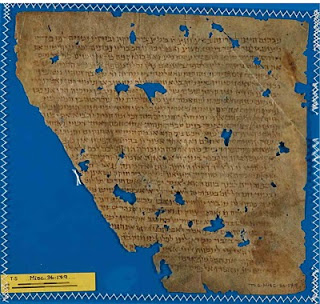
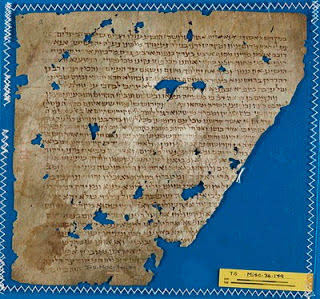
1. It is well-known that the Mishnah in the tenth chapter of Pesachim includes a set of mah nishtannah. But if one opens a standard printed Babylonian Talmud (Pes. 116a), one sees four questions[2] in the text of the Mishnah (matzah, maror, roast, and dipping), while if one opens a standard printed Jerusalem Talmud, one sees three (dipping, matzah and roast). Is this an instance of a disagreement between the text of the Mishnah preserved in Babylonia and the text of the Mishnah preserved in Palestine? There are such disagreements,[3] but this is not one of them. Here, the manuscript evidence points overwhelmingly to the conclusion that the original text of the Mishnah recorded only the questions of dipping, matzah and roast.[4] Moreover, if one opens up a standard Masechet Pesachim of the Babylonian Talmud and looks at the text of the Mishnah recorded in the Rif and the Rosh, one sees that they too record a Mishnah which included only the questions of dipping, matzah and roast. Also, Rambam utilized a text of the Mishnah which included only these three questions.[5] Let us see how the Encyclopaedia Judaica in its original and new editions deal with this issue. When Daniel Goldschmidt published his classic work on the Haggadah in 1960, after earlier German and Hebrew versions,[6] he clearly took the position that the original text of the Mishnah included only three questions.[7] It was therefore somewhat surprising when the “Mah Nishtannah” entry in the original Encyclopaedia Judaica (published in 1972 and written by the anonymous editors) stated that “[t]he Mishnah enumerates four questions.” In its bibliography, this entry had cited only Goldschmidt’s 1960 work, and one other less scholarly source.[8] We are now in the 21st century. There is now a widespread consensus among scholars that the original text of the Mishnah included only three questions.[9] But when one looks at the new edition of the Encyclopaedia Judaica, one finds only a reprint of the original entry![10] —— 2. A widely quoted explanation of the Vilna Gaon takes the positions that there were always four questions, and that, after the churban, the roast question was substituted by the reclining question.[11] We have already seen that the first of these positions is incorrect. The Haggadah fragments found in the Cairo Genizah show that the second of these positions is incorrect as well. Genizah material generally dates from the 10th through the 13th centuries.[12] It is reasonable to assume that this is roughly the period of the Haggadah fragments from the Genizah.[13] Of course, not all of the Haggadah fragments from the Genizah span the mah nishtannah section. But of those that do, many include the roast question.[14] (The survival of the roast question for 1000 years, post-churban, has been implicitly acknowledged in the Haggadah shel Pesach, Torat Chayim, published by Mossad ha-Rav Kook, at p. 29, n. 59.) [15] Furthermore, although most of the mah nishtannah Haggadah fragments found in the Genizah record four questions the way they are asked today,[16] we also find the following:[17] -Several record three questions: matzah, dipping, and roast,[18] just like the original text of the Mishnah. Most likely, the fragments with these three questions reflect the original Palestinian tradition of the Haggadah,[19] which followed the text of the Mishnah, and the fragments with four questions reflect the Babylonian tradition,[20] which gradually penetrated into Palestine and its surrounding areas.[21] -One records the following three questions: dipping, matzah and reclining.[22] -One records five questions: dipping, matzah, roast, maror, and reclining.[23] (See the photograph in M. Kasher, Haggadah Shelemah, p. 93.) In this fragment, the roast question is phrased:… צלי כולו המקדש בבית אוכלים היינו הזה והלילה. This is the only fragment in which the roast question is phrased with such a qualification. [24] -Two record only the questions of dipping and roast.[25] (But there does not appear to be any reason why the matzah question would have been intentionally discontinued. Perhaps the matzah question was accidentally dropped by a scribe in one source, and further copies were later made from that source. It would have been easy for a scribe to accidentally turn his eye to the wrong mah nishtannah line in the source he was copying from, and thereby omit a question.) – One records only the questions of dipping and matzah. I would like to focus on this last source, which is not actually a Haggadah fragment, but is a section of an anonymous Geonic responsum which includes an outline of the procedures at the seder. It can be deduced that the responsum was composed in Babylonia because it includes avadim hayyinu, which was not a part of the Palestinian seder ritual in this period.[26] This responsum was published by Louis Ginzberg, in his Ginzey Schechter, vol. 2, pp. 258-260. [27] Theoretically, it is possible to argue that the author of this responsum gave only an abbreviated version of the mah nishtannah, and listed only the first two questions, even though his practice was four. This seems to be the understanding of Ginzberg, who writes (p. 259, n. 1): הראשונות השאלות ‘ב אלא כאן נאמרו ולא נתקצר נשתנה מה נוסח. B.M. Lewin included this responsum in his Otzar ha-Geonim, Pesachim (pp. 154-55), and he seems to agree with Ginzberg. (See p. 154, n. 13: נתקצר נשתנה מה נוסח.) But this interpretation seems very unlikely. The whole purpose of the responsum was to spell out the procedures and text of the seder. Abbrevation here would have defeated its purpose. The Safrais take a different approach to this responsum in their monumental work, Haggadat Hazal. They write (p. 64, n. 53) that the third and fourth questions are העמוד בסוף חסרות, implying that these questions were originally included in this responsum but were cut off. Moreover, in their chart on p. 266, they put brackets over a supposed area of the third and fourth questions in this responsum, implying that these questions were once there. They take this approach so that the set of questions in our responsum could then parallel the set of questions found in the other known Babylonian Geonic sources of the Haggadah text: Seder R. Amram Gaon, Siddur R. Saadiah Gaon, and the Haggadah text published in 1984 by M. Lehman.[28] All these sources record the standard four questions: dipping, matzah, maror, and reclining.[29] But I was able to view an image of the responsum (T-S Misc.36.179), and with the kind permission of the Cambridge University Library, have included this image at the end of this article. It is clear that the third and fourth questions were never there. The first side of the fragment ends with the last words of the matzah question (the last three words of this question were written below the last regular line), and the next side continues immediately with avadim hayyinu. It is clear from the image that there are no missing lines in between. Assuming we reject the unlikely interpretation of Ginzberg, this source records a two-question set in Babylonia.[30] The idea that we have now been able to “excavate” such a set, evidence of a period before four questions became the universal practice there, is truly remarkable. An issue remains whether the responsum dates to the period before the maror and reclining questions were added in any Babylonian communities, or whether it dates to a period after they were added, but was composed in a community which did not add them. The latter seems more likely. (The responsum does have at least one other unique aspect.[31] It includes the statement: חורים בני היום[ו] עבדים היינו אתמול. The Safrais discuss this statement at p. 111 and do not mention any other fragments from the Genizah with this language.[32] On the image at the end of this article, this statement is found on the first page, six lines above the last full line.) Regarding the issue of when the maror and reclining questions were added, the following are some reasonable observations that have been made by scholars to date: ◦ The reclining question was probably the last question to be added.[33] Unlike the maror question, it did not make its way into in any manuscripts of the Mishnah,[34] and in all communities, it is the last question of the set.[35] ◦ The maror question probably did not arise until after the text of the dipping question was changed in Babylonia (see Pes. 116a[36]) and the dipping question lost its connotation as a maror question. Once the dipping question lost this connotation, it was probably viewed as necessary to add a question relating to maror.[37] ◦ The reclining question probably originated in Babylonia as well.[38] It was probably added, after the maror question, due to a desire to fix the number of questions at four, parallel to the themes of four cups of wine and four sons.[39] Aside from Haggadah fragments found in the Genizah, the earliest sources which include the reclining question are: Seder R. Amram Gaon,[40] Siddur R. Saadiah Gaon,[41] and the Geonic Haggadah text published by Lehman in 1984. (With regard to Seder R. Amram Gaon, it is accepted that many additions and changes were made to it in the centuries after R. Amram’s death, c. 875. The three surviving manuscripts of the work are only from the 14th-16th centuries. See D. Goldschmidt, Seder R. Amram Gaon, pp. 11-13. With regard to the Siddur R. Saadiah Gaon, the material in our possession has traditionally been viewed as representing a generally reliable version of the original 10th century work by R. Saadiah.[42] With regard to the Geonic Haggadah text published by Lehman, see above, n. 28.) —— 3. A main issue of debate among scholars has been whether the mah nishtannah set of the Mishnah reflects questions from Temple times. If we focus on the roast question ( הלילה הזה כולו צלי ), a reasonable initial assumption is that this question is referring to the pesach sacrifice, since the pesach sacrifice was something that was required to be roasted. This would suggest that this question, and hence perhaps all the questions, were composed during Temple times. But many scholars argue that the roast question is not referring to the pesach sacrifice and that this question was composed after the churban (and hence, the other questions probably were as well.) They make the following arguments: 1. A practice arose after the churban, approved (or perhaps initiated) by Rabban Gamliel of Yavneh, of eating a gedi mekulas as a method of commemorating the pesach sacrifice.[43] See Betzah 2:6-7 and Eduyyot 3:10-11. (Although these two sources do not specify that the Rabban Gamliel they are referring to is Rabban Gamliel of Yavneh, it seems fairly clear, for a variety of reasons, that this is the case here.[44]) The meaning of the term mekulas is subject to debate.[45] Nevertheless, it is clear that the gedi mekulas was not designated as a pesach sacrifice, but was arranged on the spit during the roasting process in the same manner as a pesach sacrifice, and was roasted in its entirety just like a pesach sacrifice. See Tosef. Betzah 2:11 (איזהו גדי מקולס? כולו צלי ראשו וכרעיו וקרבו ) and Pes. 74a.[46] The Sages prohibited the gedi mekulas,[47] but it is possible that a large section of Jewry followed the leniency of Rabban Gamliel and engaged in this practice.[48] The roast question could have been composed post-churban in an area which followed this practice and could be referring to this practice.[49] 2. The Mishnah at Pesachim 4:4 records:מקום שנהגו לאכול צלי בלילי פסחים, אוכלים; מקום שנהגו שלא לאכול, אינן אוכלין. It is possible that this Mishnah was composed during Temple times and is referring to a practice of eating roast meat on the seder night outside the Temple. But just as likely, this Mishnah was composed after the churban and is referring to a post-churban practice of eating roast meat[50] as a commemoration of the pesach sacrifice. It is possible to understand the roast question in the Mishnah as composed, post-churban, in an area which followed this practice and as referring to this practice.[51] But (as pointed out to me by my friend Sam Borodach) the precise phrasing of the roast question does not support either of these interpretations. When read in light of the parallel matzah question, the roast question implies that the question is about a required behavior of the evening. While there were areas which had a custom on this evening, post-churban, to eat a gedi mekulas or to eat roast meat, these were not required behaviors. It is hard to imagine the roast question phrased the way it was by someone composing it with the above optional commemorative behaviors in mind. The language of the roast question, read in light of the parallel matzah question, fits the pesach sacrifice best.[52] Does it follow from this interpretation that the roast question was composed during Temple times? Not necessarily. Even if the roast question is referring to the pesach sacrifice, it very possibly could have been composed after the churban, as a simulation of a question that might have been asked during Temple times. Once the idea for a mah nishtannah question about matzah took hold, it would be have been natural and instructive to create a parallel question covering such an important commandment as the pesach sacrifice, even if the pesach sacrifice was no longer being offered. (All the more so if practices commemorating the pesach sacrifice were ongoing!) (It is also possible to understand the roast question as having been composed post-churban if the pesach sacrifice itself continued after the churban.[53] But the evidence for this is weak.[54]) The Mishnah that concerns us, Pesachim 10:4, is found in the last chapter of this masechet. This suggests that this Mishnah was composed after the churban, since it is reasonable to presume that mishnayot that are presented in the early parts of a masechet were composed first and that mishnayot that are presented later were composed later.[55] Moreover, there is specific evidence suggesting that this particular chapter was composed after the churban. Mishnah 10:3 includes the statement:ובמקדש מביאין לפניו גופו של פסח. This statement suggests that the normative statements in this chapter describe only post-churban practice.[56] Of course, the questions themselves could still reflect questions from earlier times, which were recorded in a chapter composed after the churban. Based on recent scholarly developments, a new argument can be made to support the idea that the questions were composed post-churban. The mah nishtannah is not included in the tenth chapter of the Tosefta. This chapter includes much material parallel to the tenth chapter of the Mishnah. In his Tosefta Atikta, published in 2002, Shamma Friedman studied the relationship between the Mishnah and Tosefta of Pesachim in the first four chapters and in the tenth chapter.[57] He came to the conclusion that the material in the Tosefta in these chapters seems to have originated earlier.[58] If Friedman is correct, this also tends to support a post-churban origin for the mah nishtannah. So far, I have not discussed the precise role that the mah nishtannah serve in the Mishnah. But most likely, the mah nishtannah of the Mishnah was not a mandated piece of liturgy to be recited by the father or a typical son. Rather, it was what the child who lacks understanding is taught to ask (…מה נשתנה אביו מלמדו, אם אין דעת בבן).[59] This also perhaps implies that the mah nishtannah text was a later development. ——– Note finally that the Talmud, at Pes. 70a, records and accepts a statement by R. Hisda that the roast question was authored by Ben Tema. Ben Tema took the position that the chagigah too had to be roasted. In the view of R. Hisda, the language of the roast question, הלילה הזה כולו צלי, fit the position of Ben Tema only. Ben Tema is only mentioned at Pes. 70a and Yoma 83a and there is not enough information to determine if he lived during Temple times. (Some suggest that he is to be identified with R. Judah Ben Tema, who probably dates to the second century C.E,[60] but this identification is only conjecture.) The above statement of R. Hisda is not recorded again at Pes. 116a, where one would expect it.[61] R. Hisda’s statement is also surprising, because it takes an overly literal approach to the roast question. There is also no statement in the Jerusalem Talmud expressing the view that the roast question was authored by Ben Tema.[62] ———- To summarize, it is possible that the mah nishtannah was composed during Temple times, but it also possible that it was composed post-churban. In support of the latter is that the mah nishtannah is found in the last chapter of the masechet, and in a chapter whose normative language suggests that it was composed post-churban. The inclusion of a question about roast meat is not inconsistent with this approach. This question could have been composed post-churban in an area which followed the post-churban practice of preparing a gedi mekulas or in an area which followed the post-churban practice of eating roast meat. More likely, if the question was composed post-churban, it is referring to the pesach sacrifice and was composed for educational purposes, as a simulation of a question that might have been asked during Temple times. The fact that the mah nishtannah is not included in the Tosefta may also support a post-churban origin for it. ——— Cambridge University Library T-S Misc.36.179 (reproduced by kind permission of the Syndics of Cambridge University Library)

[1] I would like to acknowledge Dr. Jay Rovner, Rabbi Mordy Friedman, and Sam Borodach for their thoughts and assistance. The views expressed are solely my own. Several sources will be cited throughout: -D. Goldschmidt, Haggadah shel Pesach (1960), cited as “Goldschmidt.” -M. Kasher, Haggadah Shelemah (third ed., 1967), cited as “Kasher.” -Y. Tabory, Pesach Dorot (1996), cited as “Tabory.” -S. and Z. Safrai, Haggadat Chazal (1998), cited as “Safrai.” -S. Friedman, Tosefta Atikta: Masechet Pesach Rishon (2002), cited as “Friedman.” -R. Steiner, “On the Original Structure and Meaning of Mah Nishtannah and the History of Its Reinterpretation,” JSIJ 7 (2008), pp. 1-41, cited as “Steiner.”[2] I will call them questions, even though some have argued that they are best understood, in the context of Mishnah 10:4, as explanations or exclamations. See, e.g., Safrai, pp. 31 and 206, and the sources cited by Steiner, pp. 21-22. Steiner strongly defends the traditional understanding of the mah nishtannah as questions (actually, as one long question). He points out that the Talmud (Pes. 116a) includes the following passage:ת”ר חכם בנו שואלו ואם אינו חכם אשתו שואלתו ואם לאו הוא שואל לעצמו ואפילו שני תלמידי חכמים שיודעין בהלכות הפסח שואלין זה לזה מה נשתנה הלילה הזה מכל הלילות שבכל הלילות אנו מטבילין פעם אחת הלילה הזה שתי פעמים:(Although the printed editions have punctuation between שואלין זה לזה and מה נשתנה, this punctuation is only a later addition. See Steiner, p. 26, n. 95, and Kasher, p. 35. But see Goldschmidt, p. 11, and Safrai, p. 112, for a different approach to the above text.) Steiner argues that the Mishnah is most properly understood as intending only one (long) question, i.e., “what special characteristic of this night is causing us to depart from our normal routine in so many ways?” He shows that R. Saadiah Gaon and every early medieval source understood the mah nishtannah as only one long question. It was not until the 13th century that a medieval source first referred to them asשאלות (plural). A study of the the mah nishtannah inevitably raises other issues. Is the mah nishtannah to be recited by the child only if he cannot formulate his own questions? Is it perhaps to be recited by the father? On these issues, see, e.g., Goldschmidt, pp. 10-11, Kasher, pp. רד-רב, Safrai, p. 31, ArtScroll Mishnah Series, comm. to Pes. 10:4, p. 210, and J. Kulp and D. Golinkin, The Schechter Haggadah: Art, History, and Commentary, p. 196. Most likely, the correct understanding of Mishnah 10:4 is that the mah nishtannah is what the child who lacks understanding is taught to ask. See Steiner, pp. 26, and 33-36. (Steiner suggests that we should read the beginning of Mishnah 10:4 elliptically as if it includes the words לשאל after בבן דעת אין, and again after אביו מלמדו.) It was only sometime in the post-Talmudic period that the mah nishtannah began to be treated as a mandated piece of liturgy.[3] A well-known example is the first Mishnah in the fourth chapter of Bava Metzia. On this topic generally, see M. Schacter, “Babylonian-Palestinian Variations in the Mishnah,” JQR 42 (1951-52), pp. 1-35. [4] This is what the earliest and most reliable Mishnah manuscripts record. See Safrai, p. 26 and Tabory, pp. 260, 262, and 361.With regard to the order of these three questions, almost all of the early sources which record the mah nishtannah as dipping, matzah and roast, record them in that precise order. See Tabory, p. 262. Kasher, p. 113, n. 6, refers to eight manuscripts of the Babylonian Talmud to Pesachim which include the Mishnah. All but one include only the above three questions in their text of the Mishnah (in the order dipping, matzah, and roast). (In this note, Kasher did not cite the Munich 95 manuscript of the Talmud, which also includes only these three questions, because it includes them in a different order.) Almost certainly, it was the familiarity of later copyists with the maror question from the texts of their Haggadah that led them to insert it into texts of the Mishnah. See H. Guggenheimer, The Scholar’s Haggadah, p. 250. Now that it has been established that Mishnah 10:4 includes only three questions, many scholars claim that the three explanations of R. Gamliel at Mishnah 10:5 (pesach, matzah, maror) are the answers to the mah nishtannah. But this approach must be rejected. As Steiner explains (pp. 32-33), although the topics of the mah nishtannah match the topics of the three explanations (the dipping question was the maror question of the time), the “explanations” given do not specifically answer the questions posed. Moreover, the mah nishtannah is most properly understood as only one long question, i.e., “what special characteristic of this night is causing us to depart from our normal routine in so many ways?” If so, what we should be looking for in an answer is one fundamental answer and not three piecemeal ones. According to Steiner, כל הפרשה … מתחיל בגנות is the answer expressed in the Mishnah to the mah nishtannah. (The prevalent view among the Rishonim was that avadim hayyinu was the answer to the mah nishtannah. See Steiner, p. 31. But avadim hayyinu is not found in the Mishnah, and was not even included in the Palestinian seder ritual. See Steiner, p. 32 and below, n. 26.)[5] See the edition of the Rambam’s commentary on the Mishnah published by Y. Kafah. Rambam copied a text of the Mishnah (presumably one that he felt was authoritative) and wrote his commentary on that text. For most of the sedarim of the Mishnah (including Pesachim), we have this text of the Mishnah and the Rambam’s commentary, all written in the Rambam’s own hand. This text of the Mishnah with the Rambam’s commentary was published by Kafah. The edition of the Rambam’s commentary on the Mishnah included in a standard Talmud volume does not include a text of the Mishnah.[6] The German version was published in 1936. The earlier Hebrew version was published in 1947.[7] Goldschmidt, pp. 11-12. He also clearly took this position in the 1947 version (pp. 9-10, and p. 29). I have not seen the 1936 version.[8] The other source cited was: “J. Levy, A Guide to Passover (1958).” There is a typographical error here, as the author’s name was Isaac Levy. This was not a work which compared in any way with the level of scholarship reflected in Goldschmidt’s 1960 Haggadah. At p. 27, Levy assumed, without any discussion, that the Mishnah enumerated the matzah, maror, roast, and dipping questions.[9] E.g., Safrai, p. 26, Tabory, pp. 260, 262 and 361, Steiner, p. 32, and Kulp and Golinkin, pp. 198-99.[10] It includes no new bibliographical references either, unlike many of the other entries.[11] The Gaon’s explanation is printed at Kasher, at p. 115. According to this explanation, reclining at the seder would not have been a shinui prior to the churban, since it was the practice to eat while reclining all year round. Only after the Temple was destroyed did reclining at the seder become something unusual. At the same time, the pesach sacrifice ceased. The Gaon’s explanations to the Haggadah were first published in 1805 (a few years after his death) by his student R. Menachem Mendel of Shklov. The Encylopaedia Judaica entry “Mah Nishtannah” also essentially follows the approach of the Gaon. Another widely quoted view is that of the Rambam, who writes that there were originally five questions before the question about roast meat was dropped. The Rambam writes (Hilchot Chametz u-Matzah 8:3): בזמן הזה אינו אומר והלילה הזה כולו צלי שאין לנו קרבן. [12] R. Brody, The Geonim of Babylonia and the Shaping of Medieval Jewish Culture, p. 32.[13] For a listing of the Haggadah fragments from the Genizah, see Safrai, pp. 293-301. Most of these have not been published.[14] For some published examples, see: 1) I. Abrahams, “Some Egyptian Fragments of the Passover Haggadah,” J.Q.R. (O.S.) 10 (1898), pp. 41-51, fragments # 2, 7,8 and 10; 2) the Haggadah manuscript first described briefly in an article by J.H. Greenstone in 1911, and later published in full by Goldschmidt; 3) the Haggadah manuscript published by Jay Rovner, “An Early Passover Haggadah According to the Palestinian Rite,” J.Q.R. 90 (2000), pp. 337-396, and 4) MS Cambridge T-S H2.152 (photograph at Kasher, p. 93). There are other such fragments as well. For example, see Safrai, p. 53, n. 21 and p. 114, nn. 9 and 11. (The manuscript published by Rovner is probably, but not certainly, from the Genizah.). In only one of these texts (T-S H2.152) was the text of the question amended to צלי כולו המקדש בבית אוכלים היינו. With one exception (see below), the roast question is found only among sets of mah nishtannah which are based on the three questions included in the Mishnah. These sets either follow the set of three included in the Mishnah, or have a modified version of the set which leaves out the matzah question (perhaps erroneously, see the discussion in the text). (But not all of the fragments which include the roast question include a complete set of questions, so the above conclusions are not absolute.) The exception is T-S H2.152 which includes the roast question along with four other questions. One text from the Genizah (Abrahams, fragment #5) includes the following blessing immediately after ha-motzi: מרורים מצות לאכל אבותינו את צוה אשר העולם מלך … ‘ה ‘א ‘ב הברית זוכר ‘ה ‘א ‘ב גבורותיו את להזכיר אש צלי בשר(The Safrais quote this text at p. 30, but erroneously leave out the words אבותינו את.) Whatever community was using this text was almost certainly eating roast meat at their meal, although Tabory (p. 103) raises the possibility that they may have only been partaking a small, symbolic amount. A similar blessing is found in a different Genizah fragment printed by the Safrais at p. 289. There, however, the blessing is included before the blessing for washing and ha-motzi, so it is less clear that the blessing was meant to precede the actual eating of roast meat. Regarding the concluding blessing הברית זוכר, there are other fragments from the Genizah which include such a blessing in this section of the Haggadah (without reference to אש צלי בשר ). See, e.g, the Greenstone-Goldschmidt manuscript (Goldschmidt, p. 83), and Abrahams, fragment #7. For further discussion of this concluding blessing, see Goldschmidt, p. 60, n. 10.

[15] The passage reads:
זו שאלה גם גורסים הגדות שבמספר י עמ׳ שלמה הגדה עי׳.

[16] Safrai, p. 113. (I am not concerned with variation in the order of these four questions.)[17] In this section, I am only including fragments whose total number of questions in their mah nishtannah set can be determined. Therefore, I am not including fragments such as Abrahams #7 and Abrahams #8, which include mah nishtannah questions but which are cut off mid-set. For example, Abrahams fragment #7 starts with the roast question, but is cut off before it. Abrahams fragment #8 starts in the middle of the matzah question. [18] See, e.g., Abrahams, fragments #2 and #10. See also our discussion below of the Greenstone-Goldschmidt fragment. Safrai writes (p. 65) that ניכר מספר of the Haggadah fragments from the Genizah are of this type. [19] Safrai, pp. 26, 64 and 113. But a few fragments which include the roast question follow the Babylonian rite in other essential respects. See Safrai, p. 30, n. 55, and p. 114, n. 9.[20] Safrai, pp. 113 and 206.[21] We know from many other contexts that Babylonian customs gradually penetrated into Palestine and its surrounding areas and became the majority custom. See, e.g., Brody, The Geonim of Babylonia and the Shaping of Medieval Jewish Culture, pp. 111, 115, and 117. (An example is the practice of reciting kedushah in the daily amidah. The letter of Pirkoi ben Baboi, early 9th cent., describes how Babylonian Jews moved to Palestine and forced Palestinian Jews to adopt the Babylonian practice of reciting kedushah daily.) See also I. Ta-Shema, Ha-Tefillah ha-Ashkenazit ha-Kedumah, p. 7. [22] See Kasher, p. 113, n. 11. Kasher calls this manuscript “21ק.” It is MS Cambridge T-S H2.145. It is possible that this is not a legitimate variant and that the maror question was omitted in error by the scribe who copied this fragment. As explained in the text, the reclining question was almost certainly the last question added and there was little reason for a community to have dropped the maror question. We also have evidence of a mah nishtannah set of dipping, matzah, and maror. This does not come from the Genizah, but from additions inscribed at the end of a certain siddur. The siddur was authored by a rabbinic authority from Morocco, who lived in the 11th or 12th century. The additions, inscribed by the owner of the siddur, describe various local rites, and include a mah nishtannah set of dipping, matzah and maror. See Rovner, p. 351, n. 57.[23] T-S H2.152. [24] Safrai, p. 53. This set is so aberrant that it may not reflect an actual rite. Possibly, the set was created by a lone scribe who combined the various questions that he knew of into one set. Since this set records the language of the roast question in a manner found nowhere else, this is evidence that the scribe who copied this fragment may have been a creative one.[25] The Haggadah manuscript published by Rovner clearly records only these two questions. The Greenstone-Goldschmidt manuscript initially recorded only these two questions, but a later scribe inserted the matzah question. See the last line of fragment א/ד and the first line of fragment ב/ד, in the photos at Goldschmidt, p. ii. These photos show that these lines are in a different handwriting. (The Safrais also print a text of the Goldstone-Goldschmidt manuscript. But they print it as if it included all three questions initially. See Safrai, pp. 286-89.) [26] Safrai, p. 50. See also the responsum of R. Natronai Gaon quoted, for example, at Kasher, pp. 27-28, Goldschmidt, p. 73, and Safrai, pp. 56-57. (In this responsum, R. Natronai criticizes an alternative Haggadah ritual for many reasons, one of which was the ritual’s omission of avadim hayyinu. R. Natronai thought it was a sectarian Haggadah ritual. It turns out that he was criticizing the Palestinian Haggadah ritual. See Goldschmidt, p. 74, Safrai, pp. 56-59, and Brody, p. 96.)[27] It is cited in Kasher, p. 113, n. 11 with the symbol ש. The responsum is not devoted solely to the seder. The first few lines of the responsum, whose beginning is cut off, deal with the hoshanot of Sukkot.[28] M. Lehman, Seder ve-Haggadah Shel Pesach le-Rav Natronai Gaon Al Pi Ketav-Yad Kadmon, in Sefer Yovel li-Chevod Morenu ha-Gaon Rabi Yosef Dov ha-Levi Soloveitchik Shelita, ed. S. Israeli, vol. 2, pp. 976-993, at p. 986. The title of Lehman’s article is unfortunate. The text of the article does not even claim that the Geonic Haggadah text published there served as the Haggadah of R. Natronai Gaon. Lehman composed the article initially based on a manuscript which spanned three sections, one of which was a Haggadah text. The first section of the manuscript included a caption stating that the material in that section (a long paytanic version of kiddush for Passover, and a long paytanic version of the blessing before drinking the second cup) was enacted and arranged by R. Natronai. The Haggadah section had its own caption which stated that what followed was the text of the Haggadah accepted by the Talmud and the Geonim (with no mention of R. Natronai). Three Passover-related responsa followed, without any caption. Later, Lehman acquired another page from the same manuscript. He writes that the body of his article was already in final form by this time, but he was able to add his discussion of the new page at the end of the article. The new page included three anonymous responsa, one of which is recorded elsewhere in the name of R. Hai Gaon. This made Lehman realize (p. 991) that his pages were part of a collection of material from various Geonim, and not material that may all have had some connection to R. Natronai. Probably, the article was given its title (by Lehman or perhaps by someone else) before Lehman acquired the additional page. But even before Lehman acquired the additional page, the title was unjustified, as the Haggadah section had its own caption which did not connect it to R. Natronai. (Despite its caption, even the material in the first section of the manuscript may not have been composed by R. Natronai.) It is unfortunate that the Safrais refer to Lehman’s text throughout their work as the “Haggadah of R. Natronai Gaon.” It is evident fom their discussion of this text (p. 261) that all they were really willing to accept is that the text reflected a Haggadah from the time of the Geonim in general.[29] See Safrai, pp. 261 and 266.[30] See Kasher, p. 42, J. Rovner, “An Early Passover Haggadah: Corrigenda,” JQR 91 (2001), p. 429 (correcting p. 351, n. 59 in his original article), and J. Kulp and D. Golinkin, The Schechter Haggadah: Art, History, and Commentary, p. 199. Note that the Rif quotes a text of M. Pesachim 10:4 which includes only the questions of dipping, matzah and roast, and then remarks פסחא לן דלית צלי בשר לימא לא והשתא. It can be argued based on this that, in his community, the mah nishtannah at the seder may have only included dipping and matzah.[31] Perhaps close examination of the responsum will reveal other unique aspects. The responsum follows an alternative nusach for kiddush, but this nusach is widely attested to. See, e.g., Siddur R. Saadiah Gaon, pp. 141-142, Kasher, pp. 183-85 and ג-ב, Safrai, p. 61, and Lehman, pp. 977-980 and 982-83. The responsum records the Sages in Bnei Brak as having been מסיחין about yitziat mitzrayim all night. But there is other evidence for this reading or its equivalent: משיחין. See Safrai, p. 208.[32] But this language is recorded in the haggadot of Djerba (which also include the standard language that we are now slaves and will be free next year). See Kasher, p. 201, and Safrai, p. 111, n. 6. (Djerba is an island off the coast of Tunisia. The Jewish community there has ancient roots. ) R. Shlomo Goren saw fit to to include the above Geonic language (along with the standard language) in the haggadah he composed for the use of the Israeli army. See, e.g., Kasher, p. 201, citing the 1956 edition of the Haggadah Shel Pesach published by הראשית הצבאית הרבנות. Many editions of this haggadah were published and I saw this language in later editions as well. Kasher discusses the Geonic language at pp. 198-201 and attempts to provide a rationale for it.[33] Tabory, p. 260.[34] The maror question made its way into some, but not the earliest, texts of the Mishnah. See Tabory, p. 261.[35] Tabori, p. 261, n. 36.[36] In Amoraic Babylonia, there was no practice of dipping throughout the year. This led the Babylonian Amoraim to rephrase the question. Based on the statements by the Babylonian Amoraim expressed at Pes. 116a, the text of the dipping question was changed in many Mishnah manuscripts. Various forms of the question developed. See Safrai, p. 27, and Goldschmidt, p. 77.[37] Tabory, pp. 261-262. Almost certainly, the original formulation of this question described the herb as מרורים. See Siddur R. Saadiah Gaon, p. 137, Goldschmidt, p. 12, Kasher, pp. 113-14 and pp. יא-י (variant readings), and Tabory, p. 261. See also Rambam, Hilchot Chametz u-Matzah 8:2. (In the nusach ha-haggadah included in the standard printed Mishnah Torah, the reading is מרור. But the Frankel edition points out that some versions read מרורים here.) מרורים is the phrase used in the Bible (Ex. 12:8 and Num. 9:11). Moreover, the singular מרור refers to only one of the five herbs with which one can fulfill one’s obligation. See M. Pes. 2:6.[38] In suggesting that both the maror and reclining questions arose in Babylonia, I am following the approach of the Safrais. The Safrais believe that even though the majority of the mah nishtannah Haggadah fragments from the Genizah include dipping, matzah, maror and reclining, these fragments do not reflect the original Palestinian custom. These fragments only show that the Babylonian custom became the majority custom in Palestine and its surrounding areas. [39] Guggenheimer, p. 250. [40] P. 113 (ed. Goldschmidt).[41] P. 137.[42] But N. Cohen has noted several contradictions between the instructions provided by R. Saadiah and the liturgical texts, and between parallel prayer texts in different sections. According to Cohen, some of the liturgical texts included in the Siddur may have been supplied by later copyists, or at least changed by them. See Cohen, le-Ofiyyo ha-Mekori shel Siddur Rav Saadiah Gaon, Sinai 95 (1983/84), pp. 249-67. Cohen does not address the mah nishtannah in her study.[43] A gedi (=young goat) was one of the animals permitted for the pesach sacrifice. Ex. 12:5 states that the pesach sacrifice must come מן הכבשים ומן העזים (=from a lamb or a goat). [44] One such reason is that plain references to Rabban Gamliel (i.e., without the description “ha-Zaken”) are almost always references to Rabban Gamliel of Yavneh. See Safrai, p. 28, n. 50, E. Schurer, The History of the Jewish People in the Age of Jesus Christ, ed. Vermes, Millar and Black, vol. 2, p. 368, n. 48, and Tos. Niddah 6b, s.v. בשפחתו. A story referring to a practice of preparing a gedi mekulas among Roman Jewry, and the objection of the Sages of Palestine, is found in many sources. See, e.g., Pes. 53a: תודוס איש רומי הנהיג את בני רומי לאכול גדיים מקולסין בלילי פסחים שלחו לו אלמלא תודוס אתה גזרנו עליך נדוי שאתה מאכיל את ישראל קדשים בחוץ … See also Ber. 19a, Bezah 23a, and in the Jerusalem Talmud: Pes. 7:1, Bezah 2:7, and Mo’ed Katan 3:1. Most scholars believe that Todos lived after the churban. See Tabory, p. 98. But there are some scholars who believe that Todos lived during Temple times. See Safrai, p. 28, n. 52. Even if it can shown that there was a practice outside of Palestine of preparing a gedi mekulas during Temple times, this does not mean that there was such a practice in Palestine, where going to Jerusalem and participating in an actual pesach sacrifice was largely possible. (The version of the above story in the standard printed edition of the Talmud at Ber. 19a states that the message to Todos was sent by Simeon b. Shetach. But this is an erroneous reading. See Tabory, p. 98.) Aside from being recorded in both Talmuds, the above story is also recorded in the Tosefta (Bezah 2:11). But the Tosefta has a slightly different reading:תודוס איש רומי הנהיג את בני רומי ליקח טלאים בלילי פסחים ועושין אותן מקולסין… טלא is the Aramaic term for שה, a broader term than גדי . Regarding the significance of this reading, see S. Lieberman, Tosefta ki-Feshutah, 5, p. 959.[45] See the following note.[46] Tosef. Betzah 2:11:איזהו גדי מקולס? כולו צלי, ראשו וכרעיו וקרבו. בישל ממנו כל שהוא שלק ממנו כל שהוא אין זה גדי מקולס … Pes. 74a: איזהו גדי מקולס דאסור לאכול בלילי פסח בזמן הזה כל שצלאו כולו כאחד .נחתך ממנו אבר נשלק ממנו אבר אין זה גדי מקולס (Perhaps it was only the preparation of a gedi mekulas that was forbidden by the Sages, or perhaps the preparation of any kind of מקולס שה was forbidden as well. See the version of the story involving Todos recorded in Tosef. Betzah 2:11 and Lieberman, Tosefta ki-Feshutah, 5, p. 959.) There was a dispute as to the proper manner of positioning the legs and entrails of the pesach sacrifice while it was being roasted. See M. Pesachim 7:1. The view of R. Akiva was that they are hung outside it. This perhaps sheds light on the meaning of the difficult term mekulas. Mekulas in Aramaic can be interpreted as wearing a helmet (see the similar word at Targum Pseudo-Jonathan to I Sam. 17:5). According to Rashi, comm. to Pes. 74a, when R. Akiva expressed the view that the legs and entrails were roasted outside the animal, he meant that they were placed above its head. This made the goat look like it was wearing a helmet. Mekulas would therefore be another way of describing the method of positioning according to R. Akiva. (Rashi elsewhere give a slightly different interpretation of how the term mekulas accords with the view of R. Akiva. See Rashi, comm. to Pes. 53a and Betzah 22b.) An alternative approach is to understand mekulas as meaning “beautiful” or “praised.” See, e.g., Rambam, comm. to Mishnah, Betzah, 2nd chap. The root קלס often has the meaning “to beautify” or “to praise” in rabbinic literature, derived from the Greek word καλος (beautiful). See also J. Gereboff, Rabbi Tarfon: The Tradition, the Man, and Early Rabbinic Judaism, p. 70, where two other Greek derivations for mekulas are suggested: καλως, an animal led on a string, and κολος, a hornless animal. Gereboff also cites S. Krauss for the view that χαυλος in Greek means “helmeted.” See also Tabory, p. 97, n. 248.[47] No reason is given in the Mishnah for the Sages’ prohibition. But in the response to Todos, a reason is given. If the practice of preparing a gedi mekulas is permitted, people will think that kodshim can be eaten outside of the azarah, because the practice was to refer to the gedi mekulas as if it were a pesach offering. Probably, Palestinian Jewry as well as Roman Jewry referred to the gedi mekulas as if it were a pesach offering. See below, n. 54.[48] There would be evidence of this if the custom referred to at M. Pesachim 4:4 is the custom to prepare and eat a gedi mekulas. [49] The Safrais (p. 28), for example, take this approach, as does Friedman (p. 92).[50] Some scholars argue that the custom being referred to in this Mishnah is simply the custom to prepare and eat a gedi mekulas. See, e.g., Safrai, pp. 27-28. But this is not the plain sense of the Mishnah.[51] Scholars who take this approach include G. Allon, The Jews in their Land in the Talmudic Age, pp. 264-65, and Goldschmidt, p. 12. In this approach, the roast question arose in connection with what was perhaps the practice of a large section of Jewry. By contrast, the custom to prepare a gedi mekulas may not have been a widespread custom. [52] A response to this would be that the roast question was phrased the way it was so it could be parallel to the matzah question, even though the phrasing did not exactly fit the concept of an optional commemorative practice.[53] There are those who suggest that the pesach sacrifice (and other sacrifices as well) continued after the churban (perhaps outside the makom ha-mikdash and without the permission of the Sages). See, e.g., J. Brand, “Korban Pesach le-Achar Churban Bayit Sheni,” Ha-Hed 12/6 (1937) and 13/7 (1938), and the references at D. Bleich, Contemporary Halakhic Problems, vol. 1, pp. 247-48. See also Tabory, Moadey Yisrael be-Tekufat ha-Mishnah ve-ha-Talmud, p. 99, n. 65.[54] For example, M. Pesachim 7:2 records a story in which Rabban Gamliel told his slave Tavi to go out and roast “the pesach” on the roasting tray. (The Rabban Gamliel who had a slave named Tavi was Rabban Gamliel of Yavneh. See Safrai, p. 28.) But this story can easily be interpreted as involving only the preparation of a gedi mekulas, post-churban, with the term “pesach” being used only loosely. For similar probable loose usages of the term “pesach,” see Tosef. Ohalot 3:9 and 18:18, and J. Talmud Meg. 1:11. See also Tabory, p. 100-101. The argument that the pesach sacrifice continued after the churban has also been made based on a passage in Josephus’ Antiquities. Josephus writes (II, 313): “to this day we keep this sacrifice in the same customary manner, calling the feast Pascha…” Josephus tells us (XX, 267) that he completed this work in the 13th year of the reign of Domitian (= 93-94 C.E). (The precise year that book II was written is unknown.) But Josephus was writing in Rome, not Palestine, and almost certainly all he meant is that the pesach sacrifice has been kept throughout the centuries through approximately his time. See also B. Bokser, The Origins of the Seder, p. 106. The historian Procopius, describing events in Palestine in the 6th century, wrote: [W]henever in their calendar Passover came before the Christian Easter, [Justinian] forbade the Jews to celebrate it on their proper day, to make then any sacrifices to God or perform any of their customs. Many of them were heavily fined by the magistrates for eating lamb at such times… In the late 4th or early 5th century, the church father Jerome wrote: Take any Jew you please who has been converted to Christianity, and you will see that he practices the rite of circumcision on his newborn son, keeps the Sabbath, abstains from forbidden food, and brings a lamb as an offering on the 14th of Nissan. See Secret History of Procopius, ed. R. Atwater, pp. 260-261 and S. Krauss, “The Jews in the Works of the Church Fathers,” JQR (OS) 6 (1893/1894), p. 237. But almost certainly, these passages are only referring to the practice of slaughtering a gedi mekulas. See Safrai, p. 30, n. 55. (Obviously, the references to “sacrifices” and “offering” in the above passages are only translations.)

There is evidence that the practice of preparing a gedi mekulas on the seder night continued in Palestine through at least the 7th century. This is seen from the Palestinian work Sefer ha-Maasim which dates from this time and includes the following passage:
… קרבו על כרעיו ראשו על שלם ניצלה זה מקולס גדי .

See T. Rabinovitz, “Sefer ha-Maasim le-Vnei Eretz Yisrael:Seridim Hadashim,” Tarbitz 41 (1972), p. 284. Sefer ha-Maasim is a work whose purpose seems to have been to record decisions of halachah applicable in its time. Safrai p. 30, and Rabinovitz, p. 280.[55] Actually, the matter of the order of the chapters in Mishnah Pesachim is not so simple. Some manuscripts of the Talmud and commentaries by Rishonim follow an arrangement in which the tenth chapter follows the first four chapters. All these chapters together are called Masechet Pesach Rishon and the other chapters are called Masechet Pesach Sheni. R. Menachem Meiri writes that this alternative arrangement dates from the time of the Geonim or later. See Safrai, p. 19, n. 1. But some scholars, such as Shamma Friedman, believe that this alternative arrangement has a more ancient origin. See Friedman, p. 12, n. 5. If this alternative arrangement was the original arrangement, it is a mistake to view the tenth chapter as if it were the last of ten chapters.[56] Also, the names of the Sages included in the tenth chapter are: R. Tarfon, R. Akiva, R. Yose, R. Yishmael, Rabban Gamliel, and R. Eliezer b. R. Tzadok. (References to “Rabban Gamliel” in the Mishnah, without the description “ha-Zaken,” are almost always references to Rabban Gamliel of Yavneh. As to R. Eliezer b. R. Tzadok, he was active both before and after the churban.) M. Pesachim 10:6 records that R. Akiva included a prayer for the rebuilding of Jerusalem at his seder. The introductory statement ערבי פסחים סמוך למנחה לא יאכל אדם עד שתחשך and the detailed instructions governing the drinking of wine also give the impression of a chapter composed after the churban, detailing how an individual was obligated to conduct himself in his home. See Friedman, p. 409. Two arguments between Bet Hillel and Bet Shammai are also included in this chapter. In general, these reflect arguments from Temple times. But the author or editor of chapter 10 could simply have inserted this earlier material into a chapter composed after the churban. See Safrai, p. 19. Many printed editions of Mishnah 10:3 read: ובמקדש היו מביאין לפניו גופו של פסח. But היו is a later addition. (See Safrai, p. 25 and Friedman, pp. 89 and 430.) Some have argued that the absence of היו provides a basis for dating this section of the Mishnah, and by implication, the rest of the chapter, to Temple times. In this interpretation, the Mishnah first states the practice in the גבולין in its time (…הביאו לפניו), and then continues with the practice in theמקדש in its time (…ובמקדש מביאין). But as Safrai (p. 25) and Friedman (pp. 89, 430-32 and 438) point out, such an interpretation is very unlikely, and the addition of היו does not change the meaning of the phrase but correctly clarifies the original meaning. The debate about whether the tenth chapter was composed before or after the churban is summarized nicely by Friedman (see, e.g., pp. 88-92, 430-432, and 437-38). Friedman strongly advocates the position that the chapter was composed after the churban.[57] With regard to why these particular chapters were chosen, see above, n. 55.[58] The precise relationship between the Mishnah and the Tosefta has always been an issue. See, e.g., the entry “Tosefta” in the original Encyclopaedia Judaica and the revised entry in the new edition.[59] Steiner, pp. 26, and 33-36. Steiner suggests that we should read this statement elliptically as if it includes the words לשאל after בבן דעת אין, and again after מלמדו אביו.[60] See EJ 10:354 and S. Friedman, le-Ofiyyan shel ha-Beraitot be-Talmud ha-Bavli: Ben Tema u-Ben Dortai, in Netiot le-David: Sefer ha-Yovel le-David Halivni, pp. 248-255.[61] But see Tos., s.v. כולו.[62] Many authorities seem to disregard the statement of R. Hisda. For example, the Rif writes that the chagigah is to be commemorated at the seder by an item that is mevushal. Yet he implies in a different passage that the roast question was a normative question during Temple times. Similarly, the Rambam does not follow the position of Ben Tema (see Hilchot Karban Pesach 10:13), but at the same time, he includes the roast question in his list of mah nishtannah from Temple times. See Hilchot Chametz u-Matzah 8:2 (and Lechem Mishneh there). Note that R. Joseph Caro, OH 473, takes the position that the egg that commemorates the chagigah should be מבושלת. Compare Tos. Pes. 114b, s.v. שני (the halachah follows Ben Tema), and R. Moses Isserles, OH 473 (the egg that commemorates the chagigah must be roasted). Friedman, in his Tosefta Atikta: Masechet Pesach Rishon (2002), pp. 91-92, accepts the essence of the interpretation of R. Hisda, but believes that the roast question must have been composed in accordance with a majority view. This leads him to conclude that the roast question must have been composed after the churban. (In Temple times, a chagigah offering was brought, and according to the majority view, it was not roasted. Since the roast question includes the phrase הלילה הזה כולו צלי, it could not have been composed in accordance with the majority view in Temple times.) In a later article, le-Ofiyyan shel ha-Beraitot be-Talmud ha-Bavli: Ben Tema u-Ben Dortai, pp. 195-274, in Netiot le-David: Sefer ha-Yovel le-David Halivni (2004), Friedman discusses the Ben Tema passage extensively, and takes a different approach.


Benefits of the Internet: Besamim Rosh and its History

Benefits of the Internet: Besamim Rosh and its History
By: Dan Rabinowitz & Eliezer Brodt
    In a new series we wanted to highlight how much important material is now available online.  This, first post, illustrates the proliferation of online materials with regard to the controversy surrounding the work Besamim Rosh (“BR”). 

[We must note at the outset that recently a program has been designed by Moshe Koppel which enables one, via various mathematical algorithims, to identify documents authored by the same author. We hope, using this program, to provide a future update that will show what this program can demonstrate regarding the authorship of the BR and if indeed the Rosh authored these responsa.]

Background

    Before turning to the BR and discussing its history we need to first discuss another work.  R. Raphael Cohen the chief rabbi of triple community, Altona-Hamburg-Wansbeck (“AH”W”), [1] published a book, Torat Yekuseil, Amsterdam, 1772 regarding the laws of Yoreh DeahTorat Yekuseil is a standard commentary and is unremarkable when compared to other works of this genre.  While the book is unremarkable in and of itself, what followed is rather remarkable. 

    Some years later, in 1789, a work with the putative author listed listed as Ovadiah bar Barukh and titled Mitzpeh Yokteil [2] was published to counter R. Raphael Cohen’s Torat Yekuseil (“TY”)Mitzpeh Yokteil (“MY”), was a vicious attack both against the work TY as well as its author, R. Raphael Cohen.  R. Raphael Cohen was a well-known and well-respected Rabbi. In fact, he was the Chief Rabbi of the triple community of AH”W.  The attack against him and his work did not go unanswered.  Indeed, the beit din of Altona-Wansbeck placed the putative author, Ovadiah, and his work, under a ban.

    The Altona-Wansbeck beit din could not limit the ban to just Altona-Wansbeck as the attack in the MY was intended to embarrass R. Raphael Cohen across Europe.  Indeed, the end of the introduction to MY indicates that copies were sent to a list of thirteen prominent rabbis across Europe.  Specifically, copies were sent to the Chief Rabbis of Prague, Amsterdam, Frankfort A.M., Hanover, Bresslau, Gloga, Lissa, etc., “as well as The Universally Know Goan haHassid  R. Eliyahu from Vilna.”  Thus, the intent of the book was to diminish R. Raphael Cohen’s standing amongst his peers. 

    The Altona-Wansbeck beit din, recognizing the intent of the book, appealed to other cities courts to similarly ban the author and book MY – the ban, entitled, Pesak mi-Beit Din Tzedek, the only known extant copy was recently sold at Sotheby’s (Important Judaica, Nov. 24, 2009, lot 136).[3]


These concerns lead the ban’s proponents to the Chief Rabbi of Berlin, R. Tzvi Hirsch Berlin, and to solicit him to join the ban. Initially, it appeared that R. Tzvi Hirsch would go along with the ban.  But, as he was nearing deciding in favor of signing the ban, someone whispered in his ear the verse in Kings 2, 6:5, אהה אדני והוא שאול – which R. Tzvi Hirsch understood to be a play on the word “שאול” in the context of the verse meaning borrow, but, in this case, to be a reference to his son, Saul. That is, the real author of MY was Saul Berlin, Tzvi Hirsch’s son.  Needless to say, R. Tzvi Hirsch did not sign the ban. [4]

    Not only did he not sign the ban, he also came to his son’s defense.  Aside from the various bans that were issued, a small pamphlet of ten pages, lacking a title page, was printed against MY and Saul. [5]  Saul decided that he must respond to these attacks.  He published Teshuvot ha-Rav. . . Saul le-haRav [] Moshe  Yetz,[6] which also includes a responsum from R. Tzvi Hirsch, Saul’s father.  Saul defends himself arguing that rabbinic disagreement, in very strong terms, has a long history.  Thus, a ban is wholly inappropriate in the present case. 

    R. Tzvi Hirsch explained that while MY disagreed with R. Cohen, there is nothing wrong with doing so.  The author of MY, as a rabbi – Saul was, at the time, Chief Rabbi of Frankfort – Saul is entitled to disagree with other rabbis.  Of course, Saul’s name is never explicitly mentioned. Moreover, in the course of R. Tzvi Hirsch’s defense he solicits the opinions of other rabbis, including R. Ezekiel Landau.  R. Landau, as well as others, noted that aside from the propriety of disagreement within Judaism, the power of any one particular beit din is limited by geography.  Thus, the Altona-Wansbeck’s beit din‘s power is limited to placing residents of Hamburg under a ban but not residents of Berlin, including R. Saul Berlin, the author of MY.[7]

    The controversy surrounding the MY was not limited to Jewish audiences. The theater critic, H.W. Seyfried, published in his German newspaper, Chronik von Berlin, translations of the relevant documents and provided updates on the controversy.  Seyfried agitated on behalf of the maskilim and editorlized that the Danish government should take actions against R. Cohen. It appears, however, that Seyfried’s pleas were not acted upon.[8] 

The Publication of Besamim Rosh


    With this background in mind, we can now turn to the Besamim Rosh.  Prior to publishing the full BR, in 1792, Saul Berlin published examples of the responsa and commentary found in the BR – a prospectus, Arugat ha-Bosem.  This small work whose purpose was to solicit subscribers for the ultimate publication of BR. It appears that while Saul may have been trying for significant rabbinic support, the majority of his sponsors were householders. 

    In 1793, the BR was published.  The BR contains 392 responsa (besamim equals 392) from either R. Asher b. Yeheil (Rosh) (1259-1327) or his contemporaries.  This manuscript belonged to R. Yitzhak di Molina who lived during the same time period as R. Yosef Karo, the author of Shulchan Orakh.  Additionally, Saul appended a commentary of his own to these responsa, Kasa de-Harshana

    The BR contains two approbations, one from R. Tzvi Hirsch Berlin and the other from R. Yehezkel Landau.  R. Landau’s approbation first explains that Rosh’s responsa need no approbation.  With regard to R. Saul Berlin’s commentary, he too doesn’t need an approbation according to R. Landau.  This is so because R. Saul’s reputation is well-known.  R. Landau’s rationale, R. Saul’s fame, appears a bit odd in light of the fact that among some (many?) R. Saul’s reputation was very poor due to the MY. 

    R. Tzvi Hirsch’s approbation also contains an interesting assertion. Saul’s father explains that this book should put to rest any lingering question regarding his son.    

    In addition to the approbations there are two introductions, one from di Molina and the other from Saul. Di Molina explained the tortured journey of the manuscript. He explains that, while in Alexandria, he saw a pile of manuscripts that contained many responsa from Rosh that had never before been published. He culled the unpublished ones and copied and collected them in this collection.  What is worthy of noting is that throughout the introduction di Molina repeatedly asks “how does the reader know these responsa are genuinely from Rosh.” 

    R. Saul, in his introduction, first notes that the concept of including introductions is an invention long after Rosh, and is not found amongst any of the Rishonim. 

    As mentioned previously, the BR is a collection of 392 responsa mostly from Rosh or his contemporaries.  Additionally, R. Saul wrote his own commentary on these responsa, Kasa diHarshena. [9]  This commentary would contain the first problem for Saul and the BR.  In responsum 40, Rosh discusses the position of Rabbenu Tam with regard to shaving during the intermediate days (ho ha-moad).  While Rosh ultimately concludes that one is prohibited from shaving on hol ha-moad, R. Saul, in his commentary, however, concludes that shaving on hol ha-moad is permissible.  In so holding, R. Saul recognized that this position disagreed with that of his father.  Almost immediately after publication, R. Saul printed a retraction regarding this position allowing for shaving on hol ha-mo’ad.  This retraction, Mo’dah Rabba, explains that Saul failed to apprise his father of this position and, as Saul’s father still stands behind his negative position, Saul therefore retracts his lenient position. [Historically, this is not the only time a father and son disagreed about shaving on hol ha-moad.  R. Yitzhak Shmuel Reggio (YaSHaR)and his father, Abraham, disagreed on the topic as well.  As was the case with Saul and his father, the son, YaSHaR took the lenient position and his father the stringent.  Not only did they disagree, after YaSHaR published his book explaining his theory, his father attacked him in an anonymous response.  For more on this controversy see Meir Benayahu, Shaving on the Intermediary Days of the Festival, Jerusalem, 1995.] 

    This retraction, while may be interperated as evidence of Saul humbleness in his willingness to admit error and not stand on ceremony, others used this retraction against him.  The first work published that questioned the legitimacy of BR is Ze’ev Yetrof, Frankfort d’Oder, 1793, by R. Ze’ev Wolf son of Shlomo Zalman.  (This book is very rare and, to my knowledge, is not online.  Although not online, a copy is available in microfiche as part of the collection of books from the JTS Library, and on Otzar Hachomah see below)  The author explains that eight responsa in BR are problematic because they reach conclusion that appear to run counter to accepted halahik norms. In addition, the author states in his introduction, “that already we see that there is something fishy as it is known that the author [Saul Berlin] has retracted his position regarding shaving.” It should be noted that no where does R. Ze’ev Wolf challenge the authenticity of the manuscript for internal reasons – it is incorrectly dated, incorrectly attributed etc.  Apparently, Ze’ev Yetrof, was not well-known as it is not cited by other contemporaries who too doubted the authenticity of BR.  Samat theorizes that either wasn’t printed until later or, was destroyed.[10]  

    The second person to question the legitimacy of BR was R. Rafael Hamburg’s mechutan, R. Ya’akov Katzenellenbogen.  In particular, he wrote to R. Cohen’s student, R. Mordechai Benat. As was the case with Wolf, R. Katzenellenbogen located 13 responsa where he disagreed with the conclusions.  R. Katzenellenbogen indicated that R. Benet shold review the BR himself and apprise R. Katzenellenbogen regarding R. Benet’s conclusions. 

    R. Katzenellenbogen also wrote to Saul’s father, Tzvi Hirsch, and Tzvi Hirsch eventually responded in a small pamphlet.  R. Tzvi Hirsch first deals with the predicate question, is the manuscript legitimate. That is, prior to discussing the conclusions of particular responsum, regarding the manuscript, R. Tzvi Hirsch testifies that he is intimately familiar with this manuscript. He explains that for 11 years, the manuscript was in his house.  In fact, R. Tzvi Hirsch created the index that appears in BR from this manuscript.  Additionally, he had his other son Hirschel (eventual Chief Rabbi of London) copy the manuscript for publication.  Thus, R. Tzvi Hirsch argues that should put to rest any doubt regarding the authenticity of the manuscript.

    R. Tzvi Hirsch then turns to the issue regarding conclusions of some of the responsa. He first notes, that at most, there are a but a small number of questionable responsa.  Indeed, it is at most approximately 5% of the total responsa in BR.  That is, no one questions 95% of the responsa (at least not then).  Second, with regard to the conclusions themselves, that some conclusions are different than the halahik norms, that can be found in numerous books, none of which anyone questions their authenticity.  Thus, conclusions prove nothing.

Leaving the history and turning to the content of BR.  One of the more controversial responsa is the one discussing suicide.  In particular, according to the responsum attributed to Rosh, the historic practices that were applied to a suicide – lack of Jewish burial, no mourning customs – are not applicable any longer.  This is so, because suicides can be attributed to the poor conditions of the Jews and not philosophical reasons.  Thus, we can attribute the motivations of a suicide to depression and remove the restrictions that applied to suicides. 

    This responsum was what lead some, including R. Moshe Sofer (Hatam Sofer), to conclude that the entire BR was a forgery.  Indeed, this responsum was one of the two that were removed in the second edition.  Others, however, point out this responsum and its conclusions are not in any conflict with any accepted halakhic norms.  And, instead, while providing new insight into the current motivations of a suicide, the ultimate conclusion can be reconciled with all relevant laws.  [11]  

This particular example illustrates the problematic nature of merely relying upon a particular conclusion to demonstrate the authenticity or lack thereof of a work. Although R. Sofer was certain this responsum ran counter to a statement of the Talmud, others were easily able to reconcile the Talmudic statement with the conclusion of the responsum.

    Another controversial responsa deals with someone who is stuck on the highway as the Shabbat is fast approaching.  The traveler is thus faced with the following dilemma, stop in a city where he will require the charity of strangers or continue on and get home.  The BR rules that the traveller can continue and is not required to resort to charity.  This, like the responum above, was similarly removed from the second edition. These are the only two responsa removed from the second edition.  Of course, this removal isn’t noted anywhere except that the numbers skip over those two.  In fact, the index retains the listing for the two responsa. 

    Other controversial responsa include one dealing with belief in the afterlife and messianic era, kitnoyot – BR would abolish the custom, and issues relating to mikvah. 

Today, common practice regarding suicide appears, for the most part, to conform with the position of BR.

Status Today

    After its publication in 1793, it would be almost one hundred years before the BR would be reprinted.  In 1881, the BR was reprinted in Cracow.  This edition was published by “the well-known Rabbi Yosef Lazer from Tarnow'” R. Lazer’s was part of a well-known Hassidic family.  His grandfather, R. Menachem Mendel Lazer was the author of Sova Semochot, Zolkiov, 1845.[12] It appears that the BR was the only controversial book that R. Yosef Lazer published.  Although he published approximately 30 books, the are mainly run-of-the mill works, Machzorim, haggadot, as well as some standard rabbinic works. It is unclear what prompted R. Lazer to republish the BR.  Lazer provides no explanation.  Although Lazer’s publishing activities are difficult to reconcile with his publication of the BR, the printers, Yosef Fischer and Saul Deutscher, other publications indicate that they were more open to printing all types of books. For example, the same year they published BR, they published a translation of Kant, Me-Ko’ach ha-Nefesh, Cracow, 1881.  In all events, it appears that Lazer (or perhaps the printers) was aware of the controversy surrounding the BR as he removed Saul Berlin’s introduction as well as two of the more controversial responsa, one discussing suicide and the other allowing one to continue to travel home after sunset on Friday to avoid having to rely upon the charity of strangers.  In addition, one responsa was accidentally placed at the end of the volume, not in its proper order.[13]  Although the two responsa were removed in the text, they still appear in the index. A photo-mechanical reproduction of this edition was published in New York in 1970, and a copy is available on Hebrewbooks. 

    In 1984, the BR was reprinted for only the third time.  This edition, edited by R. Reuven Amar and includes an extensive introduction, Kuntres Yafe le-Besamim, about BR.  Additionally, commentary on the BR by various rabbis is included.  The text of this edition is a photo-mechanical reproduction of the first edition.  This edition contains two approbations, one from R. Ovadiah Yosef, who in his responsa accepts that BR is a product of R. Saul Berlin, but R. Yosef holds that doesn’t diminish the BR’s value.  The second approbation is from R. Benyamin Silber.  But, R. Silber provides notes in the back of this edition and explains that he holds the BR is a forgery and that he remains unconvinced of Amar’s arguments to the contrary.

    In his introduction, Amar attempts to rehabilitate the BR.  Initially, it should be noted that Amar relies heavily upon Samet’s articles on BR, but never once cites him.  Samet had complied a bibliography of works about BR as well as where the BR is cited, Amar also provides the latter in a sixty four page Kuntres, ריח בשבמים, in the back of his edition. In his introduction Amar relates the history of the BR and attempts to demonstrate that many accepted the BR and those that did not, Amar argues that many really did accept BR.  This introduction contains some very basic errors, many of which have been pointed out by Shmuel Ashkenazi in his notes that appear after the introduction.  

Difficulties in Authentication   

    Today, various theories have been put forth to demonstrate that the BR is a forgery.  Specifically, some have pointed to “hints” or “clues” that R. Saul left for the careful reader which would indicate that BR is a carefully created forgery.  For example, some note that the number of responsa, 392, the Hebrew representation of that number is שצ”ב which can be read to be an abbreviation of Saul’s name – Saul ben Tzvi.  Others take this one step further and point to the was R. Asher (Rosh) is referenced – רא”ש – which again can be read R. Saul.  Obviously, these clues are by no means conclusive.  In the academic world, the BR is written off as a “trojan horse” intended to surreptitiously get R. Saul’s masklik positions out in the masses or something similar.  All of these positions, however, rely upon a handful of responsa at best and no one has been able to conclusively demonstrate that the entirety of BR is a forgery. At best, we are still left with the original criticisms – that a few of the responsa’s conclusions espouse positions that appear to be more 18th century in nature than 13th century. [14]   

 R. Yeruchum Fischel Perlow aptly sums up much of what has been written regarding the question of authenticity of BR:

Just about all who have examined [the question of the authenticity of BR] walk around like the blind in the dark, and even after all their long-winded essays, they are left with only their personal feelings about the BR without ever adducing any substantive proofs in support of their position. And, on the rare occasions that they actual do provide proofs for their positions, it only takes a cursory examination to determine that their is nothing behind those proofs. [R. Yeruchum Fischel Perlow, “Regarding the book ‘Besamim Rosh,'” Noam 2 (1959), p. 317. For some reason this article is lacking in some editions of Noam]

    Assuming that one discounts the testimony of Saul and his father regarding the manuscript, it is not easy to determine if the BR is authentic or not.  For example, responsum 192, according to R. Moshe Hazan, one of the defenders of BR, this responsum “is clear to anyone who is familiar with the language and style of the Rishonim, from the Rishonim.” Responsum 192, is attributed to R. Shlomo ben Aderet (Rashba), and discusses the opinion of Rosh that allowed for capital punishment for pregnancy out of wedlock.  Thus, according to R. Hazan, 192 is conclusive proof that BR is authentic. 

    Simcha Assaf, however, has shown that responsum 192 is a forgery – or there is a misattribution.  Assaf explains that if one looks at the date of this incident, responsum 192 could not have been written by Rashba.  Rashba died 10 years prior to this event.  Simcha Assaf, Ha-Onshim Ahrei Hatemat ha-Talmud, Jerusalem, 1928, pp. 69-70.  Thus, the very same responsum whose “language and style” demonstrated that it was from the times of the rishonim has attribution problems.  To be sure, Assaf isn’t saying this responsum isn’t necessarily from the rishonim period, however, it surely isn’t from Rashba.[15]

    Or, to take another example. Talya Fishman argues that “[halakhic literature of the seventeenth and eighteenth centuries . . . climbed to new (and fantastic) heights of theoretical speculation, creating, in effect, a body of non applied law.”  Talya Fishman, “Forging Jewish Memory: BR and the Invention of Pre-emancipation Jewish Culture,” in Jewish History and Jewish Memory, ed. Carlbach et al., Hanover and London: 1998, pp. 70-88.  Based on this understanding of seventeenth and eighteenth century literature, as contrasted with literature from the period of Rosh, she turns to the BR and finds such speculative responsa.  This, according to Fishman, implicitly demonstrates that BR is a product of the seventeenth or eighteenth century. Indeed, Fishman concludes “[i]n short, [BR], has an unusually high concentration of eyebrow-raising cases.”  Id. at 76. 

    But, if one subjects Fishman’s argument to even a minimal amount of scrutiny, her argument, as presented, is unconvincing.  First, in support of Fishman’s “high concentration” of odd responsa, Fishman provides three examples.  That is, Fishman points to three out of 392 responsa that contain “eyebrow-raising cases” and concludes this represents “an unusually high concentration.”  I think that most would agree that less than 1% does not represents an unusually high concentration.  Second, of the three examples Fishman does provide, one is from Kasa deHarshena, which everyone agrees is a product of the eighteenth century.  Third, one of the examples, no. 100, it appears that Fishman misread the responsa.  Fishman provides that responsa 100 is a “bizarre question about whether a one-armed man should don tefilin shel yad on his forehead alongside tefilin shel rosh.”  Id. at 76.  Indeed,  responsa 100 is about a one-armed man and whether because he cannot fulfill the arm portion of tefilin if that absolves him of the head portion.  Nowhere, however, not in BR or Kasa de-harshena, does it mention the possibility of putting the tefilin shel yad on one’s forehead.  Thus, if we discount these two responsa, Fishman is left with a single responsum to prove her generalization about BR.[16]   

    Regarding the manuscript, that too is an unsolved mystery.  We know that a manuscript that may have been the copy which R. Hirschel made is extant but the manuscript from di Molena is unknown.  Additionally, although we know that the Leningrad/St. Petersberg library had Tzvi Hirsch’s copy with his annotations, the current location of that book is unknown. See Benjamin Richler’s post regarding the manuscript here.

    The BR’s most lasting effect may be in that this was to be the first of many newly discovered manuscripts to be accused of forgery because of the conclusions reached.  Subsequent to the BR, responsa or works in other areas of Jewish literature were tarred with cry of forgery because of their conclusions. [See Yaakov Shmuel Spiegel, Chapters in the History of the Jewish Book, Writing and Transmission, Ramat-Gan, 2005, 244-75, (“until the publication of BR, there were no questions raised regarding the authenticity of a book”) Spiegel also demonstrates that we now know that in many instances that the charge of forgery was wholly without basis and today there is no question that some of the books that are alleged forgeries are legitimate.]

Other Works by Saul Berlin

    One final point.  While we discussed Saul’s work prior to BR, there was another book that he wrote, that was published posthumously.  This work, Ketav Yosher, defended Naftail Wessley and his changes to the Jewish educational system.  Indeed, Ketav Yosher, is a scathing attack on many traditional sacred cows. [17]  Ketav Yosher, like MY, was published without Saul’s name, but again, we have testimony that Saul was in fact the author.  In light of the position Ketav Yosher takes, it is no surprise that this book doesn’t help Saul’s standing among traditionalists.  

    Saul may have written additional works as well, however, like the BR itself, there is some controversy surrounding those additional works.  R. Saul’s son, R. Areyeh Leib records an additional 11 works that Saul left behind after he died.  The problem is these very same works – although all remaining in manuscript – have been attributed to someone else.  But, before one jumps to conclusions, it should be pointed out that this story gets even more complicated.  The book which attributes these works to another is itself problematic.  Indeed, whether this list attributing the books to another even exists is a matter debate.  And, while that sounds implausible, that, indeed is the case.  Ben Yaakov, Otzar ha-Seforim (p. 599 entry 994) says there is a 1779 Frankfort Order edition of Sha’ar ha-Yihud/Hovot ha-Levovot that includes an introduction (and other material) that lists various manuscripts which the editor, according to Ben Ya’akov, was a grandson of Yitzhak Yosef Toemim, ascribes to his grandfather – and not Saul. Weiner, in his bibliography, Kohelet Moshe, (p. 478, no. 3922) says that Ben Ya’akov is wrong – not about the edition, Weiner agrees there was a 1779 Frankfort Oder edition, just Weiner says there is no introduction and Toemim wasn’t the editor (and other material is missing). Vinograd, Otzar Sefer ha-Ivri lists such a book – 1779 Frankfort Oder, Hovot ha-Levovot/Sha’ar ha-Yichud, but there is no such edition listed in any catalog that we have seen including JNUL, JTS, Harvard, British Library etc. It appears that Samat couldn’t locate a copy either as although he records the dispute between Weiner and Ben Yaakov, he doesn’t offer anything more.  Thus, Saul’s other writings, for now, remains an enigma.

    It is worthwhile to conclude with the words of R. Matisyahu Strashun regarding Saul and the BR:

“After all these analyses, even if we were able to prove that the entire BR from the begininning to end is the product of R. Saul, one cannot brush the work aside . . . as the work is full of Torah like a pomegranate, and the smell of besamim is apparent, it is a work full of insight and displays great breadth, the author delves into the intricacies of the Talmud and the Rishonim, the author is one of the greats of his generation.”  Shmuel Yosef Finn, Kiryah Ne’amanah, notes of R. Strashun, p. 93.

The Internet


    As hopefully should be apparent, most of the books discussed above or referenced below are available online.  These include the rare retraction that R. Saul published regarding his position on shaving on hol ha-ma’od, Ketav Yosher, the prospectus for BR, as well as the BR itself.  Indeed, not only is the BR online but both editions are online. And, the BR exemplifies why one should be aware of multiple internet sources.  Hebrewbooks has a copy of BR which they indicate is the first edition “Berlin, 1793,” however, in reality it is the later, 1881 Warsaw edition of the BR.  As noted above, that edition, however, is lacking two responsa.  This highlights an issue with Hebrewbooks, the bibliographical data is not necessarily correct.  The JNUL, has the first edition. Indeed, in the case of the JNUL, the bibliographical information is much more reliable than Hebrewbooks. Thus, one needs to use both the JNUL as well as Hebrewbooks if one wants to get a full picture of the BR. Or, another example.  Both the JNUL site as well as Hebrewbooks has MY online; but, the JNUL version was bound with two rare letters at the end and those appear online as well.  Additionally, when it comes to Hebrewbooks, one must be aware that they have removed books that someone presumably finds objectionable so although MY and KY are there now, there is no guarantee it will be in the future.  Similarly, although not online, and unlike the MY the JNUL has, Otzar haChomah has the Ze’ev Yitrof with additional material bound in the back. Besides for all these rare seforim mentioned, many of the other seforim quoted in this post, as is apparent from the links, can now be found on the web in a matter of seconds instead of what just a few short years ago would have taken a nice long trip to an excellent library.

Saul’s Epithet, he was buried in the Alderney Road Cemetery in London, next to his brother, Hirschel, Chief Rabbi 
Notes

[1] For more on R. Raphael Cohen see the amazingly comprehensive and insightful bibliography by the bibliophile R. Eliezer Katzman, “A Book’s Luck,” Yeshurun 1 (1996), p. 469-471 n.2. See also R. Moshe Shaprio, R Moshe Shmuel ve-Doro pp.103-110 especially on the BR see 108-09. C. Dembinzer, Klielas Yoffee, 1:134b, 2:78b writes that the work on TY caused R. Saul to lose his position as Chief-Rabbi of Frankfort and his wife divorced him because of it. See also, S. Agnon, Sefer Sofer Vesipur, p.337. On R. Raphael Cohen and his connection with the Gra and Chasidus see D. Kamenetsky, Yeshurun, 21, p. 840-56. As an aside this article generated much controversy for example see the recent issue of Heichal Habesht, 29, p.202-216 and here.
[2] Regarding the correct pronunciation of this title see Moshe Pelli, “The Religious Reforms of ‘Traditionalist’ Rabbi Saul Berlin,” HUCA (1971) p. 11.  See also R. Shmuel Ashkenzi’s notes in the BR, Jerusalem, 1983 ed., introduction, n.p., “Notes of R. Shmuel Ashkenzi on Kuntres Yefe le-Besamim, note 6.  
Additionally, MY was not Saul’s first literary production, nor was it his first that was critical of another’s book.  Instead, while he was in Italy in 1784, he authored a kunteres of criticisms of R. Hayyim Yosef David Azulai’s Birkei Yosef.  See R. R. Margolis, Arshet pp. 411-417; Moshe Samat, “Saul Berlin and his Works,” Kiryat Sefer 43 (1968) 429-441, esp. pp. 429-30, 438 n.62.  On Chida’s opinion of the BR see for example Shem Hagedolim:

עתה מקרוב נדפס ספר זה בברלין… ועוד יש הגהות כסא דהרסנא. ואשמע אחרי קול רעש כי יש בספר זה קצת דברים זרים ואמרו שהמעתיק הראשון בארץ תורגמה מכ”י הרב יצחק די מולינא ז”ל יש לחוש שהוסיף וגרע. ולכן הקורא בסי’ זה לא יסמוך עליו דאפשר דתלי בוקי סריקי בגדולים עד אשר יחקור ויברר הדברים ודברי אמת ניכירים ודי בזה… (שם הגדולים, ערך בשמים ראש, וראה שם, ערך מר רב אברהם גאון)

See also the important comments of R.Yakov Chaim Sofer, Menuchas Sholom, 8, pp. 227-230 about the Chida.
[3]  Eliezer Landshut, Toldot Anshei Shem u-Puolotum be-Adat Berlin, Berlin: 1884, 89-90 for the text of the ban as well as its history.  Additionally, for the proclamation read in the main synagogue of Altona see id. at 90-1. This proclomation has been described as “one of the harshest condemnations” of the time.  See Shmuel Feiner, The Jewish Enlightenment in the Eighteenth-Century, Jerusalem: 2002, p. 310. 
[4]  Id. at 91. Samat, however, notes that neither Saul nor his father ever admitted Saul’s authorship of MY.  Samat, “Saul Berlin and his Works,” p. 432, 4.  
[5] According to A. Berliner, the author of this pamphlet is R. Eliezer Heilbot. See Samat, id. Saul and MY were not the only ones attacked. The publisher of MY, Hinukh Ne’arim, was also attacked and, not only MY but all the books they published were prohibited by some. The publishers, however, defended their decision to publish MY.  They argued that the whole point of MY was to ascertain if R. Raphael Cohen’s book was riddled with errors or, the author of MY was mistaken.  The publishers pointed to the above mentioned introduction to MY wherein the MY’s author explains that he has sent copies of the book to leading rabbis to determine the question regarding R. Cohen’s book. Thus, MY is either right or wrong, but there can be nothing wrong with merely publishing it.  See id. at 92-3.
Additionally, it should be noted that according to some, Saul authored a second attack on R. Raphael.  R. Raphael published Marpeh Lashon, Altona, 1790, and was soon after attacked in the journal Ha-Meassef by someone writing under the pen-name EM”T.  Many posit that this is none other than Saul.  Katzman, Yeshurun 1, 471 n.3, disagrees and points to internal evidence that it is unlikly that Saul is the author of this critique. 
According to Feiner, these attacks were not one-sided.  Feiner argues that R. Cohen criticizes Saul, albeit in a veiled manner, in Marpeh Lashon.  See Feiner, Jewish Enlightenment, op. cit., 314-15.  
[6] Landshuth, id., suggests that Moshe is a non-existent figure like MY’s putative author Ovadiah. See also, Samet, “Saul Berlin and his Works,” 432 n.4 who similarly questions the existence of Moshe.  Carmilly-Weinberg makes the incredible statement that his Moshe is none other than Moses Mendelssohn.  Carmilly-Weinberg, Sefer ve-Seiyif,  New York, 1967, p. 215, (Carmilly-Weinberg’s discussion about both MY and BR are riddled with errors).  As Pelli notes this is impossible as the letter is signed 1789, the same year MY was printed, and Mendelssohn died three years prior. Pelli resurrects Moshe and links him with a known person from Amsterdam, Saul brother-in-law. See Pelli, HUCA (1971) p. 13 n.75.  Ultimately, however, Pelli rejects this and demonstrates that Moshe is indeed a pseudonym but a well-selected one.  See id.  
[7]  See Landshuth, 93-9; Pelli, 13-15.  See also R. Alexander Sender Margolioth, Shu”t ha-RA”M, Lemberg, 1897, no. 9.    
[8] See Feiner, The Jewish Enlightenment, op. cit., 312-13.  This newspaper is online here, and Feiner provides the relevant issues which are 1789 pp. 484-88, 520-24, 574-81, 680-82, 768-74, 791-802, 867-92, 932-72.   
One of which includes this portrait of R. Cohen.
Which is a very different portrait, both in time and look, to the one appearing in E. Duckesz, Ivoh le-Moshav, Cracow, 1903.

[9] For the deeper meaning of the title Kasa de-Harshena, see Moshe Pelli, The Age of Haskalah, University Press of America, 2006, 183 n.51.
[10] See Samat, who discusses the exact progression of the ban.

[11] See Yechezkel Shrage Lichtenstein, Suicide: Halakhic, Historical, and Theological Aspects, Tel-Aviv, 2008, pp. 438-44. See also,Yeshurun 13:570-587 especially pp.578-581; Marc B. Shapiro, “Suicide and the World-To-Come,” AJS Review, 18/2 (1993), 245-63. 
On the issue of suicide there are others who similarly reach the same holding as the BR see Strashun in his מתת-יה pp. 72a-72b (this source is not quoted by Samet or Amar).
[12] Biographical information on R. Yosef Lazer is scant.  For information on his father and grandfather, see Meir Wunder, Me’orei Galicia, Israel, 1986, vol. III, pp. 456, 462-3. See also T.I. Abramsky, “‘Besamim Rosh’ in the Hassidic Milieu,” Taggim, (3-4), 56-58.   
[13] Samat only notes the removal of one responsum, he fails to note that exclusion of the second.  He does, however, note the misplaced responsum.  Additionally, Kuntres ha-Teshuvot ha-Hadash, fails to record that any are missing or that one responsum was moved to the end. 
[14] See Pelli, Age of Haskalah, pp. 185-89, comparing a few responsa with 18th century haskalah literature.
[15] Assaf was not the first to use this responsa and note its historical anacronisms.  Leopold Zunz, also highlights the issues with this responsum (as well as others).  Leopold Zunz, Die Ritus des Synagogalen Gottesdienstes, Geschichtlich Entwickelt, Berlin: 1859, 226-28.  Zunz’s critique is quoted, almost in its entirety by Schrijver, but Schrijver appears to be unaware of Assaf’s additional criticisms of the responsum (and others).
Assaf provides one other example where he shows through internal data that there is a misattribution.  Assaf concludes that he has other examples of historical anacronisms in BR but doesn’t provide them here or, to our knowledge, anywhere else.
[16] For another critique of Fishman’s position see Emile G.L. Schrijver, “Saul Berlin’s Besamim Rosh: The Maskilic Appreciation of Medieval Knowledge,” in Sepharad in Ashkenaz, Netherlands: 2007, pp. 249-259, esp. pp. 253-54. 
[17] Regarding Ketav Yoshor see Pelli, Age, 176-79. See also here and here.

Additional Bibliography:
M. Samet has two articles on the topic, R. Saul Berlin and his Writings, Kiryat Sefer, 43 (1969) 429-41; “Besamim Rosh” of Saul Berlin, Kiryat Sefer 48 (1973) 509-23, neither of which are included in the recent book of Samet’s articles.

To add to Samet’s and Amar’s very comprehensive lists of Achronim who quote BR: (I am sure searches on the various search engines will show even more): Malbim in Artzos Hachaim, 9:41 (in Hameir Learetz); Shut Zecher Yosef,1:32b; Keter Kehunah p. 30; Matzav Hayashar 1:2a; Pischei Olam 2:218,228; Birchat Yitchcak (Eiskson), pp. 6,14,24; Maznei Tzedek, p.26,45,254; R.Yakov Shor, Birchat Yakov, pp.212  Sefer Segulos Yisroel pp.116b; R. Rabinowitz, Afekei Yam 2:14; R. Leiter, Zion Lenefesh Chayah# 43; Shut Sefas Hayam, OC siman 14; R Meir Soleiveitck, Hameir Laretz 45a, 45b, 54b, 55a; Emrei Chaim p.26; R. Sholom Zalman Auerbach, Meorei Eish p. 108 b

In general on BR see: R.Yakov Shor,Eytaim Lebinah (on Sefer Haeytim) p. 256; Pardes Yosef, Vayikrah 220b Pardes Yosef, Shelach p. 517; R.Yakov Chaim Sofer, Menuchas Sholom, 8, pp. 222- 230; Shar Reven p. 54; A. Freimann, HaRosh ; Y. Rafel, Rishonim Veachronim, pp. 123-130; B. Lau, MeMaran Ad Maran, pp.133; S. Agnon, Sefer Sofer Vesipur, pp.337-339.

R. Pinhas Eliyahu Horowitz writes:

ולפעמים תולים דבריהם באילן גדול וכותבים מה שרוצים בשם איזה קדמון אשר לא עלה על לבו… כספר בשמים ראש שחיבר בעל כסא דהרנסא לא הרא”ש וזקני ישראל תופסי התורה יעלו על ראשם… (ספר הברית, עמ’ 232).

The Steipler was of the opinion in regard to the BR that:
שבאמת ניכר מהרבה תשובות שהם מהרא”ש ז”ל רק כנראה שיש שם הרבה תשובות מזויפות שהמעתיק הכניס מעצמו כי ישנם שם דברים מאד מזורים ואיומים  (ארחות רבנו, א, עמ’ רפה)

R Zevin writes in Sofrim Veseforim (Chabad) p.354 :
אלא שבתשובות בשמים ראש המיחוס להרא”ש ושכידוע נמנו וגמרו שמזוייף הוא

R. Yakov Kamenetsky said: “Do you think Just we (he meant people of his own caliber) were fooled? Even R. Akiva Eiger was fooled.” (Making of a Godol, pp.183-184)

About Rav Kook and the BR see: http://www.biu.ac.il/JS/JSIJ/5-2006/Gutel.pdf

R. Avigdor Nebensal writes:

כשמביאם את הבשמים ראש ראוי להזכיר שיש מסתייגים חריפות מהספר הזה (השתנות הטבעים, עמ’ 16).
R Zalman Nechemiah Goldberg writes:
אכן בעיקר הענין אם להביא דברי בשמים ראש בודאי צדק הג”א נבנצל שליט”א שיש להביאו בהסתייגות, ובפרט בענינים אלו שהוחזק למזייף ולמביא עקומות וכוזבות (השתנות הטבעים, עמ’ רסד).


A Few Comments Regarding The First Woodcut Border Accompanying The Prague 1526 Haggadah

A Few Comments Regarding The First Woodcut Border Accompanying The Prague 1526 Haggadah

The Prague 1526 edition of the Haggadah is one of the most important illustrated haggadot ever published.  It is perhaps the earliest printed illustrated haggadah for a Jewish audience and served as a model for many subsequent illustrated haggadot.[1] The earliest printed haggadah with illustration was published in 1512 in Latin and for a non-Jewish audience. That haggadah contains six woodcuts, and was intended as a response to the infamous anti-Semite Pfefferkorn’s screeds against Judaism.[2]The woodcut accompanying the first page shows three Jews around the seder who have four cups in front of them.  Although the Talmud explicitly states that one is not required to have four distinct cups of wine, presumably the image is a crude method of indicating the four-fold nature of the wine during the seder rather than prescribing custom.

The Prague 1526 edition was published by Gershom and his brother Gronom Katz on Sunday, 26th of Tevet 5287 or December 30, 1526.[3] This detailed publication information does not appear on the title page, rather it appears at the end of the book and is  referred to as a colophon.  The colophon is a manuscript convention that was incorporated into earlier printed books. The Prague 1526 edition does not have a title page at all.  At that time, the usage of the title page was only in its early stages.[4]

  1.          The Earliest Hebrew Title Pages

As with non-Hebrew titles, the title page developed over time, both in terms of content as well as usage.[5]   The first Hebrew title page is that of the Sefer Rokeah published in Fano in 1505.[6] But that title page is really one of the more basic forms of the title page, known as a “label title page” providing only the title and author and no other ornamentation or information.[7] In that same year, an edition of Abarbanel’s Zevah Pesach was published in Constantinople.  This edition was the first to contain a border with the title and author, but no place or date of publication.[8] The first Hebrew book containing all the elements of a traditional title page, border, title, author, place and date is likely the 1511 Pesaro edition of the Talmud published by Soncino.[9]

Traditionally, the Hebrew title page is referred to as a “sha’ar” or gate.  The theory behind this description is that many title page borders are comprised of “gates,” the most common are the pillars that adorn many Hebrew books and are assumed to be those at Saint Peter’s Basillica in Rome.  Their inclusion in Hebrew books is perhaps linked to the (discredited) notion that the Catholic Church maintains certain portions of the Jewish Temple, and these pillars were actually in the Temple.  The first Hebrew book to use an architectural border is Daniel Bomberg’s edition of the Jerusalem Talmud published in 1522.[10]

  1. Illustrations in Hebrew Books

Returning to the Prague 1526 haggadah, as mentioned previously, this edition was copiously illustrated, including the first page of the book. This is not the first example of Hebrew printed illustrations.  The earliest illustration to appear in a Hebrew book is that of a lulav and a handful of other explanatory images accompanying the Rome edition of the Sefer Mitzvot Gedolot dated to before 1480.[11]


The first fully illustrated Hebrew book was published in the incunabula period as well, it is Isaac ben Solomon Ibn Sahula’s Meshal ha-Qadmoni, printed in Italy, circa 1491, by Gershom Soncino.[12]

The border surrounding the first page of the Prague 1526 incorporates both Jewish as well as non-Jewish elements.  First, it is obvious that a Jew had a hand in the border as, in the inset, it displays someone performing bedikat hametz (searching for the bread) where he is using the traditional implements of a candle and chicken feather.  The outside border is less Jewish, and as many have noted, appears to be a copy of Italian/German renaissance borders.  The two most likely candidates for models for Prague are the border first used in the 1518 edition of Sacri Doctoris by Raymond Lulli (available here) or a border first used in 1519 for Paolo Ricci’s, Lepida et litere in Augsburg and reused in an Augsburg 1522 edition of Erasmus, Ad reverendum (available here).  Although we cannot pinpoint exactly which of these, if any, served as a model, what is clear is that among the images included in this border are bare-breasted women.

The use of bare breasted women to illustrate the haggadah is not limited to Prague. Both Charles Wengrov and Elliot Horowitz have pointed to earlier manuscript antecedents for Prague’s usage of such illustrations.[13] Aside from the printed example of the Prague 1526 Haggadah, this convention continued in manuscripts as well illuminated after 1526.  There are at least four such 16th century examples.[14] Additionally, and contrary to Horwitz’s contention that Spanish Jews were less accepting of such displays,[15] the Sarajevo Haggadah, which originated in Spain around 1350, includes two panels of Adam and Eve both depicting a bare-breasted Eve.


Likewise, the Golden Haggadah, 1320 Spanish manuscript includes the same form of illustration of the Adam and Eve scene.  Additionally, the Golden Haggadah includes images of nude bathers when it depicts Miriam standing from afar to see what will become of baby Moses.[16]

III.            Censorship in Modern Reprints of Prague 1526

            These historical antecedents notwithstanding, recent reprints of Prague 1526 have not been as accepting.  This initial border has been altered to airbrush and removes the bare breasts.  In 1989, a facsimile edition of Prague 1526 was published with the commentary of the Prague rabbi, Rabbi Yehuda Loew (Maharal). This border has been “touched up.”

Similarly, in 1998, a colorized facsimile edition of Prague 1526 was published.  Although the publishers took great pains to provide color where before there was black and white, they also altered this border.

Oddly enough, although they found this image offensive, they decided to reproduce it in two other places in this reprint even though this image only appears once in the original. Here is the original:

Not only is the first border altered, but other instances of bare breasts have been removed; most notably the image accompanying the verse from Ezekiel 16:7 “I made you grow like a plant of the field. You grew up and developed and became the most beautiful of jewels. Your breasts were formed and your hair grew, you who were naked and bare.”

(As discussed previously here a later, Venice 1609, edition also altered this page.)  Again in 2001, a facsimile of Prague 1526 “published by the Religious Council of Efrat in honor of the settlement’s twentieth anniversary . . . . two illustrations are surreptitiously deleted: the bare breasted woman” accompanying the verse from Ezekiel.[17] Most recently, in 2009, the airbrushed image of this woman was reproduced in The Schechter Haggadah: art, history; commentary.[18]

[1] There may be an earlier illustrated print haggadah, however, only 12 leaves of this haggadah are extant making it difficult to date (or identify the country of origin).  For a bibliography regarding this fragment haggadah see Y. Yudlov, Otzar haHaggadot, Magnes Press, Jerusalem:1997, entry 9; and most recently, Eva Frojmovic, “From Naples to Constantinople: The Aesop Workshop’s Woodcuts in the Oldest Illustration Printed Haggadah,” in The Library, Sixth Series, Vol. XVIII, No. 2, June:1996, pp. 87-109.

[2]  See R. Cohen, Jewish Icons: Art & Society in Modern Europe, University of California Press, CA:1998, pp. 21-22; see also Y.H. Yerushalmi, Haggadah; History: A Panorama in Facsimile, Philidelphia:1978, plates 6-8.

[3] Aside from the edition discussed herein, there is at least one copy of another haggadah that is also published by Cohen in Prague that same year.  While both versions are substantially similar, some of the images and borders have been changed.  Relevant for our purposes, is that the image accompanying “Sefokh” which is a full
page border with images of bare breasted women, has been replaced with a more innocuous border found elsewhere in the haggadah.  See Yudlov, Otzar, entry 8; A. Ya’ari, Bibliography of the Passover Haggadah,
Bamberg & Wahrman, Jerusalem:1960, entry 7; Rabbi Charles Wengrov, Haggadah & Woodcut: an Introduction to the Passover Haggadah Completed by Gershom Cohen in Prague, Shulsinger Bros., New York:1967, pp. 78-9.

[4] The first Prague imprint to include a separate title page is in a 1526 edition of Yotzrot published by Cohen.  See Wengrov, Haggadah & Woodcut, p. 82 n.238.

[5] Although, with regard to the adoption of the title page, Jews appear to adopt this convention at or near the time as society at large, that was not the case with other literary advances.  While the majority of the western world adopted the codex and discarded the scroll some time in the third century, the first recorded Jewish reference to the codex does not occur until the late
eighth or the early ninth centuries.  See Anthony Grafton, “From Roll to Codex: A Christian Initiative,” in Crossing Borders, Hebrew Manuscripts as a Meeting-place of Cultures, ed. Piet van Boxel & Sabine Arndt, Bodleian Library:2012, pp. 15-20.

[6] A.M. Habermann, Title Pages of Hebrew Books, Museum of Printing Art, Safed:1969, pp. 8-9.

[7] For a discussion of the development of the title page as well as the different types, i.e., label, border, end-title, see M.M. Smith, The Title-Page its early development 1460-1510, The British Library & Oak Knoll Press, London & Deleware:2000.

[8] See M.J. Heller, The Sixteenth Century Hebrew Book: An Abridged Thesaurus, Brill, Leiden & Boston:2004, vol. I, pp. 6-7.

[9] The border used for the Pesaro Talmuds first appeared in Decachordum Christianum (The Christian Ten String Harpsichord) published in Fano, 1507 by Gershom Soncino.  See M.J. Heller, Printing the Talmud, pp. 104-117  Additionally, see Heller’s discussion, id. p. 113, regarding Soncino’s reuse of the Dechachaordum‘s frames.  In reality, although the frames were originally cut for Decachordum, they were first used on Gershom’s edition of Bahya ibn Pakua’s commentary on the Torah, published four months prior to Decachordum.  See M.J. Heller, The Sixteenth Century Hebrew Book: An Abridged Thesaurus, Brill, Leiden & Boston:2004, vol. I, p. 41; Smith, The Title-Page, supra, pp. 47-59 (discussing the use of the blank title page).

[10]  See A.M. Habermann, “The Jewish Art of the Printed Book,” in Jewish Art, An Illustrated History, ed. Cecil Roth [revised ed. by B. Narkiss], New York Graphic Society Ltd., Connecticut:1971, pp. 167-68.  In Habermann’s earlier work, Title Pages of Hebrew Books, p. 9, he erroneously asserts that the earliest works to include architectural title pages were Soncino’s Melitza le-Maskil and Bomberg’s Tanach, both published in 1524/25.

[11]  See Joshua Bloch, “The Library’s Roman Hebrew Incunabula,” in Hebrew Printing & Bibliography, ed. Charles Berlin, New York:1976, p. 140.  For a description of this work see S. Iakerson, Catalogue of Hebrew Incunabula from the Collection of the Library of the Jewish Theological Seminary of America, JTS, New York & Jerusalem:2005, entry 7.

[12] See A.M. Habermann, “The Jewish Art of the Printed Book,” supra, at 169.  Habermann appears to argue that this is first printed Hebrew book containing illustrations, is incorrect. As discussed above, the first was the Rome edition of Sefer Mitzvot Gedolot. He is not alone in this error.  Ursula Schubert makes the same error.  See Ursula Schubert, Jewish Book Art, From the Renaissance until Emancipation, [Hebrew], Kibbutz hami-Uchad, Tel Aviv:1994, p. 27.  Habermann, id., notes that the great Hebrew bibliographer, Mortiz Steinschneider, was tricked with regard to one of the illustrations contained in Meshal
ha-Qadmoni
.  Steinschneider, in a discussion about the alleged Christian origins of these illustrations, called attention to the fact that in one of them contains a monk wearing a crucifix. But, in the interim we have learned “that this last embellishment was a
practical joke played by a Christian scholar. . . [the crucifix] having been added by [a later] hand!”  Regarding the history and origins of the images included in Meshal ha-Qadmoni, see César Merchán-Hamann, “Fables from East to West,” in Crossing Borders, pp. 35-44; Ursula Schubert, Jewish Book Art, pp. 27-8.

[13]  Rabbi Charles Wengrov, Haggadah & Woodcut, p. 47 nn.112-13;Elliot Horowitz, “Between Cleanliness and Godliness,” in Tov Elem: Memory, Community & Gender in Medieval & Early Modern Jewish Societies, ed. E. Baumgarten, et al., Bialik Institute, Jerusalem:2011, *38-*39.

[14] Mendel Metzger, La Haggada Enluminée, E.J. Brill:1973, plate LIV, nos. 303-305; Chantily Haggadah, Musée Condé, Ms.
732, fol. 13, reproduced in Index of Jewish Art, eds. B. Narkiss & G. Sed-Rajna, Jerusalem-Paris:1976, vol. I, card no. 36.

[15] Horowitz, “Between Cleanliness,” at *38, (“One suspects that a Spanish Jew coming to Germany in the early 15th century would have been equally surprised to see an image of a naked woman” in a Hebrew manuscript.).

[16]  The Golden Haggadah, ed. Bezalel Narkiss, Pomegranate Artbooks, California:1997, figs. 17 & 24.

[17]  Id. n.37.  Horowitz only notes the 2001 example of censorship of Prague 1526, and apparently is unaware of the earlier
examples.  Additionally, he chastises the Efrat reproduction for erroneously indicating a 1527 publication date.  Efrat is not only in erring regarding the secular date.  The first facsimile edition (Berlin:1925), which includes a scholarly introduction, full title
is:  “Die Pessach Haggadah Des Gerschom Kohen Gedruckt Zu Prag 5287/1527.” Perhaps one can excuse the error as, in reality, it was completed on the eve of 1527, December 30, 1526.

[18] The Schechter Haggadah: Art, History & Commentary, [illustrations selected and annotated by David Golinkin], Schechter Institute of Jewish Studies, Jerusalem:2009, p. 36, fig. 16.1.


Who was Reb Shlomo?

Who was Reb Shlomo? by Natan Ophir (Offenbacher)
 
Natan Ophir’s book, Rabbi Shlomo Carlebach: Life, Mission, and Legacy, has just appeared. This is a complete biography of Carlebach’s life (not a hagiography) and is essential for anyone with an interest in Carlebach. The Seforim Blog is happy to include this excerpt from the book, pp. 413-419.
1.      Who was Reb Shlomo?
Who was Reb Shlomo Carlebach? This question was deliberated in the obituaries after his death. Elli Wohlgelernter of The Jerusalem Post tried to describe Shlomo’s elusive uniqueness:
The obituaries referred to Rabbi Shlomo Carlebach as the “Singing Rabbi,” but that’s like describing Yankee Stadium as just some ballpark in the Bronx…. To have spent any time with Shlomo – that’s all he was called, never Rabbi Carlebach – was to understand this: he was his own kind of rabbi and they were his own songs, and they will be sung for as long as Jews gather to sing and dance….He was part hippie, part yippie, part beatnik, and part New Age. He was Dylan, Elvis, Arlo and Seeger all rolled into one, with a touch of Sholem Aleichem and Mark Twain.[1]
Indeed, Shlomo just didn’t seem to fit into any restrictive defining label. Menachem Daum, in a video report for Religion News and Ethics, labeled Rabbi Carlebach as the “most unorthodox Orthodox rabbi.” Moshe Stern, the internationally renowned cantor, characterized Carlebach as a combination of “a prodigal tzaddik, a musical genius, perhaps a religious exegete, a hippie in religious-ultra-orthodox garb.” Stern highlighted the all-encompassing nature of Reb Shlomo’s personality which defied categorization:
His greatest strength was and remains chiefly his ability to be all encompassing, a kind of prototype for felling the divides, for blurring the borders. This, it seems, is what the ears and souls of many in that younger generation latched onto, seeking as they did an escape path from the rigid categorizing enforced on them by the split reality of Israeli life.[2]
Similarly, Robert L. Cohen asks: Was there ever such an “embodied paradox, a bundle of contradictions?”[3] Cohen enumerates some of the seemingly contradictory aspects of Shlomo’s life. For example:
A thoroughgoing traditionalist, with Orthodox yeshiva education and rabbinical ordination, he outraged the Orthodox; a man for whom “pluralism” was an alien, ill-fitting concept, he was an implicit pluralist – teaching and singing everywhere, honoring rabbis of every denomination and encouraging others’ unorthodox paths.[4]
Shlomo was equally at home with the Admor of Amshinov, the homeless in Riverside Park, and Hadassah women. But there were subtle differences in how he presented himself. It was a different type of Shlomo comforting soldiers in hospitals during the Yom Kippur War, and another Shlomo singing for Christians in Poland and Germany.
A 1994 obituary by Yossi Klein Halevi in The Jerusalem Report used the term “Pied Piper of Judaism” to describe how Shlomo “taught an orphaned generation numbed by the Holocaust and assimilation how to return to joy.” Halevi captured the uniqueness of Shlomo’s concerts:
A Shlomo concert was part 60s-style happening, part Hasidic revival…. Shlomo always appeared with an entourage – strung-out street people, rebellious yeshivah boys, spiritual seekers, groupies… The only constant was Shlomo himself: his beautiful melodies; his deep, sure voice; his at-once profound and hokey rap ranging from Hasidic stories to exhortations for people to love each other, to mocking and very funny critiques of both ultra-Orthodoxy and Reform Judaism.[5]
The question of who was Reb Shlomo was often a reflection of how people related to him. Sometimes, it was Rabbi Shlomo Carlebach officiating in rabbinical functions such as weddings. Most disciples preferred the appellation “Reb Shlomo” to indicate a Hasidic closeness and warmth.[6] But for many followers, it was simply “Shlomo,” the best friend, informal confidant, eschewing titles or other artificial barriers. He was the rabbi poised at the entrance to his shul on West 79th St. to welcome all with a bear hug. In the setting of Manhattan’s street corners, he was a “holy brother” to many a “holy beggar.”
With a natural ease, Reb Shlomo also assumed the role of a charismatic prayer leader. For example, on Hoshana Rabbah services at West 79th St., wearing a white kittel and black gartel, he was like a choirmaster orchestrating the musical accompaniment of trumpet, violin and
singing congregation. In the full hour-long video dated September 26, 1994 at the Carlebach Shul, one can see the epitome of the new religious structure invented by Reb Shlomo: integrating a selection of his songs for the Hallel, each setting a different mood and spiritual direction; the symbolic waving of the lulav and arava with joyful dancing, and interjections in English creating a thoughtful direction.[7]
This is the Shlomo leading a new form of religious experience specifically adapted to the Orthodox community.
Shlomo was able to blend in to so many different types of communities because he reflected sundry images to diverse audiences. Prof. Shaul Magid uses the metaphor of a mirror:
Most remember him as a mirror: They saw in him what they wanted him to be, or what they imagined themselves to be…. each of his followers heard what he or she wanted and constructed him in their image. The Orthodox offer one reading, the neo-Hasidim another, Diaspora Jews another, Israeli Jews another; leftists read him one way, Jewish militants another. The point is none of them really know… He bequeathed a “Judaism of uncertainty” (“what do we know?” was his catchphrase) so that everything could be reviewed and revised, in the spirit of love and not separation, on compassion and not exclusion.[8]
Nonetheless, of all the images of Shlomo, the most well-known is that of the Singing Rabbi, the father of modern Hasidic music.
2. The Foremost Songwriter in Judaism?
Ari Goldman, in The New York Times obituary in 1994, designated Shlomo Carlebach “the foremost songwriter in contemporary Judaism.”[9] Recently, Goldman reiterated this statement, adding that it has never been disputed.[10] In 1997, music historian, Robert L. Cohen, referred to Shlomo as “the most prolific composer of liturgical folk melodies in this, perhaps any, century.”[11] In a later article, Cohen explained that Carlebach “opened the gates for a new generation of niggun makers” by creating music with a Hasidic flavor that could be accessible to young Americans:
Shlomo Carlebach had a phenomenal gift for melodies that conveyed yearning and joy, sweetness and exultation all at once… His
example inspired an entire generation to set traditional, and some original, verses to their own new melodies… The result has been a garland of new Jewish music – of new wings for our prayers.[12]
This type of recognition recurs in various Jewish encyclopedias and year books. Mark K. Bauman in the 2011 Jewish American Chronology, recognized Shlomo as “the twentieth century’s most prolific and influential composer of Jewish music and a key ambassador of spirituality,
especially to Jewish youth.”[13] Judah M. Cohen, in the Encyclopaedia Judaica entry, defined Carlebach’s extraordinary influence:
At the time of his death, Shlomo Carlebach had become a legend of sorts, having recorded over 25 albums, composed up to 5,000 songs, performed on five continents, released two official songbooks, amassed a broad following, granted semikhah to both male and female students, and given away nearly all his earnings. Several of his songs, moreover, had become “traditional” during Jewish events; revelers would sing such songs as “Esa Einai,” “David Melekh Yisrael,” “Am Yisrael Chai,” and “Od Yeshoma.”[14]
Mark Kligman, professor of Jewish Musicology at Hebrew Union College in New York, in his survey of contemporary Jewish music in the American Jewish Year Book (2001) stated: “Jewish musical artists of today consider Shlomo Carlebach the father of contemporary Jewish music.”[15] Kligman explains that the most innovative part of Shlomo’s musical success was “the blending of Hassidic song with folk music”:
Combining the participatory ease of folk music, the energy of the newly created music from Israel, and the religious fervor of the Hassidic niggun, he succeeded in moving liturgical music out of the synagogue and into a wide range of other settings, including concert halls and night clubs, and used his music to educate and inspire Jews to renew their Jewish identity and discover the beauty of Jewish life.[16]
Nonetheless, not all Jewish musicologists have recognized Shlomo’s importance. Cantor Macy Nulman in his 1975 comprehensive encyclopedia of Jewish music does not have an entry for Shlomo Carlebach.[17] Similarly, in his 1992 masterful survey of Jewish musical traditions, Hebrew University Professor of Musicology, Amnon Shiloah, does not mention Shlomo.[18] Presumably, part of the reason is that popular Hasidic folk songs are not on the same level as professional music. Indeed, Shlomo’s musical success is remarkable considering that he never really trained as a professional musician, and apart from a few voice lessons in Manhattan, was not an expert cantor. Or as Shlomo self-effacingly explained in an interview to Elli Wohlgelenter:
I don’t think I have a good voice. I think my voice is just good enough to inspire people to sing with me. If I would have a gevalt voice like, let’s say, Moshe Koussevitzky, then nobody would want to sing with me, because then they’ll think they don’t want to miss my voice, but my voice is just good enough to make them sing.[19]
Shlomo’s self-comparison to the renowned cantor Moshe Koussevitzky highlights a key ingredient of his musical success. Rather than impress an audience by a beautiful recital, Shlomo led a sing-along of catchy tunes. A typical Carlebach tune is easy to follow.[20] At Shlomo events, participants quickly learned his new songs thus furthering their popularity.
Musicologist Velvel Pasternak explained that if judged by objective musical standards, Shlomo was not the most outstanding composer, singer or guitarist, but his success was due to an uncanny ability to strike an immediate responsive chord in the ears of his listeners:
Even a seemingly banal sounding melody became a hypnotic and mesmerizing chant. The simplicity of his melody line, the intensity of his performances, the charisma of his personality, served to create a worldwide musical following.[21]
Furthermore, by adapting the form and fervor of a Hasidic farbrengen (see above, Chapter 6), Shlomo constructed a new hybrid of folk singing and semi-prayer. To quote the insightful appraisal of Motti Regev and Edwin Seroussi:
Armed with a guitar, dressed like an “orthodox hippie,” and using the most basic harmonies and short, repetitive melodies, Carlebach appeared at concerts that became a kind of unorthodox prayer that recalled the traditional Hassidic tish, an assembly of Hassidim around the table of the rebbe, held on special dates, and characterized by singing and dancing.[22]
In sum, the amalgamation of a Hasidic tish, inspirational storytelling, emotional insights, and ethical exhortations created the innovative Carlebachian musical experience. Samuel C. Heilman, professor of Sociology at Queens College CUNY, describes Shlomo Carlebach as a product of a synergy between Hasidic, Israeli, and American trends:
He attached himself to Hasidic prayer styles from which he took the idea of expressive enthusiasms in prayer and devotional ecstasy as part of Jewish outreach. From American new folk idioms, he took the guitar, rhythms, the practice of sing-alongs, the “talking blues,” concertizing, and the idea of making recordings. From Israeli culture, he borrowed the idea of shirah b’tzibbur, i.e., choral singing as a tool of social solidarity. All these he mixed syncretistically to develop his particular style.[23]
Indeed, this description sums up the secret of the appeal to Reb Shlomo’s music. He was able to bring together the popular folk music of the 1960s and the fervor of Hasidic niggunim to create a new genre of music. But Heilman goes further and explains:
Contemporary Carlebach minyanim have elevated him and his approach to a kind of mythic status. Reb Shlomo, as devotees refer to him these days, is the modern Jew’s counterpart to the Hasidic rebbes and other immortals that the Haredi world has enshrined. Like these rebbes, he is frequently resurrected in stories, songs, aphorisms, and teachings that are meant to shape the attitudes and religious character of those who invoke his memory.[24]
.
[1] Elli Wohlgelernter, “Simply Shlomo,” The Jerusalem Post, April 20, 1995.
[2] Ronit Tzach in Yediot Aharonot, Seven Day Magazine, Feb. 4, 2005, 34. Cited in Shmuel Barzilai, Chassidic Ecstasy in Music (Frankfurt am Main: 2009), 152.
[3] This witty aphorism is a quote from Charles Caleb Colton (1780–1832), Lacon or Many things in Few Words: Addressed to Those Who Think,vol.1, books?id=6AclAAAAMAAJ&pg=PA180&img=1&pgis=1&dq=paradox&sig=ACfU3U0aMhUVF-mTU8guK4hy2jQQRHDH4A&edge=0CCCCVII, p. 1980.
[4] Robert L. Cohen, “Jewish Soul Man.” Moment, August 1997, 59–64, 83.
[5] Yossi Klein Halevi, “The Pied Piper of Judaism,” The Jerusalem Report, Nov. 17, 1994, 45.
[6] Shlomo explained the advantages of using the designation “Reb” rather than “Rabbi” by playfully distinguishing the letters. “Rabbi” is a combination of Ra (Hebrew for “bad”) and Bi (“he gets by”), whereas “Reb” is a shortened form of “Rebbe,” and in Hebrew means “Rabbi” with the letter yod, signifying the Divine Presence – “God is so tremendous inside” – God’s Light in you. Shlomo’s explanation can be heard on segment 4:53–5:11 in part 4 of “Rabbi Shlomo In Concert”, YouTube, http://bit.ly/1bq3rE0. This is from his concert in Feb. 1994 in Miami Beach.
[7] For an hour long program of Reb Shlomo leading the singing for the Hoshana Rabbah service at the Carlebach Shul on 79th St., see Kikarhashabat.co.il; http://bit.ly/16CTaBM. Compare http://bit.ly/1dbGmHj; http://bit.ly/18pI96e. A record was produced entitled R. Shlomo Carlebach – The Last Hoshana Raba, http://bit.ly/HjJRAv, http://bit.ly/1g44CyH; http://bit.ly/18pHZMk.
[8] Shaul Magid, “Carlebach’s Broken Mirror,” Tablet Magazine, Nov. 1, 2012, TabletMag.com, http://www.tabletmag.com; http://bit.ly/1ac2Yc6.
[9] Ari L. Goldman, “Rabbi Shlomo Carlebach,” New York Times, Oct. 22, 1994.
[10] Ari L. Goldman, “Why Carlebach Matters,” The Jewish Week, May 8, 2009.
[11] Cohen, “Jewish Soul Man,” 59.
[12] Robert Cohen, “New Wings for Our Prayers: On American Jewish Music,” Open the Gates!, vol. 1, 2005, excerpted in Tikkun, March 27, 2008, Tikkun.org, http://bit.ly/17Qyw1k. Cohen’s essay accompanies the CD American-Jewish Music for Prayer and describes Jewish religious folk music, its inspiration in the Hasidic movement and its cultural roots in American folk music. The CD includes 18 different composers and performers of prayerful melodies and #17 is “Ein Keilokeinu” of Shlomo Carlebach.
[13] Mark K. Bauman, Jewish American Chronology: Chronologies of the American Mosaic (Santa Barbara, California: 2011), 119.
[14] Judah M. Cohen, “Carlebach, Shlomo,” Encyclopaedia Judaica, 2nd ed., vol. 4, 481–482.
[15] Mark Kligman, “Contemporary Jewish Music in America,” in David Singer and Lawrence Grossman (eds.), American Jewish Year Book. New York: 2001, vol. 101, 88–140.
[16] Kligman, “Contemporary Jewish Music.”
[17] Macy Nulman, The Concise Encyclopedia of Jewish
Music
(New Zealand: 1975).
[18] Amnon Shiloah, Jewish Musical Traditions (Detroit: 1992). His book is based on a course in Hebrew that Shiloah prepared for the Open University in the years 1985–1987.
[19] Wohlgelernter, “Simply Shlomo.”
[20] A typical Carlebach tune has two contrasting sections of only eight bars each, with the second one in a higher register, melodic sequences, and constant syncopation (with the rhythm accenting a normally weak beat) – see Motti Regev and Edwin Seroussi, Popular Music and National Culture in Israel (Berkeley–Los Angeles–London: 2004), 129.
[21] Velvel Pasternak, “A Musical Legacy,” Aquarian Minyan Newsletter, Autumn–Winter, 1995, reprinted in David Wolfe-Blank (ed.), The Aquarian Minyan KhaZak! Khazak!, 388–389.
[22] Regev and Seroussi, Popular Music, 127–128.
[23] Adapted from Samuel C. Heilman, Sliding to the Right: The Contest for the Future of American Jewish Orthodoxy (Berkeley and Los Angeles: 2006), 291.
[24] Ibid.


Romm Press, Haggadah Art, Controversial Books, and other Bibliographical Historica

Legacy Auctions: Romm Press, Haggadah Art, Controversial Books, and other Bibliographical Historica

Legacy Judaica’s fall auction is next week, September 13, and we wanted to highlight some bibliographical historica.  Lot 95 is Elbona shel Torah, (Berlin, 1929), by R. Shmuel Shraga Feigneshon, known as Safan ha-Sofer.  He helmed the operations of the Romm Press in Vilna.  During his 55-year tenure, he oversaw the publication of the monumental Vilna Shas, among numerous other canonical works that became the model for all subsequent editions. He wrote a history of the press which first appeared in part in the journal HaSofer (vol. 1 27-33 and vol. 2-3 46-57, 1954-55). It was then published in its entirety in Yahadut Lita vol. 1. 1959.  This biography was plagiarized in nearly every respect by the Yated Ne’eman.  It was a near-perfect reproduction (albeit in English rather than the original Hebrew), except that certain names and select passages were omitted presumably because they reference Jewish academics or other materials deemed objectional to Haredi audiences.

In Elbona shel Torah, (51-52), Shafan Ha-Sofer discusses the censorship of Jewish texts from non-Jewish authorities.  There were not only omissions but also additions to the text.  He identifies one of the angels mentioned in the supplications between the Shofar sets with Jesus.  He claims that “Yeshu Sa’ar ha-Pinim” is in fact Jesus of Nazareth.  Nonetheless, he notes that this passage was included in most mahzorim.  Indeed, in the first Romm edition of the Mahzor this angel appears.  He explains that after it was published a rabbi from Yemen, who was unfamiliar with the historic inclusion of the passage, was shocked when he came this passage.  He immediately set about issuing a ban on all the Romm books, classifying them within the category of a sefer torah of a heretic which is consigned to the fire.  But the ban was annulled after a Jerusalem rabbi intervened and explained to his clergy brother that in fact the Romm edition merely followed an accepted text. According to Shafan ha-Sofer, after this brush with what is described as potential financial ruin, later editions of the Vilna Mahzor omit Yeshu.

Two books feature on their title pages an immodest Venus rising.  The title page of R. Moshe Isserles, Torat ha-Hatat, Hanau, 1628, lot 33, depicts in the bottom center of page Venus with a loincloth.  Additionally, on the two sides of the pages two similarly exposed women appear in medieval costume. This particular title page was reused on at least three other books.  A similarly undressed woman appears on the title page of R. Isaac of Corbeil’s Amudei Golah, Cremona 1556, lot 1.

Naftali Hertz Wessley’s, Divrei Shalom ve-Emet, Berlin, 1782, lot 99, (volume 2), is the controversial work wherein he provides his educational program.  Although some of his other works secured the approbations of leading Orthodox rabbi, some of the more traditional rabbis were opposed to Wessley’s reforms advocated in Divrei. See our discussion here, and Moshe Samet, Hadash Assur min ha-Torah (Jerusalem, Carmel, 2005), 78-83; Edward Breuer, “Naphtali Herz Wessely and the Cultural Dislocations of an Eighteenth-Century Maskil,” in New Perspectives on the Haskalah, Shmuel Feiner and David Sorkin eds., (London, Littman Library, 2001), 27-47.. Wessley advocated for the inclusion of some secular studies, separate grades for children of different ages and abilities, and satisfying testing requirements. These and many others of his suggested reforms are now commonplace in Orthodox schools. He was interested in improving all aspects of Jewish education and chided his more acculturated Jews who only adopted his policies as they related to secular subjects but did not otherwise incorporate contemporary intellectual rigor to their Jewish studies. Copies of the originals of the work are rare.

Another book that aroused a controversy is R. Zechariah Yosef Rosenfeld of St. Louis’ work, Yosef Tikva, St. Louis, 1903.  Rosenfeld defends the use of machine manufactured matzot for Passover.  There is a significant literature regarding the use of these matzot, see Hayim Gartner, “Machine Matzah, the Halakhic Controversy as a Test Case for Defining Orthodoxy,” in Orthodox Judaism: New Perspectives, (Jerusalem, Magnes Press, 2006), 395-425 (Hebrew) and Jonathan Sarna, How Matzah Became Square: Manischewitz and the Development of Machine-Made Matzah in the United States, (New York, Touro College, 2005) .

Another Passover item Yaakov Agam’s limited edition of the Haggadah, Paris, 1985, lot 138.  Agam adds a rich color palette to the otherwise spare style of the German illustrator, Otto Geismar. His 1928 haggadah uses minimalism to great effect and has a whimsical flair, yet at times the thick black ink figures are dark and foreboding.  Agam’s offers of a kaleidoscopic version of the haggada that is purely uplifting.


Otto Geismar, Berlin 1928

Yaakov Agam, Paris 1985

Aside from the books, one letter of note, Lot 182.  In 1933 letter from R. Hayim Ozer Grodzensky writes that he had proclaimed a fast in Vilna in response to the rise of Hitler and that “the new persecutions will cause the old to be forgotten.” Despite the fact that R. Ozer recognized almost immediately the threat of Hitler, during WWII he was not as prescient.  As late as March 1940, he was encouraging Jews to remain in Vilna. See Eliezer Rabinowitz, R. Hayim Ozer’s Prophesy for Vilna has Been Fulfilled,” Morgen Journal, May 8, 1940.

Two final items, both relate to the Volozhin yeshiva.  The first is a copy of Meil Tzedakah, Prague 1756, lot 158that belonged to R. Yosef Dov Soloveitchik, the Bet ha-Levi, and rosh ha-yeshiva of Volozhin.  The book also belonged to the Vilna rabbi, R. Abraham Pasveller, and R. Chaim Soloveitchik.  The second, lot 166, is a letter by the R. Naftali Berlin, Netziv, the Bet Ha-Levi’s co-Rosh ha-Yeshiva and eventual disputant.  He writes to the journal HaTzfirah (see these posts (herehere and here) regarding the Netziv and reading the contemporary press), regarding 1886 fire in Volozhin Yeshiva and the rebuilding efforts. Among other things, he sought to publicizes the names of donor and provided a list from memory.  Among the donors was Yisrael Brodsky. Although Brodsky was a major donor to the Volozhin Yeshiva and a highly acculturated Orthodox Jews, some have attempted to portray him otherwise.  See our post “For the Sake of Radin!  The Sugar Magnate’s Missing Yarmulke and a Zionist Revision.”