Jews, Drinking & Kiddush Clubs

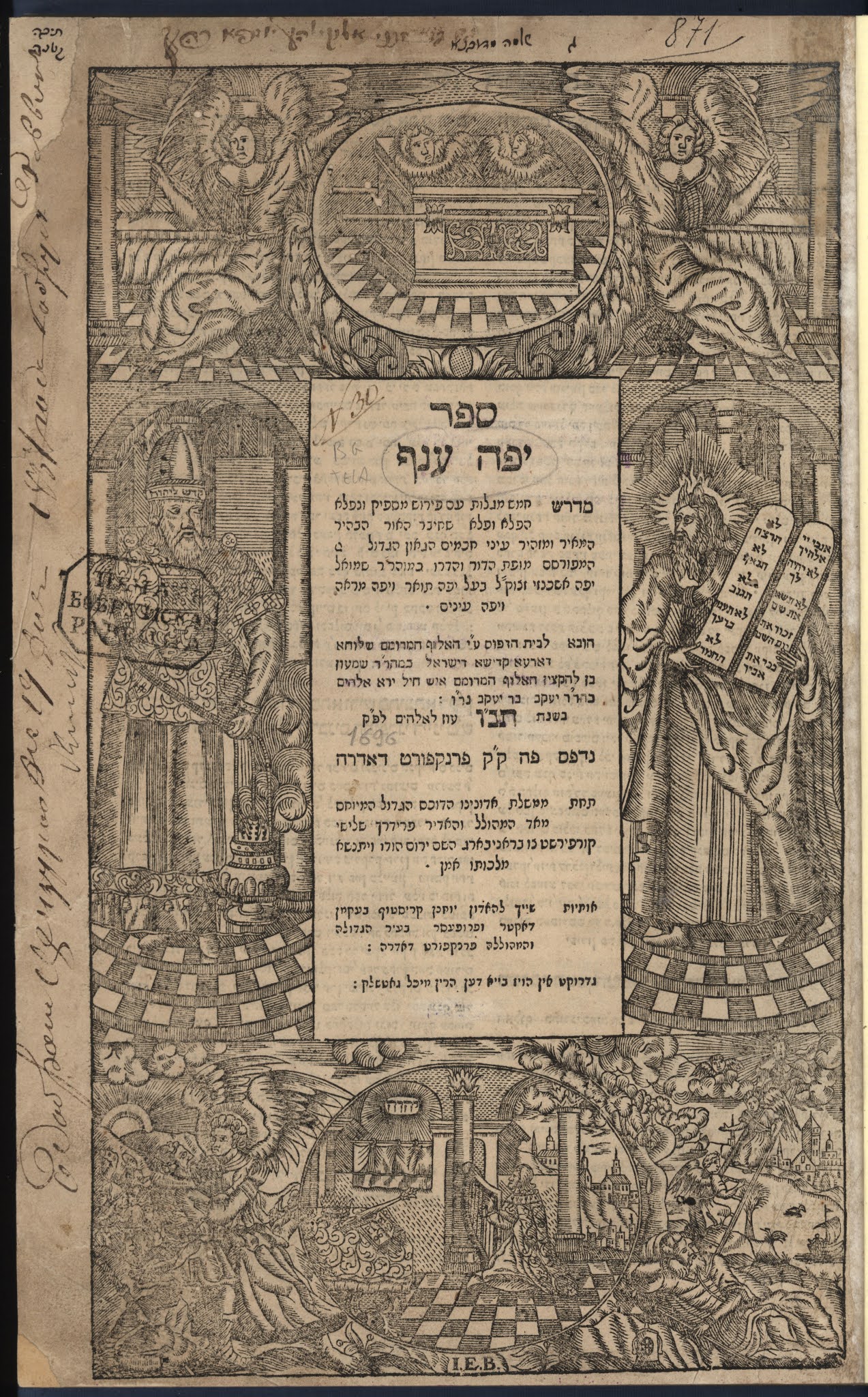
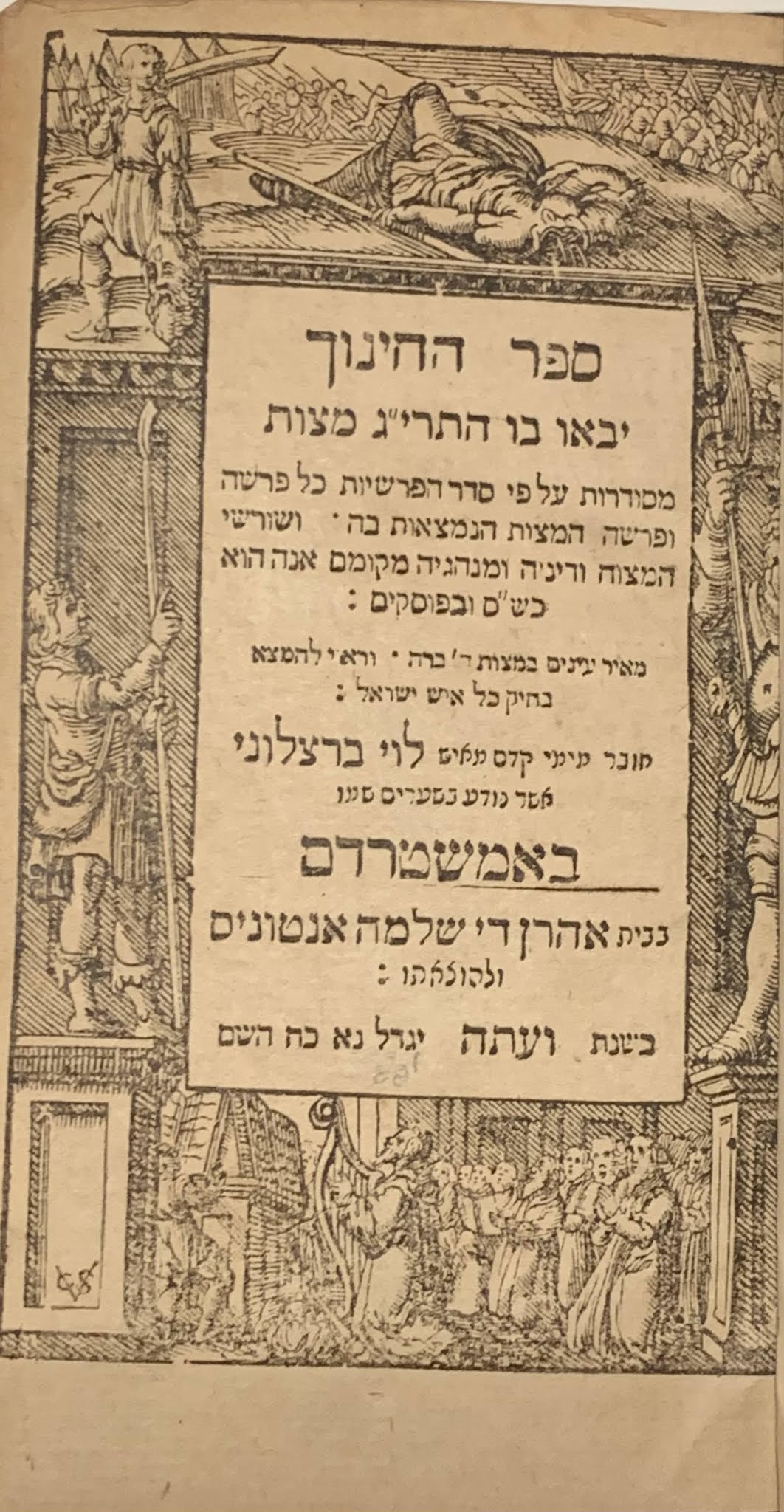
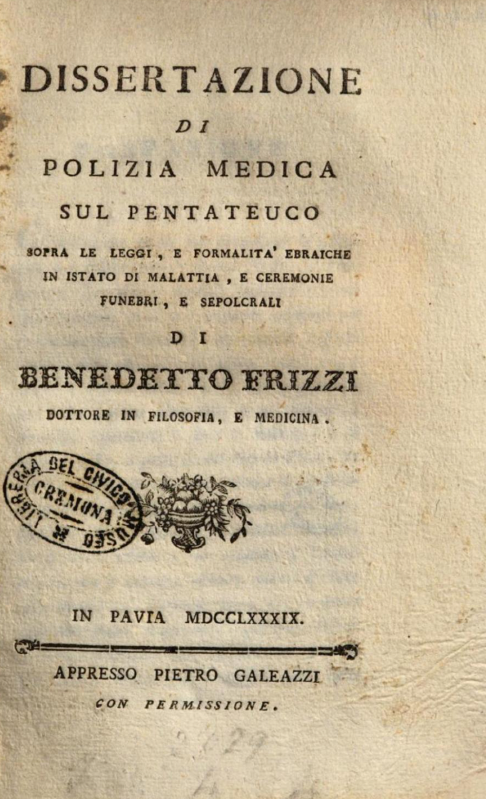
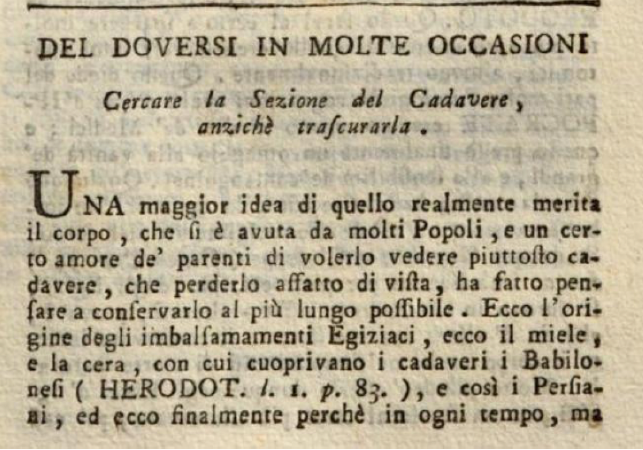
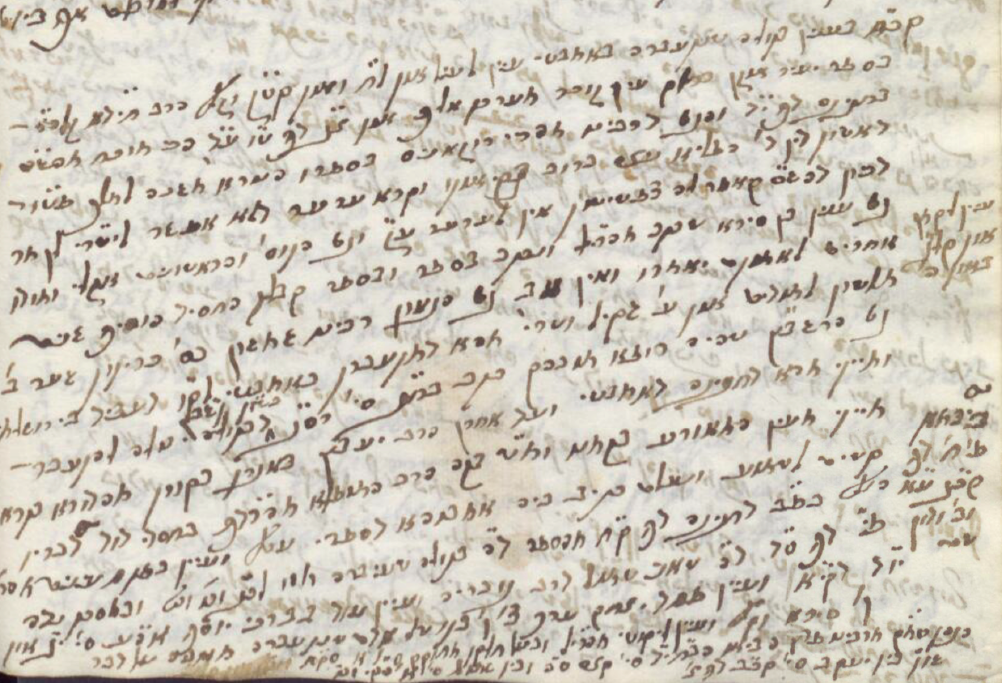
The popular press, in this case Newsweek, does not always get Jewish practices correct. Newsweek just published a short piece on Jewish drinking and specifically mention “Kiddush clubs.” While the article makes it appear that this is a new problem, (and to be fair, it seems that is what they were erronously told by those they spoke with), in fact, as is almost always the case, ain hadash tachas ha-shemesh – there is nothing new under the sun. First, the article claims that “Jews don’t drink – much. Historically, Jews have not had alcohol problems to the extent as some other religious groups.” This claim, that Jews don’t drink, echos the erroneous assertions of some non-Jews, especially during the temperance movement of the 19th and early 20th century in the United States. Much of the temperance movement was lead by certain Christians and pointed to Jews or more specifically the Old Testament in suport of banning alcohol. One particularly egregious mistake in doing so was to misinterpret the prohibitions of Passover. That is, the problem that some in the temperance movement were required to deal with is if Jesus drank wine at the Last Supper, then how can wine be bad? To answer this, some pointed to “Jewish” practice. Specifically, they noted that the Last Supper took place on Passover, “and we know that the Jews were scrupulous in using at this ceremony none but unleavened bread and unfermented wine.” Of course, while leavened bread is prohibited there is no related prohibition on fermented wine.[1] Professor Hayim Solovetick has shown that historically Jews were involved in the wine business and drank as much as their non-Jewish neighbors. These facts may have affected certain halachik rulings. This does not mean that Jews must drink alcoholic beverages. Although wine is mandated for numerous rituals, according to most, grape juice suffices. For this point we again turn back to the temperance movement and this time the effect of the 18th Amendment. The 18th Amendment prohibited the consumption of alcohol. However, the National Prohibition Act carved out an exemption that allowed for consumption for “religious rites.” As a consequence, there was a market for fraudulent rabbis and other religious figures that would permit the otherwise prohibited. To counter these scofflaws, R. Levi Ginzburg,[2] penned a responsum arguing that grape juice sufficed to Jewish religious purposes. This responsum remains the most comprehensive discussion of grape juice in Jewish law. Isaac Wise, authored an essay discussing the topic of how Judaism views being a teetotaler. Wise rejects this practice. Wise notes that “Isaiah, upbraiding the weakness of his people says: ‘Thy wine is adulterated with water.’ and the Psalmist sings: ‘And wine gladdens the heart of man.'” Wise continues and highlights the use of “mishteh, ‘a drinking occasion.” Accordingly, Wise explains that since “Moses and the Talmud are not opposed to the use of wine or strong drink. The Jew might consider it superfluous to be more orthodox than Moses, the prophets, or the rabbis of old.” Wise further argues that if the reason for prohibiting drink is due to the harm that may come from overindulging, there is a much more pernicious “evil” that of the amassment of wealth. Wise claims that “the wildest imagination [is] too feeble to depict a mere fraction of the woes and crimes caused by money. It makes rogues of honest men, and villains of generous souls . . . Money makes slaves, hypocrites, gamblers, thieves . . . [it] ruins virtue, beguiles innocences.” Thus, Wise concludes that “the use of wine or strong drink as a beverage is no moral wrong . . . the abuse of religion and prayer is worse than the abuse of liquor, [and] the present crusade [of temperance] will not remedy the evil; it is contrary to law and liberty, and it makes us ridiculous in the eyes of the civilized world.” As was the case with Wise, there can be no doubt that drinking has been a controversial topic for one reason or another. One of the more well-known cases of censorship relates to a ruling on wine. The Rama’s responsum on the consumption of ya’yin nesach was removed in most of the editions of his responsa. This responsum was so unknown that some charged the Rama never authored it and it was a forgery.[3] But we need not go so far afield as ya’yin nesach to find controversy. As is mentioned in the article, there are those who participate in Kiddush clubs and, (as would be expected), there are those who question such gatherings. What no one appears to mention is that the Kiddush club is not a recent invention. Instead, from at least mid-sixteenth century, such gatherings took place. Specifically, R. Moshe Yitzhak M’zia (1530-1600, most of his responsa were authored between 1560-80) in his Yefeh Nof was asked About the custom of the bachurim on Shabbat to leave the synagogue after the Torah is removed from the ark to drink whisky before the mussaf, is this permitted? If they do not sit down for a meal this is permitted because the law does not follow Rav Huna who prohibits tasting prior to mussaf.[4] According to this responsum, groups would leave to drink during the prayers.[5][5] From this responsum we can glean a few important facts about the custom during that period. First, such gatherings probably would not be called Kiddush clubs because they did not make Kiddush at all. Second, R. M’zia does not condemn the practice and expresses no outrage or suggestion that it stop. Instead, it appears so long as it was halachikally ok, R. M’zia was unwilling to challenge this practice.

[1] For more on the topic of unfermented wine (raisin wine) on Passover and its connection with the temperance movement see Jonathan Sarna, “Passover Raisin Wine, The American Temperance Movement, and Mordechai Noah,” HUCA, 59 (1988), 269-88. Additionally, see the fascinating article by Hannah Sprecher, “‘Let Them Drink and Forget Our Poverty’: Orthodox Rabbis React to Prohibition,” American Jewish Archives 43:2 (Fall-Winter, 1991): 134–179. Sprecher discusses the one Orthodox response to Ginzberg. Id. at 158. See, as well, Marni Davis, “‘On the Side of Liquor’: American Jews and the Politics of Alcohol, 1870-1936,” (PhD dissertation, Emory University, 2006), esp. chap. five (“‘A House Divided Against Itself’: American Jews Respond to Prohibition”), 190-250. Finally, see J. David Bleich, Contemporary Halakhic Problems, vol. V, 2005, chap. viii, “The Whiskey Brouhaha,” where he takes issue with the monkier used by a drinking club – the Glatt Cigar Society. Aside from actually drinking, Jews also authored parodies on drinking. One such parody is devoted to prohibition Gerson Kiss, Massekhet Prohibishon (Brooklyn, 1929), a description of which is found in in Sharon Liberman Mintz & Gabriel M. Goldstein, eds., Printing the Talmud: From Bomberg to Schottenstein (New York: Yeshiva University Museum, 2005), 300. And, Y. Friedlander, the possible author of the well-known forgery Yerushalim on Seder Kodshim, also authored a drinking parody. This parody, however, focused on the hassidic custom of drinking for the purposes of tikkun. The parody is titled Sefer ha-Tikkun and is a “Shulhan Orakh” on all the various times and occasions to make a tikkun. See Baruch Oberlander, “Ha-Yerushalmi le-Seder Kodshim vehaMotzei le-Or Shelo,” Or Yisrael 15 (1999), 174-75; see also Boaz Haas, Ke-Zohar ha-Rakiyah, Jerusalem, 2008, 353 n.330 who also discusses the Sefer ha-Tikkun. For other examples of parodies see Eliezer Brodt’s post on the topic here. [2] As an aside, it worth noting that Ginzburg was originally a student of Telz Yeshiva and later in life went on to teach at JTS. However, after Telz relocated to the United States, he helped with the publication of the Teshuvot R. Eliezer from R. Eliezer Gordon, Rosh ha-Yeshiva of Telz. Ginsburg was thanked in the back of this edition in a full page, it appears that in some copies, (perhaps those disturbed to Telz students) Ginzberg’s name was pasted over. Additionally, on the topic of Ginzburg and Telz Yeshiva, Ginzburg authored an excellent five volume work on the Yerushalmi, Pirushim ve-Hiddushim al ha-Yerushalmi. R. Gifter and Ginzberg carried on a correspondence regarding this work which still remains in manuscript – but is facinating in its content.[3] See Y.S. Speigel, Amudim be-Tolodot Sefer ha-Ivri Ketivah ve-haTakah, Ramat Gan, 2005, 273 and the notes therein.[4] This responsum was first published by Assaf in his Mekorot l’Tolodot ha-Hinukh be-Yisrael, (in the original version it appears in vol. 4. no. 39:6, p. 43 and in the latest version, edited by Shmuel Glick, Jerusalem, 2002, it appears in vol. 1. P. 111). R. M’zia’s responsa remained in manuscript until 1986 when Mechon Yerushalim published them. This edition includes a biography of R. M’zia by Professor Eric Zimmer. Additionally, Zimmer authored an article on M’zia. See E. Zimmer, “The book Yefeh Nof of R. Yitzhak M’zia,” Kiryat Sefer 56 (1981), 529-545; E. Zimmer, Gahalaton shel Hakhamim, Jerusalem, 1999, 84-105.[5] This is distinct from the custom of stopping the prayers and everyone, not just the bachurim, going home to eat a snack and then study prior to the start of the Torah reading; this custom is discussed at length by R. Y Goldhaver. See R. Y. Goldhaver, Minhagei ha-Kehilot, Jerusalem, 2005, vol. 1, 200-208. R. Goldhaver’s work includes notes by the prolific and encyclopedic R. Shmuel Ashkenazi. On this topic of taking a break during services, Ashkenazi notes that Goldhaver made a common bibliographic mistake of attributing the Shu”t Hut ha-Meshulush to the author of the Tashbetz, R. Shimon b. Tzemach Duran, because both works were published together. See R. Shmuel Ashkenazi comments id., vol. 2, 316.


Meir Hildesheimer – Historical Perspectives on Rabbi Samson Rapha

On the recent occasion of the two hundredth anniversary of the birth of Rabbi Samson Raphael Hirsch (1808-1888), Dr. Meir Hildesheimer of The Rabbi Samson Raphael Hirsch Cathedra for the Research of the Torah im Derekh Eretz Movement (Bar-Ilan University), delivered a paper entitled “Historical Perspectives on Rabbi Samson Raphael Hirsch,” at the Jüdisches Museum in Frankfurt (7 June 2008). The remarks below appear with the express permission of Dr. Hildesheimer.

Historical Perspectives on Rabbi Samson Raphael Hirsch

by Meir Hildesheimer
1. Introduction
200 years ago, on June 20th, 1808 Rabbi Samson Raphael Hirsch was born. And this year, 2008 – is also the 120th anniversary of Rabbi Hirsch’s death; he died on December 31st, 1888. Rabbi Hirsch was an outstanding personality who is known as one of the founders of Neo-orthodoxy and the Torah Im Derekh Eretz philosophy. In orthodox Jewish circles he is remembered above all as an intrepid fighter against Reform Judaism and as an exemplary educator. And theologians, Jewish and Christian, appreciate his creative Bible commentary.
In my lecture I want to deal neither with Rabbi Hirsch’s philosophy nor with his exegesis of the Holy Schriptures, as these issues are well known and much has been written about them. I want to concentrate on his deeds and achievements form a historical point of view and to shed light on some aspects of his multi-faceted personality.
2. Biographical sketch
Let’s start with a brief biographical sketch. Rabbi Hirsch was born on June 20, 1808 (27th Sivan 5568) in Hamburg as first child of Raphael and Gella Hirsch.[1] His parents named him Samson. Later he used to join his father’s name to his own (“Samson Raphael Hirsch”), thus following a widespread custom of the period. Samson Raphael Hirsch had a close relationship with his parents whom he described as “the guardians of his childhood, the guides of his youth, and the companions of his mature years.”[2] His grandfather, Mendel Frankfurter, a great Talmudic scholar and serving as Rosh Beit Din of Altona, had a profound influence on his grandson, as had the charismatic Rabbi (Chacham) Isaac Bernays (1792-1849) who was appointed Rabbi of Hamburg when young Samson reached Bar-Mitzva age, and Rabbi Yaakov Ettlinger (1798-1871) whose Yeshiva in Mannheim Rabbi Hirsch attended. Conscious of the new legal requirements from rabbis, the latter advised him to study at an university. Rabbi Hirsch went to the Univertsity of Bonn where he befriended the slightly younger Abraham Geiger, leaving after studying for a year without earning a degree. Consecutively Hirsch served as rabbi of Oldenburg (1830-1841), Emden (1841-1847) and as Landesrabbiner of Moravia (1847-1851) before he accepted the call of a tiny religious association in Frankfurt called “Israelitische Religionsgesellschaft”. From 1851 until his death in 1888 he resided in Frankfurt.
3. Personality
Rabbi Hirsch was a puzzle for his contemporaries and has remained so for later scholars seeking to unravel the complex components of his personality. Various people described Hirsch as extremely introverted, some of them even as “remoted” and “cold”. His disciple in the Nikolsburg yeshiva Armin Schnitzer (later rabbi of Komorn), for example, wrote in his memoirs: “His demeanor was serious and introverted. He was not talkative.” Rabbi Hirsch’s following self-portrait, which he wrote as a young man, shows clearly that he was conscious to that perception:
“So it always goes with me when my inner soul is too full. Then it does not spill over the sides as is common in other people – no, inside there can be stormy, turbulent waves but on the outside, with pressures and counterpressures – only silence. I am like a clock whose inner components interact with each other constantly but whose hands are missing, so that on the outside it appears completely still. Superficial people hold a feather to the nose and proclaim it lifeless, but those whose comprehension is deeper sense from the ticking that there is indeed life inside. A wise man knows to attach the missing hands to the face, so that he can read the time …”.[3]
In the eyes of his fellow people – except those of his family and intimate friends who praised his warm and symphatetic heart – he looked not only cold and distant, but also very self-confident. Rabbi Hirsch’s tone was rarely conciliatory, whatever his intentions. He used to express himself in such confident terms that made him appear arrogant. His strong commitment to rabbinic Judaism turned him into an active polemicist in the Orthodox camp.
4. Fighter against Reform
Rabbi Hirsch’s father had been a merchant. He intended his firstborn son to go into his footsteps. But when growing up, Samson chose for himself another profession – that of a rabbi. According to his own words, the religious controversies waged in his native town Hamburg were of primary importance in the shaping of his career.
At the end of 1817, when Samson Raphael Hirsch was nine years old, a substantial group of Jews in his native town Hamburg joined together to offer an alternative public expression of Judaism and established the “New Israelite Temple Association in Hamburg” and in 1818 erected a house of prayer which they named “Temple”. The “Temple” was the first Jewish house of worship in German to use an organ on the Sabbath and a mixed choir in the services. The Temple Association also published a new prayerbook, in which many prayers were in German, and various sections added and deleted at will. The Hamburg rabbinate as well as some of the leading rabbinic personalities issued a prohibition against praying in the Temple or using its prayerbook. The Hirsch home was the venue of meetings and strategy sessions called to combat the threat posed to Torah Judaism by the Temple. Young Samson was apparently deeply affected by the gatherings in his parents’ home, and in his later years recalled that it was this struggle which first gave him the impetus to pursue his calling in life.
Rabbi Hirsch’s first writings, The Nineteen Letters and Horeb already represented the beginning of his active struggle against the Reformers. At this early stage, Hirsch tried to address the reformers and young people attracted by reform in conciliatory terms, offering a positive alternative to the Reformer’s approach. The rebuff he received from the Reformers drove Rabbi Hirsch on to more open opposition. His literary energy in the years immediately following was mostly spent as an active polemicist in the Orthodox camp and emerged gradually its most uncompromising and militant defender.
5. Secession
Rabbi Hirsch’s uncompromising stance toward Reform was also the reason for his struggle for the secession of his small orthodox community in Frankfurt called Israelitische Religionsgesellschaft from the main Jewish community.
Neither in Oldenburg and Emden nor in Moravia did Rabbi Hirsch propagate a schism in the Jewish community. On the contrary, when leaving Nikolsburg, he admonished the Jews of Moravia in his farewell letter to stay united. On the other side, he left the Moravian Landesrabbinat because he had received an “appeal from Frankfurt to go to the aid of a tiny group, whose very founding is, in my view, given the goals I had all my life, the most promising development that has occurred in Jewry within the last several decades. For now, for the first time, a Jewish community has been formed, which is openly and proudly dedicated to a most holy principle, in an area which has been successfully conquered by the faces of confusion (i. e. Reform). What can I do! This holy cause is the very one to which I have consecrated my life.”
The reason for his different behavior in different places is obvious: in places where Reform gains influence over the Jewish community and its rites, a God fearing Jew must strive to disassociate himself from these “wicked people” and erect his own, Torah true community; in places not endangered by religious innovators taking over Jews should stay united. For the same reason Rabbi Hirsch sided the secession from orthodox Jewry in Hungary in 1868, when the newly constituted Jewish congress was dominated by reformers.
When the Prussian government in 1875 passed a law that enabled the erection of additional Jewish communities at a certain place (called the Austrittsgesetz), and the Israelitische Religionsgesellschaft (IRG) was entitled to form an independent community. The Jewish community of Frankfurt, then dominated by the reformers, did not want a significant number of their members, i. e. taxpayers, leaving, especially not the richer ones like Baron Willy Rothschild who was associated with the Religionsgesellschaft. So the community agreed to provide for all the needs of its orthodox members – a thing it did not do in the past – and exempting them from funding the religious activities of the reformers. A disagreement arouse among the IRG members about accepting this generous offer or to secede and form an independent community. The rabbi of the IRG, Rabbi Hirsch, propagated the last option; he even issued an halachic statement that obliged the members to secede. But a significant number of them did not consent and succeeded in getting the halachic support of one of the most prominent orthodox rabbis in Germany at this time, Rabbi Seligmann Bär Bamberger of Würzburg. Rabbi Bamberger’s involvement lead to a sharp literary argument between the two rabbis, resulting in lasting mutual bitterness and a severe blow for Rabbi Hirsch personally: most of the IRG members did not leave the old community.
What motivated Rabbi Hirsch’s fierce struggle for secession? In Rabbi Hirsch’s opinion Israel is a nation and became a nation only through and for the Torah. Every Jewish community is a microcosm of the people as a whole, and just as Torah is the sole unifying force of the Jewish people, so must it also be the bond which unites each community. Every Jewish individual is not only required to take an active role in the community, but only by being part of a community can the individual fulfill his role as a Jew and find his true meaning and purpose in life. The community exists for the sake of the Torah. A community that does not act according to the Torah forfeits its right to exist. Naturally, it is forbidden to be a part of such community.
At the same time, Rabbi Hirsch felt there was no halachic imperative for Jewish communities to join together in a wider framework. It is not clear whether his later activities for uniting orthodox Judaism in an organization called Freie Vereinigung für die Interessen des orthodoxen Judentums (Orthodox Union) reflexes a change in his beliefs or were only for practical reasons.
6. The orator and writer
Rabbi Hirsch used two main means for disseminating his ideas: the spoken and the written word. Once he said of himself: “All my life I have engaged in thinking more than in speaking, and in speaking more than in writing.”[4] But in truth his abilities in all these fields were really masterful. As an orator of rare talent he was seemingly influenced by his rabbi and teacher Isaac Bernays who was one of the most famous Jewish preachers of his time – that means, in the German language. Once asked by his uncle, why he preferred delivering his sermons in German and not in Hebrew, he replied that law in East Friesland required him and the other rabbis to preach in the vernacular, and furthermore the Jewish masses were not proficient in the Holy language. In order to reach them one would have to speak their tongue. His first experience as an orator he had as a student at the University of Bonn, where he and Abraham Geiger established an “association for the cultivation of speech”, intended for future rabbis in order to train them to deliver popular sermons.
Besides of speaking in German, a number of additional factors contributed to the profound impression Hirsch made on his audience: the carefully chosen expressions, the fast tempo, originality of thought and cogency of argument. He spoke without a text, occasionally keeping a small Bible in front of him. In his early years he would commit his speeches to writing before he delivered them. By the way, he spoke only in public settings, never at festive meals and private celebrations. His gifts as a speaker do much explain the great influence he had on his contemporaries.[5] In Frankfurt, Rabbi Hirsch’s weekly Sabbath addresses was the bond which unified the members of the IRG and left his listeners inspired to put the ideals of the Torah into practice. A visitor to his synagogue commented: “I do not understand one word that was said, but one had the impression that nothing less than the prophet Isaiah was standing up there.”
Yet the influence of his writings were even greater for they reached a much greater audience and had also a significant impact on future generations until this very day. Rabbi Hirsch’s gifted pen produced a rich and varied output: Halacha, commentaries on the Pentateuch, the Psalms and the Jewish prayer book, articles on philosophy, Jewish weltanschauung and education, polemics, letters and responses. All his writings, including his letters and halachic responses, were stamped with his unique style and characterized by a warmth of feeling and a sense of closeness to God. His skill at capturing the sanctity and sublime beauty of Jewish life remains unparalleled. His style is characterized by long sentences quite typical for this period. It shows his perfect command of German language and literature. Rabbi Hirsch employed his mastery of German prose and modern literary techniques in the cause of classic Judaism. In these times the literary sophistication of this Orthodox rabbi took everyone by surprise. (His Hebrew writings – mostly responses – are written in a very special style too.)
His writings had a particular influence on the younger generation, and continued to affect German Jewry in the decades after his passing. His commentary on the Pentateuch, for example, were found in every home of religious Jews in Germany.
7. Rabbi Hirsch’s attitude to German culture
Rabbi Hirsch’s attitude toward German was not the same as that of the other traditionalists of his time who were conversant in that language. To the latter, it was a language they knew and employed, but nevertheless a non-Jewish language. Rabbi Hirsch, on the other hand, had a deep emotional feeling for German and a strong attachment to German culture that also went far beyond the modest requirements set down by the conservative Maskilim who advocated practical subjects as necessitated by social and economic considerations. Rabbi Hirsch had been educated in a gymnasium focusing on humanistic studies. Influenced by the atmosphere in his family who encouraged secular studies, he appreciated the humanistic spirit which permeated the German cultural climate as well as the aesthetics. In the first of the Nineteen Letters, Rabbi Hirsch makes his imaginary protagonist remark: “How can anyone who is able to enjoy the beauties of a Virgil, a Tasso, a Shakespeare, who can follow the logical conclusions of a Leibnitz and Kant–how can such a one find pleasure in the Old Testament, so deficient in form and taste, and in the senseless writings of the Talmud?” Before Rabbi Hirsch, no Orthodox Jew had ever expressed such sentiments, even as a prelude to their rebuttal.
Rabbi Hirsch was especially influenced by Hegel and Schiller. In a speech given in his school he founded on the centenary of the birth of the latter, he claimed that the universal principles of Western culture embodied in Schiller’s writings are Jewish values originating in the Torah.
Despite Rabbi Hirsch’s liberalism in matters of culture and education, he was critical of literature that he considered offensive from a religious or moral standpoint. Thus, while reading “Der Salon” by Heine, he grew so highly incensed by its blasphemous expressions that he wanted to burn the book and compensate the library for its destruction. Nevertheless, the fact that “Der Salon” was written by apostate did not prevent Rabbi Hirsch from reading it.
8. Torah Im Derekh Eretz
But with all his love for German language and culture, Rabbi Hirsch was well aware of the danger of scientific knowledge leading one away from religion. He, therefore, strongly opposed the tendency to simply put Torah and Derekh Eretz side by side for this would implement that both are of equal value. According to Rabbi Hirsch, however, there is a higher and a lower sphere: The Torah is the essential, the standard by which all education is measured, while secular knowledge is secondary or supplementary to Torah. Or in Rabbi Hirsch’s own words: “We are confident that there is only one truth, and only one body of knowledge that can serve as the standard… Compared to it, all the other sciences are valid only provisionally”.[6]
The totality of Rabbi Hirsch’s thinking and teaching has always been regarded as comprehended in the single phrase, Torah im Derekh Eretz. What does it stand for?
The concept of Torah im Derekh Eretz – universal and timeless – in the doctrine of Rabbi Hirsch has been defined as a synthesis of Judaism and modern culture, embracing art and literature to the extent compatible with Halakha (i.e. religious Jewish law). However, this synthesis is to be understood in a Hegelian sense: two contradictory forces contending with each other are reconciled and renewed on a higher level. In other words: Torah and life, Judaism and culture, do not just complement each other, but achieve complete identity. In his old age, Rabbi Hirsch devoted most of his teaching activity in his school to a subject which he called “The Spirit of the Jewish Theory of Laws”. In those lessons he strove to implant in the hearts of his students a love of Torah and to inspire them with the consciousness of Torah im Derekh Eretz as the unifying principle of all the religious commandments, molding them into a uniform context of a harmonious Weltanschauung and life-pattern.
9. Political attitudes and activities: the struggle for emancipation
On December 10, 1810 Hamburg, Samson Raphael Hirsch’s native town, was annexed by revolutionary France. In 1814 the French were thrown out of the city, but the revolutionary vision of liberty, equality and fraternity remained part of the city’s intellectual fabric. Gabriel Riesser, the famous Jewish lawyer and politician, was one of the leading advocates of Jewish emancipation and very much admired by Jewish youths. Rabbi Hirsch was also deeply impressed, despite Riesser’s decidedly non-religious attitude.
As other rabbis, Rabbi Hirsch, too, recognized the enormous spiritual threat posed by Emancipation. Nonetheless, he viewed it as both a challenge and an opportunity to demonstrate that the Torah is no less applicable to the new open society than it was in the Ghetto – but of course only on condition that the Jewish people would still be bound to the Torah’s laws.
In his Moravian time, Rabbi Hirsch had a first-hand experience of the negative side effects that came together with emancipation:
a. religious indifference;
b. the loosening of the bond between the individual Jew with the community which was expressed by refraining from paying community taxes – an act that brought the Jewish communities on the brink of bankruptcy; and
c. a substantial increase in anti-Semitism.
Seemingly this was the reason that from the time he went to Frankfurt, he did not engage in any more public advocacy to advance the cause of civil equality for Jews. In reevaluating the battle for equal rights, he wondered whether the all-out drive for emancipation at any price had not been grounds for the further deepening of the exile, and if it had not engendered renewed persecution and increased restrictions on Jews.[7]
10. Jewish Nationalism and the Colonization of Eretz Israel
Heaving heard about Rabbi Hirsch’s attitude towards emancipation as well as about his embrace of contemporary German culture, we now want to deal with his attitude towards Jewish nationalism and the colonization of Eretz Israel.
Rabbi Hirsch’s opinion is probably expressed best in his reply to Rabbi Zvi Hirsch Kalischer’s attempts to persuade him to support his activities concerning the colonization of Eretz Israel. Rabbi Kalischer of Thorn, was a forerunner of Jewish nationalism and the settlement of Eretz Israel. His philosophy connects Jewish nationalism, philanthropic activities and the strive for ultimate redemption. In his book Derishat Ziyyon, he explained his idea of the return to Erez Israel and stated his theory that redemption would come in two stages: the natural one through return to Erez Israel and working on the land, and the supernatural one which would follow. Furthermore, he preached that the first stage should involve a healthy economic foundation for the yishuv, a foundation which could only come about through the development of agriculture on a large scale. Accordingly, he recommended the establishment of an agricultural school for the younger generation.
In his reply, Rabbi Hirsch presented a clear and concise statement of his position concerning settlement of Eretz Israel as a goal in itself in the present era. In his opinion, according to the Sages of the Mishna and the Talmud, Jew’s obligation is only to be devout with all the strength he is granted, and to look forward to the redemption each day. Israel possessed land and statehood only as instruments for translating the Torah into living reality; neither is it a goal in itself, nor is it instrumental in bringing the redemption. Furthermore, Jewish statesmen like Disraeli and Cremieux cannot be viewed as harbingers of redemption, for it is impossible to imagine that G-d would choose people who reject the Torah as his agents. Finally, Rabbi Hirsch agreed that is was important to support those Jews who currently lived in Eretz Israel – he himself supported efforts to improve their conditions! – but he expressed concern that mass settlement activity would bring in its wake increased risk of Sabbath desecration and the transgression of the agricultural commandments unique to Eretz Israel. And when Rabbi Kalischer’s attempts to persuade him did not cease, Rabbi Hirsch wrote: “In my lowly opinion, there will not emerge from this any benefit for put Torah and Jewish tradition, and it is not fitting for God-fearing people to associate with the Alliance Israelite Universelle, whose leaders lack all commitment to Torah and to God’s coventant.” And in his letter to Rabbi Lipschitz, the secretary of Rabbi Yitchak Elchanan Spector of Kovno, he wrote that all the effords to bring the redemption in this way is a grave sin. Here again we have Rabbi Hirsch’s resentment from cooperation with non-orthodox Jews!
And now, let us see if – and how – Rabbi Samson Raphael Hirsch’s legacy, 120 years after his death, is still relevant. In order to do this we have to relate to Jacob Katz’s essay “Rabbi Samson Raphael Hirsch – ha-meymin veha-masme’il” (turning to the right and the to the left) published in 1987. Katz wrote that Rabbi Hirsch took a decisive right, i.e. conservative, position in issues concerning Judaism and its beliefs (see his fight against Reform), but may be called “left” concerning culture, science and the attitude towards modern society. As nobody after him succeeded to unite these juxtapposite positions, this apparent rift in Hirsch’s philosophy led to a selected adoption of his by different group of peoples.
The “right” components were readily adopted by ever growing parts of ultra-orthodox society, that means an uncompromizing struggle against everything that seemed a deviation from traditional Judaism as well as the abhorrence of a cooperation with non-orthodox people or groups, even if the goals are common. These circles will cite from Hirsch’s writings the passages useful for their purposes, but ignore other passages speaking, for example, of the need to learn a trade or gain seculat knowledge. It also seems that the ideological opposition to Zionism of Orthodoxy has its roots in Rabbi Hirsch’s philosophy (see above), that means many years before the the Munkatcher and the Satmarer Rebbes.
Other orthodox circles, especially Modern Orthodoxy, embraced Rabbi Hirsch’s openness to secular culture and science, combining “Torah” (i.e. rabbinic studies) with “Derekh Eretz”. But unlike their ultra-orthodox counterparts, they do not refrain from cooperating with non-religious Jews. This is especially right of Religious Zionism which is also – as its name inplies – Zionist.
Rabbi Hirsch stood in the focus of the dramatic intellectual and spiritual transformations that characterized German Jewry in the 19th century. His personality as well as his many-sided and varied activities on the fields of Bible exegesis, philosophy and leadership shaped the face of Neo-orthodoxy to a very high degree and their influence was felt not only in his own generation but also later on until to this very day.
Selected Bibliography:
Breuer, Mordechai, The “Torah-Im-Derekh-Eretz” of Samson Raphael Hirsch, Jerusalem-New York: Feldheim Publishers, 1970.
Klugman, Eliyahu Meir, Rabbi Samson Raphael Hirsch, Architect of Torah Judaism for the Modern World, New York: Mesorah Publications, 1996.
Liberles, Robert, Religious Conflict in Social Context, Westport (Connecticut)-London: Greenwood Press, 1985.
Rosenbloom, Noah H., Tradition in an Age of Reform, Philadelphia: The Jewish Publication Society of America, 1976.
[1] Rabbi Hirsch’s genealogy was researched by Eduard Duckesz and published in: Jahrbuch der Jüdisch-Literarischen Gesellschaft (also printed seperately).
[2] Dedication to Horeb (Altona 1836).
[3] Transcript (free rendition) by E.M. Klugman in the possession of the late Prof. Mordechai Breuer.
[4] Nineteen Letters, Letter 19.
[5] For example: Armin Schnitzer from his time in Nikolsburg as cited in English in Klugman, p. 324.
[6] Commentary to Leviticus 18, 4-5
[7] See Collected Writings II, p. 26.


Rav Kook’s Attitude towards Keren Hayesod – United Israel Appeal

Rav
Kook’s Attitude towards Keren Hayesod – United Israel Appeal
By Rav Eitam Henkin, Hy”d
 (Translated into English by Rachelle Emanuel)
This
article originally appeared
in Hebrew in HaMayan 51:4 (2011), pp. 75-90.

Today is the yahrzeit of the Rav Eitam and Naama Henkin, who were cruelly murdered one year ago. May Rav Eitam’s important writings, surely with us only thanks to Naama’s support, be an aliyat neshama for both. Hy”d.

·        
“It is well known that the person
who heads the above [body]” supports Keren Hayesod
·        
What is the difference between Keren
Kayemet Le-Yisrael – the Jewish National Fund – and Keren Hayesod — the United
Israel Appeal?
·        
The forgery in the 1926 public letter
·        
The significance of supporting Keren
Hayesod
·        
The halakhic letter of 1928
·        
The joint declaration with Rav Isser
Zalman Meltzer
·        
Conclusion
“It
is well known that the person who heads the above [body]” supports Keren
Hayesod

The
philosophy of Rav Elĥanan Bunem
Wasserman, follower of the Ĥafetz
Chaim and Rosh Yeshiva of the Baranovich Yeshiva (Lithuania), and among the
most extreme of eastern European Torah leaders between the world wars in his
anti-Zionist approach, is still considered today as having significant
influence on the ideology concerning Zionism and the State of Israel prevalent
in the Hareidi community. In this respect he constitutes almost an antithesis
to the Chief Rabbi of Eretz Yisrael, Rav Avraham Yitzchak HaKohen Kook, in
whose philosophy religious Zionism found its main ideological support for its approach
and outlook.[1]
 
One
rare statement made by Rav Wasserman, aimed apparently at Rav Kook, has found
resonance with part of the Haredi public, and is used by them as justification
for rejecting Rav Kook and his teachings. In fact, we are not talking of a
direct reference, but of words that appear in a letter sent to Rav Yosef Tzvi
Dushinski, who took over Rav Yosef Ĥaim Zonnenfeld’s position as head of the Eidah Ĥareidit, on June
25, 1924:
A proposal has been made to combine the Ĥareidi Beit
Din with the Chief Rabbinate. It is well known that he who heads [the Chief
Rabbinate] has written and signed on a declaration calling on Jews to
contribute to Keren Hayesod. It is also known that the funds of Keren Hayesod
go towards educating intentional heretics. If that is the case, he who
encourages supporting this organization causes the public to sin on a most
terrible level.  Rabbeinu Yona in Sha’arei
Teshuva
explains the verse “The
refining pot is for silver, and the furnace for gold, and a man is tried by his
praise” (Prov. 27:21)  as
meaning that in order to examine a person one must look at what he praises. If
we see that he praises the wicked, we know that he is an utterly wicked person,
and it is clear that it is forbidden to associate with such a person.[2]
As
far as Rav Wasserman was concerned, because the head of the Chief Rabbinate
publicized statements in which he called to support Keren Hayesod, which among
other activities, funded a secular-Zionist education system, he was causing the
public to sin and it was forbidden to be associated with him.[3]
However,
it seems that Rav Wasserman’s sharp assertion is based on a factual error.[4]
According to Rav Kook’s son, Rav Z.Y. Kook, his father supported Keren Kayemet
Le-Yisrael
, and called on others to support them, but his attitude towards Keren
Hayesod was completely different.
… as a result of the claims and complaints about
their behavior concerning religion and Judaism, [Rav Kook] later delayed giving
words of support to Keren Hayesod, and none of the entreaties and efforts of
Keren Hayesod’s activists could move him. In contrast, even though he continued
to constantly protest concerning those claims and complaints, he never
hesitated giving words of support to Keren Kayemet. None of the entreaties and
efforts of those who opposed Keren Kayemet could change this. On the contrary, with
his sacred fire, he increased his support and encouragement for Keren Kayemet, [considering
its projects as] a mitzvah of redeeming and conquering the Land.[5]
If
these words are correct, Rav Wasserman’s protest loses ground. In light of the
above we would have to say that Rav Wasserman’s sharp statement about Rav Kook
relies on the shaky basis (“It is well known…”) of rumors that were
widespread in certain localities in East Europe.[6]
However, precise research shows that despite Rav Z. Y. Kook’s clear testimony, for
which we will bring below explicit references from Rav Kook himself, Rav
Wasserman’s words were not just based on vague rumors alone. It turns out that
even while Rav Kook was alive, propaganda attempts were made to attribute to
him support for Keren Hayesod. In one case, at least, it was intentional fraud,
upon which it seems Rav Wasserman unwittingly based himself.
What
is the difference between Keren Kayemet LeYisrael – the Jewish National Fund –
and Keren Hayesod – the United Israel Appeal?

Whatever
the case may be, the reader will ask: what is the difference between the Keren
Kayemet and the Keren Hayesod? Perhaps in Rav Wasserman’s opinion they both
were “abominations,” since both organizations were headed by “heretics”;
and even though Keren Kayemet did not deal with education, nevertheless it
enabled heretics to settle on its land. If that was the case even supporting Keren
Kayemet falls into the category of lauding the wicked, etc.! However, one
cannot ignore the fact that R. Wasserman was talking about Keren Hayesod in
particular, on the grounds that its funds were “going towards raising
intentional heretics” in the educational institutions – something not
relevant to the activity of Keren Kayemet. The Keren Kayemet was a veteran
institution, founded at the beginning of the century for very specific,
accepted goals – redeeming land from the hands of gentiles, whereas Keren
Hayesod was established at the beginning of the twenties in a very different
political reality, and its fields of activity were much broader. Rav Kook
himself, in a response from winter 1925 to the famous letter from four Hasidic
rebbes (Ger, Sokolov, Ostrovtza, and Radzhin) who had heard that “your
Honor is indignant over our opposition to giving aid to the Keren Kayemet and
Keren Hayesod,” and in which they explained their opposition, gave his
reasons in full for supporting the Keren Kayemet, and only the Keren Kayemet.[7] In an
earlier draft of his response, in his handwriting, preserved in his archive, he
explicitly notes the difference in his approach to the two organizations:
I myself, in the past gave credentials for aid to
Keren Kayemet alone […] which is busy transferring land from the hands of
gentiles to Jewish possession, […] and for that I gave Keren Kayemet’s activists
a recommendation over the course of several years. This is not the case with
Keren Hayesod, which does not deal in redeeming land, but rather in settling it
and in matters of education. I have never yet given them a recommendation [and
will not do so] until the matter will, please God, be put right, and at least a
significant part of the funds will be assigned to settling Eretz Yisrael in the
way of our holy Torah.[8]
There
is indeed a large amount of information about the extensive relations that Rav
Kook had with Keren Kayemet, most of which involved continuous support for its tremendous
project of redeeming land, together with constantly keeping his eye on,  and immediately objecting to, any deviation
from the way of the Torah that was perpetrated on its grounds.[9] On
the other hand, in all the writings of Rav Kook published till now, there are
only a few mentions of Keren Hayesod, and they show reservations in principle
from the organization.[10] Whoever
is fed by rumors and presents Rav Kook as one who “lends his hand to
evil-doers” without reservations, will anyway assume, “as it is
known,” that he similarly called for support of Keren Hayesod. In
contrast, for someone who knows about Rav Kook’s life story, his work, and his
letters, the idea that he would be capable of calling for support for an
organization which directly causes ĥilul Shabbat, secular education, and
so on, is utterly baseless. Even his support for Keren Kayemet was not
complete, but with conditions, restrictions, and even warnings attached. The
following are some salient examples that are sufficient to prove that if Keren
Kayemet had been involved in projects opposed to the spirit of the Torah — as
was the case with Keren Hayesod — Rav Kook would not have agreed to support it
either:
In
a letter to the chairman of Keren Kayemet, Menahem Ussishkin, from February 4,
1927, concerning violations of Shabbat in the Borokhov neighborhood located on
Keren Kayemet land (by the residents, not by Keren Kayemet itself), Rav Kook
warned them “that if they do not take the necessary steps to correct these
wrongdoings that have gone beyond all limits, I will be forced to publicize the
matter in an open letter, loud and clearly, to the whole Jewish People.”[11]
In
a letter to Tnuva from March 2, 1932, that was sent following a report
concerning ĥilul Shabbat on Kibbutz Mizra, Rav Kook announced that so
long as the kibbutz members did not mend their ways, their milk would be
considered as ĥalav akum (milked by a non-Jew) and Tnuva would be
forbidden from using it.[12]
In
a letter to Ussishkin from April 3, 1929, Rav Kook complained about the fact
that Keren Kayemet had started to publish literary pamphlets, “which are
not its subject matter. Money dedicated to the redemption of the Land was not
for literary purposes. Moreover, the essence of this literature damages its
image in public, spreading false views in direct opposition to the sanctity of our
pure faith […] I hope that these few words will have the correct effect, and
that the obstacle will be removed without delay, so that we will all together,
as one, be able to carry out the sacred work of redeeming the Land with the
help of Keren Kayemet Le-Yisrael.”[13]
The
forgery in the 1926 public letter

 However, as has been said, because of the
significant weight that Rav Kook’s position bore, over the years many attempts
were made by the supporters of Keren Hayesod to ascribe to him outright support
of the fund. The most prominent case occurred in the winter of 1926 (about a
year after the above-mentioned letter to the hasidic rebbes). Several months
previously the yishuv in Eretz Yisrael entered a severe economic crisis which
seriously hindered its development, causing unemployment of a third of the work
force, a decrease in the number of immigrants, and a steady flow of emigrants
from the country.[14] This
crisis, considered the worst experienced by the yishuv during the
British Mandate, was the first time that the impetus of the yishuv‘s
development, which had been increasing since the end of the First World War, was
brought to a standstill. Against the backdrop of this situation, the Zionist
leadership initiated a “special aid project of Keren Hayesod for the
benefit of the unemployed in Eretz Yisrael.” Because of the severity of
the situation, Rav Kook also volunteered to encourage contributions to improve
the economic situation in Eretz Yisrael, and when R. Moshe Ostrovsky (Hameiri)
left for Poland to help with the appeal, Rav Kook gave him a general letter of
encouragement for the Jews in eastern Europe.[15] At
the same time, on November 8, 1926, Rav Kook wrote a public letter calling for
support of the Zionist leadership’s initiative, in which he wrote, inter alia:
To our dear brothers, scattered throughout the
Diaspora, whose hearts and souls yearn for the building of Zion and all its
assemblies; beloved brethren! The hard times which our beloved yishuv in
the Land of our fathers is experiencing, brings me to raise my voice with the
call, “Help us, now.” Our holy edifice, the national home for which
the heart of every Jew holds great hopes, is now facing a temporary crisis
which requires the help of brothers to their fellow sufferers in order to
endure […] Therefore I am convinced that the great declaration which the
Zionist leadership is proclaiming throughout the borders of Israel, to make
every effort to come to the aid and relief of this crisis, will be heard with
great attention; and that, besides all the frequent donations for all the
general matters of holiness which our brothers wherever they live will give for
the sake of Zion and Jerusalem, all the sacred institutions will raise their
hands for the sake of God, His people, and His Land, to give willingly to the appeal
to relieve the present crisis, until the required sum will be quickly
collected.
Although
the appeal was made through the organization of Keren Hayesod, Rav Kook avoided
mentioning the name of the fund because of his principled refusal to publicize
support for it (as he explained in the letter to the hasidic rebbes). The
version quoted above is what was published in the newspapers of Eretz Yisrael,
under the title “For the Relief of the Crisis.”[16]
However, amazingly, it becomes apparent that in the version published some
weeks later in Warsaw’s newspapers, the words “the Zionist
leadership” were changed in favor of the words “the head office of
Keren Hayesod
,” and accordingly, the words were presented as nothing
less than “Rav Kook’s public letter in favor of Keren Hayesod“![17]
Even
if we didn’t have any information other than the two versions of this public
letter, there is no doubt that the authentic version is the one published by
his acquaintances, the editors of Ha-Hed and Ha-Tor in Eretz
Yisrael, close to, and seen by Rav Kook. In contrast, when members of Keren
Hayesod circulated Rav Kook’s public letter among Poland’s newspapers, they were
not concerned that the author would come across the version they had published
in a remote location. They even had a clear interest to insert into Rav Kook’s
words a precedential reference to Keren Hayesod. Even if we only had before us
the east-European version of the letter, we could determine that foreign hands
had touched it. This is not only because of Rav Kook’s words in his letter to
the hasidic rebbes sent about a year earlier, but because of a letter that Rav
Kook sent to the heads of Keren Hayesod a few weeks prior to writing the public
letter. In this letter to Keren Hayesod he informs them in brief that he is
prevented from cooperating with the management of the fund or even visiting its
offices (!) until the list of demands that he presented them with, in the field
of how they conduct religious affairs, would be met. The background to this
letter is a request sent to Rav Kook on December 7, 1926, after the
inauguration of Keren Hayesod’s new building on the site of “the national
institutions” in Jerusalem. The directors of the head office of Keren
Hayesod wrote: “It would give us great joy, and would be a great honor if
our master would be so good as to visit our office – the office of the global
management of Keren Hayesod.”[18] In
reply to this request, Rav Kook wrote a letter – which is published here for
the first time – to the heads of Keren Hayesod, (Arye) Leib Yaffe and Arthur
Menaĥem Hentke:
8th Tevet 5687 [December 13, 1926]
To the honorable sirs, Dr. Yaffe and A. Hentke,
I received your invitation to visit your esteemed
office. I hereby inform you that I will be able to cooperate for the benefit of
Keren Hayesod, and I will, bli neder, also visit Keren Hayesod’s main
office, after Keren Hayesod’s management and the Zionist leadership will
fulfill my minimal demands concerning religious issues in the kibbutzim and in
education.
Yours, with all due respect …[19]
During
the course of the years there were, nevertheless, several opportunities when
Rav Kook came into contact with members of Keren Hayesod, mainly in connection
with matters of budgets for religious needs.[20]
However, as this letter illustrates, even such limited cooperation was
dependent, from Rav Kook’s point of view, on the demand to change the way the
fund conducted its matters with respect to religion.[21] What
were Rav Kook’s exact demands of Keren Hayesod, in order for it to be
considered as having “put things right” (as he wrote in his letter to
the hasidic rebbes), and to benefit from his support and cooperation? We can
clarify this from a document which is also being published here for the first
time. This document, whose heading is “Rav Kook’s answers” to Keren
Hayesod, was apparently written after the previous letter, in reply to a
question addressed to him by Keren Hayesod concerning his attitude towards
them. It was probably written against the backdrop of rumors that Rav Kook
forbade (!) support of Keren Hayesod.[22] We only
have a copy of the document in our possession, but it is written in first
person, meaning that Rav Kook wrote it himself, and the person who copied it
apparently chose to copy just the body of the letter without the opening and
end signature:

1.      I
have never expressed any prohibition, God forbid, against Keren Hayesod. On the
contrary – I am very displeased with those who do so.
2.      Concerning
my attitude towards the Zionist funds: my reply was that I willingly support
Keren Kayemet at every opportunity without any reservations. However,
concerning Keren Hayesod, at the moment I am withholding my letter in its
benefit until the Zionist management corrects major shortcomings that I demand
be put right, as follows:
a.      
That nowhere in Eretz Yisrael will
education be without religious instruction, not just as literature, but as the
sacred basis of Jewish faith.
b.     
That all the general religious needs be
immediately taken care of in every moshav and kibbutz. For example, shoĥet,
synagogue, ritual bath, and where a rabbi is necessary – also a rabbi.
c.      
That there will be no public profanation
of that which is sacred in any of the places supported by Keren Hayesod, such
as ĥilul Shabbat and ĥag in public.
d.     
That the kitchens, at least the general
ones, will be particular about kashrut.
e.       That
all the details here which concern the residents of Keren Hayesod’s locations,
will be listed in the contract as matters hindering use of the property by the
resident, and which will give him benefit of the land only on condition that he
fulfills these basic principles.
And because I strongly hope that the management will
finally obey these demands, I therefore am postponing my support of Keren
Hayesod until they are fulfilled. I hope that my endeavors for the benefit of
settling and building our Holy Land will then be complete.

It
should be noted that these conditions are similar in essence to those that Rav
Kook set with Keren Kayemet. However, the latter’s dealings were with redeeming
the Land, in contrast to Keren Hayesod where the areas referred to in Rav
Kook’s demands were at the center of its activity. Therefore, as far as the
Keren Kayemet was concerned, Rav Kook did not give the fulfillment of his
demands as a basic condition for his cooperation and call for support; but he
certainly did so with regard to Keren Hayesod.[23]
Whatever
the case may be, if R. Wasserman did indeed see the public letter of 1926,
without doubt he saw the falsified version published in the Polish newspapers,
and therefore he held on to the opinion that: “It is well known that he
who heads [the Chief Rabbinate] has written and signed on a declaration calling
on Jews to contribute to Keren Hayesod.”[24]
However, as has been clarified, these words have no basis.
The
significance of supporting Keren Hayesod

As
has been said Rav Kook was not prepared to support Keren Hayesod, which dealt
in education and such matters “until the matter will … be put right, and
at least a significant part” of the funds activities will be directed to
settling the Land according to the Torah. The words “at least a
significant part …” seem to give the impression that if a significant part
of the fund’s activity were directed to activity in the spirit of the Torah,
then Rav Kook would give his support even if another part were still directed
to secular education. However, in practice, there is no doubt that Rav Kook’s
demand was much stricter. In Keren Hayesod’s regulations it was determined that
only about 20% of its resources would be directed to education[25] (and
only a certain amount of that budget would be allocated to
“problematic” education) — and despite this fact Rav Kook refused to
call for its support. It must be emphasized that this policy in Keren Hayesod’s
regulations was strictly applied. An inclusive summary of the fund’s activity
between the years 1921-1930, indicates that 61.4% of its resources were
invested in aliya and settlement (aliya training, aid for refugees,
agricultural and urban settlement, housing, trade, and industry), 19.6% in
public and national services (security, health, administration), and only 19.0%
in education and culture – from which a certain part was allocated for
religious needs: education; salaries for rabbis, shoĥtim, and kashrut
supervisors; maintenance of ritual baths, eruvim, and religious
articles; aid for the settlements of Bnei Brak, Kfar Ĥasidim, etc.[26] In
light of this data, it seems that R. Wasserman’s claim against those who call
for support of Keren Hayesod, and his defining them as “utterly
wicked” people, is not essentially different from the parallel claim
against those who demand the paying of required taxes to the State – a claim
heard today only by extreme marginal groups within the Ĥaredi sector.
Indeed,
not surprisingly, it transpires that there were in fact some well-known rabbis
of that generation who did call to contribute to Keren Hayesod, despite the
problematic issues of some of its activity.[27] Just
several months before the publication of Rav Kook’s afore-mentioned public
letter, another declaration was published, explicitly calling for support of
Keren Hayesod, signed by more than eighty rabbis from Poland and Russia. Among
them were well-known personalities such as R. Ĥanokh Henikh Eigash, author of Marĥeshet;
R. Meshulam Rothe; R. Reuven Katz, and more.[28]
Moreover, in several locations, particularly in America, support of Keren
Hayesod was considered as consensus among the rabbis,[29] and
even Rav Kook’s colleague in the Chief Rabbinate, R. Ya’akov Meir, called for
support of Keren Hayesod.[30]
Would R. Wasserman have defined all of these scores of rabbis as evil ones
“who cause the public to sin on the most terrible level”?[31] Whatever
the case may be, it transpires that it was specifically Rav Kook who stands out
as being the most stringent among them, and he consistently agreed to publicize
support only for Keren Hakayemet. In the light of all the data detailed here,
one wonders whether R. Wasserman’s extreme words to R. Dushinski[32] were
only written in order to deter him from cooperating with the Chief Rabbinate
(which he strongly opposed), and perhaps this is the reason that he avoided
mentioning Rav Kook explicitly by name.[33]
The
halakhic letter of 1928

The
public letter of 1926 was indeed the only one in which Rav Kook’s words were
falsified in order to create support for Keren Hayesod. However, in the
following years, too, attempts were made to present what he had written as an
expression of direct support of Keren Hayesod. The element the two cases have
in common is that they were both published far from Rav Kook’s location. In 1928,
an announcement from the “Secretariat for Propaganda among the
Ĥaredim” was published in the Torah monthly journal Degel Yisrael,
published in New York and edited by R. Ya’akov Iskolsky. This secretariat
published a special letter from Rav Kook in Degel Yisrael, emphasizing
that the letter had not yet been publicized anywhere else. According to the
secretariat, the context in which the words were written was the following:

An
occurrence in a town in Europe, where the community demanded that all its
members contribute towards Keren Hayesod, and the opponents disputed
this before the government, and took the matter to court. The judges demanded
that the community leaders prove to them that the matter was done in accordance
to Jewish law, and on the basis of the above responsum (of Rav Kook) the
members of the community were acquitted.[34]

In
other words, according to those who publicized the Rav Kook’s letter, it was
written in order to help the heads of one European community to force all its
members to donate to Keren Hayesod. The problem is that examination of the
letter (see below) raises different conclusions. Similar to what appears above
(note 27) concerning the letter written by R. Meir Simĥa Ha-Kohen of Dvinsk,
here there is also no mention at all of Keren Hayesod. The explanations in the
letter are not relevant to the majority of Keren Hayesod’s projects, and the
letter only deals with clarifying the general virtue of settling Eretz Yisrael
and the obligation to support its inhabitants. Even the title prefacing the
letter only talks about “one community that agreed to impose a tax on its
members for the settlement and building of Eretz Yisrael,” without
mentioning that this was a tax specifically for Keren Hayesod. Towards the end
of the letter it is mentioned only that “the Zionist leadership in Eretz
Yisrael deals with many issues concerning settling the Land,” without any
specific reference to Keren Hayesod, even if the fund was the organization that
managed the appeal for the Zionist Organization. Thus, we again find that
whereas according to those that publicized the letter — the concerned parties —
the letter constitutes declared support for Keren Hayesod, in Rav Kook’s actual
words there is no mention of that.
The
letter, which as far as I know was never printed a second time, is brought here
in full:
When I was asked whether a Jewish community can impose
on an individual the obligation to give charity for maintaining the settlement
of Eretz Yisrael, I hereby reply that there is no doubt in the matter, considering
that the halakha is that one forces a person to give charity, and makes
him pawn his property for that purpose even before Shabbat, as explained in Bava
Batra
8b, and as Rambam wrote in Hilkhot Matnot Aniyim 7:10:
concerning someone who does not want to give charity, or who gives less than
what is fitting for him, the court forces him until he gives the amount they
estimated he should give, and one makes him pawn his property for charity even
before Shabbat. The same is written in Shulĥan
Arukh
, Yore Dei’a, 248:1-2. If
this is the case in all charities, all the more so is it the case concerning
charity for strengthening Eretz Yisrael, for this is explicit in Sifrei, and quoted in Beit Yosef, Yore
Dei’a
, §251, that the poor of Eretz Yisrael have priority over
the poor outside the Land. And because one forces a person to give charity for
the poor outside the Land, it is clearly even more the case concerning charity
for strengthening the Land and its poor. The obligation to settle in Eretz
Yisrael is very great, as it says in the Talmud Ketubot 110b, and is brought by Rambam as a halakhic
ruling in Hilkhot Melakhim 5:12: A person should always live in Eretz
Yisrael, and even in a town where the majority are idol worshippers, rather
than live outside the Land, even in a town where the majority are Jews. In Sefer Ha-Mitzvot (mitzvah 4) Nachmanides wrote: that we were
commanded to inhabit the Land; “and this is a positive mitzvah for all
generations, and every one of us is obligated,” and even during the period
of exile, as is known from the Talmud in many places.
A great Torah principle is that all Jews are responsible for one another.
Therefore, those who are unable themselves to keep the mitzvah of living in
Eretz Yisrael, are obligated to help and support those who live there, and it
will be considered as though they themselves are living in Eretz Yisrael so
long as they do not have the possibility of keeping this big mitzvah
themselves. It is therefore obvious that any Jewish community can require an
individual to give charity for the benefit of settling Eretz Yisrael and
supporting its inhabitants; and G-d forbid that an individual will separate
himself from the community. Someone who separates himself from the ways of the
community is considered one of the worst types of sinners, as Rambam writes in Hilkhot
Teshuva
3:11. Just as the community must guide the individuals towards all
things good and beneficial, and any general mitzvah, thus must it ensure that
no individual separates himself from the community concerning matters of
charity in general, and all the more so concerning matters of charity relating
to Eretz Yisrael and support of its inhabitants, as I have written. No one can
deny that which is revealed to all, that the Zionist leadership in Eretz
Yisrael deals with al lot of matters concerning settling Eretz Yisrael, hence
it is clear that its income is included in the principle of charity for Eretz
Yisrael.
And as a sign of truth and justice, I hereby sign … Avraham Yitzĥak HaKohen
Kook
The
joint declaration with Rav Isser Zalman Meltzer

Just
as the public letter of 1926 (in the version published in Poland) quickly came
to the notice of the zealots of Jerusalem, who rushed to claim that Rav Kook
supports “a baseless fund,” the same thing happened with the 1928
letter: following its publication under the above headline, the zealots rushed
to upgrade their accusations and to claim that Rav Kook ruled that one may
“force a person to give charity to Keren Hayesod” (see below).
This
fact brings us to yet another claim, raised only recently, that Rav Kook did
indeed sign on a declaration in support of Keren Hayesod. A few years ago,
Professor Menaĥem Friedman wrote about an event that occurred in winter 1930,
when the zealots of the Jerusalem faction of Agudath Israel, with Reb Amram
Blau at their head, came out with a particularly sharp street poster against
Rav Kook. The background to the attack was the joint declaration of Rav Kook,
R. Isser Zalman Meltzer, and R. Abba Yaakov Borokhov, that was published before
the convening of the 17th Zionist Congress in Basel, calling to the
attendants of the convention and its supporters to exert their influence to
prevent ĥilul Shabbat, etc; at the side of this request, writes Prof.
Friedman, was a “call to donate to Keren Hayesod.”[35]
However,
in fact matters are not so clear at all. Prof. Friedman brings no support at
all for his words, and the only source that he brings concerning the event is
that same street poster that the zealots published. It seems that Prof.
Friedman never actually saw the said declaration, but rather assumed its
contents from the information that appears in parallel sources, such as the opposing
street poster, in which there is the claim that Rav Kook ruled that one may
“force people to give charity to Keren Hayesod,” but of course that
does not constitute an acceptable historical source.[36]
An
addition to this affair appears in a manuscript of R. Isser Zalman Meltzer,
which was published several years ago. This is a draft of a public announcement
from 1921, which shows that indeed there were those who understood that the
signature on the declaration meant support of Keren Hayesod (and other such
organizations) — but R. Meltzer clarifies that this was not the case:
Being that I signed on a call to the donors of the
Zionist funds, demanding that they do not support with their money those who
profane the Shabbat, and those who eat non-kosher food, I therefore declare
that my opinion is like it always has been: that so long as schools in Eretz
Yisrael that instill heretical ideas are supported by these funds, it is
forbidden to support them or give them aid in any way whatsoever. Those who
support and help them are destroying our holy Torah, and are ruining the yishuv.
I added my signature only to ask those who support those funds that at least
they should make every effort to influence those funds not to feed Jewish
people in kitchens that provide non-kosher food, and not to support those that
profane the Shabbat, etc.[37]
This
clarification was apparently written after reactions of amazement among some of
the Jerusalem public were voiced in the wake of the publication of the joint
declaration of R. Meltzer, Rav Kook, and R. Borokhov. From R. Meltzer’s words
it becomes clear that the joint declaration was not a call to support Keren
Hayesod, but a call to the supporters of the fund and to the attendants of the
Zionist Congress that they should anyway insist that their money should not be
used for unfitting purposes.[38]
Conclusion

Rav
Kook’s path was falsified many times, both during his lifetime and after his
death, sometimes unintentionally and sometimes intentionally. In what we have
written here, it is proven beyond all doubt that R. Elĥanan Wasserman’s claim
that Rav Kook called for the support of Keren Hayesod — a claim through which
he explained his opposition to cooperation between the Eidah Ĥareidit and the
Chief Rabbinate — is based on a mistake. The historical truth is that Rav Kook,
in his dealings with the institutions of the yishuv, more than once took
a more aggressive and stringent stand than did other rabbis of his generation,
as is expressed in the issue at hand.


[1] In
light of this contrast, it is interesting that Rabbi Wasserman, as a youth, was
privileged to learn from Rav Kook for a while. In 1890 Rabbi Wasserman’s family
moved to Bauska (Boisk),
and five years later Rav Kook was appointed as rabbi of the town. At the time
Rabbi Wasserman was a student in the Telz Yeshiva, and when he returned home
during vacation, he would participate in the classes given by Rav Kook (See R.
Ze’ev Arye Rabbiner, “Shalosh Kehilot Kodesh,” Yahadut Latvia:
Sefer Zikaron
[Tel Aviv, 1953], 268; Aharon Surasky, Ohr Elĥanan I [Jerusalem,
1978], 30).
[2] Kovetz
Ma’amarim Ve-Igrot

I (Jerusalem, 2001), 153; previously in Kuntres Be-Ein Ĥazon (Jerusalem,
1969), 92. Concerning R. Wasserman’s dealings with the issues of the Jews in
Eretz Yisrael, we bring the words of R. Ĥaim Ozer Grodzensky, R. Wasserman’s
brother-in-law, which he wrote less than two months later in a reply to R.
Reuven Katz’s complaint regarding the open letter published by R. Wasserman to
Poalei Agudath Israel in Eretz Yisrael, calling on them not to accept help from
Zionist organizations: “I, too, am surprised at what [R. Wasserman] saw
that he publicized his personal opinion without consulting us, and I did not
know of it. He also exaggerated. The matters of the yishuv in Eretz
Yisrael cannot be compared to private matters in the Diaspora for several reasons,
and certainly it is impossible to give a ruling on such a serious matter from
afar without knowing the details…” (Aĥiezer – Kovetz Igrot [Bnei Brak, 1970], 1:299; see ibid., 200-1, a letter to Histadrut
Pagi, where the words are repeated. For R. Wasserman’s open letter and more
material on this subject, see Kovetz Ma’amarim Ve-Igrot I, 133-152).
[3] This
statement is based on the words of Rabeinu Yonah Gerondi (Sha’arei Teshuva,
3:148), and R. Wasserman’s interpretation of them elsewhere (“Ikvete De-Meshiĥa,
§ 36, translated into Hebrew from the Yiddish by R. Moshe Schonfeld and
printed as a pamphlet in 1942, and in Kovetz Ma’amarim [Jerusalem 1963],
127-28). However, it seems that there is an essential difference between the
actual words of Rabeinu Yona and R. Wasserman’s interpretation (compare with a
parallel commentary of Rabeinu Yona to m. Avot 4:6, and the way his
words were interpreted by Rashbatz, “Magen Avot” 4:8, and R. Yisrael Elnekave,
Menorat Ha-Ma’or, Enlau edition, 310-11), and let this suffice. For an
example of a diametrically opposed position, see: R. Tzadok Ha-Kohen, Pri
Tzadik
, Vayikra (Lublin 1922), 221.
[4] See R. Yitzchak
Dadon, Imrei Shefer (Jerusalem, 2008), 273.
[5] “Li-Shelosha
be-Elul” (Jerusalem, 1938) §24
(p.22). See also Siĥot Ha-Rav Tzvi Yehuda – Eretz Yisrael (Jerusalem,
2005), 84. On the other hand, R. Shmuel HaKohen Weingarten, who also heard from
Rav Tzvi Yehuda about his father’s refusal to call for support of Keren Hayesod,
pointed out an item in the newspaper Dos Idishe Licht (May 23, 1924),
according to which Rav Kook refused to support a proposal raised at the
American Union of Rabbis to boycott Keren Hayesod (Halikhot 33 [Tel
Aviv, Tishrei 1966], 27). Compare Rav Kook’s reasons for not waging a public
war against the Gymnasia Ha-Ivrit high school, despite his intense opposition
to the school (Igrot Ha-Re’iya II, 160-61).
[6] The existence
of false rumors concerning Rav Kook was mentioned already in 1921 by the Gerrer
Rebbe, R. Avraham Mordechai Alter, in his well-known letter written on the
boat: “Outside Eretz Yisrael what is thought and imagined is different
from the reality. For according to the information heard, the Gaon Rav Kook was
considered to be an enlightened rabbi who ran after bribes. He was attacked
with excommunication and curses. Even the newspapers Yud and Ha-Derekh
sometimes published these one-sided reports. But this is not the correct way of
behavior – to listen to one side, no matter who it is…” (Osef
Mikhtavim U-Devarim
[Warsaw, 1937], 68). R. Moshe Tzvi Neriya’s description
is typical: “…these news items even made their way into sealed Russia.
They said: “He’s close to the high echelons, and he has an official
position. This opinion excluded him from the usual description of a great Rav.
And then again it was said, ‘He’s close to the Zionists,’ and he was imagined
to be an ‘enlightened’ rabbi […] however, all those description and imaginations
completely melted away on seeing him.” (Likutei Ha-Re’iya [Kefar
Haro’eh, 1991], 1:13-14). An amazingly similar description was written by R.
Yitzchak Gerstenkorn, founder of Bnei Brak: “I imagined Rav Kook, of
blessed memory, as a modern rabbi […] and how amazed I was, on my first visit
to Rav Kook, when I saw before me a sacred, pious person, few of whom live in
our generation…” (Zikhronotai al Bnei Brak I [Jerusalem, 1942],
74).
[7] See Igrot
la-Re’iya
, 303-306. See also his 1923 declaration in support of Keren
Kayemet in which he emphasizes that “it is intended only for redemption of
the Land” (Raz, Malakhim ki-Venei Adam [Jerusalem, 1994], 238) —
meaning, not for educational and other such purposes as those of Keren Hayesod.
In this connection it should be noted that there was sometimes tension between
Keren Kayemet and Keren Hayesod because of the impression created that the
latter also dealt in redeeming lands (see Protokolim shel Yeshivot Ha-Keren
Kayemet Le-Yisrael
, Central Zionist Archives, Jerusalem, 4:109, 498/33 —
protocols from March 31 and July 7, 1922. See also the joint agreement of the
two funds, Ha-Olam 10:14 [January 27, 1921], 16). In order to illustrate
the Keren Kayemet’s well-established status among substantial sections of the
rabbinical world, we will refer to the 32nd annual convention of the
Union of Orthodox Rabbis of the United States and Canada, 1937. In the second
section of the convention’s resolutions it states: “The Union of Rabbis
imposes a sacred debt on all Orthodox Jews who will lend generous support to
Keren Kayemet Leyisrael.” It should be noted that the majority of
America’s great rabbis of the time participated in this convention (see Ha-Yehudi
2:10 [New York, Iyar 1927], 195. A similar resolution was made in previous
conventions; see, for example, HaPardes 5:3 [Sivan 1931], p. 31, § 7; HaPardes 6:3 [Sivan 1932], p.
25, § 5-8).
[8] This draft is
quoted by R. Yaakov Filber, Kokhav Ohr (Jerusalem, 1993), 21-22 (Slight
changes in style have been made according to a photocopy in my possession).
Negatives statements about Keren Hayesod were omitted from the response that
was actually sent, and only the positive statements about Keren Kayemet were
included. R. Filber posits that, based on the letter that Rav Kook sent to his
son, Rav Z. Y. Kook, about a week later (ibid.), the reason for the omission
was Rav Kook’s concern that the negative sentences might be used as a means to
attack the Zionist funds in general. In my opinion, taking into account Rav
Kook’s style, it is unlikely that he had such a concern, but rather the omission
is probably connected to his wish not to take part in a public boycott of Keren
Hayesod (see above, note 5).
[9] See R. Neriya
Goutel, “Hilkhot Ve-Halikhot Ha-Keren Ha-Kayemet Le-Yisrael Ve-Haĥug Ha-Hityashvuti
Be-Ma’arekhet Hitkatvuyotav shel Ha-Rav Kook,” Sinai 121 (1998),
103-115; Ĥaim Peles, “Teguvotav shel Ha-Rav A. Y. Kook al Ĥilulei Ha-Shabat
al Admat Ha-Keren Ha-Kayemet Le-Yisrael,” Sinai 115 (1995),
180-186; see also Rav Kook, Ĥazon Ha-Geula (Jerusalem, 1937), 220-230;
ibid., 33-34, et seq. (I have expanded on the topic of Rav Kook’s relationship
with the Keren Kayemet elsewhere).
[10] In a letter
from winter 1924 to R. Dov Arye Leventhal of the Union of Rabbis, about his
trip to America, Rav Kook writes that one of the questions that his trip
depends upon is “whether there will not be a tendency to confuse his
support for this [the Union of Rabbis] with Keren Hayesod” (Igrot Ha-Re’iya
IV (Jerusalem 1984), 177. In a letter from winter 1925 to R. Akiva Glasner of Klausenburg,
he calls on him to make use of “the Zionist funds of Keren Hayesod”
for purposes such as sheĥita and ritual baths in a settlement of
Transylvanian immigrants in Eretz Yisrael. He comments that when all is said
and done, in most places the donors are religious Jews; but of course he should
ensure that everything is done according to the Torah (ibid., 216).
[11] Sinai
115 (1995), 181; the full letter was printed in Mikhtavim Ve-Igrot Kodesh
(ed. R. David Avraham Mandelbaum, New York, 2003), 588. Here, as in the third
example (see below), Rav Kook hints that if they do not take the necessary
steps, he will stop supporting the Keren Kayemet, and will even publicize the
matter.
[12] Sinai
115 (1995), 183
[13] R. Moshe
Zuriel, Otzarot Ha-Re’iya I (Rishon Lezion, 2002), 487.
[14] See inter al.:
Dan Giladi, Ha-Yishuv Bi-Tekufat Ha-Aliya Ha-Revi’it: Beĥina Kalkalit U-Politit
(Tel Aviv, 1973), 171-192. The cause of the crisis was twofold: on the one
hand, the especially large amount of new immigrants in the two years prior to
the crisis, for which the economy was unprepared; on the other hand, the severe
limitations that the Polish government enforced on taking money out of the
country (in an attempt to fight the hyperinflation of the value of the zloty),
which harmed both the donations to Eretz Yisrael, and the capability of the new
immigrants to bring their possessions with them to Eretz Yisrael.
[15] For details of
R. Ostrovsky’s trip see Ha-Zefira 66:30 (February 4, 1927), 8. For the
blessings for success that he received from R. Yeĥiel Moshe Segalovitz, head of
the Mława rabbinical court, see ibid. 66:34 (February 9, 1927), 3. Rav
Kook’s letter to Polish Jewry was published in Ha-Olam on March 4, 1927,
and again in Zuriel, Otzarot Ha-Re’iya II (1998 edition), 1075.
[16] See the monthly
Ha-Hed, Kislev 1926, p.12, and the weekly Ha-Tor 7:16 (November
19, 1926), front page. This version was printed later in Ĥazon Ha-Geula,
180. The version quoted here is based on minor corrections of mistakes that
appeared in one of the sources. In the description attached to the public
letter in Ha-Hed the following was written: “In honor of Keren
Hayesod’s special aid program for the benefit of the unemployed in Eretz
Yisrael, Rav Kook published a special public letter….”
[17] Ha-Zefira
65:50 (Warsaw, November 29, 1926), 3. In the description attached to the public
letter it said: “On 2 Kislev [November 8, 1926), the Chief Rabbi of Eretz
Yisrael, Rav A.Y. Ha-Kohen Kook sent the following public letter to the head
office of Keren Hayesod….” A few days later the letter was also published
in Ha-Olam 14:50 (London, December 3, 1926), 944, with the same headline
and description as in Ha-Zefira, but without the insertion of
“Keren Hayesod” in the body of the letter; see also Ha-Olam
14:48 (December 19), 906, where it was reported that “Rav Kook published a
public letter to world Jewry to aid Keren Hayesod, thereby easing the crisis in
Eretz Yisrael.”
[18] Central Zionist
Archives, KH421036. As is explained in this file, Rav Kook’s colleague, R. Y.
Meir, visited the offices of Keren Hayesod.
[19] From a copy of
the letter in the possession of R. Ze’ev Neuman, to whom I am most grateful. It
should be noted that Leib Yaffe was a relative of Rav Kook: his paternal
grandfather, R. Mordechai Gimpel Yaffe, was Rav Kook’s paternal grandmother’s
brother. Nevertheless, at the opening of the letter, Rav Kook does not show any
family sentiment, but starts with a completely neutral tone.
[20] About two years
before the above letter, in 1925, Rav Kook, together with other rabbis,
participated in a meeting with Keren Hayesod where sums allocated for religious
needs, and other allocation options, were decided upon (Yehoshua Radler-Feldman
[R. Binyamin], Otzar Ha-aretz [Jerusalem, 1926], 72-73; see also note 10
above).
[21] The reader
should note the letter of both the chief rabbis from March 27, 1927 – about two
months after the above letter – which was sent, among others, to the secretary
of Keren Hayesod, Mordechai Helfman, with the demand to prevent the profanation
of Shabbat and kashrut in settlements located on the land of Keren Kayemet, or
that are supported by Keren Hayesod. In his reply from March 30 (quoted in
Motti Ze’ira, Keru’im Anu [Jerusalem, 2002], 172), Helfman justified
himself saying: “The management of Keren Hayesod is only a mechanism for
collecting money […] We are, of course, ready to help in [attempting to] have
moral influence, and we hereby promise his honor, that we will use our
influence at every opportunity to emphasize that which is wrong.”
[22] The document
can be found in the Central Zionist Archive KH1/220/2. I am grateful to Mr.
Yitzĥak Dadon, who made me aware of the document’s existence and gave me a
photocopy. Most of the demands in this document were repeated, with different
emphases, in a declaration publicized by Rav Kook in the spring of 1931 (see
note 37 below).
[23] Even though Rav
Kook repeated in this letter that he was not prohibiting support of Keren
Hayesod, later, when in 1932 the Jewish Agency did not fulfill its promise to
transfer an allocated sum for religious matters, Rav Kook protested the matter
in a sharp letter in which he warned that if at least part of the promised sum
was not transferred, he would be forced to turn to the rabbis in America and to
members of Mizrachi in Poland, with the demand to prevent support of the Keren
Hayesod appeal (letter from April 6, 1932, Central Zionist Archive
S255894-419).
[24] Information
about Rav Kook’s supposed support of Keren Hayesod, based on the east-European
version of the public letter, quickly reached Rav Kook’s opponents in Eretz
Yisrael and even in America. In a letter from December 29, 1926, Meir
Heller-Semnitzer, one of the most extreme zealots in Jerusalem (around whom,
that same summer, a major scandal erupted, concerning a harsh declaration that
he published against the Gerrer Rebbe and Rav Kook), informed Reb Zvi Hirsch
Friedman of New York (a distinguished zealot himself who, a year previously, had
been expelled from the Union of Rabbis in America because of attacks against
Rav Kook that he had published in one of his books), that Rav Kook issued a
proclamation calling for support of “the baseless fund” [play on words:
yesod means base]. See Friedman, Zvi ĤemedMishpati im
Dayanei Medinat Yisrael
(Brooklyn, 1960), 67.
[25] As R. Y. Y.
Trunk pointed out already in 1921 (see note 27 below).
[26] A. Elitzur, “Keren
Hayesod Be-mivĥan Ha-zeman” in Luaĥ Yerushalayim – 5706 (Jerusalem,
1945), 259-268; see also Otzar Ha-aretz, 70-76.
[27] In this
connection it is customary to mention R. Meir Simĥa Ha-Kohen of Dvinsk, author
of Ohr Same’aĥ, who acceded to the request of an emissary of the World
Zionist Organization in preparation for the appeal of Keren Hayesod in Latvia,
and wrote his famous letter calling for support of the yishuv in Eretz
Yisrael (printed in Ha-Tor, 3, 1922, and also in R. Ze’ev Arye Rabiner, Rabeinu
Meir
Same’aĥ Kohen [Tel Aviv, 1967], 163-165, et al.). However, even
though the historical context involves the Keren Hayesod, the letter itself
deals with general support of settling Eretz Yisrael, and contains no explicit
mention of Keren Hayesod or any other Zionist organization. Hence it is
difficult to see in the letter a ruling concerning the fundamental question of
whether to support Keren Hayesod despite the fact that part of its budget goes
towards secular education. The same applies to a similar letter written in the
same year and in the same connection by R. Eliezer Dan Yiĥye of Lucyn (See Otzar
Ha-aretz
, 84-86). In contrast, R. Yitzĥak Yehuda Trunk of Kotnya, the
grandson of the author of Yeshu’ot Malko and one of the rabbis of the
Mizrachi movement in Poland, wrote a detailed letter in the same year,
explicitly calling for support of Keren Hayesod. He wrote at length rejecting
the arguments against contributing to the fund (See Sinai 85 [Nisan-Elul 1979],
95-96). See also in the following footnotes.
[28] See Otzar
Ha-aretz
, 78-82. It should be added that the Chief Rabbi of Tel Aviv (later
the Rishon le-Tziyon), R. Ben-Tziyon Ĥai Uziel, participated, himself, in the
activity of Keren Hayesod (see his books, Mikhmanei Uziel IV (Jerusalem,
2007) 31-32, 283-284, and in vol. VI, 297-299, et al.), as did R. Ostrovsky (as
mentioned above), and others.
[29] In an issue of
Ha-Olam
(18:46 [London, November 11, 1930], 911) in honor of Keren
Hayesod’s tenth anniversary, “the declaration of Eretz Yisrael’s rabbis
concerning Keren Hayesod” from September 1930, was published. Hundreds of
rabbis signed the declaration, the majority from America, and others from Eretz
Yisrael, Europe, and Eastern countries. The declaration included an explicit
call to strengthen Keren Hayesod, “which for the last ten years has borne
on its shoulders the elevated task of building our sacred inheritance, and
faithfully supporting all projects that bring us close to that great aim.”
It seems that there is not one well-known rabbi who was active in the Union of
Orthodox Rabbis of the United States and Canada who did not sign this
declaration: R. Yehuda Leib Graubart, R. Elazar Preil, R. Ĥaim Fischel Epstein,
R. Yosef Kanowitz, R. Yosef Eliyahu Henkin, R. Eliezer Silver, R. Ze’ev Wolf
Leiter, R. Ĥaim Yitzĥak Bloch, R. Yehuda Leib Salzer, etc., etc. (nevertheless,
in light of the scope and rare variety of the signatories, one wonders whether
this was a declaration approved by majority vote at the conference of the Union
of Rabbis, such that the weight of the opponents was not reflected, and
therefore the names of all the Union’s members were given as signatories).
[30] See Otzar
Ha-aretz
, 77, his letter from December 8, 1925 calling for support of Keren
Hayesod. See note 18, and more below.
[31] A most
interesting fact in this connection is that R. Wasserman’s relative by marriage
from 1929 (the father-in-law of his son R. Elazar Simĥa), R. Meir Abowitz, head
of the rabbinical court of Novardok and author of Pnei Meir on Talmud
Yerushalmi
, not only was an avowed member of the Mizrachi movement, and in
1923 even signed a call to join the movement (see Encyclopedia of Religious
Zionism
I [Jerusalem, 1958], columns 1-2), but also was one of the
signatories on the aforementioned declaration in favor of Keren Hayesod! (Otzar
Ha-aretz
, 81). The fact that R. Wasserman was involved in R. Abowitz’s
younger daughter’s marriage, is testimony to the good relationship between the
families (see R. Wasserman’s daughter-in-law’s testimony in the photocopied
edition of Pnei Meir on the tractate Shabbat [USA, 1944], at the end of
the introduction. R. Abowitz’s letters to his son-in-law are published at the
end of R. Wasserman’s Kovetz Shiurim II [Tel Aviv, 1989], 117-119).
[32] It is
worthwhile comparing these words with R. Yosef Ĥaim Zonnenfeld’s moderate
language in a letter to his brother written in 1921, in which he gives the
benefit of the doubt to the donors of Keren Hayesod: “Those naïve ones,
who contribute to Keren Hayesod out of pure love in order to aid in the
establishment of the settlement in our holy Land, certainly have a mitzvah. I
do not know to what purpose they will actually put the money of Keren Hayesod,
but if it is given into faithful hands, who will use it honestly for settling
the Land, this is anyway a big mitzvah. However, as has been said, it must be
in such hands that will use it for building and not for destruction […] ‘and
because of our sins we were exiled from our Land'” (translated from
Yiddish, S.Z. Zonnenfeld, Ha-ish al Ha-ĥoma III [Jerusalem, 1975], 436).
[33] Although R.
Ya’akov Meir, who explicitly supported Keren Hayesod, was also one ” who
heads the above [i.e. the Chief Rabbinate],” nevertheless, R. Wasserman’s
words are taken to be addressed specifically to Rav Kook. On the other hand, it
is interesting that in a letter that R. Wasserman wrote to his brother on July
30, 1935, the following sentence appears: “What is Rav Kook’s malady, and
how is he feeling now?” (Kovetz Ma’amarim Ve-igrot II, 124).
[34] Degel
Yisrael
2:11 (New York, December 1928), 12-13 (the emphasis is mine). The date
of the secretariat’s letter is April 26, 1928.
[35] Friedman,
“Pashkevilim U-moda’ot kir Ba-ĥevra Ha-Ĥareidit,” in Pashkevilim
(Tel Aviv, 2005), 20. See also his book Ĥevra Va-dat (Jerusalem, 1978),
337.
[36] In the same
year, October 1930, in an issue devoted to the tenth anniversary of Keren
Hayesod, a declaration from Rav Kook was printed under the heading
“Mi-ma’amakei Ha-kodesh,” in which a process of awakening in the
country among the people and the new yishuv is described, together with
a call to base activities on sanctity and to unite (Ha-Olam 18:45
[November 2, 1930], 900). Here, too, there is no explicit mention of Keren
Hayesod or any other organization, even though explicit calls by other
personalities for support of the fund were published close to his declaration
(See also an additional article by Rav Kook, (Ha-Olam 18:47 [November
18, 1930], 926).
[37] Mikhtavim
Ve-Igrot Kodesh
, 624. The date of R. Meltzer’s signature on the declaration
is February 18, 1921. He writes using the plural form: “schools … are
supported by these funds,” but in fact only Keren Hayesod referred funds
to educational institutions, such that his main opposition was actually
directed against it in particular, and not against Keren Hakayemet (see next
note). For the moment I have been unable to locate the call mentioned in his
words, which Prof. Friedman dealt with, however it is probably a very similar
declaration to the one published in Ha-Hed, April 1931 (and again in Otzarot
Ha-Re’iya
II, 426), in which Rav Kook calls, in preparation for the
“coming Zionist Congress” to present a series of demands in the field
of religion, which have to come together with “material fundraising”
and aid to build up the country. It is superfluous to note that there is no
mention of Keren Hayesod in the declaration, as well as to no other official
institution.
[38] For comparison,
see a similar public letter that the three rabbis, Rav Kook, R. Meltzer, and R.
Borokhov, together with R. Yaakov Meir, published in 1929, calling to the heads
of the Zionist organizations “to immediately send a last warning to the
kibbutzim and moshavot supported by you, that if they do not stop
profaning our religion, and everything sacred, you will stop your support of
them altogether. If our words are not obeyed by you, we will unfortunately be
forced to wage a defensive war against these destroyers of our People and our
Land […] even though this will harm the funds which support the new yishuv”
(printed in Ha-Tor 9:37 [August 9, 1929], and again in Keruzei
Ha-Re’iya
[Jerusalem, 2000], 90) 


Jacob’s Dream: Reproducing a Talismanic Illustrated Title Page

Jacob’s Dream: Reproducing a Talismanic Illustrated Title Page

(Illustrations are from the following sources: the Edut Be Yosef, Rabot, Shivim Tekunei Zohar, and Yefeh Anaf are from the Gross Family Collection.  The Minhat Shai is from Dan Rabinowitz’s personal collection, and the rest are courtesy of the internet.)

One of the earliest examples of Jewish art are the biblical paintings at the Dura Europos Synagogue, completed in 244-5 C.E. Among those images is that of Jacob’s dream. The importance of the Dura Europos iconography in the development of Jewish art is hard to overestimate. “The iconographic formulas, seen for the first time in the Dura synagogue would recur both in Jewish art and Christian art, in widely differing media – manuscripts, murals, mosaics, ivories and silver utensils – frequently without modification, or with only the modifications necessitated by different materials or techniques, or the need to emphasize a new theological perspective.”[1]

By the time of its discovery in the 1920s, only a fragment of Jacob’s dream scene remained visible. Nonetheless it is possible to discern the subtly of the artist. In the fragment, Jacob is depicted as a figure wearing Greek costume – the then contemporary dress – leaning on his elbow, in the posture of Palmyrene funerary reliefs. Only the body is preserved, the head and upper body are lost. Near the figure is planted an inclined ladder, which one or perhaps two (it is unclear) personages in Persian dress are ascending. This custom, consisting of a short-belted tunic adorned with braid at the throat and hem, and wide trousers gathered into short supple boots, represents in the language of the Dura painter the garb of kings and princes, and court temple  personnel.[2] 

Scholars have voiced a number of opinions to explain the Persian court dress. According to one scholar the artist was referencing a midrash that appears in Pirkei de-Reb Eliezer. The angels, rather than merely serving as Jacob’s protection, also allude to “the four kingdoms that would conquer and subjugate the Jews, each as represented by its prince.”[3]One of the kingdoms is Persia. Thus, the artist’s choice of iconography was deliberate.

Jewish Title Pages

The first illustrated Jewish title pages appeared in the early seventeenth century. In 1693, the first depiction of Jacob’s dream graced a Jewish title page. That book, Sefer Rabbot, Midrash Rabba, with the commentary of R. Yisachar ben Naftali Katz, printed in Frankfurt on the Oder by Michael Gottschalk.


He was a local bookbinder and bookdealer who took over the management of Johann Christoph Beckman’s printing press in Frankfort d.O. in 1693, and led the press for almost forty years.[4]  Sefer Rabbot’s title page includes Moses and Aaron (who first appear in the 1610 edition of the She’a lot u-Teshuvot Mahril, printed in Hanau (see “Aaron the Jewish Bishop”), at the top, angels around the ark, and at the bottom, three biblical scenes, Jacob wrestling with the angel, David praying, and Jacob’s dream. It is obvious that these images are modeled after Matthaeus Merian’s engravings of biblical scenes that accompanied his Icones Biblicae printed between 1625-1630. All three of these images can be traced to Merian based upon a number of similarities and artist conventions.

The image of Jacob’s dream depicts, in both instances, Jacob laying next to a tree, boats and houses appear in the background, and angels’ hands are outstretched to greet Jacob. There is one significant puzzling difference. In Merian’s depiction, he substitutes the letters (reversed) of tetragram for God. In the Jewish book, God is depicted as an old man with a beard wearing a crown. This, despite Judaism’s strong prohibition on depicting God in a human form.

(This is not the only instance of a Jewish book containing a human image for God. The title-page of the first edition of R. Yedidia Shlomo of Norzi’s commentary on the biblical mesorah, Minhat Shai, Mantua, 1742-44, includes a depiction of God with a human face.   The images on the title page are various biblical vignettes and in the one for the resurrection of the “dry bones” that appears in Yehkezkel, God is shown as an old man with a white beard.)

Here is that image in detail:

Michael Gottschalk reused the Rabot title page at least five times; in 1695, for R. Shmuel Yaffe, Yafe Anaf, in 1696, Mattityahu ben Asher Lemle Liebermann, Mattat Yah, in 1698 in R. Benjamin Ze’ev Wolf ben Samuel Romaner’s Ir Binyamin,  in 1699 in Ohel Yaakov, and in 1602 in Yisrael b. Aaron Yaffa, Or Yisrael.


These title pages are just a few of Gottchalk’s illustrated title pages. Gottshalk artistic sensibilities are on full display in his 1697-99 edition of the Talmud, a work for which the Frankfurt press is best known to this day. It contains arguably the most magnificent Talmudic title page ever printed.

In 1695, the first illustrated copperplate Haggadah was published in Amsterdam. All the images are modeled based upon Merian. The title page too contains a number of biblical scenes in circular medallions. One of which is Jacob’s dream.

The next title page that depicts Jacob’s dream appears in Tzvi Hirsch ben Rachmiel Chotsh’s, Shiv’im Tikunei ha-Zohar, Hemdat Tzvi, Amsterdam, Moshe ben Avraham Mendes Coutinho, 1706.[5] Like the Gottchalk’s image that includes heretical iconography, those of Shiv’im Tikunei ha-Zohar would prove equally problematic.[6]

Despite Hemdat Tzvi’s impressive approbations, R. Jacob Emden accused Chotsh, and specifically this book, of holding and expressing Sabbatian beliefs.[7] It has been conclusively demonstrated that indeed Chotsh’s book contains Sabbatian ideas.[8] Evidence of Chotsh’s embrace of Sabbateanism is identifiable amongst the title page images. Indeed, Chotsh calls attention to the larger meaning of the title page’s images. At the bottom of the title page Chotsh provides that “whosoever wishes to know the secret of the above frontispiece, should see the introduction to the Tikkunim at the beginning of the first article.” An inspection of that section yields likely Sabbatian passages. Thus, Chotsh is indicating that like the introduction, the title page also contains allusions to Sabbateanism.

The title page depicts a variety of biblical figures and Jacob’s dream appears at the top center of the page. Above that are two deer holding a crown with the verse from Isaiah 28:5, “On that day will the Lord of the hosts be for a crown of glory, and for a diadem of beauty.” The “crown of glory” or in Hebrew “Ateret tzvi” has a double meaning here, “glory” and “deer” and, of course, is alluding to Sabbatia Tzvi, who, “on that day” will be presumably wearing the crown.[9]

The most long-lasting depiction of Jacob’s dream is that which appeared in Siddur Shaarei Shamyim from R. Isaiah ha-Levi Horowitz (Shelah), Amsterdam, 1717.[10]

This title page is notable in that the accompanying images that align with the book which was not always the case. This is a complete machzor and as such four holidays, Sukkot, Pesach, Shavout, and Rosh Hashana, are represented on the top encased in circles, and underneath the columns. On one side of the bottom of the pillars. On either side is a niche, on the right with Abraham with the legend and on the left, Isaac, underneath each is a verse corresponding to prayer. Displayed prominently at top center, depicting his dream, with the verse from which the book’s title is derived. Underneath the title is a depiction of the Levites pouring water over the priest’s hands with the legend above, Ze hasher la-leviim. This is a reference to R. Horowitz’s lineage. All of the biblical images correspond with Merian’s depictions.

This title page, with small modifications, was repeatedly copied and is found in books from across Europe. One explanation for the ubiquity of this title page is that the Siddur ha-Shelah was imbued with talismanic effect. R. Yoel Sirkes in his approbation assures that whoever prays from this book their prayers would be answered. As evidence of the talismanic effect of the book one only needs to look to recent auctions where the book is regularly sold for tens of thousands of dollars. Perhaps printers looking to capitalize on the aura surrounding the Siddur ha-Shelah incorporated the images in their books.

For example, the title page appears in Edut be-Yaakov, Sulzbach, 1741,[11] in 1765, Furth, Siddur Korban Minha, and in 1797, in the north west of France in Luneville, Sha’ar Selihot ve-Tahanunim. In the latter, the Levite is substituted for Jonah as that is more aligned with the High Holiday themes of the book, and the four depictions of the holidays are removed because they conflict with the singular nature of the book.

Illustrated Hebrew title pages are perhaps the most ubiquitous, and certainly the most accessible form of Jewish art. Yet, the study of the art of the Hebrew title page has not attracted commensurate scholarly interest. Our example, tracing the depiction of Jacob’s dream, is but one instance that illustrated Hebrew title pages fit within the larger history of Jewish art. Here, the Hebrew title pages seventeenth- and eighteenth-century Hebrew books harken back to the iconography identified at Dura Europos that continued to appear in Jewish artistic forms, in this instance books.

[1] Gabrielle Sed-Rajna, Jewish Art (New York: Harry N. Abrams, Inc., 1997), 127.

[2] Gabrielle Sed-Rajna, Jewish Art (New York: Harry N. Abrams, Inc., 1997), 559.

[3] E.L. Sukenik, Bet-haKeneset shel Dura-Europa ve-Tserayav (Jerusalem: Mossad Bialik 1947), 112-3.

[4] B. Friedberg, History of Hebrew Typography in Central Europe (Antwerp, 1935), 35-49.

[5] Like Gottschalk, Coutinho also produced a number of other illustrated title pages with biblical images.In 1696, the year before he published the siddur, he published at least two books with illustrated title pages, Sefer Hinukh and the Mishna. This title page was reused in Coutinho’s 1698 edition of R. Hayim Moshe Karinal, Yemin Moshe.   

[6] Bezalel Naor, Post-Sabbatian Sabbatianism, (Spring Valley, NY: Orot, 1999),79-82.

[7] See Shnayer Leiman, “Sefarim ha-Hashudim be-Shabbta’ot: Rishimat shel ha-Gaon Yavet”z Tzal,” in Sefer ha-Zikhron le-Rebi Moshe Lifschitz, (New York, 1996), 890

[8] See Naor, Post-Sabbatian, 80-81 and the sources cited therein.

[9] Of course, Shabbatai Tzvi is not the only “Tzvi,” Chotsh’s first name is Tzvi. Perhaps the image is an allusion to his name – a somewhat common theme in Hebrew title page illustrations. Recently, however, one scholar noted that the deers are not the only Sabbatian reference. According to his theory, the layout of the biblical figures aligns with kabbalistic representations of the sefirot.  See Naor, 81.

[10] Horowitz’s other book, Sheni Luhot ha-Brit, Amsterdam, 1698, also contains a beautifully illustrated title page.

[11] The title page was reused for decades in the Sulzbach presses. As late as 1794, there are examples of the title page. See, e.g. Tsenah u-Renah, Sulzbach, 1794.


Book Review: ‘After Revelation: The Rabbinic Past in the Medieval Islamic World’, by Marc D. Herman

Review of ‘After Revelation: The Rabbinic Past in the Medieval Islamic World’, by Marc D. Herman

Reviewed by Eliyahu Krakowski


Dr. Marc Herman’s After Revelation: The Rabbinic Past in the Medieval Islamic World (University of Pennsylvania Press, 2025) examines shifting conceptions of Torah she-beʿal peh within the Judeo-Islamic world from the geonic period through the time of Maimonides.[1] Beginning with Rav Saadya Gaon and concluding with the Rambam, Herman traces a gradual reorientation away from the geonic understanding of Torah she-beʿal peh as wholly revealed toward the Maimonidean position, in which human interpretation plays a constitutive role in the formation of rabbinic law. Alongside his analysis of Jewish legal sources, Herman situates these developments within their broader intellectual environment, drawing careful parallels to contemporaneous trends in Islamic jurisprudence and legal theory. In tracing this shift, the book clarifies how medieval Jewish thinkers conceptualized the authority of Torah she-beʿal peh, and how those conceptions correspond to broader jurisprudential models current in the Islamic world.

But beyond its central thesis, the book assembles a substantial body of sources bearing on a range of foundational questions, including rabbinic authority, legal innovation, and the historical development of Torah she-beʿal peh. Many of the texts Herman discusses are drawn from recently published fragments or from manuscripts that remain unpublished, and several appear to have received little or no attention in prior scholarship. Rather than offering a comprehensive or conventional review, I will focus here on a selection of sources that I found particularly significant and that contribute to a more precise understanding of several of the issues under discussion. Because Herman’s treatment of these materials is often brief, expanding upon certain sources and arguments in greater detail is worthwhile.

  1. Adding to Torah Prohibitions and the Tree of Knowledge 

The story of Adam and Eve contains an interesting example of what, depending on one’s perspective, can either be seen as a (very early) model of rabbinic legislation or as a problematic example of proto-bal tosif, the prohibition of adding to the Torah. When repeating God’s command not to eat from the Tree of Knowledge, Eve apparently adds to the prohibition (Gen. 3:3): “But from the fruit of the tree which is in the middle of the garden, God has said, ‘You may not eat from it and you may not touch it, lest you die.’” Every yeshiva student is familiar with Rashi’s interpretation:

“‘And you shall not touch it’ – she added to the command; therefore she came to detraction, as it is said: “Do not add to His words” (Proverbs 30:6).”

This, in turn, is based on the Gemara (Sanhedrin 29a):

“Hizkiyah said: From where is it derived that whoever adds, detracts? As it is stated: ‘God said: You shall not eat from it and you shall not touch it.’”

However, according to Avot de-Rabbi Natan (version 1, 1:5), it appears that the added prohibition was in fact a prototypical seyag, a protective fence of the sort we are instructed to erect in order to safeguard the Torah:

“And make a fence for your words, just as the Holy One, blessed be He, made a fence for His words; and Adam the First made a fence for his words … What was the fence that Adam the First made for his words? As it says: ‘And the Lord God commanded … for on the day that you eat of it you shall surely die’ (Genesis 2:17). Adam the First did not wish to say to Eve exactly as the Holy One, blessed be He, had said to him; rather, he said to her thus, and he made a fence for his words beyond what the Holy One, blessed be He, had said to him: ‘But from the fruit of the tree that is in the midst of the garden God said: You shall not eat from it and you shall not touch it, lest you die,’ for he wished to guard himself and Eve from the tree even through mere touching.”

In the context of Karaite critiques of rabbinic authority, this question took on heightened urgency. Herman (39-40) refers to Rav Saadya Gaon’s commentary on Genesis 3:1, which elaborates the positive reading found in Avot de-Rabbi Natan:

“The fifth question: On what basis did Eve say, ‘and you shall not touch it,’ when God did not say this to Adam?

The answer: After God said to Adam not to eat from the Tree of Knowledge, he instituted a safeguard for the matter and refrained even from touching it, so that if some mishap should occur in this regard, it would fall upon what he himself had added and not upon the essence of the prohibition. This is like an expert physician who wishes to distance a patient from eating meat and therefore also warns him against poultry, so that if he should treat the command lightly he will stumble with poultry and not with actual meat. On this basis our predecessors instructed us: ‘Make a fence for the Torah’ … and in all these cases, and others like them, we rely upon what the Torah itself prohibited as a matter of protection and fencing, as it is written: ‘He shall not multiply wives for himself, lest his heart turn astray’; and ‘silver and gold he shall not multiply for himself exceedingly, lest his heart grow haughty,’ and the like.”

Rav Saadya likens Adam’s added prohibition to the case of a patient who is forbidden to eat meat and whose physician therefore also prohibits poultry. As Herman observes, the analogy closely recalls the rabbinic prohibition of poultry with milk. Notably, in this instance Rav Saadya is prepared to treat the added restriction as Adam’s own enactment, a position that sits uneasily with his more general tendency to ground even rabbinic legislation in divine authority.

Elsewhere (80), Herman cites the eleventh century Andalusian commentator R. Yehuda Ibn Balaam who went a step further and “described the addition of a prohibition against touching the forbidden tree in the Garden of Eden (Genesis 3:3) as the sound exertion of legal thinking (ijtihād).”[2] It seems that according to Ibn Balaam, in contrast to Rav Saadya, this is not merely a discretionary seyag but a logical extension of the law. In other words, according to Rav Saadya, the prohibition of touching the Tree of Knowledge would have been classified under the Rambam’s first shoresh in Sefer ha-Mitzvot, namely rabbinic enactments, whereas according to Ibn Balaam it would fall under the second shoresh, that of rabbinic derashot or derivations.[3]

  1. Rabbinic Legislation and Adding to the Torah

Another obscure yet significant source cited by Herman bears on a question raised forcefully in Karaite polemics, namely, why rabbinic legislation does not itself constitute a violation of the biblical prohibition against adding to the Torah. Herman (27) points to Rav Saadya Gaon’s discussion in his work on the calendar, the Kitāb al-Tamyīz (Book of Distinction), where Saadya emphasizes that the prohibition of adding to revelation applies to “all that I have commanded you” (Deut. 4:2; 13:1), and not to “all that I have written for you.” On this view, rabbinic enactments cannot be considered impermissible additions, since they themselves form part of the revealed command structure. The relevant text survives only in an Arabic fragment published by Hartwig Hirschfeld in 1903.[4]

Herman (90) also cites R. Yehudah ha-Levi’s response to this challenge in the Kuzari (3:41). Ha-Levi explains that the biblical prohibition was directed at the masses, in order to prevent them from conjecturing, theorizing, and legislating on the basis of their own reasoning, as the Karaites did. Laws instituted by the Sanhedrin or by prophets, according to ha-Levi, are categorically excluded from the scope of this prohibition. Notably, Maimonides appears to adopt the opposite position. In his view, it is precisely authoritative figures such as prophets or the Sanhedrin who are capable of violating the prohibition of bal tosif.[5] But Maimonides’ formulation in Hilkhot Mamrim 2:9 (cited above, note 3) represents an even sharper rejection of Rav Saadya’s approach. According to the Rambam, bal tosif is violated precisely by collapsing the distinction between rabbinic legislation and divine command, thereby presenting the former as if it were itself part of the Torah. This could serve as a description of Rav Saadya’s enterprise. 

It is also noteworthy that figures operating within the Karaite orbit accepted the premise underlying the question, namely, that there exists a general prohibition against adding new laws to the Torah. By contrast, rabbinic authorities more distant from anti-Karaite polemics, such as Rashi, R. Yosef Albo, and the Maharal, rejected this premise altogether. On their account, bal tosif does not prohibit the introduction of new mitzvot, but rather the alteration of an existing mitzvah’s internal structure, such as adding a fifth passage to the tefillin. From this perspective, rabbinic legislation bears no relation to the prohibition of bal tosif at all.[6]

  1. Hanukkah from Where in the Torah?

Rav Saadya Gaon’s discussion of Hanukkah provides a clear illustration of a broader geonic tendency: to anchor what might otherwise appear to be rabbinic innovations or postbiblical developments in biblical revelation itself. As Herman (29) notes:

“Saadia was anxious to uphold divine authority for Hanukkah, the formulations and structures of many prayers, court oaths, communal bans, the second day of festivals observed in the diaspora, and even one passage in a lament by Eliezer Qillir… Saadia adopted a variety of strategies to depict these practices as supported by divine revelation. Written revelation, he claimed, actually refers indirectly to legal institutions that might be considered postbiblical, such as the festival of Hanukkah, the observance of two days to mark some new lunar months, or the rules of the Jewish calendar.”

One of the sources Herman adduces in this context is a passage from the the recently recovered complete Sefer ha-Mitzvot of Rav Saadya, in which Rav Saadya seeks to ground the festival of Hanukkah in biblical prophecy:

“The tradition has established that there will be a day on which He will deliver us from the descendant of Amalek … and that when the Lord grants victory to the sons of Levi in their war against those who rise against them, that time shall be honored, as it is said: “Bless, O Lord, his valor, and accept the work of his hands; crush the loins of those who rise against him, and of those who hate him, that they rise no more” (Deut. 33:11). And we do not find that they fought anyone other than the Greeks.”[7]

This passage is particularly illuminating when read alongside Maimonides’ remarks in the first shoresh of his own Sefer ha-Mitzvot, where he sharply criticizes those who would count Hanukkah among the 613 commandments:

“I do not suppose that anyone would imagine, or that it would even occur to anyone’s mind, that it was said to Moses at Sinai that he should command us that, if at the end of our kingdom such-and-such should occur with the Greeks, we would then be obligated to light the Hanukkah lamp.”[8]

The position that Maimonides declares inconceivable is, in fact, precisely the one advanced by Rav Saadya. Because Maimonides elsewhere explicitly objects to the Behag’s enumeration, and because the Behag does count ner Hanukkah as a mitzvah, it has generally been assumed that Maimonides’ polemic here is directed against the Behag. The discovery of this passage, however, together with another like it in Rav Saadya’s writings, reveals that Maimonides’ criticism is not aimed at a merely theoretical justification for counting Hanukkah, but at Rav Saadya’s concrete attempt to ground the obligation in biblical revelation.[9] Herman (104) himself emphasizes this point, noting that:

“This was something of a pattern for Maimonides, who was reluctant to name Saadia even when strongly disagreeing with him. But it is hard, in fact, not to read Maimonides’s presentations of the Oral Torah as a pointed rebuttal of the views of the Egyptian-born gaon.”[10]

The same geonic impulse to locate Hanukkah within the orbit of biblical revelation appears elsewhere as well. In his discussion of the Torah center of Kairouan, Herman (67) observes that R. Nissim Gaon likewise adopted Rav Saadya’s position regarding the divine authority of Hanukkah, repeating a midrash according to which the festival had already been foretold to the biblical Aaron. This refers to the well-known passage cited by Nahmanides in his commentary on Behaʿalotekha (Num. 8:2):

“Why is the section of the Menorah juxtaposed with the dedication of the princes? When Aaron saw the dedication of the princes, his spirit sank, for neither he nor his tribe had participated in the dedication. The Holy One, blessed be He, said to him: ‘By your life, yours is greater than theirs, for you kindle and prepare the lamps morning and evening’this is the language of Rashi, citing an aggadic midrash… The intent of this aggadah is to expound a hint from the passage concerning the dedication of the lamps that would take place in the Second Temple through Aaron and his sonsthat is, the Hasmonean High Priest and his sons. I found it stated in this very language in the Megillat Setarim of Rabbeinu Nissim, who cites this aggadah and says: ‘I saw in a midrash: once the twelve tribes had brought offerings and the tribe of Levi had not brought [any]… the Holy One, blessed be He, said to Moses: ‘Speak to Aaron and say to him’there will be another dedication [hanukkah] involving the lighting of lamps in which I will perform miracles and deliverance for Israel, through your descendants. [This] dedication will be named for them, namely the Hanukkah of the sons of the Hasmoneans. Therefore this section was juxtaposed to the section of the dedication of the altar’.”

This is a celebrated passage in Nahmanides’ commentary, but when read against the background of geonic polemics and the geonic impulse to locate later rabbinic enactments within biblical revelation, it takes on a new significance. Herman draws attention in this connection to the landmark work of Yosef Ofer and Jonathan Jacobs on Nahmanides, which reconstructs the layered development of Nahmanides’ Torah commentary on the basis of authorial update lists and a comprehensive comparison of manuscript traditions. Ofer and Jacobs demonstrate that the passage attributing Hanukkah to Aaron through R. Nissim Gaon’s Megillat Setarim belongs to Nahmanides’ later additions, composed after his arrival in Eretz Yisrael, and that in earlier recensions of his commentary Nahmanides struggled to resolve the difficulties posed by this midrash.[11]

  1. A Sage is Superior to a Prophet

Interpretations of the talmudic dictum hakham adif mi-navi, “a sage is superior to a prophet” (Bava Batra 12a), offer a revealing lens through which to assess medieval attitudes toward the relative status of divine revelation and human juridical creativity. In a substantial study published two decades ago, Alon Goshen-Gottstein traces the reception history of this dictum and concludes that it was largely ignored prior to the emergence of the Book of the Zohar.[12] Herman (81-82), however, draws attention to a significant pre-Zohar interpretation that appears to have gone largely unnoticed in this discussion, preserved in the commentary of R. Isaac Ibn Ghiyath, commonly known by his acronym רי״ץ גיאת, to Kohelet:

“Upon proper reflection, I have found that the sages of the Torah possess a superiority over the prophets. For the former draw forth [insights] from their intellectual inquiry and the illuminations of their intellect: they innovate new teachings from foundational principles and derive consequences from root concepts. The latter, by contrast, are guided only by prophecy and directed by prophetic vision alone. You already know what occurred with respect to what the prophet Nathan said to David, ‘Do all that is in your heart, for the Lord is with you’ (II Sam. 7:3) – and he was mistaken; whereas Solomon’s ruling in the case of the two women was successful. It is to this distinction that the saying refers: ‘A sage is superior to a prophet.’”[13]

As Herman observes, Ibn Ghiyath’s interpretation is “closer to that of the Qaraite Qirqisaniwho had cited it to show that the ancient rabbis themselves admitted to ‘extracting’ new lawthan to geonic-era apologetics.” In other words, this interpretation stands in contrast to the geonic claim that Torah she-beʿal peh is all revealed law, instead seeing the active process of building upon revelation by means of human wisdom as a higher achievement than the passive process of receiving prophetic instruction. This helps explain why this dictum received little attention in certain eras. In the context of anti-Karaite polemics, openly conceding the primacy of human legal creativity over prophecy was potentially destabilizing. Yet Herman does not emphasize the significance of Ibn Ghiyath’s comment in the history of the interpretation of this saying, noteworthy in its own right.[14]

  1. Increasing Andalusian Independence

A recurring theme throughout Herman’s work is the growing independence of non-Iraqi scholars, such as R. Hananel, R. Shmuel ha-Nagid, the Rif, and R. Joseph Ibn Migash, from the authority of the Babylonian geonim. This is the intellectual world into which Maimonides was born. Herman (104-105) highlights one particularly telling instance in which Maimonides explicitly defends his Andalusian tradition against claims of Babylonian hegemony:

“[I]n a polemic against against Samuel ben ‘Eli…who claimed the title gaon, Maimonides provided a list of Andalusi “geonim” to support his view: Ibn Ghiyath, al-Baliya, al-Fasi, and Maimonides’s own father’s teacher, Ibn Migash. Maimonides asked: ‘Should one not heed the words of our geonim because they are not Babylonian [i.e., Iraqi]? Is it possible that locale is determinative [she-maqom gorem]?’ While these examples show a sense of continuity with the Andalusi tradition, Maimonidean innovations nevertheless abounded…”

Herman offers a nuanced account of the gradual emergence of Andalusian scholarly independence from geonic authority, culminating in Maimonides’ own complex stance toward the inherited geonic tradition.[15]

These few examples from this densely referenced work should suffice to illustrate the wealth of material contained within. Dr. Marc Herman’s After Revelation: The Rabbinic Past in the Medieval Islamic World is distinguished by its meticulous research and careful presentation of sources, a quality that is especially welcome in the current scholarly landscape. In addition, by focusing on a specific historical era which has received relatively little scrutiny, Herman has brought to light a rich array of material which deserves the attention of anyone interested in the development of the concept of Torah sheb’eal peh.

[1] Full disclosure: the author of the book under review, Dr. Marc Herman, is a longtime friend to whom I often turn with questions regarding Maimonides’ Sefer ha-Mitzvot. References to his pages are given parenthetically in the text. Readers of The Seforim Blog may already be familiar with his work through his review in Marc Herman,  “Review of ‘Ha-Sefer ha-Kollel (Kitāb al-Hāwī)’, by Rabbi David ben Saʿadya al-Ger,” The Seforim Blog (4 September 2024), available here. My thanks to Seforim Blog editor Menachem Butler for his editorial review and comments.
[2]
Herman cites Ibn Balaam’s comment from Maaravi Perez, “Another fragment from Kitāb al-Tarjīḥ by R. Yehuda Ibn Balaam: Genesis 2:11-4:9; 8:10-20,” Proceedings of the American Academy for Jewish Research, vol. 57 (1990-1991): 8 (Hebrew), available here; the fragment is also available via the remarkable alhatorah.org.
[3]
 For a discussion of the tension between seyag and bal tosif as it arises from the narrative of Adam and Eve, see R. Bezalel Naor, “Mitzvat Hashem Barah,” printed at the conclusion of his edition of the Rashba’s Maʾamar ʿal Yishmael, ed. Bezalel Naor (Spring Valley, NY: Orot, 2008), 87-91 (Hebrew). His discussion displays his characteristic breadth of learning, though he does not cite the sources later adduced by Herman; conversely, Herman does not refer to Naor’s treatment. Notably, the Hida (Ahavat David, derush 13) explicitly confronts the apparent contradiction between the position of the Gemara with that of Avot de-Rabbi Natan and proposes a reconciliation:

“The matter is straightforward: Adam the First certainly acted properly in making a fence. However, he should have said, “This is the command of the Lord, and I am making a fence with respect to touching,’ and in that case Eve would not have erred. It was from this aspect that the mishap emerged, and this is what is meant by the conclusion, ‘A person should not add to the words he hears’; that is, one should not attribute the addition to the original speaker.”

See also R. David Zvi Hoffmann’s commentary to Genesis 3:1, and R. Yaakov Kamenetsky, Emet le-Yaʿakov, Genesis 3:3, who develop the same distinction—between legitimate protective legislation and its improper attribution to divine command. R. Yaakov Kamenetsky articulates this concept pointedly in his commentary to Avot 2:5:

“The essential point is that one know that he is keeping this only as a fence, and not as an essential matter in its own right … for if this is not known, one may come to great stumbling blocks. It appears that Adam the First himself stumbled precisely in this matter in the sin of the Tree of Knowledge, and from this grew and developed the entire notion of sin and iniquity in the world, with the resulting consequence death.”

Against this backdrop, R. Bezalel Naor draws attention to a difficult comment of the Moshav Zekenim. The Moshav Zekenim cites the following question of the tosafist R. Isaac [presumably Riʾ of Dampierre]:

“You shall not eat and you shall not touch”—from here [we learn that] whoever adds, detracts, for the Holy One, blessed be He, commanded only with respect to eating. And R. Isaac finds this difficult: perhaps she acted by way of distancing, as we find with respect to the nazirite… and this requires further investigation.”

Why, R. Naor asks, did the Moshav Zekenim not explain that the difficulty with this seyag lay specifically in its attribution to God Himself, as is made explicit in the aforementioned sources? One possible answer emerges from the Maharil’s account of asmakhta. See Maharil, Likkutim, no. 70 (quoted by R. Asher Weiss, Minhat Asher, Devarim, p. 37):

“Wherever it is stated [that something is] rabbinic and the verse is merely an asmakhta, this is its meaning: it is certainly a rabbinic enactment, and they went and examined and found for themselves a scriptural support, and they anchored their words to it in order to strengthen them—so that people would think it is of Torah origin and be stringent with it, and not come to treat the words of the Sages lightly and leniently. (In the Mekhon Yerushalayim edition there is another version: ‘in order to mislead them.’)”

According to the Maharil, the purpose of an asmakhta is precisely to cause people to attribute divine authority to a rabbinic enactment. This would also appear to be the most straightforward explanation of the Raʾavad’s gloss to Hilkhot Mamrim 2:9. Maimonides explains that the difference between prescribed rabbinic enactments and proscribed bal tosif lies in their attribution: 

“Since a court has authority to decree and prohibit something permitted, and its prohibition may stand for generations … what, then, is the meaning of the Torah’s warning ‘You shall not add to it nor detract from it’? That one should not add to the words of the Torah nor detract from them, and establish the matter permanently as Torah law.”

On this, Raʾavad comments: 

“All of this is mere wind, for anything they decreed and prohibited as a fence and safeguard for the Torah does not constitute adding, even if they established it for generations, treated it as Torah law, and anchored it to Scripture, as we find in many places where something is rabbinic and the verse is merely an asmakhta.”

Raʾavad apparently sees the existence of asmakhta as a refutation of Maimonides’ position. Cf. the Vilna Gaon’s comment in Aderet Eliyahu, Genesis 3:3, which offers another defense of Eve’s “fence.”
[4]
Hartwig Hirschfeld, “The Arabic Portion of the Cairo Genizah at Cambridge (Third Article): Saadyah Fragments,” Jewish Quarterly Review, vol. 16, no. 1 [old series] (October 1903): 103, available here.
[5]
See my article in Eliyahu Krakowski, “Is a Prophet Authorized to Institute a Rabbinic Commandment? A Halakhic Clarification and Its Implications for Maimonidean Thought,” Hakirah: The Flatbush Journal of Jewish Law and Thought, vol. 12 (Fall 2011): 26-28 (Hebrew), available here, for a detailed analysis of Rambam’s position that the prohibition of bal tosif applies precisely to prophetic or judicial claims of divine authority. R. Asher Weiss formulates this point as a matter of halakhah le-maʿaseh in response to a question posed by his teacher, the Divrei Yatziv:

“My teacher and master, the holy rabbi, our master [Rabbi Yekusiel Yehudah Halberstam], wrote in Responsa Divrei Yatziv (Orah Hayyim §214) to comment on the formula le-shem yihud customarily recited by Hasidim prior to the counting of the ʿomer, in which it is said: “to fulfill the positive commandment of the counting of the ʿomer, as written in the Torah, etc.” This formulation implies that the obligation in question is a de-oraita commandment, and thus constitutes an addition to the commandments and a violation of bal tosif according to the view of Maimonides. For this reason, he adopted the practice of saying instead: “to fulfill the commandment of the counting of the ʿomer, and it is written in the Torah, etc.,” so that it should not be understood as a de-oraita commandment, but rather in a formulation that is also compatible with a rabbinic commandment… In my view, however, even though this observation has merit, as a matter of strict law there is no objection here, for several reasons. First, there is no prohibition involved except in the context of formal legal instruction issued by a court or by a sage rendering authoritative rulings to others; this has no application to a devotional prayer recited informally by each individual person…”

This represents the distinctively Maimonidean understanding of bal tosif, in marked contrast to the approach articulated by R. Yehuda ha-Levi.
[6]
 See Rashi to Deut. 4:2 and 13:1; Sefer ha-Ikkarim 3:14; Maharal, Beʾer ha-Golah, beʾer 1; cf. Nahmanides to Deut. 4:2. Notably, both sides in the Karaite-rabbinic controversy presupposed that bal tosif prohibits the introduction of new laws as such, even though this assumption was rejected by a number of rabbinic authorities operating at some remove from the immediate polemical context. A structurally analogous phenomenon, in which opposing camps converge upon a shared but historically secondary interpretation of a source, can be observed in the medieval debates over hokhmat yevanit. See Eliyahu Krakowski, “How Much Greek in ‘Greek Wisdom’? On the Meaning of Hokhmat Yevanit,” The Seforim Blog (27 December 2011), available here, where I argue that the identification of hokhmat yevanit with Greek philosophy represents a thirteenth-century polemical development rather than the original talmudic meaning, even though both sides in the controversy itself accepted this understanding.
[7]
 Rav Saadya Gaon, Sefer ha-Mitzvot (Kitāb al-Sharāʾiʿ), ed. and trans. Nissim Sabato (Jerusalem: The Ben-Zvi Institute, 2019), 199 (Hebrew). My thanks to Rabbi Dr. Eliezer Brodt for obtaining a copy of this important work for me. The text is also available on alhatorah.org, and should not be confused with R. Yeruham Fishel Perla’s monumental commentary on Rav Saadya’s poetic Azharot.
[8]
 See, now, the newly-published edition of Maimonides, Sefer ha-Mitzvot, ed. R. Yitzhak Sheilat (Jerusalem, 2025), 39-40 (Hebrew). It is surprising that R. Sheilat, who serves as rosh yeshiva of Yeshivat Birkat Moshe alongside R. Sabato, does not reference in this context Rav Saadya’s Sefer ha-Mitzvot.
[9]
 For an otherwise insightful discussion of this passage, see Moshe Halbertal, Maimonides: Life and Thought (Princeton: Princeton University Press, 2014), 111-116, who perceptively analyzes Maimonides’ objection to the enumeration of rabbinic enactments but does not identify Rav Saadya Gaon as the concrete target of the critique.
[10]
In his notes to this passage in Rav Saadya Gaon’s Sefer ha-Mitzvot, R. Haim Sabato expresses caution as to whether Maimonides had Rav Saadya specifically in mind. However, Herman’s view is compelling. For a fuller treatment of whether Maimonides’ critique in Sefer ha-Mitzvot is aimed specifically at Rav Saadya Gaon, see R. Haim Sabato, “Did Maimonides Know Rav Saadya Gaon’s Complete Sefer ha-Mitzvot?” in Zvi Heber and Carmiel Cohen, eds., MiBirkat Moshe: Maimonidean Studies in Honor of Rabbi Nahum Eliezer Rabinovitch, vol. 2 (Maʿale-Adumim: Maʿaliyot, 2012), 757-763 (Hebrew), available here, and Marc D. Herman, “Systematizing God’s Law: Rabbanite Jurisprudence in the Islamic World from the Tenth to the Thirteenth Centuries,” (PhD Dissertation, University of Pennsylvania, 2016), 167-168, 301, available here.
[11]
 See Nahmanides’ Torah Commentary Addenda Written in the Land of Israel, eds. Yosef Ofer and Jonathan Jacobs (Jerusalem: Herzog Academic College and the World Union of Jewish Studies, 2013), 430-432 (Hebrew).
[12]
 See Alon Goshen-Gottstein, “The Sage is Superior to the Prophet: The Conception of Torah through the Prism of this Proverb through the Ages,” in Howard Kreisel, ed., Study and Knowledge in Jewish Thought (Beer Sheva: Ben Gurion University of the Negev, 2006), 37-78 (Hebrew), available here, who identifies two citations of this dictum in sources that predate the Sefer ha-Zohar, one in Hovot ha-Levavot and one in a work attributed to R. Avraham b. ha-Rambam, possibly by R. Nissim Gaon. The interpretations of R. Isaac Ibn Ghiyath and R. Joseph Ibn Migash discussed here, however, suggest that the paucity of earlier citations reflects not simple neglect but a reluctance to highlight texts that openly privilege human juridical creativity over prophetic transmission.
[13]
 This commentary is printed in R. Yosef Qafih, Hamesh Megillot, ed. Shimon Najar (Israel, 1970), 162-163 (Hebrew), where it is attributed to Rav Saadya Gaon; it is now also available online at alhatorah.org in R. Qafih’s translation. Another text overlooked by Goshen-Gottstein and cited by Herman (87) is the commentary of R. Joseph Ibn Migash (Riʾ Migash) preserved in Shitah Mekubetzet to Bava Batra 12a:

“‘Amemar said: A sage is superior to a prophet. Rav Ashi said: You may know this from the fact that a great scholar states a matter and it is then said that the law accords with [a tradition] given to Moses at Sinai’— and even though this scholar never heard this matter at all. Thus, [we see that] ‘the sage is superior to the prophet’: for the prophet says only what he has heard and what is placed in his mouth to say, whereas the sage can articulate what was said to Moses at Sinai even though he never heard it.”

[14] Elsewhere, however, Herman does highlight the significance of Ibn Ghiyath’s comment more explicitly. See Marc Herman, “Situating Maimonides’s Approach to the Oral Torah in Its Andalusian Context,” Jewish History, vol. 31, no. 1 (December 2017): 31-46, available here.
[15]
 This analysis bears indirectly on a debate I conducted in the pages of Hakirah: The Flatbush Journal of Jewish Law and Thought with R. Shmuel Phillips concerning whether Maimonides adhered to a rigid, geonically derived methodology of talmudic interpretation that would have sharply limited the scope for post-talmudic harmonization or innovation. My contention in that exchange was that Maimonides engages in implicit synthesis and interpretive reconciliation of talmudic sources, even when such activity is not explicitly signaled in his formulations. The historical picture reconstructed by Herman strengthens the view of Maimonides as an independent thinker who was not constrained by geonic precedent, nor, in fact, by the precedent of his immediate Andalusian predecessors, making it difficult to sustain an account of Maimonides as merely transmitting talmudic conclusions through the mechanical application of geonic rules. See my article in Eliyahu Krakowski, “Talmud Oversimplified? A Partial Review of Talmud Reclaimed: An Ancient Text in the Modern Era by Shmuel Phillips,” Hakirah: The Flatbush Journal of Jewish Law and Thought, vol. 35 (Summer 2024): 129-145, available here, as well as the continued exchange in Shmuel Phillips, “Talmud Reclaimed and a Battle Over Methodologies of the Rishonim,” Hakirah: The Flatbush Journal of Jewish Law and Thought, vol. 36 (Winter 2025): 193-216, available here, and Eliyahu Krakowski, “Rejoinder: Reclaiming Talmudic Complexity,” Hakirah: The Flatbush Journal of Jewish Law and Thought, vol. 36 (Winter 2025): 217-229, available here.


Dr. Samuel Vita Della Volta (1772-1853): An Underappreciated Bibliophile and his Medical “Diploma”tic Journey

Dr. Samuel Vita Della Volta (1772-1853): An Underappreciated Bibliophile and his Medical “Diploma”tic Journey

Rabbi Edward Reichman, MD

I came upon the name Samuel Vita Della Volta through my usual historical pathway, the world of Jewish medical history, and my continued quest for medical diplomas of Jewish physicians from the premodern era. While the lion’s share of the diplomas I have identified come from the University of Padua,[1] there are some extant Jewish diplomas from other Italian universities, including Siena, Rome, and Ferrara. One of two Jewish diplomas I have procured from the University of Ferrara is that of Samuel Vital Della Volta, a graduate of 1802.

From an artistic perspective, it pales in comparison to the diplomas of his Paduan predecessors. See, for example, the diploma of the 1695 Jewish Padua graduate, Copilius Pictor (AKA Jacob Mehler), below.[2]

In contrast to this profusely hand illustrated spectacular example of Renaissance art, Della Volta’s is a templated diploma with both text and illustration printed. Only the graduate’s particulars are written, or I dare say squeezed in, by hand. To be fair, by this time not all Padua medical diplomas were as ornate as in the past, as evidenced by the diploma of Andrea di Domenico Rossi (Padua, 1788).[3]

However, the university did not entirely abandon its practice of issuing such diplomas, as evidenced by the diploma of Carlo Tomasini (Padua, 1794).[4]

The diploma below of Jewish Padua graduate Rafael Luzzatto from 1797[5] is more in line with Della Volta’s, though at least Luzzatto’s diploma was hand calligraphed.[6]

This diploma bears the invocation, “In Dei Nomine Amen” (in the name of God, Amen), typical for the Jewish student, instead of the standard invocation, “In Christi Nomine Amen” (in the name of Christ, Amen), used for the Christian students. Close inspection of this diploma reveals that the word “Dei” was written over an erasure of a longer word.

I have a strong suspicion that this was a standard templated diploma and that the calligrapher erased the word “Christi” and replaced it with “Dei.”

While the medical diplomas of the Jewish students of Padua,[7] as well as those from other universities such as Siena,[8] contained unique emendations, one finds no such alterations in Della Volta’s case.[9]

What caught my attention about Della Volta’s diploma was not its esthetics, or lack thereof, but rather its place of residence. This lackluster diploma currently resides in Budapest, Hungary in the Library of the Hungarian Academy of Sciences. The extant diplomas I have identified can be found mainly in Italy, Israel, and the United States. While each diploma has had its unique journey, these are by and large locations where the physicians lived, or their descendants migrated. For example, the diploma of Isaac Hellen can be found in a library in Germany,[10] but this is where Hellen lived and practiced. Della Volta was a Mantuan physician who lived and died in Italy. There is no record of his descendants migrating to Hungary. By what route then did this document reach such a wayward destination? Tracing the circulation of Jewish books “through time and place” is the laudable goal of the wonderful “Footprints” project.[11] While one may not always be able to track the exact journey of a book or manuscript through time, in this case we possess a passport of sorts with only three stops over some two hundred years that lead us directly to our final destination. The origin of this journey lies in the lifelong pursuits of our graduate.

Samuel Vita Della Volta (שמואל חי מלאוולטא) (1772-1853) was a physician and scholar born in Mantua whose writings include Biblical and Talmudic commentaries, sermons, and responsa. His works remain in manuscript and to my knowledge he has not been the subject of an academic biography.[12]

As a modest initiation into his writings, I share with you some observations from a few chapters selected from his unpublished work, Dan Yadin (1797).[13] The work is a miscellany of responsa and halakhic discussions. While the topics I have chosen are medical in nature, this reflects more my interest than the nature of the work.

Chapter 8 – Tefillin and Apoplexy (Stroke)[14]

This chapter takes the form of a classic responsum. The question is about a person who suffers from apoplexy, what today we would call a stroke or cerebrovascular accident (CVA).

While his cognitive function remains intact, he has lost motor function and sensation of his left arm. Is he still obligated to put on his tefillin shel yad, and if so, on which hand?

One of the more remarkable descriptions in Jewish literature of a stroke and its subsequent religious impact appears in the introduction to a work by another Jewish physician, Abraham Portaleone (d. 1612).[15] Portaleone came from a long line of physicians and graduated the University of Pavia in 1563.[16] He served as physician for the Dukes of Mantua, receiving special permission from Pope Gregory XIV to treat Christian patients. While he authored a number of medical works, it is only later in life that he wrote his Shiltei Ha-Gibborim on religious matters. The passage below from the book’s introduction explains why:

In June of 1605, Portaleone, a renowned and accomplished physician, reports how he experienced the sudden loss of function of the left side of his body, incapacitating him for some nine months. While he does not discuss how he observed the mitzvah of tefillin, he does mention his prayer, supplication, repentance, and religious self-reflection, which led him to undertake the writing of his magnum opus. This encyclopedic work was written for his children as a guide to proper religious prayer and observance,[17] focusing on the Temple service. It includes chapters on the musical instruments of the Beit Ha-Mikdash, the composition of the incense, and the details of the daily sacrifices. Della Volta would likely have read, if not owned, this work.

Returning to the halakhic question, Della Volta cites the Shevut Yaakov’s case of one born with only one arm on the right.[18] Rabbi Reischer debates whether such a person would be free of any obligation as he does not possess a yad keihe (non-dominant arm); or whether perhaps since he was born this way, his sole arm has the status of both a dominant and non-dominant arm combined. Rabbi Reischer accepts the latter approach and as such, requires the donning of tefillin. One who sustains a traumatic complete amputation of his non-dominant arm, however, would no longer be required to wear tefillin on that arm. (The obligation to wear tefillin shel rosh remains undisturbed.) Support for this position comes from Rama, the Bach and Mazik Brakhah. Della Volta argues that this would not apply to his case, where the physical arm is completely intact, albeit nonfunctional. With additional support from Rabbi Yeḥezkel Landau’s Dagul MeRevava, he concludes that the one who suffers a stroke with loss of function of his left arm would be required to wear tefillin accompanied by the requisite blessing.

Chapter 25[19] Anatomical Dissection

The topic of discussion for this chapter is anatomical dissection.

This appears to be a narrative bibliography of sorts. Della Volta cites a reference to a passage “at the end of Yoreh De’ah.” The halakha[20] to which he refers is:

אין מפרקין את העצמות ולא מפסיקין את הגידים

One must not separate the bones of the body, nor sever the gidim (however these are to be defined, possibly includes veins, arteries, nerves, and tendons).[21]

This halakha is in the context of a discussion on likut atzamot, collecting the bones for reburial after initial temporary burial, often in caves or kukhin (niches).[22] This halakha is not typically invoked in contemporary halakhic discussions about the prohibition of autopsy. The now famous teshuva of the Noda biYehuda on autopsy (Tinyana Y.D., 210) had already been published in 1776, but Della Volta does not appear to have been familiar with it.

While the Hebrew source seems to oppose dissection, the other sources marshalled appear to be supportive. In his discussion on the use of tefillin in a case of stroke, there is no mention of secular or medical sources, as they would be noncontributory. In a discussion on the value of dissection, such material would certainly be relevant. He cites, for example, the preface to a work on pathology by Christoforo Conradi which lauds the educational benefits of anatomical dissection.[23]

Della Volta cites from a number of additional medical sources, including Biblioteca Medica Browniana Germanica.

Of particular interest is his reference to another Jewish source:

Here he refers to the work of Benzion Raphael Kohen (Benedetto) Frizzi titled, Dissertazione di Polizia Medica sul Pentateuco (Pavia, 1787–1790), which is a thematic analysis of medicine and public health in the Torah and Jewish tradition.[24]

This volume, published in 1789, is one of six such dissertations written by Frizzi over four years. The exact passage referenced by Della Volta begins below:

This may be one of the earliest, if not the earliest, Jewish references to the works of Frizzi.

Frizzi subsequently expanded his research to produce a little-known work in Hebrew of over a thousand pages, P’tah Einayim (Leghorn, 1815–25), addressing the medical and scientific aspects of the Talmud.[25] In a section from this work, not cited by Della Volta, Frizzi addresses another rabbinic passage which is conspicuously omitted from modern halakhic discussions on autopsy.

Frizzi focuses on the statement, “Didn’t Rav Yitzḥak say: The gnawing of maggots is as excruciating to the dead as the stab of a needle is to the flesh of the living.”[26] While this passage and its corollary rabbinic passages has received ample treatment,[27] Frizzi’s lesser-known interpretation is exceptional:

Recent medical research, by the likes of Albrecht Haller and Luigi Galvini, who explored bioelectricity (or animal electricity) and muscle irritability, even after death,[28] led him to consider the possibility that this statement was meant literally, i.e., the corpse experiences physiological pain. At least one posek of his day cited Frizzi’s interpretation as a reason to prohibit autopsy.[29]

A most remarkable aspect of this entry is the signature of the author.

הרופא ולא לו הצעיר וזעיר(?) שמואל חי מלאוולטה

I recently completed an article about the various interpretations of a rarely used physician epithet, “A Physician, and Not for Himself,” after serendipitously discovering its use in a manuscript.[30] After an extensive, though not exhaustive, search, I was able to identify only nine physicians throughout history who have used this epithet. As hashgaah would have it, we now know of at least ten.[31] Its use here, however, does not shed any further light on the meaning of this expression.

Chapters 38,[32] 116[33] and 128[34] Bathhouse Insemination

These three chapters discuss one who is born sine concubito, through artificial insemination, or as in the Talmudic case, through bathhouse insemination.[35]

(Chapter 128)

Della Volta is equally versed in both the halakhic and contemporary medical literature. While his then current medical references, such as Commentarii Medici by Brugnatelli and Brera,[36] may be unfamiliar to us, his halakhic sources ring remarkably familiar. Amongst others, he cites from Ḥida,[37] Mishneh LiMelekh, Maharil regarding Ben Sira, Rashbetz, R. Yaakov Emden, R’ Yitzḥak Lampronti’s Paad Yitzak, elkat Meokek, as well as Frizzi, including Peta Einayim.[38] This reads like a contemporary article on artificial insemination by Dr. Rosner or Rabbi Bleich, though for Della Volta this was a purely hypothetical halakhic question. It would only be in the late 19thearly 20th century that this would take on practical halakhic relevance with the development of therapeutic artificial insemination. Indeed, the very same sources can be found in today’s discussions. In my historical discussion of artificial insemination, I discuss all the aforementioned sources, including Frizzi.

A casual glance at the remainder of Dan Yadin reveals countless detailed references to medical, secular, and Jewish sources, replete with chapter and verse. Della Volta was clearly a doctor of the book. In fact, he wrote for the journal Otzar Nehmad, corresponded with the likes of Shmuel David Luzzatto, Joseph Almanzi and Lelio Della Torre,[39] and contributed an introduction to Shlomo Norzi’s Minhat Shai. But his bibliophilia did not stop at reading and writing; he ventured into the world of book and manuscript acquisition, amassing an impressive library by the end of his life. Della Volta’s name would not appear on a list of prominent Jewish book collectors, nor even as an afterthought for that matter. Names such as Azulai, Oppenheim,[40] Almanzi or Strashun[41] are more likely to come to mind. Yet, his library caught the eye of some of the greatest Jewish scholars of his day, a virtual who’s who of Jewish biobibliographers, including Marco Mortara, Moritz Steinschneider, Shmuel David Luzzatto (Shadal) and Moshe Soave.

Marco Mortara (1815-1894) was one of Shadal’s prize students at the Rabbinical Seminary of Padua and later served as the Chief Rabbi of Mantua.[42] Mortara became a renowned scholar and bibliographer[43] and would go on to collaborate with Steinschneider for decades. Their very first correspondence was about the biographical details of Della Volta. Della Volta’s library was of great interest to Steinschneider, as evidenced by the multiple correspondences to both Shadal and Soave on this matter. It is only from the letters of Shadal to Steinschneider that we learn how Mortara had acquired Della Volta’s library, which by that time contained some 130 unique manuscripts that bibliophiles across Europe had unsuccessfully tried to purchase. How Mortara came to possess such a valuable library, especially given his financial situation, whether by inheritance or monetary acquisition, is a matter of debate.[44] In any case, this represents the first stamp in our passport, but a brief journey for Della Volta’s diploma within the city limits of Mantua. Della Volta’s library and diploma, at least for now, remained in his hometown.

It is in the Summer of 1877 that the second journey of our graduate’s diploma commenced. As librarian of the Budapest Rabbinical Seminary, David Kaufman, a prodigious historian and bibliophile, had acquired the collection of Lelio Della Torre, an Italian Jewish scholar. While in Italy making arrangements for the transfer of the library, he made the acquaintance of Mortara. Kaufmann was well aware of the extent and value of Mortara’s collection, and that it included Della Volta’s library as well.[45] Kaufmann and Mortara would correspond for some time thereafter.

When Mortara died in 1894, you can well imagine the great interest in his collection, which the family was motivated to sell. A number of individuals and institutions, including Kaufmann, were vying for the opportunity, but family and logistical issues delayed the process, not the least of which being the absence of a comprehensive catalogue of the holdings. It would ultimately be David Kaufmann who would walk away with the treasure, his success partially attributed to his earlier visit in 1877, his previous familiarity with the collection, and his continued contact with Mortara and his family.

The transfer of this library from Mantua to Budapest, where it arrived in February 1896, was apparently no small feat, with some of the Mortara collection somehow finding their way into non-Kaufmann hands.[46] Yet, it represents the second entry in our passport and longest journey for our diploma.

Alas, Kaufmann would die only three years after acquiring the Mortara collection. Would Della Volta’s collection now be transferred to the hands of a new scholar in yet another country, perhaps America or Israel? Fortunate for our diploma, its third and final journey would again be only a brief intracity trek, akin to its earlier trip in Mantua. Kaufmann bequeathed his collection to the Hungarian Academy of Science, where it remains to this day.

Fortunate for scholars unable to journey to Hungary, reference, and often digitized copies, of items in the Kaufmann collection can be found on the National Library of Israel website.

I doubt that Della Volta would have envisioned that the final resting place for his collection would be in Budapest, but nor would he have imagined a Jewish doctor in Woodmere writing about, of all the valuable items in his library (including his original compositions), his medical diploma.

[1] See Edward Reichman, “Confessions of a Would-be Forger: The Medical Diploma of Tobias Cohn (Tuvia Ha-Rofeh) and Other Jewish Medical Graduates of the University of Padua,” in Kenneth Collins and Samuel Kottek, eds., Ma’ase Tuviya (Venice, 1708): Tuviya Cohen on Medicine and Science (Jerusalem: Muriel and Philip Berman Medical Library of the Hebrew University of Jerusalem, 2021).
[2] Harry Friedenwald Collection in the National Library in Israel.
[3] G. Baldissin Molli, L. Sitran Rea, and E. Veronese Ceseracciu, Diplomi di Laurea all’Università di Padova (15041806) (Padova: Università degli studi di Padova, 1998), 251.
[4] Baldissin Molli, op. cit., 255.
[5] University of Padua Archives, Ms. V. 106.
[6] This was a period of transitioning away from the smaller diploma booklet to larger size and less illustrated documents. See Baldissin Molli, op. cit.
[7] For further discussion, see E. Reichman, “The ‘Doctored’ Medical Diploma of Samuel, the Son of Menaseh ben Israel: Forgery of ‘For Jewry’,” Seforim Blog, March 23, 2021.
[8] I have only identified one extant diploma from a Jewish medical graduate of the University of Siena. For discussion of this graduate, as well as a picture of his diploma, see E. Reichman, “The Physicians of the Rome Plague of 1656, Yaakov Zahalon and Hananiah Modigliano,” Seforim Blog, February 19, 2021.
[9] The religious references are in any case removed from this standard Ferrara diploma, but neither do we find the often-seen identifier for Jewish students, Hebreus.
[10] Germanisches Nationalmuseum, Studiensaal Archive, HA, Pergamenturkunden, Or. Perg. 1649 Juli 09. On this diploma, see Moritz Stern, “Das Doktordiplom des Frankfurter Judenarztes Isaak Hellen (1650),” Zeitschrift fur die Geschichte der Juden in Deutschland 3 (1889), 252-255.
[11] https://footprints.ctl.columbia.edu.
[12] The most expansive biobibliographical reference I have found is in Asher Salah, La Republique des Lettres: Rabbins, Ecrivains et Medecins, Juifs en Italie au XVIIIe Siecle (Brill: Leiden, 2007), 661-662. See also 428.
[13] NLI 990001918010205171.
[14] Folios 27-28 of the manuscript.
[15] On Portaleone, see H. A. Savitz, “Abraham Portaleone: Italian Physician, Erudite Scholar and Author, 1542-1612,” Panminerva Medica 8:12 (December, 1966), 493-5; S. Kottek, “Abraham Portaleone: Italian Jewish Physician of the Renaissance Period – His Life and His Will, Reflections on Early Burial,” Koroth 8:7-8 (August, 1983), 269-77; idem., “Jews Between Profane and Sacred Science: The Case of Abraham Portaleone,” in J. Helm and A. Winkelmann (eds.), Religious Confessions and the Sciences in the Sixteenth Century (Brill, 2001). For a full text of his will, see D. Kaufman, “Testament of Abraham Sommo Portaleone,” Jewish Quarterly Review 4:2 (January 1892), 333-41; A. Berns, The Bible and Natural Philosophy in Renaissance Italy (Cambridge University Press, 2014). Shadal discovered a remarkable letter by Portaleone recounting his brush with death on February 25, 1576, when he escaped unscathed from a vicious attack. Although his cloak was perforated in sixteen places from the perpetrator’s sword, miraculously no blood was drawn. See Y. Blumenfeld, Otzar Nehmad 3 (Vienna, 1860), 140-1.
[16] For a copy of the text of his diploma, see V. Colorni, Judaica Minora (University of Ferrara Press, 1983), 487-9.
[17] This work has recently been reissued in an expansive, copiously footnoted edition with introductory essays and biography. See Y. Katan and D. Gerber (eds.), Shiltei Ha-Gibborim (Makhon Yerushalayim, 5770).
[18] 1:3.
[19] Folio 78 of the manuscript.
[20] Y. D. 403:6.
[21] For a discussion on the history of anatomical dissection in rabbinic literature, including the identification of the 248 evarim, as well as the gidim, see Edward Reichman, The Anatomy of Jewish Law: A Fresh Dissection of the Relationship Between Medicine, Medical History and Rabbinic Literature (OU Press, YU Press, Maggid Press: Jerusalem, 2021), forthcoming.
[22] For a discussion on the history of Jewish burial practices in antiquity and the use of kukhin, see Patricia Robinson, The Conception of Death in Judaism in the Hellenistic and Early Roman Period (Ph.D. Dissertation: University of Wisconsin-Madison, 1978).
[23] I thank Filippo Valle for his assistance in both translation and research for this passage.
[24] See Ephraim Nissan, Benedetto Frizzi, a Physician, Medical Editor, Jewish Apologist, and Johann Peter Frank’s Pupil, Who Interpreted Moses’ Law as a Sanitary Code in Line with Frank’s Theory of Public Hygiene,” Korot 25 (2019-2020), 259-293.
[25] On Frizzi, see S. Simonsohn, History of the Jews in the Duchy of Mantua (Kiryat Sefer, 1977), 649, n. 226; Friedenwald, op. cit., 115; L. Dubin, “Medicine as Enlightenment Cure: Benedetto Frizzi, Physician to Eighteenth-Century Italian Jewish Society,” Jewish History 26(2012), 201–221. On his work, see B. Dinaburg, “Ben Tzion Hakohen Frizzi and His Work Petaĥ Einayim,” (Hebrew) Tarbitz 20(1948/49), 241–64. For an exchange between Frizzi and Shadal about a work of the latter, see Moshe Shulweiss, “Shmuel Dovid Luzzatto, Pirkei Hayyim,” (Hebrew) Talpiyot 5:1-2 (Tevet, 5711), 41. For a reference to Frizzi dining with Hida, see Aron Freiman, ed., Ma’agal Tov haShalem of Rabbi Hayyim Yosef David Azulai (Mekize Nirdamin: Jerusalem), 94.
[26] Shabbat 13b. Full translation of passage (from Sefaria): Alternatively: The flesh of a dead person does not feel the scalpel [izemel] cutting into him, and we, too, are in such a difficult situation that we no longer feel the pains and troubles. With regard to the last analogy, the Gemara asks: Is that so? Didn’t Rav Yitzḥak say: The gnawing of maggots is as excruciating to the dead as the stab of a needle is to the flesh of the living, as it is stated with regard to the dead: “But his flesh shall hurt him, and his soul mourns over him”(Job 14:22)? Rather, say and explain the matter: The dead flesh in parts of the body of the living person that are insensitive to pain does not feel the scalpel that cuts him.
[27] I am presently working on a more expansive analysis of this passage titled, “On Pain of Death: Postmortem Pain Perception in Rabbinic Literature.”
[28] See, for example, Hubert Steinke, Irritating Experiments: Haller’s Concept and the European Controversy on Irritability and Sensibility, 1750-90, Vol. 76 of Clio Medica, Wellcome Series in the History of Medicine (Amsterdam: Editions Rodopi, 2005); Dominique Boury, “Irritability and Sensibility: Key Concepts in Assessing the Medical Doctrines of Haller and Bordeu,” Science in Context 21:4 (2008), 521-535.
[29] R’ David Zacuto D’Modena (d. 1865). This manuscript responsum by D’Modena on autopsy was published by Yitzhak Raphael, “Two Responsa on Autopsy,” (Hebrew) Sinai 100 (1987), 737-748.
[30] See E. Reichman, “’A Physician, and Not for Himself’: Revisiting a Rare Jewish Physician Epithet That Should So Remain,” forthcoming. For earlier discussions of this expression, see Joshua O. Leibowitz, “‘Physician and Not for Himself,’ An Unusual Hebrew Medical Epithet,” Koroth 7:7-8 (December, 1978), CXXIX- CXXXIII; Meir Benayahu, “Physician and Not for Himself,” Koroth 7:9-10 (November, 1979), 725-725; Abraham Ohry and Amihai Levi, “Physician and Not for Himself,” Koroth 9:3-4 (1986), 82-83 (Hebrew) and 399*-401* (English).
[31] Della Volta does not appear to use this signature elsewhere throughout this manuscript, and I only found it in chapter 25. A review of his other manuscripts, which I did not do, would be instructive.
[32] Folio 89 of the manuscript.
[33] Folio 122 of the manuscript.
[34] Folio 126 of the manuscript.
[35] On bathhouse insemination and the story of Ben Sira in rabbinic literature, see E. Reichman, “The Rabbinic Conception of Conception: An Exercise in Fertility,” Tradition 31:1 (Fall 1996), 33-63, reprinted with additions and revisions in Reichman, The Anatomy of Jewish Law, op. cit.
[36] An eight-volume work published between 1796-1799.
[37] Ya’ir Ozen, En Zokher, ma’areet aleph, n. 93 and Birkei Yosef E.H. 1:14.
[38] Volume 4 (I. Costa: Livorno, 1879), 57b-58a.
[39] See NLI system n. 990001918190205171, pgs. 45, 98, and 116. This is a collection of his letters to Italian maskilim.
[40] See Joshua Teplitsky, Prince of the Press (Yale University Press: New Haven, 2019).
[41] See Dan Rabinowitz, The Lost Library: The Legacy of Vilna’s Strashun Library in the Aftermath of the Holocaust (Tauber Institute Series for the Study of European Jewry, 2018).
[42] On Mortara, see Asher Salah, “The Intellectual Networks of Rabbi Marco Mortara (1815–1894): An Italian “Wissenschaftler des Judentums,” in Paul Mendes-Flohr, et. al. eds, Jewish Historiography Between Past and Present, Studia Judaica, Band 102 (2019), 59-76. On his library, see idem, “La Biblioteca di Marco Mortara,” in Mauro Perani and Ermanno Finzi, eds., Nuovi Studi in Onore di Marco Mortara nel Secondo Centenario della Nascita (Firenze: Giuntina, 2016), 149-168. What follows is drawn primarily from these works.
[43] In addition to countless articles in the periodicals of his day, Mortara is known for his Catalogo della Biblioteca della Communita Ebraica de Montova and Indice Alfabetico dei Rabbini e Scrittori Israeliti di Cose Guidaiche in Italia.
[44] See Salah, “La Biblioteca,” op. cit., 152.
[45] See Salah, “La Biblioteca,” op. cit., 155.
[46] See Salah, “La Biblioteca,” op. cit., 157. Somewhere along the way, Harry Friedenwald acquired a book that was part of the Della Volta library, a prayer book according to the German rite published by the physician and Padua graduate Eliezer Solomon d’Italia. Della Volta added a 9-page manuscript to the copy which includes a history of the d’Italia family chronicles. See H. Friedenwald, Jewish Luminaries in Medical History (Johns Hopkins Press, 1946), 88.