Book announcement: Roots and Rituals: Insights into Hebrew, Holidays, and History by Mitchell First

Book announcement: Roots and Rituals: Insights into Hebrew, Holidays, and History

By Eliezer Brodt

The Seforim Blog is proud to announce the publication of our contributor Mitchell First’s newest bookRoots and Rituals: Insighats into Hebrew, Holidays, and History (Kodesh Press, 2018.)


Mitchell First’s 62 short articles address interesting questions about the Hebrew language, liturgy, Jewish history, the calendar and holidays. For example: On Jewish Liturgy: the origin of the Haftarah, the origin of the blessing “Who Has Not Made Me A Woman,” and the origin of our prayer for the government. On Jewish Holidays and Calendar: the origin of the count from creation, the meaning of Yom Teruah, the meaning of “Maccabee,” identifying Achashverosh and Esther in secular sources, and the original three questions in the Mah Nishtannah. On Hebrew Language: the origin of the words brit, boker, hefker, chalom, chatan, kesef, midbar, navi, olam, she’ol, and seraphim. Also, is there a connection between זכר meaning “male” and זכר meaning “memory”? Is there a connection between לחם and מלחמה?

He also has articles on words that appear only once in Tanakh, biblical words of Egyptian origin, wordplay in Tanakh, and interesting words in the daily Amidah.

This book also includes two longer articles: “The Meaning of the Word Hitpallel (התפלל)” (which appeared on the Seforim Blog here) and “The Root of the Word מבול: A Flood of Possibilities (which appeared on the Seforim Blog here).”

The book can be ordered here.

For some reviews of the book see here, here and here.

Here are the Table of Contents:


How Jews of Yesteryear Celebrated Graduation from Medical School: Congratulatory Poems for Jewish Medical Graduates in the 17th and 18th Centuries: An Unrecognized Genre

How Jews of Yesteryear Celebrated Graduation from Medical School:
Congratulatory Poems for Jewish Medical Graduates in the 17th and 18th Centuries:
An Unrecognized Genre

Rabbi Edward Reichman, MD

Edward Reichman, Professor of Emergency Medicine at the Albert Einstein College of Medicine, is the author of The Anatomy of Jewish Law: A Fresh Dissection of the Relationship Between Medicine, Medical History and Rabbinic Literature (Published by Koren Publishers/OU Press/YU Press, 2022), as well as the forthcoming, Pondering Pre-Modern(a) Pandemics in Jewish History: Essays Inspired by and Written during the Covid-19 Pandemic by an Emergency Medicine Physician (Shikey Press).

Prelude

    As the season of graduation is upon us, I thought to look for a copy of the Hebrew poem I received upon my graduation from medical school. My search however was in vain, as I ultimately realized that no such sonnet was ever composed. When I graduated medical school some years ago, my parents, a”h, were overjoyed. They purchased me a copy of the Physician’s Prayer of Maimonides [1] (which still hangs on my wall) from the then-popular olive wood factory on the bustling Meah Shearim Street in Jerusalem. My extended family, friends, classmates, and mentors shared in my accomplishment, but no tangible expression of their happiness was forthcoming (nor did I expect one). At that time, the notion of someone authoring a poem in honor of my graduation, was, suffice it to say, nowhere to be found in the gyri of my cerebral cortex, with which I had become intimately familiar from my neuroanatomy lectures.

    My transient memory, or more aptly, history lapse may perhaps be forgiven, as I currently spend a portion of my life in Early Modern Europe, immersed in the world of Jewish medical history. It is in this period where we will find the origins of my (only partially misguided) poetic yearnings.

Introduction

    This year I discovered an account of a poem in honor of the graduation of an 18th century Jewish medical student. It appeared some fifty years ago in the pages of Koroth, a journal of Jewish medical history.[2] The poem is housed in the Bibliotheca Rosenthaliana in the Netherlands, part of the Library of the University of Amsterdam. The article, written by the late Professor Joshua Leibowitz, grandfather of the academic field of Jewish medical history, and founding editor of Koroth, discusses the poem’s author, Isaac Belinfante, a poet, bibliophile, and preacher at the Ets Haim Synagogue in Amsterdam, and provides a transcription and commentary of the poem.

    As to the date of the poem, Leibowitz suggests around 1770.[3] About the recipient, whose name appears in the text of the poem, Leibowitz was unable to identify additional biographical information.

    Leibowitz’s most astonishing observation, however, was that “what we have before us is an occasional poem dedicated to a topic not found in Hebrew literature, the graduation of a physician.” This was the first and only poem of this type Leibowitz had encountered.[4]

    Here we revisit this poem and reclaim the lost identity of its recipient, solving one seemingly insignificant historical mystery. In the process, however, we discover that Leibowitz’s observation was profoundly mistaken, though by no fault of his own. This poem is in fact part of a much larger story in Jewish literary and medical history, one that can only now be adequately explored. We reveal an entire genre of literature in Jewish history that has gone largely unrecognized and underappreciated.

Section 1- Solving a 150-year-old Mystery

    Isaac Belinfante was a prominent personality and prolific poet in eighteenth century Amsterdam. He penned poems for friends, preachers, fellow poets, and as far as we know, only one poem for a graduating physician, Moses Rodrigues.

    Until today, the identity of Rodrigues and his medical institution has remained unknown.

The Date of the Poem

    Leibowitz writes that, “The external evidence would favour a date round about the year 1770, as most of the printed poems of Isaac Belinfante appeared at this time.” In fact, we needn’t seek external sources. An examination of the original manuscript reveals the date at the very bottom of the page.[5]


    The “A” is assumedly for annum, and the Hebrew year 5529 corresponds to 1768 or 1769. As we shall see, it refers to the latter. Leibowitz was off by only one year. I suspect he viewed a reproduction of the document, and the bottom of the page, which included the date, was simply left off the copy. Had he viewed the original, this notation would have surely not escaped his keen eye.

The Institution and Identity of the Graduate

    The text of the poem does not explicitly mention the institution. The physical presence of the poem in the Bibliotheca Rosenthaliana in Amsterdam might reflect that the recipient was Dutch or that he graduated from a Dutch university. The author of the poem lived in Amsterdam and the last name of the recipient, Rodrigues, was common in 18th century Amsterdam. However, based on the description of the graduation ceremony in the text of the poem, as well as other factors, Leibowitz writes that “we are inclined to suppose that Dr. Rodrigues obtained his degree abroad, possibly in Padua, as most of the Dutch Jewish physicians in the 17th and 18th centuries bore foreign diplomas.”[6]

Below is the relevant verse:

    The mention of the student’s rejoicing upon exiting the “house of the argument” is clearly a reference to the room where the graduation dissertation/disputation was held. The verse concludes with a description of the placing of a hat (biretta) on the graduate’s head and a ring on his finger. These are known features of the graduation ceremony from the University of Padua,[7] with which Leibowitz was quite familiar.[8]

    There is a spectacular illustration of this ceremony, which has gone unnoticed, found in the diploma of a Jewish medical graduate of Padua from 1687, Moses Tilche.[9]

    However, these elements were not necessarily unique to Padua. Indeed, while disputations were a prominent feature of most European universities, starting from the late fifteenth century (at least), the disputationes before obtaining a doctorate had fallen into disuse in Padua.[10] Leibowitz was not aware of this. The other graduation features were also not unique to Padua and were found in the commencement ceremonies of other European universities. Leibowitz believed this poem to be a unicum, and as such, he had no basis for comparison, or reference points to identify the institution.

    As for the graduate himself, Rodrigues is found nowhere in Friedenwald’s classic work,[11] nor in Nathan Koren’s expansive biographical index of Jewish physicians.[12] Moreover, despite the proliferation of online resources and databases, a Google search yields no results.

    Let us consider Leibowitz’s suggestion that Rodrigues was a graduate of a foreign medical school, such as Padua. Modena and Morpurgo compiled a comprehensive list, based on extensive archival research, of the Jewish students who attended the University of Padua from 1617-1816.[13] There is no Rodrigues listed among the students who either matriculated or graduated from the University of Padua.

    If Rodrigues did not attend Padua, perhaps he trained in Germany, as by this time Jews were widely accepted into German universities.[14] A review of these records again reveals no Moses Rodrigues. He is likewise not found amongst the of Jewish physicians in Poland at the time.[15]

    Having ruled out a foreign institution, we return to the land of the poem’s origin. Komorowski lists the graduation and dissertation of a Moses Rodrigues from Leiden in 1788,[16] but this is some twenty years after our poem was written. Perhaps a relative.

    This brings us to the work of Hindle Hes, who authored a monograph focusing exclusively on the Jewish physicians in the Netherlands.[17] Indeed, it is Professor Leibowitz who suggested to Hes the subject of her study.[18] (Perhaps he had hoped to resolve Rodrigues’ identity.) Hes lists a Mozes Rodrigues who graduated the University of Utrecht July 7, 1769,[19] the year of Belinfante’s poem. This aligns with the recipient of our poem. Rodrigues’ dissertation is pictured below.

    Moses Rodrigues hailed from Madrid and trained and practiced as a surgeon in Paris prior to his stay in Amsterdam. He later completed a medical degree in the University of Utrecht.20 In the University of Utrecht student registry,[21] he is listed as Moseh Rodrigues, Hyspanus, Chirurgus Amstelodamensis (surgeon from Amsterdam), reflecting that he had already been a practicing surgeon. The other students in the registry have no such descriptor, only their names appearing.

    In the four-page introduction to his Latin dissertation,[22] Rodriguez notes that he had been a practicing surgeon for twenty-seven years prior to obtaining his medical degree. Unfortunately, he provides little other personal biographical information. What would compel a practicing surgeon to obtain an additional medical degree later in life? The content of the introduction provides possible insight. At this stage of history, surgery and medicine were unique disciplines with very different training and focus. Surgeons rarely attended universities. Rodrigues strongly advocates for the synthesis and unity of surgical and medical training.

It is one thing, moreover, that I thought it best to advise publicly in this work, namely, that twin arts are by the worst design and custom and are descended from the same father from the intimacy by which they are tied together. I am pointing to the medical and surgical art, which they distinguish with differences in various places, so that the first is concerned with curing internal diseases, the second in curing external diseases. What a distinction, since I see it extended beyond what is equal, as if these parts of medicine were to be separated rather than to be joined together! I wish to subject this work to this admonition, and to prove my endeavors in promoting both arts to good and fair readers, because, when I shall have attained it, I shall seem to have rendered to me the most beautiful fruit of design or of labor.[23]

    Formal university training in medicine would surely advance this objective. It is also possible that despite his years of experience, Rodrigues needed a formal degree to procure a higher-level position in the Netherlands.[24]

    The content of Belinfante’s poem further corroborates our identification.[25]

    In describing the medical practice of Rodrigues, Belinfante invokes distinctly surgical practices. The graduate is described as healing every “netah,” traumatic injury (from the word nituah, anatomy, or in today’s usage, surgery), as well as “one struck from a flying arrow.”[26] He seals the “mouth” of every wound and closes every opening. There are references to his treatment of afflictions of the skin and bone, as well as punctured, mauled or amputated limbs, all the domain of the barber-surgeon. This description would not have been applicable to a typical medical graduate or practitioner of medicine, but was clearly relevant to Moses Rodrigues, a practitioner of surgery. As mentioned above, Rodrigues was identified as a practicing surgeon in his matriculation record. He is also so identified on the cover page of his dissertation.

    While Hes makes no mention of any poem, it is unlikely she would have come across this lone leaflet buried in the archives of the Bibliotheca Rosenthaliana.

    In sum, we have conclusively proven that Moseh Rodrigues, graduate of Utrecht in 1769, is the recipient of Belinfante’s ode. While there is satisfaction in the historical restoration of this one obscure poem, it pales in comparison to the discovery revealed in the next section.

Section 2- An Update to Leibowitz’s Observation- Congratulatory Poems in Honor of Jewish Medical Graduates

    In 1971, Leibowitz was compelled to write an article on the Rodrigues poem owing to his belief in the utter novelty of a sonnet for a Jewish medical graduate in the 18th century. How novel indeed was such an enterprise?

    In the last fifty years, a number of similar poems have come to light. Experts in Jewish Renaissance poetry have written about them;[27] bibliophiles, collectors and libraries own them; Jewish medical historians have footnoted them,[28] but I suspect none of them appreciates the extent of the proverbial forest.

    In the course of my research in the field of Jewish medical history, I have taken note of these poems, the majority of which were written for graduates of the University of Padua.

    Italian Hebrew poetry from the Renaissance and Early Modern Period, often in broadside form, has been and remains an eminently collectible category. These poems, written for a variety of occasions including weddings and funerals, are often part of larger manuscript and book collections of bibliophiles, and while some remain in private hands, many have landed in major institutions.[29] Among these collections, we find poems written for medical graduates of Padua.[30] Thus far, I have identified a record of one hundred poems,[31] mostly in Hebrew, written for sixty five medical graduates, all from the University of Padua during the 17th to early 19th centuries.[32]

    Similar poems can also be found for Jewish graduates in the Netherlands and Germany, though in smaller numbers.[33] The timeline of their appearance mirrors the transition of Jewish medical training from Padua to the Netherlands to Germany.[34]

    Though Leibowitz had no access to other poems, his conjecture was Padua as the student’s place of graduation.[35] While the recipient of that particular poem happened to be a Dutch university graduate, Leibowitz’s instincts were essentially correct. We now know that this genre of poetry for the Jewish medical student, in particular in Padua, was quite common.

Below I provide some observations of the congratulatory poetry for Jewish medical graduates.

Graduates of the University of Padua[36]

    Padua was the first university to allow Jews to formally train in medicine, and for a number of centuries, it was the only one. It is thus in association with the University of Padua that we find the earliest and most plentiful examples of our genre of poetry.

Chronological Span

    The poems range primarily from the 1620’s to the 1780’s, with some outliers expanding the dates from 1600 to 1836. One of the earliest examples is a poem written by Rabbi Yehuda Aryeh De Modena for the graduate David Loria.[37] The original, likely in the author’s hand, resides in the Bodleian Library.[38]

Format

    While the majority of the Padua poems are found in broadside format, some are found in book form, and others in manuscript. The broadside below, in honor of the graduate Jacob Coen (1691), is a typical example.[39]

Authors

    The authors include mentors, fellow students or recent graduates, family members, and poets (e.g., Simha Calimani and Isaiah Romanin). Some of the prominent personalities included among the authors are Rabbi Yehuda Arye de Modena, Rabbi Moshe Hayyim Luzzatto (Ramal), Rabbi Solomon Marini, and Rabbi Isaac Hayyim Cantarini. The example below, written by Ramal in honor of the graduation of Emanuele Calvo (1724),[40] is one of at least eight poems he authored for Padua graduates.[41]

Recipients

    For most of the graduates for whom we possess poems, we have only one example. A number of students however received multiple poems. For example, Joseph Hamitz (Padua, 1623) received eleven poems; Salomon Lustro (Padua, 1697)- eight; Shemarya (Marco) Morpurgo (Padua- 1747)- four. Below is a manuscript copy of a poem by Shabbetai Marini[42] in honor of Lustro. Marini, a fellow alumnus of Padua from 1685, and author of a number of graduate poems, also translated Ovid’s Metamorphosis into Hebrew.[43]

Numbers and Percentage of Students

    What percentage of medical graduates received congratulatory poems? Modena and Morpurgo list a total of 325 Jewish medical graduates from 1617-1816. We have a record of poems for sixty students in this period. We thus have poems for around 20% of the medical graduates from over a 200-year period. These are only the poems of which we are aware. As these poems were typically produced as ephemeral broadsides, there are certainly poems that have not survived. The actual percentage of student poems is thus likely higher.

Location

    The poems and broadsides derive primarily from the following institutions- the National Library of Israel (NLI),[44] the Library of the Jewish Theological Seminary (JTS), the Valmadonna Trust,[45] the British Library, the Bodleian Library, and the Kaufmann Collection at the Hungarian Academy of Sciences in Hungary.[46] In a number of cases, a copy of the same poem is found in more than one library. There are likely poems in both private and public hands that have not yet surfaced.

Congratulatory Poems from Netherlands and Germany

    While the lion’s share of congratulatory poems are connected to Padua, there are examples from other countries as well. In the mid-seventeenth century, universities in the Netherlands (Utrecht, Franeker, Leiden) began accepting Jewish medical students. I have begun exploring the dissertations of Jewish medical graduates of the Netherlands and their value for the study of Jewish medical history. A comprehensive study remains a desideratum. The poems from the Netherlands, and from Germany as well, are not found in broadside form, but rather appended to the medical student dissertations. In Padua there were no dissertations within which to append poems, thus the poems were issued as broadsides. The broadside form was also used for other types of poetry in Italy at this time. Below is an example of a poem for a graduate of the University of Leiden, one of the premier medical schools in the world at this time. Salomon Gumpertz graduated Leiden in 1684 with the following dissertation.

    Appended to the dissertation is a poem written by his relative and fellow graduate, Phillip Levi (AKA Yehoshua Feibelman).

    While there is no poem at the end of Levi’s own dissertation, there is a short prayer in Hebrew composed by Levi himself to celebrate the completion of his medical studies.[47]


Blessed is the Lord who has not withheld his kindness from me and has bestowed upon me kindness and wisdom to learn the discipline of medicine. I hope that God will grant me blessing and success in my efforts and the scattered people of Israel from the four corners of the earth should be gathered, our exile should come to a speedy end, and God should send us to our land through the aegis of our Messiah speedily in our days, Amen.

    The Leiden University Senate was less than enamored by Levi’s addition and despite his graduation with honors censured him for concluding with a prayer insulting Christianity. The prayer ends with a plea to God to hasten the end of the exile by bringing “our Messiah” speedily in our days. The Senate added a warning as well for any future Jewish students to abstain from similar expressions.[48]

    We also find poems attached to medical dissertations of Jewish students in 18th century Germany. However, while in the Netherlands there were only three of four major universities where Jews attended, with Leiden being the most common, in Germany, there were many universities that opened their doors to Jews in the 18th century and onwards.[49] A proper study of the congratulatory poetry for Jewish medical graduates in Germany would be more challenging. Below is one example, a poem in honor of the graduation of Jonas Jeitteles[50] by Avraham HaKohen Halberstadt.

    Jonas was the Chief Physician of the Jewish community of Prague. In 1784, Joseph II granted Jonas and “his successors” the right to treat patients “without consideration of their religion.” He is best remembered for his campaign supporting Edward Jenner’s smallpox vaccination, for which he received the approbation of Rabbi Mordechai Banet.

Congratulatory Poems for Jewish Medical Graduates- A Genre Whose Time has Come

    Even today, manuscripts or books hidden for centuries are occasionally discovered and brought to light.[51] In this case however, it is not one item, nor even one genizah or repository that we have revealed, rather, recently discovered and previously unidentified items in collections across the world that constitute, in their aggregate, a unique genre of poetry. Imagine that just fifty years ago the founder of the field of Jewish medical history was aware of only one example.

    The collection of Jewish medical graduate poems as a whole merits recognition as a unique entity and awaits comprehensive cataloging and research.[52] To be sure, the concept of congratulatory poetry written upon completion of academic study, including medical education,[53] was not limited to Padua, nor was it limited to Jewish students. There was a broader practice of writing congratulatory poems, often in Greek or Latin, at the end of academic dissertations.[54] Nor was the use of the Hebrew language for this poetic expression restricted to the Jewish community. There was even a practice by non-Jews, typically Christian Hebraists, to write congratulatory poems in Hebrew.[55] Comparison of these different bodies of literature will surely be the substance of future dissertations, but there is no doubt that our genre will have a unique place in history.

    Jews throughout history were often restricted in their choice of professions, limited to money lending or medicine. Though allowed to become physicians, Jews were barred by papal decree from obtaining a university education. It was around the 16th century that the first academic institution, the University of Padua officially accepted Jewish students. Next would be universities in the Netherlands, starting in the mid-17th century, followed by Germany in the early 18th century and others. It is in this historical context that the congratulatory poems for Jewish medical students evolved. The collective community elation at the newly allowed entrance into the world’s leading academic institutions is reflected in these sonnets.

Conclusion

    Writing in 1971 about a manuscript of a poem he had recently discovered, Leibowitz claimed that the congratulatory poem for Jewish medical graduates was “a topic not found in Hebrew literature.” We now know just how untrue this statement is. It is not only “found in Hebrew literature,” but it was a common practice spanning over two hundred years and multiple countries. More examples will surely be discovered. While extensive research has been done for the Paduan poems, more work is needed to explore and identify the poems from graduates of the Netherlands, Germany,[56] and other countries.[57]

    For a variety of reasons, the unique genre of poetry for the Jewish medical graduate has all but disappeared in the modern era. This at least partially reflects the dissipation of the novelty of the concept of the university-trained Jewish physician. While arguably a positive trend, it nonetheless behooves us to restore this underappreciated genre to its rightful glory. Though I hesitate to call for a resurrection of the enterprise, partially due to my personal literary ineptitude, at the very least a recollection of the practice would serve to imbue today’s Jewish medical graduates with a renewed sense of pride and historical perspective.


[1] This prayer of a “renowned Jewish physician in Egypt from the 12th century” was first published anonymously in German in 1783 in Deutches Museum 1 (January-June, 1783), 43-45. On the history of the dissemination, attribution and authorship of this prayer, see J. O. Leibowtz, Dapim Refuiim 1:13 (March, 1954), 77-81; Fred Rosner, “The Physician’s Prayer Attributed to Moses Maimonides,” Bulletin of the History of Medicine 41:5 (1967), 440-457. Below is a picture (taken by the author) of a letter written by the Chief Rabbi of England, Rabbi J. H. Hertz, to Sir William Osler about the prayer.


[2] J. O. Leibowitz, “An 18th Century Manuscript Poem by I. Belinfante Honouring a Medical Graduate,” Koroth 5:7-8 (February, 1971), 427-434 (Hebrew) and LI-LIV (English).

[3] My summary of Leibowitz’s assessments is a composite of both the Hebrew and English versions of the article, which contain different information.

[4] As a footnote, he adds that he later discovered one additional poem of this type by Ephraim Luzzatto in honor of Barukh Ḥefetz (AKA Benedetto Gentili). This poem is published in Luzzatto’s collection of poetry. See Meir Letteris, ed., Ephraim Luzzatto, Eleh Bene ha-Ne’urim, (Druck und Verlag des Franz Edlen von Schmid: Wien, 1839), 43-44 (poem no. 27).

[5] Hs. Ros. Pl. B-23;L. Fuks, Catalogue of the Manuscripts of the Biblioteca Rosenthaliana University Library (Leiden, 1973), no. 317. I thank Rachel Boertjens, Curator of the Bibliotheca Rosenthaliana, for kindly providing me a copy of the poem.

[6] For a discussion about a physician from Amsterdam who obtained a foreign diploma, see E. Reichman, “The ‘Doctored’ Medical Diploma of Samuel, the Son of Menaseh ben Israel: Forgery of ‘For Jewry’,” Seforim Blog (link), March 23, 2021. Since the publication of this article, I discovered a record of Samuel’s matriculation at the University of Leiden Medical School on July 1, 1653 (along with his cousin Josephus Abarbanel), thus further buttressing my theory that his Oxford diploma is genuine and that he had received medical training elsewhere prior to obtaining his diploma from Oxford in 1655.

[7] The ceremony also included the symbolic opening and closing of a book to reflect the transmission of knowledge, as well as the placement of a wreath, and a kiss on the graduate’s cheek.

[8] Joshua Leibowitz, “William Harvey’s Diploma from Padua, 1602,” Journal of the History of Medicine and Allied Sciences 12 (1957), 395.

[9] Gross Family Collection, Israel. I thank William Gross for graciously providing me a copy of the diploma. On the diplomas of the Jewish graduates of the University of Padua, see E. Reichman, “Confessions of a Would-be Forger: The Medical Diploma of Tobias Cohn (Tuvia Ha-Rofeh) and Other Jewish Medical Graduates of the University of Padua,”in Kenneth Collins and Samuel Kottek, eds., Ma’ase Tuviya (Venice, 1708): Tuviya Cohen on Medicine and Science (Jerusalem: Muriel and Philip Berman Medical Library of the Hebrew University of Jerusalem, 2021), 79-127.

[10]  Personal correspondence with Francesco Piovan, Chief Archivist, University of Padua (March 18, 2022). The rare disputationes that were offered were only oral, and these were for Paduan citizens who wished to be admitted into a Collegium after their doctorate.

[11] Harry Friedenwald, Jews and Medicine (Johns Hopkins University Press: Baltimore, 1944).

[12] Nathan Koren, Jewish Physicians: A Biographical Index (Israel Universities Press: Jerusalem, 1973).

[13] Abdelkader Modena and Edgardo Morpurgo (with editing and additions done posthumously by Aldo Luzzatto, Ladislao Munster and Vittore Colorni), Medici E Chirurghi Ebrei Dottorati E Licenziati Nell Universita Di Padova dal 1617 al 1816 (Bologna, 1967). While there have been some subsequent additions, this work, based on extensive archival research, remains the definitive reference on the Jewish medical students of Padua. It was published in Italy just four years before Leibowitz’s article was released, and he may not have yet been familiar with it.

[14] On the Jews in German medical schools, see Louis Lewin, “Die Judischen Studenten an der Universitat Frankfurtan der Oder,” Jahrbuch der Judisch Literarischen Gesellschaft 14 (1921), 217-238; Idem, “Die Judischen Studentenan der Universitat Frankfurt an der Oder,” Jahrbuch der Judisch Literarischen Gesellschaft 15 (1923), 59-96; Idem, “Die Judischen Studenten an der Universitat Frankfurt an der Oder,” Jahrbuch der Judisch Literarischen Gesellschaft 16 (1924), 43-87; Adolf Kober, “Rheinische Judendoktoren,Vornehmlich des 17 und 18 Jahrhunderts, ”Festschriftzum 75 Jährigen Bestehen des Jüdisch-Theologischen Seminars Fraenckelscher Stiftung, Volume II, (Breslau: Verlag M. & H. Marcus, 1929), 173-236; Idem, “Judische Studenten und Doktoranden der Universitat Duisberg im 18 Jahrhundert,” Monatsschrift für Geschichte und Wissenschaft des Judentums Jahrg. 75 (N. F. 39), H. 3/4 (March/April 1931), 118-127; Monika Richarz, Der Eintritt der Juden in die akademischen Berufe: Judische Studenten Und Akademiker in Deutschland 1678-1848 (Schriftenreihe Wissenschaftlicher Abhandlungen Des Leo Baeck: Tubingen, 1974); Wolfram Kaiser and Arina Volker, Judaica Medica des 18 und des Fruhen 19 Jahrhundertsin den Bestanden des Halleschen Universitatsarchivs (Wissenschaftliche Beitrage der Martin Luther Universitat Halle-Wittenberg: Halle, 1979); M. Komorowski, Bio-bibliographisches Verzeichnisjüdischer Doktoren im 17. und 18. Jahrhundert (K. G. Saur Verlag: Munchen, 1991); Eberhard Wolff, “Between Jewish and Professional identity: Jewish Physicians in Early 19th Century Germany-The Case of Phoebus Philippson,” Jewish Studies 39 (5759), 23-34.John Efron, Medicine and the German Jews (Yale University Press: New Haven, 2001); Wolfram Kaiser,“ L’Enseignement Medical et les Juifs a L’Universite de Halle au XVIII Siecle” in Gad Freudenthal and Samuel Kottek, Melanges d’Histoire de la Medicine Hebraique (Brill: Leiden, 2003), 347-370; Petra Schaffrodt, Heidelberg-Juden ander Universitat Heidelberg: Dokumente aus Sieben Jahrhunderten (Ruprecht Karls Universitat Heidelberg Universitatsbibliothek, August, 2012); Steffi Katschke, “Jüdische Studenten an der Universität Rostock im 18. Jahrhun-dert. Ein Beitrag zur jüdischen Bildungs-und Sozialgeschichte,” in Gisela Boeck und Hans-Uwe Lammel, eds., Jüdische kulturelle und religiöse Einflüsse auf die Stadt Rostock und ihre Universität (Jewish cultural and religious influences on the city of Rostock and its university) (Rostocker Studien zur Universitätsgeschichte, Band 28: Rostock 2014), 29-40; Malgorzata Anna Maksymiak and Hans-Uwe Lammel, “Die Bützower Jüdischen Doctores Medicinae und der Orientalist O. G. Tychsen,” in Rafael Arnold, et. al., eds., Der Rostocker Gelehrte Oluf Gerhard Tychsen (1734-1815) und seine Internationalen Netzwerke (Wehrhahn Verlag, 2019), 115-133.

[15] N. M. Gelber, “History of Jewish Physicians in Poland in the 18th Century,” (Hebrew) in Y. Tirosh, ed., Shai li-Yesha‘yahu, (Tel Aviv: Ha-Merkaz le-Tarbut shel ha-Po‘el ha-Mizraḥi, 5716), 347–37.

[16]  Komorowski, op.cit., 68.

[17] Hindle Hes, Jewish Physicians in the Netherlands (Van Gorcum: Assen, 1980), 140.

[18] Hes, op.cit., XI.

[19] Hes gleaned her information from an article by David Ezechial Cohen, the Dutch physician and medical historian.

De Amsterdamasche Joodsche Chirurgijns” N.T.v.G. 74 I. (May 3, 1930), 2234-2256, esp. 2252. On Cohen, see Hes, op.cit., 26. Cohen authored a number of articles in the Netherlands Journal of Medicine on the history of Jewish surgeons and physicians in Amsterdam.

[20] Album studiosorum Academiae rheno-traiectinae MDCXXXVI-MDCCCLXXXVI. Accedunt nomina curatorum etprofessorum per eadem secula (Rijksuniversiteit te Utrecht, 1886), 164.

[21] This is not noted by either Hes or Cohen.

[22] De Indicationibus pro re Nata Mutandis, University of Utrecht (July 7, 1769).

[23] Translation by Demetrios Paraschos.

[24] “Although Jews with foreign degrees were permitted to engage in medicine as general practitioners, tolerance was not extended to tertiary education.” George Weisz and William Albury, “Rembrandt’s Jewish Physician Dr. Ephraim Beuno (1599-1665): A Brief Medical History,” Rambam Maimonides Medical Journal 4:2 (April 2013), 1-4.

[25] The second and third stanzas from the original alongside Leibowitz’s transcription.

[26] Line 3 of stanza 2 is an allusion to Tehillim, Chap. 91.

[27] See, for example, Devora Bregman Tzror Zehuvim(Ben Gurion University: Be’er Sheva, 1997), 200 and idem,Shevil haZahav (Ben Gurion University: Be’er Sheva, 1997), 186.

[28] See Abdelkader Modena and Edgardo Morpurgo, Medici E Chirurghi Ebrei Dottorati E Licenziati Nell Universita Di Padova dal 1617 al 1816 (Bologna, 1967).

[29] The institutions include the National Library of Israel (NLI), the Library of the Jewish Theological Seminary (JTS),the Valmadonna Trust, the British Libraryand the Kaufmann Collection at the Hungarian Academy of Sciences in Hungary. The Valmadonna Trust poems were recently integrated into the NLI, and a number of medical poems are featured in S. Liberman Mintz, S. Seidler-Feller, and D. Wachtel (eds.), The Writing on the Wall: A Catalogue of Judaica Broadsides from the Valmadonna Trust Library (London, 2015).

[30] The medical poems are sometimes found hidden and unidentified, together with other Italian occasional poems written for weddings, memorials, or other assorted events. See, for example, the previously unidentified poem written in honor of Abram Macchioro’s graduation from Padua in 1698, which is buried in a large collection of miscellaneous poems (NLI, system n. 990001920200205171, folio 19r).

[31] In book, manuscript and broadside form.

[32] Edward Reichman, “Congratulatory Poems for the Jewish Medical Graduates of the University of Padua,” forthcoming. Only a few of these poems are not extant.

[33] These are not found in broadside form.

[34] See Edward Reichman, “The Mystery of the Medical Training of the Many Isaac Wallichs: Amsterdam (1675),Leiden (1675), Padua (1683) and Halle (1703),” Hakirah 31 (Winter 2022), 313-330.

[35] Returning to the poem briefly, despite being the beneficiaries of a database of sorts, we would not be in any better position today to identify Rodrigues’ institution from internal evidence of the poem alone. While many of the Padua poems share a similar form, they come in many different varieties of size and style. While this poem has certain similar features and conforms to the general style of some of the extant poems of Padua, this alone is not dispositive. Several of the Padua poems mention the university explicitly, but inconsistently; thus, absence of its mention does not preclude the poem’s association with Padua. See, for example, the poem written by Isaiah Roman in in honor of the graduation of Yisrael Gedaliah Cases in 1733 (JTS Library Ms. 9027 V5:26). As to whether the poem’s location in the Netherlands presents a challenge for positing a Paduan origin, suffice it to say that of all extant Padua poems for Jewish medical students, a sum total of one is found in Italy (the poem for Samuele Coen 1702). The others can be found in libraries in Israel, America, England, and Hungary, though I have yet to locate as ingle Padua poem in the Netherlands. Leibowitz’s instincts however were correct, and by pure statistics alone, not knowing the identity of the student, the odds would certainly favor a Paduan source. Fortunately, this entire exercise is rendered moot once the identity of the student has been revealed.

[36] What follows is drawn from my forthcoming work on the congratulatory poems from Padua.

[37] On Loria, see Edward Reichman, “From Graduation to Contagion: Jewish Physicians Facing Plague in Padua, 1631” The Lehrhaus (link), September 8, 2020.

[38] MS. Michael 528, 60 recto, number 341.This poem was published in Simon Bernstein, Divan of Rabbi Yehuda Arye MiModena (Hebrew) (Philadelphia, 1932), n. 79.I thank Sam Sales, Superintendent, Special Collections Reading Rooms, Bodleian Library for his assistance and graciousness in locating and providing copies of this manuscript.

[39] This copy is from the JTS Library, Ms. 9027 V5:5. Another copy is found in the British Library, The Oriental and India Office Collections, Shelfmark 1978.f.3.

[40] JTS Library, Ms. 9027 V5:8. See Y. Zemora, Rabi Moshe Ḥayyim Luzzatto, Sefer HaShirim (Mosad HaRav Kook: Jerusalem, 5710), 10-11.

[41] The other graduates are Elia Consigli (1723), Elia Cesana (1727), Jacob Alpron (1727), Marco Coen (1728), Yekutiel Gordon (1732), Israel Gedalya Cases (1733), and Salomon Lampronti, (1734). On the relationship between Luzzatto and the medical students of Padua, see, for example, Morris Hoffman, trans., Isaiah Tishby, Messianic Mysticism: Moses Hayim Luzzatto and the Padua School (Oxford: The Littman Library, 2008).

[42]  On Marini, see M. Benayahu,“Rabbi Avraham Ha-Kohen Mi-Zanti U-Lehakat Ha-Rof ’im Ha-Meshorerim Be-Padova,”Ha-Sifrut26 (1978): 108-40, esp. 110-111.

[43] See Jacob Goldenthal, Rieti und Marini: Dante und Ovid in Hebräischer Umkleidung (Vienna: Gerold, 1851); Laura Roumani,“Le Metamorfosidi Ovidio nella traduzione ebraica di Shabbetay Hayyim Marini di Padova” [Ovid’s Metamorphoses translated into Hebrew by Shabtai Ḥayim Marini from Padua] (PhD diss., University of Turin, 1992); idem, “The Legend of Daphne and Apollo in Ovid’s Metamorphoses Translated into Hebrew by Shabbetay Ḥayyim Marini” [in Italian], Henoch (Turin University) 13 (1991): 319–335.

[44] The NLI also has reference and reproductions of many of the poems found in the other collections.

[45] See S. Liberman Mintz, S. Seidler-Feller, and D. Wachtel (eds.), The Writing on the Wall: A Catalogue of Judaica Broadsides from the Valmadonna Trust Library (London, 2015).

[46] Prior to their landing in these major libraries and institutions, many of these poems belonged to private collectors including Moses Soave, David Kaufmann and Meir Beneyahu.

[47] See Hes, op.cit., 95.

[48] Philip Christiaan Molhuysen, Bronnen tot de geschiedenis der Leidsche Universiteit 1574-1811 (s-Gravenhage: M. Nijhoff, 1916-1923), vol. 4, p. *194, entry for June 5, 1684.

[49] Examples include Heidelberg, Geissen, Berlin,Duisberg, Halle, Butzow, Rostack, Gottingen, Frankfurt, and Erlangen.

[50] See the biography of Jonas Jeitteles by his son, Yehuda ben Jona Jeitteles, Bnei haNe’urim (Prague 1821).

[51] See David Israel, “Newly Discovered Jewish Genizah in Cairo Grabbed by Egyptian Government” Jewish Press Online (March 24, 2022). Time will tell what hidden gems this cache will reveal. See also, for example, Edward Reichman, “The Discovery of a Hidden Treasure in the Vatican and the Correction of a Centuries-Old Error,” the Seforim Blog (link), January 11, 2022.

[52] The Valmadonna Trust Library, now incorporated into the National Library of Israel, began the process, and identified a separate category of broadside poems honoring Jewish medical graduates. See The Writing on the Wall, op.cit., 166-169.

[53] See Jaap Harskamp, Disertatio Medica Inauguralis… Leyden Medical Dissertations in the British Library 1593-1746 (Catalogue of a Sloane-inspired Collection) (London: Wellcome Institute for the History of Medicine, 1997), 270, where the author lists all the medical dissertations from the University of Leiden housed in the British Library collection that contain congratulatory poetry. There are hundreds on this list alone, and this does not include other Dutch universities.

[54] Bernhard Schirg, Bernd Roling, and Stefan Heinrich Bauhaus, eds., Apotheosis of the North: The Swedish Appropriation of Classical Antiquity around the Baltic Sea and Beyond (1650 to 1800) (De Gruyter: Berlin, 2017),64ff. As dissertations were not typically required for graduation at the University of Padua, the congratulatory poems were usually produced as separately published broadsides. However, I have as yet to find poetry written for non-Jewish medical graduates of the University of Padua.

[55] Andrea Gotz, “A Corpus of Hebrew-Language Congratulatory Poems by 17th-Century Hungarian Peregrine Students: Introducing the Hebrew Carmina Gratulatoria (HCG) Corpus and its Research Potentials,” Acta Universitatis Sapientiae, Philologica 11:3 (2019), 17-32; Jozsef Zsengeller, “Hebrew Carmina Gratulatoria from Franeker by Georg Martonfalvi and His Students,” Reformatus Szemle 114:2 (2021), 125-158.We rarely find these for medical dissertations. One example is the poem by György Magnus, found in the dissertation of Sámuel Kochmeister, “De Apoplexia,” from 1668, submitted at Wittenberg. I thank Andrea Gotz for this reference.

[56] As opposed to the case of Padua, where the poetry was published as ephemeral broadsides, and one can never know how many poems did not survive the test of time, poems found in association with dissertations are more likely to endure. Copies of student dissertations, wherein the poetry would be found, are typically preserved in university archives. We can therefore get a better idea of the true prevalence of this genre of poetry in the Netherlands and Germany. From a comprehensive review of the Jewish student dissertations, we will learn the percentage of Jewish students for whom poems were written, the language and quality of the poetry, and the identification of the authors. Moreover, these dissertations also often contain introductions, acknowledgments, and other appended material, which represent an untapped source of historical and genealogical information.

[57] Other universities opened to Jewish students in the 18thcentury, including Jagalonian University, and the universities of Pest, Lemberg, Prague, Vienna, and Warsaw, for example. Universities in Odessa and Kiev were only established in the mid to late 19thcentury. I have yet to find poems for graduates of these institutions.


Which Direction is North?, Geographical Mistakes, and our Woke Universities

Which Direction is North?, Geographical Mistakes, and our Woke Universities

Marc B. Shapiro

1. Numbers 34:15 states: “Two and a half tribes have taken their inheritance on the side of the Jordan by Jericho, to the front, eastward.”

Rashi comments:

קדמה מזרחהאל פני העולם שהם במזרחשרוח מזרחית קרויה פנים ומערביות קרויה אחור לפיכך דרום לימין וצפון לשמאל

This passage is translated as follows in ArtScroll’s Sapirstein edition:

To the Front, Eastward: This means to the front of the world, which is in the east, for the eastern direction is called “face” and the western direction is called “back.” This is why the south is to the right and the north is to the left.

What does the “front of the world” mean? Furthermore, how could Rashi say that south is to the right? Anyone who looks at a map can see that south is not to the right and north is not to the left. Rather east is to the right and west is to the left.

ArtScroll begins its explanation by referring to Psalms 89:13: צָפוֹן וְיָמִין אַתָּה בְרָאתָם

The north and the south [right], Thou hast created them.” What we see from this verse is that “right” is used synonymously with “south”, which means that “north” also signifies “left”. But what does this mean, that “south” is “right” and “north” is “left”?

See also Genesis 13:9: אִםהַשְּׂמֹאל וְאֵימִנָה וְאִםהַיָּמִין וְאַשְׂמְאִילָה

Onkelos and Ps.-Jonathan translate: אם את לצפונא אנא לדרומא ואם את לדרומא אנא לצפונה

As you can see, the Targumim also understand “right” to mean south and “left” to mean north.

Genesis 14:15 states: וַיִּרְדְּפֵם עַדחוֹבָה אֲשֶׁר מִשְּׂמֹאל לְדַמָּשֶׂק

Old JPS translates: “[He] pursued them unto Hobah, which is on the left hand of Damascus.” But this is incorrect. The word משמאל here means “to the north”, and this is how it appears in the new JPS (and also in ArtScroll). See also Ezekiel 16:46 where again the words “right” and “left” refer to south and north.[1]

In its commentary to Rashi, Numbers 34:15, ArtScroll provides examples of other places where Rashi explains “south” to mean “right”. For example, Ezekiel 10:3 states: וְהַכְּרֻבִים עֹמְדִים מִימִין לַבַּיִת בְּבֹאוֹ הָאִישׁ. “Now the cherubim stood on the right side of the house, when the man went in.” Rashi comments:

מימין לביתבדרום

On the right side of the house: In the south [of the Temple].

ArtScroll does not mention Rashi, Genesis 35:18, where he explains the name בנימין as meaning “of the south”, that is, the only son who was born in the south.

Returning to Rashi’s comment in Numbers 34:15, where he says that south is to the right and north is to the left, ArtScroll explains as follows: “When one faces east, his right is to the south, his left is to the north, and his back is to the west.” This explanation is earlier found in the Silbermann translation of Rashi, Exodus, p. 261: “In reality these terms describe the points of the compass relative to one who is facing the place of sun-rise (מזרח) so that ימין, the right, is the South and שמאל, the left, is the North.” Neither ArtScroll nor Silbermann mention that this explanation is already found in Nahmanides, Exodus 26:18.

Now let us look at two passages in Maimonides. In Mishneh Torah, Hilkhot Terumot 1:9, Maimonides states:

איזו היא סוריהמארץ ישראל ולמטה כנגד ארם נהריים וארם צובה כל יד פרת עד בבל כגון דמשק ואחלב וחרן ומגבת וכיוצא בהן עד שנער וצהר הרי היא כסוריה

What constitutes Syria? From Eretz Yisrael and below parallel to Aram Naharaim and Aram Tzovah, the entire region of the Euphrates until Babylonia, e.g., Damascus, Achalev, Charan, Minbag, and the like until Shinar and Tzahar. These are considered like Syria.

I have underlined the problematic word. How can Maimonides say that Aram Naharaim etc. are below the Land of Israel? As R. Mordechai Emanuel notes, the Rambam is placing Damascus south of the Land of Israel which is clearly mistaken.[2] Here is the map, and if we inserted all the places places Maimonides mentions we would find them north of Israel.

R. Isaac Klein writes as follows in his translation in the Yale Judaica Series (p. 436):

Outward” – literally “below.” The term is due to the belief that the Land of Israel was situated higher than all other lands, hence all other countries were considered below it. In modern Hebrew he who immigrates into Israel is termed oleh, “he who has ascended,” while he who leaves Israel is called yored, “he who has descended.

The Touger edition of the Mishneh Torah comments:

The term “below” in this context is problematic. It does not mean “south,” because significant portions of Syria are more northerly than Eretz Yisrael. Some commentaries understand it as meaning in height, because as Kiddushin 69b states, Eretz Yisrael is higher than other lands.

Rambam le-Am states that the word “below” should be understood as meaning “outside of”, which is how Klein also translated the passage:

כלומרמחוצה להוכתב למטה” לפי שארץ ישראל גבוהה מכל הארצות – קידושין סט:

Yet this doesn’t make much sense. Maimonides is giving the borders of Syria so saying מארץ ישראל ולמטה cannot possibly mean “outside Eretz Yisrael”. The fact that Eretz Yisrael is higher than the surrounding lands is also not relevant. In other words, the three editions of the Mishneh Torah we have just mentioned don’t have a clue as to why Maimonides writes למטה, when anyone looking at a map would conclude that he should have written למעלה.

The same problem can be seen in Hilkhot Kiddush ha-Hodesh 11:17 where Maimonides states that Jerusalem is found below the equator.

מתחת הקו השוה המסבב באמצע העולם

Both Solomon Gandz in the Yale Judaica Series and the Touger edition translate this as “north of the equator” without explaining how מתחת can mean north. Again, anyone can look at a map and see that Jerusalem is above the equator, so what is going on here?

The answer to the questions I have asked is that maps in the Islamic world were generally oriented with south at the top. I can do no better than cite Jerry Brotton’s wonderful bookת A History of the World in Twelve Maps (London, 2012), pp. 58-59:

Most of the communities who converted to Islam in its early phase of rapid international expansion in the seventh and eighth centuries lived directly north of Mecca, leading them to regard the qibla as due south. As a result, most Muslim world maps, including al-Idrisi’s, were oriented with south at the top. This also neatly established continuity with the tradition of the recently conquered Zoroastrian communities in Persia, which regarded south as sacred.

This orientation would have appeared on the maps that Maimonides was familiar with, and thus it makes sense for him to describe Aram Naharaim, etc. as below Israel, or Jerusalem as below the equator, as that is what he saw when he looked at a map.[3] Here is an example of such a map by the famed twelfth-century cartographer Muhammad al-Idrisi. This map is known as Tabula Rogeriana as it was made for King Roger II of Sicily.[4]

As you can see, Saudi Arabia is on top. Here is a twentieth-century map which also puts south on the top.[5]

We have other examples of maps in Jewish sources that show the directions differently than what we are used to. For example, here is Gittin 7b and the maps in Rashi show west on top.

We also have maps in medieval manuscripts of Rashi’s commentaries that show east on top, as well as north on top.[6]

Here is Maharsha, Gittin 7b, which shows west on top. Below this you can see the map in R. Meir of Lublin’s commentary that has east on top.

Here is Maharsha, Berakhot 61b, and east is on top.

Here is a page from R. Jonathan ben Joseph’s Yeshuah be-Yisrael, a 1720 commentary on Maimonides’ Hilkhot Kiddush ha-Hodesh (ch. 10), and you can see again that east is on top.

Many people probably assume that what we have seen are printers’ mistakes, but that is not the case. European cartographers regularly put east on top, as Jerusalem was in the east relative to Europe, and the top was often regarded as the most important place on a map.[7] We also have examples from Europe with the west on top, although this is much rarer.[8] The important point is that our current maps that have north on top are not any more correct than these other maps. It is simply a matter of convention which direction should be on top, and interested readers are referred to Brotton’s book mentioned already.

As we have been discussing maps, here are some examples of what appear to be geographical mistakes in rabbinic literature, in no particular order. (In a future post I will deal with rabbinic views about whether the earth is round or flat, and why they thought there was no human habitation in the southern hemisphere.)

Rashi, Shabbat 65b, s.v סהדא, and Kiddushin 71b s.v. עד נהר, states that the Euphrates flows from the Land of Israel to Babylonia.[9] The Talmud, Shabbat 65b, quotes Rav that when the water rises in the Euphrates this is a sign that there has been rain in the Holy Land.[10] I believe the simple explanation of this passage, contrary to Rashi, is that there was an assumption that if there was significant rain in Babylonia then there was also rain in Eretz Yisrael. Presumably, this is also the meaning of pseudo-Rashi to Nedarim 40a s.v. סהדא (this commentary is not by Rashi):

כשנהר פרת גדול הוי עדות לגשמים שיורדין לאי דאי גבוה מכל הארצות ובאין גשמים ונופלין בפרת ומתגדל מהן

Rashi, however, had a different approach, and believed that the Euphrates flows all the way from the Land of Israel to Babylonia, so when the level of the Euphrates is raised this is proof that in the Land Israel it rained. Yet this is incorrect as the Euphrates does not flow from the Land of Israel to Babylonia. See also Tosafot, Shabbat 65b s.v. סהדא, who also think that the Euphrates is found in the Land of Israel, but reject Rashi’s understanding since Tosafot claims that rivers only flow from east to west (so the Euphrates must flow from Babylonia to the Land of Israel).[11]

However, R. Samuel Strashun, note to Shabbat 65b, tells us that he looked at a map and saw that the Euphrates indeed flows from west to east. He further notes that the Danube River also flows from west to east, meaning that Tosafot’s reason for rejecting Rashi is incorrect. We know that the Tosafot on different tractates do not necessarily come from the same school, and Tosafot, Bekhorot 44a, s. v. לא, and 55b, s.v. מיטרא, mention Rashi’s idea that the Euphrates flows from the Land of Israel to Babylonia.

Returning to Rashi, many have wondered how Rashi could describe the Euphrates as flowing from the Land of Israel, although I don’t see what is so difficult, since without accurate maps how could one expect Rashi to have perfect knowledge of the geography of the Middle East?[12] Nahmanides famously records in his commentary to Genesis 35:16 that only when he came to the Land of Israel and could see the geography did he realize that an explanation he had offered was incorrect. Interestingly, Nahmanides never updated his commentary to Genesis 35:18 where he criticizes Rashi for his supposed geographic error regarding Aram Naharaim. Yet most would say that it is Ramban who is mistaken when he writes that “Aram is southeast of the Land of Israel, and the Land of Israel is to its north.”[13]

R. Strashun calls attention to what he thinks is another geographical mistake in Rashi. In his note to Sukkah 36a he mentions that Rashi is mistaken (היפך המציאות) about where Kush is located, as R. Strashun tells us that Kush is Ethiopia. However, as R. Yaakov Hayyim Sofer has noted, Rashi routinely explains Kush as being identical with הינדואה, not Ethiopia. Presumably, Rashi understands הינדואה as India, which means that Hodu, mentioned in Esther 1:1, is a different place. While most people have understood Esther 1:1 to mean “from India[14] unto Ethiopia,” Rashi on Esther 1:1 tells us that Kush and Hodu are next to each other (which is one talmudic opinion in Megillah 11a).

Leaving aside Rashi’s identification of Kush as הינדואה, the real problem is Rashi’s understanding of הינדואה as a different place than Hodu. Interested readers can examine my earlier post here where I discuss this issue and explain why הדו has a dagesh in the dalet.[15] As for Kush, there is no uniformity of opinion as to what it refers to, and it is possible that the different biblical references do not all refer to the same place.[16] In agreement with Rashi, Tosafot, Bava Batra 84a s.v. בצפרא, mention that the Midrash places Kush in the east. R. Jacob Emden, who knew his geography, states that in addition to Ethiopia there was another land near India that was called Kush.[17] No less a figure than R. Abraham Maimonides confesses that he does not know where the Kush mentioned in Genesis 2:13 is to be found.[18]

There is actually a long mountain range called Hindu Kush that passes through Pakistan, which until the second half of the twentieth century was included in the territory called India.[19] Since the term “Hindu Kush” has been in existence for over a thousand years, it was obviously not incorrect for medieval writers to speak of a Kush near India. In my earlier post I also cited P. S. Alexander who writes: “It was a common view in ancient geography, shared by Ptolemy and probably also the author of the book of Jubilees . . . that Ethiopia was joined to India in the east. It is this idea that lies behind the [talmudic] statement that Cush and Hodu are adjacent.”[20] He also notes that the Indians’ dark skin was a reason for the identification. Furthermore, Alexander tell us, there was an ancient belief that there was a land connection between Ethiopia and India south of the Indian Ocean.

Speaking of geographical inaccuracies, Rabbi Natan Slifkin writes as follows in his new book Rationalism vs. Mysticism, p. 517:

The Zohar makes many statements about places in the Land of Israel which are incorrect, but which would be perfectly understandable if they were authored by someone living in Spain. For example, in multiple places the Kinneret is described as being in the territory of Zevulun, and as being the source of the chilazon that produces techelet, even though it was actually derived from the Mediterranean. Lod is described as being situated in the Galilee, and Cappadocia is described as a village near Sepphoris rather than as a province in Asia Minor.[21]

Avraham Korman called attention to a passage in Yalkut Shimoni, Joshua, remez 15.[22] The Midrash is commenting on the verse in Joshua 3:16:

וַיַּעַמְדוּ הַמַּיִם הַיֹּרְדִים מִלְמַעְלָה קָמוּ נֵדאֶחָדהַרְחֵק מְאֹד באדם (מֵאָדָםהָעִיר אֲשֶׁר מִצַּד צָרְתָן

The waters which came down from above stood, and rose up in one heap, a great way off from Adam, the city that is beside Zarethan

The Midrash states:

שמעת מימיך עיר נקראת אדםאלא על אברהם נאמר והאדם הגדול בעקים” (יהושע ידטו)

Korman believes this Midrash was authored by someone who did not know the Land of Israel, and thus could not believe that there was actually a city named Adam. Therefore, the sage offered a midrashic understanding of “Adam”. Yet there was indeed such a city, and it is mentioned in Yerushalmi, Sotah 7:5. It was later called Damiyeh by the Arabs.[23] However, Korman’s notion that the author of the Midrash did not know any of this, and the passage should be read as a denial of the literal existence of the city of Adam, strikes me as complete nonsense.

R. Ovadiah Bartenura in his commentary to Genesis 12:6 strangely does not realize that Hebron is in the south of biblical Eretz Yisrael.[24] R. Ovadiah would eventually journey to the Land of Israel, so this comment must have been made before his arrival there.

R. Moses Sofer, She’elot u-Teshuvot Hatam Sofer, Even ha-Ezer II no. 49, cites Deuteronomy 11:24, which refers to the boundaries of “Greater Israel.”

כָּלהַמָּקוֹם אֲשֶׁר תִּדְרֹךְ כַּףרַגְלְכֶם בּוֹ לָכֶם יִהְיֶה מִןהַמִּדְבָּר וְהַלְּבָנוֹן מִןהַנָּהָר נְהַרפְּרָתוְעַד הַיָּם הָאַחֲרוֹן יִהְיֶהגְּבֻלְכֶם

Every place whereon the sole of your foot shall tread shall be yours: from the wilderness, and Lebanon, from the river, the river Euphrates, even unto the Western Sea shall be your border.”

R. Sofer wonders about the words מן המדבר והלבנון, as these are both in the south, so how could this establish borders when what the verse should have is a site in the north together with a site in the south?

ויש לי מקום עיון בלשון הקרא . . . שלכאורה אין לו שחר כי המדבר והלבנון הוא גבול דרומית לאי שבין צפון ים סוף לדרום אי

This passage is surprising, to say the least, as how could R. Sofer say that Lebanon is in the south of Israel? Ever since this passage appeared in print it has mystified readers and many have simply thrown up their hands without any explanation, as it is impossible to imagine that R. Sofer did not know that Lebanon is located to the north of Israel. R. Sofer was attacked on this point by Leopold Loew in his Hungarian periodical Ben Chananja.[25] R. Joseph Natonek in a German booklet offered an explanation of R. Sofer, but I confess to not understanding his point. Here is how R. Natonek’s position is summarized by Shmuel Weingarten.[26]

הרב נטונק מוכיח איפוא שהאתנחתא” בדברי החתס צריכה להיות אחרי המלים שבין צפון” והוו של והלבנון אינה ו‘ החבור (konjunktiv) אלא ו‘ הפרוד (disjunktiv) . . . דברי החתס ברורים איפוא: “כי המדבר והלבנון הוא גבול דרומית לאי שבין צפון” מן המדבר שבדרום עד הלבנון שבצפון וכו

R. Sofer made his comment regarding Deuteronomy 11:24, and he sees the words מן המדבר והלבנון as indicating that the wilderness and Lebanon are in the same place. The same words are found in Joshua 1:4:

מהמדבר והלבנון הזה ועד הנהר הגדול נהר פרת

From the wilderness, and this Lebanon, even unto the great river, the river Euphrates.”

Here, too, if we didn’t already know where Lebanon is we would assume that the wilderness and Lebanon are together, as that is the simplest way to read the text. It is so obvious, in fact, that Metzudat Tziyon is forced to explain “Lebanon” as referring to the name of a forest. The Vilna Gaon, in his commentary printed in the Mikraot Gedolot, also does not regard this “Lebanon” as referring to the Lebanon we know but a different Lebanon in the southeast of Israel.[27] So we see that R. Sofer was not alone in his understanding.

Avraham Moshe Luntz, who wrote much about the geography of the Land of Israel, also argues that the “Lebanon” referred to here is not the Lebanon we know.[28] He thinks the verse is referring to the borders of a future Greater Israel and the Lebanon mentioned is actually Wadi al-Abyad in the south, in the Land of Edom. (Abyad=white, which is also the root of the word Lebanon.) However, I don’t know which place he is referring to, as while there is a Wadi al-Abyad in Jordan it is not in the south but on the east of Jerusalem.

Here is how Luntz connects what he says with the Vilna Gaon’s comment (p. 83):

והנה כל הדברים האלה אף כי חדשים הם לא שערום הראשונים בכל זאת הרגיש בהם הגרא זל מטעם סוד ה‘ ליראיו אם כי לא שמע מעולם מן ועדאלאביאט ורק מרוח הקודש אשר הופיע בבית מדרשו כתב בבאורו על הגבולין דיהושע והלבנון זה מזרחו של ארץ ישראל הקרוב לצד דרום ולכן אמר הזה” ששם היו עומדים והרב בעל תבואות הארץ כתב עליו נפלאים בעיני דבריו“. אמנםלא נפלאים ולא רחוקים המהרק נפלאת היא בעניניו רוח קדשו של הגרא זל אשר מאת ה‘ נתנה לו.

In Mesorat Moshe, vol. 2, pp. 158-159, R. Moshe Feinstein discusses Venice and Shushan Purim.[29] In the note the following appears:

ואחר כך הזכיר רבינו שונציה שנזכר בפיוטים הוא חלק מרוסיהפעם היה שם רב אליהו פרושנעראבל אפשר שונציה שמוזכר בשער דף של ספריםלמקום הדפוסמכוין ל-Venice [ונציה], שמוצאים זה על ספרים עתיקותבשנים שברוסיה וכו‘ לא היו בתי דפוסואפשר שבאיטליה כן היה.

R. Moshe says that the Venice that is mentioned in piyutim is not Venice, Italy, but a place in Russia. He must have had in mind the town of Vinnitsa – וויניצא – which you can read about here. He also says that R. Elijah Feinstein (of Pruzhan) was there, which appears to mean that he served as a rabbi in Vinnitsa (although this appears to be inaccurate). As for the first point about Venice being mentioned in piyutim, I have never heard of this and if it is the case, it could only refer to Venice, Italy. Perhaps R. Moshe was referring to something like this book of Yotzrot which on the title page says it was published in Venice, and refers to Venice, Italy.

The note in Mesorat Moshe continues that R. Moshe was aware of the name Venice on the title page of seforim, and thought it is “possible” that this refers to Venice, Italy. This is all very strange, and despite what the note says I find it impossible to believe that R. Moshe did not know that Venice was a center for Jewish printing, even if he did not know the extent of this printing. (Venice was where the first Mikraot Gedolot[30] Bible, as well as the first complete Babylonian and Jerusalem Talmuds were printed.) I am inclined to assume that this note does not accurately inform us of what R. Moshe’s point was.

Regarding Venice, Rashi has an interesting passage in his commentary to Isaiah 42:10:

ומלואוהקבועים בים ולא באיים אלא בתוך המים שופכים עפר כל אחד ואחד כדי בית והולכים מבית לבית בספינה כגון עיר ווניצייא

[Those who go down to the sea and] those therein: Those whose permanent residence is in the sea and not in the islands, but in the midst of the water they spill earth, each one of them, enough for a house, and go from house to house by boat, like the city of Venice.


Rashi mistakenly thought that the islands of Venice–of which there are 118—were man-made. He also seems to have thought that there was only one house on each island and you travel from house to house by boat. Incidentally, as Yitzhak Baer has noted, other than Venice the only other contemporary (European) city Rashi mentions by name is Rome.[31] For the reference to Rome, Baer refers to Rashi’s commentary to Isaiah 33:23, but he neglects to note that Rashi also mentions Rome in his commentary to Micah 7:8. Furthermore, in Bomberg’s 1525 Venice Mikraot Gedolot, Rashi to Zechariah 13:7 reads: את מלך רומי הרשעה. Yet in the standard Mikraot Gedolot the following appears: את מלך בבל.

Manfred Lehmann[32] thought that there was something else related to Venice in Rashi’s commentary to Nehemiah 7:3 where in manuscripts, but not in the Mikraot Gedolot printed version, Rashi explains the word משמרות (watches) as: גיטא בלעז. Lehmann states that this is the first time the word “Ghetto” appears in Jewish literature, and that the word originates in Venice. Lehmann then states that he doubts that there was already a ghetto in Venice in the days of Rashi. I don’t understand this at all, because if Lehmann (correctly) doubts that there was a ghetto in medieval Venice, then how could he not realize that the word גיטא cannot refer to “ghetto”. (The Venice ghetto was established in 1516.) This is quite apart from the fact that the word “ghetto” would not make sense in the verse. If you want to know what גיטא means, the place to look is Moshe Katan, Otzar Loazei Rashi (Jerusalem, 1990), p. 88, where he provides the Hebrew translation of the old French word: תצפיותמארבים. I must also note that the commentary to Nehemiah attributed to Rashi was not actually written by him.[33]

In the first draft of this post I wrote that I didn’t understand how R. Hayyim Joseph David Azulai, Shem ha-Gedolimma’arekhet gedolim, s.v. ע no. 2, could write that R. Ovadiah of Bertinoro came from a town in “Romania.” R. Azulai refers to Romania in Shem ha-Gedolimma’arekhet gedolim, s.v. א no. 169, and ma’arekhet seforim, s.v. ח no. 15, and it means  Byzantium. I didn’t think it was possible that R. Azulai was unaware that Bertinoro is a town in Italy, some 200 miles from his home in Livorno. Furthermore, I have no doubt that every Torah scholar who lived in Italy in R. Azulai’s day would have known and been proud of the fact that R. Ovadiah came from Italy. So I didn’t know what to make of R. Azulai’s comment. Shimon Steinmetz enlightened me that when R. Azulai refers to Bertinoro as being in Romania, he actually has in mind the Italian historical region called Romagna. In an era before there was a country named Italy, it makes sense that R. Azulai would refer to the region that R. Ovadiah of Bertinoro came from.

Let me offer one final example where the mistake is not made by the medieval authority, in this case Maimonides, but by his critic, R. Jacob Emden. In the Mishneh Torah, Hilkhot Tzitzit 2:2, Maimonides writes about how tekhelet is produced: “A chilazon is a fish whose color is like the color of the sea and whose blood is black like ink. It is found in the ים המלח.” We all know that ים המלח means the Dead Sea, and the Dead Sea is referred to as such numerous times in the Bible. R. Jacob Emden is shocked that Maimonides makes the error of thinking that fish could live in the Dead Sea.[3] He ends his comment with the strong words: לכן שיבוש גמור הוא זה לרמ זל. A number of later commentators also call attention to Maimonides’ “problematic” words, and some refer to R. Emden’s comment.

Yet the mistake here is not by Maimonides but by R. Emden, who didn’t realize that when Maimonides referred to the “salt sea” he meant the Mediterranean.[35] Maimonides was just translating into Hebrew the Arabic term used to designate the Mediterranean[36]אלבחר אלמאלח. At the end of his Commentary on the Mishnah, Maimonides mentions that he wrote this work while on אלבחר אלמאלח, and in his commentary to Kelim 15:1 he speaks of ships that that go from the Land of Israel to Alexandria by way of אלבחר אלמאלח. In the Mishneh Torah, Hilkhot Arakhim ve-Haramim 8:8, the best texts have: ישליכן לים הגדול ים המלח כדי לאבדן, thus explicitly identifying what he means by “salt sea”. When Maimonides refers to the Dead Sea in Mishneh Torah, Hilkhot Shabbat 21:29, he calls it ים סדום [37]. This is not his own term as Bava Batra 74b refers to ימה של סדום. Yerushalmi, Shabbat 14:3 refers to the Dead Sea as מי סדום. Interestingly, Yerushalmi, Kil’ayim 9:3 refers to it as ימא דמילחא [38]

2. In a number of posts I have documented how material from an archive at Bar-Ilan University ended up in various auctions. I was quite surprised that no one in any position of authority at Bar-Ilan seemed to care at all about what I had discovered. R. Elli Fischer recently discovered something similar, but with a much more expensive manuscript from the Jewish Theological Seminary. The story in this case is that the manuscript was sold by JTS. See the report hereMaybe the story with the archive from Bar-Ilan is similar to what happened with JTS, and it was actually Bar-Ilan which sold the archive. This would explain why they expressed no interest in finding out how the archive ended up at auction.

* * * * * * * *

Some years ago Rabbi Jonathan Sacks told me that in addition to writing scholarship I should also write for the larger world. He specifically mentioned that I should write for the Wall Street Journal. I finally took up his suggestion a few months ago and submitted an opinion piece to the Journal. They get hundreds of submissions a day, so I was not very surprised when they turned it down. Maybe the message in this is that I should stick to what I do best instead of involving myself in the culture wars. Rather than having the piece go to waste, I present it to you here.

Is it all Bad News at Our Universities?

For many people, the campus seems like a scary place these days. One can read about social justice warriors running roughshod over anyone who crosses the latest woke standards. Professors have been raked over the coals, and worse, for even mildly crossing the new woke thought police. We have also been treated to the spectacle of professors confessing their sins and promising to do better in the future, in scenes that look like they came out of Chinese Cultural Revolution re-education camps.

While I don’t wish to downplay any of this, and there have indeed been shocking violations of free speech at some of the top universities, I think that many Americans are getting a warped sense of what takes place at the typical university. I am sometimes asked by people if my university is anything like what they have been reading about, to which I can happily reply that no, I have never had the misfortune to experience that. To begin with, the various excesses are almost always centered in a few departments in the humanities. As one who teaches in a Theology/Religious Studies Department at a Catholic university—which, it bears noting, had in-person classes this academic year unlike so many other institutions—it is hard to see how the woke mentality and cancel culture would play out. Are we to remove the Bible, Augustine, and Aquinas because passages in these works are not in line with twenty-first century woke values?

This clearly is a non-starter, but just as important is that there has never been a push for this from students, who often are the ones behind the most damaging of campus controversies. I daresay that my experience is no different than my colleagues at hundreds of other colleges and universities in the country, institutions that are not what is commonly called “elite” institutions of learning, but which do a wonderful job in educating a student body that reflects middle-class America. Yes, we have liberal and even progressive students, but what we don’t have in any numbers—or at least I have not come across them—are students who speak woke and know all the Marxist lingo, who can go on and on about intersectionality, white supremacist capitalism, and America as the center of evil in the world, and who get outraged (or pretend to be outraged) at things that even a couple of years ago no one would have batted an eye at.

It is certainly possible that things will change in the future, and the wokeness and cancel culture currently infecting the “elite” universities, as well as so many other aspects of elite society, will filter down to the rest of the country including my university. If this happens, it might be a good time to think of retirement, as I wonder—to give an example from one of my courses—how I could teach about ethics under a woke regime. Could we actually have a unit on Affirmative Action where together with Ronald Dworkin’s spirited defense of racial preferences we also read those who see any discrimination on the basis of race, even if it is called “equity,” as deeply immoral? Could we do the unit on capital punishment where we examine whether our criminal justice system is “systemically racist,” instead of assuming that as a given? Could we focus on abortion, where we examine if women really do have a “right” to choose to terminate a pregnancy? Then there are the student presentations where all subjects are open for discussion, including such hot-button matters as immigration, war, sexual ethics, and transgender issues. Never once has a student tried to shut down the freewheeling class debate or complained that another’s point of view makes them feel “unsafe.” That is the way it should be, and I am confident that is how matters will remain in the vast majority of our colleges and universities. For those who are worried that higher education is leading us into the abyss, I can only say that from where I am standing, it is actually higher education that is succeeding where the “elite” universities have often failed.

* * * * * * * *

[1] Rashi, quoting Midrash Tanhuma, identifies Hobah with Dan. Yet as R. Meir Mazuz notes, it is hard to know what to make of this, as Hobah is described as north of Damascus which is not where the territory of Dan was. See Bayit Ne’eman: Bereshit 14:15.

[2] “Gevulot Eretz Yisrael (2),” Ha-Ma’yan 33 (Tevet 5753), p. 15.

[3] This is noted by R. Yisrael Ariel, Otzar Eretz Yisrael (Jerusalem, 2012), vol. 4, p. 13. I have checked numerous editions of the Mishneh Torah and the only one to explain this point is the Makbili edition, Terumot 1:9. Here is the relevant page which also includes a map found in manuscripts which also has south on top.


[4] See here from where I took the map.

[5] This map is found here.

[6] See Portraying the Land: Hebrew Maps of the Land of Israel from Rashi to the Early 20th Century (Berlin, 2018), ch. 1, available here.

[7] They also placed Jerusalem in the center of the known world. There is a commentary attributed to Maimonides on Tractate Rosh ha-Shanah. According to this commentary, the Land of Israel is to be regarded as on the western part of the world. Where then is Europe to be placed? 

 
Here is “Maimonides” comment, Hiddushei ha-Rambam le-Talmud, ed. Zaks (Jerusalem, 1963), p. 79:

צריך אתה לידע שארץ ישראל סמוכה למערבו של עולם הרבה מכל הארצות

[8] See here. See also here. How pre-modern people imagined the world, which was based on the maps they saw, has relevance to the question of where to place the halakhic dateline. See e.g., the important articles, complete with historical maps in color, by R. Dovid Yitzchoki and R. Efraim Buckwold in Tevunot 2 (2018), pp. 969-1095.

[9] See also Rashi, Shabbat 145b s.v. הני. In the Soncino translation to Shabbat 65b the following note appears: “Obermeyer, p. 45 and n. 2 rejects this [Rashi’s opinion] on hydrographical grounds, and explains that in most cases the rains in northern Mesopotamia in the Taurus range, where the Euphrates has its source, are the precursors of rain in Palestine.” The book by Jacob Obermeyer referred to is Die Landschaft Babylonien im Zeitalter des Talmuds und des Gaonats: Geographie und Geschichte nach talmudischen, arabischen und andern Quellen (Frankfurt, 1929).

[10] The term “Holy Land” with reference to the Land of Israel is actually not mentioned in the Bible, the Talmud, or the geonic writings. According to Hayyim Asher Berman, who has investigated the matter, the term in its Hebrew version first appears in the medieval period. Berman also notes that the Zohar uses the term ארעא קדישא hundreds of times. Berman claims that it is actually due to the Zohar’s use of this term that the Hebrew version became so popular. See Ha-Ma’yan 61 (Tevet 5781), pp. 102-103. (Understandably, others will see this as another sign that the Zohar was written in the medieval period.) Berman’s investigation was spurred by R. Shaul Yisraeli’s rejection of the term “Holy Land,” which he saw as a Christian invention in opposition to the term “Land of Israel.” R. Yisraeli noted that unlike ארץ הקודש, the term אדמת קודש is a Jewish expression and relates to the many mitzvot relevant to the Land of Israel. See R. Meir Schlesinger, “Hirhurim al Hibat ha-Aretz,” Ha-Ma’yan 60 (Tamuz 5780), p. 50. R. Yisraeli was obviously aware that the term“Holy Land” was often used by Jews for the last thousand years. However, I believe his intention was about the present, not the past. Today you can find Christians who speak of visiting the Holy Land and are careful to never actually mention the name “Israel.” This has to be seen for what it is, an anti-Zionist delegitimization of the existence of the State of Israel.

[11] See also Tosafot, Kiddushin 71b. s.v. עד.

[12] See R. Jacob Emden’s note to Arakhin 15a where he criticizes Tosafot for a geographical mistake that was also due to not having a reliable map:

ואמנם כל מש תוס‘ כאן אינו נכון גם ציור הארצות והים הוא מתנגד למציאות

To this I would add R. Meir Mazuz’s melitzahאין אחר המציאות כלום (The expression is based on Bava Batra 152b [end]: אין אחר קנין כלום)

[13] See e.g., R. Elijah Mizrahi, Commentary to Genesis 32:2. In his super-commentary to Nahmanides, Gen. 38:18, R. Menahem Zvi Eisenstadt writes:

הדברים קשים להולמם, שהרי צדקו דברי רש”י שא”י בדרום ארם היא, והדבר ידוע

[14] The Soncino translation says as follows: “The Hebrew Hoddu is really ‘Indus,” and refers to the north-western portion of the Indian peninsula which was drained by the Indus. This territory was added to the Persian Empire by Darius.”

[15] To the sources listed there, see also Tosafot Yom Tov, Yoma 3:7, who does not make the connection between the נ in הינדואה and the dagesh in the ד of הדו.

[16] See Avodah Berurah, Sukkah, vol. 2, p. 128.

[17] See his note to Megillah 11a.

[18] Perush ha-Torah le-Rabbenu Avraham ben ha-Rambam, ed. Moshe Maimon, vol. 1, p. 150.

[19] See here.

[20] “Toponomy of the Targumim,” (unpublished doctoral dissertation, Oxford University, 1974), p. 134.

[21] The issue of the Zohar’s knowledge of the Land of Israel has been discussed for a long time. Gershom Scholem, in his article on the Zohar in the Encyclopaedia Judaica, writes as follows:

The Palestinian setting of the book is also fictional, and, in the main, has no basis in fact. The Zohar relies on geographical and topographical ideas about Palestine taken from older literature. Sometimes the author did not understand his sources, and created places which never existed, e.g., Kapotkeya, as the name of a village near Sepphoris, on the basis of a statement in the Jerusalem Talmud (Shev. 9:5), which he combined with another statement in the Tosefta, Yevamot 4. He produces a village in Galilee by the name of Kefar Tarshi, which he identifies with Mata Meḥasya, and tells in this connection of the rite of circumcision which is based on material quoted in geonic literature with regard to Mata Meḥasya in Babylonia. Occasionally a place-name is based on a corrupt text in a medieval manuscript of the Talmud, e.g., Migdal Ẓor at the beginning of Sava de-Mishpatim. In the matter of scene and characters there are very close links between the main body of the Zohar and the stratum of the Midrash ha-Ne’lam, which follows the same path of mentioning places which do not actually exist. In this section Simeon b. Yoḥai and his companions already constitute a most important community of mystics, but other groups are mentioned as well, and particularly later amoraim or scholars with fictitious names who do not reappear in the Zohar. In recent times, several attempts have been made to explain the geographical difficulties, and to give a non-literal interpretation of statements in the Talmud and the Midrashim in order to make them fit the Zohar, but they have not been convincing.

Scholem’s point about Kapotkeya is rejected by R. Reuven Margaliyot, Peninim u-Margaliyot (Jerusalem, 2006), pp. 212ff.

[22] Ha-Adam ve-Tiv’o be-Mada u-ve-Yahadut (Tel Aviv, no date), p. 28.

[23] See Encylopaedia Judaica , s.v. Adam.

[24] See his commentary printed in Ba’alei ha-Tosafot al Hamishah Humshei Torah (Warsaw, 1876), p. 10b. This example is noted by R. Avraham ha-Kohen, Kiryat Arba, p. 237.

[25] See Shmuel Weingarten, Ha-Rav Yosef Natonek (Jerusalem, 1943), pp. 18ff. For another Haskalah attack on R. Sofer, see the anonymous author in Kerem Hemed 9 (1856), Letter 14. In a mocking fashion, the author deals with a number of matters, one of which is that in She’elot u-Teshuvot Hatam Sofer, Orah Hayyim, no. 16, R. Sofer states that R. Amram Gaon is buried in Mainz and he saw the grave. R. Sofer also mentions this in She’elot u-Teshuvot Hatam Sofer ha-Hadashot (Jerusalem, 1989), no. 11. This cannot be correct, and one can only assume that R. Sofer was shown the grave of someone else named R. Amram and given the false information that this R. Amram was R. Amram Gaon. For a possible identification of the R. Amram whose grave R. Sofer saw, see R. Naftali Yaakov ha-Kohen, Otzar ha-Gedolim, vol. 7, p. 332, and the sources cited in R. Nosson David Rabinowich, Safra ve-Saifa (Jerusalem, 2013), pp. 280ff.

[26] Ibid., p. 22 n. 17.

[27] See here for the suggestion that the Vilna Gaon’s comment is a printer’s error and it really should say “north” instead of “south.”

[28] Yerushalayim 7 (1907), pp. 81ff. It has recently been suggested that there are actually two separate biblical places named “Eilat”. See R. Yehudah Berakhah, Birkat Yehudah (Jerusalem, 2021), vol. 8, p. 417.

[29] We refer to the day as Shushan Purim due to the influence of Yiddish. In Hebrew—and this is how Sephardic writers refer to the day—it is called Purim Shushan. R. Elijah Feinstein, who R. Moshe refers to, was actually the shadkhan of R. David Feinstein, R. Moshe’s father. See Iggerot Moshe, vol. 8, Introduction, p. 6. Contrary to what many people think, even though they shared a last name, R. Moshe Feinstein’s family was not related to R. Elijah Feinstein (R. Moshe was a yisrael and R. Elijah was a levi). R. Moshe’s mother was the one who was related to R. Elijah, as she was his sister-in-law. See ibid.

[30] The word מקרא is masculine so it should be Mikraot GedolimMikraot Gedolot” is a mistake invented by printers which soon became an accepted form. See R. Yehudah Ben Lavi, Shevet mi-Yehudah, vol. 2, p. 226.

[31] See Baer, “Rashi ve-ha-Metziut ha-Historit shel Zemano,” in Yehudah Leib Maimon, ed., Sefer Rashi (Jerusalem, 1956), p. 501.

[32] “Iyunim be-Ferush Rashi al ha-Tanakh,” Sinai 107 (5751), p. 84.

[33] See Mayer Gruber, Rashi’s Commentary on Psalms (Philadelphia, 2007), pp. 69ff.

[34] Mitphahat Sefarim, ch. 4, p. 29 in the Jerusalem, 1995 edition.

[35] See e.g., R. Baruch Epstein, Torah Temimah, Numbers ch. 15, n. 118, which, as noted by R. Yaakov Hayyim Sofer, is taken from an earlier writer’s comment. See Sofer in Beit Aharon ve-Yisrael 97 (2002), p. 131.

[36] See R. Kafih’s commentary to Hilkhot Tzitzit 2:2.

[37] See R. Yaakov Hayyim Sofer in Beit Aharon ve-Yisrael 97 (2002), p. 131.

[38] See R. Solomon Judah Rapoport, Ha-Magid, Nov. 26, 1873, p. 421. The word is pronounced kil’ayim and not kilayim, as there is a sheva under the ל. People sometimes mispronounce it as kilaim, as if there is a hirik under the א of כלאים. This reminds me of another common mistake. If you google you will find that many refer to the concept of “shomer pesaim (petaim).” Yet this is a mistake. The verse in Psalms 116:6 reads: שֹׁמֵר פְּתָאיִם. The second word is pronounced pesayim (petayim), as the א is silent. Another example where the א is silent and many people make a mistake is with the name דניאל. Even people who have this name often pronounce it in Hebrew as Doniel (or Doniellah for women). Yet the name is properly pronounced Doniyel: דָּנִיֵּאל. This is unlike the name אריאל where the tzere is under the א and the word is pronounced Ariel.


Zvi Hirsch Masliansky: Memoirs from the Hebrew Periodical Ha-Doar

Zvi Hirsch Masliansky: 
Memoirs from the 
Hebrew Periodical Ha-Doar 
By Zviah Nardi
Introduction.

Zvi
Hirsch Masliansky, known as “The National Preacher” (1856-l943), was a member of
the Hibbat Zion movement in Russia from the time of its inception in l882, and served
as its itinerant preacher in the early 1890s. After his expulsion from Russia
in 1895, he went to the United States, where he became a leading figure in the
integration of the mass immigration of Eastern European Jews to American life.
 He wrote memoirs of those two
periods of his life in the l920s. Published in Yiddish in 1924, they were followed
by a Hebrew version, for which the author was also responsible, in l929. The
family has recently published an English translation: Memoirs; an account of
my life and travels,
Jerusalem, Ariel, 2009, which has been distributed to
family and friends, as well as to leading libraries.
 In the l930s Masliansky wrote
another memoir, which was published in installments in the Hebrew periodical
Ha-Doar, mostly in vols. 13-14, 1933-5; four segments in vol. 15 and one, which
has been translated into English and incorporated into the English 2009 book,
in vol. 16 (1937).
 The focus of these memoirs is far
more personal then that of the book. Here Masliansky describes his childhood,
his education, the early stages of his career and his marriage. Other segments
focus on various people he knew and loved back in Russia, including some great
Rabbis and important public figures.
 Despite their literary quality
and importance to social history, these memoirs, hidden in the large bound
volumes of Ha-Doar, are even less known to the public than those published in
the book. A number of excerpts from the Ha-Doar memoirs have been translated by
Zviah Nardi (co-translator of the 2009 English book) for the benefit of family
members. To the best of our knowledge, this is their first English version. The
unpublished continuation of these memoirs in Masliansky’s handwriting is in
possession of the family.
 We are most thankful to Eliezer
Brodt of the Seforim blog for putting this partial translation on the web, and
thus making it accessible to all interested in Zvi Hirsch Masliansky and in the
life of the Jews in the Pale of Settlement in the late 19th century.
We are also thankful to Moshe Maimon for bringing us together, and reviewing
the excerpts. We hope to continue the translation of both the published and the
hand written material in the future, and propagate them in the same fashion as
the work continues.
 Finally, I would like to conclude
with a personal note: In 2006, four of our progeintor’s descendants made the
decision to publish his memoirs in an English version:  his grandsons James and Marshall Weinberg of
New York and his great- granddaughters Zviah Nardi and Meira Nardi Bossem of
Jerusalem. As these excerpts of his second memoir from Ha-Doar appear on the
web, only two of us remain. My dear cousin-once-removed James Weinberg, a
businessman and prominent Jewish leader, passed away in October 2013; my dear
sister, Meira, just a year ago (on kaf-gimmel Tamuz). Meira was the first
reader of both memoirs as the work progressed — a wonderful first reader and
advisor.  We would appreciate the
willingness of our readers to join us for a moment of thought about our dear
departed.
 Zviah Nardi, Marshall Weinberg.
 
For further details contact znardi@bezeqint.net.

Excerpts from Masliansky‘s
Second Set of Memoirs,
Ha-Doar, 1933-1935.
Ha-Doar vol. 13, 1933-4,
no. 38, p. 724
Tachlith” – In search for
a purpose in life.
(A Chapter from my Memoirs)
My days as a “Yeshivah Bochur  [student at a religious academy], those
“days” devoid of goal and practical purpose, have come to an end.  I felt a growing aspiration to study at the
modern, government-authorized Teachers’ Seminary in Zhitomir. I walked from
Novogrudok to Pinsk, where I planned to board a ship headed for Kiev on the
river Dnieper, and then walk from Kiev to Zhitomir.
Tachlith, Tachlith
[purpose, purpose] – this word sounded in my ears day and night, as I walked
and as I sat, as I ‘lay down and as I got up’. What will be my purpose in life,
what will become of me? I do not want Rabbi Yosel the Dayan [judge
according to religious law] as a role model, nor do I want Rabbi Eliezer the
preacher or the fanatical ascetic who tore the [modern Hebrew] novel “Ashmat
Shomron
” [by Avraham Mapu] to shreds. This problem gave me no rest and kept
buzzing in my mind like the proverbial mosquito in the head of Titus. I had
dwelled long enough among fanatic savages. I am a grown boy, fifteen years old,
and back in my native town of Slutsk my mother, the elderly widow, is suffering
hunger, and she and my orphaned brother of eleven years, are expecting my help.
And what is my purpose in life? Tachlith! Tahclith!  –  the
cry was echoing inside me at that time as I walked along the road.
I became weaker by the hour, and
when I reached Mir, I felt that I should give my weak body and my swollen feet
a rest; I shall rest and then continue my quest for a purpose.
I was drawn to visit the Yesivah,
I so loved and adored, once more. I found this “molder of the nation’s spirit”
in fine order. Hundreds of students were chanting their gemorrah lessons
in loud voices. I found my cousin Avraham Yitzhak Masliansky[1] son of my
uncle Arieh Leib there (I used to call him ABIM in my letters). Our meeting was
one of loving excitement, as we had not seen each other since I had left
Slutsk. He told me that my younger brother Avraham was in Mir as well, studying
at the Talmud Torah [elementary school.] I was excited and moved to hear
this, and soon hugged and kissed my brother, and yet I said to myself with a
broken heart: “my miserable mother, you have lacked twice – a widow who is now
also bereaved of her children; left behind by both your sons.”
My cousin ABIM and I went to
visit our teacher Rabbi Chaim Leib[2]. He received
me cordially and discussed various issues with me. I did not tell him my
destination, as I did not wish to aggravate him. He suggested I return to the Yeshivah
and promised to provide for all my needs. My heart was indeed inclined to
accept his offer, but my mind reminded me “Tachlith!” I thanked him, he
blessed me, and I left the Yeshivah, with a heart full of longing.
After two days of rest I took my
wandering staff in my hand and put my sack on my back; my relatives escorted me
to the main road where we kissed each other and parted in tears.
– – – – – – – – – – – – – – – –
Ha-Doar, vol. 14, 1934-5,
no.1, pp. 8 – 9.
Pinsk
(a Chapter from “My Life.”)
Two Yeshivah students
seeking a purpose in life are walking along the main road leading from Kapulya
to Pinsk. They walked for six days and ‘in the seventh day’ they arrived in
Pinsk; they came to this foreign city, where they had neither a relative nor ‘a
redeeming kinsman,’ with sore feet but with courageous spirits and high hopes.  The city of Pinsk at the time excelled in its
commerce more than any other city in Lithuania. Along the river Pina, a
tributary of the Dnieper, its ships sailed to Kiev, Kremenchuk, Yekaterinoslav
and Odessa. We immediately noticed the difference between Pinsk and the surrounding
cities. The city was full of life and tumult, being the center of commerce for
grain and lumber shipped to the south of Russia by boats and rafts.  Thousands of peasants bringing their
commodities filled its streets causing this turmoil.
At that time there were a number
of rich families living in Pinsk that were renowned throughout Russia. I am
referring to the Luria, Zeitlin, Eisenberg and Greenberg families, all had
among them learned men skilled in Torah and wisdom [secular studies]. The most
illustrious family were the Lurias, descendants of Rabbi Shlomo Luria (the
MaHaRSHaL) or of the Holy Ari [the mystic Rabbi Yitzhak Luria Ashkenazi.] They
excelled in both looks and character, in their skills and in their communal
work for charitable institutions, hospitals, Talmud Torah schools,
orphanages and homes for the elderly. The head of the family at that time was
the generous lady Haya’le Luria with her sons Moshe and David, and their sons
Aharon and Isar and sons-in- law Moshe Haim Eliasberg and Jonah Simchovitch of
Slutsk, all of them renowned Talmidei Chachamim [famous for their Jewish
knowledge.]
Pinsk is divided into two cities
– Pinsk and Karlin… 
– – – – – – – – – – – – – – – –
Suddenly I received a letter from
Slutsk, informing me that my abandoned, widowed mother and my orphaned brother
are suffering cold and hunger. And so, what was I to do?!
This was an awful quandary and I
was totally hopeless. There were no Yeshivoth in Pinsk, and its
residents were unfamiliar with the practice of “eating by days” [having Yesivah
students eat in a different resident’s home each day], a practice I myself was
sick and tired of. Traveling any longer without documents had become impossible
[as the authorities were kidnapping men and boys for prolonged military service
in the area.] My friend Benyamin bid me goodbye and returned to his native town
of Poltava. Our parting was a heart wrenching sight. Little Jews, almost
children, deserted and alone, hugging and kissing each other, weeping and
sobbing on each other’s necks, separating from one another, devoid of hope to
find their purpose in life…
Absentmindedly I entered a Jewish
inn on the bank of the Pina River. The innkeeper, a man by the name of
Katchinovsky, was educated and respected students of the Torah. He took one
look at me and instantly liked what he saw. The inn served the rural Jews, the
tavern leasers and operators, living in the countryside around Pinsk. One of
the guests, a man of stature, had asked the inn keeper whether he knew of a
young man, a Torah student, who would agree to travel to the village with him
to be a melamed [teacher] for his children. It was summer, the first day
of the month of Tamuz, with three months left for the school year; He
was ready to pay thirty rubles for this period and to raise the salary for the
next year, provided he was satisfied with the man’s performance as instructor
and teacher for his children. The innkeeper turned to me and asked me if I
would agree to go with the man? I agreed.
Two days later the villager Eliezer
Rubinstein took me to his village of Harinich. He was a kind and honest man by
nature, and regarded me as a son from the very first day, treating me in a
loving and friendly manner: it was as though his heart foretold that in two
years time I would be his son-in-law.
The trip from Pinsk to Harinich
lasted for about four hours. On the way he started couching me in his own
manner. He clarified that country life was simpler and healthier than life in
the city. He proved ‘with signs and marvels’ that country people are healthier
physically and of a more honest spirit than city folk. He advised me to get
slightly more accustomed to physical work, to take long walks, gain strength
and ride a horse. ‘He said and acted’[3].
A horse he had bought in Pinsk was running behind the carriage; he put me on
the horse and I rode behind the wagon.
My heart was pounding rapidly for
the first ten minutes – the heart of a Yeshivah student who had never
touched a horse, and was suddenly studying the theoretical Talmudic issue of
‘the rider and leader’[4] in practice.
But I made the effort, straightened my neck, raised my head and rode like a
cossack in the regiment. He was surprised that I sat on the horse and rode
securely, as though accustomed to doing so, and expressed his feeling with the
Jewish proverb: “wer Torah, dort ist chochmeh!” [“Where there is Torah there is
wisdom!”]
As we were traveling I started to
understand what the world famous “Marshes of Pinsk” were. I had searched for
them in Pinsk without success, for Pinsk itself is a fine and dry city – no
swamps to be found in its streets, which stone-pavements are superior to those
of the neighboring towns.  En route,
however, I learnt the nature of the terrifying swamps of Pinsk.
These swamps have gained their
widespread reputation for a good reason. They were large broad and deep,
extending for hundreds of miles… The roads, covered with branches of Birch and
Oak trees, were called “grebliyes’, and woe to the man or horse who took
one slanted step and got their leg into the ‘grebilyeh’ branches.
I rode my horse with the utmost
care and after a number of hours we reached a wonderful and beautiful place in
the wilderness of the swamp – thick forests, green fields, planted gardens,
pastures with sheep and cows grazing. Suddenly I saw a windmill far away, its
large, broad wings spinning fast.
Reb Eliezer Rubinstein turned to
me most happily and said: “Do you see, Hirsch’le, the mill, the house next to
it and all these fields till the distant mountain? – All this is mine. We are
now in our home in the village of Harinich.”
Ha-Doar, vol. l4, 1934-5,
no. 4, pp. 61-62
In the Country
(A Chapter from “my Life”.)
It was evening. The sun was
setting in the west, earth and sky kissed each other in a sea of molted gold;
the mill and the small hills around it were glowing in red. The air was full of
the delicate sounds of bells, the bells of herds returning from pasture. The
farmers’ wives were waiting for the herds, pails in hand, while the dogs, who
had spent the entire day with the flocks, were running and jumping towards
them, barking happily as their work day had ended and the time for rest had
come. Farmers, large and small, men and woman, all dressed in thick cotton
shirts, barefoot and tired, were returning, group by group, from their labor in
the fields to their small low houses covered with straw, there they were met by
their virtually naked toddlers and children, who rushed into the arms of their
mothers they had missed so.
“Good Evening!” called the head
of the family, as he opened the door of his dwelling wide.
The mistress of the house with
her children, who were waiting for their father and for the new teacher,
surrounded me. Six pairs of lovely eyes measured me with their glances from
head to toe.
Mrs. Devorah Rubinstein, a pretty
and graceful woman of about thirty, stood by her husband and looked at me with
a mother’s eye…
“Children!” – the head of the
household turned to his sons and daughters, two boys and three girls, the
oldest among them twelve years old, “say hello to your new teacher, he will
instruct you and you are obliged to obey him and follow his orders.”
The children approached me
respectfully and handed me their little hands, Yetta, the oldest, lowered her
glance as she came to me, as though her heart told her that it would not be
long  – in three years time[5] – before
relationship would far exceed that of teacher and pupil…
I enjoyed my first meal and ate
it with zest. For the first time in my life I felt that I was eating my own
food. I then slept peacefully through the night. The next morning I examined my
pupils and saw that the two boys had studied a bit, but the girls did not even
know the [Hebrew] A-B-C. I started to work and within a number of weeks my
pupils were doing well in their studies.
The rural Jews living near
Harinich heard my praise from Reb Eliezer and came to see me. Some of them
brought their small children who joined my pupils, so that my salary doubled. I
was ever so happy when, for the first time, I sent my poor mother ten rubles.
That was a holy and festive day for me and I shall never forget it.
And yet the question of “tachlith
remained unsolved – what will my life purpose be, what will my future hold? I
am living here, in a remote and deserted village, far from the rapid pace of
life, surrounded by peasants with whom I have no spiritual bond. They regard me
as worthless, an idle person who does not really work for a living, and I –
living here I shall forget everything I have learnt. I am but fifteen years
old, what will my purpose in life be? I will grow and develop in body but when
will I see to my soul and spirit…?
A Jewish tavern leaser in one of
the villages not far from Harinich had a small library. His name was Reb
Yitzhak Rutzky. He was a Torah scholar and knew Hebrew. After we got to know
each other he was pleased with me and opened up his library so I could take
whatever I needed. This encouraged me to continue my studies of the Talmud with
great desire. But a complete Jew does not live by Talmud alone. I felt, that
with all my proficiency in the Holy Writings my knowledge of Hebrew grammar and
medieval literature, which I knew only by name, was lacking. I searched through
the small library and found “The Guide to the Perplexed” and “The Principles”
[by Maimonides], “The Kuzari” [by Yehudah ha-Levi] and “Chovot Ha-Levavot
[ by Behya ibn Pequda]. I fell upon these profound books overzealously and
enjoyed their study. I asked Mr. Rubinstein to bring me three books I wanted
from Pinsk: “Talmud Leshon Ivri” [a grammar of the Hebrew language by Judah Leib Ben Zeev], the
Biblical book of Isaiah, translated into Russian by Yehoshua Steinberg, and “Sefer
Ha-Brith.”
[6] These books
occupied much of my time and I did not go idle.[7]
I studied the “Talmud Leshon
Ivri
” most diligently from beginning to end, including the appendix by the
poet Adam HaCohen Lebensohn, and became quite a grammarian writing notes on the
margins of the book. The book of Isaiah in its Russian translation was
extremely useful: I imitated the first generation of Maskilim [adherents
of modern Jewish learning, Haskalah or Enlightenment] who learnt the
German language from Mendelsohn’s translation and commentary of the Bible [Bi-ur],
till I was able to read Russian with the help of a dictionary and thus read the
great works of Russian literature in the original.
Sefer Ha-Brith“ (“The
Book of the Covenant” which includes tenuous information in all the branches of
science known at its time, carried me off to another world. Later on, however,
I learnt that the author of the book was a Yeshivah student like me, who
had never studied the natural sciences he was interested in, and yet wrote
modestly: “And I shall now confront Master Copernicus.”
And yet, I am grateful to the
author of this book. He was extremely important to me, a rural melamed,
with no school, no guidance. He opened my eyes to see that there are sciences
and important topics in this world that are worth learning.
My employer’s affection towards
me grew daily. He would sit at the table while I taught my students and audit
the lessons most eagerly; he secretly repeated the verses till he knew them by
heart. He especially liked the sayings from the Book of Proverbs about
“jealousy”, “hatred”, “lust”, and “honor”, but his favorite theme was
“idleness”, for he detested the lazy with all his heart, and so he always liked
to recited the 24th chapter of Proverbs out loud: ‘I passed by the
field of a lazy man, by the vineyard of a man lacking sense. It was all
overgrown with thorns; Its surface was covered with chickweed. And its stone
fence in ruins. I observed and took it to heart; I saw it and learned a lesson.
A bit more sleep, a bit more slumber, a bit more hugging yourself in bed, and
poverty will come calling upon you, and want, like a man with a shield.’
When he finished reciting the
original Hebrew he started translating it to Yiddish with the same chant and
intonation I used with the students. He continued to “recite” these verses till
we arrived at his mill, where he took me nearly every day after the lessons. He
taught me how to adjust the wings towards the wind and how to help him
inside.  I especially liked sitting in
the mill during the evening hours, a highly suitable time and place to engage
in thought and to recite the declinations of Hebrew verbs to the rhythm of the
large grinding stones. And so I worked as a teacher by day and as assistant
miller by evening.
Some evenings I would stay long
hours at the mill, keeping the miller company till midnight. He was an elderly
Catholic peasant, very loyal to his faith. He loved me and felt sorry for me,
not being member to his religion. He told me as a fact that the Pope is
immortal and that old age has no power over him. He is like the moon, born
again every single month, and will never die.
The hours I spent with this innocent
old man were amazing and mysterious. The silvery moon, the rustle of the wings
of the mill, the noise of the large grinding stones as the aged man related his
stories, his nonsensical, imaginative stories enveloped in secrets and
mysteries. We pitied one another – he pitied me for my heresy and I him for the
figments of his hallucinating spirit, which he believed in with all his heart.
Ha-Doar, vol. 14,
1934-1935, no. 5, p. 79
A groom living in his
father-in-law’s home
(A chapter from “My Life”)
It was a bright pure spring day –
the third day of the third month of the year 5734 (1874), my birthday – I am
seventeen years old!  I finished teaching
my pupils at noon. The sun stood high in the sky blessing the entire universe
with majestic splendor.  My employer, Reb
Eliezer Rubinstein, stretched out his strong warm hand, kissed me and
congratulated me in honor of my birthday. He then took me by the arm and walked
with me down the narrow path leading to the hay fields he had been leasing from
the Pravoslave priests for more than twenty years. We reached a small lovely
hill; the grown hay gave a pleasant scent; the grass was sparkled with blue and
yellow flowers that seemed like little stars in the green sky beneath us.
We were walking very slowly when suddenly
Mr. Rubinstein halted and started to recite his favorite verses from the Book
of Proverbs: ‘I passed by the field of a lazy man, by the vineyard of a man
lacking sense’ etc.  When he completed
reciting the verses he held me by my right arm and looked at me lovingly for
several minutes, then spoke as a man restraining his emotions.
“You know, Hirsch’le, that I love
you very much, and so my words will come from a pure and loyal heart. You are
seventeen years old today, may you live to a hundred and twenty, it is time for
you to find “tachlith”, to seek a purpose in life. You, with all your
talents, have not been destined from birth to be a melamed. And so I
have a wonderful proposition for you, if God helps me to accomplish it: You
should get engaged to be married to a kind hearted and pretty girl, daughter of
honest and wealthy parents and become betrothed this very day. And next year,
when you will be eighteen years old, you will marry at the very age established
by our sages of blessed memory. If you take my advice I shall congratulate you
on this very day and say ‘Mazal tov’ upon your engagement.”
He then was silent, looked me in
the eye and awaited my answer. His innocent and kindhearted monologue made a
great impression on me. Some minutes later I said: “Reb Eliezer, two sides are
needed for a shiduch [match] and I’m but one. Where is the other side?”
“Quite so, my son!” he answered,
“The other side is standing before you, and I am ready, and my eldest daughter,
Yetta, agrees full heartedly, because she loves you. I shall not sing her
praises in your ears, for I am her father, but I believe that you have eyes to
see and a mind and brain to understand. You can see her beauty and understand
that she shall be a ‘woman of valor’ and a ‘splendid crown’ on her husband’s
head. She is fourteen years old, as lovely as an eighteen year old and as wise
as a twenty year old. What then have you to say as it is the shadchen
[match maker] who is speaking to you.”
“Yes, Reb Eliezer, you mentioned
the word ‘tachlith’. Do you know that it was ‘tachlith’ that
uprooted me, that tore me away from my studies and from city life and brought
here to seek my livelihood?  The question
of ‘tachlith’ is to become even more difficult now: what ‘tachlith’
will we have now if I marry and have a family?”
“Yes, my son,” he answered, “you
are right, but with God’s help I will find a solution to the problem. Open your
eyes and see this entire plain that brings me a yearly profit that could easily
support two families. I have leased all these fields for many years,we will
both live and work together. You will no longer be a ‘melamed’, and I
will build you a little house near mine and you will lack for nothing.”
Absentmindedly I put my small
hand into his large one, and our eyes filled with tears of joy.
Overjoyed, my schadchan
[match maker] and father-in-law returned home with me and with a cry of “Mazal
Tov
” that echoed through the entire house approached his wife, my
mother-in-law, and said: “I congratulate you, Devorah’le.  Mazal Tov, our eldest daughter Yetta’le,
has become a bride today and Hirsch’le is her betrothed for years to come.”
The sound of greeting and kisses
filled the house. Tears of joy streamed from everyone’s eyes, for the entire
family loved me and they all fell on my neck, kissed me and hugged me. The
young couple, the seventeen year old youth and the fourteen year old girl,
hugged each other[8] and cried,
but they did not kiss, ‘for they were ashamed…’[9]
My days as a melamed came
to an end, and the family members treated me as a master of the house from that
day on. One day the door opened suddenly and my little brother appeared. He had
walked from Slutsk to Pinsk to see his older brother who had almost reached his
tachlith.” He brought with him the kisses of my widowed mother and
described her miserable situation. My brother and I were different – he was of
a courageous spirit, hated to complain and was always satisfied, contented with
his lot. He stayed with me for about ten days and then I sent him to our mother
in Slutsk with considerable help, according to what my situation at the time
enabled me.
*
The Days of Awe had come – the
most exciting days of the year for the Jews of the villages. The leaseholders
and innkeepers started the preparations for the journey in the month of Elul.
This journey was to take them to the cities and towns [stetalach] to
pray on Rosh Ha-Shana [the New Year] and Yom Kippur [the Day of
Atonement], that is to say, to hold proper services in a synagogue with a legal
quorum [a minimum of ten adult men]. 
They would take their gentile maids, who were acquainted with all the
Jewish customs, with them.  They were
also equipped with a sufficient number of chicks and white chickens enabling
them to perform the custom of “Kapparot” for the entire family[10]. Traditional
pastries for these days were also prepared…. Indeed, it was a time when even
the fish in the rivers were terrified. In addition the country people would
take small sacks of ‘the choice products of the land’, the crops of the earth and
of the fruit of the trees, various types of beans and grits, oats and spelt, as
gifts for the home owners in the towns, who were to be their hosts for the
holidays.[11]
The town closest to our village
was Navliyah, which numbered about forty Jewish families. There were a few
affluent families, but most were impoverished and beggars; they waited all year
for the gifts their rural brethren would bring them for the Days of Awe. All
the rural Jews, the leaseholders and innkeepers, from the neighboring villages…with
their children and maids, their chicken and roosters, their sacks and
belongings would gather in the village of Womit on the shore of the pond, where
small boats awaited to lead them to the river that flowed to a spot near our
destination – the town of Navliyah.
The boats rowed on the lake, full
to capacity with young and old, men and woman, happy healthy youngsters, pretty
and shy maidens in full bloom. Christian maids, watching over the children,
were seated on sacks full of grain, foodstuffs and chicken coops carrying
roosters and chickens, future victims of “Kapparot” to atone for the
passengers’ sins. The boats sailed heavily on the pond towards the town to
celebrate the Days of Awe there.
Ha-Doar, 1934-5, no. 7, p
123
My First Sermon
As in the gathering of the exiles
the convoy of pilgrims descended from their boats to Navliyah, and the small
town was suddenly filled with a multitude of people. All the leaseholders and
innkeepers also brought their children’s teachers. Most of them were old and
feeble, men who had spent themselves as teachers [melamdim] in the
cities; their strength gone, they resorted to teaching in the villages where
they hoped to find a remedy for their ailments, sickness of the heart or
weakness of sight. Most of them were ignoramuses, all they knew was to read the
prayer book and hold the whip in hand to flog the “naughty” children, who
indulged in pure childhood mischief, refusing to listen to the teachers whom
they did not understand.
I went to see the local Rabbi, a young
man recently arrived from the Volozhin Yeshivah [religious academy]
equipped with an authorization. He understood Hebrew. When I came to the
synagogue he honored me, seated me at his side and introduced me to the leader
of the community who gave me the honor of delivering the sermon before the
prayer of “Kol Nidrei” [at the outset of the Yom Kippur Eve
prayers.]
For the first time in my life I
was to stand by the Holy Ark, wrapped in a Talith [prayer shawl] and
preach to an audience.  True, I had already
tried to conduct a study of the Pentateuch with Abarbanel’s commentary in
public, and to explain a chapter of the prophets to my friends at the Mir Yeshivah,
but I never dreamt of preaching in a synagogue before Kol Nidrei. How
could anyone imagine that this sermon would be the first of thousands I would
deliver in my lifetime? While at the time my mind was occupied with the issues
concerning the mill and the harvesting of my father-in-law’s hay in the heart
of the famous marshes of Pinsk…
I gathered my courage and
ascended towards the Holy Ark. I felt my blood burning like a divine flame in
the heat of the large wax candles that lit the small synagogue. I remember that
a few minutes into the sermon the entire crowd was sobbing with me and terrible
shrieks were heard from the women’s gallery. I spoke for close to an hour about
the situation of our brethren in dark Russia, about our murky sources of
livelihood – the war between Turkey and Russia broke out that year [sic],[12] and I quoted
the verse: ‘The snorting of their horses was heard from Dan’ [Jeremiah 8,16),
and interpreted it in homiletically: the war had started from the river
“Donau”, Esau [Christendom] is fighting with his father-in-law Ishmael
[Islam].  I concluded with a prayer:
“Lord of the Universe, remove the goat [=Se’ir = the land of Esau, Edom] and
his father-in-law, ’for liberators shall march up to Zion!’”[13]
There was a drunken and evil man
in the audience, known as “Benjamin the Factor”. His livelihood was to supply
“Pan Lapitzki”, who was single all his life, with girls, farmers’ daughters,
and he served as the Pan’s [Polish landlord] matchmaker every single day. My
sermon about our “murky sources of livelihood” must have insulted him, and
immediately after the prayer of “Kol Nidrei”, he went to the Christian
priest and informed on me, reporting that I had cursed the government, the
Christian faith and first and foremost the Russian Czar…
Imagine the fear that seized the
Rabbi and the leader of the community when, on the next day, the town policeman
burst into the synagogue during the prayers and led the three of us to the
government official. He brought us into the official’s bureau, where we found
the priest and the informer, waiting for the three of us.
“Tell me, young Jew, what did you
speak about in the synagogue yesterday? For if what I was told is true, I shall
arrest you and send you to the district capital in chains.”
   
I answered him calmly: “Yes, Sir,
I spoke yesterday to a large audience, and they can all testify that what I
shall tell you is true. I talked about interest, saying it is a great sin, and
that my Jewish brethren should stop taking interest. They should work and
engage in various sustaining livelihoods. I spoke about the ‘factors’ that
disgrace their people. I hope that this sermon brings me the thanks and praise
of the government, rather than arrest and being led off in chains.”
The official looked at the
priest, gave me his hand and asked the three of us to forgive him for
interrupting our prayers on this holy day. The snitch left the bureau ‘his head
covered in mourning.’[14]
This event, that took place
during my first sermon, was ominous of my future fate – to be ready always to
confront the government officials, high and low, from without and our informers
and enemies from within, until I was exiled from the country, much to my
happiness and to the happiness of my family.
The last winter before my wedding
was also the last of my days as a melamed. I thought I had reached my
goal and found my tachlith (my purpose in life). From time to time I
sent money to support my widowed mother and orphaned brother. My brother was
happy for me. But deep down in my subconscious I felt I was not meant to be a
country man; that the meaning of my life was not to be found in the mill and
the fields, that my rightful place was in the city, and that my work should be
of a spiritual nature. I continued my study of the Talmud, persevered in
learning Hebrew grammar, and in reading our modern literature, and Russian
literature as well. 
On the third day of the month of
Adar 5635 [March 10th, l875], I celebrated my wedding with the child bride,
Yetta Rubinstein, who was fifteen years old, while I was eighteen. The reader
nowadays may regard this marriage of young children, who know nothing of life,
appalling, a legacy of the middle ages. Yet he who reacts so knows nothing and
understands nothing of the pleasure of fathers as they look at forty- two
beautiful and fresh images of boys and girls, their descendants, grandchildren
and great grandchildren of the third and forth generations. He will not feel
what our predecessors felt, namely, that timely marriage leads to a beautiful
life, a life of morality and health, that leaves an eternal legacy for many
generations to come.
*
I am no longer a single man. God
has entrusted me with the responsibility for my family’s livelihood. I girded
my loins in leather and rose early in the morning to assist my father-in-law
with his work. I tried to engage in commerce as well, and was full of hope to soon
become my father-in-law’s partner in his fields and in the rest of his
endeavors as he had promised me.
One morning, as we were all
sitting at the table for breakfast, joyous, happy and eating heartily, the door
opened suddenly and the district policeman appeared bearing a government
document for Eliezer Rubinstein. It proclaimed that all his rights in the
fields and gardens belonging to Christian churches were ‘annulled and made
void’ from that day on, since the government had issued a new law prohibiting
Jews from buying or leasing landed property from Christians. The policeman
handed him the document and ordered him to sign it. My father-in-law was
terribly upset, his face became pale and he signed the order with a trembling
hand.
The policeman left and all of us
remained mute and dumbfound – staring at each other with horrific astonishment…
Tachlith” – practical
purpose and livelihood – had evaporated in thin air. The oil had spilled from
the pitcher, and what was to be done with an empty pitcher now?
My kind and generous
father-in-law made the utmost effort to gather his courage so as to console and
encourage us.  He said that this evil
decree affected the public at large, it was directed against all the Jewish leasers
and tavern operators, and a general disaster is, as the proverb says, half a
consolation. But what is there to be done with the other half, for which there
is no consolation at all?
For a year I tried my best to
become a “wheeler dealer”, but I was not destined for commerce. I could not
adjust myself to petty trade and to the deceitful cheating talk it always
involved.
At that time my child-wife gave
birth to our eldest son – Chaim who was named for my father. The question of
our “tachlith” – our practical purpose in life – became even more acute.
Ha-Doar, vol. 14, 1934-5,
no. 9, p.158
Thanks to a Poem.
(A chapter from “My Life.”)
In time of trouble one never
knows ‘from where will… help come.’ In the midst of despair help suddenly comes
and restores you.
In my pitiful state I was saved
by one of the poems I had written while teaching in the country, though I had
never been a poet.  My library consisted
of three books at the time: [the Hebrew grammar book] “Talmud Leshon
Ha-Ivri”, “Sefer Ha-Brith”
[on basic sciences] and the Russian translation
of the Book of Isaiah. These three books supplied my spiritual nourishment.
Thank to the first I became a grammarian, the second introduced me to “The
Seven Wisdoms,” and the through the third I came to understand Russian, as did
the Maskilim in the early days of the Haskalah [the early
adherents of modern Jewish learning, Haskalah or Enlightenment] who
studied German with the aid of Mendelssohn’s[15]
translation of the Bible.
The poem mentioned was one of six
stanzas, which I wrote on the title page of Steinberg’s Russian translation [of
Isaiah]. In the first three stanzas I praised and lauded Steinberg for his
translation, and in the last three I cautioned him, saying he was not of the
same stature as Ben Menachem [Mendelssohn]. I had no idea whether there was any
poetry in that poem, but it did have some sensible ideas. I wrote it, left it
in the book, and forgot about it.
One day, one of my rural pupils
wished to enroll in the Hebrew School in town to complete his education. He
traveled to Pinsk, where the government-appointed Rabbi, Avraham Chaim
Rosenberg, had established a Hebrew School. The boy and his father reported to
the principal of the school; the youngster happened to be holding Steinberg’s
translation in his hand, for I had given it to him as a gift for his Bar
Mitzvah
. Rabbi Rosenberg took the book in his hand and when he opened it
saw the poem on the title page. He immediately asked the boy’s father:
“Could you tell me who wrote this
poem?”
“ Yes, Rabbi, the poet was my
son’s teacher for three years.”
“Could I perhaps see him today?”
“He is in Pinsk now, at the
Katchinovsky Inn. He came to sell his merchandise, for he left teaching and is
trading in fish and hides, though with little success. If you wish to see him,
send for him and he shall come here,” answered the boy’s father.
That day as I was eating my lunch
at the inn, a man came forth and asked: “Is the son-in-law of Eliezer
Rubinstein from the village of Harinich here?” The innkeeper pointed to me, and
the man turned to me and said: “I have been sent by the Rabbi of the
congregation; he wishes you come with me to see him.”
All the people present were very
surprised: “What does the government-appointed Rabbi have to do with this young
villager?” for I was dressed in rural clothes.
I followed the man to the Rabbi
and found him in his school. For the first time in my life I saw a modern
school – a hall, large and broad, rows of benches with their desks. In the
center of the hall was a wooden black board. The teacher stood next to it,
chalk in hand, writing Hebrew words. He would call one of the pupils by name
and instruct him to read the words, add the proper vowels and explain them to
him. When the pupil erred he ordered him to return to his place and called upon
another pupil. The order and regime pleased me.
Rabbi Rosenberg handed his work
to another teacher and took me to his office. He was a tall man with a large
and handsome head, big black eyes and a round black beard. He looked at me,
observing my rural attire, the leather loincloth on my waist, and a slight
smile crossed his lips. He gave me his hand and asked that I sit next to him.
On the desk I saw Yehoshua
Steinberg’s translation. The book was open with my poem on the title page. I
was surprised – how did this book get here? The entire scene seemed like a
dream to me. He understood my confusion and did not keep me waiting. He then
asked me smilingly: “Is your name Zvi Hirsch Masliansky?”
“It is, Sir.”
“Did you write this poem?” he
asked again pointing at the title page.
“Obviously, my signature is on
it.”
“Kindly read it to me, young
man.”
I read the poem out loud,
emphasizing a certain place in a way that clarified my intention he had not
formerly understood.
He looked at my strange clothes
again, and addressed me affectionately: “And what are you doing? Where do you
live? What are your plans for the future?” I answered all his questions, from
the first to the last.
He got up, held me by the lapel,
and said: “Listen to me, young man, and take my advice. You are not destined
for country life, wheeling and dealing among the peasants. You should settle in
the city among your fellow Jews who will understand and cherish your talents,
and with time you will develop and become one of the great men of your nation.  I advise you to become a Hebrew teacher.
Divide the day into hours, and spend each hour teaching in a different home.
But be aware of the melamdim and their Hadarim [traditional
teachers and schools] for they are in a very bad state. Teaching by the hours
will give you a status and provide you with a livelihood.”
He continued talking as he walked
me to the hall of the school, and said to me: “I shall be the first and give
you an hour or two of teaching in my school for the same salary I pay all the
other teachers.”
I looked at him with both
gratitude and amazement. “I do thank you, Sir, for your generous spirit, taking
interest in the fate of a desperate and lonely person like me. I am ready to do
anything you instruct me, but I don’t know if I can fulfill your wish as far as
teaching goes. This is the first time I have had the merit of seeing a modern
school. Till now all I saw were the old fashioned Hadarim devoid of any
order and regime.”
“This ‘lack’ can ‘be made good.’
I will spend a few days with you and instruct you in the modern methods of
teaching,” was his relaxed answer.
That very moment he brought me to
the best class in the school. The room was full of pupils and the great teacher
Feitelsohn stood next to the black board explaining the difference between the
definite particle and the interrogative particle in both meaning and vowels.
The teacher too looked at my clothes with surprise. The principal introduced me
to the teacher and asked him to allow me to take over for half an hour.
The teacher handed me the chalk;
On the black board I wrote several sentences that included the two articles
without vowels. The pupils added the vowels and seemed satisfied with my work.
The Rabbi then told me to ask the
pupils a grammatical question about verbs. I did as he wished, asked them about
the passive tense, and explained the answer to them. Rosenberg and Feigelsohn[16] approved of
my answer.
“And now, young man, return to
your home,” the Rabbi said as he bid me goodbye, “Cast off ‘the filthy
clothes…and… be clothed in [priestly] robes… and I will permit you to move
about among these attendants.’” [Zachariah 3; 4,7]
Ha-Doar, vol. 14, 1934-5,
no. 11, p. 194
Teacher and Preacher
(A Chapter from “My Life.”)
I succeeded in my first trial,
and immediately after the test was appointed as teacher in the school run by
the government-appointed Rabbi, Rabbi A. Rosenberg, in Pinsk.
With little delay I took my small
family, my sixteen-year-old wife and my half-year-old eldest child Chaim, and
brought them with me to Pinsk. I shouldered my burden – the burden of a Hebrew
teacher. I divided the day to twelve periods and spent each hour in a different
house with a different pupil.
I became known in the town thanks
to my teaching and when I would teach a chapter of the prophets [in the school]
with the windows open, men and woman, young and old, would gather in the yard
to listen. A few weeks later the wealthy families of Pinsk and Karlin, the
families of Luria, Zeitlin, Greenberg and Eisenberg invited me to teach their
children.[17]
And so I was burdened with work
every day from eight o’clock in the morning till eleven o’clock at night. I got
to see my only son only on Saturdays and Holidays. My kind father-in-law was
very disappointed that I could not spend any time talking to him when he came
to visit, for I was terribly busy.
With all that I devoted a few
hours a week to study science with Rabbi Rosenberg, the principal of the
school. Later in his life he wrote the ten-volume book “Otzar Ha-Shemot.”
I was not satisfied with teaching
the young. I felt I had sufficient talent to propagate my teaching and views
among adults as well. Much to my joy I became acquainted with the Rabbi of
Pinsk, the great and renowned Rabbi Elazer Moshe Ish Horovitz, one of the
greatest luminaries of his generation, a man of clear and broadminded ideas
about life in general and Jewish life in particular. The fanatic ultra-Orthodox
and the pious Hasidim were displeased with him and regarded him with suspicion.
But his vast knowledge of the Talmud and his righteous deeds protected him, and
they could do him no harm. At that time he came out publicly against various
customs [preceding the Day of Atonement] like “Kaparoth” and “Tashlich.”
He was especially irritated with a prayer [recited prior to blowing the Shofar
– ram’s horn – on the Days of Awe], which was full of weird named angels, and
ordered it to be eliminated from the prayer service in all the synagogues…
I became acquainted with this
wonderful Rabbi, and was considered as a member of his household and family. He
was a wonderful mathematician and excellent grammarian[18].
He spent many hours with me discussing Hebrew grammar and clarifying difficult
passages in the Bible using the methods of the modern commentators.
It was to him that I divulged my
desire to speak to [adult] audiences and he fulfilled it instantly. He sent for
the Gabai [synagogue director] of the Heckelman Schul and ordered
the synagogue to be opened every Friday night. I started delivering lectures on
the Psalms that very week for a large audience that filled the house
completely.
I recall these sacred evenings
with joy and glee, for they laid the foundation for my sixty-year-long carrier
as a preacher, addressing the people of Israel from the pulpit. I gave these
lectures for three years, performing this sacred duty for a hundred and fifty
evenings and reached chapter 50 of the Psalms. The audience was so enthusiastic
that a new institution was formed: “Masliansky’s Tehilim Sagen” [The
Masliansky Reciting of Psalms].
But there were some benighted
fanatics who started to persecute me, seeking evidence to support various
religious suspicions and allegations. Tudros the enthusiastic Hasid swore
solemnly that he had seen me carrying a handkerchief in my pocket on the
Sabbath and Moshe Itzel the bum watched me as I prayed and swore that I did not
rise for the prayer “Va-Yevarech David” [and David Blessed] and did not
spit during the prayer of Aleinu… But all this was to no avail – they
could not disgrace my name or humiliate me in the eyes of the people, who were
always ready to protect me in the face of any trouble, may it not befall us.
Once in my speech I reached the
verse in Psalm 31 [verse 7]: ‘I detest those who rely on empty folly, but I
trust in the Lord.’ I then poured my wrath on the superstitions, amulets,
incantations, demons and notes placed in graves addressed to the living and the
dead.
This speech affected all the
Hasidim, especially the “confedrazim”, those who have no Rabbi and
belong to all the courts. Their fanaticism is ‘unfathomable’ and their wrath is
as a ‘spider’s venom.’ They incited groups of little Hasidim, naughty and
mischievous, who ran after me in the streets ‘crying after me as a mob’ in
strange voices: “wil Gut ist einer, und weiterer keiner” [God is one and
there is none beside Him] – the words [of the famous Passover song] with which
I ended my speech. My adult persecutors sent a committee to the rich Hasidim
whose children I taught, telling them to banish me from their homes, but they
were unable to accomplish that, because the great Rabbi Ish Horowitz, learning
of their escapades, summoned the chief persecutor, Rabbi “Tudros the Hasid” and
reprimanded him and his friends. He ordered them to stop persecuting me, for he
knew me well and found no fault in me. The persecutors were frightened and left
me alone.
*****
[1] Grandfather of Joseph Masliansky.
[2] R. Chaim Leib Tikitinsky (1823-1899), Rabbi of Mir and head of its legendary yeshiva. (M.M.)
[3] Reference to the daily prayer service: ברוך אומר ועושה .(M.M.)
[4] Reference to T.B. Bava Metzia 8b. (M.M.)
[5] Earlier he was referring to his engagement when he said “it was as though his heart foretold that in two years time I would be his son-in-law”; the current statement factors in a year-long engagement after which he married his wife. (M.M.)
[6] “The Book of the Covenant“, an early 19th century attempt to harmonize natural sciences with Jewish religion and especially mysticism by Rabbi Pinchas Eliahu of Vilna, popular in ultra-Orthodox circles till this day.
[7] These three books indicate three ways contemporary Jews would follow in the quest for Haskalah, for broader horizons, beyond the confines of Yeshivah: Systematic study of Hebrew (especially Biblical Hebrew) and grammatically correct usage, leading to proper understanding of the Bible (as against the disorderly treatment of the language in the Rabbinical Responsa of the time); the study of a foreign language to gain access to European Culture (German in early Haskalah, and later, in Russia, Russian as well); the study of natural sciences.
[8] This behavior is quite liberal, as the prohibition against touching still applies even to engaged couples in ultra-Orthodox circles till this day.
[9] Reference to Gen. 2:25. (M.M.)
[10] According to this custom a person’s sins are supposedly transferred to a chicken, which is circled around his or her head. The chicken is later ritually slaughtered and the meat donated to charity.  Nowadays this controversial ceremony is often substituted by a monetary donation, yet it is still performed in (mostly Ashkenazi) ultra-Orthodox circles
[11] The roots of the sociological structure described here are to be found in the Polish rule over these areas that lasted till the end of the 18th century. The Polish nobility owned vast tracts of land, comprised of rural areas and towns. To manage their rural estates they would hire managers (mostly Jews) who would pay a yearly advance for the operation of the estate or parts of it (such as a mill, an inn with a tavern). The leasers would charge the peasants for the services of the estate and keep the profit at the end of the year. The leaser (called ‘Yeshuvnik’ in Yiddish) and his family were often the only Jews for miles around. Hence the need to hire teachers for their children (as Masliansky was hired by the Rubinstein family) and to gather together for the High Holidays (The Days of Awe). The Russian authorities disapproved of this structure and during the 19th century tried, time and again, to have the Jews expelled from the villages. This effort culminated in the notorious “May Laws” of 1882; This expulsion and resulting lose of livelihood was one of main causes for the emigration to the United States and other countries, as were the actual pogroms that took place sporadically, mostly in southern Ukraine, following the murder of Czar Alexander II by revolutionaries in March 1881.
[12] The unrest in the Balkans started in the mid 1870s, but massive Russian intervention on behalf of the Slavic nations and a full scale war between Russia and Turkey did not occur till 1877. The events described here, on the other hand, relate to autumn l874, when Masliansky, born in l856, was eighteen years old. His wedding with Yetta Rubinstein took place in spring l875. When he wrote the memoirs he must have remembered quoting this biblical phrase and explaining it as referring to the tension between Russia and Turkey in the Balkans. This probably led him to assume that the war had already broken out at the time.
[13] The complete verse in Obadiah verse 21 reads: “For liberators shall march up on Mount Zion to wreak judgment on Mount Esau; and dominion shall be the Lord’s.”  (JPS translation, l978) Masliansky was confident that his audience knew the end of the verse well and could understand his intention.
[14] A description of Haman in the book of Esther, 6,12.
[15] Moses Mendelssohn (1729-1789), German Jewish philosopher, considered as founder of the movement of Jewish Enlightenment (Haskalah.)
[16]Unclear if it is Feigelsohn or Feitelsohn. (M.M.)
[17] The Hebrew writer, Yehuda Karni, then a child in Pinsk, gives a vivid description of the excitement   and admiration the new teacher arose in the city, see (in Hebrew):  N. Tamir-Mirsky, ed., Pinsk, a book of witness and memory of the Pinsk-Karlin community, vol. 2, Tel Aviv, Pinsk Organization in Israel, l966. We thank Prof. Zvi Gitelman of The University of Michigan for this information.
[18] Cf. the biographical elegy on him penned by his son in law, R. Boruch Halevi Epstein, נחל דמעה. (M.M.)
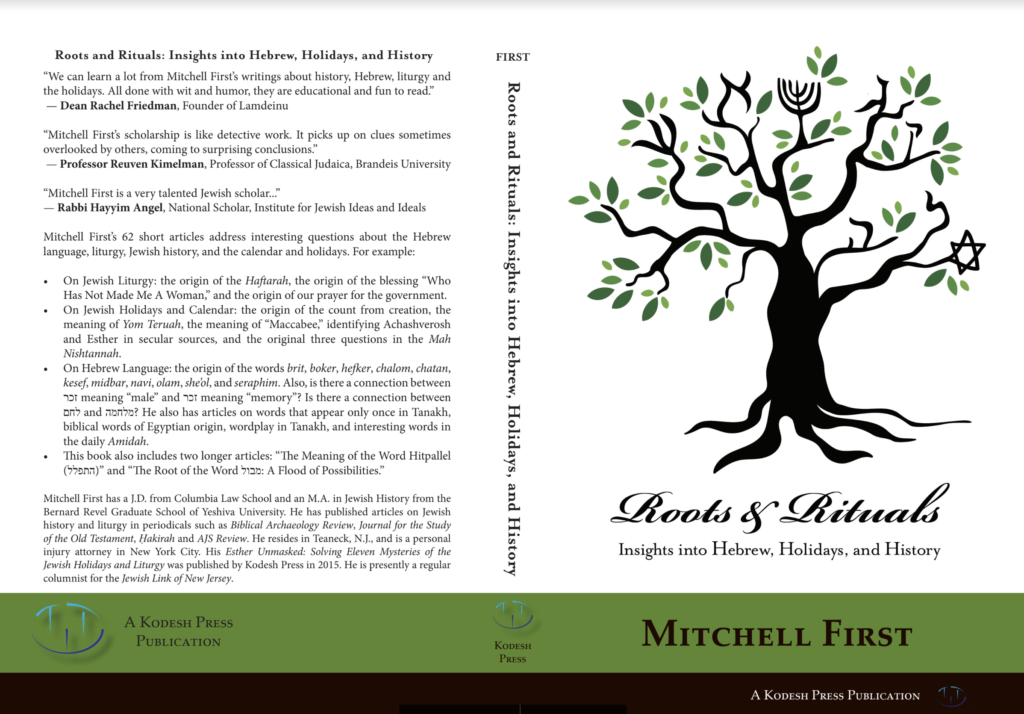
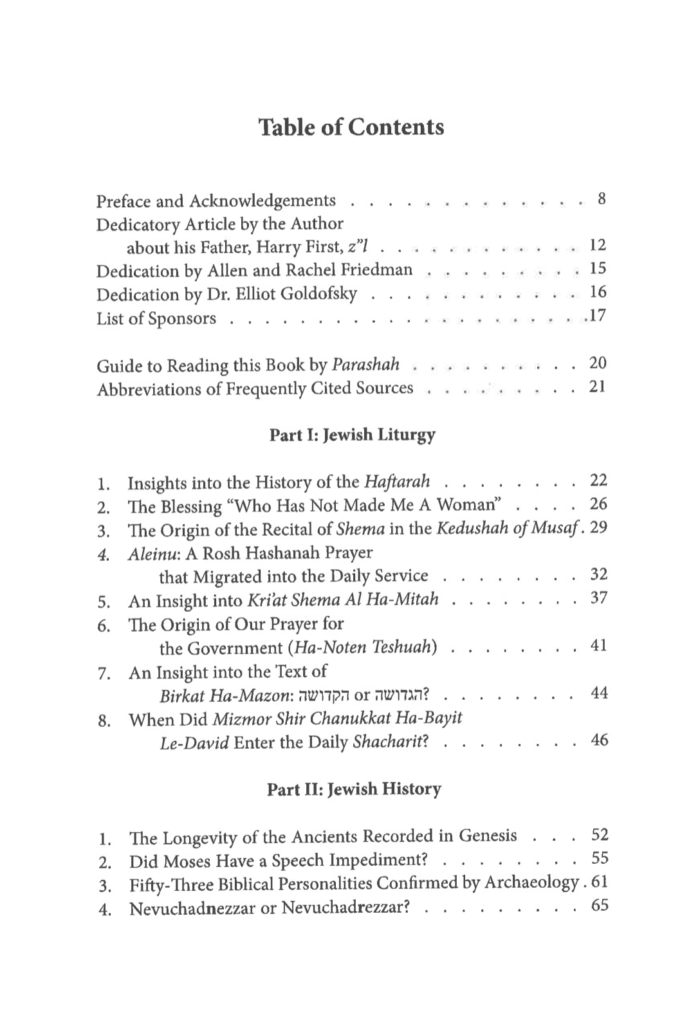
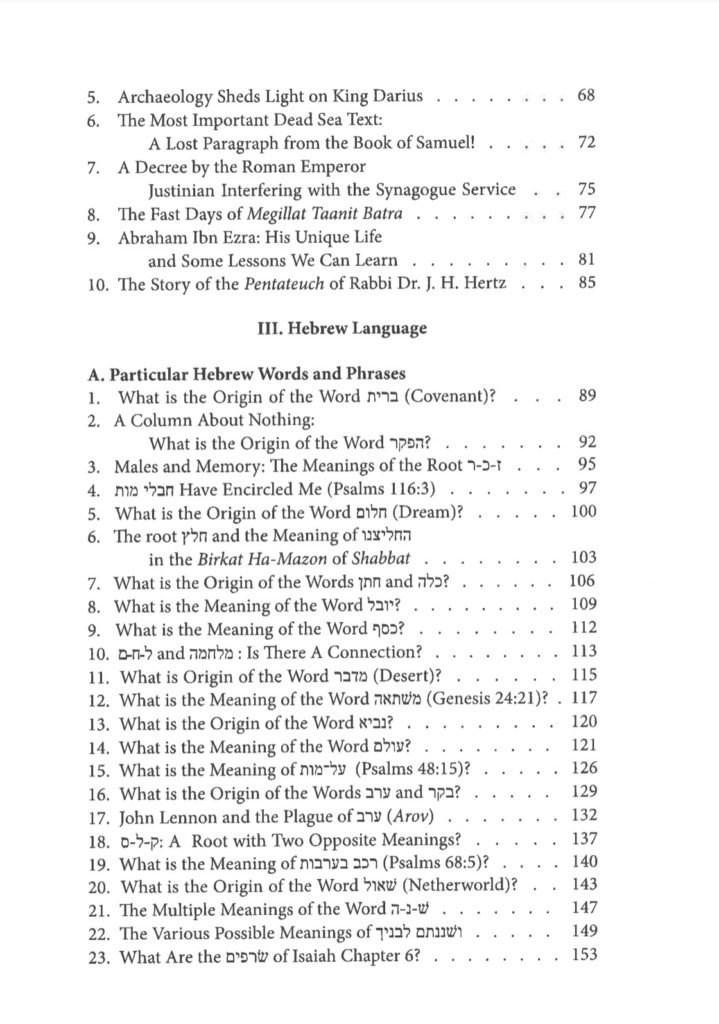
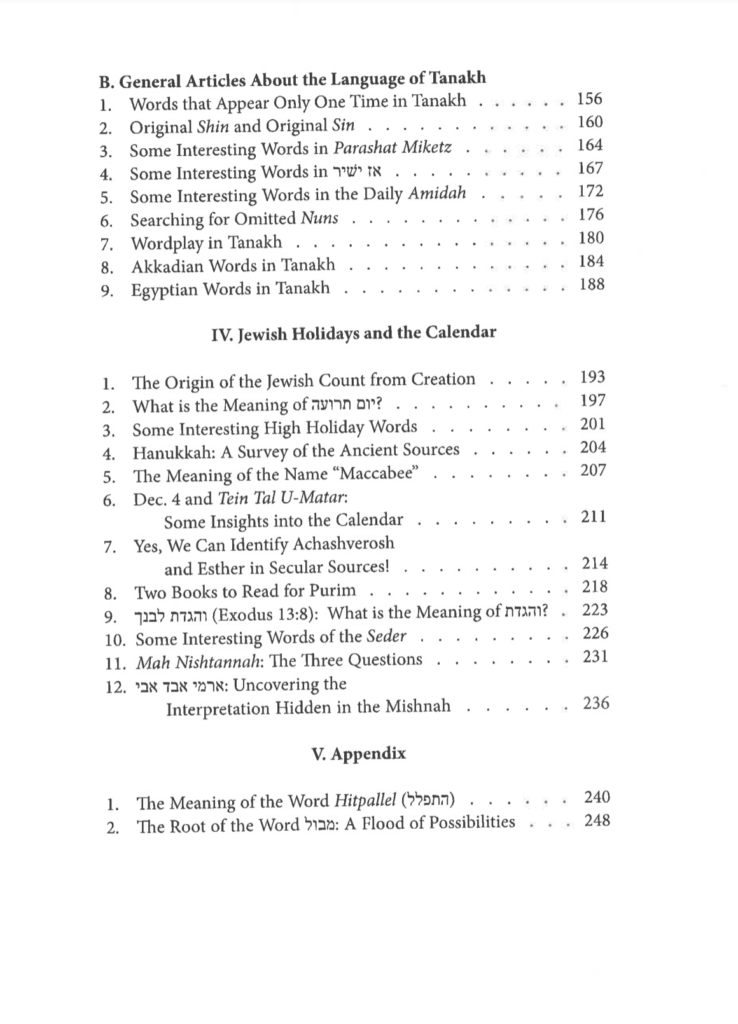
Marc B. Shapiro: Thoughts on Confrontation & Sundry Matters Part I

Thoughts on “Confrontation” and Sundry Matters Part II By: Marc B. Shapiro

What follows is a continuation of this post.Some people are so set on showing the differences between Christianity and Judaism that in the process they end up distorting Judaism. Let me start with an example that for the last fifteen years must be considered a Jewish teaching. By Jewish teaching I mean a view that is taught in the observant community. This doesn’t mean that all or even most people will agree with it, anymore than they agree with the ideas of Daas Torah, religious Zionism, religious anti-Zionism, or that the shirayim of the Rebbe has mystical significance. But agree or not, these are clearly Jewish teachings. Today it must be admitted that Judaism and Christianity share a belief in the Second Coming of the Messiah. While this is an obligatory belief for Christians, for Jews it is, like so many other notions, simply an option. The truth of my statement is seen in the fact that messianist Habad is part and parcel of traditional Judaism, and, scandal or not, most of the leading Torah authorities have been indifferent to this. That is, they see it as a mistaken belief, but not one that pushes its adherent out of the fold. In other words, it is like so many other false ideas in Judaism, all of which fall under the rubric “Jewish beliefs.” As long as these beliefs don’t cross any red lines, the adherents are regarded as part of the traditional Jewish community. To give a parallel example, many people reading this post are good rationalists, and therefore regard astrology as quite foolish. But we are all well aware of the many Jewish teachers who taught the efficacy of this system. Therefore, astrology must be regarded as an acceptable belief for adherents of traditional Judaism. Whether it is correct or not is a completely different matter, and if the latter criteria determines whether something is included under the rubric of traditional Judaism, then it will be a small tent indeed. Unlike Professor David Berger, it doesn’t overly concern me that the belief in a Second Coming didn’t exist twenty years ago. After all, Judaism is a developing religion. Two hundred years ago leading Torah scholars criticized Hasidism for advocating all sorts of new ideas, and yet these too became part of Judaism. In another fifty years the notion of a Jewish Second Coming will probably be seen by most as just another Hasidic eccentricity (albeit the province of only one sect), up there with prayers after the proper time and shirayim. The important point for me is what makes a belief an acceptable one in Judaism is not whether it is new, and certainly not whether it is correct, but whether the rabbinic leaders tolerate it. Over time they have shown that they can tolerate all sorts of foolish doctrines, Habad messianism being merely the latest. Professor Berger argued his case valiantly, but it has largely fallen on deaf ears, and this includes the ears of great Torah scholars. So, like it or not, traditional Judaism now encompasses hasidim and mitnagdim, rationalists and kabbalists, Zionists and anti-Zionists, and those who think the Messiah will be coming for the first time together with those who think it will be a return trip. What has occurred with Habad messianism and its painless integration into wider Orthodoxy can also teach us something with regard to the history of Judaism and Christianity. Had Paul not insisted on his antinomian path, that is, had the Law remained central to early Christianity, there is no reason to assume that there would have been a break with Pharisaic Judaism. When thinking about Habad, there is one other point we have to bear in mind. There are great Torah scholars who unfortunately believe the messianic foolishness, and they should be treated with respect. After all, R. Hayyim Joseph David Azulai, the Hida, quoted from the works of scholars who continued to believe in Shabbetai Zvi even after his apostasy.[33] He certainly opposed their Sabbatianism, and we must oppose the Habad messianism, but one’s religious legitimacy in contemporary Orthodoxy is not destroyed because of the belief in a false Messiah. Let me now return to an issue mentioned already, namely, the naivete in dealing with the differences between Judaism and Christianity that is common in Orthodox circles, especially among those who engage in apologetics and kiruv type activities. To give an example that I have both seen in print and heard in lectures, there are those who talk about how compared to Catholicism Judaism is a much more realistic religion when it comes to divorce, in that it permits it if people don’t get along. That is fine, as far as it goes, but some people then go overboard and denigrate any outlook that opposes “Judaism’s position.” In doing so, these well-meaning people end up of denigrating Beit Shammai’s view. Some will recall that Beit Shammai said that “a man may not divorce his wife unless he has found in her some unseemly conduct” (Gittin 9:10), which means unchastity. Now the halakhah is not in accord with Beit Shammai, but his is certainly a Jewish position. Any presentation of Judaism that presents the standard view of divorce as “the” Jewish position, and denigrates any other approach, has the unintended consequence of denigrating Beit Shammai as not having had a “Jewish” position. In other words, it is disparaging to Beit Shammai for any contemporary to speak about how Beit Hillel’s view is “better” than that of Beit Shammai. In fact, there are traditional sources that speak about how in Messianic days the halakhah will follow Beit Shammai, in this and in all other disputes. I think the traditional position would be to assert that Beit Hillel’s position is not objectively any “better”, and certainly not more ethical, than that of Beit Shammai. Furthermore, a number of poskim actually hold that Beit Hillel and Beit Shammai only dispute about a second (or subsequent) marriage, but that with regard to the first marriage, Beit Hillel agrees with Beit Shammai that a man can divorce his wife only if he finds a matter of unchastity. R. Solomon ben Simeon Duran goes even further and asserts that in this dispute the halakhah is actually in accord with Beit Shammai! [34] ואע”ג דב”ש וב”ה הלכה כב”ה משמע הכא דהלכה כב”ש This is not the accepted halakhah, but it illustrates how unseemly it is to portray a position held by important poskim as out of touch or foolish. As mentioned above, I have seen many times when apologists try to show the beauty of Judaism by contrasting it positively with some “non-Jewish” position (on the unsophisticated assumption that the best way to better their position is by denigrating another). As noted, I have also observed that sometimes the position they are denigrating happens to also be a Jewish position (just not the accepted position). Of course, when you point this out to them, and show them that the way they were arguing had the unintended consequence of ridiculing a position held by traditional Jewish figures, they immediately apologize and give assurances that they won’t do so again. My question always is, why not? Five minutes ago they were happy to declare how unfair or foolish a certain position is, and once being informed that the position is also held by Jewish thinkers they drop their argument like a hot potato. Are we to conclude that it is not the inherent logic of an argument that gives it validity, but only who its adherents are? Does an approach only stop being ridiculous when the polemicist learns that it was held by a traditional thinker? Obviously yes, which leads to the conclusion that there is no purpose in the polemicist arguing the merits of his case at all, since everything he states is only conditional. In other words, the polemicist is telling us: “I can attack a position as being foolish and illogical, but this is only when I think the position is held by non-Jewish or non-traditional thinkers. Once I learn that the position is also held by traditional thinkers, all of my previous words of criticism should be regarded as null and void.” This is another example of what elsewhere I have termed the “elastic” nature of Jewish apologetics and polemics. With this in mind, let me now say something that I know will make many people uncomfortable, but which I have felt for a long time. Throughout Jewish literature one can find any number of explanations as to how the notion of the Trinity is in direct opposition to Jewish teachings, since Judaism demands a simple, unified God. There is no doubt that for much of our history this was the standard view. However, once the doctrine of the sefirot arises on the scene, matters change. Many of the arguments put forth by kabbalists to explain why the belief in the sefirot does not detract from God’s essential unity could also be used to justify the Trinity, a fact recognized by the opponents of the sefirotic doctrine. Since the doctrine of the sefirot has become part and parcel of Judaism, we must now acknowledge that Judaism does not require a simple Maimonidean-like, divine unity. In fact, without any reference to the sefirot, R. Judah Aryeh Modena was able to conclude that one could indeed justify the notion of the Trinity so that it did not stand in opposition to basic Jewish beliefs about God’s unity. As Modena points out in his anti-Christian polemic, Magen va-Herev, the real Jewish objection to the Christian godhead is not found in any notion of a Triune God, but in the Christian doctrine of the Incarnation.[35] The idea that God assumed human form, i.e., that a human is also God, is regarded by us as way over the line. This is not only because it deifies a human, but also because there is a great difference between a spiritual God divided into different “parts,” and an actual physical division in God. The latter is certainly in violation of God’s unity even according to the most extreme sefirotic formulations. (It would not, however, appear to be in violation of R. Moses Taku’s understanding of God, since he posits that God can assume form in this world at the same time that He is in the heavens. For Taku, Christianity’s heresy would thus be seen only in their worship of a human, which is avodah zarah.) From the Trinity, let’s turn to Virgin Birth, another phenomenon which everyone knows is not a Jewish concept, or is it? If by Virgin Birth one means conception through the agency of God, then there is no such concept in Judaism. Yet if by Virgin Birth we also include conception without the presence of human sperm, then as we shall soon see, this indeed accepted by some scholars. (I stress human sperm, so that we can exclude the legend of Ben Sira’s conception, which occurred by means of a bathtub, not to mention all of the responsa dealing with artificial insemination.) Pre-modern man believed in all sorts of strange things, one of which was the concept of the incubus and the succubus, which was found in many cultures. The idea was that male and female demons would have sex with humans while they slept. Among the outstanding Christian figures who believed the notion possible include Augustine and Aquinas.[36] This was an especially good way to explain an unwanted pregnancy: just blame it on the demon. While the classic example of the incubus is when a male demon comes upon a sleeping woman, there were times when this happened while both parties were awake, and we will soon see such a case in Jewish history. Lest one think that this is only a pre-modern superstition, what about all those people who claim to have had sexual relations with aliens who abducted them?[37] As the superstitions in Jewish society have often mirrored those of the dominant culture, we shouldn’t be surprised that sex with demons comes up in our literature. Already the Talmud (Eruvin 18b) speaks of Adam begetting various types of demons. This source doesn’t say who the mother was, but since it wasn’t Eve it must be a female demon. Yet the Talmud is quick to note that Adam never actually had sex with this female demon. Rather, she impregnated herself with his sperm that was emitted accidentally. Throughout Jewish history there were women who were believed to have had sex with demons, and this raised halakhic issues that had to be dealt with. There is no need for me to give various sources on this as they have been nicely collected by Hannah G. Sprecher in a fascinating article.[38] I will just mention one point which I find interesting, and which I mentioned in one of my lectures on R. Ben Zion Uziel.[39] While R. Uziel is in many respects a model for a Modern Orthodox posek, it is quite jarring to find that he too takes seriously the claim that a woman was intimate with a demon. Instead of sending her to a psychologist, he devotes great efforts to showing that she can remain with her kohen husband.[40] That poskim would discuss this sort of thing is not surprising, and in an earlier post I mentioned a current talmid chacham who discusses if one can eat the flesh of a demon. Similarly, Sprecher cites a twentieth-century work that deals with circumcising a child whose father was a demon.[41] Yet to find R. Uziel, a supposedly modern posek, also taking this very seriously was quite a surprise to me. I guess the greater surprise was that of the various women involved with the demons. While some were no doubt off their rocker, others presumably just invented the story to save themselves from the shame of an improper relationship and its consequences. Imagine their surprise when instead of being condemned for their illicit affair, the rabbis actually believed the story that they made up, namely, that the man they had sex with was really a demon![42] Once a woman is believed to have had sex with a demon, and certainly if she had a child in this fashion, people are generally not going to want to have anything to do with her and her family. Being descended from the Devil is hardly the best yichus. Yet much of the world began like this, at least according to one early interpretation. Targum Ps.-Jonathan to Gen. 4:1 explains that Cain’s father is not Adam, but Sammael, who also is known as Satan and the Angel of Death. As James Kugel has shown, this tradition is found in other early sources, such as 1 John 3:12 which describes Cain as being “of the Evil One.” Pirkei de-Rabbi Eliezer 21 describes how the serpent impregnated Eve, and we know from other sources that the serpent is none other than Sammael. While we might be inclined to smile and regard this all as pleasant folklore, there is actually much more here than meets the eye. As Kugel brilliantly notes, this portrayal of Cain serves to explain why God did not accept his sacrifice, a point that is never explained in the text. In addition, it helps solve the puzzling comment of Eve (Gen. 4:1): “I have gotten a man with the Lord,” understanding “man” to mean angel, as is elsewhere found in Scripture.[43] Lest one think that in modern times tales of the Devil’s children are only to be found in novels and on the big screen – one immediately thinks of Rosemary’s Baby and The Omen – let me tell you a fascinating story. In the beginning of the nineteenth century a married woman named Yittel Levkovich gave birth to a child which, we are told, was obviously not her husband’s. Yittel claimed that she had been raped by a male demon. This claim was accepted and the woman was not regarded as an adulteress nor was the child regarded as a mamzer. Yet other Jews refused to marry with the descendants of this woman, and these descendants were known as “Chitshers.” Matters got to be so bad that in 1926 a broadside was published signed by many Hungarian rabbis declaring that there was no problem marrying into the Chitshers. Among the signatories was the young R. Joel Teitelbaum, the rav of Satmar. Despite this plea, there were those who continued to shun the Chitchers, and even to this day there are families in the Hungarian hasidic world who will refuse to intermarry with other Hungarian hasidim since the latter are descended from Yittel and the demon. Tying in with the Christian theme with which I began this post, there was even a belief that a Chitcher has the image of a cross under his skin opposite the heart![44] Take a look at the end of this responsum. This is a fascinating topic, and those who want more details should consult the previously mentioned article by Sprecher, from which I took the information mentioned until now. One aspect of the story that appeared too late to be included by Sprecher is mentioned by Jerome Mintz, and shows how despite R. Yoel Teitelbaum’s words of support for the Chitshers, this did not carry on to one of the inheritors of his throne. Jerome Mintz records the following from a Satmar informant: The Satmar Rebbe’s son, the oldest son, Aaron, he has sometimes a big mouth. Aaron, the Rebbe’s son, gave a speech and he called Ableson’s[45] mother a hatzufah [impudent woman]. “This Ableson’s mother–that impudent woman with her tsiganer [gypsy] family–came to the shul and starts yelling.” You know, with that phrase he was trying to bring up an old pain.

There is an old story about the Ableson family, given only from mouth to ear, about the quality of their family. There were some rumors about a hundred years ago about the Ableson family, that it’s not so spotless. A woman in the family had a relationship with some demon or something and that’s how the branch of the family got started. . . . Nobody knows how she became pregnant. She went away to a different town and came back pregnant and she didn’t have any love affair. She was a virgin. She was still a virgin. . . . It’s written in a lot of books at that time. The Kotsker, on of the big rabbis, said that one of their ancestors was made pregnant by a demon.

This goes back six generations. The family is spread out and the descendants feel a little guilty. They try to behave, you know, so that nobody should throw it back at them. The family is so widespread because they’re so rich. They’ve gotten into every family. They’re very aggressive people, probably because they come from the devil. . . . Even today when somebody is making a marriage arrangement he wants to find out if the family is not from the witches. I know that my mother and my father when they made a marriage arrangement, it was a day before they left the country, they found out if there’s a witch or not.[46]
The R. Aaron mentioned in this story is one of the current Satmar Rebbes. We find another example where a large family was ostracized in this fashion. The problem here was especially acute as many great Torah scholars had married into this family, and now aspersions were being cast on it. Those casting the aspersions referred to the family members as Nadler, which has the connotation of mamzer. (As with the term mamzer, it was also used as a general term of abuse and is the subject of a responsum of R. Solomon Luria.[47]) Because of the growing calumnies against innocent families, the Maharal and numerous other great rabbis were forced to publicly support them and condemn all who would question their yichus.[48] What I don’t understand is how, considering the base origin of the term “Nadler” and how it was used in such an abusive fashion, that the word actually became an acceptable last name. Indeed, it is now more than acceptable and people are proud to have this name, which they share with two outstanding scholars, not to mention my former congressman. * * * Returning to the issue of Christianity, many have discussed whether or not it is considered avodah zarah. I will deal with this at a future time, but now I want to raise another issue which I mentioned briefly in Limits of Orthodox Theology: What is worse, atheism or avodah zarah? Subsequent to the book’s appearance I found more sources related to this, which I hope to come back to in a future post. For now, let me just call attention to found a very interesting comment of R. David Zvi Hoffmann with regard to avodah zarah. It is found in R. Hayyim Hirschenson’s journal, Ha-Misderonah 1 (1885), p. 137. In speaking about the practice of the Talmud to sometime use euphemistic language, he claims that the expression “Grave is avodah zarah, for whoever denies it is as if he accepts the whole Torah” (Hullin 5a and parallels) is an example of this. In other words, the Talmud really means: “Grave is avodah zarah, for whoever accepts it denies the entire Torah.” I had never thought of this and it is certainly interesting. Hoffmann is himself led to this interpretation, which he sees as obvious, because if it was really the case that one who rejected avodah zarah would be regarded as one who accepts the Torah, how come a public Sabbath violator who rejects avodah zarah is still regarded as having rejected the Torah? Nevertheless, despite its immediate appeal, I don’t think Hoffmann’s interpretation can be accepted, and the passage is not to be regarded as euphemistic. Rather, it is an example of the Sages’ exaggerations, which we find in other places as well, such as where they state that a certain commandment is equal to all six hundred thirteen. In fact, I have what I think is conclusive proof that Hoffmann is mistaken in regarding this passage as expressing a euphemism. In Megillah 13a the passage appears in an altered form: “Anyone who repudiates avodah zarah is called ‘a Jew.'” The Talmud then cites a biblical proof text to support this statement which shows that it was not meant to be understood as a euphemism. While on the subject of Christianity, I would like to respond to the reaction of some who read my opinion piece on John Hagee. There I showed that what got so many upset, namely, Hagee’s theological understanding of the Holocaust, was actually shared by R. Zvi Yehudah Kook.[49] Of course, I understand why people feel that attempting to explain the Holocaust is improper. I happen to share this sentiment. Yet if people are upset by what Hagee said, just wait until they see the following, which out of all the supposed justifications for the Holocaust, which have ranged the gamut, this is surely the most bizarre. What can I say, other than that it never ceases to amaze me how some of the greatest scholars we have say some of the craziest stuff imaginable. I am referring to one of the reasons R. Ovadiah Hadaya gives to explain the Holocaust. He saw it as God’s way of cleansing the world of all the mamzerim![50] How a sensitive scholar, which Hadaya certainly was,[51] could offer such an explanation really boggles the mind. To think that the cruel murder of six million, including over a million children, not to mention all of the other terrible results of the Holocaust, was in order to complete some yichus program is beyond strange. I can’t recall who it was who said that any attempts at explaining suffering are invalid if you are not prepared to tell it to a parent whose child is dying of cancer. I certainly can’t imagine anyone telling a parent that his family was wiped out in the Holocaust in order to get rid of the mamzerim! (A well-known American haredi rosh yeshiva responded very strongly when told about what Hadaya wrote, but I don’t have permission to quote his words.) Prof. David Halivni commented, when I told him about Hadaya’s view, that Sephardim often don’t get it when it comes to the Holocaust. I remember thinking about Halivni’s comment when R. Ovadiah Yosef gave his own explanation for the Holocaust, some years ago, one which created such a storm that Holocaust survivors protested outside his home. He claimed that the dead were really reincarnated souls suffering for their sins in previous lifetimes. Although he doesn’t mention it, Hadaya’s view is obviously based on the Jerusalem Talmud, Yevamot 8:3, which speaks of a catastrophe coming on the world every few generations which destroys both mamzerim and non-mamzerim (the latter are destroyed as well, so that it not be known who committed the sin.) Sefer Hasidim, ed. Margaliot, no. 213, repeats this teaching. יש הריגת דבר או חרב שלא נגזר אלא לכלות הממזרים וכדי שלא לביישם שאם לא ימותו רק הממזרים היה נודע והיתה המשפחה מתביישת מפני חברתה [ולכן נוטל הכשרים עמהם] It is with regard to the issue of the mamzer that one can see manifested a point I have often thought about. The great classical historian Moses Finley spoke of what he termed the “teleological fallacy” in the interpretation of historical change. “It consists in assuming the existence from the beginning of time, so to speak, of the writer’s values . . . and in then examining all earlier thought and practice as if they were, or ought to have been, on the road to this realization, as if men in other periods were asking the same questions and facing the same problems as those of the historian and his world.”[52] The fact is that earlier generations often thought very differently about things. For example, we are much more sensitive to matters such as human rights than they were. They took slavery for granted, while the very concept of owning another person is the most detestable thing imaginable to us. Followers of R. Kook will put all of this in a religious framework, and see it as humanity’s development as it gets closer to the Messianic era. We see this very clearly when it comes to the issue of the mamzer who through no fault of his own suffers terribly. The Orthodox community is very sympathetic to his fate, and it is unimaginable that people today will, as in the past express satisfaction at the death of a mamzer.[53] A difficulty with the sympathetic approach is the Shulhan Arukh‘s ruling (Yoreh Deah 265:4) that when the mamzer is born אין מבקשים עליו רחמים. The Shakh writes: כלומר אין אומרים קיים את הילד כו’, מטעם דלא ניחא להו לישראל הקדושים לקיים הממזרים שביניהם. In fact, according to R. Bahya ibn Paquda (Hovot ha-Levavot, Sha’ar ha-Teshuvah, ch. 10), if one is responsible for bringing a mamzer into the world, and then does a proper teshuvah, “God will destroy the offspring.” Needless to say, if a modern person believed this to be true, it hardly would encourage him or her to do teshuvah.[54] (Philippe Ariès could perhaps have cited this text in order to bolster his controversial thesis that medieval parents were indifferent to their children, as it is unimaginable that a contemporary preacher would tell parents that the result of their teshuvah would mean the death of their child.) What, from today’s standards, would be the most cruel thing imaginable, is described by R. Ishmael ha-Kohen of Modena, the last great Italian posek (Zera Emet 3:111).[55] R. Ishmael rules that the word “mamzer” should be tattooed (by a non-Jew) on a mamzer baby’s forehead![56] This will prevent him from being able to marry. I know that no contemporary rabbi would recommend such a step (although the Zera Emet‘s advice is quoted in R. Zvi Hirsch Shapira’s Darkhei Teshuvah, Yoreh Deah 190:11). Nor would anyone want the mamzer’s house or grave to be plastered, as was apparently the opinion of some in talmudic days, in order that people would be able to shun him.[57] This leads to an issue that would require an entire volume to adequately deal with it. This volume would trace the Orthodox confrontation with changing values and show how Orthodox practices and ideas have responded. It is obvious that there is much more in the way of reevaluation of prior ideas in the Modern Orthodox world, but there is also a great deal in the haredi world as well. As noted already, I have observed this personally when haredi figures, and not only of the kiruv variety, have asserted that certain ideas and concepts are in opposition to Jewish values, and have then been flustered when I showed them that great figures of the past have actually put forth what today is regarded, even in the haredi world, as immoral statements. Examples of this are easy to find. R. Jehiel Jacob Weinberg pointed to one: the Rambam’s ruling in Issurei Biah 12:10. I am reluctant to spell this out here, because I know how it could be used by anti-Semites, so let me just quote it in Hebrew. ישראל שבא על הגויה–בין קטנה בת שלוש שנים ויום אחד [!] בין גדולה, בין פנויה בין אשת איש, ואפילו היה קטן בן תשע שנים ויום אחד–כיון שבא על הגויה בזדון, הרי זו נהרגת מפני שבאת לישראל תקלה על ידיה, כבהמה. I don’t think that there is any sane person in the world, no matter what community he is in, who would advocate this in modern times.[58] Furthermore, if you defend, even in the most right wing community, what Maimonides says here with regard to an innocent child, you will be regarded as evil. The traditional commentators are at a loss to explain where Maimonides got this. This example was pointed to by Weinberg as one of the traditional passages which most distressed him. Let me give another example which again illustrates how often contemporary moral judgments are far removed from those of previous generations, even when dealing with great Jewish leaders. R. Zvi Hirsch Chajes claims that a king has the right to kill the innocent children of someone who rebels, because of tikun olam,[59] and the Hatam Sofer, in a letter to Chajes, find this a reasonable position.[60] The purpose of the killing would be to put fear into others, who while may be willing to risk their own lives in rebellion, would be deterred if their families were wiped out. This is certainly not what anyone today would regard as “Jewish values.”[61] In fact, Seforno, Netziv, and Meshekh Hokhmah, in their commentaries to Deut. 24:16 (“Children shall not be put to death for the fathers”), specifically reject this possibility, with Seforno noting how this was a typical Gentile practice that the Torah is legislating against.[62] In such a case, we have to follow the guidance of R. Jehiel Jacob Weinberg, who believed that if there is a dispute among halakhic authorities, the poskim must reject the view that will bring Torah into disrepute in people’s eyes (Kitvei ha-Gaon Rabbi Jehiel Jacob Weinberg, vol. 1, p. 60): ואגלה להדר”ג [הגרא”י אונטרמן] מה שבלבי: שמקום שיש מחלוקת הראשונים צריכים הרבנים להכריע נגד אותה הדעה, שהיא רחוקה מדעת הבריות וגורמת לזלזול וללעג נגד תוה”ק R. Shlomo Aviner has the same approach (Am ve-Artzo, vol. 2, pp. 436-437) . He refuses to say that any rishon was less moral than another, but he notes that conceptions of morality change over time and not every decision of a posek is an eternal decision. Today, when we have different standards of morality than in previous days. If there is a dispute among the authorities, we should adopt the position which we regard as more moral. וברור שבהלכה פנים לכאן ולכאן. לכן כיוון שנתיבים אלה הם נתיבים מוסריים יותר, עלינו להכריע על פיהם. לפעמים ההלכה מוכרעת, בגלל שעת הדחק, ולפעמים ההלכה מוכרעת כי כך המנהג. אם כן, בימינו ‘המנהג’ הוא להיות מוסרי . . . יש גם מושגים מוסריים המשתנים על פי המציאות. אב הסוטר לבנו הקטן, אינו דומה לאב הסוטר לבנו בן השמונה עשרה. האם סטירת לחי לבנו היא מעשה מוסרי או לא מוסרי? תלוי בנסיבות. לא כל הכרעות הפוסקים הן הכרעות נצחיות . . . במצבנו כיום ישנם שיקולים מוסריים שמצטרפים להכרעותינו ההלכתיות In a recent by book by R. Yuval Sherlo, Reshut ha-Rabim, p. 102, he acknowledges moral advancement and concludes: “Despite all the hypocricy and cynicism there is moral progress in the area of human rights. True religious people believe that this is the will of God.” All this stands in opposition to R. J. David Bleich’s incredible statement: “The halakhic enterprise, of necessity, proceeds without reference or openness to, much less acceptance or rejection of, modernity. Modernity is irrelevant to the formulation of halakhic determinationsContemporary Halakhic Problems (New York, 1995), vol. 4, p. xvii (emphasis added). This statement is wrong on so many levels that I am inclined to think that Bleich simply didn’t express himself properly and meant to say something other than what appears from his words. In any event, in a future post I will return to Bleich’s controversial understanding of the halakhic process. As to the general problem of laws that trouble the ethical sense of people, we find that it is R. Kook who takes the bull by the horns and suggests a radical approach. The issue was much more vexing for R. Kook than for other sages, as in these types of matters he could not simply tell people that their consciences were leading them astray and that they should submerge their inherent feelings of right and wrong. It is R. Kook, after all, who famously says that fear of heaven cannot push aside one’s natural morality (Shemonah Kevatzim 1:75): אסור ליראת שמים שתדחק את המוסר הטבעי של האדם, כי אז אינה עוד יראת שמים טהורה. סימן ליראת שמים טהורה הוא, כשהמוסר הטבעי, הנטוע בטבע הישר של האדם, הולך ועולה על פיה במעלות יותר גבוהות ממה שהוא עומד מבלעדיה. אבל אם תצוייר יראת שמים בתכונה כזאת, שבלא השפעתה על החיים היו החיים יותר נוטים לפעול טוב, ולהוציא אל הפועל דברים מועילים לפרט ולכלל, ועל פי השפעתה מתמעט כח הפועל ההוא, יראת שמים כזאת היא יראה פסולה. These are incredible words. R. Kook was also “confident that if a particular moral intuition reflecting the divine will achieves widespread popularity, it will no doubt enable the halakhic authorities to find genuine textual basis for their new understanding.”[63] R. Kook formulates his idea as follows (Iggerot ha-Reiyah, vol. 1, p. 103): ואם תפול שאלה על איזה משפט שבתורה, שלפי מושגי המוסר יהיה נראה שצריך להיות מובן באופן אחר, אז אם באמת ע”פ ב”ד הגדול יוחלט שזה המשפט לא נאמר כ”א באותם התנאים שכבר אינם, ודאי ימצא ע”ז מקור בתורה. R. Kook is not speaking about apologetics here, but a revealing of Torah truth that was previously hidden. The truth is latent, and with the development of moral ideas, which is driven by God, the new insight in the Torah becomes apparent.[64] In a volume of R. Kook’s writings that appeared in 2008, he elaborates on the role of natural morality) Kevatzim mi-Ketav Yad Kodsho, vol. 2, p. 121 [4:16]): כשהמוסר הטבעי מתגבר בעולם, באיזה צורה שתהיה, חייב כל אדם לקבל לתוכו אותו מממקורו, דהיינו מהתגלותו בעולם, ואת פרטיו יפלס על פי ארחות התורה. אז יעלה בידו המוסר הטהור אמיץ ומזוקק. Another interesting statement from R. Kook on developing morality is found in Pinkesei ha-Reiyah, also published in 2008. (In a future post I will have more to say about these two new volumes.) In discussing how terrible war is, and the concept of a “permissible war,” which is recognized as a halakhic category, he notes that the latter is only suitable for a world which hasn’t developed properly, one which still sees war as a means to achieve things, This proper development can only come when all peoples have reached an elevated stage, since, pace Gandhi, you can’t have one nation practice the higher morality of no war while other nations are still using force. R. Kook describes “permissible war” as follows (p. 29): כל התורה הזאת של מלחמת רשות לא נאמרה כ”א לאנושיות שלא נגמרה בחינוך. The way the Torah shows this is by the law of yefat toar, concerning which R. Kook writes: כל לב יבין על נקלה כי רק לאומה שלא באה לתכלית חינוך האנושי, או יחידים מהם, יהיה הכרח לדבר כנגד יצר הרע ע”י לקיחת יפת תואר בשביה באופן המדובר. ומזה נלמד שכשם שעלינו להתרומם מדין יפת תואר, כן נזכה להתרומם מעיקר החינוך של מלחמת רשות, ונכיר שכל כלי זיין אינו אלא לגנאי. Wouldn’t it be great to hear rabbis talk about stuff like this on Shabbat?! On the very next page of Pinkesei ha-Reiyah, R. Kook applies the same insight to the issue of slavery, seeing it as only a temporary phenomenon, one that the Torah wishes to see done away with. In addition to what I have quoted from him in note 64, R. Norman Lamm has also recently written something else relevant to the issue being discussed: If anyone harbors serious doubts about inevitable changes in the moral climate in favor of heightened sensitivity, consider how we would react if in our own times someone would stipulate as the nadan for his daughter the equivalent of the one hundred Philistine foreskins which Saul demanded of David (1 Samuel 18:25) and which dowry David later offered to him for his daughter Michal’s hand in marriage (II Samuel 3:14) . . . The difference in perspective is not only a matter of esthetics and taste but also of morals.[65] He then develops the notion of a developing halakhic morality in which our evolving understanding of morality lead us back to the Torah “to rediscover what was always there in the inner folds of the Biblical texts and halakhic traditions” (pp. 226-227). To be continued * * * Many of you reading this post have purchased my book Studies in Maimonides and His Interpreters. In the first printing there is an unfortunate typo in the very last word (there are also some typos in the Hebrew section). Although I read through the book a few times before printing, as did a copy-editor, we didn’t notice it. Neither did numerous others who read the book, and I thank R. Yoel Catane, the editor of Ha-Ma’ayan, who was the first to catch the mistake (which has been fixed in the new printing). While the last word reads ,מחמר this should actually be מחמד, and was understood to refer to Muhammad. I was very upset upon learning of the careless typo. Seeing how I was beating myself up, my friend Shlomo Tikoshinski wrote to me as follows: לאו דמחמר – אין לוקין עליו (see Shabbat 154a, Mishneh Torah, Hilkhhot Shabbat 20:1)

[33] See Isaiah Tishby, Netivei Emunah u-Minut (Jerusalem, 1982), pp. 228ff.[34] She’elot u-Teshuvot ha-Rashbash, no. 411.
[35] See Daniel J. Lasker, Jewish Philosophical Polemics Against Christianity in the Middle Ages (Oxford, 2007), pp. 81-82.
[36] See Walter Stephens, Demon Lovers: Witchcraft, Sex, and the Crisis of Belief (Chicago, 2002), ch. 3.[37] See Thomas E. Bullard, UFO Abductions (Mount Ranier, MD, 1987). See also Jonathan Z. Smith’s article “Close Encounters of Diverse Kinds,” reprinted in his Relating Religion (Chicago, 2004), ch. 13.

[38] “Diabolus Ex-Machina: An Unusual Case of Yuhasin,” Jewish Law Association Studies 8 (1994), pp. 183-204.[39] Available at torahinmotion.org[40] Mishpetei Uziel,Mahadurah Tinyana, Even ha-Ezer no. 11.[41] Yalkut Avraham (Munkacs, 1931), p. 10.[42] While it is clear that demons come in both male and female, what about angels? According to the Magen Avraham, Orah Hayyim 610:5, the reason only men wear white on Yom Kippur is because men want to appear like the angels, and angels are male! Magen Avraham didn’t make this up, but is quoting a Midrash which teaches this idea. See Yalkut Shimoni, Proverbs 959, and Louis Jacobs, Judaism and Theology (London, 2005), ch. 19.[43] See The Bible as it Was (Cambridge, 1997), p. 86; How to Read the Bible (New York, 2007), pp. 60-61[44] R. Asher Anshel Miller, Hayyei Asher (Bnei Brak, 1991), no. 123.
[45] Mintz tells us that this is a pseudonym. For details of the conflict between “Yosel Ableson” and R. Aaron, see Mintz, Hasidic People (Cambridge, MA., 1992), pp. 302ff.
[46] Ibid., p. 307.[47] See the testimony recorded She’elot u-Teshuvot Maharshal, no. 101:דוא בישט איין נאדלר. דוא נאדלר ווארום נימשטו מיר מיין געלט . . . [48] See R. Judah Loew ben Bezalel, Netivot Olam (Bnei Brak, 1980), Netiv ha-Lashon, ch. 9.[49] See here[50] Yaskil Avdi, vol. 8, p. 200.[51] See e.g., his responsum in R. Ovadiah Yosef, Yabia Omer, vol. 3 p. 300. Here he reminds dayanim not to lose site of the humanity of the people standing before them (which current dayanim voiding conversions seem to forget–I will return to this in an upcoming post):
על הדיין לראות מעצמו אם היה ענין כזה באחת מבנותיו ח”ו, ובא הבעל נגדה בטענה כזו, האם ירצה שביה”ד יפסקו עליה להוציאה בע”כ מבלי כתובה. [52] Ancient Slavery and Modern Ideology (London, 1980), p. 17.[53] See e.g., Maharil, Hilkhot Milah no. 20:וצוה הרב לשמש העיר להכריז אחר המילה לציבור קול רם תדעו הכל שהילד הנימול הוא ממזר . . . ואמר אלינו מהר”י סג”ל שנתגדל הנער ההוא לבן עשר שנים ומת. וכתבו למהרי”ל לבשורה טובה שנסתלק ונאסף מתוכנו

R. Israel Moses Hazan, Kerakh shel Romi, p. 61b:ועברו איזה ימים ומת הממזר (ברוך שעקרו ולא נתערב זרע ממזרים בתוך קהלתנו)

R. Elijah Aberzel rules that it is permitted to abort a mamzer fetus. See Dibrot Eliyahu, vol. 6, no. 107.
[54] For an example of a preacher’s words that even the most idiotic person today would never use in trying to comfort a bereaved parent, see R. Joseph Stadthagen Divrei Zikaron (Amsterdam, 1705), p. 38a:ואם ח”ו מזבח כפרה מיתת בנים יארע, גם בזה אין ראוי להצטער [!] כי מי יודע מה היה מגדל ממנו יצור או כיעור, חכם או סכל, להרע או להטיב. [55] For those who have never heard of R. Ishmael, consider this: He is quoted by R. Ovadiah Yosef in Yabia Omer and Yehaveh Da’at many more times than R. Moses Feinstein.[56] In those days mamzerim were also named kidor, based on Deut. 32:20: כי דור תהפוכות המה[57] See Meir Bar–Ilan, “Saul Lieberman: The Greatest Sage in Israel,” in Meir Lubetski, ed., Saul Lieberman (1898-1983), Talmudic Scholar (Lewiston, 2002), pp. 86-87 (referring to Tosefta Yevamot, ch. 3).
[58] In his Avi Ezri R. Shakh discusses a certain halakhah dealing with the death penalty for violating the Noahide commandments. In 1987 some (presumably Chabad) troublemakers, obviously not concerned about hillul ha-Shem, “leaked” this to Israeli newspapers with the result that the latter had headlines: הרב שך מתיר להרוג גויים ללא דין. R. Shakh’s people were quick to point out that the discussion in Avi Ezri is completely theoretical, something which the “leakers” were well of. See Moshe Horovitz, She-ha-Mafteah be-Yado (Jerusalem, 1989), 96ff. For a similar incident five years ago involving Yeshiva University, see “Critics Slam Rabbi, Y.U. Over Article on Gentiles,” available here
[59] Torat ha-Nevi’im, ch. 7.[60] She’elot u-Teshuvot Hatam Sofer, Orah Hayyim no. 108 (end).[61] Cf. however Nathan Lewin’s argument, “Deterring Suicide Kllers,” available here Lewin, however, is dealing with adults, not potentially minor children. For Arthur Green’s response, ” A Stronger Moral Force,” see here
[62] See R. Shimon Krasner, “Ishiyuto u-Feulotav shel Shaul ha-Melekh,” Yeshurun 11 (2002), pp. 779-780.
[63] Tamar Ross, Expanding the Palace of Torah (Waltham, 2004), p. 292 n. 38.
[64] Cf. this to what R. Norman Lamm wrote in his response to Noah Feldman’s infamous article, referring in particular to Feldman’s discussion of the saving of non-Jewish life on Shabbat.Surely you, as a distinguished academic lawyer, must have come across instances in which a precedent that was once valid has, in the course of time, proved morally objectionable, as a result of which it was amended, so that the law remains “on the books” as a juridical foundation, while it becomes effectively inoperative through legal analysis and moral argument. Why, then, can you not be as generous to Jewish law, and appreciate that certain biblical laws are unenforceable in practical terms, because all legal systems — including Jewish law — do not simply dump their axiomatic bases but develop them. Why not admire scholars of Jewish law who use various legal technicalities to preserve the text of the original law in its essence, and yet make sure that appropriate changes would be made in accordance with new moral sensitivities? [65] “Amalek and the Seven Nations: A Case of Law vs. Morality,” in Lawrence Schiffman and Joel B. Wolowelsky, eds., War and Peace in the Jewish Tradition (New York, 2007), p. 208.


A Half Slave, Ber Oppenheimer, the Reliability of R’ Shlomo Sofer, and Other Comments

A Half Slave, Ber Oppenheimer, the Reliability of R’ Shlomo Sofer, and Other Comments
By Brian Schwartz
When I was in my early yeshiva years studying tractate Shabbos, I came across a Rashba which I found to be most intriguing.  During its discussion of the first mishna, the gemara in Shabbos 4a makes the statement, “וכי אומרים לו לאדם חטא כדי שיזכה חבירך,” which means, “do we really say to a person, ‘sin in order that your friend should merit?’” A notion which suggests that a person should not sin in order that others can fulfill a mitzvah. Tosafos[1] has a long discussion addressing the multiple places in the Talmud which seem to contradict this concept.  One of the sources discussed, is the mishna in the fourth chapter of Gittin. The mishna states that if one owns a חצי עבד חצי בן חורין, (a half slave half free man, a phenomenon which happens when two partners own a slave and one partner frees him of his share), one must free him on the account that as a half slave he cannot fulfill the mitzvah of procreating, as a half slave cannot marry a slave or a free woman.  Tosafos also notes that freeing a slave is a transgression of the positive commandment of לעולם בהם תעבודו, as expressly stated previously in Gittin 38b.  Tosafos asks, how can a master be obligated to free his half slave so that the half slave can fulfill his mitzvah of procreating, does that not contradict the above statement in Shabbos of וכי אומרים לו לאדם חטא כדי שיזכה חבירך by violating a positive commandment? 
The Rashba[2] answers this question with the novel idea that the commandment of לעולם בהם תעבודו doesn’t apply to a half slave. Therefore, in this situation one isn’t transgressing any commandments when enabling someone else fulfill a mitzva. The problem with this approach is that there seems to be a gemara in Gittin 38a which suggests otherwise:

“ההיא אמתא דהות בפומבדיתא דהוו קא מעבדי בה אינשי איסורא אמר אביי אי לאו דאמר רב יהודה אמר שמואל דכל המשחרר עבדו עובר בעשה הוה כייפנא ליה למרה וכתיב לה גיטא דחירותא רבינא אמר כי הא מודה רב יהודה משום מילתא דאיסורא ואביי משום איסורא לא האמר רב חנינא בר רב קטינא אמר ר’ יצחק מעשה באשה אחת שחציה שפחה וחציה בת חורין וכפו את רבה ועשאה בת חורין ואמר רב נחמן בר יצחק מנהג הפקר נהגו בה .”
“There was a slave-woman in Pumpedisa, with whom men did sinful acts.  Abaye said: Were it not that Rav Yehuda has said in the name of Shmuel, that anyone who frees his slave transgresses a positive commandment, I would force her master, and he would write her a contract of freedom.  Ravina said:  In such a case Rav Yehuda would agree because of the sinful acts.  And Abaye, would not agree due to sinful acts?  Did not Rav Chanina Bar Rav Ketina say in the name of R’ Yitzchak:  There was once an incident involving a woman who was a half slave-woman and half free-woman, and they forced her master, and he made her a free woman; And Rav Nachman Bar Yitzchak said, men acted with her in a promiscuous manner.”

The gemara clearly suggests that if it wasn’t for the promiscuity of the half-slave woman, freeing her would be forbidden under the positive commandment of לעולם בהם תעבודו, clearly contradicting the Rashba.  This question bothered me very much, so I began a search through the acharonim[3] to see if anyone dealt with this problem.  While I was perusing through the yeshiva’s library, I happened upon an old torn up copy of the Chiddushei Maharam Barby by R’ Meir Barby, the Av Beis Din of Pressburg before the Chasam Sofer and R’ Meshullam Igra.  R’ Barby asks the question in the name of one of his students and attempts to give an answer[4].  At the time, I gave no specific significance to this source, other than the fact it was the earliest mention of this question that I could find.  I continued to gather sources until I found this question asked in the sefer Mei Be’er.  The Mei Be’er was authored by Ber Oppenheimer, a resident of Pressburg and a talmid chacham.  What is so interesting about this sefer is that Oppenheimer corresponds with many of the gedolim of his time.  Examples include; R’ Shmuel Landau, R’ Baruch Frankel Teomim, R’ Moshe Mintz, R’ Mordechai Banet, R’ Yaakov Orenstein, and many others[5].  All these personalities do not hold back on writing titles and honorifics to Oppenheimer that would suit any other great rabbi of their time. 
After a response to the above question from the author of the Ketzos Hachoshen[6], Oppenheimer writes that he found this question in the name of one of R’ Meir Barby’s students,  in the newly printed Chidushei Maharam Barby, and that student happened to be Oppenheimer himself.[7]  From there he proceeds with his own answer.  Here is the title page of the Mei Be’er:
While I was discussing this question with one of my rebbeim in yeshiva, I brought up the topic of the Mei Be’er and how the sefer impressed me with all the correspondence with the gedolim of the time.  To my surprise, my rebbe told me that R’ Moshe Sofer, known as the Chasam Sofer after the seforim he authored, supposedly quipped about the sefer, “מי באר לא נשתה” (a pun of the verse in Bamidbar 21:22).  This tidbit of information intrigued me to learn more about Ber Oppenheimer, and to find out if there was any truth to the hearsay of what the Chasam Sofer allegedly said. 
Ber Oppenheimer

            Ber Oppenheimer, a descendant of the famous R’ Dovid Oppenheim, was born in 1760 to his father Yitzchak in Pressburg.  Together with his brother Chaim, young Ber went to study in the Yeshiva of Fürth.  Sometime later, Oppenheimer left Fürth for Berlin so that he could fulfill his desire to learn secular knowledge.  When he completed his studies in Berlin, he returned to Pressburg where he would become one of the leaders of the community.
            In 1829, Oppenheimer published his seferMei Be’er.  Besides for the Mei Be’er, Oppenheimer published material in the Bikkurei Haitim and Kerem Chemed journals, and in 1825 he printed a prayer service in Honor of the ascension of Caroline Augusta of Bavaria to the Austrian throne[8].  Oppenheimer certainly was a maskil, though it seems he was traditional enough for all the gedolei hador he corresponded with.  The question is, what exactly did the Chasam Sofer think of him?  Did he know something the other gedolim did not, being that he lived in the same community as him?  In the Mei Be’er, there are a few teshuvos from the Chasam Sofer to Oppenheimer[9]. Devoid of of any titles and praise for Oppenheimer, the Chasam Sofer’s teshuvos to him leave off an impression of a seemingly cold relationship compared to his other correspondents; however, from this alone one can hardly gauge exactly what the Chasam Sofer really thought of Oppenheimer. 
            The start of the trail begins with the line “מי באר לא נשתה” that the Chasam Sofer allegedly said.  I found several sources which report the Chasam Sofer as the originator of the line[10], but without any context.  One source, R’ Shimon Fuerst in the preface to his Shem MiShimon,[11] does make a story out of it.  He tells of a story where once Oppenheimer came to speak to the Chasam Sofer in the latter’s house.  Sofer’s sons, R’ Shimon and R’ Avraham Shmuel Binyomin (the Ksav Sofer), noticed that their father made him wait a very long time.  They objected to their father’s treatment of Oppenheimer; protesting that it was not right to keep a talmid chacham such as Oppenheimer waiting so long.  Their father replied that every time Oppenheimer comes to speak to him in learning, it causes him bittul torah, since afterwards he must learn for a half hour in a musar sefer – since Oppenheimer’s head is full of heretical books.  Fuerst continues with another anecdote: once a talmid in his yeshiva asked a question to the Chasam Sofer, and when Sofer realized it was taken from the Mei Be’er, he then told the talmid, “מי באר לא נשתה”. 
            There are other reports of similar reactions and encounters of the Chasam Sofer with an anonymous talmid chacham from Pressburg who happened to also author a sefer.  I think we can safely assume that the intended person is Oppenheimer. 
            R’ Yitzchak Weiss of Varbó, writes to R’ Yosef Schwartz in the latter’s biographical anthology of the Chasam Sofer, Zichron L’Moshe[12], of a story he heard from his uncle, R’ Yaakov Prager.  In 1828, the Ra’vad of Pressburg, R’ Mordechai Tausk, was making a siyum hashas.  Tausk never liked making long pshetlach, so he prepared his dvar torah on just the last page of tractate Niddah.  However, the Chasam Sofer was present, and he started himself to say a large pilpul, explaining Tausk’s thesis, based on the references Tausk prepared.  Also present at the time, was a great talmid chacham who wrote a sefer, though a heretic.  In middle of his pshetle, the Chasam Sofer turbulently cried out, “ מה מועילים כל החידושים וחילוקים, העיקר הוא ליראה את השם הנככד והנורא ית״ש להיות על כל אדם מורא שמים מפחד הי״ת והדר  גאונו,” ואמר תוכחה נוראה בזה.
            
Though here Weiss chose to keep this talmid chacham anonymous, in his Alef Kasav[13] he identifies him as Oppenheimer.
            R’ Akiva Yosef Schlesinger in his Lev Ha’Ivri[14]tells of a story where the Chasam Sofer gave a eulogy. In attendance was “an important person, who was also a great talmid chacham and a great apikores.” During the eulogy, the Chasam Sofer quoted a gemara.  This talmid chacham proceeded to comment to his friends that there is no such gemara.  When someone by the name of Sender Leib happened to hear what the talmid chacham said, he quickly ran home to get a gemara.  With his gemara in hand, Sender Leib waited outside the shul for the Chasam Sofer to finish the eulogy. “When this important talmid chacham and apikores, author of the sefer…” came out, Sender Leib called out to him in public, “you said it wasn’t a gemara, here is the gemara,” and before he could even look at the gemara, Sender Leib slapped him on the face. He says that he received a public humiliation for publicly humiliating the Chasam Sofer – and he never opened up his mouth like that again.
            R’ Schlesinger was from the extreme factions of Hungarian Jewry, and was not without controversy to say the least.  Before taking this story at face value, we should certainly recall that he has been accused of fabrications in his Lev Ha’Ivri by the kehillah of Pressburg, in the polemical Ktav Yosher V’Divrei Emes[15]; written against him and his father in law R’ Hillel Lichtenstein. 
            Another anecdote can be found in R’ Shlomo Sofer’s biography of his grandfather the Chasam Sofer, Chut Hameshulash[16].  Sofer recalls his father, R’ Avraham Shmuel Binyomen Sofer (the Ksav Sofer), telling him about a wealthy talmid chacham in Pressburg, who also wrote a sefer.  This talmid chacham would frequently visit his father the Chasam Sofer. Once, the Chasam Sofer told his son, “every time that man leaves the house I immediately learn mussar, for what comes out of that man’s mouth is impure.” 
            There is no doubt that Sofer is referring to Oppenheimer.  Besides for dropping the clues about the man that he was a wealthy talmid chacham who wrote a sefer, Sofer also divulges a few more clues in his footnotes[17] with another two stories he writes about this man. 
The first story is about a student of the Chasam Sofer from Moravia.  Before travelling home to visit, the student went to the Chasam Sofer, to ask him permission to leave and for a dvar torah, so he would be able to share with the rabbi of his hometown something he heard from his rebbe.  The student also stopped by the anonymous person’s house to see if he wanted him to get regards from the rabbi, who happened to also be the person’s relative.  When the student came to the man’s house, the man asked him for a dvar torah that he heard from his rebbi the Chasam Sofer.  The student told him what he just heard.  Shlomo Sofer goes on to tell the story of how this man stole the dvar torah from the Chasam Sofer and said it over as if it was his own.[18]
            Sofer revealed in this story that this man had a relative who was a rabbi of a town in Moravia.  Oppenheimer had two relatives that served as the rabbi of Dresnitz in Moravia, Chaim his brother, and his nephew, Chaim’s son whose name was also Ber.
            Sofer recalls a second anecdote about this man that he heard from his uncle R’ Shimon Sofer.  R’ Shimon heard from his father the Chasam Sofer, that while he was still a student of R’ Nosson Adler, this man was still a bachur who was learning close to Frankfurt.  R’ Adler warned his young protégé to stay away from the bachur, as he was from the “Avi Avos Hatumah.”
            As stated before, Oppenheimer was a student of the yeshiva of Fürth in his youth.  Fürth is not too far from Frankfurt, about 70km.  All these clues, certainly point to identifying Sofer’s subject as Oppenheimer.  However, the reliability of the Chut Hameshulash has been called into question many times before, and I will return to this issue later.
            Should we assume that the Chasam Sofer’s supposed contempt for Oppenheimer was a result of the latter’s knowledge and interest in secular subjects and haskalah?  The Chasam Sofer was on cordial terms with many learned maskilim such as, Wolf Heidenheim[19], Tzvi Hirsch Chajes[20], Shlomo Yehuda Rappaport[21], and Zachariah Jolles[22].  So, what was behind this perceived animosity, and is there any truth to it? 
            The most definitive biography of Oppenheimer was written by Isaac Hirsch Weiss in his memoirs, Zichronosai.  The relevant pages were not included in the original edition, and were later printed in the compilation, Genazim (Tel-Aviv,1961).  Weiss was the son-in-law of Ber Oppenheimer, the nephew of our subject who happened to bear the same name as him.  In his memoirs, Weiss gives a detailed monograph of Oppenheimer, which includes very interesting material about his relationship with the Chasam Sofer.
            Weiss confirms the existence of the disparaging remark against Oppenheimer’s sefer, and attributes it not to the Chasam Sofer, but to people who didn’t like him; while describing it in its original form of the verse, “לא נשתה מי באר”.  However, also according to Weiss, the Chasam Sofer wasn’t exactly Oppenheimer’s best friend either. 
Weiss describes a cold relationship between the Chasam Sofer and Oppenheimer. To Oppenheimer’s face he was pleasant and cordial, but behind his back he would badmouth him.  Weiss is baffled by the Chasam Sofer’s conduct towards a talmid chacham like Oppenheimer, especially since Oppenheimer was one of the original supporters of the Chasam Sofer, and his son the Ksav Sofer after him, for the position of rabbi of Pressburg.
What was their point of contention?  Weiss heard from Oppenheimer himself that though the Chasam Sofer did not approve of his affinity towards secular subjects, the main reason the Chasam Sofer held a grudge against him was because he supported educational reforms; mainly by being involved in establishing a school in Pressburg, the Primaerschule, which taught secular subjects.  There were two attempts to establish the Primaerschule during the Chasam Sofer’s tenure in Pressburg.  The first attempt in 1811 was met with failure, however the proponents of the Primaerschule succeeded with their second attempt in 1820[23]. 
One interesting remark about Oppenheimer was made by Leopold Greenwald in correspondence with Meir Herschkowitz in Hadarom[24].  There, Greenwald writes to Herschkowitz that Oppenheimer was known as an informer.  Though Greenwald gives no basis for this accusation, what he is probably referring to is the attempt of the maskilim to shut down the Yeshiva of Pressburg.  In 1826, the Rosh Hakahal Wolf Breizach and his fellow maskilim, protested to the government authorities that the education offered by the Pressburg Yeshiva was insufficient, leaving its students uneducated and boorish.   This accusation prompted the government to ask a series of questions on the nature of the studies which took place in the yeshiva.  The Chasam Sofer gave a written reply, answering each question point by point.  The maskilim then followed up with a rebuttal to the Chasam Sofer’s answers[25].  By just reading the content of the rebuttal, one realizes how radical these maskilim really were and what the Chasam Sofer had to deal with.  The government authorities then proceeded with an ultimatum; the yeshiva was to shut down within two weeks. Ultimately, the decree was rescinded through the efforts of one of the members of the Pressburg community.    
What was Oppenheimer’s role in all of this?  Though he was involved in opening the Primaerschule, to my knowledge there is no evidence that he was also involved in the effort to close the yeshiva.  As stated before, Oppenheimer certainly was a maskil.  Nonetheless, I find it difficult to classify Oppenheimer as a radical maskil who would have had such a rabid disposition against the yeshiva as to try to close its doors, like the maskilim who almost succeeded in doing so.   One need only to point to his Mei Be’er which shows his great love for learning in the traditional sense, and the fond relationships he shared with the premier rabbis and talmudists of his time.  Another episode which reveals his true predilections, was his involvement with the selection of a replacement for R’ Moshe Mintz, the previous rabbi of Obuda, who passed away in 1831.  Two of the candidates for the position were R’ Tzvi Hirsch Chajes and R’ Aharon Moshe Taubes, author of the Karnei Re’aim[26].  
One would think that if Oppenheimer were such an ardent maskil he would support someone like Chajes, who not only was a friend of Oppenheimer[27], but was also a maskil himself.    However, in a letter to Shlomo Rosenthal, Shlomo Yehuda Rappaport writes much to his surprise and chagrin, that Oppenheimer supported Taubes[28].  Taubes was a traditionalist rabbi of the old school, and Oppenheimer’s support for his candidacy shows he was far from the radical maskilim of his day who wanted to totally remove the old guard of rabbis and replace them with new enlightened ones.
Another reason I find it hard to believe that Oppenheimer wanted to shut down the Yeshiva of Pressburg, is the fact that there is a Michtav Bracha from Oppenheimer printed in Ber Frank’s Ohr Ha’Emunah Part II, which was printed in 1845, almost 20 years later.  Ber Frank was a close confidante of the Chasam Sofer and an integral part of the Pressburg community.  Frank was the shamashsofer, and shochet, of Pressburg, and wrote sefarim on practical halacha and hashkafah in German for the masses[29].  If Oppenheimer was involved in closing the Pressburg Yeshiva, I find it very hard to believe that Frank would oblige himself with a letter from Oppenheimer in one of his sefarim
            However, the most convincing piece of evidence to me, is a teshuva from the Ksav Sofer filled with respect and praise for Oppenheimer[30].  It is unthinkable to me that the Ksav Sofer would have anything pleasant to say about someone who would have shut down the great institution which he inherited from his father[31]. 
So, what prompted Greenwald to accuse Oppenheimer of being an informer?  The main source for Greenwald in his account of the Primaerschule controversy and the attempt to close the Pressburg Yeshiva, is R’ Yechezkel Faivel Plaut’s Likutei Chever ben Chaim[32].  As stated earlier, there were two attempts to establish the Primaerschule in Pressburg; in 1811 which failed, and in 1820 which was successful, and thereafter in 1826 was the effort to close the yeshiva.  Plaut correctly dates the first attempt to 1811.  However, he mistakenly writes that the second attempt to open the Primaerschule took place in 1826, the same time as the effort to close the yeshiva. This chronological mistake, which was also repeated in Shlomo Sofer’s Chut Hameshulash[33], probably led to the conflation of the two events by Plaut and subsequently by Greenwald[34], leading Greenwald to think that the same people that were involved in establishing the Primaerschule, were also involved in the effort to close the yeshiva.  Thus, concluding that just as Oppenheimer supported the Primaerschule, he must have also supported closing the yeshiva. 
Another proof that Plaut and Sofer’s version of events is inaccurate, is apparent from their recounting of what happened to all the supporters of the Primaerschule.  Both Plaut[35] and Sofer[36] tell us that in reaction to the events of 1826, which according to them included the opening of the Primaerschule, the Chasam Sofer gave a sermon whereby he preached that sinners who lead others astray do not deserve G-d’s mercy in this world; finishing off the sermon with a prayer that all the evildoers should be destroyed[37].  The Chasam Sofer’s words made a profound impression on his audience and in heaven, as all those who were involved in the Primaerschule did not live out the year. 
We have already mentioned that Oppenheimer was a supporter of the Primaerschule, yet he certainly continued to live on, as is evident from the printing of his Mei Be’er in 1829.  In fact, Oppenheimer died in 1850 at the ripe old age of ninety, outliving the Chasam Sofer by eleven years.  Thus, we must conclude that the sermon the Chasam Sofer gave in 1826 was not a response to the Primaerschule[38], but to the attempt at shutting the doors of his yeshiva.  Indeed, Wolf Breizach died in August of 1827, within a year of the Chasam sofer’s sermon.
The reliability of R’ Shlomo Sofer

Shlomo Sofer continues the story, by telling us that one of the people that opposed the Chasam Sofer realized his mistake; as he saw how all those who antagonized the latter started dying off one by one.  In fear and remorse, this person fled to Vienna from where he sent a letter to the Chasam Sofer, begging him for forgiveness and to pray for him so he shouldn’t meet an untimely demise like the rest of his friends.  The Chasam Sofer replied, “I have you in mind when I say ולמלשינים אל תהי תקוה,” and it wasn’t long until this person died like the rest of his friends.
Isaac Hirsch Weiss[39] takes issue with this part of the story, saying that only a fool would believe that someone as righteous as the Chasam Sofer would reject so cruelly someone who was trying to do teshuva.  He goes so far as to say that even if the story were true, it would be an egregious sin to publicize it, giving him cause to lament over the character and temperament of Shlomo Sofer who wrote the biography of his grandfather.  Earlier, Weiss derides the Chut Hameshulash as being filled with silly stories that no rational person would believe. 
Isaac Hirsch Weiss was not the only one to criticize Shlomo Sofer and his works.  No one less than Simcha Lehman, daughter of the Chasam Sofer, was reported to have said that her nephew’s biography of her father is filled with exaggerations[40].  
R’ Shlomo Zalman Ehrenreich claims[41 ]that Sofer intentionally left out his grandfather R’ Avraham Yehuda Schwartz, author of the Kol Aryeh, from a list of students of the Chasam Sofer that Sofer made in his Iggerot Soferim[42].  Ehrenreich attributes this omission to a familial dispute between Sofer and descendants of the elder Schwartz.  Shlomo Sofer was rabbi of the town of Beregszász, where some of the Schwartz family also resided.  Apparently, they did not get along.[43]
Leopold Greenwald[44] not only accuses Sofer of deliberate omissions by the latter in his works, but also of intentional distortions, exaggerations, and fallacious story telling[45].  He specifically takes issue with Sofer’s portrayal of a strained relationship between R’ Azriel Hildesheimer and the Ksav Sofer, when not only was Hildesheimer chosen from a plethora of many other rabbis to eulogize the Ksav Sofer upon his death, the kehillah of Pressburg even postponed the Ksav Sofer’s burial for two days, awaiting Hildesheimer’s arrival[46]. Hardly something that would be done for someone supposedly in a strained relationship with the deceased[47].  Sofer makes no mention of any this when he describes his father’s funeral in his Chut Hameshulash
I couldn’t verify that the reason that Ksav Sofer’s burial was postponed was to wait for R’ Hildesheimer to arrive; however, it is true that Shlomo Sofer only specifically mentions his brother Yaakov Akiva as giving the first eulogy and leaves the rest of the eulogizers anonymous.  Nonetheless, in my opinion I don’t think the omission of Hildesheimer is so problematic.  R’ Azriel Hildesheimer himself described the levayah[48], and he reports that there were five eulogizers; R’ Feish Fishman, R’ Yaakov Akiva Sofer, R’ Shlomo Zalman Spitzer the brother-in-law of the Ksav Sofer, Hildesheimer himself, and R’ Yosef Guggenheimer.  If we were to accuse Shlomo Sofer of intentionally leaving out Hildesheimer, then we would have to say the same about him leaving out his uncle, Shlomo Spitzer who he held in high esteem.  Though I’m not sure what Shlomo Sofer thought of Feish Fishman, who was a controversial figure among the more radical Hungarian rabbis for his German-language sermons, perhaps one could speculate that Sofer only mentions the first person that gave a eulogy and not the rest, so as not to make any mention of Hildesheimer or Guggenheimer.  But again, this is entirely speculation. 
Still, Sofer specifically says that his brother Yaakov Akiva gave the first eulogy[49].  If we were to read Hildesheimer’s list of the eulogizers as happening in the specific order in which he reported them, it would seem that in actuality the first eulogy was given not by Yaakov Akiva Sofer, but by Feish Fishman.  This would not be hard to believe, as there were many in the community that wanted R’ Feish Fishman to succeed the Ksav Sofer as rabbi of Pressburg over R’ Simcha Bunim Sofer, who eventually did succeed his father.  Hildesheimer was known to be a very meticulous person, but at the end of the day, he doesn’t specifically point out if he meant the list of eulogizers to be in the order that they actually happened.
            An allegation of forgery against Sofer was made by Shimon Zusman[50], grandson of R’ Yaakov Koppel Reich who was chief rabbi of Budapest from 1889-1929.  In the Igros Soferim, there is a letter of rebuke from the Ksav Sofer to his student R’ Reich, warning him not to pander too much to secular elements in his new position as Rabbi of Verbó[51].  Indeed, R’ Reich was known to be an educated and openminded person.  Shimon Zusman reports that when the Igros Sofrim first came out, R’ Reich commented about this letter to his other grandson R’ Dovid Tzvi Zusman, “I never received this letter, and I don’t believe that my master and teacher wrote me this letter.”
            Another charge of forgery against Sofer was made by R’ Chaim Elazar Shapiro of Munkacs, in his Nimmukei Orach Chaim[52].  I won’t get into the details of Shapiro’s accusations, as they have already been debunked by extant manuscripts of the letters he claims must be forged.  It should also be noted, that Shapiro got into a dispute with Sofer over certain charity funds and their appropriation[53].  
            So, are R’ Shlomo Sofer and his works, Chut Hameshulash and Igros Soferim reliable[54]?  Though there certainly is no proof of forgery on Shlomo Sofer’s part, can we still rely on his historical accounts?  Specifically, for our purposes, how are we to take the disparaging remarks about Ber Oppenheimer he claimed to hear from his father the Ksav Sofer in the name of his grandfather the Chasam Sofer, despite there being a responsum from the Ksav Sofer to Oppenheimer conferring upon Oppenheimer praise and respectable titles?
            In my mind, there are three ways to explain the seemingly contradictory remarks of the Ksav Sofer.
            The first possible approach is to consider Shlomo Sofer’s accounts as reliable.  Therefore, we must assume that just as the Chasam Sofer did not like Oppenheimer, though he showed no overt animosity toward him, as confirmed by Isaac Hirsch Weiss, so too the Ksav Sofer also shared his father’s opinion of Oppenheimer, and dealt with him in the same manner; overtly cordial with hidden contempt.
            There are other examples in history of rabbinical correspondence contradicting what the letter writer really thought of his recipient.  And though this seemingly goes against the dictum of chazal, “אל תהי אחד [55]בפה ואחד בלב”, I assume these people felt that this was overridden by another statement of Chazal, “תעלא [56]בעידניה סגיד ליה”, given the specific circumstances in which they had to address the correspondent.
            Two such examples come to my mind.  One is the correspondence between R’ Moshe Chaim Luzzato, the Ramchal, and R’ Moshe Chagiz, where Luzzato writes to Chagiz with utmost respect[57].  Yet when Luzzato writes to his rebbi R’ Yeshaya Bassan, his opinion of Chagiz is revealed to be that of extreme contempt[58].  This is understandable, given that Luzzato was being persecuted by Chagiz, for what Chagiz felt was Neo-Sabbateanism. 
            However, the second example really sticks out to me, as it is of the Chasam Sofer himself.  There is a famous teshuva from the Chasam Sofer to R’ Moshe Teitelbaum, where the Chasam Sofer tries to alleviate some perceived strife between them which he heard of from the town of Potok, due to their differences; as Teitlebaum was a chassid and the Chasam Sofer a misnaged[59].  The Chasam Sofer is filled with praise and admiration for Teitelbaum, even as he acknowledges their differences, as you can see for yourself here:
            This letter is dated the 28th of Sivan 5578, or July 2, 1818.  The explanation to what prompted the Chasam Sofer to write to Teitelbaum, can be found in an earlier letter that he sent to the community of Potock, on the 12th of Elul of that year, or September 13th.  It can be found in the Shu”t Chasam Sofer Hachadashos, #54:
            Sometime after the Chasam Sofer wrote to Teitelbaum, on the 13th of Shevat 5579, or February 9th, 1819, he wrote another letter to two of his students who lived in Ujhely, the same town that Teitelbaum was rabbi.  In the letter, the Chasam Sofer reveals to his students what he really thought of Teitelbaum, and the true intentions behind his laudations.  The letter can be found in the Kovetz Tshuvos Chasam Sofer, #36:
            So perhaps we can suggest that the Ksav Sofer’s opinion of Oppenheimer differed from what he put in writing, just like his father before him.  However, I think that though the Chasam Sofer didn’t show any contempt for Oppenheimer in his letters to him, he was still cold, as pointed out before.  The Ksav Sofer on the other hand is overtly warm and respectful with Oppenheimer.  Consequently, I still find it hard to believe that the Ksav Sofer held Oppenheimer in contempt. 
            A second possible approach to this dilemma, is to again take Shlomo Sofer’s account at face value.  However, although the Ksav Sofer relayed to him the disparaging remarks of the Chasam Sofer against Oppenheimer, we must conclude that his opinion of Oppenheimer was different from that of his father’s contemptuous view.  Especially considering that the Ksav Sofer’s teshuva to Oppenheimer was written a few months after he was elected to succeed his father as rabbi of Pressburg.  As we earlier noted from Isaac Hirsch Weiss, Oppenheimer was a supporter of the succession of the Ksav Sofer.  Perhaps because of his support, the Ksav Sofer felt particularly grateful to him at the time. 
            The third viable approach would be to consider Shlomo Sofer’s remarks regarding Oppenheimer as unreliable, and his report in the name of his father fabricated.  What pushes me more to this approach than any other, is the combination of the teshuva of the Ksav Sofer to Oppenheimer and one other peculiarity which I found in the Chut Hameshulash
            In his biography of the Chasam Sofer, Shlomo Sofer copies for us the original Shtar Rabbanus that the Chasam Sofer received at the start of his tenure as rabbi of Pressburg.  Accordingly, at the end of the document, all the names of the signatories are present, or so it seems.  Comparing the version found in the Chut Hameshulash with the one in Likutei Teshuvos Chasam Sofer, reveals a glaring omission. Here is how Shlomo Sofer presents the Shtar:
Here it is in Likutei Teshuvos Chasam Sofer:
As you can see in the bottom of the middle column, Ber Oppenheimer was one of the signatories.  This also verifies Isaac Hirsch Weiss’s report I mentioned earlier, that Oppenheimer was a supporter of the Chasam Sofer taking the position of Rabbi of Pressburg.
            Here is a picture of the actual manuscript where you can still make out Oppenheimer’s signature:
             With a reputation for purposely omitting facts already preceding him, it does not surprise me that Sofer would also omit Oppenheimer’s name from the Shtar Rabbanus of his grandfather, given that it does not follow the narrative he wishes to portray, as evident from negative reports he gives of Oppenheimer.
            Whatever the truth may be, one thing is for sure; Ber Oppenheimer was a talmid chacham who was respected by most of the gedolei hador of his time, who had his differences with the Chasam Sofer.
Miscellaneous Ha’aros

I’d like to end off with a few divrei torah.  While I was busy with this post, Shavuos past, and like every year I read the relevant Mishna Berurah which I could never understand. Regarding the custom of eating dairy on Shavuos, the Mishna Berurah at the end of siman 494 gives a reason in the name of an anonymous gadol.  Since klal yisroel recieved the Torah on Shavuos, by default they also excepted all 613 commandments, for according to R’ Sa’adya Gaon[60] all 613 mitzvos are included in the ten commandments.  Along with that came the commandments of kosher food; shechitanikur, no blood, salting, and the need to have kosher utensils.  Thus, it was much easier at the time to forgo cooking and just eat dairy, as none of the above laws really apply.
This reason makes absolutely no sense to me.  Without getting too involved in the topic, I think that any person who’s learned through shas and chumash, even in just a cursory manner, knows that the whole torah and everything in it was not given all at once at Sinai; there is a chronology to the giving of taryag mitzvos.  I will just quote the Ramban in his hasagos to the Sefer Hamitzvos[61]:
“והנה, שתי פרשיות בתורה ובהן מצות רבות ולא נאמרו למשה בסיני, אלא לאהרן נאמרו ולא בסיני, פרשת שתויי יין ופרשת משמרות כהונה ולוייה ומתנות כהונה ולא חשש להוציאם מן החשבון הזה. ומצות רבות לא נאמרו בסיני אלא בשעת מעשה, כגון דין מקושש ובנות צלפחד ולא חששו לכך, וכו’.”
The Chazon Ish also has a discussion on the chronology of the mitzvos, in Orach Chaim #125.  So, needless to say, suggesting that bnei yisrael by matan torah were concerned with all the laws of kashrus, is simply anachronistic.  Those laws were only given afterwards. 
Also, when Sa’adya Gaon suggests that all the mitzvos are included in the ten commandments, that’s not in a literal sense, but taxonomical; all the mitzvos can be divided under ten categories under the rubric of the ten commandments.
I found another interesting tidbit in the Alfei Menashe part I, from R’ Menashe Ben Poras of Ilya, where he rails against a pshat which suggests that עם קשה עורף is a good character trait:
What I find most interesting is that after condemning this notion by saying it only comes from the koach hadimyoni[62], he brings himself support by quoting the Vilna Gaon who said that the koach hadimyoni is a part of the evil inclination.  However, the Vilna Gaon himself in his commentary to Mishlei 10:20, explains עם קשה עורף as a good character trait!  See here:


[1] ד”ה וכי אומרים.
[2] ד”ה הא דאמרינן וכי אומרים.
[3] Here are the sources that I found at the time:  שו”ת עטרת חכמים אה”ע סי’ ל”א, שו”ת טוב טעם ודעת מהדו”ק סי’ רכ”ו, חידושי חת”ס פה ובגיטין ל”ח ע”ב, שו”ת באר יצחק אה”ע סי’ א’ ענף ח’, שו”ת עונג יו”ט ס”ס נ”א, שיח יצחק חגיגה ב’ ע”ב, נחלת יעקב להגאון מליסא פה, שו”ת כתב סופר יו”ד סי’ קכ”ה, שו”ת בנין ציון השלם כרך ב’ סי’ קי”ט, שו”ת שואל ומשיב מהדורה תליתאה ח”ג סי’ ל”ד, שו”ת מהר”ש ענגל ח”א סי’ צ”ה, אור גדול סי’ ח’ אות ז’ ד”ה ויתישב בזה, שו”ת משיבת נפש אה”ע סי’ י”א, שו”ת ר”ש איגרת יו”ד סי’ ל”ד,שו”ת הרי בשמים מהדו”ק ח”א סי’ ל”ח, יד שאול יו”ד סי’ רס”ז ס”ק נ’, חידושי מהר”ם בנעט פה, שו”ת תירוש ויצהר סי’ ל”ב.
[4] Gittin 41b, Tosafos ד”ה כופין , here.
[5] Correspondence with Oppenheimer can also be found in Shu”t Noda Beyehuda Yoreh, De’ah Mahadura Tinyana here, #64, Shu”t Meshivas NefeshYoreh De’ah #67 here, Shu”t Yehudah Ya’aleh, Orach Chayim #147 HereShu”t Toafos Re’eim, Orach Chayim #9 here,  See also Shu”t Ein Habdolach #4 here where R’ Chaim Tzvi Manheimer gets sharp about Oppenheimer, though he still prefaces his name with Moreinu Harav.
[6] P. 8b here.
[7] P. 9b here.
[8] Hochgefühle bey der glorreichen Feyer der Krönung Ihrer Majestät, (Vienna 1825).
[9] #13, #39, and #103.
[10] See Leopold Greenwald, Otzar Nechmad, p.73 fn. 1, Arim V’Amahos B’Yisraelpart VII, p.74, Shlomo Zonnenfeld, Ha’Ish Al Hachoma, p.109, Shmuel Eliezer Stern, Sneh Bo’er B’Aish, p.66 fn.20.
[11] Vol. 2, P.18.
[12] P.96, here.
[13] P.25 #43.  Weiss also changes the year the story happened in to 1833.
[14] (Jerusalem 1924), part I, p.75b here.
[15] Printed by Efraim Deinard in Shibolim Bodidos, p.49 here.
[16] P.23a in the Munkacz edition here.  There were three editions of the Chut Hameshulash printed by Sofer, with the final edition being called Chut Hameshulash Hachadash due to the additional material not found in the previous editions.
[17] Ibid p.23b, here.
[18] Michael K. Silber, in his dissertation, Roots of the Schism in Hungarian Jewry, chapter2 p.26, writes similarly that there was tension between the Chasam Sofer and Oppenheimer, because of the latter supposedly stole from the former’s chidushim.  Though in his notes Silber references the Chut Hameshulash here, in the actual body of his text he brings proof from the language the Chasam Sofer uses in a short teshuva to Oppenheimer in the Mei Be’er #39, where he seemingly hints to this when he says, “גם אני אמרתי כן בחידושי לב”מ” .  Yet, I see no reason to believe the Chasam Sofer was suggesting anything of the sort by using this language, which is just a way of approving the other’s thoughts. See Shu”t Chasam Sofer Choshen Mishpat at the end of #118, where he uses the same language to R’ Meir Ash, here.  See also ibid. Even Haezer part I, #152 here, where R’ Akiva Eiger also says as such.
[19] See Shu”t Chasam Sofer, Orach Chayim #9, and ibid., Choshen MIshpat #79
[20] See ibid., Orach Chaim #54, 79, 140, and 208, and ibid., Yoreh De’ah, #6
[22] See Shu”t Chasam Sofer, Choshen Mishpat, #205, Kovetz Teshuvos Chasam Sofer, #44 and 64, Teshuvos Chasam Sofer Hachadashos #33
[23] For a thorough treatment of the events surrounding the Primaerschule, see Michael K. SilberRoots of the Schism in Hungarian Jewry, (Hebrew University, 1985) ch.2
[24] Hadarom, no.5-6, pp. 122-123
[25] See Leopold Greenwald, Otzar Nechmad, pp.72-77 here.
[26] See Meir Hischkowitz, Rebbi Tzvi Hirsch Chayos (Mossad Harav Kook, 2007), pp.91-92
[27] See Shu”t Moharatz #47, Here
[28] Leopold Greenwald, Toldos Mishpachas Rosenthal, pp. 38-39 here.  Rappaport accuses Taubes of joining the ranks of the chasidim, and for this he can’t fathom Oppenheimer’s support of Taubes, “אכן אשר אתפלא קצת הוא כפי ששמעתי גם החכם ר’ בער אפענהיימער מפר”ב הוא מתומכי ר’ משה טויבערש ומבלי דבר על תכונת הדוב הזה, הלא מדבר זה לבד יודע דרכו, כי מה מצא הוא באיש לחשבהו ראוי לעזרו וסעדו לעלות במעלה כזאת? ” I find Rappaport’s remarks about Oppenheimer particularly interesting, given the fact that a little over a year before in 1830,  there was a rumor that Oppenheimer advocated for Rappaport to take over the recently vacated position of chief rabbi of Moravia after R’ Mordechai Banet passed away.  See the letter from R’ Yaakov Orenstein to the Chasam Sofer in Igros Sofrim, letter #50, where he asks if there was any truth to this, here.
[29] Here is his picture:
In the Toldos V’Chidushei Rebbi Menachem Katz Prostitz (Bnei Brak, 1990), there is also a biography of Ber Frank, who was the father-in-law of Prostitz.  Here is the title page:  
Not surprisingly, this picture was not printed in this sefer, probably because it does not fit the standard Bnei Brak narrative of what a Jew is supposed to look like.  And though the biographer is meticulous enough to list all of Ber Frank’s publications, whether extant or not, and to list and print the text of all the haskamos and michtivei bracha, he conveniently leaves out two; the michtav from the reformer Leib Schwab printed in Frank’s Ohr Haemunah part Ihere, and the michtav from the maskil and poet Meir Letteris, in his Ohr Haemunah part IIhere.  Frank is also famous for producing the picture of the Chasam Sofer and disseminating it to support the marriage of his daughter to Prostitz. For the story behind the picture, see Igros Sofrim pp. 27-28 here.  
[30] Shu”t Ksav SoferOrach chaim #115, Here.
[31] Hirschkowitz makes the same point, ibid. note 157.
[32] Hakdamah of Part II
[33] Pp.128-131 in the Jerusalem edition from Machon Daas Sofer
[34] In Otzar Nechmad ibid.
[35] Ibid.
[36] Ibid.
[37] See the version of this sermon presented in Drashos Chasam Sofer Part II, pp.648-652, here, and Yosef Naftali Stern’s footnote on p.650.  In his footnote, Stern asks the obvious question; how could the Chasam Sofer pray for the destruction of evildoers when this seemingly contradicts the gemara in Brachos 10a, where the gemara concludes that one should not pray for their death, rather one should pray that they should repent?  I would also add to that this contradicts the gemara in Brachos 7a, where R’ Yehoshua ben Levi concludes that it isn’t proper to curse evil people either, see Tosafos there too.  Though Stern answers this by concluding that the gemara’s dictum does not apply to those that lead others astray and cause others to sin, I’m surprised he doesn’t mention that the Chasam Sofer explicitly comes to this conclusion himself in reference to the gemara in Brachos, in an earlier sermon from 1806, found in the Drashos Chasam Sofer Part I, pp.275-276, here.  I also found that the Alshich in parshas Korach 16:28, also comes to the same conclusion.  Accordingly, this would also explain why birchas haminim which we say in shmona esrei doesn’t also contradict this gemara, as one could say that it was meant only for those minim that were חוטא ומחטיא את הרבים.  See also the Diyukim B’nuschei Hatefilah V’habrachos from the Vilna Gaon, printed in the back of the Shulchan Aruch, where he says that one should say וכל הרשעה and not עושי רשעה, as he references the gemara in Brachos.
[38] Yosef Naphtali Stern makes the same chronological mistake as Plaut in his footnote, ibid.
[39] Ibid.
[40] Olamo Shel Abba, (Jerusalem, 1983) p.67.  Here is her picture:
[41] Zichron L’Moshe P.5, here.
[42] Pp.89-95, here.
[43] See Naphtali Ben Menachem, B’Shaarei Sefer (Mossad Harav Kook) p.115.
[44] L’toldos Hareformatzian Hadatis B’Germania U’bUngaria (1948), p.73 fn.30, here.  Earlier on p.19 fn.38, he also takes issue with Shlomo Sofer writing that the Chasam Sofer allegedly said his son the Ksav Sofer knows how to learn better than himself.  Elsewhere, Sofer writes that the Ksav Sofer said that he learns how to learn from his son R’ Simcha Bunim, author of the Shevet Sofer.  Thus, one may conclude the obvious absurdity, the Shevet Sofer was a greater talmid chacham than the Chasam Sofer!
[45] Though not intentional, I found an example of Sofer telling an untrue story in his final edition (see above, fn.16), Chu”t Hameshulash Hachadash p.8a in the footnotes, or in the modern edition printed in Jerusalem, p.27.  Sofer tells a story he heard about R’ Zelmeleh of Volozhin, one of the prime students of the Vilna Gaon:  When the Vilna Gaon and hs talmidim were gathering signatures for the excommunication against the chasidim, they went to R’ Zelmeleh to ask him to sign on the document.  Much to their surprise, R’ Zelmeleh declined.  R’ Zelmeleh then proceeded to explain his refusal with a dvar torah; we find that Avraham stopped himself from slaughtering his son Isaac, when he heard the angel tell him to do so.  How could Avraham listen to the angel who said not to slaughter Isaac, when he heard directly from G-d himself that he must slaughter him?  R’ Zelmeleh concluded, “for one to not kill someone, a command from an angel suffices, but a command to go ahead and slaughter someone must be heard from G-d himself.”  R’ Zelmeleh continued, “though our master, Rabbeinu Eliyahu, is like an angel of G-d, in order to slaughter someone, we must hear it from G-d himself.”
When I first read this story, I gave a little chuckle.  Here’s why: You can clearly see on the right-hand column the signature of R’ Zelmeleh on the kol koreh of the cherem of 1781.

The main character of this story was originally told as being R’ Refoel Hamburger, not R’ Zelmeleh of Volozhin.  Even so, in the torah journal Sharei Torah, part X, kunteres 1, #5, R’ Meir Dan Plotzky, while explaining that R’ Refoel Hamburger was no lover of chasidim, says he doubts the authenticity of this story.

[46] Interestingly, Greenwald criticizes this practice of postponing the burial to wait for eulogizers, in his Kol Bo Al Aveilus p.12, here.  Greenwald writes that it pained him to read in Der Morgan Journal Dec. 2, 1941, that after the death of a famous rabbi and gaon from Brooklyn early Friday morning, the burial was postponed until Sunday so more eulogizers and people could attend.  I assume Greenwald is talking about the levayah of R’ Moshe Soloveitchik which you can read about here.  Though, I don’t know why he would read about it almost a year later (R’ Moshe died in January).  R’ Simcha Soloveitchick died a few weeks prior to that issue of Morgan Journal, on November 16.  However, R’ Simcha died on a Sunday, not a Friday.
[47] Meir Hildesheimer makes the same point in Sefer Hazikaron L’Yechiel Yaakov Weinberg, p.18 fn.72.  He also adds that the Ksav Sofer pressured R’ Azriel Hildesheimer to become rabbi of Pressburg in a joint capacity with him.
[48] Tzefunos no.6, pp.63-66, Here.
[49] Ibid. p.338.
[50] See Shmuel Weingarten, Sinai no.74, p.92 fn.17.
[51] P.51-52, here.  Another interesting example of a rabbi giving rebuke to one of his peers, is the teshuva of R’ Yosef Shaul Nathanson to the son of R’ Shmuel Waldberg of Yaroslav, in Shu”t Shoel U’Mashiv, Mahadura Telisa’ah, part I #264, here.  Nathanson as an exception responds to the generic talmudic query of Yoel Waldberg even though it is not a pressing question of halacha.  Nathanson explains that he made this exception in order to foster a love for learning in Waldberg, so that he would leave his secular ways; simultaneously criticizing his father, R’ Shmuel, for being too involved in secular studies.  Indeed, R’ Shmuel Waldberg succeeded R’ Hirsch Chajes as Rabbi of Zolkiew, a city with very modern leanings, before his tenure at Yaroslav. Unfortunatley, Waldberg’s children became mechalelei shabbos (I don’t know if that includes the above mentioned Yoel), and in his later years Waldberg was filled with regret about his secular studies, railing against them in his sermons.  Waldberg authored many seforim on a plethora of subjects.  Here is his picture:
[52] Siman 243, here.
[53] See Yehuda Spiegel, Toldos Hayehudim B’Rusia Hakarpatis, pp.86-88.
[54] See Binyomin Shlomo Hamburger, Zichronos Umesoros Al Hachasam Sofer (Bnei Brak, 2013), pp.12-26 for a defence of Shlomo Sofer’s reliability.
[55] See Pesachim 113b.
[56] Literally, “Bow to the fox in its time.” Advice from chazal to act in a subordinate manner towards a person who is in an advantageous position.  See Megillah 16b.
[57] See Igros Ramchal, #10, “לגבר חכם בעוז נודע בשערים, לו שם בגבורים, גבור חיל במלחמתה של תורה עשיר מארי חיטיא קולע ולא יחטיא השערה, בר אורין ובר אבהן יאי ויאי כבוד מורנו ורבנו הרב משה חאגיש נר”ו “.
[58] Ibid. #12, “והשוטה הזה החאגיש, כאשר איש מדנים הוא, הודיע ביום כעסו גם בלא דעת ובלא השכל “
[59] See Drashos Chasam Sofer Part II, p.745, “אך מי שהגיע לכלל תכלית החסידות והפרישות ולא כחסידי הזמן ח”ו  ” , here.
[60] This is apparent from the Azharos of Saadya Gaon, where he explains each mitzva, and under which commandment it falls.  See Rashi to Exodus 24:12 and Perushei Rabbeinu Sa’adya GaonMishpatim fn.2.
[61] Soresh Rishon
[62] lit. imaginary faculty, imagination