Response to Criticism Part 4; Rabbi Zvi Yehuda and the Hazon Ish

 Response to Criticism Part 4; Rabbi Zvi Yehuda and the Hazon Ish

Marc B. Shapiro

Continued from here.

1. In Limits,p. 14 n. 55, I write

I should call attention to a significant philosophical and halakhic point which appears to have gone unnoticed. The Vilna Gaon (R. Elijah b. Solomon Zalman (1720-97) apparently believed that the First and Second Principles are the only true Principles in Judaism. According to him, one who believes in God’s existence and unity, despite his other sins, is regarded as a Jew in good standing and he is thus able to be included in a minyan (quorum for public prayer). None of the numerous discussions regarding whether a Sabbath violator maybe in included in a minyan seems to have taken note of the Gaon’s comment, which appears in his commentary on Tikunei Zohar, 42a.

Grossman writes:

Apparently, concludes Shapiro, since the Gaon cites only idolatry as invalidating prayer and does not cite the rest of the Thirteen Principles, he is disputing Rambam’s classification of the others as binding fundamentals. However, this source has no bearing on the Principles. The Gaon’s comment refers to counting one for a minyan and to having one’s prayer accepted by God. He is clearly not referring to the Principles, since [in his commentary to Tikunei Zohar] he includes in the metaphor of the scorpion the sin of consorting with gentile women, which is unrelated to any Principle. (p. 48)

The first thing to note is that I never said that the Vilna Gaon disputed “the Rambam’s classification of the others [other Principles] as binding fundamentals.” Of course the Gaon held that people must believe that there is prophecy, that God gave the Torah, that there will be a Messiah, etc. But that is not what I am referring to when I say that for the Gaon the First and Second Principles are the only true Principles in Judaism. As I explain, for the Rambam the Thirteen Principles are special in that if you deny any of them you are to be regarded as having removed yourself from the Jewish people. When the Gaon makes the fascinating comment that belief in the First and Second Principles are enough to be regarded as part of the Jewish people, thus enabling one to be counted in a minyan, this means that as far as he is concerned (in this passage at least), only these beliefs qualify as Principles in the absolute sense that denial of them removes you halakhically from the Jewish people. If I were writing the book today, I would say that the Gaon focuses on three Principles, since he includes belief in the unity of God and an affirmation of God’s corporeality (Principle no. 3) certainly violates God’s unity.

I have to say, however, that while the Gaon’s comment is of great importance when it comes to the issue of Sabbath violation, I am no longer sure about the correctness of my larger point. It could just as well be that when the Gaon derives from the passage in Tikunei Zohar that if you believe in God and His unity, despite your other sins, you are still a Jew in good standing, it does not necessarily mean that these are the only true Principles. It could be that he is merely explicating the meaning of the passage in Tikunei Zohar, which relates to God, but that if it was a different passage he could have spoken about different principles, for example, as long as you believe in the Messiah and the resurrection even if you sin you are still a Jew in good standing. Here is some of what the Gaon writes:

כ”ז שמאמין באחדותו ית’ אפי’ עובר כמה עבירות אינו מומר לכל התורה ואעפ”י שחטא ישראל הוא ומצטרף למנין כמ”ש עבריין כו’ ונכלל תפלתו בכלל ישראל . . . אבל עקרב הוא המודה בעבודת כוכבים ומשתחוה לאל אחר וכן בבת אל נכר אז הקוץ ח”ו מסתלק מצדו וזהו פירוד הגמור וז”ש ואיהו פוסק וברח כו’ ר”ל יוסף במדרגתו ומסתלק הקב”ה ממנו כלל וכלל ואין תפלתו עולה כלל

In the Mishneh Torah, Hilkhot Teshuvah 3:7, the Rambam says that if you believe that God has a physical form you are a heretic, and Rabad famously defends those who did not know any better. According to Rabad, although these people are wrong they are certainly not heretics because of their mistake. Regarding this dispute there is R. Hayyim Soloveitchik’s famous statement in defense of the Rambam’s position that “one who is nebech an epikores is still an epikores.”[1]

In Limits I referred to the Hazon Ish’s opinion that the Rambam actually agrees with Rabad when dealing with a heretic who does not know any better. I further note, in agreement with R. Hayyim, that the Hazon Ish’s suggestion cannot be correct, and the Rambam, Guide 1:36, specifically rejects the Hazon Ish’s point. In fact, R. Kafih thinks that the Rambam saw Rabad’s criticism of what he wrote in the Mishneh Torah, and the end of Guide 1:36 was written in response to Rabad and is the Rambam’s defense of his position that faulty education or simply ignorance is no defense when it comes to belief in God’s corporeality.[2] In truth, even if we did not have this chapter of the Guide, the Hazon Ish’s position cannot be sustained, as it is in opposition to the Rambam’s entire conception of immortality which is a natural process. Thus, there is no room to raise questions about “fairness” or why does God not judge an ignorant person mercifully and grant him a share the World to Come if through no fault of his own he believes that God has a physical form.

Grossman, on the other hand (p. 49), claims that a close reading of the Guide supports the Hazon Ish’s position that someone who does not know any better, and who has no one to teach him, is not to be regarded as a heretic. Suffice it to say all scholars of the philosophy of the Rambam agree with R. Hayyim in this matter. Furthermore, the issue is not whether we regard someone as a heretic or not. There could be societal reasons that determine whether or not one is to be regarded as such. The dispute between the Rambam and Rabad is regarding someone who doesn’t know any better and denies a principle of faith, does such a person have a share in the World to Come? It is clear, as Rabad recognized, that according to the Rambam the answer is no. That is why I wrote that when the Hazon Ish explained the Rambam to really be agreeing with Rabad—that an unwitting heretic has a share in the World to Come—that this approach should be seen as in opposition to the Rambam’s position, even though the Hazon Ish was offering his approach as an interpretation of the Rambam.[3]

Grossman then writes (p. 49 n. 65): “In another example of the same hubris towards a giant of Torah scholarship, Shapiro, on p. 37, asserts that the Chazon Ish’s acceptance of Torah She-be’al Peh as having Divine authority (Iggeros 1:16 [should be 15]) is disputing Rambam. Chazon Ish there is merely emphasizing Rambam’s Eighth Principle, but Shapiro claims that Chazon Ish actually ‘added a new dogma.’”

The reader who turns to my book, p. 37, will find that contrary to what Grossman states, I do not mention anything about Torah she-be’al peh. The issue I was concerned with is the authority of Aggadah. In one of his most often quoted letters (Kovetz Iggerot Hazon Ish, 1:15), the Hazon Ish writes that all aggadot have their origin in the sages’ prophetic power, and one who denies this is a heretic.

משרשי האמונה שכל הנאמר בגמ’ בין במשנה ובין בגמ’ בין בהלכה ובין באגדה, הם הם הדברים שנתגלו לנו ע”י כח נבואי שהוא כח נשיקה של השכל הנאצל, עם השכל המורכב בגוף . . . נרתעים אנחנו לשמוע הטלת ספק בדברי חז”ל בין בהלכה בין באגדה, כשמועה של גידוף ר”ל, והנוטה מזה הוא לפי קבלתנו ככופר בדברי חז”ל, ושחיטתו נבילה, ופסול לעדות, ועוד, ולכן נגעו דבריך בלבי

Incidentally, in the published version of the letter it has

והנוטה מזה הוא לפי קבלתנו ככופר כדברי חז”ל

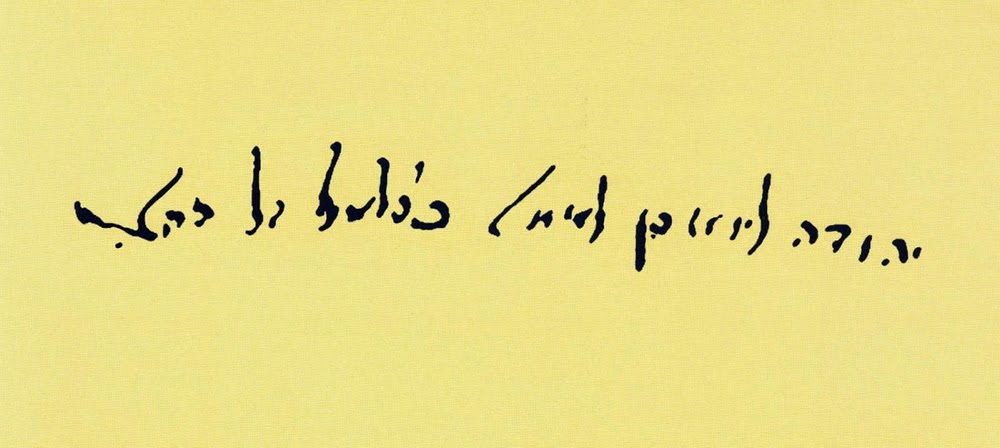
Here is the section of the actual letter of the Hazon Ish where you can see that it should read ככופר בדברי חז”ל.

Searching on Otzar haChochma, I see that almost everyone who cites this passage corrects the printing error.

It is with regard to this statement about aggadah, and this statement alone, that I spoke of a new dogma—which can perhaps already be seen in the Maharal if not earlier—that is not held by the Rambam who, together with the entire geonic and medieval Sephardic rabbinic tradition, did not have such a view about the binding nature of all aggadot. The reader of Grossman’s article who does not examine my book would think that I claimed that the Rambam did not believe that Torah she-be’al Peh has divine authority. Yet the difference of opinion between the Rambam and the Hazon Ish is over a different matter, namely, what is included in Torah she-be’al Peh. In fact, this is not really a dispute between the Rambam and the Hazon Ish, but a dispute between two traditions regarding how to understand Aggadah.

Incidentally, in the Hazon Ish’s letter just mentioned, in discussing the difference between prophecy and ruah ha-kodesh, he says something directly in opposition to the Rambam’s view.

אבל יש הבדל יסודי בין נבואה לרוה”ק. נבואה, אין השכל המורכב של האדם משתתף בה, אלא אחרי התנאים הסגוליים שנתעלה בהם עד שזכה לזוהר נבואי, אפשר לו להיות לכלי קולט דעת. . . , מבלי עיון ועמל שכלי, אבל רוה”ק היא יגיעת העיון ברב עמל ובמשנה מרץ, עד שמתוסף בו דעת ותבונה בלתי טבעי

In the published version of the letter there are three periods after the word דעת which I have underlined in. Usually when there are three periods it means that something has been removed from the letter, but in this case nothing has been removed. In fact, in the original letter there are only two periods, followed by a comma, and I don’t know why the Hazon Ish used these periods.

Continuing with Grossman, he sees it as obvious that the Hazon Ish’s opinion regarding an unwitting heretic is exactly what the Rambam held, and in support of this he points to Hilkhot Mamrim 3:1-3. Here the Rambam states that Karaites, who were raised with heretical beliefs and don’t know any better, are not to be judged like the original Karaite heretics who consciously rejected the Oral Law. With those who don’t know any better the Rambam counsels “not to rush to kill them,” but to draw them close to Torah with words of peace. (The words “not to rush to kill them” were removed from some printings.)

Does this passage have any relevance to the Rambam’s view of unintentional heresy? The answer is no, as here the Rambam is only counseling tolerance when dealing with Karaites who don’t know any better. He is only concerned with how we should relate to them. Rather than hating them and hoping for their destruction, which is normally the case with regard to heretics, the Rambam tells us that we should relate to the Karaites in a positive way and attempt to convince them to abandon their mistaken path. However, from the theological perspective, a heretic has no share in the World to Come and cannot be exculpated based on the argument that he does not know any better. I make this argument in Limits, p. 12, and it is also affirmed by R. Chaim Rapoport.[4]

Not only is this the peshat in the Rambam, but no other understanding works within the context of his philosophical system. That is, the Rambam’s entire philosophical understanding of the World to Come does not work with the notion that an unwitting heretic can also have a share in the World to Come. Any interpretations that assume otherwise are simply not in line with the Rambam’s approach, an approach that was well understood by both his supporters and opponents who argued at great length about this matter. It was also recognized by R. Hayyim who knew the Guide of the Perplexed well. R. Velvel, in discussing the passage in Hilkhot Mamrim pointed to by Grossman, stated exactly what I have just explained. Here are his words as quoted by R. Moshe Sternbuch[5]:

.הרי מפורש בדבריו [הרמב”ם] דמה שהוא אנוס מועיל רק לענין שראוי להחזירם בתשובה ולמשכם לחזור לאיתן התורה, אבל כל זמן שלא חזרו הם מומרים באונס, ושמם מומרים ואפיקורסים

If I were to argue in the fashion of Grossman, I could say that by asserting that the Hazon Ish is simply following what the Rambam says in Hilkhot Mamrim, that Grossman shows disrespect to R. Hayyim and R. Velvel, by not even seeing their positions as worthy of discussion.

There is a parallel to what we have been discussing elsewhere in the Mishneh Torah. In Hilkhot Avodah Zarah 2:5 the Rambam states that the repentance of heretics (minim) is never accepted. Yet in Hilkhot Teshuvah 3:14 the Rambam states that heretics who repent have a share in the World to Come. The Rambam was asked about this apparent contradiction and he replied that indeed there is no contradiction.[6] In Hilkhot Avodah Zarah he is speaking about how the Jewish community is to relate to heretics. As far as the community is concerned, even if a heretic repents the community is not to accept him, as one can never be sure that his repentance is authentic. However, Hilkhot Teshuvah is referring to the heretic’s relationship with God. As far as God is concerned, a true repentance is always accepted. (I don’t know of anyone today who accepts the Rambam’s opinion in this matter. If, say, a leading atheist philosopher or Reform rabbi decided to become Orthodox, not only would the community accept him, but people would make a very big deal of this and he would become a sought-after speaker at Orthodox synagogues.)

Grossman writes:

In an attempt to list various authorities who took issue with Maimonides, Shapiro tells us that “[i]n Abarbanel’s mind, only limited attention . . . should be paid to Maimonides’ early formulation of dogma, and it would certainly be improper to make conclusions about his theological views on the basis of a text designed for beginners.” (p. 50)

My citing of Abarbanel on p. 7 of my book has nothing to do with authorities who took issue with Maimonides. The mention of Abarbanel is with reference to my discussion about how the Thirteen Principles do not appear as a unit in the Mishneh Torah or the Guide, and in this regard I cited Abarbanel who writes as follows in Rosh Amanah, ch. 23:

This explains why he did not list these principles in the Guide, in which he investigated deeply into the faith of the Torah, but mentioned them rather in his Commentary on the Mishnah, which he wrote in his youth. He postulated the principles for the masses, and for beginners in the study of Mishnah, but not for those individuals who plumbed the knowledge of truth for whom he wrote the Guide.

Following his misunderstanding of my point, Grossman spends the next page explaining that Abarbanel accepts the truth of the Rambam’s Principles, a fact that I never denied. However, Abarbanel also believes that for the most profound understanding of the Rambam’s theological views, one needs to turn to the Guide. As I mention in the book, pp. 32-33, Abarbanel also does not accept the Maimonidean concept of Principles of Faith.

Regarding the Rambam positing Thirteen Principles of Faith, which I claimed is a novelty of the Rambam, let me cite R. Moses Sofer who says exactly this.[7]

י”ג העיקרים המציא הרמב”ם שהוא היה הממציא הראשון בזה, ואשר לפנים לא ידענום

Grossman’s final comment in the first half of his review is as follows (p. 52):

Another example of Shapiro’s proofs that Rambam’s theology differs from one work to another is the following. In his Commentary on the Mishna, Rambam states that “lack of belief in any of the Principles makes one a heretic.” [Quotation from Limits, p. 8] Yet, in his Mishneh Torah, he writes (Shapiro’s translation): “Whoever permits the thought to enter his mind that there is another deity besides God violates a prohibition, as it is said: You shall have no other gods before me . . . and denies the essence of religion – this doctrine being the great principle on which everything depends.”

This proves, says Shapiro, that one is not considered a heretic for such thoughts since the Rambam does not say that one who holds these beliefs is a heretic. However, the very source he adduces clearly says the opposite. The words kofer be-ikar,[8] used by the Rambam in this quotation, are a synonym for “heretic,” even according to Shapiro’s rendition of the words as one who “denies the essence of religion.”

If the Rambam writes that recognition of God as the source of all existence is a Principle upon which all of Judaism stands, it is obviously a Principle of faith.

I don’t think that anyone who reads these paragraphs will have a clue as to what my point was. What I noted is that in the Commentary on the Mishnah, in discussing Principles of Faith, Maimonides speaks of belief (or knowledge, depending on how you translate). This is a mental state. However, in Hilkhot Teshuvah, in discussing what makes someone a heretic, Maimonides writes: “One who says”.[9] In other words, he speaks of verbalizing one’s heresy publicly, not simply belief. If all we had was Hilkhot Teshuvah, one could conclude that even one who has heretical ideas, but conducts himself as a good Jew publicly, does not lose his share in the World to Come.

In the book I then turned to Hilkhot Yesodei ha-Torah 1:6 which speaks about one who imagines that there is another God, and by doing so denies the essence of Judaism. A similar comment can be found in Hilkhot Ishut 8:6 where the Rambam writes: “For the sin of idol worship is so great that even when a person thinks of serving [idols] in his heart [without acting upon it] he is considered wicked.” I noted that while a person who believes something heretical like this has, in his mind, denied the essence of Judaism, as long as his heresy is not publicly voiced he apparently is not to be regarded as a complete heretic with all the communal implications this implies. (For example, if you found someone’s private diary which revealed that he denied certain basic principles of faith, as far as the community is concerned he would apparently remain a Jew in good standing as he never publicized his heresy. But he would still have no share in the World to Come.)

It is clear that the Rambam believes that one who affirms a heretical doctrine loses his share in the World to Come, no matter what the reason he does so. But we need to ask why the Rambam specifically uses the formulation of “one who says”. The easiest answer is that he was simply adopting, and making wider use of, the language found in the Mishnah, Sanhedrin 10:1, which also categorizes two types of heresy by using the expression “one who says.”

It makes sense to assume that only one who publicly verbalizes his heresy is to be treated as a heretic by the larger community, but despite the language in the Mishnah, I think many will still wonder why in Hilkhot Teshuvah, which speaks of losing one’s share in the World to Come, Maimonides also uses the language “One who says.” I don’t have an answer to this question. All I did in the book was note that the Rambam’s formulation in the Mishneh Torah is different than what he writes in the Commentary on the Mishnah. Although I have found some rabbinic discussions of this problem, I am surprised that none of the major commentaries take up the issue of why the Rambam uses the word האומר in defining heresy. It seems that they would agree with R. Uri Tieger[10] who writes:

לאו דוקא האומר אלא אפי’ חושב כן ולא מוציא בפיו

It is noteworthy, though, that immediately following these words R. Tieger offers an alternative approach which speaks to the very point I was discussing

וי”א דאף דכל הני שרשי איסורם הוא במחשבה מ”מ לא נחתם עונם עד כדי שיקראו מינים ואפיקורסים עד שיוציאו הדברים בפיהם

R. Avraham Gottesman also raises the issue, and he too sees the Rambam’s formulation in the Mishneh Torah as possibly significant.[11]

‘האומר . . . הרי שלא הזכיר גם שם ממחשבה. ואולי תנא ושייר או לא רצה להחזיקו לאפיקורס ע”י העדר אמונת מחשבה כי רבות מחשבות בלב איש שאין בהם ממש וגם רוב מחשבות אין הקב”ה מצרפן למעשה חוץ ממחשבות ע”ז כדאיתא בגמ

All this is important and worth exploring. But let us return to Grossman, who again attempts to make me look like a fool. He states: “This proves, says Shapiro, that one is not considered a heretic for such thoughts since the Rambam does not say that one who holds these beliefs is a heretic.” Grossman makes this false statement based on my discussion on pp. 8-9. Yet if he had only turned to page 13, at the end of my discussion of this matter, he would have found that I write as follows:

We must therefore conclude that Maimonides’ use of the words “one who says” in describing a heretic is only in imitation of Mishnah Sanhedrin 10:1 where the same formulation is found, and not too much should be read into this. One who believes in a corporeal God or in the existence of many gods, even without saying so publicly, is indeed a heretic as far as Maimonidean theology is concerned. Such a one will not face any penalties from an earthly court, but he is certainly denied a share in the world to come.

In other words, my conclusion is the exact opposite of what Grossman attacks me for (and is indeed in line with Grossman’s own opinion).

As for the word האומר as opposed to המאמין, R. Nissim of Marseilles writes as follows with reference to the usage of the term האומר in Mishnah, Sanhedrin 10:1.[12]

והאומר אין תורה מן השמים, ולא אמר “המאמין” כי באמירה לבד הוא מזיק לרבים וכופר בתורה ואף אם יאמין כמונו שהיא רבת התועלת כי הוא מחטיא הכונה והופך קערה על פיה . . . ועל זה אמרו ז”ל: “האומר” כי אף אם יפרש ויתקן דבורו באיזה צד מן התקון ‘והפירוש, לא יועיל לו שלא יקרא כופר. כי הוא מביא אחרים להחליש תקותם בתורה, ומחטיא כונת השם ית

This is a very original approach that some might wish to use to explain the Rambam as well. According to R. Nissim, what is important is the public declaration as this has the result of leading others to heresy. In fact, even if you really don’t believe what you are saying, since you are publicly stating a heretical position this is enough for you to be regarded as a heretic.

I have now responded to every comment of Grossman in the first half of his review, where he discusses broad themes. The second half of the review, which we turn to next, discusses specific points about the Principles. For those who have asked why I am taking the trouble to respond to every single point of Grossman, the answer is that it gives me a chance to revisit texts that I spent so much time on years ago. Secondly, it gives me the opportunity to share much new material that I think will be of interest to readers.

Before ending I would like to add a few more points. Earlier I mentioned that R. Hayyim knew the Guide of the Perplexed well. Some might be wondering what the basis for this statement is, because unlike the Rogochover, R. Hayyim does not discuss the Guide in his works. I am relying on R. Joseph B. Soloveitchik who testified that R. Hayyim wanted to write a commentary on the Guide (as well as on the Minhat Hinnukh), but he never had the time.[13] Here is how he is quoted in R. Zvi Yosef Reichman, Reshimot Shiurim: Sukkah, p. 258:

ואמנם כלל גדול אצלנו שאין להקשות על סתירה שבין ספר היד לספר מורה הנבוכים, כי כן קבל רבינו שליט”א מפי זקנו מו”ר הגר”ח זצוק”ל, וזקנו זצ”ל קבע כך כמופלג גדול בספר מורה נבוכים שרצה לכתוב עליו פירוש. גם חשב לכתוב הערות על הספר מנחת חינוך. ברם שתי המחשבות לא יצאו לפועל מפני טרדות בזמן; וחבל

R. Hayyim’s knowledge of the Guide is noteworthy since, as R. Aharon Rakeffet has commented many times, R. Moshe Soloveichik “never held the book in his hands.” While this might be an exaggeration, the underlying point is that R. Moshe had no interest in, or knowledge of, the Guide. I can’t say whether there is any influence of the Guide on R. Hayyim’s commentary on the Mishneh Torah. R. Eliyahu Soloveitchik actually cites the Guide as standing in opposition to R. Hayyim’s famous explanation of the two types of kavanah, found in Hiddushei Rabbenu Hayyim Halevi, Hilkhot Tefillah 4:1.[14]

Another noteworthy difference between R. Hayyim and the Guide is the following: The Rambam in Guide 2:45 explains that the books of the Prophets were produced from a higher level of divine inspiration than the books of the Hagiographa. However, R. Hayyim held that the difference between the Prophets and the Hagiographa is that the divine inspiration in the Prophets was originally intended to be spoken, and only later was written down. On the other hand, the divinely inspired books of the Hagiographa were originally intended to be written down. Thus, the difference between the Prophets and the Hagiographa has nothing to do with levels of prophetic inspiration.

This view of R. Hayyim is recorded in a number of different places, including by his son, R. Velvel.[15] R. Hershel Schachter also quotes this opinion from the Rav, who was passing on what his father, R. Moses, reported. Here is the passage in R. Schachter’s Nefesh ha-Rav, p. 240.

This entire passage is copied, word for word, in R. Gershon Eisenberger’s Otzar ha-Yediot Asifat Gershon, p. 411. But following a “tradition” that has now become somewhat popular in certain circles, Nefesh ha-Rav is not mentioned by name. Instead it is referred to as  ספר אחד [16]

Returning to the passage from R. Soloveitchik quoted by R. Reichman, it is also of interest that R. Hayyim is quoted as saying that there is no point in calling attention to contradictions between the Mishneh Torah and the Guide. No reason is given for this, but no doubt it is because the works had different purposes, and this can explain different, even contradictory, formulations.

Regarding the Hazon Ish, in my book I assumed that he, and a number of other scholars who explained Hilkhot Teshuvah 3:7 similar to him (including R. Ahron Soloveichik, Parah Mateh Aharon, Sefer Mada, p. 194[17]), never saw what Maimonides wrote in Guide 1:36 where he explains why an honest error in matters relating to principles of faith does not change one’s fate. As mentioned already, R. Kafih states that these words were written in response to Rabad’s criticism in Hilkhot Teshuvah 3:7, where he states: “Why has he [Maimonides] called such a person a heretic? There are many people greater than and superior to him who adhere to such a belief on the basis of what they have seen in verses of Scripture and even more in the words of those aggadot which corrupt right opinion about religious matters.”[18]

I now believe that while it is certainly likely that some of the others I mention in my book had not seen the Guide, I would not say this about the Hazon Ish. Benjamin Brown has reasonably claimed that formulations in the Hazon Ish’s writings show that he was influenced by the Guide.[19] R. Yehoshua Enbal has harshly criticized Brown’s assertion that there was significant influence of the Guide on the Hazon Ish, but Enbal does not deny that the Hazon Ish knew the Guide.[20] It is reported that th Hazon Ish cited R. Moses Alashkar that Maimonides expressed regret about having “published” the Guide, and that if the work hadn’t already been spread so far, he would have removed it from circulation.[21] (This statement is not found in R. Alashkar’s works.) It seems to me that only one who had at least some idea of Maimonides’ philosophy, and why it could be viewed as problematic, would feel it necessary to identify with such an idea.

Can we point to any specific examples of influence of the Guide on the Hazon Ish? This is something that needs to be investigated and I am not prepared to offer an opinion on the matter. I would just note that R. Moshe Zuriel claims that a passage in the Hazon Ish about Divine Providence has its origin in Maimonides words in the Guide.[22]

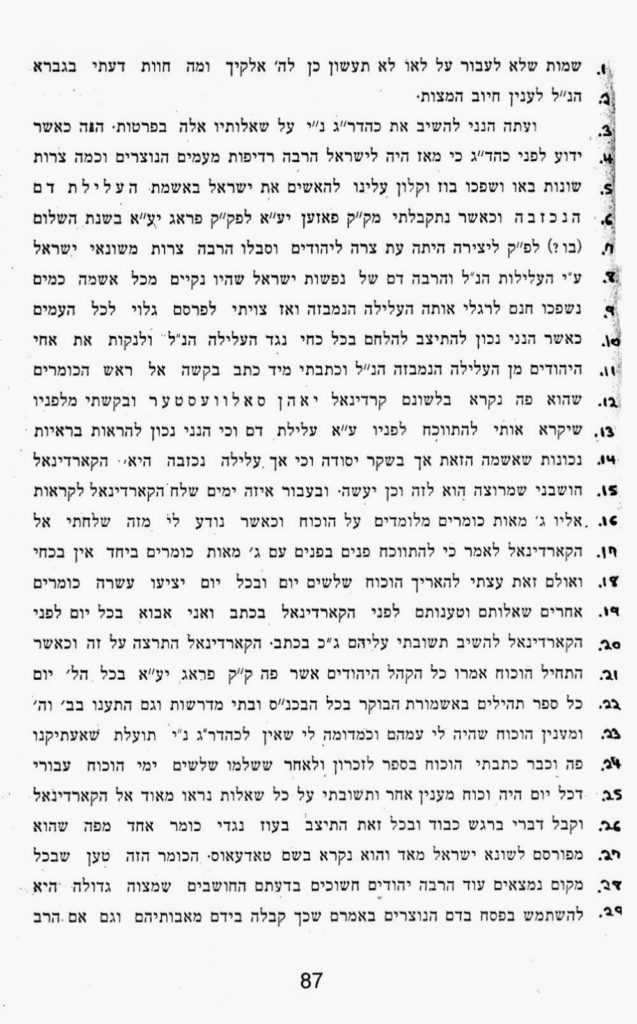
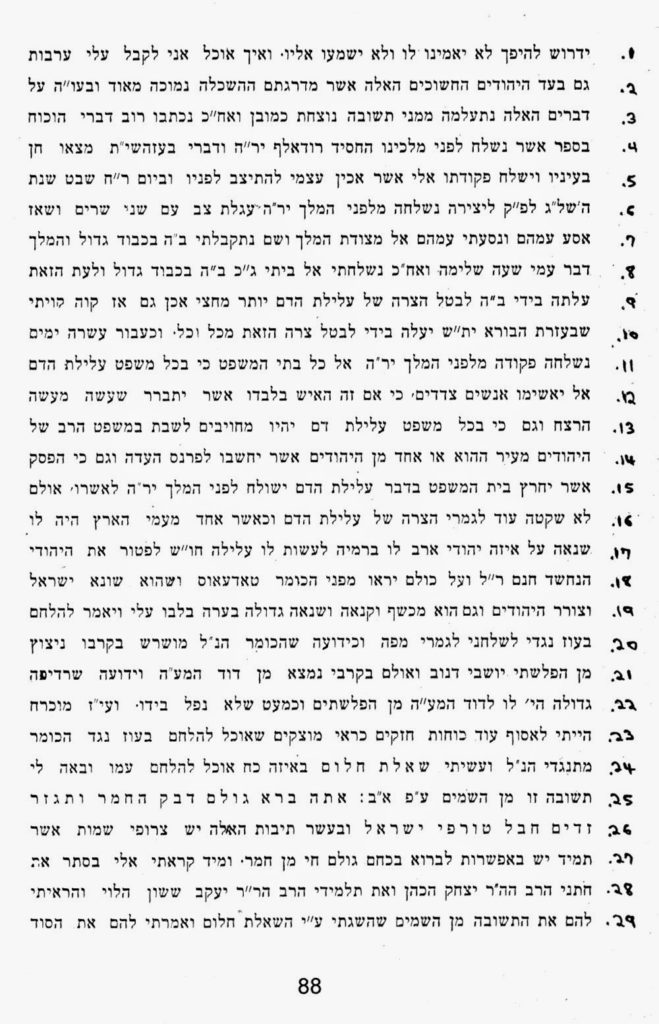
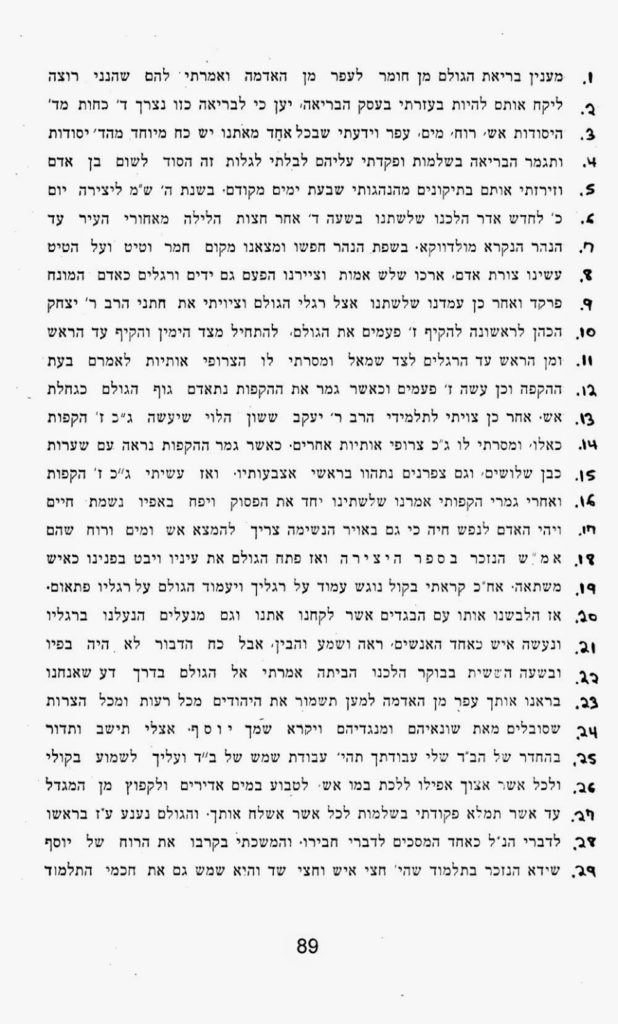
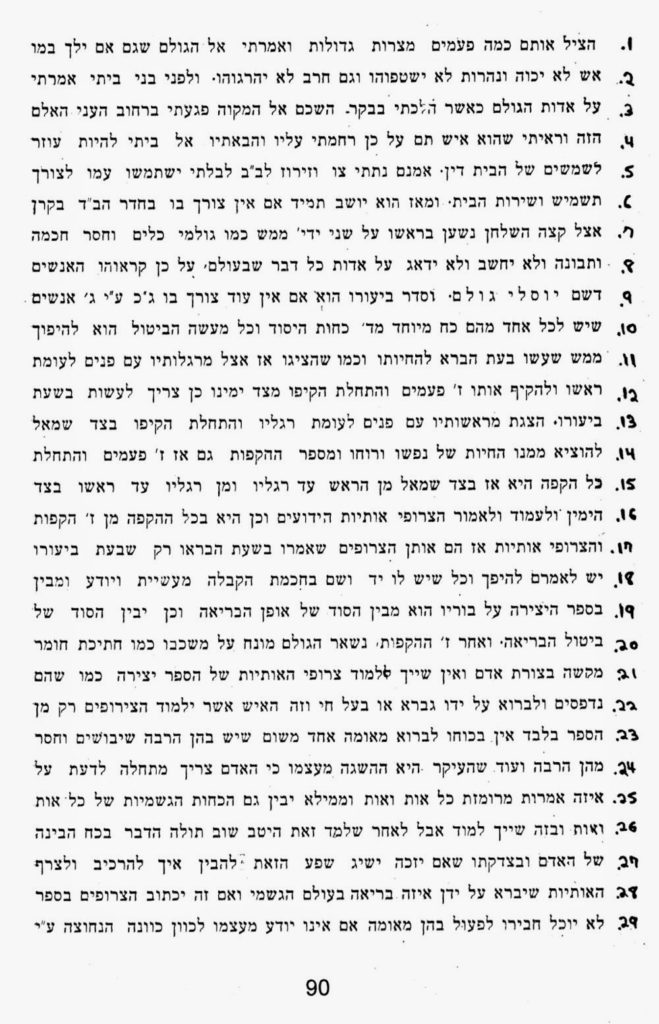
2. Earlier in the post I discuss the Hazon Ish’s letter,Kovetz Iggerot1:15, which may be the most famous of all of the Hazon Ish’s letters. I also provide an image from the actual handwritten letter. For this I thank Mrs. Hassia Yehuda who graciously allowed me to take pictures of this and the other letters I will discuss.

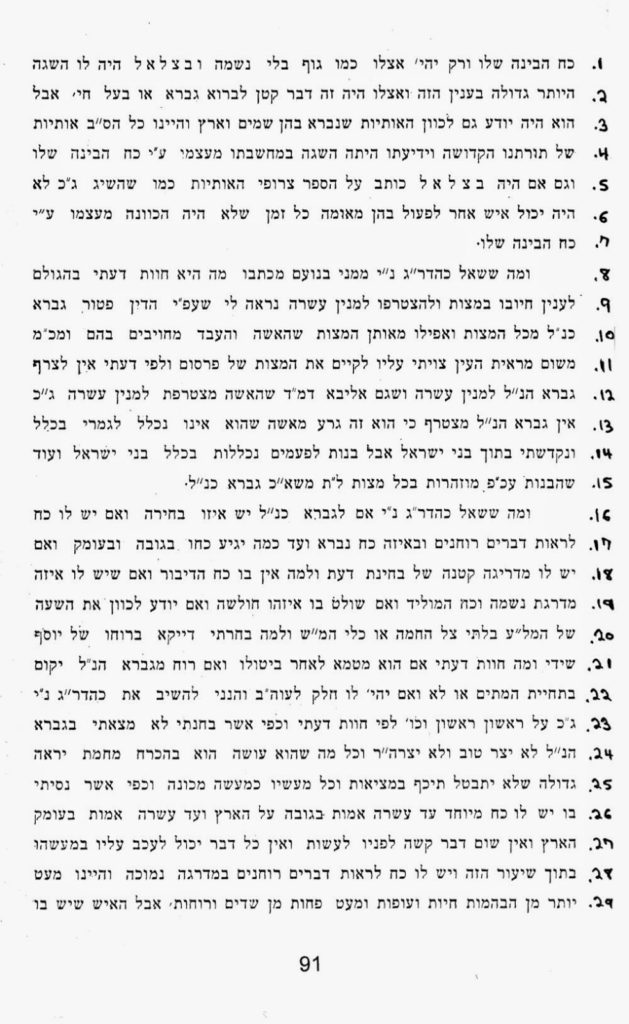
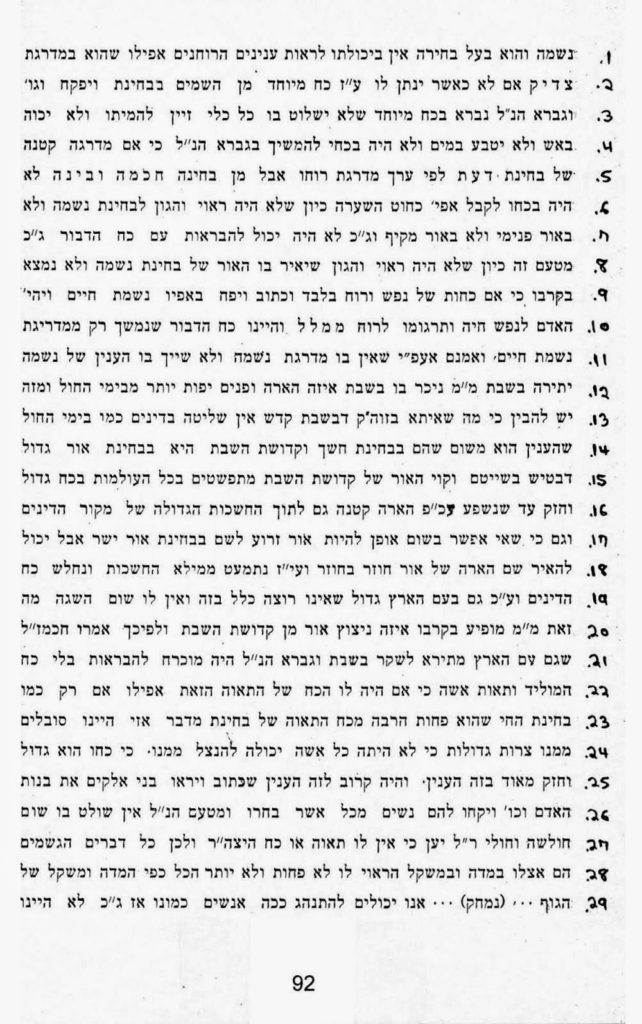
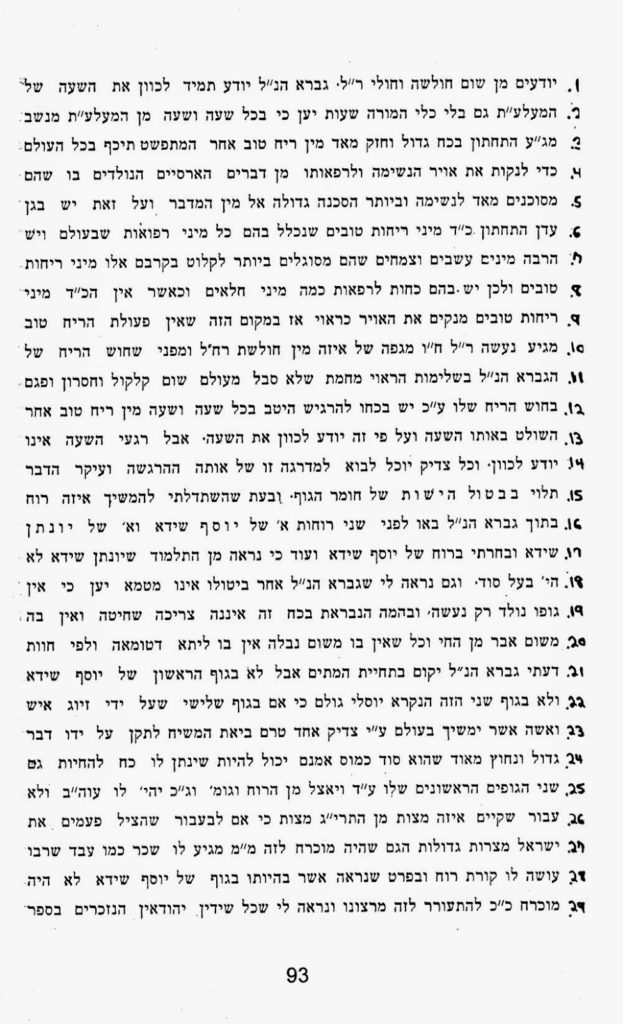
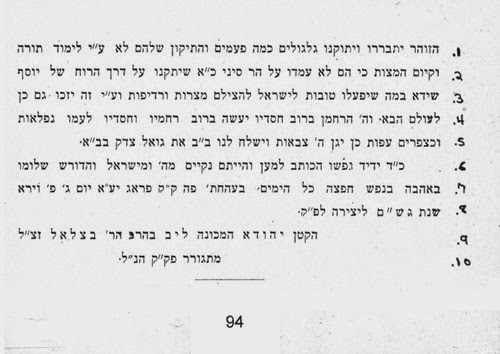
Mrs. Yehuda is the widow of Rabbi Dr. Zvi Yehuda (1926-2014). Yehuda was a very close student of the Hazon Ish from 1941 until the early 1950s. During some periods he learned with him almost every day for 2-3 hours, and the Hazon Ish became a father-like figure to him. The letter in Kovetz Iggerot 1:15 was sent to Yehuda, and this is what Yehuda himself wrote about this letter (published here for the first time).

As with another close student of the Hazon Ish, Chaim Grade, Yehuda chose a different path than what his teacher would have preferred: He enlisted in the IDF, attended university, and became part of the Religious Zionist world.

Here is a picture that you can find on the internet.

From the Hebrew Wikipedia page for the Hazon Ish we learn the picture was taken in Ramat ha-Sharon when the Hazon Ish was visting a yeshiva ketanah there and testing the students. The man to the right of the Hazon Ish is R. Elijah Dessler. The young man to the right of R. Dessler is Yehuda. The man on the far left is R. Shmuel Rozovsky. Here is another picture from the same event where you can see R. Rozovsky clearly.

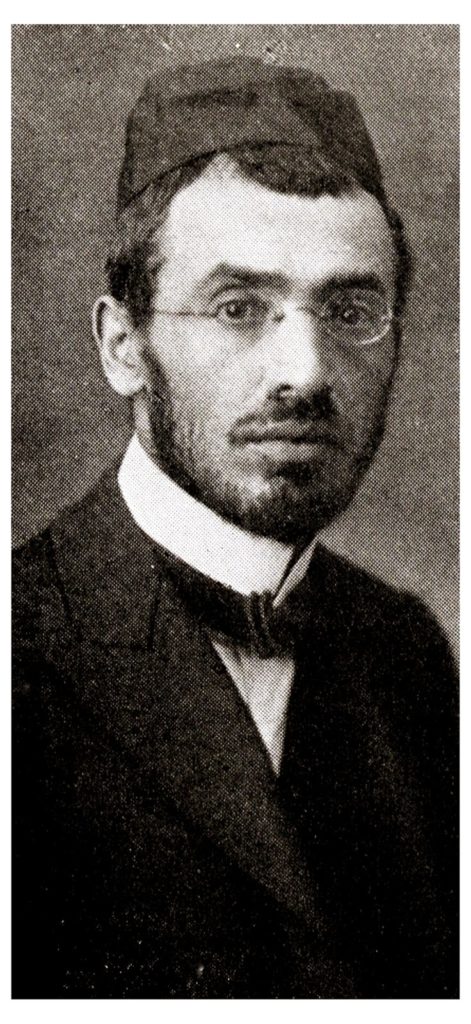
Here is a picture of Yehuda from much later in life.

The letters of the Hazon Ish to Yehuda are important as they present us with his responses to a curious young man who started to question things. We are not dealing with someone like Chaim Grade who would throw out traditional Judaism entirely. Rather, Yehuda was beginning to open himself to a more liberal type of Orthodoxy, one which valued academic studies and engaging with the outside world. Yehuda later taught Mishnah on Israel Radio and collaborated with Pinhas Kehati in writing the famous Mishnah booklets. In these booklets Yehuda’s role was acknowledged, but when the booklets were later incorporated into Kehati’s published volumes unfortunately there was no longer any acknowledgment. After coming to the United States, Yehuda completed his doctorate at Yeshiva University and his dissertation is titled “The Two Mekhiltot on the Hebrew Slave”.[23]

In Brown’s book on the Hazon Ish, he quotes from a lengthy interview with Yehuda which was included as an appendix to Brown’s doctoral dissertation. With the approval of Brown, I have uploaded Yehuda’s very interesting interview here. You can also listen to Yehuda being interviewed about the Hazon Ish at Torah in Motion here. Yehuda also published two articles about the Hazon Ish in Tradition.[24]

Because the published version of the Hazon Ish’s letters does not reveal who they were sent to, people have no idea that Yehuda was the recipient of a number of important letters that are often cited. The earliest of the letters from the Hazon Ish to Yehuda is 1:41. According to Yehuda (in unpublished comments on the Hazon Ish’s letters to him), this letter is from 1944. Here we get a glimpse of the strong connection between the Hazon Ish and Yehuda, as the Hazon Ish ends the letter with הדו”ש הדבוק באהבתך. The content of the letter is also of interest as the Hazon Ish writes:

רב שלומים, מאד הנני מתענין לדעת משלומך, וחידה סתומה היא בעיני, שלא התראית עמדי טרם עזבך עירנו, ומה קרה אשר הכאיב לבבך הטוב, אשר מנעך משפיכת רוחך? ואשר מהרת לברוח. לא אוכל להאמין שתעזוב את התורה, כי נפשך קשורה בה בחביון נשמתך ואצילות נפשך העדינה, נא אל תכחד ממני דבר, והודיעני הכל

The Hazon Ish had apparently heard that Yehuda was going to abandon full-time Torah study. He was disappointed with this information and asked Yehuda to explain what was going on.

Yehuda replied to the Hazon Ish and this led to the Hazon Ish’s next letter to Yehuda, which is found in Kovetz Iggerot 1:42. In this letter the Hazon Ish offers guidance to Yehuda, designed to keep him on what today we would call the haredi path:

הריני מאחל לך שתהא דעתך נוחה מחכמתך בתורה, ואל יוסף כח מנגד להדריך מנוחתך, ולנדנד איתן מושבך, שים בסלע קנך, ושמה בסתר המדרגה, הוי שקוד ללמוד תורה, וראה חיים שתחת השמש אין לו יתרון אך למעלה מן השמש יש לו יתרון

Kovetz Iggerot 1:19 was also sent to Yehuda, and it was written after the letters already mentioned. In this letter the Hazon Ish deals with Yehuda’s choice to leave the yeshiva world:

באמת לא מצאתי את המסקנא כדרך הנכונה, אך בידעי שאי אפשר לאכף עליך לעשות נגד רצונך הטבעי . . . לא הרהבתי בנפשי להרבות דברים בשבח הישיבה . . . ואולי תבוא שעה מוצלחת ועבר עליך רוח ממרום בבחינת יעבור עלי מה! ותכיר ישיבתך בישיבה להיותר מתאימה לנפשך ולמשאה בחזות הכל

Kovetz Iggerot 1:14 is the last of the fourteen letters the Hazon Ish sent to Yehuda. This was written when Yehuda’s life choice had been made and the Hazon Ish recognized that his pleas to Yehuda to remain in the yeshiva world had gone unanswered. We see in this letter the Hazon Ish’s great love for Yehuda together with his great disappointment that his dear student had chosen a different path for his life. I don’t think there is another published letter from the Hazon Ish where he writes with such emotion. It is a tribute to Yehuda’s memory that the world can see how the Hazon Ish loved him, and I am happy to be able to reveal who the addressee of this letter is, as over the years many people have wondered about this, and sections of this letter have often been reprinted.

Here is some of what the Hazon Ish wrote to Yehuda:

רב הרגלי לערוך את החיים בודאות גמורה של י”ג העיקרים שעם ישראל עליהם נטעו הקנו לי אהבת התורה בלי מצרים. עשיר אני גם באהבת זולתי, וביחוד לצעיר מצוין בכשרונות, ולב מבין. צעיר השוקד על התורה מלבב אותי וצודד את נפשי, וזכרונו ממלא את כל עולמי, ונפשי קשורה בו בעבותות אהבה בל ינתקו

בראותי בך מפנה פתאומי, אשר כפי שתארתיו, מובנו לבכר החיים של השוק על החיים של התורה אשר בישרון מלך, נפגשתי במאורע רציני בלתי רגיל, והייתי צריך להבליג יום יום על גודל הכאב, ולא יכולתי להשתחרר מרב היגון, הבלתי נשכח כל היום. מצד אחד הייתי מתפלל על תשובתך ומצד השני היה מתגבר עלי היאוש, ובאהבת האדם את עצמו הייתי מסתפק אולי צריך להשתדל להשכיח את כל העבר, ולומר וי לי חסרון כיס, ומצד שלישי אהבתי אליך לא נתנני מנוחה. אבל אורך הזמן שעזבתני עזיבה גמורה ואין לך שום חפץ בי, הכריע הכף לפנות אל השכחה שתעמוד בי בעת צוקה, ומה כבד עלי שבאת לעורר אהבה ישנה, אשר תאלצני להאמין בתקוות משעשעות, אבל כח היאוש אינו רוצה להרפות ידו, ועוד נשאר בלבי, כמובן . . . [הנקודות במקור] אבל בערך אולי תבין מצבי. הכותב בכאב לב חפץ באשרו

The letters of the Hazon Ish to Yehuda have recently been donated to the National Library of Israel. See here.

3. In previous posts I discussed how letters from the Rabbi Isaac Unna archive formerly kept at Bar-Ilan University were being sold at auction. The final shoe has now dropped as what appears to be the remaining items in the archive are now up for auction. The lot is described as follows: “Large Archive Of C. 350 Documents And Letters To, And Accumulated By, RABBI ISAK UNNA Concerning The Campaign To Protect Kosher Slaughter (Shechitah) In Germany.” You can see it here. Thus ends this disgraceful saga in which the family donated numerous historically important documents to Bar-Ilan to be preserved in an archive for scholars to use, and instead these items ended up being sold to the highest bidder.

4. For a while I have been fascinated by the over-the-top language in various charity appeals. It is not enough to stress the importance of the cause, but people feel that they need to speak about how the giver will benefit as well. Furthermore, all sorts of phony stories about “yeshuos” are included in these appeals. However, I don’t recall ever seeing such a blatant falsehood as what appeared right before Purim here in an appeal from the Vaad Harabanim fund. This is the text of the appeal.

Group Of Frum Men Travelling To Dangerous Arab Territory

Thursday 25th of February 2021 07:01:23 AM

A hand-selected group of talmidei chachamim arrived in Iran from Israel this morning, sent on an important mission by Rav Chaim Kanievsky himself. Rav Kanievsky sent the emissaries to pray at the tombs of Mordechai & Esther on behalf of all those who donate to Vaad HaRabbanim’s matanos l’evyonim campaign.

The tomb has been preserved against all odds by Iranian Jews for centuries, despite attempts and even threats by the government to destroy it. The group of travellers runs considerable safety risk appearing externally Jewish and carrying Israeli passports through the hostile Arab country. They do it all for the sake of the hundreds of widows, orphans, and talmidei chachamim who are turning to Vaad HaRabbanim for help.

Funds collected will be distributed to poor people on the day of Purim, in keeping with the observance of the mitzvah of matanos l’evyonim.

Names are being accepted for the prayer list at the tomb for the next few days only.

Where to begin? First of all, Iran is not an Arab country. Second, Israeli passport holders are not allowed into Iran. Quite apart from this, think about the idiocy of this appeal. They expect the reader to believe that in the midst of Covid, with Ben Gurion Airport closed, a group of Israeli talmidei chachamim flew to Iran of all places. And we are also expected to believe that R. Chaim Kanievsky sent these talmidei chachamim to Iran. Anyone who did a little research would have also learned that the tomb was closed because of Covid and even Iranian Jews could not go there.

The story is so obviously phony that I wonder how anyone could so brazenly actually post it. And yet, as with all these ridiculous stories, some people appear to have fallen for it. On the page that you donate here it tells us that $7799 was raised for this idiotic appeal. On this page the appeal begins dramatically: “Right now, a plane full of talmidei chachamim is headed to Iran on a special mission from Rav Chaim Kanievsky himself.” It would have been bad enough had the appeal said that one or two people are going to Iran, but a “plane full”! Of course, if there was actually a group of talmidei chachamim traveling to Iran then the cost of this junket would be more than the $7799 raised, so the snake oil salesman who prepares the next phony appeal might consider the fact that people donating to charity would prefer that it actually go to the poor, not to fund a group of people going on a trip.

* * * * * * * *

[1] R. Elhanan Wasserman, Kovetz Ma’amarim (Jerusalem, 2006), p. 11. R. Shimshon Pinkus, Nefesh Shimshon: Be-Inyanei Emunah, p. 99, notes that there are those who have claimed that R. Hayyim’s statement is not to be taken literally, and that he too agrees that one who does not know any better is not to be regarded as a heretic. R. Pinkus responds as follows to this distortion of R. Hayyim’s view:

כפי שקיבלתי את הדברים מבית בריסק – הגר”ח התכוון כפשוטו ממש! יהודי החסר את ידיעת עיקרי האמונה – אף שלא באשמתו – אינו מחובר לאמונת ישראל. וכשאין דבר המחבר אותו לנצחיות הרוחנית, מציאותו מנותקת ואין לו חלק לעולם הבא.

[2] See his edition of the Guide of the Perplexed, 1:36, n. 37.

[3] R. Joseph B. Soloveitchik discusses the unwitting heretic in Shiurei Ha-Grid: Tefillin, ST”M Tzitzit, p. 84 and ibid., note 7:

בשחיטה, שדין פסול מומר מיוסד על ההשוואה לעכו”ם, אין אנו פוסלים את כל אלו שמומרותם לא בקעה ועלתה מתוך מעשה איסור מיוחד. ובנוגע לאיסורים מסוימים הגורמים למומרות, אנו יודעים כי רק שבת, עבודה זרה ואפיקורסות מחדשים פסול כזה. ברם בסת”ם, שלגביהם גם אפיקורס בשוגג פסול משום שאיננו מאמין, אף על פי שלא חטא, מכל מקום אין הפסול תלוי בחטא, כי אם במצב הגברא ובחלות שמו. מאמין בקדושת התורה כשר, ואילו אינו מאמין פסול . . . אמנם, באפיקורס בשוגג לא חל שם רשע כל כך, שהרי איננו כופר במזיד, ומכל מקום נקרא אפיקורס, ומהווה חלות מיוחדת בגברא, אף על פי שאינה מושרשת במעשה עברה זדוני

[4] See his letter in my Iggerot Malkhei Rabbanan, pp. 286-287.
[5] Teshuvot ve-Hanhagot, vol. 4, p. 452.
[6] Teshuvot ha-Rambam, ed. Blau, vol. 2, no. 264. R. Joseph Karo, Kesef Mishneh, Hilkhot Avodah Zarah 2:5 and Hilkhot Teshuvah 3:14, did not have Maimonides’ responsum and thus offered a different suggestion.
[7] She’elot u-Teshuvot Hatam Sofer, Even ha-Ezer, no. 148.
[8] The proper transliteration is kofer ba-ikar (or ikkar) as there is a kamatz under the ב not a sheva.
[9] In his commentary to Hilkhot Teshuvah 3:7, R. Kafih writes:

כל “האומר” שהזכיר רבנו בהלכות הללו אינה סתם אמירה ודבור, אלא מי שהוא בדעה וסברא שכך הוא הדבר

[10] Le-Dofkei Teshuvah, p. 168.
[11] Emunah Shelemah, p. 158. Others who deal with the issue include R. Yitzhak Hecht, Sha’arei Kodesh, vol. 3, pp. 212-213, and R. Mordechai Movshovitz, Shalmei Mordechai, vol. 1, p. 4. R. Movshovitz writes:

וצריך לומר דלאו בדווקא נקט אומר אז חשוב מין, אלא כל שאומר רק במחשבה, הרי הוא עובר דהרי הוא כופר בעיקר

[12] Ma’aseh Nissim, ed Kreisel (Jerusalem, 2000), p. 160.
[13] See also R. Shimon Herschler, Gishmei Berakhah p. 495 (included in Herschler, Seh la-Bayit: Hiddushim u-Derushim al ha-Moadim [London, n.d.], who quotes Zalman Levine, the son of R. Hayyim Avraham Dov Ber Levine, the famous Malach, that his father studied the Guide of the Perplexed with R. Hayyim. Despite his father’s extremism, Zalman attended RIETS and shaved his beard. See Chaim Dalfin, Chabad and Gedolim II (Brooklyn, 2021), p. 155 n. 61. Although it is generally assumed that the title “Malach” was given to the elder R. Levine because of his piety, Dalfin quotes a report that the term was coined “to humiliate those individuals who joined Rabbi Haim Dovber Levine. The sentiment was that they put themselves on a pedestal making themselves ‘holier than thou'”. Habad Portraits (Brooklyn, 2015), vol. 3, p. 54 n. 89.
[14] “Ha-Tefillah be-Aspaklaryat ha-Rambam,” Yeshurun 9 (2001), p. 658. See similarly R. Moshe Yitzhak Roberts in his edition of R. Moses Trani, Beit Elokim: Sha’ar ha-Tefilah (Lakewood, 2008), section Kiryat Moshe, p. 269.
[15] Hiddushei Rabbenu ha-Griz ha-Levi, Menahot 30a.
[16] In the past I have referred to this phenomenon, and another example was recently mentioned by R. Yaacov Sasson in the Seforim Blog here.
[17] On this page R. Soloveichik also points to what he sees as a contradiction between how the Rambam regards unwitting heretics in Hilkhot Teshuvah and his position in Hilkhot Mamrim regarding people brought up in Karaite society, a matter already discussed in this post. He writes

אבל לכאורה זה סותר מה שכתב הרמב”ם בפ”ג מהל’ ממרים ה”ג שהצדוקים והקראים שנתגדלו וחונכו ע”י הוריהם להיות כופרים בתורה שבעל פה יש להם דין של תינוקות שנשבו ויש להם חלק לעולם הבא

In the copy of Parah Mateh Aharon on Otzar haChochma the words I have underlined are also underlined, and the following comment has been added:

פרי המצאת המחבר, ובר”מ שם ליתא (!) ולפי”ז אזדא כל תמיהת הרהמ”ח

The unknown author correctly notes that in Hilkhot Mamrim the Rambam never says that people brought up in Karaite society, who are unwitting heretics, have a share in the World to Come.
[18] Translation in Isadore Twersky, Rabad of Posquières (Cambridge, MA, 1962), p. 282.
[19] Ha-Hazon Ish (Jerusalem, 2010), pp. 171-172.
[20] Yeshurun 29 (2013), p. 938.
[21] Pe’er ha-Dor, vol. 4, p. 150.
[22] Le-Sha’ah u-le-Dorot, vol. 1, p. 283.
[23] The word מכילתא means “a measure”, yet why should the halakhic midrash be given this title? Isaac Baer Levinsohn, Beit Yehudah (Vilna, 1858), vol. 2, p. 48, suggests that the work was actually called מגילתא, but in the popular pronunciation came to be called מכילתא as ג without a dagesh sounded a lot like כ without a dagesh. This pronunciation of ג without a dagesh can still be heard among Middle Eastern Jews. Levinsohn, ibid., who is discussing halakhic midrash, also points out that Wolf Heidenheim, in his machzor for Shavuot in Yetziv Pitgam, vocalizes the words ספרא וספרין as Safra ve-Safrin, instead of Sifra ve-Sifrin. The words are also vocalized this way in Shlomo Tal’s Rinat Yisrael machzor.

Yet as Levinsohn points out, this would mean “writer and writers” –סופר וסופרים. Heidenheim was, of course, a great scholar (and Tal was also quite learned), so it doesn’t make sense that this is simply a mistake. Does anyone know of a source that ספרא should be read as Safra and not Sifra?
[24] “Hazon Ish on the Future of the State of Israel,” Tradition 18 (Summer 1979), pp. 111-117, “Hazon Ish on Textual Criticism and Halakhah,” ibid. (Summer 1980), pp. 172-180.


Important New Book from the Ba’alei haTosafot

What follows is a press release from Ofeq Institute regarding their new book

תוספות ר”י הזקן ותלמידו

וראשוני בעלי התוספות על מסכת שבת Tosafot R. Isaac b. Samuel of Dampierre (Ri the Elder) and early Tosafists on tractate Shabbat edited for the first time from MS Guenzburg, Mos 636 with references, notes and comments by Rabbi Avraham Shoshana Rabbi Yehuda Amitai Shoshana Volume I Introduction · Chapters 1-6 · Indices This is a unique collection of the early Tosafists, a treasure trove of first-generation Tosafot from France and Germany. Published for the first time from Guenzburg Manuscript 636, considered by scholars to be the most important manuscript extant in the world today, especially in the field of Tosafot literature. The collection includes Tosafot Ri ha-Zaken and his disciple and first-generation Tosafists, such as RIBA, R. Porat, Rashbam, Rabbenu Tam, etc. [Volume II of this collection, to be published shortly, will include Tosafot Ri ha-Zaken and his disciple on chapters 7-17, and the Tosafot R. Yehuda Sir Leon of Paris, and Tosafot Riva, written by his disciple, R. Moshe b. R. Yoel Zaltman of Regensburg on the remainder of the tractate.]

This collection of Tosafot preserves complex and novel material which served as the foundation for the redaction of all later collections of Tosafot on Tractate Shabbat. As proven in the scholarly introduction to this volume, Rishonim, such as Ramban, Rashba, Ritva and Tosafot Harosh, used these very Tosafot or a close genre. The author was a disciple of Ri ha-Zaken who transmitted his lectures in the Yeshiva and wrote down verbal exchanges he had with his mentor dealing with complex matters. Aside from his mentor’s Torah, the author included material from earlier Sages of Tosafot, such as Rabbenu Tam, Riva, Rashbam, Rabbenu Porat, etc. Another outstanding feature of this manuscript is the outstanding and profuse glosses (gilyonot) that accompany it. These glosses were intended to serve as supplementary material. They are drawn mainly from the early Sages of Ashkenaz. It may be said with certainty that there isn’t one passage in this collection that does not introduce novel ideas which open up new vistas for the understanding of the vast Tosafot literature and matters relating to Tractate Shabbat. All in all, this is an outstanding discovery of great consequences to rabbinical literature.

The volume is accompanied by source references, comparisons to Tosafot literature and other Rishonim, notes and expanded illuminations, which comprise a comprehensive commentary to the entire work. The volume also includes a substantial scholarly introduction dealing with the manuscript provenance and its contents, the identification of the authors and an analysis of first-generation Tosafot in general. The discovery of Tosafot of Rabbi Yehuda Sir Loen of Paris included in this manuscript, is a first and a delightful surprise.

The volume provides detailed indices. They include index of sources of the work itself, sources discussed in the notes, and an index of subjects classified by topics. Edited by Rabbi Avraham Shoshana and Rabbi Yehuda Shoshana 58 + 479 double-columned pagesAvailable now at Biegeleisen’s in Boro Park. It will have wider distribution after Pesach in bookstores or directly from Ofeq Institute.


Another “Translation” by Artscroll, the Rogochover and the Radichkover

Another “Translation” by Artscroll, the Rogochover and the Radichkover
Marc B. Shapiro
1. As I discuss in Changing the Immutable, sometimes a choice of translation serves as a means of censorship. In other words, one does not need to delete a text. Simply mistranslating it will accomplish one’s goal. Jay Shapiro called my attention to an example of this in the recent ArtScroll translation of Sefer ha-Hinukh, no. 467.  
In discussing the prohibition to gash one’s body as idol-worshippers so, Sefer ha-Hinukh states:

אבל שנשחית גופנו ונקלקל עצמנו כשוטים, לא טוב לנו ולא דרך חכמים ואנשי בינה היא, רק מעשה המון הנשים הפחותות וחסרי הדעת שלא הבינו דבר במעשה הא-ל ונפלאותיו.

The Feldheim edition of Sefer ha-Hinnukh, with Charles Wengrov’s translation, reads as follows:

But that we should be be destructive to our body and injure ourselves like witless fools—this is not good for us, and is not the way of the wise and the people of understanding. It is solely the activity of the mass of low, inferior women lacking in sense, who have understood nothing of God’s handiwork and his wonders.

This is a correct translation. However, Artscroll “translates” the words המון הנשים הפחותות וחסרי הדעת as “masses of small-minded and unintelligent people.” This is clearly a politically correct translation designed to avoid dealing with Sefer ha-Hinukh’s negative comment about the female masses. I will only add that Sefer ha-Hinukh’s statement is indeed troubling. Why did he need to throw in “the women”? His point would have been the exact same leaving this out, as we can see from ArtScroll’s “translation.” Knowing what we know about the “small-minded unintelligent” men in medieval times, it is hard to see why he had to pick on women in this comment, as the masses of ignorant men would have also been a good target for his put-down.

2. In my post here I wrote:

One final point I would like to make about the Rogochover relates to his view of secular studies. . . . Among the significant points he makes is that, following Maimonides, a father must teach his son “wisdom.” He derives this from Maimonides’ ruling in Mishneh Torah, Hilkhot Rotzeah 5:5:

הבן שהרג את אביו בשגגה, גולה. וכן האב שהרג את בנו בשגגה, גולה על ידו, במה דברים אמורים. כשהרגו שלא בשעת לימוד, או שהיה מלמדו אומנות אחרת שאינו צריך לה. אבל אם ייסר את בנו כדי ללמדו תורה או חכמה או אומנות ומת פטור

He adds, however, that instruction in “secular” subjects is not something that the community should be involved in, with the exception of medicine, astronomy, and the skills which allow one to take proper measurements, since all these matters have halakhic relevance. In other words, according to the Rogochover, while Jewish schools should teach these subjects, no other secular subjects (“wisdom”) should be taught by the schools, but the father should arrange private instruction for his son.

 רואים דהרמב”ם ס”ל דגם חכמה מותר וצריך אב ללמוד [!] לבנו אבל ציבור ודאי אסורים בשאר חכמות חוץ מן רפואה ותקפות [!] דשיך [!] לעבובר [צ”ל לעבור] וגמטרא [!] השייך למדידה דזה ג”כ בגדר דין

He then refers to the Mekhilta, parashat Bo (ch. 18), which cites R. Judah ha-Nasi as saying that a father must teach his son ישוב המדינה. The Rogochover does not explain what yishuv ha-medinah means, just as he earlier does not explain what is meant by “wisdom,” but these terms obviously include the secular studies that are necessary to function properly in society.

Dr. Dianna Roberts-Zauderer takes issue with my assumption that “wisdom” (חכמה), the word used by Maimonides, includes what I have termed “secular studies”. (The Touger translation also has “secular knowledge”). She correctly points out that when the medievals used the word חכמה it means philosophy. She adds: “Does it not make sense that Maimonides would advocate the learning of philosophy? Or that the Rogochover would forbid the learning of philosophy in yeshivot, but only permit it at home with a teacher hired by the father?”
Although the term חכמה often means philosophy, I do not think we must assume that this is its meaning in Hilkhot Rotzeah 5:5. Based on parallel passages in Maimonides’ writings where the same halakhah is mentioned, R. Nachum Eliezer Rabinovitch claims that the word חכמה in this case actually means good character traits.[1] He sums up his discussion as follows:
כוונת רבינו אחת היא בכל המקומות, דהיינו לימוד מדות הנקרא חכמה
Quite apart from this, in my discussion I was dealing with how the Rogochover understood the passage in Maimonides. We have to remember the context of the Rogochover’s letter. He was asked about the study of secular subjects, as was the practice among the German Orthodox. He was not asked about the study of philosophy per se. Furthermore, in the passage cited from manuscript by R. Judah Aryeh Wohlgemuth,[2] which I referred to in the previous post, the Rogochover specifically understands Maimonides’ term חכמה in Hilkhot Rotzeah 5:5 as meaning שאר החכמות, which he identifies with what R. Judah ha-Nasi calls ישוב המדינה. 
Regarding the Rogochover, there are a few things people mentioned to me after seeing my post which I think are worthwhile to record. Dr. Rivka Blau, the daughter of R. Pinchas Teitz, told me that her uncle, R. Elchanan Teitz, would on occasion cut the Rogochover’s hair.
In the post I mentioned how the Rogochover acknowledged that his learning Torah while sitting shiva was a sin, but he did so anyway as the Torah was worth it. R. Yissachar Dov Hoffman called my attention to the following comment about this by R. Ovadiah Yosef, Meor Yisrael, Berakhot 24b:
לפע”ד לא יאומן כי יסופר שת”ח יעבור על הלכה פסוקה בטענה כזו. והעיקר דס”ל כמ”ש הירושלמי פ”ג דמ”ק שאם היה להוט אחר ד”ת מותר לעסוק בתורה בימי אבלו, דהו”ל כדין אסטניס שלא גזרו בו איסור רחיצה מפני צערו.
In the post I mentioned that the Shibolei ha-Leket appears to be the only rishon who adopts the position of the Yerushalmi referred to by R. Ovadiah. R. Yissachar Dov Hoffman called my attention to R. Yehudah Azulai, Simhat Yehudah, vol. 1, Yoreh Deah no. 40, which is a comprehensive responsum on the topic of a mourner studying Torah. R. Azulai notes that a few recently published texts of rishonim record the position of the Yerushalmi. He also mentions that according to some rishonim the prohibition is only to study on the first day of mourning. In studying R. Azulai’s responsum, I found another source that could be used to defend the Rogochover’s learning Torah during shiva. R. Meir ben Shimon ha-Meili writes:[3]
ונראה לומר דלדברי כל פוסקים העיון מבלי הקריאה מותר, שאינו אלא הרהור בעלמא, ולא חמיר אבלות משבת דאמרינן דבור אסור הרהור מותר, וכל שכן הרהור בדברי תורה לאבל שהוא מותר . . . והלכך מותר לו לאבל לעיין בספר, ובלבד שלא יקרא בו בפיו.
R. Meir ben Shimon adds that despite what he wrote, the common practice is for a mourner not to read any Torah books. Yet as we can see, he believes that this is halakhically permitted as long as one does not read out loud.
R. Chaim Rapoport called my attention to the following passage in a new book about the late rav of Kefar Habad, Ha-Rav Mordechai Shmuel Ashkenazi (Kefar Habad, 2017), p. 546:
יצוין בהקשר זה למעשה משעשע, ששח הרב אשכנזי בשם הרה”ח ר’ אליהו חיים אלטהויז הי”ד, אודות אסיפה שכינס הרבי הריי”ץ עם הגיעו לריגה שבלטביה. הרוגצ’ובר נכח באותה ישיבה, ומשנמשכו הנאומים, התקשה הגאון לשבת במנוחה, והוא הסיר את כובעו והשליכו על הבקבוקים שניצבו על השולחן, תוך שערם כוסות שורה על שורה בפירמידה, וכן שפך מים מכוס אחת לשנייה וכדומה.
הרב ד”ר מאיר הילדסיימר [!] ע”ה מברלין, שהיה יקה מובהק, תהה לפשר התופעה והתקשה להכילה. הרבי הריי”ץ חש בפליאתו וציין באוזניו, כי הרוגצ’ובר הינו “שר התורה, וכל רז לא אניס ליה”. השיב הרב הילדסהיימר: “הכול טוב ויפה, אולם נורמאלי זה לא”.
I am surprised that such a passage, using the words “not normal” about behavior of the Rogochover, was published, especially in a Habad work. As is well known, there is a special closeness in Habad to the Rogochover, as he himself was from a Habad family (although it was not Lubavitch but from the Kopust branch of Habad).[4]
Ha-Rav Mordechai Shmuel Ashkenazi also has a number of other stories about the Rogochover. The following appears on p. 211: Once R. Jacob David Wilovsky of Slutzk visited R. Meir Simhah of Dvinsk and told him that he wanted to also visit the Rogochover. R. Meir Simhah attempted to dissuade him, saying that the Rogochover would put him down like he puts everyone down. Yet R. Wilovsky visited him and the Rogochover did not put him down. He said to the Rogochover, “I heard that you put down everyone, but I see that you treat me with respect.” The Rogochover replied, “I put down gedolim, not ketanim.”
In my post on the Rogochover, I showed this page from R. Menahem Kasher’s Mefaneah Tzefunot (Jerusalem, 1976), p. 2.

I wrote:
Look at the end of the first paragraph of the note on p. 2. The “problematic” quotation of the Rogochover, saying that he will happily be punished for his sin in studying Torah, as the Torah is worth it, has been deleted. Instead, the Rogochover is portrayed as explaining his behavior as due to the passage in the Yerushalmi. While all the other authors who discuss this matter and want to “defend” the Rogochover claim that his real reason for studying Torah was based on the Yerushalmi, in R. Kasher’s work this defense is not needed as now we have the Rogochover himself giving this explanation!
Yet the Rogochover never said this. R. Zevin’s text has been altered and a spurious comment put in the mouth of the Rogochover. By looking carefully at the text you can see that originally R. Zevin was quoted correctly. Notice how there is a space between the first and second paragraphs and how the false addition is a different size than the rest of the words. What appears to have happened is that the original continuation of the paragraph was whited out and the fraudulent words were substituted in its place. Yet this was done after everything was typeset so the evidence of the altering remains.
I had forgotten that the 1976 edition of Mefaneah Tzefunot, which is the one found on Otzar ha-Hokhmah and hebrewbooks.org, was the second publication of the book. I thank David Scharf for reminding me of this and for sending me copies of the following pages. Here are the Hebrew and English title pages of the first edition.

Notice how the two title pages have different publication dates. At that time, Yeshiva University was helping to fund R. Kasher’s work on the Rogochover.[5]
Here is page 2 of the preface.

As you can see, in the original publication the text from R. Zevin appears in its entirety. It is only in the second edition that R. Kasher altered what R. Zevin wrote.
There is a good deal more to say about the Rogochover, so let me add another point. In 1892 R. Dov Baer Judah Leib Ginzberg published his Emunat Hakhamim. Included in it, on pages 23b-24b, is a report of how the Rogochover understood the time of death. I believe that what he states can be used to support the argument that brain death is equal to halakhic death. Here are the pages.

The matter of antinomianism, and in particular the Rogochover violating halakhah in the name of a higher purpose, is of interest to many people. In a future post I will cite an example concerning which I think everyone (or most everyone) will agree that even though the halakhah is clear, nevertheless, even the most pious will not hesitate to violate the halakhah in this particular case, again, because of a larger concern.
For now, I want to call attention to another who, like the Rogochover, was very unusual. R. Shlomo Aviner writes as follows:[6]

בישיבת “מרכז הרב” היה גאון אחד בשם הרדיצ’קובר, שהיה מתנהג בצורה משונה. הוא היה נכנס לשירותים עם ספר הרמב”ם. אמרו לו: אסור! ותשובותו: “הרי גם הרמב”ם עצמו היה נכנס לשרותים!”כשנפטר, היו האנשים נבוכים בהספד שלו, שהרי היה תלמיד חכם, אך התנהג בצורה מוזרה מאד. הרב נתן רענן, חתנו של מרן הרב, הספיד אותו ואמר, שגדולתו היתה אהבת התורה, ומרוב אהבת התורה עשה דברים שלא יעשו. הוא חטא חטאים שנבעו מאהבת התורה.

R. Aviner speaks about a gaon known as the Radichkover who was quite strange. He would go into the restroom holding a copy of the Mishneh Torah. When he was told that this is forbidden, he replied that Maimonides himself went to the restroom! In other words, if Maimonides could go into the restroom then certainly his book can be brought into it. The Radichkover actually tells this story himself about bringing R. Reuven Katz’s book, Degel Reuven, into the restroom.[7]
When he died, people did not know how to eulogize him, because on the one hand he was a great talmid hakham, but on the other hand he acted in a very strange manner. R. Aviner tells us that R. Natan Ra’anan, the son-in-law of R. Kook, delivered the eulogy and said that his greatness was his love of Torah, and due to this great love he did things that were improper. “He sinned yet these sins arose from his love of Torah.”
It is obviously not very common that a eulogy mentions improper things done by the deceased. It is also understandable why, due to his unconventionality, the Radichkover reminds people of the Rogochover. For those who have never heard of him, his name was R. Yaakov Robinson (1889-1966), and before coming to Eretz Yisrael he studied with R. Baruch Ber Leibowitz. You can read more about him here and here. Two responsa in R. Moshe Feinstein’s Iggerot Moshe were sent to the Radichkover. Both of these responsa are from 1933, when R. Moshe was still in Russia.[8]
If you look at the Wikishiva page on the Radichkover here, it says that he died in 1977. So how do I know that this is incorrect and that he died in 1966? Because he died at the same time as R. Jehiel Jacob Weinberg. Here is a page from Beit Yaakov, Shevat 5726, p. 31, and you can see the announcement of both of their funerals.

It is typical of an Agudah publication like Beit Yaakov that it would falsely state that R. Weinberg was connected for many years with Agudat Israel. This is as false as the newspaper’s statement that he served as rosh yeshiva in Montreux.
A number of sharp comments of the Radichkover became well known in the Jerusalem yeshiva world and are mentioned in the two sites I linked to above. See also here for more of his sayings. Here is one I liked, which was written by the Radichkover in one of his works (mentioned here).[9]
הבוקר אחרי התפילה ניגש אלי יהודי ושאל אותי למה אני יושב ב”ויברך דוד”. חשבתי לעצמי, זה שאני יושב בלי אשה, זה לא מפריע לו, זה שאני יושב בלי פרנסה, זה לא מפריע לו, מה כן מפריע לו, שאני יושב בויברך דוד . . .
Here is another great story dealing with the Hazon Ish (mentioned here)
ר’ יענקל היה נתון תדיר בתחושת רדיפה. מעולם לא אכל אוכל שלא הכין בעצמו ועוד שאר דברים ע”ז הדרך. פעם נזעק לביתו של החזון אי”ש בטענה כי אחדים מבני הישיבה ניסו להרעילו. מה עליו לעשות. שאלו החזון אי”ש: “מה שמו בכוס קודם – את התה או את הסם”. הרהר ר’ יענקל קלות וענה: “קודם את התה ואח”כ את הסם”. נענה החזו”א: “אנחנו הרי פוסקים שתתאה גבר”. ונח דעתיה.
In the recently published conversations of the late R. Meir Soloveitchik, Da-Haziteih le-Rabbi Meir, vol. 1, p. 159, the Hazon Ish’s wife is quoted as saying as follows about the Radichkover: 

מה”שברי לוחות”, אפשר לראות ולשער מה היו הלוחות השלמות, כאשר היה בריא

While the Radichkover never published any full-length books, he published a number of short pieces. Here is the first page of his Masa Dumah.

Here is the first page of his Olam Gadol Oleh ve-Olam Katan Shokea.

A short glance at either of these works should suffice to show that we are not dealing with a “normal” talmid hakham. In Olam Gadol, p. 10, he reports that the Rogochover said about him that he was the greatest Torah scholar alive! Here is page 15 of Olam Gadol. It hardly needs to be said that what he includes here about the locked rest rooms is not the typical material found in seforim.

In Masa Dumah, p. 8, he makes the following sharp comment about R. Joseph Kahaneman. “They asked me in the Ponovezh yeshiva, what I have to say about the Ponovezher Rav. I said to them that he is greater than the Maharal of Prague. The Maharal created one golem and he created three hundred golems. The Ponovezh Yeshiva is a factory for am ha’aratzut.”
Excursus
The people who saw the Radichkover sitting during Vayvarekh David were bothered since everyone knows that this is recited standing. The ArtScroll siddur states: “One must stand from ויברך דויד until after the phrase אתה הוא ה’ הא-להים, however there is a generally accepted custom to remain standing until after ברכו.” I don’t like this formulation. On what basis can ArtScroll state that “one must stand”? The word “must” means that we are dealing with a halakhah, i.e., an obligation. But that is not the case at all. Standing in Vayvarekh David is only a minhag, like much else we do in the prayers.[10] As such, I think it would have been proper for ArtScroll to write, “The generally accepted practice is to stand from ויברך דויד” etc.
R. Moses Isserles, Shulhan ArukhOrah Hayyim 51:7, refers to standing in Vayvarekh David, and his language is as follows:[11]
ונהגו לעמוד כשאומרים ברוך שאמר ויברך דוד וישתבח

On this passage, the Vilna Gaon writes: לחומרא בעלמא, “it is only a stringency”. R. Jehiel Michel Epstein, Arukh ha-Shulhan, Orah Hayyim 51:8, also writes that there is no halakhah to stand for Vayvarekh David.
ומצד הדין אין שום קפידא לבד בשמ”ע ומחויבים לעמוד וקדושה וקדיש וברכו.
R. Epstein returns to this matter in Arukh ha-Shulhan, Yoreh Deah 214:23. This passage is not well known as this volume of Arukh ha-Shulhan was only printed in 1991 and is not included in the standard sets of Arukh ha-Shulhan that people buy. R. Epstein writes:
מדינא דגמ’ מותר לישב בכל התפלה לבד שמונה עשרה דצריך בעמידה ושיש הרבה נוהגים ע”פ מה שנדפס בסידורים לעמוד כמו בויברך דוד וישתבח ושירת הים וכיוצא בהם גם זה אינו מנהג לקרא למי שאינו עושה כן משנה ממנהג וראיה שהרי יש מן הגדולים שחולקים בזה.
According to R. Epstein, one does not even violate a minhag by sitting for Vayvarekh David and the rest of the prayers through Yishtabah.
So we see that when it comes to standing, Vayvvarekh David has the same status as Yishtabah, i.e., standing for both is minhag. Yet ArtScroll mistakenly separates the two, regarding the standing for Vayvarekh David as halakhah and the standing for Yishtabah (and everything in between) as “a generally accepted custom.” It is worth noting that the Mishnah Berurah, Orah Hayyim 51:19, only mentions the custom of standing in Vayvarekh David, not the current practice of standing until after Yishtabah. I must note, however, that the Kaf ha-Hayyim, Orah Hayyim 51:43, quotes R. Isaac Luria that one has to stand, צריך לעמוד, during Vayevarekh David. This is similar to ArtScroll’s formulation, but I find it hard to believe that ArtScroll’s instructions are based on kabbalistic ideas.
R. Jacob Moelin (the Maharil) did not stand for Vayvarekh David. See Sefer Maharil, Makhon Yerushalayim ed., Hilkhot Tefilah, no. 1, p. 435, and R. Yair Hayyim Bacharach, Mekor Hayyim 51:7. See also R. Jacob Sasportas, Ohel Yaakov, no. 74, for a report that in Hamburg they did not stand for Vayvarekh David.
R. Samuel Garmizon (seventeenth century), Mishpetei Tzedek, no. 70, was asked about someone who was accustomed to stand in Vayvarekh David (and also in Barukh She-Amar) but now wishes to sit. Is he allowed to? R. Garmizon states that if he mistakenly thought that it was an obligation to stand and has now learned that it is only a pious practice (minhag hasidim), then he is permitted to sit and it is not regarded as if he took on a stringency as an obligation. The Yemenite practice is also not to stand for Vayvarekh David. See R. Yihye Salih, Piskei Maharitz, ed. Ratsaby, vol. 1, p. 118.
While readers might find this all interesting, they might also be wondering what it has to do with the Radichkover, since hasn’t Ashkenazic practice in the last few generations been universally to stand? Actually, this has not been the case. R. Israel Zev Gustman stated that in the Lithuanian yeshivot the practice was to sit for Vayvarekh David, and also for Yishtabah. They only stood for Barukh She-Amar and the kaddish after Yishtabah. See Halikhot Yisrael, ed. Taplin (Lakewood, 2004), p. 117.
R. Shlomo Zalman Auerbach said that the general practice is to sit for Vayvarekh David. See R. Nahum Stepansky, Ve-Alehu Lo Yibol, vol. 1, p. 61:
יש הרבה דברים שכתוב שנהגו לעמוד בהם, ואנחנו רואים שנוהגים שלא לעמוד בהם. ב”ויברך דוד” כותב הרמ”א שנהגו לעמוד – ולא עומדים.
I find this astounding. I have been to Ashkenazic synagogues all over the word and I have never seen people sit for Vayvarekh David. Yet R. Shlomo Zalman says that this is what people do. This passage comes from a discussion of how R. Shlomo Zalman dealt with a young yeshiva student who pressed him that people in the synagogue should stand when someone gets an aliyah and recites Barkhu. R. Shlomo Zalman replied that the minhag is to sit, adding, “You don’t see what people do?!” In other words, the fact that people sit when someone gets an aliyah shows us that this is the minhag and it should not be changed, despite what might appear in various halakhic texts.
Regarding standing during prayers, I have noticed something else. When I was young many of the old timers would sit for the various kaddishes. Today, in the Ashkenazic world, it seems that everyone stands for every kaddish, and this is in line with what R. Moses Isserles writes in Shulhan Arukh, Orah Hayyim 56:1. Also, it seems that for the communal mi-sheberakh for sick people everyone also stands, and in some shuls they announce that everyone should stand. Why is this done? I cannot think of any reason to stand for this mi-sheberakh unless it is a way to get people to stop talking. 

Michael Feldstein recently commented to me that in the last ten years or so he has seen something that did not exist in earlier years, namely, people standing for Parashat Zakhor. I, too, noticed this in my shul, but it has only been going on for a year or two. This year, no one announced that people should stand. Some just stood up on their own and pretty much the entire shul then joined in. Unless the rabbis start announcing that people can sit down, in a few years it will probably become obligatory to stand for Parashat Zakhor, much like it now seems to be obligatory to repeat the entire verse, whereas when I was young the only words to be repeated were תמחה את זכר עמלך. (I always paid attention to this as Ki Tetze is my bar mitzva parashah.) Today, if the Torah reader tries to repeat only these words, they will tell him to go back and repeat the entire verse. What we see from all of this is that customs are constantly being created, and they often arise from the “ritual instinct” of the people, without any rabbinic guidance.

Two final points: 1. In the word ויברך the yud is a sheva nah (silent shewa). 2. The accent is on the second to last (penultimate) syllable, the ב, not on the final syllable, the ר. This word also appears in Friday night kiddush, and it is very common to hear people, including rabbis, make the mistake of treating the yud as a sheva na (vocal shewa) and also putting the accent on the last syllable. Many people also make a mistake at the beginning of kiddush by pronouncing the word ויכלו with the accent on the second to last syllable, the כ, when it should be on the last syllable, the ל. Another common pronunciation mistake is found in the Shabbat morning kiddush. וינח has the accent on the second to last syllable, the י, not on the final syllable, the נ.

Regarding the instructions in the ArtScroll siddur, another example of confusion is found in the commentary on Av Ha-Rahamim, pp. 454-455. ArtScroll writes:
As a general rule, the memorial prayer [Av ha-Rahamim] is omitted on occasions when Tachanun would not be said on weekdays, but there are any numbers of varying customs in this matter and each congregation should follow its own practice. During Sefirah, however, all agree that אב הרחמים is recited even on Sabbaths when it would ordinarily be omitted, because many bloody massacres took place during that period at the time of the Crusades. Here, too, there are varying customs, and each congregation should follow its own.
In the second-to-last sentence, ArtScroll says that “all agree”, but in the very next sentence it states that “there are varying customs.” If there are varying customs, then obviously not “all agree”. Incidentally, R. Zvi Yehudah Kook said Av ha-Rahamim every Shabbat, i.e., even when the accepted minhag is to omit it, since he felt that after the Holocaust this was the appropriate thing to do. See Va-Ani be-Golat Sibir (Jerusalem, 1992), p. 298.
Finally, since I have been speaking about different customs in prayer, I should mention something that I forgot to include in my post here, dealing with China. I believe that, outside of Israel, there is only one Ashkenazic synagogue in the world that has birkat kohanim every day.[12] This is Ohel Leah in Hong Kong. (R. Mordechai Grunberg, who has traveled all over the world as an OU mashgiach and currently works in China, told me that as far as he knows this statement is correct. I had the pleasure to spend Shabbat with him and three mashgichim from the Star-K at the wonderful Chabad House in Shanghai in June 2018.)  
I have no doubt that the reason for the Ohel Leah minhag is because its nineteenth-century community was Sephardic. At some time in the twentieth century (no one was able to tell me when) the liturgy became Ashkenazic, but the daily birkat kohanim was kept. Interestingly, although the liturgy is Ashkenazic, it is nusah sefard. I assume the reason for this is that when they decided to adopt the Ashkenazic liturgy they wanted it to still have a Sephardic flavor, and that is why they chose nusah sefard.
* * * * * * *
2. Simcha Goldstein called my attention to how earlier this year the 5 Towns Jewish Times “touched up” a picture of Ivanka Trump.

3. Here is a painting of the Rav, R. Joseph B. Soloveitchik. It was commissioned by his wife when he was fifty years old. The Rav later gave this painting to Rabbi Julius Berman, and it is currently hanging in his home. I thank Rabbi Berman who graciously allowed me to publish a picture of the painting.

4. Tzvi H. Adams contributed three fascinating and thought-provoking posts to the Seforim Blog dealing with the impact of Karaism on rabbinic literature. He has now published a comprehensive article on this matter in Oqimta, available here. Its title is “The Development of a Waiting Period Between Meat and Dairy: 9th-14th Centuries.” There is a good deal to say about this article, but let me just make a couple of comments. On p. 4 he writes:

Even many minhagim extant today were arguably initiated as a response to the Karaite movement. For example, many historians agree that the recital of the 3rd chapter from Mishnat Shabbat, “Bamme Madlikin,” on Friday evenings following the prayer service was introduced during the time of the geonim with the intent of reinforcing the rabbinic stance on having fire prepared before Shabbat, in opposition to the Karaite view that no fire may be present in one’s home on Shabbat.[13] Similar arguments have been made for the origins of the custom of reading Pirkei Avot, the introduction of which traces rabbinic teachings to Sinai, on Shabbat afternoons. Recent scholarship has demonstrated that the creation of Ta’anit Esther in geonic times was likely a reaction to Karaite practices. 
Later in the article, p. 57 n. 141, Adams mentions what might be the most prominent example of a response to Karaite practices, namely, reciting a blessing on the Shabbat candle. This blessing does not appear in the Talmud.[14] It is a geonic innovation, and according to R. Kafih it was instituted in opposition to the Karaite view that no fire should be burning in one’s home on the Sabbath.[15] He argues that by adding a blessing to the candle lighting, the geonim created an anti-Karaite ritual. While the Karaites would sit in the dark every Friday night, not only would the Jews have light, but they would recite a blessing before lighting the candle,[16] thus showing their rejection of the Karaite position.[17] R. Meir Mazuz makes the exact same point,[18] as does R. Abraham Eliezer Hirschowitz,[19] Isaac Hirsch Weiss,[20] Jacob Z. Lauterbach,[21] and Naphtali Wieder.[22]
In fact, some have argued that not only the blessing but the candle lighting itself was instituted in response to heretics who did not use fire on the Sabbath. As Lauterbach states, “It was as a protest against the Samaritans and the Sadducees.”[23] R. Kafih sees R. Joseph Karo as sharing this opinion. He writes as follows, quoting Maggid Meisharim (and assuming that what the Maggid says represents R. Karo’s view).[24]
וכתב מרן בספרו מגיד מישרים ר”פ ויקהל ואמר ביום השבת, למימר דדוקא ביום השבת גופיה הוא דאסור לאדלקא, אבל מבעוד יום לאדלקה ליה ויהא מדליק ומבעיר ביומא דשבתא שרי. ולאפוקי מקראים דלית להו בוצינא דדליק ביומא דשבתא ע”ש. נראה שגם מרן ראה בחובת הדלקת נר בשבת גם פעולה נגד דעות הכופרים בתורה שבע”פ שעליהם נאמר ורשעים בחשך ידמו.
Regarding the Shabbat candle, it is also worth noting that R. Judah Leib Landsberg actually stated that the practice of candle lighting was adopted from the Persians. Since the Jews were so attached to what was a pagan practice, Ezra and Nehemiah directed this practice towards a holy purpose, much like the origin of sacrifices was explained by Maimonides.[25]
ואפילו היה דומה למנהגי הפרסיים, לא היה ביד עזרא ונחמיה הכח והרצון לעקור המנהג הנשתרש באומה משנים קדמוניות, ולכבה האש זר “החברים” מבית ישראל. ובכל זאת למען תת לו איזה חינוך קדושה קדשוהו ותקנוהו להדליק האש של חול לנר קודש לקדושת השבת, כסברת הרמב”ם ז”ל בענין קרבנות כנודע.
He later acknowledged that this was not a serious explanation and claimed that the practice of candle lighting went back to Moses.[26]
One final comment about Karaites: Rashi, Sukkah 35b, s.v. הרי יש, has a strange formulation. In discussing the prohibition to redeem terumah so that an Israelite could eat it, Rashi writes:

הרי יש בה היתר אכילה לכהן, וישראל נמי נפיק בה, או לקחה מכהן הואיל ויכול להאכילה לבן בתו כהן, אבל פדיון אין לה להיות ניתרת לאכילת ישראל, והאומר כן רשע הוא


How is it that Rashi refers to one who makes a mistake in this matter as a רשע? Many people have attempted to explain this passage. R. Isaac Zev Soloveitchik noted that there must have been a sect that believed that it was permitted to redeem terumah, and that is why Rashi responded so sharply.[27] Regarding this suggestion of R. Soloveitchik we can say, חכם עדיף מנביא.

R. Tuvya Preschel’s Ma’amrei Tuvyah, volume 3, recently appeared. On p. 67 it reprints an article that appeared in Sinai in 1966. Preschel points out that the notion that terumah can be redeemed is stated by none other than Anan ben David in his Sefer ha-Mitzvot. It appears that Rashi knew of this Karaite opinion and this explains his harsh reaction. This was a great insight by Preschel, Unfortunately, while this insight has been cited by many in the last fifty years, Preschel is almost never given credit.
5. Many countries in Europe have Stolpersteins. These are brass plates, created by the artist Gunter Demnig, commemorating martyrs of the Holocaust. They are put in the pavement in front of buildings where the martyrs lived. A few years ago Demnig also started doing this for survivors of the Holocaust. I arranged to have one made for R. Jehiel Jacob Weinberg.
After almost two years of waiting, I am happy to report that on June 18, 2018, a Stolperstein was placed at Wilmersdorfer Strasse 106, in Berlin. There was a little ceremony when the Stolperstein was inserted. Here is a picture of Demnig installing it as well as some other pictures that I think people will find moving.

[1] Yad Peshutah, Hilkhot Rotzeah 5:5.
[2] Yesodot Hinukh ha-Dat le-Dor (Riga, 1937), p. 250.
[3] Sefer ha-Meorot, Moed Katan, ed. Blau (New York, 1964), pp. 73-74 (to Moed Katan 20a).
[4] For a great story about the Rogochover told by R. Menahem Mendel Schneerson, see Likutei Sihot, vol. 16, pp.  374-375.
[5] Yeshiva University’s Gottesman Library also has a large archive of over 2500 letters and postcards sent to the Rogochover. This material was sent to the United States before World War II by the Rogochover’s daughter. I published a lengthy letter from this collection in my article on the dispute over the Frankfurt rabbinate. See Milin Havivin 3 (2007), pp 26-33.
The Zaphnath Paneah Institute at YU no longer exists. When I look at old material from YU, I often come across things that are now only a memory. Here is something I think people might find interesting.

(Unfortunately, the picture I took is not so clear.) The Beit Midrash li-Gedolei Torah was the name of a kollel at YU in the 1940s and 1950s headed by R. Avigdor Cyperstein. I thank his daughter, Mrs. Naomi Gordon, for allowing me to go through his papers where I found the stationery with the name of the kollel. R. Gedaliah Dov Schwartz was actually a member of this kollel. See Ha-Pardes, Tevet 5751, p. 58 and Kislev 5752, p. 1. Today YU has a number of kollels, see here, but none with this name. Does anyone know when this kollel stopped functioning?

[6] Mi-Shibud li-Geulah mi-Pesah ad Shavuot (n.p., 1996), p. 87.
[7] See his Masa Dumah, p. 4.
[8] Iggerot Moshe, Yoreh Deah, vol. 1, nos. 4, 74. The first responsum mistakenly has the place of authorship as London, when it should say Luban. The city name appears correctly in the second responsum, which was written on the same day as the first. See here.
[9] See the Excursus where I discuss standing for Vayvarekh David.
[10] Saying Vayvarekh David is itself only a minhag. See Tur, Orah Hayyim 51:7:
ובתקון הגאונים כתוב יש נוהגים לומר ויברך דוד את ה’

[11] In Darkhei Moshe, Orah Hayyim 51 he writes:

המנהג עכשיו לעמוד מויברך דוד עד תפראתך
From his words we see that people only stood for the first half of Vayvarekh David.
[12] There is a lot of confusion as to how to pronounce the word ברכה in both the singular and plural construct: ברכת and ברכות. The first is pronounced birkat, as there is a dagesh in the כ. The second is pronounced birkhot, as there is no dagesh in the כ, and is parallel to the word הלכות – hilkhot. Interestingly, ברכתי (“my blessing”) does not have a dagesh in the כ even though ברכת does. I don’t think that there is any grammatical rule that can adequately explain all this. We know how the words related to ברכה are pronounced because they are attested to numerous times in Tanakh.

The word הלכות does not appear in Tanakh, and the Yemenite tradition is actually to pronounce it as hilkot, with a dagesh in the כ. See here. When not quoting from Tanakh, the Yemenite tradition is also to pronounce ברכת as birkhat, as in birkhat ha-mazon. See here.
[13] It is not only historians who say this. See R. Yitzhak Yeshaya Weiss, Birkat Elisha (Bnei Brak, 2016), vol. 3, p. 37, and see also R. Shimon Szimonowitz, Meor Eifatekha, p. 4, who cites R. Jacob Schorr and R. Serayah Deblitsky.
[14] A number of Ashkenazic rishonim quote a passage from the Jerusalem Talmud that speaks of a blessing on the Sabbath light, yet this is not found in any extant text and scholars agree that it is not an authentic Yerushalmi text. See the comprehensive discussion in R. Ratzon Arusi, “Birkat Hadlakat Ner shel Yom Tov,” Sinai 85 (1979), pp. 63ff. See also Jacob Z. Lauterbach, Rabbinic Essays (Cincinatti, 1951), p. 459 n. 98 and Sefer Ra’avyah, ed. Aptowitzer, vol. 1, p. 263 n. 10.
[15] See Teshuvot ha-Rav Kafih le-Talmido Tamir Ratzon, ed. Itamar Cohen (Kiryat Ono, 2016), pp. 162-163, and R. Kafih’s commentary to Mishneh Torah, Hilkhot Shabbat 5:1, n. 1.
[16] I use the word “candle”, rather than the plural, “candles”, as the practice of lighting two candles only originated later, in medieval Ashkenaz. See R. Gedaliah Oberlander, Minhag Avoteinu Be-Yadenu: Shabbat Kodesh (Monsey, 2010), pp. 11ff. I was surprised to learn that R. Meir Soloveitchik’s daughters each lit a Shabbat candle and recited the blessing from the time they were three years old. See Da-Haziteih le-Rabbi Meir, vol. 1, p. 323.
[17] In later years we find that some Karaites adopted the practice of lighting candles on Friday night. Se Dov Lipetz, “Ha-Karaim be-Lita,” in Yahadut Lita (Tel Aviv, 1959), vol. 1, p. 142
[18] Bayit Ne’eman 38 (25 Heshvan 5777), p. 3, Bayit Ne’eman 118 (10 Tamuz 5778), p. 2 n. 9. In She’elot u-Teshuvot Bayit Ne’eman, p. 190, he does not present this approach as absolute fact, but states that it is “nearly certain”.

וקרוב לודאי שברכת נר שבת נתקנה בימי הגאונים להוציא מדעת הקראים

[19] Otzar Kol Minhagei Yeshurun (St. Louis, 1917), p. 232.
[20] Dor Dor ve-Doreshav (Vilna, 1904), vol. 4, p. 97. Weiss points to other examples of practices that he suggests were a response to Karaites, such as counting the omer at night, betrothing a woman with a ring, and reciting רבי ישמעאל אומר in the morning prayers. R. Judah Leib Maimon claims that the practice of a Saturday night melaveh malka was instituted by the geonim in opposition to the Karaites, who saw the Sabbath as a difficult and depressing day, in contrast to traditional Jews who find it difficult to part with the Sabbath. See Sefer ha-Gra, ed. Maimon (Jerusalem, 1954), vol. 1, p. 80.
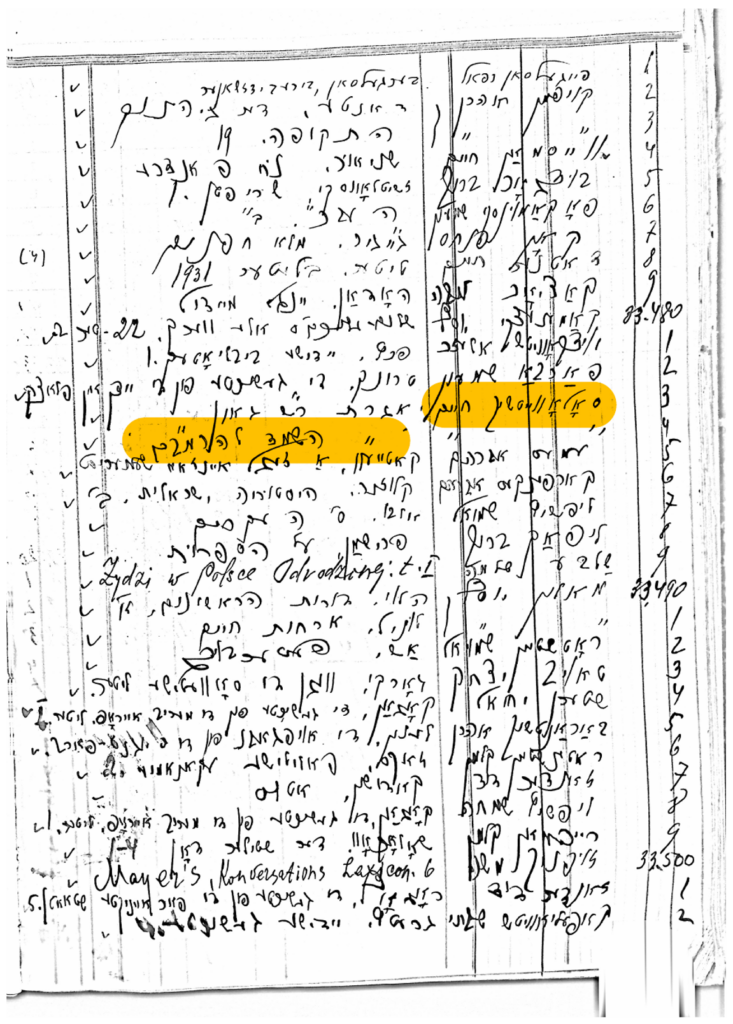
[21] Rabbinic Essays, p. 460. He writes that the blessing was “probably intended as a more emphatic protest against the Karaites.”
[22] “Berakhah Bilti Yeduah al Keriat Perek ‘Bameh Madlikin,’” Sinai 82 (1978), p. 217.
[23] Rabbinic Essays, p. 459. See also Yehudah Muriel, Iyunim ba-Mikra (Tel Aviv, 1960), vol. 2, p. 131.
[24] Commentary to Mishneh Torah, Hilkhot Shabbat 5:1, n. 1.
[25] Hikrei Lev (Satmar, 1908), vol. 4, p. 84.
[26] Ibid, pp. 84, 86ff.
[27] Shimon Yosef Meler, Uvdot ve-Hanhagot mi-Beit Brisk (Jerusalem, 2000), vol. 4, p. 310.


The Letter of the Maharal on the Creation of the Golem

The Letter of the Maharal on the Creation of the Golem: A Modern Forgery
By: Shnayer Leiman
For a related post by Dr. Leiman see “Did a Disciple of the Maharal Create a Golem.”


I. Introduction
    In 1923, Chaim Bloch (1881-1973), noted author and polemicist,1published a letter of the Maharal (d. 1609) that was previously unknown to all of Jewish literature.2 The letter, dated 1582 (or more precisely: Tuesday of parshat va-yera, [5]343), was addressed to R. Jacob Günzberg (d. 1615), Chief Rabbi of Friedberg in Hesse.3 Rich in content, the letter provides a lengthy and detailed account of why it was necessary for the Maharal to create a Golem, how he went about doing it, and the precise spiritual, psychological, and halakhic status of the created Golem. Bloch assured his readers that the letter was published from an original copy in his possession. In order to quell any doubts, he reproduced a facsimile of the Maharal’s autograph, as it appeared on the original letter.4
    Bloch did not provide much detail about the letter’s whereabouts for the more than 300 years it apparently had been withdrawn from circulation and unknown. He thanks Rabbi Samuel Neuwirth of Vienna for his efforts in acquiring the letter and handing it over to Bloch for publication. Given that it was published together with a series of hasidic documents (including letters of the Baal Shem Tov), allegedly recovered from East European archives that had been plundered during World War I and its aftermath, the impression one has is that the Maharal letter belonged to these archives as well – though this is never explicitly stated by Bloch.5

    In 1931, R. Yitzchok Eizik Weiss (d. 1944), the Spinka Rebbe,6 published the very same letter of the Maharal (without any mention of the prior Bloch publication) based upon — what he believed to be — an original manuscript in his possession. He appended it to the posthumous publication of his father’s אמרי יוסף על המועדים7 .  Although he gave no indication as to when or how the letter came into his hands, two witnesses provide us with some interesting detail.


    The first witness, R. Yitzchok Weiss (d. 1942), Chief Rabbi of Kadelburg,8 in his אלף כתב, a book written primarily between 1927 and 1939 but published posthumously in 1997, includes the following entry:
The Gaon and Zaddik of Spinka informed me on Monday of [parshat] Hukkat-Balak, 7 Tammuz, 5682 [= 1922], that a manuscript written by the hand of the Maharal of Prague came into his possession. In it, he responded to R. Jacob Günzberg about the making of the Golem, how and why it was done, and whether the Golem will be included in the resurrection of the dead.9

Thus, we know that the letter reached the Spinka Rebbe no later than the beginning of July in 1922.

    The second witness, R. Samuel Weingarten (d. 1987), noted scholar of Hungarian Jewry and religious Zionist,10 reported that he was present at the home of R. Hayyim Eleazar Shapira (d. 1937), the Munkatcher Rebbe, circa 1922-23, when two of the sons of the Spinka Rebbe [R. Yitzchok Eizik Weiss], R. Naftoli and R. Yisrael Hayyim, approached  the Munkatcher Rebbe with a query. They carefully removed a manuscript from a large envelope and asked the Rebbe to examine it. It was a handwritten letter signed by the Maharal of Prague and it dealt with the creation of the Golem. They explained that a soldier who had been taken captive at the Russian front during the World War, and who had participated in the looting of government archives during the Russian revolution, had brought the letter to their father and was prepared to sell it to him for a stiff price. Since the Spinka Rebbe was not expert in Hebrew manuscripts, he sought the advice of the Munkatcher Rebbe. The latter examined the manuscript carefully for some fifteen minutes. He then asked that a magnifying glass be brought and he re-examined the manuscript. He concluded that it was worthless; it was a forgery. The sons thanked the rabbi and went on their way with the manuscript.11


    In 1969, the very same letter of the Maharal was published once again by R. Zvi Elimelech Kalush of Bnei Brak.12 The title page of the volume assures the reader that the text of the letter was copied from the “original handwritten holy manuscript” penned by the Maharal of Prague himself. Kalush admits that he is simply reprinting the text published by the Spinka Rebbe in his father’s אמרי יוסף. Indeed, Kalush’s text incorporates all the misreadings and printers’ errors of the text as it appeared in the אמרי יוסף and, as often happens when type is reset, adds several new printers’ errors as well.13


              Since the letter is often reprinted and quoted as an authentic letter of the Maharal, it is probably useful to list some of the reasons that led the Munkatcher Rebbe and others14 to declare that it is a forgery. In order to facilitate discussion of the evidence, the full text of the letter is printed below, with each line identified by number.


II. Letter of the Maharal15


III. Evidence of Forgery16


p. 86, l. 2:  ושלום     The 1931 edition reads correctly: והשלום. As an epistolary formula, the phrase חיים שלום וברכה (and its variations) does not appear in Jewish literature prior to the eighteenth century.
 אל כבוד יד”נ   As an epistolary formula, the phrase  אל כבוד יד”נ does not occur in Jewish literature prior to the eighteenth century.


כקש”ת  This abbreviation for כבוד קדושת שם תפארתו first appears in Jewish literature in the eighteenth century.


p. 87, l. 6:   בשנת השלום (בו?) לפ”ק The 1931 edition reads correctly: בשנת ה’ של”ב לפ”ג. Thus, according to the Letter, Maharal was appointed Rabbi of Prague in 1572.  According to the historical sources, the Maharal was appointed Rosh Yeshiva of Prague in 1573.  His appointment as Rabbi of Prague came many years later.


p. 87, l. 8:    The Maharal is depicted throughout the letter as devoting all his energies to countering the blood libel in Prague. There is no historical evidence – Jewish or Christian – of a charge of blood libel in Prague during the lifetime of the Maharal.


p. 87, l. 12:  Cardinal Johann Sylvester is described here as the leading Christian authority in Prague. No cardinal by that name served in Prague or, for that matter, anywhere else in Christian Europe. For a list of the cardinals who functioned in Prague, see Hierarchia Catholica Medii Aevi 3(1920), pp. 297-354; 4(1935), p. 288; and 5(1952), p. 323; and cf. A. Frind, Die Geschichte der Bischoefe und Erzbischoefe von Prag, Prague, 1873, pp. 178-249.


p. 87, l. 27:  An anti-Semitic priest and rogue in sixteenth century Prague by the name of Thaddeus is unknown to all of Jewish and Christian literature prior to the twentieth century.


p. 87, l. 28:  יהודים חשוכים בדעתם, used here in the sense of “unenlightened Jews,” is a usage found only in modern Hebrew literature. 


p. 88, l. 4: Rudolph II is described here as serving as King of Bohemia in 1572-3. In fact, Maximilian II served as King of Bohemia and Holy Roman Emperor in 1572-3. It is surprising that the Maharal confused these two kings with each other.


p. 88, l. 6: The Maharal reports that he was summoned for an audience with King Rudolph in 1573. Aside from the fact that Rudolph was not in office at the time, the Maharal met with Rudolph only once – in 1592. See the testimony of the Maharal’s disciple, R. David Gans, צמח דוד, ed. M. Breuer, Jerusalem, 1983, p. 145. Since this letter was allegedly written and sent to R. Jacob Günzberg in 1583, the confusion here is astonishing.


p. 89, l. 7:    מולדווקא refers to the Moldau River, today the Vltava River. It is surprising that the Maharal was unaware of the correct spelling for this river in Hebrew – an essential ingredient for the writing of legally valid divorce documents. In the commentaries to the standard editions of the שלחן ערוך it is always spelled מולטא17. It is even more surprising that the Maharal was unaware of the fact that the Moldau flows through the center of the city of Prague, and not on the “outskirts of the city” (see line 6).
p. 90, I. 21-22: Maharal here refers to the permutations and combinations of the Hebrew letters that enable one to create a Golem, as they appear in the printed editions of Sefer Yetzirah. Alas, no such permutations and combinations appeared in any of the printed editions of Sefer Yetzirah until 1883 (פירוש הר”א גרמיזא על ספר יצירה, Przemysl, 1883).18


p. 91, l. 20:   כלי המ”ש = כלי המורה שעות, a watch or clock. This term first entered  Hebrew in the nineteenth century.
p. 91, l. 25:  מכונה  in the sense of “machine” entered Hebrew in the modern period.


p. 94, l. 9: The signature reads: Judah, dubbed Leib, son of R. Bezalel. In fact, the Maharal never signed his name in this manner. See A. Gottesdiener, המהר”ל מפראג: חייו תקופתו ותורתו, Jerusalem, 1976, pp. 19 and 29. 


IV.  Comments
    We have hardly exhausted the evidence – historical and linguistic – that can be adduced in order to prove that Bloch’s Letter of the Maharal is a forgery. The cumulative evidence is sufficiently overwhelming that there is really no point in adducing more of the same. Suffice to say that anyone familiar with the syntax and vocabulary of the authentic, published writings of the Maharal will recognize instantly that the Letter of the Maharal is a crude forgery. What remains to be investigated is the identity of the forger. Who forged the letter of the Maharal? When was it forged? Why was it forged? While we cannot provide answers to these questions (due to our ignorance), the following comments may prove useful for others who wish to do so.
1. Much of the material in the Letter of the Maharal was borrowed directly from R. Yudel Rosenberg’s נפלאות מהר”ל, Piotrkow, 1909.19 Clearly, the Letter of the Maharal is dependent upon נפלאות מהר”ל. It is unclear whether both documents came from the same hand, or whether the Letter of Maharal was an independent work. Either way, the Letter of the Maharal may have been a forgery done in order to “prove” the authenticity of נפלאות מהר”ל by providing the original manuscript of the Letter, together with the signature of the Maharal. It would have been much too cumbersome to provide a forged manuscript of the entire text of Rosenberg’s נפלאות מהר”ל 20.
2. It is noteworthy that the Letter of the Maharal was not included in, or even mentioned by, Chaim Bloch in his reworking and expansion of R. Yudel Rosenberg’s נפלאות מהר”ל18 This suggests that the Letter first reached Bloch sometime after 1919, i.e. after he had published his final version of the Golem stories.
3. I am not aware of any evidence that either suggests or proves that Bloch – despite his predilection for forgery21 – forged the Letter of the Maharal. It is perhaps more likely that the forger of the Kherson Geniza (see note 5) was responsible for the forged Letter of the Maharal.


One matter, however, deserves further attention. Bloch, after all, published a facsimile of the Maharal’s signature. Precisely for that reason the publishers of the later editions, misled by the signature, stress the fact that the Letter of the Maharal was written בכתב יד קדשו. In 2009, the four hundredth yahrzeit of the Maharal was commemorated throughout the world. Those commemorations have yielded a remarkable volume, recently published in Prague. Entitled Path of Life: Rabbi Judah Loew ben Bezalel, the opening pages include a genuine facsimile of the Maharal’s signature.22
Here is the Maharal’s signature as published by Bloch:


Here is the Maharal’s signature in the recently published Path of Life:23

Quod erat demonstrandum!


In sum, the Letter of the Maharal is a modern forgery. It should not and cannot be cited as evidence relating to the Maharal, the Golem, or any of the events that occurred in the sixteenth century. It is a twentieth century document that was probably forged sometime between 1909 and 1922. At best, it sheds light (or: darkness) on what Jewish forgers were thinking and doing during the first quarter of the twentieth century.
NOTES


 See the entries on Bloch in G. Bader, מדינה וחכמיה, Vienna-New York, 1934, p. 40; I. Landman, ed., Universal Jewish Encyclopedia, New York, 1940, vol. 2, p. 396; and M. Wunder, מאורי גליציה, Jerusalem, 1978, vol. 1, cols. 502-506 (and vol. 6, col. 213). It is unconscionable that no entry on Bloch appears in either edition of the Encyclopaedia Judaica. Bloch was a prolific author and an astute polemicist who contributed significantly to a variety of Jewish topics, including folklore, apologetics, and anti-Zionist sentiment. A biography and intellectual history of Bloch remains a scholarly desideratum.
2 קובץ מכתבים מקוריים מהבעש”ט ותלמידיו זי”ע, Vienna, 1923, pp. 86-94.
On R. Jacob Günzberg, see D. Maggid, תולדות משפחות גינצבורג, St. Petersburg, 1899, pp. 12-13. It is unclear when Günzberg was appointed Rabbi of Friedberg. R. Man Todros Spira served as Rabbi of Friedberg until circa 1582. He was succeeded by R. Samuel b. Eliezer, who was succeeded by Günzberg. See A. Kober, “Documents Selected From the Pinkas of Friedberg, a Former City in Western Germany,” PAAJR 17(1947), pp. 28-29.
See below for the facsimile of the signature. In fairness to Bloch, it should be noted that he equivocated somewhat as to whether the document was an original or a copy. On the title page of the volume, and under the facsimile of the signature itself, he clearly implied that the letter and the signature were originals, not copies. Toward the end of the Introduction to the volume, however, Bloch describes the manuscript as ancient, difficult to read, and “ascribed to the Maharal.” Indeed, he invites his scholarly audience to determine whether or not the autograph is authentic.
5  The hasidic documents allegedly recovered from East European archives are known in scholarly circles as the Kherson Geniza. The Kherson Geniza has generated a rich literature, too cumbersome to be listed here. Some of the more important discussions are: D.Z. Hilman, אגרות בעל התניא ובני דורו, Jerusalem, 1953, pp. 240-272; Y. Raphael, “גניזת חרסון,” Sinai 81(1977), pp. 129-150; B. Schwartz, “די כערסאנער גניזה,” Der Yid , November 2 – December 28, 1984; A. Rapoport-Albert, “Hagiography with Footnotes,” History and Theory 27(1988), pp. 119-159; H. Liberman, “הוי גוי חוטא,” in ספר הזכרון לרבי משה ליפשיץ, New York, 1996, pp. 139-140; and M. Rosman, Founder of Hasidism, Berkeley, 1996, pp. 123-125.
6  See Tzvi M. Rabinowicz, Encyclopedia of Hasidism, Northvale, 1996, pp. 534-535.
7 אמרי יוסף על המועדים, חלק ב׳, Vranov, 1931 (reissued: New York, 1969 and 1990).
8  Kadelburg, also known as Karlburg, Oroszvar, and Rusovce, was some 11 kilometers southeast of Pressburg (= Bratislava). On Weiss, see Y.Y. Cohen, חכמי הונגריה, Jerusalem, 1997, pp. 460-461.
9  אלף כתב, Bnei Brak, 1997, vol. 2, p. 47.
10  See the entry on him in אנציקלופדיה של הציונות הדתית, Jerusalem, 2000, vol. 6, columns 391-393.
11 Samuel Weingarten, “האדמו”ר ממונקטש רבי חיים אלעזר שפירא: בעל תחושה בקרתית” Shanah be-Shanah, 1980, pp. 447-449.
12 שלוש קדושות, Bnei Brak, 1969, pp. 127-135.
13 See, e.g., the last line of the letter, where Kalush (p. 135) mistakenly reads מתפורר, whereas Bloch and the Spinka Rebbe read correctly מתגורר.
 14  See below, note 16.
15 The text is taken from קובץ מכתבים מקוריים, pp. 86-94.
16  The evidence of forgery is culled from G. Scholem’s review of Bloch’s קובץ מכתבים מקוריים in Kiyrat Sefer 1 (1924-5), pp. 104-106; the Munkatcher Rebbe’s comments as recorded by Weingarten (see above, note 11); and my own reading of the text.
17 See also R. Ephraim Zalman Margolioth, טיב גיטין, Lemberg, 1859, p. 52a,  section on the spellings of towns and rivers.
18 For the correct year of publication of R. Eleazar of Worms commentary on Sefer Yetzirah, see S. Ashkenazi’s note in Tzefunot 1(1989), n. 4, p. 122.
19  נפלאות מהר”ל, ascribed to Maharal’s son-in-law, is itself a literary hoax. See S.Z. Leiman, “The Adventure of the Maharal of Prague in London,” Judaic Studies 3(2004), pp. 1-43.
20 Chaim Bloch, Der Prager Golem: von seiner Geburt bis zu seinem Tod, Vienna, 1919. An English version, The Golem: Legends of the Ghetto of Prague, Vienna, 1925, became a best seller, and is often reprinted. Bloch’s version of the Golem stories first appeared in serial form in 1917 in the Viennese periodical Oesterreichen Wochenschrift. For a comparative study of the Bloch and Rosenberg versions of the Golem stories, see A. L. Goldsmith, The Golem Remembered, 1909-1080, Detroit, 1981, pp. 51-72. Unfortunately, much of Goldsmith’s analysis is flawed due to the fact that he read Bloch and Rosenberg in translation, rather than consulting the original texts.
21 See S. Weingarten, מכתבים מזוייפים נגד הציונות, Jerusalem, 1981. Cf. G. Elkoshi, “ספיחי פולמוס,” Moznayim 42(1976), pp. 212-215.
22 A. Putik, ed., Path of Life: Rabbi Judah Loew ben Bezalel, Prague, 2009. The signature, recorded in 1597, appears on the frontispiece and at p. 37. Cf. pp. 73-74. 
23 The ז”ל ה”ה at the end of the signature stands for: זכרונו לחיי העולם הבא .  Cf. the Maharal’s signatures with the very same endings in his הסכמה to R. Samuel b. Joseph’s לחם רב, Prague, 1609 (reissued: Jerusalem, 2003), p. 5, and in the document cited by Gottesdiener, op. cit., p. 29.


Breaching the Walls of History with Postscript

Breaching the Walls of History

By Dan Rabinowitz

This essay first appeared in the Jewish Review of Books (Spring 2026) and is republished here. Its postscript appeared in the magazine’s Substack newsletter, which you can subscribe to here.

Last December, on the eighth day of Hanukkah, the American haredi newspaper of record Yated Ne’eman published a long, impassioned article titled “Ufortzu Chomos Migdolai Vetimu Kol Hashmanim,” by Rabbi Michoel Sorotzkin. The Hebrew title is from the fifth stanza of the famous Hanukkah standard Maoz tzur, which many of us never get to: “They breached the walls of my towers and defiled all the oils.” That is to say, the Greeks (and their Hellenized Jewish allies) broke through the defenses of the holy Temple in Jerusalem, leaving, seemingly, all its oils polluted and unusable. One might have expected that such a headline would announce a discussion of, say, the closure of haredi yeshiva day schools in New York City, or the Israeli government’s attempts to draft haredim into the military, or, perhaps, the rampant antisemitism threatening European Jewry.

But Sorotzkin’s article addressed none of these very real challenges to haredi life. The breach he identified, the defilement requiring an elaborate polemic couched in apocalyptic language, was a brief mention I had made of the Brisker Rov’s visit to a library in Vilna, in an article I published in these pages last summer (“Golden Ledgers,” Summer 2025, and republished on the Seforim blog).

The Strashun Library of Vilna was the first Jewish public library; it admitted both male and female patrons and included secular as well as religious books (sifrei kodesh). The historical question at issue itself is trivial—in fact it isn’t really a question. Rabbi Yitzhak Ze’ev Soloveitchik, who was commonly known as Reb Velvel or the Brisker Rov, visited the Strashun Library with at least one, but almost certainly two, of his sons on October 1, 1940, and they checked out the books to read in its famous reading room that the library ledger lists them as checking out.

Strashun Library Reading Room. Layzer Ran, Jerusalem of Lithuania, vol. 2, 346.

This is demonstrable beyond any remotely reasonable historical doubt. The interesting question is: Why was it so important to Sorotzkin, a prominent member of the haredi world, to tie himself up in speculative knots denying it not once but twice in one of that world’s leading newspapers? Before answering that question, I should explain how I came to write an article that breached the walls and defiled the oils, when what I was trying to do (if you’ll allow me to mix biblical metaphors) was pluck a brand from the fire.

I go to Vilna at least three times a year. Sometimes I stay at a hotel at the epicenter of the three main streets that formed the Jewish district; other times I stay near German Street where Mattityahu Strashun once lived. My mornings begin with a thirty-minute walk to Lithuania’s National Library. The route passes through streets that once hummed with Yiddish, past buildings that housed yeshivas and Jewish publishers, through spaces that sustained centuries of Jewish intellectual life before the Nazis destroyed it. My afternoons are spent walking those streets comparing what I’ve found in the archives against what I expected to find, evenings reviewing notes and planning the next day’s research. What I’m trying to do is reconstruct the ordinary moments that illuminate the extraordinary history of Jewish Vilna.

“In the Strashun Library”: a postcard from the “Vilner yidishe geto” (Vilnius Jewish Ghetto) series with illustrations by Ber Zalkind. (Ber Zalkind, Khaykl Lunski/Wikimedia Commons.)

During these walks, I often run into tour groups gathered at one of the few plaques marking the place of Jews in the city’s history. Usually, it’s the plaque noting the line of demarcation where the Nazis established the Vilna Ghetto. This is the tours’ inevitable focus: the annihilation of the Jews. What preceded the destruction—the institutions of learning and publishing, the literary circles and research institutes, the daily life that made Vilna the “Jerusalem of Lithuania”—receives far less attention. There used to be a sign marking where the Great Synagogue complex, the architectural and spiritual center of Jewish Vilna for centuries, stood. That sign is gone now. What remains are markers of death and destruction; all the complexity of Jewish intellectual life before World War II gets compressed into a prelude to catastrophe.

Those of us who study prewar Jewish culture are trying, each in our own way, to reconstruct and understand the life that preceded the catastrophe. That’s how I came to write a book on the Strashun Library several years ago. It’s why I continue to research its workings and the vibrant world of which it and its patrons, including great rabbinic leaders like Yitzhak Ze’ev Soloveitchik and ordinary Jewish readers, were a part.

The Strashun Library opened in 1902 as the first Jewish public library, built from Mattityahu Strashun’s private collection of rare books and manuscripts. From its opening, it became central to Vilna’s intellectual ecosystem. Its reading rooms welcomed everyone: rabbis and historians, secular scholars and traditional students, men and women, those seeking Yiddish literature and those researching Jewish law. By the time it was shuttered in 1940, it held roughly fifty thousand volumes and served a public that spanned the full spectrum of Jewish life.

Khaykl Lunski, Librarian of the Strashun Library in the book stacks. Postcard (undated), Private Collection.

When I discovered the library’s checkout ledgers in the National Library of Lithuania archives in 2024, I realized that their spare entries allowed us to reconstruct the day-to-day life of the library: who used it, which books they read, and how it served different strata of Jewish society.

As the first step in a project to digitize and make the ledgers publicly available to other researchers, I spent four very full days scanning thousands of pages, each holding about fifty handwritten entries. As I worked, I browsed the names and tried to quickly register patterns in the data. One of the names that jumped out at me was “Yitzchok Soloveitchik,” who requested a collection of I. L. Peretz’s Hasidic stories, Khasidish. Could this be Rabbi Yitzhak Ze’ev Soloveitchik, the son of Rabbi Chaim Soloveitchik, who founded the famous Brisker approach to talmudic study?

Yitzhak Ze’ev inherited and extended his father’s analytic method and later became one of the most uncompromising voices in Israeli haredi leadership, where he was known as the Brisker Rov. I knew that he and his family had been in Vilna at the time, because I’d found him listed among prominent rabbis in Vaad ha-yeshivos refugee housing records that show, yeshiva by yeshiva, where students, teachers, and refugees were staying. Nonetheless, it could have been another Yitzchok Soloveitchik. Then I looked more carefully at the same ledger page and saw another entry: a Raphael Soloveitchik had requested Maimonides’s Iggeret ha-shemad just a few lines above Yitzchok’s request for Peretz. Now it was clear. The Brisker Rov had a son named Raphael, and although Peretz’s short stories was a surprising choice for his father, the choice of Maimonides’s famous letter on persecution by the scion of a family fleeing persecution and famously devoted to Maimonides made perfect sense.

In short, the ledger documented that the Soloveitchiks had used the library just weeks before the Soviets would permanently close it, which is what I wrote, in passing, in my article. All that I thought I had documented in doing so was that the library served the rabbinic elite alongside ordinary Jews of all kinds, who were reading everything from talmudic commentaries to Yiddish translations of Tolstoy. But merely documenting a prewar Jewish world that was different than is generally imagined in haredi publications like Yated turned out to be an act of desecration.

Rabbi Sorotzkin’s first attack began by quoting the offending lines—or part of them at any rate—from my article: “On the afternoon of October 1, 1940, Reb Velvel came to the Strashun Library with his teenage son . . . His father’s reading for the day was more surprising: I. L. Peretz’s short stories about Hasidim.” (Sorotzkin’s ellipses will turn out to be doing a lot of work here.)

“With this passage,” Sorotzkin wrote, “Mr. Dan Rabinowitz does more than recount an archival curiosity. He stages a tableau.” He went on:

The Brisker Rov, Rav Yitzchok Zev Soloveitchik, appears before us not as generations of talmidim knew him, but as a character in a modern morality play: seated calmly in the Strashun Library of Vilna, immersed in the ironic fiction of I. L. Peretz, surrounded by secular readers, students, men and women alike.

The effect is unmistakable. The reader is invited to marvel at the distance between the “real” man and the image preserved by Torah memory. Hagiography, we are told implicitly, has concealed a richer, more complex inner life—one now revealed by the cold honesty of a library ledger.

It is an elegant narrative. It is also an edifice built on sand. What we encounter here is not historical reconstruction, but a breach—peritzas geder—in the most basic disciplines of historical inference. And once the wall is breached, all the oil may be rendered impure.

Beyond the rhetoric of righteous indignation, Sorotzkin’s argument was simple: The Brisker Rov would never have entered a “mixed, open, modern” library because his “entire being recoiled from even the faintest rei’ach [whiff] of ideological modernity.” Therefore, someone else named Yitzchok Soloveitchik must have. And here Sorotzkin had a candidate:

The Vilna region was saturated with Soloveitchiks. . . . Among them appears a Yitzchok Soloveitchik, a timber merchant, a vald-socher [from Švenčionys]—precisely the kind of educated townsman who would frequent the Strashun Library and read Peretz.

There are just three problems with this line of argument—actually there are more than that, but let’s restrict ourselves to three for the moment:

a. The same ledgers that documented the visit of a “Yitzchok Soloveitchik” also recorded several visits by Rav Pinchas Hirschprung, who would later serve as chief rabbi of Montreal. Rav Chaim Ozer Grodzinski, the preeminent Torah authority in Vilna, held special borrowing privileges at the library, and Rabbi Yisrael Meir Kagan, the renowned Chafetz Chaim, visited and signed the library’s VIP “Golden Book.” If such colleagues could visit the library, can Sorotzkin really be so certain that the Brisker Rov’s “entire being” would have prevented him from doing so?

b. Švenčionys is over eighty kilometers from Vilna, and we have no evidence this timber merchant traveled to Vilna in October 1940. Not to speak of the fact that neither Rabbi Sorotzkin nor I know anything about the reading habits of Jewish timber merchants in the area.

c. The ledger records two Soloveitchiks visiting the library on October 1, 1940. Are we to suppose that this other Yitzchok Soloveitchik also had a son named Raphael, who was also a deep Maimonidean?

This last problem—call it the “Zvei Soloveitchiks problem”—returns us to Rabbi Sorotzkin’s creative use of ellipses. When he quoted my offending lines about Reb Velvel, he elided Raphael—whom I mentioned in those sentences—right out of the picture and never acknowledged that he appeared in the ledger a few lines above his father.

Actually, unlike Sorotzkin’s conjectural Peretz-reading ironist timber merchant, the Brisker Rov had good reason to visit the Strashun Library. He was in the midst of a life-and-death halakhic controversy with his colleague Rav Aharon Kotler about whether refugees should try to flee to Eretz Yisrael or America. To support his position that they should not go to America because of the spiritual danger, the Brisker Rov turned to a passage he remembered from Maimonides’s Iggeret ha-shemad, which he wanted to quote verbatim.

Soloveitchik family memory confirms this. In a footnote to Shiurei Rabbeinu Meir ha-Levi, a collection of the Brisker Rov’s son, he is quoted as saying:

I recall that during the war years, Maran [the Brisker Rov] sought a copy of the letters from the Rambam, because he wanted to study Iggeret he-shemad, in which the Rambam has a lengthy discussion to explain the fundamental idea that a person acclimates to his surroundings and it is prohibited to live in a place which doesn’t allow one to fulfill the mitzvot properly. . . . Initially, however, he was unable to find a copy, and, in the end, he located one in the Strashun Library in Vilna. According to the library’s rules, one was not permitted to remove books from the building. And therefore his son R. Chaim copied it word for word for him.

The library ledger records Raphael as the borrower of Iggeret ha-shemad while the family testimony remembers Chaim as the copyist. Perhaps both brothers participated, or Raphael handled the checkout while Chaim copied the passage. Or perhaps the family misremembered which brother accompanied his father to the library. At any rate, there were at least two, and quite possibly three, Soloveitchiks at the Strashun Library on that day. And they were there precisely because the Brisker Rov took his obligations as a halakhic scholar and leader of Torah Jewry so seriously.

When I wrote to Yated Ne’eman to explain all this, the editors—to their credit—published my letter, but they did so alongside a reply from the unflappable Rabbi Sorotzkin. Sorotzkin not only blithely failed to acknowledge his errors of omission and commission but went on to a new and truly gobsmacking theory, titling his response “Veha’emes Vehashalom Ehavu” (Love truth and peace).

The entry for a “Yitzchok Soloveitchik” must, he now admits, refer to one of the famous Soloveitchiks rather than a random timber merchant from Švenčionys. Still, it couldn’t possibly be the Brisker Rov. So, who was it? Here I must quote Rabbi Sorotzkin at length to convey just how far he is willing to go to save Reb Velvel from having gone to a public library:

The presence of a ledger entry bearing the name “Yitzchok Soloveitchik” is taken to indicate the Brisker Rov himself, seated in the reading hall and borrowing secular literature. Yet there exists a far more coherent and internally consistent explanation, one that aligns with the testimony, the ledger itself, the halachic framework governing names and conduct, and the lived reality of the Brisker household.

According to this reading, it was the Brisker Rov’s son, Rav Chaim who entered the Strashun Library as the responsible emissary. Anyone familiar with the family dynamic knows that his keen intelligence, composure, and practical capability marked him as the natural choice for such a mission. His younger brother, Rav Rafael, accompanied him and formally requested the Iggeres HaShemad, which then had to be copied in full—a task of approximately 3,500 words, requiring a prolonged stay. Such an extended presence in a public institution would naturally invite scrutiny. To avoid unnecessary attention, it would have been prudent, even expected, to request an additional book, a routine borrowing that raised no eyebrows and normalized the time spent at the table.

Here the ledger entries themselves become illuminating rather than sensational. Immediately preceding the Soloveitchik entry, two patrons are recorded borrowing works by I. L. Peretz. . . . When Rav Chaim was offered titles by the same author, the specific work recorded — Chassidish — was accepted not as an ideological choice but as a convenient placeholder, a book taken to cover the duration required for copying the Iggeres. . . .

The use of the name “Yitzchok” in the ledger is likewise neither mysterious nor incriminating. Rav Chaim could not identify himself by his own well-known name without drawing attention, particularly given that the sefer of his grandfather, Rabbeinu Chaim Halevi, was already catalogued in that very library. Nor could he identify himself by his father’s full name. Halacha is explicit that one may not refer to one’s father by name, even after death, without alteration. . . . The use of the shortened form “Yitzchok” . . . would have satisfied both the halachic requirement and the practical need for discretion, without uttering an outright falsehood.

It is difficult to imagine anyone believing that a scholarly household in the midst of the “lived reality” of a desperate flight to safety from both the Soviets and the Nazis would strategize over the impossible “mission” of going to a library frequented by other pious Jews to copy a passage from Maimonides. And further, to think that they needed an elaborate cover story involving false names and phony book checkouts so that the Jewish librarians did not penetrate their cover (and what?—inform Rav Kotler about the killer prooftext from Maimonides?). The tradition has a term for such groundless theorizing, pilpul shel hevel, and it is a hallmark of the Brisker tradition to oppose it.

Sorotzkin closes his response on an extraordinary—and, one presumes, unconscious—note of chutzpah. “When suggestive narratives arise from thin evidentiary reeds,” he writes, “methodological restraint becomes not a courtesy but an obligation.” But perhaps I am being unfair, as George Orwell once remarked, “We are all capable of believing things which we know to be untrue, and then, when we are finally proved wrong, impudently twisting the facts so as to show that we were right.”

Sorotzkin’s initial response characterized my work as “peritzas geder,” a breach of protective walls. But what did he think needed to be protected? Not the Brisker Rov’s actual stature or commitment. That he wanted to verify the exact wording of Maimonides’s Iggeret ha-shemad from the richest collection of sifrei kodesh in Eastern Europe to guide his thinking on the refugee crisis illuminates the rigor of his approach to unprecedented questions. What Sorotzkin needed to protect was rather a nostalgic fantasy: one in which the great sages (gedolim) of that generation never entered mixed public spaces, relied on secular institutions, or read fiction. But the infrastructure of Jewish life in places like Vilna was not neatly divided into “Torah” and “secular” categories, and gedolim and their students checked out books from the Strashun Library alongside maskilim, socialists, and ordinary Jews looking for something to read.

I go back to Vilna regularly to identify, amid the destruction and absence, what can be found to resurrect, contextualize, and enrich our understanding of the astounding Jewish culture of prewar Vilna. The Jews of this city—rabbis and students, traditionalists and modernists, Hebraists and Yiddishists—created institutions, filled libraries, published journals, founded schools and research institutes, and argued about everything.

The Brisker Rov spent an afternoon in the Strashun Library in October 1940 with his sons to obtain a text he desperately needed. While his sons diligently copied Maimonides’s text, he requested Peretz’s collection of Hasidic stories. I don’t know why and, of course, it doesn’t matter—only Sorotzkin and his more credulous readers would think that it does. But there is a plausible answer. It turns out that among Peretz’s Hasidic tales is the story “Between Two Mountains,” in which a fiercely strict and intellectual rosh yeshiva called “the Brisker Rov” is taught a lesson in humanism by a former student who has become a Hasidic rebbe. Might not the Brisker Rov have been simply curious to read about his fictional counterpart?

The Holocaust destroyed the Strashun Library and most of the Jewish world of which it was a part. The Soviets shuttered its reading room; the Nazis looted its collections; after the war, the building was destroyed. Yet, the few surviving Strashun Library ledgers reveal precious little moments in the lost history of Jewish intellectual life in Vilna. The final volume documents the last gasp of Eastern European Jewry, not only the local Jewish inhabitants but also the thousands of refugees like the Soloveitchiks who, fleeing Hitler and Stalin, briefly sought safety in Vilna.

Strashun Library Building in 1945. Vilna Gaon Museum of Jewish History Archive, 1829-1

It seems to me that what we, their descendants, owe them is to see their lives, at least in glimpses, as they were, even if it is through the entries of a humble library ledger. That is a history worth recovering, even when—especially when—it complicates what we thought we knew. Such complication is not desecration; on the contrary, it honors their memories.

Postscript

After writing this response to Rabbi Sorotzkin’s pilpul shel hagiografia, I continued to return to the 1940 ledger, which hasn’t been digitized yet. As I described above, Sorotzkin’s new, and equally implausible, claim was that Chaim Soloveitchik used his father’s name rather than his own, to avoid the commotion of being recognized as the grandson and namesake of the author of one of the library’s own seforim, and to escape the notice of the authorities. In fact, it turns out Chaim checked out books under his own name at least five times in September 1940.

The first entry was on September 6, 1940, weeks before his father and Rafael appear in the ledger together. He checked out the Iggeret ha-shemad twice, on September 12 and September 14. These are, undoubtedly, the visits to transcribe Maimonides’s text, as described in the family testimony recorded in Shiurei Rabbenu Meir HaLevi. Rafael’s borrowing of the same text on October 1, when he visited the library with his father, was probably to check his brother’s transcription against the source.

That September, Chaim also read the tenth-century grammarian Dunash ben Labrat, the letters of Sa’adia Gaon and Ramban, the Abudraham’s commentary on the siddur, Samuel David Luzzatto’s essays collected in Bet ha-otzar, and a run of midrashic works, several in modern critical editions such as those of Solomon Buber. This is not the reading of a man sent on an undercover mission to copy one text. It is, rather, the reading of a wide, curious, and learned mind, and the ledger records it without comment or apology.

Of course, this isn’t surprising. As I wrote above, many well-known rabbinic figures used the library without incident. What is surprising is the pseudo-pious lengths to which Sorotzkin went to deny that the Brisker Rov and his sons simply used the Strashun Library, a fact that the family itself had no qualms about memorializing. What the ledgers allow us to do is to see, in a reader’s own name and hand, what he read in one of the great libraries of his world.

The Strashun Library Ledger Project, which is digitizing and making the ledgers publicly available, is a collaboration between the Martynas Mažvydas National Library of Lithuania, the e-Lijah Lab at the University of Haifa, Yale University’s Jewish Studies Department and Library, the Fortunoff Video Archive, and Litvak SIG.


Eliezer Brodt: Review of Halikhot Shlomo, by R. Shlomo Zalman Auerbach

Review of Halikhot Shlomo, by R. Shlomo Zalman Auerbach
By Eliezer Brodt

There is a well known joke which claims that some gedolim have actually been “writing from their graves.”[1] The most famous person to be “guilty” of this charge is R. Moshe Sofer (Hatam Sofer) as he printed nothing[2] in his lifetime and yet we have volumes and volumes of his Torah on literally every area and – to this day – they continue to be published.[3] Obviously, all of this material has come to light through his own notes and those of his many students.

Non-Republished works of R. Shlomo Zalman Auerbach

Another such person, who has had a similarly prolific posthumous literary output – although he did publish Torah novella in his own life time – is R. Shlomo Zalman Auerbach (1910-1995). After his death there has been a printing explosion of his writings covering all topics, including reprints of everything he has ever written! The only works of his not to be reprinted are two amazing works: the Meori Aish – a classic study on electricity and muktzah – and his Madeni Aretz on Shevi’it, as these two works have connections to one of the more controversial gedolim of the past century, R. Avraham Yitzchak Ha-Kohen Kook. As the Meori Aish has a haskamah from Rav Kook and the Madenei Aretz deals at great length with Rav Kook’s views on Shevi’it.

Halikhot Shlomo

For this post, however, I would just like to limit my focus to one of these recent works on R. Shlomo Zalman Auerbach — Halikhot Shlomo.

A few years ago R. Aron Auerbach and R. Y Terger started to print this work. It was printed by Feldheim for a rather low price. The first volume began with Hilkhot Tefilah and Berakhot. After that, they published a second volume discussing the Yom Tovim starting with Rosh Hashana until and including Purim. (Last year they released a limited edition of the Pesach section.) And this year, the third volume has just been published, completing the Yom Tovim, on Pesach and the rest of the year. The goal of this work is to collect everything spanning the gamut of R. Shlomo Zalman’s halakhic interests related to these topics of Tefilah, Berakhot and the Yom Tovim. These volumes are all well organized, culled from all the printed sources and from incidents recorded by his various students. Aside from these sources, they used many manuscripts and notes of R. Shlomo Zalman which have remained unpublished until this point. They try to reference exactly where everything came from; but, at times, this too becomes a bit confusing. The sefer has a nice layout the top part contains the statement of R. Shlomo Zalman, as well as his reasoning for the various pesakim. In the extensive footnotes, the editors demonstrate the breadth of where everything comes from. Sometimes they cite other sources on the topics under discussion. They also include many interesting stories, statements, and anecdotes of advice that R. Shlomo Zalman gave to different people. In addition to all this they include many interesting discussions of R. Shlomo Zalman on Aggadah. At the end of each volume, there is a collection of some lengthier pieces on relevant topics. Besides for all this they included a very thorough index assisting the interested reader in finding almost anything mentioned throughout in the sefer.

I would just like to quote a few interesting discussions from each volume for examples of what makes this work so special as there are literally thousands of gems scattered throughout this work.

Halikhot Shlomo, vol. 1

While talking about having perfectly squared tefillin, R. Shlomo Zalman says that its good enough if, according to viewing it with your eyes and that you do not have to measure the tefillin with a ruler. He than goes on to say – at great length – that the Torah goes according to ones eyes for everything including examining for bugs and checking etrogim (Halikhot Shlomo 1:53, and the footnotes therein).

On the topic of chumrot he writes that one should not just be machmir because he feels like it. Instead, such a position should be reached from one’s own understanding of the topic and that, in this instance, it is in fact the correct position. He contrasts this with the tendency, which can be attributed to many chumrot, which is a result of only utilizing secondary sources and not focusing on the primary sources. He goes on to write that he was very bothered when he would see people walking on shabbat and their wives would be pushing the baby carriages because the man held for himself it was prohibited to use an eruv. He writes that when he was young he was machmir and did not rely on the eruv but, when he got married, he was mater neder (annulled his vow) to be able to help his wife (Halikhot Shlomo 1:55).

Elsewhere they record, that R. Shlomo Zalman once met a chattan walking to shul without a shomer so he accompanied him until he got a shomer. R. Shlomo Zalman explained his actions that already the motzei shabbat before one gets married he is already called a chattan in regard to this that he needs a shomer (Halikhot Shlomo 1:63 1). He writes that a matmid is not one who learns many hours in the day but rather it is someone who learns set times carefully keeping them everyday (Halikhot Shlomo 1:67 2). He writes that a mourner can learn hilkhot aveilut in-depth during the week of shiva (Halikhot Shlomo 1:75 3). Also included is an interesting and in-depth step-by-step teshuva process (Halikhot Shlomo 1:77 4).

At the end of this volume, the editors printed a very interesting piece on the topic of saying ר’ פלוני בן ר’ פלוני – specifically the use of the Rabbi appellation – when calling someone up for an aliya at kriyat haTorah. R. Yosef Zechariah Stern writes that one should not say the title Reb because it is a problem of גבהות in front of God. R Shlomo Zalman, however, defends this custom at great length as we find everyone uses this title. He explains that the reason for its usage was because there are many different prayer customs that Chazal made to go against the tzedukim (צדוקים) to show that we have the Torah – both written and oral. So too, in the times of the Rishonim, there were people who denied the historicity of torah shebal peh, and these individuals were called Karaites; whereas the more-traditional sect of Jews were called Rabanim, and this is why when we call someone to the Torah we say “Reb” to show that he is not a karaite (Halikhot Shlomo 1:370-373; also included, in short, in the third volume, Halikhot Shlomo 3:33- 34).

Halikhot Shlomo, vol. 2

Some interesting points from volume two include: The famous topic of the prayer Machniseh Rachamim and how can it be said as it appears that we are praying to the angels. R. Shlomo Zalman responds to this concern and explains that one can pray to an angel if it is his job to carry the prayers – that is his job! Further, this is why one can sing the song Shalom Aleichem on Friday night as we are only asking them to do their job. However, he said the nussach which appears in kiddush levanah “כשם שאני רוקד כנגדך וכו’ כל לא יוכל כל אויבי לנגוע בי לרעה” makes it appears as if we are praying to the moon and is a mistake! Instead, it should read כשם שאני רוקד כנגדה (Halikhot Shlomo 2:4). When asked which kavonot one should have during the blowing of the shofar he said just that the Torah simply says to blow shofar! (Halikhot Shlomo 2:24). Another interesting idea is that R. Shlomo Zalman did not bless people with sticking out his hands except on very infrequent occasions. He quoted R S Alphandrei that there is no source for giving ones hand in chazal but rather its chukat hagoyim! (Halikhot Shlomo 2:10). At the end of the sefer include, as well, is a very interesting selection as to why the holiday of Hoshanah Rabbah, as a day of judgment or not, is not mentioned in the Torah (Halikhot Shlomo 2:428-434).

Halikhot Shlomo, vol. 3

The third volume of Halikhot Shlomo is the largest thus far, comprising over six hundred pages with many, many interesting and fascinating pieces.

Just to list a few: R. Shlomo Zalman writes that it’s very important to learn Masekhet Moed Koton and Hilkhot Aveilut as well, even though the Hatam Sofer (and others) said that one should not learn it (Halikhot Shlomo 3:439). On Tisha B’Av, R. Shlomo Zalman would read books about the Holocaust (Halikhot Shlomo 3:440). There is also an interesting discussion about the reason of the Mishneh Berurah as to why we eat dairy on Shavuot (Halikhot Shlomo 3:380-381). In regard to Pesach there is an amazing original piece as to why the bechorim (first born) fast on Erev Pesach. R. Shlomo Zalman writes that if it is solely due to the fact that the bechorim were saved from death, then all of the descendants of the bechorim should also fast – not just bechorim! (The answer is a bit more complex and includes several other components to this answer, as well.) To this, R. Shlomo Zalman says that the reason for the fast is not for the fact that they were saved but rather it was because the bechorim were supposed to do the avodah in the Beit Hamikdash, but that they lost it due to the sin of the Golden Calf. So on the fourteenth day of Nissan when they came to the Beit Hamikdash and they saw the kohanim and levi’im doing the beautiful avodah they felt very sad so they did not eat. So they decided to make a day to remember this as there was one time they were able to do this – when Hashem skipped over the houses and to atone for the Golden Calf which caused them to lose this great job (Halikhot Shlomo 3:179-180).

In sum, the Halikhot Shlomo is an excellent work and all in all, I feel that this is a beautiful work and well worth the money.

Sources:
[1] Upon hearing this aphorism, one cannot help but reflect on the passage in the Talmud: “R. Yohanan said in the name of R. Shimon bar Yochai: Any talmid hakham whose teachings are recited in this world, his lips move in the grave” (Yevamot 97a).
[2] Although the Hatam Sofer is the most popular target of posthumous publishing, in fact he did publish one work in his lifetime – although this is not well known. This is probably because his most famous work, his responsa volumes SHU”T Hatam Sofer, were published after he died. The Hatam Sofer died in 1839 and his teshuvot were not published until 1855. But, in the 1826 edition of the Hiddushei R”I Megash on Masekhet Shavout, there was appended a “Kuntres” which contains two Torah pieces and six teshuvot from the Hatam Sofer.
[3] For a discussion of the famous 1799 ruling of the Vilna beit din where they officially prohibited the ascribing any work to the R. Elijah, Gaon of Vilna which had not been personally sanctioned by that rabbinical body, see Gil S. Perl, “Emek ha-Neziv: A Window into the Intellectual Universe of Rabbi Naftali Zvi Yehudah Berlin,” (PhD dissertation, Harvard University, 2006), pp. 219, 226. Notwithstanding this prohibition, works ascribed to R. Elijah, Gaon of Vilna continued to appear for over two centuries. See also the introduction Yeshayahu Vinograd, Ozar Sifre ha-GRA (Jerusalem, 2003) for an extensive discussion surrounding the 1799 ruling of the Vilna beit din.