New Writings from R. Kook and Assorted Comments, part 3

New Writings from R. Kook and Assorted Comments, part 3

Marc B. Shapiro

Continued from here.
As I have dealt in this post with Maimonides and the Genesis story, it is as good a time as any to mention what I believe it to be an error that is repeated very often. I saw it most recently in Nathan Aviezer’s article “When Torah and Science Collide” (Tradition, Fall 2009). He writes as follows:

Did God create the universe? Seemingly a simple question, with the answer given in the very first verse of the Torah. Not so, writes Rambam (Guide 2:25), asserting that Torah hashkafa does not require one to believe that God created the universe. But what about the first chapter of Bereshit, which clearly states that God did create the universe? Rambam writes that one may interpret this chapter metaphorically, as an allegory that never happened, because “the paths of interpretation are not closed to us.”

What Maimonides actually says in Guide 2:25 is that it is a religious requirement to believe that God created the universe. He goes so far as to say that if it could somehow be proven that God did not create the universe, this would give the lie to miracles and Torah itself. In Maimonides’ words: “If the philosophers would succeed in demonstrating eternity as Aristotle understands it, the Law as a whole would become void.” In other words, Torah Judaism stands or falls on this issue, for acceptance of Aristotle’s view means the end of miracles, prophecy, and Torah. Fortunately for Rambam, he believes that eternity of the universe cannot be proven, because if it could be proven, that would be the end of Torah Judaism.[1]

What else does Maimonides say in this chapter? He says two things. 1. If Plato’s view, that the world was created from eternal matter,[2] were to be proven, then this would not destroy the Torah, and in fact the Torah could be interpreted in accordance with this.[3] 2. Even Aristotelian eternity of the world could be reinterpreted in accordance with the biblical verses, just as the verses that speak of God’s corporeality are reinterpreted. This is the context in which Maimonides says that “the paths of interpretation are not closed to us.” Maimonides then explains that because of this, we do not reject eternity of the world because of the simple meaning of the biblical verses (which could be reinterpreted). Rather, we reject it because 1. It has not been proven (and indeed Maimonides does not think that it can be proven). 2. Eternity of the world destroys the foundation of the Torah.

In truth, Aviezer’s understanding is not unique to him but is shared by many. They all assume that if Aristotelian eternity was proven, Maimonides would then reinterpret the Torah in accordance with this, for he says that he is indeed able to do so. This viewpoint is held by some of the top Maimonides scholars alive today. From greats of previous years who hold this position, I can add R. Elijah Benamozegh:[4]

ומה מאד הפריז על המדה הרמב”ם שכתב במורה (ח”ב פרק כה) שאלו נתבאר הקדמות במופת הגיוני היינו מחויבים לפרש הכתובים באופן שלא יכחישו המופת
Centuries earlier, Ralbag advanced the same (what I believe to be incorrect) viewpoint.[5] See Milhamot ha-Shem 6:2:1:
גם כן אמר שאם היה מתבאר חיוב קדמות העולם מדרך העיון שכבר יוכרח לפרש מה שבא בתורה שיראה חולק עם זה הדעת באופן שיאות אל העיון.
As I mentioned, all Maimonides says is that if eternity is proven, the words of the Torah could be reinterpreted to accord with eternity. But according to Maimonides, there would be no reason for doing so. This is so for if eternity could somehow be proven, that would be the end of Judaism, as it would be the end of both miracles and divine providence and thus no possibility of a revelation of the Torah. Thankfully, Maimonides believes that eternity cannot be proven.

I don’t understand why so many scholars—whose knowledge of Maimonides is much greater than mine— interpret this chapter to mean that Maimonides would accept Aristotelian eternity when he says specifically that he wouldn’t. (Again, I am speaking of the exoteric meaning of Maimonides’ words, not about any esoteric interpretation of Maimonides.) When I challenged a number of these scholars on this point, they all acknowledged that Maimonides doesn’t actually say that he would accept eternity. However, in defense of what they wrote they stated that if eternity really was proven, what choice then would Maimonides have? He would have to reinterpret the Torah to agree with eternity since we can never imagine him rejecting the Torah. In this, I agree with them. Faced with the reality that eternity has been proven, and despite what he says in Guide 2:25, he would be forced to reinterpret the Torah. Of this, I have no doubt, simply because Maimonides was a very religious man and I can’t imagine him living without the Torah. Yet my point is that he does not say this in the Guide. In fact, he says the exact opposite, that the Torah cannot co-exist with eternity.[6]
Since I have mentioned Aviezer’s article, let me discuss some other things he says. Aviezer writes:

[Stephen J.] Gould was preceded in this approach by Galileo, who is credited with the famous aphorism: “The Bible teaches us how to go to heaven, whereas science teaches us how the heavens go.” (I can’t believe that Galileo really said these words because, while snappy in English, they make no sense in Latin or Italian.)
I don’t know on what basis Aviezer insists that these words don’t make sense in Latin or Italian. If someone said them in Latin or Italian, why shouldn’t they make sense? In fact, the original text is Italian, and is found in Galileo’s “Letter to Grand Duchess Christina.” In it, Galileo writes:

I would say here something that was heard from an ecclesiastic of the most eminent degree [Cardinal Baronius]: ‘That the intention of the Holy Ghost is to teach us how one goes to heaven, not how heaven goes.’”[7]

Here is the original Italian, and one can indeed see that the words are snappy:

“Io qui direi che quello che intesi da persona ecclesiastica, costituita in eminentissimo grado, ciò è l’intenzione delle Spirito Santo essere d’insegnarci come si vadia al cielo, e non come vadia il cielo.”

Even Pope John Paul II adapted this saying, in a passage that looks like it could have been written by R. Hirsch,[8] R. Kook, or R Natan Slifkin:

The Bible itself speaks to us of the origin of the universe and its make-up, not in order to provide us with a scientific treatise, but in order to state the correct relationships of man with God and with the universe. Sacred scripture wishes simply to declare that the world was created by God, and in order to teach this truth it expresses itself in the terms of the cosmology in use at the time of the writer. The Sacred Book likewise wishes to tell men that the world was not created as the seat of the gods, as was taught by other cosmogonies and cosmologies, but was rather created for the service of man and the glory of God. Any other teaching about the origin and make-up of the universe is alien to the intentions of the Bible, which does not wish to teach how heaven was made but how one goes to heaven.[9]

Chief Rabbi Jonathan Sacks, whose prolific writing continues to astound, has recently said the same thing: “There is a difference between science and religion. Science is about explanation. Religion is about interpretation. The Bible simply isn’t interested in how the universe came into being.”[10] R. Chaim Navon put the matter as follow[11]:

התורה אינה מתעניינת במידע מדעי, אלא בערכים רוחניים. לא כך כך אכפת לתורה מנוסחאות מדעיות; אכפת לה הרבה יותר מדרכי התנהגותו של האדם, מאורחות חייו ובעיקר מעבודתו של האדם את בוראו. משום כך, לא כל כך חשוב לדעת האם האדם היה שייך פעם לעולם החיות; מה שחשוב באמת הוא האם האדם הצליח להיחלץ משם.

In other words, the Torah has nothing to tell us when it comes to science. Therefore, there can be no such thing as a conflict between Torah and science.[12] With such an approach, all of the reconciliations between science and the Book of Genesis (e.g., a “day” is really an eon, the dinosaurs are from prior worlds, etc.), which for awhile were popular in Orthodoxy, are really missing the point. The old apologetics assumed that the Torah was in accord with science, and was even teaching scientific truths. It was just that we had to read the text differently than it had been read until now. Yet as with R. Kook, from Sacks’ and Navon’s perspective the creation story is a myth, namely, a tale designed to impart cosmic truths.[13] Although this position has been argued most forcefully by Slifkin, and has found a very receptive audience at synagogues (as I can attest, having tag-teamed with Slifkin as scholars-in-residence), are there any high schools that teach the Creation story in this fashion?

Returning to Aviezer, he writes:

But what about the geocentric theory of the solar system? Wasn’t that scientific theory universally believed for nearly 1500 years, until finally shown by Copernicus and Galileo to be wrong and then replaced by the very different heliocentric theory? The answer is “no!” The geocentric theory was not a scientific theory at all; it was pure theology, unsupported by any scientific evidence. The theory was universally accepted for over a millennium on religious grounds alone. The beliefs of the Church demanded that man’s place must be at the center of the universe.

This is completely incorrect. First of all, the Ptolemaic system of geocentrism was as much science as the Copernican system, and had nothing to do with theology.[14] Secondly, geocentrism long predates the second-century Ptolemy. Aristotle himself was a geocentrist, and in Aristotle’s view, the most important part of the world is not the center! “For the medieval mind, under the influence of Aristotle, the earth as the center of the world was not a position of honor. On the contrary, as Prof. Lovejoy put it, it was ‘the place farthest removed from the Empyrean, the bottom of creation, to which its dregs and baser elements sank. The actual center, indeed, was Hell; in the spatial sense, the medieval world was literally diabolocentric.’”[15]

Aviezer “blames” geocentrism on the Church, and yet Maimonides (and every other Jewish and Islamic thinker of his day) was a geocentrist. Maimonides also had a strong anti-anthropocentric view, as he did not regard man as the central purpose of the universe. This view of Maimonides was an important source for Norman Lamm in his famous article “The Religious Implications of Extraterrestrial Life.” [16] Only those who are convinced that they are the center of the universe would be troubled by the discovery of other inhabited worlds, and that is why Maimonides’ outlook came in so handy for Lamm.

Returning to Maimonides and creation, I want to call attention to a very interesting article by R Meir Triebitz. It appears in Reshimu, vol. 1 no. 2 (2008), the journal of the so-called Hashkafa Circle. See here.

As explained in the preface to the first volume, this “Circle” aims to fill a gap in haredi yeshiva education by focusing on the classics of medieval Jewish philosophy which are pretty much ignored in contemporary haredi society. We thus have a situation where great talmudists and halakhists ignore major themes of Jewish philosophy, which were dealt with at length by the medieval sages. When there are theological discussions in haredi literature, they invariably reflect a very conservative position, often at variance with the major rishonim. I already touched on this issue in my conclusion to The Limits of Orthodox Theology, and if Triebitz and his group are successful this situation could be reversed.

However, they won’t be successful for the simple reason that the outlook of the medieval Jewish philosophers is opposed in so many ways to haredi ideology that it will never become part of the haredi curriculum. In fact, I don’t think it is possible to be a serious student of medieval Jewish philosophy and at the same time identify with any of the regnant haredi worldviews. (You might dress the part and send your children to haredi schools, but that is not the same thing as identifying with a worldview.) This is so for many reasons, primary of which is that medieval Jewish philosophy is about the search for truth. The papal model of haredi society, where the quest for truth is subordinated to the dictates of the religious authority figure, is diametrically opposed to what our great medieval philosophers taught.

Furthermore, the haredi notion that contemporary gedolim can sit in judgment of the views of the Rambam and other greats, and determine that their views are no longer “acceptable”, will be rejected out of hand by all followers of the philosophic tradition. It is therefore not surprising that when Artscroll was presented with a plan to publish Maimonides’ Guide in English, the response was a resounding no, with the explanation given that the Guide should not be found in a haredi home.[17]

Until now, three issues of Reshimu have been published, all available on its website, and it is refreshing to see haredi writers grappling with important philosophical problems. While in many cases the writers are unaware of basic academic studies in these areas, and the journals could be edited in a better fashion (eliminating typos and stylistic problems), there is a great deal to learn from some of the essays. This is especially the case for Rabbi Triebitz, who because of his wide-ranging knowledge and keen insight deserves to be better known. I encourage all to read his articles and those who have time can also watch numerous videos of his shiurim here.

In his article referred to above, Triebitz offers a commentary on Guide 2:13, where Maimonides discusses the various views of creation. It is a very challenging essay which, unless I have overlooked an academic article, presents a new perspective, not an easy task in Maimonidean scholarship. In this essay Triebitz takes his place with the esoteric readers of Maimonides. He concludes that Maimonides does not really believe in creation ex nihilo, since for Maimonides this is a mental concept, not a scientific fact. From a scientific perspective, Maimonides adopts Aristotle’s view of the eternity of the world, but this is not something that could be communicated to the non-sophisticated reader. However, those who grasp what Maimonides is saying will realize that “Creation ex nihilo is not a contending theory of creation . . . but rather a product of man’s thought which introduces a dimension other than the objective physical world pictured by Aristotelian physics.” (p. 145)

Needless to say, this approach of Triebitz also turns Maimonides’ fourth principle, which insists on creation ex nihilo (including the creation of time), into a “necessary belief.” Here is another selection from the essay:

Rambam is therefore intimating that in order to posit God’s complete incorporeality it is necessary to extend the physical world ad infinitum. Since physical infinity is impossible, it is time which must be infinite. Monotheism demands eternity. Law and ethics, however, are based upon Divine free will and Divine free will in turn demands creation ex nihilo. Since creation ex nihilo, as Rambam has already pointed out, cannot have taken place at any time, it cannot be a theory of creation. The antinomy between eternity theories, particularly Aristotle’s, and the irreducible creation ex nihilo is in fact no other than the dichotomy between ontology and ethics (p. 161).

Triebitz returns to Maimonides and creation in Reshimu vol. 1 no. 3 (2009) and once again explains that in his opinion Maimonides doesn’t really believe in creation ex nihilo.

As a consequence, while Rambam’s discussion of creation begins by asserting that the opinion of Torat Moshe is that the world was created by God ex nihilo, by the time that discussion concludes eighteen chapters later (II. 30), he makes the subtle point, casually dropped as if merely incidental, that one of the terms referring to creation in the Torah (qinyan, qeil qoneh) itself “tends toward the road of the belief in . . . eternity” (71b/358). To the astute ear honed to his method of paradoxical exposition, the underlying thrust is clear: He begins with the assertion he believes to be obvious and most fundamental—namely, creatio ex nihilo—after which, following long diversions, he introduces the contrary premise—creatio continua aeterna—by which time the less aware, less initiated reader will likely not notice the subtle discrepancy and the controversial nuance therein entailed: that creation ex nihilo is not creation in time, chiddush nifla. (p. 82)[18]

I now want to return to the Creation story, and how some have argued that it should not be taken literally. I dealt with this in my previous posts and received some e-mails by people referring to other sources that say so, including R. Gedaliah Nadel. I am grateful for all the e-mails, but the reason I didn’t mention these sources, including R. Nadel, is because all of these sources are well known. Since I was not trying to write a comprehensive study of approaches to creation, I didn’t see any need to cite them. In general, my posts here are not like my articles or books, in that I am trying to call attention to interesting ideas and texts, rather than producing complete studies of any topic.

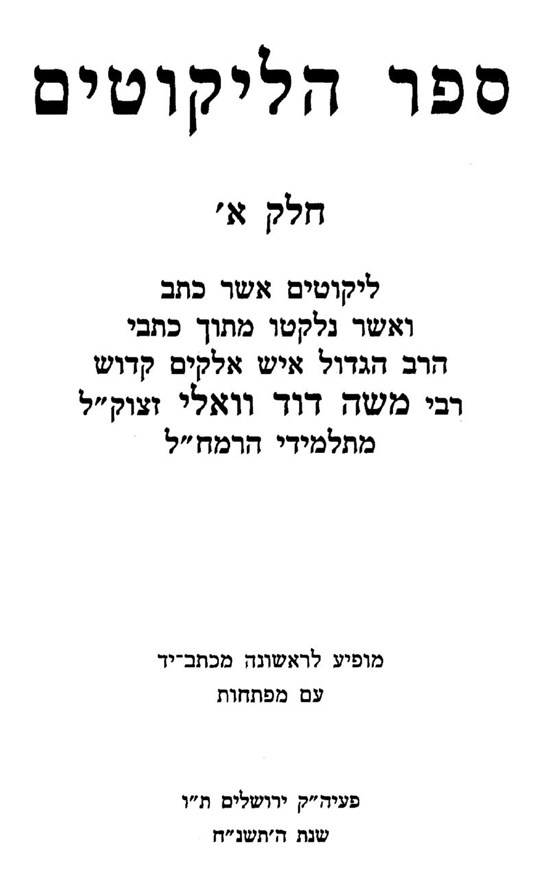
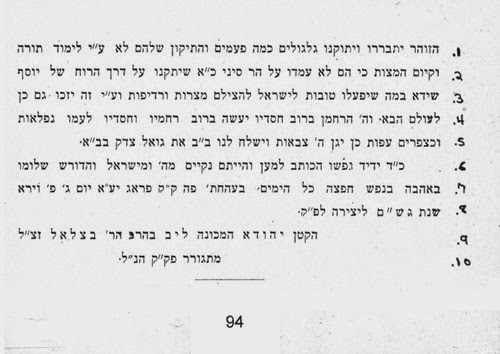
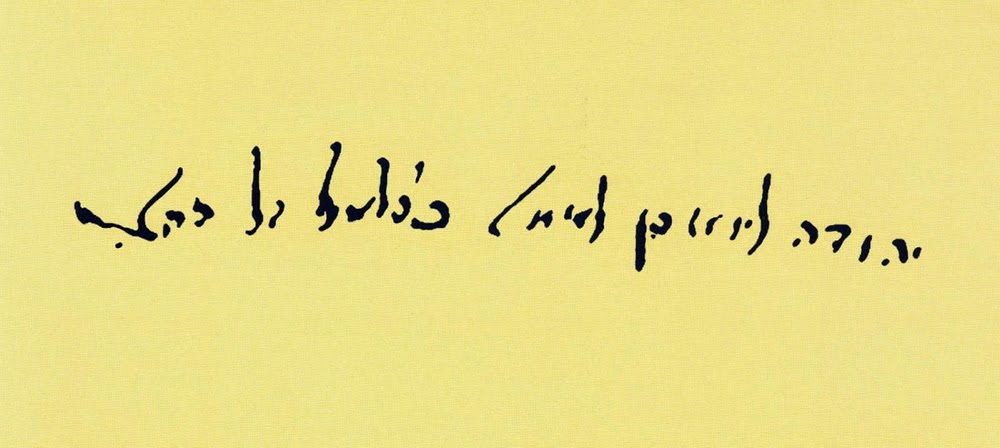
Yet since people are obviously interested in this topic, and took the time to send me the sources, let me thank you by citing a source that has never been referred to in all of the discussions of creation and biblical literalism. It is R. Shlomo Zalman Shag’s Imrei Shlomo, published in Frankfurt in 1866. (I have transliterated his last name as “Shag”, since that is how the Harvard catalog has it.) Here is the title page, where you can see that he identifies himself as a student of R. Isaac of Volozhin.

Worthy of note is that among the subscribers one finds, right next to each other on the list, R. Marcus Lehmann, Abraham Geiger, and Ludwig Philipson.

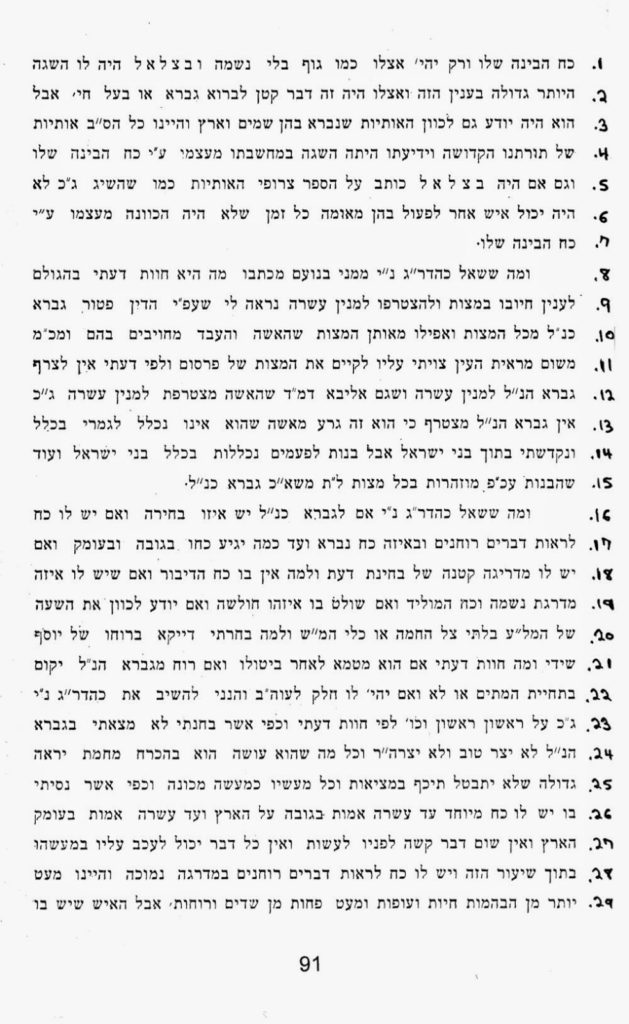
On p. 5 Shag refers to the trees in the Garden of Eden and the snake and says that it is obvious that none of this can be taken literally:

ואם נקח הפרשה הזאת במאזני השכל, ונפלס את הדברים נראה בעליל שהוא רק דברי רמז וחידה, וכפשוטו לא יכנסו כלל בגדר השכל.

On page 10 he explains how the snake represents the evil inclination, an identification pretty standard among the medievals, and he beautifully explains the connection between the two:

והנחש הוא היצר הרע והתאוה . . . היצה”ר נמשל לנחש מה הנחש כשהולך להזיק אינו ברעש ובהלה רק זוחל על הארץ בלחש ומזיק כן הוא היצר הוא בא לאדם בעצה ותחבולה ומראה עצמו כאוהב עד שיפתה, ואח”כ רובץ על צווארי בני אדם כנחש הסובב על הדבר מכל צדדיו.

On p. 21 he even understands the Tower of Babel in non-literal fashion:

ונאמר לראות את העיר ואת המגדל. את העיר זו יושבי העיר כמו העיר ננוה, העיר שושן, הכונה הוא על יושביה, והמגדל הוא המעשים שעשו, נגד רצון השי”ת, כי הם היו מתגאים לעשות להם שם בארץ. והשי”ת שונא גאים ומשפיל אותם, לכן ויפץ ה’ אותם משם על פני כל הארץ.

There have been many understandings of the Tower of Babel, and I don’t want to go into that now, but let me at least mention one of the strangest interpretations out there. R. Menachem Tziyoni (fifteenth century), in his commentary on the episode, claims that the Tower was actually a flying object[19]:

והמגדל הוא הפורח באויר אשר ראו בשמים

At least this is how Tziyoni is usually understood. Yet it is possible that it is not to be taken literally, and I found a post that says precisely this. See here.

Pre-modern man had many stories of those who were able to rise above the ground, either by flying or being transported by God. We find this in Jewish literature as well. See, for example, Bereishit Rabbah 44:8 which focuses on the words in Gen. 15:5 ויוצא אותו החוצה. What does it mean that God brought Abraham outside? The Midrash first quotes R. Joshua in the name of R. Levi:”Did he then lead him forth outside of the world . . . It means, however, that He showed him the streets of heaven.” In response to this R. Judah b. R. Simeon said in the name of R. Johanan: “He lifted him up above the vault of heaven.” Seen in context, as a response to R. Joshua’s explanation, it seems to me that R. Judah b. R. Simeon’s statement must be understood literally. In other words, Abraham was literally transported into the Heavens. See Etz Yosef ad loc: ס”ל דהחוצה כמשמעו שהוא ממש חוץ לעולם

The most famous example of human flight in Jewish literature is that of Jesus. As described in Toledot Yeshu, Jesus was able to use God’s holy name in order to fly, and was brought down by Judas Iscariot who could also fly and defiled Jesus (which caused Jesus to lose his special powers). According to one tradition, he defiled Jesus by urinating on him, but another version has him engaging in homosexual sex while in the air, which in context certainly means rape.

וטנפו במשכב זכור . . . שטנפו במשכב זכור וכיון שטנפו ונפל הזרע על יש”ו הרשע נטמאו שניהם ונפלו לארץ שניהם כאחד

Incidentally, according to Toldot Yeshu this explains why Judas Iscariot is so hated in Christianity:

וכל חכמי הגוים יודעים סוד זה וכופרין אותו ומקללים ומחרימים יהודה אסקריוטו

See Samuel Krauss, Das Leben Jesu nach Juedischen Quellen (Berlin, 1902), pp. 48, 74.

As Morris Goldstein has noted, the second century Acts of Peter describes how Simon Magus flew over Rome, astounding all the onlookers. But Peter, through his prayer to God, was able to force Simon down, a crash landing that caused him to break his leg.[20]

Samael (Satan) can also fly, at least so we are told in the Targum to Job 28:7: סמאל דפרח היך עופא

This should not surprising as according to Isaiah 6:2 the Seraphim fly (with wings), and Hagigah 16a tells us that both angels and demons fly (also with wings).

Midrashic texts speak of two Egyptian magicians who created wings for themselves that enabled them to fly.[21] Rabbinic sources also tell us that Balaam knew how to fly.[22]

With reference to Jesus, it is interesting to note that many Jews actually believed that he performed wonders. However, they attributed it to his knowledge of God’s holy name. Why didn’t they simply assume that all the stories about him were fiction, as modern Jews do? I think the answer is that since all of their neighbors believed the stories, and the miracles Jesus performed are said to have been done before crowds of people, many Jews therefore assumed that these tales must be historically accurate.

In general, it is a common pre-modern assumption that if a group of people, even a group from generations ago, claimed to have witnessed something, that this is a sign that it indeed took place. Today, however, we know how false this argument is. We can cite many examples of mass delusion, not to mention the fact that stories of what people in previous generations witnessed are not actually examples of many people testifying to something, but of one person, the writer, claiming as much.

The stories of Jesus that are found in Toldot Yeshu do not appear in the Talmud, but there are other stories of him found there. However, these stories place Jesus a good 150 years before he actually lived. I say this because the Talmud identifies Jesus as a student of R. Joshua ben Perahyah, who lived circa 120 BCE. In Nahmanides’ disputation, paragraphs 22, 57, he points out that the Christians are wrong on their dates. (R. Judah Halevi, Kuzari 3:65 mentions that Jesus was the student of R. Joshua ben Perahyah and says nothing about the chronological problem. The standard Hebrew edition of the Kuzari is censored [self-censored?], but the reference to Jesus can be seen in the original Arabic published in Kafih’s edition, and also in Hirschfeld’s English translation.)

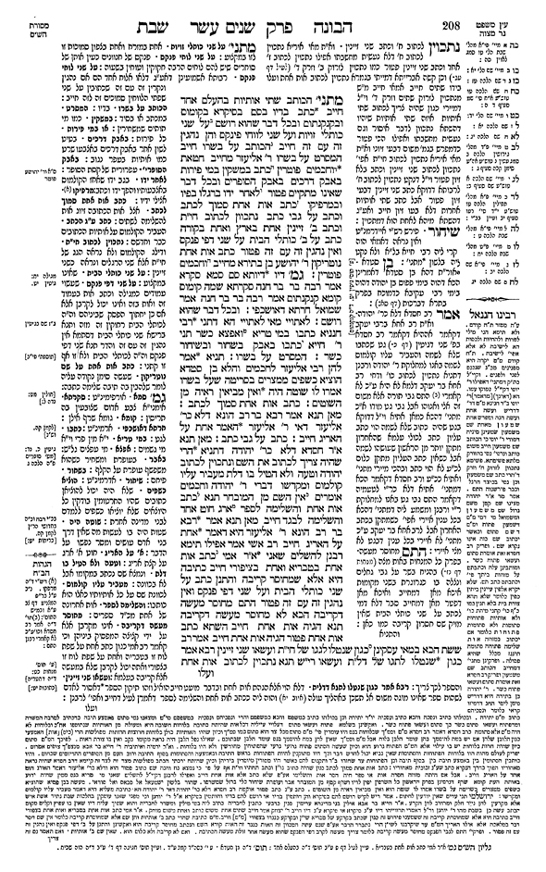
Others, such as R. Jehiel of Paris in his debate, used the chronological discrepancy to argue not that the Christians are wrong on their dates, but that the Jesus of the Talmud is not Jesus of Nazareth. I used to think that no one actually believed this, but resorted to this argument because it was a good way to deflect the Christian attacks that the Talmud defamed Jesus. However, I recently saw that Tosafot ha-Rosh, Sotah 47a, in a completely non-apologetic comment, assumes that the Talmud refers to two different men named Jesus. See also Meiri, Seder ha-Kabbalah, ed. Havlin (Jerusalem-Cleveland, 1992), pp. 69-70, and especially Havlin’s lengthy note. This was also Rabbenu Tam’s opinion, although it has been censored out of our Talmud. Take a look at Shabbat 104b, Tosafot s.v. Ben Stada in the Bomberg Venice 1520 edition, and compare to the standard Vilna edition.


Why does the Babylonian Talmud identify Jesus as a student of R. Joshua ben Perahyah if Jesus lived more than a century later? I think the answer is obvious, namely, that the Talmud had very little knowledge of who Jesus was, and thus did not know when to date him.[23] In fact, the famous story of R. Joshua ben Perahyah pushing Jesus away (Sanhedrin 107b, found in the Soncino translation) is actually a later development of an earlier story that is found in the Jerusalem Talmud. The Jerusalem Talmud’s version does not mention Jesus.[24]

This raises the question of the Talmud as a source of history, which is too large to go into here. But I do want to call attention to what R. Hershel Schachter states in a recent shiur, which I am sure will be surprising to many. The shiur (“Jewish Heritage Tour of Italy, part 2) can be found here.

Beginning at minute 66 R. Schachter acknowledges that the Talmud can err in matters of history. In support of this viewpoint, he cites R. Zerahyah ha-Levi (the Baal ha-Maor) at the beginning of Rosh ha-Shanah and R. Solomon Luria to Sanhedrin 52b. Here is an excerpt:

Today you have people [who] are considered Orthodox and they say [that] the Gemara made a mistake in history. There are a lot of people like that. . . . This is an ongoing debate. Just seventy years ago, before the Second World War, some of the rabbanim in Europe wrote in their seforim [that] it’s a well known fact that the bayit sheni was much more than 420 years. There is 150 years missing there. . . . We are used to this already. When Rabbenu Azariah min ha-Edomim (De Rossi) came out with his sefer Meor Einayim . . . and he said that maybe the chachmei ha-Gemara were wrong in history . . . many rabbanim were so upset they wanted to make a herem against him. I think they did make a herem; I am not sure. . . . Today, everybody is used to this. We assume that the Gemara is not necessarily expert on history, The Gemara can make mistakes in history. Today it’s not assumed to be apikorsus to say [this]. . . . If Azariah De Rossi would have printed his sefer today, no one would have been so excited about it.

For a hasidic perspective on this matter, which is very much in line with modern approaches to Aggadah, see R. Shlomo of Radomsk, Niflaot ha-Tiferet Shlomo (Petrokov, 1923), nos. 73-74. R. Shlomo stresses that when the Talmud tells a story, it does not matter if the facts are contradicted by other talmudic stories, because what is important is not the story itself, which need not be historically accurate, but rather the lesson to be instilled.

ובזה יש ליישב פליאה גדולה אשר יש לשאול, מה זה שמצאנו בכל הש”ס ומדרשים מסופרים מעשיות ומופתים מתנאים ואמוראים בשינוי נוסחאות מאד, זה יאמר כן היה המעשה, וזה יאמר כן . . . דאין אנו דנין על החומר, רק על הצורה, ולפי הצורה המוכנת בענין הזה, באופן זה מספרים חז”ל את המעשה והסיפור, וממ”נ אם להלל ולשבח ולפאר את התנא, או בהיפוך לגנות הרשע, הלא הצורה מוכנת לכ”א . . . ואם להשיג מטרת ותכלית ענין הנרצה בהסיפור הזה לעורר רושם ורעיון להשומע להבין דברי תורה ולעורר אמונת השגחה וכחן וגבורתן של הצדיקים, ג”כ האיכא, ומאי איכפת לן אם החומר מונע, החומר בטל לגבי הצורה, לכן אין נ”מ בין אופן זה לנוסחא אחרת כי הכל תורת אמת.

Returning to the subject of Jesus and R. Joshua ben Perahyah, I think readers might find another text interesting. It is by the kabbalist R. Moses Valle, who was an older colleague of R. Moses Hayyim Luzzatto in Padua. (Although Luzzatto was the leader of their circle, and Valle was thus subservient to him, I don’t know if it correct for the title page to describe Valle as a “student” of Ramhal. I grant that even Italian texts describe Valle as such. See R. Mordechai Samuel Ghirondi, Toledot Gedolei Yisrael [Trieste, 1853], p. 230.)

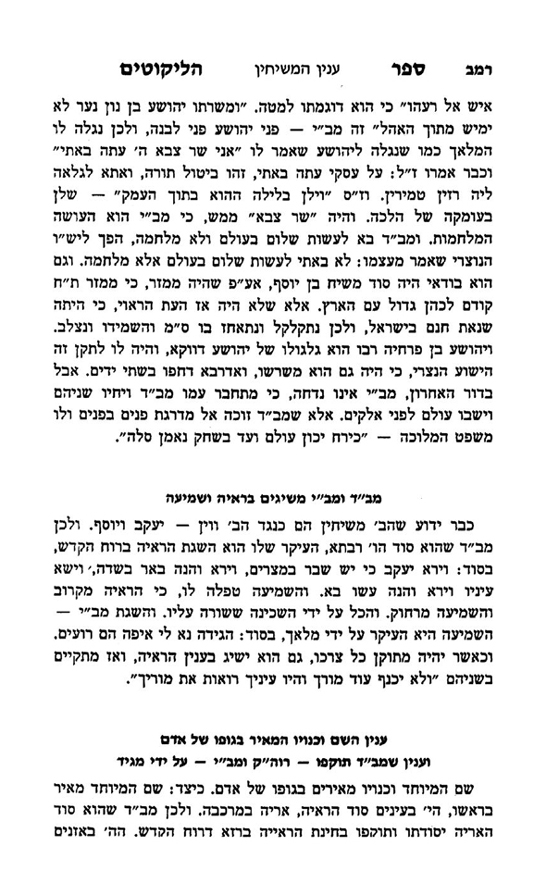
Without seeing the actual text, I don’t think people will believe me if I tell them what he writes, so here is the relevant page from Sefer ha-Likutim p. 242.

According to Valle, Jesus was meant to be Mashiach ben Joseph, but the needless hatred of the Jewish people prevented him from assuming this role. This is such a strange passage that I am impressed that the editor did not censor it prior to publication. For discussion of it, see here.

Interestingly, R. Abraham Abulafia appears to also have identified Jesus as Messiah ben Joseph. See Moshe Idel, Studies in Ecstatic Kabbalah (Albany, 1988), p. 53.

To be continued.


[1] I have explained Rambam according to the exoteric meaning, which is the level that Aviezer is arguing on. Aviezer makes no reference to a possible esoteric teaching.
[2] In the recently published The Rav Thinking Aloud on the Parsha: Sefer Bereishis, p. 8, the Rav misspoke and referred to this conception as the Aristotelian theory.
[3] Thus, I believe that both Rabad in his hassagah to Hilkhot Teshuvah 3:7 and also Kafih in his commentary ad loc., are mistaken in thinking that Maimonides, in listing different types of heretics, is referring here to one who believes in creation from eternal matter. When Maimonides writes about one who does not believe that God is ראשון וצור לכל he is not referring to time but causation. In fact, this formulation of Maimonides is also in accord with Aristotle’s view (that is, how Aristotle was understood by the medievals) that the world is both eternal and ontologically dependant on God. Nowhere in the Mishneh Torah does Maimonides affirm creation, ex nihilo or otherwise. This was recognized by R. Jacob Emden who sees the Mishneh Torah as more radical in this regard than the Guide. See Mitpahat Sefarim (Lvov, 1870) pp. 64-65 (where he also accuses Ibn Ezra of believing in eternity). See also Emden, Otzar ha-Tov (in Birat Migdal Oz [Zhitomir, 1874], p. 22a, who writes, regarding Maimonides’ use in the Mishneh Torah of a proof that assumes the world’s eternity:

לו ידעו הרבנים התלמודיים בפלוסופיא לא היה [!] שותקים לו בכאן

The Maharal, Netivot Olam,p. 224, writes:

והנה בנה עיקר ראייתו על התנועה הנצחית וזהו הפך האמונה שאין אנו מודים בזאת ההנחה. וא”כ כבר נפל הבנין בכללו

That the Guide is actually a theologically more conservative work than the Mishneh Torah has recently been argued by Charles Manekin, “Possible Sources of Maimonides’ Theological Conservatism in His Later Writings,” in Jay M. Harris, Maimonides After 800 Years (Cambridge, 2007), pp. 207-230. One should not forget that the Maimonidean controversy was precipitated by the Mishneh Torah, in particular Sefer ha-Mada, not the Guide.

[4] See the passage quoted from him in Yitzhak Shouraqui, Masoret be-Idan ha-Moderni (Tel Aviv, 2009), p. 34. On p. 44, Benamozegh writes that Ralbag, R. Hasdai Crescas, and R. Nissim did not believe in creation. What he means is that Ralbag did not believe in creation ex nihilo. Crescas did not really believe in creation at all, seeing the universe as eternal, that is, eternally created by God. This means eternal ontological dependence of all existence on the Creator. However, Crescas does believe that our world, as opposed to the universe as a whole, was created at a certain instant. See Warren Zev Harvey, Physics and Metaphysics in Hasdai Crescas (Amsterdam, 1998), pp. 18-19. As I pointed out in Limits, both Ralbag and Crescas stand in opposition to Maimonides’ Fourth Principle. Yet I am unaware of R. Nissim expressing a radical view regarding creation. Does anyone know what he is referring to?
[5] R. Judah Alfakhar also seems to make this error. See Kovetz Teshuvot ha-Rambam ve-Iggerotav (Leipzig, 1859), vol. 3, p. 1b.
[6] I thank Lawrence Kaplan for discussing this matter with me, although this should not imply that he agrees with what I have written.
[7] See here.
[8] Here is what Hirsch writes in Collected Writings, vol. 7, p. 57 (cited by Slifkin, here):

Jewish scholarship has never regarded the Bible as a textbook for physical or even abstract doctrines. In its view the main emphasis of the Bible is always on the ethical and social structure and development of life on earth; that is, on the observance of laws through which the momentous events of our nation’s history are converted from abstract truths into concrete convictions. That is why Jewish scholarship regards the Bible as speaking consistently in “human language;” the Bible does not describe things in terms of objective truths known only to God, but in terms of human understanding, which is, after all, the basis for human language and expression
[9] See here.
[10] See here.
[11] See here.
[12] On this issue, I find mid-twentieth-century Orthodox reconciliations of Torah and science very interesting in that the authors do not seem to be looking over their shoulders, worried about the reaction of the more literalist segment of Orthodoxy. R. Joseph Hertz’s essays following the book of Genesis in his edition of the Pentateuch are a good example of this. Another is R. Samuel Rosenblatt, Our Heritage (New York, 1940), pp. 174-181, in essays entitled “How the World Came Into Being” and “The Garden of Eden, Fact or Fiction.” You can see the essays here, or below.


While reading Rosenblatt’s essays, ask yourself if they could be published in an Orthodox newspaper or shul bulletin today. Note in particular Rosenblatt’s assumption that the Torah makes use of “theories about the nature of the physical world and the details of its generation that were current at the time the Bible was written.” Also relevant to the general issue are his essays on Noah and the Flood, and the Tower of Babel.
[13] For more on “myth”, see my earlier post.

There I wrote:

While in the popular mind myth often is identical with fairy tale, this is not how scholars understand myths. For them, myths communicate cosmic truths in non-historical story form, and they are not synonymous with legends. My dictionary explains myth as “a usually traditional story of ostensibly historical events that serves to unfold part of the world view of a people or explain a practice, belief, or natural phenomenon.”

S. of On the Main Line called my attention to Shadal’s letter in Iggerot Shadal, p. 661, where he speaks about the religious value of “illusions,” that is, matters that are not factual, but nevertheless have great religious value. In this letter we see Shadal, the great opponent of Maimonides, nevertheless adopting his own version of “necessary truths.”

שאין הריליגיאון חביבה לא-ל בשביל אמתתה, רק בשביל תועלתה בתקון המדות, ועל כן אין צורך שיהיו כל דבריה אמתיים, ושאין לנו עכ”ז להרחיק א-להיותה, ושאין להרחיק מהא-ל הגדת דברים בלתי אמתיים כי להגיד כח מעשה בראשית לבשר ודם א”א, ולא יתכן קיום החברה והצלחת האדם בידיעת האמת, אלא באיללוזיון, כי כן הטבע (אשר הוא בלא ספק רצון הא-ל) מרמה אותנו בענינים הרבה.

[14] Rather than refer to any number of books on the history of astronomy, here is what the Wikipedia entry on “Geocentric Model” has to say:

Adherence to the geocentric model stemmed largely from several important observations. First of all, if the Earth did move, then one ought to be able to observe the shifting of the fixed stars due to stellar parallax. In short, if the earth was moving the shapes of the constellations should change considerably over the course of a year. If they did not appear to move, the stars are either much further away than the Sun and the planets than previously conceived, making their motion undetectable, or in reality they are not moving at all. Because the stars were actually much further away than Greek astronomers postulated (making movement extremely subtle), stellar parallax was not detected until the 19th century. Therefore, the Greeks chose the simpler of the two explanations. The lack of any observable parallax was considered a fatal flaw of any non-geocentric theory. Another observation used in favor of the geocentric model at the time was the apparent consistency of Venus’ luminosity, thus implying that it is usually about the same distance from Earth, which is more consistent with geocentrism than heliocentrism. In reality, that is because the loss of light caused by its phases compensates for the increase in apparent size caused by its varying distance from Earth. Once again, Aristotle’s objections of heliocentrism utilized his ideas concerning the natural tendency of earth-like objects. The natural state of heavy earth-like objects is to tend towards the center of the earth and to not move unless forced by an outside object. It was also believed by some that if the Earth rotated on its axis, the air and objects in it (such as birds or clouds) would be left behind.

[15] Norman Lamm, “The Religious Implications of Extraterrestrial Life,” Tradition 7 (Winter 1965) pp. 27-28.
[16] A more academic version of this article appeared in JQR 55 (Jan. 1965), and some points in it were subjected to strong criticism by Harry Wolfson, ibid., 56 (Jan. 1966). Lamm told me that he felt it was a great honor for a young scholar like himself to be criticized by Wolfson. Similar sentiments have been expressed by students who were criticized in class by the Rav and Saul Lieberman.
[17] See here and here (note how the mention of R. [David] Feinstein has been removed from the first source).
[18] One reader asked me if there are traditional sources that speak of God creating things in the world after the initial creation. As a matter of fact, Isaiah 65:17 reads: “For, behold, I create new heavens and a new earth; and the former things shall not be remembered, nor come into mind.” A midrash quoted in R. Kasher’s Torah Shelemah, vol. 1, p. 123, reads as follows:

באותה שעה [כשעברו את הים] ברא להם הקב”ה ארץ חדשה כמו בבריאת העולם בששת ימי בראשית.

These two sources are cited by R. Judah Leib Zlotnick, “Bereishit” bi-Melitzah ha-Ivrit (Jerusalem, 1938), p. 27.

[19] Interestingly, R. Jonathan Eybschuetz, Tiferet Yehonatan, parashat Noah (p. 11a in the standard edition), claims that the builders of the tower were trying to make it so high that they could then launch a spaceship from it that would reach the moon (or perhaps I should say “the sphere of the moon”). This would then become their new home!

וזה היה כונת דור הפלגה ג”כ שבקשו לקבוע מושבם בכדור ירחי ששם יהיו נצולים ממבול וחשבו לעשות ע”י ספינה הנ”ל אפס כיצד יגביהו אותו הספינה למעלה מאויר העכור ולזה חשבו לבנות מגדל גבוה כל כך עד למעלה האויר ההוא ומשם יוכלו להשתמש בספינה הנ”ל לשוט באויר עד כדור הירחי.

[20] See Goldstein, Jesus in the Jewish Tradition (New York, 1950), p. 302 n. 34.

[21] See Louis Ginzberg, Legends of the Jews, vol. 3, p. 28.
[22] See Targum Ps.-Jonathan, Numbers 31:8, Zohar, vol. 3, pp. 194a-194b, Ginzberg, Legends, vol. 6, p. 144.
[23] For more on R. Joshua and Jesus, see Markham Judah Geller, “Joshua B. Perahyah and Jesus of Nazareth: Two Rabbinic Magicians” (unpublished doctoral dissertation, Brandeis University, 1974).
[24] See Peter Schäfer, Jesus in the Talmud (Princeton, 2007), ch. 3. Some readers might also enjoy Herb Basser’s lecture, “How Reliable are the Talmudic Teachings on Jesus,” available here.

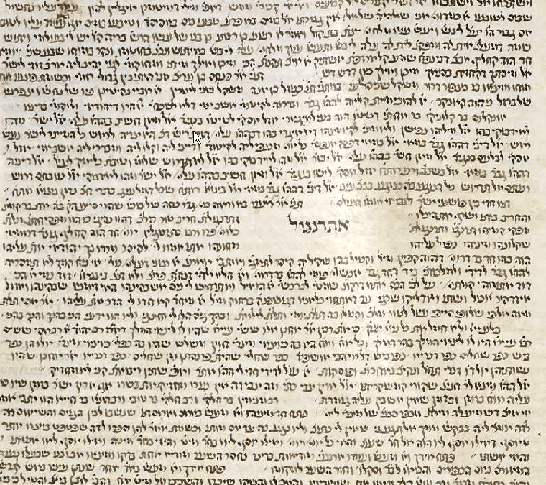
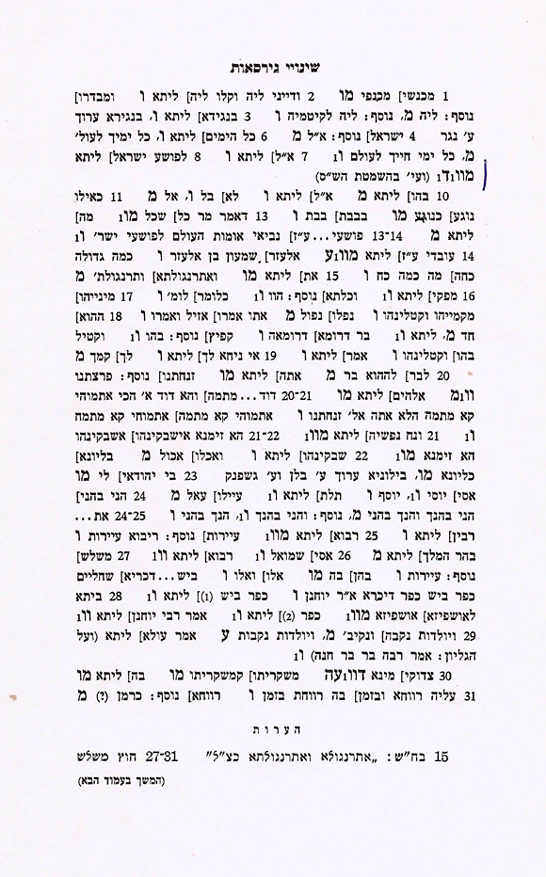
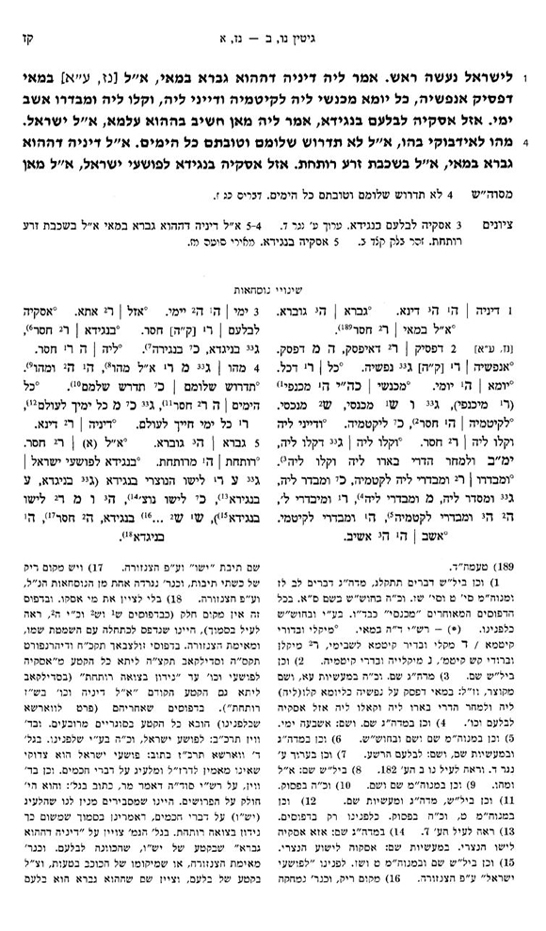
The original version of Sanhedrin, which mentions Jesus, is not found in the Artscroll edition. In other words, the Artscroll Talmud, including the Hebrew version, is still a censored, and thus defective, edition. I find this quite amazing. Is there a valid reason why Artscroll has not returned the Talmud to its pristine text? Speaking of internal censorship, here is another amazing example. Gittin 57a has a reference to Jesus, and this is preserved in the Munich manuscript and other uncensored mss. (and recorded in the Soncino translation). Here is a copy of the Munich manuscript. Look three lines above the large word אתרנגול

It states that Jesus was raised from the dead through incantations: אסקי’ לישו בנגיד’. In the standard text this has been altered to read, instead of Jesus, לפושעי ישראל. Now here is a copy of Meir S. Feldblum’s Dikdukei Soferim on Gittin. See how he wouldn’t even record what the Munich edition stated, and instead advises the reader to examine Hashmatot ha-Shas!


This book was published in 1966 and he was afraid to give us the reading in the Munich ms., yet Rabbinovicz in nineteenth-century Germany has no problem giving us the correct reading in the earlier mentioned story from Sanhedrin (as well as in the other talmudic passages where Jesus is mentioned). Does Feldblum’s action make any sense? I wonder if some future historian will be led to mistakenly conclude that anti-Semitism was more of a problem in 1966 America than nineteenth-century Germany. Fortunately, last year a new edition of Dikdukei Soferim on Gittin was published. Here is the relevant page where we are told what the Munich ms. really says.


The Princess and I: Academic Kabbalists/Kabbalist Academics

ב”ה
The Princess and I[1]
Academic
Kabbalists/Kabbalist Academics
לכב’ יומא דהילולא דרשב”י ל”ג בעומר
by Josh Rosenfeld
Josh Rosenfeld is the
Assistant Rabbi at Lincoln Square Synagogue and on the Judaic Studies Faculty
at SAR High School.
This is his second
contribution to the Seforim blog. His
first essay, on “The Nazir in New York,” is available (here).
The last few decades
have witnessed the veritable explosion of “new perspectives” and
horizons in the academic study of Kabbalah and Jewish Mysticism. From the
pioneering work of the late Professor Gershom Scholem, and the establishment of
the study of Jewish Mysticism as a legitimate scholarly pursuit, we witness a
scene nowadays populated by men and women, Jews and non-Jews, who have
challenged, (re)constructed, and expanded upon Scholem’s work.[2]
 These men and women themselves have been
variously praised and criticized themselves for sometimes blurring the lines
between academician and practitioner of Kabbalah and mysticism.[3]
Professor Boaz Huss of the Ben-Gurion University of the Negev has done
extensive work in this area.[4]
One of the most impressive examples of this fusion of identities is Professor
Yehuda Liebes (Jerusalem, 1947-) of Hebrew University, who completed his
doctoral studies under Scholem, and rose to prominence himself by challenging
scholarly orthodoxies established by his mentor.
On a personal note, the
initial encounter between so-called ‘traditional’ notions of Kabbalah and
academic scholarship was a jarring one, calling into question aspects of faith
and fealty to long-held beliefs.[5]
In a moment of presumption, I would imagine that this same process is part and
parcel of many peoples’ paths to a more mature and nuanced conception of Torah
and tradition, having undergone the same experience. The discovery of
scholar/practitioners like Prof. Liebes, and the fusion of mysticism and
scholarship in their constructive (rather than de-constructive) work has served
to help transcend and erase the tired dichotomies and conflicts that previously
wracked the traditional readers’ mind.[6]
It is in this sense, and
in honor of the 33rd of the ‘Omer
the Rosh ha-Shana of The Zohar and
Jewish Mysticism that I present here an expanded and annotated translation of
Rabbi Menachem Hai Shalom Froman’s poem and pean to his teacher, Professor
Yehuda Liebes.[7]
Study of the unprecedented relationship between the two, and other
traditional/academic academic/traditional Torah relationships remains a
scholarly/traditional desideratum.[8]
Rabbi Menachem Froman
was born in 1945, in Kfar Hasidim, Israel, 
and served as the town rabbi of Teko’a in the West Bank of Israel.
During his military service, served as an IDF paratrooper and was one of the
first to reach the Western Wall.. He was a student of R. Zvi Yehuda Kook at
Yeshivat Merkaz ha-Rav and also studied Jewish Thought at the Hebrew University
of Jerusalem. A founder of Gush Emunim, R. Froman was the founder of Erets Shalom and advocate of
interfaith-based peace negotiation and reconciliation with Muslim Arabs. As a
result of his long-developed personal friendships, R. Froman served as a
negotiator with leaders from both the PLO and Hamas. He has been called a
“maverick Rabbi,” likened to an “Old Testament seer,”[9]
and summed him up as “a very esoteric kind of guy.”[10]
Others have pointed to R. Froman’s expansive and sophisticated religious
imagination; at the same time conveying impressions of ‘madness’ that some of
R. Froman’s outward appearances, mannerisms, and public activities may have
engendered amongst some observers.[11] He passed
away in 2013.
R. Froman was not known
for his written output, although recently a volume collecting some of his
programmatic and public writing has appeared, Sahaki ‘Aretz (Jerusalem: Yediot and Ruben Mass Publishers: 2014).[12]
I hope to treat the book and its fascinating material in a future post at the Seforim blog. [13]
The Princess and I
Menachem Froman
Translated and Annotated
by Josh Rosenfeld
II Samuel 6:12-23
And she saw him, dancing
and leaping[14]
amongst lambs and goats
it troubled her[15]
and she despised
him in her heart that
had opened to love
she had com/passion
and she sought from her
father to be his wife[16]
And she saw him, dancing
and leaping
with her in the ways of
men amidst the longing of doves[17]
 it troubled her
and she despised
him in her heart at the
moment of intimacy
she had com/passion
upon him like the
embrace of parting moment[18]
And she saw him, dancing
and leaping
amongst foreign matrons
 it troubled her
and she despised
him in her heart that he
had left her in pain
and she resorted to the
honor of her father and the garb of royals
He saw her, and he leapt
and he danced
in the presence of the
glory of his God
he was troubled
and he despised
in his heart conceiving
the troubles in hers
he had com/passion
yet still returned
to his flocks and his
herds
to the dancing and
leaping he loved
______
            It is through this poem, written many years ago, that I
wish to join with those who are honoring my teacher and Rebbe Muvhak [ =longtime teacher] Professor Yehuda Liebes, shlit”a [ =may he merit long life]
(or, as my own students in the Yeshiva are used to hearing during my lectures, Rebbe u’Mori ‘Yudele’ who disguises himself
as Professor Liebes
…).
This poem (at least
according to its authorial intent), describes the ambivalent relationship
between two poles; between Mikhal, the daughter of Saul, who is connected to
the world of kingship and royalty, organized and honorable – and David, the
wild shepherd, a Judean ‘Hilltop Youth’ [ =no’ar
gev’aot
]. Why did I find (and it pleases me to add: with the advice of my
wife) that the description of the complex relationship between Mikhal, who
comes from a yekkishe family, and
David, who comes from a Polish hasidishe  family, is connected to [Prof.] Yehuda
[Liebes]? (By the way, Yehuda’s family on his father’s side comes from a city
which is of doubtful Polish or German sovereignty). Because it may be proper,
to attempt to reveal the secret of Yehuda – how it is possible to bifurcate his
creativity into the following two ingredients: the responsible, circumspect (medu-yekke)
scientific foundation, and the basic value of lightness and freedom.
Seriousness and mirth
(as he analyzes with intensity in his essay “Zohar and Eros”[19]),
formality and excess (as he explains in his book, “The Doctrine of
Creation according to Sefer Yetsirah“[20]),
contraction and expansion, saying and the unsaid, straightness ( =shura)
and song ( =shira). Words that stumble in the dark, seek in the murky mist,
for there lies the divine secret. Maimonides favors the words: wisdom and will;
and in the Zohar, Yehuda’s book, coupling and pairs are of course, quite
central: left as opposed to right, might ( =gevura)
as opposed to lovingkindness ( =hesed),
and also masculinity as opposed to the feminine amongst others. I too, will
also try: the foundation of intellectualism and the foundation of sensualism
found by Yehuda.
Do these two fundamental
aspects of Yehuda’s creativity mesh together to form a unity? This poem, which
I have dedicated to Yehuda, follows in the simple meaning of the biblical story
of the love between Mikhal and David, and it does not have a ‘happy ending’;
they separate from each other – and their love does not bear fruit. Here is
also the fitting place to point out that our Yehuda also merited much criticism
from within the academic community, and not all find in his oeuvre a unified
whole or scientific coherence of value. But perhaps this is to be instead found
by his students! I am used to suggesting in my lectures my own interpretation
of ‘esotericism’/secret: that which is impossible to [fully] understand, that
which is ultimately not logically or rationally acceptable.
I will conclude with a
story ‘in praise of Liebes’ (Yehuda explained to me that he assumes the meaning
of his family name is: one who is related to a woman named Liba or, in the changing of a name, one who is related to an Ahuva/loved one). As is well known, in
the past few years, Yehuda has the custom of ascending ( =‘aliya le-regel)[21]
on La”g b’Omer to the
celebration ( =hilula) of
RaShb”I[22]
in Meron. Is there anyone who can comprehend – including Yehuda himself – how a
university professor, whose entire study of Zohar is permeated with the notion
that the Zohar is a book from the thirteenth- century (and himself composed an
entire monograph: “How the Zohar Was Written?”[23]), can be
emotionally invested along with the masses of the Jewish people from all walks
of life, in the celebration of RaShb”I, the author of the Holy Zohar?
Four years ago, Yehuda
asked me to join him on this pilgrimage to Meron, and I responded to him with
the following point: when I stay put, I deliver a long lecture on the Zohar to
many students on La”g b’Omer,
and perhaps this is more than going to the grave of RaShb”I.[24]
Yehuda bested me, and roared like a lion: “All year long – Zohar, but on La”g b’Omer – RaShb”I!”
            God’s secret is with/in those who fear him, and his
covenant makes it known.[25]


[1] I wish to thank yedidi R’ Menachem Butler for his patient guidance and assistance in the preparation of this short essay. His expertise and erudition is something worthy of true admiration. Thanks, as well, is also due to the other editors at the Seforim Blog for their consideration of this piece, and for providing such a remarkable, long-running platform for the dissemination, discussion, and study of Jewish culture and thought
[2] It is no understatement to say that there is a vast literature on the late Professor Gershom Scholem and for an important guide, see Daniel Abrams, Kabbalistic Manuscripts and Textual Theory: Methodologies of Textual Scholarship and Editorial Practice in the Study of Jewish Mysticism, second edition (Jerusalem: Magnes Press, 2014). See also Gershom Scholem’s Major Trends in Jewish Mysticism 50 Years After: Proceedings of the Sixth International Conference on the History of Jewish Mysticism, eds. Joseph Dan and Peter Schafer (Tübingen: Mohr Siebeck, 1993), 1-15 (“Introduction by the Editors”); Essential Papers on Kabbalah, ed. Lawrence Fine (New York: NYU Press, 1995); Mysticism, Magic, and Kabbalah in Ashkenazi Judaism, eds. Karl Erich Grozinger and Joseph Dan (Berlin: De Gruyter, 1995); Kabbalah and Modernity: Interpretations, Transformations, Adaptations, eds. Boaz Huss, Marco Pasi and Kocku von Stuckrad (Leiden: Brill, 2010), among other fine works of academic scholarship.

For a unique example of a non-apologetic traditional engagement with Scholem’s work, see R. Shimon Gershon Rosenberg (ShaGaR), Nehalekh be-Regesh (Efrat: Mahon Kitve ha-Rav Shagar, 2010), 75-97, especially 77-78 (Hebrew), which I hope to explore in a future essay at the Seforim blog.

[3] While representing a
range of academic approaches, these scholars can be said to have typified a
distinct phenomenological approach to the academic study of Kabbalah and what
is called “Jewish Mysticism.” See Boaz Huss, “The Mystification
of Kabbalah and the Myth of Jewish Mysticism,” Peamim 110 (2007): 9-30 (Hebrew), which has been shortened into
English adaptations in Boaz Huss, “The Mystification of the Kabbalah and
the Modern Construction of Jewish Mysticism,” BGU Review 2 (2008), available online (here);
and Boaz Huss, “Jewish Mysticism in the University: Academic Study or
Theological Practice?” Zeek (December 2006), available online (here).

[4] See Boaz Huss,
“Spirituality: The Emergence of a New Cultural Category and its Challenge
to the Religious and the Secular,” Journal
of Contemporary Religion
29:1 (January 2014): 47-60; see further in Boaz
Huss, “The Theologies of Kabbalah Research,” Modern Judaism 34:1 (February 2014): 3-26; and Boaz Huss,
“Authorized Guardians: The Polemics Of Academic Scholars Of Jewish Mysticism
Against Kabbalah Practitioners,” in Olav Hammer and Kocku von Stuckrad,
eds., Polemical Encounters: Esoteric
Discourse and Its Others
(Leiden: Brill, 2007), 85-104. On the difficulty
of pinning down just what is meant by the word ‘mysticism’ here, see Ron
Margolin, “Jewish Mysticism in the 20th Century: Between Scholarship and
Thought,” in Haviva Pedaya and Ephraim Meir, eds., Judaism: Topics, Fragments, Facets, and Identities – Sefer Rivkah
(=Rivka Horwitz Jubilee Volume) (Be’er Sheva: Ben Gurion University, 2007;
Hebrew), 225-276; see also the introduction to Peter Schäfer, The Origins of Jewish Mysticism
(Tübingen: Mohr Siebeck, 2009), 1-31, especially 10-19, where Schäfer attempts
to give a precis of the field and the various definitions of what he terms
“a provocative title.”  See
Boaz Huss, “Spirituality: The Emergence of a New Cultural Category and its
Challenge to the Religious and the Secular,” Journal of Contemporary
Religion 29:1 (January 2014): 47-60; see further in Boaz Huss, “The
Theologies of Kabbalah Research,” Modern Judaism 34:1 (February 2014):
3-26; and Boaz Huss, “Authorized Guardians: The Polemics Of Academic
Scholars Of Jewish Mysticism Against Kabbalah Practitioners,” in Olav
Hammer and Kocku von Stuckrad, eds., Polemical Encounters: Esoteric Discourse
and Its Others (Leiden: Brill, 2007), 85-104.
On the difficulty of
pinning down just what is meant by the word ‘mysticism’ here, see Ron Margolin,
“Jewish Mysticism in the 20th Century: Between Scholarship and
Thought,” in Haviva Pedaya and Ephraim Meir, eds., Judaism: Topics,
Fragments, Facets, and Identities – Sefer Rivkah (=Rivka Horwitz Jubilee
Volume) (Be’er Sheva: Ben Gurion University, 2007; Hebrew), 225-276; see also
the introduction to Peter Schäfer, The
Origins of Jewish Mysticism
(Tübingen: Mohr Siebeck, 2009), 1-31,
especially 10-19, where Schäfer attempts to give a precis of the field and the
various definitions of what he terms “a provocative title,” as well
earlier in Peter Schäfer, Gershom Scholem
Reconsidered: The Aim and Purpose of Early Jewish Mysticism
(Oxford, U.K.:
Oxford Centre for Postgraduate Hebrew Studies, 1986).
[5] For an example of the
sometimes fraught encounter and oppositional traditional stance regarding the
academic study of Kabbalah, see Jonatan Meir, “The Boundaries of the
Kabbalah: R. Yaakov Moshe Hillel and the Kabbalah in Jerusalem,” in Boaz
Huss, ed., Kabbalah and Contemporary
Spiritual Revival
(Be’er Sheva: Ben Gurion University Press, 2011),
176-177. Inter alia, Meir discusses
the adoption of publishing houses like R. Hillel’s Hevrat Ahavat Shalom of “safe” academic practices such as
examining Ms. for textual accuracy when printing traditional Kabbalistic works.
See also R. Yaakov Hillel, “Understanding Kabbalah,” in Ascending Jacob’s Ladder (Brooklyn:
Ahavat Shalom Publications, 2007), 213-240; and the broader discussion in
Daniel Abrams, “Textual Fixity and Textual Fluidity: Kabbalistic
Textuality and the Hypertexualism of Kabbalah Scholarship,” in Kabbalistic Manuscripts and Textual Theory:
Methodologies of Textual Scholarship and Editorial Practice in the Study of
Jewish Mysticism
, second edition (Jerusalem: Magnes Press, 2014), 664-722.
[6] For a scholarly
overview of Liebes’ work, see Jonathan Garb, “Yehuda Liebes’ Way in the
Study of the Jewish Religion,” in Maren R. Niehoff, Ronit Meroz, and
Jonathan Garb, eds., ve-Zot le-Yehuda –
And This Is For Yehuda: Yehuda Liebes Jubilee Volume
(Jerusalem: Mosad
Bialik, 2012), 11-17 (Hebrew); and for an example of a popular treatment of
Liebes, see Dahlia Karpel, “Lonely Scholar,” Ha’aretz (12 March 2009), available online here
(http://www.haaretz.com/lonely-scholar-1.271914).
[7] The poem and essay were
first published in Menachem Froman, “The King’s Daughter and I,” in
Maren R. Niehoff, Ronit Meroz, and Jonathan Garb, eds., ve-Zot le-Yehuda – And This Is For Yehuda: Yehuda Liebes Jubilee Volume
(Jerusalem: Mosad Bialik, 2012), 34-35 (Hebrew). The translation and
annotation of this essay at the Seforim
blog
has been prepared by Josh Rosenfeld.

[8] For
a sketch of the (non)interactions of traditional and academic scholarship in
the case of Gershom Scholem, see Boaz Huss, “Ask No Questions: Gershom
Scholem and the Study of Contemporary Jewish Mysticism,” Modern Judaism 25:2 (May 2005) 141-158. See also Shaul Magid, “Mysticism,
History, and a ‘New’ Kabbalah: Gershom Scholem and the Contemporary
Scene,” Jewish Quarterly Review
101:4 (Fall 2011): 511-525; and Shaul Magid, “‘The King Is Dead [and has
been for three decades], Long Live the King’: Contemporary Kabbalah and
Scholem’s Shadow,” Jewish Quarterly
Review
102:1 (Winter 2012): 131-153.

[9] See
the obituary in Douglas Martin, “Menachem Froman, Rabbi Seeking Peace,
Dies at 68,” The New York Times (9 March 2013), available online  (here).
Speaking to a member of the Israeli media at R. Froman’s funeral, the author
and journalist Yossi Klein Halevi described “Rav Menachem” as
“somebody who, as a Jew, loved his people, loved his land, loved humanity
– without making distinctions, he was a man of the messianic age, he saw
something of the redemption and tried to bring it into an unredeemed
reality,” available online here (here).

[10] R. Froman’s mystical
political theology permeated his own personal existence. Even on what was to
become his deathbed, he related in interviews how he conceived of his illness
in terms of his political vision: “How do you feel?” “You are
coming to me after a very difficult night, there were great miracles. It is
forbidden to fight with these pains, we must flow with them, otherwise the pain
just grows and overcomes us. This is what there is, this is the reality that we
must live with. Such is the political
reality, and so too with the disease
.” (Interview with Yehoshua
Breiner, Walla! News Org.; 3/4/13, emphasis mine)

[11] See, for example, the
short, incisive treatment of Noah Feldman, “Is a Jew Meshuga for Wanting
to Live in Palestine?” Bloomberg
News
(7 March 2013), available online (here),
who concisely presents the obvious paradox of “The Settler Rabbi” who
nevertheless advocates for a Palestinian State, and outlines the central
challenges to R. Froman’s “peace theology” from practical security
concerns for Jews living in such a state to the challenges of unrealistic
idealism in R. Froman’s thought.

[12] A presentation of some
of the first translations of some of Sahaki
‘Aretz’
fascinating material, can be seen online (here).
[13] A preliminary scholarly
overview of R. Froman’s literary output and sui generis personality is the
forthcoming essay by Professor Shaul Magid, “(Re)­Thinking American Jewish
Zionist Identity: A Case for Post­Zionism in the Diaspora.” To the best of
my knowledge, Professor Magid’s currently unpublished essay is the first
scholarly treatment of R. Froman’s writings in Sahaki ‘Aretz, although see the brief review by Ariel Seri-Levi,
“The Vision of the Prophet Menachem, Rebbe Menachem Froman,” Ha’aretz Literary Supplement (9 February
2015; Hebrew). I would like to thank Menachem Butler for introducing me to
Professor Magid.
[14] King David is at times
referred to as the badhana d’malka,
or “Jester of the King” (see Zohar, II:107a); Liebes treats the
subject at length in Yehuda Liebes, “The Book of Zohar and Eros,” Alpayim 9 (1994): 67-119 (Hebrew).
[15] Gen. 41:8
[16] For an outlining of the
parallel, sometimes oppositional, and rarely unified relationships between the
two royal lineages of Joseph and Judah, see the remarkable presentation of R.
Mordechai Yosef Leiner of Izbica (1801-1854), Mei ha-Shiloah, vol. 1, pp. 47-48, 54-56. On these passages, see
Shaul Magid, Hasidism on the Margin:
Reconciliation, Antinomianism, and Messianism in Izbica/Radzin Hasidism

(Madison: University of Wisconsin Press, 2003), 120, 147, 154, et al. The
marriage of David to Mikhal, daughter of Saul, represented an attempted
mystical fusion of the two houses and their perhaps complementary spiritual
roots, as R. Froman alludes to later in his essay.
[17] Song of Songs 2:14,
5:2. See, most recently, Michael Fishbane, The
JPS Bible Commentary: Song of Songs
(Philadelphia: Jewish Publication
Society, 2015), 75-76, 133-135.
[18] 1 Kings 7:36, see also
b. Yoma 54b with commentary of Rashi.
[19] Yehuda Liebes,
“The Book of Zohar and Eros,” Alpayim
9 (1994): 67-119 (Hebrew)
[20] Yehuda Liebes, Ars
Poetica in Sefer Yetzirah
(Jerusalem:
Schocken, 2000; Hebrew) and see the important review by Elliot R. Wolfson, “Text,
Context, and Pretext: Review Essay of Yehuda Liebes’s Ars Poetica in Sefer Yetsira,” Studia Philonica Annual 16 (2004): 218-228.
[21] See the start of this
essay, where we defined Lag ba-Omer in
the sense of the Kabbalistic/Mystical Rosh ha-Shana. For an overview of Lag ba-Omer and it’s unique connection
to the study of the Zohar, see Naftali Toker, “Lag ba-Omer: A Small Holiday of Great Meaning and Deep
Secrets,” Shana beShana (2003):
57-78 (Hebrew), available online (here).
[22] See Boaz Huss,
“Holy Place, Holy Time, Holy Book: The Influence of the Zohar on
Pilgrimage Rituals to Meron and the Lag ba-Omer Festival,” Kabbalah 7 (2002): 237-256 (Hebrew).
[23] Yehuda Liebes,
“How the Zohar Was Written,” in Studies
in the Zohar
(Albany: SUNY Press, 1993), 85-139. For an exhaustive survey
of all of the scholarship on the authorship of the Zohar, see Daniel Abrams,
“The Invention of the Zohar as a Book” in Kabbalistic Manuscripts and Textual Theory: Methodologies of Textual
Scholarship and Editorial Practice in the Study of Jewish Mysticism
, second
edition (Jerusalem: Magnes Press, 2014), 224-438.
[24] Towards the end of his
life, R. Froman delivered extended meditations/learning of Zohar and works of
the Hasidic masters in a caravan at the edge of the Teko’a settlement in Gush
Etzion. These ‘arvei shirah ve-Torah
were usually joined by famous Israeli musicians, such as the Banai family and
Barry Sakharov. One particular evening was graced with Professor Liebes’
presence, whereupon Liebes and Froman proceeded to jointly teach from the
Zohar. It is available online (here).
[25] Ps. 25:14; See Tikkunei Zohar 17b, 65a; For the
connection of this verse with the 33rd of the ‘Omer, see R. Elimelekh of Dinov, B’nei Yissachar: Ma’amarei
Hodesh Iyyar
, 3:2. For an exhaustive discussion of the 33rd day of the
‘Omer and its connection with Rashbi, see R. Asher Zelig Margaliot (1893-1969),
Hilula d’Rashbi (Jerusalem: 1941),
available online (here), On R. Asher
Zelig Margaliot, see Paul B. Fenton, “Asher Zelig Margaliot, An Ultra
Orthodox Fundamentalist,” in Raphael Patai and Emanuel S. Goldsmith, eds.,
Thinkers and Teachers of Modern Judaism (New York: Paragon House, 1994), 17-25;
and see also Yehuda Liebes, “The Ultra-Orthodox Community and the Dead Sea
Scrolls,” Jerusalem Studies in
Jewish Thought
3 (1982): 137-152 (Hebrew), cited in Adiel Schremer,
“‘[T]he[y] Did Not Read in the Sealed Book’: Qumran Halakhic Revolution
and the Emergence of Torah Study in Second Temple Judaism,” in David
Goodblatt, Avital Pinnick, and Daniel R. Schwartz, eds., Historical Perspectives from the Hasmoneans to Bar Kokhba in Light of
the Dead Sea Scrolls
(Leiden: Brill, 2001), 105-126. R. Asher Zelig
Margaliot’s Hilula d’Rashbi is
printed in an abridged form in the back of Eshkol Publishing’s edition of R.
Avraham Yitzhak Sperling’s Ta’amei
ha-Minhagim u’Mekorei ha-Dinim
and for sources and translations relating to
the connection of RaShb”I and the pilgrimage (yoma d’pagra) to his grave in Meron, see (here).


New Book Announcement: Mesoras Torah Sheba’al Peh by Harav Professor Shlomo Zalman Havlin

New Book Announcement: Mesoras Torah Sheba’al Peh by Harav Professor Shlomo Zalman Havlin

By Eliezer Brodt

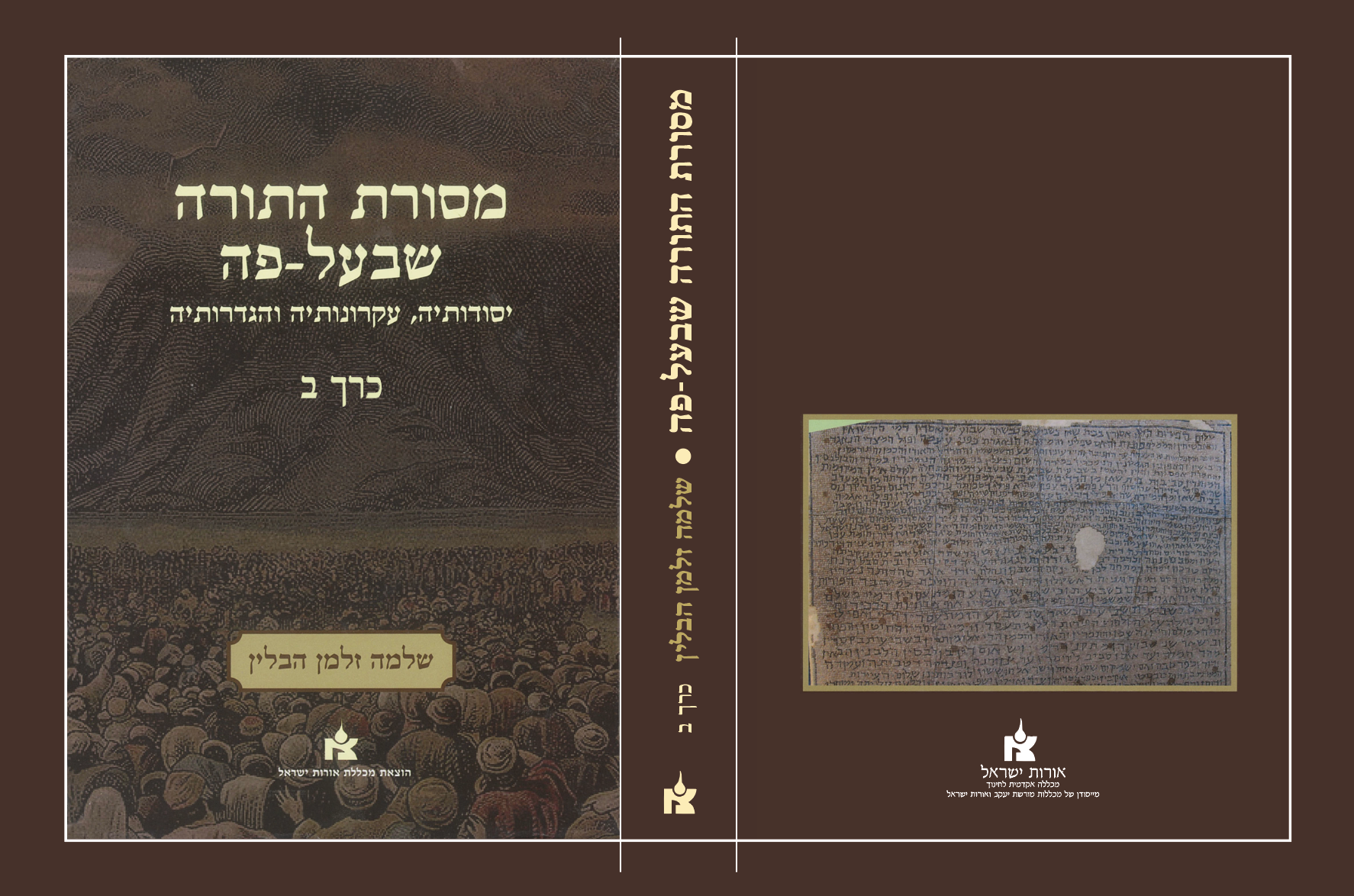
רשלמה זלמן הבלין, מסורת התורה שבעל פה, יסודותיה, עקרונותיה והגדרותיה בג [בחלקים], 1048 עמודים

I am very happy to announce the recent publication of an important two-volume work, which will be of great interest to readers of the Seforim Blog. Mesoras Torah Sheba’al Peh by Harav Professor Shlomo Zalman Havlin, of Bar-Ilan University’s Talmud department.

There are various “agendas” in the following post:

The first: to further the Seforim Blog’s mission to inform its readership of new works and furnish them with a descriptive review; case in point these two incredible new volumes recently published.

Second: making some of the seforim mentioned and reviewed here available for sale; the proceeds help support the Seforim Blog.

Professor Havlin is one of the more prolific writers in the Jewish academic scene, having authored hundreds of articles and edited and published numerous seforim.

His articles cover an incredibly wide range of subjects in many areas of Jewish Studies; Geonim, Rishonim and Achronim as well as Bibliography, to name but a few. It is hard to define his area of expertise, as in every area he writes about he appears to be an expert!

He also served as chief editor of Bar Ilan University’s bibliographical journal, Alei Sefer for many years; in this capacity he also wrote numerous short but immensely insightful book reviews.

Over his career, RSZ Havlin devoted a lot of time and energy studying and analyzing various important Rishonim. Of note is the Rashba, he expended immense energy in publishing numerous manuscripts alongside his own in-depth essays regarding them. These were collected a few years back and published in two volumes by Mechon Even Yisroel.

He has edited and printed from manuscript works of Rishonim and Achronim, being firmly of the opinion, contrary to that of some other academics, that there is nothing non-academic about publishing critical editions of important manuscript texts.

His uniqueness lies not only in the topics he has taken up, but also in that his work has appeared in all types of publications running the gamut from academic journals such as Kiryat Sefer, Sidra, Alei Sefer as well as many prominent Charedi rabbinic journals such a Yeshurun, Moriah and others.

Another point unique to Havlin’s writings, besides his familiarity with all the academic sources, is that he shows prodigious familiarity with all the classic sources from Chazal, Geonim, Rishonim and Achronim, to even the most recent discussions in Charedi literature – this bekius was apparent well before the advent of search engines such as Bar-Ilan’s Responsa Project, Hebrew Books and Otzar Ha-hochmah. Alongside all this is his penetrating analysis and ability to raise interesting points.

A few years ago, my dear friend Menachem Butler made available dozens of RSZ Havlin’s publications online at his academia page available here.

About ten years ago, he published volume one of his writings, which contained fifteen chapters spanning from Chazal all the way until the Chazon Ish.

At the time, Professor Havlin mentioned to me that he hopes that he will find the strength and funding to publish the rest of his material. Over the years I reached out to him about it and he said he had no luck finding funding. To my great surprise, a few months ago he reached out to me and sent me the Table of Contents, saying the work has been finally published.

As one can see from the Table below, lots of material is devoted to the Rambam – to whom Havlin has devoted years researching all aspects of his writings from the manuscript to early printings. At one point, he published under Mechon Ofek the “Sefer Mugah (Authorized Copy) of the Rambam’s Yad and included an incredible introduction. This classic essay is included in this new collection alongside numerous essays of his on the Rambam many of which have also become classics.

These volumes have other important essays on Rishonim; included are his lengthy introductions to the Meiri’s Seder Kabbalah and his work on Avos, both of which he published critical, annotated editions through Mechon Ofek a few years back.

Some other essays in these volumes worth pointing out are his excellent introduction to the set Torasan Shel Geonim (published by Vagshal), and his essay on the authorship of the Kol Bo and Orchos Chaim.

There are also very important essays starting with the earliest Achronim to various essays on the Chazon Ish; sandwiched between are important essays on the Gra and others. One essay I enjoyed learning through a few times is his material on R’ Yechiel Ashkenazi from the time of the Rama. Another important essay of his which I enjoyed and use often is on Pilpul which was based on a talk in Harvard he gave many years ago.

There are also various book reviews of editions of seforim (some are rather sharp) all worth learning through carefully.

There is much more to say about the materials and essays in these two volumes but time is short.

Some of the essays were updated with new material or corrections from when they were published the first time.

Two minor complaints I would like to voice, one is there is no index to these works which makes it impossible to maximize all the nuggets all over in his various tangents. I imagine the reason for this is because indices costs lots of money to produce and the raising of funds for the publication was long, tedious and painful as it is so no index was included.

Another complaint which I have not come up with a good defense for is not every article has the original publication information included in the beginning of the chapter or at the end of the volumes. I imagine this too had to do with the budget.

Be that as it may, these two small complaints are negligible; these incredible volumes are worth owning and learning through carefully to gain from the research and discoveries of Havlin of over fifty years of learning.

I am the distributor of this work and I am selling copies of this work (currently it is not for sale anywhere else), so for more information about ordering\purchasing this work, contact me at Eliezerbrodt@gmail.com

Here are the Table of Contents of the book:

Vol. I:

Vol. II:


The Creative Craftsman: Adorning The Torah, One Crown At A Time

The
Creative Craftsman: Adorning The Torah, One Crown At A Time
By Olivia
Friedman
Olivia Friedman received
her M.A. in Bible from the Bernard Revel Graduate School of Jewish Studies.
Based in Chicago, she is a Judaic Studies teacher, tutor, writer, and lecturer
and can be reached at oliviafried-at-gmail-dot-com.
It’s not surprising that
there are many overlooked biblical commentators. However, R’ Zalman Sorotzkin’s is one who ought to be rescued from relative obscurity. Sorotzkin’s biography and
tumultuous history helped shape his unique outlook upon Tanakh. His vision and
appreciation for cultural context allows readers access to the text via the
road of personal relevance. His biblical commentary’s contemporary resonance
will recommend him to modern day Jews in particular.
Biography
Born in 1881 in
Zachrina, Lithuania (Sofer), he was influenced by his father, R’ Benzion, a man
who spent much of his time learning Torah and bringing others closer to God
(Anonymous 4). A brilliant orator, R’ Benzion had the ability to move people to
tears. This last extended even to his son, whom he always cautioned, warning
him that if he did not shed tears when he prayed the words ‘And light up our
eyes with Your Torah’ he would not be successful in his studies that day
(Anonymous 4). R’ Benzion’s wife, Chienah, was the daughter of the sage and
kabbalist R’ Chaim who wrote the work Divrei
Chaim
on the Torah (Anonymous 4). Born to two such illustrious people, it
was hardly surprising that Zalman, a young prodigy, applied himself to his
studies. He learned in his father’s house and then in the famous Slobodka
yeshiva alongside the esteemed R’ Moshe Danishevsky, choosing later to study in
Volozhin under R’ Raphael Shapiro (Anonymous 4).
            Zalman
created a name for himself due to his diligence and success in his studies; his
reputation spread throughout the land and even reached Telz. Rabbi Eliezer Gordon,
Dean of Telz, gave R’ Zalman Sorotzkin his daughter’s hand in marriage. Her
name was Sarah Miriam. Once married, Sorotzkin chose to learn in seclusion for
many years in Volozhin, after which he returned to Telz because the yeshiva had
burned down. He accepted the position of principal in order to rebuild the
yeshiva, a mission he successfully completed (Anonymous 5). Upon the death of
his father-in-law, he was invited to Voronova, which is situated between Lidda
and Vilna, to be the spiritual leader and Rav. R’ Zalman accepted the offer and
immediately set his sights upon recreating the city. At this time he also
became good friends with R’ Chaim Ozer Grodzinski, who lived nearby in Vilna
(Sofer). As soon as R’ Zalman came to Voronova, he made a yeshiva for young
students and did his utmost to forge strong relationships with the community
members, who saw him as a mentor, teacher and spiritual guide (Anonymous 5).
            When
he had completed his task in Voronova, R’ Zalman determined to move to Zhetel,
where he focused on important work such as constructing its Talmud Torah
(Sofer) and offering support in the areas of financial upkeep of the home.
Sorotzkin was never divorced from the reality of everyday living or hardships
within the Jewish communities. Indeed, such hardship and misfortune struck him
as well. Upon the arrival of World War I, he and his family were forced to flee
and escape to Minsk (Sofer).[1]
His name having preceded him, upon his arrival he immediately utilized his time
and energy in serving the people of the community, specifically working to
ensure that as many rabbis and Torah students as possible could be spared from
conscription to the Russian army (Anonymous 5).[2]
Sorotzkin traveled to St. Petersburg and due to his connections with General
Stasowitz, “managed to procure ‘temporary deferments’ for hundreds of rabbis
who were not recognized by the Polish government” (Sofer). Due to a mistake on
General Stasowitz’s part, these deferments remained in effect throughout the
entire period of the war. R’ Sorotzkin also spoke and offered words of
encouragement and praise to the Jews of the community; he was known to possess
a golden tongue (Anonymous 5).
            After
the war was over, Sorotzkin returned to Zhetel briefly. Due to his fame and
abilities, he was courted as potential Rav by many different communities; in
1930, he finally determined to head the community of Lutsk. He transformed the
community, working to ensure that the schools and yeshivot were of top quality
(Sofer) while also focusing on national matters. He was appointed by R’ Chaim
Ozer Grodzinski to head the Committee for the Defense of Ritual Slaughter, as
Poland had determined that halakhic ritual slaughter was cruel. When the law
against ritual slaughter was passed, R’ Sorotzkin countered by “placing a ban
on meat consumption” (Sofer). Three million Polish Jews no longer purchasing
meat was enough to cause cattle-owners to place pressure upon the government, who
then cancelled the decree. When the Polish government decided to establish an
elite rabbinate, one of those chosen was R’ Zalman Sorotzkin (Anonymous 6).
            Upon
the outbreak of World War II, the Soviet authorities planned to arrest R’
Zalman Sorotzkin (Anonymous 6). Thus, he and his family were forced to flee to
Vilna, where R’ Chaim Ozer Grodzinski “instructed him to immediately attend to
the needs of the yeshivas” (Sofer). It was only once Vilna was taken over by
the Bolsheviks that Sorotzkin and other escapees began a long, arduous journey
to Israel (Anonymous 6). They were helped by the sages and rabbis in America.[3]
            Despite
the many tragedies that had occurred in his family (the loss of his only
daughter, his son, his father-in-law and grandchildren during World War II), R’
Zalman Sorotzkin remained undeterred and threw himself into communal
obligations once more. He created a Vaad HaYeshivos in Israel similar to the
one that had existed in Vilna. Its first task was to “provide a financial base
for the yeshivas” (Sofer). When Agudas Israel was organized in Israel and the
Moetzes Gedolei HaTorah [Council of Torah Sages] was formed, the Gaon R’ Isser
Zalman Meltzer was appointed and R’ Sorotzkin was chosen to assist him. After
R’ Isser Zalman Meltzer passed away, R’ Sorotzkin took over the position as
head of the Moetzes Gedolei HaTorah himself (Anonymous 7).
            When
the Israeli government decided to start government-structured education and do
away with certain aspects of Judaic education that had existed until then, the
Moetzes Gedolei HaTorah banded together in order to create a chain of schools
that would accord with their views on education (Anonymous 7). The plan by the
Israeli government was to create three different streams of education- “one for
general Zionism, one for Labor-oriented Zionism, and one for the Mizrachi”
(Sofer). Later, the government wished to reduce these streams to two- “a
secular state system and a religious state system” (Sofer). This was not
something the Moetzes Gedolei HaTorah could support; they had very particular views
regarding Jewish education and having their curriculum approved or managed by
the government was unacceptable. They therefore created the Chinuch Atzmai
initiative.[4] R’ Zalman
Sorotzkin took over leadership for this project and put much effort into it. He
started many schools while simultaneously recording his novel insights into
Torah, publishing several works, including Aznayim
L’Torah,
his commentary on the Torah, Moznayim
L’Torah
, his commentary on the festivals, and HaDeiah v’HaDibur, which focuses both on Torah and the festivals.
Having dedicated his life to the betterment of circumstances for the Jewish
people, he passed away on the 9th of Tamuz 5726 (1966).
Masterwork
            One
of R’ Zalman Sorotzkin’s seminal works – perhaps the seminal work – was his Aznayim
L’Torah
[Ears for the Torah]. His introduction to the work, printed in
front of his commentary to Genesis, contains his personal outlook on life and
an explanation of what inspired him to write this commentary. He begins by
noting the distinction between simple praise and the higher level of praise and
thanks. Praise is offered when someone does a positive action in a normal or
traditional manner. But the higher level of praise and thanks occurs when
someone does something in an unusual way, where they are coming from a place of
love and compassion. Sorotzkin argues that all of the Jews who were blessed and
gifted with survival after the horrors of World War II need to thank God for
their salvation. All the more so does this apply to those who were lucky
enough, like himself, to make their way to the land of Israel.
            Sorotzkin’s
humility is demonstrated by his passionate belief that he, his wife and his
family are so insignificant in relation to the many other people who perished
in the Holocaust. “Who am I and who is my household that You saved us?” he
questions God. He explains that he feels truly blessed that he was able to see
his books in print and come to Israel where he could serve God. Then,
shockingly, he also blesses and praises God with regard to all the horrors that
had been visited upon him. Despite the fact that many of his family members
perished in the Holocaust, he chooses to see this as the will of God and thinks
that he too has a portion in their blood of atonement. He wholeheartedly
believes that God will be good and avenge their blood and that because of this
physical death they have all earned eternal life.
            At
this point in the introduction, R’ Sorotzkin begins to delineate the sources
and motivations for his commentary. There are four of them. First, he credits
his rebbe, who taught him Chumash [Bible] and accustomed him to review it
diligently. There were times that R’ Sorotzkin reviewed an entire book of the
Five Books in a day, and completed all five within the week. Due to this wide
exposure to Tanakh, R’ Sorotzkin was given a wonderful background off of which
to compose speeches and to find answers to the problems of life within the
Torah.
            Second,
he credits his son. He desired to fulfill the commandment of V’shinantam l’vanecha [and you shall
teach/ make it sharp for your son] for at least one day a week without making
use of a shliach [agent]. Thus, he
accustomed himself to learn the portion of the week on the Sabbath with his
son, doing his utmost to plant the seeds for love of Torah and fear of God. His
son had many excellent questions and R’ Sorotzkin explains that he learned a
lot from his son, who would offer
lots of novel insights to him.
            Third,
R’ Sorotzkin was not limited to learning with his son but also learned with
many other people. He explains that throughout his career in Lutsk, Zhetel and
Voronova and continuing to Jerusalem, he would give over short speeches and
lectures themed as pertaining to Torah. In this way he created flowers and
adornments for the section of the week, beautifying it and making it holy. He
tried to find connections between the Written Law and the Oral Law in order to
truly connect with and reach other people.
            Fourth,
R’ Sorotzkin was bothered by all the troubles that beset the Jews- decrees,
wars, a time of destruction, leaving religion, breaking educational boundaries
and exile. He therefore decided to write a commentary that would speak to the
times and address the issues of the generation, trying to show his beleaguered
people that the light of God that comes from understanding the Bible and
Prophets may illuminate their lives as well.
            R’
Sorotzkin writes that he looked over his lifework a number of times before
publishing it, adding sections and subtracting others until he felt that he had
truly created his masterwork. He specifically chose the name Aznayim L’Torah because it reflected the
essence of the work- this demonstrates his own experience in listening to the
messages the Torah conveys as well as the way in which the book was formed,
through listening to the ideas and insights of others (such as his students).
Perhaps the most important aspect of Sorotzkin’s work was his clear desire to
enable it to be accessible to all. He offers a guide as to what many different
members of society will be able to discover within its covers. Rabbis and
scholars will appreciate finding the words of our sages and other interwoven
concepts in clear and concise language. Teachers will find explanations and
clarifications in accordance with the simple understanding of the text and
ideas that will enter into the minds of their students. Learned people will
find new insights and explanations, specifically words that are accepted into
the heart. In this way, his commentary aims to be useful to and appreciated by
all.
            Sorotzkin
explains a stylistic choice he made regarding his utilization of the words
‘Maybe’ or ‘Perhaps’ throughout his commentary. He explains that he wrote his
commentary keeping the adage of the Tosfos Yom Tov in mind (Brachot 85: 44)
that it is permissible to offer explanation and commentary on the Torah only
via the method of explicating the simple understanding or a more complicated
understanding so long as one does not claim this is the final and inarguable
mode of comprehending the text. Sorotzkin explains that his commentary reflects
his thoughts and the reader is welcome to take them or leave them; he
understands that there are seventy facets to the Torah and the reader should
feel free to choose whichever snippets of his commentary speak most to him.
            Sorotzkin
concludes by dedicating his work to the memory of his father and mother, whom
he praises and admires, and thus begins the reader’s journey into the mind and
methods of a nobly intentioned man.
Examples of Sorotzkin’s Unique Approach Via Deuteronomy
What Sets Deuteronomy Apart
            Sorotzkin
begins his commentary to the Book of Deuteronomy by noting the distinct
differences between this book and the other four books of the Torah. The other
four books are linked to Genesis and appear to be one Torah, but this work
begins with the words ‘These are the words’, making it stand alone. It even has
its own title, he explains- that of Mishnah Torah. The second distinction
appears in the way the narrative is told over. Throughout the rest of the
Torah, lashon nistar – secretive or
hidden language- is utilized. Events are told over in the third person: ‘And
God spoke to Moses.’ In contrast, here much of the book is recorded in the
first person. Third, the content of Deuteronomy is quite different: it seems to
be review of precepts formerly discussed in the other works alongside rebuke
and chastisement. Fourth, aside from the title Mishnah Torah, the work has
another name, Sefer HaYashar [The Book of the Righteous] which also requires
explanation.
            Sorotzkin
argues that the entire Torah is from God and anyone who suggests that even one
verse was written by Moses of his own initiative is incorrect. If so, however,
why are there all the aforementioned distinctions between this work and other
works? R’ Zalman explains that it would have been difficult for a generation
steeped in idolatry to serve God appropriately, which was part of the reason
that God decreed that the generation had to stay in the desert for forty years,
during which time its children could grow up knowing only God and unfamiliar
with idols and other forms of impurity. Moses wished to ensure that this second
generation would not sin and thus wanted to paint a vivid picture of all that
had transpired in order to warn and guide them so that when they crossed the
Jordan they would not be lost. Sorotzkin cites the Abarbanel who explains that
first Moses spoke these words and afterwards God gave him leave to include them
within the Torah. Thus, the fact that they were written within the
authoritative text was not of his own initiative. Due to this work’s emphasis
on reviewing the commandments and offering rebuke, it was entitled Mishnah
Torah.
            Yet
why was it entitled Sefer HaYashar? This is due to the verse in Deuteronomy 6:
18, ‘And thou shalt do that which is right and good in the sight of the Lord
that it may be well with thee.’ Yet doesn’t it also mention the word ‘yashar’
in Exodus? Yes, explains R’ Sorotzkin, but the word is mentioned far more
frequently in Deuteronomy than Exodus and the title of a book follows the
frequency of the topic/ theme mentioned therein. He cites the Maharsha, who
explains the verse in 6:18 as referring to the need to operate lifnei m’shuras ha’din [above and beyond
the letter of the law]. Moses is thus instructing the Jews to follow God’s law
but not just the letter of the law; rather, the spirit of the law as well.
            R’
Sorotzkin then offers a beautiful understanding of the Midrash Rabbah which
suggests that this particular work was found in Joshua’s hands and that it is
thus understood that the King of the Jews must carry it with him at all times.
Since all of the Torah is meant for all Jews, why is Deuteronomy specifically
offered to/ meant to be found upon the person of a king? R’ Sorotzkin explains
that it is because the king has special powers to put people to death simply
due to his law (outside of the typical workings of a Jewish court). Thus, the
king might be tempted or fall prey to acting in a cruel manner. It is
specifically this book which focuses upon the need to operate in a way which is
above and beyond the letter of the law that will remind him that he is
accountable for his actions and it is better to be merciful and charitable, as
King David was, than to be too quick to punish. This is the reason that
throughout Tanakh the words yashar [righteous]
and tov [good] are associated with
David and those who follow in his footsteps. This explains the reason that this
work specifically should not be forgotten and should not ever be absent from a
leader’s lips; he must know and understand and remember the need to act in a
just and righteous manner so as not to betray God and the mission God offered
him.
Various Orientations to Text- Literary,
Realistic, Personal, Psychological
            R’
Zalman Sorotzkin’s commentary is both beautiful and peculiar in that it does
not seem to follow simply one methodological method or attempt to reach one
goal. Since the main themes that motivated him in the writing of it were
accessibility to the populace and speaking to the times, it is perhaps not
surprising that his analysis, ideas and thoughts are so varied. He particularly
focuses upon literary and psychological problems within the text, but also
appeals to modern readings of the verses in addition to consistently comparing
verses that appear within one text to those found in a different place. By dint
of these comparisons he desires to draw out a point, sometimes an important and
overarching message that helps demonstrate the particular significance of the
passage he is currently explicating. The varied and sporadic nature of his
commentary typifies its genius. There is something here for everyone, from the
child to the scholar. It is almost like attending a banquet where many
sumptuous foods and delicacies are served. One person may prefer the chocolate
mousse while another may enjoy tenderloin steak, and both are lovingly
presented upon the table.
            Sorotzkin’s
careful reading of verses translates to a fascinating analysis ranging from the
more obvious understanding that Deuteronomy begins without use of the
conjunctive vav to his more subtle reading of Deuteronomy 1:5. There, R’
Sorotzkin questions how it would help to ‘explain’ the Torah in foreign
languages seeing as the Jews would not have understood these languages. He then
offers a reading where the Hebrew word lashon
means ‘idiom’ and thus Rashi is referring to the fact that Moses in fact
explained the seventy facets of the Torah as opposed to writing them down in
different tongues. Sorotzkin is concerned with reality and with events making
sense on a logical plane; thus his worry over an ‘explanation’ that wouldn’t
actually help explain anything!
            Similarly,
in keeping with his desire to link the Written Torah and Oral Torah,
Sorotzkin’s careful literary analysis allows him to demonstrate that there are
places where this must be so. In Deuteronomy 1:11, he comments on the words
‘May God add to you…a thousand times yourselves.’ In keeping with Maimonides’
understanding regarding cities of refuge, where an additional three cities were
not yet added and thus it means that they will be added in the time of Messiah,
Sorotzkin notes that there has not yet been a time in history where there have
been six hundred million Jews. Since the Torah does not offer false promises,
he argues, this blessing too must refer to a future time (that of the Messiah).
            Yet
his literary awareness also leads him to shed light upon deceptively simple
texts. For instance, in Deuteronomy 2:6, he comments to the verse ‘You shall
purchase food…so that you may eat, also water…so that you may drink.’ After
citing other commentaries’ explanations of this verse, the question being why
it was necessary to explain that the people would eat or drink the food (isn’t
that evident?) he offers his own, elegantly linking it back to the complaints
registered against the manna in Numbers 21:5. There, the Hebrews had declared
that they were ‘disgusted with the insubstantial food.’ There were also those
who found fault with the water from the miraculous well, as stated by the
Netziv. Here, notes R’ Sorotzkin, the people will have a chance to purchase
food and water as opposed to the manna and miraculous well upon which they had
previously been subsisting. God knew, however, that as soon as they did so they
would realize that they had in fact lacked nothing for the forty years in which
they had traipsed through the desert, and that God’s food was superior to
anything they could purchase. Thus, the simple explanation of the verse is that
the Hebrews purchased food as opposed to eating their own because they longed
for something to eat which was not miraculous in origin.
            R’
Sorotzkin’s appreciation for stylistic literary choices is further demonstrated
in his understanding of Deuteronomy 1:44. He elaborates upon the verse ‘As the
bees would do,’ creating an extended metaphor that explains how precisely the
actions of these men who desired to possess the land of Israel were akin to
those of bees. He explains that “[b]ees make honey, but also sting” (Lavon 24)
which is why, when a beekeeper desires to harvest his honey, he must first
light a fire with green wood, which will send up lots of billowing smoke. The
bees “run inside the hive and cower” (Lavon 25) upon smelling the smoke, at
which time the beekeeper is able to harvest the honey. In contrast, someone who
desires to steal the honey will not be able to announce his presence by
kindling a fire. Thus, he must approach unshielded and the bees will sting him
to death. In the end, he must flee in order to preserve his life (Lavon 25).
            Similarly,
explains R’ Sorotzkin, the men who wished to possess the land of Israel did so
unlawfully and therefore the pillar of cloud which accompanied them in the
desert did not protect them. Indeed, if they had received God’s explicit
command and blessing, that cloud would have annihilated their enemies and
caused them to fall dead in their path. The Jews would then be able to possess
the land which was flowing with milk and honey, the Amorites having left them
untouched. However, “when these willful people barged in unlawfully, they were
like thieves seeking to take honey from the hive without a smokescreen” (Lavon
25). For this reason, the Amorites were able to fall upon them “like bees”
(Lavon 25) and far from conquering the land flowing with milk and honey, these
Hebrews lost their lives in the attempt. Sorotzkin’s reading is imaginative,
creative and extremely vivid; he takes one sentence within the verse and
conjures up an entire scenario which adds flavor and meaning to the text.
            Sorotzkin’s
playful personality arguably appears in his analysis of Deuteronomy 3:26.
There, God has informed Moses that rav
lach
[it is too much for you]. Sorotzkin interprets this as a literary play
on words. Rav lach could also mean ‘a
Rabbi for you.’ Moses had suggested that even if he was not permitted to lead the Israelites into the Promised
Land, perhaps he could act as an ordinary citizen and follow Joshua’s command.
God’s answer to this was rav lach
‘acting as a Rav is the task for you’ and that he would be unable to be a mere
student. Sorotzkin notes that this fits perfectly with the Midrash Tanhuma’s
understanding that after Moses learned Torah from Joshua he said, “Until now I
requested my life, but now, my soul is Yours for the taking.”
            Aside
from puns and creative interpretation, Sorotzkin’s commentary is also sprinkled
with comments that show his humility. In his commentary to Deuteronomy 1:15, he
gives credit to his nephew for the explanation he offers. In Deuteronomy 1:15,
he frankly admits that he did not fully understand the Vilna Gaon’s holy words.
He is not shy of admitting his lack of understanding. Similarly, in Deuteronomy
1:46, he seems puzzled, explaining that he cannot understand why Rashi offered
an interpretation that is contrary to the one found in Seder Olam. This is
aside from the fact that his commentary as a whole is peppered with sources
outside of himself, whether they are traditional greats like Rashi, Maimonides
and the like or the Vilna Gaon, Melo HaOmer or Ka’aras Kesef. Sorotzkin clearly
valued the contributions of those other than himself and uses them as
springboards off of which to base his own ideas.
            Perhaps
Sorotzkin’s most compelling renderings of Tanakh appear in his psychological
readings of various verses. Indeed, he often links the literary to the
psychological, noticing particular wording in a verse or the placement or
juxtaposition of several verses, and then coming to conclusions about the
significance of this order. In his commentary to Deuteronomy 1:1, ‘The words
that Moses spoke,’ Sorotzkin explains that people will listen to a speaker for
one of two reasons. One: The speaker may be a gifted orator who knows how to
latch onto and grab hold of the hearts of men. Two: He is speaking on behalf of
a famous and important person, and thus even if his tongue is made of stone, he
will still command attention. For this reason, when Moses speaks with God by
the burning bush, the objections he has reflect his psychological state. Moses
realizes that he will not be able to command the attention of the Hebrews
because they do not know who God is and thus will not attend since reason two
will not apply in their case. Due to this, he concludes his conversation with
God by explaining that he is not a man of words as opposed to opening with that
objection.
            Similarly,
in his commentary to Deuteronomy 1:17, Sorotzkin is surprised by Moses’
language. The verse seems to suggest that Moses sees himself as capable of
solving any problem; indeed, he declares that “any matter which is too
difficult for you, you shall bring to me and I shall hear it” (Deut 1:17)! How
can it be that the humblest man on earth, deemed so by God Himself, can be so
arrogant as to suggest that he will be able to solve any problem, no matter how
thorny? R’ Sorotzkin delves into the psychological underpinnings of Moses’
statement and determines that in fact there is no contradiction at all. What
Moses is really stating is that perhaps the judges will come upon a difficult
litigant who will not allow them to proceed in their task. Under such
circumstances, since Moses has already warned the judges not to ‘tremble before
any man,’ he now cautions them that if a litigant comes before them who is too
difficult for them, “’bring [this case] to me and I shall hear it,’ for I am
willing to suffer the slings and arrows of this difficult man” (Lavon 15). Far
from declaring his superiority and claiming that he has the ability and insight
to rule in every single case, Moses is acting humbly, explaining that he is not
too proud to bear the contempt of a dissatisfied plaintiff.
            But
it does not end there. Sorotzkin’s entire interpretation of the phrase ‘As the
Lord, your God, commanded you’ (Deuteronomy 5:16) as it refers to the
commandment of honoring one’s father and mother reflects his sensitivity to the
psychological conditions under which that generation had been raised. He
explains:
Normally, children’s
love and respect for the parents who brought them into the (present) world
grows steadily through the years. The more the child enjoys his life, the more
happiness he discovers, then the greater will be his love for the parents who
gave him this happy life.
In the plains of Moab,
Moses was confronted with children who had suffered greatly from wandering in
the desert, all because of their parents’ misdeeds. It was their parents who
had brought down upon them the decree that “Your children will roam in the
Wilderness for forty years and bear [the guilt of] your guilt” (Numbers 14:33).
Therefore Moses stressed what God had told him on Mt. Sinai: that this
commandment must be done “as the Lord, your God, commanded you”: to honor your
parents during their life and afterwards, regardless of how well or ill
satisfied you are with your life. (Lavon 79)
Once again, Sorotzkin succeeds in making the
Torah a contemporary and caring book, demonstrating that Moses understood and
spoke to the nation’s psychological state.
            Sorotzkin’s
practical advice and use of anecdotes and stories to flavor his point helps him
to fulfill his goal of making his commentary easy and accessible. In his
commentary to Deuteronomy 1:1 on ‘These are the words that Moses spoke’ he
explains that Moses only engaged in words of Torah, a small matter in those
times. Relating the point to his own generation, however, he mentioned that:
For Moses, a man of God,
this was merely a minor accomplishment. Yet in our own times we merited the
example of the Chafetz Chaim, zt”l,
who used his tendency to be talkative as a tool to keep away from sin. In order
to avoid speaking or hearing idle words, he would talk endlessly to both
students and visitors about Torah subjects and Jewish ethics. The great tzaddik R’ Chaim Ozer Grodzinski, zt”l,
bore witness that the author of the Shemiras
HaLashon
guarded his own tongue in a most original way: not by keeping
silent, but by always fulfilling v’dibarta
bam
so that there was never a moment for idle talk. (Lavon 3)
Similarly, in his commentary to Deuteronomy 1:1
on the words ‘To all Israel,’ he offers an example from his time, stating:
A story is told about a gaon who was famous for his moving
discourses. Everyone would run to hear him speak and listen to his words of
rebuke. After his death, his discourses were collected and published, but for
some reason they did not have a profound effect on their readers. People
commented that although these were the very same speeches they remembered
hearing from the great man himself, something was missing—the sigh that would
escape his lips when he paused. That sigh, which rose from the depths of his
heart, broke their hearts when they heard it. For only words that come from the
heart can enter the heart. (Lavon 4)
Through interweaving these stories and
anecdotes, Sorotzkin manages to capture the attention of an element who might
not feel connected to the text otherwise.
            His
penetrating psychological insights and evaluations of characters within the
text also help to add a dimension of reality to an otherwise distant story. For
example, Sorotzkin notices that Moses states “I cannot carry you alone” in
Deuteronomy 1:9 only to later state “How can I alone carry your contentiousness?”
in verse 12. Why the need for repetition? Answers R’ Sorotzkin:
The fact is that being a
ruler of Israel is similar to being a slave. Even after Moses, the acknowledged
ruler of his people, decided that he was unable to bear all their problems and
judge all their cases himself, as he declares in this verse, he asks himself
what the people will say. Perhaps his ‘masters’ would think he was shirking his
duty towards them, and that he was really capable of bearing the burden by
himself. Therefore, he asked them if they agreed with him (v. 12). Let them
tell him, if they can, how he can bear it all by himself! Only after they
answered him, “The thing that you have proposed to do is good” (v. 14) was his
mind at ease. (Lavon 10)
Through careful reading of the verses and
appreciating the literary significance of the seeming repetition, R’ Sorotzkin
seeks to unveil the thoughts that were pressing upon Moses’ mind. Similarly, in
Deuteronomy 2:6 in his commentary to the verse ‘Also water shall you buy from
them for money’ R’ Sorotzkin deducts the Israelites’ state of mind from the
unusual Hebrew word used to mean ‘buy.’ The word is tikhru. R’ Sorotzkin explains that Scripture uses this rare word
due to the fact that “the Jewish people may have considered digging a cistern
on Edomite land without permission” (Lavon 30). The word tikhru means both ‘buy’ and ‘dig.’ Thus, the hint being given is
that if the Israelites wish to “dig for water, they must buy the water!” (Lavon
30)
            R’
Sorotzkin often identifies echo narratives or notes places where he feels light
can be shed by making a comparison (of characters, texts or storylines). In
Deuteronomy 1:3, when commenting on ‘In the eleventh month, on the first of the
month’ Sorotzkin compares Moses to R’ Hanina bar Papa. He notes that Moses
reviewed the Torah with the Jews for a total of thirty-six days, since he began
on the first day of the eleventh month and concluded on the seventh of Adar. In
contrast, R’ Hanina reviewed Torah for a mere thirty days. Why did it take the
latter sage less time? The difference, argues R’ Sorotzkin, is contained in the
mode of study and delivery. Moses was speaking to the entire people and needed
to elucidate the commandments before all of them whereas R’ Hanina was only
learning for and by himself. Thus, the seeming discrepancy is explained.
            While
in that case Sorotzkin drew a comparison between a character in Tanakh as
opposed to a different one who appears in the Talmud, he also uses his
comparison technique and notices differences and similarities between various
characters when solely in their Tanakh context. In his commentary to
Deuteronomy 3:27 on ‘For you shall not cross the Jordan’ he explains:
Joseph spoke with pride
about his native land, saying, “For indeed I was kidnapped from the land of the
Hebrews” (Genesis 40:15). He was therefore rewarded with burial in his own
land. Moses did not admit to his native land. When Jethro’s daughters said of
him, “An Egyptian man saved us” (Exodus 2:19), he heard and was silent. Therefore,
he did not merit burial in his land (Deuteronomy 2:8).
People commonly point
out that Moses not only refused to admit his native land, but he also denied
his people. For Jethro’s daughters called him ‘an Egyptian man’ and that is not
only a land but a people. Why was he not punished for this denial as well?
Perhaps we can explain
this in accordance to the Midrash. When Potiphar saw the Ishmaelites offering
Joseph for sale, he said to them, “In all the world the white people sell black
people and here are black people selling a white man! This is no slave”
(Genesis Rabbah 86). Since the Egyptians were even darker-skinned than the
Ishmaelites, everyone must have known that the Jethro’s daughters weren’t
referring to Moses as an ethnic Egyptian when they said that “an Egyptian man”
had saved them. Clearly he was of the lighter-skinned Hebrews living in Egypt
at the time- a resident of the country, but not one of its natives. At this
point, Moses should have corrected them and told them that he was not an Egyptian
at all, but “from the land of the Hebrews.” (Lavon 51)
Sorotzkin not only delineates the differences
between the two characters but also uses an appeal to common sense as
understood by the Midrash. The Midrash offers its commentary based on (in its
view) the realistic approach that Joseph was white and that slaves who were
commonly sold were black. This is enough of a proof to demonstrate that Moses
could not possibly have been seen as a true Egyptian. Sorotzkin’s appeal to the
cultural standard, milieu or conditions of the time is not only expressed here,
but often occurs within his commentary. He deliberately chose to read the Bible
with modern eyes. In his commentary to the verse ‘Then you spoke up and said to
me, ‘We have sinned to God!’(Deuteronomy 4:1), he explains that “[p]erhaps by
behaving this way they were straying into the ways of idolaters, who
customarily confess sins before their priests” (Lavon 24) which is “not the way
of Israel, who confess their sins directly before God- after asking forgiveness
from the person they have wronged, if it is a sin between man and his neighbor”
(Lavon 24). Sorotzkin’s reference to the practice of confession echoes Catholic
practice and creates a situation where the general populace can understand why
it was improper for the Hebrews to come weeping to Moses as opposed to simply
turning to God.
            Another
example of R’ Sorotzkin’s awareness of the times appears in his commentary to
Deuteronomy 12:8 on the verse ‘Every man what is proper in his eyes.’ He sadly
notes:
Look at the difference
between recent generations and the generation of Moses.
In more recent times
when we talk about, ‘You shall not do…every man what is proper in his eyes,’ we
mean things like theft, robbery, adultery, murder or even idolatry, whereas in
the generation of Moses, it meant that one must not bring a sacrifice to God on
a bamah, a private family altar.
Private altars were permissible at that time, of course, but here the Torah is
referring to someone who brings to a private altar one of those sacrifices
which should be offered only at the national atar at Shiloh.
Times change, and we
change with them. (Lavon 154)
Similarly, Sorotzkin understands the verse in
Deuteronomy 12: 23, ‘Only be strong not to eat the blood’ as referencing blood
libels in addition to the typical explanation of the verse, which refers to
simply not partaking of the lifeblood of an animal. As part of his commentary,
he writes:
A Jew has a
“face-to-face” battle with blood, to the point where, if he finds a speck of
blood in the egg, he throws away the entire egg.
Yet, even though the
gentiles see how Jews are repelled by any sort of blood, they do not hesitate,
nor do they feel the slightest shame, to bring “blood accusations” against us.
This battle, too (an attack from behind) must be fought by us, by convincing
just-minded people among the nations that such accusations are groundless.
It could be that this
kind of ‘blood,’ too, is included in the Torah’s dictum: “Only be strong not to
eat the blood,” and that the Torah is encouraging us to remember that with the
merit of this mitzvah “it will be
well with you and with your children after you” forever, and the gentiles who
spilled your blood will perish. (Lavon 161)
Could there be a more apropos understanding of
the verse in the light of the recent horror that was the Holocaust? When
Sorotzkin looked at this verse, he saw it with eyes that had witnessed the mass
spilling of Jewish blood and therefore sought to find places where God promised
to avenge this loss.
            In
Deuteronomy 13:4, R’ Sorotzkin once again makes use of explanations gleaned
from the times in which he lived. He elucidates the verse ‘Do not hearken to
the words of that prophet or to that dreamer of a dream, for the Lord, your
God, is testing you’ in the following light:
This verse was used by
the community of converts that flourished in the time of the Czars along the
shores of the Caspian Sea, to refute the priests sent by the Russian government
to attempt their return to the Christian fold—Their fathers had been Christians
for centuries, but suddenly they had seized upon the idea of converting to
Judaism, owing to their habit of constantly reading Scripture on the Christian
holidays.—The priests began to tell them all of the signs and wonders that the
man the Christians worship had done, and asked them, ‘Was this not enough to
warrant believing in his prophetic message?” But one of the elders answered
that this man’s prophecy was based upon the Torah of Moses, and there is
written, “If there should stand up in your midst a prophet or a dreamer of a
dream, and he will produce to you a sign or a wonder…Do not hearken to the
words of that prophet…for the Lord, your God, is testing you.” In that case,
what use are the signs and wonders that this man showed, seeing as God Himself
has warned us not to listen to such a prophet no matter what wonders he
performs? (I heard this from the elders of a group of converts when I was in
Tzeritzin, now called Stalingrad, visiting my brother, the Gaon R’ Yoel zt”l who
was the Rav there and afterwards in Stoipce.) (Lavon 167)
Thus, rather than offering an explanation of the
plain meaning of the words, R’ Sorotzkin tells an anecdote that his readers
will appreciate and which will demonstrate the real-life applicability of these
verses. Sorotzkin constantly sprinkles these anecdotes or references to modern
times throughout his commentary. In his understanding of Deuteronomy 13: 7 to
the words ‘Who is like your own soul’ he explains that the person being
referenced here is one’s father. The father was not listed first in the passage
since it was not normal in those times for the father to persuade the son to
become an idolater. However, laments R’ Zalman Sorotzkin, “In that case, what
can we say about some fathers in our times, who hand their sons over to
missionaries? This is a disaster that even the Torah chose not to write out
explicitly, only indirectly” (Lavon 169).
            In
his understanding, comparison with and appeal to modernity, Sorotzkin is able
to make his commentary that much more meaningful and more pertinent to his
audience. For example, when offering his explanation of the verse ‘And you will
be completely joyous’ in Deuteronomy 16:15, he notices that the word ach also appears in another place,
namely the verse ‘Only [ach] Noah
survived’ (Genesis 7:23). In that case, the sages understood this to mean that
‘even he was coughing up blood because of the cold [in the Ark]’ (Lavon 199).
Posits R’ Sorotzkin, “The use of the same word indicates a link between the two
verses. We can learn here that even in times of trouble, when Israel is
‘coughing up blood,’ we are commanded to rejoice in our festival” (Lavon 199).
As someone who knew what trouble meant, having lost the majority of his family
to the Holocaust but still determined to serve and appreciate God with a full
and joyous heart, Sorotzkin’s words are particularly resonant.
            Does
Sorotzkin’s commentary aid in understanding the plain sense of the biblical
text? This changes verse by verse. Sometimes Sorotzkin is citing Midrash or
drawing grand conclusions through comparing various texts. At other times, he
focuses on the literal meaning of the text and the reason for this rendering.
However, on a whole, his commentary is more story-driven and thus filled with
anecdotes, explanations, lessons, derivations and colorful characterization,
than a dry analysis of wording and phraseology. If Sorotzkin is interested in
the literal meaning of the verse, it is generally due to the lesson he wishes
to derive from it.[5]
His Impact
R’ Zalman Sorotzkin’s
stated goal in writing his work was to create a commentary that would be
accessible to all and penetrate the hearts of many different sorts of people.
For this reason, whether he is carefully analyzing a literary tract, making
assumptions about the psychological underpinnings of various characters,
utilizing comparisons to shed light upon particular differences or similarities
between characters or reading the text with fresh, modern eyes, he works these
techniques and insights into his commentary. As an exegete, his commentary is
refreshing due to its being so varied. Rather than adopting one methodological
perspective and consistently following it, Sorotzkin chose to act as a
dilettante, dabbling in many different methods of analysis. In this way, he
pays homage to the many different rabbis and sages who have lived over the
centuries, working their contributions into his own understanding of the text
while simultaneously, at times, differing from them due to his appeal to modern
context.
            When
it comes to the question of what kind of impact Sorotzkin has made upon
subsequent commentary on Deuteronomy or the Jewish exegetical world at large,
it is difficult to answer. On the one hand, there does not seem to be a
well-known definitive or authoritative biography of R’ Zalman Sorotzkin, encyclopedia
entries or other official recognition of him. He is not cited by other
commentators to the text or used as an authoritative arbiter of disputes. On
the other hand, he passed away recently, in 1966. A century hasn’t passed since
his death. There is still time for his impact upon exegesis to grow and his
words to spread. The very fact that his commentary upon the Torah has been
translated into English by Artscroll means that this publishing house has made
it accessible to many different people and thus he can still affect the
understanding that many have of the text. Especially in our modern society,
where Torah learning is institutionalized and often occurs in the classroom as
opposed to on one’s own,[6]
there is hope that slowly but surely, R’ Zalman Sorotzkin’s ideas and
creativity will spread. As his commentary is aimed at the general populace in
addition to scholars, and since it contains all manner of innovative ideas, one
would think its appeal should be more widespread than it currently is.
Unfortunately, as of now his work appears relatively undiscovered. Hopefully,
as time progresses, this will change and the man who set out to document the
novel insights of his son and students, properly use the breadth of knowledge
his rebbe had afforded him, and speak to the times will be recognized as the
forward-thinking and warm individual that he was.
Works Cited
Anonymous. Rabi Zalman
Sorotsḳin : …[le-yom Ha-zikaron Ha-rishon…]
. Yerushalayim : [Merkaz
Ha-ḥinukh Ha-ʻatsmaʼi Be-Erets Yiśraʼel], 1967. Print.
Lavon, Yaakov, Trans. Sorotzkin,
Zalman. Insights in the Torah: Devarim. Vol. 5. Artscroll Mesorah,
1994. Print.
Sefer Bereishis … Min Ḥamishah
ḥumshe Torah : ʻim Targum Onḳelos U-ferush Rashi, Baʻal Ha-Ṭurim, ʻIḳar śifte
ḥakhamim ṿe-Toldot Aharon ; ʻim Perush Oznayim La-Torah / Me-et Zalman B. Ha-g.
Ha-ts. Bentsiyon Sorotsḳin
. Vol. 1. Jerusalem: Mekhon Ha-deʻah ṿeha-dib,
2005. Print.
Sefer Devarim … Min Ḥamishah
ḥumshe Torah : ʻim Targum Onḳelos U-ferush Rashi, Baʻal Ha-Ṭurim, ʻIḳar śifte
ḥakhamim ṿe-Toldot Aharon ; ʻim Perush Oznayim La-Torah / Me-et Zalman B. Ha-g.
Ha-ts. Bentsiyon Sorotsḳin
. Vol. 5. Jerusalem: Mekhon Ha-deʻah ṿeha-dib,
2005. Print.
Sofer, D. “Rav Zalman Sorotzkin
ZT”L: One of Chareidi Jewry’s Main Helmsmen.” Yated Neeman [Monsey]. Tzemach
Dovid
. Web. 4 May 2010. .
[1] At this point, R’
Zalman Sorotzkin became good friends with the Chazon Ish. He noted that his
wife “rented an apartment with three rooms” (Sofer) and the Chazon Ish rented
one of the rooms from her. 
[2] Rabbi Sorotzkin felt
that there should be no discrimination between priests and rabbis; both of them
were clergymen and members of the faith. Thus, when asked by a war minister as
to how he could countenance trying to allow healthy young men to evade their
lawful obligation to serve in the army, he explained that it was only logical
to expect fair and equal treatment. (Sofer)
[3] In The World that Was America 1900-1945 – Transmitting the Torah Legacy to
America
by Rabbi A. Leib Scheinbaum, the situation is explained as follows:
Hatzalas
Nefashos Supersedes Shabbos
The roshei
yeshiva
who had escaped to Vilna cabled Rabbi Shlomo Heiman. They informed
him of the dire need to immediately raise $50,000, to help the rebbeim and
talmidim from the various yeshivas escape imminent death at the hands of the
Russians, if the visas and the permits for the trans-Siberian trip from Vilna
to Vladivostok could not be purchased. Many gedolim,
including Rabbi Aharon Kotler, had escaped to the Vilna area. At this time
their lives were endangered. Despite months of work on an escape plan, the Vaad
was unsuccessful. Now it aappeared that there was a viable solution. All that
was necessary was the cash.
The gedolim in America- Rabbi Moshe Feinstein,
Rabbi Shlomo Heiman and Rabbi Shraga Feivel Mendlowitz- considered this a
matter of pikuach nefesh (a life and
death situation), and as such it superseded even Shabbos. Consequently, on a
Shabbos in November 1940, Rabbi Sender Linchner, Rabbi Boruch Kaplan and Irving
Bunim traveled by taxi throughout the Flatbush section of Brooklyn raising
money, because time was of the essence. With the help of the Almighty, they
were successful in raising $45,000 and the Joint released the money- adding the
$5000 deficit- to Vilna. Miraculously the rebbeim and talmidim were rescued!
Among the rescued gedolim were the Amshenover
Rebbe, Rabbi Shimon Sholom Kalish, Rabbi Zalman Sorotzkin, the Lutsker Rav,
Rabbi Eliezer Yehuda Finkel, Rosh HaYeshiva of the Mirrer Yeshiva and the son of
the famed Rabbi Nosson Tzvi Finkel (the Alter of Slobodka) who went to
Palestine; the Modzitzer Rebbe; Rabbi Reuven Grozovsky, the Kaminetzer Rosh
Yeshiva; Rabbi Avraham Jofen, the Novardoker Rosh Yeshiva who came to the
United States; and Rabbi Yechezkel Levenstein, mashgiach of the Mirrer Yeshiva
who went to Shanghai. (82)
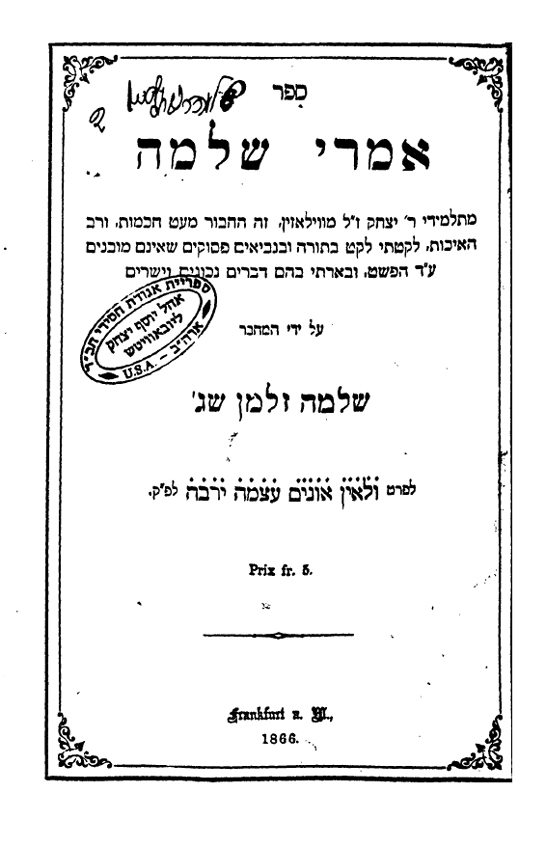
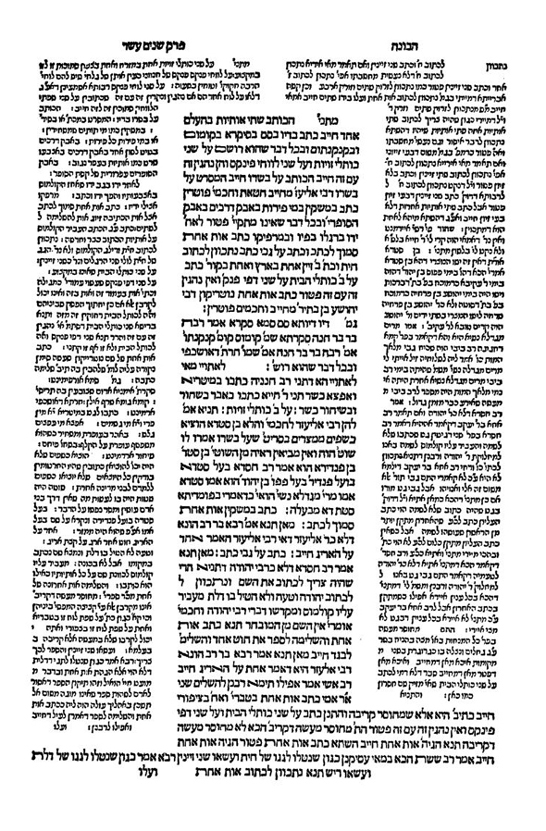
[4] In an amusing exchange,
the minister of education once spoke to R’ Sorotzkin and inquired, “Why do you
have to split off the government network? Why should it bother you if we
supervise your curriculum?”
R’ Sorotzkin responded, “Would you ever
expect a person like me to supervise your secular schools? Can a person
supervise something that he virulently opposes?” (Sofer)
[5] For example, when
Sorotzkin comments to Deuteronomy 22:7 ‘So that it will be good for you and
will prolong your days’ he focuses upon the fact that longevity is promised
both by the commandment of sending away the mother bird and also by honoring
one’s parents. He questions why this is so (seeking to understand the plain
sense of the verse) and explains:
It is because the two
are related. The mother bird must be sent away free, because rather than escape
and save herself when her nest is approached by humans, she risks her life out
of love for her young. The Torah, therefore, forbids us to seize her and
thereby exploit her meritorious behavior. (It is permissible to catch her the
normal way, with a snare [Chullin 141b]). The two commandments, then, have a
common element of respect for one’s parents who are even willing to endanger
themselves to raise their children and preserve the species. Honoring one’s
parents may seem to us the gravest of obligations, and shiluach hakein the slightest, but that is only because of our
superficial view of things. In fact, deeper reflection can show us that shiluach hakein is actually a graver
matter than honoring one’s parents.
Consider, one who honors
his parents “repays” them, albeit minimally, for all they do for him until he reaches
maturity and independence. However, if the same person should happen to find a
bird’s nest, he may not take the mother, even if she actually belongs to him
and fled from his hatchery, and even if she is nesting on his property.
Although this bird has never benefited him in the least he is forbidden to take
her simply because she is a mother who is raising her children. He personally
gains nothing from her devoted child-rearing, yet must still restrain himself.
He will surely find this difficult, though no such difficulty exists with
honoring his parents. Therefore this mitzvah
shares the same reward with honoring parents. (Lavon 264)
Thus Sorotzkin is uninterested in looking
at the plain sense of the verse for its
own sake
but is interested in noting it/ focusing on particular phrasing in
terms of the lessons that can be learned from the text.
[6] Indeed, I learned of R’
Zalman Sorotzkin’s writings in the context of the classroom, as did a friend of
mine who has also studied his works. I learned about Aznayim L’Torah from Rebbetzin Sarah Greer, who utilized it when
teaching her classes at Stern College for Women. My friend heard about it via
the Rosh Yeshiva at his yeshiva in Israel, or as he put it, “I had a rebbe in
Shana Bet who I used to learn Parsha with- and he always quoted him.” 


Reuven Elitzur, Saul Lieberman, and Response to Criticism, part 2

Reuven Elitzur, Saul Lieberman, and Response to Criticism, part 2

Marc B. Shapiro

Since I mentioned R. Reuven Elitzur in my post here, let me note two other interesting items from his posthumously published book, Degel Mahaneh Reuven. On pp. 304-305 we learn that when Elitzur studied in Ponovezh, one of the students joined the Irgun. When some other students found out about this, they grabbed the Irgun student one night, covered his head with a blanket, and beat him terribly. The result of this was that the student not only left the yeshiva, but abandoned religion entirely. Only many years later, due to Elitzur’s influence, did he begin to again observe Shabbat.

I also found this story, on page 311, of interest.


We see that Elitzur was in the United States at the time of the great fire at the Jewish Theological Seminary library in April 1966. From the passage we see that he would eat his breakfast at JTS.[1] It could mean that he brought his own breakfast with him, or it could also mean that he ate the breakfast in the Seminary cafeteria. If the latter, it could mean that he only ate the cornflakes or that he even ate cooked items. It is interesting that a text with such ambiguity, and thus liable to create “problems,” appeared in a haredi work. I therefore assume that the grandchildren who put the book together did not understand the significance of where the fire had taken place, namely, that it is not an Orthodox institution.[2]

Regarding Orthodox rabbis visiting the Jewish Theological Seminary, in R. Aharon Rakeffet-Rothkoff’s memoir, he tells the following story about R. Moshe Bick:

Meeting such a figure [R. Bick] in the Seminary library made me feel awkward. Utilizing the rabbinic aphorism, I asked the good rabbi: “What is a kohein doing in a cemetery?” . . . With a kindly smile embracing his face, the Bronx spiritual leader immediately responded: “If the Seminary possesses rare and invaluable rabbinic texts, they must also be available to all Torah scholars. The Seminary cannot withhold these treasures from Klal Yisrael.”[3]

In R. Pinchas Lifshitz, Peninei Hen (Monsey, 2000), pp. 99-100, there is a 1929 letter from R. Shimon Shkop to Cyrus Adler, Chancellor of the Jewish Theological Seminary. In this letter, R. Shkop mentions meeting Adler at his Seminary office, at which time he spoke to him about the difficult financial situation of his yeshiva, Sha’ar ha-Torah in Grodna.

Regarding the Seminary, Nochum Shmaryohu Zajac called my attention to this video. In his discussion with Dr. Dov Zlotnick, we see the Lubavitcher Rebbe’s positive attitude towards Saul Lieberman (which I already mentioned in Saul Lieberman and the Orthodox).[4] It appears, however, that the Rebbe was confusing Lieberman and Louis Finkelstein when he referred to Lieberman’s connection to Torat Kohanim, and that he wrote he’arot and mar’eh mekomot to it. Torat Kohanim, otherwise known as the Sifra, was in fact Finkelstein’s great project.[5]

Another teacher at JTS was R. Abraham Sofer, who published the Meiri. A number of letters from the Lubavitcher Rebbe to him are included in Menahem Meshiv Nafshi (Jerusalem, 2012).

Here is vol. 2, p. 608.

I am quite surprised that R. Sofer is described as a “maggid shiur” at בית מדרש לרבנים. Is it possible that the editors did not realize that בית מדרש לרבנים is not an Orthodox institution?

Returning to Lieberman, in my post here I noted that Genazim u-She’elot u-Teshuvot Hazon Ish, vol. 2, published a lengthy letter from Lieberman to the Hazon Ish. Subsequent to that post, volume 3 of this series appeared, and beginning on page 319 we have two lengthy letters from the Hazon Ish responding to what Lieberman wrote. He begins with the following words which present a traditional perspective in opposition to the academic approach of Lieberman.

אם אמנם הבלשנות ותרגום המילים נוטל חלק בתורה שבעפ לאחר שנתנה לכתובאבל הרצים אחריה מדה ואינה מדהואין התורה מצוי‘ בין אלה שעושים את מלאכתם קבע ואת עיון העמוק עראית או אינם מתעמלים בו כללולאלה שעמלים בתורה אין פרי עבודתם של חוקרי הלשון מועיל רק לעיתים רחוקותובדברים קלי ערךומגמת המתעמל להתוכן ולא לתרגום המלה שהוא בבחינת תיק

I think readers will also find interesting a letter in the Lieberman archives at the Jewish Theological Seminary of America. I was alerted to this by Ariel Fuss.[6] Max Rowe represented the Rothschild Trust which awarded four monetary gifts to outstanding rabbinic scholars. Rowe turned to Lieberman for his recommendations on who should receive the awards. Although today everyone knows about the greatness of R. Hayyim Kanievsky, we see that Lieberman was aware of this fifty years ago, and recommended him for the grant. He even regarded R. Hayyim as greater than his father, the Steipler. Of all the significant figures Lieberman could have suggested, it is fascinating to see whom he chose.

I still have a good deal to write about Lieberman, as I have collected a lot of new material since the publication of Saul Lieberman and the Orthodox. For now, here is a picture of a young Lieberman and his wife, Judith, that has never before appeared in print or online. I thank Professor Meir Bar-Ilan for sending it to me.

* * * * * *

Continued from hereLet us resume with Grossman’s review, going page by page. First, I must thank everyone who wrote to me offering support. Many of these people are in the haredi world and have been reading my material for years, and others have listened to my Torah in Motion classes. They all knew that I had never mocked rishonim and aharonim,[7] an accusation I referred to as “slander”.[8] A number of people asked me how to explain why Grossman so mischaracterized my book, as it certainly wasn’t intentional. My response to them was that if you come to a task with a preconceived negative view, on a mission of destruction, then you will not be able to judge a book fairly. You won’t even realize how you are not being fair, and this in turn will lead to all sorts of mistakes. In the introduction to the Guide of the Perplexed, the Rambam addresses readers of his book:

If anything in it [the Guide], according to his way of thinking appears to be in some way harmful, he should interpret it, even if in a far-fetched way, in order to pass a favorable judgment. For as we are enjoined to act in this way toward our vulgar ones, all the more should this be so with respect to our erudite ones and the sages of our Law who are trying to help us to the truth as they apprehend it.

What the Rambam is saying is that readers should give authors the benefit of the doubt, and only if an author is clearly incorrect should one then feel comfortable expressing criticism. He says that we should act this way even “toward our vulgar ones,” the category that I and so many others would best be placed in, rather than in the category of the “erudite” and “sages of our Law.”

Unfortunately, Grossman was not careful in the way he wrote. R. Yair Hayyim Bacharach already warned us about the problems that arise from this, with a nice witticism:[9]

ואפילו בכתבי הדיוט אומרים בעלי הלצה השמר פן [פען הוא בלשון יהודי פולין שם לקולמספעדערוהוא מלשון רומית Penna. הערת המולכי אא לפרש דבריו או להתנצל בהם עי חסר או יתור או חלוף מלה כמו שעשה יעשה באמרי פיו.

Another relevant witticism is mentioned by Samson Bloch [10], that the word מבקר (reviewer or critic) stands for מתכבד בקלון רעהו.  

On pp. 38-39, Grossman quotes me as saying that the Rambam’s conception of Ikkarim was an innovation, and that this is not just something mentioned by academics but is also found in traditional writings. There is nothing controversial in this statement, and as many readers know, Rambam was criticized for having too many Principles (R. Joseph Albo) or for having too few (R. Isaac Abarbanel).

Grossman writes (p. 39):

Shapiro writes this despite the fact that an array of classic scholars, among them Alshich, R. Moshe Chagiz, Beney Yisoschar and Mabit believe otherwise. The latter, in a section of his Beys Elokim devoted to the Principles, begins his discussion with this comment. “All the main Principles of the Torah and its beliefs are either explicit or hinted at in Torah, Prophets, the Hagiographa, and in the words of Chazal received from a tradition; in particular, the three Principles which include them all.”

All this is completely irrelevant to what I have said. The issue is not whether the Rambam’s Principles can find support in the Torah, Prophets, Hagiography, or Chazal. Of course Rambam can find support for his Principles in earlier sources. What I and everyone else (rishonimaharonim, and academic scholars) are speaking about is something entirely different. It is whether the Rambam’s specific conception of Principles of Faith – that belief in the Principles, despite all other sins, are enough to ensure a share in the World to Come, and denial or doubt of a Principle, despite one’s piety and halakhic punctiliousness, will prevent one from having a share in the World to Come  is found in any other source before the Rambam. I also stated that no one before the Rambam had picked thirteen specific Principles as the basis of Judaism. As far as I know, every single rishon who wrote about the Principles agrees with this point. Unfortunately, Grossman once again completely misunderstands what I have stated.

Grossman writes (pp. 39-40):

Nothing shows more clearly that the Rambam based his Principles upon the Talmud than the fact that in Hilchos Teshuvah [3:6-8], he lists the various heretics under three classifications: min, apikores and kofer baTorah, all of whom lose their share in the World to Come. Obviously, each group violates a particular fundamental of faith, or else why would they be listed separately? Shapiro explains this by saying: “For his own conceptual reasons which have no talmudic basis, Maimonides distinguishes between the epikorus, the min and the kofer batorah.” [Limits of Orthodox Theology, p. 8 n. 27] But these terms are not, as Shapiro would have them, the Rambam’s inventions. They are taken from an explicit passage of the Talmud in Rosh ha-Shanah 17a which lists these three classes of heretics as those who lose their portion in the World to Come. They are obviously not a product of Rambam’s ‘conceptual reasons.’”

Every reader should be able to see Grossman’s error. Contrary to what Grossman attributes to me, I did not say that the terms epikorus, min, and kofer ba-Torah are the Rambam’s inventions based on his “conceptual reasons.” (He must think I am really ignorant as he assumes that I do not know that the terms epikorus and min are found in the Talmud.) What I said was that the way the Rambam distinguishes between these categories is based on his own conceptual reasons. In other words, why do certain heresies fall into the category of epikorus, others into the category of min, and others into kofer ba-Torah. For some heresies, we can see that the Talmud refers to the holders of these views as minim, but for others, it is the Rambam who determined the divisions, and we cannot find a talmudic basis. There is also no consistency in the Rambam’s own writings for what is included in the category of min.[11]

R. Nachum Rabinovitch writes as follows in his Yad Peshutah to Hilkhot Teshuvah 3:8, in discussing how the Rambam determined who is placed in the category of epikorus (as opposed to say, kofer ba-Torah). What I have underlined is particularly important. Is Grossman now going to be attacking R. Rabinovitch?

כאן שרצה רבינו לחלק בין כופרים שונים לפי מושגים יסודייםלפיכך השתמש במונח אפיקורוס לא כפי הוראתו הרחבה בדברי חזל שהשווהו למלה ארמית אשר שרשה פקראלא כפי מובנו בתולדות הפילוסופיהדהיינומן הכת של הוגה הדעות היווני אפיקורוס . . . על כן הגביל את המונה אפיקורוס למי שכופר בהשגחהזאת אומרתמכחיש שד‘ יודעוממילא כופר גם באפשרות שה‘ מודיע לבני אדם ובתוכם גם משה רבינונמצא שהמונח מין מיוחד לאמונות כוזבות על הבורא עצמוואפיקורס מיוחד לדעות נפסדות על יחס הבורא לאדם


I refer to R. Rabinovitch’s commentary in Limits, p. 9 n. 27, right after the passage cited by Grossman which he misunderstood and found so objectionable. Had he examined what R. Rabinovitch wrote, he might not have misunderstood what I was saying.

In this note I also refer to Menachem Kellner, Dogma in Medieval Jewish Thought, pp. 20-21. On p. 21, Kellner writes: “Maimonides does not carefully distinguish among the terms sectarian, epikoros, and denier.”

I also refer to R. Yitzhak Shilat, who in his note in Iggerot ha-Rambam, vol. 1, pp. 38-39, after discussing the different ways the Rambam refers to heretics in his various works, writes as follows with reference to the term min:

ונראה שהסבר הדבר הואשבהלכות תשובה נכנס הרמבם לחלוקה תיאורטית של סוגי הכפירה השוניםושם הוא מייחד את המונח מין” לסוג מסוים של כפירהדהיינו לכפירה באחד מעיקרי אמונת האלהותאך במובן יותר מעשי ורחב הוא משתמש במונח מינות” לכל כפירה באחד מיסודי האמונה (ובהפניה מהל‘ שחיטה להל‘ תשובה התכוון לכל סוגי הכופרים המנויים שם)

.ואכןהרחבת מושג המינות” והחלתו על כל כפירה באחד מיסידי האמונהמפורשת בדברי הרמבם במקומות אחדים . . . הרחבה נוספת של השימוש במונח מין” אנו מוצאים בהמשך דברי הרמבם

נמצאנו למדים שהרמבם משתמש במונח מינות” לא פחות מאשר בשלושה מובניםזה רחב מזהאכפירה ביסודי האמונה השייכים למציאות ה‘. בכפירה באחד מכל יסודי האמונהגכפירה בתורה שבעל פה


As the reader can see, R. Shilat explains how when it came to categorizing heresy, the Rambam used “his own conceptual reasons.”

In my note in Limits (p. 9 n. 27) I did not refer to R. Kafih’s commentary to Hilkhot Teshuvah 3:7, but it is also important regarding this matter. After mentioning those who questioned why the Rambam included what he did in the category of epikorus, seeing that various talmudic passages define an epikorus differently, R. Kafih states that this matter is easily explained, namely, the Rambam is not using the term epikorus the way it is used in the Talmud. Rather, he is using the Greek term, and placing into this category those heresies that can be identified with Epicurean philosophy.

ולפיכך כל מה שמקשים על דברי רבנו כאן מאפיקורוסים שונים שנאמרו בשסלקמכי שם מדובר בהטית המלה העברית הפקר בלבושה הארמי אפקירותאוכאן מדובר במלה שמקורה יוני עש אפיקורוס

R. Kafih explains further in his commentary to Mishneh Torah, Sefer Nezikin, p. 594:

שכל שבוש תעיה וכפירה השייכים לאלהות נקרא מיןוכל תעייה שבוש וסטייה השייכים לנבואה נקרא אפיקורוסובנדפס טרפו וערבבום יחד

R. Judah Albotini does not even think that we should pay the distinctions the Rambam gives to the different types of heretics much mind, as the different terms are “lav davka”.[12]

ואפילו הרב זל בעצמו משנה דבריו בהם כי פה כתב שהמינים הם אלו הה‘ שמות (ובס‘) [ובהלכותרוצח שהמין הוא העובד עז או האוכל נבלות להכעיס ובה‘ עירובין קרא לישראל העובד עז שהוא כגוי ולא קראו מין וקרא מינים לצדוק ובייתוס וכל הכופרים בתורה שבעל פה ולאלו קרא בכאן כופרים הרי לך שכל אלה השמות לאו דוקא קאמר אלא עד העברה

The most detailed discussion of how the Rambam categorizes the various types of heretics is found in Hannah Kasher, Al ha-Minim, Ha-Apikorsim, ve-ha-Kofrim be-Mishnat ha-Rambam. This book appeared in 2011, too late to be mentioned in Limits. On p. 15 she writes (emphasis added):

הרמבם לעתים הציע הגדרה מכוננת למונחיםוקבע כיצד לטעמו יש להשתמש בהם מעתה ואילך. . . הרמבם המיר לעתים באופן רדיקלי את משמעותו של המונח המסורתי ויצק לתוכו תוכן שונה.

On pp. 40-42, Grossman deals with my suggestion that the Rambam abandoned his Thirteen Principles of Faith as the summation of Jewish dogma in favor of his more detailed formulation in the Mishneh Torah. In support of this suggestion I point out that not only does the Rambam pretty much ignore the Thirteen Principles in his later works, but in discussing what to teach a convert, he also does not mention the Thirteen Principles. (Regarding converts, he only states that they should be instructed in the oneness of God and the prohibition of idolatry.) I also note that both R. Joseph Schwartz and R. Shlomo Goren argued that in his later years the Rambam no longer felt tied to his early formulation of the Thirteen Principles. Readers should examine Limits for more details. My thoughts in this matter were in the way of a suggestion, not an absolute conclusion, that I thought worthy of bringing to the attention of readers.

In response to my point that when evaluating the significance of the Thirteen Principles for the Rambam it is noteworthy that he does not require a future convert to be taught these Principles, Grossman states that the Rambam derived his ruling, that the convert is instructed in the oneness of God and prohibition of idolatry (but not other Principles), from the talmudic recounting (Yevamot 47b) of the dialogue between Naomi and Ruth: Naomi says that Jews are prohibited to serve idolatry, and Ruth replies “Your God is my God.”

The Rambam understands this discussion as referring to the Principles of idolatry and God’s unity. Apparently, adopting these two Principles is the essence of conversion to Judaism. These might be a mere sample of other laws and ideas that we also mention—as implied by the Rambam’s concluding phrase [Hilkhot Issurei Biah 14:2], “and we elaborate (u-ma’arichin) on this.” The Rambam is codifying that which the Talmud prescribes as integral to the conversion process, thus, one cannot ask why the Rambam did not mention other Principles of faith—which is a different topic entirely.

This is a perfect example of how Grossman’s review could have been written, namely, present my points and then explain why he reads the texts differently and why my reading is forced, inconsistent with what the Rambam says elsewhere or with the Rambam’s sources, or just flat out wrong because I misread a text. In this case, I would only note that I still believe that my point about the Rambam not returning to the Thirteen Principles in his later works, even when he discusses the fundamentals of faith, is more than a little curious and leads to my original suggestion that at the time he wrote the Mishneh Torah he had adopted a more detailed list of required beliefs.

As for the matter of conversion, what about the Third Principle? For the Rambam, belief in divine corporeality is a denial of God’s existence, since a corporeal god is not God. Therefore, according to the Rambam, this is something that everyone, from childhood, needs to be instructed in.[13] Belief in divine corporeality usually turns into a form of idolatry, since one who worships a corporeal god is worshipping something other than God.[14] Thus, it is obvious that according to the Rambam instruction about God’s incorporeality would be part of the instruction about the unity of God. However, Principles 4-13 are not included in a convert’s instruction, even though in his Commentary to the Mishnah, when he lists the Thirteen Principles, the Rambam states that all the Principles are obligatory beliefs. It is these missing Principles of faith that I have wondered about, and asked why the Rambam did not require a convert to be instructed in them. Grossman’s explanation for this is that since the only theological matters the Talmud requires instructing a convert in are God’s unity and the prohibition of idolatry, the Rambam would not add to this on his own.

Grossman continues by stating that I am operating under

a misconception of the structure of the Rambam’s work. The Rambam himself states explicitly in his letters—and so it is axiomatic to Torah scholars—that he never made a statement in his Mishneh Torah which did not have a source in the Talmud. Whenever he records his personal opinion, he prefaces it with the words, yeyra’eh li—“it would appear to me.” Anything in his Mishneh Torah that seems different from the Talmud is due to the Rambam’s unique interpretation of the particular passage of Talmud. Thus, the question, “If the Rambam added to the Talmudic prescription, why did he not add the other Principles?” is not applicable. . . . The Rambam is codifying that which the Talmud prescribes as integral to the conversion process, thus, one cannot ask why the Rambam did not mention other Principles of faith—which is a different subject entirely. (pp. 41-42)
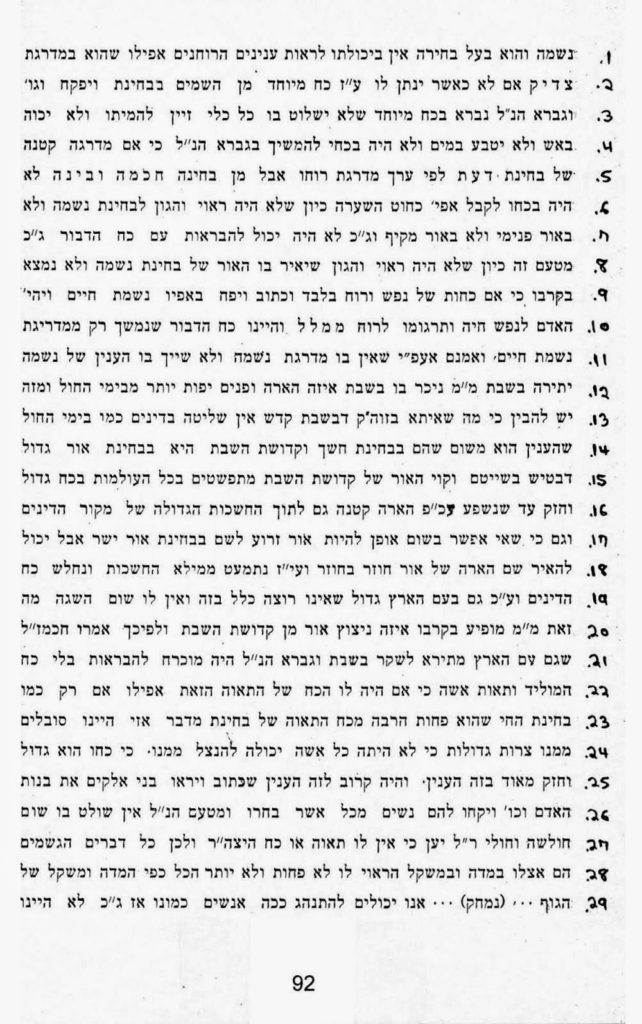
Before getting to Grossman’s major criticism, let’s clear up some inaccuracies. The Rambam does not say in his letter to R. Pinhas ha-Dayan, referred to by Grossman (Iggerot ha-Rambam, ed. Shilat, vol. 2, p. 443), that everything in the Mishneh Torah comes from the Talmud. He mentions the Talmud, but he also mentions halakhic Midrash and Tosefta. He then says that if something comes from the Geonim, he indicates so. Furthermore, and this is a very important point, the Rambam is speaking about halakhic matters, that for these there is always a prior rabbinic source.[15]

To say, as Grossman does without further clarification, that the Rambam “never made a statement in his Mishneh Torah” that has no talmudic source is simply incorrect. There are a number of statements in the Mishneh Torah dealing with science and philosophy for which there are no talmudic sources, a point that has been noted by the traditional commentaries. At the end of Hilkhot Kiddush ha-Hodesh, ch. 17, the Rambam tells us that the astronomical information he provides comes from Greek texts, as the Jewish writings on these matters were lost. Many who have studied this section of the Mishneh Torah have wondered if this is to be regarded as Torah study? R. Hayyim Kanievsky cites the Hazon Ish who is quoted as saying that despite the Greek origin of this information, once the Rambam included it in his book it became Torah.[16]

ואמרו בשם מרן החזוא זצל שאעפ שהרמבם העתיק החשבונות שבפרקים האחרונים של קהח מהגוים כמשכ בספיז ממ אחר שהרמבם כתבם נעשה תורה ממש והלומדם לומד תורה

R. Jacob Kamenetsky states[17] that most of what appears in the first four chapters of Hilkhot Yesodei ha-Torah, which the Rambam viewed as basic to Judaism, is not to be regarded as Torah but as פילוסופיא בעלמא.

ובעל כרחנו אנו צריכין לומר שמה שמסר לנו הרמבם בפרקים אלו אין זה לא מעשה מרכבה ולא מעשה בראשיתאלא כתב כל הד‘ פרקים אלה מדעתו הרחבה מתוך ידיעות בחכמות חיצוניותכלומר שלא מחכמת התורהאלא הרי זה פילוסופיא בעלמא – ונאמר שכבר השיג עליו הגרא ביוד סי‘ קע”ט סקיג שהפילוסופיא הטתו ברוב לקחה ועיישוהרמבם כתב פרקים אלו רק בתור הקדמה לספר יד החזקהועיקר הספר מתחיל מפרק ה‘: כל בית ישראל מצווין על קידוש השם וכו‘, ואין לדמות טעויות בהלכות אלו לטעיות בהלכות שבת וכדומה


R. Tzadok ha-Kohen even states that some of the historical information that the Rambam provides at the beginning of the Mishneh Torah is not based on earlier rabbinic sources, but is the Rambam’s own suppositions.[18]

וראיתי להרמב”ם בהקדמת ספר היד מנה סדר הקבלה ממרע”ה עד עזרא כ”ב דורות . . . ואם קבלה נקבל אבל כמדומני כי מסברא והשערת הלב לבד הוא שאמר זה שהרי בהקדמתו לפירוש המשניות כתב רק עד ירמי’ . . . הנה לא הי’ נודע לו עדיין סדר מבואר רק שבעת שחיבר ספר היד המציא מנפשו לכוין סדר מ’ דור מימות משרע”ה עד רב אשי והמציא סדר קבלה מנפשו וכתבו סתם כאלו קבלה היא בידו, אבל באמת יש להשיב ולטעון הרבה על דבריו

Let us now return to Grossman’s main point, which is to discount my question as to why the Rambam does not mention the Thirteen Principles when it comes to converts. He states that there is no talmudic source requiring this, and that if I understood what the Mishneh Torah is about I never would have had this question.[19]

The problem with the way Grossman writes about this is that although he wants people to see that my question shows that I am an amateur, in so doing he ends up disrespecting many great Torah scholars. When I wrote my book, I did not know of anyone else who raised this question, so it looks like it is original to me (and Grossman can therefore use it as part of his attack). However, subsequent to the book’s publication, I have found a number of others who wonder the same thing I did. While I might not understand how the Mishneh Torah works, is Grossman comfortable saying the same thing about the Torah scholars I shall now mention?

R. Hayyim Sofer writes as follows, with reference to the issue of conversion:[20]

והדבר נפלא הלא יש י”ג עיקרי הדת והי’ לו לב”ד להאריך בכל השרשים

R. Yaakov Nissan Rosenthal, author of the multi-volume commentary on the Mishneh TorahMishnat Yaakov, writes as follows in his comment on Hilkhot Issurei Biah 14:2.

צע למה כתב הרמבם עיקרי הדת שהוא ייחוד השם ואיסור עכוםולמה לא כתב כל היג עיקרים שכתבן בפירוש במשניות בפי דסנהדריןוזלשעיקרי דתנו ויסודותיה שלשה עשר יסודותוראה שם בהמשך הדבריםולמה כתב כאןעיקרי הדת שהוא ייחוד השם ואיסור עכוםוצעג

R. Rosenthal sees it as a real difficulty that the Principles are not mentioned. I am sure he would not be bothered, as I am not, by what the Rambam writes in his letter to R. Pinhas ha-Dayan, for we are not dealing here with a technical halakhic matter, but with the basis of Jewish faith, and it is not at all an ignorant question to wonder why the Rambam did not include the Principles. On the very first page of his commentary to Sefer ha-Madda, R. Rosenthal also notes the point I made, that the Thirteen Principles as a unit are never mentioned in the Mishneh Torah, something that surely cries out for explanation.

ותימא למה לא הביא הרמבם בספרו היד החזקה” את הענין הזה של יג עיקרי האמונהוצע

R. Hayyim Amsalem also feels the need to explain why the Rambam does not require instructing converts in the Thirteen Principles:[21]

ולכן לא הצריך גם הרמבם יג עיקרים כולם שאם מודיעים לו איסור עז ויחוד השם די בהודעה הזו עם מה שבא להסתפח בנחלת ה‘ ובשם ישראל יכנהואין מקום לפשפש יותר מדי בעניינים האלו כמו ענייני האמונה אשר מי יאמר זכיתי לבבי

R. Iddo Pachter writes:[22]

בהלכות איסורי ביאה ידבכשהרמבם מציב את העיקרים כראש וכעיקר הנושאים המלמדים את הגרהוא אומר: “ומודיעין אותו עיקרי הדתשהוא ייחוד השם ואיסורי עכוםומאריכין בדבר הזה.” ואילו את העיקרים אחרים של התורה והגמול אין הרמבם מזכיר כללונשאלת השאלהלמה השמיט במקום מרכזי זה של כניסה לכלל ישראל את שאר הדוגמות המהוות תנאי לכניסה

Grossman can still argue that all of these sources are misguided in even raising the issue of why converts are not instructed in the Thirteen Principles. Yet I think we should all agree that this is a matter that reasonable people can disagree about, and it should not be used an example to show the world that I am clueless about the Mishneh Torah. Grossman might not think it is a big deal, but many readers will agree with me that the fact that the Rambam would allow someone to convert without being taught all Thirteen Principles is quite noteworthy.

R. Yisrael Meir writes:[23]

הרי שבשעת גירות איצ לדעת כל היג עיקריןאבל אחכ אם יכפור הז אין לו חלק לעוהב.

Just as the convert does not know all the halakhot, and on the very first Shabbat might make mistakes, so too, according to the Rambam’s instructions about conversion, he will not know all the Principles of Faith. There are endless halakhot and it is not feasible to have a convert become an expert in every area of halakhah. Yet the Principles of Faith are not that many, and contrary to Grossman, I reject the notion that the Rambam would have needed an explicit talmudic text to require this, as he viewed it as basic to Judaism.[24]

Relevant to what we have been discussing, R. Dovid Cohen writes as follows in the seventh volume of his book of questions, Ve-Im Tomar, p. 14, no. 216.[25]


When the questions are not his own, R. Cohen is always careful to record his source. This is a very admirable trait that we should all take to heart. Here is p. 77 no. 216, where he provides the source of the question.


While I am honored to be mentioned, I think that R. Cohen wrote this from memory. I say this since in the book I ask why the Rambam does not mention anything about teaching a prospective convert the Thirteen Principles. I don’t ask this question about talmudic sages.[26]

Before concluding this section of my reply, I want to return to a point I made in the book (p. 7), that the Rambam’s formulation that a convert be instructed in theological matters is something the Rambam added on his own without a specific talmudic source. Grossman rejects this and notes that the Vilna Gaon and others see the Rambam’s source as Yevamot 47b, where Naomi is recorded as telling Ruth that Jews are prohibited in idolatry, and Ruth responded that “your God is my God”.

The first thing I would say is that I am not certain if in this case the Vilna Gaon sees this as the source for the Rambam, or if he is simply citing a source that can be brought in support of what the Rambam, followed by the Shulhan Arukh, write. Chaim Tchernowitz writes about the Gaon’s commentary:[27]

לפעמים הוא מוצא לדין השוע סמך או רמז בכתוב עצמודבר שלא עלה על דעת שום איש ואף לא על דעת אותו המחבר בעצמואחד מן האחרוניםשהמציא את הדין או המנהג ההוא על דעת עצמועל סמך דיוק בגמרא או באיזה ראשון שהמציא בפלפולווהגרא מראה לדין זה מקור מן התורהמן הנביאים או מן הכתובים או מתרגומים עתיקים על פי רמז דק מן הדק


Let me illustrate this question by one example. If you look at Shulhan Arukh, Orah Hayyim 1:1, R. Moses Isserles is citing the Guide of the Perplexed. The Vilna Gaon, who knew the Guide and thus knew the basis of R. Isserles’ formulation, still cites talmudic passages as the source for R. Isserles, or perhaps we should say, as the the source for the Rambam. Does this mean that the Gaon is telling us that the Rambam’s statement in the Guide is actually based on the talmudic passages the Gaon cites? 

Nevertheless, even if the Gaon is not citing Yevamot 47b as the actual source of the Rambam’s requirement for theological instruction for a convert (and I am not sure about this), there are indeed others who do cite this text, so Grossman’s point is well taken.

My response to this is that there are also authorities who do not identify Yevamot 47b as the Rambam’s source, and who instead see the Rambam’s mention of the necessity of instruction of converts in theological truths as something the Rambam added on his own, and not based on any talmudic text. Rather, they believe that the Rambam regarded the necessity of theological instruction as so basic and implicit that there does not need to be a specific talmudic text as a source. This is a dispute among the commentators, so it makes no sense to criticize me for advocating one side of this debate. Before citing some traditional authorities, let me first mention what my teacher, Professor Isadore Twersky, said about this matter. I realize that Grossman, who is not positively inclined to academic scholars, does not need to accept Twersky’s opinion any more than mine, but at least readers will see that nothing I have said is from left field, as it were.

In his Introduction to the Code of Maimonides, pp. 474-475 (and note 293), Twersky states that the notion that “every phrase and nuance of the MT is explicit in some source” is “misleading. It fails to acknowledge the interpretative-derivative aspects of the MT.

Twersky also rejects the notion that the instructions in theology given to a convert are based on a particular talmudic passage (the very point on which Grossman criticized me):

Maimonides’ description of the procedure of conversion to Judaism vividly reflects his uniform insistence upon the indispensability of knowledge of the theoretical bases and theological premises of religion. A potential convert must be carefully informed about Judaism and instructed in its ritualistic patterns and, most emphatically, its metaphysics, its dogmatic principles—Maimonides emphasizes that the latter must be presented at great length. Now the need to expatiate concerning the theological foundations, in contradistinction to the ritual commandments, is not mentioned in the Talmud. Some scholars were inclined to assume that Maimonides found these details in his text of the tractate Gerim, inasmuch as a few other variants can be traced to this source, but this seems to be a gratuitous assumption. Given the Maimonidean stance, this emphasis is a logical corollary or even a self-evident component of the underlying text, which stipulates that the convert be informed about “some commandments.” . . . As a matter of fact, the entire presentation bristles with suggestive Maimonidean novelties which should not be glossed over and obscured.[28]

It is easy to say that I have a “misconception of the structure of the Rambam’s work.” Will Grossman say the same thing about Twersky?[29]

R. Baruch Rabinovich, Heishev Nevonim, ed. R. Nosson Dovid Rabinowich, pp. 13-14 (emphasis added), explicitly rejects Yevamot 47b as the Rambam’s source, and makes the exact same point I did about the Rambam not needing an explicit talmudic source for his statement that a convert is given theological instruction.

בביאור הגרא (שםמציין כמקור לדברי הרמבם אלו ליבמות (מז: ) לדרשת רבי אלעזר מאי קראה וכו‘ שאמרה נעמי לרות אסיר לן עז” ועל זה השיבה רות ואלוקיך אלקי (רות פא פטז) – אבל אין הכרח לומר שמשם לומד הרמבם דין זה אלא שהרמבם מסברא דנפשי‘ פסק כךכמושכל ראשוןשאין גרות ואין שייכות ליהדותכל עוד אין אמונה בייחוד ה‘, והסתייגות מעזוכן דעת ההמבכל אופן מש ומאריכין עמו דבר הזה“, אין זה המקור [!] אלא מסברא דנפשי.
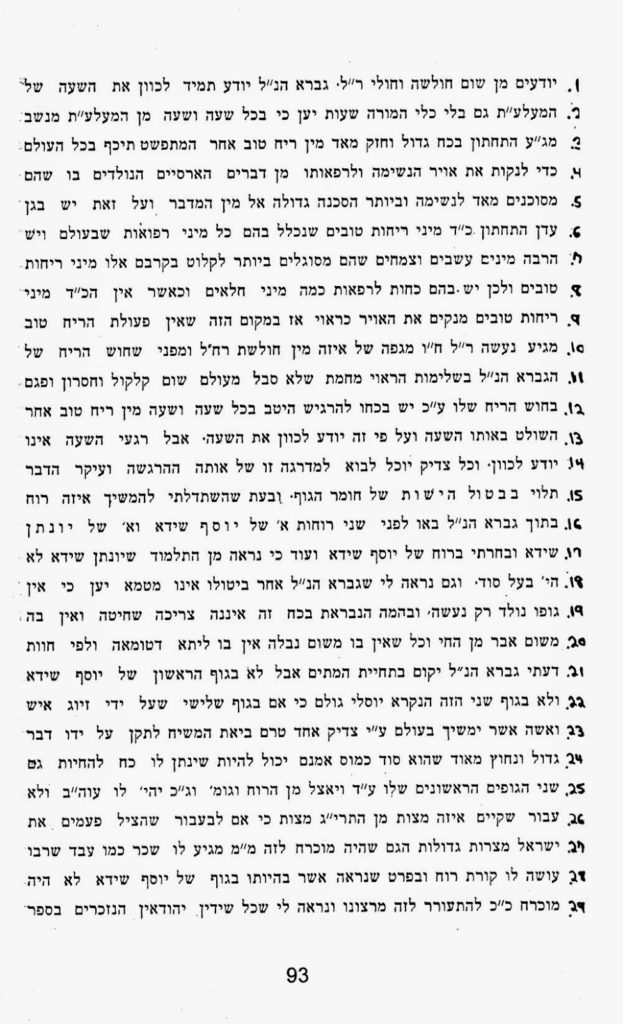
Grossman can reject R. Rabinovich’s statement, but he cannot say that R. Rabinovich did not understand “the structure of the Rambam’s work.”

A commentary on the Mishneh Torah that I often turn to is R. Asher Feuchtwanger’s Asher la-Melekh. He writes as follows in his comment to Hilkhot Issurei Biah 14:2 (emphasis added):

רוב דברי רבנו בפרק הזה מתחלתו עד הלכה ו‘ ועד בכללמקורן בברייתא המובאת יבמות מזאך הודעת עיקרי היהדות לא הוזכרה כללואכ מנל לרבנו לקבוע כן


R. Feuchtwanger goes on to offer an original solution. Does this mean that he too did not recognize the structure of the Mishneh Torah?

In fact, we don’t need to look at twentieth-century commentaries on the Mishneh Torah to make this point. Right on the page, the Maggid Mishneh states:

ומאריכין בדבר זהבייחוד השם ובאיסור עז שאינו מבואר שם שיאריכו עמו בזה אבל הדבר פשוט שכיון שאלו הם עיקרי הדת והאמונה צריך להודיעם בברור ולהאריך עמם בזה שהוא עיקר היהדות והגירות

On the Rambam’s words, Hilkhot Issurei Biah 14:2, that we instruct the convert in basic theology, R. Masud Hai Rakah, Ma’aseh Rakah, ad loc., writes: זה לא הוזכר בברייתא.

In R. Shlomo Tzadok’s commentary to Hilkhot Issurei Biah 14:2, he writes:

ומודיעין אותו עיקרי הדתאף שהודעה זו לא נזכרה בשסרבינו סבור שיסוד ועיקר זההוא דבר המובן מאליו שצריך להודיעו תחלה

Even after all we have seen, it is possible that Grossman is correct, and all the sources I have cited are mistaken. My only point in citing them is to show that nothing I have said in this matter should be regarded as far-fetched or ignorant, as I offered a reasonable approach to an often-discussed text.

To be continued

Notes

[1] Regarding the Seminary library (or any other Conservative institution), R. Moshe Feinstein was asked if one must return books to them, even if the books will not be used at the institution and the person who has them will learn from them. He replied that “it is forbidden for us to permit gezeilah or geneivah.” See Yad Moshe, p. 86. See, however, R. Menasheh Klein, Mishneh Halakhot 17:155, who writes:

ומיהו היכא דשאל ספר מספריה שהם רשעים ואפיקורסים ויכול עי איזה ערמה לעשות שלא להחזיר יש לעיין בדברדבסדעת זקנים מבעלי התוספות עהת פ‘ תולדות עהפ ויבז עשו את הבכורה כתבו וזלפי‘ מכבר היה מבזה אותה ועל כן לקחה יעקב ממנוונמצא בספר ר‘ יהודה החסיד מכאן אתה למד שאם יש ביד רשע סת או מצוה אחרת דמותר לצדיק לרמותו וליטלו ממנו עכולפז היכא דישנם ספרים ביד רשעים ואפיקורסים מותר לרמאותםולפז כש שאם לוה ולא החזיר בזמנו ויכול לרמותו דלא מיבעיא דלא נפסל לעדות אלא מותר לעשות כן לכתחילהולדינא צע


[2] In the days before hebrewbooks.org and Otzar ha-Hokhmah, I often visited the JTS library. It was common to see Orthodox Jews with impeccable standards of kashrut, who would not eat food served in a Conservative synagogue, eating in the Seminary cafeteria.
[3] From Washington Avenue to Washington Street (Jerusalem, 2011), pp. 67-68. I personally was in the Seminary rare book room together with the late R. Ephraim Fishel Hershkowitz.
[4]  Regarding Lieberman and Chabad, see here p. 38, where we see that in 1982 Lieberman sent a check for $1000 to Chabad’s Merkos Leinyanei Chinuch. On p. 39, a section of his will  is published which shows that he left $10,000 for this same charity. This was called to my attention by Nochum Shmaryohu Zajac.

Zlotnick’s loyalty to his rebbe, Lieberman, was legendary. Unfortunately, this led to a slightly unpleasant experience for me, which I think is worth recording for it shows how sensitive Zlotnick was to the memory of Lieberman. Here is page 23 of Saul Lieberman and the Orthodox; look at note 83.

Not long after the publication of Saul Lieberman and the Orthodox, I was at a wedding and someone came over to me to say that Professor Zlotnick would like to speak to me. I had never before met him and someone had obviously told him that I was there. Upon meeting Zlotnick, and with a few others surrounding us, he very firmly told me that it was a big mistake to include the quotation from Wenger in the book, as it mentions that “many faculty members” have questioned if Lieberman wrote a responsum against women’s ordination. I could not understand what he was talking about. I replied that I cited this passage so as to show that it was mistaken. He did not accept my reply, and insisted that to cite such falsehood, even if to show that it is mistaken, was to give it a legitimacy that it did not deserve. He felt that obviously false statements should simply not be dignified with a refutation. Only after he got this point off his chest, which had obviously been bothering him, were we able to have a nice conversation. For months after the conversation, I occasionally wondered if perhaps Zlotnick was correct.
[5]  In Mesorat Moshe, vol. 3, p. 389, R. Moshe Feinstein is recorded as stating that there is no problem using Lieberman’s edition of the Tosefta. R. Moshe adds that since he is religious: אינו חשוד שיזייף את התוספתא.
[6] Document provided courtesy of the Saul Lieberman Archives (ARC 76/8) of the Jewish Theological Seminary Library.
[7] When R. Hayyim Capusi (died 1631) was accused of speaking improperly about the gedolim, he responded as follows (Mikabtze’el 37 [5771] p. 581):

ומה שהוציא דבה עלי שדברתי נגד הגדוליםחלילה לי מרשעוחס ליה לזרעיה דאבא לבוא בגבורות נגד רבותינו זל


[8] Nachum commented to the last post that “‘slander’ is spoken and ‘libel’ is printed (or news, etc.).” While that is the technical definition, all you have to do is google “slanderous article” and you will see that “slander” is also generally used for printed material. Incidentally, when it comes to the word דִבׇּה, which means “slander” in biblical Hebrew, it has a very different meaning in medieval texts. “As Jacob Klatzkin [in his Thesaurus] notes, dibbah in medieval Hebrew does not mean ‘slander,’ but rather a false claim, nonsense, or absurdity.” Y. Tzvi Langermann, Rabbi Yosef Qafih’s Modern Medieval Translation of the Guide,” in Josef Stern, et al., eds., Maimonides’ Guide of the Perplexed in Translation(Chicago, 2019), p. 268.

In the last post I discussed the use of the word “strange” in describing earlier opinions. On p. 270, Langermann mentions how in translating a particular word from the Arabic, which the Rambam used with reference to certain aggadic opinions, while Pines uses “incongruous” and Ibn Tibbon uses “megunneh”, R. Kafih uses “muzar”. Here is the section from Guide2:30 in R. Kafih’s translation:

אבל מה שתמצא לשונות מקצת החכמים בקביעת זמן מצוי קודם בריאת העולם הוא תמוה מאדכי זוהי השקפת ארסטו אשר בארתי לך שהוא סבור כי אין לתאר לזמן התחלהוזה מוזר . . . אמר רבי יהודה בר סימון מכאן שהיה סדר זמנים קודם לכןאמר ר‘ אבהו מכאן שהיה הקבה בורא עולמות ומחריבןוזה יותר מוזר מן הראשון

R. Kafih himself uses this word in describing views of his predecessors. See his commentary to Hilkhot Shabbat 16:17, note 29, where after mentioning how virtually all prior commentaries understand a passage in the Rambam, he writes:

וזה מוזר ומופלא ביותר

Abarbanel often uses the words זר and even זר מאד when discussing earlier interpretations. He also speaks this way when referring to talmudic and midrashic passages. See e.g., Yeshuot Meshiho, vol. 2, ch. 5 (p. 108 in Oran Golan’s 2018 edition):

ואמנם מה שאמר רבי חנינא . . .  הוא מאמר זר מאד

See also his commentary to Joshua 24:25:

ובדברי חז”ל (מכות פ”ב דף י”א ע”א) בספר תורת הא-להים, ר’ יהודה ור’ נחמיה, חד אמר אלו שמונה פסוקים שבתורה, וחד אמר אלו ערי מקלט, ושניהם דעות זרות מאד

I could cite many more such examples. See also Eric Lawee, Isaac Abarbanel’s Stance Toward Tradition (Albany, 2001), p. 95.
[9] Bikkurim 1 (1864), p. 16.
[10] Introduction to his translation of Leopold Zunz, Toldot Rashi (Lemberg, 1840), p. 12 (unnumbered; the first word on the page is שרשי). In the Jewish Encylopedia entry on Bloch, it says as follows about this work:

Besides the above-mentioned works, Bloch also translated into Hebrew Zunz’s biography of Rashi, to which he wrote an introduction and many notes (Lemberg, 1840). This work bears unmistakable traces of decadence, both in style and virility.

I have no idea what this last sentence is supposed to mean.
[11] Grossman writes that the terms “are taken from an explicit passage of the Talmud in Rosh ha-Shanah 17a which lists these three classes of heretics as those who lose their portion in the World to Come”. Here is the talmudic passage:

אבל המינין והמסורות והאפיקורסים שכפרו בתורה ושכפרו בתחיית המתים . . . יורדין לגיהנם ונידונין בה לדורי דורות

Contrary to Grossman, from the language of the Talmud in the standard Vilna edition it would seem that what we have here are not three categories of theological heretics, but two: מינין and אפיקורסים. The Talmud defines אפיקורסים as those who deny the Torah and the Resurrection. See R. Abraham Abba Hertzl, Siftei Hakhamim, ad loc.

מדנקט השס שכפרו“, ולא נקט ושכפרו” בתורהכמו שנקט באחרינא משמע קצת דבחד מנה להווהאפיקורסים שכפרו בתורה


The Rambam, Hilkhot Teshuvah 3:6, sees אפיקורסים as separate from the two types of kofrim, rather than seeing kofrim as explaining what an epikorus is. Presumably, the Rambam’s version of the Talmud read like the Munich manuscript: והאפיקורסין ושכפרו. In other words, this version explicitly distinguishes between the epikorsim and the kofrim, creating separate categories. This distinction is noted in the Soncino translation of the Talmud. R. Raphael Rabbinovics, Dikdukei Soferim, ad loc., notes that the Munich version is found in Ein Yaakov and all rishonim, and is the correct text. (I wonder if indeed all rishonim have ושכפרו)

The Koren edition, while keeping the standard text of the Talmud – והאפיקורסים שכפרו בתורה – provides this incorrect translation: “But the heretics; and the informers; and the apostates [apikorsim]; and those who denied the Torah; and those who denied the resurrection of the dead.” If Koren is translating in accordance with the Munich manuscript, then this should have been noted, as והאפיקורסים שכפרו בתורה cannot be translated as: “and the apostates; and those who denied the Torah,” as if we are dealing with two separate categories. I also do not like the translation of epikorus as “apostate,” as today, most people understand “apostate” to mean an actual meshumad, but this is not what we are dealing with.

ArtScroll also translates incorrectly: “But the sectarians, the informers, the Apikorsim, those who denied the divinity of the Torah, those who denied the resurrection of the dead.”

Steinsaltz translates the passage properly:

והאפיקורסים המזלזלים בתורה ובחכמיה שכפרו בתורה

[12] Yesod Mishneh Torah, Sefer Madda, p. 242.
[13]  See Guide 1:35.
[14]  See Iggerot ha-Rambam, ed. Shilat, vol 2, p. 578:

ושם אלהים אחרים לא תזכירו וכו‘, כי אשר לו קומה הוא אלהים אחרים בלא ספק

[15] Despite the Rambam’s statement in this letter, we know that even with regard to halakhic matters, the Rambam’s originality far exceeds the numerous instances where he mentions that he is offering his own opinion. See my Studies in Maimonides and His Interpreters (Scranton, 2008), pp. 79ff.
[16] R. Kanievsky, Shekel ha-Kodesh, introduction.

[17] Emet le-Ya’akov al ha-Torah, p. 16. The following appears in a note, ibid., and is designed to soften what R. Kamenetsky wrote:

בשיחה פרטית הסביר רבינו כוונתו שעל פי ידיעותיו בפילוסופיא למד כן בחזל”.

Yet this explanation is entirely at odds with what R. Kamenetsky wrote in Emet le-Ya’akov, that what appears in the first four chapters of Hilkhot Yesodei ha-Torah is not based on Torah sources.
[18] Published in Sinai 11 (Nisan-Elul 5707), pp. 11-12 (called to my attention by R. Chaim Rapoport). In Sefer ha-Zikhronot (Har Bracha, 2003), p. 288, R. Tzadok writes:

ולא היה ראוי לו לקבוע ידיעת עניינים כאלה בהלכות יסודי התורה שלו כללדברים שאינם צריכים למאמיני התורה לידיעתםוכל שכן שהרבה מדבריו אינם אמת כפי דעת חכמיהם היוםוהכללמה לדברי חכמי אומות העולם עם דברי התורה שמן השמיםלעשות דבריהם יסודות לתורהוכל מה שאסף שם הם מדברי חכמי אומות העולם


[19] Even though the Rambam does not mention instructing future converts in the Thirteen Principles, this is what is done nowadays. Yet what happens if someone converted while holding a belief that violates one of the Principles? Is the conversion valid? This interesting question is discussed by R. Eliezer Ben Porat, who claims that when it comes to most of the Principles—the ones not dealing with God’s essence—even the Rambam would regard the conversion as valid ex post facto. See “Ger she-Ta’ah be-Ehad me-Ikarei ha-Emunah,” Kol ha-Torah 67 (Nisan 5769), pp. 313-316.
[20] Mahaneh Hayyim, Yoreh Deah 2, no. 25 (p. 139).
[21]  “Inyanei Gerut,” Or Torah, Adar 5770, p. 540.
[22] “’Ein Lo Helek’: Matarat ha-Rambam bi-Keviat Yud Gimmel Ikarei ha-Emunah,” Masorah le-Yosef 8 (2014), p. 490.
[23] Torat ha-Emek 12 (5764), p. 42. See also Pachter, “Ein Lo Helek,” p. 497:

מטקס קבלת הגר המפורט בהלכות איסורי ביאה, שהבאנו לעיל, שמוכח ממנו שאין צורך בקבלת כל י”ג העיקרים כדי להכנס לכלל ישראל

[24]  Ex post facto, if the future convert was not instructed even in the basic principles required by the Rambam, it seems that the conversion would still be valid. See R. Moshe Feinstein, Iggerot Moshe, Yoreh Deah 3, no. 106:

וגם מצינו עוד יותר שאף שלא ידע הגר שום מצווה הוא גרדהא מפורש בשבת דף סח עב גר שנתגייר בין הנכרים חייב חטאת אחת על כל מלאכות של כל השבתות ועל הדם אחת ועל החלב אחת ועל עבודה זרה אחתהרי נמצא שלא הודיעוהו שום מצווה אף לא עיקרי האמונה ומכל מקום הוא גר

[25]  R. Moshe Maimon called my attention to this.
[26] R. Cohen has also published Ha-Emunah ha-Ne’emanah (Brooklyn, 2012). It is obvious that at times in this book he is responding to what I wrote in Limits (and he also deals with many of the sources I cite). While I am not mentioned by name, I am apparently included among the משמאילים referred to on p. 5 (see Limits, pp. 7-8)
[27] Toldot ha-Poskim, vol. 3, p. 212 (emphasis added).
[28] R. Mayer Twersky, in his discussion of the Hilkhot Issurei Biah 14:2, states that the Rambam’s source is Yevamot 47b, and adds: אם כי הרמבם הרחיב את הדברים. See “Im Benei Noah Nitztavu be-Mitzvat Emunah o Lo,” Beit Yitzhak 37 (5765), p. 529. In the continuation of the article, R. Twersky makes the argument, which he acknowledges that at first glance is מאד מחודש, that for the Rambam non-Jews are also obligated to believe in the Thirteen Principles. In Limits, p. 22, I cited R. Zvi Hirsch Broide as saying the same thing.
[29] Regarding the Rambam’s instructions for a convert, see most recently Menachem Kellner, “The Convert as the Most Jewish of Jews? On the Centrality of Belief (the Opposite of Heresy) in Maimonidean Judaism,” in Jewish Thought 1 (2019), pp. 37ff.


The Letter of the Maharal on the Creation of the Golem

The Letter of the Maharal on the Creation of the Golem: A Modern Forgery
By: Shnayer Leiman
For a related post by Dr. Leiman see “Did a Disciple of the Maharal Create a Golem.”


I. Introduction
    In 1923, Chaim Bloch (1881-1973), noted author and polemicist,1published a letter of the Maharal (d. 1609) that was previously unknown to all of Jewish literature.2 The letter, dated 1582 (or more precisely: Tuesday of parshat va-yera, [5]343), was addressed to R. Jacob Günzberg (d. 1615), Chief Rabbi of Friedberg in Hesse.3 Rich in content, the letter provides a lengthy and detailed account of why it was necessary for the Maharal to create a Golem, how he went about doing it, and the precise spiritual, psychological, and halakhic status of the created Golem. Bloch assured his readers that the letter was published from an original copy in his possession. In order to quell any doubts, he reproduced a facsimile of the Maharal’s autograph, as it appeared on the original letter.4
    Bloch did not provide much detail about the letter’s whereabouts for the more than 300 years it apparently had been withdrawn from circulation and unknown. He thanks Rabbi Samuel Neuwirth of Vienna for his efforts in acquiring the letter and handing it over to Bloch for publication. Given that it was published together with a series of hasidic documents (including letters of the Baal Shem Tov), allegedly recovered from East European archives that had been plundered during World War I and its aftermath, the impression one has is that the Maharal letter belonged to these archives as well – though this is never explicitly stated by Bloch.5

    In 1931, R. Yitzchok Eizik Weiss (d. 1944), the Spinka Rebbe,6 published the very same letter of the Maharal (without any mention of the prior Bloch publication) based upon — what he believed to be — an original manuscript in his possession. He appended it to the posthumous publication of his father’s אמרי יוסף על המועדים7 .  Although he gave no indication as to when or how the letter came into his hands, two witnesses provide us with some interesting detail.


    The first witness, R. Yitzchok Weiss (d. 1942), Chief Rabbi of Kadelburg,8 in his אלף כתב, a book written primarily between 1927 and 1939 but published posthumously in 1997, includes the following entry:
The Gaon and Zaddik of Spinka informed me on Monday of [parshat] Hukkat-Balak, 7 Tammuz, 5682 [= 1922], that a manuscript written by the hand of the Maharal of Prague came into his possession. In it, he responded to R. Jacob Günzberg about the making of the Golem, how and why it was done, and whether the Golem will be included in the resurrection of the dead.9

Thus, we know that the letter reached the Spinka Rebbe no later than the beginning of July in 1922.

    The second witness, R. Samuel Weingarten (d. 1987), noted scholar of Hungarian Jewry and religious Zionist,10 reported that he was present at the home of R. Hayyim Eleazar Shapira (d. 1937), the Munkatcher Rebbe, circa 1922-23, when two of the sons of the Spinka Rebbe [R. Yitzchok Eizik Weiss], R. Naftoli and R. Yisrael Hayyim, approached  the Munkatcher Rebbe with a query. They carefully removed a manuscript from a large envelope and asked the Rebbe to examine it. It was a handwritten letter signed by the Maharal of Prague and it dealt with the creation of the Golem. They explained that a soldier who had been taken captive at the Russian front during the World War, and who had participated in the looting of government archives during the Russian revolution, had brought the letter to their father and was prepared to sell it to him for a stiff price. Since the Spinka Rebbe was not expert in Hebrew manuscripts, he sought the advice of the Munkatcher Rebbe. The latter examined the manuscript carefully for some fifteen minutes. He then asked that a magnifying glass be brought and he re-examined the manuscript. He concluded that it was worthless; it was a forgery. The sons thanked the rabbi and went on their way with the manuscript.11


    In 1969, the very same letter of the Maharal was published once again by R. Zvi Elimelech Kalush of Bnei Brak.12 The title page of the volume assures the reader that the text of the letter was copied from the “original handwritten holy manuscript” penned by the Maharal of Prague himself. Kalush admits that he is simply reprinting the text published by the Spinka Rebbe in his father’s אמרי יוסף. Indeed, Kalush’s text incorporates all the misreadings and printers’ errors of the text as it appeared in the אמרי יוסף and, as often happens when type is reset, adds several new printers’ errors as well.13


              Since the letter is often reprinted and quoted as an authentic letter of the Maharal, it is probably useful to list some of the reasons that led the Munkatcher Rebbe and others14 to declare that it is a forgery. In order to facilitate discussion of the evidence, the full text of the letter is printed below, with each line identified by number.


II. Letter of the Maharal15


III. Evidence of Forgery16


p. 86, l. 2:  ושלום     The 1931 edition reads correctly: והשלום. As an epistolary formula, the phrase חיים שלום וברכה (and its variations) does not appear in Jewish literature prior to the eighteenth century.
 אל כבוד יד”נ   As an epistolary formula, the phrase  אל כבוד יד”נ does not occur in Jewish literature prior to the eighteenth century.


כקש”ת  This abbreviation for כבוד קדושת שם תפארתו first appears in Jewish literature in the eighteenth century.


p. 87, l. 6:   בשנת השלום (בו?) לפ”ק The 1931 edition reads correctly: בשנת ה’ של”ב לפ”ג. Thus, according to the Letter, Maharal was appointed Rabbi of Prague in 1572.  According to the historical sources, the Maharal was appointed Rosh Yeshiva of Prague in 1573.  His appointment as Rabbi of Prague came many years later.


p. 87, l. 8:    The Maharal is depicted throughout the letter as devoting all his energies to countering the blood libel in Prague. There is no historical evidence – Jewish or Christian – of a charge of blood libel in Prague during the lifetime of the Maharal.


p. 87, l. 12:  Cardinal Johann Sylvester is described here as the leading Christian authority in Prague. No cardinal by that name served in Prague or, for that matter, anywhere else in Christian Europe. For a list of the cardinals who functioned in Prague, see Hierarchia Catholica Medii Aevi 3(1920), pp. 297-354; 4(1935), p. 288; and 5(1952), p. 323; and cf. A. Frind, Die Geschichte der Bischoefe und Erzbischoefe von Prag, Prague, 1873, pp. 178-249.


p. 87, l. 27:  An anti-Semitic priest and rogue in sixteenth century Prague by the name of Thaddeus is unknown to all of Jewish and Christian literature prior to the twentieth century.


p. 87, l. 28:  יהודים חשוכים בדעתם, used here in the sense of “unenlightened Jews,” is a usage found only in modern Hebrew literature. 


p. 88, l. 4: Rudolph II is described here as serving as King of Bohemia in 1572-3. In fact, Maximilian II served as King of Bohemia and Holy Roman Emperor in 1572-3. It is surprising that the Maharal confused these two kings with each other.


p. 88, l. 6: The Maharal reports that he was summoned for an audience with King Rudolph in 1573. Aside from the fact that Rudolph was not in office at the time, the Maharal met with Rudolph only once – in 1592. See the testimony of the Maharal’s disciple, R. David Gans, צמח דוד, ed. M. Breuer, Jerusalem, 1983, p. 145. Since this letter was allegedly written and sent to R. Jacob Günzberg in 1583, the confusion here is astonishing.


p. 89, l. 7:    מולדווקא refers to the Moldau River, today the Vltava River. It is surprising that the Maharal was unaware of the correct spelling for this river in Hebrew – an essential ingredient for the writing of legally valid divorce documents. In the commentaries to the standard editions of the שלחן ערוך it is always spelled מולטא17. It is even more surprising that the Maharal was unaware of the fact that the Moldau flows through the center of the city of Prague, and not on the “outskirts of the city” (see line 6).
p. 90, I. 21-22: Maharal here refers to the permutations and combinations of the Hebrew letters that enable one to create a Golem, as they appear in the printed editions of Sefer Yetzirah. Alas, no such permutations and combinations appeared in any of the printed editions of Sefer Yetzirah until 1883 (פירוש הר”א גרמיזא על ספר יצירה, Przemysl, 1883).18


p. 91, l. 20:   כלי המ”ש = כלי המורה שעות, a watch or clock. This term first entered  Hebrew in the nineteenth century.
p. 91, l. 25:  מכונה  in the sense of “machine” entered Hebrew in the modern period.


p. 94, l. 9: The signature reads: Judah, dubbed Leib, son of R. Bezalel. In fact, the Maharal never signed his name in this manner. See A. Gottesdiener, המהר”ל מפראג: חייו תקופתו ותורתו, Jerusalem, 1976, pp. 19 and 29. 


IV.  Comments
    We have hardly exhausted the evidence – historical and linguistic – that can be adduced in order to prove that Bloch’s Letter of the Maharal is a forgery. The cumulative evidence is sufficiently overwhelming that there is really no point in adducing more of the same. Suffice to say that anyone familiar with the syntax and vocabulary of the authentic, published writings of the Maharal will recognize instantly that the Letter of the Maharal is a crude forgery. What remains to be investigated is the identity of the forger. Who forged the letter of the Maharal? When was it forged? Why was it forged? While we cannot provide answers to these questions (due to our ignorance), the following comments may prove useful for others who wish to do so.
1. Much of the material in the Letter of the Maharal was borrowed directly from R. Yudel Rosenberg’s נפלאות מהר”ל, Piotrkow, 1909.19 Clearly, the Letter of the Maharal is dependent upon נפלאות מהר”ל. It is unclear whether both documents came from the same hand, or whether the Letter of Maharal was an independent work. Either way, the Letter of the Maharal may have been a forgery done in order to “prove” the authenticity of נפלאות מהר”ל by providing the original manuscript of the Letter, together with the signature of the Maharal. It would have been much too cumbersome to provide a forged manuscript of the entire text of Rosenberg’s נפלאות מהר”ל 20.
2. It is noteworthy that the Letter of the Maharal was not included in, or even mentioned by, Chaim Bloch in his reworking and expansion of R. Yudel Rosenberg’s נפלאות מהר”ל18 This suggests that the Letter first reached Bloch sometime after 1919, i.e. after he had published his final version of the Golem stories.
3. I am not aware of any evidence that either suggests or proves that Bloch – despite his predilection for forgery21 – forged the Letter of the Maharal. It is perhaps more likely that the forger of the Kherson Geniza (see note 5) was responsible for the forged Letter of the Maharal.


One matter, however, deserves further attention. Bloch, after all, published a facsimile of the Maharal’s signature. Precisely for that reason the publishers of the later editions, misled by the signature, stress the fact that the Letter of the Maharal was written בכתב יד קדשו. In 2009, the four hundredth yahrzeit of the Maharal was commemorated throughout the world. Those commemorations have yielded a remarkable volume, recently published in Prague. Entitled Path of Life: Rabbi Judah Loew ben Bezalel, the opening pages include a genuine facsimile of the Maharal’s signature.22
Here is the Maharal’s signature as published by Bloch:


Here is the Maharal’s signature in the recently published Path of Life:23

Quod erat demonstrandum!


In sum, the Letter of the Maharal is a modern forgery. It should not and cannot be cited as evidence relating to the Maharal, the Golem, or any of the events that occurred in the sixteenth century. It is a twentieth century document that was probably forged sometime between 1909 and 1922. At best, it sheds light (or: darkness) on what Jewish forgers were thinking and doing during the first quarter of the twentieth century.
NOTES


 See the entries on Bloch in G. Bader, מדינה וחכמיה, Vienna-New York, 1934, p. 40; I. Landman, ed., Universal Jewish Encyclopedia, New York, 1940, vol. 2, p. 396; and M. Wunder, מאורי גליציה, Jerusalem, 1978, vol. 1, cols. 502-506 (and vol. 6, col. 213). It is unconscionable that no entry on Bloch appears in either edition of the Encyclopaedia Judaica. Bloch was a prolific author and an astute polemicist who contributed significantly to a variety of Jewish topics, including folklore, apologetics, and anti-Zionist sentiment. A biography and intellectual history of Bloch remains a scholarly desideratum.
2 קובץ מכתבים מקוריים מהבעש”ט ותלמידיו זי”ע, Vienna, 1923, pp. 86-94.
On R. Jacob Günzberg, see D. Maggid, תולדות משפחות גינצבורג, St. Petersburg, 1899, pp. 12-13. It is unclear when Günzberg was appointed Rabbi of Friedberg. R. Man Todros Spira served as Rabbi of Friedberg until circa 1582. He was succeeded by R. Samuel b. Eliezer, who was succeeded by Günzberg. See A. Kober, “Documents Selected From the Pinkas of Friedberg, a Former City in Western Germany,” PAAJR 17(1947), pp. 28-29.
See below for the facsimile of the signature. In fairness to Bloch, it should be noted that he equivocated somewhat as to whether the document was an original or a copy. On the title page of the volume, and under the facsimile of the signature itself, he clearly implied that the letter and the signature were originals, not copies. Toward the end of the Introduction to the volume, however, Bloch describes the manuscript as ancient, difficult to read, and “ascribed to the Maharal.” Indeed, he invites his scholarly audience to determine whether or not the autograph is authentic.
5  The hasidic documents allegedly recovered from East European archives are known in scholarly circles as the Kherson Geniza. The Kherson Geniza has generated a rich literature, too cumbersome to be listed here. Some of the more important discussions are: D.Z. Hilman, אגרות בעל התניא ובני דורו, Jerusalem, 1953, pp. 240-272; Y. Raphael, “גניזת חרסון,” Sinai 81(1977), pp. 129-150; B. Schwartz, “די כערסאנער גניזה,” Der Yid , November 2 – December 28, 1984; A. Rapoport-Albert, “Hagiography with Footnotes,” History and Theory 27(1988), pp. 119-159; H. Liberman, “הוי גוי חוטא,” in ספר הזכרון לרבי משה ליפשיץ, New York, 1996, pp. 139-140; and M. Rosman, Founder of Hasidism, Berkeley, 1996, pp. 123-125.
6  See Tzvi M. Rabinowicz, Encyclopedia of Hasidism, Northvale, 1996, pp. 534-535.
7 אמרי יוסף על המועדים, חלק ב׳, Vranov, 1931 (reissued: New York, 1969 and 1990).
8  Kadelburg, also known as Karlburg, Oroszvar, and Rusovce, was some 11 kilometers southeast of Pressburg (= Bratislava). On Weiss, see Y.Y. Cohen, חכמי הונגריה, Jerusalem, 1997, pp. 460-461.
9  אלף כתב, Bnei Brak, 1997, vol. 2, p. 47.
10  See the entry on him in אנציקלופדיה של הציונות הדתית, Jerusalem, 2000, vol. 6, columns 391-393.
11 Samuel Weingarten, “האדמו”ר ממונקטש רבי חיים אלעזר שפירא: בעל תחושה בקרתית” Shanah be-Shanah, 1980, pp. 447-449.
12 שלוש קדושות, Bnei Brak, 1969, pp. 127-135.
13 See, e.g., the last line of the letter, where Kalush (p. 135) mistakenly reads מתפורר, whereas Bloch and the Spinka Rebbe read correctly מתגורר.
 14  See below, note 16.
15 The text is taken from קובץ מכתבים מקוריים, pp. 86-94.
16  The evidence of forgery is culled from G. Scholem’s review of Bloch’s קובץ מכתבים מקוריים in Kiyrat Sefer 1 (1924-5), pp. 104-106; the Munkatcher Rebbe’s comments as recorded by Weingarten (see above, note 11); and my own reading of the text.
17 See also R. Ephraim Zalman Margolioth, טיב גיטין, Lemberg, 1859, p. 52a,  section on the spellings of towns and rivers.
18 For the correct year of publication of R. Eleazar of Worms commentary on Sefer Yetzirah, see S. Ashkenazi’s note in Tzefunot 1(1989), n. 4, p. 122.
19  נפלאות מהר”ל, ascribed to Maharal’s son-in-law, is itself a literary hoax. See S.Z. Leiman, “The Adventure of the Maharal of Prague in London,” Judaic Studies 3(2004), pp. 1-43.
20 Chaim Bloch, Der Prager Golem: von seiner Geburt bis zu seinem Tod, Vienna, 1919. An English version, The Golem: Legends of the Ghetto of Prague, Vienna, 1925, became a best seller, and is often reprinted. Bloch’s version of the Golem stories first appeared in serial form in 1917 in the Viennese periodical Oesterreichen Wochenschrift. For a comparative study of the Bloch and Rosenberg versions of the Golem stories, see A. L. Goldsmith, The Golem Remembered, 1909-1080, Detroit, 1981, pp. 51-72. Unfortunately, much of Goldsmith’s analysis is flawed due to the fact that he read Bloch and Rosenberg in translation, rather than consulting the original texts.
21 See S. Weingarten, מכתבים מזוייפים נגד הציונות, Jerusalem, 1981. Cf. G. Elkoshi, “ספיחי פולמוס,” Moznayim 42(1976), pp. 212-215.
22 A. Putik, ed., Path of Life: Rabbi Judah Loew ben Bezalel, Prague, 2009. The signature, recorded in 1597, appears on the frontispiece and at p. 37. Cf. pp. 73-74. 
23 The ז”ל ה”ה at the end of the signature stands for: זכרונו לחיי העולם הבא .  Cf. the Maharal’s signatures with the very same endings in his הסכמה to R. Samuel b. Joseph’s לחם רב, Prague, 1609 (reissued: Jerusalem, 2003), p. 5, and in the document cited by Gottesdiener, op. cit., p. 29.