A Footnote on What the Chasam Sofer Did Not Say

A Footnote on What the Chasam Sofer Did Not Say

By Shnayer Leiman

The Problem. I’m the proud owner of a copy of Rabbi Shimon Finkelman’s Rav Pam: The Life and Ideals of Rabbi Avrohom Yaakov HaKohen Pam (second edition, seventh impression, June 2023, ArtScroll History Series, Mesorah Publications, Rahway, N.J.). It is a magnificently written and produced biography of Rav Pam, a close friend of my father, who like Rav Pam was a disciple of both Rav Shraga Feivel Mendlowitz and Rav Dovid Leibowitz. The biography captures Rav Pam as our family knew him. Indeed, it is the definitive model of how a biography of a גדול בישראל should be written. It informs and inspires as it tells the truth.

As we shall see, a minor error made its way into the volume, and no one can really be faulted for the error. Nonetheless, I am confident that Rav Pam being the איש אמת that he was, will surely not fault me (in עולם האמת) for making the correction.

The reader, at p. 336, is informed that at the 1991 Torah Vodaath dinner at which Rav Pam was the Guest of Honor, he thanked the one thousand guests for coming, and then said:

Often, I think to myself that I go around with a “false pass,” for people think I am that which I am not. But I take comfort in a comment of the Chasam Sofer. Rema is of the opinion that if a stranger enters a shul and claims to be a Kohen, we may rely on his word and call him to the Torah for the Kohen’s aliyah, for even if he is, in fact, not a Kohen, calling him to the Torah would not involve a biblical transgression. Asks the Chasam Sofer: Why would calling up a non-Kohen not be a transgression of “Vekidashto” (And you shall sanctify him),[1] the requirement that we accord honor to those who truly are Kohanim? He answers that this mitzvah is fulfilled when we show honor for the Kehunah (the exalted status of the family of Kohanim). Therefore, even if the person whom we honor is, in fact, not a Kohen, we are fulfilling the mitzvah of “Vekidashto” if we honor someone whom we think is a Kohen.

Therefore, even though, in fact, I am not deserving of honor, if people honor me thinking that I deserve it, then they are considered as having shown k’vod HaTorah (honor for the Torah).

This is truly an inspiring דבר תורה – worthy of the Chasam Sofer and appropriately selected by Rav Pam, a Kohen, for the occasion. Alas, it was not said by the Chasam Sofer.

A Brief Survey of the Chasam Sofer’s Attitude Toward the Publication of His Writings.

Much has been written about the Chasam Sofer (1762-1839), and much more remains to be written. He was a remarkable גדול הדור and פוסק הדור. He lived in a world without radio, TV, telegraph, telephone, or digital communication, yet was recognized during his lifetime as גדול הדור and פוסק הדור. What makes this even more remarkable is the simple fact that he refused to publish any of his Torah insights or halakhic rulings during his lifetime. Of course, the fact that he served as Chief Rabbi of Pressburg (today: Bratislava) and simultaneously as Rosh ha-Yeshiva of the Pressburg Yeshiva – with thousands of disciples during his long reign (1806-1839) – spread his fame throughout the Jewish world. And while he refused to publish his Torah insights, he had a gifted pen and wrote thousands of Jewish legal responsa which he sent to all who asked. All of Torah Jewry knew who the Chasam Sofer was and what he could do.

It is worth examining what the Chasam Sofer had to say about publishing one’s Torah insights. In 1841, his son R. Shimon Sofer, who would later serve as Chief Rabbi of Krakow, published for the first time a personal letter of the Chasam Sofer dated 1829, where he addressed the issue.[2] It reads in part:

Regarding the rumor that you heard that I published a particular volume, and you requested that I send you a copy,[3] I never considered such a matter; it has not even entered my mind, at least until the present time. For the majority of the [Torah] world, that are greater and better than I am – or, at the very least, at the same level that I am – they have no need for me. For the minority of a minority that are less learned than I am, why should I weary myself for a minority? And if, perhaps, it were true that the majority of the [Torah] world needs me – heaven forbid – I am unaware that I would have the obligation to publish my Torah insights and distribute them to the public. So long as G-d grants me life and strength, I am prepared to study [Torah] with all who are interested in learning with me. I will neither pause nor rest – as the L-rd my G-d has commanded me “Just as I teach without charge, so you shall teach without charge”[4] – in responding, as far as my hand and mind reach, to all who ask, at no charge. It is my practice to record in writing whatever Torah insights G-d has graced me with, whether in Halakhah or Aggadah. These writings are freely available. Whoever wishes to copy them is welcome to do so. Such was the practice before the invention of the printing press. More I am not obligated to do. If, heaven forbid, one publishes in order to increase his fame, I worry about the curse of our Sages, of blessed memory: “He who seeks fame will lose his name.”[5] Indeed, such has been the fate of most authors of seforim. How much more so is it prohibited for an author to publish his sefer for financial gain! For these reasons, it never entered my mind to publish a sefer.

Only once did several of the Chasam Sofer’s Responsa and Torah insights appear in print during his lifetime. A disciple of the Chasam Sofer who had access to manuscript copies of his writings, published an edition of חידושים על מסכת שבועות מאת רבינו יוסף הלוי אבן מיגש (Prague, 1826), and appended some 14 large folios of Chasam Sofer’s Responsa and Torah insights to the volumeThe Chasam Sofer was livid when he learned about this unauthorized publication of his writings, but ultimately granted his approval. Towards the end of his life, and at the constant urging of members of his family, he agreed to publish some materials, including a review of R. Zvi Hirsch Chajes’ תורת נביאים . The project fell through, perhaps due to the illness and subsequent death of the Chasam Sofer, but not before he addressed an important note to Rav Zvi Hirsch Chajes, which sheds light on his view of the publication of Torah insights in general, and on his sensitivity to the effect his writings could have on others. The letter was written in 1837, when the Chasam Sofer was 75 years old, and at the height of his fame. Rav Chajes, was 32 years old, still at the start of a brilliant career.[6]

I keep the L-rd before me always. Pressburg, the evening preceding Monday, 27 Marchechvan, 598 according to the short account.

Greetings and blessings for all that is good to my friend and dear Rabbi, the great Rabbi and Gaon, master of Torah, discerning in study and expert in mastery of texts, whose many words are beautifully expressed, the honorable teacher and rabbi Zvi Hirsch, may his light glow, Chief Rabbi and Head of the Yeshiva of Zolkiev, may G-d watch over it.

Dear Friend,

I have a request to make of you. It has never entered my mind to publish a sefer. However, several years ago, some pages of my Responsa and Torah insights were published by a certain rabbi, R. Mordechai Schlank, who set out to publish Ramban’s commentary on Kiddushin and R. Yosef Ibn Migash’s commentary on Shavuot. He had copies of some of my writings with him and published them in the back of the books mentioned. This was done initially against my will, but ultimately with my permission, for he was not with me here [in Pressburg], but was rather in Prague.

Now the following has occurred. A worthy individual from Brody, R. Mordechai Bisliches,[7] a printer who publishes the works of the Rishonim, has managed to get copies of 3 or 4 of my Responsa and copies of some of my Torah insights. He plans to append them to one of the above publications of the Rishonim. Initially, this was done against my will and protest, but my family forced me to acquiesce and remain silent. (For all my Torah insights and writings are freely available for anyone to copy them. I do not discourage anyone from doing so, for nothing I wrote was intended as a secret.) The above mentioned printer is already engaged in the process of publishing my material. These include two responsa that I addressed to you, one on whether a physician who is also a Kohen can administer to a dying or already dead patient,[8] and the other regarding my comments on your sefer, Torat Nevi’im.[9] Now I said: I can do as I please regarding my property; but I cannot do as I please regarding someone else’s property.” Perhaps you don’t want your name, and the name of your community, mentioned regarding that matter. Or, perhaps you will find some passage that, heaven forbid, is a slight to your honor. For those reasons, I implore you to review my comments and let me know what you think. In my humble opinion, there is nothing in my responsa that in any way slights you, heaven forbid. Quite the opposite, they are sources for you of glory and praise. And if, when engaged in halakhic discourse, I criticized something you said, it means nothing. Such are the ways of Torah discourse. Perhaps you will publish yet another sefer and you will be able to defend yourself against any and all criticism. But heaven forbid that I should allow my pen to record anything that would dishonor you! Should you feel that anything I wrote [about you] is improper, I will erase those words, or if necessary, I will neither mention your name or the title of the book. I hope this won’t be the case, and anxiously await your quick reply, before the volume goes to press. I sign with all the usual blessings, the one who loves your soul,

Moshe ha-Katan Sofer of Frankfurt-am-Main

We have included this brief survey of the Chasam Sofer’s attitude toward the publication of his writings, in order to bring home the message that, with one or two exceptions, the Chasam Sofer did not edit, or prepare for publication, any of his writings during his lifetime. He left a vast literature, literally thousands of manuscripts, ranging over a wide variety of topics (such as Responsa, Lectures on the Talmud, Sermons, Commentaries on the Torah, Notes on the Shulchan Arukh, Poetry, personal letters, and more), all still being published – and always in better editions – to this very day.

The Solution. What remains to be addressed is:

1. Why did Rav Pam ascribe the passage (that justifies why a stranger who claims that he is Kohen is allowed to get an aliyah to the Torah as a Kohen, even though we have no evidence other than his say-so) to the Chasam Sofer?

2. How do I know that it wasn’t said by the Chasam Sofer?

3. Who did contribute the insightful justification that ultimately was misattributed to the Chasam Sofer?

Rabbi Finkelman provides a helpful footnote, in an attempt to identify the source of the alleged Chasam Sofer comment.[10] He sends the reader to Toras Moshe on Vayikra 21:8. Alas, in all of the recent editions of Toras Moshe published under the auspices of Makhon Chasam Sofer, the official collection of all of the genuine Chasam Sofer commentaries on the Torah published in the various editions of Toras Moshe (as distinct from his sermons [דרשות] or other collections of Torah commentary that never appeared under the name Toras Moshe ), no such passage appears. See, e.g., the massive six-volume edition of Toras Moshe ha-Shalem veha-Mefoar (Jerusalem, 2021), vol. 3, p. 255, to Vayikra 21:8. There is a comment on Vekiddashto, but not a word about the fact that a stranger who claims that he is a Kohen is allowed to get an aliyah to the Torah as a Kohen, even though we have no evidence other than his say-so.

Almost certainly, neither Rav Pam in 1991, nor Rabbi Finkelman in later years, had access to a Makhon Chasam Sofer edition of Toras Moshe. But they certainly had access to earlier editions of Toras Moshe, which is what led them astray. It’s best to begin our examination with one of the earliest editions of Toras Moshe – and little more needs to be said.

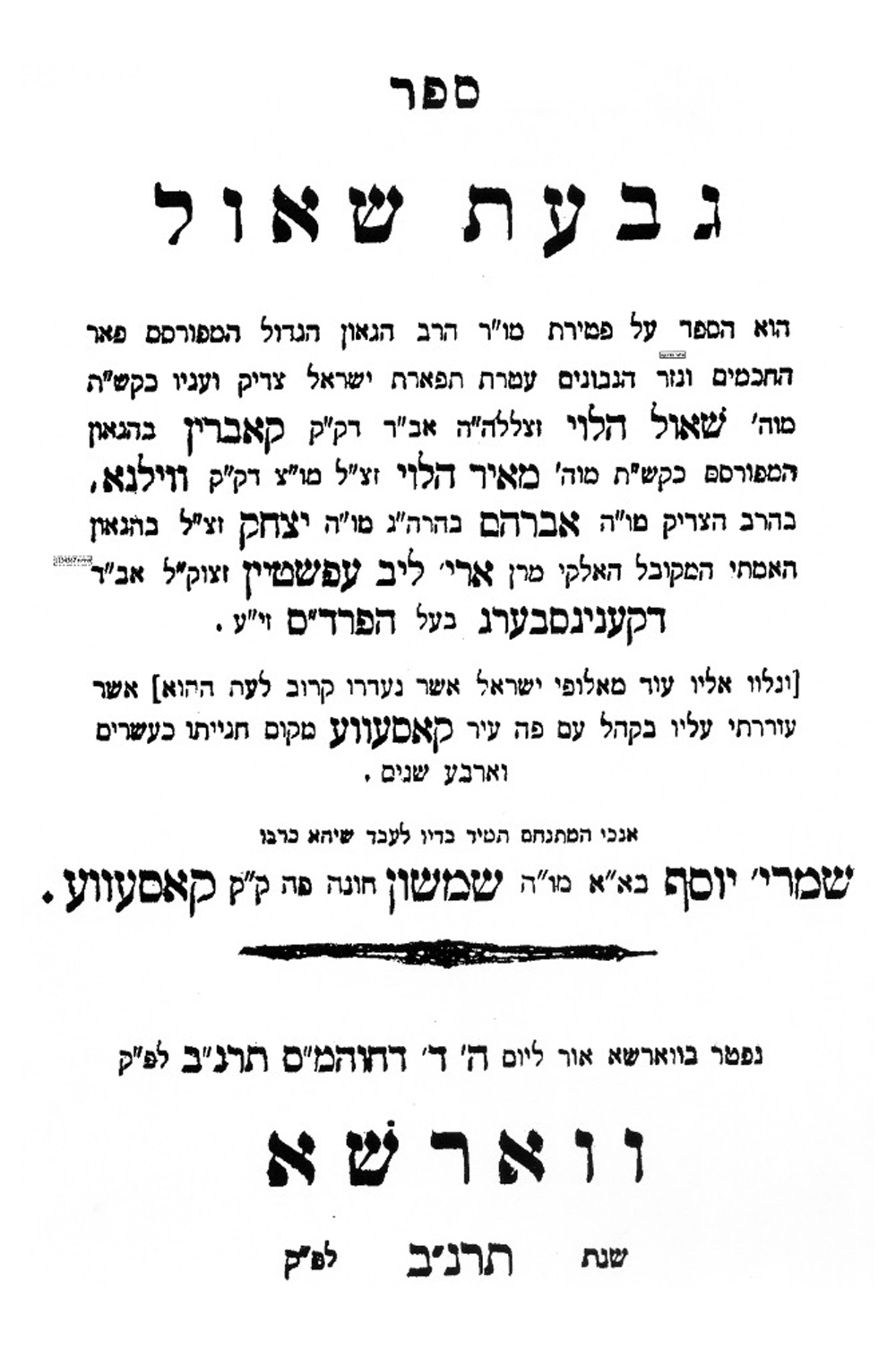
Like almost all the writings of the Chasam Sofer, his Toras Moshe was published posthumously. It first appeared in print in a three-volume set published in Pressburg between 1879 and 1893. The editor of the three-volume set was an אדם גדול, a grandson of the Chasam Sofer, Rav Shimon Sofer (1850-1944). He was the son of Rav Avraham Shmuel Binyamin Sofer (1815-1871), the כתב סופר, who succeeded the Chasam Sofer as Chief Rabbi and Rosh ha-Yeshiva of Pressburg. Rav Shimon Sofer, a distinguished rabbinic scholar in his own right, served as Chief Rabbi of Erlau and was the founder of the Erlauer Chasidic dynasty. In 1893, he published for the first time the third and final volume of Toras Moshe, the volume with the Chasam Sofer’s comments on Vayikra-Devorim. Later editions were usually printed in 2 to 5 volume sets.

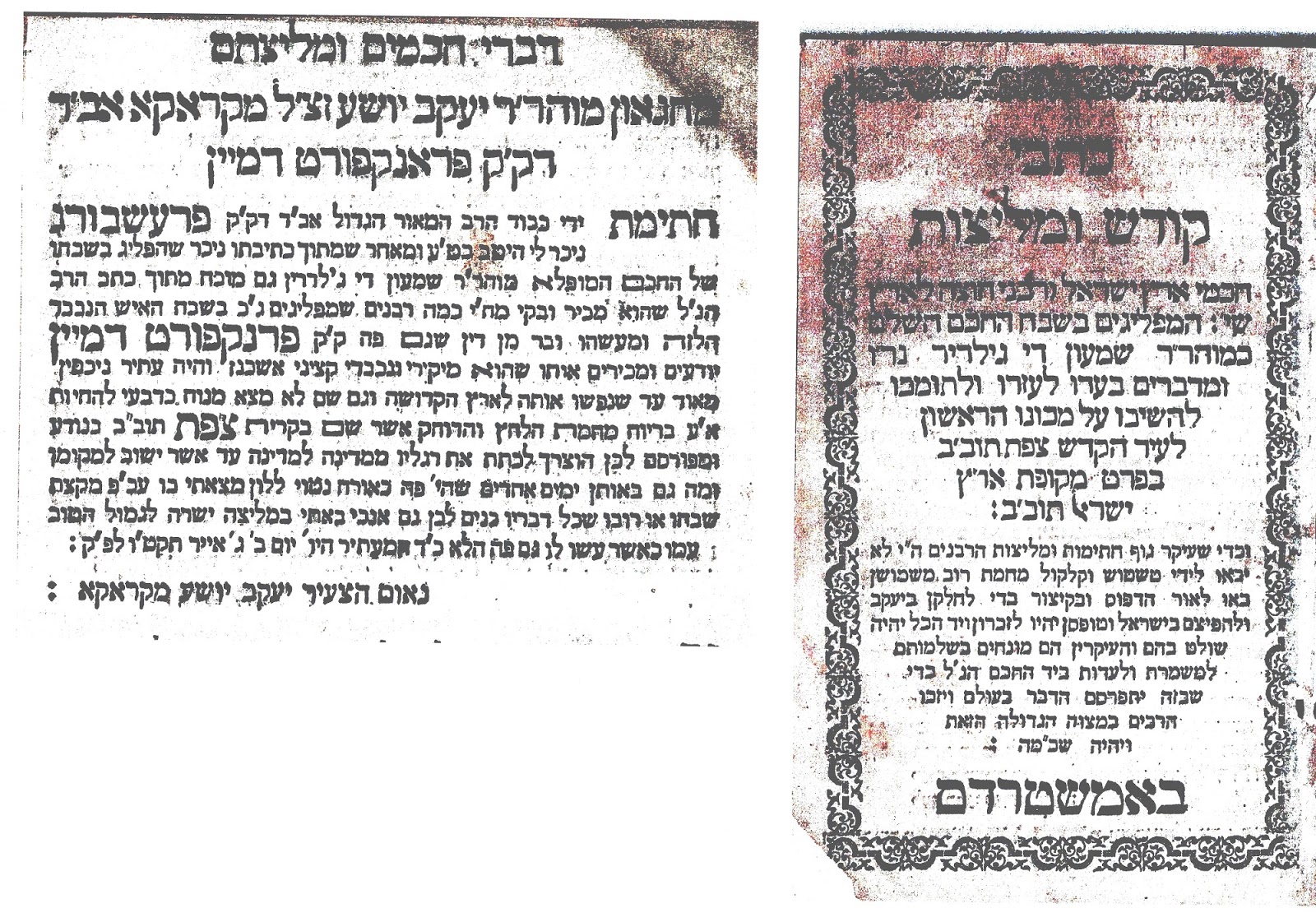
Here is what Rav Pam saw and quoted (almost certainly from one of the many later photo-mechanical reprints of the 1893 volume that appeared throughout the 20th century).

He may have owned a copy of a reprinted edition, and if not, he surely would have had access to a copy at the famed Torah Vodaath Library, curated for many years by the late R. Yitzchok Meir Traube and catalogued by the late R. Shlomo Biegeleisen. It is a library I remember well that (in my day) was just-off to the side of the main Bais Medrash at the South Third Street campus in Williamsburg.


No one could really fault Rav Pam for citing a passage – and with great precision – in the name of the Chasam Sofer, when that very passage appears in a sefer entitled Toras Moshe, and whose title page clearly identifies the author of its content as being none other than the Chasam Sofer! Moreover, the sefer was edited by the grandson of the Chasam Sofer, who surely wouldn’t misrepresent what his grandfather wrote!

But it is clearly a case of אליה וקוץ בה. If one examines carefully the text that Rav Pam cited (as seen in the scan above), one notices a coded abbreviation at the end of the paragraph that reads in parentheses: (משמ). (Other passages on the page are coded with an asterisk at the start of each paragraph; they need not concern us.) No dictionary of Hebrew abbreviations will solve the strange abbreviation משמ. But what will solve the problem for us is the editor’s full introduction to his edition of Toras Moshe.

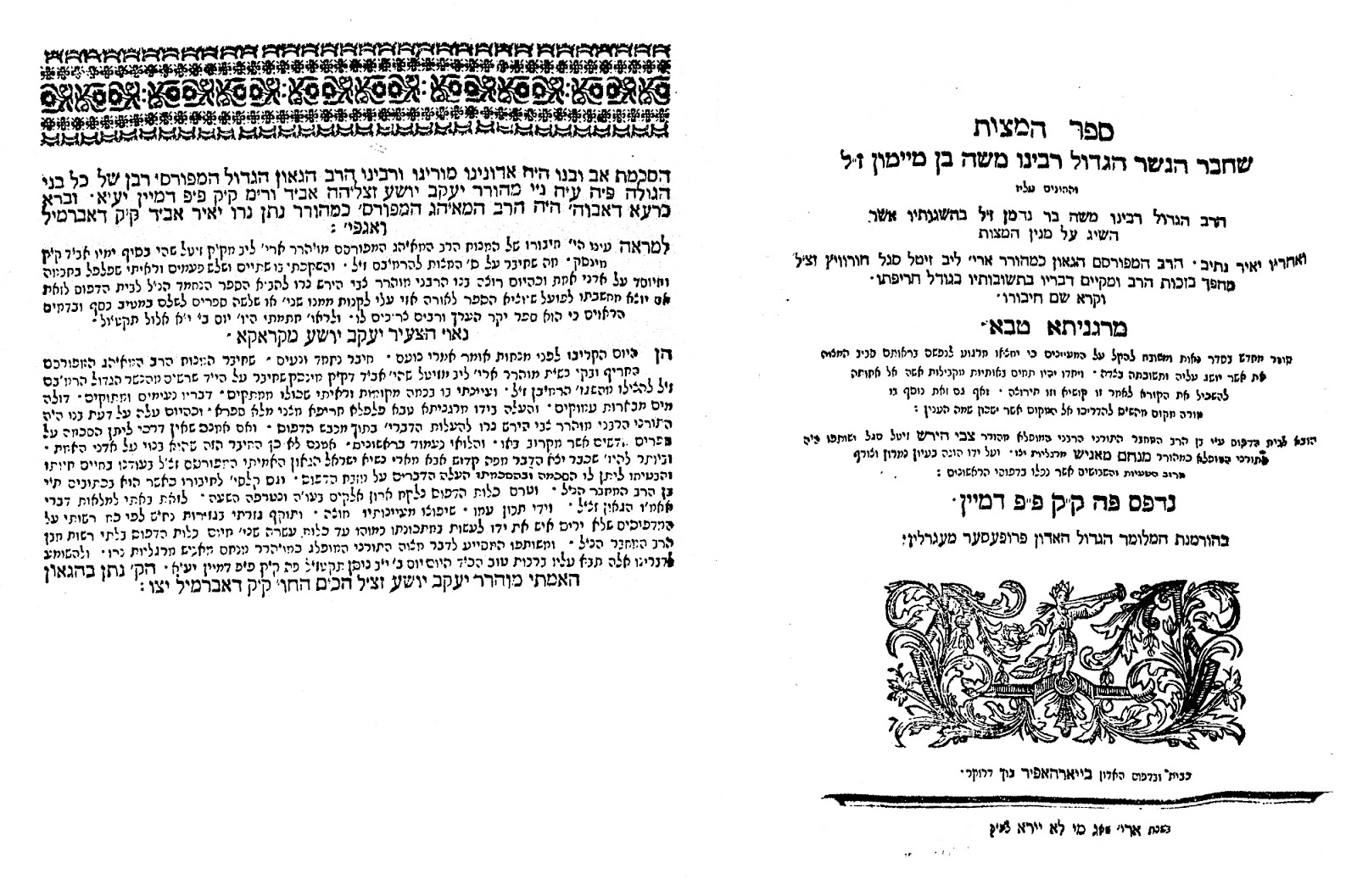
It appears only, as one might expect, at the start of the volume on Bereshis. Here is the key passage, which appears at the very end of the lengthy introduction.

Translated it reads: “I also had in my hands a handwritten book, named Shir Ma’on. The author’s name is not recorded in it. But I felt comfortable taking some of its fruits and inserting them into the present text, for there is a proper time for everything, a fixed time for every desirable matter.”

Incredibly, there are many passages, marked with the code משמ strewn throughout the Toras Moshe volume! What the editor was really telling us is that he had access to a handwritten notebook with no personal name recorded in it. Of course no personal name was recorded in it; it was his private notebook! The Hebrew title Shir Ma’on clearly alludes to the name “R. Shimon.” And משמ is surely an abbreviation for מספר שיר מעון. As a gifted rabbinic scholar, and as the grandson of the author of most of the passages in Toras Moshe, he felt comfortable adding appropriate passages to the volume. But being scrupulously honest, he knew that he could not do so without informing readers of what he was doing, and clearly identifying which passages belonged to his grandfather, and which passages belonged to him.

It is all to the credit of the editors of the latest editions of Toras Moshe that they now publish two separate sections of the book, each with its own title page, and both with notes and commentary. One section is called Toras Moshe and prints only what the Chasam Sofer wrote, and the other section is called Shir Ma’on and prints only what R. Shimon Sofer wrote.


In sum, Rav Pam resonated to a beautiful 
דבר תורה he saw in an early edition (or reprint) of Toras Moshe, and cited it in the name of the Chasam Sofer at a Torah Vodaath dinner held in his honor. Opening to a page in Sefer Vayikra of the multi-volume set of Toras Moshe, there was no obvious reason for him to assume that it was not a Torah insight of the Chasam Sofer. In fact, it was a Torah insight of the Chasam Sofer’s grandson, R. Shimon Sofer, who served with great distinction as Rabbi and Rosh ha-Yeshiva of Erlau in Hungary for over 50 years, and authored the multi-volume שות התעוררות תשובה (printed mostly in Budapest, 1923-1944), and died a martyr’s death in Auschwitz at age 94.


Notes

[1] The reference is to Vayikra 21:8. See b. Gittin 59b, where the verse is understood as a general obligation to honor all Kohanim.
[2] R. Shimon Sofer, “
פתוחי חותם,” introduction to R. Moses Sofer, ספר חתם סופר חלק יורה דעה (Pressburg, 1841). It is reissued in שות חתם סופרחלק יוד, vol. 1 (Jerusalem, 2000), introductory pages, p. 15.
[3] The reference is to the unauthorized publication in 1826 of several of the Chasam Sofer’s responsa and Torah insights, for which see below.
[4] See b. Bechorot 29a.
[5] M. Avot 1:13. Cf. 
שות חתם סופראוחסימן רח.
[6] The letter is included R. Yisrael Stern’s anthology, 
לקוטי תשובות חתם סופר (London, 1965), pp. 92-93.It was first published in 1842 by the recipient of the letter himself, R. Zvi Hirsch Chajes. See presently: כל ספרי מהרץ חיות (Jerusalem, 1958), vol. 1, p. 206. For a comprehensive study of the relationship between the Chasam Sofer and R. Zvi Hirsch Chajes, see Mayer Herskovics, מהרץ חיותתולדות רבי צבי הירש חיות ומשנתו – מהדורה מתוקנת  (Jerusalem, 2007), pp. 143-189.
[7] Mordechai Leib Bisliches (1756-1851) was a bibliophile, dealer in manuscripts, and printer. He printed books that were published in Carlsruhe, Lvov, Prague, and Pressburg. At least two of his printed books carried 
הסכמות from the Chasam Sofer (אוצר נחמדחדושי הרמבן על מסכת שבת , Pressburg, 1837; and מנחת קנאות מהרב הגדול אבא מרי בר משה מחכמי לוניל , Pressburg,1837). In 1846, Bisliches and his partner S.G. Stern sold 111 manuscripts in 102 volumes to the archduchess Marie Louise of Parma, which were added to the de Rossi Collection in the Biblioteca Palatina. See the entry “Bisliches” in Encyclopaedia Judaica and cf. N.M. Gelber’s תולדות יהודי ברודי (Jerusalem, 1955), p. 204.
[8]
 In the standard printed editions, this responsum appears in שות חתם סופריודסימן שלח.
[9]In the standard printed editions, this responsum appears in
שות חתם סופראוחסימן רח .
[10] 
Rav Pam: The Life and Ideals of Rabbi Avrohom Yaakov HaKohen Pam, p.336, note 9.


Life After Death: The Afterlife of Tombstone Inscriptions in the Old Jewish Cemetery of Vilna

Life After Death: The Afterlife of Tombstone Inscriptions in the Old Jewish Cemetery of Vilna

By Shnayer Leiman

The ultimate purpose of any Jewish cemetery is to provide a resting place, with dignity, for the Jewish dead. Jewish law and custom have played a major role in regulating almost every aspect of burial from the moment of death through the funeral itself, the period of mourning that follows the funeral, and – ultimately – the erection of a tombstone over the grave.[1] Once the tombstone is in place, the living return to the cemetery for occasional visits, usually on the anniversary of the death (yahrzeit) of a dear one, or to pray at the grave of a righteous rabbi or ancestor in a moment of need.

And, of course, the living return to the cemetery in order to attend the funerals of others. But the last mentioned occurs only in “living” cemeteries, i.e. cemeteries that still bury the dead. But, at some point, cemeteries run out of space, and/or are forced to close by municipal ordinance. In 1830, after serving Vilna’s Jewish community for well over 250 years, the Jewish cemetery ran out of space and the municipal authorities forced it to close.[2] It was no longer a “living”cemetery and it transitioned into a pilgrimage site, where Jews came to pray at their ancestors’ graves, and at the graves of the great Jewish heroes of the past.

Any such transition comes at a cost. It became necessary to provide for the security of the cemetery, despite the lack of income from regular funerals. Guards had to be hired, fences had to be built and repaired, caretakers had to maintain the cemetery grounds, and guides had to be provided for those searching for specific graves in the cemetery. In this brief essay we will focus on only one interesting phenomenon: the need to identify “celebrity” graves, and to create markers, often on the tombstones themselves, that identified the person buried at the foot of the tombstone as a celebrity, or as a close relative of a celebrity (e.g., אם הגאון רבינו אליהו “The Mother of the Gaon R. Eliyahu [of Vilna],” and אבי הרב הגאונים ר‘ חיים ורש זלמן מוואלאזין The Father of the Rabbis and Gaonim R. Hayyim and R. S[hlomo] Zalman of Volozhin ).[3] Clearly, this need was made necessary – in large part – by the wear and tear on the tombstone inscriptions that made many of them almost impossible to read by the end of the19th century. But it was also made necessary by the passage of time, when a younger generation no longer recognized the names of the deceased, who often were the parents or spouses of celebrities of the past and present.

Our evidence will come mostly from photographs of tombstones in the Old Jewish Cemetery taken during the first decades of the 20th century.[4] These will be supplemented by the hand copies of the same tombstones published mostly in the second half of the 19th century.[5] First, a word of caution.

While photographs don’t lie, they often mislead. Thus, a recent work – and a superb one at that – on the leading 20th century rabbinic figure in Vilna’s long history of rabbinic scholars, i.e., Rabbi Hayyim Ozer Grodzenski (d. 1940), inadvertently suggests that R. Mordechai Meltzer (1797-1883), a distinguished 19th century Vilna Talmudist, was buried in the Old Jewish cemetery of Vilna.[6] The suggestion is based upon a poor photograph of a group of graves in the Old Jewish cemetery. The Hebrew legend under the photograph reads “The tombstone of the Gaon Rabbi Mordechai Meltzer in Vilna.” Here is the photograph, as it appears in the volume, p. 180:

With a magnifying glass, one can barely make out above the second tombstone from the right, the title and name: הרב הגאון ר‘ מרדכי מעלצער The Rabbi and Gaon R. Mordechai Meltzer.” Since the third tombstone from the right is clearly identifiable as marking the grave of R. Abraham Danzig (d. 1820), a distinguished Vilna rabbinic scholar who was certainly buried in the Old Jewish cemetery, there is perhaps some reason to think that R. Mordechai Meltzer was, in fact, buried next to him, in the same cemetery.[7]

Interestingly, the author himself states openly the Rabbi Meltzer left Vilna and ultimately served as Rabbi of Lida (today in Belarus), “where he died in 1883.” Apparently, the author assumes that Rabbi Meltzer died in Lida, but was somehow brought to burial in the Old Jewish cemetery of Vilna.

Alas, it cannot be, for many reasons. Among them:

a) R. Mordechai Meltzer died in 1883. The Old Jewish cemetery was officially closed in 1830. No Jew was buried in the Old Jewish cemetery after 1830. From 1831 until 1941, all Jews who died in Vilna, including its most famous rabbis in that period, were buried in the Zaretcha Jewish cemetery (Vilna’s second Jewish cemetery).

b) R. Mordechai Meltzer, after serving 19 years as Chief Rabbi of Lida, was buried in Lida. A mausoleum was built over his grave, one of the few in the Lida Jewish cemetery, and it became a major pilgrimage site until it was destroyed during the Holocaust and its aftermath.[8]

c) More importantly, here is a clear photograph of the tombstone misidentified in the Grodzenski biography. The photograph will also introduce the first of 6 samples of celebrity markers on tombstones.

Sample1. R. Asher Klatzko (d. 1820).[9]

The second tombstone from the right is that of Rabbi Asher Klatzko (d. 1820), father of Rabbi Mordechai Meltzer. One can still read (in the photo) the original epitaph that mentions Asher and his father’s name, Isaac.[10] [Asher was a great talmudic scholar in his own right, and no one would have marked his grave in 1820 with an epitaph that mentions his 23 year-old son, Mordechai, who held no official position at the time. But in 1860 or so, long after the cemetery was no longer a living cemetery, few remembered who “R. Asher son of R. Isaac” was, but everyone knew who R. Mordechai Meltzer was: the head of Vilna’s Ramajles (ראמיילעס) Yeshiva during the first half of the 19th century, an official rabbi of Vilna with the title מורה צדק, teacher of Vilna’s most distinguished rabbis, and among the Vilna leaders who officially greeted Moses Montefiore when he visited Vilna in 1846.[11] And so the top of the tombstone frame was marked:

הוא אבי הרב הגאון ר‘ מרדכי מעלצער “He [Asher, the person buried here] is the father of the Rabbi and Gaon, R. Mordechai Meltzer.” The message seems to be clear: This is a celebrity related grave, not to be overlooked. This is our first sample of a phenomenon that characterizes the Old Jewish cemetery in its second phase, i.e. after it was no longer a living cemetery. Aside from repairing broken tombstones and re-inking the faded epitaphs, the cemetery authorities saw a need to introduce markers that provided new information that identified celebrity graves of one kind or another. Nor did the cemetery authorities hesitate to post those markers on the original tombstones themselves, when there was sufficient space to do so.

Sample 2. R. Yehuda Leib Gordon (d. circa 1825).

The third tombstone from the right, whose epitaph (in the center of the tombstone) is no longer legible, and is not recorded elsewhere, was accorded a celebrity inscription which reads: פנ חותן הרב הגאון ר‘ מרדכי מעלצער Here lies buried the father-in-law of the Rabbi and Gaon, R. Mordechai Meltzer.” The father-in-law, R. Yehudah Leib Gordon, was a member of a distinguished Vilna family that produced a long line of communal leaders and rabbis.[12]

Sample 3. R. Yosef b. R. Shmuel Zaskewitz (d. 1829).

In the same photo as at Sample 2 above, the first tombstone at the right has a celebrity marker at its top. The outer rim of its rooftop reads:

י[פנ ה]רבני המופלג מוה יוסף [בן ה]אבד דקק זאסקעווץ “Here lies buried the outstanding rabbinic authority, our teacher and rabbi Yosef, son of the Chief Rabbi of Zaskewitz.” Inside the rooftop, a celebrity marker has been added. It reads: אבי הרב הגאון ר‘ שמואל שטראשון “The Father of the Rabbi and Gaon, R. Shmuel Strashun.” By 1860 or so, few knew who R. Yosef b. R. Shmuel Zaskewitz was. But every learned Jew in Vilna knew precisely who R. Shmuel Strashun was,[13] and so R. Yosef was now properly identified as the father of R. Shmuel Strashun.[14]

Sample 4. R. Baruch b. R. Shmuel Zaskewitz (d. 1829).

In the same photo as at Sample 2 above, adjacent to R. Yosef b. Shmuel, rests his brother R. Barukh, who also died in 1829. Not surprisingly, he too was accorded a celebrity marker. It reads: דד הרב הגאון ר‘ שמואל שטראשון “The uncle of the Rabbi and Gaon, R. Shmuel Strashun.” In case you don’t know who R. Baruch was, now you know.[14a]

Sample 5. R. Zvi Hirsch b. R. David ha-Levi (d. 1830).

In the same photo as at Sample 2 above, at the extreme left, is the tombstone of R. Zvi Hirsch of Libau, who served with distinction as the lead cantor of the Great Synagogue of Vilna from 1822 until his death in 1830. The original epitaph is legible in the photograph, and has been recorded.[15] It makes no mention of his son. At a later date, perhaps in the 1860’s or later (see below), few remembered who R. Zvi Hirsch was, but everyone knew who his son was. Indeed his son not only eclipsed his father as a cantor, he eclipsed every cantor who would ever serve as lead cantor of Vilna. The son, the legendary “Vilner Balabesel” (Yiddish for: young and married householder in Vilna), R. Yoel David Strashunsky, succeeded his father upon his death in 1830, only 14 years old at the time. At that young age, there was much communal strife as to whether it was appropriate for him to serve as the lead cantor. It was decided that he would share the post with an older cantor until 1836, when in fact, he became the sole lead cantor. There was more trouble ahead, when in 1842 he left Vilna for Warsaw, where he performed in public concerts of operatic music. Ultimately he suffered from severe depression, and – on and off – either lost his voice, or lost his interest in serving as a cantor. He died in a hospital for the mentally ill in Warsaw in 1850, and was buried in Warsaw. He was 34 years old at the time of his death.[16] And so R. Zvi Hirsch too was accorded posthumous celebrity status. The inscription added to the rooftop portion of his tombstone reads:

פנ השץ מקק ליפי ופה קק ווילנא אבי ר‘ יואל דוד שץ דפה “Here lies buried the Cantor from the holy community of Libau and [who also served] here in the holy community of Vilna, the father of R. Yoel David, the Cantor [who served] here.”

Some, but hardly all, of the celebrity markers include the date when they were installed by the cemetery authorities. It is of particular interest to establish the date when R. Yoel David’s name was entered on his father’s tombstone, given the controversy that surrounded his name. It just happens to be that in the case of R. Zvi Hirsch of Libau, the celebrity marker included the date of its instillation, at least initially, but it no longer is entirely legible. The text at the bottom of the rooftop inscription reads:

 _ _נתחדש עי גבאי דצג בשנת תר “It [the grave site][17] was refurbished by the adjutants of the Zedakah Gedolah Society[18] in the year [5]6_ _.” The last two digits are illegible, leaving us with a range of years between 1840 and 1939. We can quickly close the gap a bit, since the photograph at Sample 2 was taken circa 1913.[19] Interestingly, the neighboring grave site just to the right of that of R.Zvi Hirsch Libau in the photograph at Sample 2, was also refurbished by the Zedakah Gedolah Society, and the date of instillation of its new inscription is included. It is the grave site of a pious woman named Roza, about whom we know almost nothing, other than the fact that she died in 1830 or earlier and was buried in the Old Jewish cemetery of Vilna. The text in the rooftop inscription reads: פנ ה[אשההצנועה המפורסמת מ[רתרוזאנתחדש עי גבאי דצג בשנת תרעג

“Here lies buried Mrs. Roza, the woman renowned for her modesty. It [the grave site] was refurbished by the adjutants of the Zedakah Gedolah Society in the year 673.”[20] The Hebrew year [5]673 was mostly in 1913. Almost certainly, both these grave sites were refurbished at the same time, in 1913. By that year, Yoel David Strashunsky was a legendary figure not only in Vilna, but indeed throughout the world of Yiddish speaking Jews. We will examine one more interesting celebrity marker that, as an aside, provides linguistic support for our dating of the R. Zvi Hirsch of Libau celebrity marker to circa 1913.

Sample 6. R. Shmuel b. R. Hayyim Shebsils (d. 1818).[21

Little is known about him, other than that he was a distinguished talmudic scholar, pedigreed, wealthy, charitable, and modest. He adopted the surname Landau, and one of his sons, R. Yitzchak Eliyahu Landau (1801-1876), was appointed rabbi and official preacher (מורה צדק ומגיד מישרים) of Vilna in 1868. Landau was a remarkable preacher and a prolific author who left an indelible impression on all who knew him. In 1870, among many other charitable deeds, he personally raised the funds necessary to rebuild the fence that surrounded the entire Old Jewish cemetery, where his father was buried.[22]

When his father died in 1818, there was no reason for the epitaph on his father’s tombstone to make mention of his 17 year old son. But this would change in 1912, if not earlier. As can be seen on the photo, the outer rim of the tombstone’s rooftop reads: פה מצבת הרב ר‘ שמואל בהרב ר‘ חיים שבתילס “Here is the tombstone of the rabbi R. Shmuel, son of the rabbi R. Hayyim Shebsils [sic].” Inside the rooftop, a celebrity marker has been added. It reads:

אבי הרב ר‘ יצחק אליהו לנדא ממ דפה “ Father of the rabbi R. Yitzchak Eliyahu Landau, [who served as] official preacher here.” Just under, and to the right, of the inscription on the outer rim, one reads: נתחדש עי גבאי דצג בשנת תרעב “Refurbished by the adjutants of the Zedakah Gedolah Society in the year 672.” The Hebrew year [5]672 was mostly in 1912. Here too, few, if anyone, really remembered who R. Shmuel b. R. Hayyim Shebsils was, but every learned Jew knew who R. Yitzchak Eliyahu Landau was. Gems from his sermons were repeated orally, and his books were published and republished in Vilna, Warsaw, and elsewhere. A celebrity marker was necessary in order to identify R. Shmuel b. R. Hayyim Shebsils.

It is interesting to note that the celebrity markers that highlight the names of Cantor Yoel David Strashunsky and Official Preacher R. Yitzchak Eliyahu Landau, share a specific – and ambiguous – Hebrew turn of phrase. Cantor Yoel David is called שץ דפה and R. Yitzchak Eliyahu is called ממ דפה. The term דפה can be rendered as present tense: “who presently serves as…” or past tense: “who served as…” I have preferred the latter sense in the English translations above, largely because in the case of R. Yitzchak Eliyahu Landau, the date of the refurbishing is clearly given as 1912. R. Yitzchak Eliyahu Landau was surely no longer alive in1912; as indicated above, he died in 1876. But it is possible that the celebrity markers come from an even earlier period, and were entered on the tombstones during the lifetime of Strashunsky (in the 1840’s) and Landau (in the 1870’s). When the ink faded, they were redone in 1912.

What argues against this possibility, however, is the written record. None of the 19th century publications of the tombstone inscriptions discussed in this essay record (or even seem to be aware of) any of the celebrity markers.

In sum, our purpose has been to introduce a topic – the afterlife of tombstone inscriptions – that needs to be developed and applied to many Jewish cemeteries, sooner rather than later.[23] Our purpose has not been to present an exhaustive treatment of celebrity markers – one category of the afterlife of tombstone inscriptions — in the Old Jewish cemetery of Vilna. That would require much research, and would result in a hefty monograph, both of which are well beyond our means. The few samples we examined, however, surely serve to underscore the fact that the study of the afterlife of tombstone inscriptions remains a scholarly desideratum.

Notes

[1] For a comprehensive bibliography on the Jewish cemetery, see Falk Wiesemann, Sepulcra Judaica: Jewish Cemeteries, Death, Burial and Mourning from the Period of Hellenism to the Present, A Bibliography (Essen: Druckerei Runge, 2005). For an eminently readable summary of contemporary Jewish halakhic practice and custom relating to erecting tombstones and visiting graves, see Chaim Binyamin Goldberg, Mourning and Halachah: The Laws and Customs of the Year of Mourning (New York: Mesorah Publications, 14th edition, 2012), pp. 382-399.
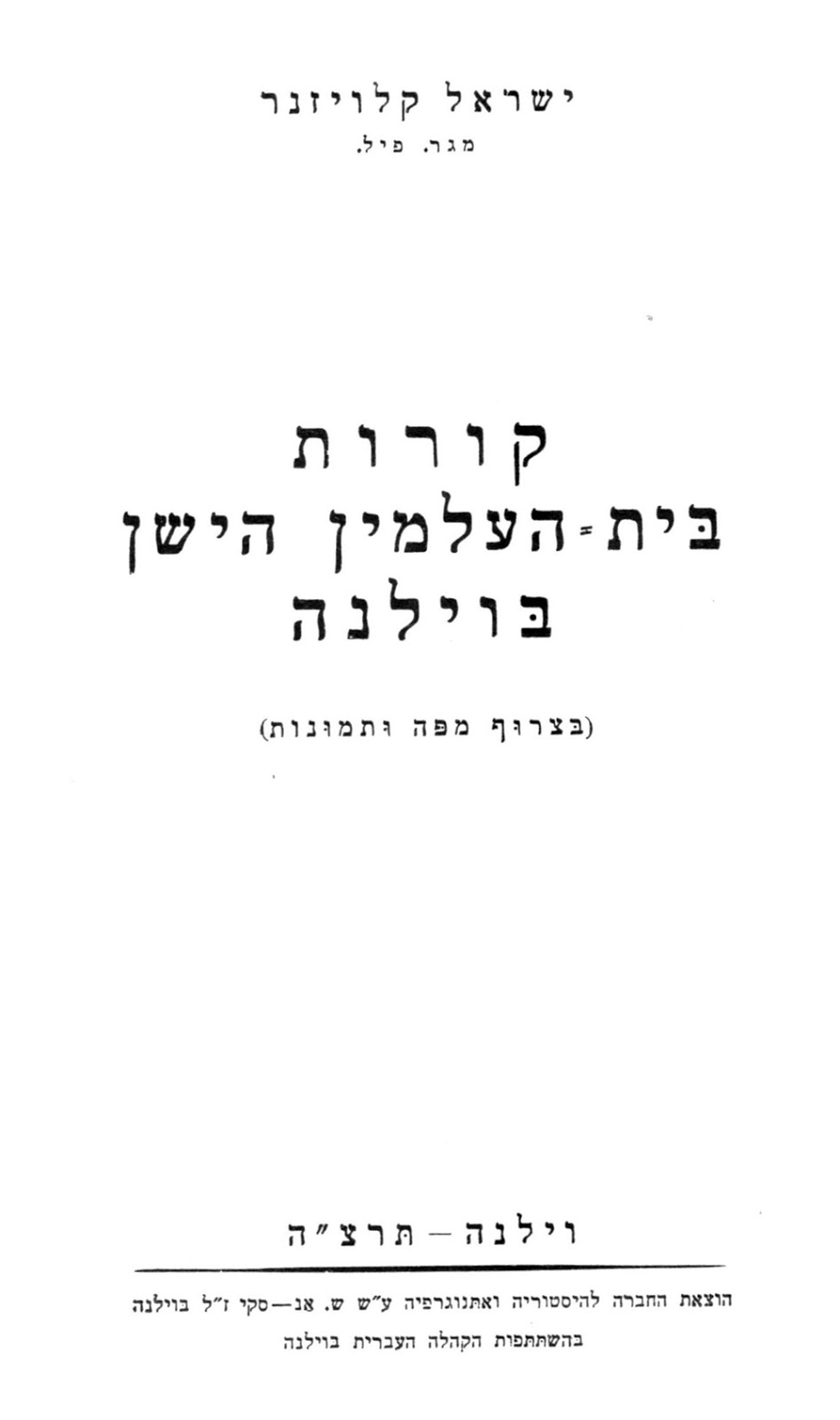
[2] [] See Israel Klausner, קורות ביתהעלמין הישן בוילנה (Wilno: An-ski Jewish Historical and Ethnographical Society of Vilna, 1935), pp. 30-32.
[3] For these markers, see the photographs below:

a) 

b) 

a) Tombstone of R. Yitzhak b. R. Hayyim of Volozhin, and just behind it, the tombstone of Traina, mother of the Gaon of Vilna.
b) Frontal view of Traina’s tombstone (in the center of the photograph, and to the right of R. Yitzhak b. R. Hayyim of Volozhin’s tombstone).

R. Yitzhak b. R. Hayyim died in 1780. At the time, his son R. Hayyim of Volozhin was 31 years old, and had just recently been appointed Rabbi of Volozhin, hardly a large and significant Jewish community in Lithuania at the time. The Yeshiva of Volozhin was not founded until 1802. R. Yitzhak’s son R. Shlomo Zalman was 24 years old when his father died, and relatively unknown. Indeed, R. Yitzhak’ eldest son, R. Simhah, 39 years old at the time, and a practicing rabbi, is not even mentioned by the marker. Clearly, the markers come from a much later period when R. Hayyim and R. Shlomo Zalman were the only names (of R. Yitzhak’s 5 sons) that were known widely by learned Jews, and by visitors to the Old Jewish cemetery of Vilna. For R. Hayyim of Volozhin, see, e.g., Dov Eliach, אבי הישיבות (Jerusalem: Moreshet ha-Yeshivot, revised and expanded edition, 2012); and Shaul Stampfer, Lithuanian Yeshivas of the Nineteenth Century (Oxford: Littman Library of Jewish Civilization, 2015), pp. 15-47. For his younger brother R. Shlomo Zalman, see, e.g., R. Yehezkel Feivel, תולדות אדם השלם (Jerusalem: Makhon Moreshet ha-Gra, 2012).

For the little that is known about Traina, who died in 1742, see Bezalel Landau, הגאון החסיד מוילנא (Jerusalem: Torah mi-Ziyyon, third edition, 1978), p. 15, note 14; and Dov Eliach, הגאון (Jerusalem: Moreshet ha-Yeshivot, 2002), vol. 1, pp. 66-70. For the epitaph on her tombstone, see Klausner, op. cit., p. 56. The marker was surely added after the lifetime of Gaon of Vilna (d.1797), who would not have tolerated seeing the title “Gaon” next to his name, permanently etched in stone as it were, in the Old Jewish cemetery. In photo b, one can actually see how an earlier marker on the upper portion of the tombstone, “פנ אם הגאון רבינו אליהו“, after fading away, was replaced by new marker “פנ אם הגרא” .
[4] Photographs of Vilna’s Old Jewish cemetery abound in a wide variety of publications and periodicals in different languages. These include: Hebrew (e.g., Y. Kremerman, מוילנא ירושלים דליטא‘ עד חיפה [n.p: privately published, 1995]); Yiddish (e.g., Leyzer Ran, אש פון ירושלים דליטא [New York: Wilner Ferlag, 1959]); Russian (e.g., G. Agranovskii and I. Guzenberg, Litovskii Ierusalim [Vilnius: Lituanus, 1992]); Lithuanian (e.g., K. Binkis and P. Tarulis, Vilnius 1323-1923 [Kaunas-Vilnius: Švyturio Bendroves Leidinys, 1923]); German (e.g., Paul Monty, Wanderstunden in Wilna [Wilna: Verlag der Wilnaer Zeitung, 1916]); and English (e.g., Gerard Silvain and Henri Minczeles, Yiddishland [Corte Madera, CA: Ginko Press, 1999]), and total many more publications than can possibly be listed here. Postcard reproductions of photos were produced and sold before, during, and after World War I, serving as a major source for some of the publications mentioned above. Some of these photos are posted on line in various collections of ephemera. Numerous photos, not yet published, are available in private collections. All the photos in this essay (with the exception of the misidentified photo in the recently published Grodzenski volume) are from original photographs and postcards in my possession. Artists have also depicted a variety of scenes from the Old Jewish cemetery (e.g., Walter Buhe, “Wilnaer Judenfriedhof,” 1916; a copy can be viewed online at the Wikipedia entry for Walter Buhe, sub: Images for Walter Buhe).
[5] The hand copies were published mostly by Samuel Joseph Fuenn, קריה נאמנה, second edition (Vilna: Notes and Schweilik, 1915), henceforth: Fuenn; Hillel Noah Steinschneider, עיר ווילנא (Vilna: Romm Publishing Company, 1900), henceforth: Steinschneider; and Israel Klausner (see above, note 2), henceforth: Klausner.
[6] R. Dovid Kamenetsky, רבנו חיים עוזררבן של כל בני הגולה (Jerusalem: n.p., 2021), volume 1.
[7] Our author may have been misled by Leyzer Ran, ירושלים דליטא (New York: Wilner Verlag, 1974), vol. 1, p. 101, who mistakenly identified the same photograph as containing the graves of both R. Mordechai Meltzer and R. Abraham Danzig in the Old Jewish cemetery of Vilna. The same error appears in Y. Kremerman (see above, note 4), p. 267.
[8] See R. Mordechai Meltzer’s posthumous publication, תכלת מרדכי (Vilna: Matz, 1889). On the reverse side of the second title page, the full text of the lengthy epitaph on his tombstone in Lida appears in print. A short biography appears on pp. 20-24, which makes mention of the mausoleum constructed over his grave, and that it has become a pilgrimage site. Cf. A. Manor et al, eds., ספר לידא (Tel-Aviv: Or-Li Publishers, 1970), pp. 91-92.
[9] See Steinschneider, p. 122, note 1.
[10] Klausner, p. 75, notes that the inner epitaph was no longer extant in 1935.
[11] See Isaac Meyer Dik, האורח (Vilna, 1846), pp. 30-31. The place and date of publication are uncertain; and the volume may have been co-authored. For bibliographical discussions, see the sources cited in the entry האורח in מפעל הביבליוגרפיה העברית accessed at:  https://uli.nli.org.il/permalink/972NNL_ULI_C/4upfj/alma99682727008422).
[12] Steinschneider, pp. 123 and 194.
[13] For R.Shmuel Strashun, see Zvi Harkavy’s “,תולדות רשש וכתביו” appended to his edition of מקורי הרמבם לרשש (Jerusalem: ha-Eretz Yisraelit, 1957), pp. 53-58. Cf. David Abraham, פנקסו של שמואל (Jerusalem: Makhon Yerushalayim, 2011).
[14] For the text of the inner epitaph, see Fuenn, pp. 254-255.
[14a] See note 14.
[15] Klausner, p. 74.
[16] A vast literature has developed regarding the history and legends surrounding the life of R. Yoel David Strashunsky. These include novels, plays, and film productions. For one of the many failed attempts to distinguish fact from fiction, but fascinating nonetheless, see Samuel Vigoda, Legendary Voices (New York: M.P. Press, 1981), pp. 390-427.

Some of the more important scholarly studies are: Hillel Noah Steinschneider “תולדות השץ הנפלא מווילנא ר‘ יואל דוד לעוווענשטיין” in תלפיות (Berditchev, 1895), part 12, pp. 8-13; Abraham Z. Idelsohn, “תולדות השץ יואל דוד בעל הביתל” in Hebrew Union College Monthly 20 (May-June 1933), pp. 27-29; Isaac Schiper, “אונבעקאנטע ארכיון– מאטעריאלען וועגען דעם אויפהאלט פון ווילנער בעלהביתל אין ווארשא אין יהאר 1842 Haynt, September 23, 1934, p. 9; Silja Haller et al, eds., Joachim Stutchewsky Der Wilnaer Balebessel (Wiesbaden: Otto Harrassowitz, 2013; and James Loeffler, “Promising Harmonies: The Aural Politics of Polish-Jewish Relations in the Russian Empire,” Jewish Social Studies 20:3 (2014), pp. 1-36 (especially pp. 19-25). קבר
[17] I translate “grave site” [for Hebrew קבר] rather than “tombstone” [for Hebrew מצבה], for –strictly speaking – the form נתחדש can only be the passive verbal form for a masculine noun. But I have some doubts about whether the sign painters in 19th and 20th century Vilna cared very much about Hebrew grammar. See below, in the center of the photograph at Sample 6, where the celebrity marker at the top refers to מצבת, yet under it, the marker specifically states נתחדש. In any event, the masculine noun קבר, ordinarily rendered “grave,” bears secondary meanings including “grave site” and “tombstone.” See Klausner, passim, who uses the term regularly for “grave site” and “tombstone; and cf. A. Even-Shoshan, מלון אבן-שושן (Tel-Aviv: Am Oved, 2003), vol. 5, p. 1623.
[18] The Zedakah Gedolah Society was Jewish Vilna’s official communal institution in charge of public welfare. Given the rampant poverty that prevailed throughout much of Vilna’s Jewish history, this was one of the most important institutions in Vilna. It assumed even greater significance when the Czarist regime abolished Jewish Vilna’s “Kahal” structure in 1844. One of the Zedakah Gedolah’s many tasks was to provide the lion’s share of the funding necessary for the upkeep of Vilna’s Jewish cemeteries. See Israel Cohen, Vilna (Philadelphia: Jewish Publication Society, 1943), pp. 121-122; cf. Israel Klausner, וילנה ירושלים דליטאדורות הראשונים 1495-1881 (Tel-Aviv: Kibbutz Ha-Me’uhad, 1988), pp. 393-394. For a vivid description of how the Zedakah Gedolah provided Passover aid for the poor in late 19th century Vilna, see David Livni, ירושלים דליטא (Tel-Aviv, 1930), vol. 1, pp. 9-43. With the advent of World War I, it fell into a period of steady decline and would ultimately be liquidated under Polish rule in 1931. See Israel Cohen, op. cit., pp. 394-397; and cf. Andrew N. Koss, “Two Rabbis and a Rebbetzin: The Vilna Rabbinate during the First World War,” European Judaism 48:1 (2015), pp. 120-122.
[19] It is clearly a Jan Bulhak photograph, taken between 1912-1915 at the Old Jewish cemetery.
[20] The date תרעג = [5]673 = 1913, and not תרסג = [5]663 = 1903, is confirmed by several different photographs, taken from different angles, of Roza’s grave site (in my personal collection of Vilna materials).
[21] Fuenn, p. 230 and cf. his Introduction, p. xxxi. R. Hayyim’s father’s name was Shabsai. For the form “Shebsil” derived from “Shabsai,” see Alexander Beider, A Dictionary of Ashkenazic Given Names (Avotaynu: Bergenfield, 2001), pp. 409-411.
[22] Steinschneider, p. 97. For the date, see the essay “דער אלטער בית עולם” authored by “במב” in the weekly ווילנער וואכענבלאט, August 12, 1910, pp. 2-3.
[23] Anyone who has frequented, for example, the old Jewish cemeteries in Frankfurt, Mainz, Worms, Prague, and Cracow, will know that celebrity markers are commonplace and mostly late, and that many faded tombstones have been re-inked, often wrongly. Sadly, even the Gaon of Vilna’s epitaph, while yet in the Old Jewish cemetery, was – in part – re-inked wrongly. See the discussion of the Gaon’s epitaph in my “The Paper Brigade’s Recording of Epitaphs in Vilna’s Old Jewish Cemetery: A Literary Analysis,” The Seforim Blog, February 26, 2024 (SeforimBlog.com). It should also be noted that there are different categories of celebrity markers, such as large maps or lists of famous names (often encased in glass) at the cemetery entrance, arrows posted along the route to a celebrity grave, new inscriptions on old tombstones or mausoleums, and entirely redone tombstones (enlarged and enhanced to underscore their celebrity status). I am indebted to Marcin Wodzinski (Professor of Jewish Studies at the University of Wroclaw in Poland), who in a personal communication kindly informed me about yet another factor that plays a role in celebrity markers: the material out of which a tombstone is made, and its malleability. If you cannot easily engrave an inscription on a tombstone, others ways will be found to mark a celebrity grave. Thus, local geophysical factors may well influence the kind of celebrity markers used in a particular cemetery.


The Paper Brigade’s Recording of Epitaphs in Vilna’s Old Jewish Cemetery: A Literary Analysis

The Paper Brigade’s Recording of Epitaphs in Vilna’s Old Jewish Cemetery: A Literary Analysis

Shnayer Leiman

I. Introduction.

Shortly after the Nazis captured Vilna on June 24, 1941, representatives from the “Special Detail of Reich-Administrator Alfred Rosenberg” (Einsatzstab des Reichleiter Alfred Rosenberg) arrived in Vilna. Their task was to loot the literary (and other) treasures of Vilna’s Jewish community, and to ship them to Frankfurt.[1] Under the aegis of Nazi “experts” in Jewish matters, a slave-labor unit consisting at times of some 40 Jews was established.[2] Like the other slave-labor units, the group gathered early in the morning each day at the gate of the Jewish Ghetto. It was then marched outside the Ghetto to the nearby YIVO building at 18 Wiwulskiego Street, which had become the headquarters of Einsatzstab Rosenberg in Vilna. A variety of tasks were performed by the members of slave-labor unit, including the sorting of thousands of books and documents, cataloguing materials, and the preparation of essays on topics selected by, and of special interest to, Einsatzstab Rosenberg. The primary Nazi goal was to loot the best of the materials and to destroy the remaining materials. The primary goal of the members of the slave-labor unit was to stay alive by biding their time, and – at the same time – to rescue from destruction as many literary and artistic treasures as possible. They are the heroes of what is known as “the Paper Brigade.”[3]
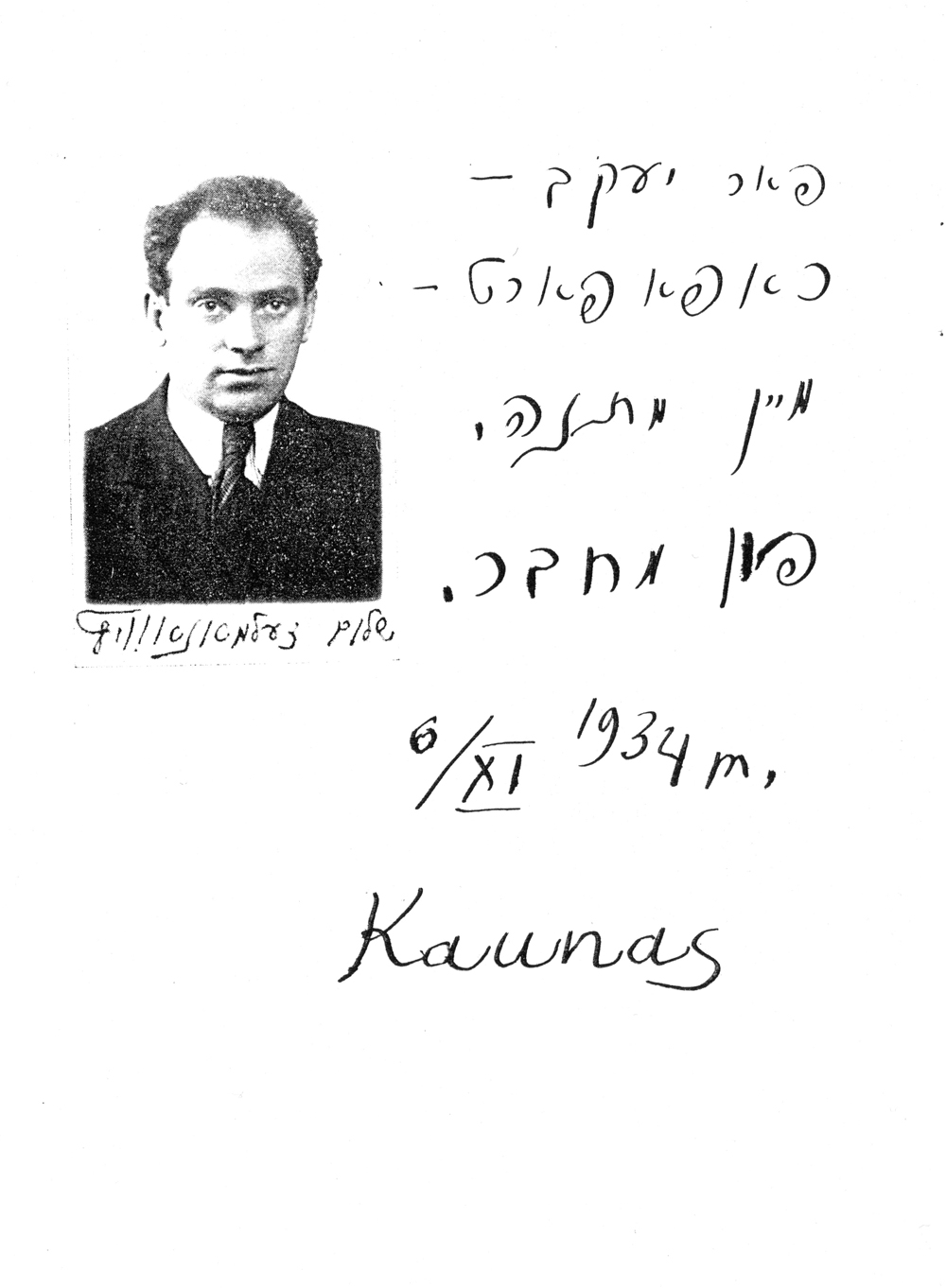
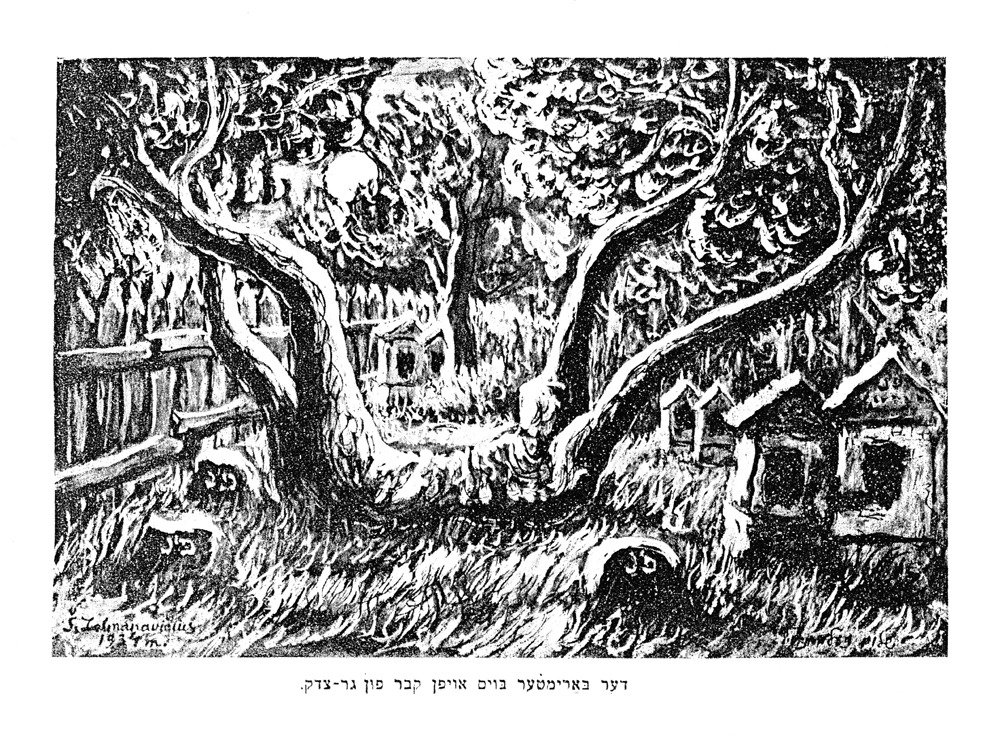
II. Issues to be examined. One of the more important compilations of the Paper Brigade, completed in 1942, was a list of 51 epitaphs from Vilna’s Old Jewish cemetery in Shnipishok (in use until 1830)[4] and 140 epitaphs from Vilna’s New Jewish cemetery in Zaretcha (in use until 1941).[5] Given the fact that the vast majority of tombstones of both these cemeteries were destroyed, in part during the Holocaust, and primarily during its aftermath under Communist rule, it is imperative that the compilations of the Paper Brigade, prepared in 1942, be examined for their accuracy, and ultimately for their contribution to historical truth. Fortunately, these compilations have been preserved and can easily be accessed.[6] This study will focus only on the 51 epitaphs from Vilna’s Old Jewish cemetery. It will attempt to address, at least in a preliminary fashion, such questions as:

1. Did members of the Paper Brigade actually visit the Old Jewish cemetery and copy the epitaphs that are recorded in the compilations?

2. What other sources may have been used by the members of the Paper Brigade in preparing their compilation?

3. Why were these 51 epitaphs selected for the compilation, given the approximately 300 tombstones[7] with legible epitaphs that were still standing in the Old Jewish cemetery in 1942?

III. Methodology. We will examine samples of the transcriptions of the 51 epitaphs, as they appear in the compilation, and compare them to the transcriptions of the same epitaphs as published in books prior to the Holocaust and as preserved in photographs. We will look for patterns that repeat themselves in the 51 transcriptions of the epitaphs, patterns that may shed light on how, and from where, they were copied.

Epitaph 1: The Vilna Gaon (d.1797).

Discussion: This copy of the Vilna Gaon’s epitaph, for the most part, preserves the text as it first appeared in Yehoshua Heschel Levin, עליות אליהו (Vilna, 1856), p. 90, and in Shmuel Yosef Fuenn, קריה נאמנה (Vilna, 1860), p. 146 (and second edition: Vilna, 1915, pp. 155-156). Henceforth, we will refer to Levin as L. and Fuenn as F. The opening letters of lines 3-13 spell the acrostic רב אליהו גאון. The closing words of lines 3-13 are poetic, all of them ending with the rhyming letters עים or אים. The narrative portion (lines 14 on) follows the texts of L. and F., but not their line divisions.

What needs to be noted here is that this was not what the Vilna Gaon’s epitaph looked like in 1942. Probably due to both natural deterioration and human negligence, some of the letters on the extreme right of the tombstone were rubbed out or smudged. Attempts were made to re-ink some of the missing letters, often creating imaginary words. See below, for photographs A and B.

Photograph A[8] is a pre-Holocaust photo of the epitaph. Photo B[9] is a post- Holocaust photo, taken circa 1995. Notice line 10 in the epitaph, which must begin with an enlarged letter ג , for it begins the word גאון in the acrostic. But in the photographs, one clearly sees what looks like םכר (which probably was originally ג]ם פר[ישות ). In any event, we are served notice by the very first epitaph that the Paper Brigade did not always record what they saw; they surely did not see the words גם פרישות on the Gaon’s tombstone in 1942. They recorded what they knew from other literary sources.

Epitaph 3: R. Shlomo Zalman, father of the Vilna Gaon (d. 1758).

Discussion: The epitaph is replete with letters in parentheses. Parentheses, of course, do not ordinarily appear on Jewish tombstones. Clearly, then, the Paper Brigade either saw a mostly illegible epitaph, and filled in the missing letters, marking them in parentheses, or they copied the entire text from a published book. There is no need here for guesswork. The epitaph was published previously by three different authors: L. (in 1856); F. (in 1860 and 1915); and Israel Klausner, קורות בית-העלמין הישן בוילנה (Vilna, 1935), henceforth K. Here are the three editions of the epitaph:

L. (p. 27, n. 3):

F. (p. 123; second edition, p. 128):

K. (p. 45):

It should be noted that the Paper Brigade erred in the title of the entry, wrongly listing ר’ אליהו חסיד as the father of ר’ שלמה זלמן. Nevertheless, it seems obvious that the Paper Brigade copied the text of the epitaph almost exactly as it appeared in K., recording כסלו (and not א’ דחנוכה), and even inserting the hyphen that connects the names ישכר and בער. There was no need to visit the Old Jewish cemetery in order to copy the epitaph.

Epitaph 9: R. Avigdor b. Shmuel, father of R. Shmuel – the last Av Bet Din of Vilna (d. 1771).

Discussion: It is certainly worth noting that the format follows exactly that of epitaphs 1 and 8, and many others in the Old Jewish cemetery, namely an acrostic at the right of the epitaph, included in a rhymed poem praising the deceased and mourning his loss, followed by a narrative text listing the titles and name of the deceased and the date of death. More importantly for our purposes, this epitaph was copied almost exactly as it appears in F., p. 165; second edition, p. 171:

But note that F. included two sets of parentheses that would not have appeared on the original tombstone. In line 1, the opening word אבי is marked by parentheses, since all three letters were necessary for the acrostic. In the last line, the word תקל”א [5]531 = 1771 was added (in parentheses) for clarification of the year of death. No such markings or words would have appeared on the original tombstone. Again, it is obvious that the Paper Brigade copied the epitaph from a published text. No visit to the Old Jewish cemetery was necessary.

Epitaph 10: R. Eliyahu b. R. Moshe Kramer (d. 1710).

Discussion: The Vilna Gaon was a great-grandson of R. Eliyahu b. Moshe Kramer and, indeed, was named after him. The epitaph preserved in the compilation is taken directly from F., p. 99; second edition, p. 105:

A photograph of the original epitaph has been preserved, taken shortly before or during World War I. It features a three-line marker that identifies the grave, painted just above the epitaph. These lines may well have been added to the gravesite after F.’s visit in 1860. But an examination of the original epitaph indicates that its line division differed considerably from F.

It is clear that the Paper Brigade did not visit the gravesite itself. Below is a photo of the gravesite and a transcription of its epitaph into modern Hebrew font.[10]

Photo Transcription:

Epitaph 14: R. Yehoshua Heschel: Av Bet Din of Vilna (d. 1749).

Discussion: This was a wooden tombstone, well preserved, and photographed circa 1935 (see K., p. 52). The compilation slavishly follows the line division of F., p. 110; second edition, p. 116:

F

The circa 1935 photograph of the tombstone, however, presents a different line division for lines 8 and 10.

K Photo

In F., lines 8 and 10 end with the words זהב and לעולמו, respectively. In K., in the photo taken at the cemetery, the same lines end with the words פרוים and בך”ו , respectively. This suggests once again that the Paper Brigade did not actually copy epitaphs in the Old Jewish cemetery.

Epitaph 30: R. Noah Mindes Lipschuetz (d. 1797).

Discussion: R. Noah Mindes Lipshuetz, distinguished Kabbalist, was buried next to the Vilna Gaon. They died within three months of each other, and were מחותנים as well. (The Vilna Gaon’s son, R. Avraham, was married to Sarah, the daughter of Rabbi Noah and Mrs. Mindes Lipshuetz.) It was decided that they would share one tombstone, with only a narrow painted ivy decoration separating their epitaphs. The original tombstone, with its epitaphs, can be seen to this very day in the Sudervas Jewish cemetery in Vilnius.

Whatever reservations one may still entertain about the compilation having borrowed information directly from F., will surely be dispelled by a careful reading of F.’s recording of R. Noah Lipshuetz’s epitaph:

F 171

The last line of the epitaph in F. (p. 171; second edition, p. 177) reads:

וי”נ (= ויצאה נשמתו) שנת ג’ טבת לפ”ק תאמי צביה “And his soul departed in the year 3 Teveth, equivalent (not counting the thousands) to the numerical value of “Ta’amei Zeviah.” See Song of Songs 7:4. Now the numerical value of “Ta’amei Zeviyah” (not counting the thousands) is [5]558 = 1797, which works perfectly. But the words “and his soul departed in the year 3 Teveth” are senseless. This, of course, is an error (or: typo, if you like) in F. One need merely look at the original epitaph[11] and read the correct Hebrew text: נפטר ביו’ ג טבת שנת תאמי צביה. “He died on the 3rd day of Teveth in the year “Ta’amei Zeviyah.” But the senseless phrase “and his soul departed in the year 3 Teveth” reappears in the compilation prepared by the Paper Brigade! Had the Paper Brigade visited the Old Jewish cemetery in Shnipishok in 1942, it surely would have seen and recorded the correct text of the epitaph.

————————-

There are two epitaphs included in the 51 listed, that merit special attention.

Epitaph 51: R. Shneur Zalman Kaczerginski (d.1815).

The German title at the top of the entry identifies Kaczerginski as a talmudic scholar and philanthropist who died in 1815. As such, he certainly qualifies for inclusion in a compilation of persons buried in Vilna’s Old Jewish cemetery, which was closed in 1830. Alas, no such person was buried in the Old Jewish cemetery! It turns out that Shneur Zalman Kaczerginski was born in 1817 and died in 1887, and – of course – was buried in the Zaretcha cemetery, Vilna’s second Jewish cemetery. The Paper Brigade borrowed the full text of the Kaczerginski epitaph, word for word, from Hillel Noah Steinschneider, עיר ווילנא (Vilna, 1900), vol. 1, p. 290; once again, a sign that the members of the Paper Brigade read books sooner than copying tombstone inscriptions while standing outdoors in the cold.[12] In other words, the Paper Brigade recorded only 50 genuine entries of epitaphs for the Old Jewish cemetery (Alter Friedhof). “Epitaph 51” properly belongs to the Zaretche Jewish cemetery (Neuer Friedhof). Interestingly, Willy Schaefer, one of the Nazi “Jewish” experts who lorded it over the Paper Brigade, writes specifically in his report on Vilna’s Jewish cemeteries that the Paper Brigade had prepared a 108 page research paper with a total of 190 entries of epitaphs.[13] The 108 page research paper has been preserved (and its epitaphs are cited throughout this essay), but Schaefer’s 190 entries of epitaphs was based on the assumption that 50 epitaphs were copied from the Old Jewish cemetery and 140 from the New Jewish cemetery, i.e. Zaretcha, for a total of 190 epitaphs. In fact, we have 51 numbered entries for the Old Jewish cemetery, plus 140 numbered entries for the Zaretcha cemetery, for a total of 191 numbered epitaphs. One can only speculate as to why epitaph 51 was added to the research paper, and in the wrong place at that. And speculate we will! But before doing so, it should be noted that one key spelling difference separates Steinchneider’s recording of the Kaczerginski epitaph from what appears in the Paper Brigade’s report as Epitaph 51. Steinschneider spells the deceased’s last name as: קאצערגיסקי [Kaczergiski]. He even adds in a footnote that the deceased hailed from a town outside of Vilna called Kaczergisak, and that is why the family name is Kaczergiski. But the Paper Brigade lists the deceased’s last name as Katscherginski (in German) and קאצערגינסקי (in Hebrew).

One suspects this may have to do with the key role played by Shmerke Kaczerginski,[14] a Vilna born partisan, and a prominent member of the Paper Brigade.[15] He may have wished to memorialize a possible ancestor who was overlooked by the editors of the Paper Brigade report on epitaphs in the Jewish cemeteries. Perhaps turned down by the editor of the report on Zaretcha, Kaczerginski was able to persuade the editor of the report on the Old Jewish cemetery to add one more entry, epitaph 51 – but that required a falsification of R. Shneur Zalman Kaczergiski’s date of death, and a slight change in the spelling of his name. Whether Steinschneider’s קאצערגיסקי is interchangeable with the name קאצערגינסקי (and its Yiddish equivalent קאטשערגינסקי ) seems questionable to me; and it remains to be proven whether R. Shneur Zalman Kaczergiski was, in fact, an ancestor of Shmerke Kaczerginski.

Epitaph 31: R. Dov Baer Natansohn (d. 1804).

R. Dov Baer Natansohn is described as being active in Vilna’s Great Synagogue, and serving as an official of Vilna’s Jewish Community Council. We know too that in a later period, members of the Natansohn family would play a leading role among Vilna’s moderate Maskilim in the middle of the 19th century.[16] What’s unique about this epitaph is that it is the only one (of the 50 genuine epitaphs of Jews buried in the Old Jewish cemetery) that is not recorded in F. or K. or in any early source known to me. This is almost certainly an indication that R. Dov Ber Natansohn – at least in the eyes of Fuenn and Klausner – did not quite measure up to the names of those included in their monographs. In any event, one could argue, that this epitaph could only have been recorded by a member of the Paper Brigade who actually visited the gravesite at the Old Jewish cemetery. This may well be the case. But is also possible that a descendant of R. Dov Baer Natansohn in the Vilna Ghetto, kept a copy (or even a photograph) of the tombstone, and handed it to a member of the Paper Brigade, so that the epitaph would be preserved for posterity. It should also be mentioned that Khaykl Lunski,[17] the famed librarian of Vilna’s Strashun Library, was an early advisor to the Paper Brigade. In the Vilna Ghetto, he was busy working on a study of the epitaphs in Vilna’s Old Jewish cemetery.[18] He may well have provided a copy of R. Dov Baer Natansohn’s epitaph to a member of the Paper Brigade.

————————————-

In terms of which groups of Jews (buried in the Old Jewish cemetery) were selected for memory by the Paper Brigade, it is clear that a prior selection had already been made by F. and K. As indicated above, 49 out of the 50 genuine epitaphs were borrowed from the earlier accounts in F. and K. These were elitist accounts that focused primarily on professional rabbis and rabbinic scholars, and Jewish communal leaders. F. precluded women from the entries in his book; K. included women, but (for the most part) only to the extent that they were family members of famous rabbis, such as the Vilna Gaon. Looking specifically at the 50 epitaphs included in the Paper Brigade report, some 25 are distinguished professional rabbis and rabbinic scholars; approximately 8 others relate to the Vilna Gaon and members of his family (including women); approximately 8 relate to Jewish communal leaders; approximately 6 relate to professionals (e.g., doctors, printers, and cantors); with approximately 2 or 3 miscellaneous cases (e.g., the Ger Zedek; and R. Yehudah Asher Guenzberg, father of the Maskil Mordechai Aaron Guenzberg). Clearly, the report was prepared by someone who was sympathetic to the prominent role played by rabbinic culture in Vilna’s early modern period, and who knew where to look for the sources he needed in order to prepare the report.

Some will quibble over the tendency of the Paper Brigade to overlook the common man and woman when listing their selected epitaphs. After all, every Jewish man and woman who died in Vilna between 1592 and 1830 was buried in the Old Jewish cemetery. They seem to forget that it was 1942, under Nazi rule, and in the Vilna Ghetto, that the report was written, hardly the time and place to engage in original sociological research of any kind. At best, they could examine the printed books in the Ghetto library, or perhaps those gathered in the former YIVO building, now the headquarters of Einsatzstab Rosenberg. This they did with great skill, and often, at great risk to their lives.

In sum, it appears unlikely that the Paper Brigade spent much time, if any at all, in Vilna’s Old Jewish cemetery. The primary source for the epitaphs gathered by the Paper Brigade was a series of volumes published by a variety of scholars, including Shmuel Yosef Fuenn, Yisrael Klausner, and Hillel Noah Steinschneider. The content of those earlier volumes influenced the scope of the epitaphs that the Paper Brigade could choose for inclusion in their final report. Finally, we wish to stress that whatever is said here applies only to the Paper Brigade report regarding the Old Jewish cemetery. Even a cursory glance at the Paper Brigade report on the Zaretche cemetery indicates that its author recorded countless epitaphs that had – and have – never appeared in print. As such, it is imperative that the report be examined for the many epitaphs it, and it alone, preserves.

————————

NOTES

[1] For an early account of Alfred Rosenberg and his anti-Jewish “academic” activity, see Max Weinreich, Hitler’s Professors: The Part of Scholarship in Germany’s Crimes Against the Jewish People (New York: YIVO, 1946), pp. 77-78, note 171, and pp. 97-106. A vast literature exists on Rosenberg; for the more recent studies, see the bibliography appended to his entry on Wikipedia.
[2] On up to 40 Jews serving in the slave-labor unit, see Shmerka Kaczerginski, פארטיזאנער גייען: זכרונות פון ווילנער געטא (Buenos Aires: Union Central Israelita Polaca en la Argentina, 1947), p. 63.
[3] For the definitive study on the Paper Brigade, see David E. Fishman, The Book Smugglers: Partisans, Poets, and the Race to Save Jewish Treasures from the Nazis; The True Story of the Paper Brigade of Vilna (Lebanon, New Hampshire: ForeEdge, 2017). Cf. his Embers Plucked From the Fire: The Rescue of Jewish Cultural Treasures in Vilna (New York (YIVO, 1996; second expanded edition, YIVO, 2009); and his “Split Identity: Jewish Scholarship in the Vilna Ghetto,” אין געוועב : A Journal of Yiddish Studies, June 30, 2020, pp. 1-9.
[4]  For a history of Vilna’s Old Jewish cemetery, see I. Klausner, קורות בית-העלמין הישן בוילנה (Vilna: S. An-ski Jewish Historical and Ethnographic Society, 1935); Elmantas Meilus, “The History of Vilnius Old Jewish Cemetery at Šnipiškes in the Period of the Grand Duchy of Lithuania,” Lithuanian Historical Studies 12 (2007), pp. 63-92; and Vytautas Jogela, “The Old Jewish Cemetery in the Nineteenth and Twentieth Centuries,” Lituanus 61:4 (2015), pp. 76-93.
[5] A history of Vilna’s New Jewish cemetery in Zaretcha remains a scholarly desideratum. Tentatively, see I. Klausner, “צו דער געשיכטע פון יידן אין ווילנע: דאס נייע פעלד”, in צייט, October 4, 1933, p. 4; Zalman Szyk, יאר ווילנא 1000 (Vilne: געזעלשאפט פאר לאנדקענטניש אין פוילן, 1939), pp. 418-437; Vida Girininkiene, “The Jewish Cemetery on Olandų Street: History and Reflections,” in Rimantas Dichavičius, Paminklas Paminklui (Vilnius: UAB Balto Print, 2020), pp.19-25; and Irina Guzenberg, Vilnius: Traces of the Jerusalem of Lithuania (Vilnius: Pavilniai, 2021), pp. 691-700.
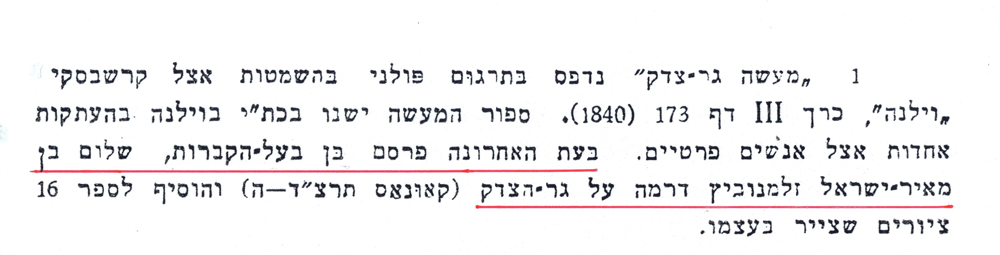
[6] The compilations of the Paper Brigade are available in Vilnius at the Judaica collection of the Mažvydas National Library of Lithuania. Based upon evidence from the Vilnius archives, Jogela (above, note 4), p. 84, claims that “a certain Goldbergas” compiled the list of 51 epitaphs. Jogela does not identify Goldbergas, but almost certainly it was Eliezer Goldberg, Jewish educator and historian. Prior to the Holocaust, he administered and taught at Vilna’s Esther Rubinstein School for Girls. In the Vilna Ghetto, he lectured widely on Jewish history in the various synagogues and schools. In 1943, he was deported by the Nazis to Estonia, where he perished in 1944. On Goldberg, see Shmerka Kaczerginski, חורבן ווילנא (New York: United Vilner Relief Committee, 1947), p.236; H.S. Kazdan, ed., לערער יזכור בוך: די אומגעקומענע לערער פון צישא שולן אין פוילן (New York: Martin Press, 1954), p. 72 (where Goldberg is described as א ייד א למדן און מיט וועלטלעכער בילדונג ); J. Biber, R. Kostanian, and J. Rozina, eds., Vilna Ghetto Posters: Album-Catalogue (Vilnius: Vilna Gaon Jewish State Museum, 2006), p. 265 (which includes a photograph of Goldberg); and A. Einat, חיי יום-יום בגטו וילנה (Haifa: Moreshet, 2013), pp. 240 and 417. It is too early to speculate how many other hands were involved in selecting the 191 epitaphs included in the Paper Brigade’s final report.
[7] See Klausner, pp. 77-82, who lists 220 named graves that were still standing in 1935. Actually, many of the “named graves” were grave sites with more than one named grave at the site, all of them listed by Klausner. Thus, a total of approximately 240 names are listed. On pp. 83-84, Klausner lists an additional 51 named graves , some of them grave sites, strewn throughout the cemetery. They actually total 55 names. The 240 names plus the additional 55 names yield an approximate total of 300 names.

[8] Photograph A is taken from the late Yeshayahu Epstein’s collection of pre-Holocaust photographs of Vilna. See Yitzchak Alfasi, ed., וילנא ירושלים דליטא חרבה! היתה ואיננה עוד (Tel-Aviv, 1993), p. 10.
[9] Photograph B is taken from the pamphlet Vilniaus Gaonas Elijahu אליהו הגאון מוילנה (Vilnius, 1996), no pagination, issued by the Lithuanian Jewish Community in anticipation of the commemoration of the 200th anniversary of the death of the Vilna Gaon (1797-1997).
[10] The photo and the transcription are taken from S. Leiman, “A Picture and its One Thousand Words: The Old Jewish Cemetery in Vilna Revisited,” The Seforim Blog, January 14, 2016, section A, item 7 and notes.
[11] See above, at Epitaph 1, Photo B, for a full frontal color photograph of the joint tombstone inscriptions of R. Noah Mindes Lipschuetz and the Vilna Gaon; cf. Photo A. In the light of the evidence presented here, R. Noah Mindes Lipschuetz did not die in November of 1797, as claimed by the German heading to Epitaph 30. He died on, or about, December 22, 1797 (= 3 Teveth, 5558), some two and a half months after the death of the Vilna Gaon on October 9, 1797 (= 19 Tishre, 5558). For an alternate reading of the somewhat unclear last lines of the epitaph (that correctly preserves the יום ג’ טבת date of death), see R. Yitzchok Arnstein’s edition of R. Noah Mindes Lipschuetz’ פרפראות לחכמה (Brooklyn: Edison Lithographic Corporation, 1995), Introduction, p. 17.
[12] Steinschneider’s text reads as follows:


[13] See Schaefer’s essay entitled “Friedhöfe und Grabsteine der Juden in Wilna,” dated 1/9/1943 (in the Judaica collection at the Mažvydas National Library of Lithuania). On the title page he refers (in German) to his gathering together of “190 tombstone inscriptions in 108 typewritten pages.”
[14] A vast literature was produced by, and exists on, Shmerke Kaczerginski (1908-1954), Yiddish poet and Vilna partisan. In general, see the entry on him in לעקסיקאן פון דער נייער יידישער ליטעראטור (New York: Congress for Jewish Culture, 1981), vol. 8, columns 48-50; and the more recent bibliography appended to his entry in Wikipedia.
[15] For some of Kaczerginski’s own reflections on the Paper Brigade, see his פארטיזאנער גייען! זכרונות פון ווילנער געטא (Buenos Aires: צאנטראל-פארבאנד פון פוילישע יידן אין ארגענטינא, 1947), pp. 61-69; חורבן ווילנע (New York: United Vilner Relief Committee, 1947), p. 337; and איך בין געווען א פארטיזאן (Buenos Aires: Cultura, 1952), pp. 40-44.
[16] See Mordechai Zalkin, בעלות השחר (Jerusalem: Magnes Press, 2000), p. 34, n. 45, and passim.
[17]  On Haykl Lunski, see Hirsz Abramowicz, Profiles of a Lost World: Memoirs of East European Jewish Life before World War II (Detroit: Wayne State University Press, 1999), pp. 260-264. Cf. Frida Shor, מ”לקוטי שושנים” ועד “בריגדת הנייר”: סיפורו של בית עקד הספרים ע”ש שטראשון בווילנה (Tel Aviv: Probook, 2012); and Dan Rabinowitz, The Lost Library: The Legacy of Vilna’s Strashun Library in the Aftermath of the Holocaust (Waltham: Brandeis University Press, 2019).
[18] S. Kaczerginski, חורבן ווילנע (New York: United Vilner Relief Committee, 1947), p. 198.


A Desperate Plea for Help on Behalf of Vilna’s Old Jewish Cemetery

A Desperate Plea for Help on Behalf of Vilna’s Old Jewish Cemetery in 1919

By Shnayer Leiman

Recently, a brief study was posted online on Meir Zelmanovich, the custodian of Vilna’s old Jewish cemetery, who died a martyr’s death in 1920.[1] Here, we wish to add Zelmanovich’s only published writing, a Yiddish letter that appeared in Vilna’s יידישע צייטונג [Yidishe Tsaytung], on Monday, December 15, 1919.[2] The letter will appear below both in the original Yiddish and in an annotated English translation. It is a significant, and tragic, historical document. Also, mostly due to the recent discovery of a treasure trove of photographs relating to World War I, we will present several newly discovered photographs of Zelmanovich.[3]

For those unfamiliar with Vilna’s old Jewish cemetery, we note that according to a Jewish tradition in Vilna it was founded in 1487. Modern scholars, based upon extant documentary evidence, date the founding of the cemetery to 1593, but admit that an earlier date cannot be ruled out. The cemetery, still standing today (but denuded of its tombstones), lies just north of the center of the city of Vilna, across the Neris River, in the section of Vilna called Shnipishkes (Yiddish: Shnipishok). It is across from, and just opposite, one of Vilna’s most significant landmarks, Castle Hill with its Gedeminas Tower. The cemetery was in use from the year it was founded until 1830, when it was officially closed by the municipal authorities. Although burials no longer were possible in the old Jewish cemetery, it became a pilgrimage site, and thousands of Jews visited annually the graves of the righteous rabbis and heros buried there, especially the graves  of the Ger Zedek (Avraham ben Avraham, also known as the son of Graf Potocki, d. 1749), the Gaon of Vilna (R. Eliyahu ben R. Shlomo Zalman, d. 1797), and the Hayye Adam (R. Avraham Danzig, d. 1820). Such visits took place even after World War II.

Briefly, the historical context of the letter was the battle for control of Vilna in the aftermath of World War I. During the years 1914 to1922, nine different governments ruled in Vilna, making life miserable for its residents. Almost certainly, the greatest concentration of Jewish suffering in this period took place in 1919, when the Polish legionnaires unleashed a pogrom against Vilna’s Jews. Zelmanovich’s Letter to the Editor appeared in print in December 1919 and records in detail the damage to the dead; he left it for others to record the damage to the living.[4] This stage of Polish rule came to an end when the Russians recaptured Vilna in July of 1920. Russian rule lasted for some six weeks, and was followed by Lithuanian rule. On October 8, 1920 the Poles once again recaptured Vilna. Sadly, on October 10, 1920 Meir Zelmanovich was one of a handful of Jews murdered by the returning Polish legionnaires.

1. The Original Yiddish Version of Zelmanovich’s Letter.

2. An Annotated English Translation of Zelmanovich’s Letter.

The Hostile Incidents at Vilna’s Old Jewish Cemetery: (A Letter to the Editor)

Please provide me with a platform to describe the hostile incidents that have taken place – from Passover[5] until today – at the old Jewish cemetery.

Immediately after Passover, the fence (surrounding the cemetery) was breached, and horses were allowed to enter the cemetery. The officers in charge of the horses chose to move into my house, and helped themselves to whatever they could find. It was only when my daughter came down with typhus, that they left the house and encamped on the cemetery grounds. They burned the wooden tombstones, and broke stone tombstones as well. They smashed the tombstones of R. Yisrael Kreines’ father,[6] R. Yaakov Landau,[7] Rekhl the mother of R. Shimon Strashun,[8] R. Mordechai Meltzer’s wife,[9] and a few others. They were about to destroy the wooden tombstone of the Chief Rabbi, R. Hillel,[10]ho died in 1706,[11] but I managed to hide it while it was still whole.

The official rabbi,[12] Rabbi Rubinstein[13] was heavily involved in rectifying matters. We were able to arrange for the horses to be removed from the cemetery. The officers of the Zedakah Gedolah Society[14] arranged for the fence to be repaired at a cost of 7000 rubles. Now, however, the soldiers have returned with saws and axes and have pulled back and rearranged the fence so that anyone could enter the cemetery from the nearby public passage way. Thus, they once again are tearing down the rooftops of the mausoleums.

Regarding the Gaon’s[15] mausoleum, they have now, for a second time, torn down its roof, and also smashed its windows. They have also begun to break down its walls.

They tore off the rooftops of the mausoleums of R. Noah Petletzis[16] and R. Shmuel Landau.[17] Just last night, they placed the carcasses of 5 horses next to the mausoleums.

All our communal Jewish activists are obligated to come and view for themselves the devastation that is taking place in the old Jewish cemetery. And, at the same time, they are obligated to rescue whatever can still be rescued.

Meir Yisrael Zelmanovich,
Custodian of the Old Jewish Cemetery

———-

3. Newly Discovered Photographs of Meir Zelmanovich.

a) Meir Zelmanovich at the Mausoleum of R. Menahem Manes Chajes.


b) Photograph of Meir Zelmanovich at Vilna’s Old Jewish Cemetery.

The top photograph (left) is clearly the original that ultimately appeared in the postcard that was produced in 1916 (right) and discussed in our earlier study.[18] The photograph’s clarity and detail are far superior to that of the postcard, a clear reminder that some postcard reproductions need to be taken with a grain of salt.[19]

The bottom photograph, it seems to me, is a magnificent likeness of Meir Zelmanovich. Someone scribbled in the date 1916, which almost certainly is when it was taken.[20]


Notes

[1] S. Leiman, “In Praise of Ephemera: A Picture Postcard from Vilna Reveals its Secrets more than One Hundred Years after its Original Publication,” The Seforim Blog, July 27, 2020 (here). Cf. The Leiman Library (www.leimanlibrary.com), texts, item 143.

[2] Issue 181, p. 2, columns 1-4. The newspaper lists the Jewish calendrical date as well, 23 Kislev. For a brief history of Vilna’s short-lived יידישע צייטונג (it ceased publication in 1920), see D. Flinker, et al, eds., עיתונות יהודית שהיתה (Igud ha-Olami shel ha-Itonaim ha-Yehudim: Tel-Aviv, 1973), p. 246.

[3] In July of 2020, a huge collection of rare photos of Vilna was sold at auction on Ebay. The photos were made by a professional photographer who served as a photo correspondent working with the German 10th army, which occupied Vilna during World War I. Fortunately, about half of the photos were acquired by a coalition of scholars and patrons of scholarship in Lithuania who realized how significant these photos were. I am indebted to my Lithuanian colleague, Dr. Andrius Kulikauskas, for sharing the above information with me, after the fact. What Andrius could not know is that I too was a bidder in that auction (without knowing all the fine details about who took the photographs), and managed to acquire four photos taken at the Old Jewish cemetery in Vilna, including the two photos of Meir Zelmanovich reproduced below.

[4] For a fuller account of the pogrom itself, see the study cited above in note 1.

[5] Vilna’s Jewish community celebrated Passover in 1919 from the evening of April 14 through April 22. The Russian Red Army ruled in Vilna through April 18, 1919. On April 19, the Polish legionnaires replaced the Russian Red Army. Almost immediately, a pogrom ensued against the Jews, leading to much death and destruction. Vilna remained under Polish control during the period that Zelmanovich published his “Letter To The Editor.”

[6] R. Yisrael Gordon Kreines (1778-1856) was a learned Torah scholar adept in Russian. In 1837 he was appointed Rabbi of Vilna, largely for the purpose of fulfilling the Czarist regime’s requirement that a rabbi be appointed who could record in Russian all births, marriages, and deaths in the Jewish community. See H.N. Steinschneider, עיר ווילנא (Vilna, 1900), pp. 192-195. Kreines’s father, R. Avraham Gordon was a major lay leader (פרנס ) of Vilna who died in 1780. See S. Y. Fuenn, קריה נאמנה (second edition, Vilna, 1915), p. 187-188.

[7] R. Yaakov Landau (circa 1793-1828), a learned rabbinic scholar, was the oldest son of R. Shmuel Landau, also a rabbinic scholar of note (see below, note 17). R. Yaakov was the older brother of R. Yitzhak Eliyahu Landau (1801-1876), who served as rabbi and official preacher (מורה צדק ומגיד מישרים) of Vilna from 1868 until his death in 1876. R. Yaakov’s Landau’s full given name was Avraham Yaakov. Unfortunately, he died at an early age. His epitaph is preserved in Fuenn, pp. 253-254. Y. Klausner, קורות ביתהעלמין הישן בוילנה (Vilna, 1935), p. 63, note 2, reports that R. Yaakov Landau’s tombstone was no longer standing in 1935.

[8] R. Shimon Strashun (circa 1823-1905) was a distinguished rabbinic scholar who resided in Vilna, and was the son of a distinguished rabbinic scholar who also resided in Vilna, R. Avraham David Strashun (19th century). Avraham David’s first wife, חנה (d. 1824), was the mother of R. Shimon Strashun. See Steinschneider, p. 191. Assuming there is no error here on the part of either Steinschneider or Zelmanovich, it is possible that her full name was חנה רחל. The Yiddish name Rekhl is a common variant of the name Rokhl. See, e.g., A. Beider, A Dictionary of Ashkenazic Given Names (Bergenfield, 2001), pp. 560- 562, especially p. 561, column 2.

[9] R. Mordechai Meltzer (1797-1883) served as an official rabbi in Vilna with the title מורה צדק . He was the head of Vilna’s Ramajles (ראמיילעס) Yeshiva during the first half of the 19th century, where he trained many of Vilna’s most distinguished rabbis. In 1864, he was appointed Chief Rabbi of Lida (today in Belarus), where he served with distinction until his death in 1883. His wife, Sarah Devorah, died in 1830, and was buried in Vilna’s old Jewish cemetery. See Steinschneider, pp. 122-126.

[10] For a brief account of R. Hillel b. R. Jonah ha-Levi, and for the text of his epitaph, see Fuenn, p. 104. Wooden tombstones were commonplace in the old Jewish cemetery; not everyone could afford a stone tombstone. The wooden tombstone of R. Hillel b. R. Jonah ha-Levi, rescued by Zelmanovich, almost certainly no longer exists. A photograph of the tombstone, however, was preserved in the An-Ski Museum in Vilna, and published in Klausner, p. 42.

[11] The Yiddish original gives the Jewish year: [5]466.

[12] Under Czarist rule, the Russian government required Jewish communities to appoint a kazyonny ravvin “an official rabbi,” fluent in Russian, who – among his various responsibilities — would be responsible for recording (in Russian) births, marriages, and deaths. Rabbi Rubinstein’s initial appointment in Vilna was as kazyonny ravvin. Zelmanovich uses the Yiddish (and German) title ראבינער here to indicate Rabbi Rubinstein’s status at the time.

[13] Rabbi Isaac Rubinstein (1880-1945) was appointed “official rabbi” (see previous note) of Vilna in 1910. With the outbreak of World War I, the more traditional rabbis were forced to flee Vilna, and Rubinstein – for all intents and purposes – was the only functioning rabbi in Vilna. In this difficult period, and later under Polish rule, Rubinstein repeatedly interceded on behalf of the Jewish community, with great success. He served as a member of the Polish senate from 1922-1939. In 1928, he was appointed Chief Rabbi of Vilna. A leading religious Zionist, and a superb speaker, he managed to flee Vilna in 1940 (then under Soviet domination), and made his way to the United States in order to enlist aid on behalf of East European Jewry.

[14] The Zedakah Gedolah Society was Jewish Vilna’s official communal institution in charge of public welfare. Given the rampant poverty that prevailed throughout much of Vilna’s Jewish history, this was one of the most important institutions in Vilna. It assumed even greater significance when the Czarist regime abolished Vilna’s “Kahal” structure in 1844. One of the Zedakah Gedolah’s many tasks was to provide the lion’s share of the funding necessary for the upkeep of Vilna’s Jewish cemeteries. With the advent of World War I, it fell into a period of steady decline and would ultimately be liquidated under Polish rule in 1931. See Israel Cohen, Vilna (Philadelphia, 1943), pp. 121-122 and pp. 394-397. Cf. Andrew N. Koss, “Two Rabbis and a Rebbetzin: The Vilna Rabbinate During the First World War,” European Judaism 48:1 (2015), pp. 120-122.

[15] The reference is to the mausoleum of R. Elijah b. Solomon (1720-1797), the Vilna Gaon, which never fully recovered from the damage inflicted upon it by the Polish legionnaires.

[16] Noah Bloch Petletzis (d. 1809) was an exceedingly wealthy Jew who donated generous sums of money to Vilna’s various educational and charitable institutions. He singlehandedly provided the entire funding for the construction of the women’s section (עזרת נשים) in Vilna’s Great Synagogue. See Fuenn, p. 223-224; cf. Klausner, p. 66. He should not be confused with the Maskil Noah Bloch (d. 1846) who, after much controversy about exactly where in the Zaretcha cemetery he should be buried, was finally laid to rest. See H.N. Steinschneider, עיר ווילנא (Jerusalem, 2003), vol. 2, pp.48-49 (edited by M. Zalkin).

[17] R. Shmuel Landau (d. 1818) was a son-in-law of R. Hayyim Landau (d. 1797) of Brody, a founder and key supporter of the קלויז of Brody. On the “kloyz” of Brody, see N.M. Gelber, תולדות יהודי ברודי (Jerusalem, 1955), pp. 62-73. Not surprisingly, R. Shmuel adopted his father-in-law’s surname and brought it to Vilna. He was an exceedingly modest rabbinic scholar, whose 3 sons, all named Landau, would become well-known rabbinic scholars. R. Shmuel Landau’s epitaph (or, at least, a portion of it) was preserved by Fuenn, p. 230; cf. Klausner, p. 63.

[18] See above, note 1.

[19] Notice, e.g., the different facial expressions in the two photographs. When the two photographs are enlarged, it becomes obvious that the original photograph preserves much detail no longer visible in the postcard, including the fine detail of the vast terrain to the left of the mausoleum (alas, only partially captured by the scans presented her, but quite visible to the naked eye.)

[20] That all the photographs gathered here are, in fact, genuine likenesses of Meir Zelmanovich seems likely. Certainly the family photo published in the earlier study (see above, note 1) identifies him by name. His German passport of 1916 offers additional proof. During the German occupation, all residents of Vilna were required to have — and to carry at all times – a German passport (we would call it: an identity card). Zelmanovich’s German passport lists his correct name, age, and address (at the Old Jewish cemetery), and includes his passport photo! I am indebted to Regina Kopilevich, researcher and tour guide extraordinaire, for retrieving Zelmanovich’s passport from the many preserved in the Lithuanian State Historical Archives (Lietuvos Valstybes Istorijos Archyvas). Here is Zelmanovich’s passport photo:

Yet another unmistakable likeness of Meir Zelmanovich can be seen in two photographs preserved in the archives of the Ghetto Fighter’s House Museum at Kibbutz Lohamei Hagetaot. Both photos were taken in 1916 at the old Jewish cemetery. One photo (catalog number 31468) depicts Meir Zelmanovich and a teenager (almost certainly his son Sholom) standing next to the legendary tree that hovered over the ashes of the martyred Ger Zedek of Vilna, in the old Jewish cemetery’s south eastern corner. Another photo (catalog number 31467) depicts the father and son (now wearing an overcoat) standing at a pathway in the center of the old Jewish cemetery. The photos are available online, so there is no need to post them here. I am deeply grateful to art historian Dr. Vilma Gradinskaite of Vilnius for bringing my attention to the photos preserved in the archives of the Ghetto Fighter’s House Museum.


Some Notes on Verifying the Authenticity of the Alleged Rav Yisrael Salanter Photographs

Some Notes on Verifying the Authenticity of the Alleged Rav Yisrael Salanter Photographs

By Shnayer Leiman

There are some who claim that the photographs of R. Yisrael Salanter’s sons can be  used for the likeness of their father, since we have testimony that the sons looked almost exactly like their father. Let us examine the evidence.

1. Aside from the 3 published photographs of R. Yisrael’s son R. Yitzchak (see “The Recently Published Photographs of R. Yisrael Salanter”), the only other extant sketch of a son of R. Yisrael Salanter is the portrait of Lipman Lipkin (1846-1876).[1]

Indeed, Menahem G. Glenn would claim:[2]

The portrait of Dr. Lipkin reproduced in the Ha’asiph shows physical  features undoubtedly inherited from his father, a high, broad forehead, lively keen eyes, a prominent aquiline, sensitive nose, a short shorn beard encircling his face, making an impressive appearance. He must have borne a more striking resemblance to his father than any of his brothers. We thus have some idea of what his father, who never allowed himself to be photographed, looked like.

For our purposes, what needs to be noticed is that the likenesses of Lipman Lipkin and his brother R. Yitzchak are mutually exclusive. They are hardly interchangeable. And so, if the one is a replica of R. Yisrael Salanter, the other is not. But there is an even greater flaw in Glenn’s “testimony.” The sine qua non for testimony regarding any likenesses of R. Yisrael Salanter and a son of his – with the son shedding light on the image of the father — is: the witness must have seen both! But, Glenn, in all likelihood, never saw any of R. Yisrael Salanter’s sons. And I can say with absolute certainty that Glenn (1896-1978) never set eyes on R. Yisrael Salanter, who died in 1883.

2. In 1954, the earliest of the 3 extant photographs of R. Yitzchak Lipkin was published by his grandson, R. Hayyim Yitzchak Lipkin (1911-1988).[3] It appeared as follows:

At the right of the photo, the legend reads (in part):

According to eye-witness testimony, his likeness
[literally: his facial features] resembled that of his
father R. Yisrael.

Now this is more serious evidence. At least two issues, however, came to mind when I first saw this.

Issue 1: I suspect that almost every reader of this note has been told, at some point in his life, that he/she looks like his/her father, mother, or both. I have been told by some that I look “exactly” like my father, and by others that I look “exactly’ like my mother. In fact, I look “exactly” like neither, but inherited traits of both. In brief, this is hardly an exact science. So whenever someone testifies that A looks like B, it may well be more a personal opinion than a statement of fact.

Issue 2: I noticed that the “eye-witness” was not identified. Who was the witness? Is he a reliable witness? Did he actually see R. Yisrael and R. Yitzchak? Nothing in the 1954 volume sheds light on these questions.

In 2003, a fuller and much expanded edition of the 1954 R. Hayyim Lipkin volume appeared in print.[4] The photo and its legend were conspicuously absent! אין זה אומר אלא דרשני.

3. In 2017, R. Menahem Mendel Plato published a massive 445 page biography of R. Yisrael Salanter.[5] It included the following photograph of R. Yitzchak and the legend under it.[6]

The legend reads in part: “According to the testimony of his [i.e. R. Yisrael Salanter’s] descendant, Rav Dessler, his [R. Yitzchak’s] image is like that of his father.”

At last, the witness is identified. It is none other than Rav Eliyahu Dessler, a great-grandson of R. Yisrael Salanter, who is prominently featured elsewhere in the Plato volume.[7] He is surely a trustworthy witness for what he may have heard from others. But he cannot be an “eye-witness” for what R. Yisrael Salanter looked like. Rav Eliyahu Dessler (1892-1953) was born almost 10 years after R. Yisrael Salanter died in 1883.

In sum, until we have the testimony of an unequivocal witness who saw both R. Yisrael and R. Yitzchak, and testifies that indeed they looked almost exactly alike, we do not know what R. Yisrael looked like, other than by the vivid descriptions by those who actually saw him.[8] It is thus injudicious, to say the least, when a publisher recently reissued the classic anthology of R. Yisrael Salanter’s writings, אור ישראל, with an unidentified photograph of R. Yisrael’s son, R. Yitzchak, on the cover![9]

It honors neither R. Yisrael nor R. Yitzchak, who devoted their lives to teaching and telling the truth.[10]

NOTES

[1] Published in האסיף (Warsaw, 1884-85), part 2, p. 259.
[2] M.G. Glenn, Israel Salanter: Religious-Ethical Thinker, (New York, 1953), pp. 65-66.
[3] תורת רבי ישראל מסלנט (Tel-Aviv, 1954), part 2, p. 126.
[4] תורת רבי ישראל מסלנט (Jerusalem, 2003).
[5] אור ישראל מסלנט (n.p., 2017).
[6] Op. cit., p. 119.
[7] Op. cit., pp. 239-240. On Rav Dessler, see Y. Rosenblum, Rav Dessler (New York, 2000).
[8] Aside from the sources cited in “The Recently Published Photographs of Rav Yisrael Salanter,” see the description by R. Yitzchak Blazer, אור ישראל (Vilna, 1900), p. 120, דה עליו נתקיים.
[9] אור ישראל (North Haven, Conn., 2020).
[10] I am indebted to my colleague, Zalman Alpert, who insisted that I address this issue; and to my son, R. Akiva, who provided the closing image of what the cover of a R. Yisrael Salanter anthology looks like when members of the family become interchangeable parts.

——————-

APPENDIX

Having devoted several postings to true and false claims (regarding photographs), we attach a brief, seasonal דבר תורה about true and false claims embedded in a commentary on the הגדה של פסח .

One of my favorite hasidic stories is about אמת. It reads as follows:

R. Pinchas of Koretz (1726-1791) was a man of truth. He devoted seven years to researching the definition of אמת. He spent another seven years researching the definition of שקר. He spent yet another seven years researching how one goes about acquiring truth and distancing himself from falsehood. In order to appreciate what R. Pinchas of Koretz accomplished, one need only examine the case of R. Shem of Kalshitz.

R. Shem of Kalshitz  used to go the mikvah in the darkness of the night, just prior to his fixed hours for Torah study after midnight. He ordinarily went to the mikvah together with an aide. One night, R. Shem noticed that the aide was sound asleep and he didn’t want to disturb him. He went by himself to the mikvah, deep in holy thought. Unfortunately, he stumbled and fell into a pit in the ground, breaking a rib in the process. The next morning, upon entering the  בית המדרש  for the morning prayers, the Hasidim were shocked not to see the Rebbe, R. Shem, sitting and learning in his usual seat. They made search, found him unconscious in the pit,  and brought him to his house. There, he spent many weeks in recovery, wrapped in bandages and barely able to move. During the entire recovery period, he never complained, indeed, he never even groaned!  His Hasidim asked him: “Rebbe, how is it possible that you haven’t groaned even once?” R. Shem answered: “I try to follow the teachings of R. Pinchas of Koretz, who taught that groaning — more often than is warranted by the pain —  is a subcategory of שקר. So, just to be on the safe side, I don’t groan at all.”   

                                           ———————————–

Since many are groaning about the arduous task of preparing for Passover, I thought the above story may prove useful. The story was translated (with minor modification) from the Hebrew version that appears in R. Shalom Meir Wallach’s  באהלי צדיקים   הגדה של פסח  (Bnei Brak, 1989, p. 159; Bnei Brak, 2007, p. 210). An English version of the Wallach Haggadah, entitled Haggadah of the Chassidic Masters, was published by ArtScroll in 1990 (and in many later editions; I saw the Fifth Impression published in 2020, where our passage occurs at  p. 115). Wallach’s Haggadah is a treasure trove of hasidic Torah, thought, and folklore.

The story itself teaches us how difficult it is to discover the truth, and how painful it sometimes can be when we strive to implement the truth. And it teaches these themes in more ways than one. Thus, for example, there never was a Rebbe named R. Shem of Kalshitz. I know this because there never was a town populated with Hasidim called Kalshitz. And a Rebbe without Hasidim will not long remain a Rebbe. (Kalshitz should not be confused with Kaloshitz, a small town in Galicia that did have a Rebbe, but never one whose name was R. Shem.) It is relatively easy, however, to identify the R. Shem of our story, since almost no Rebbe (or Rabbi, for that matter) bore the name Shem. The reference is clearly to R. Shem Klingberg (1870-1943), who was an outstanding rabbinic scholar  and Rebbe, known as R. Shem of Zaloshitz (also spelled: Zaloczyce and Dzialoshitz). Zaloshitz was a town some 44 kilometers northeast of Krakow, where R. Shem’s father, R. Avraham Mordechai served as Rebbe. R. Avraham Mordechai later moved to Krakow, and upon his death, was succeeded, as Rebbe, by his son R. Shem. R. Shem is properly known as מזאלושיץ בקראקא  האדמו”ר. Sadly, R. Shem died a martyr’s death in the Plaszow concentration camp in 1943.

The various accounts in the Wallach Haggadah give as the source for the story:  הקדמת אהל שם. No book by the name of  אהל שם   presents in its introduction the story of R. Shem of Zaloshitz. The reference should read: R. Shem Klingberg,אהלי שם על התורה ועל המועדים  (Jerusalem, 1961), הקדמה, p. 15. There, in a biography of R. Shem by one of his surviving sons (at the time), R. Moshe Klingberg, the story appeared in print for the first time.

The errors listed above appear in all the editions of the Wallach Haggadah, whether in Hebrew or in English. None of the editions even attempted to identify “R. Shem of Kalshitz.” Truth is elusive indeed. In general, see the essays on R. Shem of Zaloshitz in M. Unger, אדמו”רים שנספו בשואה  (Jerusalem, 1969), pp. 287-289; and in I. Lewin, ed., אלה אזכרה   (New York, 1972), vol. 7, pp. 266-270. R. Shem died על קידוש השם   on 28 Nisan 1943. 


The Recently Published Photographs of Rav Yisrael Salanter: Real or Imaginary?

The Recently Published Photographs of Rav Yisrael Salanter: Real or Imaginary?

By Shnayer Leiman

As early as 2006, and continuing through 2022, a flurry of photographs, purporting to bear the likeness of Rav Yisrael Salanter, have either appeared in print or have been posted on the Internet (see below, section II). While the publication of these photos certainly attests to his abiding influence well into the 21st century, their authenticity seems less than certain, and demands investigation. At the very least, one wonders why the likeness of a world renowned rabbi, who died in 1883, did not come to light until almost 125 years after his death![1]

I. The Early Evidence for What R. Yisrael Salanter Looked Like.

A proper discussion of what R. Yisrael actually looked like must begin with an examination of the testimony of his contemporaries who interacted with him and knew him best. The Torah teaches us (at Dt.19:15) that a matter can be established by two or three witnesses, so we shall present below the testimony of three witnesses who knew R. Yisrael personally.[2]

1. In 1899, Emil Benjamin, published the first biography of Rav Yisrael Salanter.[3] At the time, Benjamin served as a teacher of Jewish religion in Memel, Prussia, a port city on the Baltic Sea with some 1000 Jews (today: Kleipeda in Lithuania). Benjamin, a native of Memel, was a disciple of R. Zvi Hirsh Plato (1822-1910) who was a son-in law of R. Samson Raphael Hirsch. R. Plato served as Rav of the separatist Orthodox community of Cologne, and head of its Teacher’s Seminary, where Benjamin was trained as a teacher. Benjamin was a young man between 1857 and 1878, the very years that R. Yisrael Salanter spent many a year in Memel, which served as a base of operations for his various educational activities in Lithuania, Prussia, Germany, and France. R. Yisrael invited Benjamin to serve as his aid during a significant portion of those years, and Benjamin wisely accepted the invitation. Intimately involved in R. Yisrael’s daily affairs, Benjamin was in a unique position to record for posterity what it was like to be in his presence. Benjamin wrote:[4]

Rabbi Lipkin was of medium height, seemingly strong but lean in stature, and of ordinary build. His outward appearance immediately revealed a man of unusual significance. The broad forehead, the interesting character reflected by the shape of his head, the sharp look, all reflected the great thinker that he was. His countenance was almost always flush red, probably due to the struggle between body and spirit within him. Often he was lost in thought, and he seemed to forget everything around him, and appeared to be talking to himself. In spite of his deep seriousness, his conversation was often spiced with a pleasant sense of humor and whimsical thoughts…Curiously, this humble and unselfish man never consented to allow the features of his face to be painted by the artist’s brush and, thus, to be preserved for posterity. [Italics mine, sl]

2. Yaakov Mark (1856-1929) was a graduate of the Telz Yeshiva (in Telshe, Lithuania) who devoted a good portion of his life to training Jews (in a variety of languages) to master bookkeeping, so that they could gain and hold jobs in the various countries where they would ultimately find themselves.[5] He also devoted his later years to making literary contributions to Hebrew and Yiddish periodical literature. His only book, entitledגדולים פון אונזער צייט (New York, 1927),[6] is devoted to biographies of the key persons that he knew personally, such as R. Hayyim Soloveichik, the Malbim, and R. Yisrael Salanter. His opening line regarding R. Yisrael Salanter reads: “In my younger years, I often had the privilege of meeting with R. Yisrael. I heard his public lectures, his private lectures, and had the opportunity to observe him at close range.” In his book, he writes:[7]

All who encountered him when walking in the streets, whether Jew or Gentile, greeted him courteously. Even in the most crowded street of Berlin it was rare that a passerby would not stop to behold the great thinker, who used to wander about while engrossed in deep thought. All were impressed by his stately figure, his especially handsome beard, and his particularly character-full head with its unusually wide forehead, his red-white face, his blue eyes, with his sharp, yet good-natured look. This, despite the fact that he never wore official rabbinic garb but, rather, simple lay dress, with an ordinary hat on his head – not particularly elegant – but always clean and tidy. How sad that no photograph of him exists! It was simply impossible to get him to agree to sit for a painting or a photograph. [Italics mine, sl]

3. David Sidersky (circa 1858-1943), a grandson of R. Yisrael Salanter who edited אמרי בינה (Warsaw, 1878), the first ספר by R. Yisrael that was printed during his lifetime and that listed his name as the author, also published a biography of his grandfather in 1936-7.[8] Sidersky wrote as follows:[9]

R. Yisrael, under no circumstances, allowed himself to be photographed. Indeed, not a trace of his image exists. [Italics mine, sl] This, however, is what he looked like: he was of medium height, handsome, with glowing face. He had a full beard, with curls surrounding its edges. He spoke pleasantly, and always greeted everyone warmly.

If one reads the full biographical accounts of R. Yisrael Salanter by the three witnesses listed above, it becomes quite obvious that these are three independent accounts. Each records significant material about R. Yisrael Salanter that does not appear in the other accounts.[10] But there can be no question that Mark was influenced by Benjamin’s account, and that Sidersky was influenced by both Benjamin and Mark. The literary influence of the earlier accounts on the later accounts is obvious, even in the snippets translated above. Nonetheless, notice that only Benjamin mentions R. Yisrael’s sense of humor; only Mark refers to R. Yisrael’s blue eyes; and only Sidersky notes the curls that surrounded the edge of R. Yisrael’s full beard.

II. What Might R. Yisrael Salanter Not Have Looked Like?[11]

1. In 2006-2008, R. Shlomo Lorincz – a political leader of Agudat Yisrael during 1951-1984 and a חבר כנסת – published his classic work במחיצתם של גדולי התורה. In vol. 2, p. 14,[12] there appeared a striking photograph, with the name רבי ישראל סלנטר under it.

The photo appears to be that of a young R. Yisrael Salanter, perhaps 35- 45 years old. If so, the photo would have been taken between 1845 and 1855, at a time when the camera was mostly unknown and unavailable to the general public in Eastern Europe. One need not guess about the true identity of the person photographed. It is R. Yitzchak Lipkin (d. 1903), a son of R. Yisrael Salanter. Rav and Darshan, he was a distinguished תלמיד חכם who held several rabbinic posts in Lithuania before settling in Eretz Yisrael, where he died in his early 60’s.[13] Three photographs of him have been preserved by the Lipkin family. Aside from the early photo published by Lorincz, see below for two photos from a later period in his life:[14]

All that needs to concern us here is that R. Yitzchak Lipkin was R. Yisrael Salanter’s son, and not R. Yisrael Salanter himself. The photograph is a real picture of R. Yitzchak Lipkin, and an imaginary one of R. Yisrael Salanter. Not surprisingly, in later editions of במחיצתם של גדולי התורה , the misidentified photo was pulled. Thus, vol. 2, p. 14 now looks like this:[15]

2. On February 2, 2011, Jewish Currents magazine published the following tribute to R. Israel Salanter on his yahrzeit:

Not an ardent reader of Jewish Currents magazine (described by Wikipedia as a “a progressive, secular Jewish quarterly magazine and news site whose content reflects the politics of the Jewish left), I did not see this when it first appeared in print. It was brought to my attention later in 2011 by an East European Jewish historian about to publish an essay on R. Yisrael Salanter. She saw the tribute – and its photograph — on the Internet and was considering adding the photograph to her essay. She expressed surprise, since she had never seen a photograph of R. Yisrael Salanter. I immediately sent the following brief note to Jewish Currents magazine:

Thanks for remembering R. Israel Salanter on the day he died in 1883. Lest anyone be misled by the appended photograph, it clearly is a twentieth century photograph of someone other than R. Israel Salanter. In fact, it is a photograph of a Rumanian born rabbi (not a Litvak), Jacob Shachter, who was born after Salanter died. Shachter served with distinction as a rabbi in Manchester, England, then as rabbi in Belfast, Ireland. He died in Jerusalem in 1971.

Of course, I informed the East European scholar to cease and desist. Here I’ll add a bit more about Rabbi Shachter. He was a prolific author, whose publications included two very important works: a) A kind of Torah Shelemah on the Book of Proverbs, which gathers together all of Talmudic Commentary (Bavli and Yerushalmi) on the verses of Proverbs. It is entitled: ספר משלי בדברי חזל עם ביאור דברי יעקב (Jerusalem, 1963 and later editions), and b) The Student’s Guide Through the Talmud by Z. H. Chajes, translated, edited, and critically annotated by Jacob Shachter (London, 1952 and later editions). For our purposes, we need only to look at the title pages and frontispieces of two of his other publications, one in Hebrew and one on English: דברים לדוד (Jerusalem, 1966) and Ingathering: Collected Papers, Essays and Addresses (Jerusalem, 1966):

Clearly, the Shachter photo cannot pass for what R. Yisrael Salanter looked like. Even if we couldn’t identify the Shachter photo, a simple comparison of the beard in the photo with R. Yisrael Salanter’s beard as described by the testimony of eyewitnesses who knew him (“full beard, with curls surrounding its edges”) would have sufficed to disqualify the photo as a candidate for the actual likeness of R. Yisrael Salanter. In sum, the photograph is a real picture of R. Jacob Shachter, and an imaginary one of R. Yisrael Salanter.

3. On January 22, 2022, a YWN [Yeshiva World News] posting opened with a large imaginary photograph of R. Yisrael Salanter. It was, in fact, once again a photo of R. Jacob Shachter. To the credit of YWN, as soon as they were informed of the error the photograph was removed and replaced with a scan of the title page of R. Yitzchak Blaser’s classic anthology of R. Yisrael Salanter’s teaching, אור ישראל (Vilna, 1900).

4. In March of 2022, Rabbi Berel Wein’s Struggles, Challenges, and Tradition (Shaar Press) appeared in print. It is a magnificently produced volume, filled with vintage Rabbi Berel Wein wisdom. Alas, on p. 129 R. Jacob Shachter appears once again as R. Yisrael Salanter. One suspects that the culprit was an editorial assistant in charge of locating photos for the volume. Hopefully, the error will be corrected in the Second Impression.

We have listed 4 samples of misrepresentation of R. Yisrael Salanter. There are many more.[16] All one has to do is Google “Rabbi Israel Salanter.” One will see immediately many of the fake news photographs of R. Yisrael Salanter. And if you click on each one of the fakes, names like JewishHistory.org and Torah-Box.net will turn up. But it is neither history nor Torah, it is fake news. Sadly, once fake news is posted on the Internet, it multiplies even more rapidly than the Jews did in ancient Egypt. The Internet can be likened to the kind of sinner the Rabbis spoke about in b. Yoma 86b: כיון שעבר אדם עבירה ושנה בהנעשו לו כהיתר “Once a person sins, and repeats the sin, he considers it permissible.” Indeed, once fake news is posted on the Internet, it is not merely considered possible news, it almost immediately becomes authoritative news. The only remedy, if there is one, is to never post in haste, and to post only after much review, including review by others. Moreover, any and all errors need to be corrected as quickly as possible on the very site where the posting first appeared.

Notes:

[1] None of the authors (listed below in section II) who posted photographs of R. Yisrael Salanter took the trouble to source, or verify the authenticity of, the photographs they posted. Methodologically, it is essential that any materials, whether manuscripts or photographs, published some 100 or more years after the death of the person they are ascribed to, or identified with, be verified. This is especially the case when a plethora of historical biographies and scholarly studies already exist on the key person involved – as is the case regarding R. Yisrael Salanter – and the existence of the posted photographs has eluded all of them. For the basic bibliography on R. Yisrael Salanter (through 1993), see Immanuel Etkes, Rabbi Israel Salanter and the Mussar Movement (Philadelphia, 1993), pp. 373-379; and Hillel Goldberg, Israel Salanter: Text, Structure, Idea (New York, 1982), pp. 309-329. Much more of significance has been published since then (e.g., ספר הזכרון קדוש ישראל (Bnei Brak. 2003); Hayyim Yitzchak Lipkin, ed., תורת רבי ישראל מסלנט (Jerusalem, 2003); and קדוש ישראל (Bnei Brak, 2014).

[2] Many other witnesses could have been adduced. See, for example, R. Baruch Epstein, מקור ברוך (Vilna, 1928), vol. 4, pp. 1800-1804, for a vivid account of a chance encounter with R. Yisrael Salanter in Vilna, 1879. Our purpose here is not to overwhelm the reader with sources. Rather, it is to gather the most persuasive sources, and not more than necessary.

[3] Rabbi Jsrael Lipkin Salant: Sein Leben und Wirken (Berlin, 1899).

[4] Op. cit., pp. 34-35. The German original reads: “Rabbi Lipkin war von mittelhoher, ziemlich kräftiger aber hagerer Natur und von regelmässigem Körperbau. Schon seine äussere Erscheinung liess sogleich einen Mann von ungewöhnlicher Bedeutung erkennen. Die mächtige Stirn, der interessante Charakter- kopf, der scharfe Blick verrieten den grossen Denker. Sein Antlitz war fast beständig gerötet, wohl infolge des aufgehobenen Gleichgewichts zwischen Körper und Geist. Oft war er derart in Gedanken versunken, dass er alles um sich herum zu vergessen schien und im Alleingespräch mit sich selber beschäftig war… Merkwürdiger Weise hat dieser bescheidene und selbstlose Mann niemals seine Einwilligung dazu gegeben, dass die Züge seines Antlitzes durch den Pinsel eines Malers nachgeahmt und der Nachwelt erhalten würden.”

[5] See Yaakov Mark’s entry in לעקסיקאן פון דער נייער יידישער ליטעראטור (New York, 1963), vol. 5, column 514.

[6] A much abridged, and freely translated, Hebrew version of Mark’s גדולים פון אונזער צייט appeared under the title במחיצתם של גדולי הדור (Jerusalem, 1958). An accurate English translation of the original Yiddish volume would make a significant contribution to Jewish scholarship and culture.

[7] גדולים פון אונזער צייט, pp. 88-89. The Yiddish original reads:

אלע וועלכע פלעגען איהם באגעגענען אויפן גאס, סיי אידען סיי גוים, האבען איהם
העפליכסט באגריסט. זאגאר אין די לעבהאפטסטע גאסן פון בערלין פלעגט זעלטען
ווער איהם גלייכגילטיג פארבייגעהן און זיך ניט אפשטעלען באוואונדערן דעם
גרויסען דענקער, וואס פלעגט שטענדיג ארומגעהן פארזונקען אין געדאנקען
אימפאנירט האט אלעמען זיין שטאטליכע פיגור, זיין וואנדערבארשעהנעם הדרת
פנים, זיין אינטערעסאנטער כאראקטערקאפ מיטן גוואלדיגען ברייטען שטערן און
.וויסרויטליכען פנים, זיינע בלויע אויגען מיטן שארפען גוטמוטהיגען בליק
,טראצדעם וואס ער איז קיינמאל ניט געגאנגען אין אויפפאלענדע רבנישע קליידער
נאר אין פשוטע בעלהביתישע, מיט א געוועהנליכער היטעל אויפן קאפ און אויך
,ניט באזונדערס עלעגאנט, נאר שטענדיג געווען ריין און זויבער. א גרויסער שאדען
וואס פון איהם איז קיין שום בילד ניט נאכגעבליבען. מען האט בשוםאופן ביי איהם
.ניט געקענט פועלן זיך צו לאזען מאלען אדער פאטאגראפירען

[8] David Sidersky, רישראל סאלאנטר זל: תולדות חייו ופעולותיו“, היהודי (1936-7) 2:4, pp. 57-60; 2:5, pp. 81-84; 2:6, pp. 112-114; 2:8, pp. 153-155.

[9] היהודי (1937) 2:8, p. 155. The Hebrew original reads:

ישראל לא רצה בשום אופן להצטלם ולא נשאר שום זכרון מדמות דיוקנו
וזה תבניתו: קומה בינונית, יפה תואר עם פנים מאירים, זקנו מגודל וקוצותיו
.תלתלים, שיחתו היתה בנעימות והיה מקבל תמיד את כל אדם בסבר פנים יפות

[10] Most notably, Sidersky’s account is the only one (of the three accounts) that lists the names of R. Yisrael’s (and his wife Esther’s) six children (four sons and two daughters): Malkah Hindah, Shmuel, Aryeh Leib, Hodah Libah, Yitzchak, and Yom Tov Lipman.

[11] The formulation of the question is a playful echo of the title of the essay by Shimon Steinmetz entitled “What Might R. Yisrael Salanter Have Looked Like?,” On the Main Line, March 2, 2010. That essay was part II of his previous essay entitled “What Did R. Yisrael Salanter Look Like?,” On the Main Line, March 23, 2006. Both essays are must reading for this topic.

[12] במחיצתם של גדולי התורה (Jerusalem, 2006-8), 2 vols.

[13] For important writings by, and about, R. Yitzchak Lipkin, see R. Hayyim Yehoshua Kosovsky, ed., חוט המשולש (Jerusalem, 1904); R. Yitzchak Lipkin, לוחות אבנים (Jerusalem, 1978); and “רשימות רבי יצחק ליפקין בן רבינו” in ספר הזכרון קדוש ישראל (Bnei Brak, 2003), pp. 97-100.

[14] Cf. the Steinmetz essays cited above, n. 11.

[15] במחיצתם של גדולי התורה (Jerusalem, 2010), fifth edition, vol . 2, p. 14.

[16] On September 24, 2020, an essay was posted on the Internet entitled “Eating by Example on Yom Kippur, an Epidemic Story.” It revisited the story of R. Yisrael Salanter’s response to the cholera epidemic in Vilna in 1848. Once again, a photo of Rabbi Jacob Shachter was prominently displayed as the likeness of R. Yisrael Salanter.


In Praise of Ephemera: A Picture Postcard from Vilna Reveals its Secrets More than One Hundred Years after its Original Publication

In Praise of Ephemera:
A Picture Postcard from Vilna Reveals its Secrets
More than One Hundred Years after its Original Publication*

by Shnayer Leiman

I belong to a small group of inveterate collectors of Jewish ephemera. We collect artifacts that many others consider of little or no significance, such as postage stamps; coins and medallions; old posters, broadsides, and newspaper clippings; outdated New Years cards; wine-stained Passover Haggadot; Jewish ornaments, objects (e.g., Chanukkah dreidels) and artwork of a previous generation; photographs and postcards; and the like. The items we collect – all of Jewish interest – take up much space in our homes; they can also be costly at times. Often, we end up paying much more for an item than it is really worth, especially if it completes a set. Collectors of ephemera suffer from a disease that has no known remedy. The only respite we have from the disease is when we write scholarly essays about what we have collected, for – as I know from experience – it is not possible to write scholarly essays and actively collect ephemera at the same time.

The Picture Postcard.

Several years ago, I acquired the following postcard. It measures 5½ inches by 3½ inches, a standard size for its time. It is a mint copy, meaning that no message was penned on its back and it was never mailed. Thus, I cannot date the postcard by a recorded date or postmark on its reverse side (but see below). We present the obverse and the reverse of the postcard for the benefit of the reader:

Obverse. The obverse presents a black and white photograph, also standard for its time. It features a tombstone with a Hebrew inscription; a mausoleum behind the tombstone, with a brief Hebrew inscription; and what appears to be a cemetery attendant, with his hand atop the tombstone. Most important, it contains a German heading under the photograph, which reads in translation: “From the Eastern Front of the Theater of War, Wilna, An Old Jewish Tombstone [with Inscription].”

Reverse. The reverse prints the name of the publishing company that produced the postcard: “The Brothers Hochland in Koenigsberg, Prussia.”

Historical Context.

In terms of historical context, the information provided by the postcard (a German heading; Vilna is defined as the eastern front of the theater of war; the postcard was produced in Koenigsberg) can lead to only one conclusion, namely that the postcard was produced on behalf of the German troops that had occupied, and dominated, Vilna during World War I. German troops occupied Vilna on September 18, 1915 and remained in Vilna until the collapse of the Kaiser’s army on the western front, which forced the withdrawal of all German troops in foreign countries at the very end of 1918. Thus, our photograph was taken, and the postcard was produced, during the period just described. Its Sitz im Leben was the need for soldiers to send brief messages back home in an approved format. The ancient sites of the occupied city made for an attractive postcard. (This may have been especially true for Jewish soldiers serving in the German army.)

Due to a wonderful coincidence, a distinguished scholar of Yiddish and a dear colleague, Professor Dovid Katz, recently published a copy of the very same postcard we publish here.[1] Unlike my copy, his copy includes on the reverse side a dated message penned by the German soldier who mailed it, as well as a dated postmark. The message was written on December 3, 1917 and postmarked the next day, on December 4. Thus, we can narrow the timeline somewhat, and suggest that the postcard was almost certainly produced circa 1916 or 1917.

The Old Jewish Cemetery.

The old Jewish cemetery was the first Jewish cemetery established in Vilna. According to Vilna Jewish tradition, it was founded in 1487. Modern scholars, based on extant documentary evidence, date the founding of the cemetery to 1593, but admit that an earlier date cannot be ruled out. The cemetery, still standing today (but denuded of its tombstones), lies just north of the center of the city of Vilna, across the Neris River, in the section of Vilna called Shnipishkes (Yiddish: Shnipishok). It is across the river from, and just opposite, one of Vilna’s most significant landmarks, Castle Hill with its Gediminas Tower. The cemetery was in use from the year it was founded until 1831, when it was officially closed by the municipal authorities. Although burials no longer were possible in the old Jewish cemetery, it became a pilgrimage site, and thousands of Jews visited annually the graves of the righteous heroes and rabbis buried there, especially the graves of the Ger Zedek (Avraham ben Avraham, also known as Graf Potocki, d. 1749), the Gaon of Vilna (R. Eliyahu ben R. Shlomo, d. 1797), and the Hayye Adam (R. Avraham Danzig, d. 1820). Such visits still took place even after World War II.

The cemetery, more or less rectangular in shape, was spread over a narrow portion of a sloped hill, the bottom of the hill almost bordering on the Neris River. The postcard captures the oldest mausoleum and rabbinic grave in the old Jewish cemetery, exactly at the spot where the bottom of the hill almost borders on the Neris River. It was an especially scenic, and historically significant, site in the old Jewish cemetery, and it is no accident that the photographer chose this site for the postcard.

The Tombstone and its Hebrew Inscription.

The tombstone is that of R. Menahem Manes Chajes (1560-1636). He was among the earliest Chief Rabbis of Vilna. Indeed, his grave was the oldest extant dated grave in the Jewish cemetery, when Jewish historians first began to record its epitaphs in the nineteenth century. R. Menahem Manes’ father, R. Yitzchok Chajes (d. 1615), was a prolific author who served as Chief Rabbi of Prague. Like his father, R. Menahem Manes published several rabbinic works in his lifetime, and some of R. Menahem Manes’ unpublished writings are still extant in the Bodleian Library at Oxford University. His epitaph reads:[2]

The Mausoleum and its Hebrew Inscription.

In the old Jewish cemetery, many of the more famous rabbis were buried in mausoleums. All rabbis buried in mausoleums were buried underground. The mausoleum itself served as an honorific place of prayer that a visitor could enter and then pray at the grave of the rabbi of his choice. All tombstones were placed outside the mausoleum, and were affixed to its outside wall, directly opposite the body of the deceased rabbi named on the tombstone (but buried inside the mausoleum). Often, the names of famous rabbis were painted on the outside wall of the mausoleum (much like street signs) identifying who was buried in it. The mausoleums sometimes contained the graves of several famous rabbis. R. Menahem Manes Chajes was buried in the mausoleum that can be seen behind his tombstone. A famous rabbi buried in the same mausoleum was R. Moshe Rivkes (d. 1672), author of באר הגולה on the Shulhan Arukh.[3] The inscription on its wall, and above the tombstone of R. Menahem Manes, reads:

פה מצבת הגאון הגדול ר‘ מאנש חיות

Here is the tombstone of the great Gaon, R. Manes Chajes

The Cemetery Attendant.

What has remained a mystery for more than one hundred years is the identity of the cemetery attendant. We shall attempt to identify him, and to restore him to his proper place in Jewish history.

The reader will wonder how I know that the person in the photograph was a cemetery attendant. Perhaps he was a tourist who just happened to be there on the day the Hochland Brothers Publishing Company arranged for a photograph to be taken for its postcard collection?

Initially, it was simply a hunch, largely due to ephemera, that is, other photos of visitors to the old Jewish cemetery in the interwar period. I have a collection of such photos, and either they feature the tourist (who handed his camera to the tour guide or to the cemetery attendant, and asked that his picture be taken in front of the Vilna Gaon’s tombstone or at the Ger Zedek’s mausoleum), or they feature a cemetery attendant who stands in those places, while the tourist, who knows how to use the camera, takes the photo. The tourists can always be recognized by their garb, which matches nothing worn by anyone else in Vilna. The cemetery attendants, functionaries of a division of the Jewish Kehilla (called Zedakah Gedolah at the time), all wear the same dress, a “Chofetz Chaim” type cap and a long coat, both inevitably dark grey or black. While I am not aware of another old Jewish cemetery photograph featuring the specific cemetery attendant seen in our postcard, his dress is precisely that of all the other cemetery attendants whose photos have been preserved.

But there is no need for guesswork here. Sholom Zelmanovich, a talented artist and Yiddish playwright, published his דער גרצדקווילנער גראף פאטאצקי  in 1934.[4]

This three-act play commemorates the life and death of the legendary Ger Zedek of Vilna in a new and mystical mode.[5] The volume includes sixteen original drawings by Zelmanovich. Several of the drawings preserve details of Vilna’s old Jewish cemetery with seemingly incredible accuracy. Thus, for example, Zelmanovich depicts the northern entrance gate to the old Jewish cemetery, as well as the nearby Jewish caretaker’s house on the cemetery grounds, even though few photographs are extant that even begin to capture the details of those sites. His depiction of the Ger Zedek’s grave (and the human-like tree that hovered over it) is perfectly located in the south-eastern corner of the old Jewish cemetery, and is surrounded by the wooden fence that existed in that corner prior to 1926. Only someone who spent quality time in Vilna’s old Jewish cemetery could have known exactly where to place the entrance gate, the caretaker’s house, and the Ger Zedek’s grave.

One other matter needs to be noticed. Zelmanovich dedicated the volume in memory of his deceased parents, Meir Yisrael son of Mordechai and Sheyne daughter of Broyne.[6]

In the summer of 1935, the municipal authorities of Vilna, then under Polish rule, announced their plan to demolish Vilna’s old Jewish cemetery and replace it with a soccer stadium. Vilna – and worldwide – Jewry did not stand idly by. Instead, they engaged in an extensive, and ultimately successful, battle against the municipal authorities. As part of its efforts to win over the municipal authorities, the Vilna Jewish community charged a young Jewish scholar, Israel Klausner,[7] with writing a history of the old Jewish cemetery. It would offer clear documentation and prove beyond doubt that various Polish kings and municipal authorities throughout the centuries had authorized the Jewish community to construct the cemetery and maintain it. The cemetery was legally the property of Vilna’s Jewish community. Klausner’s monograph, entitled קורות בית-העלמין הישן בוילנה (Vilna, 1935), includes a discussion of the Ger Zedek’s grave. In a footnote,[8] Klausner mentions in passing Sholom Zelmanovich’s “recently published drama on the Ger Zedek,” and adds that Zelmanovich was the son of the caretaker of the old Jewish cemetery (Hebrew: בן בעלהקברות ), Meir Yisrael Zelmanovich! The plot thickens.

The full force of the Hebrew term בעלהקברות is not really captured by the English term “caretaker.” There were a variety of cemetery attendants who worked in the old Jewish cemetery in various capacities (such as guiding visitors and leading them to the graves they wished to visit, reciting prayers at the graves, ground-keeping, repairing broken tombstones and re-inking their inscriptions, and guard duty). But one cemetery attendant was in charge of all the other attendants, and as we shall see, he and his family lived in the house on the cemetery grounds. He was called: בעלהקברות, perhaps best rendered as: “Cemetery Keeper” or “Managing Director” of the old Jewish cemetery. We have established that Meir Zelmanovich served in that capacity. But who was he when did he live?

Meir Zelmanovich.

Sadly, almost nothing is known about the life of Meir Zelmanovich. He published no books and wrote no essays. As best I can tell, only one newspaper report mentions his name during his lifetime.[9] The report itself is significant. It records a complaint made by Meir Zelmanovich in 1919 that the Polish legionnaires had desecrated the old Jewish cemetery. But it would be Zelmanovich’s tragic death in 1920 that would perpetuate his memory. Here, we need to provide some historical context. Israel Cohen begins his discussion of the impact of World War I on Vilna, as follows:[10]

Within the small space of eight years, from 1914 to 1922, the Jews of Vilna tasted of the blessings of nine different governments, and suffered from a combination of other evils even more noxious. They became a prey to economic depression, military requisitions, unemployment, famine and disease; thousands of them were subjected to forced labor, imprisonment, plunder and brutal attacks; and physical and material deterioration inevitably engendered a certain degree of social demoralization. All the variegated differences of principle, of religious outlook and sociological doctrine, were now forgotten in the inferno created by the common foe. The long protracted fight for civil and political rights had to yield to the more primitive and desperate struggle for mere existence.

Almost certainly, the greatest concentration of Jewish suffering in this period came in April of 1919, when the Polish legionnaires unleashed a pogrom against Vilna’s Jews. Israel Cohen describes the horrors that followed:[11]

The [Polish] legionnaires[12] defiled and desecrated the [old Jewish] cemetery, smashed the tombstones, and opened the graves (including some of Vilna’s earliest rabbis) in the belief that they would find in them arms and money. Disappointed in their search, the Poles transferred their attentions from the dead to the living and ran amuck in the Jewish quarter. For three days they seized Jews in the streets, dragged them out of their homes, bludgeoned them savagely, and looted their houses and shops. About 80 Jews were shot, mostly in the suburb of Lipuvka, where some were ordered to dig their own graves; others were buried alive, and others were drowned, with their hands tied, in the Vilia [now: Neris] River… All sorts of outrages were committed in those days by the Poles in celebration of their victory. They tied a Jew to a horse and dragged him through the streets for three miles. They took a sadistic delight in cutting off the beards and earlocks of pious Jews. They even arrested, assaulted and humiliated Rabbi Rubinstein and Dr. Shabad. Altogether, thousands of Jews in Vilna, as well as in Lida and Bialystock were imprisoned in various concentration camps where they were ill fed and beaten, and where they suffered from hunger and typhoid. Moreover the total loss due to destruction and pillaging of Jewish people in the pogrom, in Vilna alone, was estimated at about 20 million roubles (about $10,000,000).

Polish rule of Vilna came to an end when the Russians recaptured Vilna on July 14, 1920. Russian rule lasted for six weeks, after which the Russians retreated and left Vilna in the control of the Lithuanians. Lithuanian rule lasted until October 8, 1920, when the Poles once again recaptured Vilna. One can only imagine the fear that gripped the Jewish community in Vilna, when they heard the sounds of the approaching Polish legionnaires. In fact, hundreds (some claim: thousands) of Vilna’s Jews fled on October 8 to Kovno, then part of Independent Lithuania.[13] Indeed, there was what to fear, for the Polish legionnaires were free again to wreak havoc with Jewish lives. And although the severity of the pogrom of 1919 did not repeat itself, the indiscriminate murder, rape, and looting of Jews that took place in Vilna between October 8-10, 1920 was, at least in the eyes of the victims, yet another pogrom.[14] Briefly, eye-witness Yiddish accounts[15] record that at least 6 Jewish men and women were murdered, numerous women were raped, and some 80 Jews were mugged and robbed. No one was brought to justice for committing these crimes! On October 10, 1920 Meir Zelmanovich, Cemetery Keeper of the old Jewish cemetery in Vilna was murdered by the Polish legionnaires. He was 70 years old when he died. The official Jewish record of his death lists his home address as “Derewnicka 3.” This is the address of the house on the grounds of the old Jewish cemetery. It is no wonder that Sholom Zelmanovitch could depict so vividly the northern entrance gate to the cemetery, its nearby caretaker’s house, and the human-like tree hovering over the Ger Zedek’s grave. His childhood playground was the old Jewish cemetery in Vilna.

On the picture postcard from 1916-1917, one sees an elderly Jew. One possibility is that it depicts none other than Meir Zelmanovitch, the Cemetery Keeper of the old Jewish cemetery until his death in 1920 at age 70. I suspected that this was the case, but could not prove it until recently — when a small miracle occurred.

Miracles Sometimes Do Occur.

In March of this year, out of the clear blue sky, I was contacted by Laurie Cowan, who introduced herself as a great-granddaughter of Meir Zelmanovich! She basically was interested in any information I could provide about her great-grandfather that she didn’t already know. I was delighted to make her acquaintance, but wondered what led her to me. It turns out that both of us were seeking information about the same person – Meir Zelmanovich – from the Lithuanian State Historical Archives in Vilnius. An alert researcher at the Archives noticed this, and made the “shidduch” between us. I shared with Laurie whatever I knew about her great-grandfather. In turn, I asked her to send me copies of whatever documents she had relating to her great-grandfather. She sent me a scan of the following photograph of her great-grandmother and great-grandfather, Sheyne[16] and Meir Zelmanovich:

Never has it been so easy to identify an unidentified picture on a one-hundred year old picture postcard! One suspects that the picture postcard company representative, and a photographer, met with the Cemetery Keeper Meir Zelmanovich at the old Jewish cemetery in Shnipishok. He led them to the mausoleum of R. Menahem Manes Chajes, and was asked to pose at the tombstone just outside it. He graciously accepted the invitation. This may well have been the last photo taken of Zelmanovich, and it preserves, together with the photo provided by Laurie Cowan, the likeness of a martyr who fell during the October 1920 mini-pogrom in Vilna.[17]

At least six Jews were murdered between October 8-10 in 1920 in Vilna. They died for one reason only, namely, because they were Jews. Such Jews are regarded as martyrs and their names, at the very least, deserve to be recorded and remembered. Until now, none of the names of the Vilna martyrs of 1920 have been published in any public Jewish record, whether in a contemporary Jewish newspaper, or a Jewish historical essay or book, or an online posting. Having examined the extant records in the Lithuanian State Historical Archives, I have been able to retrieve the 6 names of the Jewish victims who were murdered in Vilna in October of 1920. In each case, the Jewish Kehillah records of Vilna in 1920 state clearly in Hebrew that the cause of death was either נהרג or נהרגה (i.e., murdered). The names are:

1. Shmuel ben Mendel Katz, age 56, died October 9.

2. Etel Natin, age 36, died October 9.

3. Basya Natin, age 32, died October 9.

4. Rokhl Blume Shuster, age 45, died October 9.

5. Meir Zelmanovich, age 70, died October 10.

6. Shlomo Abramovich, age 17, died October 12.[18]

May the memory of these martyrs be forever for a blessing! [19]

NOTES:

עם הספר, the People of the Book the world over, mourn the death of R. Shmuel Ashkenazi in Jerusalem, at the age of 98. He was שר הספר, the consummate master of the Hebrew book. Bibliographer, bibliophile, and book collector, his encyclopedic knowledge of all of Hebrew and Yiddish literature remains unparalleled in our time. His most recent contributions appeared in three massive volumes, replete with some 1,794 pages of immaculate scholarship. He never wasted a word; he wrote with precision and parsimony. Among his many accomplishments, he edited the Kasher Passover Haggadah, one of the most significant scholarly editions of the Passover Haggadah ever published. He was largely responsible for the single most accurate bibliography of Hebrew books ever produced, מפעל הביבליוגרפיה העבריתThe Bibliography of the Hebrew Book 1473-1960. Aside from his scholarly distinction, R. Shmuel Ashkenazi wrote in an elegant Hebrew with its own special charm. Not only did he advance discussion, but he did so in an aesthetically pleasing manner. For those of us who knew him personally, he evinced the same charm in his personal relationships that he did in his writings. He set a standard of excellence that we can only strive to emulate, but never really replicate. יהא זכרו ברוך!

This essay is dedicated to his memory, a token of appreciation for all he has taught me.

[1] Dovid Katz, “World War I Postcard of the Grave of Rabbi Menachem Manes Chayes (1560-1636) in the Old Vilna Jewish Cemetery,” Defending History (11 March 2020), available here) A copy of our postcard can also be seen online at ‘YIVO 1000 Towns’, record ID 10743 (http://yivo1000towns.cjh.org).
[2] For a fuller discussion of R. Menahem Manes Chajes and his epitaph, see S. Leiman, “A Picture and its One Thousand Words: The Old Jewish Cemetery of Vilna Revisited,” The Seforim Blog, January 14, 2016, especially notes 7-11, online here.
[3] Aside from his pivotal commentary on R. Joseph Karo’s Shulhan Arukh, R. Moshe Rivkes was a great-great grandfather of the Vilna Gaon.
[4] Precious little is known about Sholom Zelmanovich (1898-1941). See the brief biographical entry in לעקסיקאן פון דער נייער יידישער ליטעראטור (Martin Press: New York, 1960), vol. 3, column 670, which mistakenly lists him as being born in a town near Kovno, circa 1903. He was born in Vilna in 1898 (JewishGen) and died during one of the first Nazi aktions in the Kovno Ghetto.
[5] In general, see Joseph H. Prouser, Noble Soul: The Life and Legend of the Vilna Ger Tzedek Count Walenty Potocki (Gorgias Press: Piscataway, 2005). Prouser’s excellent monograph is a study of the many literary reworkings of the legends surrounding the Vilna Ger Zedek, with primary focus on 20th century Jewish literary contributions. Strangely, he offers no discussion of Zelmanovich’s contribution.
[6] On the feminine Yiddish name “Broyne,” see Alexander Beider, Dictionary of Ashkenazic Given Names (Avotaynu: Bergenfield, 2001), pp. 484-486.
[7] Klausner (1905-1981) settled in Palestine in 1936 and continued to be a prolific author of studies and books on the history of Vilna’s Jewish community. Aside from several important monographs, like his history of the old Jewish cemetery, he wrote a two-volume history of Jewish Vilna entitled 1939-1881 וילנה ירושלים דליטאדורות האחרונים (Ghetto Fighters’ House: Tel-Aviv, 1983), to which a third volume treating 1495-1881 was added posthumously, based largely on studies previously published by Klausner.
[8] קורות ביתהעלמין הישן בוילנהp. 45, note 1.
[9] See Vytautas Jogela, “The Old Jewish Cemetery in the Nineteenth and Twentieth Centuries,” Lituanus, vol. 61, no. 4 (2015), pp. 81-82.
[10] Israel Cohen, Vilna (Jewish Publication Society: Philadelphia, 1943), pp. 358-359.
[11] Ibid., pp. 378-379.
[12] Cohen regularly spells the word: “legionaries.” For the sake of consistency, I have spelled the word “legionnaires” throughout this essay.
[13] See, e.g., Boaz Wolfson, “מיטלליטע” in פנקס פאר דער געשיכטע פון ווילנע אין די יארן פון מלחמה און אקופאציע (B. Zionson: Vilna, 1922), column 387.
[14] There are probably as many definitions of “pogrom” as there are scholars and politicians. Since it is unclear whether the crimes committed on October 8-10, 1920 were planned and implemented by either a government or a political action committee, and since the duration of the attacks was short and rather swiftly brought under control, historians are reluctant to refer to the events that occurred on October 8-10, 1920 as a pogrom. On the other hand, to label those events a mere “disturbance” does not begin to capture the malevolent intent of the perpetrators directed specifically against Jews, and does not address the intensity of Jewish suffering at the time. For some of the different views regarding the definition of “pogrom,” and how the term has been manipulated by political interests, see Szymon Rudnicki’s forthcoming essay “The Vilna Pogrom of 19-21 April 1919,” to appear in Polin 33 (2020). Professor Rudnicki kindly allowed me to see a pre-publication copy of his lucid and informative essay.
[15] Wolfson, loc. cit. Cf. Jacob Wygodski, אין שטורם (B. Kletzkin: Vilna, 1926), pp. 217-221.
[16] Sheyne Zelmanovich died in Vilna on October 26, 1921, at age 68 (JewishGen). She lived in her home on the old Jewish cemetery grounds until her death. In a personal communication, Laurie Cowan informed me that the Zelmanoviches had 10 children who survived to adulthood. The 6th child, Beirach (popularly called: Berik; and later, Ben), was her grandfather, an older brother of Sholom mentioned above.
[17] The only other extant likeness of Meir Zelmanovich (known to me, and recovered on July 15, 2020) is an undated passport photo (circa 1916) preserved in the Lithuanian State Historical Archives. During the German occupation, all residents of Vilna were required to have – and to carry at all times – a German passport (we would call it: an Identity Card). Meir Zelmanovich’s German passport photo confirms the identity and authenticity of the photos of Zelmanovich published in this essay. All three photos are of one, and the same, person.
[18] One suspects that Abramovich may have been shot or beaten on October 9 and 10, like the others, but did not die from his wounds until the 12th.
[19] This essay could not have been written without the help of Regina Kopilevich, researcher (and tour guide) extraordinaire, who located whatever documents I sought at the Lithuanian State Historical Archives (Lietuvos Valstybes Istorijos Archyvas) in Vilnius. I am indebted to the librarians at the Archives for allowing her and me to examine these and other documents during my visits to Vilnius. Next to Google, JewishGen is a modern Jewish historian’s best friend, and we are grateful to all who contribute to making JewishGen the great historical resource that it is. Matt Jelen’s careful reading of an earlier draft has significantly improved the final version. I alone am responsible for whatever errors appear in this essay.


Notice on the passing of R. Shlomo Biegeleisen

All אוהבי ספר join in mourning the passing of R. Shlomo Biegeleisen, זכרונו לברכה. One of the most knowledgeable Jewish bookdealers in recent Jewish history, he did not merely sell books. He proffered sound advice, introduced customers to each other, and – in general – provided a congenial setting for תלמידי חכמים, scholars, collectors, bibliophiles, and “ordinary” Jews to meet and exchange ideas. Many a חידוש and scholarly article resulted from a conversation that took place (or: was overheard) at Biegeleisen’s Jewish bookstore. Aside from his private customers and their collections, he helped build many of the leading public libraries, including those of prominent Yeshivos and prominent academic institutions. יהא זכרו ברוך!

Special כוס תנחומין to his wife Mrs. Gina Biegeleisen; to his brother and partner R.Moshe Biegeleisen; and to his son Mr. Yossie Biegeleisen. A third generation of Biegeleisens has now joined the family business, and there could not be better testimony to this family’s ability to transmit from one generation to the next their אהבת התורה ,אהבת ישראל, and אהבת הספר.

Shnayer Leiman


Response to the Recent Discussion Relating to the Emden-Eibeschuetz Controversy

Response to the Recent Discussion Relating to the Emden-Eibeschuetz Controversy

By Shnayer Leiman

Whatever else the world may require, it certainly doesn’t need more bans emanating from the Emden-Eibeschuetz controversy. No one is insulted and no apologies are necessary.

All sober comments and criticisms are most welcome – איזהו חכם הלומד מכל אדם. I try to learn from everyone. I’m also a card-carrying member of the class of כל אדם, and I am a teacher, and pray that  at least on occasion – the passage in Pirkei Avos licenses others to learn from me.

Time constraints, and lack of knowledge on my part, make it impossible for me to respond to all the comments, which for the most part addressed everything except the specific focus of my essay: the פני יהושע and his alleged blindness during the Emden-Eibeschuetz controversy.

In general, scholars and amateurs have written extensively on R. Jonathan Eibeschuetz and R. Jacob Emden, often without having read all, or even most, of their works. It is commonplace to write on R. Jonathan Eibeschuetz, with great confidence, without having read a single word of his אורים ותומים or כרתי ופלתי. Indeed, some of the scholars who have written much about him, were – and are  not capable of reading a word of his חידושי תורה. Similarly, everyone feels free to comment on R. Jacob Emden, never having read a word of his ויקם עדות ביעקב, or בית יהונתן הסופר, or ספר התאבקות, or מגלת ספר. Such selective reading of the primary sources can only lead to a one-dimensional and skewed view of history.

I shall respond directly to only one of the comments. After citing a line from the opening of the essay (which reads: “Emden…surely felt that he should have been appointed to succeed them [i.e., his father and grandfather (szl)] in the rabbinate…”), the commentator raises the following question: “Are we talking about the same R. Yaakov Emden who writes in several places of his gratitude to Hashem שלא עשני אבד?”

Citing a famous passage from the writings of R. Yaakov Emden, the commentator feels comfortable that he has captured Emden’s true feelings about the subject and nothing more needs to be, or can be, said. Unfortunately, the commentator chose not to mention the following:

1. R. Yaakov Emden served as Chief Rabbi (אב בית דין) of Emden from 1728 to 1733. One wonders if he recited the blessing on the day he was informed of, and accepted, his appointment as Chief Rabbi?

2. R. Yaakov Emden was one of the 7 finalists among the many candidates who applied to succeed R. Yechezkel Katznellenbogen (d. 1749) as Chief Rabbi of Altona, Hamburg, Wandsbeck. The finalists who lost were: R. Aryeh Leib b. R. Saul, Chief Rabbi of Amsterdam; R. David Frankel, Chief Rabbi of Berlin; R. David Strauss, Chief Rabbi of Fürth; R. Samuel Helman Heilprin, Chief Rabbi of Mannheim; R. Moshe Segal Polak, Chief Rabbi of Mainz; and R. Yaakov Emden of Altona. The finalist who won was R. Jonathan Eibeschuetz. See Zinz, גדולת יהונתן (Piotrkow-Warsaw, 1930), vol. 1, p. 28.

3. Addressing the propriety of R. Jonathan Eibeschuetz’ acceptance of the offer to become Chief Rabbi of Altona, Hamburg, and Wandsbeck, R. Yaakov Emden had this to say in בית יהונתן הסופר (Altona, 1763), p. 7a [authored entirely by R. Yaakov Emden, who, as in several volumes authored by him, created an imaginary narrator who speaks in the third person about him]:

ואולם חי אני כי גם מזה אות ומופת על מיעוט יראתו של המין הלזכי אם היה לו רק איזה רושם של יראת שמיםוכבוד
ת
חהיה לו למנוע מזהואפילו אם היו מבקשים אותו ומחלים פניו להיות לרב בגקהיה מחויב לסרב מפני כבוד מו
.שהוא שוכן שם
ושמו הטוב ומעשיו נודעים בשעריםויש לו חזקת אבות שלשה דורותומובטח שלא תופסק תורה מזרעו

4. Addressing why he was removed from the list of candidates (who would succeed R. Jonathan Eibeschuetz as Chief Rabbi of Altona, Hamburg, and Wandsbeck) in 1765, R. Yaakov Emden writes in מגלת ספר (Warsaw,1897), p. 209:

 שנת תקכ”ה] בשבט התועדו ג”ק על אודות מינוי רב חדש, והיו רבים חפצים להשיבני לנחלת אבותי, וכשעמדו למנין לעשות
רשימה מהראוים לאצטלא זו, נעשית מריבה ביניהם על אודותי, וכמעט היה הרוב על צדי, וכך
היה בודאי אם היו עושים דבר זה בגלוי, לא היה אדם אחר עולה להתמנות רב בג”ק בפעם הזאת. אכן
.התחכמו שלשה מאויבי [פושעי ישראל]…ועשו כן והצליח בידם מה שרצו לסלקני מן מנין הראוים

5. Among the many historians who state specifically that R. Yaakov Emden felt strongly that he should have been appointed to succeed his ancestors as Chief Rabbi of Altona, Hamburg, and Wandsbeck are Yechezkel Duckesz (אבל מתחילה חרה לו מאד וקנאה ושנאה בוערת בו על שלא בחרו אותו הגק לאבד) and David Leib Zinz (גם מספריו נראה שחרה לו על רבינו [ר‘ יהונתןשישב על כסא הרבנות דגק המגיע לו מנחלת אבות). Both were distinguished תלמידי חכמים. Duckesz was a מוסמך of the Pressburg Yeshiva and spent 50 years as rabbi of the “Kloiz” (founded by the חכם צבי) in Altona. Zinz was a Galitzianer whose biographies of R. Jonathan Eibeschuetz, R. Jacob Joshua Falk, and R. Nesanel Weil are frequently reprinted. For the Duckesz passage, see חכמי אהו (Hamburg, 1908), p. 56; for the Zinz passage, see גדולת יהונתן (Piotrkow-Warsaw, 1930), vol. 1, p. 29.

In sum, the commentator is free to explain away all this evidence (and there is more), dismiss it as irrelevant, and claim that the blessing recited every day by R. Yaakov Emden – שלא עשני אבד  captures the essence of his belief and practice throughout his life. What he cannot do is claim that anyone who reads this material differently than he does is creating a second R. Yaakov Emden. There was only one R. Yaakov Emden, and he was far more complex and sophisticated than the commentator makes him out to be.


The Alleged Blindness of R. Jacob Joshua Falk During the Emden-Eibeschuetz Controversy

The Alleged Blindness of R. Jacob Joshua Falk During the Emden-Eibeschuetz Controversy

by Shnayer Leiman

R. Jacob Emden’s animosity toward R. Jonathan Eibeschuetz throughout the Emden-Eibeschuetz controversy could easily be explained away on grounds that are not necessarily bound up with an accusation of heresy. Emden, who proudly depicted himself as “a zealot the son of a zealot,” would hardly pass for Mister Nice Guy. In his autobiography, and certainly in his polemical works, Emden often emerges as a misanthropic, tempestuous, cantankerous, chronically-ill, and incessantly whining social misfit and rabbinic genius who did not suffer either fools or rabbinic scholars gladly. Indeed, he hardly had a kind word to say about most of the rabbis who succeeded his father, R. Zvi Ashkenazi, as Chief Rabbi of Altona, Hamburg, and Wandsbeck, and served during his (Emden’s) lifetime. Emden, whose father and grandfather had served as Chief Rabbis of Altona, Hamburg, and Wandsbeck surely felt that he should have been appointed to succeed them in the rabbinate. That he (Emden) had to live in Altona for some 15 years (1750-1764) as a lay Jew in the shadow of Chief Rabbi Jonathan Eibeschuetz was simply more than he could bear. And the two rabbis lived virtually around the corner from each other in Altona, then a bedroom community for some 200 Jewish families living outside of Hamburg. Not surprisingly, a long list of historians and apologists would suggest that it was jealousy more than heresy that motivated and drove Emden’s animosity toward Eibeschuetz.[1]

It is far more difficult to explain away R. Jacob Joshua Falk’s animosity toward R. Jonathan Eibeschuetz on grounds other than the accusation of heresy. It is called “the Emden-Eibeschuetz” controversy, and rightly so, for those two rabbis initiated the controversy in 1751, would continue the struggle against each other through 1764 (when Eibeschuetz died), and Emden would continue to denigrate Eibeschuetz’ memory for as long as he lived, i.e., until 1776. But during the key early years of the controversy, from 1751 until 1756, the campaign against Eibeschuetz was directed primarily by R. Jacob Joshua Falk, then serving as Chief Rabbi of Frankfurt am Main, and who had formerly served with distinction as Chief Rabbi of Lvov, Berlin, and Metz. He was arguably the גדול הדור, certainly the זקן הדור, and virtually everyone agreed that no other rabbi in the mid-18th century was in a better position to resolve the controversy. He was even-handed, had no axe to grind, and was unrelated to either Emden or Eibeschuetz. Author of the classic work פני יהושע (the first volume appeared in print in Amsterdam, 1739), no one could question either his learning or integrity. In a battle of titans – now Rabbis Falk and Eibeschuetz – that escalated over a five year period, Falk ultimately called for Eibeschuetz to be defrocked. He placed Eibeschuetz under the ban, specifically ruling that he could no longer function as a rabbi, teacher, or preacher either in Altona or anywhere else, until such time that he would appear before a Jewish court of law and his case would be adjudicated . That, of course, never happened. As indicated, defenders of Eibeschuetz could not easily account for Falk’s seemingly acrimonious stance in the Emden-Eibeschuetz controversy.[2]

A possible early mention of Falk’s suffering from blindness appears in an undated letter by R. Nathan Nota Eibeschuetz (circa 1732-1789), son of R. Jonathan Eibeschuetz. The letter was addressed to a rabbinic colleague, an ardent supporter of R. Jonathan Eibeschuetz, and was published surreptitiously by Emden in 1755, during Falk’s lifetime.[3] In it, Nathan Nota Eibeschuetz notes in a postscript that reports have just reached him from a variety of informants that Falk’s [second] wife had died suddenly in Mannheim. Her sudden death had an immediate traumatic effect on Falk, who was overcome with mental confusion and physical pain. Specifically, Eibeschuetz states that Falk “now walks lonely and desolate, depleted of strength, and is no longer able to see.”[4] Although the letter is undated, we know precisely that Falk’s [second] wife died on Monday, October 18, 1751(= 29 Tishre 5512).[5] The letter could only have been written shortly after the event it describes.

It is difficult to assess how much credibility is to be given to such a report. The author of the letter was not an eyewitness to the event he describes. Moreover, he personally viewed Falk as the “enemy,” and could only take delight in describing his mental and physical breakdown.[6] In any event, we know that some four months later Falk obviously recovered, for he remarried on Shushan Purim in 1752,[7] and clearly regained his eyesight (as we will prove below), even if he had lost it temporarily. Doubtless, this report, published in 1755, played a significant role in influencing the later accounts that had much to say about Falk’s blindness during the Emden-Eibeschuetz controversy.

In the 19th century, reports appeared in print that Falk suffered from blindness toward the end of his life. Even if we assume that these reports are accurate accounts of Falk’s state of health in 1756, they speak only of blindness during the last months, weeks, or days of his life.[8] By the 20th century, apologists broadened the period of Falk’s blindness to the entire span of his involvement in the Emden-Eibeschuetz controversy, from 1751 to 1756.[9] Thus, it was claimed that Falk never saw any of the amulets ascribed to Eibeschuetz and never read any of the polemical works published by the Emden forces between 1751 and 1756. He heard only oral reports, and based his rulings upon the misinformation that he was fed. It follows, then, that Falk’s stance in the Emden-Eibeschuetz controversy cannot be used as evidence against the integrity of Eibeschuetz. In the 21st century, more radical apologists would claim that all the letters and broadsides allegedly signed and published by Falk were in fact forged by the anti-Eibeschuetz forces.[10]

Here, we shall attempt to set the record straight. It would seem from a variety of sources that Falk could see perfectly well during the key years of the Emden-Eibeschuetz controversy. He had no problem reading texts as late as August of 1755, when – some 5 months before he died – he published the very last text he would contribute to the literature of the Emden-Eibeschuetz controversy. What follows is a summary list of some key sources, and their dates.

1. Wednesday, August 7, 1754 (=19 Av, 5514). The חיד”א (R. Hayyim Yosef David Azulai, 1724-1806) met with Falk in Worms. An impostor was bankrupting the חיד”א’s fundraising efforts on behalf of the Jewish community of Hebron. The impostor came with forged papers, claiming he was the true emissary of Hebron. He would reach each town and city in Europe before the חיד”א arrived, collect the funds, and abscond. Falk came to the חיד”א’s rescue by comparing חיד”א’s written credentials against his own collection of rabbinic signatures, and as recorded in חיד”א diary, “וירא כי החתימות דידי ודידיה היו לאחדים.” Falk saw that the signatures on both sets of documents were exactly the same, and declared חיד”א to be the only authorized emissary from Hebron.[11] See here:

2. Monday, April 14, 1755 (=3 Iyar 5515). Falk wrote a letter on behalf of Simon von Geldern (1720-1788), then an itinerant yeshiva student. Falk writes:

“The signature of the Chief Rabbi of Pressburg [on the letter you showed me] is well known to me, and I recognize it at sight. Since he praises you in his letter… I too agree to write a letter on your behalf.”[12]  See here:


3. Monday, August 18,1755 (11 Elul, 5515). Falk wrote his final letter of approbation for authors of rabbinic works. He wrote 42 altogether. See his הסכמה to R. Aryeh Leib Horowitz’ ספר המצות עם פירוש מרגניתא טבא (Frankfurt, 1756). Falk writes that a copy of R. Aryeh Leib’s מרגניתא טבא was placed before his eyes (italics mine, s.z.l.). He examined it two or three times and saw that the comments were wise and true, and agreed to write a letter of approval.[13] See here.

4. Friday, August 29, 1755 (= 22 Elul 5515). In a broadside entitled חרבות צורים , Falk published his final salvo in the Emden-Eibeschuetz controversy.[14] Some 8 weeks earlier, Eibeschuetz had published לוחת עדות (Altona, 1755), his first published book, and the only one which was devoted to a vigorous denial of the charges made against him that he was a closet Sabbatean. In the book, he addressed the amulets that had been ascribed to him, and called to the stand an impressive list of witnesses for the defense, including many of the leading rabbis in Lithuania, Poland, Bohemia, Moravia, Germany, Italy, Turkey and elsewhere, all of whom attested to his innocence of the charges levelled against him. Falk’s חרבות צורים was the first published book review of לוחת עדות, and a devastating one at that.

For our purposes, what is significant is that Falk indicates that he read the book upon publication, and indeed cites chapter and verse with precision. He even notes that he compared the printed version (in לוחת עדות) of a personal letter that Eibeschuetz had addressed to him in 1754, to the original copy still in his possession, and noticed subtle, if only minor, differences. Apparently, Falk could see quite well, as late as August 29, 1755, when the broadside was penned by him.[15] He died some 5 months later on January 16, 1756 (= 14 Shevat 5516). See here.

In sum, R. Jacob Joshua Falk was not blind during the key years that he participated in the Emden-Eibeschuetz controversy. He may well have suffered from blindness toward the end of his life. If so, this is likely to have occurred sometime after he wrote his final salvo in the Emden-Eibeschuetz controversy on August 29, 1755.[16]

Notes

[1] For a scathing rabbinic critique of Emden’s character, and for samples of the negative impact of his character on his writings, see R. Meir Dan Plotzki, “לכותבי הסתוריא” in דגלנו 2 1922, n. 5-6, pp. 108-110, and n. 10-11, pp. 191-194; and 3(1923), n. 12, pp. 230-233. For a typical historian and apologist who explains away Emden’s animosity as being grounded largely in jealousy, see E. Duckesz, חכמי אה”ו (Hamburg, 1908), pp. 55-63. A wide variety of other motivations for Emden’s animosity have been suggested, including economic factors (see, e.g., M.J. Cohen, Jacob Emden: A Man of Controversy ,Philadelphia, 1937); halakhic issues (see, e.g., Rabbi R. Margulies, סיבת התנגדותו של רבינו יעקב מעמדין לרבינו יהונתן אייבשיץ , Tel-Aviv, 1941); and kabbalistic speculation (see, e.g., Rabbi Y.Y. Safrin, נציב מצותיך [first published in Lemberg, 1858] Jerusalem, 1983, p. 117, and Rabbi A.Y. Schlesinger, קונטרוס שמרו משפט תנינא, Jerusalem, 1914, p. 72a).
[2] On Falk’s role in the Emden-Eibeschuetz controversy, see S.Z. Leiman, “When a Rabbi is Accused of Heresy: The Stance of Rabbi Jacob Joshua Falk in the Emden-Eibeschuetz Controversy,” in D. Frank and M. Goldish, eds., Rabbinic Culture and Its Critics (Detroit, 2008), pp. 435-456.
[3] Emden, ויקם עדות ביעקב (Altona, 1755), pp. 79a-80a (the pagination mistakenly reads: pp. 59a-60a).
[4] Ibid., p. 80. The Hebrew reads: אף גם הוא כעת הולך ערירי וכוחו סר ואור עינו אין אתו.

The plain sense of the phrase אור עינו אין אתו is less than certain. Although some are inclined to render it figuratively, e.g, “his eyes lost their sparkle,” in rabbinic literature it is often rendered literally and refers to loss of sight.

For the figurative sense, see 1 Sam 14:29 ארו עיני (my eyes lit up), Psalm 38:17 ואור עיני גם הם אין אתי (my eyes have lost their luster), and cf. M. Yoma 8:6. The figurative sense, then, refers clearly to the restoration or loss of physical and mental well-being. For the sense “loss of sight,” see, e.g., R. Yosef b. Eliyahu Hazzan, עין יוסף (Smyrna, 1675), introduction; R. Jacob Emden, חלי כתם (Altona, 1775), p. 22b; R. Yissachar Lichtenstein, אהל יששכר (Altona, 1826), letter of approbation by R. Michael May of Breslau; R. Abraham Ha-Levi, אברהם זכרון (Lvov, 1837), letter of approbation by R. Yaakov Orenstein; and R. Yekutiel Yehudah Greenwald, פארי חכמי מדינתינו (Sighet, 1910), p. 38, entry 13. In these (and in other) rabbinic passages, the phrase אור עינו אין אתו is often used interchangeably with the terms עיוור, סומא, and סגי נהור.
[5] See D.A.L. Zinz, עטרת יהושע (Bilgoraj, 1936), p. 19. Her tombstone – moved from the old to the new Jewish cemetery – is preserved to this very day in Mannheim’s New Jewish Cemetery.
[6] Nathan Nota Eibeschuetz adds in the postscript that “starting at her funeral, Falk proclaimed that his punishment was due to his opposition to my [i.e., Nathan Nota Eibeschuetz’] Master, Teacher, and Rabbi, my father the Gaon [Jonathan Eibeschuetz].

[7] Zinz, loc. cit.
[8] See G. Klemperer, “Rabbi Jonathan Eibenschütz,” in Pascheles’ Sippurim 4(1856), pp. 284-5 [also published as a monograph entitled Rabbi Jonathan Eibenschütz (Prague, 1858), pp. 76-77]. Cf. Y. Gastfreund, “תולדות רבי יהונתן אייבענשיטץ” in his אנשי שם (Lyck, 1879), p.17, note. None of these sources provide any detail about a progression from partial to total blindness; they simply assume that at some point toward the end of his life Falk suffered from total blindness.
[9] See, e.g., H.Y.N. Silberberg, קונטרס דרך חיים (Piotrkow, 1931), p. 81.
[10] See, e.g., Y.Y. Vidovsky, “הקדמת המו”ל” in יערות דבש השלם המנוקד (Jerusalem, 2000), vol.1, p. 45, n. 95, whose claims are based upon an egregious misreading of the evidence he presents. Falk’s apologists are not discussed in Y. Barnai’s “יחסה של ההיסטוריוגרפיה האורטודוקסית לשבתאות” in his שבתאות: היבטים חברתיים (Jerusalem, 2000), pp.120-141.
[11] H.Y.D. Azulai, מעגל טוב השלם (Jerusalem, 1934), p. 23.
[12] Simon von Geldern, כתבי קודש ומליצות (Amsterdam, 1760), p. 4b.
[13] A.L. Horowitz, ספר המצות עם פירוש מרגניתא טבא (Frankfurt, 1756), הסכמה printed immediately following the title page (courtesy: HebrewBooks.org). See, however, the הסכמה of Falk’s son on the same page, which raises the possibility that Falk’s הסכמה was dictated by him and recorded by his son. Even so, I don’t think this changes the basic facts recorded in Falk’s הסכמה.
[14] Only one copy of חרבות צורים seems to have survived the vicissitudes of time. It is preserved in a private collection, and the owner, who prefers to remain anonymous, has graciously allowed me to publish the full text anew. I plan to do so in the near future. Here I post a scan only of the opening lines and paragraph, which are relevant to the discussion at hand.
[15] It is possible to claim that Falk was already blind when לוחת עדות was published on June 27, 1755. When a copy reached Falk in Frankfurt, it was read to him by an amanuensis, who also recorded Falk’s response as it was dictated to him. The response was then published in the broadside entitled חרבות צורים. Such a claim, however, is meaningless in terms of apologetics, whose ultimate goal is to dismiss Falk’s testimony as uninformed and meaningless. By June 1755, Falk’s role in the Emden-Eibeschuetz controversy was basically over. It’s everything he said, wrote, and did before June 1755 –when he certainly could see and read – that established his unique and unequivocal stance in the controversy. Moreover, specifically with regard to חרבות צורים, every criticism of Eibeschuetz by Falk is referenced with precision to the appropriate page in לוחת עדות. Every criticism is clever, incisive, and right on target – as one would expect from a tried and tested Sabbatean-buster like Falk. None of the criticisms could be dismissed as the uninformed and meaningless testimony of a blind man who could not read and understand the text of לוחת עדות.
[16] Anecdotal evidence (that can neither be authenticated nor dated with precision) preserves a tradition that Falk wore reading glasses in Lvov. If true, it surely suggests that he was able to see at that early stage in his life (and needed glasses only for reading). Indeed, to the best of my knowledge, no one has ever claimed otherwise. See Zinz, op. cit., pp. 95-6. Elsewhere in the same volume (on p. 25), Zinz writes specifically – without adducing any evidence – that Falk “was blind for several months prior to his death.” This is perfectly consistent with our conclusion


Dr. Shlomo Sprecher ז”ל: In Memoriam

Dr. Shlomo Sprecher ז”ל: In Memoriam
אין חכמת האדם מגעת אלא עד מקום שספריו מגיעין,
ולכן ימכור אדם כל מה שיש לו ויקנה ספרים, כי דרך
משל מי שאין לו ספרי התלמוד אי איפשר לו להיות
בקי בו, וכמו כן מי שאין לו ספרי הרפואה א”א להיות
בקי בה.
דרכי התלמוד לר’ יצחק קנפאנטון
A person’s wisdom reaches only as far as his library. Therefore, a person should sell everything he owns and
acquire books. For example, one who doesn’t own a set of the Talmud cannot possibly master its content. Similarly, one who doesn’t own the basic medical books cannot possibly be expert in the field of medicine.
          It is with deep sadness that the Seforim Blog joins the thousands who mourn the death of our dear contributor and supporter, Dr. Shlomo Sprecher ז”ל. A distinguished תלמיד חכם and radiologist, R. Shlomo was a world renowned collector of books, who mastered their content, and spent a lifetime sharing his books and his knowledge freely with others. Doubtless, רבי יצחק קנפאנטון had the likes of R. Shlomo in mind, in the passage cited above.
          R. Shlomo was a מרביץ תורה and a מרביץ חכמה to a degree rarely seen in modern times. Despite a professional medical career that in and of itself would have exhausted others, he somehow found time ללמוד וללמד. He learned Torah incessantly, gave public שיעורים on a regular basis, and managed to arrange for others, often younger scholars, to give שיעורים and lectures in his neighborhood. He served with distinction on the editorial boards of ישורון and Hakirah, where he contributed his own studies and, and no less significantly, recruited, indeed cajoled others to publish the results of their research.
          R. Shlomo’s literary legacy includes such gems as:
1.   Introduction and table of contents for the reissue of R. Meir Dan Plotzki’s שאלו שלום ירושלים (New York, 1991).
2.   מבחר כתבי מו”ה מרדכי גומפל שנאבר הלוי לעווינזאהן ז”ל (Brooklyn, 1995). The  English section includes a lengthy introductory essay (by R. Shlomo and Mati Sprecher) on the life and times of Mordechai Gumpel Schnaber – not surprisingly, an eighteenth century rabbinic scholar and physician.
3.   “בסתר בצל: קווים לדמותו הסמויה של הג”ר בצלאל בנו יחידו של המהר”ל מפראג זצ”ל” in
ישורון  2(1997), pp. 623-634.
4.   “הפולמוס על אמירת מכניסי רחמים” in ישורון 3(1997), pp. 706-729.
5.   “Mezizah be-Peh – Therapeutic Touch or Hippocratic Vestige?”
in Hakirah 3(2006), pp. 15-66.
6.   “A Gemeinde Gemeinheit,” (by R. Shlomo and Mati Sprecher), posted on the Seforim Blog, June 9, 2009. An earlier version appeared in a pamphlet distributed at the wedding of Uri and Rivi Sprecher on November 13, 2008.
    In common, all of R. Shlomo’s contributions are characterized by dazzling erudition, lucid presentation, and originality. They advanced discussion significantly. It will certainly be a measure of consolation – and an important contribution to Jewish scholarship – if the family will gather his published studies and publish them in a bound volume. 
Above and beyond R. Shlomo’s intellectual excellence was his excellence of character. Others, more talented than us, will have to write about it. For those of us who experienced it, no further descriptions are necessary. For those of us who never experienced it, we doubt that the breadth and depth of his excellence of character can be adequately described in mere words. R. Shlomo leaves a void that will not easily be filled.
חבל על דאבדין ולא משתכחין.
 Eliezer Katzman
 Shnayer Leiman 


A Note on the הסכמות of the חפץ חיים

A Note on the הסכמות  of the חפץ חיים
By Shnayer Leiman

All the comments to the previous posting (“A Note on R. Bezalel Alexandrov’s משכן בצלאל and its Prenumeranten”) are deeply appreciated. It’s what makes the Seforim Blog required reading for anyone interested in serious scholarship. I cannot possibly address all the comments. The references in the notes to the essay address some of the issues raised. To Yisrael Dubitsky’s important  comments, one should add that privately owned copies of the two parts of משכן בצלאל  are available, at the very least, in New York and Silver Spring, Maryland. Having said that, the fuller editions of  משכן בצלאל  and  ילקוט בצלאל  remain rare books. Hopefully, online resources such as Hebrew Books and Otzar Ha-Hokhmah will scan the fuller texts and make them available to all. Lest Yisrael’s comment about YU’s copy of   משכן בצלאל  be misunderstood by an uninformed reader (“Mishkan Betsalel is available at 4 libraries that reported to OCLC [YU is not one of them]”), rest assured that the Mendel Gottesman Library at YU owns a full edition of  משכן בצלאל. The Gottesman Library lists some 200,000 volumes of Judaica on its on-line catalogue, and these are reported to OCLC. Those 200,000 volumes form the basic books necessary for a Jewish Studies research library. But like many Jewish Studies research libraries, YU has many other collections of Judaica, catalogued and uncatalogued. One of those catalogued collections (not on-line) lists the full edition of  משכן בצלאל , which, courtesy of the YU librarians, I was able to consult when preparing the essay.

While the focus of the essay was not on  הסכמות , since the bulk of the comments focused on the  הסכמות of the  חפץ חיים  , I shall attempt to address that issue, and only briefly.
1. Whether one chooses to recognize the letter of the  חפץ חיים  as a הסכמה  or not, the letter remains one of the three reasons for bringing  משכן בצלאל  to the attention of the public. Any letter of the  חפץ חיים  is a treasure. This particular one is published only in משכן בצלאל   (and in the secondary sources based upon  משכן בצלאל).
2. It should be noted that   משכן בצלאל  contains three letters of approbation. Aside from the letter of the    חפץ חיים, it includes a letter of approbation from R. Avraham Yoffen (1887-1970), Rosh Yeshiva of Nevarodok in Nevarodok, and then of Nevarodok in Bialystok.  The letter is dated 13 Tishre 5680 [October 7, 1919] and was written in Minsk. A third letter of approbation, from R. Yitzchak Isaac Eliezer Hirshowitz (1871-1941), then a Resh Mesivta in the Slabodka section of Kovno, is dated 5 Tishre 5680 [September 29, 1919] and was also written in Minsk. (Rabbi Hirshowitz is famous, in part, for publishing an early translation into Hebrew of the teachings of Rabbi Samson Raphael Hirsch. His book, מיטב הגיון   [Vilna, 1913] was intended for Lithuanian Jewry and carried an enthusiastic הסכמה from R. Chaim Ozer Grodzenski.) The letters of approbation by Rabbis Yoffen and Hirshowitz not only praise R. Bezalel Alexandrov’s learning and piety, they also indicate that both rabbis examined and approved the manuscript of R. Bezalel Alexandrov’s book. All three letters of approbation are printed together immediately following the title page. All three letters are introduced (separately) with the exact same title: מכתב תעודה מהרב הגאון… To consider the last two letters  הסכמות  ,and the first a private letter that has absolutely nothing to do with the book, seems almost ludicrous. A form-critical analysis leads to the ineluctable conclusion that all three letters of approbation are הסכמות. Moreover, it seems highly unlikely that R. Bezalel Alexandrov, a musar enthusiast, would have placed a letter (by the חפץ חיים) that had absolutely nothing to do with the book, in its הסכמות section and thereby mislead potential buyers and readers of the book. Worse yet, he published the “misleading” letter during the lifetime of the חפץ חיים, and after the חפץ חיים was kind enough to be among the first subscribers to the book! In terms of the nature of the הסכמה by the חפץ חיים, it is paralleled by many others that he wrote in response to specific requests for a הסכמה. He was impeccably honest, and did not want to praise a book he did not read, and was not likely to read. Instead, he showered priestly blessings on the author, מעומקא דלבא.
3. If one examines the first page of prenumeranten in משכן בצלאל (posted with the essay), one will notice that the חפץ חיים’s name appears under the general rubric: אלה שמות הפרענומעראנטין דק”ק ווילנא, שליט”א. This seems awkward, since the חפץ חיים lived in Radin, some 85.6 kilometers from Vilna. The names of no other residents of Radin appear on the four- page list of subscribers. Indeed, the likelihood that anyone would attempt to gather subscriptions from the residents of Radin was probably as high as the likelihood of a Jewish book dealer seeking a copy of the first edition of the נועם אלימלך (one of the rarest of Jewish printed books) in the Serengeti in Tanzania. (Berel Kagan has no entry for Radin.) It is well known, however, that the חפץ חיים frequented Vilna in the 1920’s in particular, and often stayed with relatives in Shnipishok (a Vilna suburb), and would meet with R. Chaim Ozer Grodzenski in order to address the needs of כלל ישראל. Similarly, R. Bezalel Alexandrov was not a resident of Vilna. He was there in 1923 for one purpose only (staying at the home of one of the Vilna subscribers, Shmuel Melamed, at 39 Breite Gass), in order to publish his book. And the letter of the חפץ חיים was written in 1923! It seems likely that the two met in Vilna in 1923 and R. Bezalel asked for a הסכמה, and received the letter he printed at the start of משכן בצלאל.
4. It should be noted that the author of מאיר עיני ישראל (cited in note 7 of the essay), in a chapter entitled “הסכמות מרן החפץ חיים זצ”ל לספרי מחברי תקופתו,” includes the הסכמה  by the חפץ חיים  given to R. Bezalel Alexandrov’s משכן בצלאל.  Also, מפעל הביבליוגרפיה   lists 3  “הסכמות”  for  משכן בצלאל.  It did not imagine that one of the letters was a personal letter unrelated to the book being published.
5. Ultimately the issue is one of definition. What is the definition of a הסכמה ? Or to phrase it another way: what elements must be present in a  הסכמה in order for it to be recognized as a legitimate הסכמה? Here are some possibilities. (I will not bring proofs or disproofs for any of these definitions; in fact, these – and many more – have been suggested as possibilities by leading rabbis throughout the generations.)
1.    A הסכמה  is a legal document by an authorized rabbi that provides copyright protection for the author of a ספר. A הסכמה without such a provision is not a הסכמה.
2.    A הסכמה must be written by an authorized rabbi and he must attest to the integrity of the author and to the integrity of the ספר being published . If the הסכמה lacks the one or the other, it is not a הסכמה.
3.     The  הסכמה  must be written by an authorized rabbi and he needs only to attest to the integrity of the author. Nothing else is significant.
4.    A הסכמה is a promotional document, signed by an authorized rabbi, and necessary for sales. The content of letter is of little consequence.
Whichever definition one chooses, a host of questions will remain to be answered. Who is an authorized rabbi? What if the author of the book, an authorized rabbi, writes the הסכמה for himself? Can a father write a  הסכמה for a son? What shall we do with the many הסכמות that do not fit any of the definitions listed above? Thus, there are censored הסכמות, forged הסכמות, reluctant הסכמות, הסכמות  written under duress, and retracted הסכמות, just to list a few of the many categories. Even aside from these questions, many great rabbis (in all periods) refused to seek הסכמות, and published their books without them. Some stated unequivocally (about their books): מעשיך יקרבוך ומעשיך ירחקוך .
In sum, given the uncertain (and changing) definitions of the term הסכמה through the ages, I cannot speak with confidence that I know precisely, in every case, what is and what isn’t a  הסכמה. And I certainly have no monopoly on wisdom. Nonetheless, for the reasons listed above, I am persuaded that R. Bezalel Alexandrov asked the חפץ חיים for a הסכמה in 1923, and printed the one he received. Readers will have to decide for themselves the precise status of the חפץ חיים’s letter printed at the beginning of משכן בצלאל. But whatever they decide, they need to bear in mind the variety of definitions of הסכמה through the ages, they need to examine all the evidence, and they need to realize that their conclusion will be only one opinion among many others, and not necessarily the correct one.


A Note on R. Bezalel Alexandrov’s משכן בצלאל and its Prenumeranten

A Note on R. Bezalel Alexandrov’s משכן בצלאל and its Prenumeranten
By Shnayer Z. Leiman
            Not much appears to be known about R. Bezalel Alexandrov (circa 1850-1930). Born in Grodno, he would ultimately come under the influence of the teachings of R. Yisrael Salanter (1809-1883), largely through the efforts of R. Yitzchak Blazer, i.e., R. Itzel Peterburger (1837-1907). R. Bezalel considered R. Itzel to be his primary teacher, especially during the period they both resided in Kovno. R. Bezalel was a close associate of R. Yosef Yozel Horowitz (1847-1919) of Nevarodok, perhaps the last of the disciples of R. Yisrael Salanter. A musar enthusiast, R. Bezalel served as a moreh zedek (i.e., a dayyan) in Minsk, where he also founded a kibbutz (a kind of kollel for advanced – and mostly married — students) in the Minsk suburb of Kamerovka.[1]
            R. Bezalel published two books in his lifetime, משכן בצלאל (Vilna, 1923) and ילקוט בצלאל (Piotrkow, 1927-9). Both are significant, rarely seen, and often miscatalogued by the few bibliographers who managed to hold copies in their hands. Here, we shall focus primarily on משכן בצלאל.
            מפעל הביבליוגרפיה lists only part 1 of משכן בצלאל, with 40 pages. Doubtless, מפעל הביבליוגרפיה’s bibliographer recorded exactly what he saw, a bound volume with 40 pages. But, in fact, aside from the 40 page edition, an edition including parts 1 and 2, and totaling 136 pages, was published in a bound volume, also in Vilna, 1923.[2] The book is largely a polemic against young Jewish men who insist on postponing marriage beyond the age of 20.[3] R. Bezalel’s second book, ילקוט בצלאל expands the polemic to other public manifestations of disregard for the rules of the Shulhan Arukh , such as the disregard of the mitzvot of ציצית, תפילין, מזוזה, and Sabbath observance.[4] In brief, R. Bezalel was a musarnik who was addressing the Jewish confrontation with modernity in Lita. At one point in his writings, he summarizes the confrontation as follows:[5]
Even aside from their general content, משכן בצלאל and its companion volume ילקוט בצלאל are of special interest for three reasons:
1.      They were accorded a letter of approbation from R. Yisrael Meir Ha-Kohen, the חפץ חיים.[6]
For the most part, the חפץ חיים wrote הסכמות with the greatest of reluctance. Generally, he refrained from writing הסכמות, offering a wide range of excuses why he could not do so. These included: he was not worthy to do so; he had not the time to do so; his failing eyesight and old age made it difficult to do so; he feared that by acquiescing to one request, he would be inundated with requests from others; and – most importantly – he had resolved long ago not to write הסכמות. After offering one or the other of these excuses, he would invariably close his letter with words of blessing and encouragement for the author – without a word said about the quality of the book. Nonetheless, it cannot be denied that the חפץ חיים did write a handful of genuinely enthusiastic הסכמות where he praised the books themselves.[7]

It is difficult to categorize the הסכמה written by the חפץ חיים for R. Bezalel Alexandrov’s משכן בצלאל. Not a word is said about the content of the book, but much is said about the author. Moreover, the חפץ חיים offers his blessing to all who come to the aid of the author. In context, this clearly means a blessing to all who buy a copy of his book.[8] Indeed, the חפץ חיים himself is listed as the first subscriber to the book (see below, item 3)! Nevertheless, the sense one has from reading the הסכמה is that it was an act of חסד by the חפץ חיים, rallying to the aid of a colleague in need.
2.      They record teachings of R. Itzel Peterburger (and other musarniks, such as R. Yisrael Horodner, the Maggid of Minsk[9]) not recorded elsewhere.
Here, one sample will suffice. Although we have many accounts of R. Itzel Peterburger’s “vow of silence” during the 40 day period from Rosh Hodesh Elul through Yom Kippur,[10] R. Bezalel’s account offers details not recorded elsewhere:[11]
3.      A lengthy list of subscribers is appended to משכן בצלאל that sheds light on the history of Vilna’s kloyzen.[12]
Lists of subscribers, known as prenumeranten,[13] are significant for a variety of reasons. Often, they tell us how far and wide authors traveled in order to raise the funds necessary for the publication of their books. They tell us who bought the books, and when and where they were purchased. Our list is particularly significant because it is mostly kloyzen driven, i.e., the books were acquired for the libraries of the various synagogues, בתי מדרשים, and kloyzen in Vilna. Indeedour list includes several kloyzen not listed in the most recent and most comprehensive list of Vilna kloyzen published in 2012![14] Our list also lists key members of the various kloyzen in 1923. There are more such lists of Vilna subscribers and their kloyzen, and they all need to be examined.[15]

Notice that our list includes among the subscribers the חפץ חיים, R. Chaim Ozer Grodzenski, R. Menachem Krakowski (maggid mesharim of Vilna), and R. Boruch Ber Leibowitz (then serving as Rosh Yeshiva of Yeshivas Kneses Beis Yitzchak in Vilna, and as a moreh zedek in Vilna). Each is accorded the title הגאון הגדול. Also among the subscribers (fourth on the list) is R. Isaac Rubinstein, listed is the רב מטעם, i.e., “the crown rabbi.” It is surely no accident that he is listed as הגאון, but not as הגאון הגדול. He was a distinguished – and tragic – rabbinic figure,[16] and it seems quite clear that R. Bezalel Alexandrov wanted to make a distinction between the various rabbis listed as subscribers.

In sum, the list reproduced here serves as a reminder to scholars that it is not enough to examine archival lists and history books. One often needs to examine other kinds of evidence – such as prenumeranten – that shed much light on Jewish social and intellectual history.[17]

Notes:

[1] See S. Even-Shoshan, ed., מינסק עיר ואם (Tel-Aviv, 1975), vol. 1, pp. 99-100. Cf. S. Weintraub, נובהרדוק (Bnei Brak, 2014), vol. 1, pp. 255- 257.
[2] A copy of the 136-page edition is available at the Mendel Gottesman Library of Yeshiva University. Neither the 40-page edition nor the 136 page edition is available online on HebrewBooks.org, אוצר החכמה, and אוצרות התורה.
[3] In general, see the sources cited in S. Stampfer, “Marital Patterns in Interwar Poland,” in Y. Gutman, ed., The Jews of Poland Between Two World Wars (Hanover, 1989), pp. 173-197. Cf. his “The Social Implications of Very Early Marriage,” in S. Stampfer, Families, Rabbis and Education (Oxford, 2010), pp. 7-25. None of the social historians seem to have been aware of משכן בצלאל.
[4] ילקוט בצלאל consists of two parts, the first contains 86 pages, and the second contains 102 pages. Part 1 is available online on Hebrew Books and אוצר החכמה, but not on אוצרות התורה. Part 2 is not available online. A copy with parts 1 and 2 is available at the National Library in Jerusalem.
[5] ילקוט בצלאל, part 1, p. 71.
[6] The letter of approbation was designated for משכן בצלאל, where it first appeared. The author took the liberty of reprinting it (together with two other letters of approbation that first appeared in משכן בצלאל) in his ילקוט בצלאל.
[7] See מאיר עיני ישראל (Bnei Brak, 2003), vol. 6, pp. 782-801.
[8] So, apparently, it was understood by R. Bezalel Alexandrov himself. See משכן בצלאל, p. 2.
[9] See, e.g., משכן בצלאל, p. 66. On R. Yisrael, see M. Heilprin,הגדול ממינסק (Jerusalem, 1994), pp. 96, 121-122, and 201.
[10] See, e.g., D. Katz, תנועת המוסר (Tel-Aviv, 1954), vol. 2, pp. 232-235; Ch. E. Zaichyk, המאורות הגדולים (Brooklyn, 1953), pp. 149-165; and M. Blazer, רבי איצלה (Bnei Brak, 2014), pp.475-540. None stresses the fact that R. Itzel, aside from his frequent hortatory Musar talks throughout Yom Kippur eve and day, also led the Kol Nidrei, Musaf, and Nei’lah services! It may well be that R. Itzel didn’t do this ordinarily on Yom Kippur (or in his old age), but R. Bezalel offers eyewitness testimony to what he experienced as a youth in Kovno.
[11] ילקוט בצלאל, pp. 31-32. A lengthy דבר תורה by R. Itzel follows the passage excerpted here.
[12] On Vilna’s kloyzen, see in general Khaykl Lunski, מהגיטו הוילנאי (Vilna, 1921), pp. 48-65, and the much fuller and more comprehensive listing of 135 (and more) kloyzen in A. Cohen-Mushlin et al, eds., Synagogues in Lithuania N-Z (Vilnius, 2012), pp. 281-353.
[13] On prenumeranten, see Berl Kagan, ספר הפרענומעראנטן [Hebrew Subscription Lists], New York, 1975; Shlomo Katzav, ספר החותמים (Petah Tikvah, 1984), vol. 2; and idem, ספר החותמים (Petah Tikvah, 1992), vol. 3. [See the late Tovia Preschel’s review of Berl Kagan’s ספר הפרענומעראנטן in the Jewish Press, May 30, 1975, p. 40; I am indebted to Menachem Butler for bringing the review to my attention. More importantly, see the recently published מאמרי טוביה, vol. 1 (Jerusalem, 2016) for a treasure trove of reviews and essays by Tovia Preschel, bibliophile and bibliographer par excellence. No Judaica library – public or private – should be without this volume, and without the full set when brought to completion.] These volumes provide indices to all Hebrew books that include prenumeranten by listing alphabetically all the towns and cities where the authors solicited subscriptions. Under each place listed, appear the titles of all Hebrew books that include subscribers from that place. Thus, if your great-grandfather was from Jaroslaw in southeastern Poland, you would locate the entry “Jaroslaw” in the Kagan or Katzav volumes, and immediately see the appended list of Hebrew books that include prenumeranten from Jaroslaw. You would then have to examine (online or at the library of your choice) each of the titles listed to see if your great-grandfather’s name appears on its list of prenumeranten. Cf. below, note 17.
[14] Cf. above, note 12. Thus, for example, בהמ”ד חורשי עצים, בהמ”ד קו”ק, and בהמ”ד פועלי צדק are either not mentioned or not properly identified in Synagogues in Lithuania. בהמ”ד שומר אמונים is mentioned in Synagogues in Lithuania (p. 340) but not identified.
[15] See, e.g., the highly informative list of prenumeranten and kloyzen in Vilna in R. Ch. S. Gluskin, רחשי לב (Bilgoray, 1934), pp. 271-272.
[16] On Rabbi Rubinstein, see G. Bacon, “Rubinstein vs. Grodzinski: The Dispute Over the Vilnius Rabbinate and the Religious Realignment of Vilnius Jewry 1928-1932,” in I. Lempertas and L. Lempertiene, eds., The Gaon of Vilnius and the Annals of Jewish Culture (Vilnius, 1998), pp. 295-304, and the references cited in Bacon’s note 4.
[17] It is with great joy and much anticipation that we welcome the recent publication of the first volume of קונטרס שמות החותמים (Brooklyn, 2016).

Unlike the indices listed above in note 12, it reproduces the full lists of prenumeranten exactly as they appeared when first printed. The volume contains 670 pages of prenumeranten from lists that appeared in books printed between 1790 and 1840. Presumably, the volumes to follow will print all lists from 1840 through the mid 20th century, when such lists mostly fell into desuetude. If brought to fruition, the entire set will probably consist of four volumes. The advantage of the קונטרס שמות החותמים volumes, of course, is that here we have the names of all the subscribers before our very eyes. The first volume is surely a gold mine of information, but questions remain. Lacking an introduction, we are not informed who is really responsible for the volume; what are its goals; whether or not there will be a full index of titles, names, and places; which libraries are providing the material that is being scanned; and which books are being included and which are being excluded. It seems obvious that either all or most of the books scanned by קונטרס שמות החותמים are from the Lubavitch Library in Brooklyn, certainly one of the world’s greatest collections of Judaica. But no single Judaica collection (not even the National Library in Israel) has copies of every Hebrew (and Yiddish) book. Any project attempting to gather all lists of prenumeranten will, by definition, have to be a universal project, involving the great Judaica libraries the world over. It is, for example, unclear, why the first list of prenumeranten in קונטרס שמות החותמים is from 1790, when such lists were quite common throughout much of the last quarter of the 18th century (e.g., יסוד עולם, Berlin, 1777; שבילי דרקיע, Prague, 1784). Despite these misgivings, קונטרס שמות החותמים is certainly a welcome addition to every Jewish bibliophile’s bookshelf. What ultimately needs to be done is to have all the lists of prenumeranten gathered together in one place, digitized and OCRed, so that the information contained in them (especially names of persons, names of towns and cities, and dates and places of publication) becomes searchable and retrievable. The yield for תלמידי חכמים, social historians, genealogists, and linguists (spelling of Hebrew and Yiddish names and places, history of surnames) is inestimable.

As a sample of some of the treasures that one can find in the new volume, we reproduce the title page of R. David Friesenhausen’s מוסדות תבל (Vienna, 1820), and two of its 14 pages of prenumeranten. These appear on pp. 331, 332, and 345-346 in קונטרס שמות החותמים. [ We have reproduced the pages from the original Vienna, 1820 edition, since the editor of קונטרס שמות החותמים sometimes divides a single page into two parts, presenting them as two pages.]

It will be noticed that the opening page of the prenumeranten lists the
ישמח משה, R. Moshe Teitelbaum (d. 1841) of Ujhely as one of the subscribers to מוסדות תבל. A later page of the prenumeranten lists the חתם סופר, R. Moshe Sofer (d. 1839) of Pressburg as a subscriber to מוסדות תבל.  The appearance of these two distinguished names (and there are more) – arguably the two greatest rabbinic leaders of Hungarian Jewry – on the same list of prenumeranten surely attests to the reputation of the author of מוסדות תבל in 1820. On R. David Friesenhausen, an early advocate of the Copernican theory, see my introductory note to the late Chaim Reich’s reissue of מוסדות תבל (Brooklyn, 1997), and the fuller discussion, with references, entitled “R. David Friesenhausen: Precursor of Torah and Derekh Eretz,” in Jacob J. Schacter, ed., Judaism’s Encounter with Other Cultures (Northvale, 1997), pp. 158-164. See also the bibliographical note in Eliezer Brodt, “יחסה של הספרות היהודית לקופרניקוס במשך הדורות,” Hakirah 13 (Spring 2012), Hebrew section, p. 17, n. 33; and Jeremy Brown, “Rabbi David Friesenhausen’s Zemirah for the Solar System,” Hakirah 14 (Winter 2012), pp. 249-271. I am deeply grateful to Eliezer Brodt for bringing these references to my attention. The haunting account in David Schoen’s שוחרי השם בהרי הקרפטים (Jerusalem, 2005), pp. 43-50, is embedded in a historical novel, and cannot be accorded more esteem and historicity than the esteem and historicity accorded to the best of historical novels. They remain novels. 


A Picture and its One Thousand Words: The Old Jewish Cemetery of Vilna Revisited*

A Picture and its One Thousand Words: The Old Jewish Cemetery of Vilna Revisited*
by Shnayer Leiman
A. The Photograph.
            Recently, I had occasion to publish the above photograph – a treasure that offers a glimpse of what the old Jewish cemetery of Vilna looked like in the inter-war period.[1] Indeed, it captures the oldest portion of the rabbinic section of the old Jewish cemetery. The purpose of this essay is to identify the persons buried here and – where possible – to reconstruct and print the epitaphs on their tombstones. Seven partially legible inscriptions can be seen by the naked eye, as one moves from left to right across the photograph. An empty frame that once held a tombstone can be seen in the center of the photograph, as well. With the aid of a magnifying glass, as well as literary evidence, we shall attempt to identify all those buried here and to restore the full texts of their epitaphs. In effect, we shall engage in a virtual tour of a Jewish cemetery that – sadly — exists today almost entirely underground.
            Briefly, the old Jewish cemetery was the first Jewish cemetery established in Vilna. According to Vilna Jewish tradition, it was founded in 1487. Modern scholars, based on extant documentary evidence, date the founding of the cemetery to 1593, but admit than an earlier date for its founding cannot be ruled out.[2] The cemetery, still standing today (but denuded of its tombstones), lies just north of the center of the city of Vilna, across the Neris (formerly: the Vilia) River, in the section of Vilna called Shnipishkes (Yiddish: Shnipishok). It is across the river from, and just opposite , one of Vilna’s most significant landmarks, Castle Hill with its Gediminas Tower. The cemetery was known as the Piramont[3] cemetery, also (in Yiddish) as der alter feld or der alter beys eylam [so in Lithuanian Yiddish; in Ashkenazic Yiddish: beys oylom]. It was in use from the year it was founded until 1831, when it was officially closed by the municipal authorities. Although burials no longer were possible in the old Jewish cemetery, it became a pilgrimage site, and thousands of Jews visited annually the graves of the many righteous heroes and rabbis buried there, especially the graves of the Ger Tzedek (Avraham b. Avraham, also known as Graf Potocki, d. 1749), the Gaon of Vilna (R. Eliyahu b. Shlomo, d. 1797), and the Hayye Adam (R. Avraham Danzig, d. 1820). Such visits still took place even after World War II.[4]
            The cemetery, more or less rectangular in shape, was spread over a narrow portion of a sloped hill, the bottom of the hill almost bordering on the Neris River.[5] The photograph captures some of the oldest mausoleums and graves at exactly that spot, i.e. at the bottom of the hill almost bordering on the Neris River. The tombstone inscriptions face north, toward the top of the hill. As one moves from  left to right across the photograph, one is in effect moving uphill toward the entrance of the cemetery, a gate built into the northern portion of the cemetery fence.[6] We shall move from left to right, and begin with the first tombstone inscription.
1. R. Menahem Manes Chajes (1560-1636).
R. Menahem Manes was among the earliest Chief Rabbis of Vilna. Indeed, his grave was the oldest extant grave in the Jewish cemetery, when Jewish historians first began to record its epitaphs in the nineteenth century.[7] R. Menahem Manes’ father, R. Yitzchok Chajes (d. 1615), was a prolific author who served as Chief Rabbi of Prague. Like his father, R. Menahem Manes published several works in his lifetime, including a dirge entitled סליחה על שני קדושים  (Lublin, 1596)[8]; a treatise in rhyme encompassing all the laws of ערב שבת, entitled קבלת שבת (Lublin, 1621)[9]; and left still other works in manuscript form (e.g., a commentary on פרשת בלק, entitled דרך תמימים, now in the Bodleian Library at Oxford University).[10] His epitaph reads:[11]
2. R. Shaul Katzenellenbogen (ca. 1770-1825).


Son of the Chief Rabbi of Brisk, R. Yosef Katzenellenbogen,[12] R. Shaul frequented Vilna as a youth in order to converse with the Gaon of Vilna. After meeting with the young Shaul, the Gaon purportedly said: “ראה זה רך בשנים וטעם זקנים מלא”.[13] Ultimately, R. Shaul settled in Vilna where he served with distinction as a מורה צדק. Influenced by the Gaon’s methodology and piety, it is no coincidence that he was asked to write letters of approbation for the first printed editions of works by the Gaon[14] and by (and about) his favorite disciples, R. Shlomo Zalman[15] (d. 1788) and his brother R. Hayyim of Volozhin[16] (d. 1821). R. Shaul’s glosses on the Talmud are included in the definitive edition of the BabylonianTalmud (ed. Romm Publishing Co.: Vilna, 1880-1886). He left an indelible impression on all who knew him; and especially on his students, among them R. David Luria[17] (d. 1855) and R. Samuel Strashun[18] (d. 1872) – two of the leading rabbinic scholars of 19th century Lithuania. He was honored at his death by being buried next to some of Vilna’s greatest rabbis, despite the fact that he was one of the last rabbis buried in the old Jewish cemetery. In 1826, a kloyz was established in Vilna in his memory. Called “Reb Shaulke’s [probably pronounced: Shoelke’s or Sheyelke’s] kloyz,” it remained in continuous use until, and even during, the Holocaust.[19]
The inscription that can be seen on the photograph reads:


This is simply an informational sign (almost certainly of early 20th century origin) that indicates to the visitor that R. Shaul was buried in this mausoleum. In fact, he was buried between R. Menahem Manes Chajes (d. 1636) and R. Moshe Rivkes (d. 1672), author of באר הגולה, and ancestor of the Vilna Gaon. His tombstone inscription, not visible in the photograph, reads:[20]
3.     R. Moshe, Dayyan of Vilna (ca. 1670-1740).
Little is known about R. Moshe, other than – as indicated on his epitaph – he served with distinction as a dayyan in Vilna.[21] Some of his Torah teachings are preserved in his son R. David’s, מצודת דוד (Altona, 1736).[22] R. Moshe was popularly known as “R. Moshe Charaz,” חר”ז being an abbreviation for חתן ר’ זאלקינד “son-in-law of R. Zalkind.” R. Zalkind should probably be identified with R. Shlomo Zalkind b. Barukh, who lived in the second half of the 17th century, and was a respected lay leader of Vilna’s Jewish community.[23] R. Moshe’s epitaph stands outside a second mausoleum, with its own entrance, separate from the first mausoleum (where R. Menahem Manes Chajes, R. Shaul Katzenellenbogen, and R. Moshe Rivkes were buried). The epitaph reads:[24]


4. R. Hillel b. Yonah (d. 1706).
The empty frame in the third mausoleum from the left held a wooden tombstone that existed into the 20th century.[25] Before it was removed for repair, it was photographed in situ, and the photograph was preserved at the Ansky Museum in Vilna. The photograph was published just prior to the onset of World War II.[26] The epitaph on the tombstone commemorates the life and death of R. Hillel b. Yonah, Chief Rabbi of Vilna, and his wife Rachel (d. 1710). They were the only occupants of the third mausoleum. R. Hillel served as Chief Rabbi of Chelm prior to his appointment as Chief Rabbi of Vilna in 1688. Some of his Torah teachings are preserved in R. David b. R. Moshe’s מצודת דוד (Altona, 1736).[27] The joint epitaph reads:[28]
5. R. Moshe Darshan (d. 1726).
R. Moshe Darshan was born in Vilna in 1641. His father, R. Hillel b. Naftali Hertz, was the celebrated author of בית הלל (on Shulhan Arukh Yoeh De’ah and Even ha-Ezer), who served on the rabbinic court of R. Moshe b. Yitzchok Yehuda Lima of Vilna (author of  חלקת מחוקק on Shulhan Arukh Even ha-Ezer) from 1651-1666, and later served as Chief Rabbi of Altona-Hamburg, and then Zolkiev.[29] R. Moshe was appointed ראש בית דין and דרשן of Vilna and served in that capacity until his death. His epitaph reads:[30]
6. R. Yaakov Kahana (d. 1826).[31]
R. Yaakov b. R. Avraham Kahana, a disciple of the Vilna Gaon, was the son-in-law of R. Yissakhar Ber (d. 1807), a brother of the Vilna Gaon.  Supported regally by his father-in-law, R. Yaakov suddenly found himself without support upon the death of his father-in-law. The Vilna kehilla immediately appointed him trustee of its various charities, in order to provide him with a dignified income, while enabling him to continue his pursuit of Torah study. R. Yaakov authored a classic commentary on B. Eruvin, גאון יעקב (Lemberg, 1863 and later editions).[32] His epitaph reads:[33]
7. R. Eliyahu Hasid (d. 1710).
R. Eliyahu was the son of R. Moshe b. David Kramer, who served as Chief Rabbi of Vilna from 1673 to 1687.[34] R. Eliyahu served as an administrator of Vilna’s צדקה גדולה and also as a dayyan. He was a great-grandfather of the Vilna Gaon, and the Gaon was named after him.[35] The epitaph reads:[36]
8. R. Yosef b. Elyah (d. 1718).
A communal leader (ראש, אלוף, מנהיג) in Vilna about whom little else is known.[37] That he was buried in proximity to R. Eliyahu Hasid (d. 1710), and that at a later date R. Moshe Darshan (d. 1726) was buried in proximity to him, is sufficient proof of his prominence, perhaps in wisdom and certainly in wealth. His epitaph reads:[38]
————————-
B. A Visit to the Old Jewish Cemetery in 1940.
            Known affectionately as “Reb Dovid,” Rabbi Meshulam Dovid Soloveitchik is currently Rosh Yeshiva of the Brisk Yeshiva in the Givat Moshe (also called: Gush Shemonim) section of Jerusalem. A descendant of R. Hayyim of Volozhin (d. 1821), and a scion of the Soloveitchik dynasty – his grandfather was R. Hayyim Soloveitchik (d. 1918), Rosh Yeshiva of Volozhin and Chief Rabbi of Brisk; and his father was R. Yitzchok Zev Soloveitchik (d. 1959), last Chief Rabbi of Brisk, and founder of the Brisk dynasty in Jerusalem) – he is a leader of the Haredi community in Israel.
A still active nonagenarian, he was born circa 1923. Upon the outbreak of World War II, he fled from Brisk and made his way to Vilna, which – largely due to the Molotov-Ribbentrop Pact of August 23, 1939, and Stalin’s subsequent decision to hand Vilna over to  Lithuania – became the newly recognized capital of Independent Lithuania. Reb Dovid, a teenager at the time, resided in Vilna from October 22, 1939 through January 19, 1941, when together with his father (and other members of the family), he embarked on the arduous and dangerous journey that would bring him to the land of Israel, where the family ultimately settled.[39]
            Some 15 volumes of Reb Dovid’s teachings have appeared in print, many under the title: שיעורי רבנו משולם דוד הלוי. These are transcriptions of his lectures as recorded by his students, with focus primarily on Torah and Talmud commentary. One of the volumes, however, includes a riveting account – in R. Dovid’s own words – of how he managed to survive the Holocaust. The memoir includes a brief description of a visit he made to the old Jewish cemetery in Vilna in 1940.[40] The passage reads:[41]

“When in Vilna, I went several times to visit the cemetery where the Vilna Gaon was buried, but it was closed. The gate was kept locked because burials no longer took place in the old Jewish cemetery, which was inside the city limits. Burials now took place in another cemetery [Zaretcha] which was outside the city limits.[42] Moreover, the caretaker who had the keys [to the old Jewish cemetery] lived far from the cemetery. Once, however, I came to the cemetery and found the gate open and went in to visit the Vilna Gaon’s grave. On my way to the grave, I passed an ancient tombstone with the words משיח ה’ inscribed on its epitaph.[43] I could not understand what this signified and who was buried there.[44] From there I reached the Vilna Gaon’s grave, and nearby, the grave of R. Avraham the Ger Tzedek. (At some later date, I chanced upon a pamphlet which contained a eulogy by R. Shaul Katzenellenbogen,[45] of blessed memory, over the author of Ha-Pardes.[46] In this pamphlet about the author of Ha- Pardes, it is stated that when he died a search was made in the old Jewish cemetery for a place where he could be buried. One empty plot was found, to the right of which was buried [R. Moshe Rivkes] the author of Be’er Ha-Golah, and to the left of which was buried R. Manes משיח ה’. Since no one had been buried in the empty plot next to these rabbis for some 85 years,[47] a rabbinic court was convened to decide whether the plot could be used now for the author of Ha-Pardes. The decision was that he should be buried between the two rabbis. They explained that it was a special privilege for the author of Ha-Pardes to be buried next to these righteous persons, and went on to describe the righteousness and piety of R. Manes משיח ה’. It seems likely that this was the tombstone I saw with the words משיח ה’ on its epitaph.”

This delightful account offers important testimony regarding what a living witness observed during a visit to the old Jewish cemetery in Vilna in 1940. On his way to the Vilna Gaon’s grave, R. Dovid saw a tombstone with the words משיח ה’ inscribed on its epitaph. The reference, of course, is to the grave of R. Menahem Manes Chajes (see above, epitaph 1). It is indeed nearby to the Gaon’s mausoleum, and one could easily stop to see it on the way to the Gaon’s grave. The alert reader will surely wonder why in the photograph taken in the inter-war period, which includes the epitaph of R. Menahem Manes Chajes, one cannot make out the words משיח ה’, whereas R. Dovid testifies that in 1940 it was precisely those words that caught his attention. The answer, I believe, is provided by another photograph of R. Menachem Manes Chajes’ epitaph taken in the summer of 1936.[48]
It too, at first glance, seems to have the words משיח ה’ erased. But if one examines the photograph closely, one can make out the words משיח ה’. The white paint that once covered these etched letters has been chipped off. The inter-war photograph, a “group” photograph taken from a distance, could not capture the etched letters that now appeared as black on black. The naked eye of a human being, however, could pick up the etched stone letters that read משיח ה’. So too, a close up photograph of the Chajes epitaph alone, taken in 1936.
R. Dovid adds that, subsequently, he chanced upon a pamphlet that helped him identify the epitaph he had seen. The pamphlet contained a eulogy by R. Shaul Katzenellenbogen over the author of Ha-Pardes, who apparently died in Vilna. Initially, an appropriate burial place could not be found for him in the old Jewish cemetery. But after much search, an empty plot was found between R. Manes משיח ה’ and [R. Moshe Rivkes,] the author of Be’er Ha-Golah. Since no one had been buried in proximity to these rabbis for some 85 years, a rabbinical court had to convene in order to decide the issue. The ruling was in favor of the burial, and special mention was made of the piety of R. Manes משיח ה’, which clearly identified the epitaph that R. Dovid had seen.
            Sadly, I have not succeeded in locating such a pamphlet. If indeed R. Dovid saw such a pamphlet, he cannot be faulted for summarizing its content. It certainly enabled him to identify the epitaph as belonging to the tombstone of R. Menahem Manes Chajes. But problems abound. R. Shaul Katzenellenbogen (see above, epitaph 2) died in 1825. He wrote no pamphlets and published no eulogies. The author of Ha-Pardes was R. Aryeh Leib Epstein, chief Rabbi of Koenigsberg (today: Kaliningrad).[49] He died in 1775 and was buried in Koenigsberg.[50] Thus, R. Shaul Katzenellenbogen, five years old at the time, could not have published a eulogy over him. In fact, it was R. Shaul Katzenellenbogen (as described above in epitaph 2) – and not the author of Ha-Pardes – who was buried between R. Menahem Manes Chajes and R. Moshe Rivkes.
            One suspects that the pamphlet R. Dovid chanced upon was R. Zvi Hirsch Katzenellenbogen’s גבעת שאול (Vilna and Grodno, 1825).
The author, a devoted disciple of R. Shaul,[51] published a eulogy upon the death of his teacher. He writes:[52]

“On the day of his [R. Shaul Katzenellenbogen’s] burial, an oracle was heard – a voice without pause[53]  – that an empty plot had been found between R. Moshe Rivkes, author of Be’er Ha-Golah and the Gaon R. Manes Chajes (who was depicted on his tombstone as משיח ה’, already so in the early generations, in the year [5]386 [= 1626],[54] even aside from the seven virtues listed by the Sages that characterize all great individuals[55]). In that section of the cemetery, the gravediggers did not dare to dig a grave during the last 85 years, for they feared for their lives. For that section of the cemetery was filled with holy and pious Jews.[56] But due to an agreement of the Moreh Zedek’s of our community, they began digging and found an empty plot waiting for this righteous Rabbi’s remains since the week of Creation.

            Here – and apparently in no other pamphlet – we have all the basic elements in R. Dovid’s account, with one glaring exception. Nothing is mentioned about the author of Ha-Pardes, R. Aryeh Leib Epstein. As indicated above, the author of Ha-Pardes in any event had nothing to do with a burial in Vilna. He lived at the wrong time (when empty plots were still available throughout the old Jewish cemetery) and died and was buried in the wrong place (in Koenigsberg). It is possible that we have in R. Dovid’s account a conflation of two unrelated pamphlets, each named גבעת שאול. Aside from R. Zvi Hirsch Katzenellenbogen’s גבעת שאול (cited above), a pamphlet with the exact same title, and also offering a eulogy, was authored by R. Shemariah Yosef Karelitz (d. 1917).[57]
The pamphlet, גבעת שאול (Warsaw, 1892), was a eulogy over Karelitz’ father-in-law, whose name also happened to be R. Shaul Katzenellenbogen (1828-1892), and who had served with distinction as rabbi of Kossovo and then Kobrin (both today in Belarus). This second R. Shaul Katzenellenbogen was a descendant of R. Aryeh Leib Epstein, author of Ha-Pardes. Indeed, on the first title page of Karelitz’ גבעת שאול, R. Shaul Katzenellenbogen is described in bold letters as a member of the Epstein family. On the second title page, he is described in bold letters as a descendant of “R. Aryeh Leib Epstein, author of Ha-Pardes.”
[
            In sum, R. Dovid’s account provides impeccable testimony that the epitaph on the tombstone of R. Menahem Manes Chajes – the oldest tombstone preserved in the old Jewish cemetery – could still be visited and read in 1940.[58] What he claims to have read in a pamphlet at some later date remains problematic and requires further investigation or, as the later commentators would have put it, צריך עיון.
In memory of Khaykl Lunski (ca. 1881-1943), fabled librarian of the Strashun Library, who was the embodiment of the very soul of Jewish Vilna. His last essay – a study of the faded tombstone inscriptions in Vilna’s old Jewish cemetery – was written in the Vilna Jewish ghetto created by the Nazis. It perished together with him during the Holocaust. See Shmerke Kaczerginski, חורבן ווילנע (New York, 1947), p. 198 (henceforth: Kaczerginski). Cf. Hirsz Abramowicz, Profiles of a Lost World (Detroit, 1999), p. 264. Kaczerginski’s description of Lunski’s last years in the Vilna ghetto are worth citing here:
Khaykl Lunski (ca. 1881-1943)
NOTES:

[1] Sid Z. Leiman, “Lithuanian Government Announces Construction of a $25,000,000 Convention Center in the Center of Vilna’s Oldest Jewish Cemetery,” The Seforim Blog, September 13, 2015, available online here, reprinted here. A similar photograph (from a slightly different angle) appears in Leyzer Ran, Jerusalem of Lithuania (New York, 1974), vol. 1, p. 100 (henceforth: Ran). Alas, its lack of clarity renders it mostly useless.
[2] See Israel Klausner, קורות בית-העלמין הישן בוילנה (Vilna, 1935; reissued: Jerusalem, 1972), pp. 3-5 (henceforth: Klausner). Cf. Elmantas Meilus, “The History of the Old Jewish Cemetery at Šnipiškes in the Period of the Grand Duchy of Lithuania,” Lithuanian Historical Studies 12 (2007), pp. 64-67 (henceforth: Meilus).
[3] It was originally called “Pioromont,” because the old Jewish cemetery was adjacent to a street and neighborhood named after Stanislav Pior, an 18th century starosta who owned land in the area (Meilus, p. 88).
[4] See, e.g., the testimony of Chaim Basok, who together with Rabbi Kalman Farber visited the Vilna Gaon’s grave in the old Jewish cemetery at Piramont after Vilna was liberated by the Russian army in 1944. See Kalman Farber, אולקניקי ראדין וילנא (Jerusalem, 2007), p. 413. I have personally interviewed several former residents of Vilna who visited the Gaon’s grave in the old Jewish cemetery at Piramont between 1945 and 1948.
[5] A detailed map of the cemetery, as it appeared in 1935, is appended to Klausner.
[6] For an artist’s depiction of the gate at the northern entrance to the cemetery, see Sholom Zelmanovitch, דער גר-צדק ווילנער גראף פאטאצקי (Kovno, 1934), opposite p. 44. Notice Castle Hill at the upper right hand corner of the sketch; the inscription above the gate, והקיצו לקץ הימין; and the inscriptions on the sides of the gate, בית עולם ווילנא and zydu kapines. Here is the sketch:
[7] See, e.g., Shmuel Yosef Fuenn, קריה נאמנה (Vilna, 1860), p. 63 (henceforth: Fuenn 1860). Cf. the second and revised edition of קריה נאמנה (Vilna, 1915), p. 67 (henceforth: Fuenn 1915).
[8] Yeshayahu Vinograd, אוצר ספר העברי (Jerusalem, 1994), vol. 2, p. 359, entry 65.
[9] See Moshe Dovid Chechik, “ מהר”ר מנחם מאניש חיות וספר קבלת שבת,” ישורון 17(2006), pp. 668-691.
[10] Adolf Neubauer, Catalogue of the Hebrew Manuscripts in the Bodleian Library and in the College Libraries of Oxford (Oxford, 1886), column 59, entry 293.
[11] We have attempted to transcribe the Hebrew texts exactly as they appear in the photograph. We add in brackets the reconstruction of letters and words that in all likelihood once appeared in the original texts, but were no longer visible when the photograph was taken. For other photographs of the epitaph, see Klausner, p. 36; Zalman Szyk,   יאר ווילנע 1000 (Vilna, 1939), pp. 408 and 416 (henceforth: Szyk); Ran,  vol. 1, p. 101 ; and Reuben Selevan, A Trip to Remember: New York to Europe 1936 (New York, 2009), p. 113. The reconstructions are based mostly on the earlier transcriptions of the epitaphs in Fuenn and Klausner.
Over the years, some of the epitaphs were redone, and the reconstructed texts are often faulty. Enlarged and/or dotted letters (signaling acrostics, names, or dates) were sometimes made small and the dots were omitted. Small letters were sometimes enlarged. Letters and words were added or dropped when a partially erased word could no longer be read. Thus, for example, the first three words of R. Menahem Manes Chajes’ epitaph (in the photograph) read: פה נטמן בו, an impossible construction in Hebrew. It is obvious that one or more words are missing from the opening line of the epitaph. It is also evident the first lines form an acrostic spelling out his name: מנחם מאנש. When the epitaphs were redone, the original line divisions were not always retained. For the letters in bold relating to the year of his death (קדרו ושמים), see below, note 54.  Based upon the earlier transcriptions in Fuenn (Fuenn 1860, p. 63; Fuenn 1915, p. 67) and Klausner (pp. 36-39), and a measure of common sense, the original epitaph probably read:
[12] R. Shaul was also the brother of his father’s successor in the rabbinate of Brisk, R. Aryeh Leib (d. 1837). See Aryeh Leib Feinstein,
עיר תהלה (Warsaw, 1886), p. 30.
[13] Abraham Dov Baer ha-Kohen Lebensohn, אבל כבד (Vilna, 1825), section “תולדות הנאון,” p. 2.
[14] See ספרא דצניעותא (Vilna and Grodno,1820), page following title page.  
[15] See R. Yehezkel Feivel, תולדות אדם (Dyhernfurth, 1809), vol. 2, page following title page.
[16] See R. Hayyim of Volozhin, נפש החיים (Vilna and Grodno, 1824), page following title page.
[17] Samuel Luria, “תולדות הרד”ל,” in R. David Luria, קדמות ספר הזהר (New York, 1951), pp. 12-14.
[18] See Hillel Noah Maggid Steinschneider, עיר ווילנא (Vilna, 1900), vol. 1, p. 163.
[19] See Aliza Cohen-Mushlin, Sergey Kravtsov, Vladimir Levin, Giedrė Mickūnaitė, and Jurgita Šiaučiūnaitė-Verbickienė, Synagogues in Lithuania (Vilnius, 2012), vol. 2, p. 316, item 55. Cf. Ran, vol. 1, p. 112. (The alleged photograph of R. Shaulke’s kloyz in Ran is misidentified; cf. Synagogues in Lithuania, vol. 2, p. 348, n. 248.) The address of the kloyz was Szawelska (later: Žmudskij) [Yiddish: Shavli] 5 (today: Šiauliu 2). The original building no longer stands. During the Holocaust, the kloyz continued to serve as a prayer house and it housed a Yeshiva named in memory of R. Hayyim Ozer Grodzenski (d. 1940). See Kaczerginski, p. 209; cf. Zelig Kalmanovitch, יומן בגיטו וילנה (Tel-Aviv, 1977), pp. 83 and 100 (English edition: Zelig Kalmanovitch “A Diary of the Nazi Ghetto in Vilna,” Yivo Annual of Jewish Social Science 8[1953], pp. 30 and 47).
[20] Fuenn 1860, pp. 236-238; Fuenn 1915, pp. 237-239; Klausner, p. 75.
[21] See Fuenn 1860, p. 100; Fuenn 1915, p. 107; and cf. Klausner, pp. 43-44.
[22] See, e.g. מצודת דוד, pp. 3a, 7a, and 31a.
[23] Fuenn 1860, p. 107, paragraph 50, number 11; Fuenn 1915, p. 113, paragraph 51, number 11.
[24] The text of the epitaph was not recorded either by Fuenn or Klausner. However, it is easily restored by combining the general information they provide with the legible portions of the text in the photograph.
[25] There is good reason to believe that wooden tombstones once proliferated in the old Jewish cemetery, but they did not survive the ravages of time and circumstance. See, e.g., Klausner, p. 38 (who indicates that as late as 1810 the fee exacted by the חברא קדישא for stone tombstones was twice the amount exacted for wooden tombstones) and Szyk, p. 406 (who states that the majority of tombstones in the old Jewish cemetery were made of wood but did not survive). Only two wooden tombstones (in the old Jewish cemetery) survived into the twentieth century; those of R. Hillel b. Yonah and R. Yehoshua Heschel b. Saul, who served as Chief Rabbi of Vilna from circa 1725 until his death in 1749. For photographs of R. Yehoshua Heschel’s wooden tombstone, see Klausner, p. 52; Szyk, p. 416; and Ran, vol. 1, p. 101.
[26] Klausner, p. 42. Cf. Szyk, p. 416 and Ran, vol. 1, p. 100 (mostly illegible).
[27] See, e.g., מצודת דוד, p. 27a.
[28] Fuenn 1860, pp. 97-98; Fuenn 1915, pp. 104-105.
[29] See Eduard Duckesz, אוה למושב (Krakau, 1903), pp. 4-7.
[30] Fuenn 1860, pp. 99-100; Fuenn 1915, pp. 106-107; Klausner, p. 43.
[31]  Moving from left to right on the photograph, R. Yaakov Kahana’s tombstone (tombstone 6) appears to the right of R. Moshe Darshan’s tombstone (tombstone 5). But as one walks uphill from the bottom to the top of the cemetery, one passes the three mausoleums, then the twin gravestones of R. Yaakov Kahana and R. Eliyahu Hasid (tombstone 7), and only then the grave of R. Moshe Darshan.
[32] For biographical information about R. Yaakov Kahana, see Fuenn 1860, p. 239; Fuenn 1915, pp. 239-240; and the third edition of Kahana’s גאון יעקב, entitled גאון יעקב השלם (Jerusalem, 1997), introductory pages. See also Yaakov Polskin, “ספר צוף דבש,” ישורון 4(1998), p. 270, notes 7-9.
[33] Here too, the photograph presents an empty frame. Only the opening lines (i.e. the marker identifying the grave) can still be read. The original epitaph is recorded in Fuenn 1860, p 240; Fuenn 1915, pp. 240-241. Klausner (p. 53) mentions Kahana’s grave but does not record the epitaph.
[34] For biographical information about R. Moshe Kramer, see Fuenn 1860, pp. 95-96; Fuenn 1915, pp. 102-103, and the references cited in the next note.
[35] See R. Avraham b. R. Eliyahu (the Gaon’s son), סערת אליהו (Vilna, 1889), p. 18. Cf. R. Yehoshua Heschel Levin, עליות אליהו (Vilna, 1885), p. 39, note 5.
[36] The opening lines (i.e. the marker identifying the grave) are painted on the upper portion of the tombstone. The epitaph is encased below the tombstone’s upper portion. For the epitaph, see Fuenn 1860, p. 99; Fuenn  1915, pp. 105-106; and Szyk, p. 408.
[37] See Fuenn 1860, p. 107; Fuenn 1915, p. 113.
[38] Here too the opening lines represent the marker identifying the grave, almost certainly added at a later date. For the epitaph, see Klausner, p. 43.      
[39] See  שיעורי רבנו משולם דוד הלוי: דרוש ואגדה (Jerusalem, 2014), pp. 390-396. For the date when R. Dovid left Vilna (January 19, 1941), we have followed Shimon Yosef Meller, הרב מבריסק (Jerusalem, 2003), vol. 1, p. 513.
[40] No precise date is provided by R. Dovid for his visit to the old Jewish cemetery. But since he arrived in Vilna on October 22, 1939, and his first attempts to visit the cemetery were thwarted, we assume the visit took place in 1940, the only full year he spent in Vilna. It is possible, however, that the visit took place late in 1939 or early in 1941.
[41] שיעורי רבנו משולם דוד הלוי: דרוש ואגדה (Jerusalem, 2014), pp. 393-394. The translation provided here is paraphrastic. The original Hebrew text reads:
[42] In 1940, Jewish burials were still taking place in Zaretcha, the successor cemetery to the old Jewish cemetery, which was closed in 1831. Zaretcha (today: Užupis), just outside the Old Town, and across the Vilenka River, was part of the Vilna municipality in 1940.
[43] In the latter part of the 19th century and the first half of the 20th century, the northern gate was no longer used. One entered the old Jewish cemetery from a side entrance on Derewnicka Street. The path from the entrance would lead one to the section where R. Menahem Manes Chajes was buried (on the right) and to the mausoleum where the Vilna Gaon was buried (on the left).
[44] The biblical title משיח ה’ (see, e.g., I Sam. 24:7 and Lam. 4:20), rendered “the Lord’s anointed one,” was usually reserved for kings and would-be messiahs (by their followers), not rabbis. R. Dovid could not identify the occupant of the grave, perhaps because the line with the name מהור”ר מנחם מאנש simply didn’t resonate to a 17 year old yeshiva student. One could claim that the line with R. Menahem Manes’ name was no longer legible in 1940 (as it was not legible in the inter-war photograph that forms the basis of this essay), but this seems highly unlikely in the light of the Selevan photograph taken in 1936. See below, note 48. The Selevan photograph is a close-up photo, and R. Dovid was standing directly in front of the same tombstone. He had no trouble reading poorly painted words.
[45] See discussion below.
[46] See discussion below.
[47] R. Menahem Manes Chajes died in 1636; R. Moshe Rivkes died in 1672. Eighty five years after these dates would be between 1721 and 1757. Since, as we shall see, the author of Ha-Pardes died in 1775, “85 years” cannot be referring to the time that elapsed between their deaths and his. “100 years” and more would have been a more accurate estimate. See below, note 56, for a likely explanation of the “85 years.”
[48] Reuben Selevan, A Trip to Remember: New York to Europe 1936 (New York, 2009), p. 113. I am deeply grateful to the author for granting me permission to scan and post the photograph (taken by his father in 1936) of R. Menahem Manes Chajes’ epitaph.
[49] For a biography of R. Aryeh Leib Epstein, see R. Ephraim Mordechai Epstein, גבורות ארי (Vilna, 1870). Ha-Pardes, only partially published, was an encyclopedic work encompassing many different genres of rabbinic literature. It includes talmudic commentary, listing and exposition of the 613 commandments, responsa literature, halakhic codes, kabbalistic teaching, sermons, eulogies, and more. The first fascicle with the title ספר הפרדס was published in Koenigsberg, 1759. It is a available today in several editions, including: ספרי בעל הפרדס (Bnei Brak, 1978), 2 vols.; and ספרי הפרדס (Jerusalem, 1983), 4 vols. See also מעשה רב חדש (Bnei Brak, 1980), pp. 29-80.
[50] His grave is no longer standing. A sketch of his grave, as it looked in 1904, appears in Festschrift zum 200jahrigen Bestehen des israelitischen Vereins für Krankenpflege und Beerdigung Chewra Kaddischa (Koenigsberg, 1904), sketch IV. The full Hebrew epitaph is printed opposite p. XX.

[51] See the entry on him in Encyclopaedia Judaica (Jerusalem, 1973), vol. 10, column 830.
[52] גבעת שאול, p. 23a. The translation here is paraphrastic. The Hebrew text reads:
[53] See Deut. 5:19 and Rashi’s comment ad loc.
[54] The year of R. Menahem Manes Chajes’ death was recorded on his epitaph with the words: קדרו ושמים. Several of these letters had  protruding dots above them; the numerical value of the dotted letters yields the year of his death. At a very early period, some of the dots could no longer be read. Fuenn (1860, p. 63; 1915, p. 67) writes that he was able to make out dots above the letters ר, ו , and מ. But those letters alone could not possibly refer to his date of death. This passage indicates that in 1825, at least, the dotted letters also includedק   and final ם, totaling [5]386 = 1626. On other grounds, we know that Chajes died in [5]396 = 1636, so it appears likely that the dotted letters also once included the י of ושמים. If not for Fuenn’s testimony, we would claim that the second word by itself, ושמים ( = [5]396) yields the year of Chajes’s death. Cf. Moshe Dovid Chechik (above, note 9), p. 675.
[55] See M. Avot 5:7.
[56] Given that this passage was written in 1825, “85 years” here refers to the period between 1740 and 1825. As the passage itself makes clear, the reference is to the many rabbinic greats who were buried in this section of the cemetery by 1740 – and not later. See above, epitaphs 1,3,4,5,7, and 8, all of which are samples that support the claim that after 1740 no rabbinic greats were buried in this section of the cemetery. Epitaphs 2 and 6 are in harmony with this claim. Epitaph 2 is the epitaph of R. Shaul Katzenellenbogen, the case at hand. Epitaph 6 (R. Yaakov Kahana) is dated 1826, a year after the case at hand and the publication of the passage in R. Zvi Hirsch Katzenellenbogen’s גבעת שאול.
[57] The father of R. Avraham Yeshaya Karelitz (d. 1953), author of חזון איש.
[58] I am deeply grateful to Professor Dovid Katz of Vilnius, mentor and colleague, whose astute comments have enhanced the final version of this essay.


Lithuanian Government Announces Construction of a $25,000,000 Convention Center in the Center of Vilna’s Oldest Jewish Cemetery

Lithuanian Government Announces
Construction of a $25,000,000 Convention Center
in the Center of Vilna’s Oldest Jewish Cemetery
by Sid Leiman

According to Russian statistics, Vilna had close to 200,000 inhabitants just prior to World War I, roughly forty percent of whom were Jewish, more than thirty percent were Polish, and about twenty percent were Russian and the rest consisted of small Lithuanian, Byelorussian, German and Tartar minorities.[1]

In 1919, the Paris Peace Conference was convened by the winning parties of World War I. Its purpose was to map the future of postwar Europe. When the status of Vilna came up for discussion, the Lithuanians claimed Vilnius as the rightful historical capital of independent Lithuania; the Poles rejected such claims on the basis of the cultural and linguistic affinities of Wilno to Poland. The Soviet regime, in diplomatic isolation, voiced its opinion that although Vilna had been part of Russia, the Bolsheviks were ready to share it with the oppressed peoples (mostly peasants) of Lithuanian and Byelorussian origins. Nobody asked or wanted to hear what Vilne meant to the Jews.[2]

I. Prologue.

In the summer of 1935, the municipal authorities of Vilna, then under Polish rule, announced that a sports stadium would be constructed on the site of Vilna’s oldest Jewish cemetery.3 At the time, the graves and tombstones of such greats as R. Menahem Mannes Chajes (d. 1636), one of Vilna’s earliest Chief Rabbis; R. Moshe Rivkes (d. 1671), author of Be’er Ha-Golah, a classic commentary on the Shulhan Arukh; R. Shlomo Zalman (d. 1788), younger brother of R. Hayyim of Volozhin and a favorite disciple of the Gaon of Vilna; R. Elijah b. Solomon (d. 1797), the Gaon of Vilna; and R. Abraham Danzig (d. 1820), author of Hayye Adam, a digest of practical Jewish law, stood in all their glory together with several thousand graves of all the Jewish men, women and children who had lived and died in Vilna between the years of 1592 and 1831.[4]

Tombstone Inscription of R. Menahem Mannes Chajes (d. 1636), embedded in the wall at the extreme left, in the Old Jewish Cemetery.
Tomb of R. Shlomo Zalman (d. 1788), younger brother of R. Hayyim of Volozhin, in the Old Jewish Cemetery.
Tomb of R. Elijah b. Solomon (d. 1797), the Gaon of Vilna, top right, in the Old Jewish Cemetery.
Grave and Tombstone Inscription of R. Abraham Danzig (d. 1820), center, in the Old Jewish Cemetery.

R. Chaim Ozer Grodzenski, spiritual leader of Vilna Jewry, as well as the leading Torah authority of his generation, interceded on behalf of Vilna and worldwide Jewry. He made it clear than no such desecration of a Jewish cemetery would be tolerated by the Jewish community. When the municipal authorities informed him that under the laws that applied at the time any cemetery not in use for one hundred years or more (the old Jewish cemetery was closed in 1831 due to lack of space) could be demolished by government decision, R. Chaim Ozer was adamant and informed the authorities that Jewish law prohibits the desecration of any Jewish cemetery, whether or not presently in use. Moreover, R. Chaim Ozer informed the authorities that the Jewish community would not comply in any way with the immoral demands of the municipal government. An attempt at a compromise was then made by the authorities; they were prepared to allow the section where the famous rabbis were buried to remain standing, so long as the Jewish community would agree to allow the government to demolish the remainder of the cemetery – where ordinary folk, i.e., men, women, and children were buried. R. Chaim Ozer ruled out any such compromise solution and, instead, engaged in a tireless, worldwide lobbying campaign, in an effort to persuade the government officials to rescind their decree.[5]

R. Chaim Ozer Grodzenski (in 1939).

When some rabbis in Palestine – sensing the gravity of the situation – issued a broadside calling for the grave of the Gaon of Vilna to be exhumed so that his remains could be transferred to the Holy Land, R. Chaim Ozer was livid. For, explained R. Chaim Ozer, by acquiescing to the exhumation and transfer of famous rabbis, one in effect consigns the rest of the cemetery to mass destruction. Moreover, it sets a precedent for all governments in Europe – just transfer the famous rabbis out of the Jewish cemetery and the Jews will agree to abandon the remainder of the cemetery.[6] The upshot of R. Chaim Ozer’s wisdom and intransigence was that under his watch,

no sports stadium was constructed on the old Jewish cemetery.[7] R. Chaim Ozer died on August 9 [= 5 Av], 1940.[8] Vilna, and arguably world Jewry, would never again have a leader who so deftly and gracefully combined within himself mastery of Torah, practical wisdom, and an unswerving commitment to the dissemination and protection of Jewish values – with profound and unstinting loyalty to his people, both living and deceased – under any and all circumstances.

II. Statement of Faina Kukliansky, Chairperson of the Lithuanian Jewish Community, Vilnius, August 15, 2015:[9]

Despite a Jerusalem Post story that would suggest otherwise (“Anger Flares Over Lithuanian Sports Palace,” Sam Sokol, 8/11/2015) there is today a remarkable consensus in Vilnius that the site of the former Snipiskes Cemetery and the graves beneath must be protected. On this matter, the government of Lithuania, the Lithuanian Jewish community which I chair, and the Committee for the Preservation of Jewish Cemeteries in Europe (CPJCE), which is Europe’s foremost halachic authority on cemeteries, all agree.

Attention is now focused on the abandoned former Soviet Sports Palace, which partially sits on the cemetery grounds and in its current condition is mostly a gathering place for graffiti artists and alcoholics. The government rightly wants to remove the building and turn it into a center for conferences and cultural events. Because the building itself has been designated an architectural heritage site, no significant structural changes are possible, but the interior will be renovated. The surrounding area will be maintained as a memorial park with inscriptions that describe some of the most famous people who were buried there.

The Lithuanian government and the CPJCE have an agreement dating to 2009, concerning the cemetery site. Even though we are only in a planning stage and still months away from any construction, recent discussions between the two have worked out an understanding for dealing with the renovation of the former Sports Palace. The CPJCE will provide rabbinic oversight and ensure that there are no halachic violations in the course of the work that takes place. The government has further agreed to limit the type of activities that will take place in the renovated center so that they are in keeping with the special nature of the site.

If anything, this should be a cause for celebration and a model for how other governments in our part of the world should deal with similar challenges of respecting and protecting Jewish cemeteries and the mass graves of Holocaust victims.

So what accounts for the “angry voices” in your story and the outrageous claims that a “desecration” is taking place?

No doubt some of those quoted are simply uninformed, and this fuller explanation will assuage their concerns. But sadly there are others who do know better but are using this issue to advance their own personal feuds and grievances. Some of them are rivals to the CPJCE, and while they would never publicly criticize its eminent Chairman, Rabbi Elyakim Schlesinger, they pretend not to know his involvement here. Perhaps even more destructive is the role being played by our community’s former rabbi, Chaim Burstein. His contract was recently terminated – he has spent more days abroad on his personal business than serving our Jews here in Lithuania – and so he is spreading these stories in order to attack me. It pains me to say these things, but your readers should know the truth.

As a proud Litvak who has the honor to chair a small but resilient Jewish community I have been part of many difficult struggles during these past decades as we have pressed the Lithuanian government to return former Jewish property and pressed the Lithuanian people to squarely confront the history of our Holocaust-era past. Those struggles are not over, but we have had much success. How ironic that as we now have Lithuanian leaders who are prepared to see clearly what happened in the past, we have fellow Jews who refuse to see clearly what is happening today.

Faina Kukliansky

III. Response to the Chairperson of the Lithuanian Jewish Community:
           

On August 15, 2015, Faina Kukliansky, Chairperson of the Lithuanian Jewish Community, issued a statement regarding the planned $25,000,000 Convention Center to be constructed by the Lithuanian government, and funded in large part by the European Union’s Structural Funds Program, in the center of Vilnius’ oldest Jewish cemetery – in use from the 16th through the 19th centuries – in the Shnipishkes (Yiddish: Shnipishok) section of Vilnius.

In the opening paragraph of the statement, Faina Kukliansky assures all concerned “that the site of the former Snipiskes cemetery and the graves beneath must be protected.” Her assurance, however, rings hollow, for as one reads on, it becomes apparent that she fully supports the idea of a Convention Center being constructed over the remains of the Jews buried in the cemetery.[10]

Ms. Kukliansky writes about the “abandoned former Soviet Sports Palace, which partially sits on the cemetery grounds.” One gets the impression that perhaps an annex to the Soviet-era Sports Palace, or its outer wall, sits on the cemetery grounds. In fact, the Soviet-era Sports Palace sits squarely in the very center of the old Jewish cemetery.[11]

Soviet-Era Sports Palace in Vilna, as it looks today, in the Old Jewish Cemetery.

Ms. Kukliansky continues: “Because the building [i.e., the Soviet-era Sports Palace] itself has been designated an architectural heritage site, no changes are possible.” Really? It was in the Soviet period that all the tombstones were systematically removed from the cemetery between 1948 and 1955, and it was in the Soviet period that a Sports Palace was constructed over the dead bodies of thousands of Vilnius Jews.[12] Now who was it that designated the Soviet Sports Palace an architectural heritage site? If it was the Soviets, what has this to do with Independent Lithuania? If, however, it was Independent Lithuania that made this designation, then rectification is long overdue. Indeed, the government of Lithuania should recognize the Shnipishkes Jewish cemetery as a heritage site of the Jewish community of Vilnius from the 16th through the 19th centuries. It should certainly not condone and perpetuate the Soviet desecration of a Jewish cemetery. That the EU supports such misuse of funds is nothing short of scandalous. Surely, there is ample room in and around Vilnius for the construction of a Convention Center someplace other than smack in the center of historically, the single most important Jewish cemetery in Lithuania and one of the most important in all of Europe.

Ms. Kukliansky labels those who disagree with her as “simply uninformed” or having a particular axe to grind. She does not entertain the possibility that building a Convention Center over a Jewish cemetery is not everybody’s cup of tea. I’m afraid it is Ms. Kukliansky who seems to be unaware of how many thousands of graves remain on the site, of how often bones have surfaced in recent years on the face of the cemetery,[13] and how despite prior agreements with the Lithuanian authorities, two entire buildings were constructed in recent years on the cemetery grounds.[14] Does she really believe – as she claims – that the construction of a $25,000,000 Convention Center will involve no excavation outside the present perimeters of the Soviet-era Sports Palace? Does she really believe – as she claims – that the type of activities that will take place in the renovated center will be in keeping with the special nature of the site? I wonder who is “simply uninformed.”

Faina Kukliansky writes: “If anything, this should be a cause for celebration and a model for how governments in our part of the world should deal with similar challenges of respecting and protecting Jewish cemeteries and mass graves of Holocaust victims.”

Nations of Eastern Europe take note! If you want to deal with respecting and protecting Jewish cemeteries, learn from the Vilnius experience. First remove and destroy all Jewish tombstones, and afterwards excavate wherever possible and destroy the remains of those who were buried there. Then build a Sports Palace or a Convention Center in the heart of the Jewish cemetery! Make certain that the new structures are designated architectural heritage sites, so that they cannot be dismantled. This should be followed by a celebration of how Jewish cemeteries have been respected and protected in the most proper fashion.

Faina Kukliansky is to be congratulated for assuming the responsibility of leading a “small but resilient Jewish community.” Sadly, she makes no mention of the fact that heartfelt and pained voices have been raised by a number of distinguished members of her small community, voicing strong opposition to the construction of the Convention Center in the Jewish cemetery.[15] But there is another issue here. Faina Kukliansky is much too modest in thinking that the “small and resilient Jewish community” of Vilnius is her only constituency. The Vilnius Jewish cemeteries belong not only to Vilnius and its Jewish community. The spiritual, as well as the genetic, descendants of the thousands of men and women buried in the Shnipishkes and Zaretcha Jewish cemeteries live the world over. They remember their ancestors, study their writings, often live by their teachings, and should have the right to pray at their graves in a cemetery not desecrated by a Convention Center.

Faina Kukliansky would do well to weigh carefully the consequences of the precedent she is setting. By lending her support to the construction of a Convention Center over the old Jewish cemetery, she places in jeopardy every Jewish cemetery in Europe and, perhaps, elsewhere as well. True, she claims that she relies on a rabbinic ruling issued by the CPJCE in London. Distinguished rabbis the world over, however, have raised their voices in unison against the construction of a Convention Center in the old Jewish cemetery, rendering the London opinion – at best – a minority one. These voices include the leading halakhic authorities in Israel16 and the United States,17 and the present heads of the great yeshivot that once graced Lithuania, which due to the Holocaust and Soviet repression had to resettle elsewhere.18 Faina Kukliansky would also do well to remember the voice raised long ago by her pre-World War II predecessor in Vilna, Rabbi Chaim Ozer Grodzenski. He did not allow the Polish government to desecrate the very Jewish cemetery that is about to be desecrated by the Lithuanian government with her approval.

Sid Leiman
Professor Emeritus of Jewish History and Literature
Brooklyn College

September 13, 2015
Erev Rosh Ha-Shanah 5776

Notes:

[1] Laimonas Briedis, Vilnius: City of Strangers (Vilnius, 2009), p. 168.
[2] Briedis, op. cit., p. 195. [The Briedis quotes have been slightly edited by me for the sake of clarity. -SL]
[3] See Yaakov Kosovsky-Shahor, ed., אגרות רחיים עוזר (Bnei Brak, 2000), vol. 1, pp. 400-401. Cf. Dov Eliach, הגאון (Jerusalem, 2002), vol. 3, p. 1142. See also the brief notice in Israel Klausner,
וילנא ירושלים דליטא: דורות האחרונים (Tel-Aviv, 1983), vol. 2, p. 554.
[4] For a concise history of the old Jewish cemetery in Vilna, see Israel Klausner, קורות בית העלמין הישן בוילנה (Vilna, 1935).
[5] In general, see Kosovsky-Shahor, op. cit., vol. 1, pp. 400-405.
[6] Kosovsky-Shahor, op. cit., vol. 1, pp. 402-403.
[7] A soccer field, just north of the old Jewish cemetery, was initiated in 1936 and eventually became Zalgiris Stadium when construction was completed by the Soviets in 1950. See Antanas Papshys, Vilnius: A Guide (Moscow, 1980), p. 127. It is still in use in Vilnius.
[8] For a moving account of his funeral, see Yosef Friedlander, “The Day Vilna Died,” Tradition 37:2 (2003), pp. 88-92.
[9] Faina Kukliansky’s statement was translated from Lithuanian into English and posted on August 15, 2015 on the Lithuanian Jewish Community website here. For the full context of the “Convention Center on the Old Jewish Cemetery” controversy, and for a comprehensive paper trail of statements made by Faina Kukliansky and the various parties involved in the controversy to date, see here. This site exists due to the incredible industry of the indefatigable Professor Dovid Katz of Vilnius, who also has prepared a register of all public voices that have been raised in opposition to the proposed construction of a Convention Center on the old Jewish cemetery, available here.
[10] One suspects that Ms. Kukliansky distinguishes between the land under the former Soviet-era Sport Palace (which, due to the excavations necessary for its construction, presumably led to the disposal of all Jewish remains that had been buried there) and the land surrounding the former Soviet-era Sports Palace (which presumably retains the remains of all those Jews who had been buried there). Thus, she feels comfortable with the construction of a Convention Center over the former Soviet-era Sports Palace. In terms of Jewish law, however, such a distinction is meaningless. Once a Jewish cemetery is consecrated it becomes a hallowed place, much like a synagogue. Like a synagogue, it cannot be used for secular purposes and it may not be desecrated in any way. And like a synagogue, it retains its sanctity whether or not Jews are actually present at any specific time or on a specific day. The Jewish cemetery remains hallowed in its entirety, even if all the remains have been removed from it; how much more so if remains are strewn throughout the cemetery! On the hallowed status of a Jewish cemetery, see, e.g., R. Jacob Moellin (d. 1427), ספר מהריל: מנהגים (Jerusalem, 1989), laws of fasting, p. 270; R. Elijah Shapira, אליהו רבה על ספרי הלבושים, to שלחן ערוך אורח חיים 581:4, note 39; and R. Judah Ashkenazi (d. circa 1742), באר היטב, and R. Samuel Kolin (d. 1806), מחצית השקל, to שלחן ערוך אורח חיים 581:4. In all the passages just cited, every Jewish cemetery is described as a מקום קדוש, i.e. a holy place – which is precisely why Jewish cemeteries are designated as places appropriate for prayer. When a municipal office building, or an apartment house, or a convention center is constructed on a Jewish cemetery, it as an act of desecration. Ms. Kukliansky seems upset about “the outrageous claims that a desecration is taking place.” The claims are hardly outrageous; it is the desecration that is taking place that is outrageous.

That a Jewish cemetery retains its hallowed status even if some or all the remains are removed from it and buried elsewhere is an official ruling of many rabbis, including R. Shlomo Zalman Auerbach (d. 1995), one of the greatest halakhic decisors of modern times. At שות מנחת שלמה (Jerusalem, 1999), vol. 2, responsum 88, p. 338, he rules unequivocally: “A Jewish cemetery, even if should happen that its remains have been exhumed, remains prohibited [for secular use, or for being sold to a second party], and always retains its character as a Jewish cemetery.” Cf. R. Moshe Feinstein,אגרות משה: יורה דעה חלק ג (New York, 1982), responsum 151, pp. 418-419.
[11] This can be seen by examining maps of the Jewish cemetery prepared during the last 200 years, as well as detailed photographs of the Jewish cemetery taken in the last 100 years. Even U.S. intelligence reports released by Wikileaks concede that “the Sports Palace property indisputably rests in the middle of the former cemetery.” See here.
[12] The Soviet-built Sports Palace, used primarily for volleyball and basketball games, was opened in 1971 and remained in use in Independent Lithuania until 2004.
[13] The evidence here is shocking indeed. See, e.g., Binyomin Rabinowitz, “Can Anything Be Done to Save the Remnants of Vilna’s Old Jewish Cemetery,” Dei’ah VeDibur (August 31, 2005), pp. 1-9, available online here.
[14] See, e.g., the Wikipedia entry on “Jewish Cemeteries of Vilnius”: “The Palace of Concerts and Sports (Lithuanian: Koncertų ir sporto rūmai) was built in 1971 right in the middle of the former cemetery. In 2005, apartment and office buildings were built at the site,” here.
[15] See, e.g., Ruta (Reyzke) Bloshtein’s stirring plea to the Lithuanian government online here.
[16] E.g, Rabbi Samuel Auerbach of Jerusalem, son and successor of R. Shlomo Zalman Auerbach.
[17] The list is much too long to be included here. Suffice to mention: Rabbi David Feinstein (head of Mesivta Tiferet Jerusalem), Rabbi Aharon Feldman (head of Ner Israel Rabbinical College), Rabbi Shmuel Kamenetsky (head of Talmudical Yeshiva of Philadelphia), and Rabbi Aaron M. Schechter (head of Mesivta Chaim Berlin).
[18] These include Rabbi Chaim Dov Heller, head of the Telz Yeshiva, formerly in Telshiai, Lithuania; Rabbi Osher Kalmanowitz, head of the Mirrer yeshiva, formerly in Mir, Greater Lithuania (today in Belarus); and Rabbi Aryeh Malkiel Kotler, head of the Beth Medrash Govoha in Lakewood, formerly in Kleck and Sluck, Greater Lithuania (today in Belarus).