Eruv Tavshilin: A Scribal Error or Deliberate Reformation?

Eruv Tavshilin:  A Scribal Error or Deliberate Reformation?

by: Dan Rabinowitz

The Washington Haggadah was written by the scribe Joel ben Simon, and is currently housed at the Library of Congress in Washington, D.C., and is available online in a beautiful digital copy. Joel produced the Haggadah in the late 15th century. As so much of the core Hebraica collection at the Library of Congress, the manuscript was sold by Efraim Deinard to the Library probably around 1916. (Deinard was one of the most interesting bookmen in the early 20th century, and we will return to him and his biography in the near future).

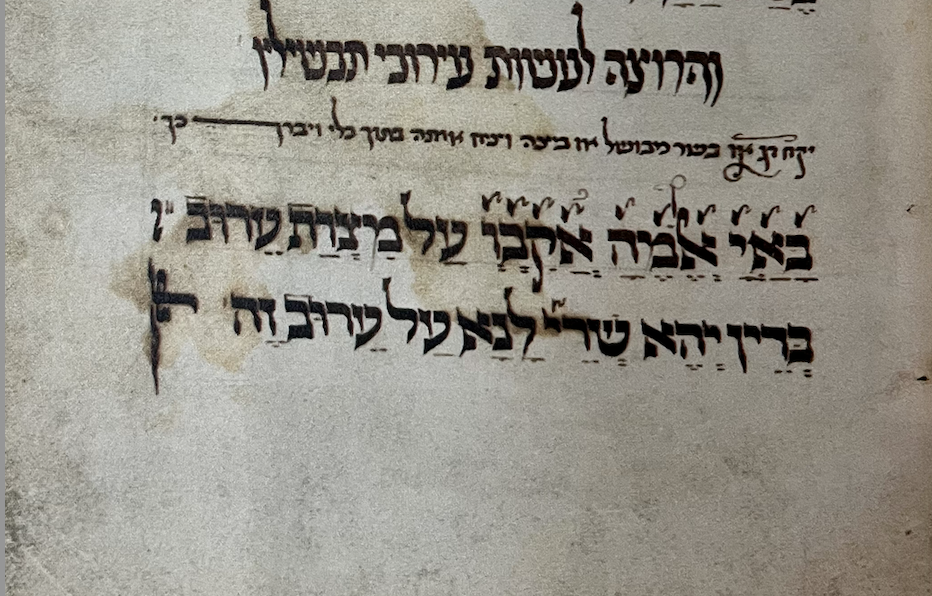
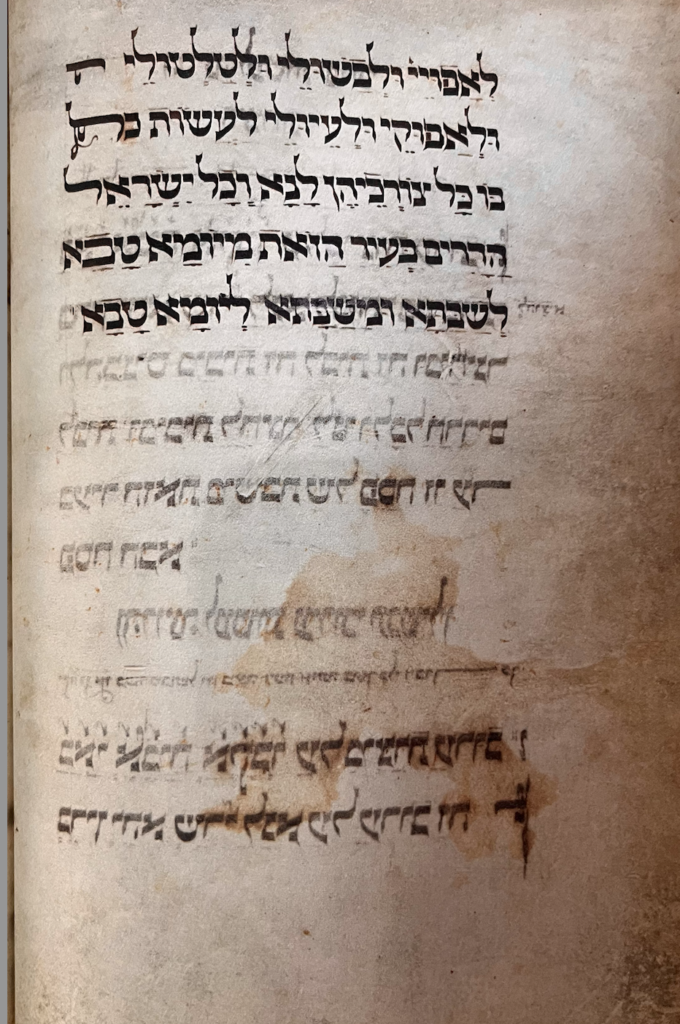
In 1965, this haggadah was first printed as part of the Diskin Orphan House Haggadah series. The Library of Congress didn’t publish its facsimile edition until 1991, and last year another facsimile edition of this haggadah was published. Although this haggadah was written close to 300 years before Diskin published it, a significant scribal error escaped notice until that time. Specifically, in the text for eruv tavshilin rather than just saying “with this eruv I am allowed to cook from Yom Yov for Shabbat,” it continues and says “and on Shabbat for Yom Tov.” Eruv tavshilin is designed to permit cooking on the holiday for Shabbat. Of course, cooking is always prohibited on Shabbat, whether or not it follows a holiday. The Washington Haggadah seems to permit what is otherwise prohibited.

This did not escape the eagle eyes of some. They feared that someone might use this haggadah (we note that contrary to the other reproductions mentioned, the Diskin version is a poor copy) and inadvertently think it is permissible to cook on Shabbat. The Agudath Harabbonim took out ads in the Yiddish daily, Der Tag, and the Forward to let its readers know of this error.

The publishers countered the Agudath’s claim and mailed out a letter, with the provocative title, “Heresy or Blunder,” after Passover indicating the error and included a letter from Cecil Roth, who had written about manuscript haggadot.

In his letter, he indicates that, indeed this was most likely unintentional and that Joel did not have a different tradition regarding eruv tavshilin. Indeed, we know from Joel’s other manuscripts, where he records the correct blessing, that the Washington 

Haggadah’s version was simply a scribal error.


NOTE: In 1991, the Library of Congress (where the manuscript resides) published an (expensive) facsimile edition of Washington Haggadah. Myron Weinstein, ed. The Washington Haggadah: A Facsimile Edition of an Illuminated Fifteenth-Century Hebrew Manuscript at the Library of Congress Signed by Joel ben Simeon (Washington, D.C., Library of Congress, 1991). In that volume, the text of the eruv tavshilin is discussed by Mordechai Glatzer, “The Ashkenazi and Italian Haggadah and the Haggadot of Joel ben Simon,” 157. The Washington Haggadah was recently republished in a much more affordable format and includes articles by David Stern and one, if not the foremost expert on illustrations in Haggadot, Katrin Kogman-Appel see here for her Academia page). The Washington Haggadah: Copied and Illustrated by Joel ben Simeon (Cambridge: Harvard University Press, 2011). See here for a video presentation by Kogman-Appel and Stern delivered at the Library of Congress.


The Missing Nun Verse in Ashrei

The Missing Nun Verse in Ashrei[1]
Ben Zion Katz
Northwestern University

There are several alphabetic acrostics in the book of Psalms. These acrostics are found in Psalms 25, 34, 37, 111, 112, 119 and 145. Only three of these are complete acrostics – i.e., acrostics in which every letter of the alphabet is represented. Psalms 111 and 112 begin each half verse with the succeeding letter of the Hebrew alphabet following the psalm’s first word (Halleluyah). Psalm 119 is an eight-fold alphabetic acrostic with 176 verses. Psalm 34 is portrayed as a complete alphabetic acrostic in the ArtScroll siddur[2]; however, that is a misrepresentation as there is no verse that begins with the letter vav; the letter vav appears in the last half of verse 6, as it does in the last half of verses 1, 4, 5, 7, 11, 14, 16, 18, 19, 20 and 23, and is therefore not part of the acrostic. Psalms 25, 37 and 145 are also defective acrostics, in that they are missing at least one letter each (and may also have other irregularities). For example, Psalm 25 begins each verse with a succeeding letter of the Hebrew alphabet except for the letters bet (although the second word of verse 2 starts with a bet), vav and kuf (possessing a second resh verse instead). Psalm 37 begins every other verse with a succeeding letter of the alphabet, except that the daled and heh verses immediately follow each other, there are two vav and chet verses, there is no ayin verse, the peh verse follows immediately after what should have been the ayin verse (instead of skipping a verse), and the tav verse begins with a vav. Finally, Psalm 145 is famously missing a nun verse.

Psalm 145 is better known as Ashrei, because of the way it appears in the siddur. Ashrei is said thrice daily (twice in shacharit, the morning service, and once at minchah, the evening service) and is always preceded by two verses from Psalms (84:5 [whose first word, Ashrei, gives the prayer its popular name] and the last verse of the preceding Psalm [144:15]) and concludes with another verse from Psalms (115:18).

Probably because of its popularity and the prominent absence of a verse with the letter nun, the Talmud has the following discussion (Berachot 4b; my loose translation):

Rabbi Eliezer said in the name of Rabbi Avina: Whoever says Psalm 145 thrice daily is assured of a place in the world to come. Why? Is it because it is an alphabetic acrostic? But Psalm 119 is an eight-fold alphabetic acrostic. Perhaps it is because of the verse (verse 16) “You open Your hands and provide sustenance for all life as they require?” But Psalm 136:25 states “He gives food to all flesh” (expressing a similar sentiment)? [The reason is because Psalm 145] has both qualities (an alphabetic acrostic and the notion of God sustaining all life).

Rabbi Yochanan asked: Why does Psalm 145 lack a verse with a nun? Because that verse alludes to the downfall of (lit., the enemies of)[3] Israel, as it says: “Fallen, she will rise no more, the virgin of Israel” (Amos 5:2; the verse continues “She is cast out over her land, none can raise her up”). In the West (i.e., Israel, by placing the comma differently)[4]  they read the verse thus: “Fallen, (and) she will not (continue to) fall any more, rise O virgin of Israel”. Said Rabbi Nachman the son of Isaac: Even so, David prophetically alluded to this [missing] verse with the next verse [following]: “God supports all of the fallen”.

The preceding Talmudic discussion raises at least two related questions: Does the Talmud really mean that a verse in Amos should have been part of Psalm 145? And isn’t that verse (Amos 5:2) completely out of character with the rest of the Psalm, which praises God throughout? In the remainder of this paper I will propose a rationale for the approach of the rabbis of the Talmud in this case (which will have implications for other similar rabbinic speculations as well), and then proceed with a historical discussion of the missing nun verse.

It appears that the rabbis, in realizing that the nun verse is missing from Psalm 145, took a cue from the verse immediately following, as Rabbi Nachman alluded to in the Talmudic discussion above. The verse following where the nun verse should be begins: Somech Adonai lekhol ha-noflim – God supports all of the fallen. The rabbis couldn’t help but notice that the word fallen, noflim, begins with a nun, and if the verse following the missing nun verse states that God helps the fallen, the preceding may very well have started with the verb nafal. The rabbis likely then searched the Bible for such a verse, and found that there are only two verses in the entire Hebrew Bible that begin with the verb nafal – Amos 5:2 (above) and Lamentations 5:16 (“The crown of our heads is fallen, woe unto us for we have sinned”).[5] While neither are great choices from a literary perspective to precede the verse of God supporting the fallen, the verse from Amos, especially as it was reinterpreted in Israel, is less objectionable. It is possible that the rabbis meant that the verse from Psalms was somehow moved to Amos, but more likely the rabbis meant that David (prophetically) knew the verse was destined to be prophesied by Amos, did not wish to include it in Psalm 145 and instead merely alluded to it with the verse immediately following about God supporting the fallen.

There are two historical witnesses as to the text of the missing nun verse of Ashrei. The first is the Septuagint, the Greek translation of Scripture that was begun in the mid-third century BCE, in which there is an extra line in Psalm 145 where the nun verse should be, that reads: “Faithful is the Lord in his words, and holy in all his works”.[6] Scholars have long recognized that the Hebrew word “Ne-eman” means faithful or trustworthy, and could have been the Hebrew word beginning the verse from which the Septuagint translators worked. The reconstructed Hebrew verse then might have read: Ne-eman elohim bechol devarav, ve-kadosh bechol ma-asav.

The second witness is the Dead Sea scrolls, among which is a large Psalms scroll that contains parts of Psalm 145 with a refrain after each verse. See Fig. 1A, where Psalm 145 begins after the break in the column. Note that this text is written in modern, square Hebrew script, except for the Tetragrammaton, which is written using the ancient paleo-Hebrew script, perhaps as a sign of added reverence.

There are minor differences between the psalm as it appears here and in current (Masoretic) Bibles. For example, the first words in line 1 are Tefilah Le-David, a prayer of David, instead of our text, which reads Tehilah Le-David, a psalm of David[7] The first verse (line 1) also contains two names of God (although the first, the Tetragrammaton, missing in current texts, is dotted, perhaps signifying an uncertain reading).[8] A characteristic of the Dead Sea texts are that many words are spelled more fully (i.e., with more vowel letters such as aleph, heh, vav and yud) than is even seen in late Biblical Hebrew,[9] to the extent that the final heh in many instances appears awkward).[10] Notice the scribal corrective technique of adding missing words above the line[11] and the garbled line beginning with the letter kuf, where the scribe appears to have misread a few words.[12] Most noticeable is that each verse is followed by a refrain: Baruch adonay uvaruch shemo leolam vaed – Blessed is God and blessed is His name forever. Finally, there is a nun verse, (beginning the last word of line 9) similar to what it was postulated to be from the Septuagint: Ne-eman Elohim bedvarav ve-chasid bechol ma-asav – Faithful is the Lord in His words and gracious in all His works.

Now that we have seen the two ancient witnesses of the nun verse in Ashrei, several questions arise. First, why does this extra verse use Elohim (Lord) instead of God (the Tetragrammaton), which is the name of God used almost uniformly throughout the psalm? Second, the Greek text implied the word “holy” (kadosh), not “gracious” (chasid)? And finally, if this verse is authentic, why did it drop out?

The first two questions are less difficult than the third. Psalm 145, even in the current Masoretic version, has the word Elohy in the first verse, so it is not as if the form Elohim for God is absent entirely from Psalm 145 as it has come down to us. Also, the fact that the Dead Sea psalm has both names of God in verse 1 (even though one is dotted) provides a possible second usage for the form Elohim for God’s name in this psalm in antiquity. The second question is a matter of near synonyms. The third question is more profound. Perhaps because the last half of the nun verse in the Dead Sea text was exactly the same as the last half of the current verse that begins with the letter tazdi allowed it to be less memorable and more likely to be skipped or forgotten by a scribe. Recall how most of the verse beginning with the letter kuf is missing in Figure 1B (lines 17-18); if the next copyist who saw that manuscript did not know this psalm by heart, the few remaining, extraneous words from the kuf verse might very well have been deleted in the next manuscript version and the kuf verse could have been lost from the psalm as well.

One cannot prove that the nun verse(s) uncovered are original to the Hebrew Psalm 145. What can be said is that the ancient translators of the Greek Bible used a text very similar to that found in Qumran in making their translation. The rabbis, of course, did not have the Dead Sea scrolls available to them; while they did have the Septuagint and were aware of some differences between the Septuagint translations and their Hebrew text(s), the rabbis attributed most of the differences to tendentious translations performed purposefully by the Greek translators.[13]

Regarding the missing nun verse, the rabbis very cleverly tried to deduce, based on the evidence available to them, how the missing verse may have read. Whether the rabbis would have made use of the Dead Sea Scrolls had they been known in antiquity is uncertain. Whether that should prevent us from doing so is a question of hashkafah. For the more traditionally minded, any source not used by previous generations is questionable at best. For the more modern, any valid source (such as using knowledge of the ancient near East to understand the Bible) is not only useful but desirable.

Figure 1A. Psalm 145, verses 1-5. From Scrolls From the Dead Sea: An Exhibition of Scrolls and Archeological Artifacts from the Collections of the Israel Antiquities Authority, A Sussman and R Peled, Library of Congress Washington, 1993 in association with the Israel Antiquities Authority, the Field Museum, 2000, cover and second inner flyleaf, © the Field Museum. Used with permission.

Figure 1B. Psalm 145, verses 13-19. From Scrolls From the Dead Sea: An Exhibition of Scrolls and Archeological Artifacts from the Collections of the Israel Antiquities Authority, A Sussman and R Peled, Library of Congress Washington, 1993 in association with the Israel Antiquities Authority, the Field Museum, 2000, cover and second inner flyleaf, © the Field Museum. Used with permission.

Transcription of Fig. 1A, beginning after the paragraph break, the 1st 7 lines that are completely legible:

תפלה לדויד ארוממכה יקוק אלוקי המלך 1.

ואכרכה שמכה לעלם ועד ברוך יקוק וברוך שמו 2.

לעולם ועד ברוך יום אברככה ואהללה שמכה לעלם ועד 3.

ברוך יקוק וברוך שמו לעלם ועד גדול יקוק ומהולל מאדה 4.

לגדולתו אין חקר ברוך יקוק וברוך שמו לעלם ועד 5.

דור לדור ישבחו מעשיכה וגבורתיכה יגידו ברוך יקוק 6.

וברוך שמו לעלם ועד הדר כבוד הודכה ודברי נפלאותיכה 7.

Transcription of Fig. 1B, beginning at the top of the column, the 1st 13 lines that are completely legible:

וברוך שמו לעלם ועד מלכותכה מלכות כל עולמים וממשלתכה 8.

בכל דור ודור ברוך יקוק וברוך שמו לעלם ועד נאמן 9.

אלוקים בדבריו וחסיד בכול מעשיו ברוך יקוק וברוך 10.

שמו לעלם ועד סומך יקוק לכל הנופלים וזוקף לכול 11.

הכפופים ברוך יקוק וברוך שמו לעלם ועד עיני 12.

כל אליכה ישברו ואתה נותן להמה את אוכלמה בעתו 13.

פותח אתה את ברוך יקוק וברוך שמו לעלם ועד 14.

ידכה ומשביע לכל חי רצון ברוך יקוק וברוך שמו 15.

לעלם ועד צדיק יקוק בכל דרכיו וחסיד בכול 16.

מעשיו ברוך יקוק וברוך שמו לעלם ועד קרוב יקוק 17.

וברוך שמו לעלם ועד יקראוהו באמת ברוך יקוק 18.

וברוך שמו לעלם ועד רצון יראיו יעשה ואת שועתמה 19.

ישמע ויושעם ברוך יקוק וברוך שמו לעלם ועד 20.

Key: italics = dotted word

Underlined = letter or word above the line

Notes: The Tetragrammaton is spelled יקוק, and every heh in other names of God is replaced with a kuf.

[1] I thank my brother, Edward N. Katz, MD, for inspiring me to write this paper.

[2] Sherman N. The Complete ArtScroll Siddur: Weekday/Sabbath/Festival. Mesorah Publications, Ltd. Brooklyn, NY. First edition. 1984. P. 376.

[3] Literally the Talmud states that the verse deals with the downfall of the enemies of Israel, but this is a euphemism; the Talmud does not wish to actually say the downfall of Israel. See for example, M Simon. Berakoth. The Babylonian Talmud. Seder Zeraim. The Soncino Press. London. 1948. P. 15. N. 7 and A Ehrman. Babylonian and Jerusalem Talmud. Tractate Berakhoth. El-Am. Israel. 1965. P. 66.

[4] Ibid.

[5] A Even-Shoshan. A New Concordance of the Bible. Kiryat Sefer Publishing House, Ltd. Jerusalem. 1990. Pp. 769-770 (Hebrew).

[6] Slightly modified from SCL Brenton. The Septuagint with Apocrypha: Greek and English. Samuel Bagster & Sons, Ltd. London. 1851. Reprinted Hendricksen Publishers. Peabody, MA. 1987. P. 785; this is not a scholarly edition of the Septuagint, but is popular and readily available. There is also not one single authoritative text of the Septuagint, so the expression “the Septuagint” is somewhat of a misnomer.

[7] Psalms 17 and 86 also begin with the words Tefilah Le-David, while Psalms 90 and 102 also begin with the word Tefilah.

[8] See Katz BZ. A Journey Through Torah: A critique of the documentary hypothesis. Urim. Jerusalem and N.Y. 2101. Pp. 54-55.

[9] David is spelled daled vav daled in Samuel but daled vav yud daled in Chronicles, for example.

[10] E.g., At the end of lines 4 and 19 and towards the end of line 13.

[11] Indicated by a word or letters that is/are underscored in (the transcriptions in) Fig. 1.

[12] The words אשר לכל קוראיו לכל should be in place of the first four words of line 18. It is not clear exactly how the scribe might have made this error. This is in contrast to the use of ברוך instead of בכל at the beginning of the bet verse in line 3 which could easily be explained as a scribal error due to the psalm’s constant refrain of ברוך יקוק וברוך שמו לעלם ועד; as the verse now stands (beginning with the word ברוך in line 3) it makes little sense. A scribal error might also be the cause of the repetitious את אתה in the peh verse at the end of line 14. There is one more small difference between this psalm and the received text: the absence of a vav at the beginning of line 5.

[13] E.g., Babylonian Talmud, Tractate Megillah 9a-b.


The Discovery of a Hidden Treasure in the Vatican and the Correction of a Centuries-Old Error

The Discovery of a Hidden Treasure in the Vatican and the Correction of a Centuries-Old Error

Rabbi Edward Reichman, MD

In 2018, I was invited to speak at a conference co-sponsored by the Vatican and the CURA Foundation entitled, Unite to Cure: A Global Health Care Initiative. The mission of the conference was to “convene leading decision makers in medicine, business, media, advocacy and faith to encourage multidisciplinary collaboration, increase investment in research and innovation… education and better access to health care.”[1] My role, as a physician and rabbi, was to represent the Jewish faith in this dialogue and initiative. While “better access to health care” remains a desideratum, access to information in our age is historically unprecedented. The explosion of technology, communication, and social media have put the world’s vast knowledge, both present and past, within finger’s reach. The present contribution, detailing a fortuitous discovery at the Vatican, recalls an earlier period in Jewish history when access to sacred texts was generally limited. The advent of printing would portend an exponential increase in availability of Jewish books, but a controversy arose in its wake which ironically led to even greater inaccessibility of one of Judaism’s most fundamental texts.

No visit to the Vatican would be complete without a visit to its storied library. In anticipation of my trip, I contacted the Vatican Library to secure a reader’s pass.[2] I then scoured the catalogue and consulted colleagues for items of Jewish medical and general Jewish interest.

While I would only have a brief time to spend in the library I focused my list mostly on medically related works, both in manuscript and printed form. One of the works I included is not typically thought of as such. It is an incunable which was the answer to one of Professor Marc Shapiro’s Seforim Blog quiz questions- what was the first Hebrew book published in the lifetime of its author? The answer is Nofet Tzufim (Abraham Conat: Mantua, 1475) by Judah Messer Leon.[3]

Judah Messer Leon was an extraordinary physician, professor, and Torah scholar. He was granted the title of Count Palatine by the Holy Roman Emperor Frederick III[4] which allowed him to confer doctorates upon other Jews of proven worthiness. Nofet Tzufim is a treatise on rhetoric, utilizing the classical literary devices of the ancient discipline of rhetoric applied to the Torah. One of the uses for this work was to prepare the Jewish students who matriculated from foreign countries to the medical schools in Italy. Indeed, he organized a yeshiva where students could receive a comprehensive Jewish education while training in the secular disciplines necessary for higher studies in the humanities, philosophy, and medicine.[5]

In my pre-visit research of the library catalogue, I noticed the record of a two-volume Mishneh Torah (Giustiniani: Venice, 1550-1551).[6] Being familiar with the controversy surrounding this work, I put it on my list despite its non-medical nature. I took a snapshot of the entry and placed it in my files.

Upon my arrival at the library, I was introduced to the protocols. I found it somewhat ironic that while the manuscripts were requested through a modern digital system, the printed works, housed in a different section, were requested by hand-written paper slip. When I submitted my requests to the librarian, I half expected her to respond, “and by the way, no, we do not have the Menorah.”[7]

The final item I requested was the Giustiniani Rambam. A short while after I submitted my slip, I noticed two massive unidentifiable tomes resting one atop the other on the front desk. It did not initially occur to me that these would be my requested items. I ultimately approached the desk and inquired if my items had arrived, only to be directed to these two plain, unadorned (with neither print nor illustration), nondescript, off white, cloth-covered folios. The covers are shown below:

The two volumes were virtually indistinguishable. As I opened the top volume, I observed the following printer’s mark on the title page.

This is the characteristic printer’s mark of Giustiniani, as expected, consisting of a picture of the Temple in Jerusalem (though more reminiscent of the Dome of the Rock). This was volume two of the Mishneh Torah.[8]

However, when I carefully cracked (almost literally) open the binding of the bottom volume, I noticed something unexpected:

The printer’s mark did not reveal a depiction of the Temple, rather it was comprised of three crowns, the distinct mark of another printing house. At this point, a brief review of the controversy surrounding the Giustiniani Rambam is in order.

Rabbi Meir ben Isaac Katzenellenbogen (1482-1565), known as Maharam Padua, produced a new edition of Rambam’s Mishneh Torah, including his own notes, and providing some of Rambam’s Talmudic references. As Jews were generally prohibited from publishing books at this time, he initially approached a veteran non-Jewish printer of Hebrew books, Marco Antonio Giustiniani. For unknown reasons, this arrangement did not work, and R. Katzenellenbogen instead published his work with Alfonse Bragadini, a novice printer for whom this would be his first publication. Very shortly thereafter, within the year, Giustiniani published a similar edition of the Mishneh Torah, including the notes of R. Katzenellenbogen, though with some alterations and with accompanying criticism, without the latter’s consent. He proposed to charge one gold coin less for purchase, clearly intending to sabotage Bragadini’s newly minted press. Fearing the loss of his significant financial investment, R. Katzenellenbogen approached the then-young R. Moshe Isserles (Rama) to adjudicate what would be one of the first cases in rabbinic literature of copyright infringement.[9]

Rama ruled in favor of R. Katzenellenbogen / Bragadini, but having no recourse in the secular courts, placed a cherem (excommunication) on any Jew who purchased books from Giustiniani until the print run of R. Katzenellenbogen had been sold. Giustiniani reacted fiercely, appealing to the Catholic Church and casting aspersions of blasphemy on the work. The Vatican expanded its inquiry launching a frontal attack on the work of R. Katzenellenbogen and other rabbinic texts as containing objectionable/heretical material. The attack soon included the Talmud and ultimately culminated in the decree to burn all extant copies of the Talmud and related works in 1553 in Campo di Fiori Square, just a few blocks from the Vatican.[10] Other cities in Italy soon followed suit and virtually all the copies the Talmud in Italy in both manuscript and print, as well as related works, including some editions of Rambam,[11] went up in flames.

The printer’s mark bearing the three crowns I observed on the title page of this work is none other than that of the Bragadini Publishing House. Upon further inspection, it became clear that I was looking at the original Bragadini edition of the Rambam Mishneh Torah, volume one, with the notes of the Maharam of Padua, from which the Giustiniani edition was copied. The Vatican library did not list a Bragadini edition of Rambam in its catalogue and was unaware of its existence. The Bragadini is volume one of the Mishneh Torah, and the Giustiniani edition is volume two. By external visual inspection the volumes look virtually identical in size and appearance with similar bland covers, worn and worm-eaten to the same degree. It is quite possible that the librarian who received these volumes some centuries ago opened only the second of two volumes, entering the information accordingly for the two-volume work, and simply never bothered to open the other volume. This theory is possibly corroborated by the fact that pencil markings with the catalogue number of the Vatican Library appear only in the second (Giustiniani) volume (in the upper left hand corner) and not in the first (Bragadini).

Once I realized the cataloguing error, I immediately notified the librarian of this oversight, though she was of course unfamiliar with the historical significance of these volumes, and I was assured that the catalog would be corrected accordingly.

Upon my return home, in April 2018, I followed with an e-mail to the Vatican Library including additional references and a fuller discussion of the historical significance of the different editions. Shortly thereafter, I had the opportunity to visit the private medical historical library and collection of the late, world-renowned neurosurgeon, Dr. James Goodrich, known for his expertise in separating craniopagus conjoined twins (sharing or connected by the brain). I shared the details of my recent Vatican Library visit, to which he responded with his own slightly more dramatic experience at the same library. While inspecting a Medieval anatomy text, he noticed one of the famous illustrations was missing from the volume. He immediately notified the librarian. Within a few moments, he was surrounded by police, hands in the air, being threatened with arrest, himself accused of the theft.

Every few months I would check to see if the catalogue entry had been corrected. Sometime in late 2019 or early 2020, I gave up hope of any correction and did not check further. In November 2021, in preparing topics for an upcoming cruise to Northern Italy on Italian Jewish medical history, I was reminded of the Vatican Library visit and searched the catalogue for the Bragadini Rambam. To my pleasant surprise, the catalogue had been corrected to reflect the two editions, and the entries for both volumes of Rambam had been updated and expanded.

New Entry for the Bragadini Rambam

New Entry for the Giustiniani Rambam

How these two volumes of one set from different printers originally came together remains a mystery, but this “mixed” set of Rambam appears to have been owned by both Jews and non-Jews from at least the 17th century and possibly earlier. Previous ownership of the set by both institutions and individuals, Jews and non-Jews, is reflected by a number of similar inscriptions in the respective volumes.

Both volumes contain the imprint of the library of the Church Santa Pudenziana in Rome:

Volume 1

Volume 2

Both bear the inscription of D. Julius a S. Anast[asi]a with the added information that he purchased (emit) them in 1652.

Volume 1

Volume 2

That a set of Rambam would be owned by non-Jews, be it private or institutional, is not remarkable given the history of Christian Hebraism.[12] Julius de St. Anastasia was a pseudonym for Giulio Bartolocci (1613-1687),[13] an Italian Cistercian Monk and Hebrew scholar who authored a four-volume work on rabbinic literature, Bibliotheca Magna Rabbinica.[14] It was just a year before this purchase date, 1651, that he was appointed professor of Hebrew and Rabbinics at the Collegium Neophytorum in Rome and “Scriptor Hebraicus” at the Vatican Library. He may have purchased the volumes in 1652 either for his private collection or for the Vatican Library. In either case, it is likely that these volumes have been either in his possession or the Vatican Library’s since 1652. The residence of the Rambam volumes in the Biblioteca Santa Pudenziana thus likely precedes this period. Perhaps Bartolocci acquired the works from this library. This helps date another signature that appears on both title pages, one that escapes mention in the Vatican catalogue entry.

Volume 1

Volume 2

In the first I can clearly see the words שלי יצחק, which follow a decorative flourish, though cannot decipher the last name. In the second, I can see remnants of the words שלי יצחק, and the second name is missing entirely. At minimum, this establishes ownership by a man whose first name is Yitzhak sometime before the early to mid-seventeenth century. Who Yitzchak was, and when in the period between the publication of the volumes (1550) and their acquisition by the Biblioteca Santa Pudenziana he took possession, is unknown, though it is intriguing to contemplate. It is almost certain that he was the earliest of the known owners. It is unlikely that Yitzhak would have acquired a set of Rambam from representatives of the Catholic Church, though one can imagine how the Church acquired the works, be it directly or not, sometime after the events of 1553.

Let us consider the possibility that it was Yitzhak who first acquired the mixed set of Rambam during their time of publication. How would this have come about? Why did he not simply purchase both volumes of the Bragadini Rambam? Were both volumes issued together, or was volume two released later? The publication of the two volumes of the Giustiniani Rambam was separated by at least a number of months, with volume one appearing in 1550 and volume two released January 25, 1551.[15] Furthermore, what of the ban implemented by Rama? Would this not have prevented him from buying the Giustiniani Rambam altogether? When was the ban issued and when would he have even heard of it? Lastly, and most importantly, were these volumes not included in the decree to burn Jewish literature. How could they have survived?

In answer to this final question, copies of Rambam’s Mishneh Torah were confiscated and burned, though not as systematically as was the Talmud.[16] Rama’s ban would have had no impact whatsoever on Yitzhak’s purchasing preferences, as Rama explicitly limited his decree to “our country” (i.e., Poland). It is not known whether Italian rabbis adopted a similar stance for their communities.

Furthermore, these very volumes reflect the impact of the feud of their publishers, and of the subsequent burning and imposed censorship. According to the Vatican Library catalogue, they were censored by Lorenzo Franguello in 1575 and again in 1599 by Luigi Da Bologna.[17] Whether it was Yitzchak who presented the work to the censors we may never know.

The impact of the burning of the Talmud on Jewish literature in general has been treated elsewhere, but as my interests lie in Jewish medical history, I conclude by sharing its effect on one of the more prominent figures in Jewish medical history, Abraham Portaleone (d. 1612).[18] Portaleone, descendant of a long line of prominent physicians, and himself physician to dukes and princes, developed a stroke in his sixties leaving him partially paralyzed on one side of his body. His illness sparked reflection that led him to the conclusion that he had not devoted enough of his life to Torah study. To rectify this deficiency, he set out to compose a comprehensive work on prayer and the Temple service, Shiltei haGibborim, which he dedicated to his children. It is an encyclopedia of Renaissance knowledge, including extensive discussions on the composition of the Temple incense, drawing on contemporary botanical studies, as well as unprecedented research into the instruments and music of the Levites accompanying the Temple service.[19]

In his introduction, Portaleone details the nature of his early education, and recalls how while a student studying Talmud with R. Yaakov MiPano, the infamous decree led to the Talmud “being consumed by fire before our eyes.”[20] After the initial burning of the Talmud in Rome, other Italian cities followed suit with their own citywide burnings of the Talmud. Portaleone was witness to one such event. Decades later, as he penned his classic work, Shiltei haGibborim, the Talmud still remained unavailable in Italy. Portaleone was forced to use substitute works that alluded to or quoted the Talmud, if available, but sometimes the information was simply not accessible. For example, in his discussion of the Lechem Hapanim (shewbread) of the Temple, he writes, “Perhaps some place in the Talmud Hazal spoke of this, and I am not aware. As a result of the known decree [preventing access to the Talmud] I have not been able to properly ascertain this.”[21]

In one remarkable instance Portaleone reveals his elation at being able to acquire a bona fide Talmudic reference. He writes that after he completed the chapter on the Lishkat haGazit (Chamber of Hewn Stone), God ordained (“hikra”) that he happen upon a wise man from the city of Tzfat (where the Talmud was available) who had come to Italy to seek financial support for his family. “From his mouth I heard the sugya in the second chapter of Yoma on the laws of the Lishkat haGazit, and I write them here for you (my children) from his mouth…”[22]

In yet another place he excitedly relates of his accessing a small passage from Tractate Chagigah from a tattered manuscript remnant in the library of a great Torah scholar (Gaon) of Verona.[23]

These few, yet remarkable, instances reveal how the absence of access to the Talmud in Italy impacted the life and work of one of Jewish medical history’s most famous personalities.

While our ancestors yearned for access to even one miniscule fragment of the Talmud, we have unfettered access to virtually the totality of rabbinic literature literally at our fingertips, from a device likely smaller in size than the one fragment of Talmud Abraham Portaleone was so overjoyed to discover.

Conclusion

It is incredible to think that for hundreds of years, unbeknownst to the Vatican library, Bragadini has been hiding in plain sight under the cover of his arch nemesis and fierce competitor Giustiniani. Their feud led to one of the greatest tragedies in Jewish history, instigated by the very institution wherein they now lie. Giustinani’s press ceased production in 1552, shortly after and possibly related to his attack on Bragadini, while the Bragadini press, and the three crowns, continued for generations.[24] At long last Giustiniani’s reach from the grave to still overshadow Bragadini has been foiled and a centuries-long error has been rectified.

It is perhaps noteworthy that this discovery occurred while I was a presenter at a Vatican conference. As for the conference itself, the medical issues addressed (including stem cell research, CRISPR gene editing and longevity research) and their halakhic ramifications merit discussion in a different blog. However, let us pause and appreciate how far we have come with respect to religious tolerance.[25] Suffice it to say, had I lived in the times of Bragadini and Giustiniani, I would likely not have been invited to a conference at the Vatican.

[1] See http://vaticanconference2018.com for information about the conference and videos of all the presentations.

[2] I sent a copy of my medical degree and a copy of my semikha klaf. I still wonder whether they read the latter.

[3] VcBA 11013821. On Messer Leon and his work, see I. Rabinowitz, The Book of the Honeycomb’s Flow by Judah Messer Leon: A Critical Edition and Translation (Cornell University Press: Ithaca, 1983).

[4] Frederick also bestowed upon him a doctorate in medicine and liberal arts.

[5] Rabinowitz, op. cit., xxiii. For more on this yeshiva and other programs throughout history that combined the study of Torah and medicine, see E. Reichman, “The Yeshiva Medical School: The Evolution of Educational Programs Combining Jewish Studies and Medical Training,” Tradition 51:3 (Summer 2019): 41-56.

[6] BAVR.G.Bibbia.S.84(1-2).
 

[7] Yesh omrim an alternate version, “If you are interested in seeing the Menorah, follow me.”

[8] Parenthetically, the cover page of the first volume of the 1550 Giustiniani Rambam does not bear the printer’s mark. Rather, in this volume, the printer’s mark appears at the end of the volume. Accorded to Marvin Heller, “Indeed, … this printer’s mark … appears on almost all of Giustiniani’s imprints until his press closed in 1552, including the title page of every tractate of his Talmud, although there are instances where it appears on the verso of the title page or on the last page of the volume.” See M. J. Heller, “The Printer’s Mark of Marco Antonio Giustiniani and the Printing Houses the Utilized It,” in Studies in the Making of the Early Hebrew Book Studies in Jewish History and Culture 15 (2007), 44-53.

[9] On this topic see, for example, D. Amram, The Makers of Hebrew Books in Italy (Albert Saifer, 1983); A. Yaari, Sereifat Hatalmud B’Italia in Mehkarei Sefer (1958), 198-233; Neal Weinstock Netanel, From Maimonides to Microsoft: The Jewish Law of Copyright Since the Birth of Print (Oxford University Press, 2016).

[10] See Menachem Butler, “The Burning of the Talmud in Rome on Rosh Hashanah, 1553,” The Talmud Blog, https://thetalmud.blog/2011/09/28/the-burning-of-the-talmud-in-rome-on-rosh-hashanah-1553-guest-post-by-menachem-butler/ (September 28, 2021), accessed November 3, 2021. Not all scholars connect the copyright controversy with the Talmud burning. See, for example, William Poppers, The Censorship of Hebrew Books (Ktav, 1969), 29-37.

[11] See Natanel, op. cit.

[12] See, for example, Stephen Burnett, Christian Hebraism in the Reformation Era (1500-1660): Authors, Books, and the Transmission of Jewish Learning (Brill, 2012).

[13] See Friederich Bleek, An Introduction to the New Testament (T. and T. Clark, 1877), 315.

[14] Burnett, op. cit., 68 and 183.

[15] 8 Shevat, 5311 according to the title page.

[16] Netanel, op. cit. 113.

[17] For an account of Da Bologna’s less than accurate censorship, see “Christian Censors as Morality Police in the censoring of Hebrew Books – Luigi da Bologna,”
http://judaicaused.blogspot.com/2015/01/christian-censors-as-morality-police-in.html (January 30, 2015).

[18] On Portaleone, see Harry A. Savitz, “Abraham Portaleone: Italian Physician, Erudite Scholar and Author, 1542-1612,” Panminerva Medica 8 (12) (December 1966): 493-5; Samuel Kottek, “Abraham Portaleone: Italian Jewish Physician of the Renaissance Period – His Life and His Will, Reflections on Early Burial,” Koroth 8 (7-8) (August 1983): 269-77; idem, “Jews Between Profane and Sacred Science: The Case of Abraham Portaleone,” in J. Helm and A. Winkelmann (eds.), Religious Confessions and the Sciences in the Sixteenth Century (Brill, 2001). For a full text of his will, see D. Kaufman, “Testament of Abraham Sommo Portaleone,” Jewish Quarterly Review 4 (2) (January 1892): 333-41; Andrew Berns, The Bible and Natural Philosophy in Renaissance Italy (Cambridge University Press, 2014). Shadal discovered a remarkable letter by Portaleone recounting his brush with death on February 25, 1576, when he escaped unscathed from a vicious attack. Although his cloak was perforated in sixteen places from the perpetrator’s sword, miraculously no blood was drawn. See Y. Blumenfeld, Otzar Nehmad 3 (Vienna, 1860): 140-1.

[19] See Y. Katan and D. Gerber, eds., Shiltei haGibborim (Machon Yerushalayim, 5770); Berns, op. cit.

[20] Shiltei haGibborim (Mantua, 1607), 185b. This is the concluding section of the work, which includes biographical details of the author.

[21] End of Chapter 32.

[22] Chapter 23, p. 109.

[23] For discussion of these cases and the other sources of Portaleone, see Y. Katan and D. Gerber, eds., Shiltei haGibborim (Machon Yerushalayim, 5770), 28-29.

[24] Amram, op. cit., 253.

[25] For example, Rabbi Dr. Avraham Steinberg was appointed to the Pontifical Academy of Life in 2017.


Haftaros of Vayetze and Vayishlach – A Mistake Rectified

Haftaros of Vayetze and Vayishlach – A Mistake Rectified[1]

By Eli Duker

There had been one practice throughout the Jewish world concerning the Haftara of Vayishlach until the print revolution. The book of Ovadia is the Haftara listed in every Haftara list, including the one in the Rambam’s Seder HaTefillos in the Mishneh Torah, MS Ginsburg Moscow of the Machzor Vitry,[2] Etz Chaim (written in London on the eve of the Edict of Expulsion),[3] Abudarham,[4] and the list of Rabbi Shmuel Hanagid, cited in the Sefer HaEshkol.[5] It is also the Haftara in the “Emes” piyyut written by Rabbi Shmuel Hashelishi[6] and the “Zulas” piyyut written by Rabbi Yehuda B’Rabi Binyamin.[7] This is also the Haftara listed in all chumashim in manuscript[8] and in all Cairo Geniza fragments9 that I have seen.

This was also the practice of those who followed the triennial cycle in Eretz Yisrael,[10] the Haftara for the sidra of Vayishlach Yaakov was from the book of Ovadia. The reason for the Haftara is clearly due to it being a prophecy about Edom, and Edom is discussed in depth in the parasha.

The universal practice in all communities was to read from the book of Hoshea for the Haftara of Vayetze, but not everyone read the same verses. In all Geniza fragments[11] the Haftara begins at 11:7, “Ve’ami seluim.” In the fragments with a clear end to the Haftara I have found 3 that end at 12:14,[12] which is similar to what appears in the list of in the Rambam’s Seder HaTefillos, making it a classic Haftara of exactly twenty-one pesukim. One source has it end at 13:4,[13] which is the “Zulas” piyyut written by Rabbi Yehuda B’Rabi Binyamin for this parasha,[14] as well as in the Sefer HaShulchan, written by a student of the Rashba. The reason for the Haftara is due to the verse “Vayivrach Yaakov ,” which is clearly related to the events of the parsha, as well as, possibly, the mention of “Bes El” in 12:5

There were two different Ashkenazi practices in the pre-printing era. One was to begin at 12:13, “Vayivrach Yaakov ,” and to read until the end of the book. This is the Haftara found in MS Ginsburg Moscow of the Machzor Vitry,[15] Etz Chaim,[16] and in 12 of the 16 Ashkenazi chumashim in manuscripts I checked. Outside of Ashkenaz this was the practice among the Romaniots. It is also found in the “Zulas” piyyut of Rabbi Shmuel Hashlishi,[17] who lived in Eretz Yisrael in the 10-11 centuries and belonged to a community that read the Torah according to the annual cycle (although the Haftara ends there at 13:4, making it a Haftara of just seven verses!). It was also the Haftara for the sedra of “Vayetze Yaakov” in the triennial cycle of Eretz Yisrael.[18]

The secondary practice in Ashkenaz, which I found in three chumashim in manuscript, was to read starting from 11:7. One manuscript has the Haftara ending at 12:14,[19] and the other two end at 13:5.[20] The latter is the practice of the Ashkenazi community of Amsterdam.[21]

The first printed chumash with Ashkenazi Haftaros was the Soncino, printed in Brescia in 1492. It had the Haftara beginning at 12:13, following most other Ashkenazi sources. The 1517 Bomberg chumash, printed in Venice, has printed Haftaros according to both the Ashkenazi and Sephardi practices, and has the Haftara for Vayetze beginning at 11:7. After 13:5, the word “כאן” in written, followed by something that was erased (in the microfilmed copy of the Israel National Library) followed by “ההפטרה לספרדים,” that this is where the Haftara ends according to the Sefardi practice, which is quite normative. But before 12:13, at the front of the page, the words “הפטרת וישלח לאשכנזים” appear. The Haftara of Vayishlach in that chumash is from Ovadia, without any instructions, indicating a discrepancy between the two practices. It is clear that a mistake was made here, as Hoshea 12:13 is an Ashkenazi Haftara for Vayetze, not Vayishlach.

The 1517 chumash did not sell well among Jews, likely because its editor, Felix Pratensis, was a Jewish convert to Christianity.[22] In 1524 Daniel Bomberg published another chumash, this time with Yaakov ben Chayim ibn Adoniya as his editor, and this edition was much more popular among Jews. It is essential an entirely different book, as this editor did not rely on the first edition, yet, the Haftaros were, by and large, copied from the first edition, with only minor changes. Concerning our topic, the Haftara for Vayetze is 11:7, without any indication that there are other practices. Right before 12:13 it is written “כאן מתחילין הפטרת וישלח האשכנזים” with no indication where Sephardim finish the Haftara. Here too, Ovadia is listed as the Haftara for Vayishlach, without any instructions indicating that there is a discrepancy between communities.

The popularity of the chumash (already called “Mikraos Gedolos”) created a situation where a new reality was created. The Ichenhausen chumash, published in 1544, merely copied the Haftaros and their instructions from the second Bomberg chumash.

By contrast, another Venetian publisher, Marco Antonio Giustiani, also in 1544, went even further, and wrote in his chumash concerning the Haftara from Ovadia as “הפטרת וישלח כמנהג בני ספרד”. The instructions in this chumash created three changes:

  • It shortened the Sephardi Haftara for Vayetze and ended it at 12:12, a verse that that discusses the Israelites performing pagan sacrifices and the ramifications of this, an extremely inappropriate way to complete a Haftara.
  • It ignored the widespread Ashkenazi practice to begin the Haftara of Vayetze from 12:13. Instead, it has them all starting at 11:7 (as well as completing the Haftara at 12:12, which was unheard of).
  • It created a new Ashknenazi Haftara for Vayishlach, from Hoshea, which has nothing to do with the parsha at all, and did away with the reading from Ovadia, which had been a universal practice until that time.

Not all chumashim “ruled” in such a manner. In the Lublin chumash of 1517, the original Ashkenazi Haftaros of Hoshea 12:13 for Vayetze and Ovadia for Vayishlach were listed. Likewise, the Levush, published in 1590, listed these Haftaros as well.

Soon after, we begin to see many chumashim following the new practice. For example: Manitoba – 1589, Frankfurt am Main – 1662, Venice – 1684, as well Haftara books published in Frankfurt Oder in 1685 and in 1708. Yet, I found chumashim from this period with the original Ashkenazi Haftaros, but they were both printed in Prague, which is known to have kept the original practice, as will be discussed below.

The first to point out the error of the new chumashim was Rabbi Avraham Gombiner, in his commentary, Magen Avraham, on Orach Chayim of Shulchan Aruch in siman 428:[23]

מה שכתב בחומשי’ ויברח יעקב לפ’ וישלח ט”ס הוא ושייכ’ לפ’ ויצא (לבוש)

Magen Avraham was first published in 1692, after the author’s passing. He does not explicitly mention what the Haftara for Vayishlach is, but as he cites the Levush, it is clear that he meant it is from Ovadia, as with the exception of the new practice of reading Hoshea 12:13 for Vayishlach, which the Magen Avraham clearly rejects, Ovadia was the only known Haftara for Vayishlach. Nevertheless, chumashim printed after the publication of the Magen Avraham continued to list Hoshea 12:13 as the Ashkenazi Haftara for Vayishlach.[24] Even the chumash published by R’ Shabs ai Bass, author of the Sifsei Chachamim and publisher of Magen Avraham, had this as well.

In 1718 the book “Noheg Katzon Yosef” by Rabbi Yosef Yozefa Segal was published, a work on the practices of German communities in general and Frankfurt am Main in particular. He wrote the following concerning parashas Vayetze:[25]

כתב בלבוש החור ס’ תרס”ט שהפטרה של סדר זו הוא ויברח יעקב, והפטרת וישלח הוא ועמי תלואים, עיין שם. והנה באמת במקומות שמחלקים שתי פרשיות אלו מהושע לאמרם לשתי הפטרות משתי שבתות אלו היה הדין עם הלבוש להקדים המאוחר ולאחר המוקדם. דכד נעיין ביה שפיר נראה שכתיב ויברח יעקב “ובאשה שמר” שהוא מלשון ואביו שמר את הדבר, כלומר המתין עד שתנא ראויה לביאה, או ששמר את הצאן בעד האשה, שהוא מעין פרשת ויצא. ובעמי תלואים כתיב וישר אל המלאך ויוכל , שהוא על שם הכתוב כי שרית עם אלקים ועם אנשים ותוכל הכתוב בוישלח. א”כ למה לנו ליתן את של זה בזה ושל זה בזה? ואפשר שיצא משבשתא זו מפני ששתי הפטרות אלו הם סמוכים בקרא, ועמי תלואים מוקדם במקרא, לפיכך שמו המוקדם במקרא לפרשת ויצא המוקדמת, והמאוחר לפרשת וישלח המאוחרת. והמנהג בק”ק פ”פ שמפטירין בויצא מן ועמי תלואים עד סוף הנביא, דהיינו שתי הפטרות אלו ביחד, שמספר מה אירע ליעקב. ועיין מה שכתבתי בפרשת וישלח

It is written in the Levush Hachur siman 769 that the Haftara for this seder is “Vayivrach Yaakov ,” and the Haftara for Vayishlach is “Ve’ami seluim.” In reality, places that divide the Haftara from Hoshea in order to read it as two Haftaros over two Sabbaths should follow this Levush and read the latter part first and the earlier later, as when one looks examines the matter one see it says in “Vayivrach Yaakov ” (the words) “he guarded his wife,”[26] which is similar to, “and his father kept the matter in mind,”[27] meaning [Yaakov] waited until she was fit for marriage, or it means he guarded the sheep in order to marry the woman, which is similar to parshas Vayetze. And in “Ve’ami seluim” it is written “he strove with an angel and prevailed,” which is based on the verse “for you have striven with beings divine and human and prevailed,” which is written in Vayishlach. Therefore, why should we read them in the opposite order? It is possible that this mistake occurred because these Haftaros are adjacent to each other, and “Ve’ami seluim” appears first. Therefore, they put the first Haftara for Vayetze, which is the earlier parsha, and the latter one for the later Vayishlach. But the practice in Frankfurt is to read “Ve’ami seluim” until the end of the book, meaning to read both Haftaros together.

This piece is rather difficult to comprehend.

  • First, the Levush says nothing of the sort. The author proceeds to try to explain the mistake that developed due to the Levush, who did not write what is ascribed to him.
  • He recommends reversing the orders of the Hoshea Haftaras, rather than recommending that Ovadia be read, which he cites later as the practice in Frankfurt.[28]
  • He claims that the Frankfurt practice is to read from 11:7 until the end of Hoshea for Vayetze. All other sources claim that the practice there was to read from 12:13 for Vayetze and to read Ovadia for Vayishlach, and there is no other source for this “double Haftara” anywhere.

The Rav of Frankfurt, Rabbi Yaakov, author of the Shav Yaakov, wrote an approbation for the book “Noheg Katzon Yosef,” but after he found many errors he asked Rabbi Yehuda Miller, the author’s father-in-law, to fix the errors.[29] Some later printings of the book included these corrections in a booklet called “Tzon Nachalos,” where he wrote that the author was indeed mistaken with regard to the practice in Frankfurt.[30]

In 1729, eleven years after the publication of Noheg Katzon Yosef, Rabbi Yitzchak Aizik Mis wrote a commentary on the Haftaros known as Be’er Yitzchak, which was published in Offenbach, a town quite close to Frankfurt. He listed there various halachos and practices connected to Haftaros. He wrote there:[31]

בכל החומשים נפל טעות שציינו להפטורת ויצא ועמי תלואים ולפ’ וישלח ויברח יעקב וצריך להיות לפ’ ויצא ויברח יעקב לפי שבו כתיב ובאשה שמר שהוא מעניינא דפרשה ששמר את הצאן בעד האשה ולפ’ ושילח ועמי תלאים לפי שבו כתיב וישר אל מלאך ויוכל וגו’ שהוא מעניינא דפ’ כי שרית עם א-הים ועם אנשים ותוכל ובק”ק פרנקפורט דמיין אומרים לפ’ ויצא ועמי תלואים וגם ויברח יעקב ולפ’ וישלח חזון עובדיה

All of the chumashim have a mistake, as they cite the Haftara of Veyetze as “Ve’ami seluim” and that of Vayishlach as “Vayivrach Yaakov ,” while the Haftara for Vayetze should be “ Vayivrach Yaakov ,” as is written there “he guarded a wife” which is the matter of the parsha where (Yaakov) guarded the sheep for the wife’s sake, and that of Vayishlach should be “Ve’ami seluim,” as it is written there he strove with an angel and prevailed, which is the matter of “for you have striven with beings divine and human and prevailed.” In Frankfurt am Main they say “Ve’ami seluim” and “Vayivrach Yaakov ” for Vayetze, and “Chazon Ovadia” for Vayishlach.

It is clear that he did not just copy this out of the Noheg Katzon Yosef, as he views what is printed in chumashim as a mistake, while the Noheg Katzon Yosef mistakenly attributed it to the Levush. But it seems likely that his (erroneous) statement concerning the Frankfurtian practice does come from there.[32]

The famous printing press in Amsterdam, Proops, published a chumash in 1712 with similar Haftaros for these parshiyos to the Venice chumashim, but in another chumash, the 1734 edition, in the Haftara for Vayetze before 12:14 it is written כאן מתחילין האשכנזים פרשת ויצא while for Vayishlach, Ovadia is listed as the Haftara for Sephardim, with no mention of the Ashkenazi practice at all. It is likely that the publisher, who published a Shulchan Aruch with Magen Avraham,[33] was aware of the comment there concerning the mistake in the chumashim about the Haftara of Vayetze, but someone along the line did not realize the ramifications of this and just left Ovadia as the Haftara for Sephardim alone.

The 1754 Proops chumash cited the Venteian Haftaros, possibly as the best method to correct the error of the earlier chumash omitting an Ashekenzi Haftara for Vayishlach. But in the chumash they published in 1762, the following appears before the Haftara for Vayetze, Hoshea 11:7:

והמנהג הנכון לאשכנזים להפטרת ויצא ויברח יעקב וכן כתוב באחרונים

Before Hoshea 12:14 the following appears:

כאן מתחילים האשכנזים הפטרת וישלח, והמנהג הנכון לאשכנזי’ זהו הפטר’ ויצא ועמי תלואים שייך להפטר’ וישלח

It seems that the so-called “achraronim” mentioned here are the Be’er Yitzchak and the Noheg Katzon Yosef.

These Haftaros appear in later Proops chumashim in 1767 and 1797, as well as in another Amsterdam chumash, published in 1817 by a doctor named Yochanan Levi.

Other chumashim of the period continue to cite the Haftaros as they were listed in the Venice chumashim.[34]

Rabbi Shlomo Ashkenazi Rappaport of Chelm, in his Shulchan Atzei Shitim, wrote that the Haftara for Vayetze is Hoshea 12:14, and the Haftara for Vayishlach is from Ovadia, and in his Zer Zahav commentary he wrote:[35]

ויברח יעקב – ודלא כמו שנרשם בחומשים בטעות ויברח יעקב לפרשת וישלח דשייך לפ’ ויצא (ס’ תכ”ח)

This is clearly based on Magen Avraham.[36] It seems that his opinion concerning the Hafatros was not accepted in his day.[37]

Eighteenth-century Amsterdam was major center of Hebrew printing, and Proops was quite famous in terms of print quality, and in particular for using new methods for marketing their books.[38] Books from there were shipped to Danzig, from where they made their way into Eastern Europe. [39] Proops’ books were very popular there, which enabled them to raise the necessary funds to print a new edition of the Talmud Bavli[40] Rabbi Avraham Danziger, having grown up in the city, would have likely been exposed to the many sefarim published by Proops, and it is likely that he had their chumashim. The first edition of his Chayei Adam was published anonymously in 1810, and the matter of these Haftaros is not raised there, but in the second edition, published in the author’s lifetime in 1819, is it written:

מה שכ’ בחמשים הפטרת וישלח ויברח יעקב הוא טעות אלא בויצא מפטירין מן ויברח עד ויכשלו בם ובוישלח מפטירין מן ועמי תלואים וגם מקצת ויברח יעקב עד ומושיע אין בלתי (תכ”ח):

What was the source for this statement of the Chayei Adam? It does not seem likely that it is Noheg Katson Yosef, as that book had been published only once, a century earlier.[41] It is also not likely to be the Be’er Yitzchok, which was published in faraway Offenbach. It seems reasonable that he was exposed both to the Proops chumashim (or others with those Haftaros), as well as other chumashim with the Venetian Haftaros, which he saw as mistaken, and when he referred to “what is written in the chumashim,” he did not mean all of them.

The publishers of this of this edition, Menachem Mann and Zimmel, published a chumash for Ashkenazim in 1820 with Hoshea 14:12 as the Haftara for Vayetze and 11:7 for Vayishlach, likely following what was the ruling of the Chayei Adam at the time.

The next edition of the Chayei Adam was published in 1825, several years after the author’s death. As it had the same publisher, it seems unlikely that any changes were made by anyone but him. It is written there:

מה שכ’ בחומשים הפטרת וישלח ויברח יעקב הוא טעות אלא בויצא מפטירין מן ויברח עד סוף הושע (ואח”כ פסוקים מיואל ואכלתם אכול וכו’ וידעתם וכו’ ג”כ מטעם לסיים בטוב( ובוישלח מפטירין מן ועמי תלואים וגם מקצת ויברח יעקב עד ומושיע אין בלתי ועפ”י הגר”א נוהגין להפטיר בפ’ וישלח וישלח חזון עובדי’ (תכ”ח)

We see two changes here.

  • That two verses from Yoel should be added in to the Haftara for Vayetze (which he already pointed out in the previous edition is Hoshea 12:14) which otherwise ends with the mention of sinners stumbling.[42] Evidently, earlier authorities did not think it necessary to avoid such an ending. This is cited by the Mishna Berura,[43] but is not written in any chumashim published before the Holocaust.
  • He mentions that the Vilna Gaon ruled that we read Ovadia as the Haftara for Vayishlach, and those who follow him do so. The author of the Chayei Adam was related to the Vilna Gaon by marriage, and prayed with him in the Vilna Gaon’s Kloyz.

These additions were printed in later editions of the book.[44]

During the same year, 1819, Rabbi Efraim Margolies published the Sha’arei Efraim,45 which sounded similar to what was written in the Chayei Adam published in that same year:[46]

מה שנרשם במקצת חומשים הפטורת ויברח יעקב לפ’ וישלח הוא ט”ס, כי הוא שייך לפ’ ויצא, והפטורת וישלח בהושע ועמי תלואים למשובתי

It is unlikely that he saw the edition of the Chayei Adam that had been published just a few months beforehand. The fact that he writes that reading Hoshea 12:14 as the Haftara for Vayishlach is a mistake that appears in some chumashim indicates that he saw other chumashim with the Haftaros in what he considered the correct order, and is likely agreeing with them.

In the first edition of Shulchan Hakriah and Misgeres Hachulchan by R’ Dov Reifman, published in 1864, the opinion of the Sha’arei Efraim is cited,[47]  but in the second edition[48] it is not.

Later, the above-mentioned publisher of the Chayei Adam, Menachem Mann, changed his name to Romm and began publishing many books in Vilna, including the famous Shas Bavli. The chumashim published there had Hoshea 14:12 as the Haftara for Vayetze, and soon other publishing houses followed suit. Romm themselves continued to follow this approach,[49] even though luchos for Vilna printed in 1826[50] and 1839[51] had Ovadia as the Haftara for Vayishlach. It seems likely that in Vilna itself the publication of the Vilna Gaon’s practice in the Chayei Adam had an immediate effect.[52] Romm published the Toras Elokim chumash in 1874,[53] continuing to list Hoshea 11:7 as the Ashkenazi Haftara for Vayishlach, yet the following note was inserted before the Haftara:

הפטרה זו וגם הפטרת ויברח יעקב היא הפטרת ויצא לספרדים מפני שהם בנביא אחד אבל האשכנזים מפטירין בויצא רק ויברח יעקב ובוישלח חזון עובדיה כמבואר ברמב”ם ובלבוש

It is not clear what it means that both Haftaros are read by Sephardim for Vayetze, and it is rather strange that Hoshea 11:7 is listed for the Ashkenazi Haftara for Vayishlach with instructions that Ashkenazim actually read from Ovadia. Before the Haftara from Ovadia the following appears:

הגם שנמצא בחומשים כתוב שהיא הפטרה רק לספרדים אך מבואר ברמב”ם ובלבוש שהיא הפטרת וישלח בין לספרדים בין לאשכנזים

These instructions appeared in the Mikraos Gedolos chumash they published in 1880, and others used these rather strange instructions as well.[54]

The Mikraos Gedolos chumash published by Kadishson in Piotrkow had the Haftara from Hoshea 11:7 without any instructions, but wrote the following before the Haftara from Ovadia:

“כ”ה דעת הלבוש וראה עוד לזה ג”כ בסי’ תרפ”ד… הפטרת שבת א’ של חנוכה …

The Levush here explains that the reason why Zecharia is the Haftara on the first Sabbath of Chanuka while the fashioning of the menoras in Melachim in read on Chanuka only in the event that there is a second Sabbath is that that a Haftara discussing the future redemption is preferred, and the editor here felt the same applies to preferring Ovadia over Hoshea for parashas Vayishlach. The same instructions appear in the Romm Mikraos Gedolos printed in 1904.

Another Romm Chumash from 1898 had Ovadia as the Haftara for Sephardim only and Hoshea 11:7 for Ashkenazim. This chumash was reprinted in 1938, but that chumash was just a copy of one that was printed in Zhitomer in 1867, which is to this day viewed as the standard “shul chumash.”

The Chayei Adam as printed in 1825 edition onward is cited by the Mishna Berura.[55] It seems that by then many communities were reading Ovadia for Vayishlach.

The practice of returning to the original Ashkenazi Haftara was not limited to Vilna and its environs. Shortly after the publication of Sha’arei Efraim, we find many communities in what became the Austro-Hungarian empire (where Rabbi Efraim was from) who read Ovadia for Vayishlach. This includes Vienna,[56] Tarnow,[57] Pressburg[58] Erlau,[59] and Eperjes.[60] But the practice in Gálszécs[61] was to read Hoshea 11:7 for Vayishlach. This was the practice in Warsaw in Russian Poland as well, according to the luach from there in 1889. By contrast, in Przeworsk[62] they still maintained the Haftaros, based on the Venice chumashim, Hoshea 11:7 for Vayetze and 12:13 for Vayishlach.

Cities that retained the original Ashkenazi practice throughout

It is impossible to know the effect of printed chumashim in various eras on every local practice, but it is clear that there were communities that simply ignored them and continued the old practice from before the era of printing. We have already seen that that was the case in Frankfurt. This was the practice in Worms as well, as seen in “Minhagei K”K Vermeiza” by Rabbi Yosefa Shamash, circa 1648.[63]

Concerning Mainz, in “Minhagei K”K BeSeder HaTefilla Unuschoseha” in the Sefas Emes siddur printed in 1862,[64] Hoshea 12:14 is the Haftara for Vayetze. Although this is a late source, it seems to reflect a very early practice and only Haftaros that are not universal in Ashkenaz[65] are written there, which is why it does not mention the Haftara for Vayishlach, which by then was standard in Ashkenaz.

Concerning Prague (Bohemia), as mentioned earlier, chumashim there retained the original Haftaros of Hosea 13:12 for Vayetze and Ovadia for Vayishlach after they ceased to be printed as the Haftaros elsewhere. One chumash printed there 1697 does not, but it states explicitly that the Hafatros are as they are printed in Amsterdam. In Mendelsohn’s Biur, printed in 1836, the following is written:

‘מנהג פראג ויברח יעקב – והיא הפטרת וישלח כמנהג האשכנזים, ויש מתחילים אותה בהושע י”א פסוק ז

The verses between Hoshea 11:7-12:13 are printed in small letters, indicating they are generally not meant to be read by the intended audience. In a chumash printed in 1893, Ovadia and Hoshea 11:7 appear as Haftaros for Vayishlach, with these instructions before the former:

כמנהג האשכנזים רק בפראג ובמדינת בעהמען מפטירין חזון עובדיה

Before the Haftara from Ovadia the following appears:

כמנהג הספרדים פראג ומדינת בעהמען

In a chumash printed in Budapest in 1898 it is mentioned as a practice of Prague; not as one of all of Bohemia.

Just like there are different sources whether the original Haftaros were maintained in Prague alone or in all of Bohemia, there is a similar matter with regard to Frankfurt. In the chumash printed in Roedelheim in 1818 the Haftara for Vayetze is Hoshea 11:7. The note there states:

בק”ק פפד”מ ורוב אשכנז מפטירין בפ’ ויצא ויברח יעקב ואינם אומרים כלל ועמי תלואים

And for Vayishlach, where the Ashkenazi Haftara is listed as Hoshea 12:14, it is written:

כאן מתחילין האשכנזים הפטרת וישלח אבל בק”ק פפד”ם ורוב אשכנז מפטירין בפ’ וישלח חזון עובדיה דלקמן

The same appears in the 1854 chumash published there, as well as all subsequent printings, including the edition this chumash published in Basel in 1964.[66] The same notes appear in a chumash printed in Konigsberg[67] in 1851 and Vienna in 1864. A chumash printed in Furth in 1901 had Hoshea 11:7 as the Ashkenazi Haftara for Vayishlach, but mentioned that the practice in Frankfurt was to read from Ovadia.

Here there is evidence that the retaining of the original Haftaros spread beyond Frankfurt, as it was the practice in the old communities of Mainz and Worms.

Another community that appeared to have retained the old practice throughout is Posen, from which there is a Pinkas[68] with unique practices and carefully retained customs.

The original practice returned, as it was mentioned in sources and chumashim in the 19th century. It was in the luchos in the Austrio-Hungarian empire mentioned before and it was the practice in Chernowitz as of 1868. Later it was mentioned in the all of the luchos in Eretz Yisrael69] and in that of Ezras Torah in the United States, causing (or reflecting) that the old/new Haftaros became the standard practice for Ashkenazim.

The reacceptance of the two original Haftaros was and is not universal. The Beis Medrash Hayashan in Berlin read Hoshea 11:7 for Vayishlach until its bitter end,[70] while the practice of Kehal Adas Yisrael there was to read Ovadia.[71] The United Synagogue communities in the United Kingdom[72] (and some synagogues in some other Commonwealth countries) still read Hoshea, as it is listed as the Ashkenazi Haftara in the Hertz Chumash.[73] The Chabad[74] practice is similar to the Sephardi practice, and Amsterdam Ashkenazim read Hoshea 11:7 for Vayetze.

Adding verses from Yoel

The Chayei Adam cited this idea, which is then cited by the Mishna Berura. Two other options are mentioned in order to finish with a positive matter. One is to finish the Haftara earlier, at 14:7, and another is to add from Micha 7:18-20.[75]

Luach Eretz Yisrael of Rav Yechiel Michel Tucazinsky cites the practice of adding the two verses from Yoel. Lately, this practice has been cited by the Ezras Torah Luach in the United States.[76] Nonetheless, out of all of the chumashim that list the Haftara from Hoshea 12:13 for either Vayetze or Vayishlach, none mentioned this practice until the Koren Chumash of 1963, which cited that there are those who add the verses, and so is written in subsequent editions until today. By contrast, there are other Israeli chumashim that do not cite this practice.

The first edition of the popular English Stone Chumash, published by ArtScroll in 1993, did not cite this practice, but from the second edition onward the verses from Yoel are there, along with instructions in English that there are those who add them.

Summary

In the pre-printing era most Ashkenazi communities read Hoshea 12:14 for Vayetze and everyone read Ovadia for Vayishlach. This changed due to a mistake in the Venice chumash of 1517, after which most chumashim listed Hoshea 12:14 as the Ashkenazi Haftara for Vayishlach and Hoshea 11:7 for Vayetze. Magen Avraham noted this error, but mentioned only the correct Haftara for Vayetze, leading Noheg Katzon Yosef, Amsterdam chumashim, and after them the Chayei Adam and Sha’arei Efraim, to claim that Hoshea 11:7 is the Ashkenazi Haftara for Vayishlach. As time passed, and possibly due to the influence of the Vilna Gaon, the practice reverted to what it originally had been, to read Ovadia for the Haftara of Vayishlach.

[1] The topic of this article is the development of the Ashkenazic practices regarding these Haftaros. Any mention of other practices is just an aside. I would like to thank R’ Avraham Grossman for editing the original Hebrew and my brother R’ Yehoshua Duker for editing the English translation. I would also like to thank Dr. Gabriel Wasserman, R’ Dr. Eliezer Brodt, R’ Elli Fischer, R’ Mordechai Weintraub, my uncle Dr. Joel Fishman, and the staff of the National Library of Israel for their assistance and input.
[2] Goldshmidt Ed. Vo. 2. Krios Vahaftaros, p. 589
[3] Hilchos Krias Hatorah Ch. 4. P. 53.
[4] Keren Re’em edition, Vol. 3 29:23 (p. 29).
[5] Albeck edition, Hilchos Krias Hatorah p. 181.
[6] The Yotserot of R. Samuel the Third, Vo. 1 227-229
[7] Piyutei R Yehuda BiRabbi Binyamin (Elitzur ed.) pp. 113-114.
[8] See Fried, “Haftarot Alternativiot Befiyuttei Yanai Ush’ar Paytanim Kedumim” Sinai 2. He states one of my main claims there; i.e., that the change of the Haftara began at the onset of the printing era, but he does not mention specifics.
[9] Cambridge T-S A-S10241, B14.22, B14.88, B14.95, B15.5, B16.21, B20.2 B20.4 20.14 Cambridge Lewis-Gibson MISC 25.53.16.
[10] See list by Y. Ofer https://faculty.biu.ac.il/~ofery/papers/haftarot3.pdf
[11] T-S AS19.241, B20.2, 4,14, B14.62c, 125, B15.5
[12]  T-S B15.2, B20.2, 4.
[13] T-S B16.21
[14] Pp. 107-108
[15]  ibid.
[16] ibid.
[17] pp.214-215
[18] See Ofer
[19] Ms. Par. 2168.
[20] Ms. Lon Bl Add. 9408, Kennecott 3 (the last 3 verses are not vowelized),
[21] Hahogas Beis Haknesses DK”K Amsterdam, Proops ed. p. 519 , and Machon Yerushalayim ed. p. 221. It is not clear whether or not the Ashkenazim, who established their community there in 1632, adopted the practice of the Sephardim who had arrived in the city a half century earlier, or whether they had another Ashkenazi source. Concerning Ashkenazi Amsterdam practices in general, see the introduction to the Machon Yerushalayim edition pp 41-42.
[22] Concerning Pratensis and the publication of the chumash in general, see, Penkower, J.  “Mahadurat HaTanach Harishona Bomberg Laor V’Reishit Beit Defuso,” Kiryat Sefer, 1983 pp. 586-604.
[23] Meginei Eretz edition, Dyhernfurth (today Brzeg Dolny), Shabtai Meshorer pub.
[24]  This is the case in the chumashim published by Levy, H. in 1735, Atias J. in 1700, and Antonis A. in 1719, all in Amsterdam, as well as the di Foc. Florence, 1755.
[25] 179:2 pp. 239-240 Machon Shlomo Auman ed.,
[26] שמר in the original.
[27] שמר in the original.
[28]  p. 240
[29] Concerning the errors in the book see the introduction to this edition pp. 17-19, as well as Shorshei Minhag Ashknenaz, Hamburger R.B. vol. 2, pp. 250-251.
[30] Printed in same edition of Noheg Katzon Yosef, p. 441. Besides the chumashim (discussed later on) that discuss the Frankfurt practices, similar to what is cited in the Tzon Nachalos, this practice is also mentioned in Frankfurt by Divrei Kehillos, Geiger, R SZ, p. 369, but this source is later, as it is from 1864.
[31] Halacha 16.
[32] The book has Hoshea 12:13 as its Haftara for Vayetze. He lists Hoshea 11:7 as the Haftara for Vayishlach, followed by Ovadia under the headline “יש מפטרין הפטרה זו”. In a Haftara book with Mendelssohn’s bi’ur published by Shmidt A., in Vienna in 1818, all of the halachos mentioned in the Be’er Yitzhak were quoted, with the exception of the one with regard to Vayetze-Vayishlach. It is possible that the publisher was aware of the error here and did not want to insert it. Moreover, in the luach published by Shmidt for Vienna in 1805, he listed Hoshea 12:13 as the Haftara for Vayetze and Ovadia for the Haftara of Vayishlach, and it could be that he did not want to give the impression that the dominant practice is different from what he wrote there. The guidelines from Be’er Yitzchok, with the omission of this one, were also printed in chumashim published in Feurth by Tzendarf, D. in 1801, and another in Livorno by Prizek, A. in 1809.
[33] Published in 1720.
[34] Salzbach (1802, 1820), Livorno, 1795. Paris 1809.
[35] Siman 6:6:1.
[36] Magen Avraham was added as the source in the Krauss edition of 2013.
[37] See introduction to Krauss edit. p. 6.
[38] See “Hebrew Printing” by Fuks, L. Translated from Dutch in “European Judaism” 5:2 (summer 1971).
[39] See “Hebrew Book Trade in Amsterdam” Fuks-Mansfeld R. G. in Le Magasin de l’univers: the Dutch Republic as the centre of the European book trade: papers presented at the international colloquium, held at Wassenaar, 5-7 July 1990 / edited by C. Berkvens-Stevelinck [et al.].
[40] See Fuchs ibid.
[41] See Auman edition. Intro. p. 16.
[42] This matter is discussed at length in Zera Yaakov, Zaleznik, R.S.Z. S. 138
[43] 28:22
[44] Menachem Mann and Ziml ed. Vilna, 1829, and 1839. Huffer ed. Zhovkva 1837, Wachs Jósefów, 1839. Menachem Mann and Ziml ed. Vilna, 1839. Shklover ed. Warsaw, 1840.
[45] Published in Dubno.
[46] 9:18.
[47] S. 25 at the end
[48] Berlin, 1882.
[49] This is the case in the Mendelssohn Biur they published between 1848-1853, Tikkun Soferim in 1860, and again in 1864.
[50] Publisher unknown.
[51] Published by Menachem and Simcha Zisl, sons of R’ Boruch.
[52] Later luchos from Vilna listed Ovadia as the Haftara for Vayishlach. I was unable to read what it said for Vayetze on the 1880 copy I saw. No Haftara was listed in the 1890 edition, as only Haftaros that had alternative practices were mentioned, and Hoshea 12:13 for Vayetze had become quite widespread among Ashkenazim by them, leaving no need to mention it.
[53] There was an earlier version in 1872 but I have not been able to locate it.
[54] This includes chumashim published in Vilna by Rosenkrantz in 1893 and Metz in 1913, and a chumash published in New York by the Jewish Morning Journal (דער מארגען זשורנאל) in 1914.
[55] Ibid.
[56]  Luach in 1879
[57]  Found in luchos printed there annually through 1887-1890, as well as in 1894 in Vienna by Sturm, D. Luchos are the source for the other practices listed here as well.
[58] Now Bratislava from 1870, 1892, 1893, and 1894. Printed in Vienna by Elinger, M.
[59] Eger in Hungarian  1889.  Printed in Vienna by Engalder.
[60] Today Presov  1887. Printed in Vienna by Ster, D.
[61] Pronounced “Gossach”, the ancestral home of my wife’s family. Today it is called Sečovce. 1888. Printed in Vienna.
[62]  1888. This appears to be the last time there is a record of the Haftaros being read that resulted from the misprinting in the Venice chumashim.
[63]  Machon Yerushayaim ed. Vol II. p. 195.
[64] p. 12
[65] Ashkenaz here refers to western Germany.
[66]  These instructions are found in Haphtoroth / translated & explained by Mendel Hirsch, rendered into English by Isaac Levy. London, 1966. I believe this is the last time they were given.
[67] Now Kaliningrad
[68] See Pinkas Beis Hakneses DK”K Posna, Mirsky S.K. in Brocho l’Menachem: essays contributed in honor of Menachem H. Eichenstein, rabbi of the Vaad Hoeir, United Orthodox Jewish community, St. Louis, Missouri  published by the Vaad Hoeir, United Orthodox Jewish community, 1956. What is written there, that the Haftara for Vayetze is “VVayivrach Yaakov” from S. 11 is clearly a mistake in the numbering.
[69] 1947 onward.
[70] Minhagei Beis Medrash Hayashan DK”k Berlin, 1937.
[71] Minhagei Beis Hakanesses D’Khal Adas Yisrael, Berlin 1938.
[72] Heard orally from Henry Ehreich of London, as well as on the website of the Muswill Hill Synagogue. https://u.pcloud.link/publink/show?code=kZzoTE7ZiRKq7OeCnFVtgCP2qaUuqJtpwP27

A chumash was published by Valentine in the U.K. in 1868 with an English translation that had Ovadia as the main Haftara for Vayishlach, qualifying that some communities read Hoshea 11:7.
[73] First Edition, published in 1929 in both London and New York.
[74] p. XIII, Sefer Haftaros Lifi Minhag Chabad, Kehot, New York.
[75] In “Luach Halalachos Vihamingim LChu”L Lishnas 5779 (Weingarten edition) these practices were cited from Luach Vilna. In R. Tucazinsky’s luach he recommends that those communities that read the Haftara from a scroll that has the entire text of “Trei Asar” refrain from reading from Micha, as it is a violation of the principle not to skip to somewhere when it takes more to time to roll the scroll then for a translator to complete translating the previous verse.
[76] Nothing about this appears in the luach for 1995 and this does appears in 2000 onward.  I was unable to obtain the luchos in the interim. In 2005 it is written “כתוב בחיי אדם” and nothing else, most likely a printer’s error.


A Comment of Rashi Found Only in “Defusim Me’Ucharim”

A Comment of Rashi Found Only in “Defusim Me’Ucharim”

On Shemot 31:15 

By Eli Genauer

Summary:

We find a lengthy comment attributed to Rashi which is only found in what is termed “Defusim Me’Ucharim”. The comment first appears in the Sefer Yosef Da’at (Prague 1609) who attributes it to a D’fus Yashan and a Klaf Yashan Noshan. I did not find it in any of the over 60 manuscripts I checked nor in any early printed edition.[1] It was incorporated into subsequent printed editions on a very uneven basis from the 1600’s to 1800’s but now seems to be part of the mainstream text of Rashi.

שמות לא

(טו) שֵׁ֣שֶׁת יָמִים֮ יֵעָשֶׂ֣ה מְלָאכָה֒ וּבַיּ֣וֹם הַשְּׁבִיעִ֗י שַׁבַּ֧ת שַׁבָּת֛וֹן קֹ֖דֶשׁ לַה’ כׇּל־הָעֹשֶׂ֧ה מְלָאכָ֛ה בְּי֥וֹם הַשַּׁבָּ֖ת מ֥וֹת יוּמָֽת׃

רשי: From Al Hatorah based on Leipzig 1

שבת שבתון – היא מנוחת מרגוע ולא מנוחת עראי. קדש לה’ – שמירת קדושתה לשמי ובמצותיי.

Leipzig 1

Munich 5 has the same text

Rashi HaMevuar (Oz Vehadar 2017, also included in all Oz VeHadar editions) has an extra comment (starting from a second Dibur HaMatchil of שַׁבַּ֧ת שַׁבָּת֛וֹן ) in parentheses.[2] The footnotes do not explain what the source was.

Rashi HaMevuar then states in their section of Chilufai Girsaot that it is not in any early printed edition.[3]

Rashi Hashalem ( Mechon Ariel, Shemot Volume 4, 2005) says that it is included in some later editions (Defusim Me’Ucharim) but does not comment on it source or authenticity.[4]

Torah Shlaimah of Rav Menachem Kasher, Jerusalem 1959, uses similar language by saying that this additional comment of Rashi can be found in Defusim Achronim.

Avraham Berliner (Zechor L’Avraham Berlin 1867) attributes this comment only to Yosef Da’at and puts it below the line. In the 1905 Frankfurt am Main edition it is not included.

This is how it is presented in Yosef Da’at:


גירסת דפ״ס (דפוס ?) ישן

והוא סוף הדבור בספרים אחרים ואחר כך הדבור קדש לה׳ כו׳ כך מצאתי ברש״׳ קלף ישן נושן

There seems to be three sources, a D’fus Yashan, Sefarim Achairim, and a Klaf Yashan Noshan.

Although there is some speculation that the Rashi Yashan Noshan is the manuscript known as Hebrew Union College Library, Cincinnati, OH, USA Ms. JCF 1, it does not appear there.

https://web.nli.org.il/sites/NLI/English/digitallibrary/pages/viewer.aspx?&presentorid=MANUSCRIPTS&docid=PNX_MANUSCRIPTS990000621880205171-1#|FL150557494

Question: Is Yosef Da’at the first source for later editions which include this comment and if so, when was the comment added to printed editions?

Despite Yosef Da’at statement that this comment was found in a Dfus Noshan, I did not find any printed editions which include this comment until after the printing of Yosef Da’at.[5] One might have expected to see it in an edition of Chumash printed immediately following Yosef Da’at in 1609, and that would be in the Hanau edition of 1611-1614. That edition had the כללים לשימוש רשי בתרגום which were first printed in Yosef Da’at and was identified as one of the more important ones in setting the text of Rashi in subsequent editions.[6] But the comment is not included there.

The first time I could find this extended comment in print was in an edition of Rashi printed in Amsterdam in 1669

אמשטרדם : דפוס דוד די קאשטרו תארטס

It includes the כללים לשימוש רשי בתרגום which we find in Yosef Da’at indicating that the editor was most likely familiar with this edition.

Amsterdam 1669 Yosef Da’at

None of the early Meforshai Rashi, such as Mizrachi and Gur Aryeh, comment on this statement.[7] Additionally, although Yosef Da’at attributes the comment to Klaf Yoshan Noshan, I did not find it in any of the manuscripts I checked.[8]

Manuscripts aside from Leipzig 1, HUC JCF 1, Munich 5 (see above) and Berlin 121(see footnote vi) which don’t have it

Access to links for these manuscripts through Al HaTorah[9]:

https://alhatorah.org/Commentators:Online_Rashi_Manuscripts

12th Century (?):

Oxford CCC 165 (Neubauer 2440)

13th Century:

Hamburg 13 (1265), Hamburg 32 (Steinschneider 37), Oxford-Bodley Opp. 34 (Neubauer 186)

London 26917 (Neubauer 168) (1272), Berlin 1221, Berlin Qu 514 (1289) , Florence Plut.III.03 (1291)

Vatican Urbinati 1 (1294), Paris 155, Parma 2708, Parma 2868, Parma 3081

13th-14th Century:

Parma 3204 (De Rossi 181), Weimar 651, Berlin 1222, Berlin 121, Paris 156, Paris 157

British Library Harley 1861 (Margoliouth 169), British Library Harley 5709 (Margoliouth 170)

British Library Harley 5708 (Margoliouth 171), Vienna Cod. Hebr. 220 (Schwarz 23)

14th Century:

Parma 3115 (1305), Parma 3256 (1312), Frankfurt 19 (1340), Paris 48, Paris 37, Vienna Cod. Hebr. 3 (Schwarz 24)

London 19665 (Margoliouth 174) London 26924 (Margoliouth 175), London 26878 (Margoliouth 177)

London 22122 (Margoliouth 178), Oxford-Bodley Mich. 384 (Neubauer 187) (1399)

14th-15th Century:

British Library Harley 5655 (Margoliouth 180), Paris 159, Breslau 11 (Saraval 5)

15th Century:

Oxford-Bodley Opp. 35 (Neubauer 188) (1408), Breslau 102 (Saraval 12) (1421)

Breslau 10 (Saraval 7) (1449), Frankfurt 152, Paris 158, London 19653 (Margoliouth 181)

Conclusion

Aside from the Klaf Yashan Noshan cited by Yosef Da’at, this extended comment most likely was in a small minority of manuscripts. The fact that it made it into mainstream study of Rashi seems tied to its inclusion in Yosef Da’at.

[1] All manuscripts were accessed through Al HaTorah and KTIV. All books were accessed through hebrewbooks.org, Otzar HaChochmah and using the search engine of Merhav at the National Library of Israel.

[2] Artscroll Stone Edition of Chumash, Sapirsten edition of Rashi and all other Artscroll editions also have the comment in parentheses. The Sapirstein Rashi gives no explanation for why this is so. The comment also appears in Chumash HaMizrachi Petach Tikvah 1993, Mikraot Gedolot Meorot, Jerusalem 1995, (without parentheses) Ateret Rashi Jerusalem 1998, Ohr HaChama Jerusalem 2003, Chumash HaBahir Jerusalem 2005, Ha’amaek Davar, Jerusalem 2007, and Mikraot Gedolot HaChut HaMeshulash Jerusalem 2013

The comment is not found in Torat Chaim of Mosad HaRav Kook, Jerusalem, 1993

[3] I checked Rome 1470, Dfus Rishon (Reggio di Calabrio) 1475, Alkabetz, Guadalajara 1476, Bologna 1482, Soncino 1487, Ixar 1490, Lisbon 1491, Zamora 1497. I also checked the following representative editions printed from 1500 until 1609 and did not find the addition in them. Bomberg Venice 1518, Bomberg Venice 1548, Rashi Sabionetta 1557, Riva Di Trento 1561, Cracow 1587, and Basel 1606

[4] Similarly, Be’er Yakov Jerusalem 2008 (below the line) writes that this comment is a Hosafa B’Dfusim Achronim.

[5]

It is not in Hanau 1611-14, Amsterdam (Menashe ben Yisrael) 1635, Kushta 1639, Amsterdam Rashi 1644, Amsterdam 1680 (first edition of Siftei Chachamim), Amsterdam 1682, Berlin 1705, Frankfurt/Oder 1728, Venice 1740, Frankfurt/Oder 1784, Vienna 1794, Dubrovna 1804, Vienna 1831, Fuerth 1841, Livorno 1854, and Lemberg 1864

It also does not appear in Vienna 1859 or Warsaw 1861, both of which were considered important editions of Mikraot Gedolot

The following is a list of those editions I checked from the 1600’s onwards which do include this comment.

Wilhemsdorf 1680 ווילהרמרשדארף : דפוס יצחק בן יהודה יודלש

But not in Wilhemsdorf 1713 ווילהרמרשדארף : דפוס יצחק בן יהודה יודלש, despite it being the same printer.

It is in Amsterdam 1749, 1755 and 1757, Hamburg 1787, Amsterdam Proops 1797 Tikun Sofrim, Amsterdam 1827 (Gavriel ben Itzchak Polak), Rashi Al HaTorah Prague 1838 (M.I. Landau), Roedelheim 1860, Warsaw 1873, Malbim Warsaw 1880, Lemberg 1909, Torat Gavriel Jerusalem 1910 (without parentheses), New York 1953, Rav Peninim, Jerusalem 1959, New York 1971.

[6]  This article https://www.machonso.org/hamaayan/?gilayon=30&id=1035 by הרב דוד סיגל speaks about the famous כללים לשימוש רש”י בתרגום which first appeared in print in Yosef Da’at. It mentions that the Hanau edition served as a basis for the text of Rashi in many editions which followed:

 בחלק מן החומשים החדשים במהדורת עוז והדר צוין שהכללים האלו נדפסו בחומשים לראשונה באמשטרדם שנת ת”ד (במהדורה שהדפיס רבי מנשה בן ישראל), אבל במהדורות מאוחרות הם תקנו זאת וציינו שהחומשים הראשונים שבהם נעתקו הכללים נדפסו עוד שלושים שנה קודם בהנאו שע”א-שע”ד (הרב ישראל רוזנשטרוך ממכון עוז והדר העיר שיתכן מאוד שמהדורת הנאו זו היא מהדורת הבסיס לפירוש רש”י הנדפס ברוב החומשים עד ימינו, ואכמ”ל). ה

[7]  It is not commented on in Mincha Belulah Verona 1594, Minchat Yehuda Lublin 1609, Tzaidah L’Derech Prague 1623, or in Nachalat Yaakov Amsterdam 1642.

[8] Berlin 121 is very different from all the other manuscripts. State Library of Berlin, Berlin, Germany Ms. Or. fol. 121 (13 th -14 th century), skips שַׁבַּ֧ת שַׁבָּת֛וֹן completely.

https://web.nli.org.il/sites/NLIS/en/ManuScript/Pages/Item.aspx?ItemID=PNX_MANUSCRIPTS990001750300205171&SearchTxt=berlin%20121


[9] Aside from the links of Al HaTorah, I accessed these manuscripts through KTIV. None of them had the extra comment in Rashi.

1. Vatican Library, Vatican City, Vatican City State Ms. ebr. 608
2. Rostock University Library, Rostock, Germany Ms. Or. 31
3. The National Library of Russia, St. Petersburg, Russia Ms. EVR I 1
4. University of Toronto Ms FR 5- 005

5. Parma 2523
6. Casanatense Library, Rome, Ms 2848
7. British Library Add. 11566
8. Laurentian Library, Florence Ms. Plut III 08
9. Vatican ebr. 480
10. Vatican ebr. 4
11. Vatican ebr. 94
12. Parma 2865
13. Budapest Kaufmann A 17
14. British Library Or. 9927


More on “New Notes Added in the Koren Talmud”

More on “New Notes Added in the Koren Talmud”

Shalom Z. Berger

In what seems like another lifetime but was just over a year ago, the Jewish world celebrated the 13th Daf Yomi Siyum HaShas. The beginning of the 14th cycle led to a revisiting of the Koren Talmud Bavli that had appeared in print for the first time in concert with the previous cycle. In a Seforim Blog post, Chaim Katz pointed out that the new English edition included some additional notes based on Rav Kook’s Ein Aya, and I responded with a post that offered some background on the efforts put into adding (and, occasionally, subtracting) notes, how it was done and to what purpose.

As I wrote in that earlier post, “Our assumption was that the audience for the new English Talmud would be less familiar with concepts and personalities appearing in the Gemara than Hebrew speakers, so we aimed to make sure that when new concepts or personalities appeared, they would receive a background or personality note.” This was done by creating a database of existing translated notes from the Hebrew Steinsaltz volumes, and inserting them as appropriate.

In a response to my post, Chaim Katz graciously acknowledged the contribution that these additional notes make in the new edition, writing: “But for English speakers that aren’t going to learn the language, or learn Tanach, or Mishna first, the “English” section of your edition is almost perfect. In any case the difficulty for students of the Talmud is not the language; it’s the missing concepts, circumstances, realia and all the other background information that the Koren Edition includes. Ashrekhem and Yasher Kohakhem!”

With that background, I would like to share two examples of additional notes, the first of which appears towards the end of Massekhet Pesahim, which, I hope, makes this a timely contribution. As we are in the midst of the year-long mourning period for Rav Steinsaltz, perhaps this could also serve as a tribute to his memory.

Presenting this on the Seforim Blog will also give me the opportunity to publicly thank individuals who helped me develop the new notes and to acknowledge sources that do not appear in the Koren Talmud Bavli itself. In doing so, I am emulating Rav Steinsaltz in his Gemarot, where, from Massekhet Hagiga until the beginning of Seder Kodashim, there often appears a page at the very end of the volume acknowledging individuals who made contributions to a given volume in various fields. In the first few volumes where this appears, it is a concise paragraph thanking his team of editors, graphics people and those who prepared the indices. Beginning with Massekhet Nedarim, he begins to thank medical doctors who helped him with medical issues in the massekhet (as an example, Prof. Jacob Steinberg of the Einstein Medical School gets a shout-out at the end of Nazir). Baba Kamma has additional thanks to those who helped him with questions of geography, while Sanhedrin mentions by name people who assisted in such areas as climate, botanica, zoology, medicine, geography, Rashi’s use of Old French and more.

Beginning with Massekhet Zevahim these pages ceased to appear, which may be connected with the appointment of senior editors in that volume, as now Rav Steinsaltz is listed as “Editor-in-Chief,” with Yonatan Eliav serving as editor. (I will note that each volume of the Koren Talmud Bavli lists editors, translators, copy editors, language consultants, etc., and the team grew in number as we moved though Shas.) Yonatan Eliav tells me that Rav Steinsaltz was “interested in everything,” that he had a large number of reference works at his disposal that he frequently turned to. It would appear that as time went on and the project became larger and larger – and Rav Steinsaltz became involved in more and more things – that he came to rely on experts in various areas of knowledge for the original Hebrew notes and commentary.

Yonatan Eliav also shared that Rav Steinsaltz was not necessarily interested in making use of the background material in order to explain the Gemara, rather his natural curiosity led him to include edifying information about the topic at hand in the Gemara even if it was not essential to understand the sugya. While I did include some material like that in Massekhet Berakhot, it was no longer a priority for my team as we moved forward. Still, there were a number of occasions when understanding the realia was essential for understanding the Gemara, as exhibited in the two examples below.

Pesahim 75a – Lead from its source

One of the editors, Micky Siev, reached out to me just before Massekhet Pesahim was finalized with the following question: In discussing how the Korban Pesah had to be roasted, the Gemara segues to a discussion about how the punishment of execution by burning was to be conducted. The translated text of the Steinsaltz Gemara originally read:

The Gemara asks: Once there is the reason of Rav Naḥman, why do I need the verbal analogy derived from the sons of Aaron? Even without it, Rav Naḥman’s ruling would require the court to carry out the execution with molten lead, which provides an easier death. They say in answer to this question: If not for the verbal analogy, I would have said that burning the soul while the body remains is not considered burning. And if it were just due to the statement of Rav Naḥman that one must select a kind death, we should add many bundles of branches so that she would die quickly. It therefore teaches us through the verbal analogy that executing with molten lead is considered burning. But if this is so, that the verse says: She shall be burned, to include all methods of burning, for what do I need the expression: In fire? The Gemara answers: To exclude lead from its source; when lead is extracted from the ground it is burning hot and this burning lead cannot be used for executions because its heat does not come from fire.

The original text of the Talmud reads לאפוקי אבר מעיקרו, which is translated here as “To exclude lead from its source.” The underlined sentence at the end is a direct translation of the Hebrew Steinsaltz, which is based on Rashi.

Siev asked me the following question:

The underlined section is the Gemara as explained by Rashi. The question is simply that lead is mined from the ground, and as far as we are aware, is not burning hot when it is extracted from the ground.”

My first reaction was to turn to the Steinsaltz Gemara itself. A parallel sugya appears in Hullin 8a, and the Hebrew Steinsaltz Gemara has a note there that explains how it may be possible for lead that is newly mined to be molten hot, and I suggested translating that note for this sugya, as well. But Siev would have none of that. He insisted that to the best of his knowledge and research, lead is never molten when it is freshly mined.

I am not sure that this question would gain much traction in a traditional bet midrash setting, but it certainly was appropriate to ask in the context of the Steinsaltz effort that puts significant emphasis on questions of realia (in fact, at a family wedding that I attended at the time, a relative who gives shiur at one of the prominent one-year Israel programs and is a serious talmid hakham asked me “what are you learning these days?” I shared this question with him and his reaction was “this is learning?!” But surely, if it appears in the Gemara, תורה היא וללמוד אני צריך).

None of the usual sources offered me anything, so I tried to be creative. I called a neighbor who is a geologist. What I learned was that although both he and his wife studied geology, they studied in Israel, which has no lead deposits, so they could not be of any help. Recognizing that I needed to broaden my search, I posted the question on H-Judaic, a listserv for Jewish studies academics (full disclosure – today, as a measure of hakarat hatov, I serve as one of the volunteer editors at H-Judaic). Within a day Prof. Gerrit Bos, Chair of the Martin-Buber-Institut at Cologne University wrote to me simply “Dan Levene and Beno Rothenberg deal with this problematic issue extensively in their: A Metallurgical Gemara: Metals in the Jewish Sources, London: 2007, pp. 101-107.”

While I could not locate the volume in a search of academic libraries in Israel, the Yeshiva University library had a copy, and my sister, Shulamith Berger, who heads their special collections, had a scan for me in a few hours. All this networking led to the removal of the underlined explanation of “lead from its source,” and its replacement with the following note:

This is an opportunity for me to thank Prof. Bos for the reference, acknowledge that the suggestion appears in the book by Dan Levene and Beno Rothenberg, and thank my sister, Shulamith, for making their work accessible to me.

~~~

Shevuot 23a – Pressed figs from Ke’ila…honey or milk

I mentioned this case in my last post, but would like to come back to it in order, again, to acknowledge the assistance of others in the research I did when developing the note that ultimately appeared in the Koren Talmud Bavli volume.

In this case, I believe that the editor involved was Jonathan Mishkin, who pointed out that the Gemara takes for granted that someone who ate pressed figs from Ke’ila or drank honey or milk could not perform the Temple service because they were likely to be intoxicated.

The Gemara challenges: But perhaps the intoxicating substance referred to in the verse is pressed figs from Ke’ila, as it is taught in a baraita: A priest who ate pressed figs from Ke’ila or drank honey or milk and then entered the Temple and performed the sacrificial rites is liable for violating the prohibition against conducting the Temple service while intoxicated.

The Hebrew Steinsaltz Gemara offers a laconic explanation in a note suggesting that figs from Ke’ila have a high sugar content, which may lead to fermentation, but it says nothing about the other substances that appear to be even more problematic. The page in the Koren Talmud Bavli appears as follows:

The first thing to catch your eye has to be the illustrations – none of which appear in the original Hebrew Steinsaltz Gemara – but there is more. The Background note about the prohibition to enter the Temple when intoxicated is taken from the Steinsaltz Reference Guide to the Talmud, which served as the source for many of the additional notes aimed at giving context to a discussion in the Gemara.

The note on “Pressed figs from Ke’ila…honey or milk” expands on the original Steinsaltz note that figs may ferment. The real challenge is why milk should be considered intoxicating (the story of Yael and Sisera in Judges 4:19 notwithstanding). The two suggestions raised in the note are that milk, too, can ferment and become alcoholic, or that “milk” in this context refers to white date wine, the latter suggestion attributed to Rav Menachem Kasher’s Torah Temimah.

Both of those suggestions, again, came from responses that I received on the H-Judaic list. While the Torah Shelemah is credited with the idea that “milk” may be white date wine (Vol. 28 pp. 273-274 in the milu’im), I would like to acknowledge that I was directed to this source by Prof. Admiel Kosman, who serves as professor of Talmud and Rabbinic Literature at Potsdam University.

After a time, I began to turn to both Bos and Kosman directly with questions like these, as they both proved to be invaluable resources in questions of realia. My public thanks to both.

In closing I would like to reiterate my thanks to Rav Steinsaltz zekher tzaddik li’vrakha and yibadel le’hayyim tovim, Meni Even Yisrael for allowing me to play a role in this project that aims to spread Torah among all Jews. A friend recently sent me a still photo taken from an interview with Amar’e Stoudemire that shows the Koren Talmud Bavi on the shelf behind him. The power of Rav Steinsaltz’ vision to make the library of Sifrei Kodesh available to all Jews who desire to learn is a powerful legacy that is now being fulfilled.

Rabbi Dr. Shalom Berger szberger@gmail.com served as Senior Content Editor for the Koren Talmud Bavli project. He is now involved in developing English language educational programming for Herzog College’s Tanakh department.
