Mikva Revisited – Understanding Shabbat 13a-b in light of Parshat Metzora

Mikva Revisited –
Understanding
Shabbat 13a-b in light of Parshat Metzora
by Chaim Sunitsky
(with some additional comments by Marc B. Shapiro)
It is well known that when
describing the purification of niddah and zava the Torah does not explicitly
mention that immersion is required.[1]
The present article will briefly examine the proofs given for such an immersion
and show a novel understanding of a story brought in the Talmud (Shabbat
13a-b).
There are 5 most commonly brought
proofs for mikva immersion. Three are brought in Tosafot (Hagiga 11a
s.v. lo nitzrecha, Yevamot 47b s.v. bimakom and Yoma
78a mikan), one in Rambam (Isurey Biah 4:3), one in Ramban (Shabbat
13b s.v. bimey and in his Chumash commentary Vayikra 15:11). One of
Tosafot’s proofs is in the Gemara itself (Shabbat 64b): “and she shall
remain in her niddah status”. The earlier sages used to understand this to mean
that a woman during her menstruation should not use makeup or wear nice clothes[2]
until R. Akiva came and said that this way he will divorce her[3]
and explained rather that she shall be niddah until she immerses. Needless to
say, there is no direct proof of immersion in this statement.[4]
Tosafot (ibid) bring an
additional proof from newly obtained vessels after the war with Midian, where
according to Hazal’s understanding they required immersion as the Torah states
(Bamidbar 31:23): “the waters of niddah”, seemingly implying that niddah needs
an immersion too.[5] The simple
meaning of the Torah in this verse is that water with ashes of “red cow” had to
be sprinkled on these vessels.[6]
Indeed there is an understanding based on Rambam[7]
that immersing new vessels is not Deoraita at all.
The third proof of the Tosafot in
the name of a Gaon[8] is from the
fact that even those that touched a bed of niddah need to immerse to become
pure, how much more so niddah herself. However, this would only at best prove
that a niddah needs to immerse in order not to cause ritual impurity to spread
on the objects[9].
Ramban’s proof that immersion is
required is based on the case of a male zav.[10]
The problem with this is that zav requires immersion in “mayim chaim” (a
natural source of water) whereas a niddah can immerse even in regular mikva
made from snow or rain water.[11]
Rambam’s proof is that all purifications require immersion so it must be that
niddah does too,[12] though the
verse he uses as a proof is also talking about ritual purity and not
necessarily implying any marital prohibition.[13]
After we see that there is no
conclusive proof that the immersion of niddah is a Biblical law, we may gain a
better understanding of a story in the Talmud (Shabbat 13a-b, Avot
Derabbi Natan
, 2). It tells us that a certain rabbinical student used to
sleep in one bed[14] with his
wife after her seven days of niddah were over until she counted the “seven
clean days” and went to the mikva. The implication seems to be that after the
Biblical period of seven days the prohibition is only Rabbinical.[15]
The Rishonim are quite surprised at this as there is absolutely no relaxation[16]
of the prohibition for a woman who is niddah after the seven days are over as
she remains biblically prohibited to her husband until she immerses in the
mikva. Some Rishonim therefore suppose that the minhag at that time was for a
woman to go to the mikva twice, once in the end of the seven days of niddah and
one at the end of “seven clean days”. However according to what we wrote it is
possible that this student thought that the entire immersion in the mikva is
also rabbinical in nature and therefore was more lenient once the Biblical
seven days were over.[17]
* * *
I sent this post to Marc Shapiro
and here are his comments:
See Shem Tov’s
commentary on Maimonides, Guide 3:47, where he has a radical view that
according to Maimonides immersion of a niddah is only rabbinic. R. Kafih, in
his commentary on the Guide, ibid., is outraged by Shem Tov’s comment:
ראה
שם טוב ששאל “ומה יאמר הרב בטבילת זבה ונדה במים קרים בסתיו”, והמשיך
בדברי הבל שאסור לשמען שכאלו דעת רבנו שטבילת נדה וזבה מדרבנן. וחלילה חלילה.
R. Kafih continues by explaining why Shem Tov is
mistaken and concludes:
והארכתי מפני שכבר הטעה את קלי
הדעת
In his commentary on the Mishneh Torah, Sefer
Kedushah
, vol. 1, p. 184, R. Kafih returns to this matter:
והבל
יפצה פיהו של בעל שם טוב מפרש המורה, בח”ג פרק מז שכאלו סובר רבנו שטבילת נדה
דרבנן, וענה גם כאן שקר ברבנו ותלה בו מה שלא אמר ולא עלתה על לבו חלילה
The matter you discuss in your post also concerned
R. Solomon Zvi Schueck. In his Torah Shelemah, vol. 2, p. 129b, he
prefaces his discussion as follows:
ורבים
מגדולי הראשונים והאחרונים (עיי’ תורה תמימה במקומו) עמדו להקשות וכי עיקר גדול
כטבילת נדה שקדושת ישראל תלוי בה לא תמצא בתורה רק ברמז דק וקל. ועוד מקשים, כפי
משמעות הגמרא בשבת הנ”ל דרשו זקנים הראשונים מן והדוה בנדתה רק שלא תכחול ולא
תתקשט הנדה בימי נדותה, אכן לא שנלמוד טבילת נדה במי מקוה, עד שבא רע”ק ולימד
בנדתה תהא עד שתבא במים, וכי עד רבי עקיבה לא טבלו?
See R. Schueck’s extended discussion as it is
quite interesting, even though it is complete speculation.
You cite Halakhot Gedolot, Hilkhot Niddah,
no. 41 (p. 439 in the Machon Yerushalayim edition), that the law of immersion
for a niddah is rabbinic:
זב וזבה טבילתן מדאוריתא, נדה
מדרבנן היא
This is a well-known passage that has been
discussed. Let me just make three comments.
1. See Teshuvot u-Fesakim me’et Hakhmei
Ashkenaz ve-Tzarfat
, ed. Kupfer (Jerusalem, 1973), no. 158, p. 246 which
states:
ובהלכות גדולות פוסק טבילת
נידה דרבנן ושרא להו מרייהו
2. R. David Zvi Rotstein points out that the
Karaites were very stringent regarding niddah, and therefore it is possible
that the Behag’s comment, that the law of immersion for a niddah is only
rabbinic, does not reflect is true viewpoint but was only directed against the
Karaites. See Ohel Sarah Leah (Jerusalem, 1999), p. 638 in the note. As
far as I am concerned, this makes absolutely no sense. If something is a
rabbinic prohibition, and the Karaites were arguing that it is unnecessary,
then I can understand a rabbinic figure (falsely) stating that the matter in
question is a Torah law, in order to shore up observance. (I discuss this in my
new book.) But what sense does it make to do this in the reverse, i.e.,
declaring that something is only rabbinic because the Karaites took it as a
Torah law?
3. This view of Halakhot Gedolot is
mentioned in Besamim Rosh, no. 175. Here it is attributed to R. Yehudai
Gaon. As Saul Berlin explains in Kasa de-Harsana, some rishonim assumed
that R. Yehudai authored Halakhot Gedolot.
The case in Besamim Rosh deals with a man who
would publicly hug and kiss his wife even though she was a niddah. The rabbi
who wrote to “R. Asher” did not place the man in herem, and one of his reasons
was that the law of immersion of a niddah is only rabbinic, and therefore since
the man was not violating a Torah prohibition “better an unwitting sinner than
a willful sinner.” “R. Asher” rejects this position and thus on the surface
this responsum might appear quite pious. But as with a number of other responsa
in Besamim Rosh, what the forger Saul Berlin has done is put the radical
view in the public eye, even if in the end “R. Asher” rejects it. From this
responsum people will see that there is an argument to be made for not being
strict with the laws of niddah, since after all, they are only rabbinic. In his
reply “R. Asher” also mentions that many am ha’aratzim are more stringent when
it comes to the laws of niddah than the scholars. I see this too as an attempt
by Berlin to subvert traditional Judaism by making it seem as if the common
practices regarding the laws of niddah are based on ignorance.
[1]
Usually what is taken by Hazal as immersion in the mikva is a statement: “and
he/she shall wash his/her flesh in water”. No such statement is given in
regards to niddah or zava’s purification.
[2]
Based on the word “niddah” implying excommunication of sorts.
[3]
It has been noted by Yerushalmi (end of Gitin) that R. Akiva may be
following his general shita that a man can very easily divorce his wife if he
finds someone “better”.
[4]
In addition, there is a question as to whether this proof was even used before
R. Akiva came.
[5]
A similar proof is also brought in Yoma 78a based on a posuk in Nach
(Zecharia 13:1) and similar arguments against this proof can be used.
[6]
See for instance Targum Onkelos and Rashbam on this verse, see also Or Zarua
359.
[7]
Ma’akhalot Assurot, 17:5, see Magid Mishna, Hilchot Yom Tov 4:18,
see also Ramban, Avoda Zara 75b s.v. Gemora.
[8]
In some versions they are quoting Bahag (Hilchot Gedolot) but in our
versions this does not appear. Others quote this argument in the name of R. Hai
Gaon (see Semag, negative commandment 111).
[9]
See Tosafot, Hagigah 11a s.v. lo nitzrecha. We do find many other
laws of niddah that apply only for purity purposes but not applicable regarding
permitting her to her husband (see Tosafot ibid, see also GR”A, Yoreh Deah
196:31). In addition, sometimes the impurity of a person can go away
automatically without immersion. For example a woman who gave birth within her
yemey tahara days” spreads some level of impurity on what she touches
but later she automatically becomes pure without additional immersions (Niddah
71b).
[10]
There are many differences between male zav and female zava but Ramban seems to
understand that since the passage of zava follows that of zav, the laws must be
similar.
[11]
According to many opinions even regular water drawn by people on Biblical level
can be used for niddah (see Tosafot, Bava Batra 66b s.v. yehe).
[12]
Rambam uses the verse (Vayikra 15:18) that after relations both the man and the
woman need to “wash themselves” (meaning immerse) and be unclean until the
evening. This particular Binyan Av is not found in our sources in Hazal but the
Magid Mishna (ibid) implies it was in some version of Sifra.
[13]
The very fact that each opinion rejects that of others seems to imply that
there was no clear proof that immersion of niddah is a Biblical command. In
fact Bahag (siman 41, p. 439 in the Machon Yerushalayim edition) seems to
consider niddah immersion as Rabbinical in origin but immersion of zava as Biblical. However, Or Zarua 359 says there is a
mistake in that version of Bahag.
[14]
There are other versions of the same story where he even slept naked next to
his wife after the seven days of niddah were over.
[15]
Ramban (ibid) however also brings a different interpretation.
[16]
However see Rama, Yoreh Deah 195:14.
[17]
Ramban and Rashba (ibid) specifically write that it’s impossible that this
student did not know that a niddah had to immerse. However, according to what
we wrote it is possible that the student thought that this immersion is a
Rabbinical command and that the drasha of R. Akiva is an asmachta (similarly to
the shita that holds that the immersion of vessels is only Rabbinical in
origin). 


אור חדש במעשה ברבי אלעזר בהגש”פ

אור חדש במעשה ברבי אלעזר בהגש”פ
מאת דוד פרקש*
מעשה ברבי אלעזר ורבי יהושע וראב”ע ורבי עקיבא ורבי טרפון שהיו מסובין
בבני ברק, והיו מספרים
ביציאת מצרים כל אותו הלילה, עד שבאו תלמידיהם ואמרו להם, “רבותינו, הגיע זמן קריאת
שמע של שחרית.”
 רבים תמהו על זה, איך אפשר שראשי הרים כאלה, גדולי הדור
כולם, ישכחו זמן קר”ש? והאיך שייך שלא אחד מהם זכר הזמן, עד שהוצרכו
לתלמידיהם להזכירם? הן אפילו מי שאסרו לעסוק בתורה קודם זמן קר”ש כמו שאר
מלאכות שאסורים קודם זמן קר”ש, היינו דוקא כשלומד יחידי, אבל לא כשלומד בבית
הכנסת בצבור. (ע’ הרא”ש ורבינו יונה לברכות ה:, אליבא דרש”י שם,
וע” שו”ע או”ח ס’ פט ס”ו) 
ולכאורה פשוט הטעם מפני שבצבור ליכא למיחש שמא יטרד בגירסא ויעבור הזמן, כי
א”א שאין אף אחד מהצבור יזכור ויאמר לחבירו. ולכן שוב פעם קשה, אי אפילו
להדיוטות לא חיישינן, האיך אפשר שכל חכמים אלו שכחו?
והנה הצעד הראשון הנחוץ לתת פתרון לבעיית כלשהי בדבר הכתוב, הוא להבין בדיוק מה
באמת כתוב.  כאן, נוהגים העולם לקרוא
המאמר דלעיל כאילו באו התלמידים, והם הם אשר אמרו לרביהם  “רבותינו, הגיע זמן קר”ש של שחרית.”
אבל נחזי אנן. מצינו כמה מקומות בספרי חז”ל, בבלי ומדרדים, אשר בהם בעל המאמר
עצמו – כלומר, הסתמא –  קא קרי להרבנן
בהמאמר בשם המונח, “רבותינו.” ראה כמה דוגמאות:
·       
שבת (לג:) ת”ש כשנכנסו רבותינו לכרם ביבנה היה שם רבי
יהודה ור’ אלעזר בר’ יוסי ור”ש נשאלה שאלה זו בפניהם וכו’.
·       
שם (קלח:) ת”ר כשנכנסו רבותינו לכרם ביבנה אמרו עתידה
תורה שתשתכח מישראל שנאמר וכו’.
·       
יבמות (סב:) אמרו שנים עשר אלף
זוגים תלמידים היו לו לרבי עקיבא מגבת עד אנטיפרס וכולן מתו בפרק אחד מפני שלא
נהגו כבוד זה לזה והיה העולם שמם עד שבא ר”ע אצל רבותינו שבדרום ושנאה להם
ר”מ ור’ יהודה ור’ יוסי ורבי שמעון ורבי אלעזר בן שמוע והם הם העמידו תורה
אותה שעה.
·       
ויקרא רבה (ה:ד) מעשה בר’ אליעזר ור’ יהושע
ורבי עקיבא שהלכו לחולות אנטוכיא לעסק מגבת צדקה לחכמים והוה תמן חד בר נש והוה
שמיה אבא יודן והוה יהיב פרנסה בעין טובה פעם אחד ירד מנכסיו וראה רבותינו שם ונתכרכמו
פניו, הלך לו אצל אשתו וכו’
·       
דברים רבה (ואתחנן כד) מעשה שהיו רבותינו ברומי
ר”א הוא אליעזר בן הורקנוס ורבי יהושע הוא יהושע בן חנניה ורבן גמליאל.
·       
שם (ראה ח) מעשה בר”א ור’ יהושע שיצאו
לגבות לעסק מצות רבותינו הלכו לחילתה של אנטוכיא והיה שם אדם אחד והיה נקרא אבא
יודן והיה למוד ליתן לרבותינו ביד רחבה וכו’.
·       
שיר השירים רבה (ב:ג) (מדרש חזית) בשלפי השמד
נתכנסו רבותינו לאושא ואלו הן ר’ יהודה ורבי נחמיה ר”מ ור’ יוסי ורשב”י
ור’ אליעזר בנו של רבי יוסי הגלילי ור’ אליעזר בן יעקב.
אין מן הצורך לכנם לסבך השאלה של זמן עריכת הש”ם
והמדרשים (או חלקיהם.) הרי ידוע כי אפילו אותם מסכתות או מדרשים שהגיעו לצורתם הסופית
בזמן מאוחר, עדיין נכללים בהם מאמרים עתיקים מזמן קדום. הרי עובדה היא כי מונח זה
–  “רבותינו” –  מרגלא בפומייהו של עורכי התלמוד והמדרשים.
וידוע כי גם ההגדה של פסח כבר היה חטיבה בפני עצמה בזמן הגמרא, והיא נזכרת בגמרא ככך.
(ע’ בבא מציעא קטז. רבא אפיק זוגא דסרבלא וספרא דאגדתא מיתמי בדברים העשויין
להשאיל ולהשכיר. ושמא תאמר זהו רק ספרי אגדה בעלמא, ע’ פסחים קטז: והאמר מרימר
שאלתינהו לרבנן דבי רב יוסף מאן דאמר אגדתא בי רב יוסף.)
ושים לב בפרט מי נכללים בהחכמים הנזכרים בתור “רבותינו”
ברוב הדוגמאות דלעיל –רבי אליעזר, רבי יהושע, רבי עקיבא, רבי אלעזר, חכמי יבנה –  היינו בדיוק החכמים שנזכרו במעשה ברבי אלעזר
בבני ברק.[1]
והנה ידוע היא איך שפסיק אחד שלא במקומו עלול לגרום טעות
שלמה בהבנת דברים שבכתב. (לדוגמאה אחת ע’ מחקרים בדרכי התלמוד להגר”מ מרגליות
ערך “רב הונא ורב חסדא”, והוא כותב שם “מכאן אזהרה לאותם
“הפוסקים” תלמודא דידן בסימני פסוק, כמה מומחיות וזהירות צריכה
לכך.”) ללא ידיעת מקום הנכון ששייך הפסיק, המשפט יכול לשנות לגמרי.
ועתה, כבר כתבתי שנוהגים להבין המעשה כאילו התלמידים באו
ואמרו “רבותינו, הגיע זמן.” ברם, אחרי כל האמור לעיל, נ”ל שהמובן
בדיוק הפוך: “רבותינו” כאן הוא דברי הסתמא, לא התלמידים. רבי
אלעזר וחבריו היו מסובין בבני ברק, והיו מספרים ביציאת מצרים כל אותו הלילה
עד שבאו תלמידיהם ואמרו להם רבותינו, “הגיע זמן קריאת שמע של
שחרית.” כלומר, הרבנן בעצמם עסקו בספור יציאת מצרים, ובאו תלמידיהם – לשמוע
ולהקשיב – וכשהגיע זמן קר”ש, הפסיקו הדיון ואמרו רבותינו  בעצמם לתלמידים (או רב אחד אמר לשני) שעכשיו
נפסיק, כי הגיע זמן קר”ש.
ואולי יש להביא קצת ראיה לכך מהמקביל היחיד הידוע לי,
התוספתא האחרונה לפסחים (י:ח) (הובא בטור ס’ תפא) שם כתוב כך:
 “חייב אדם [לעסוק בהלכות הפסח] כל הלילה אפילו בינו לבין
בנו אפילו בינו לבין עצמו אפילו בינו לבין תלמידו מעשה ברבן גמליאל וזקנים שהיו
מסובין בבית ביתוס בן זונין בלוד והיו [עסוקין בהלכות הפסח] כל הלילה עד קרות הגבר הגביהו מלפניהם ונועדו והלכו [להן] לבית המדרש איזו היא ברכת הפסח ברוך אשר קדשנו במצותיו וצונו לאכול הפסח איזו
ברכת הזבח ברוך אשר קדשנו במצותיו וצונו לאכול הזבח.”[2]
אמנם אין מקור זה דומה בדיוק להגש”פ. מיהו, קרוב הוא, וכאמור
זהו המקביל היחיד להמעשה אשר מובא בהגדה. וכאן הרי אין זכר כלל לענין תלמידים. הם
לא נזכרים בכלל, ואין להם שום קשר להמעשה. אדרבה, לפי התוספתא היו עסוקים עד קרות
הגבר. משמע לכאורה כי לא היו התלמידים חלק מרכזי להספור. ולפי הקריאה המסורתי המקובלת,
קצת קשה, כי מי הזכיר הרבנן שהגיע זמן? ברם, לפי הדרך שהצגתי כאן עולה יפה, כי
באמת ביאת התלמידים רק היה גרמא בעלמא –  כמו
קרות הגבר – ששרת כסימן להחכמים שהגיע זמן לפסוק. אבל אפילו בלעדיהם  היו מפסיקים רבותינו  לקרות קר”ש.
יודע אני שקשה לסבול הבנה אחרת לחלוטין מהמובן המסורתי. אבל זה באמת נראה לענ”ד
אמתת הדבר. בהבנה זו מסולקת כל הקושי אשר בו התחלתי. ותכלית הדרשה, כלומר נקודת
הלקח של המאמר, לא זזה ממקומה כלל וכלל. בעל ההגדה מדגיש לנו חשיבות ספור יציאת מצרים,
שהחכמים עסקו בו כל הלילה. לא הוצרכו לתלמידיהם להזכירם, אלא אדרבה, הם הזכירו
אותם. ועתה מנוחתם כבוד.
* Mr.
Farkas, an attorney practicing as in-house labor counsel for FirstEnergy
Corporation, received his rabbinic ordination from Ner Israel Rabbinical
College in 1999. He lives with his family in Cleveland, Ohio.  This is his second appearance in the Seforim
Blog, see his article “Rashbam the Talmudist,
Reconsidered.” (November, 2012).


[1]
אין זאת אומרת כי לא נמצא מקומות אחרות שהמונח “רבותינו” קאי על דור
מאוחר. אדרבה, מצינו בגיטין (עו:) תנא רבותינו התירוה לינשא מאן רבותינו אמר רב
יהודה אמר שמואל בי דינא דשרו מישחא, פרש”י ר’ יהודה נשיאה שהיה בימי
האמוראים בן בנו של רבינו הקדוש. אבל כבר כתב ר”י הלוי בדורות ראשונים (חלק ה
, פרק ט) ש-“יש בזה דבר חדש אשר לא הושם אליו לב כלל ודבר גדול מאד… שדברי
שמואל בגיטין מאן רבותינו, בי דינא דשרו משחא (והיינו ר’ יהודה נשיאה ובית דנו)
אינו על פרט הזה לבד, כי אם שהוא כלל על כל הש”ס, על כל ההכרעות בשם
“רבותינו” אחר דין המשנה.” וע’ש בהמשך דבריו שזהו דור אחרון
של תנאים. אנן הב”ע בדור או דורות שלפני זה.                                     
כמו”כ
מצינו “רבותינו שבבבל” שקאי ארב ושמואל, ו”רבותינו שבארץ
ישראל” שקאי על רב אבא. (שבועות מז.) אבל זהו דוקא בשם לוואי, כמבואר בגמרא
שם, לא בשם “רבותינו” בלבד.                      
                                                                                                                          
          
[2]    אין
שינויים מהותיים בגירסאות המובאות במהדורות חזון יחזקאל או תוספתא כפשוטה


How many children did Michal have? Explanation of a Talmudic passage in light of the writings of Josephus Flavius

How many children did Michal have? Explanation of a Talmudic passage in light of the writings of Josephus Flavius[1]
 By Chaim Sunitsky
The following Talmudic passage appears in Sanhedrin 19b (we are using mostly Soncino translation):
R. Yossi was asked by his disciples: How could David marry two sisters while they were both living? He answered: He married Michal after the death of Meirav. R. Yehoshua ben Korha said: His marriage to Meirav was contracted in error, as it is said, Deliver me my wife Michal whom I betrothed unto me for a hundred foreskins of the Philistines. How does this prove it? — R. Papa answered: Because he said, My wife Michal but not ‘my wife Meirav’. Now, what was the error in his marriage [with Meirav]? [It was this:] It is written, And it shall be that the man who kills [Goliath], the king will enrich him with great riches and will give him his daughter. Now he [David] went and slew him, whereupon Shaul said to him: I owe you a debt, and if one betroths a woman by a debt, she is not betrothed. Accordingly he gave her to Adriel, as it is written, But it came to pass at the time when Meirav, Shaul’s daughter should have been given to David, that she was given to Adriel the Meholatite to wife. Then Shaul said to David, ‘If you still wish me to give you Michal to wife, go and bring me hundred foreskins of the Philistines.’ He went and brought them to him. Then he said: ‘You now have two claims on me, [the repayment of] a loan and a perutah’. Now, Shaul held
that when a loan and a perutah are offered [as kidushin], he [the would-be husband] thinks mainly of the loan; but in David’s view, when there is a loan and a perutah, the mind is set on the perutah. Or if you like, I will say, all agree that where a loan and a perutah [are offered], the mind is set on the perutah. Shaul, however, thought that [the hundred foreskins] had no value, while David held that they had value at least as food for dogs and cats. How does R. Yossi interpret the verse, Deliver me my wife Michal? He explains it by
another view of his. For it has been taught: R. Yossi used to interpret the following confused passage thus: It is written, But the king took the two sons of Rizpah the daughter of Ayah whom she bore to Shaul, Armoni and Mephiboshet, and the five sons of Michal, the daughter of Shaul, whom she bore to Adriel the son of Barzillai, the Meholatite etc. But was Michal really given to Adriel; was she not given to Palti the son of Layish, as it is written, Now Shaul had given Michal, David’s wife, to Palti the son of Layish . . .? But Scripture compares the marriage of Meirav to Adriel to that of Michal to Palti, to teach that just as the marriage of Michal to Palti was unlawful, so was that of Meirav to Adriel. Now as to R. Yehoshua ben Korha, surely it is written, And the five sons of Michal the daughter of Shaul whom she bore to Adriel. R. Yehoshua [b. Korha] answers thee: Was it then Michal who bore them? Surely it was rather Meirav who bore them! But Meirav bore and Michal brought them up, therefore they were called by her name. This teaches you that whoever brings up an orphan in his home, Scripture ascribes it to him as though he had begotten him.
The accepted understanding of this passage is that according to Rabbi Yossi David married Michal only after her sister had five children from Adriel and died. Michal later brought up the five children as her own. The commentators[2] ask how Meirav could possibly have five children within just two and a half years of Shaul’s reign and answer that she was pregnant with twins twice, and once with the fifth child.  However, according to the calculation of all the events that had to occur before David married Michal and after he ran away from Shaul, there is not enough time left for three pregnancies of Meirav[3]. We need to look for a simpler understanding of the Talmud.
The difficulty of the Gemara is with the following verse from the end of David’s life (Shmuel 2:21:8): “And the king [David] took two sons of Rizpah daughter of Ayah whom she bore to Shaul, Armoni and Mephiboshet, and the five sons of Michal, the daughter of Shaul, whom she bore to Adriel the son of Barzillai, the Meholatite …” Five children of Michal and Adriel are mentioned in this verse. All the commentators follow the explanation of our Gemara that the children were born to Meirav and Michal only raised them. But a careful reading seems to reveal that R. Yossi is not the one who holds that the five children were Meirav’s. This explanation is provided by the Gemara later according to Rabbi Yehoshua ben Karcha. If so, R. Yossi must hold that indeed Michal was the one to have the five children. Since David only took her back seven years after he became king, there was plenty of time for her to give birth to five children. But Michal was never married to Adriel, she was “married” to Palti. It’s important to understand what Rabbi Yossi is implying by his words “confused passage” (מקראות מעורבין literally mixed up verses). Apparently he means that while Michal married Palti, the verse is using the expression “married to Adriel” to teach us that the marriage of Michal to Palti was just as sinful as the marriage of Meirav to Adriel. Both marriages were based on an incorrect decision of Shaul and his Bet Din. David’s Kidushin with Meirav was declared invalid and his later Kidushin with Michal was declared invalid again[4]. Indeed Josephus Flavius (Antiquities 7:4:3) says that Michal had five children from Palti.
Now we can offer a simple understanding of the entire Talmudic passage. The students asked R. Yossi, how could David marry two sisters? They are obviously assuming that some form of Kidushin was involved when Shaul offered his (presumably older[5]) daughter to the one who kills Goliath[6]. If David was technically married to Meirav he could not marry Michal even if Meirav was incorrectly given to a different man. R. Yossi answered that Meirav died before David married Michal. R. Yehoshua ben Karcha however holds that there was no kosher Kidushin between David and Meirav. He learns it from the words in a verse: “my wife Michal”, meaning only Michal is my wife, Meirav is not. The Gemara goes into the technical explanation of why Michal’s Kidushin was valid and not Meirav’s according to R. Yehoshua ben Karcha. R. Yossi however only learns from this verse that Michal was David’s wife meaning her Kidushin was valid just as Meirav’s, and giving her to Palti was incorrect. He learns that the verse (Shmuel 2:21:8) describing David’s giving five children of Michal and Adriel to Givonim[7] were really Michal’s children from Palti and is using the expression “mixed up verses” to teach us that Michal’s Kidushin with David was valid just like Meirav’s was.[8] R. Yehoshua ben Karcha however says the verse in Shmuel 2:21:8 is not talking about Michal’s children but about Meirav’s children whom Michal raised. The Gemara goes on to give other examples where children raised by someone are considered like one’s own children.


[1] Note that this article does not claim to research the words of Tanach but only the Chazal’s explanation of it. In particular we are trying to offer a novel explanation of R. Yossi’s shita in the Gemara. We will use a novel idea supported by Yosef ben Matityahu. While he was a controversial person at best, he had excellent Jewish education and his traditions are largely reliable and generally represent the opinions of Tanaim of his time. He is quoted numerous times in Daat Sofrim and other traditional commentaries.
[2] Yad Ramah, Tosafot Harosh.
[3] See Margoilyot Hayam. He therefore concludes that we must accept the shitah of Rabeinu Yeshaya on Shmuel (1:13:1) that the two and a half years that Shaul had ruled are only considered until the time David was anointed. However this shitah is in contradiction with Seder Olam which is a product of Rabbi Yossi himself. In the commentary of Gaonim on Sanhedrin another possibility is offered that Shaul himself did not realize that Meirav had been married to Adriel when he offeredher to David. Incidentally modern scholarship supposes that Shaul ruled over Israel for more than two years and possibly the word “thirty” is missing in Masoretic text before the word “two” in Shmuel 1:13:1: “[thirty] two years he ruled in over Israel.” Abarbanel has a different explanation of our text according to which Shaul also ruled longer.
[4] It is also possible (though this is not R. Yossi’s shita) that Palti was the same person as Adriel and Shaul first gave Meirav to Adriel and later when she died soon after this marriage and David was running away from Shaul and was considered a rebel, Meirav’s sister Michal was given to Adriel who was now called Palti.
[5] See Tosafot Kidushin 52b.
[6] As to the nature of this Kidushin, we do find some cases where “work” performed is counted as Kidushin as well as saving from danger (see Kidushin 8b, in particular “saving from a dog” in 30:11). Apparently both R. Yossi and his students don’t question that some kind of Kidushin happened here, and if Meirav was no longer minor it must be that she either agreed on Shaul’s proposal or made Shaul her shliach to accept such a Kidushin as saving from a “dog” (incidentally Goliath is in fact compared to a dog, see Sota 42b).
[7] Note that according to David these children were mamzerim.
[8] As mentioned previously neither R. Yossi nor his students had any doubt that Meirav’s Kidushin was valid. Therefore the verse used that Kidushin to compare to Kidushin of Michal and emphasize that giving Michal to Palti was just as sinful as giving Meirav to Adriel. The verse therefore means: “And the king took two sons of Rizpah daughter of Ayah whom she bore to Shaul, Armoni and Mephiboshet, and the five sons of Michal, the daughter of Shaul, whom she bore to [Palti to whom she was given incorrectly just like Meirav was given to] Adriel the son of Barzillai, the Meholatite”. This may be similar to Chazal’s explanation of Zecharia 12:11: “On that day the mourning will be as great in Yerushalaim as the mourning of Hadadrimon in the valley of Megiddo”. There is no known tragic incident in our history that is related to Hadadrimon and the valley of Megiddo. The Talmud (Megilah 3a) quotes the Targum adding a number of words and relating this verse to two different events: “On that day the mourning will be as great in Yerushalaim as the mourning of [Ahab who was killed by] Hadadrimon [and the mourning of Yeshayahu who was killed] in the valley of Megiddo.


R. Hayyim Hirschensohn, Can One Kill an Am Ha’aretz on Shabbat? Physical Punishments and Lots More

R. Hayyim Hirschensohn, Can One Kill an Am Ha’aretz on Shabbat? Physical Punishments and Lots More
by Marc B. Shapiro
1. In many earlier posts I have discussed R. Hayyim Hirschensohn, so let me pick up with him again.[1] In the Encyclopaedia Judaica’s article on R. Hirschensohn it tells us that he wrote a book Ateret Hakhamim published in 1874. Many people have been interested to see this book which was published when he was only seventeen years old. If you look at library catalogs you will not find anything. Yet if you look in Beit Eked Sefarim, the book is listed as published in Jerusalem, 1874, and this is where the EJ got its information. Beit Eked Sefarim gives the book the following subtitle:
קורות חכמת הטבע והפילוסופיה לפי השקפת אגדות חז”ל
As far as I can tell no such book was ever published in 1874 and I have no idea where the subtitle to the book came from. However, JNUL does have an unpublished manuscript from Hirschensohn with the title Ateret Hakhamim, and presumably that is where the confusion arose.
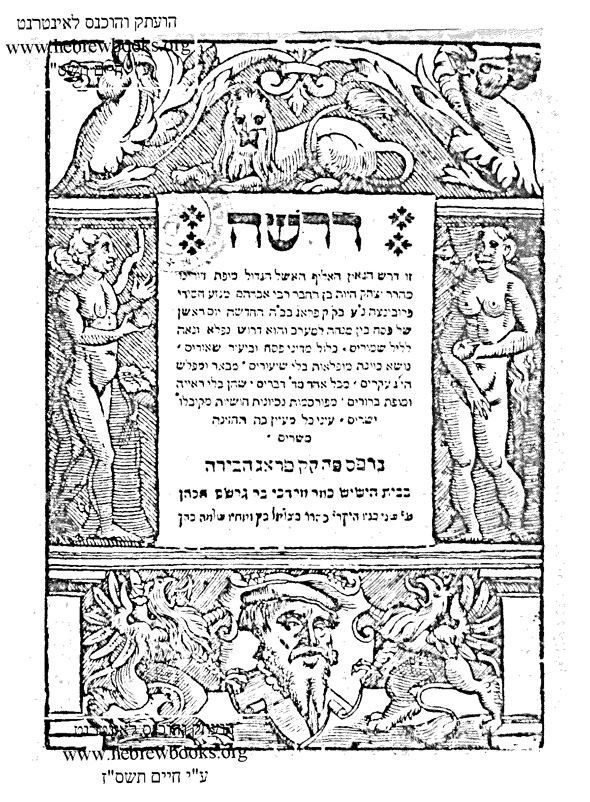
The first book by Hirschensohn is actually quite unknown, and is not mentioned by David Zohar in his list of Hirschensohn’s writings.[2] It is Ateret Zekenim, his commentary to R. Elijah Guttmacher’s Sukkat Shalom, published in 1883. While this book is not on Otzar ha-Hokhmah we are fortunate that it is on hebrewbooks.org, and here is the title page.

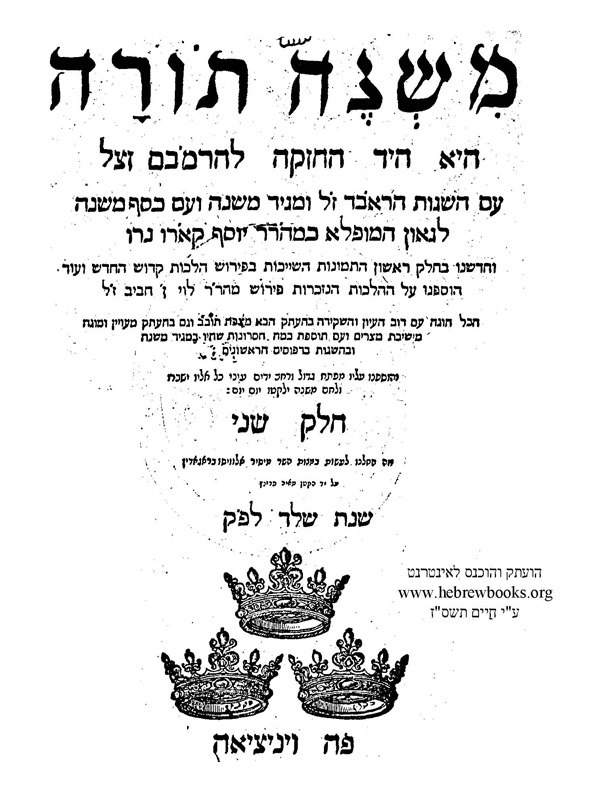
R. Hirschensohn published R. Guttmacher’s Sukkat Shalom from manuscript. The connection between the two was that R. Hirschensohn’s father, R. Jacob Mordechai, was close to Guttmacher and head of a yeshiva in Safed and later in Jerusalem that operated under R. Guttmacher’s auspices.[3] Sukkat Shalom was reprinted in 2000. Here is the title page.
Since this book is not on hebrewbooks.org or Otzar ha-Hokhmah, I think one can say that it qualifies as a “rare book.” In the introduction to this new printing, the editor tells us that the book was first published in 1883, but in the all too common haredi method, he does not tell the reader who first published it. He does tell us that his edition is based on the manuscript found in the New York Public Library, which must have come from R. Hirschensohn’s library.

When writing about a figure such as R. Hirschensohn, one of the central themes is developments in his thinking which is why the early writings are always so important. Therefore, this work must be studied by all who are interested in R. Hirschensohn. Ateret Zekenim shows R. Hirschensohn before he was exposed to secular studies and broadened himself. In this work, he is still a Jerusalem ben Torah with a limited curriculum, albeit more open-minded than many others in the Land of Israel during this period.[4]
Later in life he would even study Spinoza and write notes on the latter’s work. Yet he admitted that the feelings his writing on Spinoza raised in him were entirely the opposite of the spirit of religious feeling during Torah study, and he thus advised people to keep away from what he wrote, unless someone was particularly troubled by Spinoza’s ideas and needed to see a Jewish response.[5]
It is significant that even though R. Hirschensohn criticizes Spinoza, he does not relate to him as a heretic. He even attaches ז”ל after his name, as you can see from the title page of the second part of his Musagei Shav ve-ha-Emet.

I don’t know of any other rabbinic author who gives this type of honor to Spinoza, the heretic par excellence. In the preface to his discussion of Spinoza, R. Hirschensohn recounts what led him in 1903 to begin his study of the philosopher. On pp. 113ff. (second pagination, as are the other page numbers I refer to) R. Hirschensohn discusses Spinoza’s pantheism and states that he was not guilty of two of the big heresies: (1) regarding God as a corporeal being, or (2) avodah zarah. He was simply in error, and that was because he didn’t properly investigate matters. R. Hirschensohn even admires the way Spinoza stuck to his beliefs despite the persecution he suffered. He refused to give in to his opponents as from his perspective to do so would be a form of falsehood and idolatry. In other words, Spinoza and his opponents were equally well intentioned. In fact, all of them, including Spinoza, were tzaddikim! They simply had different perspectives on reality.
Here is what R. Hirschensohn writes on p. 115, words which are incredible coming from a rabbi and posek. As far as I know this is the only Orthodox defense of Spinoza.[6] (The word וברוך in the first sentence alludes to Spinoza’s name, and note also the words I have underlined.)
צדיק הוא שפינוזי לפי שטתו וברוך טעמו ונמוקו, ובצדקתו ותום לבבו סבל חרפת שונאיו ומנדיו וימסור נפשו וכבודו על קדוש השם, ולו הודה למתנגדיו אזי הי’ עובד אלהות הרבה, כאשר אנחנו היינו נחשבים לכופרים באלקים או עובדי ע”ז בשתוף לו הודינו אנחנו לשכלת שפינוזי באלוה, שני המתנגדים צדקו בדרכם ע”פ שיטתם המדעי ואת אלקים בקשו הרודף והנרדף, ושניהם צדיקים גמורים עובדי אלקים באמת ובלב שלם, כי כל המחלוקת אשר בינינו לשפינוזי היא רק מחלוקת מדעית, אשר אם כה ואם כה אין זה כפירה ונגיעה בדת ובאמונה, כאשר לא יהי’ נוגע לאמונה אם שני אנשים יחלקו שאחד יאמר שהארץ גדולה מהשמש והשני יאמר שהשמש גדולה
According to R. Hirschensohn, Spinoza made mistakes in his understanding of God, but this does not mean he was a heretic, since there is no obligation on Jews to investigate the nature of God. In other words, since there are no principles of faith regarding the nature of God, one such as Spinoza who errs in this matter cannot be regarded as a heretic as he has not uprooted any basic Jewish principles.[7] On p. 117 he writes:
לא נקרא בזה כופר באלוק ואפיקורס כי הוא לא אמר לאלוק נברא אתה הוא אומר שהוא מחויב המציאות וסבת עצמו, רק ייחס לו דבר שאין בו, נקרא בזה טועה לא כופר כי אין אנו מצווים בשום מקום לחקור ולידע מהות אלקים עלינו בדעת אלקים החוב רק לידע שיש שם מצוי ראשון ממציא כל נמצא כו’ החוב עלינו לידע ולהאמין מציאותו ולא לחקור ולידע את מהותו אפי’ מה לשלול ממנו . . . לא נצטונו בשום מקום לא בהתורה ולא בהנביאים גם לא בדחז”ל לידע ולחקור במהותו אדרבא נצטוינו שלא ללמד דברים אלו אלא לחכם ומבין מדעתו, כי לא נחוץ כלל לאמונה ודת החקירות בזה.
Following this, R. Hirschensohn states that since neither the Torah nor the Sages require that the masses educate themselves in philosophical matters, one cannot regard them as heretics for not being sophisticated in this area. The upshot of this, according to R. Hirschensohn, is that Rabad is correct in his criticism of Maimonides in Hilkhot Teshuvah 3:7. That is, an honest mistake even in basic theological matters does not render one a heretic.[8] What this means is that Spinoza also cannot be regarded as a heretic (and his mistake was not even in an ikar emunah). R. Hirschensohn concludes by saying that in Heaven both Spinoza and his opponents have made peace with one another (p. 118).
מודה הראב”ד ז”ל שההגשמה היא שבוש הדעות אבל לא נקרא על ידי זה מין רק טועה ומכש”כ מין הגשמה הזאת של שפינוזי אשר נוכל לקרא אותה בשם הגשמה רוחנית, הוא רק טועה לא מין וכופר ח”ו ומכש”כ שלא נקרא עובד ע”ז, והותר הנדר. ובעלמא דקשוט עושה שלום במרומיו יעשה שלום בין נשמתו של שפינוזי ונשמת מתנגדיו. כי לכל העם בשגגה.
This reminds me of the famous picture of Mendelssohn and his antagonist R. Ezekiel Landau embracing in the afterlife. It appeared in the book Alon Bakhut, published by Joseph Ha-Ephrati in 1793. (Mendelssohn was short and R. Landau was quite tall.)

S. also refers to the image here and notes another example of antagonists making up in the World to Come, in this case R. Jacob Emden and R. Jonathan Eybschuetz.[9]
Since I will touch on the dogma of Torah mi-Sinai in the next post, let me also note the suggestive comment of R. Hirschensohn that until parashat Va-Yigash we find stories in the Torah that took place in dreams, but after this there are no such stories in dreams. Rather, everything took place in reality.[10] Unfortunately, he does not explain which stories prior to Va-Yigash he regards as having taken place in dreams. If all he meant were the stories of Abraham and the three angels, and Jacob wrestling with the angel, which were already mentioned by Maimonides,[11] then there is not much of significance in his comment. I therefore assume he has much more in mind, but as mentioned, he doesn’t reveal the particulars.
2. In my post here I wrote “R. Asher Ben Jehiel, She’elot u-Teshuvot ha-Rosh 18:13, deals with a case of a woman who was intimate with a non-Jew and became pregnant from him. R. Asher affirms the local rabbi’s decision to cut off her nose.” This passage is referred to by Louis Epstein, Sex Laws and Customs in Judaism )New York, 1967), p. 173. In his note to this passage, Epstein writes, “Adret opposed this practice. See Besamim Rosh, 192.” This is a very surprising note. Epstein was a great talmid hakham and also a learned academic scholar. I therefore can’t understand how he assumed that the Rashba’s responsum in Besamim Rosh was authentic.
I have many notes to Besamim Rosh which I will one day turn into an article. The entire volume is one big game, meant to undermine traditional Judaism from the inside. People often assume that there are only a few “problematic” responsa, but this is incorrect, as there are loads of them, all with the same purpose in mind. Faced with the responsum of R. Asher which permitted mutilation, Saul Berlin could not put forth an alternative view in the name of R. Asher, so he attributed the forged responsum to the Rashba. In this responsum, “Rashba” responds to the very same inquiry that R. Asher was presented with, namely, was the questioner correct in ordering the removal of the nose of a woman who became pregnant from a non-Jewish man. In the question as it appears in Besamim Rosh, the pregnant woman is actually referred to as a ילדה, which is Berlin’s way of making R. Asher’s decision look even worse.
In his response, “Rashba” completely rejects R. Asher’s decision, stating that today there is no dinei nefashot, no kenasot, and certainly no mutilation. In this case, he tells us, the woman only violated a rabbinic prohibition, since there is no Torah prohibition on sex with a non-Jew. And even if it was a Torah prohibition there is no permission to mutilate her. “It is not proper to mutilate the daughters of Israel who are praised for their beauty.” It should be obvious to anyone who reads this responsum that we are seeing Saul Berlin’s attempt to put a kinder face on a troublesome aspect of medieval halakhah. The responsum anachronistically argues for a more humane approach to sinners than that presented by R. Asher, and is thus in line with Berlin’s wider struggle to reform traditional Judaism.[12]
It wasn’t just Saul Berlin who had a problem with this responsum (18:13) of R. Asher. As Zachary Grodzinski pointed out to me, and I later saw that Simhah Assaf makes the same point,[13] in the Vilna 1881 edition of R. Asher’s responsa (also reprinted in Vilna, 1885) the part about cutting of the woman’s nose has been removed. Here is how the responsum looks uncensored, where R. Asher’s questioner writes:
ומה שעלה בדעתי מפני שהענין כל כך מפורסם לחתוך חוטמה כדי לשחת תאר פניה שקשטה בפני הבועל

Here is how the passage looks in the censored edition, which takes out the point about cutting off her nose:
ומה שעלה בדעתי מפני שהענין כל כך מפורסם ליסרה כדת כדי לשחת תאר פניה שקשטה בפני הבועל

The uncensored text above comes from the Machon Yerushalayim edition. What I can’t understand, however, and I think is probably an error (because there is no note), is that the Machon Yerushalayim edition for some reason prints R. Asher’s answer in a censored form.
יפה דנת ליסרה כדת כדי שתתגנה על מנאפיה
Yet the earlier editions have a more complete answer. Here, for example, is the Venice 1552 edition, which includes the point about cutting off the nose in R. Asher’s answer.
יפה דנת יחתכו חוטמה להשחי’ תאר פניה כדי שתתגנה על מנאפיה

In responsum 17:8 R. Asher recommends cutting out the tongue of a blasphemer. This section of the responsum is also missing from the Vilna edition.[14]
On the matter of physical punishments in Spain,[15] also worthy of note is the responsum in Zikhron Yehudah, no. 75, signed by among others R. Jacob ben Asher, which reports that in Lucena, on the authority of R. Joseph Ibn Migash, an informer was executed (by stoning) on Yom Kippur that fell out on Shabbat during the time of ne’ilah. Since even official executions carried out on authority of the Sanhedrin were not permitted to take place on Shabbat,[16] presumably Ibn Migash decided that in this case there was impending danger from the individual and the execution could not be postponed.[17]
Regarding a different scoundrel, R. Asher stated (17:6):
מותר לנוחרו אפי’ ביוה”כ שחל להיות בשבת
This means that he can be killed on Yom Kippur that falls out on Shabbat.[18] In the Vilna edition the word לענשו is substituted for לנוחרו. The implication of לענשו is that the sinner be punished, but not that he be killed. As we saw with the other example where the Vilna edition made a change, there was obviously a concern by the printer in the Czarist kingdom not to publicize the physical punishments that Jews enforced in medieval Spain.[19]
The language מותר לנוחרו אפילו ביום הכפורים שחל להיות בשבת is taken from Pesahim 49b where it states that an am-ha’aretz may be killed on Yom Kippur that falls out on Shabbat. This is quite a shocking statement, one of a number of strong statements directed against the am ha-aretz,[20] and it certainly is not meant to be taken literally or as referring to what today we call an am ha’aretz.[21] A number of different interpretations have been offered, many of which have their own difficulties. For example, R. Isaac Alfasi, ad loc., explains the passage to mean that he can be killed if he is chasing after a man or an engaged woman to rape them on Yom Kippur.
The first problem with this interpretation is that if this is what the passage meant the Talmud could have easily said so, as  was pointed out by R. Asher ben Jehiel, ad loc.[22] Furthermore, the presence of an am ha’aretz in this scenario does not add anything, as even if it was a talmid hakham intent on the crime he would be killed. R. Jacob Emden, in his comment, ad loc., as usual has an original perspective in answering this problem. He notes that with regard to a typical rodef, if you can save the endangered person by only injuring the rodef then this is what you must do. However, Emden claims that when dealing with a rodef who is an am ha’aretz, one doesn’t need to be concerned with only injuring him, as you can simply kill the am ha’aretz.
דבסתם רודף אם יכולין להציל לנרדף באחד מאבריו של רודף אין רשאין להרגו, משא”כ בעם הארץ אין חוששין לו כך כך, מאחר שעל חייו אינו חס. אבל באופן אחר חלילה להרגו, דלא גרע מגויים עובדי אלילים דקיי”ל לא מעלים, גרמא בעלמא במניעת הצלה דוקא הוא דשריא, אבל אין מורידין, הריגה בידים אסירא, על אחת כמה וכמה ישראל עם הארץ.
I have no clue what led Emden to this point, which I see as quite shocking, as it legitimates what according to mainstream halakhah would be regarded as an act of murder. (The words of Emden I have just quoted are taken from the Nehardea edition of the Talmud, which uses Emden’s manuscript. The version of Emden’s comment found in the standard Vilna Shas and even in the new Oz ve-Hadar Talmud is a censored text.)
There is another surprising text in Rabad’s Temim Deim,[23] written by the Tosafist R. Isaac bar Samuel. He mentions that informers would be killed even if they only caused monetary damage to the Jewish community. In discussing how this is permitted, he refers to the talmudic passage that states that one can kill an am ha’aretz. R. Isaac explains the matter as follows: There are times when it is pikuah nefesh to kill an am ha’aretz, such as when he is unconcerned with other lives and is suspected of thievery and murder. What is really shocking is that R. Isaac continues by saying that even if you don’t know with certainty that this particular am ha’aretz has committed these crimes, since most of those he associates with are indeed suspected of this, it is permitted to kill the am ha’aretz even when he is not chasing after someone to cause harm!
How can this act be justified? R. Isaac says that perhaps the permission can be derived from a biblical verse, but even if not, he tells us that the Sages have the power to uproot commandments in the Torah, so if we kill the am ha’aretz, it is on their authority and we don’t need to be concerned with the prohibition of murder.
שאמרו רבותינו שיש עם הארץ שמותר לקורעו כדג ומותר לנוחרו ביום הכפורים שחל בשבת. אבל אין תמה דטעמא רבא איכא שפעמים שהוא פקוח לנפש כמה נפשות כגון אותו שידוע שאינו חס על חיי חבירו וחשוד ללסטם ולהרוג כשהוא יכול ואפי’ כשאינו ידוע בו בבירור כיון שרוב העושים כמעשיו הם חשודים בכך מותר ואפי’ שלא בשעת רדיפתו ואפשר שיש שום פסו’ ע”ז ואפי’ אין שם שום פ’ יש כח ביד חכמים לעקור דבר מן התורה ואפי’ בקום עשה דברי הכל כשיש טעם קצת למתיר שאז אינו דומה לעקירה
“The great novelty here is the sweeping heter to kill potential murderers, even if there is no specific knowledge that this particular am ha’aretz is a rodef.”[24] Such a view is not found among any of the other rishonim, and, it need hardly be said, if adopted would have dangerous implications. Had the authors of the controversial Torat ha-Melekh known of this text, they would certainly have cited it. (I will deal with Torat ha-Melekh in a future post.)
A different perspective is offered by the Maharal. He explains that while it is indeed forbidden to kill an am ha’aretz, he actually deserves to be killed. The only reason he is not killed is because of his potential to become something better than he is. The Maharal, in saying this, is not referring to an ignorant person, what today we call an am ha’aretz. For the Maharal, ignorance is not enough to put one in the same category of those whose existence is not “for the glory of God” and who are “lower than an animal.”[25] The Maharal also cites talmudic opinions that if one merely says the Shema or puts on tefillin or wears tzitzit, he is not to be regarded as an am ha’aretz. According to these views, an am ha’aretz is completely material. Yet one who performs the mitzvot just mentioned shows that he has a spiritual connection, and is thus removed from the category of am ha’aretz.[26]
The idea that an am ha’aretz is killed on Yom Kippur that falls on Shabbat leads to another matter. In the letter against the study of philosophy signed by R. Solomon ben Adret and many others,[27] the following sentence appears.
והספרים ההם אשר עשו ישרפו בשבת לעיניהם
At first glance, what this appears to be saying is that the books of philosophy should be burnt on Shabbat, and some scholars did understand the words in this fashion.[28] This would, however, be problematic, since there is no apparent halakhic justification for burning heretical works on Shabbat. In fact, it has been pointed out that the letter is not speaking about Shabbat at all.[29] It is simply using a melitzah based on the verse in II Sam. 23:7 which reads:
ובאש שרוף ישרפו בשבת
The final word has a kametz under the shin, and a segol under the betba-shavet. The words mean “they shall be utterly burned with fire in their place.” In other words, there is nothing about Shabbat in his verse, or in the letter signed by the Rashba.
Finally, I want to discuss a recent article by Rabbi Shalom C. Spira and Dr. Mark A. Wainberg that appeared in Hakirah entitled “Criminalization of HIV Transmission.”[30] They begin by quoting R. Zvi Spitz who argues that one who knowingly allows his illness to be passed to someone else, under Torah law he is responsible for damages.[31] Therefore, one who knowingly injects another with HIV would be regarded as responsible for the result.
Following this, the authors cite R. J. David Bleich who thinks that according to Torah law one who intentionally injects another with HIV (today we could add Ebola) would not be responsible for damages since in order for actual infection to take place, a series of chemical steps must occur placing the initial injection in the category of gerama. This is a strange position, to say the least, and R. Bleich himself quotes R. Eliezer Waldenberg’s objection to this way of thinking, as it would mean that one who puts poison in another’s drink is not biblically culpable for murder.[32] Since there is a dispute about this matter, Spitz and Wainberg conclude that “Evidently, the principle of “kim li” would serve to exculpate the murderer before a human court.” (pp. 137-138). They further say that one who intentionally injects another with HIV cannot be sued for monetary damages in a Beth Din, “but will instead be responsible before the Heavenly court, as would be the consequence for any gerama.” The one who injected an innocent person with HIV will “bear a supererogatory obligation to voluntarily offer restitution to his victim.”
Although the authors have previously cited R. Spitz as disagreeing with R. Bleich, they nevertheless state that “R. Spitz would probably concede to R. Bleich, simply because it is difficult to envisage a compelling refutation of all the countervailing authorities cited by R. Bleich.” This is a ridiculous statement as R. Spitz’s entire argument is in direct opposition to what R. Bleich states, and he cites the Steipler in support of his position. Where do the authors get the idea that because they are convinced by R. Bleich’s argument that R. Spitz would have to concede?[33] (In general, it is very rare for a halakhic authority debating an issue to concede that he was mistaken in his understanding.)
Finally, the authors note the possibility of the secular government punishing someone who injects another, but their assumption is that from a Jewish standpoint a person can go around injecting others with HIV and not pay any price, neither criminal nor civil, for his actions. If this was indeed the case, then the non-Orthodox community would be absolutely correct in their assumption that Jewish law is completely unsuited for running a modern legal system. However, that is not the case, and the problem is not with Jewish law, but with presentations of the sort just described.
Reading Spira’s and Wainberg’s article, which deals with a real life, contemporary problem, is like reading an article dealing with Jewish criminal law in which it is stressed that there is a need for someone to warn the criminal before he commits his crime as well as an absolute requirement for two male witnesses. Such a hypothetical article would conclude that if someone pulled out a machine gun at a Hadassah convention and killed 30 women, that Jewish law offers no way to punish him, as he was not warned and the action was only observed by women. At best, the author might suggest, as did Spira and Wainberg, that the murderer would be encouraged to “voluntarily offer restitution.”
The fact is that if we had a Jewish state in which Jewish law was the law of the land, the murderer described in the previous paragraph would not get away with it, and neither would the guy who injects another with HIV. As I have already discussed in prior posts, Jewish law allows the authorities vast discretion in order to do what is needed to ensure order and punish wrongdoers.[34] See here where I quote the Rashba who said that to insist on Torah law in these sorts of matters would “destroy the world.”
So in the real world, in a state run according to Jewish law, if someone purposely injected another with HIV he would not get off scot-free and encouraged to “voluntarily offer restitution,” as stated by Spira and Wainberg. What would happen is that the beit din would sentence the man to jail for attempted murder. In addition, assuming the man had any money, the beit din would confiscate a significant amount of it in order to cover the cost of medication for the man he infected. This is how Jewish law operates, and has always operated, in the real world when Jewish courts have had real authority. Any other portrayal is not only historically incorrect, but does a terrible disservice as it announces to both Jews and non-Jews that Jewish law is not equipped to handle the problems of the real world.
3. A number of people have suggested that I turn my posts into a book. Such a book would have to include many pictures and would be a large size book complete with an index. Since we are dealing with around a thousand pages so far, It would have to be at least two volumes. I think it would take quite a bit of effort to produce the book, which I am willing to do if there is an interest. I wonder how many people would buy such a book when the posts are available for free online. What do you think?
4. I will once again be leading tours this summer to Central Europe, Spain, and Italy. For more information, please go here http://torahinmotion.org/.
5. The newest work in the series I edit has just appeared: Ephraim Chamiel, The Middle Way: The Emergence of Modern-Religious Trends in Nineteenth-Century Judaism, Responses to Modernity in the Philosophy of Z. H. Chajes, S. R. Hirsch and S. D. Luzzatto. You can order it by going here here or calling 617-782-6290. By using the promotion code Chamiel30 Seforim Blog readers can get the volumes at 30% off.


[1] In my post here I refer to R. Hirschensohn’s comment that a lamdan is one for whom a difficult Rashi or Rambam keeps him up at night. I noted that this is something R. Soloveitchik would certainly agree with. I now see that R. Soloveitchik actually said that he would wake up in the middle of the night and start answering talmudic difficulties that had troubled him all day. See R. Baruch Simon, Imrei Barukh (New York, 2005), vol. 1, pp. 124-125.
[2] Mehuyavut Yehudit be-Olam Moderni (Jerusalem and Ramat-Gan, 2003), pp. 299-300.
[3] See Aryeh Morgenstern’s informative article “Mishpahat Hirschensohn u-Vesorat ha-Haskalah ve-ha-Modernah bi-Yerushalayim,” Katedra 108 (2003), pp. 105-130.
[4] For examples of his early thought, see Sukkat Shalom, pp. 149ff (Hebrew numerals), where he defends the antiquity of the Zohar; p. 153a for his belief in the existence of demons.
[5] See Hirschensohn, Musagei Shav ve-ha-Emet (Jerusalem, 1932), p. 120 (second numbering).
[6] In my forthcoming book I deal with what R. Kook says about Spinoza. While significant in their own right, R. Kook’s words cannot be regarded as a defense of Spinoza. See also R. Jacob Moses Harlap’s recently published comments on Spinoza, Mei Marom (Jerusalem, 2012), vol. 18, p. 68.
[7] See here where Steven Nadler discusses a recent unsuccessful attempt to have the ban on Spinoza lifted. This would only be symbolic since there is really no such thing as a herem on a dead person. See the earlier discussion of R. Isaac Herzog, Pesakim u-Khetavim, vol. 5, no. 111. He concludes that even if there was a ban against the books (meaning that one who read them would be placed in herem), it no longer is applicable. R. Herzog does note, of course, that the prohibition on reading heretical literature still applies.
[8] Rabbi Jeremy Wieder has stated regarding ikarei emunah: “I know that there are many who would say it’s whatever that, we poskin like the Rambam. I’m not sure who poskins like the Rambam. I don’t know that the Shulhan Arukh ever issued such a pesak.” He then states that it is not certain that we accept the Rambam’s view that one who thinks God has physical characteristics is a heretic, as it could be that Rabad is correct.
Listen here beginning at minute 12:50.
In Limits and in previous posts I have cited authorities who, while they accept Maimonides’ ikarim, reject his view that someone who doesn’t believe in one of his principles, because he doesn’t know any better, is a heretic. They assume that there is a concept of kefirah be-shogeg, and believe that this is what Rabad’s point is in his hassagah to Hilkhot Teshuvah 3:7. R. Chaim Rapoport has called my attention to the fact that the Lubavitcher Rebbe also accepted this position. See Iggerot Kodesh, vol. 22, pp. 33-34.
[9] The example comes from R. Abraham Hayyim Michelson, Ohel Avraham, p. 28b. See also R. Aryeh Zev Ginzberg, Divrei Hakhamim, pp. 286-287.
[10] Apiryon 2 (1925), p. 100 (no. 67).
[11] Guide 2:42.
[12] See Simhah Assaf, Ha-Onshin Aharei Hatimat ha-Talmud (Jerusalem, 1922), p. 69, who points out that the event described by R. Asher took place ten years after the Rashba died, thus proving that the responsum is a forgery. See also José Faur, In the Shadow of History (New York, 1992), p. 227 n. 82, who surprisingly assumes that Besamim Rosh, no. 301, is authentic. This responsum is actually one of the most notorious of Berlin’s forgeries.
[13] Ha-Onshin, p. 69.
[14] For a discussion of this responsum, see Jonathan Ray, The Sephardic Frontier (Ithaca, 2006), pp. 119ff. On p. 173 Ray writes: “Frustrated with their relative powerlessness against Jews who pursued relations with Gentile women, rabbinic authorities called for others to attack transgressors who they caught in such activity.” His sources for this statement are Zikhron Yehudah, no. 63 and R. Jonah Gerondi, Sha’arei Teshuvah, Gate 3, no. 131. Yet Zikhron Yehudah is explicit that the punishment has to be carried out by the beit din. On the other hand, R. Jonah quotes the law of kana’in pog’in bo and does not say that it is no longer applicable. This could indeed be seen as a call to kill transgressors.Israel Zinberg, A History of Jewish Literature, vol. 7, p. 164, quotes R. Isaac ben Elyakim’s (17th century) Yiddish book Lev Tov, which indeed does give license to kill transgressors:

For the sin of lying with a gentile woman is more grievous than adultery with a Jewess, and anyone who finds a man lying with a gentile woman may freely kill him. Indeed, it is a great mitzvah to slay him immediately, and it is like bringing him as a sacrifice, as Pinehas did. There is no need to give him any warning. Also, there is no need to obtain permission from any rabbi or from any judge or from any leader of the community, but whoever finds him . . . should kill him at once. One who slays him without judgment and without legal proceedings does a great mitzvah.
[15] Although in the current post and in the earlier post I deal with physical punishments (other than execution and lashes) in Spain, this was not the only place where this was done. The Bible, Judges 1:6, already mentions cutting off the thumbs and large toes of the defeated Canaanite king. R. Moses Isserles, Shulhan Arukh, Hoshen Mishpat 388:10, refers to blinding a moser or cutting out his tongue. R. Shalom Shachna, R. Isserles’ father-in-law, had an actual case in which he permitted blinding and cutting out the tongue of an evildoer. See She’elot u-Teshuvot Maharam Lublin, no. 138. This responsum is deleted from the Warsaw, 1881 edition of the responsa, but is found in the earlier editions which have the title Manhir Einei Hakhamim. R. Meir of Lublin tells us that R. Shalom Shachna’s ruling had a negative result in the end, as the man ended up apostatizing and marrying a Christian, and he and his children caused problems for the Jewish community. R. Solomon Luria was also a student of R. Shalom Shachna and he too reports this case and how after the punishment the man caused problems. See Yam Shel Shlomo, Yevamot 10:20:
ראיתי בימי שתקלה גדול’ בא לישראל ממעשה כזה שנקרו עניו [!] וחתכו לשונו שיצא אחר כך מן הכלל, מבוכה גדולה בישראל לולי רוב רחמיו וחסדיו שנתן לנו יתברך חנינה.
In order to prevent such occurrences, both R. Meir of Lublin and R. Luria reject the punishments of blinding and cutting out tongues, believing that when necessary the wicked one should simply be killed. R. Luria writes:
ונראה לי הלכה למעשה לדון כל מוסר רבים ומגזם לרבים ומוחזק לכך לאבדו אפי’ בידים ולא לחוס עליו בנפש אבל לא לחתוך לשונו ולנקר עיניו אלא לאבד הרע מקרבנו ואדרבא בזה איכא למיחש וקרוב לודאי שיתפקר ביותר ויפרוק עול ויצא חוץ לדת כדי לנקום נקם ויעליל ח”ו על ישראל ליבדה מלבו דברים שלא היו
R. Meir of Rothenburg stated that it is permitted to amputate the arm of one who continuously beats his wife. See She’elot u-Teshuvot Maharam Rothenburg, ed. Bloch (Budapest, 1895), no. 81. The same ruling is quoted in the name of R. Simhah of Speyer in Beit Yosef, Even ha-Ezer 154 (end). Already R. Huna recommended cutting off the hand of one who continuously struck others. See Sanhedrin 58b.
R. Jacob Weil (fifteenth century) of Germany ruled that it was permitted to gouge out someone’s eyes who violated Shabbat and Yom Kippur. See She’elot u-Teshuvot Mahari Veil (Jerusalem, 1959), section Dinin ve-Halakhot (at the end of the volume), no. 58.
R. Tzemah Gaon tells us that with a kohen who married a divorcee and there was a fear that he would perform the priestly blessing (which he was now forbidden to do), they would cut off the top of his fingers. See Halakhot Pesukot (Cracow, 1893), no. 84.
ואי הוו חיישין דאזיל לדוכתא אחריתא ופריס ידיה הוו קצין ליה לראש אצבעותיה וקבעין ביה מומא דלא ליפריס ידיה
See also Sha’arei Teshuvah (Leipzig, 1858), no. 177. This ruling is recorded in Beit Yosef, Even ha-Ezer 6 (citing Orhot Hayyim).The penalty of blinding a murderer is mentioned in Sanhedrin 27a (see Rashi who assumes that this is the meaning of the passage). Blinding oneself was also occasionally used as a preventative measure to keep one from sin. A geonic source tells us that R. Joseph and R. Sheshet blinded themselves for this reason. See Sha’arei Teshuvah, no. 178. According to Yalkut Shimoni, Bereshit, parashah 49, remez 161 (p. 848 in the Mossad ha-Rav Kook edition), R. Matya ben Heresh blinded himself for the same reason.

Regarding cutting a tongue out, see also R. Moses Hagiz, Mishnat Hakhamim (Czernowitz, 1864), no. 405, who tells the story of a rabbi and martyr who was tortured before being killed. When it was decreed that his tongue would be cut out, he stated that this was a punishment for him having learnt Latin and other non-Jewish languages.
While we are on the subject of harsh physical punishments, let me call attention to R. Yitzhak Nahman Eshkoli, Tza’ar Ba’alei Hayyim be-Halakhah u-ve-Aggadah (Ofakim, 2002), p. 261, who cites a contemporary opinion that when dealing with an eved kena’ani who has not yet had milah and tevilah, if necessary one can remove one of his limbs! (Obviously, this is no more than a theoretical point resulting from a “hiddush”.)
שישראל שקנה נכרי כדי שיהא עבדו, אך עדיין לא מל ולא טבל לשם עבדות, יהא מותר הישראל לחתוך את יד הנכרי כדי לכתוב עליה גט
We all know that you need to do everything you can to save another’s life. Let’s say an evil ruler tells you that he is going to kill another Jew, and if you agree to let him chop off your arm he will spare the person’s life. Are you obligated to give up your arm to save another? R. David Ibn Zimra, She’elot u-Teshuvot ha-Radbaz, no. 1052, discusses this question and concludes that you are not obligated, although to do so would be an act of hasidut. (This responsum is often cited in halakhic discussions of living organ donations.) I am sure readers are not surprised with this answer, yet R. Menahem Recanati records that some did think that he would be obligated to sacrifice a limb. See Sefer Recanati (Petrokov, 1894), no. 470. Radbaz’s responsum is actually in response to what Recanati writes, and Radbaz states the following important point, which is simply a matter of “sevara”.
דכתיב דרכיה דרכי נועם וצריך שמשפטי תורתינו יהיו מסכימים אל השכל והסברא ואיך יעלה על דעתנו שיניח אדם לסמא את עינו או לחתוך את ידו או רגלו כדי שלא ימיתו את חבירו
However, I wonder, is it really true what Radbaz says, that the laws of the Torah have to be in accord with sekhel and sevara?
[16] See Sanhedrin 35b.
[17] See R. Jacob Meshulam Ginzberg, Mishpatim le-Yisrael  (Jerusalem, 1956), p. 23 n. 158. See, however, this page from R. Reuven Margaliyot, Margaliyot ha-Yam, vol. 1, p. 91b (to Sanhedrin 46a), which reports the killing of a moser in the nineteenth century, and this indeed took place on Yom Kippur. The rabbi mentioned in this report, R. Joshua Kluger, served as rav in Greiding, Poland, from 1850-1885. See Zvi Horowitz, Le-Toldot ha-Kehilot be-Polin (Jerusalem, 1978), p. 194.
Now that you have had a chance to read the passage from R. Margaliyot, please look at the following pages from R. Moshe Blau’s Mishnat Moshe on Sanhedrin (Bnei Brak, 1989), pp. 152-153. It is completely lifted from Margaliyot ha-Yam, including the story that R. Margaliyot heard from his father!


Here is a page from Mishnat Moshe on Rosh ha-Shanah, p. 89. Blau writes
והנה מ”ש בדברנו בס’ משנת משה על מסכת סנהדרין
and then once again prints the same text from Margaliyot ha-Yam, without any indication of where it comes from.

I understand plagiarism, but I don’t understand how Blau can refer to אבי מורי ז”ל when the person who told the story is not his father?
[18] R. Asher also states that the person in question, who caused Jewish monetary losses, could be killed without witnesses or warning or any ruling by a beit din.
אין צריך עדים והתראה למסור אלא רק השומע מפיו שהוא מגזם להפסיד ממון של ישראל ולמסור בידי ע”א
[19] The entire section of the responsum I discuss here was not included in the first edition, Constantinople 1517, or in the second edition, Venice 1552. It is included in the Venice 1607 edition.
[20] For detailed discussion of the halakhic status of the am ha’aretz, see R. Nahman Shlomo Greenspan, Mishpat ha-Am ha-Aretz be-Sifrut ha-Halakhah be-Khol Tekufoteha (Jerusalem, 1946). See also Eliezer Zweigel, Sanegor (Warsawk 1885), pp. 164ff., and Adolph Buechler, Am ha-Aretz ha-Gelili (Jerusalem, 1964). For my earlier comments about the am ha’aretz, see my post here.
R. Solomon ben Adret, She’elot u-Teshuvot ha-Rashba, vol. 3, no. 314, goes so far as to say
וכולי עלמא השתא כעמי הארץ שהרוב אינן בני תורה
See also Beit Kelm (Bnei Brak, 2014), vol. 3, pp. 174-175.
[21] As part of his effort to delegitimize rabbinic Judaism, the notorious missionary Alexander McCaul referred to this text in his Netivot Olam (London, 1870), ch. 1. R. Isaac Margulies, Maoz ha-Talmud (Vilna, 1869), responded that it doesn’t mean that one can kill an am ha’aretz.
“ע”ה מותר לנוחרו” משמעו כך, שהע”ה מצד עצמו הנהו מותר, כלומר מתחייב בנפשו, אבל אין אדם בארץ שיהיה מותר להרגהו
[22] See also Hiddushei ha-Ran, ad loc.
[23] No. 203.
[24] Dov Halbertal, Erekh ha-Hayyim ba-Halakhah (Jerusalem, 2004), vol. 1, p. 232.
[25] Netivot Olam, ed. Pardes (Jerusalem, 1982), Netiv ha-Torah, ch. 15, p. 153.
[26] Ibid., pp. 158ff.
[27] She’elot u-Teshuvot ha-Rashba, vol. 1, no. 416. This doesn’t mean that the Rashba never cited philosophers. One of the places he cites Aristotle is in his Mishmeret ha-Bayit, printed in Torat ha-Bayit, ed. Brun (Jerusalem, 2010), vol. 1, cols. 360-361. Readers might recall that in my last post I spoke about people who not only don’t know, but don’t know that they don’t know, and referred to Plotinus in this regard. I neglected to mention that the Rashba refers to Aristotle as mentioning this phenomenon.
אמר הכותב המחבר בקי ברפואות יותר ממנו שיודע שאינו יודע אבל הוא אינו יודע ואינו יודע שאינו יודע וכבר אמר החכם ארסטו כי מי שאינו יודע שאינו יודע, אינו יודע
Samuel David Luzzatto also refers to the concept. See his letter quoted in Ephraim Chamiel, Ha-Derekh ha-Memutza’at: Reshit Tzemihat ha-Datiyut ha-Modernit (Jerusalem, 2011), p. 318:
הנה זה יתרון גדול שמצאתי לאיש ההמוני על האיש אשר התפלסף, כי הוא מכיר בעצמו שלא ידע, והאחר חושב שידע מה שלא ידע
See also R. Simhah Zissel of Kelm quoted in Beit Kelm, vol. 3, pp. 12, 214.
[28] See R. Avraham Hayyim Dov Levin,  Otzar Iggerot Kodesh (Jerusalem, 1952), no. 84 (who compares this to killing an am ha’aretz); R. Yeshayah Asher Zelig Miller in Or Yisrael 44 (Tamuz 5766), pp. 241-242; R. A. Biener in Or Yisrael 45 (Tishrei 5767), p. 247. R. Abraham Bornstein of Sochatchov wrote that the forged Besamim Rosh should be burnt on Yom Kippur that falls on Shabbat, but this was censored from his published responsa. See Z. Y. Abramowitz, “’Besamim Rosh’ be-Aspaklaryah Hasidit,” Tagim 3-4 (5732), p. 56, and Dan’s post here regarding a later censorship of this comment.
[29] See R. Yeshayah Asher Zelig Margolies, Amudei Arazim (Jerusalem, 1932), p. 10a in the note
[30] Hakirah (Winter 2013), pp. 133-143.
[31] There has recently been a lot of discussion about R. Shmuel Kamenetsky’s statements against vaccination, even against the polio vaccine(which he sees as a money-making scam). Understandably, there have been many negative comments about R. Kamenetsky, including assertions that he will be responsible for any children who get sick or even, God forbid, die. I think this is going too far. People have to take responsibility for their own actions. If people are foolish enough to ignore their pediatricians and instead listen to R. Kamenetsky’s dangerous advice in this matter, and something bad happens as a result, only they can be blamed. (Just like if they allow metzitzah ba-peh and something goes wrong.) So yes, R. Kamenetsky’s view about vaccination must be publicly rejected, in order that unsophisticated people not be led astray, but parents, and only parents, are responsible for the health of their children. If a child is not vaccinated and then contracts polio it is the parents who must be blamed.
[32] Contemporary Halakhic Problems, vol. 6, p. 163 n. 76. R. Waldenberg’s comment is found in Tzitz Eliezer, vol. 4, no. 13:2 (Bleich mistakenly has 13:3).
[33] While I have enormous admiration for R. Bleich’s erudition, not all of his conclusions are widely shared. For example, in a 9/11-type scenario R. Bleich argues that it is forbidden to shoot down an airplane which is going to crash into a building and the innocent passengers will die anyway. See “Sacrificing the Few to Save the Many,” Tradition 43:1 (2010), pp. 78-86. Without getting into the possible halakhic refutations of R. Bleich’s position, and why this case is not parallel to talmudic examples which speak of killing one innocent person to save many others, my approach in such matters is first to see if a conclusion leads to absurd results, and if it does, that would generally be a proof that it is not a tenable ruling. (This was exactly the approach followed by the Maccabees when they concluded, after many were killed, that not fighting on Shabbat, even in self-defense, cannot be what God wants. See 1 Maccabees 2: 29-41)If terrorists hijack an airplane, place a nuclear bomb on it, and fly to New York City or Tel Aviv, can it possibly be the halakhah that the plane cannot be shot down, and instead we will have to watch the city with all of its millions be killed? If I put an innocent person in my car trunk, load the car with explosives, and start driving the car to the middle of the city to explode it and kill hundreds, can it be that according to halakhah the military can’t blow up the car since an innocent person will be killed? If so, then in a state run according to halakhah terrorists will have a major new weapon: simply bring an innocent person along with them and this will prevent lethal attacks against the terrorists. In fact, they already do this in places like Gaza, and would anyone suggest that the State of Israel can’t defend itself even if it knows that an innocent person will be killed? It is thus not surprising to me that R. David Lau, when asked about shooting down a hijacked airplane to prevent it being crashed into a building, replied that it would be permissible. See here. When dealing with a 9/11-type scenario, Dov Halbertal refers to the innocent passengers as רודפים מאונס, thus meaning that it is permitted to shoot down the place. See Erekh ha-Hayyim ba-Halakhah, vol. 2, p. 382. R. Yitzhak Zilberstein states that during war the various rules about killing innocents to save others don’t apply. See Tefilah u-Refuah (Bnei Brak, 2011), pp. 58ff. He also suggests that one who is being held by terrorists intent on killing him (which is obviously the case with a hijacked plane) has the status of a גברא קטילא. This leads to the following conclusion (pp. 59-60):

ולכן יתכן שאין בהריגתו חידוש מצב של מיתה
This is in line with R. Elyashiv’s opinion that if terrorists are holding an innocent hostage, and are intent on killing him, it is permitted to drop a bomb on the terrorists even if you know that the innocent person will be killed at the same time. R. Elyashiv sees the action of killing the terrorists as a מעשה הצלה for future innocents. This pesak was given to R. Yaakov Wiener, and as R. Wiener notes, and contrary to R. Bleich’s opinion, this means that one can also shoot down a hijacked airplane in a 9-11-type scenario, since by doing so you save those currently on the ground from the intended assault. See R. Wiener, “She’elot u-Teshuvot be-Hilkhot Pikuah Nefesh,” Yeshurun 13 (2003), p. 552.
[34] See also R. Bleich, Bi-Netivot Ha-Halakhah, vol. 2, p. 158 n. 10. One source I haven’t yet quoted is R. Joel Ibn Shuaib, Olat Shabbat (Venice, 1577), parashat Shoftim (no page numbers; cited in Zweifel, Sanegor, p. 210).

 שאין ראוי לשפוט הדברים בכל זמן באופן שוה כי כבר יקרה בזמן מה ובעת מה שראוי להקל בדבר מה ולהחמיר בזמן אחר כפי מה שיגזור הוראת העת ולזה ב”ד מכין ועונשין כדין ושלא כדין לצורך השעה וכב’ באו בגמרא בזה דברי’ רבי’ הלכה למעשה וזאת המדה היא נק’ אצל החכמים חסד והיא תקון הצדק הדתי כי צריך באופן מה לצדק אותו ולתקן בו דבר מה ואין זה הפך המניח הדת אבל המשכות אל רצונו וכונתו ואם לא אל דבורו


Demythologising the Rabbinic Aggadah: Menahem Meiri

The Seforim Blog thanks Ivor Jacobs for sending us this unpublished article by his father.
Demythologising the Rabbinic Aggadah: Menahem Meiri
by Louis Jacobs

Many of the mediaeval Jewish teachers, partly in defence of the Talmud against attack by the Karaites, partly because of their own rationalistic stance, engaged in what Marc Saperstein in a fine study [1] has called ‘decoding the Rabbis’. That is to say, passages, especially in the Talmudic Aggadah, which seemed to them offensive to reason and general religious sensibilities, these teachers interpreted in the light of their own philosophical views, treating the Talmudic Aggadah as if it were a code requiring to be deciphered. Whether or not the ancient Rabbis could have intended to say what these thinkers understood them to have said, whether the Talmudic literature does ever partake of a code, is, of course, quite another matter. Rabbinic thought, whatever else it is, is hardly in the philosophical and systematic vein [2].

This kind of allegorical interpretation of the Talmudic Aggadah, this demythologisation, is found among the Geonim [3], in Maimonides, [4) and even, on occasion, in Rashi [5]. the great French commentator usually indifferent to the philosophical approach. As Solomon Schechter said of the mediaeval French and German schools, they nether neither understood nor misunderstood Aristotle. It is not always appreciated, however, that Menahem Meiri of Perpignan (1249-1316) [6] employs this method throughout his voluminous commentaries to the Talmud as this essay seeks to demonstrate. (The page references are not to the numbers in the various editions of Meiri’s Bet Ha-Behirah but to the pagination of the Talmudic tractates on which he comments).

Without stating it explicitly, Meiri usually allows his readers to see for themselves that his interpretations are intended to avoid attributing to the Talmudic Sages perverse, superstitious or ridiculous notions even though a surface reading of the tests might seem to imply that such notions are acceptable. The following provide examples of Meiri at work in this connection. They are arranged under a number of headings but these are not to be taken too categorically since there is considerable overlapping and do not appear in Meiri’s own writings. Meiri’s chief aim is to explain the Talmudic texts as these appear in the order of the tractates. His methodology has to be assessed by implication.

Anthropomorphism

On the statement (Bava Batra 25a) that the Shekhinah is in the West. Meiri remarks that this in no way implies that God has any spatial location (‘Heaven forbid,’ Meiri adds) but only to indicate that it is preferable not to face East in prayer in order to protest against worshippers of the sun which rises in the East. Nowadays, we do face East in our prayers, adds Meiri, but that is in order to face Jerusalem.

The passage (Berakhot 6a) in which it is stated that the Shekhinah is present when ten assemble in the synagogue for prayer, is interpreted psychologically by Meiri: ‘Whenever a man is able to offer his prayers in the synagogue he should do so since there proper concentration of the heart is possible. They [the Rabbis] have laid down a great principle that communal prayer is desirable and that those who offer their prayers in the synagogue where ten are present the Shekhinah is with them’, This means, presumably, that the ability to concentrate adequately on the prayers is for the worshippers to be nearer to the Shekhinah and hence the Shekhinah is with them.

In the same Talmudic passage it is stated that where three judges sit together judging a case the Shekhinah is with them and when two scholars study the Torah together, instead of each one on his own, their words are recorded in ‘the book of remembrance’ (Malachi 3:16). Evidently, in order to avoid ascribing a spatial location to the Shekhinah and in order to avoid the suggestion that there is a book ‘up there’, Meiri paraphrases:
Let a man take care not to judge a case on his own and should always be one of
three judges. For wherever there are three judges, two of them will argue it
out while the third one will clarify the matter and weigh it up. In this way they
will avoid error and it will be said of them that the Shekhinah is with them.
And so it is with regard to the study of the Torah. Even though this is
desirable and praiseworthy whenever it occurs, where there are two who study
together it is far better for as a result there will be a greeter clarification
of the truth. Furthermore, since each one debates the subject with the other,
the subjects studied become more firmly fixed in their memory. This is what the
author of the saying meant when he said that where two are present their words
are recorded in the book of remembrance.
Meiri has a similar comment of the passage (Berakhot 6b) that when God comes to the synagogue and does not find the quorum of ten present there at the time of communal prayer He is immediately angry. Meiri remarks:
Let the members of a community be energetic in arriving at the synagogue as soon as
the time of prayer has begins. For when time of prayer has come and there is no
quorum in the synagogue it is most disgraceful, demonstrating that the hearts
of people in that city are distant from God and such distance constitutes the
greatest anger and the worst form of wrath. This is what they [the Rabbis]
intended when they said God is immediately angry.
Meiri is evidently bothered not only by the notion of God coming to the synagogue, another spatial location, but also by the gross anthropomorphism that God becomes immediately angry. Meiri hence understands God’s coming to the synagogue to mean that when the members of the community fail to arrive in the proper time their failure to ‘come’ nearer to God represents His coming to the synagogue, as if to say, He is ever ready to hearken to their prayer but they have missed the opportunity and such lack of care constitutes divine wrath.
Again, Meiri is bothered by the Talmudic statement (Berakhot 32a) in which God is made to say to Moses: ‘You have revived Me with your words.’ In the Introduction to his Commentary to tractate Avot, Meiri states that the meaning is, by Moses’ demonstration that God’s existence is necessary rather than contingent God became a living reality for them.
A particularly interesting interpretation by Meiri is given to the passage (Shabbat 12b) in which it is stated that, except when praying on behalf of a sick person, prayers should not be recited in Aramaic, a language the ministering angels do not understand. Prayers for the sick can be recited in this language since the Shekhinah is already present when a person is sick. On a surface reading, the passage means that the ministering angels who do not understand Aramaic cannot bring the prayers to the Throne of God when the prayers are in Aramaic but, where the prayers are on behalf of the sick the mediation of the angels can be dispensed with since the Shekhinah is already there. Meiri’s interpretation relies on the passage (Berakhot 6a), in which it is stated that the Shekhinah is present when prayers are offered in the synagogue. Thus Meiri writes:
Let not a man ever offer supplication for his needs in Aramaic since this language
is not fluent in the mouths of people and they will fail to concentrate
adequately in prayers offered in a language they do not sufficiently
understand. Nevertheless since with regard to a sick person there is a greater
degree on concentration there is nothing to fear. And so do the Geonim write
with regard to communal prayers that these can be recited in any language since
the Shekhinah is with the community, meaning that the Shekhinah is with them.
Meiri here seems to understand the saying about the ministering angels as it were ironic. The Aramaic language is foreign even to the ministering angels who are good at languages. All the more is it foreign to ordinary folk. Thus Meiri neatly side-steps the notion of the angels having to bring the prayers to God. Just as in communal prayer the Shekhinah is there, namely, the type of concentration expressed by the presence of the Shekhinah (as above) so, too, where prayers are offered for the sick, the degree of concentration is sufficiently intense for it to denote the presence of the Shekhinah. There is adequate concentration even when the prayers are offered in a foreign language
Magic and Superstition

In his commentary to the verse: ‘The simpleton believes everything’ (Proverbs 14:15) Meiri observes that the question whether demons exist is a matter not of faith but of investigation. [7] There is no categorical denial of the existence of demons. Nevertheless, throughout his commentaries Meiri prefers to understand Talmudic references to demons in a non-literal fashion.

In tractate Avot (5:8) an opinion is stated that mazikin were created at twilight of the first Sabbath of Creation. The word mazikin (the ‘harmful ones’) is usually understood as the malevolent demons. But Meiri renders it as ‘things not normally found in the natural order’ and he puts forward a further idea that the term denotes the yetzer ha-ra (evil inclination). This inclination is undoubtedly harmful but also beneficial to human life since it provides humans with life’s driving force. Hence it is a twilight thing, belonging and yet not belonging to the beneficent aspect of creation.

The statement in tractate Eruvin (43a) regarding the vast distances covered on the Sabbath by one Joseph the Demon by flying in the air seems to be understood by Meiri as denoting a skilful acrobat performing devil dare acts flying through the air (on stilts?).[9] On the statement (Berakhot 3a) that one of the reasons why it is forbidden to enter a ruin is because of mazikin, Meiri paraphrases this as ‘anything that may cause harm’. On the statement (Berakhot 4b) regarding the recital of the Shema before retiring to sleep, Meiri quotes the Jerusalem Talmud (Berakhot 1:1, 2d) that the purpose of this recital is to drive away the mazikin. Meiri notes that the definite article is used, ha-mazikin, ‘the mazikin’ which, he says, refers to the known harmful ones, namely, thoughts of unbelief which tend to invade the mind when man is on his bed and against which the recital of the Shema is the antidote. This is why the Talmud exempts a scholar from the recital since such a person is immune, in any event, to heretical or idolatrous thoughts [10].

A well-known Talmudic passage (Bava Kama 21a), dealing with the question of whether a squatter has to pay rent, proved embarrassing to Meiri since the law seems to depend on a belief in demons. The teacher Rav is reported as saying, one who occupies a neighbour’s premises without having an agreement so to do is under no obligation to pay rent. This is because Scripture (Isaiah 24:12) says: ‘Through Sheiyyah even the gate gets smitten’. The usual translation of Sheiyyah is ‘emptiness’ or ‘desolation’. But the Talmud seems to understand Sheiyyah as a demon i.e. the squatter benefits the owner of the premises since by living in the premises he keeps away the demon Sheiyyah who haunts uninhabited houses. The Talmud adds that Mar son of Rav Ashi said: ‘I saw him myself and he resembled a goring ox’. Meiri simply writes that the squatter benefits the owner since an empty house becomes desolate there being no one to take care of it properly, understanding Sheiyyah as ‘desolation’. Meiri ignores the report of Mar son of Rav Ashi, unless he understands this teacher to be saying that the effect of leaving as house empty and desolate is as if a wild ox had been let loose there.

On the famous Talmudic passage (Sukkah 28a), where it is said that Rabban Johanan ben Zakkai knew ‘the speech of the demons, the speech of palm trees, and the speech of the ministering angels’, Meiri offers the explanation that he knew how to talk about these creatures, not that he understood what these creatures were saying. Among some of the Geonim there was a tradition according to which if a sheet was spread between two palm trees it could serve as a means of divination and this is ‘the speech of the palm trees’ which Rabban Johanan ben Zakkai
knew. Meiri prefers to understand the passage in a non-magical way, paraphrasing the whole as: ‘matters of great wisdom regarding the natural order of the universe and the supernatural’.
Meiri is certainly not unaware that there are passages in the Talmud based on superstitious beliefs. Unwilling to accuse the Talmudic Rabbis of really entertaining such beliefs, Meiri has recourse to the idea that, while the Rabbis themselves did not believe in the superstitions, they were prepared to tolerate them as a sop to the ignorant masses for whom certain ideas has become so firmly fixed in their minds that nothing could be done to eradicate them. A good example of this attitude is Meiri’s comment to the Talmudic passage (Pesahim 109b-110b) on the avoidance of zuggot (‘pairs’), things that come in even numbers. Here the Talmud states that one should not eat an even number of items of food or drink an even number of cups of wine at the same meal. In that case, the Talmud asks, why do we drink four cups of wine on Passover at the Seder? The reply is that Scripture says of this night: ‘It is a night of guarding’ (Exodus 12:42), which verse is taken to mean: ‘lt is a night of guarding from the mazikin’.
Here Meiri could hardly ignore the fact that the Rabbis must mean understand the term mazikin as harmful spirits who attack those who eat or drink by ‘pairs’ who are powerless to carry out their nefarious designs on this single night. Meiri’s comment should be quoted in full as indicative of his opposition to superstition while acknowledging that superstitions are found frequently, especially in the Babylonian Talmud.
We have often explained that in those times people were attracted to vulgar things
such as incantations, divinations, and other such base practices. For as these
did not partake of the ways of the Amorites [the Talmudic term for illegal;
practices with pagan associations] the Sages did not bother to eradicate them,
still less those which had become too deeply fixed in their [the masses’] minds
whether their belief be strong or weak. As this very passage attests: ‘One who
takes it seriously it has an effect. One who refuses to take it seriously it
has no effect’ Belonging to these topics is that which comes in pairs. Now when
the Sages ordained the drinking of the four cups and refused to tolerate either
diminution nor addition because of such ridiculous notions, they were obliged
to state a reason for a departure from that to which they [the masses] had
become accustomed. So they gave the reason that this night is one of protection
from the demons.
Meiri adopts a similar line in many of his commentaries.
Another striking example of Meiri avoiding a too stark and crude invocation of the supernatural is his comment to the passage (Kiddushin 70a) that when a man marries a woman unfit for him ‘Elijah binds him and the Holy One, blessed be He, flagellates him.’ Meiri understands this to refer to a woman unfit to be married to the man because she is of base ancestry, though her actual legal status is uncertain. Since she comes from a disreputable family this might be an indication that she is legally unfit. Meiri continues:
lt is with this in mind that they [the Rabbis] say that Elijah binds him. That is
to say, philologically and in popular usage Elijah denotes the clarification of
doubtful cases [11] so that her doubtful status will cause him constant
anxiety, this being expressed by him being bound, until he will eventually come
to realise that he will never enjoy any blessing from her and he will come to
appreciate that she is really legally unfit for him. This is the meaning of
‘the Holy One, blessed be He, flagellates him’. This is a parable for the
punishment he deserves.
Dreams

Meiri, in his major extant work, the Bet Ha-Behirah, generally confines his detailed comments to the Halakhic passages, though he frequently quotes the Aggadah where this has practical consequences and thus becomes Halakhah in a sense. He does not explore in any depth lengthy Aggadic passages which have no practical application.

It is, consequently, not surprising that he has only one comment on the famous passage on dreams in tractate Berakhot (55a-57b). The passage contains the formula for ‘making good’ a bad dream (Berakhot 55b). If a man has had a bad dream he should assemble three men and say to them: ‘l have had a good dream’ and they should say to him: ‘Good it is and let it be good. May the All-Merciful turn it to good: seven times may it be decreed concerning thee from Heaven that it be good and may it be good.’ They should then recite three Scriptural verses in which the word ‘turn’ occurs; three verses in which the word ‘redeem’ occurs; and three verses in which the word ‘peace’ occurs. The passage continues that if as man has had a dream the true nature of which he does not know, he should stand in front of the priests when they recite the Priestly Blessing and offer a prayer, given in the passage and later incorporated into various liturgies that his dream be turned to good (i.e. if it is really a bad omen).

All this, obviously partaking of the magical, proved extremely puzzling to the philosophical mind. Meiri does, in fact, refer to the formula as a lahash (‘incantation’) but proceeds to soften the starker magical elements in the procedure, by, as his wont, understanding the procedure more for the psychological than the magical effect. Meiri writes: ‘Whenever a man is troubled, even by a very minor thing, he should scrutinise his deeds and allow it to bring him to repentance. Even when all that happens to him is no more than the fright caused by a bad dream, he should examine [his deeds] and should worry about it so that it moves him to repentance. If it [the dream] has made him very anxious he should go to three men and say to them . . .’ Meiri continues with the formula given in the Talmudic passage.

Interestingly he reads the ‘incantation’ as actually saying: ‘seven times may it be decreed’ and he rejects the version according to which the formula be recited seven times, presumably because a sevenfold repetition would smack too much of the magical. Meiri also seeks to avoid the magical element in the resort to the Priestly Blessing: ‘If he saw a dream the nature of which he cannot fathom, not knowing whether it is good or bad so that his soul is disturbed, he should arrange [to present his special prayer] for the time when the congregation has particularly strong intention, namely at the time of prayer, and certainly at the time when the priests raise their hands and the congregation responds with Amen with special concentration, and he should then offer his own prayer.’ Meiri is obviously concerned lest the Priestly Blessing itself be used as a form of incantation.

The time of the Priestly Blessing is a time when the congregation is especially attuned to concentration and this will help the individual to concentrate on his plight causing him to repent. Here, again, Meiri’s stress on the psychological benefits, on the subjective rather than the objective. lt is not a question of a man removing his anxieties by the utterance of certain words but by removing his anxieties by improving his character. As Evelyn Underhill has put it, the difference between magic and mysticism is that magic takes while mysticism gives.

Figurative Explanation
Meiri frequently states explicitly that, in his opinion, the Rabbis say this or that only as a parable or a hint at some good practice and that they never intended that what they say be taken literally. On the statement in the Talmud (Kiddushin 50b) that God created the Torah as an antidote to the yetzer ha-ra (‘evil inclination’) just as a human king who has wounded his son will provide the son with a plaster to keep on the would to prevent it festering, Meiri comments: ‘Whosoever is diligent in his study of the Torah, even if he has sinned because of the power over him of the evil inclination and he has grown up with evil defects of character, the Torah will shield him. That is to say, it is impossible for the Torah not to train him to overcome them [the evil defects of character] and not to prevent him from becoming submerged in them.’ Meiri them quotes the parable of the king and his son and says: ‘They said ‘by way of note.’” Clearly, Meiri is anxious, as always, to avoid attributing quasi-magical powers to the study of the Torah. The study of the Torah enables the student himself to become a better person.
A similar interpretation by Meiri is of the Talmudic passage (Rosh Ha-Shanah 16b) which states that when a man is in trouble he should change the place where he resides and change his name. A surface reading might convey the thought, totally unacceptable to a thinker like Meiri, that a man can prevent God’s judgment by escaping to another place where God cannot find him (reminiscent of Jonah) or by changing his name. Meiri sees in the change of place and of name as no more than devices through which a man becomes another person i.e. by causing him to give up his former bad ways, repenting and making a new start in life [12].
Similarly, on the statement (Berakhot 7b) that when a man has a fixed place in which to offer his prayers, his enemies fall before him, Meiri (evidently having the reading ‘fixed place for his studies’, not ‘for his prayers’ as in the current edition) paraphrases it as:
Even if a man finds himself broad of heart, with a quick grasp and a good memory, he
should not be soft on himself by failing to have a fixed place [a permanent
place in which to study]. Whoever does have a fixed place will be successful in
his studies and obtain the victory over those who disagree with him. This is
the meaning of ‘his enemies will fall before him’.
Again Meiri is anxious to avoid any suggestion that the Torah is a magical weapon by means of which the student’s foes are vanquished. The ‘enemies’ are colleagues of whom the student will get the better when thy argue things out since, as a result of him having a fixed place for his studies, he has become more proficient in learning.
Meiri takes in a non-literal fashion [13] the teachings about the neshamah yeterah (‘additional soul’) with which man is endowed on the Sabbath (Beitzah 15a). This has to be understood not that a man has more than one soul on the Sabbath but that his soul is enlarged. Free from material concerns on the Sabbath, man devotes himself to spiritual things in a manner of which he incapable on the ordinary days of the week The neshamah yeterah refers to greater soulfulness, a more powerful experience of the spiritual life.
Meiri. in his commentary [14] to tractate Avot, quotes the Midrash (Genesis Rabbah, chapter 1) in which it is stated that the Holy One, blessed be He, looked into the Torah and then created the world. The surface meaning of this is that God used the Torah as an architect uses his blueprint! This is how the Midrash is conventionally and undoubtedly correctly understood. But Meiri finds it more in line with philosophical thinking to understand the saying to mean that God foresaw that He was to give the Torah that would keep mankind on the right path and He therefore created the world. Similarly, in his comment on the statement (Avot 2:1) ‘All thy deeds are written in a book.’ Meiri refuses to treat this as a kind of divine book-keeping but understands it to mean that a man should see his sins as if they were written in a book and which therefore cannot be erased except by resentence.
On the statement (Avot 2:14) ‘Warm thyself by the fire of the sages; but beware of their glowing coals’, Meiri is at pains to point out that this does not mean that the sages have a kind of death ray with which they harm those who come too near to them. According to Meiri the meaning is that one should be warmed through the nearness of the sages but should not become too familiar with them. The saying expresses the need to draw a balance between the familiarity that breeds contempt and the remoteness that is conducive to respect.
Meiri belongs firmly in both the Halakhic and the philosophical traditions, with the emphasis on the former. Or rather he explains both the Halakhah and the Aggadah of the Talmud in such a way as to satisfy both the Halakhic and the philosophical mind. Yet every student of this master’s works knows that his style is all his own, a skillful and harmonious blend of the various trends of thought in his age which has a not inconsiderable attractiveness to modernists as well. This explains why, though the majority of his works have only seen the light of publication in comparatively recent times, they have been republished many times and have won such popularity that they now take their place beside Rashi and the Tosafists as essential guides to the Talmud.
Notes

[1] Marc Saperstein, Decoding the Rabbis: A Thirteenth Century Commentary on the Aggadah, Harvard University Press, 1980. The ‘Thirteenth Century Commentary’ is that of the hitherto unknown, Provencal scholar, Isaac ben Yedaiah, a contemporary of Meiri.

[2] On the problem of the Rabbinic Aggadah see Krochmal, Moreh Nevukhey Ha-Zeman, chapter 14, in The Writings of Nachman Krochmal, ed. S. Rawidowicz, London, 1961, pp. 238-256. On Rabbinic thinking as ‘organic’ rather than systematic, see Max Kadushin, The Rabbinic Mind. New York, 1965.

[3] See e.g. Otzar Ha-Geonim, ed. B.M. Lewin, vol. I, Berakhot, Haifa, 1928, pp. 2-3, on Elijah’s conversation with R. Jose, and pp. 130-132 on earth rumblings. See my Theology in the Responsa, London, 1975, pp. 6-10.

[4] See Maimonides’ Commentary to the Mishnah, Shabbat 2:5. that the ‘evil spirit’ mentioned in the Mishnah means a form of melancholia and Maimonides’ strong approval (Guide, III, 22) of the saying of R. Simeon ben Lakish (Bava Batra 16a): ‘Satan, the evil inclination and the angel of death are one and the same.’

[5] See Rashi’s comment on the story of the Rabbi who challenged Satan (Sukkah 38a) which Rashi understands as a challenge to man’s own evil inclination rather an external force. Cf R. Nissim of Gerona, the Ran, to Rosh Ha-Shanah 16b that blowing the shofar to confuse Satan means to confuse the evil inclination.

[6] For the little known about the life of Meiri see the article by I. Ta-Shema in the Encyclopedia Judaica, vol. 11, pp. 1257-1260 and Saperstein. op. cit., index ‘Menahem Meiri’.

[7] This reference is given in Sefer Ha-Middot Le-Ha-Meiri, ed. M. M. Meshi-Zahav, Jerusalem, 1967, p. 100, based on a Vatican manuscript of Meiri’s Commentary to Proverbs. There is a comprehensive examination of Meiri’s view on superstition in Marc Shapiro, ‘Maimonidean Halakhah and Supersition,’ in Maimonidean Studies, ed. Arthur Hyman, vol. 4, New York, 2000, pp. 61-108.

[8] Cf. Meiri to Makkot 6b on a warning given by a demon (shed) which Meiri understands as pure hyperbole (derekh mashal) and Meiri on the statement (Hullin 91a) that a scholar should not go out alone at night because the mazikin might harm him, paraphrased by Meiri as: ‘people may be envious of him and harm him’. In his comment to Taanit 22b Meiri understands a man afflicted by an evil spirit to be a man suffering from hallucinations.

[9] Meiri adds that the report in the passage about Elijah travelling vast distances refers to a skilful acrobat who, like Elijah, covers huge distance at one go and that Joseph the Demon was such an acrobat.

[10] In all probability Meiri is hinting here at Christian doctrines.
[11] Elijah is associated with the resolving of doubt in the Mishnah (Eduyot 8:7) and see my TEYKU: The Unsolved Problem in the Babylonian Talmud, London, New York, 1981, p. 235.
[12] This comment of Meiri is based on Maimonides. Yad, Teshuvah 2:4 but Meiri stresses the psychological effect to a greater degree.
 [13] Hibbur Ha-Teshuvah, ed. Abraham Schreiber, Jerusalem, 1976, II, 12, p. 531.
[14] ed. B. Z. Prag, Jerusalem, 1964, Avot 1:1, ed. Prag p. 5.


Talmudic Humor and Its Discontents

Talmudic Humor and Its Discontents
by Ezra Brand
In honor of Purim, I’d like to discuss a few aspects of humor in the Talmud[1]. But first, a short overview of topic of Jewish humor in general.
A lot has been written about Jewish humor[2]. A very good overview of Jewish humor, in general, is that of Avner Ziv in the second edition of Encyclopedia Judaica, under the entry “Humor”[3]. However, most of the piece is about Jewish humor from the eighteenth century and on, with only a little bit at the beginning about humor in Tanach, the Talmud, and the time of the Rishonim. He writes a fascinating few lines in the beginning of the entry:
What is generally identified in the professional literature as Jewish humor originated in the 19th century, mainly, but not
exclusively, in Eastern Europe. Today in the U.S., Jewish humor is considered as one of the mainstreams of American humor.
At the beginning of the 19th century, sense of humor was not associated with Jewishness. Herman Adler, the chief rabbi of
London, felt impelled to write an article in 1893 in which he argued against the view that Jews have no sense of humor. It is perhaps interesting to note that not only Jews but non-Jews as well consider today “a good sense of humor” as one of the noble characteristics of Jews.
Even H.N. Bialik had a similar sentiment about the lack of humor in earlier Jewish sources[4]:
“To our great distress, there is very little humor in our literature. It is hard to find five continuous lines in Tanach with humor.” The above-mentioned Avner Ziv writes elsewhere: “Even in the Talmud there appear references (though few) to humor, but in total there is not a “treasury” of humor […] not until the end of the 19th century did there appear anything but a few references to Jewish humor.”
However, David Lifshitz begs to differ. In 1995, he wrote an entire doctorate on the topic of humor in the  Talmud[5]. He wasn’t the first to collect pieces of humor from the Gemara. Israel Davidson collected humorous pieces from throughout Jewish literature in chronological order, starting from Tanach and ending with Modern Hebrew literature[6].
A few articles discuss different aspects of humor in the Talmud, and there are some seforim that collect humorous pieces from the Gemara[7].  However, by far the most comprehensive discussion is that of Horowitz.
As mentioned, Lifshitz wrote an entire dissertation on the topic, running to 312 pages. He writes that the view that there isn’t a substantial amount of humor in earlier sources is mistaken. He feels that this mistake stems from the fact that there has been little research done on the subject of humor in the Gemara, which in turn stems from the fact that humor is looked at as lowly “leitzanus.” Therefore, the great amount of humor in the Gemara was ignored.
Critical Humor
One specific aspect of humor in the Gemara is critical humor[8]. Although not necessarily the best example of humor in the Gemara, this genre of humor caused some uncomfortableness[9], which I will also discuss.
Here are some Gemaras where critical humor is used, taken at random. (Translations are from Soncino, with slight changes[10].)
1  Kiddushin 79b[11]:
R’ Yosef son of R’ Menasia of Davil gave a practical ruling in accordance with Rav, whereupon Shmuel was offended and exclaimed, “For everyone [wisdom] is meted out in small measure, but for this scholar it was meted out in large measure!”
2) Yoma 76a[12]:
And it long ago happened that R’ Tarfon, R’ Yishmael and the elders were seated and occupied with the portion referring to the manna, and also R’ Eleazar of Modi’in commenced [to expound] and said: “The manna which came down unto Israel was sixty cubits high.” R’ Tarfon said to him: “Modite! How long will you rake words together to bring them up against us?” –He answered: “My master! I am expounding a Scriptural verse.”
Beitza 24a[13]:
3
R’ Yosef said in the name of R’ Yehuda in the name of Shmuel: “The halacha is as Rabban Shimon ben Gamaliel”. Abbaye said to him: “The halacha is [etc.], from which it would follow that they [the Sages] dispute it!” –He said to him: “What practical difference does it make to you?” –He replied to him: “It should be for you as a song” [Rashi: “This is a parable of fools […] ‘Study!’ the student says to the fool: learn both truth and mistakes, and it will be for you as a song!”].
A famous responsum of the Chavos Yair, R’ Yair Chaim Bachrach, discusses the harsh language sometimes used by one Amora against another[14]. This tshuva was made famous by the Chafetz Chaim, who printed it at the beginning of his Chafetz Chaim.[15] The Chavos Yair is at great pains to show how each “insult” is in fact a subtle compliment. For example, he says that when R’ Sheshes says, as he often does, on a saying of Rav, “I say, Rav said this statement when he was sleeping,” that this is fact a display of R’ Sheshes’ great respect for Rav that he never could haved erred so easily. A more difficult kind of attack to explain is the “ad
hominem” attack, where one Amora attacks another Amora personally.
Interestingly, some want to say that these kinds of attacks are much more frequent in the Bavli than in the Yerushalmi. In a Hebrew article by Yisrael Ben-Shalom, “ואקח לי שני מקלות לאחד קראתי נעם ולאחד קראתי חבלים”[16], the author shows many instances of negative criticism by Chachamim in the Bavli that don’t appear in their parallels in the Yerushalmi. Recently, R’ Achikam Kashet has drawn up a long list of 82 basic differences between the Bavli and the Yerushalmi in his very impressive אמרי במערבא (n.p. 2010). This difference is number 53 (page 889)[17].
Later, the Ra’avad was one of the more harsh attackers. When he disagreed, he did so in very strong terms. In general, he was most harsh in his hassagos on the Razah. The following is one of the harsher attacks[18]:
הנה שם השם שקר בפיו וזאת עדות על כל שקריו ופחיזותיו אשר אסף רוח בחנפיו להנבא שקרים ולהתעות הפתיים והסכלים בעדיי אחרים אשר נתעטר בהם ספרי הסירוס אשר חיבר.
Closer to our own time, R’ Yitzchak Isaac Halevy, author of Dorot Harishonim, is famous for his harsh language he used against people he disagreed with. While in his magnum opus, Dorot Harishonim, this language is generally used against maskilim and non-Jews, his harshness was not limited to them. R’ Halevy’s biographer notes[19]:
While Halevy had his reasons which led him almost singlehandedly into battle against the foremost historians, he, in turn, became the target of a formidable list of critics […] Undoubtedly, Halevy’s sharp pen was an added factor that irked many to retaliate in kind. Halevy’s inordinate style of writing might have been a carryover from a number of classic rabbinical works […] Thus Halevy’s correspondence relating to his own followers at times was penned in a tone which was similar to that reserved for the targets of his ire in the Dorot Harishonim.
After discussing many sources in Chazal of negativity, Efrayim Elimelech Urbach writes that although in the Beis Medrash the Chachamim could be very harsh with each other, in the “real world” a big stress was put on talmidei chachamim looking out for each other, and on the respect that a talmid chacham deserves.[20]It seems clear that although internally there were strong disagreements, towards the outside, there was strong cohesiveness, and the less disagreement and strife exhibited in public, the better[21].  In other words, what goes on the Beis Midrash, stays in the Beis Midrash! In our own time, one of the controversial passages in R’ Natan Kamenetski’s Making of A Godol was the story of R’ Aharon Kotler calling a red-headed student who interrupted his shiur with a question “parah adumah.” Marc Shapiro, in one
of his recent posts
(paragraph 3), makes the same point: that certain off the cuff remarks were never meant to be publicized.
To end off on a
not-so-Purim-like note, I’d like to note a word of caution. In our own time, where recording devices are ubiquitous, talmidei chachamim must be far more careful about what they say and how they say it. Even if a talmid chacham says something in a setting where it is perfectly acceptable, such as in a “Beis Medrash”-like setting, with a recorder the statement can easily be spread outside these “walls.” We have reached a point where עין רואה ואזן שומעת, וכל מעשיך בספר נכתבין (Avos 2:1) is not
just true in Shamayim, but on Earth also.
[1] In a previous post on the Seforim Blog, Eliezer Brodt discussed some parodies from medieval times and on. Another previous
post
discussed some modern Purim parodies. Some of my favorite modern parodies are those by Moshe Koppel, a Professor of Computer Science in Bar-Ilan University, who has contributed to the Seforim Blog. Professor Kopple has produced a number of parodies of “pashkevillim.” (“Pashkevillim”—“broadsides” in English—are large notices stuck on walls in Chareidi neighborhoods,
especially in Meah Shearim. They are often polemical, and written in a flowery
Hebrew.) (For a review of the Valmadonna’s collection of broadsides see here). A sampling of these parodies, as well as an interview with Koppel, can be seen here. A parody of his about fundamentalist anti-science is a favorite of R’ Natan Slifkin.
[2] See the bibliography in Eli Yassif, The Hebrew Folktale, Bloomington 1999,  pg. 500 n. 96; see also the bibliography of the Encyclopedia Judaica article in the next footnote.
[3] Volume 9, pg. 590-599. It first appeared in the 1986-1987 Yearbook, one of the many yearbooks that were published as a supplement to the first edition of Encyclopedia Judaica.  I remember reading that the reason that there wasn’t an entry on “Humor” in the first edition of the Encyclopedia is because the editors couldn’t find someone someone qualified to write it. I could not find the source for this recently.
[4] ח”נ ביאליק, דברים שבעל פה, ספר ראשון, דביר, תל אביב תרצ”ה, עמ’ קמד. This quote and the next are taken from Lifshitz, Humor (see next footnote), pg. 11.
[5] דוד ליפשיץ, איפיונו ותיפקודו שההומור בתלמוד, חיבור לשם קבלת התואר דוקטור לפילוסופיה, רמת גן תשנ”ה. I have not read enough of the doctorate to get a feel for how good of a job he did. One major lack in this work is an index, especially since such a large amount of texts from the Talmud are quoted.  It is often difficult to find where a source is discussed.
[6] אפרים דוידזון, שחוק פינו, חולון תשל”ב. The layout is very similar to that of Bialik’s “Sefer Ha’agadah,” which Davidson was clearly influenced by. Many translations of passages from Aramaic to Hebrew are taken from Sefer Ha’agadah (with ascription).
[7] See, for example, בנימין יוסף פארקאש, עת לשחוק, הוסיאטין תרע”ד.
[8] These sources in the Gemara are brought by Lifshitz, Humor, pg. 158-183. See also a wide variety of sources in this vein which are brought and discussed by E.E Urbach in his Sages (Hebrew ed.), pg. 557- 564.
[9] R’ Yitzchak
Blau, at the beginning of a lecture entitled “Does the Talmud have a Sense of
Humor?” (available on YU Torah) only
mentions the following categories “play on words”; “slapstick”; “sharp lines”.
He does not mention critical humor, even though it is fairly common in the
Gemara, for obvious reasons. As an aside most of the lecture is not about the
Talmud and humor, but how someone should spend his free time. R’ Blau’s opinion
on the matter has caused some controversy, see Hirhurim blog here
and here.
[10] The Soncino translation is now available in the public domain, see Torah Musings blog here.
[11] Lifshitz, Humor, pg. 160.
[12] Lifshitz, Humor, pg. 165
[13] Lifshitz, Humor, pg. 172.
[14] Siman 152.
[15] In later editions of Chafetz Chaim, this addition is generally printed at the end.
[16] In דור לדור: משלהי תקופת
המקרא ועד חתימית התלמוד, ירושלים תשנ”ה, עמ’ 235-250.
[17] R’ Kashet made a similar list of basic characteristics (in Hebrew “לשיטתם”), this time with specific Tannaim and Amoraim, in his earlier, \just as impressive, קובץ יסודות וחקירות (Yerushalayim 2004). The issue of “Leshitasam” is a fascinating topic in its own right. Research into this topic only began in the mid-eighteenth century, especially with the publishing of R’ D.Z. Hoffman’s (German) Mar Samuel. This sefer/book caused a small storm \in its time.
[18] Quoted by
Twersky, Rabad of Posquierres, Cambridge 1962, pg. 121 n. 24. See
Twersky there for more such examples. For a list of hassagos of this sort in
the Ra’avad’s hassagos on Mishneh Torah, see Davidson, Moses Maimonides: The
Man and His Works,
Oxford 2005, in the chapter on Mishneh Torah.
[19] R’ Asher
Reichel, Isaac Halevy, New York 1969, pg. 64-65.
[20] Pg. 564
(idem, footnote 10).
[21] The Gemara
itself seems to say so explicitly. See the story in Sanhedrin 31a, where the
Gemara first brings a halacha regarding a member of a beis din that has just paskened:
תנו רבנן מניין לכשיצא לא יאמר הריני מזכה וחבירי מחייבין אבל מה אעשה שחבירי רבו עלי תלמוד לומר (ויקרא יט, טז) לא תלך רכיל בעמך ואומר (משלי יא, יג) הולך רכיל מגלה סוד
The Gemara then goes on to bring the following story:
ההוא תלמידא דנפיק עליה קלא דגלי מילתא דאיתמר בי מדרשא בתר עשרין ותרתין שנין אפקיה רב אמי מבי מדרשא אמר דין גלי רזיא:
It is not clear what the nature of the “secret” thing that had happened in the beis medrash was. Rashi simply says that the talmid
spoke lashon hara. It is possible that in the heated discussion in the beis medrash, someone had made an off the cuff remark that was not meant to be heard outside the walls of the beis medrash. When the talmid revealed what was said 22(!) years later, he was expelled from the beis medrash for his impropriety. Alternatively, it is possible that he had revealed some internal disagreement about a halacha that the Chachamim wanted to appear unanimous, similar to the case of the psak of a beis din brought before. Either way, the story proves our point.


Answers to Quiz Questions and Other Comments, part 2

Answers to Quiz Questions and Other Comments, part 2
 
by Marc B. Shapiro
1. In my previous post, in discussing the words in Ecclesiastes 2:8 עשיתי לי שרים ושרות, I referred to the interpretation in Kohelet Rabbati. This very section of Kohelet Rabbati has an amazing comment, which as far as I know was never referred to in the dispute over Sara Hurwitz’ rabbinical ordination. Commenting on the words שדה ושדות, which appear in the same sentence as שרים ושרות, the Midrash states:

שדה ושדות: דיינים זכרים ודיינות נקבות
In other words, Solomon is portrayed as appointing female dayanim! (See also Ruth Rabbah 1:1 where Deborah and Yael are described as judges.[1]) The standard commentaries find this passage very difficult and offer alternative explanations, sometimes in opposition to the plain sense of the words. Etz Yosef suggests that the job of the women was to judge other women. R. David Luria adopts the lav davka approach, and assumes that דיינות must mean policewomen of sorts.
ודיינות נקבות: לאו דווקא דיינות דאשה פסולה לדון. אלא שופטת להשגיח שלא ישלטו [ישלחו?] הנשים בעולתה איש לרעותה את ידה
His position is rejected by R. Abraham Horowitz, Kinyan Torah ba-Halakhah, vol 1, no. 8:3. Rabbi Horowitz, who was a member of the Edah Haredit beit din, assumed that when the Midrash referred to female dayanim, it didn’t mean that they actually took part in beit din proceedings, but it did mean that they decided halakhic matters, and in that sense they are דיינות. Here are his words, which everyone should examine closely.
ובאמת ל”י [לא ידעתי] מה החרדה הזאת דהא הפת”ש בחו”מ סי’ ז’ סק”ה הביא מספר החינוך מצוה קנ”ח דאשה חכמה ראוי’ להורות . . . אפש”ל דיינות שנתמנו [ע”י שלמה] רק לפסוק הוראה ולא לדון. ועימנ”ח סו”מ ע”ח דפשיטא לי’ דנשים מצטרפות לרוב חכמי הדור אם חולקין באיזו דין . . . מכ”ז נראה דאין לזלזל בסמכות אשה כשירה
I requested that readers examine his words, because in the backlash over Hurwitz’ ordination a number of statements were made the upshot of which was that halakhic decision-making is reserved for men. Ironically, this position is given support by at least some of the women serving as yoatzot, for they are careful to stress that while they provide guidance, they don’t, Heaven forbid, actually decide halakhah. When there is a real halakhic question they turn to the experts, that is, the male rabbis. The message of this is, of course, that women, no matter how learned, are disqualified from deciding halakhah.[2]
Returning to Kohelet Rabbati, R. Yisrael Be’eri accepts that the Midrash means what it says when it refers to dayanim, but suggests that Solomon not only had female courts, but also “co-ed” batei din. See Ha-Midrash ka-Halakhah (Nes Tziyonah, 1960), p. 317:
ולולי מסתפינא אמינא שזה היה הרכב זוגי ז”א אותו דין היה מתברר בפני בי”ד רגיל וכן הוסיף שיתברר בפני דיינות נקבות שאולי יש בהן בינה יתירה וגישה מיוחדת ואחר כך שוקלין זה מול זה ואז היה מתברר הדין בדקדוק ושיקול מיוחד וצ”ע.
It is noteworthy that he sees value in having the female dayanim examine the matter, since they can bring a feminine perspective to bear. If I just presented the text without telling you who the author was and when it was written, I am sure people would assume that only a modern feminist type could have penned these words. Yet we see that this is not the case.
R. Hayyim David Halevi also deals with this Midrash (Aseh Lekha Rav, vol. 8, pp. 247-248). He suggests that the Midrash is indeed operating under the assumption that there is no problem with women dayanim. Alternatively, he suggests that Solomon and his council accepted the authority of the women, and therefore this was permissible. In other words, there is only a halakhic problem when a woman is made a dayan against the will of the community, but if she is accepted by them, then she can serve. And how do we determine if the community accepts her as a dayan? Halevi explains:
וקבלה ודאי שמועילה, והכל כשרים לדון בקבלה, וקבלת גדולי הקהל מספיקה ואין צורך שכל העומדים לדין יקבלו עליהם. וכן מצאנו “דיינות נקבות” כלשון המדרש, ואין סתירה להלכה
What this means is that if the leaders of the community accept women dayanim, then this is sufficient. (I am speaking about in matters of Hoshen Mishpat, not dayanim for Even ha-Ezer.) Therefore, if leaders of the OU or the RCA declare that they accept women, that would open the door to appointing a woman as a dayan on the RCA beit din. Halevi refers to acceptance by גדולי הקהל. In the context of the United States, where there are lots of different kehilot, I would assume that this means that if the leaders of any one community, or even of one synagogue, agree to accept a woman as dayan, then this is sufficient.
R. Ben Zion Uziel also claimed that women can serve as dayanim, and the means of achieving this would be through a takanah. He cites meta-halakhic reasons to explain why this is not a good idea, but from a pure halakhic standpoint, he sees it as entirely acceptable.[3]
Leaving aside the issue of serving as a dayan, it is obvious to me that women rabbis are coming to Modern Orthodoxy, even if the powers that be are standing firmly against it. Yet they have already let the genie out of the bottle. By sanctioning advanced Torah study for women, there is no question that the time will come when there will be women scholars of halakhah who are able to decide issues of Jewish law. The notion that a woman who has the knowledge can “poskin” is not really controversial, and has been acknowledged by many haredi writers as well.[4] Very few rabbis are poskim, but every posek is by definition a “rabbi”, whether he, or she, has received ordination or not.[5] So when we have women who are answering difficult questions of Jewish law, they will be “rabbis”,[6] and no declarations by the RCA or the Agudah will be able to change matters. I am not talking about pulpit rabbis, as this position has its own dynamic and for practical reasons may indeed not be suitable for a woman. Yet as we all know, very few rabbis function in a pulpit setting, and much fewer will ever serve as a dayan on a beit din.
The reason why the issue of ordaining women has been so problematic is because the Orthodox community is simply not ready for it. Yet when women will achieve the level of scholarship that I refer to, and are already deciding matters of halakhah, then their “ordination” will not be regarded as at all controversial in the Modern Orthodox world, and will be seen as a natural progression. People will respond to this no differently than how they responded to the creation of advanced Torah institutes for women. [7] Since women were already being taught Talmud, the creation of these institutes was a natural step.
There is one more thing that needs to be added, and that is that we have not reached the point where there are women halakhic authorities.[8] I hope I won’t be accused of bashing women by pointing out the following fact, that as of 2012 not one traditional sefer, in Hebrew, written by a woman has been published. By traditional sefer I mean a halakhic work or a commentary on a talmudic tractate. I am waiting for this day, which I hope won’t be too long in the future. I also hope that a learned woman is currently working on a commentary to a tractate, even if it is one of the easier tractates such as Megillah. The point is that for women to be recognized as talmudic and halakhic authorities they will have to do exactly what the men do, and that is show the world that they are serious talmidot hakhamim. The major way to do this is through publishing. (Publishing has its own significance, even if no one actually reads the book. Let’s be honest, of the many volumes of commentary on talmudic tractates that are published by people in yeshiva and kollel every year, does anyone read them? With so many great works of rishonim and aharonim on the tractates, as well as the writings of contemporary gedolim, the modern commentaries by unknown talmidei hakhamim are understandably not anyone’s focus. Yet they are of great benefit to the author, in developing his ideas and advancing his learning, and that is reason enough for the works to appear.)
I agree that it isn’t “fair” that while men can be given the title “rabbi” simply by learning sections of Yoreh Deah, the women must do a lot more to be accepted. But that is required any time new developments come into place. I have been assured by people in the know that the day is coming when we will have first-rate women halakhists and talmudists. It will be fascinating to see what insights they bring to matters, and if a woman’s perspective affects how halakhah is decided. But we haven’t reached that day yet, and just as importantly, the Orthodox world as a whole is not yet ready for that day, as they have not yet become comfortable with the idea of a woman poseket.
In note 7 I refer to the recent article by Broyde and Brody in Hakirah 11. While they leave open the possibility of a future with women rabbis, R. Hershel Schachter also has a very short article in that issue, and he is completely opposed. What I think is interesting is that the only recent authority he cites in support of his rejection of women rabbis is “Rabbi Shaul Lieberman.” I guess R. Schachter regards Lieberman as one of the gedolei Yisrael.[9]
Regarding R. Schachter’s opposition to women rabbis, there is one other point worth noting. In an earlier post, available here, I wrote as follows:
R. Hayyim Joseph David Azulai has an entry for “rabbanit” in his Shem ha-Gedolim. He lists there a few learned women. When Azulai uses the term rabbanit, it does not mean “rebbetzin” but “female rabbi”. I am sure that there are those who would object to the Hida that these women were never “ordained”. Yet the Hida also includes many others who were not ordained, but I don’t think anyone would take the title of “rabbi” away from them. One such figure is Moses ben Maimon.
My point in this was to show that women have already been given the title approximating that of rabbi by no less than the Hida (obviously in a pre-feminist context).[10] As far as I know, I was the only one to make this point during the hullabaloo a couple of years ago about the ordination of Sara Hurwitz. I was surprised that no one else picked up on this as I happen to think it would give the pro-ordination side a strong piece of ammunition.
My post went up on June 25, 2010, and someone must have mentioned this to R. Schachter because on July 7, 2010 he responded. You can listen to what he says here (beginning at minute 6). He mentions that the Hida’s use of rabbanit was cited in support of women’s ordination, and concludes that nevertheless this proof is “not so conclusive.” [11]
Flora Sassoon (1859-1936) was an extremely learned woman who lived too late to be included by the Hida.[12] In 2007 the Sassoon family published Nahalat Avot, which is a large collection of letters sent to the Sassoons by great Torah figures. Many of the Torah letters in this book were sent to Flora, and she is addressed in a number of them as “rabbanit”. Her husband held no rabbinic office and I think we can therefore conclude that the term “rabbanit” is being used as a title of respect for her knowledge.[13] Another example of this is seen in how she is introduced by R. Joel Herzog, who published a derashah she delivered in his Imrei Yoel, vol. 3, pp. 204-206. (Are there any other examples of a traditional sefer including something written by a woman?) Herzog too uses the term rabbanit as a title of respect.
Finally, with regard to women’s roles, let me call attention to what I think is a little known fact. Liberal Orthodoxy is very interested in finding ways to expand the opportunities for women to be involved in Jewish rituals. This encompasses everything from reading the Torah and leading Kabbalat Shabbat, to reciting sheva berakhot and reading the ketubah at a wedding. I haven’t yet seen any proposals to have a woman serve as a sandak. This would not be a new practice. R. Meir of Rothenburg writes that in his day in “most places” a woman sat in the synagogue and held the baby during circumcision.[14] In other words, this was the mainstream Ashkenazic minhag. R. Meir opposed this practice and made efforts to uproot it. This opposition was successful and is the background of R. Moses Isserles, Shulhan Arukh, Yoreh Deah 265:11, declaring that a woman cannot be a sandak, because it is peritzut.[15] Yet despite Rama’s comment, my experience is that this is the sort of judgment that the liberal Orthodox are quick to revise. Certainly, the Rama would assume that there is more peritzut in having a woman serve as a hazzan than in holding the baby during a circumcision. Yet for some reason, while the latter has become accepted on the left of Orthodoxy, I haven’t heard anyone speak about instituting female sandakot. (If there are places where women are indeed serving as sandakot, please leave a comment.)
2. In an earlier post I discussed how R. Moses Kunitz’s biography of R. Judah the Prince was censored from a recent printing of the classic Vilna Mishnah. I also included a picture of Kunitz. Here is another, completely unknown, picture of Kunitz.
I found it in the Yeshiva University Archives, call no. 1992.008, and I thank the Archives for permission to publish it here.
In the earlier post dealing with Kunitz, I wrote:
Immediately following Kunitz’ essay, there is another article on the grammar of Mishnaic Hebrew by Solomon Loewisohn.[16] In the very first note he refers to the book of Ecclesiastes, and concludes his comment with והטעם ידוע למשכילי עם. What he is alluding to in this note is that Ecclesiastes is a late biblical book, and thus could not have been written by Solomon. To show this he points to the word חוץ, which in its usage in Ecclesiastes 2:25 is an Aramaism, and thus post-dates the biblical Hebrew of Solomon’s day. To use an expression of the Sages, we live in an olam hafukh. Kunitz’ essay was thought worthy of censorship, and at the same time this note remains in every printing of the Vilna edition of the Mishnah. Yet as I mentioned above, let’s see how long it is before this note, or even the complete essay, is also removed.
What I didn’t realize, and I thank an anonymous commenter for pointing out, is that this note has already been tampered with, and in such an ingenious fashion that there is now no need for it to be deleted. Here is how it appears in the Vilna Mishnah.[17]
And here is the page in the 1999 Zekher Hanokh edition of the Mishnah, published by Wagshal (an edition which also deletes Kunitz’ introduction).
Now, instead of והטעם ידוע למשכילי עם, we have והדבר ידוע למשכילי עם. In the original, Loewisohn is telling the reader that the reason why there is an Aramaism in Ecclesiastes is known to the wise (i.e., the book is post-Solomonic), In the Zekher Hanokh edition all he is saying is that the existence of Aramaisms in Ecclesiastes is known to the wise, with no daring implication as to dating.
I also found something else of interest. Here is the last page of Kunitz’ essay on R. Judah the Prince.
Notice how he mentions Mendelssohn, Rabe’s German translation of the Mishnah, and how in his opinion R. Judah would be happy with such a translation.
This all sounds a little too “maskilish,” and here is what same page looks like as it appears on Otzar ha-Hokhmah.
Look at what has been removed. Is there really such an edition with the removed lines, or did Otzar ha-Hokhmah censor the material itself? (I will return to the censorship of Kunitz in the next post, as new information regarding this has recently come to light.)
There are other examples where I think it is Otzar ha-Hokhmah that is responsible for the censorship. Here is the title page of the book Va-Yakem Edut be-Yaakov (Prague, 1594) as it appears on Otzar ha-Hokhmah
Here is the uncensored page, as is found on hebrewbooks.org
Incidentally, the title page of R. Yitzhak Chajes’ Derashah (Prague, 1589) used the exact same model.
Dan already discussed the Chajes title page here and called attention to how an auction catalog ridiculously suggested, without any evidence whatsoever, that the non-Jewish workers of the Jewish publisher put this immodest picture in.
How were the workers able to get away with this? The catalog has the “religiously correct” answer: it was hol ha-moed and the owner was not around! Since a pious Jew would never have anything to do with such a picture, the non-Jewish workers must have used their own money to buy the plates for this engraving. And why would the non-Jewish workers have spent their own money doing something that would anger the owner and get them fired? It must be that they wanted to cause Jews trouble, which is what non-Jews are always interested in. Knowing that when the owner saw what they did he would never agree to sell a book with such a title page, the non-Jewish workers must have taken all the books from the printing press and, at their own expense, sent them out to all the book sellers. All this could happen without the owner being aware because it was hol ha-moed and during this time the owner of the press wouldn’t dream of dropping by his shop (so much did he trust his workers), just like today none of us know any religious Jews who would ever consider going to work on hol ha-moed.
The title page of Va-Yakem Edut be-Yaakov, published in Prague five years after Chajes’ Derashah appeared, shows us that the non-Jewish workers must have once more, on hol ha-moed of course, surreptitiously inserted the same picture as a title page for a different book. I think everyone has to wonder, why didn’t the publisher learn anything from the first time these non-Jewish trouble makers played around with a Jewish printing press?
Another example of censorship on Otzar ha-Hokhmah is seen with the Venice 1574 edition of the Mishneh Torah. Here is the title page.
Here is how the second page looks, from volume 2 (as seen on hebrewbooks.org). The verse along the edges is from Psalm 45:12: “The king shall desire your beauty.”.
This edition was published in four volumes. In the copy on Otzar ha-Hokhmah, three of the four volumes contain the second page. Two of the pictures are significantly whited out, and in the second picture below you can see that they have whited out enough so that the reader will think he is looking at a man.
There are, to be sure, plenty of examples where the pictures appear without any censorship on Otzar ha-Hokhmah (and even with the examples I have given, it is not clear if Otzar ha-Hokhmah is responsible for the censorship or the book came to them this way). Here, for example, is the famous family crest of R. Abraham Menahem Rapa of Porto, which appears at the end of his Minhah Belulah.
S. has already pointed out that this picture was altered in a recent printing of the sefer.[18] Here is what the altered version looks like.
Michael Silber has noted that in Binyamin Shlomo Hamburger’s recent book Ha-Yeshiva be-Fiorda, the women have been turned into men, complete with beards![19]
Here is what the Encyclopaedia Judaica, s.v. Rapoport, writes:
The name Rapa originated in the German Rabe (Rappe in Middle High German), i.e., a raven. In order to distinguish themselves from other members of the Rapa family, the members of this family added the name of the town of Porto, and thus the name Rapoport was formed . . . The family escutcheon of Abraham Rapa of Porto shows a raven surmounted by two hands raised in blessing (indicating the family’s priestly descent).
Regarding the sefer Minhah Belulah, at the beginning of each book of the Pentateuch the following “immodest” picture also appears.
As far as I know, hebrewbooks.org has not censored any of the books that appear on the site. (We have previously discussed books that it refuses to put up.) A few years ago the Reich collection of reprints was added to hebrewbooks.org and these have all sorts of interesting title pages. Here is the title page of R. Samuel ben David Ha-Levi’s Nahalat Shivah.
The year is expressed as משיח בן דוד בא. This adds up to 427 (i.e., 5427), and is an allusion towards Shabbetai Zvi. The year 5427 corresponded to 1666-1667, and the convention normally would be to write 1667 (and this is the date given in the Harvard catalog). However, in this case I assume it is more accurate to give the date as 1666. We know that Shabbetai Zvi converted on September 15, 1666. By 1667 this information would have reached Amsterdam and the title page would no longer refer to him as the Messiah. Therefore, I think we can conclude that the book appeared after Rosh ha-Shanah of 1666, but before January 1, 1667. Nevertheless, it is noteworthy that if you look at the end of the book there is a comment by the typesetter from which we see that, despite the date on the title page, the book was not actually ready for publication until the beginning of 1668. In other words, the title page was not changed in the interim, despite Shabbetai Zvi’s apostasy.
Among the Reich reprints, here is another fascinating title page (actually the first of two title pages in this book). It is from R. Abraham ben Shabbetai’s Kehunat Avraham (Venice 1719).
Here is the author’s picture, that appears on the second page. He clearly is wearing a wig.
3. In the previous post I mentioned something I was told by R. Avraham Yosef, the son of R. Ovadiah. He is the chief rabbi of Holon and while a great talmid hakham, unlike his brothers R. Yitzhak and R. David he has not published very much. Here is his picture.
Like his father, R. Avraham is known for some controversial statements. He has also surprised people with his viewpoints. See here, for example, where he expressed his support for Livni becoming prime minister. I have found that he is very accessible and will answer any letter written to him. Since we are approaching Passover, let me share with readers the following.
From reading the works of R. Ovadiah Yosef,[20] I have always assumed that in his opinion even Ashkenazim living in Israel are obligated to follow R. Joseph Karo. Despite what R. Yitzhak states in his letter published below, I haven’t seen any convincing explanation as to why the Moroccans and the Yemenites should be obligated in this according to R. Ovadiah, but not the Ashkenazim. And yet R. Ovadiah does not say so openly, perhaps to avoid involving himself in controversy. He also doesn’t say that Ashkenazim should keep their practices in the Land of Israel, except for one issue, namely, kitniyot, where he is explicit that Ashkenazim are obligated to follow their tradition.[21] However, based on my assumptions from reading R. Ovadiah, I assumed that the obligation of kitniyot in the Land of Israel only applied to those who identified as Ashkenazim. If, on the other hand, someone wanted to “convert,” as it were, to Sephardi practice, he would no longer be obligated in kitniyot.
To test my theory, I wrote to three of R. Ovadiah’s sons, R. David, R. Yitzhak, and R. Avraham, asking if it was permissible for an Ashkenazi to adopt Sephardi practices in all areas, meaning that he would no longer have to avoid kitniyot. R. David never replied, but I did receive replies from R. Yitzhak and R. Avraham. Readers might recall how R. David and R. Yitzhak differed about what blessing should be recited over Bamba, and each claimed to have the support of their father. In the kitniyot case as well there is a dispute. R. Yitzhak wrote to me that an Ashkenazi, even in Israel, is bound to his communal practices. The only exception is if he is a baal teshuvah., In this case, he hasn’t yet adopted the Ashkenazic practices, and he can therefore “become Sephardi”. Here is R. Yitzhak’s letter (it was one letter, with two signatures).
However, R. Avraham has a different perspective, believing that he too is properly representing his father’s outlook (and what he writes is what I also assumed based on my own reading of R. Ovadiah). According to R. Avraham, an Ashkenazi in Israel (and only in Israel) is permitted to become Sephardi, בין לטוב ובין למוטב. Here is R. Avraham’s letter.
4. Rabbi Moshe Shamah’s commentary on the Torah has recently appeared. At over one thousand pages, it is titled Recalling the Covenant: A Contemporary Commentary on the Five Books of the Torah. In a future post I hope to deal in more detail with one of Shamah’s essays, but in the meantime I wanted to let readers know about the book’s appearance. Many volumes of Torah commentary appear each year, usually written in the same style. Shamah’s book is different. The sources used and the questions asked will be eye-opening for many. It is not derush and does not psychoanalyze biblical figures. Rather, Shamah’s book is high level Torah scholarship in the tradition of the great peshat commentators, both medieval and modern,. I also found it interesting that the book contains a blurb from the noted biblical scholar Gary Anderson (as well from Yaakov Elman, Barry Eichler, and Jack Sasson).
Just as I was about to send in this post I also received Rabbi Nathaniel Helfgot’s just published Mikra and Meaning: Studies in Bible and Its Interpretation. This is a collection of essays on different themes in Tanakh and is a good example of the Modern Orthodox revolution in the study of Bible. Just as the Rav commented that that it would be impossible today to (successfully) teach Talmud to students who are secularly educated if not for R. Chaim’s approach, something similar can be said regarding Tanakh. For those with a secular education, who have read great books, it is very difficult to connect to Tanakh without the new approach that has been developed in the last forty years or so. As R. Yoel Bin Nun puts in his preface to Helfgot’s book: “It is impossible to study Tanakh in the land of Israel as if we are still residing in Eastern Europe prior to the Holocaust.”[22]
[1] There are, to be sure, opposing passages. See e.g., Bamidbar Rabbah 10:17, where it records that Manoah stated: והנשים אינם בנות הוראה. This text is cited by a number of halakhists to show that women are not to issue halakhic rulings. Both R. Hayyim Hirschensohn, Malki ba-Kodesh, vol. 4 p. 104 and R. Yissachar Tamar, Alei Tamar, Zeraim, p. 151, reject drawing any conclusions from the passage. Both of them claim that one can’t rely on what Manoah said, as he was an am ha-aretz (see Berakhot 61a: מנוח עם הארץ היה). This is an interesting point, but I wonder if it has any validity. It obviously depends on how one is supposed to read Midrash. On the one hand, Manoah may have been an am ha-aretz, but the sage who put this expression in his mouth was not, and neither was the redactor of the text, so perhaps Manoah’s statement should indeed be seen as a rabbinic position. On the other hand, since it was put in the mouth of an am ha’aretz, perhaps it should be regarded as simply that, namely, an uninformed opinion.
It is interesting that the well-known author, R. Aaron Hyman, responded to Hirschensohn in Malki ba-Kodesh, vol. 6, p. 204. He criticized Hirschensohn for writing as if he believed that because the Midrash quoted a statement of Manoah, that the historical Manoah actually said this:
ומה שמביא חתנו הלשון מבמ”ר נשים אינן בנות הוראה, ורוצה אדוני לתלות יען שמנוח ע”ה הי’ אומר דבר זה, חס מלהזכיר שיאמין כבודו שבאמת מנוח אמר דבר זה, האם אמרו חז”ל מדברי נביאות או בקבלה, הלא אך בדרך דרש אמר הדרשן כן וכן והוא דברי הדרשן הי’ מי שהי’ אבל מדרש הוא ואדם גדול קבצם, וכן ידוע כל השקלא וטריא שהיה בין קרח ומשה בענין טלית שכלה תכלת והאלמנה והכבשה, זהו אך מליצה נשגבה אבל לא שבאמת היה כן.
See Hirschensohn’s reply, ibid., p. 209, that his intent was only that the Midrash, בדרך דרש, attributed words to Manoah.
[2] Another irony is that the halakhic textbook written by the most distinguished of these yoatzot turns out to be more stringent, and requires consultation with rabbis more often, than halakhic texts written by men. See Aviad Stollman’s review of Deena R. Zimmerman’s A Lifetime Companion to the Laws of Jewish Family Life in Meorot 6 (2007), p. 5. I can’t imagine that women think that there is an advantage in having halakhic works written by other women if these works actually reduce female autonomy in intimate hilkhot niddah matters and require more consultation with male rabbis.
With regard to calling the women yoatzot and not poskot, Stollman, p. 8, n. 20, believes that “this is merely a tribute to Orthodox political correctness.” Maybe someone who knows the situation better than I can comment on Stollman’s point. That is, are these women really giving halakhic decisions and merely “covering” themselves by using the politically correct term yoatzot?
Regarding Stollman, I should point out that he is an academic scholar, and in addition to articles has published a critical edition and commentary of Eruvin, ch. 10, Ha-Motze Tefillin (Jerusalem, 2008). He has also published a volume of responsa, Pele Yoetz (Jerusalem, 2011). Responsum no. 45 is, I think, unique in responsa literature. Stollman was asked if it is permitted to create Santa Claus dolls that sing Jingle Bells. He rules that it is permissible. If I’m not mistaken, Stollman is the first one since R. Jehiel Jacob Weinberg to combine academic Talmud study with the writing of halakhic responsa.
Returning to yoatzot, I think many will find interesting that in Yemen and in some of the Sephardic world there was never a concept of asking a rabbi intimate niddah questions. This was because the women were embarrassed to do so, seeing it as “untzniusdik”. I mention this only because I have heard rabbis say that in truth there are no tzeniut issues with this, and women shouldn’t be embarrassed. They make it seem that it is only due to modern values that all of a sudden this sort of thing is uncomfortable for women. This is clearly not the case, as we see from what happened in the Yemenite and some of Sephardic worlds, hardly centers of modernity. (I am only speaking of the historical reality, not the wisdom of the Yemenite and Sephardic approaches, which usually meant that any doubt would be assumed to render the woman impure.) R. Yitzhak Shehebar, the Sephardic rav of Buenos Aires, writes as follows in his Yitzhak Yeranen, no. 95 (quoted in Beit Hillel, Tamuz 5769), p. 120:
ואשר לעניין מראות הדמים לא נהגנו בזה כלל, כי מעולם לא ראיתי להרבנים באר”צ [ארם צובה] שטפלו בזה, אך הנהיגו את הנשים שכל מראה הדומה למראית אדמומית שהוא טמא, זולתי אם יהיה כמראה לבן או ירוק שהוא טוהר.
Regarding Yemen, R. Yitzhak Ratsaby writes (Piskei Maharitz, vol. 3, section Be’erot Yitzhak, pp. 339-340):
אצלנו בק”ק תימן יע”א אין שואלין כלל לחכמים בעניין הכרת מראות הדמים, ובכל ספק הנשים מחזיקות עצמן טמאות ויושבות ז’ נקיים [ואפי’ לבעליהן נמנעות מלהראות כדי שלא יתגנו בעיניהן . . .] וכ”ה גם ברב ק”ק ספרדים יע”א . . . האידנא דהשאלה בדרך כלל היא רק לעיתים רחוקות, עי”ז נשתלשל הדבר שנמנעו מלשאול לגמרי מחמת בושתן היתירה וצניעותן המרובה כנודע
Ratsaby points out that this practice developed even though talmudic literature provides plenty of examples showing that in the days of the tannaim and amoraim the Sages did examine ketamim.
Regarding Yemen, see also R. Nachum Eliezer Rabinovitch, Siah Nahum, no. 60. In this responsum, Rabinovitch supports the institution of yoatzot and suggests that this practice, of turning to women in niddah matters, even existed in tannaitic times: כי לפנות לאשה חכמה אין חשש שמא תתגנה
In a note to this responsum, the editor provides further testimony about Yemen.
שמעתי עדות מחכם נאמן, שהיו מקומות בתימן בהם היו זקנות שהיו מוחזקות כבקיאות בעניני מראות, והנשים היו פונות אליהן, ומעולם לא ערער אדם על כך.
R. Moshe Maimon called my attention to the Meam Loez’s discussion of the laws of niddah, addressed to both men and women, and there is no mention there of bringing anything to the rabbi. This omission was rectified by R. Aryeh Kaplan, who in his translation (vol. 1, p. 136) adds: “When in doubt, a competent rabbi should be consulted.”
[3] Mishpetei Uziel, Hoshen Mishpat, no. 5.
[4] For sources on women deciding halakhic questions, see the three responsa in support of Sara Hurwitz’ being ordained as a “Maharat,” authored by Rabbis Yoel Bin-Nun, Daniel Sperber, and Joshua Maroof, available here.
[5] The Hafetz Hayyim, who was a “rabbi” if there ever was one, only received semikhah when he was 85 years old, and that was to satisfy a bureaucratic requirement. See Moshe Meir Yashar, He-Hafetz Hayyim (Tel Aviv, 1958), vol. 1, p. 19. According to R. Isaac Abarbanel, rabbinic ordination as currently practiced arose due to Christian influence. See Nahalat Avot, beginning of ch. 6:
אחרי בואי באיטאליאה מצאתי שנתפשט המנהג לסמוך אלו לאלו. וראיתי התחלתו בין האשכנזים כלם סומכים ונסמכים ורבנים. לא ידעתי מאין בא להם ההתר הזה אם לא שקנאו מדרכי הגוים העושים דוקטורי ויעשו גם הם.
[6] The title “rabbi” is indeed significant. This can be seen by the fact that when Sara Hurwitz was called Maharat there wasn’t any outcry, but when she was given the title “rabba” that is when the controversy really broke out, even though her job description didn’t change in the slightest. Does this mean that there was no objection to a woman functioning as a rabbi as long as she didn’t have the title? Only after she was renamed “rabba” did the RCA adopt a resolution rejecting the “recognition of women as members of the Orthodox rabbinate, regardless of the title.” Yet despite that resolution, there are synagogues where women are still serving, for all intents and purposes, as members of the rabbinate minus the title.
[7] Similar, though not identical, perspectives have recently been offered by Rabbis Norman Lamm, Michael Broyde and Shlomo Brody. See Broyde and Brody, “Orthodox Women Rabbis? Tentative Thoughts that Distinguish Between the Timely and the Timeless,” Hakirah 11 (Spring 2011), pp. 25-58. None of them reject the notion of Orthodox women rabbis at some time in the future. From speaking to many people, my own sense is that a majority of the Modern Orthodox community supports women rabbis (although not necessarily pulpit rabbis). When I say “support,” I mean if asked the question, the reply will be yes. But at the same time, the overwhelming majority of the Modern Orthodox world doesn’t care about this issue at all, and this includes women also. However, I believe that the minority will continue to push this issue, and when women rabbis become a reality, the Modern Orthodox will not reject these women or the congregations that employ them, as we can already see at present with Rabba Hurwitz and other female synagogue rabbis (in everything but name). I think this will happen before the natural development of female poskot who, as already indicated, will by definition be rabbis even without a formal ordination.
One more point that needs to be mentioned with regard to women rabbis is the issue of economic fairness. There are significant tax savings, due to parsonage, that an ordained clergyman receives from the government. While it is true that R. Michael Broyde has written that even women teaching Torah are eligible for this even under current tax laws (see here) and a prominent New York law has firm also expressed this opinion, many yeshiva day schools, acting under the advice of their accountants, have refused to adopt this policy. Some sort of formal ordination for women would settle the parsonage question, and give a financial boost to many of our underpaid teachers.
[8] There are, however, a number of very good articles on halakhah written by women. See e.g., Devorah Koren’s article in the recently published Milin Havivin 5 (2011), available here.
[9] Regarding Lieberman, I would like to call readers’ attention to what appears in the latest Yeshurun, vol. 25. On p. 21 the following footnote appears:
“How Much Greek in Jewish Palestine לגרסאות ופירוש תיבות אלה, ראה דברי הגר”ש ליברמן “
Here Lieberman is given the title due a gadol be-Yisrael. Perhaps this can be seen as making up for the censorship of references to Lieberman (and Louis Ginzberg) in an article by R. Mordechai Gifter that appeared in an earlier Yeshurun. See Saul Lieberman and the Orthodox, p. 32 n. 117. After my book appeared, I was informed by one of the editors of Yeshurun that the censorship of R. Gifter’s piece was carried out by the one who prepared the article for print, and the editors knew nothing about this and were upset when they learnt what had occurred.
On p. 632 of the new Yeshurun there is a letter from R. David Zvi Hillman to Prof. Shlomo Zalman Havlin in which he states the following: In the early volumes of the Encylopedia Talmudit Lieberman was referred to as ר”ש ליברמן, a point I noted in Saul Lieberman and the Orthodox. Yet American rabbis protested and insisted that he not be mentioned. These rabbis are identified with the Rabbinical Council of America: מהסתדרות הרבנים ר”ל המזרחניקים. In response to this, R. Zevin from that point on only mentioned the name of Lieberman’s books but not Lieberman himself. A Bar Ilan search reveals that vol. 13 is the last volume where ר”ש ליברמן is mentioned. (Vol. 15 was the last volume to appear in R. Zevin’s lifetime. See Zevin, Ishim ve-Shitot [Jerusalem, 2007], p. 40 [first pagination]).
Why would R. Zevin agree to this? The answer is obvious: money. The Mizrachi in America was an important source of funds for the Encyclopedia Talmudit.
[10] The term “rabbanit” was primarily used for the wife of a rabbi. See Robert Bonfil, Rabbis and Jewish Communities in Renaissance Italy, p. 77 n. 186. My point is only that it was also used for scholarly women.
[11] The continuation of the shiur is also of great interest, as he explains that if one ends up in a hotel on Shabbat and sees that the lights in the hall go one every time one leaves one’s room, it is still permissible to walk in the hallway and it is not even regarded as a pesik reisha.
[12] See the biography and picture of her here. For pictures of Flora and her family, see also here.
[13] Rivka bat Meir of Prague (died 1605) was another learned woman who was called “rabbanit”, see Frauke von Rohden, ed. Meneket Rivkah (Philadelphia, 2009), pp. 6-7. Rivka authored the Yiddish mussar work Meineket Rivka, published in Prague, 1609. On the title page she is referred to as הרבנית הדרשנית . (In the Altneuschul memorial book it also says that she preached. See Von Rohden, p. 6) Here is the first page of the book, where she is again referred to as “rabbanit”.
Lest anyone misunderstand, I must stress that Rivka only served as a rabbi and preacher for other women, and was therefore not a prototype for twenty-first century women rabbis. My point in referring to her is to highlight the use of the term “rabbanit” as designating a learned woman.
[14] Teshuvot Pesakim u-Minhagim, vol. 2, ed. Kahana, nos. 155-156.
[15] See Daniel Sperber, Minhagei Yisrael, vol. 1, pp. 65-66.
[16] I originally wrote Levinsohn, and thank a helpful reader for the correction. Loewisohn’s essay originally appeared in his posthumously published Mehkerei Lashon (Vilna, 1849).
[17] Incidentally, the note as it appears in the Vilna Mishnah has also been altered from what appears in the original work. In the original it states אשר אינם על טהרת לשון עבר, and in order that people understand what Loewisohn was saying, these words were altered to read: אשר המה כפי תכונת לשון הארמי
[18] See here.
[19] See here. As one of the commenters pointed out to this post, the women appear to be mermaids. He helpfully provided this link.
[20] For my essay on R. Ovadiah, see here.
[21] See Yabia Omer, vol. 5, Orah Hayyim no. 37, Yehaveh Da’at, vol. 1, no. 9, vol. 5 no. 32.
[22] R. Aharon Lichtenstein also has a preface to the book, where his ambivalence about the new approach comes through very clearly. This short essay deserves its own analysis.


Was Avraham a Lamdan?

Was Avraham a Lamdan?
By Ezra Brand

I would like to thank Eliezer Brodt for reviewing this article and discussing it with me, and my father for editing this article.

Some time ago there was a discussion in cyberspace regarding whether the Avos kept all of the mitzvos. The discussion was started when a video on Youtube made fun of the idea, and a response to the video was published on the Hirhurim blog (here), as well as counter-response (here). I’d like to discuss some of the basic issues involved.

The Mishnah at the end of Kiddushin says that Avraham kept the whole Torah.[1] The Rambam (Hil. Melachim 9:1) brings down the mitzvos that each of the Avos innovated. Many laws are learned from the stories in Bereishis even though they happened before the giving of the Torah.[2]

However, Chazal do not discuss any of the questions arising from the statement that the Avos “kept the Torah.”[3] Here and there, the commentators discussed some of the more obvious questions. For example, the Ramban in his commentary on the Torah (Gen. 26:5) famously asks how Ya’akov could have married two sisters, something prohibited by the Torah. This question in particular seemed to have intrigued many commentators.

The later commentators discussed whether the Avos and their children had the status of Jews or non-Jews, since they lived before Matan Torah. This question is discussed extensively by the author of the Mishneh L’melech in his sefer P’rashas D’rachim. Later, this was discussed at length by R’ Yosef Engel in the first volume of the encyclopedia he started to write, called Beis Ha’otzar, under the entry “Avos.” An interesting question that was first posed by R’ Pinchas Horowitz, one of the rebbeim of the Chasam Sofer, in his commentary on the Torah, Panim Yafos, is the following: According to the opinion that the Avos were inherently non-Jews, how could they keep the whole Torah, which includes keeping Shabbos? We know that a non-Jew is prohibited from keeping Shabbos, so what did they do? Many ingenious answers are given to this question.[4]

A few hundred years ago, a popular method of learning was the “pilpul” method. In short, this method consisted of explaining difficult passages in the Gemara by connecting the passage under discussion with other seemingly unconnected passages of Gemara in other places. This style was not limited to Gemara, but was also used when explaining the Chumash. This method was attacked by R’ Yair Chaim Bachrach, author of the Chavos Yair, as well as by others.[5] In any case, in these seforim pilpul was used to answer questions on the Avos’s actions.[6] To quote the Encyclopedia Judaica (1st edition, Volume 13, entry “Pilpul,” pg. 527): “Criticism was much more lenient regarding the application of pilpul to the exposition of the Bible and the homiletic literature, since this was considered irrelevant to a true understanding of halakhah. Consequentially, popular preachers used to strain their imagination by adducing the most complicated talmudic passages and controversies in order to throw new light on a story from the Bible or the Midrash.”

In the past 150 years, literature on the attempted synthesis of the Torah Shebichsav (Written Torah) and the Torah Shebal Peh (Oral Torah) has exploded. This literature was meant to show that the explanations of Chazal, Torah Shebaal Peh, are in truth hinted to in the Torah Shebichsav itself. Originally, the reason for this was the attacks of the maskilim on the tradition of Torah Shebaal Peh. This led to the commentaries of R’ Shamshon Rephael Hirsch, the Malbim, the sefer Haksav V’Hakabbalah, and the sefer Meshech Chochma. In addition, many anthologies of the words of Chazal regarding the written Torah were collected and put in the order of the Torah. Examples of this include the sefer Torah Temimah, as well as the still-incomplete Torah Shleimah. [7]

However, these commentaries, in their comments on Sefer Bereishis, do not systematically try to harmonize the actions of the Avos with the accepted halachah.[8] This is somewhat surprising, since the point of their commentaries is to harmonize the Torah Shebichsav with the Torah Shebaal Peh, and this would seem to be a part of that job description.

With the contemporary stress in the yeshivos on the learning of Gemara to the exclusion of almost everything else (excluding perhaps mussar seforim), and the great stress on “lomdus”, some recent seforim have followed the trend of harmonizing Torah Shebichsav with Torah Shebaal Peh to the extreme. (Lomdus is an expression used in yeshivos to refer to the Brisk analytic-style of identifying and analyzing concepts. The Yiddish term reid is also used to mean the same thing.) These modern seforim will treat the possuk like a piece of Gemara, ignoring possible theological or philological explanations, and only answer using lomdus. This lomdus can be taken to such extremes that it is often very similar to the pilpul commentaries on the Torah of the 17th century. These seforim basically spend a long time trying to answer a question in any possible way, without trying to actually fit the explanation into the passuk in any way.

The sefer Chavatzeles Hasharon by R’ Mordechai Carlebach (on Bereishis, Yerushalayim 5765) is the most popular of this genre. This sefer essentially contains essays of lomdus based on the parshah, including many questions on the halachic acceptability of the Avos’s actions. Even more recently, the sefer Arugas Habosem by R’ Menachem Ben Yakov (on Bereishis and Shemos, Yerushalayim 5772) is almost an exact copy of Chavatzeles Hasharon, not only in content but also in the physical layout. A sefer by a nephew of R’ Shlomo Zalman Auerbach, R’ Baruch Rakovski, called Birchas Avos (Yerushalayim 5750), is completely devoted to questions on the Avos’s actions, as is the sefer Mili D’Avos (by R’ Shmuel Yaffah, Lakewood 5770).

Recently, seforim which collect divrei torah on the parshah from different sources have gained popularity.[9] One of the first of this genre is the Pardes Yosef (by R’ Yosef Pazanavski, incomplete, Bereishis, Piotrkow 5690, Shmos and Vayikra, Lodz 5697).[10] This was followed many years later by R’ Yisachar Rubin’s very popular Talelei Oros (10 volumes, Bnei Brak 5753-5757). Another sefer of this genre is K’motzei Shallal Rav, which collects divrei torah on the parshah from places one would normally not expect to find them, such as in introductions to a halachic works. Since these divrei torah are in the context of a halachic work, many times they are very halachically oriented. Hence, these divrei torah also fall into the category of trying to synthesize. Pilpula Charifta, by R’ Natan Margolis (on Bereshis, volume 1, Yerushalayim 5755, volume 2, Yerushalayim 5750), also collects divrei torah in the same manner.

Are these kinds of explanations part of the “Seventy Faces of Torah”? Do the authors of these explanations themselves think there is any truth to the explanations they are presenting? The author of the Klei Chemda writes in his introduction that much of what he wrote in the sefer is “לחדודי בעלמא”, to sharpen the mind. This idea comes from the Gemara, which says that sometimes teachers who say a false din in order to get their students thinking, and ultimately to correct them.[11]

I think that a similar question has to be asked on many Chassidic explanations, as well as the common “vort.” Did the authors of these explanations really think this was a possible explanation of the text? I think not. In fact, many times authors will write that their explanation is “בדרך צחות”. So why do they bother writing them? There are two possible explanations. First of all, even if the explanation is not true, the parts leading up to it are. (Assuming there is more than one part to the explanation.) The vort is a fun way to teach people the intermediate parts. In addition, they will be able to remember the intermediate parts more easily, since they are logically connected to an interesting end.[12] A second possible explanation for why the authors wrote such explanations is that there is an underlying moral message (assuming there is an underlying moral message). As with the first explanation, the vort is an enjoyable, and therefore effective, way of getting across a moral lesson.

Would a Chassidic Rebbe admit that his “Toyreh” is not the true explanation of the verse? That is a question that I cannot answer.[13]

[1] also Yoma 28b; Yerushalmi Kiddushin Perek 2 Halacha 12; Vayikra Rabbah 50:10; Tanchuma Lech L’cha 11; and many more places. See Encylopedia Talmudit, Volume 1, entry “אבות”, pg. 36-37.

[2] See Encylopedia Talmudit, Volume 1, entry “אין למדין מקודם מתן תורה”, pg. 635ff. However, see the Encyclopedia Talmudit ibid. that quotes the Yerushalmi that says that we don’t learn laws from stories of events that happened before the giving of the Torah. See Encyclopedia Talmudit ibid. for various attempted explanations.

[3] See Sanhedrin 58b where the Gemara discusses some of the marriages of the Avos in the context of discussing the laws of incest for b’nei no’ach. However, the laws of b’nei no’ach are far less than what a Jew must keep. The Gemara in Yoma (referenced in note 1) says that Avraham even kept rabbinically mandated laws.

[4] Regarding all this see Encyclopedia Talmudit referenced in note 1. See also Maharatz Chayes in Toras Hanevi’im, Chapter 11, pg. 63-72; Nefesh Hachaim, Sha’ar 1, Chapter 21; Leket Yosef (available here); Steven Wilf, The Law Before The Law, Lexington Books, 2008 (here).

[5] R’ Bachrach attacked the pilpul method in Shu”t Chavos Ya’ir, siman 123, and at length in an unpublished sefer of his called Ya’ir Nesiv. Parts of it were published by Jellenik in the journal Bikurim, Vienna 5624, pg. 4. Pilpul was also attacked by the Maharal and the Shelah. See also the ostensibly anonymous K’sav Yosher, published in 5544, pg. 9b, (here). It’s author was Saul Berlin of Besomim Rosh infamy.

[6] I’d like to point out at this point that much of what I will write also applies to the Jews after matan torah. There are many questions on how their actions fit with the commonly accepted halacha. However, I am mainly focusing here on the actions of the Avos. As for the actions of the Bnei Yisroel after matan torah, the Gemara discusses these questions in many places. Many times the answer of the Gemara is that the action was a hora’as sha’ah, i.e. a temporary waiver of the prohibition. See at length Encyclopedia Talmudit, Volume 8, entry “הוראת שעה”. R’ Yitzchok Halevy in his monumental Doros Harishonim, in the volume discussing Tanach and aimed at refuting the Bible Critics, tries to answer many of the questions of the maskilim on the Torah Shebaal Peh based on Tanach. Another sefer that I am aware of that discusses these questions is the commentary Mussar Hanevi’im, on Nevi’im Rishonim (by R’ Yehuda Leib Ginzburg, Volume 1, St. Louis 5705, Volume 2, Yerushalayim 5736, available here and here).

[7] Interestingly, a hundred years before the publishing of the Torah Temimah, R’ Dov Ber Treves, who was on the beis din of Vilna at the time of the Gra, also wrote a commentary on the Torah bringing down many of the saying of the Gemara in order of the Torah. In fact, the Torah Temimah was accused of plagiarizing from the Revid Hazahav. Another little known work of this sort is the Be’er Heiteiv (Vayikra, Vilna 5627), available here. The Chazon Ish writes on this workוראיתי להגאון האדיר ר’ אריה ממינסק בספרו באר היטב… (חזון איש, קדשים ס’ כו אות טז).

[8] They do, however, discuss these questions in many places, especially the Meshech Chochma. The Netziv in his commentary on the Torah, Ha’amek Davar, also incorporates much from Torah Sheba’al Peh, and answers questions on the Avos’s actions.

[9] There is a similar phenomenon of seforim collecting the different explanations of the commentators on the Talmud, such as Machon Yerushalayim’s Otzar Mefarshei HaTalmud, Frankel’s Mafte’ach, and many others.

[10] For a description of the Pardes Yosef, see an earlier post on the Seforim Blog here.

[11] Eiruvin 13a, and other places. This is one of the contexts in which it is permitted to lie. See R’ Yosef Chaim, Shu”t Torah Lishmah, siman 364, Yerushalayim 5736, pg. 250 s.v. ובגמרא דעירובין. R’ Yosef Chaim in that response collects all the places in which it is permitted to lie. Contrary to popular belief, it permitted to lie in far more than the three places the Gemara in Bava Metzia 23b says. One of the most surprising cases in which it is permitted to lie, is the following: If a person knows that a certain halacha is true, but because of his low standing in people’s eyes, when he says it, it will not be accepted, he is permitted to say that a certain gadol said that halacha, even if that gadol never said such a thing! See at least four examples of this in Torah Lishmah there (pg. 250, s.v. ובגמרא דשבת; ibid. s.v. עוד שם בדף נא; pg. 251. s.v. ובגמרא דפסחים; pg. 252, s.v. עוד שם בדף כ. This would seem to cause problems for the mesorah of Torah Shebaal Peh, and was in fact one of the maskilim’s questions on the veracity of the mesorah. See I.H. Weiss, Dor Dor V’Dorshov, Part 1, Chapter 1, pg. 4.

[12] This is similar to what the Rambam writes in the introduction to his Peirush Hamishnah (Mossad HaRav Kook edition pg. 10) regarding asmachtos. He writes that the Gemara never intended to to say that asmachtos are true explanations of the verse. Rather, the asmachta is a formula to help people remember the halacha, as in the times of Chazal it was prohibited to write Torah Shebaal Peh. This view is atacked harshly by the Ritva, Rosh Hashonoh 17a. See Encyclopedia Talmudit, Volume 2, entry “אסמכתא”, pg. 106, footnote 16 and 28.

[13] A possible nafkah minah (halachic ramification) is whether it is permitted to learn the explanation in the bathroom, where learning Torah is generally prohibited. However, this nafkah minah is mostly theoretical, because, as was pointed out, even if the explanation itself is not true, many times the constituent steps are Torah. See Yisroel Bazenson, Messilat Hak’sharim (Tel Aviv 5766), (this sefer is written by a follower of Breslov and attempts to formulate “rules” for learning Likutei Moharan) pg. 153, where the author asks this question regarding the teachings of R’ Nachman of Breslov; he points out that many times R’ Nachman’s explanations even go so far as to contradict the simple meaning of the phrase he is coming to explain. Bazenson answers:

ברוב הפסוקים ומאמרי חז”ל שהוא שהוא מפרש על פי דרכו הפנימית , לאף שנראה כמשנה או אפילו כסותר הפירוש הרגיל , אם יזגה המעיין ישיג את המקום שבו שני הפירושים מתחברים ועולים בקנה אחד. ואז הפירוש הרגיל יקבל, כתוצאה מחיבור זה, תוספת בהירות שמעולם לא היתה לו.

Bazenson then goes on to bring three examples of such places in Likutei Moharan, and attempts to show how in fact the nistar complements the nigleh. (I would like to thank Eliezer Shore for pointing out this source to me.) I have not studied his explanations in depth to see if they are convincing.


How much Greek in “Greek Wisdom”? On the Meaning of Hokhmat Yevanit

How much Greek in “Greek Wisdom”? On the Meaning of Hokhmat Yevanit

by Eliyahu Krakowski

      In the medieval controversies over the study of philosophy, one of the major points of contention was the Talmudic prohibition against hokhmat yevanit. Modern historians, who are generally well-disposed toward the Maimonidean proponents of philosophy (often at the expense of the anti-rationalists), nevertheless often assume that the anti-rationalists had the better of this particular argument. The Maimonidean defense of philosophy against the Talmudic stricture, if not an outright distortion, was at least a forced explanation.[1] However, the truth seems to be the opposite—it was not the defenders of philosophy who “redefined” the Talmudic passages, it was philosophy’s opponents. The success of this redefinition indeed put the proponents of philosophy on the defensive, but without good reason. To demonstrate this thesis, we will briefly consider the Talmudic evidence, and then turn to the history of the interpretation of the phrase hokhmat yevanit. Most contemporary scholars who have discussed the Talmudic passages have concluded, with varying degrees of certainty, that hokhmat yevanit incorporates Greek philosophy. Gerald Blidstein, noting the indeterminacy of the sources nevertheless concludes, “Though no Talmudic source indicates what is included in this wisdom, it is likely that literature, rhetoric, and philosophy are what is meant, while language instruction in a matter of further debate.”[2] Louis Feldman likewise claims that, “when the Talmud imposes a curse on those who instruct their sons in Greek wisdom, a good guess is that this wisdom is philosophy,” and “that the rabbis were strongly opposed to the study of philosophy may be inferred from the fact that … its teaching is cursed together with swine herding, and hence is associated with the antithesis of Judaism.”[3] Noah Efron claims unambiguously that, “if one wants still more evidence of rabbinic indifference toward philosophy of nature, it is worth considering that, in many places in the Talmud (and then for centuries after the Talmud), a synonym for philosophy of nature was ‘Greek wisdom.’”[4] David Shatz formulates his position more carefully: Regarding Talmudic and Midrashic literature, Shatz says, “we find no evidence of extensive involvement with philosophy… and we even encounter statements that could be construed as opposed to ‘Greek wisdom,’ ‘the wisdom of the nations,’ and ‘logic.’[5]

However, when we turn to the Talmudic passages in question, the evidence for the identification of hokhmat yevanit with philosophy is lacking. In context, these passages support a narrower definition of hokhmat yevanit:

בבא קמא (פב ע”ב – פג ע”א): תנו רבנן: כשצרו בית חשמונאי זה על זה, היה הורקנוס מבפנים ואריסטובלוס מבחוץ. ובכל יום היו משלשים להם בקופה דינרין, והיו מעלים להם תמידין. היה שם זקן אחד שהיה מכיר בחכמת יוונית, אמר להם: כל זמן שעוסקין בעבודה אין נמסרים בידכם. למחר שילשלו דינרין בקופה, והעלו להם חזיר. כיון שהגיע לחצי החומה נעץ צפרניו בחומה, ונזדעזעה ארץ ישראל ארבע מאות פרסה על ארבע מאות פרסה. באותה שעה אמרו: ארור האיש שיגדל חזירים, וארור האדם שילמד את בנו חכמת יוונית… וחכמת יוונית מי אסירא? והתניא, אמר רבי: בארץ ישראל לשון סורסי למה? או לשון הקדש או לשון יונית! … אמרי: לשון יוני לחוד, חכמת יונית לחוד. וחכמת יונית מי אסירא? והאמר רב יהודה אמר שמואל משום רשב”ג: (איכה ג) עיני עוללה לנפשי מכל בנות עירי – אלף ילדים היו בבית אבא, חמש מאות מהם למדו תורה, חמש מאות למדו חכמת יונית, ולא נשתייר מהם אלא אני כאן ובן אחי אבא בעסיא! אמרי: שאני בית רבן גמליאל, שהיו קרובים למלכות; וכדתניא: המספר קומי הרי זה מדרכי האמורי, אבטולמוס בר ראובן התירו לו לספר קומי, מפני שהוא קרוב למלכות; של בית רבן גמליאל התירו להם לספר בחכמת יונית, מפני שקרובים למלכות.

In this passage, the knowledge of hokhmat yevanit enables communication with the Greek enemy. Furthermore, the initial confusion between “lashon yevani” and “hokhmat yevanit” and the use of the verb “lesapper”—to speak—regarding hokhmat yevanit indicate that we are discussing a linguistic phenomenon. The next Talmudic relevant passage is more problematic, and seemingly presents a prohibition on everything but Torah study:

מנחות צט ע”ב: שאל בן דמה בן אחותו של ר’ ישמעאל את ר’ ישמעאל: כגון אני שלמדתי כל התורה כולה, מהו ללמוד חכמת יונית? קרא עליו המקרא הזה: לא ימוש ספר התורה הזה מפיך והגית בו יומם ולילה, צא ובדוק שעה שאינה לא מן היום ולא מן הלילה ולמוד בה חכמת יונית.

However, in light of the prohibition on hokhmat yevanit, it would seem more likely that R. Yishmael’s response should not be construed as a prohibition on all non-Torah pursuits, but as a rhetorical enforcement of the existing ban on hokhmat yevanit. This reading receives support from a parallel in the Jerusalem Talmud:

ירושלמי סוטה פ”ט הט”ו: שאלו רבי יהושע מהו שילמד אדם את בנו יונית. אמר להן ילמדנו בשעה שאינה לא יום ולא לילה דכתיב והגית בו יומם ולילה. מעתה אסור לאדם ללמד את בנו אומנות בגין דכתיב והגית בו יומם ולילה. והתני רבי ישמעאל ובחרת בחיים זו אומנות. רבי בא בריה דרבי חייה בר בא בשם ר’ יוחנן מפני המסורות.

Turning now to the medieval commentators, Maimonides addresses the definition of this term in his commentary on the Mishnah (Sotah 9:15):

ואמרו יונית, רוצה לומר חכמה יונית, לפי שהיו מכנים את הרמזים שבדבור, וכן דברים שאינם כפשוטם אלא יש להן ענין נסתר חכמה. ובתלמוד אמרו ר’ משתעי לשון חכמה והזכירו דברי חידה כמו שנתבאר בגמר עבודה זרה. והיה אצל היונים דברים מעין אלה מיוחדים אצל אומה זו שמשוחחים בהם מה שרוצים כעין רמזים וחידות, וטעם אסור דבר זה לפי שבזמן בית שני צר אחד ממלכי בני חשמונאי על ירושלם והיו אנשי ירושלם משלשלין להם למחנה קופה דינרין בכל יום ונותנין להם בהם שני תמידין לקרבן והיה שם איש היודע אלו הרמזים שהמציאו היונים ודבר עמהם בהם, וכך הוא לשון התלמוד לעז להם בחכמה יונית שכל זמן שהם מקריבין לא תוכלו לכבשם והפסיקו מהם הקרבן, באותה שעה אסרו שילמד שום אדם אותם הרמזים שהמציאו היונים לדבר בהם. ודבר זה אין לי ספק שנשתקע ולא נשאר ממנו בעולם היום לא מעט ולא הרבה.

According to Maimonides, hokhmat yevanit has nothing to do with Greek philosophy, and Maimonides adds emphatically, whatever coded language intended by this term is undoubtedly no longer in existence. In accordance with his position here, Maimonides makes no mention of what is now an obsolete prohibition in his code. A number of contemporary scholars have assumed that Maimonides’ explanation is the result of his predetermined position on the merit of Aristotelian philosophy, and therefore an attempt to redefine a problematic prohibition.[6] Yet if we look at Maimonides predecessors, his position is hardly novel. Rashi in his Talmudic commentary takes a position essentially identical to Maimonides. In his commentary to Menahot (64b) Rashi defines hokhmat yevanit in one word: “רמיזות”. In the Sotah passage (49b), Rashi explains further: חכמת יוונית – לשון חכמה שמדברים בו בני פלטין ואין שאר העם מכירין בו. This position is not unique to Rashi. Tosafot likewise assume as self-understood that hokhmat yevanit refers to a coded language. Thus in explaining the Talmudic passage according to which Babylonia has no “ketav,” Tosafot (Avodah Zarah 10a) cite R. Isaac of Dampierre who explains this to mean that Babylonia lacks its own “important language” akin to hokhmat yevanit:

לכך פירש ר”י כתב לשון חשוב שהמלכים משתמשין בו כעין חכמת יונית והיינו דאמרינן במגילה (דף י: ושם( והכרתי לבבל שם ושאר שם זה לשון ומאי קאמר דהא בלשון ארמי הם מספרים ועודם משתמשין בו אלא בודאי לשון מלכות קאמר.[7]

Nor is this view of hokhmat yevanit limited to Ashkenazi predecessors of Maimonides. An anonymous Gaon (quoted in R. Betzalel Ashkenazi’s Shitah Mekubetzet to Bava Kama 83a) also explains: חכמת יונית לחוד. דחכמת יונית אסורה והאי חכמת יונית ברמיזה הוה. גאון ז”ל. Likewise, later halakhists who believed that it is prohibited to sudy Greek philosophy nevertheless did not understand the prohibition of hokhmat yevanit as a prohibition against philosophy. For example, R. Isaac b. Sheshet (Rivash) was asked whether hokhmat yevanit refers to Aristotle’s Physics and Metaphysics. Although he forbids study of these works, Rivash argues that they are not prohibited as hokhmat yevanit:

ומה ששאלת: מה היא חכמת יונית אשר יתרחק האדם? ואם הם אותם ספרים המפורסמים בעולם כשמע טבעי, ומה שאחר הטבע? … נראה, שאין הספרים ההם בכלל גזרה זו, שאם מצד שהם כתובים בלשון יוני, הלשון לא נאסר, וכלם היו בקיאין בו… ואם מצד החכמה בעצמה, מהו זה שלעז להם הזקן ההוא? ולכן נ”ל, שחכמת יונית היא לדבר בלשון יוני בחידות ובלשון סתום, שלא יבינו אותו ההמון, רק אותם שלמדו והורגלו באותן החידות. דמיון מ”ש (בפרק כיצד מעברין נג:): אמהתא דבי רבי, כי הוו משתעון בלשון חכמה, אמרין הכי: עלת נקפ’ בכד ידאון נשריא לקיניהון. ור”ל שהכלי הקטן ששואבין בו היין מן החבית, מנקפת בשולי החבית, לפי שכבר כלה היין, ולכן שיעופו וילכו התלמידים למקומם… וחידות כאלו, כשנאמר בלשון יוני, נקראים חכמה יונית… אמנם, ספרי הטבע המפורסמים, לא מן השם הוא זה, אבל ראוי לימנע מהם, אם הם מתאמצים לעקור עקרי תורתינו הקדושה. ובפרט שני עמודי התווך אשר היא נכונה עליהם, שזהו, חדוש העולם, והשגחת השם יתברך בפרטי המין האנושי. והם מביאים ראיות ומופתים לפי דעתם לקיים קדמות העולם, ושהוא מחוייב מן השם יתברך, כמו שהאור מחוייב מן השמש, והצל מן האילן, ואין יכולת לשם יתברך לשנות דבר מטבעו, ולא להאריך כנף הזבוב, ולא לקצר רגל הנמלה; כמו שאין יכולת בשמש לשנות האור הנמשך ממנו, ולא האילן הצל. וכן, שהשגחת השם יתברך לא תהיה במה שהוא למטה מגלגל הירח. וכתבו בספריהם, שאין ידיעה שלמה רק אותה שהיא מצד החקיר’, לא מצד הקבלה. ואנחנו מקבלי האמת, דעתנו, שהתורה שלנו שלמה, שבאה אלינו במעמד הר סיני מפי הגבורה ובאמצעות אדון הנביאים ע”ה, היא למעלה מהכל, וכל חקירתם אפס ותהו לערכה.[8]

It is not hard to see the reason for this commentatorial consensus. The Talmudic account refers to an old man communicating with the enemy in hokhmat yevanit as the cause for this prohibition. It is hard to see how Greek philosophy could have served as an effective mode for secret communication.[9] But there is another reason to prefer this identification as well. The Talmud consistently refers to hokhmat yevanit, not to hokhmah yevanit. The latter should indeed be translated as “Greek wisdom”; the former, however, means instead “wisdom of Greek.” Here the word “Greek” is not an adjective describing the kind of wisdom, but a noun, meaning the Greek language. This nuance is reflected in the commentaries which understand hokhmat yevanit not as Greek wisdom but as a cryptic language based on Greek. If not from the traditional Talmudic commentators, where then does the identification of hokhmat yevanit with “Greek wisdom” come from? As far as I can tell, the first to identify “hokhmat yevanit” with Greek philosophy is R. Yehudah Halevi. In a well-known poem, Halevi warns a friend not to be seduced by hokhmat yevanit: ואל תשיאך חכמת יונית אשר אין לה פרי כי אם פרחים. ופריה – כי אדמה לא רקועה וכי לא אהלי שחק מתוחים. ואין ראשית לכל מעשה בראשית ואין אחרית לחדוש הירחים.[10] Halevi alludes to the Aristotelian doctrine of eternal matter, which he sees as flower without fruit, or appearance without substance. Were Halevi’s anti-Aristotelian poem the first source for this explanation, we would have reason to remain skeptical about its veracity. However, despite Halevi’s use of the term “hokhmat yevanit,” there is little reason to assume that Halevi really believes this is the meaning of these words in the Talmud. Using a poetic license, it would be hard for an anti-Aristotelian like Halevi to pass up the rhetorical opportunity granted by the Talmud’s curse on teaching hokhmat yevanit, which, even if not literally the same, at least provides a negative association for the accursed ‘Greek wisdom.’[11] Bernard Septimus notes what he views as use of this term by a twelfth century proponent of Aristotelian philosophy, Abraham ibn Daud.[12] In his Sefer ha-Qabbalah, ibn Daud describes the positive attributes of some of his predecessors:

והיה [האמורא, שמואל] חכם גדול בכל חכמה יונית מוסף על תורתו.[13] ומוסף על חכמתו ותורתו היה פייטן גדול ויודע בחכמה יונית ורבץ תורה הרבה והעמיד תלמידים הרבה.[14] היה רב ברוך זה יודע בחכמה יונית מוסף על תורתו וחכמתו והעמיד תלמידים הרבה ואני קטן שבכלם. [15] ר’ משה בר’ יעקב בן עזרא מזרע המשרה וחכם גדול בתורה ובחכמה יונית.[16]

However, in all these cases, ibn Daud refers not to hokhmat yevanit, which is the term used by the Talmud for the prohibited subject matter, but hokhmah yevanit, which indeed must mean “Greek wisdom.” As a proponent of Greek philosophy, it is hard to imagine ibn Daud would not have made this distinction. For if hokhmah yevanit is identical with the Talmud’s prohibited subject, ibn Daud, at very least has some explaining to do, which evidently he does not feel to be the case. Thus, instead of support for the theory that hokhmat yevanit refers to Greek philosophy, ibn Daud provides indirect support for the difference between “Greek wisdom”—hokhmah yevanit—and that which the Talmud calls hokhmat yevanit. If we are correct, we have yet to find the first usage of hokhmat yevanit to refer to Greek philosophy in an unambiguously literal sense. Interestingly, it seems that the first documented examples of this usage occur in rapid succession during the controversy over the study of Greek philosophy in the 1230s. R. Yehudah Alfakar, in his letter to R. David Kimhi in opposition to the pro-philosophic faction, refers to hokhmat yevanit a number of times:

ואינו כדאי מופת חכמת יונית לעקור את הכל שנאמר ובא האות והמופת וגו’ וכתוב בתריה לא תשמע אל דברי הנביא, ועוד שאפילו לדבריהם שהם מדברי סופרים ולא מפי ספרים, כי כל מופת שלם צריך עיון גדול עד מאד מפני שפעמים יתערב בו דבר מתעה מאותה חכמה שקרנית שנקרא בלשון יון סופיסטיק”ה ובהתחברות אליו יעשה מרמה ללכוד חכמים בערמה כגון שיהיה באות ובמופת או בהקדמות מהקדמותיו עד סוף כל העולם אחד מן המומים הפוסלין המחפפים משותפים או טענות מחופות מזוייפות צנומות דקות שדופות ונמצאים תולדותיהם כיוצא בהם שאינן משיחין לפי תומם כי זנתה אמם לפי דרכנו למדנו שהסומך על דבריהם בדברי תורתו לא יצא ידי חובתו וכל שכן לענין מופת הקדמות שהוא פוסל את השבת במומו… מפני שהיתה כונתו שלא לשנות מנהגו של עולם למען העמיד התורה עם חכמת היונית יחד לחבר את האהל להיות אחד ודימה היות הראשונה עם השניה כשתי עפרים תאמי צביה והיתה תאניה ואניה ולא נשא אותם הארץ לשבת יחדו להיות כשתי אחיות כי לא כנשים המצריות העבריות ופוסחים על שתי הסעיפים והם חושבים כי הם לכאן ולכאן והם באמת יורדים ואינם עולים אלא עומדים בתוך לנדה ביניהם לא אור התורה נגה עליהם ולא שם חכמה יונית נקרא בהם.[17]

According to Alfakar, all philosophy risks sophistry, and should therefore not be relied on for religious purposes. In light of Alfakar’s hostility toward ‘Greek wisdom,’ it is interesting that he does not refer directly to the Talmud’s prohibition. If this is out of respect for the “Andalusian tradition,” his fellow Spanish anti-Maimonidean, R. Joseph ben Todros Abulafia, feels no such constraint:

והנה איך יתחמץ לב אדם על רבותינו הצרפתים וכליותיו ישתוק אשר גזרו לבל ילחם אדם בלחם חכמי יונים בצלם אל יתלונן דהא ודאי קדמום רבנן ואסור ללחום בלחמם שחטיהם שחטי מנית(?) [מינות?] ואמרו ארור המלמד בנו חכמה יונית והנה גם מלכי הערב בתחלת מלכותם חכמו השכילו זאת הבינו לאחריתם ושמו בראשית חקיהם ודתם לבל יהגה אדם בכל חכמת ההגיון ובכל חכמות יונים מפני שבדבריהם דברי מינים, ואתם בעקבות חכמי הקבלה לא יצאתם וכמשפטי הגוים אשר סביבותיכם לא עשיתם, ואם לחשך אדם לומר דע מה שתשיב את אפיקורס: לקומם חרבות האמונה יאמרו, לא להרוס, כי תשובת חכמי היונים הם האפיקורסים הם המינים, ודבריהם הם נכוחות למשמע אזנים ולחפצים לפרוק מעליהם עול מלכות שמים ודבריהם קרובים להבין ואזני הפתאים קשובות להאזין אם ימתק בפיהם ענינם יכחידו תחת לשונם, ואף אם ישמעו עליהם דברי רבנו בספר המורה בתשובות נצחות ולשון מדברת צחות קרובים דבריו בפיהם ורחוקים מכליותיהם.[18]

Unsurprisingly, this position was also taken by an Ashkenazi polemic at the time of the controversy: כל גאוני צרפת ואשכנז אשר לא שתו לבם לשעות בדברי שוא ולעזוב מקור חיים הלכות ואגדות לעסוק בחכמה יונית אשר אסרו חכמים ללמד את בנו חכמה יונית[19]

This term occurs again in the controversy of the 1230s in the conciliatory letter of Nahmanides to the French rabbis:

הביטו וראו היש מכאוב כמכאובינו, כי גלו בנים מעל שלחן אביהם ויתגאלו בפת בג המלך וביין משתיהם ויתערבו בגויים וילמדו ממעשיהם אף כי חרב השמד אשר בעוונותינו שרד בגלות ירושלים אשר בספרד והותר לקרובי מלכות ללמוד חכמת יוונית להבין במלאכת הרפואות לשער כל מדה ולדעת כל תבנית ויתר החכמות ותחבולותם להחיות נפשם בחצרות המלכים ובטירותם אף כי אלה חכמות מותרות [ו]רבותינו ז”ל הזהירונו בהם וצוונו עליהם וכאשר אבדו ספרי חכמותנו באבדן מולדתנו והוצרכ[נ]ו ללמד בהם מספרי היונים והעמים שונים נמשכו הלבבות אחר המינות התחילו בשבח וסיימו בגנות[20]

Nahmanides argues that the Ashkenazi rabbis must recognize the plight of Spanish Jewry, who in her exile was contaminated. In this context, he makes use of the Talmud’s leniency for kerovim la-malkhut to study hokhmat yevanit—clearly this does not refer to the coded language of earlier commentators, but Nahmanides’ exact position regarding Greek wisdom here remains somewhat unclear. The fact that the interpretation of hokhmat yevanit as Greek philosophy first arose in the controversy over the legitimacy of the study of this subject, by the opponents of such study, should alert us to the possibility that this is not the original intent of the Talmudic passage. Yet to participants in the controversy, even to the proponents of philosophy, this point was not so obvious. R. Yaakov Anatoli, author of the philosophical Malmad ha-Talmidim addresses the question of “foreign study” in the introduction to his work:

גם אם אחד בדור ימלאנו לבו ללמוד החכמות הנמצאות בלשון אחרת המועילות להשלים כונת התורה, יחשב הלמוד ההוא לעון אצל רוב בני דורו. ונותנים טעם לדבריהם ממה שאמרו רז”ל: מנעו בניכם מן ההגיון וכן ממה שהזהירו שלא ללמוד חכמת יונית. ואין ספק למי שבוחן שאר דבריהם שאותה המניעה אינה כוללת אבל היא לנערים וכיוצא בם, לפי שהחכמה ההיא אם לא יקדים לה למוד התורה ותלמודה ובלבד שיהא הלומד ההוא איש נעים ובעל מדות טובות הנכללות ביראת שמים היא בלא ספק גורמת להוציא האדם מן הכלל. לפי שהחכמה ההיא עמוקה מאד וכל ראיותיה משקול הדעות ומעט הם הראויים לה, כי היא צריכה אנשי לב נבונים ירא אלהים יודעי התורה ותלמודה, והם שנכנסים לפרדס בשלום ויוצאים בשלום לפי שמטים ספיקותיהם אחר האמת המקובלת אצלם מצד התורה הנטועה בלבם אבל חסר לב יקצץ נטיעות לפי המבוכה היוצאת לו בקצת ענינים ומקשים לבם ומגלים פנים בתורה ומטים הספיקות אחרי יצרם ושרירות לבם ולפיכך היתה המניעה ראויה אל הרוב. [21]

Anatoli accepts the anti-philosophic definition of hokhmat yevanit, but argues that anyone familiar with the corpus of Hazal must recognize that this prohibition cannot be construed as a blanket prohibition, but as a limitation on those who are unprepared. Likewise, R. Samuel b. Abraham Saporta, a defender of the philosophic camp, does not reject this interpretation of hokhmat yevanit but rather argues that the prohibition could not have been based on heretical content, because then the dispensation for kerovei malkhut would be incomprehensible:

והנה אפילו לאומרים שהחכמות האלה הן החכמה היונית, לא גזרו עליהם מפני שישי בה מינית, אלא מפני מעשה שהיה כאשר הוא מפורש באותה שאמרו ארור אדם שיגדל חזירים וארור שילמד את בנו חכמה יונית, והרי חכמה יונית הותרה לקרובי מלכות ואם היה בה שמץ מינות אפילו להבין ולהורות נאסר ללמדה, כמו שאמרו הלמד דבר אחד מן המכשף מן המגושי חייב מיתה, ואלו הם לא התירוה לקרובי מלכות ומצינו למדין שהחכמה היונית לא נאסרה מפני צד מינות.[22]

Although the “philosophical” interpretation of hokhmat yevanit was born during the first Maimonidean controversy, it did not die with the controversy’s end. The Spanish kabbalist Abraham Abulafia, active during the second half of the thirteenth century, uses this definition in a discussion of the relationship between divine, revealed wisdom and “human” wisdom, including mathematics, logic and dialectics:

ועל דרך האמת אשר אין בה ספק למי שחננו חונן הדעת מדע והשכל, כי החכמה העליונה האלהית התוריית אינה חכמה היוונית הנקרא לימודית ושמה בלשון יון מתימתיק”א, ולא החכמה אשר שמה הגיון ובלשון יון דיאליטיק”א וגם לוגיק”א, שעל החכמה ההיא אמרו מקבלי האמת מנעו בניכם מן ההגיון. [ור’ שמואל בן תיבון ז”ל אמר עליו פירושים זרים מהאמת, שאמר כי על כן אמרו מנעו בניכם מן ההגיון] ולא עצמכם, כלומר שבניכם אינם יכולים לקבל החכמה. ולפי דעתי מהחכמה האלהית, דבר נראה בעיניי פירושו מעולה מאד ואין ספק כי הוא טעם טוב לבעלי ההגיון אבל לא לנו, שכבר ידענו באמת עיקר המאמר הנכבד הנבואי ההוא, והוא בלא ספק שהזהירונו חכמי האמת מהשתדל בחכמות היווניות ההן, מפני שאנחנו עם הקודש עם יי’, יש לנו תורה קדושה מורה אמיתת שתי החכמות אשר הם מקדימים החכמה הלימודית להן כדי לאמתן במופתים לפי סברת שכלם, כי לא השיגו מה שראוי להשיג עד שידעו אמיתתן מבלי הקדמת ספריהם. ובאמת כי הם עשו דבר גדול במה שעשו, ולפי מה שקראתיו אני מספריהם ראיתיו שהשיגו דברים רבים שמספיק להשגתם כח השכל האנושי, אבל בדברים שהוצרכו אל השכל האלהי לאמתם, לא השיגו להם עניין כלל, ועל כן טעו ברובם כמו שנודע מספריהם. ושתי החכמות ההן הן חכמת הטבע וחכמת האלהות, שהן כוללות כל עצמות המציאות ונקראו בלשוננו מעשה בראשית ומעשה מרכבה. וההבדל אשר בינינו לבינם שאנחנו קראנום בשמות מורים חידוש מעשים נבראים בכוונה וראשון, והם קראום בשמות מורים קדמות מעשים נמצאים בחכמה תמידית בלתי כוונה רצונית, ודעתם הפך מדעתנו בלא ספק… אבל אין ספק אצלנו אנחנו בעלי התורה אשר קבלנו ממנה הקבלות האלהיות, שהתורה השלמה היא מגדת לנו כל מה שסופק להם.[23]

Abulafia recognizes the achievements of human reason, but denies their necessity for a people possessed of divine revelation. Abulafia also accepts the Maimonidean definition of ma’aseh bereishit and ma’aseh merkavah as hokhmat ha-teva’ and hokhmat ha-elohut—but says the terminological distinction between the Greeks and the Hebrews points to their essential difference, namely creation vs. eternity. This fundamental difference is based on the power of revelation to solve the doubts which philosophy cannot resolve. In contrast to the opponents of philosophy, for Abulafia, the Torah and Greek wisdom have a hierarchical relationship. The results of philosophical inquiry are valuable, but incomplete. R. Abba Mari ha-Yarhi, the primary instigator of the “Maimonidean controversy” of 1303-1305, took a position similar to Abulafia’s. In his Minhat Kena’ot, R. Abba Mari defends Aristotle for his belief in eternity of the universe:

על כן אני אומר על ארסטו כי עינו הטעתו בראותו עולם כמנהגו נוהג גזר ואמר כי כל חלוף דבר מטבע נמנע והביא ראיות על הקדמות ואין לענשו על כך כי אין זה מכלל ז’ מצות שנצטוו בני נח אך על זה יזכר לטוב כי הביא ראיות על מציאת האל יתברך ואחדותו והיותו בלתי גשם ולא ישיגהו הפעלות ושינוי ובזה הלך אחרי עקבות אברהם ע”ה שהיה תחלה לגרים, וכן נמצא כתוב בספר התפוח כי הוא תשתדל לבטל הדעות הנפסדות כמו שעשה אברהם ראש לפלסופים אשר בטל עבודת שמש וירח בחרן ע”כ.[24]

According to R. Abba Mari, Aristotle cannot be faulted for his belief in the eternity of the world, because after all, that is not one of the seven Noahide commandments.[25] Instead, Aristotle should be credited for following in the footsteps of Abraham, a view supported by Aristotle’s own alleged recognition of Abraham as the father of philosophy. At the same time, R. Abba Mari expresses his deep ambivalence about philosophy as a legitimate enterprise for Jews:

באמת ובברור בקושי גדול ובהכרח התירו ללמוד מספרי החכמות, ואפי’ לשבח המאמרים שלהם אע”פ שאין בהם דבר רע כלל… וארז”ל בספרי: ודברת בם, עשה אותן עיקר ואל תעשהם טפלה, שלא יהיה משאך ומתנך אלא בהם, שלא תערב בהם דברים אחרים, שמא תאמר למדתי חכמת ישראל אלך ואלמד חכמת האומות, ת”ל ללכת בם ולא להפטר מתוכם, וגרסינן במנחת פ’ שתי הלחם, שאל בן דמא בן אחותו של ר’ ישמעאל את ר’ ישמעאל אני שלמדתי כל התורה מהו שאלמוד חכמת יונית? קרא עליו המקרא הזה, לא ימוש ספר התורה הזה מפיך והגית בו יומם ולילה, צא ובדוק שעה שאינה לא מן היום ולא מן הלילה. ולאותם שהם קרובים למלכות, התירו להם ללמוד חכמת יונית מפני שהם קרובים למלכות.[26]

R. Abba Mari’s ambivalence about philosophy, together with his respect and admiration for Maimonides himself, mark the contrast between this episode of the Maimonidean controversy and its previous outbreak in the 1230s. This time, the debate was not over the legitimacy of Maimonides, but over the true legacy of Maimonides.[27] R. Abba Mari, like Abulafia, did not deny the efficacy of philosophy but argued that the Jewish people, in possession of revelation, were not in need of its benefits. Another participant in the controversy, R. Menahem ha-Meiri, a moderate Maimonidean, took two opposing views of hokhmat yevanit in his Talmudic commentaries. In his commentary on Hagigah, Meiri takes the traditional view of hokhmat yevanit as a secret language:

בית הבחירה (חגיגה ז.): יש דברים שאין להם מן התורה שיעור למטה וחכמים נתנו שיעור בקצתן וכלן יש בהוספתן מצוה עד שאין להם ג”כ שיעור למעלה ואלו הן … ותלמוד תורה שלמטה אף בקריאת שמע שחרית וערבית קיים והגית בו יומם ולילה ואין צריך לומר שאין לה שיעור למעלה ואמרו עליה בתלמוד המערב שאלו לר’ יהושע מהו ללמד את בנו חכמה יונית אמר להם כתיב והגית בו יומם ולילה צא וראה אי זו שעה שאינה לא מן היום ולא מן הלילה, כלו’ ואך אפשר בכך? מעתה יהא אסור ללמדו אומנות, והא תני ר’ ישמעאל ובחרת בחיים זו אומנות, א”ר יוחנן מפני המסורות. ופירשוה חכמי נארבונאה שלא אסרה ר’ יהושע אלא מפני המסורות שלא יהו בקיאים בה וכמו שאמרו בפרק מרבה (פ”ב ע”ב) על אותו זקן שלעז להם בלשון יוני ולמדו מכאן שחכמת רמיזה בלבד הוא שאסרו. ושנו עוד שם ר’ אבהו בשם ר’ יוחנן מותר ללמד את בתו תורה מפני שתכשיט הוא. שמע שמעון ברבא אמר בגין דו בעי מילפא לבנתיה תלי ליה בר’ יוחנן, יהא עלי אם שמעה מר’ יוחנן.[28]

However, in his commentary to Bava Kama (82b), Meiri adopts the newer view of hokhmat yevanit as philosophy, while giving a new interpretation to the scope of the prohibition:

לשון יוני כבר בארנו במגלה שהוא ממאושרים שבלשונות ומ”מ חכמה שלהם אסור ללמדה מפני שמושכת לבו של אדם והורסת הרבה מפנות הדת וקרובי מלכות שלהם מצד שהם צריכים בה לכמה דברים בתכסיסי מלכיהם שהיו נמשכים אחר חקירת החכמה עד להרבה ולא היו מקרבים כל כך אלא מי שהוא שלם בחכמות ודעתו צלולה בכל הדברים הותר להם ללמדה ואף החכמים השלמים שכבר מלאו כרסם בשר ויין ר”ל התורה ותלמודה וסודות מצותיה אין לך קרובים למלכות יותר מהם והרי נאמר בי מלכים ימלוכו ומותר להם ללמדה כדי להשיב עליהם ולחזק ענין הדת במסמרים לא ימוט.

Perhaps this second interpretation, in which Meiri abandons the tradition of Talmudic commentators in favor of the “polemical” view, reflects Meiri’s newfound awareness of the dangers of unrestricted philosophic engagement. Not all the opponents of philosophy in this wave of the controversy shared R. Abba Mari’s moderate position. R. Asher b. Yehiel, the great Ashkenazi Talmudist who left his native Germany in 1303, arriving in Spain via Provence in 1305, only reluctantly supported the Rashba’s ban on philosophy—because it did not go far enough. According to the ban, philosophy was only forbidden until the age of twenty five, but according to R. Asher, alluding to the Talmudic passage in Menahot, it is never permitted: ועוד כי החרימו על דת משה דכתיב והגית בו יומם ולילה, ולאותה חכמה צריך שעה שאינה לא מן היום ולא מן הלילה.[29] ,[30] Yisrael Ta Shma pointed to another dispute in which R. Asher argued against philosophy, this time against using “philosophical reasoning” in determining halakha. R. Yisrael b. Yosef ha-Yisraeli, a member of R. Asher’s beit din, argued that in a case of communal decrees, questions must be decided not on the basis of Talmudic knowledge, but by possession of sound logic and knowledge of the literary Arabic in which the decrees were composed:

מאחר שהכל מודים שיש לנו להתנהג בירושת האשה על פי תקנת הנישואין, ואין חולק בדבר הזה, מעתה אין לנו עסק בדין זה עם הגמרא כלל, ואין ראוי שיפסוק אלא מי שיש בו שני הדברים הללו, האחד שיהיה בעל סברא נכונה, והשני שיהיה בקי בלשון ערב האמיתית, וכשיהיה בתכלית השלימות בשנים הללו, ראוי לסמוך עליו ולעשות על פיו, ואפילו אם יבא רב אשי ויחלוק עליו אין שומעין לו.

This position earned the fierce denunciation of R. Asher:

הצעה הראשונה שכתבת שאין ראוי שיפסוק דין זה אלא מי שיש בו שני דברים הללו, שיהיה בעל סברא נכונה… תהלה לאל חנני אלקים ויש לי כל בסברא אמיתית של תורת משה רבינו ע”ה ככל חכמי ספרד הנמצאים בימים האלה, ואע”פ שלא ידעתי מחכמה החיצונית שלכם בריך רחמנא דשיזבן מינה כי בא האות והמופת להדיח האדם מיראת השם ותורתו… ועל שכתבת מגזרת השכל וגזרת הדת, מה אשיב על זה, לא תהא תורה שלנו כשיחה בטילה שלכם, חכמת הגיונכם אשר הרחיקו כל חכמי הדת נביא ממנה לחייב ולזכות, לאסור ולהתיר, והלא חוצבי מקורה לא האמינו במשה ובמשפטים ובחוקים צדיקים אשר נתנו על ידו בכתב ובקבלה, ואיך שואבי מימיה יביאו ראיה מהם לחוקים ומשפטים של משה רבינו עליו השלום ולפסוק דינין במשלים שהורגלו בהם בחכמת הגיונם? האף אין זאת וכי בימי ובמקומי יפסקו הדינין על פי המשלים, ת”ל בעודי חי עוד יש תורה בישראל להביא ראיה מהמשנה וגמרא, בבלית וירושלמית, ולא יצטרכו להביא משלים לפסקי הדינים, כי חכמת הפילוסופיא וחכמת התורה והמשפטים אינן על דרך אחת, כי חכמת התורה היא קבלה למשה מסיני, והחכם ידרוש בה במדות שנתנה לידרש בהם ומדמה מילתא למילתא, אע”פ שאין הדברים נמשכים אחר חכמת הטבע אנו הולכין על פי הקבלה. אבל חכמת הפילוסופיא היא טבעית וחכמים גדולים היו והעמידו כל דבר על טבעו ומרוב חכמתם העמיקו שחתו והוצרכו לכפור בתורת משה לפי שאין כל התורה טבעית אלא קבלה… ועל זה אמר החכם כל באיה לא ישובון, רוצה לומר כל הבא ונכנס מתחלה בחכמה זו לא יוכל לצאת ממנה להכנס בלבו חכמת התורה, כי לא יוכל לשוב מחכמה טבעית שהורגל בה כי לבו תמיד נמשך אחריה. ומחמת זה לא ישיג לעמוד על חכמת התורה שהיא ארחות חיים כי יהיה לבו תמיד על חכמת הטבע ותעלה ברוחו להשוות שתי החכמות יחד ולהביא ראיה מזו לזו ומתוך זה יעוות המשפט כי שני הפכים הם צרות זו לזו ולא ישכנו במקום אחד.[31]

The ideological background of this dispute becomes clearer when we keep in mind R. Asher’s position on philosophy in general, and compare it to that of R. Yisrael:

ראוי לאדם להקדים תחילה לימוד התורה והתלמוד והלכותיו ולהגות בו ולדקדק עד אשר ישקע בלבו וידע כלליו ופרטיו ודיניו ומשפטיו ואח”כ ילמוד החכמות החיצוניות כדי לדעת תשובות הטועים וינצחם וטענותיהם. ולכן אחז”ל, “מנעו בניכם מן ההגיון” (ברכות כח ע”ב) ולא אמרו מנעו עצמכם, לפי שהבנים לא ריוו צמאון שכלם בתורה ובתלמוד, ואם ילמדו מיד ההגיון, והוא ההקדמה ללימוד שאר החכמות, אולי ישתבשו בסברתם ויצאו מהרה מן הכלל בר מינן, וכן אמרו ארור המלמד את בנו חכמה יוונית, ולא אמרו ארור שילמוד חכמה יוונית… לא הזכירו רק את בנו.[32]

R. Yisrael adopts the position of Shmuel ibn Tibbon, and R. Asher does not take kindly to that position.[33] A new argument against the identification of hokhmat yevanit with philosophy appears in the work of R. Levi b. Avraham, a prime target of the anti-philosophy camp in the controversy of 1303-1305. In a recently published section of his work Livyat hen, R. Levi distinguishes between two forms of hokhmat yevanit, one which is forbidden because it falls under the prohibition of hukkot ha-emori, and another form which is forbidden because it is a waste of time:

יודע לך כי חכמה יוונית הם שני מינין: המין האחד הוא ספרי דתם ונימוסיהם שהם כחקות האמורי, וזה אסור להתעסק בו… המין השני סיפורי מלכיהם ודברי הימים, בכלל זה ההתמדה במלאכת השיר, בהשתמשו בו בדברים דלים פחותים… וזה המין אין בו איסור אבל כליון הזמן, וכן הענין בספר בן סירא, ועל זה שנינו במסכת מנחות פר’ שתי הלחם: שאל בן דמה בן אחותו של ר’ ישמעאל את ר’ ישמעאל כגון אני שלמדתי כל התורה מהו שאלמד חכמה יוונית, קרא עליו מקרא הזה והגית בו יומם ולילה… כלומ’ כי ראוי לעסוק תמיד בתורה ובחכמה שהיא בכלל התורה… אבל לא דיברו בספרי החכמה שחיברו הפילוסופים האמתיים כסוקראט ואפלטון וארסטו ודומיה’, כי חדשים היו בימים ההם ועדיין לא התפשטו בכל, כי זה המין מן החכמה היה מצוי בין חכמי ישראל בספרים עבריים מיוחדים לזה, וכל חכמה מפוארת לא היו מייחסים רק [=אלא] לישראל, כמו שאמ’ כי היא חכמתכם ובינתכם. וצווי למנוע דברים אלה מן הילדים, גם מן ההגיון שהוא התחלה לשאר החכמות, להיותם דברים מושכים את הלב, ויהיה זה גורם להם לעזוב הקבלה, ועוד כי לתגבורת החומר בהם יטו אל דעת הכופרים דשאני מינות דמשכח [צ”ל דמשכה—א.ק.]…[34]

R. Levi objects to the classification of the philosophy known to us by means of Socrates, Plato and Aristotle as “Greek wisdom” because the sages would not have attributed such wisdom to the Greeks, but “only” to the Jews, from whom this wisdom was lost. The same argument is presented by R. David ha-Kokhavi, a Provencal Maimonidean and halakhist, in his Sefer ha-batim:

כבר כתבנו בהקדמתנו בחלק השני כי ראיות רבות יש מדברי התורה והנביאים ומאמרי רבותינו שידיעת ה’ על דרך האמת בראיות מופתיות הוא העקר, אשר ההתחלה הצריכה לזה היא מלאכת ההגיון, כדי לדעת דרכי ההקש ועשיית המופת ועניני הנצוח ההטעאה. ומה שטענו החולקים על זה בקצת הענות מדברי רבותינו, אחת מהם אמרם כי רבותינו אסרו להתעסק במלאכה הזאת והביא ראיה מאמרם מנעו בניכם מן ההגיון והושיבום בין ברכי החכמים, וכן אמרו שאסרו חכמה יונית, ואומרים כי “חכמת הטבע” והאלקות היא המיוחסת לחכמה יונית ואסורה. נאמר כי מה שאמרו רבותינו מנעו בניכם מן ההגיון בארוהו קצת מהמפרשים שלא נאמר על מה שאנו קורין היום “הגיון” שהוא כלי לחכמות, אך כוונו אל דרכי חידות הדיבור אין תועלת בו, והוא מפעל הבטלה כמו שבאר הר”ם בחכמה יונית כמו שאבאר… ומה שאמרנו [צ”ל: שאמרו] שהחכמה יונית היא חכמת הטבע והאלוקות, הנה הם רחוקים מכוונתנו. כי ידוע הוא כמו שהורנו הר”מ מורה צדק שמעשה בראשית ומעשה מרכבה הם חכמת הטבע והאלקות, וחכמה זו איננה יונית, וחלילה שתתיחס רק [=אלא] לזרע קדש והיא חכמת משה והנביאים והמדברים ברוח הקודש, וזה יתבאר לאשר יתן לו ה’ לב לדעת דברי תורה והנביאים.[35]

Both of these Provencal Maimonideans object to describing Greek philosophy as Greek, when it should properly be described instead as Jewish. Abraham Bibago, in his Derekh Emunah, gives this argument a universalist twist. Hokhmat yevanit cannot refer to philosophical speculation, because such inquiry belongs no more to one nation than another—it is the property of mankind as a whole:

ולהתיר הספקות נאמר כי החכמה היונית איננה חכמת החקירה המופתית הנאמרת, כי חכמת החקירה היא חכמה שכלית והיא לאדם במה שהוא אדם, אם כן היא חכמה אנושית לא חכמה יונית, והחכמה הנקראת חכמה יונית היא דבר מיוחד לאומת יון לא לאומה אחרת. וכבר נודעה חכמת שלמה ע”ה שקובל ממנו היות אלו החכמות באות מספריו, כי נאבדו לאורך הזמנים, ונעתקו ללשונות האומות הזרות, אם כן אלו החכמות הן הנה חכמות אנושיות לא חכמות יוניות… ולמה שהוא מצד צורתו הכוללת שהוא בה אדם, יהיה בעל שכל וישכיל וישלם בהשכלה, הנה ראוי לו ומחוייב ללמוד החכמה, כי בה יהיה אדם ויבדל מיתר בעלי חיים היותר חסרים ממנו…

For Bibago, the tradition of the Solomonic origins of philosophy proves that philosophy belongs neither to the Greeks nor to the Jews, but to mankind. R. Meir ibn Gabbai, the post-expulsion Spanish kabbalist, uses Bibago’s argument about the universality of philosophy as its own undoing. If philosophy is as universal as Bibago suggested, as no doubt it is, it cannot be the same as Solomon’s wisdom:

הפלוסופיא, והיא הנקראת חכמה יונית לרז”ל, ונתיחסה ליונים לפי שמהם יצאה והם המציאוה בעולם ובדוה מלבם, לפי שנתנו דעתם לחקור על הנמצאות ולשקלם בשקל שכלם ונקראת בלשון פלוסופי בני עמנו חכמת הנמצאות, לפי שהתחכמו בהן לפי דעתם, ובלשון יון פלוסופיא, היא אסורה לכל אשר בשם ישראל יכנה, ואיסורה מבואר ממה שאמרו בסוטה פרק עגלה ערופה, ובקמא פרק מרובה, אמרו שם בזה הלשון תנו רבנן כשצרו בית חשמונאי זה על זה, היה הורקנוס מבפנים ואריסטובלוס מבחוץ, ובכל יום ויום היו משלשלים להם בקופה דינרין, והיו מעלים להם תמידים, היה שם זקן אחד שהיה מכיר בחכמה יונית, אמר להם כל זמן שעוסקין בעבודה אין נמסרים בידכם, למחר שלשלו דינרין בקופה והעלו להם שועל, כיון שהגיע לחצי החומה נעץ צפרניו בחומה, נזדעזעה ארץ ישראל ארבע מאות פרסה על ארבע מאות פרסה. באותה שעה אמרו אסור לאיש מישראל שיגדל שועלים, (!) וארור האדם שילמד את בנו חכמה יונית… והחכם ר’ אברהם ביבאגי’ ז”ל יצא לישע הפלוסופיא והליץ בעדה והתירה לבא בקהל, ולהרים מכשול מדרך עם הקדש אביא דבריו בזה בקצרה, ואם הוא האריך והשיב עליהם ואשוב להוכיח כי הפלוסופיא והיא החכמה העיונית המופתית, אסורה לבא בקהל וגזרת רז”ל היתה עליה בייחוד… וכבר הארכתי בזה בפרק י”ו מהחלק הב’ מזה הספר בסייעתא דשמיא יבוקש משם, כי הוא פלא וחלילה שתיוחס החכמה השכלית לישראל, אבל היא חלק שאר האומות להיותה אנושית, ולזה נמצאו באומות חכמים ונבונים בה יותר ויותר הרבה ממה שנמצאו בישראל, בזמן שנתפתו אחריה גדולי פלוסופי בני עמנו, אבל חכמת ישראל פנימית אלהית מקובלת מפי הגבורה לא זכו בה האומות, וכמו שכתוב מגיד דבריו ליעקב וגו’ לא עשה כן לכל גוי, וחכמת שלמה ע”ה אלהית נתונה לו במתנה שנאמר ויי’ נתן חכמה לשלמה ומעולם לא יצא חוץ לאומה והיא מיוחדת לישראל, ומעולם לא זכו בה שום אומה ולשון, ואלו היתה שכלית אנושית היתה שוה לכל… ויראת יי’ היא חכמת האלהות שהיודעה הן הוא ירא הש”י וכו’, אמת כי היודע חכמת האלהות ירא את יי’ ואוהבו, אבל אינה החכמה שבדא היוני מלבו לאלהות כי לא השיג האמת ואיך איפשר שתמשך היראה ממנה.[36]

Ibn Gabbai was preceded in this argument by R. Shem Tov b. Shem Tov, who objected to the identification of ma’aseh bereishit and ma’aseh merkavah with physics and metaphysics because, “If that were so then these mysteries are available to all, to the pure and the impure, to the believer and the heretic, to the Canaanite, Hittite, Amonite and Moabite.”[37] Whereas R. Levi b. Abraham and R. David ha-Kokhavi are indignant at the thought that philosophical wisdom should be ascribed to the Greeks and not to the Jews, ibn Gabbai and Shem Tov are equally horrified that such universal wisdom be ascribed to the Jews. Ibn Gabbai (unlike Shem Tov) also rejects the notion of the Jewish roots of philosophy, so favored by proponents of philosophy. Philosophy as a discipline is properly named “Greek wisdom” because it is an invention of the Greeks. The true wisdom of Solomon is not the product of the Socratic method, but of divine revelation. Warren Harvey has noted that for medieval Jewish Aristotelians, Aristotle is simply “ha-filosof,” which means not merely that he is the Philosopher, but that his identity transcends the bounds of nationality and religion such that he needs no accompanying description. In contrast, anti-Aristotelians such as Halevi, Nahmanides and Crescas refer to Aristotle as “ha-yevani”—he is not a universal figure who escaped the bounds of his culture and place, he is a Greek, and his philosophy is not universal, it is Greek. [38]What is implicit in one’s choice of titles for Aristotle becomes explicit when it comes to classifying his philosophy. Bibago, foreshadowed by his Provencal predecessors, disputed the “Greekness” of philosophy. Ibn Gabbai, on the other hand, argued that the Greekness of philosophy is inseparable from its essence. [39] In the twentieth century, the argument that “Greek wisdom” is universal wisdom was challenged as itself being based on Greek premises. Philosophy following Plato seeks to move from the world of matter to the world of forms, to discover the universal essence which lies behind the particular instance. This underlies the idea that Greek philosophy expresses universal truth. However, there is a paradox in the idea that Greek philosophy represents universal wisdom. For the Greeks, the only things worthy of consideration is the unchanging essence, because only that is universal—but the idea that only universals are worthy of consideration is particularly Greek. Instead of the opposition of faith and reason, the philosopher Horace Kallen argued that the source of the ancient dichotomy between Athens and Jerusalem, or between Hebraism and Hellenism, is their respective interpretations of existence. For the Greek, the world represents “structure, harmony, order immutable, eternal; for the Hebrew, flux, mutation, imminence, disorder… In a word, for the Greeks, change is unreal and evil; for the Hebrews the essence of reality is change.”[40] William Barrett likewise contrasts Hebraism and Hellenism, where the “Hebraic” viewpoint is a precursor for existentialist philosophy’s shift of perspective to the individual: Hebraism does not raise its eyes to the universal and abstract; its vision is always of the concrete, particular, individual man. The Greeks, on the other hand, were the first thinkers in history; they discovered the universal, the abstract and timeless essences, forms, and Ideas… [For the Greeks,] the ‘really real’ objects in the universe, ta ontos onta, are the universals or Ideas. Particular things are half real and half unreal—real only insofar as they participate in the eternal universals. The universal is fully real because it is eternal; the fleeting and changing particular has only a shadowy kind of reality because it passes and is then as if it had never been. Humanity, the universal, is more real than any individual man.”[41] With this backdrop, we can now answer the following question: If the evidence for hokhmat yevanit as Greek philosophy is so weak, how did the anti-philosophy interpretation become so prevalent? The answer, in part, is because of the rationalists’ rejection of the dichotomy between Athens and Jerusalem. For them, the project of reconciling philosophy and Judaism was one of recovery, of reinstituting the lost Jewish tradition of philosophy. For the medieval rationalists, the content of Jewish revelation had to be understood in light of Greek reason. It was the anti-rationalists who challenged this identification. Of course, in the history of Western thought, the anti-rationalists won this argument, and the dichotomy of Athens and Jerusalem or Hebraism and Hellenism became firmly entrenched. To the eyes of history, there was no question—the anti-rationalists won the argument about the opposition between Athens and Jerusalem. This “victory” explains the readiness of modern authors to accept the anti-rationalist interpretation of hokhmat yevanit as Greek philosophy, despite the lack of evidence for this conclusion. The broad interpretation of hokhmat yevanit aligns perfectly with the Athens-Jerusalem dichotomy so well-ingrained for moderns. In fact, however, this interpretation which was created during the controversies over philosophy in the thirteenth and early fourteenth centuries, subsequently waned. Forged as a polemical weapon, it is withdrawn again only by authors like R. Shem Tov b. Shem Tov and R. Meir ibn Gabbai for whom philosophy is an enemy to be combated by all means. [42]


[1] The typical position is concisely summarized by David Berger, “Judaism and General Culture in Medieval and Early Modern Times,” in Judaism’s Encounter with Other Cultures: Rejection or Integration, ed. Jacob J. Schacter (Northvale, NJ: Jason Aronson, 1997), p. 92: “The rationalists were clearly uncomfortable with the Talmudic prohibition of ‘Greek wisdom’ and we find efforts at redefinition that limit the meaning of the term to a kind of coded language that has not survived and that therefore poses no limitation whatever to the philosopher’s intellectual agenda.” See further for some additional examples of this view, which prevalent in most of the recent discussion of this topic.
[2] Gerald Blidstein, “Rabbinic Judaism and General Culture: Normative Discussion and Attitudes,” in Judaism’s Encounter with Other Cultures, p. 9.
[3] Louis H. Feldman, Judaism and Hellenism Reconsidered (Brill, 2006), pp. 22-23. Cf. Feldman, Jew and Gentile in the Ancient World: Attitudes and Interactions from Alexander to Justinian (Princeton University Press, 1996), p. 467 n. 82.
[4] Noah J. Efron, Judaism and Science: A Historical Introduction (Westport, CT and London: Greenwood Press, 2007), p. 44. See also R. Isaac Herzog, Judaism: Law and Ethics (London, 1974), pp. 183-191, who accepts a definition of hokhmat yevanit that includes Greek philosophy.
[5] David Shatz, “The Biblical and Rabbinic Background to Medieval Jewish Philosophy,” The Cambridge Companion to Medieval Jewish Philosophy (Cambridge University Press, 2003), p. 29. Interestingly, Saul Lieberman, in his frequently referenced article “The Alleged Ban on Greek Wisdom,” Hellenism in Jewish Palestine, (New York, 1962) remains agnostic as to the definition of what he calls “Greek Wisdom”—see p. 105 and n. 35. See also W.Z. Harvey, “Rabbinic Attitudes Toward Philosophy,” in Blumberg et al., eds., “Open Thou Mine Eyes”: Essays on Aggadah and Judaica Presented to Rabbi William G. Braude (Ktav, 1992), p. 89. According to Harvey, “it would be an exaggeration to say that the Rabbis considered philosophy to be subversive. However, they certainly did have an ambivalent attitude toward what they called ‘Greek Wisdom,’ whatever this cryptic term means.”
[6] Isadore Twersky refers to Maimonides’ “special definition” which “helps clear the way for his exaltation of philosophy” (Introduction to the Code of Maimonides, p. 366 n. 25; cf. Twersky, Halakha ve-hagut: kavei yesod be-mishnato shel ha-rambam, pp. 91-92). Others are less charitable: Adolphe Franck, referring to Maimonides’ interpretation, says, “This opinion is utterly ridiculous, and does not deserve further consideration” (Franck, The Kabbalah: The Religious Philosophy of the Hebrews [New York, 1926], p. 230).
[7] This view is also cited by R. Isaac’s brother, R. Samson of Sens, in his Tosafot to the same passage: תוספות הר”ש (בשיטת הקדמונים) עבודה זרה דף י’ ע”א: וי”מ דכתב ולשון דהכא היינו כתב ולשון של מלכות שמשתמשין בו המלכים כעין חכמת יונית דסוף מרובה.
[8] שו”ת הריב”ש סימן מה
[9] This point has been noted by the one recent author I have seen who accepts this definition of hokhmat yevanit: “We are at first sight on familiar terrain: to us, Greek wisdom evokes the founding figures of Western philosophy, Socrates, Plato and Aristotle. However these philosophers are nowhere mentioned in rabbinic writings; it is clear that the rabbis’ awareness of Greek philosophy must have differed considerably from ours. Moreover, it is unlikely that ‘Greek wisdom’ refers… to philosophy, for the phrase ‘he informed on them in Greek wisdom’ would then be nonsensical” (Sacha Stern, Jewish Identity in Early Rabbinic Writings [Leiden, New York & Köln, 1994], pp. 176-177).
[10] Ha-shirah ha-ʻivrit bi-Sefarad uve-Provans: mivhעar shirim ve-sipurim mehעorazim, ed. J. Schirmann (Jerusalem: Bialik Publishing, 1960), vol. 1b, pp. 493-494. This passage is cited by B. Septimus (Hispano-Jewish Culture in Transition: The Career and Controversies of Ramah, Harvard University Press, 1982, p. 85), D. Schwartz (“Hokhmah yevanit: behinah mehudeshet be-tekufat ha-pulmus ‘al limmud filosofiah,” Sinai vol. 104, p. 149) and Berger (pp. 77-78).
[11] Shmuel ha-Naggid, who did not share Halevi’s antipathy for Greek philosophy, avoids this potential trap when in an autobiographical poem written in the third person he acknowledges God who והודיעך תבונת היונים והשכילך בחכמת הערבים (Diwan Shmuel ha-Naggid, ed. D. Yarden, vol. 1 p. 58).
[12] Septimus, Hispano-Jewish Culture, p. 85.
[13] Sefer ha-Qabbalah: The Book of Tradition, ed. G. Cohen (Philadelphia, 1967), p. 24.
[14] Ibid., p. 61. Gerson Cohen notes that, “The enumeration of secular learning (lit., wisdom) and Greek wisdom as discrete categories alongside that of Torah may be intended to correspond to the three fold division of philosophical sciences adopted by medieval Jewish philosophers, among them ibn Daud: mathematics (‘secular learning’; cf. Abot 3.18); physics (‘Greek wisdom’), theology (‘Torah’).”
[15] Ibid., p. 65.
[16] Ibid., p. 73.
[17] ר’ יהודה אלפאכר, קובץ תשובות הרמב”ם, הובאו לדפוס ע״י אברהם ליכטענבערג, לפסיא, תרי״ט, אגרות קנאות, עמ’ ב.
[18] Kevutzat mikhtavim be-‘inyanei ha-mahloket ‘al devar sefer ha-moreh ve-ha-madda (Bamberg 1875), S.J. Halberstamm, ed., p. 14, qtd. in Berger, 90. Compare R. Yosef’s brother, R. Meir Abulafia (Ramah), cited in R. Betzalel Ashkenazi, Shitah Mekubetzet, Bava Kama 83a: והרמ”ה ז”ל כתב בפרטיו דחכמת יונית היינו כגון אלה חוזים בכוכבים מודיעים לחדשים ע”כ.
[19] י’ שצמילר, “לתמונת המחלוקת הראשונה על כתבי הרמב”ם”, ציון לד (תשכ”ט), עמ’ 139
[20] Kitvei ramban, ed. C.D. Chavel, Vol. 1, p. 339, with modifications based on J. Perles, MGWJ 5 (1860), p. 186.
[21] Anatoli’s conclusion ולפיכך היתה המניעה ראויה אל הרוב is noteworthy in light of Maimonides well-known description of Torah law (Guide III:34) as directed toward the majority, without exceptions for the minority for whom it may be harmful (ibn Tibbon translation): מה שצריך שתדעהו גם כן, שהתורה לא תביט לדבר הזר, ולא תהיה התורה כפי הענין המועט, אבל כל מה שירצה ללמדו מדעת או מדה או מעשה מועיל, אמנם יכוון בו הענינים שהם על הרוב ולא יביט לענין הנמצא מעט ולא להזק שיבא לאחד מבני אדם מפני השעור ההוא וההנהגה ההיא התורייה, כי התורה היא ענין אלהי, ועליך לבחון הענינים הטבעיים אשר התועלות ההם הכוללות הנמצאות בהם יש בכללם, ויתחייב מהם נזקים פרטים כמו שהתבאר מדברינו ודברי זולתנו, ולפי זאת הבחינה גם כן אין לתמוה מהיות כונת התורה לא תשלם בכל איש ואיש, אבל יתחייב בהכרח מציאות אנשים לא תשלימם ההנהגה ההיא התורייה.
[22] קבוצת מכתבים, עמ’ 95
[23] אבולעפיה, סתרי תורה, ירושלים תשס”ב, עמ’ לה-לז, צוטט ע”י מרדכי ברויאר, “מנעו בניכם מן ההגיון”, בספר מכתם לדוד: ספר זכרון הרב דוד אוקס (רמת גן, תשל”ח), עמ’ 254; Jellinek, Philosophie und Kabbalah (Leipzig, 1854), p. 38. The bracketed passage was omitted in the version cited by Breuer and Jellinek, (probably because of a טעות הדומות). Significantly, this means that R. Jacob Anatoli’s father in law, R. Shmuel ibn Tibbon, was likely the uncredited originator of the distinction between teaching children and independent learning of these subjects. Ibn Tibbon, in turn, was likely responding to his own opponents. His defensive posture reflects his self-perception as a member of a beleaguered pro-philosophic minority, although this preceded the major controversy of the 1230s—see Aviezer Ravitzky, “Samuel ibn Tibbon and the Esoteric Character of the Guide of the Perplexed,” in History and Faith: Studies in Jewish Philosophy (Amsterdam, 1996), pp. 206-208.
[24] R. Abba Mari of Lunel, Minhat Kenaot, (Pressburg, 1838), qtd. in D. Schwartz, “Changing Fronts in the Controversies over Philosophy in Medieval Spain and Provence,” Journal of Jewish Thought and Philosophy Vol. 7 (1997), p. 73. Sefer ha-tappuah is a medieval pseudo-Aristotelian work.
[25] This passage is relevant to the debate between Maimonides and Mendelssohn over the question of whether Noahides are obligated to keep their commandments because they were revealed to Moses or because they are required by reason (see, e.g., S. Schwarzschild, “Do Noachites Have to Believe in Revelation,” in The Pursuit of the Ideal: Jewish writings of Steven Schwarzschild, ed. M. Kellner, pp. 29-60.) In R. Abba Mari’s (overlooked) view, Noahides are not obligated to believe in creation, because unlike Jews, they are not responsible for the contents of revelation.
[26] ר’ אבא מארי, ספר הירח (בתוך מנחת קנאות) פרק י”ג
[27] D. Schwartz, “Changing Fronts”; Moshe Halbertal, Bein Torah le-Hokhmah: Rabi Menahem ha-Meʼiri u-vaʻale ha-halakhah ha-Maimonim be-Provans (Jerusalem, 2000), ch. 5.
[28] Meiri apparently had a variant text of the Yerushalmi, according to which instead of R. Abbahu permitting one to teach his daughter Greek, he permits teaching her Torah; although this makes little sense contextually, it has far more contemporary resonance.
[29] רא”ש, מנחת קנאות, מכתב צט (עמ’ 178). This position was also espoused by the fourteen Provencal rabbis who wrote to support the Rashba, seeמנחת קנאות מכתב צג .
[30] The Rashba himself apparently did not agree with the Rosh about the scope of the Talmudic prohibition, and felt that his decree was based on the needs of the time (cf. Lieberman, p. 103 n.24). Interestingly, the Rashba’s student R. Bahye b. Asher follows the position of the Rosh against that of his teacher (Commentary, Deuteronomy 30:12): …ומכאן שאין להתעסק בשאר החכמות אלא בעיקר שהיא תורתנו. צא ולמד משמואל שלא היה מתעסק בהם אלא במקום האסור לדבר שם דברי תורה, והוא מקום בלתי טהור, וכן אמרו רז”ל (מנחות צט ב): צא ובקש שעה שאינה לא מן היום ולא מן הלילה ולמד חכמת יונית. והטעם מפני שמתוך עסק שאר החכמות יבא האדם לפעמים בדת לידי נטיה מדרך האמת, כי אין לך שום חכמה בעולם שאין בה פסולת וסיג, כי לכך נמשלות החכמות כלן לכסף, כי הכסף ברוב יש בו סיגים ואינו כסף צרוף, אבל תורתנו כסף שאין בו סיג כלל, ולכך נמשלת לכסף צרוף, הוא שכתוב: (תהלים יב, ז) “כסף צרוף בעליל לארץ מזוקק שבעתים. This becomes more perplexing in light of R. Bahye’s own hermeneutical method which includes philosophical interpretation as the third of the four levels of Pardes (which R. Bahye often refers to as derekh ha-sekhel). In fact, R. Bahye was criticized harshly for his incorporation of philosophy by the 16th century anti-philosophical reactionary R. Joseph Ashkenazi: ומה ארבה לדבר הלא מוטב היה לו לרבינו בחיי להניח דרך השכל שהוא דרך השקר ולכתוב דרך הקבלה שאמר הוא עצמו שהוא דרך האמת… מי התיר לו לפרש התורה בדרך חיצוני אשר לא דרכו אותה אבותינו כי הלא לא מבני ישראל הוא … (ג’ שלום, “ידיעות חדשות על ר’ יוסף אשכנזי, ה’תנא’ מצפת”, תרביץ שנה כח, עמ’ 85-86). Obviously, R. Bahye’s philosophical interpretation does not contradict his position on external wisdom, because for R. Bahye philosophic interpretation is not ‘external wisdom’ but one of the layers of Torah meaning. It is nonetheless discordant.
[31] שו”ת הרא”ש כלל נ”ה; תא שמע, “שיקולים פילוסופיים בהכרעת ההלכה בספרד”, ספונות 18, עמ’ 101-102.
[32] ר’ ישראל בן יוסף, פי’ לאבות ב:יד, תא שמע, עמ’ 105. This position received the endorsement of Saul Lieberman, pp. 102-104. Jacob Howland argues that the prohibition according to this interpretation, “bears comparison to Socrates’ assertion that no one under thirty years of age should be exposed to dialectical argumentation, lest he be ‘filled with lawlessness’ (Republic 537e)” (Howland, Plato and the Talmud, Cambridge University Press, 2011, p. 8).
[33] Cf. Berger, pp. 111-112.
[34] לוי בן אברהם: לוית חן, דב שוורץ: “‘חכמה יוונית’—בחינה מחודשת בתקופת הפולמוס על לימוד הפילוסופיה”
[35] ספר הבתים: ספר מצוה, בעריכת מ’ הרשלר (ירושלים, תשמ”ב), מ’ ל”ת א (עמ’ רפד-רפה)
[36] ר”מ אבן גבאי, עבודת הקודש, חלק התכלית פרק ט”ז-י”ז
[37] Sefer Ha-Emunot, qtd. in Jacobs, “Attitudes of the Kabbalists and Hasidim Towards Maimonides,” The Solomon Goldman Lectures 5 (1990), p. 46. Interestingly, R. Shem Tov adopts the “moderate” position of Meiri (and Nahmanides) with regards to the prohibition of hokhmat yevanit: ויען וביען בארך הגלות נסגרו דלתי האמונות הנכוחות במשלים וחדות הנביאים והחכמים בספריהם ואי אפשר לעמוד על עקר האמונות מתוך חבור אחד על כל דיני התורה והמצות וגם בזה נפלו מחלוקות גדולות בכל הדורות הוצרכו רבים ונכבדים בספרד ובמלכיות אחרות מחשובי בני הגולה לחקור ולדרוש בדרכי היונים והישמעלים והנוצרים ויתר האומות הנמשכים אחריהם בדרכי החקירה, ואף שרבותינו הקדושים גזרו על חכמה יונית, מהם שהיו קרובים למלכות והוצרכו לעיון בדרכי הכבוד ופתחו להם פתח ועלו בסולם לאמונות… (ספר האמונות, בתוך: עמודי הקבלה, ירושלים, 2001, עמ’ ג).
[38] W. Z. Harvey, R. Hעasdai Kעresלkעasל (Jerusalem: Merkaz Zalman Shazar, 2010), p. 46 [Hebrew].
[39] Reflecting these two views, the Maharal takes two opposite views on the question of the identity of hokhmat yevanit. In his Hiddushei Aggadot (Menahot 64b), the Maharal adopts the view of ibn Gabbai, in which external wisdom is unequivocally forbidden: באותה שעה אמרו וכו׳… ארור מי שמלמד בנו חכמת יונית וכו׳. פי׳ ‘חכמת יונית’ היינו חכמת הטבע, וכל חכמות הטבע הם בכלל חכמת יונית כל אשר הוא חוץ מן התורה… ואין מותר רק חשוב תקופות ומזלות שיביט פועל השם, אבל שאר החכמות אסור ללמוד אם לא ע״י התורה, ועל זה אמרו: הפוך בה והפוך בה דכולה בה, שהכל יוצא מן התורה, ובענין זה יש ללמוד אותם, אבל בעצמם מבלי שיצא מן התורה אסור ללמוד חכמת יונית, כך יראה והוא נכון. ומכ״ש שיש דברים באלו חכמות שהם קוצים גמורים והם דברי סרה על ה׳ ועל תורתו, ומזה לא דברו חכמים, רק דברו מן הדברים אשר אינם מגיעים אל האמונה כמו ספר הטבע וספר חוש ומוחש וספר אותות עליונות וכיוצא בהם אלו דברי׳ נקראו חכמת יונית. However, in his Netivot ‘Olam, the Maharal argues at length against the interpretation which he accepted in his Hiddushei Aggadot. Here, the Maharal accepts Bibago’s argument that knowledge of nature cannot be described as Greek inasmuch as it is the property of all mankind: ומה שאמרו שחכמת הטבע נקראת חכמה גמורה… מזה נראה כי יש ללמוד חכמת האומות, כי למה לא ילמד החכמה שהיא מן השם יתברך, שהרי חכמת האומות גם כן מן השם יתברך שהרי נתן להם מחכמתו יתברך. ואין סברא לומר כי אף שהחכמה היא חכמה גמורה, מכל מקום אין לו לסור מן התורה כדכתיב “והגית בו יומם ולילה”, ויש להביא ראיה אל סברא זאת ממסכת מנחות (צט ע״ב): שאל בן דמא בן אחותו של רבי ישמעאל: כגון אני שלמדתי כל התורה כולה מהו שאלמד חכמת יונית? קרא עליו המקרא הזה “לא ימוש ספר התורה הזה מפיך”, צא ובדוק איזה היא שעה שלא מן היום ולא מן הלילה ולמוד בה חכמת יונית, ואם כן מוכח דחכמת יונית אסורה ללמוד מפני שכתוב “והגית בה יומם ולילה”. אבל נראה דחכמת יונית דהתם איירי חכמה שאין לה שייכות אל התורה כלל, כמו חכמה שהיא במליצה או משל, וחכמה זאת אין לה שייכות כלל אל התורה וכתיב (יהושע א׳) “והגית בו יומם ולילה”. אבל החכמות לעמוד על המציאות וסדר העולם, בודאי מותר ללמוד. והכי מוכח דפירוש ‘חכמת יונית’ היינו מליצה ולשון, דבפרק מרובה (ב״ק פב ע״ב) אמרינן: באותה שעה אמרו ארור האיש שיגדל חזרים וארור האדם שילמד את בנו חכמת יונים, של בית ר״ג התירו להם לספר בחכמת יונית מפני שקרובים למלכות, ומדאמר ‘לספר’ שמע מינה שהוא שייך אל הלשון. ומפני כי דבר זה אין בו תועלת להבין חכמת התורה, ולכך אסרוה. אבל דברי חכמה אינו אסור כי החכמה הזאת היא כמו סולם לעלות בה אל חכמת התורה. ועוד כי למה היו קוראין אותו ‘חכמת יונית’, אם היא לעמוד על המציאות שהוא בעולם, הלא החכמה הזאת היא חכמת כל אדם? (נתיב התורה פרק יד נתיבות עולם א עמוד נט-ס)
[40] H.M. Kallen, “Hebraism and Current Tendencies in Philosophy,” in Judaism at Bay (Bloch Publishing Co., 1932), p. 9. See also H.A. Wolfson, “Maimonides and Halevi: A Study in Typical Jewish Attitudes toward Greek Philosophy,” JQR, NS, Vol. 2, No. 3 (Jan., 1912), pp. 297-330.
[41] William Barrett, Irrational Man: A Study in Existential Philosophy (Anchor Books, 1962), pp. 77, 85.
[42] At the close of the fourteenth century, the classification of philosophy as “hokhmat yevanit” is no longer the commonplace that it was during the thirteenth and early fourteenth centuries. R. Shem Tov ibn Shem Tov and R. Meir ibn Gabbai are two exceptions which prove the general rule, that Talmudists and kabbalists opposed to philosophy do not classify it under the prohibition of “hokhmat yevanit.” We have already mentioned the case of R. Isaac b. Sheshet who, despite his opposition to philosophy, does not classify it under this Talmudic prohibition. Rivash’s senior colleague, R. Shimon b. Zemah Duran, whose position on the merit of philosophy is rather ambivalent, also rejects this classification. See his Magen Avot to Avot 2:19 and 5:26. In the sixteenth century, R. Solomon Luria (Maharshal), in his letter rebuking R. Moshe Isserles for his study of philosophy, likewise fails to cite this prohibition (She’elot u-teshuvot ha-Rema, 6). See also שו”ת רדב”ז מכתב יד (חלק ח’) סימן קצא (בני ברק, תשמ”ב). (The attribution of this responsum to Radbaz has been called into doubt. See David Tamar, “Al teshuvah be-inyanei filosofia ha-meyyuheset be-ta’ut la-radbaz,” Sinai vol. 78, pp. 66-71. According to Tamar, the responsa is the product of R. Eliyahu Halevi, another 16th century Egyptian rabbi, who was a student of R. Eliyahu Mizrahi. Tamar’s position appears to have been ignored by subsequent authors. See e.g.,אבי שגיא, “הפולמוס על החכמות החיצוניות בספרות השו”ת: עיון בשלוש גישות בשאלת היחס לתרבות שב’חוץ'”, – available at <http://lib.cet.ac.il/pages/item.asp?item=16868>; Introduction to Radbaz, Metzudat David, ed. Moshe Tzuriel (Jerusalem, 2003), pp. 14-15.)


תפילת בית המדרש, התיאטרון הרומי וישיבת הקרנות

תפילת בית המדרש, התיאטרון הרומי וישיבת הקרנות
דוד סג”ל
מלבורן, אוסטרליה


אף שלתפילה צורות הבעה ושמות שונים[1], הרי עיקר התפילה הוא אחד, והוא מוגדר ע”י הרמב”ם[2] כך:

“… חיוב מצווה זו /התפילה/ כך הוא, שיהא אדם מתחנן ומתפלל בכל יום ומגיד שבחו של הקדוש ברוך הוא ואחר כך שואל צרכיו שהוא צריך להם בבקשה ובתחנה ואחר כך נותן שבח והודיה לה’ על הטובה שהשפיע לו, כל אחד לפי כחו”.

עיקרון זה מופיע בדברי הרמב”ם גם במקום אחר[3], בו הוא כותב:

“לעולם יצעק אדם על העתיד לבא, יבקש רחמים ויתן הודיה על מה שעבר, ויודה וישבח כפי כחו, וכל המרבה להודות את ה’ ולשבחו תמיד, הרי זה משובח”.

דברי הרמב”ם שב”מקור האחר”, הם בסיום הלכותיו העוסקות ב”תפילות הכפולות[4], שבהן שתי תפילות, הראשונה תפילת בקשה הפותחת ב”יהי רצון מלפניך”, והשניה היא תפילת הודיה הפותחת ב”מודה אני לפניך”, ומהיותן תפילות הודיה על מילוי בקשותיו, יש להתפלל אותן רק באם בקשותיו שבתפילתו הראשונה נתמלאו.

אחת מ”תפילות כפולות” אלו היא תפילת “הנכנס לבית המדרש”, אלא שהיא שונה מהאחרות’ מפני שאת תפילת ההודיה שבה צריך הנכנס לבית המדרש להתפלל ביציאתו ממנו, גם כשאינו יודע אם בקשותיו בתפילת הכניסה שלו נענו, או אף אם הוא יודע שלא נענו, מפני שאינה תפילת הודיה על מילוי בקשותיו שבתפילת הכניסה, אלא היא תפילת הודיה “כללית”, על שזכה לשבת בין יושבי בית המדרש.

אף שבראשיתה לא היתה תפילת “בית המדרש” אלא “תפילה פרטית[5]” של התנא רבי נחוניא בן הקנה[6], ובדברי הרמב”ם שבמשנה תורה היא לא הובאה בלשון הלכה מחייבת[7], הרי שהיא הובאה ככזו בפירושו למשנה[8]:

“ושתי תפילות אלו חובה על כל מי שנכנס לבית המדרש ללמוד, הלא תראו שלא אמר בכניסתו מה היה אומר[9] ר’ נחוניא בן הקנה ותהיה הרשות בידנו, אלא אמר בכניסתו[10] מה הוא אומר, ר”ל אם נכנס הנכנס לבית המדרש מהו צריך לומר…[11]“.

על תפלתו של רנב”ה מסופר במשנה:

“רבי נחוניא בן הקנה היה מתפלל[12] בכניסתו לבית המדרש וביציאתו, תפלה קצרה.

אמרו לו (תלמידיו[13]):

מה מקום[14] לתפלה זו?

אמר להם:

בכניסתי אני מתפלל שלא יארע דבר תקלה על ידי[15], וביציאתי אני נותן הודאה על חלקי”.

משאלת השואלים (תלמידיו) ניתן להבין, שלא היה ידוע להם על חיוב להתפלל לפני הכניסה והיציאה מבית המדרש, וכי על מה יתפללו?

לדברי המאירי[16], חידשה תפילה זו של רנב”ה “יסוד” חדש בחיוב כל תפילה:

“נחוניא בן הקנה וכו’ הורה בזה, שאדם צריך לחדש תפלה על כל דבר שהוא רואה בעצמו שהוא צריך בו לעזר אלקים, ואז יתמיד מחשבתו בעבודת השם באין פירוד, ואמר על זה החכם, שהיה מתפלל בכניסתו לבית המדרש, שלא תארע לו תקלה על ידי הוראתו, וביציאתו היה נותן הודאה למי ששם חלקו בגורלן של תלמידי חכמים”.

ממשנה זו שבה מופיע רק סיפור תפילותיו של רנב”ה ולא נוסחן, לא ניתן להבין ממה חשש ומהו חלקו שעליו הוא הודה, אך מתפילות מנוסחות המופיעות כהמשך למשנה בשני התלמודים – הירושלמי והבבלי, ניתן להבין מה חשבו מחברי התפילות, ממה חשש רנב”ה ועל מה הודה.


תפילות הכניסה והיציאה בתלמוד הירושלמי[17].

“בכניסתו מהו אומר?

יהי רצון מלפניך ה’ אלקי ואלקי אבותי שלא אקפיד כנגד חבירי ולא חבירי יקפידו כנגדי, שלא נטמא את הטהור ולא נטהר את הטמא, שלא נאסור את המותר ולא נתיר את האסור, ונמצאתי מתבייש לעולם הזה ולעולם הבא.

וביציאתו מהו אומר?

מודה אני לפניך ה’ אלקי ואלקי אבותי, שנתת חלקי מיושבי בית המדרש ובתי כניסיות, ולא נתת חלקי בבתי תרטיות ובבתי קרקסיות, שאני עמל והן עמלין, אני שוקד והן שוקדין, אני עמל לירש גן עדן, והן עמלין לבאר שחת [18], שנאמר[19]: “כי לא תעזוב נפשי לשאול לא תתן חסידך לראות שחת”.

בסוף ההלכה שבירושלמי מופיע מאמרו של רבי אבון:

“ביציאתי אני נותן הודייה על חלקי, אמר רבי אבון: לא-ל שחלק לי דיעה ומעשה טוב[20]“.

מהו פירושם של דברי רבי אבון?

הרב משה מרגליות כותב בפירושו “פני משה”, שרבי אבון מתייחס לנוסח תפילת היציאה ה”מנוסחת” שבתלמוד הירושלמי ולא לדברי המשנה, (למרות שדברי רבי אבון פותחים בציטוט מהמשנה), והוא מפרש את דברי רבי אבון בשני אופנים:

“ר’ אבון מפרש להא דקאמר /רנב”ה, אני נותן/ הודיה על חלקי, דאין צריך להאריך כ”כ כמו דתני בברייתא דלעיל, ביציאתו מהו אומר וכו’, אלא דבהא לחוד סגי לצאת ידי תפילה זו[21] שאומר מודה אני לאל שחלק לי דעה ומעשה טוב”.

“ועוד, שזה ג”כ מעין הבקשה בכניסתו, שעכשיו נותן הודיה שחלק לו דעה – ולא נכשל בדבר הלכה, ומעשה טוב – שלא הקפיד כנגד חביריו[22]“.

בעוד שבתירוצו הראשון מסביר הפני משה את דברי של רבי אבון כאומר, שכדי לצאת את “דרישתה” של תפילת רנב”ה די בתפילה יותר קצרה מזו שבגמרא, הרי שלפי הסברו השני של הפנ”מ, טענת רבי אבון היא שישנה עדיפות לנוסח התפילה הקצר.

משני פירושיו של הפני משה בדברי רבי אבון, ניתן להבין שלדעתו אין תפילות בית המדרש המנוסחות שבירושלמי, נוסח תפילותיו של רנב”ה, מפני שאילו היו נוסח תפילותיו, לא היה רבי אבון טוען שאין צריך להאריך כ”כ או שתפילת יציאה קצרה אף עדיפה, שהרי רנב”ה הוא “אבי התפילה”, אך מאחר והוא סבר שנוסח תפילות הכניסה והיציאה אינן נוסחי תפילתיו של רנב”ה, אלא הן תפילות שחוברו ע”י חכמים מאוחרים יותר על בסיס העקרונות שבהסברו של רנב”ה לתפילותיו, ולכן הוא טען שכדי למלא את “דרישות” תפילתו של רנב”ה אין צורך בתפילה הארוכה, ודי אם הוא אומר, “מודה אני לאל שחלק לי דעה ומעשה טוב”, או שהוא אף נוסח “עדיף”.

גם מהברייתא בבבלי שאינה פותחת ב”מה הוא אמר[23]“, או ב”מה הוא היה אומר[24]” (שהן הלשונות כאשר שואלים מה היה נוסח[25] דבריו של אומר פלוני), ניתן להבין, שהברייתא[26] לא באה לספר מה היה נוסח תפילותיו של רנב”ה, אלא על נוסחי תפילות “מומלצות”, שחוברו ע”י חכמים מאוחרים יותר על בסיס העקרונות שבתשובת רנב”ה שבמשנה[27].

וכך כותב פרופ’ ר”ל גינצבורג[28]:

“… ואיך שהוא לפי דרכנו למדנו שלא כוונו בשני התלמודים לומר שאלה התפילות בלשונם ממש התפלל רבי נחוניא … אלא שנתנו דוגמה לתפילה שראויה ליושבי בית המדרש, וכמנהגו של רנב”ה שהיה מתפלל שלא תארע תקלה על ידו …[29]”.


תפילות הכניסה והיציאה בתלמוד הבבלי[30].

גם בתלמוד הבבלי מופיעות בהמשך למשנה, תפילות כניסה ויציאה מבית המדרש, שנוסחן שונה מזה של התלמוד הירושלמי:

“ת”ר[31]:

בכניסתו מהו אומר?

יהי רצון מלפניך ה’ אלהי, שלא יארע דבר תקלה על ידי, ולא אכשל בדבר הלכה וישמחו בי חברי, ולא אומר על טמא טהור ולא על טהור טמא, ולא יכשלו חברי בדבר הלכה ואשמח[32] בהם.

ביציאתו מהו אומר[33]?

מודה אני לפניך ה’ אלהי, ששמת חלקי מיושבי בית המדרש, ולא שמת חלקי מיושבי[34] קרנות שאני משכים והם משכימים – אני משכים לדברי תורה והם משכימים לדברים בטלים, אני עמל והם עמלים – אני עמל ומקבל שכר והם עמלים ואינם מקבלים שכר, אני רץ והם רצים – אני רץ לחיי העולם הבא והם רצים לבאר שחת”.
__________

אף שתפילות בית המדרש שבירושלמי והבבלי דומות במבנן ובתוכנן הכללי – שבשתיהן תפילות כניסה ויציאה, ובשתיהן (מלבד לפי פירושו השני של ה”פני משה), תפילת היציאה אינה הודיה על מילוי בקשותיו שבתפילת הכניסה, אלא היא תפילת הודיה “כללית”, יש ביניהן הבדלים רבים[35], אך במאמר זה נדון בעיקר בשני הבדלים, שבירושלמי הדמות השלילית היא זו של יושב התרטיות והקרקסאות, ואילו בבבלי הם יושבי הקרנות, וכן שתפילת היציאה שבנוסח הירושלמי מסתיימת בפסוק: “… שנאמר כי לא תעזוב נפשי לשאול, לא תתן חסידך לראות שחת”, בעוד שתפילת היציאה בבבלי אינה מסתיימת בפסוק שהוא, (מלבד בנוסח תפילת היציאה שברי”ף[36], אשר סיום התפילה שם הוא: “… שנאמר[37]: ואתה אלהים תורדם לבאר שחת, אנשי דמים ומרמה לא יחצו ימיהם ואני אבטח בך”).

לפסוקים אלה הבאים (בירושלמי ולגירסת הרי”ף בבלי), כהמשך ל”באר שחת”, משמעויות עקרוניות שונות.

לשון הפסוק שבירושלמי הוא בגוף ראשון, וייתכן שהיא תפילתו של המתפלל (בלשון הפסוק) עבור עצמו[38], בעוד שהפסוק שבסיום התפילה בנוסח הרי”ף תוכנו הוא “בקשת קללה” על יושבי הקרנות לירידתם לבאר שחת – “ואתה אלהים תורידם לבאר שחת”.

מי הם יושבי הקרנות?

הביטוי “יושבי קרנות” שאינו בתלמוד הירושלמי או בכל ספרות קדומה אחרת והוא מופיע רק[39] בתלמוד הבבלי בשלושה מקורות, ובכל אחד מהם פירש רש”י פירוש שונה למהותם:

בתפילת בית המדרש פירש רש”י:

“מיושבי קרנות – חנוונים[40] או עמי הארץ שעוסקים בדבר שיחה[41]“.

במקור השני מובאים יושבי הקרנות כסיבה לתקנת עזרא לקריאת התורה במנחה בשבת[42]:

“… שיהו קוראין במנחה בשבת – משום יושבי קרנות[43]“.

לדברי רש”י בפירושו שם, יושבי הקרנות הם “חנוונים”, (שחנויותיהם היו ממוקמות בפינות הרחוב):

“משום יושבי קרנות – יושבי חניות כל ימות החול עוסקין בסחורה ואין קורין בשני ובחמישי תקון בגינייהו קריאה יתירה”.

המקור השלישי הוא בפסולין לדון[44]:

“רב אחא בריה דרב איקא אמר: מדאורייתא חד נמי כשר, שנאמר “בצדק תשפט עמיתך”, אלא משום יושבי קרנות”.

שם פירש רש”י:

“גזירה משום יושבי קרנות – תגרין שאינן בקיאין בטיב דינין, ויזכה את החייב ויחייב את הזכאי”.

מפירושו של רש”י בתפילת בית המדרש ניתן להבין, שיושב הקרנות כאן אינם (רק) חנוונים (שחנותם היתה בקרן הרחוב), אלא אף עמי הארץ, כשהמשותף לשניהם הוא שהם מבלים את זמנם (בפינת הרחוב) בשיחות בטלות.

האם ייתכן שהשינוי בפירש”י בתפילת בית המדרש, (שבה הוסיף את עמי הארץ), הוא מהיותו ממהדורה שונה, (מוקדמת או מאוחרת) של פירושי רש”י[45] או שהוא שינוי מכוון?

_________________

הרב קוק: טעות סופר בגירסת הבבלי של התפילה.

הבנתו של הרב קוק היתה שהפסוק “ואתה אלקים תורידם לבאר שחת” שבסיום תפילת ההדרן (שמקורו בנוסח הרי”ף) הוא “בקשת קללה” על יושבי הקרנות, גרמה לו לטעון שלפננו טעות סופר, והוא כתב[46]:

“הדבר תמוה מאוד, שלא מצינו עוד שיתיחסו ליושבי קרנות, במידה של איבה כ”כ גדולה עד כדי כך לקללם”, והרי “הרבה מהם אנשים תמימים וישרים[47] ואין מקום לקרותם בשם אנשי דמים ומרמה[48], ואדרבא, אנו חייבים להתפלל בעדם ולברכם, וק”ו שחלילה לנו לקללם[49] … הלא כל דרכם בקודש הוא ההיפך מזה, ומרגלא בפומייהו דרבנן דיבנה[50],”אני בריה וחברי בריה[51], אני מלאכתי בעיר, והוא מלאכתו בשדה, אני משכים למלאכתי והוא משכים למלאכתו, כשם שהוא אינו מתגדר במלאכתי, כך אני איני מתגדר במלאכתו, ושמא תאמר אני מרבה והוא ממעיט – שנינו: אחד המרבה ואחד הממעיט, ובלבד שיכוין לבו לשמים[52]“.

ומסקנתו:

אך נראין הדברים שנשתרבבה כאן טעות סופר עתיקה, ונתאזרחה בכל הספרים, בגמרא ובנוסחאות התפילה המודפסות בספרי המשנה עפ”י התוי”ט ז”ל ובסיומי המסכתות בתוך ההדרן, אך הנוסחא האמיתית היתה כתובה בספרים בר”ת, “מיושבי קרו”ת” ועל גבי הר”ת היה קו מעוקם קצת, לסימן שהוא ר”ת, וטעה הסופר הקדמון, ולא הבין מהו קרו”ת, וחשב שהקו העקום שעל המלה קרו”ת, הוא “נון” תלויה, והכניס אותה בתוך השורה, ויצאה לו “קרנות”, שהיתה ידועה להמעתיק ממקומות אחרים[53] בניגוד לת”ח, אבל באמת … יושבי הקרקסאות והתיאטראות נקראים אנשי דמים ומרמה”, כי “רואים שתיאטראות וקרקסאות, בכלל מושבי לצים הללו, שהיו בהם ענינים של שפיכת דמים ע”י האיצטדינין, וענינים של מדיניות ופוליטיקה[54] של רומי, שהיתה טבועה בשקר ומרמה[55] … ועליהם נאמר באמת: והם יורדים לבאר שחת, שטופים בשפיכות דמים[56] במלחמת השחוק[57] שלהם ובמלחמות ממש המאבדים את העולם, בניגוד לדרכי החיים של תוה”ק המקיימת את העולם ומביאה לו שלום וברכה, ועד כמה הדברים מכריחים שהנוסחא האמיתית היא: “לא שמת חלקי מיושבי קרקסיאות”, תוכיח נוסחת הירושלמי כאן: “ששמת חלקי מיושבי ביהמ”ד ובתי כנסיות ולא שמת חלקי בבתי תרטיות ובבתי קרקסיות … ומצוה לתקן“.

הרב קוק בראייתו השווה את ה”צד השלילי” של הבבלי לזה של הירושלמי, אף שאין לדמות נוסח תפילה ארץ ישראלי לנוסח בבלי.

התגובות ל”תיקונו” של הרב קוק.

הצעת התיקון של הרב קוק זכתה ל”הסכמתו” של אליעזר בן יהודה, אשר במלונו כתב בהערה[58]: “צדק רא”י הכהן קוק בהערתו שאין קרנות כאן אלא טעות סופר קדומה מאוד במקום קרו”ת ר”ת של “קרקסיות ותיאטריות”, אך היו גדולי תורה ואחרים, שכשהתייחסו לתיקונו של הרב קוק, הם שללו את תיקונו מכל וכל, ובאותה עת ענו על שאלותיו בצורת שונות ותמוהות:

הרב מ”מ כשר:

התייחסותו לדברי הרב קוק היא בדונו[59] בפסולין לדון, שהאחד מהם הוא “יושב הקרנות” ולאחר שציין שרש”י מפרש שיושבי הקרנות הם “תגרין”, הוא מציין לדברי האבות דר”נ שכתב[60]:

“וישיבת בתי כנסיות של עמי הארץ כיצד? מלמד שלא יתכוין אדם לישב עם יושבי קרנות בשוק. שכל זמן שאדם יושב עם יושבי קרנות בשוק נמצא בטל מן התורה, שנאמר אשרי האיש אשר לא הלך בעצת רשעים, ובדרך חטאים לא עמד, כי אם בתורת ה’ חפצו[61] … ומדברי אבות דר”נ “יושב קרנות בשוק” מפורש שהעיקר כפירוש הערוך ופירוש שני של רש”י שלא מיירי מיושבי חניות, אלא מעמי הארץ שעמלין בדברי שיחה בטלה”.

ובהערתו לדבריו אלה הוא כותב:

“וע”פ שנתבאר לעיל, אין מקום לתיקון שהובא בגנזי קדם[62] שט”ס יש כאן במלת קרנות, וזה ר”ת של קרקסאות וצ”ל קרות”א, ונעשה קרנות על יסוד דברי הירושלמי בנוסח התפילה: ולא שמת חלקי בבתי תרטיות ובבתי קרקסיות, נעלם ממנו שכן מבואר באבדר”נ …”.

ויש להעיר על דבריו:

הרב כשר טוען “שהעיקר כפירוש הערוך ופירוש שני של רש”י שלא מיירי מיושבי חנויות, אלא מעמי הארץ שעמלין בדברי שיחה בטלה”, והרי בדברי רש”י ישנו פירוש אחד, של שתי דמויות “שוות” העוסקות בדבר שיחה בקרנות, האם לא ייתכן שגם יושבי החנויות מבלים את זמנם החופשי בשיחות בטילות?


הרב ראובן מרגליות:

גם הוא התייחס לדברי הרב קוק בדונו בפסולים לדון, והוא כותב[63]:

“ומרן הגראי”ה קוק[64] תמה לפירש”י איך ייתכן לומר על כלל יושבי חניות ותגרים … וכתב להגיה קרו”ת … ומבלי להגיה נראה שהכוונה על המוזכרים במסכת סנהדרין[65] “ראשי גייסות יושבים בקרונות של זהב”, בכתובות[66]: “נבעלת בשעת קרונות כשרה לכהונה”, ומבואר בב”ר[67]: “ונדמו כולן לחיילות של מלך, מהן יושבין בקרנות … פגע ביושבי קרנות”, ובגיטין[68]: “שמונים [אלף] קרני מלחמה שנכנסו לכרך ביתר”, ובסוטה[69]: “ושמע קול קרונות והרתיע”.

נחמן צבי געצאוו כתב[70] שיש לגרוס “קרונות” במקום קרנות, (מעין מה שכתב הרב מרגליות שדבריו הובאו לעיל), אלא שיושבי הקרונות בהסברו אינם חיילים אלא יושבי עגלות המרוץ, וגם הוא רוצה למצוא ראייה לפירושו מנוסח הירושלמי, (כנסיונו של הרב קוק).

אברהם בורשטיין כתב[71]

פירושם של הר”ר מרגליות ושל געצאוו, הוא פירוש תמוה לא פחות מהגהתו של הרב קוק, שהרי קשה לומר שמחבר התפילה כשכתב: שלא שם חלקי בין “יושבי הקרנות”, התכווין לומר שלא שם חלקי בין החיילים יושבי הקרונות, או בין רוכבי עגלות המירוץ, וכי מה להם ותפילת בית המדרש[72].

גם ציונו של הרב מרגליות לגיטין[73]: “שמונים [אלף] קרני מלחמה” אינו מובן, שהרי לפירש”י שם[74] ובמקומות אחרים[75], “קרני” הוא במשמעות קרני תרועה שתוקעים בהם, ולא מלשון קרונות שיושבין בהם.


האדמו”ר מליובאוויטש:

התיחסותו לדברי הרב קוק היא באגרת תשובה[76] למי ששלח לו את מאמרו “יושבי קרנות”

באגרת זו כותב האדמו”ר:

“הנני מאשר בזה קבלת מכתבו מג’ מ”ח ואח”כ נתקבל גם כן הירחון “ביהכ”נ” חוברות כ-כא.
ובמה ששואל לחוו”ד ע”ד מאמרו[77] יושבי קרנות אשר מסקנתו להגי’ בתפלת ר”נ בן הקנה (ברכות כח, ב) יושבי קרו”ת במקום קרנות ופי’ הר”ת הוא יושבי קרקסאות ותיאטראות ומסתייע מהירושלמי שם פ”ד ה”ב שגירסתו ולא נתת חלקי בבתי תיאטראות ובבתי קרקסאות ועד”ז נמצא בסידור מנהג רומי רצ”ז ובמחזור רומניא רנ”ה (כ”כ בסידור עם פי’ עולת ראי’ להרב קוק ע’ שמג).

הנה אחרי בקשת סליחה, חידוד נאה הוא אבל אין נ”ל להגי’ כנ”ל ומכמה טעמים:
א) רש”י בברכות שם וכמה ראשונים[78] הביאו הגירסא יושבי קרנות ופירשוה חנונים וכיו”ב.
ב) לא מצאתי בשום מקום בקשר עם קרו”ת הבטוי יושבי כ”א הולכי[79]. יעוין במקומות המסומנים בערוך השלם, וצע”ק בע”ז יח. ב. ההולך כו’ ה”ז מושב כו’.
ג) אם בתפלה היום יומית כנראה[80] של אחד מראשוני התנאים ושהאריך ימים[81] הי’ הסדר[82] קרקסאות ואח”כ תיאטראות בודאי שהי’ משתרש נוסח זה בכ”מ. ובפועל הרי מלבד ב’ או ג’ מקומות* הנוסחא בש”ס ומדרשים היא טיאטראות ואח”ק קרקסאות וכ”ה גם בירושלמי שממנו מסתייע.
ד) תועלת הר”ת ואז הוא מצוי, כשבא במקום תיבה רגילה ולא כמו בנדו”ד, כשמקצר תיבות משפה זרה ושבאו בתושבע”פ רק פעמים מספר. ובמס’ זו לא באו כלל מלבד בפעם הזאת. וידוע שבזמן המעתיקים הי’ כל ספר וספר קובע ענין לעצמו מפני גודל הטרחא וההוצאה שבמלאכת ההעתקה הגהה וכו’.
ה) לכאורה קשה יותר לישב הם עמלים[83] איושבי קרו”ת לפי גרסת הירושלמי מליישב “הם רצים לבאר שחת” איושבי קרנות ע”פ דעת רז”ל בחומר ענין אונאת המדות וכו’, וראה לדוגמא מרז”להובא ברש”י עה”ת[84] שאם שיקר במדה כו’ מטמא את הארץ ומחלל את השם ומסלק את השכינה ומפיל את ישראל בחרב ומגלה אותם מארצם!

נחמן צבי געצאוו כתב[85] שיש לגרוס “קרונות” במקום קרנות, (מעין מה שכתב הרב מרגליות שדבריו הובאו לעיל), אלא שיושבי הקרונות בהסברו אינם חיילים אלא יושבי עגלות המרוץ, וגם הוא רוצה למצוא ראייה לפירושו מנוסח הירושלמי, (כנסיונו של הרב קוק).

אברהם בורשטיין כתב[86]
____________

לדברי הרב קוק,”יושבי הקרנות” שבתפילת בית המדרש, הוא “שבוש שהתאזרח”, אלא שקשה לומר שהיא טעות שטעו בה כל הראשונים[87] ולא היה מי מהם שהבחין שלפניו טעות[88], ואם ההוכחה היחידה לשינוי הגירסא היא קושיתו, ידועים דברי הרא”ש[89] “שאין לעשות בנין בלי יסוד, כי באו להחמיר ולומר סברות רחוקות ודחוקות מכח קושיא, ואם יש תירוץ לקושיא נתרועע היסוד ונפל הבנין”, ואין ספק שעיון בטענות הרב קוק לשינוי הגירסה יגלה שטענותיו אינן טענות, ואם ישנה כאן “טעות שהתאזרחה”, הרי היא הנקודה שנוספה ע”י מדפיס טועה בזמן מן הזמנים בתוך דברי רש”י, והיא שגרמה לשאלות הרב קוק ולהסברים התמוהים של המגיבים על דבריו.


“שיבושים שנתאזרחו בספרים”.

בעיית ה”שיבושים שנתאזרחו בתלמוד” היא בעיה ידועה[90], שיבוש שתחילתו בסופר שטעה בהעתקת כתבי יד, הועתק ממנו ע”י סופרים שבאו אחריו, וכשהמגיהים בבתי הדפוס הראשונים הבחינו בטעות הם “תיקנו” את הטעות כהבנתם, ועי”כ גרמו לטעויות ע”ג טעויות, ולא אחת טעו סופר או מגיה בפענוח טועה של ראשי תיבות[91], הבעיה החריפה עם התפשטות הדפוס, כשהמהדורות ה”חדשות” לא היו אלא דפוס-צילום של המהדורה הקודמת, וכך עברה הטעות הראשונה מהוצאה להוצאה, ואף היו מקרים שטעותו של סופר שבהעתקת כתב היד, או המדפיס של מהדורת הדפוס הראשונה הפכה להלכה[92] וכשגרמה לקושיות ותמיהות, ענו עליהן בתירוצים תמוהים עוד יותר.

גם הרב קוק וגם המערערים על תיקונו הבינו שבדברי רש”י שני פרושים למהותם של יושבי הקרנות:

האחד: “חנוונים”, והשני: “עמי הארץ שעוסקים בדבר שיחה”.

ולכן, כשהרב הרב קוק שאל במה חטאו החנוונים, הוא השיב שלפנינו ט”ס, הרב מרגליות הגיב על שאלותיו וטען שיורדי הקרנות אינם חנוונים אלא חיילים יושבי קרונות, הרב כשר טען שהעיקר הוא כפירוש הערוך והפירוש השני של רש”י שלא מיירי מיושבי חניות אלא מעמי הארץ המבלים את זמנם בקרנות הרחוב, והאדמו”ר מליובאוויטש השיב שייתכן שהחנוונים ירדו לבאר שחת בגלל כשלונם ב”אונאת המדות”.

אילו ראו את המהדורות הראשונות של דפוסי התלמוד, הם היו מוצאים שהנקודה המפסקת בפירש”י בין החנוונים ועמי הארץ כפי שהוא לפנינו, (וכן בפסולין לדון) אינו אלא ניקוד של מדפיס.

הנוסח בפירש”י שלפנינו (ואף בהוצאות החדשות “המדוייקות”[93] המבוססות על הוצאת האלמנה והאחים ראם), הוא:

“מיושבי קרנות – חנוונים. או עמי הארץ שעוסקים בדבר שיחה”.

בעוד שבמקור היה:

“מיושבי קרנות – חנוונים או עמי הארץ שעוסקים בדבר שיחה”.

לפי גירסת פרש”י שהיתה בדפוסים הראשונים, אין כאן שני פירושים אלא פירוש אחד שלפיו היושב בבית המדרש מודה לה’, שהוא זכה להיות בבית המדרש, ואינו מן החנוונים ועמי הארץ היושבים בקרנות הרחוב ועוסקים בדברי שיחה.


יושבי הקרקסאות והתיאטראות שבתפילת בית המדרש שבירושלמי.

לשם הבנת הסיבה מדוע הוכנסו יושבי התיאטראות והקרקסאות לתפילתו של יושב בית המדרש, עלינו לבחון מה היתה גישת החכמים אל הישיבה בתיאטראות.

התיאטרון[94] בצורותיו השונות[95] שהיו צורת בידור נפוצה בכל רחבי האימפריה הרומית, ו”הגיעו” גם לארץ ישראל”, ראשיתו בזמן המתיוונים, שעליהם מצאנו במקבים[96]:

” … בימים ההם יצאו מקרב ישראל בני בליעל וידיחו רבים לאמר: נלכה ונכרתה ברית את הגויים אשר סביבותינו, כי מהיום אשר סרנו מהעמים מצאנו רעות רבות ויטה הדבר בעיניהם ויתנדבו אנשים מהעם וילכו אל המלך, וישליטם המלך לעשות כחוקי הגויים ויבנו גמנסיון בירושלים כמשפטי הגויים, ויעשו להם ערלה ויעזבו ברית קודש ויצמדו לגויים ויתמכרו לעשות רע”.

השפעת הגמנסיון היתה כזו, שהכהנים היו מפקירים את עבודת המקדש כדי לראות את המשחקים השונים:

” … ועד מעלה כזו הגיעה ההלניות ומדות הנכרים … עד אשר הכהנים חדלו להיות קנאים לעבודת המזבח ובבזותם את המקדש ובעזבם את הקרבנות היו ממהרים אל ככר ההתאבקות …[97]“.

לאחר הפסקה בזמן המכבים, חודשה בנייתם בתחילת שלטונו של המלך הורדוס שהקימם בעיקר בערים הנוכריות, אך במשך הזמן נבנו מבנים מסוג זה גם בערים היהודיות, בציפורי נחשף תאטרון רומי, בטבריה היה אצטדיון, ובחפירות ארכיאולוגיות נחשף שם גם תיאטרון, וסביר להניח שביקורם של תושבי העיר היהודים (שהיו החלק השליט בערים אלה) במקומות אלו, היו “איום” רוחני ליהודים, והם היו הסיבה לאמירות הרבות של התנאים (והאמוראים) בגנות ההליכה אל התיאטראות והקירקסים, מפני שאין להניח כי אמירות חז”ל משקפות רק עמדה עקרונית בעניין תרבות הבידור ולא את המציאות בשטח, שהרי אילו היתה האוכלוסייה היהודית נמנעת מביקורים במקומות הללו, לא היו חז”ל מתייחסים למקומות אלו פעמים כה רבות, שהרי ידוע כי ביטויי התנגדות של חז”ל להתנהגויות מסויימות, שיקפו לא אחת מציאות חברתית שהייתה מקובלת בציבור, והם מתחו ביקורת על מציאות זו ולעתים אף נוקבת.

ההתנגדות לבניית התיאטראות של הורדוס והישיבה בהם[98], היתה עוד מאז בנייתם של התיאטראות הראשונים בארץ ישראל על ידו.

לדברי יוזפוס[99] נבנו התיאטראות הראשונים, ביריחו[100], בקיסריה[101], ובירושלים[102], וכי בניית התיאטרון המפואר ע”י הורדוס בירושלים עוררה מורת רוח רבה בקרב היהודים:

” … מאחר והורדוס פרץ את גדר חוק האבות, והתחיל לפרע במנהגים נכרים, ולערוך בתיאטראות אלו התגוששויות, קרבות בין חיות טרף וקרבות בין חיות ובני אדם שנידונו למיתה, משחקים שהיו להשתוממותם ולעונג נפשם של הנוכרים, אך לבני הארץ הם היו הפרה גלויה של החוקים הנערצים עליהם, שכן כחטא נראה להם הדבר, להשליך בני אדם לחיות לשם הנאתם של בני אדם אחרים ממראה עיניהם, וכן נראה להם כחטא להמיר את חוקיהם במנהגי נוכרים”.

ההתמרמרות הגיעה לשיאה, כאשר נפוצו שמועות שהורדוס הכניס “צלמים” לתוך האמפיתיאטרון, (כפי שהיה הדבר בתיאטראות הרומיים), ואף שרוחם של רוב התושבים “נרגעה”, לאחר שהורדוס הראה להם את הקירות החשופים של התיאטרון, לא נרגעה רוחו של ציבור “קנאי” קטן שלא השלים עם עצם הקמת התיאטרון בירושלים, מהיות התיאטרון ומשחקיו “מנהגים זרים ליהדות”, גם ייתכן, שהתנגדותם היתה מפני שמשחקי התיאטראות הזכירו להם את משחקי המתייונים[103].

עיון בטעמי ההתנגדות לתיאטרונו של הורדוס, כפי שהם בדברי יוזפוס יגלה, שאף שהטעם העיקרי להתנגדות לתיאטרונו היה מפני שהתיאטרון וכל מה שהיה בו הוא “נטע זר ליהודים”, מ”מ כאשר התברר לציבור שאין בו צלמים, נשכחו אצל רוב הציבור כל טעמי ההתנגדות האחרים כלא היו והוא הפסיק ל”בטא” את התנגדותו לישיבה בתיאטרון, מלבד קומץ קנאי, אם כי ייתכן שהיא עדיין היתה ב”תוך” הציבור, שהרי כאשר רצחו את המלשין שגילה להורדוס שקשרו קשר לרצוח אותו על שהקים את התיאטרון, היו עדי ראיה רבים שסירבו לשתף פעולה עם השלטונות.

ג’וזפוס גם מספר[104] על אסיפת עם שהיתה נגד אגריפס המלך בעת בואו לביקור בקיסריה, שאורגנה ע”י “שמעון” (“שהיה מוחזק בקי בחוקים”) שדרש שלא ירשו את כניסתו של אגריפס לבית המקדש, מפני ש”אינו חסיד


R. Flensberg, Donkeys, Antelopes and Frogs

R. Flensberg , Donkeys, Antelopes and Frogs

Recently, a book, Aggadata de-Ve Rav, Machon Limud Aggadah, Ashdod, 2010, pp. 50, 176, 56, collecting various works attempting to explain the difficult and, on their face, rather odd stories (aggadot) that appear in Baba Batra (73a-74) many of which involve odd animals do odd things.  In addition to these passages, there is another odd passage in Bechorot (7b) which also involves an animal, a donkey also engaging in odd behavior. This passage was too was also the subject of many works attempting to explain it. This new book reprints four of the many works attempting to decipher the stories in Baba Batra, R. Elyakim Getz, Redfunei be-Tapuchim, R. Zev Wolfe Boskowitz, Le-Binyamin Amar, R. Eliyahu Guttmacher, Tzafnat Panach, and the fourth is Aggadot Soferim, which a collection of materials on the topic from Ritva, Gra, and R. Efrayim Lunschutz (author of Kli Yakar, among other works).  While three editions of Redfunei be-Tapuchim are available on Hebrewbooks (here, here and hereLe-Binyamin Amar and Tzafnat Panach are not. The book also provides biographical details about these authors (56 pp.).  Additionally, a list of others books devoted to the Baba Batra stories which are not reprinted herein are included.  The list provides over 25 such works devoted to the stories in Baba Batra.  Regarding the donkey of Bechorot there are almost as many books on that topic.  We have found 23 such works.  One of those discussing the donkey of Berchorot is an important, little-known and recently reprinted book on that topic.  Specifically, R. Hayyim Yirmiyahu Flensberg’s Nezer ha-Nitzhon, Vilna, 1883 (reprinted Machon Mishnas Rabbi Aaron, Israel, 2001).*  Amongst the many who praised Flensberg’s book, was his teacher, the Netziv.  And, it was not only the Netziv, but Flensberg received a request from his alma mater, Volozhin, that his book was so popular could he please send ten additional copies. Thus, in light of this book discussing, what is arguable similar aggadot, we provide background on this little-known Lithuanian rabbi, his works and children.


Flensberg was born in 1842.  And, as many great rabbis, there are both miraculous stories told of his conception and birth as well as how bright he was.  Indeed, it is said that he knew 300 pages of Talmud, with Tosefot, at his bar-mitzvah.  While those stories are not unusual, what is unusual was the bar-mitzvah gift he received from his rebbi, R. Ya’akov Tuvia Goldberg, a copy of Avraham Mapu‘s Ahavat Tzion, perhaps the first Hebrew novel.  As his rebbi saw that Flensberg expressed an interest in studying Hebrew, his rebbi decided this book would be appropriate.  Apparently, this gift was so important, that in the biography of Flensberg, written by his son Yitzhak Yeshayahu Flensberg, some seventy years later, records this.  It is worth noting that, although this biography appears at the beginning of the second volume of Flensberg’s Torah commentary which was reprinted in 2000 by the Lakewood publisher, Machon Mishnas Rabbi Aaron, this fact remains in this edition.

It should also be noted that, while on its face, it is questionable how much one can read into a single bar-mitzvah gift, Shaul Stampfer views this gift as highly significant.  Stampfer writes, that although the policy of the Volozhin rabbinic administration was to prohibit haskalah literature, Flensberg is used as an example to prove that “not all the students viewed reading haskalah literature as conflicting with torah study.”  Shaul Stampfer, The Lithuanian Yeshiva, Jerusalem, 2005, 171.  Stampfer cites the story of the bar-mitzvah gift and notes that although Flensberg received this gift “he still went to study in Volozhin.”  Id. at 172.  Indeed, it is even more questionable to use the bar-mitzvah gift to understand the Volozhin students’ views on haskalah literature when one considers the timing.  Flensberg didn’t go to Volozhin immediately after his bar-mitzvah, rather it would be over a year and a half before he went to Volozhin. [1] During that time, Flensberg stopped studying with R. Goldberg, the bar-mitzvah gift, giver and began studying with R. Leib Charif (eventual Chief-Rabbi of Tytvenai and Rietavas Lithuania).  (Also relevant for our purposes is that R. Leib  authored a book on the donkey Gemara in

Bechorot called Eizot Yehoshua.) Thus, there are two significant factors that may sever any ties between Flensberg’s bar-mitzvah gift and his ultimate decision to go to Volozhin.  
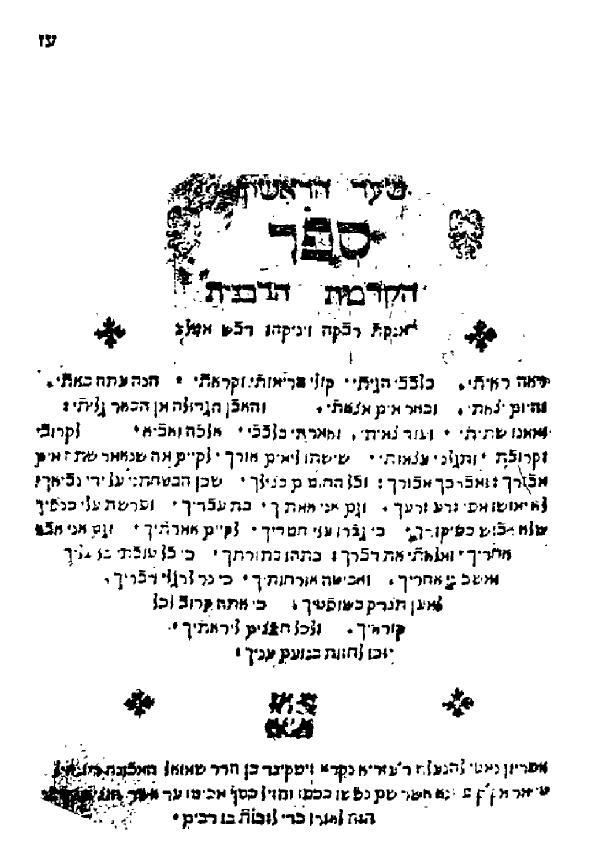

In all events, Flensberg thrived at Volozhin.  He studied in the Netziv’s group and was close to the Netziv.  Additionally, he was selected for the highly prestigious position at the Volozhin Yeshiva as the Purim Rav of Volozhin.  His appointment to this position took place sometime before he left Volozhin in 1859, making this the earliest, and perhaps one of the only, recorded mention of this custom from Volozhin.[2] In fact, there are those who doubt the existence of the custom of Purim Rav at Volozhin.[3] This appears to undermine that position.  Additionally, the description of the Purim Rav position is of interest.  According to Flensberg, the position was fairly innocuous.  For the two days of Purim, the Netziv would cede his position to the best student. The student would wear the Netziv’s hat and use the Netziv’s walking stick.  All the students would give the Purim Rav great deference.  They would also pepper him with questions both about Purim and more comical questions.  The Purim Rav would answer in the Purim spirit.  Nowhere is there any mention of lack of respect or, seemingly anything that is objectionable. 

After leaving Volozhin, he married Itta, whose father was R. Mendel Katz, who would eventually become a rabbi in Radin.  After his marriage he went to study in a bet midrash in Kovno.  Although some refer to this place as “the Kovno Kollel,” it cannot be referring to the famous Kovno Kollel as that did not begin until 1877 long after R. Flensberg left Kovno and entered the rabbinate.  During his time in Kovno Flensberg became friendly with R. Yitzhak Elchonon Spektor. After leaving Kovno in 1869 to his first rabbinic position, and, in 1889, after a few other employment changes, Flensberg ended up in Shaki as the chief rabbi. 

Flensberg found the rabbinate a good fit and focused on derash and philosophy.  But, before publishing any of his books, he penned a number of important articles in various newspapers including Ha-Levonon, Ha-Melitz, and Ha-Maggid.  In general, he took a rather novel views towards newspapers.  At the time, many viewed newspapers as a threat to Orthodox Judaism as it exposed people to different views that they otherwise wouldn’t be exposed to.  Thus, many took the position that reading a newspaper was prohibited.  Flensberg, however, recognized that merely ignoring the problem is ineffective.  Instead, he proposed that the Orthodox start their own newspaper so that their views will be available to all. This view echos that of R. Yaakov Ettlinger, who started the Orthodox journal Shomer Tzion ha-Ne’eman. (And, it appears, the same debate is happening, again, today with regard to the internet and related technologies.) In addition, Flensberg also penned a series titled Moreh Neukei ha-Zeman he-Hadash, which some view an indirect attack against Nachman Krochmal‘s similarly titled work. Flensberg wrote this essay during a time that he was suffering from headache and prohibited from Torah study.  Thus, turned his focused to producing essays for newspapers.  


After his wife died in 1882, he published his first work, Nezer ha-Nitzhon.  As mentioned above, this book contains a lengthy explanation of the talmudic story regarding the famous donkey.  Additionally, he includes two derashot at the end.  In the introduction, he credits his wife for the publication and explains that this book is in her memory. In 1897, he published his next books, She’alot Hayyim, Divrei Yirmiyahu in Vilna.  The first titled portion is comprised of responsa and the second titled portion is comprised of dershot.  The second part also contains a lengthy introduction regarding Flensberg’s view on derush, and a eulogy for R. Yitzhak Elchonon Spektor and the Godol of Minsk.  

It appears that not everyone, including those who normally are very well-read, were familiar with R. Flensberg’s works.  Katzman explains that R. Zevin, in Ishim ve-Shetot (p. 71), confuses R. Hayyim Flensberg with another R. Hayyim – R. Hayyim Soloveitchik.  The statement R. Zevin attributes to a child R. Hayyim Soloveitchik, and which R. Zevin himself doubts it comports with what we know about R. Hayyim Soloveitchik’s manner of deciding law, actually appears in R. Hayyim Flensberg’s She’alot Hayyim, no. 14.[4] 

In 1905,[5] he published his commentary on Hasdai Cerscas’ Ohr Adonay.[6]  This is one of the very few commentaries on this very difficult work.  Flensberg prefaces the book with an in-depth introduction regarding the work and its author.  R. Yehiel Yaakov Weinberg wrote a glowing review of the book.  Weinberg expressed surprise that no one else, with one exception, had seen fit to review such a worthy book.  Weinberg notes that to write such a commentary requires not only “an ish ma’adai” but also one must be a “rav ve-goan talmudi.”[7] Flensberg includes a few pages of comments on Moreh Nevukim at the end of the book, and there are two letters one from Abraham Harkavey and the other from R. Dr. Abraham Berliner, at times, taking issue with some of Flensberg’s conclusions.  This was intended to be the first part of two of Flensberg’s commentary on Crescas.  According to Flensberg’s son, in 1909 the second portion was published but languished at the printer. And, after World War I broke out in 1914, the Flensberg’s were under the impression all the copies were lost.  In 1925, they learned that Ester Rubinstein, Flensberg’s daughter, had saved the plates as well as other manuscripts.  It is unclear if the second portion was ever actually reprinted.  The JNUL appears to only have a few leaves from the second volume.

In 1910, Flensberg published his commentary on Shir ha-Shirim, Merkevot Ami. And, that same year, he also published his first volume of commentary on the Torah, Divrei Yirmiyahu, covering Genesis. 

In 1914, Flensberg died, his full epitaph is included in his son’s biography which appeared in the second volume of Flensberg’s Torah commentary which was published posthumously in 1927. This version of the epitaph is the only complete one as the one on his headstone accidentally left out a line “for some [unnamed] reason.” 

He was survived by his son, Yitzhak Yishayahu, and his daughter, [Haaya] Ester Rubinstein.  Yitzhak Yishayhu lived in Pilwishki the town where R. Yehiel Yaakov Weinberg served as Rabbi.  When Weinberg describes the learned people in Pilwishki, one of the ones he singles out is Yitzhak Yishayahu.[8] Flensberg’s daughter, however, was more well-known than his son.  She married Yitzhak Rubinstein, who subsequently became Chief Rabbi of Vilna – the first in over 200 years – and she was heavily involved in Vilna community affairs and was an ardent Zionist.  This is in contrast to her father who compared Zionists to “the Berlin group . . . of maskilim.”[9] She was also very learned and R. Weinberg provides that when her father couldn’t remember a source, he would ask Ester who could always provide it.

Ester was also involved in woman’s issues.  She started a girls school in Vilna and wrote why woman’s suffrage is allowed under Jewish law.[10]

Ester died young, at age 43, in 1924.  A Sefer Zikhron was published in her honor and, among others, R. Weinberg wrote a beautiful article describing Ester in the most honorific terms. An English translation was published by Dr. Leiman. Additionally, a memorial service was held in the Great Synagogue of Vilna, according to Leiman, “this was the only woman ever accorded this honor.”

Yitzhak, after Ester died, was involved in a bitter fight for the Vilna rabbinate that pitted him against R. Hayyim Ozer Grodzenski, and the Mizrachi versus the Agudah.  In the end, Rubinstein was elected by a majority of the vote.  This was viewed as untenable, and the chief rabbi position was split between the halakhic and administrative, giving both Rubinstein and Grodzenski positions.[11] This controversy was memorialized by Chaim Grade in his Rabbis and Wives, where he “resurrects” the dead Ester and imagines her as the driving force in her husband’s push for the Rabbinate.  This part is untrue. However, Grade’s story of how Rubinstein was almost shouted down during his first speech (and his supporters forcibly ejected the shouters) after his election is true.

Two Broadsides Attacking Rubinstein and Urging Voters to Pick Number 18, R. Hayyim Ozer’s Number
These may have been penned by the Hazon Ish as he was heavily involved in the campaign to elect Grodzenski.

From a private collection.


Yitzhak would leave Europe to the United States to teach in Yeshiva University in 1941. On May 23, 1944, the day Belkin is inaugurated president of Yeshiva University, Rubinstein received an honorary doctorate of divinity from Yeshiva University. See also, N.Y. Times, May 23, 1944 p. 21.  Rubinstein died on Oct. 30, 1945 [23 Marchesvan 5706] and is buried in Mt. Carmel cemetery in Queens.
In conclusion, R. Flensberg’s books from the one, Nezer ha-Nizhon, on the odd donkey passage to his more run of the mill responsa to his philosophy and derush are all of interest. Additionally, his children were no slouches either.

Notes

[1] Katzman asserts that Flensberg didn’t go to Volozhin until he was 16 or 17, which makes any connection between a bar-mitzvah gift and Flensberg’s entrance into Volozhin even more tenuous.  See Eliezer Katzman, “A Biography of the Rav from Shaki – The Goan Rabbi Hayyim Yirmiyahu Flensberg ZT”L,” in Hayyim Yirmiayahu Flensberg, She’elot Haayim, Machon Mishnas Rabbi Aaron, Israel, 2001, 1.  Katzman, however, provides no citation in support of his dates.  We rely upon Flensberg’s son’s biography for our chronology.  See Yitzhak Flensberg, “In Place of an Introduction,” in Hayyim Yirmiyahu Flensberg, Divrei Yermiyahu al ha-Torah, Vilna, 1927, vol. 2, V-VI. 
[2] This has been noted by Katzman, “Biography” p. 2 n.2. It is odd that in Stampfer’s discussion of the Purim Rav in Volozhin, he fails to note Flensberg’s importance in establishing the existence of this custom even though the source is the same biography that contains the bar-mitzvah gift story.  Cf. The Lithuanian Yeshiva at 165-68.  Indeed, it is on the very next page after the bar-mitzvah gift.  See “In Place of an Introduction” at VI. 
[3] See this excellent article by Yehoshua Mondshein which demonstrates that the most well-known story regarding the institution of Purim Rav is likely more legend than fact.  Additionally, Mondshein collects those who doubt the existence of the Purim Rav custom. But see Stampfer, at 168 where he provides that the Purim Rav custom was abolished at Volozhin because of the Netziv’s second marriage after his first wife died.  At the time of the marriage the Netziv was in his sixties, and his new wife was in her twenties.
(The exact age difference is unclear, Stampfer’s source, Meir Berlin, Rabban shel Yisrael, pp. 124-31 states that the Netziv was 50 and that there was “only” a thirty year age difference and not forty.) She was a divorcee who had divorced her first husband because she felt he wasn’t a world class “lamdan.”  And, she was extremely protective of her husband’s honor. It appears that she or the Netziv or both became the butt of jokes and she insisted that the Purim Rav custom end. Based upon her insistence, the custom died. For additional sources regarding the Purim Rav, see Mondshein’s article cited above and Eliezer’s post in note 23. See also R. Nosson Kamenetsky, Making of a Godol, Jerusalem, 2002, vol. 2, p. 1062 regarding Netziv and Purim Rav.   
[4] See Katzman, “Biography” at 3 regarding Flensberg’s plea for an Orthodox newspaper and id. at 5 regarding R. Zevin. Regarding R. Ettlinger’s journal see Judith Bleich, Jacob Ettlinger his Life & Works, unpublished doctoral dissertation, NYU, 1974, 291-321.
[5] It should be noted that there is some confusion regarding the publication date.  According to the title page that appears on the soft outer cover, the book was published in Elul 5,667 [Sept./Oct. 1906], according to the two virtually similar title pages that follow the soft cover, the book was published in 5665 [1904/1905]. In Weinberg’s review, he first refers to a 1901 publishing date which appears to be a typographical error and then, later, mentions that he was writing his review over four years after Flensberg’s commentary was published.  Weinberg’s review was written in 1912 and if he was being exact, that would give it a publication date of 1908. We have used the 1905 date as it is the date given by Flensberg’s son in his biography.  It is clear, that whichever year it was published, Flensberg’s commentary was not composed that year as Flensberg had been working on this commentary for some twenty years.  See “In Place of an Introduction” at VII-VIII. 
[6] Regarding the propriety of using of god’s name in titles see R. Hezkiyah Medini, Be’ari ba-Sadeh in his Sedei Hemed. Medeni was forced to defend the title of his magnum opus, Sedei Hemed, even though he didn’t use god’s name, only a word, that in this context refers to god only if read incorrectly. See also Ya’akov Shmuel Spegiel, Amudim be-Toldot Sefer ha-Ivri: Ketivah ve-Hatakah, Bar Ilan Univ. Ramat Gan, 2007, pp. 608-10; R. Moshe Hagiz, Halachot Ketanot, Jerusalem, 1981, no. 314 (sedi). 
[7] The review originally appeared in Ha-Ivri, Jan. 26, 1912, p. 47 and is reprinted in Collected Writings of Rabbi Yehiel Yaakov Weinberg, Marc B. Shapiro, ed., vol. II, Scranton, 2003, 115-18.
[8] See Yehiel Yaakov Weinberg, “Introduction,” in R. Abraham Abba Resnick, Keli She’aret, Netanya, 1957 reprinted in Shapiro, Collected Writings, vol. II, pp. 388-402. For an overview of Weinberg’s time in Pilwishki see Marc B. Shapiro, Between the Yeshiva World & Modern Orthodoxy, Littman Library, 1999, 18-50.
[9] Kaztman, “Biography” at 3. 
[10] See Leiman, n. 4.
[11] See Gershon Bacon, “Rubinstein vs. Grodzinski: The Dispute Over the Vilnius Rabbinate and the Religious Realignment of Vilnius Jewry. 1928-1932,” in The Goan of Vilnius and the Annals of Jewish Culture, Izraelis Lempertas, ed., Vilnius Univ., 1998, 295-304; see also the end of Menachem’s very comprehensive post, for additional sources regarding the election. 

*
In 2001, Machon Mishnas Rabbi Aaron republished all of R. Flensberg’s works with the exception of R. Flensberg’s commentary on Crescas.


The Gates and Windows in the Sky

מאת ר' יחיאל גולדהבר

מלפנים בישראל נהגו כל איש ישראל להקפיד על מנהגי התקופה, כגון המנעות משתיית מים בגלל הסכנה שבדבר. לא כן בימינו. ובשל כך אין אנו מכירים במהלך השמש וכל גרמי השמים כי אם אחת לעשרים ושמונה שנים, בהגיע עת אשר לב כל איש יתרונן בהודאה לה' בורא העולם וצבאיו, על טובו וחסדו על היקום הנפלא שברא באור יקרות וקפאון ע"י המאורות הגדולים, ברוך עושה בראשית. בהזדמנות זו, שהכל מחכימים ודשים בסוגית האסטרונומיה, נבוא להתבונן בדבר הרגיל על לשוננו אבל אין שימת לב מספקת לכך.  שינוי מקום יציאת החמה במעגל השנהכשישים אדם פניו כלפי מזרח יראה בתקופת תמוז שמקום התנוצצות החמה הוא בצפון מזרח הרקיע, ומידי יום ביומו יראה שהמקום משתנה לאט משמאל לימין, לכיוון דרום, וככה ישתנה עד 183 יום, שהוא תום תקופת תשרי, שאז היום הקצר ביותר במעגל השנה. משם ואילך תחזור השמש מדרום לצפון, מימין לשמאל, עד סוף תקופת ניסן; 183 יום תלך בכיוון ההפוך. צורת הרקיע וסיבוב המאורות בהשקפת חז"להארץ והשמים דומים לאוהל או לאכסדרה. כך מתארת הברייתא בבבא בתרא (דף כה), והיא מוסיפה ומבארת את תנועת השמש (המוסגר בסוגרים עגולים הוא פירוש רש"י ובסוגרים מרובעים הוא תוספת הכותב): "ר' אלעזר אומר: עולם לאכסדרה הוא דומה [מבנה שיש בו שלושה קירות], ורוח צפונית אינה מסובבת (במחיצה, כשאר רוחות). וכיון שהגיעה חמה אצל קרן מערבית צפונית, נכפפת ועולה במשך הלילה למעלה מן הרקיע (ומהלכת את רוח צפון בגגו של הרקיע[1]). רבי יהושע אומר: עולם לקובה הוא דומה (אוהל, שכולו מוקף), ורוח צפונית [גם היא] מסובבת, וכיון שהחמה מגעת לקרן מערבית צפונית, [היא יוצאת מאותה קופה] מקפת וחוזרת אחורי הכיפה [כלומר, מחוץ למחיצה הצפונית, עד שמגיעה למזרח]".ביום השמש נראית אפוא כשהיא שטה בחלל שבין הרקיע לארץ, ונסתרת בלילה כשהיא עוברת מעל הרקיע, לדעת ר' אליעזר, אבל לדעת ר' יהושע בלילה השמש שטה במסעה מאחורי הדופן הצפוני של הכיפה, היא הקובה. כלומר, מאחורי שורת ההרים הגבוהים שבצפון תבל.ר' יהושע מביא ראיה לדבריו מן הפסוק בקהלת (א, ו) "הולך אל דרום וסובב אל צפון, הולך אל דרום ביום וסובב אל צפון בלילה, סובב הולך הרוח ועל סביבותיו שב הרוח, אלו פני המזרח ופני מערב שפעמים מסבבתן ופעמים מהלכתן". ע"י כך מוסבר גם השינוי באורך הימים בקיץ ובחורף, והשינוי במהלכה היומי הנראה של השמש ובמקום זריחתה ושקיעתה.לגבי הסתרת המאורות לעיתים מזומנות, נאמר בבראשית רבה (פרק ו): "כיצד גלגל חמה ולבנה שוקעים? יש אומרים מאחורי כיפה ולמעלה, ויש אומרים מאחורי כיפה ולמטה".כעין זה במדרש הלל[2]: "ר"י אומר תיק עשה הקב"ה לחמה, שוקעת במערב וחוזרת לתיק ועולה מן החלונות למזרח. וחכמים אומרים: מחילה עשה לו הקב"ה בארץ, ושוקעת במערב וחוזרת למעלה ועולה מן המחילה במזרח". תיאור חלונות הרקיע בכתבי חז"למרוב מאמרי חז"ל נראה שחכמי ישראל נקטו בדעה שהארץ שטוחה ולא כדורית[3]. השקפה זו בביאת השמש והקפתה את העולם, היא שונה מן הידוע כיום.קהלת א, ה-ו: "וזרח השמש ובא השמש ואל מקומו שואף זורח הוא שם. הולך אל דרום וסובב אל צפון, סובב סובב הולך הרוח ועל סביבותיו שב הרוח". מתרגם התרגום: "אזיל כל סטר דרומא ביממא ומחזר לסטר ציפונא בליליא אורח תהומא מחזר מחזר ואזיל לרוח עיבר דרומא בתקופת ניסן ותמוז ועל סחרנוהי תיב לרוח עיבר ציפונא בתקופת תשרי וטבת נפיק מחרכי מדינחא בצפרא ואעיל לחרכי מערבא בשמשא". חרכים הם חלונות, מתוכם יוצאת השמש בבוקר ונכנסת דרכם בערב. אם "עולם לקובה הוא דומה" והרקיע סוגר עליו מכל צד, הכרח הוא שיימצאו פתחים כאלה. גם רש"י מזכיר את החלונות בפירושו לברייתא הנ"ל, במה שכתב: "ומחזרת (השמש) אחורי הכיפה – דרך חלון".והלוא נקודת זריחת השמש משתנה מדי יום ביומו, בהכרח שלא חלון אחד יהיה במזרח אלא חלונות הרבה, וכך במערב. לכן אמרו בתלמוד ירושלמי (ר"ה פ"ב ה"ד): "שלש מאות וששים וחמש חלונות ברא הקב"ה שישתמש בהן העולם, מאה ושמונים ושתים במזרח ומאה ושמונים ושתים במערב ואחת באמצעו של רקיע שממנו יצא מתחילת מעשה בראשית".תיאור חלונות הרקיע חוזר בפרקי דר"א (פרק ו), ושם מתואר בדייקנות סדר יציאת החמה וביאתה דרך החלונות שבמזרח ושבמערב במשך עונות השנה השונות, ולכל חלון קרוי בשם מיוחד[4].ביתר פירוט מפורש בברייתא דרבי ישמעאל[5] (פרק ג). הברייתא מבדילה בין "חלונות" שבמזרח ובין "מבואות" שבמערב, הנקראים כן על שם שהשמש באה בהם. פרט נוסף מוסבר בברייתא, והוא הסבר לבין השמשות, שהוא הזמן שבו אין רואים את השמש עצמה ואורה מתמעטת. לדעת הברייתא, השמש נמצאת באותה שעה בתוך עובי הרקיע, בבוקר בתוך "חלון" ובערב ב"מבוי". גם בירושלמי (ברכות פ"א ה"א) מוזכר שמעבר השמש בתוך עובי הרקיע הוא הגורם לתופעה של בין השמשות[6].לדברי המדרש (שמות רבה טו כב) הלבנה משתמשת באותן חלונות של השמש, "חוץ מי"א חלונות שאין הלבנה נכנסת לאחד מהן", והיינו משום אותם אחד עשר יום שבהם קצרה שנת הלבנה משנת החמה. בקיעת החלונות בפיוטי התפילהבפיוט לברכת יוצר לשבת "הכל יודוך" נמצאת פיסקא הטעונה הסבר: "האל הפותח בכל יום דלתות שערי מזרח, ובוקע חלוני רקיע[7], מוציא חמה ממקומה[8], ולבנה ממכון שבתה, ומאיר לעולם כולו וליושביו שברא במידת הרחמים".על פי פשוטו, מבוססים דברי הפייטן על ההנחה (שנמצא בכמה מקומות בחז"ל) שהשמש אינה מסובבת את העולם (או להיפך) אלא נכנסת בעת השקיעה בעובי הרקיע, ובזריחה חוזרת אל העולם דרך שער או חלון ברקיע[9]. לאמיתו של דבר, נלקח רעיון זה מדברי חז"ל בכמה מקומות, כפי שהזכרנו, שהקב"ה ברא שס"ה חלונות ברקיע, 183 במזרח 182 במערב ואחד באמצע הרקיע[10] שממנו יצא השמש מתחילת במעשה בראשית[11][12].ונשאלת השאלה, האם חלונות אלו הם דבר שיש בהם ממש או שהם מליצה כדי לסבר את האוזן. כמו כן יש לשאול, כאשר אנו יודעים שהשמש מסתובבת סביב העולם כולו ללא הרף[13], וכאשר השמש מאירה בצד אחד של העולם – שורר הלילה בצידו השני, האיך עלינו לכלכל את דברי חז"ל אודות החלונות הללו. וכבר מצאנו רבים וגדולים שהקשו כך.  האסטרונומיה והתפתחותה במשך הדורותהשיטה המדעית המקובלת בידינו התחילה להתפתח אצל היוונים בערך במאה השישית לפני ספירה הכללית. בהשתלשלות האסטרונומיה היוונית, יש להזכיר את הוגי דעות המפורסמים:אפלטון (347-427 לפנה"ס): כדור הארץ ממוקם באמצעו של גלגל ענק חיצוני הנושא כוכבים ומסתובב כל הזמן.אדוקסוס (335-408 לפנה"ס): ניסה להסביר את התנועה האחורית של כוכבי הלכת. ובזמנו כבר דברו על עולם כדורי.אריסטו (332-384 לפנה"ס): הוסיף מימד רוחני להשקפות אלו. הוא חילק את היקום לשנים: איזור כדור הארץ והירח שהוא איזור בלתי מושלם; אזור הספרות העליונות: כוכבים, כוכבי לכת, שמש, שהוא מושלם.היפורכס (120-190 לפנה"ס): הוא מגדולי התוכנים, חילק את גלגל המזלות (לא במובן האסטרולוגי) ל-12 קבוצות. בהתאם לכך חולקה השנה השמשית ל-12 חלקים. הוא חישב את אורכה של השנה. הוא מראשוני המחדשים שסיבוב השמש הוא סביב כל כדור העולם.תלמי (90-168) חי באלכסנדריה וחיבר את הספר "אלמגנסט". עד לתקופת הרנסאנס נחשב ספרו לחשוב ביותר[14]. הוא הסיק שלא יתכן שכדור הארץ מסתובב, וחיזק את דעת קודמו.בתקופת הרנסאנס ואילך:קופרניקוס (1473-1543): כדור הארץ מסתובב סביב השמש, וגם כוכבי לכת האחרים מסתובבים סביב השמש.גלילאו (1564-1642): המציא טלסקופ משוכלל, ותצפיותיו מאשרות את שיטת קופרניקוס. תמיהות גדולי האחרוניםבביאורו על חשיבות תפלת מנחה של שבת מאריך הרמח"ל בנידון, וזה לשונו: "הלא כולנו יודעים שהרקיע מסבב את העולם מכל צד, והשקיעה של השמש אינה אלא רדתה למטה, ואיך נצייר שנכנסת למעלה מן הרקיע? ובאמת גם מסדרי התפלה סדרו 'ובוקע חלוני רקיע', וכל הדברים האלה נראים שאינן אמתיים לפי הנראה בחוש העין"[15]!וכתמיהתו תמה רבי יצחק אייזיק חבר – מתלמידי בית מדרשו של הגר"א: "דבר זה סותר למה שנתברר בחוש ובחקירה שהחמה אינה מסתלקת שום פעם ומסבבת תמיד בכל עת?"[16]. וכך היא לשונו הבהירה של רבי שלמה כהן – מו"צ האחרון בווילנא: "הרי אנו רואים בחוש שאינו כן, בלילה השמש שוקעת מתחת לקרקע ונראית להיושבים על שטח הקרקע מצד השני של כדור הארץ"[17].וכבר הקדימם בקושיא אלימתא זו אחד מחכמי שאלוניקי, הלא הוא רבי יצחק ב"ר משה ארויו, מחשובי תלמידי רבי יוסף טייטאצאק, את תמיהתו הוא פותח בלשון ברורה: לא יתעלם מה שיש בדברים האלה מן הקושי. ראשונה במה שאמר "פותח בכל יום דלתות שערי מזרח" – כי הנה דברים האלה אין להם שחר, כידוע הוא כי הבוקר אור מפני שהשמש היתה תחת הארץ בלילה, וביום עולה מתחת הארץ ומאיר, ואין שער ולא דלת ולא חלון, ברקיע. כי כשעולה השמש מן האופק, זורח ומאיר.שנית – במה שאמר "מוציא חמה ממקומה" – אשר נראה מדברים האלה, שאנשי כנסת הגדולה מתקני התפלה סברו כסברת מי שחשב גלגל קבוע ומזל חוזר, כי אע"פ שזאת היתה סברת חז"ל, כבר חזרו והודו לחכמי האומות שאמרו מזל קבוע וגלגל חוזר[18].כמו כן יש להבין במה שנאמר בפיוט "בוקע חלוני רקיע"; מהי מטרת הבקיעה? אם יש ברקיע חלון קבוע – לשם מה צריך לבקעו?[19] ואין לומר שהכוונה לבקיעה הראשונה מן השנה הראשונה לבריאת העולם, שהרי נאמר במפורש בפיוט: "הפותח בכל יום דלתות שערי מזרח, ובוקע חלוני רקיע", והרי השמש עברה באותו חלון בשנים שעברו? ואולי יש לומר שתיכף עם יציאתה החלון נסגר על צירו. כמו כן יש להבין, למה בדלתות נקטו לשון פתיחה, ובחלונות נקטו לשון בקיעה.עוד יש להתבונן בנוסח שתיקנו אנשי כנה"ג בברכה הראשונה של ברכות ק"ש של ערבית: "בחכמה פותח שערים", האם באמת הכוונה לשערים שברקיע שבהם חמה יוצאת בשחר ונכנסת בערב?[20]  ביאורי מפרשי התפילההפירושים שיבואו להלן מתייחסים במפורש לשאלות על הפיוט הנ"ל, ומתוכם יתבאר מציאותם של השערים ותפקידם, ובדרך אגב יתיישבו הקושיות שהערמנו. רוב הראשונים מפרשי התפלה לא עמדו על כך, וכנראה שביטוי זה לא היה זר להם, ולכן לא מצאו לנחוץ לפרשו[21].רבי יהודה ברבי יקר – תלמידו של ריצב"א בצרפת, ורבו של הרמב"ן – מחשובי חכמי פרובינצא, מביא לשונות הפסוקים ממנו עוצבו התפילות. לענין הדלתות הוא מציין לפסוק (תהלים עח, כג): "דלתי שמים פתח". וממשיך לבאר שדלת נקרא בלשון חכמים בשם "שער"[22]. לביטוי "בוקע חלוני רקיע" הוא מציין לפסוק (ירמיהו כב, יד): "וקרע לו חלוני", ובלשונו של ר"י בר יקר: "שהוא פתיחת החלונות". ומדוע נקט לשון בקיעה ולא בלשון פתיחה? "ואמר כאן ובוקע על שם לשון הכתוב (ישעיהו נח, ח) יבקע כשחר אורך"[23]. בעקבותיו דרך רבי דוד אבודרהם[24]דרכם של חסידי אשכנזרבי אלעזר מוורמייזא הרוקח מפרש כפשוטו, שהדלתות והשערים משמשים למסלולם של השמש והירח כל יום מחדש, וכה הוא מפרש את הפיסקא 'בחכמה פותח שערים': "לסוף העולם כלפי חוץ יש בעובי הרקיע דלתות וכלפי העולם חלון קצר, וכשהולכת החמה חוץ לעולם בדלתות שערי מזרח, אז עמוד השחר. וכשהולכת אצל החלון שכלפי העולם, אזי הנץ החמה, וזהו האל הפותח בכל יום דלתות שערי מזרח"[25].וכן פירש בספר רזיאל המלאך[26] את ענין הפתיחה והבקיעה: "יש דלתות במקום עובי הרקיע, וחלונות יש לרקיע במקום שכלפי העולם הרואה את הארץ… הדלתות רחבים… והחלונות קצרים… והקב"ה מוציאו בנחת, וזהו מוציא חמה ממקומה".מבית מדרשם של חסידי אשכנז נמצא בשם גאון אחד תכלית השערים ומטרתם. לדבריו, עליית תפילות ישראל דרך שערים וחלונות[27] הנמצאים בשבעה הרקיעים[28], וכולם ממוקמים כנגד קודש הקדשים – מקום עליית התפילות. וכך הוא מבאר את המאמר 'בחכמה פותח שערים': "היות כי דברי הבאי אינם מקובלים לעלות, כי אין להם כוח לכנוס בשערי פתחי רקיע, כי מונעים הרבה מכוחות עליונים שומרים שערי שמים לבל יכנסו בארובות השמים דבורים אלו של הבאי[29]… אבל דברי תפילות ותהלות מכניסים מיד"[30].וכן כתב רבי אליהו הגאון מווילנא: "שהרקיע שבו הגלגלים חוזרים, הוא קבוע ועומד, ובו חלונות, שאמרו 'בוקע חלוני רקיע' וכן 'דלתי שמים פתח'. וברקיע הזה [ווילון] סובבים הגלגלים שבהן המזלות"[31].אולם בדורות המאוחרים מתקבלת יותר ויותר השיטה שהעולם ככדור, וסיבוב השמש הוא סביב לכדור הארץ – ובמקביל לכך החל מושג החלון לקבל פירושים שונים:בדרך הפשטדרך ראשונה: החלונות מכוונים ל'מעלות', והכוונה למסלולי החמה במשך השנה, ודיברה תורה כלשון בני אדם, שנראה כאילו השמש יוצאת כל יום ממקום אחר[32].דרך שניה: כוח השמש דוחה את העננים והערפל המתקבצים בלילה, ואינם נותנים לאור להבקיע. כך כתב רבי ראובן ב"ר חיים[33] בפירושו לפיוט אל אדון: "דלתות שערי מזרח: האדים שנתקבצו בלילה ונועלים לאור היוצא מן המזרח. השמש בגבורתו: פותח אותם דלתות וקורע לו חלוני, ולפי שעיקר האור בא מן המזרח, כינה הדלתות והשערים למזרח"[34].וכנראה שזו כוונת רבי יהודה ב"ר יקר בפירושו: "השמש עושה זריחות דקות, ודומה כמי שיוצא כל זריחה וזריחה דרך חלונות"[35].בדרך אלגוריהבהקדמת דברי הרמב"ם למורה, שדרך התורה וחז"ל לדבר בלשון שיש לו שני מובנים, כלומר שהמון העם יבינו כפי חולשת שכלם, והמבינים יבינו לפי חכמתם. בדרך זו מפרש רבי יצחק ארויו, שפשוטי עם אכן סבורים שהקב"ה פותח בכל יום דלתות וחלונות. אבל באמת יש למביני מדע פירוש נוסף: "הפותח – הוא מלשון התחלה. דלתות הוא לשון התרוממות. שער הוא לשון שיעור". ולכן לדעתו פירוש הדברים כך הם: "היות ואין השמש זורחת בכל יום באותה נקודה, ועוד, הרי השמש הוא רק בגלגל הרביעי[36], וממנו ועד הארץ יש עוד שלושה רקיעים, ואיך עובר אורו וחודר רקיעים אלו? לכן אמר, כי הקב"ה בוקע הרקיעים, כאילו היו שלושה רקיעים הללו 'חלונים', כדי שיעבור בהם האור, וכאילו היה כתוב כחלוני רקיע"[37]. היינו, סרס המקרא ודרשהו: "בוקע חלוני רקיע" – בוקע רקיע כחלון!בדרך משל ומליצהגאון ישראל וקדושו רבי עקיבא איגר חרת על גליון סידור 'דרך החיים' שברשותו בזה הלשון: "על שמש וירח יוצאים ממזרח ובאים למערב, יפול בהם דרך מליצה 'ובוקע חלוני רקיע'. וכן 'ארובות השמים נפתחו' על שהשמים ידמו לעין הרואה כאוהל על הארץ ומתוכם יורדים הגשמים, אמרו בדרך מליצה שארובות השמים נפתחו. וכן 'הנה ה' עושה ארובות בשמים' על הרקת הברכה בשפע"[38].רבי יצחק ארויו מפרש אף הוא בדרך נוספת. דברה תורה כלשון בני אדם, ולפשוטי העם כך הוא נראה: "וגם היה מפורסם אצלם היות ברקיע דלתות וחלונות, לכן מתקני התפלות ז"ל ראו להתקין לומר מלות אלו אשר הם מלות משותפות, אשר ההמון יבינו אותם כפי חולשת ציורם"[39].בדרך הסודרבי משה חיים לוצאטו נטש את דרך הפשט בעקבות הקושי הנזכר, ומבאר את הפיוט בכך שהוא מחדש שהחמה והלבנה הם עצמים גשמיים, אבל בתוכם מתלבשים פנימיות משרשם, היינו שמקבלים כוחות השפעה מן החמה והלבנה הרוחניים[40]. וכה הוא מבהיר מה שמוזכר בחז"ל בענין האסטרונומי ואינו נראה לעינינו, הכל הוא מצד הרוחני שבדבר, שהוא הוא עיקר ההנהגה וההשפעה, ומי שאינו מבין פנימיות העניינים, אינו מסוגל להשיג רק את הנראה לעין!עוד הוא מחדש, שהקב"ה צמצם מקומות מיוחדים ברקיע, בהם מקבלת השמש הגשמית את כוחה מהשמש הפנימית. והנה העולם נחלק לשנים, האופק העליון והוא צדו של ארץ ישראל, והאופק השני הוא בצדו התחתון של הכדור. ובכן כשמגיעה החמה בבוקר לצד מזרחו של אופק העליון, מקבלת השמש הגשמית את כוחה מהשמש הרוחנית היוצאת מחלון הרוחני שלה! בכוח זה נפעל השמש הגשמית עד שמגיעה למערב, ושם מסתלק כוח הרוחני ומקבלת כוח שני להאיר לחלק התחתון.אחרי הקדמה זו הוא מבאר את הפסקא בוקע חלוני רקיע: "הם החלונות שאמרנו, שמשם יוצא פנימיות השמש, הנקרא באמת בשם שמש וחמה"[41].רבי יצחק אייזיק חבר סובב סובב הולך גם הוא בדרכו של רמח"ל, והוא כותב כן מדעת עצמו, שיש חמה פנימית שהיא מעל הרקיע והיא משפיעה על החיצונית: "הדברים האלה א"א לחכמי התולדה לדעת. כי הם אינם רואים אלא דרכי החיצוניות, ומפנימיות שזה העיקר אינם יודעים כלל. וע"ז סדרו בעלי התפלה 'בוקע חלוני רקיע' שהם החלונות שאמרנו, שמשם יוצאת הפנימיות"[42]. החתם סופר נגע אף הוא בקושי זה, ביום ה' לסדר שמות שנת תקנ"ד, בתוך הספדו על הנוב"י, ותירץ מדעת עצמו כמהלכו של רמח"ל: "אומרים: הפותח בכל יום דלתות שערי מזרח ובוקע חלוני רקיע, ולכאורה זהו נגד החכמה הידועה שאין החמה נכנסת לשמים בלילה ולא יוצאת ממנו בשחרית כ"א מסובבת בגלגולה. אלא הכונה הוא כך: החמה והלבנה וכל כוכבי שמים, אינם כ"א כלים מוכנים לקבל הארה ושפע עליון להנהיג העולם הזה, והמה מושפעים מכוכבי אל שלמעלה גבוה מעל גבוהים וגבוה עליהם, וזהו 'חלוני הרקיע הנפתחים' בכל יום להשפיע לכל כוכב בכל יום כפי הראוי לו. וזהו מוציא חמה – העליונה – ממקומה להשפיע לתחתונה. אמנם אנחנו למעלה מן המזל, וחלוני רקיע נפתחים לעצמינו"[43].מהלך אחר בסוד ענין ההבקעה מבאר רמ"ע מפאנו, על פי מאמרם (יומא כ ע"ב מתורגם): "מפני מה אין קולו של אדם נשמע ביום כדרך שנשמע בלילה, מפני גלגל החמה שמנסר ברקיע, דומה לנגר המנסר ובוקע עצי ארזים, ואבק הנסורת הדק הזה הבא בנסירת השמש ברקיע הנראה בעת הזריחה בקרני האור לא שמו". רמ"ע מפאנו מחדש שאבק זה יש לו מנין ומספר מדויק, כמספר הבריות תחת הרקיע – כך מספר הנסורת. והנה ע"י שהיווצרות הנסורת היא בעקבות סיבוב השמש בגלגל הרקיע, ובהתערב נצוץ אור של השמש עם אותן הנסורת הנופל מן הרקיע, יחליפו כח לבקוע הרקיעים התחתונים [שהרי כל יום יש לו חלון שלו]. וזה הפירוש "ובוקע חלוני רקיע", שהקב"ה גורם בזריחת השמש שיפול נסורת של היום, ובהצטרפם יחד עם ניצוצי השמש בוקעים "חלוני רקיע" שהם הרקיעים התחתונים תחת גלגל החמה ונופלים לארץ![44] בדרך דרושהאדמו"ר רבי שלמה מראדומסק כתב: "פירוש ל'מוציא חמה ממקומה', ידוע שכל העולמות –כולל צבא השמים – לא נבראו אלא בשביל הצדיקים. והנה החמה אומרת שירה לפניו יתברך, אבל השי"ת ברוב רחמיו מעדיף לשמוע את שירי עבדיו. לכן יסדו חכמינו 'הפותח בכל יום דלתות שערי מזרח', היינו בהגיע זמן תפלה של עם ישראל, פותח כביכול בעצמו את השערים לקבלת התפלה והשירה. לאידך גם החמה שרה לפניו יתברך, לכן הש"י ברוב רחמיו 'מוציא חמה ממקומה' לומר שאינו חפץ כעת בשירות שלה…"[45].פתיחת דלתות ובקיעת חלונותעל הדיוק שהזכרנו לעיל, למה בדלתות נקטו לשון פתיחה ואצל החלונות נקטו לשון בקיעה, עמד רבי אלעזר מוורמייזא הרוקח, והסברו הוא שבעובי הרקיע העוטף את העולם יש צינור מפולש מצד אל צד שדרכו נכנסת החמה; בצד החיצוני של עובי הרקיע, יש פתח ראשון של הצינור, והוא פתח רחב המכונה 'דלת', והחמה עוברת דרכה בריווח. ככל שהצינור מתקרב לצד העולם, הוא נעשה צר יותר ויותר, עד שהפתח השני של הצינור – והוא הפתח הפנימי של צד העולם – הוא צר מאוד, והוא החלון שהחמה צריכה להדחק דרכו בכוח[46].ואסיים בתמיהה רבתי. כל אלו המפרשים את הגמרא בדרך משל וכדומה, היאך יפרנסו את שיטת ר"ת בעניין בין השמשות? הלוא עם שקיעת השמש מהאופק מתחלף היום, מה לי אם זהרורי החמה עדיין מאירים, הלא החמה אינה מעל ראשינו, ולא בתוך השרוול של החלון, שבעקבותיו הוא עוד משתייך לאופק שלנו[47]?סיכוםשורש ומהות בקיעת השמש מן החלונות:א. הבקיעה היא מלשון הכתוב 'וקרע לו חלוני' והוא פתיחה אצל דלת, או על שם הבקיעה של אלומת האור בזריחת השמש (ר"י בר יקר ואבודרהם).ב. אלומת האור הבוקעת את העננים והערפל (ספר התמיד).ג. בוקע שלושת הרקיעים כחלון (בית תפלה).למה יש לבקוע כל יום מחדש?מטרת החלונות כדי לסתום דברים בטלים העולים מהבל פיהם של המתפללים (בשם גאון).מהות החלונות:א. הכוונה למעלות, מסלולי השמש (ספר הברית וסייעתו).ב. משל ומליצה (רעק"א וסייעתו).ג. השמש הרוחני עובר דרך החלון, כדי להאציל מאורו על השמש הגשמי (רמח"ל וסייעתו). 

[1] זהו הסברו של רש"י למה השמש אינה נראית מצד צפון. וראה הגהות בני יששכר לספר יצירה, פ"ד, פרעמישלא תרמ"ג, דף ח טו"ב.[2] בית המדרש, חלק ה, עמוד 89.[3] ראה מאמרו של רמ"מ כשר, "צורת הארץ ויחסה לשמש בספרות חז"ל וראשונים", תלפיות, סיון תש"ה, עמ' 155 ואילך.[4] דומה לזה הוא התיאור שבספר חנוך (הספרים החיצונים, הוצאת כהנא, ח"א, עמ' סז), המבדיל אמנם בין "שערים" ובין "חלונות": 6 שערים במזרח ו-6 במערב, וכל שער משמש שני חודשים ולכל שער 12 חלונות. הרד"ל בביאורו לפרקי דר"א, הראה את ידו הגדולה בבקיאות עצומה בנידון.[5] נתפרסם לראשונה ע"י רש"א ורטהימר, אוצר מדרשים, ח"א, ירושלים תרע"ג. [6] ועל יסוד זה ביקש רבא למדוד את עובי הרקיע; פסחים דף צד ע"א.כמו כן ביסס ר"ת את שיטתו של שקיעה שניה, משום שתפס כדעת חכמי ישראל, ובלילה השמש מהלכת מעל הכיפה, ובעת השקיעה נכנסת לחלון הקבוע בשולי הרקיע, ועוברת דרכו במשך נשף הערב. ולדעתו תחילת בין השמשות איננה בשעה שהחמה נכנסת לחלון, אלא כ"שכבר נכנסה ברקיע ועברה בעביו של רקיע והוא עדיין נגד החלון, ומשום שעדיין לא עבר את חלונו ולא פסק חלונו ללכת אחרי הכיפה הוא מטיל זהורורין ומאדים מושבו" (ספר הישר, סימן קפא). משמע מפשטות דבריו, שעובי הרקיע – וממילא גם רוחב החלון – הוא משך ד' מיל, וסיבת בין השמשות היא משום שהשמש מתקרבת לסוף החלון ובאותה שעה היא מטילה זוהרין – ולא אור. ואכן הוא מחזק את דעת חכמי ישראל מלשון הפיוט: "בוקע חלוני רקיע"!  [7] במסכת חגיגה, דף יב ע"ב, מבואר באיזה רקיע תלויות המאורות. ראה גם במקבילות: דברים רבה פ"ב; מדרש תהלים, קיד; אדר"נ פרק לז; פסיקתא דרבי כהנא, פרק כט. [מלשון הפסיקתא אסמכתא לדעות הראשונים (רס"ג וסיעתו) שפרשו "חמה בתקופתה" שהכוונה לתקופת תמוז!] [8] "הוצאה" זו תבואר על פי דברי הגמרא מסכת נדרים (לט ע"ב) שהחמה אינה רוצה לצאת, ובכל יום יורים בהם חיצים וחניתות. ופרש"י: "שאינם רוצים לצאת מפני שמשתחווים להם עובדי כוכבים, עד שמורין בהם חיצים". שהרי שבכוח מוציא חמה ממקומה. וראה עוד בר"ר ראש פ"ד.[9] וכן ביארו הראשונים למסכת שבת דף לה, ששיעור ד' מילין משקיעת החמה עד צאה"כ זהו השיעור של המעבר של החמה דרך חלונה בדרכה לכיפת הרקיע. וכן שיטת ר"ת מבוססת על פירושו שכל זמן שלא עברה החמה את חלונה, עדיין יום הוא, וזו הסיבה שעדיין ניכרים זהרורי החמה אחר שקיעתה.[10] מספר שונה של החלונות וקריאת שמותם, נמצא בברייתא דרבי ישמעאל (אוצר המדרשים, ח"ב, עמ' 543); רבי שבתי דונולו בפירושו לברייתא דר"י, הובא בתוך פירוש רבי יוסף קרא לאיוב, ירושלים תשמ"ט, עמ' קז; סודי רזייא, מהדורת ירושלים תשמ"ה, עמ' סב. [11] ירושלמי, ר"ה פ"ב ה"ד; שמו"ר טו, כב; פרקי דר"א פרק ה; ברייתא דמעשה בראשית (אוצר המדרשים, עמ' 318). ומעניין לשון מדרש עשרת הדברות: "ברקיע יש כוכבים ומזלות וי"ב חלונות כנגד י"ב שעות ושס"ה מלאכים פקודים על החמה ומוליכים אותו בנחת מחלון לחלון שלא תיסוב העולם בשעה אחת, ובאלו החלונות מוליכים את הלבנה בנחת בלילה, וכיון שיוצאת פותחין ואומרים שירה…". תיאור שונה נמצא מדרש כונן (אוצר המדרשים, ח"א, עמ' 259); ספר הפליאה, ד"ה ודע והאמין. [12] ולא רק שס"ו חלונות יש, אלא יש לשמש שס"ה חבלים התלויים בה, וכל אחד יש לו שם שלו שאדה"ר נתן לו, ומלאכי מעלה מושכים אותו כל יום ע"י החבלים, ומוליכים אותה בנחת מחלון לחלון (מדרש זוטא [בובר] קהלת א, ה; מדרש עשרת הדברות). [13] יש לציין שרק עם התגלות כדוריות העולם, דנו חכמי ישראל מתוך קושי רב, האיך לחשב כניסת השבת בכל היקף הכדור, שלכאורה צריך להיחשב אחרי השקיעה בא"י, ראה צפנת פענח (לר"י טראני) לפרשת בראשית; מעשי השם (לר"א אשכנזי) לפרשת בראשית, חזון למועד, סימן ח, בשם רבו החת"ס, ועוד.[14] החת"ס משבחו במאמרו הארוך בביאור חכמת התכונה: "צא וראה כמה המצאות נפלאות המציא תלמי המלך הנקרא בטילמיוס אשר ממש על המצאותיו בנו כל יסודי התכונה" (לקוטי תשובות, לונדון, סימן עב).[15] אדיר במרום, ווארשא תר"ם, דף סו ע"ב; מהדורת ירושלים תש"ן, ח"א, עמ' רלד.[16] שיח יצחק, קיידאן תרצ"ט, דרוש לשבת תשובה, סעיף טו.[17] בדרושו לברכת החמה שנת תרנ"ז, הדפיסו בסו"ס בנין שלמה, ח"א חלק עצי ברושים, חידושים מעניינים שונים, סימן ס, דף ס טו"ד.[18] בית תפלה, שלוניקי שמ"ג, דף ל ע"ב. הודפס מחדש ע"י ר' עזריאל מנצור, ירושלים תשס"ג.בנוסף חיבר דרשות עה"ת בשם 'תנחומות אל', שלוניקי של"ח; 'מקהיל קהלות' על קהלת, שלוניקי שנ"ז. עוד נשארו ממנו פסקים בכת"י. [19] רבי שבתי סופר מפרעמישלא פירש כאן בסידורו: "חלוני – ונקרא חלון כן מפני שהוא חלול ופתוח" (סדור רש"ס, טורונטו תשנ"ד, ח"ב, עמ' 326). [20] ועל דרך זה הוא נוסח הפיוט: "הפותח בכל יום דלתות שערי מזרח"! [21] אורחות חיים וכלבו. רבי יוחנן טריביש בפירושו 'קמחא דאיבשונא' למחזור בולוניא לא פירש את כל הפיוט 'הכל יודוך' אלא התחיל בפירוש 'אל אדון'. כמו כן המדקדקים לא נגעו כלל בנידון בסידוריהם. ראה רבי אליהו ורבי עזריאל מווילנא, ווילנא תע"ג; רבי זלמן הענא, יעסניץ תפ"ה; ר' יצחק בער בסידורו עבודת ישראל, רעדלהיים תרכ"ח.[22] וממשיך: "שבשבת תקנו לומר 'שערי מזרח', לרמוז בנין בהמ"ק העתיד. שכתוב (יחזקאל מו) 'שער החצר הפנימית הפונה קדים יהיה סגור ששת ימי המעשה וביום השבת יפתח'. ולכך הזכיר פותח שערי שמים במזרח". [23] פירוש התפילות והברכות, לר"י בר יקר, ירושלים תשל"ט, עמ' צז. [24] אבודרהם, תפילת שבת, ברכת יוצר.[25] סידור הרוקח, ח"ב, בברכת ק"ש לערבית, עמ' תמד; וכן בברכת יוצר לשבת, עמוד תקיח; ערוגת הבשם, ח"ב, ירושלים תש"ז, עמ' 10. בביאור לתפלת 'תחנון' (עמ' שעח) מסביר הרוקח בארוכה כי כשה'כבוד' מאיר באור צח, אזי מתמלא העולם ברחמים, וזהו שכתוב 'פתח דבריך יאיר', היינו: "אין פתח בלא הקף, גון, בית או חצר, זהו לשמש שם אוהל בהם יוצא מחופתו, זהו 'אשר בדברו מעריב ערבים בחכמה פותח שערים' וכן 'הפותח בכל יום דלתות… כי יש דלתות לשערי מזרח לעובי הרקיע לצד חוץ העולם…", וכמו שכתב כאן. ובספרו 'סודי רזייא', בסוף הלכות הכסא, גם כן הזכיר ענין זה, ומנה מספר החלונות הנמצאים ברקיע. [26] ד"ה מה שאומרים בשבת[27] הבני יששכר מבאר על פי רמז את המאמר "בחכמה פותח שערים" בהקדם מאמר פלאי במגלה עמוקות (ואתחנן אופן קע): כשאדם מדקדק באמירת רמ"ח תיבות בקריאת שמע, אז יש מלאך בשם "חלונים" הפותח כנגדן רמ"ח חלונים ברקיע. הבנ"י מצא רמז לכך בפיוט 'הפותח בכל יום דלתות שערי מזרח'. "שערי מזרח" בגימ' כח המלאך חלונים, וזהו 'בוקע חלוני רקיע', מלאך הנקרא חלונים הוא בוקע "הרמ"ח חלוני רקיע" עם דקדוק אמירת ק"ש! (רגל ישרה, ערך חלונים וערך רמ"ח). ויש להשוות מש"כ ב'מקדש מלך' לזוהר ח"ג דף קפו, בשם האריז"ל: מי שלא קרא ק"ש בעונתה נהפך מן רמ"ח איבריו לחרם ח"ו ותפלתו ותורתו של כל היום אינן עולות למעלה! [28] עליית התפילה דרך שערים וחלונות מופיע פעמים רבות בספרות חז"ל וראשונים. לדוגמה: ברכות דף לב ע"א: "גם כי אזעק וגו' אע"פ ששערי תפילה ננעלו…"; וראה רש"י לאיוב (ג, ח): "שתם תפילתי: סתם חלונות הרקיע בפניה". וע"ע שמו"ר (כא, ד) ואריכות במסכת אצילות. [29] ראה מסכת אצילות בדומה לכך. וכן בדברים רבה (ב, כ) איתא על מנשה המלך שביקש לעשות תשובה, והיו מלאכי השרת מסתמין את חלוני הרקיע, כדי שלא תעלה תפילתו. [30] לקוטים מרב האי גאון, פיעטרקוב תרע"ג, סעיף ה, ד"ה וגאון אחד. [31] אדרת אליהו, בראשית, ד"ה ואת הארץ. והוא מוסיף כלל גדול: "וצבא השמים העליונים שנבראו ביום ראשון לא נזכר במעשה בראשית, כי לא הזכירה התורה בכ"מ רק הנראה לעינים"! דעת הגר"א בענין מחלוקת חכמי ישראל ואומות העולם בנידון, מבואר בפירושו לספר יצירה פ"ו סוף משנה א. דבריו צויינו בקיצור בפירוש 'דובר שלום' לנינו רבי יצחק אליהו לנדא.רבי אפרים הורביץ אב"ד פאלטשאן (תק"ס – תר"ל) התמחה בחכמת התכונה. מכל כתביו נשאר רק חיבור אחד, והוא פירושו למדרש שוחר טוב בשם "יבקש רצון". והנה במזמור יט מתאר המדרש את צבא השמים כהשקפת מדרשי חז"ל, ובא ר' אפרים בפירושו ומבארו כפשוטו: החלונות הם כמו "פנסים" שהשמש חבוי בתוכו, היינו לכל יום יש הפנס המיוחד למסלול שלו, דרכו השמש מאירה, והקב"ה בוקע את הפנס; והסיבה שלכל יום יהיה "פנס" מיוחד, היא כדי שהשמש לא תחמם אותו מקום משך כל השנה, ואילו מקומות אחרים יקפאו מקור, לכן חילקו משך השנה לכל אורך הכדור, וזהו הפירוש "ומאיר לעולם כולו וליושביו שברא במדת הרחמים". לכאורה כל דבריו מתמיהים. אולם מצאתי בהסכמתו של רבי יוסף שאול נתנזון לחיבורו זה, שהמחבר "ביאר הדברים על פי פשטיותן ולפעמים בדברי שכל" (יבקש רצון, למברג תרי"א, דפים פ-פא). דבריו צויינו אצל רבי יוסף חיים מבגדאד (לקמן הערה 32) וקיבל את "דבריו הנחמדים". יש לציין שבמק"א האריך רבי יוסף חיים לבאר את דברי חז"ל על מיקומו של ג"ע ומיקום א"י בתוך כדור הארץ, ושם הסתמך רבות על דברי 'יבקש רצון' (בן יהוידע, ב"ב דף פד). [32] רבי פנחס אליהו מווילנא, ספר הברית, מאמר ד, שני המאורות, פרק י: "חושבים כי בעד חלונים יבואו שני מאורות… ואם יאמר מהלכם באמת לא יבינו, מחמת חולשת טבע מוחם ומעוט דעתם…". וממשיך: "כי לא תקנו השיר הזה לפני חכמים ומשכילי עם לבד אשר המה מועטים, רק לפני כל העדה תקנו למען תהיה השירה הזאת בפי כל, וההמון ודלת עם הארץ המה למרבה ע"כ הוצרכו לייסד שיר לפי מחשבתם אף אם אינו ככה באמת". הוא מסתמך על דברי רבי אביעד שר שלום באזילה, אב"ד מנטובה, שפירש כן: "בוקע חלוני רקיע, הוא על דרך יפתח ה' לך את אוצרו הטוב את השמים לתת מטר, אע"פ שהמטר אינו יורד מהשמים, והכל הוא בדרך שאמרו 'דברה תורה כלשון בני אדם'. ובפרט שהרב הקנאי היעב"ץ בספרו מטפחת ספרים משיג על כמה מדבריו של רבי שר שלום, בזאת לא ביקרו, ודעתו כדעתו! וכדאים שני חכמים אלו לסמוך עליהם". וכעי"ז בפירוש עיון תפלה בסידור אוצר התפלות, וכן אצל רבי יחיאל מיכל טיקוצינסקי, היומם, פרק טו.רבי יוסף חיים מבגדאד, מסתמך על דברי ספר הברית ומעתיק את כל לשונו, לאחר שנשאל "מחד יניק וחכים איך מתיישב נוסח הפייט לפי חכמת התכונה הנמצאת בזה"ז" (סוד ישרים, נספח לשו"ת רב פעלים ח"ב, ירושלים תרס"ג, סימן ג; עוד יוסף חי, פר' שמות). אולם הוא חולק עליו בזה שכתב שתקנו את הפיוט לפשוטי עם, ולדעתו: "לא שמיע לי ולא סבירא לי".במקרא יש כמה וכמה ביטויים וכינויים לכוחות ברקיע, ופשוט שהוא בלשון ציורי ואלגורי. כגון "ארובות השמים", "שערי שמים", "דלתי שמים", "חרכים" ועוד. לגבי חרכים, מן הענין לציין לדברי קדמונים שברכת כהנים חלה ממנו יתברך דרך החרכים, ולכן הכהנים עושים בידיהם כצורת חלונות (ראה פענח רזא, פר' נשא ועוד). [33] מחכמי פרובינצה, תלמידו של רבי יצחק הכהן (תלמיד הראב"ד) ורבו של המאירי. [34] ספר התמיד, בתוך קובץ תורני אוצר החיים, ברגסאז תרצ"ה, עמ' 31.כאסמכתא לדבריו אלו, מן הענין להביא את סיפורו של נקדימון בן גוריון המסופר במסכת תענית (דף כ ע"א). נקדימון נכנס לביהמ"ק ביום של גשמים, "נתעטף ועמד בתפלה ואמר לפניו: 'רבונו של עולם הודע שיש לך אהובים בעולמך'. מיד נתפזרו העבים וזרחה החמה". להתרחשות זו קורא התלמוד שם בשם 'נקדרה החמה', ורש"י מפרש: "נקדרה – זרחה, לשון 'מקדיר', שהיתה חמה קודרת ברקיע וזורחת". וכן בתוס': "נקדרה – כמו מקדר בהרים, כלומר שמנקב הרקיע". [35] לעיל הערה 23. [36] השיטה הרווחת בספרי המדרש, שתליית המאורות היתה ברקיע השני. ראה לדוגמה: חגיגה דף יב ע"ב, בר"ר פרק ו, וראה המצויין בהערה 7, ואכ"מ.[37] בית תפלה (לעיל הערה 18). את דבריו הוא מסיים: "כך יראה לי פירוש הדברים האלו, כפי הדעת האמיתי". צוין בסידור עץ חיים לרבי יחיא צאלח ראב"ד צנעא (תע"ה – תקס"ה). [38] נדפס בסידור 'אוצר התפלות' על אתר. וכ"כ רבי בנימין דיסקין אב"ד הוראדנא (אביו של מהרי"ל), שהתמחה בחכמת התכונה), בפירושו לפרקי דר"א, פ"ו, נדפס בתוך פירוש מהרז"ו שם.[39] בית תפלה (לעיל הערה 18); מקדש מלך, (ליובאוויטש) כרך ב, עמ' 418. [40] אסמכתא לכך אפשר להביא מדברי המדרש: "החמה והלבנה מאירים, ומהיכן הם מאירים? מזיקוקי אור של מעלן הן חוטפין, שנאמר לאור חציך יהלכו… גדול האור של מעלן שלא ניתן ממנו לכל הבריות אלא אחד ממאה… לפיכך עשיתי חמה ולבנה שיאירו לפניך" (במדב"ר טו). [41] אדיר במרום, צויין לעיל הערה 15. ולא הבינותי למה לחלק את הכוחות הפנימיים לשנים, בה בשעה שהחמה אינה מפסיקה להאיר אפילו לרגע אחד.דברים אלו כבר פורסמו בשנת תרי"ב, ע"י רבי דוד לוריא בפירושו לפרקי דר"א (השמטה בראש הספר) מתוך הכת"י, והוא מבאר בכך את הדברים התמוהים בפדר"א פ"ו. והוא מסיים בדבר חידוש: שלכן לא נצחו חכמי ישראל מול חכמי אומות העולם בענין מהלך השמש, הואיל ולא הבינו בגרמי שמים רוחניים. [את דבריו אלו לא הבינותי, האם הוויכוח היה על גרמי שמים רוחניים?]כמה ממפרשי הסידור מבית מדרשו של הגר"א יצאו בעקבותיו. ראה רבי יצחק אליהו לנדא מווילנא, פירוש דובר שלום לסידור: "לא יתכן לבאר הכוונה על זריחת השמש המוחש לעינינו… אך הכונה על כח עליון המשפיע לזריחת השמש שהוא דרך שער המזרח של מעלה ודרך חלוני רקיע של מעלה". בפירוש של רבי נפתלי הלוי רבה של יפו, אמרי שפר, שבתוך סידור הגר"א שהדפיס, יש אריכות גדולה לבאר העניין.וראה עוד על דרך זה בספר הברית מאמר ד פרק יד, צויין בסוד ישרים (לעיל הערה 32) והסכים לו.רבי שלמה כהן מווילנא, (לעיל הערה 17) מוסיף והולך בעקבות דברי רמח"ל, לפרש מאמרם (חגיגה יב) "אור שברא הקב"ה ביום ראשון עמד וגנזו לעוה"ב", שלכאורה הוא פלאי, הלא כל תכנית בריאת המאורות אינו רק לעוה"ז ולא לעוה"ב, שאילו לעתיד הרי כתיב לא יהיה לך עוד השמש לאור יומם… וא"כ לאיזה תכלית ותועלת בראו ביום הראשון? אלא לפי דבריהם היינו מחדשים שהמאור הראשון עושה פעולתו גם עכשיו, ואדרבה השמש והירח הנראים לנו, הם מקבלים אור מהמאורות שנבראו ביום הראשון, ואפשר שזו כוונת הרמח"ל שהשמש יש לו מאור פנימי. [42] אפיקי ים, תשנ"ד, מסכת סנהדרין דף צא ע"ב (עמ' תלו מדפי הספר); שיח יצחק (צויין לעיל הערה 16).[43] דרשות חת"ס, דף קו טו"ב.[44] עשרה מאמרות, מאמר העתים, סימנים ט-יא. לא מצאתי מקבילות לדברים אלו. [45] תפארת שלמה, פר' וילך עה"פ חזקו ואמצו; לשבת קודש, ד"ה מוציא חמה. [46] ראה במצוין לעיל הערה 25, וכן בספר הגימטריאות לרבו ריה"ח, חלק א, אות רלט, והערותיו המחכימות של המהדיר הרב יעקב ישראל סטל. [47] ראה מנחת כהן, ראש פ"ד. ומש"כ בשו"ת ארץ צבי, ח"א, סימן פו, המה דברים משוללים הבנה.


Bitul ha-Tamid: the History and Application

Bitul ha-Tamid and Edgar Allan Poe* The Mishna in Tannit records that 5 bad events occurred on the 17th of Tamuz, one being the cessation of the daily sacrifice, the tamid.
The Talmud Bavli offers the background to the other four events. When it comes to the cessation of the Tamid, all the Bavli does is state “Gemara.” It is left to the Yerushalmi to fully explain the story. The Yerushalmi, (Tannit, 4:5), records that
the Jews to maintain the tamid worked out a deal with the Romans who were besieging the city. Everyday the Jews would lower down a basket full of
coins, and in its stead, the Romans would return the necessary animals. One day, the 17th of Tamuz, however, after the Jews gave the
requisite money, instead of the correct animals the Romans replaced
them with pigs. Thus, the Jews were unable to bring the tamid and the sacrifice stopped from that time on. As
mentioned, this story only appears in the Yerushalmi and not the Bavli. (Although the Bavli records a similar story, it is about the Hashmonaim and not the Roman’s, nor does it mention the bitul ha-tamid.)
Further, Josephus does not record it either (he briefly mentions that the daily sacrifice stopped on the 17th without giving details – see Wars of the Jews, book VI, chapter 2). Although these works do
not record it, Edgar Allan Poe does. Specifically, he has a story
titled “A Tale of Jerusalem” which, more or less, is this story
repackaged. You can read the whole story here. Basically, the story details the two priest whose job it was to lower
the baskets of gold. Poe ends with the pigs being raised instead. Not
only does Poe use this somewhat obscure story, he even injects some
detail that one would need to be versed in the original story to fully
appreciate. The priest in question are who belonged to the sect called
“The Dashers (that little knot of saints whose manner of dashing and
lacerating the feet against the pavement was long a thorn and a
reproach to less zealous devotees–a stumbling-block to less gifted
perambulators).” This is a play on the talmudic description of the
priests – that they are quick – kohanim zerizim hem. Poe assumes familiarity with the Hebrew alphabet to a degree that one would know the letter yud
is the smallest. As he says “thou canst not point me out a
Philistine–no, not one–from Aleph to Tau–from the wilderness to the
battlements–who seemeth any bigger than the letter Jod!” The question is where in the world did Poe get this. According to some it seems Poe got this from another novel from “1828, Zillah, a Tale of Jerusalem,
by Horace Smith (1777-1849). Poe incorporated whole phrases and
sentences from Smith’s story: “Poe’s story is more than a parody; it is
literally a collage of snatches of the Smith novel, cut out and pasted
together in a new order.”
That being said, it seems that Poe was still
more familiar with this story than Zillah
and we are left to wonder did Poe study Talmud? He wouldn’t be the
first famous American author to do so. Thomas Jefferson had a copy of a
volume or two of the Bavli. Although, here, it would appear Poe one
upped Jefferson by being a baki in Yerushalmi as well.
Bitul ha-Tamid in Later History Although the actual tamid stopped on the 17th of Tamuz, the phrase “bitul ha-tamid” continues to be used. According to some, Rabbenu Gershom, amongst the many takanot he was involved in, instituted bitul ha-tamid. Bitul ha-tamid as used in this sense means to stop the daily prayers. That is, if a person had a grievance, they could stop the prayers or public torah reading, until the community dealt with the issue. Some rishonim trace bitul ha-tamid to a Yerushalmi that records R. Yochanon telling someone to stop the prayers to have his way. (See Teshuvot ha-Rashba, vol. 4, no. 56). Bitul ha-tamid was a serious and well-recognized device. For example, the Or Zarua records that “on the week of parshat Emor, someone stopped the services, and there was no torah reading. Thus, they had to read both Emor and Behar the next week.” (Or Zarua, Laws of Shabbat no. 45). Note that there was no question about the legality of forcing the entire community, in this case Cologne Germany, skipping the torah reading. The only issue was how to make it up. The Sefer Hassidim records the process:

The one wishing to stop the prayers goes up either before barachu (or seder kedusha) to where the Hazan is standing. This person then closes the prayer book of the Hazan and announces “I am the one who stopped – [the word kalu or kalman possibly from clamour] and the hazan immediately stops the prayers. If he wants to stop the torah reading, he goes up to the steps before the ark and announces ‘I will not allow the torah to be removed.’ Some do this on the torah’s return – they stop the return. Sefer Hassidim no. 463.

Obviously, this device could not be used for any minor grievance, the question some deal with is exactly when this can be used. One of the teshuvot ha-Geonim records that in Bavel, they only allowed this to be used when a person refused to show up for bet din. That is, if someone sues someone and the party refuses to come to bet din, one can go to the recalcitrant person’s synagogue and make this announcement. In this same responsum, however, it records a different opinion that allows for one to collect on an outstanding debt – but, in the case of a debt collection to only do bitul ha-tamid once. The Sefer Hassidim, however, allows for bitul ha-tamid to collect necessary funds for the poor. As one would expect, it appears that this process became abused. The Sefer Hassidim, the source for much material on this topic also includes a warning to anyone who misuses this that they will have to pay for abuse of the process. Similarly, R. Efrahim Lunschintz in his Amudei Shesh explains that abuse of this process only harms god as he misses out on prayers he otherwise would have received. At base, it is understood that this is a powerful tool to get one’s grievances heard, but what is the rationale behind this custom? According to Goiten, and based on genizah materials, he explains that bringing one’s grievance before all – is demonstrative of the notion that bet din “were but representatives of the community, which, in principle, was the supreme judge. The biblical concept ‘the people shall judge’ (Numbers 35:24) was still very much alive.” Goiten notes that this process was not limited to men, and instead, the geniza preserves some “eloquently styled and beautifuly written appeals to the community by women.” Goiten posits that the women did not actually enter the men’s section but had someone reads these on their behalf. See Goiten, A Mediterranean Society, vol. II, pp. 324-26. A very different purpose for this procedure is espoused by a Lithuanian memoir. Basically, by this account, as “the Jewish townlets of Lithuania and Poland did not” have a well-developed press, “what weapon did the poor widow have at hand for calling public attention to the iniquities of, say, the money lender?” The answer, of course, “They delayed the reading of the weekly Portion on the Sabbath!” A story of a poor widow is provided to illustrate this point. She comes Shabbat morning, and is brought in to the main sanctuary on a cot where she moans

My child! My child! You are murderers! Take pity and give me back my child! . . . We children knew this woman quite well. . . All of us knew that this good old woman was now confined to her bed and quite helpless. And we also knew that the cause of her illness was due to the forcible drafting of her only son, Borukke the Tinsmith, into the army. We had also heard frequent comments at our homes on this heartless deed of the Town Elder in taking away this poor widow’s only son in exchange for the few hundred rubles he received from David Refoel’s for letting his own son – his fourth son- escape his duty, by finding a substitute for him in the son of the widow . . . The entire townlet knew of this iniquity and in the privacy of their homes had denounced it as a great outrage; but publicly they were afraid to speak of it. They were afraid to start a rumpus with the Elder who enjoyed the friendship of the town’s Chief of Police. Everyone in the Congregation immediately put aside his Pentateuch and paid the closet attention to the bed-ridden widow’s supplication. The only one in the assembly who pretended to be unconcerned in the matter and began to read aloud to himself the weekly Portion, was David Refoel’s. This painful scene lasted but a few brief minutes when from behind the Bimah there emerged Honeh the Shoemaker who, with his fists doubled, rushed over to the Elder and yelled out in a voice choking with anger: “If Borukke Tamar’s is not freed from military service you will all be sent in chains to Siberia! Do you think we don’t know that you have bought substitutes? Take care!” An informer usually was hated by the town folk. But in this case they all gave their approval to Honeh the Shoemaker . . . It took just about one week before Borukke’s claim to exemption on account of being an only son was properly recorded and he returned to his mother’s home, a free man. Saks, Worlds that Passed, pp. 79-85.

Although I haven’t seen this in print, I was told that when R. Solovetchik came to Boston there was no mikveah in Boston (there was one outside). R. Solovetchik instructed the women to stop the torah reading until sufficient funds were pledged for a mikveah. *A portion of this post appeared in a slightly different format a few years back. I have updated that portion and added about bitul ha-tamid generally. Additionally, much material on bitual ha-tamid appears in Simcha Assaf’s work, Battei ha-Din ve-Sidreihem (1924), pp. 25-29.


Where are the Temple Vessels?

It seems that among many, it is assumed the temple vessels (klei haMikdash) are housed in the Vatican.

In 2004, Rabbis Amar and Metzger asked the Pope to return the temple vessels. Earlier, Shimon Shetreet, the minster of religion, also asked the Pope to return these, and, according to Shetreet’s account, told the Pope he was unwelcome in Israel until he did so. But, it seems that although these people were willing to issue demands about these vessels, they did not do any research prior to establish whether in all likelyhood the vessels are actually in the vatican.

Josephus records that various vessels, clothing and materials were taken by Titus and brought back to Rome. These were eventually housed in the Temple of Peace. In all likeyhood, this is were various Tanaim saw some of the vessels. Most notably, the headplate (tzit) as well as the curtain (perochet) was seen in Rome in about the second century CE. Additionally, famously, the Menorah and the Table from the Temple is recorded (a point to which we will return in a bit) on the Arch of Titus.

So, up to around the second century we have some evidence of the location of the vessels, but what happened after that? To simplfy Roman history, Roman was sacked and its treasures were taken. It seems that the Vandals or Gizrac took the various treasures, including the “treasures that Titus took.” According to one account these were sent back to Jerusalem to a Church (not longer extant and its location unclear) or they were plundered by someone else. Yet, it would appear this has ignored and instead been assumed that if the vessels were in Rome at some point they would remain there for close to 2,000 years. Additionally, if one assumes that these vessels remained in Rome, why is that they were never displayed? One cannot claim out of fear that Jews would claim them as there own. Jews, for much of the period under discussion were in no position to make such a claim.

Now to return to the Arch of Titus. In truth, it is far from clear that the Menorah depicted on the Arch is actually that which was in the Temple. The most basic problem is the base. The base as depicted is hexagonal, while according to Rambam and Rashi, the base rested upon three legs. Additionally, the base contains depictions of a sea dragon which would more or less run afoul of the commandment not to have idols. Although for this last issue, the Tosefta in Avodah Zara does allow for smooth (no scales?) sea dragons, it still seems a bit strange to have this in the Temple, in the Holy section.

To answer the first problem R. Herzog, the former Chief Rabbi of Israel, offered that the legs broke during transport and the Romans replaced it with this base. (This is somewhat questionable as this type of base does not seem to be common even among Roman vessels of the time). Or, some claim this was a Hellenstic change done to the Menorah or the legs are really there and the “base” merely surrounds the legs. Be it as it may, what results is that this is less than conclusive and perhaps not even a Jewish invention.

This leads us to another issue, the State of Israel. The State of Israel adopted as its emblem the Menorah as it appears on the Arch of Titus. This very Menorah with the sea dragons and the “wrong” base. Rabbi Herzog aside from his comments above, questioned the use by the State for this very reason. He said, that they should use a three legged Menorah instead. What is curious is that the State actually slightly altered the original version. Originally, it was as it more or less appeared on the Arch. Subsequently, the dragons or animals on the base were changed from facing each other to their current position which makes them look more like jumping gazelles than sea dragons. Perhaps, this was to accommodate the religous sensiblities of those like R. Herzog.

Sources: Hans Lewy, Olmot Nifgashim, 255-58; A. Berliner, Divrei Yemi HaYehudim B’Rome, vol. 1 107-110; Josephus, Wars of the Jews 6,8,3 (357); id. 7,5 (148-152); id. (158-161); the best work on the Arch is Yarden, “Spoils of Jerusalem on the Arch of Titus.” Yarden attempts to reconstruct the Arch to its original state and discusses all the various issues with it, including the change in the State of Israel emblem. What is surprising is that Prof. Daniel Sperber’s article on this topic fails to use Yarden, leading to a few errors in Sperber’s article. Sperber’s article can be found in Minhagei Yisrael vol. 5 171-212. See also, the fairly recent work on the history of the entire temple destruction Elef Dor by Y. Horowitz vol. 1 380-397 where he discusses some more stories of others who assumed the vatican still houses the temple vessels. See Sefer haYovel l’Kovod Shmuel Mirsky 220-21 for R. Herzog’s position.