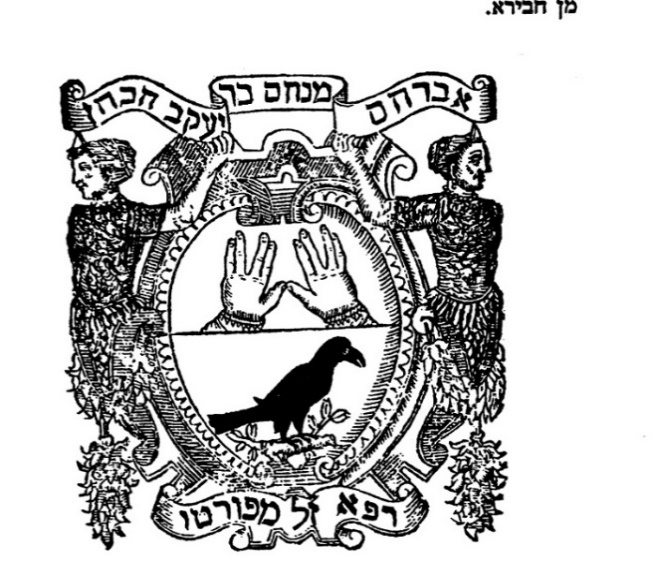
Comments on recent books by R. Benji Levy and R. Eitam Henkin; R. Joseph B. Soloveitchik; and the first color photographs of R. Jehiel Jacob Weinberg.

Comments on recent books by R. Benji Levy and R. Eitam Henkin; R. Joseph B. Soloveitchik; and the first color photographs of R. Jehiel Jacob Weinberg

Marc B. Shapiro

1. Benji Levy, Covenant and the Jewish Conversion Question: Extending the Thought of Rabbi Joseph B. Soloveitchik (Cham, Switzerland, 2021)

The last few decades have seen a lot of discussion regarding conversion, and what is and is not required before someone is accepted into the Jewish community. This is obviously a halakhic matter, as conversion is a halakhic procedure and the rabbis supervise it and are the ones to decide who is to be accepted for conversion. The issue also has a sociological component and in the State of Israel it has national and political significance as well. The fact that halakhic conversion standards in the last generation have become stricter, and conversions have even been revoked, shows that we are dealing with a matter that is far from simple. As most are aware, this has led to a good deal of tension in Orthodoxy.

Rabbi Joseph B. Soloveitchik (1903-1993) was the leading Orthodox thinker in the post-World War II era. Combine this with his standing as a great talmudist and it is obvious that he will have important insights in the matter of conversion. It is to this that R. Benji Levy turns his attention in this valuable new book which analyzes the Rav’s halakhic thinking together with his philosophical perspectives. It is a book which all students of the Rav’s thought will want to examine.

Before his discussion of the Rav’s position, Levy deals extensively with earlier rabbinic views on the status of an apostate. This is helpful in and of itself, but also in terms of seeing the novelty of the approach advocated by the Rav. Bringing the Rav’s notions of Covenant of Fate and Covenant of Destiny into the halakhic arena, Levy argues the Rav arrived at his position by positing that holiness is not inherent, something one is born into. As such, one can lose this holiness. For the Rav, this is not only stated with regard to people, as he also that he felt that there is no such thing as holiness “inherent in an object.” Rather, holiness is “born out of man’s actions and experiences” (Levy, pp. 58-59, quoting from the Rav, Family Redeemed, p. 64). As is well known, R. Meir Simcha of Dvinsk had the same perspective. The Rav also offers this perspective when it comes to niddah. See Nathaniel Helfgot, ed., Community, Covenant and Commitment, pp. 325-326: “The entire concept of tum’at niddah, ritual impurity of the menstruant, is not an inherent description, but rather a relational one, for the niddah herself is not ritually impure at all. The ritual impurity expresses itself only in relation to the other.” This is definitely not the mainstream perspective in rabbinic literature.

In chapter 5, Levy gives us a good summary of the different halakhic positions regarding conversion. In the popular mind, this is often reduced to strict or lenient positions. But this is not really accurate, as the fundamental issue under dispute is what exactly does kabbalat ha-mitzvot means. It is often unclear which side is lenient and which is strict. For instance, if a rabbi voids a conversion because someone is thought to have converted without proper acceptance of mitzvot, this can be seen as strict when it comes to conversion. But the voiding of the conversion means that this individual does not need to fast on Yom Kippur, and if he is married he can leave his wife without giving her a get. So from this perspective, the voiding of the conversion is “lenient.”

Levy also calls attention to a fascinating “hiddush” of the Rav when it comes to conversion. According to the Rav, not only does a convert need to accept all the mitzvot, but he must also commit to a life of study of Torah. “A convert who wants to enter the congregation and accept upon himself the yoke of mitsvot, but is unprepared to toil in Torah, this is lacking in their conversion” (pp. 134-135). As Levy notes, this position is in line with the Rav’s stress on serious learning as opposed to the “sentimentality of ceremonialism” (p. 135). Levy adds that this stress on study “achieves a radicalization of the overall conversion process” (p. 135). I wonder, though, is this something that the Rav actually insisted on, or was this simply a point he mentioned in shiur like so many other ideas that sound appealing but are without practical significance? In fact, do we have any evidence that the Rav ever supervised conversions? If so, it would be fascinating to know what he required from future converts and how he guided them.[1]

Levy claims that R. Aharon Lichtenstein’s position in his famous article, “Brother Daniel and the Jewish Fraternity,” is not identical with the Rav’s outlook. This was surprising to me, as it is generally understood that R. Lichtenstein’s 1963 article was an attempt to explain the Rav’s approach in the wake of the Brother Daniel episode. Levy, p. 84, quotes the Rav as saying that “however much an irreligious Jew attempts to cast off his faith, he is fated to be unsuccessful.”[2] He contrasts this with R. Lichtenstein’s statement that there is “a point beyond which the apostate cannot go and yet remain a Jew” (p. 84). Yet these statements are not in opposition. The Rav is referring to an irreligious Jew, not an apostate. A document I recently published which quotes the Rav’s explanation of his position makes this very clear.[3] It also shows that R. Lichtenstein’s points are directly in line with those of the Rav, and knowing their relationship, the article itself must have been written under the close guidance of the Rav.

Usually people think of Jewish identity as an inherent part of someone, an inheritance that cannot be given up. Yet the Rav departs from the usual approach and considers Jewish identity as something that can be lost, but only in extreme circumstances. One who is not religious does not lose his halakhic standing as a Jew. However, one who actually converts to another religion is regarded by the Rav as having severed his connection to the Jewish people, and for most intents and purposes would no longer be regarded as Jewish. (I do not know how he would regard the child of an apostate woman.)

As such, I must also reject Levy’s conclusion that for the Rav a Jew may lose his individual holiness, but his “holiness qua member of the Jewish collective is unshakeable.” It is this point that I believe to be mistaken, and as noted already, I assume that the Rav’s settled position is as explained by R. Lichtenstein. I also believe that we need not be concerned that in shiur the Rav offered a different reading of a text, as what he said in shiur was often provisional, an exploration of different possibilities.[4] In the case at hand we have more than one testimony that R. Lichtenstein’s description, that in many ways an apostate is not to be regarded as Jewish, is exactly in line with the Rav’s position. With this in mind, we also need to review Levy’s discussion of the Brother Daniel controversy (pp. 186f.). To say that the Rav supported the ruling of the Israel Supreme Court and leave it at that creates a misinterpretation. Yes, the Rav agreed with the Supreme Court that Brother Daniel was not to be regarded as Jewish. Yet the Court’s assumption was that halakhah would regard him as Jewish. However, since the Law of Return is a secular law, the Court had to decide based on how the law was understood by “the ordinary simple Jew,” and such a Jew would never regard a Catholic religious figure as being part of the Jewish people. The Rav could not be more adamant that the Court was in error, as in his view, even from a purely halakhic perspective, Brother Daniel could not be regarded as Jewish.[5]

One final point: Levy deals with authorities who have seen circumcision or immersion as conveying what can be termed “limited sanctity” or “partial conversion.” There is another source that should be added to this discussion. R. Hershel Schachter records the Rav’s understanding that the Patriarchs had moved beyond the status of benei Noah, but had not yet achieved the full status of kedushat Yisrael. Nevertheless, they still had some kedushat Yisrael.[6] This puts them somewhere between non-Jews and Jews, a “partial Jew” if one might use the term.

2. Eitam Henkin, Studies in Halakhah and Rabbinic History (Jerusalem, 2021).

It has been eight years since the murder of R. Eitam Henkin, and the deep sadness over what was taken from us remains. A glance at what Henkin was able to accomplish in his short life— three books and numerous articles, all of the highest caliber—shows us what the future would have held for him in both rabbinic and academic scholarship. As Eliezer Brodt puts it in his introduction to Henkin’s Studies in Halakhah and Rabbinic History: “He was a unique combination of an outstanding talmid hakham and historian who was also blessed with exceptional research and writing skills.” Fortunately, in his short years R. Eitam left us with much to treasure.

Studies in Halakhah and Rabbinic History, published through the great efforts of Seforim Blog editor Eliezer Brodt, is a treat for anyone who values Torah and Jewish scholarship. All of us are in great debt to Brodt for this labor of love, which began immediately after Henkin’s murder, when Brodt was the prime mover behind the publication of Ta’arokh Lefanai Shulhan, Henkin’s posthumously published book on R. Jehiel Mikhel Epstein and the Arukh ha-Shulhan. The essays in the current volume are translations of many of Henkin’s important Hebrew articles, and the translators, volunteers all, also deserve our great thanks.

The first section of the book focuses on halakhah. R. Eitam deals with the kosher status of strawberries, modern utensils and absorption of taste, the sale of land in Eretz Yisrael to non-Jews, and other topics. The second section, which has more than 250 pages, deals with the girls’ dance on the 15th of Av, the famous (or infamous) Bruriah story, the Shemitah controversy, the Novardok yeshiva, haredi revisionism when it comes to Rav Kook, and a number of other topics. The final section focuses on R. Joseph Elijah Henkin, offering a general survey of his life and significance, and a second article dealing with his statements about R. Shlomo Goren and the Langer Affair.

There is so much that can be said about this this rich book, but in the interests of space I will only offer a few comments. I am certain that in future posts I will have the opportunity to come back to it.

In chapter 2, Henkin discusses the fascinating issue of absorption of taste in modern utensils. If the halakhic concept of beliah is based on actual absorption, then when dealing with stainless steel, which does not absorb, the halakhic issues should disappear. Following this line of thinking, it could still be appropriate, for a variety of reasons, to have separate meat and dairy stainless steel utensils. But if one mistakenly cooked dairy in a meat stainless steel pot that had been used with meat in the last day, bediavad the food should be OK to eat and the pot should not need to be kashered. If one were to follow this approach, stainless steel would be treated just as Sephardim treat glass, which can be used for milk and meat as the glass does not absorb.

In response to such a claim about stainless steel, Henkin puts forth the original argument that the real issue is not the new type of materials we use for utensils, but that our ability to perceive taste is not what it used to be. In other words, if our taste buds have deteriorated, then we can no longer use them as the basis of determining if there are beliot.

To prove that our sense of taste has weakened compared to the days of the Sages, Henkin did an experiment:

I took a wooden spoon (an old one, like utensils in the average kitchen) and for about half a minute I used it to stir milk that had been boiled in a glass cup. I then washed the spoon well, and then stirred with it, also for a half minute, about half a cup of tea which had been boiled in a small metal pot (a cezve). At the same time, I stirred the same amount of tea using a new metal spoon. I tasted it myself and gave it to my family to taste (as mesihim lefi tumam, without knowledge of the experiment) and no one could discern any difference in taste between the cups. Even when the family members were asked to guess which of the two cups was “dairy,” the success of the guesses wavered as expected at around 50% (pp. 25-26).

The results he obtained led Henkin to conclude that our sense of taste has weakened. This is because it is clear from the talmudic sages that milk leaves a taste in wooden spoons, and yet in reality we see that this is not the case.

This is a very interesting point that I will leave to scientists to discuss, but I do not think it fundamentally changes the problem. Even if our sense of taste has weakened, and we cannot taste what in previous generations we would have been able to, the fact is that stainless steel by definition does not absorb taste. So even if in the days of the Sages they could sense the flavors absorbed in wood, they would not have been able to taste anything had they used stainless steel. Thus, we return to the question of whether there should be a halakhic concept of beliot when it comes to stainless steel.

I must also mention that Henkin’s teacher, R. Dov Lior, specifically states that one can use stainless steel for both meat and dairy (although in practice he requests that two other poskim agree with this position). [7] I find it hard to believe that this will ever become an accepted practice, but is there any halakhic reason why not, or is it only be a matter of continuing what we have done in the past even if there is no strict halakhic reason to do so? Must we assume, as stated by R. Yaakov Ariel, that the entire concept of beliah is a halakhic notion, which like other halakhot operates according to its own rules that are not tied to scientific facts?[8]

Finally, I must note that unfortunately when the essays were translated no attention was paid to Henkin’s website here. On occasion, Henkin corrected his essays, and when the essays were translated R. Eitam’s corrections should have been included. For example, in chapter 24 he discusses R. Shlomo Goren and the Langer affair. On p. 413 n. 17, he mentions various rabbis who were identified as having been on R. Goren’s special beit din that concluded that the Langer children were not mamzerim. Yet on his website here he notes that two of the names he mentioned are not correct. There are other articles of his where he added more material on the website, so readers who want the most up-to-date scholarship of Henkin are recommended to check there.

3. At the end of my last post I mentioned that the next post would include an unknown article by R. Joseph B. Soloveitchik. I was mistaken, for not only is the article not unknown, but it is also included in R. Nathaniel Helfgot’s collection of the Rav’s letters and public statements, Community, Covenant and Commitment, pp. 263-265. Helfgot tells us that the article appeared in the Rabbinical Council Record (no date is given). I thought it was unknown because I found it in Jewish Horizon, Sep.-Oct. 1964, and didn’t at first realize that it was also reprinted in Helfgot’s book. What accompanies the Rav’s article is another article that is pretty much unknown. Although it is recorded in the bibliography of R. Lichtenstein’s writings found hereI have never seen anyone refer to it. While new material from the Rav is obviously very exciting, the same can be said for anything from R. Lichtenstein’s pen.

Since I promised something new from the Rav, how about the following which I believe is the first time that the Rav’s name ever appeared in print. It is from the German Orthodox paper Der Israelit, February 7, 1929, and mentions the shiurim for advanced students that the Rav delivered at an Ezra youth movement gathering in Berlin.

In my Torah in Motion classes on the Rav’s letters, available here, I also discussed the Rav’s reason for rejecting numerous pleas that he put forth his candidacy for the Israeli Chief Rabbinate after the 1959 death of R. Isaac Herzog. A lot has been written about this episode.[9] However, we also have the Rav’s testimony from the 1970s that he was again approached about becoming Chief Rabbi.[10] And there is even one other testimony about the Rav and the Chief Rabbinate, but this time I am referring to the Chief Rabbinate of the United Kingdom. Bernard Homa, Footprints on the Sands of Time (Gloucester, 1990), p. 127, writes as follows about the discussion of who would succeed Chief Rabbi Joseph Hertz:

I was one of the representatives of the Federation on the London Board for Shehita, where I served as Vice-President from 1946 to 1948. I also represented the Federation in 1947 on the committee, under the Chairmanship of Sir Robert Waley Cohen, dealing with the appointment of a successor to Dr. Hertz, who had passed away in 1946. I recall two items worthy of mention. Among the several names that came up was that of the famous Rabbi Joseph Ber Soloveitchik of Boston. There was no discussion as to his merits but he was quickly excluded from consideration for a very silly reason. The Chairman reported that he had been informed that he did not know how to use a knife and fork properly.[11] His informant was clearly unaware that in the U.S.A. table customs are different from those in this country and the allegation against him was thus not only trivial, but entirely without foundation.[12]

In my article in Hakirah 32 (2022), I published a number of letters from the Rav. Let me share an additional letter, to R. Irwin Haut, which was originally supposed to be included in my article. Unfortunately, I only have the first page. (The family also only has the first page. If any reader has the complete letter, please be in touch.) I thank Professor Haym Soloveitchik for granting me permission to publish it.

יג אדר השניתשיט
March 23, 1959

Dear Rabbi Haut:

Acknowledge receipt of your letter. 

1. Liquids which were cooked or boiled before the Sabbath and remained on the covered gas range during the בין השמשות period may be put back, after being removed for the night to the refrigerator, on the covered flame on Saturday morning, provided that the liquid foods do not reach the temperature of יד סולדת. If, however, the liquids are kept near the flame so that their temperature remains above the house temperature, we do not have to concern ourselves with the aspect of יד סולדת

2. I would advise you to put a a [!] tin or tin-foil cover on the [next page missing]

The issue here is heating up liquids on Shabbat, and the position of the Rav is more liberal than the standard Orthodox approach today which is not to allow any reheating of liquids (other than Yemenite Jews who follow Maimonides’ opinion). To understand the Rav’s position, we must first note that this was actually the opinion of his mother, Rebbetzin Pesha, who was a scholar in her own right. In this case, I think we can say that the Rav was simply following his family tradition.

This is what appears in Yeled Sha’ashuim, p. 30, a book devoted to R. Ahron Soloveichik[13]:

Rebbitzen Pesha would place cold soup on the hot Shabbos blech and be careful to remove the soup before it became יד סולדת בו. She was not concerned about the איסור חזרה because the psak of the Rama is that if the food was on the Shabbos blech for the duration of בין השמשות on Friday night and was later removed from the Shabbos blech, then there is no איסור חזרה. The only question then is whether there it is forbidden from the standpoint of the איסור בישול. Rebbitzen Pesha reasoned that it is permitted to do this on the basis of ספק ספיקא. First of all, there is a מחלוקת ראשונים as to whether in דבר לח we say אין בישול אחר בישול. The view of חכמי ספרד is that even in דבר לח we say אין בישול אחר בישול. But, in this case, one removes the soup from the Shabbos blech before it reaches the heat of בישול. The soup becomes only lukewarm. There is a מחלוקת רשי ותוספות whether this is permitted or it is אסור מדרבנן גזירה שמא ישכח וזה יגיע לידי בישול. The question in this case revolves only around an איסור דרבנן. Rebbitzen Pesha, therefore, reasoned that it is permitted on the basis of ספק ספיקא.  

Quite apart from the specific issue of liquids, the Rav’s position allowing food on the blech or even in the oven during bein ha-shemashot to be placed in the refrigerator and returned to the blech or oven the next morning is well known and has been discussed by many. This leniency can be traced to R. Nissim of Gerona who derives it from the Jerusalem Talmud.[14] Let me, however, me add two points. The first is that R. Ahron Soloveichik told me that I could adopt this position in practice. (I only asked about food, not liquids). The second point is that the Rav’s position has been portrayed as only referring to foods, not liquids. Yet we see from his letter to Haut that he, together with his mother, also held this position with regard to liquids.

Having said this, I think people will find the Rav’s instructions to caterers at the Maimonides school of interest. I thank Steven DuBois for calling my attention to this document, which is found here.

In one of these instructions I think it is obvious that the Rav was adopting a more stringent approach because he was dealing with caterers, who will not be as careful in these matters as individuals at home.  As you can see, the Rav only mentions removing solid foods from the refrigerator, but nothing about liquids. I think the reason is clear. An individual at home can be careful that liquids not reach the level of yad soledet bo, but this is not something the Rav was willing to entrust to a caterer who while busily preparing the Shabbat meal will often not be so careful to make sure that the liquid does not reach yad soledet bo.

We only have the first page of the Rav’s letter to Haut, but it is clear that the Rav’s second point is his advice to put a tin or tin foil cover over the stove knobs in addition to the blech. He does not state this as an absolute requirement but as a preferable procedure. However, in his instructions to caterers, this is listed as a requirement.

Let me share some more things related to the Rav, the first one of which comes courtesy of Ovadya Hoffman. In 1993 R. Yitzhak Hershkowitz published the first volume of his responsa Divrei Or. The second section of this volume includes responsa from the sixteenth-century scholar R. Abraham Shtang. In the introduction we find the following sentence:

אחדים מתשובות אלו נדפס ביובל עי ר‘ יצחק זימער

This is a very strange sentence, because what does נדפס ביובל mean? It actually refers to the 1984 Sefer Yovel for R. Joseph B. Soloveitchik where Yitzhak (Eric) Zimmer’s article appears (and Zimmer himself spells his name זימר). As Hoffman notes, this is a sort of “the wise will understand” reference. The editor did not feel that his readership could “handle” the actual title of the book, so instead he refers to it in code.

Growing up, maybe the first thing I knew about practices of the Rav was that he stood up with his feet together for the entire repetition of the Amidah. I recall how certain YU students would imitate this practice of the Rav, which sometimes created problems when people would try to exit the row while the students were standing with their feet together. Regarding the Rav’s practice, see R. Schachter, Nefesh ha-Rav, pp. 123-124, and here.

Maimonides, Mishneh Torah, Hilkhot Tefillah 9:3, actually explicitly states: “Everyone – both those who did not fulfill their obligation [to pray] and those who fulfilled their obligation – stands, listens, and recites ‘Amen’ after each and every blessing.” You cannot be much clearer than this, but nevertheless, there are those who offer a different interpretation of Maimonides. According to them, when Maimonides writes והכל עומדין ושומעין it does not mean literally to stand. Rather, עומדין ושומעין means to be quiet and listen. This argument is made by R. Ovadyah Hadaya[15] and R. Isaac Liebes,[16] and they both make the same point in support of their position. R. Moses Isserles, Shulhan ArukhOrah Hayyim 124:4, writes: “There are those who say that the entire congregation should stand when the prayer leader repeats the prayer. (Hagahot Minhagim).” Both R. Hadaya and R. Liebes note that R. Isserles could have cited Maimonides to support the view that the congregation should stand for the repetition of the Amidah. The fact that he instead cites Hagahot Minhagim shows that R. Isserles also did not understand Maimonides to literally mean that the congregation stands.

The problem with this is that R. Hadaya and R. Liebes were unaware that the reference to Hagahot Minhagim, and all similar references to books in parenthesis, does not originate with R. Isserles. It was added by a later editor, and thus the point made by R. Hadaya and R. Liebes has no relevance to R. Isserles’ opinion.

Two more points about the Rav: I do not think it is widely known that one of the first publications of the Rav—based on notes of a listener—appeared in a Habad publication in 1942. Here is the title page which on Otzar haChochma is called מאמרי קודש פון כק אדמור שליטא.

Here is the first page of the Rav’s article.

In a few of my online classes I dealt with the Rav’s opinion that even in contemporary times the hazakah of tav le-meitav tan du mi-le-meitav armelu (that a woman prefers almost any husband to being single) remains applicable. Here is what appears in R. Elyashiv’s Kovetz Teshuvot, vol. 4, no. 117. It sure seems like R. Elyashiv is rejecting the approach of the Rav.

4. In my post here I stated that Saul Lieberman began his studies at the Hebrew University in 1928. This information is based on Elijah J. Schochet and Solomon Spiro, Saul Lieberman: The Man and His Work, p. 8. However, a reader points out that in the August 16, 1927 entry of the unpublished diary of R. Mitchel Eskolsky, who was studying in Jerusalem at Yeshivat Merkaz ha-Rav, he speaks of meeting Saul Lieberman who was at that time a student at Hebrew University.

Regarding Lieberman, I thank Aron Rowe who called my attention to the fact that JTS has put some talks of Lieberman online. Before this, I had never heard Lieberman’s voice. See herehere, and here.

For those interested in Lieberman, I recently did eighteen classes on him. You can find them on Youtube here, and they are also currently being turned into podcasts which are on Spotify and other platforms. One interesting point about Lieberman which I did not mention is found in his letter to Gershom Scholem, dated July 10, 1967. (Lieberman’s letters to Scholem are found at the National Library of Israel.) Here he states that he was upset that he was not in Israel during the Six Day War, which would have enabled him to suffer together with Israel’s inhabitants. He comforted himself with the knowledge that he was able to have more of a positive impact in the U.S. than his presence would have had in Israel. He tells us what he has in mind, namely, that he permitted collecting money for Israel on the holiday. As Dr. Aviad Hacohen has pointed out to me, this must be referring to Passover, when tensions between Israel and its neighbors were already at a high level, rather than Shavuot, which came out after the war was over. Here are Lieberman’s words:

הצטערתי מאד שלא הייתי בארץ לפני פרוץ המלחמה ובפריצתה ולא זכיתי להצטער עם הציבור במקום הדאגה והצערונֶחׇׇמׇתי היא שהבאתי תועלת כאן הרבה יותר מאשר מציאותי בארץהתרתי כאן לאסוף כספים ביוטוהרבנים שלנו פחדו לעשות כן בפומביופסקתי להם שיטילו את כל האחריות עלימעניין שהרבנים האורטודוקסיים שהתנגדו לכך לא פצו אחז את פיהם למחות נגדיאני מכיר יפה את אמריקה ואת ההתלהבות הגדולה שהיא גם עלול להצטנן קצת במשך שעות

We see that his pesak was for the Conservative movement, and when he says “our rabbis,” he means the Conservative rabbis, which he distinguishes from the Orthodox rabbis.

When people think of Lieberman they often think about another instructor in Talmud at JTS, namely, Rabbi David Halivni. I think readers will enjoy two recent publication by Zvi Leshem that record all sorts of interesting stories about Halivni, much like similar collections have been put together about so many great rabbis. See here and here.

Regarding Halivni, the following is also of interest. In 2006 a two-volume book about R. Menahem Mendel Hager of Visheva was published, Ha-Gaon ha-Kadosh mi-Visheva. Here is the title page.

R. Menahem Mendel was the grandfather of Halivni’s wife, and in the second volume there is a dedication from Halivni and his sons in memory of her. Notice how Halivni is referred to as Ha-Gaon and shlita.

5. Unlike today where there are thousands of color pictures of the current gedolim, in the past pictures of great rabbis were uncommon. Just think of the few that are available of for each gadol who lived before the Second World War. When it comes to R. Jehiel Jacob Weinberg, who died in 1966, we have a good number of pictures of him. However, until now no color pictures of R. Weinberg have ever appeared. I am happy to present the only color pictures of R. Weinberg that I have ever seen. They were taken by R. Weinberg’s nephew, Dr. David Corn, on a visit to Montreux in 1958 or 1959. I thank the Corn family for granting me permission to publish these pictures. The originals are now kept at Ganzach Kiddush Hashem in Bnei Brak.

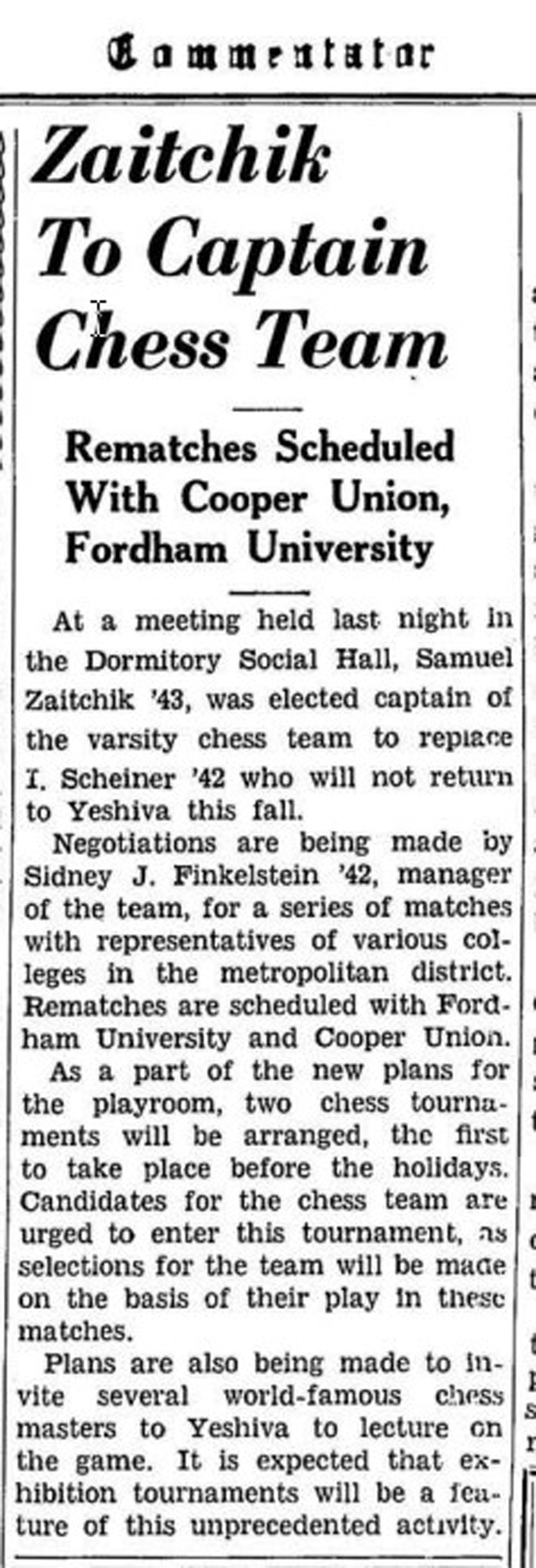
In this picture we see a young R. Yitzhak Scheiner and a young R. Aviezer Wolfson on the right. Thanks to R. Jeremy Rosen for the identification of R. Wolfson.

Here is Dr. Corn with R. Weinberg.

Here are the remaining pictures he took.

6. In July 2023 I led what I was told was the first ever kosher tour to Tunisia, courtesy of Torah in Motion. Seeing this unique Jewish community up close was an amazing experience for all. 

Here is a beautiful picture from last summer’s trip to Tunisia. The photographer is Alan Messner and it was taken in Djerba. (I encourage everyone who studies Talmud Yerushalmi to check out Alan’s valuable index here.)

Quiz

Please identify the following and email me your answers:

1. There are two se’ifim in the Shulhan Arukh that only contain two words.

2. There is one siman in the Shulhan Arukh whose number is the gematria of the subject of the siman.

Coming next: More on Saul Lieberman, and R. Moshe Zuriel: A Great Teacher in Israel

* * * * * * *

[1] Regarding the Rav and converts, in R. Chaim Jachter’s fascinating new book, Gray Matter, vol. 5, p. 163, he mentions that in a 1985 shiur the Rav stated that non-Jews have a “right to convert.” R. Jachter elaborates on the halakhic implications of this notion.
[2] David Holzer, ed., The Rav Thinking Aloud (Miami Beach, 2009), p. 319.
[3] “Letters from the Rav,” Hakirah 32 (2022), p. 152. Here the Rav is quoted as attributing his position to his father, R. Moses. However, in Reshimot Shiurim: Yevamot (ed. Reichman), p. 211 (to Yevamot 17a), it is attributed to his grandfather, R. Hayyim. After mentioning R. Hayyim’s position that descendants of Jews in Spain who identify as Christians are to be regarded as non-Jews both le-humra and le-kula (meaning their children are also not halakhically Jewish), he adds: והוא חידוש נורא. Levy, p. 82, refers to this page in Reshimot Shiurim, but he focuses on the first possible explanation that the Rav offers, rather than the explanation of R. Hayyim which in practice was what the Rav adopted.

I have to say, however, that the Rav seems to have contradicted himself in a 1965 interview with Ha-Aretz (printed in Community, Covenant and Commitment, pp. 220-221). He stated:

During the “Brother Daniel” episode, I wrote to the Chief Rabbis urging that they should stop attempting to decide this issue according to [formal] Halakhah and decide it based on their emotions. Acccording to [formal] Halakhah, Brother Daniel is a Jew. . . . I prayed that the Justices would not follow the Halakhah.

I must also note that during the Brother Daniel episode in the early 1960s there was only one chief rabbi, R. Isaac Nissim.
[4] It might be an interesting project for someone who listened to many of the Rav’s online shiurim to put together a list of ideas he expressed that are not found in his writings or that are in contradiction to what he wrote. I am sure that there are plenty of examples where the Rav offers an idea that he is not sure about and never would have included in a published work. This is obviously relevant to how much weight we give passages in the series of books The Rav Thinking Aloud.

I thought of this when I read the summary of the Rav’s YU graduate school lecture from the late 1940s published in Hakirah 27 (2019), p. 51:

The commandment of lo tirtzah was not [meant to be] self-evident to the intellect. It is also a hok, as is the eating of hazir. The only difference is that it fits into our moral concept of thinking, whereas hazir doesn’t. [It is not obvious] reasoning that I should not murder someone who stands in my way.

Was this really the Rav’s settled opinion, or was he just trying to be provocative with the students, in order to bring out a point? I do not see how the Rav could have really thought that lo tirzah is a hok, and I do not know of anyone who has made such a claim. After all, the prohibition of murder is one of the Noahide Laws, none of which are hukkim

In Community, Covenant and Commitment, p. 333, the Rav accepts that there are “rational laws.” He adds that when the Jews were commanded about rational laws, “an internal-natural instinct was transformed into a Divinely revealed command.” Furthermore, “the normative field of operation was expanded and deepened and reached the depths and farthest boundaries of idealism, which are unknown to the psychological instincts and predilections.”

In Shiurei Harav, ed. Joseph Epstein (Hoboken, 1974), p. 114, the Rav includes lo tirtzah among the mishpatim, but here too he seems to be denying what we can call a natural law prohibition against murder according to R. Akiva. If one were to follow this approach, I do not see how the prohibition against murder can be regarded as a mishpat.

R. Akiva is saying that since you said “Do not murder,” we don’t murder; but if you did not say it, we might do it. R. Ishmael says that even without God, man would know better. For R. Akiva, a man is capable of murder and is stopped only because of God.

Today, not much proof is needed of R. Akiva’s point of view. There is some devil in man; some satan who can suddenly come to the fore. To prevent this, we need the word of God. For R. Akiva, the mishpatim, those rules for which we think we know the reason should be done on the same basis as the hukim, for which we do not know the reason.

Some might wish to bring proof that the prohibition against murder can be seen as natural law since God judged Cain guilty of murder and this was before the giving of the Torah. Yet this is not a strong point because according to Bereishit Rabbah 16:6, and see also Mishneh Torah, Hilkhot Melakhim 9:1, Adam was already commanded against murder. Yet the fact remains that non-Jews are forbidden to murder, and are called to account for violation of this command. This applies even if they had never heard of God’s revelation to Noah or Moses. Doesn’t this mean that this law is in principle knowable by reason?

Marvin Fox has a different approach.

Ye shall keep my statutes (Lev., 18:5). This refers to those commandments which if they had not been written in Scripture, should by right have been written. These include the prohibitions against idolatry, adultery, bloodshed, robbery and blasphemy [Yoma 67b].” There is no suggestion here that human reason could have known by itself that these acts are evil, nor is it suggested that they are not consistent with man’s nature. What is asserted is only that, having been commanded to avoid these prohibited acts, we can now see, after the fact, that these prohibitions are useful and desirable.

Fox. Interpreting Maimonides (Chicago and London), p. 127. When it comes to Maimonides, the crux of the problem revolves around Guide 2:33 where he categorizes murder (and the other final seven commandments of the Ten Commandments) as belonging to the “class of generally accepted opinions,” as opposed to the first two commandments which are rational, “knowable by human speculation alone.” For the most recent discussion of Maimonides and Natural Law, see Shalom Sadik, Maimonides: A Radical Religious Philosopher (Piscataway, N.J., 2023), ch. 4.

In the Hakirah article mentioned earlier in this note, the Rav also states as follows:

Those who possess greater knowledge and skill possess also the higher ranks in society. Yet Judaism tried to equate the dignity of every individual regardless of his possession of knowledge. [It differentiated] only in regard to his intellectual drive. Where Judaism gave preference to the hakham over the am ha’aretz, it was not with regard to his accumulation of wisdom but simply because he was engaged in this great ethical drive. If a man tries and fails, he is not condemned. [Rather] he receives equal respect [to that] of the hakham.

These are nice sentiments, but the Rav knew full well that this was never how Jewish society functioned. The am ha’aretz, even one who tried, and failed, to become learned in Torah, was never given equal respect to the hakham.

In reading over this note, I see that I have another point to add. I wrote: “After all, the prohibition of murder is one of the Noahide Laws, none of which are hukkim.” I do, however, know of one source that disagrees with my statement. R. David Kimhi, Commentary to Gen. 26:5, writes:

גם יש בשבע מצות שנצטוו בני נח שאין טעמם נגלה אלא לחכמים והם הרבעת בהמה והרכבת האילן ואבר מן החי לפיכך אמרחקותיואמרמצותיכלל לכל המצות השכליות בין בלבבין ביד ובין בפה מצות עשה ולא תעשה

This is a problematic passage. Leaving aside his assumption that ever min ha-hai is a hok, the other two examples he gives, mixed breeding of animals and grafting of trees, are not included in the Seven Noahide Laws. There is a dispute among the rishonim if these actions are forbidden for non-Jews. Those who hold they are forbidden see these as additional prohibitions separate from the Seven Noahide Laws.

In a future post I will deal with the issue of positive commandments that non-Jews might be obligated in. These are also not included in the Seven Noahide Laws which are only negative commandments.
[5] See my “Letters from the Rav,” p. 151.
[6] Eretz ha-Tzvi, p. 140. This is noted by R. Chaim Jachter, Gray Matter, vol. 5, p. 188.
[7] See p. 25 n. 7, where Henkin tells us that after presenting his approach to R. Lior the latter agreed that one should also perform a comparative analysis with stainless steel and other materials. It does not appear that this would have any impact on his halakhic decision, and he has not publicized a retraction. I would say to R. Eitam, and I regret that I did not have the opportunity to do so in his lifetime, that if scientifically it has been shown that there is no absorption in stainless steel, then as I mentioned in the text, I do not see why the comparative study he suggests accomplishes anything.
[8] See his letter in Ha-Ma’yan 53 (Tevet 5773), pp. 90-93. See also the discussion in Nadav Shnerb, Keren Zavit (Tel Aviv, 2014), pp. 314-322.
[9] See Jeffrey Saks, “Rabbi Joseph B. Soloveitchik and the Israeli Chief Rabbinate,” B.D.D 17 (2006), pp. 45-67. See also the lengthy new article by Aviad Hacohen which focuses on the 1935 candidacy of the Rav for chief rabbi of Tel Aviv, but also discusses the period after R. Herzog’s death, “Ki mi-Neged Tir’eh et ha-Aretz ve-Eleha lo Tavo,” in Dov Schwartz, ed., Tziyonut Datit 9 (2023), pp. 153-222.
[10] See David Holzer, ed., The Rav Thinking Aloud (n.p., 2009), p. 143.
[11] R. Meir Mazuz, Mi-Gedolei Yisrael, vol. 1, pp. 197-198, points out that in the first printing of R. Hayyim Joseph David Azulai (Hida), Ma’agal Tov (Livorno, 1879), the printer omitted the details that the Hida recorded about the way Jews in Tunis ate, which their coreligionists in Europe would have viewed as distasteful. This was restored in the Freimann edition, Ma’agal Tov ha-Shalem (Jerusalem, 1934). One of the things the Hida mentions is that in Tunis they ate with their hands, and you can see how uncomfortable it made him (p. 56):

ואוכלים בידיהם ורגליהם וכל שמנונית מלא חפניהם והיה מגביה הגביר חתיכת שומן בעודה בכפו יבלענה ומנקה ידו במטפחת שעל ברכיו והמטפחת נעשה כבית המטבחיים

And they eat with their hands and with their feet, and with all the fat are their hands filled: the g’vir would lift up a piece of fatty meat and, while holding it in his hand, would he swallow it and then wipe his hands on a towel on his knees; and this towel would become like a butcher’s shop.”

The Diary of Rabbi Ha’im Yosef David Azulai, trans. Benjamin Cymerman (Jerusalem, 2006), Part 2, p. 20.

R. Yisrael Dandrovitz has a fascinating article devoted to the issue of eating with silverware, including the dispute over whether the sages of the Talmud ate with silverware or with their hands. He also deals with the practice of many hasidic rebbes to eat with their hands (some only eat fish with their hands). See “Al Ketzeh ha-Mazleg” Etz Hayyim 21 (5774), pp. 238-269.
[12] I was skeptical about this report of the Rav being considered, and wondered if Homa had remembered correctly. But R. Abraham Lieberman called my attention to Meir Persoff, Hats in the Ring: Choosing Britain’s Chief Rabbis from Adler to Sacks (Boston, 2013), p. 116, where we see that the Rav was indeed one of proposed candidates. The documentary evidence provided by Persoff contains nothing about the Rav’s table manners as a reason for him not being invited to interview for the position of Chief Rabbi.
[13] See also R. Bezalel Naor’s letter in Or ha-Mizrah, Nisan 5766, p. 192 n. 1. R. Naor, who is nothing less than a treasure in the world of Jewish scholarship, continues to amaze with his many contributions. His most recent book is Souls of the World of Chaos, which while focused on Rav Kook also encompasses the entire range of Jewish thinkers.
[14] Shabbat 17b in the Rif pages, s.v. u-mihu.
[15] Yaskil Avdi, vol. 2, no. 2.
[16] Beit Avi, vol. 3, no. 115:6.


R. Nathan Nata ben Reuben David Tebele Spira and his Works: Among them Ma’amar Yayin ha-Meshummar, on the Prohibition against Drinking Stam Yeinam (gentile wine), and Contemporary Books on that Subject

R. Nathan Nata ben Reuben David Tebele Spira and his Works:
Among them Ma’amar Yayin ha-Meshummar, on the Prohibition against Drinking Stam Yeinam (gentile wine), and Contemporary Books on that Subject[1]

By Marvin J. Heller

Wine gladdens the hearts of men,
to make the face shine from oil,
and bread that sustains man’s life (Psalms 104:15).

The life and works of the seventeenth century rabbinic figure, R. Nathan Nata ben Reuben David Tebele Spira (Shapira), his books, among them Ma’amar Yayin ha-Meshummar, on the prohibition of stam (setam) yeinam (gentile wine), and other contemporary works by rabbis on that controversy are the subject of this multi-part article. Concerning the dispute over stam yeinam it should be noted, emphasized, that this article is not a halakhic study nor does it, in any way, intend to provide decisions in Jewish law. It is an overview, from the perspective of Hebrew bibliography, Jewish literature, and history, of an issue that does involve those subjects, but, again, from a literary and historical perspective, and that only.

I

R. Nathan Nata ben Reuben David Tebele Spira (d. 1666) was born in Cracow, where his father served as a dayyan. His grandfather, R. Nathan Nata ben Solomon Spira (Shapira, c. 1585-1633) after whom he is named, was the renowned kabbalist and author of Megalleh Amukkot (Cracow, 1637), two hundred fifty-two explanations of Moses’ prayer, at the beginning of parashat Va-Ethannan, to cross the Jordan and see Eretz Israel (Deuteronomy 3:23 ff.). Our Nathan Nata Spira served as rabbi in several cities in Poland, subsequently going up to Eretz Israel when already elderly. He became, in Jerusalem, the rabbi of the Ashkenaz community.

The Chmielnicki massacres of 1648-49 (tah-ve-tat) in Europe and the ensuing devastation resulted in a severe reduction in the financial aid provided by the Jews of Eastern Europe to the Jewish community of Jerusalem.[2] This necessitated Spira traveling to Europe as a communal representative to seek increased support for the needy Jews of Jerusalem.[3] His journey, begun in 1655, took him to Italy, Holland, and Germany. Among the communities Spira visited was Amsterdam, where his influence caused Menasseh Ben Israel to bring the plight of Polish Jewry to the attention of Oliver Cromwell. Although Spira returned to Jerusalem, the needs of his community necessitated his returning to Europe, where he passed away in Reggio, Italy in 1666. Parenthetically, two of his son-in-laws subsequently served in that city’s rabbinate.[4]

It was in Italy that Spira published his books, all at the Vendramin press.[5] That press, established by Giovanni Vendramin in 1630, broke the monopoly enjoyed until then by Alvise Bragadin. For the first ten years the press operated under the name of its founder, but after his death it became known by the names Commissaria Vendramina and Stamparia Vendramina. The press eventually joined with that of Bragadin, and the combined presses continued to operate well into the eighteenth century.[6] Spira had formed a close relationship with R. Moses Zacuto (c. 1620–1697), among the foremost contemporary exponents of Lurianic kabbalah in Italy, who encouraged and was instrumental in assisting Spira in both his agency and in printing his books. Spira also edited the writings of such kabbalists as R. Chaim Vital (1542-1620), the foremost disciple of R. Isaac Luria (ha-Ari ha-Kadosh, 1534-72), R. Moses Cordevero (Ramak, 1522-70), and R. Abraham Azulai, 1570-1643).

II

The first of Spira’s titles is Tuv ha-Aretz (Venice, 1655), a relatively small kabbalistic work (80: [4] 76 ff.), on the holiness of the land of Israel. The title page of Tuv ha-Aretz has an architectural frame and is dated “the holy הקדושה (415 = 1655) land” It describes the contents which include praise of Eretz Israel, segulot (formulaic remedies), Tikkun Hazot (midnight prayers recited in memory of the destruction of the Temple), tikkun for the night of Shavu’ot, and tikkun for Hoshana Rabbah. These tikkunim are according to the rite of the kabbalists in Eretz Israel. There is also a kinah (dirge) on the exile of the Shekhinah (Devine presence).

Zacuto, who encouraged Spira to print this work, wrote a versified preface, the initial letters of lines forming an acrostic of his name. This is followed by introductions from the author and from Zacuto, who was the editor, and who also added prefatory remarks to some of the tikkunim. Spira, in his introduction, writes that Tuv ha-Aretz is based on the writings of R. Isaac Luria (ha-Ari), R. Hayyim Vital (including the tikkun from his Etz Hayyim, with glosses from the author), R. Moses Cordovero (Remak), and R. Abraham Azulai, concerning the holiness of the land, the need to sustain its inhabitants, and rebuking those whose criticism results in reduced support. He concludes that those who hearken, “shall eat the good of the land (tuv ha-Aretz)” (Isaiah 1:19).


1655, Tuv ha-Aretz
Courtesy of the Library of Agudas Chassidei Chabad Ohel Yosef Yitzhak

Tuv ha-Aretz is recorded in Shabbetai Bass’ (1641-1718) Siftei Yeshenim (Amsterdam, 1680), the first bibliography of Hebrew books by a Jewish author. His description of Tuv ha-Aretz states that it is “in praise of Eretz Israel and explains its ten levels of holiness. It also includes tikkun hatzot and tikkun for the night of Shavu’ot according to Kabbalah.”[7]

Tuv ha-Aretz has been republished several times. The first reported reprint is Constantinople (1706).[8]

In 1660, two additional works by Spira, Mazzat Shemurim and Ma’amar Yayin ha-Meshummar. were published. Mazzat Shemurim was published by Antonio Rezzin, Vendramin in quarto format (40: 8, [4], 9-12, 21-84 ff.). Its name notwithstanding, Mazzat Shemurim מצת שמורים, despite the allusion to Pesah (Passover) and mazzah in its’ title, the word mazzat מצת does not, as its name implies, have anything to do with the festival, but rather is a kabbalistic work on the laws of mezuzah מ, zizit צ, and tefillin ת, the initial letters spelling Mazzat מצת.


1660, Mazzat Shemurim
Courtesy of the National Library of Israel

The text of the title page, which has an outer frame of florets and an inner border; comprised of verses on all four sides, primarily related to the subject matter, the bottom verse including the publication date, “You shall be blessed above all other peoples ברוך תהיה מכל העמים” ([5]420 = 1660)” (Deuteronomy 7:14). The text of the title-page states that it is:

Mazzah, “a commandment of men learned by rote” (Isaiah 29:13), kept with all honor, according to the arcanum of mezuzah, zizit, and tefillin. Also, the morning benedictions according to the order of service, most precious to all “men of stature” (Isaiah 45:14) and to “all delightful craftsmanship” (Isaiah 2:16). . . .

Be-mizvat ha-Sar ha-Gadol Morisini

in the year, “And this is the Torah of the sacrifice of peace offerings השלמים ([5]420 = 1660)” (Leviticus 7:11) from the creation.

There is a brief introduction, and below it prefatory remarks, of which each line begins with an acrostic from Vintorin ben David. The text follows, in two columns in rabbinic type, excepting headers and initial words, which are in square letters. It begins with Sha’ar ha-Berakhot, set in a decorative frame, the initial words being minhagei ha-Ari. Hilkhot Tefillin has illustrations as to the proper order of placing tefillin according to Spira. Mazzat Shemurim is also recorded by Bass, who writes “on the deep meanings of of mezuzah, zizit, and tefillin and the order of their writing, letter by letter, and all their rules, according to Kabbalah.[9]

Mazzat Shemurim was reprinted in Amsterdam (1776) and Zolkiew (1865).[10]

III

Our next Spira title is Ma’amar Yayin ha-Meshummar, on the prohibition against drinking Stam Yeinam (gentile wine). Before discussing Ma’amar Yayin ha-Meshummar an introduction to the issue of prohibitedwine and the dispute that occurred concerning that wine is necessary. Stam Yanim is defined by OU Kosher as:

Stam yainum refers to wine which might have been poured for an idolatrous service, but we did not see it happen. In the days of the Mishnah, there was a pagan ritual to pour off some wine from every bottle in honor of an idol. Because of the uncertainty, the rabbis decreed that wine that was produced by a nachri [non-Jew], or even kosher wine which was left unattended with a nachri, is forbidden for drinking and benefit because it may have been poured for idolatry. After the rabbinic decree was enacted we treat stam yainum as if we saw it being poured (Tur Y.D. 123).

Even if the nachri who touched the wine was a monotheist, and he would therefore certainly not serve an idol, the rabbis still forbade the wine, for another reason—because sharing wine can lead to intermarriage. However, in this case, it is only forbidden to drink the wine, but one may benefit from this wine in other ways (e.g., it may be bought and sold). (See Shulchan Aruch Y.D. 123:26 and Shach 123:51.)[11]

The Talmud and Shulhan Arukh address stam yeinam as follows:

R. Asi says in the name of R. Yoḥanan who says in the name of R. Yehuda ben Beseira: There are three kinds of prohibited wines: yein nesekh (libation wine) from which it is prohibited to derive any benefit from the wine and which imparts severe ritual impurity when it has the volume of an olive-bulk.

stam yeinam, the ordinary wine of a gentile which is prohibited for benefit which imparts the ritual impurity of liquids when it has the volume of one-quarter of a log.

With regard to the wine of one who deposits his wine with a gentile, one is prohibited from drinking it, but one is permitted to derive benefit from it.

And thirdly, if one deposits his wine with an idolater, for safekeeping it is prohibited from drinking, but permitted for benefit. (Avodah Zarah 30b-31a)

stam yeinam of gentiles, idol worshippers, is prohibited from benefit and similarly, our wine which is touched by them is prohibited. Hagah (Notations of Rema) Because of the decree of wine poured out as a libation for idols. In contemporary times we do not find that wine is poured out for a libation. There are those who say that wine touched by a gentile is not prohibited from benefit and therefore it is permissible to take gentile wine to fulfil an obligation (repayment of a debt) as it is saving (from a loss). That is also the case for other instances in which there would be a loss, for example, if one transgresses and purchases or sells. However, initially it is prohibited to acquire or to sell in order to profit (Shulhan Orah Y. D. 123:1)

Given the above, an unlikely dispute arose roiling Jewish communities in the late sixteenth and early seventeenth centuries. It involved rabbinic participants from Eretz Israel through Italy to Poland, and concerned stam yeinam, wine prohibited for consumption from Talmudic times. Among those who were lenient on the prohibition of stam yeinam was R. Samuel Judah Katzenellenbogen (1521-97). The son of R. Meïr of Padua (Maharam of Padua, 1482-1565), Samuel Katzenellenbogen served as rabbi in Venice and was highly regarded. His responsa are included in the responsa of several rabbis. According to Avraham Yaari, it was well known that Katzenellenbogen was lenient on the prohibition, as it concerned drinking with non-Jews which could lead to intermarriage. However, to acquire wine and drink it where weddings are not a concern, what does it matter?[12]

Also, as noted above, no less an authority than R. Moses Isserles (Rema, c. 1530-1572) the halakhic decisor for Ashkenazim, was apparently lenient on the prohibition of stam yeinam. He expressed a somewhat lenient view in his responsa, (no. 124) (Cracow, 1640), permitting Jews to do business with non-Jewish wine, vital to them to make a living. Rema noted that there was not a concern that it had been used for idolatrous purposes. Nevertheless, “what he has proposed is not in accord with settled halakhah and should not be relied upon.”

In that responsa, Rema permitted non-Jewish wine to be consumed by someone who was ill, not dangerously so, “and even those who while in perfect health drink such wine—as many did in the sixteenth century in France and as is now commonly done in nearly all countries—are not to be considered as neglecting any ritual requirement, and consequently are not to be suspected in regard to other commandments or are not to be considered as neglecting any ritual requirement, and consequently are not to be suspected in regard to other commandments or invalidated as witnesses.”[13]

Marc B. Shapiro informs that this was “quite shocking to later halakhists” who feared that this would weaken to consumption of such wine. Shapiro writes that as a result “it was too dangerous for publication. It was then censored out of the Amsterdam 1711 edition of Isserles’ responsa . . .” Shapiro relates that in contrast, R. Judah Loew of Prague (Maharal, 1525-1609) writes that in Moravia the masses and even rabbis did drink such wine. Maharal adopted a different and more severe approach, instituting “a special prayer (mi sheberakh) for those who abstained from such wine.” Lastly, Shapiro reports that more recently, R Sheftel Weiss of Nagysimonyi, Hungary (1866-1944) held that given a choice of eating pork or drinking non-Jewish wine, the former would be preferable.[14]

IV

We turn now to Ma’amar Yayin ha-Meshummar, Spiras’s work on the prohibition against drinking gentile wine (stam yeinam) as well as addressing the issue of shaving one’s beard. It too was published by the Vendramin press, this in quarto format (40: [8], 38 ff.). Spira’s approach is kabbalistic, as is that of many of the other contributors to Ma’amar Yayin ha-Meshummar.


1660, Ma’amar Yayin ha-Meshummar, Venice
Courtesy of the Library of Agudas Chassidei Chabad Ohel Yosef Yitzhak

The title page has an attractive frame comprised of an outer border of florets belonging to the Vendramin press, although that printer’s name does not appear in the book. The inner frame is comprised of four lines of biblical verses between them on all four sides – all associated with wine, all from song of Songs:

“He brought me to the banquet room (lit. house of wine) and his banner of love was over me (Song of Songs 1:4)
“Oh, give me of the kisses of your mouth, for your love is more delightful than wine” (1:2)
“How much more delightful your love than wine, Your ointments more fragrant than any spice!” (Song of Songs 4:10).
“The king has brought me to his chambers . . . Savoring it more than wine” (Song of Songs 1:4).

The text of the title-pages states that it is a comprehensive work on the grave prohibition of drinking stam yeinam (gentile wine) or destroying “the corner of their beard” (Leviticus 21:5), and that it was printed be-seder ve-zot Hukat ha-Torah in the year “the holy הקדושה (420 = 1660) land.”

R. Spira’s lengthy introduction follows, in which he recounts how “Fear of God” (Genesis 20:11, Nehemiah 5:15) has caused him to leave his place and go out as an emissary, traveling through many places, where they have changed their ways and drink in a manner not in accordance with halakhah, a situation he bemoans in strong language. He includes the “reproofs of instruction” (Proverbs 6:23) of other rabbis, some deceased נוחי עדן, who over a period of time have inveighed against these serious iniquities, some previously printed, others not, and included here.

The text is set in two columns in rabbinic type, excepting headers, introductory text, and initial words. Eminent rabbis whose works on these subjects are printed here for the first time from Salonika are R. Samuel de Medina (Maharashdam, 1506–1589), R. Jacob Taitazak, R. Solomon le-Bet ha-Levi (1532-1600), R. Solomon ha-Kohen, R. David ben Nahmias, R. Moses Garshon, R. David ibn Sasson, R. Hiyya de Boton; from Constantinople are R. Meir ben Shango, R. Hananiah ben Yakar, R. Shem Tov Atiah, R. Hayyim Bassan, R. Eliezer Nahmias, R. Samuel Jaffe, and R. Isaac Ashkenazi. A comparable number of rabbis whose writings were published previously are also included in Ma’amar Yayin ha-Meshummar.

Two brief examples of Spira’s approach, exemplified by his multi-faceted concern with wine, is the attribution (f. 5a) of the sin of Adam ha-Rishon and Eve (Genesis 3:6), where Spira writes that “the sin was that Eve squeezed grapes and gave it to him [Adam].” He continues attributing Leah taking the crown of Rachel with wine, relating that the numerical value of grapes ענבים (172) is equal to effect עקב (172), concluding that “The effect of humility is fear of the LORD” (Psalms 22:4), and that wine in grapes is the judgement resulting from this.

Further on (6b), he continues with the attribution of the prohibition on wine touched by a non-Jew to Adam and Eve, writing that Eve ate from the tree of knowledge for she added to the original command “thou shalt not touch it’ (Genesis 3:3) causing [the demonic angel) Samael to come and touch the tree and make it yayin nesekh (libation wine). Therefore, the sages enacted that the touch of a gentile makes it nesekh and prohibit benefit from it.

Contemporary Italian Jewry was considered lax in their observance of these mitzvot, stam yeinam, a rabbinic decree based on the Talmud, noted in detail above, the latter, a biblical decree, also codified in the Shulhan Arukh. Ma’amar Yayin ha-Meshummar has been reprinted several times.[15]

In addition to the above works, Spira also wrote Torat Natan, published posthumously (Lemberg, 1884). Torat Natan is an elucidation of passages in the Zohar, and Me’orot Natan, a large work in three parts on kavvanot in prayer and the order of festivals with glosses by Zacuto, R. Samuel David Ottelenghi, and others, still in manuscript.[16]

V

The prohibition of stam yeinam has been addressed in numerous rabbinic works in addition to Spira’s Ma’amar Yayin ha-Meshummar. It was not only Spira and those rabbis included in Ma’amar Yayin ha-Meshummar who expressed concern and disapproval over the slackness in observance of these mitzvot. Most of the sixteenth and seventeenth century volumes concerned with the subject of gentile wine did so as part of a considerably larger subject matter, including it as one of numerous topics in responsa. Ten works from that period addressing the proscription have been identified.[17] The majority are not primarily concerned with stam yeinam.

Several examples of those works, one primarily concerned with our subject, others noting stam yeinam as just one of numerous issues, are described below in a relatively concise manner. The subject of gentile wine, as noted above, is included in works comprised of a very wide and varied subject matter, as evident from the following works. The sole book described here that directly address the issue of stam yeinam is our first work, that is, Dimyon Aryeh.

Dimyon AryehR. Judah Leib ben David Pisk (Pisek) of Nikolsburg’s (d. c. 1644) Dimyon Aryeh (1616, Prague) is a collection of responsa on the issue of leniency on setam yeinam (gentile wine). A small work, it was printed at the press of Moses ben Joseph Bezalel Katz in quarto format (40: [18] ff.).

Pisk’s censure of stam yeinam, the drinking of gentile wine, is such that he compares it to a Torah prohibition on yein nesekh (libation), even criticizing early prominent sages for not being sufficiently emphatic on the prohibition.


1616,
Dimyon Aryeh, Judah Leib ben David Pisk, Prague
Courtesy of the Valmadonna Trust Library

At the end of the book is an approbation from R. Moses ben David Levi and then the editor’s introduction, who writes that this book, small in size but of great value, came to hand. When he saw Pisk’s great erudition and sharpness in Talmud and poskim, he entitled it

Dimyon Aryeh, from the verse, “He is like a lion (dimyon aryeh) that is greedy [for its prey]” (Psalms 17:12), for as his name so he too is like a lion in the Torah, for his heart is as the heart of a lion. His intent is not to instruct in practical halakhah but rather his intent, which is pure, is to compare one case to another מילתא למילתא, one side to another, until at the end “selecting the food from the waste” (cf. Shabbat 74a) bringing to light the correct way, as the one who sees can see. . . .

Below the introduction is verse in praise of the author, in two columns, the initial letters in both columns forming an acrostic of Joseph Prague. The verso of that page lists the contents, consisting of eleven responsa, all erudite, none immediately evident that they are on the book’s subject matter. The responsa are from leading contemporary rabbis, among them R. Ephraim Luntshits, R. Isaiah Horowitz, and R. Yom Tov Lipmann Heller. Dimyon Aryeh concludes with three brief responsa on the subject from R. Mordecai Lipshitz, R. Phineas Horowitz, and R. Lippman Segal.

For example: 5) on the obligation to spend money in order to not transgress a negative or positive precept from the Torah and what that entails: 7) explaining for which transgressions one should die rather than violate [a commandment] and on which transgressions one should violate and not transgress. This last responsum deals with the sotah (errant wife), and, with great erudition, quoting several Talmudic tractates, it is connected to the prohibition on stam yeinam. Below the approbation of R. Moses ben David Levi ([17b]) is a crowned, two-tailed lion, passant, the symbol of Bohemia.[18]

Dimyon Aryeh has been reprinted once only (Monsey, NY, 2006).

Gevurot ha-Shem
– An example of the former is the Maharal’s Gevurot ha-Shem (1581-82, Cracow); Maharal was among the preeminent rabbinic sages of the late sixteenth and early seventeenth centuries; his position on stam yeinam was noted above. Gevurot ha-Shem is on the Exodus, the Haggadah, Divine providence, exile and redemption, and consists of seventy-two chapters, fifty-one to sixty-five a commentary on the Haggadah. The volume concludes, with kizzur hilkhot Pesah and hilkhot yein nesekh ve-issuro, that is, the prohibition on gentile wine. At the beginning of that section Maharal refers to the prohibition due to socializing, noting that by drinking four cups of wine from yayin nesekh at the Passover seder sin one is adding to sin and is performing a mitzvah through a transgression. They are “The people who provoke My anger, continually, to My very face” (Isaiah 65:3).

Sefer ha-Zikhronot – Another example is R. Samuel ben Abraham Aboab’s (1610–94) Sefer ha-Zikhronot (1631-51, Prague). Born in Hamburg, Aboab was sent by his father at the age of thirteen to study with R. David Franco, whose daughter he married after the latter’s death. He initially served as rabbi in Verona, but in 1650 became rabbi in Venice, where he headed a yeshivah and rabbinic court. Aboab, who was known for his erudition, piety, and humility, fasted frequently.


c. 1631-51, Sefer ha-Zikhronot
Courtesy of Virtual Judaica

Despite his reputation for halakhic stringencies, Aboab was widely turned to, receiving numerous inquiries on matters of Jewish law. Published as an anonymous work, the title page not giving the author’s name, date or place of publication, it is attributed to Aboab and placed by bibliographic sources between 1631-51 in Prague.

Sefer ha-Zikhronot is a halakhic work explicating enactments, customs, and laws on contemporary issues. Sefer ha-Zikhronot is divided into ten zikhronot which are further sub-divided into chapters. The zikhronot are ethical principles arranged according to positive and negative precepts, dealing with those commandments, the observance of which individuals are lax in or fail to observe properly. The third of the zikhronot, comprised of three chapters, is on the prohibition of stam yeinam.

She’elot u’Teshuvot – Again, stam yeinam is addressed but is not the subject of R. Moses ben Joseph di Trani’s (Mabit, 1500-1580) She’elot u’Teshuvot (1629, (Venice). This collection of responsa consists of eight hundred and six entries. There is an index; Examples of the headings include laws of festivals (10 entries), laws pertaining to women (7) with such subheadings as betrothal (19), divorce (21), yibbum (levirate marriage) and halizah (4) ketubbot (21), dowries (7), stipulations in the ketubbot (3), support (3), and rebellious wives (3). The heading issur ve-heter has ten subheadings, among them food that is not kosher and prohibited wine, usury, Sefer Torah and parapet (ma’akeh), excommunication, vows and nazirite oaths, dedicated things, sabbatical year, prozbul, and mourning.

Masat Binyamin – The subject of stam yeinam is also addressed in R. Benjamin Aaron ben Abraham Slonik’s Masat Binyamin (1632-33, Cracow). The author was rabbi in Silesia and Podhajce. Masat Binyamin, authoritative responsa and brief halakhic novellae was published by Slonik’s grandson, R. Israel Isaac ben Hayyim Menahem Man. The title is from “Benjamin’s portion” (masat Binyamin, Genesis 43:34).

The title page is followed by Israel Isaac’s introduction, comprised of six paragraphs, each beginning Benjamin. He remarks that he has so carefully edited the work that errata are unnecessary. Next is a summary index by subject of the 112 responsa, on such subjects as gittin and halizah (12 responsa); ketubbah and dowry (7); kiddushin (5); agunah (10); business issues (8); mourning (11); other (2); zizit, prayer, and synagogue (6); Sefer Torah and its reading (6); Shabbat and eruvin (3); hamez (5); shofar, lulav, Purim, and fast days (6); forbidden foods (19); yein nesekh and usury (4); hallah, firstling of animals, and charity (3); and niddah and ritual immersion (2).


1632-33, Masat Binyamin, Benjamin Aaron ben Abraham Slonik, Cracow
Courtesy of Virtual Judaica

One responsa suggests a close relationship between Jews and their Christian neighbors. May a Jew loan clothing and jewelry to a non-Jew to wear to church on their holidays (86)? Slonik permits it as the clothes are worn for pleasure and prestige, not for religious purposes. On the sanctity of a printed Bible as opposed to a codex Bible, he rules that they have equal sanctity (99). May the margin of a Bible, trimmed when the printer binds the volume, be discarded (100)? Slonik writes that since all books are so bound it is as if the original intent was to do so and no sanctity adheres to the trimmings.

In an extensive responsa (29) Slonik deals with yein nesekh (gentile wine) where a Jew, Moses, entrusted sealed barrels of new wine to be delivered by non-Jewish waggoners under the supervision of Jews traveling on the wagon. The latter left the wagon, leaving the wine unsupervised. Moses found the wagon with the seals unbroken. Slonik writes that normally two seals are required as the seller will not see his wine again, not the case here. He permits the wine where great loss will occur with the caveat that if the wine bubbles through the tar sealing the barrel, as often happens with new wine, it is forbidden.

Davar she-bi-Kedushah – A popular kabbalistic work to arouse repentance is R. Abraham Reuben ben Hoeshke Katz (d. 1673) Davar she-bi-Kedushah. Katz is best known as the author of Yalkut Re’uveni and Oneg Shabbat. Davar she-bi-Kedushah was printed in Sulzbach (1684), at the press of Moses ben Uri Shraga Bloch. A small work, Davar she-bi-Kedushah was printed in octavo format (40: 12 ff.).


1684, Davar she-bi-Kedushah
Courtesy of the Library of Agudas Chassidei Chabad Ohel Yosef Yitzhak

There is an introduction by Abraham Reuben, in which he informs that the work is entitled Davar she-bi-Kedushah because there are ten ma’amorot for each het (sin), which is a davar shel kedushah; the initial and final letters of the title spell derasha; and for “those who seek (dorshei) the Lord shall not lack any good thing” (Psalms 34:11). It concludes with a list of twenty-two categories of sins in alphabetic order expressed as the viddui (confession of sins) on Yom Kippur, that is, the al het (for the sins that we have sinned before you). These are sins people customarily transgress and should be confessed daily.

Each sin begins with a heading of the sin, repeated as the viddui, for example, א eating and drinking, “for the sin that we have sinned before you through eating and drinking,” and then ten paragraphs from a wide selection of kabbalistic, Midrashic, and aggadic sources on that entry, the subject matter including: ב birkat ha-mazon; ג pride; ד vows and oaths: ה thoughts; י wine and yein nesekh; כ honor of sages; לevil talk and slander; מ tithes and charity; נ netilat yadayim (hand washing); צ zizit, tefillin, and mezuzot; and ת Torat Moshe. Examples from wine (3, 7) are:

3. Also these erred with wine for in that they drank wine they “fashioned a calf” (Exodus 32:4) and said “These are your gods” (Exodus 32:4, 8) and these also erred with wine. (Tanhuma)

7. The wine that Isaac gave to Jacob to drink Michael brought from Gan Eden and one does not find such wine as this for blessing except by Abraham and Melchizedek. (Midrash)

VI

R. Nathan Nata ben Reuben David Tebele Spira was, in his time, a rabbi of repute, but like many other prominent individuals is not well remembered today. His works, albeit highly regarded, are not well recalled today. While that is the case for many early rabbis of import, in Spira’s case that might be attributed to the specialized and esoteric nature of his works, as well as their kabbalistic content. Moreover, what might be considered his most important work, Ma’amar Yayin ha-Meshummar, on the prohibition against drinking Stam Yeinam (gentile wine), is on a subject that is not as prominent, or sensitive today.

The subject of stam yeinam (gentile wine) was, as noted above, a topic of some discussion in Spira’s time. There were rabbis who permitted the consumption of gentile wine that was not designated for ritual use (libations), while others were adamant that there were no leniencies where stam yeinam was concerned. Spira was clearly on the stricter side of that dispute, as expressed in Yayin ha-Meshummar. That the dispute over the admissibility of such wine was widespread and of concern is clearly demonstrated by the number of works that address the issue.

Today, stam yeinam is no longer an issue, being clearly forbidden in strictly religious circles, and no longer a matter of concern among more liberal Jews. R. Nathan Nata Spira clearly expressed the strict negative opinion on the subject.

Again, his other works, which are not controversial, are most certainly of value. R. Nathan Nata ben Reuben David Tebele Spira was, in his time, a prominent rabbi who wrote significant kabbalistic works. In addition to Ma’amar Yayin ha-Meshummar, Tuv ha-Aretz on the holiness of the land of Israel and Mazzat Shemurim on the laws of mezuzah and tefillin are valuable works that deserve to be better remembered today.

[1] I would like to express my appreciation to Eli Genauer for his several comments and emendations.
[2] The most well-known chronicle of the tribulations of tah-ve-tat is R. Nathan Nata ben Moses Hannover’s Yeven Metsulah. Concerning that work and Hannover’s other titles see Marvin J. Heller, “R. Nathan Nata ben Moses Hannover: The Life and Works of an Illustrious and Tragic Figure,” Seforim.blogspot.com, December 28, 2018, reprinted in Essays on the Making of the Early Hebrew Book (Brill, Leiden/Boston, 2021), pp. 256-72.
[3] Aryeh Leib Frumkin (Toldot Hakhme Yerushalayim II (Jerusalem, 1927-30, reprint Jerusalem, 2002), p. 40 [Hebrew]) quotes Divrei Yimei Shemu’el informing that of seven hundred widows and indigent who dwelled in Jerusalem four hundred died of famine.
[4] Hersh Goldwurm, ed. The Early Acharonim (Brooklyn, 1989), pp. 173-74; Frumkin, pp. 38-40; Mordechai Margalioth, ed., Encyclopedia of Great Men in Israel IV (Tel Aviv, 1986), cols. 1184-85 [Hebrew]; Avraham Yaari, Sheluhei Eretz Yisrael (Jerusalem, 1951, reprint Jerusalem, 1997), I p. 153 [Hebrew].
[5] The narrative of the following books is from Marvin J. Heller, The Seventeenth Century Hebrew Book: An Abridged Thesaurus, ( Leiden/Boston, 2011), var. cit.
[6] David Amram, The Makers of Hebrew Books in Italy (Philadelphia, 1909, reprint London, 1963), p. 372; Joshua Bloch, “Venetian Printers of Hebrew Books,” in Hebrew Printing and Bibliography (New York, 1976), p. 86).
[7] Shabbetai Bass, Siftei Yeshenim, (Amsterdam, 1680), p.26, tet 2. Concerning Shabbetai Bass see Marvin J. ller, “Bass, Shabbetai ben Joseph Meshorer,” The YIVO Encyclopedia of Jews in Eastern Europe, Gershon David Hundert, ed. I (New Haven & London, 2008), pp. 129-30.
[8] Yeshayahu Vinograd, Thesaurus of the Hebrew Book. Part II Places of print sorted by Hebrew names of places where printed including author, subject, place, and year printed, name of printer, number of pages and format, with annotations and bibliographical references (Jerusalem, 1993), pp. 611 no.366.
[9] Bass, p, 48, mem 293.
[10] Menahem Mendel Slatkine, Shemot ha-Sefarim ha-Ivri’im: Lefi Sugeihem ha-Shonim, Tikhunatam u-Te’udatam (Neuchâtel-Tel Aviv, 1950-54), p. 143 [Hebrew].
[11] https://oukosher.org/halacha-yomis/yayin-nesech-stam-yainum-difference/
[12] Avraham Yaari, “An unknown document pertaining to the dispute in Rovigo,” in Studies in Hebrew Booklore (Jerusalem, 1958), p. 424 [Hebrew].
[13]
 Wilhelm Bacher  Jacob Zallel Lauterbach, “Nesek,” Jewish Encyclopedia, IX (1901-06), pp. 227.
[14] Marc B. Shapiro, Changing the Immutable: How Orthodox Judaism Rewrites Its History (Oxford: Portland, Oregon, 2015), pp.81-2, 95-98. For a more detailed discussion of the controversy over setam yeinam see Gershon Kohen, “On the History of the Controversy over Stam Yayin in Italy and its Sources,” Sinai 77 (Jerusalem, 1975), pp. 64-88.
[15] Ch. B. Friedberg, Bet Eked Sepharim, (Israel, n.d), yod 542 records three additional editions after the above printing, Levon 1867, and Munkatch 1887 and 1902 records [Hebrew].
[16] Mordecai Samuel Ghirondi and Hananel Neppi, Toledot Gedolei Yisrael u-Ge’onei Italyah ve-Hagahot al Sefer Zekher Tzadikim li-Berakhah (Trieste, 1853, reprint Brooklyn, 1993), p. 276 [Hebrew].
[17] Among the works noted for this period and the list is not necessarily comprehensive, are, in chronolofical order, R. Judah ben Bezalel Loew (Maharal), Gevurot ha-Shem (1581-82, Cracow); R. Mordecai ben Gershom ha-Kohen, She’ilot u-Teshuvot ha-Geonim (1590, Prague); R. Solomon ben Abraham ibn Adret (Rashba), Avodat ha-Kodesh (1601-02, Venice); R. Judah ben Moses Saltero of Fano: Mikveh Yisrael // Palgei Mayim Moses ben Jehiel ha-Kohen Porto-Rafa (Rapaport) Judah ben Moses Saltero of Fano: (1607-08, Venice); R. Judah Leib ben David Pisk, Dimyon Aryeh (1616, Prague); R. Moses ben Joseph di Trani (Mabit), She’elot u’Teshuvot (1629, Venice); R. Samuel ben Abraham Aboab, Sefer ha-Zikhronot (1631-51, Prague); R. Benjamin Aaron ben Abraham Slonik, Masat Binyamin (1632-33, Cracow); R. Abraham Reuben ben Hoeshke Katz Davar she-bi-Kedushah (1684, Sulzbach); and R. Yom Tov ben Moses Zahalon, She’elot u’Teshuvot Yom Tov Zahalon (1694, Venice). Concerning these titles see Marvin J. Heller Marvin J. Heller, The Sixteenth Century Hebrew Book: An Abridged Thesaurus (Leiden, 2004; and ibid. The Sixteenth Century Hebrew Book: An Abridged Thesaurus. Brill, Leiden, 2004, The Seventeenth Century Hebrew Book. op. cit. var. cit.
[18] Concerning the widespread use of the lion image as a pressmark with Hebrew books see Marvin J. Heller “The Lion Motif on Early Hebrew Title-Pages and Pressmarks” Printing History, NS 22 (Syracuse, 2017), pp. 53-71, reprinted in Essays on the Making of the Early Hebrew Book. Brill, Leiden/Boston, 2021, pp. 30-61.


The Porto family: Eminent Sages, Scholars, and Prolific Seventeenth Century Authors

The Porto family: Eminent Sages, Scholars, and Prolific Seventeenth Century Authors

by Marvin J. Heller[1]

Among the illustrious families that have contributed to and enriched Jewish culture and history is the Porto (Rapa) family, comprised of sages and authors over the centuries. Known for their scholarship and valuable works, they also served in rabbinic positions in various locations. Originally from Lublin, the family came to Italy via Germany, settling in Porto in the vicinity of Verona. The family name Rapa stems from the German (Rappe in Middle High German), for raven. Rappoport is a combination of the Rapa, with Porto, done to distinguish this branch of the family from other Rapa branches. The Italian branch, our subject, providing eminent rabbis who authored distinguished works and served in the rabbinate in several cities in Italy.[2]

This article addresses the lives and works of several eminent members of the Porto family in the seventeenth century, describing a number of their diverse works. Entries are arranged chronologically.[3] A small number of Porto (Rapa) titles precede the works addressed in this article, also printed elsewhere. Among them are Kol Simhah (Prostitz, 1602) by R. Simhah ben Gershon Kohen, of Porto Rapa, on Shabbat zemirot; several editions of the Yalkut Shimonei with marginal annotations attributed to R. Menahem ha-Kohen Porto (Venice, 1566, Cracow, 1595-96, and Frankfort on the Main, 1687).[4] R. Abraham Menahem ben Jacob ha-Kohen Rapa mi-Porto (Rapaport)’s works, that is, the Minhah Belulah and Zafenat Pane’ah, are, as noted elsewhere, not addressed in this article, as having been described independently.

1608 Moses ben Jehiel ha-Kohen Porto-Rafa (Rapaport) – Our first Porto family publication is a compilation of responsa by R. Moses ben Jehiel ha-Kohen Porto-Rafa (Rapaport, d. 1624) concerning the prohibition by rabbis of the use of the mikveh in Rovigo. Moses ben Jehiel served from 1602 as rabbi of Badia Polesine in Piedmont, and afterwards as rabbi of Rovigo.

The dispute, a cause célèbre, concerned a mikveh built in 1594 by R. Jekuthiel Consiglio, then rabbi in Rovigo, in his home. Unable to obtain spring water, Consiglio dug a well and drew water with a pail, a halakhicly invalid procedure, as a mikveh requires free-flowing not drawn water. To resolve the problem, Consiglio used a pail with holes large enough to negate its status as a vessel. The mikveh’s validity depended upon whether the water passing through the bucket with holes was considered either drawn or pumped, thereby invalidating the mikveh.

After ten years possession of the house passed to R. Avtaylon Consiglio, Jekuthiel Consiglio’s older brother.[5] Among the first to invalidate the mikveh Avtaylon Consiglio, who upon studying the matter, found his brother’s position too lenient, the holes in the pail being too small to justify the leniency. Jekuthiel, however, found support for the halakhic appropriateness of his mikveh from several prominent rabbis from Venice. The dispute was widespread, in Italy prominent rabbis, such as R. Ezra of Fano, R. Moses Menachem Rapo, and R. Moses Cohen Porto, as well as R. Moses Mordecai Margalioth of Cracow responded. The dispute even extended to Prague and Safed, Eretz Israel, the respondent in the latter location there including R. Israel Galante in Safed.[6]

1608, Palgei Mayyim
Courtesy of the National Library of Israel

Three books are devoted to the subject of the Rovigo mikveh, namely Miḳveh Yisrael (Venice, 1607) by R. Judah ben Moses Saltero of Fano, Palgei Mayim (1608) by R. Moses ben Jehiel, both opposed to the mikveh, and Mashbit Milḥamot (Venice, 1606) by R. Isaac Gershon, this last in support of Jekuthiel Consiglio and his mikveh.

The title of interest to us is Moses ben Jehiel ha-Kohen Porto-Rafa (Rapaport)’s Palgei Mayim. It was, in manuscript, initially entitled Milhamot ha-Shem but was renamed. Palgei Mayim was published by Zoan (Giovanni) di Gara in quarto format (40: 78,[38\, [2] ff.) in the month of Shevat שסח (368 = January-February 1608). The title-page, which has a pillared frame, informs that it is responsa from rabbis from both Italy and elsewhere. The title-page is followed by Moses ben Jehiel’s introduction in which he informs that he has entitled this work Palgei Mayim (“rivers of water,” var. cit.) for a river of knowledge of Torah goes out of Eden. Moses ben Jehiel’s purpose in writing Palgei Mayim was to”

To defend the sage who prohibits [the mikveh] and all of us who agree with him, for this is our sole intention: to divert slanderous remarks from him, and if we do not succeed in getting people to stay away from the mikveh as we wished to do, what matter? At least we will have saved our souls.

Next is a lengthy forward preceded by a head-piece with several figurines which reappears towards the end of the book as a tail-piece (below). The text begins with a responsum from Avtalyon Consiglio, followed by a responsum from R. Ben Zion Zarfati, continuing with additional responsa.


Palgei Mayim is a compilation of the responsa of the rabbis who prohibited the use of the mikveh, quoting twenty-eight opinions in support of Porto’s position, followed by Mish’an Mayim, which is a refutation of the rejoinder of the opposition. As noted above, Porto originally intended to entitle Palgei Mayim Milhamot Ha-Shem (Wars of the Lord, Numbers 21:14) but, as he writes, reconsidered doing so to avoid creating a more combative environment. A collateral effect of this and other disputes at this time, which involved numerous rabbis, according to Robert Bonfil, was to weaken the authority of the rabbis involved.[7]

This is the only edition of Palgei Mayim, R. Moses ben Jehiel ha-Kohen Porto-Rafa‘s (Rapaport) only published work. (Seforim Blog editor’s note: Palgei Mayim and the other works mentioned about the Rovigo mikveh controversy was recently reprinted by Mechon Zichron Aron in their two-volume set Geonei Padua (2014).

1627 R. Menahem Zion (Emanuel) Porto Kohen Rappa – Our next member of the Porto (Rapaport) family, R. Menahem Zion (Emanuel) Porto Kohen Rappa was born in Trieste towards the end of the sixteenth century, serving there as chief rabbi, subsequently holding a similar position in Padua, where he died in about 1660. A multifaceted individual, Menahem Zion (Emanuel) Porto, a mathematician and astronomer, authored a variety of books encompassing several fields. His works on those subjects were highly regarded. Indeed, he was praised for his works by Italian scholars such as the mathematician and astrologer Andrea Argoli; and by Tomaso Ercaloni and Benedetto Luzzatto for his sonnets. Menahem Zion was recommended, in 1641, by Gaspard Scüppius, editor of the Mercurius Quadralinguis, to the renowned Protestant Christian-Hebraist Johannes Buxtorf (the younger), with whom Porto later carried on an active correspondence.[8]


1627, Over la-Soher,
Courtesy of Virtual Judaica

Over la-Soher, a treatise on mathematics, is Menahem Zion’s primary, best known Hebrew title. It was published in 1627 as a quarto (40: 22 ff.) at the press of Pietro, Aluise, and Lorenzo Bragadin. The title is from Abraham’s purchase of Machpelah from Ephron the Hittite, concluding, “money current among the merchants (over la-soher)” (Genesis 23:16). The title-page has a pillared frame and simply states that it is a sefer ha-mispar (book of numbers).

The verso of the title page has verse encouraging purchase of the book, beginning, “hasten to acquire Sefer ha-Mispar, look into it . . .,” followed by Porto’s introduction (2a-3a) in square letters, extolling the great benefit and practical value of the subject matter and mentioning predecessors, particularly R. Elijah Mizrahi’s (c. 1450–1526) Sefer ha-Mispar, a deep and difficult work. However, Porto, while being concise, has added to and made his book more accessible to the reader. Having dealt extensively with merchants, Menahem Zion has entitled this book Over la-Soher. Finally, Porto greatly praises his patron R. Abraham ben Mordecai Ottiniger. There is a second introduction (3a-b) from R. Gershom ben Kalonymous Hefez, a student of Porto, who was responsible for publishing Over la-Soher.

The text follows in a single column in rabbinic type. Over la-Soher is divided into twelve chapters, dealing with practical arithmetic, multiplication, divisions and fractions. Numerous examples are given in Hebrew rather than Arabic numerals. This is the only edition of Over la-Soher.

Porto’s Italian works include Porto Astronomico (Padua, 1636); Breve Istituzione della Geographia (Padua, 1636); and Diplomologia, Qua Duo Scripturæ Miracula de Regressu Solis Tempore Hiskiæ et Ejus Immobilitate Tempore Josuæ Declarantur (Padua, 1643) reportedly translated into Hebrew by Porto and into Latin by Lorenzo Dalnaki.[9] Diplomologia, Qua Duo Scripturæ is dedicated to the emperor Ferdinand III. Originally written in Italian, it was translated by the author himself into Hebrew, who then sent it to Lorenzo Dalnaki of Transylvania who translated it into Latin.

Porto Astronomico di Emanuel Porto Rabbi Hebreo di Trieste (Padua, 1636), [10] is dedicated to Count Benvenuto Petazzo. In contrast to the favorable comments noted above, Cecil Roth is dismissive of this work, writing “The Porto Astronomico . . . is unimportant save as a curiosity.” Concerning Menahem Zion’s other books, Roth includes them in the category of “popularizing works” which “were published and seem to have achieved a measure of success.”[11]


1636, Porto Astronomico
Courtesy of Google Books

1628 Abraham ben Jehiel ha-Kohen Porto – A scholar of distinction, R. Abraham ben Jehiel ha-Kohen Porto, was active at the beginning of the seventeenth century. He resided in Cremona and Mantua, and afterwards in Verona. He studied under relatives and appears to have served as rabbi in Verona. Abraham Porto was the author of several works, most notably Havvot Ya’ir, rabbinic epigrams as well as several other works, still extant in manuscript.

Havvot Ya’ir, an alphabetical collection of Hebrew words with their cabalistic explanations, was published in 1628 in Venice at the Bragadin press by Pietro, Aluise, and Lorenzo Bragadin in quarto format (40: 40 ff.). The title-page is dated in a straightforward manner, as שפח (388 = 1688), but the chronogram in verse at the end of the book provides a completion date of Rosh Hodesh Sivan [5]388 (Friday, June 2, 1628). The text is enclosed by a pillared architectural frame and states that it is an appetizer based on the sayings of our sages “‘His speech shall flow as the dew’ (cf. Deuteronomy 32:2) for from one word shall come forth, flourish, and shine many words for the honor of ‘the desirable of the young men” (cf. Ezekiel 23:6, 12, 23) such as R. Samuel Hayyim Bassan of Verona, a student of R. Samuel Meldola.”

There is a dedication to “the desirable of the young men,” R. Samuel Hayyim ben Mordecai Bassan of Verona (2a) which concludes with lines of verse. Abraham Menahem’s introduction follows, in which he gives two further reasons for entitling the book Havvot Ya’ir. Firstly, as the villages provide provision for the large cities (Megillah 2b) so this small work will much illuminate and enthuse great rabbis to remember and briefly speak the words of our sages. Also, as one that does not have children, so is his “soul abased and languishes, this is my generations before the Lord.”[12] Abraham Menahem writes that the book is called,

Havvot Ya’ir to enlighten להאיר and to inflame the hearts of choice students such as yourself (Bassan) in the way of our sages, as to why the Torah is called “Etz Hayyim (tree of life)”, (Proverbs 3:18, 11:30, 15:4), for as the small trees ignite the larger ones so too my friend, the young ignite and inflame the hearts of those who are older, “He will magnify the Torah, and make it glorious” (Isaiah 42:21).

1628, Havvot Ya’ir, Venice
Courtesy of Virtual Judaica

There is an approbation from R. Judah Aryeh (Leone) Modena, R. Simhah Luzatto, and R. Nehemiah ben Leib Sarival. The text, assembled from the beginnings of his speeches, follows in a single column in rabbinic type.

Example of entries, which are arranged alphabetically, are כ kaf: beginning karpas, yahaz כרפס יחץ, the initial letters are כי for “For כי, behold, the darkness shall cover the earth, and thick darkness the people, but the Lord shall arise upon you” (Isaiah 60:2). The Patriarchs are an omen for their offspring. Jacob “divided ויחץ the children” Genesis 33:1). צ Tzadi:צחק “God has made me laugh “ (Genesis 21:6), and according to R. Pollack, Sarah said that she trusts that her offspring will be Talmudic scholars who will be experts in צ zizit and the ties of tefillin. This is the only edition of Abraham ben Jehiel Porto’s Havvot Ya’ir.

Among Abraham ben Jehiel ha-Kohen Porto’s other works are Gat Rimmon, a book of verse; Shimmush Avraham, a commentary on the Torah (below); and Hasdei David on the Psalms, all unpublished. He also wrote responsa, several published in the responsa of his contemporaries. Abraham’s brother was R. Moses ben Jehiel Porto-Rafa (Rapoport, d. 1624), and our Abraham also edited and printed the Minḥah Belulah (Verona, 1594) of R. Abraham Menahem ben Jacob ha-Kohen Rapa mi-Porto (Rapaport), a kinsman.

Shimush Avraham
Courtesy of the Russian State Library

1675 Zechariah ben Ephraim Porto: – This Porto, a seventeenth century Italian scholar, was noted for his learning and still more for his other virtues. A native, resident of Urbino, R. Zechariah ben Ephraim Porto (d. 1672) also resided in Florence and Rome, where, in the latter location, he officiated as rabbi, although he modestly refused to assume that title. Zechariah ben Ephraim was also a philanthropist; in his will, Zechariah Porto, who was childless, left all of his wealth for communal bequests for Talmud Torahs, dowries, and support of communities in Eretz Israel. His extensive library was dedicated to the Talmud Torah in Rome.

Zechariah Porto was the author of Asaf ha-Mazkir, a work containing a list of all the explanations and comments found in the Ein Ya’aḳov, R. Jacob ben Solomon ibn Habib’s popular and much reprinted collection of the aggadic passages of the Talmud. Zechariah Porto would not publish his book; it was printed after his death by the Roman community (Venice, 1688; according to Zedner, 1675).[13]

The title-page of Asaf ha-Mazkir has images of Moses and Aaron on the sides, cherubim above holding the tablets with the ten commandments, and at the bottom additional imagery. It is dated with the chronogram “It is ‘Asaph the recorder (Asaf ha-Mazkir) אסף המזכיר’ הוא (435 = 1675)” (II Kings 18:18, 37; Isaiah 36: 3, 22). Asaf ha-Mazkir was printed at the Bragadin press by Domenico Vedelago in quarto format (40: [4], 400 ff.).

The title page of Asaf ha-Mazkir has the Bragadin frame with Moses and Aaron, and a brief text that simply states Porto’s name and that it is being published for the public good.[14] It is dated, “He is ‘Asaph the recorder’ אסף המזכיר הוא (435 = 1675)” (II Kings 18:18, 37, Isaiah 36:3, 22). The colophon dates conclusion of the work to Tuesday, 13 Adar, “relief and deliverance arise to the Jews from another place ממקום אחר (435 = March 11, 1675)” (Esther 4:14), which in fact was a Monday that year.


1675, Asaf ha-Mazkir
Courtesy of the National Library of Israel

The title page is followed by the introduction of the Talmud Torah, which praises Porto’s piety, charity, and many other fine qualities; verse, also praising Porto and his work, beginning, “The wage of the righteous” (Proverbs 10:16, 18:11); and the introduction of R. Moses ben Jacob Levi from Vienna, the editor. He writes in the same vein, but adds that he should not be held responsible for errors for work was done on Shabbat by gentiles which could not be corrected.[15] He too concludes with verse. Next is the Italian Noi Reformatori dello Studio di Padoa, dated 11. Marzo 1675 and signed Gio: Battista Nicolosi Segret.


1675, Asaf ha-Mazkir
Courtesy of the Library of Agudas Chassidei Chabad Ohel Yosef Yitzhak

The text of Asaf ha-Mazkir is set in two columns, headers and text from the Ein Ya’akov in square letters, sources in rabbinic type. Tractate names are in a decorative frame, chapters in bold letters. Entries consist of the statement in the Ein Ya’akov, followed by sources addressing those statements. An example of an entry is the last chapter of Kiddushin 82a,

One should always teach his son a clean and easy trade, etc.

Lehem Shelomo no. 366 109 f. amud a.

Tosfot Yom Tov ch. 4 195 f. amud b

This is the only independent edition of Asaf ha-Mazkir, Zechariah ben Ephraim Porto’s only published work. It was included in later editions of the Ein Ya’akov, beginning with the Amsterdam (1725-26) edition. As Eli Genauer noted, “It was included in later editions of the Ein Ya’akov, beginning with the Amsterdam (1725-26) edition.)  An example of something like this is Chochmas Shlomo which was printed a few times and then never again because it made it to the back of the Vilna Shas underneath the Maharsha. So even though it was only published independently three times, it was published dozens of times onward by being in the back of the Vilna Shas.”

1619 Allegro Porto – The most unusual entry in our collection of seventeenth century Porto imprints is Allegro Porto’s Nuevo Musiche, a collection of secular madrigals. This, our last Porto entry, is not in our chronological order, nor is it part of our description of the Hebrew works by members of the Porto family. It is included, however, assuming that Allegro Porto was a member of the extended Porto family, in order to show the great diversity and productivity, even outside of our subject area of Hebrew imprints, of the family’s accomplishments.

A madrigal is an elaborate multi-part song for several voices, without instrumental accompaniment. It is a genre popular in the late sixteenth and early seventeenth centuries. Allegro Porto published Nuevo Musiche in 1619, followed by two collections of madrigals in 1622 and 1625, one lacking a title-page.[16] Shlomo Simonsohn credits Allegro (Simha) Porto with four collections of songs, but enumerates three only, all printed in Venice, Nuove Musiche, (1619), Madrigali a cinque voci (1625), and Madrigali a tre voci, libro primo (1619).[17]

Cecil Roth informs that although singers and instrumentalists were active elsewhere in Italy, it was in Mantua only that there was a “sequence of Jewish composers who published their works.” Among them was Allegro Porto whom Roth describes as prolific. His writings, according to Roth, also include four works, two collections of madrigals for five verses being published in 1625, one being dedicated to the Holy Roman Emperor Ferdinand II, the daughter of the Duke of Mantua being his empress, Simonsohnn describes her, Eleanora Gonzaga, as the sister of the Dukes Francesco II, Ferdinando and Vincenzo II. Among Porto’s madrigals was a collection in the new style (Nuevo Musiche, 1619), this dedicated to Count Alfonso de Porzia, chamberlain to the Duke of Bavaria. Another collection of Porto’s madrigals, this for three voices “‘with some arias and a romanesque dialogue’ (the first part alone is recorded, but perhaps there were others), published first in 1619, was reissued in the nineteenth century.[18]

No image accompanies this entry, in comparison to the other book descriptions; it was not possible to find an image of Porto’s Nuevo Musiche. The reason is its great rarity, for as Roth explains “Musical publications of this age are prodigiously rare, many surviving in only a single copy – others perhaps were less fortunate, so that to state dogmatically that certain compositions were unpublished is hazardous.” He notes that in the famed musical collection of King João of Portugal, assembled in the late eighteenth century, destroyed in the Lisbon earthquake of 1755, were four works by Allegro Porto.

Finale: the Porto family in the seventeenth centuries: – The various branches and members of the Porto family in the seventeenth century provided the Jewish communities of Italy, and by extension, world Jewry, with several distinguished rabbis and authors, their diverse works encompassing Torah commentary, responsa, mathematics, astronomy, kabbalistic linguistics, Aggadah, and even musical compositions. Their books, despite their value, were, with exception, published once only, in single editions. Given that these works are viewed positively, it is unfortunate that they were not republished or are not better known. Perchance, the very diversity of these Porto publications, represent the eclectic views of Renaissance Italy. They are a rich contribution to Jewish literature, representing the contributions of the seventeenth Porto family to the Jewish society of that period and to our times as well.

[1] I would like to express my appreciation to Eli Genauer for reading the article and his several comments, in particular for his observation on the editions of Asaf ha-Mazkir.
[2] This is a companion article to a previous article on a single distinguished Porto, R. Abraham Menahem ben Jacob ha-Kohen Rapa mi-Porto (Rapaport) and his works, the Minhah Belulah and Zafenat Pane’ah. Concerning that article see Marvin J. Heller, “Abraham Menahem ben Jacob ha-Kohen Rapa mi-Porto (Rapaport) Ashkenazi: A Renaissance Rabbi of interest” Seforim.blogspot.com (March 17, 2021).
[3] Several of the background descriptions of Porto family are from Richard Gottheil, Isaac Broydé, and Ismar Elbogen, “Porto,” Jewish Encyclopedia X (1901-06), pp. 133-34 and Shimon Vanunu, Encyclopedia le-Hachmah Italia (Jerusalem, 2018), var. cit.
[4] The Yalkut Shimoni entries are from the book descriptions in the Library of Agudas Chassidei Chabad Ohel Yosef Yitzhak library catalogue.
[5] Shmuel Glick, Kuntress ha-Teshuvot he-Hadash: A Bibliographic Thesaurus of Responsa Literature published from ca. 1470-2000 (Jerusalem & Ramat Gan, 2006-07) II, pp. 839-40 no. 2982 [Hebrew].
[6] A. M. Habermann, Giovanni Di Gara: Printer, Venice 1564-1610. ed. Y. Yudlov (Jerusalem, 1982), pp. 123-25 no. 257 [Hebrew]; Carmilly-Weinberger, Censorship and Freedom of Expression in Jewish History, pp. 160-61; Avraham Yaari, Unknown Documents concerning the dispute in Rovigo,” Studies in Hebrew Booklore (Jerusalem, 1959), pp. 420-29 [Hebrew].
[7] Robert Bonfil, Rabbis and Jewish Communities in Renaissance Italy, translated by Jonathan Chipman (London, Washington, 1993), pp. 107-08.
[8] Gottheil, Broydé, Elbogen, op. cit.
[9] Giovanni Bernardo De Rossi,. Dictionary of Hebrew Authors (Dizionario Storico degli Autori Ebrei e delle Loro Opere), ed. Marvin J. Heller, (Lewiston, 1999), p. 157
[10] Cecil Roth, The Jews in the Renaissance (New York, 1959), pp. 235-36; Meyer Waxman, A History of Jewish Literature: From the Twelfth Century to the Middle of the Eighteenth Century II (New York, 1933, reprint 1960), p. 487.
[11] Cecil Roth, op cit, p. 236.
[12] Meir Benayahu, “The Caleon Press” Asufot XIII (Jerusalem, 2001), pp. 194-95 [Hebrew].
[13]  Ḥananel Nepi, Mordecai Samuel Ghirondi, Toledot Gedolei Yisrael (Trieste, 1853), p. 99 [Hebrew]; Joseph Zedner, Catalogue of the Hebrew books in the library of the British Museum (London, 1867), p. 788.
[14] Concerning the appearance of Moses and Aaron on the title-pages of Hebrew books see Dan Rabinowitz, “Aaron the Jewish Bishop,” ” Seforim.blogspot.com April 12, 2016).
[15] Concerning work done on Shabbat see Marvin J. Heller, “And the Work, the Work of Heaven, was Performed on Shabbat,” The Torah u-Maddah Journal 11 (New York, 2002-03), pp. 174-85, reprinted in Studies in the Making of the Early Hebrew Book (Brill, Leiden/Boston, 2008), pp. 266-77.
[16] Willi Apel, Harvard Dictionary of Music (Cambridge, 1969), p. 446.
[17] Shlomo Simonsohn, History of the Jews in the Duchy of Mantua (Jerusalem, 1977), p. 676.
[18] Cecil Roth, The Jews in the Renaissance (1959, reprint New York, 1965), pp. 286-87.


The Enigma of Abraham Rosenberg, R. Yitzchak Scheiner, Mordecai Kaplan, and Prof. Marvin Fox

The Enigma of Abraham Rosenberg, R. Yitzchak Scheiner, Mordecai Kaplan, and Prof. Marvin Fox


Marc B. Shapiro

Abraham Rosenberg made his first appearance during the dispute over Solomon Friedlaender’s forged Yerushalmi Kodashim. He portrayed himself as a student of Friedlaender. Here is the title page of his booklet Aneh Khesil in which he defends Friedlaender from the attacks of his critics.


Rosenberg also wrote some other things in defense of Friedlaender, including an article in the Frankfurt Orthodox paper Der Israelit and letters to various figures who were involved in the dispute over the Yerushalmi Kodashim.

Who was Rosenberg? Discussion of this will be found in R. Baruch Oberlander’s forthcoming book on the forged Yerushalmi Kodashim, a work which is sure to be a tour de force of scholarship. (The Hungarian version of the book has already appeared.) Based on what R. Oberlander documents, I don’t think there can be any doubt that Rosenberg was not a real person but was a creation of Friedlaender. Even the city that Rosenberg claimed to be rabbi of does not exist. In the meantime, for those who want to learn about this fascinating story, I recommend this video from R. Oberlander.

The story becomes even stranger, as beginning some fifteen years after Rosenberg’s first appearance in the Yerushalmi Kodashim controversy, a few articles written by an otherwise unknown “A. Rosenberg” appeared in 1923 and 1924. Friedlaender died in January 1924, so in theory it is possible to argue that he is the author of these articles that appeared in the Hebrew section of the German Orthodox journal Jeschurun.[1] Yet it is much more likely that the articles were written by someone else who took the pseudonym. Two of the articles in Jeschurun focus on the Jerusalem Talmud. The other article deals with how biblical verses are cited with variations in the Babylonian and Jerusalem Talmuds, and Rosenberg argues against the notion that these quotations are evidence of biblical readings at variance with what is found in the so-called Masoretic text. In addition to these articles, Oberlander also refers to A. Rosenberg’s Al Devar Tikunei Nushaot bi-Yerushalmi, which was published in Lodz, 1928 (so at least it says on the book’s title page). This is four years after Friedlaender’s death, so he could not have been the author.


If you look at Rosenberg’s book, you can’t help but be impressed that the author knows the Jerusalem Talmud and rishonim, and he is also on top of modern scholarship. At first glance, it seems that were very few people in the world at that time who were able to write such a work, which has led to speculation about who the author could be. Oberlander, in his forthcoming book, writes as follows:

מהרב פרופ’ ש”ז הבלין שמעתי את ההשערה ש”א. רוזנברג” מירושלים אינו אלא פרופ’ שאול ליברמן (1898-1983), שידוע כמי שאהב מעשה קונדס כאלו (ראה גם י”ש שפיגל: ’עמודים בתולדות הספר העברי – בשערי הדפוס ‘עמ’ 46 הערה 151, 48 הערה 161). אמנם פרופ’ מלך (מרק) שפירא במכתבו אלי דוחה השערה זו, שהרי עד שנת 1928, כשהתחיל ללמוד באוניברסיטה העברית בירושלים, לא היה לו לליברמן שום ידע מדעי ולא השתמש בשיטות מדעיות בלימודים שלו. ראה Elijah J. Schochet and Solomon Spiro, Saul Lieberman – The Man and His Work, New York, 2005, p. 7-8

Oberlander cites Prof. Shlomo Zalman Havlin who speculates that A. Rosenberg is none other than Saul Lieberman. Indeed, a cursory examination of Rosenberg’s book shows great similarity with Lieberman’s works on the Yerushalmi and Tosefta. Yet when R. Oberlander asked me about this, I told him that Lieberman could not have written Al Devar Tikunei Nushaot bi-Yerushalmi. On p. 106 we see that the book, which shows great awareness of modern scholarship, was completed erev Yom Kippur 1926. Rosenberg’s articles in Jeschurun from a few years before also show an awareness of modern scholarship. Yet until Lieberman began studying at the Hebrew University in 1928, he had not been introduced to academic scholarship on the Talmud,[2] and he certainly was not writing anything about this in the early 1920s.

If Lieberman is the author of Al Devar Tikunei Nushaot bi-Yerushalmi we must assume that there are three A. Rosenbergs. 1. Friedlaender, 2. the author of the Jeschurun articles, 3. Lieberman. Even if Lieberman has nothing to do with the book, it is still possible that the author of Al Devar Tikunei Nushaot bi-Yerushalmi took the name “A. Rosenberg” in imitation of the earlier author in Jeschurun, but they are not the same person.

I asked Havlin what led him to conclude that Lieberman is the author. He replied by noting that we cannot learn anything from the name “A. Rosenberg”, and he added that even the year and place of publication (Lodz) are not certain. In other words, it is possible that the book actually appeared after 1928 and was published in Palestine.

Havlin noted a few other considerations that led him to his conclusion: The book appeared at the same general time as Lieberman’s Al ha-Yerushalmi (Jerusalem, 1929), the improbability of attributing such a work to anyone else during this period, Lieberman’s relationship with J.N. Epstein (see below), and that Lieberman had a mischievous streak that could have led him to publish the book anonymously. Havlin also noted that he heard the following from Prof. Yaakov Sussman. Sussman asked Lieberman about Al Devar Tikunei Nushaot bi-Yerushalmi, and Lieberman responded: “Sheigetz, how did you come to this book?” By refusing to discuss the book with Sussman, or even to comment about who authored it, it is obvious that Lieberman was hiding something. Furthermore, I would add, isn’t it strange that Lieberman never refers to this book in any of his writings on the Yerushalmi? Here is a book with the exact sort of research that Lieberman was doing and yet he doesn’t mention it. דבר זה אומר דרשני.

Havlin also noted the following: On p. 19 n. 31 the author refers to a book of his in manuscript with the title המדע התלמודי וצרכיו. This is actually the title of a 1925 lecture delivered by J.N. Epstein upon assuming his position at the Hebrew University. The lecture was later published in Yediot ha-Makhon le-Madaei ha-Yahadut 2 (1925), pp. 5-22. Clearly the author was having some fun here, and we know that Lieberman had an interesting relationship with Epstein. Another personal comment is found on p. 91 where the author refers to R. Chaim Heller as “my friend”.

Returning to the quote above from R. Oberlander, he cites Yaakov Spiegel who gives two examples of Lieberman being a bit unconventional in some of his writings. In his book Amudim be-Toldot ha-Sefer ha-Ivri: Be-Sha’arei ha-Defus,[3] Spiegel notes that in the preface to the 1970 publication of the first volume of R. David Pardo’s Hasdei David on Taharot, which was edited by Lieberman (as were the next two volumes on Taharot), Lieberman signs his name in the preface as .ש.ל. Spiegel adds:

יש אומרים שחתם את שמו בראשי תיבות ולא בשמו המלא, מפני שרצה שהספר יכנס לבית המדרש, והמבין יבין

Yet this is incorrect, as Lieberman always ended the prefaces to his books with his initials. We see this beginning with his first book, Al ha-Yerushalmi, published in Jerusalem, 1929, long before he ever thought of joining the JTS faculty.


So his use of initials has nothing to do with covering up who he was, and on the very first page of the preface to Hasdei David he refers to what he wrote in Tosefta ki-Feshutah. However, it is noteworthy that Lieberman’s name does not appear on the title page of the book as you can see here.

This, perhaps, was due to a desire to have the book accepted in yeshivot. It is one thing to have references to Tosefta ki-Feshutah inside the book, and something else entirely to have Lieberman’s name on the title page, which might have prevented yeshivot from purchasing Hasdei David.

Spiegel also notes that Louis Finkelstein is referred to in the preface to Hasdei David as ר’ אליעזר אריה נר”ו בהרב ר’ שמעון הלוי ז”ל, without his last name. Spiegel sees this as a way of hiding Finkelstein’s identity, just as Lieberman did with the others mentioned in the preface. One of the people Lieberman refers to is הרב ר’ יהושע נר”ו בהרב ר’ יהודה ליב who discovered the manuscript of R. Pardo. (This is R. Yehoshua Hutner.) Lieberman also mentions two other people, one who transcribed the manuscript and another who proofread the book. It is possible that one or more of these individuals did not want to be mentioned by name as helping Lieberman, and this explains why Lieberman abridged all the names, including Finkelstein’s. But I repeat, Lieberman’s name in the preface is not in code, as .ש.ל is how he always signed the end of the prefaces of his books.

Spiegel[4] also notes that in Sinai 85 (1979), p. 199, the following short piece is signed בלי שם.

It is known, Spiegel tells us, that this was written by Lieberman. He also mentions that there is a hint to Lieberman’s authorship in that all the letters in בלי שם are found in Saul Lieberman’s name. This is indeed significant, as it shows us that for whatever reason, Lieberman was not averse to writing anonymously. In fact, in 1932 Lieberman used the pseudonym .ל.ל when he published a note in Tarbiz.[5] In 1936 he again published a note with this pseudonym.[6]

When I first examined Al Devar Tikunei Nushaot bi-Yerushalmi, I too thought that Lieberman must have written it, for the reasons already mentioned. What stood out most to me, as I have mentioned already, is that Lieberman in his many writings, including those that focus on the Jerusalem Talmud, never referred to the book even though it does the same thing what he was doing in Ha-Yerushalmi ki-Feshuto. I assumed that had anyone other than Lieberman written the book he certainly would have mentioned it, at least in the introduction to Ha-Yerushalmi ki-Feshuto, even if only to express his disagreement about certain matters. Obviously, Lieberman had a reason for not referring to this book, and I assumed it was because he did not want to associate his later scholarship with it.

Yet when I looked carefully at Al Devar Tikunei Nushaot bi-Yerushalmi and compared it to other writings of Lieberman on the very same sugyot, I was not able to find any parallels. This is so even though the book is written in the same style as Lieberman’s writings. Just when you would have expected some repetition from Al Devar Tikunei Nushaot bi-Yerushalmi in Yerushalmi ki-Feshuto and Tosefta ki-Feshutah, you find nothing.

I also noticed that there is a good deal of fraudulence in Al Devar Tikunei Nushaot bi-Yerushalmi, and it is impossible to imagine that Lieberman, in his alter ego “Rosenberg,” would have been a part of this. For example, on p. 5 in the note he cites Solomon Buber from Ha-Levanon, Sep. 18, 1872, as stating that there is a Yerushalmi Kodashim in the Vatican. Yet if you look at Buber’s article you find that he says the exact opposite, that there is no such manuscript there. Buber further states that he doesn’t believe that there ever was a Yerushalmi Kodashim. What is the point of “Rosenberg” providing such misinformation other than to play games with the readers? On p. 30 n. 37, “Rosenberg” actually states that he thinks that portions of the Yerushalmi Kodashim published by Friedlaender are authentic. This makes no sense, as there was no manuscript to which Friedlaender could have added his own material.[7] All academic scholars in the 1920s knew this, so what kind of fraudulence is “Rosenberg” peddling here? Interestingly, on pages 3 and 8 “Rosenberg” also refers to the earlier work by the other Rosenberg (i.e., Friedlaender), the booklet Aneh Khesil. This must be seen as an inside joke, especially since the page number given is 36 but the booklet doesn’t have this many pages.

Only after I had gone through Al Devar Tikunei Nushaot bi-Yerushalmi did I learn that the entire book is a series of plagiarisms from earlier authors, as has been noted by Elyashiv Cherlow[8] and an anonymous commenter here. Cherlow also points out that “Rosenberg” quotes a Geniza text that he invented from thin air. I too found an example of the author’s plagiarism that is not noted by Cherlow or the anonymous commenter: The lengthy passage, with numerous sources, found on pp. 71-72 n. 57, is lifted word for word from Avigdor Aptowitzer’s article in Ha-Tzofeh le-Hokhmat Yisrael 1 (1911), pp. 87-88.

There are some other strange things in Al Devar Tikunei Nushaot bi-Yerushalmi. For example, what is one to make of the dedication to the Jewish communal leader Louis Marshall?

Since this post has dealt with Lieberman, even if only to reject the notion that he is the author of Al Devar Tikunei Nushaot bi-Yerushalmi, let me add a couple of more points about him. From 1918-1962 there was an Orthodox publication called the Jewish Forum.[9] In the January 1961 issue there appeared an article by “Dayyan al-Yahud” sharply criticizing Conservative Judaism. In this article the author also took aim at Lieberman, referring to him as a “careerist”. He writes:

We ask, in all sincerity, where is the steadfastness of principle and consistent loyalty to Torah-Tradition on the part of the same Professor? This “guiding spirit” of the new kethubah, who only a few years ago, when the Agudath Harabbanim of the United States and Canada had declared Dr. Mordecai M. Kaplan under “herem” (anathema), himself recognized the “herem” as binding upon all Traditional Jews and refused to be in Kaplan’s company, as evidenced, in our presence, by his demonstrably stepping out of the Seminary elevator at the very entrance to the main building of the Seminary, no sooner than Dr. Kaplan had stepped in.

Such incongruous and compromising practices on the part of the Seminary’s present “scion” of Halakhah must of necessity lead to lack of reverence for time-honored traditions by its student body and graduates. No wonder that the latter, with few exceptions, are now groping in darkness and exhibit vacillation and uncertainty in their respective ministries.

Quite apart from the criticism of Lieberman, the passage is significant because the author testifies to having personally seen that Lieberman had previously observed the herem against Kaplan and refused to be in his presence.[10]

Who is Dayyan al Yahud? If you google the name, you will find that he also wrote articles critical of Kaplan and Heschel, yet none of the American authors who refer to Dayyan al Yahud identify who he is. He also wrote a number of articles under this pseudonym in Or ha-Mizrah. Yet his identity was never really a secret and is none other than the noted scholar Israel Elfenbein (1891-1964). The author of many works, Elfenbein is most known for his scholarly edition of Teshuvot Rashi (New York, 1943), which incidentally also includes notes from Louis Ginzberg. Elfenbein became a significant figure in American Orthodoxy, serving as editor of Or ha-Mizrah and education director of Religious Zionists of America. He was also honored with a Jubilee Volume (Jerusalem, 1963), which in addition to articles from various academic scholars, also has contributions from R. Eliezer Silver, R. Yehudah Gershuni, R. Nissan Telushkin, R. Leo Jung, and R. Menahem M. Kasher. Elfenbein also engaged in polemics against Conservative leaders. Yet one would not have expected his prominence in Orthodoxy, as in his early years Elfenbein received semikhah from the Jewish Theological Seminary and served as rabbi of the Conservative congregation Adath Israel in Nashville from 1915-1916.[11] 

In truth, Elfenbein’s identification with Orthodoxy was a return to his youth, as before he came to America he had studied in Pressburg and had received semikhah from R. Shalom Mordechai Schwadron. That at least is the story told by his relative, Y. N. Adler,[[12] but being that Elfenbein came to America when he was fifteen years old, is it really possible that he received semikhah at such a young age?[13] Upon arriving in New York in 1906 he entered Yeshivas Rabbeinu Yitzchok Elchonon (where his classmate was Bernard Revel, who himself had received semikhah at age 16).[14] With such a background in traditional Torah learning, how did Elfenbein end up at JTS?

Adler tells a fascinating story, different versions of which we know from other sources as well, although as far as I can tell, only the Rabinowitz article (see note 15) mention Elfenbein’s name. During Elfenbein’s time at RIETS—from other sources we know that the year was 1908—he and some friends wanted to study at a university (Yeshiva College did not yet exist). They therefore took the regents exam which allowed them to apply to institutes of higher learning. According to Adler, among the students who were part of this group, and who later became quite distinguished, were Rabbi Baruch Shapiro, who later served as rav in Seattle, Rabbi Louis Epstein, Rabbi Yehiel Kaplan, Dr. Israel Efros, Rabbi Solomon Goldman of Chicago, and Dr. Abraham Neuman.

This action, Adler tells us, greatly upset the rabbinic leadership of RIETS. In response to this, Elfenbein and his friends stopped learning at RIETS and set up a beit midrash, which they called Beit ha-Midrash ha-Elyon, in the Adass Bnei Yisrael synagogue of R. Solomon Elhanan Jaffe. (Other sources record the name as “Yeshivah le-Rabbanim”.) This beit midrash did not last long, and most of the students, including Elfenbein, transferred to JTS.[15]

Returning to Lieberman, there is another interesting comment in R. Dov Cohen’s Va-Yelkhu Shneiheim Yahdav, p. 168. He mentions how in Jerusalem Lieberman was treated with great respect at the Chevron Yeshiva, even after he had gone to the university. As for his going to JTS, Cohen recalls a biting hasidic comment about mitnagdim, that for Torah study a Litvak would even enter a church!

האיש היוה דוגמא למה שהיו החסידים טוענים על המתנגדים, כי התורה בליטא התקדשה עד כדי כך שעבורה היה מוכן הליטאי להכנס לכנסיה. . . [הנקודות במקור] אחר שהתגורר כמה שנים בירושלים, נמלך בדעתו כי מוטב שילמד באין מפריע. מאחר שהציעו לו משרה חשובה בסמינר קונסרבטיבי באמריקה, נסע שם וקיבלה. הוא לא שיתף עמם פעולה בסיוע לדרכיהם הנלוזות, חלילה. גם שם היה יושב בחדרו ועוסק בגמרא וכן בחיבור ספריו על התוספתא. זכורני שבכינוס של אגודת הרבנים באמריקה, בו השתתפתי, התייחסו אליו כאל “אחד משלנו” שיכול לעזור ולסייע, אף שהוא “אצלם”. גם הרב אברמסקי, התקיף והלוחם, קיבלו בכבוד גדול. שמעתי גם כן, שהוא החזיק מכספו כמה וכמה בני תורה בירושלים.

Regarding Lieberman, I have one final point to make. In Saul Lieberman and the Orthodox, p. 7, I mentioned a November 1930 letter from Lieberman to Louis Ginzberg in which Lieberman writes that he began working on a great project on the Jerusalem Talmud, but had to stop because one cannot work on Berakhot without knowing all of the Yerushalmi. Only when he finished the entire Jerusalem Talmud did he pick up the project again. I added that the project Lieberman refers to must be Ha-Yerushalmi ki-Feshuto, which appeared in 1935.

Here is the relevant section of Lieberman’s letter:

 התחלתי ג”כ בעבודה גדולה על שדה הירושלמי אבל הוכרחתי לעזוב אותה מפני שאי איפשר [!] לעבוד ב”ברכות” כל זמן שאינם יודעים [!] את כל הירושלמי עד “נדה” ורק בקיץ זה אחרי גמר הירושלמי שבתי עוד הפעם לברכות

The problem with my assumption that Lieberman’s project was Ha-Yerushalmi ki-Feshuto is that this book includes his commentary on ShabbatEruvin, and Pesahim, and in his letter he speaks of returning to Berakhot. Yet I didn’t know of anything else that could fit the description of a great project on the Yerushalmi during this time period. 

Dan Rabinowitz has, I think, provided the answer. He called my attention to Tovia Preschel’s article in Ma’amrei Tuviah, vol. 2, pp. 155-156. Preschel recounts that not long after Lieberman settled in Jerusalem in 1928, he was asked by R. Michel Rabinowitz to assist him in translating the Yerushalmi into Hebrew. Lieberman replied that he had never studied the Yerushalmi and he can’t translate a work that he doesn’t know. He asked for time to immerse himself in it, and for the next year and a half he completed the Yerushalmi a few times. In the end, the Hebrew translation did not appear, but I have to agree with Dan that it is this project that Lieberman is referring to in his letter to Ginzberg, not Ha-Yerushalmi ki-Feshuto.

2. Since I mentioned RIETS earlier in this post, let me add the following. In 2022 the ArtScroll biography of R. Yitzchok Scheiner appeared, authored by Nachman Seltzer.[16] This book tells how R. Scheiner was living in Pittsburgh and was intending to attend a local university. However, a fundraiser for RIETS (i.e., Yeshiva College) was in Pittsburgh and convinced R. Scheiner’s parents to send him there. Seltzer, p. 30, includes all of one paragraph dealing with R. Scheiner’s time at Yeshiva College. I quote it here, followed by the two subsequent paragraphs.

The winter that Yitzchok Scheiner enrolled at Yeshivas Rabbeinu Yitzchok Elchonon was cold, dark, and dreary. Though he had been raised in Pittsburgh and was no stranger to the grayness and never-ending winter months, the young man came down with the kind of cold that turned into something more serious and that he couldn’t seem to shake.

The illness that plagued him for so many months would turn out to be a blessing in disguise, because it forced him to find a place to convalesce.

In those early years, Jewish camps suitable for yeshivah bachurim were few and far between, which is why, come summertime, Yitzchok Scheiner found himself on a bus headed up to the mountains, to the one and only Camp Mesivta, founded by the legendary R. Shraga Feivel Mendlowitz. It was a summer that would change his life.

Seltzer continues by describing how at camp R. Scheiner was influenced to enroll in Torah Vodaath at the end of the summer. Interestingly, the book never refers to Yeshiva College, only Yeshivas Rabbeinu Yitzchok Elchonon, but R. Scheiner was enrolled in the college, in addition to studying in the yeshiva.

According to Seltzer, R. Scheiner was only at Yeshiva College for less than one academic year, for he tells us that he enrolled in the winter. As far as I know, this is incorrect, and he was at Yeshiva College the entire academic year 1939-1940. In fact, he was on the chess team and was even chosen as the captain.

This page from the Yeshiva College yearbook, Masmid 1940, can be seen here.

What complicates matters is that R. Scheiner himself said that he was at Yeshiva College for two years (and this was after a semester at the University of Pittsburgh, a point which is not mentioned by Seltzer).[17] According to the records of the University of Pittsburgh, Office of the University Registrar, Isadore Leon Scheiner attended the University of Pittsburgh for a semester in 1938-1939, during which time he took seven classes (I presume that the semester ended in January.) Even if R. Scheiner entered Yeshiva College for the spring 1939 semester, his time there would have been three semesters, not two years, so presumably when he said “two years” he was not being exact. By fall 1940 R. Scheiner – who was on track to graduate in 1942 – had left Yeshiva College. We know this because the Sep. 18, 1940 issue of the Yeshiva College Commentator mentions that he is no longer there.[18]

In discussing his time at Yeshiva College, R. Scheiner states: “When I got there, I discovered that the other students did not take Torah learning as seriously as I wanted to or as seriously as some of the rabbeim wanted them to, so I left.”[19]

Interestingly, in an interview that appeared on Matzav.com here, R. Scheiner does not mention that he attended Yeshiva College, or perhaps this was censored by Matzav.com:

Where did the Rosh Yeshiva learn in his youth?

HaRav Scheiner: I learned in the United States, in Yeshivas Torah Vodaas, from Rav Reuven Grozovsky zt’l, Rav Boruch Ber’s son-in-law and from Rav Shlomo Heiman zt’l. There was a group of students who would go to Lakewood to hear Rav Aharon Kotler’s shiurim and I sometimes joined them. Some of them stayed on afterwards to learn there permanently, among them HaRav Elya Svei. The Rosh Yeshiva, Rav Reuven Grozovsky, made my shidduch.

R. Scheiner would later teach at the Etz Chaim Yeshiva in Montreux, Switzerland, where he developed a close relationship with R. Jehiel Jacob Weinberg who lived in the town. For R. Scheiner, it was a great privilege to be in such close proximity to one of the gedolei Yisrael, and they spent much time together “talking in learning.” When R. Scheiner moved to Jerusalem, they continued their relationship by mail, with many Torah letters going from one to the other.

Here is a never-before publicized picture of R. Weinberg, together with R. Scheiner. The man in the middle who is speaking is R. Meir Just of Amsterdam. I thank Israel Bollag for sending it to me. (In a future post I will include more unknown pictures of R. Weinberg, including some in color.)

Unfortunately, the only mention of R. Weinberg in Seltzer’s book is in the following paragraph (p. 81).

There were other great Torah scholars teaching at the yeshivah in Montreux alongside Rav Yitzchok. One of them was R’ Betzalal Rakow, who would later be appointed rav of Gatesehad, England. R’ Yechiel Yaakov Weinberg, also known as the Seridei Eish, also spent time in the yeshivah.

R. Weinberg never officially taught at the yeshiva, although he would sometimes give the opening shiur of the semester. I assume this is what Seltzer means by “spent time in the yeshivah.” The real problem with the paragraph is that it makes it seem as if these three figures were colleagues, and at the same level. The truth is that both R. Scheiner and R. Rakow regarded R. Weinberg as a rebbe of sorts, which is understandable, especially as he was decades older than them.

3. In my last post here, I linked to a lecture from Professor Isadore Twersky that I found at the University of Scranton. Dr. Marc Herman called my attention to another video here in which Prof. Twersky appears. Unlike the video I posted, in this video you can hear Prof. Twersky very clearly. I was at Harvard when this presentation took place, yet I had no idea that Twersky was ever on this panel.[20] I think people will find it interesting that the moderator is none other than Alvin Bragg, the current Manhattan District Attorney. Prof. Harvey Mansfield also appears and is provocative as always (this time saying that grade inflation came about because of Affirmative Action).

4. Earlier in the post I mentioned Mordecai Kaplan, so here is a good place to add another point about him. Kaplan’s father, R. Israel, was close to R. Isaac Jacob Reines. (Mordecai Kaplan was actually born in Svencionys, where R. Reines had served as rav.) This explains why Kaplan, who had already been ordained by the Jewish Theological Seminary, turned to R. Reines when he wished to acquire a semikhah from a well-known rabbi. Everyone who writes on this matter refers to Kaplan traveling to Europe on his honeymoon after his June 2, 1908 wedding, at which time he also received semikhah from R. Reines who was then serving as rav in Lida.[21] People have generally assumed that he traveled to Lida to receive the semikhah.

In 1994 Jacob J. Schacter published a picture of R. Reines’ semikhah, dated 28 Elul, 5668 (Sep. 24, 1908). From this document we see that Kaplan actually met R. Reines in Frankfurt, and that is where they “spoke” in learning, following which R. Reines gave him semikhah. Schacter writes: “While traveling through Frankfurt he met his father’s old friend, Rabbi Yizhak Reines, spent some time with him, and received rabbinic ordination from him.”[22] This is based on Kaplan’s own recollection where he writes: “I had the opportunity to meet the late Rav Yitzhak Reines in Frankfort-on-the-Main and to obtain the requisite Hatarat Hora’ah from him.”[23]

Did Kaplan just happen to be passing through Frankfurt while on his honeymoon? The answer is no, and I’m happy to share something that is completely unknown: Kaplan was actually in attendance, together with R. Reines, at the 1908 Frankfurt Mizrachi conference. Here is the report of the conference in the Sep. 4, 1908 issue of the Cracow newspaper Ha-Mitzpeh. Kaplan is mentioned in the first paragraph.

5. In Hakirah 32 (2022), I published a number of letters from R. Joseph B. Soloveitchik. One of them was sent to Professor Marvin Fox who had asked the Rav about the synagogue he attended, Agudas Achim of Columbus, Ohio. The synagogue had recently built a new building and instituted mixed seating.[25] Fox also turned to R. Mordechai Gifter. Here is R. Gifter’s letter to Fox.

Here is a draft of a Hebrew letter from Fox to the Rav.

It is not known if Fox ever sent the Hebrew letter, or if he sent an English one. I would presume the latter, as the Rav’s reply, that appears in Hakirah, is in English. 

Fox’s archive also contains the following English letter. In the Rav’s June 1955 letter in Hakirah, he is responding to Fox’s 1955 question about praying in a synagogue without a mechitzah (i.e., Agudas Achim). The letter below is from a later period and asks about praying in the synagogue’s beit midrash, in which no women are present. (As Fox’s son Avi informed me, Fox was at Harvard during much of 1956; this letter to the Rav is from when he returned to Columbus after his time in Boston.)  Fox’s archive does not contain a reply to this letter.

Here is the letter that Fox sent to Rabbi Samuel Rubenstein, the rabbi of Agudas Achim.


Fox’s reference in the Hebrew letter concerning the synagogue of R. Leopold Greenwald—of Kol Bo al Avelut fame—as not having a regular mehitzah is of interest. R. Greenwald was a strong opponent of anything smacking of reform. He himself spoke strongly against mixed seating in the synagogue and would never enter a synagogue with such an arrangement. Yet his own synagogue, Beth Jacob, against his wishes also decided to remove the mehitzah. Since it still kept separate seating, R. Greenwald felt that he could remain as rabbi even though he was not happy with the situation.[25]

While Beth Jacob remained in the Orthodox fold, and would later reinstall a regular mehitzah, in 2004 Agudas Achim decided to affiliate with the Conservative movement.

All the letters published above are found in the Marvin Fox Papers, Box 11 and Box 29, Brandeis University, and appear here courtesy of the Robert D. Farber University Archives and Special Collections Department, Brandeis University.

Since in this post I mention both R. Bernard Revel and R. Mordechai Gifter, let me add one more point regarding them. In 2011 Milei de-Igrot, vol. 2, appeared. This contains the letters between R. Gifter and his rebbe at RIETS, R. Moshe Aharon Poleyeff.

In addition to all the Torah the volume contains, it also offers us insights regarding both of these rabbis’ personalities and the history of Orthodoxy in the U.S. and Lithuania. Here is p. 168.


In addition to describing the incredible effect that Telz had upon him, R. Gifter also levels strong criticism against the אדמון running Yeshiva College who is destroying young people by exposing them to heresy. This refers to R. Revel who had a red beard. In fact, R. Aharon Rakeffet informed me that the opponents of R. Revel used to refer to him in a disgusting way as the “reiter hunt”.

6. In my last post I had the following quiz questions:

1. Which Hebrew book was the first one to use footnotes (and the footnotes even used Arabic numerals)?

2. Point to a halakhah on Pesach that the Shulhan Arukh decides in accord with the Rosh, while the Rama records the practice in accord with the Rif and the Rambam.

The answer to no. 1 is R. Noah Hayyim Zvi Hirsch Berlin, Ma’yan ha-Hokhmah (Rodelheim, 1804).[26] No one answered this question.


The answer to no. 2, which a few people answered correctly, is found in Shulhan Arukh, Orah Hayyim 474. Here R. Joseph Karo rules like R. Asher ben Jehiel, cited in Arba’ah Turim, Orah Hayyim 474, that there is no blessing on the second and fourth cups of wine at the Passover seder. R. Moses Isserles rules like the Rif, Pesahim 24a in the Alfasi pages, and the Rambam, Mishneh Torah, Hilkhot Hametz u-Matzah 8:5, 10, that one recites the blessing on all four cups.

*********

[1] “Pesukei Mikra she-be-Talmud,” Jeschurun 4 (1923), pp. 43-47, available here,“Le-Heker ha-Talmud ha-Yerushalmi,” ibid., pp. 109-112, available here, ibid., 5 (1924), pp. 18-20, available here.

[2] See Elijah J. Schochet and Solomon Spiro, Saul Lieberman: The Man and His Work (New York, 2005), p. 8.

[3] (Jerusalem, 2014), p. 46 n. 151.

[4] Amudim be-Toldot ha-Sefer ha-Ivri: Be-Sha’arei ha-Defus, p. 48, n. 161.

[5] “Od ‘le-Tikunei Girsaot be-Sifrei,’” Tarbiz 3 (1932), p. 466.

[6] See B. M. Lewin, ed., Alumah (1936), p. 156. This source and the prior one are listed in Tovia Preschel’s bibliography of Lieberman’s writings here. While this is a very complete bibliography, it omits one source that is completely unknown, and which fans of Lieberman will certainly want to examine. Here is a short article by Lieberman that appeared in Otzar ha-Hayyim 10 (1934), pp. 83-84.


[7] In the article in Jeschurun, “Le-Heker ha-Talmud ha-Yerushalmi,” p. 110, “A. Rosenberg”  states that the Jerusalem Talmud to Kodashim is lost, and he does not mention Friedlaender. Regarding the Yerushalmi Kodashim, I recently found that R. Mordechai Vorhand, Be’er Mordechai, p. 152, states that he is not going to take a stand regarding its authenticity. This is quite strange as Be’er Mordechai appeared in 1927 and the forgery had already been established for a number of years. Even stranger is that R. Menahem Mendel Kirschbaum, Menahem Meshiv, vol. 2, p. 8, also cites the Yerushalmi Kodashim. His responsum is from 1933 and Menahem Meshiv, vol. 2, was published in 1938. How could anyone at this late date still cite the Yerushalmi Kodashim? Interestingly enough, R. Kirschbaum disputes “the commentator’s” (i.e., Friedlander’s) understanding of the passage he is dealing with. Of course, “the commentator” is none other than the author (forger) of this passage, who presumably knows what he himself intended. This point is made by R. Shlomo Yosef Zevin, Soferim u-Sefarim, vol. 1, p. 307. In Menahem Meshiv, vol. 1, p. 163 (published in 1936), R. Kirschbaum shows that he is aware of the forgery, so he must have assumed that despite the forgery, some of the Yerushalmi Kodashim published by Friedlander is authentic. This explains how in Menahem Meshiv, vol. 1, pp. 70, 234, he cites Yerushalmi Bekhorot as authentic. R. Yeruham Fishel Perla states that portions of the Yerushalmi Kodashim are indeed authentic, while Friedlander forged the rest. See his edition of R. Eshtori ha-Parhi, Kaftor va-Ferah, p. 145b.

[8] “Toldot ha-Nusah shel ha-Talmud ha-Yerushalmi: Iyunim be-Kit’ei ha-Genizah,” Tarbiz 87 (2020), p. 610 n. 70.

[9] See Ira Robinson and Maxine Jacobson, “When Orthodoxy was not as Chic as it is Today”: The Jewish Forum and American Modern Orthodoxy,” Modern Judaism 31 (Oct. 2011), pp. 285-313.

[10] Regarding Lieberman and the herem against Kaplan, see my Saul Lieberman and the Orthodox, pp. 19-20. See my post here for the text of the herem against Kaplan. Here is a tidbit that is not generally known: As late as 1945, when Kaplan’s theological views were public knowledge, he was still a member of the Rabbinical Assembly’s Committee on Jewish Law. See David Golinkin, ed., Proceedings of the Committee on Jewish Law and Standards of the Conservative Movement 1927-1970 (Jerusalem, 1997), vol. 1, p. 155.


[11] See herehere, and here.

[12] See Adler’s article in the Elfenbein Jubilee Volume, pp. 9-14. Adler twice says that Elfenbein studied nine years at RIETS, but this is an obvious mistake, and is contradicted by the dates in Adler’s own article.

[13] For an earlier post in which I deal with young rabbis, see here. R. Ovadya Hoffman called my attention to another young rabbi (I also mention Hoffman in the post just linked as he noted an additional young rabbi): It is reported R. Yitzhak Isaac Katz (1753-1787) was thirteen years old at his marriage and was also appointed rabbi of Koretz at this time. His Wikipedia entry is here. The information about him becoming rav at age thirteen in found here in the biographical introduction to his Zikhron Kehunah (Lvov, 1863). I don’t know of any other examples of a thirteen-year-old who served as the official rav of a community. In the Encyclopaedia Judaica entry on R. Meshullam Roth (called “Rath” in the EJ), written by R. Mordechai Hacohen, it states that he was ordained at the age of 12 by R. Isaac Shmelkes and R. Jacob Teomim. This detail is not found in any of the sources listed in the bibliography so it is hard to know where R. Hacohen came to this information. One of the descendants of R. Roth told me that he never heard that R. Meshullam received semikhah at age 12.

[14] Aaron Rakeffet-Rothkoff, Bernard Revel: Builder of American Jewish Orthodoxy (Jerusalem/New York, 1981), p. 30.

[15] For more on student restlessness at RIETS and the 1908 student strike, see Gilbert Klaperman, The Story of Yeshiva University (London, 1969), chs. 5-7 (on pp. 115ff. he discusses the Elfenbein group); Hayyim Reuven Rabinowitz, “60 Shanah li-Shevitot bi-Yeshivat R. Yitzhak Elhanan,” Ha-Doar, June 14, 1968, pp. 552-554. See also Eli Genauer’s Seforim Blog post here which includes R. Baruch Shapiro’s recollections of the 1908 student strike.

[16] Nachman Seltzer, Rav Yitzchok Scheiner: The Life and Leadership of the Kamenitzer Rosh Yeshivah (Brooklyn, 2022).

[17] See the Pittsburgh Post-Gazette, May 1, 1998, p. A-14; Samuel Heilman, Defenders of the Faith (Berkeley and Los Angeles, 1992), p. 262. Chapter 17 in Heilman’s book is an interview with R. Scheiner, and as Heilman informed me, R. Scheiner told him that was at Yeshiva College for two years. He must have also provided this information to the Pittsburgh Post-Gazette. See also here.

[18] This page from the Commentator was posted by Dovi Safier here.

[19] Heilman, Defenders of the Faith, p. 262. I have corrected Heilman’s spelling of “rabbaim” to “rabbeim”.

[20] Regarding Twersky, I found it interesting that in a recent article Levi Cooper refers to him as a “noted academic and hasidic master.” See Cooper, “Jewish Law in the Beit Midrash of Hasidism,” Dine Israel 34 (2020), p. 63.

[21] See e.g., Mel Scult, Judaism Faces the Twentieth Century: A Biography of Mordecai Kaplan (Detroit, 1993), pp. 26, 96.

[22] Jacob J. Schacter, “Mordecai M. Kaplan’s Orthodox Ordination,” American Jewish Archives 56 (1994), p. 6.

[23] Ibid., p. 7. Schacter , ibid., also writes that R. Reines did not rigorously examine Kaplan, and therefore the semikhah should not be “considered an indication of any advanced talmudic scholarship on Kaplan’s part.” This reminded me of something interesting regarding the name “Mordechai”. According to Tosafot, Menahot 46b, s.v. amar, the name Mordechai was a second name given to those who showed great intellect and knowledge: בקיאים בעלי שכל ומדע. See also Tosafot, Bava Kamma 82b, s.v. ve-al:

דכל אותן שהיו בקיאים ברמזים ובלשונות היו נקראים על שם מרדכי לפי שהוא היה ראש וחכם להכיר

In Italy, people with the Hebrew name Mordechai were often named Angelo in Italian. This is likely because of the rabbinic identification of the biblical Mordechai with the prophet Malachi (and Malachi is akin to מלאך, i.e., “angel”). See Megillah 15a; Moshe David Cassuto, Ha-Yehudim be-Firentzi bi-Tekufat ha-Renesans, trans. Menahem Hartom (Jerusalem, 1967). p. 183.


[24] According to Marc Lee Raphael, Jews and Judaism in a Midwestern Community: Columbus Ohio, 1840-1975 (Columbus, 1979), p. 348, the synagogue also had mixed seating even before the new building, but as we see from Fox’s letter this was not the case.

[25] See Raphael, Jews and Judaism in a Midwestern Community, p. 348; Adam S. Ferziger, Beyond Sectarianism: The Realignment of American Orthodox Judaism (Detroit, 2015), p. 26; Rivka Schiller’s article on Greenwald here.

[26] This is noted by R. Binyamin Shlomo Hamburger, Ha-Yeshivah ha-Ramah be-Fiorda (Bnei Brak, 2010), vol. 2, p. 115. How is the first word of the sefer, מעין, to be pronounced? It has become common in modern Hebrew to pronounce it as “ma’ayan”. Yet this is not how it appears in the Bible. There the word has a shewa under the ayin, מַעְיׇן, so the word is to be pronounced ma’yan. The change in pronunciation of this word is noted by Joshua Blau, “Al ha-Mivneh ha-Murkav shel ha-Ivrit ha-Hadashah le-Umat ha-Ivrit she-ba-Mikra,” Leshonenu 54 (1990), p. 106. The plural of מעין is מַעְיָנוֺת, as seen in Is. 41:18, Prov. 8:24, II Chron. 32:4 (Ps. 104:10 has מַעְיָנִים). Therefore, it is unfortunate that the popular Bergen County, N.J. girls’ school has as its name “Ma’ayanot,” instead of the correct word, “Ma’yanot”. Yet in conversation, it appears that pretty much everyone seems to pronounce it correctly as Ma’yanot.


Lecture on the Legend of R’ Yehuda Halevi’s Death and more

Lecture on the Legend of R’ Yehuda Halevi’s Death and more

Eliezer Brodt

Earlier today I had a conversation with Rabbi Moshe Schwed of All DafThe conversation was a discussion of the famous Legend of R’ Yehuda Halevi’s death. I also devoted some time to talking about the Cairo Genizah and how some of its discoveries relates to R’ Yehuda Halevi’s final years.

Some of this material appeared earlier on the Seforim Blog back in 2011 (here) and in Hebrew in Yeshurun 25 (2011). A PDF is available (here).

We recorded it and it’s available for viewing here and here, and an audio recording is available here.

This is an experiment which we are trying on the Seforim Blog and we hope to have other presentations from others over time. Feedback or comments of any sort are appreciated.

In addition, one can hear my recent presentation on All Daf, aboutlearning Shas KottonKesuvos Throughout the Ages here and here.

Season One of my series devoted to the seforim of Hagaon Rav Chaim Kanievsky Ztz’l was completed a few weeks ago B”h, and ten episodes are available for viewing here.

IYH Season Two should begin shortly.

Sponsorships are available.


Torah Genius, Infallibility and Augmented Intelligence

Torah Genius, Infallibility and Augmented Intelligence

by Avinoam Fraenkel

For details of Avinoam Fraenkel’s new book, Shomer Emunim: The Introduction to Kabbalah, and his previous two-volume Nefesh HaTzimtzum, see here.

To view his series of short Shomer Emunim Kabbalah explainers, that introduce the basic concepts of Arizal’s Kabbalah in the context of contemporary science and technology, see here.

This essay explores the nature of Torah genius, and how it can be dramatically enhanced by embracing technology. It investigates why, notwithstanding the remarkable awe-inspiring stature of true Torah geniuses, they must never be thought of as being beyond genuine human error. It also provides some insights on how the accelerating technological changes we are all witnessing around us, may shape the abilities of the Torah genius of the future.

With its central focus on Torah study, Jewish society has always prized scholastic excellence. Throughout the ages, the pursuit of excellence has been used as the primary tool to motivate Torah students. The Talmud therefore queries which of two types of Torah genius is optimal.[1] Would it be the “Sinai,” the person whose predominant skill is the instant recall and mastery over the breadth of scholarly sources, as fresh as if just heard at Mount Sinai? Or could it be the “Oker Harim/uprooter of mountains,” one who primarily has penetratingly deep analytical skills enabling the logical clarification of issues from first principles, even if unaware of all the sources? The Talmud states that the optimal quality is that of the wide erudition of the “Sinai.”

Some argue that the leaning towards being a “Sinai” was only applicable in Talmudic times due to the scarcity of written resources, and that with the proliferation of books in the age of printing, the primary skill that should now be encouraged is the “Oker Harim.” However, it appears that in the main, rabbinic consensus sides with the Talmud, in that while the intellect of the “Oker Harim” is certainly valued, the sheer scope of knowledge of the “Sinai” is deemed advantageous.[2] Jewish literature frequently records instances of great rabbis who were seen to have developed a balanced hybrid of both these areas of genius, referring to them with the ultimate accolade of “Sinai and Oker Harim.”

Nevertheless, it is also clear that gifted genius can sometimes not only be less than optimal in achieving correct Torah understandings but can even be an impediment. R. Avraham Yeshaya Karelitz, the Chazon Ish, beautifully expressed this paradox. Sometimes with great people who are geniuses and are lightning-fast at grasping concepts, it can be that their very genius puts them at risk of simply missing the point, especially with complex, deep topics expressed in difficult language. The Chazon Ish wrote a response challenging the Halachic legal ruling made by R. Yechiel Meir Tukachinsky about the nature of the International Date Line. R. Tukachinsky was known to be a genius not only in Halachic law but also in mathematics, which he used in arriving at this ruling. The Chazon Ish’s Halachic critique of R. Tukachinsky was published in Kuntres Shmoneh Esreh Shaot, where he includes the following statement:

It is human nature to read the contents of a book superficially and quickly, like when reading a letter. One of the attributes of acquiring wisdom is to become accustomed to being precise with the language of the Sages as their words were written with analytical precision. Reading quickly and reading analytically are generally opposites with divergent outcomes. Because of the human tendency to be hasty, which is especially so with those who grasp concepts quickly [with geniuses], it happens that Sages read books and attribute things to them that were not thought of [by their authors] and are indefensible, or that they don’t relate to their subtlety. This is particularly so with matters that are truly deep [expressed] with difficult text that emphasizes their depth.[3]

This same sentiment is also succinctly expressed more than once by the Talmud describing a sage who:

… because of his sharp intellect, he did not [properly] investigate it.[4]

This can be understood to be a possible flaw in the ability of an “Oker Harim,” who is potentially at risk of skimming over material and missing highly relevant information needed to reach a sound conclusion.

It can also be argued that there is a potential risk that can sometimes compromise the ability of a “Sinai” to reach correct conclusions, distorting this kind of sage’s understanding in his Torah study. This potential impediment comes from a combination of two primary factors.

The first factor is the essential nature of what Torah study has become over the millennia of exile. While the Jewish People are living in exile before the final redemption there is a lack of clarity of Torah, which is also in exile. This lack of clarity generates differences in opinion, a position that will remain until the onset of a final process of clarification with the final redemption. Consequently, it has unfortunately become second nature for us to accept differences and even great differences in all areas of potential Torah discussion. These differences deeply impact all the finer points of such discussion, ranging from the Halachic to the philosophical, and include approaches to serving God. This has cultivated a historical Torah study culture of primarily focusing on highlighting differences between views, instead of investing the lion’s share of our study effort on how to reconcile and unify these differences. Acceptance of difference is expressed by our Talmudic Sages with the principle of “both these and these are words of the Living God.”[5] This principle is used when we reach a stalemate in our understanding of a topic and cannot see any possibility of consensus, by allowing us to accept the current status quo and the acceptance of difference. It biases us to primarily focus on highlighting difference and to potentially miss opportunities for seeing unity.[6]

The second factor relates to those gifted with exceptional memories, who seldom forget anything, a key skill of a “Sinai.” The Talmud highlights that there are times when “Shikcha/forgetfulness” can be considered a blessing. In particular, in relation to the passing of beloved ones where the pain of their passing can be so great that if we were not able to forget them, our daily lives would be adversely impacted and, in some cases, we would cease to be properly functional.[7]

The dysfunctional impact of persistent memory was clearly illustrated with the case of Solomon Shereshevsky, a mnemonist, who was studied over a 30 year period starting from the 1920s, by the Russian neuropsychologist, Prof. Alexander Luria.[8] Shereshevsky’s remarkable memory was such that he retained everything he read, saw or heard, including lengthy sequences of random words and numbers, with his memory persisting with instant recall over many years. In later years, this caused Shereshevsky to have great social difficulties. He had total recall of the finest detail of every face he saw and the context in which he saw it. However, over time, a person’s face naturally changes. Most people, with regular memory ability, remember the general appearance of a person’s face without paying much attention to the finer details, and as a result, can recognize them. This is because the general appearance remains static and recognizable over time even if many finer points of detail in a person’s face change. Shereshevsky’s memory however, was so acute and precise that his memory stored the finest details of every face he saw, every time he saw it. His memory bank of faces was so vast that even the subtlest differences over time between faces of the same person were differentiated in his memory. Even differences in mood of a single person would be reflected in a different facial expression, which was enough to distinguish the face seen in one mood state from the face seen in another mood state. The result was Shereshevsky’s inability to recognize that it was the same person. While skilled in the most incredible way with the ability to identify difference, this prevented him from relating to the larger unified picture, to the extent that he became severely disabled in his ability to recognize people.

Although Shereshevsky’s case was extreme, his case helps us to understand the potential risk of error that a “Sinai” can make. Even someone with a lesser memory than Shereshevsky, but still with a significant power of instant recall of textual sources, is at risk of only seeing the difference in detail between them and of missing the bigger picture that may connect them. Such a person is in danger of sometimes not seeing the forest for the trees. This risk is significantly amplified when taking the first factor into account, where our current Torah study culture generally disposes us to focus on differences in the first place.

In sum, every person, no matter how great and how endowed with genius they may be, is therefore potentially at risk of human error.

To put the concept of potential human error on the part of our great leaders into perspective, there is no sage or leader greater than Moshe Our Teacher. Moshe was the primary lawgiver and the direct conduit through which the Jewish People received the details of most of its laws from God. Any possibility of even the slightest error on Moshe’s part would therefore risk provoking people to question the legitimacy of all the information he directly transmitted from God. In stark contrast, every other leader in Jewish History would only base their decisions on details derived from the laws received from Moshe and not directly on the word of God. The gravity of a potential error on their part would therefore be of far less consequence in comparison to an error on Moshe’s part. It would therefore be of paramount importance for Moshe to ensure that there would be no doubt cast over the accuracy of his transmission from God.

Nevertheless, Moshe considered that even with the gravity of this point, it was outweighed by the sheer magnitude of imparting a moral message to the future generations. A message that all Torah sages, no matter how distinguished, brilliant, or Divinely inspired they may be, are at risk of human error. Our Sages candidly explain an error that Moshe made in his statement of the law in an instance where his brother Aharon corrected him. Their comment in the Midrash states the following:

[The verse states] “And Moshe heard and it was good in his eyes,” [upon which the Midrash comments:] he [Moshe] made a public announcement saying, “I erred and my brother Aharon taught me.”[9]

R. Naftali Tzvi Berlin, the Netziv, highlights the significance of Moshe’s message, in his commentary on the Torah:

Moshe made a public announcement that he erred as per [Vayikra] Rabba [above]. The reason for this announcement was to teach the sages of the generation and of the future generations that a great person should neither be embarrassed nor flinch over an error in teaching, as Moshe Our Teacher also erred![10]

Therefore, no matter how great Torah leaders may be, to the extent that our Sages teach us to even accord them with an almost Divine reverence[11] and to carefully study their small talk,[12] no Torah sage is above the potential for human error and there is absolutely no concept of rabbinic infallibility in Judaism.[13]

Moreover, the possibility of potential leadership infallibility is categorically dismissed by the Torah when it explicitly provides instruction for how a Jewish High Court or leader should potentially atone, should it cause or act on an inadvertent error.[14] In Judaism the open acceptance of the possibility of unintentional human error of a leader and the forthright admission of such an error should it happen, does not compromise the preeminence of such a leader. In fact, it is the very mark of true human greatness.

On a deeper level it can be understood that it is the very nature of learning itself that requires errors to be made as part of the process of successful study. The inherent nature of analytical study is the breakdown of a concept into its component parts which are then reconstructed into a refined idea. This process is intrinsically prone to potential error as it is not straightforward to produce a refined idea from a place of conceptual breakdown. It is as the Talmud unequivocally states:

No person establishes [a proper understanding of] words of Torah unless he has first stumbled over [his interpretation of] them.[15]

R. Moshe Chaim Luzzatto, the Ramchal, amplifies this sentiment:

There is no sage that will not err and will not need to learn from his colleagues, and in many instances even from his students.[16]

R. Yosef Ergas highlights that this is even true for the most accomplished Torah scholar who regularly studies the deepest parts of the Torah, the Acts of Merkava and Creation:

It is impossible for even one who regularly studies the Acts of Merkava and Creation, not to be caused to stumble over them with some incorrect analogy and the like, to the extent that he needs the rebuke of admonition to cleanse him.[17]

Notwithstanding the sheer awe required to be accorded to one’s Torah teacher and ultimately to the Torah Sages, it does not mean there is no latitude for independent thought on the part of the student. On the contrary, the essential nature of true Torah study is such that all Torah students are actively encouraged to intellectually engage with the teachings handed down to them, independently debating and analyzing them within the framework of Torah. It was no less than R. Chaim Volozhin, a Torah sage of immense stature who deeply venerated his teachers,[18] who explains that it is the process of studious debate with one’s teacher which refines and expands a person’s understanding of Torah. He refers to it as “the war of Torah”[19] and that in the context of this war, even a father and son and a teacher and student are respectfully pitched as enemies in debate against each other[20] and that “it is forbidden for a student to accept his teacher’s words when he has serious questions about them and that sometimes the truth is with the student.”[21] It is significant that R. Chaim’s position of a student requiring independent thought was encouraged by no less than his own primary teacher, the Vilna Gaon.[22]

While it is rare for a Torah genius to err in his studies, should such an error genuinely be found, it in no way compromises the stature of that Torah sage, and that sage’s general teachings are all very much worthy of deep and close study.[23] Nevertheless, as has already been highlighted, it is the very nature of genius itself that can cause a true Torah sage to be disposed to occasional error. See examples of such occasional error in the note.[24]

As technology progresses in our current age of the “Digital Transformation,” Torah accessibility has and is being transformed in ways previously unimaginable even just a few decades ago. The widespread immediacy of textual and analytic access to huge libraries of Torah sources, has already fundamentally revolutionized the ways in which we can learn Torah. Therefore, it is now highly relevant to ask if the skills required to optimize Torah study excellence have changed in any way. More specifically, what skills should we reasonably expect the “Sinai” or a “Oker Harim” to have to acquire in our Information Age? Furthermore, is there scope to seriously reconsider which of the “Sinai” or the “Oker Harim” may now be thought of as being optimal?

Before presenting an approach to this, it is relevant to appreciate the nature of this revolutionary advancement and exactly why a change in skillset may be needed. This understanding delves deeply into the very essence of how humanity is being transformed by the Digital Transformation. Physical human beings are far from what most people conceive. We are not independent beings, separated from other life forms and materials in our world environment. Rather, we are a symbiotic composite of all those life forms and our lives are entirely dependent on them.

This is captured by an ancient understanding that there are 4 very general levels of created physical existence. These 4 levels are integrated in that they hierarchically build upon each other. First there is the inanimate, the basic minerals and materials from which everything is constructed. Then there is plant life. This is followed by animal life. The fourth and highest level is human life, a level characterized by speech, our ability to communicate in a sophisticated way. The key point here is that each higher level is a composite of all the lower levels. A human being is therefore a symbiosis of the mineral, plant and animal levels, with additional intellectual and communication dimensions that makes a person uniquely human. Surprisingly to many, the majority of the cells within a human body do not have human DNA and cannot be considered human. Nevertheless, without them a human cannot live. One example is the microbiota cells in the gut that form an essential part of digestive process. Another is the need for bacteria to stimulate the postnatal development of the brain. A human is nothing less than a symbiosis of all these levels, a remarkable ecosystem where these levels are integrated through a mind bogglingly complex set of interacting processes that are totally dependent on the wider environment.[25]

With the Digital Transformation, the ecosystem of mankind’s wider environment is fundamentally changing. It is now possible for a person to supplement and augment his intellectual abilities with computer resources. This is such that each component, the human brain (an analog processor) and the computer (a digital processor), combine their unique abilities to optimize problem solving and intellectual processes.

A striking example of this was demonstrated in the world of chess. Over an extended period, computers had been entered into chess tournaments pitted against the chess grandmasters. For many years the grandmasters always won these competitions. However, with the accelerating improvements in computing power, the inevitable happened in 1997. IBM’s Deep Blue supercomputer beat the reigning world champion, Gary Kasparov. In the face of the subsequent prospect of computers always defeating humans, a new type of chess tournament was invented. “Freestyle” tournaments were introduced where teams of human chess players and/or computers would play against each other. The shock came in 2005, when two amateur chess players with strong chess programming skills using ordinary computers, won the tournament, beating several teams of grandmasters who were supported by well-known advanced chess computers. The secret of this success is that certain human skills are unmatched by even the most powerful digital computers such that when humans and computers team up with optimum balance, the refined combination of their complementary skills gives such a team an unprecedented advantage. This resulted in an optimized inexpert human and ordinary computing hybrid that surpassed both grandmaster and supercomputer excellence.

With this in mind, we can now consider how the skills of a “Sinai” and “Oker Harim” may need to be enhanced. Traditionally, the primary skill of a “Sinai” would be to accurately amass Torah information. However, with the technological resources available today, everyone has immediate access to extensive databases and search capabilities of Jewish resources, such as the Bar-Ilan Responsa project, D.B.S., Sefaria, Hebrewbooks, Otzar HaChochma and many other internet resources. The sheer amount of information available at everyone’s fingertips far eclipses the amassed knowledge and the accurate immediacy of access to it of almost every historic “Sinai.” The skillset required to command this incredible body of knowledge is no longer the ability to amass it in the first place. Rather it is the ability to learn how to quickly identify what may be relevant out of this huge amount of information when pursuing a specific inquiry.

This is significantly assisted by mastering the use of sophisticated search tools. To do this efficiently, in addition to some computing skills needed to understand data and how to maximize use of search technology, new Torah study skills are required. To optimize searching, a deep understanding is needed of the expected similarities and differences in word usage, expression deployment and conceptual coded nuance, together with word and expression spelling differences, across the vast history of Jewish scholarship. The more effective this combined understanding, the more focused the search query and the smaller the search results. The search results can still often be large and will then require expert perusal to quickly identify which sources found are most likely to be relevant to probe further, to shed light on the inquiry being investigated. So, it seems that the key skill of a modern day “Sinai” is already fundamentally transformed and is now more about harvesting relevant information rather than having to acquire it all in the first place.

On the other hand, the primary skill of the “Oker Harim” has traditionally been one of deep analysis driven by the ability to ask penetrating questions. Perhaps the effectiveness of this skill is captured by the well-known adage “a Torah scholar’s question is already half the answer.”[26] Advanced computer searches now make it possible to ask a whole different genre of insightful questions, that were not previously possible. It is now relatively easy to investigate the development of concepts aided by the original context, usage and development of words, expressions and concepts, and to trace their historical usage over time. The greater the insight in framing the search question, the more refined the search result, enhancing the ability to harvest focused sources from which meaningful answers can be constructed. Therefore, while the adoption of technology augments the “Oker Harim’s” toolkit and dramatically extends his skillset, it has not yet fundamentally replaced it.

However, it could be strongly argued that with the currently available technology the excellence of the transformed “Sinai” is no longer the preserve of the rare genius and now has a lower entry bar accessible to a wider group of people. On the other hand, the qualities of an “Oker Harim” are thus far not yet transformed, but with the augmented ability of using technology to extend the depth of analysis, there is now an enhanced ability for the “Oker Harim” to widen the excellence gap. Moreover, it is now more than ever within the reach of an “Oker Harim” to also garner most of the skill of a current day “Sinai.” There is therefore scope to now consider that the optimum skill for scholastic excellence in Torah may indeed be that of the “Oker Harim.”[27]

Nevertheless, we are only at the beginning of the Digital Transformation. Attempting to predict what a future technology augmented “Sinai” or “Oker Harim” may be capable of, is near impossible. Technology industry experts already openly admit that with the incredible accelerating pace of technological change they can no longer predict what the technological landscape will look like in even as early as 5 years’ time. Technologies in areas such as cloud computing, big data, predictive analysis, artificial intelligence, swarm intelligence, augmented intelligence, brain research and biotechnology are rapidly developing and integrating together in truly unpredictable ways.

Although there is no clear visibility of how all this will be manifest, perhaps the most significant expected transformative change is the physical integration of humans with technology. Currently, this is at an embryonic stage, however it does already exist. Brain integrated technology already enables paraplegics to walk. Monkeys can already interact with computers through wireless brain implanted computer chips.[28] It is therefore only a matter of time before the human mind will become directly connected to an implanted computer and there will ultimately be a true symbiosis of humans with technology, literally taking mankind to a new level of existence. In this context it is impossible to predict what future transformations of the “Sinai” and “Oker Harim” will look like. One can however safely conclude that the future landscape for Torah study excellence will be unimaginably transformed and future Torah students will be motivated by the emergence of a new breed of technologically augmented Torah genius.[29]

[1] Berachot 64a; Horiot 14a.

[2] A good summary of the various views and sources is provided by R. Yisrael Eisenstein in his Amudei Eish, Siman 15, Sect. 4 (brought on p. 76a of the first edition, published in Lemberg, 1880).

[3] Kuntres Shmoneh Esreh Shaot, Chorev, Jerusalem, 1943, at the beginning of Ot 14.

[4] Eruvin 90a; Bava Batra 116b.

[5] Eruvin 13b; Gittin 6b.

[6] For in-depth discussion about the concept of “Torah in Exile” and how, in Messianic Times, there will be a “New Torah” (as per the expression in, e.g., Vayikra Rabba Shemini 13:3), that is new to us in the very specific sense that all perceived differences will be reconciled, clarified and unified, see Shomer Emunim: The Introduction to Kabbalah, pp. 923-924; Nefesh HaTzimtzum, Vol. 2, pp. 119-124; 126-127.

Specific examples reconciling famous differences of rabbinic opinion are presented in Shomer Emunim: The Introduction to Kabbalah, pp. 324-328. Another specific example is given in the early Chassidic work, Meor Einayim, Shemot, which prefaces it with the general statement: “We have a Torah wide principle that both these and these are words of the Living God. It is just that we won’t understand how this is so until the arrival of our Messiah, speedily in our days.” R. Shlomo Elyashiv similarly generally comments in his Leshem Shevo VeAchlama, Sefer HaDe’ah, Vol. 1, Maamar Kelali Al Yesod HaSefer, Ot 5, p. 4a, col. 1: “The concept of how the practice of Torah and Mitzvot is subject to conflicting opinions in the words of our Sages will be clarified in the times of the Messiah, how it is that both these and these are truly the words of the Living God.” Notwithstanding isolated examples of reconciliation, before the arrival of the Messiah, we are obliged to generally accept and focus on difference.

[7] Pesachim 54b, lists 3 things that were factored into the Creation to enable it to function properly, with one of them being about “the dead, that they should be forgotten from the heart/mind.” Also see Berachot 58b and Moed Katan 8b, which state different time periods after which the dead are forgotten.

[8] Prof. Luria’s The Mind of a Mnemonist (first published in 1968), recorded his research on Solomon Shereshevsky.

[9] Vayikra Rabba Shmini 13:1 quoting Vayikra 10:20. Also see Yalkut Shimoni, Shmini, Remez 533; Targum Yonatan on Vayikra 10:20.

[10] Harchev Davar commentary on Vayikra 10:20. Also see the Netziv’s Meishiv Davar 2:9.

[11] Mishna Avot 4:12, which states “the awe of your teacher should be like the awe of Heaven.”

[12] Sukkah 21b; Avodah Zarah 19b, as there is much to learn even from their incidental small talk.

[13] The Talmudic Sages are frequently recorded to have issued statements of error and retraction. E.g., “The statements I told you were my error,” in Shabbat 63b; Eruvin 16b/104a; Chulin 56a; Niddah 68a. E.g.2, “What I said was incorrect,” in Rosh Hashana 13a; Yevamot 20b; Ketuvot 33a; Gittin 23a; Bava Metzia 6b; Bava Batra 131a; Sanhedrin 61a; Makot 8a/8b; Zevachim 94a; Menachot 12b.

[14] Vayikra 4:13-26.

[15] Gittin 43a. Also see Shabbat 119b and Chagiga 14a. In Kabbalistic terminology, the concept of breakdown is known as “Shevira” and reconstruction is known as “Tikun.” The process of the creation or advancement of anything and everything in this world, whether it is the development of Torah ideas or the production of an item, goes through a process of Shevira/breakdown followed by Tikun/reconstruction/rectification. This is captured in Mishna Avot 5:23 that “according to the pain is the reward,” (or as commonly stated in contemporary language “more pain, more gain”). It is also captured by the expression commonly used in Chassidic literature of “Yerida LeTzorech Aliyah,” i.e., that a relative descent from a current level is a necessary step in order to ascend to anything higher than the current level. The concept of Shevira and Tikun and the sheer extent of its impact on our world is explained in detail in Shomer Emunim: The Introduction to Kabbalah, Kabbalah Overview, Chaps. 3-4.

[16] Mesilat Yesharim, Chap. 22.

[17] Shomer Emunim: The Introduction to Kabbalah, p. 368-369, where R. Ergas makes this comment based on a quotation he provides from Sefer HaBahir 150 immediately preceding it.

[18] R. Chaim Volozhin was the primary student of the R. Eliyahu, the Vilna Gaon. The awe and respect he had for his teacher are captured in the largest repository of student published anecdotes of the Vilna Gaon, that R. Chaim presented in his introduction to the Vilna Gaon’s commentary on Sifra DeTzniyuta (which is fully translated and commented on in Nefesh HaTzimtzum, Vol. 2, pp. 469-517). R. Chaim’s son, R. Yitzchak, in his introduction to his father’s work, Nefesh HaChaim, describes that the extent of his father’s veneration of the Vilna Gaon was even manifest physically in that, “When he would talk in learning and mention the name of his teacher [the Vilna Gaon], his whole body would tremble and his appearance changed.”

[19] Sanhedrin 111b.

[20] Kiddushin 30b.

[21] R. Chaim Volozhin’s Ruach Chaim commentary on Mishna Avot 1:4.

[22] See R. Chaim’s ninth responsum recorded in Chut HaMeshulash. Towards the end of this responsum he states, “… and my teacher, the holy one of Israel, our great master, the prodigy, the pious one, our Rabbi, Eliyahu of Vilna has already warned me not to be influenced by others in rendering Halachic decisions.”

[23] In addition, where an error was made, there is much to be positively learned from closely studying the circumstances and thought processes giving rise to that error.

[24] Shomer Emunim: The Introduction to Kabbalah includes several footnotes that provide detailed examples in the wider context of the main themes presented, of occasional factual errors made by various genuinely great Torah scholars, renowned for their outstanding and remarkable genius. These include:

  • An error apparently made by R. Shlomo Elyashiv, the Leshem, in his understanding of the position of R. Naftali Hertz Videnbaum HaLevi on the concept of Tzimtzum, on p. 780, fn. 358.
  • An error by the last Lubavitcher Rebbe, R. Menachem Mendel Schneerson, in stating that the Baal Shem Tov initiated a new understanding of Divine Providence where, in fact, the Baal Shem Tov’s position is unsurprisingly identical to that of the Arizal, on p. 859, fn. 452.
  • An error apparently made by R. Tzadok HaCohen, R. Baruch of Kosov, R. Pinchas Eliyahu Horowitz of Vilna, R. Yaakov Emden, in their understanding that Yosher Levav physicalized God, on p. 865, fn. 464.
  • A second error by R. Menachem Mendel Schneerson in how he related to those expressing a position of what is known as “Tzimtzum Kipshuto” and his understanding of the Vilna Gaon’s position on Tzimtzum, on p. 903, fn. 537 (also see Nefesh HaTzimtzum, Vol. 2, pp. 106-117).

[25] The Rambam mentions these 4 levels in Moreh HaNevuchim 1:72. It is beyond any question that these 4 general levels were expressed in terms of the scientific understanding of the Rambam’s day, deeply rooted in Greek philosophy. E.g., Aristotle’s De Anima/On the Soul discusses these 4 categories referring to the inanimate, the plant soul, the animal soul, and then to humans as having an intellectual soul. They are also mentioned in the introduction to the Ramban’s Commentary on the Torah. In R. Bachye’s Commentary on the Torah, these 4 levels are clearly framed in the context of the Creation Narrative at the beginning of the Torah, in the introduction to the portion of Vayakhel, Shemot 35:1, which states:

It is known that there are 4 categories of the lowly creations with one above the other. They are the inanimate, plant life, animal life, and the one who speaks [humans]. The inanimate are the mountains and the hills. This category does not have a soul at all, not a plant [soul], not a soul that animates [an animal soul] and not an intellectual soul [a human soul]. Above it there is plant life. It has an additional property over and above the inanimate in that it has a plant soul within it. Above the plant life are the other life forms, [animal life,] that have [both] an animate soul and a plant soul. Above animal life, which does not speak, there is man, who incorporates all of them with the plant soul and animate soul within him. He has the additional property over all of them with the intellectual soul. You will similarly find this sequence of coming into existence in the Creation Narrative. The inanimate, as written [on the third day of creation], “and let the dry land appear” [Bereishit 1:9]. Plant life, as written after this [on the third day of creation], “let the earth sprout [vegetation]” [Bereishit 1:11]. Animal life, as written on the fifth [day of Creation], “let the waters swarm with swarming living creatures” [Bereishit 1:20]. The one who speaks [human life], as written on the sixth [day of Creation], “let us make man in our image” [Bereishit 1:26]. With the lowly creations you will find that the later they are in the sequence [of creation] the better they are. This is the opposite of the supernal creations where the earlier they are in the sequence [of creation] the better they are. [I.e.,] the light on the first day [of creation]. On the second day, the firmament which is on a lower level than the light. On the fourth day [of creation], the luminaries which are on a lower level than the firmament.

This is reflected by R. Yitzchak ben Moshe Aramah in his Akeidat Yitzchak, Parshat Bereishit, Gate 3 (towards the end of the Gate):

This is the compelling reason why man was not created first. For if the one with the speaking soul [man] would have been created before the inanimate, the plant life and the rest of the animals, it would have opposed the natural order …. Therefore, the natural sequence is necessitated, and this is the reason that man was necessitated to be the last of all of them.

The concept of the advancement of the creation through the 4 levels of life is also reflected in the Arizal’s teachings in Etz Chaim 50:10, where each higher level is described as being given additional structure and organization, over and above each lower level. This piece from Etz Chaim is elaborated on in detail, within the context of a contemporary scientific framework of understanding called “Emergence,” in Shomer Emunim: The Introduction to Kabbalah, pp. 794-797.

[26] This maxim seems to have been first stated in the 14th century by R. Shem Tov ben R. Avraham ibn Gaon, in his Migdal Oz commentary on the Rambam’s Mishneh Torah, Hilchot Teshuva, Chap. 5.

[27] See R. Nachman of Breslov’s Likutei Moharan, Part 1, Sect. 15, which links the domain of the “Sinai” to a level of revealed knowledge and that of the “Oker Harim” to a higher level of currently concealed knowledge. He comments that while the Talmud identifies the “Sinai” as being optimal, that is in pre-messianic times. However, he highlights that in the future messianic times, the higher level of “Oker Harim” will be merited, together with an associated incomparably higher dimension of Torah knowledge.

[28] See an excellent example here, and independent in-depth analysis and validation of this example here.

[29] The concept of “Emergence” and how it leads to greater intellectual insight and ultimately to an explanation of the Messiah’s identity, is explained at length and in context in Shomer Emunim: The Introduction to Kabbalah.


Appreciations of Gedolei Yisroel

Appreciations of Gedolei Yisroel

By Avraham Willner

From conversation with Harav Shmaryahu Shulman zt’l. Rav in Jersey City and Norwich Ct. Member of the Agudas Harabbonim. Author of Be’er Sarim, Ohr Layesharim and more.

In previous posts, I focused on anecdotes, thoughts and quotes I heard Rav Shulman repeat on occasion from the vast array of Gedolei Yisroel with whom he was privileged to share a close relationship. Presented here are a collection of Rav Shulman’s appreciations and admirations of various Gedolei Yisroel that emerged from the countless conversations I have had with Rav Shulman over the course of nearly two decades.

Note: in my previous post. Rav Shulman’s memories of Rav Ahron Kotler, there was a technical error in formatting the Hebrew text for an English platform resulting in some of the footnotes disarranging of several lines. To avoid this from reoccurring, all footnotes were inserted into the text, proceeded and followed by the{ } symbols.

הערכות וזכרונות מור הרב שמרישולמאן זצל על גדולי ישראל

‘חלק א

א] כשיצא לאור ספרו הראשון באר שרים על סוגיות הש”ס בשנת תשי”א, שלח הספר כתשורה לכמה רבנים וראשי ישיבות וביניהם הרב יצחק הוטנר זצ”ל ששלח לו בחזרה מכתב עם קצת הערות על הספר וצי’ק על סך חמישים דולר! שהיה סכום עצום אז. ואמר לי מו”ר שבכלל לא היה לו קשר עם רב הוטנר מקודם, וברור לו שצי’ק ששלח היה רק מטובת ליבו שברצונו לחזק בן תורה אמריקאי צעיר שכותב חידושים בש”ס דבר נדיר ביותר אז

ב] לפני שהדפיס ספרו באר שרים היה מרצה כמה מחידושיו לפני הרב משה פיינשטיין זצ”ל ואם הסכים לדבריו אז היה מכניס אותם לדפוס. ואמר לי שהספר לא היה על מסכת אחת רק איסוף של חידושיו על הש”ס, וכל פעם שנכנס להרב משה להציע לו חידושיו היה על ענינים אחרים ומסכתות אחרות, ועם כל זה כל פעם שדיבר עם הרב משה היה לו שליטה חזקה על הסוגיא על אתר בלי אפילו להביט בגמ’ לרענן עצמו לא היה צריך, ואמר מו”ר שהיה נראה לו כאילו כעת עוסק הרב משה באותה סוגיא. פעם אחד הציע לו חידוש ארוך ומיד כשסיים דבריו, אמר לו הרב משה שכבר כתוב כן בשער המלך, ואמר לי מו”ר מיד כשחזר הביתה מחק אותו סימן שאין ברצונו לכתוב דבר שכבר נמצא באחרונים, ולכתוב בסוף שוב ראיתי בשער המלך לא ניחא ליה לכן רק מחק אותו סימן

{היה למו”ר קשר חזק עם הרב משה זצ”ל, ומלבד שהיה מרבה לספר אודות גאונתו שהיה להפליא, שמעתי הרבה פעמים ממנו אודות מידות הנעימות שהיה להרב משה. פעם סיפרתי למו”ר סיפור ששמעתי על הרב משה איך שלא הקפיד על אחד שזלזל בכבודו וכו’ והגיב מו”ר שהרב משה לא רק לא הקפיד, הרב משה בכלל לא ידע מה זה המילים מקפיד וקפדות וכו’ והיה מספר לי שהוא ראה כמה פעמים שבאמצע שיעור כללי נכנס אחד לאסוף כסף, והרב משה היה מפסיק אפילו באמצע משפט, לתת צדקה ולומר קצת דברי ברכה ועידוד והיה חוזר מיד להמילה שהפסיק בה והיה ממשיך שיעורו, והוסיף מו”ר שרק אצל הרב משה היה דבר כזה, אף ישיבה אחרת לא יתנה לאסוף כסף באמצע שיעור.}

ג] אמר לי בזה”ל “שהגן עדן שלי כאן בעולם הזה היה כשהייתי רב בדזערסי סיטי מעבר לנהר מישיבת תפארת ירושלים והייתי נוסע שם תמיד ודיברתי עם הרב משה ועם אחיינו הרב מיכל פיינשטיין זצ”ל ביחד”. ואמר לי שהרב משה מאוד אהב את הרב מיכל והיה קשה עליו פרידתו כשעלה ארצה, והיו נמצאים ביחד הרבה ודיברו בכל אורך ורוחב של סוגיות הש”ס, והוסיף מו”ר שהוא זוכר שלא רק בהישיבה ישבו יחד, גם ברחובות העיר זוכר אותם מטיילים ביחד. ואמר לי מו”ר שהרב מיכל היה בקי גדול בטהרות (מלבד שאר גדלותו בתורה) והיה מוסר שיעור לבעלי בתים בבית כנסת אחת שבאייסט סייד במשניות טהרות

ד] אמר לי מו”ר שאף שכל הלומדות של העולם הישיבות נכללות בספרי הדברות משה, מ”מ לא היה הרב משה מדבר או כותב בסגנון הישיבתי היינו הביטויים שמדברים בישיבות, רק היה מדבר בפשטות,ונתן לי דוגמא – שהרב משה היה אומר שעל אדם לעשות כך וכך ולא היה אומר שהוא “דין בגברא” וכדומה. ואמר לי מו”ר כשהוא זכה לדבר עם הרב משה והרב מיכל ביחד, כשהרב משה היה אומר חידוש בלומדות והיה אומר אותו בפשטות היה הרב מיכל מתערב עם חיוך ואומר למו”ר “שהוא (הרב משה) מתכוון לומר שזה דין בגברא או דין בחפצה” ושאר ביטויים ישיבתיות

ה] ועד כמה עמוקים הם ספרי הדברות משה יש ללמוד ממה שראיתי אצל מו”ר שהיה בעל כשרון עצום וראיתי אותו כמה פעמים לומד בספרים שונים דף אחר דף במהירות רבה ובתפיסה מהירה, ועכ”ז אמר לי מו”ר כשיצא לאור ספר דברות משה על מסכת בבא קמא רצה ללמוד ממנו סימן אחד בשלמותו להבין איך מתורץ כל הקושיות שהקשה הרב משה בתחילת הסימן וכו’ אמר לי שלקח לו שבועיים שלמים ללמוד כל הסימן כדבעי!

ו] מו”ר לא היה ניחא ליה מדיבורים אודות השוואת בין גדולי ישראל ולשפוט מי גדול ממי וכדומה [אני אמרתי לו פעם מה ששמעתי ממו”ר הרב שמואל בירנביום זצ”ל ראש ישיבת מיר ברוקלין שאמר “האיש הכי גדול שהכרתי בחיי היה רבי משה פיינשטיין זצ”ל”{ ושוב רואים גדלותו של הרב משה פיינשטיין זצ”ל, שהרי הרב שמואל היה חניך הישיבות באירופא קודם המלחמה} ושאלתי למו”ר מי היה אדם הכי גדול שהוא הכיר בחייו, וענה לי “אני לא עונה מאחר שלא ניחא לי בדברים כאלו”] ואף על פי כן שמעתי ממנו שהתבטא פעם “המתמיד הכי גדול שראיתי בחיי היה הרב חיים פנחס שיינברג זצ”ל” והסביר זאת משום שהוא זוכר שראה אותו כמה פעמים בתחנת אוטובוס מחכה להאוטובוס להגיע והיה שקוע בלימודו, וסיפר לי שפעם ראה אותו נשען על עמוד ליד התחנה שקוע בלימודו “כאילו הוא נמצא בבית מדרש”

{הוא דבר שהפתיע אותי שלא ניחא לו להביע דעתו מי גדול ממי, אני ראיתי אצל כמה מזקני יוצאי ליטא, וחניכי ישיבות הליטאית של פעם שכולם דיברו פתוח מי גדול ממי וכו’. ובאמת נושא הזה צריך מאמר בפני עצמו איך השתנו הדבר, שהיום שמתי לב שבעולם הישיבות לדון ולשפוט בין גדולי ישראל ובפרט על גדולי ישראל מדורות הקודמות, הוא דבר שלא קיים, הם ראוים הנושא כבזיון התורה וכאבק לשון הרע וכדומה. ואני זכיתי בציעורתי ללמוד בישיבת מיר ברוקלין כשקיים אז השרידים ממיר פולין, והמקצת ששמעתי מהם וביתר מה ששמעתי מתלמידיהם שלמדו אצלהם לזמן ארוך ובפרט ממו”ר ר”מ בישיבת מיר שהיה התלמיד מובהק של הגר”ש בירנבוים זצ”ל, ברור שהנושא הזה היה שיחה רגילה אצליהם, והגר”ש בירנבוים היה מלא וגדוש בדעות מי גדול ממי וכן גם שאר יוצאי מיר פולין לא הסתיר דעותיהם על מי גדול ממי. ואני שמעתי גם מהרב נטע גרינבלט שליט”א שלא רק אמר דעתו על מי גדול ממי אלא שהיה מצטט רבותיו שדיברו פתוח בענין זה ואכמ”ל. (וזכיתי להיות אצל מו”ר, כשבא הרב נטע לביקור חולים אצלו ודיברו מעל שעה ותוך דבריהם, סיפר הרב נטע למו”ר, כשהיה בחור בישיבת תפארת ירושלים היה רב אחד שניסה לשכנע אותו לעזוב תפארת ירושלים כדי שילך ללמוד אצל הרב אהרן קוטלר בלייקוואד, ואותו רב אמר לו שכל הבחורים המצוינים לומדים אצל הרב אהרן. יום אחד כשלחץ עליו אותו רב יותר מדי, הרב נטע אמר לו “ומי אמר לך שרב אהרן יותר גדול מהרב משה?!” והרב נטע תיאר איך שאותו רב הסתכל עליו כאילו הוא (הרב נטע) יצא מדעתו, ואותו רב התרחק ממנו ולא דיבר איתו עוד מילה. (שהיה כל כך פשוט לאותו רב שהרב אהרן יותר גדול). והרב נטע ביקש ממו”ר להביע את דעתו בנושא מי היה יותר גדול הרב אהרן או הרב משה, ומו”ר התחמק מלהשיב, והרב נטע אז אמר ” אין דער וועלט איז אנגענומען אז הרב משה איז געווען גרעסער” (מקובל בעולם שהרב משה היה יותר גדול). וגם על זה לא הגיב מו”ר כלום שלא היה רצונו כלל להתערב בנושא.}

ז] ואף שלא ניחא לדבר בעניני רמה בגדולי ישראל וכדומה, כשהרגיש פגיעה בכבוד התורה היה מביע את דעתו ללא התלבטויות, אני פעם אמרתי לו שראיתי בספר שכתב דברי גנאי על הרב אברהם אהרן יודעלאוויץ זצ”ל רב הכולל לאגה”ק בניו יארק ומחבר שו”ת בית אב ה’ כרכים ועוד הרבה ספרים, התרגז מו”ר ואמר “וואו קומט אים צו הרב יודעלאוויץ” (כלומר שהוא בכלל לא מגיע למדרגתו) ואמר שלהרב יודעלאוויץ היה לו תלמידים יותר גדול מהרב ההוא {ותוך כדי דיבור ‘תיקן’ את עצמו, שהרב יודעלעוויץ לא היה לו תלמידים “אילו היו לו תלמידים בוודאי היו הם גדולים ממנו”} ושמעתי ממנו כמה פעמים שהתלונן שלא העריכו את הרב יודעלאוויץ כדבעי עקב פסקו המפורסם בענין שליחות בחליצה, והעולם לא יודעים שהוא לא היה “סתם רב” אלא שהיה גאון עצום ופוסק בד’ חלקי שלחן ערוך וכו’. וסיפר לי כשהגיע הרב שניאור קוטלר זצ”ל לחופי ארצות הברית, הלך מיד לבקר אצלו ולקבל את פניו, ודיבר איתו במשך זמן ארוך ותוך הדברים התגלגלה השיחה אודות הרב יודעלאוויץ, והרב שניאור אמר לו שחבל שפסקו בענין חליצה “השחיר” דמותו של הרב יודעלאוויץ בעיני העם ולא ידעו על גדלותו.

ט] ועל הרב שניאור קוטלר זצ”ל עצמו, אמר לי מו”ר שהעולם לא העריכו אותו כמו שצריך והיה גאון גדול ובקי בש”ס, ואמר לי באותה פגישה כשקיבל את פניו מיד בבאו לארצות הברית דיבר איתו על כמה סוגיות שונות בש”ס והרב שניאור “ידע הכל”, (“ער האט געקענט איבעראל”, כלשונו) ואמר לי שהסיבה שלא העריכו אותו כמו צריך היה משום שהיה בנו של הרב אהרן קוטלר ומאחר שלא היה במדריגת אביו ביטלו אותו שהוא “לא אביו” אבל לא הבינו שהוא גאון גדול בפני עצמו אף שהוא לא אביו. ודימה אותו להרב צבי רבינאוויץ זצ”ל בנו של הרב יצחק אלחנן ספקטור זצ”ל, שגם הוא לא קיבל את הכבוד המגיע לו עקב שהיה בנו של הרב יצחק אלחנן ולא היה במדרגתו של אביו, ופעם אחת הוסיף מו”ר דאם הוא לא היה בנו של רי”א היו מחשיבים אותו כגאון וגדול, ורק משום שהוא לא אביו לא כיבדו אותו כראוי.

י] באותו פגישה עם הרב שניאור, שאל אותו מו”ר שהוא שמע הרבה בארצה”ב אודות שיעורו של הגרי”ז מבריסק בירושלים, ושאל את הרב שניאור “במה כחו גדול” ומה מיוחד בשיעוריו. וענה הרב שניאור לא כדרך רמי”ם אחרים שמקשים קושיות חזקות היה הגרי”ז, הוא לא הקשה שום דבר, רק קרא את דברי הגמ’ רש”י ותוס’ ומסביר אותם בביאורים קצרים, ועם אותם ביאורים קצרים לא נשאר שום קושיות שמקשים אחרים בספריהם וכו’.

יא] ומדי דברי לעיל אודות הרב יודעלאוויץ, פעם אמרתי למו”ר מה שראיתי בספר עולת שמואל מהרב שמואל בסקין זצ”ל (עמוד 247) שמספר כשאחד מן המזומנים לחתונה, שהיה הגאון ר’ אהרן יודעלעוויץ זצ”ל מכובד לסדר קידושין בשם, ביקר את הרב הנ”ל בזה ששמע ממנו את דרשתו שדרש להזוג זה כמה פעמים שהיה עמו בחתונות אחרות, השיב הרב יודעלאוויץ, ומה הפלא? האם רופא חולים כותב פתק רפואה שונה לכל חולה וחולה, אם כל החולים סובלים מאותה מחלה עצמה?!. וסיפרתי הנ”ל למו”ר שידעתי שהוא יהנה מה”הומור הליטאי”, והגיב שזה מזכיר לו מהרב גדליה סילברסטון זצ”ל הרב דוואשינגטאן הבירה ובעל מחבר ספרים רבים בדרוש ועל הש”ס, שביום כיפור לפני נעילה נשא אותה דרשה שנשא השנה שעברה לפני נעילה, וכשנשאל על כך השיב, אז מה? וכי זה לא אותו מחזור כל שנה! (כלומר שמתפללים אותה נוסח התפילה מדי שנה בשנה).

{ מו”ר לא הכיר אותו אישי, בזמן שמו”ר עבר לוואשינגטון הרב גדליה כבר עלה ארצה, אולם מו”ר שמע הרבה אודותיו מתושבי וואשינגטון שהתפללו אצלו.}

יב] אני שמעתי ממקור מוסמך (מהרב אבא ברונשפיגל שליט”א ה’ ישלח לו רפו”ש) שפעם יצא הרב שמואל וואלק זצ”ל ר”מ בישיבת רי”א ובעמ”ס שערי טהר מחדר שיעורו תוך שהוא אומר לתלמידיו שהוא הולך לבחון הרב יוסף דוב הלוי סולובייציק זצ”ל ראש ישיבת רי”א, לדעת אם הוא “יודע טהרות” וכשחזר לחדר שיעורו אמר לתלמידיו “ער קען טהרות טאקע” (הוא באמת יודע טהרות). ואני שאלתי את מו”ר אם הוא שמע סיפור כזה ומה דעתו עליו, וענה לי שהוא גם כן שמע סיפור הנ”ל מתלמיד ישיבת רי”א שהיה גר בשכונתו בקווינס. ודיברנו קצת על הסיפור ואז אמר לי מו”ר שכל זה דברים מיותרים שהרב יאשע בער לא זקוק להסכמת הרב וואלק, ולא היה צריך שהוא יחזיק ממנו! (כלומר שהרב יאשע בער הוא יותר גדול מהרב וואלק).

{וכדי לדעת כמה גדול הרב יוסף דוב היה, כדאי לדעת עד כמה גדול היה הרב שמואל וואלק, מלבד שהיה למדן מובהק ומחדש בכל התורה כולה וכתב חידושים עמוקים על כל הש”ס, ראוי לציין כשנפטר הרב חיים שטיין זצ”ל ראש ישבת טלז בקליוולאנד, כתבו עליו באחד העיתונים החרדיים שבבחרותו כיבדו אותו הישיבה בטלז לשבת ב”מזרח” יחד עם רבני השיבה! וסיפר לי חותן אחי ר’ ראובן גרשון שליט”א (ראש כולל בקליוולאנד ובעל מחבר ספרים רבים ומו”ל כמה מספרי רבו הרב גיפטר זצ”ל) כשקרא הנ”ל אמר שכל ימיו גדל בין כותלי ישיבת טלז וידע היטב הנהגתם וכו’ ודבר זה כל כך אינו בהתאם לרוח ישיבת טלז, ואמר למרות גדלותו של הרב חיים אי אפשר להאמין למה שכתבו עליו, לכן הלך לשאול היחיד שנשאר בחיים מטלז ליטא, הרב בארון זצ”ל שהיה גר אז בקליוולאנד. ושאל אותו האם זה נכון שהרב חיים ישב במזרח בטלז, וענה שלא היה דברים מעולם והישיבה לא היתה נותנת לאף מבחורי הישיבה לשבת במזרח ואפילו תוך ד’ אמות של המזרח לא היתה נותנת! ושוב הוסיף שאם היתה כן נותנות לבחור לשבת במזרח אז שמואל וואלק יהיה הבחור! ע”כ מה ששמעתי מר’ גרשון. צא וראה גדלותו של הרב יוסף דוב שיותר גדול מכל הנ”ל. }

{וכידוע הרב וואלק היה בקי גדול בטהרות, וגם מחדש גדול בטהרות, ורוב מחלקיו הראשונים של ספרו שערי טהר הם בענינים עמוקים בטהרות. הרב ברונשפיגל אמר לי אז שהרב וואלק היה גאון בכל התורה כולה אבל היה לו אהבה מיוחדת לקדשים וטהרות, ובשיעוריו על המסכתות הישיבתיות היה רגיל להביא משלים ודוגמאות מקדשים וטהרות, וסיפר לי כשלמד בבא בתרא אצלו זוכר שהביא כראיה לחידושו בתוס’ בבא בתרא מדברים עמוקים מקדשים והיה מאוד קשה להבין הכל שלא היה להבחורים הרבה רקע בקדשים וטהרות.}

ובאופן כללי, רגיל היה מו”ר להגן על כבודו של הגרי”ד הלוי ומאוד אכפת לו שהיו אלו שזלזלו בכבודו, וכמה פעמים שמעתי ממנו אודות אלו שפגעו בכבודו של הגרי”ד “הם לא יכולים להבין אפילו השיחת חולין שלו, ומדברים נגדו?!.

יג] היה אומר על הרב הענקין זצ”ל, “שהיה איש אחד שעשה עבודת ארבע אנשים” ותיאר לי איך היה נראה משרדו של הרב הענקין שמו”ר היה אצלו הרבה. הרב הענקין היה מדבר בטלפון להתרים כסף לעזרת תורה, ולידו היה עומד נציג מאגודת הרבנים עם גט בידו שבא לשאול אותו אודות כתיבה איזה שם וכדומה, ומיד שסיים הטלפון היה פוסק השאלה ואז נכנסו אנשים ונשים עם שאלות על עופות ומראות נדה וכדומה ומיד כשגומר איתם היה חוזר לטלפון להתרים עוד וכו’. ומו”ר היה נתפעל איך איש אחד היה מסוגל לעשות כל אלו הדברים יחד ולא היה מחלק חלק מתפקידו לאחרים.


Jacob ben Elhanan Heilbronn – A Multi-faceted Erudite Scholar

Jacob ben Elhanan Heilbronn – A Multi-faceted Erudite Scholar

By Marvin J. Heller[1]

Jewish history and literature is replete with individuals of stature, men of repute, leaders in their generation, whose memory has not fared well over time. Their reputations and accomplishments notwithstanding, they are not well remembered today, excepting in rabbinic or academic circles. This is, of course, not only a Jewish phenomenon, but our concern is with one individual in particular, prominent in his time in the Jewish community, justifiably so, but, outside of the aforementioned circles is, for the most, forgotten today. Among those who were prominent in their time but are not well known by the general public is R. Jacob ben Elhanan Heilbronn.

Heilbronn (or Halpron), a late sixteenth and early seventeenth century rabbi, was a highly regarded Talmudic scholar, evident from the esteem in which he was held by his correspondents and in the approbations to his work, as well as being a mathematician. Heilbronn was the author, compiler, and translator of several varied books on different subjects, indicative of his erudition. In this article we will briefly recount Heilbronn’s life and career and then, in somewhat greater detail, describe his literary works. Mordecai Samuel Ghirondi and Hananel Neppi, suggest that Heilbronn was a student of R. Samuel Judah Katzenellenbogen (1521-97) the son of R. Meir Katzenellenbogen (Maharam of Padua, 1473–1565).[2] Born in Italy to an Ashkenaz family, Heilbronn studied in Prague, afterwards traveling through cities in Germany and Italy, earning his livelihood from teaching. Heilbronn was also a tutor, among his students were the children of R. Nehemiah Luzzatto in Venice, for whom Heilbronn included a eulogy in his Nahalat Ya’akov (below).[3]

Jacob Heilbronn’s brother was R. Joseph ben Elhanan Heilbronn, who eventually settled in and became a resident of Posen. Also a person of repute, today Joseph Heilbronn is considered a German Jewish scholar. However, not only is he also poorly recalled, when Joseph Heilbronn is remembered, it is often as Jacob Heilbronn’s brother. Joseph Heilbronn was the author of Em ha-Yeled (Prague, 1597) a popular elementary Hebrew grammar, among the earliest of children’s grammar books, reprinted several times. The title-page of Em ha-Yeled informs that it is concerned with the grammar of words, for a child of seven, to familiarize him with word structure, the letters comprising word structure, tenses, future and past, singular and plural, male and female. The purpose is so that he will be able to speak the holy tongue (Hebrew) clearly and to write grammatically. Joseph Heilbronn’s other works are Me’irat Einayim (Cracow or Prague, c. 1600), an index of the taryag mitzvot according to Maimonides; and Kol ha-Kore (Cracow c. 1602), brief rules of grammar for schools based on the work of R. Elijah Levita (Bahur, 1469-1549).[4]

Jacob ben Elhanan Heilbronn, after teaching Torah in several communities, eventually settled in Padua where he was engaged as rabbi. Padua, a city of some distinction, counted among its residence such distinguished sages as R. Samuel Archivolti (Arugat ha-Bosem, c. 1515–1611), R. Simhah Luzzatto (1583–1663), and was home to a medical school which admitted Jewish students and therefore attracted Jews throughout Europe.[5]

I

Turning to Heilbronn’s literary activity. His works are in Yiddish (Judeo-German), Hebrew, and even in Italian, reflecting the composition and needs of contemporary Jewry. The Yiddish texts, three are noted here, were all printed at the press of Giovani di Gara. That press, active from 1564 to 1611, printed more than 270 books, primarily in Hebrew letters, and only infrequently in non-Jewish languages. Of that number, almost a third are seventeenth century imprints. Di Gara published a wide variety of books, encompassing liturgical works, Bibles, responsa, haggadot, and important first titles by authors. Given the positive reputation of the di Gara press it is not surprising that Heilbronn chose to print several of his titles with the di Gara press.

Heilbronn’s Yiddish titles are set in Vaybertaytsh, a semi-cursive type generally but not exclusively reserved for Yiddish books, so named because these works were most often read by the less educated and women.[6] These books were clearly meant for an Ashkenazi audience, for books in Vaybertaytsh were certainly not directed or intelligible to a market outside that community, but also evidence that that market was sufficiently large enough to justify the publication of works for a particular element of rather than for the entire Jewish community.

Orech Yamim – We begin our review of Heilbronn’s literary activity with his translations into Yiddish of several short but substantial works. The first of these titles is Orech Yamim, an ethical work by R. Samuel ben Jacob Benveniste, one of the sages of medieval Spain. The words Orech Yamim appear in several biblical verses, but based on Benveniste’s references, the appropriate verse appears to be “With long life (orech yamim) I will satisfy him, and show him My salvation” (Psalms 91:16).

Orech Yamim is an ethical manual for parents and children emphasizing the education of children, as well as addressing the subjects of haughtiness and humility.[7] There is a dedication by Heilbronn to Rosa, wife of the official קצין R. Nehemiah Luzzatto of Venice.[8]

First printed in Constantinople (c. 1580), Orech Yamim has proven to be a relatively popular work; it has been reprinted several times in various locations and translated into different languages, most often Yiddish, beginning with this Venice edition in 1599. Approximately a year after this edition appeared a Hebrew edition was published, also in Venice.[9] The 1599 Yiddish edition was printed as an octavo (80: 16 ff.) at the Venetian press of Giovanni di Gara. This is in contrast to the c. 1600 Hebrew edition, also printed in Venice, but at the press of Daniel Zanetti as a sixteenmo (160: 7ff.).[10] There was, three centuries later, even an Arabic edition (Baghdad, 1929).

1599, Orech Yamim

1602, Dinnim ve-Seder

Courtesy of the National Library of Israel[11]

Keter Malkhut – In 1600, the di Gara press published Keter Malkhut, Heilbronn’s Yiddish translation of R. Solomon ben Judah Ibn Gabirol’s (Arabic Abu Ayyub Sulayman ibn Yahya ibn Gabirul; Latin Avicebron, c. 1021-1057) Keter Malkhut. issued in octavo format (80: 24 ff.) Keter Malkhut has been described as,

rhymed prose dealing in high style with the essence of God, the work of the creation, with a description of the “spheres,” and a confession of the low condition of man, prone to sin. . . ;.

Keter Malkhut opens with praise for the Creator and an account of His attributes: His unity, existence, eternity, and life and His greatness, power, and divinity. God is also described as “Light,” according to the neoplatonic image of the deity, “Thou art the supreme light and the eyes of the pure soul shall see thee” (tr. Lewis, 31). Nevertheless, Gabirol stresses that God and his attributes are not distinguishable: we refer to attributes only because of the limited means of human expression.[12]

There is a dedication to Kilah, the wife of the official קצין R. Mendel Ottolenghi, presumably a member of the renowned Italian family of that name.[13]

Dinnim ve-Seder (Seder Meliḥah) – In 1602, Heilbronn published Dinnim ve-Seder (Seder Meliḥah), an important work on the principles of salting meat. This edition, in Yiddish, is based on R. Moses Isserles’ (Rema, c.1525/30–1572) Torat Hattat, which in turn follows the Sha’arei Dura of R. Isaac ben Meir Dueren (late 13th century) with additions according to the customs of Polish and German Jewry. The Rema, among the foremost halakhic authorities and the leading decisor for Ashkenazim, is best known for his Haggahot or ha-Mappah, glosses on the Shulhan Arukh. Dueren, a German halakhic authority, resident in Dueren in Germany, was an authority on the laws of issur ve-hetter (dietary laws)..

The Rema’s purpose in writing Torat Hattat was that due to the popularity of Sha’arei Dura, a work of considerable brevity, people wish to learn it while [standing] on one foot. Torat ha-Hattat is not, however, merely a clarification of Sha’arei Dura, although arranged according to and following the former work, but its purpose, as Rema writes, is not only to add contemporary customs, to which Rema placed great weight, but to teach practical halakhah. Furthermore, many of the laws, particularly in the area of issur ve-hetter, as explained by R. Joseph Caro (1488 –1575) in his Shulhan Arukh, which had become widespread, are not applicable in these lands, that is Poland and other Ashkenazi communities.

Torat Hattat was first printed in Cracow in 1569, and reprinted in 1577 and 1590. This, the first Yiddish edition, was published by the di Gara press in octavo format (80: 8 ff.). It has a dedication to Moskita, daughter of R. Hezkiah Perinto. There is also a memorial address on the death of R. Avigdor Cividal (Zuidal, d. 18 Heshvan, [5]362 = November 18, 1601), rabbi in Venice.[14]

These three titles, translations of distinguished works into Yiddish by Heilbronn, are varied. Orech Yamim and Dinnim ve-Seder, while quite different in subject matter, the former an ethical manual emphasizing the education of children, as well as addressing the subjects of haughtiness and humility, the latter dealing with the principles of salting meat, are eminently practical works, addressing that part of the community that was less learned but had a serious need for the books’contents. In contrast, Keter Malkhut, while unquestionably a work of great value does not appear to fit the practical pattern of the two other works. Heilbronn’s motivation is publishing Keter Malkhut is unclear.

Even less clear is Heilbronn’s purpose in dedicating each of these works to apparently unrelated women, even if married and women of great virtue. That would appear, unless with good reason or of close relatives, to be inconsistent with Jewish values. One needs assume that Heilbronn, a respected rabbi, translator of an ethical work, had good reason for doing so, even if for reasons that are unclear, but were appropriate.

II

Kizzur Abrabanel – We turn now to Heilbronn’s Hebrew works.[15] The first of Heilbronn’s three Hebrew titles is Kizzur Abrabanel, an abridgement of Don Isaac ben Judah Abrabanel’s (1437–1508) commentaries on Pirkei Avot and the Pesah Haggadah. A noted statesman, biblical exegete, and philosopher, Abrabanel’s works encompass commentaries on the Torah, most books of the Bible, and philosophical works. Abrabanel served as an advisor and financier to kings in Portugal and Spain, electing to go into exile at the time of the expulsion of the Jews from Spain in 1492. Among his books are these commentaries on Pirkei Avot, entitled Nahalat Avot, and on the Pesah Hagadah, entitled Zevah Pesah.

Kizzur Abrabanel is an abridgement of Nahalat Avot and Zevah Pesah; it was published in 1604-05 in Lublin at the press of Zevi ben Abraham Kalonymous Jaffe as a quarto (40: 79, [1] ff.). Both titles, apart from the abridgement, were printed in Constantinople in 1505 and reprinted several times in the sixteenth century; Nahalat Avot was reprinted in Venice (1545, 1567) and Zevah Pesah was reprinted in Venice (1545), Cremona (1557), Riva di Trento (1561) and Bistrowitz (1592). Both works have proven popular, were republished several times, particularly Zevah Pesah.

Abrabanel’s style in those works, as in his other commentaries, is lengthy, deep and thorough, but eminently readable. Nevertheless, it is the length of his commentaries that made an abridgement attractive.

The title page describes Kizzur Abrabanel as having been written by Heilbronn, known by all as Hertzkes, who diligently sat in the tent of Torah where sat the sages full of mitzvot like a pomegranate and saw that lengthiness hindered others from doing so. Heilbronn, therefore, for the public good, abridged these works so that they could be quickly read. The title page is dated Wednesday, 25 Sivan 364 (June 2, 1604). The colophon dates completion of work to Friday, Rosh Hodesh Adar “and Jacob had scarcely gone out from the presence of Isaac ויהי אך יצא יצא יעקב מאת פני יצחק (365 = 30 Shevat = February 18, 1605) his father” (Genesis 27:30). On the verso of the title page is an approbation signed by eight geonim in Jaroslav. Next is Heilbronn’s introduction

the commentary of the great Rav, wonder of the generation [Don Yitzhak] Abrabanel on Avot and the Pesah Haggadah, a truly wonderful commentary, accepted by everyone, joining all the Mishnayot and ma’amarim together into one tent which was not done by other commentators, before and after. It was the desire of all to continually delve into and delight in it daily and “find rest for their souls” (cf. Jeremiah 6:16). . . .

1604, Kizzur Abrabanel

Courtesy of the National Library of Israel

Heilbronn continues that due to the lengthiness of Abrabanel’s commentary, perhaps excessively, people are unable to read and complete it, and therefore but “one from a city, and two from a family” (Jeremiah 3:14) even begin it and it lays in the corner of the house “all grown over with thorns, and nettles had covered it over” (Proverbs 24:31). He has therefore prepared this abridgement and taken the queries with which the Abrabanel customarily begins each section and placed them at the end of the work.

The text of Kizzur Abrabanel follows, in two columns, the text of each work in a square unvocalized font, followed by Abrabanel’s commentary in rabbinic letters. Kizzur Abrabanel is comprised of the commentary to Pirkei Avot, from 46b the commentary on the Pesah Haggadah, and at the end the queries with which the Abarbanel began topics in Avot (69a-75b) and the Haggadah (76a-79b).[16]

Despite being an attractive and functional volume, Kizzur Abrabanel has not, unfortunately, been reprinted, this being the only edition of Kizzur Abrabanel.

Nahalat Ya’akov – Our second Hebrew title is Nahalat Ya’akov, responsa and halakhic novellae. Nahalat Ya’akov was published in Padua in 1622 at the press of Gaspare Crivellari in quarto format (40: 51 ff.).

The title page of Nahalat Ya’akov has a six-part frame comprised of floral patterns. The text states that Nahalat Ya’akov is responsa on halakhic matters (dinim) concerning monetary issues, dietary laws (issur ve-heter), and commentary on various subjects in Tosafot and Rashi. These were collected and assembled from “elderly rabbis רבנן קשישי (Berakhot 30a, 46b) who were in his days,” and to whom he submitted queries and received responses, טו”ב (17) in number and enumerated by name on the following page. The title page has the Hebrew date שפ”ג ([5]383) and the Arabic numeral date 1622, indicating that it was printed in the final months of 1622, when the new Jewish year has begun and the secular year had not yet concluded.

1622, Nahalat Ya’akov

Courtesy of the Fales Library and Special Collections, New York University

The verso of the title page is blank. Folio 2a has the names of the rabbis, all distinguished, with whom Heilbronn corresponded, and whose responses make up a substantial portion of Nahalat Ya’akov. Among them are R. Abraham Menahem Kohen Rapa Porto (Rapaport, Minhah Belulah), Judah Katzenellenbogen, Avigdor Cividal, Mordecai Jaffe (Levush), and Isaiah Horowitz (Shelah ha-Kodesh), the last, along with R. Kalonymus ben Samuel ha-Kohen, providing approbations. There is an introduction in a single column in rabbinic type from Heilbronn, who writes that “‘Nahalat Ya’akov (the heritage of Jacob, Isaiah 58:14) your father,’ this is my portion from all my labors and exertions.” There is a dedication to his benefactor R. Simḥah Luzzatto.

Heilbronn entitles it Nahalat Ya’akov for two reasons: it is all that he has accomplished to be an inheritance to the children of Jacob; and secondly, all will see that in it are “words of delight; [and words of truth] written in proper form.” (Ecclesiastes 12:10). The text is set in two columns in square type. The volume concludes with an index. This is the only edition of Nahalat Ya’akov.

Shoshannat Ya’akov – Our final Hebrew title, Shoshannat Ya’akov, Heilbronn’s introduction to arithmetic with mathematic puzzles. It was published together with R. Eliezer ha-Gadol’s (R. Eliezer ben Isaac of Worms, 11th cent.) Orhot Hayyim. The combined work, with the title-page heading Orhot Hayyim, was published in Venice at the press of Giovanni Caleoni in 1623 as a sixteenmo (160: 12 ff.). Orhot Hayyim is a popular ethical will often erroneously credited to R. Eliezer ben Hyrcanus (1st-2nd cent.), but also appearing with R. Asher ben Jehiel (Rosh, c. 1250-1327as the author.

Shoshannat Ya’akov, our title of interest, is, as, noted above, an introduction to arithmetic with mathematic puzzles. The title-page emphasizes Orhot Hayyim, stating,

is the testament of R. Eliezer ha-Gadol, which he commanded his son Hyrcanus at the time of his passing. It was brought to press by R. Jacob Heilbronn for the public good. He has added at the end an addition of his own from his “wisdom and knowledge” (Ecclesiastes 1:16, 2:26) in arithmetic to be able to understand his fellow’s calculations and to write with allusions in the manner of esotery and appetizers of wisdom. This addition is entitled Shoshannat Ya’akov to instruct to teach the youth of the children of Israel knowledge and stratagem in concealed secrets. . . .

Shoshannat Ya’akov, includes, in addition to its arithmetic content, riddles and epigrams. Both works are set in a single column in rabbinic type, with Shoshannat Ya’akov beginning on 8a. It does not have a separate title page but rather a one-line header giving the title. At the end of the volume is verse by R. David ben Shemariah Morpurgo. An example of the contents in Shoshannat Ya’akov is the last entry (11a),

To speak in allusions so that those standing by the speaker will not understand except for his companion who knows the matter as do you but none other.

First, I will instruct you in the alef bet and afterwards how to arrange words with the five fingers of the right hand beginning with the thumb. . . .

1623, Orhot Hayyim / Shoshannat Ya’akov,

Courtesy of the Library of Agudas Chassidei Chabad Ohel Yosef Yitzhak

Moritz Steinschneider, likely referring to this work, writes informs that “arithmetical puzzles were framed in Germany by JACOB BEN ELIAKIM (613 [sic]) for primary instruction and an exercise of subtlety.”[17]

Orhot Hayyim has been frequently reprinted. This is, however, the only edition of Shoshannat Ya’akov.

III

Mitzvot Nashim – We conclude with Heilbronn’s most popular (successful) work, based on the number of times it was reprinted, that is, Mitzvot Nashim, or, in Italian,

Precetti da esser
imparati
dalle donne hebree

The above meaning precepts to be learned by Hebrew women, and continuing that it was composed by Rabbi Bini amin D’harodono (R. Benjamin Aaron ben Abraham Slonik, Solnik, c. 1550 – c. 1619) and that it was translated by Rabbi Giacob Halpron (Jacob Heilbron) into Hebrew for women with a fear of God. Precetti da Esser Imparati is a translation into Italian of R. Benjamin Slonik of Grodno’s (c. 1550 – c. 1619) Yiddish Seder Mitzvot Nashim (a lovely booklet for women). Precetti da Esser Imparati was published in Venice in 1616 at the press of Giacomo Sarzina as a 20 cm. book ( [10], 3-101, [11] pp.).

The title-page is followed by a dedication to Alla Molta Magnifica et Nobilissima Signora Osservandissima, La Signora Bona Consorte Delmolto Magnifico, & Nobelissimo Signor Lazero d’Italia Hebreo in Mantova (below, left). Again, a dedication to a woman, with the comment noted earlier.[18] It should be noted, however, that there is no impropriety suggested, as the dedications are not only done publicly but in books with approbations from highly regarded rabbis.

1616, Mitzvot Nashim – Precetti da esser imparati dalle donne hebree

Courtesy of the National Library of Israel

Mitzvot Nashim is on the three mitzvot specific to women, the laws of niddah, hallah, and lighting of Sabbath candles, which, if not observed, “are the three transgressions for which woman die in childbirth” (Shabbat 31b). The text, in Italian with occasional Hebrew, is comprised or one hundred thirty-seven chapters followed by a listing (below, right) of the mitzvot; 76 for niddah, 77-87 for hallah, and 88-101 for lighting Sabbath candles.

In his detailed work on Seder Mitzvot ha-Nashim, Edward Fram suggests Slonik’s efforts were educational rather than legislative in insuring proper observance of commandments. He had to consider that the book was for both readers and listeners, for both the pious and rebellious. Israel Zinberg, in his brief description of this title, describes it as being “in a tender, gentle tone ‘the little book for women’ teaches the Jewish wife and mother how she ought to conduct herself in her family life and religious-social life.” Most chapters are brief but several are quite lengthy and, in addition to the halakhic detail, include ethical, motivational and homiletic supporting material which certainly enhanced the books popularity.[19]

Slonik’s Mitzvot Nashim been a popular and much reprinted work. Four editions, beginning with a Cracow 1577 edition, are known for the sixteenth century, three printed in Slonik’s lifetime, and six are recorded for the seventeenth century, beginning with a Yiddish edition, Ein Schon Frauen Buchlein (Basle, 1602). Heilbronn’s Italian translation (Venice, 1616) has also proven to be popular and has been republished.[20]

IV

We began by noting that Jewish history and literature is replete with individuals of stature, whose accomplishments notwithstanding, are not well remembered today. Among those who were prominent in their time but are not well known by the general public today is R. Jacob ben Elhanan Heilbronn. A review of his life and accomplishments, particularly the books he authored and printed, suggests that he indeed was a person of accomplishment, deserving more than a passing glance. A peripatetic individual, Heilbronn appears in several locations in Europe before finally accepting a position as rabbi and settling in Padua.

It is his books that are of greatest interest and set him aside from many of his contemporaries. While his works, in most cases, are not original, they are of merit, being tri-lingual, in Yiddish, Hebrew, and Italian. They are generally adaptations of the successful and important works of others. In translating and abridging those works, Heilbronn has made them available to a much larger public, one that likely might not otherwise have had access to them. His books encompass ethical and halakhic subjects, even a mathematic work, in Yiddish, abridgements in Hebrew, and finally in Italian, making it clear that Heilbronn, in his selection of these works was erudite, and in his preparing them for a larger readership shows his concern for that public.

Admittedly, these books, abridgments and translations into Vaybertaytsh, are not such as to capture the imagination of intellectuals and academics, yet they demonstrate a concern and interest in the needs of the wider community that was, is often overlooked. Heilbronn did not do so. Indeed, Heilbronn, a rabbi in the fullest sense of the word, was, of a surety, a person of accomplishment and erudition, one concerned with the needs of his public.

[1] I would, once again, like to express my appreciation to Eli Genauer for reading the article and his comments.

[2] Mordecai Samuel Ghirondi and Hananel Neppi, Toledot Gedolei Yisrael u-Ge’onei Italyah ve-Hagahot al Sefer Zekher Tzadikim li-Berakhah (Trieste, 1853, reprint Brooklyn, 1993), p. 173 [Hebrew].

[3] Jacob Hirsch Haberman, “Heilbronn, Jacob ben Elhanan,” Encyclopaedia Judaica vol. 8, (2007) p. 766.

[4] Jacob Elbaum, Openness and Insularity. Late Sixteenth Century Jewish Literature in Poland and Ashkenaz (Jerusalem, 1990), pp. pp. 48, 264 [Hebrew]. Concerning Joseph Heilbronn’s Em ha-Yeled see Marvin J. Heller, The Sixteenth Century Hebrew Book: An Abridged Thesaurus II (Brill, Leiden, 2004), pp. 872-73.

[5] Concerning Hebrew printing in Padua see Marvin J. Heller, “‘There were in Padua almost as many Hebrew printers as Hebrew books.’ The Sixteenth Century Hebrew Press in Padua,” Gutenberg-Jahrbuch (Mainz, 2003), pp. 86-92, reprinted in Studies in the Making of the Early Hebrew Book (Brill, Leiden/Boston, 2008) pp. 121-30.

[6] Concerning the early use of Vaybertaytsh see Herbert C. Zafren, “Variety in the Typography of Yiddish: 1535-1635,” Hebrew Union College Annual LIII (Cincinnati, 1982), pp. 137-63; idem, “Early Yiddish Typography,” Jewish Book Annual 44 (New York, 1986-87), pp. 106-119. In the former article, Zafren informs that the first book in which Yiddish was a segment was major was Mirkevet ha-Mishneh (Sefer shel R. Anshel), a concordance and glossary of the Bible (Cracow, 1534/35). In the latter article he suggests that the origin of Vaybertaytsh, which he refers to as Yiddish type, was the Ashkenaz rabbinic fonts, supplanted by the more widespread Sephardic rabbinic type which prevailed in Italy (p. 112).

[7] Shimon Vanunu, Encyclopedia Arzei ha-Levanon. Encyclopedia le-Toldot Geonei ve-Ḥakhmei Yahadut Sefarad ve-ha-Mizraḥ IV (Jerusalem, 2006), p. 2175 [Hebrew]

[8] A. M. Habermann, Giovanni di Gara: Printer, Venice 1564-1610. ed. Y. Yudlov (Jerusalem, 1982), p. 92 no. 186 [Hebrew].

[9] Yeshayahu Vinograd, Thesaurus of the Hebrew Book. Listing of Books Printed in Hebrew Letters Since the Beginning of Printing circa 1469 through 1863 II.(Jerusalem, 1993–95), p. 261: nos. 870, 890 [Hebrew].

[10] Sixteenmo (sextodecimo) refers to the size of book page resulting from folding each printed sheet into sixteen leaves (thirty-two pages).

[11] The images of Orech Yamim and Dinnim ve-Seder were reproduced from the library site from microfilm, accounting for their darker appearance.

[12] Angel Sáenz-Badillos and Shlomo Pines, “Gabirol, Solomon ben Judah, Ibn,” Encyclopaedia Judaica, vol. 7 pp. 321-327.

[13] A. M. Habermann, Giovanni di Gara, p. 97, no. 196.

[14] A. M. Habermann, Giovanni di Gara, p.105, no .213.

[15] The description of the Hebrew books in this section are extracted, with modifications, from Marvin J. Heller, The Seventeenth Century Hebrew Book: An Abridged Thesaurus (Leiden/Boston, 2011), var. cit..

[16] Isaac Yudlov, Ginzei Yisrael, The Israel Mehlman Collection in the Jewish National and University Library (Jerusalem, 1984), p. 39 no. 125 [Hebrew with English Appendix]; idem, The Haggadah Thesaurus. Bibliography of Passover Haggadot From the Beginning of Printing until 1960 (Jerusalem, 1997), p. 6 no. 42 [Hebrew].

[17] Moritz Steinschneider, Jewish Literature: from the eighteenth century with an introduction on Talmud and Midrasch: A historical Essay (Hildesheim, 1967), p. 261.

[18] In all fairness, while these dedications do seem to stand out, particularly given seventeenth century and Jewish sensibilities, I must note that I too have dedicated books to women. My first book is dedicated to my wife, Shoshana; my second book is dedicated to my parents and to my in-laws, mention being made by name of both my mother and of my mother-in-law.

[19] Edward Fram, My Dear Daughter. Rabbi Benjamin Slonik and the Education of Jewish Women in Sixteenth-Century Poland (Cincinnati, 2007), pp. xvi-xvii, var. cit.; Israel Zinberg, A History of Jewish Literature VII (New York, 1975), translated by Bernard Martin, pp. 142.

[20] The  popularity of this work can be seen by recent auction history. Two editions of Mitzvot Nashim, Precetti da Esser Imparati, the 1616 Venice and the 1625 Padua, editions were sold at auction by Kedem Auction House on May 23, 2017 for $3300. An auction for the Italian 1616 edition by Kestenbaum & co on November 17, 2017, Auction 74 lot 204 estimated. price: $600 – $900 and realized $1,300. Three additional auctions, for the 1717 edition beginning with Virtual Judaica, February 25, 2014, Lot 38646, price realized 200.00; by Winner’s Auctions on November 29, 2017, Lot 357, estimate $200-300, price realized $180; and again by Kedem Auction House, Auction 013, on May 2, 2018, price realized $150.00.


Memories of Harav Shmryahu Shulman zt’l About Rav Ahron Kotler Zt”l

Memories of Harav Shmryahu Shulman zt’l About Rav Ahron Kotler Zt”l

By Avrohom Willner

In honor of the Sheloshim of Harav Shmryahu Shulman zt’l formerly Rav in Jersey City and Norwich Ct. and later of Queens NY. R’ Shulman was the author of numerous Seforim and was the last remaining member of the Agudas Harabanim. Presented here are memories of his great Rebbe, Rav Ahron Kotler Zt”l, as one of the first students to learn in Beis Medrash Govoha in Lakewood as well as member of the Agudas Harabanim alongside Rav Ahron, Rav Shulman was privileged to a close relationship with him.

Previous posts on the blog about R’ Shulman can be found here and here.

זכרונות ופנינים ודברי תורה ששמעתי ממור רבי שמרישולמאן זצל אודות רבו הגדול הגאון רבי אהרן קוטלר זצל

מאת: אברהם וילנר

מו”ר הכיר היטב רבי אהרן קוטלר זצ”ל, פעם ראשון ששמע שיעור ממנו היה בשנת תש”ב שהגיע לנר ישראל. ובשנת תש”ג למד מו”ר אצל רבי אהרן לזמן קיץ ושוב חזר בשנת תש”ז לתקופה קצרה ללמוד אצלו. ועמד בקשר איתו עד פטירתוi. היה מבקר אצלו בבית וגם כשרבי אהרן היה בקווינס מו”ר היה נפגש איתו, מו”ר שרת כחבר האגודת הרבנים הרבנים באותו זמן שרבי אהרן שרת כחברii. לכן אמרתי להעלות בכתב קצת ממה ששמעתי ממו”ר מרבו הגדול רבי אהרן זצ”ל וכן עובדות עליו לתועלת שוחרי תורת הגאון רבי אהרן זצ”ל.

סיפורים ששמע מור מפי רבי אהרן קוטלר זצל

א] רבי אהרן היה רגיל לספר סיפורים בסעודת שבת, ובתחלה אקדים שרבי אהרן היה דייקן גדול בסיפורים והזכיר כל פרט ובפרטי פרטים בדייקנות יתירה, ואמר לי מו”ר דוגמא אחת, שהוא זוכר איך רבי אהרן סיפר כשהמלבי”ם עבר בתחנה רכבת סמוך לאזורו של הבית הלוי, הבית הלוי יצא בבגדי שבת לקבל את פניו, רבי אהרן פירט בדיוק מאין נסע המלבי”ם ולאן הוא נוסע ובדיוק באיזה תחנות עברו וכו’.

ב] סיפר, שבגזרות ת”ח ות”ט ברח הש”ך והגיע לפראג לפני חג הסוכות, ובכל העיר לא היה אלא אתרוג אחד שהיה שאלה על כשרותו, והראו האתרוג להמרא דאתרא רבי שמעון, שפסק שכשר בדיעבד אבל אין לברך עליו. וכשהראו האתרוג להש”ך פסק שהוא כשר וגם אפשר לברך עליו. והנה ביום טוב, הראשון שנטל האתרוג רצה לברך עליו, ומיד לפני שבירך נפל האתרוג מידו ונפסל (מו”ר אמר שהוא זוכר בדיוק האיך רבי אהרן חייך כשסיפר הפרט הזה שנפל מידיו ואמר וז”ל אז כבר לא היה שום שאלה של ברכה על האתרוג). לפני פטירת הש”ך ביקש הש”ך מבנו שילך לבקש מחילה מאותו רב בפראג, ונימק טעמו לא שהוא חושב שהרב צדק בפסקו, עדיין אני חולק עליו אבל לא היה לי לפסק אצלו בעיר שהוא המרא דאתרא.

ג] רבי אהרן פעם דיבר באורך על הרעיון של נשיאת כפים בכל יום בחו”ל לאשכנזים, ואמר שהגאון מווילנא רצה לתקן אותו אבל הבין מאיזה סימן מן השמים שאין מסכימים לתקנתו. דור הבא ביקש רבי חיים מוואלאזין לתקן נ”כ בכל יום, והסכים ביום אחד שביום המחרת יצוה לישא כפים. ובאותו לילה נשרף חצי העיר ובה”כ שבעיר, והבין שבשמים אין מסכימים להתקנה החדשה, וחדל מרעינוiii. והמשיך רבי אהרן ואמר כשרבי ישראל סלאנטר סיפר הדברים הוסיף ואמר שאם זה היה הוא שרצה לתקן נ”כ כל יום לא היה עוזב רעיונו עקב מה שקרה, משום שהתורה לאו בשמים היא. ורבי אהרן חייך ואמר שהצדק עם הגאון מווילנא ורבי חיים, שהם הבינו שזה לא רק סימן מן השמים שלא מסכימים איתם, רק הם הבינו שבשמים בשום אופן לא יתן שזה יכול לקרות לכן צודקים הם שעזבו רעיונם.

ד] אמר לי מו”ר שרבי אהרן מאד אהב ה”חריפים” והזכיר רבי משולם אגרא ורבי יהושע ליב דיסקין ואמר שהם היו “זיינע מענטשאן” (האנשים שלו) ואמר מו”ר שרבי אהרן סיפר לו, שבפורים אחד כשרבי חיים מבריסק בדיחה דעתיה, אמר לתלמידיו להקשות לו קושיות שונות מראשונים ואחרונים בעילם שם והוא יגיד להם מי מקשה הקושיא, ואמר לא שהוא יודע כל קושיא מכל ראשון ואחרון אלא מסגנון הקושיא ודרך הלימוד שלהם אפשר לדעת מי המקשה, והקשו לו כמה קושיות וענה התשובה הנכונה, ושוב שאל עוד קושיא וענה הרשב”א מקשה קושיא הזאת ואמרו לו שלא נכון אין זו קושית הרשב”א אלא קושית המהרי”ל דיסקין והגיב הגר”ח “נו נישט ווייט” (לא רחוק) ואמר רבי אהרן רואים עד כמה הגר”ח אחז מרבי יהושע ליב שאמר עליו, לא רחוק מהרשב”א.

רבי אהרן פעם תיאר סדר לימודו של המהרי”ל דיסקין ובתוך דבריו אמר שהיה לו סדר קבוע ללמוד שלשים דף מסדר מועד כל יום וגם שלשים דף מסדרי נשים נזיקין וקדשים. ובזרעים וטהרות היה לו קצב אחר וגם סדר קבוע בירושלמי ובמדרשים וכל ל’ יום עשה סיום על כל התורה כולהiv.

ה] רבי אהרן אמר שהגר”ח מבריסק ערך את רבי מאיר שמחה מדווינסק בעמ”ס אור שמח כהגדול הדור, וזהו כשנפטר רבה של לאדז’ היו אלו שרצו שבנו של הרב ימלא מקומו כרב העיר ואחרים טענו שאין בנו ברמה הנדרשת להיות רב של לאדז, ושאלו את הגר”ח מה לעשות. וענה להם שמן הראוי שעיר גדולה כלאדז יכהן גדול הדור כרבה, אבל מסתמא רב מאיר שמחה לא יעזוב עירו דווינסק לבא ללאדז’. ולכן אמר הגר”ח שאם בין כך לא יהיה לכם הגדול הדור אז אפשר כבר ליקח בנו של הרב הקודם להיות הרב. ע”כ המעשה. ומדבריו למדנו את מי אחז הגר”ח גדול הדור. (מו”ר שמע כל הנ”ל מפיו של רבי אהרן)

ענינים שונים ודת

ו] פעם החליטו אנשי ממשלת ארצות הברית, שאופן שחיטת הבהמות הוי צער בעלי חיים ורצו לתקן חוק שישחוט רק כשאוחזין הבהמה באיזה צורה מסויימת שלדעתם פחות צער להבהמה, ושלחו מכתב אז להאגודת הרבנים על רעיונם החדש ורצו לדעת מה דעתם בזה ואם הם מסכימים לשחוט רק בצורה הזאת, ואחד מראשי האגודה מיד שלח מכתב בחזרה שהם מקבלים הצעתם. מו”ר היה נוכח בועידת האגודת הרבנים אחרי שאירע הסיפור הנ”ל, ואמר לי שהוא זוכר בדיוק האיך רבי אהרן היה ממש ברוגז על אותו רב שהסכים להצעתם, ועיקר טענתו היה אפילו אם אין שאלה הלכתית, אבל לשנות צורת השחיטה הנהוג עד עתה דורש הסכמת כל הרבנים ולא היה לו להחליט לבד, ורבי אהרן תוך דבריו אמר לאותו רב וז”ל אפילו רבי חיים עוזר לא היה עושה דבר כזה לבד מבלי לשאול הרבנים האחרים.

ז] מו”ר היה נוכח בפעם הראשון שהגיע רבי אהרן לקווינס, למגבית לטובת הישיבה שהיתה בבית ר’ אלכסנדר שטיינברג (אביו של יבל”ח הרב פרץ שליט”א) ונשא שם דרשה על פרשת השבוע פרשת קרח ותמצית דבריו הוא- מצינו שאחרי המחלוקת של קרח ועדתו, התורה מדברת על הכ”ד מתנות כהונה וצ”ב הקשר שבניהם (ורש”י פרק יח פסוק ח, כבר עמד בזה ע”ש) ורבי אהרן אמר דרך דרוש,שטענת קרח היתה שגם הוא רוצה חלק במצות הנשגבות של כהונה ולמה רק לכהנים יהיה להם הזכות הזאת, ולזה באה התורה לתת תשובה תגובה ותיקון לקרח, שאפשר גם לכולם לזכות במצוות אלו ע”י נתינת מתנות כהונה להם, לכם יש גם חלק איתם עם הנתינהv.

ח] מו”ר אמר ששמע מרבי אהרן שהא שתנן במסכת סוכה פרק ב משנה ט גבי גשמים בחג משלו משל למה הדבר דומה לעבד שבא למזוג כוס לרבו ושפך לו קיתון על פניו, אינו אלא בא”י אבל בחו”ל אם יורד גשם בחג אין בזה שום סימן רע וכו’vi

אודות רבי אהרן זצל

ט] מו”ר אמר שבשנות המלחמה היה רבי אהרן מגיע לישיבה יום חמישי בערב מנוי יורק מותש לגמרי מכל עבודתו במשך השבוע עבור ועד הצלה וכו’ ועם כל זה, חמש דקות אחר שהגיע רבי אהרן לישיבה כבר היה יושב עם כוס תה ולומד. ולמרות שצרות רבות הכלל והפרט היו יודעים לו, וכמה צרות ודאגות סחב על כתפיו, אמר מו”ר, שהתחיל ללמוד היה נראה כאיש אחר לגמרי, מלא שמחה, השמחת התורה היתה ניכרת על פניו וכשמסר שיעור היה נראה שהוא בעולם אחר לגמריvii.

י] לרבי אהרן היה לו כח מיוחד והוא “כח הנצחון” שהיה מוכיח שחידושיו נכונים, ותמיד הביא ראיות ועוד ראיות לבסס דבריו, ואמר לי מו”ר שהרב רודערמאן היה הראשון שאמר לו כך, (ושוב ראה את זה בעצמו כשלמד אצלו) וזה כתיאר הרב רודערמאן למו”ר ביקורו של רבי אהרן בביתו עוד קודם המלחמה שבא לאסוף כסף עבור ישבתו בקלעצק, ואמר שמהבוקר עד הערב רבי אהרן היה טרוד באסיפת כספים, ולפעמים לא היה חוזר לביתו של רב רודערמאן עד עשר בלילה, ומיד כשחזר היה מרצה חידושיו אליו, ורב רודערמאן אמר למו”ר שאם היה רבי אהרן מרגיש לא משוכנע שהוא באמת הסכים לדבריו היה תמיד אומר יש לי עוד ראיה ועוד ראיה וכו’ עד שהוא ראה שבאמת רב רודערמאן מסכים ומשכנע מדבריו. (אגב. רב רודערמאן גם אמר למו”ר שראה איזה זריז היה רבי אהרן, שלפעמים דברו בלימוד על שלש לפנות בוקר, ובשש בבוקר רבי אהרן היה קם כבר ויוצא לדרכו)

יא] ומעין הנ”ל מו”ר אמר לי שאצל רבי אהרן לא היה כזה דבר להניח קושיא בלי תירץ, ותמיד אימץ כחו לחשוב תירץ, ולפחות לתת עצה (עצה גיגעבאן) על קושיא, אבל להרים ידים שאין תירוץ לא היה רבי אהרן מוכן לעשות.

יב] בשעת מסירת השיעור היה רבי אהרן כאש בוער, ולא אהב שיפסיקו אותו באמצע עם קושיותח, ולפעמים מהריתחא דאורייתא היה רבי אהרן מגיב עם דברים חריפים, אבל כשרבי ניסן וואקסמאן זצ”ל רבה של לייקוואד היה מגיע לשיעור ושאל באמצע, אמר מו”ר שהיה אפשר לראות בחוש האיפוק של רבי אהרן לכבודו של רב העיר, והיה מתאפק ורק אמר אני לא מבין מה שאתה רוצה וכו’

יג] לאיזה תקופה התקיימו אסיפה של בוגרי תלמידי קלעצק וליקוואד, וכשהיה בקווינס מו”ר היה משתתף לראות את רבו הגדול. ואמר לי שפעם אחת דרש שם רבי שמואל סלאנציע מחשובי רבני הבראנקס נ”י ובעמ”ס חזון שמואל ואמר (דרך צחות) שהיה מחלוקת בין רבי איסר זלמן מלצר זצ”ל ובין חתנו רבי אהרן אודות הישיבה בקלעצק, שרבי איסר זלמן אמר אמר שהישבה מזכיר לו מישיבת וואלאזין ואילו רבי אהרן אמר שהישבה מזכיר לו מסלאבאדקה.

יד] אלול אחד כשמו”ר היה כבר בקווינס, הרגיש שחסר ה”רוח” של אלול והוא לא מרגיש אלול בקווינס והחליט לנסוע ללייקוואד להיות במחיצת רבו רבי אהרן להרגיש אלול, ותכנן להשאר שם עד הלילה והגיע בזמן תפילת מנחה בישיבה, והתפלל מו”ר ביחד עם רבי אהרן, ואחר מנחה כבר יצא מו”ר לדרכו בחזרה לקווינס ואמר שמנחה אחת עם רבי אהרן כבר מספיק להרגיש אלול ולא צריך להישאר יותר

i .רבי אהרן גם החזיק מו”ר כ”קרוב” מאחר שאמו של רבי אהרן היתה מעירת ראזאווע וגם אביו של מו”ר היה משם, והרבה ממשפחות העיר התחתנו חד עם השני לכן מן הסתם היו קרובים

ii מו”ר גם מביא בספריו המרובים דברים ששמע מרבי אהרן ע’ בקונטרוס שש אנכי על אמרתך הנדפס בסוף ספר שומר הפתח על יו”ד פרשת כי תשא, וע”ע בספרו באר שרים (סימן יט). ובספרו שומר מצוה (סימן ב) יש כמה הערות ע”ס שו”ת משנת רבי אהרן

iii .ע’ בשו”ת משיב דבר חלק ב סימן קד ד”ה מש”כ בענין הזה, והביא שהסימן שראה הגר”א שלא מסכמים שלקחו לבית האסורים בעת המחלוקת הנוראה בווילנא ל”ע

iv .’שאלתי למו”ר מאין ידע רבי אהרן פרטים מחיי המהרי”ל דיסקין שכמובן הוא לא הכיר אותו אישי וכו’ וענה לי שהוא לא ידוע אבל הדגיש לי כמו שכתבתי באות א’ שאצל רבי אהרן לא היה סתם סיפורים כל מה שסיפר היה בדייקנות ובירור הפרטים וכו’.

v .ואמר מו”ר שיש להזכיר לשבח העסקן הנודע ר’ בונים, שרבי אהרן דיבר למעלה מחצי שעה באידיש, וכשגמר דבריו תירגם ר’ בונים כל הדרשה עם כל הפרטים לאנגלית לאלו שלא מבינים אידיש.

vi .דבר זה מצאתי מובא גם בשם אחרים אבל חשוב לדעת שגם רבי אהרן סבר כן.

vii.’וכשנפטר רבי אהרן, ביקשו ההסתדרות הרבנים ממו”ר להספידו, ואמר לי שהעיקר שהדגיש אז היה השמחה של רבי אהרן בשעת לימודו והאיך היה נראה כאיש אחר לגמרי בשיעורו וכו’.

ח ואמר לי מו”ר שהיה קשה להבין את עומק כוונתו בשעה שמסר השיעור ועד שחזרו השיעור לא ירדו לעומק כוונתו וכו’ מלבד מהרב משה אייזמאן זצ”ל שהיה היחיד שתפס דבריו בשעת מסירת השיעור שעד כדי כך יכול להקשות קושיא אחר קושיא בשעת השיעור. ואמר מו”ר שרבי משה היה עילוי ורבי אהרן היה לו “נחת גדול” ממנו.


“Seeing the Infinite in Torah” A Memorial to the Gaon Rabbi Shelomo Fisher (Author of Beit Yishai)

Seeing the Infinite in Torah”: A Memorial to the Gaon Rabbi Shelomo Fisher (Author of Beit Yishai)

By Rabbi Bezalel Naor

ANCESTRY

Rabbi Shelomo Yehonathan Yehudah Fisher was born in Jerusalem in 1932 to Rabbi Aharon and Devorah Fisher. He was named after his paternal grandfather, Shelomo Fisher (1852-1932), Rabbi of Karlsburg, Siebenbürgen.

Rabbi Shelomo Fisher the Elder, an Oberlander, was a disciple of Rabbi Abraham Samuel Benjamin Schreiber of Pressburg (Ketav Sofer) and of Rabbi Isaac Dov (Seligmann Baer) Bamberger (Würzberger Rav). When Rabbi Fisher assumed the rabbinate of Karlsburg in 1891, it was a Status Quo community. Eventually, he prevailed upon the community to become Orthodox. (In Hungary there were three types of Jewish communities: Neolog or Reform, Status Quo Ante, and separatist Orthodox.) After his passing, his son Aharon published in Jerusalem his sefer, Korbani Lahmi (2 parts, 1933-1937). Besides Talmudic erudition, the work evidences linguistic ability. (His son Aharon was also known to be a talented linguist.) At the beginning of the sefer there is a photo of the author. Our Rabbi Shelomo Fisher bore an uncanny resemblance to his paternal grandfather.

Rabbi Aharon Fisher arrived in Jerusalem in 1919. Settling into the Old Yishuv, he changed his clothing from European couture to the traditional Yerushalmi levush. Thus, the inhabitants of the Old Yishuv viewed him as a “ba‘al teshuvah,” or newcomer in their midst. In 1923, he married Devorah Yager. (See more on her background below.) Aharon became a disciple of the venerated Sephardic sage, Hakham Shelomo Eliezer Alfandari (MaHaRaShA, later known as the “Sabba Kadisha”) (d. 1930). Ideologically, Aharon Fisher followed Rabbi Yosef Hayyim Sonnenfeld, Rabbi of the separatist community of Jerusalem, known as the ‘Edah ha-Haredith. Along with the Dutchman Dr. Jacob Israel de Haan, Aharon Fisher lent a worldliness to Rabbi Sonnenfeld’s camp. Subsequent to de Haan’s assassination in 1924, Rabbi Aharon Fisher named his son “Yisrael Ya‘akov” after him. The Gaon Yisrael Ya‘akov Fisher (1928-2003) would go on to become the Rav of the Zikhron Moshe neighborhood of Jerusalem and dayyan of the Beth Din Tsedek of the ‘Edah Haredit, as well as author of the multivolume set Even Yisrael on Rambam and responsa.

Rabbi Aharon Fisher was the brother-in-law of the renowned posek, Rabbi Alter Shaul Pfeffer (1874-1936) of New York. They were married to two sisters. Rabbi Feffer’s Rebbetsin Hayah Sarah and Rabbi Aharon Fisher’s Rebbetsin Devorah were the daughters of R’ Meir Yehudah (Leib) and Rahel Yager of Bitchkov, Hungary. (Rabbi Pfeffer, a born and bred Galician, went to reside in Bitchkov, where he established a yeshivah, and would later serve as Rabbi of New York’s Beth ha-Medrash ha-Gadol Anshei Ungarn.) Responsum no. 99 of the second volume of Rabbi Pfeffer’s Avnei Zikaron (New York, 1931) is addressed to his brother-in-law Aharon Fisher of Jerusalem. The responsum concerns something Aharon Fisher’s maternal ancestor, “ha-gaon he-‘atsum Tiv Gittin” (i.e. Rabbi Tsevi Hirsch Heller) wrote concerning the mahtot (fire-pans) of Korah’s congregation. Rabbi Pfeffer also wrote to his brother-in-law a letter approving Korbani Lahmi.

ROSH YESHIVAH AND DAYYAN

Rabbi Aharon died prematurely in 1942, leaving young orphans. In the introduction to his Derashot Beit Yishai, his son, Rabbi Shelomo Fisher expresses his gratitude to the gaon and tsaddik, Rabbi Matisyahu Davis who raised him and his brothers. (Rabbi Matisyahu Davis was a kanai, a zealot, who after Rav Kook’s passing, revised his thinking about the man, and pointedly attended the levayah or funeral procession of Rebbetsin Reiza Rivkah Kook in 1951.) Rabbi Shelomo Fisher edited Rabbi Davis’ posthumous work on Rambam, Matat Melekh (Jerusalem, 1968).

In that same preface, the author expresses his eternal gratitude to Rabbi Eliezer Yehudah Finkel, Rosh Yeshivah of Mir in Jerusalem, where Rabbi Shelomo studied for some years. As he put it, he merited Rabbi Finkel’s “great closeness” (“kirvato ha-gedolah”).

Rabbi Fisher married Leah Brandt, the daughter of Rabbi Eliezer Brandt, a Jerusalem Torah scholar. (More on this remarkable tsaddeket later.)

Rabbi Fisher’s first “shtelle” (position) was as a maggid shi‘ur in Rabbi Yissakhar Meir’s Yeshivat ha-Negev in Netivot. Later he would become Rosh Yeshivah of Rabbi Mordekhai Elefant’s Yeshivat ITRI in Beit Tsefafa, Jerusalem. (Rabbi Elefant, an American, called his yeshivah, “Israel Torah Research Institute,” or ITRI.) Rabbi Fisher remained in that position for decades until his passing.

The lifestyle of Rabbi Fisher was spartan, to say the least. The entire week, he resided in a simple room of the yeshivah dormitory. There were no “creature comforts,” to speak of. In Lithuanian tradition, Rabbi Shelomo would learn standing at his “shtender” for hours on end. To that barebones room, would come visitors of various types: questioners seeking halakhic guidance; young men thirsting for knowledge. On one of my visits, Rav Shelomo told me that I had been preceded by three “mekubbalot” (women kabbalists)!

Once a week, for Shabbat, Rabbi Fisher would return home. Originally, the Fisher family lived in Me’ah She‘arim. Later, Rabbi and Rebbetsin Fisher moved to Rehov Hakablan 13 in the new Har Nof section of Jerusalem.

Rabbi Fisher would speak to his wife on the yeshivah phone in the morning at the conclusion of Shaharit. Otherwise, the Rebbetsin was on her own. In the introductions of all his works, Rabbi Fisher sings the praise of his beloved wife, “the tsaddeket Mrs. Leah who … all the days carries alone with true love and amazing devotion the entire yoke of the house and the family, and ‘without her help, Tushiyah (i.e. Torah) would be far from me.’(Rabbi Aharon Fisher had written those last words—a quote from Job 6:13, as interpreted in b. Yevamot 62b—concerning his wife, Shelomo’s mother, Devorah; see Korbani Lahmi, Introduction, p. 12.) Rebbetsin Leah Fisher passed in 2016.

At the invitation of Chief Rabbi Avraham Shapira, Rabbi Fisher also served for a time, in the 1990s, as a dayyan of the Beit Din of Jerusalem.

DEREKH HA-LIMMUD (METHODOLOGY)

Rav Shelomo Fisher’s intellectual hero was the Hazon Ish, Rabbi Abraham Isaiah Karelitz, the sage of B’nei Berak. In the introduction to Beit Yishai Hiddushim, he refers to him as “the greatest of the aharonim (late authorities), the man of God (ish ha-Elohim), our teacher, Maran he-Hazon Ish, of blessed memory.” Though Rav Shelomo encountered the Hazon Ish but once in his life, when, as a youth, he filed by to give “Shalom” to the great man, his printed works exerted an enormous influence upon him.

Rav Shelomo had some exposure to the Brisker Rav, Rabbi Isaac Ze’ev Soloveichik, in Jerusalem, yet his hero was definitely the Hazon Ish.

These two sages—the Brisker Rav and the Hazon Ish—represented two different darkhei ha-limmud or methods of studying Talmud. Rabbi Hayyim Soloveichik of Brisk had innovated a new method of analyzing a Talmudic sugyah. His hasbarah or conceptualization conquered the yeshivah world. The Hazon Ish, on the other hand, maintained the older method of peshat, or simple reading of the text. The Hazon Ish viewed himself as preserving the legacy of the Vilna Gaon, the pashtan par excellence. (It is not coincidental that Rabbi Fisher became proficient in the works of the Gaon, both nigleh and nistar, exoteric and esoteric. He once edited from manuscripts the Gaon’s notes to the Sifra or Torat Kohanim.)

In none of this was there any personal animosity. This was truly a “mahloket le-shem shmayim,” “a controversy for the sake of heaven” (m. Avot 5:17). Rabbi Fisher related that the Hazon Ish’s critique of Hiddushei Rabbeinu Hayyim Halevi (since published) was delivered to the Hazon Ish’s students on the Eve of Yom Kippur, so that none would suspect him of harboring any “negi‘ot” or vested interests.

Rav Shelomo did not think that the two methods of Brisk and the Hazon Ish were mutually exclusive. He viewed them as complementary, and in his teaching and writing, he would present insights of both the Brisker Rav and the Hazon Ish, providing the best of both worlds.

BEKI’UT (ENCYCLOPEDIC KNOWLEDGE)

Besides his photographic recall of the Talmud, Rabbi Fisher was also thoroughly conversant with Hakirah, or Jewish philosophy, and Kabbalah (Jewish mysticism). His penchant for philosophy led him to publish a new edition of Hasdai Crescas’ ’Or Hashem (Jerusalem, 1990). His attraction to Kabbalah expressed itself especially in the expertise he developed in the Kabbalistic writings of the Vilna Gaon.

This made him unique among the sages of Jerusalem. Those in his league in Halakhah, such as Rav Yosef Shalom Elyashiv and Hakham ‘Ovadiah Yosef, did not claim proficiency in these other fields of Jewish learning. In this respect, Rav Fisher resembled—Rav Kook.

RAV FISHER AND RAV KOOK

Many wonder about Rav Fisher’s relation to the works of Rav Kook. One might say that he viewed Rav Kook’s sifrei mahshavah (works of Jewish Thought) the way Maimonides’ Guide of the Perplexed is viewed by some. Which is to say, if one is perplexed, then one needs to study the Guide; if one is not perplexed, then one need not study it. There were individuals whom Rav Fisher advised to study Rav Kook’s works; others, he would dissuade. He found ludicrous the recitation of Orot as if it were the Book of Psalms, just as he derided Breslover Hasidim who recited Likkutei MOHaRaN in this manner. (Rav Fisher himself made a careful study of Likkutei MOHaRaN and occasionally quoted the book.)

Rav Fisher came from a background that was highly critical of Rav Kook, yet he was able to free himself of many of the prejudices of his upbringing. (For the record, this writer [BN] once read a letter written by Rav Shelomo’s father, Aharon Fisher, to the editor of Kol Yisrael, the Agudah’s newspaper in Jerusalem, insisting that the paper not disrespect Chief Rabbi Kook.)

The last time I visited Rav Fisher, on a Friday morning, in his home in Har Nof, he gifted me the second, revised editions of his works, Beit Yishai Derashot and Beit Yishai Hiddushim, which had been recently published. On that occasion, he showed me how he slipped into a footnote a reference to Rav Kook’s Eder ha-Yekar. (See Beit Yishai Derashot [2004], p. 126, end note 3. In the earlier edition of 2000, the footnote is found on page 110.) The context is the important concept of “kabbalat ha-’ummah,” Kelal Yisrael’s acceptance as a Halakhic principle. The chapter in Beit Yishai (chap. 15) is entited “Be-‘Inyan Kabbalat ha-Rabbim.”

Perhaps the best way to sum up Rav Fisher’s perspective on Rav Kook, is by saying that it was “yeshivish” by today’s standards. He shared this outlook with his mehutan, Rabbi Simhah Kook of Rehovot, shelit”a. (Rabbi Fisher’s daughter is married to Rabbi Kook’s son, Rabbi Hayyim Kook.)

KELAL YISRAEL

Rabbi Fisher was unique in yet another aspect: his ability to bridge the gap between the “black hat” yeshivot of the so-called Haredim and the yeshivot of the “knitted kippot” (kippot serugot) or so-called Datiyim-Le’umiyim. (Back in the day, it was the great divide between Agudah and Mizrahi.)

Dressed in his distinctive Me’ah She‘arim apparel, consisting of a long black frock and a low, flat samet hat, Rav Fisher taught in the many yeshivot hesder: Kiryat Arba, Beit El, Gush ‘Etsion, Ma‘aleh Adumim, Sha‘alvim.

THE SPIRITUAL RENASCENCE IN ERETS YISRAEL

Rav Shelomo viewed our post-Holocaust era as being on a par with the generation that followed the Spanish Expulsion of 1492. In the aftermath of that tragic event, there exploded in Tsefat in the sixteenth century a burst of unparalleled creative energy. In a single generation, there was produced both Rabbi Joseph Caro’s Shulhan ‘Arukh and the Kabbalah of Rabbi Moses Cordovero and Rabbi Isaac Luria. Rabbi Fisher viewed the rebirth of Torah in Erets Yisrael after the terrible destruction of World War Two on such a grand historical scale.

REPOSITORY OF THE HISTORY OF THE OLD YISHUV

I would be remiss if I did not mention Rabbi Fisher’s role as a historian. Having grown up in the Old Yishuv of Jerusalem, he was often able to set the record straight on many accounts.

For starters, Hakham Shelomo Eliezer Alfandari—unlike the distortion of Rabbi Asher Zelig Margulies and the dramatization of Mas‘ot Yerushalayim (Munkatsh, 1931)—was not a kanai or zealot. (On the other hand, Rabbi Shelomo Eliashov, author of the kabbalistic work, Leshem Shevo ve-Ahlamah, was a kanai.)

Rabbi Fisher knew too of the intimate friendship of Rabbi Akiva Porush and Rabbi Ya‘akov Moshe Harlap before “a mountain rose up between them” (“gavah tura beinayhu”). Once an inseparable havruta, Rabbi Porush would go on to become Rav Kook’s worst detractor, and Rabbi Harlap, Rav Kook’s greatest defender.

LAKU HA-ME’OROT” (“THE LIGHTS WENT OUT”)

Rav Shelomo passed on the fourteenth of Kislev, 5782. He was buried that evening on the Mount of Olives. On that very night, the fifteenth of Kislev, in faraway North America, we witnessed a spectacular lunar eclipse. (Some astronomers called it “a once in a century celestial event”; others, “once in five hundred years”; others, “once in a millennium.”) The beraita in b. Sukkah 29a states: “A lunar eclipse is a bad omen for Israel, for Israel count time by the moon.” (See the discussion in Beit Yishai Derashot, pp. 207-208, note 13, regarding the supposed philosophic problem posed by the scientific predictability of eclipses.)

SEEING THE INFINITE IN TORAH

If one would ask me what was so special about Rabbi Shelomo Fisher, I would respond (in the words of Rav Ya‘akov Moshe Harlap): Through Rabbi Shelomo, hk”m, “we merited to see the aspect of the Ein Sof, the Infinite, that is in Torah.” (See Mei Marom, vol. 8, Bereshit [Jerusalem, 1994], Noah, ma’amar 8, p. 28.)


Rav Shmuel Ashkenazi: a Hidden Genius

Rav Shmuel Ashkenazi: a Hidden Genius
By Eliezer Brodt

This Monday night is the first yahrzeit marking the passing of a unique Talmid Chacham, R’ Shmuel Ashkenazi of Yerushalayim, at the age of ninety-eight. R’ Shmuel was one of the hidden giants of the seforim world, in both ultra-orthodox and academic circles. I had the Zechus to learn much from him and in this article, I wish to describe this fascinating but hardly known Gaon and what we can learn from his life. An earlier abridged version of this article appeared in the Ami Magazine last year. IY”H in the future I will expand this essay.

One day back in 2000, while learning in the Mir as a Bochur, I was having a conversation with a friend, R’ Yaakov Yisrael Stahl, and R’ Shmuel Ashkenazi’s name came up, R’ Yaakov described him as an extraordinary Talmid Chacham. A little while later, during one of my daily seforim store trips I noticed a recent arrival, a very heavy sefer (844 pp.) with a peculiar title, Alfa Beta Kadmita de-Shmuel Zeira. I opened it up and immediately put two and two together, realizing that the author is the same R’ Shmuel Ashkenazi I just heard about. Upon purchasing it, I could not put it down. Learning through it I was immediately able to tell that my friend had not exaggerated in the slightest way. It appeared that this person knew literally everything about anything connected to Torah.

First Meeting

At the time, I had been working on researching and publishing my first article which dealt with tracing everything about the custom of not sleeping on Rosh Hashanah. One of the earliest sources quoted was in the name of a Yerushalmi which appeared to have been lost at some point. I had been searching all over for any information on this topic, and it was then that I noticed that R’ Ashkenazi was planning on writing about this topic in the next volume of his. I am not sure why but at the time I did not make an effort to speak with him about this. I returned to the US for a few years, and while in the US I drafted a letter to him listing all of my issues on this topic but I never got around to sending it. When I returned to Eretz Yisroel in 2004, one of the first of my planned stops was to visit R’ Shmuel Ashkenazi. Almost immediately upon returning a newly made friend, R’ Duvid Vieder, a Toldos Aharon Chossid who was close to R’ Ashkenazi, brought me into him to visit. From then on, I began to visit him regularly, this custom continued until a few weeks before the 2020 coronavirus lockdowns. At times I visited him once a week for an hour or so, other times once a month, other times I would speak to him on the phone.

I must preface my reminiscences by saying that, sadly, I did not heed the advice of the Chasam Sofer who told his children and talmidim that since he won’t be around forever, they should “chap arein” and listen to his stories. Unfortunately, this is not the first person with whom this has happened to me. I took for granted that Rav Ashkenazi would be around forever, (he did die at the age of 98!) and assumed I would always be able to ask him again for a particular story or an idea that he mentioned.

What was the connection?

Basically, each visit I would prepare lists of questions to ask him. I would also bring him new seforim or articles (printed out in big letters, to help him read it easier). Sometimes when I would ask him something, he would say he is old and his head does not work, other times it was amazing what he remembered – on the spot. Sometimes he would pull down a file of material stored in – no jokes here – old cornflakes boxes.

I would then scan some of the material. Other times he offhand did not have anything to add on a particular topic but when looking at a particular sefer I would find a note written on the side or in a paper stored in the sefer that would be related to what I was searching. Other times I would find something else which was of great importance. Rarely did I leave his house empty handed. We both shared a love for seforim and information on a wide range of topics.

Love of Seforim

What drew me to him, and particular developed my relationship with him, was our shared love of seforim. I would update him on new seforim. At times he would ask me to purchase it for him or would borrow my copy for a bit. He told me numerous times how he enjoyed visiting and buying seforim from various shops for many years and that he started collecting when he was seven years old! Now he could not go to stores as he was too old; I got to know him when he was over eighty.

When I joined the editorial board of the journal Yeshurun, I would bring him each new volume as it was printed. Each visit he would ask me to check on the shelf where he kept them, to see if he was up to date and if needed, to update him with any missing volumes. A true lover of seforim, his face would lit up at each new volume. I would then point out some of the articles I thought he would enjoy and he would put in markers to read them.

I always wondered if he read the various volumes of Yeshurun I brought him. After he was niftar, while going through his seforim, I found inserted in one rare book a small paper which he wrote: “for more information about this author see the article in Yeshurun”. Then in a different pen he added another cite from another issue from Yeshrun from a few years later.

This small story also demonstrates a bit of his methodology; he would collect all kinds of information and store them at times in a related sefer and would constantly update these notes.

His love for seforim was something unique, the glow on his face when he opened up a new sefer, especially of someone he was into, was simply priceless. He would look carefully at the Shaar and if it was a reprint of an older sefer he would immediately check if they included the front page of the older edition to compare. He had seforim in every space possible in the four rooms of his apartment, including his porch. Many visitors noticed how even his kitchen was lined with seforim!

Dikdueki Sofrim Haskomot

An interesting story happened with me and his library. While working on an article about the Dikdueki Sofrim I was unable to track down some recorded Haskomot that the author R’ R.N.N. Rabinowitz had received for the first edition of his work. I, along with other scholars, had searched numerous copies of the first edition, but with no luck. Late one night, I came to R’ Ashkenazi’s house and mentioned to him my problem. He said “show me the issue inside,” keeping with his custom to take care to always view the source material firsthand (Osiosi Machkemios – a topic he wrote a lot about). I took down his copy of the sefer, and lo and behold it was a first edition with the missing Haskamot! I published these missing Haskamot in my article on the Didukei Sofrim, and attributed this rare and miraculous find to his extraordinary library.

His History:

Where this unique Talmid Chacham came from is simply a mystery. He was born in Yerushalayim and lived in Batei Ungarn. He learned by Rav Yosef Tzvi Dushinsky of the Edah HaChareidis. Originally, his name was Deutsch but, at some point changed it to Ashkenazi. He had four children with his wife who died over forty years ago. Since then, he lived alone in his apartment near some of his children. His son did an excellent job of Kibud Av bringing him food every day and looking on him a few times a day. Yom Tov and Simchos he spent time with his family.

When I and others asked him, who was his Rebbe, he would just smile and say no one in particular. The truth is the Mishnah in Avos states: Knei Lecha Chaver. Aside from the simple peshat, Rashi explains this Mishnah by citing some who say it means via Seforim others commentators explain this as ‘buying a pen’ (see R’ Ashkenazi’s in-depth article on this for sources). R’ Ashkenazi employed all of these methods; his friends and teachers were his seforim and his pen.

R’ Ashkenazi was a short, quiet and unassuming person. Most, having seen him walking on the street, would never believe he was such an erudite Gaon. Many times, R’ Ashkenazi did not express much emotion except to give a pleasant smile and was friendly and polite in conversation. But there were times he got very excited; for example, when he recalled a good story from his younger years or something unique that he discovered years ago. He was very polite and was a real Yekeh; for example as soon as they bentched Rosh Chodesh Kislev his Menorah was already prepared in the window.

R’ Yechiel Goldhaber, a Talmid Chacham and author of numerous articles and seforim had a close relationship with R’ Ashkenazi for many years. He recalled when he was introduced to R’ Ashkenazi for the first time by his father-in-law, he thought to himself who is this simple looking man? He soon learned that this man was a master of all of Torah and swiftly became a close Talmid of his.

Many times, he would tell me he wishes he could come visit my library. In Later years he would spend his Yomim Tovim at his daughter. One Chol Hamoed Succos, when he was over ninety, he made the difficult trek from her house to mine in order to spend time in my library.

He would love to read everything he could get his hands on. I visited him at many different times of day, even late at night and I always found him learning a sefer – even when he was over ninety. He read everything newspapers, books – he was just curious about everything with an incredible thirst for knowledge.

I recall visiting him a few times when he eighty-five and noticed he was learning the Shelah Hakodosh very carefully. I asked him why (of course he had learned through this sefer numerous times before!) and he responded that someone is reprinting the sefer and asked him to go through the sefer and send comments. He therefore sat down to learn the whole sefer, line by line, after which he wrote a ten-page letter with his comments on the sefer.

Over time, I learned again and again that R’ Ashkenazi personally believed his purpose in this world was to help people with the incredible amounts of information that he had gathered over the years of intense learning. This incredible Middah can be seen in this light; he did not feel that he was the “owner” of this extraordinary wealth of information he had collected, and thus gave very willingly without any conditions. He never asked me to cite him when he gave me some rare source even – although I always told him I would; he just was so happy to help someone else.

He would collect and catalog much of what he read. He had all kinds of systems to file the information he had gathered over eighty plus years of learning. When he would read an important article in a magazine or journal, he would cut out the parts and store them in their appropriate place. He gathered information on thousands and thousands of subjects (not an exaggeration in any form) which had some connection to our rich heritage. What’s more astounding is that R’ Ashkenazi never used a computer or the internet; all of his erudition came about simple by learning through thousands of seforim; a great many of them rare or unknown.

Over the years he helped so many people and for many years after he retired, he would visit the National Library of Israel on Tuesdays, where throngs of people would line up in wait to speak with him about all kinds of subjects.

Many years ago, he received a call from a young chassidish Talmid Chacham living in Monsey who was starting to work on publishing a new edition of the classic historical work Seder Hadorot. He started asking him questions about various issues he had. Over many phone-calls R’ Ashkenazi answered many of his difficulties while training him in proper research and writing skills. This year some volumes finally were published (see here). And this was not a onetime occurrence – he helped so many more people. He used to remark to me that when he was younger so many people would come to visit him – until the late hours of the night.

He was an expert in so many different topics, whether it was the standard ones like Tanach, Chazal, Halacha, Minhag or Chassidus or less commonly studied subjects such as Tefilah, Piyut, Dikduk, Kabbalah, Philosophy, Machshavah, History and Bibliography. In all of these areas his expertise was remarkable.

His Uniqueness

A sample of his bekius; one time I noted that the Maharsha often quotes a “Sefer Yoshon Noshon” and asked if we have any idea which sefer this is? He immediately responded that he found it usually refers to R’ Todros Abulafiah’s Otzar Hakavod.

His incredible Bekius was bolstered by an almost photographic memory, as the following story demonstrates. Once someone used the Bar-Ilan Responsa search engine to locate a passage in the Tana DeBei Eliyahu to no avail. He went to ask R’ Ashkenazi who immediately told him where the passage could be found. Checking the Bar-Ilan text, it was discovered that when the sefer was being entered into their database the passage in question had been mistakenly omitted. I first heard this story from someone else, so to make sure it was accurate I asked him about it and he confirmed it. A similar story happened with him and a passage from the Shut Chasam Sofer.

A few years back a friend was working on publishing out an esoteric Rishon on Mesechet Megillah. He thought no one ever heard of this author and randomly mentioned this to R’ Ashkenazi – without batting an eyelash – replied “of course, and one can find material by this author in the work of Rav Shlomoh Alkabetz on Megillas Esther (Manos Halevi). The fellow was stunned in elation; he had just been gifted new and important material for his project.

This remarkable Bekius which even beat out computer search engines, was just one aspect that made him remarkable. He would receive numerous calls and letters from all over the world from people of all walks of life seeking his assistance in tracking down a statement. He had an incredible knowledge of all of Chazal. I do not just mean the “standards”; Bavli, Yerushalmi and Midrash – even all the numerous and very often almost unknown Midrashim printed over the years. He was also expert in what is known as the lost Midrashim. Over the years many Midrashim we had were lost but some traces of them can be found in various Piyutim, cited by Rishonim or in other obscure places. Through his incredible amounts of learning and his phenomenal memory he was able to recall so much in this field.

To illustrate this with some samples. A few years back someone who was editing for publication a never before printed pirush of a Rishon on Avos came across a few statements in the name of Chazal. This person, a Talmid Chacham in his own right and familiar with tracking down such material, could not locate sources for these statements. Immediately he penned a letter to R’ Ashkenazi. A few days after he received a letter from R’ Ashkenazi with various incredible sources for his questions. This was a very common occurrence.

Piyut, Tefilah and language

Earlier, I mentioned his expertise in Piyut, Tefilah and language. A bit of background is needed to explain this. Rabbi Joseph B. Soloveitchik, when describing Rabbi Elazar Hakalir’s greatness, (Koren Mesorat Harav Kinot (pp. 386-388) wrote the following:

The piyutim of Rabbi Elazar HaKalir, including his kinot, serve two purposes. The first is limmud, learning. Every sentence of the piyut quotes m’aamarei Chazal… The second purpose is tokhaha, rebuking the people for their misdeeds and instructing them in the proper way to act. These piyyutim deal with… repentance… acknowledgment of God’s justice. The shali’ah Tzibbur was not merely a chazan…, but was one of the great scholars of the generation who was the principal… moral critic of the people… Rabbi Elazar HaKalir was (also) a master of the Hebrew language and very creative in his use of Hebrew. If not for him, modern Hebrew could not have come into existence. Before HaKalir, the Hebrew language was very rigid. For example, the noun and verbs were fixed in their form… But HaKalir made a critical contribution to the development of the Hebrew language by endowing the language with flexibility… Rabbi Elazar haKalir’s piyutim served two purposes: limmud, study… As for the element of study, one of the dimensions of HaKalir’s piyyutim is that they are compilations of the statements of the sages. Most of us, who are expert in neither Hebrew nor aggadot Hazal, find HaKalir’s corpus of piyutim boring. But it is not boring at all; it is like a gold mine. His piyutim for Yom Tov explain the essence of the Yom Tov. The midrashim concerning Sukkot are replete with information about the sukka, etrog and lulav, and all the explanations in the Midrash, all the ta’amei sukka, the reasons for the sukka, all of the ma’amarei Hazal, are together in the HaKalir’s piyutim for the first day of Sukkot… If one were to study carefully and thoroughly the piyutim of Rabbi Elazar HaKalir for Rosh HaSahana, Yom Kippur, Sukkot, and Pesah, one would find many applicable halakhot and the entire pertinent Midrash, including many midrashim that are unknown to us from any other source.

Rav Ashkenazi was an expert on everything related to Tefilah and Piyut. He somehow read it all and retained it. But in addition, he was able to use his expertise in Chazal and Hebrew language to understand it on a much higher level and as a result was often contacted by the world experts on Tefilah and Piyut for his assistance. These requests came from experts such as Professor Shalom Speigel, Chaim Schirmann, Avraham Haberman, Ezra Fleischer and Daniel Goldschmidt who constantly sought his assistance while working on their Tefilah and Piyut related projects.

In an interview with Ami Magazine printed a few years back, Professor Shulamit Elitzur mentioned:

“there’s another amazing thing I find when doing research. I am constantly coming across midrashim that were lost to the ages… example, everyone knows that Haman was referred to as ‘the Agagi’ because Shaul allowed Agag to live one extra night, which allowed Haman’s ancestor to be born. However, the earliest makor we find in writing in the 16th century; this fact was discovered by Rav Shmuel Ashkenazi of Yerushalayim. But I found a ktav yad of a piyut about Purim that describes this very story and explains how Haman’s ancestor was born, which gives us a source from 1,000 years earlier! And there are many similar examples of lost midrashim being kept alive through unknown piyutim.”

R’ Ashkenazi wrote some articles on Piyut and Tefilah, but we have found much more among his papers and hopefully if I can raise enough funding all his fascinating material on Tefilah will come to light.

When the important Siddur Ezer Eliyahu (sponsored by his late friend Yeshaya Vinograd) was first printed, one can see R’ Ashkenazi’s name in the introduction, thanking him for his assistance (he assisted them for some of the later additions) and his great knowledge in this field.

I mentioned that he had an incredible knowledge of Dikduk and the Hebrew language and used it towards better understanding Piyut and Tefilah. He also authored articles on these subjects and in 1967, when reviewing an important dictionary, wrote a long article demonstrating this very point – and article that garnered much praise. He was very proud of this essay and mentioned it to me many times. A few years ago, I reprinted it with additions he had made in his own copy and a nine-page topical index.

One of the ways he developed this expertise was via learning Tanach so many times. He was an expert in Tanach and all the Rishonic commentaries (including the unknown ones); he even authored a small book of Riddles of Tanach.

He also used his extraordinary skills to become a master editor. However, in addition to the work he was born with an incredible innate sensitivity for text and language which made him one of the best editors out there. For many years he worked at the famous publishing house Mossad HaRav Kook, editing various works. He told me more than once how there was an expert there who would brag (jokingly) that after he read through an article it was impossible to find mistakes. The only person who could still find mistakes was R’ Ashkenazi. He had razor-sharp vision and could immediately spot a mistake.

Many times, I would bring an edited piece of mine to read. As soon as I put it down in front of him, he would take out a red pen and start marking it up and say to me “are you sure it’s been edited?”. He told me he had to mark up everything before he could read it properly, errata were so painful for him to see that it was hard for him to read something on Shabbos! He told me he was punished; when his work Alfa Beta Kadmita de-Shmuel Zeira came out, although he had edited it numerous times, he still found mistakes.

During his learning over the years, he found many people, great Gedolim as well as famous academics, had made mistakes, sometimes quite basic ones. At one point he printed two articles about this. However, he prefaced his articles that his intent was not to mock those who erred but to vividly illustrate that people are human and mistakes will happen. He was a master of humility and never held it over anyone that they did not know what he knew.

He was not only a great expert in all aspects of the Hebrew language but was an expert in Aramaic and Yiddish, both of which he displayed in various publications of his. Related to his expertise in Aramaic, which is very important for learning Gemara, is a very unique essay which he authored related to the Rambam as a translator of the Gemara. One of the world experts in old Yiddish is Professor Chava Turniansky, who has noted on many occasions that one of the people who have always helped her from her days as a student, was R’ Ashkenazi.

Related to this was another talent of his, which at first appears trivial; he was an expert on acronyms. This led to authoring a thesaurus of acronyms together with Dov Yardan, called Otzar Roshei Tevot, with a multitude of obscure and often almost impossible entries. His sensitivity to the text and work in the field of editing drew him to this field. Anyone who learns a lot, especially older material comes across abbreviations, and many times they cause great difficulty in understanding various passages. Abbreviations were employed in writing, sometimes as mnemonic devices and other times simply to save on printing costs. But over time many meanings were forgotten. This work is an extremely useful tool for solving this issue.

Ghostwriting

One day I was in a used bookstore and I noticed a small sefer titled Harif Umishnaso about the Rif. I recalled that this title appeared in the list in beginning of his work, Alfa Beta Kadmita de-Shmuel Zeira which listed out the various works he helped with over the years. I asked R. Ashkenazi if it’s worth buying and what his connection to the book was, as a different name appears on the cover.

R’ Ashkenazi replied “I can tell you it’s an important sefer and worthwhile to buy.” I noticed he was hesitant to continue the conversation. He then said “I will tell you something I did not tell anyone in over forty years – I wrote the whole sefer from beginning to end and it was one of the most important works I ever wrote.” The original plan was to for him to write a series of biographies on various Rishonim – in this book he already references a work on the Ri Migash – but due to a lack of funding this series was discontinued. However, not all of this remained unpenned; he wrote numerous entries in various encyclopedias. It turns out that R’ Ashkenazi had over fifteen different pen names!

I would like to elaborate on this work a bit more and thus cast further light upon R’ Ashkenazi’s uniqueness and greatness. The Rif’s Halachic work is one of the most important sources in Halacha, but what exactly makes it so unique has remained a mystery. R’ Ashkenazi sought to answer this question by collecting and collating all the authentic information we have about the Rif, from the Rif and from other Rishonim. He went through the Rif carefully examining what he did to each Gemara evaluating if remarks or material was added or not and to figure out why, allowing the reader to begin to understand the Rif’s significance. R’ Ashkenazi’s writing methods were honed to precision. He had an uncanny ability to utilize every piece of information without writing an extra letter and assemble it all in perfect order sans speculations commonly found in historical works. At times one does not need grand theories to understand something; just seeing all the known material in proper order helps one understand things. The wealth of material that Rav Ashkenazi commanded in producing this work is outstanding; this book was written in 1967 – long before any of the various search engines used today.

Haggadah Sheleimah

Similar to this is another work by R’ Ashkenazi, Haggadah Sheleimah. I hope to publish an article about this work in the near future, including the numerous additions R’ Ashkenazi found over the years and kept in his files. This work is highly unique for the following reasons. The collected bibliographies by Avraham Ya’ari and Yitzchak Yudlov bear witness to thousands of Haggados written throughout the generations in a multitude of styles, such as Pilpul, Peshat, Kabbalah, Derush and more. However, until 1955 there was no one work on the Haggadah which collected all the sources for each and every Halacha and minhag related to the Seder night. There was no volume which dealt with the various manuscripts of Geonim and Rishonim and at the same time to deal with the exact text of the Haggadah. Haggadah Sheleimah set out to fill those needs, and at the same time offer a running collection of Pirushim culled from over fifty different commentators focusing just on Peshat. In order to produce such an exacting work, it’s not good enough to just be a talented writer, one must also possess a keen understanding of all the material and relay this with incredible clarity. R’ Ashkenazi was such a person; one who sought out the simple Peshat, able to put this myriad of information together in so beautiful a fashion, and with tremendous clarity. His work in Haggadah Sheleimah is so clearly organized and always straight to the point that it is no wonder that to this day Haggadah Sheleimah remains a classic in both the Torah and Academic worlds.

Rav Ashkenazi once explained to me that one has to write precisely and to the point, not lengthily. He said he believed that one of the reasons Rashi’s works survived was due to his concise way it was written, as opposed to various works of Geonim which did not really survive as they were written in a much lengthier format.

Why didn’t he publish his material?

A few years ago, a partial bibliography of his writings was printed in his Alfa Beta Kadmita de-Shmuel Zeira. The listing is close to three hundred articles and seforim that he wrote or assisted in on some level. He started writing under various pen names over eighty years ago. The background to the publication of this volume was, as I mentioned previously, R’ Ashkenazi had been writing and collection information on thousands of topics for over eighty years. Unfortunately, he did not print much of what he gathered. The main reason for this was R. Ashkenazi’s “weakness”; he demanded incredible levels of perfection from himself. Although he strived for great perfection, nonetheless he stressed to me numerous times that he was mistaken in that approach and that I should not follow in his path. In his words it is better I print my work to the best of my current abilities and that worse comes to worse you can always reprint with additions and corrections. Over twenty years ago, R’ Teflinsky somehow convinced R’ Ashkenazi that his material needed to be printed. Together they began compiling some of his material for print, resulting in a volume over eight hundred pages!

After that experience both R’ Ashkenazi and R’ Teflinsky stopped, with no plans of continuing this project. A few years later my good friend, R’ Yaakov Yisrael Stahl and myself were able to convince him to continue. R’ Stahl took upon himself the daunting task to prepare the material for publishing; since, than three more volumes were printed.

Here is a small video clip of R’ Ashkenazi, when we brought him copies of the second and third volumes of his writings, ten years ago.

The topics that these works deal with cover, on some level, virtually everything; sources for expressions and idioms, for minhag, Halacha, the evolution of famous stories, bibliography, corrections of authors’ errors, encyclopedic style information on thousands of topics culled from thousands of seforim – many of them very rare or unknown. (A PDF of the Table of contents of this work is available upon request).

His Letters

Earlier I mentioned the story of someone who wrote him a letter seeking help. This was not a one-time occurrence. He authored well over a thousand such letters in response to such questions. Some requests were for sources to various Halachos or Minhagim, numerous others are various queries related to out rich literature. R’ Ashkenazi always invested his time to answer properly and clearly. Recently, R’ Stahl and I collected these letters for publication and the result is a three-volume set, available for purchase.

Over seventy years ago he purchased a typewriter which he used until his passing.

In an article written by the late Gaon R’ S. Deblitsky, he writes out various proper actions a Rav should “observe.” One of them is to respond to people who write to him, whether the issues are big or small. R’ Ashkenazi was very careful to try to respond promptly. Many people would send him their seforim after they were printed asking him for his comments. He would usually respond with a multi-page letter, beginning by thanking the author for sending it to him, then listing out some criticisms, usually written delicately, while adding all kinds of comments. He always tried to look to say something positive. Some people who heard of him through various channels over the years contacted him before they printed their works. Many times, he would write a collection of comments and corrections to such works. A sample listing of some of those works that benefited from him before going to print include recent editions of: Sefer Zechirah, Kav Hayasher, Sefer Hachayim and many others.

Thanks to the efforts of my special friend Menachem Butler, various academics wrote some praises about the significances of these letters; to partially quote one letter written by the esteemed Professor Shnayer Z. Leiman:

Reb Shmuel was

“bibliographer, bibliophile, and book collector, and his encyclopedic knowledge of all of Hebrew and Yiddish literature remains unparalleled in our time.” His collected writings are an intellectual treasure trove, “covering a wide range of topics in the field of Jewish Studies. Aside from his scholarly distinction, R. Shmuel Ashkenazi wrote in an elegant Hebrew with its own special charm. Not only did he advance discussion, but he did so in an aesthetically pleasing manner. Let it be said openly: this… set will enlighten every reader and will significantly advance scholarship. Anyone concerned with advancing the cause of quality Jewish scholarship will take special delight in the publication of these volumes…During his lifetime [Ashkenazi] corresponded with the greatest Jewish scholars and bibliographers the world over. They wrote to him, for only he could solve the countless historical and literary problems that stumped them…”

Another person to whom Menachem Butler reached out to via his numerous contacts was former editor of Mekizei Nirdamim’s journal Kabez Al Yad, Professor Shulamit Elizur of the Hebrew University of Jerusalem. In her aforementioned interview in Ami Magazine several years ago she said this:

“I am unequal to the task of adequately singing the praises of Rabbi Shmuel Ashkenazi, an erudite bibliophile. His familiarity with rabbinic writings from throughout Jewish history is unparalleled, and he is well-versed in the research literature of academic Jewish studies as well. I first met Rabbi Shmuel Ashkenazi through my teacher, the late Professor Ezra Fleischer. Prof. Fleischer, who was one of the greatest scholars of all time, would often chat with Rabbi Ashkenazi on scholarly topics, and he was careful to send Ashkenazi every article or book he published, knowing that in return he would receive enlightening comments on his work. When I began my own research, Prof. Fleischer instructed me in turn to send my publications to Rabbi Ashkenazi, and I too was privileged to learn a great deal from his comments. It once happened that I was searching for a particular midrashic theme which was alluded to in a liturgical poem (piyut), and although I consulted the leading scholars of Jerusalem who responded that it was a well-known homily, I was unable to locate its specific source. In my hour of need, I turned to Rabbi Ashkenazi, who immediately gave me several references. It emerged that every one of these references post-dated the piyut by almost a thousand years, and that this ancient tradition alluded to in the poem had been transmitted orally for that long period before being committed to writing in the later midrashim. Rabbi Shmuel Ashkenazi’s correspondence is a tremendous resource of Torah and scholarship. Every paragraph encapsulates a great deal in just a few words, and sometimes even with allusions whose explication require deep learning.”

Here is a short letter from Professor Gershom Scholem to R’ Ashkenazi:

Expressions and famous stories

In his writings some of the topics of these are about tracing expressions or the evolution of famous stories. Based on his knowledge, he was able to contribute a lot to these areas even editing some works on these topics.

One such story related to a supposed legend of a portrait of Moshe Rabbeinu which caused a great controversy over a century ago. In 1830, Rav Yisroel Lipschutz started printing his magnum opus, a commentary on the Mishnah titled Tiferes Yisroel. In the section on Maseches Kiddushin first printed in 1843, he brings a story about a king who lived in the time of Moshe, who, after hearing incredible things about this great leader, hired a painter to paint a picture of him so he could have his features analyzed by experts. The people who analyzed the picture reported that the person pictured was evil. The king went in person to visit Moshe Rabbeinu in the midbar and asked him how was it that an analysis of his pictures showed him to be of such wicked character. Moshe told him that the analysis was indeed true; however, after much work, he changed his character and became the great Moshe Rabbeinu.

In 1894 a booklet by the Vilkomir Maggid was printed railing against this story. This booklet presented numerous sources stating that Moshe Rabbeinu was born a kadosh and it was unthinkable to print such a story about him. Indeed, this story was censored out of the 1956 edition of the Tiferes Yisroel. In truth, this ancient legend can be found in various sources and in regard to different luminaries, some claiming it about Aristotle others, Socrates. In fact, R’ Ashkenazi documented it was long used in various Musar and Chasidus sefarim cited as an important lesson that one can change one’s born nature for the good, but not that it actually was true about Moshe Rabbeinu.

Another such story relates to a famous legend about the site where the Beis Hamikdash was built. Told in short, two brothers inherited a field, one brother had a family one did not. At the end of the harvest they divided up the wheat equally. That night the childless brother felt bad for his brother with a large family and said to himself “it’s unfair that while my brother needs more than I, we shared equally”, so he brought over from his pile to his brothers. The other brother thought that since his brother was childless, he should have a larger share of the crop, as consolation, so he added from his share to his brother’s. In the morning each brother realized their piles remained the same and this went on for two more nights. On the third night they met, realized each of their intentions was out of deep consideration for the other and hugged. Numerous people have searched for the early sources for this story. I decided to ask R’ Ashkenazi if he had any material on the subject. He found his file on the story and within was a letter from R’ Yudlov who had been asked by someone in the Education Ministry for the sources on this story. R’ Ashkenazi traced its first appearance in print to 1832 and from there he traced it to other sources.

Bibliography

I would like to conclude with just one more area in which R’ Ashkenazi was truly a legendary master: Bibliography. For many years, R’ Ashkenazi worked in the (now) National Library’s Bibliography of the Jewish Book Project. He also contributed to some of the important bibliographical works and journals written in the past century such as Kiryat Sefer, Otzar Sefer Haivri (Vinegrad) and Sifrei Yerushalyim Harishonim.

A few years back, while working on an article about the origins of eating Hamantaschen (see here), I found an important article from Dov Sadan containing sources on this topic. One of the sources was the interesting, controversial work Machberet Emanuel. I had a nice conversation with R’ Ashkenazi about this work – he had helped Dov Yardan prepare a critical edition of the work and even wrote a long book review on it (which he said he received a lot of Kovod for).

He mentioned two points of interest which will serve as a sample to some of his expertise. One, he noted that Emanuel of Rome wrote a commentary on sefer Mishlei. Interestingly, the preface to the Mishlei commentary sefer is signed Emanuel son of Yaakov, whereas Emanuel’s father’s name was Shlomo. Some have noted that this discrepancy and explained it is a mistake. R’ Ashkenazi suggested this was not a mistake, rather an intentional typo intended by the author to hide his connection to his controversial Machberes Emanuel. The second point he made to me was how the Chida writes in Shem Hagedolim that the best commentary to learn on Mishlei that by Emanuel of Rome. R’ Ashkenazi said he checked into the words of the Chida and he learned through all the works on Mishlei and concluded that the Chida was quite correct. He once had a dream to write a whole work on Mishlei, he even started to pen his comments in a special notebook, but the plans never worked out.

One final last story about R’ Ashkenazi’s bibliographic acumen. In 2009 my special friend Dr. S. Sprecher z”l (about him see this article on the seforim blog here) wished to reprint and distribute a small work called Tshuvah Be’Inyan Kriat HaKetubah, in honor of his son’s upcoming wedding, under that assumption that, just as the title page and the publisher’s introduction indicated, it represented an actual Halakhic Responsum issued in 1835 by the Chief Rabbi of Bialystok, one Rabbi Nechemiah. Sprecher wrote:

However, our close reading of this Tshuvah led us in an entirely different direction. To us, the work’s style manifested clear Maskilic echoes, and its arguments rejecting the binding nature of centuries-old Minhagim were clearly not in accord with 19th–century Halakhic thought. Our reaction was that the work must certainly be pseudepigraphal and could not have arisen from the pen of the Chief Rabbi of Bialystok. In fact, a quick perusal of the reference literature demonstrated that there never was any Chief Rabbi of Bialystok named Nechemiah.

At an impasse, we reached out to Professor Shnayer Z. Leiman, who suggested that the scholar most likely to solve the mystery would be the doyen of Israeli bibliographers, Rabbi Shmuel Ashkenazi. We were rewarded thanks to the tireless efforts of Eliezer Brodt who, on our behalf, pestered the aged Jerusalem sage until he successfully unmasked the name, but not quite the identity, of the author. Rabbi Ashkenazi concluded that the first line of the introductory poem that prefaced the Halakhic query contained the acrostic – “Meir Ish-Shalom”. (His initial contention was that this could not be the noted 19th–century Viennese scholar, Meir Ish-Shalom, because his heretofore known literary output began only some five years later, with his publication of the Sifre in 1864.)

Once Rabbi Ashkenazi had provided the key to the author’s name via the acrostic, it became apparent that all along the title page had been proclaiming that very same message. Let us recall the passage in Bavli Eruvin 13b where it is recorded that the celebrated Tanna, known to us as Rabbi Meir, was actually named Nehorai, according to one opinion; or alternatively, that both Meir and Nehorai were laudatory appellations reflecting his enlightening wisdom, whereas his actual name was Nechemiah. Recall also that the query first originated with Rabbi “Shalom” of Novgorod, and the word “shalom” appears twice more on the title page and is highlighted by the placement of a circle above one of its appearances.

In his copy of this work that Dr Sprecher printed for the Chasunah which I brought him, I found this paper inside:

A few weeks after R’ Ashkenazi’s Petirah the national library held a session devoted to him where Professor Zev Gries, Professor Chava Turniansky and R’ Yechiel Goldhaber spoke about him (here is a link to the whole session). I too had the privilege of being interviewed about him that night (Here is a link to my interview).

Publication of his writings

Last year, immediately after Rabbi Shmuel Ashkenazi was niftar I, along with my special friend Menachem Butler, initiated a campaign to raise funds to publish R. Ashkenazi’s letters via the Seforim blog. Baruch HaShem, and thanks to the help of some readers, enough money was raised to go to print and in the beginning of this past January copies of the book, coming in at over 1,700 pages, (three volumes!) arrived as announced (here). The Letters sold out in a few days. A second edition was printed right before Pesach (see here). Currently copies of the second edition are available for sale.

Future volumes

Already during the Shivah, R’ Stahl began going through the materials of R’ Ashkenazi to sort out what materials are print worthy.

Here is a picture of R’ Stahl taken during one such session which a friend of his humorously put side by side a famous picture of Solomon Schecter when working on Geniza documents.

We never imagined we would find so much print-worthy material that we were not previously aware of; at least eight volumes’ worth of prepared writings which we hope to print. Currently, we are in the process of categorizing the material. Among the topics are: Tefilah, Minhag, articles on Seforim and authors – and much, much more. As we sort and scan R’ Ashkenazi’s legacy, some material is already being sent out to be typed up for publication. Each of the above endeavors comes at a price, and every contribution to the cause helps greatly. IY”H in the near future I will make a more formal announcement with precise details regarding the works slated for print. Anyone wishing to help with funding this project can contact me at Eliezerbrodt@gmail.com


Response to Criticism Part 4; Rabbi Zvi Yehuda and the Hazon Ish

 Response to Criticism Part 4; Rabbi Zvi Yehuda and the Hazon Ish

Marc B. Shapiro

Continued from here.

1. In Limits,p. 14 n. 55, I write

I should call attention to a significant philosophical and halakhic point which appears to have gone unnoticed. The Vilna Gaon (R. Elijah b. Solomon Zalman (1720-97) apparently believed that the First and Second Principles are the only true Principles in Judaism. According to him, one who believes in God’s existence and unity, despite his other sins, is regarded as a Jew in good standing and he is thus able to be included in a minyan (quorum for public prayer). None of the numerous discussions regarding whether a Sabbath violator maybe in included in a minyan seems to have taken note of the Gaon’s comment, which appears in his commentary on Tikunei Zohar, 42a.

Grossman writes:

Apparently, concludes Shapiro, since the Gaon cites only idolatry as invalidating prayer and does not cite the rest of the Thirteen Principles, he is disputing Rambam’s classification of the others as binding fundamentals. However, this source has no bearing on the Principles. The Gaon’s comment refers to counting one for a minyan and to having one’s prayer accepted by God. He is clearly not referring to the Principles, since [in his commentary to Tikunei Zohar] he includes in the metaphor of the scorpion the sin of consorting with gentile women, which is unrelated to any Principle. (p. 48)

The first thing to note is that I never said that the Vilna Gaon disputed “the Rambam’s classification of the others [other Principles] as binding fundamentals.” Of course the Gaon held that people must believe that there is prophecy, that God gave the Torah, that there will be a Messiah, etc. But that is not what I am referring to when I say that for the Gaon the First and Second Principles are the only true Principles in Judaism. As I explain, for the Rambam the Thirteen Principles are special in that if you deny any of them you are to be regarded as having removed yourself from the Jewish people. When the Gaon makes the fascinating comment that belief in the First and Second Principles are enough to be regarded as part of the Jewish people, thus enabling one to be counted in a minyan, this means that as far as he is concerned (in this passage at least), only these beliefs qualify as Principles in the absolute sense that denial of them removes you halakhically from the Jewish people. If I were writing the book today, I would say that the Gaon focuses on three Principles, since he includes belief in the unity of God and an affirmation of God’s corporeality (Principle no. 3) certainly violates God’s unity.

I have to say, however, that while the Gaon’s comment is of great importance when it comes to the issue of Sabbath violation, I am no longer sure about the correctness of my larger point. It could just as well be that when the Gaon derives from the passage in Tikunei Zohar that if you believe in God and His unity, despite your other sins, you are still a Jew in good standing, it does not necessarily mean that these are the only true Principles. It could be that he is merely explicating the meaning of the passage in Tikunei Zohar, which relates to God, but that if it was a different passage he could have spoken about different principles, for example, as long as you believe in the Messiah and the resurrection even if you sin you are still a Jew in good standing. Here is some of what the Gaon writes:

כ”ז שמאמין באחדותו ית’ אפי’ עובר כמה עבירות אינו מומר לכל התורה ואעפ”י שחטא ישראל הוא ומצטרף למנין כמ”ש עבריין כו’ ונכלל תפלתו בכלל ישראל . . . אבל עקרב הוא המודה בעבודת כוכבים ומשתחוה לאל אחר וכן בבת אל נכר אז הקוץ ח”ו מסתלק מצדו וזהו פירוד הגמור וז”ש ואיהו פוסק וברח כו’ ר”ל יוסף במדרגתו ומסתלק הקב”ה ממנו כלל וכלל ואין תפלתו עולה כלל

In the Mishneh Torah, Hilkhot Teshuvah 3:7, the Rambam says that if you believe that God has a physical form you are a heretic, and Rabad famously defends those who did not know any better. According to Rabad, although these people are wrong they are certainly not heretics because of their mistake. Regarding this dispute there is R. Hayyim Soloveitchik’s famous statement in defense of the Rambam’s position that “one who is nebech an epikores is still an epikores.”[1]

In Limits I referred to the Hazon Ish’s opinion that the Rambam actually agrees with Rabad when dealing with a heretic who does not know any better. I further note, in agreement with R. Hayyim, that the Hazon Ish’s suggestion cannot be correct, and the Rambam, Guide 1:36, specifically rejects the Hazon Ish’s point. In fact, R. Kafih thinks that the Rambam saw Rabad’s criticism of what he wrote in the Mishneh Torah, and the end of Guide 1:36 was written in response to Rabad and is the Rambam’s defense of his position that faulty education or simply ignorance is no defense when it comes to belief in God’s corporeality.[2] In truth, even if we did not have this chapter of the Guide, the Hazon Ish’s position cannot be sustained, as it is in opposition to the Rambam’s entire conception of immortality which is a natural process. Thus, there is no room to raise questions about “fairness” or why does God not judge an ignorant person mercifully and grant him a share the World to Come if through no fault of his own he believes that God has a physical form.

Grossman, on the other hand (p. 49), claims that a close reading of the Guide supports the Hazon Ish’s position that someone who does not know any better, and who has no one to teach him, is not to be regarded as a heretic. Suffice it to say all scholars of the philosophy of the Rambam agree with R. Hayyim in this matter. Furthermore, the issue is not whether we regard someone as a heretic or not. There could be societal reasons that determine whether or not one is to be regarded as such. The dispute between the Rambam and Rabad is regarding someone who doesn’t know any better and denies a principle of faith, does such a person have a share in the World to Come? It is clear, as Rabad recognized, that according to the Rambam the answer is no. That is why I wrote that when the Hazon Ish explained the Rambam to really be agreeing with Rabad—that an unwitting heretic has a share in the World to Come—that this approach should be seen as in opposition to the Rambam’s position, even though the Hazon Ish was offering his approach as an interpretation of the Rambam.[3]

Grossman then writes (p. 49 n. 65): “In another example of the same hubris towards a giant of Torah scholarship, Shapiro, on p. 37, asserts that the Chazon Ish’s acceptance of Torah She-be’al Peh as having Divine authority (Iggeros 1:16 [should be 15]) is disputing Rambam. Chazon Ish there is merely emphasizing Rambam’s Eighth Principle, but Shapiro claims that Chazon Ish actually ‘added a new dogma.’”

The reader who turns to my book, p. 37, will find that contrary to what Grossman states, I do not mention anything about Torah she-be’al peh. The issue I was concerned with is the authority of Aggadah. In one of his most often quoted letters (Kovetz Iggerot Hazon Ish, 1:15), the Hazon Ish writes that all aggadot have their origin in the sages’ prophetic power, and one who denies this is a heretic.

משרשי האמונה שכל הנאמר בגמ’ בין במשנה ובין בגמ’ בין בהלכה ובין באגדה, הם הם הדברים שנתגלו לנו ע”י כח נבואי שהוא כח נשיקה של השכל הנאצל, עם השכל המורכב בגוף . . . נרתעים אנחנו לשמוע הטלת ספק בדברי חז”ל בין בהלכה בין באגדה, כשמועה של גידוף ר”ל, והנוטה מזה הוא לפי קבלתנו ככופר בדברי חז”ל, ושחיטתו נבילה, ופסול לעדות, ועוד, ולכן נגעו דבריך בלבי

Incidentally, in the published version of the letter it has

והנוטה מזה הוא לפי קבלתנו ככופר כדברי חז”ל

Here is the section of the actual letter of the Hazon Ish where you can see that it should read ככופר בדברי חז”ל.

Searching on Otzar haChochma, I see that almost everyone who cites this passage corrects the printing error.

It is with regard to this statement about aggadah, and this statement alone, that I spoke of a new dogma—which can perhaps already be seen in the Maharal if not earlier—that is not held by the Rambam who, together with the entire geonic and medieval Sephardic rabbinic tradition, did not have such a view about the binding nature of all aggadot. The reader of Grossman’s article who does not examine my book would think that I claimed that the Rambam did not believe that Torah she-be’al Peh has divine authority. Yet the difference of opinion between the Rambam and the Hazon Ish is over a different matter, namely, what is included in Torah she-be’al Peh. In fact, this is not really a dispute between the Rambam and the Hazon Ish, but a dispute between two traditions regarding how to understand Aggadah.

Incidentally, in the Hazon Ish’s letter just mentioned, in discussing the difference between prophecy and ruah ha-kodesh, he says something directly in opposition to the Rambam’s view.

אבל יש הבדל יסודי בין נבואה לרוה”ק. נבואה, אין השכל המורכב של האדם משתתף בה, אלא אחרי התנאים הסגוליים שנתעלה בהם עד שזכה לזוהר נבואי, אפשר לו להיות לכלי קולט דעת. . . , מבלי עיון ועמל שכלי, אבל רוה”ק היא יגיעת העיון ברב עמל ובמשנה מרץ, עד שמתוסף בו דעת ותבונה בלתי טבעי

In the published version of the letter there are three periods after the word דעת which I have underlined in. Usually when there are three periods it means that something has been removed from the letter, but in this case nothing has been removed. In fact, in the original letter there are only two periods, followed by a comma, and I don’t know why the Hazon Ish used these periods.

Continuing with Grossman, he sees it as obvious that the Hazon Ish’s opinion regarding an unwitting heretic is exactly what the Rambam held, and in support of this he points to Hilkhot Mamrim 3:1-3. Here the Rambam states that Karaites, who were raised with heretical beliefs and don’t know any better, are not to be judged like the original Karaite heretics who consciously rejected the Oral Law. With those who don’t know any better the Rambam counsels “not to rush to kill them,” but to draw them close to Torah with words of peace. (The words “not to rush to kill them” were removed from some printings.)

Does this passage have any relevance to the Rambam’s view of unintentional heresy? The answer is no, as here the Rambam is only counseling tolerance when dealing with Karaites who don’t know any better. He is only concerned with how we should relate to them. Rather than hating them and hoping for their destruction, which is normally the case with regard to heretics, the Rambam tells us that we should relate to the Karaites in a positive way and attempt to convince them to abandon their mistaken path. However, from the theological perspective, a heretic has no share in the World to Come and cannot be exculpated based on the argument that he does not know any better. I make this argument in Limits, p. 12, and it is also affirmed by R. Chaim Rapoport.[4]

Not only is this the peshat in the Rambam, but no other understanding works within the context of his philosophical system. That is, the Rambam’s entire philosophical understanding of the World to Come does not work with the notion that an unwitting heretic can also have a share in the World to Come. Any interpretations that assume otherwise are simply not in line with the Rambam’s approach, an approach that was well understood by both his supporters and opponents who argued at great length about this matter. It was also recognized by R. Hayyim who knew the Guide of the Perplexed well. R. Velvel, in discussing the passage in Hilkhot Mamrim pointed to by Grossman, stated exactly what I have just explained. Here are his words as quoted by R. Moshe Sternbuch[5]:

.הרי מפורש בדבריו [הרמב”ם] דמה שהוא אנוס מועיל רק לענין שראוי להחזירם בתשובה ולמשכם לחזור לאיתן התורה, אבל כל זמן שלא חזרו הם מומרים באונס, ושמם מומרים ואפיקורסים

If I were to argue in the fashion of Grossman, I could say that by asserting that the Hazon Ish is simply following what the Rambam says in Hilkhot Mamrim, that Grossman shows disrespect to R. Hayyim and R. Velvel, by not even seeing their positions as worthy of discussion.

There is a parallel to what we have been discussing elsewhere in the Mishneh Torah. In Hilkhot Avodah Zarah 2:5 the Rambam states that the repentance of heretics (minim) is never accepted. Yet in Hilkhot Teshuvah 3:14 the Rambam states that heretics who repent have a share in the World to Come. The Rambam was asked about this apparent contradiction and he replied that indeed there is no contradiction.[6] In Hilkhot Avodah Zarah he is speaking about how the Jewish community is to relate to heretics. As far as the community is concerned, even if a heretic repents the community is not to accept him, as one can never be sure that his repentance is authentic. However, Hilkhot Teshuvah is referring to the heretic’s relationship with God. As far as God is concerned, a true repentance is always accepted. (I don’t know of anyone today who accepts the Rambam’s opinion in this matter. If, say, a leading atheist philosopher or Reform rabbi decided to become Orthodox, not only would the community accept him, but people would make a very big deal of this and he would become a sought-after speaker at Orthodox synagogues.)

Grossman writes:

In an attempt to list various authorities who took issue with Maimonides, Shapiro tells us that “[i]n Abarbanel’s mind, only limited attention . . . should be paid to Maimonides’ early formulation of dogma, and it would certainly be improper to make conclusions about his theological views on the basis of a text designed for beginners.” (p. 50)

My citing of Abarbanel on p. 7 of my book has nothing to do with authorities who took issue with Maimonides. The mention of Abarbanel is with reference to my discussion about how the Thirteen Principles do not appear as a unit in the Mishneh Torah or the Guide, and in this regard I cited Abarbanel who writes as follows in Rosh Amanah, ch. 23:

This explains why he did not list these principles in the Guide, in which he investigated deeply into the faith of the Torah, but mentioned them rather in his Commentary on the Mishnah, which he wrote in his youth. He postulated the principles for the masses, and for beginners in the study of Mishnah, but not for those individuals who plumbed the knowledge of truth for whom he wrote the Guide.

Following his misunderstanding of my point, Grossman spends the next page explaining that Abarbanel accepts the truth of the Rambam’s Principles, a fact that I never denied. However, Abarbanel also believes that for the most profound understanding of the Rambam’s theological views, one needs to turn to the Guide. As I mention in the book, pp. 32-33, Abarbanel also does not accept the Maimonidean concept of Principles of Faith.

Regarding the Rambam positing Thirteen Principles of Faith, which I claimed is a novelty of the Rambam, let me cite R. Moses Sofer who says exactly this.[7]

י”ג העיקרים המציא הרמב”ם שהוא היה הממציא הראשון בזה, ואשר לפנים לא ידענום

Grossman’s final comment in the first half of his review is as follows (p. 52):

Another example of Shapiro’s proofs that Rambam’s theology differs from one work to another is the following. In his Commentary on the Mishna, Rambam states that “lack of belief in any of the Principles makes one a heretic.” [Quotation from Limits, p. 8] Yet, in his Mishneh Torah, he writes (Shapiro’s translation): “Whoever permits the thought to enter his mind that there is another deity besides God violates a prohibition, as it is said: You shall have no other gods before me . . . and denies the essence of religion – this doctrine being the great principle on which everything depends.”

This proves, says Shapiro, that one is not considered a heretic for such thoughts since the Rambam does not say that one who holds these beliefs is a heretic. However, the very source he adduces clearly says the opposite. The words kofer be-ikar,[8] used by the Rambam in this quotation, are a synonym for “heretic,” even according to Shapiro’s rendition of the words as one who “denies the essence of religion.”

If the Rambam writes that recognition of God as the source of all existence is a Principle upon which all of Judaism stands, it is obviously a Principle of faith.

I don’t think that anyone who reads these paragraphs will have a clue as to what my point was. What I noted is that in the Commentary on the Mishnah, in discussing Principles of Faith, Maimonides speaks of belief (or knowledge, depending on how you translate). This is a mental state. However, in Hilkhot Teshuvah, in discussing what makes someone a heretic, Maimonides writes: “One who says”.[9] In other words, he speaks of verbalizing one’s heresy publicly, not simply belief. If all we had was Hilkhot Teshuvah, one could conclude that even one who has heretical ideas, but conducts himself as a good Jew publicly, does not lose his share in the World to Come.

In the book I then turned to Hilkhot Yesodei ha-Torah 1:6 which speaks about one who imagines that there is another God, and by doing so denies the essence of Judaism. A similar comment can be found in Hilkhot Ishut 8:6 where the Rambam writes: “For the sin of idol worship is so great that even when a person thinks of serving [idols] in his heart [without acting upon it] he is considered wicked.” I noted that while a person who believes something heretical like this has, in his mind, denied the essence of Judaism, as long as his heresy is not publicly voiced he apparently is not to be regarded as a complete heretic with all the communal implications this implies. (For example, if you found someone’s private diary which revealed that he denied certain basic principles of faith, as far as the community is concerned he would apparently remain a Jew in good standing as he never publicized his heresy. But he would still have no share in the World to Come.)

It is clear that the Rambam believes that one who affirms a heretical doctrine loses his share in the World to Come, no matter what the reason he does so. But we need to ask why the Rambam specifically uses the formulation of “one who says”. The easiest answer is that he was simply adopting, and making wider use of, the language found in the Mishnah, Sanhedrin 10:1, which also categorizes two types of heresy by using the expression “one who says.”

It makes sense to assume that only one who publicly verbalizes his heresy is to be treated as a heretic by the larger community, but despite the language in the Mishnah, I think many will still wonder why in Hilkhot Teshuvah, which speaks of losing one’s share in the World to Come, Maimonides also uses the language “One who says.” I don’t have an answer to this question. All I did in the book was note that the Rambam’s formulation in the Mishneh Torah is different than what he writes in the Commentary on the Mishnah. Although I have found some rabbinic discussions of this problem, I am surprised that none of the major commentaries take up the issue of why the Rambam uses the word האומר in defining heresy. It seems that they would agree with R. Uri Tieger[10] who writes:

לאו דוקא האומר אלא אפי’ חושב כן ולא מוציא בפיו

It is noteworthy, though, that immediately following these words R. Tieger offers an alternative approach which speaks to the very point I was discussing

וי”א דאף דכל הני שרשי איסורם הוא במחשבה מ”מ לא נחתם עונם עד כדי שיקראו מינים ואפיקורסים עד שיוציאו הדברים בפיהם

R. Avraham Gottesman also raises the issue, and he too sees the Rambam’s formulation in the Mishneh Torah as possibly significant.[11]

‘האומר . . . הרי שלא הזכיר גם שם ממחשבה. ואולי תנא ושייר או לא רצה להחזיקו לאפיקורס ע”י העדר אמונת מחשבה כי רבות מחשבות בלב איש שאין בהם ממש וגם רוב מחשבות אין הקב”ה מצרפן למעשה חוץ ממחשבות ע”ז כדאיתא בגמ

All this is important and worth exploring. But let us return to Grossman, who again attempts to make me look like a fool. He states: “This proves, says Shapiro, that one is not considered a heretic for such thoughts since the Rambam does not say that one who holds these beliefs is a heretic.” Grossman makes this false statement based on my discussion on pp. 8-9. Yet if he had only turned to page 13, at the end of my discussion of this matter, he would have found that I write as follows:

We must therefore conclude that Maimonides’ use of the words “one who says” in describing a heretic is only in imitation of Mishnah Sanhedrin 10:1 where the same formulation is found, and not too much should be read into this. One who believes in a corporeal God or in the existence of many gods, even without saying so publicly, is indeed a heretic as far as Maimonidean theology is concerned. Such a one will not face any penalties from an earthly court, but he is certainly denied a share in the world to come.

In other words, my conclusion is the exact opposite of what Grossman attacks me for (and is indeed in line with Grossman’s own opinion).

As for the word האומר as opposed to המאמין, R. Nissim of Marseilles writes as follows with reference to the usage of the term האומר in Mishnah, Sanhedrin 10:1.[12]

והאומר אין תורה מן השמים, ולא אמר “המאמין” כי באמירה לבד הוא מזיק לרבים וכופר בתורה ואף אם יאמין כמונו שהיא רבת התועלת כי הוא מחטיא הכונה והופך קערה על פיה . . . ועל זה אמרו ז”ל: “האומר” כי אף אם יפרש ויתקן דבורו באיזה צד מן התקון ‘והפירוש, לא יועיל לו שלא יקרא כופר. כי הוא מביא אחרים להחליש תקותם בתורה, ומחטיא כונת השם ית

This is a very original approach that some might wish to use to explain the Rambam as well. According to R. Nissim, what is important is the public declaration as this has the result of leading others to heresy. In fact, even if you really don’t believe what you are saying, since you are publicly stating a heretical position this is enough for you to be regarded as a heretic.

I have now responded to every comment of Grossman in the first half of his review, where he discusses broad themes. The second half of the review, which we turn to next, discusses specific points about the Principles. For those who have asked why I am taking the trouble to respond to every single point of Grossman, the answer is that it gives me a chance to revisit texts that I spent so much time on years ago. Secondly, it gives me the opportunity to share much new material that I think will be of interest to readers.

Before ending I would like to add a few more points. Earlier I mentioned that R. Hayyim knew the Guide of the Perplexed well. Some might be wondering what the basis for this statement is, because unlike the Rogochover, R. Hayyim does not discuss the Guide in his works. I am relying on R. Joseph B. Soloveitchik who testified that R. Hayyim wanted to write a commentary on the Guide (as well as on the Minhat Hinnukh), but he never had the time.[13] Here is how he is quoted in R. Zvi Yosef Reichman, Reshimot Shiurim: Sukkah, p. 258:

ואמנם כלל גדול אצלנו שאין להקשות על סתירה שבין ספר היד לספר מורה הנבוכים, כי כן קבל רבינו שליט”א מפי זקנו מו”ר הגר”ח זצוק”ל, וזקנו זצ”ל קבע כך כמופלג גדול בספר מורה נבוכים שרצה לכתוב עליו פירוש. גם חשב לכתוב הערות על הספר מנחת חינוך. ברם שתי המחשבות לא יצאו לפועל מפני טרדות בזמן; וחבל

R. Hayyim’s knowledge of the Guide is noteworthy since, as R. Aharon Rakeffet has commented many times, R. Moshe Soloveichik “never held the book in his hands.” While this might be an exaggeration, the underlying point is that R. Moshe had no interest in, or knowledge of, the Guide. I can’t say whether there is any influence of the Guide on R. Hayyim’s commentary on the Mishneh Torah. R. Eliyahu Soloveitchik actually cites the Guide as standing in opposition to R. Hayyim’s famous explanation of the two types of kavanah, found in Hiddushei Rabbenu Hayyim Halevi, Hilkhot Tefillah 4:1.[14]

Another noteworthy difference between R. Hayyim and the Guide is the following: The Rambam in Guide 2:45 explains that the books of the Prophets were produced from a higher level of divine inspiration than the books of the Hagiographa. However, R. Hayyim held that the difference between the Prophets and the Hagiographa is that the divine inspiration in the Prophets was originally intended to be spoken, and only later was written down. On the other hand, the divinely inspired books of the Hagiographa were originally intended to be written down. Thus, the difference between the Prophets and the Hagiographa has nothing to do with levels of prophetic inspiration.

This view of R. Hayyim is recorded in a number of different places, including by his son, R. Velvel.[15] R. Hershel Schachter also quotes this opinion from the Rav, who was passing on what his father, R. Moses, reported. Here is the passage in R. Schachter’s Nefesh ha-Rav, p. 240.

This entire passage is copied, word for word, in R. Gershon Eisenberger’s Otzar ha-Yediot Asifat Gershon, p. 411. But following a “tradition” that has now become somewhat popular in certain circles, Nefesh ha-Rav is not mentioned by name. Instead it is referred to as  ספר אחד [16]

Returning to the passage from R. Soloveitchik quoted by R. Reichman, it is also of interest that R. Hayyim is quoted as saying that there is no point in calling attention to contradictions between the Mishneh Torah and the Guide. No reason is given for this, but no doubt it is because the works had different purposes, and this can explain different, even contradictory, formulations.

Regarding the Hazon Ish, in my book I assumed that he, and a number of other scholars who explained Hilkhot Teshuvah 3:7 similar to him (including R. Ahron Soloveichik, Parah Mateh Aharon, Sefer Mada, p. 194[17]), never saw what Maimonides wrote in Guide 1:36 where he explains why an honest error in matters relating to principles of faith does not change one’s fate. As mentioned already, R. Kafih states that these words were written in response to Rabad’s criticism in Hilkhot Teshuvah 3:7, where he states: “Why has he [Maimonides] called such a person a heretic? There are many people greater than and superior to him who adhere to such a belief on the basis of what they have seen in verses of Scripture and even more in the words of those aggadot which corrupt right opinion about religious matters.”[18]

I now believe that while it is certainly likely that some of the others I mention in my book had not seen the Guide, I would not say this about the Hazon Ish. Benjamin Brown has reasonably claimed that formulations in the Hazon Ish’s writings show that he was influenced by the Guide.[19] R. Yehoshua Enbal has harshly criticized Brown’s assertion that there was significant influence of the Guide on the Hazon Ish, but Enbal does not deny that the Hazon Ish knew the Guide.[20] It is reported that th Hazon Ish cited R. Moses Alashkar that Maimonides expressed regret about having “published” the Guide, and that if the work hadn’t already been spread so far, he would have removed it from circulation.[21] (This statement is not found in R. Alashkar’s works.) It seems to me that only one who had at least some idea of Maimonides’ philosophy, and why it could be viewed as problematic, would feel it necessary to identify with such an idea.

Can we point to any specific examples of influence of the Guide on the Hazon Ish? This is something that needs to be investigated and I am not prepared to offer an opinion on the matter. I would just note that R. Moshe Zuriel claims that a passage in the Hazon Ish about Divine Providence has its origin in Maimonides words in the Guide.[22]

2. Earlier in the post I discuss the Hazon Ish’s letter,Kovetz Iggerot1:15, which may be the most famous of all of the Hazon Ish’s letters. I also provide an image from the actual handwritten letter. For this I thank Mrs. Hassia Yehuda who graciously allowed me to take pictures of this and the other letters I will discuss.

Mrs. Yehuda is the widow of Rabbi Dr. Zvi Yehuda (1926-2014). Yehuda was a very close student of the Hazon Ish from 1941 until the early 1950s. During some periods he learned with him almost every day for 2-3 hours, and the Hazon Ish became a father-like figure to him. The letter in Kovetz Iggerot 1:15 was sent to Yehuda, and this is what Yehuda himself wrote about this letter (published here for the first time).

As with another close student of the Hazon Ish, Chaim Grade, Yehuda chose a different path than what his teacher would have preferred: He enlisted in the IDF, attended university, and became part of the Religious Zionist world.

Here is a picture that you can find on the internet.

From the Hebrew Wikipedia page for the Hazon Ish we learn the picture was taken in Ramat ha-Sharon when the Hazon Ish was visting a yeshiva ketanah there and testing the students. The man to the right of the Hazon Ish is R. Elijah Dessler. The young man to the right of R. Dessler is Yehuda. The man on the far left is R. Shmuel Rozovsky. Here is another picture from the same event where you can see R. Rozovsky clearly.

Here is a picture of Yehuda from much later in life.

The letters of the Hazon Ish to Yehuda are important as they present us with his responses to a curious young man who started to question things. We are not dealing with someone like Chaim Grade who would throw out traditional Judaism entirely. Rather, Yehuda was beginning to open himself to a more liberal type of Orthodoxy, one which valued academic studies and engaging with the outside world. Yehuda later taught Mishnah on Israel Radio and collaborated with Pinhas Kehati in writing the famous Mishnah booklets. In these booklets Yehuda’s role was acknowledged, but when the booklets were later incorporated into Kehati’s published volumes unfortunately there was no longer any acknowledgment. After coming to the United States, Yehuda completed his doctorate at Yeshiva University and his dissertation is titled “The Two Mekhiltot on the Hebrew Slave”.[23]

In Brown’s book on the Hazon Ish, he quotes from a lengthy interview with Yehuda which was included as an appendix to Brown’s doctoral dissertation. With the approval of Brown, I have uploaded Yehuda’s very interesting interview here. You can also listen to Yehuda being interviewed about the Hazon Ish at Torah in Motion here. Yehuda also published two articles about the Hazon Ish in Tradition.[24]

Because the published version of the Hazon Ish’s letters does not reveal who they were sent to, people have no idea that Yehuda was the recipient of a number of important letters that are often cited. The earliest of the letters from the Hazon Ish to Yehuda is 1:41. According to Yehuda (in unpublished comments on the Hazon Ish’s letters to him), this letter is from 1944. Here we get a glimpse of the strong connection between the Hazon Ish and Yehuda, as the Hazon Ish ends the letter with הדו”ש הדבוק באהבתך. The content of the letter is also of interest as the Hazon Ish writes:

רב שלומים, מאד הנני מתענין לדעת משלומך, וחידה סתומה היא בעיני, שלא התראית עמדי טרם עזבך עירנו, ומה קרה אשר הכאיב לבבך הטוב, אשר מנעך משפיכת רוחך? ואשר מהרת לברוח. לא אוכל להאמין שתעזוב את התורה, כי נפשך קשורה בה בחביון נשמתך ואצילות נפשך העדינה, נא אל תכחד ממני דבר, והודיעני הכל

The Hazon Ish had apparently heard that Yehuda was going to abandon full-time Torah study. He was disappointed with this information and asked Yehuda to explain what was going on.

Yehuda replied to the Hazon Ish and this led to the Hazon Ish’s next letter to Yehuda, which is found in Kovetz Iggerot 1:42. In this letter the Hazon Ish offers guidance to Yehuda, designed to keep him on what today we would call the haredi path:

הריני מאחל לך שתהא דעתך נוחה מחכמתך בתורה, ואל יוסף כח מנגד להדריך מנוחתך, ולנדנד איתן מושבך, שים בסלע קנך, ושמה בסתר המדרגה, הוי שקוד ללמוד תורה, וראה חיים שתחת השמש אין לו יתרון אך למעלה מן השמש יש לו יתרון

Kovetz Iggerot 1:19 was also sent to Yehuda, and it was written after the letters already mentioned. In this letter the Hazon Ish deals with Yehuda’s choice to leave the yeshiva world:

באמת לא מצאתי את המסקנא כדרך הנכונה, אך בידעי שאי אפשר לאכף עליך לעשות נגד רצונך הטבעי . . . לא הרהבתי בנפשי להרבות דברים בשבח הישיבה . . . ואולי תבוא שעה מוצלחת ועבר עליך רוח ממרום בבחינת יעבור עלי מה! ותכיר ישיבתך בישיבה להיותר מתאימה לנפשך ולמשאה בחזות הכל

Kovetz Iggerot 1:14 is the last of the fourteen letters the Hazon Ish sent to Yehuda. This was written when Yehuda’s life choice had been made and the Hazon Ish recognized that his pleas to Yehuda to remain in the yeshiva world had gone unanswered. We see in this letter the Hazon Ish’s great love for Yehuda together with his great disappointment that his dear student had chosen a different path for his life. I don’t think there is another published letter from the Hazon Ish where he writes with such emotion. It is a tribute to Yehuda’s memory that the world can see how the Hazon Ish loved him, and I am happy to be able to reveal who the addressee of this letter is, as over the years many people have wondered about this, and sections of this letter have often been reprinted.

Here is some of what the Hazon Ish wrote to Yehuda:

רב הרגלי לערוך את החיים בודאות גמורה של י”ג העיקרים שעם ישראל עליהם נטעו הקנו לי אהבת התורה בלי מצרים. עשיר אני גם באהבת זולתי, וביחוד לצעיר מצוין בכשרונות, ולב מבין. צעיר השוקד על התורה מלבב אותי וצודד את נפשי, וזכרונו ממלא את כל עולמי, ונפשי קשורה בו בעבותות אהבה בל ינתקו

בראותי בך מפנה פתאומי, אשר כפי שתארתיו, מובנו לבכר החיים של השוק על החיים של התורה אשר בישרון מלך, נפגשתי במאורע רציני בלתי רגיל, והייתי צריך להבליג יום יום על גודל הכאב, ולא יכולתי להשתחרר מרב היגון, הבלתי נשכח כל היום. מצד אחד הייתי מתפלל על תשובתך ומצד השני היה מתגבר עלי היאוש, ובאהבת האדם את עצמו הייתי מסתפק אולי צריך להשתדל להשכיח את כל העבר, ולומר וי לי חסרון כיס, ומצד שלישי אהבתי אליך לא נתנני מנוחה. אבל אורך הזמן שעזבתני עזיבה גמורה ואין לך שום חפץ בי, הכריע הכף לפנות אל השכחה שתעמוד בי בעת צוקה, ומה כבד עלי שבאת לעורר אהבה ישנה, אשר תאלצני להאמין בתקוות משעשעות, אבל כח היאוש אינו רוצה להרפות ידו, ועוד נשאר בלבי, כמובן . . . [הנקודות במקור] אבל בערך אולי תבין מצבי. הכותב בכאב לב חפץ באשרו

The letters of the Hazon Ish to Yehuda have recently been donated to the National Library of Israel. See here.

3. In previous posts I discussed how letters from the Rabbi Isaac Unna archive formerly kept at Bar-Ilan University were being sold at auction. The final shoe has now dropped as what appears to be the remaining items in the archive are now up for auction. The lot is described as follows: “Large Archive Of C. 350 Documents And Letters To, And Accumulated By, RABBI ISAK UNNA Concerning The Campaign To Protect Kosher Slaughter (Shechitah) In Germany.” You can see it here. Thus ends this disgraceful saga in which the family donated numerous historically important documents to Bar-Ilan to be preserved in an archive for scholars to use, and instead these items ended up being sold to the highest bidder.

4. For a while I have been fascinated by the over-the-top language in various charity appeals. It is not enough to stress the importance of the cause, but people feel that they need to speak about how the giver will benefit as well. Furthermore, all sorts of phony stories about “yeshuos” are included in these appeals. However, I don’t recall ever seeing such a blatant falsehood as what appeared right before Purim here in an appeal from the Vaad Harabanim fund. This is the text of the appeal.

Group Of Frum Men Travelling To Dangerous Arab Territory

Thursday 25th of February 2021 07:01:23 AM

A hand-selected group of talmidei chachamim arrived in Iran from Israel this morning, sent on an important mission by Rav Chaim Kanievsky himself. Rav Kanievsky sent the emissaries to pray at the tombs of Mordechai & Esther on behalf of all those who donate to Vaad HaRabbanim’s matanos l’evyonim campaign.

The tomb has been preserved against all odds by Iranian Jews for centuries, despite attempts and even threats by the government to destroy it. The group of travellers runs considerable safety risk appearing externally Jewish and carrying Israeli passports through the hostile Arab country. They do it all for the sake of the hundreds of widows, orphans, and talmidei chachamim who are turning to Vaad HaRabbanim for help.

Funds collected will be distributed to poor people on the day of Purim, in keeping with the observance of the mitzvah of matanos l’evyonim.

Names are being accepted for the prayer list at the tomb for the next few days only.

Where to begin? First of all, Iran is not an Arab country. Second, Israeli passport holders are not allowed into Iran. Quite apart from this, think about the idiocy of this appeal. They expect the reader to believe that in the midst of Covid, with Ben Gurion Airport closed, a group of Israeli talmidei chachamim flew to Iran of all places. And we are also expected to believe that R. Chaim Kanievsky sent these talmidei chachamim to Iran. Anyone who did a little research would have also learned that the tomb was closed because of Covid and even Iranian Jews could not go there.

The story is so obviously phony that I wonder how anyone could so brazenly actually post it. And yet, as with all these ridiculous stories, some people appear to have fallen for it. On the page that you donate here it tells us that $7799 was raised for this idiotic appeal. On this page the appeal begins dramatically: “Right now, a plane full of talmidei chachamim is headed to Iran on a special mission from Rav Chaim Kanievsky himself.” It would have been bad enough had the appeal said that one or two people are going to Iran, but a “plane full”! Of course, if there was actually a group of talmidei chachamim traveling to Iran then the cost of this junket would be more than the $7799 raised, so the snake oil salesman who prepares the next phony appeal might consider the fact that people donating to charity would prefer that it actually go to the poor, not to fund a group of people going on a trip.

* * * * * * * *

[1] R. Elhanan Wasserman, Kovetz Ma’amarim (Jerusalem, 2006), p. 11. R. Shimshon Pinkus, Nefesh Shimshon: Be-Inyanei Emunah, p. 99, notes that there are those who have claimed that R. Hayyim’s statement is not to be taken literally, and that he too agrees that one who does not know any better is not to be regarded as a heretic. R. Pinkus responds as follows to this distortion of R. Hayyim’s view:

כפי שקיבלתי את הדברים מבית בריסק – הגר”ח התכוון כפשוטו ממש! יהודי החסר את ידיעת עיקרי האמונה – אף שלא באשמתו – אינו מחובר לאמונת ישראל. וכשאין דבר המחבר אותו לנצחיות הרוחנית, מציאותו מנותקת ואין לו חלק לעולם הבא.

[2] See his edition of the Guide of the Perplexed, 1:36, n. 37.

[3] R. Joseph B. Soloveitchik discusses the unwitting heretic in Shiurei Ha-Grid: Tefillin, ST”M Tzitzit, p. 84 and ibid., note 7:

בשחיטה, שדין פסול מומר מיוסד על ההשוואה לעכו”ם, אין אנו פוסלים את כל אלו שמומרותם לא בקעה ועלתה מתוך מעשה איסור מיוחד. ובנוגע לאיסורים מסוימים הגורמים למומרות, אנו יודעים כי רק שבת, עבודה זרה ואפיקורסות מחדשים פסול כזה. ברם בסת”ם, שלגביהם גם אפיקורס בשוגג פסול משום שאיננו מאמין, אף על פי שלא חטא, מכל מקום אין הפסול תלוי בחטא, כי אם במצב הגברא ובחלות שמו. מאמין בקדושת התורה כשר, ואילו אינו מאמין פסול . . . אמנם, באפיקורס בשוגג לא חל שם רשע כל כך, שהרי איננו כופר במזיד, ומכל מקום נקרא אפיקורס, ומהווה חלות מיוחדת בגברא, אף על פי שאינה מושרשת במעשה עברה זדוני

[4] See his letter in my Iggerot Malkhei Rabbanan, pp. 286-287.
[5] Teshuvot ve-Hanhagot, vol. 4, p. 452.
[6] Teshuvot ha-Rambam, ed. Blau, vol. 2, no. 264. R. Joseph Karo, Kesef Mishneh, Hilkhot Avodah Zarah 2:5 and Hilkhot Teshuvah 3:14, did not have Maimonides’ responsum and thus offered a different suggestion.
[7] She’elot u-Teshuvot Hatam Sofer, Even ha-Ezer, no. 148.
[8] The proper transliteration is kofer ba-ikar (or ikkar) as there is a kamatz under the ב not a sheva.
[9] In his commentary to Hilkhot Teshuvah 3:7, R. Kafih writes:

כל “האומר” שהזכיר רבנו בהלכות הללו אינה סתם אמירה ודבור, אלא מי שהוא בדעה וסברא שכך הוא הדבר

[10] Le-Dofkei Teshuvah, p. 168.
[11] Emunah Shelemah, p. 158. Others who deal with the issue include R. Yitzhak Hecht, Sha’arei Kodesh, vol. 3, pp. 212-213, and R. Mordechai Movshovitz, Shalmei Mordechai, vol. 1, p. 4. R. Movshovitz writes:

וצריך לומר דלאו בדווקא נקט אומר אז חשוב מין, אלא כל שאומר רק במחשבה, הרי הוא עובר דהרי הוא כופר בעיקר

[12] Ma’aseh Nissim, ed Kreisel (Jerusalem, 2000), p. 160.
[13] See also R. Shimon Herschler, Gishmei Berakhah p. 495 (included in Herschler, Seh la-Bayit: Hiddushim u-Derushim al ha-Moadim [London, n.d.], who quotes Zalman Levine, the son of R. Hayyim Avraham Dov Ber Levine, the famous Malach, that his father studied the Guide of the Perplexed with R. Hayyim. Despite his father’s extremism, Zalman attended RIETS and shaved his beard. See Chaim Dalfin, Chabad and Gedolim II (Brooklyn, 2021), p. 155 n. 61. Although it is generally assumed that the title “Malach” was given to the elder R. Levine because of his piety, Dalfin quotes a report that the term was coined “to humiliate those individuals who joined Rabbi Haim Dovber Levine. The sentiment was that they put themselves on a pedestal making themselves ‘holier than thou'”. Habad Portraits (Brooklyn, 2015), vol. 3, p. 54 n. 89.
[14] “Ha-Tefillah be-Aspaklaryat ha-Rambam,” Yeshurun 9 (2001), p. 658. See similarly R. Moshe Yitzhak Roberts in his edition of R. Moses Trani, Beit Elokim: Sha’ar ha-Tefilah (Lakewood, 2008), section Kiryat Moshe, p. 269.
[15] Hiddushei Rabbenu ha-Griz ha-Levi, Menahot 30a.
[16] In the past I have referred to this phenomenon, and another example was recently mentioned by R. Yaacov Sasson in the Seforim Blog here.
[17] On this page R. Soloveichik also points to what he sees as a contradiction between how the Rambam regards unwitting heretics in Hilkhot Teshuvah and his position in Hilkhot Mamrim regarding people brought up in Karaite society, a matter already discussed in this post. He writes

אבל לכאורה זה סותר מה שכתב הרמב”ם בפ”ג מהל’ ממרים ה”ג שהצדוקים והקראים שנתגדלו וחונכו ע”י הוריהם להיות כופרים בתורה שבעל פה יש להם דין של תינוקות שנשבו ויש להם חלק לעולם הבא

In the copy of Parah Mateh Aharon on Otzar haChochma the words I have underlined are also underlined, and the following comment has been added:

פרי המצאת המחבר, ובר”מ שם ליתא (!) ולפי”ז אזדא כל תמיהת הרהמ”ח

The unknown author correctly notes that in Hilkhot Mamrim the Rambam never says that people brought up in Karaite society, who are unwitting heretics, have a share in the World to Come.
[18] Translation in Isadore Twersky, Rabad of Posquières (Cambridge, MA, 1962), p. 282.
[19] Ha-Hazon Ish (Jerusalem, 2010), pp. 171-172.
[20] Yeshurun 29 (2013), p. 938.
[21] Pe’er ha-Dor, vol. 4, p. 150.
[22] Le-Sha’ah u-le-Dorot, vol. 1, p. 283.
[23] The word מכילתא means “a measure”, yet why should the halakhic midrash be given this title? Isaac Baer Levinsohn, Beit Yehudah (Vilna, 1858), vol. 2, p. 48, suggests that the work was actually called מגילתא, but in the popular pronunciation came to be called מכילתא as ג without a dagesh sounded a lot like כ without a dagesh. This pronunciation of ג without a dagesh can still be heard among Middle Eastern Jews. Levinsohn, ibid., who is discussing halakhic midrash, also points out that Wolf Heidenheim, in his machzor for Shavuot in Yetziv Pitgam, vocalizes the words ספרא וספרין as Safra ve-Safrin, instead of Sifra ve-Sifrin. The words are also vocalized this way in Shlomo Tal’s Rinat Yisrael machzor.

Yet as Levinsohn points out, this would mean “writer and writers” –סופר וסופרים. Heidenheim was, of course, a great scholar (and Tal was also quite learned), so it doesn’t make sense that this is simply a mistake. Does anyone know of a source that ספרא should be read as Safra and not Sifra?
[24] “Hazon Ish on the Future of the State of Israel,” Tradition 18 (Summer 1979), pp. 111-117, “Hazon Ish on Textual Criticism and Halakhah,” ibid. (Summer 1980), pp. 172-180.


Abraham Menahem ben Jacob ha-Kohen Rapa mi-Porto (Rapaport) Ashkenazi: A Renaissance Rabbi of Interest

Abraham Menahem ben Jacob ha-Kohen Rapa mi-Porto (Rapaport) Ashkenazi: A Renaissance Rabbi of Interest[1]

by Marvin J. Heller

R. Abraham Menahem ben Jacob ha-Kohen Rapa mi-Porto (Rapaport) is a sixteenth century rabbi of particular interest. An intriguing, eclectic, and erudite figure, his life encompasses events that effected mid-century Jewry, recorded in his work. His books, two only published, are varied and unusual, one due to its subject matter, cryptography, the other a response to the banning of the Talmud and, as a result, turning from study of that work to Kabballah. His Minhah Belulah attempting a returning to more traditional studies by providing a Torah commentary based on Midrashim.

“From His right hand He presented the fiery Torah to them” (Deuteronomy 33:2). “The Torah is compared to fire, when a man comes too close, he is burned, when too distant he is cold, so too the Torah . . . this also alludes to the great destruction our eyes have witnessed, due to our many iniquities” (Minhah Belulah on Deuteronomy 33:2)

R. Abraham Menahem ben Jacob ha-Kohen Rapa mi-Porto (Rapaport, 1520 – 1596) Ashkenazi is an intriguing, eclectic, erudite figure. He is primarily remembered today for his Minhah Belulah, a commentary on the Torah based on Midrashim and his remarks in that work on the burning of the Talmud in 1553.[2] The Minhah Belulah, certainly worthy of our consideration, eclipses Abraham Menahem’s other accomplishments, which are multifaceted and also deserving of attention. This article addresses the Minhah Belulah but is also intended to draw attention to R. Abraham Menahem’s other books and activities.

A member of the Porto family which came to Italy from Lublin, Abraham Menahem was born in Porto in the vicinity of Verona. The family name Rapa stems from the German (Rappe in Middle High German), for raven. Rappoport is a combination of the Rapa, with Porto, done to distinguish this branch of the family from other Rapa branches, a fact alluded to in the introduction to the Minhah Belulah. At a young age Abraham Menahem went to Venice where he studied secular as well as rabbinic subjects, particularly medicine; his wide scholarship being evident from his works, particularly his Torah commentary, Minhah Belulah (Verona, 1594).

His teachers included R. Elijah Levita (Bahur, c. 1468-1549) the renowned Hebrew philologist and Vittore (Victor) Trincavella (1496-1568) with whom he studied medicine, this in addition to his traditional Talmudic studies.[3] Subsequently, prior to accepting a rabbinic position, Abraham Menahem worked in Venice as a proofreader and editor for the Bragadin press; many of the books he edited have introductions or verse from him. Among the books that he worked on was Maimonides’ (Rambam) Mishnah Torah, that resulted in the controversy leading to the burning of the Talmud.[4] He would subsequently serve as rabbi in Cremona and Verona.[5] In the latter, where he officiated from 1584 to 1592, Abraham Menahem also headed a highly regarded yeshiva.

In addition to the Minhah Belulah, Abraham Menahem wrote and/or is credited with several other works, most still in manuscript, among them commentaries on several books of the Bible and Avot. I. T. Eisenstadt and S. Wiener ascribe another Torah commentary to Abraham Menahem, Soles Belulah, but there is no record of any such work by him. Soles Belulah is also noted, most briefly, by R. Hayyim Joseph David Azulai (Hida, 1724-1806).[6] Moritz Steinschneider (1816-1907) also refers to such a book, the entry in his catalogue of the Bodleian Library stating: “excerpta in Bibliis Rabb,” dating it (1724-27). Steinschneider also references other bibliographies where it is mentioned.[7] Ma’amar’al Mezi’ut ha-Shedim, unpublished, on the existence of devils, is also credited to Abraham Menahem by several bibliographers, among them Eisenstadt and S. Wiener and Israel Zinberg, the latter writing that “A special work about spirits and evil ones was written by the well-known Menahem Kohen Porto” but without specifying the title of the work.[8] In addition to these books, Abraham Menahem wrote responsa, unpublished excepting one entitled Dagim, printed in R. Isaac Hezkiah ben Samuel Lampronti’s (1679-1756) Paḥad Yitzhak.[9] Another responsum credited to Abraham Menahem concerns the wearing of tefillin during hol ha-Moed, reported as being in Teshuvot R. Abraham Menahem Porto ha-Kohen, sect. 163.[10]

Abraham Menahem was among those who prohibited reading the Me’or Einayim (Mantua, 1573) of Azariah de Rossi (c. 1511 – c. 1578). Me’or Einayim (Enlightenment of the eyes) was the most controversial Hebrew book of the sixteenth century. A series of historical essays, de Rossi was motivated to write it by an earthquake that began on November 18, 1571, in Ferrara, destroying his residence, much of the city, but not its ten synagogues, with 200 people perishing in one night. In Me’or Einayim, de Rossi describes the earthquake, and addresses classical and scientific reasons for the disaster. A conversation with a Christian resulted in Azariah translating the Apocryphal, Letter of Aristeas, into Hebrew (Hadrat Zekenim), and in the third part of Me’or Einayim attention is directed to Philo, and other Jewish authors no longer widely read, asserting that the former utilized the Greek Septuagint rather than the Hebrew Bible. De Rossi suggests that Midrashic literature should not be understood literally and questions Talmudic chronology. The resulting herem (ban), stated that “no person of any congregation . . . may have this composition in their possession, either in whole or in part, or study it, unless each individual shall have first obtained permission in writing from the sages of their city.”[11]

Abraham Menahem, despite not having actually seen the Me’or Einayim, not only presented the herem to his congregation but, in a sermon, admonished them to not be led astray by a heretical book that, in contrast to its name, Me’or Einayim, actually “darkens the sight and undermines the foundations of Judaism.” Furthermore, in a letter to R. Menahem de Fano, Abraham Menahem indicates that although he has not yet seen Me’or Einayim he is aware from personal conversations with de Rossi that de Rossi “rejects the Jewish mode of reckoning time.”[12] Subsequently, however, after R. David Provencal and R. Judah Moscato, both rabbis in Mantua, permitted Me’or Einayim to be read, Abraham Menahem retracted his position.[13] Abraham Menahem also signed takkanot (prohibitions) forbidding gambling (1573) and infringing on moneylending franchises held by fellow Jews.[14]

As noted above, the earliest published work, attributed to Abraham Menahem in bibliographies and Encyclopedias, with the exception of Eisenstadt, who attributes it to another Menahem, is Zafenat Pane’ah on cryptography, with a cipher-code of his own invention. Steischneider described Zafenat Pane’ah as “Revelator arcanorum De Cryptographia {w31433. Rof. Diz., lib. Stmp. P60. 8. en. 1556. 4289:3.[15]

Abraham Menahem spent two years preparing Zafenat Pane’ah. In the absence of the place of publication, locations such as Venice (Steinschneider), Ferrara (BenJacob), and Sabbioneta (Sonne) have been suggested. Avraham Yaari, following Sonne, records Zafenat Pane’ah as a Sabbioneta imprint, including it among the books published by the Foa press in that location.[16] The National Library of Israel records Zafenat Pane’ah, giving the location as Sabbioneta but also notes Riva as a possible place of publication.[17] Zafenat Pane’ah was reprinted twice, in Venice [1620] and in Prague, no date.[18]

The title-page, perchance intentionally cryptic, does not identify the publisher, place of printing, or author, although the latter is evident from the text. Zafenat Pane’ah was published as a small booklet, described as either a duodecimo (120) or an octavo (80🙂 consisting of [6ff]. The title, Zafenat Pane’ah, is from, “And Pharaoh called Joseph’s name Zafenat Pane’ah” (Genesis 41:45), which Rashi explains as, “he who reveals hidden things.” As stated on the title-page, the purpose of the book is to enable one may to write a letter to a friend so that all who see it will not understand it.

The text of the title-page, which as noted above, lacks the date and place of publication, as well as having no ornamentation, states,

“See, this is new!” (Ecclesiastes 1:10); “In a levelled way” (cf. Jeremiah 18:15); “that they should do according to every man’s pleasure” (Esther 1:8); to write letters to one’s companion as a sealed book that will not be intelligible to those who see it. Even if alien eyes peruse the writing, in this manner it will be a great marvel, that tens of thousands of men all together should write in this way, that one should not understand the thinking of his companion. Even if “all go to one place” (Ecclesiastes 3:20) and hew from one quarry, something impossible to be heard and from intelligence withheld. If not after searching this page, confirming its great benefit as “your eyes uphold righteousness” (cf. Psalms 17:2).


1555, Zafenat Pane’ah
Courtesy of the National Library of Israel

The title-page is followed by Abraham Menahem’s lengthy effusive dedication to his uncle, R. Jacob Mugil, in which he also discusses the need for and value of cryptography, concluding with the date Tuesday, 15 October, 1555, Venice, signed Menahem of Porto. Next is a brief introduction in which the rules of encryption are discussed. He writes that there should be a sign between the writer and the recipient, whether in Hebrew, Ashkenaz, or whichever language the writer chooses, and it does not matter if the signs are numerous or few in number. “‘One who does much sacrifice and one who does less, as long as’ (Berakhot 5a, 17b) he places one letter with another as I will explain.” After some brief instructions on spacing Abraham Menahem signs his name as Menahem ben Jacob ha-Kohen from Porto.

Abraham Menahem’s name follows given in a bold, brief statement referring to the coding of his name, and, also in bold letters, the verse “If you had not plowed with my heifer, you would not have found out my riddle,” (Judges 14:18 ) This is followed by an example, in which Porto’s name appears as Menahem bar Jacob ha-Kohen mi-Porto, followed by the verse. His name is then spelled out over the verse as an encryption example. The text follows, discussing the subject of cryptography.


1555, Zafenat Pane’ah
Courtesy of the Jewish Theological Seminary

Turning to the Minhah Belulah, the work for which Abraham Menahem is best known, that work, a commentary on the Torah, based on Midrashim, was published in Verona (1594) as a quarto (40: [3], 208, [1] ff.).[19] His motivation in writing the Minhah Belulah was the lack of Talmudic tractates. This resulted from the dispute between the Bragadin and Giustiniani presses over their editions of the Mishnah Torah, as noted above, which culminated in the burning of the Talmud, this based on a papal bull, dated August 22, 1553, ordering the confiscation and burning of the Babylonian and Jerusalem Talmuds and prohibiting their possession. Among the results was a decline in Talmudic and midrashic studies and a turn to kabbalistic works. The Minhah Belulah is an attempt to achieve something of a balance in such studies under prohibitive conditions.


1594, Minhah Belulah
Courtesy of The Library of Agudas Chassidei Chabad Ohel Yosef Yitzhak

The title, Minhah Belulah, is from the phrase minhah belulah (a meal offering mixed) במנחה בלולה, which appears in seven verses in the Torah, three in Leviticus, four in Numbers, albeit with different prefatory letters.[20] The title-pages states that it is,

Minhah Belulah

A commentary on the Hamishah Homshei Torah, prepared and written by the complete sage R. Abraham Menahem ben R. Jacob Kohen Rapa mi-Porto. The author explains there in detail many Midrashim and straight forward explanations augmenting them with interpretations of his own in a language that is clear and straightforward so that when one rests on the Sabbath, festivals, and appointed times from all his exertions he will peruse it and find in it great value “according to each man’s pleasure” (Esther 1:8) and according to his abilities.

Printed here in the capital city of Verona at the press of Messer Francesco dalle Donne

Beginning of the work was on Monday, the fifth day of the month of Iyar in the year “Rejoice שמחו (354=1594, April 15, 1594) with Jerusalem, and be glad with her, all you who love her [all you who mourn for her].” (Isaiah 66:10). May the Lord in His mercy grant us the merit to publish many books, and save us from errors and show us wonders, great and numerous “to the lawgivers of Israel” (Judges 5:9) “and a redeemer will come to Israel” (Isaiah 59:20) and so may He do. Amen.

In the domain of the rulers of Venice, may their majesty be exalted higher and higher. Amen

In the year of our lord the Duke Pasquale Cigona, may he be exalted, higher and higher Amen.

As noted above, Abraham Menahem varies the manner in which he gives his name. This is most evident in the Minhah Belulah, for as Hida observes, Abraham Menahem gives his name on the title-page of the Minhah Belulah as Rapa mi-Porto and at the end as bar Jacob ha-Kohen Rapa mi-Porto. Afterwards, Abraham Menahem writes it as R. Abraham ha-Kohen mi-Porto. Hida then comments that a source for these variaitions stems from one place, for he saw the Maharikh (R. Isaac Ha-Kohen Rapoport), author of Batei Kehunah (I, Izmir, 1741, II, Salonica 1744) that for Ashkenaz he signed his name as Isaac ha-Kohen Rapa Port from the seed of the priesthood in Lublin. Hida adds that he saw his father’s name who signed as Judah ha-Kohen Ashkenazi.[21]

The title-page informs that the publisher of the Minhah Belulah was Francesco Dalle Donne, an Italian printer whose primary business was Italian not Hebrew books. Active from 1592 into the seventeenth century, Dalle Donne was the first printer to publish books with Hebrew type in Verona, publishing the latter for about three years only, and then issuing less than ten titles, the majority in Yiddish, two only in Hebrew, the Minhah Belulah and the Midrash Tanhuma. Jews were prohibited from owning print-shops during the Counter-Reformation, from the mid-sixteenth century, so the presses publishing Hebrew books in Italy in this period belonged to non-Jews. The involvement of Christian printers, in this case Dalle Donne, with the Hebrew book market was not uncommon.[22]

Christian printers published Hebrew books in association with Jewish partners. The relationship between Christian printers and their Jewish partners was mutually beneficial. For the Christian publisher “the Hebrew books sector, being unique, was attractive to investors, being more limited and not so wildly competitive as the Italian book sector.”[23] In addition to the non-Jew’s access to the Jewish book market, the Jewish associate was not only able to publish Hebrew books, but he also gained access to the typographical material of his Christian partner. The latter, for example, frequently provided attractive frames to the former after having used them for his market and the Jewish partner also utilized the printer’s pressmark and other ornamentation. This was of value to the Jewish partner as he did not have to go the expense of having decorative material prepared, at a relatively much greater expense as it would be utilized for a much smaller market. This despite the fact that the frames were often incompatible with traditional Jewish sensibilities.[24]

The Dalle Donne press employed Abraham Bath-Sheba to print the Minhah Belulah. Abraham Bath-Sheba was the son of Sabbatai Mattathias Bath-Sheba (Basevi in Italian), an Italian-Jewish family of German (Ashkenazic) origin. Originally from Italy, Sabbatai Mattathias Bath-Sheba and his family relocated to Salonika where they operated a press, active from 1592 to 1605.[25] Interested in printing tractates from the Talmud the press sent Abraham Bath-Sheba to Italy to secure financing for the project. While in Italy he worked briefly for the Dalle Donne press in Verona, soon afterwards returning to Salonica.[26]

The title-page is followed by Abraham Menahem’s introduction, somewhat unusual, as stated in its header “ALEF BET ‘O you who linger in the garden, listening’ (song of Songs 8:13) ‘at the gate of the many-peopled city’” (cf. Song 7:5) You will come, brought into the Temple of your glory, blessings without account.” The header ALEF BET does not refer to the first letters of the Hebrew alphabet. alef bet, but rather to the fact that the introduction is comprised of one thousand (alef) instances of the letter bet, as can be seen from the first two lines of the introduction, below, emphasis added.

בחלון בתי בעד אשנבי אביוני בבנים הקרבים בקרב ובאים בגבורות חובורות
להציב הדרכים לבנות חורבות ולשובב נתיבות קצובות חצובות מחוטבות

“I have looked out of the window of my house though the lattice” (Proverbs 7:6) and the needy of your sons engaged in battle, and coming with mighty bruises,
To establish the ways, rebuild the ruins, and establish paths, . .

The introduction concludes with a page a verse, followed by the text. The enlarged initial words of each of the five books of the Hamishah Homshei Torah (Pentateuch) are set within a like ornate attractive outer frame comprised of an urban scene at the top with a male and female head at either side, below at the sides are bare female figures, and at the bottom two supine figures. The varying initial words are set with different backgrounds and side images (below).


Vayikra (Leviticus)


Devarim (Deuteronomy)

Two examples of the style of Abraham Menahem’s commentary follows.

“[Then the Lord God fashioned the side that He had taken from the man into a woman] and He brought her to the man” (Genesis 2:22). Suddenly, and while distracted, so that he would be most delighted with her, for most joy is felt when sudden, and so sorrow, as it says “Hezekiah rejoiced with them, etc.” (Isaiah 39:2) for the matter was sudden, and so, according to our sages “three things come when they are not expected, [Messiah], a find, [and a scorpion], etc. (Sanhedrin 97a) and a woman is called a find, as it is written “One who has found a wife has found good.” (Proverbs 18:22).

“[And you – lift up your staff and stretch out your arm over the sea ] and split it” (Exodus 14:16) and with the merit that “he split the wood for the offering” (Genesis 22:3) and thus he modified the language “[and the Children of Israel shall come] into the midst of the sea on dry land” in the midst of the place that was sea, and made dry land: “Lift up your staff and stretch out your arm” so that the Egyptians said that Moses did all of this with his staff, therefore [the Holy One, Blessed be He] said lift up your staff, as with “Remove yourself from among the assembly” (Numbers 17:10) and do the miracle with your hand.

Another different type of elucidation of a biblical passage, this on the verse “He said, ‘No longer will it be said that your name is Jacob but Israel . . .” (Genesis 32:29) is given by Abraham Menahem,

Israel ישראל A name that includes all the Patriarchs and Matriarchs י Yitzhak (Isaac) ש Sarah ר Rivkah ר Rachel א Abraham ל Leah. Even though we find that afterwards he is called by the name Jacob, perhaps it was not changed so that they would not say because he was a trickster it was changed (referring to the purchase of the birthright from Esau) and also because the Holy One, blessed be He gave him that name as I explained by “ and He called his name Jacob” (Genesis 25:26).

There is also some commentary reflecting current conditions, as noted above in the lead paragraph. Abraham Menahem ben Jacob ha-Kohen Rapa mi-Porto (Rapaport, 1520- c. 1594) had been an eyewitness to the burning of the Talmud in Venice in 1553, which tragic event is reported in the Minhah Belulah, on the phrase “. . . a fiery law unto them,” (Deuteronomy 33:2), That paragraph, in further detail, says”

And He said: He gave the reason why Israel was more appropriate for the blessing than the other nations, idol worshippers . . . From His right hand [He presented] the fiery Torah [to them]. “The Torah is compared to fire, when a man comes too close, he is burned, when too distant he is cold, so too the Torah . . . and this also alludes to the great destruction our eyes have witnessed, due to our many iniquities, throughout Italy. The burning of the Oral Law [Talmud] in the year שיד[as in] “the hand יד of the Lord was upon us.” The decree went out from the city of Rome to use [the Talmud volumes] as fuel for the fire. In Venice, woe to the eyes that saw this, on the thirteenth and fourteenth of Marheshvan [5]514 (October 31, November 1, 1553), a continuous fire which was not extinguished. I fixed these days for myself, for each and every year, for fasting, weeping, and mourning, for this day was as bitter for me as the burning of the House of our God (the Temple).

The text concludes on 206b, followed on 207ab by an afterward by Abraham Menahem in which, as noted above, he informs that he has only written this for his generation which lacks Talmudic tractates, they having been taken away, their place replaced by kabbalistic studies; this work has been written not for sages but for those who want the revealed Torah rather than hidden (kabbalistic) meanings, “to quench the thirst of those who want straight forward meanings or midrash,” as noted in the alef bet introduction.

Below the afterward is Abraham Menahem’s escutcheon, consisting of two scantily clad women at the sides holding a streamer that says “Abraham Menahem ben Jacob ha-Kohen.” Between the women is a shield and within it two spread hands giving the priestly benediction, below that a black raven on a branch, and at the bottom another streamer that says “Rapa me-Porto.”[27] In the reprint of the Minhah Belulah (B’nei Brak,1989) the women are more modestly covered.

Yet another modest version of Abraham Menahem’s escutcheon was published in yet another recent work, this Benjamin Shlomo Hamburger’s three volume history, Ha-Yeshiva ha-Rama bi-Fiorda (Bnei Brak, 2010). It is described by Michael K. Silber in an article entitled “Modesty and Piety: Improving on the Past” as having “been modestly transgendered and piously rendered with beards!”[28] Below is original example escutcheon and the two more modest figures.

1594, Minhah Belulah, Verona


1989, Minhah Belulah, B’nei Brak


2010, Minhah Belulah, B’nei Brak

Under the original, that is the first printing of the escutcheon is a statement informing that the work was written [completed] in Cremona on Wednesday, 24 Shevat, [5]342 (January 27, 1582), when Abraham Menahem was, rabbi in Cremona. On the following page is the apologia of the proofreader (editor), Abraham ben Jehiel Kohen Porto.

It begins with a header, initially misspelled, being given asהמגיעה rather than the correct המגיה, resulting in a stop-press correction.[29] The proofreader (editor) Abraham ben Jehiel, a kinsman, addressees the issue of typographical errors in the Minhah Belulah in his remarks, apologizing for any errors in the book, for “Who can discern mistakes” (Psalms 19:13). He informs that not only was he careful but that Abraham Bath-Sheba was diligent in the supervising the compositors reviewing the type setting, “letter by letter.” Nevertheless, the work was done by uncircumcised workers (non-Jews), inexperienced in setting Hebrew letters, and it was not possible to avoid errors. Neither they nor the author, therefore, should be held responsible for any errors, but requests they be judged favorably.[30]

We conclude our discussion of the Minhah Belulah, appropriately, by noting that, in addition to the ornamentation already mentioned there are also tail-pieces at the end of several parts of the books. Most are simply decorative use of florets or of an arch. In two instances, however, the tail-piece is of a figure on both sides of a vase. This too is not an image consistent with traditional Jewish sensibilities, reflecting the use of ornamentation by Jewish printers of their non-Jewish partners’ typographical material.


The Minhah Belulah is concisely noted in Shabetai Bass’s Sifte Yeshenim (Amsterdam. 1680) the first bibliography of Hebrew books by a Jewish author.[31] It has subsequently been regularly recorded in Hebrew bibliographies. The Minhah Belulah was first reprinted in a Pentateuch (Hamburg, 1795), reprinted in Warsaw (1853), and perhaps elsewhere. The only standalone edition of the Minhah Belulah was printed in Bnei Brak by R. Jacob David Kohen (1989).[32]

R. Abraham Menahem ben Jacob ha-Kohen Rapa mi-Porto (Rapaport) is, as stated at the beginning of this article “an intriguing eclectic figure. . . . primarily remembered today for his Minhah Belulah, a commentary on the Torah.” That work, although not frequently reprinted, is highly regarded by all who are familiar with it. Abraham Menahem’s accomplishments, however, are more varied, making him an unusual and interesting personality. Clearly a person of great erudition, not only for his mastery of rabbinic sources, such as the Talmud and Midrashim, but also for his extensive knowledge, encompassing medicine and, this most unusual, cryptography.

In addition, to the works just noted, Abraham Menahem also wrote responsa and, perhaps in the context of his contemporary activities, he was an important rabbinic figure, leading congregations in Cremona and Verona and head of a yeshivah. Nevertheless, R. Abraham Menahem ben Jacob ha-Kohen Rapa mi-Porto (Rapaport) is best remembered today for his Minhah Belulah, which, as this article has attempted to show, is a valuable and important contribution to rabbinic exegetical literature.

[1] I would like to express my appreciation and gratitude to Eli Genauer for reading this article and his suggestions.
[2] Midrash is defined by Moshe David Herr, “Midrash.” Encyclopaedia Judaica, 14, p. 182), as “the designation of a particular genre of rabbinic literature containing anthologies and compilations of homilies, including both biblical exegesis (Hermeneutics) and sermons delivered in public (Homiletics ) as well as aggadot and sometimes even halakhot usually forming a running commentary on specific books of the Bible.
[3] Vittore (Victor) Trincavella was an eminent physician whose works include translation of Greek classics. Because of his proficiency in that language he was known as the Greek scholar. Concerning Victor Trincavella see Alexander Chalmers, The General biographical dictionary: containing an historical and critical account of the lives and writings of the most eminent persons in every nation: Particularly The British And the Irish. From The Earliest Accounts To The Present Time 30 (London, 1816), pp. 35-36.
[4] Jacob David Kohen, ed. Minhah Belulah, (Bne’i Brak, 1989), pp. 6-7 [Hebrew].
[5] Eliakim Carmoly, Ha-Orevim u-Vene Yonah: Shalshelet ha-Yuhasin shel Mishpaḥat Rapoporṭ u-Mishpaḥat Yungṭoibin (Redelhaim, 1861), pp. 5-8; [Hebrew]; Mordechai,Margalioth, ed. Encyclopedia of Great Men in Israel 1 (Tel Aviv, 1986), col, 70; [Hebrew]; Tovia Preschel, and Abraham David, “Porto (Rafa-Rapaport),Encyclopaedia Judaica 16, (2007), p. 406.
[6] Hayyim Joseph David Azulai, Shem hagedolim hashalem with additions by Menachem Mendel Krengel II (Jerusalem, 1979), p. 107 no. 36 [Hebrew]; I. T. Eisenstadt and S. Wiener, Da’at Kedoshim (St. Petersburg, 1897-98), p. 144 [Hebrew].
[7] Moritz Steinschneider, Catalogus Liborium Hebraeorum in Bibliotheca Bodleiana (CB, Berlin, 1852-60), col. 704 no. 4289:2.
[8] Zinberg, !v, p.85
[9] “Rapa (Porto), Menahem Abraham b. Jacob ha-Kohen (Menahem Rapoport),” (sic.) Jewish Encyclopedia 10 (New York and London, 1901-06) p. 317. Paḥad Yitzhak, is a halakhic encyclopedia. Abraham Menahem’s responsum in vol. II (Venice, 1753), 86a-b [Hebrew] on dagim (fish) is a detailed discussion on the biblical requirement that kosher fish have scales, here concerning the permissibility of fish that either lack scales but will grow them or currently have scales but will lose them when they come out of the water. At the end of the responsum is a comment from R. Solomon Levi Mortera that he has copied the responsum from a manuscript of R. Abraham Menahem Kohen Porto’s Sheilot u’Teshuvot in the possession of R. Solomon ben Israel Basan.
[10] Robert Bonfil, Rabbis and Jewish Communities in Renaissance Italy (London, Washington,1993), pp. 66 n.134, 134-40. Bonfil’s source or Abraham Menahem’s responsa is R. Abraham Menahem, ‘Teshuvot’, in MSS. Jerusalem Heb., 83 904, Montefiore 480 and Mantua 38.
[11] Concerning the controversy over the Me’or Einayim see Robert Bonfil “Some Reflections on the Place of Azariah de Rossi’s Meor Enayim in the Cultural Milieu of Italian Renaissance Jewry” in Jewish Thought in the Sixteenth Century (Cambidge, Ma. And London, 1983), pp. 49-88. On the subject of Abraham Menahem and such bans see ibid. pp. 73-75.
[12] Zinberg, 1112.
[13] Me’or Einayim was first reprinted in 1794, in Berlin, after the haskala (Jewish enlightenment) had begun. Concerning the Me’or Einayim and the related controversy see Naomi Vogelman-Goldfeld, “Some Reflections on the Hebrew Printing in Italy During the Sixteenth Century,” in Manoscritti, frammenti e libri ebraici (Rome, 1991), pp. 101-08; Cecil Roth, The Jews in the Renaissance (1959, reprint New York, 1965), pp. 318-29; Lester A. Segal, Historical Consciousness and Religious Tradition in Azariah de’ Rossi’s Me’or Einayim (Philadelphia, 1989); Shlomo Simonsohn, History of the Jews in the Duchy of Mantua (Jerusalem, 1977), pp. 634-37; Meyer Waxman, A History of Jewish Literature (1933, reprint Cranbury, 1960), II pp. 516-22; Yosef Hayim Yerushalmi, Zakhor, Jewish History and Memory (Seattle, 1983), pp. 57-58 and 69-75; and Israel Zinberg, A History of Jewish Literature V (New York, 1975), translated by Bernard Martin, IV pp. 106-14.
[14] Tovia Preschel, and Abraham David, op. cit.
[15] Steinschneider, CB, col. 704 no. 4289:3.
[16] Avraham Yaari, “The Printers B’nei Foa,” in Studies in hebrew Booklore, (Jerusalem, 1958), p. 362 n. 17 [Hebrew].
[17] National Library of Israel system number 990017477400205171.
[18] Ch. Friedberg, Bet Eked Sefaim, (Israel n.d.), zaddi 387 [Hebrew].
[19] The Minhah Belulah was addressed previously by me in “A Little Known Chapter in Hebrew Printing: Francesco dalle Donne and the beginning of Hebrew Printing in Verona in the Sixteenth Century,” The Papers of the Bibliographical Society of America 94:3 (New York, N. Y., 2000), pp. 333-46, reprinted in Studies in the Making of the Early Hebrew Book (Brill, Leiden/Boston, 2008), pp. 151-64. This article is a detailed expansion of that section of that article on the Minhah Belulah.
[20] The verses are “This is the law of the peace-offering מִנְחָה בְלוּלָה that is mixed with oil or that is dry, it shall belong to all the sons of Aron, every man alike” (Leviticus 7:10); “And a bull and a ram for a peace-offering to slaughter before the Lord, and a meal-offering וּמִנְחָה בְּלוּלָה mixed with oil, for today the Lord appears to you” (Lev. 9:4); On the eighth day, he shall take two unblemished male lambs and one unblemished ewe in its first year, three tenth-ephah of fine flour mixed מִנְחָה בְּלוּלָה with one log of oil: (Lev. 14:10); (with a tenth-ephah of fine flour as a meal offering, mixed לְמִנְחָה בְּלוּלָה with a quarter hin of crushed oil” (Numbers 28:5); And on the Sabbath day; two male lambs in their first year, unblemished , two tenth-ephah of fine flour for a meal offering, mixed מִנְחָה בְּלוּלָה with oil and its libation” (Numb. 28:9); And three tenth-ephah of fine flour for a meal offering mixed מִנְחָה בְּלוּלָה with oil, for each bull; and two tenth ephah of one flour mixed with oil, for the one ram” (Numb. 28:12); And a tenth-ephah of fine flour for a meal offering, mixed מִנְחָה בְּלוּלָה with oil, for each lamb – a burnt-offering, a satisfying aroma, a fire offering to the Lord” (Numb. 28:13).
[21] Concerning the Francesco dale Donna press see Marvin J. Heller “A Little Known Chapter in Hebrew Printing”; Azulai, Shem ha-gedolim ha-shalem II (Jerusalem, 1979), pp.90-91 no. 146 [Hebrew]; Carmoly, p. 6, records seven different ways in which Abraham Menahem gives his name, namely Menahem mi—Porto; Menahem bar Jacob ha-Kohen mi-Porto; Menahem Porto ha-Kohen Ashkenazi; Abraham Menahem ben Jacob Rapa mi-Porto; Abraham Menahem Porto ha-Kohen; Abraham Menahem Porto ha-Kohen Ashkenazi; Abraham Menahem ha-Kohen Porto and cites the books and responsa in which those names appear.
[22] Concerning the restrictions on Hebrew workers in Venice see Benjamin Ravid, “The Prohibition against Jewish Printing and Publishing in Venice and the Difficulties of Leone Modena,” Studies in Medieval Jewish History and Literature (Cambridge: Harvard University Press, 1979), ed. Isadore Twersky, 135-53.
[23] Zipora Baruchson, “Money and Culture: Financing Methods in the Hebrew Printing Shops in Cinquecento Italy,” La Bibliofilia 92 (1990), 25. Concerning the restrictions on Hebrew workers in Venice see Benjamin Ravid, “The Prohibition against Jewish Printing and Publishing in Venice and the Difficulties of Leone Modena,” Studies in Medieval Jewish History and Literature, ed. Isadore Twersky (Cambridge: Harvard University Press, 1979), 135-53.
[24] For examples of such usage see Marvin J. Heller, “Behold, you are beautiful, my love: The Use of Ornamental Frames in Hebrew Incunabula” Printing History NS 10 (New York, July, 2011), pp. 39-55, reprinted in Further Studies in the Making of the Early Hebrew Book. (Brill, Leiden/Boston, 2013), pp. 3-33; “Mars and Minerva on the Hebrew Title Page,” The Papers of the Bibliographical Society of America 98:3 (New York, N. Y., 2004), pp. 269-92, reprinted in Studies in the Making of the Early Hebrew Book (Brill, Leiden/Boston, 2008), pp. 1-17; “The Printer’s Mark of Marc Antonio Giustiniani and the Printing Houses that Utilized It,’ Library Quarterly, 71:3 (Chicago, July, 2001), pp. 383-89, reprinted in Studies, pp. 44-53.
[25] Abraham Bath-Sheba’s device, a crowned lion on the left and half a crowned eagle on the right back to back, appears near the end of several of the books printed by the Dalle Donne press, for example, Paris un Viene (1594) and the Midrash Tanhuma (1595), although not in the Minhah Belulah. The device on the title-page of the Minhah Beliulah appears on 6a of Paris un Viene.
[26] Concerning tractate Berakhot printed in Salonika see Marvin J. Heller, ““The Bath-Sheba/Moses de Medina Salonika Edition of Berakhot: An Unknown Attempt to Circumvent the Inquisition’s Ban on the Printing of the Talmud in Sixteenth Century Italy,” Jewish Quarterly Review LXXXVII (Philadelphia, 1996), pp. 47-60, reprinted in Studies in the Making of the Early Hebrew Book, pp. 284-97.
[27] Avraham Yaari, Hebrew Printers’ Marks (Jerusalem, 1943, reprint Westmead, 1971), pp. 28, 141 no. 45 [Hebrew].
[28] Michael K. Silber, “Modesty and Piety: Improving on the Past” The Seforim Blog (December 27. 2010).
[29] Stop-press corrections result from compositor errors, caught by the corrector during the press-run. When the error was found the press would be stopped, the error corrected and printing resumed. To replace a sheet due to a single (minor) error would necessitate replacing an entire quire (several pages), the number depending on the book format. Due to cost factors, both of paper and labor, the sheet with the error would be replaced only if the error was substantial or substantive. It is therefore possible for books to consist of non-uniform copies, having several sheets with variant readings. Concerning examples of such errors see Marvin J. Heller, “Who can discern his errors? Misdates, Errors, and Deceptions, in and about Hebrew Books, Intentional and Otherwise” Hakirah: The Flatbush Journal of Jewish Law and Thought 12 (2011), pp. 269-91, reprinted in Further Studies, pp. 395-420.
[30] As with ownership of the press (above) so too it was required that compositors be non-Jews, the work subsequently reviewed by Jewish correctors. Concerning this see Marvin J. Heller, ““And the Work, the Work of Heaven, was Performed on Shabbat,” The Torah u-Maddah Journal 11 (New York, 2002-03), pp. 174-85, reprinted in Studies, pp. 266-77.
[31] Shabetai Bass’s Sifte Yeshenim (Amsterdam. 1680), p. 44 no. 211 [Hebrew]. Concerning Bass see Marvin J. Heller, “Bass, Shabetai ben Yosef,” The Yivo Encyclopedia of Jews in Eastern Europe, Gershon David Hundert, ed. I (New Haven & London, 2008), pp. 129-30; Abraham Meir Habermann, “Rabi Shabetai Meshorer Bas (ha-bibliyografi ha-‘ivri ha-rishon),” in Anshe sefer ve-anshe ma‘aseh, pp. 3–11 (Jerusalem, 1974) [Hebrew].
[32] Minhah Belulah, Jacob David Kohen, ed. (B’nei Brak, 1989), pp. 5-10 [Hebrew].


An Unpublished 1966 Memorandum from Rabbi Aryeh Kaplan Answers Questions on Jewish Theology

An Unpublished 1966 Memorandum
from Rabbi Aryeh Kaplan Answers Questions on Jewish Theology

Marc B. Shapiro and Menachem Butler

Professor Marc B. Shapiro holds the Harry and Jeanette Weinberg Chair in Judaic Studies at the University of Scranton, and is the author of many books on Jewish history and theology. He is a frequent contributor at the Seforim blog.

Mr. Menachem Butler is Program Fellow for Jewish Legal Studies at The Julis-Rabinowitz Program on Jewish and Israeli Law at Harvard Law School. He is an Editor at Tablet Magazine and a Co-Editor at the Seforim Blog.

Over the last ten years Professor Alan Brill has written a series of blogposts, as well as a recent scholarly article on the perennially interesting, yet historically mysterious, rabbinic theologian, Rabbi Aryeh Kaplan (1934-1983).[1] It was from these posts that many have learned about what Kaplan was doing before he burst onto the wider Jewish literary scene in the early 1970s through his writings and public lectures. He passed away in 1983 at the age of 48.[2]

Rabbi Aryeh (Leonard M.) Kaplan was born in the Bronx in 1934, and studied at Mesivta Torah Vodaath in New York, and at the Mirrer Yeshiva in New York and in Jerusalem. In 1953, 20-year-old Aryeh Kaplan joined the group of students assembled by Rabbi Simcha Wasserman under the guidance of Rabbi Shmuel Kamenetsky to establish a yeshiva in Los Angeles,[3] and three years later in 1956 received his rabbinic ordination (Yoreh Yoreh, Yadin Yadin) from Rabbi Eliezer Yehuda Finkel of the Mirrer Yeshiva of Jerusalem, and from the Chief Rabbinate of the State of Israel. After receiving his ordination, Aryeh Kaplan began his undergraduate studies and, in 1961, earned a B.A. in physics from the University of Louisville, and two years later, an M.S. degree in Physics from the University of Maryland, in 1963. While studying towards his undergraduate degree, Aryeh Kaplan taught elementary school at the pluralistic Eliahu Academy in Louisville, and corresponded with Rabbi Moshe Feinstein about some of the challenges that he encountered.[4] He then worked for four years as a Nuclear Physicist at the National Bureau of Statistics in Washington DC.

In February 1965, Rabbi Kaplan and his wife and their two small children moved to Mason City, Iowa, where he was invited to serve as a pulpit rabbi at Adas Israel Synagogue, a non-Orthodox congregation with forty member families. It would be his first pulpit. He remained at that pulpit until July 1966. During his time in Mason City, Rabbi Kaplan and his wife were very active in all aspects of their synagogue activities. Rabbi Kaplan led services and delivered a sermon each week at the Friday Night Service at Adas Israel Synagogue, hosted a Talmud Torah and taught about Jewish tradition to the youth in the community. He was a member of the National Conference on Christians and Jews, and regularly hosted visiting religious groups to the synagogue and participated in interfaith meetings and on panels alongside religious leaders of other faiths. In all of his delivered remarks, Rabbi Kaplan would type out each sermon prior to its delivery and maintain copies of these addresses within his personal archives; to date, these sermons have not yet been published.

It was during Rabbi Kaplan’s time in Mason City that he authored a fascinating eleven-page-typescript memorandum, dated February 22, 1966, that, thanks to the research discovery of Menachem Butler, we are privileged to share with the readers of The Seforim Blog in the Appendix to this essay.[5]

Kaplan was responding to questions sent out by the B’nai B’rith Adult Jewish Education bureau in Washington DC on matters of basic Jewish theology.[6] We see from the letter that like many other rabbis who were serving in frontier communities, Kaplan maintained a camaraderie with those among the non-Jewish clergy. He was even a member of the “Ministerial Association,” and together with his wife was “founder and chairman of the local chapter of Ministerial Wives.” As one who often hosted non-Jewish groups at the synagogue, Kaplan was well equipped to place Jewish concepts and practices within a context that would make sense for Christians, and this is clearly seen in how he formulates his answers in the letter.

Although Rabbi Aryeh Kaplan’s memorandum is self-explanatory, there are a few points of theological interest that are worth calling attention to:

1. Right at the beginning, Kaplan notes that Jews have no official dogmas, and that in many cases Jewish opinions vary widely.

2. Kaplan states unequivocally that Maimonides does not believe in a literal resurrection. In support of this statement he cites Guide 2:27. If all we had were the Commentary on the Mishnah and the Guide, it would make sense to assume that when Maimonides refers to the Resurrection of the Dead that he intends immortality, not literal resurrection. Even the Mishneh Torah can be read this way, and Rabad, in his note on Hilkhot Teshuvah 8:2, criticizes Maimonides in this regard: “The words of this man appear to me to be similar to one who says that there is no resurrection for bodies, but only for souls.” Furthermore, in Hilkhot Teshuvah 3:6, in speaking of the heretics who have no share in the World to Come, Maimonides writes: והכופרים בתחית המתים וביאת הגואל, “Those who deny the Resurrection and the coming of the [messianic] redeemer.” Throughout his works Maimonides is clear that the ultimate reward is the spiritual World to Come. So how could he not mention among the heretics those who deny the World to Come, and only mention those who deny the Resurrection? It appeared obvious to many that when Maimonides wrote “resurrection of the dead” what he really meant is the spiritual “World to Come.”

As noted, if the works mentioned in the previous paragraph were all we had, then one would have good reason to conclude that for Maimonides resurrection of the dead means nothing other than the World to Come. Yet it is precisely because people came to this interpretation that Maimonides wrote his famous Letter on Resurrection in which he states emphatically that he indeed believes in a literal resurrection of the dead, after which the dead will die again and enjoy the spiritual World to Come. It is true that some have not been convinced by the Letter on Resurrection and see it as an apologetic letter that does not give us Maimonides’ true view, but such an approach means that one is accepting a significant level of esotericism in interpreting Maimonides, as we are not now concerned with a passage here or there but with an entire letter that one must assume was only written for the masses. Since Kaplan ignores what Maimonides says in his Letter on Resurrection, I think we must conclude that, at least when he wrote this letter, he did not regard it as reflecting Maimonides’ authentic view.[7] In Kaplan’s later works, there is no hint of such an approach to Maimonides.[8]

3. In discussing Jesus, Kaplan writes: “In this light, we can even regard the miracles ascribed to Jesus to be true, without undermining our own faith, since his message was not to the Jews at all.”[9]

APPENDIX:

Rabbi Aryeh Kaplan: Response to “Questions Christians Ask Jews” (1966)

[INSERT IMAGES 1-13]

Notes:

[1] See Alan Brill, “Aryeh Kaplan’s Quest for the Lost Jewish Traditions of Science, Psychology and Prophecy,” in Brian Ogren, ed., Kabbalah in America: Ancient Lore in the New World (Leiden: Brill, 2020), 211-232, available here. See also Tzvi Langermann, “‘Sefer Yesira,’ the Story of a Text in Search of Commentary,” Tablet Magazine (18 October 2017), available here.

[2] A complete biographical portrait of Rabbi Aryeh Kaplan remains a scholarly desideratum.

For appreciations of his writings, see “Rabbi Aryeh Kaplan: A Tribute,” in The Aryeh Kaplan Reader: The Gift He Left Behind (Brooklyn: Mesorah Publications, 1983), 13-17; Pinchas Stolper, “Rabbi Aryeh Kaplan z”l: An Appreciation,” Ten Da’at, vol. 1, no. 2 (Spring 1987): 8-9; Baruch Rabinowitz, “Annotated Bibliography of the Writings of Aryeh Kaplan, Part 1,” Ten Da’at, vol. 1, no. 2 (Spring 1987): 9-10; Baruch Rabinowitz, “Annotated Bibliography of the Writings of Aryeh Kaplan, Part 2,” Ten Da’at, vol. 2, no. 1 (Fall 1987): 21-22; and Pinchas Stolper, “Preface,” in Aryeh Kaplan, Immortality, Resurrection, and the Age of the Universe: A Kabbalistic View (Hoboken, NJ: Ktav Publishing House, 1993), ix-xi, among other writings.

[3] See Nosson Scherman, “Rabbi Mendel Weinbach zt”l and The Malbim,” in A Memorial Tribute to Rabbi Mendel Weinbach, zt”l (Jerusalem: Ohr Sameyach, 2014), 13-14, available here; as well as Nissan Wolpin, “The Yeshiva Comes to Melrose,” The Jewish Horizon (March 1954): 16-17.

[4] See responsum by Rabbi Moshe Feinstein as published in Shu”t Iggerot Moshe, Orah Hayyim, vol. 1 (New York: Noble Book Press, 1959), 159 (no. 98), dated 13 July 1955.

Discovery of additional correspondences between Rabbi Moshe Feinstein and Rabbi Aryeh Kaplan during those years would be of great scholarly interest and of immense historical value.

[5] Menachem Butler is also preparing for publication the typescript text of a sermon (“If This Springs From G*D…”) that Rabbi Kaplan delivered the previous month in January 1966, and where he reveals details about a conversation that he had with Dr. Robert Oppenheimer, director of the Los Alamos Project and father of the Atom Bomb.

[6] Menachem Butler writes two interesting details that, though beyond the narrow scope of this essay, are nonetheless of historical worthiness to consider when reading this memorandum:

Rabbi Aryeh Kaplan’s memorandum of February 1966 was written several months *prior* to the famous symposium of “The State of Jewish Belief:” hosted by Commentary in August 1966, and republished shortly-thereafter under the different title The Condition of Jewish Belief: A Symposium Compiled by the Editors of Commentary Magazine (New York: Macmillan, 1966), and reprinted more than two decades later in The Condition of Jewish Belief (Northvale, NJ: Jason Aronson, Inc., 1988). One wonders how Rabbi Aryeh Kaplan might have responded to the five questions sent by Commentary to 38 rabbis and scholars from around North America.

Returning to questions submitted by B’nai B’rith, it should be noted that the 21 questions were composed by Rabbi Morris Adler on behalf of the B’nai B’rith Adult Jewish Education bureau, a commission that he chaired from 1963-1966, and that he was murdered several weeks after the memorandum was submitted by Rabbi Aryeh Kaplan. It is for this reason that I believe that these responses had not been published.

The circumstances of Rabbi Adler’s assassination are that a gunman shot him multiple times during Shabbat morning services in front of hundreds of his congregants at his synagogue in Michigan. Rabbi Adler passed away from his wounds sustained in the attack nearly a month later. For a brief bibliographical portrait, see Pamela S. Nadell, Conservative Judaism in America: A Biographical Dictionary and Sourcebook (New York: Greenwood Press, 1988), 31-32; and for a full book-length account of the episode, see T.V. LoCicero, Murder in the Synagogue (Englewood Cliffs, N.J.: Prentice Hall, 1970), as well as his followup volume in T.V. LoCicero, Squelched: The Suppression of Murder in the Synagogue (New York: TLC Media, 2012), available to be ordered here.

[7] For brief discussion, see Isaiah Sonne, “A Scrutiny of the Charges of Forgery against Maimonides’ ‘Letter on Resurrection’,” Proceedings of the American Academy for Jewish Research, vol. 21 (1952): 101-117; see also Jacob I. Dienstag, “Maimonides’ ‘Treatise on Resurrection’ – A Bibliography of Editions, Translations, and Studies, Revised Edition,” in Jacob I. Dienstag, ed., Eschatology in Maimonidean Thought: Messianism, Resurrection, and the World to Come (New York: Ktav, 1983), 226-241, available here.

[8] See Aryeh Kaplan, Maimonides’ Principles: Fundamentals of Jewish Faith (New York: National Conference of Synagogue Youth, 1984), Aryeh Kaplan, Immortality, Resurrection, and the Age of the Universe: A Kabbalistic View (Hoboken, NJ: Ktav Publishing House, 1993), among other publications.

[9] The notion that in the past non-Jews have performed miracles much like the Jewish prophets needs further analysis, which Marc B. Shapiro will attempt in his forthcoming book on Rav Kook. As well, in Toledot Yeshu Jesus is described as performing miracles, but this is explained by Jesus having made use of God’s holy name.


WHEN HISTORY IS HIS STORY A Review of R. Dovid Kamenetsky’s “Rabeinu Chaim Ozer: Raban Shel Kol B’nei Ha’golah”

WHEN HISTORY IS HIS STORY
A Review of R. Dovid Kamenetsky’s “Rabeinu Chaim Ozer: Raban Shel Kol B’nei Ha’golah” *
(Vol. 1, Hebrew, 671 pages)

Rabbi Jonah Steinmetz is a fellow in the Wexner Kollel Elyon and director of Asicha Seminars, an online learning program for women. This is Jonah’s first contribution to the Seforim Blog.

  1. OF HISTORY AND STORY

When asked to describe the difference between recording history and telling stories, the prolific historical fiction novelist, E.L. Doctorow responded, “The historian will tell you what happened. The novelist will tell you what it felt like.” Doctorow’s assessment is unsurprisingly insightful, highlighting the benefits and drawbacks of both historiography and storytelling; however, there are rare instances where history also tells a story.

R. Dovid Kamenetsky’s new book, Rabeinu Chaim Ozer: Raban Shel Kol B’nei Ha’goleh (Vol. 1), is one such instance. In culling almost entirely from primary sources such as letters from R. Chaim Ozer Grodzinsky and his contemporaries, newspapers, and journals, Kamenetsky unwraps the history and the story of not only the protagonist, but his entire generation.

In his introduction, the author notes that “multiple writers have published short biographies – and more are yet to come – which are filled with inaccuracies and incorrect stories, and therefore [these works] should not be relied upon.”[1] He also observes that while many of R. Chaim Ozer’s correspondences have been published, the order and fashion in which they were compiled make it “nearly impossible to discern the true greatness” of the man. In stating his objective, Kamenetsky writes,

This book… is not just a biography or a book of stories. I will leave that to others… In our book, the various events are arranged according to the [chronological] order of their occurrence, contextualized by a description of Rabeinu’s navigation – as the captain of the ship of [the] Jewish [people] – which led to the achievement of desired results.

In fact, this is not a biography. It is not a book of stories. It is a book of history through which the story unfolds. In stark contrast to rigid academic works often perceived as dry and removed, Kamenetsky’s book is refreshingly dynamic. Whereas one often relies on popular tales to discover the politics, drama, and personalities in the rabbinic world, Kamenetsky allows the reader to experience history by reading the firsthand accounts of the parties and witnesses to the events.

  1. THE KIBUTZ IN VILNA

In the third chapter, Kamenetsky discusses R. Chaim Ozer’s famous kibutz in Vilna. The kibutz consisted of a small group of young prodigies who came from across Europe to study with one of the leading gedolim of the generation. In his eulogy for R. Chaim Ozer, R. Moshe Avigdor Amiel describes how there were no set shiurim. “He simply had no time.” However,

on Shabbos during bein hashmashos (the twilight hours), was our time, only our time. We felt the presence of the Shabbos queen as [R. Chaim Ozer] sat down to discuss torah with us.[2]

The students were handpicked by R. Chaim Ozer, and Kamenetsky exposes us to R. Chaim Ozer’s charisma, wisdom, and foresight without ever resorting to hearsay by sharing reports written by alumni of the kibutz. These documents reveal R. Chaim Ozer as an extraordinarily perceptive person with a keen insight into the human psyche. In perhaps the most exciting episode, R. Chaim Ozer turned down a young man applying to the kibutz with a letter of recommendation from none other than R. Chaim Soloveitchik![3] Although R. Chaim describes the potential student as an “outstandingly wonderful” prodigy from an exceptional family, he was “rejected at the doorstep.” In what is perhaps a retroactive exhibition of R. Chaim Ozer’s intuition, this young man eventually left the torah world to become an academic.[4]

In the course of this discussion, the reader learns about famous scholars such as R. Shlomo Polachek (the Meitcheter Iluy), R. Amiel, R. Reuven Katz, R. Eliezer Silver, and others who benefited from learning in the presence of R. Chaim Ozer in Vilna. Perhaps more critically, Kamenetsky disproves commonly held mistruths about others having learned in the kibutz. R. Yechezkel Abramsky fled Telz for Vilna in 1906 to avoid conscription into the Russian army. His biographers claim that he then joined the kibutz.[5] Kamenetsky notes, however, that this claim is unfounded. He similarly dispels the rumor that R. Avraham Yeshaya Karelitz (the Chazon Ish) learned in the kibutz.[6]

Supporting and managing this group was no small task. However, relative to the drama which characterized his many public roles, one imagines that the kibutz held a special place in R. Chaim Ozer’s heart as a calm, safe space for growth in talmud torah.

  1. TORAH KNOWS NO BOUNDARIES

But life was rarely calm for our protagonist. In 1932, R. Chaim Ozer wrote a letter to his nephew, Shlomo Kosovsky, in which he describes the many stressful responsibilities which burdened him in Vilna.

Thank G-d we and our family are well. However, there is no shortage of burdens and aggravation. [T]here is a decline in the physical and spiritual condition, [causing] many [people] to come to discuss and pour their bitter hearts out, and it is upon me to listen to their sighs all day. The institutions are on the verge of closure (lit. hang on nothingness), the Rameilles Yeshiva which is my load has no foundation or basis, and the future is covered in fog.[7]

Given this description of the local hardships and pressures, one would expect that R. Chaim Ozer focused exclusively on his role in Vilna, with no time to assist elsewhere. But this is not the case. When French rabbis instituted faulty halachic procedures regarding marriage and divorce, R. Chaim Ozer was at the helm of a collaborated effort on the part of the leading Eastern European rabbis to expose the colossal distortion and demand a retraction.[8] In this context, R. Chaim Ozer wrote,

Do not be surprised that foreign rabbis are intervening in halachic decisions in France, for our torah is not restricted by space.[9] Additionally… it is our opinion… that a woman who marries [under these circumstances]… [thus] her children are illegitimate and it is forbidden for others to marry them. As such, doesn’t this matter affect the entire nation?![10]

Still more political friction is uncovered through accounts of R. Chaim Ozer’s fiery disputes with R. Yosef Shaposhnik of London.[11] In 1928, Shaposhnik, self-declared “chief rabbi of the world,” published a pamphlet announcing his plans and methods for freeing agunos worldwide. The methods were halachically unfounded. Called upon by London’s R. Shmuel Yitzchak Hillman, R. Chaim Ozer led a fierce attack against Shaposhnik’s decisions, authority, and even his mental capacity.[12]

Later chapters are replete with further examples of R. Chaim Ozer’s political tact as he deftly steers the global Jewish community through the obstacle course of the 20th century. The detailed account of R. Chaim Ozer’s intimate and devoted involvement in supporting the settlement of Israel and its rabbinate will be of particular interest to the reader.[13]

  1. THE RABBINICAL CONFERENCES OF 1909-1910

With no embellishment and limited elaboration, six of the final seven chapters invite the reader into the world of the pre-Agudas Yisroel rabbinate struggling to unify in guiding the public on critical issues. Kamenetsky’s work is chronological, so this first volume does not discuss the founding of Agudas Yisroel in Kattowitz in 1912. However, these chapters discuss the seeds of the organization.

R. Chaim Ozer emerges as the founder and leader of these endeavors, and in studying his correspondences, one is welcomed into the mind and heart of the protagonist in a surprisingly intimate fashion.[14] Descriptive newspaper reports and detailed rabbinic correspondences unveil shockingly comprehensive accounts of the formation of K’nesses Yisroel – the forerunner of Agudas Yisroel – starting in 1908, as well as the rabbinical conferences in Vilna and Bad Homburg in 1909 and St. Petersburg in 1910. Kamenetsky allows the reader to feel as though he is sitting in on the events, meeting the characters, experiencing the drama, and navigating the politics.

One example of the heated nature of the conference in St. Petersburg is the reaction to the position of R. Shalom Dovber Schneerson of Lubavitch (herein Rasha”b) regarding who is eligible to be registered as a Jew in the communal records.[15] He was of the opinion that children who were uncircumcised due to the parents’ recalcitrance should not be registered as Jews. The Yiddish newspaper, Haynt (21 Adar Beis, 5670) reported this and more of Rasha”b’s inflammatory remarks.

Due to the sharp objection… to the rebbe of Lubavitch’s statements that one who does not wear tefillin is not considered a Jew, and along with this, the decision on the part of the conference to exclude uncircumcised children from the records, I felt it necessary to turn to some of the greatest rabbinic participants to hear their halachic opinion on this burning question…[16]

The pushback to these assertions was fierce and the arguments were impassioned. In further viewing reports of the intense discussions as to which Jews are eligible for higher statuses and positions within the community, the reader is drawn into fundamental, heartfelt dialogue about the core definition of a Jew.[17]

  1. R. CHAIM SOLOVEITCHIK: LEGENDS CONFIRMED

Throughout the book, we are brought into R. Chaim Ozer’s personal world as he balances his roles as decisor, teacher, and leader. But Kamenetsky exposes us to the protagonist’s social and professional circles, as well. In providing capsule biographies for many of the characters mentioned throughout the book, the author introduces us to significant, albeit lesser known, rabbinic personalities, providing background for the letters and articles from which he draws.[18]

One unforeseen benefit of Kamenetsky’s approach is the unveiling of the persona of R. Chaim Soloveitchik as perceived by his colleagues. Stories – factual, apocryphal, and everything in between – about R. Chaim’s legendary genius, benevolence, and sagacity abound. Many have been published, still more have been orally transmitted. It is fascinating to see the aforementioned stories and still other traits be corroborated and come to life through firsthand accounts recorded in this book.

R. Chaim’s position as one of the most respected rabbinic figures in Europe is revealed time and again. In introducing the concept of what eventually became Agudas Yisroel, R. Chaim Ozer heavily stresses R. Chaim’s involvement, noting that his greatness and dominance will surely draw other colleagues to join the movement.[19] In a letter encouraging Rasha”b to join, R. Yitzchak Isaac Rabinowitz points to R. Chaim as one of the three most important, influential contemporary rabbinic figures.[20] When chief rabbi of Jerusalem, R. Shmuel Salant’s assistant, R. Eliyahu David Rabinowitz-Teomim predeceased him, the former desperately pushed R. Chaim to assume the position immediately.[21] In a letter from R. Yehuda Leib Frank to his son, R. Tzvi Pesach Frank, the writer makes the astonishing claim that the Hasidim of Jerusalem will agree to no Lithuanian rabbinic leader except for R. Chaim![22]

In one pointed display of his uniqueness, R. Rabinowitz writes that R. Chaim is unlike all other Russian rabbis in that there is “nothing in his world other than torah.” “Even the greatness of millionaires like Rothschild can not affect him even slightly.”[23] About R. Chaim, Rasha”b writes, “he literally became sick from aggravation, being that he is truly G-d-fearing.”[24] These lines aptly portray R. Chaim’s confidence and immovability and capture his intense, unyielding yiras shamayim.

It is well known that, all his greatness notwithstanding, R. Chaim was exceedingly humble. R. Yaakov Ha-levi Lifschitz corroborates this in a letter to R. Rabinowitz in which he describes R. Chaim’s aversion to hubris in the following terms: “The Gaon R. Chaim is as far from pride and self-praise as we are far from eating treifos (i.e. non-Kosher meat).”[25]

It is no wonder that the newspapers would eventually describe R. Chaim, along with one other rabbi, as the “living spirit” of the rabbinical gatherings.[26] Generally, he would listen quietly as the animated discussions carried on, waiting until the arguments subsided to succinctly summarize the points and offer a brilliant assessment and decision.[27] Often, his opinion was accepted.[28]

These commonly held truths about R. Chaim’s unique genius and character are compellingly corroborated at various junctures. The author provides important insight and perspective by bearing these facts out through presenting firsthand accounts of contemporaries.

  1. OF HISTORY, NOT STORY

Kamenetsky is allergic to mythology. To be clear, he displays no disdain for tradition and no proclivity for sniffing out and destroying hagiographical accounts.[29] Balanced by genuine reverence, Kamenetsky’s commitment to intellectual honesty and academic rigor leads him to disprove baseless stories through revealing their inconsistencies with the primary sources.[30] He has a particular penchant for noting calendric contradictions which dispel the accuracy of popular tales.[31]

In the penultimate chapter, Kamenetsky recounts the classic tale of the meeting between R. Yisrael Meir Kagan (the Chafetz Chaim) and R. Meir Simcha Ha-kohen of Dvinsk at the 1910 rabbinical conference in St. Petersburg.[32] At the behest of R. Chaim Soloveitchik, the Chafetz Chaim visited the convention to reinforce the minority’s opposition to a requirement for rabbis to learn the Russian language. R. Meir Simcha – along with R. David Friedman of Karlin, R. Chaim Ozer, R. Yitzchak Yaakov Rabinowitz of Ponovizh, and the majority of those present – asserted, however, that knowledge of the national language would ultimately strengthen the orthodox hold on the rabbinate. Kamenetsky quotes R. M.M. Yoshor’s account of the following exchange.

[The Chafetz Chaim] traveled to visit the Gaon [R. Meir Simcha] of Dvinsk in his hotel. As the Chafetz Chaim began to explain his reasoning for coming, R. Meir Simcha lightheartedly remarked: “Don’t fret. The torah will remain torah and the rabbis will remain rabbis.” And, in relying upon the letter [of support] from R. David of Karlin, he said, “You should not contend with the opinion of the eldest of the Geonim. Being that you do not serve in the rabbinate and you live in a small town, you are not expert in the ways of the world and its demands.”

Unmoved, the Chafetz Chaim calmly asked [R. Meir Simcha] if he too leads a Yeshiva, noting that only someone who is in close contact with a Yeshiva is capable of presciently sensing the impending danger [in this decision].

So as to avoid a quarrel, R. Meir Simcha bolted out of the room (this was his way) … On the way [home], the Chafetz Chaim remarked: “I am impressed by R. Meir Simcha’s refined character…”

Yoshor also recounts that R. Meir Simcha quipped,

This small Jew from a small town makes more noise across the world with his simple words than the biggest rabbis from the biggest towns with their depth and sharpness.”[33]

This meeting and its narrative is preserved in many scholarly and other works, with slight but critical tweaks to the words, tones, and cadences of the parties involved.[34] Tradition has it that the Chafetz Chaim – who rarely cites contemporaries by name – relays the opinion of R. Meir Simcha in Beur Halacha (585, s.v. v’tov l’tkoah b’yad yemin) in an attempt to show the world that he bears no grudge against his colleague, their squabble notwithstanding.[35]

While this story has all the desired trappings of conflict and resolution, Kamenetsky declares that “anyone with eyes” will notice that the ending is patently false. The alleged meeting between these two rabbis occurred in 1910. The volume of Mishnah Berurah in which this paragraph appears was published sometime between 1896 and 1899, more than ten years prior to their contentious encounter![36] Of course, this does not call the veracity of the crux of the tale into question. The intellectually honest student of history must sift through the layers of a story until what remains is only the truth.[37]

In one instance, Kamenetsky disproves Ahron Sorosky’s claim that R. Avraham Bornstein of Socatchov (the Avnei Nezer) attended the 1909 conference in Vilna.[38] Although Sorosky describes the rebbe’s journey and his meetings with R. David of Karlin, the Chafetz Chaim, and R. Chaim Soloveitchik, Kamenetsky claims they are all fantasy which never occurred. R. Bornstein was invited to the conference, but he did not end up joining. Kamenetsky explains that Sorosky confused this conference with another one in Warsaw in which a rebbe from Socatchov – either R. Avraham or his son R. Shmuel (the Shem M’shmuel) did participate. He takes this opportunity to remind the reader to “never rely on any information without cross-checking other sources.”

In yet a third example, the author uses creative resources to disprove a rumored event. R. Yosef Yitzchak Schneerson (Rayat”z), son and successor of Rasha”b, reports yet another rabbinic gathering which occurred in Vilna in 1905.[39] He claims that R. David Tevele Katzenellenbogen presided over this conference which was attended by R. David of Karlin, R. Chaim Soloveitchik, and Rasha”b. Rayat”z relays his father’s call for only ordaining young rabbis who display impeccable yiras shamayim. Allegedly, R. Chaim then penned a letter to R. Chaim Ozer, informing him of this decision to only ordain such rabbinic candidates.

Kamenetsky disputes this, declaring that such an event was simply an imagined imitation of the 1909 conference in which the aforementioned rabbis participated.[40] Aside from the nonexistence of corroborating sources, the author highlights the glaring peculiarity that a rabbinical conference occurred in Vilna in 1905 and yet R. Chaim Ozer had to be informed through a letter. Furthermore, Kamenetsky notes that Rasha”b’s passport is still extant, displaying all his travels, and there is no such trip to Vilna in 1905 signified!

  1. MEGALEH TEFACH, MECHASEH T’FACHAYIM

In some cases, Kamenetsky leaves us on the edge of our seat, wishing he would disclose additional sources or offer his insightful commentary. One such case is his passing reference to the well-known tale of R. Chaim Ozer’s alleged broken engagement. Legend has it that a young R. Chaim Ozer became engaged to the daughter of R. Eliyahu Feinstein of Pruzhin. For reasons unknown, the wedding was called off.[41] The most ambitious versions of this story append a sensational postscript. Years later, R. Chaim Ozer’s only daughter, Malka, fell fatally ill with polio. With no hope of medical salvation, the desperate father sent a message to the Chafetz Chaim, requesting that he pray for the girl’s recovery. Purportedly, the Chafetz Chaim refused to offer any hope, attributing his reluctance to the fact that R. Chaim Ozer had broken an engagement in his youth.

Twice, Kamenetsky references this story. Twice, he rejects it as unfounded.[42] Of course, the intellectually honest student of history approaches such a staggering, phenomenal story with cautious skepticism. However, being that the legend is entrenched in the Krakowsky and Soloveitchik family traditions and widely accepted, one hopes that the author will provide his reasons for disbelief. Sensing our excitement, Kamenetsky asserts his claim that this story exists “only in the imagination of the maskilic authors” who invented it, “but there is no space here to elaborate.”

The author teases us in other instances as well. In his description of the Rameilles Yeshiva, Kamenetsky discusses R. Shlomo Heiman’s role as maggid shiur.[43] In 1927, R. Chaim Ozer brought R. Heiman to teach in the yeshiva in Vilna, raising the institution to new heights.[44] In the summer of 1934, however, Mesivta Torah V’Daas recruited R. Heiman to join their staff. Much to the dismay of R. Chaim Ozer, R. Heiman accepted the offer and left for America.[45] While Kamenetsky cites R. Chaim Ozer’s letters expressing his feelings during this period, he adds,

Indeed, in a different letter, dated 8 Adar 1937, Rabeinu [Chaim Ozer] partially reveals (lit. – reveals one tefach while concealing two tefachim) the reason for [R. Shlomo Heiman’s] departure.[46]

Kamenetsky proffers that this mysterious reason is “connected to R. Heiman’s role in the Yeshiva” and announces that he has the letter in his possession, but stops short of sharing the information with us. As frustrating as it may be, the reader senses and respects that the author protects the information out of great reverence for the parties involved.[47]

  1. HISTORY AS OUR STORY

In his approbation to R. Yehuda Ha-levi Lifschitz’s Dor Yesharim, R. Chaim Ozer writes the following about the study of Jewish history.

Historically, gedolei torah never devoted their minds to delving into Jewish history or even to write books about Jewish sages of past generations. The words of our ancient and later rabbis are alive and maintained in the mouths of those who learn torah. Every study hall is brimming with rabbis and their students studying a living torah as if the words were taught that day. There is no need to memorialize tzadikim, as their words are their legacy.

However, since the decline of Judaism in Europe during the time of the Reform… there is no torah and there is no fear of G-d. As such, the remaining authors devoted themselves to memorialize the great figures and occurrences of past generations. Some of them intended to endear the wisdom of Israel and its gedolim to this generation. If they won’t receive this through knowledge, recognition, and vision (i.e. through learning torah), [at least] they should receive it through hearing stories – that they had outstanding ancestors through which they claim honor.[48]

In this first volume, R. Kamenetsky fulfills R. Chaim Ozer’s charge.[49] In drawing exclusively from firsthand accounts, he presents a compelling and exciting perspective on the life and leadership of R. Chaim Ozer as well as his rabbinic milieu. He simultaneously wears the hats of both historian and novelist, telling us what happened and showing us how it felt. Most importantly, he reminds us of our great ancestors and rich history to which we strive endlessly to connect.

*Thank you to my good friends, R. Jacob Sasson and R. Dovid Bashevkin for their encouragement and involvement. Special thanks to R. Eliezer Brodt for his willingness and efforts to publish this review.

[1] P. 4
[2] P. 147
[3] Pp. 161-2
[4] Kamenetsky (ibid., n161) assures the reader that the subject remained torah-observant throughout his life. Kamenetsky (p.139, n1) also cites Ben-Zion Dinur’s account of R. Chaim Ozer’s less than warm reception when he arrive to apply for the kibutz. “From his questions,” writes Dinur, “it was clear that he knew much more about me than expected.” Dinur was rejected. He abandoned religion for the academy. Even with his prescience, however, R. Chaim Ozer was not a prophet. Kamenetsky (pp. 163-6) brings one example of a student who was accepted into the kibutz and ultimately abandoned religion, as well.
[5] See Sorosky, Ahron, Melech B’yofyo (Jerusalem, 5764), pp. 29-31.
[6] P. 160, n41
[7] Igros R. Chaim Ozer, Vol. 1, #20
[8] See Kamenetsky, pp. 261-271.
[9] Though he rightly asserted that torah knows no boundaries, R. Chaim Ozer recognized that there were situations in which he was too far-removed to offer advice or render a decision. See, for example, Igros R. Chaim Ozer (Vol. 1, #203) regarding his hesitancy to advise Mesivta Torah v’Daas regarding whether secular studies should take place on the yeshiva grounds or at an external location. After weighing the benefits and disadvantages, R. Chaim Ozer writes,

In truth, it is difficult for me to answer from afar without understanding the local conditions… I cannot know which way is better. It is preferable to take counsel with great torah scholars and decisors who are found in your country, and they will know which path to take.

See also ibid., #14 where R. Chaim Ozer differentiates between issues on which he will and will not advise from afar.
[10] Kamenetsky, p. 269
[11] Pp. 271-300
[12] R. Chaim Ozer consistently referred to Shaposhnik as “ha-meturaf” (the madman). Kamenetsky notes that this is especially striking given the former’s generally calm disposition and aversion to strife.
[13] See chapter 16.
[14] It is important to note that R. Chaim Ozer already envisioned the concept of Agudas Yisroel – with many of the details which eventually materialized – as long as ten years before the first conference in St. Petersburg. See Kamenetsky, pp. 119-126.
[15] P. 579
[16] Ibid. The reporter interviews R. Chaim Soloveitchik, among others. See pp. 579-80 for R. Chaim’s pointed, strong objection to these statements. In this context, it is important to see R. J.B. Soloveitchik’s essay, Ish Ha-halacha (p. 79 in the 1979 publication, Ish Ha-Halacha – Galuy V’nistar). The reader should note that R. Soloveitchik does not identify any particular rabbi who held that uncircumcised babies should not be included in the records. He quotes it as a majority opinion at the St. Petersburg conference. See also R. Yosef Shaul Nathanson, She’eilot U’teshuvot Sho’el U’meishiv, Vol. 3, #64.
[17] Pp. 582-3
[18] See, for example, pp. 48-103; pp. 142-156; pp. 521-7.
[19] P. 349
[20] P. 442. The other two are R. Chaim Ozer and R. Avraham Mordechai Alter of Gur.
[21] Pp. 632-3. See also p. 636.
[22] P. 647
[23] P. 439
[24] Pp. 546-7, n75. Rasha”b claims that R. Chaim initially agreed with the majority regarding the requirement to learn Russian and that it was only after the former convinced him that R. Chaim changed course. The abovementioned “aggravation” was due to R. Chaim’s regret for his alleged near misstep.
[25] P. 440, n16
[26] P. 392. The other rabbi mentioned is Rasha”b.
[27] See p. 589. It is interesting to read of the rare instances in which R. Chaim became passionate, even heated, in his participation at the conference (ibid.). It is critical to note that, on more than one occasion, R. Chaim stressed the need for decentralization of rabbinic authority. Namely, he impressed upon his colleagues the reality of nuanced situations in each community. Accordingly, he held, it was important to allow each community to take measures to form their own leadership which would guide them on local issues. See pp. 410-11.
[28] See pp. 410, 411, and 416 for three such examples. Of course, R. Chaim did not always get the final word. See pp. 541-2, for example, regarding the requirement for rabbis to learn the Russian language and the role of the “rav m’taam ha-memshalah.”
[29] In fact, in an email correspondence regarding a myth debunked, R. Kamenetsky remarked, “I don’t know of an early source to this story… To me, historically, it does not make sense. But if I find conclusive proof, I am ready to accept.”
[30] For example, see p. 314, n16; p. 386, n16; p. 431, n86; p. 457, n8; p. 666, n98.
[31] For example, see p. 10, n14; p. 37, n9; p. 65, n35; p. 66, n38; p. 79, n64; p. 158, n37; p. 173, n1; p. 347, n63
[32] Pp. 559-61
[33] Kamenetsky (ibid., n98).
[34] See Bergman, Asher, Ha-ohr Same’ach, p. 123; see also Yoshor, Ha-Chafetz Chaim: Chayav U’fo’alo, Vol. 1, Ch. 42; see also Soffer, R. Yaakov Chaim, Lecha Na’eh Le’hodot, pp. 113-14 (here); see also Brown, Benjamin, From Principles to Rules and From Musar to Halakha, n234; see also Rapoport, Yaakov M. The Light From Dvinsk: Rav Meir Simcha, The Ohr Somayach. Southfield: Targum Press Inc. (1990), p. 98; see also Schachter, R. Hershel. Divrei ha-Rav. NY: OU Press (2010), p. 215, n33); see also Kamenetsky, Noson (Nathan). Making of a Godol: A Study of Episodes in the Lives of Great Torah Personalities. Jerusalem: Hamesorah Publishers (2002), pp. 535-7. For a comprehensive review of many of the versions, merits, and demerits of this story, see R. Yisrael Dendrowitz’s piece in Ha-pa’amon, Issue 6 (Nissan, 5777), pp. 7-23. Many thanks to Dovid Bashevkin for calling my attention to the last article.
[35] The original claim was that he never quotes from contemporaries or their books, but this has been disproven time and again. For one comprehensive example, see R. Yaakov Tribetz’s essay in Yeshurun Vol. 36 (Nissan 5776), p. 501 and p. 583.
[36] It should be noted that R. Dovid Kamenetsky is not the first to call attention to this blatant discrepancy. His uncle, R. Nosson Kamenetsky raised this issue years ago (Making of a Godol, ibid). See also Mordechai Solomon’s article in Yated Ne’eman (5766, issue 1, Hebrew), cited in Ha-pa’amon (ibid., p. 11). R. Nosson Kamenetsky and Solomon note that the Mishnah Berurah was published in 1907, based on the author’s own words at the conclusion of the work. (See also Soffer, Lecha Naeh, p. 114.) R. Dendrowitz (Ha-pa’amon, ibid. pp. 19-20) claims that he saw the first edition of the Mishnah Berurah published in 1907 with this quote from R. Meir Simcha printed there.
[37] To (over)quote Doctorow, “what most people think of as history is its end product, myth.” To say as much does not deny that there may exist certain truths in myth. It is simply a call for vigorous discernment in recognizing the point at which the history becomes a story.
[38] Pp. 386-7, n16
[39] Torat Shalom – Sefer Ha-sichos, p. 365
[40] Kamenetsky, p. 431, n86
[41] R. Hershel Schachter (here, at the three minute mark) has mentioned that R. Chaim Ozer was nervous about the Feinstein family’s openness to secular studies, which led him to break the shidduch. (Thank you to Jacob Sasson for reminding me of this detail.) The young lady went on to marry R. Menachem Krakowsky, author of Avodas Ha-melech and maggid meisharim in Vilna. For more on R. Krakowsky’s relationship with R. Chaim Ozer in Vilna, see Kamentsky, Dovid, Tevunot Vol. 2 (2018), R. Menachem Krakowsky of Vilna and His Relationship to Rabbi Hayyim Ozer Grodzinski”, pp. 805-46 (Hebrew; also accessible at Academia.edu). (Compare also to Kamenetsky, Rabeinu Chaim Ozer, pp. 375-6.) If the story is true, it is also critical to consider the generous assistance which R. Chaim Ozer provided to R. Elya Pruzhiner regarding his candidacy for the rabbinical position in Jerusalem (see Kamenetsky, R. Chaim Ozer, pp. 619-21 and p. 651). R. Moshe Soloveitchik married another Feinstein daughter, adding yet another layer to his complicated relationship with R. Chaim Ozer (see Fuss and Sasson articles referenced below).
[42] P. 27, n51 and p. 37, n69
[43] Pp. 194-7
[44] P. 194
[45] Pp. 198-200
[46] P. 200, n51
[47] Yet another case of teasing the reader appears on page 434 (n5). There, Kamenetsky references an article which contains R. Chaim Ozer’s response to the Mizrachi movement’s claim that R. Chaim Soloveitchik never supported Agudas Yisroel. He writes, “elsewhere, I will expand on this.” Although here too, we are left waiting with baited breath, the author assured me that he will deal with this in the next volume. In preparation, the reader is advised to see Moshe Ariel Fuss’s piece on the topic in volume 25 of Hakirah (here) and R. Jacob Sasson’s response in volume 26 (here).
[48] Igros R. Chaim Ozer, Vol. 1, #293. See also ibid., #306 for similar comments regarding the appropriateness of celebrating the 800th anniversary of Maimonides’ birth in America.
[49] The author has promised us a second and third volume. The work is chronological. Subsequent volumes will include rigorous research and analysis of the formation, founding, and activities of Agudas Yisrael from 1912 and on, R. Chaim Ozer’s exile from Vilna during World War I. His efforts to save yeshivos and the talmidei ha’yeshivos during World War II is another topic which will benefit serious treatment. The famed dispute over the Vilna rabbinate, R. Chaim Ozer’s efforts to fight against the shechita ban, and the preventive measures he took to keep the Berlin seminary from entering Israel are also topics about which Kamenetsky will enlighten us in the future. We excitedly anticipate the forthcoming publication of all this material and more.