Psalms 117:1-2: Why Are the Goyim Praising God?

Psalms 117:1-2: Why Are the Goyim Praising God?[1]

By Mitchell First
MFirstAtty@aol.com


In Hallel, has only two verses:

1) Praise Hashem all goyim; Laud him all the umim.

2) For his ḥesed is great?[2] עלינו and the emet of Hashem is forever, Halleluyah.

Why are the nations of the world to be praising God? Because his ḥesed is great on the Israelites? Does this make sense? I first read about this interpretive issue in Rabbi Hayyim Angel’s excellent article in Through an Opaque Lens (2006). I am writing this article to collect more sources and expand the discussion. I will also offer a different solution than the various solutions proposed by Rabbi Angel.

Admittedly it is possible to read the two verses as independent of one another. But in the simplest reading they are connected by that explanatory word כי (=for) and the author is asking the nations of his time to praise God because of the extravagant ḥesed that God has provided to the nation of Israel.

A Sage in the Talmud (Pes. 118b) realizes this difficulty and reads the verse as follows: “Praise Hashem all nations”- for the great acts and wonders which God does for the nations; how much more so should we praise Him, for his chesed is great on us…” In other words, this Sage suggests that the second part of the verse refers to Israelites praising God, even though that is not mentioned in the verse.?[3]

How do our commentaries deal with our issue?

Rashi writes that we should reinterpret the word כי so that it instead means “even though.” This drastically changes the meaning of the verse. R. Angel explains: “Rashi intimates that the nations are generally unhappy about God’s distinctive relationship with Israel. The Psalmist…calls to the nations to rise above their initial antagonism.”

It is true that כי has multiple meanings and “even though” is one of them. But this is still far from a plain sense reading of the verse.

Rashbam has an interesting approach to our verse (found in his comm. to Deut. 32:43). The nations are being told to believe in and praise God. If they do, he will give them great ḥesed just like he gave to Israel. This is clever but it does not read well into the verse.

Radak solves the difficulty a different way. The verse is talking about the messianic era. He cites Tzefaniah 3:9: “Then I will turn to the peoples…that they may all call the name of Hashem to worship Him with one shoulder.”?[4] Radak adds that the nations did not believe that God could liberate the Israelites from being subjugated. On seeing that he did, they will praise him.

Malbim suggests a specific context for the psalm. In the late 8th century BCE Sancheriv exiled the Israelites and exiled non-Israelites with them. Eventually, God will return the Israelites together with these non-Israelites. Since God’s rescue of the Israelites will benefit these non-Israelites, they will praise him. There are of course no clues to any of this in these two verses.

The Daat Mikra commentary (composed by Amos Chacham) takes the approach that when Israel is downtrodden, the nations mock the God of Israel. See, e.g., Ps. 115:2: “Why should the nations say now: ‘Where is their God?’.” Conversely, when Israel is succeeding, the nations are impressed and praise him. It cites Ezekiel 36:23: “I will sanctify my great name, which has been profaned among the nations, and which you have profaned among them. And the nations will know that I am Hashem… when I shall be sanctified in you before their eyes.” Thus, Daat MIkra interprets the background to Psalms 117:1-2 to be that the nations have seen that God saved Israel.

Another approach is to deny the legitimacy of the question. It seems that there are many other verses in the book of Psalms where the nations of the world are called upon to praise God for saving Israel. This approach is taken by R. Feivel Meltzer in his Pnei Sefer Tehillim (1982), p. 332.?[5]

For example, at Ps. 98: 2-4, we have: “Hashem has made His salvation known and revealed His righteousness to the nations. He has remembered His love and his faithfulness to Israel. All the ends of the earth have seen the salvation of our God. Shout for joy to Hashem all the earth…”

Also, at Ps. 100:1-3: “Make a joyful sound to Hashem, all the lands.  Serve Hashem with gladness. Come before His presence with singing.  Know that Hashem is God: it is He that made us, we are His,?[6] we are His people, and the sheep of His pasture.”

Finally, there is the approach that the word aleinu in the phrase: “For his ḥesed is great aleinu“ is broad enough to include the ḥesed performed for non-Israelites as well. In the time of the Rishonim, R. Moshe Ibn Gikatilah took this approach.?[7] In more modern times, among those who took this approach are Rav S.R. Hirsch and the Iyun Tefillah commentary in the Siddur Otzar Ha-Tefillot.?[8]

This is a simple way to read the phrase, but is this approach a sensible approach? Here is the weakness with it. If ḥesed is being performed for Israelites and non-Israelites- for example, God provides rain– why would the goyim praise the God of Israel? If the goyim are living in proximity to the Temple, we could understand that they would praise the God of Israel. But if the goyim are living anywhere else, it is hard to imagine that they would think that the God that they are supposed to praise is the God of Israel.?[9] It seems evident that it is only ḥesed performed for Israelites that will trigger the goyim to praise the God of Israel.

I would like to offer a different approach, one that is not mentioned by Rabbi Angel.?[10]

I know from my own extensive writings on the acrostics in the book of Psalms that the fifth book (chaps. 107-150) dates to the early Second Temple period. (Probably the fourth book does too.) See my Esther Unmasked (2015), pp. 207-230.?[11] With this background, we can suggest that the author of chapter 117 viewed the Jewish worship in the Temple as beneficial to all the nations. That is why he may be asking the nations to praise God for his goodness to the people Israel. God let the people of Israel rebuild their Temple.

Something like this approach is mentioned in the Soncino: “If, as the modern commentators hold, it is of post-exilic date, it proves that universalism was strong in the heart of the Jews when they were struggling to rebuild a national life, and that this task was undertaken in no chauvinist spirit.” I am sure that others prior to the Soncino suggested something like this as well.

I have also thought of a way that could help us decide whether “For his ḥesed is great aleinu“ includes ḥesed to non-Israelites and I have not seen the following argument elsewhere.

We can look at the rest of the verse: “and the emet of Hashem is forever…” “Emet” has two possible meanings here: “truth” or “trustworthiness.” Many give it a truth-related meaning here.?[12] But I think that it is more likely that it means “trustworthiness.” Let us look at Psalm 100. Psalm 100 ends: “Ki tov Hashem le-olam ḥasdo ve-ad dor va-dor emunato.” This verse is somewhat similar to 117:2, just that it has the word emunato, instead of emet. This suggests that “trustworthiness” is the meaning of the emet of 117:2.?[13] A reference to God’s trustworthiness seems to me to be more suggestive of keeping promises to Israelites than it is of keeping promises to both Israelites and non-Israelites.

——

I will close with the fascinating (and obviously homiletical) interpretation of R. Isaac of Volozhin (d. 1849). I will present it the way it is summarized in the ArtScroll Tehillim commentary, in the comments to Psalms 117:2: “Once, a Russian prince asked Rav Yitzchak (Reb Itzaleh) of Volozhin to explain why non-Jews instead of Jews, are expected to praise God for his kindness to Israel. Rav Yitzchak replied without hesitation: ’You princes plan countless anti-Semitic schemes with which to destroy us, but our Merciful God always manages to foil your plots. Your secret councils are so well guarded that we Jews don’t even realize all the ways in which you intended to harm us, nor how God has saved us. Only you gentiles see clearly how God’s kindness to us was overwhelming?[14]; therefore only you can praise him adequately!’ ”?[15]

[1] I would like to thank Sam Borodach for reviewing the draft of this article.

[2] The implication of gavar here is that the esed is so great that it is beyond measure. We see this from Psalm 103:11. See the Soncino and Daat Mikra there. I have seen the suggestion that because God’s esed to Israel has been so great and beyond measure, the Psalmist believes that Israel cannot adequately discharge its responsibility to praise God by itself. He therefore invites the rest of the world to praise God as well.

[3] See also Midrash Tehillim 117:2 which splits our two verses into three different voices.

[4] The last two words are a metaphor for “together;” i.e., joined by a single yoke.

[5] He cites the earlier scholar Yechezkel Kaufmann who takes this approach and who laughs at those who think that 117:1-2 is an anomaly.

[6] I am translating according to the kri, not the ketiv.

[7] He is cited in Ibn Ezra. He writes that God’s esed to all is that he keeps us alive and sustains us.

[8] P. 447. I am sure that others took this approach in modern times as well. This approach to verses 117:1-2 is also perhaps implicit at Midrash Tehillim 117:1 in the statement by R. Tanchum about rainfall: “rainfall brings joy to the entire world.” See Rabbi Angel’s article.

[9] A few centuries later, there were Gentiles known as “Godfearers” who lived close and far and who feared and praised the God of Israel. But there is little evidence that the book of Psalms is dated later than the Persian period and there is no evidence for Gentile “Godfearers” as early as the Persian period unless one gives this meaning to the “yirei Hashem” mentioned at Psalms 115:11, 118:4, and 135:19.

The Soncino commentary to 115:11 observes that many modern expositors understand the “yirei Hashem” references to be to “pious Gentiles who come to worship in the Temple.” But the Daat Mikra commentary mentions several possible interpretations: 1) Israelites who took on extra stringencies, 2) another term for all Israelites, 3) converts, and 4) asidei umot ha-olam. Another suggestion is that ”yirei Hashem” are Israelites who serve God out of fear, in contrast to “Beit Aharon,” Israelites who serve God out of love. See The Complete ArtScroll Siddur, p. 635 (citing Maharal). I thank Michael Alweis for pointing out the interpretive issue of “yirei Hashem” to me.

[10] Of course, his article was limited to responses by traditional Orthodox sources.

[11] The title of the article I am referring to here is: “The Pe/Ayin Order In Ancient Israel and Its Implications for the Book of Tehillim.”Earlier than this, I had similar shorter articles in Biblical Archaeology Review (July-Aug. 2012) and in Journal for the Study of the Old Testament 38 (2014). Basically I concluded that the acrostics in the first book of Psalms (chapters 1-41) were composed with the older pe preceding ayin order and that the ayin preceding pe order (reflected in the acrostics of the fifth book) did not begin to be used in ancient Israel until the post-exilic period. (The acrostics in the book of Psalms are only found in the first and fifth books.) See in particular the Daat Mikra commentary to Psalms 34:18, n. 9. (Psalms 34:16-18 makes much better sense assuming an original pe preceding ayin order.)

Although Bava Batra 14b attributes the book of Psalms to David and others who lived earlier than him, Shir Ha-Shirim Rabbah 4:4 preserves the views of both Rav and R. Yochanan that Ezra was one of the ten figures involved in the composition of Psalms. A similar passage is found at Kohelet Rabbah 7:19. Also, the scholar Avi Hurvitz has shown that the Hebrew of the fourth and fifth books of Psalms is later than that of the earlier books. (Note that the word Halleluyah is only found in the fourth and fifth books.) In modern times, Malbim (intro. to Psalms) and Daat Mikra (intro. to Psalms, pp. 13 and 47) are willing to accept that parts of Psalms date to the early Second Temple period. The commentary of Rashbam on most of Psalms (discovered in the 1990’s in a library in Russia, but not yet fully published) takes this position as well. (For the passages, see the 1997 article by I. Ta-Shema in Tarbitz 66, p. 418. When Ta-Shema wrote his article, the identity of the author of this commentary was not yet known.) It bears emphasizing that at Psalms 126:1 we have the phrase “shivat Tziyon” and at 137:1 we have the phrase “al naharot Bavel sham bakhinu.” See also R. Hayyim Angel, Vision from the Prophet and Counsel from the Elders (2013), pp. 210-18.

[12] See, e.g., the 1917 Jewish Publication Society of America translation (included at the top in the Soncino): “And the truth of the Lord endureth forever.”

[13] At Psalms 146:6, we have ha-shomer emet le-olam. Here too emet seems to have a trust-related meaning. See Daat Mikra.

[14]  In their translation in this work, ArtScroll translates the ki gavar phrase as “For His kindness to us was overwhelming.” That is why this phrase is used here. But see n. 2 above.

[15] The commentary is getting this story from iddushei HaGriz HaLevi on the Torah, Yitro 18:10. See similarly the Iyun Tefillah commentary in the Siddur Otzar Ha-Tefillot, p. 447.

—–

Is there any possibility that our two-verse chapter is only the remnant of a larger lost psalm? Daat Mikra rejects this. It points out that that there are three psalms that only have three verses: 131, 133 and 134. It admits that there are some Masoretic texts which join chapter 117 with either 116 or 118. But the texts that are generally more reliable (including the Aleppo Codex) have 117 as a separate chapter. In the Septuagint, it is also a separate chapter. Also, there is a Halleluyah at the end of 116 and another one at the end of 117. These words always indicate either a beginning or end of a chapter. Daat Mikra nevertheless concludes that Psalm 117 serves as an introduction to Psalm 118. This may be another way to determine the meaning of the aleinu of 117:2. But I will leave this potential direction to others.


Shiur Announcement: Rabbi Yechiel Goldhaber in Brooklyn, 11/1/21 & 11/3/21

Shiur Announcement: Rabbi Yechiel Goldhaber

R’ Yechiel Goldhaber will be visiting the United States for a few weeks.

The readership of the Seforim Blog is invited to a lecture by the noted author, Rav Yechiel Goldhaber whose respected research and scholarship is well-known to Seforim Blog readers.

He will be giving a shiur tomorrow night, Monday, 11/1, at 7:30 PM. The address is at:

Rabbi Rabinowitz

1454 54th Street

This shiur will be in Yiddish

Wednesday night, 11/3, he will be giving a shiur in English

Rabbi Meir Adler at 7:30 pm

962 East 19th Street

Both of these shiurim will be about

איסור לא תחנםוהשלכותיו לגבי ההיתר מכירה לשמיטה, בליווי תעודות חדשות שטרם פורסמו

Rabbi Goldhaber will be available to give a shiur in your area. To book him, please contact him at: goldhaber.y@gmail.com


New book announcement: Chochmo Ba’goyim Taamin, By Rabbi Yonason Rosman

New book announcement: Chochmo Ba’goyim Taamin, By Rabbi Yonason Rosman

By Eliezer Brodt

I would like to announce a concise new work which deals with some topics that are sure to be of interest to many of the readers of the blog.

The sefer is titled Chochmo Ba’goyim Taamin, written by Rabbi Yonason Rosman (182 pp.). The goal of the book is to deal with the famous issue of to what extent has Jewish thought and religion been influenced by foreign cultures? This new work explores the above question with its various controversial aspects. From Talmudic times to the contemporary period, from philosophy to music; information is culled from rabbis and academics alike, bringing the relevant material to the reader’s attention.

Here is the Table of Contents and the index of topics discussed in the book:

Currently the book has been printed in a very limited run; for people in the US it is available here at Mizrahi Book Store. If there is an interest, more copies will be printed.

For those in England and Eretz Yisrael please contact eliezerbrodt@gmail.com to reserve a copy.


What Became of Tychsen?: The Non-Jewish ‘Rabbi’ and his “Congregation” of Jewish Medical Students

What Became of Tychsen?: The Non-Jewish ‘Rabbi’ and his “Congregation” of Jewish Medical Students

By Dr. Edward Reichman, MD

This essay was inspired by two recent Seforim blog posts, one on Professor Shnayer Leiman’s contributions,[1] and the other on a topic related to R’ Yonasan Eybeshutz.[2]


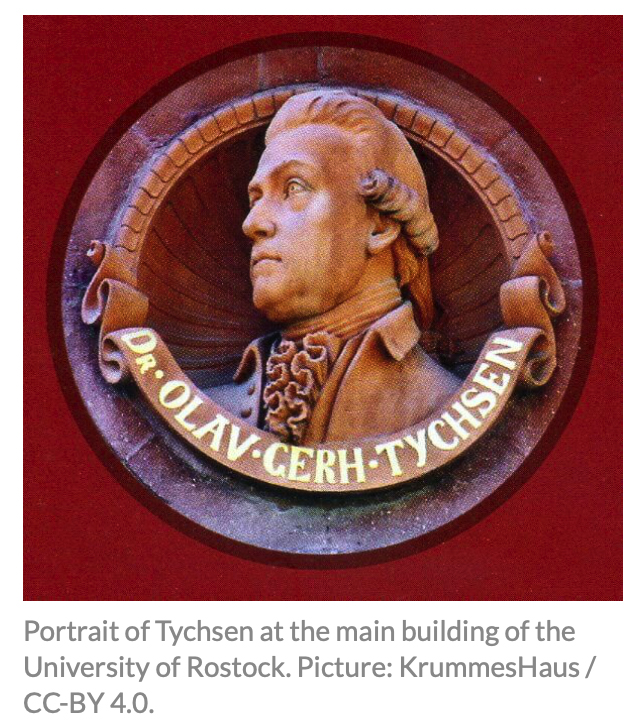
In November 16, 2006 an article by Dr. Shnayer Leiman appeared in the newly formed Seforim Blog entitled, “Two Cases of Non-Jews with Rabbinic Ordination: One Real and One Imaginary.” The “real” ordination was bestowed upon Olaf Gerhard Tychsen (1734-1815). In 1759, Tychsen received the title of Haver, a lower form of rabbinic ordination, by Moses the son of Rabbi Zvi Hirsch Lifshuetz. Tychsen is perhaps the only known case in Jewish history of a non-Jew receiving such an honor or degree.[3]

Leiman provides a biography of Tychsen. He pursued studies in Hindustani, Ethiopic and Arabic, as well as Hebrew and Yiddish and became an Orientalist of international renown making significant contributions to cuneiform studies and numismatics as well.[4] During his early years he also pursued various missionary activities in the Jewish community, largely unsuccessful by his own account. 

As Leiman notes, in 1752, while a student at the Christian Academy in Altona, Tychsen attended the lectures of R. Yonasan Eybeschutz. Leiman essentially leaves us at the point of Tychsen’s ordination, with brief mention of his subsequent academic career. What became of Tychsen’s “rabbinic” career after he received this singular distinction? Did he apply for a rabbinic position? Did he maintain any connection with the Jewish community? 

In fact, Tychsen did continue to maintain a strong connection to both rabbinic literature and the Jewish community in varying degrees throughout his life. He is perhaps best known for his involvement in the premature burial controversy, which would earn him a place of infamy in Jewish history. Tychsen taught at the university in Butzow, the residence of the Duke of Mecklenberg. During this period there was concern that physicians were misdiagnosing death, and as a result, people were being buried prematurely.[5] On February 19, 1772 Tychsen sent a letter to the Duke of Mecklenberg regarding the Jews’ burial practice, interring after waiting only three hours, where it is known that there can sometimes be misdiagnosis of death. Tychsen detailed the Jewish origins of hastening burial in general, reflecting familiarity with rabbinic literature. He claimed that the need to bury quickly was established in countries with hot climates, where the body would decompose quickly, not applicable to a country like Germany. He also reported cases of people who were supposedly buried alive.[6] On April 30, 1772, Duke Friedrich of Mecklenburg-Schwerin, in response to Tychsen’s letter, issued an order prohibiting the Jews in his realm from immediately burying their dead and requiring that they rather wait for three days after death before interment. This began what would become a worldwide halakhic debate about the halakhic definition of death and the time of burial.[7]

Tychsen was also peripherally involved with one of Jewish history’s greatest seforim collections. Rabbi David Oppenheim amassed an extraordinary collection of books and manuscripts which languished in storage for years after his death.[8] Tychsen visited the collection for three weeks, reporting on its manuscripts to the Italian Christian Hebraist Giovanni Bernardo De Rossi. He attempted to arouse the interest of potential buyers, including Catherine the Great, Empress of Russia, Duke Karl Eugen of Wurtemberg, and Archduke Frederick Francis I of Mecklenberg. His efforts were to no avail and the collection ultimately found its home in Oxford, where it remains to this day.[9]

Here we highlight a little-known, though more substantive, connection of Tychsen with the Jewish community. One year after his ordination, toward the end of 1760, Tychsen was appointed Professor of Oriental Languages at the newly established University of Bützow in Mecklenburg. It is in this capacity that Tychsen exercised a rabbinic role, becoming a university campus rabbi of sorts for a select group of Jews at the university. Though he may not actually have had a “minyan” of students, nonetheless, his impact on this select group was profound and long lasting, akin to that of a rebbe.[10]

The interactions of Tychsen with the Jewish community must be viewed through a particular lens. Tychsen was a devout Lutheran Protestant and trained and engaged in proselytizing activities in his early life. This fact remains at least in the background of all his interactions with the Jewish students at Butzow and has been evaluated elsewhere. Whether his relationships with the Jewish medical students were primarily or partially motivated by his proselytizing tendencies, or whether his proselytizing endeavors had ceased by then, is a matter of historical speculation.[11] This is not the focus of the present essay.[12]

In his capacity as a faculty member of the University of Butzow Tychsen encountered a number of Jewish students attending the university’s medical school. Though an Orientalist and not a physician or scientist, he nonetheless served as a mentor for these students to whom he was drawn by shared interests and possibly proselytizing intentions. Tychen served this role for all the Jewish medical students who attended the University of Butzow during its twenty-nine years of existence. 

The first Jewish student of the Butzow Medical School, and the first with whom Tychsen developed a relationship was Markus Moses. This relationship has been the subject of a number of dedicated essays.[13] Markus Moses was the son of Moshe ben Meir Harif Lemberger (Lvov), Chief Rabbi of Pressburg and head of its yeshiva. Lemberger, as well as his son Markus, were apparently involved in the Emden- Eybeshutz controversy.[14] Markus (Mordechai) was born in Pressburg in 1729, received a traditional Jewish education, and married. Shortly thereafter, his wife and two young children died. In 1758, after the death of his father, Markus began the study of secular subjects. Over the next few years he traveled to Germany and continued study in various cities, including the field of medicine, ultimately ending up in Butzow in 1763. Aron Isak, the leader of the Jewish community, took him under his wing and orchestrated his admission to the recently founded Butzow Medical School,[15] thus waiving the high taxes imposed upon the Jewish community for new town visitors. The faculty were impressed with Moses’ great intelligence and facility with multiple languages and accepted him, with the approval of the Duke and Professor George Detharding, the head of the faculty, with free tuition. Below is a letter in Hebrew from Paul Theodore Carpov, an Orientalist and Christian Hebraist at Butzow, supporting Moses’ acceptance to the medical school at Butzow and advocating for his financial support as well.[16]

As per the letter, Moses brought with him impressive letters of recommendation not only from the great scholars of “his nation,” but also from those of “our nation.” Carpov also notes the Duke’s approval, as well as the financial issues relating to his application. Carpov was clearly taken by the young Jewish student. 

Below is the record of matriculation of Markus Moses in 1764.

Moses clearly had a predisposition for the field of medicine and was soon relied upon by Detharding to see the latter’s private patients.[17]

Tychsen had a working academic relationship with Moses as evidenced by the multiple research papers Moses wrote under his mentorship. It is remarkable that all of the papers were on Jewish topics. I have found a number of cases, though relatively few in number, of Jewish medical students throughout the centuries who wrote their medical school dissertations on a Jewish related topic,[18] but I have never encountered any student who authored so many Jewish related papers as part of their medical training. The topics included the Samaritan Bible, a discussion of the kosher and non-kosher animals based on the work of Rambam, and an essay on the diseases of the old as reflected in Kohelet (chapter 12).[19] Moses’ graduation dissertation, discussed below, was also on a Jewish topic and was supervised by Tychsen.

Disputatio de Pentateucho Ebraeo-Samaritano, 1765[20]

Essay on kosher and non-kosher animals based on Rambam.[21]

The nature of the relationship Tychsen had with Moses, as well as with other Jewish medical students in Butzow, went far beyond the usual Professor-student model. There wrote each other dozens of letters and continued correspondence for years after graduation.[22] In one letter dated March 16, 1765[23] Moses apologizes for not responding promptly to Tychsen’s previous letter. Moses continues that soon he will either write again, or will see Tychsen in person. Moses signs the letter, hamitavek biafar raglekha.

גבר(א) דכולי() בי החכ(ם) הכולל המפורס(ם) שמו נודע בכל השערי(ם) הפרעפעסאר טיקסן

מרוב טרדות היום אין אוכל לתואר בתואר כראוי לגבר(א) כמותו ובאתי בלישנא קלילא אל תשים עלי חטאת שעדיין לא השיבני על כתב ידו הטהור מה שקבלתי ע”י ערל הבוח(ן) לבות יודע שהזמן גרמ(ה) לי רק זאת יהי(ה) לבו בטוח שהשבוע הבע” (?הא עלינו לטובה) או אכתוב לו או בנשיקת פא”פ (פה אל פה) אדבר בו[24] גם יקבל במתנה צורה של ר’ יהונת(ן) זצ”ל יותר אין לחדש כה המתאבק בעפר רגליו מרדכי מפב (?מפרשברג)ג


In the last line, Moses writes that Tychsen will also receive from him a gift of a portrait of Rav Yehonatan zt”l. Moses was obviously aware of the connection between Tychsen and Eybeshutz and believed this would be a meaningful gift. Eybeshutz died in 1764,[25] and his portrait was disseminated shortly thereafter. This is likely the portrait Moses purchased for Tychsen.[26]

As part of the requirements for the completion of a doctorate in medicine at most German universities, the student was required to engage in a public disputation on the topic of their dissertation. [27] The topic of Markus’ disputation was the analysis of a verse in Yehezkel which, according to Moses, reflects an ancient Jewish practice of placing salt of the skin of an infant as a prophylactic against disease. 

Moses engages in an expansive philological and grammatical analysis of the verse then posits that the Jews practiced this procedure and that it protected them from diseases like smallpox. The reason smallpox was prevalent during his time, Moses argues, is because people no longer routinely applied salt to the skin of infants. Moses is the only one of the Jewish medical students at Butzow who wrote his dissertation on a Jewish topic. 

Moses’ disputation was held on January 22, 1766 (11 Shevat, 5526). The event was held in a church, though Tychsen apparently noted that it was primarily a venue for non-ecclesiastic events. This may have been in deference to the halakhic concern about entering a church.[28] A number of Jewish families attended the event. Copies of the dissertation were sent to those invited to the public discourse, and additional copies were provided for the audience on the day of the event. The ceremony began with a Latin oration by the presiding professor, in Moses’ case, Professor Detharding, and was followed by the student’s reading of his dissertation. Upon completion of the reading, designated opponents presented their arguments and criticisms against the substance of the dissertation, with audience members occasionally allowed to participate. This was then followed by the candidate’s rebuttal. Tychsen served as one of the designated opponents for Moses’ disputation. 

On oath was also part of the graduation ceremony, and it typically involved avowing one’s belief in Christianity. Tychsen intervened with the Duke of Mecklenberg on Moses’ behalf to allow him to take his graduation oath invoking the name of the God of Israel as opposed to the Christian deity. He even publicly conversed with Moses in Yiddish at the graduation.[29] 

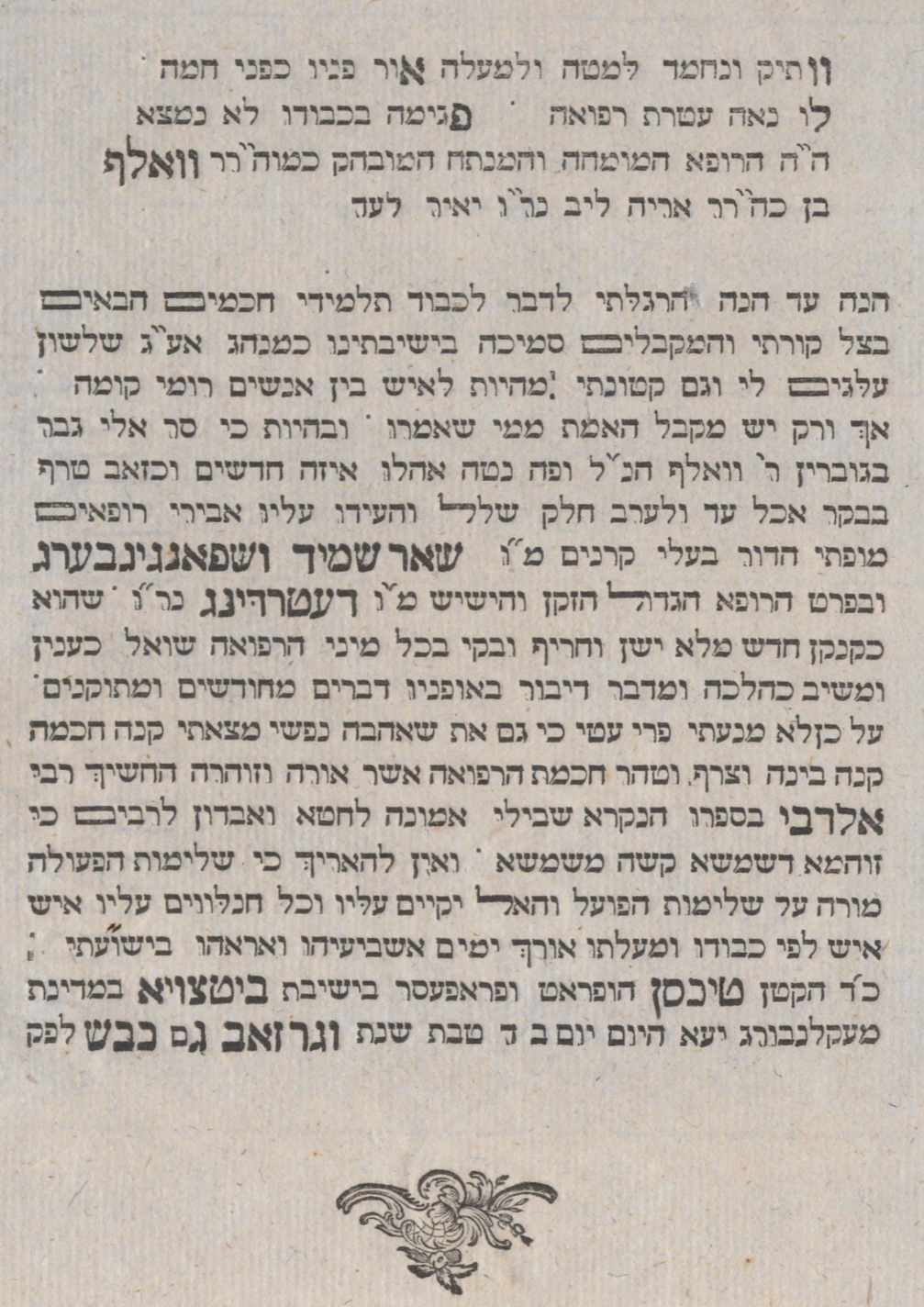
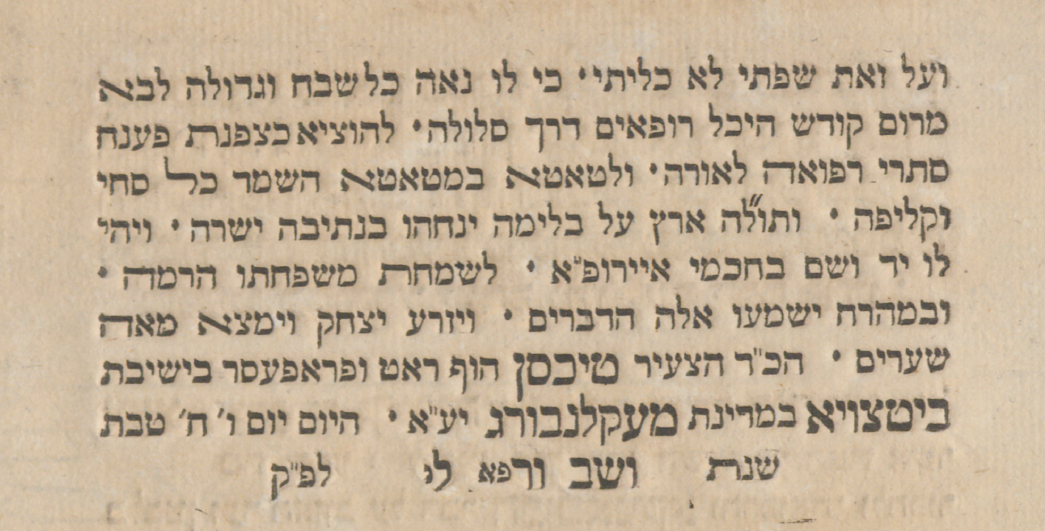
Below is the approbation of Tychsen appended to the published dissertation of Moses.

Tychsen’s freely inserts throughout allusions to rabbinic literature. He also uses a chronogram for the Hebrew year, typically done in Hebrew publications, and something Tychsen used frequently, as seen in his letters below. 

At the end of the approbation, Tychsen mentions the upcoming (second) wedding of Moses. Below is the handwritten wedding invitation of Moses to Tychsen.[30]

Both the title and signature of the invitation reflect the type of relationship they had. Moses also adds the clever pun of “hazmanah lav milsa,” assuming that Tychsen will appreciate it. 

The other letters appended to Moses’ published dissertation are also of great interest. In addition to Tychsen, another opponent at the disputation contributed a letter. Karl Leopold Carpov,[31] son of the Orientalist and professor at Butzow, Paul Theodore Carpov, who had written Moses’ letter of recommendation for admission (above). The older Carpov had died the previous year. The younger Carpov describes how beloved Markus was to his father, who considered him as another son, and, impressed by his brilliance, spent days and nights studying with him. Karl himself calls Markus his brother. While many focus on Markus’s close relationship with Tychsen, no mention has been made of his relationship with the other Orientalist, Carpov. 

The remaining letters were written by Judah Levi Strelitz,[32] the brother in law of Moses, and Meier (no other name is written), a fellow medical student. 

Moses was not the only Jewish student Tychsen took under his wings. Over the span of decades, throughout the short existence of the Butzow medical school, he endeared himself to a number of Jewish medical students.[33] He taught them, mentored them, and even financially supported them. They in turn sought his personal advice and recommendations, aided him in his intellectual quests, and invited him to their weddings.

Two Jewish medical students who matriculated in 1783 were also close with Tychsen, Isaac Salomonsen and Wulf Levinson. 

Matriculation record from University of Butzow November 24, 1783
Wulf Levinson and Isaacus Salomonsen[34]

Below is Tychsen’s letter to Levinsohn upon his graduation.[35]

Tychsen includes that the Butzow anatomist August Schaarschmidt and Professor Detharding, who had accepted Markus Moses some twenty years earlier, attest to the student’s qualifications.[36]

Below is the letter of Isaac Salomonsen presenting his dissertation to Tychsen.[37]

Below is Tychsen’s letter of approbation for Salomonsen’s dissertation in 1784. He mentions Isaac’s work in botany, which is in some form a continuation of the work of another Butzow medical student Tzadik de Meza, who died at the age of twenty-three.[38]

In another letter,[39] Salomonsen complained bitterly to Tychsen about his classmate Levinson, who had apparently been slandering him. He adds that the great personalities in the history of medicine, Aesculapius, Hygea and Hippocrates would be mourning and turning over in their graves if they knew how Levinson was misrepresenting and dishonoring them and the University of Butzow.

In the letter below dated 1784 from Salomonsen to Tychsen[40] we find a number of the elements common in Tychsen’s relationship with all the Jewish medical students. 

Salomonsen mentions the money he owes Tychsen and explains and apologizes for the delay in repayment. Tychsen routinely loaned money to the Jewish students. Salomonsen then reports that he was unable to obtain the sefer (shu”t Rabbi Moshe Alshikh) and Arabic coins Tychsen had requested. Tychsen was an avid bibliophile and his magnificent and important library was ultimately bequeathed to the University of Rostock, which absorbed the University of Butzow after its demise. It remains there to this day. Tychsen also collected Arabic coins and is considered the founding father of Islamic numismatics.[41] Salomonsen also mentions his acquaintance with a man named Mussafia[42] and his children, and how he enjoys spending time with them. Mussafia praised Tychsen and recalled something he had written on Tychsen’s behalf. He also possessed a work of Tychsen. Tychsen delighted in his name and reputation being spread throughout the Jewish community.

In sum, “Rabbi” Tychsen appears to have put his rabbinic degree to good use, at least from his perspective, cultivating an extremely devoted, loyal, and admiring, not to mention highly educated congregation. On the surface, he would be the envy of any modern rabbi, though much complexity lies beneath. While we did not focus on his proselytizing endeavors in this essay, perhaps this is one reason why Tychsen still remains to this day the only non-Jew to have received a form of rabbinic ordination. While Tychsen’s contributions to academia are vast, his tenure at the University of Butzow and his relationship with the Jewish students there represents one of the most unique, if lesser known, chapters in Jewish medical history. With the opening of the Rostock digital archives treasure trove we will certainly see further exploration of this topic. 

Edward Reichman

שנת וַתֵּעָצַ֖ר הַמַּגֵּפָֽה לפ”ק  

[1] Yitzhak Berger and Chaim Milikowsky, “Shnayer Leiman: In Appreciation,” (September 11, 2020).

[2] Moshe Haberman, “The Twice-Told Tale of R. Yonasan Eybeshutz and the Porger,” (September 15, 2020).

[3] For additional information on the semicha of Tychsen, see On the Main Line Blog, “On Non-Jews with Rabbinic Ordination, Real and Imagined: Some Notes on Dr. Leiman’s Post on Tychsen,” (September 20, 2011), http://onthemainline.blogspot.com/2011/09/on-non-jews-with-rabbinic-ordination.html.

[4] David Wilk, “Markus Moses’ Doctoral Dissertation or Who Remembers Butzow,” Koroth 9:3-4 (1986), 408-426, esp. 413.

[5] For an overview of this chapter in medical history, see Jan Bondeson, Buried Alive (Norton Publishers, 2001).

[6] For the text of the letter, see Siegfried Silberstein, “Mendelssohn und Mecklenburg,” Zeitschrift fur die geschichte der Juden Heft 4 (1930), 275-290, esp. 278-279. For reference to Tychsen as a key player in the issue of delayed burial, see for example, Rabbi Dr. Jacob J. Schacter’s doctoral dissertation, Rabbi Jacob Emden: Life and Major Works (Harvard University, 1988), 669, 723-724.

[7] For a comprehensive review of this historical chapter, see Moshe Samet, “Delaying Burial: The History of the Polemic on the Determination of the Time of Death,” (Hebrew) Asufot 3 (1989/1990), 613-665.

[8] For what follows see the comprehensive review of Oppenheim and his library by Joshua Teplitsky, Prince of the Press (Yale University Press: New Haven, 2019), 198.

[9] See Rebecca Abrams and Cesar Merchan-Hamann, eds., Jewish Treasures from Oxford Libraries (Bodleian Library, University of Oxford, 2020), and review of Paul Shaviv, Seforim Blog (July 14, 2020).

[10] The University of Butzow was an offshoot of the University of Rostock and later recombined with Rostock upon its demise. In addition, in 1817, Rostock University acquired the private library, including the manuscript legacy, of Tychsen, which included his significant Judaica and Hebraica collection. Over the last few years, the University of Rostock has devoted research efforts to explore the history of the Jewish students at the university with particular focus on their relationship with Tychsen. See Gisela Boeck und Hans-Uwe Lammel, eds., Jüdische kulturelle und religiöse Einflüsse auf die Stadt Rostock und ihre Universität (Jewish cultural and religious influences on the city of Rostock and its university) (Rostocker Studien zur Universitätsgeschichte, Band 28: Rostock 2014); Rafael Arnold, et. al., eds., Der Rostocker Gelehrte Oluf Gerhard Tychsen (1734-1815) und seine Internationalen Netzwerke (Wehrhahn Verlag, 2019). In the latter volume, see especially, Malgorzata Anna Maksymiak and Hans-Uwe Lammel, “Die Bützower Jüdischen Doctores Medicinae und der Orientalist O. G. Tychsen,” 115-133. I thank Malgorzata Maksymiak for her assistance and for providing me access to the Tychsen archives.

[11] See Wilk, op. cit. and Maksymiak, op. cit.

[12] Nimrod Zinger notes that the universities under Protestant auspices, in particular those affiliated with the Pietistic Movement, were more inclined to admit Jews, as they were interested in the possibility of converting them. He mentions as examples Yitzhak Isaac Wallich and his close relationship with Professor Hoffman at Halle, and that the student Avraham Hyman was admitted to Geissen with the intervention of the head of faculty, who was a Pietist. See his Ba’al Shem vihaRofeh (Haifa University, 2017), 263. Tychsen would certainly align with this theory.

[13] Bernhard Mandl, “Egy Magyar Zsido Orvos Nemet- Orszagban (1763-1782): Dr. Markus Moses, a Pozsonyi forabbi fia,” Evkőnyv Kiadja Az Izr. Magyar Irodalmi Tarsulat (1913), 145-165; Idem, Med. Dr. Markus Moses, Sohn der Pressburger Oberrabbiners R. Mosche Charif, praktischer Arzt in Deutschland von 1776 bis 1786: eine Lebensskizze (J. Pollak: Vienna, 1928); Wilk, op. cit.

[14] Die Juden und Judengemeinde Bratislava in Vergangen heit und Gegenwart (Brunn, 1932), 17-18, 85, cited in N. M. Gelber, “History of Jewish Physicians in Poland in the Eighteenth Century,” (Hebrew) in Y. Tirosh, ed., Shai LeYeshayahu: Sefer Yovel LeRav Yehoshua Wolfsberg (HaMercaz LeTarbut shel HaPoel HaMizrachi; Tel Aviv, 5716), 347-371, esp. 360.

[15] By this time, Jews were able to attend medical schools in Germany. Other German universities with Jewish graduates included Frankfurt on Oder, Duisberg, Halle, Geisen and Heidelberg. On the Jews in German medical schools, see Louis Lewin, “Die Judischen Studenten an der Universitat Frankfurt an der Oder,” Jahrbuch der Judisch Literarischen Gesellschaft 14 (1921), 217-238; Idem, “Die Judischen Studenten an der Universitat Frankfurt an der Oder,” Jahrbuch der Judisch Literarischen Gesellschaft 15 (1923), 59-96; Idem, “Die Judischen Studenten an der Universitat Frankfurt an der Oder,” Jahrbuch der Judisch Literarischen Gesellschaft 16 (1924), 43-87; Adolf Kober, “Rheinische Judendoktoren, Vornehmlich des 17 und 18 Jahrhunderts,” Festschrift zum 75 Jährigen Bestehen des Jüdisch-Theologischen Seminars Fraenckelscher Stiftung, Volume II, (Breslau: Verlag M. & H. Marcus, 1929), 173-236; Idem, “Judische Studenten und Doktoranden der Universitat Duisberg im 18 Jahrhundert,” Monatsschrift für Geschichte und Wissenschaft des Judentums Jahrg. 75 (N. F. 39), H. 3/4 (March/April 1931), 118-127; Monika Richarz, Der Eintritt der Juden in die akademischen Berufe: Judische Studenten Und Akademiker in Deutschland 1678-1848 (Schriftenreihe Wissenschaftlicher Abhandlungen Des Leo Baeck: Tubingen, 1974); Wolfram Kaiser and Arina Volker, Judaica Medica des 18 und des Fruhen 19 Jahrhunderts in den Bestanden des Halleschen Universitatsarchivs (Wissenschaftliche Beitrage der Martin Luther Universitat Halle-Wittenberg: Halle, 1979); M. Komorowski, Bio-bibliographisches Verzeichnis jüdischer Doktoren im 17. und 18. Jahrhundert (K. G. Saur Verlag: Munchen, 1991); Eberhard Wolff, “Between Jewish and Professional identity: Jewish Physicians in Early 19th Century Germany- The Case of Phoebus Philippson,” Jewish Studies 39 (5759), 23-34. John Efron, Medicine and the German Jews (Yale University Press: New Haven, 2001); Wolfram Kaiser, “L’Enseignement Medical et les Juifs a L’Universite de Halle au XVIII Siecle” in Gad Freudenthal and Samuel Kottek, Melanges d’Histoire de la Medicine Hebraique (Brill: Leiden, 2003), 347-370; ) Petra Schaffrodt, Heidelberg- Juden an der Universitat Heidelberg: Dokumente aus Sieben Jahrhunderten (Ruprecht Karls Universitat Heidelberg Universitatsbibliothek, August, 2012).

Below is a chart from Richarz of Jewish medical students in Germany at this time. The University of Butzow is not on this list.

[16] http://rosdok.uni-rostock.de/mcrviewer/recordIdentifier/rosdok_ppn859752100/iview2/phys_0007.iview2.

[17] For the history of Moses prior to attending Butzow, see Mandl, op. cit., and Wilk, op. cit.

[18] E. Reichman, “The History of the Jewish Medical Student Dissertation: An Evolving Jewish Tradition,” in J. Karp and M. Schaikewitz, eds., Sacred Training: A Halakhic Guidebook for Medical Students and Residents (Ammud Press: New York, 2018), xvii- xxxvii.

[19] While the first two essays are housed in the Rostock Library, I have not found a copy of this essay.

[20] http://opac.lbs-rostock.gbv.de/DB=1/XMLPRS=N/PPN?PPN=720262623.

[21] http://opac.lbs-rostock.gbv.de/DB=1/XMLPRS=N/PPN?PPN=304865346.

[22] For the letters in the archive just between Markus Moses and Tychsen, see here.

[23] http://purl.uni-rostock.de/rosdok/ppn860182010/phys_0027.

[24] This is an expression of endearment. See another example of a letter to Tychsen, from a Yehoshua Lifshutz of Apta, where the same expressions, peh el peh acronym and nishikat pihu, are used. http://rosdok.uni-rostock.de/mcrviewer/recordIdentifier/rosdok_ppn859752100/iview2/phys_0019.iview2.

[25] While we have no record of R. Eybeshutz himself communicating with Tychsen at the University of Butzow Medical School, he did send a letter to the faculty of medicine at another German medical school, the University of Halle. This letter related to the famous “heartless” chicken question initially posed to Hakham Tzvi. For more on this letter, its record in the Halle University archives, and its impact on the Emden Eybeschutz controversy, see E. Reichman, “A Letter from a Torah Sage of the 18th Century to the Medical Faculty of the University of Halle (January, 1763): The Selective Deference of Rabbi Yonatan Eybeschutz to Medical Expertise,”Verapo Yerapei: Journal of Torah and Medicine of the Albert Einstein College of Medicine Synagogue 6 (2015), 89-112.

[26] National Library of Israel, NLI 997003186660405171. See also Richard I. Cohen, “’And Your Eyes Shall See Your Teachers’: The Rabbi as Icon,” (Hebrew) Zion (1993), 407-452, esp. 418. The artist is Elimelech Polta ben Shimshon. I have as yet been unable to identify this physician. His name is not found among the Jewish medical students in German universities mentioned above.

[27] T. Broman, The Transformation of German Academic Medicine 1750-1820 (Cambridge University Press, 1996), 32ff.

[28] See Maksymiak, op. cit.

[29] See Wilk, op.cit., 417.

[30] http://purl.uni-rostock.de/rosdok/ppn859752100/phys_0081.

[31] Carpov trained at the University of Rostock before the formation of the University of Butzow. See his matriculation record, here.

[32] Strelitz, also known as Levin Hirsch Levi, lived in Altstrelitz and authored a treatise on resurrection (http://rosdok.uni-rostock.de/resolve/id/rosdok_document_0000014475) which was translated into German by Tychsen under the title,”Die Auferstehung der Todten aus dem Gesetze Mosis Bewiesen,” (1766) (http://rosdok.uni-rostock.de/resolve/id/rosdok_document_0000014215). Strelitz later became rabbi of Birnbaum, and then the first rabbi of Stockholm and Chief Rabbi of Sweden. The Jewish community of Stockholm had been founded only a few years before his arrival by Aron Isak, the sponsor of Markus Moses, Levi’s brother-in-law, and the shadchan for Moses and Levi’s sister. See Wilk, 419-420.

[33] Markus Moses (1764), Israel Joseph Meyer (1765), Justus Zadig de Meza, Isaac Heinrich Salomonsen (1783),Wolff Levinsohn (1783), Abraham Levin Spira (? Benjamin Levin, 1773), Simon Marcus (1771) and Moses Marcus(1785, son of Markus Moses). All of them-with one exception-received their doctorate in medicine in the twenty-nine years of existence of the University of Bützow.See Maksymiak,op.cit., which also addresses the emotional aspect of the ties of Tychsen with his students.

[34] http://dfg-viewer.de/show?set%5bmets%5d=http%3A%2F%2Frosdok.uni-rostock.de%2Ffile%2Frosdok_document_0000000177%2Frosdok_derivate_0000004407%2Fmatrikel1760ws-1788ws-Buetzow.mets.xml&set%5bimage%5d=54. Note that word “Judeus” appears after both of their names. It was common to identify students as Jews in university archives. For example, starting in the 1500s, Jewish students at the University of Padua were identified as“Hebrei.” There does not appear to have been any anti-Semitic associations with this identifier.

[35] http://rosdok.uni-rostock.de/mcrviewer/recordIdentifier/rosdok_ppn835297578/iview2/phys_0168.iview2. For Levinsohn’s dissertation, see http://rosdok.uni-rostock.de/resolve/id/rosdok_document_0000016729?_search=23e52c72-2882-421d-bfd5-16b218d11ae3&_hit=0. The letter was not published with the dissertation.

[36] Tychsen appears to make disparaging remarks against the work Shevilei Emunah, by Meir Aldabi. This work,written in the fourteenth century, was a primary reference on medicine in rabbinic literature for many centuries.

[37] http://rosdok.uni-rostock.de/mcrviewer/recordIdentifier/rosdok_ppn835297578/iview2/phys_0166.iview2.

[38] The Rostock archives contains a number of letters between Tychsen and de Meza.

[39] http://rosdok.uni-rostock.de/mcrviewer/recordIdentifier/rosdok_ppn835297578/iview2/phys_0176.iview2.

[40] http://rosdok.uni-rostock.de/mcrviewer/recordIdentifier/rosdok_ppn835297578/iview2/phys_0180.iview2.

[41] Rafael Arnold, et. al., eds., Der Rostocker Gelehrte  Oluf Gerhard Tychsen (1734-1815) und seine Internationalen Netzwerke (Wehrhahn Verlag, 2019); Ursula Kampmann, Maike Mebmann, trans., “Oluf Gerhard Tychsen (1734-1815), https://coinsweekly.com/oluf-gerhard-tychsen-1734-1815/(July 18, 2019).

[42] This was perhaps a relative of Binyamin Mussafia, a famous graduate of the University of Padua in 1625, and author of Musaf HaArukh, a commentary of the Sefer HaArukh.


Apostates and More, Part 2

Apostates and More, Part 2

Marc B. Shapiro

Continued from here

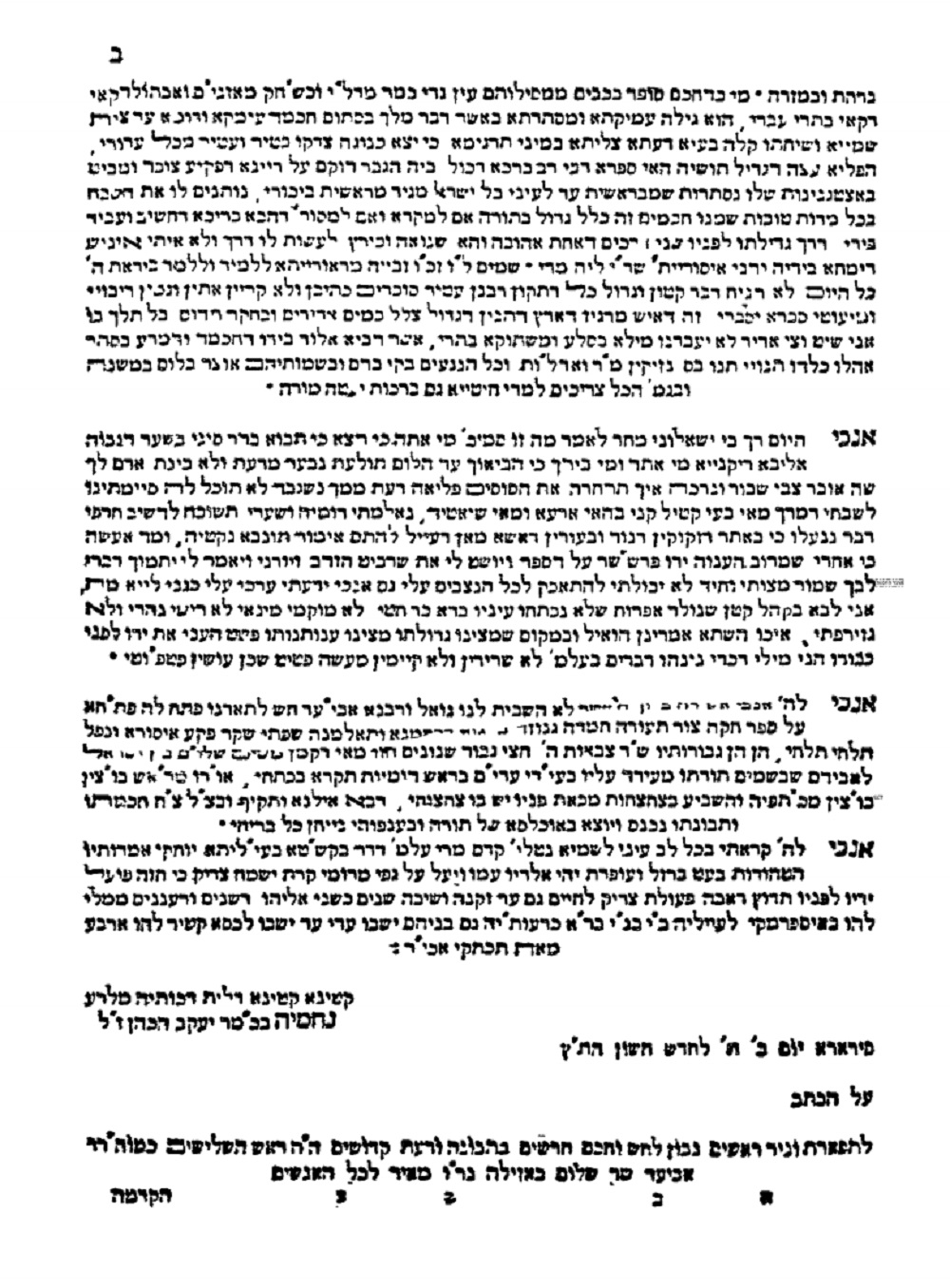
1. Another apostate was Rabbi Nehemiah ben Jacob ha-Kohen of Ferrara, who was an important supporter of R. Moses Hayyim Luzzatto during the controversy about him.[1]Here is the the final page of the haskamah he wrote in 1729 for R. Aviad Sar Shalom Basilea’s Emunat Hakhamim.

R. Isaac Lampronte, in a halakhic discussion in his Pahad Yitzhak, refers to Nehemiah, but not by name.[2] He calls him אחד מן החכמים רך בשנים אשר אחרי כן הבאיש ריחו כנודע. In R. Hananel Nepi and R. Mordechai Samuel Ghirondi, Toldot Gedolei Yisrael (Trieste, 1853), p. 229, they write about Nehemiah: שאח”כ נעשה ישמעאלי. Obviously, “Ishmaelite” is a code word for Christian.[3]

The story reported by Samuel David Luzzatto is that Nehemiah used to go to prostitutes, and when the rabbis found out about this they removed the rabbinate from him. Too embarrassed to remain in the Jewish community, Nehemiah apostatized.[4] Cecil Roth cites another Italian source that Nehemiah converted so he could marry a Christian woman. Unfortunately, his son and three daughters apostatized together with him (his wife had apparently already died).[5] 

Another apostate who should be mentioned is Michael Solomon Alexander (1799-1844), first Anglican bishop in Jerusalem. Before his apostasy, Alexander was a rabbi.[6] 

Rabbi Abraham Romano of Tunis also became an apostate. He converted at the end of the seventeenth century when R. Meir Lombrozo was appointed a dayan in his place. After Romano converted, he became well known as a Islamic preacher, and after his death his tomb was venerated by Muslims. He was known as Sidi Sofiane, and the street in Tunis with this name is named after him.[7] It is reported that in the nineteenth century R. Uziel Alheikh, author of the halakhic work Mishkenot ha-Ro’im, would recite Kaddish at Romano’s grave so God would forgive his sin.[8] 

I am sure many readers have heard of Rabbi Israel Zolli, the chief rabbi of Rome who converted after the Holocaust. Not so well known is Rabbi Daniel Zion, who was the chief rabbi of Bulgaria and after World War II served as a rabbi in Jaffa. When it became known that he was a believer in Jesus, he was forced out of his rabbinic position. There is a good deal online about Zion, and entries in English and Hebrew on Wikipedia.

Rabbi Hayyim Asher Hoffmann was another modern rabbi accused of working with missionaries. He was in Argentina at the beginning of the twentieth century, and wrote a haskamah for R. Menahem Mendel Hirschhorn’s 1904 book Magid le-Yisrael. Here is the title page of the book, followed by the haskamah.

In 1907, R. Mordechai Amram Hirsch of Hamburg informed Jewish leaders in Buenos Aires that Hoffmann had worked in the Christian mission in Hamburg. Not long after this, Hoffmann committed suicide.[9]

Hoffmann is not the only rabbi to have committed suicide. In his recent article in Hakirah, Moshe Ariel Fuss deals with R. Moshe Soloveichik’s great dispute with the Polish Agudat Ha-Rabbanim. He also discusses the suicide of one of the dayanim of Tomashov, which was related to the dayan’s role in the dispute.[10]

There was another rabbi and author of a sefer who committed suicide. Let me preface this story with some other relevant information. In the early 1990s there was a project at the Harvard library to put thousands of rare Hebrew books on microfiche. This would then be sold to major university libraries. It was a wonderful idea and involved considerable expense on the part of the company, K.G. Saur, which was carefully photographing the books. (I used to watch the photographer doing his work.) It was very costly to purchase the more than ten thousand fiches, but for a library that wanted to instantly have access to almost five thousand rare Hebrew books, this was a great solution. You can see a 1994 ad for the project here.

Unfortunately for this project, advancing technology made it obsolete almost immediately upon completion. The ability to access rare books online, on hebrewbooks.org, Otzar ha-Chochma, Google Books, and other sites, meant that microfiche readers went the way of typewriters. (I still haven’t gotten rid of my own microfiche reader, as I never know if it might come in handy).

Harvard put out a catalog advertising the microfiche set, which discussed the different genres of books included. The catalog also had pictures of a few of the title pages of the books. Here is one of the pages in the catalog.[11]


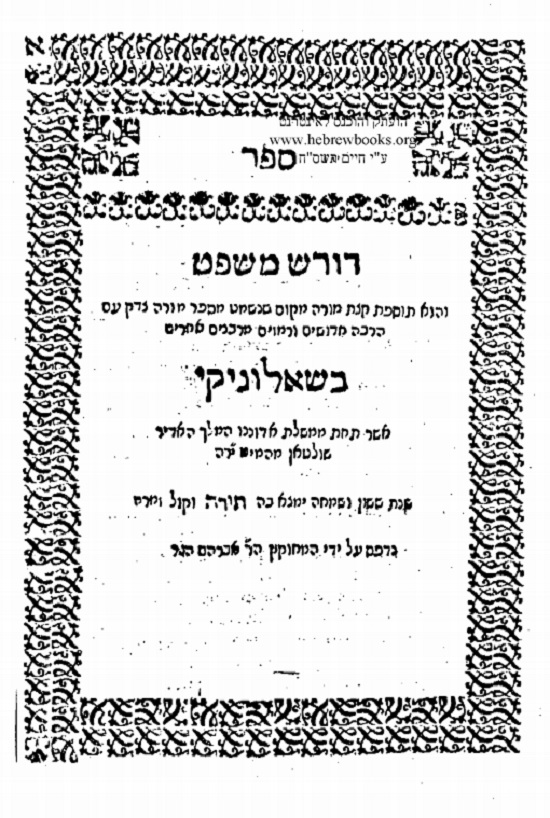
Here is a clearer picture of the title page.

The book is Derekh Yam on Tractate Meilah by Rabbi Mordechai Nahman Stieglitz, published in 1900. At the time (almost thirty years ago), I thought nothing of this, and just assumed that Derekh Yam was a random book that was picked for inclusion in the catalog. However, someone who knows a lot about seforim told me that there is no question that Derekh Yam was not randomly picked. He said that whoever chose to use this title page, when there were so many others that could have been picked, must have done so as an inside joke for the benefit of those who knew the history of Rabbi Stieglitz (which at the time I knew nothing about).

Derekh Yam is a fine commentary on a tractate that not so many have written about. Understandably, then, when people study Meilah this is one of the books they will turn to. And why not, seeing that the book has haskamot from such great figures as R. Isaac Schmelkes, R. Shalom Mordechai Schwadron, and R. Aryeh Leibush Horowitz? It also includes an approbation and a lengthy responsum (pp. 47a-58a) by R. Joshua Horowitz, the Rebbe of Dzikov (Stieglitz’s hasidic group[12]) and author of a number of volumes with the title Ateret Yeshuah.

Shortly following the appearance of Derekh Yam, Stieglitz’s life took a different turn. He not only left Poland but abandoned Torah observance as well. Meir Wunder writes that “he went to study at the University of Berlin (and not Vienna).”[13] Wunder’s information that Stieglitz studied in Berlin presumably came from Yehudah Rubenstein (see below), but I don’t know why he felt the need to correct the error that he studied in Vienna, as I haven’t seen anyone make this claim. 

It could be that Stieglitz did study in Berlin (though I know of no evidence for this), and to be sure one would need to check the archives of the University of Berlin. However, Rubenstein and Wunder were unaware that Switzerland was Stieglitz’s primary academic place of study, and his 1908 doctoral dissertation is from the University of Bern. It deals with Baraitot in Tractate Berakhot in the Bavli and Yerushalmi. You can see it here. As was typical in those days in Germany and Switzerland, the doctoral dissertation is short and insignificant. It never ceases to amaze me how easy it was in those countries to receive a doctorate.

Yehudah Rubenstein says the following about Stieglitz:[14] When his book Derekh Yam appeared it was greatly praised by Torah leaders and had an impact on talmudic scholars. It also included a long responsum from R. Joshua Horowitz. Later, a רוח שטות entered Stieglitz and he abandoned his wife and children and went to Berlin to study, where he abandoned Torah observance and fell in love with the daughter of a banker, whom he married after divorcing his wife. He then went to New York where he went into business and made a lot of money on Wall Street. However, during the Depression Stieglitz lost his money and committed suicide.[15]

Rubenstein also notes that Dzikover hasidim, at the command of their rebbe, collected all the copies of Derekh Yam that they could find, from synagogues and private homes, and destroyed them. He concludes:

.והספר דרך ים הוא יקר המציאות, כי נשארו ממנו טופסים מועטים

What used to be a rare book is now, thanks to modern technology, at everyone’s fingertips. Even if, as a result of this post, the book is removed from hebrewbooks.org and Otzar ha-Chochma, you can still see Harvard’s copy here.

In 1976, the descendants of R. Joshua Horowitz published Ateret Yeshuah: Likutei Teshuvot ve-Haskamot.


In the introduction it states that the book includes all the responsa and approbations of R. Horowitz found in the writings of others. However, they purposely did not include the approbation and responsum found in Derekh Yam.[16]

Returning to apostasy by rabbis who produced seforim, I have previously mentioned R. Profiat Duran, the Efodi (see here), and an article by Joseph Hacker has recently appeared which further complicates matters.[17] Let me first note that in Latin documents his name appears as Perfeyt, so from now on this is how I think we should pronounce it. Second, and here Hacker follows on Maud Kozodoy’s earlier research,[18] we have evidence that not only did Duran convert (this we already knew), but that he remained a Christian for the rest of his life, even when he had left Spain and could have returned to Judaism. If that wasn’t enough, both Kozodoy and Hacker believe that he married a Christian woman, as the wife to whom he left his possessions had a different name than his first wife. Yet this latter point is not conclusive. It could be that the woman he was married to at the end of his life was a Jewish woman who apostatized, either the original wife who changed her name on conversion, or a second wife. How Duran continued to write anti-Christian polemical works while living as a Christian is still a mystery.[19] His famous grammatical work, Ma’aseh Efod, the introduction to which Professor Isadore Twersky loved to study with his graduate students,[20] was also written while he was a Christian.


When the information about his life eventually filters out to the Orthodox world, presumably he will no longer be cited as an authority (although all evidence points to his important commentary on Maimonides’ Guide being written before his conversion so perhaps that can still remain in the canon).[21]

I must also mention R. Levi Ibn Habib (ca. 1480-1541), the great sage of Jerusalem. As a young man in Portugal, he converted (or was converted) to Christianity. We don’t know if at this time he was living with his father, R. Jacob Ibn Habib, who is famous for editing the Ein Yaakov. Later, R. Levi journeyed to Salonika where he was together with his father.

We do not know the precise details of R. Levi’s conversion. Scholars often write about Jews being subjected to “forced conversion.” This can mean that one is told he must convert or he will be killed. In this circumstance, Jewish law requires martyrdom, and Jewish history knows of many who chose this path.[22] Yet people who were not strong enough to accept martyrdom, and converted to Christianity to save their lives, are routinely described as forced converts. 

The other meaning of forced conversion is using actual physical force to baptize someone, as occurred in Portugal. R. Levi was in Portugal in 1497, when Jewish life there came to an end. Many Portuguese Jews converted “willingly”  in addition to the strong Christian pressure to convert, some did so to be freed from slavery or after their children were taken from them, as this was the only way to get them back. There was also the unusual circumstance that the King ordered the Jews not yet baptized to be baptized against their will, literally by physical force. (Mainstream Catholic teaching did not regard this as a valid baptism, unlike the case of one who converted to save his life, as this latter act was taken out of free will).[23] As mentioned, we do not know whether R. Levi converted “willingly” or not, but we do know that he lived as a Christian after this conversion.

In the great dispute over the revival of semikhah between R. Levi and R. Jacob Berab, R. Berab saw fit to allude to R. Levi’s conversion as a means of discrediting him. This is quite surprising, as one is not supposed to remind a ba’al teshuvah of his previous sins. Here are some of R. Berab’s words which are clearly designed to contrast his pure history with R. Levi’s history, which included living as a Christian (and thus having a Christian name).[24]

שת”ל מיום הגרוש והשמד שבספרד לעולם הייתי מורה הוראות בישראל . . . ועם היותי ברעב ובצמא ובחוסר כל לעולם הלכתי בדרכי השם יתברך ונתעסקתי בתורתו . . . ות”ל שמעולם לא נשתנה שמי אי רבי קרו לי השתא רבי הווי קרי לי אז וזה שמי לעולם . . סוף דבר שת”ל לעולם השתדלתי שלא ילך להתרעם עלי שום אות מאלף ועד תי”ו, רצוני לומר שלא נתחלל שם שמים על ידי בשום אחד מהאותיות כדי שלא יעלו לשמים להתרעם עלי

R. Levi was understandably quite offended by R. Berab’s words. He expresses his pain that R. Berab would attempt to publicly humiliate him by bringing up the difficult timein Portugal. He makes it clear that he is speaking for many others who were also in his unfortunate circumstance.[25]

לישנא בישא טובא איכא הכא, ובמקום שהיה לו לחכם להודות על האמת ולהשיב כהלכה גרם לשפוך דמי ולהלבין פנים בהזכירו אלי עונות ראשונים . . . לא לכבודי ח”ו כי אם לכבוד כל אותם שנמצאו באותה הצרה ושמו עצמם בסכנות רבות וברחו ולא ראו בטובה עד שזכו להיות בעלי תשובה ורבים מהם נפטרו לחיי הע”ה

R. Levi also mentions that he was not yet a bar onshin when he converted. The evidence we have shows that he was older than 13 in 1497, so when he says that he was not yet a bar onshin, it must mean that he was under the age of 20. This is in accord with an aggadic statement in Shabbat 89b that God does not punish for transgressions in the first twenty years.[26] The Zohar, Bereishit 118b, also states that while an earthly beit din punishes from age 13, the Heavenly Court does not punish for sins committed before age 20.[27]

R. Levi further states that despite his difficult circumstances, in his mind he remained a Jew, loyal to the one true God. While others changed his name to a Christian name, he himself never changed. He adds that while he did not merit to die al kiddush ha-shem, he hopes to achieve a complete repentance for his past. Here are some of R. Levi words, full of pathos:[28]

ואומר כי אני לא אחלל בריתי ברית התורה להשיב לזה החכם על פי דרכו . . . גם לא אכחיש המובן מדבריו בהגדלת אשמתי ולא אציל עצמי בדברתי לומר שאף אם שנו שמי בעונתי בשעת השמד אני לא שניתי, ובוחן לב וחוקר כליות יודע כי תמיד אותו יראתי, ואם לא זכיתי לקדש שמו לבי יחיל בקרבי מפני זעמו הגם שעדיין לא הייתי בר עונשין בבית דינו כלל, מכל זה לא אומר ח”ו כי שקר התנצלותי, ועוד כי יוסיף פשע על חטאתי, אדרבה אבכה יומי ולילי אוי לי אללי ואודה עלי פשעי ואומר ידעתי יי’ רשעי ופשעי וזדוני כי רבו למעלה ראש משורש פורה רוש, ואשמותי גדלו עד לשמים, אבל בטחתי על רוב חסדיך ונשענתי על רוב רחמיך, וכשם שזכיתני לצאת מן ההפכה והבאתני אל העיר ההוללה בתוך השנה להיות שונה שם בכל יום הלכה עד היום שיש יותר מארבעים שנה, כך תזכני להיות בעל תשובה שלמה, ומה גם עתה בהיותי עולב עלבון גדול אשר כזה על לא חמס בכפי, ואתה אדון הסליחות אלדי הרוחות ראה בדמעות אשר זלגו עיני עתה באנחות ויהיו בבית גנזיך מונחות לעת צאת נפשי, ואולי תזכה בהן לשוב למנוחות

It is one thing for contemporaries to slug it out and attack each other. However, that was hundreds of years ago, and in the intervening centuries both R. Levi and R. Berab have been included in the canon of gedolim. R. Berab has the additional distinction of having given semikhah (the real kind) to R. Joseph Karo. As such, we are dealing with important figures who are each deserving of great respect. This is why I found it so unusual that a twentieth-century rabbi, Benjamin Trachtman, who came to the defense of R. Levi, showed considerable disrespect for R. Berab. 

R. Trachtman was a rabbi in a few different places in the United States and Israel, and author of a number of works. In 1930 he was rabbi in Mishwaka, Indiana (near South Bend) when he published his book, Shevet Binyamin. Here is the title page.

The book comes with a number of “haskamot,” among them from R. Moshe Mordechai Epstein and R. Isaac Sher. From the “haskamot” we learn that R. Trachtman had been a student at the Chevron Yeshiva. I put the word haskamot in quotation marks, since even though that is what the letters at the beginning of the book are called, they are not haskamot at all as they have nothing to do with the book. Rather, they testify to R. Trachtman’s Torah knowledge and most of the letters are semikhah certificates.

I find it hard to believe that R. Trachtman’s teachers, and the others whose letters appear in the book, would have approved of his judgment of R. Berab, found on p. 93 of his book. He states that in looking at the dispute between R. Levi and R. Berab, you can see the difference between a person who has mussar values and one who is “lacking mussar and middot”! He claims that R. Berab is an example of someone who had great Torah knowledge but was lacking in the area of ethics. I find it incomprehensible that a twentieth-century scholar would speak this way about one of the recognized Torah sages of centuries ago.

משם יש לראות את הנפ”מ בין אדם בעל מוסר שכל דבריו שקולים במשורה בחשבון ודעת לאדם חסר המוסר והמדות, והינו[!] כי אחד מהדברים אשר אדם נכר בהם הוא בכעסו, בעת אשר מחלוקת לו עם חבירו, והנה המחלוקת של שני החכמים הנ”ל אם כי המחלוקת היה לש”ש לדינא אבל בכל זאת יש לראות שם גם זה הסוג מחלוקת של אנשים השוטים והמחלוקת מזה הסוג בולט הרבה מדברי הר”י בי רב, כי בדבריו אנו רואים התנפלות עזה בדברים בוטים כמדקרות חרב ועלילות מזויפות על הרלב”ח אשר א”א בשום אופן שמחשבון יצאו הדברים ואדרבה הרלב”ח אף כי גם הוא אינו מחריש לו אבל דבריו בנחת נשמעים במתינות ובישוב כנראה משם . . . ואל תאשימני על בואי לבקר את הר”י בי רב כי נתן לי רשות בדבריו, וסוף סוף אנו רואים בחוש גם עתה כי הוא שני דברים נפרדים כי יש למצוא תלמידי חכמים אשר גאונותם בתלמוד הוא עד למאוד וכשבאים לסוגיא “יכיר יכירנו לאחרים” הם נכשלים באופן פשוט אשר בשום אופן אין לחפות עליהם, אם לא כי יצאו מגדר המוסר

Also worth noting is Jacob Katz’s comment at the end of his classic article on the semikhah controversy.

Nor can we ignore the fact that Berab’s personal attacks on ben Habib, and the recounting of his “old sins,” were not germane. He did not dare to give explicit expression to the serious accusation about ben Habib’s conversion in his youth; instead he couched it in words of self-praise (“I myself never changed my name”). Such a tactic is evidence of an emotional need to pretend that one has done nothing wrong, which is a sign of an uneasy conscience.[29]

I must also mention R. Isaac Bar Sheshet, the great Rivash. Did the Rivash actually convert to Christianity during the anti-Jewish persecution of 1391? There is no mention of this in any Hebrew documents. However, in 1983 Jaume Riera published an article in Sefunot based on documents from the Spanish archives which show that during the 1391 anti-Jewish attacks, the Rivash, who served as rabbi of Valencia, converted to Christianity. This is attested to in three separate documents, two of which refer to the rabbi of Valencia and one of which identifies the Rivash by name. The documents show that while many Jews were killed in Valencia during the attacks, most converted to save their lives and the large synagogue was turned into a Church.[30] 

We do not know the exact circumstances that supposedly led the Rivash to convert, and the only important detail in this regard that we learn from the documents is that the Rivash’s death sentence was revoked after his apostasy. Riera offers a suggestion to explain why Rivash chose to convert, but this is based on nothing other than Riera’s vivid imagination. Yet Riera’s imaginings, which conjured up “false witnesses,” a “disgraceful crime,” and other completely fictional events, are presented in the Wikipedia entry on Rivash as actual fact.

In 1391 there occurred the great persecutions of the Jews of Spain in consequence of the preaching of Fernandes Martinez. On the first day of the persecutions, the younger brother of King John I summoned Isaac on July 9, 1391. He explained that to be able to restrain and cease the bloodshed, it would be necessary to promulgate an organized conversion of the Jews, which should obviously start with the communal leaders. Some of the leaders did relent to the heavy pressure laid upon them; but not Isaac, who held steadfast to his faith. After a couple of days, the officials set up false witnesses to testify against Isaac for a disgraceful crime. Due to this accusation, Isaac was condemned to death, by burning at the stake in the city’s central square. On July 11 Isaac was immersed, donned the robe of a Dominican and received the name Jaume De-Valencia.

Around a year and a half after the supposed conversion the Rivash escaped to Algeria, where he was known as a great posek whose responsa remain among the most important ever written. He died in 1408.

Did the Rivash convert? There were a number of rabbis, admittedly not of the Rivash’s level, who converted to Christianity in Spain, so the idea is not impossible. We also have to remember that the conversion of the Rivash, if it indeed occurred, was also only a temporary event. I do not think it casts aspersions on a great rabbi if we find that when faced with the terrible choice, he did not choose martyrdom. Everyone realizes that this is never an easy choice. This was especially the case in Spain which, unlike Germany, never had a culture extolling Jewish martyrdom (and we know that large numbers of Spanish Jews chose conversion over death).

In analyzing this matter, the real issue that experts should focus on is how reliable are the government documents. R. David Bar Sheshet is a descendant of the Rivash and recently published a biography of his illustrious forefather. Some might be surprised that in an “Orthodox” biography he deals with the matter of the supposed conversion. However, being that this is by now a well-known “fact,” it is basically impossible to ignore. Not surprisingly, Bar Sheshet argues against the claim that the Rivash converted.[31] Yet this is not simply a hagiographic perspective, and I myself am not convinced. If indeed the Rivash converted, the Church would presumably have used this as a propaganda tool, yet we have no evidence that this was ever done. Furthermore, does it make sense that no Jewish sources of the time mention the apostasy of such a prominent rabbi?[32]

Among my hobbies are visiting the graves of great Torah sages, and this hobby has taken me around the world. What about visiting the graves of the Rivash, and also R. Simeon ben Zemah Duran, the Tashbetz, both of whom are buried in Algiers?[33] Recently, I was in a Paris airport waiting for my flight to Tunisia. At very next gate was a flight to Algiers. Yet despite how easy it would be to travel there, I have yet to go. There is no Jewish community in the city and I don’t know how safe it is to visit Jewish sites. One day when I am convinced it is safe, I will travel there, much like I will travel to Baghdad to visit the grave of the Ben Ish Hai.

Fortunately, one person did make the trek to Algiers. He has put online pictures of the cemetery where the Rivash and R. Simeon ben Zemah Duran are buried, having been moved there from the original cemetery at the end of the nineteenth century. Even before the move they had been given new tombstones.[34] See his website here.

This is the Rivash’s grave. The picture is taken from the just mentioned website.

This is R. Duran’s grave. The picture comes from the same website.

Excursus

Due to the censor, or perhaps even self-censorship, in certain European prayer books negative expressions directed against idolatry, and hence bearing a possible anti-Christian interpretation, were turned into anti-Islamic expressions. See Leopold Zunz, Die Ritus des synagogalen Gottesdienstes (Berlin, 1919), p. 222. Halakhic works were also affected. See, for example, R. Abraham Danzig, Hokhmat Adam 153:1, where some printings have:

ואם שרוי הוא בין ישמעאלים

Every reader should easily grasp that in this passage ישמעאלים does not really mean Muslims.

Mishneh Torah, Hilkhot Avodah Zarah 9:4 reads:

הנוצרים עובדי עבודה זרה הן ויום ראשון יום אידם הוא. לפיכך אסור לשאת ולתת עמהן בארץ ישראל יום חמישי ויום ששי שבכל שבת ושבת. ואין צריך לומר יום ראשון עצמו שהוא אסור בכל מקום

In the textual notes in the Frankel Mishneh Torah, they cite a manuscript that reads:

ישמעלים [!] עובדי ע”ז הן ויום ששי יום אידם . . . ואין צריך לומר יום ששי עצמו

In the Shabbat morning Amidah, we read:

וגם במנוחתו לא ישכנו ערלים

Steinschneider noted that some texts replace arelim with “Ishmaelites.” See Polemische und Apologetische Literatur in arabischer Sprache zwischen Muslimen, Christen und Juden (Leipzig, 1877), p. 374. This change of text was done in Christian countries for obvious reasons and should fool no one. Thus, it is surprising that Salo W. Baron, A Social and Religious History of the Jews, vol. 6, p. 327 n. 15, writes as follows about the version that contains “Ishmaelites”:

This was hardly an invention of later generations of Jews who, living in Christian countries, sought to avoid difficulties with censors. . . . If Maimonides, in his formulation, substitutes arelim (uncircumcised) for “Ishmaelites” (cf. M.T. Seder Tefillot at the end of the second book; here switched to the Musaf prayer), this was merely in line with his general preference for Islam as against Christianity.

This is complete nonsense. Maimonides did not substitute arelim for “Ishmaelites.” The text he had, which is the authentic text of the prayer, included the word arelim.

Here is a responsum of R. Eliezer Isaac Fried, from Hut ha-Meshulash, no. 28. This responsum is cited in many of the discussions dealing Islam and halakhah, in particular with reference to mosques. In my article on the topic from many years ago I too cited this source. See “Islam and the Halakhah,” Judaism 42 (Summer 1993), p. 337.

I recently had occasion to look at this responsum again, and I see that everyone has misunderstood it. It is obvious that R. Fried is not really speaking about building a mosque but a church. When, in the responsum, he speaks of placing the crescent in the mosque, this is really code for crucifix. In fact, the entire responsum assumes that he is speaking about a religion of avodah zarah, which is the obvious sign that he is really speaking about Christianity.

My excuse for misreading the responsum years ago is that I was young and unsophisticated. However, it is very surprising to me that many great talmidei hakhamim have also cited this responsum without realizing that it is not really referring to Islam. See also here where I discuss a mistake by R. Judah Aszod who assumed that in a particular responsum the Hatam Sofer was discussing candle lighting as part of a religious celebration in India, when it is obvious that the Hatam Sofer is really referring to the practice of European Christians.

For an example of self-censorship in the opposite direction, namely, the removal of references to Islam, see this page of a responsum of R. Rahamim Joseph Franco, Sha’arei Rahamim (Jerusalem, 1881), vol. 1, Orah Hayyim, no. 5, p. 8b (look at the paragraph beginning ושוב).


2. I would like to mention some more mistakes I have found in the ArtScroll siddur and machzor. I believe that it is worthwhile to call attention to such mistakes, not only for their own sake, but because ArtScroll has made corrections in the past when these types of errors have been pointed out, and they no doubt will continue to do so in the future.

I myself have noticed a number of corrections that ArtScroll has made, and it could be that the example I will now discuss is an additional one, but I have not personally seen the correction. In response to an earlier post, R. Elazar Meir Teitz informed me that in the prayer recited before taking the Torah out of the Ark on Shabbat morning, in the words היטיבה ברצונך את ציון, ArtScroll mistakenly puts the accent in ברצונך on the penultimate syllable (and when we sing these words with the popular tune the accent is indeed on the penultimate syllable). I checked my ArtScroll siddurim and machzorim and that is indeed where the accent is. However, I have been told that in the new printings of at least one of the various ArtScroll siddurim (but not of the machzorim) this has been corrected and the accent is now on the final syllable. Can any reader confirm that this is indeed the case?

I noticed over Yom Kippur that ArtScroll has a very strange translation in the על חטא prayer. We say:

ועל חטא שחטאנו לפניך ביודעים ובלא יודעים

ArtScroll translates this: “And for the sin that we have sinned before You against those who know and against those who do not know.” I am certain that this is a mistake, and that ביודעים ובלא יודעים means, “with knowledge or without knowledge,” in other words, “wittingly or unwittingly.” I assume ArtScroll was driven to its translation because earlier in the prayer we say בזדון ובשגגה. Thus, if ביודעים ובלא יודעים means “wittingly or unwittingly,” then it is repeating what was earlier said. Furthermore, we also say earlier בבלי דעת and בדעת ובמרמה, so this would seem to be more of the same. Yet I do not think that a prayer with repetitions creates difficulties, and in this case, I think it makes more sense than translating the passage the way ArtScroll does. I am curious to see if readers agree with me.[35]

The final mistake I would like to call attention to is one that is found in most siddurim and collections of zemirot, so ArtScroll is in good company. It is noteworthy that the Koren siddur and the new RCA siddur get it right. The old RCA-De Sola Pool siddur also got it right.

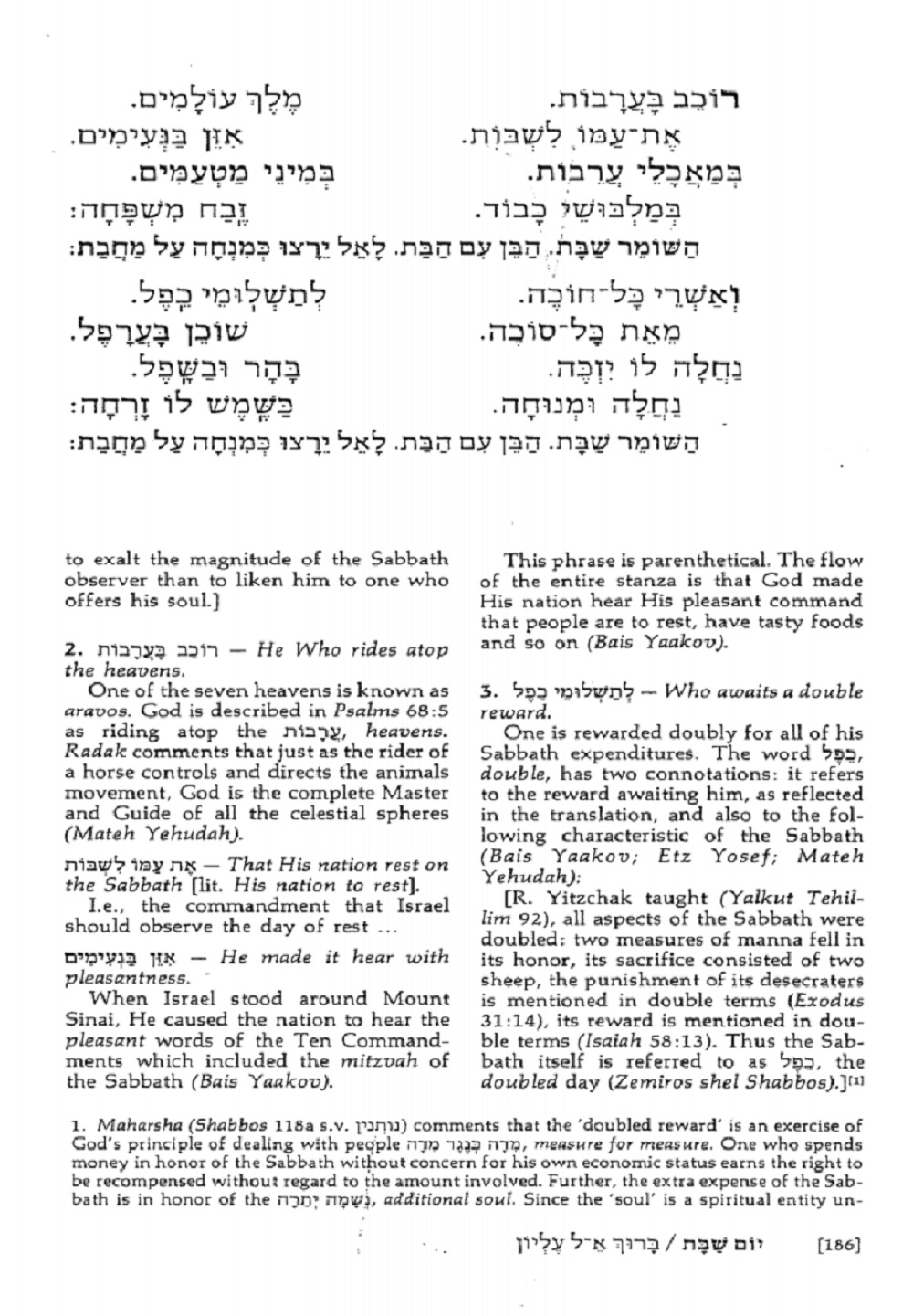
In the Sbbath song ברוך א-ל עליון, it states:

ואשרי כל חוכה
מאת כל סוכה שוכן בערפל

The meaning, as translated by ArtScroll, is:

Praiseworthy is everyone who awaits a double reward
From the One Who sees all but dwells in dense darkness.

Here is how the Hebrew page appears in the ArtScroll Zemiroth,[36] p. 186.

The problem here is that if you look at the Hebrew you can see that the English has not been translated properly. כל-סוכה does not mean “the One Who sees”, but “everyone who sees.” The word כל has a kamatz which means that it is connected to the following word. In the Zemiroth, ArtScroll puts the makef in, just like almost always in the Masoretic text of Tanakh כל with a kamatz has a makef.[37] But the meaning of the passage is the same even without the makef, and in the siddur ArtScroll does not include it. 

In order for the passage to mean “the One Who sees all,” the word כל must have a holam.[38] This point is actually made by R. Nota Greenblatt, who states that the version found in ArtScroll and many others, where the word כל has a kamatz, is nothing less than heresy since God has been replaced by humans.

3. I want to call readers’ attention to an important volume that has just appeared. Seforim Blog contributor R. Moshe Maimon has published the first volume of his edition of R. Abraham Maimonides’ commentary on Genesis. Maimon’s improvements on the earlier translation from the Arabic make the work a pleasure to read. His explanatory notes are simply fantastic, taking into account all relevant sources, both traditional and academic, that can illuminate the text. This will now become the standard edition of R. Abraham’s commentary, and I can think of no greater honor for Maimon than this. Hopefully, this publication will lead to a surge of interest in the commentary of R. Abraham, much like R. Kafih’s new translation of Maimonides’ Commentary on the Mishnah did for this work. The book is available at Biegeleisen, and can also be purchased online at Mizrahi books here.


[1] See Isaiah Sonne, “Avnei Binyan le-Korot ha-Yehudim be-Italyah,” Horev 6 (1941), pp. 100ff.; Elisheva Carlebach, The Pursuit of Heresy: Rabbi Moses Hagiz and the Sabbatian Controversies (New York, 1990), pp. 237ff.
[2] This is noted by Carlebach, The Pursuit of Heresy, p. 331 n. 18.
[3] See Excursus
[4] Peninei Shadal (Przemysl, 1888), p. 12. See the recent discussion of Nehemiah by Yaakov Spiegel in Hitzei Giborim 11 (2019), pp. 1146ff. Spiegel mentions that Torah writings from Nehemiah remain in manuscript. He also notes that in a recent printing of Basilea, Emunat Hakhamim, Nehemiah’s haskamah was removed (and perhaps surprisingly, the printer acknowledged that it was removed).
[5] Cecil Roth, Studies in Books and Booklore (Farnborough, England, 1972), p. 44 (Hebrew section).
[6] See Alexander’s appendix to John Hatchard, The Predictions and Promises of God Respecting Israel (London, 1825), p. 38. See also Kelvin Crombie, A Jewish Bishop in Jerusalem (Jerusalem, 2006), p. 13, and the entry on him in the Dictionary of National Biography, here.
[7] R. Joseph Tanugi, Toldot Hakhmei Tunis (Bnei Brak, 1988), pp. 233-234; R. Abraham Khalfon, Ma’aseh Tzadikim (Jerusalem, n.d.), p. 309.
[8] L’Univers Israelite, Oct. 7, 1932, available here; André N. Chouraqui, Between East and West: A History of the Jews of North Africa, trans. Michael M. Bernet (Philadelphia, 1968), p. 72.
[9] See Victor A. Mirelman, Jewish Buenos Aires, 1890-1930 (Detroit, 1990), p. 89.
[10] “Ha-Rav Moshe Soloveichik u-Ma’avakav be-‘Moetzet Gedolei ha-Torah’ ve-‘Agudat ha-Rabbanim’ be-Polin,” Hakirah  25 (2018), p. 47.
[11] I thank Menachem Butler for sending me this image.
[12] See Yehoshua Mondshine, Ha-Tzofeh le-Doro (Jerusalem, 1987), p. 37.
[13] Entzyklopedia le-Hakhmei Galizia, vol. 5, col. 154.
[14] Ha-Darom (Tishrei 5723) 16 p. 150.
[15] Another rabbi who met an unfortunate demise was R. Isaiah ha-Levi, author of the first Ba’er Heitev on the Shulhan Arukh (not Ba’er Heitev found in the standard editions). R. Meir Eisenstadt, Meorei Esh, beginning of parashat Shemini, tells us that on his way to Eretz Yisrael, R. Isaiah, his wife, and daughter were killed in a fire in their hotel. Regarding the different commentaries with the name Ba’er Heitev, see R. Yehiel Dov Weller in Yeshurun 17 (2006), pp. 825ff. 

In the old translation of Maimonides’ commentary to Mikvaot 4:4, he writes about a certain rabbi: ונהרג על זה באמה ובזרוע. This led to all sorts of speculations about which rabbi was killed. However, this is a mistaken translation. See R. Kafih’s note in his new translation, and also his commentary to Mishneh Torah, Hilkhot Mikvaot, vol. 2, p. 461. In a future post, I will mention a few rabbis who were killed by Jews, as well as cases of attempted murder. For now, I merely want to call readers’ attention to Prof. Shnayer Leiman’s email published in Chaim Dalfin’s new book, Torah Vodaas and Lubavitch (Brooklyn, 2019), p. 203.

There was a rabbi who allegedly was killed by mobsters. I heard from reliable sources that he was beaten, rolled in the snow and left to die. (Perhaps the goal was to frighten him, not kill him.) He survived the ordeal, but died shortly thereafter from pneumonia. The rabbi was Rabbi Yaakov Eskolsky, famous author and Rabbi of the Bialystocker Shul on the Lower East Side. I’m not aware of any written account that mentions this.

Leiman also mentions that Rabbi Israel Tabak, the son-in-law of R. Eskolsky, in discussing his father-in-law’s death mentions nothing about any foul play. See Tabak, Three Worlds (Jerusalem, 1988), p. 156. 

R. Eskolsky served as a rabbi in Scranton for a few years. See his biography here. I previously wrote a bit about him here. In Tabak’s book, p. 152, it mentions that R. Eskolsky celebrated Thanksgiving, and that at a Thanksgiving dinner Tabak attended, he “emphasized the significance of Thanksgiving Day for our people who came to the United States from Eastern Europe, and especially from Russia. Coming to America, the land of freedom and opportunity, was like emerging from darkness into light and certainly deserved to be marked by thanksgiving, both to G-d and to America that treated its citizens so well.” I believe that for any non-hasidic rabbi in America in the early part of the twentieth century, the notion that there was something religiously problematic with celebrating Thanksgiving would have been incomprehensible.

Shimon Steinmetz sent me this picture from the Forverts, Oct. 23, 1930. I find it fascinating that R. Eskolsky served as a justice on the “Jewish Arbitration Court.” 

[16] See Yehoshua Mondshine, “Aminutan shel Iggerot ha-Hasidim me-Eretz Yisrael,” in Katedra 64 (1992), p. 89 n. 152.
[17] “Perfeyt Duran be-Italyah ve-Goral ha-Sefarim ha-Ivriyim Aharei Meoraot 1391,” Ba-Derekh el ha-Modernah: Shai le-Yosef Kaplan (Jerusalem, 2019), pp. 61-91.
[18] The Secret Faith of Maestre Honoratus (Philadelphia, 2015), pp. 20, 28.
[19] See Kozody’s suggestions to explain this, Secret Faith, pp. 30ff. Regarding when his polemical works were written, see Benzion Netanyahu, The Marranos of Spain (Ithaca, 1999), pp. 221ff.
[20] Twersky discusses this text in “Religion and Law” in S.D. Goitein, ed., Religion in a Religious Age (New York, 1974), pp. 69-82. Regarding Twersky, I recently discovered this video of one of Chaim Grade’s lectures at Harvard from October 1981, and Twersky introduces him at the beginning. Unfortunately, only the first part of the lecture appears in the video. If anyone knows if the second part exists, please let me know. Menachem Butler was kind enough to send this page from the Boston Jewish Advocate, Oct. 22, 1981, announcing the Grade lectures.

Grade had earlier lectured at Harvard in 1977. Regarding these lectures, see Allan Nadler’s recollections here.
[21] Here is the first page of an article by Yehudah Hershkowitz that appeared in Yeshurun 9 (2001), p. 572.

Note how Duran is referred to as “Rabbenu”. The author is aware that Duran apostatized, but he, like everyone before him, assumed that Duran later returned to Judaism.
[22] Regarding martyrdom, R. Moshe Feinstein makes an interesting point in Iggerot Moshe, Yoreh Deah III, no. 108 (p. 353). We all know that a convert must accept the mitzvot for the conversion to be valid. What about if a convert honestly states that while he accepts the mitzvot, if confronted with violating a prohibition for which martyrdom is required, he knows that he will not have the courage to be martyred? Is this to be regarded as rejecting a commandment which means that he cannot be converted? R. Moshe says no, as acceptance of the mitzvot means that you intend to fulfill them under normal circumstances, and extreme cases such as those that involve martyrdom do not impact this acceptance.
[23] For R. Elijah Capsali’s report of the forced conversion, by actual physical force, see Abraham Gross, Struggling with Tradition (Leiden, 2004), p. 81. See also the Christian report in E. H. Lindo, The History of the Jews of Spain and Portugal (New York, 1970), p. 330. Another forced convert in Portugal who later became famous was R. Solomon Ibn Verga, author of Shevet Yehudah. R. Joseph Garson, who later escaped to Salonika, also appears to have undergone forced conversion in Portugal. See Joseph Hacker, “Li-Demutam ha-Ruhanit shel Yehudei Sefarad be-Sof ha-Meah ha-Hamesh Esreh,” Sefunot 2, new series (1983), pp. 29ff. As with R. Levi, we do not know the circumstances of the forced conversions of R. Ibn Verga and R. Garson. Since it appears that R. Jacob Ibn Habib was also in Portugal in 1497, then presumably he too was converted, either “willingly” or not. See, however, Marjorie Lehman, The En Yaaqov: Jacob ibn Habib’s Search for Faith in the Talmudic Corpus (Detroit, 2012), pp. 26-27. Regarding whether R. Isaac Karo was in Portugal then, or if he succeeded in leaving prior to the mass conversion, see Karo, Derashot R. Yitzhak Karo, ed. Shaul Regev (Ramat-Gan, 1995), pp. 9-10.
[24] Kuntres ha-Semikhah, in Teshuvot R. Levi Ibn Habib, no. 147, section 4 (p. 39 in the new edition).
[25] Ibid., no. 148 section 5, p. 52.
[26] R. Solomon ben Adret, She’elot u-Teshuvot ha-Rashba, vol. 6, no. 179, explains that this is because a person’s intellect is not sufficiently developed until age 20.
[27] R. Moses Sofer rejects the notion that one is not punished by Heaven for sins committed before age 20. See She’elot u-Teshuvot Hatam Sofer, vol. 2, Yoreh Deah no. 155. For more on this matter, see R. Pinchas Zabihi, Ateret Paz, vol. 3, no. 1, and here.
[28] Teshuvot R. Levi Ibn Habib, no. 148, section 5 (p. 53 in the new edition).
[29] Divine Law in Human Hands (Jerusalem, 1998), p. 170.
[30] Riera, “Le-Toldot ha-Rivash bi-Gezerot 1391,” Sefunot 17 (1983), pp. 11-20.
[31] Rabbi Yitzhak Bar Sheshet (Beitar Ilit, 2017), pp. 83ff.
[32] In this post, I have not dealt with accusations of rabbis’ apostatizing that arose in the contexts of disputes. For an example where hasidim accused one of their mitnagedic opponents, R. Leib Rakowski of Plock, of apostasy and also of marrying a non-Jewish woman, see Marcin Wodzinski, Studying Hasidism (New Brunswick, N.J., 2019), p. 120. This occurred after they tried to beat up the rabbi. See ibid., p. 119.
[33] In rabbinic literature Algiers is written as ארג’יל. This is due to the influence of the Spanish exiles who settled in North Africa, as in Spanish Algiers is pronounced as Argel. I was surprised to see that a generally careful scholar, Tuvia Preschel, Ma’amrei Tuvyah, vol. 1, p. 58, recorded the following false information.   

הם [יהודי אלג’יר] לא רצו לכתוב אלגיר שהיא מלשון אלה וגם “גירא בעיניך השטן” וע”כ הסבו שם העיר לארג’יל, לשון אור וגיל וסימנה טוב


[34] Regarding the transfer of the remains, see Bar Sheshet, Rabbi Yitzhak Bar Sheshet, pp. 83ff.
[35] In his Derashot Kol Ben Levi, p. 130, R. Jehiel Michel Epstein’s explains ביודעים ובלא יודעים as follows:

היודעים המה העבירות שאין להם מבא בהיתר כלל והלא יודעים הם המותרות מההיתר שאין האדם מרגיש בנפשו כלל שזהו חטא וא”כ אין ידוע כלל שחטאנו לפניך

For a homiletic explanation that is found in many different sources, see R. Zvi Hirsch Ferber, Siah Tzvi, p. 162:

וזה שאנו מתודים על חטא שח”ל ביודעים, זה שהגיע להוראה ואינו מורה, ובלא יודעים, שלא הגיע להוראה ומורה

Yisrael Meir Lau,Yahel Yisrael: Avot, ch. 4, p. 246, writes:

בלא יודעים – הכוונה לחטא שחטאנו, מחמת שהיינו במצב של “לא יודעים”, שבאשמתנו לא ידענו את הדין, ועברנו על  העבירה בלא לדעת כלל שיש בכך איסור. חומרתו של מעשה הנעשה “בלא יודעים” היא, ממש כמעשה הנעשה “ביודעים”, ועל שניהם כאחד אנו מתוודים ומבקשים שהקב”ה יסלח לנו ביום הכיפורים

[36] My copy was published in 1979. Later, ArtScroll changed the transliteration to Zemiros.
[37] כל with kamatz is pronounced as kamatz katan. The only exceptions in Tanakh are Psalms 35:10: כל עצמתי, and Proverbs 19:7: כל אחי-רש. In these cases there is no makef after כל and therefore it is pronounced as kamatz gadol.

Isaiah 40:12 is another biblical verse with the word כל without a makef and it too has a kamatz gadol:

וכל בשלש עפר הארץ

Yet the word כל here is completely different than all other appearances of כל in Tanakh. This passage means, “and comprehended the dust of the earth in a shalish-measure.” The word כל we are all familiar with is from the root כלל. The word כל in Isaiah 40:12 is from the root כול.
[38] I found another mistake in ArtScroll’s version of the song, and again, many others, including Koren and the new RCA siddur, make the same mistake. Yet the RCA-De Sola Pool siddur gets it right, as does Birnbaum. In the first stanza it reads עד אנא תוגיון. ArtScroll vocalizes the last word as “tugyon” (shuruk, holam) Yet this is a verse in Job 19:2 and the correct pronunciation is “togyun” (holam, shuruk).

The fifth stanza ends רוחו בם נחה. ArtScroll puts the accent in נחה on the penultimate syllable. However, in the context of the song, where all the other stanzas have the parallel rhyming word with the accent on the last syllable, I don’t think there is any doubt that נחה should also be read with the accent on the last syllable, despite what the grammatical rule may say.


Apostates and More, Part 1

Apostates and More, Part 1

Marc B. Shapiro

Continued from here

  1. I am aware of two seforim found on both Otzar haHochma and Hebrewbooks.org which were written by men who later apostatized (there are probably more). There are also two seforim on Hebrewbooks.org which were written by someone afterhe apostatized. I realize that after this post appears it is possible that the books mentioned will be removed from Otzar haHochma and Hebrewbooks.org (as has happened in the past with problematic books that I called attention to). I am therefore providing links so that readers can access the books even if they are removed.

The first book by someone who later apostatized is Solomon Florentin’s Doresh Mishpat, published in Salonika in 1655. As mentioned, appears on both hebrewbooks.org and Otzar haHochma.

Here is the title page.


You can view the entire book here here.

Florentin was a follower of Shabbetai Zvi and was one of the group of Salonikan Jews who converted to Islam following Shabbetai Zvi’s own conversion.[1]

The second future apostate whose book appears on Hebrewbooks.org and Otzar haHochma is Aaron Israel Briman. He wrote Avnei Zikaron, which was published in Amsterdam around 1880.[2] Here is the title page.


You can view the entire book here here.

Briman, who appears to have been an ordained rabbi, was a real scoundrel. After his apostasy, which seems to have been done completely for monetary reasons, he wrote the infamous anti-Semitic work Der Judenspiegel and assisted the anti-Semite August Rohling in his attacks against the Talmud and Judaism in general.[3]  He also abandoned his wife and two small children, leaving his wife an agunah. After becoming a Christian, he engaged in various monetary frauds which landed him in prison. According to the article here in the Jewish Encyclopedia, he studied in the Rabbinical Seminary of Berlin, a point confirmed by Gotthard Deutsch.[4]

As for seforim written by someone after he converted, this brings us to Jehiel Zvi Lichtenstein (1827-1912; in his earlier years the last name he used was Hirschensohn, and I don’t know why he changed it). Detailed biographical information about Lichtenstein can be found in a good article by Samuel Leib Zitron included in volume 2 of his Me-Ahorei ha-Pargod: Mumarim, Bogdim, Mitkaḥashim that fortunately is also found online here. There is, however, no scholarly article on the writings of Lichtenstein, and although he was infamous in his day, today he is almost entirely forgotten.[5]

Lichtenstein was born in Bessarabia and was already an accomplished scholar as a young man. He was married at 18 to the daughter of a wealthy man, and he could have entered the rabbinate like so many others in his position. Yet as described by Zitron (and it appears that his description has been livened up, so it is not always clear if the facts are correct), various circumstances led him to divorce his wife, abandon his home, and convert to Christianity and become an enthusiastic missionary. Incredibly, even after converting to Christianity he continued to live as a Jew, moving to the town of Lubavitch where by all outward appearances he was a hasid of the Lubavitcher Rebbe.

Following this he went to Berlin where he was an open missionary. He then returned to Russia where he married the sister of the well-known Jewish-Christian missionary, Joseph Rabinowitz. In 1995 Kai Kjaer-Hansen published the English version of his book on Rabinowitz,[6] referring to him on the book’s cover and title page as the “Herzl of Jewish Christianity.”[7]

In 1872, after his apostasy, Lichtenstein published his book Derekh ha-Kodesh. The book was published in Berlin. I don’t know why the title page says it was printed in Russia, though this probably has something to do with taxes or customs for books sent to foreign countries.

As you can see, this is the second printing and Lichtenstein gave himself a fancy rabbinic title. I have never seen a copy of the first printing, but Ephraim Deinard states that Lichtenstein’s name did not appear on the title page of this edition.[8]

Zitron tells us that Lichtenstein returned to his hometown where he distributed Derekh ha-Kodesh among the local Hasidim. The book reads like a real rabbinic text, and on the very first page he cites both the Baal Shem Tov and R. Shneur Zalman of Liady, and he continues to cite R. Shneur Zalman constantly in the book. It is obvious from what he writes elsewhere that he pretended to be a Chabad hasid. Thus, in his self-defense published in Ha-Magid [9], when he was still pretending to be a faithful Jew, he mentions that he had lived in the town of Lubavitch. In seeking to defend Derekh ha-Kodesh from the accusation that it had Christian elements, he calls for it to be examined by leading Chabad rabbis to see if there is anything problematic in the book.

.ואקרא לשופטי צדק את רבני חב”ד הגדולים אשר ירדו לעמקי הלכה של הקבלה והחסידות הדבקים באלהים חיים המה יאמרו אם עולתה בו

His call was taken up by Jacob Solomon Alschwang who claimed to have a lot of knowledge in Kabbalah and hasidic thought, “like one of the great Chabad rabbis.”[10]  I am sure that this self-judgment contains a good deal of exaggeration, yet Alschwang did come from a Chabad background and received a traditional Chabad education before leaving that world for the world of Haskalah.[11]

Alschwang identifies a number of passages in the book which he thinks are evidence of the author’s Christian sentiments.[12] Experts in Kabbalah and Hasidism can weigh in on whether Alschwang is correct or if the passages he points to can also be supported by classic kabbalistic or hasidic texts.

One of the passages Alschwang points to is on p. 68, which according to Alschwang means that Lichtenstein is speaking of God taking physical form on earth.

וע”ז נא’ עיני ה’ המה משוטטים בכל הארץ (זכריה ד, י) שענין משוטטים היינו שמתפשטים ומתלבשים בכל הארץ, והש”י משגיח בארץ ע”י שמתלבש בהם כי המה הם כלים רוחניים שהאציל וברא להשתמש בהם, והם מתפשטים ומתלבשים בתחתונים, והמה כמו העינים אל [של] האדם שהאדם יביט בהם והשכל מתלבש בהם לראות, וכן הוא הענין באזני ה

So, what do readers think? Does this passage speak of God literally assuming some bodily form? Furthermore, can we find similar passages in standard kabbalistic texts?

Alschwang also calls attention to Derekh ha-Kodesh, p. 42, where Lichtenstein states that God will appear to prophets in a physical form. Although Lichtenstein adds that God does not really take physical form, but only appears this way, Alschwang sees this as an example of Lichtenstein is trying to push a Christian notion. I guess the idea would be to first get Jews used to the notion that God can be imagined looking like a human, and the next step is to identify a real flesh and blood human as God. Here are Lichtenstein’s words:

כי העולם הזה בכללו הוא אלהות גמור מצד שאינו נראה לנו, אך לעינינו עשה האלהים על עצמו גילוי וצורה ויתחפש בדמות גשמי (זיך זעלבסט ענטשטעלט) אשר הנבראים ישיגו בחושיהם הגשמיים (אשר גם הם רק לעיניהם) דמות וצורה גשמית ארבע יסודות ומורכביהם, דומם צומח חי מדבר וכו’, אולם לעומת הש”י הכל אלהות גמור ואין פה גילוי ודמות גשמי ומהות כלל

Alschwang also notes that on page 7 Lichtenstein makes use of the famous expression from Matthew 19:24, “It is easier for a camel to go through the eye of a needle,” which is not what one would expect to find in a rabbinic text.

At one time in his strange life, Lichtenstein actually began serving as a hasidic rebbe of sorts, praying for people and handing out amulets. Ephraim Deinard, who knew Lichtenstein from the latter’s missionary days in Berlin in the 1870s,[13] claims that it was he who exposed Lichtenstein as a fraud. He happened to be in Lichtenstein’s town on a business trip in 1879, and that is how the townspeople learned that the supposedly pious rebbe was actually a Christian missionary.[14] Even after being exposed Lichtenstein did not give up, and a few years later he was in Podolia serving as a rabbi![15]

Derekh ha-Kodesh is only found on hebrewbooks.org, not on Otzar haHochma. You can view it here. The copy on hebrewbooks.org is missing the second half of the book. It appears that not all printings of the book contained the second part which includes a commentary on various biblical passages. (Alschwang mentions that his copy only had 84 pages, which means that it also was missing the second half.). Here is the copy which is found at Harvard, which is almost twice as long as the copy on hebrewbooks.org.[16] Interestingly, in the copy found on hebrewbooks.org (and also in the complete Harvard copy), on the second page, there are corrections applicable to the missing second half of the book. Also of note is at the bottom of this page of corrections it states that the haskamot for the book were published in the first printing. As far as I can determine, no copies of this first printing have survived.

Zitron tells us that in 1882 Lichtenstein came to Odessa with the manuscript of his book, Sheva Hokhmot. He received haskamot for the book from rabbis and maskilim. Here is the title page of the London 1912 edition of Sheva Hokhmot and you can view the book here.[17]

This is a very helpful work which in alphabetical fashion discusses all the geographical sites mentioned in the Talmud and Midrash.[18] The book previously appeared in Lemberg in 1883 and can be viewed here. The title page of the Lemberg edition mentions that Lichtenstein wrote the responsa volume Keren ha-Tzvi and the book Megaleh Sod. While Keren ha-Tzvi never appeared, Megaleh Sod, which is a commentary on the Bible, was published in Budapest in 1906 and can be viewed here. It is incredible that an apostate would write such a commentary which on its face looks like any other traditional commentary. (I haven’t read it carefully to see if he also inserts Christian interpretations.)

The actual text of both editions of Sheva Hokhmot is the same, but there are some differences between the prefaces of the two volumes. In the first edition the preface is longer, contains some notes, and also includes a list of the rabbis and scholars who prepaid for the book. In the London edition, Lichtenstein included a passage from R. Aaron Hyman’s Toledot Tannaim ve-Amoraim (London, 1910), vol. 1, p. 15, which greatly praises the book and the author, with Hyman saying that Lichtenstein is “wise in the wisdom of the Torah.” Hyman obviously must have been unaware of who Lichtenstein was.

That people did not realize who Lichtenstein was explains how a copy of Derekh ha-Kodesh was bound with regular traditional seforim (including R. Moses Cordovero’s Tomer Devorah), as seen in a recent auction here.[19]

As you can see from the title pages of Derekh ha-Kodesh and Sheva Hokhmot, both of these books, now found on hebrewbooks.org, came from the Library of Agudas Chassidei Chabad.[20] You can also see from the title page of Sheva Hokhmot that, before it was acquired by the Library of Agudas Chassidei Chabad, it belonged to the great scholar Jacob Zallel Lauterbach.

With reference to Lichtenstein, Steven J. Zipperstein writes as follows:

His Sheva Hokhmot [The Seven Wisdoms] was introduced by letters of praise from important scholars such as Mattityahu Strashun, Samuel Joseph Fuenn, and others, though the book appeared three years after Lichtenstein was first denounced as a missionary (by the rather mercurial and widely disliked Ephraim Deinard) in the newspaper Ha-Maggid.[21]

Zipperstein’s information about the letters in Sheva Hokhmot comes from Zitron, who also claims that these haskamot were forged by Lichtenstein. Yet there are no such haskamot from these figures, forged or otherwise. In the 1883 edition of the book, p. 6, we are given a list of people who wrote haskamot and letters of praise (including R. Joseph Dov Soloveitchik, the Beit ha-Levi), but these were never published, not even in the 1912 edition. I have no reason to doubt that these haskamot and letters of praise were authentic, otherwise how could he have publicly announced in the various authors’ lifetimes that he received letters from them? However, these letters were also written before news of his apostasy was known.

What makes Derekh ha-Kodesh and Sheva Hokhmot so interesting is that they were both written after Lichtenstein had become a Christian, something you would never know from the title pages. I don’t know of any other such books, namely, seforim written in a rabbinic style by someone who had already converted to Christianity.

This is a picture of Lichtenstein that I found on a Messianic Jewish website here.


Here is the title page of Lichtenstein’s Hizuk Emunat Emet bi-Yeshua Mashiah ben ha-Elohim.[22]


You can find the entire book here. The author is listed as אבן צהר, which is simply the Hebrew translation of the name Lichtenstein. Also, צהר is the abbreviation of צבי הירשנזון, the birth name of the author.[23]

Lichtenstein also wrote a multi-volume Hebrew commentary on the New Testament, which you can see here. The commentary is preceded by a helpful article on Lichtenstein by Jorge Quiñónez. Lichtenstein’s revised commentary on Matthew can be seen here.[24]

There is an entry on Lichtenstein in Zalmen Reyzen’s Yiddish Lexicon.[25] Yet one of the sources in the bibliography is about Isaac Lichtenstein. This Lichtenstein is often confused with Jehiel Zvi Lichtenstein whom we have been discussing. However, they were two separate people, and Isaac Lichtenstein (1824-1908), who was actually a rabbi, was also a believer in Jesus (although it is reported that he never actually converted to Christianity).

This is his picture taken from here.

The following picture comes from here

There was another Chabad hasid, Israel Landau, who converted to Christianity and became the chief Russian censor. In Ruth Bachi-Kolodny’s article about him, entitled “The Chabadnik Who Became Czarist Russia’s Chief Censor for Jewish Writings,” available here, he is even referred to as a rabbi, but this is certainly not correct, and the description of him as a rabbi does not appear in the original Hebrew version of the article here. The article states:

Although he became an apostate Jew, he remained, deep in his heart, a devoutly religious Hasid and continued to look the part with his short trimmed beard, earlocks, skullcap and long, broad kapota ‏(the long black jacket of members of Chabad‏); he would eat only in kosher restaurants. In fact, Landau sent his wife and only daughter, Menuha, to Switzerland so they could live as Jews without any external hindrances.[26]

Ben Zion Dinur, who was from a Chabad family, mentions that it was jokingly said about Landau that even after apostatizing he still kept the holiday of 19 Kislev.[27] As for Landau’s wife and daughter, Ephraim Deinard, who knew Landau, states that they left Russia because they did not want to convert, not because Landau sent them out.[28]

My experience has been that as soon as I publish something, I find more relevant material and wish I could go back in time to include it in the publication. Fortunately, with the Seforim Blog I am able to update my writings. Not long ago I published Iggerot Malkhei Rabbanan. On pp. 300-301, R. Meir Mazuz writes that he read in Yated Ne’eman that the apostate Russian censor removed two lines from Bialik’s poem about the Kishinev pogrom of 1903, “In the City of Slaughter,” because he found them heretical and did not want to lose his share in the World to Come! I was not aware of this story but I looked at the poem and immediately identified what these two lines must be. In fact, as I only learned after the book was published, it was actually the following four lines that were deleted, and the censor who was responsible for this was none other than Landau.[29]

,סִלְחוּ לִי, עֲלוּבֵי עוֹלָם, אֱלֹהֵיכֶם עָנִי כְמוֹתְכֶם
עָנִי הוּא בְחַיֵּיכֶם וְקַל וָחֹמֶר בְּמוֹתְכֶם
–כִּי תָבֹאוּ מָחָר עַל-שְׂכַרְכֶם וּדְפַקְתֶּם עַל-דְּלָתָי
!אֶפְתְּחָה לָכֶם, בֹּאוּ וּרְאוּ: יָרַדְתִּי מִנְּכָסָי

Forgive me, beggars of the world, your God is as poor as you,
Poor he is in your living and so much more so in your deaths.
And if you come tomorrow for your due and knock on my doors—
I’ll open for you, come and look: I’ve gone down in the world.[30]

The story of the censorship is told by Benzion Katz in his memoir, in a chapter that deserves to be translated into English.[31] Katz was the founder and editor of the newspaper Ha-Zeman, where Bialik’s poem appeared. If you look in Ha-Zeman you will find that the title of the poem was changed to “Masa Nemirov”, and a note informs the reader of the infamous 1648 massacre in Nemirov. As Katz explains, this new title was suggested by Landau, who was willing to look the other way if Bialik and Katz would pretend that the words were not about the 1903 Kishinev pogrom but about another event 250 years prior.

As for the censorship of the lines mentioned above, Katz writes as follows (p. 135):

כשהיה הכל מוכן נתתי לו לקרוא את השירה. הכל נראה לו כשר, חוץ מנקודות אחדות, שלדעתו התריס שם ביאליק נגד א-לוהים. אין הוא יכול להרשות זאת – אמר הצנזור המומר. – בשביל הממשלה ימצא תמיד תירוץ אבל לא בשביל רבונו של עולם. “אינני צעיר ואצטרך לתת דין וחשבון בעולם הבא. אינני רוצה להפסיד את חלקי בעולם הבא”

Landau would not permit some lines to appear in the poem as he did not want to lose his share in the World to Come. Bialik wrote to the censor to defend himself and the censor replied as follows (as summarized by Katz, p. 135), pointing out among other things that Bialik had misunderstood the Zohar :

הוא הצעיר, אף על פי שהוא משורר גדול, מביא לי ראיות מן הזוהר הקדוש, שבו יש ביטויים שהם כביכול גם כן עלבון לקדוש ברוך הוא, אבל אלה אינם עלבונות אלא ביטויי צער וזעם. אני בקי בזוהר. אני לומד אותו יותר ממנו. אני הרשיתי להדפיס את הזוהר מה שלא הרשו הצנזורים הקודמים. היו מביאים את הספר בגניבה מחוץ לארץ. נגד א-לוהים אי אפשר לעשות כלום

All this goes to show that while you can take the Jew out of the shtetl, often (even with apostates) you can’t take the shtetl out of the Jew.

To be continued

  1. I want to call attention to four recent valuable books. The first is Mitchell First, Roots and Rituals: Insights into Hebrew, Holidays, andHistory. This book is full of interesting chapters on liturgy, history, holidays, and the Hebrew language. If, like me, you have enjoyed First’s posts on the Seforim Blog, then his latest book will be a treat.

The second book is Bezalel Naor’s translation of R. Kook’s Commentary to the Legends of Rabbah bar Hannah. This book only further solidifies Naor’s standing as the leading interpreter of R. Kook in the English language. In addition to extensive notes, Naor also includes 11 appendices which include such topics such as R. Kook’s critique of the Mussar Movement and R. Kook and the Dybbuk in Jaffa.

The third book is a joint effort by the eminent scholars Menachem Kellner and James Diamond. Its title is Reinventing Maimonides in Contemporary Jewish Thought, published by my favorite press, Littman Library. This is a collection of articles by Kellner and Diamond which focus on various important Torah scholars and their understanding of Maimonides.

Here is the table of contents.

Anyone interested in nineteenth- and twentieth-century rabbinic thinkers will find this work of value.

The fourth book is Yitz Greenberg and Modern Orthodoxy: The Road Not Taken, edited by Adam Ferziger, Miri Freud-Kandel, Steven Bayme. This book, which is full of great essays, is available in paperback here, and this is the table of contents.


  1. R. Yissachar Dov Hoffman was kind enough to send me this picture of R. Joseph B. Soloveitchik and R. Ovadiah Yosef from April 25, 1974.[32]
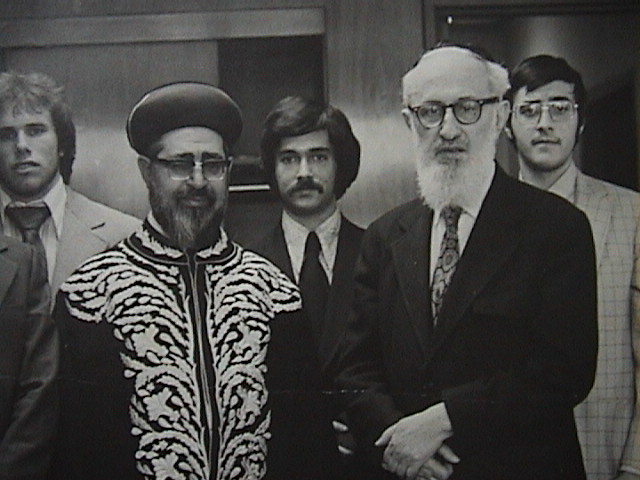
My question to readers is, can anyone identify the three young men standing behind the rabbis?

  1. Anyone interested in my summer 2020 trips with Torah in Motion can find details here.
  2. For those in the New York area, I will be speaking at Young Israel-Beth El of Boro Park (4802 15thAvenue, Brooklyn) on Saturday night, December 21 at 8pm. The title of my talk is “Judaism and Islam: Some Halakhic and Historical Perspectives”.

[1] See Meir Benayahu, Ha-Tenuah ha-Shabta’it be-Yavan (Jerusalem, 1971-1978), pp. 35-36.
[2] Regarding Briman and his book, which is actually a complete plagiarism – the entire book lifted word for word from R. Abraham Wallerstein, Mahazeh Avraham, found in Wallerstein’s Ma’amar Avraham (Fuerth, 1757) – see Shmuel Ashkenazi, Asufah (Jerusalem, 2014), pp 53-55.
[3] See Joseph Samuel Bloch, Zikhronot Mimei Hayai, trans. S. Shalom, (Tel Aviv, n. d), vol. 1, pp. 84ff.
[4] See his letter in the Jewish Chronicle, June 26, 1914, conveniently posted in On the Main Line here. See also On the Main Line here for a fascinating post dealing with another apostate who appears to have been a rabbi.

For detailed discussions of Briman, see Samuel Leib Zitron’s article from volume 2 of his Me-Ahorei ha-Pargod: Mumarim, Bogdim, Mitkaḥashim, available here; Joseph Samuel Bloch, Zikhronot mimei Hayai (Tel Aviv, n.d.), vol. 1, pp 81ff.; Ha-Melitz, April 24, 1885, cols. 440-441. For numerous contemporary references to Briman, see Jonatan Meir, Literary Hasidism: The Life and Works of Michael Levi Rodkinson, trans. Jeffrey G. Amshalem (Syracuse, 2016), p. 167 n. 201. Unfortunately, Meir, p. 169 n. 214, cites Chaim Bloch – about whom I have a written a good deal on this blog – without realizing that none of the unpublished material Bloch claimed to possess can be assumed to be authentic. Regarding Bloch, see also Tesla Lee’s 2016 honors thesis at the University of North Carolina at Chapel Hill, “Sigmund Freud and Chajim Bloch: Exploring the Role of the Jewish Joke in European Jewish Identity,” available here. On pp. 5-6, Lee mentions another fabrication by Bloch. Bloch describes how he offered Freud his criticisms of Moses and Monotheism, yet we know that Freud did not begin working on this book until years after Bloch’s supposed conversation with him. For a recent discussion of Bloch and his role in popularizing the Golem story, see Samuel Jacob Spinner, “Jews behind Glass: The Ethnographic Impulse in German-Jewish and Yiddish Literature, 1900-1948” (unpublished doctoral dissertation, Columbia University, 2012) pp. 89ff.
[5] The biographical information I provide about Lichtenstein comes from Zitron. Here is what the Encyclopaedia Judaica, s.v. Hirschensohn-Lichtenstein, Jehiel Zevi Hermann, writes:

Born in Russia, he converted to Christianity in 1855 in Jassy, Rumania, but keeping this secret he spent some time among the Hasidim of Lubavitch and worked on his Derekh ha-Kodesh (“The Way of Holiness,” 1872), which deals with the fundamentals of the Jewish faith, but betrays the authors Christianizing tendencies. From 1868-1878 he worked, under the name of Hermann Lichtenstein, for the Protestant mission in Berlin. He then returned to Russia where, disguised as a hasidic rabbi, he distributed his book. He married in Kishinev, Moldavia, a sister of Joseph Rabinovich, who later, probably under Hirschensohn’s influence, founded the sect called Community of Evangelian Jews. His true character discovered, he had to leave Russia and became lecturer at Franz Delitzsch’s Institutum Judaicaum at Leipzig.

[6] Joseph Rabinowitz and the Messianic Movement (Edinburgh, 1995).
[7] This title was earlier given to Rabinowitz by Hugh J. Schonfield, The History of Jewish Christianity p. 5, available here.
[8] Zikhronot Bat Ami (St. Louis, 1920), vol. 2, p. 134.
[9] Ha-Magid, May 7, 1885, p. 144.
[10] Ha-Magid, June 25, 1885, pp. 208-209.
[11] See his autobiography in Sefer Zikaron le-Sofrei Yisrael ha-Hayyim Itanu ka-Yom (Warsaw, 1889), pp. 203ff, available here. He wrote under the pseudonym ישביאל. See Saul Chajes, Otzar Beduyei ha-Shem (Vienna, 1933), p. 173. The title of the book mentioned at the beginning of this note is of interest, as it is a “memorial volume” for living writers. Today I think we would only use the words “Sefer Zikaron” for people who are deceased. It is also of interest that in the past there were writers who used ז”ל either as זכרונו לברכה or זכור לטוב for living people. See Tovia Preschel, Ma’amrei Tuvyah, vol. 1, pp. 35, 324-325, vol. 4, p. 418.

In 1878, R. Isaac Moses Abulafia published his Lev Nishbar. Here is the title page.

This book is a defense of his halakhic rulings in his responsa Penei Yitzhak against the blistering criticisms of R. Solomon Moses Gaguine in his Yismah Levav. Of interest at present is Lev Nishbar, no. 3 (p. 12b). R. Abulafia notes that R. Gaguine refers to him with ז”ל after his name, and he is certain that this was not done in accord with the view mentioned above that ז”ל can be used even with living people. Rather, he sees this as an intentional insult, and as he puts it, כונתו לרעה. This might mean that he believes that R. Gaguine, by using ז”ל after his name, is hoping for his death.

והן עתה הביאני חדריו וכתב עלי תיבת ז”ל כנז”ל וה’ יודע ועד עליו אם כונתו לרעה עלי והלב יודע אם לעקל וכו’ ועכ”פ מדקפיד בכל דוכתא ודוכתא אך בחלקות ישית להבדיל בין המתים ובין החיים בתיבת ז”ל ונר”ו כנז”ל ומדשינה עתה הפעם לכתוב עלי ז”ל במקום נר”ו הא ודאי דקפידה הוי וכונתו לרעה ב”מ

See also what R. Abulafia writes in his introduction and the first page of the opening responsum, where you can see that he is not inclined to be generous in his interpretation of R. Gaguine’s intent.

Regarding the dispute between Rabbis Abulafia and Gaguin, see Yaron Haarel, “Hashpa’atam shel ha-Sefarim Penei Yitzhak, Yismah Lev ve-Lev Nishbar al ha-Ma’avak Saviv ha-Rabanut be-Damesek,” Asuput 11 (1998), pp. 211-243.
[12] That the book contains hints to Lichtenstein’s belief in Jesus is also stated by Samuel Shraga Feigensohn, Elbonah Shel Torah (Berlin, 1929), p. 28b.
[13] Deinard, Zikhronot Bat Ami (New Orleans, 1920), vol. 2, p. 133.
[14] Ha-Magid, April 9, 1885, p. 112. See here that in his later years, Lichtenstein’s Christian missionary students would call him “Rebbe”. This source describes Lichtenstein as serving as a hasidic rebbe before adopting Christianity, but that is not correct.
[15] Deinard in Ha-Magid, April 9, 1885, p. 112. Deinard, Zikhronot Bat Ami, vol. 2, p. 137, reports that Lichtenstein served as a rabbi in Hungary. In Tzelem ba-Heikhal (New Orleans, n.d.), p. 143, Deinard writes that he was a rabbi for a short time in a town in the Austrian empire. Feigensohn, Elbonah Shel Torah, p. 28b, states that he served as the rabbi in a town in Volhynia for eight years, but there is no evidence to support this statement
[16] See Jacob Solomon Alschwang, Ha-Magid, June 25, 1885, p. 209, that David Kahana had additional pages from the book which are missing from the Harvard copy. These pages, from a section entitled Even Bohan, are explicitly Christian, as they cite Jesus and Paul, and this is no doubt why they were removed. In what looks like a defense of Even Bohan, Lichtenstein, Derekh ha-Kodesh, p. 83 in the note, states that this section was written for Christians and Muslims and deals with the Noahide laws. This is, of course, not believable, as Christians and Muslims would not be reading his Hebrew work.
[17] Deinard, Zikhronot Bat Ami, vol. 2, p. 137, claims that it was actually printed in Eastern Europe, but R. Mazin in London bought the entire printing and put a new title page on the book.
[18] The title “Seven Wisdoms” is strange as it is really not relevant to the subject of the book. Regarding the “Seven Wisdoms,” see Harry Austryn Wolfson, Studies in the History of Philosophy and Religion (Cambridge, MA, 1973), vol. 1, pp. 507ff. Abarbanel, Commentary to Exodus, ch. 25, p. 253, writes:

שבעת הנרות שבמנורה רומזים אל שבע החכמות שכלם ימצאו בתורת הא-להים

[19] In my post here, I briefly discussed the apostate Paul Levertoff. I neglected to mention that before he converted, Levertoff, whose Jewish first name was Feivel, was one of the future historian Ben Zion Dinur’s teachers in heder. See Dinur, Be-Olam she-Shaka (Jerusalem, 1958), p. 26.
[20] This library has a number of heretical books, and R. Joseph Isaac Schneersohn’s earlier collection also contained books of this sort. R. Menachem Mendel Schneerson stated:

When I came to Leningrad, I was surprised to find various [anti-religious] books in my father-in-law’s library. . . . The reason, obviously, was . . . the library attracted non-religious Jews, and even Gentiles. In the meantime, they saw what Lubavitch was and that it shares knowledge, and were drawn to it as a result. This created the opportunity to speak with non-Jews about justice, honesty, and humanity, the Seven Noahide Laws, etc. The benefit was quite evident.

On another occasion, the Rebbe explained that his father-in-law needed such books, for “such things are also necessary for good purposes, as the Mishnah [Avot 2:14] states, ‘Know what to answer a heretic.’” Both of these passages appear in R. Baruch Oberlander’s and R. Elchanan Shmotkin’s beautifully produced work on the Rebbe, Early Years (Brooklyn, 2016), pp. 167, 168.

Ephraim Deinard, Zikhronot Bat Ami, vol. 2, p. 7, reports, as an eye-witness, that R. Shmuel Schneersohn read Haskalah works before he became rebbe of Lubavitch. It is hard to know whether Deinard is to be regarded as reliable in this matter as his antipathy to Chabad is apparent throughout his writings. See especially ibid., p. 16, where among other things he states:

.החסידים היותר רעים ומסוכנים לתורת ישראל, המה חסידי חב”ד

Deinard even falsely claims, ibid., p. 8, that the responsa of R. Menahem Mendel Schneersohn, the Tzemah Tzedek, were really written by R. Hayyim Jacob Widerwitz. In Chabad texts, R. Widerwitz is referred to as the editor of the Tzemah Tzedek’s responsa. See R. Shalom Duber Levin, Toldot Habad be-Artzot ha-Berit (Brooklyn, 1988), p. 3.
[21] “Heresy, Apostasy, and the Transformation of Joseph Rabinovich,” in Todd M. Endelman, ed., Jewish Apostasy in the Modern World (New York, 1987), p. 213. Contrary to what Zipperstein states, Sheva Hokhmot was published in 1883, and only in 1885 did Deinard denounce Lichtenstein. This information appears correctly in Zitron.
[22] The book can be seen here, along with two other Christian works by Lichtenstein and an obituary of him.
[23] See Zitron here.
[24] For more on Lichtenstein, see Ephraim Deinard, Ha-Magid, April 9, 1885, p. 112; Isaac Jacob Weissberg, Ha-Melitz, May 11, 1885, pp. 515-516; Deinard, Ha-Melitz, May 29, 1885, cols. 580-581; S. Mandelkern, Ha-Magid, June 11, 1885, pp. 190-192. See also David Assaf, Hetzitz ve-Lo Nifga (Haifa, 2012), pp. 75-76.
[25] Leḳsiḳon fun der Yidisher liṭeraṭur, prese un filologye (Vilna, 1927), vol. 2, cols. 151-154, available here. An abridged entry is found in the later edition of Reyzen’s lexicon, and you can see an English translation here.
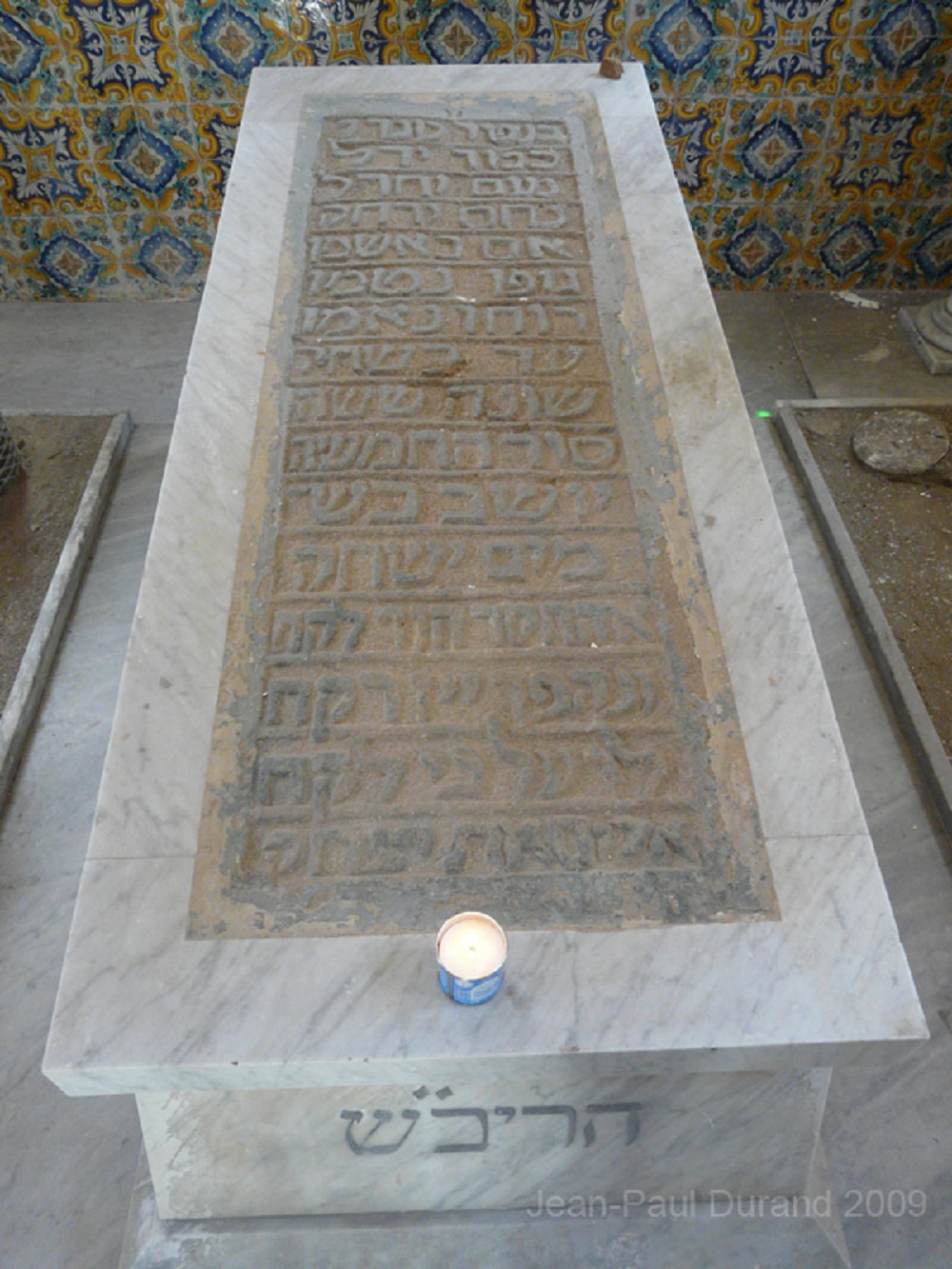
[26] I should note that not everything Bachi-Kolodny cites from Benzion Katz’s memoir, Zikhronot (Tel Aviv, 1963), actually appears there. She also writes: “Interior Minister Vyacheslav Konstantinovich von Plehve issued orders that a pogrom be carried out in Kishinev ‏(now Chisinau, Moldova‏) in April 1903, on Passover, to expedite the Jews’ exit.” This is incorrect, as no such orders were ever issued by the unquestionably anti-Semitic Plehve. See Steven J. Zipperstein, Pogrom: Kishinev and the Tilt of History (New York, 2018), 94ff.
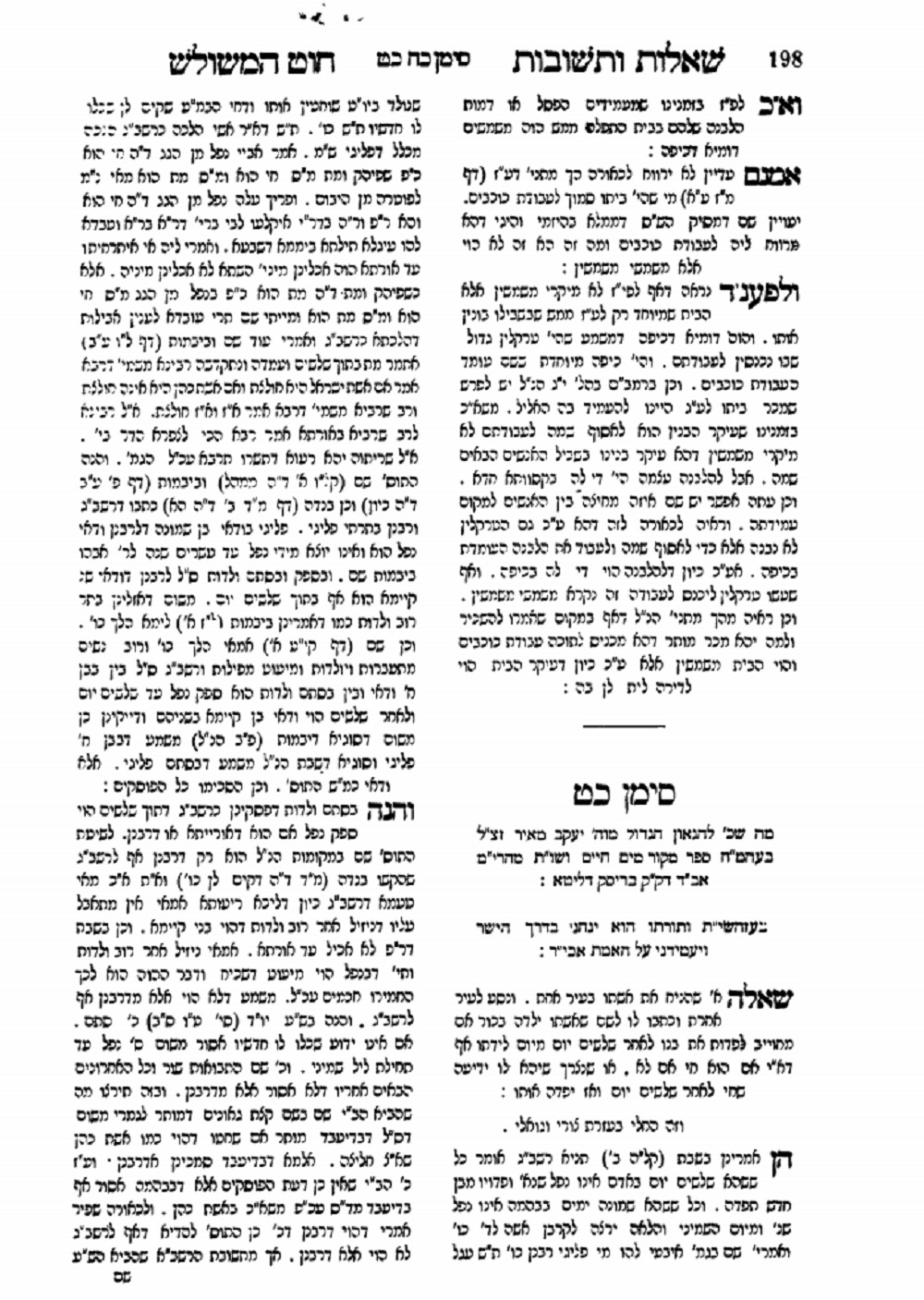
[27] Be-Olam she-Shaka, p. 13. Incidentally, Dinur tells us, pp. 17-18, that in his Chabad home in Russia they drank milk that came from non-Jews, rather than halav yisrael. This is what he writes about his father, who was a real Torah scholar.

זכורני, פעם אחת בא הביתה ואמר לאמא: היתה לי היום עגמת נפש מזה שאת משתמשת בחלב של לא-יהודים. תמהה אמא ושאלה: מאין יודעים? אמר אבא: אני סיפרתי את הדבר. התפלאה אמא: מה ראית להודיע ברבים? אמר: פשוט, התקיפו בבית-המדרש את דוד המלמד, שהוא משתמש בחלב נכרים, והלבינו את פניו. קמתי ואמרתי: מה אתם רוצים ממנו, גם אצלי נוהגים כך! ך

This is significant testimony, as it is well known how seriously Chabad hasidim regard this matter. There is even a story about how a big scholar who came to R. Shneur Zalman of Lyady was suffering from religious doubts. R. Shneur Zalman recognized that these doubts came about because the man had inadvertently drunk non-halav Yisrael milk. See R. Joseph Isaac Schneersohn, Sefer ha-Ma’amarim 5701-5705 (Brooklyn, 2012), Hebrew version, pp. 76-77.
[28] Deinard, Tzelem ba-Heikhal, p. 169. See also Deinard, Shibolim Bodedot (Jerusalem, 1915), pp. 58ff, for Deinard’s letter to Landau which among other things urges him to return to Judaism. See ibid., pp. 176-177, for Landau’s revealing letter to Deinard. As far as I know, neither of these letters have been mentioned by scholars who have discussed Landau. They are, however, mentioned here.

Shimon Steinmetz called my attention to a memoir by another former Chabad hasid who became a missionary. See Elieser Bassin, The Modern Hebrew and the Hebrew Christian (London, 1882), available here.
[29] A reproduction of the original publication from Ha-Zeman (July-Sep. 1904), is found in Michael Gluzan, Hannan Hever, and Dan Miron, Be-Ir ha-Haregah – Bikur Meuhar (Tel Aviv, 2005), pp. 158-168.
[30] Songs from Bialik, translated by Atar Hadari (Syracuse, 2000), p. 5.
[31] Zikhronot, ch. 37.
[32] R. Aharon Rakeffet provides another picture from this particular visit of R. Ovadiah. See The Rav: The World of Rabbi Joseph B. Soloveitchik, vol. 2, in the pictures that begin after p. 135, available here. I thank R. Yissachar Dov Hoffman for providing this information as well. He also called my attention to the following additional picture of the Rav and R. Ovadiah from this visit, taken from here.