1

A year in Berlin: The Beginning of Hebrew Printing in Berlin in c. 1699

A Year in Berlin:
The Beginning of Hebrew Printing in Berlin in c. 1699
by Marvin J. Heller

The publishing of Hebrew books in Berlin is a relatively late phenomenon. The article provides a background to early Hebrew printing and then discusses the first Hebrew press in Berlin. It addresses Jewish history in Berlin, explaining why Hebrew printing began there at the end of the seventeenth century, almost two hundred and fifty years after it began elsewhere. Several unique works, rather than the usual communal prayer books and bibles, are described in some detail in the article.

Hebrew printing has a rich and lengthy history. The first Hebrew books were printed close to the mid-fifteenth century, in 1469 and 1472, approximately a decade and a half after Johann Gutenberg printed the first Bible in c. 1455 in Mainz, Germany. Those first Hebrew books, printed in Rome by Obadiah, Menasheh, and Benjamin of Rome, and several who followed, are undated. Their name appears in the colophon of R. Moses ben Nahman’s (Nahmanides, Ramban, 1194–1270) Torah commentary[1] The first dated Hebrew book was Abraham ben Garton ben Isaac’s edition of Rashi’s Torah commentary (Reggio di Calabria, 1475, completed 10 Adar, 5235 = Friday, February 17, 1475). It was followed soon after by Jacob ben Asher’s Arba’ah Turim, printed in Piove di Sacco, Padua province on 28 Tammuz, 5235 (July 3, 1475).[2]

A conservative listing of Hebrew books that can be said with certainty to have been printed prior to 1500 are, according to A. K. Offenberg, 139 titles, which he writes “may yet be too high.”I[3] In an index Offenberg records close to twenty locations in which Hebrew incunabula were printed, in Italy, Spain, and a 1493 Constantinople edition of the Arba’ah Turim.[4] Among the more notable locations in which Hebrew printing occurred in the incunabular period are Mantua, Bologna, Ferrara in Italy, and Guadalajara in Spain.

In contrast to the small number of incunabular imprints, approximately 2,700 titles were printed in the following century, that is, from 1500-1599. To be more precise, 2,672 Hebrew titles (or books with Hebrew letters) were printed, according to Yeshayahu Vinograd, in the sixteenth century. In the seventeenth century the number of Hebrew books published increased to 3,526 entries.[5] The primary centers of Hebrew printing in those centuries were, respectively, Venice and Amsterdam. Parenthetically, the latter’s imprints were sufficiently popular that publishers in other locations frequently wrote with a small font “printed with” and in a large font “Amsterdam,” and again in a small font “letters.” Below, again in a small font, the actual place of printing.[6]

That Hebrew printing began so much later in Berlin than in other centers of printing might seem unlikely, given the subsequent importance of that city’s Jewish community and press. However, it is not surprising in light of the early history of Berlin Jewry, which was difficult, indeed stormy. Expelled in the middle-ages, during the Black Death, Jews were allowed to return in 1354, but not permitted a synagogue. There is no further mention of Jews until the sixteenth century. Subsequently, Jews were expelled and readmitted several times. Gotthard Deutsch and A. Freimann write that “The real history of the Jewish community of Berlin does not begin until the year 1671.” At that time, Jews expelled from Vienna were admitted to Berlin. On Jan. 3, 1676, a decree was issued which stated “die Juden in Berlin in ihren Freyheiten und Privilegien nicht zu turbiren, noch zu kränken, sondern sie vielmehr dabey gebürend zu schützen” (not to disturb or worry the Jews of Berlin in their grants and privileges, but to protect them properly).”[7]

Hebrew printing in Berlin began soon after, that is, in the last decade of the seventeenth century. According to the Jüdisches Museum Berlin, Hebrew printing in Berlin, “which commenced later than in other German cities,” began when Daniel Ernst Jablonski published a Hebrew Bible in 1699.[8] Yeshayahu Vinograd, in the Thesaurus of the Hebrew Book, records eleven works printed from 1690 through 1699, eight in the latter date. He begins with a 1690 quarto format (40) Bible attributed to a Knebell, who Moritz Steinschneider describes in his entry for the 1699 Bible as “Opera et impensis Jo. Henri Knebel . . .” (the works and expenses of Jo. Henri Knebel),” the printer given as Jablonski.

The 1690 Bible entry is followed by two 1698 octavo editions (80: 90 pp., no pagination given for the second edition) of Psalms both in the Bodleian library and then the 1699 imprints.[9] Steinschneider dates the first Psalms as “3–9 Tischri 458 (18-24, Sept. 1697), the second as [ca. 1697-9]. These are followed by an edition of Bereishit (Genesis).[10] Also printed at this time was a siddur (prayer book) and another edition of Psalms. All of these works, as well as the following titles, were printed at the Jablonski press.

Daniel Ernst Jablonski’s (1660-1741) involvement with Hebrew printing is surprising given his background and career. He was the son of Peter Figulus, a minister of Unity of the Brethren (Unitas fratrum) and grandson of Johann Amos Comenius, the last bishop of the Unity. Jablonski served as a preacher at Magdeburg in 1683, and from 1686 to 1691 as head of the Brethren College at Polish Leszno (Lissa), a position filled by his grandfather. In 1691, Jablonski was appointed court preacher at Königsberg by the elector of Brandenburg. In 1693, he was transferred to Berlin as court preacher, and in 1699 he was consecrated a bishop of the Unity of the Brethren, where he worked to bring about a union between the followers of Luther and Calvin. In 1700, Jablonski became a member of the Academy of Sciences (Brandenburgische Societät der Wissenschaften), serving between 1710 and 1731 as director of Philology and Oriental Studies and, from 1733 and 1741, as president of the Academy.[11] He was also the author of several books on Christian theology and philosophy.

In Berlin, Jablonski established a Hebrew printing press. Vinograd very conservatively crediting him with having printed as many as twenty titles. However, a significant multiple of that number of titles were printed in Berlin at that time with no printer’s name assigned to them in the Thesaurus, or, in some instances, attributed to an editor at the press.[12] Concerning Jablonski’s heading a Jewish press in Berlin, it may not seem as improbable as it appears. Jews could not initially obtain licenses to own a printing-press, so that of necessity, the owner had to be a non-Jew, although the managers and workers were usually Jewish. Jablonski employed a number of Jewish workers at his press. The most important was Judah Loeb ben David Neumark (d. 4 Nissan = April 9, 1723) from Hanau, author of Shoresh Yehudah (Frankfort on the Main, 1692), the manager of and an editor at the Jablonski printing-house.[13]

Another of Jablonski’s achievements relates to the printing of the Talmud. He was instrumental in securing approval for Michael Gottschalk, the Frankfurt an der Oder printer, and Johann Christoph Beckman, professor of theology at the University of Frankfurt an der Oder, to publish the Frankfurt an der Oder Talmud (1697-99). Jablonski’s opinion was requested by Friedreich III, Elector of Brandenburg, after Gottschalk and Beckman sought permission to print the Talmud. Jablonski’s measured response was, overall, positive; he found the Talmud to be, with reservations, a work of value, and recommended that Friedreich approve the request to republish that work. Jablonski subsequently printed the first Frankfurt on the Oder/Berlin Talmud together with Gottschalk (1715-22).

We turn now to the more distinct books published at the Jablonski press, that are non-biblical nor prayer books, although the press issued both. Our first title is Azmot Yosef, novellae on tractate Kiddushin by R. Joseph ben Isaac ibn Ezra (c. 1560–1620), attributed in bibliographies to Neimark, as it is his name that appears on the title-page. Perchance, he managed the press and Jablonski was the proforma owner.

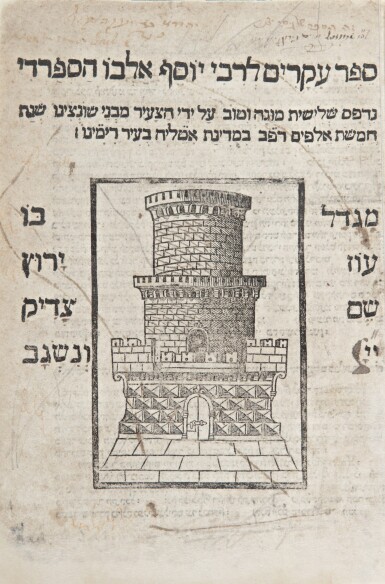
Azmot YosefAzmot Yosef was published in folio format (20: 125 ff.) in the year “[Show me a sign of] Your favorאות לטובה ( 459 = 1699) that my enemies may see and be frustrated because you. O Lord, have given me aid and comfort (Psalms 86:17). R. Joseph ben Isaac ibn Ezra (c. 1560–1620) was a scion of the renowned Ibn Ezra family of Spain. Publication of Azmot Yosef is attributed by Vinograd to L. Neimark. Joseph ben Isaac Ibn Ezra was a student of 1R. Samuel de Medina (Maharashdam, 1506-89) and of R. Aaron ben Solomon ben Hasson (16th Cent.). Ibn Ezra subsequently headed the yeshivah of Don David ben Yahya, where he had several eminent students, among them R. Shabbetai Jonah. He later left Salonika for Constantinople, and afterwards served as rabbi in Larissa and Sofia.[14]

The first paragraph of the title-page, a reprint of the first edition, states that it is an explanation of the rules by which the Torah is explicated, and that it is:

a commentary in iyyun and pilpul (deliberation and casuistry) of tractate Kiddushin, from the beginning until the end, on the Talmud, Rashi, Tosafot, Rif, Rambam, Rosh, his son the Ba’al ha-Turim, and others on the laws of kiddushin (betrothal). After the iyyun and pilpul I conclude with the halakhah . . . .

Also, for the benefit of the students [I explain] the rules of [kal ve-homer] (a fortiori inference), dayyo (sufficiency), and other rules: I also delve deeply into the passages of parah ve-rahel in Kol ha-basar and at the end of Kaitzad ha-regel.

The second paragraph, somewhat lengthy, informs that Azmot Yosef was printed previously in Salonica in 1601, further expounds it virtues, and informs that it is being printed for the second time in the praiseworthy city of Berlin and extols Friedreich III.


Azmot Yosef

Courtesy of the Library of Agudas Chassidei Chabad Ohel Yosef Yitzhak

In addition to the peshat (clear meaning of the text) on Kiddushin, Azmot Yosef also addresses Talmudic methodology. Ibn Ezra was also the author of Rosh Yosef, novellae on the Tur, Ḥoshen Mishpat, of which the part on taxes and associated communal issues was published as Massa Melekh (Salonica (1601). Some of his responsa were published in the responsa of R. Shabbetai Jonah, R. Solomon ha-Kohen, and R. Samuel Hayyun.

Azmot Yosef is an important work on Kiddushin and has been reprinted several times. Initially printed in Salonika (1601), as noted above, at the press of Abraham and Joseph BathSheba, this is the second edition; four additional printings of Azmot Yosef are recorded in the Bet Eked Sepharim, the most recent a Warsaw edition (1883).[15]

Gefen YehiditOur next work, Gefen Yehidit is a multi-part work, primarily on ethics, by R. Ze’ev Wolf ben Judah Leib of Rosienie. It was published in a small sextodecimo format (160: 59 ff.)

Gefen Yehidit

Courtesy of the National Library of Israel

The title page of Gefen Yehidit has a brief text that states that it is:

A book, small in size but of great quality. It speaks of matters of ethics and reverence in a clear language . . . The author should have merit. He is one of the maskilim (a person of understanding) and in this small book he demonstrates his expertise and sharpness. . .

Included is Sefer Luah ha-Hayyim which speaks of remedies in order that a person should be healthy and strong in order to serve his God continuously.

The title page is dated “a sign for good אות לטובה (459 = 1669)” (Psalms 86:17). Next is the introduction (1b-2a) of R. Judah Leib Hanau,[16] who brought the book to press. In his introduction, Ze’ev Wolf begins with a quote from Midrash Ruth in which Rav Ashi says that this Megillah is not primarily wisdom nor Torah, but to learn from it gemillut hasadim (acts of kindness), so too the work that he is writing. He informs that he has had a difficult life, and frequently quotes from the Zohar.

The text, in a single column in rabbinic letters, is comprised of Gefen Yehidit, a work of mussar (ethics); an accounting (39a-40b), beginning with and based on the memorial prayer El Malei Rahamim, of what befell the Jews of Podhajce (Podgaitsy), Ukraine in 1677 during a Tartar incursion and massacre of the Jews; followed by a dirge (40b-41a); Zemer le-Purim (42a-46b), verse for that festival in both Hebrew and Yiddish, translated word for word into the latter language because that is the language of Ashkenazim; and concluding with Luah ha-Hayyim (47a-59b), a popular medical work.

Gefen Yehidit has been reprinted several times, beginning with a Hanau (1717) edition.

Luah ha-Hayyim – Although included in Gefen Yehidit Luah ha-Hayyim is an independent work. In contrast to the other additional parts of the former title, Luah ha-Hayyim has its own title-page. Written by R. Hayyim ben Benjamin Ze’ev Bochner,[17] (for our ealier discussion regarding Bochner on the SEfohere), a prolific writer, whose works include Orḥot Ḥayyim, a commentary on R. Isaac Tyrnau’s Minhagim (1669, Prague), Mayim Ḥayyim, homilies and comments on Bible and Talmud, and Toẓeot Ḥayyim on grammar. This edition of Luah ha-Hayyim is based on earlier edition printed by Johann Christoph Wagenseil (Altdorf, 1687), also part of a larger work.

Luah ha-Hayyim

Courtesy of the National Library of Israel

The title-page states that it is:

Luah ha-Hayyim

It will be a cure for your body [a tonic for your bones] (Psalms 3:8) etc.” “They are life to him who finds them; healing for his whole body (Psalms 4:22):

Abbreviated rules of conduct for a person in the matter of healing to maintain a healthy body and it is a primary principle in the service of the Lord. In order to benefit the public, we have printed anew R. Hayyim ben Benjamin Ze’ev Bochner of Cracow’s work. It received in the past approbations from leading medical authorities for all these words are true and correct to those who are knowledgeable and meritable.

This is followed by approbations of two doctors from Lublin. An example of the text (51a-52b) is:

a clear white wine , sweet and aromatic, is healthy and caring. If one drinks a measure of wine, it is a balm for the body, for it increases bodily heat and strengthens as a lion. It gladdens the heart and hones the mind. It also helps in the digestion of food. The measure of a reviis as the amount to drink is logical.[18] More than this measure one should cease and desist. However, if one is accustomed to become inebriated from it and drinks more then enough than the head is ill and the heart is pained. One whose nature is warm and thirsts to drink should mix a little water every time. Honey that is clear and of average sweetness and strength is somewhat comparable to the nature of wine in all respects. . . .

A popular work the Thesaurus of the Hebrew Book records twelve editions of Luah ha-Hayyim, but again these are generally not independent publications.[19]

Keter Torah – Keter Kehunah – our final publication, is a Kabbalistic work on Psalms and liturgy by R. Joseph ben Moses (Ashkenazi), darshan of Przemyslany (17th cent.) Printed in quarto format (40: 91, 62-66, [1]; 76 ff.) Keter Torah and Keter Kehunah are, respectively, the second and third parts of Keter Yosef, the first part of which was printed in 1700.[20] Joseph ben Moses, who was a darshan (preacher), served as rabbi and dayyan in Przemyslany.

Each part was printed separately and has its own title page, albeit with the same frame but somewhat varying text. The pillared frame has cherubim at the top and at the bottom of the frame an eagle with a shield, and holding a sword in one talon and a scepter in the other. In its beak is a banner with the date of the respective volume.[21]

The title page of Keter Torah states that it is the second part of Keter Yosef,

A holy workbook, old replete with new, a desirable commentary, where is its like? On Psalms by the author of Zafenat Pa’ne’ah and Haluka de-Rabbanan. He is the great darshan, grandson of the gaon R. Abraham Ashkenazi, descended from Rashi, son-in-law of R. Abraham av bet din in Luntshits, and a branch and descendant of R. Saul Wahl.

It is dated “Now Israel loved Joseph אהב את יוסף וישראל (459 = 1699)” (Genesis 37:3). Keter Torah has an introduction from the author followed by the text, comprised of Psalms in the middle of the page in square vocalized letters with Joseph’s expansive commentary, Keter Yosef, on the sides in rabbinic letters. The text is divided by the days of the week and has the heading Keter Yosef. The title page of Keter Kehunah states that it is part three of Keter Yosef and that

It is the threefold part that “is not quickly broken” (cf. Ecclesiastes 4:12). In it are found at intervals some sharp novellae on Tosafot and gemara. I have entitled it Keter Torah on the order of the avodah (divine service) for the entire year. It is by the great darshan . . .

Keter Kehunah
Courtesy of Hebrewbooks.org

Keter Kehunah is dated “This is the Torah of the burnt offering זאת תורת העולה (459 = 1699)” (Leviticus 6:2). Here, too, the text is comprised of the liturgy of the daily ma’amadot (division of prayers) in the center of the page in square vocalized letters, the commentary Keter Yosef on the sides in rabbinic letters, and the heading Keter Yosef. After the daily ma’amadot are bakashot for the day and bakashot in the manner of Kabbalah. The daily ma’amadot are followed by kabbalistic prayers for special occasions such as selihot for Mondays and Thursdays, fast days, Rosh Hodesh, Shabbat with special Torah readings, Shabbat Teshuvah, Hanukkah, Purim, brit milah, kinnot for Tishah be-Av, and for dreams. There is also a prayer for someone incarcerated from R. Leone (Judah Aryeh) Modena.

This is the sole edition of any of the parts of Keter Yosef. Joseph was also the author of a commentary included in Haggadah Haluka de-Rabbanan (Amsterdam, 1695), a commentary on the Passover Haggadah; Ketonet Passim (Lublin, 1691), discourses on festivals and the Haggadah; and Zafenat Pa’ne’ah he-Hadash (Frankfurt am Oder, 1693-94, above) on diverse subjects.

In conclusion, we have described individual publications that are not part of the customary frequently printed works comprising traditional and necessary parts of Jewish literature, that is, biblical and liturgical books, although, as noted above, such works were also published by the Jablonski press. The subject matter of these other varied books addressed here encompasses Talmudic novellae, ethics, medical recommendations, and a Kabbalistic work.

What is particularly noteworthy is, given the late start of Hebrew publishing in Berlin, that it rapidly became a center of Hebrew printing. The Thesaurus records 457 titles issued by the Berlin press in the following century (1700-1799), a remarkable growth for a new press that had hardly published any books in the previous century and for a community that was initially young and relatively small compared to other Jewish communities. Despite the small number of works published in that early period, at the end of the seventeenth century, the books published not only addressed communal needs, but also included a variety of valuable works expressing the varied intellectual needs and interests of the community. It quickly grew from a small but press that had from its beginning began by serving its community with needed and valuable varied works to a press of significance.

[1] Concerning those first Hebrew imprints see Moses Marx, “On the Date of the Appearance of the First Hebrew Book,” in Alexander Marx Jubilee Volume (New York, 1950), pp. 481-501.
[2]
The above dates are Julian dates. The dates in the Gregorian calendar, adopted in Rome in 1582 in place of the Julian calendar are, for Rashi’s Torah commentary, February 26, 1475. The Gregorian date for the Arba’ah Turim would be July 12, 1475.
[3] A. K. Offenberg, Hebrew Incunabula in Private Collections (Nieuwkoop, 1990), p. xxiii-xxv, 186-94. It should be noted that other authorities cite a higher number of titles for the incunabular period. A significantly lower number is given by Richard Gottheil and Joseph Jacobs in “Incunabula” Jewish Encyclopedia vol. 6 (New York, 1901-06), p. 575 who write that 101 works printed in Hebrew letters can be identified as certainly printed before 1500. In contrast, according to Herrmann M.Z. Meyer / Angel Sáenz-Badillo, write there are “175 (207) editions printed with Hebrew letters ascertained by copies preserved in public collections.” “Incunabula” (Encyclopedia Judaica, vol. 9 (Jerusalem, 2007),vol. 9 pp. 757-58.
[4] The dating of the 1493 Constantinople edition of the Arba’ah Turim has been questioned, many bibliographers consider the correct date to be 1503. Offenberg in a convincing article, substantiates the correct date as 1493 (Offenberg, “The First printed Book Produced at Constantinople (Jacob ben Asher’s Arba’ah Turim, December 13, 1493),” in A Choice of Corals: Facets of Fifteenth-Century Hebrew Printing, pp. 102-32.
[5] Yeshayahu Vinograd, Thesaurus of the Hebrew Book. Part I Indexes. Books and Authors, Bibles, Prayers and Talmud, Subjects and Printers, Chronology and Languages, Honorees and Institutes. Thesaurus of the Hebrew Book (Jerusalem, 1993-95), pp. xxiv-xxvi [Hebrew].
[6] Mozes Heiman Gans describes this practice, writing “so highly-prized were books ‘printed in Amsterdam’ or ‘be-Amsterdam’ that cunning rivals invented the phrase ‘nidfas ke-Amsterdam’, i.e. in the manner of Amsterdam, hoping to deceive the readers by relying on the similarity of the Hebrew k and b.” Mozes Heiman Gans, Memorbook. History of Dutch Jewry from the Renaissance to 1940 with 1100 illustrations and text (Baarn, Netherlands, 1977), p. 140: Also see Marvin J. Heller, “Who can discern his errors? Misdates, Errors, Deceptions, and other Variations in and about Hebrew Books, Intentional and Otherwise: Revisited,” http://seforim.blogspot.com/, Sunday, July 03, 2016, reprinted in Essays on the Making of the Early Hebrew Book (Leiden/Boston, 2021), pp. 507-36.
[7] Gotthard Deutsch, A. Freimann, “Berlin,” Jewish Encyclopedia vol. 3. pp. 69-71.
[8] Jüdisches Museum Berlin: https://www.jmberlin.de/en/collection-hebrew-printing-in-berlin.
[9] Moritz Steinschneider, Catalogus Liborium Hebraeorum in Bibliotheca Bodleiana (CB, Berlin, 1852-60), col. 112 no. 702; Vinograd, Thesaurus of the Hebrew Book. Part II, p. 111.
[10] Steinschneider, nos. 694, 1050, 1028.
[11] https://en.wikipedia.org/wiki/Daniel_Ernst_Jablonski.
[12] Vinograd, Thesaurus of the Hebrew Book. Part I, p. 451.
[13] Ch. B. Friedberg, History of Hebrew Typography of the following Cities in Central Europe: Altona, Augsberg, Berlin, Cologne, Frankfurt M., Frankfurt O., Fürth, Hamberg, Hanau, Heddernheim, Homberg, Ichenhausen, Neuwied, Wandsbeck, and Wilhermsdorf. Offenbach, Prague, Sulzbach, Thannhausen from its beginning in the year 1513 (Antwerp, 1935), pp. 87-88 [Hebrew].
[14] See Ya’akov Shemuel Speigel’s introduction to Ibn Ezra’s responsa for additional biographical information. She’elot u-Teshuvot Rebi Yosef ibn Ezra, ed. Ya’akov Shemuel Speigel (Jerusalem, 1989), 5-30. Speigel specifically discusses Azmot Yosef, its editions and its reception. Id. 21-24.
[15] Ch. B. Friedberg, Bet Eked Sepharim, (Israel, n. d), ayin 1064 [Hebrew]. Eli Genauer updated the Bet Eked entry, which records books from 1474-1950, informing that later editions of Azmot Yosef were published in Jerusalem by Levin-Epstein in 1951, 1958, 1962, 1969, and 1976. There was also a Warsaw 1912 and a New York edition form the 1950’s as well as a Jerusalem 1988 edition, all attesting to the popularity of Azmot Yosef. Genauer quoted a yeshiva student’s joke concerning Azmot Yosef “how do you know that Jews were learning Maseches Kiddushin when they left Mizrayim [Egypt]? Because it says they took the Atzmos Yosef [bones of Joseph’ with them” (Exodus 13:19) and is also included in Kovets Mifarshim ‘al Meskhet Kiddusin, published in 2000 and 2019.
[16] He is the father of the famed grammarian Shlomo Zalmen Hanau. On some of his title pages, he indicates that his father was a sha”tz (cantor).
[17] For our discussion regarding Bochner and his works, see our post on the Seforim Blog, “Hayyim Ben Benjamin Ze’ev Bochner: Kabbalist, Talmudist, and Grammarian.”
[18] A reviis equals 1-½ eggs (see Mishna Berura 271:68) https://oukosher.org/halacha-yomis/what-is-the-volume-of-a-reviis/.
[19] Vinograd, Thesaurus of the Hebrew Book. Part I, p. 67
[20] Regarding the possible Sabbatian elements in this work, see Shnayer Leiman, Sefarim Ha-Hashudim be-Sha’abatot, in Sefer ha-Zikhron le-Reb Moshe Lipschitz, Rafael Rosenbaum, ed., (New York, 1996), p. 887.
[21] Concerning the eagle motif see Marvin J. Heller, “The Eagle Motif on 16th and 17th Century Hebrew Books,” Printing History, NS 17 (Syracuse, 2015), pp. 16-40, reprinted in Essays, pp. 5-29.


The Star Spangled Banner and The Song at the Sea of Exodus 15

The Star Spangled Banner and The Song at the Sea of Exodus 15

Reuven Kimelman

The most rousing expression of American Civil Religion is the well-known The Star-Spangled Banner[1] sung ritually at patriotic events especially on July 4. What is less known is how much the American anthem was inspired by ancient Israel’s hymn, the Song at the Sea.[2]

Both the Song at the Sea in Exodus 15 and the Anthem were triggered by a wondrous upset. As America surprisingly eluded the British effort to resubjugate them at Chesapeake Bay, so Israel miraculously eluded the Egyptian onslaught to resubjugate them at the Re[e]d Sea.

Each of these events inspired songs that liturgize the baffling reversal by compressing the past into the present, where the singers bear witness to their astonishing deliverance. More than mirroring the event, the songs re-enact it, placing singer and listener at the event.

Seeing the parallel with the ancient Israelites, Francis Scott Key composed an Anthem reverberating with echoes of the Song as he composed other biblically-nourished hymns including “Lord, with Glowing heart I’d Praise Thee” and “Before the Lord We Bow.”[3]

Both Anthem and Song begin with a double reference to visualizing the victory thereby transforming the vocalists into eyewitnesses:

The Anthem begins: “O say can you see”; “O’er the ramparts we watched”; whereas Exodus introduces the Song with “Israel saw Egypt dead on the shore of the sea” (14:30). And “Israel saw the wondrous power which God had wielded against the Egyptians” (14:31).

Both focus twice on the visibility of morning: The Anthem opens with “O say can you see, by the dawn’s early light,” and then notes synonymously in the second stanza: “Now it catches the gleam of the morning’s first beam in full glory reflected now shines in the stream.” Similarly, the Song notes, “At the morning watch, God looked down upon the Egyptian army from a pillar of fire and cloud and threw the Egyptian army into panic” (Exod. 14:24), then noting “at dawn the sea returned to its normal state” (Exod.14:27).

Both emphasize the impact of seeing the dead on the shore:

The Anthem begins its second stanza with “On the shore dimly seen through the mists of the deep, Where the foe’s haughty host in dread silence reposes.” The Song says: “And that the enemy was seen dead on the shore of the sea” (Exod. 14:30). The Anthem and the Song refer to the enemy’s arrogance similarly: The Anthem says: “The foe haughty host” (second stanza); whereas the Song quotes the “foe” arrogantly screaming his sevenfold murderous intentions “I, I, I, my, I, my, my” (Exod. 15:19).

Both focus listeners’ imaginations on the waters of the deep and the blowing of the wind in describing the battle: The Anthem notes “the mists of the deep” and “the breeze … fitfully blows” (second stanza); whereas the Song states: “The deeps covered them” (Exod. 15:4); “You made Your wind blow, the sea covered them” (Exod. 15:10).

A line added to the Anthem during the Civil War underscores the ramifications of those saved: “By the millions unchained, who our birthright have gained”; whereas the middle of the Song states: “In Your love You lead the people You redeemed” (Exod. 15:13).

Finally, both paeans place their trust in a saving God. The Anthem concludes with: “Praise the power that hath made and preserved us a nation,” saying “our motto – “In God is our trust”; whereas the Song is introduced, proclaiming: “On that day, God saved Israel from the hand of Egypt” (Exod. 14:30) initiating the Song with: “They trusted in God” (Exod.14:31).

As the Song begins, so the Anthem ends.

Indeed, the title itself, “The Star-Spangled Banner,” harks back to Israel’s triumph over Amalek in the next scene where it states: “God is my banner” (Exod. 17:15)

Unbeknownst to the millions who have sung the Anthem. The Star-Spangled Banner serves as the American version of the liturgized biblical Song at the Sea, emblazoned in our memory and abiding on our lips.

[1] For the historical background, see https://en.wikipedia.org/wiki/The_Star-Spangled_Banner
[2] For a full analysis of the liveliness of the Song at the Sea, see my forthcoming The Rhetoric of Jewish Prayer: A Historical and Literary Commentary of the Prayer Book, published by Littman Library of Jewish Civilization.
[3] The first two stanzas link ancient Israel with modern America.

Before the Lord we bow, the God Who reigns above,
And rules the world below, boundless in power and love.
Our thanks we bring in joy and praise, our hearts we raise

To Heaven’s high King.The nation Thou hast blest may well Thy love declare,
From foes and fears at rest, protected by Thy care.
For this fair land, for this bright day, our thanks we pay,
Gifts of Thy hand.


Key Words in the Narrative of Aaron’s Death

Key Words in the Narrative of Aaron’s Death

Itamar Warhaftig

Rabbi Dr. Itamar Warhaftig is professor of Jewish law (emeritus) at Bar-Ilan University and affiliated with the Zomet Institute in Alon Shvut.

In the account of Aaron’s death (Numbers 20:22–29), several leitwort-style expressions appear—that is, words or phrases that recur at least twice. Let us trace these occurrences and examine their significance.

The phrase “Aaron shall be gathered to his people” appears in verse 24, and again in verse 26: “And Aaron shall be gathered and shall die there.”

This expression—“to be gathered to his people”—demands explanation, even aside from its repetition.

This phrase appears in the Torah in four other death-related contexts:

Regarding Abraham: “and he was gathered to his people” (Gen. 25:8);

Regarding Isaac: “and he was gathered to his people” (Gen. 35:29);

Regarding Jacob: “and he was gathered to his people” (Gen. 49:33);

Regarding Moses: “and be gathered to your people, as Aaron your brother died” (Deut. 32:50); and in that same verse, the phrase is reiterated in reference to Aaron: “as Aaron your brother died on Mount Hor and was gathered to his people.”

In other words, only the national leaders—the Patriarchs, Moses, and Aaron—were granted this particular form of epitaph.[1]

What does this expression mean? Ibn Ezra, commenting on Genesis 25:8, writes:

He was gathered to his people”—some say this refers to the honor of the soul: as long as it is preoccupied with the body, it is as if divided or separate. When the body is separated, the honor is gathered to its people.

Others say that this is simply an idiom, meaning he followed the path of his ancestors, as in: “and you shall go to your fathers in peace” (Gen. 15:15).

The first interpretation requires further elucidation. Let us cite the explanation of R. David Zvi Hoffmann (on Genesis ad loc.), who follows Ibn Ezra:

“All of these expressions indicate that among the people of Israel, there always existed a belief in life after death. Death was not perceived as annihilation, but rather as a reunion with one’s ancestors or with members of the nation who had already departed, all of whom become united in the World of Truth. The punishment incurred by one who transgresses certain sins is: “that soul shall be cut off from his people” (Leviticus 17:9)—that is, he will no longer be united with the rest of his people after death. It is worth noting that this punishment is generally directed at the soul, whereas the aforementioned expressions concerning death do not explicitly reference the soul. It may be that this is because the punishment targets the soul in particular, whereas the body is in any case gathered to the ancestral grave. By contrast, the phrase “he was gathered to his people” pertains, from the outset, to both body and soul together.”

One may further infer from this a veiled allusion to the World to Come, in the sense of a realm of souls. Moreover, this realm of souls exists in the collective gathering of the people of Israel. There is, as it were, a kind of spiritual center of souls, into which the great leaders of the nation are especially gathered—namely, the Patriarchs, Moses, and Aaron.[2]

The second recurring expression is “Mount Hor” (Num. 20:22), repeated in verse 23: “at Mount Hor.”

Rashi comments: “A mountain atop a mountain, like a small apple atop a large one.”

It seems to me that there is here an allusion to Aaron’s persona. He is a leader elevated above his people—yet a small leader in two senses. First, he stands in the shadow of the great leader, Moses. Second, he lowered himself to the people during the episode of the Golden Calf—he seemingly joined them, for he did not want the people to descend entirely into ruin, to a point of irreparable damage (see below). As is well known, Aaron was also one who loved peace and pursued peace[3]—and for this reason the parashah concludes with the verse: “And all the house of Israel wept for Aaron for thirty days” (Num. 20:29). Rashi comments: “The men and the women, because Aaron pursued peace and instilled love between disputants and between husband and wife.”

That is, a small mountain directly joined to the larger section beneath it.

Another recurring expression is “kol ha‘edah”—“all the congregation.”

“And the children of Israel, all the congregation, came” (Num. 20:22); again in verse 27: “before the eyes of all the congregation”; and a third time in verse 29: “and all the congregation saw.”

Several questions arise here: What is the meaning of the term ‘edah (“congregation”)? What is the significance of the emphasis on “kol ha‘edah” (“all the congregation”)? And in the first verse, another difficulty emerges: what is the import of the redundancy “the children of Israel, all the congregation”?

Let us begin with the first question. The initial occurrence of this expression is in Exodus 12:3: “Speak to all the congregation of Israel, saying: On the tenth of this month, let each man take a lamb for his father’s house, a lamb for each household.”

R. Samson Raphael Hirsch explains: “‘Adat’, ‘edah’ derives from the root יעד (ya‘ad) – to designate a purpose; it denotes a collective bound together by the unity of its function.”[4]

Thus, the designation ‘edah also carries the connotation of unity. In this context, the Torah emphasizes that the entire congregation was united in accompanying Aaron at his departure, for Aaron was beloved by all—one who loved peace and pursued peace.

Rashi infers the same from the redundancy of “the children of Israel” and “the congregation”, as cited above.

Since one could already derive this from the threefold repetition of the word “all” (kol), I would like to propose a different resolution for the redundancy of “the children of Israel” and “the congregation.”

The distinction between Israel and Jacob is well known. The name Israel connotes those of distinction; the name Jacob, the less significant. Thus writes Malbim in his commentary to Isaiah 43:1:

“There is a difference between Jacob and Israel:
Jacob is used when they are in a lowly state,
Israel is used when they are elevated and conduct themselves above nature, miraculously.”

That is, with regard to their origins—which in allegory relate to the material substance of the nation—they are Jacob. But with respect to their essential form, they are Israel: princes and sovereigns over nature and its affairs.

The Torah wishes to indicate that at this moment, the death of Aaron, the children of Israel in some measure repaired the sin of the Golden Calf. Aaron had attempted to dissuade them from sinning. At first he said, “a festival to the Lord tomorrow” (Exod. 32:5). Rashi comments: “He meant to delay them… perhaps Moses would return before they served it.” When that failed and he requested the golden earrings, Rashi explains: “He said, better the sin be attached to me than to them.”

The Talmud had already noted Aaron’s self-sacrifice. In Sanhedrin 7a we read:

“R. Tanchum bar Chanilai said: This verse was said only in reference to the Golden Calf. As it is written: “And Aaron saw and built an altar before it”—what did he see?”

R. Binyamin bar Yefet said in the name of R. Elazar: He saw that Hur had been slaughtered before him. He said: If I do not obey them now, they will do to me what they did to Hur (whom they murdered), and the verse will be fulfilled in me: “Shall a priest and prophet be slain in the Temple of the Lord?”—and they will never be able to be repaired.

Better that they should serve the calf, and then perhaps they can still repent. (Targum ad loc.)

In his commentary Ha‘ameq Davar to Exodus 32:5, the Netziv explains Aaron’s thought process:

And although he knew that he would not escape judgment—having caused many people to sin in idolatry—nonetheless this righteous man gave over his soul and spirit out of love for Israel.”

Now, they remembered his kindness and came together to honor him. And they elevated themselves to the level of “Israel”. The entire congregation now came to part from Aaron—who had never parted from them, even in their hour of sin.[5]

To summarize: the Torah employs several key words and guiding expressions that are attuned to the spirit of the passage.

If I am correct, it is worth investigating whether this phenomenon recurs in other passages of the Torah.

Notes:

This article is a translation of Itamar Warhaftig, “Key Words in the Narrative of Aaron’s Death,” Daf Shvui (Bar-Ilan University), no. 1625: Parashat Chukat (5 July 2025): 3-4 (Hebrew).

[1] It is true that Ishmael too is described as being “gathered to his people” (Gen. 25:17), which perhaps intimates that he repented.
[2] In contrast to this, not only those liable for karet (spiritual excision) are excluded, as R. David Zvi Hoffmann notes, but even other sinners—for example, a priest who marries a divorcée loses his sanctity, as it is written: “He shall not defile himself as a husband among his people so as to profane himself” (Lev. 21:4); see Rashi there.
[3] Mishnah Avot 1:12: Hillel and Shammai received [the tradition] from them. Hillel says: “Be of the disciples of Aaron—one who loves peace and pursues peace, who loves all creatures and draws them near to the Torah.”
[4] In his commentary to Exodus 16:1, R. Hirsch also remarks on the phrase “all the congregation of the children of Israel”:

“The phrase kol adat benei Yisrael denotes the entirety of the Israelite public in its loftiest sense—the whole people unified in its common purpose. It is the entire nation destined to be the congregation of the Lord. The emphasis on the designation ‘edah at the outset of the narrative prepares the reader’s heart for the coming events, which are of great importance to the collective destiny of the congregation of Israel.”
[5] One should also mention that Aaron halted the plague following the sin of Korah and his assembly, by undertaking a perilous act as he ran with the incense. This deed deserves separate analysis, which is beyond the scope of this discussion.


The Rising Lion: From Balaam to Leibowitz and Back Again

The Rising Lion: From Balaam to Leibowitz and Back Again

Warren Zev Harvey

Warren Zev Harvey is Professor Emeritus in the Department of Jewish Thought at the Hebrew University of Jerusalem. He is the author of numerous studies on medieval and modern Jewish philosophy and the recipient of the EMET Prize in the Humanities (2009).

The great prophet of the gentiles, Balaam son of Beor, blessed the people of Israel with a blessing for military success: “Behold, a people shall rise up as a lion [labiʾ], and exalt himself as a regal lion [ari],[1] and shall not lie down until he eat of the prey and drink the blood of the slain” (Numbers 23:24).[2] Israel shall leap up like a lion and not rest until it has fully conquered its enemies. The prophet’s blessing is raw, forceful, and not politically correct. It is just because of verses like this that Friedrich Nietzsche so admired the Hebrew Bible. Indeed, what is the lion rising up and exalting himself if not the terrible blonde Bestie? Such is the morality and style of ancient Hebrew Scripture.

But “the language of the Torah is one thing, and that of the Sages something else” (BT ʿAbodah Zarah 58b). The Sages took Balaam son of Beor’s militaristic prophecy and turned it into a prophecy concerning a spiritual “rising up.” They changed “prey” and “blood” to “Torah” and “mitzvot.” In Midrash Tanḥuma (Mantua, Balak [14], 88b; Buber, Balak 23, 73a; cf. Numbers Rabbah 20:20), we read: “Behold, a people shall rise up as a lion – there is no nation in the world like them. Although they had been asleep to the Torah and the mitzvot, they awoke from their slumber like lions, eagerly recited the Shemaʿ, and proclaimed the kingship of the Holy One, blessed be He.”[4] The midrash speaks of a metaphorical slumber (cf. Maimonides, Laws of Repentance 3:4),[5] that is, a period during which Jews neglected the Torah and the mitzvot, such as the Babylonian exile, but in the end they awakened from their slumber and arose like lions to proclaim the unity of God and to crown Him as King.

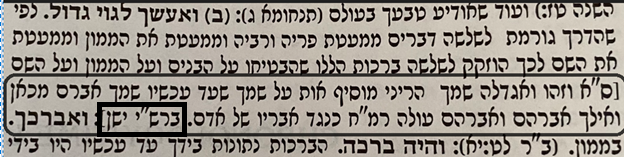
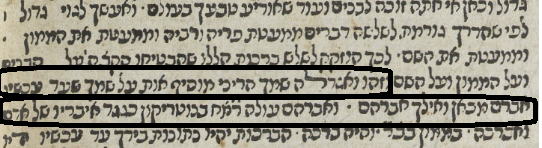
In his Commentary on Numbers 23:24, Rashi quotes this text from Midrash Tanḥuma, but with significant changes. First, he does not interpret the Israelites’ sleep as metaphorical, but as literal. Second, he understands the lion to refer not to the Israelite “nation,” but to the individual Jew. Third, he conceives the character of the lion in light the Mishnah: “Be bold as a leopard, light as an eagle, swift as a gazelle, and mighty [gibbor] as a lion to do the will of your Father in heaven” (Abot 5:20).[6] Rashi writes: “‘Behold, a people shall rise up as a lion — when they awake [ʿomdin] from their sleep in the morning, they rise up mightily [mitgabberin] like a lion or regal lion [ke-ari] and eagerly perform the mitzvot: donning the tallit, reciting the Shemaʿ, and laying tefillin.”[7] In Rashi’s artfully revised midrash, the subject is not a historical event in which the people of Israel have sinned but now repent and return to monotheism, but rather it is the daily routine of the individual Jew who arises mightily each morning as a lion to perform the mitzvot. Rashi adroitly shifts the focus from nation to individual, from national morality to personal morality. Inspired by the Mishnah, he employs the verb mitgabberin (“they rise up mightily / valorously / heroically”). The Jew awakens every day at dawn and as a mighty lion he eagerly performs the mitzvot. In the words of Maharal, commenting on Rashi: “The mitzvot are acts of valor” (Gur Aryeh, ad loc.).[8]

When Rabbi Jacob ben Asher sought an opening for the “Laws of Conduct in the Morning” (Hilkhot Hanhagot ha-Adam ba-Boqer) at the beginning of his Arbaʿah Turim, he selected the Mishnah: “Be bold as a leopard, light as an eagle, swift as a gazelle, and mighty [gibbor] as a lion to do the will of your Father in heaven” (Oraḥ Ḥayyim, 1). But when Rabbi Joseph Karo sought an opening for his analogous “Laws of Conduct in the Morning” (Hilkhot Hanagat ha-Adam ba-Boqer) at the beginning of his Shulḥan ʿArukh, he recalled Rashi’s Commentary on Numbers 23:24, and wrote: “One should be mighty as a lion to arise [yitgabber ke-ari laʿamod] in the morning for the service of one’s Creator, and one should awaken the dawn! [cf. Psalms 57:9]” (Oraḥ ayyim, 1).[9] The first three Hebrew words here reflect three words in Rashi’s Commentary: mitgabberin, ke-ari, and ʿomdin. Rabbi Joseph Karo thus transformed Rashi’s descriptive account of one’s morning conduct into an explicit command: One should be mighty as a lion to arise in the morning for the service of one’s Creator!

This stirring opening of the Shulḥan ʿArukh made a profound impression on the Israeli philosopher Yeshayahu Leibowitz. He quoted it frequently in his writings and lectures. In one passage he writes: “The slogan of theocentric religion is ʿabodah, the service of God, and its purpose is formulated in the first paragraph of the Shulḥan ʿArukh: One should be mighty as a lion to arise in the morning for the service of one’s Creator! In contrast to a religion conceived in terms of what it endows a person, there stands a religion conceived in terms of what it demands of a person. No opposition is deeper than this!” (Yahadut, Am Yehudi, u-Medinat Yisrael, Tel-Aviv 1975, p. 338).[10] The purpose of the demanding religion of Torah and mitzvot, Leibowitz emphasizes, is articulated in the imperative: Yitgabber! Be mighty, be valorous, be heroic! He further clarifies: “Life according to Torah and mitzvot is a life of heroism [geburah] in which a human being conquers his natural inclinations and needs and subjugates them to the service of his Creator” (ibid., p. 61).[11] The heroism of Rashi, Maharal, Rabbi Joseph Karo, and Leibowitz is that of performing the mitzvot.

At present the State of Israel has embarked on a difficult war against the Islamic Republic of Iran, and has named its campaign “Operation Rising Lion” (ʿAm ke-Labiʾ). During the long years of Exile, our Rabbis, like the homilists of Midrash Tanḥuma, Rashi, and Rabbi Joseph Karo, creatively developed a spiritual exegesis of the prophecy of Balaam son of Beor. They had a different morality and a different style. Now, with the independence of the sovereign State of Israel, we have – for better or for worse — returned to the original interpretation of the great prophet of the gentiles.

Notes:

* A Hebrew version of this article appeared in Yashar Magazine, 20 June 2025.

[1] It is difficult to translate labiʾ and ari. Hebrew has at least a half-dozen words for “lion” (ari, aryeh, kefir, labiʾ, layish, and shaal), while English has only one. Labiʾ may have influenced the Greek léōn, the Latin, leo, the English lion, and the Yiddish leyb. I have translated labiʾ as “lion” and ari as “regal lion” (cf. Rashi on Genesis 49:9).
[2] הֶן עָם כְּלָבִיא יָקוּם וְכַאֲרִי יִתְנַשָּׂא, לֹא יִשְׁכַּב עַד יֹאכַל טֶרֶף וְדַם חֲלָלִים יִשְׁתֶּה.
[3] לשון תורה לעצמה, לשון חכמים לעצמן.
[4] הֶן עָם כְּלָבִיא יָקוּם. אין לך אומה בעולם כיוצא בהם. הרי הם ישנים מן התורה ומן המצות, ועומדין משנתן כאריות, וחוטפין קריאת שמע וממליכין לקב”ה. I thank Rabbi Dr. Yaakov Jaffe, who has noted the very many places where the Rabbis turn military descriptions into spiritual ones; e.g., BT Berakhot 4a and 18b, Shabbat 63a, Pesaim 68a, Sanhedrin 7b, and 93b, and 111b, and agigah 14a.
[5] עורו ישנים משנתכם ונרדמים הקיצו מתרדמתכם וחפשו במעשיכם וחזרו בתשובה וזכרו בוראכם

(“Awake, you who sleep…from your slumber, search your deeds, return in repentance, and remember your Creator”). Cf. Immanuel Kant, Prolegomena to Any Future Metaphysics, ed. L.W. Beck, New York 1950, p. 8: “David Hume…interrupted my dogmatic slumber and gave my investigations in the field of speculative philosophy a new direction.”
[6] הווי עז כנמר, וקל כנשר, ורץ כצבי, וגיבור כארי, לעשות רצון אביך שבשמים.
[7] הֶן עָם כְּלָבִיא יָקוּם. כשהן עומדין משנתם שחרית, הן מתגברין כלביא וכארי לחטוף את המצוות, ללבוש טלית, לקרוא את שמע, ולהניח תפילין.
[8] ומפני שהמצוות הן גבורה, לפי שמי שעושה מצוה פועל פעולה אלוהית נפלאה (“The mitzvot are acts of valor, for whoever performs a mitzvah performs a wondrous divine act”).
[9] יתגבר כארי לעמוד בבוקר לעבודת בוראו, שיהא הוא מעורר השחר!
[10] סיסמתה של הדת התיאוצנטרית היא ‘עבודה‘, עבודת השם, ותכליתה מנוסחת בסעיף הראשון של שולחן-ערוך: יתגבר כארי לעמוד בבוקר לעבודת בוראו‘. מול הדת הנתפסת מבחינת מה שהיא מעניקה לאדם, מוצגת הדת הנתפסת מבחינת מה שהיא תובעת מן האדם. ואין לך ניגוד עמוק מזה.
[11] החיים במסגרת של תורה ומצוות הם חיי גבורה, שבהם האדם מתגבר על נטיותיו הטבעיות ועל צרכיו הטבעיים ומשעבד אותם לעבודת בוראו.


Book review – Nafshi BiShe’elati: The Halakhot of Mental Health

Book review – Nafshi BiShe’elati: The Halakhot of Mental Health

Ben Rothke


T.J. Hooper was a precedent-setting tort case[1] in 1932. Two tugboats, one of which was The T.J. Hooper, were towing barges. During a storm, the barges sank, and their cargoes lost. The owners of the cargo sued the barge owners, who in turn sued the tugboat owners. The barge owners claimed that the tug operators were negligent because they failed to equip their tugs with radios that would have warned them of the bad weather.

The tugboat companies defended under the prevailing practice theory. They claimed that because no other tugboat operators in the area were using radios, this constituted the industry standard of care.

Judge Learned Hand found the tugboat companies liable because they did not use readily available technology, radio receivers, to listen for broadcast weather reports, even though radio use was not yet standard industry practice 

Judge Hand observed, “Indeed, in most cases, reasonable prudence is, in fact, common prudence, but strictly it is never its measure. A whole calling may have unduly lagged in the adoption of new and available devices. Courts must in the end say what is required. There are precautions so imperative that even their universal disregard will not excuse their omission”.

I thought of the T.J. Hooper case when reading a most remarkable new book Nafshi BiShe’elati: The Halakhot of Mental Health[2] by Rabbi Yonatan Rosensweig and Dr. Shmuel Harris. Mental health is virgin ground in halacha and requires the subtle judgment of the most seasoned poskim. When Rav Asher Weiss used the term OCD in his teshuva in 1994 (Minchat Asher 2:134), it was, as I understand it, the first usage by a posek of the term OCD.

The authors quote Rav Shlomo Zalman Auerbach (1910-1995) who was asked if one may turn on an electronic device on Shabbat to play music for a choleh sheyesh bo sakana who likes it. Rav Auerbach responded, “My son may permit this, but I have difficulty.”

He explained, “When I was growing up, a sick person needed warmth, food, and drink. While I can understand these new psychological needs, like music, are in fact needed—of course you are right—it is very difficult for me to permit them.”

A century ago, giving the sick person, be it one who was physically ill or with a mental malady, warmth, food, and drink was all one could do. This was an era where ear infections were fatal, and those with mental illnesses were considered incapable of being productive members of society or even counted as part of a minyan.

Today, with far-reaching advances in mental health care and pharmacology, a rabbi today who provides a congregant with warmth, food, and drinks instead of a referral for psychological care may have blood on his hands. The authors write that rabbis should avoid trying to provide psychological treatment in place of a licensed professional.

This is required even though the rabbi’s role throughout history as a spiritual guide in whom his disciples and community can confide is still as crucial as ever. He should differentiate between someone in need of sage counsel or an attentive ear and someone with a mental illness who needs professional care. Consequently, it is imperative that rabbis receive mental health training so that they can adequately distinguish between mental states and identify signs that warrant referral for professional treatment.

The authors are a remarkable pair with Rosensweig, the accomplished rabbinic scholar, and Harris, the physician. Rosensweig serves as the Rabbi of the Netzach Menashe synagogue in Beit Shemesh, Israel. He also teaches in various post-high school institutions and is the author of a number of books. In 2021, he founded Maagalei Nefesh[3], on an organization that deals with issues about mental health and halakha.

Harris is a psychiatrist who has served as the former head of psychiatric services at Hadassah Mt. Scopus. He is also the founder of Machon Dvir[4], a mental health organization servicing the English-speaking community in Israel.

The late Chicago-based posek Rav Gedalia Dov Schwartz said when dealing with transgender issues, “They didn’t really prepare me for this in yeshiva.” Schwartz echoed the sentiment that what was studied in the pristine study halls was often theoretical and abstract and didn’t match what was occurring in the real world.

When it comes to mental health, many communal rabbis are finding that yeshiva didn’t prepare them to deal with congregants who have mental health issues. Many of which can be exacerbated by halacha. These rabbis must be educated in various areas and understand the many mental health issues to properly and effectively minister to their congregants.

Eating, for example, plays a large part in Jewish life. Between the weekly Sabbath meals, the Passover seder, and various holiday meals, nearly 20% of the Jewish calendar revolves around meals or a fast.

So when a rabbi has a congregant with anorexia nervosa or other types of eating disorders, how they respond can have life or death repercussions as eating disorders have one of the highest mortality rates in comparison to other psychiatric illnesses, as 20% of anorexia nervosa deaths, are due to suicide. In addition, those with eating disorders are much more likely to engage in self-harm and experience suicidal ideation.

Anorexia nervosa is germane not just to eating but to fasting also. The authors detail situations where a person suffering from anorexia nervosa would be obligated to eat on a fast day, including Yom Kippur.

Most rabbis will wear out their copies of Hamadrich, The RCA Lifecycle Guide[5], as it is the go-to guide for various lifecycle events. Yet when it comes to mental health and halacha, there is no Hamadrich. And that is precisely the gap that Nafshi BiShe’elati brilliantly fills.

The book deals with every area where mental health and halacha intersect: Shabbat and holidays, marriage, divorce, relationships, prayer, kashrut, and much more.

As the authors live in Israel, they quote heavily on Israeli poskim. Readers will be introduced to poskim such as Rabbis Eliyahu Abergel, Reem Hacohen (Rosh Yeshiva of Yeshivat Otniel), Yuval Cherlow (Rosh Yeshiva of Yeshivat Hesder Amit Orot Shaul), and more.

In many areas, halacha addresses the status of the shoteh, someone not in total control of their mental facilities. The concept of shoteh is a difficult one to define and has been applied in relation to many different cases. The most common uses of the term have been reserved for and most closely describe the clinical phenomenon of psychosis, the state in which the individual lacks the ability to distinguish reality from fantasy.

With that, the book open with an analysis of shoteh, and the different levels it entails, including shoteh gamur, general shtut, shoteh ledavar ehad, and more. Defining what and who a shoteh is not an academic exercise. It can, in fact, have life-and-death consequences.

One is allowed to violate the sabbath for someone as the presumption is that it will enable them to observe many sabbaths in the future. One could argue, although the halacha is not like this, that Shabbat may not be violated to save a shoteh, as it will not bring them to observe more Shabbatot.

While a shoteh is exempt from the performance of mitzvot, the Maharil writes that if a man has a son who is a shoteh, he has fulfilled the mitzva of procreation, as writes that the shoteh has a soul, is a bar mitzva, and those of sound mind are cautioned about him.

The authors quote heavily from the late Rav Nahum Rabinovitch (former Rosh Yeshiva of the hesder yeshiva Birkat Moshe in Ma’ale Adumim). Rav Rabinovitch’s genius was matched by his sensitivity to the human condition.

Rav Rabinovitch believed that the very act of performing a mitzva can preserve a sense of being in good health for the shoteh, so it is important for them to perform mitzvot with or without assistance.

In Rupture and Reconstruction: The Transformation of Contemporary Orthodoxy[6] Professor Haym Soloveitchik writes of the swing to the right, where a significant increase in chumras has had significant consequences for Jewish society and the nature of Jewish spirituality.

When dealing with the halachic needs of those with mental health issues, the authors quote valid halahic sources which show how far right and strict things have become as normative halacha. This includes countless things from running and jumping on Shabbat, having non-Jews play instruments on Shabbat for newly married couples (which was the custom in Ashkenaz during the Middle Ages), certain aspects of mikvah usage for women, and more.

As to mikvah use, women with anorexia suffer intensely whenever they must attend to their body or appearance. Cleaning the body and preparing it for mikvah immersion is not a simple affair for them, as it brings negative feelings about their body, sometimes including disgust, to the surface.

The authors write that it is very important for rabbis answering questions from women with eating disorders to be sensitive to their tremendous difficulties and instruct them to go easy on the mikvah preparations and do only the absolute minimum required by Halacha.

Similarly, the mikveh attendants must be aware when someone has an eating disorder and should respect their privacy and do their best to create a pleasant and relaxed environment for them.

The concept of yeridat hadorot is the belief in the intellectual inferiority of subsequent and contemporary Torah scholarship and spirituality compared to that of the past. Yet when it comes to dealing with those who are deaf, mute, or both; and those with mental health issues, one can certainly say it is aliya hadorot. Our ability today to deal with and integrate Jews with those maladies pales in comparison to how they were handled and treated in generations past.

This is a book of unique erudition on a crucial topic, and Nafshi BiShe’elati: The Halakhot of Mental Health is a remarkable guide that is required reading not just for every rabbi but for everyone. Most of us know someone who has a mental health issue or is just one degree of separation from those who do.

It wasn’t that long ago that those with Down Syndrome were never let out of the house, and those with severe mental issues were lobotomized. Society in general, and Jewish society specifically, has come a long way in terms of mental health and how to deal with it. The book shows how Halacha is more than able to deal with these mental health situations. It’s incumbent on every rabbi and member of the Jewish community to understand how to deal with our brothers and sisters suffering from mental health issues.

This extraordinary book should be read by those looking for a serious and scholarly guide about halacha and mental health, a reference completely dedicated to halacha’s fealty.

[1] http://itlaw.wikia.com/wiki/T.J._Hooper
[2] https://korenpub.com/products/nafshi-bisheelati-halakhot-of-mental-health
[3] https://mnefesh.org
[4] https://machondvir.org/
[5] https://korenpub.com/products/hamadrikh-the-rca-lifecycle-guide
[6] https://traditiononline.org/rupture-and-reconstruction-the-transformation-of-contemporary-orthodoxy/


ועשו להם ציצת – What to Make of Tzitzit

ועשו להם ציצת – What to Make of Tzitzit

By Joseph Wertzberger [1]

ויאמר ה׳ אל משה
דבר אל־בני ישראל ואמרת אלהם ועשו להם ציצת על־כנפי בגדיהם לדרתם ונתנו על ציצת הכנף פתיל תכלת
והיה לכם לציצת וראיתם אתו וזכרתם את כל מצות ה׳ ועשיתם אתם, ולא תתורו אחרי לבבכם ואחרי עיניכם אשר אתם זנים אחריהם
למען תזכרו ועשיתם את כל מצותי והייתם קדשים לאלקיכם
אני ה׳ אלקיכם אשר הוצאתי אתכם מארץ מצרים להיות לכם לאלקים, אני ה׳ אלקיכם
במדבר ט׳׳ו,
ל׳׳ז – מ׳׳א

And HaShem said to Moshe as follows.
Speak to the people of Israel and tell them they should make themselves fringes on the ends of their garments, for generations, and place on the end-fringes a techelet-thread.
And they shall serve you as glance-objects – when you see them you’ll recall all HaShem’s orders and do them, and you won’t follow your hearts’ and eyes’ explorations, after which you tend to stray.
So that you recall and perform all my orders, and are ordained to your god.
I am HaShem, your god, that took you out of the land of Egypt to be your god, I am HaShem your god.

Numbers 15, 37-41

_________________

Archeologists recently published[2] new findings regarding the history of Tel Shiqmona, a site near present-day Haifa that was a large-scale production facility for techelet and argaman,[3] the deep blue and purple dyes used in ancient Israel and throughout the Near East during the First-Temple period and later.

Understanding techelet and its role in the ancient world can help us better appreciate how it, together with tzitzit, may have been viewed in early First-Temple Israel, and to more clearly recognize some of the ideas presented in its parsha and in related parshiot in the Torah.

Techelet was produced from the glandular excretions of the Murex trunculus sea-snail using an elaborate production method, and was the most valuable dye in the ancient Near-Eastern world — by some sources it took two-hundred and fifty thousand shells to produce one ounce of dye, which was then worth, by weight, three times the value of gold.[4] Due to its prized status and high cost, it was used in priestly vestments and royal garments[5] across the ancient Near East, including in Israel’s temple vestments.[6]

Techelet’s role in tzitzit can be understood as a signifier that, in contrast to other ancient Near-Eastern religions, in which the priestly class served as intermediaries between the people and their gods,[7] in ancient Judaism the entirety of the Jewish people and all of its members were conceived as a semi-priestly class, with each individual given direct access and communion to God, and all people required to serve him,[8] with sexual, dietary[9] and clothing rules applicable to each of them and signifying their special status.

Like the Israelite priesthood itself, which utilized techelet extensively in its raiment, and also perhaps in similitude to royal garments, individual Jews wore an article of clothing that included a small amount of techelet as a miniature priestly or royal vestment, reminding the wearer that they belong to a class of people vested with particular rules, and requiring maintenance of a higher order of behavior.[10][11][12]

Tzitzit and techelet are not simply objects randomly chosen to serve as reminders to keep the mitzvot. Rather, they signify the wearer’s membership in an elevated class of people to whom the mitzvot apply as part of class membership.

______________________

The root-word ציץ refers to a bud or a blossom,[13] to fringes or tassels,[14] and to the act of peeking,[15][16][17][18] and in its variants can be used in both noun and verb format.[19]

Understanding this reveals the beautiful and poetic wordplay-based meaning of parshat tzitzit, which juxtaposes two conceptions of the root-word ציץ playing off each other to provide the fuller meaning of the word ציצת, and the message of the passage and of the מצוה itself.

In the word’s initial appearance in verse 38, the Jews are told to make ציצת, bud-like thread-fringes, at the ends of their garments. In the next verse, the meaning of the word based on its sentence-context changes to the noun version of the work peek – an object to peek at.[20] The tzitzit together with their techelet are symbols of Israel’s special relationship with God, and thus serve as reminder-objects to regularly look at — “They shall be for you glance-objects,[21] for when you see them, you’ll recall the commandments…”.[22][23]

___________________________

All of which adds color to our understanding of the story of Korach and his arguments against Moshe and Aharon.

The reason the incident of Korach is placed directly after the chapter of tzitzit in the Torah is because Korach’s arguments flow directly from the ideas presented in that chapter. The foundational concept in the parsha of tzitzit is that all Jews are a royal and priestly class, all are קדשים לאלקיכם – sacred and dedicated to God; that God took the Jewish people out of Egypt, להיות לכם לאלקים, to be directly a God of all of the Jewish people – אני ה׳ אלקיכם. Comes Korach and argues, if all Jews are uniquely members of a royal and priestly class in direct communion with God, then why are separate priestly and ruling classes needed to lord over them and to mediate between them and the divine. Korach notes, כי כל העדה כלם קדשים )based on והייתם קדשים לאלקיכם); ובתוכם ה׳ )paralleling אני ה׳ אלקיכם אשר הוצאתי אתכם מארץ מצרים להיות לכם לאלקים, אני ה׳ אלקיכם) and therefore ומדוע תתנשאו על קהל ה׳. The words in Parshat Korach, and Korach’s message, directly address the words and the message in the chapter preceding it.

Many readers are now surely recalling the well-known midrash, a version of which appears in Rashi on the first verse in Parshat Korach, according to which Korach used tzitzit and techelet as a metaphor in his arguments against Moshe and the priesthood’s rule over Israel, contending that an article of clothing made entirely of techelet should not require tzitzit.[24] The meaning of the midrash is made clearer through our understanding of the parshiot. The crux of Korach’s argument is based on techelet’s inclusion in tzitzit as a symbol of priesthood and royalty, signifying the elements of priesthood and royalty carried by all Jews. The midrash elucidates this, and highlights the Korach story’s placement immediately after tzitzit, by elaborating on Korach’s arguments and their premises in the ideas behind techelet. Like a royal garment all of techelet should not need another strand of techelet to make it royal, the Jewish people, who are all part of a royal class, as signified by their own techelet, should not need another royal class to lord over them. Since all Jews have priestly status and are connected to God, what sense is there in adding another priestly appendage? Like a royal or priestly garment does not need an additional purple thread to signify and manifest its meaning, a nation that is itself entirely royal and priestly, should not need other superior and ministerial classes added to it.[25]

___________________________

To round out the discussion, let’s take a look at another midrash that discusses tzitzit and touches on many of the ideas and themes mentioned above.

ועשו להם ציצת על כנפי בגדיהם. זה שאמר הכתוב אור זרע לצדיק ולישרי לב שמחה (תהלים צ׳׳ז – י׳׳א), ה’ חפץ למען צדקו (ישעיה מ׳׳ב – כ׳׳א). זרע להם הקדוש ברוך הוא את התורה ואת המצות לישראל, כדי להנחילם חיי העולם הבא, ולא הניח דבר בעולם שלא נתן בו מצוה לישראל. יצא לחרש, לא תחרש בשור ובחמור, לזרע, לא תזרע כרמך כלאים, לקצר, כי תקצר קצירך בשדה… נתכסה בטלית, ועשו להם ציצת

תנחומא, שלח, סי׳ ט׳׳ו; רבה, במדבר, סי׳ י׳׳ז

“And they should make themselves tzitzit”: Regarding this it is written, “A light shines for the righteous, and there is joy for the straight-hearted” (Tehillim 97-11), “God desired the sake of his righteousness” (Yeshaya 42-21). God sowed Torah and mitzvot for Israel, in order that they inherit eternal life, and he did not leave a thing in the world regarding which he didn’t give a commandment to Israel. A person goes out to plow, “Don’t plow with an ox and donkey”; to sow, “Do not sow your vineyard mixed varieties”; to harvest, “When you harvest in the field”… [the midrash then mentions many other mitzvot that apply to various tasks, and ends with] he covers himself with a cloak, “they should make themselves tzitzit”.

Tanchuma Shelach 15; Rabbah Bamidbar 17.

To better understand the midrash and the significance of its two introductory verses, one needs to see the fuller context of those verses.[26]

אור זרע לצדיק ולישרי⁠ לב שמחה. שמחו צדיקים בה׳ והודו לזכר קדשו. תהלים צ׳׳ז, י׳׳א – י׳׳ב

A light is implanted for the righteous, and there is joy for the straight-hearted. Righteous, rejoice in God, and praise the recollection of his sacredness. Tehillim 97, 11-12.

החרשים שמעו והעורים הביטו לראות. מי עור כי אם⁠ עבדי וחרש כמלאכי אשלח, מי עור כמשלם ועור כעבד ה׳. ראות רבות ולא תשמר פקוח אזנים ולא ישמע. ה׳ חפץ למען צדקו יגדיל תורה ויאדיר. ישעיה מ׳׳ב, י׳׳ח – כ׳׳א

Deaf ones, listen, and blind ones, look and see. Who is blind, but only my servant, who as deaf as the messenger I send; who as blind as the wholesome, as blind as the servant of God. Seeing much and paying no heed, open-eared and hearing not. God desires the sake of his righteousness, let the directives be great, and more mighty. Isaiah 42, 18-21.

We can recognize numerous allusions and references to tzitzit, which help us understand the midrash’s message.

אור זרוע לצדיק – Mitzvot, of course, are Ohr Zarua because they are a light that guides our path, and were implanted into the activities of the world; but tzitzit, representing all of the mitzvot, are particularly so – titzit’s root-word includes an allusion to shining light, and to planted blossoms, and it protects the person from sinning, assisting to make him righteous.

ולישרי לב שמחה — In reminding the person of the mitzvot, the tzitzit assist to keep the person’s heart straight, protecting it from straying. (ולא תתורו אחרי לבבכם ואחרי עיניכם אשר אתם זנים אחריהם)

שמחו צדיקים בה׳ והודו לזכר קדשו – That righteous person who thereby kept the mitzvot should praise and be grateful for the tzitzit, the reminders of sacredness – למען תזכרו ועשיתם את כל מצותי והייתם קדשים לאלקיכם.

Now on to the verses in Yeshaya…

והעורים הביטו לראות. מי עור כי אם⁠ עבדי… מי עור כמשלם ועור כעבד ה׳. ראות רבות ולא תשמר… – The midrash exposits these verses as a reference to the person who looks at and sees his tzitzit but whose eyes are at the same time blind to other temptations. As commanded in the verse in Bamidbar, he looks at his tzitzit, recalls and performs all of the mitzvot, is a servant of God, stays wholesome, and becomes righteous, while blind and paying no heed to the things that would otherwise lead him astray (והיה לכם לציצת וראיתם אתו וזכרתם את כל מצות ה׳ ועשיתם אתם, ולא תתורו אחרי… עיניכם אשר אתם זנים אחריהם.).

ה׳ חפץ למען צדקו יגדיל תורה ויאדיר – God desires the sake of righteousness,[27] and therefore he made the Torah and its commandments greater by making them more numerous and all-encompassing, so that they serve to protect us against sinning and keep us righteous.[28] And the tzitzit are what serve to remind us to keep all of those commandments – [29]למען תזכרו ועשיתם את כל מצותי.

Looking back now at the verses in the chapter on tzitzit, one notices how many of its words and ideas are presented and cross-referenced in the two passages in Tehillim and Yeshaya as exposited by the midrash: the meaning of the word Tzitzit as a blossom, and as a shining light, tzitzit assisting their wearer and seer to remain righteous, to recall all of the very many mitzvot, to serve God and keep them, to remain wholesome and righteous, not to stray after one’s heart, and not to stray after one’s eyes.

והיה לכם לציצת וראיתם אתו וזכרתם את כל מצות ה׳ ועשיתם אתם, ולא תתורו אחרי לבבכם ואחרי עיניכם אשר אתם זנים אחריהם. למען תזכרו ועשיתם את כל מצותי והייתם קדשים לאלקיכם

Almost everything in these two verses on tzitzit is cross-referenced somewhere in the passages mentioned in the midrash.

___________________________

Having said all of this one cannot help but end with the well-known Mishna that closes Tractate Makot:

רבי חנניה בן עקשיא אומר רצה הקב”ה לזכות את ישראל לפיכך הרבה להם תורה ומצות שנאמר ה’ חפץ למען צדקו יגדיל תורה ויאדיר. מכות ג׳ – ט׳׳ז

In light of the midrash just discussed, we recognize that the word לזכות as used in the Mishna means to purify (rather than to provide merit, the more common contemporary translation of the word as used in the passage). The numerous mitzvot serve to keep those who perform them pure, to help stay them from sin, and to maintain their righteousness.[30]

This also helps explain the Mishna’s placement at the end of the last chapter of Makot, which is comprised of lengthy lists of sins and descriptions of their punishments. In light of that, and also so as not to close the tractate with all of that negative material, the Mishna quotes this teaching regarding how mitzvot’s abundance serves to protect us from the many sins, and leads us in their stead to good.

[1] The author is the creator of the YouTube channel, Understanding Kohelet.
[2] Shalvi G., Sukenik N., Waiman-Barak P., Dunseth Z.C., Bar S., Pinsky S., et al. (2025), Tel Shiqmona during the Iron Age: A first glimpse into an ancient Mediterranean purple dye ‘factory’, PLoS ONE 20(4): e0321082 (https://doi.org/10.1371/journal.pone.0321082); Shalvi, G., & Gilboa, A. (2023). Between Israel and Phoenicia: The Iron IIA–B Fortified Purple-dye Production Centre at Tel Shiqmona, Tel Aviv, 50(1), 75–110 (https://doi.org/10.1080/03344355.2023.2190283).

See also, Mihailo S. Zekic, The Secrets of Tel Shikmona, Let the Stones Speak Magazine, July – August 2023, (https://armstronginstitute.org/933-the-secrets-of-tel-shikmona); Lidz, Franz, In Israel, a 3,000-Year-Old Purple Factory, NYTimes, March 5, 2024, (https://www.nytimes.com/2024/03/05/science/archaeology-tyrian-purple-murex.html); Margolis, Andrea, Archeologists Uncover Ancient “Factory” Used to Produce Coveted Purple Dye Mentioned in Bible, Fox News Online, May 10, 2025 (https://www.foxnews.com/travel/archaeologists-uncover-ancient-factory-used-produce-coveted-purple-dye-mentioned-bible).
[3] Argaman is also known as Tyrian purple.
[4] Zaria Gorvett, Tyrian Purple: The lost ancient pigment that was more valuable than gold, BBC Online, November 24, 2023 (https://www.bbc.com/future/article/20231122-tyrian-purple-the-lost-ancient-pigment-that-was-more-valuable-than-gold#).
[5] E.g., Esther 8-15.
[6] E.g., Shemot, Chapter 28.
[7] See, for example, Ada Taggar-Cohen, Priests and priestesses, ancient near east (June 30, 2015), in The Encyclopedia of Ancient History (https://onlinelibrary.wiley.com/doi/10.1002/9781444338386.wbeah25085).
[8] ואתם תהיו לי ממלכת כהנים וגוי קדוש. שמות י׳׳ט ו׳

And you will be dedicated to me, a nation of priests, and a consecrated people. Shemot 19-6.
[9]  רמב׳׳ם, משנה תורה, סדר קדושה.
[10] This is alluded to in וראיתם אתו… ועשיתם את כל מצותי והייתם קדשים לאלקיכם, which expresses tzitzit’s role as a representative sign of the Jewish nation’s sacredness as a people dedicated to God and ordained to serve him.
[11] It may also be that fringes at the ends of garments themselves also signified royalty or the priestly class. See Stephen Bertman, Tasseled Garments in the Ancient Near East Mediterranean, The Biblical Archeologist, Vol. 24, No. 4 (Dec., 1961); Jacob Milgrom, Hems and Tassels, Biblical Archology Review, Volume IX, No. 3 (May/June 1983). Turning the weft that remained at either end of a garment into ornamental tassels would have been a way of indicating the significance of the wearer, contrasting with ordinary garments which would have had the ends of their wefts sewn into a straight hem, to make the clothing more utilitarian and also more durable. See also, Kelly Olson, Fringed Clothing in Roman iconography and written sources, Chapter 11 in Textiles in Ancient Mediterranean Iconography (Oxbow Books, 2022), and Ancient Fashion: Fringed Clothing in Roman Iconography and Written Sources, at https://brewminate.com/ancient-fashion-fringed-clothing-in-roman-iconography-and-written-sources.
[12] Another area where a parallel exists between the service of Israel’s priestly class and that of the ordinary Jewish “semi-priesthood”, is the prohibition on leaven in the Temple (Shemot, 34-25, and elsewhere), which applies to all of the Jewish people during their Pesach sacrifice and subsequent holiday.
[13] והיתה ציצת נובל צבי תפארתו, אשר על ראש גיא שמנים כבכורה בטרם קיץ, אשר יראה הראה אותה, בעודה בכפו יבלענה. ישעיה כ’’ח ד׳

הבאים ישרש יעקב, יציץ ופרח ישראל, ומלאו פני תבל תנובה. ישעיה כ’’ז ו׳
[14]  וישלח תבנית יד ויקחנו בציצת ראשי. יחזקאל ח׳ ג׳
[15] דומה דודי לצבי או לעפר האילים, הנה זה עומד אחר כתלנו, משגיח מן החלנות מציץ מן החרכים. שה’’ש ב׳ ט׳
[16] Consider also the interesting example of, .בפרח רשעים כמו עשב ויציצו כל פעלי און… ותבט עיני בשורי
[17] Of course the word ציץ‘s meanings of blossom and peek are related, since blossoms are the first peeks of a plant’s flower and color.

It’s interesting to note that just like the English word peek is used to refer both to the thing that is just barely seen peeking out of a crack, and to the person that is peeking and just barely sees something, the Hebrew word מציץ can have a similar dual use, as seen in the poetic utilization of the word מציץin the verse in Shir HaShirim referred to in note 15, where the lover peeking through the cracks in the verse can be understood as the lover looking at his beloved through the cracks (see, for example, Rashi, Rashbam and ibn Ezra), but also as the countenance of the lover just barely appearing to his beloved through the cracks (R’ Yosef Kimchi, Metzudat David and Ho’il Moshe, as well as Rashbam in Shemot 28-36) — the woman gets a glimpse of her lover, who then disappears, and later in verse 14 she beseeches him to appear again.

See also Me’or Eineyim, Bereshit and Pinchas, in the name of the Ba’al Shem Tov, that the concept of מציץ מן החרכים alludes to a person’s tendency to want to do the right thing due to the perception that people are watching and paying attention to them, and that this is in fact a manifestation of what in reality is the person’s desire to do the right thing due to their perception of God observing them. We feel and respond to our perception of human observation, but we are really perceiving God’s essence, so to speak, observing us; manifesting through our perception of humans’ perception – God is, so to speak, מציץ מן החרכים.

Here too, the Baal Shem Tov’s interpretation of the passage as reflected through this teaching can be understood as reading the word מציץ in the verse both as God observing us and watching us through the people that surround us, as well as God appearing to us through our sense of people’s observation.

The teaching contains a similar idea to the Baal Shem Tov’s well-known teaching regarding ה׳ צלך, that not only is God a shadow over the human, protecting them, but also a shadow of the human, appearing to the human as the human understands God; and is also typical of many of the Baal Shem Tov’s teachings in that it contains several layers of meaning that are related to one another and nest inside each other.
[18] With regard to the ציץ of the High Priest, there are various interpretations regarding the source of the word, for example ibn Ezra interprets it as similar to ויקחנו בציצת ראשי (see note 14), while Rashbam says it was called ציץ because it was seen, similarly to מציץ מן החרכים. It’s also possible that the source of the word was due to the shine glancing off of the ציץ, and how it added aura to the appearance of the High Priest, and made it ‘pop’, similarly to ועליו יציץ נזרו in Tehillim 132-18 (see also Chizkuni with a similar explanation). Again, of course all of these meanings are related, and it’s quite possible that the source of the word יציץ’s usage as shine and glance is itself based on light’s bursting forth from the shining object. In a similar light, R.S.R. Hirsch explains that the root word ציץ signifies something that protrudes and pops out of a surface, and that this is the source of the word’s usage for blossoms, fringes, peeking, as well as for the High Priest’s ציץ. See also Sifri, Bamidbar, 15-32, אין ציצת אלא דבר היוצא, ודבר כל שהוא, which supports to R.S.R. Hirsch’s interpretation. See also Divrei Yirmiyahu on Rambam, Mishnah Torah, Tzitzit, 1-1.

Speaking of which, it interesting to note that the ציץ, just like ציצת, incorporated a פתיל תכלת.
[19] אנושׁ כחציר ימיו, כציץ השדה כן יציץ. תהלים ק׳׳ג ט׳׳ו
[20] Rashbam and Ri Bechor Shor also note this change in the word’s meaning between verses 37 and 38. Interestingly, Rashi notes both fringes and looking as possible meanings of the word in verse 37, seemingly not taking the view that the word has different meanings in the two sentences.

The interpolation of the instruction to put techelet on the fringes coming between the two mentions of the word tzitzit, meshes well with reading a change in the word’s meaning between its two appearances, because it’s the techelet that makes the tzitzit a symbol of the Jews’ elevated status, thereby turning it in it into a handy reminder of its associated status’ accompanying behavioral requirements. ונתנו על ציצת הכנף פתיל תכלת –> והיה לכם לציצת In this reading these are not two unrelated phrases in sequence, but are in fact intended to be meaningfully read together, one related to the other.
[21] Unfortunately there is no English-language word equivalent to this concept, so I coined the word glance-object, or alternatively, look-object, somewhat similar to the word looking-glass.
[22] See also Tanchuma Bamidbar 15, Rabah Bamidbar 17-5 – והיה לכם לציצית, שתהא נראית… וראיתם אותו, פרט לכסות לילה. The word tzitzit itself already includes in its meaning the concept of being seen, even without the addition of וראיתם אותו.

Interestingly, this interpretation is first provided by the midrash in verse 38, and not in verse 37, while the Sifri’s exposition of the word tzitzit as signifying anything that protrudes, mentioned in note 18 above (and which seemingly contradicts the continuation of the midrash here in Tanchuma that provides a minimum length for tzitzit based on the requirement for it to be seen), is provided in verse 37. This seems to lend support to the idea that the meaning of the word changes between the two sentences.

Reading the first two uses of the word as fringes, and the third as referring to a larger mitzva of tzitzit with a broader meaning that encompasses both the fringe element and the techelet element works very well with the Rambam’s reading of tzitzit as two elements of one larger mitzva. Rambam, Mishnah Torah, Tzitzit, Chapter 1, Sections 1-5. Furthermore, with this perspective in mind we can also posit that the fringe element of the mitzva does not require a particular length, in accordance with the Tanchuma, while the combined fringe-techelet full mitzva of tzitzit requires a particular length, in accordance with the Sifri, since it is predicated on being seen. And in fact we must reconcile the Tanchuma and Sifri’s two readings halachically, and cannot read them as conflicting opinions, since the Sifri cites the elders of Bet Shamai and Bet Hillel as concurring on the point that tzitzit can be of any length as long as they protrude, while the Tanchuma cites a disagreement between Bet Hillel and Bet Shamai regarding different required lengths for tzitzit based on the requirement for them to be seen. In consonance with the Rambam’s reading and the explanation provided here, the two readings do not in fact contradict each other, neither halachically nor as a literary reading of the text, both of which support each other.

Incidentally, this is a case where one can follow the thread of halachic development very well. The Torah itself simply states in straightforward terms that one should create fringes at the ends of garments, and place techelet on the fringes, to have it be seen and serve as a reminder of the mitzvot. Chazal then flesh out the parameters more precisely based on the passages’ words and contextualized meanings — explaining tzitzit’s baseline concept as a simple protrusion, while noting that fulfillment of the fuller concept and its service as a seeable reminder requires a minimum that can be seen. The Rambam then forms the mitzva into a categorical set of parameterized components and rules tracking the requirements and concepts set out by Chazal. At each stage the mitzva and its details are presented using the language and conceptualization familiar to the Torah and expositors of the particular period, while expressing the same underlying ideas.
[23] Another interesting bit of wordplay in the passage is the juxtaposition of the words tzitzit and mitzvot. Both are somewhat similarly-sounding, and indeed, the tzitzit stand in as a reminder of the mitzvot.

I recall noticing as a child in shul, that when we got to the end of Keriyat Shema, you’d suddenly hear a lot of tz’s, s’s and z’s in the room, which had an interesting sound and ring to it. I used to think it was just a kind of funny random thing a child notices, but it turns out that the particularly perfusive profusion of sound in the passage is not an accident but in fact a feature of the passage’s poetry and wordplay (not dissimilar, for example, to the line צבאות צאנך יצלצלו בקול in Hakalir’s אדירי איומה, recited by Ashkenazim during shacharit on the first day of Rosh Hashana, or the line אלו ואלו בצפצוף מצפצפים in the similarly styled כל שנאני שחק, recited in the same place in the service on the second day).

And if we want to stretch the exercise further we might even say that the ז׳ in זכרתם also serves as a poetic counterpoint to the ז׳ in זנים – the tzitzit pull one back to the mitzvot, acting as a reminder to keep the mitzvot and not wander after the temptations pulling one away.
[24] The midrash is as follows, “’And Korach took…’ What is written prior to this matter, “Speak to the children of Israel and tell them to make themselves tzitzit”. Korach jumped on this point and said to Moshe, “does a garment all of techelet require tzitzit?” Moshe said to him it requires tzitzit. Said Korach, “a garment all of techelet does not exempt itself, and four threads exempt it?” Tanchuma Korach, Siman 2. Another story with a slightly different spin on how Korach arranged talitot and tzitzit to illustrate the ideas behind his argument is presented several lines later in the same midrash.

Note that the midrash also seems to be explicating the phrase “Vayikach Korach”, which is anomalous in that there is no object connected to the subject and verb. The Midrash explains that Korach “took” the chapter and the ideas that immediately precede the word “vayikach”. See also Tanchuma at the start of Siman 3, which states “ויקח קרח – לקח טליתו”, which seems to be phrasing the idea in a similar way, explicating the word “vayikach”.
[25] This is a good example of how classic midrash analyzes and identifies the literary references, and the larger ideas, meanings and messages, that underlie the Torah’s words, phrases and narratives, and their relationships and connections; and explicates and illustrates them using memorable story-form, metaphor and allegory.
[26] This is often the case with midrash. Our written versions of a particular midrashic teaching may quote only a brief snippet of the relevant verse being analyzed, while the full breadth and point of the midrash’s teaching become evident only in the light of, and often apply to, a much fuller extent of the quoted verse(s).
[27] The word צדקו in this verse also serves as a cross-reference to the word צדיק in the Tehillim verses.
[28] An additional connotation of the teaching is that the greater the Torah is (יגדיל), and the more commandments and rules it has, the mightier it is, and the more effect it has (יאדיר).
[29] The verse ה׳ חפץ למען צדקו as exposited in this midrash can also be read as a reference to the verse regarding tzitzit in Devarim 22-12, where tzitzit are called גדלים. ה׳ חפץ למען צדקו יגדיל תורה ויאדיר – in order to increase His desired righteousness, God represented the Torah and mitzvot in the gedilim, so that their wearers may perform the many mitzvot in the Torah and become great. And in fact the verseגדלים תעשה לך על ארבע כנפות כסותך in Devarim 22 – 12 comes directly after several of the other verses quoted in this midrash regarding the many and various mitzvot – the four verses directly preceding גדלים תעשה לך are all directly quoted in the midrash.
[30] This Mishna’s teaching reflects very well Chazal’s own project of building and enlarging Torah shebe’al peh as a means of clarifying, sharpening and expanding the contours of mitzvot and of the Torah, so that they serve as a stronger spiritual lattice and framework for the Jewish people, particularly after the loss of the Temple and its symbolic and ritualistic role as an identifying marker and base for Israel and for its connection to God, and following the exilic loss of the Jewish people’s identity tied to a land and a governing nation. מיום שחרב ביהמ”ק אין לו להקב”ה אלא ד’ אמות של הלכה בלבד (ברכות ח.) – the laws and rules of halacha act as a framework on which the Jewish people’s relationship with God establishes itself and is based upon, thereby serving as a space for God in this world, so to speak, in place of the Bet Hamikdash which had previously served this role.