Vayikra Perek 23 Rashi on Pasuk 35 or 27 A “Misplaced” Comment of Rashi
Vayikra Perek 23 Rashi on Pasuk 35 or 27
A “Misplaced” Comment of Rashi
Eli Genauer
The 23rd Perek of Sefer Vayikra speaks about the festivals, and ends with the discussion of Yom Kippur (Pesukim 27-32) and Succot (Pesukim 33-43). In Pasuk 27 Yom Kippur is called a “מִקְרָא־קֹ֑דֶשׁ” (a holy convocation/assembly)
ויקרא כ”ג:כ”ז
(כז) אַ֡ךְ בֶּעָשׂ֣וֹר לַחֹ֩דֶשׁ֩ הַשְּׁבִיעִ֨י הַזֶּ֜ה י֧וֹם הַכִּפֻּרִ֣ים ה֗וּא מִֽקְרָא־קֹ֙דֶשׁ֙ יִהְיֶ֣ה לָכֶ֔ם וְעִנִּיתֶ֖ם אֶת־נַפְשֹׁתֵיכֶ֑ם וְהִקְרַבְתֶּ֥ם אִשֶּׁ֖ה לַיהֹוָֽה׃
In Pasuk 35 Succot is also called a ִ מִקְרָא־קֹ֑דֶש
ויקרא כ”ג:ל”ה
(לה) בַּיּ֥וֹם הָרִאשׁ֖וֹן מִקְרָא־קֹ֑דֶשׁ כׇּל־מְלֶ֥אכֶת עֲבֹדָ֖ה לֹ֥א תַעֲשֽׂוּ
Rashi comments as follows on the words מִקְרָא־קֹ֑דֶש
מקרא קדש – קדשיהו בכסות נקייה ובתפילה. וכל שאר ימים טובים, במאכל ובמשתה וכסות נקייה ותפילה
“Sanctify it with clean clothing and prayer, and on other festivals, with food and drink, with clean clothing and with prayer”
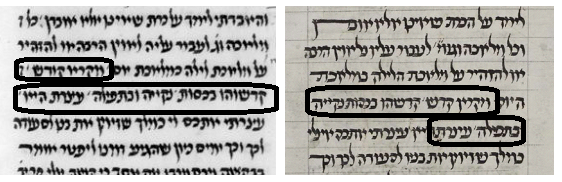
There is a disagreement among various editions of Chumash and Rashi on which מקרא קדש Rashi writes his comment. Logically, it belongs on Pasuk 27 which speaks about Yom Kippur. Rashi is telling us that the way you make Yom Kippur into a מקרא קדש is by wearing fine clothes and saying special prayers, and on other festivals, you observe them with food and drink, with clean clothing and with prayer.
This is the Artscroll Stone Chumash (Brooklyn 1993) which place the comment in Pasuk 27

However, there are other Chumashim which do not place the comment in Pasuk 27, and wait until Pasuk 35 to record it. This means that Rashi is telling us that on Succot, we sanctify the day with nice clothing and prayer, and on other festivals, we add in food and drink. It seems to be quite illogical.
This is Chumash Habahir (Jerusalem 2005)

What is the source for recording Rashi’s comment on Pasuk 35?
It turns out that most Rashi manuscripts and early printed editions have it that way.
A good example is the authoritative manuscript Leipzig 1 which looks like this:[1]
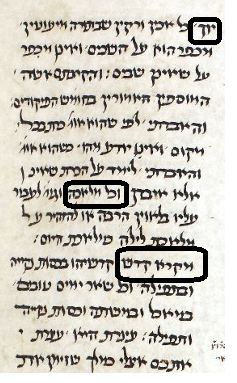
The manuscript has the comment on the word “אַ֡ךְ” in Pasuk 27, followed by a few more comments continuing on to Pasuk 31, where a comment on the words “וכל מלאכה וגומ’” appears. This is followed by the comment on “מקרא קדש”. Those words only appear afterwards in Pasuk 35 meaning that Rashi wrote his words of “קדשיהו בכסות נקייה ובתפילה” as a comment on the festival of Sukkot.
The website Al Hatorah uses Leipzig 1 as its base text for Rashi, yet it positions this Rashi as a comment on Pasuk 27 which speaks of Yom Kippur. It notes though that this Dibur Hamatchil appears in Leipzig 1 and in other Eidei Nusach after the comment in Pasuk 31
דבור המתחיל זה מופיע בכ”י לייפציג 1 ובעדי נוסח אחרים לאחר הביאור על פסוק ל”א
I looked at many other manuscripts and found it to be true in the following 34 cases. I did not find one manuscript which had the comment on Pasuk 27
Oxford CCC 165 (Neubauer 2440), Munich 5, Hamburg 13, London 26917 (Neubauer 168) (1272), Paris 155, Berlin 121, Vatican ebr. 4, Vatican ebr.18, Vatican ebr.33, Vatican ebr. Vatican ebr. 94, Vatican ebr. 480, London 19665 (Margoliouth 174), London 22122 (Margoliouth 178) Oxford-Bodley Opp. 34 (Neubauer 186), Casanatense 2848 (1284), Berlin Qu 514 (1289), Florence Plut.III.03, Oxford Bodleian 69, Hamburg 32, Vatican urb. Ebr 1, Vienna codex Hebr. 220, Vienna Codex Hebr.3, London Harley 5708, Bavarian State Library, Cod.hebr. 148, HUC JCF 1(called Cincinnati 51), Paris 49, Paris 154, Parma 2708, Parma 3204 (DeRossi 181), Cambridge University Library, Ms. Add. 1828, Casantense 2988, and Sassoon 369.[2]
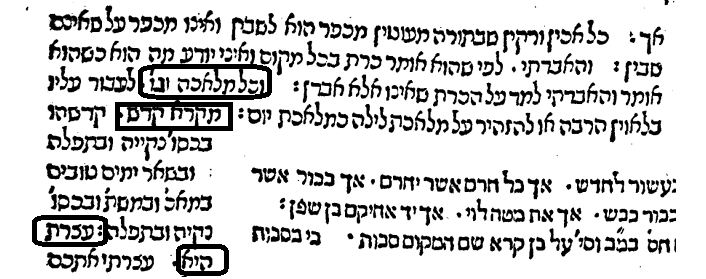
Most of the early printed editions of Rashi also have this comment on Pasuk 35. A good example is Rome 1470 where the comments on “וְהַֽאֲבַדְתִּ֛י” (pasuk 30) and “כׇּל־מְלָאכָ֖ה” (pasuk 31) precede that of “מקרא קדש” (presumably Pasuk 35)


The rest of the incunabula ( the 9 editions printed before 1500) present it that way except for Napoli 1492 where it is presented as part of Pasuk 27[3].
The most influential edition of the 16th century was the Bomberg Mikraot Gedolot Venice edition 1524-26 and it was recorded in the same manner. The comment on מקרא קדש comes after the comment on כָּל־מְלָאכָ֖ה of Pasuk 31, and before עֲצֶ֣רֶת on Pasuk 36. It is clearly assigned to מקרא קדש of Pasuk 35.
Many who analyzed Rashi’s work struggled with the issue of the manuscripts placing the comment on Pasuk 35, and logic dictating that it belonged on Pasuk 27. Chief amongst that group was the dean of supercommentators Rav Eliyahu Mizrachi (רא״ם)
He writes at first that logically Rashi is commenting on the words “מקרא קדש” which are written describing Yom Kippur (Pasuk 27)
שאין פירוש מקרא קדש האמור ביום הכפורי’ כפירוש מקרא קדש האמור בשאר ימים טובים כי פירוש מקרא קדש האמור ביום הכפורים הוא שתקדשהו בכסות נקייה ובתפלה לבד מאחר שאין בו אכילה ושתייה ופירוש מקרא קדש האמור בשאר ימים טובים הוא שתקדשהו באכילה ובשתייה ובכסות נקייה ובתפלה
“The interpretation of מקרא קדש on Yom Kippur is not the same as the interpretation of מקרא קדש on the other ימים טובים, because the interpretation of מקרא קדש on Yom Kippur is that you sanctify it with a nice clothing and prayer alone, since there is no eating or drinking on it, and the interpretation of the מקרא קדש on the other ימים טובים is that you sanctify it with eating and drinking, with nice clothing and prayer”
But Rav Eliyahi ran into the roadblock of the Girsa of all the manuscripts he had seen and it really bothered him
וגם בזה לבי נוקפי שהרי בכל הנוסחאות שראיתי בכולן כתוב הפירוש של מקרא קדש אחר הפירוש של והאבדתי ואחר הפירו’ של כל מלאכה
“But that makes my heart pound, because in all the Nuschaot I have seen, the interpretation of מקרא קדש is written after the interpretation of ” וְהַֽאֲבַדְתִּ֛י” (Pasuk 30) and after the interpretation of כָּל־מְלָאכָ֖ה ( Pasuk 31) .”
He nevertheless concludes that the comment belongs on Pasuk 27
אלא ע”כ לומר דהאי מקרא קדש שפיר’ בו הוא הכתוב ביום הכפורים שהוא משונה מכולם
“but rather one must say that this מקרא קדש, which is the one written on Yom Kippur, is the one which is different.”
Notice how he emphasizes that all the Nuschaot he has seen have it as the Dibur HaMatchil after “והאבדתי” (Pasuk 31) making “מקרא קדש” Pasuk 35. (regarding Succot)

However, there are a number of Rashi supercommentators who try to explain why this comment of Rashi does belongs after Rashi’s comments on Pasuk 30 and 31 (seemingly when it talks about Succot), such as Gur Aryeh( Maharal MiPrague 1512-1609).[4] The Yeriot Shlomo, which is a commentary on the Mizrachi by Maharshal (1510-1573), also addresses the issue.[5] Rav Shabtai Meshorer Bass places Rashi’s comment in Pasuk 35, and in his commentary Siftei Chachamim (Amsterdam 1680) advances this resolution:
בכסות נקיה. והא דמהפך רש”י הקרא דמקרא קדש דהיה לו לפרש לעיל קודם פירוש והאבדתי וקודם כל מלאכה לא תעשו. וי”ל דלעיל לא יכול לפרש קדשהו בכסות נקיה וכו’ דלמא הא דכתיב מקרא קדש לאסור הלילה כיום לעניין עשיית מלאכה וכרת, אבל עכשיו דכתיב כל מלאכה לא תעשו שהוא מיותר ובא ללמד ולהזהיר על מלאכת לילה כיום ע”כ האי מקרא קודש בא ללמד על קדשהו בכסות נקיה וכו’
“Fine clothing. That which Rashi turned around the verse “מקרא קדש “? He should have explained it [where it first appears in verse 27] before explaining “והאבדתי ” and before ” כל מלאכה לא תעשו?” The answer is: He could not explain above” קדשהו בכסות נקיה,” because perhaps when it wrote ” מקרא קדש ” this was to make the night forbidden like the day regarding work and “.כרת”. But now that it is written ” כל מלאכה לא תעשו ” which is superfluous, it is to teach and warn that work is forbidden by at night as well as by during the day, therefore this ” מקרא קדש ” must be teaching that we ” קדשהו בכסות נקיה.”
How did Rashi’s comment on “מקרא קדש” fare throughout printing history?
As mentioned, 8 out of 9 incunabula placed the comment on Pasuk 35, as did Bomberg’s Mikraot Gedolot of 1524-26. Going forward, the same was true for Augsburg 1533, Bomberg 1548, Sabionetta 1557, Riva di Trento 1561, Cracow 1587, and Mantua 1589
In fact, most editions through the 19th century continued to place the comment in Pasuk 35. Clearly, they were following the manuscripts and the earlier printed editions. Examples of these were Hanau 1611-14, Amsterdam 1670, Amsterdam 1701, Venice 1702, Berlin 1703, Amsterdam Proops 1721, Livorno 1807, Ostroh 1827, Warsaw 1854, Vienna 186, Zhitomir 1867, and Vienna 1875
Here is Berlin 1703
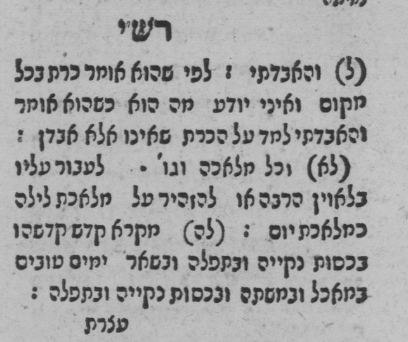
The earliest more modern edition I could find the comment placed in Pasuk 27 was the 1787 Devek Tov Hamburg edition.

Another example is Furth 1812
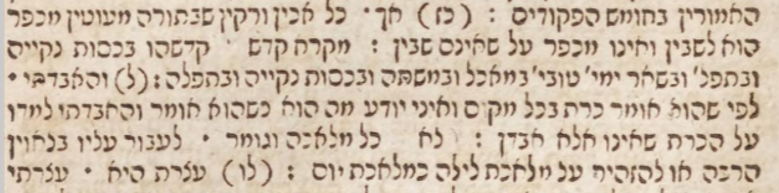
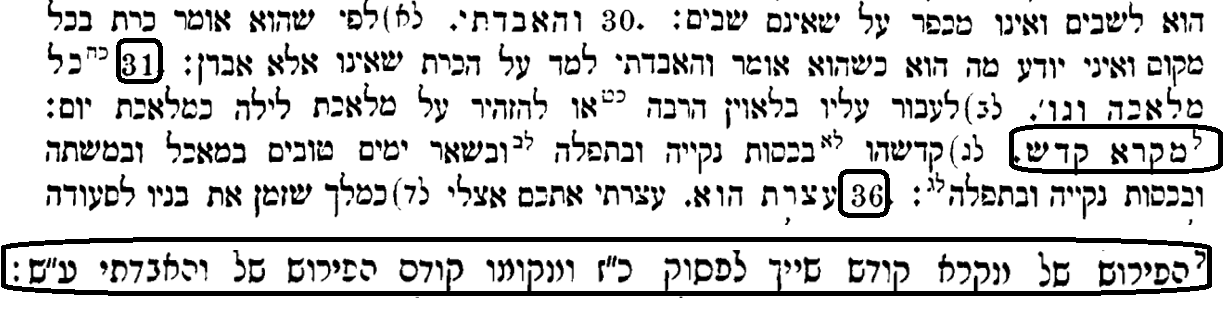
Avraham Berliner in Zechor L’Avraham (Berlin 1867) does not assign a Pasuk number to it but records it after Pasuk 31. In note 30 he writes that it belongs in Pasuk 27, before the comment of והאבדתי which appears in Pasuk 30.
More recently, Oz Vehadar Rashi Mevuar of 2016 does not assign מקרא קדשׁ to Pasuk 35 but just to somewhere after Pasuk 31 but before Pasuk 36. It also adds the words ביום הכפורים to emphasize that the comment is made about Yom Kippur
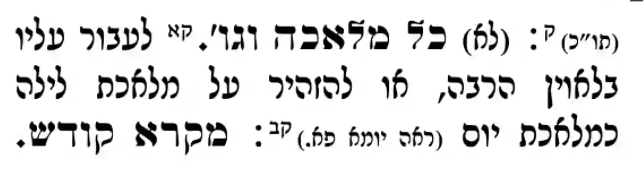
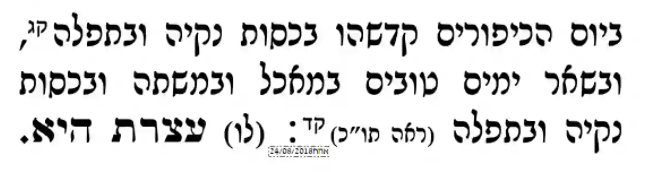
However it admits that ביום הכפורים is not found in any early edition
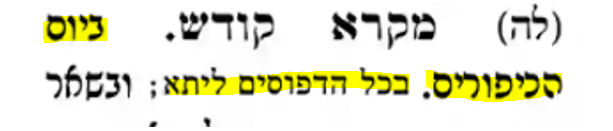
Here is an example of the words “ביום הכפורים” appearing in parentheses
Malkah Shel Torah (Jerusalem 1990)

Chumash Torat Chaim (Jerusalem 1993) published by Mosad HaRav Kook maintains that it should be in the Yom Kippur section and places it in Pasuk 27, but admits that the manuscripts and early printed editions do not support this placement.

The Artscroll Elucidated Rashi, Siftei Yeshainim section (Rahway, NJ 2025) writes on this matter
שם: ד”ה מִקְרָא קֹדֶשׁ. בכמעט כל הנוסחאות (כ”י ודפוס, חדשים גם ישנים), דיבור זה כתוב להלן אחרי ד”ה “וכל מלאכה”, וא”כ לפי הסדר נראה שמוסב על פסוק לה (גבי סוכות). אבל לפי הענין נראה ברור שדברי רש”י מוסבים על יוה”כ, וכן כתב הרא”ם כאן, לכן כתבנו אותו כאן. וע’ בדברי המפרשים בפסוק לה.
Rashi Hashalem Mechon Ariel 2019) places it in Pasuk 35 but blames the incorrect placement on the mistake of printers.


Note: I believe it is difficult to assign blame to the printers after looking at all the manuscripts which placed the comment on Pasuk 35.
To summarize:
- Rashi made a comment regarding Yom Kippur that one sanctified it as a מקרא קדש through fine clothing and prayer, whereas other ימים טובים are sanctified additionally with food and drink.
- The comment of Rashi on מקרא קדש is clearly focused on Yom Kippur
- For some reason, all the manuscripts and early printed editions of the Chumash (except for one) place the comment of Rashi in the section dealing with Succot (Pasuk 35)
- Rav Eliyah Mizrachi says that logically the comment belongs in the Yom Kippur section (Pasuk 27) but notes that all the manuscripts have it in the Succot section ( Pasuk 35)
- Printers chose between three courses of action in terms of where they placed the comment.
- Place the comment in Pasuk 35 as it appears in all the manuscripts and rely on supercommentaries to explain why it is there.
- Place it in Pasuk 27 which speaks about Yom Kippur and where the comment seemingly belongs
- Place it in Pasuk 35 and, even though they appear in no manuscript, add the words ביום הכפורים with or without parentheses
The final word on this perhaps belongs to the Rashi scholar Dr. Aharon Ahrend, who wrote me
“I agree that once you examine many manuscripts, it strengthens the hypothesis that the original text was like the manuscripts. But we must always remember that we do not have Rashi’s own manuscript, and therefore when there is something strange, it can still be attributed to an error by an ancient copyist, from whom others copied.”
Notes
-
The website Al Hatorah includes this information on the manuscript named Leipzig 1
“The popularity of Rashi’s Torah commentary and the tendency of medieval scholars and copyists to add to it their marginal glosses combined to create enormous variation between different manuscripts and editions of the commentary. As a result, it is often difficult to determine how Rashi’s original text read, and whether words, sentences, and even entire passages from the commentary, were written by Rashi himself or are merely later accretions… On this backdrop, the importance of the Leipzig 1 (Universitätsbibliothek Leipzig, B.H.1) manuscript of Rashi can hardly be overstated. This manuscript was written in the 13th century by R. Makhir b. Karshavyah, who states that he produced it from a copy of the commentary transcribed and annotated by Rashi’s own secretary, R. Shemayah. R. Makhir not only copied Rashi’s base commentary from R. Shemayah’s manuscript, but he also reproduced many of the marginal glosses contained in R. Shemayah’s text, a good number of which R. Shemayah explicitly attributes to Rashi himself. MS Leipzig 1 is, thus, an extremely valuable textual witness which comes tantalizingly close to the original source. In addition, its glosses shed significant light on Rashi’s thought processes and the development of his commentary.” ↑
-
There were two manuscripts which had the comment after Pasuk 31, but left out the last part of it which is “וכל שאר ימים טובים”
Paris 154 Berlin 1221
-
This is Napoli 1492. It perhaps indicates that there were manuscripts from which it took this Girsa which had it this way
-
גור אריה ויקרא כ”ג:ל”ו (Maharal Mi’Prague 1512-1609)
https://hebrewbooks.org/pdfpager.aspx?req=42846&st=&pgnum=193
קדשהו בכסות נקייה כו’. פירש רש”י דבר זה שלא במקומו אחר “כל מלאכה”, ועוד, דהוי ליה לפרש זה למעלה בחג המצות (פסוק ז). ויראה טעמו, דלמעלה לעולם כתיב איסור המלאכה אצל “מקרא קדש”, ויש לפרש “מקרא קדש” לקדש אותו שלא לעשות בו מלאכה, ובזה הוא מקודש, ו”מלאכת עבודה לא תעשו” פירושו ד”מקרא קדש”, שרוצה לומר בזה הוא קדש – “כל מלאכת עבודה לא תעשו”. אבל ביום הכפורים לא כתיב (בפסוק כז) “מקרא קדש” אצל המלאכה, על כרחך האי “מקרא קדש” מילתא אחריתי הוא, דלא איירי במלאכה, לכך פירש “מקרא קדש” ‘קדשהו כו’. לכך כאשר פירש כאן “וכל המלאכה וכו’ ”, הוקשה לו דלא כתיב “וכל מלאכה” גבי “מקרא קדש”, לכך פירש ד”מקרא קדש” אין פירושו שהוא קדוש ממלאכה, רק ‘קדשהו בכסות נקיה וכו”. אף על גב דהוי מצי לפרש זה על “וכל מלאכה” דלעיל (פסוק כח), אין זה קשיא, דלא פירש עליו מידי, אבל כאן (פסוק לא) פירש על “כל מלאכה” ‘לרבות כו”, פירש אחריו “מקרא קדש” ‘קדשהו כו” ↑
-
יריעות שלמה ויקרא כ”ג:כ”ז -בד”ה מקרא קדש וכו’ דמה נשתנה וכו’ (רא”ם).
https://hebrewbooks.org/pdfpager.aspx?req=67451&st=&pgnum=142&hilite=
ולא הוצרך לומר זה, דבלאו הכי אי אפשר לומר שה’מקרא קדש’ הזה שפירש בו, הוא הכתוב בחג הסוכות (פסוק לה), דאם כן למה נחלק חג הסוכות משאר ימים טובים לענין מאכל ומשתה.
ואפשר דלכך פירש”י מקרא קדש (פסוק לה) אחר שפירש קרא דכל מלאכה וגו’ (פסוק לא), משום דבזולת זה אפשר לפרש מקרא קדש האמור ביום הכיפורים (כאן) לענין איסור עשיית מלאכה אפילו אוכל נפש, מה שאין כן בשאר ימים טובים דמותרין במלאכת אוכל נפש לכן מפרש זה אחר קרא דכל מלאכה וגו’. כן נראה לי ↑