1

Special book offer: Besamim Rosh

Special book offer: Besamim Rosh

By Eliezer Brodt

One of the most famous forgeries in Jewish literature is the Shu”t Besamim Rosh. This work was brought to print by Saul Berlin in 1793. Shortly after it was detected as a forgery.

Over the years the Seforim Blog has featured many essays about this work (here, here, here, here, here, here). For a valuable post about the subject see here.

For some very recent work on the BR see the three-part series by Rabbi Chaim Tessler, (PDF’s available upon request). On the BR’s famous teshuvah about Suicide see Eliezer Sariel, A Matter of Life and Death: The Halakhic Discussion of Suicide as a Philosophical Battleground, Studies in Judaism, Humanities, and the Social Sciences, 2018 pp. 91-103.

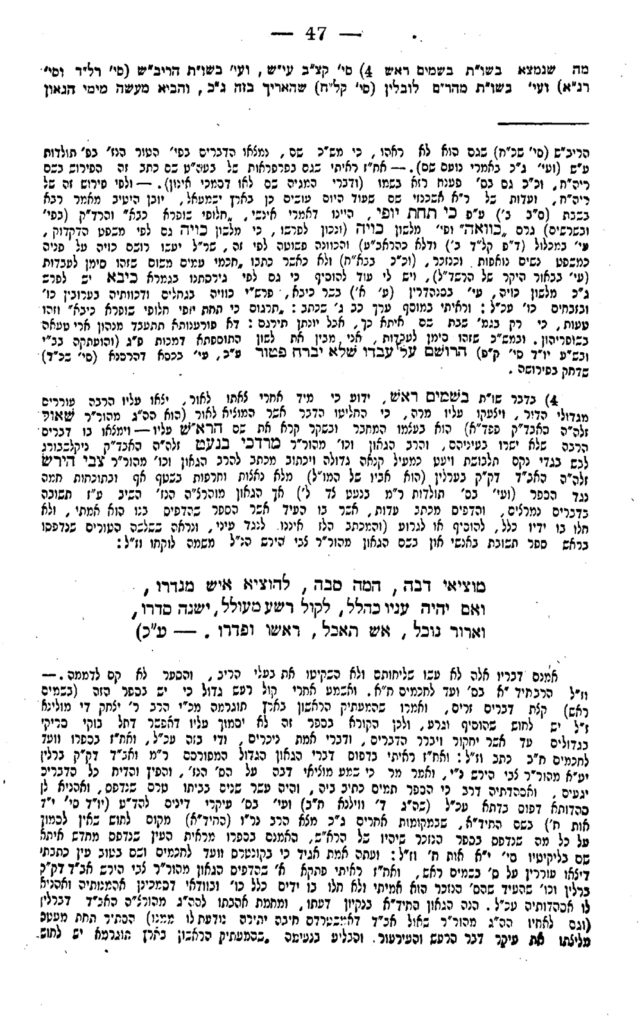
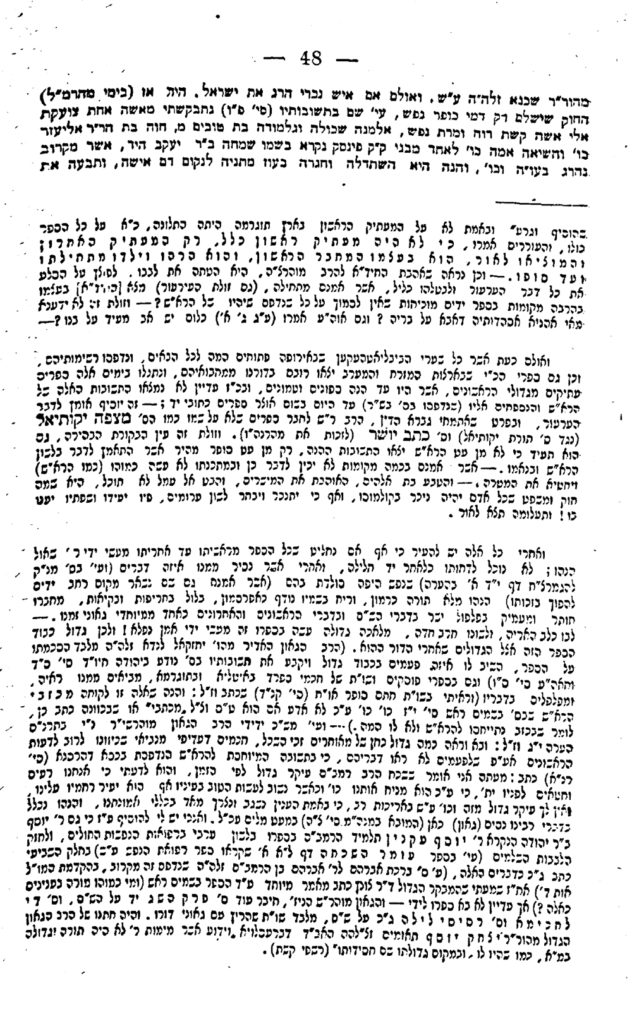
Its worth seeing this interesting piece by R’ Mattityahu Strashun about the BR:

R’ Strashun concludes this lengthy discussion, stating that he heard that: “the great critic Dr. Zunz, wrote a special article on the Besamim Rosh and who is like him in such things, but the work did not reach me yet.” This essay of Zunz was recently translated into Hebrew in Avraham Frankel: Rites of Synagogue Liturgy, Jerusalem 2016, pp.256-258.

In an earlier post we wrote:

In 1984, the BR was reprinted …  This edition, edited by R. Reuven Amar and includes an extensive introduction, Kuntres Yafe le-Besamim, about BR.  Additionally, commentary on the BR by various rabbis is included.  The text of this edition is a photo-mechanical reproduction of the first edition.  This edition contains two approbations, one from R. Ovadiah Yosef, who in his responsa accepts that BR is a product of R. Saul Berlin, but R. Yosef holds that doesn’t diminish the BR’s value.  The second approbation is from R. Benyamin Silber.  But, R. Silber provides notes in the back of this edition and explains that he holds the BR is a forgery and that he remains unconvinced of Amar’s arguments to the contrary.[1]

For many years this 1984 version of the BR has been almost impossible to find. A few weeks ago, a very limited run of the 1984 BR edition was reprinted and is available exclusively via Mizrahi Books.

Mention the Seforim Blog & the price is $22. Postage is $4 for one volume, and just $1 for each additional copy and naturally it can be picked up at the store as well. International postage is available at cost, contact Israel Mizrahi for an exact quote (call 347.492.6508). Payment can be made via paypal, credit card over the phone, check, or money order (if sending money, the address is 3114 Quentin Rd, Brooklyn, NY 11234). Contact info and PayPal is to bluebirds15@yahoo.com. It can also be ordered online here.

[1] To add to Samet’s and Amar’s very comprehensive lists of acharonim who quote the BR, see Eliezer Brodt, Yeshurun 24 (2011), pp. 426-427. See also Eliezer Brodt, Besamim Rosh in Galicia (forthcoming) IYH.


Three New Books

Three New Books

By Eliezer Brodt

In this post I would like to briefly describe three new works, which are hot off the press. For a short time, copies of these three works can be purchased through me for a special price. Part of the proceeds will be going to support the efforts of the Seforim Blog. Contact me at Eliezerbrodt@gmail.com for more information.

The first title is printed by the World Congress of Jewish Studies:

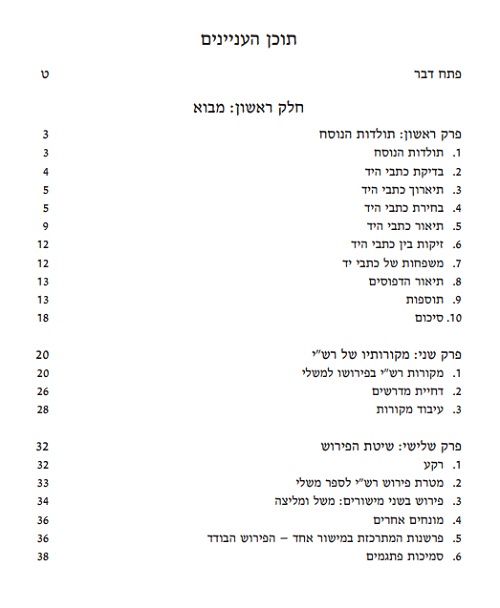
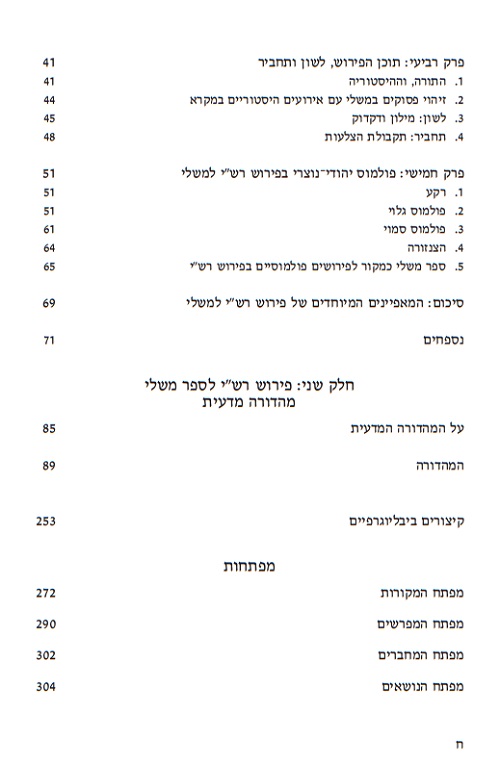
פירוש רש”י לספר משלי, ההדירה והוסיפה מבוא והערות ליסה פרדמן

Lisa Fredman’s, Rashi’s Commentary on the Book of Proverbs is a critical edition of Rashi on Mishlei based on numerous manuscripts. It includes a very extensive introduction and many valuable notes throughout the volume. Critical editions of Rashi are always welcome and very important, sadly not enough of them exist. One section in the introduction which I found interesting relates to Rashi and his responding to Christians and Christianity specifically in his work on Mishlei.

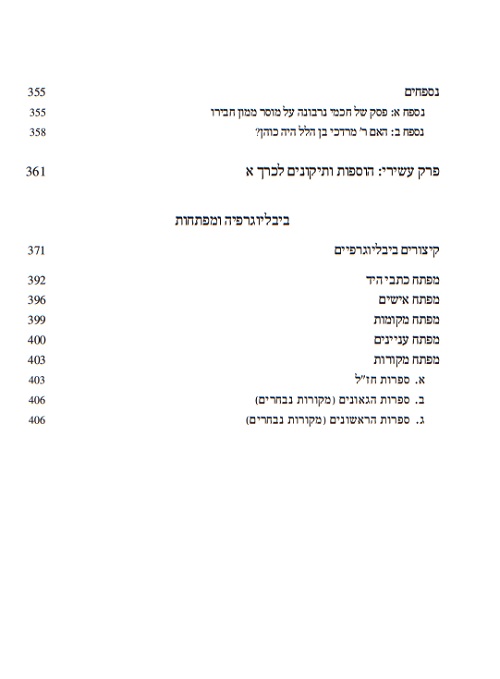
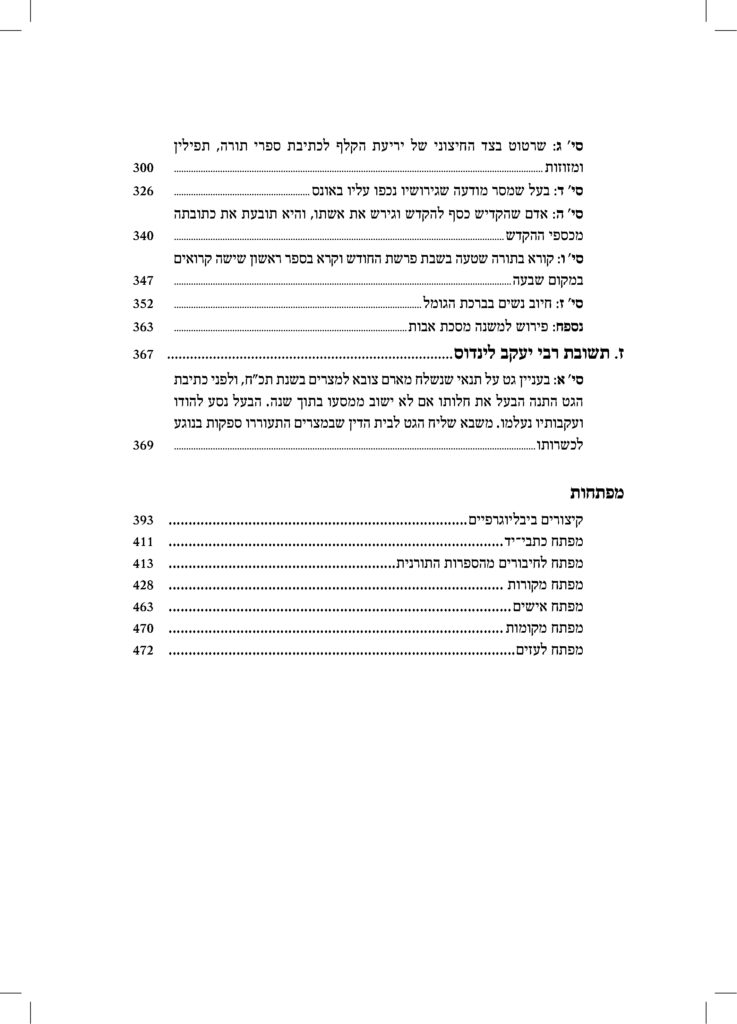
Here is the table of contents for this work:

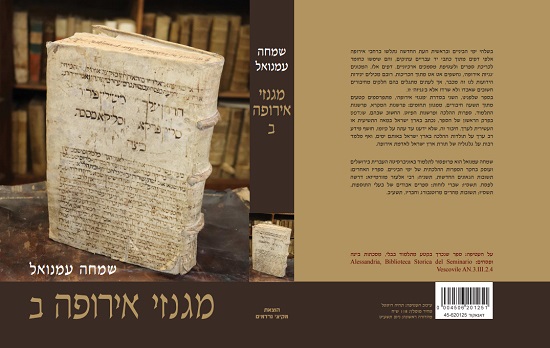
מגנזי אירופה כרך שני  ההדיר והוסיף מבואות, שמחה עמנואל, 408 עמודים

The Second volume which I am very happy to announce is the publication of an important work which I have been eagerly waiting for, Professor Simcha Emanuel of the Hebrew University’s Talmud department’s volume of texts from the “European Genizah”, volume two. This volume was just printed by Mekitzei Nirdamim and is being sold by Magnes Press. [Volume one was mentioned earlier on the blog here]. For a sample chapter e mail me at Eliezerbrodt@gmail.com.

Professor Emanuel is considered one of the today’s greatest experts in Rishonic literature. He has produced numerous special works [such as this recent work, this, this and my favorite] and articles of both texts and material about them for quite some time. [Many of which are available here] All of which are of very high quality, showing an incredible breadth and depth in the material at hand. One area of specialty of his is finding long-lost works; this new volume continues this trend. It includes numerous newly discovered texts of Rishonim, with introductions and background of their importance and proof of identification. Some of the discoveries are simply put remarkable detective work, how he pieces together the various pieces of the puzzle.

The author writes in the abstract of the book as follows:

            The purpose of this volume, like its predecessor, is to uncover fragments of important Hebrew works hidden in the “European Genizah”. Thousands of pages of Hebrew manuscripts have been discovered in this “Genizah”, which is scattered in hundreds of libraries and archives throughout Europe and even beyond. In the late medieval and early modern eras, these pages were used to bind books and as folders of archival documents. In the first volume of this series, I published eleven new works from the “European Genizah”, prefacing them with a wide-ranging introduction about the nature of this “Genizah”. Nine additional works are published in the present volume.

            The works published herein are from a variety of genres: Biblical exegesis, Talmud commentary, halakhic literature, and liturgical interpretation. They appear in this volume in chronological order, from earliest to latest. The most significant of the works is also the work whose discovery required more effort than all of the others; it appears in the first chapter of the book. This work was written — I wish to argue — in ninth or tenth-century Palestine. It reveals valuable information on the history of halakhah in Palestine of that era, and also teaches a great deal about how Palestinian Traditions made their way to the European continent. This work still requires a great deal of study, and I hope that others come along to add to my words.   The fragments published here were identified in the collections of fourteen archives and libraries. These institutions, located throughout Europe, aptly reflect the dispersal of the European Geniza.

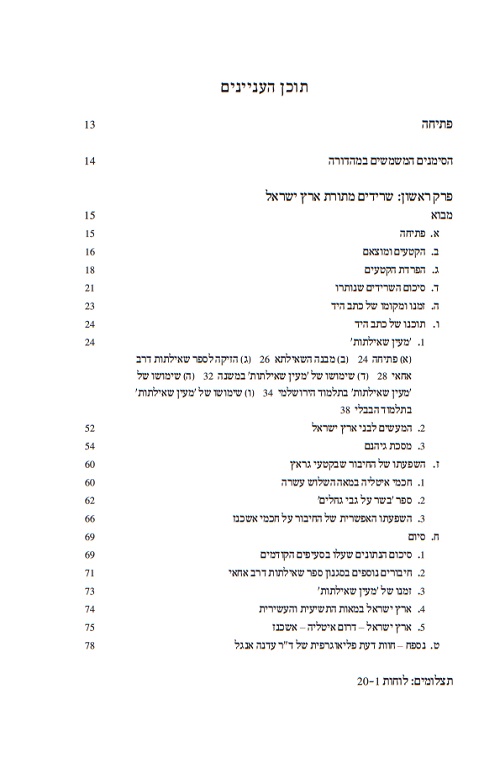
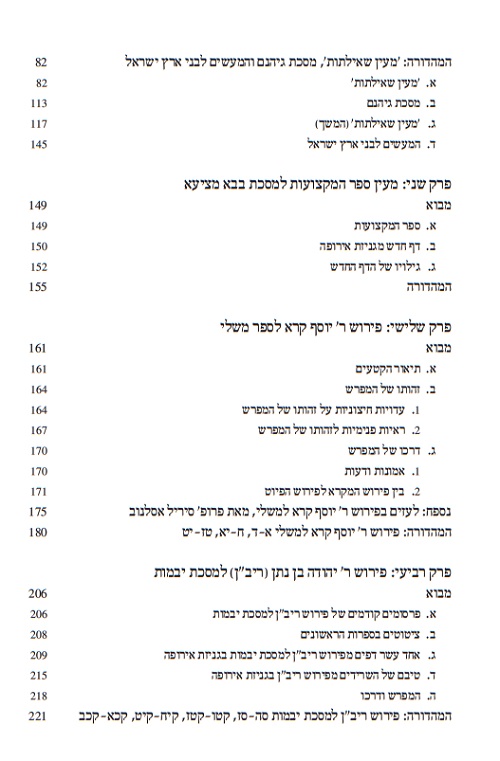
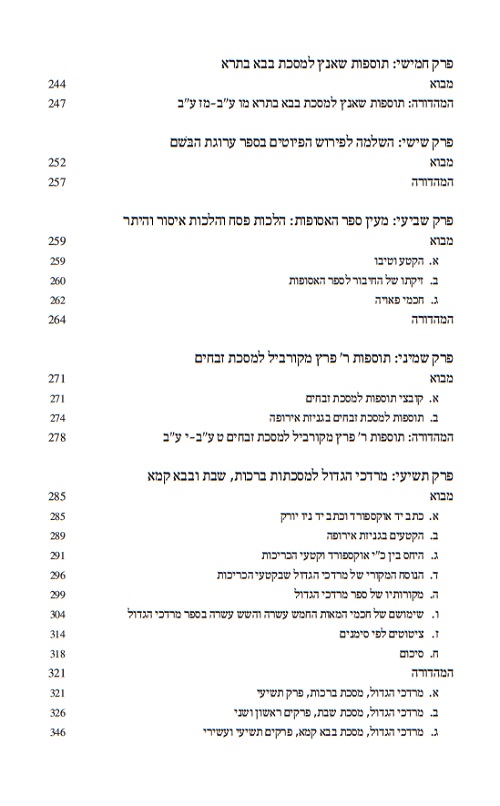
Here are the Table of Contents of this special work:


The third work is also printed by the World Congress of Jewish Studies.

שולמית אליצור, סוד משלשי קודש: הקדושתא מראשיתה ועד ימי רבי אלעזר בירבי קליר

This work Sod Meshalleshei Qodesh is written by Professor Shulamit Elizur (see here), one of the worlds leading experts on piyut. Some have claimed this work will change the study of piyut completely. In an interview published in Ami Magazine and reprinted with updates on the Seforim Blog (here) Elizur was asked:

Which sefer do you consider your biggest accomplishment— your magnum opus?”

She replied:

“The one I’m in the middle of writing right now. It’s a sefer on the history of the kedushta, which are the piyutim composed to be recited right before Kedushah. There are many chiddushim in that sefer and also things about Rabbi Elazar Hakalir that I discovered.”

This book is now out and is over one thousand pages!.

The following is the abstract of the book translated into English for the readers of the Seforim Blog by Dr. Gabriel Wasserman (and is not found in the actual book). This will give one a good idea of what the purpose of this work is:

Sod Meshalleshei Qodesh: The Qedushta From its Origins until the Time of Rabbi El‛azar berabbi Qillir

 A qedushta is a series of piyyutim for the ‘Amida prayer, which is expanded in honor of the recitation of the Qedusha, and includes many complex components. Its origins are in the Land of Israel, in the fourth or fifth century. We first see it as a constructed composition with set, complex, rules in the work of the poet Yannai, who lived in the mid-sixth century, the teacher of Rabbi El‛azar berabbi Qillir (who is known popularly as “the Qallir”). The qedushta, as it appears in the hundreds of compositions by Yannai and his followers, conceals many secrets: mysterious strings of biblical verses accompany its first components; a fixed biblical verse concludes the third component, followed by the strange words “El Na”; then comes a fourth component, whose structure is free, and always concludes, for some reason, with the word “Qadosh”; the fifth component in Yannai’s compositions is the ‘asiriya, a poem constructed of a truncated alphabetical acrostic from only aleph to yud, followed by a prayer beginning “El Na Le‘olam Tu‘aratz” – and it is unclear why this prayer appears here; then there is a group of poems called rahitim, which are written, for some reason, in unique, stereotypical structures. These are only a fraction of the various strange features of the qedushta’ot of Yannai and the other poets. The discussions in the book are dedicated to suggesting solutions to all these questions, and to others, and involve uncovering fragments of qedushta’ot that preceded Yannai; by examining these texts, they excavate the literary remains to construct a model of the gradual development of the qedushta over time, from its origins until it reached its complex structure in the days of Yannai and Rabbi El‛azar berabbi Qillir.

The first section of the book, which is the largest, is devoted to this development of the qedushta, in all its elements, including those that follow the recitation of Qedusha. Naturally, this section deals with the piyyutim mostly from a structural point of view, for only such an analysis can enable a comprehensive look at the development of the genre. However, as a base for these structural analyses, this section contains the texts of many piyyutim, mostly pre-classical (from the period before Yannai, when the poets did not yet use rhyme). Alongside them are printed classical rhyming piyyutim, too, from the period of Yannai and his colleagues, and, in a few instances, even piyyutim from later periods.

The second section of the book focuses on one single poet: Rabbi El‛azar berabbi Qillir, the most prolific of the classical poets in the Land of Israel, whose poems reached Europe, and some of them are recited in Ashkenazic and Italian synagogues through today. The qedushta’ot of Rabbi El‛azar berabbi Qillir are varied in both their structures and their styles, much more than those of Yannai; this section is devoted to an analysis of these compositions, and an attempt to map out which ones are earlier and which later. On the basis of precise structural analysis, the section builds a higher level of analysis – stylistic; and thus we see the picture of the great poet’s literary journey. It becomes clear that when he was started out, he was heavily influenced by the work of Yannai, and slowly he created new ways for himself: at first he went in the direction of obscurity and difficulty, which he gradually made more and more obscure; but then, in a later, more mature phase, he turned to pure lyrical song, which today’s reader, too, will find sweet.

The third section leaves aside the structural analyses, and suggests directions for further research. This section is short, and contains only first steps towards new directions in piyyut analysis. It focuses primarily on content, and ways that the qedushta’ot are organized, but it moves on to questions of how the qedushta is constructed as a complete composition, and points out various difficulties that the poets needed to overcome, and analyzes at length their literary solutions to these problems. Yannai stands at the center of the discussion in this section, but there are also notes about other poets. Most of the suggested directions for further research are new, and we hope that they will lead to further productive scholarship, and make it possible to study the piyyutim from angles that have hitherto been less examined.

Throughout the book, phenomena are demonstrated by means of the texts of piyyutim. More than 250 piyyutim are printed in the book, of which about 130 are being printed for the first time. Most of these piyyutim are from the earlier periods of piyyut, and their publication in this volume reveals the full contribution of these layers of the genre to our understanding of the history of the qedushta. Even the piyyutim that have already been printed elsewhere often were published in out-of-the-way publications, some of them with no vowels or commentary. It goes without saying that for this volume, these texts were all printed anew straight from the manuscripts. When pieces from Yannai’s work are cited to exemplify some point, an attempt has been made, inasmuch as possible, to use pieces that have not been included in the existing publications of his work, and thus the volume contributes a great amount of new material to the corpus of Yannai’s piyyutim. The volume as a whole is based on examination of hundreds of manuscripts, mostly from the Cairo Geniza, and these provide a wide, firm textual basis to the analysis.

The book is intended first and foremost for scholars, but it will also enable people interested in piyyut and its history from outside the world of academia to gain exposure to a great corpus of early piyyutim, among which are several stunningly beautiful gems, which are being published here for the first time.

For the Hebrew abstract email me at eliezerbrodt@gmail.com

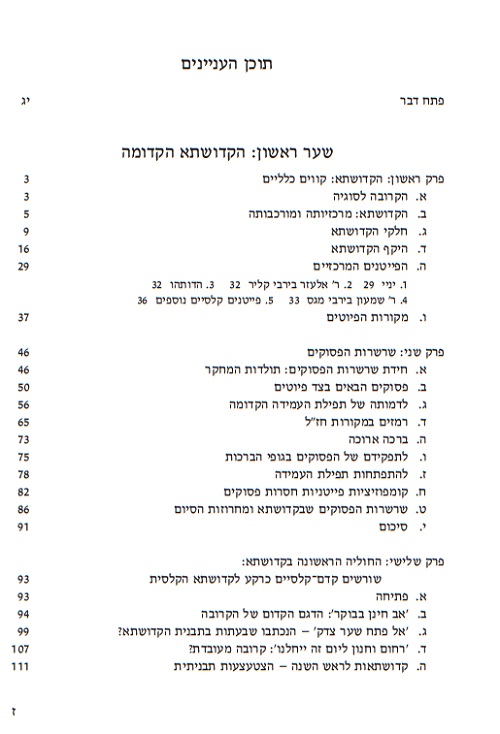
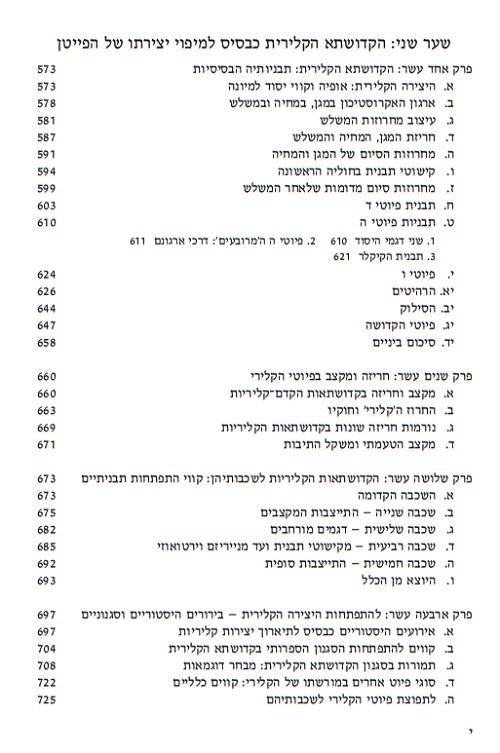
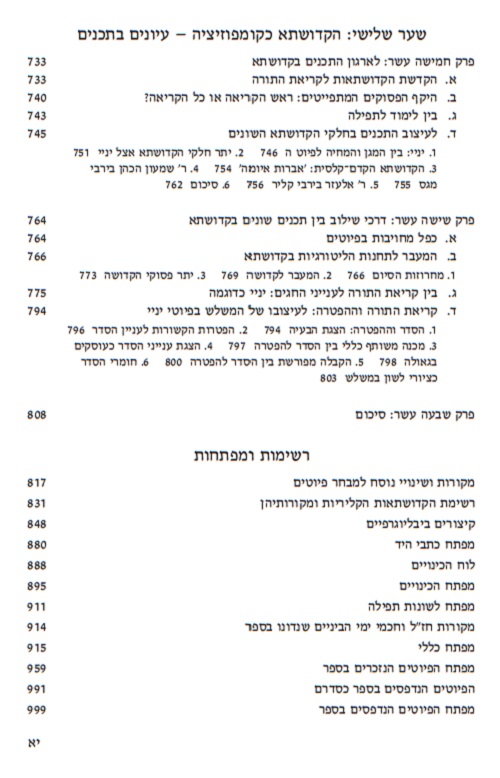
Here is the table of contents:


Highlights of the Mossad HaRav Kook Sale of 2019, New Rabbi Tovia Preschel volumes & Beis Havaad Convention

Highlights of the Mossad HaRav Kook Sale of 2019, New Rabbi Tovia Preshel volumes & Beis Havaad Convention

By Eliezer Brodt

For over thirty years, beginning on Isru Chag of Pesach, Mossad HaRav Kook publishing house has made a big sale on all of their publications, dropping prices considerably (some books are marked as low as 65% off). Each year they print around twenty new titles and introduce them at this time. This year they printed close to thirty new volumes. They also reprint some of their older, out of print titles. Some years important works are printed; others not as much. This year they printed close to thirty new volumes. See here here and here for a review of previous year’s titles.

If you’re interested in a PDF of their complete catalog, email me at eliezerbrodt@gmail.com

As in previous years I am offering a service, for a small fee, to help one purchase seforim from this sale. The sale’s last day is this Sunday, May 5. For more information about this, email me at Eliezerbrodt-at-gmail.com. Part of the proceeds will be going to support the efforts of the Seforim Blog.

What follows is a list of some of their newest titles.

גאוניםראשונים

  1. הלכות פסוקות השלם כרך ד

  2. חידושי הרן בבא מציעא

  3. שיטה מקובצת מנחות

  4. חומש דעת עזרא [פירוש על אבן עזרא] שני חלקים על חומש שמות

  5. חומש עם רמבן – עם פירוש מרשמואל הלחמי

  6. תורת חיים – תהלים, גחלקים

גרא

  1. ספר יצירה עם ביאור הגרא המפורש

  2. דקדוק אליהו\דקדוק ופירוש על התורה

  3. סידור הגרא

מענייןמומלץ

  1. רשלמה פפנהיים, יריעות שלמה, ביאור על שמות נרדפים שבלשון הקדוש, בעריכת רמשה צוריאל

  2. רטוביה פרשל, מאמרי טוביה, ד [ראה למטה התוכן]

  3. רטוביה פרשל, מאמרי טוביה ה [ראה למטה התוכן]

  4. האתרוג, מאמרים מדעיים הלכתיים והיסטוריים בנושא האתרוג [מסורת, מחקר ומעשה בתוספות אלבום זני אתרוג הגדולים בישראל]

  5. נך לאור ההלכה, יהושע שופטים

  6. רמשה שליטא, שערים בהלכה, המבנה והתוכן במשנת הטור והשלחן ערוך

  7. דר יהושפט נבו, הפיוט לאור המדרש, עיון במקורות המדרשים של פיוטי הסליחות וימים נוראים לפי נוסח אשכנז

  8. דר דניאל צדיק, יהודי איראן וספרות רבנית, היבטים חדשים על יהודים איראן והספרות הרבנית

ענינים שונים

  1. רבקה ליפשיץ, לכתוב עד כלות, יומנה של נערה מגטו לודז

  2. ראוריאל קוקיס, עלי אור, קובץ מפרשים ועוד, כולל פסקים מאת הגרשז אויערבך זצל מכתב יד

  3. ריהונתן אמת, אליבא דאמת, סוגיות יסוד בהלכות ברכות

  4. רצבי אינפלד, בעקבות המועדים והזמנים, מבט חדש ועמוק על מועדי השנה

  5. רמנשה ביננפלד, התנך לשפה העברית, סיור ולימוד תנכי דרך הניבים ומטבעות הלשון בשפה העברית שמקורם בתנך

  6. יהונתן עץ חיים, סוגיות מוחלפות מסכת סנהדרין

  7. מיכלא קאופמן, השומר גופי אנוכי בריאות תזונה וכושר לאור ההלכה

  8. רראובן רז, עיונים בנתיבות עולם, האדם ומידותיו במשנת המהרל

A few years back I wrote:

Just a few years ago, the great Talmid Chacham, writer and bibliographer (and much more), R’ Tovia Preschel, was niftar at the age of 91. R’ Preschel authored thousands of articles on an incredibly wide range of topics, in a vast array of journals and newspapers both in Hebrew and English. For a nice, brief obituary about him from Professor Leiman, see here. Upon his passing, his daughter, Dr. Pearl Herzog, immediately started collecting all of his material in order to make it available for people to learn from. Already by the Shloshim a small work of his articles was released. A bit later, she opened a web site devoted to his essays. This website is constantly updated with essays. It’s incredible to see this man’s range of knowledge (well before the recent era of computer search engines)… This is an extremely special treasure trove of essays and articles on a broad variety of topics. It includes essays related to Halacha, Minhag, bibliography, Pisgamim, history of Gedolim, book reviews, travels and personal encounters and essays about great people he knew or met (e.g.: R’ Chaim Heller, R’ Abramsky, R’ Shlomo Yosef Zevin, R’ Meshulem Roth, R’ Reuven Margolis, Professor Saul Lieberman). Each volume leaves you thirsting for more…

Here are links to download the table of contents of the two volumes.

Maamarei Tovia Vol. 4 TOC

Maamarei Tovia Vol. 5 TOC

Beis Havaad Convention

In November 2007 (!) I wrote a review on the Seforim Blog (here) about the Beis Havaad volume. This volume is a collection of articles based on a series of lectures that were delivered in Yerushalayim dealing with many aspects of the proper way seforim should be published. In 2016 in the Kovetz Chitzei Giborim – Pleitat Sofrim  [reviewed here on the blog by Marc Shapiro] a section was devoted to this project. For an earlier article related to all this see this post on the Seforim Blog.

This week in Jerusalem there will be a third convention where similar topics will be discussed.

Here is the information.

הכנס השלישי של בית הוועד לעריכת כתבי רבותינו

יתקיים בעזהית בכז ניסן תשעט בין השעות 15:30-21:00

בירושלים עיהק בבית כנסת ישורוןרחהמלך גורג‘ 44

15:30 מושב ראשון: הטכנולוגיה בשירות הספרות התורנית. יור: הרב יואל קטן

ויאמר לקוצרים העמכם‘ – על כתיבה, ההדרה ותוכנות מחשב בדורנו הרב אחיקם קַשָת

פרויקט פרידברג לכתבי יד יהודיים: סקירה כללית – אלן קרסנה

על האתרים הכי גרסינןומהדוראוהשימוש בהם – הלל גרשוני; הרב ישראל פריזנד

כלים חדשים להשבחת טקסטים תורניים הרב יעקב לויפר; פרופמשה קופל

מחידושיה של גניזת אירופה פרופשמחה עמנואל

שער למהדיר לגניזת קהיר עדיאל ברויאר

הפסקה וכיבוד קל

18:30 מושב שני: ישן וחדש בבית המדרש. יור: הרב אליהו סולוביציק

ההדרה בין עיון למדני למחקר תורני הרב אביאל סליי

תולדות דפוסי הרמבם הרב פרופשלמה זלמן הבלין

אסכולות פרשניות של הראשונים הרב אהרן גבאי

ישן וחדש בהדפסת ספרי רבני צפון אפריקה הרב פרופמשה עמאר

המהפכה התורנית – הספרות המבוארת – הרב מנחם מנדל פומרנץ

כתבי העת התורניים, מטרות והישגים הרב שלמה הופמן

עבר, הווה ועתיד באנציקלופדיה התלמודית הרב פרופאברהם שטינברג

מכון שלמה אומן יד הרב הרצוג

בית הוועד לעריכת כתבי רבותינו

0526-051253


Book announcement: Ta’aroch Lifonai Shulchan by Rabbi Eitam Henkin, H”YD

Book announcement: Ta’aroch Lifonai Shulchan by Rabbi Eitam Henkin H”YD

By Eliezer Brodt

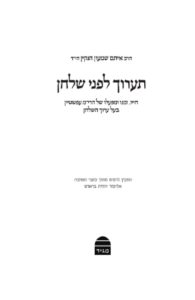
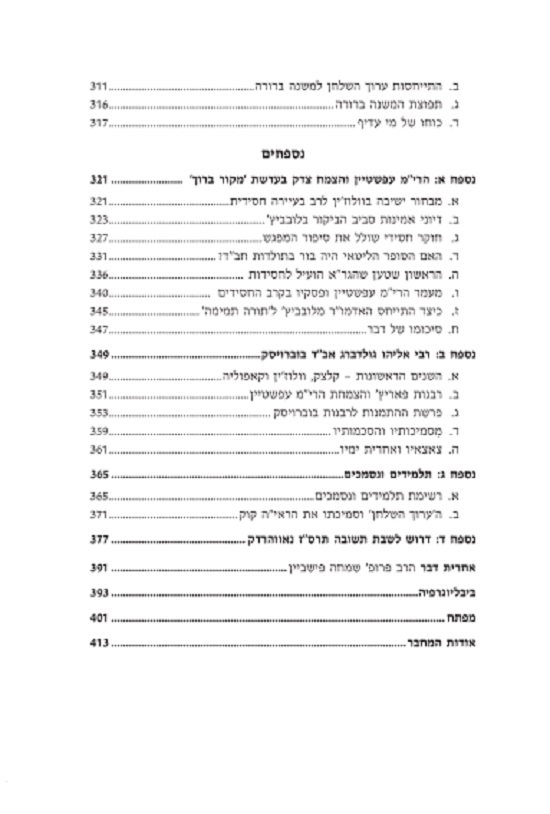
הרב איתם שמעון הנקין הי”ד, “תערך לפני שלחן: חייו, זמנו, ומפעלו של הרי”ם עפשטיין בעל ערוך השלחן,” הוצאת קורן 413 עמודים

It’s with great pleasure that I announce the second printing of the book Ta’aroch Lifonai Shulchan by R’ Eitam Henkin H”YD, published by Maggid Press. I had the unique privilege to edit this work, together with R’ Eitam’s special,learned parents. The first printing of this book was issued on January 2 earlier this year and sold out shortly after its released.


This book is an intellectual biography of R’ Yechiel Michel Epstein, author of the classic work Aruch HaShulchan. In 2006 R’ Eitam began publishing essays about the Aruch HaShulchan in various journals. Over time they became more and more renowned, for their comprehensiveness, clarity, high quality, and at times for new discoveries. They were read by a wide-ranging audience. In general, R’ Eitam’s numerous writings demonstrate an excellent command in both the halachic aspects and the historical aspects of the topics he set out to write about. Alongside his many historical essays are his many Torah articles and full-fledged halachic works. [Most of which are available here]. He was a unique combination of a first-rate talmid chacham and historian who was also blessed with  gifted writing and research skills. [See earlier on the Seforim Blog for hespedim on him here, here and here].

At one point he was invited to print all his articles related to the Aruch HaShulchan as a book for Touro College Press. R’ Eitam began collecting his unpublished material, updating what he already printed, for this work until the tragic day in 2015, the third day of Chol Hamoed Succos, when R ’Eitam was murdered together with his wife Na’ama.

After his murder his family accessed his computer and found this work on the Aruch HaShulchan amongst many other files of material. Various chapters were in different stages and many were even ready for print. After carefully reading through all the files about the Aruch HaShulchan and figuring out what which version was the most updated. The material which was found to be already printworthy were than then collected and organized into this book. Some other printed articles of his related to the Aruch HaShulchan were added to the book, such as his article about the rebbe of the Aruch HaShulchan.

Among R’ Eitam’s many qualities were his excellent writing skills; he was capable of making bibliographic essays  that of the kind that are generally boring to the regular reader interesting to such audiences. The material in this book was completely written by R’ Eitam, however the order of some sections was shifted around to flow better as a whole. Additionally, as various sections were written for different publications and at different times as were the various citations in the footnotes were adjusted/synchronized with the rest of the work. That said, one chapter was not entirely finished by R’ Eitam (Part 2, Chapter 4); and his parents completed it based on his notes, and another small chapter (Part 1, Chapter 8) was completed by his brother.

We are currently working on printing a several more volumes of his material. The next project which is very near completion is an English translation of twenty-five of his essays [for some articles in English see earlier on the Seforim Blog (here) and in Hakirah (here and here)]. Another project which we are working on is a two-volume Hebrew work consisting of his material related to Eretz Yisrael, shemittah and Rav Kook. Dedication opportunities are still available for these works. Dedications are tax refundable. Email me at eliezerbrodt@gmail.com for more information.

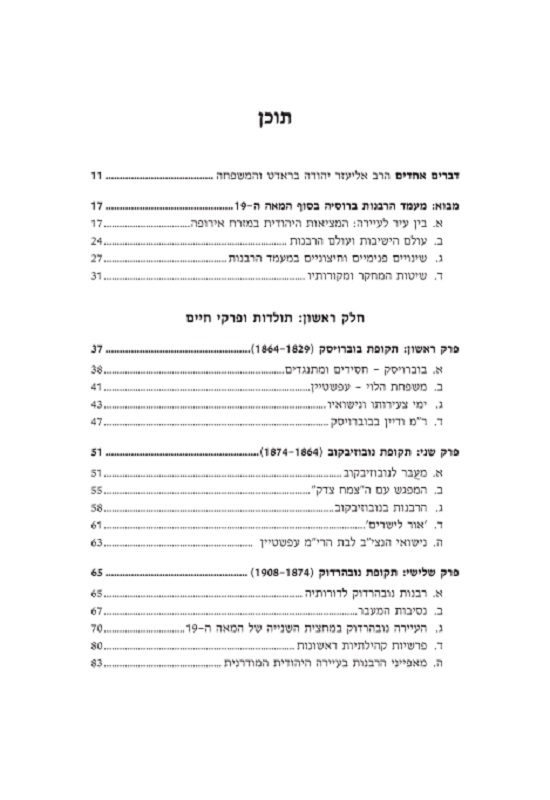
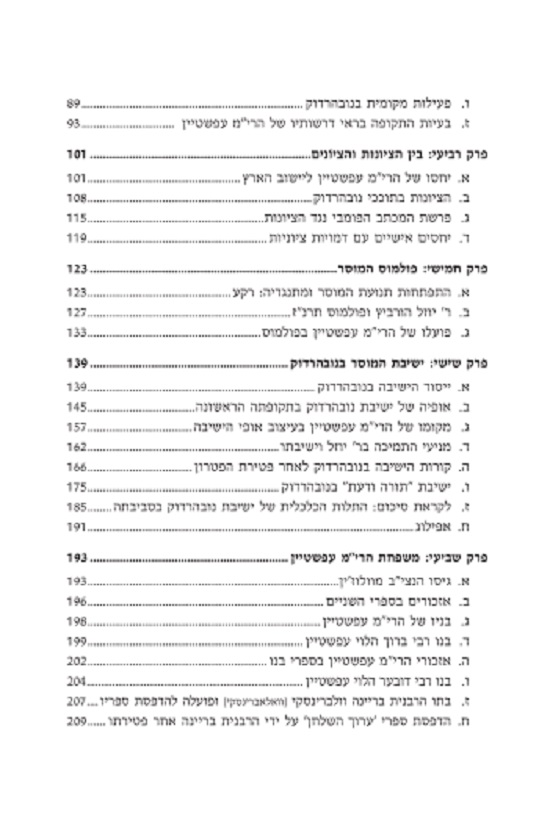
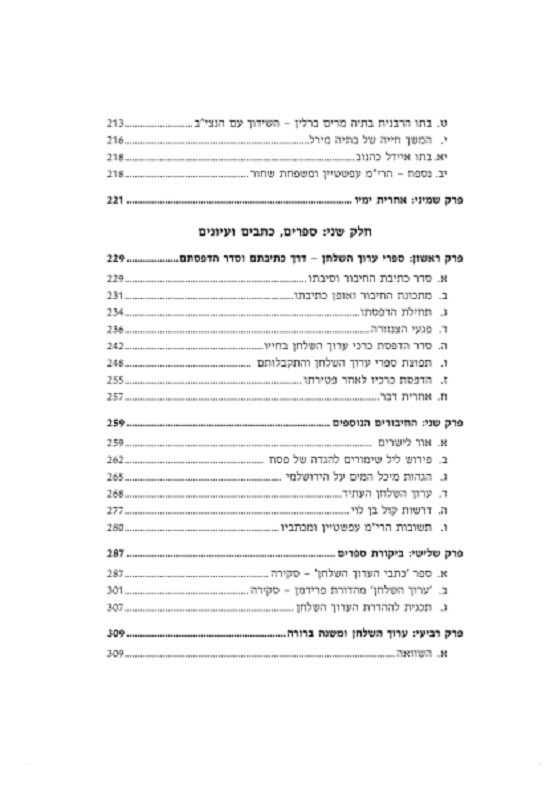
The book should be available for purchase at local seforim stores or via Maggid Press. If one is interested in the introduction of the book and some sample pages, email me at eliezerbrodt@gmail.com.Here are the Table of Contents from Ta’aroch Lefonai Shulchan:


Book announcement: Special sale

Book announcement: Special sale

By Eliezer Brodt

In this post I would like to briefly describe three new works printed by Schocken Institute, two of which were printed in the past year and the third is hot off the press – out just three days ago. For a short time, copies of these three works can be purchased through me for a special price. Contact me at Eliezerbrodt@gmail.com.

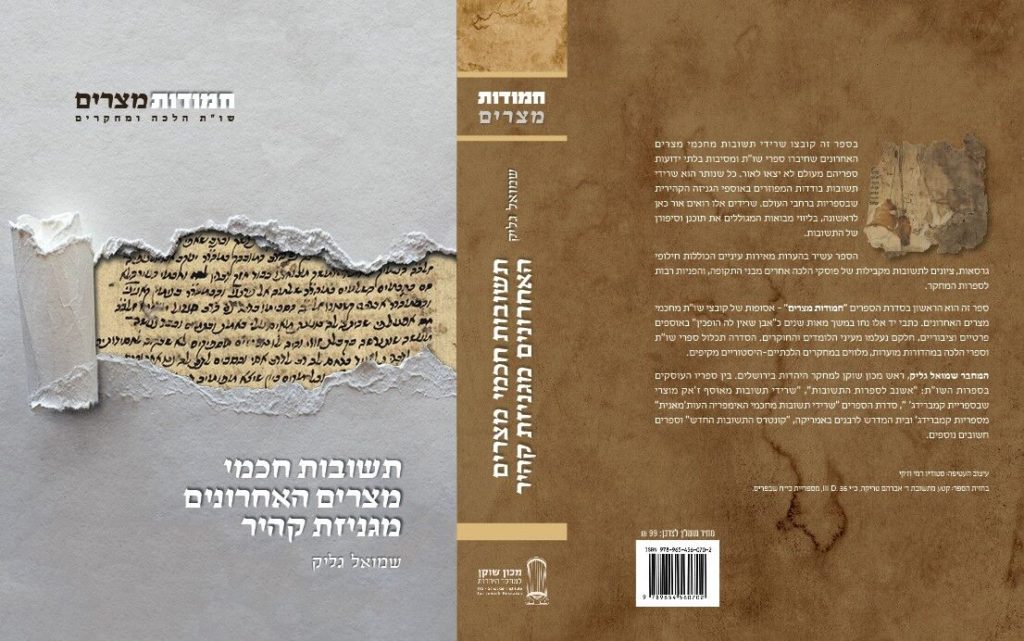
חמודות מצרים, יד ושם לרבותינו שתשובותיהם לא נקבצו בספר, א, תשובות חכמי מצרים האחרונים מגניזת קהיר, שמואל גליק, 474 עמודים

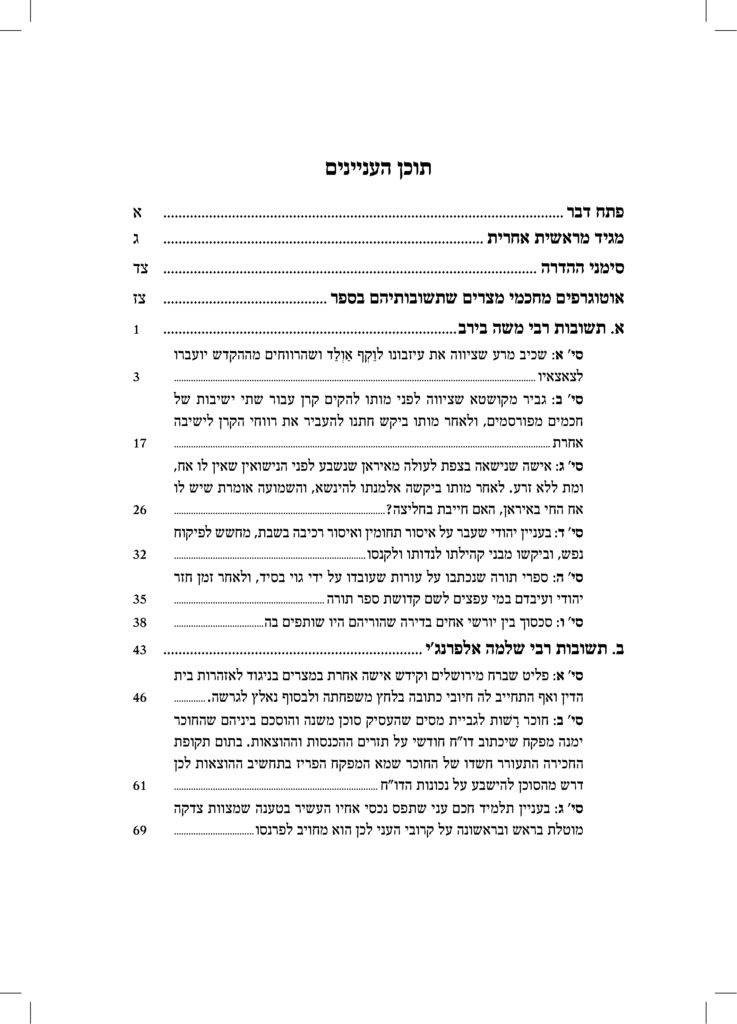
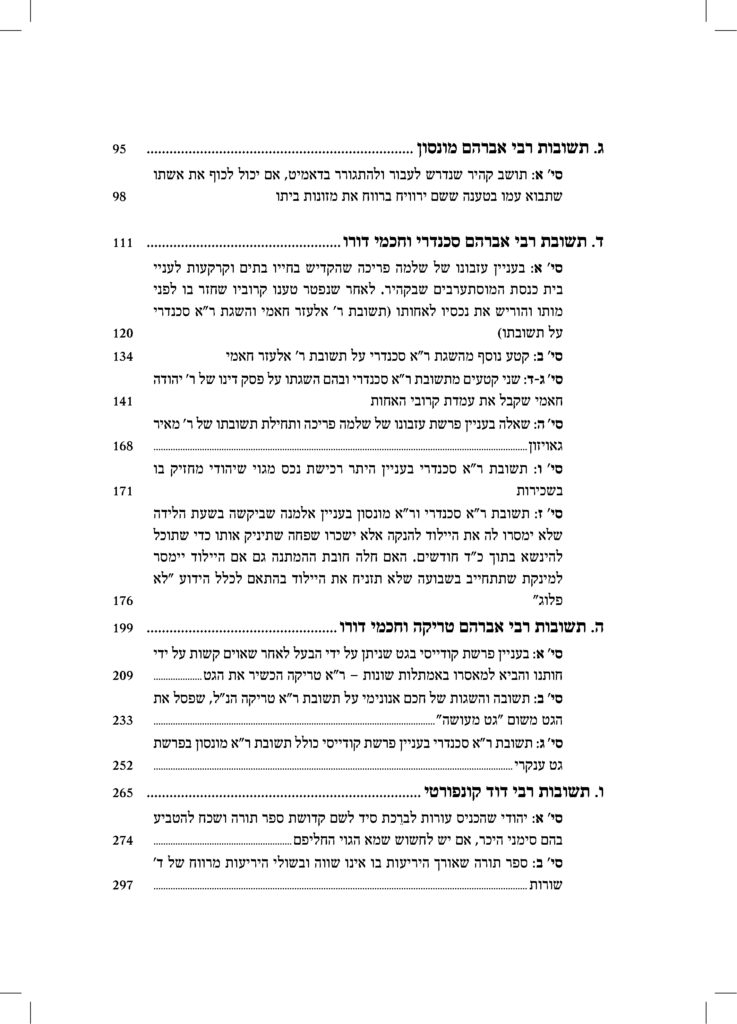
This work is a collection of material never published before from the Cairo Genizah has been collected by Professor Shmuel Glick. Most of the material is responsa of Egyptian rabbonim, the earliest document in this collection is from 1590 and the latest is from 1668. This is the first volume of a new series which Glick is working on, continuing his previous work; serieses of various collections of Responsa literature from the Cairo Genizah. Each Teshuvah in this collection is annotated with references to related Torah and academic literature. In addition, each document has a very useful introduction giving the reader the Teshuvah’s background. There is also a very useful introduction (94 pp.) to the whole work and a very thorough index. This is a very important addition to anyone interested in Responsa literature.

Here is the Table of Contents of the book:

The second title is:

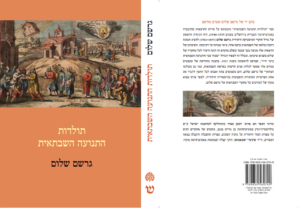
גרשם שלום, תולדות התנועה השבתאית, הרצאות באוניברסיטה העברית בירושלים 1940-1939. הקדימו מבוא ערכו והביאו לדפוס יונתן מאיר שיניצ’י יאמאמוטו, 407 עמודים

History of the Sabbatian Movement Lectures given at the Hebrew University of Jerusalem 1939-1940 by Gershom Scholem. Edited and introduced by Jonatan Meir & Shinichi Yamamoto.

History of the Sabbatian Movement was the first attempt by one of the giants of scholarship on Jewish mysticism, Gershom Scholem (1897-1982), to present a comprehensive picture of Sabbatianism as a single narrative. The book is based on the series of lectures given at the Hebrew University during 1939-1940, which are of special importance in that they laid the foundation for all of Scholem’s research in the years to come, including his extensive monograph Sabbatai Sevi: the mystical Messiah, 1626-1676, first published in 1957. What follows is a sketch of the massive History of the Sabbatian Movement, over which Gershom Scholem toiled his whole life but never completed. The lectures are presented here for the first time based on the original manuscripts, alongside the text of an additional series of lectures that Scholem gave as part of the “Month of Study” organized by Berl Katznelson in 1941. These long-hidden texts reveal new facets of the Sabbatian movement and its history, as well as of Gershom Scholem as a historian, and serve as prologue to any further study of this most stormy and complicated episode in Jewish history. The new edition includes a comprehensive introduction by the editors on all of Gershom Scholem’s studies on Sabbatianism.

Table of Contents

“The Open Book” / Jonatan Meir and Shinichi Yamamoto

Introduction

Chapter One: The Faces of the Generation

Chapter Two: The Messianic Movement from its Beginnings to its Height

Chapter Three: The Twists and Turns of the Sabbatian Movement

Chapter Four: The Historical Development of Sabbatianism

Appendix A: Messianism from the Spanish Expulsion to the Eve of Emancipation (Month of Study, 1941)

Appendix B: The Sabbatian Movement: Its Roots, Its Development, and its Aftermath (Introduction, 1942-45

Appendix C: Bibliography of Works by Gershom Scholem on Sabbatianism

Index

Notes on the Cover Image (from the collection of Paweł Maciejko)

The Third title just released three days ago is titled:

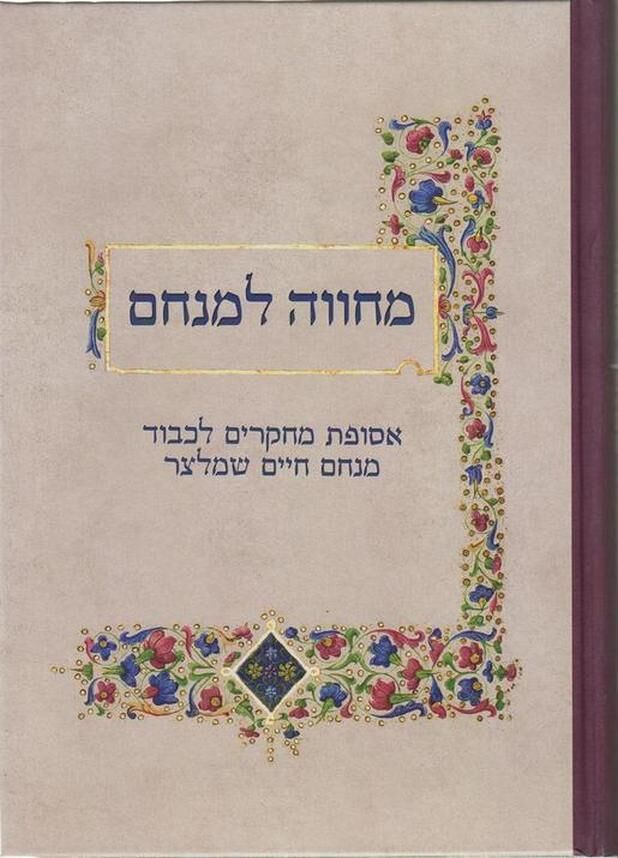
מחווה למנחם: אסופת מחקרים לכבוד מנחם שמלצר

Meḥevah le-Menaḥem Studies in Honor of Menahem Schmelzer. This volume is Edited by Shmuel Glick, Evelyn M. Cohen, Angelo M. Piattelli and others.

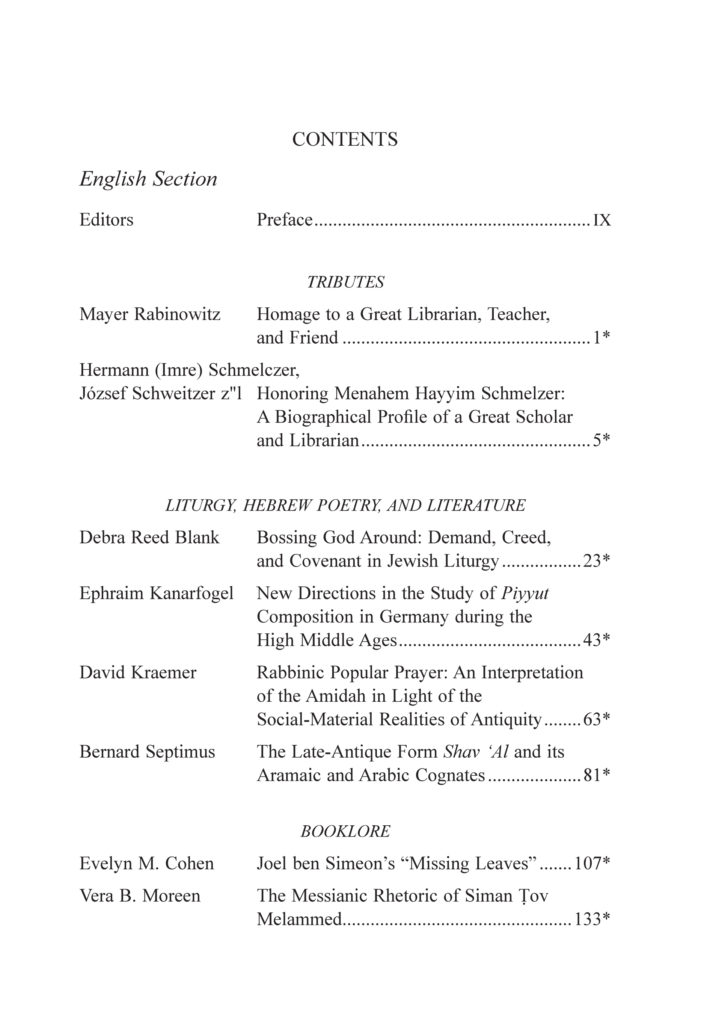
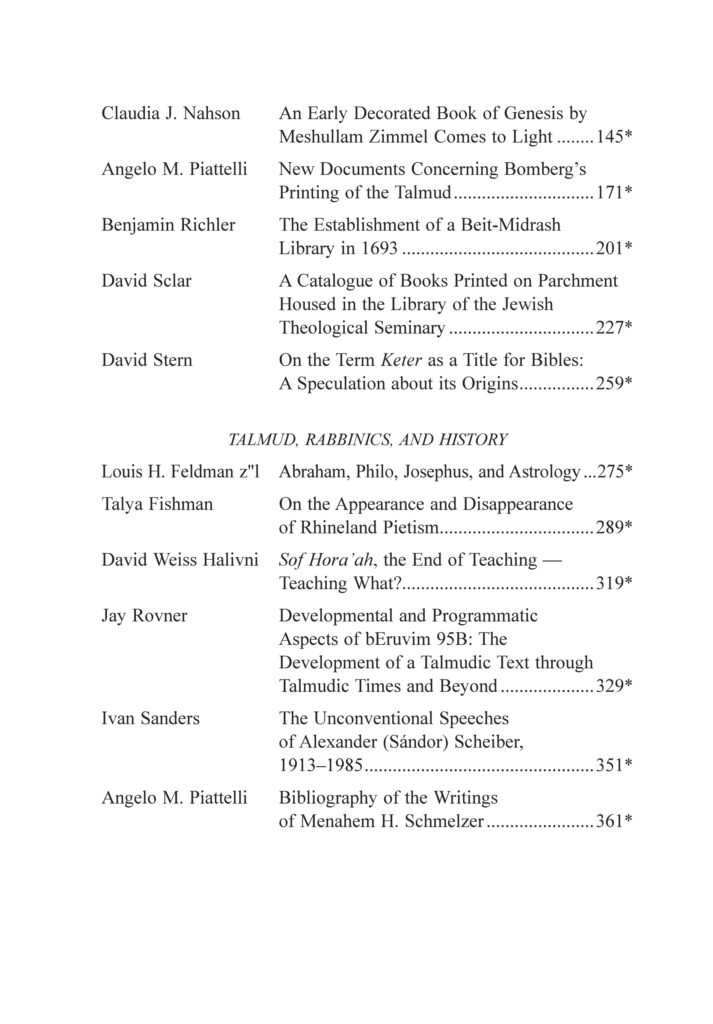
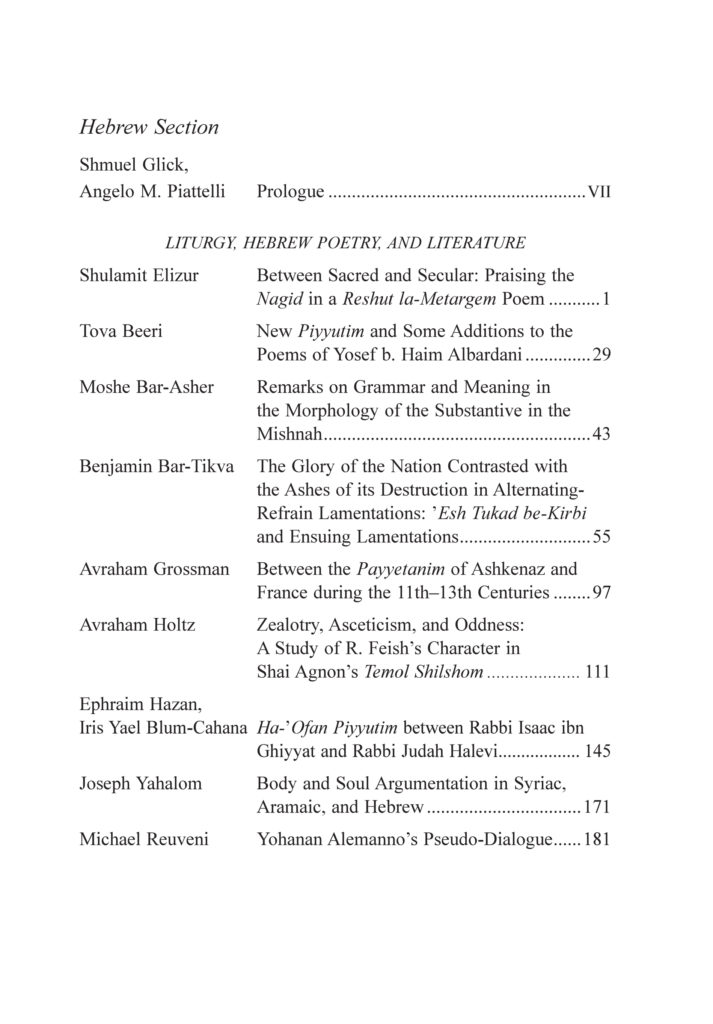
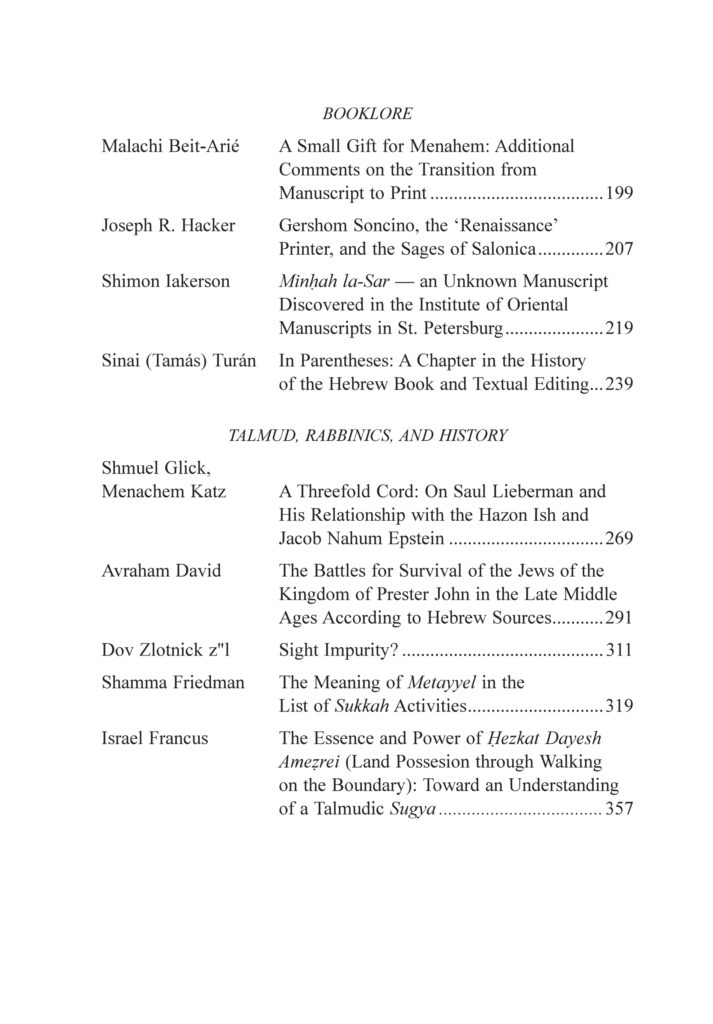
Just looking through the table of contents one can see that what the editors write in the preface is very accurate: “The present bilingual volume is organized with Menahem’s wide range of interests in mind: liturgy, Hebrew poetry and literature, booklore, Talmud, rabbinics, and Jewish history. It is a heartfelt demonstration of the respect and affection of the scholarly community for Menahem Schmelzer, scholar, mentor, and friend.”

This volume (over 700 pp.) is certainly a must read (and own) especially for book people and piyut people.

Here is the Table of contents of the book:


Book Announcement: The Lost Library by Dan Rabinowitz

Book Announcement: The Lost Library by Dan Rabinowitz

By Eliezer Brodt

Its with great pleasure that I announce the recent publication of an important work, that I am certain will be of great interest to readers of the Seforim Blog – The Lost Library by Dan Rabinowitz, founder and editor-in-chief of the Seforim Blog. This book is devoted to the legacy of the personal and expanded public library of Rabbi Mattityahu Strashun.

From the back cover:

The Strashun Library was among the most important Jewish public institutions in Vilna, and indeed in Eastern Europe, prior to its destruction during World War II. Mattityahu Strashun, descended from a long and distinguished line of rabbis, bequeathed his extensive personal library of 5,753 volumes to the Vilna Jewish community on his death in 1885, with instructions that it remain open to all.

In the summer of 1941, the Nazis came to Vilna, plundered the library, and shipped many of its books to Germany for deposition at a future Institute for Research Into the Jewish Question. When the war ended, the recovery effort began. Against all odds, a number of the greatest treasures of the library could be traced. However, owing to its diverse holdings and its many prewar patrons, a custody battle erupted over the remaining holdings. Who should be heir to the Strashun Library?

This book tells the story of the Strashun Library from its creation through the contentious battle for ownership following the war until present day. Pursuant to a settlement in 1958, the remnants of the greatest prewar library in Europe were split between two major institutions: the secular YIVO in the United States and the rabbinic library of Hechal Shlomo in Israel, a compromise that struck at the heart of the library’s original unifying mission.

In 2005 Dan Rabinowitz founded the Seforim Blog and I started corresponding with him almost immediately. One of the people we discussed often was R’ Strashun as both Dan and I were fascinated by him. Dan’s interest extended to the library and what happened to it after R’ Strashun’s death and especially what happened to it after World War Two. Eventually, in November 2015 Dan authored a lengthy post on the Seforim Blog dealing with different aspects of R’ Strashun and his library. This post eventually turned into this full-length book on the subject.

The Lost Library is written in Dan’s extremely clear, lucid and captivating manner as familiar to readers of the Seforim Blog (having read hundreds of his articles and at times not realizing he is the author of them because most do not include his name – in essence, stamm seforim blog post dan rabinowitz, at least the scholarly ones). The book begins with an exciting personal introduction (A PDF is available upon request) giving background to the development of one of Dan’s favorite pastimes collecting books. However, similar to the subject of this book R’ Strashun, Dan’s interest extends to not just owning the book but to developing a personal relationship with the book contents. This becomes evident as one reads The Lost Library, especially the vast number of sources in multiple languages housed in numerous collections and libraries all over the world including his personal library. The Lost Library meticulously documents each of his claims from these extensive sources collected over intense research conducted over a few years.

The book begins with an overview of that ‘ir ve’em be-yisrael, the famous city of Vilna, giving the reader excellent background to the environment and city (including current descriptions as the author visited Vilna while working on this volume). The author discusses what made Vilna famous, sidetracking into very relevant topics such as R’ Mattityahu father, the Rashash and others affiliated with the Vilna Gaon, Vilna’s most famous resident. Dan then turns to deal with the hero of the book, R’ Mattityahu and provides the reader with a comprehensive biography that discusses his unique style of learning and how that influenced his book collecting habits. The next chapter is the opening of the public library after Mattityahu’s death and the impact it had on the community and eastern European Jewry at large. The book then goes onto detailing the library’s life during the Holocaust and especially afterword as different parties claimed ownership when most of it was discovered to have survived.

Marc Shapiro wrote:

Taking us on a journey from nineteenth-century Vilna until almost the present day, Rabinowitz not only documents the vicissitudes of this important institution, but helps us understand the intellectual culture of one of the centers of Judaism in modern times.”—Marc B. Shapiro, Weinberg Chair in Judaic Studies, University of Scranton

And others praised the work as well.

“Rabinowitz has done a brilliant job in his moving and important book…. Through the story of the Strashun Library, he gives us insight into the richness and vibrancy of Jewish life in Vilna. He vividly portrays the restoration of the books of the Strashun Library, a testimony to the indomitable Jewish spirit.”
—Ambassador Stuart E. Eizenstat, chief White House domestic policy adviser to President Carter

“Rabinowitz’s meticulously researched study is an outstanding expression of the wealth of knowledge provided by a thorough exploration of Jewish material culture…In his detailed reconstruction of the Strashun library’s fate after the German invasion, he detects a breathtaking history of loss and mourning, of illegal claims and desires, of appropriation and incorporation that expresses the rupture of the Holocaust and the contested visions of Jewish life after catastrophe.”—Elisabeth Gallas, Leibniz Institute for Jewish History and Culture –Simon Dubnow

This book is of particular personal great interest. The first time I recall hearing something from R’ M. Strashun was when I was in tenth grade. R’ Hershel Schachter had just begun giving a shiur once a week in Flatbush for Balei Battim on Mesechtas Kidushin. I attended a few of them, during one of the shiurim he mentioned R’ M. Strashun’s comments in Bava Basra praising him (I do not recall his exact discussion, but it was about the word Achron). I had been familiar with the Strashun name for a while through R’ Mattityahu father, the Rashash via my father. The Rashash symbolized an emphasis on peshat, from then on I was very curious about R’ Mattityahu. Fast forward a few years when I began learning in the Mir in EY I was talking to a friend somehow it came up about R’ M. and the friend mentioned he loves him and that the great Gaon R’ Yakov Chaim Sofer always quotes him with great respect. He then showed me a sefer of Mattiyahu printed by Mossad Harav Kook (Mivchar Kesavim). The sefer was out of print and hard to find, but the Sitrah Achrah helped me find it a little while later. I immediately began learning through the work. Since then I have found the work many times in used shops and have found these copies, proper owners, to appreciate them. One time while learning the sefer an Israeli chavrusha saw what I was learning and said how you could learn a sefer of a maskil! I argued it was good enough for me that R’ Yitchack Elchanan Spektor who, in his old age, came to Vilna to eulogize R’ Mattityahu. My chavrusha dismissed this anecdote and replied that means nothing! Of course, I could not convince him that there was nothing wrong with him. However, his complaint sparked the exact opposite – and spurred me to research and read more of R’ Mattityahu’s writings which only enhanced my reverence for him. My chavrusha’s position notwithstanding, other very frum Israelis friends expressed their appreciation and fascination with R’ Mattityahu. Most of his writings appeared in newspapers and journals and are not readily available or even known. However, in a few months, I will god willingly print some of them. Eventually, I wrote my first academic article in English about him (available in PDF upon request or from here).

One final point about R’M that particularly resonated with me. R’M did not merely collect seforim he used them, and this is apparent from hundreds of citations throughout his works. A later resident of Vilna, and one too who was indeed very well-read was R’ Chaim Ozer. He did not need an extensive personal library as he had unfettered access to the Strashun Library – indeed was unique in that he was one of the few given borrowing privileges. Here is a book request from R’ Chaim Ozer, addressed to the Strashun Library’s head librarian Chaim Chaikel Lunski. Thanks to R’ Dovid Kamenetsky for making it available:

One of my favorite stories about the library as told by R’ Moshe Shmukler in his fascinating book, Moshe Shmuel ve-Doro, combines the idea of the voracious reader and a comprehensive library:

ר’ חיים עוזר… מלבד בקיאותו הגדולה בתלמוד ובראשונים, הצטיין בבקיאות עצומה בשאלות ותשובות האחרנים… פעם החלטתי לנסותו עד כמה כוחו גדול באחרונים, סרתי לספריה של שטראשון ועברתי על פני הקאטאלוג במקרה נתקבל מבטי על הספר מאמר מרדכי להגאון ר’ מרדכי זאב אוטינגר מלמברג ספר שלא נודע לי עד אז וחשבתיו ליקר המציאות. דפדפתי בספר ומצאתי איזה הערה נפלא על דברי בעל הלכות גדולות המובא ברא”ש סוף פ”ב דיבמות. חשבתי האח, מצאתי את מה שאוותה נפשי. במוצאי שבת באתי לר’ חיים עוזר, כי הערב ההוא היה מוקש ללות אתו בחידוש תורה. בשעת השיחה העילתי כלאחר יד את הקושיא על הבה”ג. ומה השתוממתי לשמוע מפי תיכף, כי זוהי קושיתו של בעל מאמר מרדכי… [ר’ משה שמואל ודורו, עמ’ 176].

The book can be purchased from the publisher here, Amazon or Book Depository.

Here is a portrait of R’ Mattityahu followed by a scene depicting the Strashun Library in Vilna in its heyday: