1

Etymologies of the Hebrew Calendar

Etymologies of the Hebrew Calendar

By Dan D.Y. Shapira

Dan (or, Dan D.Y.) Shapira is an Orientalist and grows more than fifty trees on the edge of the Judaean Desert. He’s a Full Professor at Bar-Ilan University.

The month of Nisan begins the Hebrew year. Its name comes, ultimately, from Sumerian nisag (nig, “thing,” + sag (“head/first”), “first fruits” at about the spring equinox, via Akkadian and / or Aramaic. It should be observed that the names of the months in Sumerian were different from those used later in Akkadian.

It is not completely clear whether חודש האביב, “the month of green ears of young barley,” was the name of this month, and not its appellation.

Then comes Iyyar, from Akkadian itiAyari, “blossom.” In the Babylonian calendar its name was Araḫ Āru (Araḫ = yeraḥ, ירח), which also meant “month of blossoming.”

The name of the month Sivan comes from Akkadian simānu, “season; time.”

This word can be the source of Aramaic > Late Biblical Hebrew and Mishnaic and Talmudic Hebrew zeman, זמן. However, this etymology poses a huge historical problem, because of similarity to Iranian zaman, with Avestan (the language of the Avesta, the Zoroastrian holy corpus) zruuan-, “time,” and with the Iranian “deity” Zurvān, the primordial time-space, from whose good thought Ahura Mazda / Ohrmazd, the benevolent actor, and from whose doubt in his own thought Angra Mainyu / Ahriman, the malevolent actor, were “born.”

The evidence in various Semitic languages demonstrates that zeman has different phonetic forms: Aramaic had both zeban and zeman, Syriac Aramaic zabnā, Mandaic Aramaic zaman and zban, Arabic both zamn and zamān, and Ethiopian Semitic languages have zaman, zäbän (Tigre), zämän (Amharic, Tigriñña and Gurage), and Mehri, an indirect continuation of Ancient South Arabian, has both zemōn and zubōn.

The name of Tammuz comes from the Assyrian and Babylonian month Araḫ Dumuzu, named after the Mesopotamian deity Dumuzid, a dying and reviving deity, mentioned in Ezekiel 8:14 (“Then he brought me to the door of the gate of the Lord’s house which was toward the north; and, behold, there sat women weeping for Tammuz”; KJV).

Ab / Av comes from Abu, meaning “reed”; the name מנחם אב is a later invention, because of the calamities of this month and the hope of redemption to occur in this month.

Elul has its name from Araḫ Ulūlu “harvest month” in the Babylonian calendar; in the Babylonian calendar (and in some later calendars derived from it), Ulūlu was used as a leap month (the function of Adār II with the Jews).

Tishrei / Tishri has its name from Akkadian tašrītu, “beginning,” as this month was opening the second half of the year (the verbal root ŠRY exists also in Hebrew and Aramaic). Now we celebrate the יום תרועה as Jewish New Year.

Marcheshvan / Marḥešvan comes from Akkadian waraḫ šamnu, “eighth month”; in Hebrew, the Akkadian name was divided incorrectly into war- > mar- / ḫašamnu > ḫašvan, provided with a Volketymologie (the Bitter Cheshvan).

Kislev, from Babylonian Kislimu, meaning possibly “thick mud,” and associated in Babylon with the cult of Nergal, deity of the Netherworld, plague, and war. In the Jewish tradition, this months is associated with dreams.

Tevet / Ṭēḇēṯ, from Akkadian ṭebētu, the “muddy month.”

Shebat / Shvat (Šeḇāṭ) comes from the Babylonian Šabāṭu, meaning “strike,” and referring to the heavy rains; this is one of the two Babylonian months directly mentioned in the Bible (Zechariah 1:7), besides Adār.

Adār has its name derived from the Babylonian Araḫ Addaru, “month of harvest.”

It is generally assumed that these month names were adopted into the Hebrew calendar during the sixth century BCE Babylonian captivity of the Jews. Month names from the Babylonian calendar appear not only in the Hebrew calendar, but also in the Mandaean, Modern Assyrian, or Syriac, calendar, in the Syriac calendar proper, and in the names of half of the month used in Türkiye and in many Arab-speaking countries (along with Islamic and Gregorian calendars).

In these calendars, for example in the Arabic secular calendar, Tišrīn al-ʾAwwal (the First Tišrīn) stands for October, Tišrīn aṯ-Ṯānī (the Second Tišrīn) stands for November, Kānūn al-ʾAwwal (the First [month of] heating utensil) stands for December, Kānūn aṯ-Ṯānī (the Second [month of] heating utensil) stands for January, Šubāṭ is February, ʾĀḏār is March, Naysān is April, ʾAyyār is May, Ḥazīrān (month of Boar, the Syrius star) is June, Tammūz is July, ʾĀb is August, ʾAylūl is September. These names are based closely on the names in Syriac Aramaic.

In the Bible, several Phoenician-Canaanite month names are used: Ziv, “glow” = Iyyar; Ethanim = Tishrei; Bul = Marcheshvan / Marḥešvan. These names are only mentioned in connection with the building of the First Temple these names may be attributed to the presence of Phoenician scribes in Solomon’s court at the time of the building of the Temple.

There are movements in Lebanon trying to revive the Phoenician Language and Phoenician-Canaanite paganism; they use these months names known from the Bible and from Phoenician and Punic inscriptions, with Pegarim (month of the cult of the dead) for Elul, etc.


Purim in Tehran: The Symbolic Devaluation of the Ahrimanic Republic

Purim in Tehran: The Symbolic Devaluation of the Ahrimanic Republic

By Dan D.Y. Shapira

Dan (or, Dan D.Y.) Shapira is an Orientalist and grows more than fifty trees on the edge of the Judaean Desert. He’s a Full Professor at Bar-Ilan University.

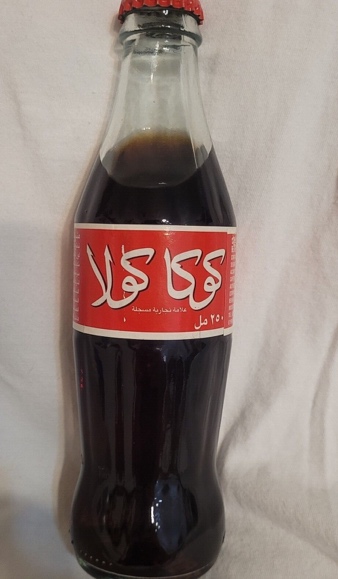
Some fifty years ago, my father brought home a small glass bottle of Iranian Coca Cola, no idea where from. I sat hypnotized looking at the bottle, with its Persian (well Arabic) letters, so beautiful.

It was easy to understand that two letters stand for k, one for l, one for o and one for a. The letters for o, l, and for k had some remote similarities to the corresponding Hebrew letters, if you rotate them a bit in your head. How I know that the letter for a, ا, is also like the Hebrew א, you should just squeeze the Aleph on both sides. And a couple of year later there was the Islamic revolution in Iran, at the end of the same year there was the Soviet invasion in Afghanistan, and new tasty, delicious words began to pour – baseej, inqhilab, Haqiqat-e Inquilab-e Saur, mujahedeen-e khalq, sipaas, Kermanshah, pasdaran, and somehow I began learning Persian.

The language struck me with its grammatical similarities to German and its lexical parallels to Yiddish. Just as Yiddish incorporates Hebrew and Aramaic, Persian is saturated with Arabic. In Yiddish, one can play with registers, tilting the language toward its Germanic core or thinning out its Hebraic elements. Persian offers the same flexibility, allowing a speaker to choose more, fewer, or even no Arabic words. Years later, many Jewish-American Iranists from the WWII generation confirmed this early impression. Learning the language went smoothly, as if I had already known it in a former gilgul.

When I was an Iranian studies student in the late 1980s at Hebrew University, one of my teachers told us that Persians are simply prone to short periods of mass hysteria before returning to “normal” and going back to counting money and carpets within a few years. Time has since proven that my former teacher understood Iranians quite poorly, as they have shown no symptoms of recovering to that supposed normalcy. I eventually realized that my chances of visiting Tehran or Shiraz are slim, perhaps reserved for a future gilgul. Being an Israeli Iranist without the possibility of visiting Iran is much like being Jewish without the possibility of joining a Gentile club.

I am writing this on Sunday, March 1. Today is my secular birthday, and tomorrow, Ta’anith Esther, is my Jewish one. Last night, Bibi and Trump sent me a wonderful gift. I shouted into the sky as drones sent from Iran turned into smoke: Khamenei kotlet shod (“Khamenei went kebab”) as millions of Iranians around the world shouted along with me.

My son just called. He is married to a girl whose parents were both born in Iran. “What do you say about your birthday present?” he asked. “I just realized that your entire life is connected to the fact that you were born on Ta’anith Esther.”

“Yes,” I replied, “and I am just now writing about that. I’ll send it to you.”

It was published today that the joint American-Israeli training for the very operation we witnessed yesterday began as early as January 2023. In January! This timing is critical; it means that even as the domestic anti-Bibi demonstrations began to surge and well before the horrors of October 7, the strategic “pedestal” for the current reversal was already being constructed.

In my view, the son of the last Shah has been designated by Bibi and President Trump to lead the transitional period in a post-Khomeinist Iran. Whether he will be able to restore the historical monarchy remains an open question.

As I discussed in my co-authored article with Reuven Kiperwasser, “Encounters between Iranian Myth and Rabbinic Mythmakers in the Babylonian Talmud,” published a dozen years ago in Encounters by the Rivers of Babylon Scholarly: Conversations Between Jews, Iranians and Babylonians in Antiquity (2014) and available here, the Babylonian sages often engaged in a process of symbolic devaluation. They created their own imagined worlds by taking elements of Iranian mythology and recasting them to define the borderlines of their own culture. After the certain dismiss of what many Iranians call “the Ahrimanic Republic” (instead of “the Islamic Republic,” with Ahriman being the wicked opposite, sitra oḥora, of the benevolent Ahurmazd, or Ahura Mazda), we are seeing this ancient devaluation play out as a modern geopolitical reality. In our analysis of Sanhedrin 39a, we examine a dialogue where a Magus claims the human body is divided, with the upper part belonging to Hwrmyz (Ohrmazd) and the lower, excretory part belonging to ‘hrmyn (Ahriman). The Talmudic sage Amemar sarcastically challenged this dualism by asking why Ahriman would permit Ohrmazd to send life-giving water through his “territory.” Today, this sarcasm has turned into a tangible reality as the “Ahrimanic” regime governed through the “lower” impulses of mass hysteria and regional chaos has been devalued by a population that has largely secularized and rejected the official ideology. With the collapse of this demonic mask, many Iranian exiles will return home (four to five millions Iranians live outside of the present borders of Iran). They return to a land ready to restore its “upper” civilizational identity, finally mirroring the way the rabbis once harmonized their world with the benevolent elements of the Iranian heritage.

In Iran, while 99% of the population is officially classified as Muslim (including a 5% to 15% Sunnite minority composed of Kurds, Arabs, Baluchis, and Turkmens living along the borders), the internal reality is starkly different. In truth, only about 30% to 40% of the population considers themselves Muslim at all. The actual majority has shifted toward being non-religious or atheist, with many becoming fiercely anti-Islamic or “spiritual” in various ways. Others identify as self-proclaimed “Zoroastrians” or have become secret converts to American-style Evangelical Christianity.

Under the Khomeinist regime, Iran has become largely secularized and has partially moved in an anti-Islamic direction. Today, nobody believes in the official ideology, a situation very much like the lack of belief in the official ideology during the late Brezhnev USSR. The “Ahrimanic republic” now sends Shi’ite clerics who oppose its ideology to prison or places them under home arrest, just as the late Brezhnev USSR did to the few who identified as “the real Marxists.”

The Iran of tomorrow will certainly be anti-Islamist, with the potential for the oppression of Islam itself. While the Iran of yesterday was a global leader in antisemitism, the Iran of tomorrow will be a global leader in the state-supported fight against the “Free Palestine” movement. The “Palestinian discourse” was central to the old Iran and will remain so in the New Iran, though with its emphasis entirely reversed.

The raison d’être of the Iran of tomorrow will be a staunch alliance with the USA and Israel. The principle of nahapokh hu from the Purim story reveals the sarcastic hypostasis of the Jewish God’s sense of humor. As the scripture asks, “See, this is new? It hath been already of old time, which was before us.” One need only consider the metamorphosis of pogromist Czarist Russia into what some, astonished by the transformation, termed “the Jewish Commune.”

Some predict that Iran will fall apart due to the separatism of ethnic minorities, but to me, this is absolute nonsense. Iran has only insignificant real minority groups; although some Iranians speak languages other than Persian, they are Iranians first and foremost. Fantasies about Azeri separatism in Iran are especially hilarious. It is as if Nazi Germany tried to lure Israel’s Hasidic Jews into a “Great Germany” separatism simply because those Jews speak Yiddish. Iranians of Azeri background are, more or less, the Iranian equivalent of Israel’s Ashkenazim.

But the borders of Iran might change. It is a significant topic, and once stabilization is achieved, one can envisage the enlargement, rather than the shrinking, of Iranian territory eastwards within a predictable span of time.

The position of the Iran of tomorrow as an ally of Israel will fundamentally change Israel’s strategy toward its Arab allies and partners. MBS understood this some time ago and, consequently, dragged his feet regarding a rapprochement with Israel.

Another significant point is Türkiye, which has emerged as a primary adversary of Israel since October 7, though I hope the motivations behind this shift were largely opportunistic and fundamentally misguided. However, if the IDF map is accurate, the fact that Israeli jets overflew Turkish territory on their way to Iran suggests a significant development. This possibility hints that Mr. Erdoğan is beginning to view the regional landscape through a more pragmatic lens, perhaps recognizing the inevitable devaluation of the “Ahrimanic” status quo in favor of a more stable, “upper” civilizational order.