The Vilna Gaon, part 3 (Review of Eliyahu Stern, The Genius) by Marc B. Shapiro
The Vilna Gaon, part 3 (Review of Eliyahu Stern, The Genius)
by Marc B. Shapiro
In honor of Sean Penn and Mark Wahlberg, who understand what pidyon shevuyim is all about.
Continued from here.Returning to R. Sternbuch’s Ta’am ve-Da’at, vol. 1, earlier in this book, p. 88, we find the following passage.
שמעתי ממרן הגריז”ס זצ”ל (הגאב”ד דבריסק) שאברהם אבינו לא היה עצבני וחושש ומפחד שהולך לשחוט בנו יחידו, אלא היה לו הלילה שלפני העקדה ככל הלילות, ולא נתרגש מצווי זה וקם בבוקר לקיים המצוה כשם שמקיימים כל מצוה, והשכים כזריזין שמקדימים למצוות, ושש ושמח לקיים מצות בוראו
According to R. Velvel Soloveitchik, Abraham was not emotionally affected by the command to sacrifice Isaac, and on the night before he was to go to Mt. Moriah he slept as well as on any other night. He approached this commandment like any other commandment, and was ready to do it with joy. It is hardly an accident that the Abraham described by R. Velvel very much resembles R. Velvel himself. See also my earlier post here. [1]
Yet doesn’t R. Velvel’s understanding conflict with the notion that the Akedah was a test or trial? What kind of test was it if Abraham related to this command just like any other?
The Gaon is quoted as having a different perspective on the Akedah.[2] According to him, since Abraham was engaged in acts of loving kindness all the time, this commandment was designed to develop in him the attribute of cruelty, which is also required at times.
וז”ש כאן בעקידה עתה ידעתי כי ירא אלקים אתה, לפי שקודם לכן לא היה אלא רחמן מאד שהיה מכניס אורחים וגומל חסדים. אבל המדה של אכזריות ולכוף א”ע ולקיים מצות הבורא ית’ עדיין לא היה ניכר בו והיו יכולים לומר שאברהם איננו צדיק גמור ח”ו. אבל בעקידה שעשה ג”כ מדת אכזריות שרצה בכל אות נפשו לקיים מצות הבורא ולשחוט את בנו יחידו אשר בו תלוי כל חיותו א”כ עתה נשלם וניכר שהוא צדיק גמור
The Gaon connects this to the commandment to send away the mother bird before taking the eggs. In the Guide 3:48, Maimonides understands this as designed to avoid cruelty to the mother bird. However, the Gaon has the exact opposite interpretation. He assumes that sending away the mother is very cruel, and that is the entire point of the commandment. He points out that in only two commandments does the Torah promise long life. One is respect for parents, which is about compassion. The other is sending away the mother bird, which is about cruelty, The complete personality, i.e., the tzaddik, needs to have both of these characteristics.
לפי שאין השלימות ניכר באדם אלא כשיש לו מדות הפוכות, כגון מדת רחמנות ואכזרות
As the Gaon explains, if someone had only one of these characteristics, you could say that this was just his nature. However, when you see in the same person the opposite characteristics of compassion and currently, applied at different times, this shows that the person is a tzaddik. This also explains why God gave commandments that are characterized by compassion as well as commandments that cause one to act with cruelty.(R. Moses Cordovero writes that “kindness is not valued in an individual who is naturally kind, only in a person who overcomes his inclination to act contrary [to the dictates of kindness].” See Or Yakar, Hayyei Sarah, p. 110, translation in Paul B. Fenton, “The Banished Brother: Islam in Jewish Thought and Faith,” in Alon-Goshen-Gottstein and Eugene Korn, eds. Jewish Theology and World Religions [Oxford, 2012], p. 251.)
Directly before this explanation in Divrei Eliyahu, the Gaon discusses God’s commandment to Abraham to circumcise himself and every newborn boy. According to the Gaon, Abraham was in doubt whether he should fulfill the commandment, since the requirement of such a practice would discourage the pagans from conversion. He thought that perhaps it would be better for him to disobey God’s command, and give up his heavenly reward, in order to increase believers in the world.
נתיירא אאע”ה שמא עי”ז לא ימשכו אחריו הבאים להתגייר ונוח היה לו להפסיד לעצמו משכרו הטוב ורק לקבץ מאמינים בעולם
Not knowing what to do, Abraham consulted with Aner, Eshkol, and Mamre, and the first two advised not doing the circumcision, but Mamre advised him to listen to God and that is what he did.
This is a development of an older theme that appears in a number of midrashim and is alluded to in Rashi, Genesis 18:1. According to these sources, Abraham was indeed unsure whether to listen to God, but none of the midrashim offer a reason for Abraham’s hesitation. [3] The midrashic notion that Abraham hesitated over following God’s command is quite startling, and many commentators deal with it in all sorts of creative ways.[4] The Gaon softens the difficulty somewhat by explaining that Abraham was not in doubt regarding whether to follow God’s command because he was afraid of the procedure, but his motivation was much more exalted. Yet the Gaon’s explanation is somewhat difficult because the midrashim have Mamre convincing Abraham to do the procedure by reminding him how God saved him from the fiery furnace or how in general God has always watched over him, and there is thus no justification for ignoring His command. This implies that Abraham’s reason for hesitation was fear over the operation rather than concern that his proselytizing efforts would suffer.
I would love to know what R. Velvel would say about these midrashim, which show Abraham in a very different light than the way he describes the Patriarch.
Finally, let me mention a story famous in Habad and recorded by the Lubavitcher Rebbe in various places. It shows an attitude entirely at odds with the sort of piety we saw in the last post. Here is a selection from the Rebbe’s letter in Iggerot Kodesh, vol. 22, no. 8558 (p. 366). The translation is taken from here.
The Alter Rebbe shared his house with his oldest married son, Rabbi Dov Ber (who later succeeded him as the Mitteler Rebbe). Rabbi Dov Ber was known for his unusual power of concentration. Once, when Rabbi Dov Ber was engrossed in learning, his baby, sleeping in its cradle nearby, fell out and began to cry. The infant’s father did not hear the baby’s cries. But the infant’s grandfather, the Alter Rebbe, also engrossed in his studies in his room on the upper floor at the time, most certainly did. He interrupted his studies, went downstairs, picked the baby up, soothed it and replaced it in its cradle. Through all this Rabbi Dov Ber remained quite oblivious.
Subsequently, the Alter Rebbe admonished his son: “No matter how engrossed one may be in the loftiest occupation, one must never remain insensitive to the cry of a child.”[5]
In the last post I showed examples of removing material from the English translation of a Hebrew book, so as not to scandalize the English reader. Here is another example. The Hebrew text comes from Shimon Yosef Meller’s biography of R. Velvel Soloveitchik, Ha-Rav mi-Brisk (Jerusalem, 2006), vol. 2, pp. 546-547. I previously mentioned this passage here.
Here is the relevant page in the translation, The Brisker Rav (Jerusalem, 2009), vol. 2, p. 573, and you can see that the story I am referring to has been removed.
For another story about vomiting, see the following passage which comes from the introduction of the Gaon’s sons to his commentary on the Shulhan Arukh.
Here is a similar story recorded about R. Yisrael Salanter.[6]
Whether these stories actually happened is not important. What is important is that they were regarded as examples of piety in those days, while today if someone would act this way people would feel revulsion. In fact, since people had such a different response years ago, there is no need to assume that the stories did not happen simply because today the stories seem impossible. When it comes to what people regard as appropriate, one sees enormous changes between generations and cultures. An obvious example is the matter of homosexuality. While a century ago this was pretty much universally regarded as repulsive, among today’s younger generation of college educated people you would be hard pressed to find anyone to say this (as I can attest from interactions with hundreds of college-age students). Even among the halakhically observant, i.e., those who accept the prohibition on homosexuality, many do not regard it as inherently repulsive.
When it comes to The Brisker Rav, I have to confess that I was also certain that another passage would be removed, and it was not. I have in mind vol. 3, p. 428 n. 19 (the last paragraph).[7]
P. 140: Stern cites a comment that appears on every other page in R. Israel Salanter’s journal Tevunah:
All laws concerning monetary transactions have absolutely no practical authority. For we follow the law of the land. And this is the meaning of the great principle of “the law of the land is final.” We study, analyze, and debate monetary topics in the same way in which we study the laws of donations to the temple, tithes, sacrifices and purities, which are not practiced today. They are discussed only in terms of fulfilling our duty to study the Torah.
Upon this, Stern remarks, “While one cannot discount the pressures of governmental censorship that may have contributed to this position, still it marks an important development in rabbinic history. As Elchanan Reiner correctly notes, ‘Diverting attention from the actual ruling to the text itself, namely to the very practice of interpretation, constitutes a dramatic shift in the history of knowledge.’”
I don’t accept this at all. There is no question that the words quoted from Tevunah were directed towards non-Jewish governmental authorities, if not in Germany (where the journal was published), certainly in Russia, where the journal would find its major readership. How is this an important development, and how does it relate to Reiner’s point (made in an entirely different context) when every Jew who read these words understood that that they were not to be taken seriously, any more than the passages on the second page of many rabbinic books stating that all references to non-Jews only refer to pagans in places like China and India?
Let me make just a few more comments about the Gaon. Some people refer to him as Rabbi Elijah Kramer. When I first saw this name a number of years ago, I didn’t know who was being referred to since I had never heard of any Elijah Kramer. The first reference in print to Elijah Kramer (or Kremer) that I have been able to discover is Maurice Samuel’s 1963 book, Little Did I Know, p. 257. (If anyone is aware of an earlier reference, please let me know) The name was later made popular after appearing in the title of Yaacov Dovid Shulman’s 1994 book, The Vilna Gaon: The Story of Rabbi Eliyahu Kramer.[8]
If this post does nothing else, I hope it puts an end to this mistaken practice. The Vilna Gaon was not named Kramer! He was descended from someone named R. Moses Kramer (his great-great grandfather), but the Gaon never used this name and no one ever used it about him, so it is a mistake to call him this.[9] See also note 1 in S.’s post here.
The mistake of referring to the Gaon as Kramer appears in a 2012 book by Rabbis Berel Wein and Warren Goldstein, The Legacy: Teachings for Life from the Great Lithuanian Rabbis, p. 130. The particular chapter I refer to was written by Wein, and on the same page that he mentions Kramer he refers to the Gaon’s foremost student as “Rabbi Chaim Rabinowitz”. As far as I know, this is the first time R. Chaim of Volozhin has been given the last name Rabinowitz, and I have no idea what led Wein to write this. Perhaps there was some confusion between R. Chaim of Volozhin and R. Chaim Rabinowitz of Telz.
This book (which I do recommend) has an approbation by R. Shmuel Kamenetsky in which he writes that “everything in it is true.” I am inclined to think that R. Kamenetsky was only referring to the larger issues discussed in the book rather than attesting to the accuracy of every fact. There is an old saying
כשם שאין בר בלא תבן כך אין ספר ללא טעויות
We can update this saying by adding the word “blog post” after the word “sefer”.
Bezalel Naor has published the following letter he wrote to Elliot Wolfson.
Have you read the new book by Eliyahu Stern, The Genius: Elijah of Vilna and the Making of Modern Judaism (New Haven: Yale University Press, 2013)? In a lengthy endnote on pp. 196-198 (note 19), Stern polemicizes against your reading of the Vilna Gaon’s interpretation of “sefer ve-sefer ve-sippur” (Sefer Yetsirah 1:1). Stern refers to your essay “From Sealed Book to Open Text: Time, Memory, and Narrativity in Kabbalistic Hermeneutics,” Interpreting Judaism in a Postmodern Age, ed. Steven Kepnes (New York: New York University Press, 1996), pp. 145-178, especially footnote 14.
Not wishing to rely on memory alone, I consulted the beginning of the Bi’ur ha-GRA le-Sifra di-Tseni’uta:
Sifra–A book (sefer) is the revelation of the thought, for the thought is closed within man and is revealed only by his speech or by his writing. And so En Sof was revealed, and created the world for [the purpose of] revelation and to make Himself known, as it says in the Zohar, and so the tikkunim that are explained in the continuation [of Sifra di-Tseni’uta] also [come about] through these two things, as it says in Sefer Yetsirah (The Book of Creation), “and [He] created His world with book, book and narrative (sefer ve-sefer ve-sippur). The matter of the two books and [single] narrative is due to the fact that in speech, at one stroke his thought is revealed, whereas in a book it takes two times: once when he writes and his thought is revealed in the world, but the book is yet closed; and a second time when the book is read and then revealed. But in speech, both are included at one time.” (Elijah of Vilna, Bi’ur ha-GRA le-Sifra di-Tseni’uta, ed. Bezalel Naor [Jerusalem, 1997], 1a)Elliot, your understanding of the passage is sound. On the other hand, Stern’s translation of the first term ”sefer” (which he is forced to revocalize “sefar”) as “mathematics,” would appear to be without foundation. As for the revocalization from sefer to sefar, Stern has drawn on Yosef Avivi, whom he cites. (See Yosef Avivi, Kabbalat ha-GRA [Jerusalem: Kerem Eliyahu, 1993], pp. 32-35.) Yet even Avivi did not have the audacity to inject into the Gaon’s commentary the concept of “mathematics.” This mathematicization of Elijah’s worldview awaited Leibniz.
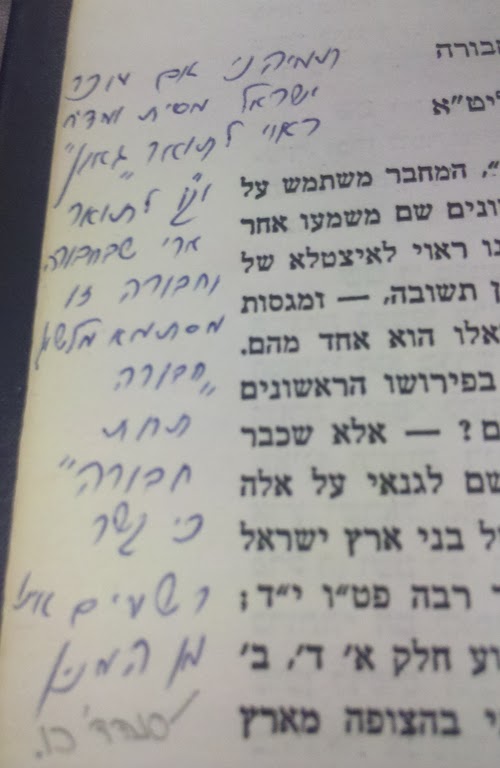
I am not qualified to express an opinion on the merit of Stern’s opinion vs. that of Wolfson when it comes to understanding what the Gaon says. However, when it comes to the Sefer Yetzirah text, we should not assume that Yosef Avivi and Stern are the first ones to revocalize ספר as sefar. This passage in Sefer Yetzirah appears in R. Judah Halevi, Kuzari 4:25, and Hartwig Hirschfeld, in his translation, writes “S’far Sefer, and Sippur.” Also, here is a page from the edition of the Kuzari with the commentary of R. David Cohen, the Nazir (Jerusalem, 2002), p. 227, and you can see this vocalization. (On the previous page, he, like Hirschfeld, vocalizes the word sefar in the text of the Kuzari).
R. Joseph Kafih also vocalizes the word as “sefar” in his edition of the Kuzari.Naor is mistaken when he states that understanding sefar as referring to “mathematics” is without foundation. While it is true that contrary to the implication of Stern, p. 196 n. 19, Avivi does not say anything about mathematics, there are others who do. Returning again to R. Judah Halevi, Kuzari 4:25, here is Hirschfeld’s translation:
As to sefar, it means the calculation and weight of the created bodies. The calculation which is required for the harmonious and advantageous arrangement of a body is based on a numerical figure. Expansion, measure, weight, relation of movements, and musical harmony, all these are based on the number expressed by the word sefar.
See also the page from R. David Cohen above, where he quotes R. Judah Barceloni who states: וספר – זה חשבון והוא המספרHere is another text woth noting. It is from R. Joseph Kimhi’s Sefer ha-Galui (Berlin, 1887) p. 3.
Kimhi tells us that he is going to let us into the secret of this text, which hasn’t yet been explained, and he writes: ספר חשבון ומניין. He then explains that this is one of the wisdoms that only humans are privy to. See also the anonymous commentary on Sefer Yetzirah, published by Israel Weinstock (Jerusalem, 1984), which explains ספר ספר וספור as follows:
לעיין תמיד בספרים, ולספור דרכי המספרים, ולחשוב בם תמיד
There are other sources that can be cited, but I think this suffices to show that Stern’s reading has to be taken seriously.
Let me conclude by mentioning something already well known, that the Gaon’s writings are full of original views. Stern deals with some of them, and there are many others. In TheLimits of Orthodox Theology, p. 14 n. 55, I already note that the Gaon apparently believed that of the Thirteen Principles, only the first and second were real dogmas (in the Maimonidean sense).
Needless to say, each of the views I will now mention could have a detailed post of its own. There are obviously many other unique views of the Gaon, but for now I think these few will be of interest to readers as they are not that well known.
1. The Gaon did not wear R. Tam tefillin. We are told that he didn’t want to be without tefillin for even a small amount of time. Since the halakhah is in accordance with Rashi, the time spent wearing R. Tam tefillin would be regarded as bitul mitzvat tefillin.[10] R. Elijah Rabinowitz-Teomim writes[11]:
מתחרט אני כל פעם בלבי, על שהנהגתי בתפלין של רבנו תם, בראותי דעת רבינו הגר”א זצ”ל בזה, ככתוב בס’ שערי רחמים משמו, אך אי אפשר לי שלא להניח עוד
2. According to the Gaon, non-Jews in the Land of Israel have to observe all the mitzvot. I know this will be hard for people to believe, so here is the text to see with your own eyes. It comes from the first edition of Aderet Eliyahu (Halberstadt, 1859-1860), Deut. 32:9.This is a very unusual position, and I don’t know of any precedent for it.[12] It is so unusual, in fact, that the next printing, Warsaw 1887, simply cut this section out. Here is how the page looks in the Warsaw edition.
Raphael Shuchat notes that in a manuscript version of the Aderet Eliyahu text there is an important addition, which I have underlined:[13]
ואפילו הגוים הדרים בא”י צריכים לקיים כל המצוות, לפי שכל המצוות תלויים בארץ ישראל
But even with this addition the text is still very difficult, and no one has been able to find a source for the notion that Gentiles have to observe all the mitzvot in the Land of Israel, meaning that the idea is probably original to the Gaon. Shuchat offers two suggestions neither of which really fit with the Gaon’s words. One is that the Gaon means to say that since today there is no longer a law of ger toshav, any non-Jew who wishes to live in the Land of Israel has to convert. According to Shuchat, that is what he means when he says that non-Jews in the Land of Israel have to observe all the mitzvot. His other suggestion is that while there is no halakhic obligation for non-Jews to observe the mitzvot, by not doing so they are not respecting the sanctity of the Land.
שנכרי אינו חייב מצד ההלכה במצוות בארץ, אך מצד קדושת א”י הוא פוגם אם לא יקיים את המצוות בארץ
R. Eliezer Waldenberg also takes note of the passage in Aderet Eliyahu, and seeing no way to explain it assumes that the text is a mistake – מפי שמועה לא נכונה.[14]
Yet R. Waldenberg was unaware that in Aderet Eliyahu, Deut. 1:5, the Gaon says the exact same thing, namely, that in the Land of Israel non-Jews are obligated in all the mitzvot.[15]
ולכן נענשו אפי’ נכרים מפני שלא שמרו את התורה בארץ כמ”ש (מ”ב י”ז) לא ידעו את משפט א-להי הארץ, שישראל מצווה על כל התורה בח”ל ובארץ מצווה אפי’ נכרי
This text appears in full even in the second edition of Aderet Eliyahu, which is the edition that censored the comment to Deut. 32:9. R. Elijah Dessler used the censored Aderet Eliyahu so he didn’t know the Gaon’s comment to Deut. 32:9, but he noted the comment to Deut. 1:5 and expressed his great surprise.[16]
וזה דבר פלא לאמר דע”פ דין תורה כל נכרי הדר בא”י יהי’ מחוייב בכל המצוות כל זמן שבחפצו לדור בה, ותו מה יהי’ בדבר שמירת שבת, שהרי הגוי אסור בשמירתה, ומה יהי’ באכילת קרבן פסח, וכדומה.
While I don’t know of any talmudic or midrashic sources to support the Gaon’s position that a non-Jew in the Land of Israel has to observe all mitzvot,. there are some earlier texts that place additional obligations on non-Jews than what we normally assume.
Midrash Tanhuma (ed. Buber), Metzora 13, states that non-Jews are punished with karet if they violate the laws of Niddah.[17]
Ibn Ezra, Ex. 13:7, 20:8, Lev. 17:13-14, 20:25, states that a non-Jew living in the Land of Israel (i.e., a ger toshav) is obligated to observe Shabbat. He is also not to work on Yom Kippur, to refrain from eating hametz on Passover, and to only eat kosher food. This is Ibn Ezra’s understanding of the peshat of the Torah, but the Talmud records no such laws.The most significant of the sources I can cite, and the one closest to the Gaon’s position, is found in Avodah Zarah 64b. Here the Talmud quotes אחרים as saying that a ger toshav has to observe all the mitzvot with the exception of ritually slaughtered meat. The Hazon Ish, Yoreh Deah 65:6 wonders about this position, since does it mean that a non-Jew must wear tefillin and eat in a sukkah? He assumes that the talmudic passage means that non-Jews in the Land of Israel are only obligated in the negative commandments, and this is required so that Jews not be negatively influenced by their non-Jewish neighbors. See also R. Asher Weiss, Minhat Asher, Bereishit, p. 19.
Subsequent to the Gaon, the Hatam Sofer claims, based on a comment of Tosafot,[18] that when the Torah forbids something for Jews, it is praiseworthy for non-Jews to also abstain from this. See Hatam Sofer al ha-Torah, ed. Stern, vol. 1, p. 216:
דמה שהוא מדינא אסור לנו, נכנס עכ”פ בגדר החסידות גבי ב”נ
*******
1. If, after all I have written, people are still not motivated to read Stern’s book, or they simply don’t have the time, you can watch him discuss the topic here.
Quite apart from Stern’s work on the Gaon, Shlomo Pick wrote the following in his just published article, “Al Prof. Shaul Lieberman ve-ha-Makhon ha-Gavoah[19] le-Torah she-Al Yad Universitat Bar-Ilan – Perek me-Hashkafato,” Badad 28 (Kislev, 5744), p. 10 n. 10.
2. On a recent trip to Toronto I had the pleasure meeting the indefatigable Yehuda Azoulay. Anyone who is interested in the history of great Sephardic rabbis should check out his books here.
3. In the previous post I wrote about the title of the newspaper Yated Ne’eman, and how yated is actually a feminine noun. All that I wrote in that section was tongue in cheek, as I think readers realized, but by mistake I didn’t include a footnote that was supposed to go in. In that note I pointed out that despite what the grammarians might say about the word yated, there are plenty of sources, from long before the newspaper came into existence, that use yated as a masculine noun. The following passage, which has both masculine and feminine,[20] appears in Teshuvot ha-Rashba, ed. Dimitrovsky, vol. 2, p. 529:
ובמלאת הימים האלה יהיה היתד הנאמן תקועה בלבם יתד לא תמוט
4. In the last post I referred to R. Mordechai Agasi’s Asurei ha-Melekh, a recent book dealing with the halakhot of being in prison. One of the commenters noted that this is an example of “life imitating art”, and he referred to a parody of Artscroll available here here where you can see the imaginary new English sefer The Laws of Incarceration. (I recommend also clicking on the links at the bottom of phony Artscroll website.)
Yet what we see from Asurei ha-Melekh is that this is anything but a joke. The parody has as one of the questions answered by the fake Artscroll book, “What are the requirements for conducting Bedikas Chometz in one’s cell?” In Asurei ha-Melekh, vol. 1, pp. 161-162, Agasi, discusses this very case. (All references to Asurei Melekh will be to vol. 1 unless otherwise mentioned).
Believe me when I tell you that pretty much all the possible halakhic problems a prisoner can think of are dealt with in the book. He even deals with some very far-fetched cases. For example, on p. 17 he discusses how one is to put on tallit and tefillin if his hands are in chains. His answer is that a non-Jew can put them on the prisoner, and the prisoner can still make the blessing.
I know that many people have made a joke of Asurei ha-Melekh. But this is a very serious book that serves a real purpose. It also comes with a letter of approbation from R. Shalom Lipskar. He heads the Aleph Institute, one of whose purposes is to reach out to Jews in prison. With the great increase in haredi prisoners, it is important for them to be given halakhic guidance, and the way to do this is with a sefer. (The Modern Orthodox will need an English language book.) Just because someone makes a mistake and has to go to prison doesn’t mean that he should make matters worse and give up Torah observance. There are also new halakhic problems that have to be dealt with. For example, Agasi, p. 123, discusses the case of one who is under house arrest but is permitted to go to synagogue. To enforce the house arrest, the man has to wear an electronic monitor. Is one permitted to go to synagogue on the Sabbath with the electronic monitor since as soon as he leaves his house it starts to record his movements and causes various LED lights to go on? Agasi’s answer is that the man must not leave his house on the Sabbath.
The federal government has made matters easier for observant prisoners by turning Otisville Federal Penitentiary into the place where many non-violent haredim (and other Orthodox Jews) are sent if they are convicted of a federal crime. It has a full-time Jewish chaplain and kosher kitchen.[21] The prison commissary list of food[22] helpfully notes those that are kosher (regular hashgachah) and also those that are “super-kosher” under the hashgachah of the CRC (Central Rabbinical Congress, i.e., Satmar).
Returning to Agasi’s book, while it has certain value, as I indicated, it also has great problems. Let me begin, however, by noting something positive. On p. 42 he states in no uncertain terms that one must follow the Law of the Land, and this includes taxes, traffic, and building laws. He states that violation of the Law of the Land is a Torah prohibition.
Yet I must also state that the book is biased against the American justice system, which he thinks is putting away too many haredim. He tells us that Jewish law, unlike secular law, does not sentence people to prison as a punishment (p. 11). Historically this has been true, but that is because the Jewish communities didn’t have real prisons. At most they had small jails to keep people for limited periods of time. (See R. Ephraim ha-Cohen, Sha’ar Ephraim, no. 83, who discusses if the communal jail needs a mezuzah.) If they were dealing with a real criminal who had to be stopped, they turned him over to the non-Jewish authorities or they dealt with him through physical punishments. Jewish courts in Spain would deal very harshly with those they wanted to punish. They even cut off tongues and noses as forms of punishment. Considering the alternative, one would think that Agasi would be happy that we have progressed to prisons, which seem much more humane than how medieval Jews dealt with troublemakers. Yet from Agasi’s standpoint, long prison sentences are what he regards as cruel and unusual punishment.
מאסר למשך זמן רב הינו עונש עינוי אכזרי מתמשך ביותר
He also states that prison is not a deterrent. But his real problem with prison is that the Jewish prisoner, once he is incarcerated, can’t fulfill his appropriate spiritual tasks (p. 12).
המאסר שולל ממנו את החירות הדרושה לו כדי למלא את תפקידו הרוחני בעולם הזה, וכיון שכך, הינו מעכב את טובתו
Agasi contrasts the moral bankruptcy of prison with the Jewish approach, which doesn’t sentence a thief to jail but forces him to become a slave. And when someone kills accidentally, he is not sent to jail but instead has to live in a City of Refuge.[23] Agasi tells those unfortunate enough to be sentenced to prison that they should reflect on the fact that this is not the Torah way (p. 23):
אם חלילה נגזר עלינו לשהות בו תקופה ממושכת, בגין כל סיבה שרק תהיה, יש לנו להתבונן בהבדל המשמעותי שבין תורת ישראל לבין חוקי כל עם ולשון, בבחינת “ראו מה בין בני לבן חמי.”
In order that the prisoner not feel alone in his predicament, Agasi includes a long list of stories so the prisoner can read about how others had also been improperly incarcerated. Among the figures to read about include Joseph, Samson, R. Meir of Rothenburg, R. Yom Tov Lippman Heller, R. Shneur Zalman of Lyady, R. Yehezkel Abramsky, and many others.
At the beginning of vol. 2, pp. 1-2, he notes that many of those sitting in prison are wondering what they are doing there when lots of non-Jews who did worse are free. Agasi’s response is to blame anti-Semitism. The non-Jews have it in for the haredim and that is why they are putting them in jail.
מאז ומקדם היו אומות העולם שונאים לבני יעקב. . . . נהנים ומתענגים לראות את בני ישראל שבורים ברוחם ורצוצים בגופם
His reply to the anti-Semites is that while they can imprison the Jew’s body, they can’t destroy his soul (p. 4):
עם ישראל לכל אורך הדורות תמיד ידע דבר אחד: אפשר לכלוא את גופם בתא מאסר, אפשר להצר את רגליהם מלכת, אפשר לאסור באזיקים את ידיהם, אפשר להשליכם אל צינוק חסר אוויר, אך, אי אפשר לכלוא את רוחם ונשמתם של בני מלכים הדבוקה בחי העולמים, אי אפשר להגיע אל נקודתם הפנימית המקושרת תמיד בבורא כל עולמים.
On p. 43 he states that according to Jewish law you can’t punish someone without two witnesses, even if you have clear proofs: הוכחות אפילו ברורות ביותר
Since the U.S. government is not obligated to operate according to Jewish law, I don’t know why this is relevant (unless he assumes that lacking witnesses the government only has the right to charge non-Jews). I have said it before, and let me now say it again. The Torah obligation for two witnesses was never how Jewish society operated. As has been pointed out by many, it is impossible to run a society that would require two male witnesses – not to mention the requirement of warning a perpetrator – in order to punish criminals, as such a system would not be able to convict anyone and thus would not have any power of deterrence. (Why the Torah has rules and procedures for criminals that can’t be implemented in the pre-Messianic world is a topic for a future post.) Jewish courts always did what they thought was necessary in order to secure order, and halakhah gives them this authority. To say otherwise is itself a hillul ha-shem because it means that when it comes to dealing with crime Jewish law is unworkable, while the truth is that Jewish law can deal with every possible situation.
Here is what the Rashba says on this issue (Teshuvot vol. 3, no. 393), and his words have been quoted again and again. Note expecially his strong language that insisting on Torah requirements will “destroy the world”.
ורואה אני שאם העדים נאמנים אצל הברורים רשאים הן לקנוס קנס ממון או עונש גוף, הכל כפי מה שיראה להם, וזה מקיום העולם, שאם אתם מעמידין הכל על הדינין הקצובים בתורה ושלא לענוש אלא כמו שענשה התורה בחבלות וכיוצא בזה נמצא העולם חרב, שהיינו צריכים עדים והתראה, וכמו שאמרו ז”ל לא חרבה ירושלים אלא שהעמידו דיניהם על דין תורה, וכ”ש בחוצה לארץ שאין דנין בה דיני קנסות ונמצאו קלי דעת פורצין גדרו של עולם ונמצא העולם שמם
See also R. Hayyim Ozer Grodzinski, Iggerot R. Hayyim Ozer, vol. 2 nos. 833, 837.On p. 58, Agasi writes:
הנוגע בנכרי ובכל חפץ של עבודה זרה או הנוגע בישראל מומר יש להחמיר ליטול ידיו
Something tells me that this is not exactly the type of “humra” to be adopted when one goes to prison. Heaven help the Jewish prisoner if the non-Jew or non-observant Jew figures out what’s going on. To put it another way, I wouldn’t want to be in the prison yard when the good ol’ boys hear that Yankel has a problem shaking their hands.
I also wonder how smart it is for Agasi to tell the haredi prisoner the following:
אוכל נבילות להכעיס הרי הוא אפיקורס, והאפיקורס או ישראל המחלל שבת בפרהסיא אסור להחזיר להם אבידה, כעובד כוכבים.
Agasi does add that there are times when the lost object should be returned, but still, why even create the possibility that someone might want to be mahmir? Again, I wouldn’t want to be there when the non-Jew or non-observant Jew figures out who has taken their lost property.
I also don’t know how practical the following halakhah is, since prisoners don’t get to choose who their cellmate is (p. 58).
לא יתייחד ישראל עם נכרי, מפני שחשודים על שפיכות דמים
Finally, on p. 184 he gives us the following halakhah:
אסיר שברח מבית הסוהר, מברך ברכת הגומל, שאף אם ייתפס וייאסר פעם נוספת אין זה המשך המאסר הקודם אלא מאסר חדש, ואין לומר דכיון שיש חשש שמא ייתפס עדיין לא מקרי שישתחרר לגמרי.
When I told a friend this halakhah, he assumed that I was pulling his leg, just like the story of the man who had to be unburied since his tachrichin were made of sha’atnez, which was around the same time as the sha’atnez in the baseball gloves.
[1] Among the stories I record in this post is that when one of R. Velvel Soloveitchik’s sons died shortly after birth, and the family was crying, R. Velvel insisted that they stop their tears, since there is no avelut before thirty days. This sort of response can also be found in medieval times. In thirteenth-century England, R. Moses the Pious’s son hanged himself before Shavuot. R. Moses “did not leave his room nor did he shed a tear, but studied in his library as if no evil had befallen him, asserting that his son had caused his own death.” See Elliot Horowitz, Reckless Rites (Princeton, 2006), p. 154.
[2] See Divrei Eliyahu (Israel, n.d.), parashat Va-Yera. The two passages I quote also appear in Kol Eliyahu (Petrokov, 1905)
[4] For one creative solution, see R. David Halevi (the Taz), Divrei David to Gen. 18:1, that Abraham was never actually commanded to circumcise himself!
אין מצוה זו לאברהם דרך צווי כשאר מצות, אלא נתן לאברהם הברירה אם חפץ הוא שיתקיים העולם ימול, ואם לאו שאינו חפץ לימול לא יתקיים העולם, וא”כ אין הכרח שימול עצמו, לזה ביקש עצה מג’ אוהביו מה יבחר לו
R. Judah Kahana (died 1819), Terumat ha-Kari (Jerusalem, 1997), Introduction, claims that Abraham never had any doubt that he would follow God’s command. However, he wanted his companions to attempt to convince him not to circumcise himself, as his fulfillment of the commandment in the face of such arguments would therefore be a higher level of service of God, as the Sages tell us: לפום צערא אגרא. This is a strange position, since when is one supposed to purposely test oneself in such a way? Just as strange is R. Yisrael Yaakov Fisher, Even Yisrael al ha-Torah (Jerusalem, 2007), pp. 19-20. He argues in a similar fashion as R. Kahana and claims that just as Maimonides in Shemonah Perakim, ch. 6, tells us that the highest level is one who desires to commit (certain) sins but overcomes his inclination, so too one should feel a desire not to observe positive commandments and nevertheless overcome this desire. Since Abraham had no evil inclination, and was obviously going to observe God’s command, he wished to create the equivalent of an evil inclination by having his colleagues argue against circumcision.
מעתה מבואר היטב הא דנטל אברהם אבינו עצה על המילה, דהרי אמרו חז”ל בב”ב (יז ע”א) שלשה לא שלט בהן יצה”ר אברהם יצחק ויעקב, וא”כ כשנצטוה על המילה לא היה לו יצה”ר להסיתו שלא יעשה ויהיה כוסף שלא לעשות, ואח”כ יעשה, כי הוא המעולה והמשובח כמש”כ הרמב”ם, ולכן הלך אצל ג’ אוהביו כדי שהם יסיתוהו שלא יעשה ואח”כ יעשה כי הוא המשובח והמעולה.
Try to imagine going through life thinking that the positive commandments you do (wearing tzitzit, eating matzah, taking a lulav, etc.) you really don’t want to do but only do so because you are commanded. This is not exactly a recipe for making Judaism appealing, however much it might please Yeshayahu Leibowitz.
[5] One day during the forced evacuation of Amona, R. Avraham Shapiro was unable to deliver his shiur. He told the story of R. Shneur Zalman and his son and concluded, “I too cannot teach at a time when children in Israel are crying from the cruel blows delivered by their brothers.” Yitzhak Dadon, Rosh Devarkha, p. 160. See also Daniel Sperber, On the Relationship of Mitzvot Between Man and His Neighbor and Man and His Maker (Jerusalem, 2014), pp. 57-58.
[6] The story appears in R. Ephraim Zaitchik, Ha-Meorot ha-Gedolim (Jerusalem, 1969), p. 38 (no. 108).
[7] This last paragraph brings up an issue that I have discussed quite a bit on this blog. Recently, the news was awash with the great kiddush ha-shem performed by Rabbi Noah Muroff when he returned a bag containing nearly $100,000 to its rightful owner. I then listened to his talk at the Agudah convention here.
I am curious if anyone else had my reaction. While his return of the money was definitely a kiddush ha-shem, I think that his speech has the potential to be a hillul ha-shem, nullifying the kiddush ha-shem. First of all, he lets the world know that there are those who told him that it was forbidden (!) to return this money. He then tells the audience that his justification of returning the money was in order to make a kiddush ha-shem. This approach, which received applause at the convention (but not from those on the dais!), is not what he explained in a prior interview with the Los Angeles Times that his reason was “to do what is right, and thinking about the feelings of others. It’s looking out for one’s fellow man, and not just for one’s self.” (I assume this is how he really feels, not how he expressed himself at the convention.)
Let’s leave aside the point that as best as I can determine, according to secular law one is indeed obligated to return lost property of this sort. I understand that for those who don’t accept the Meiri, the halakhah Muroff is discussing can be quite a challenge in modern times. But I wonder what is going through the heads of the Agudah leadership. Do they really want the entire world to know that their approach in this matter has nothing to do with helping one’s fellow man, but is about doing what will make Jews look good in people’s eyes? Isn’t this the sort of thing that would be best not spoken about in public?
[8] R. Nathan Kamenetsky, Making of a Godol, vol. 2, p. 1261, refers to R. Eliyahu “Kremmer”.
[9] A great nephew of the Gaon was named Elijah Kramer. See R. Avraham Benedikt, “Ha-Gaon Rabbi Yaakov Zvi Neiman,” Moriah 10 (Heshvan 5742), p. 82.
[10] See R. Asher ha-Kohen, Keter Rosh (Jerusalem, 2012), no. 13. See the discussion of the Gaon’s opinion in R. Hayyim Eleazar Shapira, Divrei Torah, vol. 7, p. 865, and in Ot Hayyim ve-Shalom 34:2.
[11] Nefesh David, p. 123, published with Seder Eliyahu (Jerusalem, 1983).
[12] For Karaites who held this position, see David Sklare, “Are the Gentiles Obligated to Observe the Torah,” in Jay M. Harris, ed., Be’erot Yitzhak (Cambridge, MA, 2005), pp. 311-346.
[13] “Eretz Yisrael be-Mishnat ha-Gra,” Ha-Ma’ayan (Tamuz 5758), p. 16.
[14] Tzitz Eliezer, vol. 16, no. 60. (In Hilkhot Medinah, vol. 3, p. 6, R. Waldenberg quotes this text of the Gaon and doesn’t raise any questions about its authenticity.)
This is the exact sort of approach that R. Waldenberg criticized R. Moshe Feinstein for adopting when confronted with a difficult Tosafot. R. Moshe argued that the text should be emended. R. Waldenberg responded forcefully (Tzitz Eliezer, vol. 14, no. 100):
והנה עם כל הכבוד, לא אדוני, לא זו הדרך, וחיים אנו עפ”ד גאוני הדורות, והמה טרחו כל אחד ואחד לפי דרכו לבאר ולהעמיד כוונת דברי התוס’ בנדה וליישבם, ואף אחד מהם לא עלה על דעתו הדרך הקלה והפשוטה ביותר לומר שיש ט”ס בדברי התוס’ ובמקום מותר צריך להיות אסור.
I have earlier commented on how on a number of occasions R. Moshe discarded sources that did not fit in with his understanding. See The Limits of Orthodox Theology, p. 101 n. 73. See also R. Yehoshua Mondshine’s discussion in Beit Aharon ve-Yisrael 21 (Tishrei-Heshvan 5766), pp. 150-151. Mondshine discusses a text of R. Jacob Emden that R. Moshe declared inauthentic, yet we have the text in question in Emden’s own handwriting.
New information on R. Moshe’s outlook can be found in the recently published Mesorat Moshe (Jerusalem, 2013). Not only was R. Moshe’s approach in this area not scientific, but it is quite untraditional, even radical. See ibid., pp. 506, 507, 508, 520, 522, 525, 590, where R. Moshe rejects the authenticity of comments of Rashbam, “Rashi” on Chronicles, Ramban, and Sforno. Regarding the Ramban, he thought that real heresy had maliciously been inserted into the commentary, a view that as far as I know has never before been suggested. In other cases where he rejected the authenticity of comments of Rashbam and Or ha-Hayyim, he only retracted his view when he saw that there was midrashic support for these comments.
After seeing all this, I think it is impossible to take seriously R. Betzalel Deblitsky’s assumption that when R. Moshe referred to a text as inauthentic, it is likely that he didn’t mean this literally but was merely adopting a respectful way of disagreeing with an earlier authority. See Deblitsky, Beit Aharon ve-Yisrael 21 (Kislev-Tevet 5766), p. 170:
והכל יודעים שברוב המקומות אין לשון זו אמורה אלא כלפי דברים הדחוים מחמת עצמם אם מסברא ואם ממשנה. ולשון כבוד הוא, כאומר שאין לתלות האשמה במחבר עצמו ובודאי תלמיד טועה כתבו. הנסיון לאמת קביעה זו של “תלמוד טועה כתבו” בבדיקה בכת”י, משול כמעט למי שילקט לשונות “כי ניים ושכיב אמרה”, ויברר ע”פ מקורות נאמנים כי אותו חכם אשר עליו נאמר לשון זה, אמר לההיא שמעתתא בשעת צילותא ולא כמתנמנם.
See also the discussion here.Finally, R. Hillel Goldberg called my attention to the Gaon’s commentary to Yoreh Deah 201:1 where he writes: וכתבו בספרי הטבע. This is further evidence that the Gaon read scientific works. Goldberg also called my attention to the Hazon Ish, Mikvaot 7:4 (first series) who refers to the Gaon’s commentary ad loc., and writes: ונראה שאין זה ממשנת הגר”א ז”ל. Yet this is incorrect as the Gaon’s commentary was printed from his manuscript without any changes being inserted. Goldberg discusses the Hazon Ish’s comment in his Hallel ha-Gadol (Denver, 2008), p. 20. See also Betzalel Landau, Ha-Gaon he-Hasid mi-Vilna (Jerusalem, 1978), p. 220, who cites a hasidic author, R. Abraham Joshua Freund, who stated that this passage was not written by the Gaon, “but some mistaken student wrote it in his name.”
[15] For earlier statements regarding Aderet Eliyahu, and the assumption that certain passages were actually authored by his son R. Avraham and others, see Dovid Kamenetsky, “Kitvei ha-Gra bi-Defus u-vi-Khetav Yad,” Yeshurun 24 (2011), pp. 940-951. R. Avraham denied the accusation that his words are included in the commentary. See Yeshurun 4 (1998), pp. 2-3. Regarding the general issue of citations of the Gaon in later works, including their reliability, see Yaakov Shmuel Spiegel, “Kuntres Amar Eliyahu,” Yeshurun 6 (1999), pp. 734-762, ibid., 7 (2000), pp. 707-734. (Here is good place to note that many writers use Spiegel’s research without acknowledgment.)
[16] Sefer ha-Zikaron le-Ba’al Mikhtav me-Eliyahu (Bnei Brak, 2004), vol. 1, p. 45. R. Dessler mentions which edition of Aderet Eliyahu he used.
[17] See R. Yaakov Hayyim Sofer, Kerem Yaakov (Jerusalem, 1989), pp. 92-93.
[18] Ta’anit 11a s.v.אסור
[19] According to some, including the Gaon, this is how the word גבוה is pronounced. See the Gaon’s Dikdukei Eliyahu (Lodz, 1939), p. 22. Others think it should be pronounced “gavowah”. See R. Ben Zion Cohen, Sefat Emet (Jerusalem, 1987), p. 59. It is a mistake to pronounce it “govoha” (as in the official name of the Lakewood yeshiva, Beth Medrash Govoha).
[20] It is corrected to all masculine in one of the manuscripts. See Dimitrovsky’s note, ad loc.
[23] R. Yissocher Frand has a similar approach to that of Agassi. See his essay here where he writes:
Torah justice differs significantly from today’s legal systems. Modern justice attempts to go beyond the actual crime, into the mind of the criminal, to determine why he committed the crime. Was he abused as a youngster? Perhaps the discrimination suffered by people of his race caused him to commit the crime? Was he fully coherent when he committed the crime? Maybe he was insane at the time… Hundreds of criminals are freed each year because the jury or judge trying their case felt that they were able to evaluate the motives of the criminal, and based on their evaluation, the criminal should not be punished for his crime.
Truthfully, however, we mortals have no way of determining most people’s motives. In the Torah justice system, the dayanim (judges) are required to rule cases based on cool, calculated examination of the evidence, with absolutely no leniency for what they might consider to be extenuating circumstances.
This is a complete distortion of how Jewish courts operated. There was a reason why it was so rare that the courts executed someone. It was precisely because they did not rule cases “based on cool, calculated examination of the evidence.” Based on what I have quoted, it appears that Frand believes that Jewish courts are supposed to execute someone even if he was not fully coherent. Some people assume that the reason the Sages set up so many roadblocks in the way of executing someone was because they wanted to prevent possible execution of an innocent man. Yet Gerald Blidstein suggests that it might be because they didn’t want to execute a guilty man. See his “Capital Punishment – The Classic Jewish Discussion,” in Menachem Kellner, ed., Contemporary Jewish Ethics (New York, 1978), p. 316.
The Vilna Gaon, part 2 (Review of Eliyahu Stern, The Genius)
The Vilna Gaon, part 2 (Review of Eliyahu Stern, The Genius)
Another reference by the Gaon to the Guide – in this case it is only attributed to him – is found in his comment to Bava Kamma 92b (commenting on (בירא דשתית מיניה לא תשדי בי קלא, which has been published in a number of different sources, most conveniently in the commentary Anaf Yosef to Ein Yaakov, Bava Kamma 92b. The Gaon quoted the Guide as saying that if you find one good thing in a book you shouldn’t deride it for any other nonsense in it.[1]
This must refer to Maimonides’ comment in the Introduction to the Guide where he writes: “All into whose hands it [the Guide] fall should consider it well, and if it slakes his thirst, though it be only one point from among the many that are obscure, he should thank God and be content with what he has understood.”
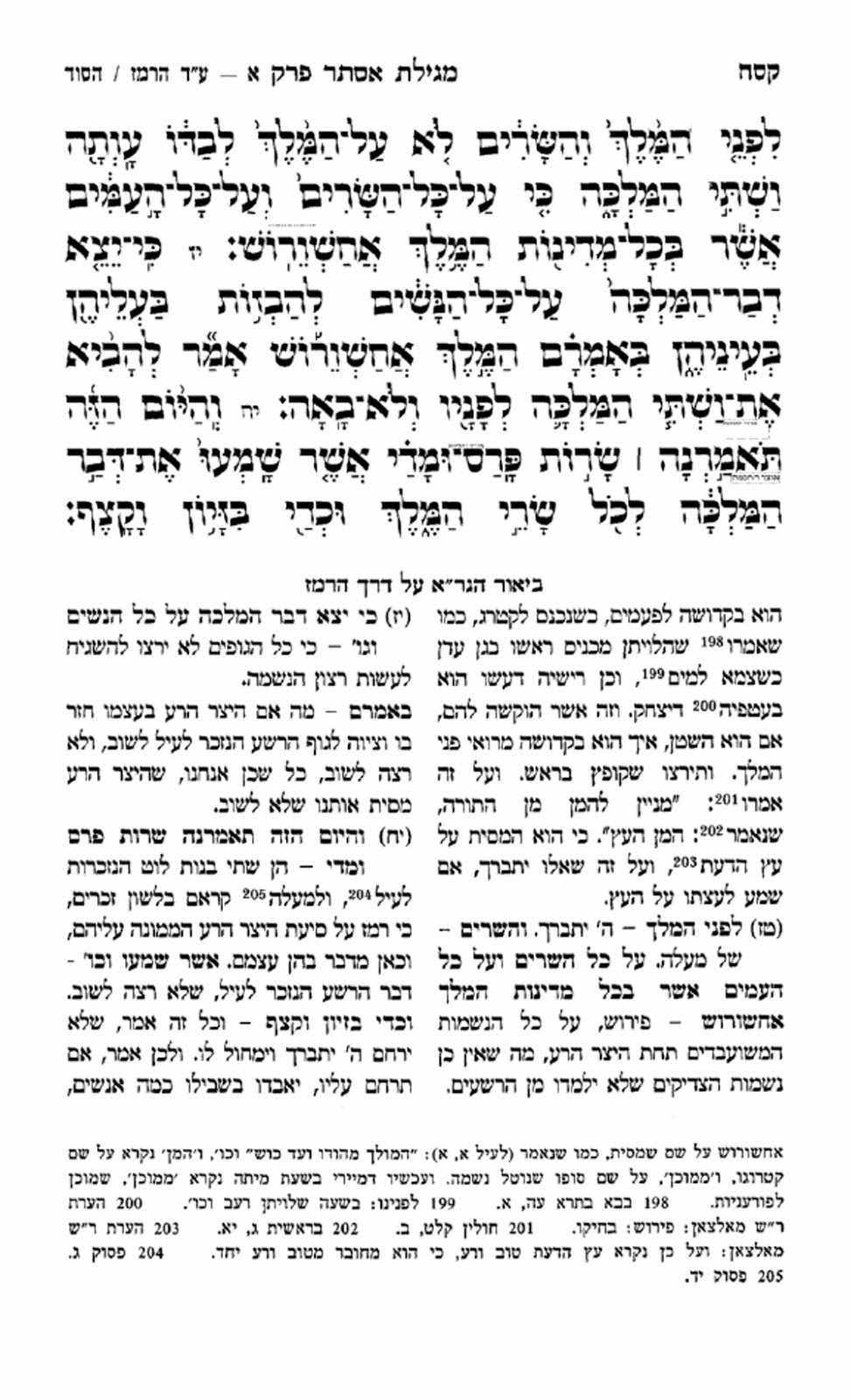
When it comes to the Guide and the Vilna Gaon, there is also a reference in the Gaon’s commentary to Esther 1:18. Here are the pages from the Mossad ha-Rav Kook edition.
As R. Meir Mazuz pointed out,[2] the Gaon is referring to Guide 1:54. However, as you can see, the editor didn’t know this and thus didn’t provide the source.[3]
Here is another example where a learned editor did not know a source in the Guide. In R. Abraham Sofer’s edition of Meiri, Hibbur ha-Teshuvah, p. 170, the Meiri quotes Maimonides, and as you can see in note 4, Sofer comments, “I don’t know where.” Maimonides words are not in any of his halakhic writings, which is why Sofer didn’t know about them, but they do appear in Guide 3:8.
Returning to the Gaon and Maimonides, when it comes to sex the Gaon’s view parallels that of Maimonides in the Guide, although I don’t know if we can speak of influence. Maimonides famously spoke of the sense of touch as being a “disgrace to us.”[4] The Gaon actually had the same opinion in that he regarded sex as something to be loathed and a necessary evil. Only with regard to the spiritual elites did he see something intrinsically positive in it.[5]
שדברי העולם הזה בעצם מאוסים, כמו האכילה, שנוטל מאכל ועושה פרש ורעי וכן המשגל, אבל התכלית, מה שבא מזה הוא טוב, כמו תכלית האכילה שיהא חזק ללמוד תורה, ותכלית המשגל להיות בנים צדיקים וטובים, וזהו תכלית ופעולה. וז”ש בהצדיקים לא מיבעי שהתכלית מזה אצלם טוב, אלא אפילו הפעולה עצמה הוא לחיים, שהן מכוונין בזה ואכילתן כקרבן ממש. וכן בכל דבר.
Yet even when dealing with the righteous, one can only imagine how the Gaon would have reacted if he had seen the following text, from R. Solomon of Karlin, Shema Shelomo (Jerusalem, 1956), p. 96 (sippurim no. 59), in which we see how an unnamed hasidic figure said that he needed sex every day, a statement that shocked his bride to be.[6]
Here is another example where the Gaon’s has the same view as Maimonides in the Guide. Tamid 1:1 states: “The priests kept watch [throughout the night] at three places in the Temple.” Why? In the Mishneh Torah, Hilkhot Beit-ha-Behirah 8:1, Maimonides says that this is just a matter of showing respect to the Temple, since there is no fear that anything will be stolen. In his commentary to Tamid 1:1 (found in the Vilna ed.), the Gaon explains that the guards were there to prevent unauthorized entry. In Guide 3:45 Maimonides also offers this explanation (in addition to mentioning that the watch was for glory and honor).
Regarding Meiri’s Hibbur ha-Teshuvah, mentioned above, in Saul Lieberman and the Orthodox I mentioned the notes at the end of this volume by Louis Ginzberg, notes that have not yet been removed from newer printings. I neglected to mention this dedication to Ginzberg at the beginning of the volume.
As for Ginzberg’s notes at the end of Hibbur ha-Teshuvah, A reader sent me the following, which shows how Yeshivat Ner Israel’s beit midrash copy of the book is “decorated”.
Regarding Sofer’s edition of Hibbur ha-Teshuvah, there is one other important point I must mention. The volume first appeared in 1950 and was subsequently reprinted by Sofer, with no changes to the text of the Meiri or the pagination. This reprint is what appears in the multivolume Beit ha-Behirah that everyone purchases. However, this is unfortunate, because the 1950 edition is far superior. Here is the title page of the first edition, which was published by Yeshiva University.
This edition contains a lengthy and valuable introduction by R. Samuel Mirsky, which deals with various aspects of the Meiri. Furthermore, Mirsky included thirty pages of important notes, many of them textual, that are vital for anyone who studies the Hibbur ha-Teshuvah. (Mirsky also calls attention to the passage in Guide 3:8, which as I noted above, Sofer did not know about.[7]) Quite apart from the 1950 edition, in Talpiot 4 (5710), pp. 417ff., Mirsky published a number of chapters from Hibbur ha-Teshuvah and his notes often call attention to things not mentioned by Sofer. It would therefore be helpful if a new edition of Hibbur ha-Teshuvah was published and included the notes of both Sofer and Mirsky. This new edition should also include the many pages of notes by Yehudah Preis-Horeb and R. Dov Berish Zuckerman that appeared in Talpiot 5 (5712), pp. 880ff., which are also quite valuable.
I can’t explain why Sofer did not include at least Mirsky’s notes when he republished the book. Fortunately, the first edition is available on hebrewbooks.org.
Finally, here is an example where the Gaon’s position is not merely similar to that of Maimonides in the Guide, but is clearly influenced by the latter.[8] In Yahel Or the Gaon states:[9]
כי כל השמות אינן רק משותפין ומושאלין מפעולותיו . . . רק שם הוי”ה . . . והוא שם העצם שאינו מושאל מפעולה רק (מורה) על הויותו תמיד והיותו מעצמו
Here is what Maimonides writes in Guide 1:61 (Ibn Tibbon translation). It is obvious that the Gaon was influenced in this matter by Maimonides’ words.
כל שמותיו יתעלה הנמצאים בספרים כולם נגזרים מן הפעולות, וזה מה שאין העלם בו, אלא שם אחד, והוא יו”ד ה”א וא”ו ה”א, שהוא שם המיוחד לו יתעלה, ולזה נקרא שם המפורש, ענינו, שהוא יורה על עצמו יתעלה הוראה מבוארת אין השתתפות בה . . . להיותו מורה על עצמו יתעלה, מאשר לא ישתתף אחד מן הברואים בהוראה ההיא
P. 109. Stern mentions the report that after the Gaon’s death on Sukkot, when the hasidim continued to celebrate, three hasidim were killed by mitnagdim. It is hard to know whether there is any truth to this story, or to the report of hasidim killing a mitnaged.[10] Unfortunately, in our day we have seen haredi Judaism in Israel descend to a level unimaginable even ten years ago.[11] Harsh rhetoric, which on occasion has led to real violence, is now routine, and the rabbis who use the harsh, and often hateful, speech are never called to account for their actions.[12] It is only a matter of time before we see a religiously motivated murder, and we have already had close calls, including a stabbing at Ponovezh.
Seeing what has occurred in recent months, we can understand why some people might conclude that R. Akiva was right on target when he told his son, “Do not dwell in a town whose leaders are talmidei hakhamim” (Pesahim 112a). In a previous post I already quoted Yeshayahu Leibowitz’s comment that we know the Sages had a sense of humor since they stated תלמידי חכמים מרבים שלום בעולם. Along these lines, many decades ago an unnamed rabbi explained why the blessing reads
הפורש סוכת שלום עלינו ועל כל עמו ישראל ועל ירושלים
The problem with this formulation is that there is no need for Jerusalem to be singled out after mentioning the entire people of Israel. The explanation given is that since Jerusalem has more disputes than anywhere else (and today we could add Bnei Brak) it therefore needs a special mention when asking God to spread over us his shelter of peace.[13]
R. Kook actually claims that the Jewish people are more apt to be involved in internal disputes than any other people. In Kevatzim mi-Ketav Yad Kodsho (Jerusalem, 2006), p. 43, he writes:
ישראל הם עלולים יותר לפירוד ומחלוקת מכל אומה, מפני שריבוי הצביונים שמתחלקים בעמים רבים, כלולים בישראל ביחוד.
I am writing these words not long after a man attacked R. Aharon Leib Steinman, which could easily have caused R. Steinman’s death. So as not to put all the blame on one side, does anyone have any doubt that if Degel ha-Torah was running the show that R. Shmuel Auerbach would right now be under house arrest or sitting in jail? I say this only because I assume that the rhetoric directed against him is hyperbole, because if is not hyperbole, then we should assume that if Degel ha-Torah was in charge he would have been executed by now. Can the rabbis who use this sort of rhetoric really claim that they are innocent when an individual decides to take their words literally and kill someone, even a great Torah scholar? Didn’t these rabbis learn the lesson of the Rabin assassination, that if you call someone a rodef (and thus hayav mitah), someone might very well take you up on this? As for throwing people out of kollels because they didn’t vote for Degel ha-Torah, any kollel that does so should be ineligible for Israeli government money.
Most disappointing in this matter is R. Chaim Kanievsky who seems to think that Torah Judaism has the equivalent of a papacy, and he can thus declare that all are obligated to follow R. Steinman, meaning that there is only one Torah path.[14] This approach first surfaced when R. Elyashiv was ill and R. Kanievsky declared that the torch of leadership had passed to R. Steinman whose word was now law. See here. Have we ever had such a thing in the Lithuanian Torah world where a sage’s unquestioned leadership is formally proclaimed in this manner, as if he were a hasidic rebbe taking over for his deceased father? In the non-hasidic world the people have always chosen their spiritual leaders, as the Sages tell us: עשה לך רב. Never have they been imposed on us from above.
In the booklet Kuntres Tikun Haderah, which is an attack on R. Yehoshua Ehrenberg, the Rosh Yeshiva of the Haderah yeshiva, one of R. Ehrenberg’s great sins is that he declared that “the” gadol ha-dor is not something that can be proclaimed in papal fashion. Here are two of his statements that strike me as entirely reasonable, but which for the followers of R. Kanievsky are enough to turn him into an enemy of Torah Judaism.
ר’ חיים החליט שהרב שטיינמן הוא הגדול. גדול זה לא דבר שאפשר להחליט עליו
לדעתי המושג ,הנהגה, הוא מי שהציבור בפועל שומע בקולו. כמה אחוזים צריך? ר’ חיים חושב שמספיק מה שיש לרב שטיינמן. אולי לא
And here is another statement from R. Ehrenberg, which for his opponents is the height of chutzpah simply because he doesn’t believe that there is currently one authority whose decisions bind everyone.
עוד התבטא בחוצפה עזה: “מאז שהרב אלישיב נפטר אין מנהיג אחד בעם ישראל. אין כזה מושג הנהגה. היום זה התבטל אין אחד שחייבים לשמוע לו
No one is saying that R. Kanievsky shouldn’t express his opinion that his approach is the proper one. But that is very different than what he and his followers have been doing. Declaring that supporters of R. Auerbach are behemot, invalid as witnesses, and should not be given aliyot is just the beginning. אחרי אלף גלגולי מחילות, some believe that R. Kanievsky’s language has unintentionally even verged on incitement to murder. He has followers who will do anything he says, and he has declared that R. Auerbach is a zaken mamre and deserving of sekilah (the death penalty of stoning) for not accepting the leadership of R. Steinman.[15] (Say what you will about R. Auerbach’s politics, he is certainly enough of a Torah scholar to have his own opinion on matters.) R. Kanievsky has also, playing on the word עץ which is how the Bnai Torah party is often referred to, said that its followers should be “hung on a tree”. I assume that this comment was said in a non-serious manner, but as a leader he needs to be aware that there are people who might not see it this way, and take it into their hands to fulfill his words. Was it this sort of language that led followers of Beit Shammai to kill followers of Beit Hillel, a fact attested to by the Jerusalem Talmud?[16] When vitriolic language was used in New Square, we saw how someone decided to take matters into his own hands, and his solution was to burn down a house which would have killed all the inhabitants. Unfortunately, it would no longer be a surprise if one of R. Kanievsky’s followers decided to use violence as part of this milhemet mitzvah.
Considering the shocking things R. Kanievsky has recently said, is it possible that he doesn’t really know the situation, and the people who are meeting with him and getting him to speak about certain matters are really manipulating him? R. Kanievsky has been meeting with people and providing advice for decades and until the last couple of months he never spoke like this. Is there any other explanation for his sudden change of tone? Here is the recording of R. Kanievsky referring to R. Auerbach as deserving sekilah and also referring to him as a zaken mamre and his followers as behemot. I ask the readers, does it sound like R. Kanievsky really understands what is going on? Do we have any idea what sort of information against R. Auerbach various askanim have provided him with?[17]
Let me take you back to an earlier era when we heard the type of rhetoric you can now hear. This is from the front page of the newspaper Davar, Nov. 29, 1972, and came after R. Shlomo Goren was subjected to death threats.
Should we be surprised if what R. Goren was subjected to is soon repeated with R. Auerbach? And even if it doesn’t reach this extreme, we have already seen how much damage can be caused by what the Lithuanian haredim call “השקפה”, to which one can reply:[18]
אין “השקפה” אלא לרעה (ראה רש”י בראשית יח, טז)
Now is as good a time as ever to note that the falsehoods of Yated Ne’eman begin right with the title of this newspaper. The title is derived from Isaiah 22:23 which reads
ותקעתיו יתד במקום נאמן
This means, “And I will fasten him as a peg in a sure place.”
Yet if you look two verses later (Is 22:25) you find the following words
תמוש היתד התקועה במקום נאמן
We see from this is that the word יתד is feminine.[19] Furthermore, throughout rabbinic literature יתד is feminine and it is also feminine in modern Hebrew, meaning that the title of the newspaper should be Yated Ne’emanah.[20] I say this even though there is one biblical verse, Ez. 15:3, where the word is masculine, since I don’t think the newspaper was intending to adopt the usage of one verse in contradiction to the general “Masorah” (as we know how important Masorah is to them).
יתד is a feminine word along the same model – kametz followed by tzeireh – as the following words that are also feminine[21]: חצר, גדר, ירך, כתף
While I think that the newspaper’s title is probably just a simple error, I know some of you conspiracy theorists are thinking about how the people who run Yated don’t like to give the females among us their due, and won’t even publish their pictures, so maybe they see it as disgraceful to have something feminine in the title . . .[22]
Pp. 160-161: Stern records a few of the famous, and from a contemporary perspective, shocking stories about how the Gaon related to his children. “His children divulge that Elijah never once wrote a letter to any of them. Nor when he saw them, once every year or two, did he ever ask about their work or their well-being.” Stern refers to these stories as “painful memories.” I don’t think this is accurate. If they were painful memories, his children would not have recorded them. It might be painful for us to read the stories, but we have to be careful not to project our sense of how parents and grandparents should behave onto a different culture.[23[
Aryeh Morgenstern refers to R. Hayyim of Volozhin’s comment in the introduction to Sifra di-Tzeniuta that the Gaon never asked about how his children were doing and never wrote them letters or read letters from them. According to Morgenstern, this should be seen as a veiled criticism of the Gaon by R. Hayyim, since if he wanted to show people how great the Gaon’s ascetic attachment to Torah was, he didn’t need to bring an example illustrating how the Gaon related to his family.[24] I completely disagree. To suggest that R. Hayyim intended to criticize the Gaon regarding this matter, especially in the introduction to one of the Gaon’s books, is in my mind impossible. While moderns such as Morgenstern might find the description of the Gaon problematic, it was not viewed as such by R. Hayyim, nor by those of our contemporaries who continue to cite this description (and similar ones about other great Torah scholars.)[25]
In an earlier post, available here I noted that David Singer and Moshe Sokol advance the radical view that the Rav’s descriptions of his family members is actually designed to show his opposition to their hyper-intellectualism and pan-halakhism. They write
[T]here is something strange about Soloveitchik’s tales of the Litvaks. The behavior he describes is so radical, so extreme, as to make his presumed heroes seem grotesque. Who, for example, wishing to portray Litvak intellectualism in a positive light, would boast that his father and grandfather set aside all human sentiment and refused ever to enter a cemetery, because a stark encounter with death would have distracted them from the contemplation of the law. Or again, who would tell with pride the following macabre story about his maternal grandfather [referring to the story of R. Elya and his dying daughter]. . . . Stories like this, while ostensibly presented in order to glorify the Litvak, cannot help but evoke strong disapproval in the reader. And this disapproval, it seems safe to assume, is shared in part by Soloveitchik himself, specifically by that part of him which rebels against the Litvak tradition’s spurning of the emotions. The vein of anger that runs through the anecdotal material in “Halakhic Man” is not to be missed.[26]
Again, I find it impossible to accept that the Rav was actually criticizing his father and grandfathers. I say this not because of any pieties, but simply because the Rav’s connection to these people was not merely one of admiration but idolization. It is obvious that Singer and Sokol have a different vantage point than the Rav and traditional Lithuanian Jewish society in general. But why do they assume that what they see as “grotesque” must be shared by the Rav? All one needs to do is peruse haredi hagiographies to find lots of descriptions of what, when it comes to intellect triumphing over emotion, one can call rabbinic counterparts to Mr. Spock.
Returning to Stern, he also quotes Aliyot Eliyahu’s comment that “to love the path of God and His Torah . . . he [Elijah] had to fight against his human instincts, pause, and let go of his own love for his own children.” Stern notes Solomon Schechter’s comment that Aliyot Eliyahu was “incapable of marking the line between monster and hero,” which again reflects a modern sentiment.
Incidentally, I am sure Schechter’s comment was influenced by what appears in Aliyot Eliyahu, note 51, which is not mentioned by Stern (perhaps because it refers to a segulah?):
סיפר לי גיסי המופלג מ’ זלמן ז”ל נכד הגאון ז”ל, שאמו בת בגר”א היו בני’ מתים כשהם קטנים ר”ל, וכשהיתה מעוברת ממנו [גיסי הנ”ל]., נסעה מביתה [מק’ דיסנא], אל אביה הגר”א שיבקש רחמים שיהיה הולד של קיימא. ובבואה לפניו אמר לה במילים קצרים סגולה לקיום בנים . . . ויותר מזה לא רצה לבטל לדבר עמה.
R. Ephraim Kirschenbaum takes note of this passage and some similar ones and raises the question – which itself I find surprising in a haredi publication – is this proper Torah behavior?[27]
הנה מתיאורים הללו, מגדולים אנשי שם, מצטייר לנו הגר”א כאלו איש אשר מרוב השתקעותו בתורה דוכא כליל כל רגש כלפי ילדיו. האם האדם השלם אמור כך להיות?
The answer his gives, not surprisingly, is that there is a different standard for saintly figures than for the masses.
האמת היא שהגדולים הנ”ל בהלכות ביטול תורה וחומרתו קעסקי, ואין מדבריהם סתירה לפן נוסף.
Stern (p. 161) aptly quotes the Gaon’s suggestion[28]
that one should follow the Babylonian Talmud’s injunction (tractate Eruvin 22a) to “blacken” oneself toward one’s children as a “raven” does to her fledglings. The “raven” the Gaon explains, is “an allegory for the scholar who becomes cruel to his children [so that] he can spend all of his time studying the Torah.”
I would just add to this the quote from the Gaon in R. Samuel Maltzan’s Even Shlomo, ch. 3:4 (emphasis added):
שני מיני גבורה נמצא בעובדי ה’, ונקראים גבורים ואנשי חיל. גבור הוא הכובש את יצרו בעת שבאה העברה לידו, ואנשי חיל הם אבירי הלב בשלמות הבטחון להגות בתורה יום ולילה ושלא להשגיח על בניו ובני ביתו הצועקים ללחם, וכמו שאמרו (עירובין כב ע”א) שחורות כעורב שמשים עצמו אכזרי על בניו כעורב. ומה עושה לו הקב”ה? מזמין לו אדם להחזיקו כיששכר וזבולון.
R. Yitzhak Zilberstein quotes the story found in the introduction to the Gaon’s commentary to Shulhan Arukh according to which the Gaon was so involved in his learning that he forgot about his ill son. Rather than conclude that this is something only for spiritual elites, he seems to regard this as something everyone should strive for. He writes:[29]
וזהו דרגת חשקת התורה, שהוא למעלה מדרגת אהבת התורה, שהחושק בתורה שוכח כל אהבותיו, אפילו ממה שטבע הקב”ה בבריאה, כדוגמת אהבת אב לבן, ויתכן שזה הכונה בגמרא בעירובין (דף כב ע”א) שהתורה מתקיימת במי שמשים עצמו אכזרי על בניו ועל בני ביתו כעורב. דהיינו שחושק בתורה, עד שמשכח כל אהבה אחרת
The removal of what moderns regard as a basic emotional connection to one’s children[30] is also seen the anonymous hagiography of R. Elyashiv, Ha-Shakdan.[31]
I, for one, was quite surprised that this was included in the hagiography, as it runs so much against how people today think about such matters. I also have to say that I find some of what appears in the book very difficult to believe. R. Elyashiv probably knew the entire Talmud by heart, so how are we supposed to believe that he didn’t even know the names of his children?[32]
When Ha-Shakdan appeared I went out on a limb stating that I was sure that this sort of material would never appear in English because of the shocked reaction it would create even among haredi readers in the U.S. It is always dangerous to make predictions about the future, which is why we historians usually stick to the past, but in this case it turns out that I was correct.
In February 2013 Artscroll published an English translation (“adapted and expanded”) of Ha-Shakdan.[33] Without discussing the book or the translation in any detail, let me just call your attention to some of the material that, not surprisingly, was deleted. Here is p. 69 of Ha-Shakdan and p. 123 of the translation.
Notice how in the translation most of the paragraph beginning with the words מעבר לזה have been deleted. I think the reason is obvious, as mentioned already. But is Israeli haredi society really so different when it comes to this sort of thing than American haredi society? That is, won’t Israeli readers be saddened to see sentences such as לא היו לו דיבורים עם הבנות and כשהם באים אצלו בביקורים או בתורנות, אין להם שיחה משותפת בכלל
Here is Ha-Shakdan, pp 62-63, and the translation pp. 105-106.
Notice how the first two paragraphs on p. 62 are not translated and also the first full paragraph on p. 63. Also, in the translation on p. 106, the second paragraph (“Rav Elyashiv’s lack of involvement . . .”) does not appear in the original. The translator obviously thought that this clarification was important for the English-speaking audience.
Here are two other passages from Ha-Shakdan, pp. 96 n. 69 and 251-252, that also don’t appear in the English translation.
Regarding the story on p. 98 n. 69, this should be contrasted with how it is told that R. Avraham Shapiro took up smoking as a way of dealing with the emotional strain of some of the cases he was confronted with as a dayan.
In general, when it comes to the stories reported in Ha-Shakdan, I have to say that I don’t accept the basic message the author is trying to get across. His point is that the stories he tells of R. Elyashiv regarding his indifference to people and events are a result of his complete absorption in Torah study. Yet it should be clear to anyone who reads the book, and knows something about R. Elyashiv, that all we have in these stories are an aspect of R. Elyashiv’s personality that really has nothing to do with absorption in Torah study. There have been plenty of great Torah scholars who were people-persons and conversationalists.
It is obvious that someone who by nature is extremely introverted, as R. Elyashiv was, will be more inclined to find his place among the books than an extrovert. But to describe R. Elyashiv’s personality as a complete outgrowth of Torah study is a distortion and shows a basic ignorance of human psychology. We didn’t need R. Nathan Kamenetsky’s Making of a Godol to realize that great Torah scholars encompass all sorts of personalities and one sort is not any more “authentic” than another. All we can say is that people, including gedolim, are different.[34] While haredim who are knowledgeable about the history of Torah figures love to talk about their different personalities, it is also the case that it is harder in that world to publish something that seriously analyzes a Torah sage’s personality. Yet without such an attempt, you will never get a real biography, only hagiographies.
Here are some quotations from Ha-Shakdan, vol. 2, pp. 246, 248, and plenty more could be added:
הגרי”ש לא מתייחס לכל אחד, וכאשר הוא כן מתייחס למשהו, הוא בוחן בעין משלו כל נושא. הכרעותיו בנושאים רגישים ביותר – ענייניות וחסרות רגש. גם עם צאצאיו, ואפילו הקרובים שביניהם, נוהג הוא באותה ידה של איפוק ואדישות.
כאשר ביום השלישי למלחמה פשטה השמועה שהצבא כבש את העיר העתיקה, והכותל המערבי בידי היהודים, הדבר עורר התרגשות גדולה מאוד. בשלב זה כבר לא עצר בעצמו בעל המעשה, וניגש לרגע לפינתו של רבינו לספר לו כי הצבא כבש כבר את כל מזרח העיר מידי הירדנים! הגרי”ש פסק מהלימוד והקשיב לו עד שכילה לדבר, ולא הגיב כלל. המספר המשיך בהתלהבות: והכותל המערבי גם כן משוחרר! רבינו שמע אותו עד הסוף באדיבות ותשומת לב כדרכו, ובלא שום זיק של התרגשות שב להתנועע ולהחזיר את עיניו בחזרה לגמרא הגדולה להמשיך מהמילה שפסק בה.
There are lot of further examples I can cite from other great rabbis. Here is how the Hafetz Hayyim is described by his son:
Father had no personal friendships with anyone all the days of his life, even though he loved every Jew and especially men learned in the Torah, whom he loved as his very self. Many times did I hear him tell how the daughter of the Vilna Gaon, who lived in another town, once paid a visit to her father. The Gaon inquired after her health and that of her husband and children and then immediately returned to his studies. The daughter began to weep at her father’s apparent indifference, but he declared, “I do not have the time” [in Yiddish, nitoh kein zeit]. So it is not surprising that father, of blessed memory, had no material friendships with anyone . . . . I once heard him explain the verse “And thou shalt love the Lord thy God with all they heart” (Deuteronomy 6:5) to mean that the heart should be so filled with the love of God as to leave no room in it for any other loves.[35]
R. Joseph David Epstein, who cites this passage, hastens to add that this sort of behavior is only intended for the spiritual elites.[36] הדברים האמורים לעיל, על הסתייגות מאהבה משפחה, ועל העלמת עין מצרכי בית, הרי אך לבעלי מדרגה וקדושי עלינו המה
What is one to make of the following story, found in Meir Einei Yisrael (Bnei Brak, 2004), vol. 1, p. 274?:
שמועה התהלכה בינינו שרבי משה לנדינסקי למד שמונה שנים עם חבר בוולוז’ין ולא ידע מה שמו של הבחור. הסיפור הקטן הזה מדגיש את אישיותו העצומה, שהיה בכל הוויתו רק מתמיד, ומעבר ללימוד לא נחשב אצלו שום דבר.
Quite apart from the fact that I don’t believe such a story is possible, I wonder why this is quoted as praise. Is this supposed to be a characteristic of a Torah personality, that you can learn with someone for eight years and never even take the trouble to learn the person’s name? I can’t imagine that the Hafetz Hayyim – R. Londinsky was the rosh yeshiva in Radin – or any of the mussar teachers would think that this is appropriate bein adam le-havero behavior.
Here is another story, found in R. Moshe Sternbuch, Ta’am ve-Da’at, vol. 1, pp. 244-245.
I don’t believe such a story is even remotely possible. R. Akiva Eger was a real person, with real feelings, and he loved his daughter. The idea that he could be at her house for an entire Shabbat, after not having seen her for years, and be so engrossed in learning that he didn’t even notice that a different woman had taken her place is simply not believable. Yet it is significant that the story is told as an example of praise, and R. Sternbuch concludes by pointing to it as an example of how gedolim so involved in Torah study forget everything else in the world. If you would repeat such a story before a Modern Orthodox crowd they would be horrified. What would the haredi masses think of such a story? Would they be inspired by the commitment to learning above all else, or would they share the Modern Orthodox negative reaction?
R. Yonason Rosman called my attention to the following passage in R. Yitzhak Zilberstein’s Tuvkha Yabiu, vol. 1, p. 38, which describes how a yeshiva student was so involved in his learning that he named a newborn daughter with the same name as one of his other daughters, forgetting he already had a child with that name!
אחד האברכים המצויינים בבני ברק, העמל ויגע בתורה, קרא לבתו שנולדה לו בשם פלוני ורק לאחר מכן נזכר שאחת מבנותיו נקראת כבר בשם זה… המדובר במשפחה ברוכה ילדים עד כדי כך שהאב הספיק לשכוח שכבר נעשה שימוש בשם זה. והוא פלא!
Whether the story ever happened is not important. What is important is that it is being told on the assumption that people will be impressed with the yeshiva student’s total absorption in his studies
To be continued
* * * *
1. In recent years, books have appeared on every possible halakhic topic. This genre keeps expanding and here is the title page of a new book, Asurei ha-Melekh by R. Mordechai Agasi of Boro Park.[37]
I thought nothing could surprise me anymore, but this book certainly did. It is a large two volume set, and the first half of volume one deals with the halakhot relevant to one who is serving time in prison (or as I told a friend, “the halakhot of being in jail”). The rest of the book contains words of inspiration, stories, prayers, etc. all of importance for the prisoner. As the author explains in his introduction, the book is needed because of the increase of haredim in the prisons.
התרבתה, לדאבונינו, האוכלוסייה החרדית בבית הסוהר, וגדלה פי כמה.
It really is incredible when one thinks about this, since not too long ago it would have been simply unimaginable that such a sefer would have been needed.
2. Many people are interested in the Rogochover, R. Joseph Rozin. There is no question that he had a fascinating personality and there are many interesting stories about him. Yet very few people actually study his works because they are so difficult. Until now, nothing of significance has appeared in English on his halakhic thought. Therefore, I am happy to recommend R. Dovber Schwartz’s new book, The Rogochover Gaon, for those seeking to learn about this significant figure.
[1] R. Abba Mari of Lunel, Minhat Kenaot, ed. Dimitrovsky (Jerusalem, 199), p. 317 (ch. 23) wrote:
ואני לא על המחזיק בספרי היונים אני כועס ולא אחשבנו ככופר לא כמחליף חק ולא כעוזב ברית ומפר ואם נמצא בהם דבר טוב אפי’ בדף אחד, מציל על כל הספר
See also R. Jacob Lorberbaum, Ma’aseh Nissim (Jerusalem, 2011), Introduction:
וכבר אמרו וידוע כי בדברי תורה אף אם ימצא דבר אחד טוב מציל על כל הספר כולו
In his Torat Gittin (Jerusalem, 2003), Introduction, he writes:
ואמר החכם כי דבר אחד טוב יציל על כל הספר כולו
See also R. Yissachar Tamar, Alei Tamar (Jerusalem, 1979), Zeraim, vol. 1, Introduction, p. 14.
[2] Or Torah, Iyar 5772, p. 741.
[3] R. Mazuz has more to say about the Mossad ha-Rav Kook edition of this commentary, which I will perhaps return to in a future post..
[4] See The Limits of Orthodox Theology, pp. 15-16.
[5] The quote that follows come from the Oxford ms. of the Gaon’s commentary to Prov. 10:16. See the Mossad ha-Rav Kook edition, p. 110, n. 56.
[6] The story originally appeared in R. Zvi Ezekiel Michaelson’s Pinot ha-Bayit, p. 78.
[7] R. Ovadiah Yosef, Yehaveh Da’at, vol. 5, no. 35, also provides the source that eluded Sofer.
[8] Credit for this example goes to R. Eliyahu Tziyon Sofer, Tziyon Eliyahu (Jerusalem, 2008), p. 273.
[9] (Vilna, 1982 ), vol. 2, p. 19a.
[10] See Mordechai Wilensky, Hasidim u-Mitnagdim (Jerusalem, 1970), vol. 2, p. 178. This report, contained in the early anti-hasidic text Shever Posh’im, includes names and places and was written not long after the event described. Nevertheless, I would not accept the story as historically accurate without confirmation from other sources, which as far as I know has not been found. See also S.’s post here which discusses another alleged murder by Hasidim. In Sippurei Niflaot mi-Gedolei Yisrael (Tel Aviv, 1969), p. 279, it reports that R. Menahem Mendel of Kotzk thought that R. Shmelke of Nikolsburg made a mistake when he forced his “enlightened” opponents to leave the city. What he should have done, according to the Kotzker, is have them killed.
[11] One positive recent development is that at least some people in Bnei Brak have woken up to the sexual abuse problem. See here where parents are advised not to send children outside by themselves. In the letter it refers to incidents related to “kedushat and taharat Yisrael”. What exactly does this mean? The English translation speaks of kedushat Yisrael being “compromised” by certain “terrible incidents”. Does this mean that the kedushat Yisrael of the victims has been compromised? If so, this is an unbelievably offensive statement, since how can the kedushat Yisrael of a victim, who did no wrong, be compromised based on the evil actions of someone else?
[12] R. Zvi Yehudah Kook wrote (Sihot ha-Rav Zvi Yehudah: Bereshit [Jerusalem, 1993], p. 242):
ר’ שלמה זלמן זצ”ל זקני היה אומר על סוג מסוים של קנאים: “הם חיות קדושות, חיות טורפות שקשה לסבול, אבל בסגנון של קדושה.” אמנם קדושים הם, אבל בגלל שנאתם לישראל, מתעכבת אהבת ד’ אליהם, כדברי הגר”א. ביחס לאף לא אחד מגדולי ישראל, לא מצאנו שבח שהיה שונא ישראל. נכון שלפעמים יש צורך במלחמה מעשית, אבל לא בשנאה, שהיא קטנות.
When R. Zvi Yehudah refers to the Gaon he has in mind the Gaon’s comment to Tikunei Zohar, 57b s.v. דבגינייהו where he writes:
דהש”י שונא מקטרג על בניו אף הקדושים
Elsewhere, R. Zvi Yehudah elaborates (Or li-Netivati [Jerusalem, 1989], p. 307:
חטא גדול הוא לקטרג על ישראל ובהרבה ספרים הוא מוזכר. הגר”א אומר :”ד’ יתברך שונא את המקטרגים על בניו – אף הקדושים,” הגר”א משתמש במילה נוראה זו “שונא” – אפילו על קדושים וצדיקים, אם הם מקטרגים על ישראל ח”ו.
See also R. Shlomo Aviner’s commentary to R. Kook, Orot ha-Tehiyah (Beit El, 2009), vol. 2, p. 175.
[14] In opposition to this, see the continuation of the passage quoted above from Kevatzim mi-Ketav Yad Kodsho, p. 43:
שינויי דעות בכמה ענינים רוחניים וחומריים אינו מעכב, ואדרבא מועיל, מכל הטפוסים יצא הדבר הטוב הכללי. אלא שהכל צריכים להתאחד בנוגע לכללות קיומה של תורה
[15] See here where Chaim Shaulson asks why R. Auerbach as a zaken mamre is hayav sekilah. According to Sanhedrin 11:1 a zaken mamre is to be strangled (henek).
[16] JShabbat 1:4. See Tosafot, Gittin 36b s.v. אלא.
[17] In general, R. Kanievsky, whose unique greatness in Torah knowledge must be acknowledged by everyone, has made a number of astounding statements over the years. (A few years ago the internet was abuzz with his statement that Jews have a different number of teeth than non-Jews, and more recently we all heard about what he said regarding people who have iPhones.) These sorts of statements can charitably be explained by the fact that since his entire world is Torah he relies on intermediaries for knowledge about the wider world. But this raises the question of why he should be the address for questions relating to political matters.
To give an example of the problem I am referring to, here are two pages from R. Shmuel Baruch Genut, Iggeret ha-Melekh (Elad, 2013), pp. 3-4..
R. Kanievsky declares that there is no medical danger from smoking and the doctors don’t know what they are talking about. Despite his unquestioned Torah brilliance, such as answer shows a complete disregard of reality and encourages unhealthy living. I ask those readers from the haredi world, doesn’t this show that perhaps R. Kanievsky is not the best person to ask when it comes to matters outside of “pure” Torah? I don’t ask this to be disrespectful. I would really like to hear from people who follow R. Kanievsky how they see the matter.
Finally, let me say a word about askanim, since I referred to them. While in the case of the incomprehensible attacks on R. Auerbach I raise the possibility that the askanim have poisoned R. Kanievsky’s view of R. Auerbach, I am not one of those who blaime everything on the “evil askanim” The first time I ever really heard the askanim blamed in a major way was when Making of a Godol was banned. In the first few days after the ban appeared, I remember seeing various people on the internet saying that it couldn’t be true, that it was just the askanim, etc. In the last decade there have been numerous other statements and bans that upset many people, especially in the American haredi world, and we have heard over and over again that gadol x couldn’t have said that which was attributed to him, and that it was a creation of the askanim. Yet in almost every case we have seen that American haredi apologists were wrong and the gadol indeed said that which was attributed to him.
[18] This comment was originally made by R. Yehudah Naki in his note to R. Ovadiah Yosef, Ma’yan Omer, vol. 12, p. 145.
[19] See also Deut. 23:14: ויתד תהיה לך על אזנך.
[20] This was pointed out to me years ago by R. Nathan Kamenetsky.
[21] See Yitzhak Avinery, Heikhal Rashi (Tel Aviv, 1960), vol. 4, p. 436.
[22] When I pointed out the grammatical problem of YatedNe’eman’s title to R. Meir Mazuz, he responded:
אבל הם כותבים ביום ששי מדור “יתד חָדָה”. ולפי דעתם שהוא לשון זכר צ”ל יתד חָד (כמו קם, שב, רץ, מנחי ע”ו) אא”כ סוברים שהוא אנדרוגינוס, פעם זכר ופעם נקבה
A few years ago it was reported that R. Mazuz was going to burn pages from Yated Ne’eman as part of the Purim festivities. See here.
[23] Stern writes:
In one startling vignette, they recount that as their father was preparing to leave on a journey of self-reflection, his favorite child, Shlomo Zalman, fell gravely ill. Elijah refused to change his plans. Only after a month away “not thinking about his family or his children” did the Gaon find himself on the toilet one day wondering about the boy’s well-being (for one is not supposed to think thoughts of Torah then.) He immediately returned home.
This story comes from the Gaon’s sons’ introduction to his commentary on Shulhan Arukh, and Stern has accurately reported what appears there with one exception. According to the text, the Gaon was in the בית הרחיצה when he recalled his son. While today people use the term “washroom” synonymously with “lavatory”, in this text the meaning is “bathhouse” not “toilet”.
The story recorded with the Gaon might also have a connection to Maimonides’ Guide, as Maimonides writes, Guide 3:51, that the time to focus on worldy things is “while you eat or drink or bathe” (emphasis added). This connection was noted by R. Meir Mazuz, Darkhei ha-Iyun (Bnei Brak, 2012), p. 194.
[24] Mistikah u-Meshihiyut me-Aliyat ha-Ramhal ad ha-Gaon mi-Vilna (Jerusalem, 1999), pp. 258-259.
[25] See ibid., where Morgenstern shows that a statement about the Gaon by his grandson was omitted from the introduction to a book. Although this statement refers to how the Gaon expressed no interest in his grandson or his family, I do not believe it was omitted because of a fear that others would regard this as criticism of the Gaon, but rather due to a general concern of how the Gaon would appear in readers’ eyes.
[26] David Singer and Moshe Sokol, “Joseph Soloveitchik: Lonely Man of Faith,” Modern Judaism 2:3 (October 1982), p. 259.
[27] “Peninim be-Mishnat ha-Gra,” Yeshurun 18 (2006), p. 890.
[28] The Gaon’s comment is in Peirush al Kamah Aggadot (Vilna, 1800), pp. 3b-4a (Stern mistakenly gives the reference as pp. 5-6.)
[29] Hashukei Hemed: Sanhedrin, Introduction, pp. 6-7.
[30] R. Yaakov Moshe Harlap describes R. Kook as having such concern for the kelal that his own relationship with his family was not in any way special to him, and he mentions an episode with R. Zvi Yehudah that illustrated this. See his letter in Me-Avnei ha-Makom 11 (2000), pp. 51-53 (part of the letter is found here):
ואף גם בצער קרובי משפחתו לא היה מרגיש בהם יותר ממה שהרגיש באחרים, שכן בכל מבטו ובחוג ידיעתו לא היה נמצא מושג של פרטים כי אם כללים, ומאי נפקא מיניה בינם לבין אחרים
R. Harlap’s description of R. Kook stands at odds with so much else we know about the special relationship between R. Kook and R. Zvi Yehudah.
[31] 3 vols. (Jerusalem, 2010-2013). All references in this post are to volume 1 unless otherwise noted.
[32] See Yeshurun 28 (5773), pp. 349ff., for three letters from the 1950s from R. Elyashiv to R. Chaim Kanievsky. In the greeting at the beginning of these letters he is careful to mention not only his daughter but also his granddaughter.
[33] The English title is Rav Elyashiv: A Life of Diligence and Halachic Leadership. This translation is also noteworthy, in that as far as I know, it is the only time that Artscroll has allowed material explicitly degrading Torah scholars to appear in its books. One does not find this in the works of Jonathan Rosenblum, Aharon Sorasky, or any of the other writers published by Artscroll. While the following sentence is typical of haredi works published in Israel, it is quite shocking that Artscroll included it, while at the same time deleting other parts of the book. P. 176 n. 5: “Rav Yoel Kluft, av beis din of Haifa, once remarked to his students, ‘If I would be offered a job today as a plumber, I would leave dayanus.’ This sharp statement expressed the bitter feelings of Torah-true dayanim toward the establishment that employed them.” So I guess the many dayanim who didn’t (and don’t) feel this way about being part of the Israeli government-funded batei din are not to be regarded as Torah-true.
[34] Yechezkel Moskowitz was kind enough to send me the booklet “עניני השקפה: Notes of a תלמיד” which appeared in 2004 and records various teachings from R. Henoch Leibowitz. The following is relevant to the matter we are discussing (nos. 5 and 24 from the booklet).
No שיחת חולין? We can’t live like that, so לשם שמים we need to keep our שמחת החיים. Some גדולים of the previous דור were able to be serious, but that may have been because of their personality. חפץ חיים did make some jokes occasionally. [RH (Rosh ha-Yeshiva) told us R. Chaim Ozer joked a lot but R. Elchonon rarely ever.]
As a young man, R’ דוד [R. Dovid Leibowitz] was by the חפץ חיים when a man came in and began complaining to the ח”ח about a certain גדול that he felt had hurt him in a certain way. R’ דוד was sure the ח”ח would reprimand the man for speaking such about a גדול! But the ח”ח just said “Nu, that’s the גדולים of our דור!” R’ דוד learned 2 things. 1) It’s שייך for גדולים to do something wrong. 2) He’s still a גדול! The ח”ח said “that’s the גדולים of our times” meaning he’s still a גדול but he has more faults. In our youth, we think a גדול is by definition perfect — and if he’s not then he’s not a גדול. It’s not so.
See also R. Yitzhak Dadon, ed., Rosh Devarkha (Jerusalem, 2010), p. 548, where R. Avraham Shapiro is quoted about a certain Torah scholar (not R. Elyashiv, so I have been informed by the source of the story). Yet the message is also applicable with regard to Ha-Shakdan and R. Elyashiv, i.e., there isn’t just one path, and devotion to Torah study doesn’t create one identical personality.
בשיחה שהיתה לכמה תלמידים עם רבינו זצ”ל, הוזכר רב פלוני מרבני דורנו, ואחד הנוכחים הוסיף ואמר באזני הנוכחים: הוא צדיק גדול! רבינו ששמע זאת, פנה אל זה ששיבח ושאל בסקרנות: איך אתה יודע? אותו תלמיד השיב: הוא תמיד בכובד ראש, עם פנים רציניות, אף פעם לא ראיתי אותו צוחק . . . מיד דיבר [הגר”א שפירא] בשבח אותו תלמיד חכם מצדדים אחרים שהכיר בו, והוסיף באזני התלמידים ואמר: שלא תחשבו ש”צדיק” זה דוקא מי שלא יודע לחייך, לזה יש לפעמים סיבות אחרות שאינו יודע לחייך, ואפשר להיות צדיק אמיתי עם מצב רוח טוב.
[35] Mikhtevei ha-Rav Hafetz Hayyim (New York, n.d.), Dugma mi-Darkhei Avi, no. 68 (p. 37), translation in Louis Jacobs, Holy Living: Saints and Saintliness in Judaism (Northvale, 1990), p. 51.
[36] Mitzvot ha-Bayit (New York, 1972), vol. 1, p. 138.
[37] I wonder about the title of the book, which is derived from Gen. 39:20. אסורי is the ketiv, but אסירי is the keri, so why isn’t the title Asirei ha-Melekh?
The Vilna Gaon, Part 1: How Modern Was He?
The Vilna Gaon, Part 1 How Modern Was He?
by Marc B. Shapiro
Eliyahu Stern, The Genius: Elijah of Vilna and the Making of Modern Judaism (New Haven, 2013)
Eliyahu Stern has set for himself a daunting task and argues his case with conviction. He intends to correct a widespread assumption shared not only by the general public, but by the scholarly community as well. According to this narrative, the Vilna Gaon (hereafter the Gaon) should not be seen as a traditionalist defender of the past, but actually a modern Jew and one who helped usher in the modern era in Jewish history. In Stern’s words, “I [have] come to believe that [Jacob] Katz’s and [Michael K.] Silber’s notion of tradition and traditionalism fails to explain the experience of the overwhelming majority of eighteenth- and nineteenth-century eastern European Jews who did not spend their days either combating the Western European secular pursuit of science, philosophy and mathematics or holding onto the same political and social structures of their sixteenth- and seventeenth-century ancestors. Katz and Silber might have been right about [R. Moses] Sofer. . . . But figures such as the Gaon of Vilna or Hayyim of Volozhin (the Gaon’s student and Sofer’s contemporary), who did not express hostility toward modernity, elude their grasp” (p. 7).
This is quite a claim, and it would be a major revision of the historical picture if Stern could prove the point. Stern also argues that the Gaon’s notes to the sixteenth-century legal code Shulhan Arukh were influential in Jews moving away from a “code-based learning culture supported by the kehilah” (p. 11).[1]
By focusing on Talmud study for its own sake rather than for the sake of determining the halakhah, a paradigm shift occurred in which commentary replaced code. This occurred at the very time that the yeshiva took the place of the kehilah, as seen in the establishment of the Volozhin yeshiva by the Gaon’s disciple, R. Hayyim. Thus, the hierarchy of religious authority was restructured, which leads to what Stern refers to as “religious privatization” (p. 11). As he sees it, “The Volozhin yeshiva was founded not in opposition to the cultural and intellectual upheavals of the nineteenth century. It was itself built on the most modern of assumptions, the separation of public and private spheres” (p. 141). Stern even makes the bold claim that in certain respects the Gaon was more modern than Mendelssohn, arguing that “it was the Gaon’s hermeneutic idealism that called into question the canons of rabbinic authority, while Mendelssohn tirelessly defended the historical legitimacy of the rabbinic tradition to German-speaking audiences” (p. 64). In seeking to turn the Gaon into a more modern Jew, one who is not, as standard scholarship assumes, an opponent of philosophy, Stern even argues that the Gaon did not believe in “demons, magic, [and] charms” (p. 129).[2]
After mentioning that the Gaon is embodied in the Jewish residents of Tel Aviv and New York, who live as though they are majorities, Stern concludes his book with this striking assertion: “From the birth of the State of Israel, to the Jews’ involvement in radical anti-statist modern political movements, to the creation of a robust vibrant Jewish life in the United States, Jewish modernity derives much of its intellectual dynamism, social confidence, and political assertiveness from an astonishing source: the brilliant writings and untamed personality of Elijah ben Solomon” (p. 171).
As with all revisionist theses there is bound to be reluctance to accept a new paradigm. The successful revisionist thesis is the one able to withstand the initial skepticism. Does Stern’s thesis fall into this category? Despite his enthusiastic and tempting arguments, I am not convinced. Reading the book, I could not help wonder if, for example, drawing contrasts with the thought of Leibniz offers any real insight into the thought of the Gaon. We know that the Gaon was fearless in emending rabbinic texts, but for Stern, “Elijah’s emendation project addresses the charge that Leibnizian idealism leaves no room for the possibility of progress, redemption, and critique. . . . Elijah embroidered the theological concept of evil around the idea of textual error” (p. 61). Isn’t this reading too much into what the Gaon had in mind? Why does the approach of the Gaon have to be given such theological weight that Stern can conclude that “emendation is the path toward redemption and a restored original harmony” (p. 62)?[3]
In another example of his revisionist approach, Stern argues that the Gaon did not oppose philosophy. Rather, “Elijah’s problem with Maimonides revolves around issues of linguistics, interpretation, and hermeneutics and not whether it is permissible to read secular philosophy” (p. 130). As noted already, Stern also assumes that the Gaon did not really believe in “demons, magic, charms and other irrational objects” (p. 129). There is no question in my mind that Stern is in error here. Because the Gaon was a traditional Jew, whose approach to the classical rabbinic texts was not influenced by rationalist philosophy, this is precisely why he believed in demons, magic, and charms. The only reason to reject these things, as did Maimonides, is because one is influenced by rationalist thought.
I see no evidence that the Gaon was influenced in any substantial way by such knowledge, and his occasional use of Aristotelian terminology does not by itself indicate real influence. Furthermore, everything in his writings leads one to believe that when it came to the occult his mental universe was no different than the great rabbis of his time and subsequent to him, for whom demons did indeed exist. In his famous attack on Maimonides, found in his comment to Shulhan Arukh,Yoreh Deah 179:13, he specifically mentioned the efficacy of magic, and contrary to Stern this is to be taken literally.[4]
In fact, a few notes later, 179:26-28, which are not mentioned by Stern, the Gaon again wrote about demons, mentioned that one is permitted to consult with them if it is not the Sabbath, and cited talmudic and midrashic texts that show humans interacting with demons.[5] The Gaon’s position in this matter does not need to be explained. Pretty much every traditional Jew in his day believed in demons, and he did as well. It is Maimonides’ opinion that is not traditional.
Stern leaves it as an open question whether the Vilna Gaon called philosophy “accursed” (p. 245). This is obviously an important issue, since if Stern is correct that the Gaon was not really opposed to philosophy, one would not expect him to use the word “accursed.” Yet there is no doubt that the Gaon did indeed use this word. It appears in the first printing of the Gaon’s commentary to the Shulhan Arukh, and its authenticity was attested to by R. Samuel Luria whoexamined that actual manuscript. Only later was the word removed bythe publisher. Contrary to what Stern states, Samuel Joseph Fuenn,Matisyahu Strashun, and Hillel-Noah Maggid Steinschneider do notclaim that later editors put in this phrase. The one to make thisassertion was R. Zvi Hirsch Katzenellenbogen, and he was hardly aneutral observer.[6]
Several other issues emerge in the book. Stern quotes Aliyot Eliyahu as stating that before the age of thirteen the Gaon was “studying books on engineering for half an hour a day” (p. 38). I am not sure why Stern mentions anything about “thirteen,” as the text is explicit that he was around eight years old. Furthermore, the text says nothing about “engineering.” Rather, it states that the Gaon studied astronomy (tekhunah).
Stern writes that the Gaon “rejected outright” the Shulhan Arukh (p. 60). This is a strange statement being that the Gaon wrote a commentary on the Shulhan Arukh. Furthermore, this commentary was designed to show the earlier rabbinic sources upon which the ShulhanArukh‘s laws were based. It is true that there are many times when the Gaon disagreed with the Shulhan Arukh. However, what is significant with the Gaon is precisely that he accepted the Shulhan Arukh. He had the stature to reject it had he chosen, and to writehis own code, yet he did the exact opposite. By attaching his notesto the Shulhan Arukh he was affirming the work. He personally didnot need the Shulhan Arukh and would decide halakhah from theTalmud and rishonim. But when the Shulhan Arukh decided thehalakhah correctly, he was content to show the sources for the law,meaning that the work had value and that is why he affirmed it.[7]
Contrary to Stern (pp. 77-78), there is no evidence that the Gaon was influenced by Elijah Levita and the Gaon never mentioned him. When the Gaon wrote that the Masorah disagreed with the Talmud, he was referring to how to spell certain words, and this formulation comes from the Tosafists. He was not in any way identifying with Levita’s notion that the Hebrew vowels originated in post-talmudic times, and was certainly not addressing “the veracity of the cantillations of the Bible” (p. 78). When the Gaon’s son cited Levita, he was also not referring to his view of the vowels, only of the spelling of words.
I do not know what Stern means by “following Nachmanides, the Gaon argues that the book of Deuteronomy was written later than the other four books of the Bible” (p. 80). Quite apart from Nahmanides, this position is found in Gittin 60a, where one view is that the Torah was given “scroll by scroll.” Also on p. 80, Stern states that “the Gaon, in contrast, builds on the historical position laid down by Ibn Ezra that the last verses, though inspired by Moses, were actually ‘arranged’ by Joshua.” This has nothing to do with Ibn Ezra as the Talmud already contains the view that the last verses were written by Joshua (saying nothing about being “inspired” by Moses. [Ibn Ezra also says nothing about the last verses being “inspired” by Moses])
On page 133, Stern quotes a passage from the introduction to R. Judah Epstein’s Minhat Yehudah (Warsaw, 1877) where he writes of “thousands who came to study and the miracle it would take for one to emerge with any teaching ability.” In the Hebrew the final words are “yatza le-hora’ah.” This has nothing to do with teaching but refers to theability to decide halakhic questions. The expression originates in Kohelet Rabbah 7:49.
Finally, he writes that “when the Volozhin yeshiva opened its doors in 1802, it was the first time that young men from all economic and social backgrounds were afforded the opportunity to study” (p. 150, see also p. 162). I know of no evidence to support this assertion. Both before the Volozhin yeshiva’s opening and after, opportunities for study were limited to those who could afford to support a child away from home, and give up the income he would bring in for the family.
Even though I am not convinced by Stern’s thesis, there is no doubt that this book is filled with learning and insight and has understandably created a good deal of excitement. To appreciate Stern’s efforts and ingenuity, one must read very carefully, and this reading will be rewarded in many ways.
******
The review you have just read (with the exception of notes 1-5, 7, and one sentence in brackets) appeared on the H-Judaic listserv on July 19, 2013. In the review I was limited in terms of space and I also could not use Hebrew. So let me now add some additional points and corrections that could not be included in the original. Before doing so I want to stress that I enjoyed Stern’s book a great deal, and I also learnt much from it. The Gaon’s scholarship is so wide-ranging that anyone who attempts such a daunting task as to write on him must be commended.[8]
Stern should also feel gratified that so many people have chosen to use their precious time to write about his book, even if they disagree with him.
Stern’s first chapter, which puts the Gaon and Vilna in historical perspective, was particularly interesting to me. How many people, for instance, are aware of the following (p. 70): “The roughly 5,500 Jews in and around Vilna (Wojewoda) made up nearly 30 percent of the population, and the 3,500 to 4,000 Jews living within Vilna proper formed an overwhelming majority of the local population.”
I strongly recommend that people read the book, if only to see how the talented author attempts to create a completely new perspective on the Gaon. Almost every page of Stern’s book raises issues that I can comment on, and I could easily have written a hundred page post. I agree with much in the book, and can cite sources in support of a number of points Stern makes. Yet this does not change the fact that I was not convinced by his major arguments. Rather than cite all the things I agree with, let me offer some more comments correcting errors, or offering different interpretations, as well as some tangential observations.
P. 14. Stern tells us that the Gaon’s mother was from Slutzk, and on p. 181 he cites a source that supposedly claims that the Gaon was also born in Slutzk. Yet this is incorrect. The town referred to is not Slutzk but סעלץ. This is the shtetl Selets (or Selcz) around 150 kilometers south-east of Brisk.[9]
This information is also found in the Encyclopaedia Judaica entry on the Gaon. There is another Selets in Belorussia, some eight hundred kilometers away,[10] but this is not the town associated with the Gaon. There is no actual proof that the Gaon was born in Selets, but that was the tradition of the town.[11]
P. 15. Stern records how the Gaon wanted to study medicine but was discouraged by his father who wanted his son to devote himself to Torah study. I don’t know if this has any relationship to the Gaon’s unusual (but not unique) view in opposition to using doctors as opposed to turning to God. According to one report, the Gaon only had this view when it came to internal medical problems, but not external ones (e.g., a burn).[12]
P. 17. Stern mentions the report by R. Samuel Luria that the Gaon travelled throughout Europe to find rabbinic manuscripts. Among the legends of these travels is one recorded in the name of R. Joseph Hayyim Sonnenfeld, quoting R. Joshua Leib Diskin, that when the Gaon visited the Munich library and saw the famous manuscript of the Talmud, he said that he would give all the money in the world in order to put it in genizah, because this Talmud was only R. Ashi’s first version (and thus of no authority). This story appears in Menahem Mendel Gerlitz’s Mara de-Ar’a Yisrael (Jerusalem, 1969), vol. 1, p. 57 n. 49. I can’t say whether or not R. Sonnenfeld ever made this comment (and Gerlitz’s book in general is quite unreliable). What I can say is that the story never happened as described for the simple reason that the manuscript only arrived in Munich in 1806, as noted by R. Raphael Rabbinovicz in the introduction to Dikdukei Soferim, vol. 1, p. 35.[13]
P. 44. “He [the Gaon] and his students reinterpreted a strand of kabbalah developed by Abraham Abulafia. . . . Elijah’s circle borrowed heavily from his ideas regarding the mathematical underpinnings of the world.” Unfortunately, this influence is never sufficiently explained and there is confusion about an important text. Thus, Stern writes:
As Menachem Mendel of Shklov wrote, “The word cheshbon [calculus] comes from the word machshava [thought] and this [calculus] is the first form that emerges from the essence of thought.”[14]
To begin with, I don’t know why cheshbon should be translated as “calculus.” I assume it means mathematics.[15] But that is a minor point, as the general meaning of the passage is clear and R. Menahem Mendel of Shklov tells us that this approach was shared by the Gaon. The more important point, however, is that the sentence quoted as having been stated by R. Menahem Mendel was not stated by him at all. R. Menahem Mendel tells us explicitly that the sentence comes from an early book, one that predates R. Isaac Luria. What we learn from Moshe Idel is that this is actually a quotation from Abulafia.[16] Yet this information does not appear in Stern’s book, even though it would have strengthened his case.
Stern also states: “Elijah’s son Avraham approvingly cites the much-maligned Abulafia, and bestows the honorific “z”l” (the Hebrew acronym for “may his memory be blessed”) on the controversial medieval thinker.”
Here is the page in R. Avraham’s Rav Pealim.
Unfortunately, Stern must have read too quickly and instead of וז”ל [= וזה לשונו] he read the abbreviation as ז”ל, or perhaps he mistakenly connected the ז”ל on the previous line to ר’ אברהם הרואה
Pp. 44ff. Stern argues that according to the Gaon, matter existed eternally and the world was created from this eternal matter. If this was the case, it would be quite significant. Yet I believe that Stern misunderstands what the Gaon is saying. Stern himself quotes the Gaon as explaining that creation means “created from that which exists above.” As I see it, what this means is that matter “found” in the Divine was brought into the world, e.g., through emanation. But this is not the same as speaking of eternal matter, even eternal matter that is lacking form, as these exist apart from God.
With regard to the Gaon and creation, see also R. David Luria’s commentary to Pirkei de-Rabbi Eliezer, ch. 51 n. 17, where he cites a manuscript comment of the Gaon that the world is eternally created. This same viewpoint is shared by R. Hayyim of Volozhin, Nefesh ha-Hayyim ch. 13. I don’t see how this can be reconciled with the Gaon’s comment at the beginning of Aderet Eliyahu that time itself is a creation, and he further speaks of an actual moment of the world’s creation:
בראשית: ב’ הוא ב’ הזמניי. כמו ביום. מפני שהזמן עצמו נברא והב’ מורה על עת הבריאה שהיה בחלק הראשון מהזמן הנברא
If matter is eternal, as Stern claims, or even eternally created, then time is also eternal. But this is clearly not what the Gaon says in the text just quoted.
P. 80. Stern notes that the Gaon’s interpretation of the Mishnah was not bound to how the Talmud explained matters. This is correct, and many people have written on the matter. I mention this only to call attention to the comments of the great genius, R. Meshulam Roth, in his Kol Mevasser, vol. 2, pp. 120-121, 128-129, who felt constrained to argue against this notion. I think it will be obvious to readers that R. Roth’s interpretations of the Gaon are based on his own dogmatic assumption, which he states explicitly, that it is unacceptable to interpret the Mishnah in a way that diverges from the talmudic interpretation.
P. 97. Stern writes:
Contrast Elijah’s vision with the picture of intimacy expressed by Rabbi Pinchas of Korzec (1726-1791): “Prayer is like intercourse with the Divine Presence. At the beginning of intercourse there are motions. Similarly, there is a need for motion in prayer. One should move when beginning to pray. Later on, one can stand without moving, attached to the Divine Presence with a powerful bond. As a result of the motions alone one can attain dvekut.”
In the note the source for this quotation is given as Likutim Yekarim, 18, and the bibliography tells us that the edition used is Lemberg, 1792 (the first edition). Yet there is some confusion here. R. Pinchas of Koretz indeed wrote a book entitled Likutim Yekarim, but the book where the passage cited comes from is another Likutim Yekarim, one that records the teachings of other early Hasidic teachers. Here is the title page.
Furthermore, the reader looking at page 18 in the first edition of (the correct) Likutim Yekarim will not find anything, as the text is on page 1a. In the 1974 edition the text is found in section 18, but as far as I can tell, these sections were only added in this edition.[17]
Here is the relevant page from the first edition, and the comment referred to is in the last paragraph. The last sentence of the translation quoted above (“As a result . . .”) is not an accurate rendering of the Hebrew sentence that begins מכח מה שמנענע
P. 102: “While it is doubtful that Elijah endorsed or defended Eibeschuetz’s or Luzzatto’s Sabbatian tendencies, he never publicly condemned their works.” Instead of the word “doubtful,” which leaves some room for question, the sentence should say that “it is certain that Elijah never endorsed or defended . . .” I leave aside for now the question of why Stern is so certain that Luzzatto had Sabbatian tendencies, and simply note that the Gaon would have rejected such an assumption in the strongest terms. The Eibeschuetz case is more complicated,[18] but I don’t understand how “Eibeschuetz’s Sabbatian proclivities were revealed when his son Wolff was unmasked as a closet Sabbatian” (p. 99). Since when do the actions of a son determine the stance of a father?
Let us now return to the issue of the Gaon’s view of philosophy, which was mentioned earlier in this post, and when I refer to philosophy I have in mind rationalism. Stern, p. 129, argues that the Gaon was not opposed to philosophy and as evidence for this proposition notes that the Gaon uses Aristotelian terms, cites the Guide once in his Aderet Eliyahu, and procured a copy of Aristotle’s Ethics. He then writes, “This evidence has led some to suggest that Elijah objected to a materialistic or epicurean lifestyle often associated with philosophy, but not to philosophy’s heuristic value.”
While I think that Stern is indeed correct that the Gaon saw heuristic value in philosophy, I was still quite surprised when I read this sentence, since I had never heard of anyone who argued that the Gaon’s only concern with philosophy was the materialistic lifestyle associated with it. When I looked in Stern’s note (p. 246 n. 55) it didn’t help. This is what appears in the note:
See Moshe Philip, ed., Sefer Mishlei im Biur ha-Gra (Petach Tikvah: 2001), 441 and Eliyahu Stern, “Philosophy and Dissimulation in Elijah of Vilna’s Writings and Legacy,” Revue Internationale de Philosophie (forthcoming). On Elijah reading Aristotle, see his letter to Rabbi Shaul of Amsterdam recorded in Tzvi ha-Levi Horowitz, Kitvei ha-Geonim (Warsaw: 1938 [should be 1928]), 3-10.
I don’t know what is intended by the first reference, as there is a typo since the volume does not contain 441 pages. Stern’s forthcoming article can only be discussed when it appears in print, but the book under review does not give any reference to others who argued that the Gaon had no substantive opposition to philosophy. Also, contrary to what Stern states here, the Gaon did not write to R. Saul of Amsterdam asking him to send him the Ethics. The letter Stern refers to was actually written by the Gaon’s brother, R. Yissakhar Ber.[19]
See Kitvei ha-Geonim, p. 4a. On p. 44, Stern states that the letter was written by both the Gaon and his brother. This, I think, is closer to the truth. I say this because the Gaon’s brother requested לקנות בשבילנו ולשלוח לנו, although this could also just be the writing style he used. However, there are lots of reasons why people read books, and this alone does not mean that one is positively inclined to a subject. The greatest of all Jewish philosophers, Maimonides, tells us that he read all the works of Sabian idolatry that he could get his hands on (Guide 3:29). It would also be more significant if instead of the Ethics, the book requested of R. Saul of Amsterdam was Aristotle’s Metaphysics. But I don’t want to make too much of this, since I am convinced by Stern that the Gaon saw some value with philosophy. But contrary to Stern, I would add that the Gaon also saw great dangers in philosophy.
In the note directly following the one just referred to, Stern concludes based upon the introduction of R. Menahem Mendel of Shklov to the Gaon’s commentary to Avot and R. Israel of Shklov’s introduction to his Peat ha-Shulhan that “Elijah was secretly positively inclined to the study of philosophy.” He again refers to his forthcoming article where he develops this point. As mentioned already, discussion of this article must wait until it appears in print. In the meantime, however, it is difficult to accept this point without a clear articulation of what exactly Stern means by “study of philosophy”, since in R. Israel of Shklov’s introduction to Peat ha-Shulhan he writes as follows:
ועל חכמת הפילוסופי’ אמר [הגר”א] שלמד אותה לתכליתה ולא הוציא ממנה רק ב’ דברים טובים . . . והשאר צריך להשליכה החוצה.
R. Israel of Shklov also notes that the Gaon knew חכמת הכישוף which contradicts Stern’s statement that according to the Gaon “references to demons, magic, charms, and other irrational objects and ideas cannot be ignored—though not per se because he thinks they actually exist.” (p. 129).
See also Ma’aseh Rav (Jerusalem, 1906), Siah Eliyahu, p. 21b (no. 61(, which states that the Gaon would not study R. Bahya Ibn Paquda’s philosophically based Sha’ar ha-Yihud (in the Hovot ha-Levavot):
והי’ מחבב הגר”א ז”ל ס’ מנורת המאור וס’ חובת הלבבות זולת שער היחוד ובמקום שער היחוד הי’ אומר שילמדו בס’ הכוזרי הראשון שהוא קדוש וטהור ועיקרי אמונת ישראל ותורה תלוין בו.
There is another passage that is relevant, but as far as I know has not been cited in any of the scholarly discussions about the Gaon and philosophy. R. Hillel Rivlin, Kol ha-Tor (Bnei Brak, 1969), ch. 5:2, quotes the Gaon as saying the following about philosophy, and you can’t get any clearer than this:
את חכמת הפילוסיפיה למדה לתכליתה ולא מצא בה כי אם דברים אחדים שמקורם לוקח מחז”ל ועל השאר אמר, שאין בה לא הגיון ולא צדק ומיוסדת על אפיקורסות אווילית.
As mentioned, you can’t get any clearer than this, but I realize that this is not the Gaon speaking but rather a student, so it is possible to argue that he, and also R. Israel of Shklov, didn’t properly portray their teacher.
The passage that creates so many problems for Stern’s thesis is found in the Gaon’s commentary to Yoreh Deah 179:13. In this text, the Gaon famously attacks Maimonides for being led astray by “accursed philosophy.”
Stern argues that the Gaon does not oppose the study of (even rationalist) philosophy per se. Rather, his opposition is directed at how “a philosophical approach may ignore linguistic nuance” (p. 129). I think this is very unlikely, and it appears to me that Stern is trying to force his interpretation into the words of the Gaon when the more likely, and natural, interpretation is that the Gaon indeed opposes the study of (rationalist) philosophy.[20] (On p. 130 Stern claims that the Gaon was not opposed to the study of “secular philosophy” which is an even more far-reaching claim.) Beyond what the Gaon writes in his comment on the Shulhan Arukh, there is the way he writes it, which unfortunately is not reflected in Stern’s translation. Here is how Stern renders the first part of the text:
All those who came after Maimonides differed [because they did not use his rational allegorical interpretive technique]. For many times we find magical incantations mentioned in the Talmud. Maimonides and philosophers claimed that such magical writings and incantations, and devils, are all false. However, he [Maimonides] was already reprimanded for such an interpretation. For we have found many accounts in the Talmud about magical incantations and writings. . . . Philosophy is mistaken in a majority of cases when it interprets the Talmud in a superficial manner and destroys the sensus literalis of the text. But one should not think that I in any way, Heaven forbid, actually believe in them or in what they stand for.
In this comment the Gaon writes:
והוא נמשך אחר הפלוסופיא הארורה .
This means that Maimonides “followed after the accursed philosophy.” However, Stern mistakenly translates these words: “Maimonides and philosophers claimed.”
Later in his comment the Gaon writes:
והפלסופיא הטתו ברוב לקחה לפרש הגמרא הכל בדרך הלציי
Stern translates this as “Philosophy is mistaken in a majority of cases when it interprets the Talmud in a superficial manner.” This too is a incorrect translation. What the Gaon is saying is that philosophy misled Maimonides to falsely explain the Talmud. So again, we see the great dangers of philosophy, and how it was able to lead astray even Maimonides. (There is nothing in the Gaon’s comment about “a majority of cases”). The final words quoted from the Gaon, בדרך הלציי, do not mean “superficial manner.” They mean “in a figurative sense.”
What can we say about the Gaon and Maimonides’ Guide? Although I hadn’t investigated the matter properly, for awhile I thought that the Gaon didn’t study the Guide in a serious manner. Anyone who reads Stern will see that this is incorrect. In fact, the Guide was even studied in Vilna during the Gaon’s time. The following passage from Aliyot Eliyahu (Vilna, 1892), p. 13a, should have been cited in the text by Stern as exhibit no. 1, as it is a strong piece of evidence in support of his position. For some reason, it is only summarized in a note (p. 246 n. 58):
וסיפר לי הרב כו’ הישיש מ’ ישראל גארדאן רב בווילנא (אשר היה מכיר היטב את הגאון נ”ע ודירתו היה בחומת אביו וקודם פטירתו היה דר הגאון בחצר בהכנ”ס) אשר היה נכנס ויוצא כפעם בפעם בבית הגאון נ”ע ושמע פ”א אשר בא הרב ר’ טרייטיל ז”ל לפני הגאון והרעיש על אשר ראו עיניו שאנשים קבעו למודם בבהמ”ד בספר מורה נבוכים וביקש שהגאון ימחה בידם והגאון השיבו בחרי אף ואמר ומי יעיז לדבר נגד כבוד הרמב”ם וספרו אשר מי יתנני ואהיה עמו במחיצתו בגן עדן.
There is no question that this report complicates the picture and shows that the Gaon’s view of the Guide was more complex than often portrayed. We see from it that unlike others, the Gaon, despite his strong criticism of Maimonides and general opposition to rationalist philosophy, nevertheless believed that the Guide had value and qualified scholars should not be prevented from studying it.
After quoting this passage in Aliyot Eliyahu, R. Shlomo Korah adds, “There is a story about someone who asked his rebbe if it is permitted to study the Guide. He replied, ‘The Rambam permits it —הרמב”ם מתיר ”.[21]
Alan Brill has also made the case that the Gaon saw value in philosophy and calls attention to the fact that in a text attributed to the Gaon, there is a summary of a section of the Guide. See his “Auxiliary to Hokhmah: The Writings of the Vilna Gaon and Philosophical Terminology, in Moshe Hallamish, et al., eds., Ha-Gra u-Veit Midrasho (Ramat Gan, 2003), p. 10. This shows that philosophy has value, as I too acknowledge, but this has nothing to do with rationalism, which the Gaon strongly opposed.
It is also worth noting that R. Shneur Zalman of Lyady, in responding to the reported theological objections that the Gaon expressed about early hasidut, wrote as follows[22]:
ומי יתן ידעתיו ואנחהו ואערכה לפניו משפטינו להסיר מעלינו כל תלונותיו וטענותיו הפילוסיפיות אשר הלך בעקבותיהם, לפי דברי תלמידיו הנ”ל, לחקור אלקות בשכל אנושי
In other words, and this is really ironic, R. Shneur Zalman assumes that Gaon was led astray by philosophy and that explains his objections![23]
The reason I had my mistaken assumption that the Gaon didn’t study the Guide in any significant way was because the Gaon didn’t refer to it in his commentary to the Shulhan Arukh, even when he had the opportunity, such as in his note to Yoreh Deah 179:13. Another place where he could have referred to the Guide is in the very first halakhah in Orah Hayyim. R. Moses Isserles is quoting from Maimonides’ Guide, and rather than refer the reader to this, the Gaon offers sources for the Rama’s formulation from rabbinic literature. Yet even before reading Stern’s book I should have seen that the Rama in Darkhei Moshe tells us that he is quoting the Guide, and one should assume that the Gaon saw this text.
This is how R. Isserles begins the Darkhei Moshe (and he begins the Shulhan Arukh similarly):
כתב הרמב”ם בספר מורה הנבוכים חלק ג’ פרק נב שמיד שאדם ניעור משנתו בבוקר מיד יחשוב בלבו לפני מי הוא שוכב וידע שהמלך מלכי המלכים הקב”ה יתעלה חופף עליו שנאמר (ישעיה ו, ג) ) מלא כל הארץ כבודו.
R. Isserles quotes Maimonides as saying that as soon as you wake up in the morning you should think about God. Yet if you look at Guide 3:52 that he is quoting you find something interesting. Here is the passage in Ibn Tibbon’s translation (which is what the Rama used).
מי שיבחר בשלמות האנושי ושיהיה איש הא-להים באמת יעור משינתו וידע שהמלך הגדול המחופף עליו והדבק עמו תמיד הוא גדול מכל מלך בשר ודם ואילו היה דוד ושלמה, והמלך ההוא הדבק המחופף הוא השכל השופע עלינו שהוא הדבוק אשר בינינו ובין הש”י . . . וכבר ידעת הזהירם מלכת בקומה זקופה, משום מלא כל הארץ כבודו.
Where does the Rama get his formulation that as soon as one awakes – מיד שאדם ניעור משנתו – he should think of God? It comes from Maimonides’ words we just read: יעור משינתו. As pointed out by Raphael Speyer,[24] it seems that the Rama simply misunderstood what Maimonides (in Ibn Tibbon’s translation) was saying. The words יעיר משינתו have nothing to do with awakening from sleep in any literal sense. Rather, the expression simply refers to people who are figuratively awakening from their slumber and can now recognize God’s presence. Therefore, there was no need for the Rama in seeking to make his point to include anything about getting up in the morning.
In the Datche’s editor’s response to Speyer, he pointed out another problem with the Rama’s formulation. While the Rama writes of מלך מלכי המלכים הקב”ה יתעלה חופף עליו, this is not what Maimonides says. According to Maimonides, “this king who cleaves to him and accompanies him is the intellect that overflows toward us and is the bond between us and Him, may He be exalted.” In other words, Maimonides is speaking about the Active Intellect yet the Rama turns this into God Himself. It is because of things like this that Yeshayahu Leibowitz was led to declare that the Rama “didn’t understand philosophy and didn’t understand the Guide of the Perplexed.” He also referred to the Rama’s Torat ha-Olah as a work of “pseudo-philosophy.”[25]
This might seem like an unfair statement, and I am sure that Yonah Ben Sasson would reject it,[26] but consider the following. No one could be regarded as a rabbinic scholar if all he studied was the Mishneh Torah, without examining the talmudic passages upon which the Mishneh Torah is based. In fact, I think all would agree that one can’t really understand the Mishneh Torah without knowing the talmudic sources. By the same token, one can’t really understand the Guide without knowing the Aristotelian sources upon which so much of Maimonides’ words are based. Yet the Rama tells us, in his famous letter to R. Solomon Luria,[27] that he never actually studied Aristotle and his only knowledge of him comes from Maimonides’ Guide and other Jewish sources.
כי אף שהבאתי מקצת דברי אריסטו מעידני עלי שמים וארץ שכל ימי לא עסקתי בשום ספר מספריו רק מה שעסקתי בספר המורה שיגעתי בו ומצאתי ת”ל [תהלה לא-ל] ושאר ספרי הטבע כשער השמים וכדומיהין, שחברו חז”ל ומהם כתבתי מה שכתבתי מדברי אריסטו.
Interestingly, I found one place, Torat ha-Olah 3:47, where the Rama speaks very disrespectfully of Maimonides’ philosophical knowledge, referring to it as foolishness.
ואין לך סכלות חכמתו גדולה מזה
Nevertheless, the Gaon placed the Rama together with Maimonides in his other sharp criticism of the latter[28]:
אבל לא ראו את הפרדס, לא הוא [הרמ”א] ולא הרמב”ם
To be continued
* * * *
Information about my summer trips to Spain, Central Europe, and Italy will be available soon. Anyone interested should check out the Torah in Motion website. Marc Glickman, one of the participants on last year’s tour to Central Europe, described it as follows: “It was great to meet Marc and he was a fantastic guide. The trip was like a living Seforim Blog post (I follow his posts religiously).” Thank you Marc!
Also for those interested, I will be speaking on R. Ovadiah Yosef at Ohab Zedek in NYC on December 17 at 8:15pm.
[1] Regarding how influential the Gaon was on Lithuanian rabbinic scholarship, see Gil Perl, The Pillar of Volozhin: Rabbi Naftali Zvi Yehuda Berlin and the World of Nineteenth-Century Lithuanian Torah Scholarship (Boston, 2012), pp. 127ff. Perl disputes with Immanuel Etkes and Shaul Stampfer who have argued that the Gaon’s influence has been exaggerated. In terms of the Gaon’s influence on Jewish practice, R. Yaakov Kamenetsky claimed that there were only two places in Lithuania that followed the Gaon’s minhagim, and one of these places was the Gaon’s beit midrash/synagogue (kloiz) in Vilna. See R. Yehoshua Geldzahler, Kodshei Yehoshua (Jerusalem, 1999), vol. 5, p. 1758 (Geldzahler forgot the second place mentioned by R. Kamenetsky.) See also Nathan Kamenetsky, Making of a Godol (Jerusalem, 2002), vol. 1, p. 655.
[2] “In Elijah’s view, references to demons, magic, charms, and other irrational objects and ideas cannot be ignored—though not per se because he thinks they actually exist. (Elijah’s admirer Menashe Illya [1767-1831] recalled ‘that according to his memory,’ Elijah actually ‘criticized those who interpreted Midrash according its [!] literal sense when the Midrash went against reason.’) Elijah’s criticism against Maimonides was based on the belief that one cannot simply deny or gloss over the anti-rational elements that consistently appear in rabbinic literature. Either they belong in the text or they do not; if they do belong, they must be explained. By not including or explaining them, Elijah contends, Maimonides and ‘philosophers’ fail to take seriously the very words and signs that make up the rabbinic tradition.”
[3] In R. Isaac Herzog’s letter about the authority of the Zohar, published by me in Milin Havivin 5 (2010-2011), he quotes R. Abba Werner as saying the following about the Gaon (p. 16):
שהגר”א בבאורו על הזוהר הוא המבקר היותר קשה על הטקסט של הזוהר
R. Mordechai Friedman called my attention to R. Hanokh Ehrentreu, Iyunim be-Divrei Hazal u-ve-Leshonam (Jerusalem, 1978), pp. 184ff., where Ehrentreu prefers a textual emendation of R. Wolf Heidenheim over the emendation suggested by the Gaon. Since I will be dealing with R. Chaim Kanievsky in the next installment, let me mention that he has a tradition that R. Hayyim of Volozhin stated that one of the Gaon’s emendations was mistaken: הגר”א טעה. See R. Hayyim Shalom Segal, Berurei Hayyim (Bnei Brak, 2004), vol. 3, p. 924.
[4] In Aderet Eliyahu to Nahum 3:4, the Gaon writes:
בשלשה דברים ישחית איש את רעהו . . . בכשפים: במיני קטורת ממשיכים כחות העליונות אשר מקושרים בלבות בני אדם
[5] See also Aderet Eliyahu toNumbers 23:22 and Hosea 2:20 for other discussions of demons. In Yahel Or (Vilna, 1882), p. 38b (second numbering), the Gaon writes:
ואמרו כי אמן של שדים נעמי [צ”ל נעמה] הולידה אותן מהנפילים לכן חציין מצד אביהן דומה למלה”ש ומצד אמן לב”א
[6] See Samuel Joseph Fuenn, Kiryah Ne’emanah (Vilna, 1860), p. 160. In Stern’s book the page number is mistakenly given as p. 169.
[7] Regarding the Gaon and the Shulhan Arukh, see R. Yaakov Hayyim Sofer, Menuhat Shalom (Jerusalem, 2003), vol. 11, pp. 51-52, who shows that because the Gaon did not have access to the early editions of the work, he mistakenly assumed that a word stated by R. Joseph Karo really belonged to R. Moses Isserles. Although there is no question that Sofer is correct, since we are dealing with the Gaon, here is how Sofer prefaces his correction (which also includes the claim that a reference offered by the Gaon is incorrect).
אמנם עם שאיני כדאי כלל וכלל, עפר יעקב, אומר אני אחר נטילת הרשות, שדברי קדשו של רבינו הגדול הגר”א ז”ל, שגבו ממני, ובאפיסותי לא זכיתי להבין דברות קדשו של הגר”א ז”ל.
[8] Regarding the Gaon, many interesting articles appear in Yeshurun 5 (1999) and 6 (1999). R. Dovid Yitzchaki’s contribution, “Havanat Divrei ha-Gra al Da’at Omram,” Yeshurun 5, pp. 502-537, is of particular value. Jacob Israel Dienstag’s bibliography of writings by and about the Gaon is still worth consulting. See Talpiot 4 (1949), pp. 269-356.
[12] See R. Moshe Zuriel, Otzrot ha-Gra (Bnei Brak, 2000), pp. 242f.
[13] See R. Yaakov Wreschner, Seder Yaakov (Jerusalem, 2010), vol. 1, p. 35 (first pagination).
[14] Derekh ha-Kodesh (Jerusalem, 1999), p. 4.
[15] Stern himself translates it as “math” on p. 198 n. 19. Regarding mathematics, in the next post (or maybe the one after) I will defend Stern’s reading of a passage in opposition to the critique of Bezalel Naor here.
[16] See Idel, “Bein ha-Kabbalah ha-Nevuit le-Kabalat R. Menahem Mendel mi-Shklov,” in Moshe Halamish, et al., eds., Ha-Gra u-Veit Midrasho (Ramat Gan, 2003), p. 174-175.
[17] The text were are discussing is also found in Tzava’at ha-Rivash (Brooklyn, 1998), p. 28 no. 68.
[18] See Sid Z. Leiman, “When a Rabbi is Accused of Heresy: The Stance of the Vilna Gaon in the Emden-Eibschuetz Controversy,” in Ezra Fleischer, et al., eds. Meah Shearim: Studies in Medieval Jewish Spiritual Life in Memory of Isadore Twersky (Jerusalem, 2001), pp. 251-263.
[19] The Gaon had five brothers. See Chaim Freedman, Eliyahu’s Branches (Teaneck, 1997), p. 12.
[20] Let us not forget that the Gaon claimed to have had visions of Jacob and Elijah. This comes from a text written by the Gaon and recorded by R. Hayyim of Volozhin in his introduction to the Gaon’s commentary to Sifre de-Tzeniuta. R. Hayyim also reports that the Gaon said that before he was thirteen years old he started to make a golem, before he concluded that Heaven did not want him to continue. The Gaon further told R. Hayyim that he was visited by R. Shimon Ben Yohai and R. Isaac Luria. All of these things are not characteristic of one with a positive attitude towards philosophy.
[21] Sefat Melekh, vol. 1 (commentary to Mishneh Torah, Sefer ha-Mada [Bnei Brak, 1998], p. 53. R. Korah, Sephardic Chief Rabbi of Bnei Brak, is one of the few Yemenites (are there any others?) who studied under R. Aaron Kotler. See his recollections at the beginning of his Haggadah shel Pesah (2003).
[22] David Zvi Hillman, ed., Iggerot Ba’al ha-Tanya u-Venei Doro (Jerusalem, 1953), p. 97.
[23] See R. Matisyahu Strashun, Mivhar Ketavim (Jerusalem, 1969), p. 125 n. 1.
[24] Datche 55 (17 Av 5769), p. 6.
[25] See his Sihot al Pirkei Ta’amei ha-Mitzvot (Jerusalem, 2003), pp. 723-724.
[26] See his Mishnato ha-Iyunit shel Ha-Rama (Jerusalem, 1984).
Lawrence Kaplan’s review of Eliyahu Stern, The Genius
Eliyahu Stern’s recent book on the Vilna Gaon has generated a lot of discussion. The Seforim Blog is happy to present Lawrence Kaplan’s review of the work which will be followed up by a three-part post by Marc Shapiro
Eliyahu Stern, The Genius: Elijah of Vilna and the Making of Modern Judaism. New Haven: Yale University Press 2013, pp. xiv+322.*
My father, of blessed memory, was an Orthodox Jew of Lithuanian descent, a “Litvak.” Though he was a businessman all his life, he, like many traditional Litvaks, always kept up his study of classical Jewish texts, both biblical and rabbinic. I remember how often on a Sabbath, whether during a lull in the services or at one of the Sabbath meals, he would introduce an observation on the Scriptural portion of week with “The Gaon says,” literally, “the Genius says.” What followed was always a very acute and original textual insight. Of course, we all knew, without his having to tell us, to whom he was referring. Given my father’s Lithuanian background, he could have had in mind only one Gaon, one Genius: Rabbi Elijah of Vilna (1720-1797), better known as the Vilna Gaon.
In this regard my father was not unique. As Eliyahu Stern states at the beginning of his important and ambitious study, The Genius: Elijah of Vilna and the Making of Modern Judaism:
For two centuries Elijah has been known simply by the name “Genius,” or “Gaon.” His biographers claim that “one like him appears
every thousand years.”… By the time of his death… he had written commentaries on a wider range of Jewish literature than any writer in history…. His originality, command of sources, and clarity of thought… establish him as the equal of… religious and intellectual giants such as Aquinas and Averroes. (1)
Not surprisingly, not very long after the Gaon’s death traditionalist scholars began writing biographies extolling his piety and, even more so, his brilliance, an enterprise that continues until today. Despite their hagiographic nature and often strongly ideological bent, these biographies are often serious attempts, granted from within a traditional perspective, to document the Gaon’s life and works and paint his personality, and, if used selectively and critically, they can be of great value to academic historians. Thus, to take a very recent example, R. Dov Eliakh’s 1300 (!) page, three volume biography from 2002, Ha-Gaon[1] clearly has a Haredi ideological agenda, doing its best to distance the Gaon from, heaven forbid, any “enlightenment” tendencies, and further waging a fierce campaign against all the ”distortions”
that the dastardly “enlighteners” perpetrated on the Gaon and his disciples.[2] Yet this biography, ironically enough, has been condemned in certain extremist Haredi circles for displaying its own enlightenment tendencies, perhaps alluding to its very full (and useful) documentation and its ”sin” of every now and then referencing academic articles and even worse identifying their authors![3]
Primarily, however, traditionalist scholars undertook to preserve and disseminate the Gaon’s vast intellectual legacy by transcribing, editing, publishing, and commenting on his works. Here one must state that while no one will deny the Gaon’s “originality [and] command of sources,” for Stern to speak of his “clarity of thought” is misleading. While a few of his works, like his Commentary on Proverbs, are full and clear, most of his writings, as scholars have noted and Stern himself concedes, are exceptionally concise and concentrated, often consisting entirely of learned but obscure allusions and references, the relevance of which can be deciphered only by exceptionally knowledgeable readers.[4] Indeed, many of his “commentaries” are, in truth, nothing of the sort, but simply glosses and annotations entered by the Gaon into the margins of the texts in his rabbinic library. Most of his works were not prepared for publication; many were dictated in oral form to his students and exist in varying recensions. At times the Gaon’s original manuscripts are missing, and the accuracy of the printed texts prepared from them is not certain. The magnitude of this on-going effort cannot be overstated, and even today the job is far from completed.[5]
In contrast to traditionalist scholars, academic scholars until fairly recently focused, by and large, only on selected aspects of the Gaon’s personality and legacy. They examined the famous and exceptionally fierce campaign which he, together with the Vilna community leaders, waged against the new spiritual pietistic Hasidic movement; took note of his interest in a broad range of secular disciplines, to be sure, only as ancillaries to the study of the Torah, and asked to what extent he could be seen as a forerunner of the East European Haskalah (Jewish enlightenment); and finally posed the question as to what extent his views regarding the interplay between piety (yirah) and study of the Torah anticipated those of the mid-nineteenth century ethical-pietistic “mussar” movement. In all these instances the scholarly interest was not so much in the Gaon per se, but in his relationship to either contemporaneous or subsequent religious movements.[6]
Over the past two decades, however, scholars have sought to extend these rather limited horizons and take stock of the broader contours of the Gaon’s intellectual legacy. Important attempts have been made to probe the Gaon’s original Kabbalistic thought; show how, despite his presumed anti-philosophical stance, he drew upon the medieval Jewish philosophy in forming his world view; examine his hermeneutics and the connected issue of how he conceived of the relationship between the plain-sense meaning of the biblical text and its rabbinic interpretation; and finally assess his immense more strictly Talmudic legacy, looking at his many innovative and unconventional legal rulings and interpretations of rabbinic texts.[7]
Stern’s The Genius both synthesizes and builds upon this recent scholarship, and is the first attempt to undertake an intellectual biography and cultural profile of the Gaon, placing him firmly within the concrete social and political reality of the Vilna of his day and taking into full account his dizzyingly wide ranging and varied intellectual and literary activity. Of particular interest is the colourful, warts and all, personal portrait that Stern paints of the Gaon, examining the connections between the Gaon’s eccentric, highly reclusive and ascetic lifestyle—for example, he limited his sleep to two hours a day and almost ruthlessly cut all emotional ties with his immediate family—and his genius, or to be more precise the connections drawn between these two facets of his personality by his disciples. As Edmund Morris notes[8] when speaking of the slightly later Beethoven, a genius’ admirers expect him to be unlike ordinary men and wholly devoted his calling—music for Beethoven, rabbinic learning for the Gaon. If Beethoven’s admiring patrons viewed him, to cite Morris, as an ”undisciplined freak”—and all the greater for that—the Gaon’s admiring students appeared to have viewed him as a highly disciplined, indeed, over-disciplined, one—and,
again, all the greater for that.
Yet, as the book’s subtitle, Elijah of Vilna and the Making of Modern Judaism, indicates, Stern has an even bolder agenda. For in addition to limning the Gaon’s life, thought, and personality, Stern in his book’s Introduction and Conclusion advances a novel thesis regarding the nature of modern Judaism and the role of the Gaon in its making, seeking to unsettle the binary opposition generally drawn between tradition and modernity.
For Stern, modernity is not “just a movement based on… liberal philosophical principles,” but “a condition characterized [among other
things] by democratization of knowledge and privatization of religion… that restructured all aspects of European thought and life in diverse and often contradictory ways,” (8) and that in the case of Judaism “gave rise to [both] the Haskalah and institutions such as the Yeshiva” (8). It is in this light Stern maintains that we should understand the historical significance of Gaon’s great work on Jewish law, his Bi’ur
or commentary on Joseph Karo’s sixteenth century code of law, the Shulhan Arukh. Here, to sharpen Stern’s analysis, we may point to an instructive paradox. From the sixteenth to the eighteenth century, thanks to the primacy of the Shulhan Arukh, the study of the Talmud was neglected and scholars focused their attention on codes of law. The Bi’ur might seem to fit into that pattern, but in actuality it served to subvert the Shulhan Arukh’sauthority. For by tracing in great and unprecedented detail the source of the Shulhan Arukh’s rulings back the Talmud and its classic commentaries and then by often challenging those rulings in light of those sources the Bi’ur spurred a return to Talmudic study.
Stern suggestively, if perhaps a bit mechanically, links the move, sparked by the Gaon, from study of Codes to study of the Talmud to the decline of the kehilah, the Jewish community, and the rise of more privatized forms of traditional Judaism. As long as a kehilah possessed the power, granted to it by the local non-Jewish authorities, to govern itself by Jewish law, study of the codes, which served as guides to practical communal legal decision making, occupied center stage. With the kehilah’s decline, study of the Talmud for its own sake emerged as the highest form of religious worship and pushed the study of the codes to the margins. Thus, Stern notes, the Yeshiva of Volozhin, founded in 1803 by the Gaon’s leading disciple, R. Hayyim of Volozhin, which served as the primary center of Talmud study in Eastern Europe through the nineteenth century, was a new type of Yeshiva that “functioned independently of any communal governing structure, and …recruited students and funds from across European Jewry” (138). Moreover, this detaching of Talmudic study “from practical code-oriented learning” encouraged “an ethos of innovation, originality, and brilliance” (139) where intellectual battles were won by “pedagogic persuasion and not coercion” (140).
This perception of the Volozhin Yeshiva as exemplifying the rise of a more privatized and democratic form of religion thus connects directly with Stern’s broader thesis that the modern condition manifested itself in both “enlightened” and “traditional” forms of nineteenth century Judaism, despite their apparent opposition. This analysis is very suggestive, but open to two objections.
First, while the Gaon certainly played an important role in the move from the study of Codes to study of the Talmud, Stern exaggerates the extent of that role. It would appear that Stern rather uncritically relies on the understandably hyperbolic claims made by the Gaon’s students, who credited him with almost singlehandedly reviving the study of Talmud in traditional circles. In truth, however, the Gaon’s approach appears to be a part of a broader return to Talmudic study in the eighteenth century, which occurred for reasons we cannot enter into here, as exemplified by, among others, his slightly older central European rabbinic contemporary Rabbi Jacob Joshua Falk (1680-1755) and, in particular, by his Lithuanian contemporary R. Aryeh Leib Ginzburg (1695-1785), both of whom, unlike the Gaon, actually wrote full scale commentaries on the Babylonian Talmud. Indeed, as Yisrael Ta-Shma has noted, Falk’s commentary, the famed Pnei Yehoshua, with its penetrating questions but often not entirely satisfactory answers, spurred a whole spate of commentaries on the Talmud, seeking to provide their own answers to Falk’s questions.[9] And, as Ta-Shma has further noted, Ginzburg’s equally famed writings, the Turei Even, Gevurot ha-Ari, and, in particular, the Sha‘agat Aryeh, with their rejection of pilpul, independent approach, amazing control of the far-flung reaches of classic halakhic literature, and very close attention to the peshat of the Talmudic text, resemble in many ways the Gaon’s approach to the Talmud.[10]
Indeed, Stern admits that “it is puzzling that Elijah composed a commentary on the Shulhan ‘Arukh but not on the Talmud itself” (131). His suggestion “that in the eighteenth century it was much easier to purchase a set of Karo’s code than to acquire a full set of Talmud” (131) is painfully weak, as Stern himself appears to realize. After all, if such a consideration did not deter Rabbis Falk and Ginzberg from writing their commentaries, it is hard to imagine it deterring the even more independent minded Gaon. Moreover, the Gaon wrote full scale commentaries on recondite sections of the relatively neglected Palestinian Talmud and on other obscure works of rabbinic literature despite
their relative inaccessibility.
Perhaps the key here is the Gaon’s daring and its limits. Rabbi Falk in his commentary deferred to and simply expounded the interpretations of the Rishonim, the classical medieval Talmudic commentators. Even the more independent minded Rabbi Ginzberg, who often rejected views of the Aharonim, even those of the classical commentators on the Shulhan Arukh, never directly rejected those of the Rishonim. The Gaon, by contrast, felt free to reject the Rishonim’s views, despite their great standing. Still, it was one thing for him to offer original and unconventional explanations of the Palestinian Talmud, where there was not an authoritative tradition of commentary, or even to reject the Rishonim’s explanations of the Babylonian Talmud and offer explanations of his own in the course of his Commentary on the Shulhan ‘Arukh, where his dissent might not be that visible. But a full scale commentary on the Babylonian Talmud would have required that the Gaon, who was unwilling to compromise “his own understanding,”[11] take issue much more openly with the explanations of the Rishonim and present his own exceptionally bold and innovative interpretations. That might have been too bold a move even for the Gaon, given the conservatism of the Jewish community of his day. This would also explain why the Gaon, despite his son’s, R. Abraham’s urgings, never wrote his own Code of Law. Again, it was one thing to undermine the Shulhan ‘Arukh’s rulings in course of a commentary, another to simply set the Shulhan ‘Arukh’s rulings aside and directly offer competing rulings in a new code of law.[12]
Second, even if we grant Stern’s point that the Volozhin Yeshiva exemplifies the rise of a more privatized and democratic form of religion that manifested itself in both “enlightened” and “traditional” forms of nineteenth century Judaism, he underplays the difference
it makes whether that privatization and democratization are harnessed in the service of greater acculturation and individual autonomy, as in the case of the Haskalah, or greater insularity and ideological intolerance, as in the case of many Lithuanian Yeshivas. It is striking that while in the book’s text Stern lauds “the freedom and individuation” of Talmudic study in the Yeshivas, in a lengthy endnote he concedes that
“for all the lively debate … bouncing off the [Yeshiva] walls, these walls were soundproof, blocking out those with radically different and conflicting opinions” (264, n. 80).[13]
More problematic, Stern’s thesis that the Gaon’s activity and image contributed to the privatization of Judaism and the democratization of rabbinic knowledge leads him to skew his portrait of the Gaon, exaggerating both his radicalism and modernity. Thus, for
example, the reader never gets a full sense from Stern of the depth of the Gaon’s involvement in Kabbalah nor learns, except in passing, of the sheer number of major commentaries he authored on Kabbalistic literature. Perhaps Stern deemed such a discussion too technical for the general reader,[14] but one inevitably gets the feeling that this minimizing of the Gaon’s Kabbalistic side fits into the modern picture Stern is drawing.
A fairly mild example of Stern’s modernizing portrait of the Gaon may be found in Chapter 2, ”Elijah’s Worldview,” the book’s most technical chapter. Here Stern, building on the scholarship of Alan Brill,[15] seeks to show how the Gaon drew upon Greek and medieval Jewish philosophic sources, Kabbalistic texts, and even, indirectly, the eighteenth century German idealistic tradition in constructing his view of God, creation, and nature. The chapter’s centrepiece is an extended comparison of the worldviews of the Gaon and Leibniz. To be sure, Stern concedes, the Gaon never read any of Leibniz’s works; indeed he most probably did not know any language other than Hebrew. Still, he notes, the Gaon was influenced by the work Tekhunot Ha-Shamayyim, written by Raphael Halevi of Hannover, a leading student of Leibniz, as well as by the writings of Rabbi Moses Hayyim Luzzatto “who read and appropriated Leibniz’s ideas on theodicy” (38). More significant, “Elijah, Luzzatto, and Leibniz were working with an overlapping set of Kabbalistic and philosophical texts, ideas, and questions that pervaded eighteenth century European intellectual life” (38). Stern’s comparison, while suggestive and forcefully argued, is not entirely
convincing. He argues that both “Leibniz’s and Elijah’s views converge around the … idea that knowledge can be represented in mathematical terms.”[16] This contention that the Gaon, like Leibniz, believed “that knowledge can be represented in mathematical terms” rests primarily, however, on Stern’s vocalization of a key word from the Gaon’s commentary on the Sifra de-Tzeniuta (196-198, note 19), a vocalization Stern puts forward in opposition to that of Elliot Wolfson, the leading scholar of Kabbalah in North America. However, R. Bezalel Naor, the noted rabbinic scholar of Kabbalah and editor of the Gaon’s commentary on the Sifra de-Tzeniuta, in a review of The Genius supports Wolfson’s vocalization of the text.[17] This is a highly technical matter, and I do not deem myself qualified to adjudicate this dispute, but at the very least it must be said that Stern is building a very imposing edifice on a very slender base.
Even if we grant Stern his vocalization, nevertheless, as he himself admits, at the heart of Leibniz’s metaphysics are not so much abstract mathematical points, but monads, which are living, self-contained substances. Here Leibniz, as has often been noted, seems to be in large measure inspired, if only negatively, by Spinoza, and his theory of monads appears to be an attempt to adopt Spinozistic premises while avoiding Spinozistic conclusions. Of course, there is no evidence that the Gaon was aware of Spinoza, whose name, indeed, does not appear in Stern’s book. Thus, while it is true that “Elijah … and Leibniz were working with an overlapping set of Kabbalistic and philosophical texts, ideas, and questions that pervaded eighteenth century European intellectual life,” they were also working with non-overlapping sets of “texts, ideas, and questions.” By focusing on the overlapping issues and scanting the broader and differing contexts within which the Gaon and Leibniz worked, Stern, even granting his mathematical comparison, ends up giving a somewhat unbalanced picture of the metaphysical systems of both these thinkers. Stern concludes his chapter with a bold, if rather speculative, suggestion that one may draw a link between the Gaon’s highly abstract theological ideas and his daring emendations of rabbinic texts, which, in Stern’s view, should be seen as part of “his broader philosophic project of restoring the rational pre-established harmony of a world confused by unnecessary human error and evil” (56-57). Perhaps.
Chapter 3, “Elijah and the Enlightenment,” advances the book’s most startling and revisionist claim. Generally, Stern notes, the Gaon’s contemporary, Moses Mendelssohn is portrayed as the founder of modern Judaism, while the Gaon is depicted as the defender of rabbinic or traditional Judaism. Stern, however, as part of his effort to unsettle the binary opposition between tradition and modernity, argues that in certain respects the Gaon was a more radical figure than Mendelssohn. Thus, while Mendelssohn maintained that rabbinic interpretations of the legal passages in Scripture were to be identified with the plain-sense meaning of the text, the Gaon interpreted the plain-sense meaning of the text independently of rabbinic interpretations, which were seen as belonging to another level of Scripture. Stern argues that this difference reflects a greater level of self-confidence on the Gaon’s part, as “the intellectual leader of a majority Jewish culture” (71) than on Mendelssohn’s, living as he did in “Berlin, a cosmopolitan city with a tiny Jewish minority” (64), where rabbinic Judaism and particularly rabbinic law were under attack in Christian academic quarters. Stern, I believe, accords too much weight here to matters to matters of demography. Rather, contra Stern, I support the regnant view that this hermeneutical difference reflects, in large measure, the Gaon’s insularity from as opposed to Mendelssohn’s greater openness and sensitivity to their respective surrounding cultures, deriving, in turn, from the presence of a “beckoning bourgeoisie,” to use Gershon Hundert’s phrase,[18] in Berlin and the absence of one in Vilna.
Even more problematic, Stern’s contrasting portraits of the Gaon and Mendelssohn serve to exaggerate the Gaon’s modernity, while minimizing Mendelssohn’s. Stern begins his chapter, “Elijah and the Enlightenment” with the arresting claim that while ”Elijah believed that Judaism and Jewish texts expressed universal values, Mendelsohn, Leibnitz’s best known Jewish follower … highlighted the social and political limitations of idealism” (63). Really? What of the Gaon’s view (to cite Stern himself) that ”Jew and Gentile do not share the same deity” (109)? And what of his view (something Stern omits to point out) that Jewish souls, as the Kabbalah maintains, differ essentially from non-Jewish souls?[19] Regarding Mendelsohn, Stern himself acknowledges that he believed that philosophy (and we would add Jewish belief) “[are] something universal and cannot contradict natural reason” (79). Furthermore (again something Stern neglects to tell us), Mendelssohn’s criticisms of German idealism flowed from its being in his view not universal enough, still retaining the traces, as in Leibnitz’ affirmation of eternal damnation, of its Christian theological origins. All this is apart from the Gaon’s ready use of the ban to suppress the nascent Hasidic movement, as contrasted with Mendelssohn’s call upon both Church (including Synagogue) and State to renounce any coercion in matters of religious belief.
A final example of Stern’s skewed perspective is his depiction of the Gaon’s view about the nature and authority of the rabbinic tradition. Stern on the same page (64) first asserts that the “the Gaon called into question the canons of rabbinic authority” and then that
he “challenged the rabbinic tradition.” Both assertions lack any foundation. True, for the Gaon the rabbinic interpretations of the legal passages of biblical text are to be distinguished from their plain-sense meaning, but, as he clearly states on many occasions—and here, incidentally, he is following in Maimonides’ footsteps—their authority is based on their being divinely revealed “laws given to Moses on Mount Sinai,” and after the fact they can all be derived, via the principle of Scriptural omnisignificance, from seemingly minor and trivial superfluities or gaps in the biblical text. Given this clearly stated view, Stern’s contention that for the Gaon “rabbinic authority is not derived from the rabbis’ connection to the biblical text itself, but rather is based on the fact that the Torah was given to human beings to interpret” (76) cannot be sustained.[20]
Stern seeks support for his view by referring to a justifiably famous comment of the Gaon to Lev. 6:2. He writes:
The Gaon explains how the [literal sense] of the biblical text allows a [high] priest to enter the [Holy of Holies] whenever he pleases. (According to the rabbis of the Talmud the high priest could only enter once a year.) The Gaon makes a simple but critical historical distinction: during the time of Scripture, biblical law permitted Aaron to go in when he pleased; his access to the [holy of holies] was restricted only later in history when the law changed. (81)
This is seriously confused. The distinction the Gaon draws in his comment is not between the literal sense of the biblical text and a differing rabbinic view, but between two units of the biblical text itself. Leviticus 16:1-28, the Gaon maintains basing himself on a rabbinic observation in Leviticus Rabbah 21:7,[21] refers just to Aaron, who is allowed to enter the Holy of Holies any time he wishes as long as he performs the ritual outlined in that section. Lev. 16:29-34, on the other hand, refers to all high priests subsequent to Aaron, who are allowed to enter the Holy of Holies only if they perform the requisite ritual and only once a year on Yom Kippur. This accounts for the fact that Yom Kippur is not mentioned in verses 1-28 as well as for the emphasis in verses 16:29 and 34 that this law is “for all time” and the otherwise inexplicable emphasis in 16:34 that this ritual is to be performed only “once a year.” Aside from brilliantly illuminating the biblical text, the Gaon’s analysis also allows him to deftly and convincingly resolve some long standing rabbinic conundrums, such as the rabbinic debate over the
function of the “ram for a burn offering” and the puzzling rabbinic assertion that Lev.16:23 is out of place.[22]
That Stern misconstrues the Gaon’s observation is particularly unfortunate, since its proper explication would have offered readers a wonderful example of the Gaon’s exegetical genius. This leads to another weakness of Stern’s book. Stern repeatedly and rightly stresses the Gaon’s exegetical originality and incisiveness, but the all too few examples he brings do not, at least in my view, substantiate his claim. There is never any “aha” moment where readers of the book will exclaim ”Wow! This is brilliant; this true genius.” Stern points to the Gaon’s deletion of a passage from a classic rabbinic text on the grounds of its superfluity (55). But while it may take daring to deem a passage inauthentic because it is redundant, it does not require any particular genius to do so. There are many not overly technical examples that Stern could and should have brought where the Gaon’s textual emendations bring light and clarity to what had previously appeared to be a textual and conceptual muddle—say his brilliant transposition in Tosefta Terumot, 7:20 of ”outside” (“mi-be-hutz”) and “inside” (mi-bifnim”)[23] Similarly, there are not overly technical examples of the Gaon’s brilliantly original interpretations of halakhic texts that Stern could and should have brought—say the Gaon’s famous and oft-cited interpretation of Mishnah Berakhot 4:1 regarding the meaning of the word “keva” in the Mishnaic statement that the evening service has no “keva”.[24]
In a related, if somewhat different vein, Stern’s scanting the Gaon’s Kabbalistic side deprives him of the opportunity to show the reader how the Gaon often uses Kabbalah to brilliantly explain and illuminate a rabbinic Aggadah. From a critical-historical perspective, of course, such explanations cannot be accepted, since the Kabbalistic concepts the Gaon uses are, as established by historical scholarship, much later than the rabbinic material he is explaining; nevertheless, at times his comments (say his famous explanation of the debate in Bava Batra 15a and Menachot 30a regarding who wrote the last eight verses of the Torah[25]) are so ingenious and so elegantly and powerfully resolve multiple problems in the rabbinic text being explicated that even the critical reader, almost against his or her own better judgment, begins to wonder “Perhaps this is the meaning of the rabbinic text after all!”
Finally the book is missing a bibliographical chapter, briefly describing the Gaon’s major works, their publishing history, and the problems involved in their editing. Some of this can be found scattered throughout the book, but that is no substitute for a systematic presentation. Such a chapter by detailing the multiple editions of many of the Gaon’s writing and the differences between them would have sensitized the readers to the difficulties in reconstructing his worldview.[26] It would also have driven home the amazing range of the Gaon‘s literary activity. Above all, it might have provided the reader with a deeper understanding of the nature and sheer reach of the Gaon’s literary project. Aside from his commentary on the Shulhan Arukh that, in many ways, is the odd-man out, the Gaon in his writings sought to explicate the totality of biblical and rabbinic literature. But, for him, rabbinic literature includes the liturgy, all of classical rabbinic literature, including the Mishnah, Tosefta, Halakhic and Aggadic midrashim (including Pirkei de-Rabbi Eliezer), the Babylonian and Palestinian Talmuds, and even such historical rabbinic works as Seder Olam Rabbah, all of which for him constitute the exoteric branch of rabbinic literature, as well as such classic Kabbalistic works as the Zohar, Tikkunei Zohar, Raya Mehemna, Midrash ha-Ne‘elam, Sefer Yetzira, Sifra
de-Tznuiuta, and Sefer ha-Bahir, all of which for him constitute the esoteric branch of rabbinic literature. In this respect Stern’s speaking of the Gaon’s “mastery of the entire canon of rabbinic and Kabbalistic literature” (20) is, without further explanation, somewhat misleading, for in the Gaon’s view these were two branches of rabbinic literature, and his goal was to show that, if properly explicated, both branches not only were they not contradictory, but, more, formed a unified whole, rooted in and deriving from biblical literature. This explains why the Gaon, as seen above, never hesitated to use Kabbalistic concepts to explicate aggadic texts and, perhaps even more important, why, he maintained that, if understood properly, there was no contradiction between the halakhic rulings found in the Zohar and those found in the Babylonian and Palestinian Talmuds. Again, the ambition and boldness of this project are breath taking, and, if anywhere, it is here that we find “his broader philosophic project of restoring the rational pre-established harmony of a world confused by unnecessary human error and evil.”
In sum: Stern’s The Gaon is a pioneering work about an intellectual titan that opens up many important avenues for further research, but I remain unconvinced by its modernizing portrait of the Gaon. Above all, while I am certain that anyone who finishes reading The Gaon with, say, the Appassionata Sonata or Eroica Symphony playing in the background will understand and appreciate Beethoven’s genius, I am not at all certain that, for all Stern’s learning and insight, she will understand and appreciate in what way the Gaon was a genius.
*A considerably briefer and more popular version of this review, “Was the Gaon a Genius?” appeared in Tablet Magazine,
April 3, 2013.
[3] See ”The Ban on the Book ‘Ha-Gaon,’” Tradition-Seforim Blog, March 27, 2006, and the references there.
[4] Perhaps, however, one mght distinguish between clarity of thought and clarity of presentation.
[5] See Otzar Sifrei ha-Gra (Thesaurus of the Books of the Vilna Gaon), Yeshayahu Vinograd, Jerusalem: Kerem Eliyahu, 2003. This massive work of over 400 pages, a “detailed and annotated bibliography of books by and about the Gaon and Hasid R. Elijah…of Vilna,” should give the reader some idea of the immensity of the task. For a small but important and illustrative example of what remains to be done, see Yedidya Ha-Levy Frankel, “The Original Manuscript of the Gaon’s Commentary to the Palestinian Talmud Zera‘im” (in Hebrew), Ha-Gra u-Veit Midrasho, eds. M. Hallamish, Y. Rivlin, and R. Schuchat (Ramat-Gan: Bar-Ilan, 2003), pp. 29-61.
[7] The most recent and finest example of this approach is Immanuel Etkes, The Gaon of Vilna: The Man and his Image, translated from the Hebrew by Jeffery Green, Berkeley: University of California, 2002. (The Hebrew original was published in 1998.)
[7] Representative studies illustrating this new approach may be found in the volume, Ha-Gra u-Veit Midrasho, above, n. 5.
[8] Edmund Morris, Beethoven: The Universal Composer (New York: Harper Collins, 2005), pp. 130-133.
[9] See Yisrael Ta-Shma, “Some Observations on the Work ‘Pnei Yehoshua’ and its Author” (in Hebrew), Studies on the History of the Jews of Ashkenaz Presented to Eric Zimmer, eds. G. Bacon, D. Sperber, and A. Grossman (Ramat-Gan: Bar-Ilan University, 2008), pp. 277-285.
[10] See Ta-Shma, “The Vilna Gaon and the author of ‘Sha’agat Aryeh,’ the ‘Pnei Yehoshua,’ and the book ‘Tziyon le-Nefesh Chayah’: On the History of New Currents in Rabbinic Literature on the Eve of the Enlightenment” (in Hebrew), Sidra 15 (1999), pp. 181-191. Stern includes this article in his bibliography, but, surprisingly, never refers to Rabbis Falk and Ginzburg.
[11] See R. Abraham b. Elijah’s “Preface” to the Biur ha-Gra on the Shulhan ‘Arukh: Orah Hayyim, cited in Stern, p. 131,
[12] Eliakh, Ha-Gaon, pp. 702-704, cites R. Zvi Hirsch Farber’s suggestion that, to the contrary, the Gaon was convinced that if he wrote a new Shulhan Arukh it would succeed in displacing the old one. He therefore desisted from writing one “out of his great respect” for Rabbis Karo and Isserles. This suggestion, in my view, is more of a tribute to R. Farber’s piety than to his historical judgment.
[13] In the same note Stern further states “In the early modern period Eastern European rabbinic Jews had been forced to work within the confines of a Jewish corporate structure, their internal differences notwithstanding…. While pre-modern Eastern European Jewish life was far from ’tolerant,’ it forced extreme elements of the Jewish community to work with one another…. Though a plethora of different ideological voices could be heard within the yeshiva, the new learning institution severely curtailed the range of acceptable positions and practices tolerated by the lay-led early modern corporate structure.” This is very well said, though undercutting the rather rosy picture of the Yeshiva Stern paints in the body of his book. It must be noted, however, that Stern’s basic point here was often made by the eminent historian of modern Judaism, Jacob Katz, contrasting the early modern corporate Jewish community not so much to the Yeshiva but to the more homogeneously Orthodox Jewish communities of the modern period. It is unfortunate that Stern all too often uses Katz as a foil for his own revisionist views and does not sufficiently acknowledge the debt he owes to Katz’s pioneering and incisive—if, of course, debatable—theories.
[14] See “Interview with Eliyahu Stern,” Alan Brill: The Book of Doctrines and Opinions, Dec. 20, 2012.
[15] Alan Brill, “Auxiliary to Hokhmah: The Writings of the Vilna Gaon and Philosophical Terminology, Ha-Gra u-Veit Midrasho (above, note 5), pp. 9-37.
[16] In a famous passage from Halakhic Man, Rabbi Soloveitchik writes: “Not for naught did the Gaon of Vilna tell the translator of Euclid’s geometry into Hebrew [R. Barukh of Shklov] that ‘to the degree that a man is lacking in the wisdom of mathematics [hokhmat ha-matematikah], he will lack a hundred fold in the wisdom of the Torah.’ This statement is not just a pretty rhetorical conceit testifying to the Gaon’s broadmindedness, but a firmly established truth of halakhic epistemology.” See R. Joseph B. Soloveitchik, Halakhic Man, trans. Lawrence Kaplan (Philadelphia: Jewish Publication Society, 1983), p. 57. In truth, however, R. Soloveitchik’s quote is not exact. What the Gaon actually said was “to the degree that a man is lacking in the other branches of wisdom [shearei he-hokhmot], he will lack a hundred fold in the wisdom of the Torah,” and consequently his statement, contra R. Soloveitchik, should be seen precisely as “a pretty rhetorical conceit testifying to the Gaon’s broadmindedness.” At the same time, in light of Stern’s demonstration regarding the centrality of mathematics in
the Gaon’s conception of the universe, R. Soloveitchik’s claim regarding the Gaon’s overall world–view, if not regarding this particular statement, may not be that far off from the truth!
[17 Bezalel Naor, “Book Review: The Genius,” Orot Blog, March 4, 2013. The review actually just consists of Naor’s posting a letter he wrote to Wolfson the day before, agreeing with and defending the latter’s view on this issue.
[18] Gershon Hundert, “(Re)defining Modernity in Jewish History,” eds. Jeremy Cohen and Moshe Rosman, Rethinking European Jewish History (Oxford: Littman Library, 2009), pp. 139-140; cited in Stern, p. 69.
[19] See the Gaon’s commentary on Isaiah 8:4. “The root of the souls of the nations of the world differs from root of the souls of the Jewish people, for their [nations of the world’s] souls derive from the [demonic] other side.” See Eliakh, The Gaon, p.1178, which reproduces two copies of the Horodna-Vilna 1820 edition of the Gaon’s Commentary on Nakh: one with the passage intact; the other where the passage is—understandably!—inked out by the censor.
[20] Stern appears to attribute to the Gaon a view approaching that of Nahmanides, though, as noted in my text, his position is much closer to that of Maimonides. But to discuss this with the fullness it deserves would take us beyond the confines of this review essay.
[21] “Whenever he wishes to enter, he can enter, but only if he performs this ritual.” For further analysis, see Leviticus Rabbah, edited by Mordecai Margulies, Vol.2 (New York: Jewish Theological Seminary, 1993), p. 484, note 2.
[22] See Sefer Aderet Eliyahu: Kitzur Torat Kohanim (Tel-Aviv, 1954), p. 38; and Zikhron Eliyahu (Benei Brak, 1991), pp. 12-15 (part two). For a full discussion, see R. Mordecai Breuer, “Seder Avodat Yom ha-Kippurim,” Pirkei Mo‘adot, Vol.2 (Jerusalem: Horev, 1986), pp. 512-516.
[23] For some representative modern discussions of Tosefta Terumot, 7:20 and the conundrums it poses, see R. Prof. Saul Lieberman, Tosefta ki-Feshutah, Zer‘aim, Vol.1 (New York: Jewish Theological Seminary, 1992), pp.420-423; the exchange between Prof. Samuel Atlas and R. Yehiel Yaakov Weinberg in the latter’s Seridei Esh, Vol. 3 (Jerusalem, 1977), #78 (pp. 197-201); David Daube, Collaboration with Tyranny in Rabbinic Law, Oxford University Press, 1965; Elijah J. Schochet, A Responsum on Surrender: Translation and Analysis, published as an Appendix to The Bach: Rabbi Joel Sirkes, His Life, Works, and Teachings (New York, 2006), pp. 325-413; and Aharon Enker, “Tzorech: Dehiyyat Nefesh Mipnei Nefashot,” in ‘Ikkarim Be-Mishpat ha-Pelili ha-‘Ivri (Ramat Gan: Bar-Ilan University, 2007), pp. 389-448. I hope to show on another occasion that the Gaon’s brilliant emendation of the Tosefta is thoroughly convincing and justified, despite its rejection by both Professors Lieberman and Atlas.
This example also sheds light on the issue as to whether the Gaon in emending a text believed that he was restoring it to its original historical form which had been effaced as a result of the vagaries and errors of copyists, or to cite Stern, whether he believed that he was “refining the text according to what … the text ideally ought to look like” (55). From Stern’s comment it appears he believes the latter to be the case. But it is one thing to say that the Gaon believed that a superfluous passage, even if it was historically part of the original text, ought to be deleted in the name of an ideal principle of maximum conciseness—a principle dear to the Gaon’s heart, quite another to say that the Gaon believed that a passage that, in his view, made no sense was historically part of the original text.
[24] For a full discussion of the Gaon’s explanation and the reactions it aroused, see Hannan Gafni, Peshutah shel Mishnah: ‘Iyyunim be-Heker Sifrut Hazal be-‘Et ha-Hadashah (Tel Aviv: Hakibbutz Hameuchad, 2012), pp. 70-72. Another well-known and not overly technical example Stern might have brought is the Gaon’s explanation of Mishnah Bava Metsi‘a 1:1, cited and made famous by R. Israel Lipschutz in his Mishnah commentary, Tiferet Yisrael. See Gafni, p. 59, note 2, and the sources he cites there. In truth, if anywhere, it is here that the Gaon, though I tend to doubt it, “called into question the canons of rabbinic authority” and “challenged the rabbinic tradition.”
[25] See Zikhron Eliyahu (above, n. 22), pp. 20-22 (part two). But see Yaakov S. Spiegel, ‘Amudim be-Toldot ha-Sefer ha-Ivri: Hagahot u-Magihim (Ramat-Gan: Bar-Ilan University, 1996), p. 390, n.26. Stern, p. 223, n.100, appears to allude to this comment of the Gaon, but from his very brief, almost cryptic, remarks it is impossible to discern the point the Gaon is making.
[26 Alan Brill, “Auxiliary to Hokhmah” (above, n. 15).


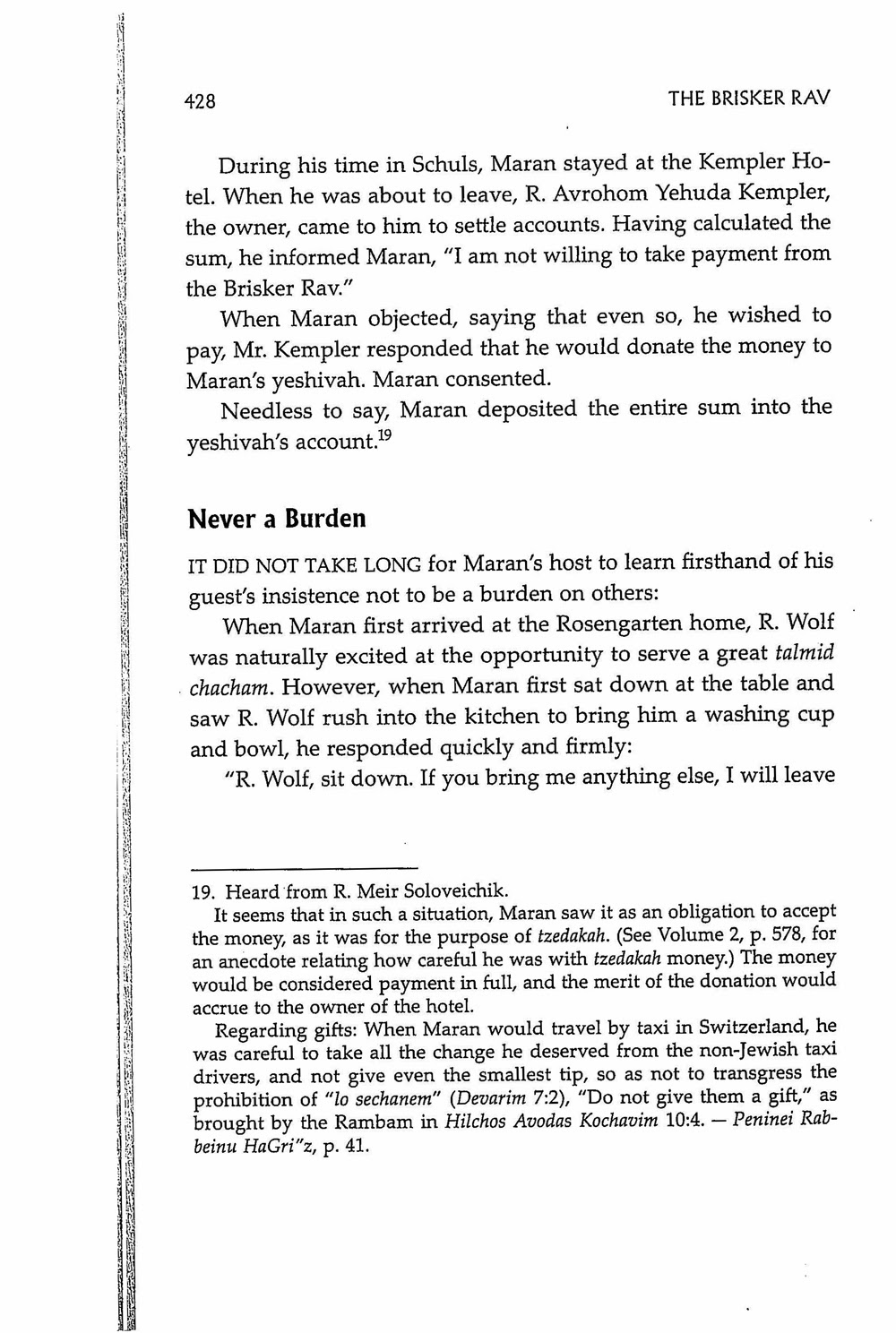

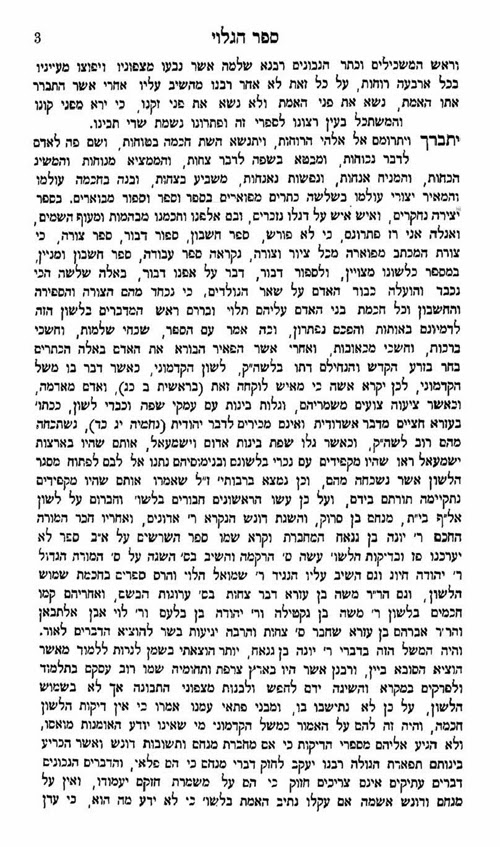
 This is a very unusual position, and I don’t know of any precedent for it.[12] It is so unusual, in fact, that the next printing, Warsaw 1887, simply cut this section out. Here is how the page looks in the Warsaw edition.