Eli Genauer: Breishit 9:18 – Noach’s Family or Noach’s Drunkenness?

Breishit 9:18 – Noach’s Family or Noach’s Drunkenness?

Eli Genauer


וַיִּֽהְי֣וּ בְנֵי־נֹ֗חַ הַיֹּֽצְאִים֙ מִן־הַתֵּבָ֔ה שֵׁ֖ם וְחָ֣ם וָיָ֑פֶת וְחָ֕ם ה֖וּא אֲבִ֥י כְנָֽעַן׃

“The sons of Noach who came out of the ark were Shem, Cham, and Yefet; and Cham was the father of Canaan.”

Rashi:

וחם הוא אבי כנען. לָמָּה הֻצְרַךְ לוֹמַר כָּאן? לְפִי שֶׁהַפָּרָשָׁה עֲסוּקָה וּבָאָה בְּשִׁכְרוּתוֹ שֶׁל נֹחַ שֶׁקִּלְקֵל בָּה חָם וְעַל יָדוֹ נִתְקַלֵּל כְּנַעַן, וַעֲדַיִן לֹא כָתַב תּוֹלְדוֹת חָם, וְלֹא יָדַעְנוּ שֶׁכְּנַעַן בְּנוֹ – לְפִיכָךְ הֻצְרַךְ לוֹמַר כָּאן וְחָם הוּא אֲבִי כְנָעַן:

AND CHAM IS THE FATHER OF CANAAN – Why is it necessary to mention this here? Because this section goes on to deal with the account of Noah’s drunkenness when Cham sinned, and through him, Canaan was cursed. Now, as the generations of Cham have not yet been mentioned, we therefore would not know that Canaan was his son. Therefore, it was necessary to state here that “Cham is the father of Canaan”.

This is how it appears in the Artscroll Elucidated Rashi[1]:
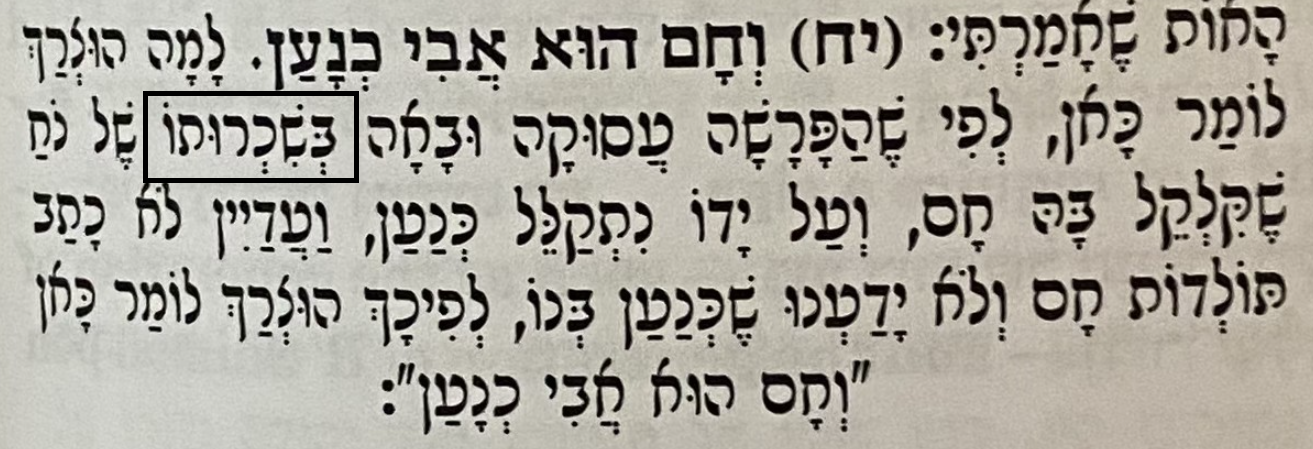
Yet the author of the Sefer Yosef Da’at (Prague 1609) writes that he had a Rashi manuscript and other Sefarim which substituted the word “במשפחתו “for the word” בְּשִׁכְרוּתוֹ”. He also writes that it was the Nusach of Ramban ( when quoting this Rashi).

בדבור המתחיל וחם הוא אבי כו׳, נכתב בצדו על מלת ״בשכרותו״ שבפנינו, וברש״י קלף בס״א (בספרים אחרים) במשפחתו של נח. והיא נוסחאות הרמב״ן ז״ל.

The text of Rashi would then read:

וחם הוא אבי כנען. לָמָּה הֻצְרַךְ לוֹמַר כָּאן? לְפִי שֶׁהַפָּרָשָׁה עֲסוּקָה וּבָאָה במשפחתו שֶׁל נֹחַ שֶׁקִּלְקֵל בָּה חָם וְעַל יָדוֹ נִתְקַלֵּל כְּנַעַן…..

Why is it necessary to mention this here? Because this section goes on to deal with the account of Noah’s family when Cham sinned, and through him, Canaan was cursed…

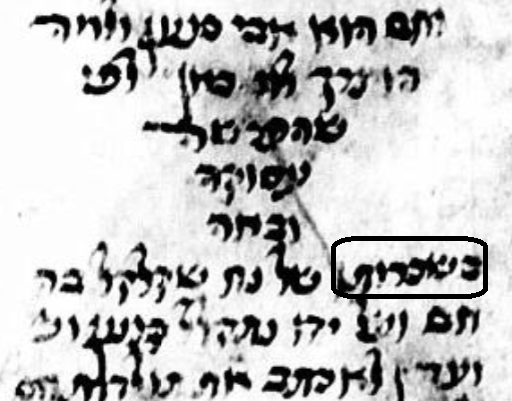
As mentioned by Yosef Da’at, one of the Eidei Nusach for having the word במשפחתו is Ramban, who quotes Rashi’s comment. The website Al Hatorah notes, that this Nusach appears in the following Ramban manuscripts: Parma 3255, Munich 138, Fulda 2, Paris 222, and Paris 223. It also appears that way in the first printed edition of Ramban, that of Rome (printed before 1490).

This is the Ramban manuscript known as Munich 138 where Ramban quotes Rashi:

Here is the text of Ramban in the Rome edition where he writes(פ׳(רוש) ר״ש (למה:

Al Hatorah also notes that the word במשפחתו, appears in the text of a Rashi manuscript, Parma 3115, (which it seems was close to the text with which the Ramban worked) before it was “corrected”.

וכן בכ”י פרמא 3115 של פירוש רש”י (שהוא כנראה קרוב לנוסח שעמד בפני רמב”ן) לפני שתוקן בין השיטין

Ktav Yad Parma 3115, for Rashi:

Al Hatorah then notes that most Rashi manuscripts have בְּשִׁכְרוּתוֹ

בכ”י רומא 44, פרמא 2978, דפוס ליסבון: “בשכרותו”, וכן ברוב כ”י של רש”י.

Parma 2978 is the Ramban on Noach which has “בשכרותו”:

For Rashi on this Pasuk ,Al HaTorah records that most Rashi manuscripts have בְּשִׁכְרוּתוֹ, but Regio di Calabria, as quoted by Ramban and the Rashi manuscript Parma 3115, have it as במשפחתו.

וחם הוא אבי כנען – למה הוצרך לומר כאן. לפי שהפרשה עסוקה בשכרותו של נח שקלקל בה חם, ועל ידו נתקלל כנען, ועדיין לא כתב תולדות חם, ולא ידענו שכנען בנו. לפיכך הוצרך לומר כאן: וחם הוא אבי כנען.

ב. כן בכ״י אוקספורד 165, מינכן 5, אוקספורד 34, לונדון 26917, ברלין 1221, דפוס רומא.

דפוס ריגייו: ״במשפחתו״, וכן מופיע בפירוש רמב״ן כאן ברוב עדי הנוסח, בכ״י פרמא 3115

. אפשר שכך היה הנוסח גם בכ״י המבורג 13.

In Zechor L’Avraham (Berlin 1867 and Frankfurt am Main 1905), there is no indication of alternative Nusach. Avraham Berliner does not mention the alternative Nusach of Yosef Daat, the Dfus Rishon or the Girsa of Ramban:

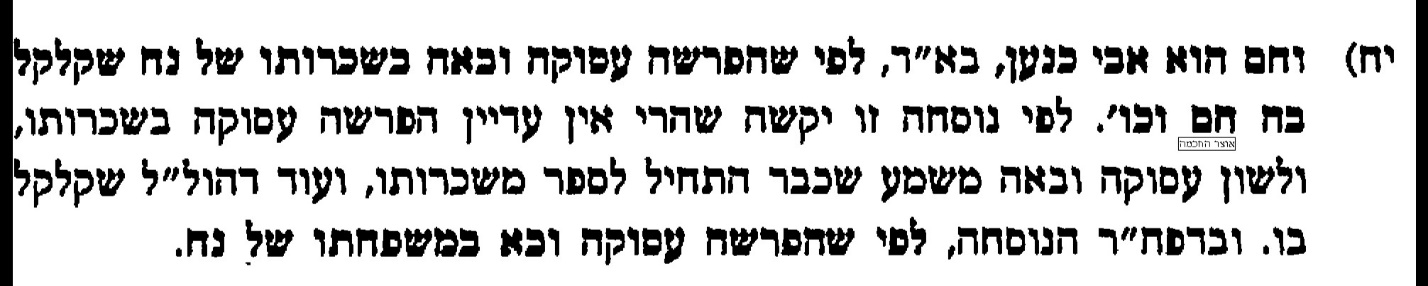
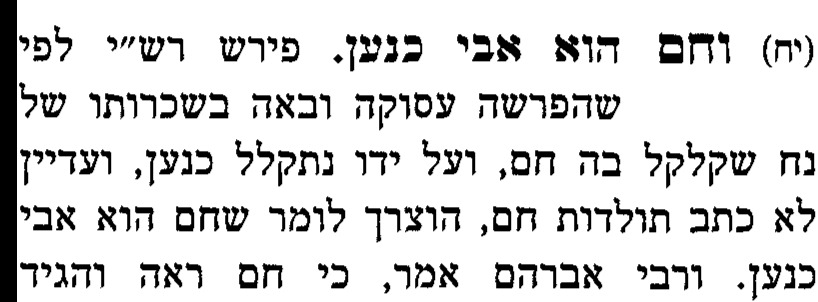
In Yosef Hallel (Brooklyn 1987), Rabbi Brachfeld notes that the Dfus Rishon of Regio Callabrio (1475) has the word במשפּחתו. He does not note that it is the Lashon of the Ramban but seems to think that במשפחתו is a better reading because of his questions on the use of בְּשִׁכְרוּתוֹ:
In Rashi HaShalem Mechon Ariel ( Jerusalem 1987), there is no indication of another Girsa but in the back of the Sefer, it does have it as part of Defusim Rishonim:

Defusim Rishonim:

Guadalajara (1476) Reggio di Calabrio (1475) Rome (1470)
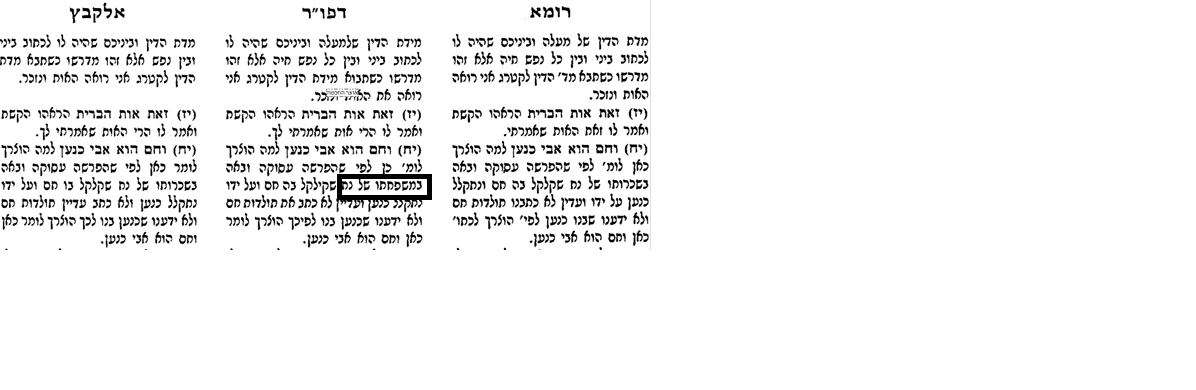
It is interesting to note that the Alkbetz edition is what is known as the Mahadura Sefardit ( according to Professor Yeshayahu Sonne and Dr Yitzchak Penkower), and yet it has בשכרותו. The same goes with Hijar(1490), which generally copies Alkabetz.

Oz Vehadar Rashi HaMevuar 2008, has במשפחתו in the back in Chilufai Girsaot, noting that it is the Girsa of Ramban and the Dfus Rishon:
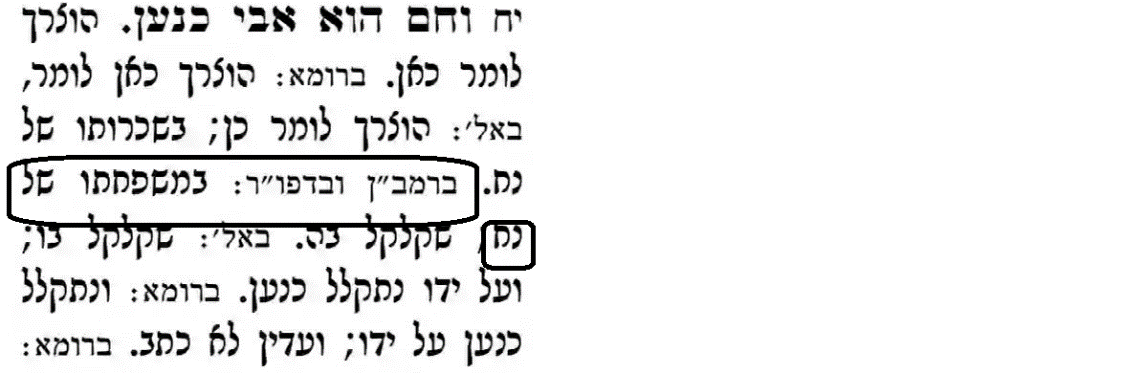
 

Rabbi Isaac Chavel in his edition of Rashi ( Mosad HaRav Kook – 2007 edition) notes that Defus Rishon of Rashi (Regio di Calabria) has ,במשפחתו and this Lashon also appears in the text of Ramban as he quotes Rashi. He also says about the use of the word “במשפחתו” that is more correct (“וכן נראה”) based on the Lashon of the Midrash Agadah which places the emphasis on familial relationships of Noach:

What do the manuscripts indicate:

Oxford CCC 165 (Neubauer 2440) – 12th century

Hamburg 13 (1265), has the word in question rubbed out and changed to בְּשִׁכְרוּתו on the side. It might have originally said במשפחתו:
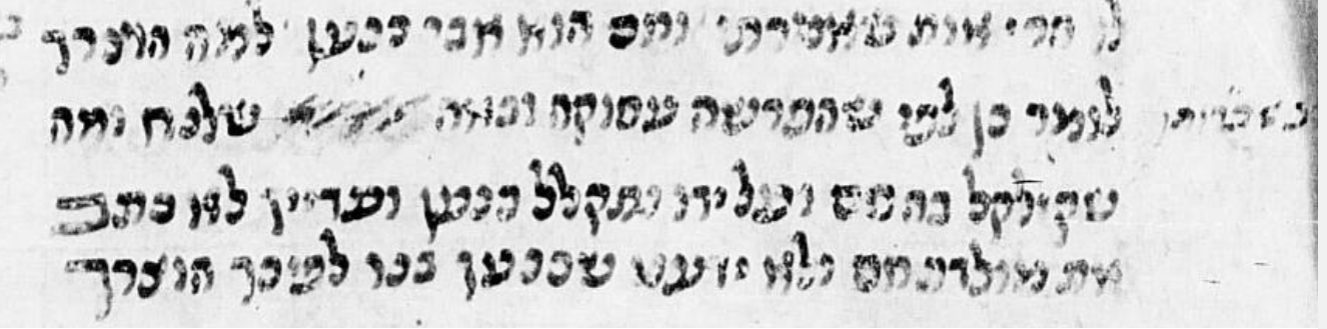
Oxford-Bodley Opp. 34 (Neubauer 186):
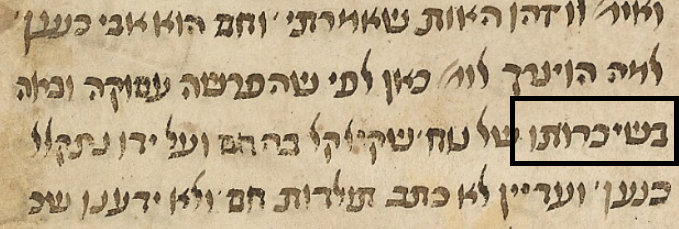
London 26917 (Neubauer 168) (1272):

Berlin 1221:
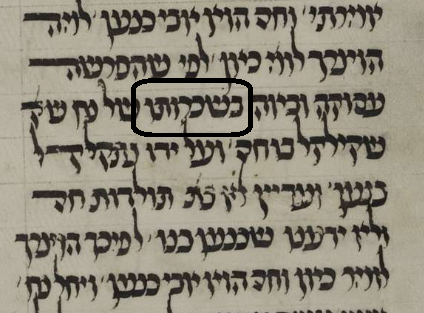
Vatican Urbinati 1 (1294):
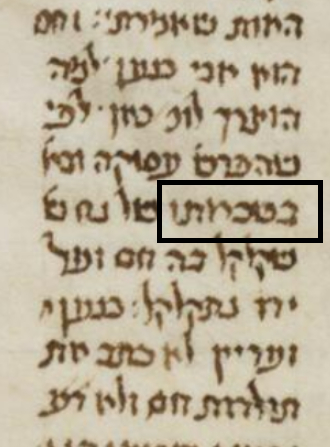
Nuernberg 5 (1297):
How did the text of Rashi in printed editions evolve over time?

The Dfus Rishon of Regio di Calabrio recorded it as במשפחתו. As mentioned, Yosef Da’at noted במשפחתו as a variant reading in a Rashi Klaf and in ,ספרים אחרים and bolstered it with it being the Nusach of Ramban:

בדבור המתחיל וחם הוא אבי כו׳, נכתב בצדו על מלת ״בשכרותו״ שבפנינו, וברש״י קלף בס״א (בספרים אחרים) במשפחתו של נח. והיא נוסחאות הרמב״ן ז״ל.

Hanau 1611-1614, regularly included the Girsaot of Yosef Da’at so we would have expected it to have had בְּשִׁכְרוּתוֹ and then in parentheses have Sefarim Achairim as במשפחתו. But is doesn’t, and that sealed the fate of that Nusach in terms of it becoming a mainstream Girsa of Sefarim Achairim:

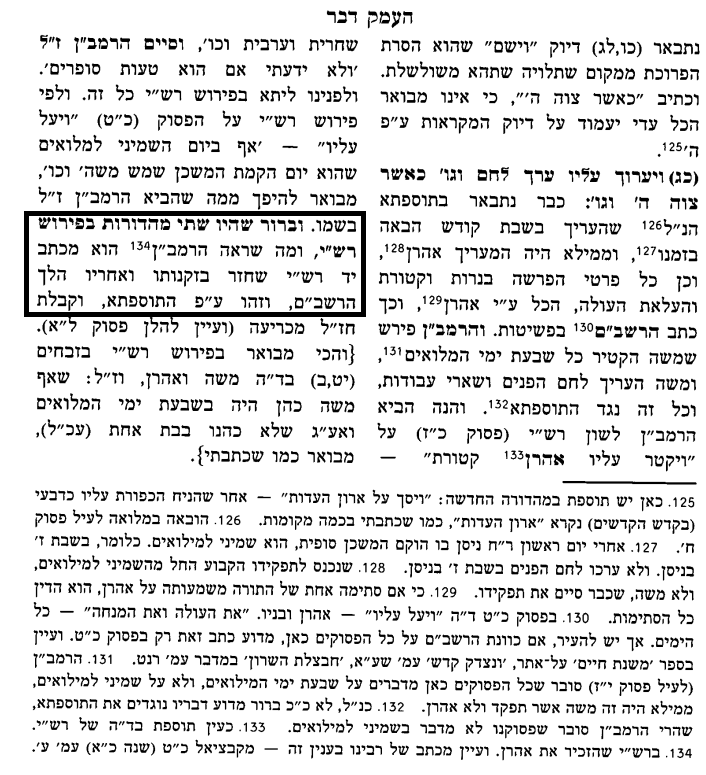
The Netziv in Shemot 40:23 cites a comment of the Ramban in which he quotes Rashi and says that our text of Rashi is different. He proposes that there were two Mahdurot of Rashi, of which Ramban had the first Mahadura and we have the second one. In that second Mahadura, Rashi reversed himself from what he said in the first Mahadura. It is possible that this occurred here- in the first Mahadura, Rashi wrote במשפחתו and that is the Mahadura which Ramban had. Later on, Rashi changed it to בְּשִׁכְרוּתו and that has become the standard Girsa:

Conclusion:

There is a lot of ammunition for the Girsa being במשפחתו:

  1. It is in Dfus Rishon, (indicating either inclusion in a manuscript or taken from Ramban)
  2. It is the Lashon of the Ramban, (this is the main argument)
  3. It has logic behind it (Rabbi Chavel’s and Yosef Hallel’s comments)
  4. It is attested to by Yosef Da’at as being in a manuscript
  5. Parma 3115 originally had “במשפחתו”
  6. Hamburg 13 was altered and could have said במשפחתו

But it did not survive as an alternative Girsa of ספרים אחרים today mainly because the influential edition of Hanau (1611-1614) did not include it.

Sidenote:

Many editions of the Ramban today still attribute the word בְּשִׁכְרוּתוֹ to Rashi even though it is clear that the original Ramban had במשפחתו. This was most likely done to make it conform with the accepted Nusach of Rashi.

Here is Oz Vehadar Jerusalem on Ramban 2015 which has בְּשִׁכְרוּתוֹ but says it is במשפחתו in Defus Rishon:
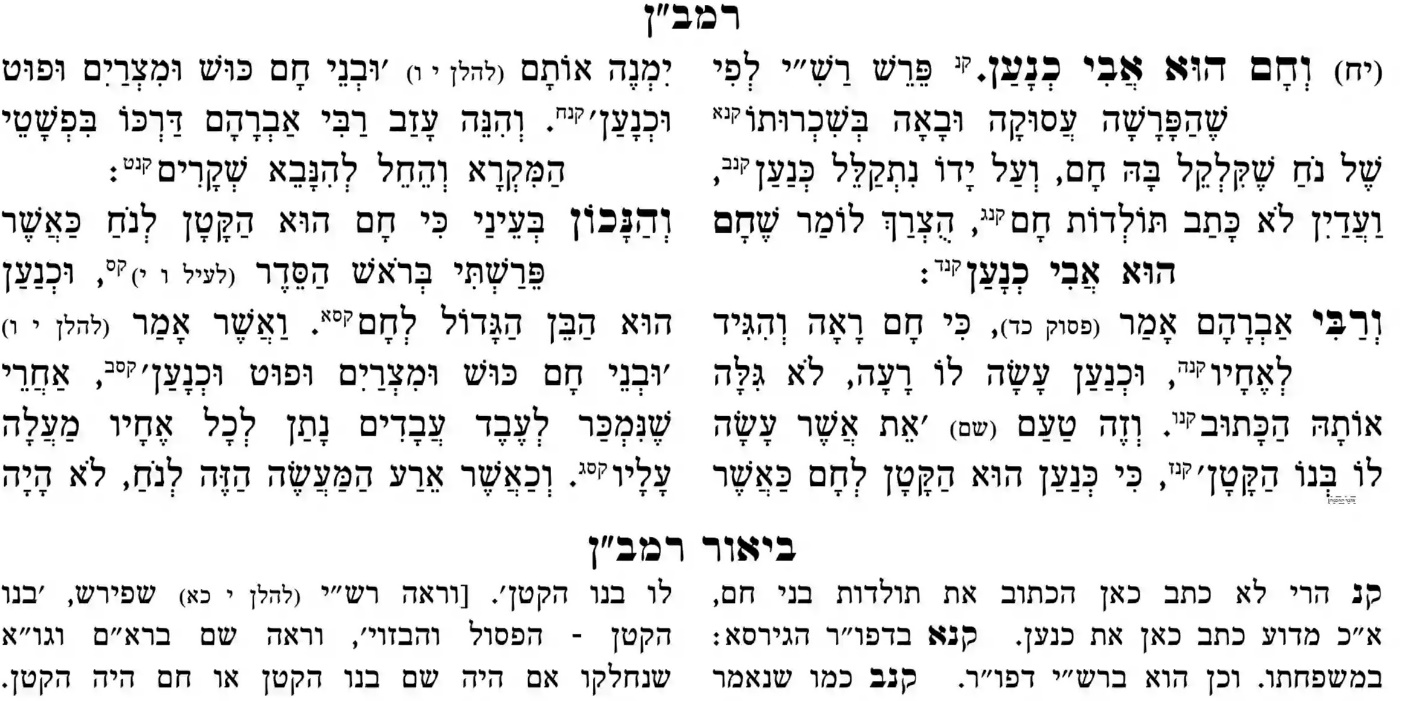
Here is Peirush HaRamban with Peirush Menachem Tziyon printed in 2019 which also has בְּשִׁכְרוּתוֹ:
  1. There is no comment on this Rashi in the Siftei Yeshainim section


A Comment of Rashi Found Only in “Defusim Me’Ucharim”

A Comment of Rashi Found Only in “Defusim Me’Ucharim”

On Shemot 31:15 

By Eli Genauer

Summary:

We find a lengthy comment attributed to Rashi which is only found in what is termed “Defusim Me’Ucharim”. The comment first appears in the Sefer Yosef Da’at (Prague 1609) who attributes it to a D’fus Yashan and a Klaf Yashan Noshan. I did not find it in any of the over 60 manuscripts I checked nor in any early printed edition.[1] It was incorporated into subsequent printed editions on a very uneven basis from the 1600’s to 1800’s but now seems to be part of the mainstream text of Rashi.

שמות לא

(טו) שֵׁ֣שֶׁת יָמִים֮ יֵעָשֶׂ֣ה מְלָאכָה֒ וּבַיּ֣וֹם הַשְּׁבִיעִ֗י שַׁבַּ֧ת שַׁבָּת֛וֹן קֹ֖דֶשׁ לַה’ כׇּל־הָעֹשֶׂ֧ה מְלָאכָ֛ה בְּי֥וֹם הַשַּׁבָּ֖ת מ֥וֹת יוּמָֽת׃

רשי: From Al Hatorah based on Leipzig 1

שבת שבתון – היא מנוחת מרגוע ולא מנוחת עראי. קדש לה’ – שמירת קדושתה לשמי ובמצותיי.

Leipzig 1

Munich 5 has the same text

Rashi HaMevuar (Oz Vehadar 2017, also included in all Oz VeHadar editions) has an extra comment (starting from a second Dibur HaMatchil of שַׁבַּ֧ת שַׁבָּת֛וֹן ) in parentheses.[2] The footnotes do not explain what the source was.

Rashi HaMevuar then states in their section of Chilufai Girsaot that it is not in any early printed edition.[3]

Rashi Hashalem ( Mechon Ariel, Shemot Volume 4, 2005) says that it is included in some later editions (Defusim Me’Ucharim) but does not comment on it source or authenticity.[4]

Torah Shlaimah of Rav Menachem Kasher, Jerusalem 1959, uses similar language by saying that this additional comment of Rashi can be found in Defusim Achronim.

Avraham Berliner (Zechor L’Avraham Berlin 1867) attributes this comment only to Yosef Da’at and puts it below the line. In the 1905 Frankfurt am Main edition it is not included.

This is how it is presented in Yosef Da’at:


גירסת דפ״ס (דפוס ?) ישן

והוא סוף הדבור בספרים אחרים ואחר כך הדבור קדש לה׳ כו׳ כך מצאתי ברש״׳ קלף ישן נושן

There seems to be three sources, a D’fus Yashan, Sefarim Achairim, and a Klaf Yashan Noshan.

Although there is some speculation that the Rashi Yashan Noshan is the manuscript known as Hebrew Union College Library, Cincinnati, OH, USA Ms. JCF 1, it does not appear there.

https://web.nli.org.il/sites/NLI/English/digitallibrary/pages/viewer.aspx?&presentorid=MANUSCRIPTS&docid=PNX_MANUSCRIPTS990000621880205171-1#|FL150557494

Question: Is Yosef Da’at the first source for later editions which include this comment and if so, when was the comment added to printed editions?

Despite Yosef Da’at statement that this comment was found in a Dfus Noshan, I did not find any printed editions which include this comment until after the printing of Yosef Da’at.[5] One might have expected to see it in an edition of Chumash printed immediately following Yosef Da’at in 1609, and that would be in the Hanau edition of 1611-1614. That edition had the כללים לשימוש רשי בתרגום which were first printed in Yosef Da’at and was identified as one of the more important ones in setting the text of Rashi in subsequent editions.[6] But the comment is not included there.

The first time I could find this extended comment in print was in an edition of Rashi printed in Amsterdam in 1669

אמשטרדם : דפוס דוד די קאשטרו תארטס

It includes the כללים לשימוש רשי בתרגום which we find in Yosef Da’at indicating that the editor was most likely familiar with this edition.

Amsterdam 1669 Yosef Da’at

None of the early Meforshai Rashi, such as Mizrachi and Gur Aryeh, comment on this statement.[7] Additionally, although Yosef Da’at attributes the comment to Klaf Yoshan Noshan, I did not find it in any of the manuscripts I checked.[8]

Manuscripts aside from Leipzig 1, HUC JCF 1, Munich 5 (see above) and Berlin 121(see footnote vi) which don’t have it

Access to links for these manuscripts through Al HaTorah[9]:

https://alhatorah.org/Commentators:Online_Rashi_Manuscripts

12th Century (?):

Oxford CCC 165 (Neubauer 2440)

13th Century:

Hamburg 13 (1265), Hamburg 32 (Steinschneider 37), Oxford-Bodley Opp. 34 (Neubauer 186)

London 26917 (Neubauer 168) (1272), Berlin 1221, Berlin Qu 514 (1289) , Florence Plut.III.03 (1291)

Vatican Urbinati 1 (1294), Paris 155, Parma 2708, Parma 2868, Parma 3081

13th-14th Century:

Parma 3204 (De Rossi 181), Weimar 651, Berlin 1222, Berlin 121, Paris 156, Paris 157

British Library Harley 1861 (Margoliouth 169), British Library Harley 5709 (Margoliouth 170)

British Library Harley 5708 (Margoliouth 171), Vienna Cod. Hebr. 220 (Schwarz 23)

14th Century:

Parma 3115 (1305), Parma 3256 (1312), Frankfurt 19 (1340), Paris 48, Paris 37, Vienna Cod. Hebr. 3 (Schwarz 24)

London 19665 (Margoliouth 174) London 26924 (Margoliouth 175), London 26878 (Margoliouth 177)

London 22122 (Margoliouth 178), Oxford-Bodley Mich. 384 (Neubauer 187) (1399)

14th-15th Century:

British Library Harley 5655 (Margoliouth 180), Paris 159, Breslau 11 (Saraval 5)

15th Century:

Oxford-Bodley Opp. 35 (Neubauer 188) (1408), Breslau 102 (Saraval 12) (1421)

Breslau 10 (Saraval 7) (1449), Frankfurt 152, Paris 158, London 19653 (Margoliouth 181)

Conclusion

Aside from the Klaf Yashan Noshan cited by Yosef Da’at, this extended comment most likely was in a small minority of manuscripts. The fact that it made it into mainstream study of Rashi seems tied to its inclusion in Yosef Da’at.

[1] All manuscripts were accessed through Al HaTorah and KTIV. All books were accessed through hebrewbooks.org, Otzar HaChochmah and using the search engine of Merhav at the National Library of Israel.

[2] Artscroll Stone Edition of Chumash, Sapirsten edition of Rashi and all other Artscroll editions also have the comment in parentheses. The Sapirstein Rashi gives no explanation for why this is so. The comment also appears in Chumash HaMizrachi Petach Tikvah 1993, Mikraot Gedolot Meorot, Jerusalem 1995, (without parentheses) Ateret Rashi Jerusalem 1998, Ohr HaChama Jerusalem 2003, Chumash HaBahir Jerusalem 2005, Ha’amaek Davar, Jerusalem 2007, and Mikraot Gedolot HaChut HaMeshulash Jerusalem 2013

The comment is not found in Torat Chaim of Mosad HaRav Kook, Jerusalem, 1993

[3] I checked Rome 1470, Dfus Rishon (Reggio di Calabrio) 1475, Alkabetz, Guadalajara 1476, Bologna 1482, Soncino 1487, Ixar 1490, Lisbon 1491, Zamora 1497. I also checked the following representative editions printed from 1500 until 1609 and did not find the addition in them. Bomberg Venice 1518, Bomberg Venice 1548, Rashi Sabionetta 1557, Riva Di Trento 1561, Cracow 1587, and Basel 1606

[4] Similarly, Be’er Yakov Jerusalem 2008 (below the line) writes that this comment is a Hosafa B’Dfusim Achronim.

[5]

It is not in Hanau 1611-14, Amsterdam (Menashe ben Yisrael) 1635, Kushta 1639, Amsterdam Rashi 1644, Amsterdam 1680 (first edition of Siftei Chachamim), Amsterdam 1682, Berlin 1705, Frankfurt/Oder 1728, Venice 1740, Frankfurt/Oder 1784, Vienna 1794, Dubrovna 1804, Vienna 1831, Fuerth 1841, Livorno 1854, and Lemberg 1864

It also does not appear in Vienna 1859 or Warsaw 1861, both of which were considered important editions of Mikraot Gedolot

The following is a list of those editions I checked from the 1600’s onwards which do include this comment.

Wilhemsdorf 1680 ווילהרמרשדארף : דפוס יצחק בן יהודה יודלש

But not in Wilhemsdorf 1713 ווילהרמרשדארף : דפוס יצחק בן יהודה יודלש, despite it being the same printer.

It is in Amsterdam 1749, 1755 and 1757, Hamburg 1787, Amsterdam Proops 1797 Tikun Sofrim, Amsterdam 1827 (Gavriel ben Itzchak Polak), Rashi Al HaTorah Prague 1838 (M.I. Landau), Roedelheim 1860, Warsaw 1873, Malbim Warsaw 1880, Lemberg 1909, Torat Gavriel Jerusalem 1910 (without parentheses), New York 1953, Rav Peninim, Jerusalem 1959, New York 1971.

[6]  This article https://www.machonso.org/hamaayan/?gilayon=30&id=1035 by הרב דוד סיגל speaks about the famous כללים לשימוש רש”י בתרגום which first appeared in print in Yosef Da’at. It mentions that the Hanau edition served as a basis for the text of Rashi in many editions which followed:

 בחלק מן החומשים החדשים במהדורת עוז והדר צוין שהכללים האלו נדפסו בחומשים לראשונה באמשטרדם שנת ת”ד (במהדורה שהדפיס רבי מנשה בן ישראל), אבל במהדורות מאוחרות הם תקנו זאת וציינו שהחומשים הראשונים שבהם נעתקו הכללים נדפסו עוד שלושים שנה קודם בהנאו שע”א-שע”ד (הרב ישראל רוזנשטרוך ממכון עוז והדר העיר שיתכן מאוד שמהדורת הנאו זו היא מהדורת הבסיס לפירוש רש”י הנדפס ברוב החומשים עד ימינו, ואכמ”ל). ה

[7]  It is not commented on in Mincha Belulah Verona 1594, Minchat Yehuda Lublin 1609, Tzaidah L’Derech Prague 1623, or in Nachalat Yaakov Amsterdam 1642.

[8] Berlin 121 is very different from all the other manuscripts. State Library of Berlin, Berlin, Germany Ms. Or. fol. 121 (13 th -14 th century), skips שַׁבַּ֧ת שַׁבָּת֛וֹן completely.

https://web.nli.org.il/sites/NLIS/en/ManuScript/Pages/Item.aspx?ItemID=PNX_MANUSCRIPTS990001750300205171&SearchTxt=berlin%20121


[9] Aside from the links of Al HaTorah, I accessed these manuscripts through KTIV. None of them had the extra comment in Rashi.

1. Vatican Library, Vatican City, Vatican City State Ms. ebr. 608
2. Rostock University Library, Rostock, Germany Ms. Or. 31
3. The National Library of Russia, St. Petersburg, Russia Ms. EVR I 1
4. University of Toronto Ms FR 5- 005

5. Parma 2523
6. Casanatense Library, Rome, Ms 2848
7. British Library Add. 11566
8. Laurentian Library, Florence Ms. Plut III 08
9. Vatican ebr. 480
10. Vatican ebr. 4
11. Vatican ebr. 94
12. Parma 2865
13. Budapest Kaufmann A 17
14. British Library Or. 9927
