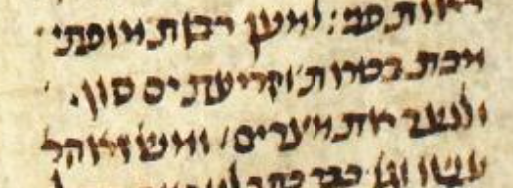
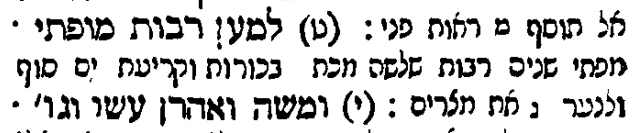
Vayikra Perek 23 Rashi on Pasuk 35 or 27 A “Misplaced” Comment of Rashi

Vayikra Perek 23 Rashi on Pasuk 35 or 27

A “Misplaced” Comment of Rashi

Eli Genauer

The 23rd Perek of Sefer Vayikra speaks about the festivals, and ends with the discussion of Yom Kippur (Pesukim 27-32) and Succot (Pesukim 33-43). In Pasuk 27 Yom Kippur is called a “מִקְרָא־קֹ֑דֶשׁ” (a holy convocation/assembly)

ויקרא כ”ג:כ”ז

(כז) אַ֡ךְ בֶּעָשׂ֣וֹר לַחֹ֩דֶשׁ֩ הַשְּׁבִיעִ֨י הַזֶּ֜ה י֧וֹם הַכִּפֻּרִ֣ים ה֗וּא מִֽקְרָא־קֹ֙דֶשׁ֙ יִהְיֶ֣ה לָכֶ֔ם וְעִנִּיתֶ֖ם אֶת־נַפְשֹׁתֵיכֶ֑ם וְהִקְרַבְתֶּ֥ם אִשֶּׁ֖ה לַיהֹוָֽה׃

In Pasuk 35 Succot is also called a ִ מִקְרָא־קֹ֑דֶש

ויקרא כ”ג:ל”ה

(לה) בַּיּ֥וֹם הָרִאשׁ֖וֹן מִקְרָא־קֹ֑דֶשׁ כׇּל־מְלֶ֥אכֶת עֲבֹדָ֖ה לֹ֥א תַעֲשֽׂוּ

Rashi comments as follows on the words מִקְרָא־קֹ֑דֶש

מקרא קדש – קדשיהו בכסות נקייה ובתפילה. וכל שאר ימים טובים, במאכל ובמשתה וכסות נקייה ותפילה

“Sanctify it with clean clothing and prayer, and on other festivals, with food and drink, with clean clothing and with prayer”

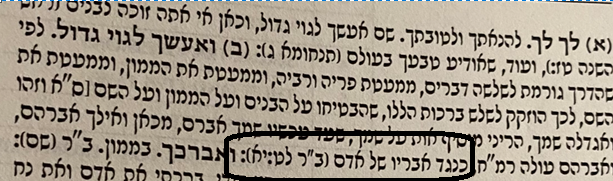
There is a disagreement among various editions of Chumash and Rashi on which מקרא קדש Rashi writes his comment. Logically, it belongs on Pasuk 27 which speaks about Yom Kippur. Rashi is telling us that the way you make Yom Kippur into a מקרא קדש is by wearing fine clothes and saying special prayers, and on other festivals, you observe them with food and drink, with clean clothing and with prayer.

This is the Artscroll Stone Chumash (Brooklyn 1993) which place the comment in Pasuk 27

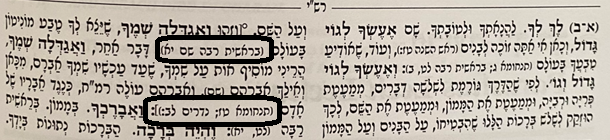
However, there are other Chumashim which do not place the comment in Pasuk 27, and wait until Pasuk 35 to record it. This means that Rashi is telling us that on Succot, we sanctify the day with nice clothing and prayer, and on other festivals, we add in food and drink. It seems to be quite illogical.

This is Chumash Habahir (Jerusalem 2005)

What is the source for recording Rashi’s comment on Pasuk 35?

It turns out that most Rashi manuscripts and early printed editions have it that way.

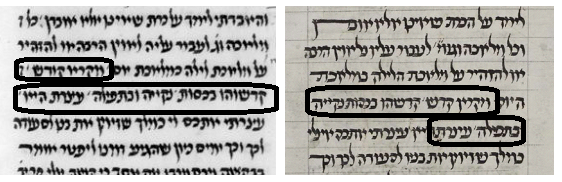
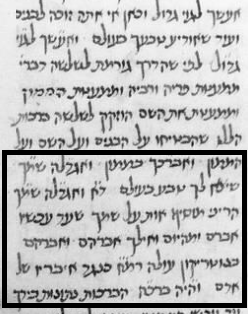
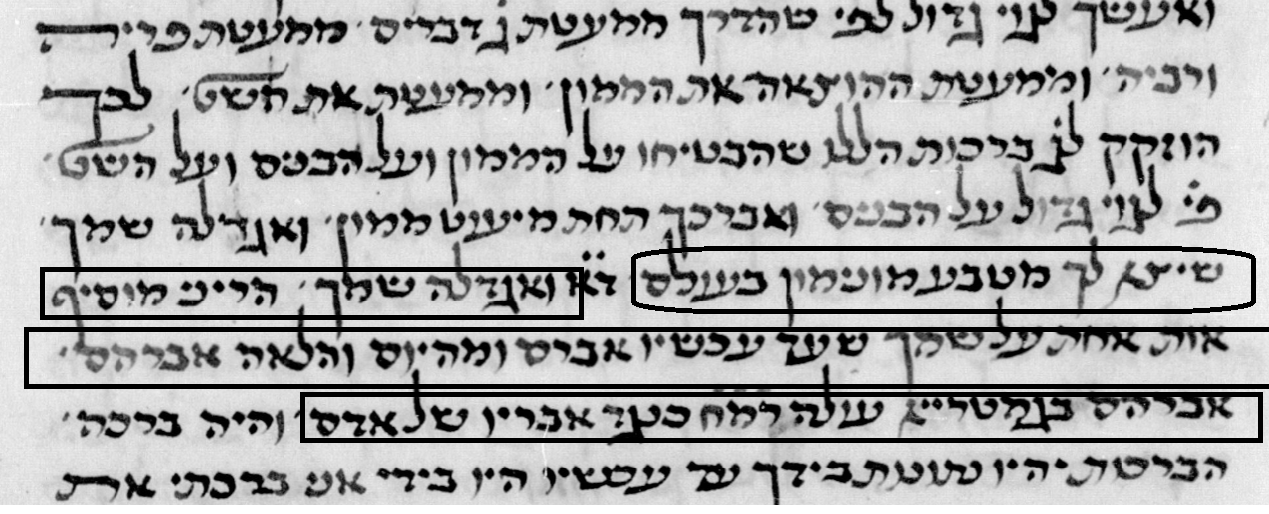
A good example is the authoritative manuscript Leipzig 1 which looks like this:[1]
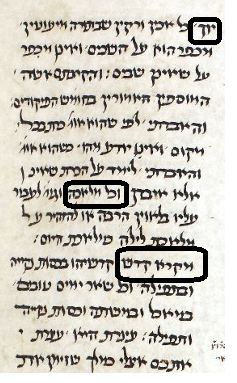
The manuscript has the comment on the word “אַ֡ךְ” in Pasuk 27, followed by a few more comments continuing on to Pasuk 31, where a comment on the words “וכל מלאכה וגומ’” appears. This is followed by the comment on “מקרא קדש”. Those words only appear afterwards in Pasuk 35 meaning that Rashi wrote his words of “קדשיהו בכסות נקייה ובתפילה” as a comment on the festival of Sukkot.

The website Al Hatorah uses Leipzig 1 as its base text for Rashi, yet it positions this Rashi as a comment on Pasuk 27 which speaks of Yom Kippur. It notes though that this Dibur Hamatchil appears in Leipzig 1 and in other Eidei Nusach after the comment in Pasuk 31

דבור המתחיל זה מופיע בכ”י לייפציג 1 ובעדי נוסח אחרים לאחר הביאור על פסוק ל”א

I looked at many other manuscripts and found it to be true in the following 34 cases. I did not find one manuscript which had the comment on Pasuk 27

Oxford CCC 165 (Neubauer 2440), Munich 5, Hamburg 13, London 26917 (Neubauer 168) (1272), Paris 155, Berlin 121, Vatican ebr. 4, Vatican ebr.18, Vatican ebr.33, Vatican ebr. Vatican ebr. 94, Vatican ebr. 480, London 19665 (Margoliouth 174), London 22122 (Margoliouth 178) Oxford-Bodley Opp. 34 (Neubauer 186), Casanatense 2848 (1284), Berlin Qu 514 (1289), Florence Plut.III.03, Oxford Bodleian 69, Hamburg 32, Vatican urb. Ebr 1, Vienna codex Hebr. 220, Vienna Codex Hebr.3, London Harley 5708, Bavarian State Library, Cod.hebr. 148, HUC JCF 1(called Cincinnati 51), Paris 49, Paris 154, Parma 2708, Parma 3204 (DeRossi 181), Cambridge University Library, Ms. Add. 1828, Casantense 2988, and Sassoon 369.[2]

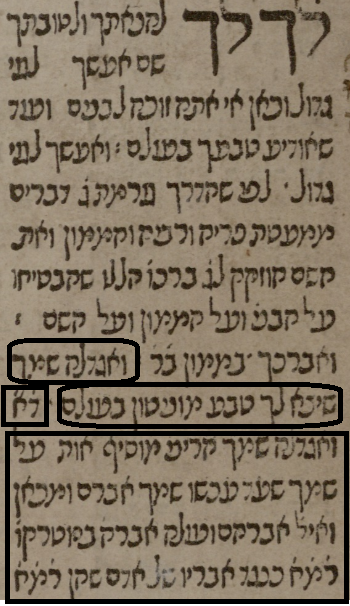
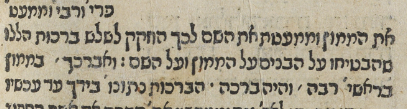
Most of the early printed editions of Rashi also have this comment on Pasuk 35. A good example is Rome 1470 where the comments on “וְהַֽאֲבַדְתִּ֛י” (pasuk 30) and “כׇּל־מְלָאכָ֖ה” (pasuk 31) precede that of “מקרא קדש” (presumably Pasuk 35)


The rest of the incunabula ( the 9 editions printed before 1500) present it that way except for Napoli 1492 where it is presented as part of Pasuk 27[3].

The most influential edition of the 16th century was the Bomberg Mikraot Gedolot Venice edition 1524-26 and it was recorded in the same manner. The comment on מקרא קדש comes after the comment on כָּל־מְלָאכָ֖ה of Pasuk 31, and before עֲצֶ֣רֶת on Pasuk 36. It is clearly assigned to מקרא קדש of Pasuk 35.
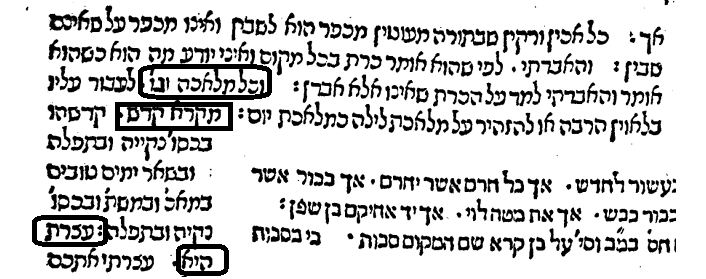
Many who analyzed Rashi’s work struggled with the issue of the manuscripts placing the comment on Pasuk 35, and logic dictating that it belonged on Pasuk 27. Chief amongst that group was the dean of supercommentators Rav Eliyahu Mizrachi (רא״ם)

He writes at first that logically Rashi is commenting on the words “מקרא קדש” which are written describing Yom Kippur (Pasuk 27)

שאין פירוש מקרא קדש האמור ביום הכפורי’ כפירוש מקרא קדש האמור בשאר ימים טובים כי פירוש מקרא קדש האמור ביום הכפורים הוא שתקדשהו בכסות נקייה ובתפלה לבד מאחר שאין בו אכילה ושתייה ופירוש מקרא קדש האמור בשאר ימים טובים הוא שתקדשהו באכילה ובשתייה ובכסות נקייה ובתפלה

“The interpretation of מקרא קדש on Yom Kippur is not the same as the interpretation of מקרא קדש on the other ימים טובים, because the interpretation of מקרא קדש on Yom Kippur is that you sanctify it with a nice clothing and prayer alone, since there is no eating or drinking on it, and the interpretation of the מקרא קדש on the other ימים טובים is that you sanctify it with eating and drinking, with nice clothing and prayer”

But Rav Eliyahi ran into the roadblock of the Girsa of all the manuscripts he had seen and it really bothered him

וגם בזה לבי נוקפי שהרי בכל הנוסחאות שראיתי בכולן כתוב הפירוש של מקרא קדש אחר הפירוש של והאבדתי ואחר הפירו’ של כל מלאכה

“But that makes my heart pound, because in all the Nuschaot I have seen, the interpretation of מקרא קדש is written after the interpretation of ” וְהַֽאֲבַדְתִּ֛י” (Pasuk 30) and after the interpretation of כָּל־מְלָאכָ֖ה ( Pasuk 31) .”

He nevertheless concludes that the comment belongs on Pasuk 27

אלא ע”כ לומר דהאי מקרא קדש שפיר’ בו הוא הכתוב ביום הכפורים שהוא משונה מכולם

“but rather one must say that this מקרא קדש, which is the one written on Yom Kippur, is the one which is different.”

Notice how he emphasizes that all the Nuschaot he has seen have it as the Dibur HaMatchil after “והאבדתי” (Pasuk 31) making “מקרא קדש” Pasuk 35. (regarding Succot)

However, there are a number of Rashi supercommentators who try to explain why this comment of Rashi does belongs after Rashi’s comments on Pasuk 30 and 31 (seemingly when it talks about Succot), such as Gur Aryeh( Maharal MiPrague 1512-1609).[4] The Yeriot Shlomo, which is a commentary on the Mizrachi by Maharshal (1510-1573), also addresses the issue.[5] Rav Shabtai Meshorer Bass places Rashi’s comment in Pasuk 35, and in his commentary Siftei Chachamim (Amsterdam 1680) advances this resolution:

 בכסות נקיה. והא דמהפך רש”י הקרא דמקרא קדש דהיה לו לפרש לעיל קודם פירוש והאבדתי וקודם כל מלאכה לא תעשו. וי”ל דלעיל לא יכול לפרש קדשהו בכסות נקיה וכו’ דלמא הא דכתיב מקרא קדש לאסור הלילה כיום לעניין עשיית מלאכה וכרת, אבל עכשיו דכתיב כל מלאכה לא תעשו שהוא מיותר ובא ללמד ולהזהיר על מלאכת לילה כיום ע”כ האי מקרא קודש בא ללמד על קדשהו בכסות נקיה וכו’

“Fine clothing. That which Rashi turned around the verse “מקרא קדש “? He should have explained it [where it first appears in verse 27] before explaining “והאבדתי ” and before ” כל מלאכה לא תעשו?” The answer is: He could not explain above” קדשהו בכסות נקיה,” because perhaps when it wrote ” מקרא קדש ” this was to make the night forbidden like the day regarding work and “.כרת”. But now that it is written ” כל מלאכה לא תעשו ” which is superfluous, it is to teach and warn that work is forbidden by at night as well as by during the day, therefore this ” מקרא קדש ” must be teaching that we ” קדשהו בכסות נקיה.”

How did Rashi’s comment on “מקרא קדש” fare throughout printing history?

As mentioned, 8 out of 9 incunabula placed the comment on Pasuk 35, as did Bomberg’s Mikraot Gedolot of 1524-26. Going forward, the same was true for Augsburg 1533, Bomberg 1548, Sabionetta 1557, Riva di Trento 1561, Cracow 1587, and Mantua 1589

In fact, most editions through the 19th century continued to place the comment in Pasuk 35. Clearly, they were following the manuscripts and the earlier printed editions. Examples of these were Hanau 1611-14‬‬‬‬, Amsterdam 1670, Amsterdam 1701, Venice 1702, Berlin 1703, Amsterdam Proops 1721, Livorno 1807, Ostroh 1827, Warsaw 1854, Vienna 186, Zhitomir 1867, and Vienna 1875

Here is Berlin 1703
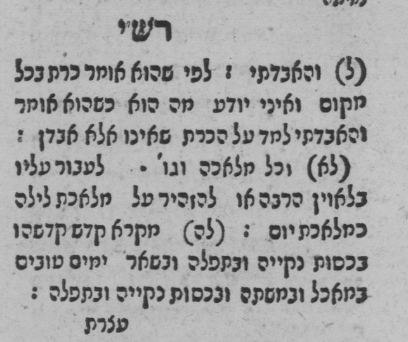
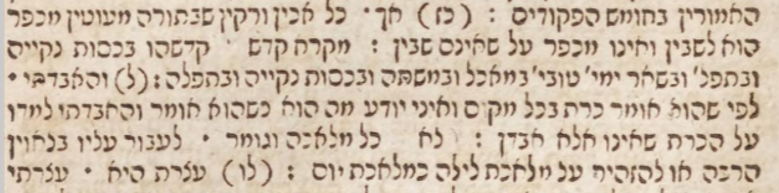
The earliest more modern edition I could find the comment placed in Pasuk 27 was the 1787 Devek Tov Hamburg edition.

Another example is Furth 1812
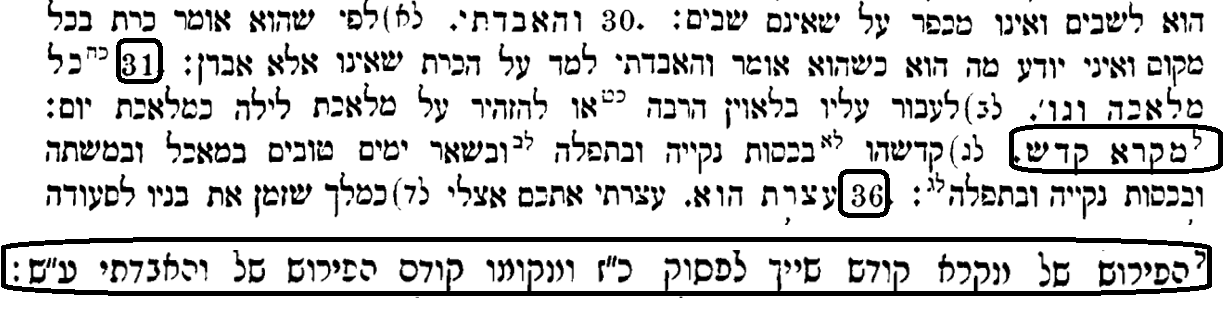
Avraham Berliner in Zechor L’Avraham (Berlin 1867) does not assign a Pasuk number to it but records it after Pasuk 31. In note 30 he writes that it belongs in Pasuk 27, before the comment of והאבדתי which appears in Pasuk 30.
More recently, Oz Vehadar Rashi Mevuar of 2016 does not assign מקרא קדשׁ to Pasuk 35 but just to somewhere after Pasuk 31 but before Pasuk 36. It also adds the words ביום הכפורים to emphasize that the comment is made about Yom Kippur
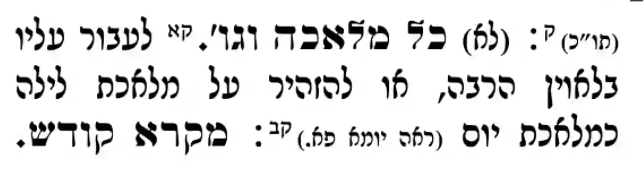
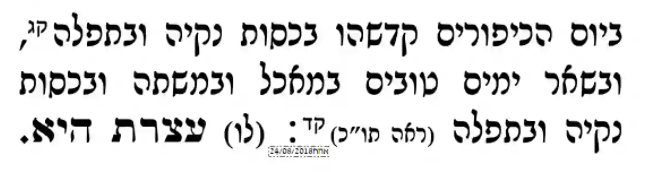
However it admits that ביום הכפורים is not found in any early edition
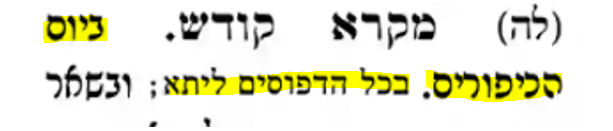
Here is an example of the words “ביום הכפורים” appearing in parentheses

Malkah Shel Torah (Jerusalem 1990)

Chumash Torat Chaim (Jerusalem 1993) published by Mosad HaRav Kook maintains that it should be in the Yom Kippur section and places it in Pasuk 27, but admits that the manuscripts and early printed editions do not support this placement.

The Artscroll Elucidated Rashi, Siftei Yeshainim section (Rahway, NJ 2025) writes on this matter

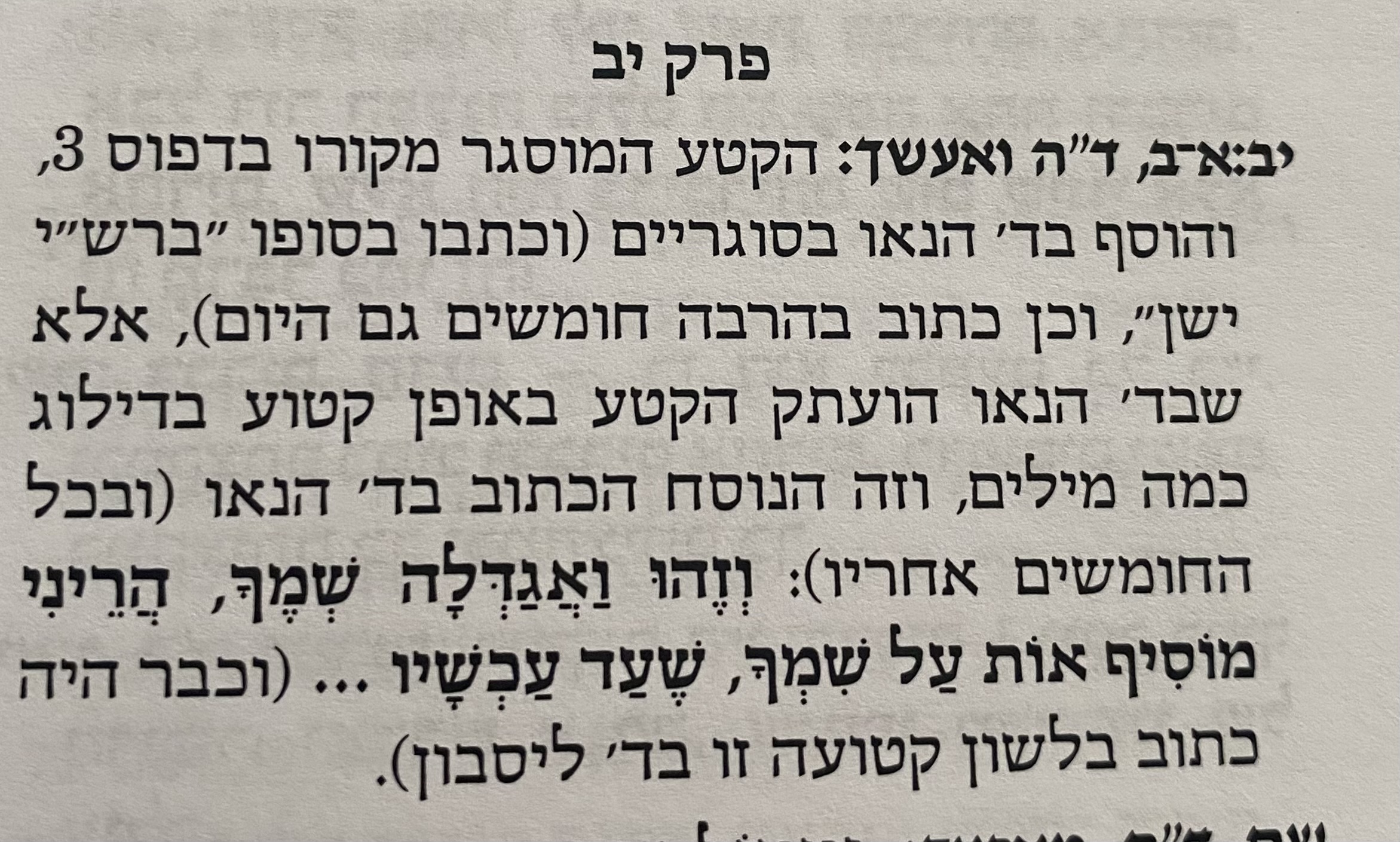
שם: ד”ה מִקְרָא קֹדֶשׁ. בכמעט כל הנוסחאות (כ”י ודפוס, חדשים גם ישנים), דיבור זה כתוב להלן אחרי ד”ה “וכל מלאכה”, וא”כ לפי הסדר נראה שמוסב על פסוק לה (גבי סוכות). אבל לפי הענין נראה ברור שדברי רש”י מוסבים על יוה”כ, וכן כתב הרא”ם כאן, לכן כתבנו אותו כאן. וע’ בדברי המפרשים בפסוק לה.

Rashi Hashalem Mechon Ariel 2019) places it in Pasuk 35 but blames the incorrect placement on the mistake of printers.


Note: I believe it is difficult to assign blame to the printers after looking at all the manuscripts which placed the comment on Pasuk 35.

To summarize:

  1. Rashi made a comment regarding Yom Kippur that one sanctified it as a מקרא קדש through fine clothing and prayer, whereas other ימים טובים are sanctified additionally with food and drink.
  2. The comment of Rashi on מקרא קדש is clearly focused on Yom Kippur
  3. For some reason, all the manuscripts and early printed editions of the Chumash (except for one) place the comment of Rashi in the section dealing with Succot (Pasuk 35)
  4. Rav Eliyah Mizrachi says that logically the comment belongs in the Yom Kippur section (Pasuk 27) but notes that all the manuscripts have it in the Succot section ( Pasuk 35)
  5. Printers chose between three courses of action in terms of where they placed the comment.
  6. Place the comment in Pasuk 35 as it appears in all the manuscripts and rely on supercommentaries to explain why it is there.
  7. Place it in Pasuk 27 which speaks about Yom Kippur and where the comment seemingly belongs
  8. Place it in Pasuk 35 and, even though they appear in no manuscript, add the words ביום הכפורים with or without parentheses

The final word on this perhaps belongs to the Rashi scholar Dr. Aharon Ahrend, who wrote me

“I agree that once you examine many manuscripts, it strengthens the hypothesis that the original text was like the manuscripts. But we must always remember that we do not have Rashi’s own manuscript, and therefore when there is something strange, it can still be attributed to an error by an ancient copyist, from whom others copied.”

Notes

  1.  

    The website Al Hatorah includes this information on the manuscript named Leipzig 1

    “The popularity of Rashi’s Torah commentary and the tendency of medieval scholars and copyists to add to it their marginal glosses combined to create enormous variation between different manuscripts and editions of the commentary. As a result, it is often difficult to determine how Rashi’s original text read, and whether words, sentences, and even entire passages from the commentary, were written by Rashi himself or are merely later accretions… On this backdrop, the importance of the Leipzig 1 (Universitätsbibliothek Leipzig, B.H.1) manuscript of Rashi can hardly be overstated. This manuscript was written in the 13th century by R. Makhir b. Karshavyah, who states that he produced it from a copy of the commentary transcribed and annotated by Rashi’s own secretary, R. Shemayah. R. Makhir not only copied Rashi’s base commentary from R. Shemayah’s manuscript, but he also reproduced many of the marginal glosses contained in R. Shemayah’s text, a good number of which R. Shemayah explicitly attributes to Rashi himself. MS Leipzig 1 is, thus, an extremely valuable textual witness which comes tantalizingly close to the original source. In addition, its glosses shed significant light on Rashi’s thought processes and the development of his commentary.”

  2.  

    There were two manuscripts which had the comment after Pasuk 31, but left out the last part of it which is “וכל שאר ימים טובים”

    Paris 154 Berlin 1221

  3.  

    This is Napoli 1492. It perhaps indicates that there were manuscripts from which it took this Girsa which had it this way

  4.  

    גור אריה ויקרא כ”ג:ל”ו (Maharal Mi’Prague 1512-1609)

    https://hebrewbooks.org/pdfpager.aspx?req=42846&st=&pgnum=193

    קדשהו בכסות נקייה כו’. פירש רש”י דבר זה שלא במקומו אחר “כל מלאכה”, ועוד, דהוי ליה לפרש זה למעלה בחג המצות (פסוק ז). ויראה טעמו, דלמעלה לעולם כתיב איסור המלאכה אצל “מקרא קדש”, ויש לפרש “מקרא קדש” לקדש אותו שלא לעשות בו מלאכה, ובזה הוא מקודש, ו”מלאכת עבודה לא תעשו” פירושו ד”מקרא קדש”, שרוצה לומר בזה הוא קדש – “כל מלאכת עבודה לא תעשו”. אבל ביום הכפורים לא כתיב (בפסוק כז) “מקרא קדש” אצל המלאכה, על כרחך האי “מקרא קדש” מילתא אחריתי הוא, דלא איירי במלאכה, לכך פירש “מקרא קדש” ‘קדשהו כו’. לכך כאשר פירש כאן “וכל המלאכה וכו’ ”, הוקשה לו דלא כתיב “וכל מלאכה” גבי “מקרא קדש”, לכך פירש ד”מקרא קדש” אין פירושו שהוא קדוש ממלאכה, רק ‘קדשהו בכסות נקיה וכו”. אף על גב דהוי מצי לפרש זה על “וכל מלאכה” דלעיל (פסוק כח), אין זה קשיא, דלא פירש עליו מידי, אבל כאן (פסוק לא) פירש על “כל מלאכה” ‘לרבות כו”, פירש אחריו “מקרא קדש” ‘קדשהו כו”

  5.  

    יריעות שלמה ויקרא כ”ג:כ”ז -בד”ה מקרא קדש וכו’ דמה נשתנה וכו’ (רא”ם).

    https://hebrewbooks.org/pdfpager.aspx?req=67451&st=&pgnum=142&hilite=

    ולא הוצרך לומר זה, דבלאו הכי אי אפשר לומר שה’מקרא קדש’ הזה שפירש בו, הוא הכתוב בחג הסוכות (פסוק לה), דאם כן למה נחלק חג הסוכות משאר ימים טובים לענין מאכל ומשתה.

    ואפשר דלכך פירש”י מקרא קדש (פסוק לה) אחר שפירש קרא דכל מלאכה וגו’ (פסוק לא), משום דבזולת זה אפשר לפרש מקרא קדש האמור ביום הכיפורים (כאן) לענין איסור עשיית מלאכה אפילו אוכל נפש, מה שאין כן בשאר ימים טובים דמותרין במלאכת אוכל נפש לכן מפרש זה אחר קרא דכל מלאכה וגו’. כן נראה לי


Eli Genauer: The Evolution of a “רש״י ישן” as Presented by Artscroll Rashi Breishit 12:2 – “ואעשך לגוי גדול”

The Evolution of a “רש״י ישן” as Presented by Artscroll

Rashi Breishit 12:2 – “ואעשך לגוי גדול”

Eli Genauer

The term “רש״י ישן” in printed editions often appears after a comment recorded in parentheses. An example of this is Rashi in Breishit 12:2. Here is how it looks in the first edition of the Artscroll Stone Chumash printed in November 1993

Rashi’s comments are recorded as follows

Comment #1

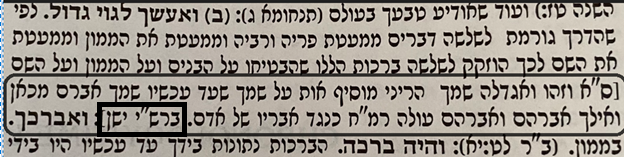
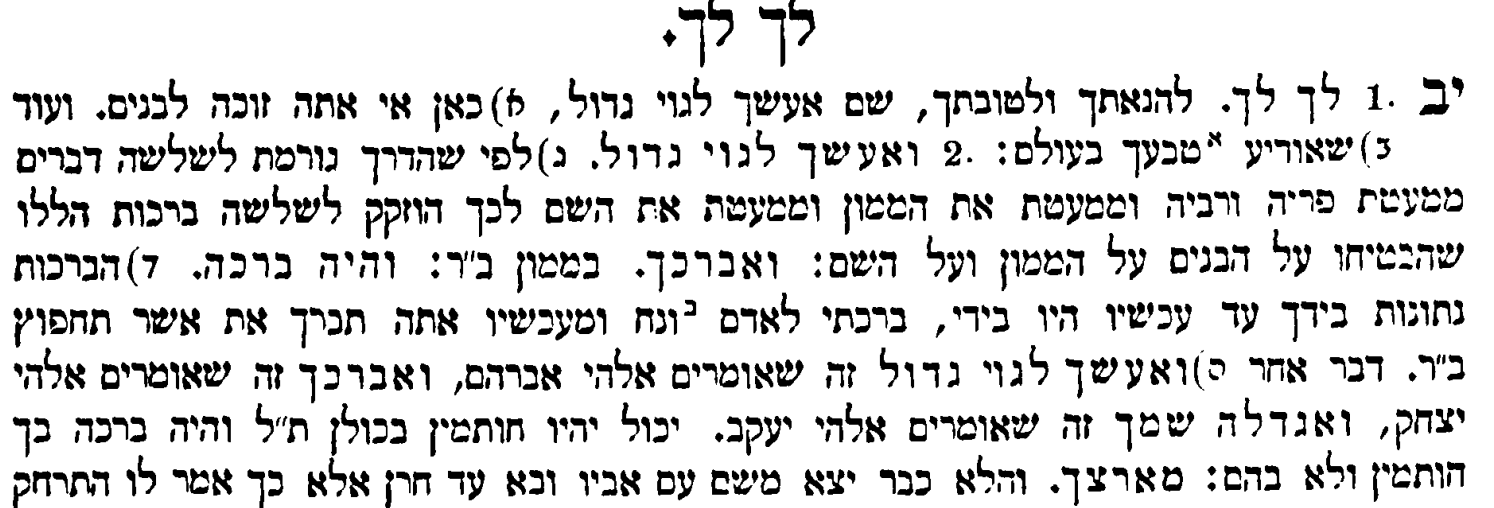
ואעשך לגוי גדול. לְפִי שֶׁהַדֶּרֶךְ גּוֹרֶמֶת לִשְׁלֹשָׁה דְבָרִים, מְמַעֶטֶת פְּרִיָּה וּרְבִיָּה וּמְמַעֶטֶת אֶת הַמָּמוֹן וּמְמַעֶטֶת אֶת הַשֵּׁם, לְכָךְ הֻזְקַק לִשְׁלֹשָׁה בְּרָכוֹת הַלָּלוּ, שֶׁהִבְטִיחוֹ עַל הַבָּנִים וְעַל הַמָּמוֹן וְעַל הַשֵּׁם:

Comment #2 is attributed to ס״א (ספרים אחרים) and found in what is termed a “רש״י ישן”

]ס״א (ספרים אחרים) ואגדלה שמך הריני מוסיף אות על שמך שעד עכשׁיו שמך אברם מכאן ואילך אברהם, ואברהם עולה רמ״ח כנגד איבריו של אדם. ברש״י ישן[

One gets the impression that this comment might be more authentic than those comments normally attributed to Rashi because it was found in a “רש״י ישן”.[1]

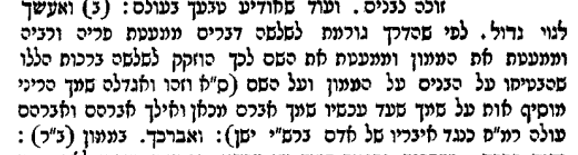
To understand why this comment is recorded as being from a “רש״י ישן’ one must go back to the first time it appeared as such. In this case it is an edition of Chumash and Rashi printed in Hanau 1611-1614.[2]

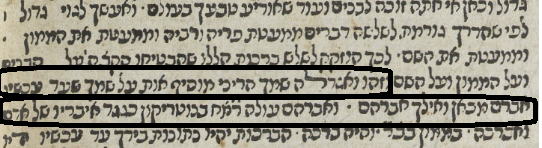
The most probable source for the text as recorded in the Hanau 1611-14 edition is an edition of Chumash and Rashi printed in Lisbon in 1491. As you can see, it is recorded almost word for word the same as the Hanau edition, without the words ס״א (ספרים אחרים) at the beginning of the comment and without the words ברש״י ישן at the end.[3]

It later appeared in an edition printed in Constantinople in 1522, also without the words ס״א (ספרים אחרים) at the beginning of the comment and without the words ברש״י ישן at the end.

And still yet in an edition in Constantinople of 1546

Why did the editors of the Hanau edition include this comment in parentheses and attribute it to a “רש״י ישן’?” Simply put because it had rarely appeared in print from 1491 until 1611 despite the fact that many other editions of Rashi had been printed. The editors most likely felt it was important to attribute the comment to something “new” they had found in old ספרים אחרים, what they called “רש״י ישן’.”[4]

Here are some examples of texts printed between 1491 and 1611 where the comment does not appear. (Some of these editions are of Rashi alone, and others have the text of the Chumash along with Rashi)

1.Napoli 1492 7. Sabionetta 1557

2. Bomberg Venice 1518 8. Juan Di Gara Venice 1567

3. Bomberg Venice 1524-26 9. Cristoforo Zanetti Venice 1567

4. Augsburg 1534 10. Cracow 1587

5. Giustiani Venice 1548 11. Juan di Gara Venice 1590[5]

6. Bomberg Venice 1548

After the comment was included in the Hanau edition of 1611-14, it was identified as a “רש״י ישן” from then on. Examples are:

Amsterdam 1635 (Manasseh ben Israel), Amsterdam 1680 (first edition of Siftai Chachamim), Berlin 1703, and Vienna (Netter) 1859[6] where it appears like this

As mentioned, it appeared this way all the way up to 1993 in the Artscroll Chumash. Though important to the Hanau editors, it did not make much sense 400 years later. It might have been more helpful to tell us the source in Chazal for the comment and that is precisely what Artscroll did.

In the Enhanced Edition of 2015 – (7th Impression 2020) it looked like this

The same was true of Rashi Sapirstein Student Edition 20th Impression -2019[7]

Gone was the information that the comment in parentheses came from a “רש״י ישן’”, to be replaced with the helpful information that the Midrashic source for the entire comment was Breishit Rabbah 39:11. The first part of this Rashi “לְפִי שֶׁהַדֶּרֶךְ גּוֹרֶמֶת לִשְׁלֹשָׁה דְבָרִים” clearly appears there as does the idea of הריני מוסיף אות על שמך. However, though it includes the Gematria of 248, it is not the total of the name אברהם, rather it is the total of the word אֲבָרֶכְכָה. It is clear that Breishit Rabah 39:11 is not the source for the idea that new spelling of the name אברהם now equals 248.

Here is the relevant text of Breishis Rabah 39:11

אָמַר רַבִּי חִיָּא לְפִי שֶׁהַדֶּרֶךְ מַגְרֶמֶת לִשְׁלשָׁה דְבָרִים, מְמַעֶטֶת פְּרִיָּה וּרְבִיָּה, וּמְמַעֶטֶת אֶת הַיְצִיאָה, וּמְמַעֶטֶת אֶת הַשֵּׁם. מְמַעֶטֶת פְּרִיָּה וּרְבִיָּה, וְאֶעֶשְׂךָ לְגוֹי גָדוֹל. מְמַעֶטֶת אֶת הַיְצִיאָה, וַאֲבָרֶכְךָ. מְמַעֶטֶת אֶת הַשֵּׁם, וַאֲגַדְלָה שְׁמֶךָ. וּלְפוּם דְּאָמְרִין אִינְשֵׁי מִבַּיִת לְבַיִת, חֲלוּק, מֵאֲתַר לַאֲתַר, נָפֶשׁ. בְּרַם אַתְּ לֹא נֶפֶשׁ אַתְּ חָסֵר וְלֹא מָמוֹן. רַבִּי בֶּרֶכְיָה בְּשֵׁם רַבִּי חֶלְבּוֹ אָמַר, שֶׁיָּצָא מוֹנִיטִין שֶׁלּוֹ בָּעוֹלָם. אַרְבָּעָה הֵם שֶׁיָּצָא לָהֶם מוֹנִיטִין בָּעוֹלָם, אַבְרָהָם, וְאֶעֶשְׂךָ לְגוֹי גָּדוֹל, יָצָא לוֹ מוֹנִיטִין, וּמַהוּ מוֹנִיטִין שֶׁלּוֹ, זָקֵן וּזְקֵנָה מִכָּאן בָּחוּר וּבְתוּלָה מִכָּאן. יְהוֹשֻׁעַ: וַיְהִי ה’ אֶת יְהוֹשֻׁעַ וַיְהִי שָׁמְעוֹ בְּכָל הָאָרֶץ (יהושע ו’:כ”ז), יָצָא לוֹ מוֹנִיטִין בָּעוֹלָם, מַהוּ, שׁוֹר מִכָּאן וּרְאֵם מִכָּאן, עַל שֵׁם: בְּכוֹר שׁוֹרוֹ הָדָר לוֹ וְקַרְנֵי רְאֵם קַרְנָיו (דברים ל”ג:י”ז). דָּוִד: וַיֵּצֵא שֵׁם דָּוִיד בְּכָל הָאֲרָצוֹת (דברי הימים א י”ד:י”ז), יָצָא לוֹ מוֹנִיטִין בָּעוֹלָם, וּמָה הָיָה מוֹנִיטִין שֶׁלּוֹ מַקֵּל וְתַרְמִיל מִכָּאן וּמִגְדָּל מִכָּאן, עַל שֵׁם: כְּמִגְדַּל דָּוִיד צַוָּארֵךְ (שיר השירים ד’:ד’). מָרְדְּכַי: כִּי גָּדוֹל מָרְדְּכַי בְּבֵית הַמֶּלֶךְ וְשָׁמְעוֹ הוֹלֵךְ בְּכָל הַמְדִינוֹת (אסתר ט’:ד’), יָצָא לוֹ מוֹנִיטִין, וּמַה מּוֹנִיטִין שֶׁלּוֹ שַׂק וָאֵפֶר מִכָּאן וַעֲטֶרֶת זָהָב מִכָּאן.

אָמַר רַבִּי יוּדָן קוֹבֵעַ אֲנִי לְךָ בְּרָכָה בִּשְׁמוֹנֶה עֶשְׂרֵה, אֲבָל אֵין אַתְּ יוֹדֵעַ אִם שֶׁלִּי קוֹדֶמֶת אִם שֶׁלְּךָ קוֹדֶמֶת, אָמַר רַבִּי אֲחוּיָה בְּשֵׁם רַבִּי זְעֵירָא שֶׁלְּךָ קוֹדֶמֶת לְשֶׁלִּי, בְּשָׁעָה שֶׁהוּא אוֹמֵר מָגֵן אַבְרָהָם אַחַר כָּךְ מְחַיֵּה הַמֵּתִים. רַבִּי אַבָּהוּ אָמַר הַבֶּט נָא שָׁמַיִם אֵין כְּתִיב כָּאן אֶלָּא הַשָּׁמַיְמָה (בראשית ט”ו:ה’), אָמַר הַקָּדוֹשׁ בָּרוּךְ הוּא בְּהֵ”א בָּרָאתִי אֶת הָעוֹלָם הֲרֵינִי מוֹסִיף הֵ”א עַל שִׁמְךָ וְאַתְּ פָּרֶה וְרָבֶה. וְאָמַר רַבִּי יוּדָן וְהָיוּ אוֹתוֹתֶיךָ מִנְיַן אֲבָרֶכְכָה, מָאתַיִם וְאַרְבָּעִים וּשְׁמוֹנֶה

The rest of the Ma’amar “ואברהם עולה רמ״ח כנגד איבריו של אדם” is found in Medrash Tanchuma 16[8] and in Nedarim 32b[9]. This is reflected in the Artscroll Rashi Elucidated Edition of 2023

T

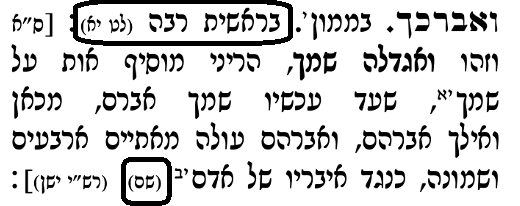
The section called שפתי ישינים in the back of this edition informs us that the first time these comments (הריני מוסיף אות על שמך) appeared in print was the Alkabetz Guadalajara, Spain edition of 1476, (דפוס 3) though in a slightly elongated form where the words “שיצא לך טבע מוניטין בעולם ד״א” preceded it.

Here is the Alkabetz text which includes this other idea from Breishit Rabah 39:1.

Here is Hijar, 1490 which generally copied from Alkabetz

It appeared in a shortened form in Lisbon 1491, and it is clear that this was the basis for the Hanau edition because Hanau deviates appreciably from Alkbatez. It was added to the text of Rashi in parentheses by Hanau, and it is recorded that way even today by many Chumashim.[10]

Were these comments included by Rashi in his original commentary?

The respected website Al HaTorah notes on this additional comment that it is found in one manuscript[11] and in the Alkabetz edition, but that it does not appear in any other manuscript that it checked[12]

אעשך לגוי גדול וגו’ – לפי שהדרך מגרמתד לשלשה דברים: ממעטת פריה ורביה, וממעטת את הממון, וממעטת את השם, הוזקק לשלש ברכות הללו: שהבטיחו על הבנים, ועל הממון, ועל השם.

בכ״י פריס 157 ובדפוס אלקבץ נוסף כאן: ״וזהו ואגדלה שמך שיצא לך טבע מוניטון בעולם. דבר אחר: ואגדלה שמך – הריני מוסיף אות על שמך, שעד עכשיו שמך אברם ומכאן ואילך אברהם, ועולה אברהם בנוטריקון רמ״ח כנגד איבריו של אדם שהן רמ״ח.״ הביאורים חסרים בכל כ״י האחרים שבדקנו

(“these explanations are missing in all the manuscripts we checked”)

I found this to be most likely correct in that I checked the following 13 manuscripts from the 13-14th centuries and did not find the extra comment in one of them.

Oxford CCC 165/Neubauer 2440(1194), Munich 5 (1233), Hamburg 13 (1265), London 26917 (Neubauer 168) (1272), Berlin 1221, Berlin Qu. 514 (1289), Vatican Urbanati 1 (1294), Nurenberg 5 (1297), Parma 3115 (1305)[13], Paris 155, Parma 2868, Cincinnati HUC 7, and Paris 156

Neither did I find the extra comment in these nine manuscripts copied over in the 15th century, close to the time of the printing of the Alkabetz edition of 1476

Oxford-Bodley Opp. 35 (Neubauer 188) (1408), Vatican ebr.47 (1413), Breslau 102 (Saraval 12) (1421), Parma 2979 (1432)[14], Parma 2989 (1454), Jerusalem Ms. Heb. 2009=38 (1462), Frankfurt Oct 24 (1472), Hamburg 103 (1474)[15], and Parma 2707 (1480)

I did find it in one other manuscript known as Casanatense 2924 (1460). It is described as a Sephardic manuscript and therefore aligns with the textual transmission available to Alkabetz[16]

As mentioned, it is absent from most printed editions of the late 1400’s and the 1500’s. Yosef Da’at does not include it. Avraham Berliner did not include it in either of his editions of Zechor L’Avraham (1867 and 1905)[17]. It is not included in Mikraot Gedolot HaKeter, and in Torat Chaim of Mosad Harav Kook (1993), nor in Rashi Hashalem (Mechon Arial 1987)[18], and it is not included in the text of Rashi in Al HaTorah. Clearly the comment existed in some manuscripts as evidenced by its appearance in the Alkabetz edition. But the weight of evidence is that it did not originate with Rashi.


Finally, I feel that Artscroll should be acknowledged for continuing to “upgrade” its presentation of the Rashi text as it has clearly done in this case.

  1.  

    It also doesn’t indicate the source in Chazal for this comment as is done so often in Rashi editions. A good example of this is the Oz VeHadar Chumash Rashi Hamevuar of 2015 which indicates that it is a “רש״י ישן” but also tells you that the source of the comment in Chazal is בראשית רבה ל״ט:י״א (by saying ״שם״ which refers back to the citation immediately preceding it, בראשית רבה ל״ט:י״א)

  2.  

    The comment is word for word the same as the Stone Chumash of 1993 except for the fact that it has the word ״וזהו״ before the words “ואגדלה שמך”

  3.  

    The three very similar “versions” of this added comment are then as follows

    Artscroll Stone Chumash 1993

    ואגדלה שמך הריני מוסיף אות על שמך שעד עכשׁיו שמך אברם מכאן ואילך אברהם ואברהם עולה רמ״ח כנגד איבריו של אדם

    Hanau 1611-14 -only adds the word “וזהו”

    וזהו ואגדלה שמך הריני מוסיף אות על שמך שעד עכשׁיו שמך אברם מכאן ואילך אברהם ואברהם עולה רמ״ח כנגד איבריו של אדם

    Lisbon 1491 – leaves out the word שמך and adds the word בנוטריקון

    וזהו ואגדלה שמך הריני מוסיף אות על שמך שעד עכשׁיו אברם מכאן ואילך אברהם ואברהם עולה רמ״ח בנוטריקון כנגד איבריו של אדם

  4.  

    I do not think they had access to manuscripts, as they do not mention it at all in their description of the book

  5.  

    Here are two examples where the comment beginning with “ואגדלה שמך הריני מוסיף” does not appear

    Rashi Sabionetta 1557

    Venice Juan Di Gara 1567

  6.  

    This edition was quite influential in that it served as the model for many subsequent printings of Mikraot Gedolot

  7.  

    This source of Bereishit Rabbah 39:11 was also noted in the Oz Vehadar Mikraot Gedolot of 2012, although the Rashi Yashan designation remained.

  8.  

    Tanchuma Lech Lecha 16

    אָמַר לוֹ הַקָּדוֹשׁ בָּרוּךְ הוּא: מָה אַתָּה סָבוּר שֶׁאַתָּה תָמִים שָׁלֵם, אַתָּה חָסֵר מֵחֲמִשָּׁה אֵבָרִים. אָמַר לוֹ הַקָּדוֹשׁ בָּרוּךְ הוּא: עַד שֶׁלֹּא תָמוּל, הָיָה שִׁמְךָ אַבְרָם, א’ אֶחָד, ב’ שְׁנַיִם, ר’ מָאתַיִם, מ’ אַרְבָּעִים, הֲרֵי מָאתַיִם וְאַרְבָּעִים וּשְׁלֹשָׁה. וּמִנְיַן אֵבָרִים שֶׁבָּאָדָם מָאתַיִם וְאַרְבָּעִים וּשְׁמוֹנָה, מוּל וֶהְיֵה תָמִים. כְּשֶׁמָּל, אָמַר לוֹ הַקָּדוֹשׁ בָּרוּךְ הוּא: לֹא יִקָּרֵא עוֹד שִׁמְךָ אַבְרָם וְהָיָה שִׁמְךָ אַבְרָהָם. הוֹסִיף לוֹ ה’, חֲמִשָּׁה, מִנְיַן רַמַ״‎ח אֵבָרִים. לְפִיכָךְ וֶהְיֵה תָמִים.

  9. Nedarim 32b

    וְאָמַר רָמֵי בַּר אַבָּא: כְּתִיב ״אַבְרָם״, וּכְתִיב ״אַבְרָהָם״. בַּתְּחִלָּה הִמְלִיכוֹ הַקָּדוֹשׁ בָּרוּךְ הוּא עַל מָאתַיִם וְאַרְבָּעִים וּשְׁלֹשָׁה אֵבָרִים, וּלְבַסּוֹף הִמְלִיכוֹ עַל מָאתַיִם וְאַרְבָּעִים וּשְׁמוֹנֶה אֵבָרִים, אֵלּוּ הֵן: שְׁתֵּי עֵינַיִם, וּשְׁתֵּי אׇזְנַיִם, וְרֹאשׁ הַגְּוִיָּיה.

  10.  

    This is the comment of Siftai Yeshainim

  11.  

    This is how Paris 157 (13th-14th century) appears. Both extra comments of Alkabetz are included.

  12.  

    Leipzig 1 is considered to be one of the most important Rashi manuscripts and the comment is absent from it

  13.  

    Parma 3115 is known as a Sephardic Mahadura and much of the Alkabetz edition came from there or a similar manuscript, but it is not there

  14.  

    This is a particularly beautiful manuscript

  15.  

    This manuscript has this interesting addition to the text of Rashi

    לך לך בגימטריא מאה שנה, רמז לו לק׳ שנה יהיה לך בן

    The source seems to be Medrash Tanchuma, Parshat לֶךְ לְךָ 3

    לֶךְ לְךָ – מַהוּ לֶךְ לְךָ, ל’ שְׁלֹשִים, כ’ עֶשְׂרִים, הֲרֵי עוֹלֶה בְּגִימַטְרִיָּא מֵאָה. רָמַז לוֹ, כְּשֶׁתִּהְיֶה בֶּן מֵאָה, תּוֹלִיד בֵּן כָּשֵׁר, הֲדָא הוּא דִכְתִיב, וְאַבְרָהָם בֶּן מְאַת שָׁנָה וְגוֹ’

    It is not in any other manuscript which I accessed

  16.  

    NLI Listing

    Casanatense Library Rome Italy Ms. 2921

  17.  

    Zechor L’Avraham, Avraham Berliner (Berlin) 1867

  18.  

    Rashi Hashalem notes below the line the Girsa of the Alkabetz edition and the sources for it.


Eli Genauer: Breishit 9:18 – Noach’s Family or Noach’s Drunkenness?

Breishit 9:18 – Noach’s Family or Noach’s Drunkenness?

Eli Genauer


וַיִּֽהְי֣וּ בְנֵי־נֹ֗חַ הַיֹּֽצְאִים֙ מִן־הַתֵּבָ֔ה שֵׁ֖ם וְחָ֣ם וָיָ֑פֶת וְחָ֕ם ה֖וּא אֲבִ֥י כְנָֽעַן׃

“The sons of Noach who came out of the ark were Shem, Cham, and Yefet; and Cham was the father of Canaan.”

Rashi:

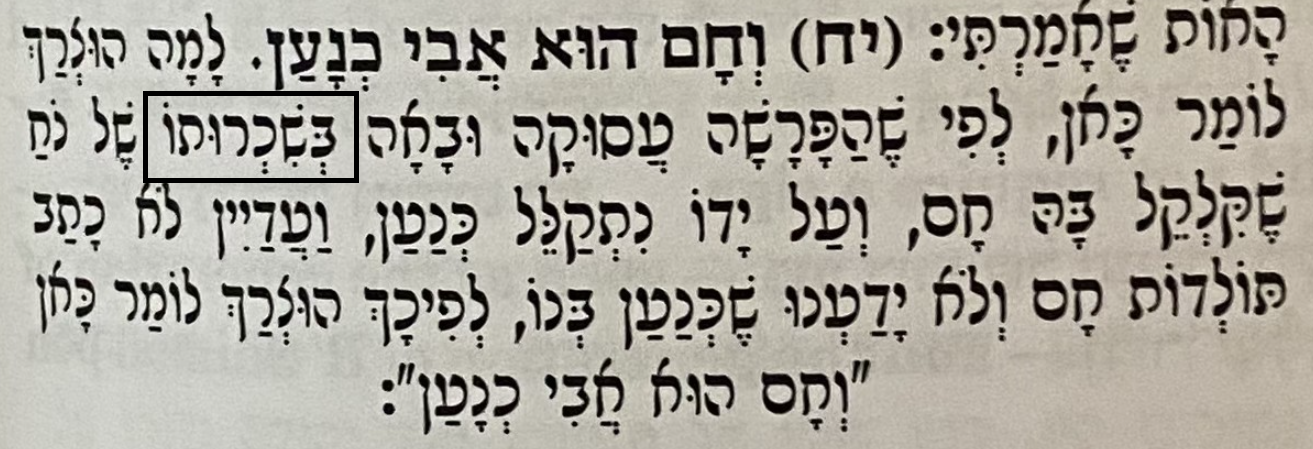
וחם הוא אבי כנען. לָמָּה הֻצְרַךְ לוֹמַר כָּאן? לְפִי שֶׁהַפָּרָשָׁה עֲסוּקָה וּבָאָה בְּשִׁכְרוּתוֹ שֶׁל נֹחַ שֶׁקִּלְקֵל בָּה חָם וְעַל יָדוֹ נִתְקַלֵּל כְּנַעַן, וַעֲדַיִן לֹא כָתַב תּוֹלְדוֹת חָם, וְלֹא יָדַעְנוּ שֶׁכְּנַעַן בְּנוֹ – לְפִיכָךְ הֻצְרַךְ לוֹמַר כָּאן וְחָם הוּא אֲבִי כְנָעַן:

AND CHAM IS THE FATHER OF CANAAN – Why is it necessary to mention this here? Because this section goes on to deal with the account of Noah’s drunkenness when Cham sinned, and through him, Canaan was cursed. Now, as the generations of Cham have not yet been mentioned, we therefore would not know that Canaan was his son. Therefore, it was necessary to state here that “Cham is the father of Canaan”.

This is how it appears in the Artscroll Elucidated Rashi[1]:

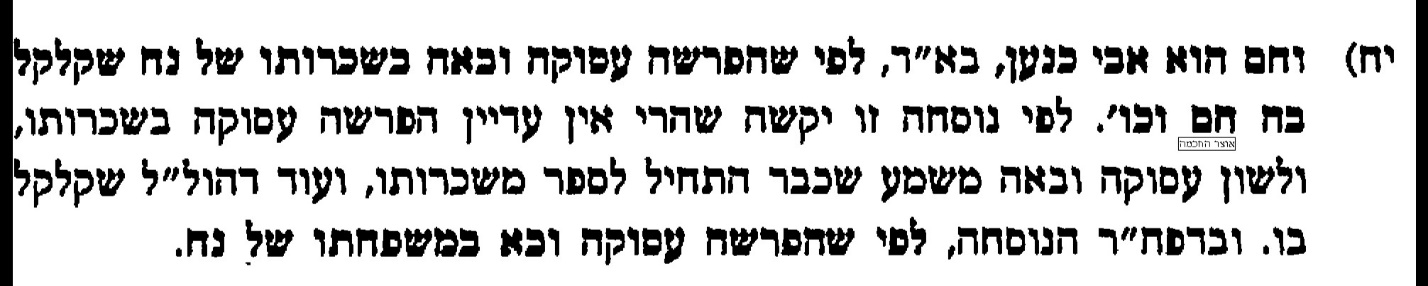
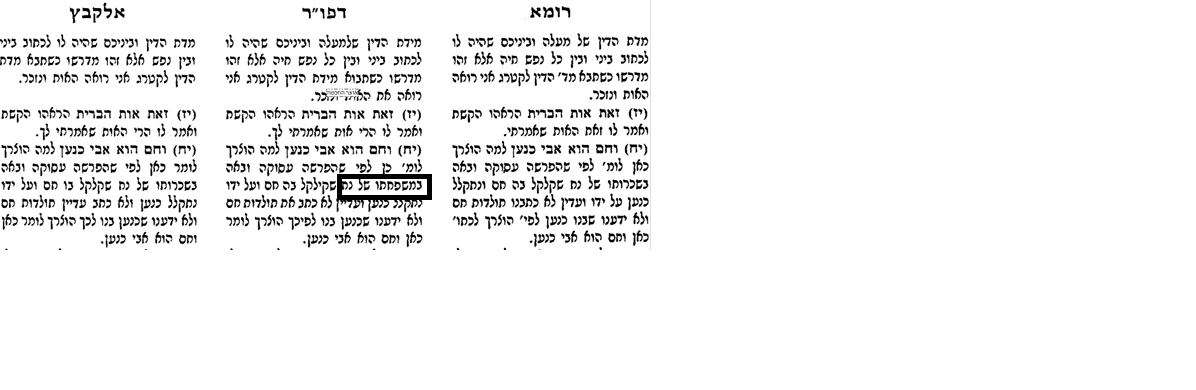
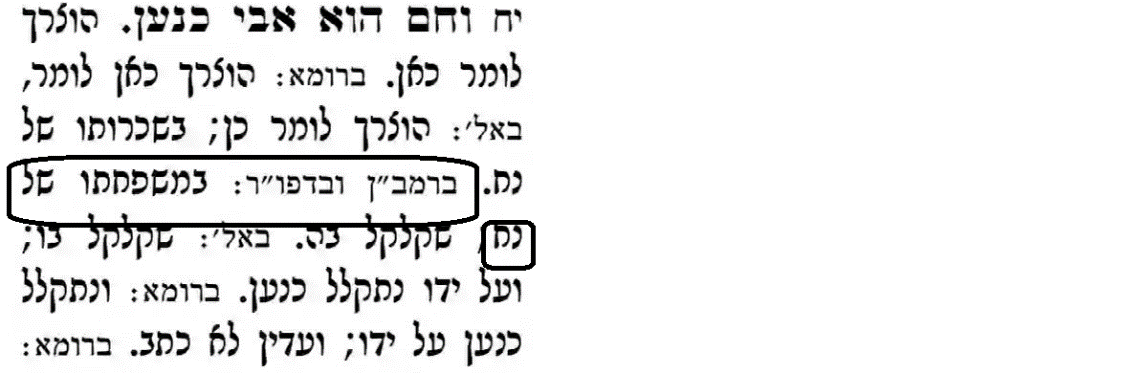
Yet the author of the Sefer Yosef Da’at (Prague 1609) writes that he had a Rashi manuscript and other Sefarim which substituted the word “במשפחתו “for the word” בְּשִׁכְרוּתוֹ”. He also writes that it was the Nusach of Ramban ( when quoting this Rashi).

בדבור המתחיל וחם הוא אבי כו׳, נכתב בצדו על מלת ״בשכרותו״ שבפנינו, וברש״י קלף בס״א (בספרים אחרים) במשפחתו של נח. והיא נוסחאות הרמב״ן ז״ל.

The text of Rashi would then read:

וחם הוא אבי כנען. לָמָּה הֻצְרַךְ לוֹמַר כָּאן? לְפִי שֶׁהַפָּרָשָׁה עֲסוּקָה וּבָאָה במשפחתו שֶׁל נֹחַ שֶׁקִּלְקֵל בָּה חָם וְעַל יָדוֹ נִתְקַלֵּל כְּנַעַן…..

Why is it necessary to mention this here? Because this section goes on to deal with the account of Noah’s family when Cham sinned, and through him, Canaan was cursed…

As mentioned by Yosef Da’at, one of the Eidei Nusach for having the word במשפחתו is Ramban, who quotes Rashi’s comment. The website Al Hatorah notes, that this Nusach appears in the following Ramban manuscripts: Parma 3255, Munich 138, Fulda 2, Paris 222, and Paris 223. It also appears that way in the first printed edition of Ramban, that of Rome (printed before 1490).

This is the Ramban manuscript known as Munich 138 where Ramban quotes Rashi:

Here is the text of Ramban in the Rome edition where he writes(פ׳(רוש) ר״ש (למה:

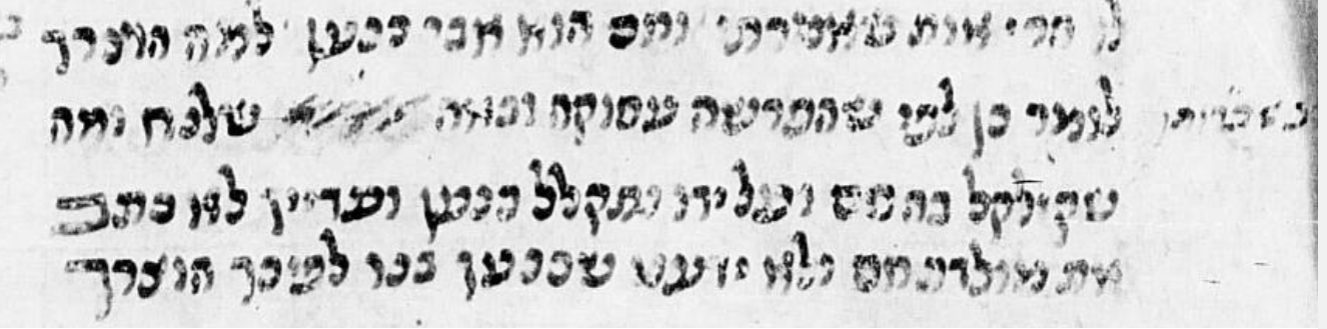
Al Hatorah also notes that the word במשפחתו, appears in the text of a Rashi manuscript, Parma 3115, (which it seems was close to the text with which the Ramban worked) before it was “corrected”.

וכן בכ”י פרמא 3115 של פירוש רש”י (שהוא כנראה קרוב לנוסח שעמד בפני רמב”ן) לפני שתוקן בין השיטין

Ktav Yad Parma 3115, for Rashi:

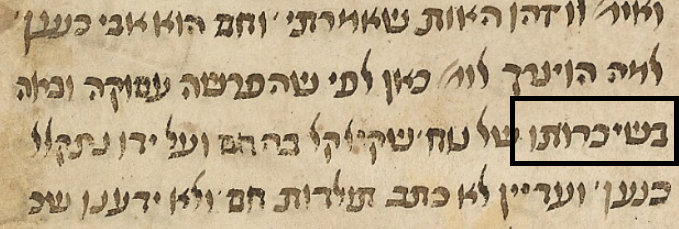
Al Hatorah then notes that most Rashi manuscripts have בְּשִׁכְרוּתוֹ

בכ”י רומא 44, פרמא 2978, דפוס ליסבון: “בשכרותו”, וכן ברוב כ”י של רש”י.

Parma 2978 is the Ramban on Noach which has “בשכרותו”:

For Rashi on this Pasuk ,Al HaTorah records that most Rashi manuscripts have בְּשִׁכְרוּתוֹ, but Regio di Calabria, as quoted by Ramban and the Rashi manuscript Parma 3115, have it as במשפחתו.

וחם הוא אבי כנען – למה הוצרך לומר כאן. לפי שהפרשה עסוקה בשכרותו של נח שקלקל בה חם, ועל ידו נתקלל כנען, ועדיין לא כתב תולדות חם, ולא ידענו שכנען בנו. לפיכך הוצרך לומר כאן: וחם הוא אבי כנען.

ב. כן בכ״י אוקספורד 165, מינכן 5, אוקספורד 34, לונדון 26917, ברלין 1221, דפוס רומא.

דפוס ריגייו: ״במשפחתו״, וכן מופיע בפירוש רמב״ן כאן ברוב עדי הנוסח, בכ״י פרמא 3115

. אפשר שכך היה הנוסח גם בכ״י המבורג 13.

In Zechor L’Avraham (Berlin 1867 and Frankfurt am Main 1905), there is no indication of alternative Nusach. Avraham Berliner does not mention the alternative Nusach of Yosef Daat, the Dfus Rishon or the Girsa of Ramban:

In Yosef Hallel (Brooklyn 1987), Rabbi Brachfeld notes that the Dfus Rishon of Regio Callabrio (1475) has the word במשפּחתו. He does not note that it is the Lashon of the Ramban but seems to think that במשפחתו is a better reading because of his questions on the use of בְּשִׁכְרוּתוֹ:

In Rashi HaShalem Mechon Ariel ( Jerusalem 1987), there is no indication of another Girsa but in the back of the Sefer, it does have it as part of Defusim Rishonim:

Defusim Rishonim:

Guadalajara (1476) Reggio di Calabrio (1475) Rome (1470)

It is interesting to note that the Alkbetz edition is what is known as the Mahadura Sefardit ( according to Professor Yeshayahu Sonne and Dr Yitzchak Penkower), and yet it has בשכרותו. The same goes with Hijar(1490), which generally copies Alkabetz.

Oz Vehadar Rashi HaMevuar 2008, has במשפחתו in the back in Chilufai Girsaot, noting that it is the Girsa of Ramban and the Dfus Rishon:


Rabbi Isaac Chavel in his edition of Rashi ( Mosad HaRav Kook – 2007 edition) notes that Defus Rishon of Rashi (Regio di Calabria) has ,במשפחתו and this Lashon also appears in the text of Ramban as he quotes Rashi. He also says about the use of the word “במשפחתו” that is more correct (“וכן נראה”) based on the Lashon of the Midrash Agadah which places the emphasis on familial relationships of Noach:

What do the manuscripts indicate:

Oxford CCC 165 (Neubauer 2440) – 12th century

Hamburg 13 (1265), has the word in question rubbed out and changed to בְּשִׁכְרוּתו on the side. It might have originally said במשפחתו:

Oxford-Bodley Opp. 34 (Neubauer 186):

London 26917 (Neubauer 168) (1272):

Berlin 1221:

Vatican Urbinati 1 (1294):

Nuernberg 5 (1297):

How did the text of Rashi in printed editions evolve over time?

The Dfus Rishon of Regio di Calabrio recorded it as במשפחתו. As mentioned, Yosef Da’at noted במשפחתו as a variant reading in a Rashi Klaf and in ,ספרים אחרים and bolstered it with it being the Nusach of Ramban:

בדבור המתחיל וחם הוא אבי כו׳, נכתב בצדו על מלת ״בשכרותו״ שבפנינו, וברש״י קלף בס״א (בספרים אחרים) במשפחתו של נח. והיא נוסחאות הרמב״ן ז״ל.

Hanau 1611-1614, regularly included the Girsaot of Yosef Da’at so we would have expected it to have had בְּשִׁכְרוּתוֹ and then in parentheses have Sefarim Achairim as במשפחתו. But is doesn’t, and that sealed the fate of that Nusach in terms of it becoming a mainstream Girsa of Sefarim Achairim:

The Netziv in Shemot 40:23 cites a comment of the Ramban in which he quotes Rashi and says that our text of Rashi is different. He proposes that there were two Mahdurot of Rashi, of which Ramban had the first Mahadura and we have the second one. In that second Mahadura, Rashi reversed himself from what he said in the first Mahadura. It is possible that this occurred here- in the first Mahadura, Rashi wrote במשפחתו and that is the Mahadura which Ramban had. Later on, Rashi changed it to בְּשִׁכְרוּתו and that has become the standard Girsa:
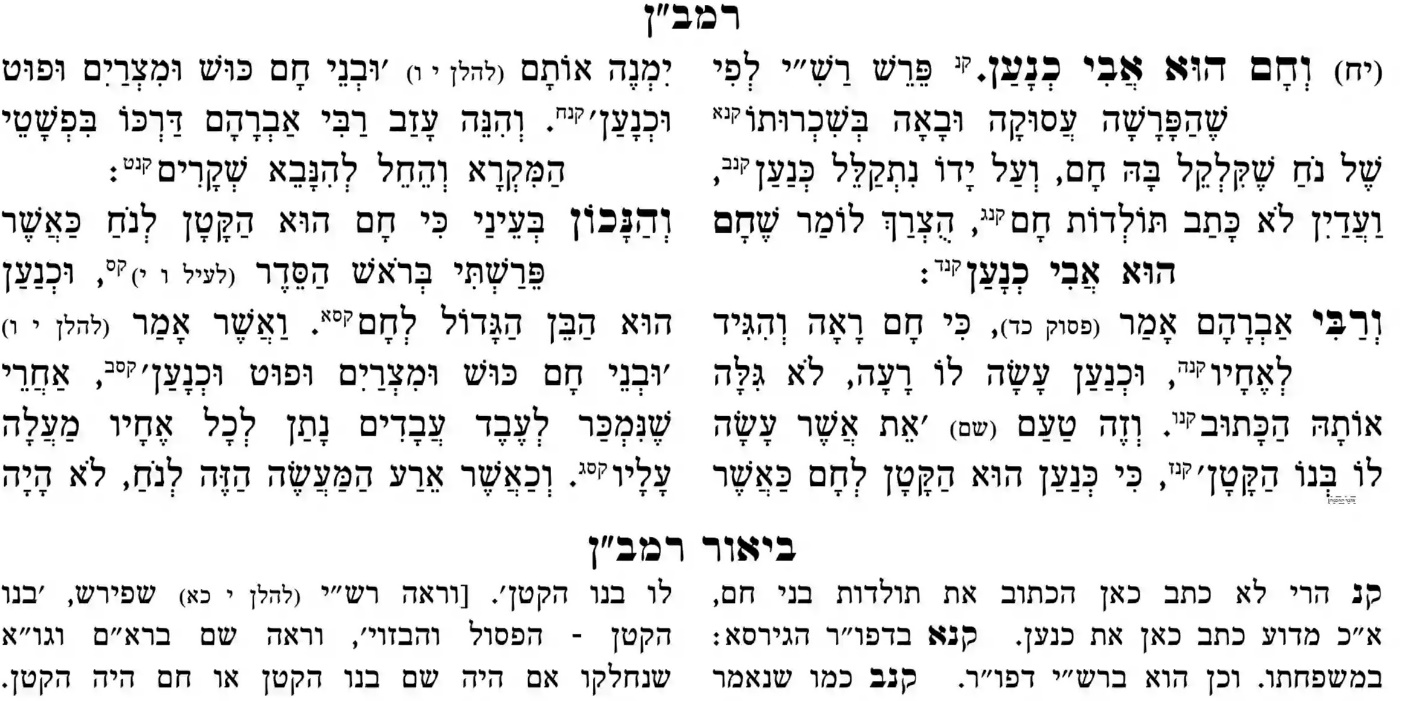
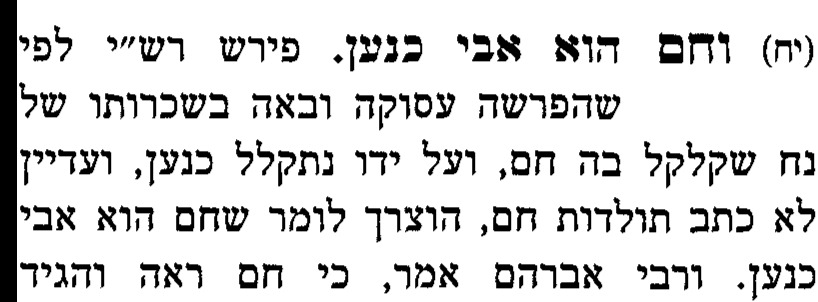
Conclusion:

There is a lot of ammunition for the Girsa being במשפחתו:

  1. It is in Dfus Rishon, (indicating either inclusion in a manuscript or taken from Ramban)
  2. It is the Lashon of the Ramban, (this is the main argument)
  3. It has logic behind it (Rabbi Chavel’s and Yosef Hallel’s comments)
  4. It is attested to by Yosef Da’at as being in a manuscript
  5. Parma 3115 originally had “במשפחתו”
  6. Hamburg 13 was altered and could have said במשפחתו

But it did not survive as an alternative Girsa of ספרים אחרים today mainly because the influential edition of Hanau (1611-1614) did not include it.

Sidenote:

Many editions of the Ramban today still attribute the word בְּשִׁכְרוּתוֹ to Rashi even though it is clear that the original Ramban had במשפחתו. This was most likely done to make it conform with the accepted Nusach of Rashi.

Here is Oz Vehadar Jerusalem on Ramban 2015 which has בְּשִׁכְרוּתוֹ but says it is במשפחתו in Defus Rishon:

Here is Peirush HaRamban with Peirush Menachem Tziyon printed in 2019 which also has בְּשִׁכְרוּתוֹ:

  1. There is no comment on this Rashi in the Siftei Yeshainim section


An Example of Three “Mahadurot” of Rashi

Rashi on Shemot 28:6 and 40:38
אִם בָּאתִי לְפָרֵשׁ” or “לְפִי שֶפֵרַשְתִי
An Example of Three “Mahadurot” of Rashi

Eli Genauer

Shemot 40:38 Shemot 28:6

One of the most informative and endearing comments in Rashi can be found in Parshat Tetzaveh. In trying to explain to us the various בגדי כהונה, Rashi makes a preemptive move and describes all of them together so that his readers will be able to make more sense of the total package. He introduces this long explanation with the following words:

אִם בָּאתִי לְפָרֵשׁ מַעֲשֵׂה הָאֵפוֹד וְהַחֹשֶׁן עַל סֵדֶר הַמִּקְרָאוֹת, הֲרֵי פֵּרוּשָׁן פְּרָקִים, וְיִשְׁגֶה הַקּוֹרֵא בְּצֵרוּפָן, לְכָךְ אֲנִי כוֹתֵבמַעֲשֵׂיהֶם כְּמוֹת שֶׁהוּא, לְמַעַן יָרוּץ הַקּוֹרֵא בוֹ, וְאַחַר כָּךְ אֲפָרֵשׁ עַל סֵדֶר הַמִּקְרָאוֹת

If I would come to explain the manufacture of the Ephod and the Choshen in the order of the Pesukim, their explanation would be broken into fragments and the reader would make a mistake in combining them. Therefore, I am writing first of their manufacture as it is, so the reader will be able to run through it quickly and afterwards, I will explain everything according to the order of the Pesukim.

:אִם בָּאתִי לְפָרֵשׁ Rashi is clearly writing this before he explains the Pesukim in order, as he says

.In a standard Chumash it looks like this (Chumash Ateret Rashi available on hebrewbooks.org)

However, for many hundreds of years, whether in manuscript form or printed book, this important explanation of Rashi was situated in different places in the text. Instead of being in Parshas Tetzaveh as above, sometimes it was placed only at the end of Sefer Shemot (with a bit of a difference in the Nusach). Other times it was located both in Parshat Tetzaveh and also at the end of Parshat Pekudei. And finally, sometimes it did not appear at all

Here are various examples of printed books which treat this subject differently

 The first printed edition of Rashi was Rome 1470 (It is undated but thought to be 1470) has Rashi’s explanation in Tetzaveh, Shemot 28:6

:and also, at the end of Pekudei, Shemot 40:38


:The introductory comment of Rashi here indicates that it was placed at the end of Pekudei with full knowledge that all the Pesukim had already been explained according to their order

לפי שפרשתי מעשה האפוד והחושן פרקים פרקים

.Since I have already explained the construction of the Choshen and Ephod broken into fragments

This is a Chumash printed in Lisbon in 1491. It too has Rashi’s summary of the בגדי כהונה in Tetzaveh and at the end of Shemot.

This is in Parshat Tetzaveh, Shemot 28:6

This is at the end of Pekudei, Shemot 40:38. As you can see, it is displayed prominently on the page

…Bologna 1482 has it in Tetzaveh

…..but not at the end of Pekudei

Bomberg’s Venice edition of 1518, Sabionetta’s edition of 1557, and Amsterdam’s edition of 1680 (First edition of Siftei Chachamim) have it in both places.

Beginning in the 1700’s, the comment at the end of Pekudei started to disappear. I found this to be true in Amsterdam, Attias 1700, and Amsterdam, Proops 1755. In the 1800’s, the two most copied editions of Mikraot Gedolot, Vienna Netter 1859 and Warsaw 1860, had the comment only in Tetzaveh and that is the way it is presented today.

How did Rashi himself write this comment? A look at some early manuscripts gives us some insight into this question.

The manuscript known as Leipzig 1 is considered to be one of the most reliable Rashi manuscripts. It was copied over by R’ Makhir in the early 14th century who testified that he copied it from a manuscript written by Rav Shemayah, who was Rashi’s secretary

In this manuscript, Rashi’s comment of “אִם בָּאתִי לְפָרֵשׁ” appears in Shemot 28:6 but it has a notation on the side.

The website Al HaTorah.com transcribes the comment which Rabbeinu Makhir wrote in the margin. He states that Rav Shemayah (Rashi’s secretary) did not write down Rashi’s comment on the order of the Ephod until the end of Sefer Shemot, after Parshat Pekudei.

בגיליון כ״י לייפציג 1 כתוב כאן: ״בפירוש שכתב רבנו שמע׳ לא כתב סדר איפוד עד סוף הספר אחר פקודי וכאן דילג עד פי׳ זהב תכלת וגו׳ ואינו ממש מפורש כזה״

How was it recorded in other manuscripts? It was recorded four different ways:

1. It did not appear at all
2. It appeared only at the end of Parshat Pekudei
3. It appeared only in Parshat Tetzaveh
4. It appeared in both places

There are some manuscripts which do not contain the comment in either section (version #1)

This is Hamburg 37(Steinschneider/Hamburg 32). It is missing in Tetzaveh and at the end of Pekudei.

Tetzaveh 28:6

Pekudei 40:38

There are some manuscripts which only have the comment after Parshat Pekudei. (Version #2)

As shown above, Rav Shemayah’s manuscript only had it at the end of Pekudei[2]

There is also Oxford Oppenheim 34 which does not have the comment in Tetzaveh….

and only has it at the end of Pekudei

There are some manuscripts which have it only in Tetzaveh (version #3)

Parma 3081 has it in Tetzaveh…

but not at the end of Shemot…

Paris 157 has it in Tetzaveh

And also at the end of Pekudei:

In my scorecard below, I did not weigh which manuscripts carried more weight than others. It is clear though that since Leipzig 1 was copied over from a manuscript written by Rav Shemayah, and as such is an עד נאמן, gives credence to the fact that a tradition existed which had Rashi’s comment only at the end of Sefer Shemot.

In total, I looked at 65 manuscripts and incunabula. The scorecard was as follows:

Missing completely – Version #1 (Total 15)

Sassoon Ms.369
Hamburg 37 (Steinschneider)/Hamburg 3
Cincinnati 1 (HUC JCF 1) – There is a picture of the Choshen at the end of Shemot
Parma 3204
Berlin 1221
Parma 2868
Berlin 1222
Vatican ebr.608
Berlin 121
British Library Harley 5709 (Margoliouth 170)
British Library Harley 5708 (Margoliouth 171)
Vienna Cod. Hebr. 3 (Schwarz 24)
Vatican ebr. 480
Paris 55
Breslau 11 ( Saraval 5)

[3]After Pekudei only – Version #2 (Total 7)

Munich
Leiden 1
Parma 2708
Oxford Oppenheim 34
Rav Shemayah’s own copy
British Library Harley 1861 (Margoliouth 169)
Paris 48

In Tetzaveh only– Version #3 (Total 22)

Oxford 165
Hamburg 13
Weimar 651
Florence Plut. III. 03
Vatican ebr. 46
Paris 155
Vatican ebr.4
Parma 3081
Vatican ebr. 55
Parma 3256
Vatican ebr. 33
Vatican Urbinati 8
Paris 156
Vatican ebr. 18
Rostock 31
Vienna Cod. Hebr. 220 (Schwarz 23)
Harley MS 5655
Frankfurt 152
Paris 158
Bologna 1482
Soncino 1487
Ixar 1490

In both places – Version #4 (21 total)

London 26917
Berlin Qu 514
Vatican Urbanati 1
Parma 2989
Paris 157
Parma 3115
Vatican ebr. 94 (Different handwriting for Pekudei)
Paris 159
London 19653
Parma 2979
Frankfurt 19
Breslau 102 (Saraval 12)
Parma 2707
Casanatense 2921
Jerusalem Ms. Heb. 2009-38
Rome 1470
Reggio di Calabria 1475
Alkabetz/Guadalajara 1476
Zamora 1487/92
Lisbon 1491
Napoli 1492

Conclusion:

One gets the impression that there were different “traditions” in how this Rashi was recorded. Professor Yosef Ofer writes that initially the passage of “אִם בָּאתִי לְפָרֵשׁ” was not included in Rashi’s commentary.[4] Rashi then decided to include it as a review at the end of Pekudai. Finally, he placed it in Parshat Tetzaveh with some changes in the wording.[5][6] The manuscripts which had it in both places most likely were copied from multiple manuscripts.

[1] Please see https://alhatorah.org/Commentators:Rashi_Leipzig_1/1/en
[2] In my scorecard below, I did not weigh which manuscripts carried more weight than others. It is clear though that since Leipzig 1 was copied over from a manuscript written by Rav Shemayah, and as such is an עד נאמן, gives credence to the fact that a tradition existed which had Rashi’s comment only at the end of Sefer Shemot.
[3] See footnote 2.
[4] The website Al HaTorah directs you to an article written by professor Yosef Ofer in a publication called Megadim ועיינו בהרחבה במאמרו של יעופר, “שינויים וחזרות של רשי בפירושו לתורה“, מגדים כ‘ (תשנג): 83–86.
[5] Professor Ofer writes:


[6]  The Artscroll Elucidated Rashi on Chumash, Shemos, Volume II, Sifsei Yesheinim p. 558, (Rahway, NJ 2025) reaches a similar conclusion.


The Origin and Evolution of a “Rashi Yashan”- In Praise of Artscroll Rashi Breishit 12:2 – “ואעשך לגוי גדול”

The Origin and Evolution of a “Rashi Yashan”- In Praise of Artscroll
Rashi Breishit 12:2 – “ואעשך לגוי גדול

Eli Genauer

The term “רש״י ישן in printed editions often appears after a comment recorded in parentheses. An example of this is Rashi in Breishit 12:2. Here is how it looks in the first edition of the Artscroll Stone Chumash printed in November 1993:

Rashi’s comments are recorded as follows

Comment #1

ואעשך לגוי גדול. לְפִי שֶׁהַדֶּרֶךְ גּוֹרֶמֶת לִשְׁלֹשָׁה דְבָרִים, מְמַעֶטֶת פְּרִיָּה וּרְבִיָּה וּמְמַעֶטֶת אֶת הַמָּמוֹן וּמְמַעֶטֶת אֶת הַשֵּׁם, לְכָךְ הֻזְקַק לִשְׁלֹשָׁה בְּרָכוֹת הַלָּלוּ, שֶׁהִבְטִיחוֹ עַל הַבָּנִים וְעַל הַמָּמוֹן וְעַל הַשֵּׁם:

Comment #2 (attributed to ספרים אחרים and found in a “רש״י ישן)

ס״א (ספרים אחרים) ואגדלה שמך הריני מוסיף אות על שמך שעד עכשׁיו שמך אברם מכאן ואילך אברהם ואברהם עולה רמ״ח כנגד איבריו של אדם. ברש״י ישן

One wonders a bit at the use of the terminology that something is found “ברש״י ישן” because it would seem that nowadays, all comments of Rashi are “old”. One also gets the impression that this comment might be more authentic than those comments normally attributed to Rashi because it was found in a רש״י ישן. [I]

To understand why this comment is recorded as being from a “רש״י ישן’ one must go back to the first time it appeared as such. In this case it is an edition of Chumash and Rashi printed in Hanau 1611-1614.[2]

The most probable source for the text as recorded in the Hanau 1611-14 edition is an edition of Chumash and Rashi printed in Lisbon in 1492. As you can see, it is recorded almost word for word the same as the Hanau edition.[3]

It also appeared in an edition printed in Constantinople in 1522.

Why did the editors of the Hanau edition include this comment in parentheses and attribute it to a “רש״י ישן’?” Simply put because it had rarely appeared in print from 1491 until 1611 despite the fact that many other editions of Rashi had been printed. The editors most likely felt it was important to attribute the comment to something “new” they had found, a “רש״י ישן’.”

Here are some examples of texts printed between 1491 and 1611 where the comment does not appear. (Some of these editions are of Rashi alone, and others have the text of the Chumash along with Rashi)

1.Napoli 1492, 2. Bomberg Venice 1518, 3. Bomberg Venice 1522, 4. Rashi Bomberg Venice 1522, 5. Augsburg 1534, 6. Bomberg Venice 1538, 7. Giustiani Venice 1548, 8. Bomberg Venice 1548, 9. Sabionetta 1557, 10. Juan Di Gara Venice 1567,11. Cristoforo Zanetti Venice 1567, 12. Cracow 1587, and 13. Juan di Gara Venice 1590.[4]

After the comment was included in the Hanau edition of 1611-14, it was identified as a “רש״י ישן” from then on. Examples are:

Amsterdam 1635, Manasseh ben Israel, Amsterdam 1680, first edition of Siftai Chachamim, Berlin 1703,and Vienna (Netter) 1859[5] where it appears like this

As mentioned, it appeared this way all the way up to 1993 in the Artscroll Chumash. Though important to the Hanau editors, it did not make much sense 400 years later. It might have been more helpful to tell us the source in Chazal for the comment and that is precisely what Artscroll did.

In the Enhanced Edition of 2015 – (7th Impression 2020) it looked like this

The same was true of Rashi Sapirstein Student Edition 20th Impression -2019

Gone was the information that the comment in parentheses came from a “רש״י ישן’, to be replaced with the information that the Midrashic source for this comment was Breishit Rabbah 39:11. The first part of this Rashi “לְפִי שֶׁהַדֶּרֶךְ גּוֹרֶמֶת לִשְׁלֹשָׁה דְבָרִיםclearly appears there.

אָמַר רַבִּי חִיָּא לְפִי שֶׁהַדֶּרֶךְ מַגְרֶמֶת לִשְׁלשָׁה דְבָרִים, מְמַעֶטֶת פְּרִיָּה וּרְבִיָּה, וּמְמַעֶטֶת אֶת הַיְצִיאָה, וּמְמַעֶטֶת אֶת הַשֵּׁם. מְמַעֶטֶת פְּרִיָּה וּרְבִיָּה, וְאֶעֶשְׂךָ לְגוֹי גָדוֹל. מְמַעֶטֶת אֶת הַיְצִיאָה, וַאֲבָרֶכְךָ. מְמַעֶטֶת אֶת הַשֵּׁם, וַאֲגַדְלָה שְׁמֶךָ.

But there was a problem, and that is that only part of the comment in parentheses appeared in Breishit Rabbah 39:11, that of Hashem adding a letter “הריני מוסיף אות על שמךto the name of Avram. [6]

The rest of the Ma’amar “ואברהם עולה רמ״ח כנגד איבריו של אדםis not found there but rather in Medrash Tanchuma 16[7] and in Nedarim 32b.[8] This is reflected in the Artscroll Rashi Elucidated Edition of 2023.

The section called שפתי ישינים in the back of this edition informs us that the first time these comments (הריני מוסיף אות על שמך) appeared in print was the Alkabetz Guadalajara, Spain edition of 1476, (דפוס 3) though in a slightly elongated form where the words “שיצא לך טבע מוניטין בעולם ד״א” preceded it. It appeared in a shortened form in Lisbon 1491, it was added to the text of Rashi in parentheses by the Hanau edition, and that it is recorded that way even today by many Chumashim.

Were these comments included by Rashi in his original commentary?

The respected website Al HaTorah notes on this additional comment that it is found in one manuscript[9] and in the Alkabetz edition, but that it does not appear in any other manuscript that it checked.[10]

בכ״י פריס 157 ובדפוס אלקבץ נוסף כאן: ״וזהו ואגדלה שמך שיצא לך טבע מוניטון בעולם. דבר אחרואגדלה שמך – הריני מוסיף אות על שמך, שעד עכשיו שמך אברם ומכאן ואילך אברהםועולה אברהם בנוטריקון רמ״ח כנגד איבריו של אדם שהן רמ״ח.״ הביאורים חסרים בכל כ״י האחרים שבדקנו

It is absent from most printed editions of the late 1400’s and the 1500’s. Avraham Berliner did not include it in either of his editions of Zechor L’Avraham (1867 and 1905).[11] It is not included in Mikraot Gedolot HaKeter, and in Torat Chaim of Mosad Harav Kook. (1993), and it is not included in the text of Rashi in Al HaTorah. It therefore seems to be a comment that did not originate with Rashi.

Finally, I feel that Artscroll should be acknowledged for continuing to “upgrade” its presentation of the Rashi text as it has clearly done in this case.

[1] It also doesn’t indicate the source in Chazal for this comment as is done so often in Rashi editions. A good example of this is the Oz VeHadar Chumash Rashi Hamevuar of 2015 which indicates that it is a “רש״י ישן” but also tells you that the source of the comment in Chazal is בראשית רבה ל״ט:י״א (by saying ״שם״ which refers back to the citation immediately preceding it, בראשית רבה ל״ט:י״א).

[2] The comment is word for word the same as the Stone Chumash of 1993 except for the fact that it has the word ״וזהו״ before the words “ואגדלה שמך.”
[3] The Lisbon edition adds the word “בנוטריקוןbefore the words “עולה רמ״ח.
[4]
Here are two examples where the comment beginning with “ואגדלה שמך הריני מוסיףdoes not appear.

Rashi Sabionetta 1557


Venice Juan Di Gara 1567


[5] This edition was quite influential in that it served as the model for many subsequent printings of Mikraot Gedolot,
[6] Breishit Rabah 39:11 אָמַר הַקָּדוֹשׁ בָּרוּךְ הוּא בְּהֵ”א בָּרָאתִי אֶת הָעוֹלָם הֲרֵינִי מוֹסִיף הֵ”א עַל שִׁמְךָ.
[7] Tanchuma Lech Lecha 16

[8] Nedarim 32b

וְאָמַר רָמֵי בַּר אַבָּא: כְּתִיב ״אַבְרָם״, וּכְתִיב ״אַבְרָהָם״. בַּתְּחִלָּה הִמְלִיכוֹ הַקָּדוֹשׁ בָּרוּךְ הוּא עַל מָאתַיִם וְאַרְבָּעִים וּשְׁלֹשָׁה אֵבָרִים, וּלְבַסּוֹף הִמְלִיכוֹ עַל מָאתַיִם וְאַרְבָּעִים וּשְׁמוֹנֶה אֵבָרִים, אֵלּוּ הֵן: שְׁתֵּי עֵינַיִם, וּשְׁתֵּי אׇזְנַיִם, וְרֹאשׁ הַגְּוִיָּיה.

[9] Paris 157


[10] Leipzig 1 is considered to be one of the most important Rashi manuscripts and the comment is absent from it.


[11] Zechor L’Avraham, Avraham Berliner (Berlin) 1867.


Shemot 2:1 – Did Rashi Include Miriam’s Advice to Her Father?

Shemot 2:1 – Did Rashi Include Miriam’s Advice to Her Father?

Eli Genauer

“Rashi’s choice of citations from the voluminous material of the Sages is in itself a commentary for those who understand the reasons he selected one or two opinions out of many”

Publisher’s Preface to the Artscroll Sapirstein Rashi on Shemos, (Brooklyn 1994) page ix

One of the most famous Medrashim in Sefer Shemot tells how six-year-old Miriam convinced her father Amram to re-marry her mother Yocheved. After the decree that all baby boys born would be thrown into the Nile, Amram separated himself from Yocheved, not wanting to have her give birth to a boy who would be killed immediately. Miriam confronted her father and said “Your action is worse than Pharoah’s. He only decreed against boys, and your action also includes the girls.” Amram agreed with Miriam and re-married Yocheved.

In many Chumashim, this story is included in the first Rashi of the 2nd chapter. It is in parentheses, starting with the words ״וחזר ולקחה״ and is ascribed to a “Rashi Yashan”.

This is how it is presented in the Oz VeHadar Chumash Beit HaKeneset (Jerusalem 2014)

It is also presented this way in the Artscroll Stone Chumash and the Artscroll Sapirstein Rashi.

But on the website Sefaria, the portion in parentheses is missing

ויקח את בת לוי. פָּרוּשׁ הָיָה מִמֶּנָּה מִפְּנֵי גְּזֵרַת פַּרְעֹה, וְהֶחֱזִירָהּ וְעָשָׂה בָהּ לִקּוּחִין שְׁנִיִּים, וְאַף הִיא נֶהֶפְכָה לִהְיוֹת נַעֲרָה; וּבַת קל שָׁנָה הָיְתָה, שֶׁנּוֹלְדָה בְּבוֹאָם לְמִצְרַיִם בֵּין הַחוֹמוֹת, וּמָאתַיִם וָעֶשֶׂר נִשְׁתַּהוּ שָׁם, וּכְשֶׁיָּצְאוּ הָיָה מֹשֶׁה בֶּן שְׁמוֹנִים שָׁנָה, אִם כֵּן כְּשֶׁנִּתְעַבְּרָה מִמֶּנּוּ הָיְתָה בַּת מֵאָה וּשְׁלוֹשִׁים וְקוֹרֵא אוֹתָהּ בַּת לֵוִי (עיּ סוטה יב, בבא בתרא קיט ושמות רבה):

Linguistically, the flow of the words in Sefaria makes more sense: פָּרוּשׁ הָיָה מִמֶּנָּה מִפְּנֵי גְּזֵרַת פַּרְעֹה, וְהֶחֱזִירָהּ וְעָשָׂה בָהּ לִקּוּחִין שְׁנִיִּים. Adding the words ״וחזר ולקחה״ duplicates the statement after the parentheses וְהֶחֱזִירָהּ וְעָשָׂה בָהּ לִקּוּחִין שְׁנִיִּים, and overall, the episode with Miriam seems to be an interruption in the words of Rashi.

It is therefore important to see whether this story appears in any of the manuscripts of Rashi that we have, and in the early printed editions. It would also be important to track down the source of the “Rashi Yashan.”

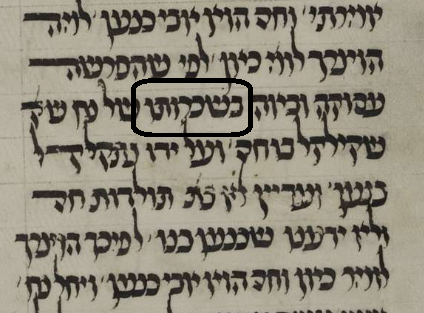
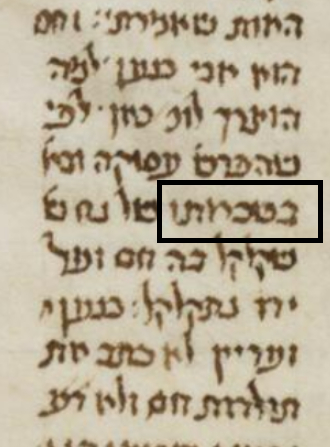
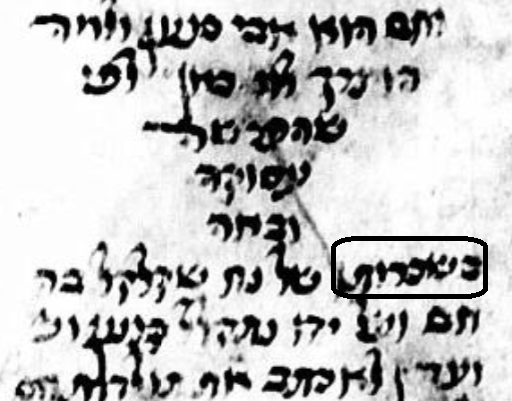
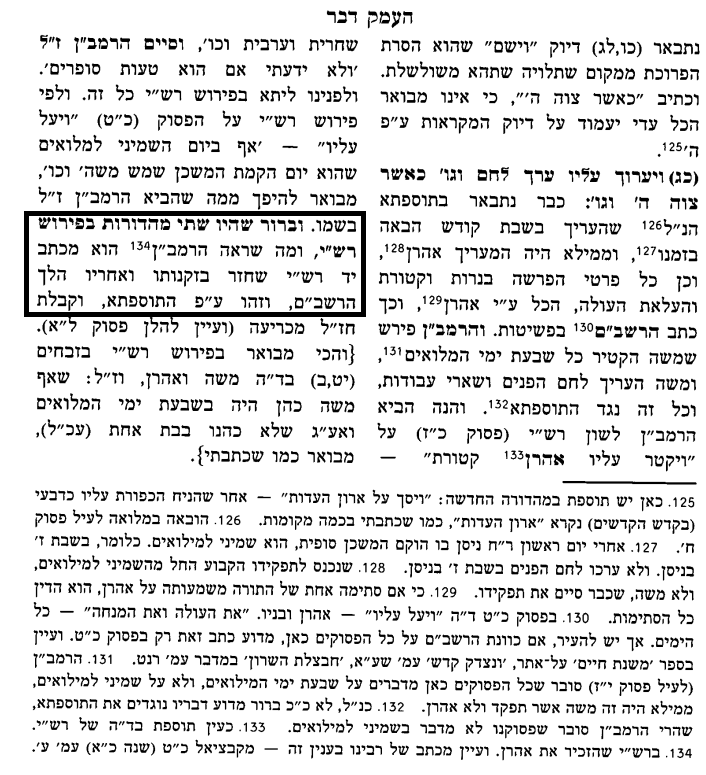
As far as Rashi manuscripts, I first checked one known as Leipzig 1, which to many scholars is the most accurate.[1] Here is how it is presented, and as you can see, it is missing the Miriam story

https://media.alhatorah.org/Parshanim/Rashi%20Leipzig/97.pdf

Transcribed it looks like this.

ויקח את בת לוי – פרוש היה ממנה מפני גזירת פרעה וחזר והחזירה ועשה בה ליקוחין שניים…..

The manuscript known as Oxford CCC 165 (Neubauer 2440) is also considered important because it may be the oldest Rashi manuscript we have (circa 1194). The Miriam story does not appear there either.

Munich 5, which contains the text of Rashi supplemented by other Medrashic comments, is considered important by some scholars because of its age.[2] The story is missing from from the actual text of Rashi פָּרוּשׁ הָיָה מִמֶּנָּה מִפְּנֵי גְּזֵרַת פַּרְעֹה, וְהֶחֱזִירָהּ וְעָשָׂה בָהּ לִקּוּחִין שְׁנִיִּים

It is recorded later on giving another viewpoint as to Miriam’s advice, i.e. that Miriam encouraged her father to re-marry because she had a prophetic vision that Yocheved would give birth to the redeemer of Israel.

There are many other manuscripts available on the internet. Al HaTorah includes links to over 60 manuscripts from the 12th century to the 15th century. https://alhatorah.org/Commentators:Online_Rashi_Manuscripts

They are known usually by the holding library. Aside from the ones shown above, they are known for example as Hamburg 13, Oxford-Bodley Opp. 34, London 26917, Berlin 1221, Berlin Qu 514, Florence Plut.III.03, Vatican Urbinati 1, Paris 155, Parma 2708, Parma 2868, and Parma 3081.

None of the over 40 manuscripts I checked includes this comment.

Rashi incunabula also do not contain the Miriam story, nor did I find it in any Chumash with Rashi in the 1500’s.[3]

Here are the texts in three incunabula[4]

Guadalajara Alkabetz 1476, Reggio di Calabria, 1475 Rome 1470

I have found Hijar 1490 to differ with other incunabula, but not here.

Here are some examples of the text of Rashi in printed editions of the 1500’s.

Here is the influential Sabionetta printed edition of Rashi of 1557

I have found Venice 1567 Cristoforo Zanetti to differ in places with other Chumashim, but not here.

There is also no comment on the text of Rashi including the Miriam story in any early of the Meforshai Rashi such as Riva, Rav Eliyahu Mizrahi and Gur Aryeh.[5]

I found the first reference to it in Yosef Da’at (Prague 1609), and it is ascribed to a “Rashi Klaf”:

Avraham Berliner leaves it out in both editions of Zechor L’Avraham (1868 and 1905) even though by 1905 he stated that he had seen 100 Rashi manuscripts.[6]

It was added later on into the text of Rashi albeit in parentheses and was ascribed to a Rashi Yashan. This is Hanau 1611-14. I do not know with certainty if its source was Yosef Da’at or a previously printed edition of Rashi.

It was not included in the Basel Mikraot Gedolot of 1618.

Afterwards we do find it in Menasseh ben Israel’s edition of Chumash of 1635:

But not in Benveniste’s 1644 Amsterdam edition of Rashi:

It was included in the first edition of Siftei Chachamim Amsterdam 1670. After that it was included in most printed editions, although not in all.

What is the source of this Drasha? Its main source is a Gemara in Sotah 12a

וַיֵּלֶךְ אִישׁ מִבֵּית לֵוִי לְהֵיכָן הָלַךְ אָמַר רַב יְהוּדָה בַּר זְבִינָא שֶׁהָלַךְ בַּעֲצַת בִּתּוֹ תָּנָא עַמְרָם גְּדוֹל הַדּוֹר הָיָה כֵּיוָן שֶׁרָאָה שֶׁאָמַר פַּרְעֹה הָרָשָׁע כׇּל הַבֵּן הַיִּלּוֹד הַיְאֹרָה תַּשְׁלִיכֻהוּ אָמַר לַשָּׁוְא אָנוּ עֲמֵלִין עָמַד וְגֵירַשׁ אֶת אִשְׁתּוֹ עָמְדוּ כּוּלָּן וְגֵירְשׁוּ אֶת נְשׁוֹתֵיהֶן אָמְרָה לוֹ בִּתּוֹ אַבָּא קָשָׁה גְּזֵירָתְךָ יוֹתֵר מִשֶּׁל פַּרְעֹה שֶׁפַּרְעֹה לֹא גָּזַר אֶלָּא עַל הַזְּכָרִים וְאַתָּה גָּזַרְתָּ עַל הַזְּכָרִים וְעַל הַנְּקֵיבוֹת ….. עָמַד וְהֶחְזִיר אֶת אִשְׁתּוֹ עָמְדוּ כּוּלָּן וְהֶחְזִירוּ אֶת נְשׁוֹתֵיהֶן וַיִּקַּח וַיַּחְזִור[7]

A similar idea is found in Medrash Rabbah 1:19

מדרש רבה על שמות א: יט.

וַיֵּלֶךְ אִישׁ מִבֵּית לֵוִי להיכן הלך אמר רבי יהודה בר רבי זבינא שהלך בעצת בתו תניא עמרם גדול הדור היה וכוּ’ וַיִּקַּח אֶת בַּת לֵוִי והחזיר לא נאמר אלא ויקח אמר רבי יהודה בר רבי זבינא שעשה לה מעשה לקוחים

In terms of scholarly editions, Rashi HaShalem Mechon Ariel (1992) does not include it. [8] Rashi HaShalem even goes out of its way to argue against including the Miriam story by writing “It appears to me that Rashi Davka did not cite the Drashot in Gemara Sotah…. because he only included items that are proven from ‘P’shat Ha’Katuv’”

Conclusion

It is important to know which sources Rashi chose not to include in his commentary. I believe that Rashi did not include the Miriam story in his commentary on Shemot 2:1. It was first cited by the Sefer Yosef Da’at which was written in 1609, who ascribed it to a Rashi Klaf which he had. Clearly it was there, but since it was unique among manuscripts or printed editions, I believe his manuscript had this story added to it sometime after Rashi. All scholarly editions today do not include it.

[1] From the Website Al HaTorah

https://alhatorah.org/Commentators:Rashi_Leipzig_1/1/en

The popularity of Rashi’s Torah commentary and the tendency of medieval scholars and copyists to add to it their marginal glosses combined to create enormous variation between different manuscripts and editions of the commentary…. On this backdrop, the importance of the Leipzig 1 (Universitätsbibliothek Leipzig, B.H.1) manuscript of Rashi can hardly be overstated. This manuscript was written in the 13th century by R. Makhir b. Karshavyah, who states that he produced it from a copy of the commentary transcribed and annotated by Rashi’s own secretary, R. Shemayah… MS Leipzig 1 is, thus, an extremely valuable textual witness which comes tantalizingly close to the original source….
[2] From the KTIV website in its description of Munich 5כמו כן מביא הרבה ממדרשי חזל והרבה מאד מתרגום יונתן
[3] Aside from the two editions shown below, I checked the following Rashi texts from the 1500’s and did not find the Miriam story

Bomberg Mikraot Gedolot 1518, Rashi Bomberg 1522, Rimini 1525, Bomberg Mikraot Gedolot 1524-26, Augsburg 1534, Rashi Bomberg 1538, Venice Giustiani 1548, Riva di Trento 1561, Venice Juan Di Gara 1567, Cracow 1587, Venice 1590

[4] Rashi HaMevuar (2016) confirms that the words are missing from other incunabula by writing בכל הדפוסים ליתא לתיבות אלה.”

[5] It is clear from Riva that the story was not included in Rashi because he quotes Rashi, and then adds the quotation from Sotah:
ויקח את בת לוי. פרשי פרוש היה ממנה מפני גזרת פרעה והחזירה וכבר הוא מפורש בפק דסוטה למה החזירה דאיתא התם וזל תנא עמרם גדול הדור היהb
[6] Berliner often includes text which he saw in Yosef Da’at from a Ktav Yad Yosef Miklosh had from 1293

עוד ספחתי אל ההערות את הנוסחאות אשר הביא בעל יוסף דעת מכי אחד אשר היה לפניו משנת נג לאלף הששי

The author of Yosef Da’at writes about a Klaf Yashan Noshan as follows”

ובפרט רשי קלף ישן נושןלערך שלוש מאות שנה ויותר שמצא בלובלין

[7] It is interesting to note that although Amram is described as a “Gadol HaDor,” Chazal were not hesitant to ascribe the winning argument to Miriam.
[8] Roedelheim 1860 does not contain the story in Rashi

Mosad HaRav Kook’s Torat Chaim in 2005 also does not include the story of Miriam nor does it make any reference to it in the footnotes. Yosef Hallel (Brooklyn 1987) does not comment on this Pasuk

The Mikraot Gedolot of Shlomo Zalman Netter (Vienna 1859) does include it in parentheses and since it was an influential edition, it was then probably included in many subsequent editions.


 Rashi Devarim 26:17-18….. הֶאֱמַ֖רְתָּ and הֶאֱמִֽירְךָ֣

Rashi Devarim 26:17-18….. הֶאֱמַ֖רְתָּ and הֶאֱמִֽירְךָ֣

Eli Genauer

Rashi provides two explanations for a word in the Torah. Some scholars maintain that Rashi was not the source of the second explanation, rather it was derived from a “Taus Sofrim”. A close look at the manuscript witnesses reveals that the second explanation most likely did originate with Rashi. 

Devarim 26

17. אֶת־ה’ הֶאֱמַ֖רְתָּ הַיּ֑וֹם לִהְיוֹת֩ לְךָ֨ לֵֽאלֹֹֹֹֹקים וְלָלֶ֣כֶת בִּדְרָכָ֗יו וְלִשְׁמֹ֨ר חֻקָּ֧יו וּמִצְוֺתָ֛יו וּמִשְׁפָּטָ֖יו וְלִשְׁמֹ֥עַ בְּקֹלֽוֹ׃

 18. ה’ הֶאֱמִֽירְךָ֣ הַיּ֗וֹם לִהְי֥וֹת לוֹ֙ לְעַ֣ם סְגֻלָּ֔ה כַּאֲשֶׁ֖ר דִּבֶּר־לָ֑ךְ וְלִשְׁמֹ֖ר כָּל־מִצְוֺתָֽי

Rashi:

:האמרת … האמירך. אֵין לָהֶם עֵד מוֹכִיחַ בַּמִּקְרָא, וְלִי נִרְאֶה שֶׁהוּא לְשׁוֹן הַפְרָשָׁה וְהַבְדָּלָה — הִבְדַּלְתָּ לְךָ מֵאֱלֹהֵי הַנֵּכָר לִהְיוֹת לְךָ לֵאלֹהִים וְהוּא הִפְרִישְׁךָ אֵלָיו מֵעַמֵּי הָאָרֶץ לִהְיוֹת לוֹ לְעַם סְגֻלָּה, וּמָצָאתִי לָהֶם עֵד וְהוּא לְשׁוֹן תִּפְאֶרֶת כְּמוֹ (תהלים צ”ד) יִתְאַמְּרוּ כָּל פֹּעֲלֵי אָוֶן

האמרה, האמירך are words for the meaning of which there is no decisive proof in Scripture. It seems to me, however, that they are expressions denoting “separation” and “selection”: “You have singled Him out from all strange gods to be unto you as God — and He on His part, has singled you out from the nations on earth to be unto Him a select people”. And I have found a parallel (lit., a witness) to it where it bears the meaning “glory”, as in (Psalms 94:4): “All wrongdoers glory in themselves”. (Sefaria translation)

We are faced with the following issues

  1. First Rashi says that he cannot find a word in Tanach similar האמרת … האמירך אֵין לָהֶם עֵד מוֹכִיחַ בַּמִּקְרָא, and he is therefore compelled to give his own interpretation וְלִי נִרְאֶה
  2. Rashi then seems to do an about face and says that he actually did find a comparable word in Tanach וּמָצָאתִי לָהֶם עֵד. The Sefer Yosef Da’as terms this a Stirah.
  3. The textual witness that Rashi finds for האמירך is in Tehillim. On that word in Tehillim, Rashi gives an explanation and refers you to Ki Savo where he says the meaning is the same as his interpretation of וּמָצָאתִי לָהֶם עֵד . There is a similar situation with Rashi’s interpretation of that word in Chagigah 3a and on Berachos 6a. On the other hand, in Gittin 57a, we find Rashi explaining our Pasuk in Ki Savo the same as his וְלִי נִרְאֶה Pshat here. We need to understand the relationship between the Rashi in Devarim and the Rashi on Tehillim. We need to understand the various Gemaros that explain either the Pasuk in Tehillim or the Pasuk in Devarim. We also need to understand why Rashi did not use the interpretation of Onkelos for the words האמרת ,האמירך which is taken directly from the Gemara in Chagigah.
  4. When we look at the various manuscripts of Rashi on this Pasuk we find a wide diversity of texts. Both the Sefer Yosef Da’as (Prague 1609) and Wolf Heidenheim (Chumash Me’Or Eynayim 1821) say that the words starting from וּמָצָאתִי לָהֶם עֵד were not written by Rashi but were added later on by a student.[1] A study of the many Rashi manuscripts available today puts this conclusion into question

האמרת … האמירך. אֵין לָהֶם עֵד מוֹכִיחַ בַּמִּקְרָא, וְלִי נִרְאֶה שֶׁהוּא לְשׁוֹן הַפְרָשָׁה וְהַבְדָּלָה — הִבְדַּלְתָּ לְךָ מֵאֱלֹהֵי הַנֵּכָר לִהְיוֹת לְךָ לֵאלֹהִים וְהוּא הִפְרִישְׁךָ אֵלָיו מֵעַמֵּי הָאָרֶץ לִהְיוֹת לוֹ לְעַם סְגֻלָּה, וּמָצָאתִי לָהֶם עֵד וְהוּא לְשׁוֹן תִּפְאֶרֶת כְּמוֹ (תהלים צ”ד) “יִתְאַמְּרוּ כָּל פֹּעֲלֵי אָוֶן”

The above seems to be the standard text of this Rashi. We find evidence of this entire text including the words “וּמָצָאתִי לָהֶם עֵד” going back to Lisbon 1491, Venice 1524 and Sabionneta 1557:

Lisbon 1491

Venice 1524 ( and 1547)

Sabionetta 1557

Some “newer” Chumashim have the thought starting with וּמָצָאתִי לָהֶם עֵד in parentheses:

Amsterdam 1901-A.S Onderwijzer – (The Dutch translation of Rashi also has this portion in parentheses)

Chumash Torah Temimah- Vilna -1904

The Artscroll Stone Chumash has the words “דבר אחר” immediately preceding the word “וּמָצָאתִי” all in parentheses.

I have also seen it recorded with just the דבר אחר in parentheses. 

The Sefer Yosef Da’as (Cracow 1608) concludes that the words starting from וּמָצָאתִי לָהֶם עֵד were not written by Rashi[2] ״רק איזה תלמיד כּתבו על הגליון והמדפיס חשב שהם דברי רש״י״ 


This is also the conclusion of Wolf Heidenheim:

Chumash Meor Einayim, Rödelheim : 1821 (ed. Wolf Heidenheim)

Heidenheim echoes the words of the Yosef Daas[3]:

What was the Original Girsa of Rashi?

Here is some background on the manuscript known as Leipzig 1. It was not available to Yosef Da’as, Wolf Heidenheim or later on, to A J. Berliner and to Artscroll Saperstein.

From Chachmei Tzarfat HaRishonim by Prof. Avraham Grossman.[4]

עמ’ 187 :כלי עזר חשוב לבירור הנוסח המקורי של פירוש רש”י לתורה הוא כתב-יד לייפציג  .פירוש רש”י לתורה שבכתב-יד זה הוא ככל הנראה הנוסח הקרוב ביותר על המקור שכתב רש”י, המצוי כיום בידינו, אף שגם בו יש השלמות מאוחרות ושיבוש העתקה. בשולי פירוש רש”י לתורה שבכתב-יד זה נרשמו הגהות רבות ערך של תלמידו ר’ שמעיה, ונידון בהן בפירוט בסקירת מפעלו של ר’ שמעיה

 עמ’ 188 :ר’ מכיר העיד פעמים הרבה שהחזיק בידיו את כתב היד של פירוש רש”י לתורה שבו כתב ר’ שמעיה בעצמו את הגהותיו

. עמ’ 191 :מדבריו של ר’ שמעיה עולה כי לא זו בלבד שרש”י בעצמו הכניס תקונים לפירושיו והגיהם, אלא שביקש גם ממנו לעשות כן

 “הגהות רבינו שמעיה ונוסח פירוש רש”י לתורה” –  תרביץ ס׳ (תשנ״א)

לדעתי ראוי [כ”י ליפזיג 1] להיחשב כמקור החשוב ביותר המצוי כיום בידינו וככלי העזר העיקרי לכל חקירה בשאלת הנוסח של פירוש רש”י לתורה”

This is how it is recorded in Leipzig 1. The order is reversed and Lashon Tiferet comes first followed by Lashon Havdalah. 

(The entire page.)

 .יז-יח האמרת, האמירך – לשון תפארת כמו יתאמרו כל פעלי און אין להם עד במקרא, ולי נר’ שהם לשון המשכה והבדלה הם, הבדלתו מאלקי הנכר להיות לך לאלקים, והוא הפרישך אליו מעמי הארץ להיות לך לעם סגולה 

We find that the interpretation that Rashi seems to give as an afterthought, is now the first interpretation.                                                                            

Berlin 1221- Has only לשון תפארת

                                                                  האמרת, האמירך – לשון תפארת כמו יתאמרו כל פעלי און 

On the other hand, Munich 5 has only Lashon Havdalah with no Lashon Tiferes – the complete opposite of Berlin 1221.

Because of its age (1194) another important manuscript is Oxford UCC 165 ( Neubauer 2440). It records the Rashi the same as Munich 5.

To summarize: Lepzig 1 has both comments with Lashon Tiferes first. Berlin 1221 has only Lashon Tiferes and Munich 5 and Oxford UCC 165 only have Lashon Havdalah.[5]

An analysis of other manuscripts by Al HaTorah yields the following, along with a possible approach to reconciling the textual variances. .

From Al Hatorah.org:

10 ה    10ה הדיון בהמשך של “אין להם עד… לעם סגולה” חסר בכ”י ברלין 1221, וינה 23, וינה 24 

בכ”י פרמא 181, מינכן 5, פריס 155, ברלין 1222, וטיקן 94, ליידן 1, המצב הפוך, וחסר “לשון תפארת כמו יתאמרו כל פעלי און” (בפרמא 181 הוא נוסף בגיליון אחר “לעם סגולה”, ובברלין 1222 הגיליון סומן לאחר “האמרת והאמירך” וכפי שהוא מופיע בטקסט בלייפציג 1). בכ”י ויימר 652 “מצאתי להם עד לשון תפארה יתאמרו כל פועלי און” מופיע בסוף הפירוש לאחר “לעם סגולה”, וכן באופן מקוטע בפריס 154. כ”י פריס 49 דומה לכ”י לייפציג. ועיין במחלוקתם של א’ טיוטו בתרביץ ס”א:א’ עמ’ 92-91 וא’ גרוסמן בתרביץ ס”א:ב’ עמ’ 308.
יש שתי דרכים שבהן ניתן להסביר ולשחזר את התהליך שאירע בפירוש רש”י כאן:
(א) הפירוש הראשון (“לשון תפארת”) הוא של רש”י עצמו, והפירוש השני (“לשון המשכה / הפרשה והבדלה”) הוא תוספת של ר”י קרא. אפשרות זו נתמכת ע”י כ”י מוסקבה 1628 – עיין דברינו על פירוש ר”י קרא לדב’ כ”ו:י”ז-י”ח.
(ב) שני הפירושים הסותרים נכתבו ע”י רש”י עצמו. הפירוש הראשון (“לשון תפארת”) הוא של רבותיו של רש”י, והפירוש השני (“לשון המשכה / הפרשה והבדלה”) הוא של רש”י עצמו. אפשר שכ”י פרנקפורט 19 תומך באפשרות זו. שם כתוב: “האמרת, האמירך – לשון תפארת כמ’ יתאמרו כל פועלי און וכמ’ בראש אמיר כך הורו מורים [אולי צ”ל “מורי”]. ואני אומ’ שאין להם עד במקום [צ”ל “במקרא”]. ולי נראה שהוא לשו’ הפרשה והבדלה, הבדלתו לך מאלהי הנכר להיות לך לאלהים, והוא הפרישך אליו להיות לו לעם סגולה.”

Analysis of Gemaros and of Rashi in Tehillim:

The first Pshat וְלִי נִרְאֶה in the standard Rashi is that the Jewish people have set aside Hashem to be there G-d (לְשׁוֹן הַפְרָשָׁה וְהַבְדָּלָה ) and He has set aside the Jewish people as His people. This is similar to the explanation Rashi gives for our Pasuk on Gittin 57b. The Gemara tells the story of the woman whose seven sons refused to bow down to an idol, each one quoting a Pasuk to back up his decision.  

‘אתיוהו לאידך אמרו ליה פלח לעבודת כוכבים אמר להו כתוב בתורה (דברים כו, יז) את ה’ האמרת וגו’ וה’ האמירך היום וגו

They then brought in yet another son, and said to him: Worship the idol. He said to them: ( I cannot do so,) as it is written in the Torah: “You have האמרת  Hashem this day to be your G-d…and Hashem has האמירך you this day to be a people for His own possession” (Deuteronomy 26:17–18)

Rashi explains   האמרת – ייחדת – set aside . This is very similar to the Lashon he uses in Ki Savo of הִבְדַּלְתָּ לְךָ מֵאֱלֹהֵי הַנֵּכָר לִהְיוֹת לְךָ לֵאלֹהִים

On the other hand, the Pasuk where he writes וּמָצָאתִי לָהֶם עֵד וְהוּא לְשׁוֹן תִּפְאֶרֶת כְּמוֹ 

 “יִתְאַמְּרוּ כָּל פֹּעֲלֵי אָוֶן”:, in Tehillim 94:4..there Rashi gives his second explanation to our words in Ki Savo

The thought expressed in Tehillim is how long will Hashem tolerate the fact that evildoers brag about their actions. It is clear that יִֽ֝תְאַמְּר֗וּ means “praise themselves”. 

עַד־מָתַ֖י רְשָׁעִ֥ים ׀ יְהוָ֑ה עַד־מָ֝תַ֗י רְשָׁעִ֥ים יַעֲלֹֽזוּ׃

How long shall the wicked, O LORD, how long shall the wicked exult,

יַבִּ֣יעוּ יְדַבְּר֣וּ עָתָ֑ק יִֽ֝תְאַמְּר֗וּ כָּל־פֹּ֥עֲלֵי אָֽוֶן׃

shall they utter insolent speech, shall all evildoers pride themselves?

Rashi in Tehillim  

יתאמרו. ישתבחו כמו (דברים כו) האמרת והאמירך

In Ki Savo, Rashi seems to say he can’t find a witness for this word  הֶאֱמַ֖רְתָּ in all of Mikra and then Rashi himself in Tehillim explains the word as meaning something very similar to לְשׁוֹן תִּפְאֶרֶת  and refers you to the Pesukim in Devarim. And in Tehillim, he gives a different explanation for the Pasuk in Ki Savo than he gives on Gittin 57b.

Chagigah 3a on the bottom of the page

עוד דרש (דברים כו, יז) “את ה’ האמרת היום”,” וה’ האמירך היום “אמר להם הקב”ה לישראל אתם עשיתוני חטיבה אחת בעולם ואני אעשה אתכם חטיבה אחת בעולם

Rashi comments

האמרת – שבחת כמו יתאמרו כל פועלי און (תהילים צ״ד:ד׳) ישתבחו, שדרכן צלחה:

Again we have the word יתאמרו or האמרת meaning something like לְשׁוֹן תִּפְאֶרֶת (שבחת ) and not לְשׁוֹן הַפְרָשָׁה וְהַבְדָּלָה

Rashi seems to be giving us a translation of the word האמרת as opposed to the Gemara’s Drasha on this word

However, Onkelos uses the word  חֲטַבְתָּin his translation of the word He’emircha

יָת הּ’ חֲטַבְתָּ יוֹמָא דֵין לְמֶהֱוֵי לָךְ לֶאֱלָק’ וְלִמְהַךְ בְּאָרְחָן דְּתָקְנָן קֳדָמוֹהִי וּלְמִטַּר קְיָמוֹהִי וּפִקּוּדוֹהִי וְדִינוֹהִי וּלְקַבָּלָא בְמֵימְרֵיהּ:

והּ’ חָטְבָךְ יוֹמָא דֵין לְמֶהֱוֵי לֵיהּ לְעַם חַבִּיב כְּמָא דִי מַלִּיל לָךְ וּלְמִטַּר כָּל פִּקּוּדוֹהִי:

חטיבה  is like in the words “Chotaiv Aitzecha.”

The word חטיבה is translated by Steinsaltz as a “single entity.”

This is Steinsaltz’s translation of the Gemara:

You have made Me a single entity in the world, (as you singled Me out as separate and unique). And (therefore) I will make you a single entity in the world, (as you will be a treasured nation, chosen by God.)

This is more in line with the idea of

לְשׁוֹן הַפְרָשָׁה וְהַבְדָּלָה — הִבְדַּלְתָּ לְךָ מֵאֱלֹהֵי הַנֵּכָר לִהְיוֹת לְךָ לֵאלֹהִים וְהוּא הִפְרִישְׁךָ אֵלָיו מֵעַמֵּי הָאָרֶץ לִהְיוֹת לוֹ לְעַם סְגֻלָּה

We have a similar outcome in Rashi in Berachos 6a where the Pasuk in Ki Savo is also quoted. There too Rashi explains the word האמיר in our Pasuk in Ki Savo as meaning praise.

ומי משתבח קודשא בריך הוא בשבחייהו דישראל אין דכתיב את ה׳ האמרת היום וכתיב וה׳ האמירך היום 

Is the Holy One, Blessed be He, glorified through the glory of Israel?  Yes as it is stated: “You have האמרת, this day, that the Lord is your God, And it states: “And the Lord has האמירך, this day,…(Deuteronomy 26:17–18).

Rashi comments on the word האמרת:

האמרת – לשון חשיבות ושבח כמו יתאמרו כל פועלי און (תהילים צ״ד:ד׳) ישתבחו

The Lubavitcher Rebbe summarizes some of the problems with the Rashi text as we have it, and adds another issue as to why Rashi didn’t explain the word as coming from the Shoresh “Omair” as Ibn Ezra did.


Likutei Sichos Chelek Tes – The Sicha is in Yiddish only – This is a summary in Hebrew:

קשה לפרש ש”האמרת” הוא לשון אמירה (כי האמירה אינה בכל יום), ו”אין להם עד מוכיח במקרא” שיכריח לפרש כן. אך “ומצאתי להם עד” שהוא לשון תפארת

ברש”י (כ”ו י”ז): “האמרת והאמירך: אין להם עד מוכיח במקרא. ולי נראה שהוא לשון הפרשה והבדלה, הבדלתו לך מאלוקי הנכר להיות לך לאלוקים והוא הפרישך אליו מעמי הארץ להיות לו לעם סגולה. ומצאתי להם עד והוא לשון תפארת כמו יתאמרו כל פועלי און”

.1 צריך להבין איך אומר בהתחלה ש”אין להם עד מוכיח”, הרי מיד אח”כ אומר “ומצאתי להם עד”? 

.2ומדוע אינו מפרש שהוא לשון אמירה – כמו שפירש ר’ יהודה הלוי והובא באבן עזרא – שאז יוצא שיש להם ריבוי מוכיחים במקרא

והביאור: רש”י מדגיש ש”אין להם עד מוכיח במקרא”, זאת אומרת שישנה קושי לפרש ש”האמרת” הוא לשון תפארת ואמירה, ורק אם היה להם עד מוכיח – שיכריח לפרש כן – הי’ מפרש כן. והקושי שישנו בפירוש אמירה הוא שהפסוקים “האמרת היום” “וה’ האמירך היום” באים בהמשך להפסוק “היום הזה ה’ אלוקיך מצוך” – שקאי על כל יום, וא”כ אי אפשר לפרש ש”האמרת” הוא לשון אמירה, כי רק כשהנהגת בנ”י הוא כראוי פועלים שה’ יאמר שהוא רוצה להיות להם לאלוקים, ורק כשהנהגת ה’ עם בנ”י הוא באופן ניסי, אומרים בנ”י שהם עם סגולה. ולכן מפרש רש”י “לשון הפרשה והבדלה”, דענין זה אינו תלוי בהנהגת בנ”י (דגם כשאינם עושים רצונו של מקום יודעים שה’ הוא אלוקיהם(

This is how this Pasuk is presented in the Artscroll Saperstein Rashi[7]:

The comments end (4.) with “Yosef Da’as concludes they were interpolated by someone other than Rashi” indicating that Rashi in Ki Savo does not include the concept of האמרת meaning לְשׁוֹן תִּפְאֶרֶת. This is directly in contradiction to Leipzig 1. 

What does Avraham Berliner in Zechor L’Avraham (Berlin 1867) say?                            

Firstly, Berliner states that the author of Yosef Da’as only had one Rashi manuscript and therefore his (Berliner’s) rendering of Rashi is more accurate.

This is Berliner on our Pasuk:

In his introduction, Berliner mentions all the Kisvei Yad he had and includes Munich 5 but he does not include Leipzig 1. 

In conclusion, if you look at many early manuscripts, the idea that האמרת means לְשׁוֹן תִּפְאֶרֶת is definitely there. As a matter of fact, in Lepzig I it comes first and other manuscripts, (such as Berlin 1221) don’t even have the explanation of הבדלה. Both Leshonos could come from Rashi. 

[1] The Artscroll Sapirstein Rashi quotes Yosef Da’as as the last of its comments.
[2] The author of Yosef Da’as:

המחבר היה מחכמי פראג שנולד בפראג בשנת ש”ם ונפטר שם בשנת תי”ד. הוא היה תלמידם של גדולי חכמי פראג, והוא מביא הרבה תורה מהם בספר, וכן הוא כותב מאחרי השער שהספר נדפס בהסכמתם. המחבר עמל לזקק את הטעויות שנפלו בפירוש רש”י על התורה, ולמטרה זו השתמש בחומשים עתיקים, וכן בכתב יד עתיק מהמאה ה-14 שמצא בלובלין. ליד כל תיקון והערה, הוא מציין את המקור

[3] A.J. Rosenberg also weighs in on this (Judaica Press Rashi in English) as follows:

[4] There is a Machlokes on Grossman’s opinion which is still open 308 ‘ועיין במחלוקתם של א’ טיוטו בתרביץ ס”א:א’ עמ’ 92-91 וא’ גרוסמן בתרביץ ס”א:ב’ עמ.
[5] Munich 5 is also supposed to be quite authoritative. Here is a quote from Prof. Marc B. Shapiro cited in Hakirah 26:

The copyist of the Rashi manuscript was not some anonymous person, but R. Solomon ben Samuel of Würzberg. R. Solomon was an outstanding student of R. Samuel he-Hasid and a colleague of R. Judah he-Hasid. He was also a student of R. Yehiel of Paris, and R. Solomon’s son was one of the participants in the 1240 Paris Disputation together with R. Yehiel. R. Solomon wrote Torah works of his own and he may be identical with R. Solomon ben Samuel, the author of the piyyut סלחתי ישמיענו that is recited in Yom Kippur Neilah. ArtScroll, in its Yom Kippur Machzor, p. 746, tells us that סלחתי ישמיענו was written by “R’ Shlomo ben Shmuel of the thirteenth-century.”

[6] Explanation of Ibn Ezra. First, he says it a language of exaltation. (similar to Shavachta and Lashon Tiferes)  Then he quotes Rabbi Yehuda HaLevi as saying the source is ויאמר . Ibn Ezra prefers this explanation. This is referred to by the Lubavitcher Rebbe as the most direct explanation. 

האמרת. מלשון גדולה וקרוב מגזרת בראש אמיר ויאמר רבי יהודה הלוי הספרדי ,נשמתו עדן, כי המלה מגזרת ויאמר והטעם כי עשית הישר עד שיאמר שהוא יהי’ אלהיך גם הוא עושׁה לך עד שאמרת שתהי’ לו לעם סגולה ויפה פירש והנה תהיה מלת האמרת פעל יוצא לשנים פעולים

The Hebrew word “bespoke” carries connotations of exaltation. Compare, “in the top of the uppermost bough” [Isaiah 17: 6]. The Spaniard Rabbi Yehudah HaLevy — may his soul rest in Gan Eden — explained how the word is related to the verb “to say”: the sense of the passage is that you have done all that is proper, to the point that you cause other people to say “He will be your God”; and He will likewise act toward you so as to cause you to say that you will be His treasured people. According, the verb “to bespeak” takes both a direct and an indirect object.
[7]
Artscroll’s sources are given as follows:

Variant readings [of the text of Rashi] are either enclosed in braces or appear in the footnotes, along with the sources from which Rashi drew his commentary. Among the earliest printed editions (incunabula) from which the variant readings are taken are the editions printed in: Rome (undated, possibly 1470), Reggio di Calabria, Italy (also called defus rishon, “first printed edition”; 1475); Guadalajara, Spain (Alkabetz edition, 1476); Soncino, Italy (1487); Zamora, Spain (1487). The Venice (Bomberg) edition of 1517-18 was the first edition of Mikraos Gedolos with Scripture, Targum, Rashi and all the standard commentaries. In the course of researching the variant readings of Rashi, we found valuable resources in the recently published Yosef Hallel (Rabbi Menachem Mendel Brachfeld; Brooklyn; 5747/1987); and, for the Bereishis volume, the ongoing Chamishah Chumshei Torah – Ariel/Rashi HaShalem (Jerusalem, vol. 1 – 1986, vol. 2 – 1988, vol. 3 – 1990). 


Rashi BaMidbar 22:9- “Taut Sofrim” or “Agadot Chalukot?”

Rashi BaMidbar 22:9- “Taut Sofrim” or “Agadot Chalukot?”

By Eli Genauer

Summary: Here we find polar opposite approaches to a Stirah in Rashi’s commentary to the Torah. One approach maintains that Rashi used two different Midrashic sources for his contradictory comments, and the other solves the Stirah by saying that one of the comments attributed to Rashi is actually a Taut Sofrim.

There is a very perplexing verse towards the beginning of Parshat Balak:

ט:וַיָּבֹא אֱלֹקים אֶל-בִּלְעָם וַיֹּאמֶר מִי הָאֲנָשִׁים הָאֵלֶּה עִמָּךְ:

Balak sent messengers to Bilaam asking him to curse the Jewish people. Bilaam retired for the night and Hashem approached him at that time. “Who are these men with you?”, Hashem asked. Certainly, the Omniscient One knew the answer to that question. We look to Rashi to explain the motivation for G-d’s question and surprisingly we find it all the way back in Parshat Breishit (Breishit 3:9). Adam and Chava had just disobeyed Hashem by eating the forbidden food and they heard Hashem walking in the Garden. Hashem asked Adam “where are you?”( איכה), the answer to which Hashem already knew. Rashi comments as follows:

“איכה“. יוֹדֵעַ הָיָה הֵיכָן הוּא אֶלָּא לִכָּנֵס עִמּוֹ בִּדְבָרִים, שֶׁלֹּא יְהֵא נִבְהָל לְהָשִׁיב אִם יַעֲנִישֵׁהוּ פִּתְאוֹם (בראשית רבה),[1] וְכֵן בְּקַיִן אָמַר לוֹ אֵי הֶבֶל אָחִיךָ (בראשית ד), וְכֵן בְּבִלְעָם מִי הָאֲנָשִׁים הָאֵלֶּה עִמָּךְ (במדבר כ“ב), לִכָּנֵס עִמָּהֶם בִּדְבָרִים, וְכֵן בְּחִזְקִיָּה בִּשְׁלוּחֵי מְרֹאדַךְ בַּלְאֲדָן:

Hashem knew where Adam was, but He asked this in order to open up a conversation with him that he should not become confused in his reply, if He were to pronounce punishment against him all of a sudden……..Similarly with Bilaam, “who are these men with you?” — to open up a conversation with them.

Rashi in Breishis emphasizes that the reason Hashem asked Bilaam “who are these men with you” was to draw him into a conversation, thereby making him more comfortable in speaking to Him.

However in Parshas Balak (BaMidbar 22:9) Rashi seems to have a different take[2] on why Hashem asked “Who are these men with you?”

מי האנשים האלה עמך. לְהַטְעוֹתוֹ בָא, אָמַר פְּעָמִים שֶׁאֵין הַכֹּל גָּלוּי לְפָנָיו, אֵין דַּעְתּוֹ שָׁוָה עָלָיו, אַף אֲנִי אֶרְאֶה עֵת שֶׁאוּכַל לְקַלֵּל וְלֹא יָבִין (תנחומא):

“Who are these men with you?” G-d’s question led Bilaam to conclude “Sometimes, not everything is revealed before Him, for He is not always omniscient. I will find a time when I am able to curse, and He will not realize it.” The words “ לְהַטְעוֹתוֹ בָא” with which Rashi begins, seem to indicate that Hashem was trying to mislead Bilaam into thinking that He was not all knowing, and not to draw him into a conversation . Here are a few attempts to translate לְהַטְעוֹתוֹ בָא.

  1. To cause him to err did He come” – Linear Translation of Rashi – S.S. and R Publishing Company Brooklyn, NY 1949
  2. It came to delude him“ – Chabad website for Parshat HaShavua based on translation of Rabbi A.J Rosenberg for Judaica Press
  3. He intended to delude him (1) – Chumash with Rashi of A.M. Silbermann and M. Rosenbaum, Jerusalem 1934

The Silbermann Chumash directs you to a footnote which reflects the approach of many of the Meforshai Rashi on the contradiction between the two comments of Rashi. “Rashi on Genesis 3:9 has already pointed out that sometimes G-d puts a seemingly superfluous question to a person to open a conversation. One of the instances he cites there is Bilaam. The heathen soothsayer did not understand the purpose of this question, and it suggested to him that G-d was not omniscient at all times”

The Artscroll Sapirstein Rashi does a much better job in encapsulating this approach by replacing “cause him to err” with “gave him room to err”.[3] Artscroll adds a footnote summarizing the approach of Gur Aryeh by saying that Hashem intended to gently open the conversation with Bilaam, but worded the question in an ambiguous way. Bilaam could have understood the question as Hashem’s way of entering into a conversation with him, but he instead chose to interpret it to indicate that Hashem was not always aware of all the details of a situation.

Professor Yeshayahu Maori Z”L in his book “Sugyot B’Nusach HaMikrah U’B’Parshnato”[4] advances the idea that the Stirah stems from the fact that Rashi accessed two different Midrashic sources, one for his comment in Breishit and one for his comment in BaMidbar.[5] This is based on the idea which was advanced by Rav Eliyahu Mizrachi that sometimes Rashi used “Agadot Chalukot”.[6] The author of “Tzaidah L’Derech” (Prague 1623) sees this case as one where Rashi used “Agadot Chalukot” and that is why Rashi’s comment on “מי האנשים האלה עמךis different in Breishit and BaMidbar.[7] Here are the words of Rav Yissachar Ber Eilenburg (1570-1623) author of “Tzaideh L’Derech”

אלא מאי אית לך למימר שאגדות חלוקות הן ורש״י רגיל לפרש פעמים אחר אגדה אחת ופּעמים אחר אגדה אחרת כמו שכתב הרא״ם ז״ל בהרבה מקומות אין מספר

“But what can you say but that Rashi used different Aggadot here. Rashi is accustomed to explaining matters by using one Aggadah here and another Aggadah there as Rav Eliyah Mizrachi has stated in many places”[8]

Rav Yosef Ben Yissachar Miklish (1580-1654) is one who is very bothered by the fact that this comment in Rashi seemingly contradicts what he wrote in his commentary on Hashem’s question of “where are you?” to Adam ( Breishit 3:9).[9] He addresses this Stirah in a completely different manner. He maintains that he had a manuscript which was 315 years old in which the words “לְהַטְעוֹתוֹ בָאdid not exist, nor did it contain the words that followed. Rather, it had a completely different Girsa in this Rashi. The website Alhatorah.org attributes a very similar Girsa to a manuscript called Berlin 1221[10] along with material from other manuscripts.[11] It also notes that Wolf Heidenheim attributed the comment to Rav Yosef Kara.

היידנהיים ייחס את התוספת לר׳ יוסף בר׳ שמעון ז״ל,[12] ואפשר שכך היה כתוב בכ״י שלפניו, אך בכל עדי הנוסח שבידינו, אין ייחוס מפורש לר״י קרא. והשווה רש״י בראשית ג׳:ט׳.[13]

The comment attributed to Rashi in this manuscript in general matches the words quoted by Yosef Daat for “his” version of Rashi. The main thrust is that Hashem addressed Bilaam in a way to engage him in the way one addresses someone to make them feel comfortable כשיבוא לתפוס את האדם מתוך דבריו, and not to delude him (ְלהַטְעוֹתוֹ)

Berlin 1221

https://digital.staatsbibliothek-berlin.de/werkansicht?PPN=PPN666097542&PHYSID=PHYS_0160&DMDID=DMDLOG_0001

Yosef Daat

The author of Yosef Daat even speculates that the words “לְהַטְעוֹתוֹ בָאare a Taut Sofrim inserted by printers “to cause people to err” as Rashi himself would never have written such a comment.

כי גירסת “לְהַטְעוֹתוֹ בָא” היא גירסא בא בדפוס להטות את הבריות

However, the overwhelming majority of manuscripts contain the wording of Rashi as we have it today, something which the author of Yosef Daat would not have known.[14] Here is the important manuscript known as Leipzig 1.[15]

The three Defusim Rishonim (Rome, Alkabetz and Reggio di Callabrio) do not contain the Girsa cited by Yosef Daat. There is no indication in any early printed edition from the 1400’s and 1500’s that any other Girsa existed.

Avraham Berliner (Berlin 1867) normally notes the Girsaot of Yosef Daat but here completely ignores it.[16]

There was another approach taken a bit over 400 years ago in trying to explain what Rashi meant when he wrote לְהַטְעוֹתוֹ בָא and that is to insert an explanatory remark in parentheses embedded into the text of Rashi. The first time I could find it in a printed edition was in one printed in Hanau 1611-1614. This is how it looks:

“ל ישרים דרכי ה‘ צדיקים ילכו בם ופושעים יכשלו בם כוונת הש“י שאמר מי האנשים היתה לטובה ליכנס עמו בדברים כמ“ש רש“י בפ‘ בראשית בתיבה איכה אך בא לבלעם לטעות כי הוא טעה)

This portion in the parentheses is clearly not part of Rashi and it makes no attempt to hide it as it states clearly כמ“ש רש“י בפ‘ בראשית בתיבה איכה. It tries to explain what Rashi means by first quoting a Pasuk, (ישרים דרכי ה׳… ) something Rashi could have done himself if he so desired.

The Hanau edition contained many other comments like this. The Bibliography of the Hebrew Book notes that this was an edition which featured additions to Rashi from some of the Meforshai Rashi.

ככל אשר נדפס בויניציאה [ש”ן-שנ”א] -מעבר לשער הקדמה קצרה (“אל עין הקורא”) ובה רשימת “כמה מעלות” שבהוצאה הנוכחית. בין השאר נאמר שהחומש והתרגום ובפרט פירוש רש”י הוגהו “מתוך חומש של … רּ ישעיה הלוי” (הורוויץ, בעל השל”ה).

After the Hanau edition, the embedded comment in parentheses had a very strong run. I consulted my personal collection of Chumashim from the 1700’s and 1800’s and, beginning with a Chumash printed in Amsterdam in 1729 to one printed in Pressburg in 1868, 13 have the comment and 6 do not. The comment also appears in practically all the Chumashim from the 1900’s that I looked at. This might be because many of them are photo offset of what is known as the Netter Mikraot Gedolot of Vienna of 1859 which served as the model for many editions that followed.[17]

Vilna Netter 1859

It is included on the Chabad website for the portion of the week, but only on the English side!

However, many new editions such as Oz Vehadar, Mosad HaRav Kook and HaMaor (2005) do not include this parenthetical comment, a practice which returns this Rashi to its original form.[18]


[1] בראשית רבה י״ט: י״א

וַיֹּאמֶר הָאָדָם וגוּ (בראשית ג, יב), אַרְבָּעָה הֵן שֶׁהֵקִישׁ הַקָּדוֹשׁ בָּרוּךְ הוּא עַל קַנְקַנָּן וּמְצָאָן קַנְקַנִּין שֶׁל מֵימֵי רַגְלַיִם, וְאֵלּוּ הֵן, אָדָם, וְקַיִן, וּבִלְעָם, וְחִזְקִיָּהוּ. אָדָם שֶׁנֶּאֱמַר: וַיֹּאמֶר הָאָדָם הָאִשָּׁה. קַיִן(בראשית ד, ט): וַיֹּאמֶר ה׳ אֶל קַיִן אֵי הֶבֶל וגוּ וַיֹּאמֶר לֹא יָדַעְתִּי. בִּלְעָם הָרָשָׁע, שֶׁנֶּאֱמַר (במדבר כב, ט י): מִי הָאֲנָשִׁים הָאֵלֶּה עִמָּךְ, וַיֹּאמֶר בִּלְעָם אֶל הָאֱלֹהִים וגוּ. חִזְקִיָּהוּ (מלכים ב ך, יד) (ישעיה לט, ג): מָה אָמְרוּ הָאֲנָשִׁים הָאֵלֶּה וגוּ.


[2] Medrash Tanchuma Parshat Balak Siman 5 (also BaMidbar Rabah 20:9)

The text of Medrash Tanchuma is as follows

כֵּיוָן שֶׁאָמַר לוֹ: מִי הָאֲנָשִׁים הָאֵלֶּה. אָמַר הָרָשָׁע, אֵינוֹ יוֹדֵעַ בָּהֶם. כִּמְדֻמֶּה אֲנִי, יֵשׁ עִתִּים שֶׁאֵינוֹ יוֹדֵעַ, וְאַף אֲנִי אֶעֱשֶׂה בְּבָנָיו כָּל מַה שֶּׁאֲנִי רוֹצֶה לַעֲשׂוֹת. לְכָךְ אָמַר לוֹ: מִי הָאֲנָשִׁים הָאֵלֶּה עִמָּךְ, לְהַטְעוֹתוֹ.


[3]Artscroll Sapirstein Rashi, Brooklyn, NY, 2018, p.275.

[4] Yeshayahu Maori, Shaanan, Kiryat Shmuel-Haifa, 2020

[5] Ibid pages 137-139.

[6] Rav Eliyahu Mizrachi did not use the approach here rather he tried to address the Stirah in the following manner

מזרחי במדבר כ״ב: ט

מי האנשים האלה עמך? להטעותו בא שיאמר פעמים שאין הכל גלוי לפניו אין דעתו שוה עליו אף אני אראה עת שאוכל לקלל ולא יבין. אבל בפסוק איכה פירש יודע היה היכן הוא אלא ליכנס עמו בדברים שלא יהא נבהל להשיב אם יענישהו פתאום וכן בקין אמר לו אי הבל אחיך וכן בבלעם מי האנשים האלה עמך ליכנס עמהם בדברים ושמא י”ל דה”נ כדי להכנס עמו בדברים הוא כדפירש התם אלא ששם לא פירש הטעם למה נכנס עמו בדבור ופה פירש הטעם ואמר כדי להטעותו וכוּ וכן פירש שם גבי איכה ואי הבל אחיך שנכנס עמהם בדברים כדי שלא יהיו נבהלים מלהשיב חטאתי כדי שימחול להם שאם היה מתחיל להענישם פתאום מבלתי שאלת איכה ושאלת אי הבל אחיך היו נבהלים מלהשיב חטאתי והשם ברחמיו רוצה בתשובת הרשעים ואינו חפץ במיתתן:


[7] As mentioned before, the basis of the comment in BaMidbar is Medrash Tanchuma. The basis for the comment in Breishit 3:9 according to Mizrachi is Breishit Rabah.

בב”ר פי’ שאם היה מענישו פתאום בלתי שאלת איכה היה נבהל מלהשיב לו חטאתו


[8] This approach is noted in Rashi HaShalem – Mechon Ariel- Jerusalem 1986.

[9] Yosef Daat was printed in Prague in 1609- The author יוסף בן יששכר ‬מיקליש writes that he wrote this book….

“לתקן המעוות והטעת[!] שנפלו מהמדפיסים … בפירוש … רש”י ז”ל על חמשה חומשי התורה”….”מאסף לכל הגירסות והנוסחאות שבכל החומשיּ חדשים גם ישנים בכלל, ובפרט רש”י קלף ישן נושן”

The Bibliography of the Hebrew Book writes as follows:

.המחבר כותב בהקדמה שמצא בלובלין “רש”י קלף נושן לערך שלש מאות שנה ויותר” וכן השתמש “בחומשים הישנים דפוס לובלין ודפוס פראג” להיגה בהם את פירש רש”י. המקורות להגהות מצויינים בגליון, בשולי העמודים


[10] State Library of Berlin, Berlin, Germany Ms. Or. fol. 1221 – 13th century – Ashkenazic script.

[11]  Al Hatorah notes as follows:


.עם השלמות ותיקונים ע״פ כ״י וינה 24 וכ״י המובא בהבנת המקרא (היידנהיים), ועיין גם כ״י פיזרו 16. נוסח מקוצר בכ״י ברסלאו 11 (סרוול 5) ובגיליון בכ״י ברסלאו 102 (סרוול 12)


[12] Rav Yosef bar Shimon was ר׳ יוסף קרא . This is from the website Daat which speaks about the possible intermingling of his comments with those of Rashi.

[13] This is the beginning of the way it appears in הבנת המקרא by Wolf Heidenheim, Roedelheim 1860 – במדבר עם תרגום אונקלוס מדויק ע”פ כ”י לוונשטין, ליפמן הירש-  היידנהיים, בנימין וולף בן שמשון.

[14] The comment of לְהַטְעוֹתוֹ בָא is found in the following 13 th century manuscripts:
Oxford UCC 165,
Munich 5,
Hamburg 13,
Oxford-Bodley Opp.34(Neubauer186),
London 26917 (Neubauer 168),
Casanatense 2848,
Paris 154,
Vatican Urbanati 1,
Parma 2708

The Nusach of Berlin 1221 is found in Hamburg 32:

But on top of the page is found the standard text:

[15] The website Alhatorah.org notes this about the importance of the Leipzig 1 manuscript: “the importance of the Leipzig 1 (Universitätsbibliothek Leipzig, B.H.1) manuscript of Rashi can hardly be overstated. This manuscript was written in the 13th century by R. Makhir b. Karshavyah, who states that he produced it from a copy of the commentary transcribed and annotated by Rashi’s own secretary, R. Shemayah. MS Leipzig 1 is, thus, an extremely valuable textual witness which comes tantalizingly close to the original source.”

[16] The Bibliography of the Hebrew Book includes this information from the book.

[17]  בשנת תרי”ט (1859) החלו להדפיס בוינה מהדורה חדשה של חמשה חומשי תורה עם תרגום אונקלוס, תרגום ירושלמי ותרגום יונתן, פירוש רש”י, אבן עזרא, רשב”ם, רמב”ן ועוד. מהדורה זו שנתפרסמה בהידורה וביופייה, הובאה לדפוס על יד שלמה (זלמן) נעטטער מירושלים

[18] Chumash Rashi HaMevuar 2015 (Oz Vehadar) cites Yosef Daat but without his comment that perhaps the normal Girsa is a Taut. In that same Chumash at the back of the Chumash they have a section called Nuschaot Shonot and they cite the Girsa of Yosef Daat but add that the Defusim Rishonim have it the way we do. Yosef Hallel (Brooklyn, 1987) records the words of Yosef Daat and adds that he found a similar Lashon in a manuscript.


A Comment of Rashi Found Only in “Defusim Me’Ucharim”

A Comment of Rashi Found Only in “Defusim Me’Ucharim”

On Shemot 31:15 

By Eli Genauer

Summary:

We find a lengthy comment attributed to Rashi which is only found in what is termed “Defusim Me’Ucharim”. The comment first appears in the Sefer Yosef Da’at (Prague 1609) who attributes it to a D’fus Yashan and a Klaf Yashan Noshan. I did not find it in any of the over 60 manuscripts I checked nor in any early printed edition.[1] It was incorporated into subsequent printed editions on a very uneven basis from the 1600’s to 1800’s but now seems to be part of the mainstream text of Rashi.

שמות לא

(טו) שֵׁ֣שֶׁת יָמִים֮ יֵעָשֶׂ֣ה מְלָאכָה֒ וּבַיּ֣וֹם הַשְּׁבִיעִ֗י שַׁבַּ֧ת שַׁבָּת֛וֹן קֹ֖דֶשׁ לַה’ כׇּל־הָעֹשֶׂ֧ה מְלָאכָ֛ה בְּי֥וֹם הַשַּׁבָּ֖ת מ֥וֹת יוּמָֽת׃

רשי: From Al Hatorah based on Leipzig 1

שבת שבתון – היא מנוחת מרגוע ולא מנוחת עראי. קדש לה’ – שמירת קדושתה לשמי ובמצותיי.

Leipzig 1

Munich 5 has the same text

Rashi HaMevuar (Oz Vehadar 2017, also included in all Oz VeHadar editions) has an extra comment (starting from a second Dibur HaMatchil of שַׁבַּ֧ת שַׁבָּת֛וֹן ) in parentheses.[2] The footnotes do not explain what the source was.

Rashi HaMevuar then states in their section of Chilufai Girsaot that it is not in any early printed edition.[3]

Rashi Hashalem ( Mechon Ariel, Shemot Volume 4, 2005) says that it is included in some later editions (Defusim Me’Ucharim) but does not comment on it source or authenticity.[4]

Torah Shlaimah of Rav Menachem Kasher, Jerusalem 1959, uses similar language by saying that this additional comment of Rashi can be found in Defusim Achronim.

Avraham Berliner (Zechor L’Avraham Berlin 1867) attributes this comment only to Yosef Da’at and puts it below the line. In the 1905 Frankfurt am Main edition it is not included.

This is how it is presented in Yosef Da’at:


גירסת דפ״ס (דפוס ?) ישן

והוא סוף הדבור בספרים אחרים ואחר כך הדבור קדש לה׳ כו׳ כך מצאתי ברש״׳ קלף ישן נושן

There seems to be three sources, a D’fus Yashan, Sefarim Achairim, and a Klaf Yashan Noshan.

Although there is some speculation that the Rashi Yashan Noshan is the manuscript known as Hebrew Union College Library, Cincinnati, OH, USA Ms. JCF 1, it does not appear there.

https://web.nli.org.il/sites/NLI/English/digitallibrary/pages/viewer.aspx?&presentorid=MANUSCRIPTS&docid=PNX_MANUSCRIPTS990000621880205171-1#|FL150557494

Question: Is Yosef Da’at the first source for later editions which include this comment and if so, when was the comment added to printed editions?

Despite Yosef Da’at statement that this comment was found in a Dfus Noshan, I did not find any printed editions which include this comment until after the printing of Yosef Da’at.[5] One might have expected to see it in an edition of Chumash printed immediately following Yosef Da’at in 1609, and that would be in the Hanau edition of 1611-1614. That edition had the כללים לשימוש רשי בתרגום which were first printed in Yosef Da’at and was identified as one of the more important ones in setting the text of Rashi in subsequent editions.[6] But the comment is not included there.

The first time I could find this extended comment in print was in an edition of Rashi printed in Amsterdam in 1669

אמשטרדם : דפוס דוד די קאשטרו תארטס

It includes the כללים לשימוש רשי בתרגום which we find in Yosef Da’at indicating that the editor was most likely familiar with this edition.

Amsterdam 1669 Yosef Da’at

None of the early Meforshai Rashi, such as Mizrachi and Gur Aryeh, comment on this statement.[7] Additionally, although Yosef Da’at attributes the comment to Klaf Yoshan Noshan, I did not find it in any of the manuscripts I checked.[8]

Manuscripts aside from Leipzig 1, HUC JCF 1, Munich 5 (see above) and Berlin 121(see footnote vi) which don’t have it

Access to links for these manuscripts through Al HaTorah[9]:

https://alhatorah.org/Commentators:Online_Rashi_Manuscripts

12th Century (?):

Oxford CCC 165 (Neubauer 2440)

13th Century:

Hamburg 13 (1265), Hamburg 32 (Steinschneider 37), Oxford-Bodley Opp. 34 (Neubauer 186)

London 26917 (Neubauer 168) (1272), Berlin 1221, Berlin Qu 514 (1289) , Florence Plut.III.03 (1291)

Vatican Urbinati 1 (1294), Paris 155, Parma 2708, Parma 2868, Parma 3081

13th-14th Century:

Parma 3204 (De Rossi 181), Weimar 651, Berlin 1222, Berlin 121, Paris 156, Paris 157

British Library Harley 1861 (Margoliouth 169), British Library Harley 5709 (Margoliouth 170)

British Library Harley 5708 (Margoliouth 171), Vienna Cod. Hebr. 220 (Schwarz 23)

14th Century:

Parma 3115 (1305), Parma 3256 (1312), Frankfurt 19 (1340), Paris 48, Paris 37, Vienna Cod. Hebr. 3 (Schwarz 24)

London 19665 (Margoliouth 174) London 26924 (Margoliouth 175), London 26878 (Margoliouth 177)

London 22122 (Margoliouth 178), Oxford-Bodley Mich. 384 (Neubauer 187) (1399)

14th-15th Century:

British Library Harley 5655 (Margoliouth 180), Paris 159, Breslau 11 (Saraval 5)

15th Century:

Oxford-Bodley Opp. 35 (Neubauer 188) (1408), Breslau 102 (Saraval 12) (1421)

Breslau 10 (Saraval 7) (1449), Frankfurt 152, Paris 158, London 19653 (Margoliouth 181)

Conclusion

Aside from the Klaf Yashan Noshan cited by Yosef Da’at, this extended comment most likely was in a small minority of manuscripts. The fact that it made it into mainstream study of Rashi seems tied to its inclusion in Yosef Da’at.

[1] All manuscripts were accessed through Al HaTorah and KTIV. All books were accessed through hebrewbooks.org, Otzar HaChochmah and using the search engine of Merhav at the National Library of Israel.

[2] Artscroll Stone Edition of Chumash, Sapirsten edition of Rashi and all other Artscroll editions also have the comment in parentheses. The Sapirstein Rashi gives no explanation for why this is so. The comment also appears in Chumash HaMizrachi Petach Tikvah 1993, Mikraot Gedolot Meorot, Jerusalem 1995, (without parentheses) Ateret Rashi Jerusalem 1998, Ohr HaChama Jerusalem 2003, Chumash HaBahir Jerusalem 2005, Ha’amaek Davar, Jerusalem 2007, and Mikraot Gedolot HaChut HaMeshulash Jerusalem 2013

The comment is not found in Torat Chaim of Mosad HaRav Kook, Jerusalem, 1993

[3] I checked Rome 1470, Dfus Rishon (Reggio di Calabrio) 1475, Alkabetz, Guadalajara 1476, Bologna 1482, Soncino 1487, Ixar 1490, Lisbon 1491, Zamora 1497. I also checked the following representative editions printed from 1500 until 1609 and did not find the addition in them. Bomberg Venice 1518, Bomberg Venice 1548, Rashi Sabionetta 1557, Riva Di Trento 1561, Cracow 1587, and Basel 1606

[4] Similarly, Be’er Yakov Jerusalem 2008 (below the line) writes that this comment is a Hosafa B’Dfusim Achronim.

[5]

It is not in Hanau 1611-14, Amsterdam (Menashe ben Yisrael) 1635, Kushta 1639, Amsterdam Rashi 1644, Amsterdam 1680 (first edition of Siftei Chachamim), Amsterdam 1682, Berlin 1705, Frankfurt/Oder 1728, Venice 1740, Frankfurt/Oder 1784, Vienna 1794, Dubrovna 1804, Vienna 1831, Fuerth 1841, Livorno 1854, and Lemberg 1864

It also does not appear in Vienna 1859 or Warsaw 1861, both of which were considered important editions of Mikraot Gedolot

The following is a list of those editions I checked from the 1600’s onwards which do include this comment.

Wilhemsdorf 1680 ווילהרמרשדארף : דפוס יצחק בן יהודה יודלש

But not in Wilhemsdorf 1713 ווילהרמרשדארף : דפוס יצחק בן יהודה יודלש, despite it being the same printer.

It is in Amsterdam 1749, 1755 and 1757, Hamburg 1787, Amsterdam Proops 1797 Tikun Sofrim, Amsterdam 1827 (Gavriel ben Itzchak Polak), Rashi Al HaTorah Prague 1838 (M.I. Landau), Roedelheim 1860, Warsaw 1873, Malbim Warsaw 1880, Lemberg 1909, Torat Gavriel Jerusalem 1910 (without parentheses), New York 1953, Rav Peninim, Jerusalem 1959, New York 1971.

[6]  This article https://www.machonso.org/hamaayan/?gilayon=30&id=1035 by הרב דוד סיגל speaks about the famous כללים לשימוש רש”י בתרגום which first appeared in print in Yosef Da’at. It mentions that the Hanau edition served as a basis for the text of Rashi in many editions which followed:

 בחלק מן החומשים החדשים במהדורת עוז והדר צוין שהכללים האלו נדפסו בחומשים לראשונה באמשטרדם שנת ת”ד (במהדורה שהדפיס רבי מנשה בן ישראל), אבל במהדורות מאוחרות הם תקנו זאת וציינו שהחומשים הראשונים שבהם נעתקו הכללים נדפסו עוד שלושים שנה קודם בהנאו שע”א-שע”ד (הרב ישראל רוזנשטרוך ממכון עוז והדר העיר שיתכן מאוד שמהדורת הנאו זו היא מהדורת הבסיס לפירוש רש”י הנדפס ברוב החומשים עד ימינו, ואכמ”ל). ה

[7]  It is not commented on in Mincha Belulah Verona 1594, Minchat Yehuda Lublin 1609, Tzaidah L’Derech Prague 1623, or in Nachalat Yaakov Amsterdam 1642.

[8] Berlin 121 is very different from all the other manuscripts. State Library of Berlin, Berlin, Germany Ms. Or. fol. 121 (13 th -14 th century), skips שַׁבַּ֧ת שַׁבָּת֛וֹן completely.

https://web.nli.org.il/sites/NLIS/en/ManuScript/Pages/Item.aspx?ItemID=PNX_MANUSCRIPTS990001750300205171&SearchTxt=berlin%20121


[9] Aside from the links of Al HaTorah, I accessed these manuscripts through KTIV. None of them had the extra comment in Rashi.

1. Vatican Library, Vatican City, Vatican City State Ms. ebr. 608
2. Rostock University Library, Rostock, Germany Ms. Or. 31
3. The National Library of Russia, St. Petersburg, Russia Ms. EVR I 1
4. University of Toronto Ms FR 5- 005

5. Parma 2523
6. Casanatense Library, Rome, Ms 2848
7. British Library Add. 11566
8. Laurentian Library, Florence Ms. Plut III 08
9. Vatican ebr. 480
10. Vatican ebr. 4
11. Vatican ebr. 94
12. Parma 2865
13. Budapest Kaufmann A 17
14. British Library Or. 9927


What if the Maharal of Prague Had Access to Leipzig 1 and Other Manuscripts?

“What if the Maharal of Prague Had Access to Leipzig 1 and Other Manuscripts?”

On Shemos 23:19 – Rashi on ראשית בכורי אדמתך

By Eli Genauer

Summary: There is a statement in Rashi which appears in the overwhelming majority of early Rashi manuscripts, and in early printed editions. But because Gur Aryeh and others did not have access to these manuscripts, and because they felt that what Rashi said was incorrect, they ascribed the statement to a טעות סופר. Knowing that Rashi really did write these words might have changed their approach to this Pasuk.

שמות כג

(יט) רֵאשִׁ֗ית בִּכּוּרֵי֙ אַדְמָ֣תְךָ֔ תָּבִ֕יא בֵּ֖ית ה’ אֱלֹקיךָ לֹֽא־תְבַשֵּׁ֥ל גְּדִ֖י בַּחֲלֵ֥ב אִמּֽוֹ

Rashi in Al HaTorah based on Leipzig 1:

ראשית בכורי אדמתך – אף השביעית חייבת בביכורים, לכך נאמרה אף כאן

Sefaria records it the same except it adds בִּכּוּרֵי אַדְמָתְךָ at the end.

ראשית בכורי אדמתך. אַף הַשְּׁבִיעִית חַיֶּבֶת בְּבִכּוּרִים, לְכָךְ נֶאֱמַר אַף כָּאן בִּכּוּרֵי אַדְמָתְךָ.

Oz VeHadar Rashi HaMevuar records it as above without parentheses but comments that there are some who do not include this comment because one is not Chayav in Bikurim during Shemittah.

The discussion in their Miluim section records many opinions on this matter. It concludes by saying that this statement of Rashi contradicts a statement of his in Yevamot, thereby leaving the impression that the statement in Shemot 23:19 is questionable.

Artscroll Rashi Sapirstein Edition (1994) records these words in parentheses to indicate that there is a true doubt whether Rashi wrote them.[1]

Artscroll notes that “Mizrachi and Gur Aryeh argue that it cannot be Rashi’s work”, but that Nachalat Yaakov defends this version of Rashi.[2]

Chumash Ateret Rashi (Jerusalem 1998) records the words without parentheses but only cites Gur Aryeh who say that Rashi did not write them and Mizrachi who says that there are Seforim which don’t have them.

The position of Mizrachi and Gur Aryeh is based on the fact that they feel that the Halacha is that during the Shemitah year one is not obligated to bring Bikurim. Mizrachi cites some “Nuschaot” which do not have this comment and Gur Aryeh writes that this comment is בודאי טעות סופר

Mizrachi:

ראשית בכורי אדמתך אף השביעית חייבת בבכורים לכך נאמר אף כאן בכורי אדמתך. ברוב הספרים כתיב אף השביעית חייבת בבכורים. ונראה לי שאשר הביאם לזה הוא מפני שראו של גבי וביום השביעי תשבות פירש אף בשנה שביעית לא תעקר שבת ממקומה שלא תאמר כוּ ולגבי שלשה פעמים בשנה פירש גכ לפי שהעניין מדבר בשביעית הוצרך ללמד שלא יסתרסו ג’ רגלים ממקומן חשבו שלגבי בכורים נמי שלא יהיו הבכורים נדחין ממקומן ולכך אמרו אף השביעית חייבת בבכורים ואין הדבר כן שהרי במכילתא שנו גבי וביום השביעי תשבות נאמר כאן שבת בראשית לעניין שביעית שלא תסתרס עניין שבת בראשית ממקומה ולגבי ג’ פעמים בשנה שנו נאמר שלשה רגלים בשביעית שלא יסתרסו ג’ רגלים ממקומן ואלו לגבי ראשית בכורי אדמתך שנו למה נאמרה פרשה זו לפי שנאמר ולקחת מראשית כל פרי האדמה אין לי אלא פירות משקין מניין תל תביא בית ייּ אלהיך

ממ אבל בקצת נוסחאוּ אינו כתוב אלא בכורי אדמחך אדם נכנס לתוך שדהו כוּ

Gur Aryeh:

אף השביעית חייב בבכורים. בודאי טעות סופר הוא, דאיך שייך דיהיה השביעית חייב בביכורים, שאיך קורא אני כאן ועתה הבאתי ראשית פרי האדמה אשר נתת לי” (דברים כו, י), דהא לא לו נתן, ואיך שייך שחייב בביכורים:

Yosef Da’at writes that these words are in some sefarim and not in other sefarim, (בספרים אחרים אינו ), and that “מהר״ל(גור אריה) מוחק ורא״ם(ר׳ אליהו מזרחי) מיישב״

Berliner in Zechor L’Avraham (Berlin 1867) lists only Erfurt #2 (which is now known as Berlin 1222) as a manuscript which doesn’t have these words (“ליתא בכתב יד ערפערט ב׳“). He also cites Mizrachi, Divrei Dovid and Gur Aryeh as saying these words are a ta’us sofer.[3]

Here is Berlin 1222 (13th-14th century) which doesn’t have the comment:

Berliner cites[4] Divrei Dovid דיהרנפורט 1689:

What needs to be determined is whether Rashi wrote these words or not. If he in fact did, one would then need to understand the background to Rashi’s comment but one would not be able to argue that it is a טעות סופר or put forth arguments against this Girsa “MiSevara”.

Gur Aryeh does not cite any books or manuscripts without these words, only that it was בודאי טעות סופר . Berliner cites only one manuscript without this Nusach. Divrei Dovid cites קצת ספרים which do not have it as does Yosef Da’at. Mizrachi says that ברוב הספרים כתיב אף השביעית חייבת בבכורים …… אבל בקצת נוסחאות אינו כתוב אלא בכורי…. Mizrachi does not say if those נוסחאות were books or manuscripts.

We started by citing Leipzig 1 which has this statement in Rashi. To claim that it was a טעות סופר would mean that this mistake ended up involving either Rav Shemayah or Rabbeinu Makhir. v These words are in 13 manuscripts from the 13th century I checked aside from Berlin 1222.[6] I feel it is easier to explain why these words were not included in one manuscript, (possibly for the reasons cited by Gur Aryeh and Mizrachi) than to argue that the words were not written by Rashi and were added by Sofrim later on.

[1] This comment is in parentheses in all Artscroll Chumashim, including the Stone Chumash. While the Artscroll series on Chumash is one of the only modern editions which has this comment in parentheses, it has enjoyed unparalleled distribution. According to its website, the Stone Chumash alone has been printed over a million times. “The Stone Edition of the Chumash, — with 1.5 million copies in print, is the Chumash of choice in the English-speaking world. Its flowing, inspiring translation and commentary speak to today’s Jews.”
[2] This is how it is presented in Yosef Hallel.
[3] It is unclear to me whether Mizrachi says that it is a טעות סופר. Yosef Da’at writes that ורא״ם(ר׳ אליהו מזרחי) מיישב while Berliner lists Mizrachi as one who says that the words are a טעות סופר. Artscroll seems to put Gur Aryeh and Mizrachi together in opinion.
[4] This is how it appears in Berliner 1905 (Frankfurt am Main).
[5] This manuscript was written in the 13th century by R. Makhir b. Karshavyah, who states that he produced it from a copy of the commentary transcribed and annotated by Rashi’s own secretary, R. Shemayah. R. Makhir not only copied Rashi’s base commentary from R. Shemayah’s manuscript, but he also reproduced many of the marginal glosses contained in R. Shemayah’s text, a good number of which R. Shemayah explicitly attributes to Rashi himself. (From Al HaTorah)
[6] Here is a group of manuscripts, aside from Leipzig 1 shown above, available through Al HaTorah “Selected Online Rashi Manuscripts-13th Century:”

https://alhatorah.org/Commentators:Online_Rashi_Manuscripts

Oxford CCC165 (Neubauer 2440) (This one is from the 12th century):

Munich 5:


Hamburg 32 ( Steinschneider 37):

 Hamburg 13 adds שלא תאמר הואל ופטורה מן המעשר תהא פטורה אף מבכורים״:

Berlin 1221:


Parma 3081:


Oxford Bodley Opp. 34 (Neubauer 186):

London 26917 (Neubauer 168) – same as Hamburg 13 with “שלא תאמר”:

Berlin Qu 514:

Florence Plut III 03:

Vatican Urbanati 1:

Paris 155:

Parma 2708:

Parma 2868 is the only manuscript in this group which doesn’t have these words of Rashi embedded in the text, but rather has them written on the side:


Four Perplexing Words in Rashi

Four Perplexing Words in Rashi

By Eli Genauer

Shemot Perek 11, Pasuk 9:

(ט) וַיֹּאמֶר יְהוָה אֶל-מֹשֶׁה, לֹא-יִשְׁמַע אֲלֵיכֶם פַּרְעֹה–לְמַעַן רְבוֹת מוֹפְתַי, בְּאֶרֶץ מִצְרָיִם׃

Al HaTorah (based on the manuscript Leipzig 1) records Rashi’s comment on למען רבות מופתי as follows:

רשי: למען רבות מופתי – מכת בכורות, וקריעת ים סוף, ולנער את מצרים.

Here is Leipzig 1:

Artscroll Sapirstein edition (Brooklyn 1994) adds the words “מופתי שנים, רבות שלשה” in brackets at the beginning.

The words appear without any type of parentheses in Mikraot Gedolot HaBahir 2005. Oz Vehadar HaMevuar also has the words without parentheses. [1][2] 

It seems then that in some newer editions, the words מופתי שנים, רבות שלשה are an integral part of Rashi’s comments. Oz Vehadar explains those words as follows:

But there is a perplexing issue with the presentation of Oz Vehadar. It explains the words “מופתי שנים רבות שלשה” based on Rav Ovadiah MiBartenura, in the sefer attributed him called עמר נקא. I expected to see the words “מופתי שנים רבות שלשה” in the portion quoted in עמר נקא but we don’t find them at all in the quotation from Rashi, rather it appears like this:

It is clear that those words were not in Rav Ovadiah’s text of Rashi.

It is also odd that Oz Vehadar Rashi HaMevuar would have those words as an integral part of Rashi because it acknowledges that those words are missing from the defusim rishonim and from the critical editions of Avraham Berliner: In Rome (רומא), Dfus Rishon (דפוס ראשון Reggio di Callabria) and Avraham Berliner (רא״ב Zechor L’Avraham Frankfurt a/M 1905) the (four)words are missing.”

Aside from the early editions just mentioned, the words “מופתי שנים רבות שלשה” are not found in Soncino 1487, Zamora 1487, Lisbon 1491 or Napoli 1492.[3]

Here is Zamora:

Rashi HaShalem ( Mechon Ariel, 4th Volume 1992)doesn’t have it or even comment on it.

Rav Eliyahu Mizrachi ( Sefer Mizrachi Venice 1527) has a long comment on Rashi but does not include those words in his citing of what Rashi said:

למען רבות מופתי מכת בכורות וקריעת ים סוף ולנער את מצרים.

Avraham Berliner who was cited above (Berlin 1867 and Frankfurt am Main 1905) does not have “מופתי שנים רבות שלשה” either:

Most importantly, the words “מופתי שנים רבות שלשה” do not appear in any Rashi manuscript from the 40 I examined from 12th to the 15th century. As shown above, Leipzig 1 does not contain those words.[4]  Here is another example of an early manuscript without the words “מופתי שנים רבות שלשה”:

Berlin 1221

Based on not finding those words in any manuscript I examined, and the fact that the words were not recorded in any early printed edition, nor were they included by Berliner, nor do they appear in the Vienna 1859 Mikraot Gedolot of Shlomo Zalman Netter, nor mentioned in any way by Rashi HaShalem, I feel comfortable saying that the words“מופתי שנים רבות שלשה” most likely were not written by Rashi. So where did they come from and how did they get to be included in such prominent editions such as Artscroll (where they appear in brackets) and Oz VeHadar Rashi HaMevuar?

As mentioned, the words are not in any manuscript nor in any early printed edition of Rashi. Going forward in the history of printing, they don’t appear in any edition of Rashi all through the 1500’s and 1600’s including the important Bomberg Venice 1518 and 1526 Mikarot Gedolot, Rashi and Chizkuni Venice 1524, Venice 1538, and Sabionetta 1638.

Here is the important Rashi edition of Sabionetta 1557 where the four words are missing:

The first time that I found the extra words included in print is in Yosef Da’at (Prague 1609) Though ordinarily the author Rav Yosef ben Yissachar cites a source for his additions, here he does not.

He just says כן נראה לי –כנ״ל. It is unclear to me whether he had a manuscript which had the words “מופתי שנים רבות שלשה” or it was just his opinion that they be added to explain the words of Rashi which followed.

It does not appear in an edition of Rashi printed soon after Yosef Da’at, that of Amsterdam 1644:

Nor in the first edition of Siftei Chachamim of Amsterdam 1680 ( which often includes the edits of Yosef Da’at) or the Amsterdam Chumash of 1682.

It is not in Dhyenfurth 1693 nor in Berlin 1705 or Frankfurt an der Oder in 1728 and even later there in 1784. It is not in Fuerth 1841 or Vienna 1831 or Vienna 1859 (Netter) nor Warsaw 1861.

The first edition after the Yosef Da’at in which I found it was in Amsterdam 1749:

It is also in Amsterdam 1757:

Amsterdam 1797 has it also with no parentheses,

The words are included in the highly regarded edition of Zhitomir 1870:

It is also in Bait Dovid Lemberg 1909 w/o parentheses.

I find this case to be quite unusual. There are words that most likely were not written by Rashi which have made it into mainstream editions today. They appear because of a comment made by Yosef Da’at where it is not even clear if he meant them to be included in the text of Rashi. Normally when Yosef Da’at introduces some words, they are included in the first edition of Siftai Chachamim in 1680 but here they don’t show up until the mid-1700’s. They appear from then onwards in some editions and some do not have them. The very influential Mikraot Gedolot of Vienna and Warsaw do not have them. Those editions usually set the standard for those that followed but here that is not the case.

[1] Accessed through Otzar HaHochma which now temporarily has open access

[2] Oz VeHadar on page 2 of their forward to Breishit (2018) states that they used the Frankfurt AM edition of 1905 as their base text and to avoid confusion, they did not include parentheses. But they also say that they had Defusim Kedumim which they used to further edit the text. I believe that this is one case where they might have considered doing so as these words do not appear in any Defusim Kedumim nor in Avraham Berliner’s book of 1905 which they cite in this case.


[3] It differentiates Alkabetz (signified by באל׳) from Rome, Dfus Rishon and Berliner, but I found that portion the same there.


[4] The manuscripts are available through the Al HaTorah website at https://alhatorah.org/Commentators:Online_Rashi_Manuscripts. Here are a few more: 

Oxford CCC 165 (Neubauer 2440)- 12th century

Munich 5

Bodelian Library MS Oppenheim 34

Paris 155