Comments on This and That, part 1

Comments on This and That, part 1
by Marc B. Shapiro

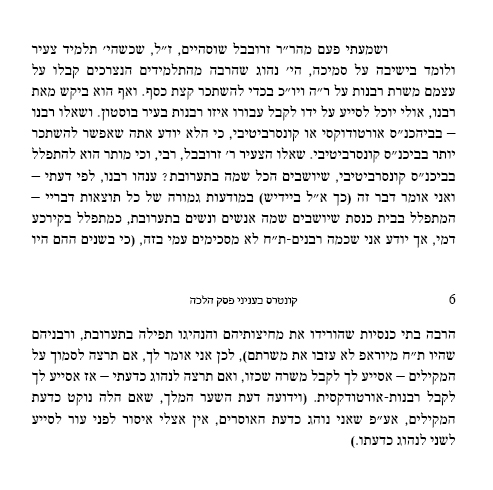
1. In this post I referred to R. Hayyim Hirschensohn’s Nimukei Rashi, and stated that I thought it was one of his best works. This led to some correspondence with readers regarding the commentary. I have no doubt that I could devote ten posts to Hirschensohn, but then what would happen to everything else I want to discuss? But there are people who want me to call attention to some more interesting comments from Hirschensohn. I know that among them are those who go to hebrewbooks.org and print out some of the sources I refer to and bring them to shul on Shabbat. That is fine, as long as you aren’t looking at it during the rabbi’s sermon. As it is, Hirschensohn writes a good deal about how the rabbis are not given proper respect, and how ignoramuses have all too much power. At least in one respect, however, things have gotten better since Hirschensohn’s day. In Nimukei Rashi, Bereshit, pp. 46a-46b, he speaks about how the people give more respect to the hazzan than to the rabbi. This doesn’t apply anymore because there are hardly any synagogues that still have a hazzan.

In response to requests, let me therefore mention one more very interesting passage in Hirschensohn’s Nimukei Rashi in this post (with more to come in future posts). But my real suggestion is to study it yourself, even though it might make for difficult reading at times. To paraphrase Chazal (Avot 5:22), “no pain, no gain.” Or as R. Tuvia Hanks put it: “It’s supposed to be hard. If it wasn’t hard, everyone would do it. The hard is what makes it great.”[1]

Before quoting the comment in Nimukei Rashi that I have promised, I also want to record one formulation of Hirschensohn that I think it is magnificent. While R. Soloveitchik undoubtedly would disagree with much of what Hirschensohn writes, if he would have heard the following, I know that he would have regarded it wonderful, expressing the essence of what real Torah learning is all about. In his Musagei Shav ve-Emet, Section Penei ha-Hamah, p. 64, Hirschensohn gives his definition of a lamdan. I am sure readers have their own definitions. Some will say that one who knows a few tractates is a lamdan, while other will say that one who gone through the Ketzot ha-Hoshen earns the title. Hirschensohn has his own approach:

אינני קורא למדן (שם זארגני על ת”ח גדול) רק את זה אשר רמב”ם קשה או רש”י סותרות או תוספות מופרך לא מניח לו לישון

When one can honestly say that a difficult Rambam or Rashi keeps you up at night, only then can you be called a lamdan. As I mentioned, this is a formulation that the Rav would have embraced, and he actually lived this way. I heard from Dr. David Fand, a student of the Rav from the 1940s, who studied in Boston’s Yeshivat Heichal Rabbenu Hayyim Halevi, that one night the Rav woke some students up in order to tell them a hiddush.

In Nimukei Rashi, Bereshit, p. 48b, Hirschensohn discusses the comment of Rashi, Gen. 26:8. The verse states that Abimelech looked out his window and saw that Isaac “was amusing himself with Rebekkah.” Upon this verse, Rashi, based on a Midrash, states that Abimelech saw them having marital relations. The question is, of course, obvious. How is this possible that Isaac and Rebekkah would do this in such a way that people could observe him? As Hirschensohn puts it:

ובאמת זה קשה מאד לחשוב כזאת על עולה תמימה כיצחק שיעשה דבר מגונה כזה ונגד היכל מלך

Hirschensohn therefore refuses to take this Midrash literally. He sees it as a mussar derash about how people living among those at a lower moral level can be negatively influenced by them. He offers his own example of this: elderly women in America. (By “elderly”, I think he means women over sixty.) In Europe they used to dress modestly but in America they were negatively influenced to dress in an inappropriate fashion. He continues:

ואינני חושב שחשבו חכמים שבאמת שימש יצחק מטתו ביום לפני חלון פתוח נגד היכל המלך, רק זה אחד מדרכי הדרוש המוסרי לקשור אותו לאיזה צלצול בלשון להפריז הדבר להגדיל את מוסרו.

Hirschensohn’s comment is not surprising. We have come to expect that anytime there is an unusual Midrash, or one that reflects poorly on a biblical figure, that one of the aharonim will argue that it is not meant to be taken literally. This is no different than the attempts to understand various strange Aggadot allegorically.[2] A good rule of thumb is if the Aggadah is strange, then someone will interpret it in a non-literal fashion. I opened up the Artscroll Rashi translation for the verse we are discussing and was therefore not surprised to find the following: “In truth, according to the Zohar, Isaac conducted himself modestly with Rebekkah. Abimelech did not see them in a physical sense; he understood through some astrological means that they were having relations (Maskil LeDavid).”

Regarding the character of Isaac, Hirschensohn writes:

על יצחק אשר ישב ארבעים שנה בלא אשה ולא שם עיניו על בנות הארץ וישב עשרים שנה עם אשתו בלא בנים ולא לקח אשה אחרת עליה אשר לזה הי’ דבר הרגיל מאד בכל איש שם להרבות נשים ופלגשים ושפחות, אות הוא שהי’ מצונן או מצדקתו משל ביצרו, ואיש כזה לא ישמש מטתו נגד חלון פתוח מול היכל מלך.

In dealing with the issue raised, Hirschensohn appears to be correct that there are only two options in describing Isaac. Either that he didn’t have a sexual drive or that he overcame it. Nevertheless, it does strike me as a bit strange to be speaking of the Patriarch in this fashion, although maybe this is just my own prudishness. Here, for example, is what R. Yehiel Michel of Glogau (died 1730) says about this episode with Isaac in his Nezer ha-Kodesh, vol. 3, p. 329a (64:5), a classic commentary on Bereshit Rabbah.

אע”ג דאמר ר”י המשמש מיטתו ביום ה”ז מגונה והיינו כמ”ש המפרשי’ דמיירי אפילו בבית אפל או במאפיל טליתו דאל”ה מה מגונה דקאמר הא אפילו איסורא איכא . . . ולא שרי בכה”ג בת”ח אלא לצורך שעה בראותו שיצר תאותו מתגבר עליו הרבה כדי שלא יבא לידי הוצא’ ש”ז לבטלה או הרהור רע אצ”ל דבאמת הוי נמי כה”ג ביצחק וזה רמז הכתו’ באומרו והיה כי ארכו לו שם הימים כלומר שאירע לו מקר’ כזה להתגבר יצר תאותו ע”י שארכו לו הימ’ שלא נזדווג לאשתו משו’ שמקמי הכי אפילו בצינעא בלילה לא שימש מיטתו פן תתעבר ויתפרסם הדבר לפני אבימלך ועמו אבל אז הי’ צורך שעה לכך ולזה לא נזהר מלשמש אף ביום.

The author might think he is helping Isaac’s reputation with his explanation, but I actually think just the opposite, that what he says reflects negatively on Isaac. Let’s remember who we are speaking about here. We are not talking about some average guy. We are speaking about the Patriarch Isaac, whom many sources portray as the holiest of the Patriarchs. And regarding him R. Yechiel Michel says that it was צורך שעה?! Does he really expect us to believe that it was such an emergency that Isaac couldn’t have waited until the night? With all due respect to the author, who certainly knew who Isaac was, I can’t understand how he could suggest this. Hirschensohn’s description of Isaac is thus much more in line with how the Tradition encourages us to view the Patriarchs. Of course, I understand what is driving R. Yechiel Michel, namely, the reality of Isaac having sexual relations in the daytime. Unless one is prepared to read this in a non-literal fashion, as did Hirschensohn, there is a real problem and I guess the answer he offered was the best one he could come up with.

I am sure most readers are with me in not feeling comfortable engaging in speculation about the sexual life of the Patriarchs, and yet the truth is that we find such speculation among the commentators. Let me give one example. The Torah states (Gen. 29:20): “And Jacob served seven years for Rachel; and they seemed unto him but a few days, for the love he had to her.” R. Hayyim Zev Rosenfeld, in his Sefer ha-Hayyim (London, 1922), p. 22, asks a very good question. If you love someone, and desperately want to be with her, then it is not seven years that will seem like a few days, but precisely the reverse. A few days would seem like seven years. So why does the Torah say that the years went by very quickly for Jacob? According to Rosenfeld, the answer is that Jacob’s love for Rachel had no sexual component.

Rosenfeld brings the following support for his contention. In blessing Reuben, Jacob says (Gen. 49:3): “Reuben, thou art my first-born, my might, and the first-fruits of my strength.” As a number of talmudic and midrashic passages explain, the sperm that impregnated Leah was the first one ever to leave Jacob’s body.[3] Since the Talmud tells us that a woman cannot become pregnant from the first intercourse, [4] how is it that Leah became pregnant? The Maharsha, Yevamot 34b, deals with the problem. In what can only be described as an exercise in original Midrash, Maharsha suggests that since Jacob was able to prevent any seminal emissions for more than eight decades, one can assume that in his first intercourse with Leah he also did not ejaculate (so that the sperm not be wasted). Therefore in truth, Leah did not become pregnant from the first intercourse.

Maharsha’s explanation, which shows how far removed Jacob was from carnal pleasures, is cited by Rosenfeld as support for his assumption that Jacob’s love for Rachel was entirely non-sexual:

שפיר נוכל לומר עליו באהבתו אותה שלא היה כונתו תאות המשגל

And since his love was non-sexual, that is why the long time waiting seemed like a short time.

(As is often the case with biblical commentaries, Rosenfeld’s question is better than his answer. We can all point to plenty of examples of non-sexual love in which a short time seems much longer [e.g., a parent longing for a child]. Just because Jacob’s love was non-sexual, why should that mean that seven years seemed like a few days?)

The Rashi dealing with Abimelech, Isaac, and Rebekkah reminds me of how in high school, when we first learnt Rashi intensively, we would sometimes come across texts which created all sorts of problems, and the teachers often didn’t deal with them properly. Would it have been so hard for the rebbe to acknowledge that yes, he too finds certain Midrashim strange? I specifically remember when we learnt Rashi to Gen. 25:26, which quotes a Midrash that explains why Esau was born first even though Jacob was conceived first. At the time, we were studying biology and knew that the biological description in this Rashi was incorrect. In what was for me a prologue to the Slifkin affair, one of the students raised this point. I also recall how his question was pushed aside, as if it was unimportant.[5] (Later, I was surprised to find that even in the nineteenth century R. Akiva Eger was clueless about the anatomy of pregnant women. Here is what he writes in his comment to Berakhot 63b, quoting a medieval source:

דז’ חדרים יש באשה שלשה מימין ושלשה משמאול ואחד באמצע אם תתעבר מימין יהיו זכרים ובשמאל נקבות ובאמצע טומטום או אנדרוגינוס)

Another Rashi which raised a problem, for me at least, was Gen. 24:2. Commenting on the biblical expression, שים נא ידך תחת ירכי, Rashi quotes the Midrash that Abraham asks Eliezer, in taking his oath, put his hands on Abraham’s circumcision.

לפי שהנשבע צריך שיטול בידו חפץ של מצוה, כגון ספר תורה או תפילין, והמילה היתה מצוה ראשונה לו ובאה לו על ידי צער והיתה חביבה עליו ונטלה

I remember in high school thinking that this was very strange. But I assumed that it was only since I was corrupted by modern values that I found this strange, and that those who had a pure “Torah hashkafah” would not even raise an eyebrow. I was even too embarrassed to ask the rebbe about this Rashi (which comes from Bereshit Rabbah).[6] It was only many years later that I found that the great R. Raphael Berdugo (1747-1821), known as the מלאך among Moroccan Jewry, had the same response as a fourteen-year-old American student. He does not hesitate to tell us that he finds this Midrash quite strange (Mesamhei Lev, ad loc.).

שהמילה אין בגופה קדושה אדרבה הוא מקום הבושת ואיך יקח בידו ערות חבירו ויזכיר שמו ית’ . . . גם אם רבינו הקדוש לא הניח ידו למטה מחגורו ק”ו אברהם אבינו ע”ה, גם מאכילת עץ הדעת יבושו בני אדם זה מזה וזילותא הוא לאדם נכבד שיחזיק אחר במבושיו

What this shows us is that when a rebbe is asked about this Rashi by one of his students, he should not put on an act and make believe that he too doesn’t find it strange. Instead, he should be honest, just like Berdugo, and acknowledge that this is indeed an unusual Midrash. Such an honest approach will earn the respect of the students and come in handy as the class comes to other strange Midrashim.[7]

Rosenfeld, whom we just cited, also deals with this passage and has a very interesting formulation (p. 21):

שים נא ידך תחת ירכי: כאשר רמזתי לעיל שהיה כלי הולדה קדוש בעיניו, אך משה אסר זאת בתורתו להיות קדושים.

In other words, the old way of taking an oath, which was acceptable in Abraham’s day, was later rendered invalid due to the heightened moral standards of the Torah. His comment, that Abraham regarded the genitals as holy, is explained by him as follows (p. 19):

שאצל אברהם היתה המילה תיקון הדת להקדיש כלי הולדה שהוא המקור מכל מין האנושית, ולכוף את תאותיו . . . וגם המילה היא מקור הולדה והשפע בא על ידו
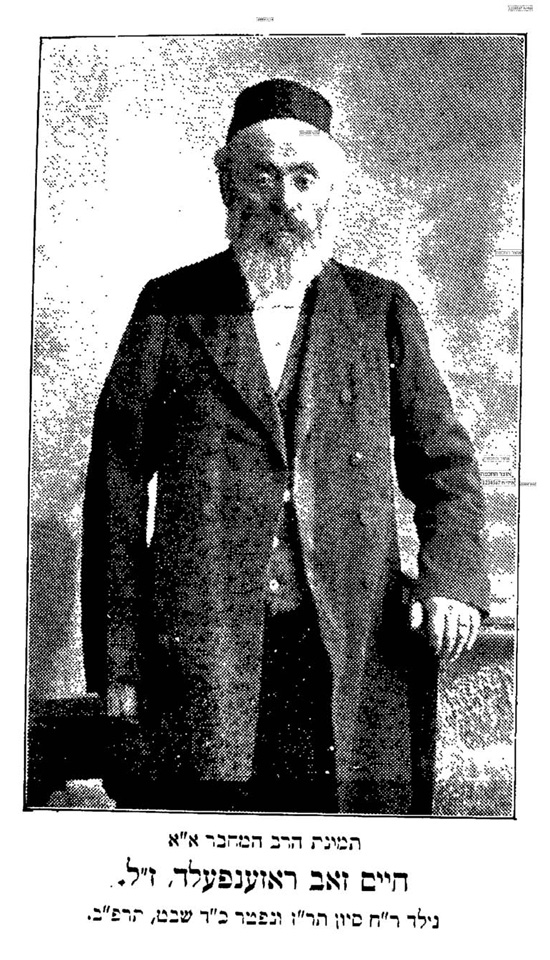
I will return in a future post to discuss Rosenfeld, who was very unconventional and expressed all sorts of provocative notions.[8] He was also unusual among those born in Eastern Europe in that he published many books in English. Here is his picture, which appears in his Sefer ha-Hayyim, showing that despite his unusual ideas he certainly had the rabbinic look.


2. I want to now go back to one of my earliest posts, from four years ago, in which I discussed the meaning of the word olam in the Bible and how the words Adon Olam should be translated. See here.

I received many e-mails after this post, and there were many important comments posted online. I told a number of people that I would try to mention their comments in a post. Although I can’t get to all of them, at least with regard to some, better late than never.

With regard to appearances of the word olam in the Torah where modern scholars say it means eternal (or something along those lines[9]) and traditional interpreters understand it to mean “world”, R. Nathan Kamenetsky called my attention to Gen. 21:33, where it is clear from Onkelos, Rashi, and Ramban that the word means “world.”[10] To this I will add that Maimonides also understands olam in this verse to mean “world”. See Mishneh Torah, Hilkhot Avodah Zarah 1:3 (Simon Glazer, in his translation, mistakenly renders it “Everlasting God” instead of “God of the World”, “God of the Universe” or something like that. Similarly, Eliyahu Touger, in his translation of this halakhah mistakenly renders it “eternal God”.) See also the index to Pines’ translation of the Guide under Gen. 21:33 for instances in the Guide where Maimonides refers to the verse, and also Schwartz’ edition of the Guide 2:13 n. 14. We must also translate Maimonides’ opening words of each of the three sections of the Guide (and elsewhere[11]) בשם ה’ א-ל עולם as “In the Name of the Lord, God of the World.”

As for what the words Adon Olam mean, in a comment to the original post, Kovner clinches the meaning, I think. He called attention to Berakhot 7b: “From the day that the Holy One, blessed be He, created the world (olam) there was no man that called the Holy One, blessed be He, Lord, until Abraham came and called Him Lord (adon).” I had forgotten about this passage, and I think it is obvious that the words Adon Olam are based on this text, meaning that the passage should be translated as “Master of the Universe”, or something along those lines. A very learned reader also pointed out to me that this same point is made by R. Pinchas Zebihi in his Mi-Zahav u-mi-Paz (Jerusalem, 1993), at the end where there is a commentary on Adon Olam. See also the online discussion here.

Responding to Kovner, R. Yitzhak Oratz e-mailed me that Kovner’s very point was approved by the Vilna Gaon and repeated by none other than the Brisker Rav. See Dov Eliach, Sefer ha-Gaon, vol. 1, pp. 425-426, where it states that the Gaon was shown this point in the siddur Magid Tzedek and said that the entire siddur was worthwhile for this one point. Ad kan R. Oratz.[12]

With regard to the word olam, it is true that in rabbinic literature it means “world”, but I would be remiss in not mentioning that the older meaning is found as well. Sometimes, it is unclear which the correct meaning is. For example, Mishnah Yadayim 3:5 reads:

אין כל העולם כולו כדאי כיום שניתן בו שיר השירים לישראל

Soncino translates: “The whole world is not as worthy as the day on which the Song of Songs was given to Israel.” Others translate similarly. Yet A. S. Halkin renders it: “All of time is not as worthy as the day on which the Song of Songs was given to Israel.”[13] Halkin’s opinion is noted in a comprehensive article devoted to the very issue here being discussed.[14] Fuderman and Gruber, the authors of this article, also point to two biblical texts “of Hellenistic date” in which they claim olam means “world.” One of them is Dan. 12:7: .חי העולם They translate this as “the life/vital force of the world,” and note that this usage is found in the Jewish liturgy where it has been transformed into חי העולמים, with the same meaning.

The other example they give is Eccl. 3:11: גם את העולם נתן בלבם. They are not the first to translate olam here as “world.” The old JPS also translated it this way: “He hath set the world in their heart.” But in the Soncino edition, which uses the old JPS, the commentary rejects this translation, commenting that “the only signification” olam has in the Bible is “eternity.” The translation would therefore have to read: “He hath set eternity [i.e., a sense of the future] in their heart.” Soncino’s note might be based on Ibn Ezra’s comment to this verse, where he says flatly that in the Bible the word olam only means “eternity,” not “world.” (He says likewise in his Short Commentary to Exodus 31:17; Commentary to Psalms 66:7, 89:4.) Daat Mikra agrees with Soncino, explaining the verse as follows: את העולם: את השאיפה לחיים עולם ונצחיות ולדעת את הנעלם, מה שהיה לפנים ומה שיהיה לאחור [15]

I will leave the meaning of olam in this verse to the biblical scholars to fight over. But I want to return to the point made by Fuderman and Gruber that Ecclesiastes was composed in the Hellenistic period, many centuries after Solomon. Based on this they don’t see it as at all incongruous that the word olam means “world” in this book because we are dealing with a later development of biblical Hebrew.[16] This relates to another interesting point.

At the beginning of the standard Vilna edition of the Mishnah there is an essay on R. Judah the Prince by R. Moses Kunitz. Here is the first page.

This essay is excerpted from Kunitz’ Beit Rabbi (Vienna 1805), most of which is actually a play in six acts.[17] Kunitz is best known for his Ben Yohai which is a valiant, if unsuccessful, defense of the ancient dating of the Zohar against R. Jacob Emden’s Mitpahat Sefarim. He was a very pious man and in his lifetime was treated with great respect.

In the next issue of Milin Havivin I will have information regarding this, so there is no need to repeat it here. Here is his picture.
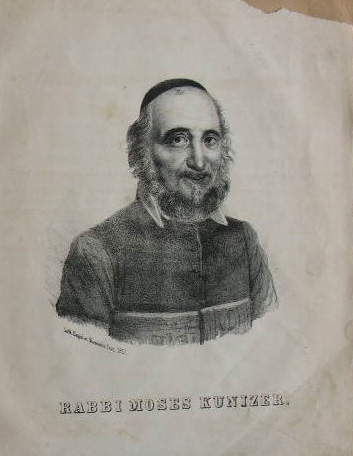
Kunitz is also famous as one of the rabbis whose responsum to the early Reformers is printed in Nogah ha-Tzedek. This was from a time when the Reformers made it seem that all they were looking for was a more lenient halakhic approach. They also succeeded in receiving letters from two Italian rabbis. Just as these rabbis were not Reform in any way, neither was Kunitz. Not knowing who the Reformers were, he fell into their trap, which is perhaps the best way to put it. Yet as I mentioned, this didn’t greatly affect his standing in the rabbinic world, because people assumed that his was an innocent error. In fact, in all the polemics against the Reformers, none of the great rabbis of the day even mention Kunitz.[18]

A few years ago a new edition of the classic Vilna Mishnah was reprinted, and lo and behold, Kunitz’ essay is missing. The publisher was obviously told that there was some controversy around Kunitz, and he therefore just cut out the essay. Yet if the publisher wanted to censor, he missed the real thing. (I wouldn’t be surprised if following this post, future printings of the Mishnah also cut out what I will now discuss. That is the reason why I don’t call attention to various “interesting” books that have been put up on hebrewbooks.org [including Karaite literature], at least until they are also on Google books. I know that soon after I discuss them, they will be taken down. As it is, a number of anti-hasidic and Haskalah works have already been removed from the site. Sometimes these books have come down within a day or two of being put up, after someone has informed the site that they put up a “dangerous” volume. So you have to be quick when they post the new books and download anything you think might be removed.)

Immediately following Kunitz’ essay, there is another article on the grammar of Mishnaic Hebrew by Solomon Loewisohn. In the very first note he refers to the book of Ecclesiastes, and concludes his comment with והטעם ידוע למשכילי עם Here is the page.


What he is alluding to in this note is that Ecclesiastes is a late biblical book, and thus could not have been written by Solomon. To show this he points to the word חוץ, which in its usage in Ecclesiastes 2:25 is an Aramaism, and thus post-dates the biblical Hebrew of Solomon’s day.[19] To use an expression of the Sages, we live in an olam hafukh. Kunitz’ essay was thought worthy of censorship, and at the same time this note remains in every printing of the Vilna edition of the Mishnah. Yet as I mentioned above, let’s see how long it is before this note, or even the complete essay, is also removed.

Regarding the book of Ecclesiastes, in Limits, p. 26 n. 140, I referred to a comment of R. Israel Bruna which appears to say that Ecclesiastes was not divinely inspired. R. Yonasan Rosman (one of whose seforim I mentioned in an earlier post) has taken issue with me in this. However, he also points out that this is exactly what Maharsha seems to be saying in his commentary to Shabbat 30b. I also found that R. Zvi Hirsch Chajes, in his note to Berakhot 4a and in Kol Sifrei Maharatz Chajes, vol. 2, p. 927, states explicitly that Ecclesiastes was not divinely inspired. R. Michael Broyde has noted that this is also stated by R. David Ibn Zimra in his responsa, vol. 2, no. 722.[20]

Rosman also points out that Maimonides, Hilkhot She’ar Avot ha-Tum’ot 9:6, states that Ecclesiastes (and Song of Songs) are “words of wisdom”, with the implication that these books are not divinely inspired. This expression, “words of wisdom”, comes from Tosefta Yadayim 2:14, where it is explicitly contrasted with ruah ha-kodesh.

ר’ שמעון בן מנסיא אומר שיר השירים מטמא את הידים מפני שנאמרה ברוח הקדש. קהלת אינה מטמא את הידים מפני שהיא מחכמתו של שלמה.

Based on the passage just mentioned, I initially assumed that Maimonides is indeed saying that Ecclesiastes was not written with divine inspiration. I also found that the important commentator R. Masud Hai Rakah is of this opinion. Yet then there is a problem, because according to the Tosefta, Song of Songs was written with divine inspiration and yet Maimonides also refers to this book as “words of wisdom.” Rakah himself raises this problem and can offer no solution,[21] but it is likely that when Maimonides speaks of these books as being “words of wisdom” it does not mean that they are lacking in divine inspiration. We can see this from Hilkhot Talmud Torah 5:4, where he quotes Song of Songs and writes regarding it אמר שלמה בחכמתו. The same words are found in Hilkhot Yesodei ha-Torah 2:12 and Hilkhot Deot 3:3, 4:15, 19 and in these cases Maimonides is quoting verses from Proverbs. Maimonides believed that both Song of Songs and Proverbs were written with divine inspiration, and yet we see that he uses the term “wisdom” with regard to them. The truth is that this phraseology comes directly from the Talmud,[22] and need not have anything to do with whether the text being described is divinely inspired. This whole problem is dealt with by the brilliant R. Meshulam Roth in an article in Sinai 17 (1945) pp. 267ff. With his typical erudition, Roth shows that Maimonides indeed regarded Ecclesiastes as being divinely inspired and in fact states so explicitly in Guide 2:45. Roth also shows how in a few places he describes Solomon as a prophet.[23]

Many might find this entire discussion strange, for they assume that if a book is in the canon that means it must be regarded as having been divinely inspired. I have found such a conception in many books.[24] Yet it is incorrect, and as Shnayer Leiman has shown, the tanna R. Simeon ben Menasia, while he regarded Ecclesiastes as an uninspired book, also thought that it was canonical. Thus, while he states that Ecclesiastes does not defile the hands, he also expounded a verse from Ecclesiastes.[25]

As far as I know, the Sages never “decided” that Ecclesiastes is a divinely inspired book. It would therefore seem to be entirely acceptable for one to hold the position of R. Simeon ben Menasia, which was shared by Beit Shammai and R. Meir,[26] that the book is not a product of ruah ha-kodesh. Obviously, one who rejects the book, or any other biblical text, claiming that it was a mistake to have been included in the Canon, has to be regarded as a sectarian. However, here too I think that there is more room for personal opinions than people often think. For example, what about someone who accepts Ecclesiastes as part of the Canon but thinks that the Sages were wrong in this decision, and that they should have adopted the view that the ideas of this book are not fit to be included in the Bible? This was Samuel David Luzzatto’s early position, although he later became more sympathetic to Ecclesiastes. Yet despite this negative view, Luzzatto never rejected the canonical status of this book.[27]

Or what if someone thinks that the halakhah should have been decided in accordance with Samuel (as understood by a number of rishonim)[28] that the book of Esther should not have been included in the canon? As long as one accepts the halakhah as recorded by the Sages he is not to be regarded as a Zaken Mamre, which shows that acceptance of the halakhah in practice is what is important, but one doesn’t have to think that the Sages were correct. After all, in the story of the Oven of Akhnai (Bava Metzia 59b), while R. Eliezer was forced to accept R. Joshua’s viewpoint, I don’t think there can be any doubt that R. Eliezer still believed that he was correct. How could he not, when God Himself agreed with him? Yet the most R. Eliezer could hope for was that his decision would be adopted by a future beit din, and maybe only after the arrival of the Messianic era. Let us not forget that the Mishnah in Eduyot 1:5 explicitly tells us that minority opinions are recorded so that a later court can rely on them, meaning that there is no problem for one to argue the case of a rejected opinion, as long as one does not adopt it in practice (i.e., before a later court gives its imprimatur to do so).[29]

All this seem to be no different than someone who, after examining a talmudic dispute, thinks that the weight of the evidence shows that the halakhah should be in accordance with Abaye, and yet the Talmud decides the halakhah in accordance with Rava. Such a person accepts the practical halakhah, and this is no different than someone who thinks that the Shulhan Arukh decided the halakhah improperly, but who nevertheless follows the law as recorded. You can even argue that this is a very high level of commitment, namely, one who thinks the halakhah should be different, but nevertheless sublimates his personal feelings and accepts the law as we have it.[30]

Similarly, the assumptions of academic Talmud study lead, in theory, to the undermining of many talmudic conclusions. But the practitioners of this form of study have always insisted that since they don’t seek to change the accepted halakhic practice, there can be no religious objection to their approach.

The only reason the Song of Songs was included in the Canon is because it was interpreted in an allegorical fashion.[31] Does this mean that one must accept that this was the original meaning of the book? Jacob Barth (1851-1914) certainly didn’t think so. Barth was the son-in-law of R. Esriel Hildesheimer and one of the most brilliant Semitists of his day. In addition to teaching at the University of Berlin, he was also a long-time and revered faculty member at the Rabbinical Seminary of Berlin. Just to give one example of this, in discussing the great achievements of German Orthodoxy, R. Jehiel Jacob Weinberg lists the following four men as examples of what German Orthodoxy can be proud of: Hirsch, Hildesheimer, Hoffmann, and Barth.[32]

Here is a picture of Barth.
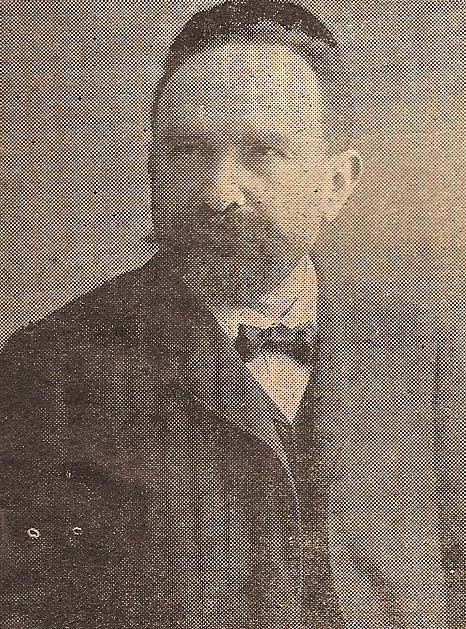

Barth argued—and taught his students at the Rabbinical Seminary of Berlin—that the Song of Songs was not originally intended as an allegory, but this was a later interpretation of the Rabbis, and as already mentioned it was precisely this interpretation that enabled the book to be included in the Canon.[33] Barth believed that the Song of Songs was actually a collection of different songs, composed in various periods.[34] They were designed to be sung at a wedding and the days of feasting, and give expression to marital happiness and love which are basic to the Jewish family. According to Barth, just like the Psalms were originally written by the Psalmist with specific circumstances in mind, but their meaning for the Jewish people throughout history is not tied to this original intent, the same can be said for the Song of Songs. What it originally meant is different than what it later came to mean for generations of Jews.[35]


To be continued
* * * *
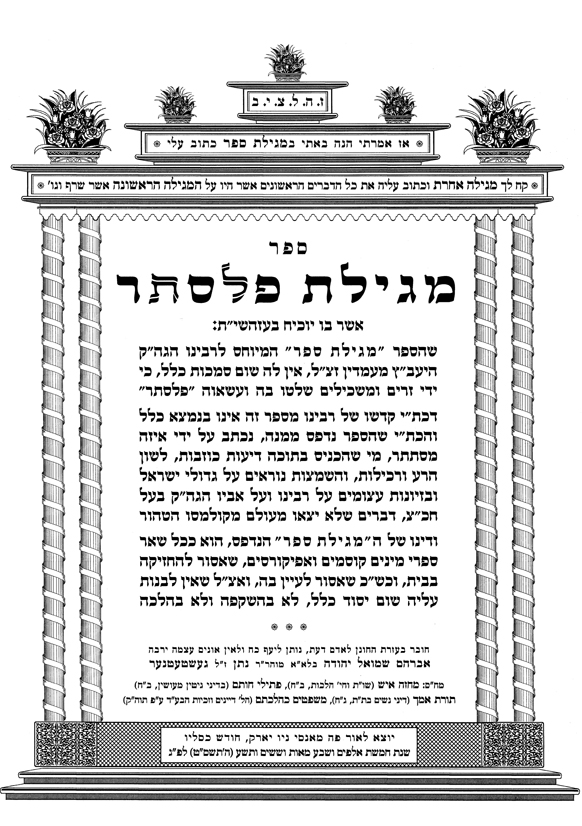
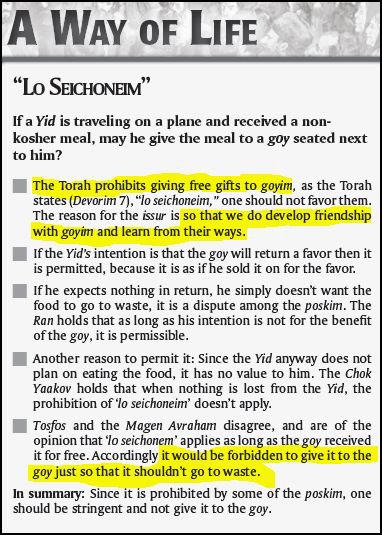
In my last post, available here, I wrote about the issue of lo tehanem. As far as the Modern Orthodox are concerned, based on the Meiri and others, these laws are no longer regarded as applicable in modern times. (Although as I mentioned, the Centrists are trying to bring them back.) Someone sent me a link to Dov Bear’s post available here. Dov Baer included the following text that recently appeared (and highlighted certain sections).

I have already mentioned the Slifkin controversy in this post, and regarding matters of science and Torah there definitely are differences between the Modern Orthodox and the haredim. However, I think that when it comes to matters like lo tehanem, the divide is much more significant. If the haredi/ hasidic world really accepts the outlook of the page printed above, then its understanding of what “Jewish values” are all about is far removed from that of the Modern Orthodox.[36] We can also see how secure haredi Jews in America must feel in order for them to put this sort of material in the English language, for all to see.

In two posts from now, I will discuss a dispute currently taking place in the hasidic world in America about how to relate to non-Jews. For now I will simply note that a common theme among virtually all who abandon hasidic life, in explaining what they found objectionable in their former lifestyle, is the denigration of “the other” found in the hasidic world. In the forthcoming post, I will deal with a brave voice from that world who is putting forth a different approach.


[1] See here.
[2] Here is what Louis Ginzberg wrote about the unusual aggadot (On Jewish Law and Lore [New York, 1970], p. 77 (I thank Gershon Bacon for reminding me of this passage.) There is a lot one can say about this comment.

With your permission I shall commence my lecture by recounting an incident that happened to me. It is a memory from boyhood, which means the time when I had already been liberated from the hard discipline of the master of the heder, and, though yet a child of nine, had begun to study, in the traditional phrase, “by myself.” I was then studying the tractate Baba Bathra. When I reached the tales of Rabbah bar bar Hannah, doubts began to disturb my mind; my peace was particularly troubled by those geese who were so fat that they had streams of oil flowing from them and by the bird that was so big that the waters of the sea reached only to its ankles and its head split the heavens. My joy was great when I came across a book by one of the “enlightened” of the older generation (if my memory is correct it was the Maphteah by Shatzkes), from which I learned that these geese were neither fat nor thin and that the giant bird possessed neither feet nor wings, but that the whole tale was merely a flight of the imagination, or, as the ancients used to say, it was only a parable—the moral I have forgotten. I was a child then; but when I reached maturity I realized that in truth the geese of Rabbah bar bar Hannah were real geese and the giant bird was literally a bird. When regarded as natural creations of the folk imagination, they lost their strangeness and incomprehensibility. On the contrary, it would be all the more strange if we possessed no such tales; in that case it would be extremely difficult to explain so striking a difference between our people and all others, one involving so great a triumph of reason over imagination that the latter had become completely atrophied.


[3] See Torah Shelemah, Gen. ch. 49, note 47.
[4] Do any of the readers know where the Talmud picked up this piece of folklore? I assume it was a common notion in ancient times. See Bereshit Rabbah 45:5, where the matter is disputed. Noda bi-Yehudah, Even ha-Ezer no. 22, recognizes that there are women who do become pregnant after first intercourse, and therefore claims that the Talmud was only giving a general rule, but there are exceptions. See R. Neriah Gutel, Hishtanut ha-Tevaim (Jerusalem, 1995), pp. 88ff.
[5] I assume that the rebbe’s response was due to the fact that the passage quoted by Rashi is a Midrash. If it was Rashi’s own explanation, I don’t think he would have regarded it as a disrespectful question. In general, and readers can correct me if I am wrong, I don’t think that the opponents of Slifkin assume that together with Hazal the greatest rishonim are also infallible on scientific matters (the one exception perhaps being the Lubavitchers when it comes to the Rambam). When I was in yeshiva I never came across a rebbe who thought that, although I can’t remember anyone actually spending time on one of the rishonim and explaining why what he says is not correct scientifically, or, to take a different issue, that perhaps the rishon’s view of women doesn’t reflect how we currently think. Had they done so, it would have had an enormously positive influence on some of the students who instead came to believe that the Torah was out of date and not relevant to their lives.

To give one example of many, the online elucidation of Tosafot, available here, in discussing Tosafot, Shabbat 65b. s.v. sahada, offers the following preface:

Before we approach this Tosfos we must realize that during the times of the Reeshonim, there were very few if any maps in Europe of any of the areas that are being discussed in the G’moro. All the knowledge that they had about the rivers and places was what they gleaned from the G’moro or Midrosh about these places.

What forces the translator to add this comment is that Tosafot rejects Rashi’s explanation (which I will soon come to) and incorrectly states that all rivers flow from east to west. (Among European rivers, the Danube flows west to east.) It turns out that Rashi’s explanation is also geographically incorrect. Rashi, Shabbat 65b s.v. sahada, writes about the Euphrates: שהוא יורד מארץ ישראל לבבל

In other words, Rashi thought that the Euphrates originated in the Land of Israel, and flowed from there to Babylonia. Yet this is incorrect as the Euphrates is not within the Land of Israel. Artscroll recognizes the problem and states that the Euphrates is on the northern border of “Greater Israel,” i.e., the land promised to Abraham. I believe that this is an apologetic explanation. The Euphrates will only be part of the Land of Israel in messianic days. It was never a part of Israel during the First Temple, or during the Second Temple. Yet Rashi is speaking about the river as actually part of the Land of Israel. See Isaac Samuel Reggio, Ha-Torah ve-ha-Filosofyah (Vienna, 1827), p. 63.

[6] See also the various Midrashim cited in Torah Shelemah, Gen. 47:29, where Jacob is speaking to Joseph and he too says שים נא ידך תחת ירכי.
[7] There are other ways of dealing with the Midrash. See e.g., R. Paragi Alush, Ohev Mishpat (Djerba, 1928), vol. 1, no. 3, that Eliezer only touched the organ from outside of Abraham’s clothes. R. Eliyahu Katz, Amar ve-Amarta (Beer Sheva, 1994), Gen. 24:2, finds the Midrash so strange that he can’t take it literally, and even uses the term has ve-shalom with reference to the literal meaning. He does so even though, as far as I can tell, all the standard commentaries on the Midrash and Rashi do take it literally. Here are his words:

תמוה מאד שהמילה נחשבת כחפץ של מצוה. והרי אין בזה מן הצניעות . . . אך ודאי שאין הכוונה ח”ו כפשוטו, אלא הכוונה שהזכיר את המצוה כמו שאומר שנשבע בשם ה’.

[8] For now, here is one just one example. He assumes that Gen.36:31-43 is post-Mosaic.

ואלה המלכים אשר מלכו בארץ אדום לפני מלוך מלך לבני ישראל: מזה נראה כי זמן רב נכתבה פרשה זו, כי ידע כבר את מלכי ישראל.


[9] See Sacha Stern, Time and Process in Ancient Judaism (Oxford, 2003), pp. 75 n. 43, 109ff.
[10] Mordecai Spitz called my attention to Neh. 9:5, where the traditional commentaries also understand olam to mean world.
[11] See Saul Lieberman, Hilkhot ha-Yerushalmi, p. 5 n. 7.
[12] I should also mention that there is dispute about how the word חבלי should be translated in Adon Olam. According to Salomon Speier the meaning is “my portion” and not “my pain” See his note in Journal of Jewish Studies 4 (1953), pp. 40-41. Zebihi, Mi-Zahav u-mi-Paz, at the end, also argues for this understanding. None of the many translations I have checked agree with this. [S. of On the Main Line calls my attention to David Levi’s London 1794 Rosh Hashanah Machzor, where the passage is translated as “Rock of my portion in time of distress.”]
[13] The meaning of olam in Avot 1:2 – על שלשה דברים העולם עומד – has also been called into question. See Judah Goldin, Studies in Midrash and Related Literature (Philadelphia, 1988), p. 34.
[14] Kirsten A. Fudeman and Mayer I. Gruber, “’Eternal King/ King of the World’: From the Bronze Age to Modern Times” A Study in Lexical Semantics.”REJ 166 (2007), pp. 209-242.
[15] R. Elijah Benamozegh translates Ps. 106:48: ברוך ה’ אלקי ישראל מהעולם ועד העולם as “Blessed is the Lord, God of Israel, From World to World,” and Ps. 145:13 מלכותך מלכות כל עולמים as “Your kingship is a kingship of all worlds.” See Israel and Humanity, trans. Maxwell Luria (New York, 1995), p. 184. I wonder if Benamozegh meant these as scientific translations, or if this is to be regarded as derush.
[16] See also Robert Gordis, Koheleth—The Man and His World (New York, 1968), pp. 231-232.
[17] The version of Kunitz’ essay that appears in the Vilna Mishnayot is not identical to that which appears in Beit Rabbi. In particular, a few footnotes have been added. This is not the only example where the editors of the Vilna Mishnayot (Romm) tampered with texts. See Kalman Kahana, Heker ve-Iyun (Tel Aviv, 1960), vol. 1, p. 134 (called to my attention by Eliezer Brodt).
[18] Anyone who wants to visit Kunitz’ grave can find it in the Kozma cemetery in Budapest. For people looking to visit graves, the most famous in the Kozma cemetery is R. Shimon Oppenheim, and he is easy to find. He is not that well known and yet his grave is visited more than many other gedolim who were of much greater significance. This is because R. Shimon promised, as it states on his tombstone, that whoever comes to his grave and recites the Menuhah Nekhonah, his prayers will be answered. (The E-l Male Rachamim commonly recited is an abridged version of the Menuhah Nekhonah, which is found in the kabbalistic work Maavar Yabok) . Since this is a guarantee from a holy rabbi, it is not surprising that his grave would attract people.

So how to find Kunitz’ grave? Unfortunately, the computer print-out provided by the cemetery directs people to the wrong place. If you are standing at R. Shimon’s grave, the plot to the left is that of R. Israel Wahrmann. He was the first chief rabbi of Pest. His grandson, Mor Wahrmann, was the president of the Jewish community from 1883-1892 and a member of parliament from 1869. He was a proud Jew, no question about it. He once even had a duel with an anti-Semite. Neither was killed, but Wahrmann was sentenced to eight days in prison. See Kinga Frojimovics, et al, Jewish Budapest (Budapest, 1999), pp. 214ff., 260. However, he despised the Orthodox (and they detested him). During the debate in Parliament over the Orthodox request to create separate communities, he stood up and started reading sections of the Shulhan Arukh to show how foolish the Orthodox were. All three of his children ended up converting to Catholicism. See Jewish Budapest, p. 216 and R. Leopold Greenwald, Korot ha-Torah ve-ha-Emunah be-Hungaryah (Budapest, 1921), p. 78, and in Apriyon 2 (1925), p. 130.

Two graves to the right of R. Shimon’s is that of Kunitz. Unlike R. Shimon, no one has yet stepped forward to redo Kunitz’ tombstone, which is in bad condition. In another hundred years it will probably be entirely illegible. However, a good portion of it can still be read. This left me perplexed, as it is not the same inscription as that found in Greenwald’s Mekorot le-Korot Yisrael (Humenne, 1934), p. 27. How to explain this?

[19] See R. Meir Mazuz, Kovetz Ma’amarim (Bnei Brak, 2003), p. 60. There are a number of other unusual words in Ecclesiastes, such as pardes (2:5) and pitgam (8:11; both Persian loanwords), which academic scholars have pointed to to show that the book is post-Solomonic. (Pardes is also found in Song of Songs 4:13.) See Shadal in Otzar Nehmad 3 (1860), p. 19, who discusses this and among other points notes that the words כבר and ענין do not appear in any other biblical book. See also Robert Gordis, “Koheleth: Hebrew or Aramaic?” Journal of Biblical Literature 71 (1952), pp. 93-109. In Amos Hakham’s introduction to the Daat Mikra Shir ha-Shirim, pp. 12-13, he rejects the significance of Persian loanwords in dating the text.

Incidentally, R. Moses Isaac Ashkenazi, Ho’il Moshe: Hamesh Megilot ve-Sefer Mishlei (Livorno, 1880), pp. 80-81, states that you can also find some Aramaic words and expressions in Proverbs, as well as later Hebrew forms, none of which could originate in Solomon’s era. Yet this discovery did not trouble Ashkenazi in the slightest.

אין לתמוה אם נפלו בספר זה כמה תיבות ומליצות מל’ ארמי וגם איזו זרות בדקדוק הלשון כמו פעל נשתוה (סימן כ”ז ט”ו) בנין נתפעל ע”ד נשתנה נתרפא נצטרע ודומיהם בלשון חכמים . . . לפי שמפי שלמה יצאו המשלים בל’ מדויק, רק בעברם מפה אל פה דור אחר דור בעוד שקרבת ארם הכניסה בשפת ב”י [בני ישראל] תיבות ומליצות נכריות, נהיה שבבוא יום ונרשמו על ספר כבר הורגלו לאמרם כמו שנמצאו אצלנו, ואם היו מחליפים בהם דברים היו נגרעים מערכם, כי כן יארע לכל משל מאיזה לשון שיהיה שצריך לאמרו כמו שהוא בפי המון העם ואין לתקן בו או להוסיף עליו או לגרוע ממנו

[20] “Defilement of the Hands, Canonization of the Bible, and the Special Status of Esther, Ecclesiastes, and Song of Songs,” Judaism 44 (Winter 1995), p. 70.


[21] Ma’asah Rakah,ad loc.: לא ידעתי למה קרי שיר השירים דברי חכמה דהלא ברוח הקודש נאמר וקדש קדשים הוא He does not ask this question about Ecclesiastes, which shows that he assumes that according to Maimonides Ecclesiastes is only divrei hokhmah.
[22] See R. Zvi Hirsch Chajes, Kol Sifrei Maharatz Chajes, vol. 1, p. 439; Sid Z. Leiman, The Canonization of Hebrew Scripture (New Haven, 1991), p. 173 n. 317.
[23] For examples from the Talmud where Solomon is described in this fashion, see R. Betzalel Zev Safran, She’elot u-Teshuvot ha-Rabaz, vol. 1, Yoreh Deah no. 64 (in the note). Regarding R. Meshulam Roth, it is unfortunate that almost nothing has been written about him. The Tchebiner Rav is reported to have stated that had R. Meshulam been a member of Agudat Israel, the haredim would have crowned him gadol ha-dor. I hope to discuss him in a future segment of my Torah in Motion classes.
[24] Pretty much everyone also seems also to assume that a divinely inspired book included in the Canon had to be have been written in Hebrew. Yet Ibn Ezra, Job 2:11, thinks that the book of Job is a translation from another language, and that is why it is so difficult to understand.
[25] See Leiman, Canonization, p. 113.
[26] Megillah 7a.
[27] Shadal originally thought that Ecclesiastes taught heretical doctrines and was fraudulently attributed to King Solomon. Along these lines, I should note that there were talmudic sages who thought that Solomon had sinned so grievously that he lost his share in the World to Come. See Saul Lieberman, “Hearot le-Ferek Alef shel Kohelet Rabbah,” in Studies in Mysticism and Religion Presented to Gershom G. Scholem (Jerusalem, 1968), pp. 163ff. If someone today expressed agreement with this rabbinic position, I am certain that he would be roundly condemned.
[28] See Broyde, “Defilement of the Hands,” p. 68.
[29] By the same token, someone I know once commented that while in practice he accepts the halakhah as recorded in the Talmud and Shulhan Arukh, some of these halakhot relating to economic matters derive from a very different circumstance than what we have today. He assumes that a future Sanhedrin will revise some of these halakhot which are economically counterproductive and out of touch with how markets work.
[30] See Seridei Esh, vol. 3 no. 54 where R. Weinberg admits that a halakhah in the Shulhan Arukh causes him anguish.

ואודה על האמת, שאיסור זה גורם לי צער גדול

Weinberg was dealing with whether a woman whose father isn’t Jewish can marry a kohen. He would have liked to permit it, but the Shulhan Arukh ruled otherwise. What made the Shulhan Arukh’s ruling so frustrating to Weinberg is the fact that R. Joseph Karo went against his own principle and ruled in accordance with R. Asher, despite the fact that the Rif and Rambam ruled differently. Furthermore, the Vilna Gaon agreed with the Shulhan Arukh. So in the end, Weinberg felt that he must accept the Shulhan Arukh’s ruling. While Conservative halakhists are able, in cases like this, to fall back on conscience, which can trump even biblical law, Orthodox halakhists cannot do so. They must accept the halakhah even if they think it should have been decided differenttly.

[31] Interestingly, Daniel Boyarin has argued that the earliest rabbinic approach to the book was not allegory. He writes as follows:

According to the earliest strata of Rabbinic hermeneutics, the Song of Songs was not an allegory in the sense of paradigms projected onto the syntagmatic axis or concrete entities and events that signify abstractions. Rather it was an actual love dialogue spoken by God to Israel and Israel to God in concrete historical circumstances, or written by Solomon, as if spoken by Israel and God in those circumstances. . . . If the impulse of Origen is to spiritualize and allegorize physical love quite out of existence in the allegorical reading of the Song, the move of the midrash is to understand the love of God and Israel as an exquisite version of precisely that human erotic love. Reading the Song of Songs as a love dialogue between God and Israel is then no more allegorical than reading it as a love dialogue between King Solomon and the Queen of Sheba. The Song is not connected with an invisible meaning but with the text of the Torah and thus with concrete moments of historical memory.

See Boyarin, “The Eye in the Torah: Ocular Desire in Midrashic Hermeneutic,” Critical Inquiry 16 (1990), pp. 543, 549. See also Gerson D. Cohen, Studies in the Variety of Rabbinic Cultures (Philadelphia, 1991), pp. 3-17.
[32] Li-Frakim (1967 edition), pp. 232-233.
[33] “Hartzaotav shel Yaakov Barth al Sefer Yishayahu ba-Beit Midrash le-Rabanim be-Berlin” in Uriel Simon and Moshe Goshen-Gottstein, eds., Iyunei Mikra u-Farshanut (Ramat Gan, 1980), pp. 83-85. (Regarding the dating of Ecclesiastes, discussed earlier in this post, see ibid. for Barth’s view that Ecclesiastes was written ca. 200 BCE.) I have elsewhere discussed the controversy that broke out when R. Raphael Breuer published a commentary to the Song of Songs that interpreted the book in a literal fashion. See Between the Yeshiva World and Modern Orthodoxy, p. 83, and my article on the Frankfurt rabbinate in Milin Havivin 3 (2007), available here.

This commentary was one of the issues that led people to oppose Breuer inheriting his father’s position as rabbi of the Frankfurt separatist community. I find it hard to understand why this commentary aroused such opposition. After all, why can’t the Song of Songs be understood as describing a loving Jewish marriage? Breuer was not denying the allegorical interpretation, only adding an additional level of meaning.

Incidentally, once when a cantor at a wedding sang some words from Song of Songs as the bride walked around the groom, R. Soloveitchik “was not happy. This, after all, was a passuk [verse] in Shir Hashirim which he felt should not be applied to a man and woman in a literal sense.” See Heshie Billet, “Rav Yosef Dov HaLevi Soloveitchik (The Rov) ZT”L: Role Model Par Excellence,” in Zev Eleff, ed., Mentor of Generations (Jersey City, 2008), p. 152. The same opinion is expressed by R. Yosef Lieberman, Mishnat Yosef, vol. 7, no. 101. See also R. Moshe Feinstein, Iggerot Moshe, Yoreh Deah II, no. 142. In addition, Sanhedrin 101a states הקורא פסוק של שיר השירים ועושה אותו כמין זמר . . . מביא רעה לעולם (Avot de-Rabbi Nathan, ch. 36, states that such a person has no share in the World to Come.) However, Kallah Rabati: Baraita, ch. 1, explains this passage as follows: היכי דמי כמין זמר כגון דזמיר ביה ודעתיה על הרהור See also R. Jacob Emden’s note to Sanhedrin 101a:

הקורא פסוק של שיר השירים ועושה אותו כמין זמר נראה דהיינו שמשתמש בו לעשות ממנו זמר לחשוקה אילת אהבים ולחבר אותו לשיר עגבים

This means that there is no objection to singing a song from Shir ha-Shirim in a “kosher” fashion, such as at a wedding or if sung as praise of God. (Emden’s note was published from manuscript in the Wagschal Talmud, and does not appear in the standard editions. I learnt of this from R. David Teherani, Divrei David, vol. 2, Orah Hayyim no. 37.)

See R. Ovadiah Yosef, Yabia Omer, vol. 3, Orah Hayyim 15:5, that in Egypt the practice was to sing verses from Song of Songs in the synagogue between Passover and Shavuot. He also quotes R. Meir Abulafia, Yad Ramah, Sanhedrin 101a who writes:

ויש לפרש דהני מילי מאן דקרי ליה דרך שחוק אבל מאן דמיכוין לשבוחי ביה לקב”ה דרך ניגון שפיר דמי ומילתא צריכא עיונא

Returning to the Rav, it must be noted that he was opposed to all singing under the chupah. See Daniel Greer, “Ma’aseh Rav – V’dok,” in Eleff, ed., Mentor of Generations, p. 177, that at his wedding Rav stopped the cantor from singing Im Eshkochech Yerushalayim. (Others are opposed to all songs which use biblical verses, whether the words are taken whether the words are taken from Song of Songs or from any other biblical text. The only permission would be at a seudat mitzvah. See R. Ben Zion Abba Shaul, Or le-Tziyon, vol. 2, ch. 14 no. 35.) As for the Song of Songs, the Rav also stated that it is “forbidden” to interpret it literally. He even put this into a halakhic context:

בשיר השירים איכא הלכה שאין בו פשט אלא כפי הבנת הרמז הדרש והסוד. המקרא יוצא מידי פשוטו והדרש הופך להיות הפשט

See Reshimot Shiurim, Bava Kamma, ed. Reichman (New York, 2005), p. 494 (to Bava Kamma 83b). See also R. Hershel Schachter, Nefesh ha-Rav, pp. 289-290.

[34] אפריון and פרדס (3:9, 4:13) are among the late Hebrew words he points to show that some sections of the book were composed in the post-exilic period, many centuries after Solomon. R. Moses Isaac Ashkenazi, introduction to Ho’il Moshe: Hamesh Megilot ve-Sefer Mishlei, rejects the notion that based on a couple of individual words one can establish the book’s date. Yet while Ashkenazi defends the Solomonic authorship of Song of Songs and Proverbs (see above, n. 19), he does not believe that Ecclesiastes was written by Solomon. One of his proofs is from Eccl. 1:16: “Lo, I have gotten great wisdom, more also than all that were before me over Jerusalem.” According to Ashkenazi, since Solomon was only the second king to reign in Jerusalem, he never would have written in this fashion. See also 2:7. 9 where the author writes about how he differs “from all who were before me in Jerusalem.” Again, Jerusalem had not been in Israelite hands for that long so it is hard to see Solomon saying this. Ashkenazi also points to the numerous Aramaic words in the book as showing that it had to have post-dated Solomon.
[35] I found a difficult passage in the Netziv’s commentary on Song of Songs, (Metiv Shir). Commenting on the first verse, he writes:

וכן שיר אחות לנו קטנה נאמר בימי א”א [אברהם אבינו] כמבואר בב”ר פ’ לך, ויבואר במקומו, אבל שלמה אסף השירים ברוה”ק וגם הוסיף הרבה משלו ועשאן שיר נפלא אחד.

The Netziv states that the section of Song of Songs beginning with ch. 8:8 (“We have a little sister . . .”) was written in the days of Abraham. What is his proof? Bereshit Rabbah 39:1 states: “R. Berekhiah commenced: We have a little sister (ahot; Song of Songs 8:8), this refers to Abraham, who united (ihah) the whole world for us.” R. Berekhiah continues to find allusions to Abraham in the next couple of verses as well. In other words, R. Berekhiah offers a nice Midrash about how Song of Songs homiletically refers to Abraham. But how does the Netziv possibly derive from this that the verses were written in the days of Abraham? The very next section in Bereshit Rabbi cites a verse from Ecclesiastes and states: “this refers to Abraham.” Does the Netziv assume that this too was written in the days of Abraham? Midrash is full of this type of homiletic comment, so why here does the Netziv think that we can learn something historical from R. Berekhiah’s statement?
[36] See also my post here.


New Writings from R. Kook and Assorted Comments, part 4

New Writings from R. Kook and Assorted Comments, part 4
Marc B. Shapiro
Continued from here.
Returning to the issue of creation, I found an interesting comment in R. Hayyim Hirschensohn’s commentary on Rashi, Nimukei Rashi. For those who are unaware of this commentary, I recommend that you examine it. You can order a bound copy (even soft-cover) very cheaply at hebrewbooks.org. I think that this is one of Hirschenson’s greatest works.[1]
In his comment to Gen. 1:13 Hirschensohn writes that belief in eternity (which here apparently means eternal matter in the Platonic sense, not an eternal universe in the Aristotelian sense) is not heretical, just foolish. He explains that something foolish by definition cannot be heretical, and gives an example: If you say that 2+2=5 this is false, but it is not heretical. It would be interesting to develop this theme further, and to see to what conclusions it takes you.
Also regarding creation, see his comment to Gen. 2:6 where he explains how evolution fits in with Torah, and where he differs with Darwin.[2] He sees support for his view in Rashi, although he acknowledges that Rashi himself didn’t have evolution in mind. Rather, one can explain Rashi in accord with modern views even though Rashi himself had no knowledge of modern science. Here is an example where a book, in this case Rashi’s commentary, is explained with no concern given to original intent, the notion being that a book has a life of its own and is not bound to the interpretations of its author. I cited material on this theme in Studies in Maimonides, and there is a good deal more I can add from traditional Jewish writings. (In my Hakirah response to Buchman, I promised to explore this issue in a future Hakirah article).
Here is Hirschensohn’s passage:
אל יחשוב הקורא שדעתי שרש”י ז”ל ידע מענין ההתפתחות והי’ לו שיטה מצוינה מיוחד בזה, שאהי’ בזה לצחוק לכל שומע, אמנם דעתי שרוח הקודש הופיע בבית מדרשו ופירושו בהפסוקים מתאימים לפרש על ידיהם שיטות פילוסופיות וטבעיות לפי אמתתם
Quite apart from his main point, I find Hirschensohn’s opening words here fascinating. We get a sense of whom he felt he was writing for when he says that if he were to claim that Rashi knew of the most advanced scientific thought, that it would be regarded as laughable. I think that even today if someone were to attribute prophetic-like scientific knowledge to Rashi, there are some circles where this would not occasion laughter, but great respect, on the assumption that as with Hazal, Rashi’s knowledge in these matters is all-encompassing.
I could have an entire post on the provocative material in Nimukei Rashi, but let me just give a couple of more examples. In his commentary to Gen. 4:16, Hirschensohn says that prophets can make mistakes, just like the rest of the people of their time. He says that they can even make such errors when it comes to principles of faith:
כי לא כל הנביאים ידעו הפילוסופיא האלקות האמתית . . . יכולים לטעות בטעותים אשר בני אדם בדורם טועים
He applies this insight to prophets who lived before the giving of the Torah. However, those prophets who lived after the Revelation at Sinai and were able to study Torah in a proper philosophical fashion were spared these types of errors.
ורק נביאי ישראל אשר למדו תורת ה’ עמדו מן התורה ומן החכמה ודעת על אמתת הפילוסופיא האלקות . . . כי הנבואה לא בא להודיע רק את הדבר אשר הודיעה מפורש ובשאר דברים יכול האדם להשאר בטעותיו הקדומים ורק התורה עם החכמה והדעת המה מודיעים את האמתית [!] ועקרי האמונה והפילוסופיא . . . כי הקב”ה חפץ שהאדם יהי’ דורש למצא את האמת לא ליתן לו את האמת בנבואה בלתי דרישה וחקירה.
In a previous installment of this series I dealt with Maimonides’ view that prophets can make errors, with the proof being how Ezekiel’s prophecy was based on incorrect science. I also noted Ralbag’s claim that one of Abraham’s prophecies contained an error. In other words, Hirschensohn’s basic point has an honored precedent.
However, as far as I know, no one prior to Hirschensohn claimed that prophets could make errors in basic theological points. Yet Hirschensohn’s argument is very strong, for his proof is from Cain. Cain must be regarded as a prophet, as God spoke to him. Yet Cain also erred in a basic theological point, as he didn’t think that God’s knowledge was all-encompassing. This incidentally illustrates why according to Maimonides the entire Cain and Abel story cannot be understood as historical. While Hirschensohn is able to say that “not all prophets knew the true divine philosophy,” for Maimonides this is the basis of prophecy and the only way it comes about. The notion that Cain, or Adam for that matter, could have developed his mind philosophically in order to achieve prophecy is obviously not a serious proposition. Therefore, according to Maimonides, it is clear that God never spoke to Cain. In other words, from Maimonides’ perspective the story never actually happened, and must be understood as a philosophical or moral tale.
This interpretation of Maimonides is nothing new. Lawrence Kaplan has already noted that the standard commentaries on Maimonides’ Guide—Efodi, Shem Tov, Falaquera, Ibn Caspi, and Narboni—leave little doubt that in their mind Maimonides’ position is that the births of Cain, Abel, and Seth are to be understood allegorically.[3] When it comes to the Cain story I think the matter is fairly clear-cut, for if a brute like Cain can be regarded as a prophet this would contradict Maimonides’ entire philosophical understanding of what prophecy is.
R. Hananel Sari makes an interesting point that is relevant to what we are discussing.[4] He calls attention to the fact that matters which Maimonides does not regard as having been real historical events are treated as such, for educational or spiritual purposes, in the Mishneh Torah. Maimonides himself writes about how this was the practice of ancient courts in dealing with the Wayward Woman (Hilkhot Sotah 3:2):
ומגידין לה מעשה יהודה ותמר כלתו, ומעשה ראובן בפילגש אביו על פשטו
Sari offers two examples of this phenomenon in Maimonides’ writing. One is the story of the angels coming to visit Abraham, which Maimonides famously understands to have taken place in a dream. Yet from Hilkhot Evel 14:2 the reader would assume that Maimonides understood this event to have actually occurred. The second example Sari offers relates to Cain and Abel. According to the standard medieval commentators to Guide 2:30, Maimonides understands the Cain and Abel episode allegorically. Yet as Sari points out, in Beit ha-Behirah 2:2 Maimonides treats the Cain and Abel story as historical: והוא המזבח שהקריב עליו קין והבל
In fact, it is not only in the Mishneh Torah that we find the phenomenon Sari discusses, but in the Guide as well. Thus, while in Guide 2:42 Maimonides tells us that the entire story of Balaam and the donkey happened in a vision, in Guide 2:6 he speaks of the movements of the donkey as if this was an actual event.[5]
With regard to the story of Cain and Abel, Shalom Rosenberg has explained how Maimonides understood it allegorically:
Cain and Abel embody two types of life which epitomize the fullest development of human potential in man before he has reached his rational level. Maimonides refers here to the legend which says that before Adam begat his third son, Seth, his children for 130 years were demons.[6] For Maimonides, there is no doubt that the demons mentioned in this legend are none but Cain and Abel. Both Cain and Abel stand, for Maimonides, as symbols of types of life which have not reached their full perfection. This is the meaning of demons. For what, after all, is a demon? A demon is created when reason and thought, which are devised for protecting man’s perfection, are exploited by all sorts of devices which produce evil consequences. Thus, Maimonides sees the existence of demons as the most widespread sort of existence, the existence of human beings who are endowed with reason, but use their reason for evil purposes. Thus, a demonic existence is that of Abel, who—as one of Maimonides’ commentators remarks—stands for the fool, or for foolishness. But Cain, too, stands for man who had arrived at many technological achievements, but the purpose of these achievements is evil. When this evil predominates, it becomes the source of murder and war. These are the devices of human reason when used for evil purposes.[7]
Herbert A. Davidson writes:
Maimonides had hinted that the scriptural story of the creation of adam has in view the bringing forth of the entire human species, in other words, mankind in general; that in the rabbinic account of the formation of Eve out of Adam’s side, the male aspect of the original Adam symbolizes the human intellect, and the female aspect, man’s nonintellectual nature; that the serpent’s temptation of Eve and Eve’s temptation of Adam are an allegory for the deflection of the human intellect by the lower faculties of the human soul; that the names of Adam’s first sons, Cain and Abel, have allegorical significance, and that there is significance in Seth’s being the son of Adam from whom the entire species is descended.[8]
In 2000 R. Nissim of Marseilles’ commentary on the Torah, Ma’aseh Nissim, ed. Kreisel, was published, and it too deals with Cain and Abel. R. Nissim states explicitly (p. 271):
וכן שלשה בני אדם: קין והבל ושת – משל. או אם נמצאו ונולדו לאדם, יש בקריאת שמותם רמז והערה לשלש שלמויות האדם.
I think everyone who reads R. Nissim’s commentary will conclude that his preference is for the first possibility, namely, the non-historicity of Adam’s three children.
* * *
1. In this post I referred to what I termed an anti-intellectual comment from R. Kook’s Shemonah Kevatzim. I noted the radical nature of this comment, as it places the Jewish masses, and their natural morality, on a higher plane than the talmudic scholars.[9] I also noted that it is not surprising that R. Zvi Yehudah, recognizing the subversive nature of the comment, did not publish it.
R. Ari Chwat called my attention to the fact that, unlike R. Zvi Yehudah, the Nazir actually published the same sort of comment in Orot ha-Kodesh, vol. 2, pp. 364-365 (=Shemonah Kevatzim 1:140). While here too R. Kook speaks of how the masses need the Torah scholars, again we see that it is actually the Torah scholars who have more to learn from the masses then the reverse. Note how R. Kook privileges the masses, not only when it comes to natural morality, but in a whole host of areas. We see here how R. Kook felt that excessive book learning, with all of its details, had a negative effect on the pure Jewish soul.
הצד הבריא של היושר מצוי הוא באנשים גסים יותר ויותר ממה שהוא מצוי במלומדים ומוסריים, בעלי מחשבה. יותר מובהקים הם המלומדים בדברים הפרטיים של המוסר, בחוקיו ודקדוקיו, אבל עצם הרגשתו זאת היא מצויה באנשים בריאים טבעיים, שהם הם המון, עם הארץ. ולאו דוקא בהרגשת המוסר השרשית עולה הוא ההמון על אנשי הסגולה. גם בהרגשת האמונה, הגדלות האלהית, היופי, החושיות, הכל אשר לחיים בדרך ישרה, בלתי מסוננת על ידי הציורות המלאים שכר אגמי נפש של הדעה והחכמה הוא יותר בריא וטהור בההמון
Again I ask, is this not incredibly subversive? Since the writings of the early hasidic masters, have any of our great sages written anything that so undermines the status of the rabbinic elite? I will have more to say about this, with additional citations in R. Kook’s writings, in future installments to this series.
While not going to the extreme of R. Kook, let me mention a couple of other non-hasidic examples where book learning is “put in its place”, as it were. The late R. Mordechai Elefant told the following story: R. Chaim Ozer Grodzinski once asked R. Elijah Hayyim Meisels, the rav of Lodz, why a man of his stature didn’t publish a book. R. Elijah got up, went into the other room, and came back with ledgers full of lists of widows and orphans whom he had helped. He told R. Chaim Ozer, “This is my sefer. All my life I was like you. I thought the important thing was to write a sefer on the Rambam. But as I got older, I realized this sefer is more important.”[10]
R. Hayyim Haikel Greenberg[11] recorded the same lesson in the name of another sage:
שבעת שהיה צעיר חשב שכל העולם זהו ספרים – ועכשיו לעת זקנותו העלפען א ארימע אלמנה אוף שבת און אאידען, וויכטיקער ווי אלע ספרים.
Greenberg mentions that after publishing this he was criticized by many important rabbis, but R. Jehiel Jacob Weinberg supported him:
מי כמוני שאוהב ספרים ומחברים וכל העולם שלי זהו רק ספרים – ואני אומר בפה מלא ובלב שלם יישר כח שהדפיס והעתיק זאת.
In speaking of opposition to book learning, here is a text that is simply unbelievable, and which I have never seen mentioned in the scholarly literature.
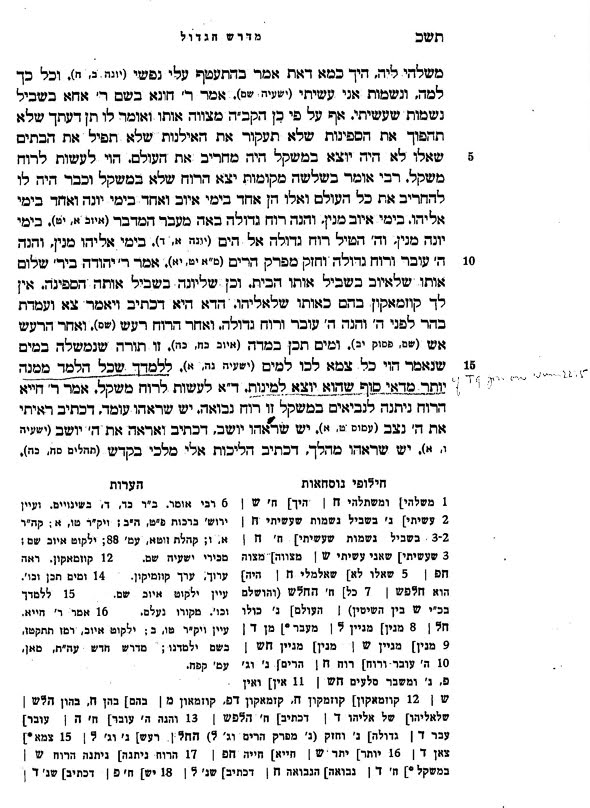
It is from Midrash ha-Gadol on Genesis (Mossad ha-Rav Kook edition). I don’t understand how the lesson is derived from the verse, but the lesson itself is clear enough: too much Torah study will lead to heresy. This is the sort of thing that one might expect to see in a medieval Catholic source, in justification of keeping the laity ignorant. Yet here we find the same attitude in a Jewish source. There are examples in rabbinic literature where we see that Torah study can have a negative result,[12] but I don’t know of any other text that is so blatant in its opposition to “excessive” Torah study. In the highly unlikely event that there are any high school students reading this who have been slacking off in Torah study, and have been challenged by their rebbe or parents to explain their inaction, see what happens if you pull out this text to explain matters.
I had seen this text a few years ago, and wanting to include it in the post I ordered the volume from interlibrary loan. The copy sent to me was from the University of Pennsylvania, and was originally found in the personal library of the late Dr. Judah Goldin. On the page we are looking at, Goldin underlined the strange passage (and also noted it on the first page of the book). On the side he added a reference to Targum Ps. Jonathan, Num. 22:5. Here it says that Balaam (who is identified with Laban) acted foolishly “from the greatness of his wisdom.” In other words, it was Balaam’s great wisdom that led to his thinking that he could curse the Israelites. Yet this passage only refers to Balaam’s general wisdom. It says nothing of Torah knowledge leading him astray.
With regard to R. Kook’s comments about the natural morality of the simple Jew, Joel Rich sent me chapter 4 of R. Soloveitchik’s Reflections of the Rav, ed. Besdin. The chapter is entitled “The Profundity of Jewish Folk Wisdom,” and is well worth reading. Yet you don’t find in R. Soloveitchik the notion expressed by R. Kook, that the natural morality of the simple Jew is superior to that of the scholar. For R. Kook, the simple Jew has something that the scholar does not have, and the scholar has that which the simple Jew lacks (halakhic knowledge). In this way, each can learn, and indeed is dependant, on the other. In dialectical fashion, the result of this will be a new type of Jew who combines in himself the best of both the scholar and the simple Jew. This is parallel to R. Kook’s discussion of the role of the non-religious. In the creation of the new Eretz Yisrael Jew the non-religious have that which is lacking among the religious, namely, the attachment to the physical world and the strength which Jews used to have when they lived on the Land, but which was forgotten during the long Exile. So the non-religious will bring that to the table, and the religious Jew will obviously bring Torah and spirituality. The result with be a synthesis of the two and the creation of an Eretz Yisrael Jew who, while being both Torah observant and spiritually enlightened will also be strong physically, able to build roads and fight wars. This is how Jews lived in days of old and how they are supposed to live when they return to the Land of Israel.
While R. Soloveitchik might have been attracted to dialectical-type thinking, there was no way that he would see the masses as having anything to give the halakhic scholar. The most the Rav speaks of in this essay is that the common man, even in his speech, reflects Torah values, but not that he is superior in any way to the learned ones.[13]
In this essay the Rav offers a beautiful interpretation of the aggadah in Niddah 30b that before birth a fetus learns all of the Torah and then forgets it when he is born:
Rabbi Simlai is apparently saying that every Jew comes into the world with a natural responsiveness to Torah teaching. Every Jew begins with a share in Torah was vested him before his birth, and, though he is made to forget it, it is preserved in the deep recesses of his soul, waiting to be awakened by study and a favorable environment. Scholars, of course, convert this latent knowledge into actual living knowledge; but the simple Jew also has a share. Some members of the Massorah[!][14] community are scholars whose knowledge is well formulated and codified, while others, though unlearned, may be endowed with inspired and intuitive Torah wisdom . . . [W]hen a Jew studies Torah, he finds it native to his spiritual personality and he responds to it readily.
R. Shalom Messas[15] also offers an interpretation of this Aggadah. According to him, it means that before birth God planted in the fetus the ability to study all of the Torah. The angel, who causes him to forget, represents the yetzer hara which distracts people from studying Torah[16]:
אלא האמת דאין כאן לא מלאך ולא שו”ד, והכל רמז ומשל בעלמא, והכוונה היא כמו שאמרנו, שבשעה שיצר השי”ת את העובר, נתן בו כחות עצומים באופן שיכול לעתיד ללמוד כל התורה אם ירצה . . . ויש בכחו ללמוד את כולה, וכשיוצא לאור העולם בא מלאך הוא הטבע, שכאשר מתחיל לצמוח מתערב עמו היצה”ר ומראה לו יופי הטבע והבריאה ונמשך אחריהם, ומעכבים עליו מללמוד תורה
This, too, is a beautiful perspective. I think people will therefore be surprised to learn that R. Messas was actually criticized by two separate authors, each of whom thought that his allegorical understanding of the Talmud was incorrect. In their opinions the Talmud should be taken literally, that the child really does know all of the Torah. Both of these authors refer to a “yeshivishe story” (with minor discrepancies between them) about how a certain baby was born knowing all the Torah, and from the moment of his birth began “talking Torah.”
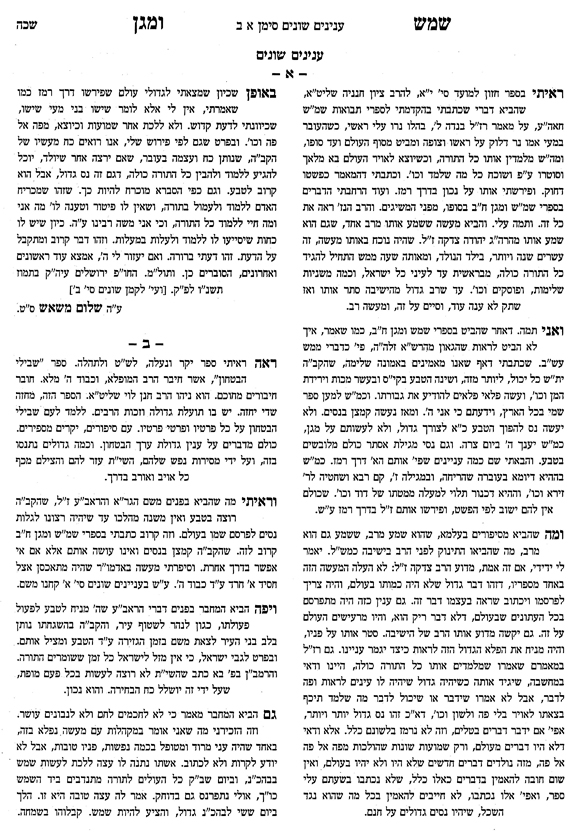
I always wonder when I hear Torah knowledgeable Jews repeat such nonsense as this yeshivishe story. What does this say about the Torah they learnt that they can be so gullible? I think the best we can say is that there is a difference between having book knowledge and being wise, and it is the latter that appears to be in such short supply. R. Messas replied to one of the authors in Shemesh u-Magen, vol. 2 pp. 322ff, and here is his reply to the second one, from Shemesh u-Magen vol. 3, p. 325.
I think R. Messas deserves a lot of credit for responding in such a polite fashion. Yet I have no doubt that if you spoke to him privately about this, his words would be much harsher in reflecting on how Torah students can be so foolish in believing such nonsensical stories.[17]
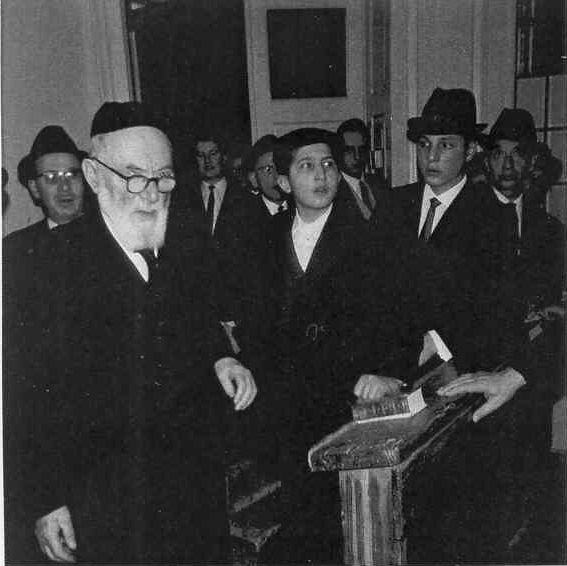
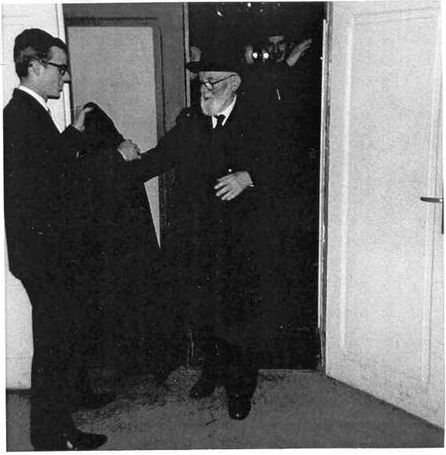
2. I have often been asked if I have pictures of R. Jehiel Jacob Weinberg. As a matter of fact I do, and here are two that I was given by Moshe Weisz of Zurich, who in the 1960’s was a student in the Montreux yeshiva. In the second picture, Weisz is the one handing Weinberg his coat.
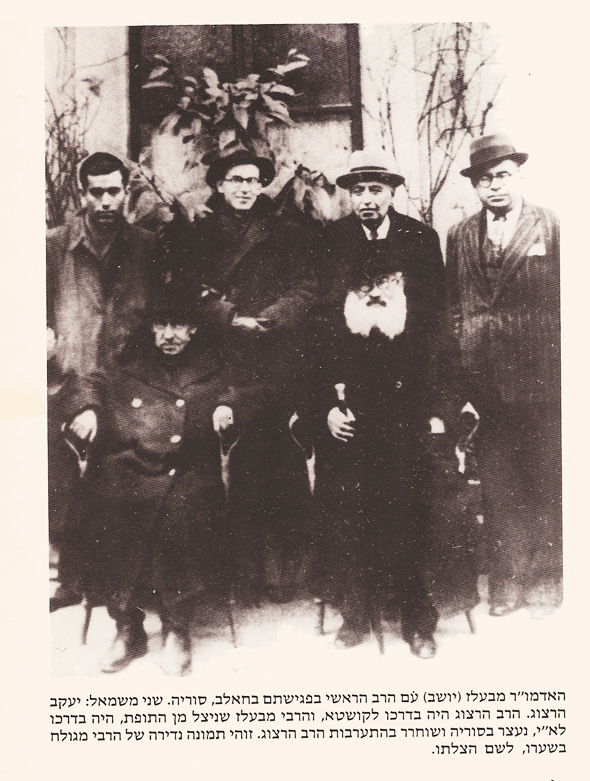
There is actually an amazing picture of Weinberg from his time in the prisoner of war camp. I would have loved to include this in my book, but the person who showed it to me refused to allow me to do so. He didn’t think it was respectful to a great Torah sage for people see him in this state. Yet why is this disrespectful? How was Weinberg supposed to look in such circumstances? Was he supposed to have a black suit and hat? Obviously, Jews did not look their normal selves during the years of the Holocaust. Here, for instance, is a picture of the Belzer Rebbe, R. Aharon Rokeach, with R. Herzog. It appears in Shaul Maizlish, Rabanut be-Sa’arat ha-Yamim, p. 61.
The Belzer Rebbe was one of those rebbes who, for religious reasons, did not like to have pictures taken of himself. Yet because R. Herzog exerted so much effort in order to secure permission for the Rebbe to enter the Land of Israel, he agreed to have his picture taken when R. Herzog requested this. (Or Yisrael 21 [5761]. p. 257). This last source also records the following great story, told by R. Aharon about his father, the previous Rebbe R. Yissachar Dov.
פ”א דיבר מרן מוהר”א מענין זה בשם אביו זצ”ל שאמר שבספר יערות דבש כתוב דברים חריפים אודות עשיית תמונה, אבל היות שכל היהודים אינם מקפידים ע”ז אין ברצוני להיות פרוש מהם, שכלם יהיו בגיהנום ואני יחידי יהיה בגן עדן, טוב לי להיות עם כלל ישראל ביחד
(Yes, I know that someone will point out the irony of R. Yissachar Dov saying that he would rather be in gehinnom with the Jewish people when his son chose precisely the opposite course, and left the gehinnom of Europe. Here is not the place to go into this story. Suffice it to say that I find Monday morning quarterbacking very distasteful. In this case it is even worse, as R. Aharon’s children and grandchildren were all murdered.)
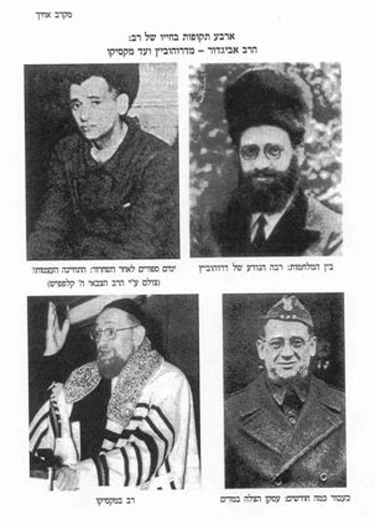
Here is a picture of R. Jacob Avigdor, whom I believe was a Belzer, from those difficult days (together with happier pictures).[18] Does anyone think this reduces him by showing how he looked during the Nazi years?
Incidentally, Moshe Weisz also told me about how in November 1965 Weinberg gave a hesped for four recently deceased rabbis, among them R. Yerucham Warhaftig and R. Eliezer Yehudah Finkel. These latter two were good friends of Weinberg, and Weinberg’s friendship with Finkel went back to their youth. After the eulogy Weinberg asked everyone in the room to stand up. They stood silently for around ten seconds and then he asked them to sit down. I presume this was intended as a show of respect rather than as a moment of silence, since the latter could be done sitting down.
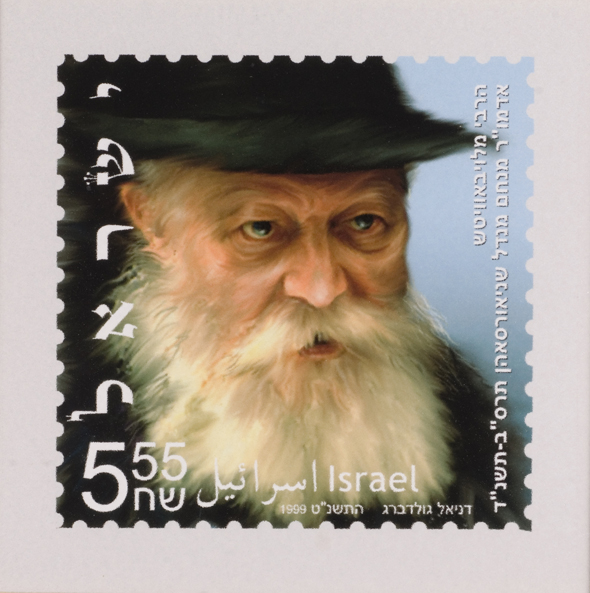
Since I have spoken about pictures in this post, let me also include this picture of the Lubavitcher Rebbe. It appears courtesy of the Library of the Jewish Theological Seminary, and I thank Rabbi Jerry Schwarzbard who first showed it to me a few years ago.
As you can see, it is an Israeli stamp from 1999, and it can now be added to Shnayer Leiman’s collection of stamps of rabbis.[19] Yet for some reason the stamp was never put into circulation. I have been unable to find the reason for this, and there is no mention of the stamp in Maya Balakirsky Katz’s recently published The Visual Culture of Chabad (Cambridge, 2010). There are many Lubavitchers who read the Seforim Blog. Perhaps one of you knows the story of this stamp and why it was never released.
As for Balakirsky Katz’s book, I urge Lubavitchers to read it, without preconceptions, and offer their opinions. It appears, to me at least, to be a quite interesting book. I stress the need for no preconceptions since Balakirsky Katz has now been placed by Lubavitchers in the “enemy camp”, along with other contemporary authors such as R. David Zvi Hillman z”l, David Kamenetsky, David Berger, Bryan Mark Rigg, David Assaf, Menachem Friedman, and Samuel Heilman. Balakirsky Katz angered Chabad with her recent article in the AJS Review 34 (2010; “An Occupational Neurosis: A Psychoanalytic Case History of a Rabbi”), and this article is summarized in the new book (but is only a very small part of the book). She argued that the Rebbe R. Shalom Dov Baer Schneersohn (Rashab) was the rabbi who visited the psychoanalyst Wilhelm Stekel in 1903. In those meetings the rabbi spoke about being sexually molested from his youth until his marriage. He also told about his sexual dreams and how he masturbated,[20] and described how his own brother carried on an improper relationship with his (i.e., the rabbi’s) wife (although it does not appear to have led to actual adultery).
I understand that Lubavitchers will regard Balakirsky Katz’s argument as beneath contempt. They will also regard as scandalous the fact that her essay was published in such a prestigious journal as AJS Review. I would not even ask them to dignify the argument with a response, any more than a non-Lubavitcher should be asked to respond to such claims about a close family member; for a hasid, the feelings for a Rebbe are just like those of a close relative. Yet there is a lot more to the book than the few pages dealing with the rabbi and Stekel, and I wonder how Habad insiders will appraise the rest of what she says.
Appendix
It is common to hear among YU figures the expression “hakhmei ha-mesorah,” referring to authoritative rabbinic spokesmen. Readers can correct me if I am mistaken, but I don’t think that this expression, with the meaning currently applied to it, is part of the traditional rabbinic vocabulary. I also don’t recall ever seeing it in haredi writing. (When the words appear in rabbinic literature they refer to Masoretes.) The first mention of it that I know of appears in R. Soloveitchik’s famous attack on R. Emanuel Rackman regarding nullification of marriage. Needless to say, the expression makes an appearance in R. Schachter’s new book, Divrei ha-Rav. See e.g., p. 233.
This latter reference is part of an article that R. Schachter earlier published in Beit Yitzhak 38 (2006). The reprint in Divrei ha-Rav has two changes from the original. On p. 237 a sentence is added, according to which the Rav stated that in Europe he never heard the expression “Daas Torah.” The second change is that one entire paragraph, on pages 5-6, has been removed. Here is the paragraph.
From this paragraph we see that the Rav’s strong personal opposition to prayer in a synagogue without a mechitzah was not shared by all other rabbis, and that the Rav was willing to show some flexibility in this matter. The case discussed here was not like the other times that the Rav gave permission for a rabbi to take a position at a synagogue without a mechitzah. In those cases the heter was for a rabbinic appointment designed to be for a few years, and during that time the rabbi was supposed to try to convince the synagogue to install a mechitzah. The issue discussed in the Beit Yitzhak article was simply a High Holiday position at a non-mechitzah synagogue in order to make some money.
This paragraph provides important testimony that can balance some of the Rav’s more strident statements in this matter. If anyone can get a straight answer from R. Schachter as to why the paragraph has been removed, please share it with us. I would hate to think that we have here an example of revisionism—in other words, R. Schachter decided to delete the paragraph because he concluded that it is best that people not know this information, or he was responding to others who criticized him for including the paragraph.
With regard to the larger issue of how R. Schachter presents the Rav, Lawrence Kaplan has already noted that there are revisionist aspects of R. Schachter’s presentation of the Rav’s legacy. See his “Revisionism and the Rav,” Judaism, summer 1999, available here.
One aspect of this revisionism that Kaplan does not mention is that while Nefesh ha-Rav has an entire chapter on the State of Israel, there is no mention of the Rav’s view—which was expressed on a number of occasions, as well as publicly before hundreds of people—that there is no halakhic prohibition for Israel to return land to the Arabs.
It certainly says something about the transformation of American Orthodoxy in the last generation that R. Schachter became the one to carry on the Rav’s legacy. Unlike the Rav, R. Schachter is a talmudist and posek, and has no involvement with the broader philosophical and cultural issues of Western Civilization. Yet despite this, he is, by far, the most important and influential rabbi in Modern and Centrist Orthodoxy. When it comes to matters of halakhah, I wonder if there is anyone in the American haredi world who can compare to his wide-ranging knowledge. I have heard him in person and on tape many times, and I continue to be amazed at how he can speak for long periods, without notes, on literally any topic of halakhah. I have never seen anything like it. It is all at his fingertips, and he presents it in a fashion that keeps the audience’s attention. As for the liberal Orthodox, who oppose R. Schachter because of his strong stand against feminist innovations, even they must applaud his leading role in dealing with husbands who refuse to give their wives gittin. This has earned him the opprobrium of the Orthodox lunatic fringe, and one member of this group, Abraham Samuel Judah Gestetner, who styles himself a dayan, has even placed R. Schachter in herem (together with two well-known California rabbis). See here.
Gestetner is also the author of the ridiculous book Megilat Plaster, which attempts to show that R. Jacob Emden’s Megilat Sefer is a forgery perpetrated by the evil maskilim. Here is the title page.
His argument is completely demolished by R. Menachem Mendel Goldstein in Etz Hayyim (Bobov), no. 8(Shevat 5769), pp. 239-266. (Goldstein resides in that bastion of Haskalah known as Kiryas Yoel.). On the very first page of his article, Goldstein complains that the various publishers of Emden’s Megilat Sefer did not consult with gedolei Yisrael in order to determine what should have been censored. In other words, he takes it as a given that the masses need to be protected from what Emden has to say.
הספר מגילת ספר נדפס על ידי אינשי דלא מעלי שאין רוח חכמים נוחה מהם, ולא נתיעצו בגדולי חכמי ורבני דור דור האיך ומה להדפיס ומה להשמיט
To be continued.
[1] There is still a good deal more I plan to say about the whole Garden of Eden story. For now, let me respond to one question. We have seen the medieval philosophical approach that the episode with the snake is to be understood allegorically, and the snake represents the evil inclination. A few people want to know if we can find such an approach in Hazal. I actually think we can. In Pirkei de-Rabbi Eliezer, ch. 13 (referred to by Maimonides in Guide 2:30), it mentions that the serpent had a rider, Samael (Satan). Since at least some of the Sages identify Satan with the evil inclination, this opens the possibility that the snake in our story is also to be understood this way. Yet I think that most of the Sages probably understood the passage literally. For one example, see Bereishit Rabbah 19:1, where R. Hoshaya states that the snake stood up like a reed, and that he had feet. Whereas the medieval philosophers were reluctant to take literally a text that spoke of a talking snake (and donkey), this did not seem to bother the talmudic Sages.
[2] A fuller discussion of Hirschensohn’s view of evolution will appear in a future post. In the meantime, see his Seder la-Mikra, vol. 1, pp. 76-77:
אין השיטה הדארוונית מתנגדת כלל להתורה בדבר הבריאה בששה ימים, כי הימים בעצמם כל אחד הוא יום שכלו אורך תקופה שלמה . . . כי עדיין לא הי’ עוד השמש לאור יומם לראשון השני והשלישי ובכל זאת נקראים ימים וגם אחרי בריאת המאורות לא ידענו כמה לקח זמן התפתחותם לאותות למועדים לימים ושנים שלנו, ואריכת ימי בראשית לא נדע לנו שכל יום הוא תקופה שלמה
In another twenty years, I wonder if the younger generation will believe us when we tell them that Hirschensohn’s position was accepted throughout the haredi world, and was standard fare in the kiruv movement and in “science vs. Torah” discussions. There was a time when I, and so many others, would never have believed that “young earth” fundamentalism could ever become a binding principle of faith in the wider haredi world, precisely because it would mean rejecting a position that had been so central to the haredi Torah-science reconciliation.
[3] Link”Rationalism and Rabbinic Culture,” pp. 240ff.
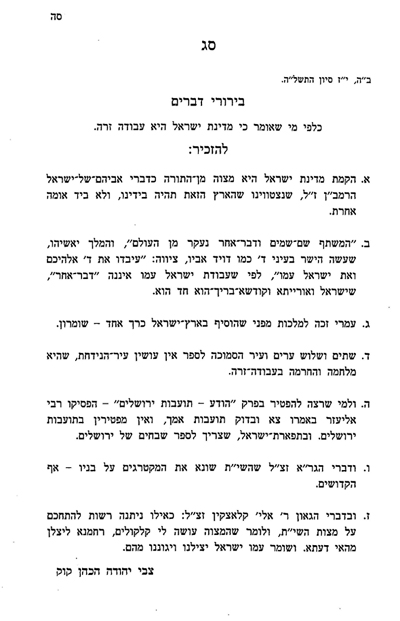
[4] Mesorah le-Yosef 4 (2005), p. 183.
[5] This point was noted by Kaplan, Link”Rationalism,” p. 300 n. 225.
[6] See Studies in Maimonides and His Interpreters, p. 111.
[7] Good and Evil in Jewish Thought (Tel Aviv, 1989), p. 63.
[8] Moses Maimonides (Oxford, 2005), p. 407.
[9] See also my post here where I noted R. Itzele of Ponevezh’s statement that how the Jewish masses feel is more important than what the rabbis think: וכלל ישראל הוא גבוה ונעלה מגדולי התורה . This is obviously diametrically opposed to the haredi conception of Da’as Torah. In my Torah in Motion lectures I discussed how R. Itzele’s conception parallels the Catholic notion of “sense of the faithful.”
In addition to the passages of R. Kook referred to in my earlier post, there are many other sources that one could quote. One that comes immediately to mind is Haym Soloveitchik’s understanding of medieval Jews committing suicide. He sees this as an example of the “sense of the faithful” which was not in line with established halakhah, but which ex post facto had to be justified. Even the murder of one’s children to prevent them from being forcibly apostatized could not be judged according to halakhic texts, or else people regarded as kedoshim would lose this status, an untenable possibility under the circumstances of medieval Jewish life. See ‘Religious Law and Change: The Medieval Ashkenazic Example,’ AJS Review 12 (1987), pp. 205-221. Soloveitchik writes (p. 209):
The magnitude of this halakhic breach is enormous. Whether one is permitted to suffer voluntary martyrdom is highly questionable; suicide is forbidden beyond question, and the permissibility of murder needs no discussion. Thus, if the law were to be followed, the scholars of these communities would have had to rule that all the martyrs—qedoshim, or “holy ones,” as they were called—were not only not “holy,” but they were “self-killers,” and murderers; that not only should they not be buried with honor, but perhaps they should even be denied burial, or at best be buried in the far end of the cemetery where the most vile criminals are interred. Such a conclusion, needless to say, was an emotional impossibility.
After speaking of the “sense of the faithful,”—or what Jacob Katz and Soloveitchik describe as “ritual instinct,” “religious intuition,” and “religious sense”—this article concludes with a couple of paragraphs that I think readers will find very interesting:
I remember my own shock when, after studying Yoreh Deah, I realized that there is no need for separate milk and meat dishtowels, separate dishracks or cabinets, and that if food is served cold, there is no need for separate dishware altogether. Again, there is all the difference in the world between not having hamets in the house (בל יראה ובל ימצא) and the house being what we call pesahdiq.
The simple truth is that the traditional Jewish kitchen and pre-Passover preparations have little to do with halakhic dictates. They have been immeasurably and unrecognizably amplified by popular religious intuition. We all know this, but our religious sense, our religious experience belies this knowledge, and our instincts reject this fact out of hand. To serve cold cuts on a “dairy” dish is treif—everything in Yoreh Deah to the contrary notwithstanding.
The prevalent has not here expanded the normative, it is the normative, and anything less is inconceivable.
Upon hearing one of my TIM lectures, R. Yonasan Rosman sent me a nice example of how the “sense of the faithful” operates independently of, and sometimes even in opposition to, halakhic particulars. It comes from Making of a Godol, p. 1188:
My father also was fond of quoting an interpretation of the Mozhirer Maggid, R. Shmuel Rabinowitz, of the gemara in Massekheth Brakhoth that
כנור היה תלוי למעלה ממטתו של דוד וכו’ ומנגן מאליו
(a fiddle hung above the bed of King David, etc., and it played on its own) to mean that Jewry senses what policy is vital for its existence and does not probe whether the course of action (or inaction) is halakhically sound or not. One of the several examples he gave was by asking rhetorically, “Who gave the Slabodka Yeshiva bahurim the halakhic permission [היתר] to marry at so late an age?” and in answer, he paraphrased the gemara (which he translated into Yiddish), “און דער פידעלע שפילט פון זיך אליין (and the little fiddle plays on its own.”) He was out to prove that when some position is of crucial importance to Jewry—such as increasing the number of intelligent Jews getting in more years of Torah study before going off into their occupations—halakhic minutiae are set aside.
It is precisely sources like this, and the others I have quoted, that are crucial for anyone wishing to challenge the pan-halakhic understanding of Judaism that has taken root in Centrism.
(Regarding yeshiva students marrying later, see R. Shlomo Sofer, Hut ha-Meshulash [Munkacs, 1894], p. 7b, that in late eighteenth-century Frankfurt, yeshiva students would sometimes wait until age thirty to marry.)
[10] For R. Jehiel Jacob Weinberg’s essay on Meisels, see Seridei Esh, vol. 4, pp. 345-352.
[11] See Ahiezer: Kovetz Rabani-Torani, vol. 4 (1969), p. 17.
[12] Sotah 21b states: “R. Eliezer says: Whoever teaches his daughter Torah teaches her obscenity. . . . Read, rather: as though he had taught her obscenity” Rashi explains: שמתוכה היא מבינה ערמומית ועושה דבריה בהצנע
Meiri, Sotah 20a explains (and as with the Ralbag quoted in a prior post, apologies to the women reading): שמתוך הבנתה ביתר מגדרה היא קונה ערמימות מעט, ואין שכלה מספיק להבנה הראויה והיא סבורה שהשיגה ומקשקשת בפעמון להראות את חכמתה לכל
[13] There are, of course, many other differences between R. Soloveitchik and R. Kook. From the excerpt printed in The Rav Thinking Aloud, pp. 155-156, we see that the Rav regarded R. Kook as a saintly figure, but not as an intellectual great. Yet this impression was derived from one short conversation. All the gedolim who knew R. Kook had the exact opposite impression. They correctly saw that R. Kook was a master of the entire Torah, in all of its facets. I think you have to go back to Maharal, or perhaps even Nahmanides, to find such a wide-ranging Torah scholar as R. Kook.
Experts on the Rav’s writings can correct me, but the only place I recall where he mentions R. Kook is in On Repentance, p. 161 (and this was not actually published by the Rav himself, but by Pinchas Peli). See incidentally, ibid., p. 224, where the Rav states, referring to the State of Israel: “Bondage to the State can also become idolatry.” When this appeared in 1975, in the original Hebrew edition Al ha-Teshuvah, R. Zvi Yehudah Kook responded with a very sharp statement (later reprinted in Le-Hilkhot Tzibbur):
The Rav in turn said about R. Zvi Yehudah: “If you follow the philosophy of Tzvi Hirsch [!] Kook a Jew outside of Eretz Yisrael is a non-Jew. And this is exactly against the passuk of כי לי כל הארץ. A Jew outside of Eretz Yisrael can be a perfect Jew. Where you accomplish more is up to the individual. . . . Kook comes out with the Ramban [who says that mitzvah observance in the Diaspora is not at the same level as in the Land of Israel] as if he is the only one to whom the Ramban has entrusted the text.” The Rav Thinking Aloud, pp. 225, 229. See also, ibid., p. 154, where he says that R. Zvi Yehudah “has an aura of kedushah about him.”
[14] See Appendix.
[15] Introduction to his Tevuot Shemesh, Even ha-Ezer, and Shemesh u-Magen, vol. 2, p. 321.
[16] See also Maharsha, Niddah 30b.
[17] With regard to what else fetuses are said to be doing in the womb (aside from learning Torah), there is a very strange passage in Otzar ha-Geonim, Berakhot 28b (p. 71). I hesitate to elaborate on it lest this post be blocked by internet filters:
כשאדם כורע במודים צריך לו לכרוע עד ברכיו לפי שהילד בעודו במעי אמו ראשו מונח בין שתי יריכיו והמילה שלו בתוך פיו ובעבור זה צריך לשוח עד ברכיו.
[18] The picture comes from Esther Farbstein’s Be-Seter Ra’am (Jerusalem, 2002).
[19] See here.
[20] With regard to masturbation, R. Simcha Ross called my attention to the responsum printed here by an unnamed talmid hakham. He argues that masturbation is permissible. When Rabbi Ross first alerted me to this (and also expressed his disagreement with the arguments of the author), I thought this was some sort of Purim Torah. But then I examined the responsum, and other responsa on the site, and I could see pretty quickly that this was a serious man, whose arguments were carefully thought out. There are so many books published today that simply repeat what others have said, without offering anything new, that it is a pleasure to see original thinking, Based on his permission to masturbate, he also concludes that homosexual activity is permissible, as long as there is no mishkav zakhur. See here.
(This anonymous author has also placed on his website his commentary on R. Baruch Ber Leibowitz’s Birkat Shmuel, and also many posts discussing talmudic sugyot.)
I showed this responsum to someone. Yet instead of examining the arguments, all he was interested in was the identity of the author, who, as can be seen from various responsa on the site, is clearly from the haredi world. Maybe some readers know who he is, but I think that someone like this has to be in “deep cover.” We all know how the powers that be would destroy anyone who argued that masturbation is permissible. Since this involves a halakhic matter, I am certain the response would be even more severe than how they dealt with Slifkin and Kamenetsky. This talmid hakham would be branded not merely a heretic and a Reformer, but also a sexually dissolute degenerate. So yes, I understand why the author chooses to remain anonymous. My request to readers is as follows: The argument permitting masturbation is so far removed from anything I have ever seen that I would like those with more halakhic learning than myself to examine his teshuvah and let us know if you think there is anything to his argument.
Also, please look at other material on his site. Is it possible that instead of a “progressive” talmid hakham we are dealing here with a Trojan Horse? That is, someone who aims to undermine traditional Judaism from within, much like Saul Berlin attempted to do.