Is there a rotten apple in the Tu-BeShevat Fruit Basket?

Is there a rotten apple in the Tu-BeShevat Fruit Basket?

By Dan Rabinowitz and Eliezer Brodt

[This post is heavily updated from an earlier Seforim Blog post – here]

Some claim that the origins of the custom to celebrate Tu-beShevat as a holiday that includes eating fruits and other rituals, is Sabbatean. In the main, this assertion is based upon identifying  the work Hemdat Yamim as the source for Tu-beShevat as a holiday and eating fruit and other rituals.  Thus, an article in Ha’aretz trumpets, “The New Year for the Trees, Isn’t it for Sabbatai Zvi.” And the National Library of Israel’s blog includes a post “The Holiday of Tu-beShevat is an Auspicious Time to Pray for the Only (?!) Jewish False Messiah.”  They even include this photoshopped image.
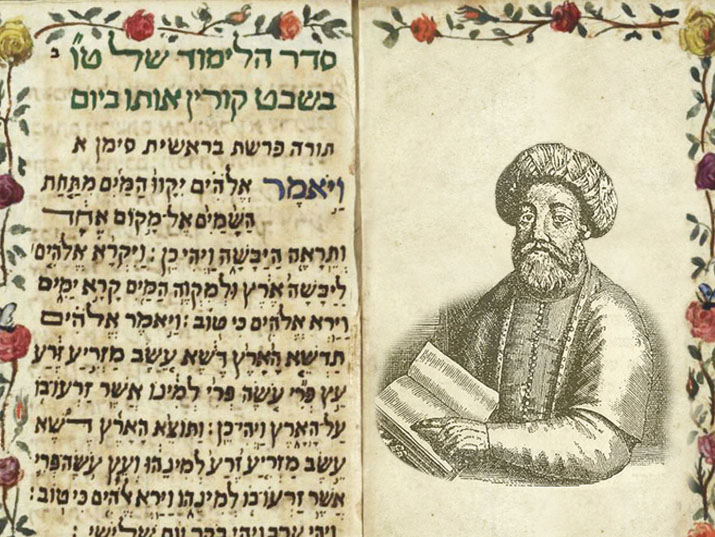
However, a closer look at the history reveals, that although some of the customs on Tu-beShevat can be traced to Hemdat Yamim the actual celebration dates much earlier. Contrary to the popular song, Tu-beShevat hegihu hag ha-ilannot, the 15th of Shevat was not a “chag” of the trees.  Instead, the earliest discussions regarding Tu-beShevat do not mention any holiday associated with the day.  The first Mishna in Rosh Hashana, identifies the 15th of Shevat as the new year for trees.  This designation merely defines how to calculate annualized tithes and is otherwise silent as to the significance of the date.  One can’t tithe fruits from one year using a different year’s fruits. Thus the 15th of Shevat is the cut-off point. [For other contemporaneous examples see Safrai, Mishnat Erets Yisrael, Mesekhet Rosh HaShana (Jerusalem:  Mehlelet Lifshitz, 2011), 305-06]. It was not until R. Gershom’s time that there were any of the traditional holiday markers, but only that fasting is prohibited.

The first mention of the custom to eat fruit and other holiday rituals appears in 16th century Machzor, published between 1548 and 1550. 

That Machzor follows the Ashkenazi rite and includes a discussion of customs according to that rite and the commentary of R. Benyamin ha-Levi Ashkenazi, Ma’aglei Tzedek. He was the rabbi of the Ashkenazi community in Saloniki (of contemporary interest is that he records the death of four of his sons during a plague).   This source, however, was not well-known, and, historically, a different, later, source is identified.  For example, Avraham Ya’ari in his otherwise comprehensive article claims that R. Issachar ibn Susan (c. 1510-1580) is the first mention.  Susan, in his Ibur Shanim, published in 1578, provides that “the Ashkenazim have the custom [on Tu-beShevat] to eat many fruits in honor of the day,” confirming the custom recorded in the Machzor.  1578 was the first authorized printing of R. Susan’s work but not the first time this custom is associated with him.  In 1564, Shlomo Rie published Susan’s Tikkun Yissachar.  (Ibur Shanim 48b and Tikkun Yissachar 62a).  Susan, in Ibur Shanim, accuses Rie of publishing an unauthorized edition, one that contains errors and unacknowledged additions by Rie. Ibur Shanim includes a corrected and otherwise only slightly modified version of Tikkun Yissachar.  [See Susan’s introduction; see also Yaakov Shmuel Spiegal, Amudim be-Tolodot Sefer ha-Ivri: Hadar Mechaber (Jerusalem, 2018), 321-22.]

Mention of this custom also appeared in a Judeo-German Minhagim book first published in 1590. “The custom is to eat many fruits as it is the New Year of the trees.”
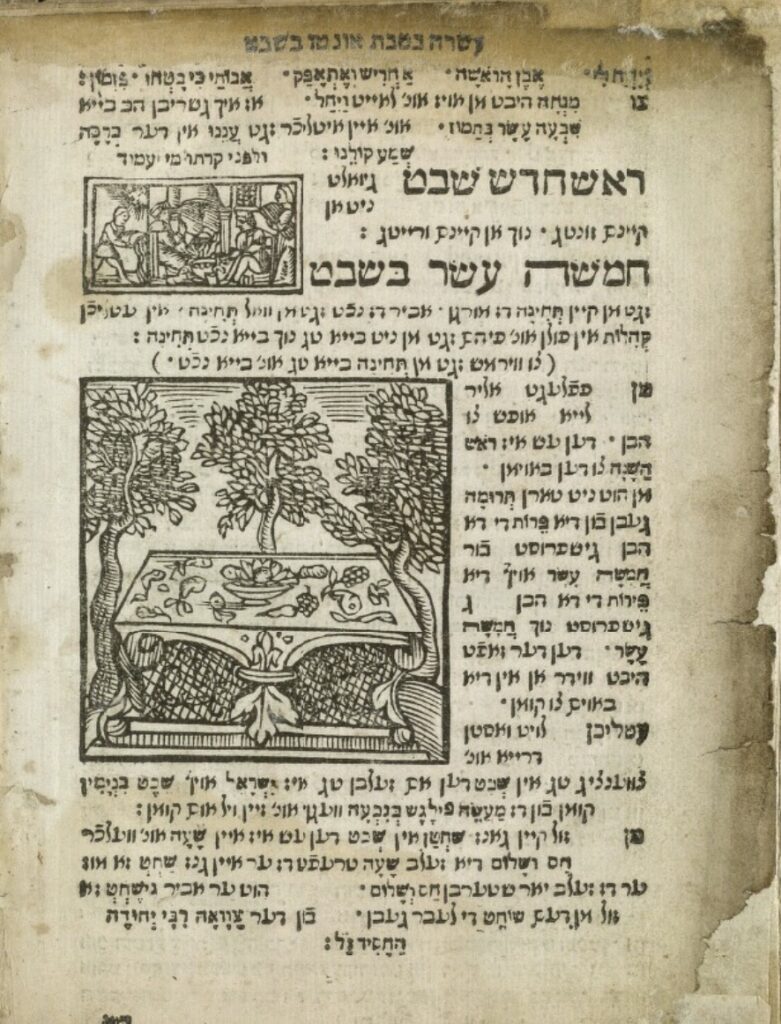
Venice, 1593 edition


In the community of Worms, there was a rather interesting variation of the custom. As R. Jousep Schammes (1604-1678) in his custom-book states:

On Purim and the 15 of Av and Shevat these were vacation days for the Rabbis, . . . [on the 15th of Shevat] one says tehina even during the morning prayer. It is a vacation day for the students and the teachers, especially the younger students, it is a day of feasting and joy for or the teachers and their students. The custom is for the teachers to distribute whiskey to the students and make merry with them.”  Minhagei [de-Kehilah Kedosha] Vermisai le-Rebi Joszpa Shamesh (Jerusalem:  Machon Yerushalim, 1988), 249-50, no. 211.

The first mention of Tu-beShevat in a Sefardic source appears in R. Hayyim Benveniste’s (1603-1673) Kenneset ha-Gedolah, first published in Livorno in 1658, where he quotes Susan from the Tikkun Yissachar.  Although Benveniste would later be associated with the Sabbatian movement, his inclusion of this custom in 1658, long pre-dates the movement. Benveniste’s source does not include a seder, nor does it testify to any adoption amongst Sefardim.

Kabbalah first enters the picture in 1728 with a somewhat obscure source. In 1728, Eliyahu Malhlenov published, Birkat Eliyahu, his commentary on the Talmud.  Amongst his papers,, he had a few pages of materials from R. Moshe Hagiz and appended those to Birkat Eliyahu. These materials include responsa and discussions regarding customs.  Hagiz records a custom from his grandfather, R. Moshe Galante.  R. Galante was also Hagiz’s teacher as his father died when Hagiz was a boy.  According to Hagiz, his grandfather had “the custom that on the 15th of Shevat he would eat many fruits that required many blessings and prayed to God that he should decree for us and them a good year. He ate the following 15 fruits, and on each one would recite … a chapter of Mishna…”  Hagiz then provides the order to eat the fruits.

Hagiz might technically be the first to describe a specific ceremony associated with eating fruits, but the source that popularized Tu-beShevat amongst Sefardim, and that incorporated a seder is Hemdat Yamim. Hemdat Yamim, first published in 1732 anonymously has the entire seder for Tu-beShevat. This includes passages from the Bible as well as specific foods. This in turn was popularized to a greater degree when it was included in the book Pri Etz Hadar first published in 1753 and republished an additional 29 times by 1959, and now digitized on Sefaria.

National Library of Israel

The author of Hemdat Yamim concedes that this is not a custom that originated with the Ari or his students.  Nonetheless, the author provides his own kabbalistic ideas and wrote his own kabbalistic prayers for the occasion, and a specific order to the ceremony.  According to many scholars, Hemdat Yamim is not reflective of the kabbalah of the Ari but that of Sabbatai Tzvi and his disciples.  Indeed, Boaz Huss has identified specific prayers in the Hemdat Yamim Tu-beShevat liturgy that allude to Sabbatai Tzvi. Whether or not this assertion is correct, because we can trace this custom, that of eating fruits, to over 100 years prior to the Sabbatian movement as already a pre-existing custom, it is likely unrelated to Sabbatian theology or custom.

Plagiarism

Avraham Ya’ari, the noted bibliographer, wrote a comprehensive article tracing the history of Tu-beShevat.  That article appeared in Machanim and is available at Daat.  This article, at times entire paragraphs, are reprinted verbatim, without any attribution, in a recent book ostensibly authored by Tuvia Freund, Moadim le-Simchah.  Published in six volumes between 1998-2010, this work is replete with such examples of plagiarism.  Here, however, Freund did something arguably even more egregious.  In the pages of materials he steals, Freund cites Yaari and his article by name.  Not for the fact that all the above material comes from there but a small tangential item, the number of times a book was printed.  Indeed, Freund is so unwilling to give Yaari any credit in a paragraph lifted word for word from Yaari, the work Hemdet Yamim is discussed.  Freund provides in a footnote, “see the long discussion regarding this work in Sefer Talmumot Sefer page 134 and on.”  Freund doesn’t reveal the author of Talmumot Sefer, who is none other than Yaari.  Freund doubly removed Yaari from the picture.


Magen Avraham

The Magen Avraham cites the Tikkun Yissachar as the earliest source for the custom to eat fruits on the 15th of Shevat.  This, despite the fact that he had accessed, and indeed quotes on many occasions, the Machzor with the Maageli Tzedek commentary. See, e.g.,

נה:יז, פח:ג, קלא:י, תכז:א, תלא:ה, תלז:יז, תכז:א, תנ:יב, תנג:יא, תקפא:ד, תקפא:ז, תקפא:ח, תקפב:ח, תקפג:ב תקפד:ג, תקפט:ד, תרכד:ז, תרכט:ה, תרנא:יט, תרנא:כא, תרנח:יב, תרסא:, תרע:ב [2X], תרעב:ה, תרעג:ז, תרפא:א, תרפח:יא, תרצ:יט, תרצא:ח

While he had access to the Machzor, he did not have access to the Tikkun Yissachar.  The Magen Avraham quotes the Tikkun Yissachar on a few occasions, but always via a secondary source. See Brodt Halachic Commentaries to the Shulchan Aruch on Orach Chayim from Ashkenaz and Poland in the Seventeenth Century (PHD Bar Ilan 2015), pp. 68-69. The Mekor Chaim in O.C. 686:1 is the first to point to the Machzor for this minhag.

The halachot in the Machzor were collected by  Yitzhak Hershkowitz ed., Maglei Tzedek (Jerusalem, 2000), pp. 156-157.  Regarding R. Benyamin see Y.S. Emmanuel, Matsavos Saloniki, vol. 1 (Jerusalem, 1973), 36, 68-69; Meir Benayahu, “Rebi Shmuel Yaffa Ashkenazi,” in Tarbiz, 42 (1973), 423-24 and note 37; M.S. Molcho, Matsevot Bet ha-Olamin she Yehudi Saloniki (Tel Aviv, 1975), 59-60; Yitzhak Rivkin, “Dikdukei Soferim,” in Kiryat Sefer 4 (1927), 278 no. 32; Daniel Goldschmidt, Mehkerei Tefillah u-Piyyut, 252-65, Meir Benayahu, Defus ha-Ivri be-Kremonah (Jerusalem, 1971), 141-78. About Knesset Hagedolah and being a Sabbatean see Brodt, Halachic Commentaries to the Shulchan Aruch on Orach Chayim from Ashkenaz and Poland in the Seventeenth Century, pp. 56; Brodt, Yeshurun 35 ( 2016 )p. 775; See also the recent work, R. Shmuel Ashkenazi, Igrot Shmuel (2021)-, 1, pp. 4-5. 

R. Shmuel Ashkenazi

As the Seforim Blog just published Iggrot Shmuel from R. Shmuel Ashkenazi (see here and here) we reprint two letters from his collection, one discussing the origins of the holiday of the 15th of Shevat and the other Hemdat Yamim.


Notes:

Additional sources discussing the 15th of Shevat, see  Meir Rafeld, Netivi Meir, (2013), 185-189; R Mandelbaum, Tehilah Ledovid (Jerusalem, 1993);  Guttman, Otzar TuBeshvat.

Tikkun Yissachar was republished in 1988 with an excellent introduction from R. Betzalel Landau.  Most recently, in 2019, it was reprinted and re-typeset, with additional notes. This edition also includes R Landau’s introduction and another introduction of material about the work. See also Elisheva Carlebach, Palaces of Time: Jewish Calendar and Culture in Early Modern Europe (London: Belknap, 2011),  51-58; יוסף הקר, ‘יששכר אבן סוסאן עליית כוהנים לתורה בשמחת חתנים’, בתוך: ‘מנחה למנחם’, קובץ מאמרים לכבוד ר’ מנחם כהן, בעריכת חנה עמית, אביעד כהן וחיים באר, ירושלים תשס”ח, עמ’ 79-97

Regarding Hagiz, see Elisheva Carlebach, The Pursuit of Heresy (New York: Columbia University Press, 1990).

After the Birkat Eliyahu was published it was attacked by some rabbis.  See Meir Benayahu, “Sefarim she-Hiburum R. Moshe Hagiz she-Hotsyim le-Or,” in Ali Sefer 4 (1977), 143, 150-52; see also Shlomo Yaakovovitch, “Sefer Shehitot u-Bedikot le-R’ Yaakov Weil,” in Tsefunot 4 (1989), 112; Carlebach, Pursuit of Heresy, 247-49. Regarding R. Eliyahu see Y. Halpern, Pinkas Vaad Arba Arotsot (Jerusalem, 1990) 362; Tzvi Horowitz, Le-Tolodot ha-Kehilot be-Polin (Jerusalem, 1989), 1.

The literature on Hemdat Yamim is substantial and we hope to return to the work in an upcoming post.  For the most recent discussion see Y. Goldhaber, “Le-Birur Zehuto shel Mehaber Hemdat Yamim,” in  Sefer Zikhoron le-Professor Meir Benayahu, vol. 2 (Jerusalem: Karmel, 2019), 873-908.

Huss’s article appears as Boaz Huss, “Ha-Ets ha-Nehmad ben Yishi Hayi al ha-Adama: al Mekoro ha-Sabbatai shel Seder 15 Shevat,” in Sefer Zikhoron le-Professor Meir Benayahu, vol. 2 (Jerusalem: Karmel, 2019), 909-20.


מנהג אמירת ‘שלש-עשרה מידות’ בהוצאת ספר תורה בימים נוראים ובשלש רגלים ובפרט כשחל בשבת

מנהג אמירת ‘שלש-עשרה מידות’ בהוצאת ספר תורה בימים
נוראים ובשלש רגלים ובפרט כשחל בשבת
מאת: אליעזר יהודה בראדט
אתחיל בעדות
אישית[1].
בליל יום הכיפורים תשס”ה, שבאותה שנה חל בשבת, שמעתי באזני מפי הגרי”ש
אלישיב זצוק”ל, שענה לשואל אחד שאין לאמרם בשבת, אע”פ שהשואל הסתייע
מלוח ארץ ישראל לרי”מ טוקצ’ינסקי שיש לאומרם. אחר כך סיפר השואל לנוכחים
שמפרסמים פסקים בשם הרב שאינם נכונים כלל וכלל.
לשאלת השואל היה המשך מעניין:
ויהי ערב ויהי בוקר. בתפילת שחרית
לא נכח הגרי”ש בבית הכנסת, ובהוצאת ספר תורה פתח החזן באמירת ‘שלש-עשרה
מידות’. קם אחד המתפללים וגער בו בקול: ‘אתמול קבע הרב שליט”א שאין לאומרם
בשבת!’ נעמד לעומתו נאמנו של הגרי”ש ר’ יוסף אפרתי, וסיפר כי אמש לאחר שאלת
השואל, ישב הרב בביתו על המדוכה בדק ומצא כי בספר ‘מטה אפרים’ פסק לאומרו, וסמך
עליו. ולפיכך יש לאומרו גם ביומא הדין שחל בשבת.
כך יצא שאותו שואל שהתרעם על כך
שמפרסמים פסקי-שווא בשם הרב לא נכח שם, וגם הוא לא זכה לשמוע משנה אחרונה של הרב
בענין זה.
מתוך כך התעניינתי בנושא וזה מה
שהעליתי במצודתי:
מקור אמירת י”ג מידות
ב’חמדת ימים’, קושטא
תצ”ה, חלק ימים נוראים, פרק א עמ’ ט, נאמר: “והרב זצ”ל כתב שכל המתענה
בחדש
הזה שיאמר ביום שמוציאים בו ספר תורה בעת פתיחת ההיכל הי”ג
מידות ג’ פעמים”[2].
כל דברי ספר זה לקוחים
ממקורות שונים ואין לו מדיליה כמעט כלום. דברי האריז”ל מופיעים כבר ב’שלחן
ערוך של האריז”ל’, שנדפס לראשונה בקרקא ת”ך[3]. ומשם
העתיק זאת ר’ יחיאל מיכל עפשטיין לספרו ‘קיצור של”ה’, שנדפס לראשונה בשנת
תמ”א[4]
[דפוס ווארשא תרל”ט, דף עה ע”א]. וכ”כ ר’ בנימין בעל שם, בספרו ‘שם
טוב קטן’ שנדפס לראשונה בשנת תס”ו[5], וגם
בספרו ‘אמתחת בנימין’ שנדפס לראשונה בשנת תע”ו[6]. כל
החיבורים הללו נדפסו קודם ‘חמדת ימים’.
גם בחיבור ‘נגיד ומצוה’
לר’ יעקב צמח, שנדפס לראשונה באמשטרדם שנת תע”ב[7], מצינו:
“מצאתי כתוב בסידור של מורי ז”ל בדפוס כמנהג האשכנזים, והיה כתוב בו אחר
ר”ח אלול מכתיבת מורי ז”ל: שכשהאדם עושה תענית, שישאל מן השי”ת
שיתן לו כפרה וחיים ובנים לעבודתו יתברך, וזהו בהוצאת ס”ת, ויאמר אז
הי”ג מדות רחמים שלש פעמים, ואני תפלתי שלשה פעמים…”. ר’ יעקב צמח
הוסיף שם: “יש סמך לזה בזוהר יתרו קכו וגם בעין יעקב ר”ה סי’ יג
בפירושו”[8].
ומשם הועתק בקיצור אצל ר’
אליהו שפירא ב’אליה רבה’ (סי’ תקפא ס”ק א) שנדפס לראשונה לאחר פטירתו בשנת
תקי”ז בשם ר’ יעקב צמח[9].
ממקורות אלו עולה כי רק
מי שמתענה בחודש אלול ראוי שיאמר י”ג מידות בשעת הוצאת ס”ת[10].
ר’ נתן נטע הנובר כתב
בחיבורו הידוע ‘שערי ציון’ (נדפס לראשונה בפראג תכ”ב ובשנית באמשטרדם
תל”א): “בראש השנה וביוה”כ בשעת הוצאת ס”ת יאמר י”ג מדות
ג”פ, ואח”כ יאמר זאת התפילה, רבונו של עולם מלא משאלותי לטובה…”[11].
ב’שער הכוונות’ מצינו: “וביום
שבועות יקרא ג’ פעמים י”ג מדות ואח”כ יאמר תפלה זו רבש”ע מלא כל
משאלתי…”. העתיקו ר’ בנימין בעל שם בספרו ‘אמתחת בנימין’ שנדפס לראשונה
בשנת תע”ו.
בחיבור ‘מדרש תלפיות’ לר’
אליהו הכהן שנפטר בשנת תפ”ט כתב שיש לומר בר”ה, ביו”כ, בסוכות
ובשבועות, י”ג מידות ג”פ ואחר כך יאמר רבש”ע[12].
אבל יש לציין שחיבור זה נדפס לראשונה בשנת תצ”ז באיזמיר.
ר’ יצחק בער כתב בסידורו:
“שלש עשרה מדות ורבון העולם לי”ט ור”ה וי”כ אינם בשום סדור
כ”י ולא בדפוסים ישנים אבל הם נעתקות אל הסדורים החדשים מס’ שערי ציון שער
ג”[13]. וכ”כ בסידור אזור
אליהו עי”ש[14].
ומכאן למנהג הגר”א.
ר’ ישכר בער כתב בספר ‘מעשה רב’, אות קסד: “בשעת הוצאת ס”ת אין
אומרים רק בריך שמיה ולא שום רבש”ע וי”ג מידות[15].
ונכפל באות רו, בהלכות ימים נוראים: “וכן אין אומרים י”ג מדות בהוצאת
ס”ת”. בין בשבת בין בחול.
אבל בשאר מקומות בליטא
כנראה נהגו לאמרו, וכמו שכתב ר’ יעקב כהנא: “לי”ג מדות… והנה חזינן…
ויש מקומות אשר כל ימי אלול עד אחר יו”כ אומרים אותו בכל יום, ויש מקומות
שאומרים אותו בכל יום ב’ וה’ ויש מקומות שאומרים אותו בכל יום כל השנה ולא משגחו
וטעמא מיהא בעי…”[16].
מקור אמירת י”ג מידות שלוש פעמים
כתב ר’ זלמן גייגר, ב’דברי
קהלת’: “והוא מנהג שלא מצאתיו בפוסקים ואין נכון בעיני לאמר י”ג מדות
בראש השנה, כי לא תיקנו לאמרן בתפילות ר”ה ולא בפיוטיו, אך יעב”ץ כתב המנהג
על פי האר”י ואין משיבין את הארי, אבל לא כתב דבר שיאמר ג’ פעמים כי הוא נגד
הדין לדעתי כי פסוקי שבחים גדולים כי”ג מדות אסור לכפלם”[17].
ר’ יעקב אטלינגר מביא בספרו
‘שו”ת בנין ציון’ שאלה שנשאל: “לא ידעתי על מה נסמך המנהג לומר בראש
השנה ויוה”כ וי”ט בשעת הוצאת הס”ת ג’ פעמים י”ג מדות וג’
פעמים ואני תפלתי, הרי לפי פירוש רש”י בהא דאמרינן האומר שמע שמע הרי זה
מגונה דזה באמר מלה וכופלו אבל בשכופל הפסוק משתקין אותו, ולפי’ רב אלפס עכ”פ
הרי זה מגונה ובשניהם דהיינו בי”ג מדות וגם באני תפלתי לא שייך הטעם שכתב
רש”י בסוכה (דף ל”ח) שכופלין בהלל מאודך ולמטה כיון דכל ההלל כפול וגם
לא טעם הרשב”ם בפסחים בזה משום דאמרו ישי ודוד ושמואל ואולי רק בשמע ומודים
הוי מגונה או משתקינן מטעם דנראה כב’ רשויות אבל הכפלת שאר פסוקים שרי…”.
לאחר שהוא מאריך בסוגיה זו הוא
משיב לשאלת השואל: “נראה לי לחלק דדוקא באומר שני דברים שווים דרך תחנה ובקשה
או דרך שבח ותהלה שייך החשד דב’ רשויות, לא כן בקורא פסוקי תורה וכתובים. וראי’
לזה שהרי מצוה לחזור הפרשה שניים מקרא, וע”פ האר”י יש לכפול כל פסוק
ופסוק וקורין הפסוק שמע ישראל ב’ פעמים זה אחר זה, ואין קפידא. וכיון דמה שמזכירין
י”ג מידות אין זה דרך תחנה, דא”כ יהי’ אסור לאומרם ביום טוב אלא ע”כ
לא אומרים רק כקורא פסוק בתורה וכן בואני תפלתי, ע”כ אין בזה משום קורא שמע
וכופלו. כנלענ”ד”[18].
ר’ ישראל איסערלין מו”ץ בעיר
וילנא, כתב בספרו ‘פתחי תשובה’ ליישב קושיית השואל בדרך אחרת: “ולולא
דמסתפינא ליכנס בענינים העומדים ברומו של עולם הייתי אומר דבי”ג מדות לא שייך
כלל החשד דב’ רשיות כמו בשמע, דהענין שהיו אומרים אחד פועל טוב ואחד רע וכי”ב
מהבליהם והי”ג מדות גופיה הוא סתירה לדבריהם, דבו נכלל כל המדות והנהגות
העולם והכל ביחיד, כידוע ליודעי חן”[19].
ויש לציין לדבריו של ר’ יוסף חיים
מבבל שכתב בשו”ת תורה לשמה[20], שהתעורר
לאותה שאלה:
שאלה. מצינו כתוב
בסידורים שיאמר אדם בר”ה וימים טובים בעת הוצאת ס”ת ג”פ י”ג
מדות ואח”כ יאמר בקשתו. ונסתפקנו איך יוכל לכפול הפסוק של י”ג מדות שיש
לחוש בזה כאשר חששו רז”ל כאומר שמע שמע ומודים ומודים. יורינו המורה לצדקה
ושכמ”ה.
תשובה. אין לחוש חששות
אלו מדעתנו אלא רק במקום שחששו בו חז”ל שהוא בפסוק שמע ישראל ובמודים, והראיה
דכופלים כל יום פסוק ה’ מלך וכו’ וכן בעשרת ימי תשובה שמוסיפים לומר ה’ הוא האלהים
ג”כ כופלים אותו. ואין לומר התם שאני שעניית הציבור מפסקת בין קריאת החזן וכן
קריאת החזן מפסקת בין עניית הציבור, דזהו אינו, דהא אפילו היחיד כאשר מתפלל ביחיד
ג”כ כופל פסוקים ואומרם בזא”ז ועוד אעיקרא פסוק ה’ הוא האלהים הוא בעצמו
כפול שאומר ה’ הוא האלהים ה’ הוא האלהים, ונמצא דאין כאן חשש שחששו בשמע ומודים, וא”כ
ה”ה בפסוק זה של ה’ ה’ אל רחום וחנון אם יכפול ליכא חשש. והיה זה שלום ואל
שדי ה’ צבאות יעזור לי. כ”ד הקטן יחזקאל כחלי נר”ו[21].
אמירת י”ג מידות בשבת
ר’ נחמן כהנא מספינקא
הביא בספרו ‘ארחות חיים’ בשם שו”ת בשמים רא”ש (סימן עא) בשם רב האי
גאון, שלא לומר י”ג מידות בשבת[22]. אך
ר’ אפרים זלמן מרגליות מבראדי, בספרו ‘מטה אפרים’ (סי’ תריט, סעיף יח), הכריע
שלמרות זאת כדאי לאמרו
. וכפל דבריו בספרו ‘שערי אפרים’ (שער י, סעיף ה)[23].
 ר’ חיים עהרענרייך בפירושו ‘קצה המטה’ (שם,
סעיף סד) כתב עליו: “אבל המעיין יראה שאין לסמוך על דברי הבשמים רא”ש
הנ”ל ולאו הרא”ש חתום עלה”[24].
וראה דברי ר’ יעקב עמדין בסידורו (ירושלים תשנ”ג, חלק
ב, עמ’ רמ בהוספות מכ”י): “כשחל בשבת אין לאמרה”. וכ”כ ר’
חיים אלעזר שפירא[25];
ר’ שבתי ליפשיץ[26];
ר’ חיים צבי עהרענרייך[27]; ר’
ישראל הלוי ראטטענבערג בעל אור מלא[28], ר’
יוסף אליהו הענקין[29] ורי”י
קניבסקי בעל ‘קהילות יעקב’[30].
מנהג ווירצבורג לומר י”ג
מידות, מלבד אם חל בשבת[31]. וכן
הוא מנהג ק”ק באניהאד[32] ומנהג
ברלין[33].
אמנם ר’ אברהם פפויפר מביא
בספרו ‘אשי ישראל’ בשם הגרש”ז אויערבאך, שטוב לומר פסוקים אלו גם בשבת[34].
מקור קדום לאמירת י”ג מידות
בשעת הוצאת ספר תורה ואפילו אם חל בשבת מצינו במנהגי בית הכנסת הגדול בק”ק
אוסטרהא: “בעת הוצאת ספר תורה בר”ה ויה”כ אומרים י”ג מדות
אפילו אם חלו בשבת…”[35].
בספרו ‘עובר אורח’ מתעד האדר”ת:
“סיפר לי מה שראה בבית הכנסת שמה גיליון הגדול ממה שהנהיג מרן המהרש”א שם
ומהם זוכר שני דברים…”[36]. שני
הדברים שהוא מביא מופיעים ברשימת המנהגים הנ”ל, ומכאן שמייחסים מנהגים אלו למהרש”א.
לפי זה, כבר בזמן המהרש”א קיים מנהג זה של אמירת י”ג מידות בשעת הוצאת
ספר תורה. מהרש”א נפטר בשנת שצ”ב[37].
אמנם יש לציין לדברי ר’ מנחם
מענדיל ביבער, שעל פיהם אין להביא ראיה שכך עשו בזמן המהרש”א:
“של נעלי החומר
מעליך כי המקום הזה קדוש הוא, במקום הזה התפללו אבות העולם גאונים וצדיקים…
המהרש”ל זצ”ל ותלמידיו, השל”ה הקדוש ז”ל המהרש”א
ז”ל ועוד גאונים וצדיקים… המנהגים אשר הנהיגו בה הגאונים הראשונים נשארו
קודש עד היום הזה ומי האיש אשר ירהב עוז בנפשו לשנות מהמנהגים אף כחוט השערה ונקה?
ולמען לא ישכחו את המנהגים ברבות הימים כתבו כל המנהגים וסדר התפילות לחול ולשבת
וליום טוב דבר יום ביומו על לוח גדול של קלף והוא תלוי שם על אחד מן העמודים אשר
הבית נשען עליהם. הזמן אשר בו נבנתה וידי מי יסדו אותה ערפל חתולתו, ואם כי בעירנו
קוראים אותה זה זמן כביר בשם בית הכנסת של המהרש”א ולכן יאמינו רבים כי
המהרש”א בנה אותה בימיו אבל באמת לא כנים הדברים…”[38].
לאור דברים אלו אין להביא ראיה מרשימת
המנהגים דבית הכנסת הגדול בק”ק אוסטרהא שמנהג אמירת י”ג מידות היה קיים
כבר בזמן המהרש”א. אמנם רואים שנהגו לאמרו גם בר”ה ויו”כ שחל בשבת.
גם בשבע קהילות ובראשן ק”ק
מטרסדורף מצינו שנהגו לומר י”ג מדות בשעת הוצאת ספר תורה אף כשחל בשבת[39].
ר’ שריה דבליצקי מביא בחיבורו
קיצור הלכות המועדים‘ את שני
המנהגים[40],
אבל למעשה כתב שבר”ה שחל בשבת אין אומרים אותו ורק ביוה”כ שחל בשבת
אומרים י”ג מידות[41].
וכן כתב רב”ש
המבורגר ב’לוח מנהגי בית הכנסת לבני אשכנז’ המסונף לשנתון ‘ירושתנו’ ספר שביעי
(תשע”ד), עמ’ תז: “בהוצאת ספר תורה אומרים י”ג מידות ותפילת ‘רבון
העולם’ אף כשחל בשבת”, ואילו לגבי ר”ה שחל בשבת הוא כותב שאין אומרים י”ג
מידות ותחינת רבונו של עולם[42].
 כנראה שהחשש מלומר י”ג מידות בשבת הוא
משום איסור שאלת צרכיו בשבת, כפי שהעיר ר’ יששכר תמר על המנהג המובא בשערי ציון לומר
י”ג מדות בשבת[43]. ענין
זה רחב ומסועף, ואחזור לזה בעז”ה במקום אחר, אך יש להביא חלק מדברי
הנצי”ב בזה:
לענין מש”כ
המג”א שם בס”ק ע’ שאין לומר הרבון של ב”כ בשבת, ולכאורה מ”ש
שבת מיו”ט בזה… והטעם להנ”מ בין יום טוב לשבת יש בזה ב’ טעמים, הא’
משום דכבוד שבת חמיר מכבוד יום טוב, או משום שביו”ט יום הדין שהוא רה”ש
כידוע, ונ”מ ביום טוב שחל בשבת דלהטעם משום דכבוד שבת חמיר א”כ יום טוב
שחל בשבת אין לאומרו, אבל להטעם משום דיו”ט של ר”ה שהוא יום הדין יש לאומרו,
א”כ אפילו חל יום טוב בשבת ג”כ צריך לאמרו, והרמב”ם שכתב דתחינות
ליתא בשבת חוה”מ, דוקא בשבת חוה”מ, אבל יום טוב שחל בשבת יש לאומרו,
וכיון דשרי תחינות אומרים נמי הרבון, ומעתה אזדי כל הראיות שהביא המ”א
מתשובות הגאונים דא”א הרבון בשבת, דהמה מיירי בשבת לפי מנהגם שנ”כ בכל
יום, וקאי על שבת שבכל השנה. משא”כ במדינתנו שאין נו”כ אלא ביום טוב,
ולא משכחת אלא בשבת שחל ביום טוב, ויוכל להיות שבכה”ג אומרין גם בשבת, וכן
באמת המנהג פ”ק וולאזין לומר הרבון בשבת שחל ביום טוב
… איברא הראיה
שהביא המ”א מאבינו מלכנו, שאין אומרים בשבת שחל בר”ה, ראיה חזקה היא,
אבל לפי טעם הלבוש שהביא המג”א (סי’ תרפ”ד) שהוא משום שנתיסד כנגד תפלת
שמונה עשרה ניחא הא דאין אומרים אבינו מלכנו, אבל תחינות מותר לאמרן, ובאמת הלבוש
הביא טעם הר”ן והריב”ש משום שאין מתריעין בתחינות בשבת, ודחה דשאני
ר”ה ויוהכ”פ, וממילא ה”ה כל יום טוב שהוא יומא דדינא, והראיה
שג”כ מרבים בתחנת גשם וטל, מותר לאמר גם הרבון לדעתי[44].
אמנם ר’ יעקב הלל האריך
להוכיח על פי קבלה שאין לומר י”ג מידות בראש השנה ויום כיפור אפילו כשאינו חל
בשבת, וכל המנהג בטעות יסדו
, ושזה אינו מהאר”י הקדוש לאחר שקיבל מאליהו
הנביא. עיי”ש באריכות הוכחותיו[45]. ומעניין
שר’ עובדיה יוסף קיבל דבריו וגם לדעתו אין לומר י”ג מדות ביום טוב[46].
ואלה דברי ר’ אליהו
סלימאן מני: “ובשעת הוצאת ספר תורה… בבית אל… אומרים י”ג מדות ואני
לא נהגתי לומר, ואפילו שהזכירה בשער הכוונות, דאיתא זכירה דיש מי שפקפק בזה מטעם
שאין אומרים י”ג מדות ביו”ט, וגם אתיא זכירה בחמדת ישראל שפקפק בזה,
ואמר כמדומה לי שכתב כן [האר”י ז”ל] בתחלת למודו. ולכן לא הנהגתי
לאומרו…”[47].
יש לסיים בדבריו החשובים של ר’ חיים מפרידברג אחי מהר”ל
מפראג בספרו הנפלא ספר החיים:
אף על גב ששלש עשרה מדות
הן שמותיו של הקדוש ברוך הוא וכמו ששמו קיים לעד ולנצח כך הזכרת מדותיו אינו חוזר
ריקם, מכל מקום אינו אומר שיהיו נזכרים, רק כסדר הזה יהיו עושין לפני לפי שהעשיה
הוא עיקר, שצריך האדם לדבוק באותן המדות ולעשותם, ובעשרה אפשר שיהיו נעשים, שזה
רחום וזה חנון, וזה ארך אפים וכן כולם, שעיקר המדות הללו הם עשר. ולפי שבדורותינו
זה יהיו נזכרים ולא נעשים, על כן אין אנו נענים בעונותינו הרבים[48].
והוא כיון לדברי ר’ אברהם סבע בחיבורו צרור המור:
והנה בכאן למדו סדר שלשה
עשר מדות שבם מרחם ומכפר לחוטאים וזאת היא תשובת שאלת הראני נא את כבודך, ולכן אמר
ויעבור ה’ על פניו, ללמדו היאך יסדר אלו הי”ג מדות הוא והנמשכים אחריו לביטול
הגזרות ולכפרת העונות, כאומרם ז”ל אלמלא מקרא כתיב אי אפשר לאומרו, כביכול
נתעטף בטליתו ואמר לו כ”ז שישראל עושים כסדר הזה אינן חוזרות ריקם, שנא’ הנה
אנכי כורת ברית. ופירושו ידוע, שהרי אנו רואים הרבה פעמים בעונותינו שאנו מעוטפים
בטלית ואין אנו נענין, אבל הרצון כל זמן שישראל עושים כסדר הזה שאני עושה, לרחם
לחנן דלים ולהאריך אפים ולעשות חסד אלו עם אלו, ולעבור על מדותיהן כאומרם כל
המעביר על מדותיו וכו’, אז הם מובטחים שאינן חוזרות ריקם. אבל אם הם אכזרים ועושי
רשעה, כל שכן שבהזכרת י”ג מדות הם נתפסין. וזהו וחנותי את אשר אחון, מי שראוי
לחול ולרחם עליו. ולכן הוצרך לומר ויעבור ה’, כאילו הוא מעצמו עבר לפניו ללמדו
כיצד יעשה וכיצד יקרא. כמו שהש”י קרא ואמר ה’ ה'”[49].

[1]  מאמר זה הוא נוסח מעובד ורחב
מההערה שכתבתי במאמרי ‘ציונים ומילואים לספר “מנהגי הקהילות”‘, ירושתנו,
ב (תשס”ח), עמ’ ריב-ריד. בעז”ה אכתוב על כך באריכות בספרי ‘עורו ישנים
משנתכם’.
עוד
בענין אמירת י”ג מידות ראה: שדי חמד מערכת יום כיפור סימן ב אות כא; ר’ ישראל
חיים פרידמאן, ליקוטי מהרי”ח, ג, ירושלים תשס”ג, עמ’ כז; ר’ שמואל מונק,
קונטרס תורת אמך (בסוף שו”ת פאת שדך או”ח, ח”ב), אות קד והערה
91; ר’ אברהם ראזען, שו”ת איתן אריה, סי’ קכ; י’ מונדשיין, אוצר מנהגי
חב”ד, ירושלים תשנ”ה, עמ’ קג; ר’ יהודה טשזנר, שערי הימים הנוראים,
תשע”א, עמ’ תשד-תשו.
[2]  ראה מש”כ אברהם ברלינר,
כתבים נבחרים, א, ירושלים תשכ”ט, עמ’ 44-45; וראה מה שהעיר מ”ד צ’צ’יק,
‘עוד על סידור הגר”א’, המעין, מז, גל’ ד (תמוז תשס”ז), עמ’ 84 מס’ 9.
[3]  על חיבור זה ראה: זאב גריס,
ספרות ההנהגות, ירושלים תש”ן, עמ’ 86 ואילך; יוסף אביב”י, קבלת
האר”י, ב, ירושלים תשס”ח, עמ’ 752-753.
[4]  ראה ר’ י”ש סופר, ‘לתלומת
ייחוס מנהג כיסוי השופר בשעת ברכות לב”ח ולשל”ה, ירושתנו ז
(תשע”ד), עמ’ שפא ואילך.
[5]  עמ’ כח במהדורת ירושלים
תשכ”ו.
[6]  עמ’ נז במהדורת ירושלים
תשכ”ו. על חיבורים אלו ראה מה שכתבתי בליקוטי אליעזר, ירושלים תש”ע, עמ’
יג ואילך.
[7]  וכן מצינו בחיבורו ‘לחם מן השמים’ שהוא נוסח
מורחב של החיבור (נדפס לראשונה רק בשנת תרס”ה), דף לה ע”ב.
על שני חיבורים אלו ראה: זאב גריס, ספרות ההנהגות, ירושלים
תש”ן, עמ’ 82 ואילך, 87 ואילך; יוסף אביב”י, קבלת האר”י, ב,
ירושלים תשס”ח, עמ’ 593-595, ועמ’ 670-671.
[8]  נגיד ומצוה, ירושלים תשע”ב,
עמ’ קפז.
[9]  ר’ ברוך יהודה בראנדייס, לשון
חכמים, פראג תקע”ה, דף סה ע”א.
[10]  על עצם הענין של תענית בחודש
אלול, הארכתי בספרי ‘עורו ישנים משנתכם’.
[11]  שערי ציון, מודיעין עילית
תשע”ב, עמ’ עח.
[12]  מדרש תלפיות, ווארשא תרל”ה,
עמ’ 98, ענף בקשה. עליו ראה: ג’ שלום, ‘ר’ אליהו הכהן האיתמרי והשבתאות’, ספר היובל לכבוד אלכסנדר מארכס, ניו יורק תש”י, עמ’ תנא-תע; וכן במבואו של ר”ש אשכנזי [לא על שמו] לשבט מוסר,
ירושלים תשכ”ג.
[13]  עבודת ישראל, תל אביב תשי”ז
(ד”צ), עמ’ 223.
[14]  אזור
אליהו, ירושלים תשס”ו, עמ’ סט. וראה מש”כ ר’ בנימין שלמה המבורגר,
ירושתנו ב (תשס”ח), עמ’ תמא.
[15]  וראה ר’ שריה דבליצקי, בינו שנות
דור ודור, עמ’ פ אות טז, שכך נהגו בית הכנסת הגר”א בתל אביב.
[16]  שו”ת תולדות יעקב, וילנא
תרס”ז, סי’ כט, דף לב ע”א. אי”ה אעסוק בחיבור זה בהזדמנות אחרת.
[17]  דברי קהלת, פרנקפורט תרכ”ב,
עמ’ 178.
[18] שו”ת בנין ציון, סי’ לו.
[19]  פתחי תשובה, ווילנא, תרל”ה,
סי’ תקפד ס”ק א.
[20]  על חיבור זה ראה המבוא המקיף של
המהדורה שי”ל ע”י אהבת שלום בתשע”ג.
[21]  שו”ת תורה לשמה, ירושלים תשע”ג, סי’
מה.
[22]  ארחות חיים, סי’ תקסה אות ג וכ”כ בדעת
תורה שם.
[23]  וראה ר’ דוב בער רפימאן, שלחן
הקריאה, בערלין 1882, עמ’ 164.
[24]  על חיבור זה ראה מה שכתבתי
במאמרי ”ציונים ומילואים למדור נטעי סופרים – על הגאון ר’ רפאל
נתן נטע רבינוביץ זצ”ל בעל דקדוקי סופרים’,
ישורון כד (תש”ע), עמ’ תכה-תכז.
[25]  דרכי חיים ושלום, ירושלים תש”ל, עמ’ רנא.
[26]  שערי רחמים, ברוקלין תשס”ד, ס”ק ח.
[27]  ‘שערי חיים’ על שערי אפרים שם, ס”ק ז.
[28]  הליכות קודש, ברוקלין
תשס”ז, עמ’ קפה.
[29]  כתבי הרב הענקין, א, ניו יורק
תש”ס, עמ’ 126; שו”ת גבורות אליהו, ירושלים תשע”ג, עמ’ רעב. וראה
שם עמ’ רצב והערה 1150.
[30]  ר’ אברהם הלוי הורביץ, ארחות
רבינו, ב, בני ברק תשנ”ו, עמ’ רח.
[31]  ר’ נתן הלוי במברגר, ליקוטי
הלוי, ברלין תרס”ז, עמ’ 28.
[32]  ר’ יששכר דובער שווארץ, מנחת דבשי, אנטווערפען
תשס”ז, עמ’ רצ.
[33]  ר’ אליהו יוחנן גורארי’, חקרי מנהגים: מקורות, טעמים והשוואות במנהגי
ברלין, חולין תשס”ז, עמ’ 95.
[34]  אשי ישראל, ירושלים תשס”ד,
עמ’ תקפו, אות פא. וכ”כ בשם ר’ שלמה זלמן אויערבאך, הליכות שלמה, ירושלים
תשס”ד, הלכות יום כיפור, פרק ד הערה 14.
[35]  מנהגים אלו נדפסו בפעם הראשונה
במחזור כל בו, חלק ג, וילנא תרס”ה, עם הערות של ר’ אליהו דוד ראבינאוויץ
תאומים (האדר”ת) שנכתבו בשנת תר”ס. לאחרונה נדפסו מנהגים אלו בתוך ‘תפילת
דוד’, קרית ארבע תשס”ב, עמ’ קנז-קעז; ‘תפלת דוד’, ירושלים תשס”ד, עמ’
קלט-קנ. חלקם של המנהגים נדפסו על ידי ר’ יצחק ווייס, ‘אלף כתב’, ב, בני ברק
תשנ”ז, עמ’ ט-י. וראה: ר’ אליהו דוד ראבינאוויץ תאומים, סדר פרשיות, בראשית,
ירושלים תשס”ד, עמ’ שפד, אות 49.
[36]  עובר אורח, ירושלים תשס”ג,
עמ’ צא, אות סה.
[37]  ר’ מנחם מענדיל ביבער, מזכרת
לגדולי אוסטרהא, ברדיטשוב תרס”ז, עמ’ 42-46; ש’ הורדצקי, לקורות הרבנות,
וורשא תרע”א, עמ’ 183;  ר’ ראובן
מרגליות, תולדות אדם, לבוב תרע”ב, עמ’ יז ועמ’ צ-צא.
[38]  ר’ מנחם מענדיל ביבער, מזכרת לגדולי
אוסטרהא, ברדיטשוב תרס”ז, עמ’ 26-27.
[39]  ר’ יחיאל גולדהבר, מנהגי הקהילות,
ב, ירושלים תשס”ה, עמ’ נט.
[40]  ‘קיצור הלכות המועדים’, ירושלים תשס”ג,
עמ’ צא.
[41]  סכותה לראשי, בני ברק
תשס”ט, עמ’ יט-כ; וזרח השמש, עמ’ לח אות כ, ועמ’ מז אות יד. וראה ר’ יוסף
הענקין, שו”ת גבורות אליהו, ירושלים תשע”ג, עמ’ רצב והערה 1150.
[42]  ירושתנו א (תשס”ז), עמ’ שא.
וראה עוד מה שכתב בענין זה ב’נספח ללוח מנהגי בית הכנסת לבני אשכנז’, ירושתנו ב
(תשס”ח), עמ’ תמא. 
[43]  עלי תמר, אלון שבת תשנ”ב,
שבת, עמ’ קכד. וראה ר’ יעקב פישר, קונטרס בקשות בשבת, ירושלים תשס”ה, עמ’ לה;
ר’ יהושע כהן, אזור אליהו, ירושלים תשס”ו, עמ’ תרז-תריא.
[44] שו”ת
משיב דבר חלק א סימן מז.
[45]   שו”ת וישב הים, ב, ירושלים תש”ס,
סי’ יא. וראה דבריו בהקדמה ל’שער התפלה’, ירושלים תשס”ח, עמ’ 24. וראה ר’
דניאל רימר, תפילת חיים, ביתר תשס”ד, עמ’ רמו-רמח.
[46]  חזון עובדיה, ימים נוראים, ירושלים תשס”ה, עמ’
קט.
[47]  ר’
אליהו סלימאן מני, מנהגי ק”ק בית יעקב בחברון, ירושלים תשנ”א,  עמ’ לב, אות עא. וראה שם, עמ’ מא אות פג לענין
יו”כ.
[48]  ספר החיים, ירושלים תשנ”ו,
ספר סליחה ומחילה, פ”ח, עמ’ קפג.
[49]  צרור המור, בני ברק תש”ן,
א, עמ’ תפח [דודי ר’ שלום יוסף שפיץ הפנני למקור זה]. וראה מה שכתב ר’ דוד צבי רוטשטיין,
מידת סדום, ירושלים תשנ”א, עמ’ 138 ואילך.


The Modern Custom of Standing for the Ten Commandments

Many mitvot require that one stand. One of which is reading the Torah. Thus, the ba’al koreh and the person making the blessing stand. When it comes to those who are just listening, there is a debate whether they are required to stand as well. Some hold that the listeners are required to stand while others require the listeners to stand only for the blessings, and finally others don’t there is a nearly universal custom to stand during the recitation of the Ten Commandments. Tracing the history of this custom, however, uncovers that not only is this a fairly recent custom, it is also a highly problematic one.

The earliest possible source for this custom, as with many of today’s “universal” customs, is the Hemdat Yamim. The Hemdat Yamim, records that:
According to the Hemdat Yamim, the custom of the Ari (most of his customs the Hemdat Yamim attributes to the Ari, see this post discussing the spurious nature of the Meron custom also attributed to the Ari,) was to not stand for the recitation of the Torah with the exception of the Ten Commandments. Importantly, the Hemdat Yamim is only proposing this custom, not attempting to justify an already existing custom. Moreover, as we shall see, most who discuss the custom of standing for the ten commandments do so in an effort to reconcile this custom with the prohibition of elevating or highlighting the ten commandments as proscribed by the Talmud.

For instance, R. Shmuel Aboab discusses the custom of standing for the Ten Commandments. R. Aboab was asked “about the custom of some to stand for the Ten Commandments, what is the reason for this custom and should others follow it?” In his response, R. Aboab first questions the custom in light of the well-known passage in the Berachot where the Talmud records that the custom to read the Ten Commandments was abolished in the “gevulot” due to the “minim.” Thus, according to the Talmud, highlighting the Ten Commandments or, in this case, standing specifically for their reading may run afoul of this passage. Ultimately, R. Aboab defends the custom of standing and distinguishes the Talmudic passage and claims that the Talmudic restriction is only applicable “when it is unclear why one is favoring the Ten Commandments over the rest of the Torah, i.e. when one reads the Ten Commandments daily. But, here, [merely standing on Shavout or Parshat Yitro or Vethanan] the purpose is clear in that we are reenacting the acceptance of the Divine Glory and thus there is no fear of the minim. The standing for the Ten Commandments is thus akin to standing when we recite the blessing on the new moon, . . . as Abbai states we need to do it standing and Rashi explains that since we are greeting the Divine Glory we are required to make the blessing standing out of respect for the Divine Glory. Therefore, we stand when the Ten Commandments are read and it poses no problem.”[1]
The Hida also defends the custom of standing and argues the Talmudic fear of minim is not applicable as the Ten Commandments are read as part of a larger Torah reading thereby demonstrating that although we may stand for part we believe in it all.[2]

In fact, it is not an exaggeration to say, from the early 18th century there has been a virtual explosion of commentaries attempting to justify this custom in light of the Talmud. [3]

Of course, as with most Jewish customs, not everyone agrees that standing for the Ten Commandments is appropriate. R. Y. Emden (additions to the Siddur, Laws of Shavout) holds that one should not stand for the Ten Commandments as does R. Gieger in Divrei Keholot (p. 466).

Returning now to the origins, the earliest and most likely source is the Hemdat Yamim, which dates to sometime in the 17th century. That said, he is not actually the earliest person to discuss this custom. Rather, the Rambam discusses this custom, however, the Rambam cannot be the source for the custom of standing for two reasons. First, this passage of the Rambam was unknown until the 20th century. Second, the Rambam was against the custom of standing for the Ten Commandments.

The Rambam’s statement appears in two editions of his responsa, first in the Freimann edition and then again, with small differences, in the Blau edition. The first, Freimann was published in 1934, and Blau’s was published in 1971. Consequently, these can not be the sources for the custom discussed in the 17th century as these were still in manuscript and unknown in the 17th century – that is, no one mentions the Rambam until the publication of these editions. Moreover, as we have seen, this is not a inconsequential custom, rather, on its face this custom runs counter to the Talmud and thus if in fact this custom pre-dated the Hemdat Yamim why is there no one who raises the conflict with the Talmud in Berchot. As we have seen, once the custom is discussed it is almost always in the context of justifying the custom in light of the Talmudic passage.

The Rambam, contrary to the position of those discussed above, takes issue with standing during the Ten Commandments. Specifically, unlike those above, he is unwilling to distinguish the Talmudic passage and in fact expands on what the Talmud prohibits. According to the Rambam, based on the Talmud, it is prohibited from elevating any part of the Torah over any other part. As the Rambam discusses at length in his Commentary on the Mishna, the introduction to Perek Helek, it is heresy to claim any one part of the Torah is more important than any other. Similarly, the Rambam holds that to stand for one part of the Torah and not another part is akin to heresy as it shows that the Ten Commandments are somehow worthy of standing to the exclusion of the rest of the Torah.

To recap, the custom of standing seems to have become popular with the Hemdat Yamim in the early 18th century and the Rambam was against this practice ruling that it skirted the line of heresy. R. Ovadiah Yosef, basing himself on the Rambam (R. Yosef doesn’t trace the lack of historical basis for the custom), rules that it is prohibited to stand. Surprisingly, this is not the conclusion reached by all his contemporaries. Instead, R. Waldenberg, takes the position that since this is well-established “minhag yisrael” standing for the ten commandments is permitted. R. Waldenberg raises the possibility that this custom falls in the category of those customs which are so powerful they override law.

R. Waldenberg then deals with the Rambam, and essentially dismisses the Rambam as unimportant because this responsum was unknown. R. Waldenberg then throws in for good measure the controversial statement of the Hazon Ish regarding using recently discovered manuscripts. [4]

R. Waldenberg is not the only one to dismiss this responsum. R. Feinstein also discusses standing for the Ten commandments and offers his own justification. In doing so he never mentions the Rambam’s position. R. David Feinstein was asked if his father was aware of this responsum and R. D. Feinstein said that his father was not. But, R. Dovid continued, “knowing his father’s position on newly discovered manuscripts – [that he took a dim view?]- the Rambam’s responsum doesn’t affect the analysis.”Feldman, Yisrael be-Mamadam, p . 1051. Thus, rather then dealing with the Rambam in a meaningful manner many appear to be willing to dismiss the entire position of the Rambam. Furthermore, the reason for this pithy dismissal is not based on substance but, instead, by alleging without any basis in fact that this responsum is a forgery.In sum, the custom of standing is based on the Hemdat Yamim and is not older than the 18th century. The Rambam had serious reservations about establishing such a custom, but some are willing to ignore the Rambam on questionable grounds.

Sources:

See Y. Goldhaver, Minhagei Kehilot, vol. 1 227-36 where the majority of the above is taken from. See also, Sperber, Minhagei Yisrael, vol. 2, 109-11, n.63 (he discusses among other things, the meaning of “minim”); E. Brodt, Yeruschasanu, vol. 2, p. 208; G. Oberlander, Minhag Avotanu be-Yadanu, Nissan-Av, chapter 27; S.Y. Feldman, Yisrael be-Mamadam, vol. 2, 1040-51.

See also, Goitein, A Mediterranean Society, vol. II, 340 where he records the custom that to take an oath one had to swear “in the name of God, and the Ten Commandments.” And that a document from Syracuse, Sicily, it records that “the party giving the oath was even obliged to read the Ten Commandments aloud from the Torah Scroll.”

[1] R. Aboab’s distinction is far from certain. Specifically, why it is clear on Shavout one is standing for a particular purpose as opposed to the daily recitation of the Ten Commandments?[2] This reasoning is also not convincing as the proposed daily recitation of the ten commandments was also in a larger context where other Torah passages are recited, Shema, Az Yashir, and Tehilim. If reading the ten commandments during Yitro obviates the minim issue why doesn’t reading it with the Shema or the Monday and Thursday Torah readings obviate the minim issue?[3] See R. Ovadiah Yosef, Yeheva Da’at, vol. 1 no. 29 where in his typical fashion cites almost all the relevant literature.[4] R. Waldenberg is not the first, nor presumably will he be the last, to question the authenticity of a particular responsum of the Rambam. For other examples, see Y.S. Speigel, Amudim be-Tolodot Sefer ha-Ivri, Kiteva ve-Hatakah, 264-65.


The Custom of Reciting l’Dovid HaShem Ori

A fairly universal custom is to recite the passage from Psalms l’Dovid Hashem Ori twice a day during the month of Elul. A question which has received renewed scrutiny recently is where this custom came from. The most obvious answer is the work Hemdat Yamim. This work, however, is rather controversial. Many claim this book (which has many other well-accepted customs) was written by Nathan of Gaza, the prophet of the infamous false-Messiah Shabbetai Zevi. Thus, if the Hemdat Yamim is in fact the source, that would not be a good thing.

So, some have claimed that in fact there is another source for the recitation of l’Dovid HaShem during Elul. They point to the book Shem Tov Kotton. In this book, which is a collection of additionally kabbalistic prayers, there is a mention to say l’Dovid HaShem during Elul. The problem, however, is that a) Shem Tov Kotton only says to do so on Monday and Thursday and the 10 days of repentance but not everyday in Elul; (b) he also says that not only one should say l’Dovid but also additionally prayers some of his own compilation and others such as the 13 middot haRachmim and the Psalm Rananu Tzadikim; (c) finally, he says to say l’dovid HaShem immediately after Shmonei Esreh. So it would seem that in all likelyhood the Shem Tov Katton is not the source of our custom to say l’Dovid daily, at the end of prayers, without any additional prayers.[1]

So we are back to square one. Lest one despair some have come to fill this gap. They say anyways the Shem Tov Koton would not have been the best source as they would rather this custom ultimately come from the Ari’zal (which the Shem Tov Koton would not). Now, some just claim the Hemdat Yamim is really a student of the Ari and is perfectly kosher. This solves everything, but that is not the general consensus. Instead, they have located that R. Hayyim haKohen who was known as student of the R. Hayyim Vital and himself an important conduit for the Ari’zal’s writtings, says to say l’Dovid HaShem during Elul. Now, as it was we have a Ari’zal source so the custom has been saved.

Not so fast. First, a rather interesting work was recently redone and republished on the Shir Shel Yom. This book, Shirei haLevim, is everything and anything having to do with the Shir Shel Yom. The book, discusses all the Ari”zal’s customs as connected to the Shir Shel Yom, the book was originally published in 1677. However, no where in this book is there any discussion of l’Dovid, which tends to show that although the author was well versed in all the other Ari’zal’s Shir Shel Yom customs, it seems not this one. Thus, it seems doubtful this custom actually emerged from the Ari’zal.

But, even more questionable is that in the manuscript from which R. Hayyim Kohen’s comments were published that manuscript contains nothing about l’Dovid haShem instead, it appears the publisher inserted into the R. Hayyim’s work. And as already has noted by some (see Yudolov’s comments for the entry of Sha’arei Rachmim [No. 0182652] on the Bibliography of the Hebrew Book 1470-1960) many insertations to the work in question, the Sha’arei Rotzon, are found in the Hemdat Yamim.

2007 Update: Also, it is worth pointing out the lengths persons will go to obscure the Hemdat Yamim source. For instance, in the Siddur Alyiyat Eliyahu and the Machzor by the same editor, Mikrai Kodesh, in both these siddurim the editor offers the following as the source for l’Dovid: “Sha’arei Tefilah which attributes this custom to R. Hayyim Kohen, a student of the AriZa”L, Shem Tov Koton.” So, the earliest source is this work Sha’arei Tefilah which attributes it tho R. Hayyim Kohen – this apparently is a new source, which, although we have seen other sources which attribute it to R. Hayyim we saw that source was questionable at best. While the editor did not explain which of the many Sha’arei Tefilah he is referring to[2], in fact he is referring to R. Ya’akov Raccah’s work published in 1870. Now, as this work is published in 1870 and supposedly is the source for what R. Hayyim Kohen who died in 1655 and authored many of his own works which discuss similar topics should immediately be a red flag . When one actually looks at the Sha’arei Teffilah the quote (p. 48) one sees that he is not the source, instead, all the Sha’arei Teffilah does is quote the Sha’arei Rotzon, which, as noted above, we now know is not actually a quote from R. Hayyim, and instead merely the later insertation of the editors of that work. Now, why would the editor go so far out of his way to reference a rather obscure work from the late 19th century as the first source for this custom but never make any mention of the earlier source Hemdat Yamim at all? It would seem that he wanted to avoid as much as possible any connection to this source.

Notes:
[1] R. Katz, in Divrei Yosef (p. 175) uses the differences between the custom advocated for the Hemdat Yamim – l’dovid should be recited prior to selichot, as a “proof” that our custom can not be based upon Hemdat Yamim. Katz, however, is silent about the numerous differences between our custom and what the Shem Tov Koton advocates for.

[2] It is especially ironic that the editor did not explain which Sha’arei Tefilah he is referencing as the editor spends a considerable portion of his introduction castigating R. Shlomo Zalman Hanau’s Sha’arei Tefilah (the most well-known work with the title Sha’arei Teffilah) for numerous precieved sins. Such a bland citation my lead an innocent reader to make the grave error that the editor is now citing to this “horrible” work.

Sources: Shirei HaLevim was reprinted and retypeset in the book Shirat Shmuel; on l’Dovid see Ohr Yisrael no. 1 by R. Katz (reprinted in his Divrei Yosef); Shem Tov Koton, Chernowitz, 1855 12a-13a (available online at Hebrewbooks.org; R. Goldhaber, Minhagei Kehillot vol. 2 p. 8 (he is the source for the manuscript evidence) Goldhaber’s work is generally excellent; on Hemdat Yamim (the recent controversy) see R. M. Tzuriel’s recent reprint and his introduction; R. N. Greenwald “The Attitudes of the Leaders of Hassidim towards the book ‘Hemdat Yamim’,” Hechal HaBesht no. 6; 34-64; R. Mondshien’s response in the next issue of Hechal HaBesht and Greenwald’s response to R. Mondshein in that issue; for even more on Hemdat Yamim as well as where you can get your own copy for free see my prior post here ; for more on R. Hayyim Kohen, see here about half way down the page.


Is Tu-beshevat a Sabbatian Holiday?

There are those who claim the custom to celebrate Tu-beshevat as a holiday is based upon the book Hemdat Yamim. This book, according to many, was either written by Nathan of Gaza (Shabbati Zvi’s “prophet”) or one of follower of Shabbati Zvi. (This is contrary to the assertion in the Philogos that Nathan is not author, a contention which has little to no source). In Ha’aretz, an article appeared with this contention, namely the source for the Tu-beshevat custom is Sabbatian or as the headline reads “The New Year for the Trees, Isn’t is Shabbati Zvi.”

However, a closer look at the history reveals, that although some of the customs on Tu-beshevat can be traced to Hemdat Yamim the actual celebration dates much earlier. Avraham Ya’ari, the noted bibliographer, in an article traced the history of Tu-beshevat. He explains that much of the early mentions of Tu-beshevat were only in the negative, i.e. one can’t fast or say tachanun. Obviously, the first mention is in the Mishna in Rosh Hashana which states, according to Bet Hillel, Tu-beshevat is the new year for trees. The new year does not conotate a New Years like celebration, instead, this only has implications for questions of tithing. One can’t tithe fruits from one year using a different years fruits. Thus the 15th of Shevat is the cut off point.

Ya’ari, however, notes the first mention in connection to a celbration or the like is in the 16th century. Specifically, R. Issachar ibn Susan (c. 1510-1580) in Ibur Shanim, published in 1578 (the book was published earlier, in 1564, this was done without the knowledge or R. Issachar and according to R. Issachar, with numerous errors) he mentions “the Ashkenazim have the custom [on Tu-beshevat] to eat many fruits in honor of the day.” Mention of this custom also appeared in a Jedeo-German Minhagim book first published in 1590. “The custom is to eat many fruits as it is the New Year of the trees.”

In the community of Worms there was a rather interesting permentation of the custom. As R. Jousep Schammes in his Minhagim de Kehilah Kedosha Vermaysa, states:

On Purim and the 15 of Av and Shevat these were vacation days for the Rabbis, especially the 15ht and the 33rd day of the Omer for the students and their teachers. On these days the students did not go to school nor did the teachers go in. The teachers were required to distribute to the students as they left that morning, on the 15th and the 33rd day of the Omer whiskey and sweet cake from the teachers’ own pocket, they should not charge the students, this is the custom.


He repeats this in his comments to the 15th of Shevat. “One doesn’t say tehina even during the morning prayer. It is a vacation day for the students and the teachers, especailly the younger students, it is a holiday for the teachers. The custom is for the teachers to distribute whiskey to the students and make merry with them.”

While we have shown there was a custom for those Ashkenazim to celebrate Tu-beshevat, amongst the Sefardim, it is correct the source is Hemdat Yamim. Hemdat Yamim, first published in 1732 anonymously has the entire seder for Tu-beshevat. This includes passages from the Bible as well as specific foods. This in turn was popularized to a greater degree when it was included in the book Pri Etz Hadar first published in 1753 and republished an additional 29 times by 1959. This book included the entire Hemdat Yamim service.

So at the end of the day, although some of the customs of Tu-beshvat may come from the Hemdat Yamim he clearly is not the only or the first source for celebrating Tu-beshevat.

For more on the Hemdat Yamim, a controversy that has recently been stirred up again with the republication by R. Moshe Tzuriel of the Hemdat Yamim with an extensive introduction. Additionally, Ya’ari has a book Talmuot Sefer which his conclusion has been disproven by Tishbi in his Nitvi Emunah U’Minut. R. Tzuriel’s publication engendered the publication of a small pamphelet Hemdat Yosef as well as a bunch of articles in the journal Hechal HaBeshet. Rabbi Dr. Leiman in his latest article in Ohr haMizrach has a footnote with all the citations. [R. Dr. Leiman’s article collects all of R. Y. Eybeschit’s and R. Y. Emden’s approbations].

Also, anyone can get a copy of Hemdat Yamim. There are two places on the web where it is available free. The first is at the Jewish National Libraries site for rare books online here. For this one you need to download their viewer. Or at SeforimOnline.org (which for some reason is not online as I write this). Who has it in PDF format?

Additionally, Ya’ari has an article on the piyutim for Tu-beshevat here.


Collection of Articles on Sabbatianism Online

The book The Sabbatian Movement and Its Aftermath: Messianism, Sabbatianism and Frankism, edited by Rachel Elior, is available online, in its entirety, for free (see here).

The book includes articles by Elisheva Carlebach, “The Sabbatian Posture of German Jewry,” Jacob J. Schacter, “Motivations for Radical Anti-Sabbatiansim: The Case of Hakham Zevi Ashkenazi,” as well as an excellent article in Hebrew by Moshe Fogal “Sabbatianism of the book Hemdat Yamim: A New Exploration.”