Azariah de’ Rossi’s Annotations on Sefer ha-Kuzari: Identification and Preliminary Analysis

Azariah de’ Rossi’s Annotations on Sefer ha-Kuzari: Identification and Preliminary Analysis

Yehuda Seewald

Abstract

This article presents the identification of annotations on a 1547 Venice edition of Sefer ha-Kuzari (The Kuzari) as the work of the Italian-Jewish scholar Rabbi Azariah de’ Rossi (min ha-Adummim). The identification is based on detailed paleographic comparison between these annotations and de’ Rossi’s verified notes on a manuscript of Maimonides’ Guide for the Perplexed (Paris, BnF MS hebr. 691). The article examines the nature of these annotations, their sources, and their significance for understanding de’ Rossi’s interpretative approach and his conception of the relationship between these two major philosophical works.

Introduction

Rabbi Azariah de’ Rossi (1511-1578), one of the most important Jewish scholars in 16th-century Italy, combined traditional Jewish learning with innovative Renaissance research methodologies in his major work Me’or Einayim (The Light of the Eyes).[1] His research spanned various fields, from historiography and chronology through philology and source criticism to philosophy and natural sciences.

Among the works that were central to de’ Rossi’s study were Maimonides’ Guide for the Perplexed and Judah Halevi’s Kuzari. He frequently quoted and referenced these two works in Me’or Einayim, using their ideas as a foundation for his discussions.[2] It appears that de’ Rossi not only quoted and discussed these works but also systematically edited and annotated them.

Chapter 1: Identification of the Annotations

The manuscript of the Guide for the Perplexed preserved in the National Library of France (hebr. 691) includes de’ Rossi’s explicit ownership signature: “This book, the Guide, gracious dweller of heights, belonged to me, Azariah son of Moses min ha-Adummim”.[3] Alongside this signature, numerous marginal notes appear, some signed with the initials “A.E.” (Amar Azariah). These notes provide a reliable reference point for identifying his handwriting.

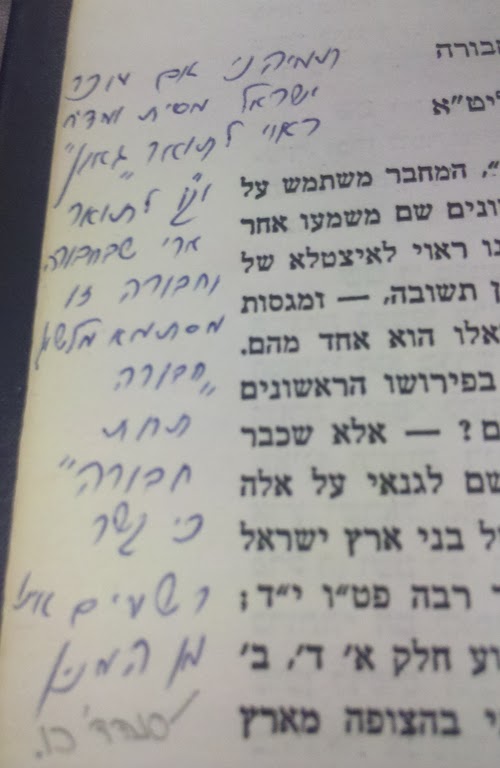
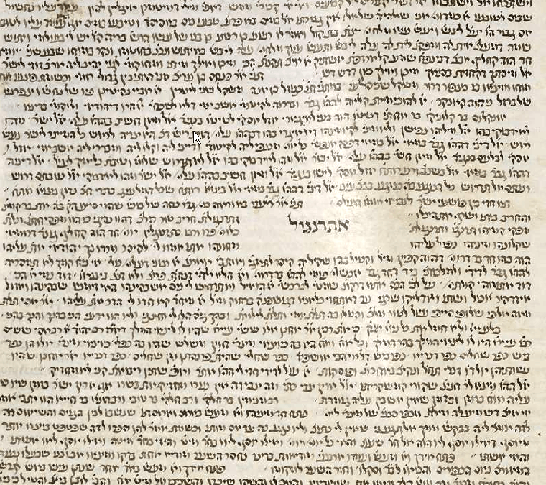
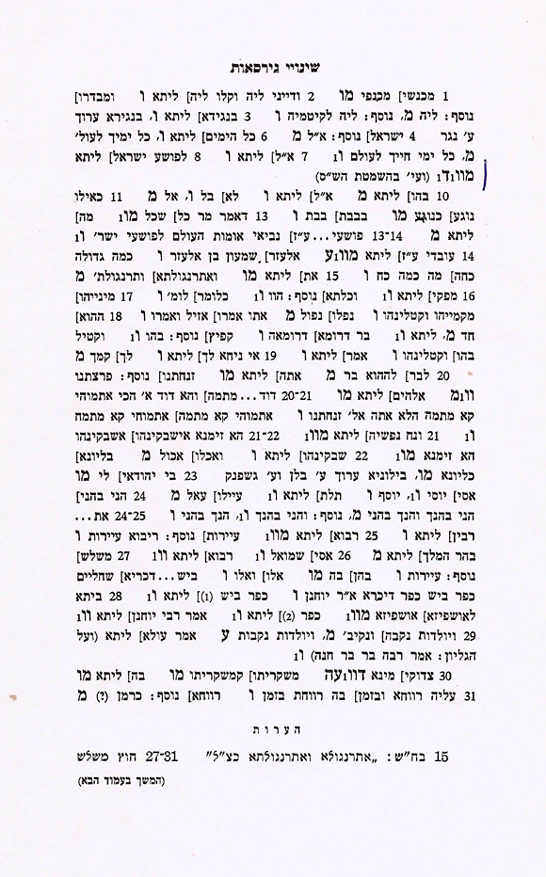
In January 2025, two hundred Judaica items from Mr. Klagsbard’s estate were offered for sale at the Kedem auction house’s 100th public auction. Among them was lot 96, a copy of Sefer ha-Kuzari in Judah ibn Tibbon’s translation, second edition, Venice 1547. While browsing through the catalog and attached images, I was excited to identify the previously unidentified annotations as written by Rabbi Azariah de’ Rossi.[4] A detailed paleographic comparison between the notes on his copy of the Guide and those on the Kuzari confirmed this identification. The similarity is evident in all characteristics: writing style, letter forms (particularly alef, final mem, and qof), and consistent use of certain abbreviations.

Beyond the similarity in the handwriting itself, similar editorial patterns can be identified in both works. In both texts, de’ Rossi created detailed tables of contents at the beginning of the book, using the same system of notation and reference. Additionally, the notes in both works are organized similarly in the margins, with consistent use of square brackets to indicate additions and completions.

Providence arranged that while the copy was sold to a private collector, it was photographed and made publicly accessible in the “Ktiv” digital platform of the National Library of Israel.

Chapter 2: Nature and Sources of the Annotations

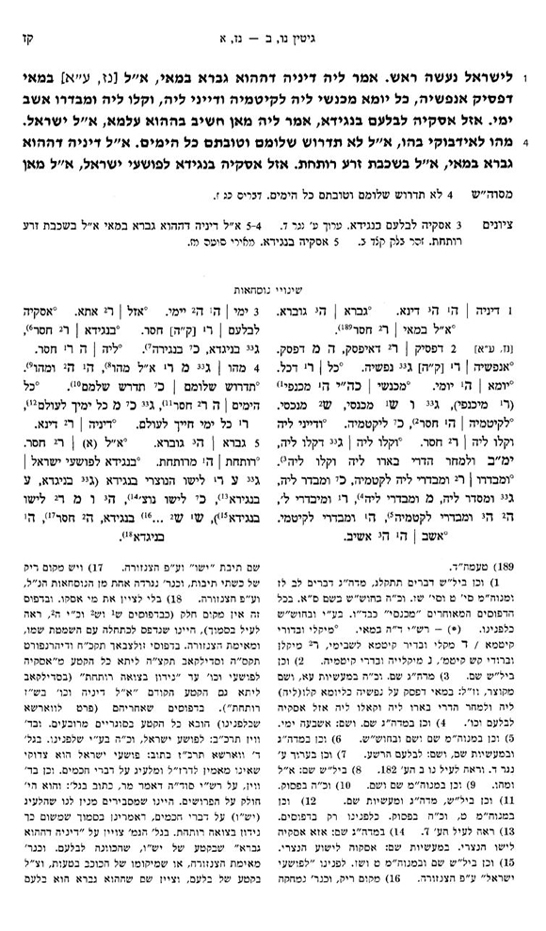
Analysis of the annotations on the Kuzari reveals several layers of corrections and notes. The annotations can be classified into two types, similar to his notes on the Guide for the Perplexed. The first type consists of brief interpretative notes, where he generally appears as a concise yet profound philosophical commentator. The second type comprises quotations from other commentators. In his notes on the Guide, he quotes from Narboni, Ibn Kaspi, and a previously unknown commentator named Rabbi Abraham Kashlar.5 In his notes on the Kuzari, he quotes from Abraham Ibn Ezra’s biblical commentary, from Rabbi Nathanel ibn Kaspi’s commentary on the Kuzari, and from other commentators. An example of a quotation from Ibn Kaspi appears in his note on the science of music in Book II:65, which is found in Ibn Kaspi’s autograph manuscript, as we shall discuss below.

In the Kuzari, we also find systematic and extensive corrections to Judah ibn Tibbon’s translation as it appeared in the 1547 Venice edition before him. The Ibn Tibbon family played a crucial role in medieval Hebrew translation: Judah ibn Tibbon (c. 1120-1190), known as “the father of translators,” established their translation tradition and produced the first Hebrew translation of the Kuzari. His son Samuel (c. 1150-1230) became renowned for his precise translation of Maimonides’ Guide for the Perplexed, while Samuel’s son Moses, though also active as a translator, was considered less rigorous than his predecessors.

De’ Rossi believed, as he explicitly stated in his work Imrei Binah,[6] that this Kuzari translation was flawed since it was not produced by Samuel ibn Tibbon, whom he considered the most authorized translator of philosophical works. Interestingly, de’ Rossi made a significant historical error: he was unaware that the translator was actually Judah ibn Tibbon, the patriarch of the family, and instead believed it was Moses ibn Tibbon, Samuel’s son, whose translation methodology he criticized. This misidentification led de’ Rossi to approach the text with particular critical attention, though ironically, he was correcting the work of the very founder of the translation tradition he admired.

In our copy, we can see that de’ Rossi’s corrections to the translation drew upon several distinct sources:

1. Translation corrections based on Judah ben Cardinal’s version, which was available to de’ Rossi.[7] A clear example of this is the correction of the term “Karaites” at the beginning of the book, which does not appear in the Venice edition but matches Cardinal’s translation.[8]

2. Corrections based on Judah ibn Tibbon’s own revisions, which were written as alternative readings. These corrections appear in the margins of various Kuzari manuscripts.[9]

3. Original translation suggestions by de’ Rossi himself, which were later incorporated into subsequent editions.[10]

To understand the sources of these corrections, we must first understand the history of Judah ibn Tibbon’s translation of the Kuzari. As David Zvi Baneth demonstrated in his foundational research, ibn Tibbon’s translation reached us in two distinct basic versions:

1. The first, which Baneth termed “Version T,” reflects ibn Tibbon’s original translation language.

2. The second, “Version S,” is a later adaptation.

Although the two versions are closely related, they differ in their translation methodology and language: Version S presents a more precise and consistent translation that strives to adhere to the Judeo-Arabic original and to translate each term uniformly.

Additionally, as Bar-Asher has shown, another layer of translation by Samuel ben R. Judah ben Meshullam entered ibn Tibbon’s translation. [11] This scholar initially intended to translate the entire book himself but, upon seeing ibn Tibbon’s translation, refrained from completing a full translation. The question of whether he translated the book based on ibn Tibbon’s translation or merely wrote corrections in the margins of ibn Tibbon’s translation remains unresolved.

Over the generations, these versions became intermingled, and later copyists combined them indiscriminately. This process gave rise to mixed and complex versions, which were also reflected in the first printed editions of the book.

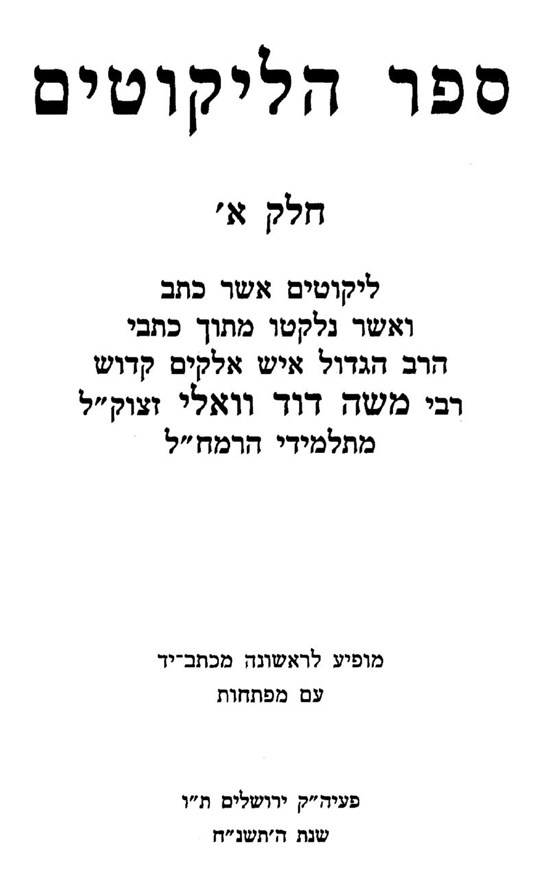
Examination of de’ Rossi’s copy, with his annotations on the 1547 Venice edition, shows that he attempted to grapple with this complexity. He utilized various sources to determine the precise text – Judah ben Cardinal’s translation that was available to him, as he testifies in his book Imrei Binah, making his notes a potential source for identifying Cardinal’s largely lost annotations.[12] He also used the margins of Kuzari manuscripts that documented additional versions of ibn Tibbon’s translation, as well as adding notes of his own.

Chapter 3: The Influence of De’ Rossi’s Notes on Rabbi Judah Moscato’s Kol Yehudah

Professor Avishai Bar-Asher’s comprehensive study of the Hebrew translations of the Kuzari and the evolution of Judah ibn Tibbon’s translation[13] concludes with these words:

“It is to be hoped that the discovery of additional material—in other documents preserving translation fragments, in the extensive material preserved in the margins of manuscripts of ibn Tibbon’s translation in its various versions, or in secondary copies that have not yet been examined—will help to further evaluate the hypotheses and preliminary conclusions proposed in this study.”

It appears that one of the most important documents for understanding the evolution of ibn Tibbon’s translation from the edition published with the Kol Yehudah commentary onwards is this document containing de’ Rossi’s annotations.

We will examine two of de’ Rossi’s annotations that demonstrate his influence on Rabbi Judah Moscato, author of Kol Yehudah, which became the canonical commentary on the Kuzari from its first publication in Venice in 1594 until today.

The first concerns a textual matter. In the Kuzari, Book II:57, it states:

.אמר הכוזרי: אתם היום במבוכה גדולה מאלה החובות הגדולות, ואיזו עדה תוכל לשמור כל הסדר הזה

“The Khazar king said: You are today in great confusion regarding these great obligations, and which congregation could maintain all this order.”


De’ Rossi was convinced this translation was incorrect. In his Me’or Einayim, he criticizes it and rejects Ibn Kaspi’s attempt to justify it. He notes there that Ben Cardinal translated “in confusion” as “in quiet and rest”.[14] In the margins of his personal copy, he included ibn Tibbon’s alternative translation, “indeed in return and tranquility,” but also proposed his own correction: he crossed out the word “in confusion” and wrote above it “in rest.”

Notably, not by coincidence, the reading “in rest” appears in all editions of the Kuzari with Kol Yehudah onwards, to the puzzlement of Munk and other scholars who wondered about the source of this reading.[15]

It seems likely that de’ Rossi’s suggested correction found its way into Rabbi Judah Moscato’s work, as we find evidence of his influence in other places as well.

Here is another source that apparently shows such influence. In Book II:65, the Kuzari discusses the excellence of music, stating:

…אמר הכוזרי: שמה בלי ספק נגמרה ושמה היתה מעוררת הנפשות, כאשר יאמר עליה, שהיא מעתקת את הנפש ממדה אל הפכה

“The Khazar king said: There, without doubt, it was perfected and there it would stir the souls, as it is said of it that it transfers the soul from one disposition to its opposite…”

De’ Rossi writes in the margin:

כנגן דוד לפני שאול להעביר רוחו הרעה וכנגן אלישע בהסתלקות הנבואה. וכבר חשב האפודי שלזאת הסבה כתוב בקצת מזמורי תהלים למנצח, לפי שהיה השיר המיוחד למזמור ההוא ממה שינצח כח או כחות מה מהנפש להשיבם להיושר והנכון

“Like David’s playing before Saul to remove his evil spirit, and like Elisha’s playing when prophecy departed. The Efodi already thought that for this reason it is written in some psalms ‘To the chief musician,’ because the song designated for that psalm was among those that would overcome some power or powers of the soul to return them to uprightness and propriety.”

These words are not found in any of the Efodi’s known works, but it appears that in de’ Rossi’s memory, he confused the Efodi with Rabbi Nathanel ibn Kaspi. The latter writes in his commentary on this passage:[16]

כאשר ראינו משאול כאשר ביעתתהו רוח רעה והיה כנגן דוד לפניו סרה מעליו הרוח הרעה ההיא כמו שמבואר מהספור, והיה בהיות אלהים אל שאול ולקח דוד את הכנור ונגן בידו ורוח לשאול וכו’. וכן היתה חכמת המושאיקא מעוררת הנפשות, כי מצד התלות השכל האינושי בחומר ישיגהו פעמים עכירות ובהלה ושכחה, ובה יקנו יתרון המעלות ויקנו המדות ויחזיקו התכונות. וכן יסירו הנגונים חליי הנפש ויכוונוה לקבל רוח הקדש. ובזה ינוצחו קצת תכונות רעות שבנפש ויוכנעו לעבודת האל, על כן כתב למנצח מזמור לדוד. ולהיות חכמת הנגון בנוייה על סדר הערכים, ר”ל על סדר הערך והיושר מסודר ומתוקן כראוי, על כן אמר דוד שיר המעלות

“As we saw with Saul when an evil spirit troubled him and when David played before him the evil spirit departed from him, as is clear from the story, ‘And it happened, when the spirit from God was upon Saul, that David took a harp and played with his hand; then Saul would become refreshed,’ etc. Thus the science of music would stir the souls, for due to the attachment of the human intellect to matter, it sometimes experiences turbidity, confusion and forgetfulness, and through it they acquire excellence of virtues and acquire good traits and strengthen dispositions. Thus the melodies remove the illnesses of the soul and prepare it to receive the holy spirit. In this way certain evil dispositions in the soul are overcome and subdued to divine service, therefore it is written ‘To the chief musician, a psalm of David.’ And because the science of music is built on the order of proportions, that is, on the order of proportion and uprightness arranged and established properly, therefore David said ‘A Song of Ascents.'”

It seems quite clear that de’ Rossi summarized and abbreviated ibn Kaspi’s comments here, making them the source of his note, though he mistakenly attributed them to the Efodi.

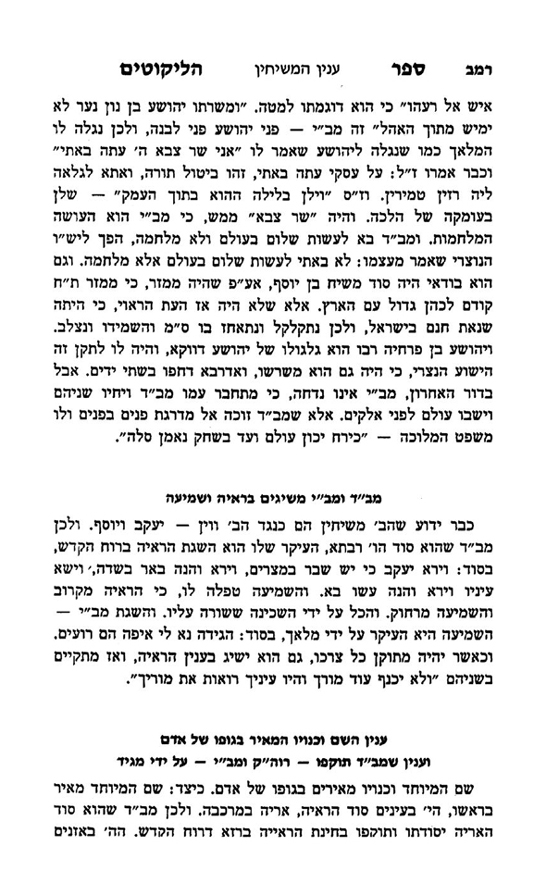
Now, I can find no logical explanation for Rabbi Judah Moscato’s words elsewhere, unless we say that he saw de’ Rossi’s words in this note and understood them in an interesting way.

This is what Rabbi Judah Moscato writes in his book of sermons, Nefutzot Yehudah:[17]

ומקרא מפורש הוא, יבקשו איש יודע מנגן בכינור. והיה בהיות עליך רוח אלהים רעה, וניגן בידו וטוב לך. ועל כתפות האפודי היתה זאת שומה, אל מול פניו, לעומת מחברתו, כי על כן נאמר בקצת המזמורים למנצח, להיות השיר המיוחד אליהם מועיל מאד לנצח התכונות שבנפש, להכניעם ולהשיבם אל תיקון היושר לעבודת האל יתברך. הוא דבר בעל הכוזרי, בהפליגו בשבחי המוסיקה הנמצאת מאז באומתנו, וזו לשונו, מאמר ב, סימן סה: שמה, מבלי ספק, נגמרה ונשלמה, ושמה היתה מעוררת הנפשות, כאשר ייאמר עליה שהיא מעתקת את הנפש ממידה אל הפכה. ע”כ

“And it is an explicit verse, ‘Let them seek a man who is a skillful player on the harp. And it shall come to pass, when the evil spirit from God is upon you, that he shall play with his hand, and you shall be well.’ And upon the shoulders of the ephod this was placed, before him, opposite its joining, for therefore it is said in some psalms ‘To the chief musician,’ as the song designated for them was very beneficial for overcoming the dispositions of the soul, to subdue them and return them to proper rectification for the service of God, blessed be He. This is what the author of the Kuzari said, in his praise of the music found then in our nation, and this is his language, Book II:65: ‘There, without doubt, it was perfected and completed, and there it would stir the souls, as it is said of it that it transfers the soul from one disposition to its opposite.’ End quote.”

It is quite clear that these are the same ideas that originated in ibn Kaspi’s commentary. But how did the words “and upon the shoulders of the ephod this was placed” enter into R. Judah Moscato’s discussion? What does the ephod, and specifically “Efodi,” have to do with King David? It must be that de’ Rossi’s words were before him, and he interpreted the word “Efodi” as referring to David’s ephod.

Conclusion

The identification of Azariah de’ Rossi’s annotations on the Kuzari sheds light both on his interpretative approach and on his influence on subsequent generations. Analysis of the annotations reveals a scholar combining expertise in commentarial literature with meticulous textual criticism, drawing on various sources and traditions. Particularly interesting is his influence on Rabbi Judah Moscato, who incorporated some of his corrections into his Kol Yehudah commentary, which became the canonical commentary on the Kuzari. These annotations thus join a series of testimonies to de’ Rossi’s significant contribution to the development of Jewish exegesis in the late Renaissance period.

The discovery of his annotations on the Kuzari, alongside his known annotations on the Guide for the Perplexed, allows us to better understand his relationship to these two major philosophical works and his conception of the connection between them. Further research into these annotations may shed light on additional questions concerning the textual history of the Kuzari and the development of its interpretation.

[1] On Azariah de’ Rossi, see: Yom Tov Lipmann Zunz, “The Life of R. Azariah min ha-Adummim,” Kerem Hemed 5 (1841), pp. 131-158; 7 (1843), pp. 119-124; Benedetto Levi, Della vita e delle opere di Azaria de’ Rossi [The Life and Works of Azariah de’ Rossi] (Padua: Crescini, 1868); Isaac A. Twersky, “Azariah de’ Rossi 1511-1578,” Katif 6-7 (1969), pp. 175-185; Bezalel Safran, “Azariah de Rossi’s Meor Eynaim” (PhD diss., Harvard University, 1979); Robert Bonfil, “Reflections on the Place of Me’or Einayim by Azariah de’ Rossi in the Cultural Environment of Italian Renaissance Jewry,” Jewish Thought in the Sixteenth Century (1983), pp. 23-48; Meir Benayahu, “The Polemic Over Rabbi Azariah de’ Rossi’s Me’or Einayim,” Asufot 5 (1991), pp. 213-265; Hannah Liss, “The Art of Rhetoric as Peshat? Renaissance Jewish Biblical Exegesis in the Case of Judah Messer Leon and Azariah de’ Rossi,” Tarbut 9 (2000), pp. 103-124; Joanna Weinberg, The Light of the Eyes of Azariah de’ Rossi, New Haven: Yale University Press, 2001; Eadem, “On the Shoulders of Rabbis: The Study of Ancient History in Azariah de’ Rossi’s Writings,” Jewish Studies Quarterly 22 (2007), pp. 49-55; Carmi Horowitz, “Titus and the Gnat in Posen, Prague, and Ferrara: Polemics on Aggadic Interpretation in the Sixteenth Century,” Carmi Sheli [My Vineyard] (2012), pp. 99-116.
[2] See Azariah de’ Rossi, Me’or Einayim, ed. David Cassel (Vilna, 1866; repr. Jerusalem: Makor, 1970); Reuven Bonfil, The Writings of Azariah de’ Rossi, with Introduction and Notes (Jerusalem: Bialik Institute, 1991), pp. 11-130. See also Joanna Weinberg, ed., The Light of the Eyes: Azariah de’ Rossi (New Haven: Yale University Press, 2001), cited above n. 1, for de’ Rossi’s engagement with The Kuzari, as indicated in the index, pp. 789-790, and for his use of The Guide for the Perplexed, as referenced in the index, p. 793.
[3] Paris, Bibliothèque nationale de France, MS hebr. 691, fol. 1r.
[4] Another significant discovery related to Rabbi Azariah de’ Rossi emerged at a public auction: the actual ban (herem) issued by the rabbinical court of Rabbi Joseph Karo (the Beit Yosef) against de’ Rossi’s work Me’or Einayim. This remarkable document, bearing the signatures of eight sages from Safed, was found affixed to one of the surviving copies of Me’or Einayim and was subsequently offered for sale at the “Genazym” auction house. This artifact provides tangible evidence of the considerable controversy that surrounded de’ Rossi’s innovative historical-critical approach to rabbinic literature upon its publication, prompting formal condemnation from one of the most authoritative rabbinical courts of the sixteenth century.
[5] On his commentary to the Guide for the Perplexed and its identification through quotations in de’ Rossi’s notes, see Y. Seewald, ‘Abraham Kashlar’s Commentary on the Guide for the Perplexed: Its Identification, Circle, and Influence on Azariah de’ Rossi’ (in press).
[6] Yemei Olam chapter 36, Cassel edition p. 308 [with full translation of the Hebrew quote to follow]
[7] Yemei Olam, ibid.: “And I remember that I saw Judah ben Cardinal’s translation in part of the Kuzari…”
[8] Cf. Bar-Asher, “Hebrew Translations of the Kuzari,” Sefunot 13 (2023), pp. 185-189.
[9] Such is the annotation found in Ibn Kaspi’s autograph, to Kuzari II:57, “at this time in tranquility and rest” (Paris MS Heb. 677 fol. 47r), which is an annotation by ibn Tibbon, and de’ Rossi copies it in the margin. Similarly, in I:1 – “my soul, in my opinion,” documented in manuscripts as an “alternative version” by ibn Tibbon.
[10] Such is the annotation to Kuzari II:57, replacing “in confusion” with “in rest.”
[11] Cf. Reimund Leicht, “Shemuel ben Yehudah of Marseille: A 14th Century Provençal Translator and Re-Translator, and his Re-Translation of Judah ha-Levi’s Sefer ha-Kuzari” (in process); cited in Bar-Asher, note 7 above.
[12] See Bar-Asher, note 7 above, on the various sources for locating remnants of Cardinal’s translation.
[13] See note 7 above.
[14] See notes 5, 6, and 9 above.
[15] See note 9 above.
[16] See note 8 above, fol. 55v.
[17] First Sermon, Bnei Brak 2000, p. 5.


Maimonides and Prophecy, R. Pinhas Lintop, R. José Faur, and More Examples of Censorship

Maimonides and Prophecy, R. Pinhas LintopR. José Faur,  and More Examples of Censorship

by Marc B. Shapiro

1. In my last post here I discussed whether Maimonides believed that the entire people of Israel experienced prophecy at Mt. Sinai. I neglected to refer to Hilkhot Yesodei ha-Torah 8:3, which states:
לפי שנבואת משה רבנו אינה על פי האותות כדי שנערוך אותות זה לאותות זה, אלא בעינינו ראינוה ובאזנינו שמענוה כמו ששמע הוא
This is one of those passages that presents problems for the interpreter, since what Maimonides says in the Mishneh Torah, that all Israel experienced prophecy as Moses did, is contradicted by what he says in the Guide. As is to be expected, R. Kafih takes note of this problem in his commentary to Yesodei ha-Torah 8:3 (p. 165 n. 13), and what he says is fascinating. Commenting on the passage I quoted above, R. Kafih writes:
הדברים אמורים כאן על דרך ההטפה, אבל ברור בדעת רבנו שכל אחד שמע כפי רמתו, וכמשפט כל חזון, ועיין מו”נ ח”ב סוף פ’ לב, ופ’ לג, שם הביא לשון חז”ל במכילתא שמות יט כט משה מחיצה בפני עצמה ואהרן מחיצה בפני עצמה.
What R. Kafih is saying is that Maimonides’ words in the Mishneh Torah, that all Israel “saw and heard[1] with [its] own eyes and ears as he did,” should be understood as rhetoric, designed to have an effect on the reader, but they do not reflect Maimonides’ actual view which is that all of Israel did not see and hear as Moses did.

Regarding this issue, see also R. Kafih’s commentary to Guide 2:33, n. 5, where he writes:

לאו לדיוקא נקטה לא למין ההשראה באופן כללי, ולא לסוגיה

Further discussion of this matter, where R. Kafih elaborates on what he only hinted at elsewhere, can be found in his She’elot u-Teshuvot ha-Rivad (Jerusalem, 2009), nos. 24-26, where he explains to R. Mazuz what Maimonides had in mind.

In previous writings (books, articles, and posts), I have called attention to many examples where Maimonides writes things that he does not actually believe, so what we have just seen is nothing new. The significance of the example I have mentioned is that R. Kafih accepts this approach as a valid method of explaining a formulation of Maimonides in the Mishneh Torah. For another example from R. Kafih, see his note to Guide 2:45 (p. 268), where he writes:

וברור כי רבנו אמר את הדברים כאן על דרך הדרש וההטפה שדרך המטיף לגדיל ולהפריז בענין.
In Ketavim, vol. 2, p. 619, R. Kafih writes:
אמנם כתב הרמב”ם מה שכתב באיגרת תימן כדי להרתיע את מאמיני משיח השוא, וכדי להשקיט לבות החוככים אם להימין ואם להשמאיל. אבל באמת לא כן עמו.
2. R. Bezalel Naor’s translation of Orot is back in print. This time it is published with the Hebrew text as well. For those who don’t know this work, it is a masterpiece of translation. The introduction and notes are also fantastic. When people ask me what to read to get a sense of R. Kook’s thought and the conflicts it created, one of the things I always recommend is Naor’s introduction to Orot.
On the subject of Naor, I would like to call attention to another work of his which did not get the exposure it deserves. In 2013 he published Kana’uteh de-Pinhas, which focuses on the interesting figure R. Pinhas Lintop, rav of the hasidic (Habad) community of Birzh, Lithuania. R. Lintop was unusual among Lithuanian rabbis in that he intensively studied Kabbalah. He was also a supporter of the Mizrachi movement.[2]
Here is his picture.

                                                                                                             
Those who want to see a picture of his recently discovered tombstone can go here.
Anyone interested in Lithuanian rabbinic thought should examine Kana’uteh de-Pinhas. Among other things, it includes previously unknown letters from R. Lintop to the Chafetz Chaim and R. Kook. It also includes chapters by Naor on aspects of the philosophy of Habad, R. Tzadok, and R. Solomon Elyashiv. 

Naor calls attention to R. Lintop’s view of Maimonides’ Thirteen Principles. Unfortunately, I did not know of this when I wrote my book on the subject. R. Lintop is no fan of Maimonides’ concept of dogma or of Maimonides’ intellectualism in general. He rejects the notion that otherwise pious Jews can be condemned as heretics merely because they don’t accept Maimonides’ principles. He even makes the incredible statement that of the great rabbis, virtually all of them have, at the very least, been in doubt about one fundamental principle.

הנה לא הניח בן לאברהם . . . כמעט אין אחד מראשי חכמינו, החכמים הצדיקים כו’ כו’, אשר לא יטעה או יסתפק באחד משרשי הדת

Are we to regard them all as heretics? Obviously not, which in R. Lintop’s mind shows the futility of Maimonides’ theological exercise, which not only turned Judaism into a religion of catechism, but also indoctrinated people to believe that one who does not affirm certain dogmas is to be persecuted. According to R. Lintop, this is a complete divergence from the talmudic perspective.[3]

R. Lintop further states that there is no point in dealing with supposed principles of faith that are not explicit in the Talmud.[4]

הגידה נא, אחי, בלא משוא פנים, היש לנו עוד פנים לדון על דבר עקרים ויסודות את אשר לא נזכרו לנו בהדיא במשנה וגמרא?

As for Maimonides’ view that one who is mistaken when it comes to principles of faith is worse than one who actually commits even the worst sins, R. Lintop declares that “this view is very foreign to the spirit of the sages of the Talmud, who did not know philosophy.” As is to be expected, he also cites Rabad’s comment that people greater than Maimonides were mistaken when it came to the matter of God’s incorporeality.[5]

As part of his criticism of Maimonides and the Jewish philosophers in general, R. Lintop writes, in words similar to those earlier used by Samuel David Luzzatto:[6]

קרבו לנו דעות רבות נכריות וגיירו אותם עד כי היו לאמהות בישראל וגרשו את אמנו האמיתית

In his Pithei Shearim[7] R. Lintop criticizes Maimonides’ view, Hilkhot Melakhim 8:10, that given the power Jews must force non-Jews to adopt the Noahide laws. According to R. Lintop, this command only applied to the seven nations that inhabited ancient Canaan, but does not apply to any other non-Jew, even those living in the Land of Israel. Throughout his discussion, R. Lintop shows a strong moral sense and it is this which leads him to disagree with Maimonides. As he states:

  אין הקב”ה מקפח שכר כל בריה

As for those non-Jews who don’t observe the Noahide laws (referring in particular to the commandment against avodah zarah), R. Lintop sees them as blameless as they don’t know any better, having been born into their cultures.[8]

Among other things, I was surprised to see R. Lintop write:[9]

 הגאון המשכיל הנפלא בספרו בשמים ראש רנ”ב בשם אחד מהראשונים

He assumes that Besamim Rosh preserves authentic medieval responsa and yet he also recognizes that the publisher Saul Berlin was a maskil. This is significant since as far as I know, everyone else who believes Besamim Rosh to be authentic has no idea who Saul Berlin was.

Many who have heard of R. Lintop know of his correspondence with R. Kook and assume that they shared the same outlook. This is actually not the case, and in a letter to R. Yaakov Moshe Harlap R. Lintop said as much himself.[10]

כבודו הולך בזה ממש בדרך התחי’ שהולך ידי”נ הגאון מוהרא”י קוק במאמריו וספריו, והנה אמנם יש לי הרבה לדבר בזה כי אינני מהמסכימים לדרכיו, ורבות פלפלתי עמו בזה. הוא חושב כי אהבתינו הגדולה היא מפני השתוות דעותינו, ואני השבתיו כי להיפך מפני אי השתוות דעותינו אנו שואפים אחד להתמלאות מחבירו.

In 2013 the fourth volume of Reuven Dessler’s Shenot Dor va-Dor appeared. This volume contains two lengthy letters from R. Lintop to R. Kook (pp. 414-437). R. Lintop does not hesitate to criticize R. Kook’s understanding of hasidut. One of his criticisms is particularly noteworthy (pp. 435-436). R. Kook had written about how Hasidism is based on the idea of ahavat Yisrael for both the collective and the individual. R. Lintop replies that this is incorrect, as hasidut is not based on ahavat Yisrael but on ahavat avodat Yisrael and ahavat avodat ha-hasidut.

Then comes the following incredible passage, incredible since R. Lintop was at the time serving as rav of a Habad community and was generally quite connected to Habad philosophy, although he himself was not a Habad hasid. Some readers might see this as a purely academic type of statement, but anyone who knows the thought of R. Lintop will realize that this is, if not actually criticism, certainly disappointment with some of R. Shneur Zalman of Lyady’s statements.

הכי נוכל לחשוב את חסידות מורנו ורבנו אדמו”ר הזקן לחסידות אהבת ישראל אחרי הניח ליסוד מוסד באגרת הקודש (בתניא ח”ב) וז”ל לא זו הדרך ישכן אור להיות חפץ בחיי בשרים ובני ומזוני כו’ וראשית הכל שישמח האדם ויגל בכל עת ובכל שעה ויחיה ממש באמונתו כו’ ומי שעצב ומתאונן מראה בעצמו שיש לו רע ויסורין וחסר לו איזה טובה והרי זה ככופר ח”ו כו’ ומי שאין שוין לו מראה בעצמו שהוא מערב רב דלגרמייהו עבדין כו’ וע”כ הוא חפץ בחיי בשרים ובני ומזוני . . . בפ’ כ”ד מספר התניא משריש כי האדם העובר על רצון ה’ אפי’ עבירה קלה מד”ס הוא בהתכלית הפירוד מיחודו ואחדותו ית’ יותר מס”א וקליפה הנקראה אלהים אחרים ויותר מבהמה טמאה שקצים ורמשים (ובאגרת הקודש מג פוסק שכל העובר על ד”ס אפי’ באיסור קל של דבריהם חייב מיתה כעובר על חמורות שבתורה והדברים נוראים. גם בא ופוסק להלכה בספרי [!] אורח חיים [צ”ל חושן משפט] חלק ו’ הלכות נזקי גוף ונפש ט’ ישראל שעומד ברשעו תמיד כגון רועה בהמה דקה כו’ וכן כל כיוצא בהם אין כישראל דתם הוציאם מכלל ישראל ורחוק הדבר מאהבת ישראל הכללי.

There are many Habad adherents who read this blog and maybe some of them will want to weigh in on this.

Since, in the passage just quoted, R. Lintop cites the Tanya, let me share something interesting that appears in R. Mazuz’s recently published Asaf ha-Mazkir, p. 558. He mentions having heard that mitnagdim made fun of the Tanya since it begins as follows:

תניא משביעים אותו תהי צדיק ואל תהי רשע ואפילו כל העולם כולו אומרים לך צדיק אתה היה בעיניך כרשע

This comes from Niddah 30b and is stated by R. Simlai. The reason for the mitnagdim’s mocking is that R. Simlai was an amora so therefore the term תניא, which begins R. Shneur Zalman’s work, is inappropriate, as this term is used to introduce a baraita. (R. Mazuz argues that contrary to popular belief R. Simlai was a tanna, yet this is impossible.)

Finally, R. Isaac Nissenbaum tells us that R. Lintop was not a fan of R. Samson Raphael Hirsch.[11] (I wish I knew of this source earlier so I could have included it in my forthcoming article – already with the publisher – on Orthodox responses to Hirsch):

[הוא] הניא אותי מלהמשך אחרי “החורב” של רבי שמשון רפאל הירש, באמרו: “היהדות האמתית היא יהדות התורה ולא יהדות הרגש. היהדות תתקיים בתלמידי חכמים ולא ברגשנים דתיים. . .”

Just as I was finishing this post, a new book by Naor appeared entitled Mahol la-Tzaddikim. It focuses on the controversy between R. Moses Hayyim Luzzatto and R. Eizik of Homel regarding the purpose of creation.
3. In my new book I give examples of passages that were not translated properly, or not translated at all. After reading the book, Joel Wolowelsky sent me an edition of Birkat ha-Mazon, first published in 1946 (i.e., right after the Holocaust). The translation is by Rabbi Chaim Brecher, who is mentioned in my book in another context. Brecher’s edition of Birkat ha-Mazon actually became quite popular and was reprinted many times. In fact, the bentchers handed out at my own bar mitzvah were reprints of this edition.
At the beginning of Birkat ha-Mazon for weekdays, Psalm 137 (Al Naharot Bavel) appears (although almost no one says this). The final verse of this psalm reads:
 אשרי שיאחז ונפץ את עלליך אל הסלע
A proper translation of this verse is: “Happy shall he be, that taketh and dasheth thy [the Babylonians’] little ones against the rocks.”
I think it is fair to say that in modern times most people would be uncomfortable with the feeling expressed here. That explains the false translation of the verse provided by Brecher: “He will be as joyous as were you when you dashed our little ones against the stones.”

Was it a general humanistic feeling that impelled this false translation or was it the impact of the Holocaust that was responsible? In other words, with the then recent murder of so many Jewish children, perhaps it was not thought proper to give publicity to a verse that spoke of killing children of another people. Whatever the reason, it is obvious that this is an intentionally false rendering of the verse.
Regarding my book, let me also note the following:
Pp. 38-39. I wrote that there are no Ashkenazic siddurim, even those published in the State of Israel, that have an uncensored version of Birkat ha-Minim in the Amidah. As people know, I was working on this book for many years, and when I originally wrote this sentence it was correct (or so I believe). However, by the time the book appeared it was no longer correct. Rabbi Barry Gelman called my attention to the fact that in 2012 a nusach Ashkenaz siddur appeared without the censored text. Here it is.

Over the summer I was in Vienna and learnt that a couple of years ago Rabbi Schlomo Hofmeister, one of the community rabbis of Vienna, published Siddur Tefilat Yeshurun, and this siddur also includes an uncensored text of Birkat ha-Minim. I had never before seen this siddur, and what led me look at its version of Birkat ha-Minim were the following words that appear on the title page:
כמנהג בני אשכנז ללא שיבושי הצנזורה ושינויי המשכילים והמדקדקים המאוחרים
P. 55 n. 34: I somehow missed the fact that Esther Farbstein, Be-Seter Ra’am, pp. 614-616 n. 92, indeed discusses the story of the 93 Bais Yaakov girls committing suicide in Cracow. She also shows the fictional character of the story. (Thanks to R. Yaakov Taubes for calling this to my attention.)
P. 83: I refer to a responsum by R. Samuel Aboab who states that the words minhag shel shetut regarding kapparot were added by the printer. My language was not precise as this comment is not found in a responsum of Aboab but is quoted in Aboab’s name in a responsum of his student, R. Samson Morpurgo, referred to on p. 83 n. 11.
p. 131 n. 45: I report Derek Taylor’s claim that Chief Rabbi Joseph Hertz once attended a non-Jewish event without a head covering. I also note that Taylor does not provide documentation of this claim. Rabbi Dr. Benjamin Elton, who has recently been appointed rabbi of the prestigious Great Synagogue of Sydney, called my attention to this photograph in which Hertz is not wearing a kippah (source).
This was not even a non-Jewish event, but a lunch sponsored by the Polish-Jewish Refugee Fund. Hertz is also wearing a clerical collar.
Here is another picture of Hertz without a kippah (source).
Here he is wearing a kippah (source).

The men sitting behind him with the clerical collars are not Anglican priests. As you can see they too are wearing kippot. This is how Jewish “men of the cloth” used to dress in England. In this picture Hertz also has a clerical collar.
On p. 138 n. 64 I write that this photo from the Lubavitcher Rebbe’s student file at the University of Berlin[12] recently had a kippah placed on it.

The picture I referred to is the following, from R. Abraham Weingort, ed., Haggadah Shel Pesah al Pi Ba’al ha-Seridei Esh (Jerusalem, 2014), p. 53.

Regarding my discussion of the German Orthodox practice of not wearing a kippah, only after my book was in press did I read the memoir of the rabbinic scholar R. Shmuel Weingarten.[13] Weingarten describes coming to the Berlin home of R. Meier Hildesheimer and finding him and two other men drinking coffee with uncovered heads. Only when the Hungarian Weingarten entered the room did they pull their kippot out of their pockets and place them on their heads.
There is one more interesting text I would like to call people’s attention to. In R. Judah ben R. Asher, Zikhron Yehudah, no. 20, we see that R. Judah was asked if it is permitted to learn Torah with an uncovered head. R. Judah replied that it is not proper to do so, but his language makes it clear that there is no prohibition in this. He also adds that sometimes the heat will be such that one may feel unable to keep his head covered.
וטוב הוא שלא לישב בגילוי הראש בשעת הלימוד למי שיוכל לסבול לפי שילמוד יותר באימה ולפעמים מפני כובד החום אינו יכול לסבול
In R. Judah’s day they did not have small kippot like we have. It is obvious that the head covering was a significant item and when removed the man would be bareheaded.

In R. Azriel Hildesheimer’s responsa[14] the publisher included a note from Hildesheimer that informs us that in a copy of R. Judah ben R. Asher’s responsa (from the edition published in Berlin, 1846), there is a handwritten comment to the responsum just discussed. The author of the comment is described as הגאב”ד but it is not known whom this refers to. Alongside the words quoted above, that one who can bear the heat should cover his head, the unknown גאב”ד wrote:

לשון זה הוסיפו המגלים ראש ובכ”י כתוב בזה”ל: וטוב שלא לישב בגלוי הראש בשעת הלימוד כדי שישב באימה יותר ולפעמים מפני כובד החום נראה להקל. כבר נהגתי בעצמי לישב בכובע של פשתן דק כקופוצא בעתות החום לצאת ידי כולם

The Hebrew passage just quoted begins by stating that the comment in Zikhron Yehudah that one can take off one’s head covering if it is hot was added by “those who are bareheaded”.[15] This is followed by a quotation from the manuscript in which R. Judah says that on hot days he would sit with a lighter head-covering than normal. However, even this version has the language וטוב שלא לישב בגלוי ראש which also implies that there is no prohibition to be bareheaded during Torah study. This manuscript also has ולפעמים מפני כובד החום נראה להקל, which implies that one can be completely bareheaded if it is hot, to which it then adds that R. Judah himself did not sit bareheaded but wore a lighter head-covering. I therefore don’t see any substantial difference between the two versions of the responsum, yet the unnamed גאב”ד did see a problem with the first version and assumed that the text had been tampered with by a heretic.

In many prior posts I have discussed the assumption that heretics altered manuscripts (most recently in my posts regarding ArtScroll’s censorship of Rashbam). The example I have just given is one of the first where a rabbinic figure makes this argument about a halakhic text.[16] I have to say that in all of the numerous cases where modern rabbis claim that medieval texts written by great rabbinic figures have been altered by heretics, there is not even one instance where they make a compelling argument. Their approach is always along the line of, “This position goes against what we know to be true, so Rabbi X couldn’t have said it.” In this case there are actually two manuscripts in existence, and the words of one are exactly what we find it in the printed version of Zikhron Yehudah, while the other has the text mentioned by the גאב”ד.[17]

P. 218: I wrote that even a circumcised non-Jew is referred to as an arel. I was asked what my source for this is. I did not need to provide a source for my statement in the book, as it is a basic fact, and can be confirmed by looking in dictionaries. However, for those who want a rabbinic source see Mishnah Nedarim 3:11:

קונם שאיני נהנה לערלים מותר בערלי ישראל ואסור במולי עובדי כוכבים. קונם שאיני נהנה למולים אסור בערלי ישראל ומותר במולי עובדי כוכבים שלא היתה הערלה קרויה אלא לשמם שנאמר כי כל הגוים ערלים וכל בית ישראל ערלי לב

This Mishnah is explicit that even circumcised non-Jews are referred to as arelim.[18]

I would like to thank all those who have sent comments about my book. Only a small amount can be posted but I do try respond to all emails. I believe that I have mentioned all of the corrections. I hope that R. Menahem Lonzano would regard me as one of the ישרים בלבותם, for he wrote:[19]

הישרים בלבותם יאהבו החולק עליהם בדעת וישנאו העוזרם בלי דעת

4. In Saul Lieberman and the Orthodox I discussed the dispute over R. José Faur. I also published a letter in support of Faur by R. Jacob Kassin (who would later retract this support). It is well known that R. Faur’s greatest backer was R. Matloub Abadi, an important figure in the Syrian community and author of the halakhic work Magen Ba’adi. R. Abadi is mentioned in this regard by R. Kassin, in the letter of R. Kassin that I published in Saul Lieberman and the Orthodox. Here are two additional documents relevant to this matter. The first one is a 1966 letter from R. Abadi in praise of R. Faur.[20] I transcribed the document but was unable to make out some of the words.

The second document is a 1969 letter from R. Abadi to Chief Rabbi Yitzhak Nissim defending R. Faur. I found this document in the R. Nissim archive at Yad ha-Rav Nissim in Jerusalem. Together with the letter is a note that provides the following identifications.

ר”פ נ”י = R. José Faur
אויבו ורודפו = Rabbi Abraham Hecht
יוסף בן א’ = R. Yosef Harari-Raful (יוסף בן אהרן)

One more point about R. Faur that is worth noting is that he was such a close student of R. Aaron Kotler that he was one of the people chosen to carry R. Kotler’s coffin at his funeral.[21]
I have many more interesting documents that have never before appeared in print. I hope to publish some of them in future posts.
5. Let me share another example of censorship. It comes from a recently published book (too recent to be included in Changing the Immutable).
R. Joseph Messas has a passage, now famous among the Orthodox feminists, in which he refers to an unnamed book that mentions that in Spain there were places with women’s prayer groups at which each woman wore a tallit and some wore tefillin. It appears in his Nahalat Avot (Haifa, 1980), vol. 5:2, p. 268.

In 2015 the multi-volume set of Nahalat Avot was reprinted in Jerusalem. Take a look at the following page and you will see that the passage dealing with the women’s prayer groups has been deleted in its entirety.

Unlike Ashkenazic internal censorship of this sort, Sephardic censorship is a relatively new phenomenon (only a few decades old). Here is another example. R. Isaac Abraham Solomon’s book Akim et Yitzhak was published in Baghdad in 1910. On pages 112b-113a he rejects a position of the recently deceased R. Joseph Hayyim, the Ben Ish Hai.

R. Solomon appears to even cast doubt on R. Joseph Hayyim’s integrity when he writes:

וקי”ל ת”ח שאמר מילתא לאחר מעשה אין שומעים לו להחזיק דבריו

This book was reprinted in 1971, and here is how the pages look.

R. Eliyahu Sheetrit reports that R. Ovadiah Yosef was upset with this censorship and annoyed that the publisher thought that he could do as he wished with someone else’s book.[22]

6. There has been a lot written about the murder of Eitam and Na’ama Henkin הי”ד. There has even been a song dedicated to them. See here. Quite apart from the incredible family and personal tragedy, the murder of Eitam is a tragedy for the world of Torah and scholarship. I was planning on writing about this, but people who knew Eitam much better than I have already spoken and I don’t have much I could add to their moving words. I would only note that the amount of significant material published by Eitam is astounding, and I learnt so much from him, both from his printed work and from the many emails we exchanged. It is hard to think of anyone who accomplished so much in so short a period of time. I encourage all who can read Hebrew to examine his website here where many of his writings are found.

In my post here I posted this picture of the grave of R. Joseph Elijah Henkin’s son, Hayyim Shimi, which Eitam kindly sent me.

Someone asked me about the name שימי. We all know this as a nickname for שמעון but this is not something that you would put on a tombstone. I inquired about this from Eitam and here is his reply

אכן השם שלו היה חיים שימי, ואין זה קיצור חיבה של ‘שמעון’ (כמובן לא היו עושים כן על מצבה). הוא נקרא כך, למיטב ידיעתי, על שם סבתו (אם-אמו, חותנתו של הרב הענקין) שימא קריינדל, שנפטרה כשנה וחצי לפני הולדתו.

פעם שאל אותי חסיד אחד, מילא לקרוא לבן ע”ש בת אינו חידוש ומצאנו כן במעלה הדורות, אבל להמציא בשביל זה שם חדש, היכן מצאנו דבר כזה אצל שלומי אמוני ישראל?! והשבתי לו, אולי הגמרא לא מלאה ברב שימי בר אבין [צ”ל אשי] וכיו”ב?

In the post I wrote: “It is noteworthy that R. Henkin saw fit to mention on the tombstone that Hayyim was a student at Yeshiva College (= Yeshivat R. Yitzhak Elhanan).” R. Elazar Meir Teitz correctly pointed out that when Hayyim Shimi (or did they pronounce it “Simi”?) died in 1927, there wasn’t yet a Yeshiva College. This was only established in 1928.[23] However, R. Henkin’s other two sons did attend Yeshiva College.

Eitam also called the following to my attention. In R. Yitzhak Dadon’s Athalta Hi, vol. 2 (Jerusalem, 2008), p. 339,[24] this picture appears.

The rabbi on the right is identified as R. Shlomo Goren and the one on the left as R. Dovid Lifshitz. While the one on the right does look like R. Goren, it is actually R. Lifshitz (a fact confirmed to me by Dr. Chaim Waxman, R. Lifshitz’s son-in-law). Eitam informed me that the one on the left is R. Moshe Margolin, the secretary of Ezras Torah. Why did Dadon assume that the rabbi on the left was R. Dovid Lifshitz? He must have seen this photo somewhere with R. Lifshitz identified as appearing in it, and since he assumed that the man on the right was R. Goren, he concluded that the one on the left must be R. Lifshitz.

7. In recent weeks there has been a good deal of outrage after the appearance of an article in Mishpachah that appealed to the Palestinians not to kill haredim since they don’t go on the Temple Mount.[25] There is also an effort underway, supposedly authorized by the Edah Haredit, to publicize the same message in Arabic newspapers. See here. With this in mind, readers should examine the following document, which is found in the Central Zionist Archives S25/4752.[26]

It is a copy of a letter sent to the Supreme Muslim Council in Jerusalem from Aryeh Leib Weissfish. Weissfish was later to become famous as one of the leaders of the Neturei Karta, and strangely enough he was also a great fan of Nietzsche. You can read about his colorful career here, where it mentions how he illegally entered Jordan in 1951 to bring a message from the Neturei Karta that Jordan should invade Jerusalem and the Neturei Karta would be its ally in this. When he was deported to Israel he was put on trial and sentenced to six months in prison.

In view of the fact that there was a fear that Germany would invade the Land of Israel and that this would also lead to the Arabs persecuting Jews, Weissfish wrote to let the Muslim leaders know that the Old Yishuv type of Jews that he is speaking about are not involved in politics and oppose the Zionists. They have always treated the Arabs with respect and he therefore requests that these Jews be protected. He also offers to provide the names of the families who should be given this special treatment. As you can see from Yitzhak Ben-Zvi’s handwritten note at the bottom of the letter, Ben-Zvi copied this from the original letter which he found in the Supreme Muslim Council’s archives.

8. Information about my summer 2016 tours to Central Europe, Italy, Spain, and Germany will soon be available on the Torah in Motion website here.

9. For those who do not own Between the Yeshiva World and Modern Orthodoxy, you might be interested in knowing that Amazon is now offering it at a 36% discount ($15.92). See here

[1] This refers to the revelation at Sinai. The Touger translation of the Mishneh Torah mistakenly explains that these words refer to Moses’ “appointment as a prophet.”
[2] See Y. L. Fishman, Sefer ha-Mizrachi (Jerusalem, 1946), p. 120.
[3] Kana’uteh de-Pinhas, p. 75. When an earlier work of Lintop is quoted in Naor, Kana’uteh de-Pinhas, I have referred to the latter.
[4] Kana’uteh de-Pinhas, p. 75.
[5] Yalkut Avnei Emunat Yisrael, pp. 66-67.
[6] Yalkut Avnei Emunat Yisrael, p. 99
[7] (Vilna, 1881), pp. 14a-b.
[8] Pithei Shearim, p. 14b.
[9] Kana’uteh de-Pinhas, p. 78.
[10] Hed Harim (Jerusalem, 1953), pp. 30-31.
[11] Iggerot ha-Rav Nissenbaum (Jerusalem, 1956), p. 260 n. 7.
[12] The picture first appeared in Shaul Shimon Deutsch, Larger than Life (New York, 1997), vol. 2, p. 204.
[13] Perurim mi-Shulhanam shel Gedolei Yisrael (Jerusalem, 2004). The passage referred to is on p. 95.
[14] She’elot u-Teshuvot Rabbi Azriel: Even ha-Ezer, Hoshen Mishpat (Tel Aviv, 1976), no. 253.
[15] Eric Zimmer refers to this comment in his “Men’s Headcovering: The Metamorphosis of This Practice,” in J. J. Schacter, ed., Reverence, Righteousness, and Rahamanut (Northvale, N.J., 1992), p. 331 n. 28: “Hildesheimer claims that Reform Jews who advocated bareheadedness tampered with the original text in order to justify their own.” There are a couple of problems with Zimmer’s formulation. First, Hildesheimer does not make any claim. He simply reports what the גאב”ד wrote. Second, there is no mention of Reform Jews. The reference might be to them but it could also refer to maskilim. I assume that the quotation from Zimmer is missing a final word and what it means to say is that they “tampered with the original text in order to justify their own behavior”? 
[16] Regarding aggadic texts, we find a number of earlier examples. One well-known instance is R. Samuel Jaffe’s comment about the “Midrash” that in the future pig will become permitted:
למה נקרא שמו חזיר מפני שעתיד להחזירו לישראל
R. Jaffe writes (Yefeh Toar: Va-Yikra Rabbah 13:3, p. 78b):
לפי דעתי לא היה ולא נברא . . . היה מי שהיה רוצה להתחכם ממציא איזה מאמ’ [מאמר] שיפור’ [שיפורש] בו פי’ הלציי והיה תולה אותו מאיזה מהמדרשי’ הרחוקים להמצא ביד כל אדם
[17]  See R. Avraham Yosef Havatzelet, “Limud be-Rosh Meguleh – Ha-Omnam Ziyuf bi-Ketav Yad?” Yeshurun 7 (2000), pp. 735-738, and the note in the Makhon Yerushalayim edition of Zikhron Yehudah, no. 20.
[18] See also Da’at Mikra: Yirmiyahu, to Jeremiah 9:25, and R. Ratzon Arusi, Ha-Torah ve-Halikhot Ameinu (Kiryat Ono, 1998), vol. 1, p. 27 (second pagination).
[19] Shetei Yadot (Venice, 1618 ), p. 81.
[20] I thank R. Moshe Shamah for providing me with this document.
[21] After having heard this report, I confirmed its accuracy with R. Faur.
[22] Sheetrit, Rabbenu (Jerusalem, 2014), p. 203.
[23] See Jeffrey S. Gurock, The Men and Women of Yeshiva (New York, 1988), p. 94.
[24] In volume 1 there is a chapter on R. Jehiel Jacob Weinberg in which the author makes great use of Kitvei ha-Gaon Rabbi Yehiel Yaakob Weinberg. I jokingly tell people that I like Athalta Hi because the author refers to me as המו”ל שליט”א. See ibid., vol. 1, p. 259.
[25] See here for R. Eliyahu Zini’s statement that the editors of Mishpachah have lost their share in the World to Come. Regarding the Temple Mount, there is a shocking statement in the geonic era Pitron Torah, ed. Urbach (Jerusalem, 1978), p. 339. 

שגם היום הזה אותם האנשים שהבית בידם עשו אותו בית עבודה ומובחר ומעולה ומכובד, ואותה העבודה כך אמר שנעבד לא-ל אחד, שברא שמים וארץ ולו בריות, לכך אמ’ כל היום, עד ביאת מורה צדק ויום העתיד ואותו היום תתחדש בו עבודת הצדקה ותהיה מקובלת לפני ש-די
Rather than being upset at seeing the Muslims in charge of the Temple Mount, Pitron Torah seems to see this as a good thing that will last until the messianic era..This passage was noted by Daniel J. Lasker, “Tradition and Innovation in Maimonides’ Attitude toward Other Religions,” in Jay Harris, ed., Maimonides After 800 Years (Cambridge, MA., 2007), p. 182. As I noted in Studies in Maimonides and His Interpreters, p. 151, Pitron Torah, p. 241, contains the earliest recorded Jewish use of the term משוגע with regard to Muhammad. 

Ron C. Kiener claims that the following passage in Zohar Hadash 27d is referring to Muslim control of the Temple Mount. Its view is exactly the opposite of what we saw in Pitron Torah:

אבנא אבנא אבנא קדישא עילאה על כל עלמא בקדושתא דמארך זמיני בני עממיא לאתזלזלא בך ולאותבא גולמי מסאבין עלך לסאבא אתרך קדישא וכל מסאבין יקרבון בך ווי לעלמא בההוא זמנא

Oh stone, oh stone! Oh holy stone, greater in the world in the holiness of your Master. In future times the nations will humiliate you and place upon you defiled objects, defiling your holy place. And all the defiled ones will come unto you. Woe to the world at that time!

Translation by Kiener, “The Image of Islam in the Zohar,” Mehkerei Yerushalayim be-Mahashevet Yisrael 8 (1989), p. 51.

[26] Many years ago I saw a reference to this letter in a book, but I can no longer remember where.


The Vilna Gaon, part 2 (Review of Eliyahu Stern, The Genius)

The Vilna Gaon, part 2 (Review of Eliyahu Stern, The Genius)
by Marc B. Shapiro
Continued from here.
Another reference by the Gaon to the Guide – in this case it is only attributed to him – is found in his comment to Bava Kamma 92b (commenting on (בירא דשתית מיניה לא תשדי בי קלא, which has been published in a number of different sources, most conveniently in the commentary Anaf Yosef to Ein YaakovBava Kamma 92b. The Gaon quoted the Guide as saying that if you find one good thing in a book you shouldn’t deride it for any other nonsense in it.[1]

This must refer to Maimonides’ comment in the Introduction to the Guide where he writes: “All into whose hands it [the Guide] fall should consider it well, and if it slakes his thirst, though it be only one point from among the many that are obscure, he should thank God and be content with what he has understood.”
When it comes to the Guide and the Vilna Gaon, there is also a reference in the Gaon’s commentary to Esther 1:18. Here are the pages from the Mossad ha-Rav Kook edition.

As R. Meir Mazuz pointed out,[2] the Gaon is referring to Guide 1:54. However, as you can see, the editor didn’t know this and thus didn’t provide the source.[3]
Here is another example where a learned editor did not know a source in the Guide. In R. Abraham Sofer’s edition of Meiri, Hibbur ha-Teshuvah, p. 170, the Meiri quotes Maimonides, and as you can see in note 4, Sofer comments, “I don’t know where.” Maimonides words are not in any of his halakhic writings, which is why Sofer didn’t know about them, but they do appear in Guide 3:8.

Returning to the Gaon and Maimonides, when it comes to sex the Gaon’s view parallels that of Maimonides in the Guide, although I don’t know if we can speak of influence. Maimonides famously spoke of the sense of touch as being a “disgrace to us.”[4] The Gaon actually had the same opinion in that he regarded sex as something to be loathed and a necessary evil. Only with regard to the spiritual elites did he see something intrinsically positive in it.[5]

שדברי העולם הזה בעצם מאוסים, כמו האכילה, שנוטל מאכל ועושה פרש ורעי וכן המשגל, אבל התכלית, מה שבא מזה הוא טוב, כמו תכלית האכילה שיהא חזק ללמוד תורה, ותכלית המשגל להיות בנים צדיקים וטובים, וזהו תכלית ופעולה. וז”ש בהצדיקים לא מיבעי שהתכלית מזה אצלם טוב, אלא אפילו הפעולה עצמה הוא לחיים, שהן מכוונין בזה ואכילתן כקרבן ממש. וכן בכל דבר.

Yet even when dealing with the righteous, one can only imagine how the Gaon would have reacted if he had seen the following text, from R. Solomon of Karlin, Shema Shelomo (Jerusalem, 1956), p. 96 (sippurim no. 59), in which we see how an unnamed hasidic figure said that he needed sex every day, a statement that shocked his bride to be.[6]


Here is another example where the Gaon’s has the same view as Maimonides in the GuideTamid 1:1 states: “The priests kept watch [throughout the night] at three places in the Temple.” Why? In the Mishneh Torah, Hilkhot Beit-ha-Behirah 8:1, Maimonides says that this is just a matter of showing respect to the Temple, since there is no fear that anything will be stolen. In his commentary to Tamid 1:1 (found in the Vilna ed.), the Gaon explains that the guards were there to prevent unauthorized entry. In Guide 3:45 Maimonides also offers this explanation (in addition to mentioning that the watch was for glory and honor).

Regarding Meiri’s Hibbur ha-Teshuvah, mentioned above, in Saul Lieberman and the Orthodox I mentioned the notes at the end of this volume by Louis Ginzberg, notes that have not yet been removed from newer printings. I neglected to mention this dedication to Ginzberg at the beginning of the volume.

As for Ginzberg’s notes at the end of Hibbur ha-Teshuvah, A reader sent me the following, which shows how Yeshivat Ner Israel’s beit midrash copy of the book is “decorated”.


Regarding Sofer’s edition of Hibbur ha-Teshuvah, there is one other important point I must mention. The volume first appeared in 1950 and was subsequently reprinted by Sofer, with no changes to the text of the Meiri or the pagination. This reprint is what appears in the multivolume Beit ha-Behirah that everyone purchases. However, this is unfortunate, because the 1950 edition is far superior. Here is the title page of the first edition, which was published by Yeshiva University.

This edition contains a lengthy and valuable introduction by R. Samuel Mirsky, which deals with various aspects of the Meiri. Furthermore, Mirsky included thirty pages of important notes, many of them textual, that are vital for anyone who studies the Hibbur ha-Teshuvah. (Mirsky also calls attention to the passage in Guide 3:8, which as I noted above, Sofer did not know about.[7]) Quite apart from the 1950 edition, in Talpiot 4 (5710), pp. 417ff., Mirsky published a number of chapters from Hibbur ha-Teshuvah and his notes often call attention to things not mentioned by Sofer. It would therefore be helpful if a new edition of Hibbur ha-Teshuvah was published and included the notes of both Sofer and Mirsky. This new edition should also include the many pages of notes by Yehudah Preis-Horeb and R. Dov Berish Zuckerman that appeared in Talpiot 5 (5712), pp. 880ff., which are also quite valuable.

I can’t explain why Sofer did not include at least Mirsky’s notes when he republished the book. Fortunately, the first edition is available on hebrewbooks.org.

Finally, here is an example where the Gaon’s position is not merely similar to that of Maimonides in the Guide, but is clearly influenced by the latter.[8] In Yahel Or the Gaon states:[9]

כי כל השמות אינן רק משותפין ומושאלין מפעולותיו . . . רק שם הוי”ה . . . והוא שם העצם שאינו מושאל מפעולה רק (מורה) על הויותו תמיד והיותו מעצמו

Here is what Maimonides writes in Guide 1:61 (Ibn Tibbon translation). It is obvious that the Gaon was influenced in this matter by Maimonides’ words.

כל שמותיו יתעלה הנמצאים בספרים כולם נגזרים מן הפעולות, וזה מה שאין העלם בו, אלא שם אחד, והוא יו”ד ה”א וא”ו ה”א, שהוא שם המיוחד לו יתעלה, ולזה נקרא שם המפורש, ענינו, שהוא יורה על עצמו יתעלה הוראה מבוארת אין השתתפות בה . . . להיותו מורה על עצמו יתעלה, מאשר לא ישתתף אחד מן הברואים בהוראה ההיא

P. 109. Stern mentions the report that after the Gaon’s death on Sukkot, when the hasidim continued to celebrate, three hasidim were killed by mitnagdim. It is hard to know whether there is any truth to this story, or to the report of hasidim killing a mitnaged.[10] Unfortunately, in our day we have seen haredi Judaism in Israel descend to a level unimaginable even ten years ago.[11] Harsh rhetoric, which on occasion has led to real violence, is now routine, and the rabbis who use the harsh, and often hateful, speech are never called to account for their actions.[12] It is only a matter of time before we see a religiously motivated murder, and we have already had close calls, including a stabbing at Ponovezh.

Seeing what has occurred in recent months, we can understand why some people might conclude that R. Akiva was right on target when he told his son, “Do not dwell in a town whose leaders are talmidei hakhamim” (Pesahim 112a). In a previous post I already quoted Yeshayahu Leibowitz’s comment that we know the Sages had a sense of humor since they stated תלמידי חכמים מרבים שלום בעולם. Along these lines, many decades ago an unnamed rabbi explained why the blessing reads

הפורש סוכת שלום עלינו ועל כל עמו ישראל ועל ירושלים

The problem with this formulation is that there is no need for Jerusalem to be singled out after mentioning the entire people of Israel. The explanation given is that since Jerusalem has more disputes than anywhere else (and today we could add Bnei Brak) it therefore needs a special mention when asking God to spread over us his shelter of peace.[13]

R. Kook actually claims that the Jewish people are more apt to be involved in internal disputes than any other people. In Kevatzim mi-Ketav Yad Kodsho (Jerusalem, 2006), p. 43, he writes:

ישראל הם עלולים יותר לפירוד ומחלוקת מכל אומה, מפני שריבוי הצביונים שמתחלקים בעמים רבים, כלולים בישראל ביחוד.

I am writing these words not long after a man attacked R. Aharon Leib Steinman, which could easily have caused R. Steinman’s death. So as not to put all the blame on one side, does anyone have any doubt that if Degel ha-Torah was running the show that R. Shmuel Auerbach would right now be under house arrest or sitting in jail? I say this only because I assume that the rhetoric directed against him is hyperbole, because if is not hyperbole, then we should assume that if Degel ha-Torah was in charge he would have been executed by now. Can the rabbis who use this sort of rhetoric really claim that they are innocent when an individual decides to take their words literally and kill someone, even a great Torah scholar? Didn’t these rabbis learn the lesson of the Rabin assassination, that if you call someone a rodef (and thus hayav mitah), someone might very well take you up on this? As for throwing people out of kollels because they didn’t vote for Degel ha-Torah, any kollel that does so should be ineligible for Israeli government money.

Most disappointing in this matter is R. Chaim Kanievsky who seems to think that Torah Judaism has the equivalent of a papacy, and he can thus declare that all are obligated to follow R. Steinman, meaning that there is only one Torah path.[14] This approach first surfaced when R. Elyashiv was ill and R. Kanievsky declared that the torch of leadership had passed to R. Steinman whose word was now law. See here. Have we ever had such a thing in the Lithuanian Torah world where a sage’s unquestioned leadership is formally proclaimed in this manner, as if he were a hasidic rebbe taking over for his deceased father? In the non-hasidic world the people have always chosen their spiritual leaders, as the Sages tell us: עשה לך רב. Never have they been imposed on us from above.

In the booklet Kuntres Tikun Haderah, which is an attack on R. Yehoshua Ehrenberg, the Rosh Yeshiva of the Haderah yeshiva, one of R. Ehrenberg’s great sins is that he declared that “the” gadol ha-dor is not something that can be proclaimed in papal fashion. Here are two of his statements that strike me as entirely reasonable, but which for the followers of R. Kanievsky are enough to turn him into an enemy of Torah Judaism.

ר’ חיים החליט שהרב שטיינמן הוא הגדול. גדול זה לא דבר שאפשר להחליט עליו

לדעתי המושג ,הנהגה, הוא מי שהציבור בפועל שומע בקולו. כמה אחוזים צריך? ר’ חיים חושב שמספיק מה שיש לרב שטיינמן. אולי לא

And here is another statement from R. Ehrenberg, which for his opponents is the height of chutzpah simply because he doesn’t believe that there is currently one authority whose decisions bind everyone.

עוד התבטא בחוצפה עזה: “מאז שהרב אלישיב נפטר אין מנהיג אחד בעם ישראל. אין כזה מושג הנהגה. היום זה התבטל אין אחד שחייבים לשמוע לו

No one is saying that R. Kanievsky shouldn’t express his opinion that his approach is the proper one. But that is very different than what he and his followers have been doing. Declaring that supporters of R. Auerbach are behemot, invalid as witnesses, and should not be given aliyot is just the beginning. אחרי אלף גלגולי מחילות, some believe that R. Kanievsky’s language has unintentionally even verged on incitement to murder. He has followers who will do anything he says, and he has declared that R. Auerbach is a zaken mamre and deserving of sekilah (the death penalty of stoning) for not accepting the leadership of R. Steinman.[15] (Say what you will about R. Auerbach’s politics, he is certainly enough of a Torah scholar to have his own opinion on matters.) R. Kanievsky has also, playing on the word עץ which is how the Bnai Torah party is often referred to, said that its followers should be “hung on a tree”. I assume that this comment was said in a non-serious manner, but as a leader he needs to be aware that there are people who might not see it this way, and take it into their hands to fulfill his words. Was it this sort of language that led followers of Beit Shammai to kill followers of Beit Hillel, a fact attested to by the Jerusalem Talmud?[16] When vitriolic language was used in New Square, we saw how someone decided to take matters into his own hands, and his solution was to burn down a house which would have killed all the inhabitants. Unfortunately, it would no longer be a surprise if one of R. Kanievsky’s followers decided to use violence as part of this milhemet mitzvah.

Considering the shocking things R. Kanievsky has recently said, is it possible that he doesn’t really know the situation, and the people who are meeting with him and getting him to speak about certain matters are really manipulating him? R. Kanievsky has been meeting with people and providing advice for decades and until the last couple of months he never spoke like this. Is there any other explanation for his sudden change of tone? Here is the recording of R. Kanievsky referring to R. Auerbach as deserving sekilah and also referring to him as a zaken mamre and his followers as behemot. I ask the readers, does it sound like R. Kanievsky really understands what is going on? Do we have any idea what sort of information against R. Auerbach various askanim have provided him with?[17]

Let me take you back to an earlier era when we heard the type of rhetoric you can now hear. This is from the front page of the newspaper Davar, Nov. 29, 1972, and came after R. Shlomo Goren was subjected to death threats.

Should we be surprised if what R. Goren was subjected to is soon repeated with R. Auerbach? And even if it doesn’t reach this extreme, we have already seen how much damage can be caused by what the Lithuanian haredim call “השקפה”, to which one can reply:[18]

אין “השקפה” אלא לרעה (ראה רש”י בראשית יח, טז)

Now is as good a time as ever to note that the falsehoods of Yated Ne’eman begin right with the title of this newspaper. The title is derived from Isaiah 22:23 which reads

ותקעתיו יתד במקום נאמן

This means, “And I will fasten him as a peg in a sure place.”

Yet if you look two verses later (Is 22:25) you find the following words

תמוש היתד התקועה במקום נאמן

We see from this is that the word יתד is feminine.[19] Furthermore, throughout rabbinic literature יתד is feminine and it is also feminine in modern Hebrew, meaning that the title of the newspaper should be Yated Ne’emanah.[20] I say this even though there is one biblical verse, Ez. 15:3, where the word is masculine, since I don’t think the newspaper was intending to adopt the usage of one verse in contradiction to the general “Masorah” (as we know how important Masorah is to them).

יתד is a feminine word along the same model – kametz followed by tzeireh – as the following words that are also feminine[21]: חצר, גדר, ירך, כתף


While I think that the newspaper’s title is probably just a simple error, I know some of you conspiracy theorists are thinking about how the people who run Yated don’t like to give the females among us their due, and won’t even publish their pictures, so maybe they see it as disgraceful to have something feminine in the title . . .[22]

Pp. 160-161: Stern records a few of the famous, and from a contemporary perspective, shocking stories about how the Gaon related to his children. “His children divulge that Elijah never once wrote a letter to any of them. Nor when he saw them, once every year or two, did he ever ask about their work or their well-being.” Stern refers to these stories as “painful memories.” I don’t think this is accurate. If they were painful memories, his children would not have recorded them. It might be painful for us to read the stories, but we have to be careful not to project our sense of how parents and grandparents should behave onto a different culture.[23[

Aryeh Morgenstern refers to R. Hayyim of Volozhin’s comment in the introduction to Sifra di-Tzeniuta that the Gaon never asked about how his children were doing and never wrote them letters or read letters from them. According to Morgenstern, this should be seen as a veiled criticism of the Gaon by R. Hayyim, since if he wanted to show people how great the Gaon’s ascetic attachment to Torah was, he didn’t need to bring an example illustrating how the Gaon related to his family.[24] I completely disagree. To suggest that R. Hayyim intended to criticize the Gaon regarding this matter, especially in the introduction to one of the Gaon’s books, is in my mind impossible. While moderns such as Morgenstern might find the description of the Gaon problematic, it was not viewed as such by R. Hayyim, nor by those of our contemporaries who continue to cite this description (and similar ones about other great Torah scholars.)[25]

In an earlier post, available here I noted that David Singer and Moshe Sokol advance the radical view that the Rav’s descriptions of his family members is actually designed to show his opposition to their hyper-intellectualism and pan-halakhism. They write

[T]here is something strange about Soloveitchik’s tales of the Litvaks. The behavior he describes is so radical, so extreme, as to make his presumed heroes seem grotesque. Who, for example, wishing to portray Litvak intellectualism in a positive light, would boast that his father and grandfather set aside all human sentiment and refused ever to enter a cemetery, because a stark encounter with death would have distracted them from the contemplation of the law. Or again, who would tell with pride the following macabre story about his maternal grandfather [referring to the story of R. Elya and his dying daughter]. . . . Stories like this, while ostensibly presented in order to glorify the Litvak, cannot help but evoke strong disapproval in the reader. And this disapproval, it seems safe to assume, is shared in part by Soloveitchik himself, specifically by that part of him which rebels against the Litvak tradition’s spurning of the emotions. The vein of anger that runs through the anecdotal material in “Halakhic Man” is not to be missed.[26]

Again, I find it impossible to accept that the Rav was actually criticizing his father and grandfathers. I say this not because of any pieties, but simply because the Rav’s connection to these people was not merely one of admiration but idolization. It is obvious that Singer and Sokol have a different vantage point than the Rav and traditional Lithuanian Jewish society in general. But why do they assume that what they see as “grotesque” must be shared by the Rav? All one needs to do is peruse haredi hagiographies to find lots of descriptions of what, when it comes to intellect triumphing over emotion, one can call rabbinic counterparts to Mr. Spock.

Returning to Stern, he  also quotes Aliyot Eliyahu’s comment that “to love the path of God and His Torah . . . he [Elijah] had to fight against his human instincts, pause, and let go of his own love for his own children.” Stern notes Solomon Schechter’s comment that Aliyot Eliyahu was “incapable of marking the line between monster and hero,” which again reflects a modern sentiment.

Incidentally, I am sure Schechter’s comment was influenced by what appears in Aliyot Eliyahu, note 51, which is not mentioned by Stern (perhaps because it refers to a segulah?):

סיפר לי גיסי המופלג מ’ זלמן ז”ל נכד הגאון ז”ל, שאמו בת בגר”א היו בני’ מתים כשהם קטנים ר”ל, וכשהיתה מעוברת ממנו [גיסי הנ”ל]., נסעה מביתה [מק’ דיסנא], אל אביה הגר”א שיבקש רחמים שיהיה הולד של קיימא. ובבואה לפניו אמר לה במילים קצרים סגולה לקיום בנים . . . ויותר מזה לא רצה לבטל לדבר עמה.

R. Ephraim Kirschenbaum takes note of this passage and some similar ones and raises the question – which itself I find surprising in a haredi publication – is this proper Torah behavior?[27]

הנה מתיאורים הללו, מגדולים אנשי שם, מצטייר לנו הגר”א כאלו איש אשר מרוב השתקעותו בתורה דוכא כליל כל רגש כלפי ילדיו. האם האדם השלם אמור כך להיות?

The answer his gives, not surprisingly, is that there is a different standard for saintly figures than for the masses.
האמת היא שהגדולים הנ”ל בהלכות ביטול תורה וחומרתו קעסקי, ואין מדבריהם סתירה לפן נוסף.

Stern (p. 161) aptly quotes the Gaon’s suggestion[28]

that one should follow the Babylonian Talmud’s injunction (tractate Eruvin 22a) to “blacken” oneself toward one’s children as a “raven” does to her fledglings. The “raven” the Gaon explains, is “an allegory for the scholar who becomes cruel to his children [so that] he can spend all of his time studying the Torah.”

I would just add to this the quote from the Gaon in R. Samuel Maltzan’s Even Shlomo, ch. 3:4 (emphasis added):

שני מיני גבורה נמצא בעובדי ה’, ונקראים גבורים ואנשי חיל. גבור הוא הכובש את יצרו בעת שבאה העברה לידו, ואנשי חיל הם אבירי הלב בשלמות הבטחון להגות בתורה יום ולילה ושלא להשגיח על בניו ובני ביתו הצועקים ללחם, וכמו שאמרו (עירובין כב ע”א) שחורות כעורב שמשים עצמו אכזרי על בניו כעורב. ומה עושה לו הקב”ה? מזמין לו אדם להחזיקו כיששכר וזבולון.

R. Yitzhak Zilberstein quotes the story found in the introduction to the Gaon’s commentary to Shulhan Arukh according to which the Gaon was so involved in his learning that he forgot about his ill son. Rather than conclude that this is something only for spiritual elites, he seems to regard this as something everyone should strive for. He writes:[29]

וזהו דרגת חשקת התורה, שהוא למעלה מדרגת אהבת התורה, שהחושק בתורה שוכח כל אהבותיו, אפילו ממה שטבע הקב”ה בבריאה, כדוגמת אהבת אב לבן, ויתכן שזה הכונה בגמרא בעירובין (דף כב ע”א) שהתורה מתקיימת במי שמשים עצמו אכזרי על בניו ועל בני ביתו כעורב. דהיינו שחושק בתורה, עד שמשכח כל אהבה אחרת

The removal of what moderns regard as a basic emotional connection to one’s children[30] is also seen the anonymous hagiography of R. Elyashiv, Ha-Shakdan.[31]

I, for one, was quite surprised that this was included in the hagiography, as it runs so much against how people today think about such matters. I also have to say that I find some of what appears in the book very difficult to believe. R. Elyashiv probably knew the entire Talmud by heart, so how are we supposed to believe that he didn’t even know the names of his children?[32]

When Ha-Shakdan appeared I went out on a limb stating that I was sure that this sort of material would never appear in English because of the shocked reaction it would create even among haredi readers in the U.S. It is always dangerous to make predictions about the future, which is why we historians usually stick to the past, but in this case it turns out that I was correct.

In February 2013 Artscroll published an English translation (“adapted and expanded”) of Ha-Shakdan.[33] Without discussing the book or the translation in any detail, let me just call your attention to some of the material that, not surprisingly, was deleted. Here is p. 69 of Ha-Shakdan and p. 123 of the translation.


Notice how in the translation most of the paragraph beginning with the words מעבר לזה have been deleted. I think the reason is obvious, as mentioned already. But is Israeli haredi society really so different when it comes to this sort of thing than American haredi society? That is, won’t Israeli readers be saddened to see sentences such as לא היו לו דיבורים עם הבנות and כשהם באים אצלו בביקורים או בתורנות, אין להם שיחה משותפת בכלל

Here is Ha-Shakdan, pp 62-63, and the translation pp. 105-106.


Notice how the first two paragraphs on p. 62 are not translated and also the first full paragraph on p. 63. Also, in the translation on p. 106, the second paragraph (“Rav Elyashiv’s lack of involvement . . .”) does not appear in the original. The translator obviously thought that this clarification was important for the English-speaking audience.

Here are two other passages from Ha-Shakdan, pp. 96 n. 69 and 251-252, that also don’t appear in the English translation.


Regarding the story on p. 98 n. 69, this should be contrasted with how it is told that R. Avraham Shapiro took up smoking as a way of dealing with the emotional strain of some of the cases he was confronted with as a dayan.

In general, when it comes to the stories reported in Ha-Shakdan, I have to say that I don’t accept the basic message the author is trying to get across. His point is that the stories he tells of R. Elyashiv regarding his indifference to people and events are a result of his complete absorption in Torah study. Yet it should be clear to anyone who reads the book, and knows something about R. Elyashiv, that all we have in these stories are an aspect of R. Elyashiv’s personality that really has nothing to do with absorption in Torah study. There have been plenty of great Torah scholars who were people-persons and conversationalists.

It is obvious that someone who by nature is extremely introverted, as R. Elyashiv was, will be more inclined to find his place among the books than an extrovert. But to describe R. Elyashiv’s personality as a complete outgrowth of Torah study is a distortion and shows a basic ignorance of human psychology. We didn’t need R. Nathan Kamenetsky’s Making of a Godol to realize that great Torah scholars encompass all sorts of personalities and one sort is not any more “authentic” than another. All we can say is that people, including gedolim, are different.[34] While haredim who are knowledgeable about the history of Torah figures love to talk about their different personalities, it is also the case that it is harder in that world to publish something that seriously analyzes a Torah sage’s personality. Yet without such an attempt, you will never get a real biography, only hagiographies.

Here are some quotations from Ha-Shakdan, vol. 2, pp. 246, 248, and plenty more could be added:

הגרי”ש לא מתייחס לכל אחד, וכאשר הוא כן מתייחס למשהו, הוא בוחן בעין משלו כל נושא. הכרעותיו בנושאים רגישים ביותר – ענייניות וחסרות רגש. גם עם צאצאיו, ואפילו הקרובים שביניהם, נוהג הוא באותה ידה של איפוק ואדישות.

כאשר ביום השלישי למלחמה פשטה השמועה שהצבא כבש את העיר העתיקה, והכותל המערבי בידי היהודים, הדבר עורר התרגשות גדולה מאוד. בשלב זה כבר לא עצר בעצמו בעל המעשה, וניגש לרגע לפינתו של רבינו לספר לו כי הצבא כבש כבר את כל מזרח העיר מידי הירדנים! הגרי”ש פסק מהלימוד והקשיב לו עד שכילה לדבר, ולא הגיב כלל. המספר המשיך בהתלהבות: והכותל המערבי גם כן משוחרר! רבינו שמע אותו עד הסוף באדיבות ותשומת לב כדרכו, ובלא שום זיק של התרגשות שב להתנועע ולהחזיר את עיניו בחזרה לגמרא הגדולה להמשיך מהמילה שפסק בה.

There are lot of further examples I can cite from other great rabbis. Here is how the Hafetz Hayyim is described by his son:

Father had no personal friendships with anyone all the days of his life, even though he loved every Jew and especially men learned in the Torah, whom he loved as his very self. Many times did I hear him tell how the daughter of the Vilna Gaon, who lived in another town, once paid a visit to her father. The Gaon inquired after her health and that of her husband and children and then immediately returned to his studies. The daughter began to weep at her father’s apparent indifference, but he declared, “I do not have the time” [in Yiddish, nitoh kein zeit]. So it is not surprising that father, of blessed memory, had no material friendships with anyone . . . . I once heard him explain the verse “And thou shalt love the Lord thy God with all they heart” (Deuteronomy 6:5) to mean that the heart should be so filled with the love of God as to leave no room in it for any other loves.[35]

R. Joseph David Epstein, who cites this passage, hastens to add that this sort of behavior is only intended for the spiritual elites.[36] הדברים האמורים לעיל, על הסתייגות מאהבה משפחה, ועל העלמת עין מצרכי בית, הרי אך לבעלי מדרגה וקדושי עלינו המה

What is one to make of the following story, found in Meir Einei Yisrael (Bnei Brak, 2004), vol. 1, p. 274?:

שמועה התהלכה בינינו שרבי משה לנדינסקי למד שמונה שנים עם חבר בוולוז’ין ולא ידע מה שמו של הבחור. הסיפור הקטן הזה מדגיש את אישיותו העצומה, שהיה בכל הוויתו רק מתמיד, ומעבר ללימוד לא נחשב אצלו שום דבר.

Quite apart from the fact that I don’t believe such a story is possible, I wonder why this is quoted as praise. Is this supposed to be a characteristic of a Torah personality, that you can learn with someone for eight years and never even take the trouble to learn the person’s name? I can’t imagine that the Hafetz Hayyim – R. Londinsky was the rosh yeshiva in Radin – or any of the mussar teachers would think that this is appropriate bein adam le-havero behavior.

Here is another story, found in R. Moshe Sternbuch, Ta’am ve-Da’at, vol. 1, pp. 244-245.


I don’t believe such a story is even remotely possible. R. Akiva Eger was a real person, with real feelings, and he loved his daughter. The idea that he could be at her house for an entire Shabbat, after not having seen her for years, and be so engrossed in learning that he didn’t even notice that a different woman had taken her place is simply not believable. Yet it is significant that the story is told as an example of praise, and R. Sternbuch concludes by pointing to it as an example of how gedolim so involved in Torah study forget everything else in the world.  If you would repeat such a story before a Modern Orthodox crowd they would be horrified. What would the haredi masses think of such a story? Would they be inspired by the commitment to learning above all else, or would they share the Modern Orthodox negative reaction?

R. Yonason Rosman called my attention to the following passage in R. Yitzhak Zilberstein’s Tuvkha Yabiu, vol. 1, p. 38, which describes how a yeshiva student was so involved in his learning that he named a newborn daughter with the same name as one of his other daughters, forgetting he already had a child with that name!

אחד האברכים המצויינים בבני ברק, העמל ויגע בתורה, קרא לבתו שנולדה לו בשם פלוני ורק לאחר מכן נזכר שאחת מבנותיו נקראת כבר בשם זה… המדובר במשפחה ברוכה ילדים עד כדי כך שהאב הספיק לשכוח שכבר נעשה שימוש בשם זה. והוא פלא!

Whether the story ever happened is not important. What is important is that it is being told on the assumption that people will be impressed with the yeshiva student’s total absorption in his studies

To be continued

* * * *

1. In recent years, books have appeared on every possible halakhic topic. This genre keeps expanding and here is the title page of a new book, Asurei ha-Melekh by R. Mordechai Agasi of Boro Park.[37]

I thought nothing could surprise me anymore, but this book certainly did. It is a large two volume set, and the first half of volume one deals with the halakhot relevant to one who is serving time in prison (or as I told a friend, “the halakhot of being in jail”). The rest of the book contains words of inspiration, stories, prayers, etc. all of importance for the prisoner. As the author explains in his introduction, the book is needed because of the increase of haredim in the prisons.

התרבתה, לדאבונינו, האוכלוסייה החרדית בבית הסוהר, וגדלה פי כמה.

It really is incredible when one thinks about this, since not too long ago it would have been simply unimaginable that such a sefer would have been needed.

2. Many people are interested in the Rogochover, R. Joseph Rozin. There is no question that he had a fascinating personality and there are many interesting stories about him. Yet very few people actually study his works because they are so difficult. Until now, nothing of significance has appeared in English on his halakhic thought. Therefore, I am happy to recommend R. Dovber Schwartz’s new book, The Rogochover Gaon, for those seeking to learn about this significant figure.

[1] R. Abba Mari of Lunel, Minhat Kenaot, ed. Dimitrovsky (Jerusalem, 199), p. 317 (ch. 23) wrote:
ואני לא על המחזיק בספרי היונים אני כועס ולא אחשבנו ככופר לא כמחליף חק ולא כעוזב ברית ומפר ואם נמצא בהם דבר טוב אפי’ בדף אחד, מציל על כל הספר
See also R. Jacob Lorberbaum, Ma’aseh Nissim (Jerusalem, 2011), Introduction:
וכבר אמרו וידוע כי בדברי תורה אף אם ימצא דבר אחד טוב מציל על כל הספר כולו
In his Torat Gittin (Jerusalem, 2003), Introduction, he writes:
ואמר החכם כי דבר אחד טוב יציל על כל הספר כולו
See also R. Yissachar Tamar, Alei Tamar (Jerusalem, 1979), Zeraim, vol. 1, Introduction, p. 14.
[2] Or Torah, Iyar 5772, p. 741.
[3] R. Mazuz has more to say about the Mossad ha-Rav Kook edition of this commentary, which I will perhaps return to in a future post..
[4] See The Limits of Orthodox Theology, pp. 15-16.
[5] The quote that follows come from the Oxford ms. of the Gaon’s commentary to Prov. 10:16. See the Mossad ha-Rav Kook edition, p. 110, n. 56.
[6] The story originally appeared in R. Zvi Ezekiel Michaelson’s Pinot ha-Bayit, p. 78.
[7] R. Ovadiah Yosef, Yehaveh Da’at, vol. 5, no. 35, also provides the source that eluded Sofer.
[8] Credit for this example goes to R. Eliyahu Tziyon Sofer, Tziyon Eliyahu (Jerusalem, 2008), p. 273.
[9] (Vilna, 1982 ), vol. 2, p. 19a.
[10] See Mordechai Wilensky, Hasidim u-Mitnagdim (Jerusalem, 1970), vol. 2, p. 178. This report, contained in the early anti-hasidic text Shever Posh’im, includes names and places and was written not long after the event described. Nevertheless, I would not accept the story as historically accurate without confirmation from other sources, which as far as I know has not been found. See also S.’s post here which discusses another alleged murder by Hasidim. In Sippurei Niflaot mi-Gedolei Yisrael (Tel Aviv, 1969), p. 279, it reports that R. Menahem Mendel of Kotzk thought that R. Shmelke of Nikolsburg made a mistake when he forced his “enlightened” opponents to leave the city. What he should have done, according to the Kotzker, is have them killed.
[11] One positive recent development is that at least some people in Bnei Brak have woken up to the sexual abuse problem. See here where parents are advised not to send children outside by themselves. In the letter it refers to incidents related to “kedushat and taharat Yisrael”. What exactly does this mean? The English translation speaks of kedushat Yisrael being “compromised” by certain “terrible incidents”. Does this mean that the kedushat Yisrael of the victims has been compromised? If so, this is an unbelievably offensive statement, since how can the kedushat Yisrael of a victim, who did no wrong, be compromised based on the evil actions of someone else?
[12] R. Zvi Yehudah Kook wrote (Sihot ha-Rav Zvi Yehudah: Bereshit [Jerusalem, 1993], p. 242):
ר’ שלמה זלמן זצ”ל זקני היה אומר על סוג מסוים של קנאים: “הם חיות קדושות, חיות טורפות שקשה לסבול, אבל בסגנון של קדושה.” אמנם קדושים הם, אבל בגלל שנאתם לישראל, מתעכבת אהבת ד’ אליהם, כדברי הגר”א. ביחס לאף לא אחד מגדולי ישראל, לא מצאנו שבח שהיה שונא ישראל. נכון שלפעמים יש צורך במלחמה מעשית, אבל לא בשנאה, שהיא קטנות.
When R. Zvi Yehudah refers to the Gaon he has in mind the Gaon’s comment to Tikunei Zohar, 57b s.v. דבגינייהו where he writes:
דהש”י שונא מקטרג על בניו אף הקדושים
Elsewhere, R. Zvi Yehudah elaborates (Or li-Netivati [Jerusalem, 1989], p. 307:
חטא גדול הוא לקטרג על ישראל ובהרבה ספרים הוא מוזכר. הגר”א אומר :”ד’ יתברך שונא את המקטרגים על בניו – אף הקדושים,” הגר”א משתמש במילה נוראה זו “שונא” – אפילו על קדושים וצדיקים, אם הם מקטרגים על ישראל ח”ו.
See also R. Shlomo Aviner’s commentary to R. Kook, Orot ha-Tehiyah (Beit El, 2009), vol. 2, p. 175.
[13]> Moshe Aharon Perlman, ed., Mi-Pi Dodi (Jerusalem, 1935), p. 22.
[14] In opposition to this, see the continuation of the passage quoted above from Kevatzim mi-Ketav Yad Kodsho, p. 43:
שינויי דעות בכמה ענינים רוחניים וחומריים אינו מעכב, ואדרבא מועיל, מכל הטפוסים יצא הדבר הטוב הכללי. אלא שהכל צריכים להתאחד בנוגע לכללות קיומה של תורה
[15] See here where Chaim Shaulson asks why R. Auerbach as a zaken mamre is hayav sekilah. According to Sanhedrin 11:1 a zaken mamre is to be strangled (henek).
[16] JShabbat 1:4. See Tosafot, Gittin 36b s.v. אלא.
[17] In general, R. Kanievsky, whose unique greatness in Torah knowledge must be acknowledged by everyone, has made a number of astounding statements over the years. (A few years ago the internet was abuzz with his statement that Jews have a different number of teeth than non-Jews, and more recently we all heard about what he said regarding people who have iPhones.) These sorts of statements can charitably be explained by the fact that since his entire world is Torah he relies on intermediaries for knowledge about the wider world. But this raises the question of why he should be the address for questions relating to political matters.
To give an example of the problem I am referring to, here are two pages from R. Shmuel Baruch Genut, Iggeret ha-Melekh (Elad, 2013), pp. 3-4..


R. Kanievsky declares that there is no medical danger from smoking and the doctors don’t know what they are talking about. Despite his unquestioned Torah brilliance, such as answer shows a complete disregard of reality and encourages unhealthy living. I ask those readers from the haredi world, doesn’t this show that perhaps R. Kanievsky is not the best person to ask when it comes to matters outside of “pure” Torah? I don’t ask this to be disrespectful. I would really like to hear from people who follow R. Kanievsky how they see the matter.

Finally, let me say a word about askanim, since I referred to them. While in the case of the incomprehensible attacks on R. Auerbach I raise the possibility that the askanim have poisoned R. Kanievsky’s view of R. Auerbach, I am not one of those who blaime everything on the “evil askanim” The first time I ever really heard the askanim blamed in a major way was when Making of a Godol was banned. In the first few days after the ban appeared, I remember seeing various people on the internet saying that it couldn’t be true, that it was just the askanim, etc. In the last decade there have been numerous other statements and bans that upset many people, especially in the American haredi world, and we have heard over and over again that gadol x couldn’t have said that which was attributed to him, and that it was a creation of the askanim. Yet in almost every case we have seen that American haredi apologists were wrong and the gadol indeed said that which was attributed to him. 

[18] This comment was originally made by R. Yehudah Naki in his note to R. Ovadiah Yosef, Ma’yan Omer, vol. 12, p. 145.
[19] See also Deut. 23:14: ויתד תהיה לך על אזנך.
[20] This was pointed out to me years ago by R. Nathan Kamenetsky.
[21] See Yitzhak Avinery, Heikhal Rashi (Tel Aviv, 1960), vol. 4, p. 436.
[22] When I pointed out the grammatical problem of Yated Ne’eman’s title to R. Meir Mazuz, he responded:
אבל הם כותבים ביום ששי מדור “יתד חָדָה”. ולפי דעתם שהוא לשון זכר צ”ל יתד חָד (כמו קם, שב, רץ, מנחי ע”ו) אא”כ סוברים שהוא אנדרוגינוס, פעם זכר ופעם נקבה
 A few years ago it was reported that R. Mazuz was going to burn pages from Yated Ne’eman as part of the Purim festivities. See  here.
[23] Stern writes:
           
In one startling vignette, they recount that as their father was preparing to leave on a journey of self-reflection, his favorite child, Shlomo Zalman, fell gravely ill. Elijah refused to change his plans. Only after a month away “not thinking about his family or his children” did the Gaon find himself on the toilet one day wondering about the boy’s well-being (for one is not supposed to think thoughts of Torah then.) He immediately returned home.
This story comes from the Gaon’s sons’ introduction to his commentary on Shulhan Arukh, and Stern has accurately reported what appears there with one exception. According to the text, the Gaon was in the בית הרחיצה  when he recalled his son. While today people use the term “washroom” synonymously with “lavatory”, in this text the meaning is “bathhouse” not “toilet”.
The story recorded with the Gaon might also have a connection to Maimonides’ Guide, as Maimonides writes, Guide 3:51, that the time to focus on worldy things is “while you eat or drink or bathe” (emphasis added). This connection was noted by R. Meir Mazuz, Darkhei ha-Iyun (Bnei Brak, 2012), p. 194.
[24] Mistikah u-Meshihiyut me-Aliyat ha-Ramhal ad ha-Gaon mi-Vilna (Jerusalem, 1999), pp. 258-259.
[25] See ibid., where Morgenstern shows that a statement about the Gaon by his grandson was omitted from the introduction to a book. Although this statement refers to how the Gaon expressed no interest in his grandson or his family, I do not believe it was omitted because of a fear that others would regard this as criticism of the Gaon, but rather due to a general concern of how the Gaon would appear in readers’ eyes.
[26] David Singer and Moshe Sokol, “Joseph Soloveitchik: Lonely Man of Faith,” Modern Judaism 2:3 (October 1982), p. 259.
[27] “Peninim be-Mishnat ha-Gra,” Yeshurun 18 (2006), p. 890.
[28] The Gaon’s comment is in Peirush al Kamah Aggadot (Vilna, 1800), pp. 3b-4a (Stern mistakenly gives the reference as pp. 5-6.)
[29] Hashukei Hemed: Sanhedrin, Introduction, pp. 6-7.
[30] R. Yaakov Moshe Harlap describes R. Kook as having such concern for the kelal that his own relationship with his family was not in any way special to him, and he mentions an episode with R. Zvi Yehudah that illustrated this. See his letter in Me-Avnei ha-Makom 11 (2000), pp. 51-53 (part of the letter is found here):
ואף גם בצער קרובי משפחתו לא היה מרגיש בהם יותר ממה שהרגיש באחרים, שכן בכל מבטו ובחוג ידיעתו לא היה נמצא מושג של פרטים כי אם כללים, ומאי נפקא מיניה בינם לבין אחרים

R. Harlap’s description of R. Kook stands at odds with so much else we know about the special relationship between R. Kook and R. Zvi Yehudah.
[31] 3 vols. (Jerusalem, 2010-2013). All references in this post are to volume 1 unless otherwise noted.
[32] See Yeshurun 28 (5773), pp. 349ff., for three letters from the 1950s from R. Elyashiv to R. Chaim Kanievsky. In the greeting at the beginning of these letters he is careful to mention not only his daughter but also his granddaughter.
[33] The English title is Rav Elyashiv: A Life of Diligence and Halachic Leadership. This translation is also noteworthy, in that as far as I know, it is the only time that Artscroll has allowed material explicitly degrading Torah scholars to appear in its books. One does not find this in the works of Jonathan Rosenblum, Aharon Sorasky, or any of the other writers published by Artscroll. While the following sentence is typical of haredi works published in Israel, it is quite shocking that Artscroll included it, while at the same time deleting other parts of the book. P. 176 n. 5: “Rav Yoel Kluft, av beis din of Haifa, once remarked to his students, ‘If I would be offered a job today as a plumber, I would leave dayanus.’ This sharp statement expressed the bitter feelings of Torah-true dayanim toward the establishment that employed them.” So I guess the many dayanim who didn’t (and don’t) feel this way about being part of the Israeli government-funded batei din are not to be regarded as Torah-true.
[34] Yechezkel Moskowitz was kind enough to send me the booklet “עניני השקפה: Notes of a תלמיד” which appeared in 2004 and records various teachings from R. Henoch Leibowitz. The following is relevant to the matter we are discussing (nos. 5 and 24 from the booklet).

No שיחת חולין? We can’t live like that, so לשם שמים we need to keep our שמחת החיים. Some גדולים of the previous דור were able to be serious, but that may have been because of their personality. חפץ חיים did make some jokes occasionally. [RH (Rosh ha-Yeshiva) told us R. Chaim Ozer joked a lot but R. Elchonon rarely ever.] 

As a young man, R’ דוד [R. Dovid Leibowitz] was by the חפץ חיים when a man came in and began complaining to the ח”ח about a certain גדול that he felt had hurt him in a certain way. R’ דוד was sure the ח”ח would reprimand the man for speaking such about a גדול! But the ח”ח just said “Nu, that’s the גדולים of our דור!” R’ דוד learned 2 things. 1) It’s שייך for גדולים to do something wrong. 2) He’s still a גדול! The ח”ח said “that’s the גדולים of our times” meaning he’s still a גדול but he has more faults. In our youth, we think a גדול is by definition perfect — and if he’s not then he’s not a גדול. It’s not so.

See also R. Yitzhak Dadon, ed., Rosh Devarkha (Jerusalem, 2010), p. 548, where R. Avraham Shapiro is quoted about a certain Torah scholar (not R. Elyashiv, so I have been informed by the source of the story). Yet the message is also applicable with regard to Ha-Shakdan and R. Elyashiv, i.e., there isn’t just one path, and devotion to Torah study doesn’t create one identical personality.

בשיחה שהיתה לכמה תלמידים עם רבינו זצ”ל, הוזכר רב פלוני מרבני דורנו, ואחד הנוכחים הוסיף ואמר באזני הנוכחים: הוא צדיק גדול! רבינו ששמע זאת, פנה אל זה ששיבח ושאל בסקרנות: איך אתה יודע? אותו תלמיד השיב: הוא תמיד בכובד ראש, עם פנים רציניות, אף פעם לא ראיתי אותו צוחק . . . מיד דיבר [הגר”א שפירא] בשבח אותו תלמיד חכם מצדדים אחרים שהכיר בו, והוסיף באזני התלמידים ואמר: שלא תחשבו ש”צדיק” זה דוקא מי שלא יודע לחייך, לזה יש לפעמים סיבות אחרות שאינו יודע לחייך, ואפשר להיות צדיק אמיתי עם מצב רוח טוב.

[35] Mikhtevei ha-Rav Hafetz Hayyim (New York, n.d.), Dugma mi-Darkhei Avi, no. 68 (p. 37), translation in Louis Jacobs, Holy Living: Saints and Saintliness in Judaism (Northvale, 1990), p. 51.
[36] Mitzvot ha-Bayit (New York, 1972), vol. 1, p. 138. 
[37] I wonder about the title of the book, which is derived from Gen. 39:20. אסורי is the ketiv, but אסירי is the keri, so why isn’t the title Asirei ha-Melekh?


New Writings from R. Kook and Assorted Comments, part 3

New Writings from R. Kook and Assorted Comments, part 3

Marc B. Shapiro

Continued from here.
As I have dealt in this post with Maimonides and the Genesis story, it is as good a time as any to mention what I believe it to be an error that is repeated very often. I saw it most recently in Nathan Aviezer’s article “When Torah and Science Collide” (Tradition, Fall 2009). He writes as follows:

Did God create the universe? Seemingly a simple question, with the answer given in the very first verse of the Torah. Not so, writes Rambam (Guide 2:25), asserting that Torah hashkafa does not require one to believe that God created the universe. But what about the first chapter of Bereshit, which clearly states that God did create the universe? Rambam writes that one may interpret this chapter metaphorically, as an allegory that never happened, because “the paths of interpretation are not closed to us.”

What Maimonides actually says in Guide 2:25 is that it is a religious requirement to believe that God created the universe. He goes so far as to say that if it could somehow be proven that God did not create the universe, this would give the lie to miracles and Torah itself. In Maimonides’ words: “If the philosophers would succeed in demonstrating eternity as Aristotle understands it, the Law as a whole would become void.” In other words, Torah Judaism stands or falls on this issue, for acceptance of Aristotle’s view means the end of miracles, prophecy, and Torah. Fortunately for Rambam, he believes that eternity of the universe cannot be proven, because if it could be proven, that would be the end of Torah Judaism.[1]

What else does Maimonides say in this chapter? He says two things. 1. If Plato’s view, that the world was created from eternal matter,[2] were to be proven, then this would not destroy the Torah, and in fact the Torah could be interpreted in accordance with this.[3] 2. Even Aristotelian eternity of the world could be reinterpreted in accordance with the biblical verses, just as the verses that speak of God’s corporeality are reinterpreted. This is the context in which Maimonides says that “the paths of interpretation are not closed to us.” Maimonides then explains that because of this, we do not reject eternity of the world because of the simple meaning of the biblical verses (which could be reinterpreted). Rather, we reject it because 1. It has not been proven (and indeed Maimonides does not think that it can be proven). 2. Eternity of the world destroys the foundation of the Torah.

In truth, Aviezer’s understanding is not unique to him but is shared by many. They all assume that if Aristotelian eternity was proven, Maimonides would then reinterpret the Torah in accordance with this, for he says that he is indeed able to do so. This viewpoint is held by some of the top Maimonides scholars alive today. From greats of previous years who hold this position, I can add R. Elijah Benamozegh:[4]

ומה מאד הפריז על המדה הרמב”ם שכתב במורה (ח”ב פרק כה) שאלו נתבאר הקדמות במופת הגיוני היינו מחויבים לפרש הכתובים באופן שלא יכחישו המופת
Centuries earlier, Ralbag advanced the same (what I believe to be incorrect) viewpoint.[5] See Milhamot ha-Shem 6:2:1:
גם כן אמר שאם היה מתבאר חיוב קדמות העולם מדרך העיון שכבר יוכרח לפרש מה שבא בתורה שיראה חולק עם זה הדעת באופן שיאות אל העיון.
As I mentioned, all Maimonides says is that if eternity is proven, the words of the Torah could be reinterpreted to accord with eternity. But according to Maimonides, there would be no reason for doing so. This is so for if eternity could somehow be proven, that would be the end of Judaism, as it would be the end of both miracles and divine providence and thus no possibility of a revelation of the Torah. Thankfully, Maimonides believes that eternity cannot be proven.

I don’t understand why so many scholars—whose knowledge of Maimonides is much greater than mine— interpret this chapter to mean that Maimonides would accept Aristotelian eternity when he says specifically that he wouldn’t. (Again, I am speaking of the exoteric meaning of Maimonides’ words, not about any esoteric interpretation of Maimonides.) When I challenged a number of these scholars on this point, they all acknowledged that Maimonides doesn’t actually say that he would accept eternity. However, in defense of what they wrote they stated that if eternity really was proven, what choice then would Maimonides have? He would have to reinterpret the Torah to agree with eternity since we can never imagine him rejecting the Torah. In this, I agree with them. Faced with the reality that eternity has been proven, and despite what he says in Guide 2:25, he would be forced to reinterpret the Torah. Of this, I have no doubt, simply because Maimonides was a very religious man and I can’t imagine him living without the Torah. Yet my point is that he does not say this in the Guide. In fact, he says the exact opposite, that the Torah cannot co-exist with eternity.[6]
Since I have mentioned Aviezer’s article, let me discuss some other things he says. Aviezer writes:

[Stephen J.] Gould was preceded in this approach by Galileo, who is credited with the famous aphorism: “The Bible teaches us how to go to heaven, whereas science teaches us how the heavens go.” (I can’t believe that Galileo really said these words because, while snappy in English, they make no sense in Latin or Italian.)
I don’t know on what basis Aviezer insists that these words don’t make sense in Latin or Italian. If someone said them in Latin or Italian, why shouldn’t they make sense? In fact, the original text is Italian, and is found in Galileo’s “Letter to Grand Duchess Christina.” In it, Galileo writes:

I would say here something that was heard from an ecclesiastic of the most eminent degree [Cardinal Baronius]: ‘That the intention of the Holy Ghost is to teach us how one goes to heaven, not how heaven goes.’”[7]

Here is the original Italian, and one can indeed see that the words are snappy:

“Io qui direi che quello che intesi da persona ecclesiastica, costituita in eminentissimo grado, ciò è l’intenzione delle Spirito Santo essere d’insegnarci come si vadia al cielo, e non come vadia il cielo.”

Even Pope John Paul II adapted this saying, in a passage that looks like it could have been written by R. Hirsch,[8] R. Kook, or R Natan Slifkin:

The Bible itself speaks to us of the origin of the universe and its make-up, not in order to provide us with a scientific treatise, but in order to state the correct relationships of man with God and with the universe. Sacred scripture wishes simply to declare that the world was created by God, and in order to teach this truth it expresses itself in the terms of the cosmology in use at the time of the writer. The Sacred Book likewise wishes to tell men that the world was not created as the seat of the gods, as was taught by other cosmogonies and cosmologies, but was rather created for the service of man and the glory of God. Any other teaching about the origin and make-up of the universe is alien to the intentions of the Bible, which does not wish to teach how heaven was made but how one goes to heaven.[9]

Chief Rabbi Jonathan Sacks, whose prolific writing continues to astound, has recently said the same thing: “There is a difference between science and religion. Science is about explanation. Religion is about interpretation. The Bible simply isn’t interested in how the universe came into being.”[10] R. Chaim Navon put the matter as follow[11]:

התורה אינה מתעניינת במידע מדעי, אלא בערכים רוחניים. לא כך כך אכפת לתורה מנוסחאות מדעיות; אכפת לה הרבה יותר מדרכי התנהגותו של האדם, מאורחות חייו ובעיקר מעבודתו של האדם את בוראו. משום כך, לא כל כך חשוב לדעת האם האדם היה שייך פעם לעולם החיות; מה שחשוב באמת הוא האם האדם הצליח להיחלץ משם.

In other words, the Torah has nothing to tell us when it comes to science. Therefore, there can be no such thing as a conflict between Torah and science.[12] With such an approach, all of the reconciliations between science and the Book of Genesis (e.g., a “day” is really an eon, the dinosaurs are from prior worlds, etc.), which for awhile were popular in Orthodoxy, are really missing the point. The old apologetics assumed that the Torah was in accord with science, and was even teaching scientific truths. It was just that we had to read the text differently than it had been read until now. Yet as with R. Kook, from Sacks’ and Navon’s perspective the creation story is a myth, namely, a tale designed to impart cosmic truths.[13] Although this position has been argued most forcefully by Slifkin, and has found a very receptive audience at synagogues (as I can attest, having tag-teamed with Slifkin as scholars-in-residence), are there any high schools that teach the Creation story in this fashion?

Returning to Aviezer, he writes:

But what about the geocentric theory of the solar system? Wasn’t that scientific theory universally believed for nearly 1500 years, until finally shown by Copernicus and Galileo to be wrong and then replaced by the very different heliocentric theory? The answer is “no!” The geocentric theory was not a scientific theory at all; it was pure theology, unsupported by any scientific evidence. The theory was universally accepted for over a millennium on religious grounds alone. The beliefs of the Church demanded that man’s place must be at the center of the universe.

This is completely incorrect. First of all, the Ptolemaic system of geocentrism was as much science as the Copernican system, and had nothing to do with theology.[14] Secondly, geocentrism long predates the second-century Ptolemy. Aristotle himself was a geocentrist, and in Aristotle’s view, the most important part of the world is not the center! “For the medieval mind, under the influence of Aristotle, the earth as the center of the world was not a position of honor. On the contrary, as Prof. Lovejoy put it, it was ‘the place farthest removed from the Empyrean, the bottom of creation, to which its dregs and baser elements sank. The actual center, indeed, was Hell; in the spatial sense, the medieval world was literally diabolocentric.’”[15]

Aviezer “blames” geocentrism on the Church, and yet Maimonides (and every other Jewish and Islamic thinker of his day) was a geocentrist. Maimonides also had a strong anti-anthropocentric view, as he did not regard man as the central purpose of the universe. This view of Maimonides was an important source for Norman Lamm in his famous article “The Religious Implications of Extraterrestrial Life.” [16] Only those who are convinced that they are the center of the universe would be troubled by the discovery of other inhabited worlds, and that is why Maimonides’ outlook came in so handy for Lamm.

Returning to Maimonides and creation, I want to call attention to a very interesting article by R Meir Triebitz. It appears in Reshimu, vol. 1 no. 2 (2008), the journal of the so-called Hashkafa Circle. See here.

As explained in the preface to the first volume, this “Circle” aims to fill a gap in haredi yeshiva education by focusing on the classics of medieval Jewish philosophy which are pretty much ignored in contemporary haredi society. We thus have a situation where great talmudists and halakhists ignore major themes of Jewish philosophy, which were dealt with at length by the medieval sages. When there are theological discussions in haredi literature, they invariably reflect a very conservative position, often at variance with the major rishonim. I already touched on this issue in my conclusion to The Limits of Orthodox Theology, and if Triebitz and his group are successful this situation could be reversed.

However, they won’t be successful for the simple reason that the outlook of the medieval Jewish philosophers is opposed in so many ways to haredi ideology that it will never become part of the haredi curriculum. In fact, I don’t think it is possible to be a serious student of medieval Jewish philosophy and at the same time identify with any of the regnant haredi worldviews. (You might dress the part and send your children to haredi schools, but that is not the same thing as identifying with a worldview.) This is so for many reasons, primary of which is that medieval Jewish philosophy is about the search for truth. The papal model of haredi society, where the quest for truth is subordinated to the dictates of the religious authority figure, is diametrically opposed to what our great medieval philosophers taught.

Furthermore, the haredi notion that contemporary gedolim can sit in judgment of the views of the Rambam and other greats, and determine that their views are no longer “acceptable”, will be rejected out of hand by all followers of the philosophic tradition. It is therefore not surprising that when Artscroll was presented with a plan to publish Maimonides’ Guide in English, the response was a resounding no, with the explanation given that the Guide should not be found in a haredi home.[17]

Until now, three issues of Reshimu have been published, all available on its website, and it is refreshing to see haredi writers grappling with important philosophical problems. While in many cases the writers are unaware of basic academic studies in these areas, and the journals could be edited in a better fashion (eliminating typos and stylistic problems), there is a great deal to learn from some of the essays. This is especially the case for Rabbi Triebitz, who because of his wide-ranging knowledge and keen insight deserves to be better known. I encourage all to read his articles and those who have time can also watch numerous videos of his shiurim here.

In his article referred to above, Triebitz offers a commentary on Guide 2:13, where Maimonides discusses the various views of creation. It is a very challenging essay which, unless I have overlooked an academic article, presents a new perspective, not an easy task in Maimonidean scholarship. In this essay Triebitz takes his place with the esoteric readers of Maimonides. He concludes that Maimonides does not really believe in creation ex nihilo, since for Maimonides this is a mental concept, not a scientific fact. From a scientific perspective, Maimonides adopts Aristotle’s view of the eternity of the world, but this is not something that could be communicated to the non-sophisticated reader. However, those who grasp what Maimonides is saying will realize that “Creation ex nihilo is not a contending theory of creation . . . but rather a product of man’s thought which introduces a dimension other than the objective physical world pictured by Aristotelian physics.” (p. 145)

Needless to say, this approach of Triebitz also turns Maimonides’ fourth principle, which insists on creation ex nihilo (including the creation of time), into a “necessary belief.” Here is another selection from the essay:

Rambam is therefore intimating that in order to posit God’s complete incorporeality it is necessary to extend the physical world ad infinitum. Since physical infinity is impossible, it is time which must be infinite. Monotheism demands eternity. Law and ethics, however, are based upon Divine free will and Divine free will in turn demands creation ex nihilo. Since creation ex nihilo, as Rambam has already pointed out, cannot have taken place at any time, it cannot be a theory of creation. The antinomy between eternity theories, particularly Aristotle’s, and the irreducible creation ex nihilo is in fact no other than the dichotomy between ontology and ethics (p. 161).

Triebitz returns to Maimonides and creation in Reshimu vol. 1 no. 3 (2009) and once again explains that in his opinion Maimonides doesn’t really believe in creation ex nihilo.

As a consequence, while Rambam’s discussion of creation begins by asserting that the opinion of Torat Moshe is that the world was created by God ex nihilo, by the time that discussion concludes eighteen chapters later (II. 30), he makes the subtle point, casually dropped as if merely incidental, that one of the terms referring to creation in the Torah (qinyan, qeil qoneh) itself “tends toward the road of the belief in . . . eternity” (71b/358). To the astute ear honed to his method of paradoxical exposition, the underlying thrust is clear: He begins with the assertion he believes to be obvious and most fundamental—namely, creatio ex nihilo—after which, following long diversions, he introduces the contrary premise—creatio continua aeterna—by which time the less aware, less initiated reader will likely not notice the subtle discrepancy and the controversial nuance therein entailed: that creation ex nihilo is not creation in time, chiddush nifla. (p. 82)[18]

I now want to return to the Creation story, and how some have argued that it should not be taken literally. I dealt with this in my previous posts and received some e-mails by people referring to other sources that say so, including R. Gedaliah Nadel. I am grateful for all the e-mails, but the reason I didn’t mention these sources, including R. Nadel, is because all of these sources are well known. Since I was not trying to write a comprehensive study of approaches to creation, I didn’t see any need to cite them. In general, my posts here are not like my articles or books, in that I am trying to call attention to interesting ideas and texts, rather than producing complete studies of any topic.

Yet since people are obviously interested in this topic, and took the time to send me the sources, let me thank you by citing a source that has never been referred to in all of the discussions of creation and biblical literalism. It is R. Shlomo Zalman Shag’s Imrei Shlomo, published in Frankfurt in 1866. (I have transliterated his last name as “Shag”, since that is how the Harvard catalog has it.) Here is the title page, where you can see that he identifies himself as a student of R. Isaac of Volozhin.

Worthy of note is that among the subscribers one finds, right next to each other on the list, R. Marcus Lehmann, Abraham Geiger, and Ludwig Philipson.

On p. 5 Shag refers to the trees in the Garden of Eden and the snake and says that it is obvious that none of this can be taken literally:

ואם נקח הפרשה הזאת במאזני השכל, ונפלס את הדברים נראה בעליל שהוא רק דברי רמז וחידה, וכפשוטו לא יכנסו כלל בגדר השכל.

On page 10 he explains how the snake represents the evil inclination, an identification pretty standard among the medievals, and he beautifully explains the connection between the two:

והנחש הוא היצר הרע והתאוה . . . היצה”ר נמשל לנחש מה הנחש כשהולך להזיק אינו ברעש ובהלה רק זוחל על הארץ בלחש ומזיק כן הוא היצר הוא בא לאדם בעצה ותחבולה ומראה עצמו כאוהב עד שיפתה, ואח”כ רובץ על צווארי בני אדם כנחש הסובב על הדבר מכל צדדיו.

On p. 21 he even understands the Tower of Babel in non-literal fashion:

ונאמר לראות את העיר ואת המגדל. את העיר זו יושבי העיר כמו העיר ננוה, העיר שושן, הכונה הוא על יושביה, והמגדל הוא המעשים שעשו, נגד רצון השי”ת, כי הם היו מתגאים לעשות להם שם בארץ. והשי”ת שונא גאים ומשפיל אותם, לכן ויפץ ה’ אותם משם על פני כל הארץ.

There have been many understandings of the Tower of Babel, and I don’t want to go into that now, but let me at least mention one of the strangest interpretations out there. R. Menachem Tziyoni (fifteenth century), in his commentary on the episode, claims that the Tower was actually a flying object[19]:

והמגדל הוא הפורח באויר אשר ראו בשמים

At least this is how Tziyoni is usually understood. Yet it is possible that it is not to be taken literally, and I found a post that says precisely this. See here.

Pre-modern man had many stories of those who were able to rise above the ground, either by flying or being transported by God. We find this in Jewish literature as well. See, for example, Bereishit Rabbah 44:8 which focuses on the words in Gen. 15:5 ויוצא אותו החוצה. What does it mean that God brought Abraham outside? The Midrash first quotes R. Joshua in the name of R. Levi:”Did he then lead him forth outside of the world . . . It means, however, that He showed him the streets of heaven.” In response to this R. Judah b. R. Simeon said in the name of R. Johanan: “He lifted him up above the vault of heaven.” Seen in context, as a response to R. Joshua’s explanation, it seems to me that R. Judah b. R. Simeon’s statement must be understood literally. In other words, Abraham was literally transported into the Heavens. See Etz Yosef ad loc: ס”ל דהחוצה כמשמעו שהוא ממש חוץ לעולם

The most famous example of human flight in Jewish literature is that of Jesus. As described in Toledot Yeshu, Jesus was able to use God’s holy name in order to fly, and was brought down by Judas Iscariot who could also fly and defiled Jesus (which caused Jesus to lose his special powers). According to one tradition, he defiled Jesus by urinating on him, but another version has him engaging in homosexual sex while in the air, which in context certainly means rape.

וטנפו במשכב זכור . . . שטנפו במשכב זכור וכיון שטנפו ונפל הזרע על יש”ו הרשע נטמאו שניהם ונפלו לארץ שניהם כאחד

Incidentally, according to Toldot Yeshu this explains why Judas Iscariot is so hated in Christianity:

וכל חכמי הגוים יודעים סוד זה וכופרין אותו ומקללים ומחרימים יהודה אסקריוטו

See Samuel Krauss, Das Leben Jesu nach Juedischen Quellen (Berlin, 1902), pp. 48, 74.

As Morris Goldstein has noted, the second century Acts of Peter describes how Simon Magus flew over Rome, astounding all the onlookers. But Peter, through his prayer to God, was able to force Simon down, a crash landing that caused him to break his leg.[20]

Samael (Satan) can also fly, at least so we are told in the Targum to Job 28:7: סמאל דפרח היך עופא

This should not surprising as according to Isaiah 6:2 the Seraphim fly (with wings), and Hagigah 16a tells us that both angels and demons fly (also with wings).

Midrashic texts speak of two Egyptian magicians who created wings for themselves that enabled them to fly.[21] Rabbinic sources also tell us that Balaam knew how to fly.[22]

With reference to Jesus, it is interesting to note that many Jews actually believed that he performed wonders. However, they attributed it to his knowledge of God’s holy name. Why didn’t they simply assume that all the stories about him were fiction, as modern Jews do? I think the answer is that since all of their neighbors believed the stories, and the miracles Jesus performed are said to have been done before crowds of people, many Jews therefore assumed that these tales must be historically accurate.

In general, it is a common pre-modern assumption that if a group of people, even a group from generations ago, claimed to have witnessed something, that this is a sign that it indeed took place. Today, however, we know how false this argument is. We can cite many examples of mass delusion, not to mention the fact that stories of what people in previous generations witnessed are not actually examples of many people testifying to something, but of one person, the writer, claiming as much.

The stories of Jesus that are found in Toldot Yeshu do not appear in the Talmud, but there are other stories of him found there. However, these stories place Jesus a good 150 years before he actually lived. I say this because the Talmud identifies Jesus as a student of R. Joshua ben Perahyah, who lived circa 120 BCE. In Nahmanides’ disputation, paragraphs 22, 57, he points out that the Christians are wrong on their dates. (R. Judah Halevi, Kuzari 3:65 mentions that Jesus was the student of R. Joshua ben Perahyah and says nothing about the chronological problem. The standard Hebrew edition of the Kuzari is censored [self-censored?], but the reference to Jesus can be seen in the original Arabic published in Kafih’s edition, and also in Hirschfeld’s English translation.)

Others, such as R. Jehiel of Paris in his debate, used the chronological discrepancy to argue not that the Christians are wrong on their dates, but that the Jesus of the Talmud is not Jesus of Nazareth. I used to think that no one actually believed this, but resorted to this argument because it was a good way to deflect the Christian attacks that the Talmud defamed Jesus. However, I recently saw that Tosafot ha-Rosh, Sotah 47a, in a completely non-apologetic comment, assumes that the Talmud refers to two different men named Jesus. See also Meiri, Seder ha-Kabbalah, ed. Havlin (Jerusalem-Cleveland, 1992), pp. 69-70, and especially Havlin’s lengthy note. This was also Rabbenu Tam’s opinion, although it has been censored out of our Talmud. Take a look at Shabbat 104b, Tosafot s.v. Ben Stada in the Bomberg Venice 1520 edition, and compare to the standard Vilna edition.


Why does the Babylonian Talmud identify Jesus as a student of R. Joshua ben Perahyah if Jesus lived more than a century later? I think the answer is obvious, namely, that the Talmud had very little knowledge of who Jesus was, and thus did not know when to date him.[23] In fact, the famous story of R. Joshua ben Perahyah pushing Jesus away (Sanhedrin 107b, found in the Soncino translation) is actually a later development of an earlier story that is found in the Jerusalem Talmud. The Jerusalem Talmud’s version does not mention Jesus.[24]

This raises the question of the Talmud as a source of history, which is too large to go into here. But I do want to call attention to what R. Hershel Schachter states in a recent shiur, which I am sure will be surprising to many. The shiur (“Jewish Heritage Tour of Italy, part 2) can be found here.

Beginning at minute 66 R. Schachter acknowledges that the Talmud can err in matters of history. In support of this viewpoint, he cites R. Zerahyah ha-Levi (the Baal ha-Maor) at the beginning of Rosh ha-Shanah and R. Solomon Luria to Sanhedrin 52b. Here is an excerpt:

Today you have people [who] are considered Orthodox and they say [that] the Gemara made a mistake in history. There are a lot of people like that. . . . This is an ongoing debate. Just seventy years ago, before the Second World War, some of the rabbanim in Europe wrote in their seforim [that] it’s a well known fact that the bayit sheni was much more than 420 years. There is 150 years missing there. . . . We are used to this already. When Rabbenu Azariah min ha-Edomim (De Rossi) came out with his sefer Meor Einayim . . . and he said that maybe the chachmei ha-Gemara were wrong in history . . . many rabbanim were so upset they wanted to make a herem against him. I think they did make a herem; I am not sure. . . . Today, everybody is used to this. We assume that the Gemara is not necessarily expert on history, The Gemara can make mistakes in history. Today it’s not assumed to be apikorsus to say [this]. . . . If Azariah De Rossi would have printed his sefer today, no one would have been so excited about it.

For a hasidic perspective on this matter, which is very much in line with modern approaches to Aggadah, see R. Shlomo of Radomsk, Niflaot ha-Tiferet Shlomo (Petrokov, 1923), nos. 73-74. R. Shlomo stresses that when the Talmud tells a story, it does not matter if the facts are contradicted by other talmudic stories, because what is important is not the story itself, which need not be historically accurate, but rather the lesson to be instilled.

ובזה יש ליישב פליאה גדולה אשר יש לשאול, מה זה שמצאנו בכל הש”ס ומדרשים מסופרים מעשיות ומופתים מתנאים ואמוראים בשינוי נוסחאות מאד, זה יאמר כן היה המעשה, וזה יאמר כן . . . דאין אנו דנין על החומר, רק על הצורה, ולפי הצורה המוכנת בענין הזה, באופן זה מספרים חז”ל את המעשה והסיפור, וממ”נ אם להלל ולשבח ולפאר את התנא, או בהיפוך לגנות הרשע, הלא הצורה מוכנת לכ”א . . . ואם להשיג מטרת ותכלית ענין הנרצה בהסיפור הזה לעורר רושם ורעיון להשומע להבין דברי תורה ולעורר אמונת השגחה וכחן וגבורתן של הצדיקים, ג”כ האיכא, ומאי איכפת לן אם החומר מונע, החומר בטל לגבי הצורה, לכן אין נ”מ בין אופן זה לנוסחא אחרת כי הכל תורת אמת.

Returning to the subject of Jesus and R. Joshua ben Perahyah, I think readers might find another text interesting. It is by the kabbalist R. Moses Valle, who was an older colleague of R. Moses Hayyim Luzzatto in Padua. (Although Luzzatto was the leader of their circle, and Valle was thus subservient to him, I don’t know if it correct for the title page to describe Valle as a “student” of Ramhal. I grant that even Italian texts describe Valle as such. See R. Mordechai Samuel Ghirondi, Toledot Gedolei Yisrael [Trieste, 1853], p. 230.)

Without seeing the actual text, I don’t think people will believe me if I tell them what he writes, so here is the relevant page from Sefer ha-Likutim p. 242.

According to Valle, Jesus was meant to be Mashiach ben Joseph, but the needless hatred of the Jewish people prevented him from assuming this role. This is such a strange passage that I am impressed that the editor did not censor it prior to publication. For discussion of it, see here.

Interestingly, R. Abraham Abulafia appears to also have identified Jesus as Messiah ben Joseph. See Moshe Idel, Studies in Ecstatic Kabbalah (Albany, 1988), p. 53.

To be continued.


[1] I have explained Rambam according to the exoteric meaning, which is the level that Aviezer is arguing on. Aviezer makes no reference to a possible esoteric teaching.
[2] In the recently published The Rav Thinking Aloud on the Parsha: Sefer Bereishis, p. 8, the Rav misspoke and referred to this conception as the Aristotelian theory.
[3] Thus, I believe that both Rabad in his hassagah to Hilkhot Teshuvah 3:7 and also Kafih in his commentary ad loc., are mistaken in thinking that Maimonides, in listing different types of heretics, is referring here to one who believes in creation from eternal matter. When Maimonides writes about one who does not believe that God is ראשון וצור לכל he is not referring to time but causation. In fact, this formulation of Maimonides is also in accord with Aristotle’s view (that is, how Aristotle was understood by the medievals) that the world is both eternal and ontologically dependant on God. Nowhere in the Mishneh Torah does Maimonides affirm creation, ex nihilo or otherwise. This was recognized by R. Jacob Emden who sees the Mishneh Torah as more radical in this regard than the Guide. See Mitpahat Sefarim (Lvov, 1870) pp. 64-65 (where he also accuses Ibn Ezra of believing in eternity). See also Emden, Otzar ha-Tov (in Birat Migdal Oz [Zhitomir, 1874], p. 22a, who writes, regarding Maimonides’ use in the Mishneh Torah of a proof that assumes the world’s eternity:

לו ידעו הרבנים התלמודיים בפלוסופיא לא היה [!] שותקים לו בכאן

The Maharal, Netivot Olam,p. 224, writes:

והנה בנה עיקר ראייתו על התנועה הנצחית וזהו הפך האמונה שאין אנו מודים בזאת ההנחה. וא”כ כבר נפל הבנין בכללו

That the Guide is actually a theologically more conservative work than the Mishneh Torah has recently been argued by Charles Manekin, “Possible Sources of Maimonides’ Theological Conservatism in His Later Writings,” in Jay M. Harris, Maimonides After 800 Years (Cambridge, 2007), pp. 207-230. One should not forget that the Maimonidean controversy was precipitated by the Mishneh Torah, in particular Sefer ha-Mada, not the Guide.

[4] See the passage quoted from him in Yitzhak Shouraqui, Masoret be-Idan ha-Moderni (Tel Aviv, 2009), p. 34. On p. 44, Benamozegh writes that Ralbag, R. Hasdai Crescas, and R. Nissim did not believe in creation. What he means is that Ralbag did not believe in creation ex nihilo. Crescas did not really believe in creation at all, seeing the universe as eternal, that is, eternally created by God. This means eternal ontological dependence of all existence on the Creator. However, Crescas does believe that our world, as opposed to the universe as a whole, was created at a certain instant. See Warren Zev Harvey, Physics and Metaphysics in Hasdai Crescas (Amsterdam, 1998), pp. 18-19. As I pointed out in Limits, both Ralbag and Crescas stand in opposition to Maimonides’ Fourth Principle. Yet I am unaware of R. Nissim expressing a radical view regarding creation. Does anyone know what he is referring to?
[5] R. Judah Alfakhar also seems to make this error. See Kovetz Teshuvot ha-Rambam ve-Iggerotav (Leipzig, 1859), vol. 3, p. 1b.
[6] I thank Lawrence Kaplan for discussing this matter with me, although this should not imply that he agrees with what I have written.
[7] See here.
[8] Here is what Hirsch writes in Collected Writings, vol. 7, p. 57 (cited by Slifkin, here):

Jewish scholarship has never regarded the Bible as a textbook for physical or even abstract doctrines. In its view the main emphasis of the Bible is always on the ethical and social structure and development of life on earth; that is, on the observance of laws through which the momentous events of our nation’s history are converted from abstract truths into concrete convictions. That is why Jewish scholarship regards the Bible as speaking consistently in “human language;” the Bible does not describe things in terms of objective truths known only to God, but in terms of human understanding, which is, after all, the basis for human language and expression
[9] See here.
[10] See here.
[11] See here.
[12] On this issue, I find mid-twentieth-century Orthodox reconciliations of Torah and science very interesting in that the authors do not seem to be looking over their shoulders, worried about the reaction of the more literalist segment of Orthodoxy. R. Joseph Hertz’s essays following the book of Genesis in his edition of the Pentateuch are a good example of this. Another is R. Samuel Rosenblatt, Our Heritage (New York, 1940), pp. 174-181, in essays entitled “How the World Came Into Being” and “The Garden of Eden, Fact or Fiction.” You can see the essays here, or below.


While reading Rosenblatt’s essays, ask yourself if they could be published in an Orthodox newspaper or shul bulletin today. Note in particular Rosenblatt’s assumption that the Torah makes use of “theories about the nature of the physical world and the details of its generation that were current at the time the Bible was written.” Also relevant to the general issue are his essays on Noah and the Flood, and the Tower of Babel.
[13] For more on “myth”, see my earlier post.

There I wrote:

While in the popular mind myth often is identical with fairy tale, this is not how scholars understand myths. For them, myths communicate cosmic truths in non-historical story form, and they are not synonymous with legends. My dictionary explains myth as “a usually traditional story of ostensibly historical events that serves to unfold part of the world view of a people or explain a practice, belief, or natural phenomenon.”

S. of On the Main Line called my attention to Shadal’s letter in Iggerot Shadal, p. 661, where he speaks about the religious value of “illusions,” that is, matters that are not factual, but nevertheless have great religious value. In this letter we see Shadal, the great opponent of Maimonides, nevertheless adopting his own version of “necessary truths.”

שאין הריליגיאון חביבה לא-ל בשביל אמתתה, רק בשביל תועלתה בתקון המדות, ועל כן אין צורך שיהיו כל דבריה אמתיים, ושאין לנו עכ”ז להרחיק א-להיותה, ושאין להרחיק מהא-ל הגדת דברים בלתי אמתיים כי להגיד כח מעשה בראשית לבשר ודם א”א, ולא יתכן קיום החברה והצלחת האדם בידיעת האמת, אלא באיללוזיון, כי כן הטבע (אשר הוא בלא ספק רצון הא-ל) מרמה אותנו בענינים הרבה.

[14] Rather than refer to any number of books on the history of astronomy, here is what the Wikipedia entry on “Geocentric Model” has to say:

Adherence to the geocentric model stemmed largely from several important observations. First of all, if the Earth did move, then one ought to be able to observe the shifting of the fixed stars due to stellar parallax. In short, if the earth was moving the shapes of the constellations should change considerably over the course of a year. If they did not appear to move, the stars are either much further away than the Sun and the planets than previously conceived, making their motion undetectable, or in reality they are not moving at all. Because the stars were actually much further away than Greek astronomers postulated (making movement extremely subtle), stellar parallax was not detected until the 19th century. Therefore, the Greeks chose the simpler of the two explanations. The lack of any observable parallax was considered a fatal flaw of any non-geocentric theory. Another observation used in favor of the geocentric model at the time was the apparent consistency of Venus’ luminosity, thus implying that it is usually about the same distance from Earth, which is more consistent with geocentrism than heliocentrism. In reality, that is because the loss of light caused by its phases compensates for the increase in apparent size caused by its varying distance from Earth. Once again, Aristotle’s objections of heliocentrism utilized his ideas concerning the natural tendency of earth-like objects. The natural state of heavy earth-like objects is to tend towards the center of the earth and to not move unless forced by an outside object. It was also believed by some that if the Earth rotated on its axis, the air and objects in it (such as birds or clouds) would be left behind.

[15] Norman Lamm, “The Religious Implications of Extraterrestrial Life,” Tradition 7 (Winter 1965) pp. 27-28.
[16] A more academic version of this article appeared in JQR 55 (Jan. 1965), and some points in it were subjected to strong criticism by Harry Wolfson, ibid., 56 (Jan. 1966). Lamm told me that he felt it was a great honor for a young scholar like himself to be criticized by Wolfson. Similar sentiments have been expressed by students who were criticized in class by the Rav and Saul Lieberman.
[17] See here and here (note how the mention of R. [David] Feinstein has been removed from the first source).
[18] One reader asked me if there are traditional sources that speak of God creating things in the world after the initial creation. As a matter of fact, Isaiah 65:17 reads: “For, behold, I create new heavens and a new earth; and the former things shall not be remembered, nor come into mind.” A midrash quoted in R. Kasher’s Torah Shelemah, vol. 1, p. 123, reads as follows:

באותה שעה [כשעברו את הים] ברא להם הקב”ה ארץ חדשה כמו בבריאת העולם בששת ימי בראשית.

These two sources are cited by R. Judah Leib Zlotnick, “Bereishit” bi-Melitzah ha-Ivrit (Jerusalem, 1938), p. 27.

[19] Interestingly, R. Jonathan Eybschuetz, Tiferet Yehonatan, parashat Noah (p. 11a in the standard edition), claims that the builders of the tower were trying to make it so high that they could then launch a spaceship from it that would reach the moon (or perhaps I should say “the sphere of the moon”). This would then become their new home!

וזה היה כונת דור הפלגה ג”כ שבקשו לקבוע מושבם בכדור ירחי ששם יהיו נצולים ממבול וחשבו לעשות ע”י ספינה הנ”ל אפס כיצד יגביהו אותו הספינה למעלה מאויר העכור ולזה חשבו לבנות מגדל גבוה כל כך עד למעלה האויר ההוא ומשם יוכלו להשתמש בספינה הנ”ל לשוט באויר עד כדור הירחי.

[20] See Goldstein, Jesus in the Jewish Tradition (New York, 1950), p. 302 n. 34.

[21] See Louis Ginzberg, Legends of the Jews, vol. 3, p. 28.
[22] See Targum Ps.-Jonathan, Numbers 31:8, Zohar, vol. 3, pp. 194a-194b, Ginzberg, Legends, vol. 6, p. 144.
[23] For more on R. Joshua and Jesus, see Markham Judah Geller, “Joshua B. Perahyah and Jesus of Nazareth: Two Rabbinic Magicians” (unpublished doctoral dissertation, Brandeis University, 1974).
[24] See Peter Schäfer, Jesus in the Talmud (Princeton, 2007), ch. 3. Some readers might also enjoy Herb Basser’s lecture, “How Reliable are the Talmudic Teachings on Jesus,” available here.

The original version of Sanhedrin, which mentions Jesus, is not found in the Artscroll edition. In other words, the Artscroll Talmud, including the Hebrew version, is still a censored, and thus defective, edition. I find this quite amazing. Is there a valid reason why Artscroll has not returned the Talmud to its pristine text? Speaking of internal censorship, here is another amazing example. Gittin 57a has a reference to Jesus, and this is preserved in the Munich manuscript and other uncensored mss. (and recorded in the Soncino translation). Here is a copy of the Munich manuscript. Look three lines above the large word אתרנגול

It states that Jesus was raised from the dead through incantations: אסקי’ לישו בנגיד’. In the standard text this has been altered to read, instead of Jesus, לפושעי ישראל. Now here is a copy of Meir S. Feldblum’s Dikdukei Soferim on Gittin. See how he wouldn’t even record what the Munich edition stated, and instead advises the reader to examine Hashmatot ha-Shas!


This book was published in 1966 and he was afraid to give us the reading in the Munich ms., yet Rabbinovicz in nineteenth-century Germany has no problem giving us the correct reading in the earlier mentioned story from Sanhedrin (as well as in the other talmudic passages where Jesus is mentioned). Does Feldblum’s action make any sense? I wonder if some future historian will be led to mistakenly conclude that anti-Semitism was more of a problem in 1966 America than nineteenth-century Germany. Fortunately, last year a new edition of Dikdukei Soferim on Gittin was published. Here is the relevant page where we are told what the Munich ms. really says.