Further Comments by Marc Shapiro

Further Comments
By Marc B. Shapiro
I had thought that this would be my last post of the current batch, but it turned out to be too long. So I have divided it into two parts. Here is part no. 1.
The volumes Shomrei Mishmeret ha-Kodesh, by R. Natan Raphael Auerbach, have just appeared. Here is the cover.

This book is devoted to the Auerbach family, which was one of the great rabbinic families in Germany. They were the “A” in what was known as the ABC rabbinic families (the others being Bamberger and Carlebach). Over 150 pages are devoted to R. Zvi Benjamin Auerbach, who was the most prominent of the Auerbach rabbis. He was also the publisher of Sefer ha-Eshkol, to which he added his commentary Nahal Eshkol. In a number of posts I dealt with Auerbach’s edition of Sefer Ha-Eshkol, and discussed how both academic scholars and traditional talmidei hakhamim have concluded that the work is a forgery.1 Readers who are interested in the details can examine the earlier posts. In this newly published volume, which was called to my attention by Eliezer Brodt, the author speaks briefly about the Sefer ha-Eshkol controversy and responds to those who, in his words, continue to defame a gadol be-Yisrael (p. 382):
הממשיכים לבזות גדול בישראל ולהכפישו באופן אישי

In the note the author refers to Moshe Samet, who earlier had dealt with Sefer ha-Eshkol, and also to one of my posts on the Seforim Blog. While Seforim Blog posts have been cited in English scholarly writings, as far as I know this is the first time that there has been citation in a Hebrew volume.

I understand why members of the Auerbach family might feel obliged to defend him. (Yet one of my college suitemates was a descendant of Auerbach, and it didn’t seem to trouble him when I told him about the controversy.) Why a respected rabbi would forge a book is not something I want to get into now. In the earlier post I assumed that he was schizophrenic, as when it comes to Sefer ha-Eshkol I can’t think of any ideological reason for his actions. (Samet, He-Hadash Assur min ha-Torah [Jerusalem, 2005], p. 152 n. 235, identifies as one of Auerbach’s motivations: מגמה אורתודוקסית).

As for the argument that since he was a leading rabbi we must therefore assume that he couldn’t have done such a thing, this is disproven by all  the recent examples of well-known rabbis who were involved in a variety of types of improper behavior. Before they were exposed, no one could ever have imagined what we learnt, and everyone would have been 100 percent sure that these rabbis could not possibly have been involved in such activities. This simply shows that that just because someone is a well-known rabbi we don’t have to automatically conclude that he is innocent no matter what the evidence says.

In many of the recent cases, at least the ones dealing with sexual abuse, the rabbis no doubt suffered from some sort of mental illness, as I can’t imagine that men who did so much to influence people positively and help them were complete frauds. I think that Auerbach must also have had some psychological issues, and this is actually the best limud zekhut. For once we assume this, it means that we don’t have to view the rest of his illustrious career and achievements as fraudulent. In short, he had a problem and it manifested itself in his forgeries. Yet I admit that I can’t prove my supposition, and at the end of the day we will probably never be able to explain definitively why Auerbach would forge the text any more than we can explain how another great figure, Erasmus, forged a patristic work and attributed it to Saint Cyprian.2 Anthony Grafton, who has written an entire book on the subject, sums up the matter as follows: “The desire to forge, in other words, can infect almost anyone: the learned as well as the ignorant, the honest person as well as the rogue.”3

Unfortunately, Shomrei Mishmeret ha-Kodesh does not seriously deal with any of the evidence that has led to the conclusion that we are dealing with a forgery. (For reasons I can’t get into now, I find it completely implausible that someone in medieval times forged the work and Auerbach was duped. But let me make one point: Auerbach claimed to be working from a very old manuscript, and yet this “manuscript” contains material from the 17th and 18th centuries.). Since the author mentions Sefer ha-Eshkol vol. 4, which was published in 1986 together with the Nahal Eshkol, I once again renew my call for this manuscript to be made public and for some explanation to be given as to where it comes from, since Auerbach’s many defenders were unaware of it. The fact that a portion of Auerbach’s manuscript (i.e. his copy of the supposed medieval manuscript) mysteriously surfaced so many decades after Auerbach’s death, and that we are told nothing about it or even shown a picture of it, certainly raises red flags. As I noted in one of my previous posts, the Nahal Eshkol published here has a reference to a book that only appeared after Auerbach died. This means that quite apart from Sefer ha-Eshkol, we also have to raise questions about whether the Nahal Eshkol published here is itself authentic. It could be that it is indeed genuine, and the reference to the later book is an interpolation, but that is why we have to see the manuscript. After all, if the manuscript is written in one hand, and it includes the reference to the later book, then there is no doubt that it too is a forgery. So let the evidence about Sefer ha-Eshkol vol. 4, together with the manuscript, be placed on the Seforim Blog for all to see. Perhaps then we can begin to understand the mystery of this volume.

As long as the topic has been brought up, let me call attention to Shulamit Elitzur’s new book, Lamah Tzamnu (Jerusalem, 2007). On p. 115 n. 2, she gives an example where the Sefer ha-Eshkol forgery was perpetrated by using a quotation from the Shibolei ha-Leket, and cites a comment in this regard from the noted scholar Simhah Emanuel. On p. 235 n. 3,8 she mentions another example of forgery in the Auerbach Sefer Ha-Eshkol. For further instance, see Israel Moshe Ta-Shma’s posthumously published Keneset Mehkarim, vol. 4 (Jerusalem, 2010), p. 183 n. 28.4 In an article in Atarah le-Hayyim (Jerusalem, 2000), p. 292, Neil Danzig also points to a non-authentic interpolation in Auerbach’s Sefer ha-Eshkol. Yet I am surprised to see that he follows Ta-Shma in thinking that R. Moses De Leon might have had something to do with this.

In terms of traditional Torah scholars, I came across a comment by R. Avigdor Nebenzahl in R. Yaakov Epstein’s recently published Hevel Nahalato, vol. 7, p. 157. (Epstein is the grandson of Prof. Jacob Nahum Epstein.5) Nebenzahl comes from a German Orthodox background, so one might expect him to come to the defense of Auerbach, as did a number of prominent German Orthodox figures. Yet that is not what we find. Epstein had cited a passage from Auerbach’s Sefer ha- Eshkol to which Nebenzahl added that it is well known that some question the authenticity of this edition and claim that it is a forgery. In case you are looking for any non-scholarly motivations for this comment, I should mention that Nebenzahl’s sister was Plia Albeck (died 2005), the daughter-in-law of Hanokh Albeck and a significant person in her own right. (She paved the way for most of the Jewish settlements in the West Bank.) Hanokh Albeck, together with his father, Shalom Albeck, published the authentic Sefer ha-Eshkol, and were both very involved in exposing Auerbach’s forgery. In other words, Nebenzahl’s comment shows that families stick together. (Just out of curiosity, does anyone know if there have been any marriages between the two important families, the Auerbachs and the Albecks?)

In a previous post, I mentioned R. Yehiel Avraham Zilber’s belief that the Auerbach Sefer ha-Eshkol is forged. To the sources I referred to, we can add Birur Halakhah, Orah Hayyim 75. Also, R. Yisrael Tuporovitz, who has written many volumes of Talmudic commentaries, is not shy about offering his opinion. Here is what he writes in Derekh Yisrael: Hullin (Bnei Brak, 1999), p. 8:

וכבר נודע שספר האשכול הנדפס עם ביאור נחל אשכול הוא מזוייף ואין לסמוך עליו כלל

He repeats this judgment on pages 38, 53 and 345.

In one of the earlier posts I mentioned that R. Yitzhak Ratsaby denies the authenticity of Auerbach’s edition. I also quoted from his letter to me. At the time,  I was unaware that portions of this letter also appear in his haskamah to R. Moshe Parzis’ Taharat Kelim (Bnei Brak, 2002). Another new source in this regard from Ratsaby is his Shulhan Arukh ha-Mekutzar (Bnei Brak, 2000), Yoreh Deah 138:3 (p. 287), where he accuses Auerbach of taking something from the Peri Hadash and placing it in Sefer ha-Eshkol

Ratsaby discussed the Sefer ha-Eshkol in his haskamah to Parzis’ book because the latter had called attention to the defense of Auerbach in Tzidkat ha-Tzaddik. Here is the title page of the latter work.

Among the defenders of Auerbach was R. Jacob Schorr of Kuty, Galicia. Schorr was a genius and is best known for his edition of the Sefer ha-Itim.6 He also wrote the responsa volume Divrei Yaakov (Kolomea, 1881), and a second volume, culled from various sources, both published and manuscript, appeared in 2006.  Here is his picture, taken from Aharon Sorasky’s Marbitzei Torah me-Olam ha-Hasidut, vol. 3, p. 11.

It is an unfortunate oversight that this incredible scholar does not have an entry in the Encyclopaedia Judaica. A list of all of his works can be found in the introduction to his Mavo al ha-Tosefta (Petrokov, 1930). This introduction also contains R. Zvi Ezekiel Michaelson’s biography of Schorr. As with everything written by this amazing bibliophile,7 one learns a great deal, not only about the subject he focuses on, but about all sorts of other things.8 Michaelson was killed in the Holocaust and numerous unpublished manuscripts of his were lost. His grandson was Prof. Moshe Shulvass, and a responsum is addressed to him in Michaelson’s Tirosh ve-Yitzhar, no. 158.

Schorr’s son was Dr. Alexander Schorr, who translated many classic Greek and Latin texts into Hebrew.9 Alexander Schorr’s grandson is the well-known Israeli film director, Renen Schorr.10

Since Prof. Leiman has just written about the Maharal, it is worth noting that Schorr tells an incredibly far-fetched story, which he actually believed, about the Maharal and Emperor Rudolph. According to the tale, Rudolph’s biological father was a Jewish man. What happened was that Rudolph’s mother, the queen, could not have children with the Emperor. She therefore asked a Jewish man to impregnate her or else she would unleash persecution on the Jews in the kingdom. Upon hearing this, the beit din gave the man permission to accede to her wishes. I don’t want to repeat any more of this nonsensical story, but those who are interested can find it in R. Abraham Michaelson’s Shemen ha-Tov (Petrokov, 1905), pp. 60a-b. (R. Abraham was R. Zvi Ezekiel’s son.)

Returning to Schorr, one of the most astounding examples of self-confidence—others will no doubt call it arrogance or foolishness—ever stated by a rabbi (in print, at least) was penned by him. In his Meir Einei Hakhamim, reprinted in Kitvei ve-Hiddushei ha-Gaon Rabbi Yaakov Schorr (Bnei Brak, 1991), p. 177, we find the following:

ואני מעיד עלי שמים וארץ כי לא היה ולא יקום עוד אחרי שום חכם אשר יהי’ בקי בטוב [!] בפלפול תנאים ואמוראים כמותי

This text is often quoted by R. Yaakov Hayyim Sofer in his various works.11 This is not the only time Schorr expressed himself this way. On page 129 he writes
ודע דהופיע רוח הקודש בבית מדרשי

(This expression can also be found in other books, and originates in Rabad’s hassagah to Hilkhot Lulav 8:5. But to see this type of language in a sefer written by a someone very young [see below], even a genius like Schorr, is a bit jarring.) Sofer, Shem Betzalel, p. 28, also points to Meir Einei Hakhamim, p. 209, where Schorr writes about one of his ideas:

וזה נכון יותר מפירוש רש”י

(On this page, Schorr alludes to R Zvi Hirsch Chajes, referring to him as אחד מחכמי הזמן. Sofer claims that Schorr’s general practice is to not mention Chajes by name. Sofer wants the reader to think that he doesn’t know why Schorr acts this way. Yet the reason is obvious, and Sofer himself certainly knows that some talmudists were not fans of Chajes.)

Perhaps we can attribute Schorr’s over-the-top comments to his own immaturity. After all, as Sofer, Shem Betzalel, p. 29, points out, Schorr began writing the book  I am quoting from at age thirteen, and completed it by the time he was sixteen. A genius he certainly was, yet I think we should assume that his excessive comments were the product of youthful exuberance. Sofer sees Schorr’s youthfulness as also responsible for the very harsh way he criticizes the writings of various gedolim, which is something that is more understandable, and forgivable, in a teenager than in a mature scholar. I think all writers are embarrassed of things their penned in their youth, and that is to be expected.12 An example I often mention in this regard (when not referring to myself) is Hirsch’s harsh criticism of Maimonides. This appeared in Hirsch’s first book, the Nineteen Letters, published when he was 28 years old. Never again in Hirsch’s many writings does he ever express himself this way. My assumption is that he regretted what he wrote, and in his mature years he would not have used such strong language. Similarly, I wonder if in his mature years R. Soloveitchik would have commented to R. Weinberg—as he did in his twenties—that his grandfather had a greater understanding than even the Vilna Gaon. (I have printed Weinberg’s letter where this appears in a few different places, most recently on the Seforim Blog and in the Hebrew section to my Studies in Maimonides.)

In terms of young achievers in the Lithuanian Torah world, I wonder how many have ever heard of R. Meir Shafit. He lived in the nineteenth century and wrote a commentary on the Jerusalem Talmud, when not many were studying it. Here is the title page of one of the volumes, where it tells us that he became rav of a community at the age of fifteen. 

The Hazon Ish once remarked that the young Rabbi Shafit would mischievously throw pillows at his gabbaim!13

Returning to Schorr and Sefer ha-Eshkol, Ratsaby is not impressed by Schorr’s defense. He notes that in R. Yaakov Hayyim Sofer’s Torat Yaakov, Sofer states that the ideas of Schorr “צריכים בדיקה.”

I found the comment in Torat Yaakov (2002 edition) p. 880. Here Sofer claims that despite his brilliance, Schorr often puts forth unsustainable suppositions, and he calls attention to R. Reuven Margaliot, Ha-Mikra ve-ha-Mesorah, ch. 12. Here Margaliot cites a suggestion by Schorr that the text of Kiddushin 30a should be emended because the vav of גחון is not the middle letter of the Torah. Schorr further states that the editor of Masekhet Sofrim was misled by the error in the Talmud. The implication of Schorr’s comment is that all of our sifrei Torah are mistaken, for they mark this letter as special. Margaliot responds:
ותמה אני על תלמיד חכם מובהק כמוהו איך הרשה לעצמו לחשוב על מסדר מסכת סופרים שהוא טועה ומטעה וגם בודה מלבו מנהגים בכתיבת ס”ת. ב”הגהות” כאלו יכולים לעשות כל מה שרוצים, וכאשר כתב הגר”א [אליהו] פוסק בפסקי אליהו שם: רעדה אחזתני לעשות טעות כזה בגמרא ולחשוב על כל הס”ת שגיונות בדקדוקים דו’ דגחון ודרש דרש.

With regard to Ratsaby, I should also note that his dispute with R. Ovadiah Yosef continues unabated. In his recent Ner Yom Tov (Bnei Brak, 2008), pp. 20-21, he goes so far as to accuse R. Ovadiah of plagiarism.
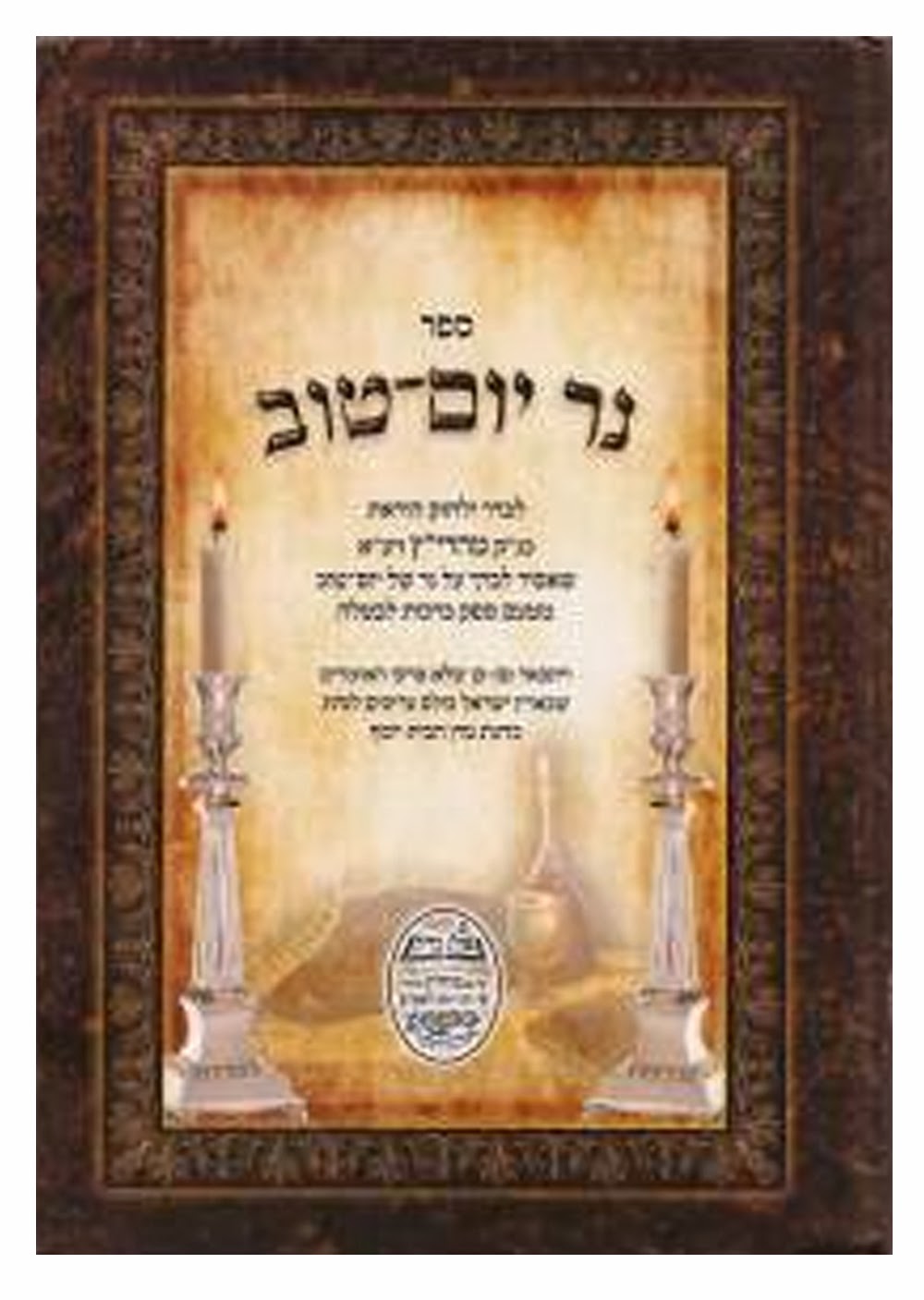
He also states, with regard to R. Ovadiah (p. 100):

 שכבוד התורה אצלו, הוא רק למי שמסכים לדבריו

Ratsaby’s book was written to defend the Yemenite practice of not making a blessing on Yom Tov candles against the criticism of R. Ovadiah. He also deals with R. Ovadiah’s larger point that the Yemenites must embrace the Shulhan Arukh’s rulings now that they are in the Land of Israel. The entire Yemenite rabbinate agrees with Ratsaby’s position, but upon seeing how he attacked R. Ovadiah, the condemnation of him from other Yemenite rabbis was swift. All I can say in defense of Ratsaby is that R. Ovadiah has been criticizing him in a less than respectful way for some time now. But in a sense, Ratsaby got what was coming to him, because for many years he has been writing very disrespectfully about R. Kafih.

In this new book, p. 98, Ratsaby goes so far as to repeat the legend that when Kafih was appointed a dayan in Jerusalem he swore to R. Ovadiah that he accepted the Zohar, and Ratsaby claims that Kafih swore falsely. Kafih, however, denied that he ever took such an oath.14 For a long time Ratsaby has been proclaiming that it forbidden to use Kafih’s books, as he is a member of the kat, i.e., the Dardaim who don’t accept the Zohar or Kabbalah in general. Yet R. Ovadiah has declared that the Dardaim are not to be regarded as heretics.15 This is in contrast to R. Chaim Kanievsky who holds that the Dardaim are heretics who cannot be counted in a minyan.16  R. David Teherani states that since the Dardaim reject the Zohar, their wine is yein nesekh.17 According to Aaron Abadi, R. Shlomo Zalman Auerbach also ruled that rejection of the Zohar and Kabbalah is heresy.18

I can understand those who assert that one must believe that the Zohar was written by Rashbi or at the very least that it was written be-ruah ha-kodesh, and if you deny this it is heresy. Yet what is one to make of the following statement, which greatly enlarges the realm of heresy (R. Menasheh Klein, Mishneh Halakhot, vol. 7, no. 160):
ואם הוא אינו מאמין שהמ”ב [משנה ברורה] נכתב ברוה”ק אזי הוא בכלל אפיקורוס וכופר בתורת ה’ . . . יש בזמן הזה שאין מאמינים שגם בדורינו אנו ישנם חכמי הזמן שיש להם רוה”ק . . . ומי שלא מאמין בזה הרי הוא אפיקורוס וכופר בלי ספק.

Based on this definition, I think the entire Lithuanian rabbinate until World War II would be regarded as heretics. Would such a statement even have been imaginable before twenty years ago? It is, of course, no secret that the Lithuanian rabbinate has been transformed along hasidic lines. This change is undeniable and I can point to many examples of this. Here is one (which was sent to me by R. Yitzhak Hershkowitz).

Would any Jew in Lithuania ever fall for such a thing as magic (or holy) wine? Anyone who tried to peddle this stuff would have been thrown out of the beit midrash. I was actually told an anti-hasidic joke with regard to this picture. I ask all Hasidim not to be offended as neither I nor the management endorse the joke. Yet it deserves to be recorded for posterity, for as we all know, jokes are simply jokes, but the history of jokes (even bad ones), well that is scholarship. The joke goes as follows: “It is incredbible. We now see great Lithuanian Torah scholars doing things that until now only hasidic rebbes did. But even more incredible would be to see the reverse, that is, to see hasidic rebbes write seforim on Shas and poskim.”

With regard to the Zohar, I must mention an amazing point called to my attention by David Zilberberg, from which we see that R. Joseph B. Soloveitchik did not believe that R. Simeon bar Yohai wrote the Zohar, or at least that he didn’t write all of it. I always assumed as much, but as far as I know there was never any proof, until now. In The Lord is Righteous in All His Ways, pp. 206-207, the Rav discusses the Western Wall and says that there is no mention of it in Chazal and very little mention in rishonim. The Wall is mentioned in Shir ha-Shirim Rabbah 2:2219, where it states that the Kotel will never be destroyed, but the Rav says about this Midrash:

I will tell you frankly that I am always suspicious about this midrash, because the classical sources, the Bavli and the Yerushalmi, do not mention the Kotel ha-Ma’aravi. The midrash cited earlier is, perhaps, a later insert. Apparently, Rabbi El’azar ha-Kalir knew the midrash. To my mind, this kinah of Rabbi Elazar ha-Kalir is one of the earliest documents to mention the Kotel ha-Ma’aravi.

Earlier in this book the Rav tells us when Kalir lived:

I do not know why historians have to explore when Kalir lived when he himself states that nine hundred years have passed and the Messiah has not yet arrived. It means that Kalir lived in the tenth century.

Yet as Zilberberg correctly points out, the Western Wall is seen as quite significant in the Zohar (II, 5b), and is referred to as Rosh Amanah.20 The Rav knew the Zohar very well, and therefore, when he tells us that Chazal do not mention the Western Wall, and it is only during the time of the rishonim that we begin to see references to it, he is also telling us that the Zohar (or at least this section of the Zohar) was written in the days of the rishonim.

Returning to Auerbach, let me add in conclusion that he is not the only great rabbi and Torah scholar who was involved in forgery. An earlier case is R. Benjamin Ze’ev of Arta (sixteenth century), author of the well known responsa volume Teshuvot Binyamin Zeev. Here is the title page from the first edition (Venice, 1539):

In the midst of a dispute he was involved in, he forged the signature of the Venetian rabbi, R. Baruch Bendit Axelrad, placing it on a document that supported himself. He also forged an entire letter in R. Baruch Bendit’s name. When all this was discovered, it helped lead to R. Benjamin’s downfall.21

Quite apart from the forgery, R. Solomon Luria, Yam Shel Shlomo, Bava Kamma, ch. 8 no. 72, also accuses R. Benjamin Zev of plagiarism. Here are some his words: 
כל דבריו גנובים וארוכים בפלפול שאינו לצורך וכנגד פנים מראה אחור . . . ושרי לי מרי אם הוא צדיק למה הביא הקב”ה תקלה על ידו הלא הוא היה הכותב ונתן לדפוס הספר מידו ומפיו.
One big question that needs to be considered is how far removed is forgery from false attribution? When it comes to false attribution there is a long rabbinic tradition supporting it, and in the book I am currently working on I deal with this in great detail. If you can falsely attribute a position to a sage, perhaps you can forge a document in his name as well (assuming it is not done for personal gain). Could that be what was driving Auerbach?
*        *        *

A few people have sent me a question about my Monday night Torah in Motion classes, so I assume that there are others who have the question as well. Here is the answer: If you cannot be with us at 9PM and you are signed up, the classes are sent to you so that you can watch or listen at your convenience. This is much cheaper than downloading the classes individually.

Notes

1 From my post here you can find all the links.
2 See Anthony Grafton, Forgers and Critics: Creativity and Duplicity in Western Scholarship (Princeton, 1990), pp. 44-45.
3 Ibid., p. 48.
4 As has been noted by many, Auerbach’s edition of Sefer Ha-Eshkol has misled countless talmidei hakhamim. There is another way in which Auerbach misled a scholar, but in this case it was accidental. In the introduction to his edition, p. xv note 9, Auerbach reports in the name of a supposedly reliable person that the Yerushalmi Kodashim was to be found in the Vatican library. This false report led R. Mordechai Farhand to travel there from Hungary in search of this treasure, and he describes his journey. See Farhand, Beer Mordechai (Galanta, 1927), pp. 154ff. Farhand was a gullible fellow. See ibid. p. 152, where even though it had been a number of years since Friedlaender’s Yerushalmi forgery had been established, he didn’t want to take sides. The legend that there was a copy of the Yerushalmi Kodashim in the Vatican had been disproven already in the nineteenth century. See R. Baruch Oberlander in Or Yisrael (Tamuz 5761),  p. 220.
5 In his review of my edition of Kitvei ha-Rav Weinberg, vol. 2, R. Neriah Guttel, Ha-Maayan (Nisan 5764), pp. 82-83, writes that it was improper for me to publish Weinberg’ judgment of Epstein (p. 430). Although they were friends, and Weinberg thought that Epstein was a great scholar, he also pointed out that that Epstein wasn’t a lamdan. What Weinberg meant is that Epstein wasn’t a traditional talmid hakham but an academic Talmudic researcher. As such, while his publications had great value, in Weinberg’s eyes they didn’t get to the heart of what Talmudic scholarship should be about. In Weinberg’s words:
סוכ”ס אפשטיין אינו למדן, ואיננו אלא פילולוג בעל חוש חד. בלא לומדות אי אפשר לחקור לא את המשנה ולא התלמוד.
Statements like these are vital for evaluating Weinberg’s approach to academic scholarship, and I never would dream of censoring such things.
6 In his Shaar Yaakov (Petrokov, 1922), no. 16, there is a responsum to “Abraham Joshua Heschel.” Shmuel Glick, Kuntres ha-Teshuvot he-Hadash, vol. 3, s.v. Shaar Yaakov, assumes that this is the famous A. J. Heschel, but I don’t think we can conclude this based only on the name, which was shared by a number of others.
7 Eleh Ezkerah (New York, 1957), vol. 2, p. 196 (repeated in the Encylopaedia Judaica entry on Michaelson), states that in Michaelson’s Degan Shamayim (Petrokov, 1901), there are responsa written when he was twelve and thirteen years old. This is a mistake. The earliest responsa dates from when he was seventeen years old. See pp. 10a, 11a.
8 On p. 23 he prints a letter that Schorr wrote to Michaelson’s son, who wanted to translate the Sefer ha-Hinukh into Yiddish. Schorr was strongly opposed to this. He explained as follows, using words that won’t make the women very happy:
רבינו הרמב”ם והחינוך אחריו שהודיעו ברבים טעמי מצות וכו’ יכשלו בזה קלי הדעת לבטל המצוה כפי סכלות דעתם אשר לפי הטעם אין לחוש עוד בזמנינו וכיוצא שבטל בהם טעם זה וכו’ איך ניתן לגלות טעמי מצות גם בפני נשים ועמי הארץ אשר יקראו בו, חלילה לרו”מ לעבור על לפני עור.
9 See here
10 See here
11 Sofer often refers to a similar type of comment by R. Shlomo Kluger, Ha-Elef Lekha Shlomo, Orah Hayyim 367:
אם הייתי זוכר כל מה שכתבתי מעולם לא הי’ שום הערה בעולם שלא הרגשתי בזה.
(I cited both Schorr and Kluger in a footnote in my article on the Hatam Sofer in Beerot Yitzhak: Studies in Memory of Isadore Twersky. Although other writers also cite this comment of Kluger, as with much else, I believe that I first saw the reference in one of Sofer’s writings.) Kluger wrote so many thousands of responsa, that it is not uncommon for him to contradict himself and forget what he wrote previously. See R. Yehudah Leib Maimon, ed., Sefer ha-Gra (Jerusalem, 1954), p. 99 in the note. R. Solomon Schreiber, Hut ha-Meshulash (Tel Aviv, 1963), p. 19, claims that R. Nathan Adler’s reason for not recording his Torah teachings was due to a belief that the permission to put the Oral Law into writing only applies if one is not able to remember this information. Since, according to Schreiber, R. Nathan claimed that he never forgot any Torah knowledge, he was not permitted to take advantage of this heter.
12 Regarding Schorr being a childhood genius, this letter from him to R. Shlomo Kluger appeared in Moriah, Av 5767. 

As you can see, the letter was written in 1860 (although I can’t make out what the handwriting says after תר”ך). We are informed, correctly, that Schorr was born in 1853, which would mean that he was seven years old when he wrote the letter. This, I believe, would make him the greatest child genius in Jewish history, as I don’t think the Vilna Gaon could even write like this at age seven. Furthermore, if you read the letter you see that two years prior to this Schorr had also written to Kluger. Are there any other examples of a five-year-old writing Torah letters to one of the gedolei ha-dor? Furthermore, from the letter we see that the seven-year-old Schorr was also the rav of the town of Mariompol! (The Mariompol in Galicia, not Lithuania.) I would have thought that this merited some mention by the person publishing this letter. After all, Schorr would be the only seven-year-old communal rav in history, and this letter would be the only evidence that he ever served as rav in this town. But the man who published this document and the editor of the journal are entirely oblivious to what must be one of the most fascinating letters in all of Jewish history. Yet all this assumes that the letter was actually written by Schorr. Once again we must thank R. Yaakov Hayyim Sofer for setting the record straight. In his recently published Shuvi ha-Shulamit (Jerusalem, 2009), vol. 7, p. 101, he calls attention to the error and points out, citing Wunder, Meorei Galicia, that the rav of Mariampol was another man entirely, who was also named Jacob Schorr.
13 A. Horowitz, Orhot Rabbenu (Bnei Brak, 1991), vol. 1, p. 364.
14 See Avivit Levi, Holekh Tamim (Jerusalem, 2003), p. 133 n. 161.
15 See R. Yosef Pinhasi, Yefeh Toar, p. 116.
16 See his response in Mordechai Alemkayas, Va-Yikhtov Mordechai (Jerusalem, 2009), p. 340.
17 Yayin le-Nesekh (Betar Ilit, 1996), p. 70.
18 See here.  According to Abadi, R. Shlomo Zalman’s decision was made with regard to a well-known scholar who is very involved with Artscroll.
19 The Rav doesn’t note that there is a mention of the Wall in Shemot Rabbah 2:2 as well, but his judgment would no doubt be the same. Contrary to the Rav, since these midrashim are found in so many parallel sources, I don’t think there is any question that they indeed originate with Chazal.
20 See Pinchas Giller, Reading the Zohar (Oxford, 2001), pp. 12-13.
21 The event is described in Meir Benayahu, Mavo le-Sefer Binyamin Zeev (Jerusalem, 1989),  pp. 120ff. Once the dispute got going, all sorts things were said. R. Benjamin was even accused of purchasing his semikhah. See ibid., p.140. The source for this is R. Elijah ha-Levi,  Zekan Aharon (Constantinople, 1534), no. 184.


Marc B. Shapiro – Forgery and the Halakhic Process, part 3

Forgery and the Halakhic Process, part 3
By Marc B. Shapiro

I thought that I had exhausted all I had to say about Rabbi Zvi Benjamin Auerbach’s edition of the Eshkol — see my first two posts at the Seforim blog, here and here [and elaborations] — but thanks to some helpful comments from readers, there is some more material that should be brought to the public’s attention. Even before looking at this, let me express my gratitude to Dan Rabinowitz who sent me this picture of a youthful Auerbach.
In my first post I cited R. Yitzhak Ratsaby as a very rare example of a posek who is aware of the problems with Auerbach’s Eshkol. A scholar who wishes to remain anonymous, and who has helped me a great deal in the past,[1] called my attention to R. Yehiel Avraham Zilber (the son of R. Binyamin Yehoshua Zilber), who is also aware of the Eshkol problem. In his Berur Halakhah, Yoreh Deah (second series), p. 111, he notes that R. Ovadiah Yosef cites Auerbach’s Eshkol in matters of hilkhot niddah. Yet the authentic Eshkol does not have any section for niddah. In fact, as Yaakov Sussman has pointed out,[2] Auerbach’s Eshkol, vol. 1, p. 117, also refers to the Yerushalmi on Niddah. However, this is impossible as neither R. Abraham ben Isaac nor any of the other rishonim had this volume.

Zilber writes that his own approach is not to rely on anything in either Auerbach’s Eshkol or the Nahal Eshkol. In his Berur Halakhah, Orah Hayyim (third series), p. 16, he also states that a certain passage in Auerbach’s Eshkol, Hilkhot Tzitzit cannot be authentic. Before I was alerted to these two sources I had never examined any of Zilber’s volumes (although I have perused the works of his father). Now that I have looked at them I see that they contain a great deal of learning, but my sense is that they are of no significance in the halakhic world, and are rarely quoted.

This doesn’t mean that they are not valuable in and of themselves, but with so many halakhic books being published, only some can make it to the top. The rest, no matter how learned, remain little studied and even less quoted. One must feel bad for authors who put so much effort into producing their works which could be of great use to people, yet at the end of the day do not have any impact.

As Eliezer Brodt has already pointed out, in a previous post at the Seforim blog, with respect to books on hilkhot shemitah, although new volumes continue to appear, it is hard to believe that much of anything original is being added.[3] The same can be said for the laws of Shabbat, where I don’t see how another new book recording the halakhot can possibly have any value as we already have so many fine books in this area. If the author is going to come up with new rulings, then fine, but it is hard to see how the world will benefit from yet another collection of the various melakhot and what is permitted and forbidden.

This doesn’t mean that up-and-coming halakhic scholars have nothing to write about. For example, there is only one book on the halakhic issues involved in sex change operations, so here is an area that cries out for our best and brightest to direct their talents towards.
For those who are writing books that are not given the attention due them, one should not lose hope. Occasionally a book that is ignored in its time comes back in a future generation and assumes great popularity (e.g., the Minhat Hinnukh), while books which were very popular in previous years fall out of style. One example of the latter is the Kitzur Shulhan Arukh. When I was young everyone seemed to study it. It has been reprinted numerous times and also translated into many languages. According to the Encyclopedia Judaica, it went through fourteen editions in the author’s lifetime, which I think is a record for halakhic works. Yet today, I don’t know anyone who uses it as a work of practical halakhah. (Simply writing this ensures that people will e-mail me to point out that there are indeed some who still use it).

Returning to the anonymous scholar mentioned above, he also alerted me to a letter by R. Michael[4] Aryeh Stiegel which appeared in Tzefunot 1 (Tevet, 5749): 108. In this case I had actually seen the letter, as I own the journal and even have my pen mark on this page. But I had forgotten about it, so once again I am in the anonymous scholar’s debt. Before noting what he says, let me repeat what I mentioned in a previous post, namely, that the publication of the fourth volume of the Eshkol is very strange. We are given no information about the manuscript such as where it came from and why no one, including Auerbach’s family, had ever heard of it until it was published.

There is one other point which I neglected to make in my previous post, but it also is relevant. In 1974 Bernard Bergman published an essay on Auerbach in the Joshua Finkel Festschrift (later included as an appendix to vol. 4 of the Eshkol) in which he defended him against Albeck’s attack. At the time of this essay Bergman knew nothing about any unpublished manuscript of Auerbach’s Eshkol. It is very suspicious, to say the least, that Bergman is also the one to publish the newly discovered volume. Are we supposed to assume that it is just coincidence that Bergman, who earlier had published an essay on Auerbach, discovered this manuscript? (Those who are old enough will recall that during these years Bergman had lots of other things on his mind.) Of course, it is possible that some rare book dealer came into possession of the manuscript and knowing Bergman’s interest in Auerbach, sold it to him. In my previous post I stated that despite the problems that can be raised about the new volume, barring any further evidence we should give Bergman the benefit of the doubt.

Yet Stiegel notes something which should force us to reopen the issue. In volume 4, p. 26 n. 24, we find the following in the Nahal Eshkol.

לא ידעתי למה מביא זה, שהרי רבא הקשה אי הכי במקדש היכי תקעינן. אך מצאתי שגם הראב”ן ר”ה מביא דרש זה, ועי’ באבן שלמה על הראב”ן שם אות ד’ שהאריך ליישב קושיה זו.

The problem is that the edition of Ra’avan with R. Solomon Zalman Ehrenreich’s commentary Even Shlomo only appeared in 1926, many years after Auerbach’s death. This sort of anachronism is often what enables scholars to uncover a fraud.

When problems became apparent in Auerbach’s edition, Albeck called for the manuscript to be produced, and this was never done. Here too, I call for the manuscript of volume 4 to be produced, and for the publisher, Machon Harry Fischel, to join in this demand. Only when we can examine the manuscript will we be able to determine what is going on. If the answer given is that the manuscript cannot be located, which was the same answer given one hundred years ago, then the possibility that Eshkol volume 4 is a late twentieth century forgery will have to be seriously considered.

The anonymous scholar also alerted me to R. Hayyim Krauss’ Toharat ha-Shabbat ke-Hilkhatah. Krauss is known for a campaign he mounted in the 1970’s, culminating in the publication of his books Birkhot ha-Hayyim and Mekhalkel Hayim be-Hesed, which were in large part devoted to showing that the proper – and original — pronunciation in the Amidah is morid ha-geshem, not gashem. There is no doubt that Kraus was correct, but I don’t know if his campaign bore any fruit. Certainly in the United States when I was growing up, virtually everyone said gashem since that is what the siddurim had, including Brinbaum. Matters have changed greatly in the last twenty years because of the ArtScroll siddur. This siddur vocalizes – or, to use the word that ArtScroll prefers, “vowelizes” – גשם as geshem. I have previously noted one example where the Artscroll siddur has changed the davening practices of the American Orthodox community[5] and this is another. Had the ArtScroll siddur given gashem as the pronunciation, that’s what we all would be saying now.

Since this blog is devoted to seforim, with a great focus on bibliographical curiosities, let me mention the following: It has been awhile since I’ve seen the literature about geshem vs. gashem, but I remember that the side that supported gashem was able to show that it was not only grammarians who supported this reading, but R. David Lida (c. 1650-1696) Ashkenazi rav of Amsterdam, also attested to it. In fact, he might be the earliest authority to do so. But those who cited Lida didn’t know a couple of things about him. Neither do the people who keep publishing his works. To begin with, Lida was a plagiarizer, and not a very skilled one at that.[6]

People can live with plagiarism, especially as it is not uncommon in haredi “mehkar.”[7] But worse, much worse, is that Lida also appears to have been a Sabbatian. In my Limits of Orthodox Theology, p. 42 n. 21, I called attention to something similar. The Yemenite kabbalists who attacked R. Yihye Kafih made use of, and defended, a Sabbatian work written by Nehemiah Hayon. It was only after R. Kook pointed out the true nature of Hayon’s work that they excised this defense. As I commented in my book, this shows the elasticity of apologetics, in that if one beleves a work is “kosher,” he will devote great efforts to defending it, but after learning that the author is a Sabbatian the defense is immediately dropped. We must ask, however, why were the ideas in this work acceptable before the author’s biography was known?

Returning to Krauss’ Toharat ha-Shabbat ke-Hilkhatah, in volume 1 of this work he cites Auerbach’s Eshkol. In volume 2, p. 450, Krauss publishes a letter he received from R. David Zvi Hillman. Hillman, in addition to being an outstanding talmid hakham, also has a real historical sense and many years ago edited Iggerot ha-Tanya u-Venei Doro (Jerusalem, 1953). In more recent years he published an interesting, though wrong-headed, article arguing that Meiri’s views of anti-Gentile halakhot are not to be taken seriously but were written due to fear of the censor (which was a concern even in pre-printing days).[8] He has also been involved with the Frankel edition of the Rambam, most recently editing Sefer ha-Mitzvot. Despite its problems, the Frankel edition of the Mishneh Torah is now the standard edition for both yeshivot and the academic world.[9]

As everyone knows, the Frankel edition has been attacked for systematically ignoring the writings of some prominent non-haredi gedolim. For example, there are no references to R. Kook, even though he wrote a commentary on the Rambam’s shemitah laws, which will be mentioned in an upcoming post at the Seforim blog. (He is cited the ArtScroll Mishnah volume on Shevi’it.) It was because of this affront that R. Kook’s followers have put out a separate index of commentaries on the Mishneh Torah, which is now available online. See here.

A particularly harsh criticism of the Frankel edition, which appeared as an “open letter,” is found here:
Hillman chose to answer this critique. He briefly mentions the issue of R. Kook, but has a lot to say about R. Kafih, and his critique of the latter is incredibly sharp. Here is his letter:

Even if one doesn’t agree with him, it should be obvious to all that Hillman has a much broader knowledge than the typical talmid hakham. It therefore should not be surprising that he was critical of Krauss for including Auerbach’s Eshkol. In fact, Krauss does not even print Hillman’s entire letter, but cuts out a section that no doubt would have been seen as disrespectful to Auerbach. Thus, Hillman writes:

ומ”ש באשכול ליתי’ באשכול (הוצ’ אלבעק) אלא . . .
Krauss inserted the three dots since Hillman’s original letter must have continued by referring to Auerbach’s edition. Similarly, a few lines later Hillman writes

(. . . ובנד”ד יש לנו לזה ראיה נוספת ממה שלא הוזכרה שזה דעת האשכול בספר המאירי שהיה הצאצאיו ושמעתתי’ בפומיה תדיר בכינוי גדולי קדמונינו) ואף את”ל . . . ומבעל האשכול יצאו הדברים מ”מ הלכה כהרשב”א דבתראה הוי.

The second ellipsis was inserted by Krauss. In his letter Hillman must have written, “Even if you want to say that Auerbach didn’t forge this section, and it really was stated by the Eshkol.” Yet Krauss didn’t want anything negative about Auerbach to appear in print, so he cut it out. Hillman also calls attention to the comments of R. Hayyim Eleazar Shapira in the introduction to his Darkhei Teshuvah on hilkhot mikvaot. Here Shapira notes that the Maharsham cited Auerbach’s Eshkol, and this once again raises the problem I have earlier discussed, namely, what to do with pesakim that rely on forged texts? (This is not such a problem in hilkhot mikvaot, as Shapira notes that most of what is quoted from Auerbach’s Eshkol is le-humra).

Shapira states that he is not prepared to decide the matter of the authenticity of Auerbach’s Eshkol, yet according to Hillman נראה מכתלי דבריו שדעתו נוטה לצד המערערים על אמיתותו. It is obvious that the reason Shapira does not definitively decide the matter is because of his feeling of respect for Auerbach as a great talmid hakham. The notion that such an outstanding Torah scholar, one of the German rabbinic elite, could perpetrate such a fraud is difficult for people to accept. Yet Shapira is also surprised that the Maharsham cites Auerbach’s Eshkol entirely oblivious to the problems with this edition.

I don’t see this as unusual at all. Shapira was an incredibly learned man, with knowledge of all sorts of things, but the Maharsham was an ish halakah whose life was spent in Shas and Poskim. Similarly, although R. Moshe Feinstein quotes Auerbach’s Eshkol, I would assume that he too had never heard of the controversy, as it is not something that penetrated the walls of the traditional Lithuanian Beit Midrash (at least not until so many bachurim began reading the Seforim blog!). Shapira writes:

ולא באתי להכריע, יען כי כם כבוד הה”ג ז”ל בעל נחל אשכול המו”ל (ואשר האריך לבאר כשיטתו במבואו והקדמתו) לא נקל בעיני . . . (ולא ידעתי מה הי’ לו להג’ מהרש”ם ז”ל וכי לא ראה או לא ידע, מ”ש וערערו על ככה והביא כמעט כל דברי ס’ האשכול כאלו הי’ ברור ומקובל אצלו הללמ”ס שזהוא להראב”ד בלי ספק ופקפוק לעולם).

In his reply to Hillman, Krauss states that he was indeed aware of the problems with Auerbach’s Eshkol, and even referred to Shapira’s introduction, but he did not want to elaborate (and indeed, he never quotes what Shapira says, but only tells the reader to examine it). I think that many people in the traditional world who know about the issue have this problem as well. They are between a rock and a hard place. If they say nothing, then a forgery is allowed to remain part of the Torah world. Yet if they write against it, they must take on someone who in his lifetime was recognized as one of the gedolim of Germany. Like all gedolim, he was also regarded as a great tzaddik.

Krauss does allow himself to say the following:

ובזה צע”ג על שו”ת שבט הלוי ח”א סי’ כ”ד – ועוד כמה מאחרוני הזמן – אשר לא שת לבו לדברים אלו ודורש דברי האשכול כמין חומר.

Prof. Yaakov Spiegel has also called my attention to his article in the latest Sidra[10] focusing on the various terms used for describing the blessing of the new moon. It so happens that in medieval times the term kiddush levanah was not found in either the Sephardic world or among Provencal scholars. Yet as Spiegel notes, this expression is found in Auerbach’s Eshkol, in a section that is missing from Albeck’s edition. This is another proof (if any was needed) that Auerbach’s edition is a forgery.[11]

The Auerbach forgery relates to another issue, that of rabbis lying and making things up for what they view as good reasons (which ties into my current project on censorship). Let me offer one example of this, but first I must give some background. If there is one thing Orthodox Jews know it is that sturgeon is a non-kosher fish. Yet as with so much else that people know, this is not exactly correct. While our practice today is not to eat sturgeon, no less a figure than the great R. Yehezkel Landau, the Noda bi-Yehudah, permitted it.[12] This decision led to enormous controversy as many of the greatest rabbis of Europe lined up in opposition.

Rabbi Aaron Chorin, at this time rav of Arad, Hungary, was a student of R. Yehezkel and he took up the cause of kosher sturgeon, publishing the volume Imrei Noam (Prague 1798) in support of his teacher’s view. At this time he had not yet crossed over to the dark side where he would, in the Hatam Sofer’s words, become known as אחר, an abbreviation of the way Chorin signed his name: Aron Choriner Rabbiner (see Teshuvot Hatam Sofer, 6:96). R. Isaac Grishaber, the rav of Paks, took up the battle against Chorin and published the volume Makel Noam (Vienna 1799). Here is the title page of the book:
Chorin responded with another book on the subject, Shiryon Kaskasim (Prague, 1800).

Grishaber was a fairly well known rabbi, and in recent years Torah journals have begun to print his unpublished writings. The problem that Grishaber was up against was that even with the many rabbis who wrote haskamot for his book, the great R. Yehezkel Landau had ruled differently. How could he destroy Chorin’s argument, convince the people that he was right, and most importantly, spare Jews from eating non-kosher when the recently deceased gadol ha-dor stood in his way?

Even before Chorin published his book, Grishaber had been on a crusade to have sturgeon declared as non-kosher. As part of this battle Grishaber took a fateful step which I have no doubt was done le-shem shamayim, but which from our perspective must be regarded as reprehensible.

In his effort to stop the eating of sturgeon, which he firmly believed was a terrible sin, Grishaber declared that R. Yehezkel sent him a letter retracting his decision and asking him to forward this letter to the rabbi of Temesvar, to whom he originally gave his lenient opinion. Grishaber states that the original letter of R. Yehezkel, which he received and sent on to the other rabbi, was lost in the mail.[13] He also writes that he misplaced the copy he made of R. Yehezkel’s original letter to him. This is all very fishy. Not surprisingly, R. Yehezkel’s son, R. Samuel, and R. Yehezkel’s leading student, R. Eleazar Fleckeles, rejected Grishaber’s testimony. They declared that he never received such a letter. In other words, he was lying when he stated that the Noda bi-Yehudah had retracted his opinion.

These are strong words, but it is hard to read what R. Samuel and R. Fleckeles write and still have any doubts that Grishaber was engaging in a fraud – although as R. Samuel states, Grishaber no doubt believed that in the effort to stop people from eating non-kosher even this was permissible. Here are some of R. Samuel’s words (Noda bi-Yehudah, Yoreh Deah, tinyana, no. 29), which are very interesting in that he keeps the standard respectful phrases at the same time that he is telling Grishaber that he is a liar.

ימחול לי מעלתו שדבר זה הוא שקר מוחלט . . .ופשיטא שאין מעלתו נאמן בזה מאחר שאין בידו גוף האגרת ומרחיק עדותו לומר ששלחו להרב מטו”ו ונאבד . . . כל זה הוא למופת שכבוד מעלתו שקר ענה בשם אאמ”ו הגאון ז”ל. לכן טוב ויפה שכבוד מעלתו ישתוק מזה ומצוה שלא לאמר דבר שאינו נשמע ושאין להאמין, ודבר פשוט הוא שאין מעלתו נאמן לאסור . . . ואני דן את מעלתו לכף זכות שכוונתו בזה לש”ש אחר שלפי טעותו שבעיניו נראה הדג זה לאיסור ויודע בעצמו שלא יהיה דבריו נשמעין נגד פסק של אאמ”ו הגאון ז”ל לכך התחכם לומר שאאמ”ו הדר ביה.

Grishaber also had to deal with the fact that in Turkey the Jews ate sturgeon. To this he replied that one could not rely on the Turkish Jews since many of them were still followers of Shabbetai Zvi. R. Samuel had no patience for this nonsensical assertion.

לא אשיב על זה כי סתם ישראל בחזקת כשרות ולמה זה יוציא דילטורין על ישראל לומר כל מי שאוכל דבר הנראה למעלתו לאיסור הוא מודח מעדת ישראל. ולמה לא מיחו בהם הרבנים שם שהם גדולי ישראל. אין זה כי אם רוח יתירא.
In a second letter to Grishaber (ibid., no. 30), R. Samuel shows that his patience is at an end:

ואני מזהירו שלא ילמד לשונו שקר ומרה תהי’ באחרונה אם יתגלה קלונו ברבים.
Yet interestingly enough, in keeping with the rabbinic tradition of respectful writing he ends his second letter with כ”ד אוהבו.

Fleckeles also speaks harshly (Teshuvah me-Ahavah, vol. 2, Yoreh Deah no. 329), and this comes after beginning his letter with all the customary rabbinic introductory words of praise.

עמו הסליחה לישנא דחוצפות היא זו נגד רבן של ישראל ובדבר שכבר הורה זקן וחלה הוראתו קרוב לעשרי’ שנה . . . ומה שהעיר שרבינו הגדול נ”ע כתב אליו שחוזר מהוראה זו ובקש ממנו להודיע הדבר להרב דק”ק טעמישוואר והמכתב ההוא נאבד ממנו ומכל אדם שארי לי’ מארי מדבר שקר תרחק כתיב ומוציא לעז על אותו צדיק יסוד עולם איך יכתוב אליו שהוא בריחוק מקום ולא יכתוב באתרא דאוכלין אותו הדג על פיו ועוד אלמלא נגנז ספרי יחזקאל הי’ יכול לומר מה שלבו חפץ אבל ספריו כאן וקבע הדברים להלכה ולמעשה מיד ולדורות.

Although there were some who supported R. Yehezkel, this remained a minority opinion. By now no one is in dispute about this matter. Yet I wonder if any readers recall eating sturgeon in the United States. I ask because there was a time when sturgeon was regarded as kosher in this country. Here is a page from the list of kosher fish published by Agudas ha-Rabbonim in Ha-Pardes, April 1933. This advertisement for delicious sturgeon appeared in subsequent issues of Ha-Pardes.

Note that swordfish is also on the list, proof that Orthodox Jews ate this as well. I won’t say much more about this since I know that Dr. Ari Zivotofsky has a lengthy article on the topic about to appear in the Israeli-journal BDD (Bekhol Derakhekha Daehu). Let me just mention the following two points, if only to disabuse people of the notion that it was only the Conservatives who permitted swordfish.

1. The Chief Rabbinate of Israel declared swordfish to be kosher, and in a 1960 responsum R. Isser Yehudah Unterman defended this ruling. In response to R. Moshe Tendler’s objection, Unterman reaffirmed its kosher status.[14] It is likely that the widespread assumption that swordfish is not kosher can be traced to Tendler’s successful efforts in this regard. Today, who even remembers the that swordfish used to be kosher?

2. There was a great rav in Boston named Mordechai Savitsky. To a certain extent he was an adversary of the Rav and was one those tragic figures in American Orthodoxy. His Torah knowledge was the equal of any of the outstanding Roshei Yeshiva who became so popular, but he was never able to find his place. He publicly declared – and in his Shabbat ha-Gadol derashah no less – that swordfish is kosher.

These two points are enough to show that the issue of swordfish is anything but settled, and is certainly not an Orthodox-Conservative issue. Zivotofsky’s article will be quite illuminating in this regard.

Notes:
[1] See The Limits of Orthodox Theology, Preface.
[2] Mehkerei Talmud 2 (1993), 255 n. 196.
[3]”R. Yaakov Lipshitz and Heter Mechirah,” the Seforim blog (October 11, 2007), available here.
[4] In an effort to keep far away from non-Jewish names, many people who are named מיכאל spell it as Michoel. I have even seen Mecheol. Certainly, no one today in the haredi world who has the name משה would write his English name as Moses, as is found on R. Moshe Feinstein’s stationery.
[5] See here at note 8.
[6] See Bazalel Naor, Post-Sabbatian Sabbatianism: Study of an Underground Messianic Movement (Spring Valley, 1999), 38; Marvin Heller, “David ben Aryeh Leib of Lida and his Migdal David: Accusations of Plagiarism in Eighteenth Century Amsterdam,” Shofar 19 (Winter 2001): 117-128.
[7] Yet can they live with a well-known contemporary rabbi who not only falsified a book he worked on, but has ignored a series of summons to a beit din? See here (and here) for more. Since the censorship and forgery he engaged in are directed against Chabad, it is possible that in his mind he has done no wrong. He probably also assumes that a Chabad beit din is not valid, and therefore he can ignore it.
[8] “Leshonot ha-Meiri she-Nikhtevu li-Teshuvat ha-Minim,” Tzefunot 1 (5749): 65-72.
[9] In my forthcoming book, Studies in Maimonides and His Interpreters (University of Scranton, 2008), I give examples of some of the problems. The book should appear in another few months.
[10] “Le-Mashmaut ha-Bituyim: Kiddush Hodesh, Birkat Levanah, Kiddush Levanah,” Sidra 22 (2007): 185-200.
[11] For other forgeries in Auerbach’s Eshkol, see Louis Ginzberg, Perushim ve-Hiddushim Birushalmi, vol. 1, Introduction, p. 84, and vol. 4, p. 6. I owe these references to the anonymous scholar.
[12] Noda bi-Yehudah, Yoreh Deah, tinyana, no. 28.
[13] See Yisrael Natan Heschel, “Mismakhim Nosafim le-Folmos Dag ha-Stirel bi-Shenat 5558,” Beit Aharon ve-Yisrael (Sivan-Tamuz 5755): 109.
[14] See Shevet mi-Yehudah, vol. 2, Yoreh Deah no. 5.


Marc B. Shapiro – Forgery and the Halakhic Process, part 2

Marc B. Shapiro holds the Weinberg Chair in Judaic Studies, Department of Theology and Religious Studies, University of Scranton. He is the author of Between the Yeshiva World and Modern Orthodoxy: The Life and Works of Rabbi Jehiel Jacob Weinberg, 1884-1966 (London: Littman Library, 1999), The Limits of Orthodox Theology: Maimonides’ Thirteen Principles Reappraised (London: Littman Library, 2003) and Saul Lieberman and the Orthodox (University of Scranton Press, 2006).

Prof. Shapiro is a frequent contributor to the Seforim blog and his recent posts include: “Uncensored Books”; a response to Rabbi Zev Leff (with a subsequent exchange with Rabbi Chaim Rapoport); “What Do Adon Olam and ס”ט Mean?,” and obituaries for Rabbi Yosef Buxbaum and Prof. Mordechai Breuer.

This post is a follow-up to his recent “Forgery and the Halakhic Process.”

Forgery and the Halakhic Process, part 2
by Marc B. Shapiro

In this post I would like to finish up with Rabbi Zvi Benjamin Auerbach’s Eshkol. But first, I must clear up another matter about which I was asked, as I discussed it right at the beginning of my first post dealing with the Eshkol. I mentioned that the late fourteenth-early fifteenth-century kabbalist, R. Menahem Zioni, quotes R. Yehudah he-Hasid’s comment that a section of the original Torah was removed by David and placed in the book of Psalms. After being shown this passage, as part of the effort to defend the authenticity of R. Yehudah he-Hasid’s commentary, R. Moshe Feinstein replied that Zioni’s commentary was also forbidden to be used.[1]

R. Moshe also writes that he doesn’t know who R. Menahem Zioni is. Presumably, this is designed to show Zioni’s insignificance, and make it easier for R. Moshe to ban his book. The problem is that Zioni is hardly an unknown figure; his commentary on the Torah is actually quite famous. He was also “one of the few kabbalists in 14th-century Germany.”[2] For R. Moshe to state that he is unfamiliar with Zioni is an acknowledgment that he is not particularly learned in Kabbalah. I don’t think anyone should find this surprising, much like they shouldn’t find it surprising that R. Moshe was not a savant of Jewish philosophy. He was an ish halakhah, and his time was spent focused on Shas and Poskim. Just as the Rav reports that R. Moshe Soloveitchik never held the Rambam’s Guide, we can also say about R. Moshe Feinstein that his interests were in line with the typical Lithuanian gadol, and that meant that Talmud and halakhah were what he devoted himself to.

While I don’t find R. Moshe’s lack of knowledge about a medieval kabbalist surprising, not all share this sentiment. After my last post someone wrote to me asking if it is true that R. Menasheh Klein rejected R. Moshe’s disqualification of Zioni. This is indeed true, and Klein’s responsum appears in his Mishneh Halakhot, new series, vol. 2, no. 214. Klein also points out that Zioni is quoted in halakhic sources, including the Magen Avraham, and he adds:

הציוני מקדמוני בעלי המקובלים וגדולי הפוסקים גאון וקדוש ה’ ואשרי מי שזוכה להבינו ולחקרו וללמדו, וח”ו להוציא לע”ז על קדוש ה
As to how R. Moshe could have banned such a work, Klein has his own solution: “I don’t believe that these words came from the Gaon R. Moshe, but in my humble opinion a mistaken student wrote them and placed them among his papers after his death.” He also states that it is impossible for him to believe that R. Moshe never heard of Zioni since he is quoted in the commentaries on the Shulhan Arukh, and R. Moshe knew the Shulhan Arukh backwards and forwards. He concludes that God should forgive the one who is responsible for what appear in Iggerot Moshe, that which is now falsely attributed to R. Moshe.[3]

This is, of course, comical. R. Moshe insists that Zioni’s commentary should be banned, and Klein insists that R. Moshe never wrote this. The fact that the relevant volume of Iggerot Moshe was published in R. Moshe’s lifetime and the letter in which he writes against Zioni was sent to Rabbi Daniel Levy of Zurich and is dated 1976 does not deter Klein is what is surely one of the strangest things to appear in his volumes of responsa (which contain a good many strange things[4]).

As for R. Yehudah he-Hasid’s commentary, which R. Moshe also banned, Klein writes as follows (Mishneh Halakhot, vol. 16, no. 102):

מהעתקת הציוני כת”י של רבינו יהודה החסיד זה הוא עדות נאמנה גם על הכת”י של רבינו יהודה החסיד שהוא קודש קדשים וח”ו לרחקו ולומר שמינים כתבוהו
R. Moshe’s rejection of the commentary of R. Yehudah he-Hasid is not entirely unexpected. In fact, there are about ten different places where R. Moshe denies the authenticity of an earlier text because it does not agree with his preconceptions. In a future post I hope to list all of these examples, which show that R. Moshe could be quite daring (and this led to sharp responses to him by other poskim). Yet, as with R. Yehudah he-Hasid, every one of the texts that R. Moshe rejects is unquestionably authentic. In at least one of the cases we even have the author’s own manuscript.

A number of years ago I was studying R. Mordechai Spielman’s Tiferet Zvi. This is a multi-volume commentary on the Zohar which shows incredible bekiut. In fact, the Zohar is often just a springboard for the learned author to discuss all sorts of Torah matters. His first book, Tziyun le-Nefesh Tzvi, shows the same characteristics, and it is devoted to the issue of whether kohanim can go to the graves of tzadikim. While most poskim rule that they cannot, there is also a tradition, popular among the kabbalistically inclined, that tzadikim are exempted as they do not cause impurity. In one of his final articles, the late Prof. Israel M. Ta-Shma dealt with this issue.[5]

I noticed that Spielman cited Zioni and was curious to hear his reaction to R. Moshe’s teshuvah. In a lengthy letter, dated July 14, 1994, in which he discussed a variety of matters, he wrote:

וכשהייתי לפני כמה שנים בירושלים עה”ק ובקרתי אצל מרן פוסק הדור מו”ה ש”ז אויערבאך הנ”ל הסכים עמי ואמר לי בפירוש במעמד א’ מיקירי רבני ירושלים עה”ק שליט”א שאין הצדק עם הגאון ר’ משה זצ”ל לאסור למכור את הספר הקדוש הזה

[Quite by coincidence, a couple of years later my havruta at the Scranton yeshiva was the great-nephew of Rabbi Spielman. He told me that his uncle, who was a follower of the Munkatcher rebbe, R. Hayyim Elazar Shapira (and also a native of Munkatch), used to celebrate Thanksgsving each year. Such was his feeling of gratitude to be living in the United States.]

Returning to Auerbach’s Eshkol, the controversy really started when R. Shalom Albeck, in an open letter, later followed by his Kofer ha-Eshkol, accused Auerbach of forging the work. (Albeck himself, and his son Hanokh, later published the authentic Eshkol.) Yet it must be noted that Albeck was not the first to accuse Auerbach of this, as right after the work was published there appeared an anonymous article in He-Halutz[6] saying the same thing. There is a widespread assumption that this article was written by the outstanding scholar Raphael Kirchheim. Yet I don’t know how this assumption arose, as I can find no evidence to justify it. I believe that the author was Joshua Heschel Schorr, the publisher of the journal.

I must thank Rabbi Baruch Oberlander of Budapest[7] who called my attention to the fact that in another article in He-Halutz, eleven years later,[8] Schorr once again attacks Auerbach and his edition of the Eshkol. Among his choice words are the following:

וחטא למחבר הספר וחטא לקוראים ההוגים להתלמד, וחטא לאמת ולמי שחותמו אמת וחטא לנפשו, והוא עתיד ודאי ליתן את הדין ומי יודע אם יצא נקי בדין, כי אין מרחמין בדין
Oberlander also called my attention to the following, which is quite interesting. In my previous post I quoted R. Shlomo Yosef Zevin’s assessment that Albeck was correct in judging Auerbach’s Eshkol a forgery. Yet in the Talmudic Encyclopedia, edited by Zevin, Auerbach’s Eshkol is cited! I wouldn’t be surprised if most of the people working on the various entries, who are all great talmidei hakhamim, have never even heard of the dispute over the volume. Unlike the case of Besamim Rosh, the reliability of Auerbach’s Eshkol is almost never mentioned in traditional rabbinic literature, and the great poskim continue to cite it as a rishon. Yet Auerbach’s Eshkol is also cited numerous times in the volumes that appeared while Zevin was still alive. How can one explain this?

Auerbach’s Eshkol was shown to be a forgery in that it contained formulations taken from post-medieval works. In my last post I quoted R. Ratsaby’s comment in his letter to me that the work contains material from the Beit Yosef. Oberlander points out that R. Menahem M. Kasher, Torah Shelemah, 9:140, also raises this possibility.

באשכול הנדפס בכת”י ע”י ר”ש אלבעק דף 46, ליתא קטע זו וצ”ע אם אין זו הוספה ע”פ הב”י
It is in this area, of post-medieval material in the Eshkol, that Prof. S. Z. Havlin has made a fascinating discovery. I refer to his article in Yeshurun 13 (2003), which should satisfy even the final doubters that the work is indeed a forgery.

Havlin quotes a passage from R. Abraham ben ha-Rambam that is found in the Orhot Hayyim of R. Aharon of Lunel and also appears in Auerbach’s Eshkol. The question is obvious: How could the Eshkol, whose author, R. Abraham ben Isaac, died in 1159, quote anything from R. Abraham ben ha-Rambam. Of course, one could say that this is a later addition to the manuscript from someone who used the Orhot Hayyim. But as Havlin notes, this is no help either because where would this person have come across this text, as it is lacking from the standard edition of Orhot Hayyim and is today only found in one Jerusalem manuscript?

The answer is that the Beit Yosef cites this passage in the name of Orhot Hayyim (without noting that the Orhot Hayyim is quoting R. Abraham ben ha-Rambam). R. Joseph Karo had access to a manuscript of Orhot Hayyim which had this text, which, as mentioned, does not appear in the standard version of Orhot Hayyim. Auerbach saw this text in the Beit Yosef and simply incorporated it into his Eshkol, perhaps even assuming that this was another example of Orhot Hayyim quoting the authentic Eshkol, as he often does. Only now, when we have access to the Jerusalem manuscript of this work, do we see that Orhot Hayyim is actually quoting a teaching of R. Abraham ben ha-Rambam. This was information that Auerbach did not have, and explains how he could include it in his edition. R. Abraham ben Isaac was a great scholar (and father-in-law of the Ra’avad). Yet even he was not able to quote from works that would not appear until after his death.

Havlin concludes:

נמצא אפוא שיש בנוסח מהדורת הרב אויערבך הוספות שנבלעו בפנים בלא אות או סימן, שנעשו לא לפני שנת שי”א (1551), שבה הופיע לראשונה ספר בית יוסף
I was asked to explain a bit about the Eshkol, vol. 4, that Bernard Bergman published. First some background: In the introduction to volume 3 of his edition of the Eshkol, Auerbach wrote that the halakhot of the Eshkol found in his manuscript that remained to be published were Hilkhot Yom Tov, Rosh ha-Shanah, Yom Kippur, Orlah, Kilayim, Hallah, Hekdesh, Vows and Oaths, Tzedakah, and Rabbinic laws. In his Kofer ha-Eshkol, Albeck, who insisted that Auerbach had no Eshkol manuscript but created his edition using various other sources (including the authentic Eshkol), challenged Auerbach’s supporters to at least produce Auerbach’s transcribed copy of his manuscript. It was asserted by Auerbach’s defenders that the original manuscript had been lost, presumably put into geniza by Auerbach’s family after the latter’s death, since they didn’t realize its value. But, Albeck claimed, certainly Auerbach must made a copy of the manuscript (if it really existed).

Albeck’s request was never fulfilled, and it is obvious that all of Auerbach’s defenders, who were in close touch with his family, assumed that there was no such copy. Had anyone known of it, its existence would have been a central feature of the defense of Auerbach’s honesty.

In 1986 Bergman published volume 4 of Auerbach’s Eshkol, which contains some of the missing sections. This would appear to show that Albeck was not correct in his assumption, and accusation, that no such text existed. But its existence says nothing about the authenticity of Auerbach’s Eshkol. All it means is that Auerbach had written down certain sections, and added his commentary Nahal Eshkol which he had to do before publication. Even forgers have to present a written text to the printer!

With regard to Bergman’s volume, it is very curious that the reader is given no insight in the introduction as to where this manuscript came from (or even a picture of it). I can’t think of any other publication of a rishon where this information is not provided. I would not be surprised if some think that the new edition is itself a later forgery designed to protect Auerbach’s legacy. After all, how is it that Bergman came to this work when Auerbach’s family and defenders knew nothing about it? Despite these questions, I think that barring new evidence we should give Bergman the benefit of the doubt and assume that the manuscript did originate with Auerbach.

I realize that it was, and remains, hard for people to accept that a gadol be-Yisrael was capable of such an outrage, namely, forging the work of a rishon. I think we should simply assume that he had some sort of schizophrenic personality, and leave it at that. Even great Torah scholars sometimes do weird things.

It is of course understandable that people who knew Auerbach as a pious sage were not able to accept this. Professor Jacob Barth, who taught at both the Rabbinical Seminary of Berlin and the University of Berlin, and was one of the world’s leading Semitic scholars, is a perfect example of this phenomenon. Although he was R. Esriel Hildesheimer’s son-in-law and a leading figure in German Orthodoxy, he also had a critical mind and was not one to be led by convention. It was thus possible for him to argue that Isaiah 40-66 was a later addition, and to reject the talmudic dating of various post-biblical books. He even claimed that the Song of Songs was not originally intended as an allegory, a position that today would probably get him put into herem. Yet even this giant of critical scholarship could not approach the Eshkol problem objectively. Instead, he reflected on how forty years prior he had studied Talmud under Auerbach, and how much he was impressed by him, from both an intellectual and personal standpoint. As he put it, whoever had any contact with Auerbach knows that it is “absolutely impossible that he could have committed the smallest literary dishonesty.”[9] He concludes his essay by stating that the learning and character of Auerbach stand tall, despite the shameful attack of Albeck.

In my first post I noted that R. Hayyim Heller pointed out to the Rav that Auerbach’s Eshkol is a forgery. In this regard, it is interesting to mention something that appears in Shimon Yosef Meller, Uvdot ve-Hanhagot le-Veit Brisk. In recent years there has been great interest in “Brisk.” I am not referring to the Brisker method of Torah study which has been popular for a long time, but rather a great interest in the personal lives of the outstanding figures of Brisk.

As every bit of information is precious, and every book wants to offer new stories, it is important for the authors to look anywhere they can. Unfortunately, at least one such book has plagiarized from R. Herschel Schachter.[10] Another unfortunate element in these books is the lack of respect shown to figures who did not share the Brisker anti-Zionism. This is more understandable, as at times R. Chaim and R. Velvel themselves had negative views of the religious Zionist gedolim.[11] It would be censorship if their attitudes were not recorded properly, but most people reading this will still regard it as unfortunate that these great rabbis were not more tolerant. (The irony, of course, is that they are expected to be tolerant of those who supported what in their mind was bringing great devastation upon the Torah world.)

Speaking personally, I must say that some of the stories recorded in these books are so strange that I wonder if most people in this generation would be led to admire these figures more after hearing the stories, or if the result would be the opposite. For example, what is one to make of the following story, told in order to inspire awe of the Brisker Rav? Once he was served something which, while kosher, did not measure up to his standards. Upon learning of this, he immediately stuck his finger down his throat, causing himself to throw up on the host’s expensive rug. Rather than this upsetting the host, we are told that this further increased his admiration for the Brisker Rav.[12]

Can people today grasp what it means to be a pure ish halakhah of the sort the Rav describes in Halakhic Man, whose behavior can come across as very cold and unfeeling (e.g., R. Moshe Soloveichik’s rebuke of the Baal Tokea, and the story of R. Elya Pruzhener and his dying daughter)?[13] Another such example of this is the report that when one of R. Velvel’s sons died shortly after birth, and the family was crying, he was insistent that they stop their tears, since there is no avelut before thirty days.[14] Whether this type of pan-halakhism is inherently positive or negative I will leave to the judgment of others, but I think that in modern times it is clear that the average person who hears stories like this, even if he is a haredi, will not be spiritually inspired. I think that many times he will even be spiritually turned off, for obvious reasons.

I know that Rabbi Pinchas Teitz, who headed my high school, the Jewish Educational Center, didn’t like the similar sort of stories told about the Rogochover. He felt that people today would hear these stories and the only thing that would stay with them is that the Rogochover was eccentric. Since the point of stories of gedolim is to inspire respect and awe, telling stories that stress his eccentricity would therefore be counterproductive. For example, hearing about how the Rogochover threw a chair at R. Hayyim Ozer, or how he proclaimed that R. Yitzhak Elchanan didn’t know how to learn or that Tosafot is full of errors, are hardly the sort of tales that will inspire awe.

In fact there are many gedolim about whom R. Teitz’ point is applicable. I remember when a high school rebbe of mine got all excited telling the class about his trip to the Steipler, and how while he was there the Steipler chased another fellow out of the house. (Subsequently I learnt that this was not so uncommon). After the rebbe finished his story, no doubt thinking we would be impressed, one of the students blurted out something along the lines of “Do you think that was a nice thing to do?” Now I certainly am not going to judge the Steipler, and it is likely that the man was deserving of being thrown out, but the rebbe didn’t know the details and thought that it would be exciting to tell us high schoolers how the great Steipler lived up to his reputation as one who didn’t suffer fools. Yet the acculturated Modern Orthodox response was to wonder why he wasn’t a nicer person. In other words, Rabbi Teitz was correct about the need to be careful when it comes to telling the masses stories of gedolim.

To give another example, I recently read a hesped where R. Yitzhak Yosef recorded how the deceased talmid hakham, R. Moshe Levi, didn’t miss a moment of Torah study. He described how when R. Levi was at a communal meal he kept a book under the tablecloth, and every free second he could be seen be looking at it. The eulogizer saw that as something positive, whereas in my town, everyone would regard it as very rude. This point illustrates why I find haredi hagiography so fascinating, as it clearly reveals the culture gap between the haredi world and the Modern Orthodox world. Some of the stories that are told, and are part of haredi myth making, would be regarded with horror by the Modern Orthodox world.[15] How better to determine the ethos of a community than by seeing how it chooses to remember and praise its leaders? If anyone thinks that the Rav shared the Modern Orthodox ethos, just look at the stories he tells in Halakhic Man.

Sometimes truly horrible stuff is found in haredi “gedolim books” as well. Let me offer just one example. There is a very helpful book by Dov Ber Schwartz entitled Artzot ha-Hayyim (Brooklyn, 1992). This book contains short biographies of numerous American rabbis, a list of rabbinic books published in the United States, and an essay on Orthodoxy in America. Yet in the midst of the book, on page 52a in the note, one finds the shocking passage which you can see here, and which I am too embarrassed to translate. One can only hope that sentiments such as these are not very common among Schwartz’ fellow Satmar hasidim.

Another real problem with all of the haredi hagiography is that one never knows if the stories are trustworthy. That doesn’t mean that the stories have no value, for even if gadol x never did what is recorded, the fact that this story is told about him reveals the mindset of the generation telling the story. In other words, we can adapt the point Neusner has made about talmudic tales of tannaim really telling us about the amoraim; late twentieth and early twenty-first-century tales of gedolim really reveal what the current haredi ethos is (especially since anything that doesn’t agree with this ethos will be censored.)

While in many cases the stories told are strange and one wonders whether they are accurate, in some cases it can be determined with virtual, or even complete, certainty that they are false. Yehoshua Mondshine has authored a number of articles showing the falsehoods in (mostly) hasidic stories. Among the non-hasidic works he takes aim at is R. Barukh Epstein’s Mekor Barukh.[16] Mondshine’s prime concern is with the famous story recorded by Epstein about his father’s meeting with the Tzemah Tzedek, and Mondshine attempts to show that there is no reason to believe the report.

To this I would only add that, knowing Epstein’s reputation as a plagiarizer and how he manufactured stories, one should not take seriously any of his “recollections.” I know the feminists will be upset with this, but we must assume that the entire dialogue between him and Rayna Batya,[17] which shows her as a proto-feminist, is contrived and has no historical significance other than revealing that Epstein himself wanted to call attention to the sad fate of talented women who are not permitted to study Torah In the unlikely event that he does accurately portray Rayna Batya, all I can say is that the punishment of one who tells tall tales is that even when he tells a true story he is not believed. We must, however, remember that even when it comes to stories that are certainly false (and there are loads of them being invented all the time, and then repeated by the gullible), one should not be discouraged when reading them. Rather, one should keep in mind Saul Lieberman’s famous comment: “Nonsense is nonsense, but the history of nonsense is scholarship.”

What does all this have to do with Auerbach’s Eshkol? In Uvdot ve-Hanhagot le-Veit Brisk, 3:291, we are told in the name of someone who heard it directly from R. Velvel that when Auerbach’s Eshkol was published, “I [R. Velvel] immediately said that this is not the Eshkol.” R. Velvel is also quoted as saying that it was actually written by another rishon. Here is a perfect example of why these sorts of books are so unreliable. I am not saying that the person who reported this story is lying, only that he didn’t understand what R. Velvel said, or perhaps after forty years no longer remembered properly. I say this because R. Velvel never could have said what he is alleged to have said, as he wasn’t even alive when Auerbach’s Eshkol appeared in 1868. The only kernel of truth that can be gleaned from this text is that R. Velvel knew that Auerbach’s Eshkol was not the authentic Eshkol. Seeing how badly the informant messed up, I am not even willing to trust him that R. Velvel said that Auerbach’s Eshkol is the work of another rishon. Perhaps he only said that it contains information from rishonim, without committing himself to it being an authentic medieval work.

The great problem is what to do with pesakim that rely on Auerbach’s Eshkol. For example, the authentic Eshkol does not have hilkhot niddah, but Auerbach’s does. Unlike Saul Berlin, Auerbach was not simply making up pesakim and attributing them to rishonim. He was taking information in the Beit Yosef and other works and putting this in the mouth of the Eshkol. This is, of course, terrible, and in a halakhic sense it gives the authority of an aharon to a rishon. Yet when you have a pesak in one of the aharonim that relies on Auerbach’s Eshkol, I would think that it does not need to be thrown out because there is at least some important authority (e.g., Beit Yosef, Peri Hadash, etc.) who holds this position, even if it wasn’t the Eshkol.

That said, I can only sympathize with those who have written articles or halakhic works and treated Auerbach’s Eshkol as authentic. The forger has all sorts of motivations, but at the very least he is guilty of genevat zeman, i.e., the time that people take in examining that which they think is a rishon, and wouldn’t have done had they known the truth. Time is precious, and the forger causes it to be wasted on falsehoods. Just think how much time was spent on the forged Yerushalmi Kodashim and Besamim Rosh that could have been spent in authentic Torah study. From an issue currently in the scholarly news, imagine how many thousands of hours have been spent on Morton Smith’s Secret Gospel of Mark, by scholars arguing both sides of the issue. If it turns out that Smith is a forger, even after his death he is playing havoc with people and their scholarly direction.

One very unfortunate example of this is Chaim Bloch’s collection of forged anti-Zionist letters, Dovev Siftei Yeshenim (3 vols., 1959-1965). Hermann Greive wrote an entire article based on these letters,[18] and shortly after his article appeared Shmuel Weingarten published his Mikhtavim Mezuyafim Neged ha-Tziyonut (Jerusalem, 1981), showing beyond any doubt that the letters are forgeries.[19] All the time spent by Greive in writing his article was of course never to be recovered, stolen from him by the worst type of scoundrel the scholarly world can produce. Years ago I had wanted to discuss this matter with Greive, but was shocked to learn that he had met an untimely death, killed by a deranged student.[20]

Notes:

[1] Iggerot Moshe, Yoreh Deah III, no. 114.

[2] Encyclopaedia Judaica, vol. 11, col. 1314 (s.v. Zioni, Menahem).

[3] In a later responsum, vol. 16, Yoreh Deah no. 102, he offers a far-fetched explanation of Zioni and R. Yehudah he-Hasid, according to which David never removed anything from the Torah, only from Moses’ chumash, which contained material not found in the Torah.

[4] For example, what other posek has concluded that ethnic foods, e.g., Chinese, Italian, sushi, etc. are forbidden, and that Jews must only eat “Jewish food.” See Mishneh Halakhot, vol. 10, no. 111. It was pesakim like this that gave rise to the yeshiva quip that the title of his book should be pronounced Meshaneh Halakhot. In addition, Klein’s negative views towards baalei teshuvah and women are also very troubling (although with regard to women, a knowledge of some of his difficult personal history adds some necessary context in this regard.) His attitude towards non-Jews is also shocking, so much so that one wonders whether Elie Wiesel, great humanitarian that he is, would be such a supporter of his institutions if he knew what was being taught there (Wiesel and Klein were in Auschwitz and Buchenwald together). In a lecture at an Edah conference some years ago, a well known talmid hakham discussed if it proper for one to make use of poskim like R. Menasheh Klein for certain areas (e.g., hilkhot Shabbat), if one feels that their general worldview, in particular in areas of Jewish-Gentile relations, is diametrically opposed to one’s own values.

[5] Israel M. Ta-Shma, “Holy Men Do Not Defile – Law and Ideology,” Jewish Studies Internet Journal, 1 (2002): 45-53 [Hebrew], available here (PDF).

[6] Vol. 8 (1869): 165-167.

[7] Rabbi Oberlander is the world’s leading expert on the forged Yerushalmi Kodashim. He published numerous articles on the topic in Or Yisrael, which will be part of his forthcoming book. I should also note that he has played an important role in the rebuilding of Jewish life in
Hungary. See e.g., here.

[8] Vol. 11 (1880): 65-67.

[9] “Notwendige Abfertigung,” Jǔdische Presse (February 17, 1911): 65.

[10] Halikhot ha-Grah (Jerusalem, [1996]) takes a good deal of material, often word for word, from R. Hershel Schachter, Nefesh ha-Rav (Jerusalem: Reishit Press, 1994) without acknowledgment.

[11] I don’t know if it is a reliable report, but see R. Ephraim Greenblatt, Rivevot Efraim, 6:41, third introduction, that R. Velvel also expressed himself negatively with regard to the Rav. (R. Greenblatt himself always shows great respect for the Rav and all gedolei Yisrael, whatever their hashkafot; the passage I refer to was written by someone else. Years ago I expressed my surprise to R. Greenblatt that he included this in his work. Since it is part of an article about one of his teachers, he no doubt felt that it was inappropriate to make any changes.)

[12] Shimon Yosef Meller, Ha-Rav mi-Brisk (Jerusalem, 2004), 2:546-547. See also ibid., 1:484, for a story where R. Hayyim Ozer gave R. Velvel some sugar for his tea, and the latter thought it might contain kitniyot. Out of respect for R. Hayyim Ozer, which is a biblical commandment (kavod ha-Torah), R. Velvel used the sugar, but

תיכף עם צאתו את הבית בסיומו של הביקור, התאמץ וניסה בכל דרך לפלוט מפיו את שאריות הסוכר
[13] David Singer and Moshe Sokol advance the radical view that the Rav’s descriptions of his family members is actually designed to show his opposition to their hyper-intellectualism and pan-halakhism. They write

[T]here is something strange about Soloveitchik’s tales of the Litvaks. The behavior he describes is so radical, so extreme, as to make his presumed heroes seem grotesque. Who, for example, wishing to portray Litvak intellectualism in a positive light, would boast that his father and grandfather set aside all human sentiment and refused ever to enter a cemetery, because a stark encounter with death would have distracted them from the contemplation of the law. Or again, who would tell with pride the following macabre story about his maternal grandfather [referring to the story of R. Elya and his dying daughter] . . . Stories like this, while ostensibly presented in order to glorify the Litvak, cannot help but evoke strong disapproval in the reader. And this disapproval, it seems safe to assume, is shared in part by Soloveitchik himself, specifically by that part of him which rebels against the Litvak tradition’s spurning of the emotions. The vein of anger that runs through the anecdotal material in “Halakhic Man” is not to be missed.

David Singer and Moshe Sokol, “Joseph Soloveitchik: Lonely Man of Faith,” Modern Judaism 2:3 (October 1982): 259.

[14] Shimon Yosef Meller, Uvdot ve-Hanhagot le-Veit Brisk, 4:22-23. The eyewitness to this story was R. Simcha Sheps, late Rosh Yeshiva at Torah Vodaas.

[15] The same high school rebbe, mentioned above, also told us how at the Steipler’s wedding he had a sefer with him and was learning throughout the affair. Again, the reaction of the Modern Orthodox youths who heard this story was that the Steipler was definitely not someone to look to as a role model. What might inspire awe in Boro Park and Bnei Brak can often have the opposite effect when told to acculturated, fun-loving, American youngsters. This is the sort of story that will convince them that gedolim don’t value the normal pleasures of life, and why would any young person, brought up in America, want to be part of a religion that holds this up as an ideal?

[16] See here.

[17] See Don Seeman, “The Silence of Rayna Batya: Torah, Suffering, and Rabbi Barukh Epstein’s ‘Wisdom of Women,’” Torah u-Madda Journal 6 (1995-1996): 91-128.

[18] Hermann Greive, “Zionism and Jewish Orthodoxy,” Leo Baeck Institute Year Book 25 (1980): 173-195.

[19] Even before Weingarten’s book, and earlier articles, there was strong reason to suspect Bloch of forgery. From the beginning of the twentieth century he published books and articles containing letters of great rabbis and Hasidic leaders. None of them can be assumed to be authentic. During his great dispute with R. Yosef Elijah Henkin in the 1940’s, the latter repeatedly accused Bloch of dishonesty and pointed out that he would often attribute quotes to rabbis who were no longer alive so that he couldn’t be contradicted.

[20] After learning of the forgeries, Greive also published “Zionism and Jewish Orthodoxy (II),” Leo Baeck Institute Year Book 28 (1983): 241-246, which is a disgraceful and feeble attempt at defending his original article. In truth, it is no more than a justification of the time and effort he put into the original article. The best course would have been to simply acknowledge how he had been hoodwinked. Why do I say that his article is “disgraceful”? Because it is a twisted example of post-modern mumbo-jumbo that would make the editors of Social Text proud (see here). Here are some choice quotations from Greive, which if they ever became the standard of the historian’s craft, would mean the end of knowledge as we know it. He is trying to show that even forgery of texts is not very different than what historians do all the time!

It is precisely because of this awareness that historians tend to be exceedingly sensitive to any departure from the accepted standards, to any instance of “interference” that does not stop at interpreting a text, but – in the case of written sources – presumes to interfere with the very words in order to demonstrate a newly proclaimed truth. It must be borne in mind, however, that what the offender does in such a case is no different in principle from what everybody is doing except that he goes a little too far. It is this proximity of the permissible to the impermissible that accounts for the intensity of the hostile reaction among scholars, which is as it ought to be for the sake of upholding the standards of serious scholarship, for it is that final step across the dividing line that is the decisive one.
The indignation among scholars will be the more vehement, the rejection the more absolute, the more clearly the newly demonstrated “truth” diverges from the established tenets, flies in the face of securely held scientific convictions. Yet, as will be explained later on, such reactions may be over-hasty. For one thing, interference with a text is not in principle different from inadmissible interpretation which does not alter the words but stretches their meaning; for another, the editing of a text touches on the problem of the extent to which a word uttered during a particular period truly reflects a (hypothetical) extra-verbal reality. Of course, such doubly problematical sources must be approached with caution: their usefulness depends on just what wants to demonstrate by their use.

Later on in the article Greive assumes that Bloch did not create the anti-Zionist letters from scratch, but rather altered authentic letters, and he argues that one can “extract” authentic information from them. He concludes: “Admittedly, there is a danger of drawing erroneous conclusions from a distorted text, but this only reinforces the need for a careful and balanced critical approach and is certainly no reason for altogether ignoring the material until some more reliable evidence pointing in the same direction becomes available.”

It is unfortunate that such a fine publication as the Leo Baeck Institute Year Book published this nonsense. Dovev Siftei Yeshenim is completely useless as a historical source.