Translating the Aruch HaShulchan with AI: Method and Lessons

Translating the Aruch HaShulchan with AI: Method and Lessons[1]

Joshua Broyde (PhD)

Joshua Broyde is an AI/ML Healthcare & Life Sciences specialist at Google Cloud, where he works from strategy to implementation with enterprise medtech, healthcare, and biopharma companies to design, build, and deploy secure, production-grade AI and Generative AI systems. He has a PhD in the field of Computational Biology.

Abstract

I present a complete AI-written English translation of the Aruch HaShulchan — Rabbi Yechiel Michel Epstein’s comprehensive nineteenth-century code of Jewish law — covering all four sections of the Shulchan Aruch: Orach Chaim, Yoreh De’ah, Even HaEzer, and Choshen Mishpat. The translation was produced using Google’s Gemini 3 Flash model at its MINIMAL thinking level. Translation quality is consistently high for a first-pass working text, although it clearly sometimes makes mistakes. The full translation is freely available online at aruch-hashulchan-transla-53666.web.app, and the translation data and code are available at github.com/JoshB29/Texts_AI_Translations.

Introduction

The Aruch HaShulchan, by Rabbi Yechiel Michel Epstein (1829-1908) of Novardok, is one of the most authoritative and comprehensive codes of Jewish law in the modern era. Written in rabbinic Hebrew, it has remained largely inaccessible to English readers outside of a handful of translated sections.[2]

AI-driven translation represents a qualitative shift in what is possible for rabbinic literature. This does not fully replace careful human translation, but it creates an opportunity to scale massively: human scholars can now function primarily as editors, reviewing and refining AI-generated drafts rather than translating from scratch. A multi-year scholarly translation project can now be approximated in hours for a few dozen dollars.

Corpus

The Aruch HaShulchan comprises four sections (i.e. chelakim) corresponding to the four parts of the Shulchan Aruch: Orach Chaim, Yoreh De’ah, Even HaEzer and Choshen Mishpat. I first obtained the Hebrew source text from Sefaria[3]. In total, this corresponds to 1,507 Simanim (chapters) and comprises 24,161 seifim (subsections) and around 3,400,000 words.

Translation Method

Model and Thinking Level

I used Google’s Gemini 3 Flash (gemini-3-flash-preview) to create the translation[4]. Gemini Flash supports four “thinking levels” — MINIMAL, LOW, MEDIUM, HIGH — which trade computation budget against reasoning depth. I chose to use the MINIMAL setting, which created a good translation at a very low cost.

Each seif was passed as an isolated API call[5] with a fixed system prompt containing[6]:

  • A style guide specifying conventions for rabbinic titles (e.g., Rambam, Rema, Beit Yosef), standard formulaic phrases (e.g., עד כאן לשונו → “Thus far his words”), and transliteration conventions (siman, seif, seif katan).
  • Few-shot examples illustrating the original text and style of translation.
  • An instruction to preserve the paragraph and logical structure of the original.

In order to make the translations more consistent with each other, I applied a post-processing normalization to all translated seifim after translation was complete.

Choosing the Model Thinking Level to Use

In order to understand which model thinking level is best for rabbinic translations, I chose 5 randomly selected seifim from each chelek, and had Gemini Flash translate them at the different thinking levels. Below are the results:

I found the MINIMAL setting to produce translations of roughly equivalent quality[7] compared to the higher thinking models. The additional expense of higher thinking did not seem to create significantly better translations. You can see from the graph that the cost for each seif at the HIGH thinking level is around 5 cents, about 33 times the MINIMAL thinking level[8]. This would represent a total cost of about $1300, as opposed to only $40 I spent using the MINIMAL setting[9]. Most of this cost is due to the significant amount of thinking tokens used by the high model. These results would also suggest that Gemini’s larger model, Gemini-Pro, would be overkill for the project. However, I did not formally test Gemini Pro, or any other model family[10].

Post-Processing Results

One thing I noticed was inconsistency of the word *seif* and the names of certain rabbinic works. Specifically, *seif* was sometimes kept in transliteration and sometimes translated as “section.” To address this, I applied a post-processing step using regular expressions to standardize these renderings: *seif* was normalized to “section” and *seif katan* to “subsection.” I applied the same approach to certain rabbinic names — for example, the *Shach* was sometimes transliterated as “Shakh” — normalizing these to a single canonical spelling throughout the corpus. For future translations, this should be fixed with better prompting.

Despite the fact that each seif is translated separately, my overall impression is that the translations were reasonably good and consistent.

Translation Quality

To more systematically validate the translation quality, I selected 100 random seifim and had a separate model evaluate the translations[11]; specifically, I used OpenAI’s GPT-5.4 model with a low reasoning effort. Each of the 100 seifim was passed to the model together with its original Hebrew, and the model was asked to classify the translation into one of four categories: Good, StyleImprovementNeeded, Mistake, or EgregiousError.

The egregious error category was defined strictly: a translation qualifies as egregious if it fundamentally inverts or distorts the author’s meaning — even if the error itself is subtle. To illustrate this, the following example was included in the evaluation prompt:

Original Hebrew

OC 635:5:

ובוודאי אין זה רק זהירות בעלמא, דאיזה פסול יש בעשיית הגג קודם הדפנות? דאין זה דמיון לחוטט בגדיש, שאין על זה שם גג כלל. אבל הכא גג גמור הוא.

Hypothetical mistranslation:

And certainly this is not only a mere stringency, for what disqualification is there in making the roof before the walls? For this is not comparable to hollowing out a haystack, where it does not have the status of a roof at all. But here, it is a complete roof.

The Aruch HaShulchan is in fact saying the opposite – the Rema’s statement is only a mere stringency. The mistranslation — inserting the words “not only” — is superficially consistent with the Hebrew, but is inconsistent with the actual context of the text and completely inverts the intended meaning.[12]

I had ran the analysis 3 times, and took a majority vote to determine the classification of the seif. If there was a 3 way-tie, the most serious category was taken. Here are the results:

Classification Percentage
Good 29%
StyleImprovementNeeded 54%
Mistake 17%
EgregiousError 0%

You can see that the GPT model thinks that the translations overall need to be improved in style, and found 17% of the translations had a mistake. Importantly though, there were no egregious errors found.

Most of the mistakes were mistranslations of specific words/phrases or incorrect abbreviation expansions; some of the mistakes are a bit humorous. Here are a few examples:

YD 187:63

[עח”ד סק”ה שכתב דדווקא ברואה מ”ת אמרינן כן משום די”ל שמש עכרן אבל בשלא מחמש (sic) תשמיש …]

Translation: [see Chavot Daat subsection 5 who wrote that specifically regarding one who sees from the Torah…]

However, מ”ת means “due to sexual intercourse”. The model seems to have incorrectly expanded this to “מן התורה׳”, despite that making no sense in context.[13]

CM 163:2

כל צרכי ציבור שאינם יכולים להשוות עצמן מפני שינוי דיעות יש להושיב כל הבע”ב הנותנים מס ויקבלו עליהם ברכה שכל אחד יאמר דעתו לש”ש וילכו אחר רוב דיעות

Translation: Regarding all communal needs where they are unable to reach an agreement due to a difference of opinions, they should seat all the householders who pay tax and they shall accept upon themselves a blessing that each one will state his opinion for the sake of Heaven, and they shall follow the majority of opinions.

This is flagged as a mistake by GPT- “blessing” is not the right translation in this context; admonition or a similar word would be better.

OC 471:4

ושתיית יין שרוף מעט – וודאי מגרר גריר.

Translation: And drinking a small amount of burnt wine – certainly stimulates.

“Burnt wine” is a clear mistake for distilled alcohol.

Here’s a few more examples that I found of clear mistakes or stylistic quirks:

  • In OC siman 475, seif 16, the abbreviation “עק”נ” is incorrectly rendered as “see Ketzot HaChoshen” — the correct translation should be “see Korban Netanel”.
  • In YD siman 19, seif 6, the word “poskekim” appears twice — a word that does not exist in Hebrew or in standard transliteration. It appears to be a model-generated corruption of poskim (the standard plural of posek, a halachic decisor). The model occasionally makes up this word a few times in its translation.
  • In EH, Siman 1 seif 2, האשה אינה מצווה על פריה ורביה is translated as “The woman is not commanded regarding pruz u-revu”. This should be “The woman is not commanded regarding pru-urevu” or even better would be “Women are not commanded in pru-urevu”.
  • CM 24:1 “רבותינו ז”ל אמרו [רפ”ה לב”ק] שאין נזקקין אלא לתובע תחלה “ “Our sages, of blessed memory, said [at the beginning of the eighth chapter of Bava Kamma]”. This should be “At the beginning of the fifth chapter”

My overall conclusion is that the translation overall avoided serious errors, but that it does occasionally mistranslate more complex words or phrases, and will sometimes incorrectly expand abbreviations. The model is also no Shakespeare in terms of prose, and is sometimes stylistically awkward. Still, it is mostly correct and I think it is a useful resource. Not bad for $40.73.

Conclusion and Lessons for Future Translations

Based on my experience on using AI to translate the Aruch HaShulchan, I offer the following recommendations for those undertaking similar large-scale AI translation projects in rabbinic or other specialized religious and legal literature.

Invest in the system prompt. The single highest-leverage action is writing a strong system prompt. The prompt should do two distinct things: (1) establish the content guidance — what the model is translating, from what tradition, at what level of expertise; and (2) establish stylistic guidance — how specific terms, titles, phrases, and citation styles should be rendered, consistently and unambiguously. The prompt I used included a style guide with explicit rules for rabbinic titles, standard formulaic phrases, and transliteration conventions.

Few-shot examples are highly effective. I found that including two or three worked examples in the prompt — a Hebrew passage followed by its correct English rendering — substantially improved consistency and register. The model learns from examples what it cannot fully internalize from rules alone, particularly for the tone and sentence structure expected in halachic prose. In the prompt I used, the few shots were not even entire seifim and were actually quasi-synthetic quotes; they were meant simply to show the style of source and target text.

Smaller, lightweight models are sufficient. There is no need to use the largest or most expensive models for this class of task. LLMs have essentially solved the problem of rabbinic Hebrew translation at the level of legal accuracy. Gemini 3 Flash at MINIMAL thinking — the smallest and cheapest configuration I tested — produced translations that were as good as those produced by higher thinking levels at 33 times the cost. The marginal quality improvement from more compute is real but small; the marginal cost increase is enormous.[14]

Prompt Iteration is essential. It took a few tries to get the model to translate in the way I wanted, and running the model on a few seifim, looking at the translation, and adjusting the prompt was very helpful. This was especially helpful for certain expressions I wanted translated consistently.

Context improves consistency, but potentially at significant cost. The primary weakness of this pipeline is that each seif is translated in complete isolation: the model has no memory of the spelling choices, transliteration decisions, or citation delimiter styles it used in prior seifim. Including previous seifim as context — either by passing the already-translated text of the current siman, or through a more dynamic agent-based RAG system — would improve within-siman consistency meaningfully. However, because halachic terminology and cross-references can reach back not just to the previous seif but to earlier simanim and even different sections of the work, the amount of context needed to capture these dependencies could quickly become expensive. For a first-pass translation, I found the isolated-call approach worked remarkably well. For a definitive scholarly edition, context-aware translation is the clear next step.

Conclusion

Translating the complete Aruch HaShulchan — approximately 24,000 seifim across four major sections — is technically feasible, inexpensive ($40.73), and fast (taking a few days on my personal Mac) using current AI technology. The resulting translation is of high quality for a working text, albeit with clear and addressable weaknesses that can be addressed in future iterations of the translation. The full translation is freely available at aruch-hashulchan-transla-53666.web.app.

Appendix A: Example Gemini translations at different thinking levels

# Orach Chaim 475:16 — Thinking Level Comparison

## Hebrew Source

וכתב רבינו הבית יוסף בסעיף ד: אכל מצה בלא כוונה, כגון שאנסוהו אנסים או לסטים לאכול – יצא ידי חובתו, כיון שהוא יודע שהלילה פסח, ושהוא חייב באכילת מצה. אבל אם היה סבור שהוא חול, או שאין זה מצה – לא יצא. עד כאן לשונו. סברא זו כתב כדי לתרץ דברי הרמב”ם, שכאן פסק דיצא ובפרק שני משופר פסק דבלא מתכוין – לא יצא, לחלק בין אכילה לשאר דבר. ומיהו גם באכילה, אם לא ידע שפסח היום או שזהו מצה – וודאי לא יצא, דמצות צריכות כוונה. ובאכילה כשידע, אף שנעשה באונס – הוה ככוונה. וסברא זו הוזכרה בתוספות פסחים (קטו א). אבל מדברי הרא”ש שם, והטור בכאן, לא משמע כן, עיין שם. (עק”נ שם אות ק’, שהאריך בזה.)

## Minimal Thinking

Our teacher, the Beit Yosef, wrote in section 4: If one ate matzah without intent, for example, if oppressors or bandits forced him to eat—he has fulfilled his obligation, since he knows that the night is Pesach and that he is obligated in the eating of matzah. But if he thought it was a weekday, or that this is not matzah—he has not fulfilled it. Thus far his words. He wrote this reasoning in order to reconcile the words of the Rambam, who ruled here that he has fulfilled it, yet in the second chapter of Shofar ruled that without intent—one has not fulfilled it, to distinguish between eating and other matters. However, even regarding eating, if he did not know that today is Pesach or that this is matzah—he certainly has not fulfilled it, for mitzvot require intent. And regarding eating, when he knew, even though it was done under duress—it is like intent. This reasoning was mentioned in the Tosafot in Pesachim (115a). But from the words of the Rosh there, and the Tur here, it does not appear so, see there. (See Ketzot HaChoshen there, letter 100, who elaborated on this.)

## Low Thinking

And our teacher, the Beit Yosef, wrote in section 4: If one ate matzah without intent, such as if oppressors or bandits coerced him to eat—he has fulfilled his obligation, since he knows that tonight is Pesach, and that he is obligated in the eating of matzah. But if he thought it was a weekday, or that this is not matzah—he has not fulfilled [his obligation]. Thus far his words. He wrote this reasoning in order to reconcile the words of the Rambam, for here he ruled that he has fulfilled [his obligation], and in the second chapter of Shofar he ruled that without intent—he has not fulfilled [it], to distinguish between eating and other things. However, even regarding eating, if he did not know that today is Pesach or that this is matzah—certainly he has not fulfilled [it], for mitzvot require intent. And regarding eating, when he knew, even though it was done under duress—it is like intent. And this reasoning was mentioned in Tosafot Pesachim (115a). But from the words of the Rosh there, and the Tur here, it does not appear so; see there. (See Korban Netanel there, letter 100, who elaborated on this.)

## Medium Thinking

Our teacher, the Beit Yosef, wrote in section 4: If one ate matzah without kavanah, such as if coercers or bandits forced him to eat—he has fulfilled his obligation, since he knows that tonight is Pesach and that he is obligated in the eating of matzah. But if he thought it was chol, or that this was not matzah—he has not fulfilled his obligation. Thus far his words. He wrote this reasoning in order to reconcile the words of the Rambam, for here he ruled that he has fulfilled his obligation, and in the second chapter of Shofar he ruled that without kavanah—he has not fulfilled his obligation, to distinguish between eating and other things. However, even regarding eating, if he did not know that today is Pesach or that this is matzah—certainly he has not fulfilled his obligation, for mitzvot require kavanah. And regarding eating, when he knew, even though it was done under coercion—it is like kavanah. And this reasoning was mentioned in Tosafot Pesachim (115a). But from the words of the Rosh, ibid., and the Tur here, it does not appear so; see there. (See Korban Netanel, ibid., letter 100, who elaborated on this.)

## High Thinking

And our teacher, the Beit Yosef, wrote in seif 4: If one ate matzah without intent, for example, if oppressors or bandits forced him to eat—he has fulfilled his obligation, since he knows that tonight is Pesach and that he is obligated in the eating of matzah. But if he thought it was a weekday, or that this is not matzah—he has not fulfilled. Thus far his words. He wrote this reasoning in order to reconcile the words of the Rambam, for here he ruled that he has fulfilled, and in the second chapter of Shofar he ruled that without intent—he has not fulfilled, to distinguish between eating and other matters. However, even regarding eating, if he did not know that today is Pesach or that this is matzah—certainly he has not fulfilled, for mitzvot require intent. And regarding eating, when he knows, even though it was done under duress—it is like intent. And this reasoning was mentioned in Tosafot Pesachim (115a). But from the words of the Rosh ibid., and the Tur here, it does not appear so; see there. (See Korban Netanel ibid., letter 100, who elaborated on this.)

These translations are substantially the same, but have a few differences:

The minimal thinking omits the initial “and”, which is technically an error but does not impact the meaning. The most glaring error is that the minimal translation expands עק”נ as Ketzot HaChoshen there, whereas the more advanced models correctly expand this to Korban Netanel.

Appendix B: Some Sample Translations

# Aruch HaShulchan — Translation Samples

## OC 67:2 — Doubt about Keriat Shema

**Hebrew**

ופשוט הוא דמיירי שיש כאן ספק על הכל: על הקריאת שמע ועל הברכות. אבל אם הספק הוא רק על קריאת שמע, והברכות וודאי קרא – פשיטא שאומר הקריאת שמע ולא הברכות, דהברכות אינם שייכים לקריאת שמע כמו שכתבתי בסימן נ”ט. אך דיש לומר דאם פשיטא ליה דאמר “אמת ויציב” – גם קריאת שמע אינו חוזר וקורא, דוודאי קרא גם קריאת שמע דסירכיה נקיט ואתי. כמו שכתבתי בסימן ס”ד, דכשפתח “למען ירבו” אמרינן דוודאי אמר “והיה אם שמע” דסרכיה נקיט, עיין שם. והכא נמי כן הוא. ואם ברי לו שברכות שלפני קריאת שמע אמר, והספק הוא מקריאת שמע והברכות שלאחריהן – קורא קריאת שמע והברכות שלאחריהן.

**Translation**
And it is simple that this refers to a case where there is a doubt regarding everything: regarding the Keriat Shema and regarding the blessings. But if the doubt is only regarding the Keriat Shema, and the blessings he certainly recited—it is simple that he recites the Keriat Shema and not the blessings, for the blessings are not connected to the Keriat Shema, as I wrote in siman 59. However, one could say that if it is certain to him that he recited “Emet VeYatziv”—he also does not return and recite Keriat Shema, for he certainly also recited Keriat Shema, as he follows his habit. As I wrote in siman 64, that when he began “Lema’an Yirbu” we say that he certainly recited “VeHayah Im Shamoa” because he follows his habit, see there. And here too it is so. And if it is clear to him that he recited the blessings before Keriat Shema, and the doubt is regarding the Keriat Shema and the blessings after them—he recites Keriat Shema and the blessings after them.

<## OC 292:1 — Mincha on Shabbat: Ashrei and Va’ani Tefilati
**Hebrew**

אומרים ‘אשרי’ ‘ובא לציון’, דבכל יום אומרים אותו בשחרית, ובשבת שבלאו הכי יש אריכות בשחרית – הניחוהו למנחה. ואומרים חצי קדיש. ואחר כך אומרים פסוק ‘ואני תפלתי’, על פי המדרש שמקודם כתיב: ‘ישיחו בי יושבי שער ונגינות שותי שכר’, אמר דוד לפני הקב”ה: אף על פי ששתינו – ואני תפלתי לך ד’. כלומר דשארי בני אדם שותים ומשתכרים ועוסקים בהוללות, ואני כשאשתה – עוסק אני אחר כך בתורה ותפ(י)לה. ולכן ביום טוב דליכא קריאת התורה – אין אומרים אותו, ועוד דעת רצון הוא רק בשבת במנחה, ונקרא בזוהר (שמות דף פ”ח:) ‘רעוא דרעוין’, וזהו רק בשבת כידוע. ולכן בשבת אף כשמתפלל ביחידות או במקום שאין ספר תורה – מכל מקום אומרים אותו (עיין מג”א סק”א), וכן הוא בזוהר תרומה.

**Translation**

We say ‘Ashrei’ and ‘Uva LeTziyon’, for on every day we say them in Shacharit, and on Shabbat, since in any case there is length in Shacharit—they left it for Mincha. And we say a half Kaddish. And afterwards we say the verse ‘Va’ani Tefilati’, based on the Midrash that previously it is written: ‘Those who sit in the gate talk about me, and I am the song of drunkards,’ David said before the Holy One, Blessed be He: Even though we have drunk—’as for me, may my prayer be unto You, Hashem.’ That is to say, that other people drink and become intoxicated and engage in revelry, but I, when I drink—I engage afterwards in Torah and prayer. Therefore, on Yom Tov, when there is no reading of the Torah—we do not say it; and furthermore, the time of favor is only on Shabbat at Mincha, and it is called in the Zohar (Shemot page 88b) ‘the favor of favors’, and this is only on Shabbat as is known. Therefore, on Shabbat, even when one prays in private or in a place where there is no Sefer Torah—nevertheless we say it (see Magen Avraham subsection 1), and so it is in Zohar Terumah.

## OC 615:1 — Marital Relations on Yom Kippur

**Hebrew**

יום הכיפורים אסור בתשמיש המטה, וגם זה בכלל “ועניתם”, דמניעת תשמיש מקרי “עינוי”. ובגמרא (עז ב) יליף זה מקרא, עיין שם. ואפילו במקום שאין טובלין לקרי – אסור התשמיש (טור), כלומר: דלא תימא דהאיסור הוא משום הטבילה שאחר כך, מפני איסור רחיצה, אלא התשמיש עצמו אסור. ולכן יתרחק אדם מאשתו כל יום זה כמנידה. והיינו: שלא יישן עמה במיטה אחת, ולא יגע בה בלילה. אבל ביום אין חשש כמובן (ט”ז). ויש שאוסר גם ביום (מגן אברהם), וכמדומה שאין המנהג כן. ולא ירבה לדבר עמה (שם).

**Translation**

Yom Kippur is forbidden for tashmish hamitah, and this too is included in “and you shall afflict yourselves,” for the withholding of tashmish is called “affliction.” And in the Gemara (77b) this is derived from a verse, see there. And even in a place where they do not immerse for keri—tashmish is forbidden (Tur), that is to say: so that you should not say that the prohibition is because of the immersion that follows, due to the prohibition of washing, but rather the tashmish itself is forbidden. Therefore, a man should distance himself from his wife all this day as if she were a niddah. And that is: that he should not sleep with her in one bed, and he should not touch her at night. But during the day there is no concern, of course (Taz). And there is one who forbids even during the day (Magen Avraham), and it seems that the custom is not so. And he should not speak extensively with her (ibid.).

## YD 38:13 — The Appearance of a Lung

**Hebrew**

ולפע”ד היה נראה להשוות הדיעות במקצת דבאמת אמראה בשר קשה מאד הרי זו אדום ולכן כתב אחד מהגדולים שצריך להבחין באדמימות אם אינה נוטה למראה בשר [שמ”ח סעי’ ד’] אבל מי הוא האיש החכם ויבן את זאת ולכן נראה דזה שכתבו כמראה בשר לאו משום המראה של אדמימות אלא גם על המראה העצמיות שלה דידוע דריאה היא חלקה מאד ולהיפך מזה הבשר אינו חלק כלל שהרי נמשכת לחוטים דקים ולכן אם הרואה לעינים לא יאמר עליה שזו היא ריאה אלא בשר היא טרפה ואם יאמר הרואה שזהו כבד כשרה וה”ה אם יאמר עליה שזהו טחול ג”כ כשר ולפ”ז זה שאמרו כמראה בשר טרפה לאו משום המראה אדמומית אלא משום מראה העצם שגשמיותה נראית כבשר [ומתורץ בזה קושית המאור למה לא אמר הש”ס כעין בישרא ע”ש]:

**Translation**

In my humble opinion, it would seem possible to reconcile the opinions somewhat, for indeed, regarding the appearance of meat, it is very difficult, as this is red. Therefore, one of the great authorities wrote that one must discern in the redness if it does not lean toward the appearance of meat [Siman 38, section 4]. But who is the wise man who can understand this? Therefore, it seems that what they wrote, “like the appearance of meat,” is not because of the appearance of redness, but also regarding its essential appearance. For it is known that a lung is very smooth, and conversely, meat is not smooth at all, as it is drawn into thin fibers. Therefore, if the observer would not say of it that this is a lung, but rather that it is meat, it is terefah. But if the observer would say that this is liver, it is kosher; and the same law applies if he would say of it that this is a spleen, it is also kosher. According to this, that which they said, “like the appearance of meat is terefah,” is not because of the appearance of redness, but because of the appearance of the substance, that its physical essence appears like meat [and with this, the difficulty of the Maor is resolved as to why the Shas did not say “like meat,” see there].

## CM 378:13 — Both Parties With or Without Permission

**Hebrew**

ומה נקרא שניהם ברשות כגון חצר השותפים או שנתן הבעה”ב רשות לשניהם ליכנס לחצרו או שהניזק נתן רשות למזיק ליכנס לחצרו או המזיק לניזק וכן כששניהם הלכו ברה”ר או בסימטא מקרי שניהם ברשות דהלא לשניהם יש רשות להלוך אבל כשרצים ברה”ר ובסימטא מקרי שניהם שלא ברשות דאין רשות לאדם לרוץ במקום הילוך רבים ושלא במקום הילוך רבים כמו בשדה ובקעה מקרי ברשות גם כשרצים [נ”ל] וכן בחצר שאינו של שניהם ובעל החצר לא נתן להם רשות מקרי שלא ברשות אבל כשלאחד נתן רשות ולא להשני הוי לזה שנתן רשות כחצרו:

**Translation**

And what is called “both are with permission”? For example, a partners’ courtyard, or where the homeowner gave permission to both of them to enter his courtyard, or where the injured party gave permission to the damager to enter his courtyard, or the damager to the injured party. And similarly, when both were walking in a public domain or in a side-alley, it is called “both are with permission,” for behold, both have permission to walk. But when they are running in a public domain or in a side-alley, it is called “both are without permission,” for a person does not have permission to run in a place where many walk. And in a place that is not a place where many walk, such as in a field or a valley, it is called “with permission” even when they run [it appears to me]. And similarly, in a courtyard that does not belong to both of them and the owner of the courtyard did not give them permission, it is called “without permission.” But when he gave permission to one and not to the other, it is for the one to whom he gave permission like his own courtyard.


  1. Special thanks to Emory University’s Law and Religion Center, which funded the model calls for this project. I want to thank my father, Rabbi Michael Broyde, for his thoughts on this piece and general helpful discussions when engaging in this project. His work on the Aruch Hashulchan is what inspired this project in the first place. I thank him also for all the Torah he has taught me and continues to teach me. Thank you also to Sefaria for publishing the original Hebrew text.
  2. My father, Rabbi Michael Broyde, undertook a scholarly translation of the Hilchos Shabbos chapters of the *Aruch HaShulchan* (*Orach Chaim* 242–292, see here). Aryeh Press is separately producing AI-assisted translations of the Aruch HaShulchan that integrates commentary from the Mishneh Brurah and the Shulchan Aruch HaRav — a more ambitious and editorially intensive project targeting the same text.
  3. For Yoreh Deah, I had to combine two different files from Sefaria: Arukh HaShulchan – he – Arukh HaShulchan, Yoreh De’ah — Wikisource.json and Arukh HaShulchan – he – Aruch HaShulchan, Vilna 1923-29.json
  4. Previously, in September 2024, I used GPT-4o to translate the Aruch HaShulchan, covering Orach Chaim, Yoreh De’ah, and Even HaEzer. You can find that older translation here. I found that it also produced translations of good quality. I have since updated the translation using Gemini 3 Flash, and extended coverage to all four sections of the Shulchan Aruch.
  5. All translation pipeline code — including the API client, the translation script, the thinking-level experiment, the post-processing normalization pass, and the code powering the website — was written with Claude Code (Anthropic’s AI coding assistant). Claude Code also assisted with some qualitative analysis of the translations and assisted drafting this article.
  6. You can find the code for creating the translation, including prompts for the model, here. All model API calls had a temperature of .4.
  7. See appendix for an example. You can see the full results of the experiment here.
  8. In the translation, I found that the MINIMAL setting never did any thinking. However, this is not guaranteed, and the minimal thinking setting sometimes can engage in thinking.
  9. Even this higher rate remains significantly lower than professional human translation, which typically ranges from $0.05 to $0.20 per word. Even at the lower estimate of $0.05 per word, a professional translation of the Aruch HaShulchan would cost approximately $170,000, making the AI-driven alternative a fraction of the market rate.
  10. That being said, my impression with informally testing with Anthropic’s Claude model and OpenAI’s ChatGPT are that they generated similarly reasonable translations. As I stated above, even the older GPT4o model did a solid job of translating sections of the Aruch Hashulchan.
  11. I chose a totally different model to avoid any potential bias of Gemini both creating the translations and also evaluating. However, in principle, LLMs of the same family can be used to evaluate their own responses.
  12. The actual Gemini generated translation correctly translates this phrase as “And certainly this is only a mere stringency”. I want to thank Claude Code for accidentally surfacing this nice example. Claude Code originally flagged this correct translation as being incorrect and I had to fight with it to persuade it that in fact the original translation was correct(!)
  13. My impression is that about a third or a half of all mistakes are incorrectly expanded abbreviations.
  14. For true publication quality translations, I think more work needs to be done to test whether smaller models can be used, especially if those translations will incorporate auto-generated commentaries and cross-references.


To Censor or Not to Censor, that is the Question

To Censor or Not to Censor:  Electricity on Yom Tov, Illustrations and Other Items of Interest at Legacy Judaica’s March 2020 Auction

By:  Eliezer Brodt & Dan Rabinowitz

Legacy Auction’s latest auction will take place on March 26, 2020.  Their catalog provides us the opportunity to discuss a few items of interest to bibliophiles.

There are many examples of the phenomenon of censoring or declaring forgeries of teshuvot and other halakhic rulings especially when those rulings are contrary to contemporary practices. Nonetheless, there is at least one example where the urge to suppress contrary halakhic rulings was rejected.[1]

R. Yehiel Mikhel Halevi Epstein of Novogrudok is most well-known for his pseudo commentary on the Shulkhan Orakh, Orakh ha-Shulhan. [2] In addition to that work, he also wrote teshuvot and other important material, some of which was recently reprinted (see our post here) in Kitvei ha-Orukh ha-Shulkhan.  One was controversial responsum regarding turning on and off electric lights on Shabbat.

R. Dov Baer Abramowitz was born in 1860 in Lithuania but left at age 10 for Jerusalem.  He received ordination from R. Shmuel Salant and in 1894 emigrated to the United States.  He held a handful of rabbinic positions, eventually, in 1906 becoming the chief rabbi of St. Louis.  Abramowitz sought to reverse the trend of American Jews abandoning the faith and issued a variety of publications that sought to accomplish the goal of strengthening American Orthodoxy.  He was involved in the establishment of REITS, the Agudath Harabbonim, and the first branch of Mizrachi in America. [3] In 1903, Abramowitz, as part of his educational program, began issuing his journal, Bet Vaad le-Hakhamim, “the first rabbinic journal in America, to address the waning of religious observance and the lack of unity among religious authorities in America.” [4].  The annual subscription was $2, a fairly substantial sum when the average weekly wage in 1905 was approximately $11.  The journal lasted one year with six issues.

The first issue begins with an important announcement regarding the “new technology in the new land” that is a hot water heater and using it on Shabbat.  (Bet Va’ad vol. 1, 4).   Many important American (in addition to a few international) rabbis participated in the journal.  For example, R. Chaim Ozer Gordzinsky’s older cousin and with whom he studied, Zevi Hirsch the rabbi of Omaha, Nebraska, wrote a lengthy responsa regarding riding a bicycle on Shabbat.  He argues that the issue is carrying an object on Shabbat in a public space or even in a karmelit, but he identifies no other prohibition. (Bet Va’ad no. 5, Sivan 5663 [1903], 3-7).   Thus, it is unclear whether where there is eruv whether he would have permitted riding a bicycle.     The journal also includes a letter detailing the revolutionary production process of Manischewitz machine matzot and the various benefits of that process.  (Bet Va’ad, vol. 1 25-27). The letter is from the Chief Rabbi of Cincinnati because Manischewitz was originally founded in Cincinnati and only began production in the New York area in 1932 and shuttered its Cincinnati operations in 1958.[5]

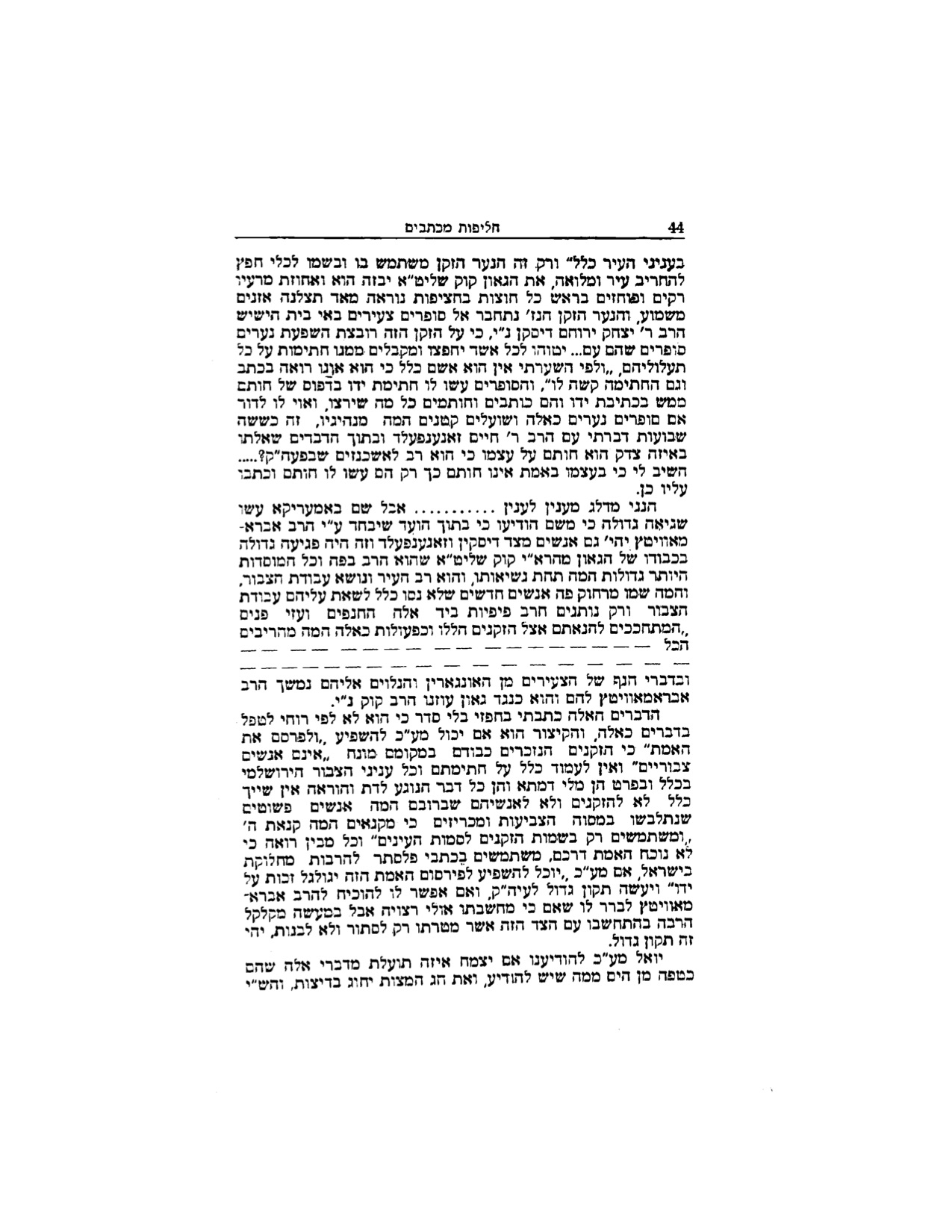
The first issue includes four letters discussing the use of electricity on Yom Tov and whether one can turn on and off electrical switches, R. Epstein’s is the first.  (Bet Va’ad, vol. 1, 1). Therein he argues that one can turn on electrical switches on Yom Tov.  He identifies the issue of nolad or creating something as potentially prohibiting the action but concludes that one is merely connecting the circuits and nothing new is created.  But he caveats his responsum with the disclaimer that electricity is uncommon in Novogrudok and his opinion is based upon his best efforts to understand electricity. Indeed, R. Shlomo Zalman Aurbach refers to R. Epstein’s responsum as containing “devarim tmuhim” and explained that they are a product of a faulty understanding of the technology.(Shlomo Zalman Aurbach, Me’orei Or (Jerusalem, 1980), appendix). Lot 85, includes this volume as well as the second issue.

R. Epstein was not alone in permitting electricity on Yom Tov, indeed, the other three letters in Bet Vaad similarly permit electricity. Other contemporary rabbis also rule in favor of electricity.

Nonetheless, those are minority views and today the common Orthodox practice is to refrain from turning on and off electrical switches.  When the publishers of R. Epstein’s writings were deciding what to include in Kol Kitvei, they approached R. Chaim Kanievsky and asked whether they should exclude R. Epstein’s responsum regarding electricity.  Presumably, they were concerned that one of the greatest halkhic authorities of the late 19th and early 20th centuries permitted what is “established” law to the contrary (despite the other opinions). But R. Kanievsky rejected that position and held that the responsum should be reprinted.[6]

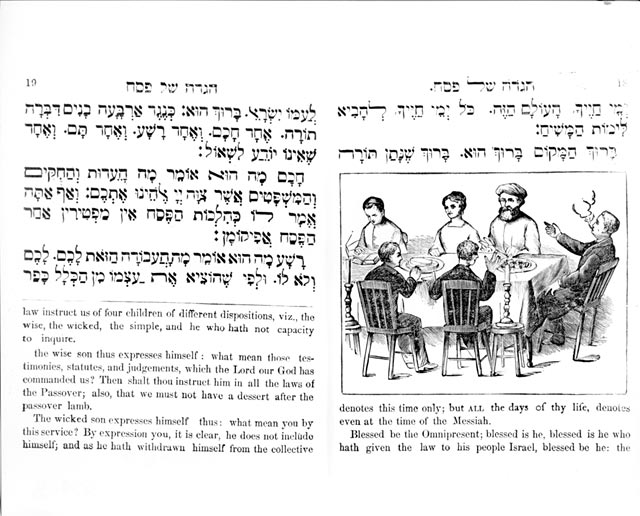
Another example of Americana and the use of fire on Yom Tov appears in one of the first haggadot printed in the United States.  The 1886 illustrated Haggadah contains a depiction of the four sons.  Depicting the four sons is very common in the illustrated manuscripts and printed haggadot. In this instance, the wicked son’s disdain for the seder proceedings shows him leaning back on his chair and smoking a cigarette. According to many halakhic authorities, smoking is permitted on Yom Tov, nonetheless, the illustration demonstrates that at least in the late 19th-century smoking was not an acceptable practice in formal settings. (For a discussion of smoking on Yom Tov, see R. Shlomo Yosef Zevin, Mo’adim be-Halakha (Jerusalem:  Mechon Talmud Hayisraeli, 1983), 7-8).


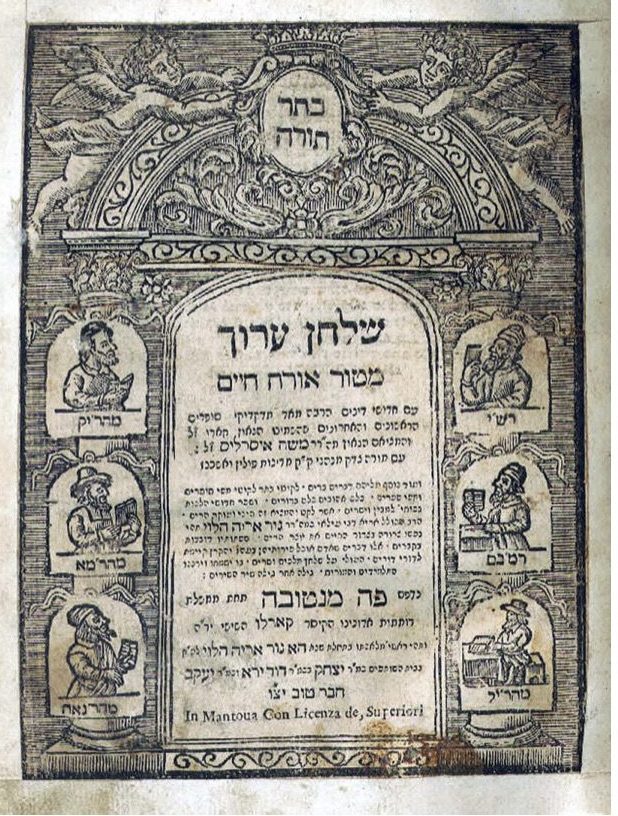
One of the other lots that also implicates illustration is lot 94, Shulhan Orakh im Pirush Gur Areyeh, Mantua, 1722, that contains the commentary of R. Yosef ben Ephraim Gur Areyeh Halevi.  As we have previously discussed at the end of this post, the Gur Areyeh’s title page to the first volume depicts six relevant personalities, Rashi, Rambam, MahaRIL, R Yosef Karo, R. Moshe Isserles, and R. Gur Areyeh.  According to some accounts, this illustration roused the ire of some rabbis because they felt the depictions were crude, and in some instances seem to show at least one rabbi in violation of Jewish law.  Allegedly, they claim that the Rambam is shown with insufficient peyot (sidelocks) in addition to long hair (as do others).  Thus in the remaining volumes of this edition, the illustrations were removed and they no longer appear (although at least in one preserved copy the illustration is repeated in the Yoreh De’ah volume).


One lot, # 161, is an incredible discovery: R. Yosef Dov Halevi Soloveitchik’s (Bet Halevi) copy of the Halakhot Gedolot (BeHaG).  This copy contains hundreds of unpublished glosses, citations, and cross-references. This copy establishes that the Netziv was not the only Rosh Yeshivah of Volozhin who was involved in the works of the Geonim. One only can hope that whoever purchases this copy will publish the notes.

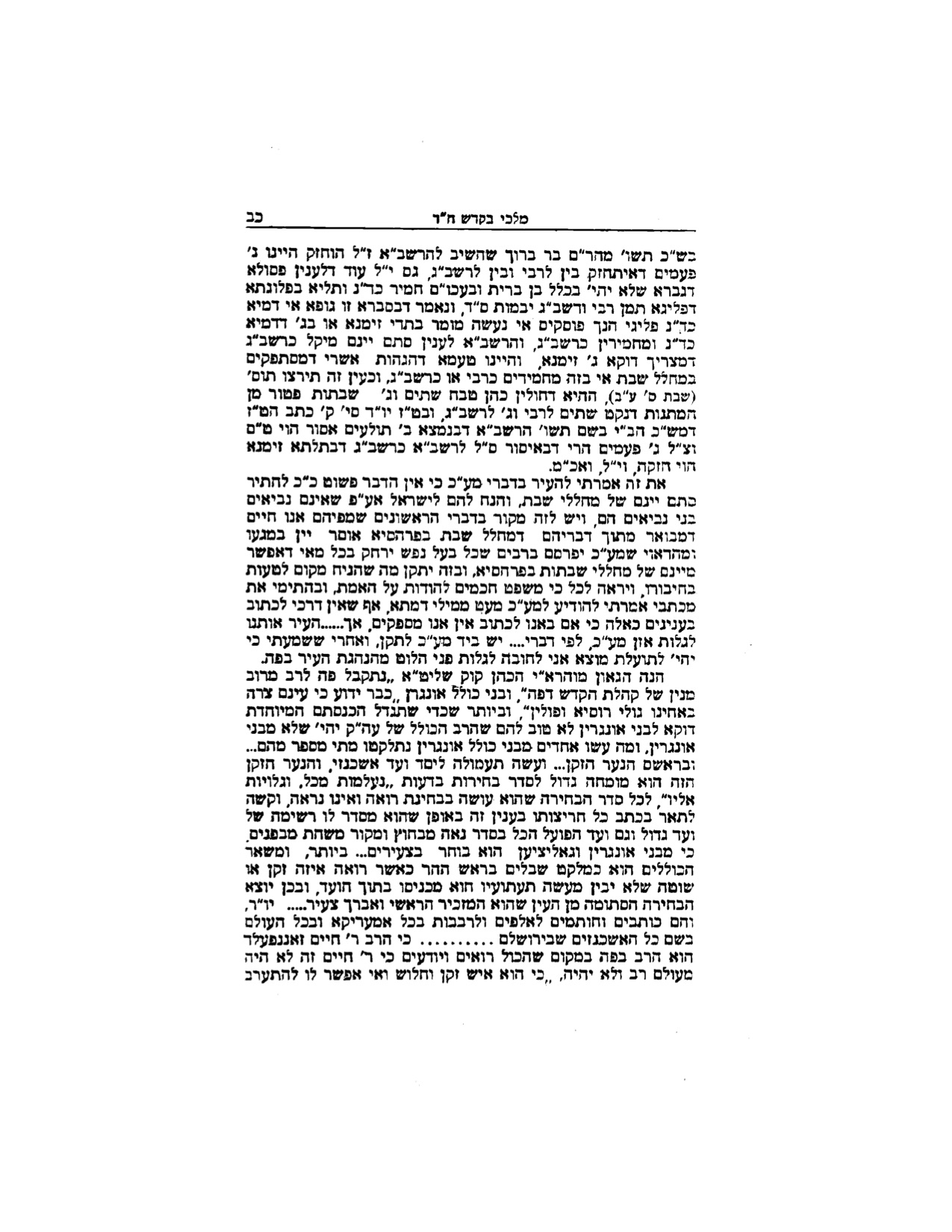
Another such item is # 87 is a presentation copy of Derishat Tzion that contains the commentary of R’ Tzvi Pesach Frank. Although not noted in the description R. Frank presented this copy to R’ Chaim Hirschenson.  In his Shut Malkei Bakodesh,(4:10) R’ Hirschsenson prints a very interesting letter from R Frank after he received a copy of one of R. Hirschenshon’s book. R Frank took issue with some of R. Hirschenshon’s conclusions and to his credit, he prints it without censoring it. The book being auctioned might have been a gift from R Frank in return for the gift he received. R. Frank’s letter is full of fascinating contemporary descriptions of Jerusalem.

Finally, for a discussion regarding lot 93, Menukha ve-Kedusha and censorship see our post here.

[1] See, for example, Yakkov Shmuel Speigel, Amudim be-Tolodot Sefer ha-Ivri:  Ketivah veha-Atakah (Ramat Gan:  Bar Ilan University Press, 2005), 241-97; Marc Shapiro, Changing the Immutable:  How Orthodox Judaism Rewrites History (Oxford:  Littman Library of Jewish Civilization, 2015), 81-118.

[2] For a biography see R. Eitam Henkin, Tarokh le-fani Shulkhan (Jerusalem:  Maggid, 2019).  Regarding this book see our discussion here.

[3] Yosef Goldman, Hebrew Printing in America 1735-1926:  A History and Annotated Bibliography (Brooklyn:  [YG Books], 2006), vol. 1, no. 584, 514. See our reviews of Goldman’s bibliography here and here.

[4] Goldman, Hebrew Printing, no. 591, vol. 1, 521.

[5] See generally, Yossi Goldman, vol. 1, no. 591, 520-21.  Bet Vaad contains materials beyond responsa and halakhic discussions, including poetry, discussions regarding Jewish life in America such as yeshivot, restaurants, and a fable written in verse.

For a discussion of Manischewitz, see Jonathan D. Sarna, “How Matzah Became Square: Manischewitz and the Development of Machine-Made Matzah in the United States,” in Rebecca Kobrin, ed., Chosen Capital: The Jewish Encounter with American Capitalism (New Brunswick: Rutgers University Press, 2012), 272-288; Jonathan D. Sarna, How Matzah Became Square: Manischewitz and the Development of Machine-Made Matzah in the United States (New York: Touro College, 2005).

[6] Regarding the position that seeks to portray Orthodox Judaism a monolithic halakhic process and view as legitimate only certain opinions see Adiel Schremer, Ma’ase Rav: Shekul ha-Da’at ha-Halakhati ve-Eytsuv ha-Zehut ha-Yahadut (Ramat Gan:  Bar Ilan University Press, 2019), 191-97.


Reflecting on When the Arukh haShulhan on Orach Chaim was Actually Written

Reflecting on When the Arukh haShulhan on Orach Chaim was Actually Written: Citations of the Mishnah Berurah in the Arukh haShulhan

Michael J. Broyde & Shlomo C. Pill

Rabbi Michael Broyde is a Professor of Law at Emory University School of Law and the Projects Director at the Emory University Center for the Study of Law and Religion.  Rabbi Dr. Shlomo Pill is a Visiting Assistant Professor of Jewish, Islamic, and American Law and Religion at Emory University’s Candler School of Theology and a Senior Fellow at the Emory University Center for the Study of Law and Religion.  They are writing a work titled “Setting the Table: An Introduction to the Jurisprudence of Rabbi Yechiel Mikhel Epstein’s Arukh Hashulchan” (Academic Studies Press, forthcoming 2020).

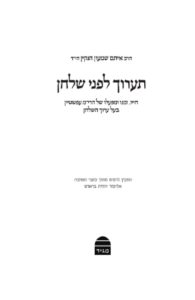
We post this now to note our celebration of the publication of תערוך לפני שלחן: חייו, זמנו ומפעלו של הרי”מ עפשטיין בעל ערוך השלחן (“Set a Table Before Me: The Life, Time, and Work of Rabbi Yehiel Mikhel Epstein, Author of the Arukh HaShulchan” (see here) (Maggid Press, 2019), by Rabbi Eitam Henkin, הי”ד.  Like many others, we were deeply saddened by his and his wife Naamah’s murder on October 1, 2015.  We draw some small comfort in seeing that the fruits of his labors still are appearing.

According to Rabbi Eitam Henkin הי”ד in his recently published book on the life and works of Rabbi Yechiel Mikhel Epstein, the first volume of the Arukh Hashulchan on Orach Chaim covering chapters 1-241 was published in 1903; the second volume addressing chapters 242-428 was published in 1907; and the third volume covering chapters 429-697 was published right after Rabbi Epstein’s death in 1909.[1] Others confirm these publication dates.[2]

The Mishnah Berurah, Rabbi Yisrael Meir Kagan’s commentary on the Orach Chaim section of the Shulchan Arukh was published in six parts, with each appearing at different times over twenty-three-year period.  Volume one was published in 1884, volume three in 1891, volume two appeared in 1895, volume four in 1898, volume five was published in 1902, and volume six in 1907.

We suspect that while the first volume of the Arukh Hashulchan on Orach Chaim did not appear until 1903, Rabbi Epstein wrote this work some time before this, and its publication and was delayed for economic and government censorship reasons. Rabbi Eitam Henkin notes (in the above biography) that Rabbi Epstein made mention of the very difficult time he had finding the funds to publish his work. Rabbi Epstein himself wrote in an 1886 letter, “to my great distress, I am unable to publish [the next installment of the Arukh Hashulchan] due to the lack of funding . . . publishing is exceedingly expensive.”[3] The high cost of publishing and limited funding actually led to Rabbi Epstein’s initially publishing the Arukh Hashulchan in numerous short pamphlets, each covering just a few of the Shulchan Arukh’s topic headings, rather than in larger volumes.  Eventually, as funds became available, these pamphlets were combined into larger volumes, organized around the “four-pillars” framework of halakhah used by other rabbinic jurists since Rabbi Karo.[4] Likewise, Rabbi Henkin uncovered correspondence in which Rabbi Epstein bemoaned that long-before completed manuscripts of the Arukh Hashulchan were languishing in St. Petersburg awaiting review and approval by Russian government censors.[5]

Appreciating the realities of the funding- and censorship-related delays with which Rabbi Epstein had to contend helps rectify what Rabbi Meir Bar-Ilan described as Rabbi Epstein’s furiously productive writing schedule with the nearly four decade span between when he began writing the Arukh Hashulchan in 1870 and the publication of the final volume of Arukh Hashulchan: Orach Chaim in 1909 (and other volumes considerably after his death by his daughter[6]). Rabbi Meir Bar Ilan described his grandfather’s process as follows:

My grandfather sat each day in the room designated as the local rabbinic courtroom together with his two rabbinic judge colleagues from morning until night, save for two hours in the afternoons . . . He sat at his table with a chair next to him upon which he kept four books related to the topic he was currently dealing with: a volume of Maimonides’ Mishnah Torah, a volume of the Arbah Turim, the Shulchan Arukh, and a small edition of the Talmud.  And thus, looking here and there, he wrote his book, Arukh Hashulchan, page after page.  Occasionally, he would get up and take out another book to look at . . . This book, the Arukh Hashulchan, which is foremost in its genre, was printed directly from the first draft manuscripts, exactly as they were initially produced by the author . . . without edits, erasures, or rewrites.[7]

Even if somewhat hyperbolic in its recollection, the pace of work described by Rabbi Meir Bar-Ilan certainly does not suggest that the writing of the Arukh Hashulchan would have taken more than thirty years. It is likely that the text of Rabbi Epstein’s monumental restatement of halakhah was written and prepared long before it finally appeared in print.[8]

So, when was the Arukh Hashulchan on Orach Chaim actually written? We suspect it was written after 1891 and before 1895.

As noted, the first volume of the Mishnah Berurah was published in 1884, and the Arukh Hashulchan cites it thirteen times.  Mishnah Berurah volume three was published seven years’ later in 1891 and is also cited by the Arukh Hashulchan—in this case, twelve times.  The Arukh Hashulchan cites none of the other four volumes of the Mishnah Berurah, however, which indicates that Rabbi Epstein did not have them.  That would indicate that Rabbi Epstein had completed his manuscript of Arukh Hashulchan on Orach Chaim before the 1895 when the next installment of the Mishnah Berurah appeared. We see in Rabbi Eitam Henkin’s work (p. 312) that he proposes a similar observation, and we are gratified that he shares this inference. While over a decade would pass before the Arukh Hashulchan on Orach Chaim was fully published, and while by this time the Mishnah Berurah, too, was in print in its entirety, Rabbi Meir Bar-Ilan’s account of Rabbi Epstein’s writing process suggests that once written, the Arukh Hashulchan manuscripts were not significantly revisited or edited by Rabbi Epstein. It is not surprising, then, that the Arukh Hashulchan on Orach Chaim does not include references to sections of the Mishnah Berurah that appeared only after 1895.

We are aware of 36 (or 37, if one counts the double reference in number 5, below) references to the Mishnah Berurah in the Arukh Hashulchan[9] none of which are particularly important to the work, and only in one of them (319:22) does the Arukh Hashulchan seem to be actually reacting to something that the Mishnah Berurah directly cited in his own name.  The citations to the Mishnah Berurah in the Arukh Hashulchan themselves generally look like (to quote Rabbi Bar-Ilan) “another book to look at.”  Furthermore, it only looks like he did so in certain areas deeply and other areas much less.  There are six quoted in hilkhot tzitizit, one in hilkhot tefillin, two in hilkhot shema, four citations over three simanim in hilkhot tefilla, and then occasional references scattered throughout hilkhot Shabbat.  This sparse citing suggests that the Arukh Hashulchan neither studied the Mishnah Berurah, nor is responding to it systemically.  So to, the only explanation for the lack of citation to volumes two, four, five and six is that Rabbi Epstein did not have them at the time he was producing his manuscript of the Arukh Hashulchan on Orach Chaim. (We see that Rabbi Eitam Henkin, in his work makes a similar observation on pages 311-313.)

Below is a list of all the cases we are aware of in which the Arukh Hashulchan actually has and cites and quotes this Mishnah Berurah.

  1. Arukh HaShulchan 10:4 contains a reference to Biur Halakhah 10 s.v. veyesh lah.
  2. Arukh HaShulchan 10:7 contains a reference to Biur Halakhah 10 s.v. ela im ken.
  3. Arukh HaShulchan 10:8 contains a reference to Biur Halakhah 10 s.v. veain lah kenafot.
  4. Arukh HaShulchan 11:8 contains a reference to Biur Halakhah 11 s.v. vehu.
  5. Arukh HaShulchan 11:22 contains a reference to both Mishnah Berurah 11:27 and 11:29 and the Biur Halakhah, which explains this.
  6. Arukh HaShulchan 12:4 contains a reference to Biur Halakhah 12 s.v. im nepseku.
  7. Arukh HaShulchan 14:5 contains two references to Biur Halakhah 14 s.v. hetil yisrael.
  8. Arukh HaShulchan 25:23 contains a reference to Biur Halakhah 25 s.v. vehakhi nohug.
  9. Arukh HaShulchan 25:26 contains a reference to Mishnah Berurah 44.
  10. Arukh HaShulchan 62:3 contains a reference to Biur Halakhah 62 s.v. yachol lekrotah bekhol lashon.
  11. Arukh HaShulchan 76:21 contains a reference to Biur Halakhah s.v. kara bemakom.
  12. Arukh HaShulchan 76:4 contains a reference to Mishnah Berurah 77:8.
  13. Arukh HaShulchan 79:11 contains a reference to Mishnah Berurah 5.
  14. Arukh HaShulchan 79:17 contains a reference to Mishnah Berurah 79:29 or Biur Halakhah s.v. aval chalul.
  15. Arukh HaShulchan 87:7 contains a reference to Mishnah Berurah 9.
  16. Arukh HaShulchan 89:23 contains a reference to Mishnah Berurah 89:22.
  17. Arukh HaShulchan 89:24 contains a reference to Mishnah Berurah 89:24 and Biur Halakhah s.v. vekhen okhlin umashkin.
  18. Arukh HaShulchan 91:3 contains a reference to Biur Halakhah 91 s.v. hoyil vekhisah.
  19. Arukh HaShulchan 91:4 contains a reference to Biur Halakhah 91 s.v. yatza.
  20. Arukh HaShulchan 245:8 contains a reference to Mishnah Berurah 245:23.
  21. Arukh HaShulchan 247:13 contains a reference to Mishnah Berurah 247:18.
  22. Arukh HaShulchan 262:4 contains a reference to Mishnah Berurah 262:12.
  23. Arukh HaShulchan 263:19 contains a reference to Mishnah Berurah 263:49.
  24. Arukh HaShulchan 268:6 contains a reference to Biur Halakhah 268 s.v. veshelo bekavanah.
  25. Arukh HaShulchan 271:30 contains a reference to Biur Halakhah s.v. vehu rubo.
  26. Arukh HaShulchan 275:2 contains a reference to Biur Halakhah 275 s.v. leor haner.
  27. Arukh HaShulchan 301:122 contains a reference to Mishnah Berurah 301:176–177.
  28. Arukh HaShulchan 302:32 contains a reference to Mishnah Berurah 303:87-88.
  29. Arukh HaShulchan 302:9 contains a reference to Mishnah Berurah 301:2, 10, 11 and Biur Halakhah s.v. shaveh aleha.
  30. Arukh HaShulchan 306:22 contains a reference to Mishnah Berurah 306:16 and Biur Halakhah s.v. beketav shelahem.
  31. Arukh HaShulchan 319:19 contains a reference to Biur Halakhah 319 s.v. le’ekhol meyad.
  32. Arukh HaShulchan 319:22 contains a reference to Mishnah Berurah 319:21 and Biur Halakhah s.v. beshinui.
  33. Arukh HaShulchan 321:10 contains a reference to Mishnah Berurah 321:37–38.
  34. Arukh HaShulchan 328:39 contains a reference to Mishnah Berurah 328:145.
  35. Arukh HaShulchan 330:7 contains a reference to Biur Halakhah s.v. kol sheloshah yamim.
  36. Arukh HaShulchan 336:21 contains a reference to Biur Halakhah 336 s.v. mutar lelakh.

A question that can only be speculated about is whether the Arukh HaShulchan is ever responding without citation to the Mishnah Berurah (for example, in the case of married women and hair covering in the synagogue in Orach Chayim 75).  Rabbi Eitam Henkin (p. 314) quotes the famous observation of this father, Rabbi Yehuda Herzl Henkin in Shut Benai Banim 2:18 that there are countless times where the Aruch HaShulchan is responding, without citing, the Mishnah Berurah.  Rabbi Eitam Henkin then provides a list of such possible cases.

[1] See Rabbi Eitam Henkin, Ta’arokh Lifanai Shulchan: Chayo Zemano U’mepa’alo Shel Harav Yechiel Mikhel Epstein Baal Arukh Hashulchan, pp. 245-246.

[2] See as well the following article by Rabbi Eitam Henkin where he makes this claim as well:

 ‘ספרי ערוך השלחן – סדר כתיבתם והדפסתם’, חצי גבורים – פליטת סופרים, ז (תשע”ד), עמ’ תקטו-תקלו

Copies of the first editions can be found in the Hebrew University Library.

[3] Kitvei Ha-Arukh Hashulchan, no. 104.

[4] See Rabbi Eitam Henkin’s book at pages 234–235.

[5] See Kitvei Ha-Arukh Hashulchan, no. 56.

[6] See Printing of the Arukh HaShulhan: The Missing Line About Rabbi Epstein’s Daughter for more on the posthumous publication of volumes.

[7] Rabbi Meir Bar-Ilan, From Volozhin to Jerusalem 269-271 (1939-1940) [Hebrew].

[8] See Rabbi Eitam Henkin’s work תערוך לפני שלחן at pages 229–257 for a detailed discussion of the publication difficulties and schedule of the Arukh HaShulchan.

[9] Twice Arukh Hashulchan refers to the work by its formal name, Mishnah Berurah, and all the remaining times by an acronym מ”ב or המ”ב.


Book announcement: Ta’aroch Lifonai Shulchan by Rabbi Eitam Henkin, H”YD

Book announcement: Ta’aroch Lifonai Shulchan by Rabbi Eitam Henkin H”YD

By Eliezer Brodt

הרב איתם שמעון הנקין הי”ד, “תערך לפני שלחן: חייו, זמנו, ומפעלו של הרי”ם עפשטיין בעל ערוך השלחן,” הוצאת קורן 413 עמודים

It’s with great pleasure that I announce the second printing of the book Ta’aroch Lifonai Shulchan by R’ Eitam Henkin H”YD, published by Maggid Press. I had the unique privilege to edit this work, together with R’ Eitam’s special,learned parents. The first printing of this book was issued on January 2 earlier this year and sold out shortly after its released.


This book is an intellectual biography of R’ Yechiel Michel Epstein, author of the classic work Aruch HaShulchan. In 2006 R’ Eitam began publishing essays about the Aruch HaShulchan in various journals. Over time they became more and more renowned, for their comprehensiveness, clarity, high quality, and at times for new discoveries. They were read by a wide-ranging audience. In general, R’ Eitam’s numerous writings demonstrate an excellent command in both the halachic aspects and the historical aspects of the topics he set out to write about. Alongside his many historical essays are his many Torah articles and full-fledged halachic works. [Most of which are available here]. He was a unique combination of a first-rate talmid chacham and historian who was also blessed with  gifted writing and research skills. [See earlier on the Seforim Blog for hespedim on him here, here and here].

At one point he was invited to print all his articles related to the Aruch HaShulchan as a book for Touro College Press. R’ Eitam began collecting his unpublished material, updating what he already printed, for this work until the tragic day in 2015, the third day of Chol Hamoed Succos, when R ’Eitam was murdered together with his wife Na’ama.

After his murder his family accessed his computer and found this work on the Aruch HaShulchan amongst many other files of material. Various chapters were in different stages and many were even ready for print. After carefully reading through all the files about the Aruch HaShulchan and figuring out what which version was the most updated. The material which was found to be already printworthy were than then collected and organized into this book. Some other printed articles of his related to the Aruch HaShulchan were added to the book, such as his article about the rebbe of the Aruch HaShulchan.

Among R’ Eitam’s many qualities were his excellent writing skills; he was capable of making bibliographic essays  that of the kind that are generally boring to the regular reader interesting to such audiences. The material in this book was completely written by R’ Eitam, however the order of some sections was shifted around to flow better as a whole. Additionally, as various sections were written for different publications and at different times as were the various citations in the footnotes were adjusted/synchronized with the rest of the work. That said, one chapter was not entirely finished by R’ Eitam (Part 2, Chapter 4); and his parents completed it based on his notes, and another small chapter (Part 1, Chapter 8) was completed by his brother.

We are currently working on printing a several more volumes of his material. The next project which is very near completion is an English translation of twenty-five of his essays [for some articles in English see earlier on the Seforim Blog (here) and in Hakirah (here and here)]. Another project which we are working on is a two-volume Hebrew work consisting of his material related to Eretz Yisrael, shemittah and Rav Kook. Dedication opportunities are still available for these works. Dedications are tax refundable. Email me at eliezerbrodt@gmail.com for more information.

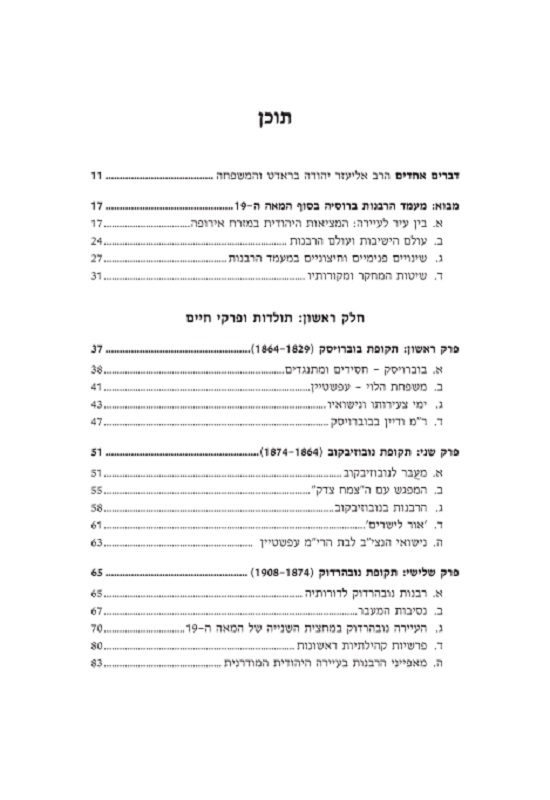
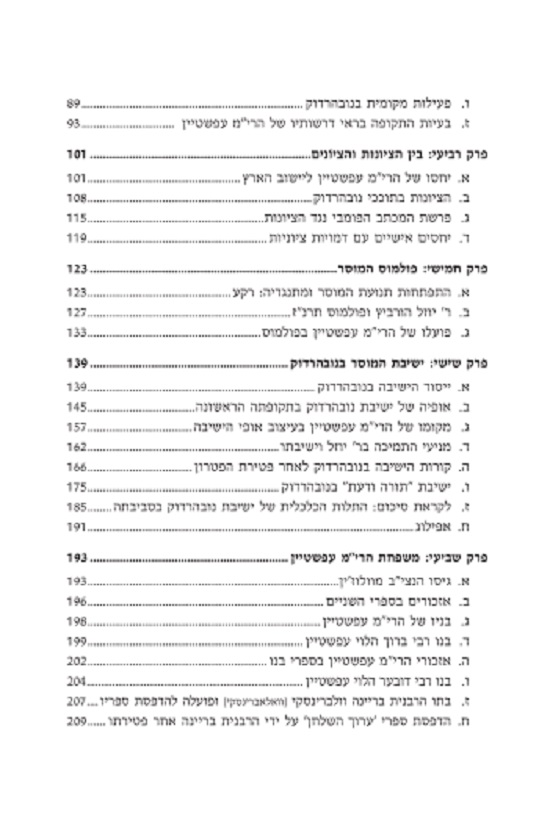
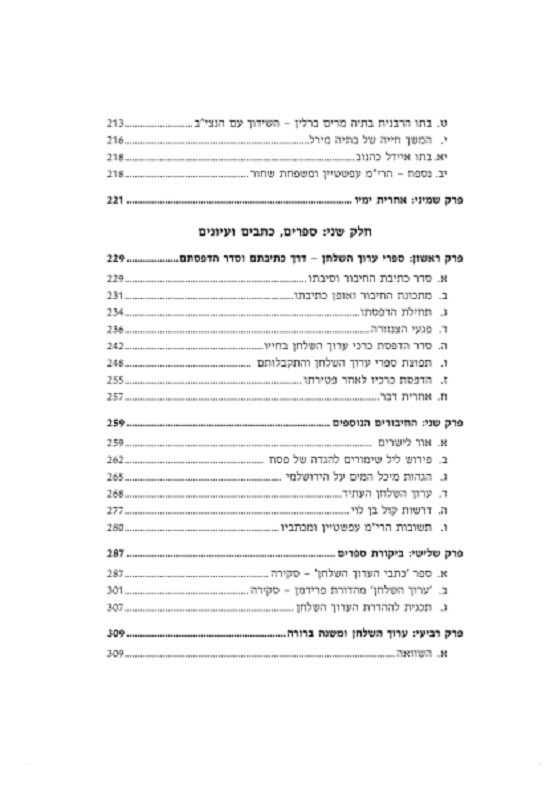
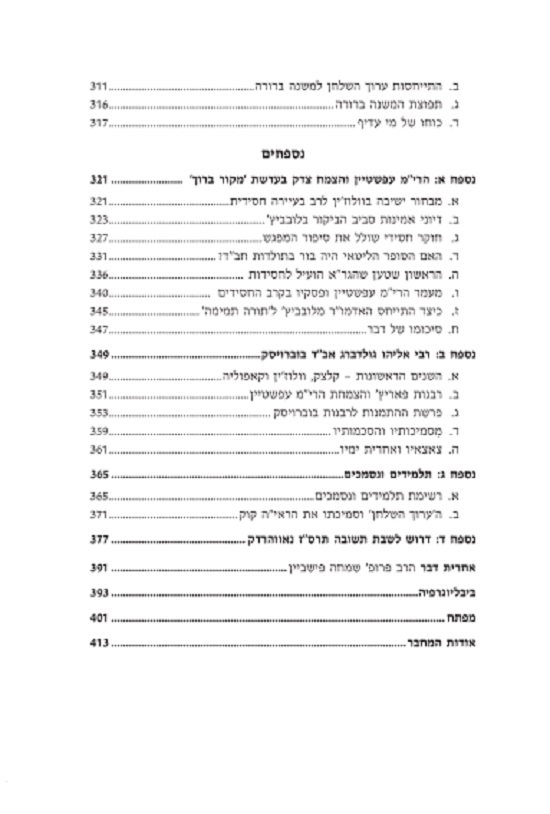
The book should be available for purchase at local seforim stores or via Maggid Press. If one is interested in the introduction of the book and some sample pages, email me at eliezerbrodt@gmail.com.Here are the Table of Contents from Ta’aroch Lefonai Shulchan:


Self-Censorship in the Arukh ha-Shulhan, ArtScroll’s Latest Betrayal, and Other Assorted Comments

Self-Censorship in the Arukh ha-Shulhan, ArtScroll’s Latest Betrayal, and Other Assorted Comments
Marc B. Shapiro

1. R. Mordechai Rabinovitch has recently published the second volume of his commentary on the Arukh ha-Shulhan, dealing with the laws of Hanukkah. I strongly encourage anyone who prepares for the holiday by studying the halakhot in the Arukh ha-Shulhan to use R. Rabinovitch’s valuable work.
Interestingly, R. Rabinovitch vocalizes the work as Arokh ha-Shulhan. This is based on the fact that these words, with this vocalization, appear in Isaiah 21:5. Yet this is incorrect. As R. Eitam Henkin has pointed out, when the work was published by R. Epstein himself, the title in Russian also appeared on the binding. R. Epstein knew Russian very well, and the Russian reads “Arukh”. Henkin also notes that in the edition published in Vilna by his daughter, the title appeared in Latin letters. Once again we see that it was pronounced “Arukh”.[1] This latter point might have been known to some long-time readers of the Seforim Blog, as this page with the Latin letters was reproduced in this post from 2007. Here it is again.

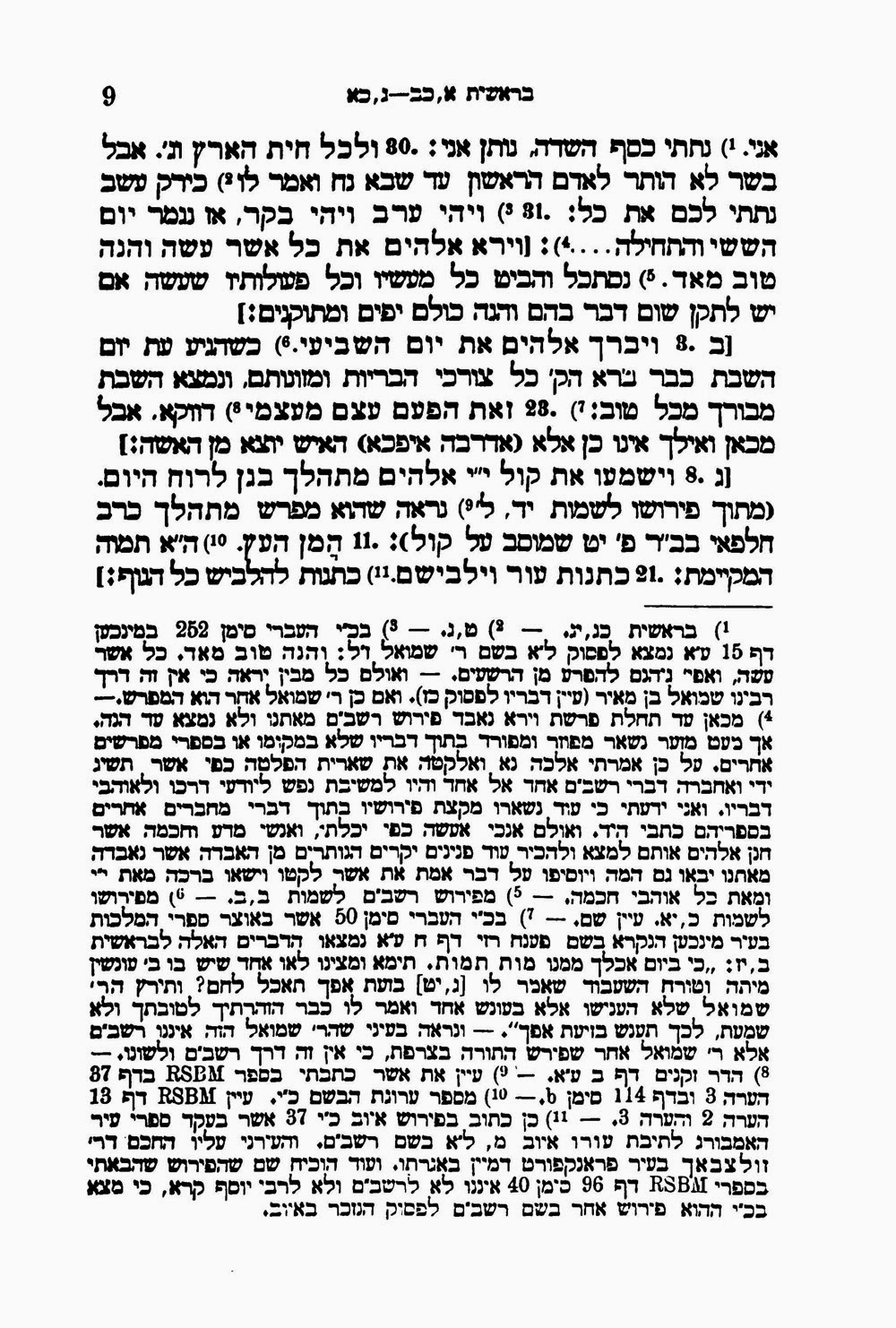
The Arukh ha-Shulhan was the subject of a dispute between R. Shaul Yisraeli, a member of the Supreme Rabbinic Court (Beit Din ha-Gadol) and Menachem Elon, of the Israeli Supreme Court. The context was that France had requested that Israel extradite a criminal. Elon argued that this was permitted according to Jewish law. In support of this he cited Arukh ha-Shulhan 388:7, which states that there is no law of mesirah when dealing with a civilized government and legal system, such as in Czarist Russia[!] and England. Here is the text.

When challenged by R. Shaul Yisraeli that the text in the Arukh ha-Shulhan was written with an eye to the anti-Semitic government, Elon defended his position that the text is R. Epstein’s authentic opinion.[2] I don’t wish to get into this dispute at present,[3] and readers interested in the topic can consult R. Michael Broyde’s article “Informing on Others for Violating American Law: A Jewish Law View”, available here
R. Rabinovitch’s new commentary is also relevant to this debate, since he identifies examples of what he regards as self-censorship in the Arukh ha-Shulhan, and these are in areas not as potentially problematic as the halakhot dealing with mesirah. In his discussion of the Hanukkah story, Arukh ha-Shulhan 670:3, R. Epstein writes: שכשנכנסו אנשי אנטיוכס להיכל. Yet in the Talmud it states שכשנכנסו יוונים להיכל. R. Rabinovitch suggests that this is an example of self-censorship.[4] At first I thought that this was somewhat far fetched. I didn’t think that there was any reason to fear that government officials would be offended by a simple historical description that mentions the ancient Greeks. However, S. wrote to me as follows.

Yevanim was a particularly loaded term in Russia (for historical purposes this includes regions outside of Russia proper, like Ukraine), because Jews called the non-Jews Yevanim. They did so because many Ukrainians were of the Ukrainian Greek Catholic Church (the Russian Orthodox Church is an Eastern Orthodox Church and in that way ‘related’ to Greece as well). It is for this reason that Hanover called his account of the Khmelnitzky massacres Yeven Metzula, and refers to the Cossacks as yevanim – but we can see it from other sources, too. For example, see attached for a horrifying account of a massacre on the second day of Pesach 1655. You can see he calls the Cossacks yevanim (from here).

Supposedly it was also a play on the name Ivan, but I’m not sure if that’s just folk etymology. But more importantly, we can see that some works took it seriously and changed yevanim to something else, to avoid offending the censor. See here where changing yevanim to “yehirim” in Maoz Tzur was a somewhat common change.

And see here where it documents in the 1840s that Jews called the Russians yevanim  – and doubtless you can show it from many Yiddish sources, too. See here where I discuss how the Slavuta Talmud actually changes a gemara; “Rabbi said, why speak Syriac in Eretz Yisrael? Speak Hebrew or Greek!” to “Speak Hebrew or Akum!” 

So in my view the Arukh Ha-Shulchan definitely deliberately wrote Antiochos.

We can argue about whether this or that particular halakhah in the Arukh ha-Shulhan is an example of self-censorship, but there can be no doubt about the basic fact that R. Epstein did indeed censor himself for fear of the Czar. All one needs to do is see his fawning essay “Kevod Melekh”, at the beginning of Arukh ha-Shulhan, Hoshen Mishpat, to get a sense of the environment he had to operate in. In this essay he tells the reader how much the Jews love the Czar, and that is why they pray for him and his family every Shabbat and Yom Tov.
R. Eliyahu Zini,[5] whose books I hope to discuss in a future post, points to a clear example of the Arukh ha-Shulhan’s self-censorship in Orah Hayyim 329:9. There he writes:
לסטים שצרו על בתי ישראל אם באו על עסקי ממון . . . אבל אם באו על עסקי נפשות להרוג ולאבד או אפילו באו סתם והיינו שאין ידוע לנו על מה באו הוה ג”כ כבבירור על עסקי נפשות דסתם לסטים הם הורגי נפשות יוצאים עליהם בכלי זיין ומחללין עליהם את השבת ובזמן הקדמון בזמן שבהמ”ק היה קיים ובאו לעיר העומדת על הגבול. . . .
This halakhah is derived from Eruvin 45a, but in this text there is no mention of bandits – לסטים. Rather, the Talmud is speaking of non-Jews – נכרים (an alternate reading cited by Dikdukei Soferim is גוים). Secondly, there is nothing in the Talmud about the last halakhah I quoted only applying in the era when the Temple stood. These changes made by R. Epstein were due of fear of creating problems with the government. I think this is as clear as it can be, which makes it very surprising that R. Ovadiah Yosef took the Arukh ha-Shulhan at face value that the latter halakhah only applied in the days of the Temple. R. Ovadiah then points out that the Shulhan Arukh disagrees, seeing the halakhah as also applying in contemporary times.[6]

R. Zini cannot contain himself at this (mis)understanding of R. Ovadiah, and as he often does, he rejects R. Ovadiah’s point very strongly.[7]
ומי פתי הוא זה שלא יבין שבעל ערוך השלחן “צינזר את עצמו” מפחד הצאר, כפי שעשה בעשרות מקומות בספרו זה . . . ופלא נשגבה ממני איך הגר”ע יוסף שליט”א לא הבחין בכך?!
As mentioned already, the Talmud, Eruvin 45a, uses the word נכרים. This means non-Jews, and only non-Jews. Imagine my surprise, therefore, when I saw that the Soncino translation has the following: “If foreigners besieged Israelite towns.” Since there is no way that the translator, who was a learned man, could have made such a mistake, I can only assume that this translation was also designed to avoid any non-Jewish ill will.
Since the author of the Arukh ha-Shulhan, R. Jehiel Michel Epstein, was the brother-in-law of R. Naftali Zvi Judah Berlin, now is a good place to note the problem with one of the titles of R. Berlin’s works. His commentary to R. Ahai Gaon’s She’iltot is העמק שאלה. How should these words be pronounced? Some scholars write Ha-Amek She’alah, basing themselves on Isaiah 7:11. However, Gil S. Perl argues that the correct pronunciation is Ha-Amek She’elah. As he puts it, if the pronunciation in Isaiah was intended, “the title would mean ‘sink to the depths,’ the ‘depths’ (from the word she’ol) being a reference to the netherworld or Hell—a rather strange title for a work of halakhic commentary.” Perl therefore suggest that the Netziv “intended his title as a play on those words from Isaiah pronounced Ha’amek She’alah, meaning ‘delve into the question” or perhaps ‘delve into the She’ilta.’”[8]
Speaking of proper pronunciation of titles, ArtScroll might play a positive role in this. Since today so many people studying Talmud are using ArtScroll, they will see that the tractates are pronounced “Arachin”, not “Eruchin”, and “Horayos”, not “Horiyos”. So I hope that these yeshivish pronunciations will soon be a thing of the past, at least among English speakers, and if so this will be thanks to ArtScroll. Furthermore, since their edition of the Midrash Rabbah has started to appear people in yeshiva circles will begin to use it, and slowly the pronunciation “Medrish” may go by the wayside (at least we can hope so). Now if we could only rid people of the pronunciation “ikrim” instead of “ikarim”.
Having said all this, it is also the case that general convention can sometimes trump proper grammatical pronunciation. For example, take the words נודע ביהודה which appear Psalms 76:2. These words are pronounced Noda Bihudah, yet when referring to the book by this title the convention is to write Noda bi-Yehudah, even though this is not the correct pronunciation.
For those who want to see a bit of “Sephardic supremacy” when it comes to pronunciation, see this video where R. Ovadiah really lets the Ashkenazim have it.

Returning to the Arukh ha-Shulhan, its significance has declined in the last two generations. While figures such as R. Joseph Elijah Henkin, R. Moses Feinstein, and R. Yaakov Kamenetsky regarded the Arukh ha-Shulhan as more authoritative than the Mishnah Berurah,[9] not many poskim still have this perspective. Whereas the Arukh ha-Shulhan used to stand on its own, in our day we have seen the publication of an edition of the Arukh ha-Shulhan accompanied by the pesakim of the Mishnah Berurah, the point of which is to let the reader know that while one can study the Arukh ha-Shulhan as a theoretical work, when it comes to practical halakhah one must follow the Mishnah Berurah.[10]
The truth is that one can use the Arukh ha-Shulhan as a work of practical halakhah just like one can use the Mishnah Berurah. This reminds me of an experience I had many years ago when I believe I was still in high school. I was at a shiur where the rabbi was learning Mishnah Berurah. After reading one halakhah in the Mishnah Berurah he pointed out that “we don’t hold like this”. A member of the audience asked how one who learns the Mishnah Berurah by himself is supposed to know when that is the case, that is, when “we don’t hold” like it. The rabbi replied that this is why it is important to have a rav, so that you will know when we follow the Mishnah Berurah and when we don’t.
Even though I was quite young I thought that this was a mistaken reply, and the many years subsequent have not changed my mind. It is of course important to have a rav, but not for the reason the rabbi said. There is absolutely nothing wrong with someone learning the Mishnah Berurah (or Arukh ha-Shulhan) and following everything in it. One doesn’t need, and it would be an impossible task, to ask his rabbi about each and every halakhah if this is what “we follow”. One who lives in an Orthodox community will learn that sometimes the community practice is more lenient than what appears in these works, and sometimes it is more strict. It is in those circumstances that I think that one should consult one’s rav, and ask him if despite common practice it makes sense to be lenient in accord with either of these texts, or if one should be strict as recommended by either the Mishnah Berurah or Arukh ha-Shulhan even though the common practice is not like this. But as a general rule, and I have never had a teacher who thought otherwise, one can rely on either of these classic halakhic texts.
2. Many people were distressed to see the sources from great pre-modern poskim that spoke about all sorts of physical mutilation, including R. Asher ben Jehiel agreeing that an adulteress’ nose could be cut off. I have mentioned in the past, but it bears repeating here, that the various punishments seen were also found in the contemporary non-Jewish society.[11] I know this may be troubling to some readers, to see that leading rabbis had an approach to punishment that today people regard as barbaric. Yet there really is no alternative, as to a certain extent, every generation reflects the general values of society at large. Halakhah and Jewish thought are often likewise affected in this way. I have provided numerous examples of this throughout the years, so there is no need to go through it again.[12]
3. In a question “ripped from the headlines”, I was asked if I know of any past examples of someone secretly observing women in the mikveh. I don’t of any such cases, although in the anti-hasidic text Shever Posh’im[13] it quotes a hasidic author as follows:
ואני אומר דראוי לעמוד בשעת טבילה. ויאמין לי שפעם אחת עמדתי בעת שטבלה אשה אחת וראיתי באותו מקום ודי עלי כאוות ולא כלום. ולאחר שהלכתי משם שרי עלי קדושה גדולה.
I have never heard of such a mikveh, where men would bathe on one side and women immerse on the other. In fact, I wouldn’t pay this text any mind, since I find it hard to believe that anyone who examines the citations from the work, which are supposedly notes on the Tur, will not conclude that it is a forgery designed to make the Hasidim look bad.[14] There are so many outrageous things said in the text that nothing else makes sense. Did any hasid, even the most extreme, ever say that one who prays properly need not fast on Yom Kippur ?[15]
כתב הטור: יוה”כ אסור באכילה ושתי’. וכתב המין: ומי שיוכל לכוין בתפלה כתיקונה מותר בכל, ואין אכילה רק שיהא עם רוחניות ולא עם גשמיות כידוע ליודעי חן.
It is difficult even to record the following shocking text,[16] but we are not in the business of censorship here, and as mentioned, I have no doubt that this is a forgery.
כתב הטור: דבעל קרי מותר האידנא בתפילה . . . וה”ה אף להוציא זרע מחמת גודל החימום הק”ש והתפילה כי זהו העיקר לכבוד השי”ת, כידוע לחכמים השלימים.
Speaking of authentic texts, however, R. Joseph Hayyim does deal with a case of voyeurism and prescribes a teshuvah for this. I don’t want to get any more explicit, so for those who read Hebrew here is the text from Od Yosef Hai: Halakhot, parashat Shofetim, no. 51[17].

I am aware of only two times that a woman (other than one’s wife) can be seen without her clothes. One is the sotah, when her top is removed.[18] R. Judah states that if her breasts are attractive, they are not exposed,[19] but his opinion is not accepted. The other time is that the kohen must examine both men and women for tzara’at, and in both cases they are to be naked.[20]
As for the current controversy about whether dayanim need to see a female convert immerse, no one has yet referred to the following responsum from Kitvei R. Weinberg, vol. 1, no. 10. When I published this book I decided to have this short responsum translated from German, although I wasn’t sure if it was worth the trouble since all R. Weinberg was doing was repeating the halakhah as it appears in the Shulhan Arukh. Recent attempts to alter the traditional method of womens’ conversion, by arguing that the dayanim should not see the actual tevilah, show that even a simple responsum like this one can have value. I am very happy that it was translated and included in the sefer, so that it can now be part of the public conversation. 

Regarding the sources that have been cited in support of changing the traditional practice, no one has yet referred to a responsum by R. Isaac Herzog in which in the specific case he discusses (and I don’t think it can be used le-khathilah for other cases) he allows that only women see the tevilah.[21]
Also worth noting, even though in my opinion it has no halakhic significance, is Masekhet Gerim 1:4 which states:
האיש מטביל את האיש והאשה מטבלת את האשה
R. Hayyim Kanievsky points out, in his commentary ad loc., that this implies that men did not see any part of the immersion (unlike the current practice).
משמע שהאנשים לא יראוה כשהיא טובלת . . . משמע שאין רואין טבילתה רק הנשים.
R. Aryeh Leib Grossnass, Lev Aryeh, vol. 2, no. 11, argues that the beit din does not actually have to see the immersion in order for the conversion to be valid. It is this responsum that R. Moses Feinstein is responding to in Iggerot Moshe, Yoreh Deah vol. 2, no. 127.

S. also called my attention to this document from 1844 signed by Isaac Leeser and currently on auction at Sotheby’s (link). It records how the conversion of a girl was only witnessed by two women, not by the beit din.

4. Simcha Goldstein was kind enough to send me these pictures from a Passover Haggadah sent out to donors by Yeshiva Torah Vodaath. It hardly needs to be said that such pictures (check out how the women are dressed), not to mention the Zionist theme as a whole, would never appear today in anything sent out by this yeshiva. 

Regarding Yeshiva Torah Vodaath, in the book Mi-Pihem shel Rabbotenu (Bnei Brak, 2008), p. 49, there in an interview with R. Don Ungarischer who states that when R. Reuven Grozovsky came to the United States during World War II, Torah Vodaath was the only yeshiva in America. This is incorrect and I am not just referring to the existence of Yeshivat R. Yitzchak Elhanan or Beit ha-Midrash le-Torah in Chicago, as Yeshivat R. Chaim Berlin also existed during this period. 
5. The second volume of Haym Soloveitchik’s collected essays has just been published. This is a very important work, especially since nine of the essays have never before appeared in print. Among these newly published essays are those that put forth a new thesis about the origins of Ashkenazic religious culture. There is so much learning in this book, and it is written in such an engaging style, that anyone with an appreciation for the history of halakhah will be spellbound.
The essay “The ‘Third Yeshivah of Bavel’”, where Soloveitchik elaborates on his new thesis, is a particular favorite of mine. It could be that in the end the scholarly community will reject his position. Yet just to read how he develops his argument, and attempts to create an entirely new paradigm, is a treat. Here is one lengthy paragraph from the essay that I found quite significant (p. 161).
Shift back now to the mid-tenth century and the original characteristics of Ashkenaz. I have noted that the new settlers saw no difference between the aggadic sections of the Talmud and the halakhic ones and exegeted both in equal detail. We take this, too, for granted because we find a commentary on both sections on every printed page of the Talmud that we have seen since early youth. Think, however, what this entails lexically. The halakhic portions of the Talmud are strongly formulaic, as is any unpunctuated text. If one knows some thirty to forty idiomatic phrases in Jewish Babylonian Aramaic, most halakhic passages will pose few linguistic problems. (Understanding their legal content is a different matter.) However, the aggadic narratives entail a wide-ranging and detailed knowledge of the Aramaic language—all the terms of different household utensils, farm equipment, agricultural practices, domestic animals, flora and fauna, to mention just a few areas of life that are reflected in the narratives of the aggadeta. We are talking about a vocabulary of some 10,000-12000 words, if not more. (Actually, much more, as one should count meanings rather than words or roots [shorashim]. Most words have multiple meanings, and commanding a language means precisely controlling the numerous meanings of its words, as well as its idioms.) Unless these settlers had a vast dictionary, alongside which the Sefer he-Arukh would seem a Berlitz phrase book, and unless this enormous dictionary and even the memory of it got lost in the Mainz academy within one generation, we must conclude that these immigrant founders of Ashkenazic culture were Aramaic speakers. Precisely because Aramaic was their native tongue, they could readily undertake what the scholars of Kairouan, Fez, and Lucena (all native Arabic speakers) could only attempt with trepidation, namely, to exegete the entire Talmud, leaving no phrase, halakhic or aggadic, unexplained.
6. The most recent issue of Milin Havivin has appeared. My article “Torah im Derekh Eretz as a Means of Last Resort” can be seen here.
I also published a letter from R. Jehiel Jacob Weinberg and part of another letter he wrote.

These are important letters as they show R. Weinberg’s strong belief that in the modern world rabbis need to have a secular education in order to be effective. Those who read Hebrew will see very clearly where R. Weinberg stood on this issue, and that for all his love and respect for the haredi roshei yeshiva, intellectually and spiritually he was not part of their world.
7 Finally, we come to what I have termed ArtScroll’s latest betrayal. These are harsh words, but I believe them to be entirely justified. It is one thing to censor R. Zevin, or to cut out passages from other recent works. But to do this with rishonim is a completely different matter. After my book appears, I will discuss a number of examples of censorship that for one reason or another I did not include in the book, as well as examples that I only became aware of after the book was in press. However, this is such an important example that I did not want to wait. Its importance is such that I have no doubt that according to halakhah, anyone who demands a refund from ArtScroll is entitled to his money back, as what I will show you is nothing less than a betrayal not only of the reader, who paid good money to get what he thought was a complete mikraot gedolot chumash, but also of one of the greatest rishonim, R. Samuel ben Meir (Rashbam).

Soon after Rosh ha-Shanah 2014, ArtScroll released the first volume of its mikraot gedolot chumash. It is a beautifully typeset edition, completely punctuated. The response was so positive that within a month the volume was reprinted, and it would not be a surprise if the ArtScroll mikraot gedolot became the new standard.
One of the new elements of this edition is that Rashbam to Genesis chapter 1 is included, which is not the case with the old mikraot gedolot chumashim. (It is found in the Mossad ha-Rav Kook Torat Hayyim mikraot gedolot). As you can see on this page, the Rashbam’s commentary is taken from the Rosin edition (which is where the commentary to Gen. ch. 1 first appeared).

In his commentary to chapter 1 Rashbam advances the notion that according to the peshat of the Torah, the day does not start in the evening, but in the morning. This is only one of many examples where Rashbam’s commentary explains biblical verses in accordance with the peshat, and in opposition to the rabbinic understanding. He even states that according to the peshat the commandment of tefillin in Exodus 13:9 is not to be understood literally.[22] Of course, Rashbam put on tefillin, but in this case he was only explaining what he thought the peshat was. Similarly, he began Shabbat in the evening, not in the morning, but this did not stop him from offering a peshat that differed from the halakhah.
For some reason, ArtScroll finds this difficult to take, and therefore decided to delete all of Rashbam’s “problematic” comments regarding the beginning and end of the day. I repeat, since I know this will be hard for people to believe: ArtScroll omitted portions of Rashbam’s commentary from its mikraot gedolot.

Here is Rashbam’s commentary on Gen. 1:4 and 1:5 in the Rosin edition.

Now look at ArtScroll’s version of Rashbam’s commentary to Gen. 1:4 and 1:5. Entire sections of his commentary to each of the verses have been omitted!

Here is Rashbam’s commentary to Gen. 1:8 in the Rosin edition.

Here is how the commentary to Gen. 1:8 appears in ArtScroll.

Again you can see that a section of the commentary has been deleted.
Here is Rashbam’s commentary to Gen. 1:31 in the Rosin edition.

ArtScroll completely omits this short comment.
It is not only in Genesis chapter 1 that Rashbam’s that has been tampered with. I only skimmed a few other places and I found the following problem with Gen. 49:16. The first words in ArtScroll’s version of Rashbam commentary are המפרש על שמשון.

Yet look at the Rosin edition where the first word is המפרשו.

Small emendations such as this are obviously not acceptable, but they are in an entirely different category than the censorship in Genesis chapter 1.
I also found problems with ArtScroll’s punctuation of Rashbam. For example, in his commentary to Gen. 37:2, which is one of his most famous passages, Rashbam states that he heard from his grandfather (Rashi) that if he had time he would write new commentaries לפי הפשטות המתחדשים בכל יום. The word הפשטות is to be vocalized as ha-peshatot, i.e., the plural of peshat. ArtScroll has the mistaken vocalization ha-pashtut. Later in this verse Rashbam writes (in the Rosin version) לפי דרך ארץ קורא אחיו. ArtScroll has קרא, changing the verb from participle to perfect. I have not gone through even one chapter of the book, comparing Rosin’s edition to ArtScroll (not to mention other commentaries). If I were to do so, I am sure many more such examples would be revealed.
This post does not need any long conclusion, as the evidence speaks for itself. I would only add that when modern publishers feel that they can start deleting commentaries of rishonim, then we have reached a new low. Will students of Torah, those who treasure the words of Rashbam, tolerate this betrayal? I think (hope) not, which is why it is imperative that in the next printing ArtScroll reinsert the words of Rashbam.

[1] “Sifrei Arukh ha-Shulhan – Seder Ketivatam ve-Hadpasatam,” Hitzei Giborim 7 (2014), p. 518.
[2] See Elon, “Dinei Hasgarah be-Mishpat Ivri,” Tehumin 8 (1987), pp. 263-286, id. “Bisus ha-Ma’arekhet ha-Mishpatit al Dinei ha-Torah,” ibid., pp. 304-309; R. Yisraeli, “Hasgarat Avaryan le-Shiput Zar,” ibid., pp. 386-297. (also found in Yisraeli, Havot Binyamin, no. 23). R. Eliezer Waldenberg agreed with Elon. See Tzitz Eliezer, vol. 19, no. 52 (end).
[3] Among those who agree with R. Yisraeli is R. Menasheh Klein, Mishneh Halakhot, vol. 17, no. 108. (Look who this responsum is addressed to.)

Since I just mentioned R. Klein, let me present another responsum of his, from 1987, which unlike the others he sent me was not included in Mishneh Halakhot. It is published here for the first time.

The reason he did not include it in his responsa was undoubtedly because the “letter” he disputes is by none other than R. Kook, and R. Klein did not want to be associated with R. Kook even if he disputes with him. That explains why he won’t even mention his name here. In fact, when R. Klein cites a book published by Mossad ha-Rav Kook, he simply writes הוצאת קוק. See Mishneh Halakhot, vol. 10, p. 382. See also vol. 8, p. 78 where he writes הוצאת רמב”ן קוק.
Here is the letter from R. Kook to which R. Klein is responding (Iggerot ha-Re’iyah, vol. 1, pp. 99-100).

[4] See also p. 20 n. 13, where R. Rabinovitch points to another example where he thinks that R. Epstein’s formulation was influenced by fear of the government.
[5] Eretz Hemdatenu (Haifa, n.d.), p. 139.
[6] Masa Ovadiah (Jerusalem, 2007), p. 341.
[7] Eretz Hemdatenu, p. 139.
[8] The Pillar of Volozhin (Boston, 2012),  pp. 17-18, n. 37. This too is perhaps not the best transliteration, as in most texts the ayin in העמק has a sheva. In a minority of texts it has a hataf patah.
[9] Regarding R. Henkin, see my post here.

After that post appeared a member of R. Moshe Feinstein’s family wrote to me as follows:

I spent a great deal of time learning with and talking to Reb Moshe, both on the East Side and in the mountains.  He unambiguously told me exactly what you quote from Rav Henkin.  He explained that the Aruch Hashulchan was a Rav, while the Mishna Berura was a Rosh Yeshiva, and the psak of a Rav is better authority.  Therefore, when he was unwilling to make his own determination, he would follow the AH over the MB.  I mentioned this story to Rabbi Dovid Zucker, Rosh Kollel of Kollel Zichron Shneur in Chicago, and he told me that he heard precisely the same thing from his Rebbi, Rav Yaakov Kaminetzki.

R. Yehudah Herzl Henkin wrote to me as follows:

I notice in Seforimblog from Jan. 26 ’08 that you quote R’ Ratzabi, concerning the superiority of MB [Mishnah Berurah] over AH [Arukh ha-Shulhan], as stating  that the CI [Chazon Ish] wrote that MB is ‘like the Sanhedrin.’ He is undoubtedly referring to Igrot CI pt. 2 no. 41 which is widely misquoted in this regard. The CI says only that a ruling of the Bet Yosef and MA and MB all together– and that no one disagrees with– is like a ruling of the Sanhedrin, ayen sham. (The CI could hardly have thought that MB alone is like the Sanhedrin, as he disagrees with him in practice dozens of times.) By coincidence, I wrote this in Hatzofeh on Feb. 8 ’08. Incidentally,  R’ Menashe Klein, in comments in BB [Bnei Banim] vol.1 p. 225, attributed the popularity of MB almost to a bat kol. I expressed my surprise. Later when he reprinted his comments in Mishne Halachot he omitted the term.

[10] See R. Eitam Henkin’s (unsigned) review of this edition in Alonei Mamre 120 (2007), pp. 119-124. The Hafetz Hayyim was aware of the fact that the popularity of the Mishnah Berurah led to a decline in study of the Magen Avraham. See Meir Einei Yisrael (Bnei Brak, 2004), vol. 5, p. 403.
[11] One reader called my attention to Tory Vandeventer Pearman, Women and Disability in Medieval Literature (New York, 2010), p. 80, who discusses how cutting off the nose of an adulterous woman was a common punishment and parallel to male castration. R. Menachem Sheinkopf reminded me of Hut ha-Meshulash (Munkacs, 1984), p. 38a, which records how the Hatam Sofer in his youth witnessed the sentencing to death of an informer. This text was deleted from the next edition of Hut ha-Meshulash. See Meir Hildesheimer, “The Attitude of the Hatam Sofer toward Moses Mendelssohn,” PAAJR 60 (1994), p. 155 n. 50. It is also reported that as a youth, the Hatam Sofer personally killed an anti-Semite. See Siah Sarfei Kodesh (Bnei Brak, 1989), vol. 4, p. 154. (I don’t think that this report has any substance).
[12] One example I have often given to illustrate this was that today every rabbi will be happy to speak about how Judaism opposes slavery, and that the slavery mentioned in the Torah was far removed from the slavery in pre-Civil War days. Yet two hundred years ago, plenty of rabbis would have found nothing objectionable with Southern slavery. (When I write “every rabbi” in the first sentence of this note, it is an exaggeration. See my post here. See also R. Avigdor Miller, Q&A, vol. 2, p. 12, that it was a mistake for Lincoln to free the slaves, as they could have used another 50 or 100 years of slavery in order to “civilize” them.)
[13] Published in Mordechai Wilensky, ed., Hasidim u-Mitnagdim (Jerusalem, 1970), vol.. 2 p. 117. This strange passage is mentioned by David Biale, Eros and the Jews (Berkeley, 1997), p. 125.
[14] Wilensky leaned in this direction, see ibid., p. 112.
[15] Ibid., p. 120.
[16] Ibid., p. 119.
[17] (Jerusalem, 1910), p. 51b (second pagination)
[18] Mishnah, Sotah  1:5.
[19] Ibid. Although the Mishnah states אם היה לבה נאה this is obviously a euphemism for breasts. As is to be expected, R. Jacob Emden, Lehem Shamayim, ad loc., has something to say on this passage. How does the kohen know that she has attractive breasts, to know whether or not they can be revealed? Emden states that he heard as much from her husband. But this answer does not satisfy him, for סתם אשה כל יופי שלה שם הוא. As support for this notion, he cites Berakhot 10b שאחזה בהוד יפיה, which Rashi explains to mean “breasts” If he was more of a fan of the Zohar perhaps he would have cited Zohar, Bereshit 45a: ושפירו דאתתא באינון שדים . Zohar, Shemot 80b, states
ר’ אבא פתח (שיר השירים, ח,ח) אחות לנו קטנה ושדים אין לה מה נעשה לאחותנו ביום שידובר בה. אחות לנו קטנה דא כנסת ישראל דאקרי אחות לקב”ה. ושדים אין לה היינו דתנינן בשעתא דקריבו ישראל לטורא דסיני לא הוה בהון זכוון ועובדין טבין לאגנא עלייהו דכתיב ושדים אין לה דהא אינון תקונא ושפירו דאתתא ולית שפירו דאתתא אלא אינון
See also R. Yitzhak Ratsaby, Olat Yitzhak, vol. 2, p. 390. The second quote from the Zohar shows the importance of understanding the literal meaning of Song of Songs in order to appreciate the allegory.
[20] See Mishneh Torah, Tum’at Tzara’at 9:12.
[21] Pesakim u-Khetavim, Yoreh Deah no. 99 (p. 327). On this page R. Herzog also states we should require all ba’alei teshuvah, especially public Sabbath violators, to immerse themselves in the mikveh. This is the upshot of the Vilna Gaon’s comment to Shulhan ArukhYoreh Deah 268:30.
[22] Commentary to Ex. 13:9.


What is Bothering the Aruch Hashulchan? Women Wearing Tefillin

What is Bothering the Aruch
Hashulchan
?
Women Wearing Tefillin
Michael J. Broyde
mbroyde@emory.edu
Please note that this piece isn’t meant to be construed one way or another as the view of the Seforim Blog.
Introduction
In our previous article,[1]
we focused on the view of the Mishnah Berurah concerning women wearing
tefillin.  In this article, we focus on
the Aruch Hashulchan, whose approach is also complex, reflecting the complexity
of the area.
The Aruch Hashulchan (OC 38:6) states:
נשים ועבדים פטורים מתפילין מפני שהיא מצות עשה
שהזמן גרמא דשבת ויו”ט פטור מתפילין ואם רוצין להחמיר על עצמן מוחין בידן ולא
דמי לסוכה ולולב שפטורות ועכ”ז מברכות עליהן דכיון דתפילין צריך זהירות יתירה
מגוף נקי כדאמרינן בשבת [מ”ט.] תפילין צריכין גוף נקי כאלישע בעל כנפים
ובירושלמי ברכות שם אמרו תמן אמרין כל שאינו כאלישע בעל כנפים אל יניח תפילין אך
אנשים שמחויבים בהכרח שיזהרו בהם בשעת ק”ש ותפלה ולכן אין מניחין כל היום
כמ”ש בסי’ הקודם וא”כ נשים שפטורות למה יכניסו עצמן בחשש גדול כזה ואצלן
בשעת ק”ש ותפלה כלאנשים כל היום לפיכך אין מניחין אותן להניח תפילין ואף על
גב דתניא בעירובין [צ”ו.] דמיכל בת שאול היתה מנחת תפילין ולא מיחו בה חכמים
אין למידין מזה דמסתמא ידעו שהיא צדקת גמורה וידעה להזהר וכן עבדים כה”ג
[עמג”א סק”ג וב”י ולפמ”ש א”ש[:
Women and slaves are
exempt from the mitzvah of tefillin since it is a positive commandment
that is time bound since tefillin are not worn on Shabbat and Yom Tov.  If they wish to adopt this as a stringency,
we should protest.  This is not
comparable to sukkah and lulav from which they are exempt, but nonetheless
recite a blessing. This is because tefillin require extra diligence
regarding cleanliness, as it states in Shabbat (49a) that tefillin need
a clean body like Elisha .In the Jerusalem Talmud (Berachot) it says that
anyone who is not clean like Elisha should not wear tefillin.  Even men must be careful [with cleanliness]
when reciting the Shema and Amida which is why they do not wear them all day,
as I noted in the previous paragraph. 
If this is so, then why should women — who are exempt [from the mitzva
of tefillin] — place themselves under this great risk, since for them,
[wearing tefillin] when the Shema and the Amida are recited is comparable to
men [wearing tefillin] the entire day. 
Therefore, we do not permit them to put on tefillin.  Even though it recounts in Eruvin (96a) that
Michal bat Shaul did don tefillin, and the rabbis did not rebuke her, we
should not extrapolate from this, since they knew that she was very righteous
and could be careful.  Slaves are in the
same situation. [See the Magen Avraham 38:3 and the Bet Yosef; according to
what I have written all makes sense.]
There are a few problems with the Aruch
Hashulchan that are immediately clear. Four come to mind as requiring
resolution in order to understand the Aruch HaShulchan:
·       
Why
does he not cite the primary source for the halacha of rebuking women, which is
the Pesikta?
·       
What
are the characteristics of women who can put on tefillin according to
the Aruch Hashulchan or does he mean that Michal bat Shaul is unique?
·       
Can
all slaves put on tefillin?  Can
any?
·       
What
is the problem with the Magen Avraham and the Bet Yosef that he is seeking to
answer?
In short to understand the Aruch Hashulchan’s
approach, one must first comprehend what is bothering him about other
approaches.  In this case, he tells the
reader what is bother him when he notes in his final parenthetical note [[עמג”א סק”ג
וב”י ולפמ”ש א”ש
in which each word is abbreviate, but crucial to understanding, so we spell it
out:
[עיין
מגן אברהם סעיף קטן ג ובית יוסף ולפי מה שכתב אתיא שפיר[:
[See
the Magen Avraham call note 3, and the Bet Yoesef, and according to what I have
written all is 
logical.]
In this note, Aruch Hashulchan is claiming that
neither the Magen Avraham nor the Bet Yosef have properly solved the problem,
and he thus doing so.  This paper is an
explanation of that.
The
Approach of the Bet Yosef:

Bet
Yosef (OC 38) quotes Tosafot, as well as the Pesikta to explain the reasoning
behind Chazal’s recorded disapproval of Michal bat Shaul wearing tefillin.  Bet Yosef states and elaborates:
כתב הכל בו (סי’ כא) בשם הר”ם שאם רצו הנשים
להניח תפילין אין שומעין להן מפני שאינן יודעות לשמור עצמן בנקיות עכ”ל ובספר
ארחות חיים (הל’ תפילין סי’ ג) הקשה עליו מדאמרינן בריש פרק המוצא תפילין (שם)
דמיכל בת כושי (פירוש בת שאול) היתה מנחת תפילין ולא מיחו בה חכמים. ולי נראה שטעם
הר”ם כמו שכתבו התוספות (ד”ה מיכל) דאיתא בפסיקתא (רבתי פרק כב) שמיחו
בה חכמים ופירשו הם דטעמא משום דתפילין צריכין גוף נקי ונשים אינן זריזות ליזהר
והר”מ רצה לחוש לדברי הפסיקתא:
The Kol Bo (21) writes
in the name of the Maharam that if women wish to wear tefillin, we do
not listen to them, since they do not know how to keep themselves clean.  The Orchot Chaim (Tefillin 3) questioned
this based on the Talmud in Eruvin 96a that Michal bat Kushi (daughter of Saul)
did don tefillin and the rabbis did not rebuke her.  To me, it appears that the view of the
Maharam is like that quoted by Tosafot (sv michal) as it appears in the
Pesikta that the Sages did rebuke her. They explained the reason to be that tefillin
need a clean body and women are not careful about such matters.  Maharam was concerned for the view of the
Pesikta.
The Bet Yosef is clear and simple.  He thinks that there is a dispute between
rabbinic sources about whether any women can ever wear tefillin.  The Babylonian Talmud rules that Michal bat
Shaul can wear tefillin, and she is a model for all other women; the
Pesikta states that such is prohibited to all women, even to women like Michal
bat Shaul.  Some, the Bet Yosef claims,
are concerned with the view of the Pesikta, which they think is normative.
Following his rules to resolve disputes, Rabbi
Karo in the Shulchan Aruch rules against the Peskita and like the Bavli, as
such is the resolution favored by Rambam, Rif and Rosh. Rabbi Karo states
simply:
נשים ועבדים פטורים מתפילין, מפני שהוא מצות עשה
שהזמן גרמא.
Women and slaves are
exempt from the mitzvah of tefillin since it is a positive time bound
commandment.
Nothing is codified to discourage this conduct;
only an exemption is noted.  The view of
our Talmud is codified and nothing else is cited.  According to Rabbi Karo, tefillin are like lulav, sukkah
and shofar, which women need not, but may do, and is a mitzvah for them
to do.  The Peskta is rejected.
The Approach of the Magen Avraham
The Rema, however, adds the alternative:
 הגה: ואם הנשים רוצין להחמיר על עצמן, מוחין
בידם.
If the women wish to be
strict for themselves, we protest.
The Rema seems to be adopting the view of the
Pesikta that we ought to protest such conduct, essentially prohibiting it. Much
is unclear about the Rama, including why and does he mean all women (although
logic inclines one to think that he means all women.)
To explain the position of the Rama, Magen
Avraham (38:3) write:
מוחין כו’ – מפני שצריכין גוף נקי ונשים אינם
זריזות להזהר אבל אם היו חייבים לא היו פטורין מה”ט דהוי רמי אנפשייהו
ומזדהרי כנ”ל דלא כע”ת:
We protest: Since they
need a clean body and women are not particularly careful with cleanliness; but
if they were obligated, they would not be exempt for that reason since they
would accept the mitzvah upon themselves and they would thus be
conscientious.  Such appears to me to be
the rule, and not like the Olat Tamid.
The whole thrust of the Magen Avraham is to
explain the view of the Pesikta in contrast to the Bavli.  The Magen Avraham explains that the Pesikta
rules once one is not obligated in donning tefillin, one is not careful
to be clean and only those obligated are considered careful enough to wear tefillin.  The Magen Avraham’s view is simple and
central.  The halacha follows the
Pesikta’s view which is that the Rabbis made a decree that no one may don tefillin
other than those who are obligated.  Even
Michal bat Shaul may not. The Magan Avraham explains the Rama as clearly
residing in the camp which rules that the halacha follows the Pesikta against
the Bavli.  The whole thrust of the
reasoning of the Magen Avraham is to reject the view of the Olat Tamid who
argues that Rama is codifying only the rule that women who are not clean should
be rebuked.[2]
Understanding the Aruch Hashulchan

The Aruch Hashulchan does not adopt either of
these views.  He thinks that the halacha
is balanced between two textual imperatives, and he thinks that neither the
Magen Avraham nor the Bet Yosef has balanced them correctly, since one accepts
that the Bavli is completely correct and one that the Pesikta is the rule.  Not so the Aruch Hashulchan: he accepts the
ruling of the Pesikta as codified by the Rama that one needs to rebuke women
who don tefillin, but he has to harmonize that ruling with the binding
holding of the Babylonia Talmud, which is the center of his (and our) halachic
universe that Michal Bat Shaul was not rebuked.
How does he do that?  The answer is clear.  He
quotes the Rama’s ruling (twice!) that one rebukes women and then he explains
the rule of the Rama consistent with the Talmud.  He never quotes the view of the Pesikta and explains the
halacha exclusively on the basis of the Bavli.
 His logic is simple and it can be laid out in almost mathematical
form.
1.     
We
are very concerned about physical cleanliness and thus no men wear tefillin other
than during morning prayer time when they are obligated to.
2.     
Men
are obligated and women are not.
3.    Thus,
just like we discourage men from wearing tefillin all day long, we
discourage women from wearing tefillin even during prayer, since they
are not obligated.
4.     But
(just like it is not prohibited for a man who is careful to wear his tefillin
all day long[3]), it is not
prohibited for a woman to wear tefillin if she is careful.  Only exceptional and rare women are careful
in that way.
5.     The
Babylonian Talmudic discussion about Michal bat Shaul is not – as the Bet Yosef
claims – about all women, but only about special and unique women.  The Pesikta claim that the Bavli is wrong
even about these special and unique women has to be rejected as the Bavli is
controlling when directly on point. 
But, in all other cases, we follow the Pesikta, since the Bavli can be
read as only speaking about special cases.
Thus, while he quotes the Rama’s view that we
must object to women donning tefillin, he modifies it in his last
sentence of analysis — exactly because it goes quite clearly and directly
against our Talmud (the touchstone of Jewish law).  Aruch Hashulchan wants to make it clear that we do rule exactly
like the Bavli, but as understood though the lenses of the Pesikta.  When the Peskita and the Bavli directly
conflict or seem to conflict, then we have to adopt the rule of Bavli: when
they do not, we adopt an explanation of the Bavli consistent with that of the
Pesikta.  That explanation focuses on
the rule of cleanliness, and rules that people who might be unclean and who are
not obligated ought to be rebuked when they don tefillin.  In short, the Aruch Hashulchan rules that as
a general rule women are rebuked (as the Pesikta states) but exceptional women
are not, as the Bavli rules, but even the Bavli agrees that women generally
should not don tefillin.[4]
The following things are then apparent from the
Aruch Hashulchan.
·      He
rejects the view of the Magen Avraham that all women and slaves are
categorically prohibited from donning tefillin.
·       
The
Aruch Hashulchan does not cite the Pesikta because he thinks that the ultimate
holding of the Pesikta is wrong, in that Michal bat Shaul is allowed to wear
tefillin without rebuke.  But, he does
not reject the rule of rebuke generally, as he is concerned that women will
cavalierly don tefillin when they are not clean, and that should be
discouraged and rebuked.
·       
The
Aruch Hashulchan thinks that, as a matter of theory, a slave and a cheresh
(who are also not obligated in tefillin) are also allowed to wear tefillin
when concerns of cleanliness are not present. 
It is unclear from his formulation if he adopts the view of the Olat
Tamid that all slaves can wear tefillin, or he adopts the view of the
Tosaphot Yerushalayim that only slaves who are rare and special like Tevi are
allowed to wear tefillin.  But, it is
clear from the Aruch Hashulchan’s formulation with regard to a cheresh
that one who is not obligated but clean may wear tefillin.[5]  (For reasons explained in the previous
article on the Mishnah Berurah, in terms of tefillin law, both slaves
and chereshim are harder cases than women.[6])
In Sum: The Aruch HaShulchan preserves the Talmudic
rule of non-rebuke in a subset of case, as that is the rule codified in the
Talmud.  This is consistent with a
proper methodological understanding of the Aruch Hashulchan, who would be very
hesitant to rule like a Pesikta against a clear Bavli.  He argues with the Magen Avraham and those
many others who codify the rule that rebukes even Michal bat Shaul.  So too, he argues with the Bet Yosef who
simply ignores the Pesikta completely. 
The Aruch Hashulchan codifies both rules while giving priority to the
Bavli when the two sources conflict. 
This approach of the Aruch Hashulchan explains
why he is also comfortable arguing with the inclination of the Magen Avraham
that even men should not wear tefillin other than during the times of
prayer.[7]
 Magen Araham is inclined to rule that
once a man has fulfilled the tefillin obligation, he should not put them
on again, since a man who has already donned tefillin is like a woman
who has not, and neither may don again, (based on the rules of the Pesikta).  Aruch Hashulchab rejects the rule of the
Pesikta as applicable to all women, treating it only as good advice and permits
both very pious and unique men and women to violate it when it is clear that
fears about cleanliness do not apply to them. 
Such men he calls יחידי סגולה and such women he calls צדקת גמורה.
There is one important thing still unclear in
the Aruch Hashulchan.  We do not know
who else fits into the Michal bat Shaul rule besides her?  He classifies women who should not be
rebuked under the heading of צדקת גמורה וידעה להזהר which literally means that “she was a
completely righteous woman who knew to be careful [about cleanliness]”[8]
What is clear, however, is a few things.
1.     
The
Aruch HaShulchan rejects without citing[9]
the view of the Olat Tamid 38:3 that the proper classification of women who may
put on tefillin is as elderly, since the Aruch Hashulchan does not
connect cleanliness to menstruation (other than in some factual way, as he does
in OC 88:4).
2.     
Furthermore,
the Aruch Hashulchan does not limit to the rule of Michal bat Shaul to a
functional null set, like other authorities, who nominally rule like the Bavli
in the case of Michal bat Shaul and the Pesikta in all other cases, but insist
that the Michal bat Shaul case is limited to daughters of kings who are also
wives of kings, as the Levush does (OC 17:2) or various kabbalists (cited by
the Klaf Hachaim 38:9) who limit it to women who cannot have children and do
not menstruate.  These halachic
authorities are trying to solve the problem of the Bavli being in conflict with
the Pesikta as limiting the Bavli to a functional null set and the Aruch
Hashulchan will have none of that.  To
the Aruch Hashulchan, Michal bat Shaul is a functional case, as if he just
sought nominal fidelity to the rule of the Bavli, he would have adopted some
other rule that totally minimizes the Bavli.
3.   The
Aruch HaShulchan, like the Mishnah Berurah before him, rejects without citing
the view of the Gra (38:3) who rules that the Bavli and the Pesikta both agree
that women ought to be rebuked for donning tefillin.
4.     
The
Aruch Hashulchan, like the Mishnah Berurah before him, rejects the rule of the
Magen Avraham that all those who are not obligated in tefillin may not
wear them.
Rather, the Aruch Hashulchan codifies two simple
rules: (1) Women generally should not wear tefillin out of concerns of
cleanliness; (2) special women who are righteous and clean may do so.
Of course, to what extent this has practical
halakhic application is for a different discussion.  For example, there might be other rationales outside of tefillin
law prohibiting such conduct,[10]
or one could look to the view of the Magen Avraham and Pri Megadim and object
to women wearing tefilin due simply
to their lack of obligation.  But, the
Aruch Hahsulchan standing alone as a matter of tefillin law does not
flatly prohibit clean righteous women from wearing tefillin.


[2] As the Pre Megadim
notes in his explanation of the Magen Avraham, the Ashel Avraham 3, Magen
Avraham rules that all those exempt may not put on tefillin.  This is in direct contrast with the Olat
Tamid (38:4) who writes:מהא דאמרנן דלא מיחו בה חכמים משמע
דאם האשה זקנה וידעינן בה שיודעת לשמור את עצמה דאין למחות בה ובה”ג מיירי
התם:
Nevertheless, the source
that says the Rabbis did not rebuke Michal does imply that if a woman is
elderly [i.e., post-menopausal] and we know that she is capable of watching
herself [to stay clean], one should not rebuke her.  And it is such a case that the Talmud has in mind there [i.e. in
me shemeto
, where women are said
to be exempt from wearing tefilin, not categorically forbidden
from doing so].
[3] As Aruch Hashulchan OC
37:3 explicitly notes that uniquely rare men (“יחידי
סגולה“) wear tefillin
all day even nowadays.
[4] Much more can be said
about how the Aruch HaShulchan address tensions between the Bavli and other
Talmudic sources, which needs a much longer essay.   See generally
http://www.torahmusings.com/2011/05/the-yerushalmi-as-a-source-of-halacha/.
[5]Aruch  Hashulchan 37:12 states simply:
וחרש ושוטה ודאי דאין ליתן להם תפילין דבודאי לא
יזהרו בקדושתם:
A cheresh and an insane
person should not be given tefillin since certainly they will not be
careful with their holiness.
Implying that such a person who can be
careful is not prohibited.
[6] See the Mishnah Berurah
article cited in note 1.
[7] See Aruch Hashulchan OC
37:3:
ויש שמשמע מדבריהם שמי שירצה עתה להניחם כל היום
בבטחו שלא יפיח ולא יסיח דעת ומ”מ לא יניחם כל היום [עמג”א סק”ב]
ולענ”ד לא נראה כן וכן שמענו שיש יחידי סגולה ומה גם בדורות שלפנינו שהיו
נושאים כל היום ועכשיו נהגו ג”כ היחידים השרידים ללמוד מעט בהם אחר התפלה
There are those who wish
to derive from their words that one who wishes to don tefillin all day, certain
that he will neither pass gas nor lose focus, still should not do so [Magen
Avraham 37:2] and inmy opinion this does not appear correct, and we have heard
that there are unique special people even in the generations before us who
donned tefillin all day, and even now it is the custom of a few to keep them on
a bit after morning prayers.
[8] As I explain above, I
think it roughly correspondent to the way he understands men who can wear tefillin
all day, who he calls יחידי סגולה (unique and
special people) — special cases which actually do exist, but were not common.
[9] Unlike many of his
contemporaries – including the Mishnah Berurah who cites the Olat Tamid more
than 400 times — the Aruch Hashulchan did not cite the Olat Tamid more than 15
times and even then only when he is cited by others (most commonly, the Aliyah
Rabba).  I suspect that the Aruch Hashulchan
did not actually have the Olat Tamid in his library as it was already a rare
work.
[10] See for example, Piskai
Teshuva 38:3 who provide one such reason or the recent teshuva of Rabbi
Hershel Schachter who provides another.


Critique of the Oz VeHadar Edition of the Arukh HaShulhan

In some of the recent posts we have discussed various new publications of Rabbi Yehiel Mihel Epstein, author of Arukh HaShulhan.

Recently, Makhon Oz VeHadar reprinted the Arukh HaShulhan, and that reprint has been the subject of some harsh criticisms. The critique points to two major problems. First, this edition includes the Piskei Mishnah Berurah which, in the reviewer’s mind, unconscionable. His reasoning is as the Arukh HaShulhan is a “piskei” work in its own right, there is no need to include the work of someone else as it undermines the force of the Arukh HaShulhan’s pesak.

Second, the review highights the biography which is included in the introduction. The reviewer demonstrates that much of this biography comes from two sources, R. Meir Bar-Ilan’s MiVolohzhin l’Yerushalim and R. Maimon’s Sa’are haMeah, neither of which are ever mentioned. R. Lior posits the reason for this exclusion is both of these works are “Zionist” works and thus can not even be cited by some.

Of course, this would not be the first time Oz VeHadar is guilty of such viewpoint censorship. As pointed out previously, another recent Oz VeHadar edition has similar flaws.

You can read the entire article here.


Rabbi Michael J. Broyde on “The Missing Sections of the Arukh HaShulhan: The Search for the Complete Text”

As a followup to the two recent posts at the Seforim blog — see here (“The Other Works of R. Yehiel Mihel Epstein, Author of the Arukh HaShulhan“) and here (“Printing of the Arukh HaShulhan: The Missing Line About Rabbi Epstein’s Daughter”), we are proud to present Rabbi Michael J. Broyde’s short post about the Arukh HaShulhan.

Three Missing Sections of the Arukh HaShulhan:
The Search for the Complete Text

Rabbi Michael J. Broyde Anyone who regularly learns the Arukh HaShulhan knows that his restatement of the Shulhan Arukh is incomplete in three places, and perhaps in three different manners.

Firstly, he is missing some sections on mitzvot hateyulot ba’aretz. For example, Yoreh Deah 331 and 332 are missing and Rabbi Epstein explains himself that these matters are (1) not practiced nowadays, (2) complex and long and (3) not related to Yoreh Deah and thus he omits them from this section and places then in the Arukh HaShulhan Ha’atid.

Secondly, the Arukh HaShulhan is missing Yoreh Deah 223-282 which deals with setam yenam (gentile wine), idolatry, ribbit (usury) and magic. I have no explanation as to why these sections were left out, and I have no indication that they were actually written, either — although it would surprise me that any writer on Yoreh Deah would leave these sections out. I have always assumed that they were awaiting publication, although I have no proof as to such.

Thirdly, the Arukh HaShulhan is missing all of hilkhot ketubot which is Even Haezer 66-118. It is clear that the Arukh HaShulhan wrote these sections, as he makes reference to them a number of times in other areas of his writings. (For example, if you look in Arukh HaShulhan hilkhot sotah 178:25, he makes clear reference to his commentary on Even Haezer 115, paragraphs 27-32, which means that he must have written that section already and he assumes that the reader can look this up.) However, as far as I know, they were never published.

So, I was wondering if anyone knew anything else about these missing sections?


Printing of the Arukh HaShulhan: The Missing Line About Rabbi Epstein’s Daughter

In the prior post, R. Brodt discussed the new work of R. Yechiel Michal Epstein. R. Epstein is most famous for his Arukh HaShulhan a comprehensive halakhic work. Although the work itself is very well-known there is one point about the work that is not as well known.

Today, the Arukh HaShulhan is sold as a set, a set which covers most of Shulhan Arukh. However, when it was orignally published, R. Epstein did not put out all the volumes at once, rather it was published piecemeal. The first volume, on Hoshen Mishpat, was published in 1884. The volume on Orach Hayyim wasn’t completed until 1909 after R. Epstein had died (he died in 1908). Even after a portion of Shulhan Arukh was completed, in most cases, the Arukh HaShulhan continued to be published in small volumes comprising a few simamin and not more. [It was first published in a “full set” in 1950.]

After R. Epstein died, his children took over publication. Although, today, for the most part, the Arukh HaShulhan is merely a photo-mechanical reproduction of the earlier editions, one line is typically missing – which child was the publisher. That is, the title page of the orginally posthumously published editions contain the following legend (reproduced below – you can click for a larger version):

Printed by the well-known Rabbanit Mrs.
Brina Walbrinska
the daughter and legal successor [inheritor] of the Goan, the author of all the volumes of the above mentioned Arukh HaShulhan

So the person who ended up publishing the bulk of the Arukh HaShulhan was R. Epstein’s daughter. While this is not all that remarkable, there were many notable women publishers (most well-known, the Widow Romm), it is interesting that it was not R. Epstein’s famous son, R. Barukh, but instead, this task fell to his daughter. This line no longer appears in today’s copies of the Arukh HaShulhan.

Additionally, some of the volumes contain important genological information (reproduced below – you can click for a larger image) on the Epstein family. For instance, as you can see below, Brina discussses the fact that (a) she is strapped for money and looking for someone to help defray the printing costs; and (b) that her son Dovid, died young in “New York, the Bronx, in America.” Further, she discusses her husband. Additionally, she notes that she has “published 15 volumes [of the Arukh HaShulhan] and four more volumes remain in manuscript.” Finally, she notes that there is a second volume of R. Epstein’s work, Or L’Yisharim which also remained in manuscript.


The Other Works of R. Yehiel Mihel Epstein, Author of the Arukh HaShulhan

A Review of: Kitvei Ha’Arukh HaShulhan
Eliezer Brodt

Almost every Friday morning, I get a call from a fellow seforim addict asking me what’s new on the market. The past few weeks, he had been complaining to me that the market is dry, and nothing of note has been put out. Yesterday, he told me that finally one interesting thing came out the night before: a collection of the writings R. Yehiel Mihel Epstein (1829-1908), the author of the Arukh HaShulhan, called Kitvei Ha’Arukh HaShulhan. So off I ran to the seforim store to get this new piece. What follows is a review of this new sefer.

Kitvei Ha’Arukh HaShulhan is divided into multiple parts. The first part is a reprint of the “Or La’Yesharim” by R. Epstein. The Or La’Yesharim is a commentary on the classic work, Sefer HaYashar of Rabbeinu Tam. R. Epstein wrote this when he was very young, although it wasn’t published until 1869.

The Sefer HaYashar of the Rabbeinu Tam[1] (this is not to be confused with the mussar work with the same title which is incorrectly attributed to the Rabbeinu Tam – there is some debate exactly who the author is, with some claiming it is R. Zerachia HaLevi, author of the Ba’al HaMe’or, others attribute it to R. Zerachiah HaYevani, and finally others claim the author is Rabbeinu Yonah) which is today available in two parts – Hiddushim and She’elot u-Teshuvot. The Sefer HaYashar was first published (both parts together) in 1811 in Vienna, but this edition was full of errors. Later, in 1898, it was reissued – but only the She’elot u-Teshuvot section, by R. S. Rosenthal for Meketzei Nerdamim. He included both his own notes as well as notes from R. Ephraim Zalman Margolis in an effort to correct the seriously corrupted text. In 1959 R. S. Schlesinger republished the the Hiddushim section of this sefer in a more critical edition. Professor E. E. Auerbach writes that it is ironic that the Sefer HaYashar should have so many textual errors, when one of the purposes of the Sefer HaYashar was to provide a correct text of the Gemara. (Balei Hatosfot p. 94). In Kovetz Al Yad (volume 7), R. Yosef Kapach printed some more teshuvot of Rabbeinu Tam. Today, however, there are still still many pieces which rishonim quote from the Sefer HaYashar of Rabbeinu Tam which are not found in either section of the Sefer HaYashar that we have.

The Or La’Yesharim by R. Epstein is an extensive commentary covering the Nashim and Niddah masekhtot of the Hiddushim section of the Sefer HaYashar. The original edition was very rare and now, thanks to work R. Horowitz, the editor of the newly published Kitvei Ha’Arukh HaShulhan, it is now available to all. This part of the volume comprises 200 pages and is nicely printed and includes a thorough index.

Or La’Yesharim has many haskamot from: R. Yitzchak Elchanan Spektor; the author’s brother-in-law, R. Naftali Zevi Yehudah Berlin (Netziv); the author’s uncle R. Meir Berlin; R. Yehoshua Leib Diskin; and even from a Hasidic Rebbe, R. Aaron M’Chernobyl. It seems that there also was a haskama from the R. Menahem Mendel Schneerson, third rebbe of Lubavitch known as the Tzemach Tzedek, but it was lost.

The next part of the Kitvei Ha’Arukh HaShulhan is a collection of the Arukh HaShulhan’s She’elot u-Teshuvot on all areas of halakha. It’s known that the Arukh HaShulhan wrote a very large amount of She’elot u-Teshuvot to thousands of questions that he was asked from all over the world. But, he writes that he was too busy to keep copies of all of them and thus, unfortunately, we do not have too many copies of these letters. However, R. Horowitz collected the letters that we do have from various sources: publications of the time, people he corresponded with that printed his letters in their seforim and manuscripts. There are some interesting statements in the teshuvot such as “Chas vesholom to rely on the shekia of Rabbeinu Tam as the Gra and Shulhan Arukh Harav already come out not like him” (p. 7). Another interesting letter is where R. Epstein writes after trying to find a leniency, he writes “even though I always try to leniencies where needed here I could not” (p. 74).

Interestingly enough, this new edition included all letters of the Arukh HaShulhan based on the advice of R. Chaim Kanievsky, to produce a complete work and not to censor any of the letters. This includes the famous letter of the Arukh HaShulhan permitting one to use electricity on Yom Tov. But, as has already been pointed out by many people, this was based on a faulty understanding of the exact science of how electricity works (pg. 12-13). Another famous letter of his printed here is his allowing of Metzizah through an instrument (p. 50).

The next part of the sefer is a collection, but not all, of derashot (sermons) of R. Epstein. One only wonders why the editor chose to put in these and not all, (or perhaps none) as we already have all this in a recently released volume. These derashot are excellent continuing in the path familiar already through his commentary on the Haggadah called Leil Shimurium.

The volume continues with a collection of letters related to community work, various semikhot that he gave to Gedolim and haskamot that he gave to various works. These come from private collections, including those from Hebrew University and the Schocken Collection of Jerusalem.

One interesting letter that seems to have bypassed the radar of the editors is a letter where someone had asked him about something, and R. Epstein responded:

“unfortunately, we cannot ask my brother in law, the Netziv, because he’s ill, and we can’t ask R. Yitzchok Elchanan Spector because he’s surrounded by people (מוקף מסביב)” (p. 141).

He seems to be hinting to what is claimed by many – the R. Yitzchok Elchanan was greatly influenced by his secretary, R. Yaakov Lifshitz. For examples, see Yaakov Mark’s work: Bemechitzasam Shel Gedolei Hador (p. 102), where he reports such a confession from R. Yaakov Lifshitz himself. (See also Nathan Kamenetsky, Making of a Gadol, pp. 458-463). However, interestingly enough, there is a letter in regard to another issue, where R. Yitzchak Elchanan himself writes:

“I have been a Rav for tens of years authored thousands of teshuvos on every area of halakha to inquires from all over the world and in regard to many areas relating to the zibur and no one has ever questioned that I was not going according to my own mind and it’s a great chutzpah to say publicly that I have no da’at and people in my household use me!”

(Iggerot R’ Yitzchok Elchanan Spector, vol. 1 pp. 59-60 [2]). Another interesting letter included is against Zionism (pp. 139-140) and R. Epstein’s defense of the Mussar movement (pp. 132-136).

After each piece throughout the sefer R. Horowitz writes its exact source. I personally find this method much more user friendly than other similar works where they include this material in the back of the sefer which many times confuses the reader.

The volume ends off with a short biography of R. Epstein. The only point of criticism on the biography is that not enough credit is given to the sources. One of the sources is R. Meir Bar-Ilan, a nephew of the Arukh HaShulhan, who is only mentioned in one footnote, but should have been mentioned in many more.

In sum this is a beautifully presented volume of the writings of the R. Epstein and is well worth adding to one’s collection.

Notes:
[1] See generally, E.E. Aurbach, Ba’alei HaTosefot, 80-91; Y. Felix, “Sefer haYashar l’Rabbenu Ya’akov ben Meir,” Sinai, 39 (1956): 52-61, 106-15, 172-83, 224-39.
[2] It is possible that R. Yaakov Lifshitz actually authored this letter.