Another Obvious Mistake, More Grammatical Points, Bubbe Mayseh, Apostates and the Zohar

Another Obvious Mistake, More Grammatical Points, Bubbe Mayse, Apostates and the Zohar
 
Marc B. Shapiro
1. In my last post here I gave an example of an obvious error in a recent book focusing on the letters of R. Kook. I found another example of an obvious error in R. Dov Eliach’s new book, Be-Sod Siah.

This is quite an interesting volume as it contains interviews with a number of leading haredi rabbis. I could have an entire post on the material in this book, but let me just call attention to a couple of things related to R. Jehiel Jacob Weinberg before dealing with the error. One of the rabbis interviewed is the late R. Moshe Shapiro. In discussing R. Weinberg, he states (pp. 126-127):
דוגמא לתלמיד שהסבא הרבה להשקיע בו לפי טיבו וכישרונותיו – הגר יחיאל יעקב ויינברג בעל השרידי אש“. עלוי וכוח גדולשהיה מה שנקרא אאוטסיידר” – חריג ויוצא דופן באופיושבקלות היה יכול להחליק ולמצוא עצמו בין המשכילים“. ובזכות חכמתו ויגיעתו של הסבא הוא נשאר בבחינת שלומי אמוני ישראל“.
R. Shapiro tells us that R. Weinberg was an “outsider” and that he could have easily gone the way of Haskalah. It is fascinating that a haredi figure says this, because this is precisely the sort of comment that I think might have angered R. Weinberg’s now deceased right-wing students. Yet I have to say that R. Shapiro is exactly correct in his description. I don’t know if his knowledge of R. Weinberg’s life comes from my book or from R. Nathan Kamenetsky’s Making of a Godol – I only spoke to R. Shapiro once, and it was not about R. Weinberg – but he obviously knew something about the ups and downs of R. Weinberg’s life.
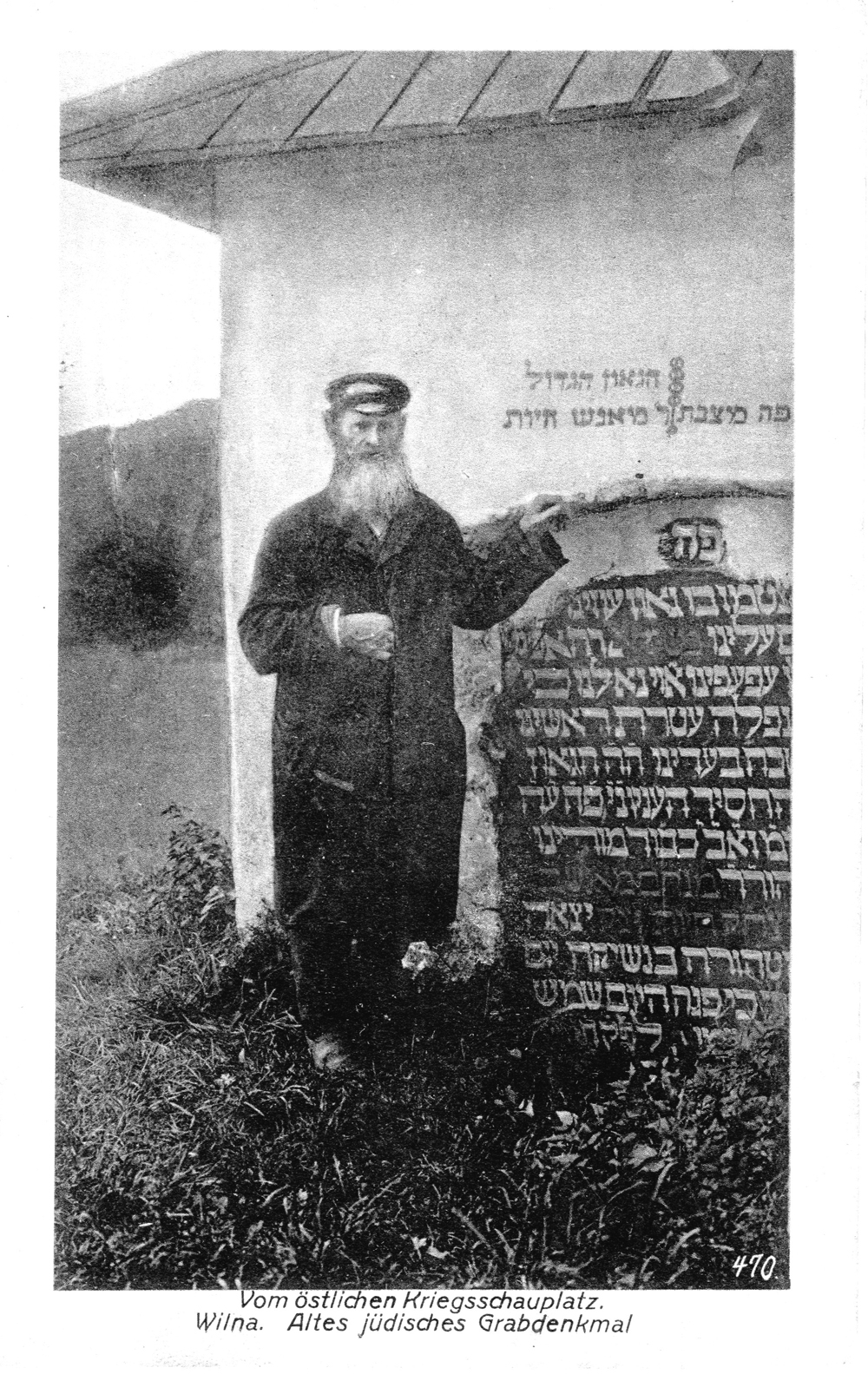
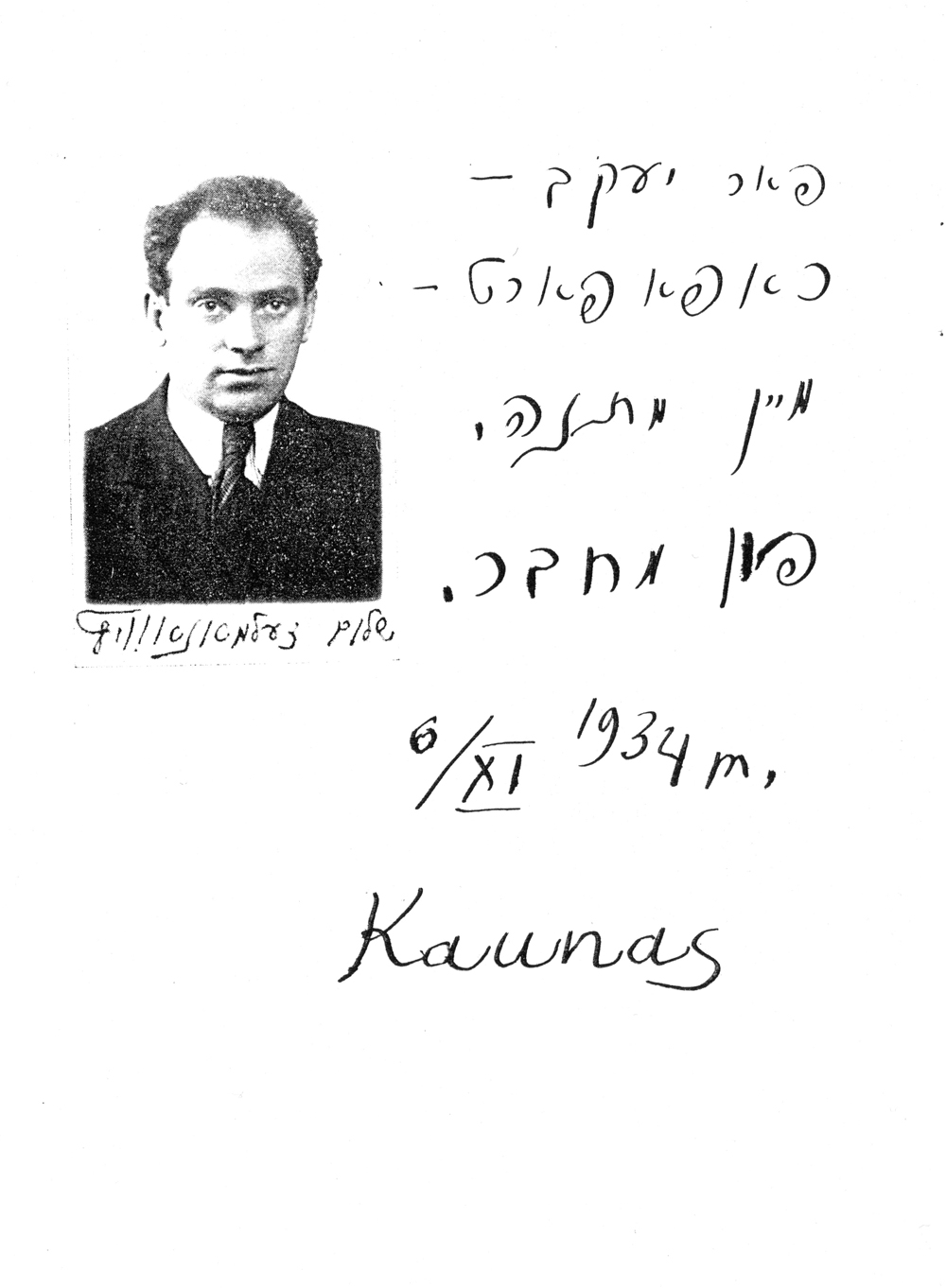
Here is p. 273 in the book, which includes a picture of R. Weinberg.
  
Not noted by Eliach is that this picture comes from my post herewhere I published it for the first time (and thanked the person who gave it to me). I realize that once the picture is on the internet it is there for anyone to use it, but it would still be nice if people would acknowledge where it came from.
Eliach also includes a lengthy interview with R. Bezalel Rakow of Gateshead which understandably has a good deal about R. Weinberg. (I have previously discussed R. Rakow here and here.) What I find fascinating is how people like Eliach simply can’t get a handle on R. Weinberg. On the one hand, they know that he was a great scholar and posek. On the other hand, they know that his views were not in line with the haredi world. Eliach asks R. Rakow the following (p. 274):
בשורה התחתונה – שאלתי את הרב ראקוב – האם הרב ויינברג מוגדר על ידכם כמנהיג תורני חרדי?
Eliach wants to know if R. Rakow regards R. Weinberg as a haredi Torah leader. R. Rakow responds very diplomatically:
בודאיהגאון הרב ויינברג היה ירא וחרד לדבר ה‘. איש ההלכה הצרופה שחרד על כל סעיף בשלחן ערוך!
R. Rakow knew perfectly well that he was dodging the question, and if the definition of haredi is one who is completely halakhically observant, then R. Soloveitchik and R. Lichtenstein (and endless others) should also be regarded as haredi leaders. Only in the continuation of the interview does R. Rakow acknowledge that R. Weinberg’s views were not all in line with the haredi approach (p. 276):
ועדיין ניתן לומרשאי אלה ממחשבותיו לא עלו בקנה אחד עם הדרך המקובלת לנו מרבותינו.
Now for the obvious mistake in Eliach’s book. Here is pp. 66-67.


He begins by mentioning that in his book on the Vilna Gaon he told a story that before World War II, R. Aaron Kotler was not sure where he should go, Eretz Yisrael or the United States. He therefore performed the goral ha-Gra and Exodus 4:27 came up: “And the Lord said to Aaron: ‘Go into the wilderness to meet Moses.’” He understood this to refer to R. Moses Feinstein, who at the time was living in the spiritual wilderness of New York.
Eliach states that it has been established that this story is not correct, and he cites the grandsons of R. Kotler who told him that their grandfather was never in doubt about where he was to go. They also pointed out that there is no way that the name “Moses” could have been seen as a reference to R. Moses Feinstein who was not well-known at that time.
So far so good (and these points are so obvious that one wonders how Eliach fell for a typical yeshiva bubbe mayse[1]). However, Eliach continues, and it must be that he is citing something that he was told by one of the current Kotlers, but he has completely mangled it. He writes:
אם היה מקום לסיפורהרי שהפוסק היותר ידוע בימים ההם באמריקההיה הגר יוסף רוזיןנשיא אגודת הרבנים דארצות הברית וקנדה“, ומחבר ספרי “נזר הקודש“.
Eliach tells us that if the story is true, it would have been with reference to R. Joseph Rosen, who was the most well-known posek in America at the time, the honorary president of Agudat ha-Rabbonim, and the author of the books entitled Nezer ha-Kodesh.
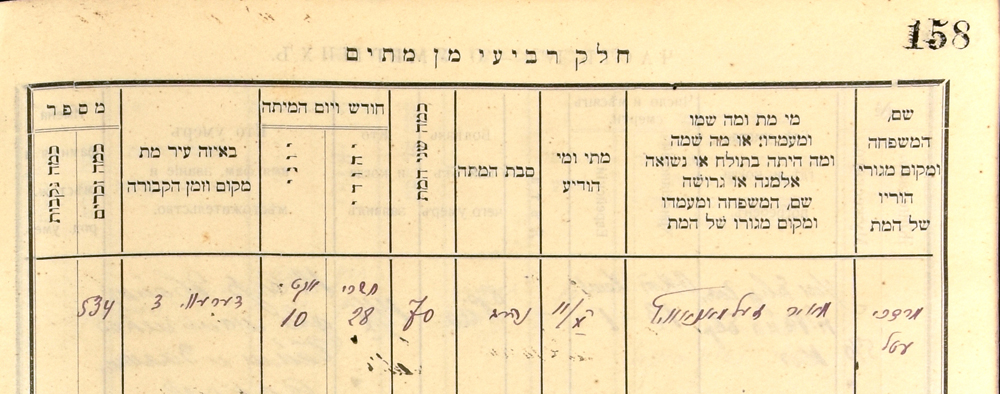
The first thing to ask is how could the goral ha-Gra performed by R. Kotler have anything to do with R. Joseph Rosen when the verse that came up mentioned “Moses”? How Eliach did not see this is beyond me. Furthermore, R. Joseph Rosen not only was not a well-known posek, he was not even a little-known posek. He was also not the president of Agudat ha-Rabbonim, and he never wrote a book called Nezer ha-Kodesh. The only thing of interest, and accurate, in Eliach’s discussion is that he somehow got a copy of the document appointing Rosen rabbi of Passaic, New Jersey, and he includes a picture of this in the book.
Here is what happened: Eliach was told that if the story of R. Aaron Kotler performing goral ha-Gra had any truth to it, the “Moses” referred to would have been R. Moses Rosen, who indeed was a great rav, author of Nezer ha-Kodesh, and served for a time as president of Agudat ha-Rabbonim.[2] R. Rosen is most famous for being the rabbi of Chweidan, Lithuania, where the Hazon Ish’s wife was from and where the Hazon Ish lived after getting married. R. Rosen and the Hazon Ish became close, and supposedly it was R. Rosen who first told R. Hayyim Ozer Grodzinski about the unknown genius, R. Abraham Isaiah Karelitz.[3] The Hazon Ish also proofread the volume of Nezer ha-Kodesh on Zevahim. This was published in Vilna in 1929 when R. Rosen was already living in the United States.[4] While R. Rosen is famous for his connection to the Hazon Ish, not so well known is that he was also a Zionist.[5]
3. My last post here gave examples of grammatical mistakes in the ArtScroll and Koren siddurim, which are the most popular in the English-speaking world. I received a lot of feedback about this, and I did not realize that so many people are interested in the often arcane points of grammar. (While I myself am quite interested in this, I am hardly an expert.) Here are a couple of more examples (and interested readers should consult the comments to the last post for additional instances).
In Ashrei we read עיני כל אליך, which comes from Psalms 145:15. The correct way to read עיני is with the accent on the ע, not on the נ. This word is commonly mispronounced, and neither ArtScroll nor Koren place the accent where it should be.[5a]
I found another mistake in the ArtScroll Machzor for Rosh ha-Shanah and Yom Kippur. In the prayer of the chazzan before Musaf, he says הפך [נאלנו ולכל ישראל. Some versions have the first word as הפוך. In both cases, since this is an imperative there needs to be a hataf patah under the ה. Yet in the ArtScroll Machzor there is a patah under the ה and the accent in הפך is mistakenly put on the first syllable, the ה. [After writing this I checked the second edition of the Machzor and was happy to see that it has been corrected. This shows that any errors we point out are valuable, as ArtScroll is prepared to correct them in future editions.]

Btzalel Shandelman wrote to me about ArtScroll’s comment on Genesis 39:8, which explains why there is a pesik following the word וימאן

The adverb adamantly is suggested by the staccato and emphatic Masoretic cantillation of this word: the shalsheles, followed by a psik [disjunction], both of which set off the word and enhance the absoluteness of its implication. It indicates that Joseph’s refusal was constant, categorical, and definite. He repulsed her with absolute firmness. Haamek Davar notes that the Torah gives no reason for his rejection; his sense of right and wrong was so clear that he did not even consider her pleadings. To her, however, he gave an explanation, trying to convince her to stop pestering him.

Shandelman correctly points out that this explanation is based on a mistake, as the vertical line found in the Torah after word וימאן is not a real pesik, as a pesik can never follow a shalshelet in the Torah (or the other sixteen biblical books that use the Torah’s system of cantillation). The reason for this is that a pesik is only found after conjunctive te’amim, and in the Torah shalshelet is always disjunctive. So why is there a vertical line after shalshelet if it is not a pesik? Joshua R. Jacobson explains:

In the te’amim of the three books (ספרי אמת), the shalshelet sign can serve as both a conjunctive and a disjunctive accent. To distinguish one from the other, a vertical line was added after the disjunctive shalshelet. Even though in the twenty-one books the shalshelet sign has only one use – as a disjunctive accent – nevertheless, the Masoretes retained the vertical line. . . . The vertical line after the shalshelet word is not a pasek: it does not indicate an extra pause.[6]

Another way to put this is that in the Torah the vertical line that always follows the shalshelet is not a separate symbol, but rather part of the shalshelet.
Nevertheless, pre-modern Hebrew texts that deal with masoretic matters seem to have no other way to refer to the vertical line, so it is called a pesik even by those who recognize that it does not function as a pesik. Thus, in the Masorah Gedolah to Lev. 8:23 it states:
ז‘ מלין בטעמא מרעימין ומפסיקין
מרעים is another word for shalshelet.
Returning to the example noted by Shandelman, I replied to him that the mistake is not that of ArtScroll. Although it is not clear in the excerpt printed above, the comment about a pesik following the shalshelet has its origin in R. Naphtali Zvi Judah Berlin’s Ha’amek Davar.[7] This is actually a common mistake, as the rules of trop are not well known. Unless someone has studied these rules, he will have no reason to assume that a vertical line is not a real pesik. The next step is to offer explanations of verses based on this assumption that the vertical line represents a real pesik after the shalshelet.
I don’t think that any of the following explanations are based on the mere appearance of the vertical line. Rather, the authors assume that it is a real pesik and one can therefore base interpretations on it.
R. Tuviah ben Eliezer (12th century) writes:[8]
וימאן מיאון אחר מיאון הרבה פעמים דכתיב בפסיק ובשלשלת
Solomon Buber, the editor of the text, explains R. Tuviah’s words:
דורש הטעמיםכי על וימאן הוא שלשלת ואחכ הוא בפסיק
R. Yeruham Levovitz stated as follows:[9]
ועל כן תיכף לוימאן” יש פסיקכי הופסק אצלו כל הענין אף טרם ניתח העולה על הרוחאף טרם נתן כל טעם וביאור על המיאוןכי טרם כל וכל הוא ממאן על הדבר וחסלוהטעמים והביאורים יתן אחרי כןוזהו אמרו אחרי הפסיקואומר אל אשת אדוניו וגו‘.
R. Samuel Borenstein writes:[10]
וימאן מוטעם בשלשלת ופסיקכדי להפרידו בפעוהיינו שהמיאון לא הי‘ מחמת הטעם אלא מצד עצם הנפש למעלה מהטעם.
R. Shlomo Zvi Schueck leaves no question that in his mind the vertical line is a real pesik.[11]
ואמרתי שחכזל דרשו זאת מן הטעם שלשלת העומדת על תיבת וימאן אם רצו להודיע בטעם שלשלת להפסיק שם בדיבור למה בחרו בניגון זה דוקאהא כמה טעמים מפסיקין הםועוד הא אחר תיבת וימאן הוא עומד הקו פסיקולמה לן תרי מפסיקין כאן?
R. Shlomo Amar writes:[12]
תיבת וימאן” הכתובה בפסוק מוטעמת בטעם שלשלתומיד לאחריה מופיע טעם פסקונראה דזה בא ללמדשיוסף הצדיק מיאן במיאון אדיר וחזקוגם מיאונו היה פסוק וחתוך.
I would only add that it is very difficult to say about so many great sages, ועפר אני תחת רגליהם, that they are wrong about the function of the pesik following a shalshelet. What I have written is based on the standard works on the topic. However, if anyone knows of an authentic tradition in which there is a pesik after shalshelet, please let me know. 

Finally, as I am writing this post not long after Hanukkah, here is an example of a translation where ArtScroll gets it right and pretty much everyone else I have checked gets it wrong (though we can understand why they intentionally get it wrong). In Maoz Tzur we read:
לעת תכין מטבח מצר המנבח
אז אגמור בשיר מזמור חנכת המזבח
ArtScroll translates:
When you will have prepared the slaughter for the blaspheming[13] foe,
Then I shall complete with a song of hymn the dedication of the Altar.[14]
Here is Koren’s translation of the first line:

When you silence the loud-mouthed foe.

This a much more comfortable rendering, and if you examine other siddurim you will find similar “softer” translations. Given the choice between “slaughter” and “silence,” most people will pick the latter. Yet unfortunately for them, the text does not say “silence.” It says “slaughter,” and the words תכין מטבח are based on Isaiah 14:21: הכינו לבניו מטבח, “Prepare ye slaughter for his children.” Koren’s translation is thus a politically correct distortion of the text’s meaning.
This is not a matter that started with Koren. For a long time now, translators have been afraid that if people knew what the text actually said that they would not want to sing the song. Yet how can you have Hanukkah without Maoz Tzur? It is even recited publicly at the White House Hanukkah party. (It is amazing to me that no one has yet made an issue of publicly singing these politically incorrect words.) So, a little bit of creative “translating” was thought necessary. Isn’t it interesting that ArtScroll – which has shown us many times that it has no difficulty censoring and distorting texts it finds problematic – has the courage to give us the correct, uncensored translation?
Interestingly, R. Joseph Hertz in his siddur, p. 950 in the note, tells us what the words mean. Yet was uncomfortable with this, and therefore instead of תכין מטבח he changed it to תשבית מטבח. This is not a version attested to in any old text. It was simply made up by Hertz or perhaps suggested by an unnamed collaborator on his siddur commentary. Hertz writes: “By a slight change, this is now ‘when Thou shalt cause all slaughter to cease, and the blaspheming foe, I will complete, etc.’”[15]
4. Since I have been discussing the ArtScroll and Koren siddurim, it is only right for me to mention that there is a new siddur on the market. The new RCA siddur, called Siddur Avodat Halev, has just appeared. For decades, Modern Orthodox synagogues had to make do with the RCA ArtScroll siddur. However, other than including the prayer for the State of Israel, there was nothing in that siddur that made it a good fit with Modern Orthodox synagogues.
The new RCA siddur, which will come to be the standard at hundreds of synagogues for decades to come (especially as the RCA ArtScroll siddur is no longer being sold), is a siddur that the Modern Orthodox community can embrace. The commentary and essays – including essays by R. Jehiel Jacob Weinberg, R. Joseph B. Soloveitchik, R. Aharon Lichtenstein, and R. Yehudah Amital – include both traditional learning and historical scholarship, something that is not found in any siddur on the market. There is also an attention to the role of women that is welcome.[16] Relevant to my last post, this siddur tells women to say מודה אני with a kamatz under the ד. The siddur also offers the option of women forming a mezuman and reciting חברותי נברך. Of particular importance is the inclusion of prayers for Yom Ha-Atzmaut and Yom Yerushalayim. In the instructions before Tahanun, we are informed that Tahanun is omitted on these two days. For Hallel, readers are given the option of reciting with a berakhah or without. I will return to discuss this siddur in a future post, as there is something in it that will be of particular interest to Seforim Blog readers.
Excursus
Earlier in this post I used the expression bubbe mayse. The origin of these words is not “grandmother’s tale,” although that is what is commonly thought. Bubbe mayse is a later corruption of what was originally Bove mayse. I can do no better than quote from the Wikepedia entry here.
The Bovo-Bukh (“Bovo book”; also known as Baba Buch, etc.; Yiddish: בָּבָאבּוּךבּוֹבוֹבּוּך ‬), written in 1507–1508 by Elia Levita, was the most popular chivalric romance in Yiddish. It was first printed in 1541, being the first non-religious book to be printed in Yiddish. For five centuries, it endured at least 40 editions. It is written in ottava rima and, according to Sol Liptzin, is “generally regarded as the most outstanding poetic work in Old Yiddish”. [Liptzin, 1972, 5, 7]
The theme derives from the Anglo-Norman romance of Bevis of Hampton, by way of an Italian poem that had modified the name Bevis of Hampton to Buovo d’Antona and had, itself, been through at least thirty editions at the time of translation and adaptation into Yiddish. The central theme is the love of Bovo and Druziane. [Liptzin, 1972, 6], [Gottheil] The story “had no basis in Jewish reality”, but compared to other chivalric romances it “tone[s] down the Christian symbols of his original” and “substitute[s] Jewish customs, Jewish values and Jewish traits of character here and there…” [Liptzin, 1972, 8]
The character was also popular in Russian folk culture as “Prince Bova”.
The Bovo-Bukh later became known in the late 18th century as Bove-mayse “Bove’s tale”. This name was corrupted into bube mayse “grandmother’s tale”, meaning “old wives’ tale”. [Liptzin, 1972, 7]
Here is the title page of the Bovo Bukh.

R. Elijah Levita (1469-1549), who thought it worth his time to produce Yiddish romances – in addition to the Bovo Bukh he published Paris and Vienna – is also the well-known author of, among other works, the Tishbi, the Hebrew dictionary that is still used today.[17] It was recently reprinted by Yeshivat Kise Rahamim together with comments by later authors including R. Meir Mazuz. Here is the title page.

At the end of the volume, there is a collection of critical comments on the Tishbi by R. Solomon Zvi Schueck, and responses to R. Schueck by R. Aryeh Mazuz. Interestingly, there were two printings of the Kise Rahamim edition of the Tishbi. The one intended for sale in certain haredi neighborhoods did not include the comments of R. Schueck, as he is persona non grata among extremist haredim. Regarding the two editions, see Dan Rabinowitz’s earlier Seforim Blog post here.
For more on Levita, who even has a street named after him in Tel Aviv, see the Seforim Blog post by Dan Yardeni here. It is also worth noting that former British Prime Minister David Cameron is descended from Levita. See here.
I would be remiss in not mentioning that two grandsons of Levita also played a role in Jewish history. One was named Vittorio Eliano (which means “from the house of Elijah”), and the other was his brother Giovanni Battista. They were both apostates. Eliano became a priest as did Battista, who was actually a Jesuit.[18] Battista testified before the Inquisition in Venice and stated that “the Talmud teaches them [Jews] that it is legitimate to orally swear false oaths, even if they do not come from the heart, along with hundreds of thousands of other things which are injurious to Christianity.”[19]
During the great sixteenth-century dispute in Venice between two Christian printers of Hebrew books – a dispute that also involved R. Meir Katzenellenbogen and R. Moses Isserles – both Christian sides denounced the other to Rome “for producing works which contained matter offensive to the Holy Catholic Faith.”[20] Eliano and Battista ended up giving testimony about supposedly blasphemous material in the Talmud, which in turn led to the Talmud being burned in Rome, in the Campo de Fiori, on September 9, 1553. Soon after that the Talmud was burned in Venice and in other places in Italy, and the work itself became an illegal text.[21]
In 2011 the following plaque was placed on the ground in the Campo de Fiori in commemoration of the burning of the Talmud.

Although the Talmud was illegal, the Zohar was not. It was none other than the apostate Eliano who had a central role in the second printing of the Zohar in Cremona in 1559-1560, as he was a proof reader.[22] (The first printing was in Mantua in 1558-1560.) This edition “was the preferred of the two editions by eastern European kabbalists.”[23] Contrary to what appears in many books, the Cremona Zohar was published by Jews (although the actual printing was done by a non-Jew, which was standard practice in Italy).[24]
Here is the title page of the Cremona Zohar. You can see at the bottom the statement that the publication was approved by the Inquisition.

Here is the last page of the Cremona Zohar. You can see that Eliano is mentioned as one of the two people who prepared the text for publication.


הבחור כמר ויטוריי אליאנו נכדו של ראש המדקדקים החר אליהו המדקדק סגל זצל
You can also see the actual Latin approval from the Inquisition.
Seeing how Eliano made sure that he was referred to as הבחור כמר, one who did not know better would assume that he was Jewish. Meir Benayahu chalks this up to one of the paradoxes of Jewish Italy:[25]
משומד שמשתבח במלאכת קודש זו ומזכיר שמו בנוסח רבני ועולה על כך שייקרא בתואר כמר” (בקולופון הזוהר), הוא מן הנפלאות שרק הפאראדוכסים המצויים אצל יהודי איטליה יכולים להסבירם.
Graetz,[26] followed by others, states that Eliano wrote the following Hebrew introduction to the Cremona Zohar.

Graetz does not tell us how he knows that Eliano wrote the introduction, and I find it difficult to believe that this is the case. As we can see from the last page of the Cremona edition (printed above), a Jew was also involved with preparing the text for publication. So why not assume, with Isaiah Tishby,[27] that the Jew wrote the introduction, which is a typical pious introduction that one would expect for the Zohar?
In fact, there is evidence that Eliano did not write it. Avraham Yaari called attention to the fact that in the introduction it subtly tells us that there are printing errors because the book was also prepared for publication on Shabbat, a time when Jewish proofreaders would not be able to examine it.[28]
וחסרון חלוף או השמטת אות יוכל להמנות על היות דבר הדפוס נחוץ לכל שומרי שבת כהלכתה ודל.
The word נחוץ here means something along the lines of “harried”. (See I. Sam. 21:9, for the use of the word in the Bible, which has a different meaning than in modern Hebrew.) He is saying that the reason there are mistakes in the text is due to the problems confronted by shomer Shabbat proofreaders (who do not work on Shabbat). In other words, the mistakes in the text are due to the one who did work on Shabbat. Such a line, criticizing the proofreader who worked on Shabbat, could not have been written by the apostate Eliano. On the contrary, it must be seen as directed against Eliano. This is an important point which I have not seen anyone make. There is another point which no one has made, and that is that on the second line of the introduction the author left an allusion to Eliano:
ואותיות ידועות לפי צורך המקום אלינו
Another book Eliano was involved with was Hizkuni,[29] printed in Cremona in 1559.[30] Here is the last page of the book which states:
הוגה ברוב העיון עי הבחור ויטוריו אליאנו נכד ראש המדקדקים החר אליהו בחור אשכנזי סגל זצל

While on the topic of apostates and the Zohar, here is another interesting point. The Soncino Press of London published a translation of the Zohar. For some of this translation they had the assistance of Paul Levertoff. Here is the title page of one of the volumes.

What makes this so significant is that Levertoff, who began life as a Habad Hasid and later studied in Volozhin, was an apostate.[31] If you search on the internet you will find that Levertoff continues to have a real influence among Messianic Jews.
I find it astounding that the Soncino Press, which was identified with British Orthodoxy, chose to collaborate on the Zohar translation with an apostate, especially an apostate who was a “true believer,” not simply an opportunist like Daniel Chwolson. Supposedly, late in life Chwolson was asked what he came to believe that led him to adopt Christianity. He replied: “I believed that it was better to be a professor in St. Petersburg than a melamed in Anatevka [insert whatever shtetl name you wish].” He also famously said about himself, punning on the words from the Yom Kippur liturgy,[32] “Ve-Akhshav she-Notzarti [= converted to Christianity] ke-Ilu lo Notzarti.”[33]

________________
[1] See Excursus.
[2] See Ha-Pardes (January 1953), p. 52.
[3] Shlomo Kohen, Pe’er ha-Dor, vol. 1, p. 191. As far I as I know, the report in Asher Rand, Toldot Anshei Shem (New York, 1950), p. 62, that R. Rosen and the Hazon Ish established a yeshiva together, is without foundation.
[4] Orhot Rabbenu (2014 edition), vol. 5, p. 138. This source does not mention which volume of Nezer ha-Kodesh it was, but the volume on Zevahim was the only one printed in Vilna. Since R. Rosen was living in the United States, this explains why it would have been much more convenient for for the Hazon Ish to do the proofreading. According to Cohen, Pe’er ha-Dor, vol. 1, p. 270, some of the material in the book in brackets is from the Hazon Ish. Cohen also states regarding these comments:

רובן פותחות במיהו” ולפעמים צויין בראשיתיבות שור (שוב ראיתי). כששאלו אותואיך זה תואם את האמתהשיב החזוןאיש באירוניהלא שוב ראיתי“, כי אם שוב וראה“.
For מיהו see pp. 69, 82, 88. For שו”ר see pp. 84, 86.
[5] See Entzyklopedia shel ha-Tziyonut ha-Datit, vol. 5, cols. 597-598.
[5a] It could be that עיני is not to be read with full stress on the ע, but only a partial stress, with the real accent on the connected word כל (in the Aleppo Codex עיני is joined to כל with a makef). Yet there certainly is no accent on the נ of עיני. See R. Yedidyah Solomon Norzi, Ma’amar ha-Ma’arikh in Norzi, Ha-Nosafot le-Minhat Shai, ed. Zvi Betser (Jerusalem, 1997), pp. 97ff.
[6] Chanting the Hebrew Bible: The Art of Cantillation (Philadelphia, 2002), p. 105 n. 14, 107. See also ibid., p. 233 n. 2, and Mordechai Breuer, Ṭaʻamei ha-Miḳra be-Khaf-Alef Sefarim u-ve-Sifrei Alef-Mem-Taṿ (Jerusalem, 1982), p. 19.
[7] See the Jerusalem, 2005 edition, p. 534. 

ומשום הכי איתא פסיקכדי שלא נפרש דמשום הכי מיאן בשביל ויאמר וגו‘”, אבל הפסיק מלמד שהמיאון היה בפני עצמו.

This comment was not part of the original commentary but was added later by the Netziv. In this edition, the editors have inserted the comment in the text of Ha’amek Davar, but inside brackets that look like this {} to show that it is a later addition.

[8] Lekah Tov, ed. Buber, p. 198.

[9] Da’at Torah: Bereshit (Jerusalem, n.d.), p. 230.
[10] Shem mi-Shemuel (Jerusalem, 1992), parashat Va-Yeshev, p. 69.
[11] Torah Shelemah (Satmar, 1909), vol. 1, p. 179a.
[12] Birkat Eliyahu (Jerusalem, 2007), vol. 1, p. 260.
[13] The word נבח, which literally means “bark” (see Isaiah 56:10, Eruvin 86a), had an anti-Christian connotation in medieval Hebrew. See Eli Yassif, ed. Sefer ha-Zikhronot (Tel Aviv, 2001), p. 404 n. 87; Daniel Goldschmidt and Avraham Frankel, eds., Leket Piyutei Selihot me-et Paytanei Ashkenaz ve-Tzarfat (Jerusalem, 1993), vol. 1, p. 398. Thus, in Maoz Tzur the “blaspheming foe” refers to the Christians.
R. Shlomo Fisher, Derashot Beit Yishai (Jerusalem, 2004), p. 234 writes:
ויבואר עפ כל זהדברי הפייטן בזמר לחנוכהתכון בית לתפלתי ושם תודה נזבחלעת תכין מטבח מצר המנבחדהיינו טביחת היצהר
This would make a very nice derashah on Hanukkah, and had Hertz known of it, he could have offered this perspective in his commentary and kept the original version of the song. Yet in its historical context, this is hardly what the author is referring to. Similarly, R. Raymond Apple is not correct when he writes that the words refer to “the defeat of Gog and Magog who will attempt to overcome Israel before the coming of the Messiah.” See here. When Maoz Tzur speaks of the destruction of the “barking [i.e., blaspheming] foe,” it is referring to a real flesh and blood enemy of the Jewish people, which in the medieval Ashkenazic context means the Christian world. The word “barking” is used in this song as throughout pre-modern Jewish literature dogs were portrayed in a negative way. See also here.
[14] I do not know why ArtScroll capitalizes “Altar”.
R. Meir Mazuz recently commented that while Maoz Tzur is a wonderful song, “it contains small [grammatical] errors, as is the practice with the Ashkenazim who do not know Hebrew well.” Bayit Ne’eman, no. 139 (30 Kislev 5779), p. 1 n. 1. One example he gives is לעת תכין מטבח מצר המנבח. It should say לצר המנבח. He adds:
מאיפה אני לומד את זהמפסוק בישעיה הכינו לבניו מטבח בעוון אבותם” (יד כא), לא מבניו אלא לבניו.
Regarding Hanukkah, I recently found that R. Naphtali Zvi Judah Berlin suggests the possibility that when the Maccabees entered the Temple they did not light the menorah, as we are accustomed to think, but rather only lit one candle. See Ha’amek She’alah, Va-Yishlah, no. 24, p. 173:
ולכאורה הי‘ אפשר לומר שלא היו מדליקים אז במנורה כלל . . . ואכ הי‘ מקום לומר שלא השתמשו באותם שמונה ימים במנורה כלל משום שלא הי‘ להםוהדליקו באותו פך הטהוראו בכלי גללים וכלי אבנים וכלי אדמהואכ לא הי‘ אלא נר א‘ כדי לקיים להעלות נר תמיד

Also of interest is R. Joseph Messas, Otzar ha-Mikhtavim, vol. 2, no. 1305, who cites midrashic sources that there will not be a menorah in the future Temple.

 
I have vocalized the title of the Netziv’s book as Ha’amek She’alah, which is how scholars have been accustomed to write it, based on Isaiah 7:11 where these words appear.
However, Gil S. Perl argues that the correct pronunciation is Ha’amek She’elah. As he puts it, if the pronunciation in Isaiah was intended, “the title would mean ‘sink to the depths,’ the ‘depths’ (from the word she’ol) being a reference to the netherworld or Hell—a rather strange title for a work of halakhic commentary.” Perl therefore suggest that the Netziv “intended his title as a play on those words from Isaiah pronounced Ha’amek She’alah, meaning ‘delve into the question’ or perhaps ‘delve into the She’ilta.’” See Perl, The Pillar of Volozhin (Boston, 2012), pp. 17-18, n. 37.
[15] Regarding how Maoz Tzur appears in British siddurim, see John D. Rayner, “Liturgical Emendation: The Case of the Ma’oz Tzur,” available here.
[16] For more on the new RCA siddur and women, see the anonymous post here.
[17] The Tishbi was first printed in Isny, Germany in 1541. It is one of the first Jewish books to cite biblical passages by chapter. As most people know, the chapters are a Christian innovation. According to Abraham Berliner, the first Jewish scholar to publish a book using the chapter divisions was R. Isaac Nathan, who published a biblical concordance between 1437 and 1448. See Berliner, Ketavim Nivharim (Jerusalem, 1969), vol. 2, p. 134. On this page Berliner also writes:

החלוקה לפרקים של כל ספרי המקרא נתקבלה ונתפשטה רק עם הדפסת המהדורה השניה של המקראות הגדולות (ויניציא רפד).
Yet the first edition of the Mikraot Gedolot, published in Venice, 1518, is on Otzar ha-Hokhmah, and you can see that it too has the chapter divisions.
[18] See Heinrich Graetz, Geschichte der Juden (Leipzig, 1907), vol. 9, p. 320; Encyclopaedia Judaica, vol. 6, col. 615; Meir Benayahu, Ha-Defus ha-Ivri bi-Kremona (Jerusalem, 1971), pp. 95ff.. For sections of an autobiography written by Battista, in which he describes his apostasy, see Isaiah Sonne, Mi-Paʾulo ha-Reviʻi ad Piyus ha-Hamishi (Jerusalem, 1954), pp. 150-155.
[19] See Amnon Roz-Krakotzkin, The Censor, the Editor, and the Text: The Catholic Church and the Shaping of the Jewish Canon in the Sixteenth Century, trans. Jackie Feldman (Philadelphia, 1007), pp. 42-43.
[20] Cecil Roth, The History of the Jews of Italy (Philadelphia, 1946), p. 291.
[21] See Roth, The History of the Jews of Italy, p. 292. For detailed discussion of this matter, which shows all the other factors that were present, see Kenneth Stow, “The Burning of the Talmud in 1553, in the Light of Sixteenth Century Catholic Attitudes Toward the Talmud,” Bibliothèque d’Humanisme et Renaissance 34 (1972), pp. 435-459.
[22] Regarding Allessandro Franceschi, another sixteenth-century Italian apostate who supported the printing of the Zohar, see Yaakob Dweck, The Scandal of Kabbalah (Princeton, 2011), pp. 166-167.
[23]  Marvin J. Heller, The Sixteenth Century Hebrew Book (Leiden and Boston, 2004), vol. 1, p. 503.
[24] See Yitzhak Yudelov, “Al Sefarim, Madpisim, u-Mo”lim,” in Yosef Eliyahu Movshovitz, ed., Ha-Sefer (Jerusalem, 2008), vol. 2, p. 557 n. 22.
[25] Ha-Defus bi-Kremona, p. 97.
[26] Geschichte, vol. 9, p. 345.
[27] “Ha-Pulmus al Sefer ha-Zohar,” Perakim 1 (1967-1968), p. 147 n. 54.
[28] Mehkerei Sefer (Jerusalem, 1958), pp. 170-171. Yaari also mentions other Hebrew books that were printed on Shabbat.
[29] Regarding how חזקוני is to be pronounced, see my post here.
[30] For other examples of Hebrew books whose printing Eliano was involved with, see the index of both Roz-Krakotzkin, The Censor, the Editor, and the Text and Benayahu, Ha-Defus ha-Ivri bi-Kremona.
[31] See Elliot R. Wolfson, “Paul Philip Levertoff and the Popularization of Kabbalah as a Missionizing Tactic,” Kabbalah 27 (2012), pp. 269-320. On p. 272, Wolfson states that Levertoff received semikhah from R. Naphtali Zvi Judah Berlin. He provides no evidence for this assertion so I cannot judge its accuracy. As far as I have been able to determine, Levertoff never received semikhah.
[32] The passage originates in the Talmud, Berakhot 17a, where it is attributed to Rava, and Yoma 87b, where it is attributed to R. Hamnuna.
[33] See Zvi Hirsch Masliansky, Memoirs, trans. Isaac Schwartz and Zviah Nardi (Jerusalem, 2009), p. 138.


Wine, Women & Song Some Remarks on Poetry & Grammar – Part I

Wine, Women and Song: Some Remarks On Poetry and Grammar – Part I

by Yitzhak of בין דין לדין [This is the first of three parts; I am greatly indebted to Andy and Wolf2191 for their valuable comments, many of which I have incorporated into this paper, and for obtaining for me various works to which I did not have access.]

Rhyme and Grammar

This is the opening stanza of one of Rav Yehudah Halevi’s (henceforth: Rihal) best known poems:יום ליבשהנהפכו מצוליםשירה חדשה

שבחו גאולים![1]

This seems to contain a blatant grammatical error; מצולה is a feminine noun, and its plural form is clearly מצולות, not מצולים. In fact, מצולה appears six times in Tanach in plural form,[2] twice in the context of קריאת ים סוף – both instances of which are recited daily as part of the Pesukei De’Zimrah section of the liturgy:והים בקעת לפניהם ויעברו בתוך הים ביבשה ואת רודפיהם השלכת במצולות כמו אבן במים עזים.[3]

תהומות יכסיומו ירדו במצולות כמו אבן.[4]

Rihal was surely aware of the ungrammaticality of מצולים; it seems obvious that he was taking a liberty with the language in order to rhyme with גאולים (and גאולות would have been just plain silly).In a similar vein, it is related that someone once asked the Brisker Rav why, in the Shabbas hymn ברוך קל עליון, the refrain is:השומר שבת הבן עם הבתלקל ירצו כמנחה על מחבת[5]After all, there are several standard types of מנחות:

  • סלת
  • מאפה תנור
  • מחבת
  • מרחשת

Why, then, does the poet single out the מחבת?The questioner was probably expecting some brilliant and incisive Brisker Lomdus, but if so, he must have been disappointed; the Brisker Rav is said to have responded simply that the poet required a rhyme for the word הבת, and מחבת is the only type of Minhah that answered.

Formal Structure and Meter in Jewish Poetry

It is noteworthy that Rihal himself elsewhere maintains that poetic form and meter are actually alien to Jewish poetry:אמר הכוזרי תכליתך בזה ובזולתו שתשוה אותה עם זולתה מהלשונות בשלמת, ואיה המעלה היתירה בה, אבל יש יתרון לזולתה עליה בשירים המחוברים הנבנים על הנגונים (נ”א הלחשים):אמר החבר כבר התבאר לי כי הנגונים אינם צריכים אל המשקל בדבור, ושבריק (נ”א ושכריק) והמלא יכולים לנגן (נ”א בנועם) בהודו לד’ כי טוב בנגון (נ”א בנועם) לעושה נפלאות גדולות (נ”א כי לעולם חסדו). זה בנגונים בעלי המעשים, אבל בשירים הנקראים אנשארי”א והם החרוזים האמורים, אשר בהם הוא נאה החבור, לא הרגישו עליהם, בעבור המעלה שהיא מועילה ומעולה יותר: …אמר הכוזרי … אני רואה אתכם קהל היהודים שאתם טורחים להביע (נ”א להגיע) אל מעלת החבור (ס”א הסדור) ולחקות זולתכם מהאומות, ותכניסו העברית במשקליהם:אמר החבר וזה מתעותנו ומריינו, …

אמר החבר אבל השיגנו באמירת המחובר מה שהשיג את אבותינו, במה שנאמר עליהם ויתערבו בגוים וילמדו מעשיהם:[6]

As Rabbi Haim Sabato puts it, in his lovely and wonderful The Dawning of the Day:When [Doctor Yehudah Tawil] became a scholar he was in thrall to the poetry of Sepharad with his entire mind and all his means. He spent months deciphering the meaning of a single verse of HaLevi, and entire years combing through manuscript fragments of newly discovered poems bearing the acrostic Yehudah or HaLevi. As much as a single verse in a stanza of HaLevi was precious, so the contemporary poems published in journals were worthless. These poems seemed to him like collections of words, without order or meaning. He did not like poems without rhyme schemes or an established meter, and the words of his learned friends who were partial to these poems were of no consequence. Although his own son showed him, in the most triumphant manner, what HaLevi had written in his philosophical treatise, The Kuzari – that he preferred the poems in Scripture, which have no rhyme scheme or fixed meter, to formal poems, and wrote about the adoption of meter in Hebrew poetry: But they mingled among the gentiles and learned their ways – nevertheless, he remained unappeased. He used to say, are they writing biblical poetry nowadays?[7] [Emphasis added.]Abravanel expresses a similar view, although he expresses pride in the purported fact that the alien form of highly structured poetry that the Jews have borrowed from the Muslims has actually reached its greatest perfection in the hands of the former, and that the poems of no other language are on the same level as ours:[יש] אתנו עם בני ישראל שלשה מינים מהשירים.המין האחד הוא מהמאמרים הנעשים במדה במשקל ובמשורה אף על פי שיהיו נקראים מבלי ניגון לפי שענין השיר בהם אינו אלא בהסכמת הדבורים והדמותם והשתוותם בסוף המאמרים רוצה לומר בקצוות בתי השירים שנדמו זה לזה בשלש אותיות אחרונות או בשתים כפי נקודם ואופן קריאתם עם שמירת משקלי המלכים והתנועות עם צחות הלשון ונפילתו על לשון פסוק מכתבי הקדש ונקראו השירים ההם חרוזים לפי שהם שבלים מסודרים מלשון צוארך בחרוזים שהם אבנים טובות ומרגליות נקודות מחוברות ומסודרות בסדר ותבנית ישר. וכן בדברי חז”ל (בבא מציעא י”ח) מחרוזת של דגים שהם שורות של דגים מחוברים זה לזה בסדר קשורים בחוטמיהם בגמי ומפני הדמוי הזה נקראו השירים מזה המין חרוזים להיותם שורות שוות ומתיחסות כי היו הדברים בזה המין מהשיר שקולים בענין המלכים והעבדים אשר בנקודות. והמלאכה הזאת בזה המין מהשירים שקולים היא מלאכה משובחת והם מתוקים מדבש ונופת צפים ונעשו בלשוננו הקדוש העברי בשלימות גדול מה שלא נמצא כמוהו בלשון אחר.הן אמת שמזה המין משירים לא מצאנו דבר בדברי הנביאים וגם לא מחכמי המשנה והגמרא כי היתה התחלתו בגלותנו בין חכמי ישראל שהיו בארצות הישמעאלים שלמדו ממעשיהם במלאכת השיר הזה ויעשו גם המה החכמה בלשוננו המקודש ויתר שאת ויתר עז ממה שנעשו הישמעאלים בלשונםוגם בין חכמי לשון הלאטין ובלשון עם לועז עם ועם כלשונו נמצאו גם כן מאלו השירים השקולים אבל לא באותו שלמות מופלג שנעשו בלשון העבריואחר כך נעתקה המלאכה היקרה הזאת אל חכמי עמנו שהיו בארץ פרובינצייא וקאטילונייא וגם במלכות אראגון ומלכות קאשטילייא וידברו באלקים ובכל חכמה ודעת כפלים לתושיה מה מתוק מדבש ומה עז מארי.

ולהיות המין הזה מהשירים מחודש בגלות והם חדשים מקרוב באו לא שערום נביאינו וחכמינו הראשונים ז”ל לכן אין לנו במקום הזה [ר”ל, מחקר בגדר שירת הים – י’] צורך לדבר בהם כי לא התה מהם שירת הים.[8]

[Emphasis added.]

Milton on Rhyme

The particular poetic technique of rhyme, as opposed to other formal elements of structure, was magisterially disparaged by one of the very greatest English poets, a man perhaps best known to many readers of The Tradition Seforim Blog as a subject of Rav Aharon Lichtenstein’s doctoral dissertation:[9] THE Measure is English Heroic Verse without Rime, as that of Homer in Greek, and Virgil in Latin; Rhime being no necessary Adjunct or true Ornament of Poem or good Verse, in longer Works especially, but the Invention of a barbarous Age, to set off wretched matter and lame Meeter; grac’t indeed since by the use of some famous modern Poets, carried away by Custom, but much to thir own vexation, hindrance, and constraint to express many things otherwise, and for the most part worse then else they would have exprest them. Not without cause therefore some both Italian, and Spanish Poets of prime note have rejected Rhime both in longer and shorter Works, as have also long since our best English Tragedies, as a thing of itself, to all judicious ears, triveal, and of no true musical delight; which consists onely in apt Numbers, fit quantity of Syllables, and the sense variously drawn out from one Verse into another, not in the jingling sound of like endings, a fault avoyded by the learned Ancients both in Poetry and all good Oratory. This neglect then of Rhime so little is to be taken for a defect, though it may seem so perhaps to vulgar Readers, that it rather is to be esteem’d an example set, the first in English, of ancient liberty recover’d to heroic Poem from the troublesom and modern bondage of Rimeing.[10]

Rhyme and Grammar in Conflict

Even if we disagree with Milton and grant the value of rhyme, we must still consider whether it is right to sacrifice grammar on the altar of rhyme. Rav Avraham Ibn Ezra, in his notorious, sarcastic diatribe against the Kallir is quite clear that he does not think so:יש בפיוטי רבי אליעזר הקליר מנוחתו כבוד, ארבעה דברים קשים: …והדבר השלישי, אפילו המלות שהם בלשון הקודש יש בהם טעויות גדולות … ועוד כי לשון הקודש ביד רבי אליעזר נ”ע עיר פרוצה אין חומה, שיעשה מן הזכרים נקבות והפך הדבר ואמר “שושן עמק אויימה”, וידוע כי ה”א שושנה לשון נקבה וישוב הה”א תי”ו כשיהיה סמוך שושנת העמקים, ובסור הה”א או התי”ו יהיה לשון זכר כמו צדקה וצדק. ואיך יאמר על שושן אויימה, ולמה ברח מן הפסוק ולא אמר שושנת עמק אויימה. ועוד מה ענין לשושנה שיתארנה באימה, התפחד השושנה? ואין תואר השושנה כי אם קטופה או רעננה או יבשה.אמר אחד מחכמי הדור, הוצרך לומר אויימה, בעבור שתהיה חרוזתו עשירה. השיבותי אם זאת חרוזה עשירה, הנה יש בפיוטיו חרוזים עניים ואביונים מחזרים על הפתחים, שחיבר הר עם נבחר. אם בעבור היות שניהם מאותיות הגרון, אם כן יחבר עמה אל”ף ועי”ן, ועם הבי”ת והוי”ו שהוא גם מחבר לוי עם נביא, יחבר עמם מ”ם ופ”ה, ויהיו כל החרוזים חמשה כמספר מוצאי האותיות. ואם סיבת חיבור ה”א עם חי”ת בעבור היות דמותם קרובות במכתב, אם כן יחבר רי”ש עם דל”ת, ואף כי מצאנו דעואל רעואל דודנים רודנים. וכן יחבר משפטים עם פתים, כי הם ממוצא אחד, ונמצא הטי”ת תמורת תי”ו במלת נצטדק הצטיידנו ויצטירו. וכן חיבר ויום עם פדיון ועליון, גם זה איננו נכון, אע”פ שנמצא מ”ם במקום נו”ן כמו חיין וחטין, איך יחליף מ”ם יום שהוא שורש עם נו”ן עליון, פדיון שהוא מן עלה ופדה והוא איננו שרש. ועוד, מה ענין החרוז רק שיהיה ערב לאוזן ותרגיש כי סוף זה כסוף זה, ואולי היתה לו הרגשה ששית שירגיש בה כי המם כמו הנון ואינמו ממוצא אחד. ועוד חבר עושר עם עשר תעשר, גם זה איננו נכון, רק אם היה המתפלל אפרתי.

יש אומרים אין משיבין את הארי אחר מותו, התשובה: רוח קל עשתנו כלנו, ומחומר קורצו הקדמונים כמונו, ואוזן מלים תבחן. וכלנו נדע כי דניאל היה נביא, ורב על כל חרטומי בבל וחכמיה. והנה אמרו חכמים ז”ל, טעה דניאל בחשבונו, והחשבון הוא דבר קל. ועוד כי ירמיה הנביא בזמן דניאל היה, ואחר שהראו חכמינו הראיה על טעותו, האמור יאמר להם אילו היה דניאל חי היה מטעה המטעים אותו?! ואחרים אמרו רחמנא ליבא בעי, א”כ למה נצטרך לדבר כי הוא יודע תעלומות לב, והלא תקנו הקדמונים לאמר בצום כפור, היה עם פיפיות שלוחי עמך בית ישראל, ואל יכשלו בלשונם.[11]

[Emphasis added.]We see that Ibn Ezra criticizes the Kallir for alleged grammatical lapses, and in response to a defense by “one of the sages of the generation” that his deviations were compelled by the rhyme, he sneers that many of his rhymes are actually of very poor quality. It seems clear, however, that Ibn Ezra believes that even exemplary rhyming does not justify disobedience to the laws of grammar.

A Poetical Romance

This apparent disagreement between Rihal and Ibn Ezra about the strictness with which poetry must adhere to grammatical conventions is quite ironic in light of the delightful, albeit preposterous, legend which relates Ibn Ezra’s winning of the hand of Rihal’s beautiful daughter to his impressing her father with his poetical prowess:ושמעתי אומרים שרבי יהודה הלוי בעל הכוזר היה עשיר גדול ולא היה לו זולתי בת אחת יפה וכשהגדילה היתה אשתו לוחצתו להשיאה בחייו. עד שפעם אחת כעס הזקן אישה וקפץ בשבועה להשיאה אל היהודי ראשון שיבא לפניו. ויהי בבוקר ויכנס ר’ אברהם ן’ עזרא במקרה לבוש מלבושי הסחבות. ובראות האשה העני הלז נזכרה משבועת אישה ויפלו פניה עם כל זה התחילה לחקור אותו מה שמו ואם היה יודע תורה ויתנכר האיש ולא נודע ממנו האמת. ותלך האשה אל בעלה למדרשו ותבכה לפניו וכו’ ויאמר אליה רבי יהודה אל תפחדי אני אלמדנו תורה ואגדיל שמו. ויצא אליו רבי יהודה וידבר אתו ויגנוב ן’ עזרא את לבבו ויכס ממנו את שמו ואחר רוב תחנוני רבי יהודה הערים ן’ עזרא להתחיל ללמוד ממנו תורה והיה מתמיד בערמה ומראה עצמו כעושה פרי.לילה אחת ויתאחר רבי יהודה לצאת מבית מדרשו וזה כי נתקשה לו מאד על חבור תיבת ר’ שבפזמון אדון חסדך. והיתה אשתו קוראה אותו לאכול לחם ולא בא והלכה האשה ותפצר בו עד כי בא לאכול וישאל ן’ עזרא אל רבי יהודה מה היה לו במדרש שנתאחר כל כך ויהתל בו הזקן ון’ עזרא הפציר בו עד שהאשה החשובה ההיא הלכה אל מדרש אישה כי גם היא היתה חכמה ותקח מחברת אישה ותרא אותה לן’ עזרא ויקם ן’ עזרא ויקח הקולמוס והתחיל לתקן בב’ או בג’ מקומות בפזמון וכשהגיע לתיבת ריש כתב כל הבית הראשון ההוא המתחיל רצה הא’ לשמור כפלים וכו’ וכראות רבי יהודה הדבר שמח מאד ויחבקהו וינשקהו ויאמר לו עתה ידעתי כי ן’ עזרא אתה וחתן אתה לי ואז העביר ן’ עזרא המסווה מעל פניו והודה ולא בוש ויתן לו רבי יהודה את בתו לאשה עם כל עשרו.ורבי יהודה לאט לו חבר הבית של תיבת ריש בפזמונו שמתחיל רחשה אסתר למלך וכו’ ורצה שגם תיבת ריש תשאר שם בכתובים לכבודו[12]The entire hymn can be found here; the two stanzas for the letter ‘ר’ are:רצה האחד לשמור כפליםמשמרתו ומשמרת חברו שתי ידיםוהשני סם בספל המיםשׁם שׂם לוandרחשה אסתר למלך באמרי שפרבשם מרדכי ונכתב בספרבקש ונמצא לפני צבי עופרכי בול הרים ישאו לוOf course, this charming, romantic account is almost certainly not true, as already noted by Rav Yair Haim Bacharach:רבי יהודה הלוי חתנו של רבי אברהם ן’ עזרא [צריך לומר חותנו, כי הרבי אברהם ן’ עזרא לקח בתו. ובפסוק אנכי [שמות כ:ב] הביאו ולא זכרו בשם חמיו וכתב עליו ‘מנוחתו כבוד’, לכן נראה שאחר מותו לקח בתו. ועיין הקדמת הרבי יהודה מוסקאטי לפירושו קול יהודה לספר הכוזרי, גם מה שכתב מאמר א’ סימן כ”ה וסוף מאמר ג’ סימן ל”ה.

ומה ששמעתי וקריתי בספר שעל ידי חיבור נפלא דפורים שכל החרוזות סיימות בפסוק במלת ‘לו’ והוא בתפלה ספרדית, דפעם אחת שנתארח הרבי אברהם ן’ עזרא אצלו וחקר ופשפש ומצא הפיוט חסר אות ריש בסדר א”ב הראשון, והניח הרבי יהודה הלוי מקום פנוי כי לא ידע לחבר לשם אות ריש, וכתב הרבי אברהם ן’ עזרא ‘רחשה אסתר למלך’ ונודע לרבי יהודה ונתן לו בתו, כזב הוא][13]

It is interesting that although Rav Bacharach dismisses the fanciful tale out of hand, he still takes for granted that Ibn Ezra did actually marry Rihal’s daughter, even after acknowledging that Ibn Ezra does not refer to Rihal as his father-in-law, an omission which he needs to explain away by positing that the marriage occurred after Rihal’s death. This acceptance of their relationship is seemingly based on earlier sources, such as Rav Yehudah Moscato (whom he mentions, as we have seen), who have mentioned it without the accompaniment of the implausible context:[וריהל] היה חותנו של רבי אברהם ן’ עזרא לפי מה שקבלנו. וכבר נזכרו שניהם סמוכים זה לזה בסוף קבלת הראב”ד, וכתוב בספר יוחסין שהיו בני שני אחיות[14]

והביטה לראות כי מה שכתב הרבי אברהם ן’ עזרא פרשת יתרו על פסוק אנכי ד’ אלקיך כי שאלה זו עצמה נשאלה לו מאת חותנו רבי יהודה הלוי מנוחתו כבוד …[15]

We should also note that the Syrians apparently accept the basic tradition of Ibn Ezra’s hand in the composition of the Purim hymn in question, but without the romantic element of the marriage; here is Rabbi Sabato’s version:[Doctor Yehudah Tawil’s] community in Aleppo had customarily recited this hymn before the reading of the Torah on the Sabbath of Remembrance, for it told the story of Esther in an alphabetic acrostic. When he reached the letter w he read: “Wonderful sayings whispered Esther the Queen.” He remembered the Aleppo prayer book that contained two renditions of the verse for the letter W. The elders had recounted a story in explanation: When Rabbi Yehudah HaLevi was composing the poem “O Lord Thy Mercy” he simply could not think of a verse for the letter w. Although several possibilities had occurred to him, none found favor in his eyes. At that time, Rabbi Abraham Ibn Ezra, stricken by terrible poverty, was sojourning with HaLevi. When he heard of his host’s pain, he wrote on a slip of paper “Wonderful sayings whispered Esther the Queen” and completed the verse. He tossed the note into the garden, and it was soon discovered by Rabbi Yehudah HaLevi. As the verses pleased him, he quickly incorporated them into the hymn. Yet his heart filled with misgivings, for one of the verses was not his own. Many years later he amended the poem and introduced a verse of his own in its place. Thus two versions for the letter w have been preserved in the hymn. One written by Rabbi Abraham Ibn Ezra … And one by Rabbi Yehudah HaLevi …There was a tradition in Aleppo, that one year they would recite the stanza by HaLevi and the next year the one by Ibn Ezra. At that moment, Doctor Tawil, whose many years of research had established an intimate bond between him and HaLevi, felt HaLevi’s anguish. HaLevi, before whom the treasures of the language lay spread out like a beautiful dress, who had composed a lengthy hymn with verses threaded like pearls according to the scroll of Esther and its rabbinic interpretations, was missing a single stanza and needed to supplement it with a verse written by Ibn Ezra? With the passing of generations, people began to think that it too had been written by him.[16] [The alert reader will have noticed an apparent discrepancy between the first version of the story we have cited (from שלשלת הקבלה), and those of Rav Bacharach and Rabbi Sabato; the former has Ibn Ezra penning the stanza beginning רצה האחד לשמור כפלים, and Rihal subsequently composing the one beginning רחשה אסתר למלך, whereas the latter reverse the attributions.]We have heretofore seen two possibilities of a familial relationship between Rihal and Ibn Ezra: father-in-law / son-in-law, and first cousins (sons of sisters). For the sake of completeness, we note that Ezra Fleischer believes, based on Genizah documentation, that Ibn Ezra and Rihal were actually Mehutanim, Rihal’s only daughter having married not Ibn Ezra himself, but his son Yitzhak:

מכל מה שעולה מזה מתחייבת כמעט ההנחה שיהודה אבן עזרא, הבחור האנדלסי שסבלנותו פקעה ושהחליט לבוא למזרח למורת רוחו של יהודה הלוי, אינו אלא יהודה בן יצחק אבן עזרא, נכדו, בן בתו היחידה, של ריה”ל …[17]

Moshe Gil rejects this view:[עד כאן דעותיו של עזרא פליישר. משה גיל אינו מקבל את האפשרות שיצחק בן אברהם אבן עזרא היה חתנו של יהודה הלוי ואבי נכדו. …

כפי שמעיר פליישר, לא במכתביו של יצחק עצמו הכלולים באוסף שלהלן, לא בשיריו ולא באזכוריו במכתבי זולתו, אין אפילו רמז שהיה חתן ליהודה הלוי. …[18]

[Eliezer Brodt discusses these various theories about familial relationships between Ibn Ezra and Rihal at the end of his Tradition Seforim Blog post on the legend of Rihal’s death.]In the second part of this essay, we shall further discuss the question of whether grammatical proficiency is a sin qua non for greatness.

[1] The entire poem is available here.[2] היכל הקודש, מספר 947 [3] נחמיה ט:יא [4] שמות טו:ה [5] The entire hymn is available here.[6] כוזרי, מאמר שני אותיות ס”ט – עח [7] Haim Sabato, The Dawning of the Day: A Jerusalem Tale, The Toby Press 2006 (translated from the Hebrew כעפעפי שחר by Yaacob Dweck), pp. 85-86[8] פירוש אברבנאל על התורה, שמות תחילת פרק ט”ו [9] Henry More and Rational Theology: Two Aspects by Lichtenstein, Aharon, Ph.D., Harvard University, 1957; AAT 0207081. I am indebted to Wolf2191 for this bibliographic information. [10] John Milton’s introductory note to Paradise Lost, available here.[11] פירוש אבן עזרא לקהלת, תחילת פרק ה’, מועתק מפה[12] שלשלת הקבלה ערך רבינו אברהם בר’ מאיר ן’ עזרא [13] שו”ת חות יאיר סימן רל”ח [14] סוף הפתיחה לפירושו על הכוזרי “קול יהודה”, ד”ה א. מחבר הספר הזה [15] שם מאמר ראשון סימן כ”ה [16] ibid. pp. 87-88[17] יהודה הלוי ובני חוגו – 55 תעודות מן הגניזה (Jerusalem 5761) p. 248. I am greatly indebted to Andy for bringing this discussion to my attention and for providing me with the book. [18] ibid. pp. 250-251


Daily Birkat Cohanim in the Diaspora

Daily
Birkat Cohanim in the Diaspora *
By Rabbi Daniel
Sperber
Question: May
Cohanim outside the Land of Israel give the priestly blessing (Birkat
Cohanim
, or Nesiat Kapayim) on weekdays and on regular Shabbatot?
Answer: The
Torah explicitly requires the Cohanim to bless the people (Numbers
6:23), but does not tell us where or when they should do so. Rambam (Sefer
ha-Mitzvot
, Mitzvat Assei 26) who gives no details, but refers us to
B. Megillah 24b, Taanit 
2b, and Sotah 37b, to work out the details. However, there are
versions of the Rambam’s text (edited by R. Hayyim Heller and R. Yosef Kefir)
when there are the additional words “every day”, and this, indeed, is
his ruling in the heading of his Hilchot Tefillah and Birkat Cohanim;
and see further ibid chapter 14, and this also is the ruling in Sefer
ha-Hinuch
, Mitzvah 367. However, there we find the additions that
“the Mitzvah applies in all places at all times…” Hagahot
Maimoniyot,
to Rambam Hilchot tefillah 15:12 note 9 writes, on the
basis of R. Yehoshua ha Levi’s statement in B. Sotah 38b, that any Cohen
who does not bless the people transgresses three commandments, splitting as it
were the biblical verse in Numbers ibid. thus: “So shall you bless
the children of Israel/ say unto them”, adding verse 27 ibid., “And
they shall put my name upon the children of Israel…” The Hagahot
Mordechai
modifies this by adding that if the Cohen has not been summoned
to bless the people, he does not transgress by not doing so, referring to the
Yerushalmi text, and this view is accepted by the Beit Yosef, Orah Hayyim
128. There is also a minority view, rejected by mainstream authorities, that of
Rabbenu Manoah, that even if the Cohen was not called, if he did not bless the
people, he transgresses at least one commandment.
Outside
Israel it is the practice for the Cohanim not to give the priestly blessing, even
though the mitzvah clearly applies abroad (see R. Hayyim Hezkel Medini, Sdei
Hemed
vol.3, p.271, vol.8 pp.177 and 381), and for the congregation not to
request that they do so, – this with the exception of musaf on the
foot-festivals and Yom Kippur – even during Neilah. The Beit Yosef was very
perturbed by this practice. He writes (Orah Hayyim 128):
The Agur wrote that Mahari Kolin [the Maharil] was
asked why the Cohanim do not give the priestly blessing every day, since it is
a positive commandment. And he answered that it was the custom of the priests
to make a ritual ablution [in the Mikvah] before blessing,
* This is
an expanded version of an article published under this title in Conversations
20, 2014, pp.150-155.
as is recorded in Hagahot Mordechai, and to do so
every day in the winter would be very difficult for them.
Hence, the custom evolved to do so only on the
festivals. Furthermore, [doing so] would curtail the business activities (mi-taam
bitul melachah
), and in any case if the Cohen is not summoned he
does not transgress.
However,
the Beit Yosef continues:
He forced himself to justify his local custom; but the
reasoning is insufficient. For that which he said that they were accustomed to
make a ritual oblution every day, this is a stringency – i.e. it is not really
required – which leads to leniency… Since ritual ablution as a requirement for
the priestly blessing is not mentioned in the Talmud. And even if they took
upon themselves this stringency, why would they cancel three commanments, even
if they were not transgressing since they had not been summoned. Surely it
would be better that they carry out these three commandments clearly and not
make the ritual ablutions, since there are not required, and by not doing so
they could fulfill the three commandments.
He ends
by saying:
And praise be to the inhabitants of Eretz Yisrael and
all Egypt who give the priestly blessing every day, and do not make ritual
oblutions for it.
Indeed
there are some congregations that still follow the Beit Yosef’s position. Thus,
the Syrian community has birkat Cohanim every day, (see H.C. Dobrinsky, A
treasury of Sephardic Laws and Customs
, Hoboken N.J., New York 1986, p.168).
This too was the Amsterdam custom of the Portuguese community, (Shemtob
Gaguine, Keter Shem Tov, vol.1, Kédainiai 1934, pp.222-227 note 268, who
also quotes Even Sapir, that this was the practice in Yemen, and
possibly in some Moroccan congregations), while in Djerba they did it on
Shabbatot and festivals, (R. Moshe HaCohen, Brit Kehunah, Orah Hayyim,
pp.101-102, and note 30). Thus, there are several precedants for this practice.
However,
the Ashkenazi Rema, R. Mosheh Isserles, in his Darkei Mosheh ibid. 21,
seeks to justify the Ashkenazi custom. He writes:
Because [doing so] would curtail business activities
for the people in these countries, for the Cohenim are struggling to support
themselves in the exile, and they can barely support their families, other than
the bread they gather by the sweat of their brows daily, and they are not
happy. And it is for this reason that they do not carry out the priestly
blessing, which leads to bitel melachah la-am. And even on Shabbat they
do not do so, because they are troubled and concerned about their future…, and
they are only joyful on the festivals. And thus the custom evolved only to
bless the people on the festivals. So it would appear to me.
The
notion that the Cohen must be joyful when blessing the congregation has its
roots in the early Rishonim, (in Rash’s teacher, R. Yitzhak ben Yehudah).
The Mateh
Efraim
, of R. Efraim Zalman Margaliot, added that this was an ancient
practice, even more than five hundred years old, going back to the Tashbetz
ha-Katan, a disciple of the Maharam Mi-Rothenburg, and the Kol Bo
sect.128, and accepted by the Maharit, the Agur, the Darkei
Mosheh
etc., “and one may not stir from this custom” . He also
gives additional reasons to support this custom.
R. Efraim
Zalman Margaliot (1760-1811) in his response, Beit Efraim, Orah Hayyim 6,
Lvov 1818, also suggested that the reason for the absence of birkat Cohanim
abroad is because in our days the pedigree of Cohanim is questionable, and a Zar,
non-Cohen, may not bless the people (see B. Ketubot 24b), and doing so
several times every day would be making a berachah le-vatalah – an idle,
that is to say, unnecessary, blessing, which is forbidden – on numerous
occasions by many people. However, since birkat Cohanim is a mitzvat
aseh
, a positive commandment, and we rule that even in questions of
uncertainty – safek -, when we are dealing with a mitzvat aseh,
we rule le-humra, stringently; and certainly it is superceded by the
seriousness of the mitzvah. Furthermore, if the Beit Efraim‘s
argument were correct, how come the Cohanim abroad do bless the people
on festivals during musaf?  [1]
The
Sefardi Kaf ha-Hayyim, R. Yaakov Hayyim Sofer, on the other hand (Orah
Hayyim
ibid note 16), cites French R. Yaakov of Marvege, (in his Shut
Min-ha-Shamayim
no.38), who writes that:
In a place where there are suitable Cohanim to bless
the people, and they do not do so even once a year, both the congregation that
do not call them to do so, and the Cohanim themselves, who do not make the
blessing, transgress, also because they seem not to be relying on their Father
in Heaven.
This was
cited by the Egyptian Radbaz, R. David ben Zimra, and especially  the Hesed le-Avraham of R. Avraham
Azulai, who writes at length censuring those who do not bless the people, enumerating
the negative effects of their flawed thinking, concluding that “it be
proper to do so in every place, and not to seek out strategies to avoid doing
so.”
And even
the Ashkenazi Hafetz Hayyim, in his Mishnah Berurah 128:12 in the
Beur Halachah wrote:
It is only because of weekness that the Cohanim can go
out and not go up [to bless the people. For if not so, certainly they are not
acting well to needlessly nulify a positive commandment.
Indeed,
there are some Ashkenazi congregations where they do carry out the priestly
blessing at least once a month, as we learn from the Sefer ha-Miktzoot,
or even every Shabbat, as is mentioned in the Mateh Efraim.
Finally,
we may cite the words of R. Yehiel Michel Epstein, in his Aruch ha-Shulhan,
Orah Hayyim
128:4, who writes:
And behold, it is certainly the case that there is no
good reason to nullify the mitzvah of birkat Cohanim the whole
year long, and [it is] a bad custom. And I have heard that two great
authorities of former generations – probably the Gaon Eliyahu of Wilna and R.
Hayyim of  Volozin – each one wished to
reestablish birkat Cohanim daily in their location, and when they
decided on a given day [to begin], the issue become confused and they did not
succeed, and they said that from Heaven it was thus decreed.
In view
of all the above we may state that Birkat Cohanim does not require
ritual oblution, and in present day diaspora countries, blessing the people
will not effect or curtail any business activities, and people in the diaspora
are not downtrodden nor do they live in permament misery, so that they cannot
be joyful enough to bless the congregation. And according to some opinions
(e.g. the Pri Hadash) even if they are not called to give the blessing,
they may/should do so, (see e.g. Piskei Maharitz, Orah Hayyim vol.1,
Bnei Brak 1987, pp.259-260, with the note of R. Yitzhak Ratzabi ibid. Note 7,
ibid. Beerot Yitzhak). Thus, the reasons given for avoiding giving the
priestly blessing are for the main part largely irrelevant in present-day diaspora
conditions.
On the
other hand, not doing so means not carrying out three positive biblical
commandments, and according to some ,albeit minority, opinions this is also the
case when the congregation does not summon the Cohanim. Some, somewhat mystical
sources also stress the great spiritual benefits of the priestly blessing, and
the considerable negative effect of their absence. Furthermore, we have seen
evidence that in some Ashkenazi communities Birkat Cohanim was practiced
on Shabbatot or monthly, and not merely on the festivals.
Taking
into account all of the above, I would think that nowadays, there is little
justification for not carrying out the priestly blessing daily in our diaspora
congregations.
I would
like again to refer to the Hesed le-Avraham:
מי שאינו
מברך מאבד טובה הרבה ומראה שאינו חפץ במצות ולא חפץ בברכה, ובז לדבר יחבל לו, לכן
הכהן הירא את דבר ד’ ובמצותיו חפץ, לא יעבור מלברך לעשות נחת רוח ליוצרו, כי טוב
בעיני ד’ לברך את ישראל ומה טוב ומה נעים מנהג איזה מקומות, שהכהנים נושאים כפיהם
בכל יום וכן ראוי לנהוג בכל מקום, שלא לבקש תחבולות לבטל מ”ע מן התורה.
To
summarize:
This is a
biblical commandment obligating the Cohanim to bless the people.
Not doing
so means not fulfilling that biblical commandment, and, according to some
authorities, even transgressing three biblical commandments.
Here we
may add yet another element to our discussion. There is a well-known opinion of
R. Eliezer Azikri, in his Sefer Haredim chapter 4 (with the commentary
of R. Yitzhak Leib Schwarz, Kunszentmiklos 1935, p.19), that “those who
stand before the Cohanim in silence and direct their hearts to receive the
benedictions as the words of God, they too are included in the mitzvah
as parts of the 613 [mitzvot]”.
The
commentator, ad loc. (note 18-19) discusses this opinion, printing out that it
is a subject of considerable controversy among the greatest of authorities, but
he quotes the author of the Haflaah, R. Pinhas ha-Levi Horowitz, (in his
notes to Ketubot 24b and Rashi ibid.), that just as there is a
commandment to the Cohanim to bless Israel, so too is there a commandment to
Israel to be blessed by the Cohanim. He states that there are other examples
where the torah, explicitly commands only the active partner and not the
passive recipient, but nonetheless both are obligated. He brings as one example
to mitzvah of yibum which devolves both on the levir (yavam)
as well as the sister-in law (yevamah), even though the Torah
commandment is directed towards the levir alone. The Haredim‘s novum was
widely accepted, even though his source remained to many unclear.
Furthermore,
the Gemara in B. Sotah 38b states in the name of R. Yehoshua ben Levi, that God
Himself yearns to hear Birkat Cohanim, basing himself on the verse in Numbers
6:27, “And they shall put My name upon the children of Israel; and I will
bless them”, further adding that “Every Cohen who blesses [the
people] is blessed”, and he that does not do so is not blessed”, as
it is written, “And I will bless them that bless thee” (Genesis
12:3).
This view
is already found in a statement of the Tosafist R. Yaakov of Mervege,
Sheelot u-Teshuvot min ha-Shamayim
(ed. R. Reuven Margaliot, Jerusalem
1957, no.37, p.69), already briefly 
cited above, who writes as follows:
I was also uncertain as to those places where there
are Cohanim who are suitable to carry out birkat cohanim and were
accustomed not to do so even once a year. And I asked [advice] concerning this
issue, whether [in their not doing so] there is a transgression, or whether one
can rely upon R. Yaakov who said that the Cohanim are not obligated to bless
other than when the people tell them to do so.
And they [i.e. from Heaven] replied: Both these and
these transgress; namely, the people (literally: Israel who do not tell  them [to bless], and appear not to be  fearful of [the requirement to receive] the
blessing of  Father in Heaven, and the
Cohanim, who do not bless on their own accord the nesiat kapayim, for is
it not written, “And I will bless those that bless thee” (Genesis
12:3), and from the positive [statement] we may deduce the negative, (i.e. that
from the positive statement that God will bless the blessers, we may deduce
that he will curse them that do not bless).
Admittedly
this is an opinion of a Kabbalistic nature, and we do not necessarily rule
accordingly when there is an opposing view of the niglah (the
rationalist position), as is well known. However, this same view was also
indicated in the commentary attributed to the Raavad to Tamid 33b, [2] but
which is actually by the rationalist Tosafist R. Baruch be-R. Yitzhak Vermaiza,
[3]  the 
author of Sefer ha-Terumah. This commentary in this instance
bases itself on (the largely lost) Sefer Miktzoot. [4]  The editor of this commentary pointed out (in
note 48) that this was the view of the Haredim, adding that it was also
noted by R. Zeev Pomeranchik, in his Emek Berachah, Jerusalem 1948,
sect.7, further cited by R. Pinhas Horowitz, in his Sefer Haflaah (to Ketubot
24b), and so also in Hagahot R. Akiva Eiger to Shulhan Aruch, Orah
Hayyim
128:1, and similarly in the Beur Halachah ibid.
It should
however not be overlooked that this point of view was not accepted by all
authorities. Thus, it was questioned by R. Yosef Babad, in his Minhat
Hinuch, Mitzvah
378, (ed. Machon Yerushalayim, vol.3, Jerusalem 1991, p.66)  [5],
basing himself on the Ritba to Sukkot 31b,  [6]  who writes explicitly that there is no
obligation on the part of “Yisrael to be blessed. [7]
Nonetheless,
considering the gravity of the iussue, [8] we
should surely take servious account of the Haredim’s view, appearing as
it does in a number of significant rishonim and aharonim, and not
deprive Am Yisrael in the diaspora from having opportunity to participate in
this important mitzvah.
The
reasons given by the various authorities for not fulfilling this mitzvah
regularly in the diaspora, are, of themselves problematic, but in any case
quite irrelevant to present day diaspora communities. There exist precedents in
different congregations, even outside Eretz-Israel, for daily, weekly or
monthly priestly blessings. [9]
In
Jerusalem and in some parts of Eretz Yisrael the priestly blessing is carried
out daily.
This
being the case, why should we deprive Am Yisrael in the diaspora and its
Cohanim, and even, as it were, God Himself, from the opportunity to participate
in this all important mitzvah?
In view
of all of the above, I see no reason why the daily, or at least weekly,
blessing on the part of the Cohanim not be reinstated in diaspora communities.

[1]  R. Shaar
Yishuv Cohen, Shai Cohen vol.1, Jerusalem 1997, pp.54, discusses this
issue in detail, showing that the view of that a Zar is forbidden to
bless was not mentioned in the Rambam, the Rif and the Rosh,
and that there is no issue of a berachah le-vatalah, etc. We shall not
repeat his detailed argumentation, which is beyond the scope of this study.
[2] Ed. Yair
Goldstoff, Jerusalem 1989, p.131.
[3] See E. E.
Urbach, Baalei ha-Tosafot: Toldotehem, Hibburehem, Shitatam, 2nd
edition, Jerusalem 1980, vol.1, pp.346-361, on this personality. He was a disciple
of Rabbenu Tam (ibid. p. 347 note 13), and definitely of the rationalist
school.
That this commentary is by R. Baruch be.R. Yitzhak was
demonstrated by A. Epstein, in his pamphlet on Sefer Yihusei Tannaim
ve-Amoraim
p.16; Poznansky, Anshei Kairuwan, (Harkavy Festschrift
, Petersburg 1909), p.22; Hayyim Michel, Or ha-Hayyim 2nd
edition, Jerusalem 1965, p.28; M.M. Kasher and Y. Mandelbaum, Sarei ha-Elef
2nd edition, Jerusalem 1979, vol.1, p.330 no.4; vol.2, p.629,
referring also to Eliav Schochetman, Alei Sefer 3, 1979, p.83.
Goldstoff, in his introduction seems to have been quite unaware of all of the
above.
[4]  Ed. Simhah
Assaf, Jerusalem 1947, pp.39-40, no.47. In his note at the end of the passage,
he brings a wealth of bibliographic references, which supplements that which
was cited in the preceding note.
[5]  For some
reason that sentence is bracketed in that edition.
[6]  Ed. Eliyahu
Lichtenstein, Jerusalem 1975, p.97. And see editor’s note 319 ibid.
[7]  The editor
also refers us to R. Avraham Dov Shapira, Dvar Avraham, vol.1,
Warsaw-Pietrokow 1906, sect.31, basing himself on Yerushalmi Megillah
4:8, and cited by the Tosafot in Hagigah 16a, s.v. be-Cohanim,
and the Shiyarei Korban to Nazir 7:1, R. Reuven Margaliot, in his
note ibid., also refers to the Rashba to Sukkah ibid. However,
here I think his albeit (prodigious) memory failed him, since there is no
Rashba to Sukkah, and no doubt he really meant the Ritba. And
perhaps his mistake came about because the Ritba to Sukkah was
first published in Sheva Shitot la-Rashba, Berlin 1757, so that many
authorities mistakenly attributed it to the Rashba. See Lichtenstein’s
introduction, ad init and his note 1.
[8]  We may
further note that this has a lively current discussion in Habad circles. See,
for example, Hearot Ha-Temimim ve-Anash, published by Yeshivat
Tomchei Temimim Lubawitz
ha-Merkazit, Kfar Habad, issues 219-221,
224, 233, 239, and in Pardes Habad 15-18. There the discussion is
primarily directed to Eretz Yisrael. And the case for Eretz Yisrael was argued
very persuasively and in great detail by R. Shaar Yashuv Cohen, in his Shai
Cohen
, vol.1, Jerusalem 1997, pp.3-79. And on p.24 he brings a letter from
the Lubawitch Rebbe, in which he mentions that the Baal ha-Tanya
expressed his desire to reinstitute the daily birkat Cohanim, especially
since in his words this blessing “is rapidly drawn throughout all the worlds,
without prevention or hiderance and with no examination of the forces of
stringency” (Likkutei Torah, Korah ad fin.).  However, despite this, he did not do so for
some unknown reason. And it was for this reason that the Rebbe preferred to let
the existing situation be, rather than reactivating the daily blessing. Very
recently this subject has also been discussed in Mosheh Rahamim Shayo’s Mehkerei
Aretz: Hilchot Birkat Cohanim
Jerusalem 2015, chapter 10, pp.128-129, who,
however, makes no significant novum to the whole issue.
A more comprehensive discussion may be found in Eitan
Shoshan, Minhat Eitan, vol.1, Bnei Brak 2003, sect. 7 note 1, pp.141-144.
He refers us to Hatam Sofer, Orah Hayyim sect.22, who seems to find
support for this view from the Tosafot to Rosh ha-Shanah 16b,
s.v. ve-Tokin; but he notes that in a different responsum, (sect. 167),
he wrote that most decisors are of the opinion that there is no obligation upon
the Yisrael to be blessed. The problem of this apparent contradiction is left
unsolved. The Maharsham, R. Shalom Mordechai Schwadron, vol.8, Satmar
1910, sect.25, cites the view of the Ritba, but concludes that,
nonetheless, there is an obligation on the part of the Yisrael, since he
is assisting the Cohen to carry out the mitzvah. (See Bentzion A.
Rabinowitz, Piskei Teshuvot, vol.2, Jerusalem 2002, p.2, note 4.)
Shoshan brings a number of additional sources supporting this view, but also
the opposing position, e.g. Mahari Assad (R. Yehudah Assad) Yehudah
Yaaleh
, Lvov-Petersburg 1873-1880, sect.46, Aruch ha-Shulhan, Orah
Hayyim
128:4; and that this was apparently the view of the Hazon Ish,
according to R. Hayyim Kanievsky, (referring to R. Shalom Yuda Gross, Nesiat
Kapayim ke-Hilchata
p.14). (Incidentally, his references are not altogether
reliable, and his attributions likewise.) Finally, he examines the implications
(nakfa mina) of these two opposing views. And see his summarizing
remarks on p.611.
[9]  Indeed, this
is exactly what R. Y.M. Tycocynsky wrote concerning Eretz Yisrael…”for the
reasons given by the Poskin for abolishing a positive mitzvah
outside Israel every day, and the reasons… because of the need for ritual
ablution and also the problems of livelihood that cause them to be without
being joyful, and birkat Cohanim has to be [carried out] with joy and
good will, since we end the blessing ‘be-ahavah‘, ‘with love’ – [these
reasons] were not sufficient for the greatest of Poskim to abolish a
great mitzvah that [actually] comprises three mitzvot, and
[consequently] they praised the people of Eretz Yisrael who keep this positive
commandment…, (cited by Shaar Yiashuv Cohen, ibid. pp.16-17).


Was Professor Saul Lieberman “Orthodox” or “Conservative”? [1]

Was Professor Saul Lieberman “Orthodox” or “Conservative”? [1]
by David Golinkin
Saul Lieberman (1898–1983) is universally regarded by Talmud scholars as the foremost talmudist of his generation, and some regard him as one of the foremost talmudists of all times.
Immanuel Low wrote to him in Hebrew in 1938: “In the depth of your articles there are many sparks of the spirit of the Gaon of Vilna.” E. S. Rosenthal wrote in Hebrew in 1963: “… until we can almost say about him: there was no king like him before him, according to his custom and his method.” Jacob Neusner, who later attacked Lieberman after Lieberman had panned Neusner’s Yerushalmi translation, wrote to Lieberman on December 10, 1981: “I am enjoying Hayerushalmi Kifshuto so much, that I wanted to tell you so…. It reminds me of why I have long ago concluded you are the greatest exegete of rabbinic texts of the twentieth century and among the true greats among the ones I have studied and used—of all times.” Yitzhak Rafael wrote in Hebrew in 1983: “I am not authorized nor do I dare assert that Professor Rabbi Saul Lieberman z”l was the greatest Talmud scholar in recent generations, but it seems that no one would attempt to dispute this assertion.” David Weiss Halivni wrote in 1986: “Professor Lieberman was not only a yahid b’doro, unique in his generation, but a yahid b’dorotav, unique in all generations.” Elijah Schochet wrote in 1988: “Rabbeinu Eliyahu, the Gaon of Vilna, was born on the first day of Pesah, 1720. Rabbeinu Shaul, our own Gaon, was laid to rest on the eve of Pesah, 1983. Between them, there was no other like Saul Lieberman.”[2]
Finally, in 2002, Israel Ta-Shema recounted an amazing story that took place in 1981, in which he asked Professor Lieberman a riddle about the Yerushalmi. Ta-Shema had heard the riddle from Rabbi Shlomo Goren in 1961 and since then had been unable to find the answer. Professor Lieberman spent about three minutes in silence, during which he opened one volume of the Yerushalmi and closed it. Finally he returned to the bookshelf, pulled out Yerushalmi Sotah 2:1, and showed Ta-Shema the correct answer. Lieberman later explained to Ta-Shema that “in my youth, I would have answered immediately that the answer is not in the Yerushalmi at all. But now that I am old, I do not rely on my memory, which is already weakened; and therefore I decided to flip through all the pages of the Yerushalmi in my mind, in order to make certain that it is not found in any place. And when I arrived at chapter 2 of Sotah, I found the place and showed you.” Ta-Shema concluded the story: “I had the merit over the course of the years to be a frequent visitor to the houses of quite a few of the greatest talmidei hakhamim [scholars] of the generation and among the beki’im [those who possess encyclopedic knowledge] in their generation … but [bekiut] of such magnitude I have never seen, not before and not after, and the memory of that Shabbat has not departed from me until today.”[3]
In addition to his amazing memory and breadth of knowledge, Lieberman was one of the most prolific Talmud scholars of all times. He published 225 books and articles, for a total of approximately 11,500 pages—devoted, for the most part, to the explication of rabbinic texts.[4] Finally, he published books and articles related to almost every area of Jewish studies, including Bible, Dead Sea Scrolls, Mishnah, Tosefta, Yerushalmi, Bavli, ancient piyyut, Hellenism, Greek, Latin, and medieval rabbinic literature.[5] Therefore, it is not surprising that over eighty books and articles have been devoted to Lieberman and his œuvre between 1948 and 2008.[6] Indeed, three entire books have been published about Lieberman since 2002.[7]
This essay will respond to the most recent monograph, Marc Shapiro’s Saul Lieberman and the Orthodox.[8] Professor Shapiro has shown in his writings that he is adept at archival research.[9] This monograph is no exception; it quotes and/or publishes at least twenty-five letters related to Lieberman. Indeed, it should be entitled “What the Orthodox Thought of Saul Lieberman,” since it quotes the opinions of Rabbis Yaakov Halevi Herzog, Yitzhak Nissim, Shlomo Goren, Isser Yehuda Unterman, Abraham Isaac Hakohen Kook, Meir Ben-Zion Hai Uziel, Ḥayim Ozer Grodzinsky, Isaiah Karelitz, Pinchas Hirshprung, Meshulam Rathe, Mordechai Gifter, Yehiel Yaakov Weinberg, Yehudah Leib Maimon, Yaakov Yisrael Kanievsky, David Zvi Hillman, Yaakov Kamenetski, Aaron Kotler, Menahem Mendel Kasher, Shlomo Yosef Zevin, Menahem Mendel Shneerson, Ze’ev Wolf Leiter, Samuel Belkin, Yosef Dov Soloveitchik, and She’ar Yashuv Cohen. We are in debt to Marc Shapiro for this very useful anthology based on archival sources.
However, it would appear that Shapiro has missed the mark regarding three critical points: (1) the character of the Jewish Theological Seminary from 1940 and following, (2) Lieberman’s motives for accepting a position at JTS and remaining there, and (3) whether Lieberman consider himself “Orthodox” or “Conservative.” This essay will address these three critical issues in Lieberman’s biography.
The Character of the Jewish Theological Seminary from 1940 and Following

Shapiro’s basic assumption is that Lieberman was “Orthodox” and JTS was “Conservative.” Thus, he writes: “It can be imagined what a shock it was for the Orthodox when in 1940 the internationally renowned Jerusalem illui Saul Lieberman accepted an invitation to join the Seminary faculty.”[10] This assumption about JTS, which repeats itself throughout the monograph, is basically incorrect, for the following nine reasons:
1.   During most of the years that Lieberman taught at JTS (1940–1983), almost all of the Talmud faculty at JTS were “Orthodox” or strictly observant Jews, including Rabbis Alexander Marx, Louis Ginzberg, Louis Finkelstein, Moses Hyamson, Abraham Sofer, Moshe Zucker, H. Z. Dimitrovsky, A. S. Rosenthal, Yehezkel Kutscher, Mordechai Margaliot, Jose Faur, David Weiss Halivni, Dov Zlotnick, Israel Francus, and Shamma Friedman.
2.   During the 1940s and 1950s, most of the students at JTS were observant Jews; a large percentage of them came from Orthodox homes and/or were graduates of Yeshiva College. This point is stressed by Schochet and Spiro in their recent biography of Lieberman, and more importantly, it is stressed by Shapiro himself: Between 1946 and 1957, 60% of JTS rabbinical students came from Orthodox homes and 30% were graduates of Yeshiva College.[11] Similarly, both Rabbi Isaac Klein and my father, Rabbi Noah Golinkin z”l, began their studies at Yeshiva University in the 1930s and then transferred to JTS. Rabbi Klein said that he did so in order to learn the critical methodologies of Professor Louis Ginzberg. Indeed, he received s’mikhah yoreh yoreh yadin yadin from Ginzberg. He certainly was not looking for a more lax halakhic approach.[12]
3.   From 1940 to the late 1950s, the division between Orthodox and Conservative Judaism was not at all clear. Indeed, this was pointed out by Shapiro himself as well as by other scholars, such as Jonathan Sarna.[13]
4.   Beginning in the 1950s, the mehitzah become the main dividing line between Orthodox and Conservative Judaism,[14] but the Seminary synagogue maintained separate seating for men and women from the days of Solomon Schechter until Professor Lieberman passed away in 1983.[15]
5.   During all of the years that Lieberman taught at JTS, the Seminary synagogue did not use any of the siddurim produced by the Rabbinical Assembly and edited by Rabbis Silverman, Hadas, or Harlow. It used, instead, a rather obscure Orthodox prayer book edited by Rabbi A. Th. Philips. Indeed, I was informed by someone who prayed in the Seminary synagogue with Professor Lieberman for nine years that at one point, two of the students told Professor Lieberman that the Philips siddurim were falling apart. They, of course, wanted to replace Philips with a more modern siddur. Professor Lieberman said that he would take care of the problem. He then proceeded to purchase two boxes of brand new Philips siddurim! [16]
6.   From 1940 until 1959, Higher Criticism of the Bible was not taught at JTS.[17] This opposition began way back in the days of Sabato Morais, who headed JTS from 1887 until 1897.[18] Solomon Schechter, who served as president of JTS from 1902 until 1915, called Higher Criticism “Higher Anti-Semitism.”[19] Cyrus Adler, who was president of JTS from 1915 until 1940, was also opposed to Biblical Criticism; in his day, Bible was taught at JTS with medieval Bible commentators.[20] Finally, Louis Finkelstein, who headed JTS from 1940 until 1972, was also opposed to Higher Criticism.[21] In 1944, he asked Lieberman to “gently” tell H. L. Ginsberg to write his article on biblical history in a proposed volume entitled Judaism and the Jews “from an extremely conservative point of view,” so as to “avoid various pitfalls of higher criticism.”[22]
7.   Furthermore, in the 1940s when Lieberman started teaching at JTS, the rabbinical students dressed just like rabbinical students at Yeshiva University.[23]
8.   More importantly, Louis Finkelstein, who together with Louis Ginzberg invited Lieberman to teach at JTS in 1940, saw JTS—as had Solomon Schechter and Cyrus Adler before him[24] —as an institution for k’lal yisrael, the collective Jewish people, and not just of the Conservative Movement. Finkelstein stated in 1941: “If someone calls us traditional, orthodox or conservative, it is he who makes a division in Judaism, not us … I think that the members of the faculty generally prefer the term ‘traditional Judaism’….”[25] After quoting this passage, Schochet and Spiro add: “Finkelstein preferred viewing JTS as an umbrella institution for all traditional Jews, which he hoped would attract to it Orthodox Jews, rather than one reflecting a specific denominational ideology. Finkelstein made no secret of the fact that he hoped that Orthodoxy would eventually find a home at the Seminary. He would therefore counsel his associates, ‘Let’s not be too Conservative; let’s not prevent [Orthodox Jews] from coming.’”[26]
Indeed, Shapiro himself stresses[27] that when Haim Zalman Dimitrovsky came to study with Lieberman at JTS in 1951, he did not even know that JTS had a connection with the Conservative Movement!
9.   Finally, Shapiro himself[28] quotes a letter written by Rabbi Yehiel Yaakov Weinberg in 1948, when he was informed by someone supposedly “in the know” that Finkelstein was interested in him joining the faculty, alongside Ginzberg and Lieberman. Weinberg wrote to his friend Samuel Atlas (in Hebrew): “How could it be possible that they are asking me, when they have two great teachers like L. Ginzberg and Sh. Lieberman?” Weinberg did not say that he could not teach at JTS because it was Conservative or heretical; he simply said that they did not need him, because they already had Ginzberg and Lieberman.
Thus, from 1940 when Lieberman began to teach at JTS, until 1959—and, to a large extent, until 1972, when Louis Finkelstein retired—it was difficult to call JTS a Conservative institution. The faculty and students were mostly Orthodox or traditional; the lines between the movements were not clearly drawn; the Seminary synagogue maintained separate seating and used an Orthodox prayerbook; Higher Criticism was not taught; and the students at JTS even dressed like the students at YU. Louis Finkelstein viewed JTS as an institution for k’lal yisrael and even Rabbi Weinberg had no ideological objections to teaching at JTS.
Thus, there is no basis for Shapiro’s surprise that an “Orthodox” Jew like Lieberman accepted a position teaching at a “Conservative” institution.
Lieberman’s Motives for Leaving Israel, Accepting a Position at JTS, and Remaining There Until the End of His Life

Shapiro says[29] that Lieberman’s main motives were economic security, which he did not have in Jerusalem, and a desire to draw the students at JTS nearer to Torah and Judaism. These points are undoubtedly true, but I believe that there are at least six reasons why Lieberman left Israel, came to JTS, and stayed there for forty-three years:
1.   Saul Lieberman could not earn a living in Jerusalem. This is what Rabbi Meir Bar-Ilan, Lieberman’s father-in-law, told Rabbi Aaron Pechenik and others,[30] and this was the reason that Lieberman later gave Pechenik for remaining there.[31] Indeed, while in Israel (1927–1940), Lieberman worked as a clerk at the Tel-Aviv Chamber of Commerce, as a teacher in Herzlia, as a part-time lecturer at the Mizrahi Teachers Institute.[32] as a secretary at Yeshivat Shaar Hashamayim, as a Talmud teacher at Hebrew University (from 1932–1937, a position from which he was fired and only received severance pay a year later),[33] and as Dean of the Harry Fischel Institute for Talmudic Research.[34]
2.   Shapiro also says that Lieberman wanted to draw the students at JTS closer to Torah and Judaism,[35] as indicated by his brother Meir, by Pnina Herzog, and in a letter to Gershom Scholem from 1941. Furthermore, Lieberman himself said this in a Hebrew letter to Hapardes in 1945, which Shapiro published in 2003. There he says: “Young Jewish men are innocent (t’mimim) and there is nothing that will influence them more than the light of Torah planted by a teacher who believes in the holiness of the Torah.”36] 
3.   At Hebrew University, Lieberman’s Talmud course in the 1930s shrank from six to two students, he was fired, and Hebrew University refused to award him a Ph.D. for Talmuda Shel Kisrin or Tosefet Rishonim.[37] The Harry Fischel Institute, which Lieberman headed for five years, was not an academic institution. Indeed, Lieberman himself spelled out in 1937 the requirements for Talmud scholarship; the students at Harry Fischel did not possess many of those qualifications.[38] In other words, at Hebrew University he had scholars to talk to but no job, while at Harry Fischel he had a job but no one to talk to. Thus, in 1940, JTS was the only serious academic center of Jewish studies in the world, as Lieberman himself wrote to Louis Ginzberg in Hebrew on April 30, 1940: “And I also hope that I could bring benefit to your Bet Midrash, which is now the only scientific institution [i.e., of Jewish studies] in our world.”[39]
4.   In 1940, and for most of the years that Lieberman taught there, JTS had the best Jewish library in the world, with a large collection of manuscripts and Genizah fragments.[40] Schochet and Spiro relate that Seminary librarian, Nahum Sarna, advised Menahem Schmelzer, his successor, to open the Rare Book Room at any time so that Lieberman could consult the thirteenth-century manuscript of the Mishneh Torah, which was placed on a table there especially for his use.[41] 
5.   Lieberman had a very warm relationship with Louis Ginzberg of JTS.[42] They met in 1929 when Ginzberg served as visiting lecturer at Hebrew University and Ginzberg asked Lieberman to prepare for publication Ginzberg’s lecture, “The Significance of Halakhah for Jewish History.” They then corresponded from 1930 to 1940. Louis Finkelstein explicitly praised Ginzberg for his indefatigable efforts to persuade Lieberman to come to JTS. This special relationship is evident from a Hebrew letter from Lieberman to Ginzberg from 1940.[43]
6.   Finally, Lieberman had an incredibly close relationship with Louis Finkelstein, who gave Lieberman whatever he needed and treated him like a king. Their relationship has been dealt with at length by Schochet and Spiro.[44] A few examples will suffice: Rabbi Bernard Mandelbaum, long-time Vice President of JTS, said: “Finkelstein gave Lieberman whatever he needed.”[45] Lieberman said as much in his Hebrew introduction to Hilkhot Hayerushalmi in 1947: “And last but not least is my friend, Rabbi E. A. Finkelstein, the President of our Bet Midrash, who provides me with special conditions for Talmud Torah and work with all possible convenience.”[46]
But their relationship went way beyond one of providing scholarly needs. Finkelstein viewed Lieberman as the most important Talmud scholar in the world and he told him so, both privately and publicly, on a regular basis. He referred to Lieberman’s arrival in the United States as “a historic one in the development of American Judaism … Even if the Seminary across the years had done nothing else than lay the foundation for such a work [=Tosefta Kifshutah on Zera’im], the institution would have justified itself.”[47] Finkelstein further stated that “Professor Lieberman does not exist for the Seminary; the Seminary exists for Professor Lieberman.” Faculty member Professor Judah Goldin once said, “Finkelstein believed in God and worshipped Lieberman.”[48] 
On December 1, 1959, Finkelstein informed Lieberman that he would become Rector of JTS, with all the powers and no administrative responsibilities: “It seems obvious to me that with your increasing preoccupation with the Tosefta Kifshutah (which …will turn out to be probably the most significant single accomplishment of the Seminary) …”[49] In a letter to Edward B. Lawson, American Ambassador to Israel, in 1955, Finkelstein introduced Lieberman as “Professor of Talmud in the Seminary and one of the most learned men in the world.”[50] Finally, when Finkelstein got Lieberman involved in the agunah dilemma in 1953, he introduced the Lieberman ketubah at the Rabbinical Assembly Convention in hyperbolic terms and compared it to the accomplishments of the tannaim.[51]
Thus, it appears that Lieberman came to JTS and stayed there for six reasons: because he could not earn a living in Jerusalem; in order to draw the students closer to Torah and Judaism; because JTS was the only scientific institution of Jewish studies in the world; because JTS had the best Jewish studies library in the world, to which he had open access at all times; because of his warm relationship with Louis Ginzberg between 1929 and 1953; and because of his unique relationship with Louis Finkelstein from the 1930s until 1983.
Did Lieberman Consider Himself “Orthodox” or “Conservative”?

Shapiro claims that Lieberman “regarded himself as an Orthodox Jew”[52] and he faults me[53] for categorizing Lieberman as a Conservative rabbi,[54] but he himself writes: 
In 1959, Lieberman became rector of the Seminary, and one of his responsibilities was “guarding the general religious policy of the institution.” Thus, there is certainly justice in the assertion that whatever his personal religious commitments, Lieberman had become part and parcel of the Conservative Movement and was assisting it at the time that the Orthodox were attempting to expose what they regarded as the Conservatives’ distortion of halakhah.[55]
Shapiro’s confusion is well-justified; I myself have debated whether Lieberman considered himself Orthodox or Conservative.[56]
On the one hand, he taught at the only Conservative rabbinical seminary from 1940 until 1983, and he served as its rector from 1959 until 1983. When he proposed his takkanah regarding the ketubah to the Conservative Rabbinical Assembly in 1953, he attacked “the Orthodox rabbis”:
I saw that some of you were accused of being frightened by the Orthodox rabbis. I want to tell you that I am not frightened by them at all. I want, therefore, to give you a point of information. In truth, they were frightened, and I want you to know why they were frightened. They weren’t afraid that the Bet Din would issue some takkanot. No, not at all. They were afraid that the Bet Din will issue takkanot in accordance with the law.
As a matter of fact, one of the very important members of the Orthodox rabbis said so in many words: If this Bet Din of the Rabbinical Assembly will issue atakkanah, that will be takkanato kalkalato. It will be a great misfortune because they will get authority and that is the reason why they oppose this. Many of them think that [if] that Bet Din will begin to move in this line, the movement can become strong and it will affect them.[57] 
When, during the negotiations about a Joint Bet Din, the Orthodox insisted that the RA sanction rabbis who perform a wedding even without aget, “Lieberman’s spontaneous response was that the Conservative Jews do not like inquisitions …”[58] He also wrote a letter that enabled Rabbi Theodore Friedman, a leading Conservative rabbi, to receive permission to perform weddings in Jerusalem, and another letter to Chief Rabbi Unterman in 1964, which defended the gittin performed by Rabbi Israel Silverman and other Conservative rabbis.[59]
On the other hand, Schochet and Spiro cite an undated interview in the Jerusalem Post in which “Lieberman explicitly stated that he himself was not a Conservative Jew; however, he praised Conservative Jews for their sincerity and their success in appealing to young people.”[60] Furthermore, in 1974, the Israeli daily Maariv published an article claiming that Golda Meir had asked Lieberman to influence the Conservative Movement to accept a compromise on the “Who Is a Jew” issue. Lieberman was described there as “one of the leaders of the Conservative Movement and as the Vice-President of the Jewish Theological Seminary in New York.” Lieberman wrote an indignant letter to the editor in Hebrew in which he denied the whole story and in which he said:
I am not one of the heads of the Conservative Movement and I am not, nor have I ever been, the Vice President of the [Jewish] Theological Seminary. I teach Torah to the Jewish people and I don’t understand much about politics.[61]
Finally, when a group of Seminary professors, graduates, and students held a “Conference on Halakhic Process” in 1979 in order to urge JTS not to ordain women, Lieberman wrote a letter to the Conference praising them for deciding to discuss “how to guard the last spark of the halakhah, that it should not be extinguished.”[62]
There are three possible ways to interpret this contradictory data. The first approach is followed by Hillel Goldberg, who, in a nasty review of Schochet and Spiro’s biography, would have us believe that Lieberman was Orthodox and taught and stayed at JTS simply because it was a cushy job which allowed him to do his research.[63] This approach contradicts everything we know about Lieberman’s piety and integrity, and barely merits a response. The second approach is put forth by Marc Shapiro, who maintains throughout his monograph that Lieberman was “Orthodox.” When he defended Conservative rabbis during the attempts to set up a joint Bet Din, “Lieberman was only reflecting on the mindset of the Conservative rabbinate, not describing his own feelings.”[64]
There is, however, a third way to interpret the data. I agree with Shapiro that Lieberman did not consider himself “Conservative.” However, neither did he consider himself “Orthodox.” An “Orthodox” Jew would not have spoken about Orthodox rabbis in the third person and in such a critical tone as Lieberman used in the 1950s. Furthermore, neither Shapiro nor Schochet and Spiro adduce even one text in which Lieberman himself calls himself “Orthodox.” Shapiro[65] simply refers to Schochet and Spiro.[66] but the latter offer no such proof. They quote Rabbi Berel Wein, who said that Lieberman “was personally an observant Jew.” They quote Rabbi Emanuel Rackman who said that Lieberman was “a Jew whose Orthodoxy was beyond question.” They themselves say: “These citations from prominent Orthodox rabbis reflect the common perception that Saul Lieberman was indeed ‘Orthodox’ in his religious practices” (emphasis added). They then cite numerous instances of “his firm adherence to halakhic practice and accepted custom.” They later quote someone who said that Lieberman “stressed that he wanted to be known as ‘Orthodox’ (note 266), but Lieberman himself never wrote such a thing.”
Furthermore, Shapiro mistranslates a key passage in Lieberman’s important Hebrew letter to Hapardes from 1945, which Shapiro himself published in 2003. Shapiro writes:
In his letter, Lieberman states that at the Seminary he is permitted to teach what he wishes. He also mentions that if another two or three Orthodox teachers joined the faculty (italics added), they could turn it into a wonderful place.[67]
However, that is not what Lieberman wrote. He wrote:
זהו מוסד חשוב שלו היו נכנסים לשם עוד שנים שלשה מורים משלומי אמוני ישראל היו מהפכים אותו לבית ספר למופת
This is an important institution. If two or three teachers “who seek the welfare of the faithful in Israel” [cf. II Samuel 20:19] would enter it, they would turn it into an exemplary school.[68]
Similarly, in his 1964 letter to Rabbi Unterman defending the gittin of Rabbi Israel Silverman.[69] he states that “Rabbi Silverman, when he was my student, observed Torah and mitzvot as is fitting.”
היה שומר תורה ומצוות כראוי וכיאות
He goes on to say
that it is essential to arrange matters related to gittin in America, and if there is good will on all sides, it is possible to arrive at a mutual agreement. Otherwise, I am afraid that chaos will take over this profession too and we will come to a similar situation to giving a hekhsher to a treif kitchen in an Israeli boat. And behold this hekhsher was not given by the Conservatives (who rejected the offer with disgust), but by an irresponsible group which calls itself Orthodox, and this group also performs gittin!
The picture that emerges from Lieberman’s letter to Hapardes in 1945, from his attempt to set up a joint Bet Din in 1953, and from his letter about gittin in 1964, is that Lieberman meant exactly what he said in his letter to Maariv in 1974: “I teach Torah to the Jewish people and I don’t care much about politics—that is: I am neither ‘Orthodox’ nor ‘Conservative.’ There are “Conservative” rabbis who are halakhic and there are ‘Orthodox’ rabbis who are not. I care that the teachers at JTS should be sh’lomei emunei yisrael and that the students and graduates should beshomrei torah u-mitzvot ka-rauy v’khayaut.” Lieberman did not care about labels but rather about substance, and in this he was a true disciple of Rabbi Judah the Prince who said: Al tistakkeil ba-kankan, ella b’mah she-yeish bo—do not look at the vessel, but rather at its substance.[70] 
Notes

[1] This article is based on a lecture given in Hebrew in Jerusalem on Professor Lieberman’s 30th Yahrzeit, 9 Nisan 5773 (2013). It originally appeared in Conservative Judaism 65 (Summer 2014), pp. 13-29, published here with the permission of The Rabbinical Assembly.
[2] The first quotation is from Elijah J. Schochet and Solomon Spiro, Saul Lieberman: The Man and His Work (New York: Jewish Theological Seminary, 2005), p. 303 (and cf. pp. 53, 139). The other quotations are from David Golinkin, “The Influence of Seminary Professors on Halakhah in the Conservative Movement, 1902–1968,” in Jack Wertheimer, ed., Tradition Renewed: A History of the Jewish Theological Seminary, vol. 2 (New York: Jewish Theological Seminary, 1997), p. 473, n. 36. For Lieberman’s attack on Neusner’s translation of the Yerushalmi, see Journal of the American Oriental Society 104:2 (April–June 1984), pp. 315–319. For Neusner’s counterattacks against Lieberman, see History and Theory 27:3 (1988), pp. 241–260 = Jacob Neusner, Wrong Ways and Right Ways in the Study of Formative Judaism (Atlanta: Scholars Press, 1988), pp. 3–27; and idem, Why There Never Was a Talmud of Caesarea: Saul Lieberman’s Mistakes (Atlanta: Scholars Press, 1994).
[3] Ta-Shema in Meir Lubetski, ed., Saul Lieberman (1898–1983): Talmudic Scholar and Classicist (Lewiston, Queenston, Lampeter: The Edwin Mellen Press, 2002), pp. 88-90 = Israel Ta-Shema, Knesset Mehkarim, vol. 4 (Jerusalem: 2010), pp. 337–339 (Hebrew). See Shamma Friedman in Lubetski, pp. 91–95, for an explanation of the riddle.
[4] A. S. Rosenthal wrote in Proceedings of the American Academy for Jewish Research 31 (1963), Hebrew section, p. 1, that Lieberman wrote 10,000 pages. A careful count of Tuvia Preschel’s 1993 bibliography of Lieberman in Shamma Friedman, ed., Sefer Hazikaron L’rabbi Shaul Lieberman (New York and Jerusalem: Jewish Theological Seminary, 1993), pp. 1–28, adds up to approximately 11,500 pages.
[5] See Preschel’s bibliography (above, n. 4) as well as the essays in the Lubetski volume.
[6] See Golinkin, pp. 472–473, n. 35, for a listing of thirty items and Elinor Grinet, “A Bibliography About Saul Lieberman: The Man and His Work,” in Lubetski, pp. 91–96, for seventy-seven items (some of them overlap). More recent works include: Aviad Hacohen, Madda’ei Ha-yahadut 42 (5763–64), pp. 289–301; a letter from Lieberman to the editor of Hapardes from 1945, published by Marc Shapiro in Kitvei Ha-Gaon Rabbi Yehiel Yaakov Weinberg, vol. 2 (Scranton: University of Scranton Press, 2003), pp. 449–450; review of new edition of Hayerushalmi Kif-shuto edited by Menahem Katz (New York and Jerusalem, 2008), by Yehoshua Schwartz in Makor Rishon Hatzofeh,April 11, 2008, pp. 10, 13; Naomi G. Cohen, “In Memoriam: Chana Safrai (1946–2008), Friend and Colleague,” in Nashim 15 (Spring 5768/2008), pp. 198, 201. For reactions to Schochet and Spiro’s book, see: Hillel Goldberg, Tradition 40:3 (Fall 2007), pp. 69–75; Aaron Rakefet, Tradition 40:4 (Winter 2007), pp. 68–74; and Bernard Septimus and David Horwitz, Tradition 41:1 (Spring 2008), pp. 114–115.
[7] The books are Lubetski (n. 3 above), Schochet and Spiro (n. 1 above), and Shapiro (n. 8 below).
[8] Marc B. Shapiro, Saul Lieberman and the Orthodox (Scranton: University of Scranton Press, 2006).
[9] See, for example, his book Between the Yeshiva World and Modern Orthodoxy: The Life and Works of Rabbi Jehiel Jacob Weinberg, 1884–1966 (London and Portland: Littman Library of Jewish Civilization, 1999); Kitvei Ha-gaon Rabbi Yehiel Yaakov Weinberg, 2 vols (Scranton: University of Scranton Press 1998 and 2003); and “Scholars and Friends: Rabbi Jehiel Jacob Weinberg and Professor Samuel Atlas,” in The Torah Umadda Journal 7 (1997), pp. 105–121.
[10] Shapiro, p. 16.
[11] Schochet and Spiro, p. 22, and Shapiro, p. 16. Both base themselves on Jeffrey S. Gurock, “Yeshiva Students at the Jewish Theological Seminary,” in Wertheimer (n. 2 above), vol. 1, p. 473.
[12] Regarding Rabbi Isaac Klein, see what I wrote in my introduction to his Responsa and Halakhic Studies, second revised and expanded edition (Jerusalem: Schechter Institute of Jewish Studies, 2005), p. xii.
[13] Shapiro, pp. 14–15; Jonathan Sarna, American Judaism: A History (New Haven and London:Yale University Press, 2004), pp. 237ff. Shapiro, pp.14–15.
[14] See my book The Status of Women in Jewish Law: Responsa (Jerusalem: Schechter Institute of Jewish Studies, 2012), pp. 14–15, and n. 27; p. 31, n.3; pp. 308–340.
[15] See JTS Semi-Centennial Volume (New York: Jewish Theological Seminary, 1939), p. 59; Jonathan Sarna, “The Debate Over Mixed Seating in the American Synagogue,” in Jack Wertheimer, ed. The American Synagogue: A Sanctuary Transformed (Cambridge: Cambridge University Press, 1987), pp. 379–380; David Golinkin, ed., The Responsa of Prof. Louis Ginzberg (New York and Jerusalem: Jewish Theological Seminary, 1996), pp. 85–100; Wertheimer, vol. 1, p. 395, Harvey E. Goldberg, “Becoming History: Perspectives on the Seminary Faculty at Mid-Century”, Schochet and Spiro, p. 22.
[16] Personal communication from Dr. Baruch Schwartz, April 13, 2008. The siddur was entitled Daily Prayers with a Revised English Translation (New York: Hebrew Publishing Co., 1914), and reprints.
[17] David Ellenson and Lee Bycel, “A Seminary of Sacred Learning: The JTS Rabbinical Curriculum in Historical Perspective,” Wertheimer, vol. 2, p. 559.
[18] Ibid., pp. 536, 656.
[19] Solomon Schechter, Seminary Addresses and Other Papers (New York: The Burning Bush Press, 1959), pp. 35–39 and cf. pp. 1–7.
[20] David Ellenson and Lee Bycel, “A Seminary of Sacred Learning: The JTS Rabbinical Curriculum in Historical Perspective,” Wertheimer, vol. 2, p. 546.
[21] JTS Semi-Centennial Volume, p. 25.
[22] Schochet and Spiro, p. 29.
[23] Compare the pictures in Jeffrey Gurock, The Men and Women of Yeshiva (New York: Columbia University Press, 1988), after p. 120; to the pictures in Baila R. Shargel, “The Texture of Seminary Life During the Finkelstein Era,” Wertheimer, vol. 1, pp. 527, 535.
[24] Regarding Schechter, see Mel Scult, “Schechter’s Seminary,” in Wertheimer, vol. 1, pp. 58–59; Michael Panitz in Robert Fierstien and Jonathan Waxman, eds., Solomon Schechter in America: A Centennial Tribute (New York: The Joint Convention Committee, 2002), p. 14; and Solomon Schechter, Seminary Addresses and Other Papers, pp. 48–49. Regarding Adler, see Schochet and Spiro, p. 17, which is based on Mel Scult (in Wertheimer, vol. 1), pp. 85–88.
[25] Schochet and Spiro, pp. 21–22.
[26] Ibid., p. 22. Regarding Finkelstein’s desire for JTS to serve all denominations, see Michael B. Greenbaum, “The Finkelstein Era,” in Wertheimer, vol. 1, pp. 163ff.; Jack Wertheimer, “JTS and the Conservative Movement,” in Wertheimer, vol. 2, pp. 419–420; and Michael B. Greenbaum, Louis Finkelstein and the Conservative Movement: Conflict and Growth (Binghamton: Global Publications, 2001), pp. 48, 60–67. Ibid., p.22.
[27] Shapiro, p. 48.
[28] Ibid., p. 9, n. 30.
[29] Shapiro, pp. 17–18.
[30] Ibid., p. 17.
[31] Ibid.
[32] See Saul Lieberman, Mehkarim B’torat Eretz Yisrael, ed. David Rosenthal (Jerusalem: Magnes, 1991), pp. 601–602, for a beautiful vignette from that period of time.
[33] Schochet and Spiro, pp. 8–10.
[34] Ibid., pp. 10–11.
[35] Shapiro, p. 18.
[36] Shapiro, Kitvei Ha-gaon Rabbi Yehiel Yaakov Weinberg, vol. 2 (Scranton: University of Scranton Press, 2003), p. 449.
[37] Schochet and Spiro, pp. 9–10.
[38] Ibid., pp. 10–11; and cf. Lieberman’s English introduction to Harry Fischel Institute Publications, Section III, Rishonim, vol. 1 (Jerusalem: Harry Fischel Institute Press, 1937), pp. vi-viii, where he spells out the qualities necessary to do scientific talmudic research. My thanks to Professor Shamma Friedman, who called my attention to this passage a number of years ago. Cf. Preschel (n. 4 above), who lists this article in item 36 even though the Hebrew and English introductions to that volume are totally different. Ibid., pp.10–11.
[39] Shapiro, Hebrew side, p. 17, also quoted in the English side, n. 64.
[40] Regarding the Seminary library, see Alexander Marx in The JTS Semi-Centennial Volume, pp. 87–120; Menahem Schmelzer, ed., Alexander Marx, Bibliographical Studies and Notes, (New York: Jewish Theological Seminary and Ktav, 1977); Herman Dicker, Of Learning and Libraries: The Seminary Library at One Hundred (New York: Jewish Theological Seminary, 1988); and Menahem Schmelzer, “Building a Great Judaica Library—At What Price?” in Wertheimer, vol. 1, pp. 678–715.
[41] Schochet and Spiro, p. 16.
[42] Ibid., pp. 9, 18–20.
[43] Shapiro, Hebrew section, pp. 17–18.
[44] Schochet and Spiro, pp. 23–39.
[45] Ibid., p. 16.
[46] Saul Lieberman, Hilkhot Hayerushalmi L’harambam (New York: Jewish Theological Seminary, 1947), p. 3
[47] Schochet and Spiro, p. 24.
[48] Both quotations are from Schochet and Spiro, p. 26.
[49] Ibid., p. 37.
[50] Ibid., p. 40.
[51] David Golinkin, ed., Proceedings of the Committee on Jewish Law and Standards of the Conservative Movement 1927–1970 (New York and Jerusalem: The Rabbinical Assembly and the Institute of Applied Halakhah [of the Schechter Institute], 1997), vol. 2, pp. 825–829.
[52] Shapiro, p. 26.
[53] Ibid., p.20, n. 72
[54] Golinkin, Proceedings, vol. 1, p. v.
[55] Ibid., p. 24.
[56] Golinkin, “Influence,” pp. 451–452. Golinkin, “Influence,”pp.451–452.
[57] Shapiro, pp. 26–27 = Proceedings of the Rabbinical Assembly 17 (1953), pp. 75–76 = Golinkin, Proceedings, vol. 2, pp. 810–811.
[58] Rabbi Wolfe Kelman, unpublished letter to Sheldon Engelmayer, May 14, 1987. I received a copy from Professor Jack Wertheimer and I gave a copy to Marc Shapiro, who quotes from the letter in his monograph, p. 20.
[59] Golinkin, “Influence,” p. 452, n. 55. Shapiro published the second letter on the Hebrew side of his book, pp. 33–34.
[60] Schochet and Spiro, p. 99, end of n. 163.
[61] I quoted this letter in Golinkin, “Influence,” p. 452. Shapiro published the entire letter in Shapiro, Hebrew side, pp. 35–36 and discusses it on the English side, p. 20, n. 72.
[62] Shapiro, Hebrew side, p. 40.
[63] See above, n. 5.
[64] Shapiro, p. 20, n. 72.
[65] Ibid.
[66] Schochet and Spiro, pp. 66 ff., 99 n. 163.
[67] Shapiro, p. 22.
[68] Shapiro, Kitvei Ha-gaon Rabbi Yehiel Yaakov Weinberg, vol. 2 (Scranton: University of Scranton Press, 2003), pp. 449.
[69] Shapiro, Hebrew section, pp. 33-34
[70] Pirkei Avot 4:20.


In Praise of Ephemera: A Picture Postcard from Vilna Reveals its Secrets More than One Hundred Years after its Original Publication

In Praise of Ephemera:
A Picture Postcard from Vilna Reveals its Secrets
More than One Hundred Years after its Original Publication*

by Shnayer Leiman

I belong to a small group of inveterate collectors of Jewish ephemera. We collect artifacts that many others consider of little or no significance, such as postage stamps; coins and medallions; old posters, broadsides, and newspaper clippings; outdated New Years cards; wine-stained Passover Haggadot; Jewish ornaments, objects (e.g., Chanukkah dreidels) and artwork of a previous generation; photographs and postcards; and the like. The items we collect – all of Jewish interest – take up much space in our homes; they can also be costly at times. Often, we end up paying much more for an item than it is really worth, especially if it completes a set. Collectors of ephemera suffer from a disease that has no known remedy. The only respite we have from the disease is when we write scholarly essays about what we have collected, for – as I know from experience – it is not possible to write scholarly essays and actively collect ephemera at the same time.

The Picture Postcard.

Several years ago, I acquired the following postcard. It measures 5½ inches by 3½ inches, a standard size for its time. It is a mint copy, meaning that no message was penned on its back and it was never mailed. Thus, I cannot date the postcard by a recorded date or postmark on its reverse side (but see below). We present the obverse and the reverse of the postcard for the benefit of the reader:

Obverse. The obverse presents a black and white photograph, also standard for its time. It features a tombstone with a Hebrew inscription; a mausoleum behind the tombstone, with a brief Hebrew inscription; and what appears to be a cemetery attendant, with his hand atop the tombstone. Most important, it contains a German heading under the photograph, which reads in translation: “From the Eastern Front of the Theater of War, Wilna, An Old Jewish Tombstone [with Inscription].”

Reverse. The reverse prints the name of the publishing company that produced the postcard: “The Brothers Hochland in Koenigsberg, Prussia.”

Historical Context.

In terms of historical context, the information provided by the postcard (a German heading; Vilna is defined as the eastern front of the theater of war; the postcard was produced in Koenigsberg) can lead to only one conclusion, namely that the postcard was produced on behalf of the German troops that had occupied, and dominated, Vilna during World War I. German troops occupied Vilna on September 18, 1915 and remained in Vilna until the collapse of the Kaiser’s army on the western front, which forced the withdrawal of all German troops in foreign countries at the very end of 1918. Thus, our photograph was taken, and the postcard was produced, during the period just described. Its Sitz im Leben was the need for soldiers to send brief messages back home in an approved format. The ancient sites of the occupied city made for an attractive postcard. (This may have been especially true for Jewish soldiers serving in the German army.)

Due to a wonderful coincidence, a distinguished scholar of Yiddish and a dear colleague, Professor Dovid Katz, recently published a copy of the very same postcard we publish here.[1] Unlike my copy, his copy includes on the reverse side a dated message penned by the German soldier who mailed it, as well as a dated postmark. The message was written on December 3, 1917 and postmarked the next day, on December 4. Thus, we can narrow the timeline somewhat, and suggest that the postcard was almost certainly produced circa 1916 or 1917.

The Old Jewish Cemetery.

The old Jewish cemetery was the first Jewish cemetery established in Vilna. According to Vilna Jewish tradition, it was founded in 1487. Modern scholars, based on extant documentary evidence, date the founding of the cemetery to 1593, but admit that an earlier date cannot be ruled out. The cemetery, still standing today (but denuded of its tombstones), lies just north of the center of the city of Vilna, across the Neris River, in the section of Vilna called Shnipishkes (Yiddish: Shnipishok). It is across the river from, and just opposite, one of Vilna’s most significant landmarks, Castle Hill with its Gediminas Tower. The cemetery was in use from the year it was founded until 1831, when it was officially closed by the municipal authorities. Although burials no longer were possible in the old Jewish cemetery, it became a pilgrimage site, and thousands of Jews visited annually the graves of the righteous heroes and rabbis buried there, especially the graves of the Ger Zedek (Avraham ben Avraham, also known as Graf Potocki, d. 1749), the Gaon of Vilna (R. Eliyahu ben R. Shlomo, d. 1797), and the Hayye Adam (R. Avraham Danzig, d. 1820). Such visits still took place even after World War II.

The cemetery, more or less rectangular in shape, was spread over a narrow portion of a sloped hill, the bottom of the hill almost bordering on the Neris River. The postcard captures the oldest mausoleum and rabbinic grave in the old Jewish cemetery, exactly at the spot where the bottom of the hill almost borders on the Neris River. It was an especially scenic, and historically significant, site in the old Jewish cemetery, and it is no accident that the photographer chose this site for the postcard.

The Tombstone and its Hebrew Inscription.

The tombstone is that of R. Menahem Manes Chajes (1560-1636). He was among the earliest Chief Rabbis of Vilna. Indeed, his grave was the oldest extant dated grave in the Jewish cemetery, when Jewish historians first began to record its epitaphs in the nineteenth century. R. Menahem Manes’ father, R. Yitzchok Chajes (d. 1615), was a prolific author who served as Chief Rabbi of Prague. Like his father, R. Menahem Manes published several rabbinic works in his lifetime, and some of R. Menahem Manes’ unpublished writings are still extant in the Bodleian Library at Oxford University. His epitaph reads:[2]

The Mausoleum and its Hebrew Inscription.

In the old Jewish cemetery, many of the more famous rabbis were buried in mausoleums. All rabbis buried in mausoleums were buried underground. The mausoleum itself served as an honorific place of prayer that a visitor could enter and then pray at the grave of the rabbi of his choice. All tombstones were placed outside the mausoleum, and were affixed to its outside wall, directly opposite the body of the deceased rabbi named on the tombstone (but buried inside the mausoleum). Often, the names of famous rabbis were painted on the outside wall of the mausoleum (much like street signs) identifying who was buried in it. The mausoleums sometimes contained the graves of several famous rabbis. R. Menahem Manes Chajes was buried in the mausoleum that can be seen behind his tombstone. A famous rabbi buried in the same mausoleum was R. Moshe Rivkes (d. 1672), author of באר הגולה on the Shulhan Arukh.[3] The inscription on its wall, and above the tombstone of R. Menahem Manes, reads:

פה מצבת הגאון הגדול ר‘ מאנש חיות

Here is the tombstone of the great Gaon, R. Manes Chajes

The Cemetery Attendant.

What has remained a mystery for more than one hundred years is the identity of the cemetery attendant. We shall attempt to identify him, and to restore him to his proper place in Jewish history.

The reader will wonder how I know that the person in the photograph was a cemetery attendant. Perhaps he was a tourist who just happened to be there on the day the Hochland Brothers Publishing Company arranged for a photograph to be taken for its postcard collection?

Initially, it was simply a hunch, largely due to ephemera, that is, other photos of visitors to the old Jewish cemetery in the interwar period. I have a collection of such photos, and either they feature the tourist (who handed his camera to the tour guide or to the cemetery attendant, and asked that his picture be taken in front of the Vilna Gaon’s tombstone or at the Ger Zedek’s mausoleum), or they feature a cemetery attendant who stands in those places, while the tourist, who knows how to use the camera, takes the photo. The tourists can always be recognized by their garb, which matches nothing worn by anyone else in Vilna. The cemetery attendants, functionaries of a division of the Jewish Kehilla (called Zedakah Gedolah at the time), all wear the same dress, a “Chofetz Chaim” type cap and a long coat, both inevitably dark grey or black. While I am not aware of another old Jewish cemetery photograph featuring the specific cemetery attendant seen in our postcard, his dress is precisely that of all the other cemetery attendants whose photos have been preserved.

But there is no need for guesswork here. Sholom Zelmanovich, a talented artist and Yiddish playwright, published his דער גרצדקווילנער גראף פאטאצקי  in 1934.[4]

This three-act play commemorates the life and death of the legendary Ger Zedek of Vilna in a new and mystical mode.[5] The volume includes sixteen original drawings by Zelmanovich. Several of the drawings preserve details of Vilna’s old Jewish cemetery with seemingly incredible accuracy. Thus, for example, Zelmanovich depicts the northern entrance gate to the old Jewish cemetery, as well as the nearby Jewish caretaker’s house on the cemetery grounds, even though few photographs are extant that even begin to capture the details of those sites. His depiction of the Ger Zedek’s grave (and the human-like tree that hovered over it) is perfectly located in the south-eastern corner of the old Jewish cemetery, and is surrounded by the wooden fence that existed in that corner prior to 1926. Only someone who spent quality time in Vilna’s old Jewish cemetery could have known exactly where to place the entrance gate, the caretaker’s house, and the Ger Zedek’s grave.

One other matter needs to be noticed. Zelmanovich dedicated the volume in memory of his deceased parents, Meir Yisrael son of Mordechai and Sheyne daughter of Broyne.[6]

In the summer of 1935, the municipal authorities of Vilna, then under Polish rule, announced their plan to demolish Vilna’s old Jewish cemetery and replace it with a soccer stadium. Vilna – and worldwide – Jewry did not stand idly by. Instead, they engaged in an extensive, and ultimately successful, battle against the municipal authorities. As part of its efforts to win over the municipal authorities, the Vilna Jewish community charged a young Jewish scholar, Israel Klausner,[7] with writing a history of the old Jewish cemetery. It would offer clear documentation and prove beyond doubt that various Polish kings and municipal authorities throughout the centuries had authorized the Jewish community to construct the cemetery and maintain it. The cemetery was legally the property of Vilna’s Jewish community. Klausner’s monograph, entitled קורות בית-העלמין הישן בוילנה (Vilna, 1935), includes a discussion of the Ger Zedek’s grave. In a footnote,[8] Klausner mentions in passing Sholom Zelmanovich’s “recently published drama on the Ger Zedek,” and adds that Zelmanovich was the son of the caretaker of the old Jewish cemetery (Hebrew: בן בעלהקברות ), Meir Yisrael Zelmanovich! The plot thickens.

The full force of the Hebrew term בעלהקברות is not really captured by the English term “caretaker.” There were a variety of cemetery attendants who worked in the old Jewish cemetery in various capacities (such as guiding visitors and leading them to the graves they wished to visit, reciting prayers at the graves, ground-keeping, repairing broken tombstones and re-inking their inscriptions, and guard duty). But one cemetery attendant was in charge of all the other attendants, and as we shall see, he and his family lived in the house on the cemetery grounds. He was called: בעלהקברות, perhaps best rendered as: “Cemetery Keeper” or “Managing Director” of the old Jewish cemetery. We have established that Meir Zelmanovich served in that capacity. But who was he when did he live?

Meir Zelmanovich.

Sadly, almost nothing is known about the life of Meir Zelmanovich. He published no books and wrote no essays. As best I can tell, only one newspaper report mentions his name during his lifetime.[9] The report itself is significant. It records a complaint made by Meir Zelmanovich in 1919 that the Polish legionnaires had desecrated the old Jewish cemetery. But it would be Zelmanovich’s tragic death in 1920 that would perpetuate his memory. Here, we need to provide some historical context. Israel Cohen begins his discussion of the impact of World War I on Vilna, as follows:[10]

Within the small space of eight years, from 1914 to 1922, the Jews of Vilna tasted of the blessings of nine different governments, and suffered from a combination of other evils even more noxious. They became a prey to economic depression, military requisitions, unemployment, famine and disease; thousands of them were subjected to forced labor, imprisonment, plunder and brutal attacks; and physical and material deterioration inevitably engendered a certain degree of social demoralization. All the variegated differences of principle, of religious outlook and sociological doctrine, were now forgotten in the inferno created by the common foe. The long protracted fight for civil and political rights had to yield to the more primitive and desperate struggle for mere existence.

Almost certainly, the greatest concentration of Jewish suffering in this period came in April of 1919, when the Polish legionnaires unleashed a pogrom against Vilna’s Jews. Israel Cohen describes the horrors that followed:[11]

The [Polish] legionnaires[12] defiled and desecrated the [old Jewish] cemetery, smashed the tombstones, and opened the graves (including some of Vilna’s earliest rabbis) in the belief that they would find in them arms and money. Disappointed in their search, the Poles transferred their attentions from the dead to the living and ran amuck in the Jewish quarter. For three days they seized Jews in the streets, dragged them out of their homes, bludgeoned them savagely, and looted their houses and shops. About 80 Jews were shot, mostly in the suburb of Lipuvka, where some were ordered to dig their own graves; others were buried alive, and others were drowned, with their hands tied, in the Vilia [now: Neris] River… All sorts of outrages were committed in those days by the Poles in celebration of their victory. They tied a Jew to a horse and dragged him through the streets for three miles. They took a sadistic delight in cutting off the beards and earlocks of pious Jews. They even arrested, assaulted and humiliated Rabbi Rubinstein and Dr. Shabad. Altogether, thousands of Jews in Vilna, as well as in Lida and Bialystock were imprisoned in various concentration camps where they were ill fed and beaten, and where they suffered from hunger and typhoid. Moreover the total loss due to destruction and pillaging of Jewish people in the pogrom, in Vilna alone, was estimated at about 20 million roubles (about $10,000,000).

Polish rule of Vilna came to an end when the Russians recaptured Vilna on July 14, 1920. Russian rule lasted for six weeks, after which the Russians retreated and left Vilna in the control of the Lithuanians. Lithuanian rule lasted until October 8, 1920, when the Poles once again recaptured Vilna. One can only imagine the fear that gripped the Jewish community in Vilna, when they heard the sounds of the approaching Polish legionnaires. In fact, hundreds (some claim: thousands) of Vilna’s Jews fled on October 8 to Kovno, then part of Independent Lithuania.[13] Indeed, there was what to fear, for the Polish legionnaires were free again to wreak havoc with Jewish lives. And although the severity of the pogrom of 1919 did not repeat itself, the indiscriminate murder, rape, and looting of Jews that took place in Vilna between October 8-10, 1920 was, at least in the eyes of the victims, yet another pogrom.[14] Briefly, eye-witness Yiddish accounts[15] record that at least 6 Jewish men and women were murdered, numerous women were raped, and some 80 Jews were mugged and robbed. No one was brought to justice for committing these crimes! On October 10, 1920 Meir Zelmanovich, Cemetery Keeper of the old Jewish cemetery in Vilna was murdered by the Polish legionnaires. He was 70 years old when he died. The official Jewish record of his death lists his home address as “Derewnicka 3.” This is the address of the house on the grounds of the old Jewish cemetery. It is no wonder that Sholom Zelmanovitch could depict so vividly the northern entrance gate to the cemetery, its nearby caretaker’s house, and the human-like tree hovering over the Ger Zedek’s grave. His childhood playground was the old Jewish cemetery in Vilna.

On the picture postcard from 1916-1917, one sees an elderly Jew. One possibility is that it depicts none other than Meir Zelmanovitch, the Cemetery Keeper of the old Jewish cemetery until his death in 1920 at age 70. I suspected that this was the case, but could not prove it until recently — when a small miracle occurred.

Miracles Sometimes Do Occur.

In March of this year, out of the clear blue sky, I was contacted by Laurie Cowan, who introduced herself as a great-granddaughter of Meir Zelmanovich! She basically was interested in any information I could provide about her great-grandfather that she didn’t already know. I was delighted to make her acquaintance, but wondered what led her to me. It turns out that both of us were seeking information about the same person – Meir Zelmanovich – from the Lithuanian State Historical Archives in Vilnius. An alert researcher at the Archives noticed this, and made the “shidduch” between us. I shared with Laurie whatever I knew about her great-grandfather. In turn, I asked her to send me copies of whatever documents she had relating to her great-grandfather. She sent me a scan of the following photograph of her great-grandmother and great-grandfather, Sheyne[16] and Meir Zelmanovich:

Never has it been so easy to identify an unidentified picture on a one-hundred year old picture postcard! One suspects that the picture postcard company representative, and a photographer, met with the Cemetery Keeper Meir Zelmanovich at the old Jewish cemetery in Shnipishok. He led them to the mausoleum of R. Menahem Manes Chajes, and was asked to pose at the tombstone just outside it. He graciously accepted the invitation. This may well have been the last photo taken of Zelmanovich, and it preserves, together with the photo provided by Laurie Cowan, the likeness of a martyr who fell during the October 1920 mini-pogrom in Vilna.[17]

At least six Jews were murdered between October 8-10 in 1920 in Vilna. They died for one reason only, namely, because they were Jews. Such Jews are regarded as martyrs and their names, at the very least, deserve to be recorded and remembered. Until now, none of the names of the Vilna martyrs of 1920 have been published in any public Jewish record, whether in a contemporary Jewish newspaper, or a Jewish historical essay or book, or an online posting. Having examined the extant records in the Lithuanian State Historical Archives, I have been able to retrieve the 6 names of the Jewish victims who were murdered in Vilna in October of 1920. In each case, the Jewish Kehillah records of Vilna in 1920 state clearly in Hebrew that the cause of death was either נהרג or נהרגה (i.e., murdered). The names are:

1. Shmuel ben Mendel Katz, age 56, died October 9.

2. Etel Natin, age 36, died October 9.

3. Basya Natin, age 32, died October 9.

4. Rokhl Blume Shuster, age 45, died October 9.

5. Meir Zelmanovich, age 70, died October 10.

6. Shlomo Abramovich, age 17, died October 12.[18]

May the memory of these martyrs be forever for a blessing! [19]

NOTES:

עם הספר, the People of the Book the world over, mourn the death of R. Shmuel Ashkenazi in Jerusalem, at the age of 98. He was שר הספר, the consummate master of the Hebrew book. Bibliographer, bibliophile, and book collector, his encyclopedic knowledge of all of Hebrew and Yiddish literature remains unparalleled in our time. His most recent contributions appeared in three massive volumes, replete with some 1,794 pages of immaculate scholarship. He never wasted a word; he wrote with precision and parsimony. Among his many accomplishments, he edited the Kasher Passover Haggadah, one of the most significant scholarly editions of the Passover Haggadah ever published. He was largely responsible for the single most accurate bibliography of Hebrew books ever produced, מפעל הביבליוגרפיה העבריתThe Bibliography of the Hebrew Book 1473-1960. Aside from his scholarly distinction, R. Shmuel Ashkenazi wrote in an elegant Hebrew with its own special charm. Not only did he advance discussion, but he did so in an aesthetically pleasing manner. For those of us who knew him personally, he evinced the same charm in his personal relationships that he did in his writings. He set a standard of excellence that we can only strive to emulate, but never really replicate. יהא זכרו ברוך!

This essay is dedicated to his memory, a token of appreciation for all he has taught me.

[1] Dovid Katz, “World War I Postcard of the Grave of Rabbi Menachem Manes Chayes (1560-1636) in the Old Vilna Jewish Cemetery,” Defending History (11 March 2020), available here) A copy of our postcard can also be seen online at ‘YIVO 1000 Towns’, record ID 10743 (http://yivo1000towns.cjh.org).
[2] For a fuller discussion of R. Menahem Manes Chajes and his epitaph, see S. Leiman, “A Picture and its One Thousand Words: The Old Jewish Cemetery of Vilna Revisited,” The Seforim Blog, January 14, 2016, especially notes 7-11, online here.
[3] Aside from his pivotal commentary on R. Joseph Karo’s Shulhan Arukh, R. Moshe Rivkes was a great-great grandfather of the Vilna Gaon.
[4] Precious little is known about Sholom Zelmanovich (1898-1941). See the brief biographical entry in לעקסיקאן פון דער נייער יידישער ליטעראטור (Martin Press: New York, 1960), vol. 3, column 670, which mistakenly lists him as being born in a town near Kovno, circa 1903. He was born in Vilna in 1898 (JewishGen) and died during one of the first Nazi aktions in the Kovno Ghetto.
[5] In general, see Joseph H. Prouser, Noble Soul: The Life and Legend of the Vilna Ger Tzedek Count Walenty Potocki (Gorgias Press: Piscataway, 2005). Prouser’s excellent monograph is a study of the many literary reworkings of the legends surrounding the Vilna Ger Zedek, with primary focus on 20th century Jewish literary contributions. Strangely, he offers no discussion of Zelmanovich’s contribution.
[6] On the feminine Yiddish name “Broyne,” see Alexander Beider, Dictionary of Ashkenazic Given Names (Avotaynu: Bergenfield, 2001), pp. 484-486.
[7] Klausner (1905-1981) settled in Palestine in 1936 and continued to be a prolific author of studies and books on the history of Vilna’s Jewish community. Aside from several important monographs, like his history of the old Jewish cemetery, he wrote a two-volume history of Jewish Vilna entitled 1939-1881 וילנה ירושלים דליטאדורות האחרונים (Ghetto Fighters’ House: Tel-Aviv, 1983), to which a third volume treating 1495-1881 was added posthumously, based largely on studies previously published by Klausner.
[8] קורות ביתהעלמין הישן בוילנהp. 45, note 1.
[9] See Vytautas Jogela, “The Old Jewish Cemetery in the Nineteenth and Twentieth Centuries,” Lituanus, vol. 61, no. 4 (2015), pp. 81-82.
[10] Israel Cohen, Vilna (Jewish Publication Society: Philadelphia, 1943), pp. 358-359.
[11] Ibid., pp. 378-379.
[12] Cohen regularly spells the word: “legionaries.” For the sake of consistency, I have spelled the word “legionnaires” throughout this essay.
[13] See, e.g., Boaz Wolfson, “מיטלליטע” in פנקס פאר דער געשיכטע פון ווילנע אין די יארן פון מלחמה און אקופאציע (B. Zionson: Vilna, 1922), column 387.
[14] There are probably as many definitions of “pogrom” as there are scholars and politicians. Since it is unclear whether the crimes committed on October 8-10, 1920 were planned and implemented by either a government or a political action committee, and since the duration of the attacks was short and rather swiftly brought under control, historians are reluctant to refer to the events that occurred on October 8-10, 1920 as a pogrom. On the other hand, to label those events a mere “disturbance” does not begin to capture the malevolent intent of the perpetrators directed specifically against Jews, and does not address the intensity of Jewish suffering at the time. For some of the different views regarding the definition of “pogrom,” and how the term has been manipulated by political interests, see Szymon Rudnicki’s forthcoming essay “The Vilna Pogrom of 19-21 April 1919,” to appear in Polin 33 (2020). Professor Rudnicki kindly allowed me to see a pre-publication copy of his lucid and informative essay.
[15] Wolfson, loc. cit. Cf. Jacob Wygodski, אין שטורם (B. Kletzkin: Vilna, 1926), pp. 217-221.
[16] Sheyne Zelmanovich died in Vilna on October 26, 1921, at age 68 (JewishGen). She lived in her home on the old Jewish cemetery grounds until her death. In a personal communication, Laurie Cowan informed me that the Zelmanoviches had 10 children who survived to adulthood. The 6th child, Beirach (popularly called: Berik; and later, Ben), was her grandfather, an older brother of Sholom mentioned above.
[17] The only other extant likeness of Meir Zelmanovich (known to me, and recovered on July 15, 2020) is an undated passport photo (circa 1916) preserved in the Lithuanian State Historical Archives. During the German occupation, all residents of Vilna were required to have – and to carry at all times – a German passport (we would call it: an Identity Card). Meir Zelmanovich’s German passport photo confirms the identity and authenticity of the photos of Zelmanovich published in this essay. All three photos are of one, and the same, person.
[18] One suspects that Abramovich may have been shot or beaten on October 9 and 10, like the others, but did not die from his wounds until the 12th.
[19] This essay could not have been written without the help of Regina Kopilevich, researcher (and tour guide) extraordinaire, who located whatever documents I sought at the Lithuanian State Historical Archives (Lietuvos Valstybes Istorijos Archyvas) in Vilnius. I am indebted to the librarians at the Archives for allowing her and me to examine these and other documents during my visits to Vilnius. Next to Google, JewishGen is a modern Jewish historian’s best friend, and we are grateful to all who contribute to making JewishGen the great historical resource that it is. Matt Jelen’s careful reading of an earlier draft has significantly improved the final version. I alone am responsible for whatever errors appear in this essay.


Shnayer Leiman – The New Encyclopaedia Judaica: Some Preliminary Observations

The New Encyclopaedia Judaica: Some Preliminary Observations

by

Shnayer Leiman 1. In 1972, the first edition of the Encyclopaedia Judaica appeared in print. With 25,000 entries, it moved well beyond its distinguished predecessors, such as the Jewish Encyclopedia (New York, 1906), the Universal Jewish Encyclopedia (New York, 1939-43), and the short-lived German language Encyclopaedia Judaica (Berlin, 1928-34). Its special focus on the Holocaust and its aftermath, on the State of Israel, and on the centrality of the Jewish community in the United States, rendered it the most current and useful of all the Jewish encyclopedias. But 35 years have passed since its publication, and there was a felt need for a new version that would update many of the entries in the light of scholarly advance. Also, new entries had to be provided for all that was new in Jewish life during the past 35 years. Early in 2007, the 22-volume second edition of the Encyclopaedia Judaica appeared in print – in hard copy and electronic versions – and it was heralded as yet another milestone in the history of Jewish encyclopedias.

2. A striking difference between the first edition of the Encyclopaedia Judaica (henceforth: EJ) and the second edition of the Encyclopaedia Judaica (henceforth: NEJ [= new Encyclopaedia Judaica]) is the almost complete lack of visual images in NEJ. Whereas EJ contained some 8000 photographs and portraits (judiciously selected from a larger pool of 25,000), NEJ has only 8 pages of photographs in the center of each volume. Thus, for example, the entry on Solomon Dubno (d. 1813) in EJ is accompanied by a striking portrait of him [reproduced below]. The portrait is lacking in NEJ. Similarly, the entry on Vilna in EJ is accompanied by some 9 photographs that make the city come to life; none appear in the NEJ entry on Vilna. The almost complete lack of visual images in NEJ is a fatal flaw that renders it the least attractive (and arguably, the least informative, for often pictures inform even more than words) of all the Jewish encyclopedias listed above in paragraph 1.

3. One of the key selling points of NEJ is that it updates – and allegedly supersedes – the 1972 edition of EJ. In the general introduction to NEJ, we are informed that more than 2,650 new entries were incorporated into NEJ, and that over half of the original entries (in EJ) were revised and updated for NEJ. Indeed, it is a delight to see entries in NEJ for Dina Abramowicz, Zvi Ankori, Gerson Cohen, Lucy Dawidovich, Marvin Fox, Ismar Schorsch, Yosef Yerushalmi and the like – none of whom were accorded entries in EJ. But upon inspection, it turns out that many key entries that needed to be revised and updated were neither revised nor updated. And regarding the new entries, there are serious errors of commission and omission.

Samples of entries that should have been updated, but were not, include:

a) Abraham b. Elijah of Vilna (d. 1808). NEJ reprints EJ, apparently unaware that some 130 printed pages of Abraham b. Elijah of Vilna’s writings on Bible, Talmud, Midrash, and Jewish bibliography were published for the first time, from manuscripts, in 1998 (see Yeshurun 4[1998], pp. 123-254). EJ and NEJ list Abraham b. Elijah of Vilna’s date of birth as 1750. Recent historical studies indicate otherwise and suggest he was born in 1766 (see, e.g., Yeshurun 14 [2004], pp. 982-996). These and other post-1972 studies on Abraham b. Elijah of Vilna surely merited mention in a revised and updated entry. In this instance, NEJ does not reflect the present state of modern scholarship.

b) Adam Ba’al Shem. NEJ reprints the EJ entry by Gershom Scholem, who – in one of the most controversial passages he ever wrote – identified the writings of the Sabbatean prophet Heshel Zoref (d. 1700) with the writings ascribed by Hasidic lore to the legendary Adam Ba’al Shem. The latter’s writings, according to Hasidic legend, formed the basis for the uniquely Hasidic teachings of R. Israel Ba’al Shem Tov. Scholars were quick to challenge Scholem’s identification during his lifetime and after his death. None are cited in the NEJ entry. An entire literature has grown around this particular issue. Much (but not all) of the relevant bibliography appeared in Y. Liebes, ed., גרשם שלום: מחקרי שבתאות, Tel Aviv, 1991, pp. 597-599. None of this appears in the NEJ entry. Once again, NEJ does not reflect the present state of modern scholarship.

c) Chajes, Zevi Hirsch (d. 1855). NEJ reprints the EJ entry. In the intervening years, numerous studies and two major books were published on Chajes, none of which is mentioned in NEJ. Here it will suffice to mention the titles of the two books:

Bruria Hutner David, The Dual Role of Rabbi Zvi Hirsch Chajes: Traditionalist and Maskil, Columbia University Ph.D., University Microfilms, 1971.

Mayer Herskovicz, רבי צבי הירש חיות, Jerusalem, 1972 (reissued: Jerusalem, 2007).

Here too, NEJ does not reflect the present state of modern scholarship.

d) Kalmanovitch, Zelig (d. 1944). NEJ reprints the entry in EJ. The diary (mostly in Yiddish and partly in Hebrew) of this Yiddish scholar — and victim of the Holocaust – is one of the most poignant of the Holocaust diaries. In 1977, Kalmanovitch’s son, Shalom Luria, publish an annotated Hebrew translation of the diary, together with a 50 page introduction that reveals much about Kalmanovitch that was not previously known. See Z. Kalmanovitch, יומן בגיטו וילנה, Tel Aviv, 1977, pp. 9-59. A sizeable and significant fragment of the diary, entirely in Hebrew, was discovered in the Lithuanian Central Archive in Vilna, and published in 1997. See Yivo Bleter 3(1997), pp. 43-113. None of this information appears in the NEJ entry. Regarding the Kalmanovitch entry, then, NEJ does not reflect the present state of modern scholarship.

e) Luria, David b. Judah (d. 1855). NEJ reprints the entry in EJ. No mention is made in either EJ or NEJ that a portrait of Luria is extant (in Vilna) and has been frequently published. See, e.g., Yahadut Lita,Tel Aviv, 1967, vol. 3, p. 62. More importantly, some 230 printed pages of Luria’s hiddushim on Bible, Mishnah, the Jerusalem Talmud, and Midrash Mishle, as well as responsa, were published for the first time, from manuscripts, in 1998-9. See Yeshurun 4(1998), pp. 489-647 and 6(1999), pp. 285-359. NEJ does not reflect the present state of modern scholarship regarding this entry as well.


4. Sins of commission are inevitable in any encyclopedia. The name of the game is to keep them at a minimum, and it is largely the responsibility of the editors to check and recheck possible misspellings, mistaken dates and facts, discrepancies, imaginary references, exaggerated claims, and the like. NEJ is not lacking in sins of commission in all of the above categories. One amusing instance will have to suffice for our purposes.

NEJ contains two entries of interest that appear several pages apart in volume 3. The first entry is entitled: Bloch, Chaim Isaac. The second entry is entitled: Bloch, Hayyim Isaac ben Hanokh Zundel Ha-Kohen. Innocent readers will assume, as they have every right to assume, that these represent two different persons. Alas, they are one and the same person. The first entry is a new one, designed especially for NEJ. The second entry is the old one, reprinted from EJ (minus the handsome photograph [reproduced below] that accompanied the original EJ entry). There are some interesting differences between the two entries. In the first entry, the reader is informed that Rabbi Bloch was born in 1867. Several pages later, however, Rabbi Bloch aged some 3 years, as we are informed that he was born in 1864. In the first entry, we are told mostly about essays he contributed to a variety of Torah journals – though mention is made of the fact that he published books as well. None of their titles are listed. In the second entry, not a word is said about his contribution to Torah journals. Instead, the titles of all his published works are listed. In the bibliographies appended to the two entries, each lists an item not in the other. The primary blame here hardly rests with the authors of the entries; presumably, they performed their assigned tasks as best they knew how. It is the sloppiness of the editors that allowed for the publication of two (sometimes contradictory) entries for one and the same person. Given the premium placed on space in any encyclopedia, this is a sin of no small import.

5. Sins of omission are inevitable in any encyclopedia. As the editors indicate in the general introduction to NEJ: “An obvious problem in the compilation of any encyclopedia is the decision as to which entries are to be included and which excluded …there is always a body of “borderline” entries which potentially could fall in either category. This problem becomes particularly sensitive when dealing with biographies of contemporaries. Which scholars receive entries and which do not? Where is the line to be drawn for rabbis or businessmen or lawyers or scientists? In some subjects, it was possible to fix objective criteria. For example when it came to U.S. Jewish communities, it was decided to include only those numbering more than 4,500.”

One can only sympathize with the impossible task before the editors. It was a no-win situation for them; whatever their decision, they would surely be open to criticism. If nonetheless I join the chorus of critics, it is not because of “borderline” entries. My own sense is that serious sins of omission occurred throughout NEJ, and in a broad range of categories. I shall attempt to illustrate this by selecting at random 5 categories of Jewish life that were of sufficient interest to me that I was even willing to leaf through the pages of NEJ in order to see how they were treated. I am well aware that others may consider unimportant what I consider important. What follows is no more than the personal opinion of one observer. The names listed below have no independent entry in NEJ and, at best, are mentioned in passing in other, often thematic entries.

a) Women. In the publicity relating to NEJ, it was stated openly that in earlier encyclopedias, including EJ, Jewish women were marginalized. They accounted for no more than 1.25% of the entries in EJ. This was a matter that would be rectified in NEJ. I do not know whether, in fact, this has been rectified in NEJ. But here are some omissions that seem striking to me.


1. Adele Berlin. A noted Bible scholar in the Department of Hebrew and East Asian Languages at the University of Maryland, her published books include:

Biblical Poetry Through Medieval Jewish Eyes; Dynamics of Biblical Parallelism; Poetics and Interpretation of Biblical Narrative; JPS Bible Commentary: Esther; Lamentations: A Commentary; Zephaniah: A New Translation with Introduction and Commentary; and more.

2. Esther Rubinstein (1883-1924). An early advocate of religious Zionism, she was a leading Hebraist, Zionist, educator, and social activist in Vilna. Her learned essays on women’s suffrage paved the way for a change in rabbinic attitudes toward this issue. She founded the first religious day school for Jewish women in Lithuania. See the entry in אנציקלופדיה של הציונות הדתית, Jerusalem, 1983, vol. 5, columns 582-585.

3. Rivka Schatz-Uffenheimer (d. 1992) served as Edmonton Professor of Jewish Mysticism at the Hebrew University. Her many books on Kabbalah and Hasidut (e.g., Hasidism as Mysticism; The Thought of R. Moshe Hayyim Luzzatto [Hebrew]; The Messianic Idea from the Spanish Exile On [Hebrew]; R. Dov Baer of Mezhirech’s Maggid Devarav Le-Yaakov: An Annotated Edition [Hebrew] ) are landmarks in the history of Jewish mysticism.

4. Sara Schenierer (1883-1935), educator and author, founded the first Beth Jacob school in Cracow in 1917. In 1923, she founded the first Beth Jacob teacher’s seminary, also in Cracow. By 1927, there were 87 Beth Jacob schools, with over 10,900 students, in Poland alone. The movement spread throughout Europe, and ultimately to the United States and Israel, where it continues to thrive – with well over 50,000 students – to this very day. She also spearheaded a Jewish youth movement for young girls in Poland, wrote children’s literature and plays. Her collected writings were published in 4 volumes in Hebrew in Tel Aviv, 1955-60.

b) Rabbis.


1. R. Shneur Kotler (1918-1982) succeeded his father, R. Aharon Kotler, as Rosh Yeshiva of the Lakewood Yeshiva. He served in that capacity from 1962 until his death. Under his watch, the Lakewood Yeshiva grew from a student body of 200 students to a student body of over 1000 students. He established a system of Kollels throughout the larger Jewish communities in the United States. He was active in Agudat Israel, Chinuch Atzma’i, Torah U-Mesorah and other educational organizations. It was largely due to his leadership that the Lakewood yeshiva and its affiliate institutions number today well over 4000 students.

2. R. Eleazar Menachem Shach (1898-2001) was Rosh Yeshiva of the Ponevezh Yeshiva in Bnei Brak. From 1970 until his death, he was generally recognized by the Yeshiva world and by much of the Haredi world as the Gadol Ha-Dor. He was an occasional supporter of the Shas party, and was the founder of the Degel ha-Torah party. As such, he wielded enormous power in Israeli politics and the world over. He was the author of a monumental commentary on Maimonides’ Code, entitled Avi Ezri.

3. R. Yosef Shalom Elyashiv (b. 1910) succeeded Rabbi Shach as Gadol Ha-Dor. He is, arguably, the single, most powerful figure in the Yeshiva world and in much of the Haredi world. An expert in Jewish law, he has published some 26 volumes of hiddushim on the Talmud and Shulhan Arukh, as well as collections of responsa.

c) Academic Scholars. Two of the women listed above, Adele Berlin and Rivka Schatz-Uffenheimer, could just as easily have been listed under this rubric, with absolutely no bending of the rules. They were listed above only because of the claim that a special effort was made to include as many women as possible in the new entries for NEJ. Despite the claim, they were not accorded entries in NEJ.

1. Gerald Blidstein holds the Miriam Martha Hubert Chair in Jewish Law at Ben-Gurion University. His publications are simply too numerous to be listed here. Suffice to say that he was awarded the Israel Prize in Jewish Thought in 2006.

2. Menachem Cohen, Professor of Bible at Bar-Ilan University, is the head of the Mikra’ot Gedolot Ha-Keter Project – a project that is preparing for publication the Aleppo Codex and its Masorah, the Aramaic Targums, and critical editions of medieval Jewish commentaries on the Bible. Some 10 volumes have already appeared in print under his aegis. They represent the finest edition of Mikra’ot Gedolot ever produced.

3. Yehuda Liebes holds the Gershom Scholem Chair in Kabbalah at the Hebrew University. His many publications include: Studies in the Zohar; Studies in Jewish Myth and Jewish Messianism; and Elisha’s Sin (Hebrew). His annotated versions of Scholem’s studies are indispensable for scholarly research.

4. Haym Soloveitchik, University Professor at Yeshiva University, taught for many years at the Bernard Revel Graduate School of Yeshiva University. His published books include: Halakhah, Economics, and Communal Self Image (Hebrew); Pawnbroking in the Middle Ages (Hebrew); Wine of Non-Jews (Hebrew); Responsa as Historical Sources (Hebrew). Some of his shorter essays (e.g.“Three Themes in Sefer Hasidim”; “Rupture and Reconstruction”) have stimulated more discussion than books by others on the same topics. He was a recipient of the prestigious National Foundation for Jewish Culture Jewish Cultural Achievement Award in Jewish scholarship.

5. Yaakov Sussman is a world class Talmudic scholar who was awarded the Israel Prize for Talmudic Research in 1997. His many publications on the manuscripts, editions, and the history of the publication of the Mishnah, the Jerusalem Talmud, and the Babylonian Talmud; his edition of the “Miqsat Ma’aseh Torah” fragments of the Dead Sea Scrolls; and his edition of the Rechov inscription are the point of departure for all scholarly discussion of those topics.


d) Jewish Communities. As noted above, NEJ allows for an entry on any Jewish community in the United States with 4,500 Jewish residents or more. Thus, e.g., there is an entry on Wilkes-Barre, Pennsylvania which, perhaps, once had that many Jewish residents. According to the entry in NEJ, there were only 3000 Jewish residents in Wilkes-Barre in 2005. It is therefore somewhat surprising that there are no separate entries in NEJ on:

1. Monsey, N.Y.

2. Teaneck, N.J.

3. Far Rockaway, N.Y.

4. Lawrence, N.Y.

5. Cedarhurst, N.Y.

6. Woodmere, N.Y.

7. Kew Gardens Hills, N.Y.

I do not know the exact Jewish population of any of the towns listed above, but I suspect that each has at least 3000, and in all likelihood more than 4500, Jewish residents. In all fairness, NEJ presents a somewhat detailed discussion of Monsey and Teaneck under other rubrics (Rockland County and Bergen County). But I could not locate any discussion of Far Rockaway, the Five Towns, or Kew Gardens Hills. Each of these communities has a rich history, with many
synagogues, schools, and often institutions of national and international repute. They surely merit entries in NEJ.

6. The previous paragraph presents a rather long list of sins of omission relating to women, rabbis, academic scholars, and Jewish communities. One could easily add more names to each of the categories; and certainly so if yet other categories are examined. Doubtless, some will argue that there is simply no room in a 22-volume encyclopedia for so many “borderline” entries. In order to counter such an argument, I will list here four entries – exactly as they appear on the printed page – that found their way into NEJ.

1. Calwer, Richard (1868-1927). German socialist, economist, and politician. He belonged to the reformist wing inspired by Ferdinand Lasalle within the German Social Democratic Party (SPD). Calwer harbored a strong anti-Jewish bias. In a brochure published in 1894, he attacked the SPD’s radical wing as having been “incited by a few Jews who make slander their business,” and deplored that such “specific” Jewish characteristics as “zealousness, contentiousness, and commercial craftiness” had found their way into the party press and literature. He also criticized the SPD for combating anti-Semitism to the extent of creating the impression that Social Democracy had been “Judaized” (verjudet). Calwer left the SPD in 1909. He was a pioneer in Western socialist non-Marxian economics, which he taught until his suicide in Berlin.

2. Cohen, Philip Melvin (1808-1879), pharmacist and civic leader in Charleston, South Carolina. Cohen, born in Charleston, was the son of Philip Cohen, lieutenant in the War of 1812. During the Second Seminole War Cohen served as surgeon to a detachment of troops in Charleston Harbor (1836). In 1838 he became city apothecary. He was a member of the city board of health (1843-49). Cohen was a director of the Bank of the State of South Carolina (1849-55). He was one of the citizens who served as honorary guard at the funeral of John C. Calhoun in 1850.

3. Nagin, Harry S. (1890- ), U.S. civil engineer. Born in Romny, Russia, Nagin went to the U.S. in 1906. From 1924 he was executive vice president of a large steel products company in Pennsylvania. He took out over a hundred patents on steel structures, bridge floors, gratings, concrete, and plastics.

4. Abrams, “Cal” (Calvin Ross; 1924-1997), U.S. baseball player, lifetime .269 hitter over eight seasons, with 433 hits, 32 home runs, 257 runs, and 138 RBIS. Born in Philadelphia to Russian immigrant parents, he moved with his family to Brooklyn when he was a child. Having grown up in Brooklyn in the shadow of Ebbets field, Abrams fulfilled a life-long dream when he signed with the Brooklyn Dodgers after graduating from James Madison High School. But after two weeks in the minor leagues he was drafted into the army., where he served four years. Abrams spent three years in the minor leagues, winning the Southern Association championship with Mobile in 1947 while hitting .336. Abrams, who batted and threw left-handed, played for the Brooklyn Dodgers (1949-52), Cincinnati Reds (1952), Pittsburgh Pirates (1953-4), Baltimore Orioles (1954-55), and Chicago White Sox (1956), and had a perfect fielding percentage in three different seasons, 1950, 1952, and 1956. Abrams is best remembered for one of the most famous plays in Dodger franchise history. In the final game of the 1950 season, with the Dodgers one game behind the Philadelphia Phillies in the pennant race, Abrams tried to score from second with two out in the bottom of the ninth of a 1-1 game on a hit by Duke Snider, but Abrams, who had been waved home by third base coach Milt Stock, was thrown out by the Phillies’ Richie Ashburn. Had Cal scored, the Dodgers would have won the game and forced a playoff with the Phillies for the pennant. Dick Sisler hit a three-run home run in the top of the tenth to win the game – and the pennant – for Philadelphia. It was the closest Abrams ever got to the post-season. Dodgers fans vilified Abrams for years but he was defended by both Ashburn and Phillies pitcher Robin Roberts for the play, who agreed with many others who said that Abrams should not have been sent home by Stock.

————————–

Far be it from me to deny Richard Calwer (a non-Jew), Philip Melvin Cohen, Harry S. Nagin , and Cal Abrams – not exactly household names – their rightful place in Jewish history. But at the expense of Professor Haym Soloveitchik? NEJ inherited the Calwer and Cohen entries from EJ. But the Nagin and Abrams entries are original with NEJ. In the case of Abrams, whose baseball career ended in 1956, this is somewhat surprising, for he obviously didn’t make the cut with EJ in 1972 (in contrast to Hank Greenberg and Sandy Koufax). Now I am well aware that Rav Shach could not hit major league pitching to save his life, and that his lifetime batting average would have paled in significance to Cal Abrams .269 lifetime batting average. But, really, does Cal Abrams take precedence over Rav Shach in a Jewish encyclopedia?


7. In sum, the returns are hardly in. Not for nothing did we label these comments “preliminary observations.” Much more needs to be investigated before one can judge how well NEJ has captured the totality of past Jewish life, and the pulse of present Jewish life, as reflected in the 2007 edition. But until all the returns are in, hold on to your 1972 edition of EJ for dear life! It is not at all clear that NEJ has superseded, or that it will ever supersede, EJ. All public libraries and private collectors will do well to retain their 1972 editions of EJ and keep them precisely on the same shelves they have now occupied for some 35 years.