Please note: The conversation in the comments, while of importance, does not fit the focus of the Seforim Blog. Anyone who wishes to continue can email Dr. Shapiro or the conversation can be continued on a different website.
1. Those who follow Jewish debates on the internet have probably heard of Rabbi Avrohom Gordimer, who has assumed the mantle of defender of the faith. He sees his goal as exposing the non-Orthodox nature of Open Orthodoxy, and has spent many hundreds of hours reading everything written by Open Orthodox figures (and their spouses), looking for a problematic sentence in order to pounce on them. He not only attacks the Open Orthodox rabbis but also shows his contempt for them by generally refusing to even mention their names. Instead, he refers to an unnamed Open Orthodox rosh yeshiva or rabbi and you don’t know who he is speaking about until you click on the link. I realize he doesn’t respect these figures, but to even deny them the simple courtesy of mentioning their names, as if to do so is muktzeh mehamat mius, is in my opinion simply disgraceful (albeit a common writing style in the haredi world).
This obsession with the Open Orthodox reminds me of how in earlier centuries Christian zealots “could declare themselves ‘crusaders’, join a company of St. Peter Martyr, and assume a special responsibility for denouncing suspicious behaviour to the Holy Office.”[1] It also reminds me of how in previous years the right wing would constantly attack YU and Modern Orthodoxy. Now that the Open Orthodox are under attack, YU and Modern Orthodoxy re getting a pass. But make no mistake about it, if there wasn’t an Open Orthodoxy to kick around, YU and Modern Orthodoxy would once again be the focus. It appears to me, and many others, that all of Rabbi Gordimer’s attacks are pretty meaningless by now, as we get it, he doesn’t like Open Orthodoxy and he thinks that they are not “Orthodox” (a Christian term which perhaps it is time to jettison). Simply drumming this point continuously is not going to make it any clearer.[2]
R. Kook famously said that the righteous do not complain about heresy but add faith.[3] In other words, they always focus on the positive. Now the truth is that this quote, taken by itself, is problematic, as we have examples where R. Kook himself complained about heresy. I think that the passage therefore must be speaking in generalities. In other words, he doesn’t mean that the righteous never complain, but that their essential nature does not focus on the negative and finding the flaws in others. Rather, they are focused on adding faith in order to show the truth of their own position.
Rabbi Gordimer gives us a continuing list of controversial statements from people identified with Open Orthodoxy. As mentioned, he will spend hours and hours reading their material until he finally hits pay dirt. We are never told about any of the good things he sees in the writers he so often attacks, and how 99% of what he reads in their writings is not objectionable. I also find it most curious (but not unexpected) that it is only the left who are subjected to this type of detailed examination, all in order to find material with which to attack them. What about people on the right who also say objectionable things? Why are they not subjected to the same criticisms? How come he criticizes Open Orthodox figures for their liberal Zionism, but never says a word of criticism about the anti-Zionism found in Satmar and other haredi groups? The question is rhetorical.
Another problem is that while Rabbi Gordimer himself tries to stick to the issues, the comments to his posts, which have to be approved before being posted, sometimes do contain derogatory and insulting remarks about individuals. How can anyone view this as appropriate?
I have no difficulty if someone wants to criticize, even sharply, Open Orthodox writers, as long as there are no personal attacks. In fact, if the criticisms of Rabbi Gordimer and others were offered on a basis of friendship and common purpose, I can tell you without hesitation that the Open Orthodox writers would be grateful for the criticism and dialogue, as they want nothing more than to engage with all segments of the Jewish world, including the more right wing elements.
As mentioned above, I find it most objectionable that all of Rabbi Gordimer’s (and others’) criticism is of the left, never the right. I have made this point in a number of lectures. Occasionally, individuals have replied to me that it is unfair to compare Open Orthodox ideas with actions of people identified with the haredi world, as these actions are simply the result of people making mistakes and say nothing about haredi Judaism itself. Thus, they claim, if a criminal is haredi, this has nothing to do with the ideals or teachings of haredi society.
While there is some truth to this argument, it is not entirely true. For example, the widespread cover-ups of sexual abuse in haredi society, and the reluctance to go to the authorities, are directly related to haredi ideology. Yet Rabbi Gordimer has never commented on this. I also have no doubt that some financial crimes in the haredi world, including by institutions such as yeshivot, are often related to both the structure of haredi society, which leads many into poverty, and also haredi teachings that may downplay or even deny the halakhic prohibition of certain white collar criminal activity. And you don’t need me to say this. Haredim say the same thing all the time. I mention this only to stress that just as I would be the first to say that there is plenty to criticize in Open Orthodox thought, there is also plenty to criticize in haredi thought (and also in Centrist thought). In fact, as we shall soon see, one can find things written by those on the right that I think many readers, including haredim, would find even more objectionable than what Rabbi Gordimer has written about.
Before going further, let me note that there is much that Rabbi Gordimer criticizes that I don’t find at all objectionable, and I will give an example of this below. By the same token, there are aspects of the Open Orthodox critique of haredism and Centrism that I do not share, and I don’t expect either the haredim or the Open Orthodox to agree with everything I write either. But that is OK, as no one can expect everyone to agree on everything. Well-founded criticism is a vital part of any society and must be appreciated. Just as there is what to criticize in all camps, there is also a great deal to praise in all camps (and in some areas, in particular Torah study and respect for Torah scholarship, the haredi world is far superior to what is found among non-haredim in the United States).
As noted already, Rabbi Gordimer is an avid reader of Open Orthodox writings. In fact, I think he has read more such writings than anyone else (even more than the Open Orthodox!), and yet he is not able to come up with anything positive that they say or do. This shows me that he is not being fair, as I can give a long list of great things that Open Orthodox rabbis have done across the country, things that even the most right wing would applaud. I can do the same with haredi rabbis and I guarantee you that Open Orthodox rabbis would applaud. Contrary to the mean caricatures one finds online, the Open Orthodox are some of the most genuine and giving people I have ever met, and I say this as one who has never been an adherent of Open Orthodoxy. The Open Orthodox leadership and its rabbis show respect not only for those on their left (which leads Rabbi Gordimer and others to criticize them) but also for those on their right, as I can attest from many years of personal interaction. (When I speak of respect for those on their right, I am not referring to people like myself, but of Torah scholars firmly ensconced in the haredi world who do not reciprocate this respect.) In short, we must recognize there is a lot of good in all camps and we should support positive developments no matter where they originate.
Furthermore, it is important for the halakhic community to understand that there needs to be different paths for different people as not everyone has the same spiritual make-up. It is therefore important to have responsible halakhic authorities who can speak to the different communities. Rather than engaging in constant criticism, Rabbi Gordimer should be happy that the communities on the left are able to turn to an outstanding talmid chacham such as R. Dov Linzer, as he understands their situation and can provide proper guidance. I encourage people to examine some of R. Linzer’s recent halakhic writings here.
Returning to an earlier comment I made, if the point of all the criticism of Open Orthodoxy is the protection of authentic Judaism by countering the distortions on the left, then shouldn’t the distortions on the right also be countered? Aren’t these also dangerous, even more dangerous as they reach a wider range of people and are regarded as authentic Torah teachings by many? Since Rabbi Gordimer and others only look to criticize those to their left, never those to their right, they must ask themselves if the protection of Judaism is really their only goal, or if, unconsciously perhaps, their crusade against Open Orthodoxy also has other motivations.
When I have mentioned these points to various people, they always ask me to provide examples of what I am talking about, i.e., of writings from the haredi world that should be criticized by Rabbi Gordimer in the same way he criticizes what Open Orthodox writers are saying. There are lots of examples I could give (and readers can find some of them in previous posts), but let me choose a book that was actually removed from a synagogue library because of the views expressed in it.[4]
In 2007 Rabbi Dovid Kaplan published Major Impact.[5]
It has a chapter entitled “Jews and Goyim”. The chapter begins as follows:
Every Shabbos in Kiddush we declare that HaKadosh Baruch Hu chose us from all the nations. At every Havdalah we declare that we’re as different from them as day is from night. It’s always interesting to see examples of just how different we are. So read this chapter and then enjoy your next Kiddush and Havdalah.
Here are some examples from the chapter:
We once took our kids on a trip to the United States. A goy on the plane asked me how many children we have. I told him five. “How old are they,” he asked. “The oldest is eight, and the youngest is three months.” “Wow,” he said with a look of disbelief, “you have twins?”
COMMENT: The idea of bringing children into the world on a regular basis was utterly foreign to his way of thinking.
The Polish maid brought her fiancé to meet her employer, Rebbetzin Ruchama Shain. “You have to treat your wife with respect,” she said. “Oh, don’t worry. I’ll only beat her if she disobeys me,” responded the big shaigetz.
COMMENT: And he’ll only steal if he doesn’t have enough money. And he’ll only kill if he’s upset. And he’ll only . . .
Shechitah houses often employ goyim, big strong ones, to help with the animals. A friend related the following incident to me. A cow had just been shechted. One of the goyim walked over with an empty cup, filled it with blood that was oozing from the neck, and then drank it down.
COMMENT: For him there’s no issue. For us it’s unimaginable.
I once saw a young boy sitting on a fence at the zoo. A little old goyish lady wearing a zoo maintenance outfit approached him. “Come on down off that fence honey,” she said, “cuz I don’t want you to fall.” Wow, I thought to myself. It’s nice of her to be so concerned. I was really impressed, but only briefly. “cuz if you fall there’ll be brains all over the place, and I don’t wanna hafta clean up no brains.”
COMMENT: Can you imagine a Jewish bubby ever talking like that?
Dr. Jacobs was making his rounds through the ward accompanied by Dr. Obama [!], an African-American. “What’s happening with Mr. O’Neill?” he asked Dr. Obama.
“Her blood pressure is up and she has a little edema. Other than that she’s fairly stable.”
“I asked about Mr. O’Neill.”
“And I answered. ”
“But why did you refer to him as ‘she’?”
“Oh, I guess you wouldn’t know. Mr. O’Neill is eighty-eight years old. Back in Africa our native tribe has a custom. Once a man passes eighty-five and can’t do much, he’s referred to as ‘she.’”
COMMENT: We place older people on a pedestal and make every effort to make them feel important. Anything that may even remotely reduce their dignity is by definition pasul. And them? Yuch![6]
I realize that most of these stories are made up in order to make non-Jews look bad, but this last one is really stupid, even as a racist story, since when was the last time you heard an African-American referring to the customs of his native tribe? Also, in case anyone missed it, the name “Obama” is probably not an accident.
I don’t think there is any need for me to elaborate on how offensive this material is. Everyone understands how we would react if the focus was Jews and if one were to extrapolate from a (phony) story with one Jew to the entire Jewish people. The ideology expressed in this book (and others like it) is in direct opposition to everything I was taught about how Torah is supposed to make one a more refined individual. I also wonder, how many potential baalei teshuvah who picked up this book were turned off to Judaism after reading what I have quoted?[7]
I have no doubt that Rabbi Gordimer agrees with me that the views expressed in this book are not in line with what we should stand for as a people. So will we see a condemnation of this book and of ones that express similar views, or do they get a pass because they emanate from the haredi world?
Despite my great opposition to this book, I am willing to acknowledge that other things the author has written can be valuable. Why can’t Rabbi Gordimer, despite his criticism of Open Orthodox writers, admit that even if he disagrees with them about certain things, they can still make valuable contributions in areas where he would agree with them? In sum, when Rabbi Gordimer begins criticizing the problems in the haredi and centrist worlds with the same enthusiasm (or even half the enthusiasm) as he takes on writers in the Open Orthodox world, then I and many others might begin to take him seriously as someone who can offer a valuable perspective.
I should note that R. Yitzchok Adlerstein has made some comments relevant to the matter I have just discussed:
Mean-spirited and racist remarks made on comboxes on websites catering to the Chassidic community turn up quoted on anti-Semitic and anti-Israel websites. . . . Enough material exists to make it easy for intelligent outsiders to get beyond the posturing of spokespeople and learn about attitudes often expressed by the masses. For decades, observant Jews of all persuasions could go about their business flying under the radar of their neighbors. If they stayed out of trouble with the law (or did a good enough job at keeping malefactors out of the headlines), they were more than tolerated by other Americans. There are no longer any secrets. Every small group is the subject of inquiry, and the free sharing of information means that outside investigators quickly learn what people speak about behind closed doors.
Agudath Israel undertook an impressive program of community education to parts of its membership regarding dina demalchuta[8] and chillul Hashem[9] in the aftermath of too many high-profile scandals. It will not be enough. The next exposés (they have already begun) will not deal so much with criminal behavior as with rejection and contempt. Many Americans who are not anti-Semitic will still not take kindly to the thought that large numbers of people, albeit minorities even within their own communities, have little or no regard for them as human beings, and no concern for their welfare. Those who take the policy of hen am levadad yishkon to the limit will soon learn that there are minimum expectations placed upon citizens not by law but by popular sentiment. If they wish to live as equals in the United States, they will have to come to some sort of modus vivendi with other Jewish values like darkhei shalom and genuine regard for the tzelem Elokim in all people.[10]
Let me now turn to the reason I have been discussing Rabbi Gordimer in the first place, and that is his attack on R. Ysoscher Katz found here. Rabbi Gordimer claims that there is no such thing as Modern Orthodox pesak, and that decisions by Modern Orthodox poskim “should look no different than if [they] were adjudicated by a chareidi posek; process (research) and product (conclusion) should be indistinguishable.” This is simply false, as anyone who knows the writings of Modern Orthodox poskim can attest. A posek is not a computer. All sorts of meta-halakhic considerations go into his rulings and this explains why a Modern Orthodox posek will come to different conclusions than haredi poskim on many issues. I am not referring to whether a tea bag can be used on Shabbat, as in this sort of case there shouldn’t be any differences between haredi and Modern Orthodox poskim, but in matters concerning which the two camps differ (e.g., the role of women) there will obviously be differences among the poskim.
For Rabbi Gordimer, all poskim share the same “process”. Not only is this historically incorrect, it isn’t even “doctrine”. Does he really think that there are any haredim who believe that Modern Orthodox poskim operate the same way as haredi poskim? Of course they don’t, which is precisely the reason why they reject Modern Orthodox halakhists, because they know that their meta-halakhic values influence their halakhic decisions. The haredim don’t oppose meta-halakhic values per se. Meta-halakhah has a very prominent place in haredi halakhah. It is the particular Modern Orthodox meta-halakhic values that they see as problematic.
I realize that for people reading this post what I have just said is neither new or even controversial. Many of you are probably wondering why I am even wasting my time in making an obvious point. So let me mention some important sources that you might have been unaware of that illustrate what I have been saying.
In 1951 R. Joseph B. Soloveitchik was asked if it was permitted to volunteer to serve as a chaplain in the U.S. armed forces, as this might lead to various halakhic problems, in particular with regard to Shabbat. Before analyzing the halakhic sources, R. Soloveitchik gives us an insight into the meta-halakhic factors that are operating within him. He confesses his lack of objectivity in a way that directly contradicts his portrayal of how Halakhic Man operates. A haredi posek who did not see any value in participating in larger American society could never have penned the following words, which stand as a complete rejection of Rabbi Gordimer’s point:
I have undertaken the research into the halakhic phase of this problem, which is fraught with grave political and social implications on the highest level of public relations, with utmost care and seriousness. Yet, I cannot lay claim to objectivity if the latter should signify the absence of axiological premises and a completely emotionally detached attitude. The halakhic inquiry, like any other cognitive theoretical performance, does not start out from the point of absolute zero as to sentimental attitudes and value judgments. There always exists in the mind of the researcher an ethico-axiological background against which the contours of the subject matter in question stand out more clearly. In all fields of human intellectual endeavor there is always an intuitive approach which determines the course and method of the analysis. Not even in exact sciences (particularly in their interpretive phase) is it possible to divorce the human element from the formal aspect. Hence this investigation was also undertaken in a similar subjective mood. From the very outset I was prejudiced in favor of the project of the Rabbinical Council of America and I could not imagine any halakhic authority rendering a decision against it. My inquiry consisted only in translating a vague intuitive feeling into fixed terms of halakhic discursive thinking.[11]
R. Soloveitchik’s description does not only apply to himself, but is how all poskim operate, although, with the possible exception of R. Jehiel Jacob Weinberg, none of them have been as self-reflective as R. Soloveitchik. It would actually be a good project to interview different poskim and see how each of them formulate the role of intuition and their own “ethico-axiological background” in the formation of halakhic decisions. In R. Nachum Rabinovitch’s recently published Mesilot bi-Levavam,[12] he states that a posek who is not guided by broad ethical considerations, a pesak of his “is not worth the paper it is written on.” These ethical considerations will of course vary, depending on whether the posek is haredi or Modern Orthodox/Religious Zionist.
Here are two examples of what I am talking about from R. Jehiel Jacob Weinberg, and which shows how wrong Rabbi Gordimer is in his assumption that one’s ideology doesn’t affect one’s halakhic decisions. R. Weinberg was asked about the halakhic permissibility of autopsies in the State of Israel. He wrote as follows (Kitvei ha-Gaon Rabbi Jehiel Jacob Weinberg, vol. 1, p. 42):
והנה זה דבר ברור, שלעולם לא יגיעו בארץ ישראל לדעה אחת . . . ופתרון השאלה תלוי הרבה בהערכת המצב בעולם הרפואה, וביחס אל המדינה ומוסדותיה; וגם בהבנת המצב במחקר מדע הרפואי, וביחס אל החכמים העוסקים במדע זה, הן במחקר והן בשמוש למעשה.
R. Weinberg explicitly tells us that how one decides the halakhah depends on how one evaluates a series of non-halakhic matters. One of these is how one relates to the State of Israel. Obviously, a haredi posek who sees no real significance to the State of Israel will be inclined to rule one way, while a posek who regards Jewish self-rule as being of momentous significance will be inclined to rule differently. None of what I am saying is at all radical or controversial. It is simply obvious to anyone who studies halakhic literature.
Elsewhere, as we have seen in previous posts, R. Weinberg states that if there is a dispute among halakhic authorities we must reject the view that will bring the Torah into disrepute in people’s eyes (Kitvei ha-Gaon Rabbi Jehiel Jacob Weinberg, vol. 1, p. 60):
ואגלה להדר”ג [הגרא”י אונטרמן] מה שבלבי: שמקום שיש מחלוקת הראשונים צריכים הרבנים להכריע נגד אותה הדעה, שהיא רחוקה מדעת הבריות וגורמת לזלזול וללעג נגד תוה”ק.
Obviously, a posek from a closed haredi society is going to have a different view regarding whether a halakhic decision will bring the Torah into disrepute in people’s eyes. In fact, I would assume that such a posek would reject R. Weinberg’s statement completely, seeing it as giving in to modern values even when in opposition to Torah sources.
Although I can cite numerous other texts to support what I am saying, let me just add one more. The late R. Aharon Felder, She’elat Aharon, vol. 1, no. 12, responded to someone who claimed that R. Moshe Feinstein’s halakhic decisions were not at all influenced by his nature or surroundings. R. Felder completely rejects this claim and adds[13]:
לא נתנה תורה למלאכי השרת וזהו כלל גדול אף בקשר למנהיגי ופוסקי הדור.
I mention R. Felder since I have very fond memories of a Shabbat I spent as scholar-in-residence in his shul not long before his untimely passing. I was fortunate to be able to spend hours talking with him over that Shabbat, and by telephone afterwards. While people generally knew him as a posek, he was also full of information about great rabbis, many of whom he knew personally, and he was happy to share this information. Here is a picture of us together.
One of the interesting things I learnt from speaking to him was that he had semichah from R. Shlomo Yosef Zevin. I think this is very unusual as I have never met anyone else who received semichah from R. Zevin. This connection to R. Zevin probably explained something else that happened over the Shabbat which was also very unusual. On Shabbat morning R. Felder spoke. Usually, when there is a scholar-in-residence the rabbi does not speak, but R. Felder had something he wanted to say. He devoted most of the derashah, which dealt with the importance of truth, to my post here on ArtScroll’s censorship of R. Zevin’s Ha-Moadim ba-Halakhah. Having a derashah focus on a Seforim Blog post was certainly a new one for me. In the derashah, R. Felder mentioned that when he first learnt of the censorship years ago, he told Rabbi Meir Zlotowitz that what ArtScroll did was completely wrong, and that while they are entitled to disagree with what R. Zevin wrote, they had no right alter his words.
To Be Continued
2. This past year we were told that it was Agudath Israel of America’s 93rd convention. This convention was significant as the Agudah finally threw in the towel and accepted the internet, setting up a website for the convention and broadcasting live. See here. The Agudah now has its own website here.
This new policy came in through the back door, with no explanation as to why something that until now has been forbidden is now permitted. This was typical for the Agudah, and years from now we will probably be able to read in the official history of Agudath Israel of America how the Agudah was among the first to recognize the great value of the internet for spreading Torah, and how the Agudah immediately seized this opportunity. Also of interest is that although the website just mentioned is the official Agudah website, and reports on all that is going on with Agudath Israel of America, it is called the Lefkowitz Leadership Initiative. Yet as anyone who examines the website can see, the Lefkowitz Leadership Initiative is only a small part of the website. Apparently, there is still a problem with calling the Agudah website by its proper name so they had to use a bit of false advertising by referring to it as the Lefkowitz Leadership Initiative.
What about the “93rd convention”? This would mean that the first Agudath Israel of America convention was in 1923 (as we are speaking about annual conventions). How is this possible if Agudath Israel in America was not formed until 1939 and its first convention was held on July 9-11, 1939?[14] See here for a 1950 news report which speaks of the 28th annual convention. This would mean that the first convention was indeed in 1923. Yet see here for a 1947 news report that speaks of Agudah’s 9th annual convention. This would mean that the first convention was in 1939, which is indeed correct. In years prior to 1947 the reports of the Agudah conventions also give 1939 as the year of the first convention.
So what happened between 1947 and 1950 and how did the Agudah start portraying itself as having conventions before Agudath Israel of America even existed? Rabbi Moshe Kolodny, the Agudah archivist, informed me that the 93rd year is a commemoration of the founding of the American branch of the World Agudat Israel on July 20, 1921. (As already mentioned, Agudah Israel of America was itself not founded until 1939). The problem with this explanation is that the 2015 convention should then be the 95th convention, not the 93rd. This is quite apart from the fact that I don’t understand how the Agudah can speak of 93 conventions when until 1939 there weren’t any annual conventions for Agudath Israel of America.
1923 as a year is significant in Agudah history, as it is the year when the first World Agudath Israel convention took place in Vienna. This is the convention from which we have the recently discovered video of the Chafetz Chaim. What I think happened is that between 1947 and 1950 some Agudah functionary decided that the annual Agudath Israel of America convention should be tied to 1923, and that is why this year’s convention was called the 93rd convention. The problem with this is, as mentioned, not only that Agudah Israel of America has not had 93 conventions, but that even if you date the conventions to 1923, you still don’t get 93 conventions. I say this because while the first world Agudah convention was held in 1923, this was not a yearly event. The next world convention was not held until 1929.
I have told this to a number of people and they are all surprised. Yet I find it hard to believe that I am the first person to point out that there have not been 93 annual conventions. Maybe some of the readers who attended the convention can weigh in. Can it really be that no one in attendance realized the problem involved in advertising it as the 93rd convention?
I realize that next year when the Agudah announces its 94th convention, opponents of the Agudah will, based on this post, write about how 94 is an incorrect number. But the more important point is that the Agudah actually has an annual convention. Mizrachi used to have an annual convention, but it is no more. Isn’t it significant that the Modern Orthodox have nothing to equal the annual Agudah convention?
3. A couple of months ago I was speaking to two people and one of them asked me why, if the right wing is so opposed to Open Orthodoxy, that they don’t just put its leaders in herem. I replied that in today’s day and age we don’t find anyone being put in herem. They will put books in herem but not individuals, as we saw with R. Nathan Kamenetsky and R. Natan Slifkin. Why don’t they put people in herem anymore? The answer usually given is that no one will pay attention to the herem.[15] Yet people don’t pay attention to the herems on books either, and that hasn’t stopped them from banning books.
In the discussion one of the people said that if they would put a herem on the leaders of Open Orthodoxy, they would have to also to put a herem on some women, and this would never work. As he put it, the negative publicity would be too much, as the rabbis would be portrayed as big bullies coming after defenseless women. I have no idea if this is the reason why they haven’t put a herem on the Open Orthodox leadership, but I have to confess that I had never thought of the female angle. It probably is the case that putting women in herem would create a public relations nightmare that would equal what we have seen with the sexual abuse cover-ups and the declarations that basic historical and scientific knowledge is to be regarded as heresy. (In fact, I think that even putting men in herem in this day and age would lead to a big backlash.) That then got me thinking, how often in Jewish history have women been put in herem? I am only aware of the following cases: one in the Talmud,[16] two others discussed by R. David Ibn Zimra[17] and R. Meir Katzenellenbogen[18] respectively, and another two separate cases that involved many Italian rabbis.[19] Yet there must be others.
4. As I write this post, Yosef Mizrachi is in the news. It began with his unbelievably ignorant comments about the Holocaust and soon moved into other outrageous things he said, both about the Holocaust and in general.[20] Years ago I found another really offensive comment about the Holocaust, yet in this case the author was actually a well-known posek. In seeking to explain why the Holocaust occurred, R. Ovadiah Hadaya writes as follows, in words that sound like they could have been said by Mizrachi:[21]
לפעמים יש הרבה ממזרים בישראל שלא ידועים ואז הקב”ה מוכרח למחותם וכדי שלא יתביישו משפחתם אז הקב”ה נותן רשות למשחית להרוג גם טובים עמהם בכדי שלא יורגשו מי הם הממזרים.
Just think about the implications of this statement. 6 million pure Jewish souls, including 1 million children, are destroyed, and R. Hadaya suggests this was done to get rid of the mamzerim. Furthermore, in order not to embarrass the families of the mamzerim all the rest had to be killed as well, as if the omnipotent God couldn’t come up with some other way to take care of this. I don’t think that this passage can even be called “theodicy”, as theodicy is the defense of God’s goodness and omnipotence in the face of evil. The theology of this passage, if accepted as true, would actually lead people to doubt God’s goodness and omnipotence.
One day, not long after I found this passage, I was in the National Library of Israel reading room, and there, as usual, was Prof. David Weiss Halivni. I was very comfortable talking with him, but I wasn’t sure if I should tell him about what R. Hadaya said. I thought it might really unsettle him, seeing how a rabbi could give this explanation as to why all his loved ones were slaughtered in the most cruel way. In the end, I decided to share it with him. All Prof. Halivni said, and this is applicable to Mizrachi as well, is that when it comes to the Holocaust Sephardim simply don’t get it. What he meant was that not having the personal connection to the Holocaust, their discussions of it are without the emotional intensity one finds in the Ashkenazic world. In the Ashkenazic world, detached explanations of the sort offered by R. Hadaya and Mizrachi would be too offensive to even consider.
[1] Brian Pullan, The Jews of Europe and the Inquisition of Venice, 1550-1670 (London, 1997), p. 100.
[2] If one looks at the attacks that have been made on Open Orthodoxy by Rabbi Gordimer and others, you will find the Open Orthodox placed together with Early Christians, Sadducees, Reform, and Conservative Jews. A friend commented that it is a wonder that they aren’t also compared to Sabbateans. I replied that this is probably only because the attackers are unaware of the fact that Shabbetai Zvi gave women aliyot, a step that Gershom Scholem describes as the “substitution of a messianic Judaism for the traditional and imperfect one.” See Sabbatai Zvi, p. 403.
[3] Shemonah Kevatzim 2:99.
[4] It would be interesting to create a list of books removed from synagogue libraries for heresy or other reasons. When I was in yeshiva in Israel (and some of my classmates will probably remember this episode), Rabbi Alfred Kolatch’s Second Jewish Book of Why popped up in the beit midrash. This volume, and the others in Kolatch’s series, were extremely popular and sold more than 1.5 million copies. See here. Kolatch was a Yeshiva College graduate but he was ordained at the Jewish Theological Seminary. One of the teachers at the yeshiva insisted on having the book removed because the author was a Conservative rabbi. This teacher also wanted to show that Kolatch was an ignoramus. He pointed to a passage, p. 294, where Kolatch discusses why women are not obligated in tzitzit. Kolatch mentions that most assume that it is a mitzvat aseh she-ha-zeman gerama. He also offers another option, that in ancient times the four-cornered type of garment to which tzitzit were attached was a male garment, so women never adopted the practice of tzitzit. The teacher mocked the notion that tzitzit had anything to do with a male garment, and was adamant that the only reason women do not wear tzitzit is because it is a time-bound positive commandment. Unbeknownst to the teacher, and I didn’t feel comfortable mentioning it to him at the time as I thought he might not take it well after making such a public case against Kolatch, Targum Pseudo-Jonathan includes tzitzit (and tefillin) as male garments which women are forbidden to wear. See Targum Ps. Jonathan, Deut. 22:5.
[5] This book was called to my attention by Michael Steel.
[6] It is true that observant Jews place older people on a pedestal. Sometimes they may even go too far. R. Solomon Kluger, one of the most outstanding nineteenth-century poskim, has a passage that is very difficult to understand. It appears in his commentary on the Shulhan Arukh, Hokhmat Shlomo, Hoshen Mishpat 426.
According to R. Kluger, if one has to put oneself in a degrading situation or if it requires too much effort to save the life of another, then one doesn’t have to do it. In giving an example of טרחה יתרה he mentions an old person, who according to R. Kluger would not be obligated to trouble himself excessively to save the life of another. Many have discussed this strange passage (and surprisingly, a number of the discussions do not note that at the end R. Kluger appears to backtrack from his hiddush). R. Moshe Feinstein, Iggerot Moshe, Yoreh Deah 2, p. 290, uses the following very strong language regarding R. Kluger’s suggestion:
הוא טעות גמור ושרי להו מרייהו, דדברי חכמת שלמה הא ודאי ח”ו לאומרם.
As we have come to expect, at least one scholar questioned the authenticity of R. Kluger’s words, a phenomenon we find whenever a radical position is expressed. But in this case the scholar I am referring to is the great R. Reuven Margaliyot who should have known better. He writes (Nefesh Hayah, 13:3):
והנה על כגון דא בוודאי אמרו דחדש אסור מן התורה ותמה אני אם יצאו דברים הללו מפיו הקדוש.
When I first saw R. Kluger’s words, I thought of R. Moses Isserles, Shulhan Arukh Yoreh Deah 251:9:
ואפילו חכם לכסות ועם הארץ להחיות [החכם קודם] ואשת חבירו כחבר.
Many understand להחיות to mean literally to save from death. I think most will offer a sigh of relief that the Shakh writes:
בזמן הזה שאין תלמיד חכם . . . כל שכן דאין לדחות פקוח נפש מפניו.
[7] Contrast what appears in Kaplan’s book with what R. Ahron Soloveichik wrote:
Every human being, regardless of religion, race, origin, or creed, is endowed with divine dignity. Consequently all people are to be treated with equal respect and dignity.
Anyone who fails to apply a uniform standard of mishpat, justice, tzedek, righteousness, to all human beings regardless of origin, color or creed is deemed barbaric.
People who refuse to grant any human being the same respect that they offer to their own race or nationality are adopting a barbaric attitude.
The quotations all come from R. Soloveichik’s Logic of the Heart, Logic of the Mind (Jerusalem, 1991), and are discussed in Meir Soloveichik’s recent essay, “Founding Brothers”: The Rav, Rav Ahron, and the American Idea,” in Soloveichik, et al., eds., Torah and Western Thought: Intellectual Portraits of Orthodoxy and Modernity (New Milford, CT, 2015), pp. 96ff.
Torah and Western Thought is quite an interesting book and I highly recommend it. It also contains essays on R. Kook, R. Isaac Herzog, Nehama Leibowitz, R. Immanuel Jakobovits, R. Yehuda Amital, R. Aharon Lichtenstein, R. Norman Lamm, and Prof. Isadore Twersky. For obvious reasons the essay on Twersky, written by Carmi Horowitz, was of particular interest to me, and I was very happy to read, p. 258 n. 26, that Rabbi David Shapiro “is now editing and preparing for publication more than twenty years of Rabbi Twersky’s divrei Torah delivered at the Talner Beit Midrash.”
[8] As long ago as 1819, Leopold Zunz wrote about “the persistent delusion, contrary to law, that it is permissible to cheat non-Jews.” See Amos Elon, The Pity of It All: A Portrait of the Germany-Jewish Epoch, 1743-1933 (New York, 2002), p. 113. In an earlier post here I wrote:
Isn’t all the stress on following dina de-malchuta revealing? Why can’t people simply be told to do the right thing because it is the right thing? Why does it have to be anchored in halakhah, and especially in dina de-malchuta? Once this sort of thing becomes a requirement because of halakhah, instead of arising from basic ethics, then there are 101 loopholes that people can find, and all sorts of heterim.
After writing this I heard R. Jeremy Wieder’s shiur on the topic of dina de-malchuta dina (available here) and he makes some very similar points.
[9] This is a mistake. It is not Hashem (with a capital “H”, implying “God”) but hashem (or ha-shem). I.e., it is not a desecration of God but of His name. Thus, one should writeחילול השם not חילול ה’. See Lev. 22:32: ולא תחללו את שם קדשי. Nissim Dana titled his 1989 translation of one of R. Abraham Maimonides’ works ספר המספיק לעובדי השם. Yet the last two words should be ‘לעובדי ה.
Regarding the use the “Hashem”, I found something very confusing in the ArtScroll Stone Chumash. In place of the Tetragrammaton, ArtScroll does not use the word “Lord” but “HASHEM”, as this is how people pronounce the Tetragrammaton. While ArtScroll is the first translation to adopt this approach, it does have a certain logic. However, this logic breaks down a few times on p. 319 when the ArtScroll commentary attempts to explain what occurs at the beginning of parashat Va-Era. For example, “Or HaChaim comments that God’s essence is represented by the name HASHEM.” This makes no sense, as there is no name HASHEM. The commentary should have written that “God’s essence is represented by the four letter name of God.”
[10] “Digital Orthodoxy: The Making and Unmaking of a Lifestyle,” in Yehuda Sarna, ed., Developing a Jewish Perspective on Culture (New York, 2014), pp. 280-281.
[11] Community, Covenant and Commitment, ed. N. Helfgot (Jersey City, 2005), pp. 24-25. See also The Rav Speaks (Brooklyn, 2002), pp. 49-50: “I once said that there exists problems for which one cannot find a clear-cut decision in the Shulchan Aruch (code of Jewish law); one has to decide intuitively.” For another example where we see that R. Soloveitchik did not operate as Halakhic Man, see R. Menachem Genack, “My First Year in the Rav’s Shiur,” in Zev Eleff, ed., Mentor of Generations (Jersey City, 2008), p. 171:
I went to be menachem avel [console the mourner] at his home on Hancock Road in Brookline on Shushan Purim. His aveilus on Shushan Purim itself was something of a chiddush: although the Mechaber writes that one should sit shivah on Shushan Purim, the Remah rules that one should not. And Rav Soloveitchik said that, should he be asked to pasken the question, he would follow the opinion of the Remah. But he himself could not do otherwise than sit shivah on that day. Sitting shivah was the only way he could express himself that day – psychologically he could not do otherwise.
It is impossible to imagine that the Rav’s uncle, R. Isaac Zev Soloveitchik, would have ever consciously allowed his emotions to influence how he decided halakhah. See e.g., here where I write: “Another such example of this is the report that when one of R. Velvel’s sons died shortly after birth, and the family was crying, he was insistent that they stop their tears, since there is no avelut before thirty days.”
[12] (Ma’aleh Adumim, 2015), p. 512.
[13] R. Menahem Azariah of Fano even states that one can ignore a conclusion of R. Samuel Di Medina as he was angry when he wrote a particular responsum. See She’elot u-Teshuvot ha-Rama mi-Fano, no. 109.
ואין לחוש לדברי הר”ש די מדינה שכתב ההפך מזה, כי נראין הדברים מתוך התשובה שבא לכלל כעס עם אחד העם שהיה מנהיג כך והוא מוחזק בעיניו שהיה עושה כן להתיהר ושלא לש”ש.
On the other hand, see here for the following story told by R. Eliezer Melamed in which R. Zvi Yehudah Kook turns his father into a religious robot, completely lacking any natural emotion.
פעם ליווה אבי מורי את הרצי”ה בלכתו מהישיבה לביתו, ואז סיפר לו הרצי”ה שלאחר פטירת הרב חיים עוזר גרודז’ינסקי מוילנא, קיימו לזכרו אזכרה בירושלים. אחד הספדנים אמר בתוך דבריו, שאצל רבי חיים עוזר האהבה לישראל לא קלקלה את השורה, והוא אהב את מי שצריך לאהוב. ומתוך דבריו נרמזה ביקורת על מרן הרב קוק, שנפטר שנים ספורות לפני כן, שכביכול אצלו האהבה קלקלה את השורה. דברים אלו ציערו וקוממו את הרצי”ה. זמן לא רב אח”כ התקיימה האזכרה השנתית של מרן הרב קוק, ואז הזכיר הרצי”ה את המשנה בברכות (לג, ב): “האומר על קן ציפור יגיעו רחמיך . . . משתקין אותו”. וזאת משום שהוא תופס את מידותיו של הקב”ה כאילו יש בהן חולשה אנושית של רחמנות שחורגת ממידת הדין והצדק, ואילו האמת היא שגם רחמיו של הקב”ה הם גזרות מדויקות. וכך הוסיף הרצי”ה: הצדיקים הגדולים ההולכים בדרכי ה’, הרחמים שלהם ואהבת ישראל שלהם אינם רגש אנושי שסובל מחולשה וטעות, אלא הם גזרות הנובעות מעומקה של תורה. וכל מי שאומר על הצדיקים שמידותיהם רחמים – “משתקין אותו”! וכך חזר כמה פעמים ואמר כלפי אותו ספדן “משתקין אותו”!
[14] For the founding of Agudath Israel of America and its first convention, see Aharon Rakeffet-Rothkoff, The Silver Era in American Jewish Orthodoxy (Jerusalem/New York, 2000), pp. 162-163.
[15] If they started putting individuals in herem, one of the questions that would be raised is does the banned person’s spouse and children also have to abide by the herem. It is hard to see how a couple could remain married if that was the case. This matter is actually discussed by R. Solomon ben Adret, She’elot u-Teshuvot ha-Rashba ha-Meyuhasot le-Ramban, no. 266. He informs us that R. Abraham ben David (Rabad) did not think that a wife has to observe the herem (we don’t know what he thought about the children). However, the Rashba disagrees and states the wife is indeed obligated to observe the herem.
[16] Nedarim 50b.
[17] She’elot u-Teshuvot ha-Radbaz, vol. 7, no. 50.
[18] See She’elot u-Teshuvot Maharam mi-Padua, no. 73.
[19] See Yakob Boksenboim, ed., Parashiyot me-Havai Yehudei Italyah ba-Meah ha-16 (Tel Aviv, 1986), pp. 29ff.; Nahum Rakover, “Shikulim be-Anishah: Hatalat Ones ke-she-ha-Avaryan Alul la-Tzet le-Tarbut Ra’ah o le-Hishtamed,” in Yitzhak Alfasi, ed., Ha-Ma’a lot li-Shelomo (n.p., 1995), pp. 367ff.
[20] R. Amnon Yitzhak actually spoke about Mizrachi’s statement before anyone else (someone obviously fed it to him). This youtube video was put up on October 25, 2015, two months before Mizrachi’s statement became an international scandal.
After the controversy broke, I looked around a bit and found that from a religious standpoint, Mizrachi has said something regarding the Holocaust that is much worse than what he was called to task over, as his comment defames many great rabbis. In the video below he has the chutzpah to think that he knows why so many tzadikim were killed in the Holocaust. He explains – I hope you are sitting down – that they were not really complete tzadikim, and he identifies their supposed flaw. On the other hand, he states that the complete tzadikim were saved (and he makes the ridiculous statement that R. Aaron Kotler was a kiruv activist in Europe). Has anyone before Mizrachi ever made the appalling statement that survival of the Holocaust is proof that Rabbi X was more righteous than Rabbi Y who was murdered?
Contrast what Mizrachi said with what R. Jehiel Jacob Weinberg, a survivor of the Holocaust, said (Seridei Esh, vol. 1, p. 1):
רעדה תאחזני ובושה תכסה את פני לבוא ולספר על הנסים והנפלאות שנעשו עם אזוב קטן כמוני, אשר לא אדע במה לתלות נס-הצלתי, בוודאי לא מזכות יתירה, אלא ממיעוט זכות להמנות בין מקדשי השם הגדול והנורא
The only explanation R. Weinberg could give as to why he was miraculously saved was that he was not worthy enough to die al kiddush ha-shem.
In my Torah in Motion classes on R. Elchanan Wasserman I discuss the false claim that R. Elchanan returned to Europe “to die with his students.” I don’t know how this yeshiva myth arose. R. Elchanan left the United States in March 1939, more than five months before the German invasion of Poland. He didn’t know what was coming and would never have returned to Poland if he did. (R. Elchanan’s son, R. Simcha Wasserman, is reported to have made this exact point. See R. Ari Kahn’s post here.)
[21] Yaskil Avdi, vol. 8, p. 200. R. Hadaya was also a kabbalist but surprisingly he makes an obvious mistake, ibid., p. 97, as pointed out by R. Meir Mazuz in his just published Darkhei ha-Limud, p. 7. R. Chaim Vital, Sha’ar ha-Gilgulim, hakdamah 34, states:
והנה משה תחילה היה הבל בן אדם הראשון ואח”כ נתגלגל בשת ואח”כ בנח ואח”כ בשם בן נח
R. Hadaya writes:
הרי לך דעם שמשה היה אחרי כמה מאות שנים, מזמן הבל ושת ונח ובנו שם, עכ”ז נתגלגל בהם
According to R. Hadaya, what R. Vital is saying is that Moses was reincarnated into Abel, and then into Seth, Noah, and Shem, even though Moses lived many years after them. This would be a great mystery if R. Vital had said it, since how could a person be reincarnated into someone who lived before him? Yet this is not what R. Vital said. If you look at the quotation from Sha’ar ha-Gilgulim you can see that its point is that Abel was reincarnated as Seth, and then Noah, and then Shem, and in the end came Moses.
1. In the last post I wrote: “R. Hayyim Soloveitchik is reported to have said that if the messianic era will bring even one Jewish death, then he doesn’t want it, and if we had a choice in the matter the halakhah would require us to reject the Messiah in such a circumstance.” A perspective quite different than that of R. Hayyim was offered by R. Menahem Mendel of Rimanov. He thought that it would be good if Jews, even many Jews, were killed during Napoleon’s war against Russia, as he believed that this loss of life would bring the redemption.[1]
ואמר כי לדעתו טוב שישפכו דם ישראל ומפריסטיק עד רימנוב ילכו עד ארכבותיהם בדם ישראל כדי שיהי’ הקץ לגאולתנו
R. Moshe Sternbuch has an interesting passage, the upshot of which is that we shouldn’t be so anxious for the Messiah to come, as from at least one perspective, namely, the reward given those who observe the Torah in the pre-messianic era, it is better for us without the Messiah.[2]
וקבלה שמעתי שכמה צדיקים וקדושי עליון לפני פטירתם אמרו כשיעלו למרום לא ינוחו אלא יתחננו ויפצירו שמשיח יבוא ונזכה כבר לגאולה, ובאו אח”כ לתלמידיהם בחלום וגילו שבעולם האמת רואים את הכל אחרת, כשרואים את השכר הגדול הגנוז לעולמים למי ששומר אמונים כראוי לתורה ומצוות בסוף הגלות בזמן הסתר תוך הסתר, אינו [!] מפציר כ”כ לביאת המשיח שאז לא יהא כבר נסיונות ושכר רב, וכ”ש בני תורה בזמנינו שהם כצבא ה’, שכר כפול ומכופל
There are a few more things about the Messiah that I could not include in the last post. I mentioned reasons why rabbinic leaders offered dates for the Messiah’s arrival even though the Talmud, Sanhedrin 97b, states: “Blasted be the bones of those who calculate the end (i.e., the Messiah’s arrival).” I neglected to quote the even stronger passage in Derekh Eretz Rabbah, ch. 11:
רבי יוסי אומר הנותן את הקץ אין לו חלק לעולם הבא
An interesting perspective is suggested by R. Isaac Abarbanel who claims that the opposition to calculating the date of the Messiah was only directed against those who do it by astrological means. However, the talmudic sages did not oppose those who calculate the end by using biblical texts. He also adds that this lack of opposition is only when those who offer predictions are clear that their predictions are not absolute.[3]
I mentioned the concept of Messiah ben Joseph. It is worth noting that Samuel Feigenzohn argues that any passage in rabbinic literature that mentions Messiah ben Joseph, such as Sukkah 52a-b, is a heretical insertion by the early Christians and refers to Jesus (son of Joseph)![4]
Regarding R. Akiva and Bar Kokhba, it is significant that R. Jonathan Eybeschuetz writes that R. Akiva declared Bar Kokhba the Messiah, not because he really believed this – although presumably he had hope that it might be the case – but in order to give strength to the Jewish people, so that they not despair in the face of all their difficulties. In doing so, R. Akiva was following in the path of earlier sages and even prophets who also proclaimed that the Redemption was near even though they did not believe this, or at least were not certain of this. R. Eybeschuetz even sees the rabbinic obligation to observe certain agricultural laws in parts of the Diaspora as part of this plan to keep Jews believing in the soon-to-come Redemption.[5]
ואמר במדרש [איכה פ”א נד] קראתי למאהבי המה רמוני, הם נביאים שתקנו תרומה וחלה בבבל, וכי חייב חוץ לארץ בתרומה, אלא שרמוני. והקשה היפה ענף, ודאי שאמרו להם כי מהתורה פטור רק הם תקנוהו, כי ח”ו לומר להם דין שקר על דבר שמהתורה . . פטור, ולהורות שלא כהלכה, ועל כן תפוג תורה, וכמה מכשולים יבואו על ידי כך, ולאין ספק שאמרו להם שהוא רק חומרא וגזירה שלהם, וא”כ מה רמוני, ומה ערמה יש בזה . . .
אבל הענין, כי אילו ידעו ישראל ההולכים בגולה שיהיה קץ כל כך ארוך, וישבו זמן רב כזה בעוונותינו הרבים בגולה, היו מאבדים עצמם לדעת לרוב השבר, והיה נאבד שארית יעקב, ובפרט בזמן השמדות, בעו”ה לא היו אוזרים חיל כל כך לעמוד בנסיון. ולכך התחכמו תמיד לקרב הקץ, לומר חזו דאתא, חזו דאתא, ובזה חזקו ידים רפות וברכים כושלות אמצו. ותמיד בבוא עקא וגזירא לישראל, תלו אותו בחבלי משיח לומר, הנה מלכנו יבא ויושיענו. ולכך רבי עקיבא תיכף אחר חורבן התחיל לומר משיח על בן כוזיבא וכדומה, כולם כדי לחזק ומבלי להכניע לבבות בני ישראל. ולכך נסתם ונסתר הקץ, שלא ידעו אריכות הגלות.
ועל זה צווח ירמיה (ירמיה יג, יז) במסתרים תבכה נפשי, וכוונתו על קץ שהוא נסתר כל כך עד שלבא לפומא לא גליא, על זה תבכה נפשי, כי זהו לאות שיהיה לזמן ארוך למאוד מאד. והנה לכך הנביאים וחכמי קדם התחכמו לתקוע בלבב ישראל כי קרובה ישועת ה’ לבוא, ובל יתייאשו מן רחמים, ולכך תקנו תרומות ומעשרות בחוץ לארץ באומרם הטעם, מחר ישובו לארץ ישראל ויאמרו כמו שאכלנו בחוץ לארץ בלי תרומה כן בארץ ישראל נאכל בלי תרומה, ושם חיוב גמור, ולכך תקנו אף בחוץ לארץ, והרגל נעשה טבע, וזהו אם הגאולה מהר מהר, אבל אם היא לזמנים ארוכים, ויעברו קרוב לב’ אלפים שנה, מה צורך לתיקון הזה, הלא דורי דורות לא יצטרכו לזה, והנח לחכמים שיהיו בדור אחרון, ואם כן ברואים ישראל שתיקנו כך, ישפטו לאות אמת כי תהיה מהר הגאולה, וזו היתה עורמת נביאים וחכמים.
וזהו אמרו, קראתי למאהבי המה רמוני, כי תקנו תרומות ומעשרות בחוץ לארץ, שאחשוב שישועה תהיה מהר, ובעו”ה עברו דורי דורות, ואין קול ישועה.
In terms of hoping for the Messiah’s arrival, R. Moses Sofer makes a fascinating point. He claims that to pray for the Messiah to come shows a lack of faith, because God has already promised that we will be redeemed. Therefore, he says that one should pray that the Messiah come speedily as this is something extra that has not been promised.[6]
אע”פ שבטוחים אנחנו בביאת המשיח והמתפלל עליו הוא מחסרון אמונה אבל מ”מ יתפלל שימהר ויחיש במהרה בימינו
Once the Messiah arrives, he stills needs to be accepted by the people. Thus, R. Yaakov Kamenetsky stated that the Messiah will have to be a real Torah scholar so that the Litvaks accept him, he will have to pray with enthusiasm so the hasidim accept him, he will have to fight against the evildoers so the zealots accept him, and he will have to rebuild the Land of Israel and work on its behalf so the Religious Zionists accept him.[7]
Let me make another point about the Messiah. The Jerusalem Talmud, Kilayim 9:3 states:
רבי מאיר הוה אידמך ליה באסייא אמר אימורין לבני ארעא דישראל הא משיחכון דידכון
ArtScroll translates:
R’ Meir was dying in Asia. He said [to those surrounding him], “Tell the residents of Eretz Yisrael, ‘This your great one [who has passed away here. Please assist in bringing him to Eretz Yisrael for burial].’”
The first thing I should mention is that there should have been a note on the word “Asia,” as most people who see this word this think about territory such as Russia or China. However, as Jastrow points out, when the word appears in rabbinic literature it usually refers to what we call Asia Minor, which is today part of Turkey.[8] Interestingly, Jastrow himself, following Adolphe Neubauer, assumes that in this case what the Talmud refers to is a town called Essa, east of the Sea of Galilee.[9] However, the commentators, both traditional and academic, generally agree that the Talmud here refers to Asia Minor.
The last part of the sentence has R. Meir saying הא משיחכון דידכון. What does this mean? The literal translation is “This is your Messiah.” Is it possible that R. Meir would refer to himself this way? ArtScroll thinks not and in its note justifies its translation as follows:
The term משיחה is used sometimes in the sense of authority and greatness [and not anointment] (Rashi to Exodus 29:29, from Sifri, Korach §2). That seems to be its sense here.
ArtScroll’s approach is found in the standard commentaries to the Yerushalmi, including that of R. Hayyim Kanievsky, but other approaches have also been suggested.[10]
2. Returning to the passage from R. Hayyim quoted at the beginning of this post, R. Joseph B. Soloveitchik had a different perspective than his grandfather.[11] Here is what he writes in Kol Dodi Dofek, available here
Second, the knock of the Beloved was heard on the battlefield. The tiny defense forces of [the State of] Israel defeated the mighty Arab armies. The miracle of “the many delivered into the hands of the few” materialized before our eyes, and an even greater miracle happened! God hardened the heart of Ishmael and commanded him to go into battle against the State of Israel. Had the Arabs not declared war on Israel and instead supported the Partition Plan, the State of Israel would have remained without Jerusalem, without a major portion of the Galilee, and without some areas of the Negev.
R. Soloveitchik sees it as a positive thing that God hardened the hearts of the Arabs so that they went to war against Israel, allowing Israel to conquer more territory than it was given in the Partition Plan. Yet this war brought about many deaths, so wouldn’t R. Hayyim say, “How can we see this as a good thing, and a miracle no less, that God ‘hardened the heart of Ishmael’?”
In a talk after the Six Day War, R. Soloveitchik offers what appears to be a different perspective than what I just quoted, as he stresses the importance of human life over territory, including the Western Wall. The following appears on the Mesora.org website here and was originally posted here.[12] I have underlined the crucial words for the purposes of this post.
Rav Joseph B. Soloveitchik on Territorial Compromise
[Translation of a five-minute segment of the Rav’s 1967 Teshuva drasha (although the drasha was summarized in “Al Hateshuva”, this portion never appeared. From Arnold Lustiger)
I don’t intend here to engage in politics, but this is a matter that has weighed heavily upon me since last June. I am very unqualified to assess the extent of the deliverance that the Ribono Shel Olam accomplished on behalf of Klal Yisrael and the Jewish victory over those who hate Israel. But in my opinion, the greatest deliverance, and the greatest miracle, is simply that He saved the population of Israel from total annihilation. Don’t forget that the Arabs were Hitler’s students, Amalek, and in regard to the Arabs there is a Mitzvah of utterly blotting out Amalek’s memory. Today, they are Hitler, they want to uproot the Jewish people, and it is possible that Russia is together with them in this regard, so the status of Amalek falls upon Russia as well. The blood congeals when one considers what would have happened to the Yishuv, to the hundreds of thousands of religious Jews, of gedolei Yisrael, or to all the Jews in Israel for that matter — “there is no difference” — all Jews are Jews. This is the greatest salvation — but also that the State itself was saved. Because even if the population would remain alive, but if God forbid the State of Israel would fall, there would be a wave of assimilation and apostasy in America as well as in all Western countries. In England I heard that Rothschild said that Israel’s victory saved Judaism in France. He is 100% correct — this was better articulated by him than many Rabbis in Israel regarding the ultimate significance of the victory.
But one thing I want to say. These reasons constitute the primary salvation behind the Six Day War. Indeed, we rejoice in the [capture of] the Western Wall, in the Cave of the Patriarchs, in Rachel’s tomb. I understand the holiness of the Kotel Hamaarovi. I studied Kodshim since I was a child: Kidsha le’asid lavo, kedushas makom, kedushas mechitzos, lifnei Hashem — these are concepts with which I grew up in the cradle. The Kotel Hamaarovi is very dear, and the Har Habayis is very dear to me: I understand the kedusha perhaps much more than many religious journalists who have written so much about the Kotel Hamaarovi. But we exaggerate its importance. Our Judaism is not a religion of shrines, and it seems from this that it lies in the interests of the Ministry of Religions to institute a [foreign] concept of holy sites in Judaism — a concept we never had.
We indeed have the concept of kedushas mokom, this is the Bais Hamikdash, [but] graves are not mekomos hakedoshim. As important as kivrei tzaddikim are, they are not holy. Perhaps there is a different halacha. To visit kivrei tzaddikim is important, like mekomos hakedoshim. I will tell you a secret — it doesn’t matter under whose jurisdiction the Kotel Hamaarovi lies — whether it is under the Ministry of Parks or under the Ministry of Religions, either way no Jew will disturb the site of the Kotel Hamaarovi. One is indeed on a great spiritual level if he desires to pray at the Kotel Hamaarovi. But many mistakenly believe that the significance of the victory lies more in regaining the Kotel Hamaarovi than the fact that 2 million Jews were saved, and that the Malkhut Yisrael was saved. Because really, a Jew does not need the Kotel Hamaarovi to be lifnei (in front of) Hashem. Naturally, mikdash has a separate kedusha which is lifnei Hashem. But there is a lifnei Hashem which spreads out over the entire world, wherever a Jew does not sin, wherever a Jew learns Torah, wherever a Jew does mitzvos, “minayen sheshnayim yoshvim ve’oskim beTorah hashechinah imahem” — through the entire world.
I want you to understand, I give praise and thanks to the Ribono Shel Olam for liberating the Kotel Hamaarovi and for liberating and for removing all Eretz Yisrael from the Arabs, so that it now belongs to us. But I don’t need to rule whether we should give the West Bank back to the Arabs or not to give the West Bank to the Arabs. We Rabbis should not be involved in decisions regarding the safety and security of the population. These are not merely Halakhic rulings. These decisions are a matter of pikuach nefesh for the entire population. And if the government were to rule that the safety of the population requires that specific territories must be returned, whether I issue a halakhic ruling or not, their decision is the deciding factor.
If pikuach nefesh supersedes all other mitzvos, it supersedes all prohibitions of the Torah, especially pikuach nefesh of the yishuv in Eretz Yisrael. And all the silly statements I read in the newspapers — one journalist says that we must give all the territory back, another says that we must give only some territory back, another releases edicts, strictures and warnings not to give anything back. These Jews are playing with 2 million lives. I will say that as dear as the Kotel Hamaarovi is, the 2 million lives of Jews are more important.[13] We have to negotiate with common sense, as the security of the yishuv requires. What specifically these security requirements are, I don’t know, I don’t understand these things. These decisions require a military perspective, which one must research assiduously. The borders that must be established should be based upon that which will provide more security. It is not a topic appropriate for which rabbis should release statements or for rabbinical conferences.
3. In the last post I mentioned a couple of great rabbis from earlier eras, and how the praise they were offered for mastering the Talmud is nowhere near what is said about great rabbis in more recent years. A few people emailed me with examples of how different rabbis in modern times are praised for having completed Shas twenty or thirty times. R. Kook’s father stated that when his son, R. Abraham Isaac Kook, was in Volozhin he completed 60blatta day be-iyun.[14] Chaim Meiselman, whose videos about seforim can be seen here, called my attention to R. Samuel Darmstadt of Mannheim (died 1782),[15] who is reported to have completed Shas 112 times.[16] But this is nothing compared to what R. Shlomo Lorincz writes about R. Moshe Feinstein. He reports in the name of R. Reuven Feinstein that R. Moshe completed Shas over two hundred times. (R. Reuven denies having said this.) If that is not enough to impress you, he also states that R. Moshe finished Tractate Shabbat every week, and he quotes an unnamed member of R. Moshe’s family who claims to have been at a siyum where R. Moshe completed Shabbat for the thousandth time.[17] One would think that a member of the Kenesset for over thirty years would know enough not to repeat such an obviously ridiculous and impossible story.
4. In June 2018 Yaacov Sasson published a letter, found in the Israel State Archives, from R. Joseph B. Soloveitchik to President Chaim Herzog dealing with R. Meir Kahane. See here. In two later posts it was claimed that this letter is a forgery. See here and here. After careful analysis, I, too, agree that the letter is a forgery. (I also know that had I discovered the letter, I would have been very excited to publish it and would have never considered the possibility of forgery.)
Sasson does not mention that the Chaim Herzog archive also contains Herzog’s reply to the Rav upon receipt of the letter. One can only wonder what the Rav’s reaction was when he received this correspondence responding to the forged letter.
I found an interesting letter from Kahane in the Israel State Archives.[18] R. Dov Katz’s reply to Kahane is from December 22, 1954, which means that Kahane’s letter was written when he was 22 years old. Kahane’s letter was not addressed to an individual chief rabbi, but the Chief Rabbinate as a whole. It deals with something he was concerned with his entire life, namely, the place of non-Jews in the State of Israel. In his later years, Kahane was adamant that it was against halakhah for non-Jews to have any political role in Israel, including serving in the Knesset. Here we see that he was not sure about the matter, and wonders if the Meiri’s more liberal view on these sorts of issues should be our guide. It is not surprising that in his response R. Katz dodges the issue.
Regarding Kahane, a few days before his November 5, 1990 assassination, he delivered a public lecture at Brandeis University. I uploaded the video to YouTube.
In 1985 Kahane debated Brandeis Hillel Director Rabbi Albert Axelrad. Only a portion of this debate survives, and I have uploaded it to YouTube.
For R. Shear Yashuv Cohen’s response to Kahane, referring to him as an am ha-aretz, see here. Among other things he writes:
כל מי שחושב, שאפשר לקחת את הסעיפים מ”משנה-תורה” לרמב”ם ולהפוך אותם לחוק המדינה כמות שהם, בלי להתחשב בנסיבות, הוא לא רק עם-הארץ, הוא יותר מזה, הוא טועה ומטעה את הרבים. משום שהרמב”ם לעצמו היה כותב את הלכותיו בפני המדינה, עם בעיותיה העכשוויות, אחרת מאשר הוא כתב אותן בזמנו. לא שהתורה משתנית, חלילה, אלא המושגים החברתיים הם אחרים ולכן הניסוח של ההלכה מוכרח להיות מחודש. ניסוח של הלכה נצחית צריך להתמודד עם בעיות חדשות שעולות לפני הפוסק. אי אפשר לפסוק היום על סמך ניסוח קדום ומבלי להביא בחשבון את השינויים שחלו מאז ועד היום
4. During the Rosh ha-Shanah and Yom Kippur prayers there are times when we prostrate ourselves. Many people use a cloth for this even though technically, if the floor is not stone, there is no need. Where are people supposed to put the cloth, under their head or under their knees? I have looked around and also asked people from a variety of synagogues, including Modern Orthodox, yeshivish, and Hasidic. What I have learned is that while many put the cloth under their head, many also, in all sorts of Orthodox shuls, put it under their knees. In some shuls, almost everyone puts it under their knees.
The ArtScroll Machzors for Rosh ha-Shanah and Yom Kippur state the following in Musaf before Alenu (and I have underlined the relevant sentence):
The Torah forbids one to prostrate himself (i.e., with outstretched arms and legs) on a floor of hewn stone (Leviticus 26:1). The Sages forbade complete prostration even on a floor not of hewn stone, and they forbade even kneeling (without outstretched limbs) on a stone floor. Therefore, if the synagogue has a stone floor, one must cover the surface upon which he will kneel (Rama, Orach Chaim 131:8; Mishnah Berurah §40). There are some views, however, that it is preferable to cover the floor no matter what it is made of. This is the source of the general practice to put something on the floor when kneeling, even if the floor is surfaced with linoleum or carpeting.[19]
ArtScroll states that if there is a stone floor then you must cover the surface upon which you kneel. It doesn’t say to cover the surface upon which you place your head. This means that according to ArtScroll the cloth should be under your knees.
Yet this is mistaken, and the sources ArtScroll cites do not support this claim. Rama, Orah Hayyim 131:8 states:
וכן אסור לכל אדם ליפול על פניו בפישוט ידים ורגלים אפילו אם אין שם אבן משכית אבל אם נוטה קצת על צדו מותר אם אין שם אבן משכית וכן יעשו ביו”כ כשנופלין על פניהם אם יציעו שם עשבים כדי להפסיק בין הקרקע וכן נוהגין
The Rama says nothing about covering the surface where you kneel, and neither does the Mishnah Berurah. The point of the Rama is that on Yom Kippur, when you bring your head entirely to the ground – he does not mention doing this on Rosh ha-Shanah – that you need to have something separating between your head and the ground. The Mishnah Berurah, in the section directly after the one referred to by ArtScroll, 131:41, is explicit that the issue is one’s head touching the floor not one’s knees.
ודוקא כשפניו דבוקים בקרקע אבל אם שוחה בתפלה אפי’ יש שם רצפה שרי
A complete discussion of this issue, with the point of correcting the widespread error, is found in R. Elhanan Printz, Avnei Derekh, vol. 4, no. 99.[20]
5. Since theMishnah Berurah just quoted mentions the word רצפה, let me say something about this as well. There is a common mistake that many readers of Megillat Esther make. From speaking to people, and watching online videos, it seems that at least 75 percent of Ashkenazim who read the Megillah make this mistake. Among Sephardim it is significantly less.
The fifth word from the end of the sentence reads רִֽצְפַת. However, when the Megillah is read this word is usually pronounced as ritzpat. This is a real mistake, the sort that should be corrected. Since it is not pleasant to correct the Megillah reader during the reading, the best thing is to speak to him (or her) beforehand.
The reason this mistake should be corrected is that if you read the word as ritzpat, it is actually a different word, with a different meaning, than the word that appears in the Megillah: רִֽצְפַת. In the Bible, the word for floor or pavement is רִֽצְפָה. There is no dagesh in the פ. For example, II Chron. 7:3 reads:
People make the mistake in reading the Megillah since in modern Hebrew, unlike biblical Hebrew, “floor” is ritzpah, with a dagesh in the פ. Eliezer Ben Yehudah in his dictionary, s.v. רצפה, already noted the mistake of Hebrew speakers (כטעות המדברים) who put a dagesh in the פ of רצפה when saying “floor”. Languages change so today we would not say that this is a mistake, but when reading from the Megillah on Purim it certainly is an error, and one that should be corrected.
Some people who are careful readers see that there is no dagesh in the פ and therefore read the word in the Megillah as ritzfat. However, this is also incorrect. If you look in the Bible you will find that all the times the words רצפה and רצפת appear there is a gaya after the ר. You can also see this in the two examples given above. This indicates that the shewa under the צ is a vocal shewa. There are different traditions as to how exactly to pronounce the vocal shewa, but all are in agreement that pronouncing this word as ritzfat is a mistake (though it is not a mistake that needs to be corrected). You can hear the outstanding ba’al keriah R. Jeremy Wieder read the verse here.
6. Since the publication of Changing the Immutable, I have discovered many more instances of censorship, almost enough for a volume 2. Readers have also alerted me to a number of examples, and let me now share one that I was recently sent.
In the Ralbag’s commentary on the Torah, for each parashah he includes all sorts of lessons under the heading תועלת. Here is a page from parashat miketz (in the Birkat Moshe edition).
In no. 13 Ralbag states that the Torah teaches us to avoid inappropriate sexual relations, which only people lacking in intelligence fall into. He adds that Reuben, who slept with Bilhah, is portrayed in the Torah as a חסר דעת, which I guess could be translated as “imbecile.” He gives another example of Reuben’s foolishness in that when attempting to reassure Jacob that he would bring Benjamin back to him after taking him down to Egypt, Reuben states: “Thou shalt slay my two sons, if I bring him not to thee.” Ralbag sees this as unbelievable stupidity, since if Jacob were to lose Benjamin, how would he be comforted by killing two of his own grandchildren?
Here is the corresponding page from the work Toaliyot ha-Ralbag (Jerusalem, 2006). This volume is a collection of all the Ralbag’s “lessons” from the parashiyot of the Torah.
As you can see, lesson no. 13 has been deleted. I am actually surprised that the publisher did not simply renumber the lessons, so people would not realize that no. 13 is missing. The “problem” with what Ralbag wrote is not simply his judgment about Reuben’s intelligence, but that he also understands Reuben to have slept with Bilhah, following the simple meaning of Genesis 35:22 as opposed to the talmudic explanation (Shabbat 55b) that the verse is not to be understood literally.[21]
Once again, we can only wonder where a 21st century editor gets the idea that it is OK for him to censor the writings of one of the great rishonim.
7. In the past, I have shown how material I have posted on the Seforim Blog has appeared in other places, sometimes with acknowledgment and other times without. I also have shown how pictures posted here have become public domain and understandably no one even remembers where they first appeared, and this is indeed the case with all images posted online. Here is another example which I recently came across. In an earlier post I included this picture of myself with the late Rabbi Aharon Felder.
Both The Yeshiva World here and the Keystone-K Kashrus organization here have the following picture of R. Felder on their websites.
I am happy that in looking for a picture of R. Felder they thought that the one he took with me was nice enough to use. In a circumstance like this, there is nothing wrong with cropping the picture (unlike, for instance, in pictures of historical significance, like when R. Soloveitchik was removed from a picture with R. Aaron Kotler or the Hafetz Hayyim’s wife was removed from the famous picture of her standing behind her husband).
I had thought that in this post I would discuss R. Mordechai Elefant’s memoir and offer my take on it, but I see that the post is already long enough so I will return to this in the future.
***************
[1] R. Zvi Ezekiel Michaelson, Ateret Menahem, pp. 35b-36a (no. 182).
[2] Teshuvot ve-Hanhagot, vol. 4, p. 206.
[3] Ma’aynei Yeshuah, printed in Abarbanel’s commentary to the Prophets, p. 283.
[4] Elbonah shel Torah (Berlin, 1929), pp. 24a-b. See similarly Joseph Judah Leib Sossnitz, Ha-Maor (Warsaw, 1889), p. 103.
[5] Ye’arot Devash, vol. 2, Derush 6 (p. 95 in the Jerusalem 1988 edition). See R. Chaim Rapoport, “Shitat ha-‘Ye’arot Devash’ be-Inyan Rabbi Akiva u-Ven Koziva,” Kovetz Divrei Torah 27 (5770), pp. 101-105. The words I have underlined were previously emphasized by R. Rapoport. Elsewhere, R. Eybeschuetz presents a different perspective and states that R. Akiva erred in declaring Bar Kokhba the Messiah. By saying that R. Akiva erred it means that R. Akiva really believed what he said. See Elyasaf Frisch in Ha-Ma’yan 57 (Nisan 5777), pp. 84-85. Because he views R. Eybeschuetz’s opinion as shocking, R. Yaakov Koppel Schwartz suggests that the passage, or at least the section dealing with Bar Kokhba, is not authentic but is either a “mistake” (whatever that is supposed to mean) or was inserted by an unknown heretic. See Yekev Efraim: Mikhtevei Torah, vol. 5, p. 215.
In discussing R. Akiva’s belief that Bar Kokhba was the Messiah, Maimonides writes (Mishneh Torah, Hilkhot Melakhim 11:3):
והוא היה אומר עליו שהוא המלך המשיח ודמה הוא וכל חכמי דורו שהוא המלך המשיח עד שנהרג בעוונות
R. Zvi Yehudah Kook claimed that out of respect Maimonides did not use the wordטעהwith reference to R. Akiva and the other sages. Instead, he used the word דמה. See Yosef Badihi, Yosef Lekah (Jerusalem, 2012), p. 224. See, however, R. Chaim Rapoport, “Be-Inyan Ben Koziva ha-Melekh ve-ha-Lekah Mimenu le-Dorot,” Kovetz Hearot u-Veurim 920 (5766), pp. 11ff., who cites passages from the Mishneh Torah that show that when Maimonides uses the word דמה it means טעה.
One other point about the word דמה is worth noting. In the Bible you find this word, but you also find a similar word whose root is דמם. (There is a another word which also has the root דמה, and means “to cease”, see e.g., Lamentations 3:49. But I will not deal with it at present). The difference between דמה and דמם is seen clearly in a verse that we all know, as it is a part of the daily prayers (Exodus 15:16):
בִּגְדֹל זְרוֹעֲךָ יִדְּמוּ כָּאָבֶן
In this verse, the word ידמו comes from the root דמם. As noted by R. Seraya Deblitsky, in his haskamah to R. Yehudah Aryeh Gutman, Kelalei Ta’amei ha-Mikra (Brooklyn, 2001), it is vital that the ba’al keriah reads the word ידמו with a vocal shewa on the ד (indicated by the dagesh). The words then mean: “By the greatness of thine arm, they are as still as a stone.” If, however, ידמו is read with a silent shewa, it means that the word comes from the root דמה. In that case, the verse means that the Egyptians “appear like a stone”. Correct me if I’m wrong, but it appears clear to me that if ידמו is read this way that the ba’al keriah should be corrected, as the word has a different meaning than what it should have.
[6] Torat Moshe ha-Shalem, vol. 2, p. 66 (parashat Be-Shalah, s.v. מה תצעק אלי). See R. Yaakov Koppel Schwartz, Likutei Diburim, vol. 3, p. 179.
[7] Emet le-Yaakov al Nevi’im u-Ketuvim (Jerusalem, 2015), p. 424 n. 4.
[8] Regarding this place, see Michael Guttmann, Mafteah ha-Talmud, vol. 3, s.v. אסיא.
[9] Neubauer, La géographie du Talmud (Paris, 1868), p. 38.
[10] See e.g., R. Zechariah Frankel, Darkhei ha-Mishnah (Leipzig, 1859), p. 155 n. 7, who suggests a textual emendation. For other suggestions, see R. Jacob Brill, Mavo ha-Mishnah (Frankfurt, 1876), pp. 162-163; R. Judah Leib Landesberg, Hikrei Lev (Satmar, 1909) vol. 4, p. 44; R. Hayyim Fishel Epstein, Teshuvah Shelemah, vol. 2, Yoreh Deah,no. 15.
R. Elijah ben Solomon ha-Kohen,Mizbah Eliyahu(Izmir, 1867), p. 229b, writes:
שרבי מאיר הכיר בעצמו שאם הדור היה זכאי היה ראוי הוא להיות משיח. וכשמת וראה שלא זכה הדור גילה להם הדבר ומה שגרמו עוונותיהם
Interestingly, in the days of R. Saadiah Gaon there was a Karaite scholar named Hasan ben Mashiah, who generally is referred to as simply בן משיח. Ibn Ezra mentions him in the introduction to his commentary on the Torah. In this case משיח must have been an actual name. The nineteenth-century rabbinic scholar R. Israel Moses Hazan, author of Kerakh shel Romi, would occasionally sign his name משי”ח (the letters of his name), but more often he would use המשי”ח (the ה standing for הרב). You also find him writing about himself: אמר המשי”ח
[11] Although he idealized his grandfather, R. Soloveitchik was not a blind follower. See Zorah Warhaftig, Hamishim Shanah ve-Shanah: Pirkei Zikhronot (Jerusalem, 1998) pp. 100-101, who reports that he was told by R. Soloveitchik that his grandfather made three mistakes: 1. He opposed the new aliyah to Eretz Yisrael, as he was worried that it would lead to a religious decline among the settlers. 2. He did not grasp the significance of Jewish immigration to America. 3. He thought that the religious life of Brisk would not be affected by the societal changes sweeping Europe.
[12] See also the recently published letter of the Rav to Prof. Ernst Simon in Yair Kahn and Kalman Neuman, “A Rabbinic Exchange on the Disengagement: A Case Study in R. Aharon Lichtenstein’s Approach to Hilkhot Tsibbur,” Tradition 47 (Winter 2014), pp. 161-162, 185-186, available here.
[13] The Rav has often been quoted as saying that it if it cost even one life to recapture the Kotel, it was not worth it.
[14] See R. Yehoshua Kaniel’s eulogy for R. Kook in Me-Avnei ha-Makom 11 (2000), p. 57. I wonder how many pages a day this amazing kid is doing? At age 11 he already knew the entire Mishnah by heart.
[15] See Isak Unna, Die Lemle Moses Klaus-Stiftung in Mannheim (Frankfurt, 1908), pp. 13-14.
[16] Unna, Die Lemle Moses Klaus-Stiftung in Mannheim, p. 63.
[17] Shlomo Lorincz, Bi-Mehitzatam shel Gedolei ha-Torah, vol. 2, p. 610. He also reports that R. Moshe reviewed fifty pages of Talmud a day, and that he had a siyum upon completing the Shulhan Arukh for the seven hundredth time.
[18] File 8564/4, new call no.: 000i8nt. The file can be seen here.
[19] Is this indeed the general practice? In my experience it seems that many people do not put something on the floor if there is a carpet. See also R. Aharon Leib Steinman’s Ke-Ayal Ta’arog be-Inyanei ha-Moadim, p. 423:
הרה”ג רבי דוד הילמן שלח לשאול את רבנו האם בבתי כנסת שהרצפה מעץ צריך לכרוע בהפסק על פניהם או לא, דהרי כל החסרון הוא באבן דמחזי כאבן משכית ולא בעץ. וענה רבנו שבעיר בריסק הרצפה היתה מאבן וע”כ כולם עשו כורעים עם הפסק, אבל במשך השנים יצא לו להתפלל גם בבתי כנסת מעץ ושם רוב האנשים עשו כורעים בלי הפסק מלבד כמה יחידים (מפי נכדו הרה”ג ר’ אשר שטינמן. ועי’ הליכות שלמה תפילה יט, ו [צ”ל ח] שבשטיח מחובר שהוא קבוע המנהג להחמיר, אם כי מעיקר הדין מותר
[20] Regarding ArtScroll, someone I know mentioned that he thinks it is surprising that ArtScroll does not have יתגדל ויתקדש with a tzere under the ד in accord with the Mishnah Berurah’s opinion (56:2), or at least mention that this is the opinion of the Mishnah Berurah. As he put it, in yeshivish circles, the Mishnah Berurah is king and ArtScroll comes from that world.
I don’t think it is surprising that they did not change the text (although I would have expected them to note the different vocalization in a note). ArtScroll is producing a siddur for the Jewish community as a whole, and the overwhelming majority of people pronounce the words with a patah under the ד. In fact, I am sure that there are a number of other examples where ArtScroll does not follow the Mishnah Berurah’s opinion. I found one such case: In 8:10 the Mishnah Berurah states that when putting on one’s Tallit, in the blessing להתעטף בציצית, there should be shewa under the ב in the word בציצית. Yet ArtScroll places a patah under the ב which is the standard Ashkenazic practice. In fact, other than Tehillat Hashem (Chabad), are there any other current Ashkenazic siddurim that have a shewa under the ב?
[21] For other rishonim who reject the talmudic reinterpretation of the verse, see Changing the Immutable, p. 5.
Review of Rav Zvi Hirsch Grodzinsky’s Taharas Yisroel
Review of Rav Zvi Hirsch Grodzinsky’s Taharas Yisroel
By Shmuel Lubin
Shmuel Lubin is a doctoral candidate in biology and creator of “The Rishonim” podcast.
ר‘ צבי הירש גראדזענסקי טהרת ישראל, הלכות נדה, לראשונה מכתב יד, ע“י מכון תפארת צבי, [נדפס ע“י מכון עלה זית], תקסח עמודים
The publication of a new sefer on Hilchos Niddah is not necessarily cause for celebration in the often-saturated world of halachic literature.[1] But when such a publication is based on an early 20th century manuscript from the American heartland, it at least merits a glance; if the author happens to also have a rather famous rabbinic last name, talmidei chachamim may take interest even without knowing anything about the sefer’s content. All this can be said about Sefer Taharas Yisrael on the laws of Niddah, written by Rav Zvi Hirsch Grodzinsky zt”l. Born c. 1857 in Lithuania, where he learned be-chavrusa with his more famous second-cousin, Rav Chaim Ozer Grodzinsky zt”l, he then spent most of his adult life serving as the chief rabbi of Omaha, Nebraska for almost 60 years (1891-1947). [2] As intriguing as his biography is, once one begins studying Rav Grodzinsky’s Sefer Taharas Yisrael, such details quickly fade into insignificance, washed away by a torrent of Torah brilliance. This review will therefore focus first on judging the newly published work for what it is: a book on the laws of Hilchos Niddah (Family Purity).
Photo of Rabbi Zvi Hirsch Grodzinsky from approximately the time he arrived in America. (From Rosenbaum and Wakschlag, 1994)
Probably the most succinct way to describe the style of the Sefer Taharas Yisrael is to say that it does for Hilchos Niddah what R. Avraham Bornstein’s (the “Sochatchover”) Eglei Tal does for Hilchos Shabbos: it is a book of halacha that also provides the background for the laws through detailed conceptual analysis of its sources. In the center of the page is the halacha, which is usually a direct quotation from Shulchan Aruch, Rama, or similarly standard halachic works. This main text is flanked by two sets of notes: “Mekoros,” or citations, and “Biurim,” elaborations.
Because the main body of the text is often an exact citation from a standard halachic authority such as the Shulchan Aruch or Rama, sometimes these formulations do not precisely reflect the halachic consensus as Rav Grodzinsky understands it. Despite its name, therefore, the “Mekoros” section not only provides citations for the main text, but also serves more generally as ‘footnotes’, including brief but important clarifications or qualifications of the cited halacha. Together, this allows for the Sefer Taharas Yisrael to be useful as a work of practical guidance, like so many other summary works on Hilchos Niddah available today, but at the same maintain the voice of the classic authorities such as the Shulchan Aruch.
The vast majority of the sefer’s text, however, is comprised of the Biurim, wherein Rav Grodzinsky engages in classical rabbinic interpretation of halachic texts, analyzing their language and logic, raising questions, proposing interpretations, and refining his (and his readers’) understanding of the earlier textual sources. These sources used in the Biurim focus primarily on the Gemara and Rishonim, as well as the major poskim throughout the generations both “on the page” of the Shulchan Aruch and in other classic (and sometimes not-so-classic) works of She’eilos u-Teshuvos and halacha. Despite his remote location, especially relative to the Torah centers of Europe and America, Rav Grodzinsky amassed an extraordinary library of seforim, as attested to by the roughly 200 books of She’eilos u-Teshuvos that he lists in the introductory pages of the reference work that he published during his lifetime, “Likutei Zvi.”
Part of Rav Grodzinsky’s library which was housed by Otzar ha-Poskim in Jerusalem. (From Rosenbaum and Wakschlag, 1994)
Nevertheless, in Sefer Taharas Yisrael, Rav Grodzinsky focuses more narrowly on the classical commentaries printed in now-standard editions of the Gemara, Rambam, Tur and Shulchan Aruch.[3] Of course, not all of these were always so “standard”; for example, Rav Grodzinsky makes use of the Tosafos ha-Rosh that had been “newly printed on the side of the Gemara” (p. 42), referring to the now ubiquitous Vilna Shas published by Mrs. Deborah Romm and her sons during Rav Grodzinsky’s lifetime (while he was still living in Eastern Europe).
A few other observations are worth noting about Rav Grodzinsky’s use of sources. Although he does reference the responsa literature, aside from references to the Noda BiYehudah and Chasam Sofer, the total number of those citations is probably only a few dozen (which is certainly impressive, but does not reflect the more extraordinary breadth of his reference work, Likutei Zvi). Rav Grodzinsky also quotes heavily from both the Chochmas Adam of R. Avraham Danzig, and from the Shulchan Aruch “HaRav” of R. Shneur Zalman of Liadi, whom Rav Grodzinsky invariably – and uniquely – cites as the “the Rav, the Gaon, the Chassid.” These seforim have become standard works of halacha that are frequently cited in the literature of the past century, but in several places, Rav Grodzinsky also quotes from another book of halacha that is rarely if ever cited today, the “Ikkarei ha-Dat” of R. Daniel Tirani (18th century Italy), which is noteworthy for also including what would be considered “medical” information along with the halacha (see p. 38).
Among Rav Grodzinsky’s many sources are also non-halachic texts, such as the Midrash Vayikra Rabbah or R. Eliyahu Mizrachi’s supercommentary to Rashi on the Torah. Another noteworthy reference is Rav Grodzinsky’s discussion of a comment by the “Besamim Rosh,” (p. 215) attributed to R. Asher b. Yechiel (“the Rosh”) but now widely accepted to have been forged by Saul Berlin.[4] This is especially interesting because among Rav Grodzinsky’s unpublished manuscripts is an expansive 11-volume work on the (authentic) responsa of R. Asher b. Yechiel. Given his expertise in the works of this particular medieval authority, it would be very valuable to know whether (or to what extent) he believed that positions expressed in the Besamim Rosh fit with other known statements of the Rosh. In an important responsum on the topic of annulling a marriage, published by Rav Grodzinsky at the end of his commentary to Maseches Berachos (published in 1923), he briefly mentions a “sevara meshubeshes” [distorted reasoning] quoted in the name of the Besamim Rosh, and says that the book was not available to him at the time. In Sefer Taharas Yisrael though, Rav Grodzinsky raises no objections to the book per se.[5]
Sometimes the “Biurim” are merely quotes from earlier compendiums, such as the Beis Yosef, or summaries of some of the major discussions of later commentaries such as the Chavos Daas and Sidrei Taharah (and those who have read through extensive comments of the Sidrei Taharah will acknowledge that extracting the main points from his lengthy pilpulim is itself a great service). In what may be the most difficult topic of Hilchos Niddah, Rav Grodzinsky excuses himself for deviating from his usual brevity to enumerate the various rabbinic positions and their halachic consequences for the benefit of someone struggling through the dense halachic details in question (p. 114-117).
Usually, though, Rav Grodzinsky goes far beyond mere quotations or summaries of earlier commentaries. Whether he is discussing the Gemara, the Rishonim, the Shulchan Aruch, or later commentators, Rav Grodzinsky’s novel elaborations upon these sources of the halacha are extraordinary in their clarity, profundity, and creativity. Most of these biurim are brief, consisting of a single question-and-answer, an additional proof to the position cited in the main text, or the like, but written in a lucid style that stands in stark contrast to other ‘short’ halachic commentaries such as the Shach and Taz.
The vast majority of Rav Grodzinsky’s novel contributions are in explicating a single, very precise detail of a halachic discussion. He does not engage in the type of high-level conceptual categorization (inventing ‘lomdishe chakiras’) that is common in contemporary yeshiva study.[6] Instead, his approach involves a close examination of the original sources, on occasion proposing alternative readings or explanations to resolve questions or demonstrate proofs to the halacha in the Gemara, Rishonim and early Acharonim.
Rav Grodzinsky’s creativity is especially evident in defending positions of Rishonim (and sometimes Acharonim) from the challenges of later commentators. As he writes (p. 257 and 343), “it is a mitzvah to resolve the words of the Beis Yosef from whose waters we drink constantly.” This tendency is not at all limited to R. Yosef Caro who, as the author of the Beis Yosef and Shulchan Aruch, is one of the main pillars of halachic decision-making. Rav Grodzinsky writes similarly regarding the authors of Knesses Yechezkel (R. Yechezkel Katzenellenbogen, p. 68-69), the Perisha (R. Yehoshua Falk Katz, p. 260), the Panim Meiros (R. Meir Poznan/Eisenstadt, p. 318), and many others. In fact, Rav Grodzinsky appears to be especially motivated to defend opinions that are rejected as erroneous by the majority of other commentators, saving them from potential dishonor.
As Eliezer Brodt discussed in his review of Sefer Beis ha-Yayin, Rav Grodzinsky is at times willing to attribute difficult passages to printers’ errors, but is wary of making such suggestions too frequently.[7] However, he sometimes solves difficult positions of Rishonim or explains why groups of Rishonim will disagree with each other by noting that they likely had different versions of the Gemara’s text.[8] In a similar vein, Rav Grodzinsky is adept at demonstrating how a dispute among Rishonim or Acharonim is dependent upon a dispute found in the Gemara (or at least earlier sources; e.g. on p. 185). He is particularly sensitive to rabbinic authors of differing opinions and has a keen eye towards finding a “le-shitaso,” explaining how deciding one particular halacha is dependent upon understanding a different halacha. He applies this method to many Amoraim, Rishonim, and Acharonim. These types of explanations demonstrate how Rav Grodzinsky was deeply attuned not just to nuances of the Talmudic sources, but also to the specific personalities behind each opinion voiced by the various commentators and authorities. Relatedly, Rav Grodzinsky will sometimes remark upon the general tendency or style of a Rishon, noting, for instance, “it is surprising to me that the Rosh did not mention that the position of the Tosafists diverges [from his own view] and dispute their words, as is his custom in every place” (p. 211).
Within the context of halachic discussion, Rav Grodzinsky is not averse to suggesting fresh and often creative interpretations of the Gemara that appear to be at odds with the major commentaries. Usually, his reinterpretations of primary sources are in response to some problem raised by the commentators, but this is not always the case. To take one relatively simple example, the Gemara (Niddah 9b) states:
וכמה עונה אמר ריש לקיש משום רבי יהודה נשיאה עונה בינונית שלשים יום ורבא אמר רב חסדא עשרים יום ולא פליגי מר קחשיב ימי טומאה וימי טהרה ומר לא חשיב ימי טומאה.
And how long is a typical cycle? Reish Lakish says in the name of Rabbi Yehuda Nesia: the average cycle is thirty days. And Rava says that Rav Ḥisda says: It is twenty days. [The Gemara clarifies:] And they do not disagree. One counts [i.e., includes] days of impurity and days of purity. And the other does not count the days of impurity [i.e., the seven days of niddah plus the three days of possible ziva sightings]
The Gemara is fairly explicit in saying that the two rabbis cited as opining upon the average woman’s cycle do not disagree with each other. Yet, Rav Grodzinsky (p. 130) believes that the Gemara would not have expressed their opinions in different ways if their positions were truly identical, and so he suggests that they do, in fact, disagree, but the Gemara simply means that they both hold that the average cycle is approximately 30 days, not that their opinions vary so widely as to differ by ten whole days.
Notwithstanding his frequently bold and creative suggestions, Rav Grodzinsky is very hesitant to utilize those innovations in practice. Instead, he writes, “I will permit the audacity of boldly writing what has come into my net [arhiv be-nafshi oz lichtov mah she-alah be-metzudasi], but I am writing only for the purposes of study and not le-halacha, considering only as a student considers before his master” (p. 20), or “for even if this [novel explanation] answers many questions, it is against many Rishonim and Acharonim who are so much greater than I” (p. 389). When it comes to the practical implementation of halacha, Rav Grodzinsky’s humility prevents him from issuing a pesak that is against what he views as the mainstream position of the earlier poskim.[9] His determination of this “mainstream” is complex; Rav Grodzinsky does not appear to be working within a rule-based system such that, for example, if there is a dispute between the Shach and Taz he would always decide in favor of the Shach.[10] Instead, Rav Grodzinsky takes all the commentaries into consideration and appears to decide according to his considered majority, but many times both opinions will appear in the main body of the halacha in the center of the page, as yesh omrim [some say] one way or the other.
Even without consciously pushing the boundaries of pesak halacha, however, sometimes Rav Grodzinsky’s assessment of the halachic consensus is nevertheless important where later or contemporary rabbinic authorities continue to dispute certain halachos. Hilchos Niddah may be a “well-trodden path” (much more so than, for example, the laws of yayin nesech, the subject of Rav Grodzinsky’s book published in 2011), but there are numerous issues where contemporary poskim differ, and Rav Grodzinsky can thus serve as an important source for deciding halacha. To take just one example out of many, Rav Grodzinsky believes that there is no reason to follow the stricter opinion of the Or Zaru’a in considering a veses [expected period] to last for 24 (instead of 12) hours.[11]
Most of Rav Grodzinsky’s responsa remain unpublished, but from the few that are available it is clear that he did not shy away from tackling even the most complex of modern issues. In an undated manuscript that was probably written around 1941, for example, Rav Grodzinsky wrote what may be the first full-length discussion of the halachic implications of artificial insemination.[12] Some of Rav Grodzinsky’s previously published works also include fascinating asides or observations pertaining to his role and experiences as a rabbi in early twentieth century America.[13] However, there is almost no topic in Sefer Taharas Yisrael that was not discussed in the older, classical works of halacha. As far as I could tell, there is no hint to the fact that the sefer was written in 20th century Nebraska instead of 18th century Prague, even though there are many instances where one would think that the different American context might have an impact upon halacha. Perhaps this is because Sefer Taharas Yisrael was written earlier in Rav Grodzinsky’s lifetime, or maybe he simply wanted to maintain its classical style without discussing new questions in this context.
If Sefer Taharas Yisrael were published in pre-war Eastern Europe, it would have undoubtedly been popular among rabbinic students who recognized Rav Grodzinsky as a fantastic talmid chacham.[14] In (nearly) all of his writings, Rav Grodzinsky’s intended audience was certainly his rabbinic colleagues in Europe and Israel (then British Palestine), not his own congregants in the city of Omaha, Nebraska. In terms of his vast Torah knowledge, Rav Grodzinsky must have been worlds away from his neighbors and community. It is hard to imagine what he knew or thought about the city of Omaha when he was 33 years old, living in Vilna, when he accepted the invitation to become its rabbi in 1891. By the time Rav Grodzinsky arrived, there were (at least) two main Orthodox synagogues – a “Litvishe Shul” (Congregation B’nai Israel, founded 1883) and a “Russishe Shul” (Chevra B’nai Israel Adas Russia, founded 1884), with a third Hungarian Shul dedicated a few years after. As Omaha’s Orthodox rabbi, Rav Grodzinsky gave weekly sermons, led daily Mishnah studies, counseled congregants, answered halachic questions, and supervised kosher slaughter, but it seems inevitable that a great chasm would have existed between him and his community. He refused to speak English, even to his children, and seems to have avoided participating in the committees and social obligations that were becoming typical of American rabbis (although he did participate in the founding of Agudas ha-Rabbanim in 1902).
The majority of even Rav Grodzinsky’s most devoted congregants who may have purchased their rabbi’s books as a mark of respect could probably hardly read them, and his neighbors surely had little appreciation of the talmudic genius living among them. The salary provided by the shuls of Omaha, initially a modest honorarium of $25 per month from each synagogue, was hardly enough to make ends meet. When the two larger Omaha shuls hired Rabbi Yechiel Michel Charlop in 1923 (who stayed for two years before moving to the Bronx), he was offered an annual salary of $3,500. Meanwhile, Rav Grodzinsky at the time earned about $200-400 and was forced to supplement his income by providing various other functions such as selling Matzah for Passover and traveling annually to Sacramento, California to certify kosher wines. A few decades after his death, nobody in the community even remembered where he was buried.[15]
Instead, Rav Grodzinsky poured unimaginably superhuman efforts into producing scholarly Torah writings. His first book, “Mikveh Yisrael,” a commentary on the laws of ritual baths, appeared in 1898 with the approbation of his rebbe R. Yitzchak Elchonon Spektor zt”l. Starting in 1896, he contributed numerous articles to respected Torah journals, engaging in scholarly debates on a wide range of halachic issues with the rabbis of Europe, Israel, and elsewhere in America. The vast majority of Rav Grodzinsky’s prolific output, however, remained in manuscript form at the time of his death (at about 90) in 1947. Shortly afterwards, his personal library and unpublished writings were shipped off to the Otzar ha-Poskim institute in Jerusalem, as per his instructions prior to his passing.
A newspaper article from 1945 reported that Rav Grodzinsky (then at the age of about 87) was “planning the publication of additional works in the field of Rabbinics,”[16] but the word “planning” is a woefully inadequate description of the amount of effort and care that Rav Grodzinsky put into preparing his writings for publication. Many seforim aficionados will be aware of R. Akiva Eiger’s directions to his sons that they should publish his responsa using large clear lettering on the finest paper available. Rabbi Zvi Hirsch Grodzinsky went quite a bit further, taking an unusual, perhaps even unique step towards ensuring that his halachic works would be published as beautifully as he imagined them to be: with his clear handwriting, he would copy over his ready-to-publish manuscript into bound notebooks in the precise page layout that he intended for it to be printed, with the main halacha in the center flanked by citations on one side and elaborations on the other.
Despite the incredible lengths Rav Grodzinsky went to in preparing his manuscripts, they languished in their boxes (and were even tied up in their original ropes) for many decades before any of these previously unpublished works were actually printed. The saga of their publication is the subject of a 2015 Mishpacha magazine article[17] with additional updates included in the Introduction sections of more recent publications. In 2011, R. Shalom Jacob zt”l published Rav Grodzinsky’s work on Yayin Nesech, and a few years later published a collection of his writings on the holidays under the title Mo’adei Zvi vol. 1 (2016). This newly published work, Sefer Taharas Yisrael on Hilchos Niddah, the third in the series of Rav Grodzinsky’s works published from manuscripts, marks a bittersweet occasion, coinciding with the first yahrzeit of R. Shalom Jacob, whose dedicated efforts in publishing Rav Grodzinsky’s seforim have been continued by Rabbi Myron Wakschlag through Machon Tiferes Zvi, a nonprofit organization dedicated to publishing Rav Grodzinsky’s works. This new volume includes tributes to R. Shalom Jacob by Rabbi Yisroel Dovid Schlesinger of Monsey, by R. Shalom’s father, and by R. Shalom’s friend and partner-in-publication, Rabbi Wakschlag.
The publishers have lived up to Rav Grodzinsky’s high expectations admirably; Sefer Taharas Yisrael is handsomely bound, typeset in large lettering, and with the sections clearly laid out and formatted according to the author’s handwritten notebooks (even if maintaining the exact pagination would have been impractical, if not impossible). As expected for a work of this size and complexity, it is not entirely without typographical errors, although these rarely impede understanding.[18]
Particularly helpful is the Source Index, which contributes to making Sefer Taharas Yisrael more user-friendly for someone studying either Maseches Niddah or Shulchan Aruch (although Rav Grodzinsky’s own sefer does mostly follow the organization of the Tur). Without this index, the sefer would be much more difficult to be studied by someone following a classic yeshiva or kollel curriculum. However, it should be noted that the index, while useful, is not entirely comprehensive, especially for sources beyond the Gemara and Shulchan Aruch commentaries. For instance, there is no reference to “Ra’ah” (R. Ahron ha-Levi of Lunel) or his work, Bedek ha-Bayis despite being quoted several times.[19] However, as it currently stands the index is already 49 pages long(!), and these minor deficiencies do not substantially detract from its overall utility (and certainly do not impinge upon the quality of the sefer as a whole).
There is no question in my mind that this work will be an invaluable resource for anyone engaged in serious study of Hilchos Niddah, as Rav Grodzinsky’s scholarship deserves a place on the shelf of every kollel beis medrash. Hopefully, this publication will serve as a catalyst for the financing of more publications from Rav Grodzinsky’s writings; a list of manuscripts being considered for future publication and other information about this projectcan be found on the publisher’s website. Aside from the benefit that this serves “le-hagdil Torah u-le-ha’adirah,” publication of his responsa and sermons in particular will likely provide fascinating insights into the rabbinic engagement with new technologies and social realities of early 20th century America.
Moreover, the quality and depth of Sefer Taharas Yisrael should further solidify Rav Grodzinsky’s place among the gedolim of his generation, and the sefer is a fitting tribute to this giant who was largely under-appreciated by his own congregants of Omaha, Nebraska. In the commentary to Maseches Berachos that Rav Grodzinsky published in his lifetime, he explained the rabbinic ‘blessing’ that “you should see your world in your life, your end in the World to Come, and your hope will be for generations” (Berachos 17a):
“That you should be recognized and desired in people’s eyes in this world… that is “your end in the World to Come,” and “your hope,” meaning, your hope that your lips will speak from the grave through others speaking your sayings in this world, as the Gemara says in Yevamos (97a), “will be for generations,” meaning, for many generations after you, people will continue to cite your teachings in this world. (Milei de-Berachos p. 187)
May this blessing be applied posthumously to Rav Grodzinsky as fulfilled through the further study and publication of his works.
For sample pages of this work Email Eliezerbrodt@gmail.com
Note: The author of this review is closely related to a director of the sefer’s publisher, Machon Tiferes Zvi.
[1] This phenomenon was already discussed by Rav Grodzinsky in his introduction to Likutei Zvi on Even HaEzer, where he complains about the fact that too many seforim have already been published, saying that he therefore eschewed publishing his own writings except for his most unique contributions.
[2] All biographical details provided in this review, unless otherwise noted, are from Jonathan Rosenbaum and Myron Wakschlag. “Maintaining Tradition: A Survey of the Life and Writings of Rabbi Zvi Hirsch Grodzinsky.” American Jewish History 82, 1994, pp. 263-288. [3] In Sefer Taharas Yisrael, Rav Grodzinsky rarely cites Rishonim that are not either printed in the Vilna Shas or quoted by the Beis Yosef besides for Rambam (and commentaries) and Rashba. On p. 184, Rav Grodzinsky mentions that “after the time when I had written all this, the Hilchos Niddah of the Ramban came into my possession, and it says there…” On p. 190, Rav Grodzinsky corrects what he perceives to be a mistake in the Beis Yosef based on his edition of the Rashba. [4] This topic has been discussed extensively on the Seforim Blog (and elsewhere). See references cited here: ‘Yikar Sahaduta Dipum Bidatta’ R. Tzvi Hirsch Levin, the Besamim Rosh and the Chida. [5] His reference to the Besamim Rosh in Sefer Taharas Yisrael p. 215 is itself a reference from Sha’arei Teshuvah and does not necessarily indicate that Rav Grodzinsky had later obtained a copy of the original book. [6] One of the most well-known Lithuanian critiques of the new methods of Talmud study can be found in the introduction to Sefer Marcheshes (published in 1931) by R. Henoch Eiges HY”D (1864-1941), who is referred to by Rav Grodzinsky as “my beloved friend from my youth,” in Rav Grodzinsky’s Mikraei Kodesh (New York, 1941) vol. 3, p. 168. [7] In this newly published Sefer Taharas Yisrael, see p. 200 where he remarks that there is a mistake in his edition of Rambam’s Mishneh Torah and similarly on p. 357, but on p. 209 he rejects the suggestion of the Sidrei Taharah that there is a printer’s error in the Rashba. [8] One interesting example can be found on p. 262-263, where Rav Grodzinsky demonstrates the consequences of two variant texts of the Gemara even though earlier commentators believed these variations to be of no halachic significance. Sefer Taharas Yisrael is replete with such examples. [9] For just one out of dozens of examples, see p. 40, “but who can go against the Shach and Taz.” [10] Specifically, in this example, Rav Grodzinsky sometimes decides like the Shach (e.g., p. 27, 81, 117, 140-141, 226) and sometimes against him (e.g. p. 97, 174). [11] Unlike R. Moshe Feinstein (Igros Moshe 3:48) and Badei Hashulchan 189:7 quoting others who recommend following this stringency. Rav Grodzinsky, after discussing this position for several pages, concludes (on p. 48) by quoting from the Sidrei Taharah,אין לנו אלא דברי השו”ע [12] “Be-‘Inyan Hazra’ah Melachutit.” Halacha u-Refuah vol. 5, edited by R. Moshe Hershler, Jerusalem, 1988, pp. 139-184. Additional responsa of Rav Grodzinsky are quoted in Otzar Ha-Poskim, Even ha-Ezer vol. 8, 17:58, p. 164, and vol. 9, 22:8, p. 66. [13] For some examples, see the biographical introductions (“Toldos Rabbeinu HaMechaber”) to Sefer Beis ha-Yayin (2011), which was later expanded and enhanced in the version included in the front of Mo’adei Zvi (2016) and this new Sefer Taharas Yisrael (2024) [14] Numerous references from Rav Grodzinsky’s rabbinic colleagues can be found in the article by Rosenbaum and Wakschlag as well as in the aforementioned biographical introductions to the newly published books. [15] As discussed in the Mishpacha magazine article (see footnote 17). Today, Omaha does have an active Orthodox shul with a page dedicated to Rav Grodzinsky on its website. [16] Jewish Press of Omaha (19 October 1945), cited in Rosenbaum and Wakschlag, p. 285 n. 61 [17] Kobre, Eytan. “Omaha’s Forgotten Sage.” Mishpacha Aug. 12, 2015. pp. 54-61. This was later republished by the author in Greatness: Portraits of Torah Personalities Past and Present (Mosaica Press, 2022), pp. 70-80. [18] In a few instances, there are confusing errors regarding the name of an author; for example, on p. 24 (Biurim no. 2), “Ran” should be “Ram” (twice), and on p. 37 (Mekoros no. 5), “Rama” should say “Rambam”. [19] Cited by Rav Grodzinsky, either directly or second-hand from the Beis Yosef, on pages 30, 54, 132, 167, 223, 227, and 253 (this last reference is especially important as Rav Grodzinsky clarifies a mix-up between Rashba and Ra’ah).
A Note Regarding Dayan Simcha Zelig Rieger’s View of Opening a Refrigerator Door on Shabbat
A Note Regarding Dayan Simcha Zelig Rieger’s View
of Opening a Refrigerator Door on Shabbat
Rabbi Michael J. Broyde
Introduction
Thank you to Rabbi Yaacov Sasson for his comments on
footnote 59 of the article “The Use of
Electricity on Shabbat and Yom Tov” found in the Journal of Halacha and
Contemporary Society, 21:4-47 (Spring 1991) co-written by Rabbi Jachter and
myself. It is always nice to have people
commenting on articles written more than 25 years ago.[1]
Before delving into the halacha, it is worth clarifying some preliminary
facts – in particular, whether refrigerators even had automatic lights during
the first half of the 1930s. Some
commenters have suggested that such lights were not yet present, or that they
were limited to rare and expensive refrigerators. This is not correct. I reproduce below a wide variety of newspaper
ads from the early 1930s that show that a range of refrigerator models by many
manufacturers at various price points featured automatic interior lights (see attachments here). These
include a Frigidaire priced at $157.50, a GE priced at $99.50, a Majestic model
with no price, a Frigidaire priced at $119.50, a Leonard priced at $114.75 and
many more.[2] And while some of the publications appear
targeted to the upper class, many others are clearly meant for wider audiences
– particularly those available on installment plans (“$5 down, 15¢ a day”;
“Nothing down! 20¢ a day!”; “$7 Initial Payment – enables you to enjoy any of
these refrigerators immediately. Investigate our convenient budget payment
plans.”).[3] Thus, even in the early 1930s, interior
lights were a readily available feature in the refrigerators that were becoming
increasingly common in American households.[4] Claims that “normal” or “typical”
refrigerators did not have lights are belied by the many ads taken from diverse
periodicals that are reproduced here.[5]
A Summary of the Original Article
The relevant section of the article is
about using refrigerators on Shabbat, and states in part:
A. Refrigerators
The opening of a
refrigerator door on Shabbat has been the topic of vigorous debate in past
decades. Opening the refrigerator door allows warm air to enter, thus causing a
drop in temperature which causes the motor to go on sooner. If one accepts that
turning the motor on during Shabbat is prohibited, then it would appear that
opening the refrigerator door on Shabbat when the motor is not already56 running
is prohibited. Indeed, many prominent rabbinic decisors have adopted this
position.57 However, many authorities58 assert that
one is permitted to open a refrigerator even when the motor is off.59
The footnotes to the above-quoted text observe:
56. Opening
the door when the motor is already running is permissible because all that is
done then is causing the motor to stay on for a longer period of time; see also
section V.
57. See Har Zvi 1:151; Mishnat Rabbi Aharon, 1:4; Minchat
Yitzchak 3:24; and Chelkat Yaakov, 1:54. Rabbi
Ovadia Yosef, Yabia Omer 1:21 and Rabbi Yosef Eliyahu Henkin,Edut Leyisrael p. 152, recommend that one be
stringent in this regard, although they both accept that it is permissible to
open a refrigerator even when the motor is off.
58. Rabbi
Shlomo Zalman Auerbach’s argument can be found in his Minchat Shlomo pp. 77-91. Others who are lenient
include Rabbi Waldenberg,Tzitz Eliezer 8:12
and 12:92, Rabbi Uziel, Piskei
Uziel no. 15. Rabbi Aharon
Lichtenstein reports that Rabbi Joseph B. Soloveitchik subscribes to the
lenient position in this regard.
59. Almost
all authorities accept that it is forbidden to open a refrigerator when the
light inside will go on. Notwithstanding one’s lack of intent to turn on the
light when opening the refrigerator, this action is forbidden, since the light
will inevitably go on (pesik resha).
However, Rabbi S.Z.
Rieger (the Dayan of Brisk) rules leniently in this regard (Hapardes 1934, volume three). His lenient
ruling is based on two assumptions. First, he states that when the forbidden
act has no benefit to the one who performs it, and it is only incidental (psik
resha d’lo nicha leh), no prohibition exists. Rabbi Rieger assumes that the lenient ruling of the Aruch (see Aruch defining the word “sever“)
is accepted. Second, Rabbi Rieger states that the light in the refrigerator
provides no benefit to the one opening the door.
His first assumption is disputed by most authorities (see Yabia Omer 1:21,5; Minchat Shlomo p. 87). The consensus appears not to
accept theAruch’s ruling
as normative. The second assertion appears to be entirely incorrect. The light
serves as a convenience to locate items in the refrigerator and cannot be
described as having no benefit to one who opens the door.
Most authorities, however, maintain that it is acceptable
to ask a Gentile to open the door of the refrigerator even if the light will go
on: see Iggerot Moshe, Orach
Chaim 2:68; and Shemirat Shabbat Kehilchatah pp. 100-101.So too, it would appear to
these authors that one could allow a fellow Jew to open the door when he does
not know the light will go on, as that is only in the category of mitasek (unknowing) and thus permitted; see e.g.,Rabbi Joseph B.
Soloveitchik, Shiurim
Lezeicher Avi Mori, p.30 n. 58; but see Teshuvot
R. Akiva Eiger #9.
(bold emphasis added)
Rabbi Sasson’s Criticism
Rabbi Sasson is commenting on the words in
the second paragraph of footnote 59 (the bold sentences above). He proposes that the article is wrong in its
understanding of the view of Dayan Simcha Zelig Rieger who did not, he claims,
permit the turning on of the light in the refrigerator, but only the
motor. Rabbi Sasson states:
Lo hayu dvarim me-olam. Rav Simcha Zelig did not permit opening a refrigerator when the
light inside will go on. Rav Simcha Zelig wrote (Hapardes 1934, num. 3, page 6)
that it is permitted to open the refrigerator since the intention is to remove
an item, “v’aino mechavein lehadlik et ha-elektri.” The authors misinterpreted this
statement to be a reference to an electric light in the refrigerator.
And his argument is:
However, it is clear from a simple
reading of the articles to which Rav Simcha Zelig was responding that the topic
under discussion at the time was triggering the motor by opening the door and allowing warm
air to enter; lights and light bulbs are not mentioned at all. In the first of
those articles (Hapardes 1931, num. 2, page 3), the language of “hadlaka”
is used in reference to the refrigerator motor, and Rav Simcha Zelig’s language
of “lehadlik et ha-elektri” appears to parallel the language
used there.
As an additional proof, he notes:
In the second of those articles
(Hapardes 1931, num. 3 page 6), the act of triggering the motor is referred to
as “havara” and “havara b’zerem ha-chashmali“,
and Rav Simcha Zelig used a similar nomenclature, “lehadlik et
ha-elektri” to refer to triggering the motor.
Based on this Rabbi Sasson concludes:
Rav Simcha Zelig’s position was that it
is permitted to open a refrigerator when the motor will then go on, as triggering the motor is classified as a psik resha d’lo ichpat lei,
which is equivalent to lo
nicha lei. Rav Simcha Zelig
never addressed opening a refrigerator when the light will go on.
(footnotes omitted)
A Review of the Teshuva and
a Defense of the Second Paragraph of Footnote Fifty Nine
The relevant paragraph of the teshuva by
Dayan Rieger reads simply:
ובדבר התבת קרח מלאכותי נראה כיון דכשפותח
את דלת התיבה הוא כדי לקבל משם איזו דבר ואינו מכיון להדליק את העלעקטרי הוי פסיק
רישיה דלא איכפת ליה אפילו להדליק אם הוא באופן שהוא פסיק רישיה.
And in the matter of the artificial
[electric] icebox it appears that since when one opens the door of the box to
get something from there and does not intend to ignite (light) the electricity
it is a psik resha that he does not care about, even to light in way
that is a psik resha.
The rest of the teshuva by Dayan Rieger
presents his view of the halacha in cases in which there is a psik resha d’lo
ichpat lei, which is that this is a dispute between Tosaphot and the
Aruch. Furthermore, Rav Chaim M’brisk
maintains that the Rambam is in agreement with the Aruch, and the custom is
like the Aruch; therefore, it is completely proper to rely on the Aruch in
cases in which there is a psik resha d’lo nicha lei.[6]
A careful reader of the first sentence,
and indeed of the entire teshuva, can sense that there is some ambiguity here
about the electrical object referred to, since Dayan Rieger does not specify
the source or consequence of igniting the electricity. I am inclined to
reinforce the original explanation that it was the light based on the following
three observations.
First, the many articles in Hapardes do not
necessarily use as interchangeable the terms zerem chashmali or chut
chashmali or chut elektriki with
the term hidlik et haelektrik – which
seems to have a different connotation.
Particularly in the Yiddish spoken culture of that time, the term
“electric” seems to have meant “lights” and not electricity or motor. Rabbi Sasson’s claim that the phrase “havara
b’zerem ha-chashmali” and Rav Simcha Zelig phrase “lehadlik et
ha-elektri” are identical is, I think, not indubitably correct. Elektriki, according to my colleague
at Emory, Professor Nick Block, more likely means the light than anything else
in 1930s Yiddish. This is particularly true in my
opinion, when added to the word “le’hadlik,” a word of ignition.
Second, and much more importantly, the halachic
analysis presented by Dayan Rieger addresses a direct action, while everyone
else who discusses the motor speaks about an indirect action. This is very important to grasp. The light in the refrigerator immediately
turns on when the door is opened, as the opening of the door also opens the
switch that controls the incandescent light.
Not so the motor, which is controlled by a thermostat; opening the door
usually leads to an increase of air temperature inside the refrigerator, which
eventually directs the motor to go on.
As the editor of Hapardes notes (in
volume 5), there are persuasive grounds to permit the opening of the
refrigerator door based on two distinct principles of enormous halachic
importance that are deeply grounded in factual reality: davar she’eno
mitkaven and grama; it is based on this that many poskim to this day
permit a refrigerator door to be opened, as our article from 25 years ago
notes.
Simply put, many times when the
refrigerator is opened, the motor does not go on at all, since for the motor to
go on immediately, the refrigerator must be at just a certain temperature such
that the warm air immediately causes the thermostat to turn the motor on. Sometimes the motor is already on, sometimes
the motor is not hastened, and sometimes there is a very long time delay. This reality gives rise to important halachic
grounds discussed in our article and quoted by many poskim, including many
before and after the great Dayan Rieger.
But Dayan Rieger makes no mention of
this: he does not discuss grama, or davar she’eno mitkaven or any
of these other factors that apply to indirect action. Instead, he assumes that when the
refrigerator door is opened, the electrical object under discussion is always ignited, and it does so
immediately and directly, thus causing a melacha. This is the
formulation of pesik resha,which
inexorably causes melacha each and every time — in contrast to grama, davar she’eno mitkaven or any other principles of indirect or delayed or
uncertain causation.
Dayan Rieger is not speaking about acts
caused indirectly, uncertainly or after a delay – he is speaking about an
action that directly and immediately occurs and is fully and directly caused by
my opening the door. As he writes in his
first paragraph:
ובדבר התבת קרח מלאכותי נראה כיון דכשפותח
את דלת התיבה הוא כדי לקבל משם איזו דבר ואינו מכיון להדליק את העלעקטרי הוי פסיק
רישיה דלא איכפת ליה אפילו להדליק אם הוא באופן שהוא פסיק רישיה.
No intermediary (like a thermostat) and
no indirect or delayed causation is present in the case Dayan Rieger is
discussing – the prohibited action is caused by the door opening. The act of opening the door turns on the elektri according to Dayan Rieger.His
halachic insight is that even when such causation is direct, it is of no value
to the opener of the door, who just wants to take some food out; it is a psik
resha of no benefit. Factually,
this is not an accurate description of the motor at all, which frequently does
not turn on immediately, but it does correctly describe the mechanism of the refrigerator
light. Dayan Rieger implicitly
concedes that if one were to open the door with the intent to turn on the light
(or motor), that would be assur min ha-torah, since he sees no indirect
causation in the process, something that most poskim think is not at all true
for the motor.
Professor Sara Reguer noted by email to
me that “my grandfather conferred with scientists and specialists in
electricity before giving his response,” and given this fact it is extremely
unlikely that he missed such a basic point that anyone who repeatedly opened
and closed a refrigerator would have observed.
This was simply not true about refrigerator motors as the original
question notes explicitly in Hapardes Volume 2. This technological assumption
about the refrigerator is true about the light, which always turns on when the
door is opened, but not about the motor.
I would also note two additional factors
for consideration. First, the other substantive halachic logic employed by
Dayan Rieger which analogizes elektriki to sparks seems to me to be a
closer analogy to a light than to a motor which is hardly fire at all; sparks,
like incandescent lights, are fire according to halacha. Secondly, there has been a regular subset of
poskim (as shown by Rabbi Abadi’s most recent teshuva, Ohr Yitzchak 2:166) who
adopt the exact analysis and view of Dayan Rieger and view the light as lo
ichpat since one does not want it and a light is on already. If Dayan Rieger is speaking about the motor,
he has gotten the facts terribly wrong as well as provided a halachic chiddush
that is totally unneeded, whereas if he is speaking about the light, he has
adopted a halachic view that has some company, and gotten the facts correct.
Furthermore, his halachic analysis is needed to reach the desired result.
Given these factors – the linguistic
ambiguity, the presence of logic that is discussing a psik resha and not
a grama or a davar she’eno mitkaven, the analogy to sparks and
the parallel teshuva by Rabbi Abadi reaching the same conclusion and employing
the same logic for lights – I am still inclined to think (as the original
article notes) that this teshuva is speaking about the light and not the motor.
On the other hand, there is a good and natural
impulse to read halachic literature conservatively and to press for
interpretations that align gedolim with one other and not leave outliers
with halachic novelty.[7] Furthermore, I do recognize that many
halachic authorities who have cited Dayan Rieger’s teshuva have quoted it in
the context of the motor and not the light,, as Rabbi Sasson claims
is the proper reading.[8] But, I think these citations are less than
dispositive for the following important reason: Those who quote Dayan Rieger’s
view as something to consider about the motor note that his analysis is
halachically wrong (see for example, both Yabia Omer OC 1:21 [paragraphs 7-11
are explicitly directly at explaining why Dayan Riegler’s halachic explanation
for motors is wrong] and Minchat Shlomo 1:10 [section 7 calls this logic אולם לענ”ד צ”ע הרבה] who both note deep
problems with Dayan Reigler’s analysis as applied to the motor).[9] Poskim generally spend less time and ink
explicating the views of authorities whom they believe to have reached inapt or
incorrect conclusions of fact or law compared with those whom they cite in
whole or in part to bolster their own analysis. Simply put, the precedential
value of how one posek cites another when they centrally disagree is not
as great.
Thus, when given two choices of how to
understand what an eminent posek wrote, I prefer an approach that is both
halachically plausible and factually correct rather than one what is
halachically unneeded and factually wrong.[10]
Conclusion
In sum, while there is some ambiguity in
Dayan Rieger’s teshuva, the recent (ca. 1930) introduction of lights in
refrigerators, the fact that Dayan Rieger makes no mention of grama, davar
she’eno mitkaven or any of the other classical grounds for discussing the
motor, and from the fact that he uses the Yiddish word for light, all incline
me to think that he is speaking about the light, although I understand the
ambiguity. Let me add, lehalacha,
as the original article notes, that I think such a view is not halachically
normative in that we do not follow the view of the Aruch as a general matter.
Having said all that, in hindsight I
would have worded footnote 59 a bit differently to reflect more of the nuance
that is present in this post (and may in fact do so if the article is ever
republished).
Postscript
Allow me to
note my general agreement with Rabbi Sasson’s conclusion when he writes:
I would add two endnotes – when surveying Halachot with significant practical
implications, such as in the realm of Hilchot
Shabbat, it is an author’s responsibility to ensure that all sources are
cited accurately, lest a reader rely on an incorrect citation with the result
of ChillulShabbat.
Secondly, when confronted with a Halachic position of a Gadol B’Yisrael that seems to
be entirely erroneous, the possibility that the Gadol’s position is being misunderstood must
be explored.
This is true even when the citation is
in a footnote and even when it is noted as not normative. More generally, readers of blog posts about
nuanced textual disputes should, whenever they can, go back to the original
sources and check for themselves. (The editors of the Seforim Blog should be
commended for helping their contributors include images of such texts for the
benefit of the readership.)
Let me also add a final endnote of my
own: While vigorous debate
has always been a fundamental part of Torah study within the confines of the
beit midrash, and while online forums have brought intelligent Torah
conversations to a much wider group of participants (and observers), the tone
and tenor of these conversations often take on the harsh, acerbic voice of the
internet at large. I generally find that the sharper the rhetorical tone, the
less value the substance has. Orthodox Judaism today would benefit greatly from
deep, substantive conversations on a whole host of halachic and hashkafic
matters that are conducted in a respectful manner. We certainly could use more
light and less heat.
[2] In 2015
dollars, these range from about $1400 to $2200; see CPI Inflation Calculator here. They are not inexpensive, but seem to
be attainable for middle-class consumers.
[4] Indeed, the
number of household refrigerators increased dramatically during the Depression
years, as increased longevity and reduced spoilage helped stretch family food
budgets.
[5] Nor are these
refrigerators more expensive than any other as the ads show. The reason for this is obvious, upon
reflection. The compressor was the
expensive, high-tech component at that time, whereas the spring switch light
connected to the door had been invented many years earlier and was very low
cost.
[6] The final
section addresses ice making and it is not under discussion in this article.
[7] For more on
this, see the concluding chapter of my ‘Innovation in Jewish Law: A Case Study
of Chiddush in Havineinu” (Urim Publiscations 2010).
[8] Added to this is the
voice of Dayan Reiger’s granddaughter, Professor Sara Reuger, who tells me that
she is certain that this teshuva is referring to the thermostat or motor and
not the light. However, I was not
persuaded by her recollection since she had no direct conversation with her
grandfather about this and is only recalling conversations with her own father
and (as explained above) this view places Dayan Reiger’s teshuva in a weak
halachic light analytically (as well as other reasons).
[9] For another example of this, see Hapardes
volume 11:2 at page 8-10.
[10] Another possibility was suggested to me
by Professor Miriam Udel of Emory who noted that the Hebrew term “התבת קרח מלאכותי” corresponds well to the Yiddish
term ayz-kastn which is really a very early refrigerator (ice chest). Ice chests were pre-modern refrigerators that
had no electricity at all, but were cooled by ice; see here and here By 1925 companies were selling add-on kits to
these ice chests that contained an external motor which cooled a coil insert. See the article in the Washington Post,
August 9, 1925 entitled “Modern
Electric Plant Displaces Need For Ice Man: Its Refrigeration” at page F7. See also Display Ad 18 — No Title Chicago
Daily Tribune (1923-1963); Jun 14, 1925 (attached) which notes simply “If you
have a good refrigerator in your home, you can convert it into a Frigidaire easily
and inexpensively. The Frigidaire “frost
coil” is placed in the ice compartment; the simple mechanism is the basement or
other convenient location. Small copper tubes
connect the frost coil and compressor and a connection is made to your electric
wiring.” This converted ice box, to the
best of my knowledge, had no mechanism related to the door being open at all.
(The interior ice compartment would have remained closed.) Dayan Reiger could not have been speaking
about this, as he is addressing a door mechanism and not a hot-air-entering-the-refrigerator
problem.
Screen for the Spirit, Garment for the Soul
Screen for the Spirit, Garment for the Soul
by Josh Rosenfeld
Josh Rosenfeld is the Assistant Rabbi at
Lincoln Square Synagogue and on the Judaic Studies Faculty at SAR High School.
This is his third contribution to the Seforim blog. His first essay, on “The
Nazir in New York,” is available here, and his second essay, “The Princess and I: Academic Kabbalists/Kabbalist
Academics,“ is available here.
ב״ה
אור לנר
ג׳, חנוכה ה׳תשע״ו
Recent years have
witnessed a remarkable trend in the widespread study of Hasidic texts within
Orthodox communities that themselves do not self-identify as traditionally
Hasidic. Whether in much-discussed Modern Orthodox neo-Hasidic circles or
amongst the National-Religious in Israel, Hasidic texts canonical and obscure
merit serious teaching, engagement, and even reverence in these communities.
One of the earliest expressions of this trend was the introduction of such
texts into the curricula of Hesder Yeshivot, and arguably the man most
responsible for this was R. Shimon Gershon Rosenberg (Shagar; 1949-2007).
R. Shagar began his career in the Hesder Yeshivot first as a student
at Yeshivat Kerem b’Yavneh, eventually returning from the Yom Kippur war to
become a popular RaM at Yeshivat
Hakotel, even filling in as interim Rosh ha-Yeshiva when R. Yeshayahu Hadari
took a sabbatical. R. Shagar, known as a Talmudic prodigy, branched out to both
found and direct other institutions on the cutting edge of the National
Religious educational framework, such as Beit Midrash Ma’aleh and Beit Morasha,
and finally, Yeshivat Siach Yitzchak in Efrat, with his longtime friend and
study partner, R. Yair Dreyfuss (1949- ). After a difficult period of
suffering, R. Shagar passed away from Pancreatic cancer on June 11, 2007, a
month after the announcement of a committee to begin preparing his voluminous
writings for publication.
R. Shagar wrote and taught on a level characterized as “extremely
deep”, and despite the resurgence of interest and posthumous publications of
his writings, a close student of his once told me “it was not always such a
great honor to be counted amongst his students.” There was some opposition to
some of his ideas, especially those relating to education and Talmud
pedagogy.[1] R. Shagar’s writings exhibit a sustained engagement with, in my
opinion, three central themes: postmodernism and its challenge to traditional
religion, spirituality and faith in the Modern Orthodox and National Religious,
and the development of a viable language, a discourse
– based upon traditional texts – to think and talk about the aforementioned
themes. R. Shagar’s writings are as quick to quote R. Schnuer Zalman of Liadi
as Slavoj Zizek, the Slovenian cultural critic and philosopher.
For English speakers, much of R. Shagar’s oeuvre remains a closed
book,[2] despite the rapid pace with which new material of his – developed from
the reportedly hundreds of files he left behind – is being published, and the
resurgence in his popularity in Israel. Despite that, a few articles and
introductions to his thought have appeared in English.[3]
What follows is an attempt at translation of an excerpt from one of
the most recent of R. Shagar’s works, To
Illuminate the Openings (להאיר את הפתחים).[4]
The book is primarily a collection of R. Shagar’s discourses on the holiday of
Hanukkah, part of the “For This Time” (לזמן הזה)
series of R. Shagars derashot on the
cycle of Jewish holidays and festivals.[5]
This particular essay, “Screen for the Spirit, Garment for the Soul”
is an expansion and presentation of R. Schneur Zalman of Liadi’s[6]
phenomenological discourse on the candles of Hanukkah. R. Shagar uses the
language of philosophy, Maimonides, and Lacanian psychoanalysis to explain the
two religious paths that R. Schneur Zalman sees as represented in the candles,
wicks, and flames of Hanukkah. In doing so, a rich tapestry of religious
thought is woven, with R. Shagar characteristically bringing such diverse
thinkers as the founder of Chabad Hasidism and Professor Yeshayahu Leibowitz in
conversation with each other.[7]
“Screen for the Spirit, Garment for the Soul”
{A Translation and Annotation of R. Shimon Gershon Rosenberg, “To
Illuminate the Openings” (Machon Kitve ha-Rav Shagar: Efrat, 2014),
53-61}[8][9]
There is a well-known custom of many Hasidic
rabbis on Hanukah to sit by the candles after lighting and to meditate upon
them, sometimes for hours. This meditation washes over the spirit and allows
the psyche to open up to a whole host of imaginings, gleanings, thoughts, and
emotions – that afterward blossom into the ‘words of the living God’, to use
the Habad formulation. Therefore, it is instructive for us to look at the
physical entity, the elements of the candle and its light as crucial elements
in the development of these words of exegesis – the meditation upon the
candlelight. For example, in one stage of the discourse of R. Schneur Zalman of
Liadi[10] (1745-1812; henceforth, Admor ha-Zaken) that we shall discuss, Admor
ha-Zaken distinguishes between two different types of light emanating from the
candle: and the fact of the matter is
that the candle consists of both the oil and the wick – two types of light: a
darkened light directly on the wick, and the clarified white light.[11]
This differentiation acts as a springboard for a discourse upon two pathways in
religious life. To a certain extent, it is possible to posit that the discourse
is the product of the Admor ha-Zaken’s meditation upon the different colors of
light in the candle’s flame, and without that, there would be no discourse to
speak of.
The motif of the candle and the imaginings it
conjures are a frequent theme in scripture and in rabbinic writing – The Mitzvah Candle; Candle of the Soul; The
Candle of God – in its wake arise many Hasidic discourses seeking to
explain the relationship between ‘The Soul’ [נר נשמה]
and ‘The Commandment’ [נר מצוה], and between ‘The
Commandment’ and God [נר ה׳]. In our study of
the discourse of the Admor ha-Zaken, we will most importantly encounter the
tension between the godly and the commanded – the infinitude of the divine as
opposed to the borders, limits, and finitude of the system of commandments [תרי״ג מצוות]. However, prior to doing so, we will
focus our attention for a moment on the tension between the soul and the
commandment – the internal spiritual life of the believer relative to the
externalized performance of the commandment.
The emergence of Hasidism brought to the fore
the following challenge – does the fact of an increased individual emphasis
upon internal spiritual life mean that they will of necessity distance
themselves from the practical framework of Halakha? In a different formulation,
does the focus of Hasidism upon the ‘soul-candle’ mean that the light of the
‘commandment-candle’ will be dimmed? The tension between the two is clear: one’s
obligation to do specific things affixed to specific times stands in opposition
to one’s attunement with and attention to their own inner voice. Our own eyes
see, and not just in connection with Jewish religious life, but that when one
prefers their own personal truth, they do not behave according to the dictates
and accepted norms of society at large. For example, one who desires to be
‘more authentic’ may be less polite, as the rules of etiquette are seen as
external social constructions that dull one’s inner life. Similarly, for this
type of individual, when it comes to Halakha, it will be approached and
understood as a system that holds him back from his own truth, and not only
that, but it sometimes will be perceived as a lie: from a Halakhic point of view,
he must pray at specifically ordained times, but in his heart of hearts he
knows that right now his prayers will not be fully sincere – but rather just
‘going through the motions’. Must this individual now answer the external call
to prayer, or should they rather hold fast to their inner calling, thereby
relaxing the connection to the outer Halakhic reality?[12]
In truth, this question has yet another
dimension, within which we may be able to sharpen our understanding – the chasm
between objective and subjective experience. Should an individual seek out ‘The
Truth’ through their own subjective experience, or should they rather find it
in the absolutist objective realm of reality? Once a person apprehends ‘The
Truth’ as a construction of their own subjective internal experience, the
concept of truth loses its totality and becomes relativized. Truth instead
becomes dependent upon one’s specific perspective, their emotions, feelings,
and personal experiences. In this sense, Halakha is identified with the absolute
and fixed sphere of reality – within which God commanded us, and this type of
relativism is untenable in relation to it. (א)
It is possible to argue that the ideal state
is when the internal, personal truth is identified with the objective, external
truth.[13] The meaning of this situation is that on one hand, the individual’s
internal life is strong, on fire, and yet his sense of obligation to this
internality is unassailable. This leads to a perspective where the inner life
is understood as objective reality, absolute. A person in this type of
situation loses their sense of relativity and their inner directives obtain the
strength of an outside command, possessing no less force of obligation or
truth.
The problem with the situation within which we live is that our inner lives lack
strength and force; Our inner lives are prone to ups and downs, steps forward
and back. Because of the dullness of our internal lives, they are susceptible
to all kinds of outside influences, and thus there is a subsequent lack of
authenticity. This is the reason the Shulhan
Arukh – not internal spirituality – is the basis for our religious
obligations, it is the absolute cornerstone of our lives.
To be sure, divine truth is revealed on a
number of different levels and planes in our lives, and it is forbidden for an
individual to think that this truth is obtainable only in one dimension – not
in the internal or external life alone. An encompassing, total reality takes
both lives into account and unifies them – both the internal and external;
however, in an incomplete, non-ideal reality, to every dimension and
perspective there are benefits and detriments, and we ignore either at our own
peril. To this end, our rabbis taught us that we must serve God through both
‘fear’ [יראה] and ‘love’ [אהבה]: and so Hazal said, serve out of fear,
serve out of love.'[14]
Admor ha-Zaken
Until now, we have seen the apposition between
the mitzvah candle and the neshama candle, to wit – the conflict
between the formal Halakhic system and the unmediated spirituality sought by
Hasidism. This is a spirituality that has as a central prerequisite the
authenticity of action, an authenticity that stands in opposition to the fact
that the believer stands commanded to perform certain actions at appointed,
limited times. In his discourse for Hanukkah, Admor ha-Zaken deals with yet
another tension addressed by Hasidism, especially in the system of Habad
Hasidism: What is the connection of physical actions – the performance of the
commandments – with the metaphysical, spiritual ‘payoff’ they are supposed to
engender, such as an attainment of closeness with God?
Furthermore, the commandments, as they are
sensed and experienced through action, are part of the world of tangibility [יש] – the finite and created human reality.
Therefore, what connection can these have with faith in the divine infinity? As
it appears, the progression of the Admor ha-Zaken is a dialectical approach:
one on hand, he presents the commandments in a strictly utilitarian manner without
any truly inherent value, but on the other, it is this very groundedness of the
commandments in our reality that accords to them their roots in the pure divine
will:
It is written: ‘A Mitzvah is a candle and
the Torah is Light,’ that the Mitzvot are called ‘candle.’ And it is also
written: ‘the candle of God is the soul of Man’, that the soul is called
‘candle’. And in the Zohar it is explained that the Mitzvot are called
‘garments’… and in order to be fully clothed, the soul must fulfill all 613 Mitzvot…
and to explain the matter of the soul’s garments… [that]
there are boundless illuminations… for there are countless understandings of
the light and the glow, which is an emanation of the infinite light of [God] Blessed
be He…
The delights that derive from the
infinite light, which is the source of all delights, are without end. Just as
we perceive with our senses even… physical delights are also without measure,
for there are infinite ways to experience pleasure… Because of this, the soul –
which is in the aspect of the finite – is unable to fully apprehend the
revelation of this glow, which is the very being of the divine, except through
a garment – a filter – and through that garment and filter [the soul] is able to receive the light and the glow.[15]
The soul requires ‘garments’, for without
these garments and filters, there is no comprehension. I will try to explain
what I mean here: for example, when we speak of ‘eternal memory’ [זכרון נצח], are we talking about remembering the
content of that person’s life, as if we are recording into a computer a
reporter’s notes that are now being entered into the system? Of course that is
not what we are referring to. All these moments of a person’s life are
‘garments’, a medium for the real
that occurred in them. This real is
not something specific, not a definable factor, but rather is the thing that
grants meaning to the content of those experiences, even though it itself is
undefinable.[16] Thus, ‘eternal life’ is life that retains with it the meaning
of these experiences – something which can never be quantified or simply
entered into a computer.[17]
This undefinable thing that grants meaning,
the ‘lifeforce’ to everything else, is what Admor ha-Zaken calls the ‘glow of
the infinite light’ [זיו מאור אינסוף].
It is not simply ‘meaning’, but rather the ‘meaning of all meaning’. In the
discourse before us, as well as in other discourses of his, Admor ha-Zaken
draws a line, a parallel, between this glow and the actual substance of delight
and pleasure that in our world always appears via a medium, some physical
object. Pleasure will never materialize in this world in its pure state – like delight in the earthly realm that
always devolves from something outside it, like when we take pleasure in some
delicious food or in the study of some wisdom.[18] If so, the commandments
are garments through which our world obtains its substance and standing – its
meaning. In the language of Admor ha-Zaken, the commandments act as a conduit
for the infinite light to penetrate into our world. That is to say, the
commandments as an entire system of life form a space within which a person may
experience the eros of true meaning. (ב)
Through them, an individual may feel alive, that is sensations of satisfaction,
excitement, longing, the joy of commandment, and intimacy – all these we may
incorporate metonymically into the word ‘light’ or ‘holiness’, that which Admor
ha-Zaken would call ‘delight’ or ‘pleasure’.
In order for this light to be apprehended, it
must be garbed in the outer trappings of the commandments. This is to say, that
the commandments themselves are not the essence of the light and de-light, that
they are not the meaningful point of existence, but rather only a garment, that
receives its light only by dint of the fact that the subjective experience of
holiness and pleasure are felt through it. As Admor ha-Zaken explains in the
discourse we are studying: behold, the
Mitzvah act… is not the way of the divine infinite light to be infused in them [Mitzvot] unless it is through… the Godly soul itself that performs the Mitzvah,
and draws forth through them a revelation of the divine infinite light. As it
is written [about Mitzvot]: ‘that the individual shall perform them’ –
that it is the individual that makes them into Mitzvot, in drawing forth
through them the infinite light.[19]
The Source of The Commandments
To be sure, it is possible to say that any way
of life or cultural system is but a garment for the infinite light, for it is
this system which bears the weight of the meaning of life and the essence of
reality [for its adherents]. An individual experiences life through cultural
constructs and the social systems – especially the most critical ones such as
love, longing, lower/higher fears, loyalty, etc. – all these things grant to
life meaning and purpose, something we wouldn’t trade for anything. Therefore,
in Hasidism, recognition of this truth is related to the fact that the world
was created through ‘ten utterances’[עשרה מאמרות] – that is to say, even without a specifically religious language, such as the ‘ten
statements’[עשרת הדיברות] through which the divine light is
revealed. For Admor ha-Zaken’s part, there remains a difference between these
systems and the system of the commandments: while it is true that the
commandments are a ‘human system’, ideally/from their very inception they are
rooted in the infinite reality from which they devolved. At this point, Admor
ha-Zaken ceases to see the commandments as merely a garment or tool alone, but
rather that they themselves represent constitute a direct encounter with the
presence of the divine in our reality. This is to say that the commandments are
a system meant to signify and symbolize the infinite itself.[20] They don’t
simply give expression to it, but direct us to it as well. How do the
commandments symbolize? As a system, they point to the divine will itself, for
as a closed system, they lack resolution, purpose. One might even say that it
is not that we have here a symbol signifying something that we are meant to
understand, but rather that the signified is incomprehensibility itself, the ‘void within the void’ [חור שבחור]. In order to understand these things, we
must pay attention to the differentiation Admor ha-Zaken makes between ‘the
infinite light’ [אור אינסוף] and the ‘essential
will of the infinite light’ [עצם רצון אא״ס]
:
It is impossible for the essential will
of the infinite light to be revealed to any created being, unless that divine
will is embodied in some physical act, the performance of the Mitzvah… and the
root of the Mitzvot is very lofty, rooted in the uppermost realms of the
supernal crown, ‘Keter’… until it devolves into our realm through physical
actions and things, Tzitzit and Sukkah, and it is specifically in these things
that the divine will is revealed, ‘the final in deed is first in thought’ [סוף מעשה במחשבה תחילה]… In action heaven was [created] first… but
in thought physicality came first… for the light is revealed from the aspect
of divinity that encompasses all realms… Thus the performance of Mitzvot,
whose root lies in this encompassing aspect of divinity – the supernal ‘Keter’
– cannot be expressed below in the aspect of ‘inner light’ [אור פנימי],
[in finite and internal experience], but rather must find their expression in
exterior, physical actions, as it is well known that that which in its essence
is more lofty and elevated falls to the deeper depths.
Therefore, through the performance of
Mitzvot, there is created a covering, an encompassing screen, so that through
the Mitzvot the [soul] may be able to delight in the delight of the infinite
light…[21]
Admor ha-Zaken locates in the commandments a
type of dual identity based on the system he constructs: as a garment [לבוש], they are only a vessel through which the
infinite divine light finds expression – the delight of the soul, holiness, all
that is perceived as the essence of this world. The commandments themselves are
not the inner aspect of life but rather a medium for this interiority. On the
other hand, Admor ha-Zaken identifies them with the ‘encompassing’ lights [מקיפים]; a reality that cannot be truly
apprehended or experienced within ours. This is to say that the root of the
commandments are as vessels, conduits of a reality beyond ours – ‘the essential
will of the infinite light’. Manifest in this is a classic HaBaD teaching,
which Admor ha-Zaken formulates thusly: that
which in its essence is more lofty and elevated falls to the deeper depths.
We locate the root of the commandments, which in reality are purely utilitarian
and without their own essential, inherent meaning, in the very essence and core
of the divine.
The claim of Admor ha-Zaken is that the source
of the commandments is to be found in the the divine will itself. The meaning
of the commandments is not resolved through adhering to some system of rules,
some ethical or moral ideal, or some historical-progressive idea through which
they were conceived.[22] In the most simple sense, God ‘wanted’
commandments, and through this there developed a system with meaning and sense,
which we might call ‘wisdom’ [חכמה],
but that system does not fully define the will of the creator, nor is it necessary in the absolute sense. In the
aforementioned discourse, Admor ha-Zaken holds that the actual ‘end’ action
precedes the thought that somehow explains and gives it meaning, because in
truth it is the action, the physical performance of the commandment is affixed
to the divine will that warrants it to be done this particular way and no
differently – for no humanly discernable reason. This is the way of the divine
will, to ‘desire’ without dependence upon any externally motivating factor. One
might say that as they [the commandments] are affixed in the divine will, the
commandments as such signify a degree
of arbitrariness and happenstance.[23] The commandments serve as a reminder of
the ultimate unknowability of the divine will that tautologically ‘desires
because it desires’. This is also the reason why the commandments primarily
take the form of actions and not intentions. As actions, the commandments
manifest themselves as closed, sealed objects, their meanings not easily teased
out nor defined by the meanings attached to them – ultimately, there is just
the [darkness and] light and the delight that we are able to attain through it.
______
Notes:
[1] For example, see “Shnayim
Ohazin: A Conversation Between R. Aharon Lichtenstein and R. Shagar”, Shma’atin Journal vol. 136 (Nissan
1998); also appearing in Meimad, Vol.
17, August 1999; see further the synopsis and translation by Rachel Schloss for
the Lookstein teacher’s resource archive here; See also questions posed to R. Uri Sherki,
a popular National Religious lecturer and teacher on the topic of R. Shagar and
postmodernism, here.
[2] Two of R. Shagar’s monographs have been released in English: Chance and Providence (פור היא הגורל), trans. Naftali Moses (Efrat: Yeshivat
Siach Yitzchak, 2005), 108 pp. and The
Human and the Infinite: Discourses on the Meaning of Penitence (על כפות המנעול), trans. Naftali Moses (Jerusalem: Toby
Press, 2010), 88 pp.
[3] To my knowledge, the most extensive study of R. Shagar in English
to date has been conducted by Miriam Feldmann Kaye of the Van Leer Institute
and Hebrew University in Jerusalem. Dr. Kaye holds a PhD from the University of
Haifa, and her doctoral dissertation deals extensively with the encounter of
Judaism and postmodernism in the thought of R. Shagar and Tamar Ross. It is
forthcoming as Jewish Theology in a
Postmodern Age published by The Littman Library of Jewish Civilization
[2017]. Kaye’s draft study, “Hasidic Philosophy in the Age of Postmodernism and
Relativism: The Case of Rav Shagar” was discussed at the March 2015 Orthodox
Forum, “The Contemporary Uses and Forms of Hasidut” chaired by R. Shmuel Hain
and R. Shlomo Zuckier. Hopefully Kaye’s fascinating paper will see light in the
upcoming volume of in the Orthodox Forum series.
Ilan Fuchs deals, inter alia,
with R. Shagar’s perspective on Torah learning for women and Orthodox feminism
in Women’s Torah Study: Orthodox
Education and Modernity (Routledge press: New York, 2014), 209-220
See Alan Jotkowitz, “And Now the Child Will Ask: The Post-Modern
Theology of Rav Shagar,” Tradition 45:2
(2012); R. Yair Dreyfuss, “Torah Study in Contemporary Times: Conservatism or
Revolution?”, Tradition 45:2 (2012);
Admiel Kosman, “A Letter in Search of a Destination” [review of The Remainder of Faith] in Ha’aretz, 2/27/15, available here;
R. Zvi Leshem, “Book Review: B’Torato
Yehageh: Limud Gemara Kibakashat Elokim,” available here;
Alan Brill has dedicated several fascinating posts to R. Shagar, his thought,
and its larger ramifications for Israeli society on his blog, ‘The Book of Doctrines
and Opinions’. A good starting point is his discussion of a curious film about
R. Shagar produced by the Ma’aleh film school, available here.
[4] l’Ha’ir et ha-Petahim
(Efrat: Makhon Kitve ha-Rav Shagar, 2014) 242 pp.
[5] Other volumes that have already been released include In the Shadow of Faith (בצל האמונה) on Sukkot, A Time for Freedom (זמן של חירות)
on Passover, and On That Day (ביום ההוא) on Israeli national holidays.
[6] In general, see Roman A. Foxbrunner, Habad:
The Hasidism of R. Shneur Zalman of Lyady (Jason Aronson, 1993); Immanuel Etkes, Rabbi Shneur Zalman of Liady: The Origins of
Chabad Hasidism (Brandeis University Press, 2015); Naftali Loewenthal, Communicating the Infinite: The Emergence of the Habad
School, (Chicago: Chicago University Press, 1990).
[7] R. Shagar is accused of a certain naivete with regard to the
possibility and rigor of this type of thinking, see Kosman, idem. and see also
the editor’s introduction to R. Shagar, Luhot
ve-Shivrei Luhot (Yediot Ahronot, 2013); 407 pp. for a discussion of the
autodidactic nature of R. Shagar’s engagement with general philosophy,
specifically postmodern thought.
[8] לכב׳ ראש השנה לחסידות יום שיחרור אדמוה״ז
זיע״א י״ט כסלו ה׳תשע״ו.
[9] Thanks is due to R. Eli Rubin for his insight and comments.
[10] R. Hershel Schachter once quipped that perhaps the name “Schneur”
was a portmanteau of שני אור (= two lights), in
the naming after two different people with the name “Meir” – quite appropriate
for one who was able to draw such deep meaning from even the two lights within
the candle’s flame.
[11] Torah Ohr, Miketz 33a.
[12] A prime example of this would be the controversy surrounding the
practice of postponing prayer times. During the formative years of Hasidism,
many Hasidic leaders (such as the the Seer of Lublin, The Holy Jew, and The
Kotzker Rebbe) held that in order to focus the heart properly for prayer it is
permissible to delay the time for prayer, despite violating the clear Halakhic
guidelines governing it in the Shulhan
Arukh.
[13] Thus we reduce conflict between the soul-life and the
practical-life. See further torah no.
33 in Lectures on Likkutei Moharan
vol. 1, 295-310; torah no. 6, ad
loc., 68.
[14] Commentary of R. Ovadia Bartenura on the Mishnah, Avot 1:3. I
will point out, however, that it is basically impossible to impose upon someone
a completely external commandment, and so in this way even the ability to
follow an external command is a matter of personal prerogative, and therefore
related to the realm of personal freedom. This is to say that the internality
of a person itself transitions between many different phases – sometimes
appearing as the freedom to be unfree/limited and inauthentic.
[15] Torah Ohr, ad loc. 32d.
[16] We must differentiate between ‘sense’ and ‘meaning’ [english in
the original; JR]. As we shall soon see, ‘the glow of the infinite’ [that is to
say, the ‘spiritual background radiation’, the reflection of the infinite
source of light illuminating our moon-world; JR] is what gives ‘sense’ to
‘meaning’ [without it, the slip into nihilism begins; JR]. As long as ‘sense’
is completely attached to the level of content – words, actions, situations –
‘meaning’ becomes the internal, animating force behind these, granting these
things spiritual ‘weight’.
[17] There is a touch of autobiography here. R. Shagar worked
extensively on notes and files from his oeuvre, hundreds of which were saved on
his computer, from which the Institute for the Publication of the Works of R.
Shagar compiles, edits, and publishes his voluminous writings posthumously.
[18] R. Schneur Zalman of Liady, Likkutei
Torah, addenda to Parshat Vayikra,
52a.
[19] Torah Ohr, ad loc. 33c.
[20] This may be likened to the Lacanian idea of the real. [see Jacques Lacan, Symbol and Language: The Language of the
Self (Baltimore: The Johns Hopkins University Press, 1956); Dylan Evans, An Introductory Dictionary of Lacanian Psychoanalysis (London: Routledge,
1996), entry: “real”. JR]
[21] Torah Ohr, ad loc. pp.
32d-33a.
[22] The position of the Admor ha-Zaken here parallels in a certain
sense the positions of Yeshayahu Leibowitz with regards to the commandments.
See further R. Shagar, “Faith and Language According to the Admor ha-Zaken of
Habad,” Nehalekh b’Regesh, pp.
175-178.
[23] See R. Shagar, Pur hu ha-Goral;
32-37 (בענ׳ את יעקב אהבתי ואת עשו שנאתי).
R. Moshe Zuriel, the Aderet, Sonya Diskin, and ChatGPT
R. Moshe Zuriel, the Aderet, Sonya Diskin, and ChatGPT
Marc B. Shapiro
1. It is hard to believe that more than a year and a half has passed since R. Moshe Zuriel was taken from us. At the time of his passing, I intended to write a lengthy appreciation of him, but I was never able to get around to it. Still, I feel compelled to say something about R. Zuriel, if only to express my hakarat ha-tov for all that I learned from him. Although we never met, we exchanged numerous emails. It reached the point where, whenever I had a question about a passage in R. Kook, I would turn to him. I was also happy to arrange for three of his posts to appear on the Seforim Blog—see here.
Although R. Zuriel was my senior both in age and certainly in wisdom, he honored me by treating me like an old friend. Here is just one sample from an email he sent to me.
Your reference to Rabbi Hirsch’s praises for Schiller’s writings is a Godsend for me. I am elated at his words.
I myself was born in Frankfort am-Main, and consider myself an avid follower of his teachings, which strike a chord in my heart. The expressions in this Memorial Speech are something fabulous. Thank you again for bringing this to my attention. Rav Kook too speaks many a time about Universal Values, which are evident here and there in the Gentile Communities. We must have a link to our fellow humans.
Before we started communicating by email, we sent old fashioned letters. Here is one letter from December 2003. R. Zuriel followed Rav Kook’s approach—discussed by me in The Old Will be Renewed, the New Will be Sanctified—that the Sanhedrin will be able to actualize new moral and religious insights that have become apparent. These moral and religious insights should be viewed as Torah truths that were revealed gradually over time, meaning that we have advanced from the morality at the time of the giving of the Torah. The Sanhedrin will have the final say as to when we are dealing with authentic Torah values vs. non-Jewish values that people are trying to insert into Jewish life.
Here are two other letters from R. Zuriel where you can see his strong religious spirit.
Here is the final part of another letter he wrote me.
I first heard of R. Zuriel when I was a student at Beit Midrash le-Torah (BMT) in 1984–1985. I happened to find his sefer, Beit Yehezkel: Hilkhot Deot, on the shelf. I knew nothing about the author but found the book interesting and began to go through it. I never told R. Zuriel that this was the first sefer I ever went through. In school, we studied Chumash and Gemara, but I had never before picked up an independent sefer and tried to work through it on my own.
One day, while I was learning the sefer, someone noticed and mentioned that there was something controversial in it—namely, that R. Zuriel praises kippot serugot. Even then, I was interested in controversial texts, and I carefully combed through the book, unsuccessfully trying to find the page where he offered this praise. I later heard this story on other occasions as well, so I assumed that the volume I had been using had been censored and that the provocative passage had been removed. That was undoubtedly my first experience with what I thought was a censored text. Maybe that moment planted the seeds that would only come to fruition decades later in Changing the Immutable.
It was only many years later that I learned R. Zuriel had published two books under the title Beit Yehezkel, and lo and behold, I eventually found the passage about kippot serugot on p. 194 of the first edition.
Incidentally, I think many will be surprised to learn that R. Zvi Yehudah Kook—whose yeshiva and followers became such an important force in the kippah serugah world—actually preferred a black kippah over a kippah serugah, not just for himself but for everyone. It is true that he did not make a big deal about it, but we need to be honest about his opinion. Even when presented with two students, one wearing a small black kippah and the other a large kippah serugah, he expressed his preference for the black kippah.[1]
In fact, R. Zvi Yehudah would have even preferred that students at Merkaz ha-Rav wear a hat and jacket, though he never made an issue of it. He did, however, tell at least some of his students who became rabbis that they should wear rabbinic garb—which today generally means a black suit and hat. He wasn’t entirely consistent in this regard, and I suppose that explains the varied styles of dress among his rabbinic students: some look no different than haredi rabbis, others wear a kippah serugah along with a hat, and still others wear a kippah serugah without a hat.[2]
For those who want to learn more about R. Zuriel, his website can be found here. It is truly remarkable to see the vast array of books he published, covering so many different areas of Torah.[3] You will also find there the three volumes of writings by Naftali Hirz Wessely, including material from manuscript, which R. Zuriel published. Interestingly, his name does not appear in these volumes as the one who prepared them for publication. Instead, he used pseudonyms—likely to avoid becoming embroiled in controversy. Yet it is worth noting that, in the years before his death, he began writing about Wessely under his own name and openly defended his decision to publish Wessely’s works. See here.
Missing from his website is his first edition of Wessely’s Sefer ha-Midot, which was published in 2002. The site only includes the later edition, which incorporates previously unpublished material. Yet the first edition is extremely valuable and deserves to be uploaded as well. This is because it contains a lengthy introduction that establishes the religious acceptability of Wessely, citing numerous great rabbis who referenced him positively. (For examples of censorship involving Wessely in the reprinted works of R. Moses Schick and R. Samson Raphael Hirsch, see my post here.) This introduction is significantly different from the one that appears in the second edition. While most of it is also found in the introduction to R. Zuriel’s edition of Wessely’s Yein Levanon (written under the pseudonym Yaakov Segal), for some reason, the version of Yein ha-Levanon on the website omits this entire introduction. Also missing is R. Hayyim Druckman’s haskamah and a letter from Wessely that originally appeared in the first publication of Yein Levanon (Berlin, 1775).
What is particularly noteworthy is that the first edition of Sefer ha-Midot includes a haskamah from R. Zuriel himself, in which he seeks to establish the legitimacy of Wessely. I don’t know—and unfortunately never asked R. Zuriel—why, if he was willing to write a haskamah for Wessely’s book, he wasn’t also willing to identify himself as the editor. The haskamah is formally addressed to “Rabbi Hayyim Lifshitz,” the supposed editor of the book—but Lifshitz is a fictional figure, and the lengthy introduction attributed to him was, in fact, written by R. Zuriel.
When it comes to an author providing a haskamah to his own work published anonymously or under a pseudonym, we do have precedent. R. EliyahuDavid Rabinowitz-Teomim (the Aderet) did this with the only two, of his over 120 works, that were published in his lifetime. In 1889 he published Zekher la-Mikdash (on Hakhel). Here is the title page from the first printing (later printings include the Aderet’s name). In his autobiography, the Aderet mentions writing the book.[4]
On the title page, instead of an author’s name, it states: חובר מאת פלא“י. This is clearly intended to evoke Judges 13:18, where the angel says to Manoah, “Wherefore askest thou after my name, seeing it is hidden (פלאי)?” What’s puzzling is that the title page spells it as פלא“י—with an apostrophe between the last two letters—rather than the more straightforward פלאי. It has been suggested that the final three letters allude to the author’s name, “Elijah” (אלי), and that the פ stands for Pinhas, since Pinhas is traditionally identified with Elijah.[5] But to me, this interpretation feels far-fetched.
Here is the haskamah which is followed by the Aderet’s many notes to the book, as if he is commenting on someone else’s sefer.
In 1893 the Aderet anonymously published Aharit ha-Shanim (on the law of Vidui Ma’aser). Here is the title page of the first printing (subsequent printings include the Aderet’s name).
This book is also mentioned in the Aderet’s autobiography.[6] Unlike in Zekher la-Mikdash, in Aharit ha-Shanim there is a hint in the Aderet’s introduction to his authorship (emphasis added):
ע“כ העלמתי שמי והליטותי פני באדרתי לבל ישאו פני
Furthermore, anyone who looks up the biblical verse which is the origin of the expression והליטותי פני באדרתי will find that it is in 1 Kings 19:13 and describes Elijah wrapping his face in his mantle. The Aderet’s first name is Elijah, so this is obviously also an allusion to the author’s identity.
Here is the Aderet’s haskamah to this book. As with Zekher la-Mikdash, the haskamah is followed by many pages of notes to the book, under the heading Devar Eliyahu.
I assume the Aderet must have felt somewhat awkward referring to himself as ha-ma’or ha-gadol (המאוה“ג), yet everyone understands that such honorifics are expected in haskamot. In fact, had he not used this kind of language, he might well have been accused of failing to show proper respect for the author—since people did not know that he himself was the author.
In 2005, Aharit ha-Shanim was reprinted by Ahavat Shalom, and they were fortunate to have access to the Aderet’s own copy, which contains many additional marginal notes. These were included in the new edition.
I found another case where the author wrote a haskamah to his own book, but as you can see, the haskamah is not a typical haskamah.
Here is the title page of R. Yaakov Goldman’s Peret ve-Olelot (Jerusalem, 1930).
Here is the haskamah.
Speaking of the Aderet and haskamot, here is a chance to deal with a report that has assumed legendary status in the Merkaz ha-Rav world. R. Zvi Yehudah Kook claimed that the lengthy haskamah of the Aderet for the Chafetz Chaim’s Likutei Halakhot was actually written by R. Kook.
Here is the haskamah:
The story told by R. Zvi Yehudah and recorded by R. Moshe Zvi Neriah in Sihot ha-Re’iyah, pp. 123-124, is as follows: R. Kook visited his former father-in-law, the Aderet, while the Aderet was serving as the rav of the city of Mir. During this visit, a letter arrived from the Chafetz Chaim requesting a haskamah for his new book, Likutei Halakhot. He wished to have the haskamah sent as soon as possible, even on the very day his letter arrived, and included some portions of the book. The Aderet was very impressed and showed R. Kook what the Chafetz Chaim had sent. Due to his busy schedule, the Aderet was unable to write the haskamah that day, so he asked R. Kook to write it. R. Kook wrote the impressive haskamah that was later printed.
After R. Kook wrote the haskamah, the Aderet read it over and was ready to sign it. However, he stated that he could not take credit for a Torah explanation suggested by R. Kook, so he altered the text of the haskamah, attributing the explanation to R. Kook, the rav of Bausk. This haskamah is the very first one in Haskamot ha-Re’iyah (Jerusalem, 2017).
It is a very nice story, but is it true? Let me present a source that seems to contradict what R. Zvi Yehudah reported. In the Aderet’s autobiography, Seder Eliyahu, p. 100, the Aderet recounts how, due to a dispute in his city, the Chafetz Chaim came there to try to make peace. The Aderet then writes that a couple of weeks later he wrote the haskamah for Likutei Halakhot.
אז נתתי הסכמתי על ס‘ לקוטי הלכות להגה“צ בעל ח“ח שליט“א
Presumably, it was when the Chafetz Chaim visited the city that he gave the Aderet his work. If R. Kook had written the haskamah, wouldn’t the Aderet have mentioned it in his memoir? Furthermore, in R. Kook’s Eder ha-Yekar, p. 47, he says the following about his father-in-law:
כל הספרים הרבים שנתן עליהם הסכמתו, עבר עליהם מראשית עד אחרית וברוב העיר עליהם הערות
According to R. Kook, the Aderet would not give a haskamah unless he had read the entire book. However, the story as told by R. Zvi Yehudah suggests that the Aderet gave a haskamah without having gone through the book.
Based on the two points I have mentioned, I think it is legitimate to raise questions about the story told by R. Zvi Yehudah. It would make more sense to assume that the Aderet wrote the haskamah while R. Kook was in Mir and that the Aderet discussed the haskamah with R. Kook (which would explain the mention of R. Kook in the haskamah). But it is hard to reconcile R. Zvi Yehudah’s story with the Aderet’s own testimony in his memoir or with R. Kook’s description of how the Aderet would study a book before giving his haskamah.
A completely different version of the story involving the Aderet, R. Kook, and the haskamah was told by R. Kook’s nephew, R. Refael Kook. In his version, the haskamah was written by R. Kook for another book by the Chafetz Chaim, Nidhei Yisrael. Here is the story as found in Simcha Raz’s An Angel Among Men.[7]
When the Chafetz Chayim zt”l finished writing Nidchei Yisrael, he came to the Aderet (R. Eliyahu David Rabinowitz-Te’omim) to receive a letter of approbation for the book.
The Aderet kept the book’s proof sheets in order to look through them before writing his approbation. Unfortunately, however, he came down with pneumonia and was quite ill for several weeks. During that time, the Chafetz Chaim came back to receive the approbation he so anxiously waited for. The Aderet’s doctor, however, forbade him to exert himself in any way; so he was unable to write the letter.
The Chafetz Chayim was very disappointed, having made the trip just for the approbation. Don’t worry,” said the Aderet. “I just married off my daughter to R. Avraham Yitzchak HaKohen Kook, who is greater than me in many areas. He will write the letter, and I will sign it.”
And so it was: The Rav wrote an approbation for Nidchei Yisrael and the Aderet signed it, thus forging a strong bond of friendship between the Chafetz Chayim and Rav Kook.
In this version, the Aderet says that R. Kook had just married his daughter. This is obviously incorrect as the Aderet’s haskamah to Nidhei Yisrael is dated 1894. Yet R. Kook married his daughter in 1886 and she passed away in 1889. In 1894 R. Kook was married to the niece of the Aderet, the daughter of his twin brother, R. Zvi Yehudah Rabinowitz-Teomim.
Here is the haskamah to Nidhei Yisrael.
In the Torah journal Me-Avnei ha-Makom 15 (2003), pp. 15-17, a section from the Aderet’s still unpublished 1878 work Oznei David appears. The Aderet notes that the Chafetz Chaim spent Shabbat with him and records some of their Torah conversations. One of the points he mentions is that the Chafetz Chaim asked him how one could eat at various Jewish inns, which were places where Jews would stay while traveling. The issue for the Chafetz Chaim wasn’t kashrut. In those days, people trusted other religious Jews, and the notion that an outside hashgachah was required in such circumstances had not yet been introduced.
What concerned the Chafetz Chaim was that most of the owners of these inns did not tovel their utensils. How then could people eat there? The Aderet explained—and he sees this as a novel view—that it is only forbidden for the owner to use utensils that have not been toveled. Yet there is no problem for others to make use of these utensils. What is of particular historical interest here is that we see that laxity regarding the toveling of utensils is not a recent phenomenon, but was even seen among religious Jews in nineteenth-century Lithuania.
Regarding the Chafetz Chaim and the Aderet, the tradition is that when the Chafetz Chaim writes, והעירני א‘ מחכמי הזמן, in his discussion about Birkat Kohanim in the Diaspora[8], the unnamed scholar he refers to the Aderet.[9] With one exception, the Chafetz Chaim never mentions contemporary scholars by name in the Mishnah Berurah. In Orah Hayyim 585, in Beur Halakhah s.v ve-tov, he refers to R. Meir Simhah of Dvinsk. The story here is that they had a dispute at a rabbinic conference and the Chafetz Chaim thought that his language was perhaps too sharp.[10] As an apology of sorts, he broke with his convention and mentioned R. Meir Simhah by name.
It is widely reported how the Chafetz Chaim admired Rav Kook and refused to allow anyone to speak negatively about him.[11] Among the various sources cited in all the discussions I have seen, no one has referred to R. Yosef Zussman, Mi-Behirei Tzadikaya, pp. 168, 176, that when R. Zvi Yehudah Kook was together with the Chafetz Chaim he was afraid to mention who his father was, out of fear that the Chafetz Chaim would express some criticism of Rav Kook. In the end, his fear was unfounded, and the Chafetz Chaim, upon finding out who he was, told R. Zvi Yehudah that R. Kook was a good friend of his.[12] This anecdote was included in two separate letters from R. Zussman to R. Moshe Zvi Neriah. While R. Neriah used other information from these letters in his own writings, he did not include the detail of R. Zvi Yehudah being worried that the Chafetz Chaim would criticize his father.
I know that it is difficult for opponents of R. Kook to deal with the fact that the Chafetz Chaim had such positive feelings for him. I wonder if they would adopt the approach of the Brisker Rav, R. Isaac Zev Soloveitchik. When asked why the Chafetz Chaim showed respect for a certain Zionist rabbi (not R. Kook), the Brisker Rav replied with the following critical comment: “This is what happens when you don’t listen to lashon hara!”[13] In other words, sometimes it is important to be aware of negative reports about certain individuals so you know how to properly relate to them.[14]
2. I recently played around with ChatGPT and found some incredible things. First, its translation ability is at a very high level. I put in some sentences from nineteenth-century Haskalah literature and the translations that came back are excellent. There are times that ChatGPT gets it wrong, and you always need to carefully review its translations. Yet it seems that we have entered a new era when it comes to translations. Going forward, should translators just insert Hebrew texts into ChatGPT and then check for accuracy and edit the translation? Perhaps this is already being done, which would be a major development.
I also became aware that you can put an article, even a PDF, into ChatGPT and it will give you a summary. Look what happened when I put Haym Soloveitchik’s “Rupture and Reconstruction” in and asked for a summary.
Summary of “Rupture and Reconstruction” by Haym Soloveitchik
Thesis & Central Argument:
Soloveitchik examines the transformation of Orthodox Jewish life in the modern era, particularly the shift from a mimetic (lived, experiential) tradition to a text-based halakhic culture. This shift, he argues, resulted from the sociocultural disruptions caused by the Holocaust and modernization.
I. The Loss of Mimetic Tradition
Traditionally, Jewish practice was absorbed through daily life rather than studied in texts. Children learned religious conduct by watching their parents and community rather than through legalistic study. However, this mimetic tradition began to break down due to several historical forces:
Modernity and Migration:
Jews who emigrated from Eastern Europe to America and Israel found themselves in new environments where religious life was no longer reinforced by communal structures.
In America, the pressures of assimilation and middle-class life further eroded informal religious transmission.
The Holocaust’s Impact:
The Holocaust annihilated the communities and individuals who had embodied and passed down the mimetic tradition.
The post-Holocaust Orthodox world was largely composed of religious survivors and their children, who lacked an organic religious upbringing.
As a result, Jews turned increasingly to written texts to reconstruct religious life, rather than continuing a naturally transmitted tradition.
II. The Rise of Text-Based Religious Life
With the breakdown of mimetic tradition, Orthodox Jews sought religious guidance in texts rather than communal precedent. Several key shifts occurred:
Stringency (Chumra) and “Maximum Position Compliance”:
Halakhic observance became more rigid, as Orthodox Jews increasingly sought the “most correct” way to perform rituals based on written sources rather than communal norms.
Practices that had previously been instinctual or lenient were now analyzed and subject to stricter interpretations.
Proliferation of Halakhic Literature:
The 20th century saw an explosion of halakhic texts, guiding every aspect of Jewish observance in meticulous detail.
Religious practice became more standardized and universalized across communities, rather than based on local custom.
The “Ritualization” of Daily Life:
Previously intuitive religious behaviors, like eating matzah at the Passover seder, were now measured and standardized (e.g., precise “shiurim” for halakhic measurements).
This shift emphasized precision and rule-following over natural, community-based observance.
III. Broader Sociological Implications
Soloveitchik argues that this shift reflects a broader pattern in Jewish history:
A Response to Cultural Erosion:
The disappearance of traditional Jewish life and the rise of middle-class acculturation created a need for stricter religious boundaries.
As Jewish life became more indistinguishable from non-Jewish life, Orthodoxy sought to reinforce distinctiveness through increased textual rigor.
The Influence of the Holocaust on Jewish Memory:
The Holocaust left Orthodox Jews without direct cultural transmission from past generations.
In response, they “reconstructed” an idealized version of pre-Holocaust Jewish life, one that was more rigidly text-based and uniform than the reality of Eastern European Judaism.
The Decline of Jewish Asceticism:
Historically, Jewish tradition included a strong ascetic streak, which emphasized self-denial and wariness of physical pleasures.
However, as Orthodox Jews became more integrated into middle-class life, this asceticism waned, replaced by an emphasis on ritual precision rather than self-denial.
Conclusion:
Soloveitchik describes a fundamental transformation in contemporary Orthodox Judaism: the replacement of an organic, mimetic tradition with a text-driven, rule-oriented religious culture. This shift has led to increased religious stringency, a focus on halakhic literature, and a reconstruction of Jewish memory that aligns with contemporary Orthodox practice rather than historical reality.
* * * * * * *
[1] R. Zvi Yehudah Kook, Piskei Rabbenu, ed. Aviner, Orah Hayyim, p. 31. R. Shlomo Aviner recently published a book titled Pesikah ke-Halakhah. It consists of “strange pesakim” by unnamed rabbis, and R. Aviner’s response. On p. 169 the “strange pesak” he records is that someone who goes to movies should do so in another city, not where he lives, and replace his black kippah with a kippah serugah. This “pesak” is obviously based on Moed Katan 17a: “If a person sees that his evil inclination is gaining control over him, then he should go to a place where he is not known. He should wear black, wrap his head in black, and do as his heart desires [in private] and not desecrate the name of Heaven in public.”
There are those, such as R. Chaim Kanievsky, who have ruled that it is preferable to pray by oneself with a jacket and hat, than pray with a minyan without these items. (E.g., if you are in a situation where if you run home to get your jacket and hat you won’t be able to pray with a minyan.) See R. Yair Yanai, Nekiut ve-Kavod bi-Tefillah, p. 208. Yet see ibid., p. 98, that R. Shlomo Zalman Auerbach and R. Yosef Shalom Elyashiv ruled that prayer with a minyan is more important than wearing a jacket and hat. See similarly R. Meir Mazuz, Makor Ne’eman, vol. 3, no. 151 and R. Yitzhak Ratzaby, Olat Yitzhak, vol. 3, Orah Hayyim, no. 36. See also here at minute 18 where R. Reuven Feinstein strongly rejects the idea that it is better to pray by oneself with a hat than pray with a minyan without a hat. The entire video is noteworthy. Following the exchange about praying with a hat, R. Reuven is asked at what age should a boy be taught to wear his tzitzit out. He responds, “at no age”, and elaborates on why there is no reason to wear tzitzit out. See also at 34:55 where the questioner wants to know what to do about students who are brought up with an ideology that leads them to want to join the IDF. R. Reuven replies that if they want to join that is fine, and the army will probably turn them into a mensch. [2] See R. Zvi Yehudah Kook, Piskei Rabbenu, ed. Aviner, Orah Hayyim, pp. 31-32. [3] I remember how surprised I was when R. Zuriel published his Masoret Seyag la-Torah. My surprise was due to how R. Zuriel chose to deny that Jacob ben Hayyim Ibn Adonijah, the masoretic scholar and editor of the first Mikraot Gedolot, later apostatized. See my Limits of Orthodox Theology, p. 93 n. 14, where I write that it is remarkable that a book could be published in modern times referring to Jacob ben Hayyim as one of the great scholars of Israel. For R. Mordechai Breuer’s harsh review of the R. Zuriel’s book, see Megadim 20 (Tamuz 5753), pp. 91-96, available here. [4] Seder Eliyahu (Jerusalem, 1983), p. 82. On p. 106 he mentions it among the books he wrote. Moshe Reines on his own figured out that the Aderet was the author. See his Mivhar Ketavim, ed. Eliezer Brodt (Ramat Beit Shemesh, 2018), pp. 31, 605. I thank R. Eliezer Brodt for calling this to my attention. He also pointed out that R. Yisrael Dandrovitz discusses the Aderet’s haskamot in his book Hayu Devarim Me-Olam, vol. 2, ch. 22. The chapter is titled: מחברי ספרים שהסתתרו כמסכימים [5] Akivah ben Ezra, Minhagei Hagim (Tel Aviv, 1963), p. 314 n. 7, cited in R. Yehudah Zoldan, Malkhut Yehudah ve-Yisrael, p. 451 n. 17. I write “Akivah” because the author spelled his name עקיבה. The standard way of spelling the name is עקיבא, yet Maimonides always spelled it עקיבה. [6] Seder Eliyahu, pp. 102, 106 (including it among the books he wrote). [7] Trans. Moshe D. Lichtman (Jerusalem, 2003), pp. 368-369. [8] Mishnah Berurah, Sha’ar ha-Tziyun, Orah Hayyim 128 (following no. 136). [9] See e.g., here. [10] One version of the story is found in R. Elazar Shakh, Shimushah shel Torah, p. 159. In a future post I will discuss this incident. [11] See e.g., here. Here is a letter from the Chafetz Chaim’s son-in-law, R. Aaron Cohen, which appears in Iggerot la-Re’iyah, pp. 565-566.
[12] More than thirty years ago I spent Shabbat at the home of the late R. Zev Neuman, who was a very close student of R. Zvi Yehudah and involved in the publication of writings of R. Kook and R. Zvi Yehudah. (See here for various articles about Neuman.) At one of the Shabbat meals, Neuman took out a manuscript of one of R. Zvi Yehudah’s talks and read it to us. R. Zvi Yehudah described how he stayed at the Chafetz Chaim’s home and the Chafetz Chaim personally set up the bed for him. This passage, which made such an impression on me that I still remember it vividly so many years later, has unfortunately not yet appeared in print. [13] Zvi Yavrov, Ma’aseh Ish, vol. 2, p. 85. See R. Michel Zalman Shurkin, Meged Givot Olam, vol. 2, p. 78, who quotes his father that near Radin lived a great talmid hakham who was a member of Mizrachi. The Chafetz Chaim stood up for this rabbi even though he also spoke very strongly against Mizrachi. The city of Radin is close to Lida, so I wonder if the unnamed Mizrachi rabbi was R. Isaac Jacob Reines, who actually founded Mizrachi.
It is of interest that the Chafetz Chaim’s son, R. Aryeh Leib, who assisted him in writing the Mishnah Berurah and later became the rav of Radin, publicly supported the Mizrachi. This fact is never mentioned by Haredi writers. Yet it is also noteworthy that although R. Aryeh Leib was a member of the secret Hovevei Tziyon society in Volozhin, his public identification with Mizrachi only occurred after the death of the Chafetz Chaim. It seems clear that, out of respect for his father, he refrained from publicly identifying with Mizrachi during his father’s lifetime. See Entzyklopedia shel ha-Tziyonut ha-Datit, vol. 4, cols. 273ff.
See R. Michel Zalman Shurkin,, Meged Givot Olam, vol. 1, pp. 48-49, that R. Mendel Zaks, the son-in-law of the Chafetz Chaim, preferred the biography of the Chafetz Chaim written by R. Meir Moshe Yosher over the volume written by R. Zaks brother-in-law, R. Aryeh Leib. He explained that Yosher’s volume just gives the facts, while R. Aryeh Leib also gives reasons for various actions and practices of the Chafetz Chaim, “and we do not have permission to give reasons for the actions of gedolei Yisrael.” [14] See also Yavrov, Ma’aseh Ish, vol. 7, p. 94, that the Chafetz Chaim wrote that there is no enjoyment from telling lashon hara, and the Hazon Ish commented that apparently the Chafetz Chaim never told lashon hara, or he would have seen that one can indeed get pleasure from this.
Regarding lashon hara, see also Yavrov, Ma’aseh Ish, vol. 5, p. 31, where the Hazon Ish is quoted as saying that it is not lashon hara to say that someone does not know how to learn, as we need to know who is learned and who is not. Since there is a purpose in knowing who is a gadol be-Torah, therefore it is permitted to say that someone is not a gadol. This approach explains how it is not uncommon to hear people saying about various rabbis that they are “not so great in learning”. But I assume that the Hazon Ish was referring to rabbis making these judgments about other rabbis, not that laypeople would offer such comments. See also ibid, vol. 7, p. 94, where it records that on Kol Nidrei night the Hazon Ish told the students that we will now speak “kosher lashon hara.” He proceeded to speak about a rabbi who imagined that the Hebrew University was the Third Temple. He then turned to heaven and declared:
נו, רבונו של עולם, מספיק בשבילו מה שכבר קלקל עד כאן!
This can only refer to R. Kook, but as is well known, the notion that R. Kook compared the Hebrew University to the Temple, or that he applied to it the biblical verse, כי מציון תצא תורה, are complete fabrications by the enemies of R. Kook which misled even many great Torah scholars. See Moshe Alharar, Likhvodah shel Torah (Jerusalem, 1988), which is devoted to the slander directed against R. Kook.

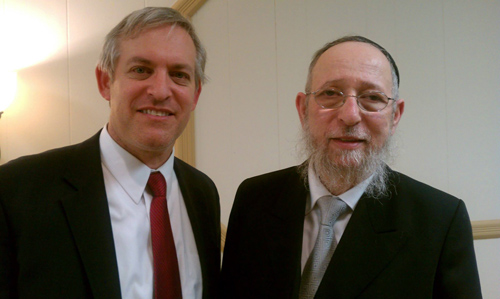
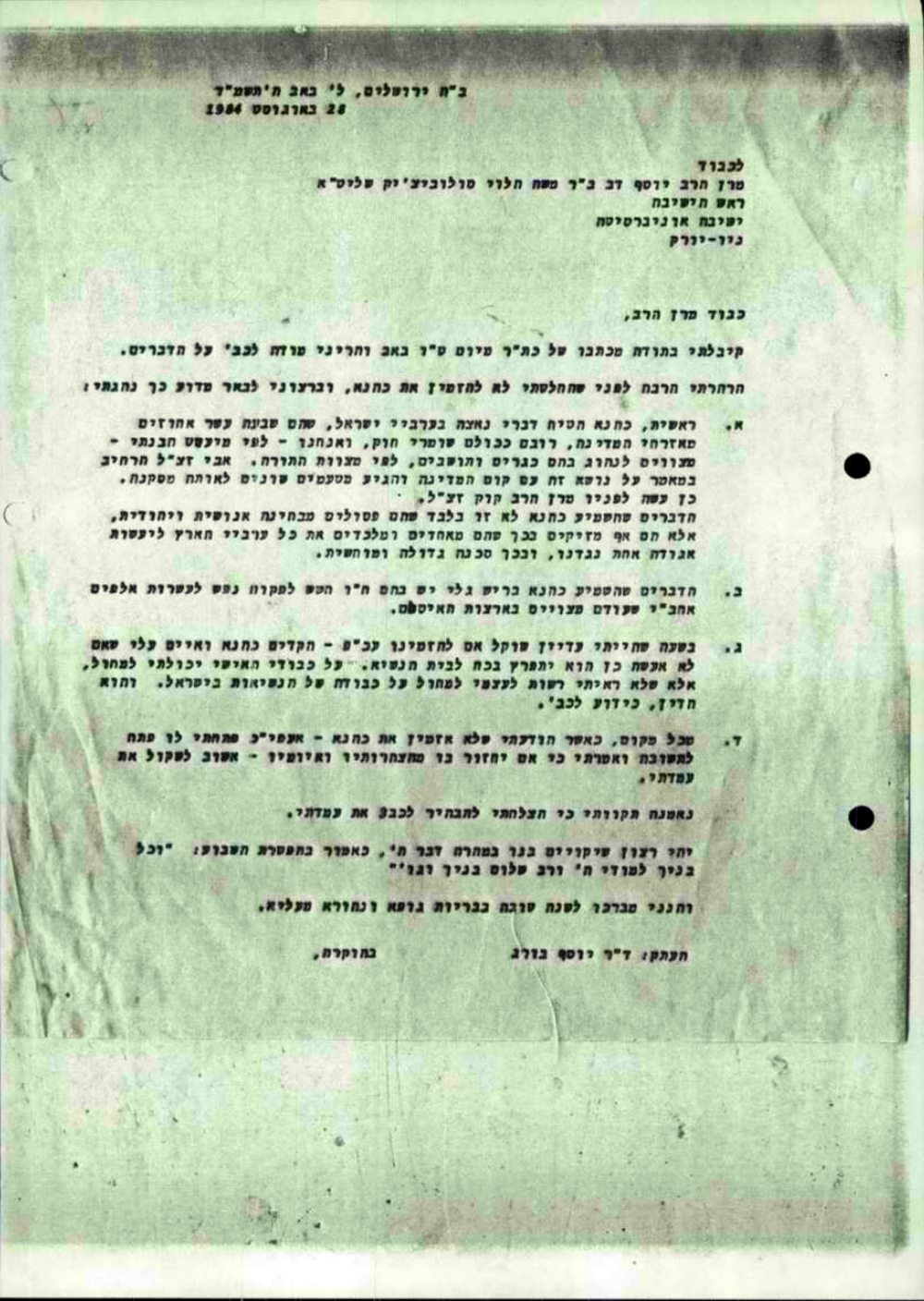




__%20%20%20%20%20%201%20copy.jpg)


