Book week 2017

Book week 2017
By Eliezer Brodt
Book week just began in Eretz Yisrael. As I have written the past ten years, every year in Israel, around Shavous time, there is a period of about ten days called Shavuah Hasefer – Book Week (for previous years lists see  herehere, here, hereherehereherehere,  here and here). Many of the companies offer sales for the whole month. Shavuah HaSefer is a sale which takes place all across the country in stores, malls and special places rented out just for the sales. There are places where strictly “frum” seforim are sold and other places have most of the secular publishing houses. Many publishing houses release new titles specifically at this time.
In my lists, I sometimes include an older title, from a previous year, if I just noticed the book. As I have written in the past, I do not intend to include all the new books. Eventually some of these titles will be the subject of their own reviews. I try to include titles of broad interest. As this list shows although book publishing in book form has dropped greatly worldwide, Academic books on Jewish related topics are still coming out in full force.
As in previous years I am offering a service, for a small fee to help one purchase these titles (or titles of previous years). For more information about this email me at Eliezerbrodt-at-gmail.com. Part of the proceeds will be going to support the efforts of the the Seforim Blog.
בן צבי
1.
שלמה דב גויטיין,
התימנים: היסטוריה, סדרי חברה, חיי רוח, מבחר מחקרים [הדפסה שניה], מכון בן צבי,
374 עמודים
2.
עפר אליאור, רוח
חן, יחלוף על פניי, יהודים, מדע וקריאה 1210-1986, בן צבי, 360 עמודים
3.
בית דינו של
שמואל, תשובות רבי שמואל לאנייאדו וחכמי דורו, ההדירה: לאה בורנשטיין-מקובצקי, בן
צבי, ב’ חלקים
4.
גנזי קדם יב
5.
מרדכי עקיבא
פרידמן, מילון הערבית היהודית מימי הביניים, 1017 עמודים
6.
מוטי בנמלך, שלמה
מולכו, חייו ומותו של משיח בן יוסף, 438 עמודים
7.
נעמה וילוז’ני,
שערות לילות וקרני אשמדאי, דמות וצורה במאגיה ובאמנות העממית בין בבל לארץ ישראל
בשלהי העת העתיקה, 444 עמודים
8.
צפי זבה אלרן,
זיכרונת חדשים אסופות האגדה ועיצובו של קנון עברי מודרני, 318 עמודים
9.
קיימי קפלן, עמרם
בלוי – עולמו של מנהיג נטורי קרתא, 593 עמודים [עומד להופיע בקרוב]
מאנגס
1.
ברית המנוחה, ההדיר:
עודד פורת, מהדורה מדעית ומבואות, ספריית הילל בן חיים, מגנס, 610 עמודים
2.
אריאל פורסטנברג,
שפת השיח התלמודי, עיון פילוסופי בדרכי ההתהוות של ההלכה האמוראית, מגנס, 262
עמודים
3.
שלום צדיק, מהות
הבחירה בהגות היהודית בימי הביניים, מגנס, 348 עמודים
4.
אהרן שמש, עונשים
וחטאים מן המקרא לספרות חז”ל, הדפסה שנייה, מגנס, 250 עמודים
5.
יובל בלנקובסקי,
חטא לשם שמים, עבריה לשמה בעולמם של חכמים, מגנס, 224 עמודים
6.
דב שוורץ, רחק
וקרוב הגות יהודית בביזנטיון בשלהי ימי הביניים, מגנס, 540 עמודים
7.
יצחק ברנד, יש
מאין, עסקאות בנכסים מופשטים במשפט התלמודי, 484 עמודים
8.
הגדולים – אישים
שעיצבו את פני היהדות החרדית בישראל, בעריכת בנימין בראון ונסים ליאון, 968 עמודים
[מהדורה שניה]

9.
אדם
לאדם, מחקרים בפילוסופיה יהודית בימי הביניים ובעת החדשה מוגשים לפרופ’ זאב הרוי
על ידי תלמידיו במלאות לו שבעים, 726 עמודים

10.
יחזקאל, ב’
חלקים, מקרא לישראל
11.
אילן אלדר,
הבלשנות העברית בימי הביניים, 426 עמודים
12.
דוד צרי, חוץ
מיראת שמים, בידי שמים ובידי אדם בדרושי ראשית החסידות, 395 עמודים
13.
משה פלאי, כוכבי
יצחק, כתב העת של ההשכלה באימפריה האוסטרו הונגרית, 629 עמודים
14.
נפש האדם, פירוש
קהלת לר’ שמואל בן יהודה אבן תיבון, מהדיר יעקב רובינסון, איגוד, 610 עמודים
15.  דרשות
משנות הזעם, ב’ חלקים [אש קודש], ההדיר: דניאל רייזר
ביאליק
1.
ספר הכוזרי,
תרגום מיכאל שורץ, 422 עמודים
2.
אברהם גרוסמן,
תמורות בחברה היהודית בימי הביניים, 559 עמודים
3.
ירון צור, גבירים
ויהודים אחרים במזרח התיכון העות’מאני 1750-1830
4.
יעקב בלידשטיין,
‘ובהם נהגה’ – עיונים בהלכות תלמוד תורה לרמב”ם
5.
התפילה בישראל:
היבטים חדשים, בעריכת אורי ארליך
6.
מדרשי גאולה,
בעריכת יהודה אבן שמואל, עם מבוא מאת עודד עיר שי
כרמל
1.
עמנואל אטקס, לשם
שמים: חסידים, מתנגדים, משכילים ומה שביניהם, 466 עמודים
מגיד-
אופק
1.
חיים סולוביצ’יק,
יינם, סחר ביינם של גויים על גלגולה של הלכה בעולם המעשה, 232 עמודים [מהדורה שניה
עם הוספות]
2.
תוספות ר”י
הזקן ותלמידיו, ג, אופק
3.
חידושין על התורה
לרבינו תם ובית מדרשו, אופק, 121+תקפט עמודים
4.
Rabbi J. D. Bleich, Contemporary Halakhic Problems, Volume VII, 524 pp.
5.
Rabbi Joseph B. Soloveitchik, Halakhic Morality, Essays on Ethics and Masorah,
237 pp.
6.
Rabbi Aron Lichtenstein, By his Light Character and Value in the service of God,
252 pp.
כנרת-דביר
1.
ספר האגדה
2.
יעקב נגן, נשמת
המשנה, קריאה ספרותית וחיפוש משמעות, דביר, 462 עמודים
3.
דוד
רוטמן, דרקונים, שדים ומחוזות קסומים, על
המפולא בסיפור העברי בימי הביניים, 575 עמודים
4.
שלו’ ירושלמי,
יוסי אליטוב ואריה אלריך, ברגע האמת, הרבי מלובביץ’ והדיאלוג הביטחוני מדיני עם
מקבלי החלטות בישראל, 476 עמודים
5.
יונתן
סרנה,
לינקולן והיהודים, 288 עמודים
מכון שכטר – JTS
1.
חברה יהודית
ים-תיכונית בשלהי ימי הביניים לאור גניזת קהיר, אברהם דוד
2.
מדרש קהלת רבה א- ו, בעריכת מנחם הירשמן, קנ+363 עמודים
ספריית הילל בן
חיים
1.
יהודי ביטי,
הפילוסוף המקובל, עיונים בספר קול הנבואה, ספריית הילל בן חיים, 300 עמודים
2.
יהודית וייס,
משיח נוצרי קבלי ברנסנס, גיום פוסטל וספר הזוהר, ספריית הילל בן חיים, 355 עמודים
3.
יוסף שטרן, החומר
וצורה במורה נבוכים לרמב”ם
4.
ורד טוהר, חיבור
המעשיות והמדרשות וההגדות (פירארה שי”ד)
מרכז זלמן שזר
1.
בין בבל לארץ
ישראל, שי לישעיהו גפני, שזר, 500 עמודים
2.
סדריק כהן סקליל,
דון יצחק אברבנאל, שזר, 286 עמודים
3.
רוני באר-מרקס, על חומת הנייר: עיתון הלבנון והאורתודוקסיה, 350 עמודים
4.
תמונת עבר, שי לירחמיאל כהן, בעריכת עזרא מנדלסון, 423 עמודים
5.
חב”ד היסטוריה, הגות ודימוי, בעריכת גדי שגיב יונתן מאיר
6.
שמואל פיינר, עת חדשה יהודים באירופה במאה השמונה עשרה, 583
עמודים
7.
אהרן אופנהיימר, על נהרות בבל: סוגית בתולדות בבל התלמודית
8.
אורית רמון, מהר”ל באור חדש, זהות יהודית בסדר עולם
משתנה, 288 עמודים
9.
סנג’יי
סוברהמניים, שלוש דרכים להיות זר
10.  דברה
קפלן, שטרסבורג, יהודים נוצרים רפורמציה
מכללת הרצוג
1.
נטועים כ [חומר
חשוב], 283 עמודים
2.
יונתן גרוסמן,
מגילת רות גשרים וגבולות, הרצוג, 414 עמודים
3.
דב שוורץ, דילוג
אל האור [מושגי יסוד בהגהות חב”ד], 353 עמודים
4.
ר’ דוד פוקס,
לנטוע שמים
ראובן מס
1.
רחל רייך, מעשה
פילגש בגבעה, ניתוח ספרותי, ראובן מס, 200 עמודים
2.
משה בר אשר,
לשוננו רנה, עיוני תפילות בלשון ובסגנון בתכנים בנוסחות ובמנהגים, 382 עמודים
3.
ישראל נתנאל
רובין, מה שאלוקים לא יכול,
בר אילן
1.
אריאל רוט, כיצד
לקרוא את ספרות חב”ד, 300 עמודים
2.
דרכי דניאל,
מחקרים במדעי היהדות לכבוד הרב פרופסור דניאל שפרבר, בעריכת אדם פרזיגר, 992
עמודים
3.
איתי מרינברג-מיליקובסקי,
לא ידענו מה היה לו: ספרות ומשמעות באגדה התלמודית, 236 עמודים
4.
בד”ד 31
5.
סידרא לא
6.
דעת 82
7.
דעת 83
8.
צבי שטיינפלד,
הוריות, מחקרים במשנה ובתלמודים,  572
עמודים
9.
פירוש קדמון על
מורה נבוכים, 556 עמודים
10.
אוריאל סימון,
אזן מלין תבחן [מהדורה שניה], מחקרים בדרכו הפרשנית של ר’ אברהם אבן  עזרא, 568 עמודים
11.
צבי קדרי, מילון
העברית המקראית [הדפסה שלישית]
12.
A Dictionary of
Jewish Palestinian Aramaic of the Byzantine Period
[מהדורה שלישית]
ידיעות ספרים
1.
ר’ יצחק אייזיק
הלוי הרצוג, המוסדות העיקרים של המשפט העברי, ב’ חלקים,
2.
נמרוד זינגר, בעל
שם והרופא, רפואה ומאגיה בקרב יהודי בראשת העת החדשה
3.
ר’ לוי יצחק
מברדיצ’ב, בעריכת צבי מרק
4.
יואל בן נון
ושאול ברוכי, מקראות עיון רב תחומי בתורה, יתרו
רסלינג
1.
נעמי פריש, אתרוג
הלב מסה על ארבעת המינים, 257 עמודים
2.
יעקב אזואלוס,
תורת המלאכים בתרגומים הארמיים לתורה, 222 עמודים
3.
מורן הכהן, מחקר
הקבלה בישראל, היסטוריוגרפיה אידיאלוגיה ומאבק על הון תרבותי, 315 עמודים
אוניברסיטת תל אביב:
1.
אופיר מינץ־מנור,
הפיוט הקדום,
2.
תומר פרסיקו מדיטציה
יהודית: התפתחותן של תרגולות רוחניות ביהדות זמננו, תומר פרסיקו
3.
מור אלטשולר, חיי מרן יוסף קארו
האקדמיה ללשון העברית
1.
תלמוד ירושלמי, קונטרס תיקונים מורחב
2.
תלמוד ירושלמי, מפעל המילון ההיסטורי, הדפסת שלישית עם קו’
תיקונים מורחב
3.
ענייני התחביר שבכתאב אלתנקיח (ספר הדקדוק) לר’ יונה אבן
ג’נאח, דוד טנא
4.
שמעון שרביט,
תורת ההגה של לשון חכמים


Quiz Runoff

Quiz Runoff
by Marc B. Shapiro

Written on 4 Shevat, 5773, the yahrzeit of R. Jehiel Jacob Weinberg

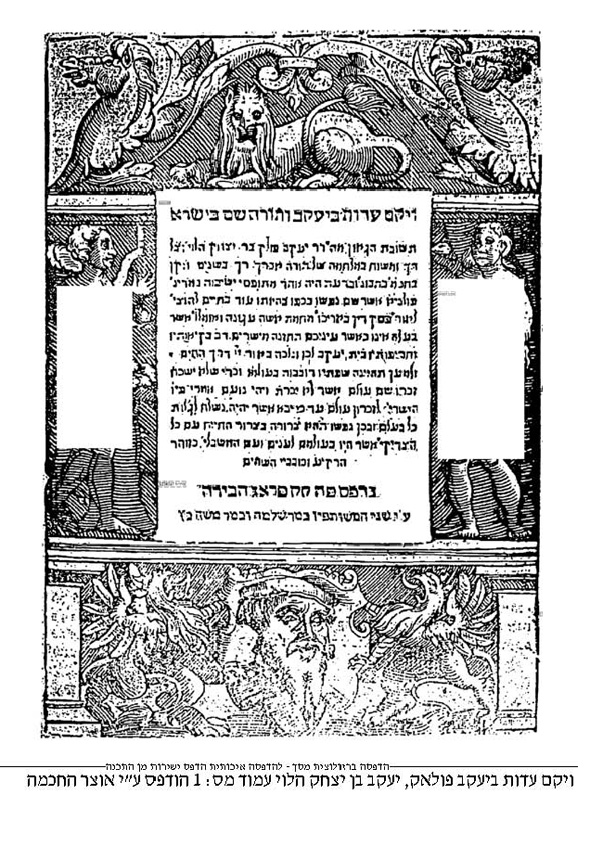
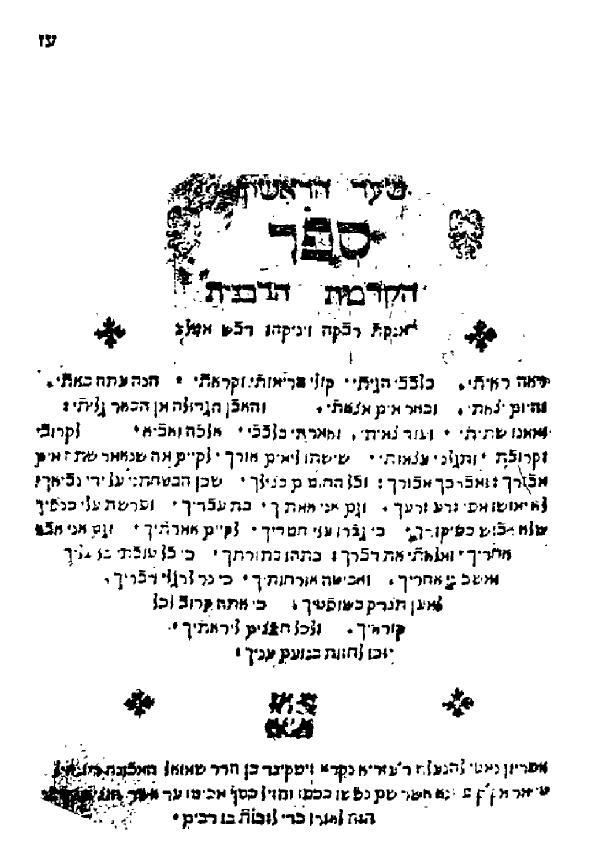
1. In the last post, as the quiz question, I asked for the name of the first Hebrew book published by a living author. The answer is Nofet Tzufim by R. Judah Messer Leon. As the Wikipedia entry for Messer Leon states, this work “was printed by Abraham Conat of Mantua in 1475-6, the only work by a living author printed in Hebrew in the fifteenth century.”
A number of people got the right answer, and as a few of them told me, and I confirmed for myself, it was not that difficult to find the answer using Google. There is nothing wrong with using Google or any other search tool, and it is my fault for not realizing that the answer could be found so easily.
Some of the material in the Wikipedia entry for Messer Leon comes from the Jewish Encyclopedia, but not the sentence I quoted above. The second part of the sentence is in fact incorrect, as there is at least one other work by a living author printed in Hebrew in the fifteenth century. I refer to the Agur, by R. Jacob ben Judah Landau (died 1493). This work appeared sometime between 1487 and 1492, so Wikipedia tells us, and in this instance Wikipedia’s information comes from the Jewish Encyclopedia. These sources also tell us that “The ‘Agur’ was the first Jewish work to contain a rabbinical approbation, besides being the second Hebrew book printed during the author’s lifetime.”
Why then did a number of those who contacted me think that the Agur was the first book to appear in the author’s lifetime, rather than the second? Perhaps because in the Encyclopaedia Judaica entry “Haskamah”, which is reprinted here, we find the following incorrect statement: “The first haskamah appeared in the 15th century, in the Agur by Jacob Landau (Naples, c. 1490), the first Hebrew book printed during its author’s lifetime.”
Starting now, I will try to make my quiz questions a bit harder (i.e., not so easy to find the answers via Google). Here are the names of those who answered correctly on the last quiz: Shalom Leaf, Alex Heppenheimer, Leor Jacobi, Eric Lawee, Moshe Lapin, Shimon S., Ari Kinsberg, Yonason Rosman, Peretz Mochkin, Yehudah Hausman, Dovid Solomon
Since I can’t reward all of them, there will be a runoff. The following questions are to be answered only by them and only by emailing me the answer. If you can only answer one of the questions please do so.
A. What is the first volume of responsa published in the lifetime of its author?
B. There is a verse in the book of Exodus (hint: we haven’t yet reached it this year) which has a very strange vocalization of a word, found nowhere else in Tanach. (The word itself is also spelled in an unusual fashion, found only one other time in Tanach). The purpose of this vocalization is apparently in order to make a rhyme.[1] What am I referring to?
I had thought to ask: What is the first Hebrew work to use modern punctuation including question marks, but via Google I found the answer in a few seconds. So hopefully the answers to what I have asked are not so easily found.
2. I have a good deal more to say on themes discussed in the last post, which I will get to in future posts. But I have one piece of information that I think is quite significant (a real “chiddush”) and I don’t want to delay passing it on. It turns out that R. Schachter was too quick to add the correction in Nefesh ha-Rav. Here is an email I received by someone who prefers to remain anonymous.
I am not into writing reactions (Israelis call them “talkbacks”) on blogs, since I have not become accustomed to the 21st Century. But I want to give you a bit of information that is relevant to your discussion of Metzitza. I attended Rav Aharon Lichtenstein’s shiurim at Gruss for a number of years, and I clearly remember what he said on the subject during what the guys called “a press conference.” He said very clearly that the Rav was against any Metzitza at all, and he expressed this view explicitly at the brit of one of Rav Aharon’s sons. To me such a view makes lots of sense, if one understands that it is required in the gemara only because it was then thought that the lack of Metzitza was dangerous.(כי לא עביד סכנה הוא (שבת קלג,
3. Many people have mentioned to me the problems with the commenting feature (at least for those using Chrome). When you click on it, you often don’t see the most recent comments. One way to fix this is after you click to see the comments, where it says “Discussion” check “Newest” or “Oldest”, and everything will come up. We will try to come up with a fix for this.

[1] I am referring to the level of peshat, as I realize that all sorts of explanations based on derush, remez, and kabbalah can be offered. 


Rav Kook’s Attitude towards Keren Hayesod – United Israel Appeal

Rav
Kook’s Attitude towards Keren Hayesod – United Israel Appeal
By Rav Eitam Henkin, Hy”d
 (Translated into English by Rachelle Emanuel)
This
article originally appeared
in Hebrew in HaMayan 51:4 (2011), pp. 75-90.

Today is the yahrzeit of the Rav Eitam and Naama Henkin, who were cruelly murdered one year ago. May Rav Eitam’s important writings, surely with us only thanks to Naama’s support, be an aliyat neshama for both. Hy”d.

·        
“It is well known that the person
who heads the above [body]” supports Keren Hayesod
·        
What is the difference between Keren
Kayemet Le-Yisrael – the Jewish National Fund – and Keren Hayesod — the United
Israel Appeal?
·        
The forgery in the 1926 public letter
·        
The significance of supporting Keren
Hayesod
·        
The halakhic letter of 1928
·        
The joint declaration with Rav Isser
Zalman Meltzer
·        
Conclusion
“It
is well known that the person who heads the above [body]” supports Keren
Hayesod

The
philosophy of Rav Elĥanan Bunem
Wasserman, follower of the Ĥafetz
Chaim and Rosh Yeshiva of the Baranovich Yeshiva (Lithuania), and among the
most extreme of eastern European Torah leaders between the world wars in his
anti-Zionist approach, is still considered today as having significant
influence on the ideology concerning Zionism and the State of Israel prevalent
in the Hareidi community. In this respect he constitutes almost an antithesis
to the Chief Rabbi of Eretz Yisrael, Rav Avraham Yitzchak HaKohen Kook, in
whose philosophy religious Zionism found its main ideological support for its approach
and outlook.[1]
 
One
rare statement made by Rav Wasserman, aimed apparently at Rav Kook, has found
resonance with part of the Haredi public, and is used by them as justification
for rejecting Rav Kook and his teachings. In fact, we are not talking of a
direct reference, but of words that appear in a letter sent to Rav Yosef Tzvi
Dushinski, who took over Rav Yosef Ĥaim Zonnenfeld’s position as head of the Eidah Ĥareidit, on June
25, 1924:
A proposal has been made to combine the Ĥareidi Beit
Din with the Chief Rabbinate. It is well known that he who heads [the Chief
Rabbinate] has written and signed on a declaration calling on Jews to
contribute to Keren Hayesod. It is also known that the funds of Keren Hayesod
go towards educating intentional heretics. If that is the case, he who
encourages supporting this organization causes the public to sin on a most
terrible level.  Rabbeinu Yona in Sha’arei
Teshuva
explains the verse “The
refining pot is for silver, and the furnace for gold, and a man is tried by his
praise” (Prov. 27:21)  as
meaning that in order to examine a person one must look at what he praises. If
we see that he praises the wicked, we know that he is an utterly wicked person,
and it is clear that it is forbidden to associate with such a person.[2]
As
far as Rav Wasserman was concerned, because the head of the Chief Rabbinate
publicized statements in which he called to support Keren Hayesod, which among
other activities, funded a secular-Zionist education system, he was causing the
public to sin and it was forbidden to be associated with him.[3]
However,
it seems that Rav Wasserman’s sharp assertion is based on a factual error.[4]
According to Rav Kook’s son, Rav Z.Y. Kook, his father supported Keren Kayemet
Le-Yisrael
, and called on others to support them, but his attitude towards Keren
Hayesod was completely different.
… as a result of the claims and complaints about
their behavior concerning religion and Judaism, [Rav Kook] later delayed giving
words of support to Keren Hayesod, and none of the entreaties and efforts of
Keren Hayesod’s activists could move him. In contrast, even though he continued
to constantly protest concerning those claims and complaints, he never
hesitated giving words of support to Keren Kayemet. None of the entreaties and
efforts of those who opposed Keren Kayemet could change this. On the contrary, with
his sacred fire, he increased his support and encouragement for Keren Kayemet, [considering
its projects as] a mitzvah of redeeming and conquering the Land.[5]
If
these words are correct, Rav Wasserman’s protest loses ground. In light of the
above we would have to say that Rav Wasserman’s sharp statement about Rav Kook
relies on the shaky basis (“It is well known…”) of rumors that were
widespread in certain localities in East Europe.[6]
However, precise research shows that despite Rav Z. Y. Kook’s clear testimony, for
which we will bring below explicit references from Rav Kook himself, Rav
Wasserman’s words were not just based on vague rumors alone. It turns out that
even while Rav Kook was alive, propaganda attempts were made to attribute to
him support for Keren Hayesod. In one case, at least, it was intentional fraud,
upon which it seems Rav Wasserman unwittingly based himself.
What
is the difference between Keren Kayemet LeYisrael – the Jewish National Fund –
and Keren Hayesod – the United Israel Appeal?

Whatever
the case may be, the reader will ask: what is the difference between the Keren
Kayemet and the Keren Hayesod? Perhaps in Rav Wasserman’s opinion they both
were “abominations,” since both organizations were headed by “heretics”;
and even though Keren Kayemet did not deal with education, nevertheless it
enabled heretics to settle on its land. If that was the case even supporting Keren
Kayemet falls into the category of lauding the wicked, etc.! However, one
cannot ignore the fact that R. Wasserman was talking about Keren Hayesod in
particular, on the grounds that its funds were “going towards raising
intentional heretics” in the educational institutions – something not
relevant to the activity of Keren Kayemet. The Keren Kayemet was a veteran
institution, founded at the beginning of the century for very specific,
accepted goals – redeeming land from the hands of gentiles, whereas Keren
Hayesod was established at the beginning of the twenties in a very different
political reality, and its fields of activity were much broader. Rav Kook
himself, in a response from winter 1925 to the famous letter from four Hasidic
rebbes (Ger, Sokolov, Ostrovtza, and Radzhin) who had heard that “your
Honor is indignant over our opposition to giving aid to the Keren Kayemet and
Keren Hayesod,” and in which they explained their opposition, gave his
reasons in full for supporting the Keren Kayemet, and only the Keren Kayemet.[7] In an
earlier draft of his response, in his handwriting, preserved in his archive, he
explicitly notes the difference in his approach to the two organizations:
I myself, in the past gave credentials for aid to
Keren Kayemet alone […] which is busy transferring land from the hands of
gentiles to Jewish possession, […] and for that I gave Keren Kayemet’s activists
a recommendation over the course of several years. This is not the case with
Keren Hayesod, which does not deal in redeeming land, but rather in settling it
and in matters of education. I have never yet given them a recommendation [and
will not do so] until the matter will, please God, be put right, and at least a
significant part of the funds will be assigned to settling Eretz Yisrael in the
way of our holy Torah.[8]
There
is indeed a large amount of information about the extensive relations that Rav
Kook had with Keren Kayemet, most of which involved continuous support for its tremendous
project of redeeming land, together with constantly keeping his eye on,  and immediately objecting to, any deviation
from the way of the Torah that was perpetrated on its grounds.[9] On
the other hand, in all the writings of Rav Kook published till now, there are
only a few mentions of Keren Hayesod, and they show reservations in principle
from the organization.[10] Whoever
is fed by rumors and presents Rav Kook as one who “lends his hand to
evil-doers” without reservations, will anyway assume, “as it is
known,” that he similarly called for support of Keren Hayesod. In
contrast, for someone who knows about Rav Kook’s life story, his work, and his
letters, the idea that he would be capable of calling for support for an
organization which directly causes ĥilul Shabbat, secular education, and
so on, is utterly baseless. Even his support for Keren Kayemet was not
complete, but with conditions, restrictions, and even warnings attached. The
following are some salient examples that are sufficient to prove that if Keren
Kayemet had been involved in projects opposed to the spirit of the Torah — as
was the case with Keren Hayesod — Rav Kook would not have agreed to support it
either:
In
a letter to the chairman of Keren Kayemet, Menahem Ussishkin, from February 4,
1927, concerning violations of Shabbat in the Borokhov neighborhood located on
Keren Kayemet land (by the residents, not by Keren Kayemet itself), Rav Kook
warned them “that if they do not take the necessary steps to correct these
wrongdoings that have gone beyond all limits, I will be forced to publicize the
matter in an open letter, loud and clearly, to the whole Jewish People.”[11]
In
a letter to Tnuva from March 2, 1932, that was sent following a report
concerning ĥilul Shabbat on Kibbutz Mizra, Rav Kook announced that so
long as the kibbutz members did not mend their ways, their milk would be
considered as ĥalav akum (milked by a non-Jew) and Tnuva would be
forbidden from using it.[12]
In
a letter to Ussishkin from April 3, 1929, Rav Kook complained about the fact
that Keren Kayemet had started to publish literary pamphlets, “which are
not its subject matter. Money dedicated to the redemption of the Land was not
for literary purposes. Moreover, the essence of this literature damages its
image in public, spreading false views in direct opposition to the sanctity of our
pure faith […] I hope that these few words will have the correct effect, and
that the obstacle will be removed without delay, so that we will all together,
as one, be able to carry out the sacred work of redeeming the Land with the
help of Keren Kayemet Le-Yisrael.”[13]
The
forgery in the 1926 public letter

 However, as has been said, because of the
significant weight that Rav Kook’s position bore, over the years many attempts
were made by the supporters of Keren Hayesod to ascribe to him outright support
of the fund. The most prominent case occurred in the winter of 1926 (about a
year after the above-mentioned letter to the hasidic rebbes). Several months
previously the yishuv in Eretz Yisrael entered a severe economic crisis which
seriously hindered its development, causing unemployment of a third of the work
force, a decrease in the number of immigrants, and a steady flow of emigrants
from the country.[14] This
crisis, considered the worst experienced by the yishuv during the
British Mandate, was the first time that the impetus of the yishuv‘s
development, which had been increasing since the end of the First World War, was
brought to a standstill. Against the backdrop of this situation, the Zionist
leadership initiated a “special aid project of Keren Hayesod for the
benefit of the unemployed in Eretz Yisrael.” Because of the severity of
the situation, Rav Kook also volunteered to encourage contributions to improve
the economic situation in Eretz Yisrael, and when R. Moshe Ostrovsky (Hameiri)
left for Poland to help with the appeal, Rav Kook gave him a general letter of
encouragement for the Jews in eastern Europe.[15] At
the same time, on November 8, 1926, Rav Kook wrote a public letter calling for
support of the Zionist leadership’s initiative, in which he wrote, inter alia:
To our dear brothers, scattered throughout the
Diaspora, whose hearts and souls yearn for the building of Zion and all its
assemblies; beloved brethren! The hard times which our beloved yishuv in
the Land of our fathers is experiencing, brings me to raise my voice with the
call, “Help us, now.” Our holy edifice, the national home for which
the heart of every Jew holds great hopes, is now facing a temporary crisis
which requires the help of brothers to their fellow sufferers in order to
endure […] Therefore I am convinced that the great declaration which the
Zionist leadership is proclaiming throughout the borders of Israel, to make
every effort to come to the aid and relief of this crisis, will be heard with
great attention; and that, besides all the frequent donations for all the
general matters of holiness which our brothers wherever they live will give for
the sake of Zion and Jerusalem, all the sacred institutions will raise their
hands for the sake of God, His people, and His Land, to give willingly to the appeal
to relieve the present crisis, until the required sum will be quickly
collected.
Although
the appeal was made through the organization of Keren Hayesod, Rav Kook avoided
mentioning the name of the fund because of his principled refusal to publicize
support for it (as he explained in the letter to the hasidic rebbes). The
version quoted above is what was published in the newspapers of Eretz Yisrael,
under the title “For the Relief of the Crisis.”[16]
However, amazingly, it becomes apparent that in the version published some
weeks later in Warsaw’s newspapers, the words “the Zionist
leadership” were changed in favor of the words “the head office of
Keren Hayesod
,” and accordingly, the words were presented as nothing
less than “Rav Kook’s public letter in favor of Keren Hayesod“![17]
Even
if we didn’t have any information other than the two versions of this public
letter, there is no doubt that the authentic version is the one published by
his acquaintances, the editors of Ha-Hed and Ha-Tor in Eretz
Yisrael, close to, and seen by Rav Kook. In contrast, when members of Keren
Hayesod circulated Rav Kook’s public letter among Poland’s newspapers, they were
not concerned that the author would come across the version they had published
in a remote location. They even had a clear interest to insert into Rav Kook’s
words a precedential reference to Keren Hayesod. Even if we only had before us
the east-European version of the letter, we could determine that foreign hands
had touched it. This is not only because of Rav Kook’s words in his letter to
the hasidic rebbes sent about a year earlier, but because of a letter that Rav
Kook sent to the heads of Keren Hayesod a few weeks prior to writing the public
letter. In this letter to Keren Hayesod he informs them in brief that he is
prevented from cooperating with the management of the fund or even visiting its
offices (!) until the list of demands that he presented them with, in the field
of how they conduct religious affairs, would be met. The background to this
letter is a request sent to Rav Kook on December 7, 1926, after the
inauguration of Keren Hayesod’s new building on the site of “the national
institutions” in Jerusalem. The directors of the head office of Keren
Hayesod wrote: “It would give us great joy, and would be a great honor if
our master would be so good as to visit our office – the office of the global
management of Keren Hayesod.”[18] In
reply to this request, Rav Kook wrote a letter – which is published here for
the first time – to the heads of Keren Hayesod, (Arye) Leib Yaffe and Arthur
Menaĥem Hentke:
8th Tevet 5687 [December 13, 1926]
To the honorable sirs, Dr. Yaffe and A. Hentke,
I received your invitation to visit your esteemed
office. I hereby inform you that I will be able to cooperate for the benefit of
Keren Hayesod, and I will, bli neder, also visit Keren Hayesod’s main
office, after Keren Hayesod’s management and the Zionist leadership will
fulfill my minimal demands concerning religious issues in the kibbutzim and in
education.
Yours, with all due respect …[19]
During
the course of the years there were, nevertheless, several opportunities when
Rav Kook came into contact with members of Keren Hayesod, mainly in connection
with matters of budgets for religious needs.[20]
However, as this letter illustrates, even such limited cooperation was
dependent, from Rav Kook’s point of view, on the demand to change the way the
fund conducted its matters with respect to religion.[21] What
were Rav Kook’s exact demands of Keren Hayesod, in order for it to be
considered as having “put things right” (as he wrote in his letter to
the hasidic rebbes), and to benefit from his support and cooperation? We can
clarify this from a document which is also being published here for the first
time. This document, whose heading is “Rav Kook’s answers” to Keren
Hayesod, was apparently written after the previous letter, in reply to a
question addressed to him by Keren Hayesod concerning his attitude towards
them. It was probably written against the backdrop of rumors that Rav Kook
forbade (!) support of Keren Hayesod.[22] We only
have a copy of the document in our possession, but it is written in first
person, meaning that Rav Kook wrote it himself, and the person who copied it
apparently chose to copy just the body of the letter without the opening and
end signature:

1.      I
have never expressed any prohibition, God forbid, against Keren Hayesod. On the
contrary – I am very displeased with those who do so.
2.      Concerning
my attitude towards the Zionist funds: my reply was that I willingly support
Keren Kayemet at every opportunity without any reservations. However,
concerning Keren Hayesod, at the moment I am withholding my letter in its
benefit until the Zionist management corrects major shortcomings that I demand
be put right, as follows:
a.      
That nowhere in Eretz Yisrael will
education be without religious instruction, not just as literature, but as the
sacred basis of Jewish faith.
b.     
That all the general religious needs be
immediately taken care of in every moshav and kibbutz. For example, shoĥet,
synagogue, ritual bath, and where a rabbi is necessary – also a rabbi.
c.      
That there will be no public profanation
of that which is sacred in any of the places supported by Keren Hayesod, such
as ĥilul Shabbat and ĥag in public.
d.     
That the kitchens, at least the general
ones, will be particular about kashrut.
e.       That
all the details here which concern the residents of Keren Hayesod’s locations,
will be listed in the contract as matters hindering use of the property by the
resident, and which will give him benefit of the land only on condition that he
fulfills these basic principles.
And because I strongly hope that the management will
finally obey these demands, I therefore am postponing my support of Keren
Hayesod until they are fulfilled. I hope that my endeavors for the benefit of
settling and building our Holy Land will then be complete.

It
should be noted that these conditions are similar in essence to those that Rav
Kook set with Keren Kayemet. However, the latter’s dealings were with redeeming
the Land, in contrast to Keren Hayesod where the areas referred to in Rav
Kook’s demands were at the center of its activity. Therefore, as far as the
Keren Kayemet was concerned, Rav Kook did not give the fulfillment of his
demands as a basic condition for his cooperation and call for support; but he
certainly did so with regard to Keren Hayesod.[23]
Whatever
the case may be, if R. Wasserman did indeed see the public letter of 1926,
without doubt he saw the falsified version published in the Polish newspapers,
and therefore he held on to the opinion that: “It is well known that he
who heads [the Chief Rabbinate] has written and signed on a declaration calling
on Jews to contribute to Keren Hayesod.”[24]
However, as has been clarified, these words have no basis.
The
significance of supporting Keren Hayesod

As
has been said Rav Kook was not prepared to support Keren Hayesod, which dealt
in education and such matters “until the matter will … be put right, and
at least a significant part” of the funds activities will be directed to
settling the Land according to the Torah. The words “at least a
significant part …” seem to give the impression that if a significant part
of the fund’s activity were directed to activity in the spirit of the Torah,
then Rav Kook would give his support even if another part were still directed
to secular education. However, in practice, there is no doubt that Rav Kook’s
demand was much stricter. In Keren Hayesod’s regulations it was determined that
only about 20% of its resources would be directed to education[25] (and
only a certain amount of that budget would be allocated to
“problematic” education) — and despite this fact Rav Kook refused to
call for its support. It must be emphasized that this policy in Keren Hayesod’s
regulations was strictly applied. An inclusive summary of the fund’s activity
between the years 1921-1930, indicates that 61.4% of its resources were
invested in aliya and settlement (aliya training, aid for refugees,
agricultural and urban settlement, housing, trade, and industry), 19.6% in
public and national services (security, health, administration), and only 19.0%
in education and culture – from which a certain part was allocated for
religious needs: education; salaries for rabbis, shoĥtim, and kashrut
supervisors; maintenance of ritual baths, eruvim, and religious
articles; aid for the settlements of Bnei Brak, Kfar Ĥasidim, etc.[26] In
light of this data, it seems that R. Wasserman’s claim against those who call
for support of Keren Hayesod, and his defining them as “utterly
wicked” people, is not essentially different from the parallel claim
against those who demand the paying of required taxes to the State – a claim
heard today only by extreme marginal groups within the Ĥaredi sector.
Indeed,
not surprisingly, it transpires that there were in fact some well-known rabbis
of that generation who did call to contribute to Keren Hayesod, despite the
problematic issues of some of its activity.[27] Just
several months before the publication of Rav Kook’s afore-mentioned public
letter, another declaration was published, explicitly calling for support of
Keren Hayesod, signed by more than eighty rabbis from Poland and Russia. Among
them were well-known personalities such as R. Ĥanokh Henikh Eigash, author of Marĥeshet;
R. Meshulam Rothe; R. Reuven Katz, and more.[28]
Moreover, in several locations, particularly in America, support of Keren
Hayesod was considered as consensus among the rabbis,[29] and
even Rav Kook’s colleague in the Chief Rabbinate, R. Ya’akov Meir, called for
support of Keren Hayesod.[30]
Would R. Wasserman have defined all of these scores of rabbis as evil ones
“who cause the public to sin on the most terrible level”?[31] Whatever
the case may be, it transpires that it was specifically Rav Kook who stands out
as being the most stringent among them, and he consistently agreed to publicize
support only for Keren Hakayemet. In the light of all the data detailed here,
one wonders whether R. Wasserman’s extreme words to R. Dushinski[32] were
only written in order to deter him from cooperating with the Chief Rabbinate
(which he strongly opposed), and perhaps this is the reason that he avoided
mentioning Rav Kook explicitly by name.[33]
The
halakhic letter of 1928

The
public letter of 1926 was indeed the only one in which Rav Kook’s words were
falsified in order to create support for Keren Hayesod. However, in the
following years, too, attempts were made to present what he had written as an
expression of direct support of Keren Hayesod. The element the two cases have
in common is that they were both published far from Rav Kook’s location. In 1928,
an announcement from the “Secretariat for Propaganda among the
Ĥaredim” was published in the Torah monthly journal Degel Yisrael,
published in New York and edited by R. Ya’akov Iskolsky. This secretariat
published a special letter from Rav Kook in Degel Yisrael, emphasizing
that the letter had not yet been publicized anywhere else. According to the
secretariat, the context in which the words were written was the following:

An
occurrence in a town in Europe, where the community demanded that all its
members contribute towards Keren Hayesod, and the opponents disputed
this before the government, and took the matter to court. The judges demanded
that the community leaders prove to them that the matter was done in accordance
to Jewish law, and on the basis of the above responsum (of Rav Kook) the
members of the community were acquitted.[34]

In
other words, according to those who publicized the Rav Kook’s letter, it was
written in order to help the heads of one European community to force all its
members to donate to Keren Hayesod. The problem is that examination of the
letter (see below) raises different conclusions. Similar to what appears above
(note 27) concerning the letter written by R. Meir Simĥa Ha-Kohen of Dvinsk,
here there is also no mention at all of Keren Hayesod. The explanations in the
letter are not relevant to the majority of Keren Hayesod’s projects, and the
letter only deals with clarifying the general virtue of settling Eretz Yisrael
and the obligation to support its inhabitants. Even the title prefacing the
letter only talks about “one community that agreed to impose a tax on its
members for the settlement and building of Eretz Yisrael,” without
mentioning that this was a tax specifically for Keren Hayesod. Towards the end
of the letter it is mentioned only that “the Zionist leadership in Eretz
Yisrael deals with many issues concerning settling the Land,” without any
specific reference to Keren Hayesod, even if the fund was the organization that
managed the appeal for the Zionist Organization. Thus, we again find that
whereas according to those that publicized the letter — the concerned parties —
the letter constitutes declared support for Keren Hayesod, in Rav Kook’s actual
words there is no mention of that.
The
letter, which as far as I know was never printed a second time, is brought here
in full:
When I was asked whether a Jewish community can impose
on an individual the obligation to give charity for maintaining the settlement
of Eretz Yisrael, I hereby reply that there is no doubt in the matter, considering
that the halakha is that one forces a person to give charity, and makes
him pawn his property for that purpose even before Shabbat, as explained in Bava
Batra
8b, and as Rambam wrote in Hilkhot Matnot Aniyim 7:10:
concerning someone who does not want to give charity, or who gives less than
what is fitting for him, the court forces him until he gives the amount they
estimated he should give, and one makes him pawn his property for charity even
before Shabbat. The same is written in Shulĥan
Arukh
, Yore Dei’a, 248:1-2. If
this is the case in all charities, all the more so is it the case concerning
charity for strengthening Eretz Yisrael, for this is explicit in Sifrei, and quoted in Beit Yosef, Yore
Dei’a
, §251, that the poor of Eretz Yisrael have priority over
the poor outside the Land. And because one forces a person to give charity for
the poor outside the Land, it is clearly even more the case concerning charity
for strengthening the Land and its poor. The obligation to settle in Eretz
Yisrael is very great, as it says in the Talmud Ketubot 110b, and is brought by Rambam as a halakhic
ruling in Hilkhot Melakhim 5:12: A person should always live in Eretz
Yisrael, and even in a town where the majority are idol worshippers, rather
than live outside the Land, even in a town where the majority are Jews. In Sefer Ha-Mitzvot (mitzvah 4) Nachmanides wrote: that we were
commanded to inhabit the Land; “and this is a positive mitzvah for all
generations, and every one of us is obligated,” and even during the period
of exile, as is known from the Talmud in many places.
A great Torah principle is that all Jews are responsible for one another.
Therefore, those who are unable themselves to keep the mitzvah of living in
Eretz Yisrael, are obligated to help and support those who live there, and it
will be considered as though they themselves are living in Eretz Yisrael so
long as they do not have the possibility of keeping this big mitzvah
themselves. It is therefore obvious that any Jewish community can require an
individual to give charity for the benefit of settling Eretz Yisrael and
supporting its inhabitants; and G-d forbid that an individual will separate
himself from the community. Someone who separates himself from the ways of the
community is considered one of the worst types of sinners, as Rambam writes in Hilkhot
Teshuva
3:11. Just as the community must guide the individuals towards all
things good and beneficial, and any general mitzvah, thus must it ensure that
no individual separates himself from the community concerning matters of
charity in general, and all the more so concerning matters of charity relating
to Eretz Yisrael and support of its inhabitants, as I have written. No one can
deny that which is revealed to all, that the Zionist leadership in Eretz
Yisrael deals with al lot of matters concerning settling Eretz Yisrael, hence
it is clear that its income is included in the principle of charity for Eretz
Yisrael.
And as a sign of truth and justice, I hereby sign … Avraham Yitzĥak HaKohen
Kook
The
joint declaration with Rav Isser Zalman Meltzer

Just
as the public letter of 1926 (in the version published in Poland) quickly came
to the notice of the zealots of Jerusalem, who rushed to claim that Rav Kook
supports “a baseless fund,” the same thing happened with the 1928
letter: following its publication under the above headline, the zealots rushed
to upgrade their accusations and to claim that Rav Kook ruled that one may
“force a person to give charity to Keren Hayesod” (see below).
This
fact brings us to yet another claim, raised only recently, that Rav Kook did
indeed sign on a declaration in support of Keren Hayesod. A few years ago,
Professor Menaĥem Friedman wrote about an event that occurred in winter 1930,
when the zealots of the Jerusalem faction of Agudath Israel, with Reb Amram
Blau at their head, came out with a particularly sharp street poster against
Rav Kook. The background to the attack was the joint declaration of Rav Kook,
R. Isser Zalman Meltzer, and R. Abba Yaakov Borokhov, that was published before
the convening of the 17th Zionist Congress in Basel, calling to the
attendants of the convention and its supporters to exert their influence to
prevent ĥilul Shabbat, etc; at the side of this request, writes Prof.
Friedman, was a “call to donate to Keren Hayesod.”[35]
However,
in fact matters are not so clear at all. Prof. Friedman brings no support at
all for his words, and the only source that he brings concerning the event is
that same street poster that the zealots published. It seems that Prof.
Friedman never actually saw the said declaration, but rather assumed its
contents from the information that appears in parallel sources, such as the opposing
street poster, in which there is the claim that Rav Kook ruled that one may
“force people to give charity to Keren Hayesod,” but of course that
does not constitute an acceptable historical source.[36]
An
addition to this affair appears in a manuscript of R. Isser Zalman Meltzer,
which was published several years ago. This is a draft of a public announcement
from 1921, which shows that indeed there were those who understood that the
signature on the declaration meant support of Keren Hayesod (and other such
organizations) — but R. Meltzer clarifies that this was not the case:
Being that I signed on a call to the donors of the
Zionist funds, demanding that they do not support with their money those who
profane the Shabbat, and those who eat non-kosher food, I therefore declare
that my opinion is like it always has been: that so long as schools in Eretz
Yisrael that instill heretical ideas are supported by these funds, it is
forbidden to support them or give them aid in any way whatsoever. Those who
support and help them are destroying our holy Torah, and are ruining the yishuv.
I added my signature only to ask those who support those funds that at least
they should make every effort to influence those funds not to feed Jewish
people in kitchens that provide non-kosher food, and not to support those that
profane the Shabbat, etc.[37]
This
clarification was apparently written after reactions of amazement among some of
the Jerusalem public were voiced in the wake of the publication of the joint
declaration of R. Meltzer, Rav Kook, and R. Borokhov. From R. Meltzer’s words
it becomes clear that the joint declaration was not a call to support Keren
Hayesod, but a call to the supporters of the fund and to the attendants of the
Zionist Congress that they should anyway insist that their money should not be
used for unfitting purposes.[38]
Conclusion

Rav
Kook’s path was falsified many times, both during his lifetime and after his
death, sometimes unintentionally and sometimes intentionally. In what we have
written here, it is proven beyond all doubt that R. Elĥanan Wasserman’s claim
that Rav Kook called for the support of Keren Hayesod — a claim through which
he explained his opposition to cooperation between the Eidah Ĥareidit and the
Chief Rabbinate — is based on a mistake. The historical truth is that Rav Kook,
in his dealings with the institutions of the yishuv, more than once took
a more aggressive and stringent stand than did other rabbis of his generation,
as is expressed in the issue at hand.
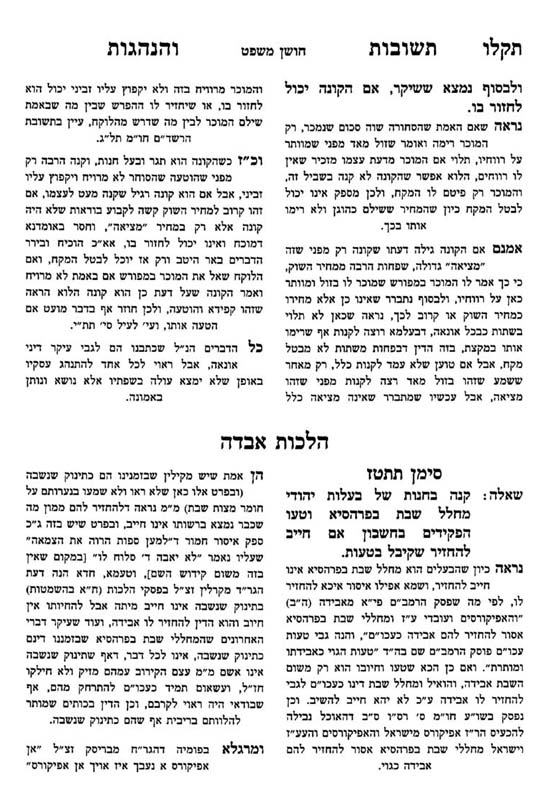
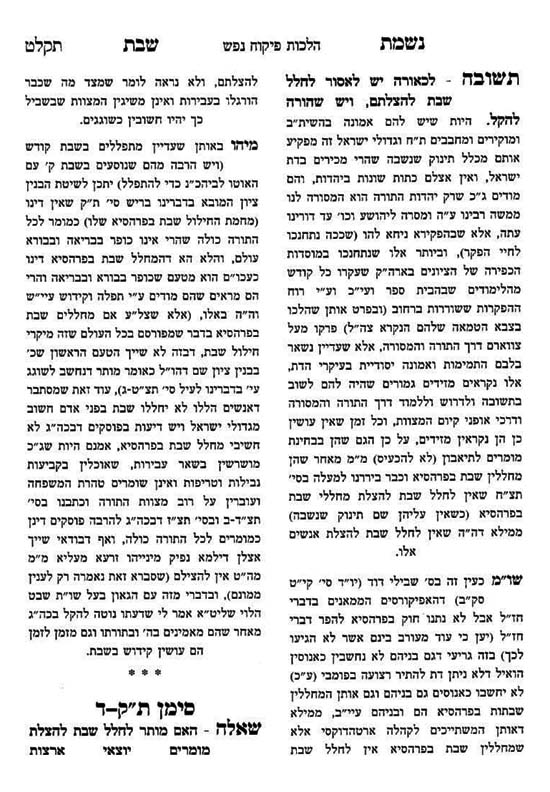
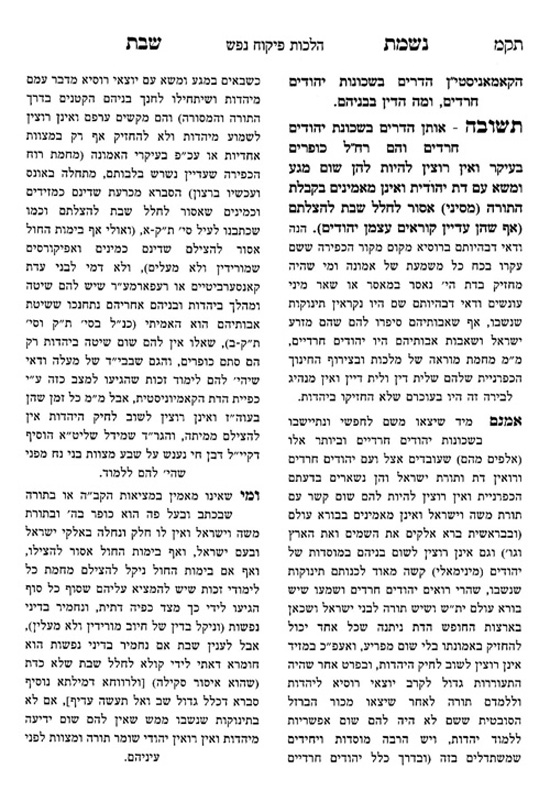
[1] In
light of this contrast, it is interesting that Rabbi Wasserman, as a youth, was
privileged to learn from Rav Kook for a while. In 1890 Rabbi Wasserman’s family
moved to Bauska (Boisk),
and five years later Rav Kook was appointed as rabbi of the town. At the time
Rabbi Wasserman was a student in the Telz Yeshiva, and when he returned home
during vacation, he would participate in the classes given by Rav Kook (See R.
Ze’ev Arye Rabbiner, “Shalosh Kehilot Kodesh,” Yahadut Latvia:
Sefer Zikaron
[Tel Aviv, 1953], 268; Aharon Surasky, Ohr Elĥanan I [Jerusalem,
1978], 30).
[2] Kovetz
Ma’amarim Ve-Igrot

I (Jerusalem, 2001), 153; previously in Kuntres Be-Ein Ĥazon (Jerusalem,
1969), 92. Concerning R. Wasserman’s dealings with the issues of the Jews in
Eretz Yisrael, we bring the words of R. Ĥaim Ozer Grodzensky, R. Wasserman’s
brother-in-law, which he wrote less than two months later in a reply to R.
Reuven Katz’s complaint regarding the open letter published by R. Wasserman to
Poalei Agudath Israel in Eretz Yisrael, calling on them not to accept help from
Zionist organizations: “I, too, am surprised at what [R. Wasserman] saw
that he publicized his personal opinion without consulting us, and I did not
know of it. He also exaggerated. The matters of the yishuv in Eretz
Yisrael cannot be compared to private matters in the Diaspora for several reasons,
and certainly it is impossible to give a ruling on such a serious matter from
afar without knowing the details…” (Aĥiezer – Kovetz Igrot [Bnei Brak, 1970], 1:299; see ibid., 200-1, a letter to Histadrut
Pagi, where the words are repeated. For R. Wasserman’s open letter and more
material on this subject, see Kovetz Ma’amarim Ve-Igrot I, 133-152).
[3] This
statement is based on the words of Rabeinu Yonah Gerondi (Sha’arei Teshuva,
3:148), and R. Wasserman’s interpretation of them elsewhere (“Ikvete De-Meshiĥa,
§ 36, translated into Hebrew from the Yiddish by R. Moshe Schonfeld and
printed as a pamphlet in 1942, and in Kovetz Ma’amarim [Jerusalem 1963],
127-28). However, it seems that there is an essential difference between the
actual words of Rabeinu Yona and R. Wasserman’s interpretation (compare with a
parallel commentary of Rabeinu Yona to m. Avot 4:6, and the way his
words were interpreted by Rashbatz, “Magen Avot” 4:8, and R. Yisrael Elnekave,
Menorat Ha-Ma’or, Enlau edition, 310-11), and let this suffice. For an
example of a diametrically opposed position, see: R. Tzadok Ha-Kohen, Pri
Tzadik
, Vayikra (Lublin 1922), 221.
[4] See R. Yitzchak
Dadon, Imrei Shefer (Jerusalem, 2008), 273.
[5] “Li-Shelosha
be-Elul” (Jerusalem, 1938) §24
(p.22). See also Siĥot Ha-Rav Tzvi Yehuda – Eretz Yisrael (Jerusalem,
2005), 84. On the other hand, R. Shmuel HaKohen Weingarten, who also heard from
Rav Tzvi Yehuda about his father’s refusal to call for support of Keren Hayesod,
pointed out an item in the newspaper Dos Idishe Licht (May 23, 1924),
according to which Rav Kook refused to support a proposal raised at the
American Union of Rabbis to boycott Keren Hayesod (Halikhot 33 [Tel
Aviv, Tishrei 1966], 27). Compare Rav Kook’s reasons for not waging a public
war against the Gymnasia Ha-Ivrit high school, despite his intense opposition
to the school (Igrot Ha-Re’iya II, 160-61).
[6] The existence
of false rumors concerning Rav Kook was mentioned already in 1921 by the Gerrer
Rebbe, R. Avraham Mordechai Alter, in his well-known letter written on the
boat: “Outside Eretz Yisrael what is thought and imagined is different
from the reality. For according to the information heard, the Gaon Rav Kook was
considered to be an enlightened rabbi who ran after bribes. He was attacked
with excommunication and curses. Even the newspapers Yud and Ha-Derekh
sometimes published these one-sided reports. But this is not the correct way of
behavior – to listen to one side, no matter who it is…” (Osef
Mikhtavim U-Devarim
[Warsaw, 1937], 68). R. Moshe Tzvi Neriya’s description
is typical: “…these news items even made their way into sealed Russia.
They said: “He’s close to the high echelons, and he has an official
position. This opinion excluded him from the usual description of a great Rav.
And then again it was said, ‘He’s close to the Zionists,’ and he was imagined
to be an ‘enlightened’ rabbi […] however, all those description and imaginations
completely melted away on seeing him.” (Likutei Ha-Re’iya [Kefar
Haro’eh, 1991], 1:13-14). An amazingly similar description was written by R.
Yitzchak Gerstenkorn, founder of Bnei Brak: “I imagined Rav Kook, of
blessed memory, as a modern rabbi […] and how amazed I was, on my first visit
to Rav Kook, when I saw before me a sacred, pious person, few of whom live in
our generation…” (Zikhronotai al Bnei Brak I [Jerusalem, 1942],
74).
[7] See Igrot
la-Re’iya
, 303-306. See also his 1923 declaration in support of Keren
Kayemet in which he emphasizes that “it is intended only for redemption of
the Land” (Raz, Malakhim ki-Venei Adam [Jerusalem, 1994], 238) —
meaning, not for educational and other such purposes as those of Keren Hayesod.
In this connection it should be noted that there was sometimes tension between
Keren Kayemet and Keren Hayesod because of the impression created that the
latter also dealt in redeeming lands (see Protokolim shel Yeshivot Ha-Keren
Kayemet Le-Yisrael
, Central Zionist Archives, Jerusalem, 4:109, 498/33 —
protocols from March 31 and July 7, 1922. See also the joint agreement of the
two funds, Ha-Olam 10:14 [January 27, 1921], 16). In order to illustrate
the Keren Kayemet’s well-established status among substantial sections of the
rabbinical world, we will refer to the 32nd annual convention of the
Union of Orthodox Rabbis of the United States and Canada, 1937. In the second
section of the convention’s resolutions it states: “The Union of Rabbis
imposes a sacred debt on all Orthodox Jews who will lend generous support to
Keren Kayemet Leyisrael.” It should be noted that the majority of
America’s great rabbis of the time participated in this convention (see Ha-Yehudi
2:10 [New York, Iyar 1927], 195. A similar resolution was made in previous
conventions; see, for example, HaPardes 5:3 [Sivan 1931], p. 31, § 7; HaPardes 6:3 [Sivan 1932], p.
25, § 5-8).
[8] This draft is
quoted by R. Yaakov Filber, Kokhav Ohr (Jerusalem, 1993), 21-22 (Slight
changes in style have been made according to a photocopy in my possession).
Negatives statements about Keren Hayesod were omitted from the response that
was actually sent, and only the positive statements about Keren Kayemet were
included. R. Filber posits that, based on the letter that Rav Kook sent to his
son, Rav Z. Y. Kook, about a week later (ibid.), the reason for the omission
was Rav Kook’s concern that the negative sentences might be used as a means to
attack the Zionist funds in general. In my opinion, taking into account Rav
Kook’s style, it is unlikely that he had such a concern, but rather the omission
is probably connected to his wish not to take part in a public boycott of Keren
Hayesod (see above, note 5).
[9] See R. Neriya
Goutel, “Hilkhot Ve-Halikhot Ha-Keren Ha-Kayemet Le-Yisrael Ve-Haĥug Ha-Hityashvuti
Be-Ma’arekhet Hitkatvuyotav shel Ha-Rav Kook,” Sinai 121 (1998),
103-115; Ĥaim Peles, “Teguvotav shel Ha-Rav A. Y. Kook al Ĥilulei Ha-Shabat
al Admat Ha-Keren Ha-Kayemet Le-Yisrael,” Sinai 115 (1995),
180-186; see also Rav Kook, Ĥazon Ha-Geula (Jerusalem, 1937), 220-230;
ibid., 33-34, et seq. (I have expanded on the topic of Rav Kook’s relationship
with the Keren Kayemet elsewhere).
[10] In a letter
from winter 1924 to R. Dov Arye Leventhal of the Union of Rabbis, about his
trip to America, Rav Kook writes that one of the questions that his trip
depends upon is “whether there will not be a tendency to confuse his
support for this [the Union of Rabbis] with Keren Hayesod” (Igrot Ha-Re’iya
IV (Jerusalem 1984), 177. In a letter from winter 1925 to R. Akiva Glasner of Klausenburg,
he calls on him to make use of “the Zionist funds of Keren Hayesod”
for purposes such as sheĥita and ritual baths in a settlement of
Transylvanian immigrants in Eretz Yisrael. He comments that when all is said
and done, in most places the donors are religious Jews; but of course he should
ensure that everything is done according to the Torah (ibid., 216).
[11] Sinai
115 (1995), 181; the full letter was printed in Mikhtavim Ve-Igrot Kodesh
(ed. R. David Avraham Mandelbaum, New York, 2003), 588. Here, as in the third
example (see below), Rav Kook hints that if they do not take the necessary
steps, he will stop supporting the Keren Kayemet, and will even publicize the
matter.
[12] Sinai
115 (1995), 183
[13] R. Moshe
Zuriel, Otzarot Ha-Re’iya I (Rishon Lezion, 2002), 487.
[14] See inter al.:
Dan Giladi, Ha-Yishuv Bi-Tekufat Ha-Aliya Ha-Revi’it: Beĥina Kalkalit U-Politit
(Tel Aviv, 1973), 171-192. The cause of the crisis was twofold: on the one
hand, the especially large amount of new immigrants in the two years prior to
the crisis, for which the economy was unprepared; on the other hand, the severe
limitations that the Polish government enforced on taking money out of the
country (in an attempt to fight the hyperinflation of the value of the zloty),
which harmed both the donations to Eretz Yisrael, and the capability of the new
immigrants to bring their possessions with them to Eretz Yisrael.
[15] For details of
R. Ostrovsky’s trip see Ha-Zefira 66:30 (February 4, 1927), 8. For the
blessings for success that he received from R. Yeĥiel Moshe Segalovitz, head of
the Mława rabbinical court, see ibid. 66:34 (February 9, 1927), 3. Rav
Kook’s letter to Polish Jewry was published in Ha-Olam on March 4, 1927,
and again in Zuriel, Otzarot Ha-Re’iya II (1998 edition), 1075.
[16] See the monthly
Ha-Hed, Kislev 1926, p.12, and the weekly Ha-Tor 7:16 (November
19, 1926), front page. This version was printed later in Ĥazon Ha-Geula,
180. The version quoted here is based on minor corrections of mistakes that
appeared in one of the sources. In the description attached to the public
letter in Ha-Hed the following was written: “In honor of Keren
Hayesod’s special aid program for the benefit of the unemployed in Eretz
Yisrael, Rav Kook published a special public letter….”
[17] Ha-Zefira
65:50 (Warsaw, November 29, 1926), 3. In the description attached to the public
letter it said: “On 2 Kislev [November 8, 1926), the Chief Rabbi of Eretz
Yisrael, Rav A.Y. Ha-Kohen Kook sent the following public letter to the head
office of Keren Hayesod….” A few days later the letter was also published
in Ha-Olam 14:50 (London, December 3, 1926), 944, with the same headline
and description as in Ha-Zefira, but without the insertion of
“Keren Hayesod” in the body of the letter; see also Ha-Olam
14:48 (December 19), 906, where it was reported that “Rav Kook published a
public letter to world Jewry to aid Keren Hayesod, thereby easing the crisis in
Eretz Yisrael.”
[18] Central Zionist
Archives, KH421036. As is explained in this file, Rav Kook’s colleague, R. Y.
Meir, visited the offices of Keren Hayesod.
[19] From a copy of
the letter in the possession of R. Ze’ev Neuman, to whom I am most grateful. It
should be noted that Leib Yaffe was a relative of Rav Kook: his paternal
grandfather, R. Mordechai Gimpel Yaffe, was Rav Kook’s paternal grandmother’s
brother. Nevertheless, at the opening of the letter, Rav Kook does not show any
family sentiment, but starts with a completely neutral tone.
[20] About two years
before the above letter, in 1925, Rav Kook, together with other rabbis,
participated in a meeting with Keren Hayesod where sums allocated for religious
needs, and other allocation options, were decided upon (Yehoshua Radler-Feldman
[R. Binyamin], Otzar Ha-aretz [Jerusalem, 1926], 72-73; see also note 10
above).
[21] The reader
should note the letter of both the chief rabbis from March 27, 1927 – about two
months after the above letter – which was sent, among others, to the secretary
of Keren Hayesod, Mordechai Helfman, with the demand to prevent the profanation
of Shabbat and kashrut in settlements located on the land of Keren Kayemet, or
that are supported by Keren Hayesod. In his reply from March 30 (quoted in
Motti Ze’ira, Keru’im Anu [Jerusalem, 2002], 172), Helfman justified
himself saying: “The management of Keren Hayesod is only a mechanism for
collecting money […] We are, of course, ready to help in [attempting to] have
moral influence, and we hereby promise his honor, that we will use our
influence at every opportunity to emphasize that which is wrong.”
[22] The document
can be found in the Central Zionist Archive KH1/220/2. I am grateful to Mr.
Yitzĥak Dadon, who made me aware of the document’s existence and gave me a
photocopy. Most of the demands in this document were repeated, with different
emphases, in a declaration publicized by Rav Kook in the spring of 1931 (see
note 37 below).
[23] Even though Rav
Kook repeated in this letter that he was not prohibiting support of Keren
Hayesod, later, when in 1932 the Jewish Agency did not fulfill its promise to
transfer an allocated sum for religious matters, Rav Kook protested the matter
in a sharp letter in which he warned that if at least part of the promised sum
was not transferred, he would be forced to turn to the rabbis in America and to
members of Mizrachi in Poland, with the demand to prevent support of the Keren
Hayesod appeal (letter from April 6, 1932, Central Zionist Archive
S255894-419).
[24] Information
about Rav Kook’s supposed support of Keren Hayesod, based on the east-European
version of the public letter, quickly reached Rav Kook’s opponents in Eretz
Yisrael and even in America. In a letter from December 29, 1926, Meir
Heller-Semnitzer, one of the most extreme zealots in Jerusalem (around whom,
that same summer, a major scandal erupted, concerning a harsh declaration that
he published against the Gerrer Rebbe and Rav Kook), informed Reb Zvi Hirsch
Friedman of New York (a distinguished zealot himself who, a year previously, had
been expelled from the Union of Rabbis in America because of attacks against
Rav Kook that he had published in one of his books), that Rav Kook issued a
proclamation calling for support of “the baseless fund” [play on words:
yesod means base]. See Friedman, Zvi ĤemedMishpati im
Dayanei Medinat Yisrael
(Brooklyn, 1960), 67.
[25] As R. Y. Y.
Trunk pointed out already in 1921 (see note 27 below).
[26] A. Elitzur, “Keren
Hayesod Be-mivĥan Ha-zeman” in Luaĥ Yerushalayim – 5706 (Jerusalem,
1945), 259-268; see also Otzar Ha-aretz, 70-76.
[27] In this
connection it is customary to mention R. Meir Simĥa Ha-Kohen of Dvinsk, author
of Ohr Same’aĥ, who acceded to the request of an emissary of the World
Zionist Organization in preparation for the appeal of Keren Hayesod in Latvia,
and wrote his famous letter calling for support of the yishuv in Eretz
Yisrael (printed in Ha-Tor, 3, 1922, and also in R. Ze’ev Arye Rabiner, Rabeinu
Meir
Same’aĥ Kohen [Tel Aviv, 1967], 163-165, et al.). However, even
though the historical context involves the Keren Hayesod, the letter itself
deals with general support of settling Eretz Yisrael, and contains no explicit
mention of Keren Hayesod or any other Zionist organization. Hence it is
difficult to see in the letter a ruling concerning the fundamental question of
whether to support Keren Hayesod despite the fact that part of its budget goes
towards secular education. The same applies to a similar letter written in the
same year and in the same connection by R. Eliezer Dan Yiĥye of Lucyn (See Otzar
Ha-aretz
, 84-86). In contrast, R. Yitzĥak Yehuda Trunk of Kotnya, the
grandson of the author of Yeshu’ot Malko and one of the rabbis of the
Mizrachi movement in Poland, wrote a detailed letter in the same year,
explicitly calling for support of Keren Hayesod. He wrote at length rejecting
the arguments against contributing to the fund (See Sinai 85 [Nisan-Elul 1979],
95-96). See also in the following footnotes.
[28] See Otzar
Ha-aretz
, 78-82. It should be added that the Chief Rabbi of Tel Aviv (later
the Rishon le-Tziyon), R. Ben-Tziyon Ĥai Uziel, participated, himself, in the
activity of Keren Hayesod (see his books, Mikhmanei Uziel IV (Jerusalem,
2007) 31-32, 283-284, and in vol. VI, 297-299, et al.), as did R. Ostrovsky (as
mentioned above), and others.
[29] In an issue of
Ha-Olam
(18:46 [London, November 11, 1930], 911) in honor of Keren
Hayesod’s tenth anniversary, “the declaration of Eretz Yisrael’s rabbis
concerning Keren Hayesod” from September 1930, was published. Hundreds of
rabbis signed the declaration, the majority from America, and others from Eretz
Yisrael, Europe, and Eastern countries. The declaration included an explicit
call to strengthen Keren Hayesod, “which for the last ten years has borne
on its shoulders the elevated task of building our sacred inheritance, and
faithfully supporting all projects that bring us close to that great aim.”
It seems that there is not one well-known rabbi who was active in the Union of
Orthodox Rabbis of the United States and Canada who did not sign this
declaration: R. Yehuda Leib Graubart, R. Elazar Preil, R. Ĥaim Fischel Epstein,
R. Yosef Kanowitz, R. Yosef Eliyahu Henkin, R. Eliezer Silver, R. Ze’ev Wolf
Leiter, R. Ĥaim Yitzĥak Bloch, R. Yehuda Leib Salzer, etc., etc. (nevertheless,
in light of the scope and rare variety of the signatories, one wonders whether
this was a declaration approved by majority vote at the conference of the Union
of Rabbis, such that the weight of the opponents was not reflected, and
therefore the names of all the Union’s members were given as signatories).
[30] See Otzar
Ha-aretz
, 77, his letter from December 8, 1925 calling for support of Keren
Hayesod. See note 18, and more below.
[31] A most
interesting fact in this connection is that R. Wasserman’s relative by marriage
from 1929 (the father-in-law of his son R. Elazar Simĥa), R. Meir Abowitz, head
of the rabbinical court of Novardok and author of Pnei Meir on Talmud
Yerushalmi
, not only was an avowed member of the Mizrachi movement, and in
1923 even signed a call to join the movement (see Encyclopedia of Religious
Zionism
I [Jerusalem, 1958], columns 1-2), but also was one of the
signatories on the aforementioned declaration in favor of Keren Hayesod! (Otzar
Ha-aretz
, 81). The fact that R. Wasserman was involved in R. Abowitz’s
younger daughter’s marriage, is testimony to the good relationship between the
families (see R. Wasserman’s daughter-in-law’s testimony in the photocopied
edition of Pnei Meir on the tractate Shabbat [USA, 1944], at the end of
the introduction. R. Abowitz’s letters to his son-in-law are published at the
end of R. Wasserman’s Kovetz Shiurim II [Tel Aviv, 1989], 117-119).
[32] It is
worthwhile comparing these words with R. Yosef Ĥaim Zonnenfeld’s moderate
language in a letter to his brother written in 1921, in which he gives the
benefit of the doubt to the donors of Keren Hayesod: “Those naïve ones,
who contribute to Keren Hayesod out of pure love in order to aid in the
establishment of the settlement in our holy Land, certainly have a mitzvah. I
do not know to what purpose they will actually put the money of Keren Hayesod,
but if it is given into faithful hands, who will use it honestly for settling
the Land, this is anyway a big mitzvah. However, as has been said, it must be
in such hands that will use it for building and not for destruction […] ‘and
because of our sins we were exiled from our Land'” (translated from
Yiddish, S.Z. Zonnenfeld, Ha-ish al Ha-ĥoma III [Jerusalem, 1975], 436).
[33] Although R.
Ya’akov Meir, who explicitly supported Keren Hayesod, was also one ” who
heads the above [i.e. the Chief Rabbinate],” nevertheless, R. Wasserman’s
words are taken to be addressed specifically to Rav Kook. On the other hand, it
is interesting that in a letter that R. Wasserman wrote to his brother on July
30, 1935, the following sentence appears: “What is Rav Kook’s malady, and
how is he feeling now?” (Kovetz Ma’amarim Ve-igrot II, 124).
[34] Degel
Yisrael
2:11 (New York, December 1928), 12-13 (the emphasis is mine). The date
of the secretariat’s letter is April 26, 1928.
[35] Friedman,
“Pashkevilim U-moda’ot kir Ba-ĥevra Ha-Ĥareidit,” in Pashkevilim
(Tel Aviv, 2005), 20. See also his book Ĥevra Va-dat (Jerusalem, 1978),
337.
[36] In the same
year, October 1930, in an issue devoted to the tenth anniversary of Keren
Hayesod, a declaration from Rav Kook was printed under the heading
“Mi-ma’amakei Ha-kodesh,” in which a process of awakening in the
country among the people and the new yishuv is described, together with
a call to base activities on sanctity and to unite (Ha-Olam 18:45
[November 2, 1930], 900). Here, too, there is no explicit mention of Keren
Hayesod or any other organization, even though explicit calls by other
personalities for support of the fund were published close to his declaration
(See also an additional article by Rav Kook, (Ha-Olam 18:47 [November
18, 1930], 926).
[37] Mikhtavim
Ve-Igrot Kodesh
, 624. The date of R. Meltzer’s signature on the declaration
is February 18, 1921. He writes using the plural form: “schools … are
supported by these funds,” but in fact only Keren Hayesod referred funds
to educational institutions, such that his main opposition was actually
directed against it in particular, and not against Keren Hakayemet (see next
note). For the moment I have been unable to locate the call mentioned in his
words, which Prof. Friedman dealt with, however it is probably a very similar
declaration to the one published in Ha-Hed, April 1931 (and again in Otzarot
Ha-Re’iya
II, 426), in which Rav Kook calls, in preparation for the
“coming Zionist Congress” to present a series of demands in the field
of religion, which have to come together with “material fundraising”
and aid to build up the country. It is superfluous to note that there is no
mention of Keren Hayesod in the declaration, as well as to no other official
institution.
[38] For comparison,
see a similar public letter that the three rabbis, Rav Kook, R. Meltzer, and R.
Borokhov, together with R. Yaakov Meir, published in 1929, calling to the heads
of the Zionist organizations “to immediately send a last warning to the
kibbutzim and moshavot supported by you, that if they do not stop
profaning our religion, and everything sacred, you will stop your support of
them altogether. If our words are not obeyed by you, we will unfortunately be
forced to wage a defensive war against these destroyers of our People and our
Land […] even though this will harm the funds which support the new yishuv”
(printed in Ha-Tor 9:37 [August 9, 1929], and again in Keruzei
Ha-Re’iya
[Jerusalem, 2000], 90) 


The Future of Israeli Haredi Society: Can The Written Word Offer Some Insight? (And Assorted Other Comments)

The Future of Israeli Haredi Society: Can The Written Word Offer Some Insight? (And Assorted Other Comments)
by Marc B. Shapiro

 1. Months ago I was asked to write about the situation in Beit Shemesh that everyone was then focused on (and which will probably heat up again in the future). At the present, I don’t have anything to add to the discussion, and if I did it would be with reference to Jewish books, as this is, after all, a site devoted to seforim. While I have in the past given my views on various issues, it was in the context of Jewish books, and this case would be no different. This point was actually sorely missing in discussions of the Beit Shemesh situation and the haredi world in general. While what happens in real life does not always correspond to what appears in the books, knowledge of the latter is a great help in understanding what is going on in the community, at least with regard to the rabbinic elite. For example, if I were going to write something about the Neturei Karta faction that cozies up to Iran and Hamas, I would deal with how these people have tried to justify their actions from talmudic sources. They have even attempted to justify the sending of congratulations to Hamas after the latter succeeded in blowing up Jews in a terrorist attack.

I have also been asked a number of times to write about the more basic issue of haredi ideology and democracy, which is on many people’s minds. They are wondering if the Israeli haredi community really believes in democracy and allowing everyone the freedom to live as they see fit. More than one has asked me straight out if a haredi majority would mean the end of a democratic Israel.[1] I can’t speak about the haredi man on the street, but examination of the writings of the haredi leadership – and in the haredi world that is what really matters – shows that time and again they have expressed opposition to democratic values as well as democracy as a governmental system.

From the haredi leadership’s perspective, while at the present time the haredi world is forced to take part in the democratic process, they assume that if haredim ever became a majority they would dismantle Israel’s democracy and institute a Torah state (i.e., a theocracy led by the haredi gedolim).[2] Since that is their goal, stated explicitly, we have to wonder what such a society would look like. To begin with, if haredim were ever the majority, funding for non-Orthodox (and perhaps even Religious Zionist/Modern Orthodox) schools would be halted. There would be massive decreases of funding for universities, with the humanities taking the biggest cuts, and money for the arts, culture, and institutions connected to Zionism would dry up. Freedom of the press would be abolished, artistic freedoms would be curbed, and organ transplants would almost entirely vanish. Public Shabbat observance and separate-sex public transportation would likely be required. There would also be restrictions on what forms of public entertainment and media are permissible and on public roles for women. Of course, women’s sporting events would no longer be televised and men would not be permitted to attend them. From the haredi perspective, these steps are all halakhic requirements, and no one who reads haredi literature can have any doubt that these sorts of things are intended when haredi writers refer to the time when it will be possible להעמיד הדת על תלה. How many non-haredim will be affected by this is questionable, because as soon as the haredi numbers come close to a majority, the non-religious and non-haredi Orthodox emigration will begin (followed no doubt by the yeridah of some haredim as well). No one who has lived in a Western style democracy will want to live in a society where cherished freedoms are taken away.

Everything I am saying now could change. It is indeed possible that the haredi leadership could do a complete turn-around and decide that it is not helpful to take the country in a direction which while more “pious” would end up destroying it at the same time. But this would take some incredible acts of courage by the haredi leadership. They would have to break with a message that has been advocated for the last thirty years or so.

Here is what R. Shakh wrote about democracy (Mikhtavim u-Ma’amarim, vol. 5, p. 124):

בל נחשוב, שהשיטה הנקראת “דמוקרטיה” היא דבר חיובי . . . האמת היא שהיא אסון לעולם. היא נותנת הרגשה מדומה של “חופש” בו בזמן שלאמיתו של דבר היא רק הפקר, ותו לא . . . הדמוקרטיה היא דבר טרף, וכל כוונתם לעקור דרכה של עם ישראל ולהרסו

On p. 127 he writes:

ואנו תפילה להרבונו של עולם, אנא פטור אותנו מקללת הדמוקרטיה החדשה שנשלחה לעולם, שהיא ממש כמו מחלת הסרטן שנשלחה לעולם. כי רק התורה הקדושה היא הדמוקרטיה האמיתית.

If the “curse” and “cancer” of democracy is so bad, what would take its place in a haredi dominated society? The answer is obvious, namely, a theocratic state with a religously sanctioned parliament along the models of Iran. Reading the history of Iran in the years prior to and immediately following the revolution provides great insight into how religious figures learned to make use of the mechanisms of power which they had never before had access to. Just like in Iran the theocracy is for the people’s “own good”, so too will be the case in a haredi theocracy. Here is R. Shakh again, offering the paternalistic explanation as to why people should be denied democratic freedoms, freedoms that are the only guarantee that different types of Orthodoxy can flourish (forgetting for a moment about the non-Orthodox[3]; p. 126):

 האדם חייב לחיות בתוך מגבלות, לצורך אושרו וטובתו. ודוקא הדמוקרטיה ההורסת את המגבלות היא המחריבה את האנושות

Do any American haredi leaders agree with these sentiments, that it is democracy that is destroying humanity? I highly doubt it. But by the same token, I don’t think there can be any doubt that the Israeli haredi political parties, if they ever achieved electoral success, would put R. Shakh’s vision into practice by dismantling Israeli society’s democratic protections. So yes, the non-haredi segment of Israel has plenty of reason to be worried about the growth of the haredi electorate, especially when they hear the haredi triumphalist assertions that the future will be theirs. If the comments one sees on Voz is Neias and elsewhere are any indication, there are also many in the haredi world who recognize that the haredi ideology is really only suited for a minority community, and that troubles begin when people attempt to impose this ideology on others, or insist that no matter how large the haredi community is, its young men should never have to go to the army or receive any vocational training.[4] It didn’t have to be this way, as there are plenty of precedents even in haredi writers for a different perspective. But those alternative views are entirely forgotten today.

If anyone still has doubts that the future growth of the haredi parties will present a serious threat to Israeli democracy, here is a passage, from R. Yissachar Meir, that appeared in an official Degel ha-Torah publication, Ve-Zarah ha-Shemesh (Bnei Brak, 1990), p. 630 (emphasis added; many other similar passages could be cited). What will take the place of democracy in the haredi state is spelled out right here:

טעות אחת טעו מנהיגיה הראשונים של המדינה, הם חוקקו חוק הנקרא “דמוקרטיה”. כל אחד יודע דמוקרטיה זו מהי, על פי השיכורים הנמצאים במדינה – שלוש מאות אלף מסוממים חיים במדינה – ועל פי זקנים מסוידים וכו’ נקבע השלטון. כמו כן בכל מיני שוחד, ודרכי כפיה, נקבע ע”י מה שנקרא “בחירות”, איך תנהג המדינה בכל הנושאים העולים על הפרק. על פי דרך התורה, גדולי התורה הם הקובעים את המנהיגות.

Meir could have used a little lesson in history, because just like the Islamic world never had a theocracy until the Iranian revolution, Jewish history also does not know of theocracies (and the closest example we had, with High Priests involved in rulership, did not bring good results).[5]

The truth of the matter is that we get no honesty from haredi spokesmen in these matters. They go on about how the non-religious have such a negative view of them. Well, what about the reverse, namely, what the haredim think of the non-religious? One of the leaders of the extremist haredim is R. Moshe Sternbuch. Here is the first page of a responsum he wrote (Teshuvot ve-Hanhagot, vol. 1, no. 816) in which he states that if a non-religious store owner makes a monetary mistake (e.g., gives you too much money) there is no obligation to point out the error.

He even quotes a 19th-20th century authority (and one who has a fairly moderate reputation) that there is no obligation to save his life! If this is what a well known haredi posek is teaching his followers, by what right can one criticize the non-religious for what they think of the extremist haredim? Let me pose this question to Avi Shafran and the rest of the apologists: How exactly should the non-religious feel about the extremist haredim when the latter are being taught that they don’t have to deal with the non-religious in an honest fashion, and that their lives are not important?

(Quite apart from his religious views, Sternbuch’s political views are perhaps even more distasteful. At the recent protest against haredim serving in the army, he said that “the Zionists expelled the Arabs from the Land of Israel.” See here).

Here is another responsum, by R. Israel David Harfenes, Nishmat Shabbat, vol. 5 no. 500:4.

I know that people wouldn’t believe me without seeing with their own eyes. The author is asked if you can violate Shabbat to save the lives of irreligious Jews who came from the former Communist countries, that is, Jews who never had the benefit of a Jewish education. His answer is absolutely not, and he questions whether it is even permitted to save their lives during the week! Incredibly, he puts the Reform and Conservative in a better position than the secular Russian Jews, seeing the former as brainwashed by a false ideology. There is thus a possible limud zekhut regarding them.

None of this makes any sense, as people can be under the influence of a secular or anti-religious ideology much like they are under the influence of a Reform or Conservative ideology. If you can apply the logic of tinok she-nishbah to one, there is no coherent reason not to apply it to the other. For good measure, Harfenes also throws in that one who doesn’t believe in the Rambam’s Thirteen Principles is among those who should be killed. Taking a line from the Inquisition, he adds that killing these people is actually good for their souls, not to mention a benefit to the community at large.

In a previous responsum, 400:1, he discusses the same question with regard to the typical secular Jew and concludes likewise that one cannot save them on Shabbat. The only heter he can find is that if the haredi doctors don’t save them, then the secular doctors will refuse to save haredi patients. But unbelievably, rather than seeing this as a natural reaction of the secular Jews upon learning how people like Harfenes don’t value their lives, and are even are prepared to let them die, Harfenes sees this as an example of anti-Orthodox hatred! You can’t make this stuff up.

שאם יתפרסם שרופאים חרדיים אינן מטפלין בשבת עם החולים החילוניים אז הרופאים החילוניים ינקמו נקם ולא ירצו גם הם לטפל להציל חולים מסוכנים מן יהודים חרדיים  (כידוע תוקף שנאת הדת הארצינו הקדושה ירחם ה’).

Some might assume that this extremist Satmar outlook [6] is not to be found in the non-hasidic yeshiva world. However, this is not the case. I can cite parallels to what we have just seen in non-hasidic authors as well. I will mention just one such text, as it happens to be among the most depressing, and extreme, of the books to appear in recent years.[7] I refer to R. Menahem Adler’s Binah ve-Daat. Here is the title page.

This book engages in the most crude incitement of hatred for the non-religious that I have ever seen in a sefer, all packaged as a typical halakhic text. Are the views expressed in this book taught in any heders or yeshivot or held by any but the most extreme in Israel? Perhaps the fact that the standard haskamot from figures such as R. Elyashiv, R. Wosner, R. Scheinberg and others are missing is a sign that they didn’t agree with the author. It would take a complete post to cover this book properly (some aspects of the book were already discussed on Hyde Park here).

I will call attention to only some of the points Adler puts forth as halakhah. When I read things like this I wonder, how big can the Orthodox tent really be? When are the various communities in Orthodoxy so much at odds with each other that we must speak of two entirely different communities, much like the Protestants are divided into various sects?

One of the main points of the book is to argue that contemporary non-Orthodox Jews are not to be regarded as tinok she-nishbah, and thus they are subject to all the disabilities of brazen Sabbath violators. This means that they do not need to be treated with any respect or dignity. Those who know the relevant halakhot know what I am referring to, but let me cite some examples that you might not have thought of and which are results of his position. These come from chapter 31 and are stated with reference to most contemporary non-religious Jews (since only very few of them qualify as a tinok she-nishbah). How should the non-religious respond when they hear that this is what a rabbi is saying about them:

אין להקדים שלום לאדם רשע . . . אסור לראות פני הרשע . . . ונראה דהוא הדין תנוק שנשבה
In other words, although he denies that contemporary non-religious are tinok she-nishbah, even if you want to argue that they are, you still can’t look at them.

אין נוהג בו איסור אונאת דברים . . . נראה דאין כלפיו איסור “לא תחמוד”
And talking about humrot, how about this one?
יש מחמירים ליטול ידים אחר שנגעו בהם

When I saw this I thought of the following wonderful story recorded in R. Asher Anshel Yehudah Miller, Olamo Shel Abba, p. 415:

פעם ביקר אצל הרבי יהודי חילוני מגולח ובכ”ז הושיט לו הצדיק [ר’ ישראל האגער] את ידו וקבל אותו בסבר פנים יפות, כדרכו בקודש. ישב שם אחד מחסידי צאנז, שהיה מוכר כמתנגד לבית-וויז’ניץ. לחש החסיד באזני הרבי ושאל “מדוע פושט הרבי ידו לפושעי-ישראל זה?” אמר לו הצדיק: “עד שאתה מתפלא עלי, תתפלא על הקב”ה, שגם הוא דרכו בכך, כמו שנאמר ‘אתה נותן יד לפושעים וימינך פשוטה לקבל שבים


On p. 408 Adler writes:
המחלל שבת בפרהסיא (גם אם מחלל לתיאבון) יוצא לענין דינים שונים מכלל “אחיך” עמיתך” “רעך” ומכיון שיצא מכלל עמיתך, אין כלפיו את המצוות הנוהגות “בין אדם לחבירו” וכן אין נוהגים כלפיו את האיסורים, כגון הכלמה ולשון הרע.

Is there anyone in the kiruv world who believes this? Would anyone ever become religious if he even had an inkling that there are rabbis who advocate this position about the future baal teshuvah’s parents?[8] Aren’t the many haredi hesed organizations that don’t distinguish between Jews’ levels of religiosity a good sign that the mainstream haredi world rejects the viewpoints of Adler and Sternbuch?

On p. 470 he says that it is forbidden to belong to an organization that has non-Orthodox members, and this even includes charitable organization. The reason given for this position is as follows:

כיון שהישיבה עמהם גורמת קירור בעבודת השי”ת, ומלבד זאת, אופן החשיבה וקבלת ההחלטות אינם לפי דעת תורה.

So we see that it is problematic for an Orthodox Jew to have any dealings with the non-Orthodox. Although the author cites R. Samson Raphael Hirsch to justify this extreme position, this is a complete distortion. Hirsch opposed membership in organizations that were led by the non-Orthodox or even had organizational ties with non-Orthodox groups. He never said that individual non-Orthodox Jews would not be welcome to join with the Orthodox for the betterment of the Jewish community.

On p. 406 Adler tells us that one cannot sell or rent an apartment in a religious neighborhood to a non-religious person. Will the author then complain when the non-religious don’t want to sell or rent to haredim (especially if they think that these haredim might hold the same views as Adler)? If it is OK for haredim not to want to live together with secular Jews because of  the “atmosphere” the latter bring, why have the haredi Knesset members cried racism when secular residents don’t want an influx of haredim for exactly the same reason? In a democracy one can’t have it both ways.[9]

Adler is part of a growing trend in haredi writings not to see the secularists as tinok she-nishbah, with all the halakhic implications this entails. While Adler acknowledges the existence of tinok she-nishbah as a category, note what he puts in brackets which pretty much empties the category of any meaning (p. 31):

ולענין הלכה, מכיון שאין בנו כח להכריע, במחלוקות אלו, וגם אין כל הענינים שוים, מתי נקרא בשם “תנוק שנשבה” ומתי לא, ובפרט קשה ההכרעה המציאותית של “שיעור ידיעת כל אחד ואחד” בזמנינו, לכן, בכל הנוגע לדיני תורה, יש להחמיר ולנהוג כלפי מחלל שבת בפרהסיא [שלא ידוע ככופר] ככל דיני “אחיך”, כגון לענין דיני גמילות חסד, לבקרו בחוליו, לתת לו צדקה, להלוות לו, להשיא לו עצה טובה. וכן יש להצילו ולהחיותו.

But when it comes to Shabbat, Adler states that it is absolutely forbidden to violate the Sabbath to save a non-religious person, even if he is a tinok she-nishbah! (p. 556).

I realize that, with only some exceptions, Adler hasn’t made up any of the material in his book, and even the most extreme rulings can be found in earlier traditional sources. So what does it say about so much of contemporary Orthodoxy, be it haredi, Habad, or Modern Orthodox, that its adherents would never dream of relating to the non-Orthodox the way Adler prescribes?[10] The reason they wouldn’t dream of relating to the non-Orthodox this way is not because they can point to other halakhic sources that disagree with the ones Adler cites (although the scholars among them can indeed point to these sources). There is something much more basic at work, namely, the moral intuition of people which even when it comes into conflict with what appears in halakhic texts does not agree to simply be pushed aside. Most Orthodox Jews of all stripes refuse to believe that what Adler is advocating is what God wants. It is impossible for them to accept that the Judaism they know and cherish, which has been taught to them by great figures, would have such a negative outlook, and all the halakhic texts in the world won’t be able to change their minds.

Since we are dealing with Adler, let me also note that he gives us advice on how to create anti-Semitism in the world and reinforce the stereotype of the “cheap Jew” (p. 415):

אין לתת לגוי מתנת חינם [כגון “טיפ” (-תוספת) הנהוג לשלם למלצר או נהג מונית]

On p. 417 he writes (emphasis added):

אין איסור לייעץ לגוי עצה שאינה הוגנת ולא זו בלבד אלא שאסור להשיא לו עצה הוגנת

As the source for the underlined halakhah he cites Sefer ha-Hinukh no. 232. To begin with, there is the methodological problem of recording something as halakhah because it is found in the Sefer ha-Hinukh when it is not found in the Shulhan Arukh or any of the classic responsa volumes. This is what I call cherry picking halakhot, and is quite common today. People write books on the most arcane topics and in order to fill the pages they cite opinions from any book ever written, and record all the opinions they find as if they are halakhah. In this case, however, the halakhah cited here does not explicitly appear in the Sefer ha-Hinukh. All the Sefer ha-Hinukh states is that there is a biblical prohibition to give bad advice to a fellow Jew. But who says that this means that it is permitted when dealing with a non-Jew? It could still be forbidden for a variety of other reasons (perhaps even rabbinic), just not from this particular verse. Even if the Sefer ha-Hinukh does mean what Adler says (and the Minhat Hinukh also assumes that this is the meaning), only in the note does Adler reveal that the Minhat Hinukh explicitly holds an opposing position. This is the general trend in the book. He puts extreme positions in the text itself, which are on some occasions based on his own understanding, while only in the notes does he reveal the authorities who disagree.

(R. Chaim Pinchas Scheinberg defends the Minhat Hinnukh‘s position in his Mishmeret Hayyim, vol. 1, pp. 125-126. But it still makes for uncomfortable reading as he writes:

כיון דבעלות דגוי אינו חשוב כל-כך אין לאו דגזל שייך גבי גוי, וכן באיסור רציחה דהאיסור הוא דנוטל נשמתו וגבי גוי דלא חשוב נשמתו כל-כך לא שייך לאו זה

It would be pretty hard to be an Or la-Goyim while at the same time following Adler’s prescriptions. In a previous post I already mentioned that there is no Modern Orthodox synagogue in the country that would hire someone who had his perspective, and this shows a real cultural divide between at least some haredim and the Modern Orthodox. (I say “some haredim” because I believe that in this matter many, and perhaps most, haredim share the Modern Orthodox perspective.)[11]

At the end of the section in which Adler records what I quoted from him about tipping waiters or cab drivers, he adds:

מפני דרכי שלום מותר

I would like someone to explain to me how it could ever not be darkhei shalom?[12] Adler is speaking to people who wear black suits and hats, the sort that everyone recognizes as Jewish. So by definition if you stiff the cab driver or the waiter it is an immediate hillul ha-shem? Therefore, what sense does it make to even quote the halakhah mentioned above? Isn’t it irresponsible to allow yeshiva students on their own to determine when their actions will cause a hillul ha-shem and when not?

Since this post has dealt with how to relate to the non-religious and non-Jews, let me now turn once again to something relevant in Artscroll. Originally I thought that the example I will now point to was an intentional falsehood, because the Hebrew Artscroll gets it right. However, based upon the note to the passage that we will see, I am now no longer sure. It is one thing to translate a censored passage in the name of good relations, but it is hard to imagine that people who know the truth would go so far as to insert a false note. As thousands of people doing daf yomi have been misled as to the meaning of the talmudic passage we will see, if the distortion is intentional this would seem to be a classic case of ziyuf ha-Torah. When authors added a note at the beginning of their books stating that all references to non-Jews referred to those pagans in China and India, everyone knew it wasn’t to be taken seriously, so there was no ziyuf ha-Torah. Yet people who reads the Artscroll translation and note assume that they are getting the Torah truth. As such, I am more inclined to think that what we will now see is a simple error, rather than a “tactical” mistake.

Avodah Zarah 26a-b reads:

העובדי כוכבים ורועי בהמה דקה לא מעלין ולא מורידין אבל המינין והמסורות והמומרים היו מורידין ולא מעלין

Artscroll translates: “Idol worshipers and shepherds of small animals, the law is that we neither raise them up from a pit nor lower them into a pit. But as for the minin, the informers and the renegades, they would lower them into pits and not raise them up.”

This is, indeed, a proper translation of what appears in the Talmud. Yet in every edition of the Talmud before the Vilna Shas of 1883 the text states אבל המינין והמסורות והמומרים מורידין ולא מעלין  . That is, the word היו, which makes the passage past tense (and thus no longer relevant), is not authentic but was added to avoid problems with the censor. The Oz ve-Hadar edition of the Talmud points out that the word היו was only recently added. Soncino and Steinsaltz also recognize this. What is particularly noteworthy is that the Hebrew Artscroll also knows this, and tells the reader that the word היו is not authentic.

In its note on the passage in both the Hebrew and English editions, Artscroll quotes the Hazon Ish, Yoreh Deah 2:16, that the type of actions referred to in the Talmud are no longer applicable. Why then didn’t Artscroll mention in the English edition that the word היו is not authentic? Furthermore, Artscroll’s citation of the Hazon Ish is mistaken, although as mentioned, I am not sure whether it is an intentional falsification. Contrary to what Artscroll states, the Hazon Ish’s comment was only made with reference to heretics. His “liberal” judgment was never stated with regard to informers.

In its note, Artscroll states: “It goes without saying that the law never applied in places where government regulations would prohibit such an act.” Once again, I am not sure whether Artscroll really believes that this is true. As a historical statement it is false. Here is a page from R. Reuven Margaliyot’s Margaliyot ha-Yam, vol 1, p. 91b (to Sanhedrin 46a), that shows how even in the not-so-distant past an informer could be killed.

2. In this post I mentioned the outrageous accusation, based on nothing at all, that the telegram from Kobe was actually sent by the Chief Rabbinate in order to be able to pressure other rabbis to accept the Chief Rabbinate’s position on the dateline issue. Dr. Dov Zakheim sent me the following valuable email:

I noted in your recent blog you point out that some chareidim are asserting there was never a telegram from Kobe. There was. My father zt”l sent it. He had been the legal counsel of the Jewish community of Vilna (as well as a musmach of Ramailes) and also Reb Chaim Ozer ztl’s personal assistant and legal advisor (see his introduction to his sefer Zvi ha-Sanhedrin). He escaped from Vilna in 1941 and managed the Mirer Yeshiva’s legal affairs (where my uncle zt”l was a talmid) when they left Vilna, on the trans-Siberian, in Kobe and then in Shanghai.

Also in the post I referred to the letter published by R. Kasher in which lots of great rabbis refer to the State of Israel as the beginning of the redemption. I noted how Zvi Weinman has shown that this is a religious Zionist forgery, as at least some of the rabbis never signed such a letter. I mentioned that we don’t know if Kasher was responsible for the forgery (as Weinman appears to think) or someone else. Sholom Licht was kind enough to call my attention to this source from where we see that the letter Kasher published already appeared in Ha-Tzofeh many years prior, so Kasher clearly had nothing to do with the forgery.

3. In the last few posts I have dealt with Artscroll a good deal, as is only proper since Artscroll is the most significant Jewish publishing phenomenon of our time. I still have a lot more to say, but let me now turn to R. Jonathan Sacks’ siddur, and give an example where Sacks gets it wrong while Artscroll gets it right.

The blessing to be recited upon lightning and Birkat ha-Hamah is עושה מעשה בראשית This goes back to Mishnah Berakhot 9:2. Although the standard version of the Mishnah omits the word מעשה, it is recorded in various medieval texts and this is how the blessing has come down to us.

What does עושה מעשה בראשית mean? The first thing we must do is figure out if there is a segol or a tzeirei under the shin in עושה. Looking at the siddurim in my house that have English translations, I found that Sacks, Birnbaum, Sim Shalom, and Artscroll, have a segol.[13] This is also what appears in the Kaufmann Mishnah. See here. However, the Metsudah siddur and the Blackman Mishnayot have a tzeirei.

What is the difference between the vocalizations? If there is a segol than the words עושה מעשה בראשית should be translated in the English present, as עושה is a verb. If there is a tzeirei then עושה  is a noun, as in the words of Hallel (from Ps.115:15): עושה שמים וארץ, which means “Maker of heaven and earth.” Let us see if the translations follow this rule. Artscroll, which has a segol, translates: “Who makes the work of Creation.” This translation is correct, although I don’t know why the C in creation is capitalized. This translation implies the continuing work of creation, as reflected in the words of the prayer: המחדש בטובו בכל יום תמיד מעשה בראשית

Birnbaum translates עושה מעשה בראשית as: “Who didst create the universe.” This is incorrect, as the passage is not in the past tense. Sacks, who also has a segol, translates: “Author of creation.” This too is incorrect, as עושה with a segol is a verb, not a noun. Sim Shalom, also with a segol, translates: “Source of Creation.” This too is incorrect.

Now for the texts that have a tzeirei: Blackman translates: “the author of the work of the creation”, which is a correct rendering. Metsudah, on the other hand, translates: “Who makes the work of Creation.” Leaving aside the capital “C”, this is a mistaken translation. While Metsudah has עושה with a tzeirei under the shin, it translates as if there was a segol.[14]

Artscroll, while being correct when it comes to this blessing, does not get a pass when it comes to the word עושה. In the Artscroll siddur, pesukei de-zimra, p. 70, we find the words עושה שמים וארץ. This comes from Psalm 146:6. There is a segol under the shin which means that it is a participle and should be translated here with the English present tense, as are all the other verbs in this Psalm. Yet Artscroll translates עושה שמים וארץ as “Maker of heaven and earth”, which is incorrect. Sacks follows many other translations by rendering the words: “who made heaven and earth”. Yet this too is not correct and doesn’t follow the model of the Psalm, which has a series of participles that are to be translated as the present tense:
עושה שמים וארץ
השומר אמת לעולם
עושה משפט לעשוקים
נותן לחם לרעבים
מתיר אסורים
פוקח עורים
זוקף כפופים
אוהב צדיקים
שומר את הגרים

What about the word בונה in the blessing בונה ירושלים? There is a tzeirei under the nun in בונה which means that it is not a verb. Artscroll correctly translates the phrase as “Builder of Jerusalem”. Birnbaum and Metsudah also get it right. However Sacks (and also De Sola Pool and Sim Shalom) are mistaken in their translation. Sacks renders בונה ירושלים as if the nun had a segol: “Who builds Jerusalem.”

Since בונה ישראל must be translated as “Builder of Jerusalem”, and all translations are in agreement that גואל ישראל means “Redeemer of Israel”, does this mean that the conclusion of all the blessings of the Amidah should follow this model? What about חונן הדעת? Artscroll translates : “Giver of wisdom”, seeing חונן as a noun. Birnbaum and Metsudah do likewise. However, Sacks assumes חונן is a verb and translates: “who graciously grants knowledge.” This rendering (which I thinnk is in error) is also found in De Sola Pool and Sim Shalom.

How about מחיה המתים? Is the word מחיה a verb? Artscroll assumes yes and translates: “Who resuscitates the dead.” Sacks agrees with this, but Metsudah, striving for consistency, translates: “Resurrector of the dead.” Metsudah is, in fact, the only siddur that as a rule translates the concluding blessings of the Amidah along this model, while the other translations alternate between verb and noun. Here are some of Metsudah’s translations:

רופא חולי עמו ישראל – Healer of the sick of His people Israel
מברך השנים – Blesser of the years
מקבץ נדחי עמו ישראל – Gatherer of the dispersed of His people Israel
שובר אויבים ומכניע זדים – Crusher of enemies and subduer of the insolent

Although Metsudah follows this rule, for every rule there are exceptions, and even Metsudah translates שומע תפלה as “Who hears prayers”. Yet perhaps this is not an exception, and even here Metsudah intended “The hearer of prayers”, but since this doesn’t sound so good in English they came up with a more felicitous wording. It is true that the underlined words of the blessings המחזיר שכינתו לציון and המברך את עמו ישראל בשלום  have to be seen as verbs, and Metsudah translates them as such. But I think that these are a different type of blessings than the ones in the middle of the Amidah.

The question to be asked is must we assume that there is a consistency of form in a prayer like the Amidah? If the answer is yes, then Metsudah is the only translation to get it right, and they must be recognized as having picked up on something that eluded all their predecessors and successors.

Finally, let me return to the blessing מחיה המתים. I asked if the word מחיה is a verb, and noted that Artscroll and Sacks indeed translated it this way. However, they are both incorrect for the simple reason that in their siddurim there is a tzeirei under the yud of מחיה. There are siddurim, such as Tehilat ha-Shem, that have a segol under the yud. In such a case,  the word should be translated as a verb. However, when there is a tzeirei it must be translated as a noun. Metsudah once again gets it right, translating “Resurrector of the dead.” [15] Right before this, we find the words מלך ממית ומחיה. Here there is a segol under the yud, meaning that it is a verb and is to be translated as “Who causes death and restores life”.

Artscroll and Sacks also err in their translation of מחיה מתים במאמרו in Magen Avot in the Friday night service. There is a tzeirei under the yud meaning that it must be translated as “Resurrector of the dead with His utterance.” Artscroll mistakenly renders: “Who resuscitates the dead with His utterance,” using the same translation from the Amidah for the words  מחיה המתים.

I can’t figure out Sacks’ method here. In the Amidah he translates מחיה מתים as: “who revives the dead”, but in Magen Avot he translates: “By his promise, He will revive the dead.” This is incorrect, as it turns the sentence into the future tense, which it is not. Furthermore, if it was to be translated as such, why not do so in the Amidah as well, as the words are identical? Indeed, Magen Avot is nothing but an abridged version of the Amidah, so by definition the translation must be the same.[16] Translating במאמרו as “By His promise”, which I assume means “in accordance with His promise,”[17] is also incorrect, as the passage refers to God’s word, or better yet, the power of God’s word, not any promise.[18]
3. I want to briefly call attention to three books that have recently appeared and which I hope to discuss in future posts. The first is Gil Perl’s The Pillar of Volozhin: Rabbi Naftali Zvi Judah Berlin and the World of 19th Century Lithuanian Torah Scholarship. The second is Eugene Korn and Alon Goshen-Gottstein, ed., Jewish Theology and World Religions. The third is Ben Zion Katz, A Journey Through Torah: A Critique of the Documentary Hypothesis. I know that there are many Seforim Blog readers who will find these books worth reading.

4. Those who want to post (or read) comments, please access the Seforim Blog site by going to http://seforim.blogspot.com/ncr  Only by doing this will you be taken to the main site (and not have a country code in the URL). We have recently learnt that readers outside the United States do not have access to the comments posted and in the U.S. We don’t know why this is, or how to fix it, but the above instruction fixes the matter.

[1] As a result of these discussions, which led to investigations of haredi literature and discussions with haredi friends, another point became ever more obvious to me. It appears – and I welcome being corrected – that once someone has been crowned a gadol in the haredi world, it is almost impossible for him to lose this status, no matter what he says (and we have seen examples of this time after time). If, for instance, a recognized gadol expresses racist or misanthropic sentiments, or declares that a known and continuing sexual abuser or wife abuser must not be turned over to the authorities, even that would not be sufficient to “defrock” him. In other words, the “immunity” given to haredi (and hardal) gedolim is much more far-reaching than anything that could be imagined in the Modern Orthodox world.
[2] A January 2012 Avi Chai poll found that 7 percent of the Israeli population defines itself as haredi, 15 percent as dati, and 32 percent as traditional. Only 3 percent defines themselves as secular anti-religious. However, approximately 20 percent of primary school students are haredi, which shows the direction the future is going.
[3] It was actually the Religious Zionists who were responsible for creating the undemocratic situation in which Israel is perhaps the only country in the world in which Jews are not free to be married by the rabbi of their choice. I would like someone to show me where, in the entire history of halakhic literature, it is stated that people who are not observant must be forced, or even encouraged, to have a halakhic marriage. The current situation means that when secular Israelis leave Israel and then get divorced, being that they are secular most will simply get a secular divorce. Thus, any future marriage will be halakhically adulterous and the children will be mamzerim. Outside of Israel this is almost never an issue since non-Orthodox people generally don’t get married by Orthodox rabbis, which means that in the event of a divorce we can assume that the first marriage was not halakhically binding. But in Israel, where everyone gets married halakhically, it opens the doors to mamzerut on a massive scale. This was actually recognized by R. Eliyahu Bakshi Doron when he was chief rabbi. He created a big controversy when he revealed that it is a practice among some rabbis that when they perform weddings for the non-religious, they make sure that the marriage is not halakhically binding, precisely in order to prevent future mamzerut. Just this week R. Yaakov Yosef publicly advocated this position. See here.

[4] R. Eliyahu Pinchasi writes as follows in his Dibrot Eliyahu, vol. 1, p. 19:
החכמה נמצאת בגוי אבל היא רחוקה מאוד מלהיות דוגמת התורה. שהרי הוגי דעות נודעים בנו לעצמם פילוסופיה מתוחכמת הממלאים ספרים עבי כרס להצדיק את ההפקרות שנקראת בלשונם דמוקרטיה חופש הבטוי, רעיונות זדוניות מחרבי העולם.
The sheer ignorance of what democracy means is beyond comprehension. Do people like Pinchasi have so little knowledge of basic history that they do not know that it is only democracy that ensures protections for Jews around the world? Does he want the world to go back to the era of dictators when Jews suffered so terribly? Presumably yes, as he feels democracy is destroying the world.. I can easily provide parallels to the language used by Pinchasi in the writings of communists and fascists, especially from Weimar Germany. I was also shocked to read what R. Elhanan Wasserman writes in his Ikveta di-Meshiha, par. 2, published on the eve of the Holocaust.
“ראו כי אני אני הוא”. הגיע כבר העת שתבינו, כי בלעדי אין מושיע. אבל העם מסרבים להבין. עוד נאחזים בשולי הדמוקרטיה הגוססת. אף היא לא תועיל, בדומה לעבודות הזרות הקודמות.
I can’t for the life of me understand how he could regard democracy as avodah zarah, and why he sees democracy as being in opposition to proper faith in God, as if we are dealing with a zero-sum game. Instead of democracy, what political system did R. Elhanan want the Jews to support?
[5] I have many other sources regarding democracy, including traditional sources very much in favor of it (especially in pre-messianic times). I hope to provide them on a future occasion. Reading the haredi attacks on democracy, I can’t help but be reminded of Pius IX’s 1864 Syllabus of Errors and the later silencing of John Courtney Murray. The Church identified certain doctrines as false, yet now recognizes that its position in these matters was mistaken. I mention these examples because I am convinced that the American haredi world also rejects the anti-democratic sentiments that I have quoted, seeing them as out of step with where their world is. 
It is worth contrasting the anti-democratic sentiments of haredi leaders with the response of the Church, which fortunately was able to examine its own long history of anti-democratic abuses and come to the conclusion (much later than it should have) that in modern times democracy is the only viable system. As Pope Benedict put it (see here), democracy “alone can guarantee equality and rights to everyone.” He continues with the following valuable words:

Indeed, there is a sort of reciprocal dependence between democracy and justice that impels everyone to work responsibly to safeguard each person’s rights, especially those of the weak and marginalized. This being said, it should not be forgotten that the search for truth is at the same time the condition for the possibility of a real and not only apparent democracy:  “As history demonstrates, a democracy without values easily turns into open or thinly disguised totalitarianism”  (Centesimus Annusn. 46).

[6] R. Asher Anshel Yehudah Miller, Olamo shel Abba (Jerusalem, 1984), p. 308, reports that the Satmar Rav, R Yoel Teitelbaum, once declared that there were 50,000 Jews in the world. When asked how he could give such a figure when there were many millions of Jews, he replied:
בעיני, יהודים הם רק יהודים שששומרים תורה ומצוות כמוני . . . [שאר היהודים] או שיחזרו בתשובה, או שצריך להוציא אותם מכלל ישראל

[7] I will deal with Torat ha-Melekh in a future post.
[8] Alan Brill, Judaism and Other Religions: Models of Understanding (New York, 2010), p. 255 n. 43, has recently noted that since many laws stated with reference to non-Jews apply equally to heretical Jews: “the main problem is the fundamental use of a double ethic as described by Max Weber in his description of an ethnic economy.”
[9] Interestingly, R. Avraham Yosef has recently spoken of the spiritual advantages of living together with the non-religious. See here.

For Israeli haredim, there is now a mindset that they can only live among other haredim, and this is why they create exclusively haredi neighborhoods and towns. Such a concept is entirely new, and not only did it not exist in Europe but didn’t even exist in Israel in the first decades of the State. Many readers probably recall the time when hasidic rebbes lived in Tel Aviv.

[10] I have to admit, however, that one sometimes does find even moderate haredim who seem to have sympathy with Adler’s approach. R. Moshe Eisemann, who used to have a great deal of influence in the moderate haredi camp, wrote as follows with reference to the Jerusalem fanatics who throw stones at passing cars (not knowing, of course, if the drivers are Jewish or Arab): “If it is true that he who hurls a stone were well-advised to be pretty sure that he is doing the right thing, I believe that the one who feels no urge to do so, must engage in even deeper soul-searching.” Tradition 26 (Winter 1992), p. 34. Maybe I was absent that day in yeshiva, but I was never taught that it is normal to have an urge to throw a stone at a fellow Jew (which of course could kill him, as we have seen with the Palestinian stone-throwers). On the contrary, I was taught that I should have an urge to show the non-religious Jew about the beauty of Shabbat, which an invitation to a Shabbat table will accomplish much better than a rock in his windshield. 
[11] What is one to make of R. Shmuel Baruch Genot, Va-Yomer Shmuel (Elad, 2008), no. 84, that it is forbidden for Jews to oppose the death penalty in places where Jews are not affected (unless done for reasons of darkhei shalom): דאסור להציל גוף נכרי. This is the sort of pesak (and I can cite many similar examples) that in the Modern Orthodox world is regarded not simply as wrong, but as deeply immoral (especially since during the Holocaust so many non-Jews adopted Genot’s position vis-à-vis the Jews!).
While at least since Jacob Katz’s Exclusiveness and Tolerance scholars are now no longer deterred from studying the medieval Jewish view of “the other”, there is still great reluctance to examine contemporary views, for fear of how this might play into the hands of anti-Semites. I am curious to hear what readers think about this. How long can we keep all of this “under the carpet,” and should we even be attempting to do that?
Ruth Langer has discussed the medieval tradition in her new book Cursing the Christians? A History of the Birkat HaMinim (Oxford, 2012), p. 12:
For Jews engaged in dialogue, it has been much easier to identify the problems within Christianity than to turn that scrutiny back on our own heritage. Jews, after all, were very much the victims, not just of the Holocaust, but also of centuries of Christian anti-Jewish venom and oppression. Consequently, traditions developed among those studying Judaism in the wissenschaftflich mode to obscure embarrassing elements of the tradition rather than to confront them. . .  Christian anti-Judaism in its many expressions led to Jewish responses and attitudes that were equally vicious; the power relationships between the two communities prevented Jews from expressing this with physical violence, but Jews still lacked respect for their neighbors. . . . In our time, Jewish publishers are restoring uncensored versions of many texts, reclaiming a difficult heritage. While from an academic perspective, this has merit, there has been all too little discussion about its impact on the Jewish community.
I would, however, dispute the use of the expression “equally vicious.” Once Langer assumes that it was Christian anti-Judaism (and I would add “anti-Semitism”) that led to the Jewish responses and attitudes, then I don’t think it is correct to portray them as “equally vicious.” The one who is responding to widespread murder of his coreligionists, and responding only through the pen, cannot be regarded as “equally vicious.” Furthermore, considering the oppression that Jews suffered in medieval times, all the anti-Gentile sentiments found in texts from this period are completely understandable.
[12] I have often heard people pronounce דרכי as darkei. This is incorrect. There is no dagesh in the kaf.
[13] The Artscroll Talmud also has a segol but the Artscroll Mishnah has a tzeirei.
[14] There are times in the Bible where the word עושה with a tzeirei is to be translated as if it has a segol, but these are exceptions. When it comes to vocalizing a text, one should certainly not insert a tzeirei if one is going to translate the word as a verb. The exceptions, where we find a tzeirei under the shin, are Ex. 15:11: עושה פלא, which appears to mean “doing wonders”, although,  as R. Mazuz pointed out to me, it could also be translated as “doer of wonders”= עושה-הפלאים. Amos 5:8: עושה כימה וכסיל, and Ps. 14:1, 3, 53:2, 4: עושה טוב, could perhaps also be read in this way. However, in Jer. 51:15: עושה ארץ בכחו, the word appears to be a verb.
[15] See R. Mazuz’s comment in R. Yosef Hayyim Mizrahi, Yosef Hayyim (Jerusalem, 1993), p. 123, Or Torah, Adar 5772, p. 568.
[16] See Abudarham ha-Shalem (Jerusalem, 1963), p. 148:
וכיצד היא ברכה זו מעין שבע, מגן אבות בדברו כנגד מגן אברהם. מחיה מתים במאמרו כנגד מחיה מתים. הא-ל הקדוש שאין כמוהו כנגד הא-ל הקדוש . . .
[17] See Daniel 12:2.
[18] See Abudarham ha-Shalem, p. 148: מחיה מתים במאמרו על שם (יחזקאל לז) כה אמר ה’ הנני פותח את קברותיכם


Shavuah ha-Sefer 2008: A Recommended Reading List

Shavuah ha-Sefer 2008: A Recommended Reading List

by Eliezer Brodt Book week just began in Eretz Yisroel. As I wrote last year Every year in Israel, around Shavous time, there is a period of about ten days called Shavuah Hasefer-book week. Shavuah HaSefer is a sale which takes place all across the country in stores, malls and special places rented out for the sale. There are places where strictly “frum” seforim are sold and other places have most of the secular publishing houses. Many publishing houses release new titles specifically at this time. Just as in last year’s post on Shavuah HaSefer, in this post I would just like to mention to some of the very recent titles from the various publishing houses which are available at this years Shavuah HaSefer. As to regular seforim that have come out in the past few months since my last seforim list a new list is being composed of the past few months.Bar Ilan University Press had a big awakening compared to last year. Amongst their new titles is Mechkarim be-Toldos Yehudi Ashkenaz which is a sefer ha-Yovel in honor of Professor Eric Zimmer. There are many excellent articles in this volume (see here for the table of contents). As the title indicates, these articles are related to Ashkenaz. Another important book, published in conjunction with Oxford University Press, is from the extremely prolific author Professor Sperber, The Jewish Life Cycle – Custom, Lore and Iconography. The book covers Jewish customs from the cradle to the grave. This book is based on his previous work Minhaghei Yisroel but as Sperber notes in the introduction, Minhagei Yisrael is not in any order and is eight volumes and thus is not the most user friendly when it comes to locating in a systematic fashion the topics covered. This volume is an attempt to organize some of that material, specifically, materials relating to the Jewish life cycle. Additionally, it includes many updates, corrections, and is the case with Sperber’s past works, many interesting illustrations and diagrams. The much awaited volume two of the Keter Mikros Gedolos Chumash on Shemot was printed. (Volume one was not printed yet.) With this volume, Bar Ilan is trying something new as they released this volume in two sizes – big (the previous size) as well as a smaller size version. Only time will tell if they will continue to print both sizes. [The Keter series now has Berashit Vol. 1 and 2, Yehosuha, Shoftim, Shmuel alef and beis, Melachim alef and beis, Yeshaya, Yehezkiel, and Tehilim Vol 1 and 2.] Iyunei Hamikra volume eight was printed this volume looks like it contains an excellent collection of articles. Another important work reissued (which unfortunately if you have the first edition you are stuck as I am) with many important additions to the first edition was their scientific version of Yesod Moreh of the Ibn Ezra. Amongst the many topics the Yesod Moreh deals with, one in particular around Shavout is worth noting. In this work, the Ibn Ezra takes issue with the “Miztvot counters” those you claim a set 613 mitzvot (see here for our discussion regarding mitzvot counts and the Azharot custom for Shavout.) Another issue of Badad was printed (#20). Another important title is Am Levodod which collected pieces all about Mesctas Avodah Zorah by Professor Z. Steinfeld. Another excellent looking volume is the Olam Nistar be-Maddei ha-Zeman from R. Shuchat. This volume contains in-depth studies on the Gra and his opinions in regard to the geulah. It also deals abit with the Ramchal and Rav Kook. There is an interesting chapter discussing the highly controversial work attributed to the Gra the Kol ha-Tohar. Just to add in a source the author seems to have missed Reb. Wolbe writes in his letters (vol 1 pg 227) that: בענין קול התוהר: הגר”י הוטנר שליט”א אומר, שבעל הלשם שהוא הבר סמכא בענין כתבי הגר”א בקבלה, אינו מזכיר את הספר בכלל. הוא גם השתדל להוציא לאור ספרי הגר”א, ואילו הי’ בדעה שזה ספר שיצא מבית מדרשו של הגר”א- לא יתכן שלא הי’ משתדל להוציאו או לכל הפחות היה מזכיר אותו. לעומת זאת אמר לי הגר”י קלופט שליט”א שהוא מאמין שזה ספר אוטנטי, ומה שישנם בו דברים המפלאים אותנו, אין בזה כל ראי’ שלא נישנו הדברים בבית מדרשו של הגר”א Reuvan Mass has a few good titles, two of which pertain to the holocaust era. One is called Zikhron be-Sefer from a few authors – E. Farbstein, N. Cohen and A. Yedidya. This book deals with Gedolim that wrote, in their introductions to their works, accounts of their experiences in the Holocaust. The second book, Tenous be-Chrovos by Y. Fund, is about the Agudah Yisroel before and during the war how they dealt with the issues at hand to save the Jews. Aside from these two Holocaust books, Reuvan Mass also has D. Sperber’s Nisviat Piskah already reviewed here. Another work is mi-Sinai le-LisKhat ha-Gazis by S. Kassierer and S. Glicksberg. This work deals with Torah she-Bal Peh in the writings of the Rambam and Ramban it looks like a very professional job. The Jewish Theological Seminary Press has reprinted Saul Lieberman classic, Yerushalmi Kifshuto with a few pages of additions. Also printed this year is volume two of the Kuntres hatushuvos Hachdash already reviewed here. Additionally, one should keep an eye out in their “cheap section” as there are always some good titles. The Israel Academy of Sciences and Humanities finally released the much awaited volume of Yerushalmi Nizkin with many additions from the Italian Gneziah. Machlekes Herzog advertises that they have a new book form Professor Grossman on Rashi called Emunah Vedoes Bolamo shel Rashi but this title will not be printed for another few months. Beis El has a new title from R. Reuven Margolis called Tal Techeyah. This work was very rare and has not been reprinted since 1922 it’s a collection of six pieces of his in his typical excellent style. Mechon Ben Zvi has a new volume in there set of critical editions of classics of Sefer Hamakabim and other works – the Chayeh Yosef from Yosef ben matisyhu. Another important work just printed is the Chemas Hachemdah (from 1285)on chumash Breishes. One should keep an eye out on there cheap section as there are some great titles for really cheap prices. Yediois Hachronis reprinted an old work of Shadal called Yesodei Hatorah. This new edition of theirs has a new name – Al he-Chemlah ve-Haskakha. Merkaz Zalman Shazar has released some new titles among them a book in there about Shai Agnon. This is another book which is part of their recent series on the great leaders throughout the generations. Another title is from E. Shoham- Steiner called Charigim Bal Charcahim which deals with crazy people, leprosy, and people who had physical problems how they were looked at in the Middle Ages. Kiyum Beidan Shel Temuras a collection of articles about life in Germany from 1618-1945 – 647 pages these are articles from the English and German parts translated into Hebrew. Another title is Histography be-Mivchan which is a collection on Jacob Katz. Another very important title which they printed is ha-Yayin be-Yemei ha-Benayaim. This volume is the much awaited part two of Professor C. Solovetick book Yaynam printed by Am Oved a few years back. This volume is 480 pages and looks incredible. Here again, one should keep an eye out on there cheap section as there are some great titles for really cheap prices. The Bialik Institute printed a very important work on Canonaztion of The Zohar from Boaz Huss. This book contains very valuable information on this controversial and senstive topic. [This title was printed with Ben Zvi and is a little cheaper by them]. An older title of theirs just reprinted is Y. Libeis book called Sod Hemunah Hashebatous. Meketzei Nerdamim released two important new titles one is a critical edition of Rashi on Meschtos Megilah. Another is Shiriei R Aron Al-ammani from twelfth century Egypt. Magnes Press this year has issued a few nice titles amongst them: Simchat Haregel be-Talmudum Shel Tananim by D. Henshke, Min ha-Rambam le-Shmuel Ibn Tibbon from C. Fraenkel. They also reprinted a few older titles amongst them E. Fleischer classic Shirat Hakodesh Byemi Habnayim, Rashi by S. Kamin and the Rashbam on Kohles by S.Japhet and R. Salters. Mechon Yerushalim promised last year a new volume to their critical edition of the Teshuvos of the Rishonim the Shut Harif well it is out and looks great. They did not edit out the important notes and haskomos of Rav Kook on one of the editions they printed in this volume as other people would do these days. This volume is only part one and looks well done hopefulay part two will be printed shortly. They used the works of R. Dovid Rothestein and R. Leiter. Some other new tiles of there are: volume three of the Ramban on chumash Vayikra, Mordechai on Pesachim, volume five to their Nodah Beyuhadh set. Seder Parshyious of the Adres on Shemois and Ginas Veradim of the Prei Megadim. Kibutz Hamechuad has put out many nice titles this year. One is a beautiful critical edtion of Mishnayis Shevies from professors S. and Z. Safrai. Other works of note include ha-Mavad Atzmos la-Daat by Y. Lichtenstein all about suicide. Another book from the same author put out earlier this year is called me-Tumah le-Kedusah which deals with going to Kevrei Tzadkim. Another title is a new study On the Jews in Germany in the middle ages called ha-Ashkenazim ha-Rishonim by A. Frischman. (reviewed here)


Answers to Quiz Questions and Other Comments, part 2

Answers to Quiz Questions and Other Comments, part 2
 
by Marc B. Shapiro
1. In my previous post, in discussing the words in Ecclesiastes 2:8 עשיתי לי שרים ושרות, I referred to the interpretation in Kohelet Rabbati. This very section of Kohelet Rabbati has an amazing comment, which as far as I know was never referred to in the dispute over Sara Hurwitz’ rabbinical ordination. Commenting on the words שדה ושדות, which appear in the same sentence as שרים ושרות, the Midrash states:

שדה ושדות: דיינים זכרים ודיינות נקבות
In other words, Solomon is portrayed as appointing female dayanim! (See also Ruth Rabbah 1:1 where Deborah and Yael are described as judges.[1]) The standard commentaries find this passage very difficult and offer alternative explanations, sometimes in opposition to the plain sense of the words. Etz Yosef suggests that the job of the women was to judge other women. R. David Luria adopts the lav davka approach, and assumes that דיינות must mean policewomen of sorts.
ודיינות נקבות: לאו דווקא דיינות דאשה פסולה לדון. אלא שופטת להשגיח שלא ישלטו [ישלחו?] הנשים בעולתה איש לרעותה את ידה
His position is rejected by R. Abraham Horowitz, Kinyan Torah ba-Halakhah, vol 1, no. 8:3. Rabbi Horowitz, who was a member of the Edah Haredit beit din, assumed that when the Midrash referred to female dayanim, it didn’t mean that they actually took part in beit din proceedings, but it did mean that they decided halakhic matters, and in that sense they are דיינות. Here are his words, which everyone should examine closely.
ובאמת ל”י [לא ידעתי] מה החרדה הזאת דהא הפת”ש בחו”מ סי’ ז’ סק”ה הביא מספר החינוך מצוה קנ”ח דאשה חכמה ראוי’ להורות . . . אפש”ל דיינות שנתמנו [ע”י שלמה] רק לפסוק הוראה ולא לדון. ועימנ”ח סו”מ ע”ח דפשיטא לי’ דנשים מצטרפות לרוב חכמי הדור אם חולקין באיזו דין . . . מכ”ז נראה דאין לזלזל בסמכות אשה כשירה
I requested that readers examine his words, because in the backlash over Hurwitz’ ordination a number of statements were made the upshot of which was that halakhic decision-making is reserved for men. Ironically, this position is given support by at least some of the women serving as yoatzot, for they are careful to stress that while they provide guidance, they don’t, Heaven forbid, actually decide halakhah. When there is a real halakhic question they turn to the experts, that is, the male rabbis. The message of this is, of course, that women, no matter how learned, are disqualified from deciding halakhah.[2]
Returning to Kohelet Rabbati, R. Yisrael Be’eri accepts that the Midrash means what it says when it refers to dayanim, but suggests that Solomon not only had female courts, but also “co-ed” batei din. See Ha-Midrash ka-Halakhah (Nes Tziyonah, 1960), p. 317:
ולולי מסתפינא אמינא שזה היה הרכב זוגי ז”א אותו דין היה מתברר בפני בי”ד רגיל וכן הוסיף שיתברר בפני דיינות נקבות שאולי יש בהן בינה יתירה וגישה מיוחדת ואחר כך שוקלין זה מול זה ואז היה מתברר הדין בדקדוק ושיקול מיוחד וצ”ע.
It is noteworthy that he sees value in having the female dayanim examine the matter, since they can bring a feminine perspective to bear. If I just presented the text without telling you who the author was and when it was written, I am sure people would assume that only a modern feminist type could have penned these words. Yet we see that this is not the case.
R. Hayyim David Halevi also deals with this Midrash (Aseh Lekha Rav, vol. 8, pp. 247-248). He suggests that the Midrash is indeed operating under the assumption that there is no problem with women dayanim. Alternatively, he suggests that Solomon and his council accepted the authority of the women, and therefore this was permissible. In other words, there is only a halakhic problem when a woman is made a dayan against the will of the community, but if she is accepted by them, then she can serve. And how do we determine if the community accepts her as a dayan? Halevi explains:
וקבלה ודאי שמועילה, והכל כשרים לדון בקבלה, וקבלת גדולי הקהל מספיקה ואין צורך שכל העומדים לדין יקבלו עליהם. וכן מצאנו “דיינות נקבות” כלשון המדרש, ואין סתירה להלכה
What this means is that if the leaders of the community accept women dayanim, then this is sufficient. (I am speaking about in matters of Hoshen Mishpat, not dayanim for Even ha-Ezer.) Therefore, if leaders of the OU or the RCA declare that they accept women, that would open the door to appointing a woman as a dayan on the RCA beit din. Halevi refers to acceptance by גדולי הקהל. In the context of the United States, where there are lots of different kehilot, I would assume that this means that if the leaders of any one community, or even of one synagogue, agree to accept a woman as dayan, then this is sufficient.
R. Ben Zion Uziel also claimed that women can serve as dayanim, and the means of achieving this would be through a takanah. He cites meta-halakhic reasons to explain why this is not a good idea, but from a pure halakhic standpoint, he sees it as entirely acceptable.[3]
Leaving aside the issue of serving as a dayan, it is obvious to me that women rabbis are coming to Modern Orthodoxy, even if the powers that be are standing firmly against it. Yet they have already let the genie out of the bottle. By sanctioning advanced Torah study for women, there is no question that the time will come when there will be women scholars of halakhah who are able to decide issues of Jewish law. The notion that a woman who has the knowledge can “poskin” is not really controversial, and has been acknowledged by many haredi writers as well.[4] Very few rabbis are poskim, but every posek is by definition a “rabbi”, whether he, or she, has received ordination or not.[5] So when we have women who are answering difficult questions of Jewish law, they will be “rabbis”,[6] and no declarations by the RCA or the Agudah will be able to change matters. I am not talking about pulpit rabbis, as this position has its own dynamic and for practical reasons may indeed not be suitable for a woman. Yet as we all know, very few rabbis function in a pulpit setting, and much fewer will ever serve as a dayan on a beit din.
The reason why the issue of ordaining women has been so problematic is because the Orthodox community is simply not ready for it. Yet when women will achieve the level of scholarship that I refer to, and are already deciding matters of halakhah, then their “ordination” will not be regarded as at all controversial in the Modern Orthodox world, and will be seen as a natural progression. People will respond to this no differently than how they responded to the creation of advanced Torah institutes for women. [7] Since women were already being taught Talmud, the creation of these institutes was a natural step.
There is one more thing that needs to be added, and that is that we have not reached the point where there are women halakhic authorities.[8] I hope I won’t be accused of bashing women by pointing out the following fact, that as of 2012 not one traditional sefer, in Hebrew, written by a woman has been published. By traditional sefer I mean a halakhic work or a commentary on a talmudic tractate. I am waiting for this day, which I hope won’t be too long in the future. I also hope that a learned woman is currently working on a commentary to a tractate, even if it is one of the easier tractates such as Megillah. The point is that for women to be recognized as talmudic and halakhic authorities they will have to do exactly what the men do, and that is show the world that they are serious talmidot hakhamim. The major way to do this is through publishing. (Publishing has its own significance, even if no one actually reads the book. Let’s be honest, of the many volumes of commentary on talmudic tractates that are published by people in yeshiva and kollel every year, does anyone read them? With so many great works of rishonim and aharonim on the tractates, as well as the writings of contemporary gedolim, the modern commentaries by unknown talmidei hakhamim are understandably not anyone’s focus. Yet they are of great benefit to the author, in developing his ideas and advancing his learning, and that is reason enough for the works to appear.)
I agree that it isn’t “fair” that while men can be given the title “rabbi” simply by learning sections of Yoreh Deah, the women must do a lot more to be accepted. But that is required any time new developments come into place. I have been assured by people in the know that the day is coming when we will have first-rate women halakhists and talmudists. It will be fascinating to see what insights they bring to matters, and if a woman’s perspective affects how halakhah is decided. But we haven’t reached that day yet, and just as importantly, the Orthodox world as a whole is not yet ready for that day, as they have not yet become comfortable with the idea of a woman poseket.
In note 7 I refer to the recent article by Broyde and Brody in Hakirah 11. While they leave open the possibility of a future with women rabbis, R. Hershel Schachter also has a very short article in that issue, and he is completely opposed. What I think is interesting is that the only recent authority he cites in support of his rejection of women rabbis is “Rabbi Shaul Lieberman.” I guess R. Schachter regards Lieberman as one of the gedolei Yisrael.[9]
Regarding R. Schachter’s opposition to women rabbis, there is one other point worth noting. In an earlier post, available here, I wrote as follows:
R. Hayyim Joseph David Azulai has an entry for “rabbanit” in his Shem ha-Gedolim. He lists there a few learned women. When Azulai uses the term rabbanit, it does not mean “rebbetzin” but “female rabbi”. I am sure that there are those who would object to the Hida that these women were never “ordained”. Yet the Hida also includes many others who were not ordained, but I don’t think anyone would take the title of “rabbi” away from them. One such figure is Moses ben Maimon.
My point in this was to show that women have already been given the title approximating that of rabbi by no less than the Hida (obviously in a pre-feminist context).[10] As far as I know, I was the only one to make this point during the hullabaloo a couple of years ago about the ordination of Sara Hurwitz. I was surprised that no one else picked up on this as I happen to think it would give the pro-ordination side a strong piece of ammunition.
My post went up on June 25, 2010, and someone must have mentioned this to R. Schachter because on July 7, 2010 he responded. You can listen to what he says here (beginning at minute 6). He mentions that the Hida’s use of rabbanit was cited in support of women’s ordination, and concludes that nevertheless this proof is “not so conclusive.” [11]
Flora Sassoon (1859-1936) was an extremely learned woman who lived too late to be included by the Hida.[12] In 2007 the Sassoon family published Nahalat Avot, which is a large collection of letters sent to the Sassoons by great Torah figures. Many of the Torah letters in this book were sent to Flora, and she is addressed in a number of them as “rabbanit”. Her husband held no rabbinic office and I think we can therefore conclude that the term “rabbanit” is being used as a title of respect for her knowledge.[13] Another example of this is seen in how she is introduced by R. Joel Herzog, who published a derashah she delivered in his Imrei Yoel, vol. 3, pp. 204-206. (Are there any other examples of a traditional sefer including something written by a woman?) Herzog too uses the term rabbanit as a title of respect.
Finally, with regard to women’s roles, let me call attention to what I think is a little known fact. Liberal Orthodoxy is very interested in finding ways to expand the opportunities for women to be involved in Jewish rituals. This encompasses everything from reading the Torah and leading Kabbalat Shabbat, to reciting sheva berakhot and reading the ketubah at a wedding. I haven’t yet seen any proposals to have a woman serve as a sandak. This would not be a new practice. R. Meir of Rothenburg writes that in his day in “most places” a woman sat in the synagogue and held the baby during circumcision.[14] In other words, this was the mainstream Ashkenazic minhag. R. Meir opposed this practice and made efforts to uproot it. This opposition was successful and is the background of R. Moses Isserles, Shulhan Arukh, Yoreh Deah 265:11, declaring that a woman cannot be a sandak, because it is peritzut.[15] Yet despite Rama’s comment, my experience is that this is the sort of judgment that the liberal Orthodox are quick to revise. Certainly, the Rama would assume that there is more peritzut in having a woman serve as a hazzan than in holding the baby during a circumcision. Yet for some reason, while the latter has become accepted on the left of Orthodoxy, I haven’t heard anyone speak about instituting female sandakot. (If there are places where women are indeed serving as sandakot, please leave a comment.)
2. In an earlier post I discussed how R. Moses Kunitz’s biography of R. Judah the Prince was censored from a recent printing of the classic Vilna Mishnah. I also included a picture of Kunitz. Here is another, completely unknown, picture of Kunitz.
I found it in the Yeshiva University Archives, call no. 1992.008, and I thank the Archives for permission to publish it here.
In the earlier post dealing with Kunitz, I wrote:
Immediately following Kunitz’ essay, there is another article on the grammar of Mishnaic Hebrew by Solomon Loewisohn.[16] In the very first note he refers to the book of Ecclesiastes, and concludes his comment with והטעם ידוע למשכילי עם. What he is alluding to in this note is that Ecclesiastes is a late biblical book, and thus could not have been written by Solomon. To show this he points to the word חוץ, which in its usage in Ecclesiastes 2:25 is an Aramaism, and thus post-dates the biblical Hebrew of Solomon’s day. To use an expression of the Sages, we live in an olam hafukh. Kunitz’ essay was thought worthy of censorship, and at the same time this note remains in every printing of the Vilna edition of the Mishnah. Yet as I mentioned above, let’s see how long it is before this note, or even the complete essay, is also removed.
What I didn’t realize, and I thank an anonymous commenter for pointing out, is that this note has already been tampered with, and in such an ingenious fashion that there is now no need for it to be deleted. Here is how it appears in the Vilna Mishnah.[17]
And here is the page in the 1999 Zekher Hanokh edition of the Mishnah, published by Wagshal (an edition which also deletes Kunitz’ introduction).
Now, instead of והטעם ידוע למשכילי עם, we have והדבר ידוע למשכילי עם. In the original, Loewisohn is telling the reader that the reason why there is an Aramaism in Ecclesiastes is known to the wise (i.e., the book is post-Solomonic), In the Zekher Hanokh edition all he is saying is that the existence of Aramaisms in Ecclesiastes is known to the wise, with no daring implication as to dating.
I also found something else of interest. Here is the last page of Kunitz’ essay on R. Judah the Prince.
Notice how he mentions Mendelssohn, Rabe’s German translation of the Mishnah, and how in his opinion R. Judah would be happy with such a translation.
This all sounds a little too “maskilish,” and here is what same page looks like as it appears on Otzar ha-Hokhmah.
Look at what has been removed. Is there really such an edition with the removed lines, or did Otzar ha-Hokhmah censor the material itself? (I will return to the censorship of Kunitz in the next post, as new information regarding this has recently come to light.)
There are other examples where I think it is Otzar ha-Hokhmah that is responsible for the censorship. Here is the title page of the book Va-Yakem Edut be-Yaakov (Prague, 1594) as it appears on Otzar ha-Hokhmah
Here is the uncensored page, as is found on hebrewbooks.org
Incidentally, the title page of R. Yitzhak Chajes’ Derashah (Prague, 1589) used the exact same model.
Dan already discussed the Chajes title page here and called attention to how an auction catalog ridiculously suggested, without any evidence whatsoever, that the non-Jewish workers of the Jewish publisher put this immodest picture in.
How were the workers able to get away with this? The catalog has the “religiously correct” answer: it was hol ha-moed and the owner was not around! Since a pious Jew would never have anything to do with such a picture, the non-Jewish workers must have used their own money to buy the plates for this engraving. And why would the non-Jewish workers have spent their own money doing something that would anger the owner and get them fired? It must be that they wanted to cause Jews trouble, which is what non-Jews are always interested in. Knowing that when the owner saw what they did he would never agree to sell a book with such a title page, the non-Jewish workers must have taken all the books from the printing press and, at their own expense, sent them out to all the book sellers. All this could happen without the owner being aware because it was hol ha-moed and during this time the owner of the press wouldn’t dream of dropping by his shop (so much did he trust his workers), just like today none of us know any religious Jews who would ever consider going to work on hol ha-moed.
The title page of Va-Yakem Edut be-Yaakov, published in Prague five years after Chajes’ Derashah appeared, shows us that the non-Jewish workers must have once more, on hol ha-moed of course, surreptitiously inserted the same picture as a title page for a different book. I think everyone has to wonder, why didn’t the publisher learn anything from the first time these non-Jewish trouble makers played around with a Jewish printing press?
Another example of censorship on Otzar ha-Hokhmah is seen with the Venice 1574 edition of the Mishneh Torah. Here is the title page.
Here is how the second page looks, from volume 2 (as seen on hebrewbooks.org). The verse along the edges is from Psalm 45:12: “The king shall desire your beauty.”.
This edition was published in four volumes. In the copy on Otzar ha-Hokhmah, three of the four volumes contain the second page. Two of the pictures are significantly whited out, and in the second picture below you can see that they have whited out enough so that the reader will think he is looking at a man.
There are, to be sure, plenty of examples where the pictures appear without any censorship on Otzar ha-Hokhmah (and even with the examples I have given, it is not clear if Otzar ha-Hokhmah is responsible for the censorship or the book came to them this way). Here, for example, is the famous family crest of R. Abraham Menahem Rapa of Porto, which appears at the end of his Minhah Belulah.
S. has already pointed out that this picture was altered in a recent printing of the sefer.[18] Here is what the altered version looks like.
Michael Silber has noted that in Binyamin Shlomo Hamburger’s recent book Ha-Yeshiva be-Fiorda, the women have been turned into men, complete with beards![19]
Here is what the Encyclopaedia Judaica, s.v. Rapoport, writes:
The name Rapa originated in the German Rabe (Rappe in Middle High German), i.e., a raven. In order to distinguish themselves from other members of the Rapa family, the members of this family added the name of the town of Porto, and thus the name Rapoport was formed . . . The family escutcheon of Abraham Rapa of Porto shows a raven surmounted by two hands raised in blessing (indicating the family’s priestly descent).
Regarding the sefer Minhah Belulah, at the beginning of each book of the Pentateuch the following “immodest” picture also appears.
As far as I know, hebrewbooks.org has not censored any of the books that appear on the site. (We have previously discussed books that it refuses to put up.) A few years ago the Reich collection of reprints was added to hebrewbooks.org and these have all sorts of interesting title pages. Here is the title page of R. Samuel ben David Ha-Levi’s Nahalat Shivah.
The year is expressed as משיח בן דוד בא. This adds up to 427 (i.e., 5427), and is an allusion towards Shabbetai Zvi. The year 5427 corresponded to 1666-1667, and the convention normally would be to write 1667 (and this is the date given in the Harvard catalog). However, in this case I assume it is more accurate to give the date as 1666. We know that Shabbetai Zvi converted on September 15, 1666. By 1667 this information would have reached Amsterdam and the title page would no longer refer to him as the Messiah. Therefore, I think we can conclude that the book appeared after Rosh ha-Shanah of 1666, but before January 1, 1667. Nevertheless, it is noteworthy that if you look at the end of the book there is a comment by the typesetter from which we see that, despite the date on the title page, the book was not actually ready for publication until the beginning of 1668. In other words, the title page was not changed in the interim, despite Shabbetai Zvi’s apostasy.
Among the Reich reprints, here is another fascinating title page (actually the first of two title pages in this book). It is from R. Abraham ben Shabbetai’s Kehunat Avraham (Venice 1719).
Here is the author’s picture, that appears on the second page. He clearly is wearing a wig.
3. In the previous post I mentioned something I was told by R. Avraham Yosef, the son of R. Ovadiah. He is the chief rabbi of Holon and while a great talmid hakham, unlike his brothers R. Yitzhak and R. David he has not published very much. Here is his picture.
Like his father, R. Avraham is known for some controversial statements. He has also surprised people with his viewpoints. See here, for example, where he expressed his support for Livni becoming prime minister. I have found that he is very accessible and will answer any letter written to him. Since we are approaching Passover, let me share with readers the following.
From reading the works of R. Ovadiah Yosef,[20] I have always assumed that in his opinion even Ashkenazim living in Israel are obligated to follow R. Joseph Karo. Despite what R. Yitzhak states in his letter published below, I haven’t seen any convincing explanation as to why the Moroccans and the Yemenites should be obligated in this according to R. Ovadiah, but not the Ashkenazim. And yet R. Ovadiah does not say so openly, perhaps to avoid involving himself in controversy. He also doesn’t say that Ashkenazim should keep their practices in the Land of Israel, except for one issue, namely, kitniyot, where he is explicit that Ashkenazim are obligated to follow their tradition.[21] However, based on my assumptions from reading R. Ovadiah, I assumed that the obligation of kitniyot in the Land of Israel only applied to those who identified as Ashkenazim. If, on the other hand, someone wanted to “convert,” as it were, to Sephardi practice, he would no longer be obligated in kitniyot.
To test my theory, I wrote to three of R. Ovadiah’s sons, R. David, R. Yitzhak, and R. Avraham, asking if it was permissible for an Ashkenazi to adopt Sephardi practices in all areas, meaning that he would no longer have to avoid kitniyot. R. David never replied, but I did receive replies from R. Yitzhak and R. Avraham. Readers might recall how R. David and R. Yitzhak differed about what blessing should be recited over Bamba, and each claimed to have the support of their father. In the kitniyot case as well there is a dispute. R. Yitzhak wrote to me that an Ashkenazi, even in Israel, is bound to his communal practices. The only exception is if he is a baal teshuvah., In this case, he hasn’t yet adopted the Ashkenazic practices, and he can therefore “become Sephardi”. Here is R. Yitzhak’s letter (it was one letter, with two signatures).
However, R. Avraham has a different perspective, believing that he too is properly representing his father’s outlook (and what he writes is what I also assumed based on my own reading of R. Ovadiah). According to R. Avraham, an Ashkenazi in Israel (and only in Israel) is permitted to become Sephardi, בין לטוב ובין למוטב. Here is R. Avraham’s letter.
4. Rabbi Moshe Shamah’s commentary on the Torah has recently appeared. At over one thousand pages, it is titled Recalling the Covenant: A Contemporary Commentary on the Five Books of the Torah. In a future post I hope to deal in more detail with one of Shamah’s essays, but in the meantime I wanted to let readers know about the book’s appearance. Many volumes of Torah commentary appear each year, usually written in the same style. Shamah’s book is different. The sources used and the questions asked will be eye-opening for many. It is not derush and does not psychoanalyze biblical figures. Rather, Shamah’s book is high level Torah scholarship in the tradition of the great peshat commentators, both medieval and modern,. I also found it interesting that the book contains a blurb from the noted biblical scholar Gary Anderson (as well from Yaakov Elman, Barry Eichler, and Jack Sasson).
Just as I was about to send in this post I also received Rabbi Nathaniel Helfgot’s just published Mikra and Meaning: Studies in Bible and Its Interpretation. This is a collection of essays on different themes in Tanakh and is a good example of the Modern Orthodox revolution in the study of Bible. Just as the Rav commented that that it would be impossible today to (successfully) teach Talmud to students who are secularly educated if not for R. Chaim’s approach, something similar can be said regarding Tanakh. For those with a secular education, who have read great books, it is very difficult to connect to Tanakh without the new approach that has been developed in the last forty years or so. As R. Yoel Bin Nun puts in his preface to Helfgot’s book: “It is impossible to study Tanakh in the land of Israel as if we are still residing in Eastern Europe prior to the Holocaust.”[22]
[1] There are, to be sure, opposing passages. See e.g., Bamidbar Rabbah 10:17, where it records that Manoah stated: והנשים אינם בנות הוראה. This text is cited by a number of halakhists to show that women are not to issue halakhic rulings. Both R. Hayyim Hirschensohn, Malki ba-Kodesh, vol. 4 p. 104 and R. Yissachar Tamar, Alei Tamar, Zeraim, p. 151, reject drawing any conclusions from the passage. Both of them claim that one can’t rely on what Manoah said, as he was an am ha-aretz (see Berakhot 61a: מנוח עם הארץ היה). This is an interesting point, but I wonder if it has any validity. It obviously depends on how one is supposed to read Midrash. On the one hand, Manoah may have been an am ha-aretz, but the sage who put this expression in his mouth was not, and neither was the redactor of the text, so perhaps Manoah’s statement should indeed be seen as a rabbinic position. On the other hand, since it was put in the mouth of an am ha’aretz, perhaps it should be regarded as simply that, namely, an uninformed opinion.
It is interesting that the well-known author, R. Aaron Hyman, responded to Hirschensohn in Malki ba-Kodesh, vol. 6, p. 204. He criticized Hirschensohn for writing as if he believed that because the Midrash quoted a statement of Manoah, that the historical Manoah actually said this:
ומה שמביא חתנו הלשון מבמ”ר נשים אינן בנות הוראה, ורוצה אדוני לתלות יען שמנוח ע”ה הי’ אומר דבר זה, חס מלהזכיר שיאמין כבודו שבאמת מנוח אמר דבר זה, האם אמרו חז”ל מדברי נביאות או בקבלה, הלא אך בדרך דרש אמר הדרשן כן וכן והוא דברי הדרשן הי’ מי שהי’ אבל מדרש הוא ואדם גדול קבצם, וכן ידוע כל השקלא וטריא שהיה בין קרח ומשה בענין טלית שכלה תכלת והאלמנה והכבשה, זהו אך מליצה נשגבה אבל לא שבאמת היה כן.
See Hirschensohn’s reply, ibid., p. 209, that his intent was only that the Midrash, בדרך דרש, attributed words to Manoah.
[2] Another irony is that the halakhic textbook written by the most distinguished of these yoatzot turns out to be more stringent, and requires consultation with rabbis more often, than halakhic texts written by men. See Aviad Stollman’s review of Deena R. Zimmerman’s A Lifetime Companion to the Laws of Jewish Family Life in Meorot 6 (2007), p. 5. I can’t imagine that women think that there is an advantage in having halakhic works written by other women if these works actually reduce female autonomy in intimate hilkhot niddah matters and require more consultation with male rabbis.
With regard to calling the women yoatzot and not poskot, Stollman, p. 8, n. 20, believes that “this is merely a tribute to Orthodox political correctness.” Maybe someone who knows the situation better than I can comment on Stollman’s point. That is, are these women really giving halakhic decisions and merely “covering” themselves by using the politically correct term yoatzot?
Regarding Stollman, I should point out that he is an academic scholar, and in addition to articles has published a critical edition and commentary of Eruvin, ch. 10, Ha-Motze Tefillin (Jerusalem, 2008). He has also published a volume of responsa, Pele Yoetz (Jerusalem, 2011). Responsum no. 45 is, I think, unique in responsa literature. Stollman was asked if it is permitted to create Santa Claus dolls that sing Jingle Bells. He rules that it is permissible. If I’m not mistaken, Stollman is the first one since R. Jehiel Jacob Weinberg to combine academic Talmud study with the writing of halakhic responsa.
Returning to yoatzot, I think many will find interesting that in Yemen and in some of the Sephardic world there was never a concept of asking a rabbi intimate niddah questions. This was because the women were embarrassed to do so, seeing it as “untzniusdik”. I mention this only because I have heard rabbis say that in truth there are no tzeniut issues with this, and women shouldn’t be embarrassed. They make it seem that it is only due to modern values that all of a sudden this sort of thing is uncomfortable for women. This is clearly not the case, as we see from what happened in the Yemenite and some of Sephardic worlds, hardly centers of modernity. (I am only speaking of the historical reality, not the wisdom of the Yemenite and Sephardic approaches, which usually meant that any doubt would be assumed to render the woman impure.) R. Yitzhak Shehebar, the Sephardic rav of Buenos Aires, writes as follows in his Yitzhak Yeranen, no. 95 (quoted in Beit Hillel, Tamuz 5769), p. 120:
ואשר לעניין מראות הדמים לא נהגנו בזה כלל, כי מעולם לא ראיתי להרבנים באר”צ [ארם צובה] שטפלו בזה, אך הנהיגו את הנשים שכל מראה הדומה למראית אדמומית שהוא טמא, זולתי אם יהיה כמראה לבן או ירוק שהוא טוהר.
Regarding Yemen, R. Yitzhak Ratsaby writes (Piskei Maharitz, vol. 3, section Be’erot Yitzhak, pp. 339-340):
אצלנו בק”ק תימן יע”א אין שואלין כלל לחכמים בעניין הכרת מראות הדמים, ובכל ספק הנשים מחזיקות עצמן טמאות ויושבות ז’ נקיים [ואפי’ לבעליהן נמנעות מלהראות כדי שלא יתגנו בעיניהן . . .] וכ”ה גם ברב ק”ק ספרדים יע”א . . . האידנא דהשאלה בדרך כלל היא רק לעיתים רחוקות, עי”ז נשתלשל הדבר שנמנעו מלשאול לגמרי מחמת בושתן היתירה וצניעותן המרובה כנודע
Ratsaby points out that this practice developed even though talmudic literature provides plenty of examples showing that in the days of the tannaim and amoraim the Sages did examine ketamim.
Regarding Yemen, see also R. Nachum Eliezer Rabinovitch, Siah Nahum, no. 60. In this responsum, Rabinovitch supports the institution of yoatzot and suggests that this practice, of turning to women in niddah matters, even existed in tannaitic times: כי לפנות לאשה חכמה אין חשש שמא תתגנה
In a note to this responsum, the editor provides further testimony about Yemen.
שמעתי עדות מחכם נאמן, שהיו מקומות בתימן בהם היו זקנות שהיו מוחזקות כבקיאות בעניני מראות, והנשים היו פונות אליהן, ומעולם לא ערער אדם על כך.
R. Moshe Maimon called my attention to the Meam Loez’s discussion of the laws of niddah, addressed to both men and women, and there is no mention there of bringing anything to the rabbi. This omission was rectified by R. Aryeh Kaplan, who in his translation (vol. 1, p. 136) adds: “When in doubt, a competent rabbi should be consulted.”
[3] Mishpetei Uziel, Hoshen Mishpat, no. 5.
[4] For sources on women deciding halakhic questions, see the three responsa in support of Sara Hurwitz’ being ordained as a “Maharat,” authored by Rabbis Yoel Bin-Nun, Daniel Sperber, and Joshua Maroof, available here.
[5] The Hafetz Hayyim, who was a “rabbi” if there ever was one, only received semikhah when he was 85 years old, and that was to satisfy a bureaucratic requirement. See Moshe Meir Yashar, He-Hafetz Hayyim (Tel Aviv, 1958), vol. 1, p. 19. According to R. Isaac Abarbanel, rabbinic ordination as currently practiced arose due to Christian influence. See Nahalat Avot, beginning of ch. 6:
אחרי בואי באיטאליאה מצאתי שנתפשט המנהג לסמוך אלו לאלו. וראיתי התחלתו בין האשכנזים כלם סומכים ונסמכים ורבנים. לא ידעתי מאין בא להם ההתר הזה אם לא שקנאו מדרכי הגוים העושים דוקטורי ויעשו גם הם.
[6] The title “rabbi” is indeed significant. This can be seen by the fact that when Sara Hurwitz was called Maharat there wasn’t any outcry, but when she was given the title “rabba” that is when the controversy really broke out, even though her job description didn’t change in the slightest. Does this mean that there was no objection to a woman functioning as a rabbi as long as she didn’t have the title? Only after she was renamed “rabba” did the RCA adopt a resolution rejecting the “recognition of women as members of the Orthodox rabbinate, regardless of the title.” Yet despite that resolution, there are synagogues where women are still serving, for all intents and purposes, as members of the rabbinate minus the title.
[7] Similar, though not identical, perspectives have recently been offered by Rabbis Norman Lamm, Michael Broyde and Shlomo Brody. See Broyde and Brody, “Orthodox Women Rabbis? Tentative Thoughts that Distinguish Between the Timely and the Timeless,” Hakirah 11 (Spring 2011), pp. 25-58. None of them reject the notion of Orthodox women rabbis at some time in the future. From speaking to many people, my own sense is that a majority of the Modern Orthodox community supports women rabbis (although not necessarily pulpit rabbis). When I say “support,” I mean if asked the question, the reply will be yes. But at the same time, the overwhelming majority of the Modern Orthodox world doesn’t care about this issue at all, and this includes women also. However, I believe that the minority will continue to push this issue, and when women rabbis become a reality, the Modern Orthodox will not reject these women or the congregations that employ them, as we can already see at present with Rabba Hurwitz and other female synagogue rabbis (in everything but name). I think this will happen before the natural development of female poskot who, as already indicated, will by definition be rabbis even without a formal ordination.
One more point that needs to be mentioned with regard to women rabbis is the issue of economic fairness. There are significant tax savings, due to parsonage, that an ordained clergyman receives from the government. While it is true that R. Michael Broyde has written that even women teaching Torah are eligible for this even under current tax laws (see here) and a prominent New York law has firm also expressed this opinion, many yeshiva day schools, acting under the advice of their accountants, have refused to adopt this policy. Some sort of formal ordination for women would settle the parsonage question, and give a financial boost to many of our underpaid teachers.
[8] There are, however, a number of very good articles on halakhah written by women. See e.g., Devorah Koren’s article in the recently published Milin Havivin 5 (2011), available here.
[9] Regarding Lieberman, I would like to call readers’ attention to what appears in the latest Yeshurun, vol. 25. On p. 21 the following footnote appears:
“How Much Greek in Jewish Palestine לגרסאות ופירוש תיבות אלה, ראה דברי הגר”ש ליברמן “
Here Lieberman is given the title due a gadol be-Yisrael. Perhaps this can be seen as making up for the censorship of references to Lieberman (and Louis Ginzberg) in an article by R. Mordechai Gifter that appeared in an earlier Yeshurun. See Saul Lieberman and the Orthodox, p. 32 n. 117. After my book appeared, I was informed by one of the editors of Yeshurun that the censorship of R. Gifter’s piece was carried out by the one who prepared the article for print, and the editors knew nothing about this and were upset when they learnt what had occurred.
On p. 632 of the new Yeshurun there is a letter from R. David Zvi Hillman to Prof. Shlomo Zalman Havlin in which he states the following: In the early volumes of the Encylopedia Talmudit Lieberman was referred to as ר”ש ליברמן, a point I noted in Saul Lieberman and the Orthodox. Yet American rabbis protested and insisted that he not be mentioned. These rabbis are identified with the Rabbinical Council of America: מהסתדרות הרבנים ר”ל המזרחניקים. In response to this, R. Zevin from that point on only mentioned the name of Lieberman’s books but not Lieberman himself. A Bar Ilan search reveals that vol. 13 is the last volume where ר”ש ליברמן is mentioned. (Vol. 15 was the last volume to appear in R. Zevin’s lifetime. See Zevin, Ishim ve-Shitot [Jerusalem, 2007], p. 40 [first pagination]).
Why would R. Zevin agree to this? The answer is obvious: money. The Mizrachi in America was an important source of funds for the Encyclopedia Talmudit.
[10] The term “rabbanit” was primarily used for the wife of a rabbi. See Robert Bonfil, Rabbis and Jewish Communities in Renaissance Italy, p. 77 n. 186. My point is only that it was also used for scholarly women.
[11] The continuation of the shiur is also of great interest, as he explains that if one ends up in a hotel on Shabbat and sees that the lights in the hall go one every time one leaves one’s room, it is still permissible to walk in the hallway and it is not even regarded as a pesik reisha.
[12] See the biography and picture of her here. For pictures of Flora and her family, see also here.
[13] Rivka bat Meir of Prague (died 1605) was another learned woman who was called “rabbanit”, see Frauke von Rohden, ed. Meneket Rivkah (Philadelphia, 2009), pp. 6-7. Rivka authored the Yiddish mussar work Meineket Rivka, published in Prague, 1609. On the title page she is referred to as הרבנית הדרשנית . (In the Altneuschul memorial book it also says that she preached. See Von Rohden, p. 6) Here is the first page of the book, where she is again referred to as “rabbanit”.
Lest anyone misunderstand, I must stress that Rivka only served as a rabbi and preacher for other women, and was therefore not a prototype for twenty-first century women rabbis. My point in referring to her is to highlight the use of the term “rabbanit” as designating a learned woman.
[14] Teshuvot Pesakim u-Minhagim, vol. 2, ed. Kahana, nos. 155-156.
[15] See Daniel Sperber, Minhagei Yisrael, vol. 1, pp. 65-66.
[16] I originally wrote Levinsohn, and thank a helpful reader for the correction. Loewisohn’s essay originally appeared in his posthumously published Mehkerei Lashon (Vilna, 1849).
[17] Incidentally, the note as it appears in the Vilna Mishnah has also been altered from what appears in the original work. In the original it states אשר אינם על טהרת לשון עבר, and in order that people understand what Loewisohn was saying, these words were altered to read: אשר המה כפי תכונת לשון הארמי
[18] See here.
[19] See here. As one of the commenters pointed out to this post, the women appear to be mermaids. He helpfully provided this link.
[20] For my essay on R. Ovadiah, see here.
[21] See Yabia Omer, vol. 5, Orah Hayyim no. 37, Yehaveh Da’at, vol. 1, no. 9, vol. 5 no. 32.
[22] R. Aharon Lichtenstein also has a preface to the book, where his ambivalence about the new approach comes through very clearly. This short essay deserves its own analysis.