The Netziv, Reading Newspapers on Shabbos & Censorship (Part Two)

The Netziv, Reading Newspapers on Shabbos & Censorship (Part Two)*.
By Eliezer Brodt
  Updates and clarifications

This post is devoted to discuss some of the various comments I have received from many different people regarding part one (here). I will also add in some of the material which I had forgotten to quote for part one [some of which I was reminded of by readers] along with additional material that I have recently uncovered. I apologize for the delay in posting this.  From the outset, I would like to thank all those people who sent in comments regarding the post. I hope to publish the next two parts to this article in the near future.
My email address is eliezerbrodt@gmail.com; feel free to send comments.
Firstly, on the general topic of censorship and especially related to this post, I forgot to mention Professor S. Stampfer’s remarks to me when I discussed with him the general idea of this post: “Those who impose censorship presumably assume that they are wiser than the author whose text they wish to suppress“. [See also his work Lithuanian Yeshivas of the Nineteenth Century, p. 11].[1]
 In the beginning of the first part of this post [and in note two], I wrote that that this is a work in progress. In the future, I hope to write an in-depth article exploring other Heterim for reading newspapers on Shabbos. I forgot to mention Rabbi Eitam Henkin’s article on the subject available here. Rabbi Henkin deals with the Netziv Heter in note 24. [Thanks to J. for reminding me about this source].
Rabbi Henkin shows 1 the similarity of between the Pesak by R’ Moshe Feinstein to that of the Netziv’s.
ושוב שאלתיו איך לנהוג בטילטול איגרת שלום.
תשובה: כיוון דמותר לקראות איגרת שלום בשבת, מותר לטלטלו. דהטעם שאסרו איגרת שלום בטילטול, הוא משום שמא ימחוק (רמב”ם שבת פכ”ג הי”ט, ועי’ או”ח סי’ ש”ז ט”ז ס”ק י”א), וכיוון דאנו נחשבים לגבי האי דינא כחשובים, אין לחשוש שמא ימחוק, כמו דלא חיישינן בחשובים לשמא יטה (סימן ער”ה סעיף ד’). דבאיסור קריאת איגרת נאמרו שני טעמים, אחד משום שמא ימחוק, והשני משום ודבר דבר. ואיסור ודבר דבר הוא רק באופן שקורא בפה, אבל עיון וקריאה שלא בפה מותר. ואיסור קריאה בדרך עיון בעלמא הוא רק משום שמא ימחוק, ועל טעם זה יש בו היתר דאנו נחשבים כחשובים [שו”ת אגרות משה, או”ח, ה, סי’ כב אות ד].
This Teshuvah was purportedly written to Rabbi Y.P. Bodner. However, a check in Rabbi Bodner’s work, The Halachos of Muktza, pp. 7-8, where he publishes the Teshuvot that he received from R’ Moshe Feinstein, nothing of the sort appears regarding this issue. On the other hand, it bears note that in the introduction to this Teshuvah in Igrot Moshe (#21), the editors write that R’ Moshe Feinstein had later added to them comments and corrections. [Thanks to Moshe Kaufman for this source].
In note five I deal with relying on R’ Baruch Halevei Epstein’s Mekor Baruch. I predicted (to myself) that CFP would comment about this [as he has in the past]. Others, as well, have complained to me about relying on this work. I am not going to get into the whole subject at this time; it has been dealt with in the past by many and will probably be dealt with in the future by many more. I plan to write my own thoughts on the topic in the future, B”N. For now, I will quote something related to this [and to some of the other sources I used in this post] from Professor Stampfer’s introduction to his work Lithuanian Yeshivas of the Nineteenth Century, (p. 11) related to all this:

The sources I have used in this book… and memoirs are worthy of note. The last category is the most important, and like every other source it has both advantages and disadvantages. Memoirs sometimes provide a more detailed picture than official documents, but most were written many years after the events described and more than likely in consequence to suffer from only partial recall; they also reflect their authors attitudes at the time of writing rather than at the time of the events they describe. In most cases I have assumed that, although what was written may only be part of the truth, the authors would not have deliberately lied. Moreover, almost all my conclusions are based on several sources, so that if one source proves unreliable it does not usually affect my general conclusions.

In the case of the Netziv reading newspapers, I have provided enough ancillary evidence. As for his having permitted reading them on Shabbas and himself having done so, I believe I have provided enough sources for that as well.
CFP commented:

“I don’t know why you assume that the MB’s fabrications – to the extent that they were such – were “common knowledge”. How would the Netziv’s activities, in the privacy of his house on Shabbos, be “common knowledge”? As an insider, RBE had free reign to claim whatever he wanted. The same applies also to R’ Kook. He may not have known what his rebbe did Shabbos morning in his house. But even if he did, there’s no reason to assume that R’ Kook read the entire MB before giving a haskama on it. When assessing the validity of historical evidence, it can be useful to imagine that we’re assessing this same evidence today. Do insiders make claims about great rabbis’ practices that are of dubious veracity? Do people give haskamos on things that they’ve not read in full? It was probably no different then.”

The reason why I assume it was common knowledge is this: Volozhin itself was a small town. Almost whatever the Netziv did was noted by the hundreds of Bochurim who learnt there; other than learning there was almost nothing else to talk about. In present-day Yeshivas, one of the hot topics which Yeshivah Bochurim enjoy discussing is what their Rebbe said or did; I believe this was no different in those days. The simplest way for everyone knew that the Netziv received newspapers was that they noticed his incoming mail. As for their knowledge of what went on in his house, many bochurim ate in his house on Shabbas and Yom Tov, as is clear from the various memoir literature. Thus, I do not think that R’ Epstein had free reign to claim whatever he wanted about the goings on inside the Netziv’s home.
I agree that I cannot prove that R Kook read the whole work in its entirety; I assume it is reasonable that he read all the parts about his Rebbe. Anyone familiar with how much the Netziv meant to him should be able to understand why I believe this. Conversely, I fully agree that people give haskomos to works they do not read, however that specific point has no direct bearing on my conclusions.
One of the memoir sources I quoted a few times in part one was from the various articles written by Micha Yosef Berdyczewski. Micha came from a chassidic home, learned in Volozhin for a short time, and ended up becoming a famous non-religious writer and thinker.[2] Thus, it begs the question how one could rely on such a source.
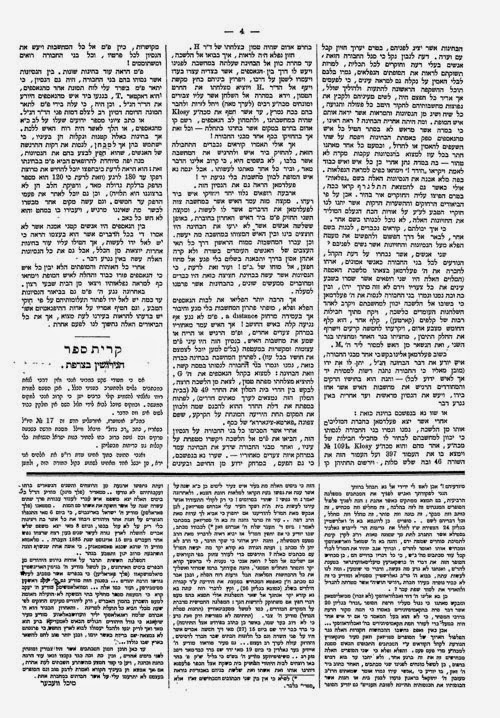
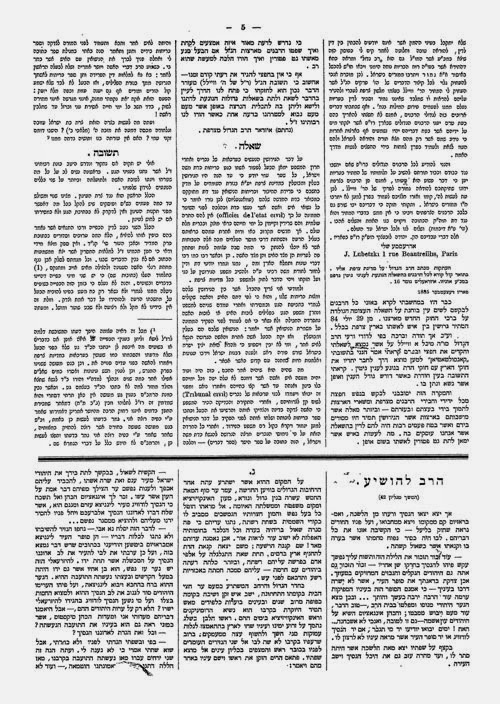
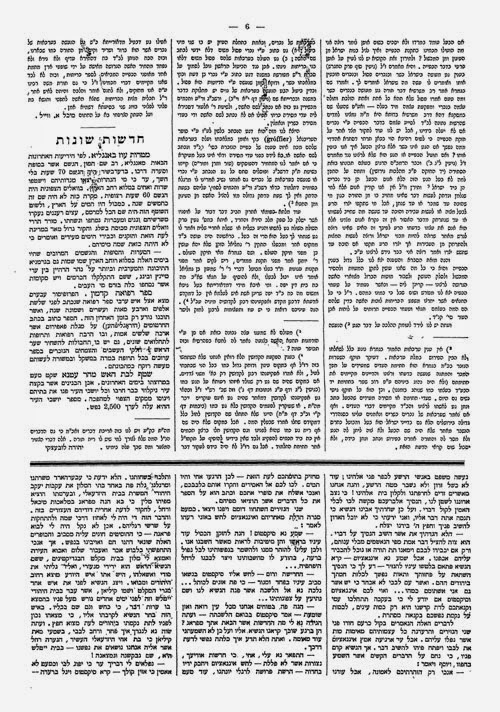
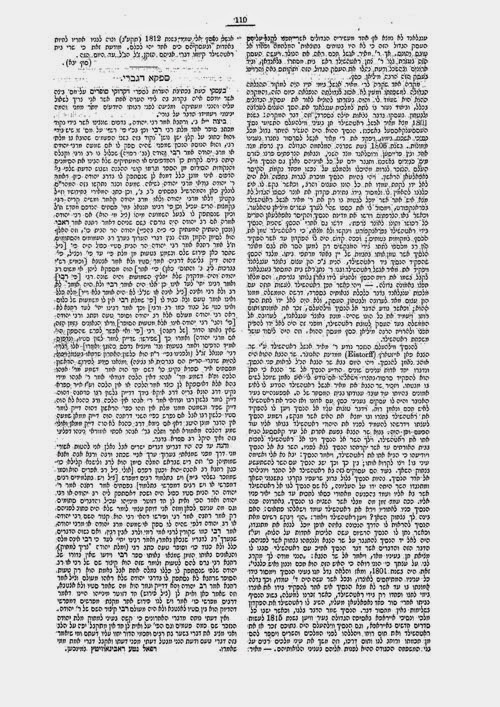
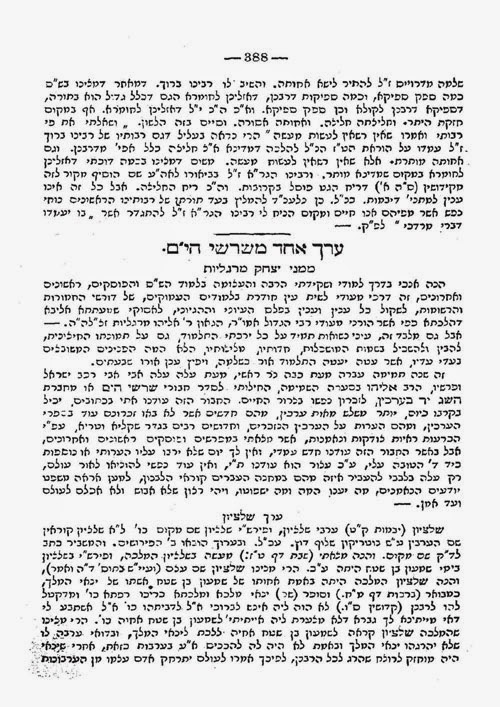
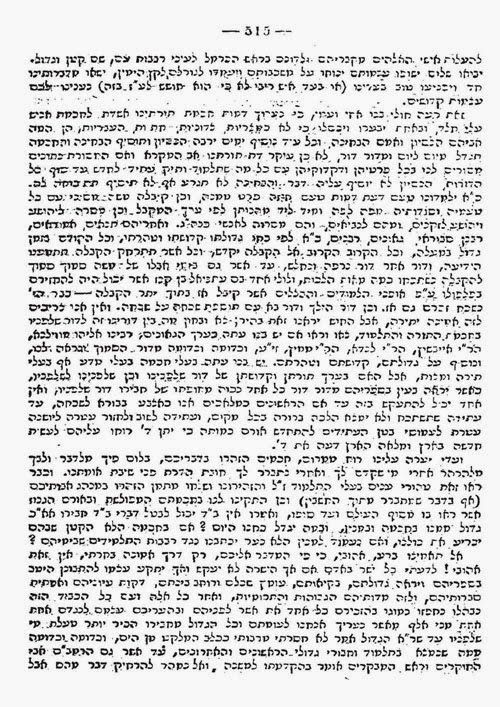
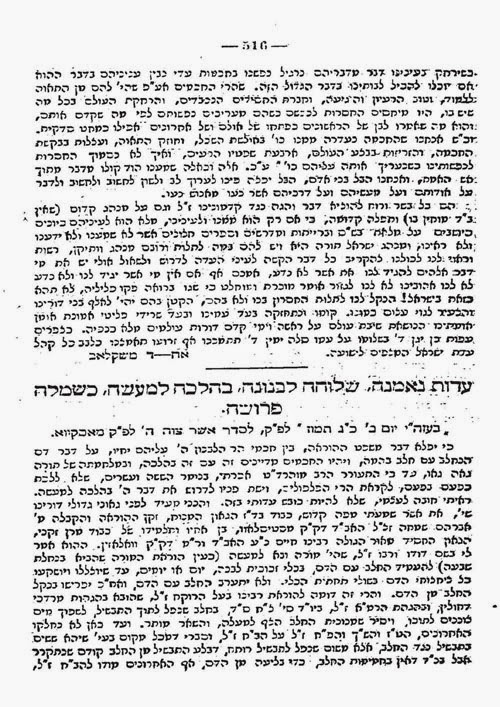
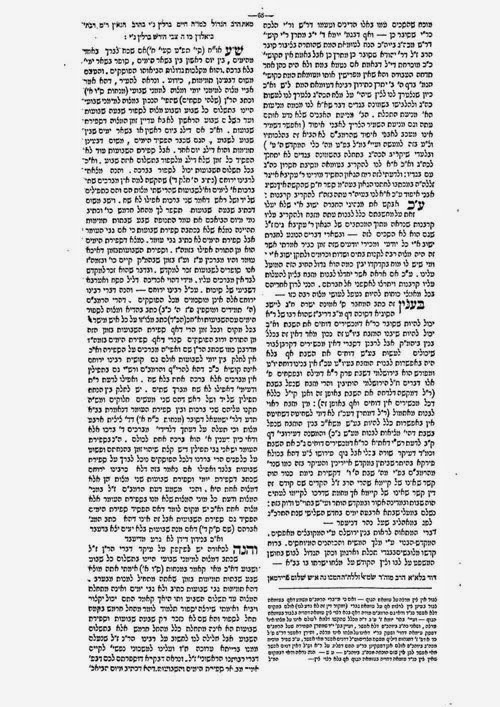
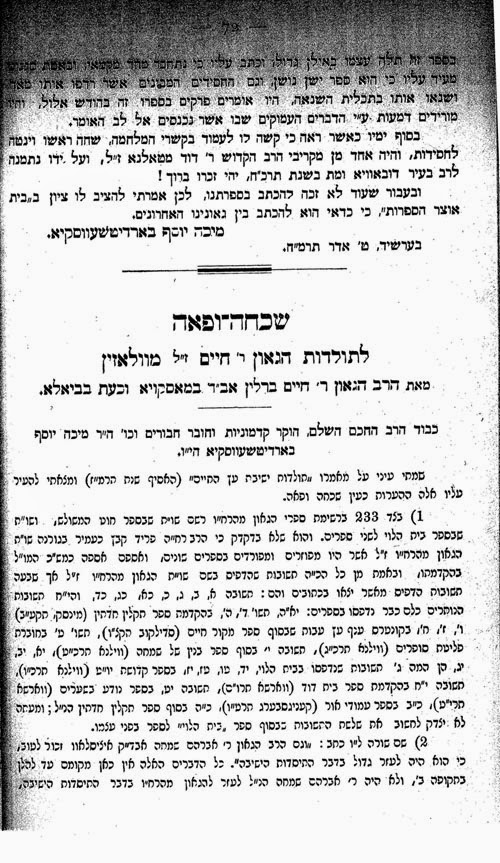
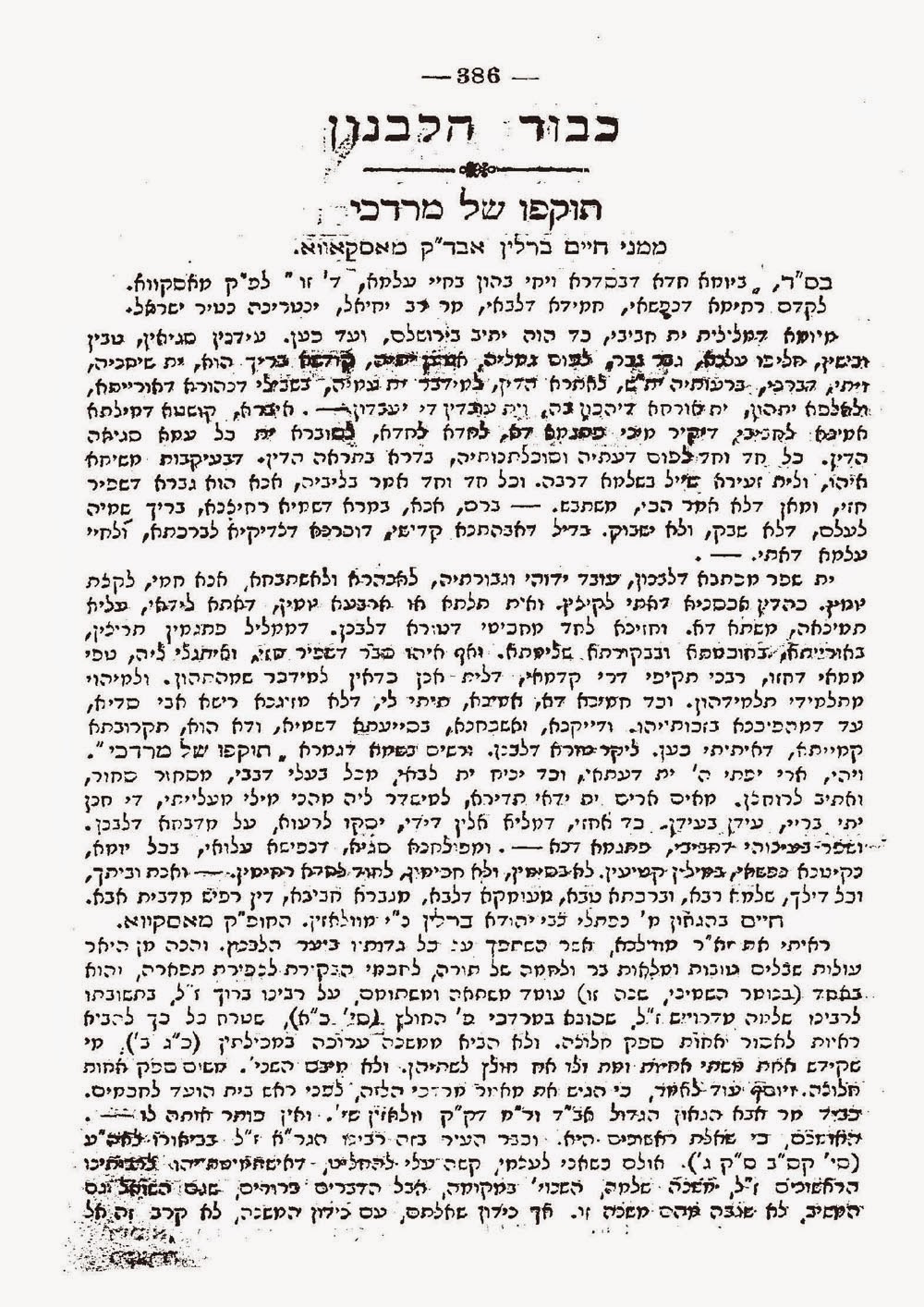
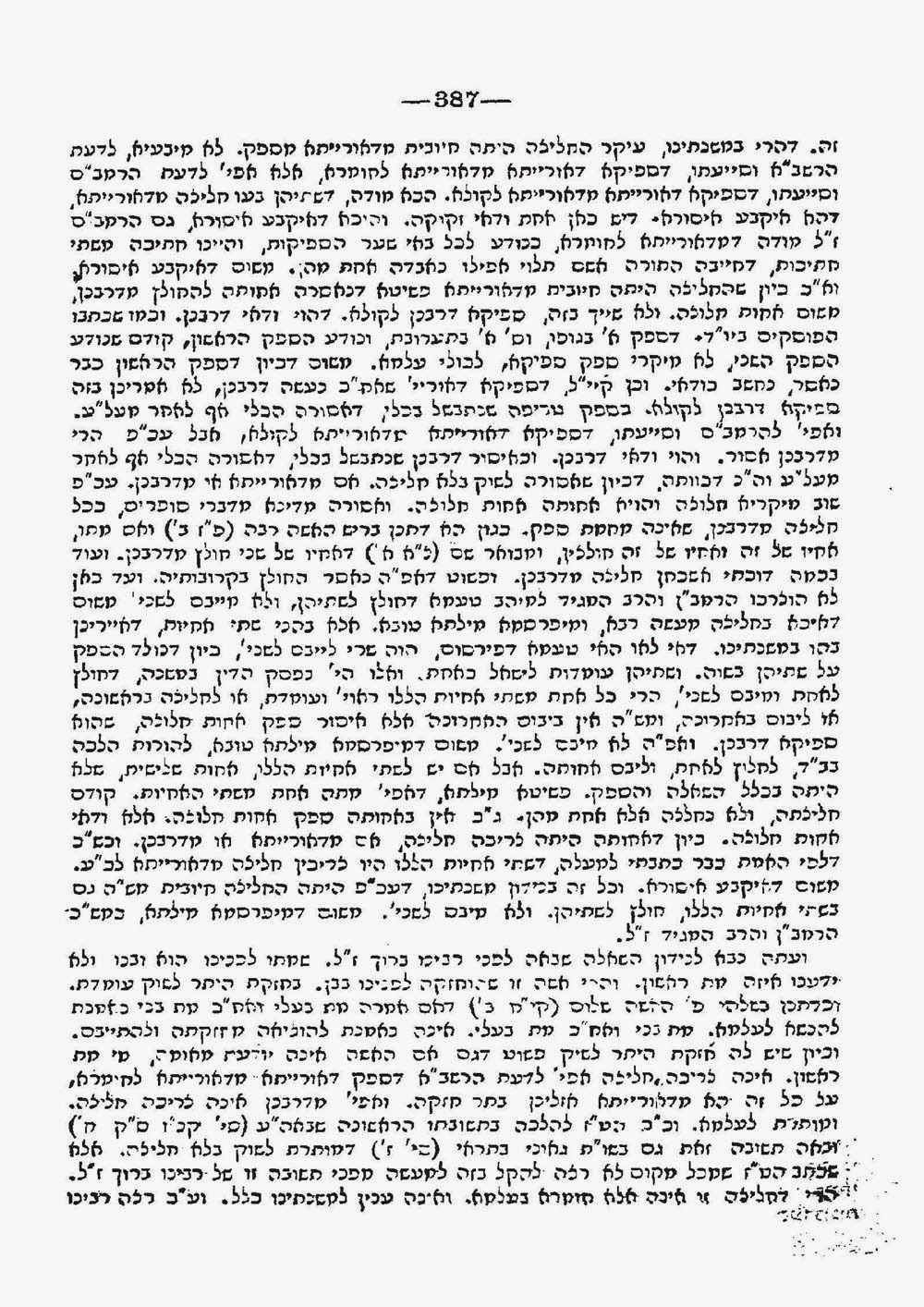
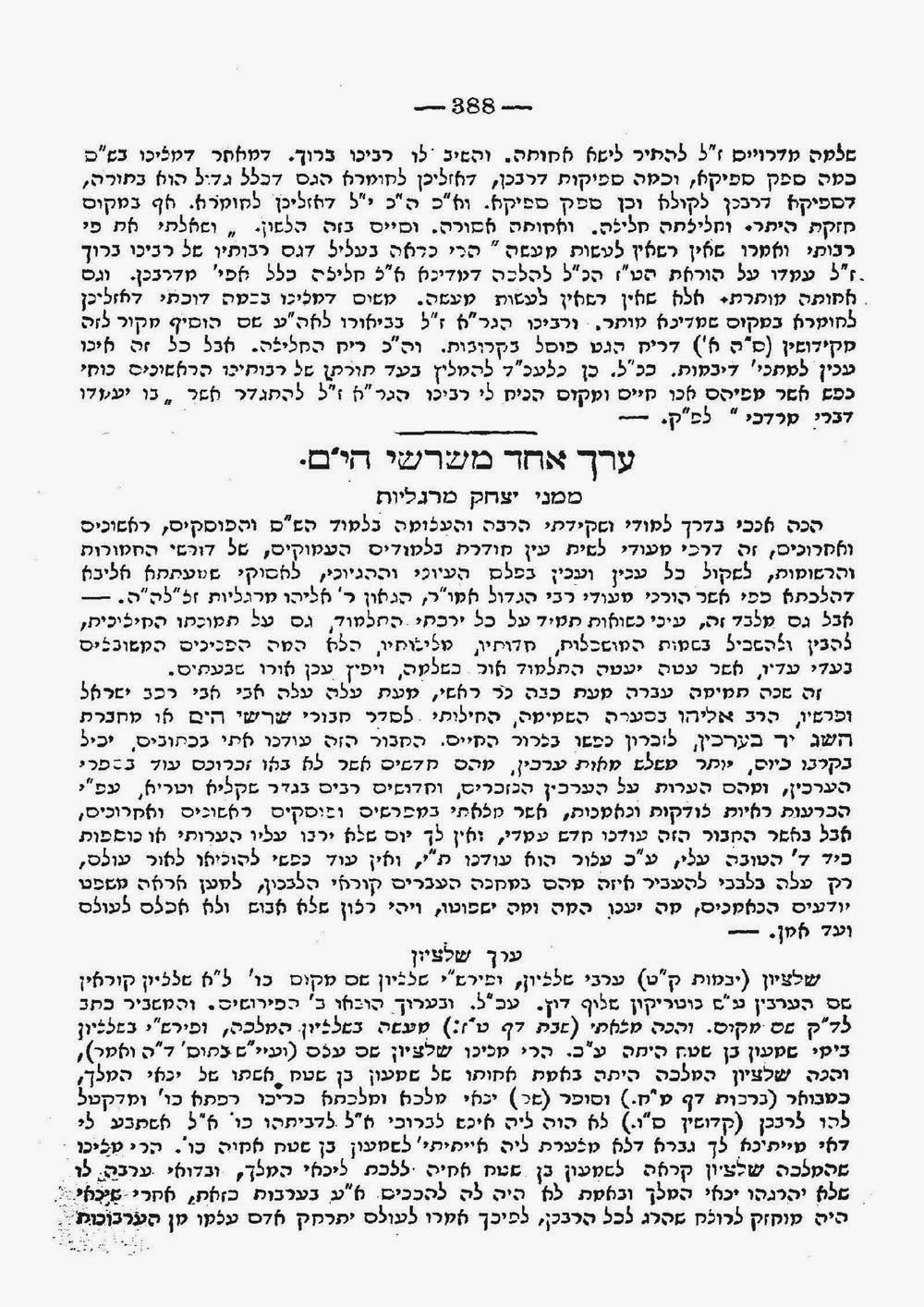
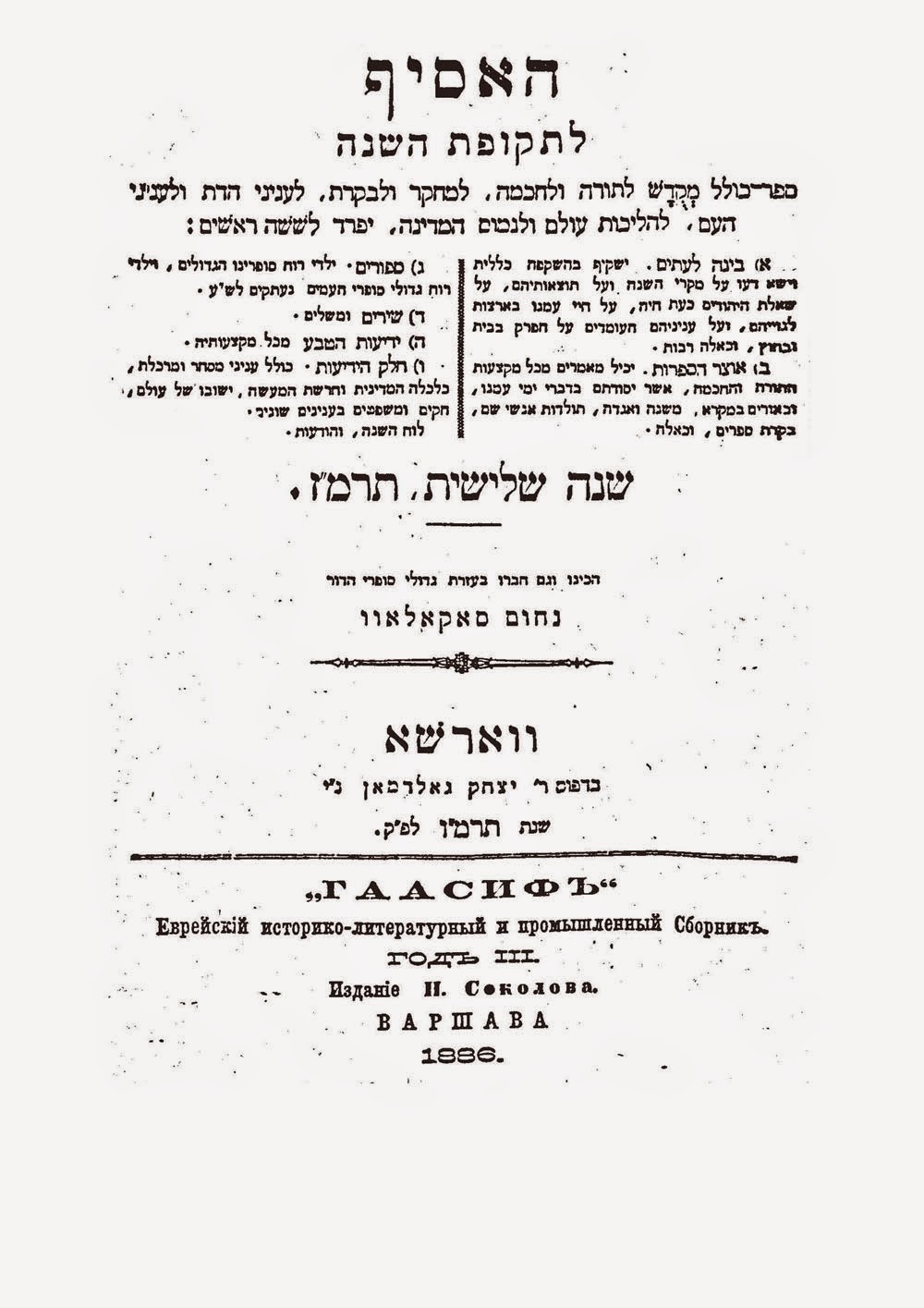
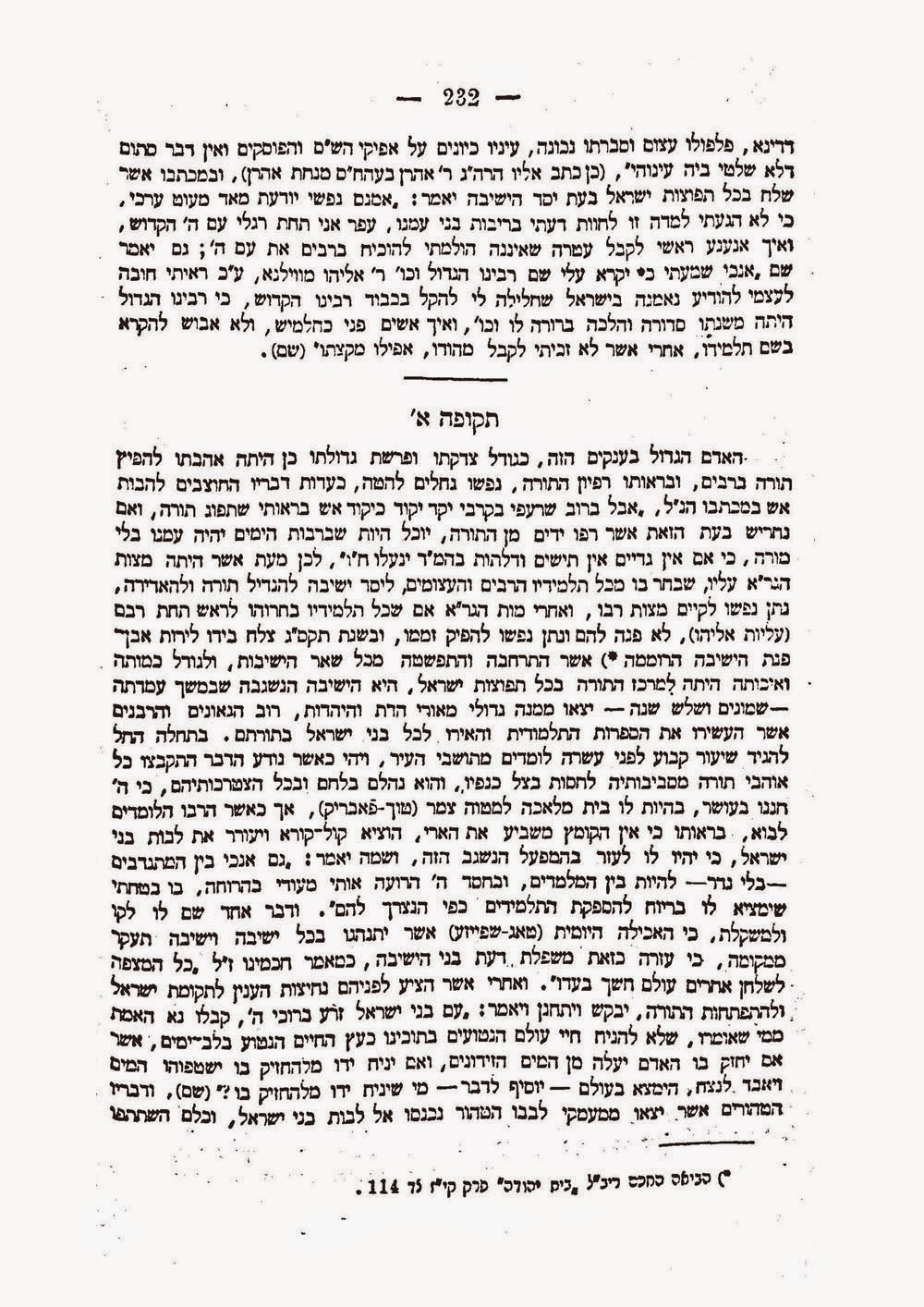
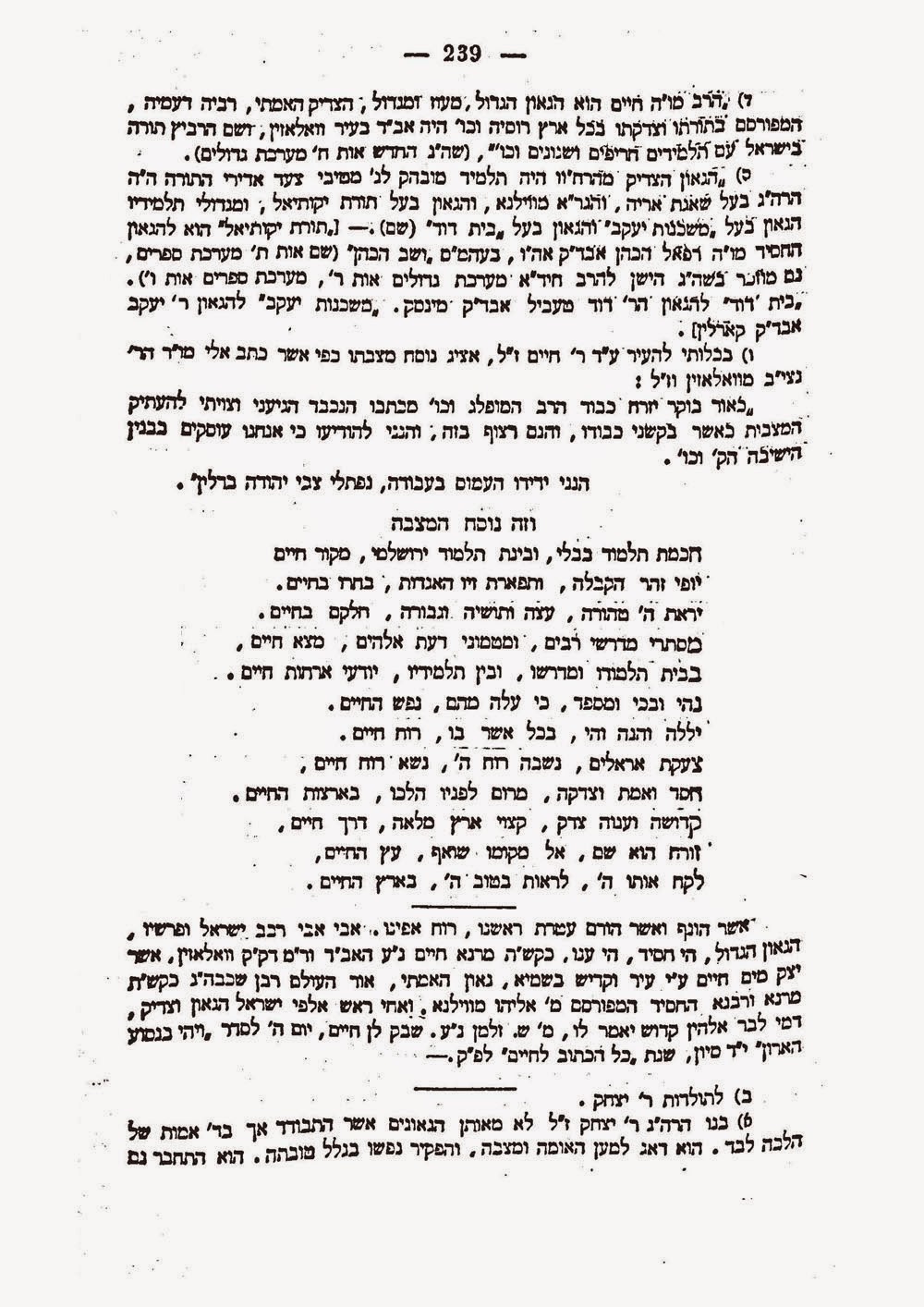
Berdyczewski wrote a lengthy article about Volozhin in Volume three of HaAssif (1886), pp. 231-242. This article was recently reprinted in his collected writings volume one (pp. 65-75) However, they did not reprint the five page appendix to the article. See the end of this post for the complete article.
The article is well written and appears to be a very accurate portrayal of Volozhin.[3] Many who wrote on Volozhin used it.
Reading the appendix we find that the Netziv helped Berdyczewski, providing him with some information for this article. Berdyczewski quotes two pieces from the Netziv (p. 239, 240).
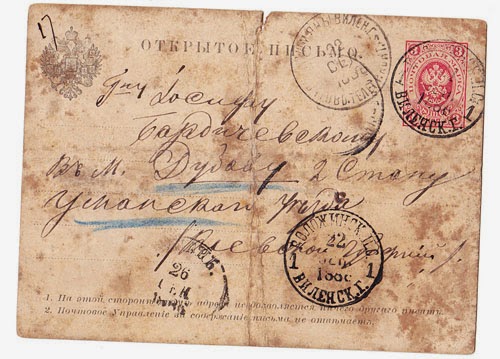
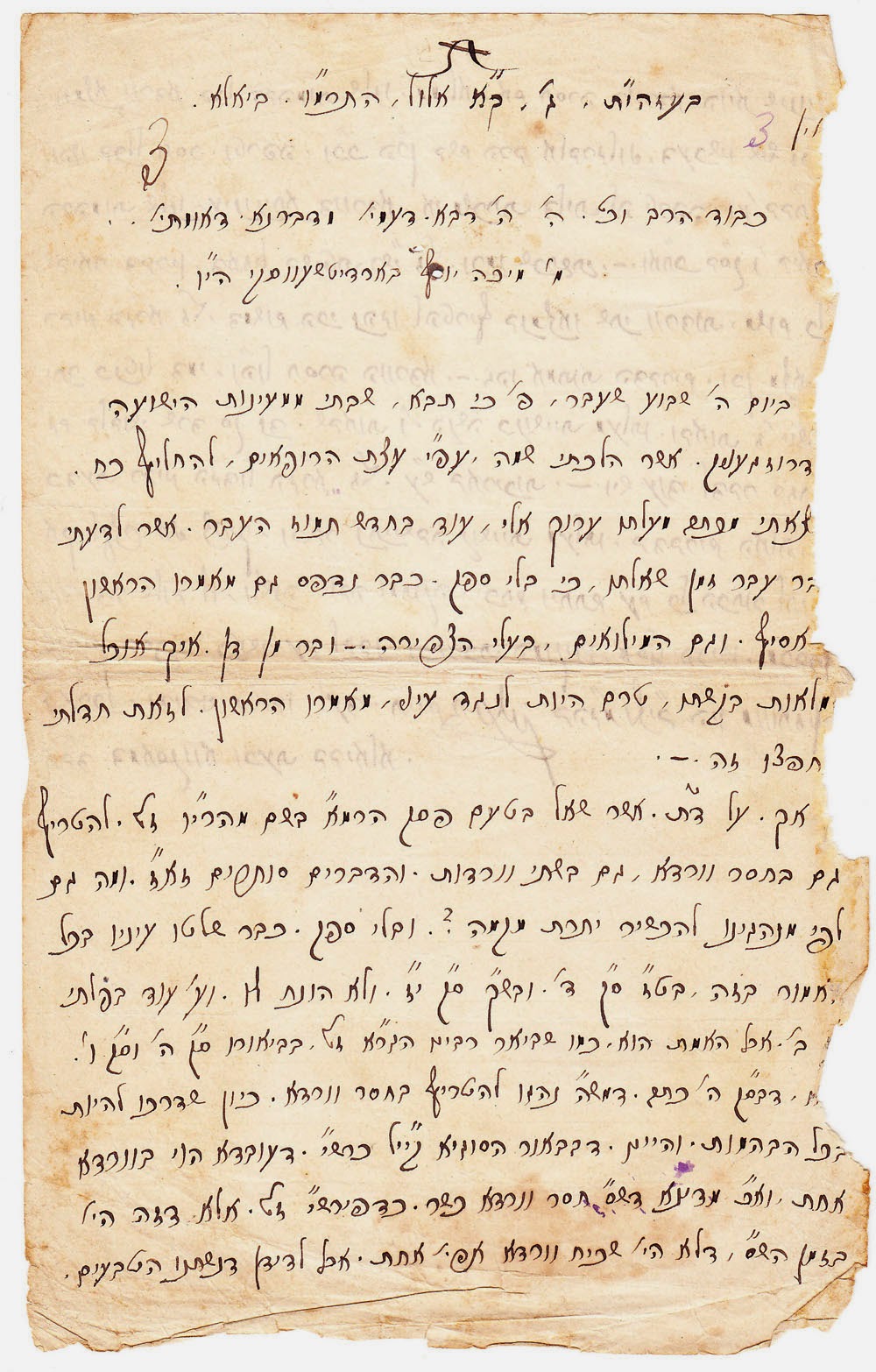
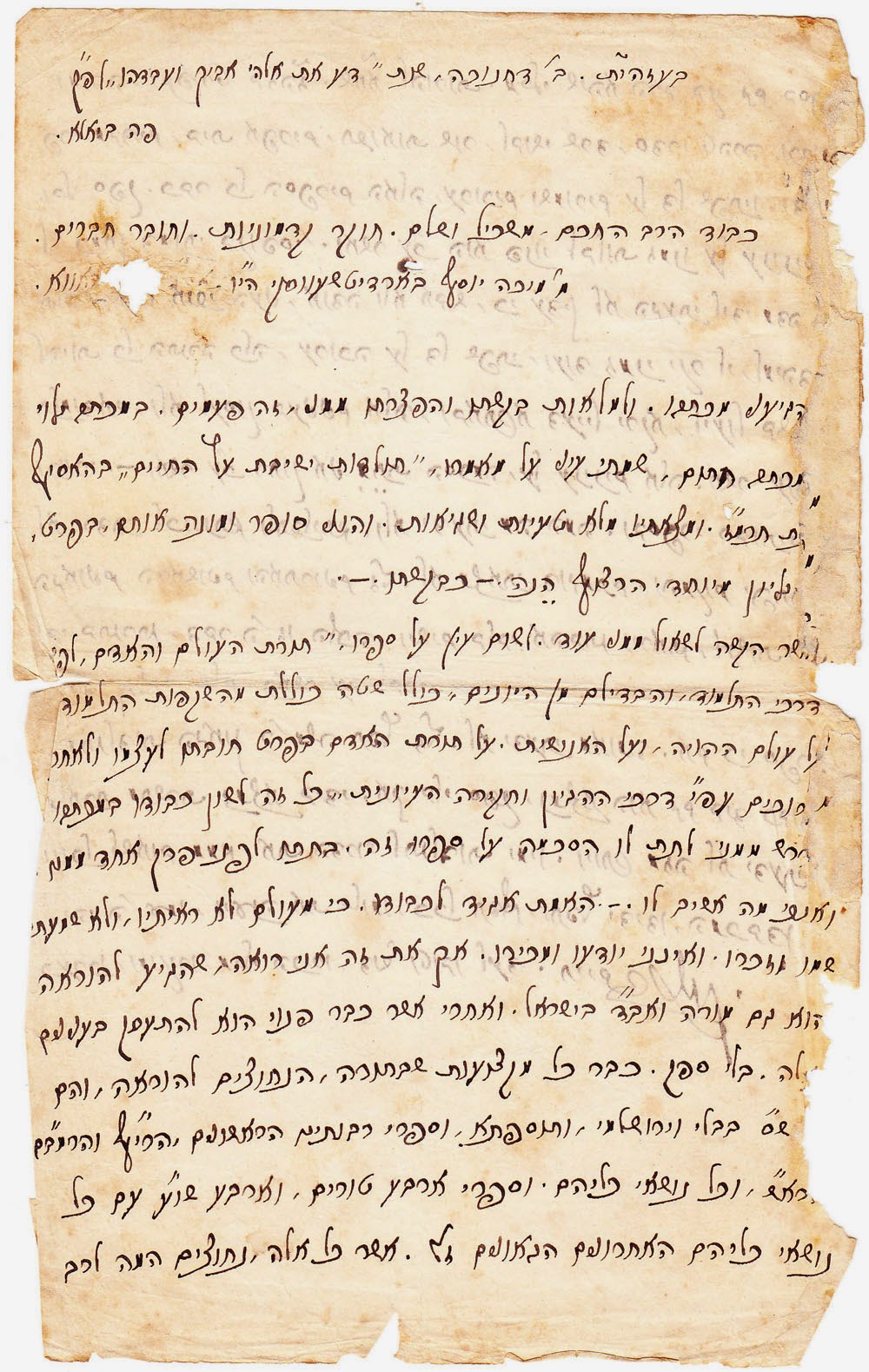
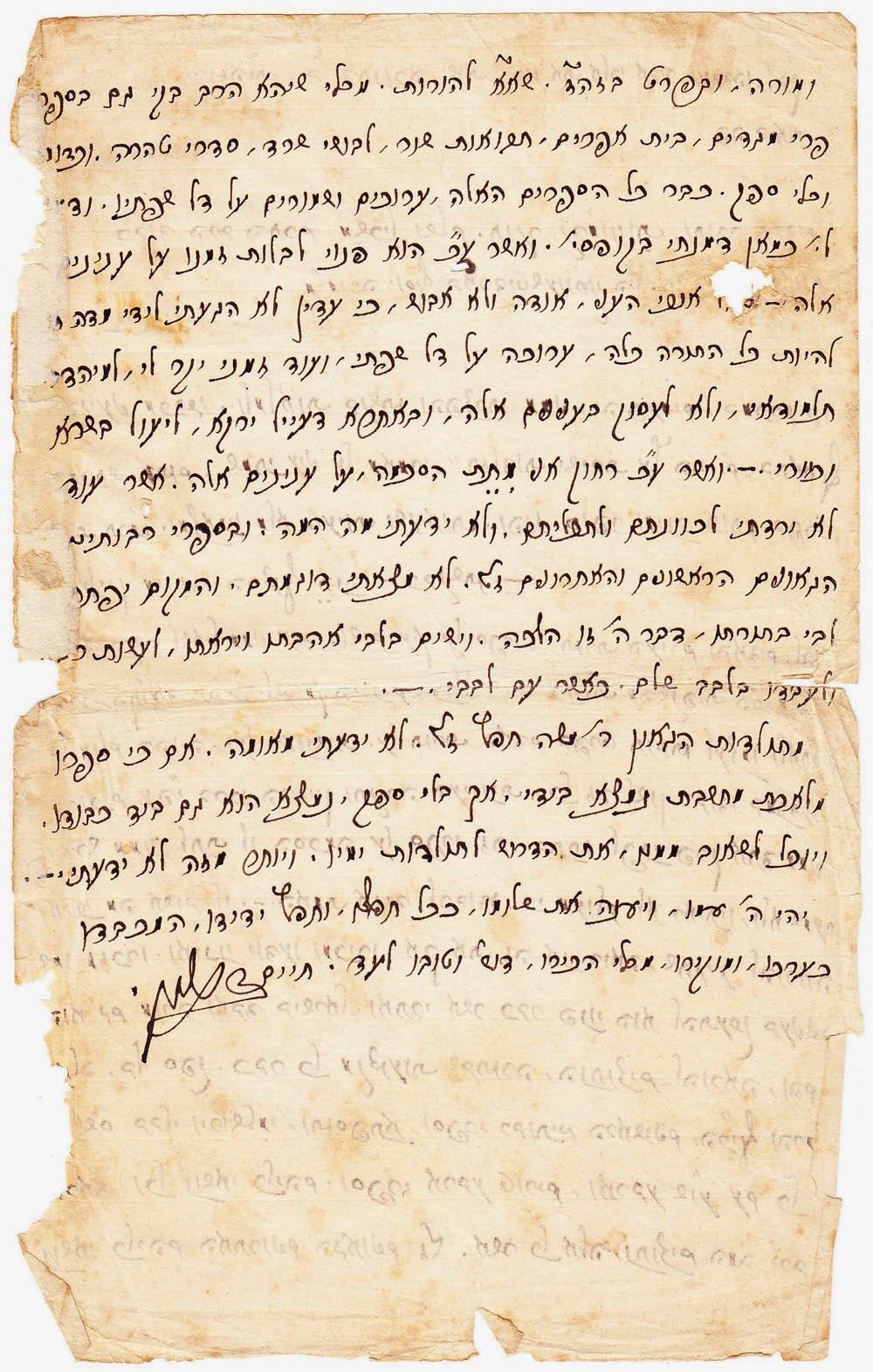
I contacted the world-renowned expert on Berdyczewski, Professor Holtzman, to inquire if this letter is still around. He was kind enough to send me a scan of the letter and another letter of the Netziv to Berdyczewski. To the best of my knowledge, these letters have never been printed.[4] Follows are the aforementioned letters, with Professor Holtzman’s kind permission, followed by my transcription.

Letter 1
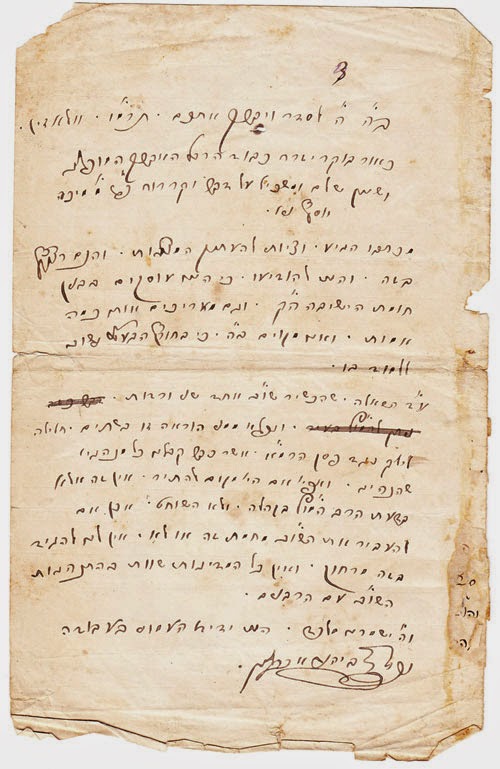
Letter 2
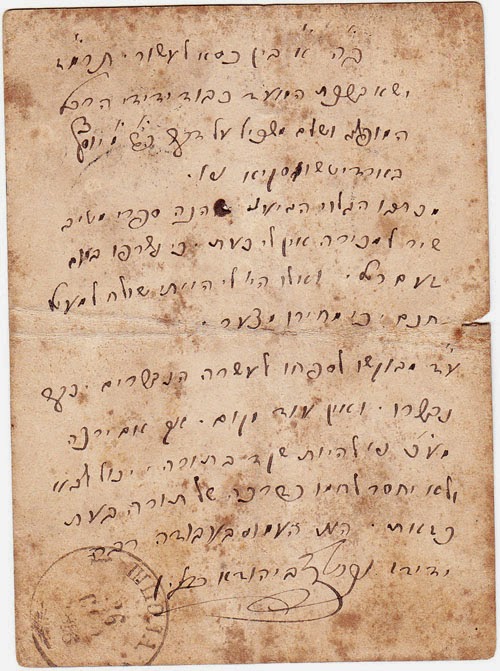
מכתב א

ב”ה ה’ לסדר ויברך אתכם. תרמ”ו. וולאזין.
כאור בוקר יזרח כבוד הר”ר האברך המופלג ושנון שלם ומשכיל על דבר יקר רוח כ”ש מ’ מיכה יוסף ני”ו.
מכתבו הגיע וציו[י]תי להעתיק המצבות. והנם רצוף בזה. והנני להודיעו. כי היינו עוסקים בבנין חומת הישיבה ה”ק. וגם מאריכים אותו כמה אמות. ואנו מקוים ב”ה, כי בחורף הבעל”ט נשוב ללמוד בו.
ע”ד השאלה שהכשיר שו”ב אחד שני ורדות.[5] ונפלא ממני הוראה זו בשתים. חלילה לילך נגד פסק הרמ”א, אשר כבר קבלנו כל מנהגיו שהנהיג. ואפי’ אם הי’ מקום להתיר, אין זה אלא בדעת הרב המו”ץ בקהלה, ולא השוחט. אכן אם להעביר את השו”ב מחמת זה או לא, אין לנו להגיד בזה מרחוק. ואין כל המדינות שוות בהתנהגות השו”ב עם הרבנים.
וה’ ישמרנו מלכד. הנני ידידו העמוס בעבודה
נפתלי צבי הודא ברלין.
מכתב ב

ב”ה א’ בין כסא לעשור תרמ”ז
ישא ברכת המועד כבוד ידידי החכם המופלג ושלם משכיל על דבר כ”ש מ’ יוסף בארדיטשווסקיא ני”ו
מכתבו הגלוי הגיעני [ו]הנה ספרי מטיב שיר[6] למכירה אין לי כעת כי נשרפו ביום זעם ר”ל. ואלו הי’ לי הייתי שולחו למעל[ת]ו חנם כי מחירו מצער.
ע”ד מבוקשו לספחו לעשרה הנבררים[7] כבר נבררו. ואין עוד מקום. אך אם ירצה מע”כ נ”י להיות שקד בתורה, יכול לבא ולא יחסר לחמו כדרכה של תורה בעת הזאת.
הנני העמוס בעבודה רבה
ידידו נפתלי צביהודא ברלין
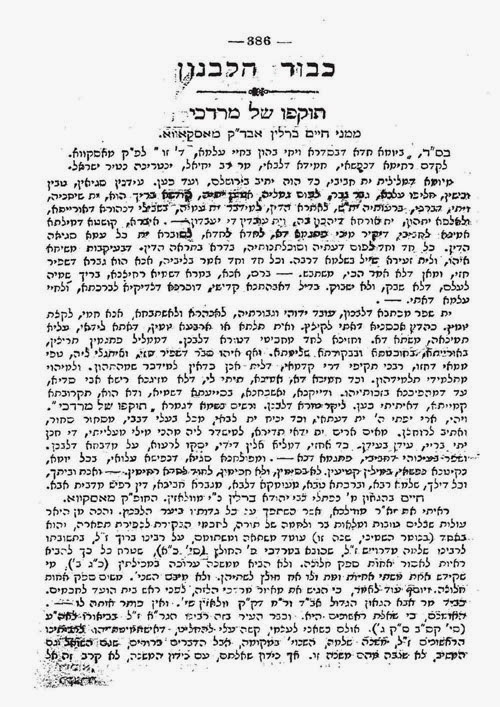
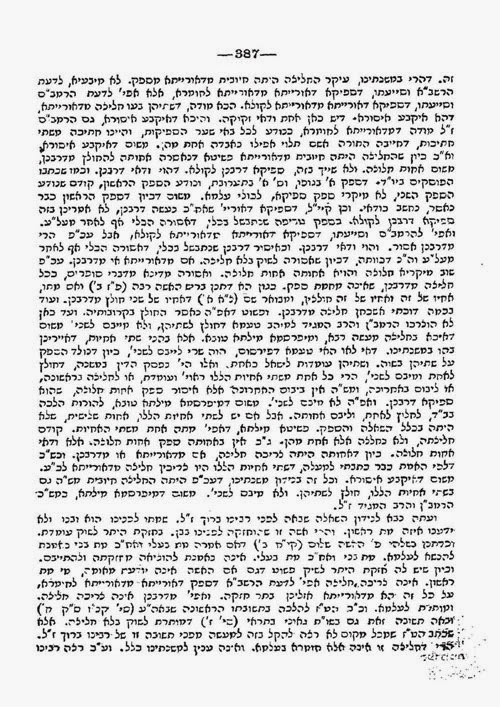
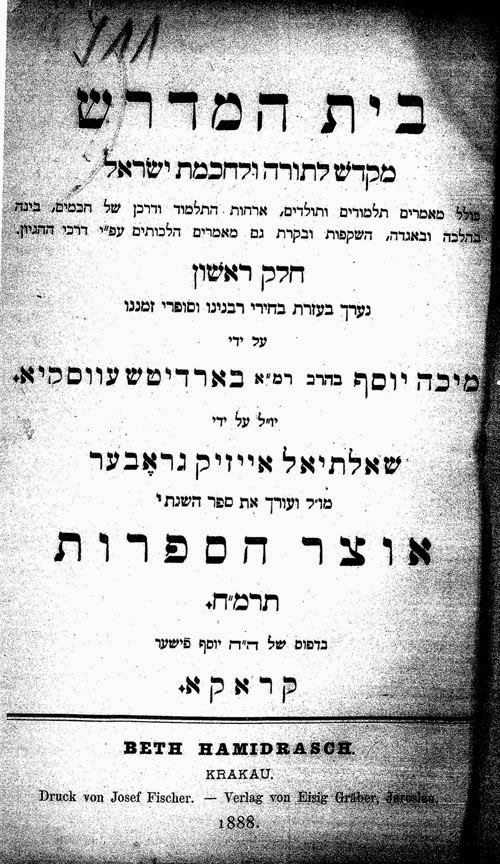
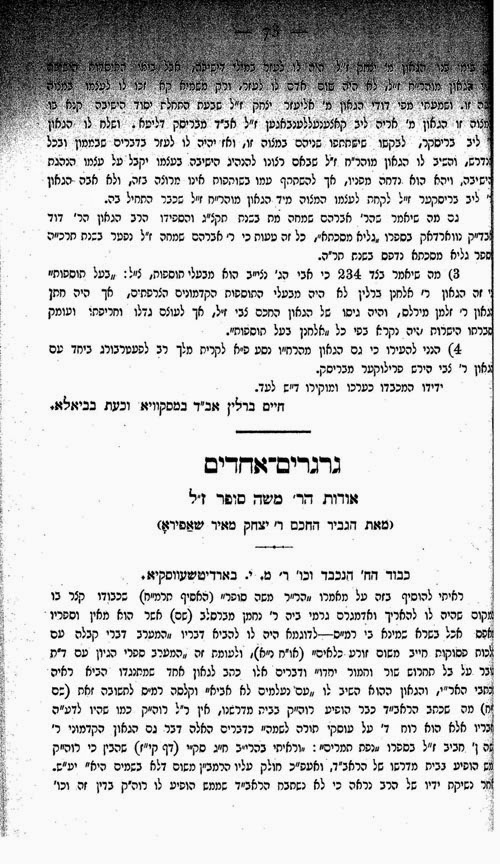
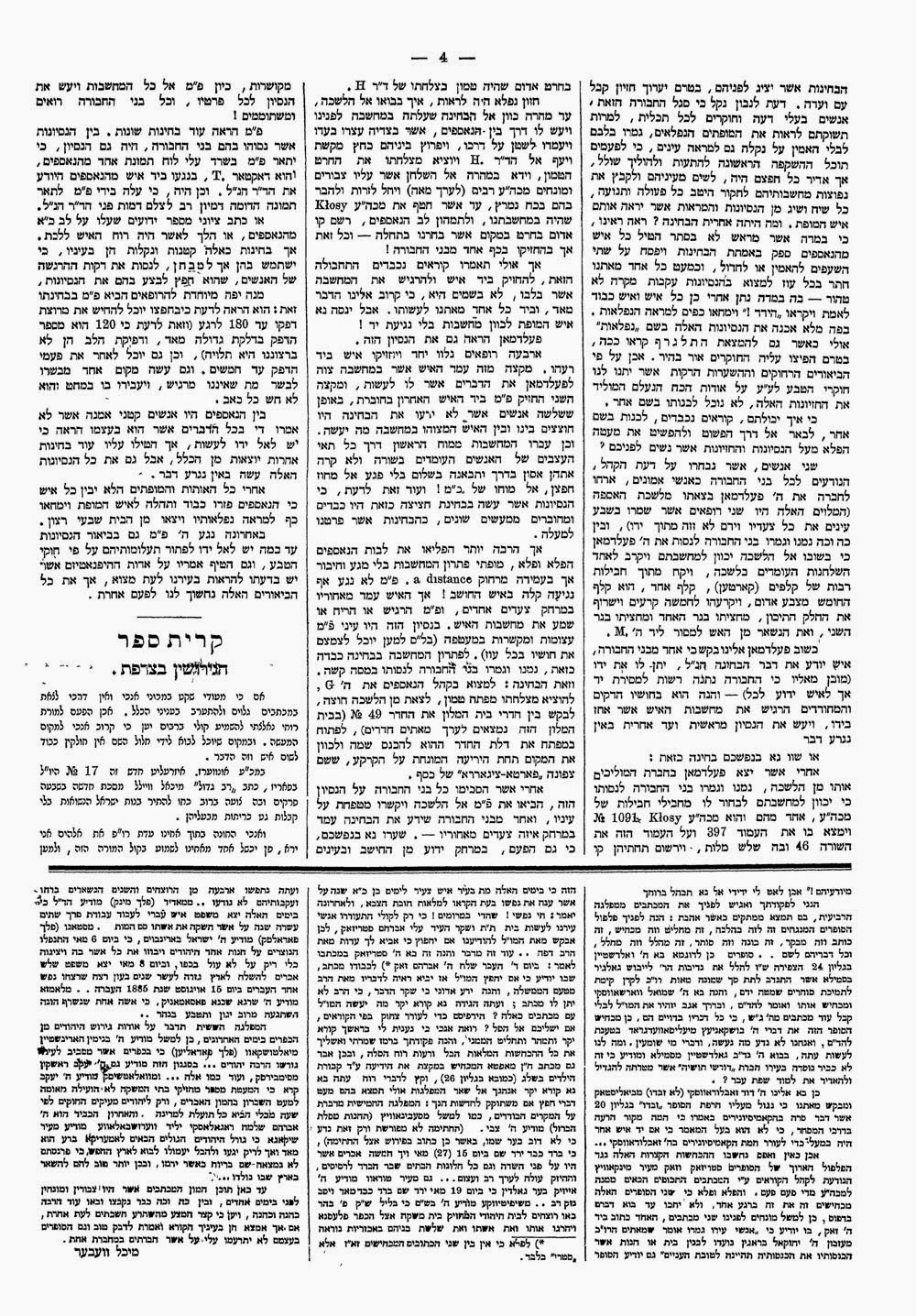
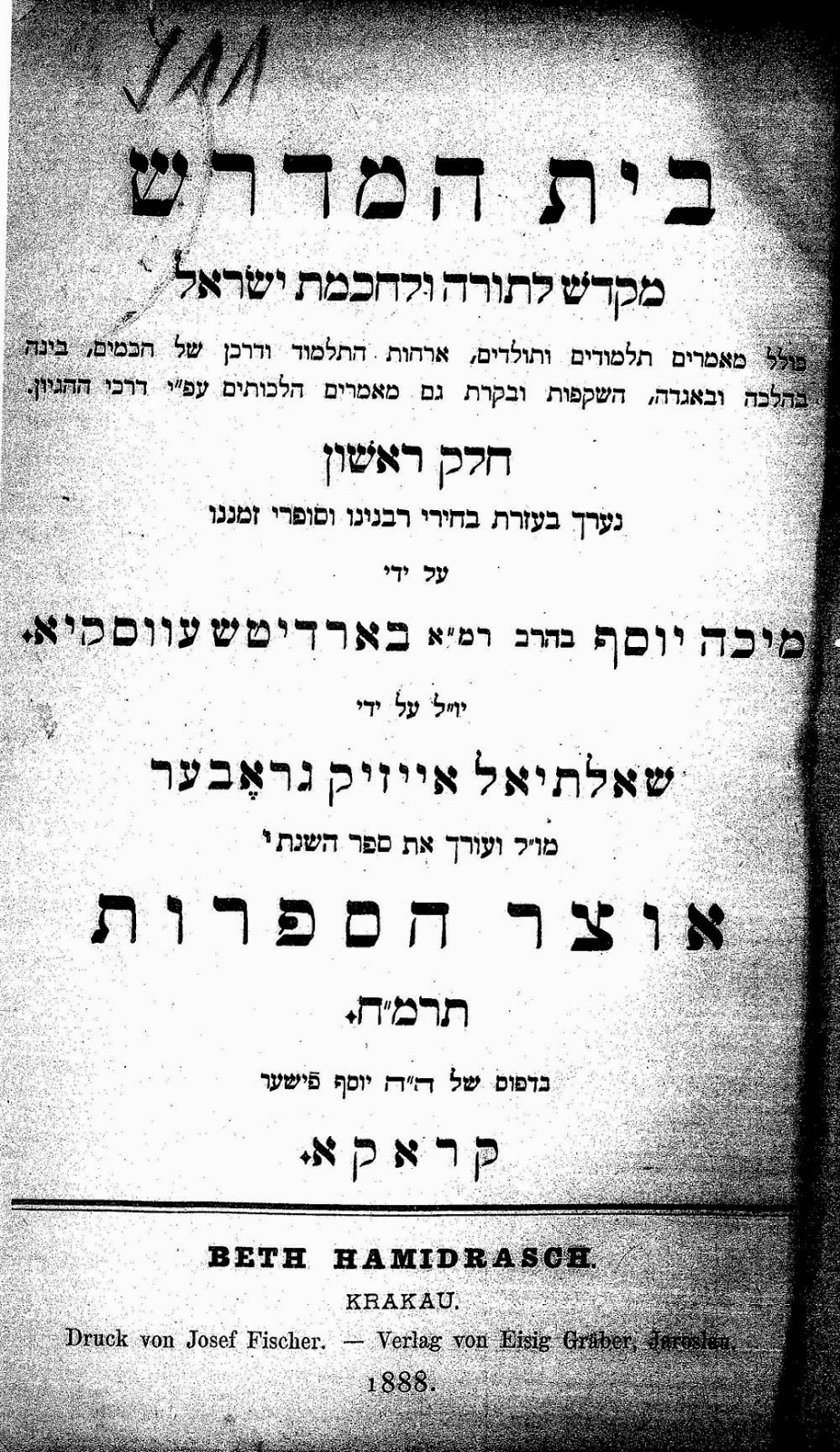
In 1888 Berdyczewski printed a journal called Beis Hamedrash which included an article from Rabbi Chaim Berlin [!] where Reb Chaim corrects and adds some important information to Berdyczewski famous article about the History of Yeshivat Volozhin. In this article, which it is obvious Reb Chaim Berlin read, Berdyczewski mentions the Netziv’s reading newspapers and a listing of the many newspapers the Bochurim of Volozhin read in his time.
Rabbi Chaim Berlin’s article was recently reprinted in the Nishmat Hayyim, Mamorim u’Mechtavim, (pp. 329-331) but the name of the person this letter was addressed to, Micha Yosef Berdyczewski, was edited out. [It appears that the commenters on this forum were not aware of this]. See the end of the post for the original article of Rabbi Chaim Berlin.
Professor Holtzman sent me the original letter of Rabbi Chaim Berlin to Berdyczewski and an additional letter of Rabbi Chaim Berlin to him. These letters were not printed before to the best of my knowledge.

Letter 1

Letter 2


מכתב א

בעזהי”ת. ג’, ך”א אלול, התרמ”ו. ביאלא.
כבוד הרב וכו’ ה’ ה’ רבא דעמי’ מדברנא דאומתי’
מ’ מיכה יוסף בארדיטשעווסקי הי”ו
ביום ה’ שבוע שעבר, פ’ כי תבא, שבתי ממעינות הישועה דרוזגעניק. אשר הלכתי שמה, עפ”י עצת הרופאים, להחליף כח [מ]צאתי מכתב מעלתו ערוך אלי, עוד בחדש תמוז העבר. אשר לדעתי [כ]בר עבר זמן שאלתו, כי בלי ספק כבר נדפס גם מאמרו הראשון [בה]אסיף. וגם המילואים, בעלי הצפירה. – ובר מן דן, אין אוכל [ל]מלאות בקשתו, טרם היות לנגד עיני, מאמרו הראשון. לזאת חדלתי [מ]חפצו זה.
אך. על ד”ת. אשר שאל בטעם פסק הרמ”א בשם מהרי”ו ז”ל. להטריף גם בחסר וורדא, גם בשתי וורדות. והדברים סותרים זא”ז. ומה גם לפי מנהגינו להכשיר יתרת מקמה?. ובלי ספק. כבר שלטו עיניו בכל [ה]אמור בזה, בט”ז ס”ק ד’. ובש”ך ס”ק י”ז. ולא הונח לו. וע’ עוד בפלתי [ס”ק] ב’. אבל האמת הוא, כמו שביאר רבינו הגר”א ז”ל, בביאורו ס”ק ה’ וס”ק ו’. [?] דבס”ק ה’ כתב. דמש”ה נהגו להטריף בחסר וורדא. כיון שדרכו להיות בכל הבהמות. והיינו. דבבאור הסוגיא קיי”ל כרש”י. דעובדא הוי בוורדא אחת. וא”כ מדינא דש”ס חסר וורדא כשר. כדפירש”י ז”ל. אלא דזה הי’ בזמן הש”ס, דלא הי’ שכיח וורדא אפי’ אחת. אבל לדידן דנשתנו הטבעים. ונמצא וורדא בכל הבהמות שלנו, ממילא, אם חסרה הוורדא, הויא שינוי והוי בכלל חסר. וטרפה. וכ”כ הר”ן בשם הרב אלברגלוני, דעכשיו שיש [לכל] הבהמות שלנו, עינוניתא דוורדא, אי משכחת דלית לה טרפה. וע’ בב”ח שביאר דבריו, דאזיל בשיטת רש”י ז”ל. וכמו שכתבתי.-. ואח”כ בס”ק ו’ ביאר רבינו הגר”א ז”ל, דמשום הכי נהגו להטריף בנמצאו שתי וורדות. משום כל יתר כנטול דמי, והו”ל חסרה הוורדא.-. זהו אמתות הדברים. וכן מצא[תי] גם בלבושי שרד ס”ק נ”ד. שבאות ו’. הקשה כקושיית מעלתו. ובאות ז’ יישב כדעת רבינו הגדול הגר”א ז”ל. ע”ש באריכות.-. ויש עוד לדבר בזה אך לעצר אני צריך. וכבר נתיישבה קושיית מעלתו, בדברים האלה. והי’ זה שלום לו, ולשנה טובה ומתוקה, יכתב ויחתם עם כל הכתוב לחי[ים] טובים בספר. כאשר עם לבבו. וכברכת המוקירו, מבלי הכירו, ומכבדו כערכו, ידידו”ש וטובו לעד. חיים ברלין בהג”מ נצי”ב הי”ו מוולאזין אב”ד דמאסקווא וכעת בביאלא.
מכתב ב

בעזהי”ת. ב’ דחנוכה, שנת “דע את אלהי אביך ועבדהו” לפ”ק
פה ביאלא.
כבוד הרב החכם, משכיל ושלם. חוקר קדמוניות. וחובר חברים.
מ’ מיכה יוסף באדיטשעווסקי הי”ו [??]
הגיעני מכתבו. ולמלאות בקשתו והפצרתו ממני, זה פעמים. במכתב גלוי [וב]מכתב חתום, שמתי עיני על מאמרו, “תולדות ישיבת עץ החיים” בהאסיף [שנ]ת תרמ”ז. ומצאתיו מלא טעויות ושגיאות. והנני סופר ומונה אותם, בפרט, [ב]גליון מיוחד, הרצוף הֵנה – כבקשתו.-.
ואשר הקשה לשאול ממני עוד. לשום עין על ספרו, “תורת העולם והאדם, לפי דרכי התלמוד, והבדילם מן היונים, כולל שטה כוללת מהשקפות התלמוד על עולם ההויה, ועל האנושות. על תורת האדם בפרט חובתו לעצמו ולאחר [ע]רוכים עפ”י דרכי ההגיון וחקירה העיונית”, כל זה לשון כבודו במכתבו [ש]דרש ממני לתת לו הסכמה על ספרו זה. בתתו לפני מפרק אחד ממנו. ואנכי מה אשיב לו. – האמת אגיד לכבודו. כי מעולם לא ראיתיו, ולא שמתי שמו וזכרו. ואינני יודעו ומכירו. אך את זה אני רואה שהגיע להוראה [ו]הוא גם מורה ואב”ד בישראל. ואחרי אשר כבר פנוי הוא להתעסק בענינים [א]לה. בלי ספק. כבר כל מקצועות שבתורה, הנחוצים להוראה, והם ש”ס בבלי וירושלמי, ותוספתא, וספרי רבותינו הראשונים, הרי”ף והרמב”ם [וה]רא”ש, וכל נושאי כליהם. וספרי ארבע טורים, וארבע שו”ע עם כל נושאי כליהם האחרונים הגאונים ז”ל. אשר כל אלה, נחוצים המה לרב ומורה, ובפרט בזה”ז. שא”א להורות. מבלי שיהא הרב בקי גם בספר פרי מגדים, בית אפרים, תבואות שור, לבושי שרד, סדרי טהרה, וכדו[מה.] ובלי ספק. כבר כל הספרים האלה, ערוכים ושמורים על דל שפתיו וד[מי] לי’ כמאן דמנחי בקופסי’. ואשר ע”כ הוא פנוי לבלות זמנו על ענינים אלה – [אבל] אנכי העני, אודה ולא אבוש, כי עדין לא הגעתי לידי מדה זו להיות כל התורה כלה, ערוכה על דל שפתי, ועוד זמני יקר לי, למיהדר תלמודא, ולא לעסוק בענינים אלה, ובאתרא דעייל ירקא, ליעול בשרא וכוורי.-. ואשר ע”כ רחוק אני מִתֵת הסכמה, על ענינים אלה. אשר עוד לא ירדתי לכוונתם ולתכליתם. ולא ידעתי מה המה. ובספרי רבותינו הגאונים הראשונים והאחרונים ז”ל. לא מצאתי דוגמתם. והמקום יפתח לבי בתורתו, דבר ה’ זו הלכה. וישים בלבי אהבתו ויראתו, לעשות [רצונו] ולעבדו בלבב שלם. כאשר עם לבבי.-.
מתולדות הגאון ר’ משה חפץ ז”ל. לא ידעתי מאומה. אם כי ספרו מלאכת מחשבת נמצא בידי. אך בלי ספק. נמצא הוא גם ביד כבודו. ויוכל לשאוב ממנו, את הדרוש לתולדות ימיו. ויותר מזה לא ידעתי.-.
יהי ה’ עמו, ויענה את שלומו, ככל חפצו, וחפץ ידידו, המכבדו כערכו, ומוקירו, מבלי הכירו, דו”ש וטובו לעד. חיים ברלין
A short time later Berdyczewski published several more articles related to Volozhin, one of which was a five chapter piece about the Yeshivah, titled Olam Ha-Atzeilus, printed in Hakerem in 1888. While this article does contain valuable information, it’s written in a different style than his earlier article. It was reprinted in the excellent collection Yeshivot Lita (pp. 132-151) and in the small Booklet Pirkei Volozhin (1984).
Another series of articles about Volozhin, written at the same time, was called Tzror Mechtavim Me-Eis Bar Be Rav and caused a great commotion. The series was printed in Ha-Melitz, starting from January 1888 and onwards. The series was written under a pen name, and only in the last issue did Berdyczewski sign his name.
In a memoir from someone who learnt in Volozhin at the time Berdyczewski’s articles were printed we find:
בעת ההיא הופיע בהמליץ פיליטון שנתן לדפוס ע”י בערדיצעוסקי… במאמר ההוא ציר הסופר בציורים נאמנים את חייהם של בני הישיבה את ענים ומרודם ואת לחציהם ובשבט עברתו הכה על ימין ועל שמאל את מנהלי הישיבה את חקיהם ומשפטיהם וכמעביר צאנו תחת שבטו כן העביר תחת שבט הבקורת את כל המנהגים מן ראש הישיבה עד השמש. המאמר ההוא עשה רושם גדול על מנהלי הישיבה וביחוד על ראשי הישיבה. בני הישיבה התיחסו אל המאמר ההוא בכובד ראש והעריצו את הסופר… [יהושע ליב ראדוס, זכרונות, עמ’ 68].
Radus continues in his autobiography that they had suspected someone specific in the Yeshiva for having authored these articles and that although Berdyczewski was involved in their writing, he was not the author. Radus writes that while this person was thrown out of Volozhin, he eventually became a renowned Rav. Unfortunately he does not name the person.
Regarding the Mekor Baruch, I wrote: “His work received a glowing haskamah from Rav Kook”.
In volume four of Mekor Baruch, at the end of the volume (pp. 14-15) R’ Epstein prints a letter from Rav Kook about the sefer but he does not print the whole letter. Rav Kook writes:
אבל יחד עם סדרי הזכרונות… וחותם האמת הטבוע עליהן…
For recent discussion about this letter see Eitam Henkin and Shmaria Gershuni, Alonei Mamreih 122 (2009)  (p.186).
Another comment regarding Mekor Baruch’s report was sent to me from Moshe Maimon:

R. Mazuz in his Mekor Ne’eman references the Mekor Baruch’s report twice. On p. 95 he relies on it to be Matir reading newspapers on shabbos and on p. 254 in a letter to Moshe Chavusha he quotes it to defend himself for citing R. Ovadia’s practice of listening to the radio every day.

More on the Netziv and reading newspapers:

In 1881, Rabbi Baruch Epstein wrote an article in Hamelitz about Volozhin defending it from various attacks in the newspapers. He describes Volozhin and the Netziv in depth:
מה אומר ומה אדבר על תכונת נפש נעלה של האיש הדגול מרבבה הגאון הנאור ר’ נצי”ב הי”ו… רוב מכ”ע לב”י ואחד בשפת רוססיא נמצאים בביתו, והוא אחד מן הזריזים הקודמים לקנות ספר חדש היוצא בעברית, יהיה מאיזה רוח ושיטה שהוא…”. [המליץ, יז, יום ב אדר תרמ”א (1881), גליון 3, עמ’ 54].
I am doubtful he would write something like this in a public forum, during the Netziv’s lifetime, if it was not true.
More on the Netziv and reading newspapers

In Shut Meishiv Davar we find a few more times that the Netziv refers to articles he read in newspapers.
ראיתי בכבוד הלבנון (משיב דבר, ב, סי’ קח)

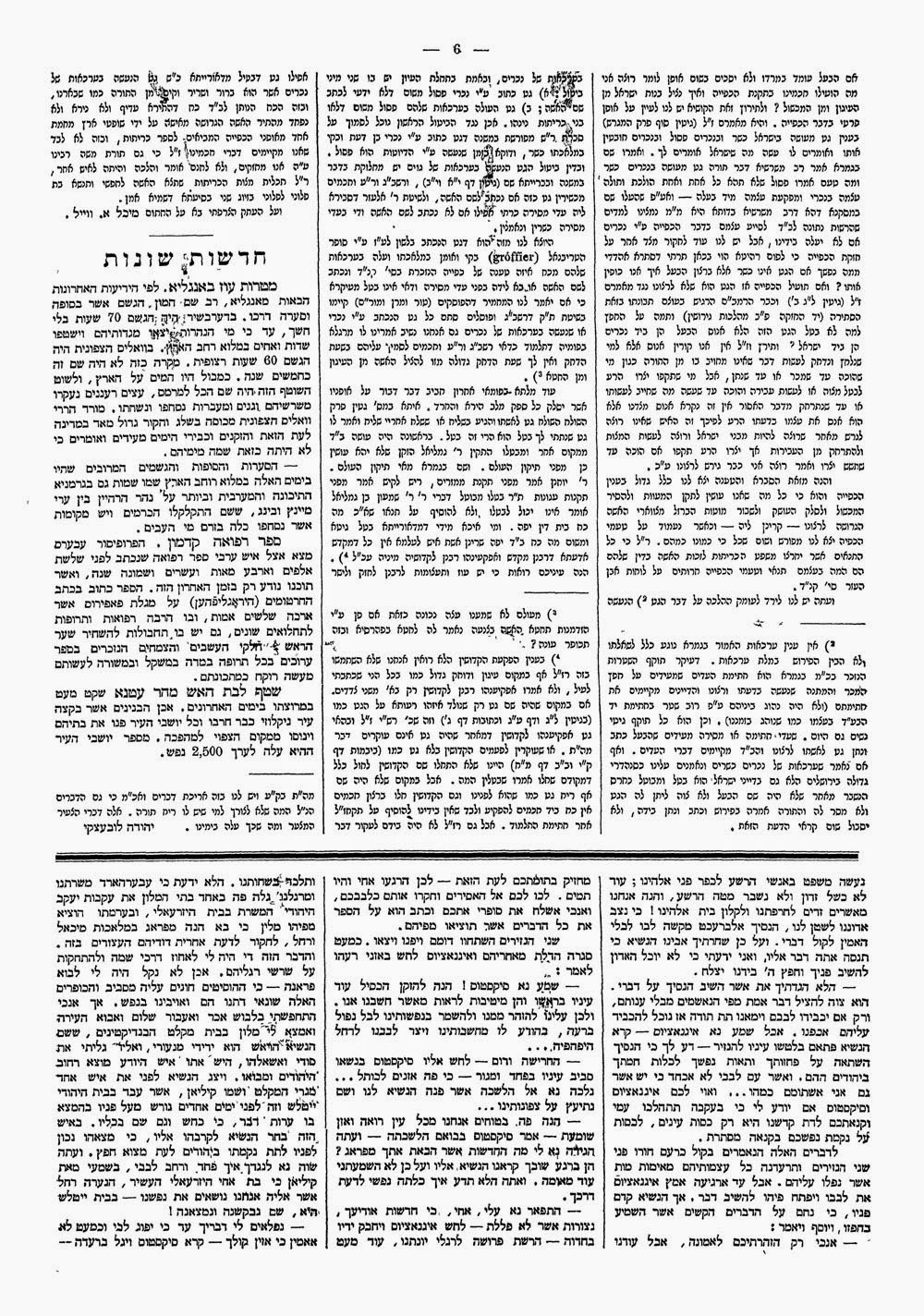
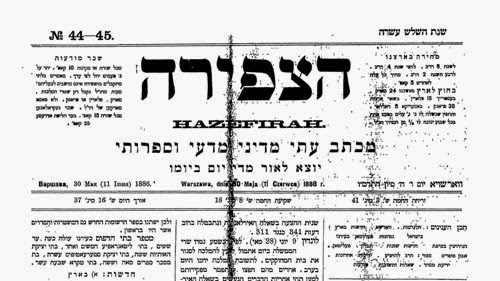
ע”ד מאמר הגירושין בצרפת, הגיע לפה עלה הצפירה נו’ 44 וראיתי מאמר ותרגז בטני… (משיב דבר,ג, סי’ מט).
This last Teshuvah was actually printed in the Ha-Tzefirah before it was printed in the Meishiv Davar. Here is the original article:
But elsewhere in Meishiv Davar we find the Netziv writes:
 ראיתי שהמופלג ומדקדק הר’ אברהם לאנדמאן שי’ דקדק אחרי מש”כ בהעמק דבר… [משיב דבר, ב, סי’ קט].
In Igrot HaNetziv Me-Volozhin (p. 60) this teshuvah was printed with a few more words:
ראיתי בהמליץ נו’ 120 אשר המפולג ומדקדק הר’ אברהם לאנדמאן שי’ דקדק אחרי מש”כ בהעמק דבר…
Even more interesting is this letter was originally printed in the Hameilits. Here is the original:

Rabbi Chanoch Taubes writes about R’ Epstein’s claims of the Netziv Reading newspapers:
‘המגיד’ בטאונם של חוגי ההשכלה. בהעדר חלופה מתאימה היה נכנס גם לבתים כשרים. אם נכונה היא עדותו של ר’ ברוך עפשטיין בזכרונותיו עמ’ 1974 הרי שהמגיד היה דרכו להתקבל בביתו של הנצי”ב מוולוז’ין זצ”ל בכל ערב שבת לפנות ערב, ובלילה לא קרא אותו [הנצי”ב], מפני שליל שבת היה קדוש לו לחזור בעל פה על המשניות ממסכתות שבת… כותב הטורים כשלעצמו, חושד שמפאת נטיותיו המשכיליות של ר’ ברוך עפשטיין ביקש להכשיר את השרץ בעובדות שאינן מדויקות… חיזק להשערה זו תמצא בעמוד שאחריו ביחסו הלעגניי והעוקצני לשבועון המתחרה הלבנון. גם את חיצי הלעג ירה על בסיס עובדות לא מדויקות, בלשון המעטה. הלבנון עיתון כשר היה אשר ביוזמתו של רבי ישראל סלנטר, מחולל תנועת המוסר, קיבל על עצמו רבי מאיר להמן זצ”ל אב”ד מיינץ את מלאכת עריכתו… [סופה וסערה, א, בני ברק תשע”ה, עמ’ 77-78 [=סופה וסערה, א, בני ברק תשס”ח, עמ’ 63-64].
However, it is apparent that based upon further evidence, Rabbi Taubies claim has no basis.
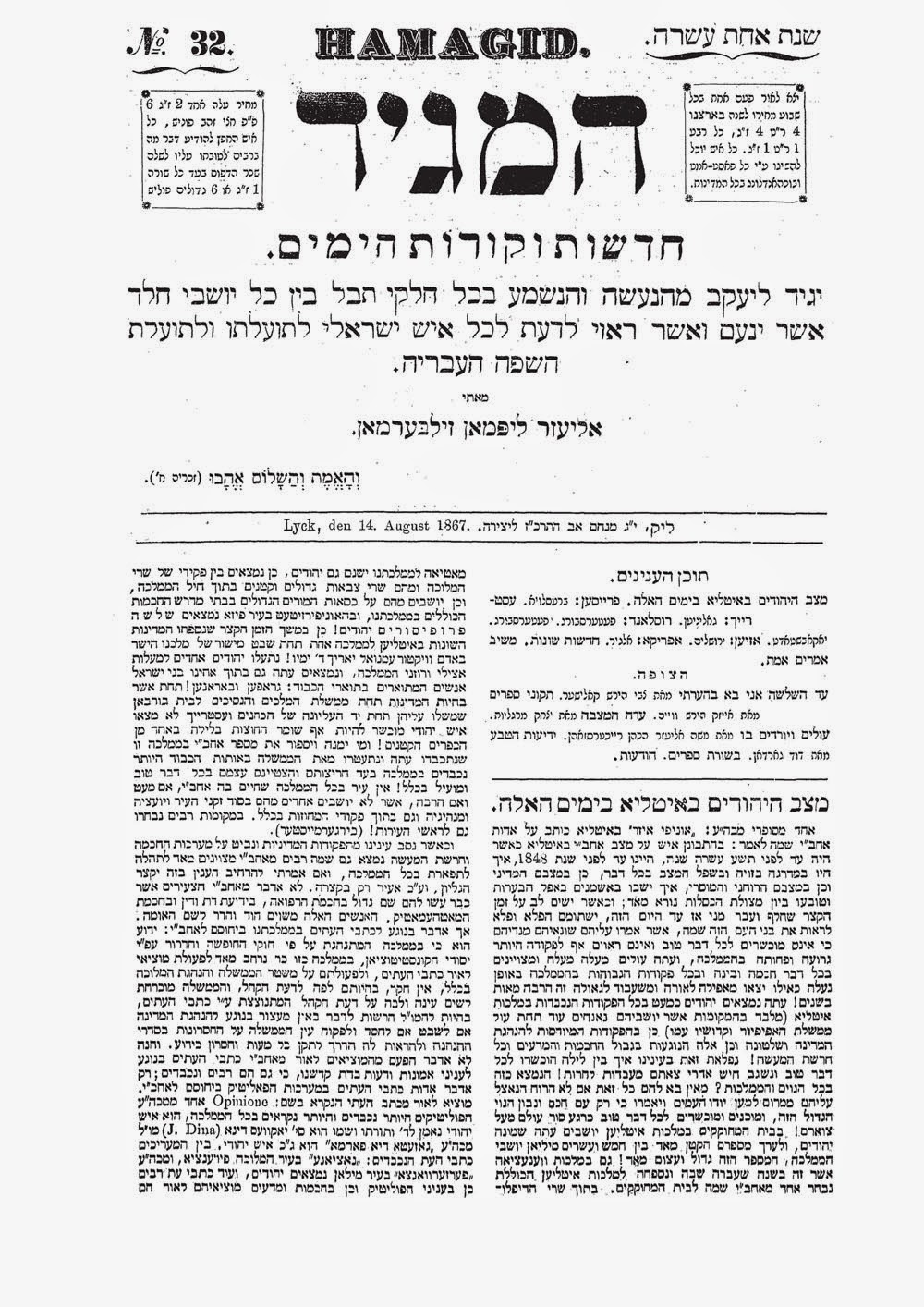
In part one of this article I cited a remarkable story from R’ Eliyahu Milikovsky about a Response that the Netziv wrote to an article in the HaMaggid. One might say that R’ Milikovsky’s memory failed him and he recalled the wrong newspaper. However here is the newspaper article written by the Netziv in the HaMaggid, referred to in this story. [Quoted in Igrot HaNetziv Me-Volozhin, pp. 54-56]

The Netziv was responding to this article.


That aside, as we have shown in part one of this article, the Netziv quotes HaMaggid in his seforim. These quotes and their subsequent censorings were discussed there as well.
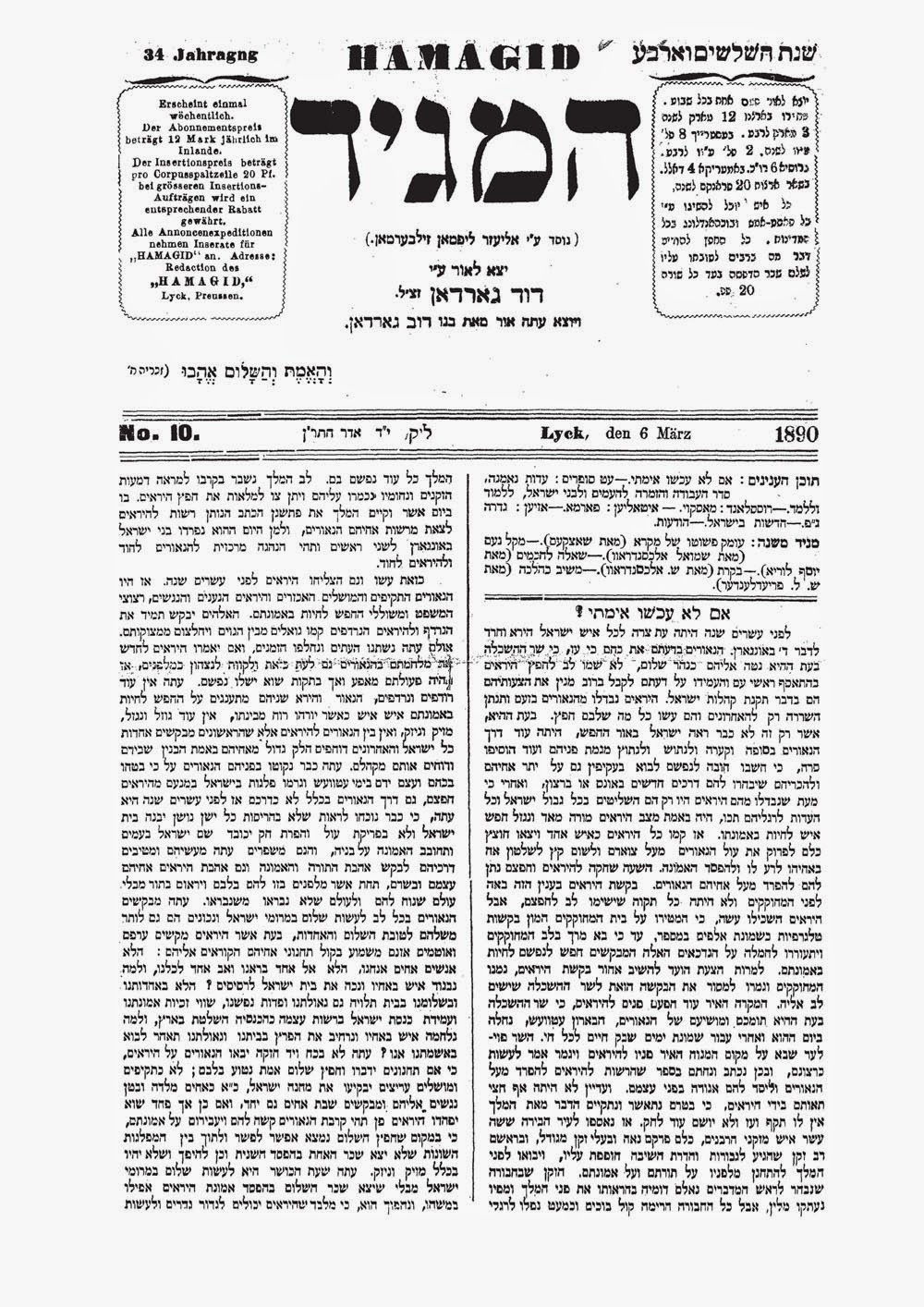
Here are some additional articles by the Netziv published in HaMaggid


This is reprinted in Igrot HaNetziv Me-Volozhin, (pp.198-199)

There are more pieces of the Netziv in HaMaggid which will be discussed in a later post.
It bears mention that many other Gedolim also read and wrote in HaMaggid; see for example this piece of the Dikdukei Sofrim (one of many).
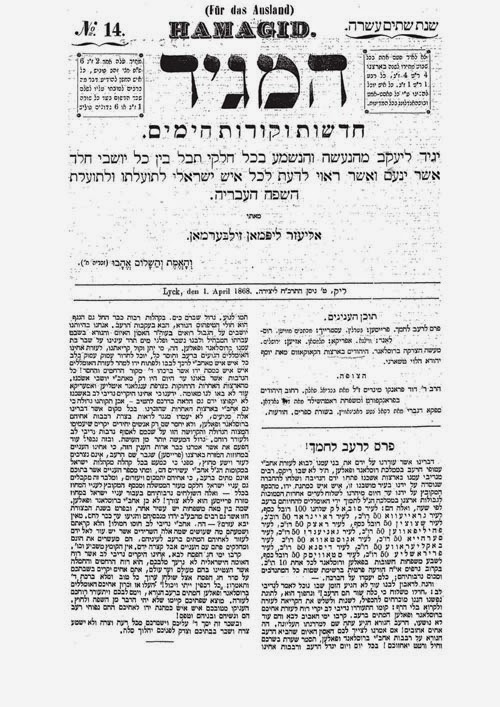
R’ Chaim Berlin (more on this shortly) also read the HaMaggid.
New evidence about the Netziv reading newspapers on Shabbas (and Censorship):

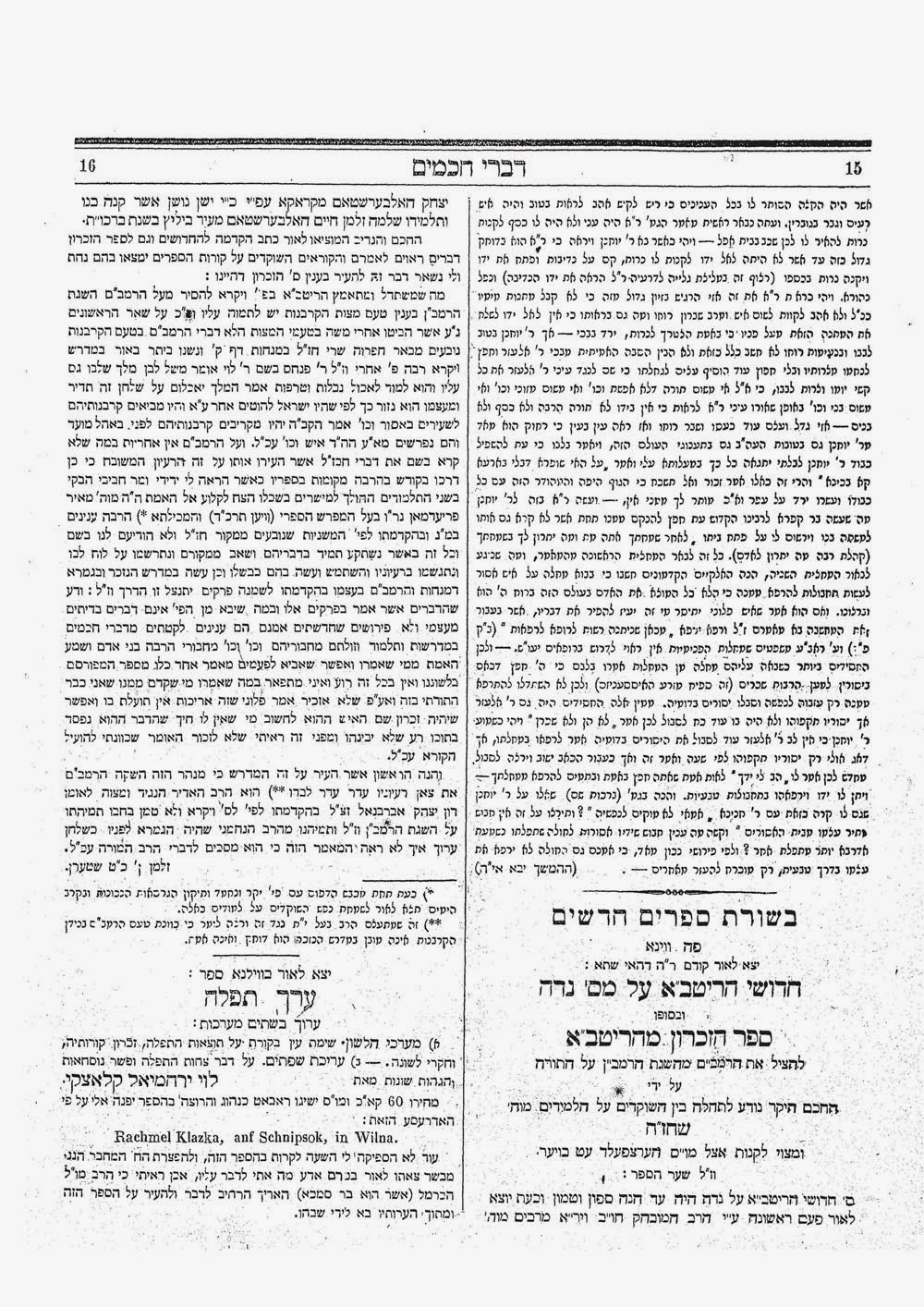
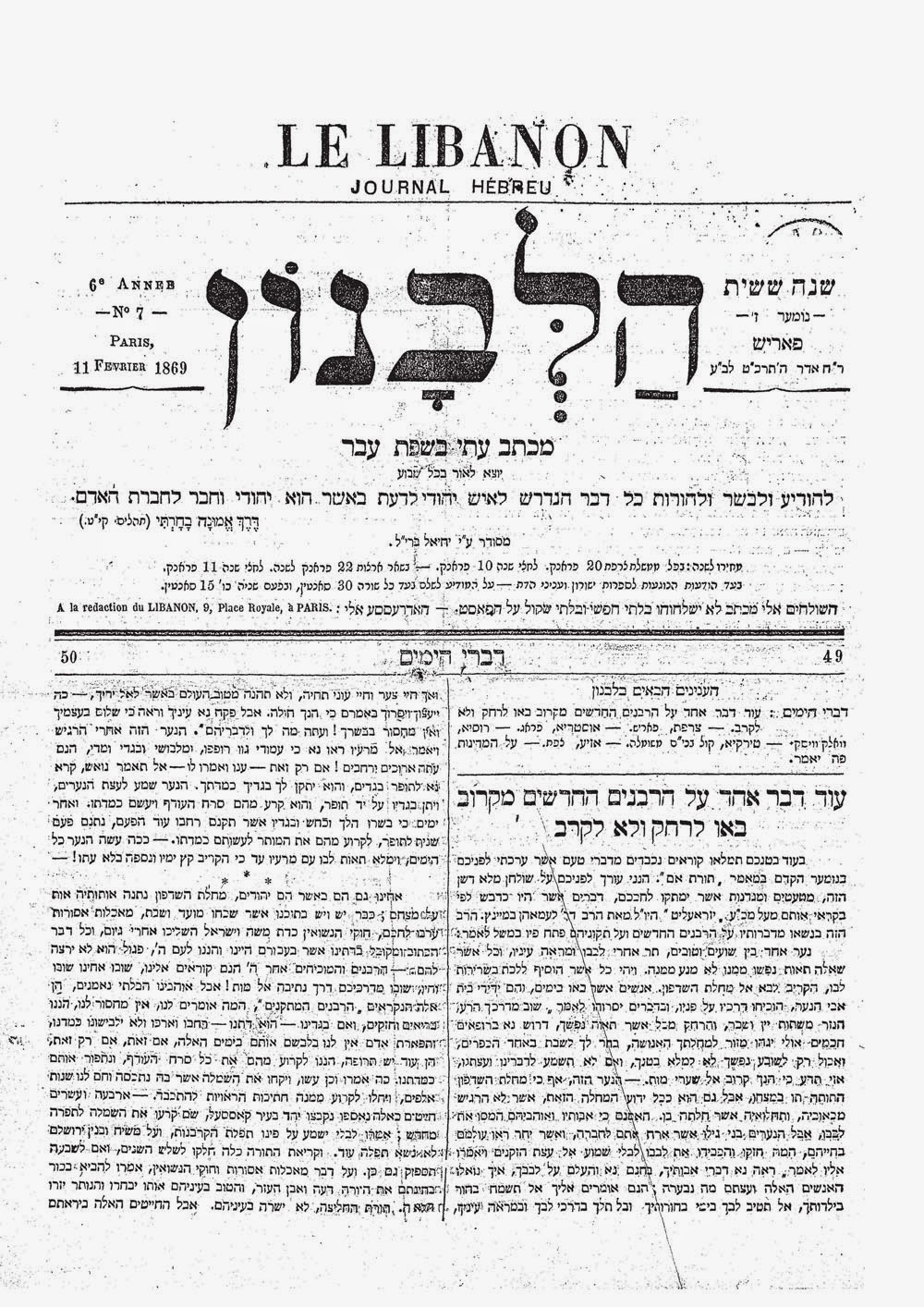
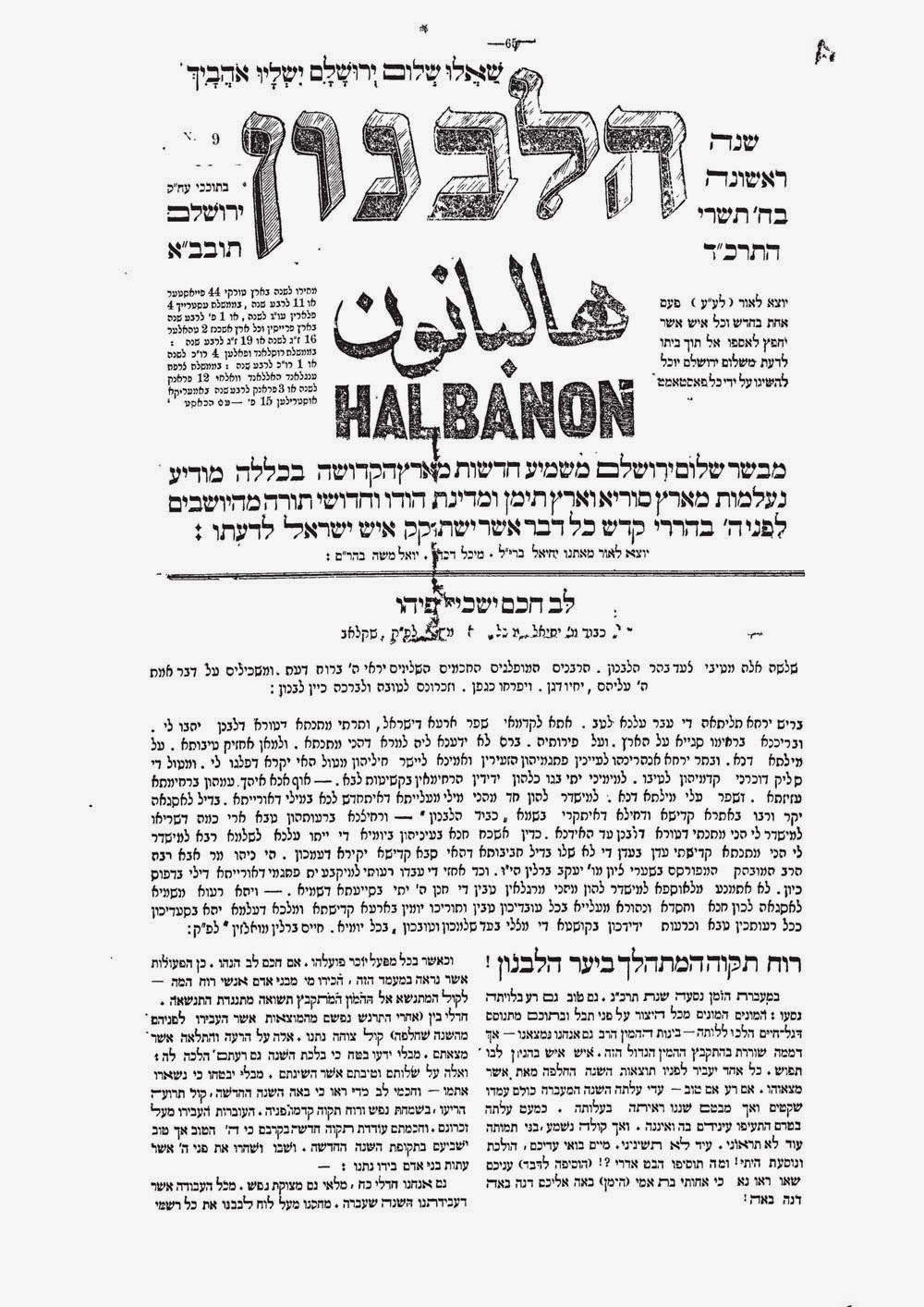
At the end of the January 7, 1869 issue of the Ha-Levonon newspaper there appeared an announcement regarding a new sefer that was to be printed soon for the first time from manuscript, namely The Ritva’s work on Nidah and his Sefer Ha-ZechronSefer Ha-Zechron is a defense of the Rambam from the Ramban’s various critiques in his Pirish Al Hatorah. After the announcement, Zalman Stern wrote a comment dealing with the subject of the Rambam’s reasoning for Korbonos.[8]

Less than a month later, in the February 11th issue of the Ha-Levonon newspaper, the Netziv wrote a lengthy response to Stern’s comment. The article is a beautiful essay by the Netziv, related to the reasoning for Korbonos.[9]

The Netziv begins his article with the following sentences:

הגיעני מווילנא על ש”ק שני עלי לבנון משנת ששית. וקראתי לשבת עונג מפרשת העלים ומדברי מע”כ שי’ המפקידים חן ודעת שכל טוב. ובהגיעי לנו 2 בבשורת סי’ הזכרון להריטב”א ז”ל נרגשתי במה שהעיר חכם א’ מעצמו וגם בשם האברבנאל ז”ל השגה…

Here we have, in black and white, the Netziv writing about himself that he read the newspaper on Shabbas![10]


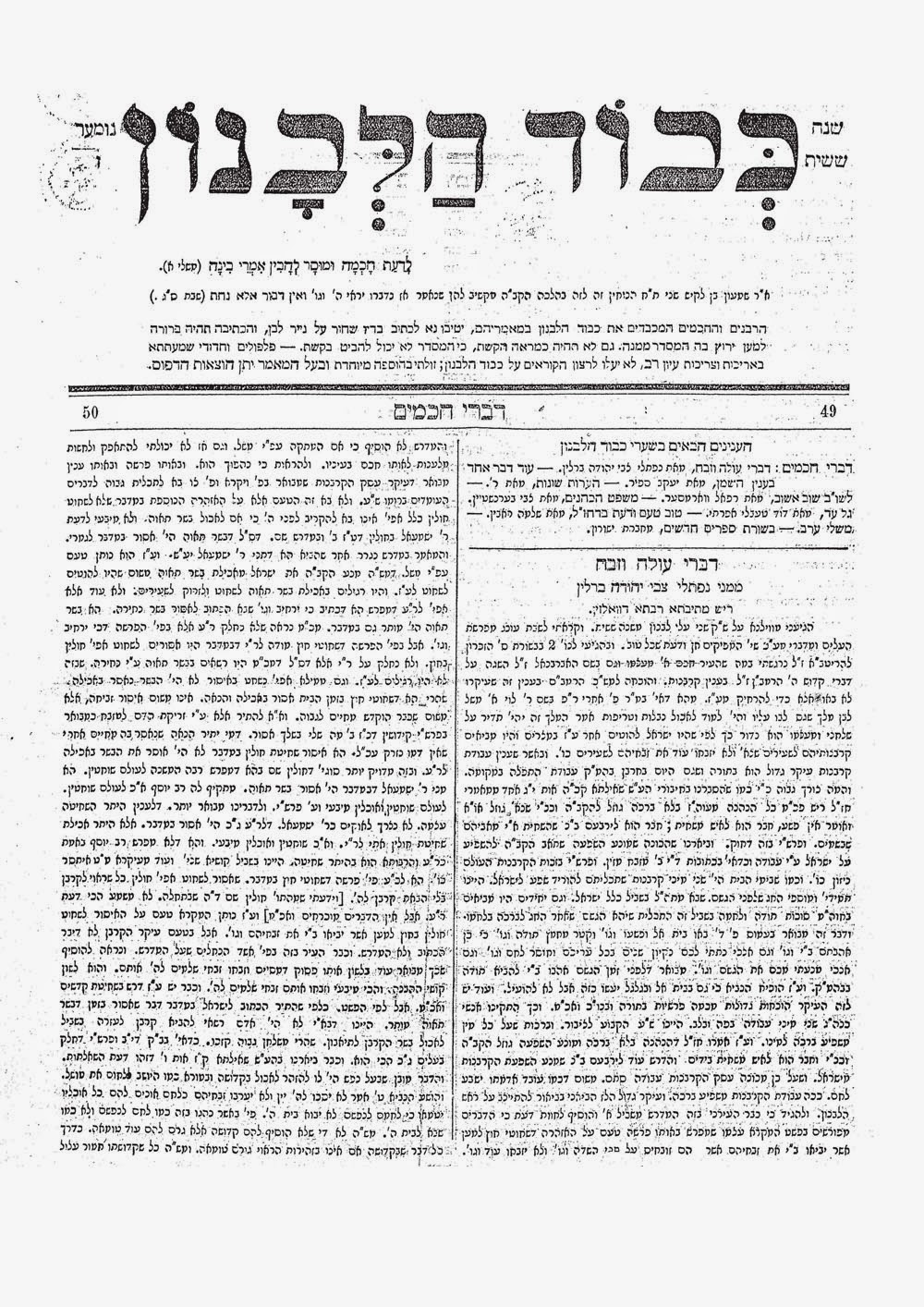
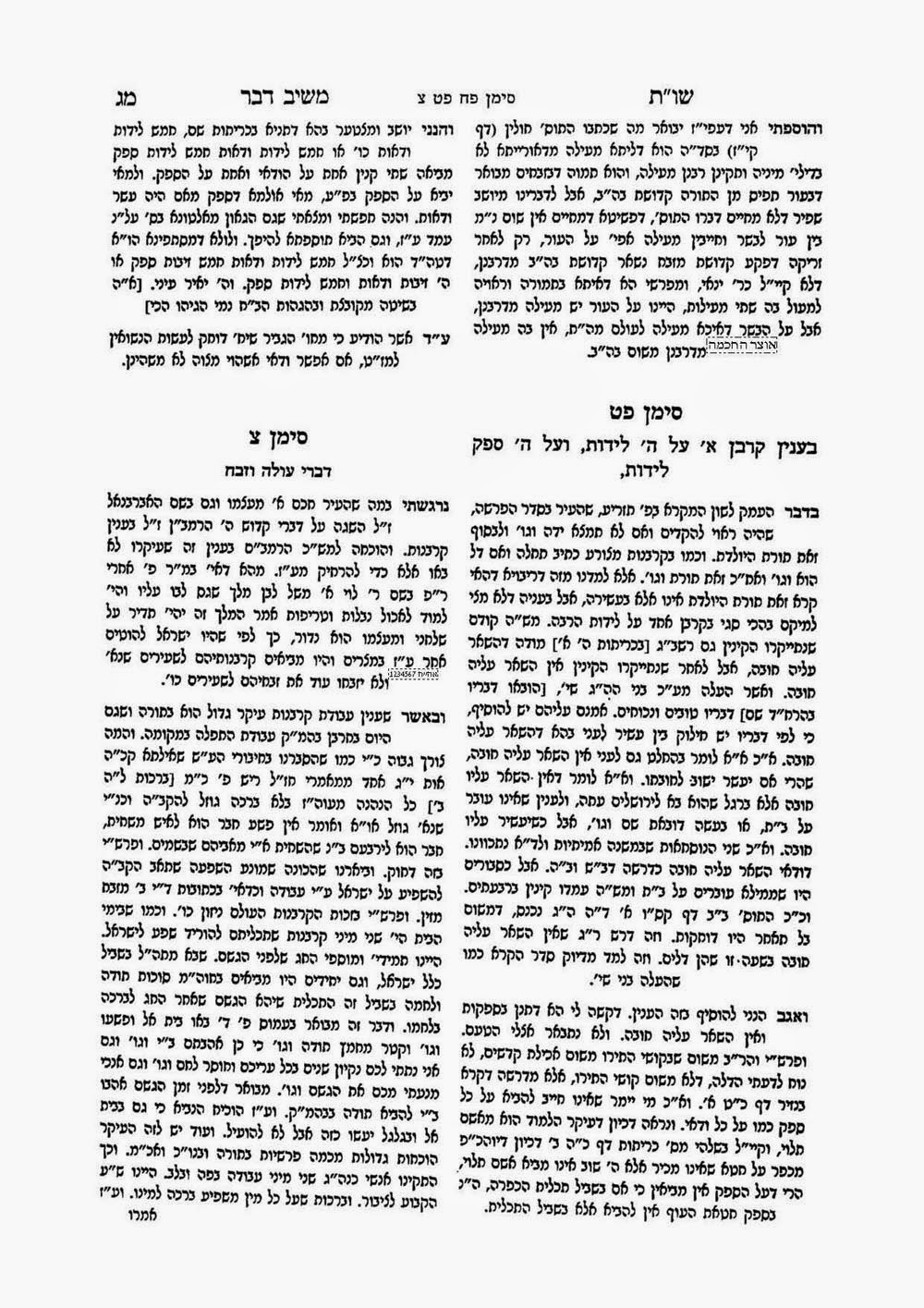
In 1993, this article was reprinted in the previously mentioned new edition of the Meishiv Davar  (5:90). While they do cite that the source of this article is from the Ha-Levonon (but not an exact location) the first three lines I just quoted are missing and the piece begins with the words נרגשתי במה שהעיר חכם א’
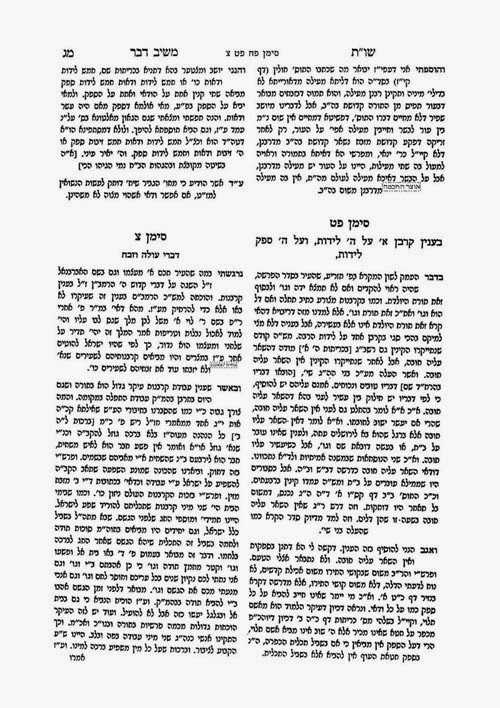
Rabbi Chaim Berlin and Reading Newspapers in general:

In a letter[11] to Avraham Eliyhau Harkavy he writes:

האמנם כי מתענג אנכי לעתים, למצוא את דברי חכמת, המאירים כספירים, על דלתי מכה”ע השונים, וגם בספרים מיוחדים, יקרים מפנינים, אבל משנה שמחה הי’ לי הפעם, בשלח ידידי את הספר, לי לשמי, וארא, כי כמוני כמוהו, עודנו זוכרים איש את רעהו, וכי נאמנו דברי המלך החכם, כי כמים הפנים, כן הלבב, ואהבה טהרה ונאמנה לעולם עומדת [שנות דור ודור, א, עמ’ קצט (=נשמת חיים, מאמרים ומכתבים, עמ’ שלט)].

Elsewhere he writes:

הן ראיתי את הרב מי’ שאול הכהן קאצענעלינזאהן, עומד על המצפה, בצופה נומר 30… [אוצר רבי חיים ברלין, נשמת חיים, א, סי’ רח].

הנני להודיע לכבודו את הרשום אצלי… אשר זה מקרוב גמגמו מהבנת לשונו גדולים חקרי לב העומדים על המצפה בצופה להמגיד שנה זו… [נשמת חיים, סי’ קצט].
Although Rabbi Chaim Berlin read newspapers he writes:

את העלה ממכתב העתי ההולאנדי הגיעני, ואם כי עלי להודות לו כי חובב הוא את דברי לפרסמם ברבים בשמי, בכל זה האמת אגיד לו, כי אין דעתי נוחה כל כך מהדפסת דברי תורה במכתב עתי, מטעם המבואר בפ”ק דרה”ש יח ב’ שבטלו חכמים להזכיר שם שמים בשטרות שלמחר נמצא שטר מוטל באשפה. ומי לא ידע, שמכתבי העתים מסוגלים לזה, שלוקחים אותם בחניות לכרוך בהם כל מיני סחורות וכדומה ולמחר מוטלים באשפה ח”ו על כן לא ירד בני בזה [אור המזרח, לה:א (תשמ”ו), עמ’ 44-45 (=ר’ אליעזר ליפמן פרינץ, פרנס לדורו, ירושלים תשנ”ב, עמ’ 326-327 ; נשמת חיים, מאמרים ומכתבים, עמ’ קסט)][12].

The Netziv writes about printing newspaper articles in Torah:

טרם אענה אני אומר, שאין הדבר נוח לי לפלפל בד”ת בעלי עתים, וכבר אמרו חז”ל חמוקי ירכיך נמשלו ד”ת לירך מה ירך בסתר אף ד”ת בסתר, ורק בראותי דבר מפליא שהיה אפשר להרבות ממזרים בישראל ח”ו, ראיתי חובה להודעי במקום רבים כי אין זה הוראה אלא טעות… (אגרות הנצי”ב ממלאזין, עמ’ נז).

Newspaper articles by Rabbi Chaim Berlin:

Although it appears from the above quoted letter that Rabbi Cham Berlin was against writing newspaper articles, we do find that he did write some. For example:

In the June 24, 1868 issue of Ha-Levonon we find an article of Rabbi Chaim Berlin.[13]
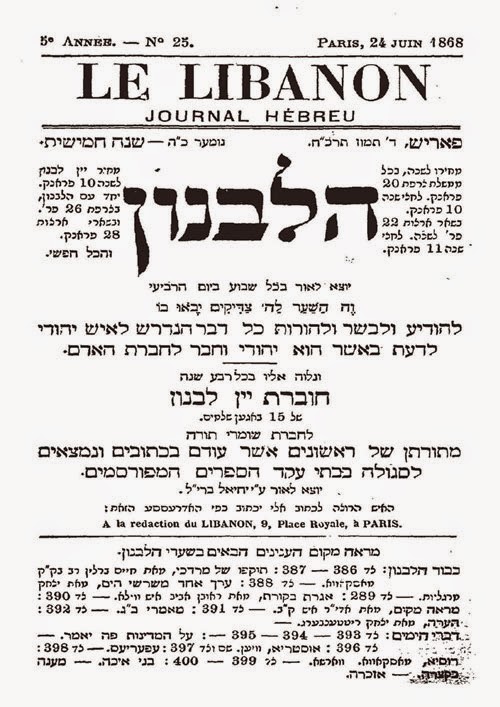

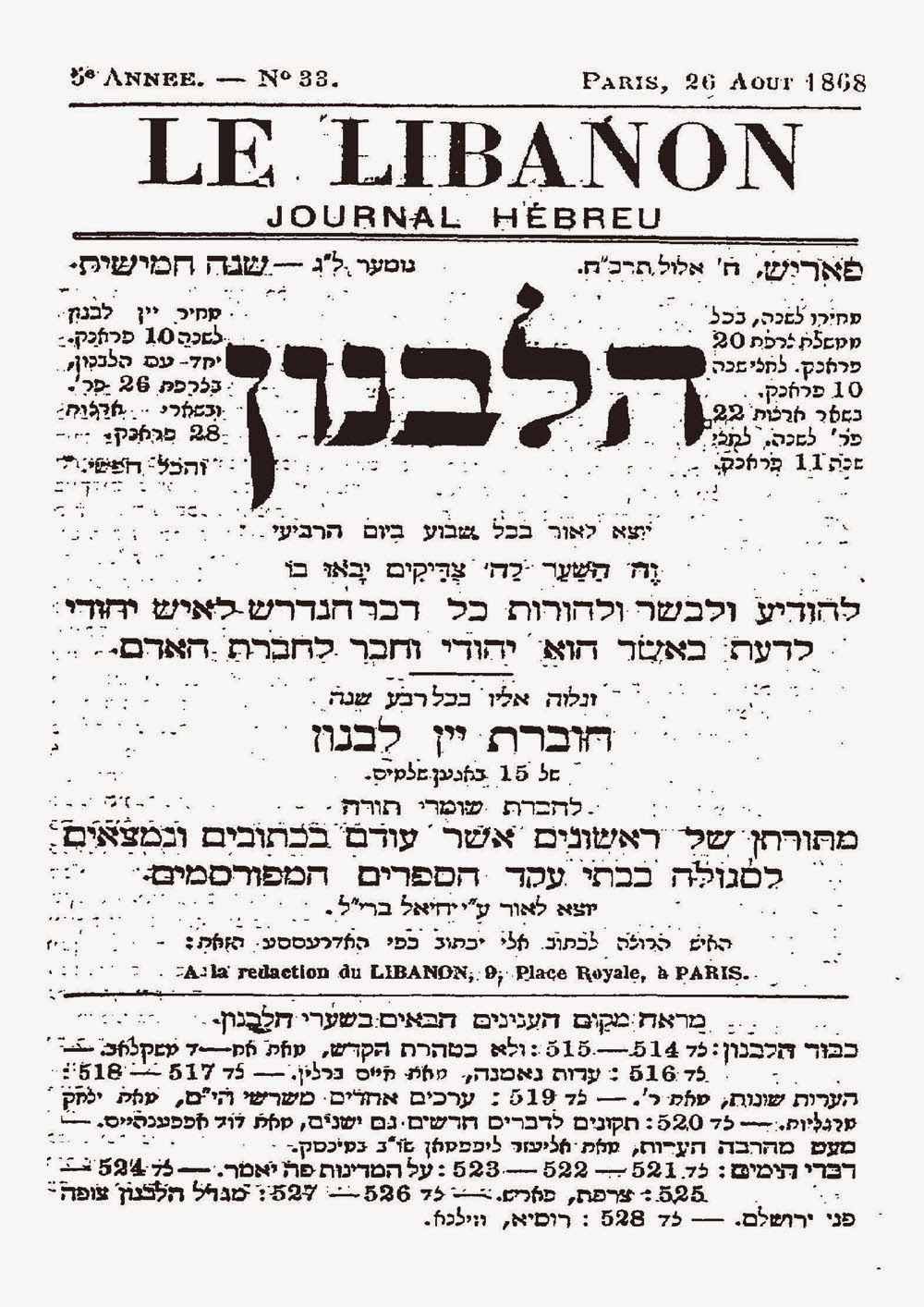
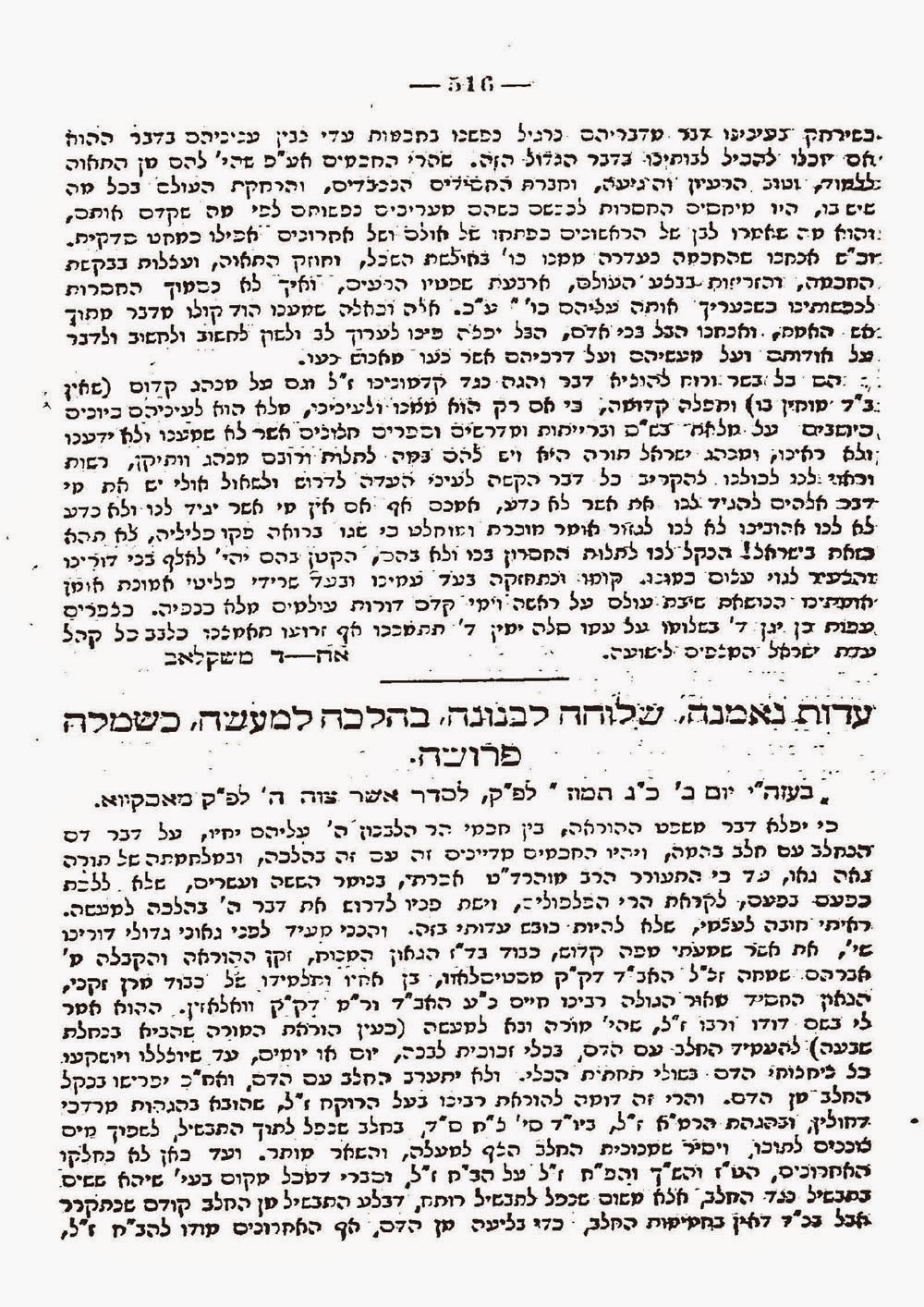
A few months later in the August 26, 1868 issue Ha-Levonon we find another article of Rabbi Chaim Berlin.[14]
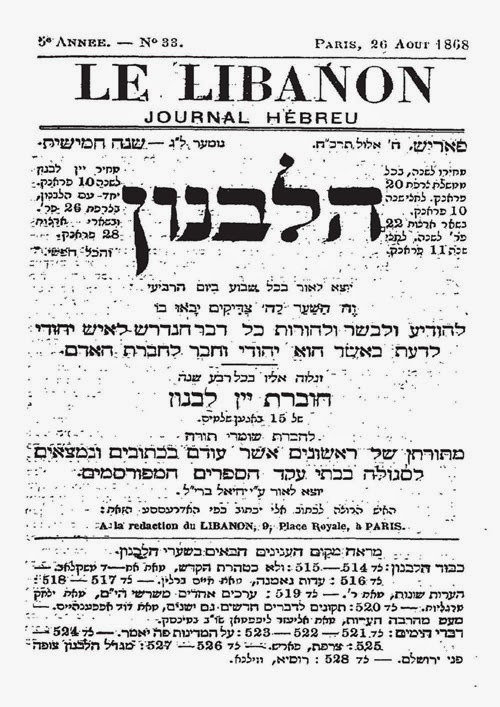
It could be that he wrote those two articles as they were important issues but in general he did not write articles of Random Torah.

However, in 1863, the Newspaper Ha-Levonon‘s first year, in the ninth issue we find a nice long article from Rabbi Chaim Berlin related to Sefirat Ha’omer. Rabbi Berlin comes to the conclusion if one forgot to count Sefirah one night so although the next night he cannot count the days with a Beracha he may count number of the weeks with a Beracha!  
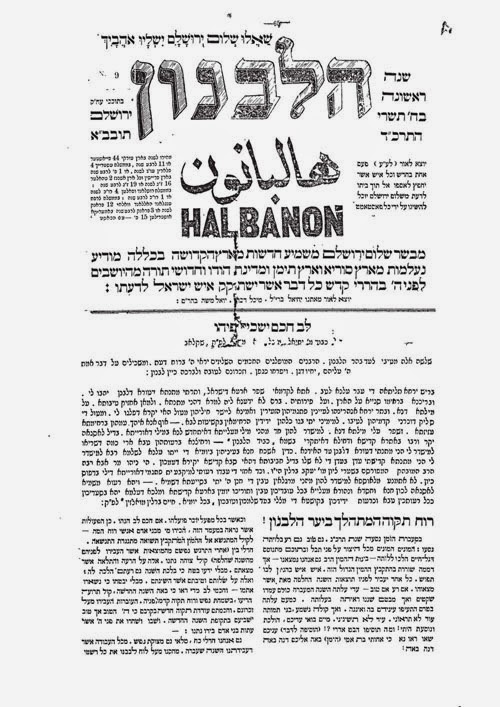

In the 1993 edition of the Shut Meishiv Davar, after reprinting this piece by Rabbi Chaim Berlin, they print a letter that the Netziv wrote to him on the subject.

בבואי ראיתי ביד חתן גיסי… שי’ עלה לבנון… מכתבך בראש הלבנון עולה על שלחן מלכי רבנן… הוספתי גיל לראות כי מצא בני מחמדי שליט”א להפיץ תורה בישראל, אף כי להגיד בראש הלבנון הוראה למעשה, יוסיף ה’ לאמץ חילך ולבבך בני להגדיל תורה בלי לב ולב עקוב את המאושרה, ואז תעש חיל וגבורה.
אמנם בני שמתי עין העיון בדבריך האוהבים… אחר כל זה תשכיל כי שגגתם בהוראה… ולא יפול לבבך על זה בני יקירי. וכבר אמרו ז”ל והמכשלה הזאת תחת ידך כו’ כידוע… והנני מוסיף בזה דבר… אם אתה נכשל בהוראה אזי הוא תחת ידיך להתבגר על התשוקה לקיימה ולהחזיקה ולעשות סניגורין, אלא אתה מודה על האמת דברים שאמרתי טעות הן בידי או אז ודאי ראוי להוראה בישראל. [משיב דבר, ה, סי’ טז].
Rabbi Rafael Shapiro, brother in law of R’ Chaim,[15] also argues on this Pesak and begins his Teshuvah as follows:

הן הגיעני זה כשתי שבועות עלי הלבנון נו’ ט’ שם ראיתי את חידושיו… ולדעתי לא כן ידמה…

R’ Chaim’s great-uncle, Rabbi Meir Berlin, also has a Teshuvah on the subject. He takes issue with R’ Chaim’s Pesak, begining his teshuva stating:

הובא לפני עלה א’ מלבנון… [אוצר רבי חיים ברלין, שו”ת נשמת חיים, א, עמ’ שיב-שיד].

In his memoirs about Volozhin, a student writes:
בנו הרב הגא’ ר’ חיים ברלין שנתמנה אחר זמן לרב במסקבה היה כותב במ”ע מאמרים על דרך השכלה והיה סופר מצוין בכתב ולשון ארמית שכתב בה מאמרים על טהרת לשונה… [משה יאפעט, רשומות וזכרונת, קובנה תרפ”ד, עמ’ 10]

Rabbi Chaim Berlin and Reading Newspapers on Shabbas:

Printed in Igrot HaNetziv Me-Volozhin is a letter by Rabbi Chaim Berlin, dated Sunday 1892.[16] In the letter he writes as follows:

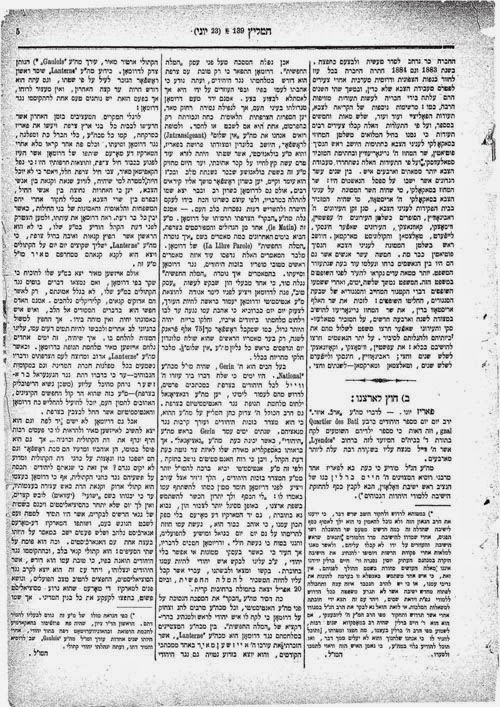
בשבת אתמול בסעודת ש”ק [=שבת קודש] בחברת מרעים כבדים, אהובים וידידים, רבנים מצוינים, וגבירים אדירים, עלה לפנינו עלה מכה”ע [=מכתב עת] המליץ, מיום ג’ העבר, נו’ 139, ושם נאמר…

Here is an image of the Newspaper that they were reading:


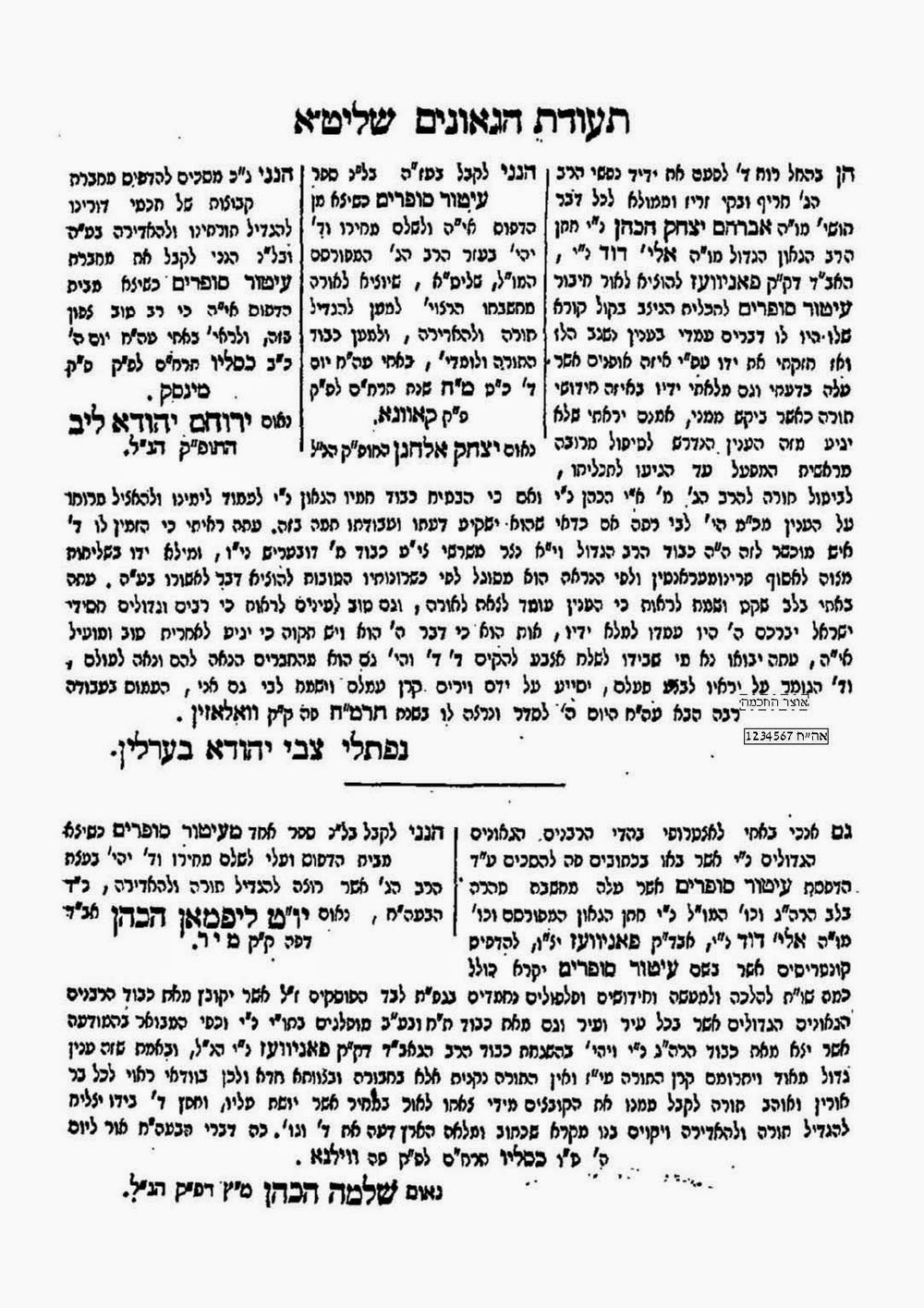
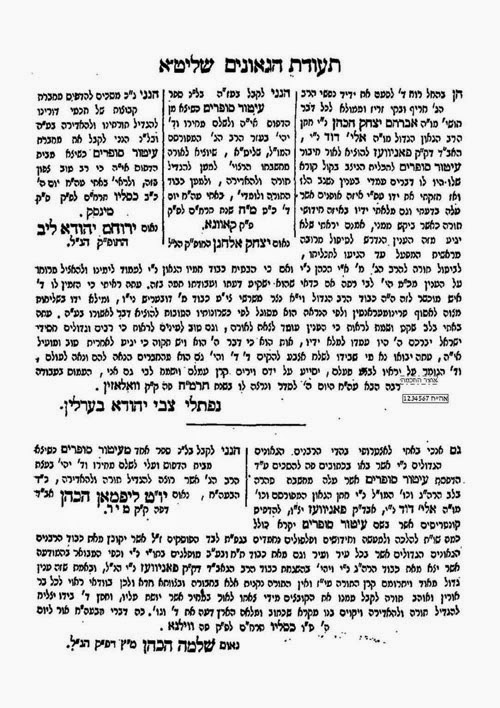
Additions to note six about the Journal ‘Ittur Sofrim’: I should have mentioned that the Netziv was not happy about it at first, as he thought it would take away too much time from Rav Kook’s learning.[17] 

Worth pointing to is Berdyczewski’s quote from the Netziv when he was asked about starting a Torah Journal for the Bochurim to print some of their ideas

דכירנא כד הוינא בהישיבה, התעוררו הרבה תורנים משכילים ליסד מכתב עתי תורני, אשר בו יבואו חידושים כתובים ברוח הגיון, כללים הנמצאים בש”ס, מאמרים העוסקים בחכמת ישראל וספרותו, וכשאר באו להנצי”ב לבקש כי ישתדל בעדם רשיון הממשלה על זה אז גער בהם פן… התעדו קוראים נכבדים מה הוא הפן הזה? לא דבר אשר יכול להורס חלילה את מוסדי הישיבה מהשקידה הגשמית, על ידי עסקם בכתיבה… [הכרם תרמ”ח (=כתבי מיכה יוסף ברדיצ’בסקי, א, עמ’ 97]

As one can see from the Netziv’s Haskamah to Ittur Sofrim here:

Rabbi Aaron Felder writes that he once asked Rav Moshe Feinstein about Rav Kook, to which Rav Moshe responded:

שבצעירותו היה הרב קוק אורך של ירחון תורני, והיו טוענים מכיריו שאין ראוי לאדם גדול שכמותו להיות אורך ירחון ומבחינת שאינו לפי כבודו [רשומי אהרן, א, עמ’ כח].

 Moshe Reines wrote in an article in the journal Beis Hamedrash printed in 1888:

גם חסרון ספ”ע מקדש לתורה ולהגיון לחקירה ולבקרת הוא חסרון מורגש בספרותנו, אולם החסרון הזה ימנה כנראה בקרוב, כי הנה הרה”ג ר’ אברהם יצחק הכהן קוק רב בעיר זימעל… אומר לה”ל מכ”ע חדשים כזה בשם עיטור סופרים, המקדש לתורה ולתועדה, וכבר נתנה החברת הראשונה בדפוס נחכה נא ונראה היצליח ד’ את דרכו אם לא [בית המדרש 1888, עמ’ 86].

See also R. Shmuel Alexandrov, Michtavei Meckar Ubikurut, 1, Vilna 1907, p. 7; R’ Mordechai Gimpel Yoffe’s letter to Rav Kook in Igrot LiRaayah, p. 17; R’ Kluger’s letter Ibid, pp. 26-27; Y. Mirsky, Rav Kook, Mystic in a time of Revolution, pp. 20-21.

Addition to note seven: The new version of ‘Ittur Sofrim’ does not say where their copy of Rav Zev Turbavitz’s letter about the Heter of the Netziv is from.

Rabbi Baruch Oberlander sent me a reference to Rav Zev Turbavitz’s Shut Tifres Ziv (1896), pp. 51-55 where he has a lengthy Teshuvah about reading newspapers on Shabbas in the beginning he writes:

 אמנם כעת יצא לאור ספר אחד ראיתי בו מכתב מאחד מגדולי הזמן שהביא….

In this Teshuvah he does not write the Netziv’s name nor the journal’s name nor does he write as sharply as he does in the letters I quoted from him to the Aderet and Rav Kook. But he does take strong issue with the Netziv’s Heter, going through the Sugyah at great length.

Addition to note eight: Both editions of Rabbi Chaim Berlin’s Teshuvot fail to mention the source of this Teshuvah; it’s printed in the back of the Shut Bikurei Shlomo (1:321). See also Shut Nishmat Chaim, p. 343, where he mentions he printed the Teshuvot found in Shut Bikurei Shlomo but he does not say where he did so.
Addition to note nine: The reference Shut Bikurei Shlomo siman, 3-4 includes a Letter of Rabbi Yehosef Zechariah Stern on this topic. In the new edition of the Shut Zecher Yehosef printed by Mechon Yerushalyim (2014), they reprinted this Teshuvah with many additions (2, pp. 437-440) from the notes of R’ Stern which he wrote on the side of his copy of Shut Bikurei Shlomo.

Who censored the 1894 edition of the Meishiv Davar?
In the Shar of the Sefer of both editions it says it was printed:
בהוצאת אשת הגאון זצלה”ה ובניה
I am not sure how much the sons Meir and Yakov had to do with the printing. Meir was fourteen years old at the time and Yakov was about seventeen[18].

R’ Chaim Berlin wrote to Rabbi Eliezer Lipman Prins:

מכ”י מר אבא הגאון החסיד זצלה”ה נדפס אחר פטירתו, שו”ת משיב דבר ע”י אלמנתו, הדרה בוורשא, ואך ממנה יכול רום מעלתו להשיגו, על פי האדרססא שארשום בשולי מכתבי, ובידי לא נמצא כי אם ספר אחד למעני [אור המזרח, לה:א (תשמ”ו), עמ’ 44-45 (=ר’ אליעזר ליפמן פרינץ, פרנס לדורו, ירושלים תשנ”ב, עמ’ 324; נשמת חיים, מאמרים, עמ’ עח)].

I would say the Netziv’s wife had much more to do with the printing than her sons, however I do not think that Batyah Mirel Berlin[19] was the type to censor such a thing. According to her granddaughter’s description of her:

בשעות הפנאי המעטות שלה עיינה סבתא בעיתונים ובספרי הקודש בחומש ובנביאים, בהם הייתה בקיאה למדי [טובה ברלין פפיש, ספר וולוז’ין, עמ’ 481 (= צלילים שלא נשכחו, עמ’ 55)].

Furthermore her father the author of the Aruch Hashulchan writes:

נ”ל דכתבי העיתים אינם בכלל זה ומותר בחול לקרותן שהרי הם מודיעים מה שנעשה עתה וזה נצרך להרבה בני אדם לדעת הן במה שנוגע לעסק והן במה שנוגע לשארי עניינים אבל עניינים שכבר עברו מן העולם מה לנו לדעת אותם וכן כל דברי הבלים שיש בהם שחוק וקלות ראש וק”ו דברי עגבים עון גדול הוא ובעוה”ר נתפשטו עתה בדפוסים ואין ביכולת למחות בידם  (ערוך השלחן, סי’ שז ס”ק ט).

Here is an advertisement published shortly after the Netziv died, asking for financial assistance for completing the printing of the Meishiv Davar.


Appendix One:


Appendix Two:

*Special thanks goes to my good friend Yisroel Israel for all his time and help in preparing this article. I would also like to thank my friend Rabbi Yosaif M. Dubovick for editing this article.
[1]  See Hama’yan 202 (2012) pp. 41-46, regarding the question if there exists a Heter to censor another’s works.
[2] On Berdyczewski see: Rabbi Yechiel Yaakov Weinberg, Kisvei Hagaon Rabbi Yechiel Yaakov Weinberg, 2, pp. 270-282; Marc Shapiro, Between the Yeshiva World and Modern Orthodoxy, p.74; Avner Holtzman, Micha Yosef Berdyczewski 2011; Avner Holtzman, El Hakerah Sheblev (1995).
[3]  See S. Stampfer’s Lithuanian Yeshivas of the Nineteenth Century, (p. 159) who cites Bialik that everything Berdyczewski wrote in HaAsif about Haskalah was false. However this is a major issue with relying solely upon autobiographical information; each person is referring to the time he was in the Yeshivah.
[4] A facsimile of one of the Netziv’s letter to him was reprinted in volume one of the collection of Berdyczewski writings, Kesavim 1,(1996) p.64.
[5] כאן משפט מחוק: “דיש כ[ת]ב ניתן להמו”ץ בעיר”
[6] Berdyczewski wrote a very positive review of this work. See his collected writings volume one pp. 196-197.
[7] כנראה לכולל ברודסקי. לתקנות הכולל ראה: ר”מ רבינוביץ, ‘תעודות לתולדות הישיבה בוולוזי’ן’, קבץ על יד (תשי”א), עמ’ רלא; ת’ פראנק, תולדות בית ה’ בוואלאזין, ירושלים תשס”א, עמ’ 118 ואילך. על פי התקנות, בכל תקופה נבחרו עשרה אנשים לכולל. שם, עמ’ 121, פורסמה רשימת הנבררים משנת תרמ”ז ואילך, ושם מבואר שכבר היה עשרה אנשים בהכולל [הערת ידידי ר’ שלמה הופמן].
[8] I hope to return to this topic in the future. For now, see: Rabbi Kalman Kahana, Cheker Viyun, 2, pp. 66-78
[9] See also the Netziv’s work on Shir Hashirim (1:8).
[10] After patting myself on the back for this discovery, I found this source, in the name of Dr. Leiman, buried in a footnote in Jacob J. Schacter’s classic article “Haskalah, Secular Studies and the Close of the Yeshiva in Volozhin in 1892“, Torah u-Madda Journal 2 (1990), on page 126, footnote 105. However they do not note the censorship from the 1993 edition of Meishiv Davar, as this article was printed in 1990. 
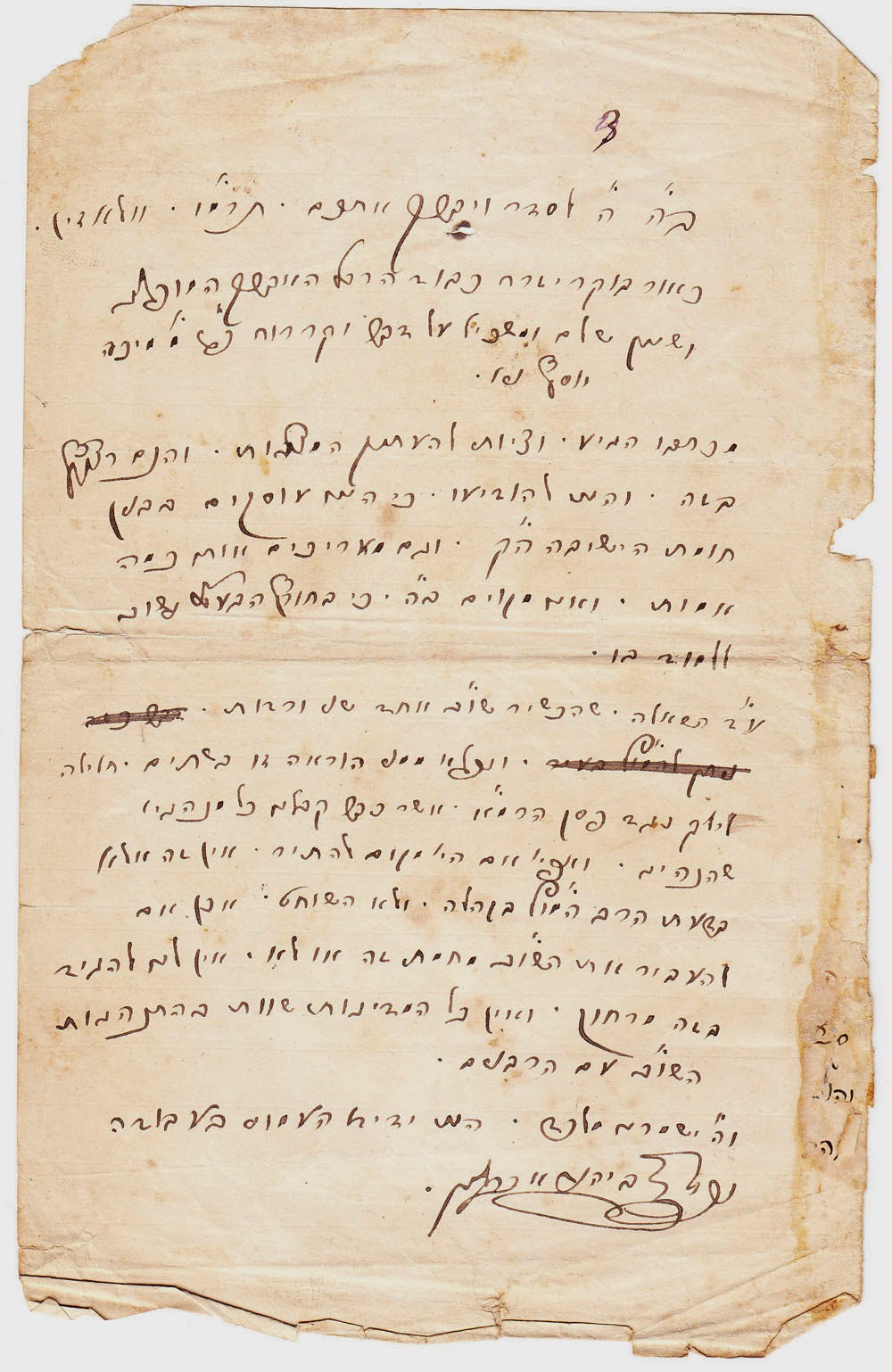
[11]  I will return to this letter in part four B”n.
[12]  The Chazon Ish wrote a similar thing to Rav Zevin:
הרב זוין שליט”א… לא אמנע מלהעיר כי הערות של בקרת של הרב הנ”ל שיחי’ מקומן הנכבד בחוברת מיחדה מזמן לזמן אבל אין מקומן יפה להן במקום שהוא נותנן והתורה בבחינת שבויה, מלבר שסופן ליעשות תכריך לחמאה.
This letter was first printed without Rav Zevin’s name in Kovetz Igrot Chazon Ish (1:183) and more recently with his name on it in Hashakdan (1:117), including a facsimile of the original letter.
[13] Shut Nishmat Hayyim (2002), pp. 231-233; Otzar Rabbi Chaim BerlinShut Nishmat Hayyim, 3, pp. 375-377.
[14] Shut Nishmat Hayyim (2002), pp. 149-151; Otzar Rabbi Chaim BerlinShut Nishmat Hayyim, 2, pp. 135-136. See also the 1993 edition of the Meishiv Davar where this Teshuvah is printed. All three of these places include an additional teshuvah on the topic of the Netziv which begins with the words:
הגיעני עלה מהלבנון באו בו דבריך…
[15] Torat Refael, 3:37; Otzar Rabbi Chaim BerlinShut Nishmat Hayyim,1, p. 312. The 2002 edition of Shut Nishmat Hayyim (pp. 99-103) only prints Rabbi Chaim Berlin’s piece on the subject and not the Netziv’s letter to him, despite their norm to print the related letters by the Netziv about the subject being discussed.
See R’ Yosef Zecariah Stern, Shut Zecher Yehosef, (#194):
וכבר שמעתי בשם  הרצה”ל ברלין מוואלאזין שחקר לענין ספירת העומר אם לא ספר יומי דמ”מ כשמגיע כלות  השבוע מברך כיון דהוה תרי מצות למימני יומי ושבועי… ומ”מ לא מסתבר לי…”.
Although RYZ”S possessed a phenomenal memory, apparently he confused the Netziv with his son R’ Chaim.
[16]Igrot HaNetziv Me-Volozhin, pp. 148-150; Sefer Nishmat Hayyim, Mamorim u’Mechtavim, p. 119. See Shaul Stampfer, Lithuanian Yeshivas of the Nineteenth Century, p. 231.
[17] Mirsky [Rav Kook, Mystic in a time of Revolution, p. 20] mistakenly attributes this fear to R’ Yitzchak Elchanan.
[18]  For the dating of Yakov Berlin’s birth, see the Netziv’s letter to R’ Shmuel Salant in Igrot HaNetziv Me-Volozhin,p. 207. For more information about R’ Yakov Berlin, see his daughter Tova Papish’s autobiography Tselilim Shel Nishkehu, pp. 58-62. [Thanks to Mr. Y. Israel for pointing me to this book].
[19]  See also what her son Rabbi Meir Bar Ilan writes in Me-Volozhin LeYerushalim, 1, 118-122. 


Bein hashemashot: A Reevaluation of the Texts Part IV

Bein hashemashot: A Reevaluation of the Texts Part IV
by: Dr. William Gewirtz

This is the last of four posts based on a forthcoming monograph by Dr. William Gewirtz that addresses the period of bein hashemashot, the most fundamental area of dispute in the area of zemanim.

The previous post summarized the main sections of the monograph; this post summarizes some of the areas of innovation and is followed by concluding observations.

Much of what was proposed tacitly made two basic assumptions:

 First, both halakhic practice and its conceptualization were influenced by the migration of Jews from the Middle East to Central and Northern Europe during a period when the impact of latitude on zemanim was not yet understood.
 Second, with the subsequent growth of clocks, increasingly, halakhic practice was specified using time in preference to observation of natural events.

It is probable that both of these factors were consequential. (Increasingly, time replaced observation as the basis for specifying halakhot. Preference for a time based halakhic rule (72 minutes, for example) over the underlying event from which the interval of time was derived has become increasingly common. More subjectively defined phenomena like misheyakir or the approximate boundary between a medium and a small star were less often utilized and, as a result, became less well understood.)

The PDF of the entire epilogue is attached. The epilogue includes a complete list of the innovations that have been proposed and a more extensive version of post 3. A subset of the innovations proposed and a concluding example and remarks follow below:

1. The dispute between the geonim and Rabbeinu Tam revolves around placing the interval of bein hashemashot, whose length is the time to walk ¾ mil, within the interval between sunset and tzait (kol) hakokhavim whose length is the time to walk 4 mil. It is normally assumed that:

 the opinion of the geonim places bein hashemashot at the start of the interval, while
 Rabbeinu Tam places it at its end.

Those two alternatives represent opposite extremes. Two modifications were suggested throughout:

 First, separate the dispute between the geonim and Rabbeinu Tam into two distinct components; the first concerns the beginning and the second the end of the bein hashemashot period, subject to a constraint on the length of the bein hashemashot interval.
 Second, assume that there are multiple hybrid / intermediate positions, bracketed by these two alternatives. (These positions might be more properly characterized as variants to the position of the geonim as they are all much closer to their bein hashemashot interval.)

This allows:

 an interpretation of the gemara in Shabbat similar or more likely identical to that of the overwhelmingly compelling position of the geonim relative to the end of the bein hashemashot period,

 while defining the beginning of bein hashemashot using a variant of the textual approach of the Shulchan Aruch and Rabbeinu Tam.

While I have not seen this conceptualization formulated explicitly (Throughout R. Kapach’s commentary on Mishneh Torah, however, he asserts that this is the position of Rambam.) in the classic halakhic literature, practice and a number of pragmatic opinions are supportive of such an approach. This approach impacted sections 5 – 8 and is central to many of the suggested innovations. The opposite implication:

 Anyone who rejects the start of Shabbat precisely at or even some number of minutes after sunset must embrace the approach of Rabbeinu Tam

which does not follow logically, is often found in the literature.
2. It is preferable to read the gemara in Shabbat assuming that all opinions vary insignificantly concerning the end of Shabbat; this is the opinion of almost all rishonim and independent of the position of Rabbeinu Tam. The gemara’s focus is primarily on the beginning of bein hashemashot on Friday evening, and that point is in dispute.

3. Modern practice, contemporary halakhic literature, as well as colloquial idiom, typically refers to time intervals calculated from sunset. Assuming that way of thinking when reading specific sources, we fail to consider that the gemara, various rishonim and achronim (we referenced R. Lorberbaum, R. Adler and R. Sofer) refer to intervals of time counting backward from the end of Shabbat as well, not always counting forward from sunset.

4. Rabbah’s interval, the time to walk ¾ mil, is more likely an upper bound on the length of bein hashemashot (the length of bein hashemashot in the summer) counting back from the point of chashekha versus a lower bound (the length of bein hashemashot in the spring) counting forward from sunset. Treating the gemara in Shabbat similar to the gemara in Pesachim as referring only to the (fall and) spring equinox is unnecessary when thinking of the interval as a practical upper bound. (First suggested by the Gaon in OC 261 and widely assumed in recent halakhic literature. Note while the gemara in Pesachim assumes an average that occurs at both the spring and fall equinox, the Gaon’s argument assumes, not an average, but a minimum and referring only to the spring, but not the fall equinox. No rishonim, who limit the gemara in Pesachim to the equinox periods in the fall and spring, make any such assertion with respect to the gemara in Shabbat. A maximum, as opposed to a minimum, would apply year round, as one might also conclude from the lack of commentary.) All the other measures in the gemara of chashekha, the appearance of the horizon, or the visibility of three stars apply year-round. Some of the arguments in favor of such a position include:

 The gemara in Shabbat is discussing Friday night and the beginning of bein hashemashot, as opposed to its end. If the time to walk ¾ of a mil were a minimum, counting forward from the beginning of bein hashemashot, it would address the end of bein hashemashot and the end of Shabbat, as opposed to its beginning.
 The three fractions of the time to walk a mil that are given as alternatives for the length of bein hashemashot would all have identical semantics counting back from the assumed point of chashekha.
 The interval of bein hashemashot is of practical consequence providing a useful upper-bound as opposed to a theoretical lower bound.
 If someone were countering the position of Rabi Yosi, who says bein hashemashot is instantaneous, it is more likely that he would say that it can be as long as opposed to as short as.

5. Shmuel’s assertion about 1, 2 and 3 stars is likely to mean that one star can still occur during daytime, but two stars only (If we assume that bein hashemashot begins 14 -15 minutes after sunset then “only” should be replaced with “almost always.” Though proposed by R. Kapach in his interpretation of Rambam, it would make Shmuel’s assertion slightly less useful. The suggested meaning of Shmuel’s statement is more elegant if we assume that bein hashemashot starts at most 12 – 13 minutes after sunset in the Middle East.) appear after the beginning of bein hashemashot (whose start may also precede the appearance of the first star) and three stars confirm that the transition to the next day has occurred.

6. Moving the beginning of bein hashemashot forward from sunset even according to Rabbah, a variant of the generally assumed opinion of the geonim, successively solves the following issues:

 at 4 – 5 minutes, the minimal time reported as the custom of Jerusalem as well as the opinion of R. Shneur Zalman of Liadi, the point when the sun disappears from the highest elevations around Jerusalem, Shmuel is consistent at least in a limited sense with R. Yosef while remaining completely inconsistent with Rabbah.
 at 6 minutes, the opinion of R. Chaim Volozhiner and the appearance of a single star in the spring to an expert observer, Shmuel is more easily consistent with R. Yosef but consistent with Rabbah only in a limited sense.
 at 7 – 15 minutes depending on a variety of factors, Shmuel is entirely consistent with Rabi Yehudah and the time to walk ¾ mil can be easily considered a practical upper bound.

7. While many equate and then struggle to resolve Rambam’s approach to Shabbat and Kiddush Hachodesh; I assume they are dissimilar. (Why so obvious an approach was not considered may be related to the assumption that safek chashekha and bein hashemashot are coincident. Though the two notions may be practically coincident, they are certainly not conceptually the same. For those following an opinion akin to the geonim for the end of Shabbat, they may not even be practically coincident. Within the halakhic literature there are differing opinions about the relationship between safek chashekha and bein hashemashot.) In both instances, Rambam considers chashekha as defining the end of a day. For a beit din declaring the beginning of a new month, Rambam sees no necessity to impose an interval of bein hashemashot. Thus, Rambam in hilkhot Kiddush Hachodesh states the halakha in (2:8) and then the recommended practice in (2:9). However, in hilkhot Shabbat, as noted in our opening paragraph, when dealing with a community, Rambam utilizes a notion of bein hashemashot, an interval that he defines practically as opposed to theoretically.

8. While the appearance of the horizon and the visibility of stars are difficult to reconcile with the opinion of Rabbeinu Tam, the argument between Abaye and Ravah, looking east and west at the same point in time, is most challenging. I cannot conceive of anyone in the Middle East detecting any change looking at the eastern sky 50 – 60 minutes after sunset. This is perhaps the greatest challenge to Rabbeinu Tam’s definition of the end of Shabbat.

9. It is probable that R. Adler’s 24/35 minute period of bein hashemashot is computed counting back from Rabbeinu Tam’s conceptual end of Shabbat. The alternatives, either counting back from the time that the Frankfurt community typically observed as the end of Shabbat or counting forward from any point in time, are less plausible. While this formulation faces textual challenges, other attempts to explain R. Adler’s opinion including that assumed by the editors referenced by Dr. Leiman as well as multiple suggestions of R. Benish face far more difficulty.

10. A number of recent essays on zemanim, including those by R. Kotler and R. Willig, suggest specific dependencies linking

 the dispute between the geonim and Rabbeinu Tam,
 the dispute whether shaot zemaniot are calculated from sunrise or from alot hashachar,
 and in the case of R. Willig even the time to walk a mil.

I see no such logical dependency and found that custom and / or authorities supported almost every possible combination of alternatives.

11. It is puzzling that when calculating the opinion of the Magen Avraham / Trumat Hadeshen attention to the impact of latitude and/or seasonality is rarely taken into account. In addition to morning zemanim, like the latest time for kriat shema, being earlier, this approach would also provide an alternative for plag haminkha (that many communities in US latitudes might find useful.) Similarly, adjusting alot hashachar would often imply an earlier start for those fast days that start at daybreak (particularly the 17th of Tammuz.) (While not a Magen Avraham specific issue since alot hashachar is applicable according to all opinions, invariance of the 72/90 minute interval is likely inherited from similar practice applied to the position of Rabbeinu Tam with respect to the end of Shabbat which then influenced the calculation of shaot zemaniot according to the Magen Avraham. (See summary for category 3. where this is further explained.) Though conceptually challenging in both contexts, a fixed 72/90 minutes does not create obvious observational issues, except for alot hashachar and only at latitudes further from the equator, like northern Europe.) That would avoid a practice that allows eating on the morning of a fast as late as (or even after) the time of misheyakir.

A concluding example:

The migration of Jews from the Middle East to other locations required adjustment in practice that often necessitated creating concrete concepts in areas that might have otherwise been left unexplored. That process contributed to a wealth of material with which many poskim have had to grapple. Both the categorization and the new approaches that have been proposed should make this vast halakhic literature more understandable.

As I mentioned in the preamble, criticism within the rabbinic literature has been muted, (There are a few very notable and important exceptions.) and potential inaccuracies have often not been identified and discussed adequately. As a result, it is impossible (perhaps even for great poskim who are unacquainted with astronomy or the impacts of season and /or latitude) to read the literature without intense effort.

Let me illustrate using the most widely followed posek of our times, and conclude with a few words, which I hope will be taken as they are meant. I choose R. Feinstein because I assume that many will conclude that if his responsa illustrate my concerns, I could have easily chosen any number of other poskim.

Consider five decisions of R. Feinstein:

1. In the New York area, Shabbat ends 50 minutes after sunset even in accordance with Rabbeinu Tam.
2. One can pray as early as 90 minutes before sunrise under special circumstances.
3. Perform a brit the following week on Wednesday, for example, for a baby born late Wednesday afternoon until 9 minutes after sunset.
4. In the New York area, allow specific activities forbidden only at a rabbinic level on the Shabbat until 40 minutes after sunset on Friday.
5. Unlike other zemanim, chatzot is always at the same time (that varies by location) and does not vary throughout the year.

Summarizing issues discussed previously, these tshuvot are challenging in six (R. Feinstein’s mention of the time to walk 4 mil as 96 minutes while given no practical consequence is also problematic.) different areas:

1. Like R. Pimential approach to Holland, R. Feinstein’s derivation of 50 minutes for New York, reasons by analogy on the appearance of stars, using Lithuania as his base for 72 minutes. Were R. Feinstein to have used Babylonia, certainly a more logical choice, he would undoubtedly have reached a radically different conclusion. R. Willig expresses a similar point, albeit less directly. (This issue was raised directly in a recent sefer by R. D. Heber, Shaarei Zemanim, page 90.) Generally, this psak is quoted without hesitation or comment. (Perhaps new meaning for the term chassid shoteh can be ascribed to the publishers of a sheet I picked up at the Kotel, that provide R. Feinstein’s 50 minute zman for New York for use in Jerusalem.)
2. As R. Feinstein is following the conceptual approach of Rabbeinu Tam, then the end of Shabbat and the time for alot hashachar ought to be treated identically. Instead, R. Feinstein:

 relies on a 22.5 versus 18 minute time to walk a mil for alot hashachar but never even suggests a 22.5 minutes based stringency for Shabbat,
 adjusts only Shabbat’s end but not alot hashachar based on latitude (R. Feinstein does briefly mention the possibility of latitude adjustments for alot hashachar in the tshuva but chooses not use it.) and
 never addresses the relationship between his rulings that, according to the opinion of Rabbeinu Tam that he is following, are conceptually linked.

3. Adjusting zemanim based on latitude to correlate to a physical occurrence like the appearance of stars or the degree of light is strongly supported. However, directly adjusting the time to walk a mil whose length is linked neither to latitude nor to season by location, has no logical basis and leads to conclusions that are in fundamental conflict with observation. (While there exists imprecise language in the literature prior to R. Feinstein that talks in terms of such adjustments, using it as a basis for a psak that reduces / equates 13.5 minutes to 9.375 minutes is inexplicable. As we have noted, this is logically equivalent to asserting a watch that moves 72 minutes in Lithuania, only moves 50 minutes in New York.)

4. Deriving the beginning of bein hashemashot by subtracting from the time that Shabbat ends is common in psak and rooted in the text of the gemara. However, it requires that the end of Shabbat be accurately established. The time that R. Feinstein uses for the end of Shabbat is his (and R. Y. M. Tukitzinsky’s) calculation that is among the most stringent methods for calculating what is already a stringency based on three small stars and not the point that the gemara uses, three medium stars. This is further impacted by R. Feinstein’s use of a “truncated / adjusted” time to walk ¾ mil of 9.375 minutes (as opposed to 13.5 minutes) for the New York area, resulting in a significant leniency. To be concrete, as opposed to the 40 minutes (50 minutes and subtracting 9.375 minutes for bein hashemashot) after sunset that R. Feinstein derives, three medium stars are visible approximately 27 – 32 minutes after sunset, safek chashekha and certainly bein hashemashot precedes that point by some number of minutes. Of course, R. Feinstein, operating within the framework of Rabbeinu Tam, may not consider 50 minutes as a stringency.

5. Chatzot varies slightly day to day (given the tilt of the earth in its orbit) according to the all methods for calculating the hours of the day; the variation is approximately 20 minutes in the New York area.

6. At a very fastidious level, R. Feinstein calculates adjustments based on latitude without regard for the non-linear relationships that exist between the duration of different sub-intervals of bein hashemashot.

In all but the third item above, R. Feinstein had an extensive literature from which to derive support. As was noted, R. Soloveitchik carefully recast the opinion Rabbeinu Tam to avoid these and other issues. However, he ended up with a conceptual approach to Rabbeinu Tam as well as a personal chumrah, which is almost unheard of in the halakhic literature and widely divergent from practice. However, given that this is an area with a long tradition of practice, great poskim, of which R. Feinstein is a unique example, exhibit an impeccable sense (In addition to or perhaps as a result of siyatta di’shemaya.) that guides them in how to decide. I remain struck by the accuracy of the psakim, independent of their problematic rationale. Let us reexamine the five decisions and how they might be alternatively justified:

1. Shabbat ends 50 minutes after sunset in the New York area. Despite this not being the conceptual opinion of Rabbeinu Tam, as R. Feinstein assumes, it is precisely the opinion of the geonim as calculated by R. Yechial Michal Tukitzinsky, the first major contemporary figure to write extensively on this topic combining knowledge of both halakha and astronomy. (R. Belsky’s (re)interpretation of R. Feinstein makes this correspondence precise. See the commentary supporting the www.myzmanim.com website.)
2. One can pray as early as 90 minutes before sunrise in special circumstances. A latitude and seasonal adjustment of 90 minutes provides a basis for yet greater leniency. Beyond the reliance on a 22.5 minute mil, 90 minutes in New York is close to both the scientific point of first light (approximately 90 to 120 minutes), and, more importantly, a latitude/season adjusted 72 minutes (approximately 80 to 110 minutes). The fact that R. Feinstein was willing to rule so differently on the end of the Shabbat and alot hashachar aligns with tradition, albeit in conflict with the conceptual viewpoint of Rabbeinu Tam.
3. Perform a brit the following week on Wednesday, for example, for a baby born late Wednesday afternoon until 9 minutes after sunset. Clearly, this psak is in perfect alignment with the views developed and similar to the tradition of Jerusalem over the generations that assumed that a baby born a few minutes after sunset has his brit on the same day the following week. (See Minhagei Eretz Yisrael by R. Yaakov Gliss, pages 102 and 282 who mentions 4 – 5 minutes and Zemanim Kehilkhatam by R. Boorstyn, chapter 2, section 1, footnote 7, who claims that R. Shmuel Salant, would rule that a baby born after sunset but before the call of the mugrab, seven to ten minutes after sunset, has his brit on the same day the following week.) Even rejecting Rabbeinu Tam’s late end of Shabbat based on the overwhelming arguments of the Gaon and others, a start to a day a few minutes after sunset is supported by generations of practice. Even R. Feinstein’s reliance on Rabbeinu Tam for a slightly delayed beginning to bein hashemashot is often rejected.
4. Allow specific activities forbidden only at a rabbinic level on the Shabbat until 40 minutes after sunset. Perhaps the most challenging given the undisputed assumption that the gemara meant bein hashemashot to extend back from three medium stars (a depression angle of about 6 degrees) versus R. Feinstein’s roughly 8.5 degrees and R. Feinstein’s use of a “truncated / adjusted” 9.375 minutes to walk ¾ mil. Nonetheless, being exceedingly liberal with respect to a rabbinic prohibition, especially, in the face of need, has a long tradition. Unfortunately, in most, if not all seasons of the year, 40 minutes after sunset, is well past the point of chashekha, in the New York area.
5. Chatzot is always at the same time. As with R. Feinstein’s 50 minutes, there is a need for seasonal adjustment. It appears, like a number of Rabbis who oppose this type of complexity in psak, R. Feinstein’s tradition was to use a single time.

On the first three rulings, R. Feinstein’s psak can be easily justified on other grounds. The last two are somewhat less critical and more problematic. However, it is often dangerous for Rabbis to apply or extend elements of R. Feinstein’s logic to other areas where zemanim are critical without his innate sense of psak.

Final Comments:

This monograph was intended to address seminal issues relevant to bein hashemashot without covering in depth many important sub-topics. Hopefully, the approach and observations will make this vast literature easier to study. While I did not want to address explicitly either philosophic issues or practical issues of psak, I suspect that my personal opinions on both are clear. I was strongly motivated to defend minhag Yisroel, a mimetic tradition that for many centuries, even until the Second World War, relied on the opinion of Rabbeinu Tam in many parts of Europe.

As I studied this topic, I was repeatedly revisiting three issues:

 If in ancient times, sunset, a very easily identified occurrence, was considered the precise starting time for Shabbat, how could it have ever been forgotten and / or abandoned? If Shabbat started sometime after sunset, then the position of Rabbeinu Tam and an overwhelming number of rishonim is more plausible. As Jews migrated northward, the required beginning to Shabbat separated even further from sunset, particularly if bein hashemashot was thought to have an unchanging maximum length – the time to walk ¾ of a mil.

 If observation challenged only Rabbeinu Tam’s opinion while leaving the approach of the geonim free of any issues, why did major figures living in southern Europe and even the Middle East, including Ramban and (likely) R. Yosef Caro, adhere to Rabbeinu Tam’s opinion?

 How could generations of practice that relied on the opinion of Rabbeinu Tam or some related variant be so easily discounted? In my mind, the modern bias to treat sunset as a given (and reject even R. Feinstein’s limited reliance on the position of Rabbeinu Tam) is unwarranted.

I hope that what I have written, at least partially, addresses these questions.

The approach developed posits that bein hashemashot begins after sunset, later than many assume, while its end is somewhat earlier than current practice. (R. Y. C. Sonnenfeld’s tshuva 33 (an approbation to a sefer on zemanim) on this topic is remarkably supportive. While speculating that we may have to wait for Elijah to defend the fundamental difficulties with Rabbeinu Tam’s end to bein hashemashot and Shabbat, he raises issues with the approach of the Gaon as to the beginning of bein hashemashot from texts of gemara that imply that the day extends past sunset. While suggesting that we follow both chumrot and stating a personal preference not to attempt to decide on a matter so long in dispute, he expresses hope that this will be clarified one day. I believe that I have taken a step in that direction. In any case, regardless of his suggested practice, like this monograph he raises issues with both the end time of Rabbeinu Tam and the start time of the geonim. While R. Sonnenfeld suggests that one adopt the stringencies of both positions, the approach developed and generations of practice often made use of the leniencies of a hybrid approach.) While some will contend that the criticism, suggested innovations, and conclusions do not exhibit sufficient deference to recent generations of psak, I hope that this monograph demonstrates a commitment to integrity, clarity, simplicity, consistency with basic astronomic observations, faithfulness to basic texts and respect for generations of halakhic insights and in particular, practice.

In summary, a fulsome defense for a later start to Shabbat is anchored on three points:

1. Mishetishkeh hakhamah refers to a point after sunset.

2. The time to walk ¾ of a mil is the maximum length of bein hashemashot not the minimum.

3. When applying the gemara’s interval of bein hashemashot to other locations, its length need not be extended.

The first is the preferred reading of the gemara in Shabbat according to most rishonim. The second is strongly supported by simple logic and arguably by the statement of Shmuel, though certainly at variance with the prevalent contemporary interpretation. The third is clearly debatable, but the viewpoint of some major poskim. All three are needed to defend fully historical practice. However, even the first, or certainly the first two points, should influence contemporary psak in extenuating circumstances.

Those familiar with R. Kapach’s approach to Rambam throughout Mishnah Torah, will recognize that his conclusions as to Rambam’s position on the twilight period and much of this monograph are consistent. While R. Kapach’s approach tacitly assumed stars, as opposed to darkness, as defining both the beginning and the end of bein hashemashot, something I believe that Rambam did not support, R. Kapach’s practical conclusions and insights into Rambam aligns Rambam across Mishnah Torah closely with the ideas that have been developed. (1. R. Kapach also insists on bein hashemashot beginning at 15 minutes after sunset, something we are not convinced that Rambam necessarily maintained. 2. As has been mentioned previously, objections to the approach of the geonim derive from sugyot where sunset does not appear to be a precise delimiter. Similarly, despite Rambam’s clear identification with the position of the geonim, some try to align his position with Rabbeinu Tam based on the fact that he did not consider sunset as critical as many assumed that an approach like that of the geonim had to maintain. As has been argued throughout this monograph, the “either-or” assumption of either Rabbeinu Tam or the geonim, without intermediate positions is an assumption that I find neither conclusive nor correct. 3. Building on R. Kapach’s approach, a future paper will attempt to demonstrate that Rambam maintained a hybrid / intermediate position, similar to the position of the geonim, consistent with the text of the gemara, astronomic observation and supportive of the approach taken in this monograph.)

It should also be clear, that while their rationales were entirely different, many poskim who in practice followed R. Pimential’s approach supported a position akin to what has been suggested throughout the monograph. In practice, they allowed work after sunset proper and awaited only three (small) stars, not a full 72 minutes. As well, they would never allow work on Friday, anywhere near as late as Rabbeinu Tam’s conceptual position would suggest.

Both the practice suggested by these poskim and R. Kapach’s interpretation of Rambam conceptually aligns with the approach developed throughout this monograph.

Clearly, in the study of zemanim, one has to “look up” as well as “look in.” Over the last few hundred years, careful observation of the skies has often been replaced with a fixation on time and timepieces. This contributed a false sense of accuracy as opposed to enhanced clarity to an already complex area.


The Besamim Rosh’s Son What Can Be Gleaned from an Introduction

Most books, and Hebrew books are no exception, contain introductions. The introduction may lay out the author’s vision for the book, or describe the motivation for publication. Additionally, it is not uncommon to find material which has little to nothing to do with the work which follows. One example, is the introduction to the third edition of the work Or Enayim.[1] This work by R. Shlomo b. Abraham Peniel discusses “the fine attributes of the Jews and the good that is awaiting for them in the world to come.” It is divided into three parts, the first part discusses the heavens and their effects on the Jews, the second part discusses the Creation story, and the final part discusses the Avot.

In 1806, this work was republished with an introduction from the editor of this edition. The editor was R. [Yisrael] Aryeh Leib ben Saul, the Chief Rabbi of Stettin.[2] The editor was the son of R. Saul Berlin, the latter who is perhaps most well-know for editing/authoring the Teshuvot Besamim Rosh. (For earlier discussions of the Besamim Rosh at the Seforim blog, see here.) The introduction contains some unusual items. It mentions Thomas Paine, Aristotle and other Greek philosophers, as well as the French Revolution and the bloody aftermath.[3] He specifically vocalises the name Abarbanel with that reading.[4] As is common in introductions, R. Aryeh Leib includes a brief history of his upbringing and eduction. He notes that he studied with both his grandfathers, R. Tzvi Hirsh Levin the Chief Rabbi of Berlin, as well as his maternal grandfather. Additionally, R. Aryeh Leib studied with R. Pinchas Horowitz, the author of the Haflah.

While all the above is interesting in its own right, the more interesting and important portion of the introduction discusses R. Areyeh Leib’s father, R. Saul. R. Aryeh Leib notes that his father left numerous works in manuscript and specifically lists them. R. Saul himself also discusses his unpublished works in his last will and testament – although only to issue a warning that “all of [his] writings, however… shall be forbidden to anybody to take even one leaf and to read it. Everything shall be left in paper, be sealed up and sent to my above-named father or to my children…” R. Saul doesn’t provide any other information about these “writings.” R. Aryeh Leib, however, discusses them in detail. First, he explains his father left notes and thought on the entire Sha’s titled Perek Hasheg Yad. The other titles, also on GeFeS, include Deh Lachmo, Resisi Lilah, as well as Ateres Zekanim on various aggadot. Finally, R. Saul left “his piskei dinim.”

R. Aryeh Leib continues that his father left extensive notes on a work, Or Zarua of R. Isaac of Vienna. At this time the Or Zarua had not been published, instead, the Or Zarua although well-known, wasn’t actually first published until 1862 and then only a portion of it. R. Aryeh Leib wanted to publish this work, it seems with his father’s notes.[5] As R. Aryeh Leib was well aware of the controversy his father prior works had caused, he took a proactive stance and sent the manuscript to two persons, R. Chanina Lipman Meisels of Peiterkov and R. Tzvi hirsch David HaLevi of Krakow. R. Aryeh Leib was fearful of “the kat ha’tzvoim who are unfortunately very common in this generation, they always treat as suspect the holy works as perhaps they will find something objectionable in these works, and [when they locate something they claim is objectionable] they stir up the populace with this.”

R. Aryeh Leib never was able to publish the Or Zarua, however, his discussion enabled one scholar[6] to cast serious doubts on the traditional story associated with the discovery and printing of the Or Zarua. Specifically, in the introduction to the Or Zarua, there is a description of the travels of the manuscript, and the relevant part states “[i]n earlier days this beautiful book used to be the proud possession of the author of the work Besamim Rosh, R. Saul, son of Tzvi Hirsch, Chief Rabbi of Berlin, as it is written on the cover of the [manuscript]…. After [R. Saul’s] death the book was sent to another city … by ship over the sea, and the ship and everything that was in it was wrecked, and the manuscript that was inside went under the sea and the waves went over it … God … protected this book and prevented it from going down to the depths and saved it from destruction. He sent a stream through the mighty waters a brought the book to the border … and led a fisherman to the place. He saw the book, lifted it from the sea and brought it to a certain Jew.” From there it was transfered to another and was then published. While this story makes for good reading, based upon the introduction in the Or Enayim it seems that it is not true. Contrary to the story, R. Saul did not send the manuscript only to have the ship wreck – instead, as R. Aryeh Leib says, he received the book from his grandfather, R. Yitzhak Yosef Toemim who R. Saul had given it to. It was not then lost in the sea, rather, as we have seen, in 1806 R. Areyeh Leib had it and was hoping to publish it.

What is true from the above story, and is confirmed in part by R. Aryeh Leib, is that the manuscript which the Or Zarua was published from, contains the notes of R. Saul. These notes have never been published although the manuscript is still extant in the Bibliotheca Rosenthalina in Amsterdam and is available at the JNUL (Mss. R. R. Film No. F 10455).

Notes:
[1] On the title page of this edition it states that it is the second edition of this work. This is incorrect. The Or Enayim was first published in Istanbul in approximately 1520. It was then published for a second time in Cremona in 1557. In 1806, we reach the edition discussed above. Thereafter, in 1967, a photomechanical reproduction of the Cremona edition was published together with R. Emmanuel Benevento’s Leviat Chen. [It is worth noting that although the Leviat Chen is also a photomechanical reproduction of the earlier, and only, 1557 Mantua edition, for some reason there are two pages missing at the end. Specifically, these two pages are a dirge bemoaning the 1554 burning of the Talmud in Ancona.]

[2] On the title page his name appears as Aryeh Leib – as the two approbations address him, while he signs the introduction with the additional Yisrael Aryeh Leib. R. Aryeh Leib had a rather colorful life, including converting to Christianity later in life. According to some, however, he repented and returned to Judaism. For more on Aryeh Leib, see Landshuth, Toldot Anshe ha-shem u’Polosum (Berlin, 1884) pp. 109-110. Landshuth cites E. Rosenthal, Yode’a Sefer p. 16 no. 93 as the source for the story that Aryeh Leib converted and that at the end of his life returned to Judaism. R. Saul also had a daughter, Hena, who married R. Abraham Hertz and they had a son, Saul.

[3] These persons and events are included to highlight the distinction, according to R. Aryeh Leib, between Jews and non-Jews. He claims that although one may find wisdom in non-Jewish as well as Jewish sources, in order to fully appreciate wisdom one can only do so through the study of the Torah and fulfilling its commandments. Thus, Duschinsky’s conjecture that R. Areyeh Leib mention was “to impress the reader with his profound knowledge in all subjects,” has little basis. See Charles Duschinsky, “The Rabbinate of the Great Synagogue, London, from 1756-1842,” Jewish Quarterly Review (n.s.) 9:3/4 (January – April, 1919): 383.

[4] See S. Z. Leiman, “Abarbanel and the Censor,” Journal of Jewish Studies (1968): 49, n. 1.

[5] Although Schrijver, see next note p. 78 n. 63, alleges there is “no clear textual evidence to support [the] assumption that Aryeh Leib wanted to include his father’s notes in a printed edition.” It seems from the fact R. Aryeh Leib went so far out of his way to defend the work against possible detractors I don’t think it far fetched to understand that the detractors would question the work of his father.
The above noted works are not the only works of R. Saul, R. Saul himself mentions other works he authored, none of which were published, in his notes Kasa D’harsena. For a complete list see Landshuth, supra n. 2, pp. 105-106.

[6] Emile G.L. Schrijver, “Some Light on the Amsterdam and London Manuscripts of Isaac ben Moshs of Vienna’s Or Zarua’,” Bulletin of the John Rylands University Library of Manchester, 75:3 (Autumn 1993): 53-82, esp. 73-82 where he includes an appendix on “The Story of the Shipwreck of the Rosenthaliana Or Zarua’ and its Demystification.”


Some Highlights of the Upcoming Taj Art Auction

Some Highlights of the Upcoming Taj Art Auction*

With the proliferation of auction houses and the centralized platform of Bidspirit, there are auctions of Judaica and Hebraica on a weekly, if not more frequent, basis. One of the more recent entrants into this arena is Taj Art, founded in 2021 by Tomer Rosenfeld and Aron Orzel. This Sunday, December 24th, at 7 pm Israel time, Taj Art will be hosting their 11th auction, which includes some items of particular bibliographical and historical note.

The full catalog is available here, and a pdf of the highlights brochure is here.

The first (lot 9) is a work that appears in a story that is a touchstone for the modern feminist agenda.

According to R. Barkuh HaLevi Epstein, he maintained a regular dialogue with Netziv’s first wife, Rayna Batya. Among the topics of conversation was the issue of women studying Jewish literature. Rayna was well-versed and regularly studied an impressive array of Jewish books.

Epstein, in his Mekor Barukh, attempts to place Rayna as less of an anomaly but more as one within a chain, albeit small of women throughout Jewish history that similarly shared Rayna’s interest and erudition of Jewish texts. While there is little doubt that there are examples of such women, many of Epstein’s examples are corrupt at best and deliberate misreading of the sources at worst. Nonetheless, there is little doubt that Rayna was an erudite woman. According to Epstein, Rayna eventually won him over to her position when she identified a responsa that provided that women could study traditional texts. The source was Ma’ayan Ganim. Epstein repeats the position of Ma’ayan Ganim in his commentary on the Torah, Torah Temimah (although without reference to Rayna or a particular episode).

First, we should note that Marc Shapiro has questioned the veracity of the entire story in his article on this site, which is subject to a rebuttal by Y. Lander. Eliyana Adler’s article, “Reading Rayna Batya: The Rebellious Rebbitzen as Self-Reflection,” (available here), collects additional discussions regarding the event and provides her approach to the story. While one can debate the merit and implications for Jewish feminism, it is worth briefly discussing the obscure work Ma’ayan Ganim.

The Ma’ayan Ganim, authored by the Italian rabbi Shmuel Archovalti, was published in 1553 in a small format and consisted of 50 letters intended to guide effective communication. Unlike many other legal systems, Jewish law largely relies on responsa, letters from rabbis in response to queries (although, in some instances, contrived rather than actual). Despite the format, not all letters are legal, and certainly, a text with sample letters intending to serve as a writing tool does not qualify as legally binding. Irrespective of the purpose, the letters demonstrate an interest in the issue that held the interest of many rabbis and others. Similarly, whether or not Epstein created the entire episode or embellished parts of it does not detract from his position that encouraged women’s study of Jewish texts.

While Rayna Batya has enjoyed questionable notoriety, it is disappointing that a woman whose advocacy for women’s study and Jewish women’s rights was well documented and received the respect of leading Jewish rabbis and scholars is today nearly forgotten. Ironically, as Dr. Leiman highlights, the New Jewish Encyclopedia notes that prior Encyclopedias Jewish women were marginalized, it too fails to record Esther. The one exception to this forgetfulness is the Encyclopedia for the Zionist Leaders, which records Esther and some of her accomplishments. Today, however, there is a very robust discussion of many of Esther’s unique contributions and essential ideas that appeared here: https://mizrachi.org/hamizrachi/the-time-of-our-freedom/

It includes translating one of Esther’s articles that appeared in the Jewish press.

Two books are written by R. Yitzhak Chaim Kohen MeChazanim (Cantarini), Et Kets and Pachad Yitzhak (Lot 22). The former was published in 1710 and the latter in 1685. Despite the gap in time, both contain a fully illustrated page that precedes the title page and depicts the Akadeh. Et Kets discusses the messianic era, while Pachad Yitzhak is devoted to discussing the Jews of Padua, avoiding being massacred by an angry mob. Despite the same iconography, the two illustrations were likely done by two different artists and contain subtle but important differences.

Et Kets

The overall depictions are of two different time periods of the Akedah episode. In the first, the illustrations depict Abraham just as he was about to slaughter Isaac and the angel calling to stop him. But, in the second, the illustration is of Abraham going after the ram, not Isaac. The significance of this is tied to the actual books. In Pachad Yitzhak, the book discusses a terrific threat to the Jews and their salvation. Thus, the illustration is similar – the terrific threat to Isaac and salvation. The second work, Et Kets, is a much more positive book. This work has no fear of the prior; instead, it is fully devoted to the Messiah, and thus, the illustration is only of the ram and its sacrifice. Lot 22 is Pachad Yitzhak, the rarer of the two.

Further, different Hebrew words appear in both illustrations. On the first, the word ערכה (prepared or set up) appears across Abraham’s chest. This word expresses Abraham’s readiness to sacrifice Isaac. It would seem, similarly, that the Jews of Padua were willing to sacrifice themselves for God. But the word ערכה only means to prepare and not actually to sacrifice. Thus, Isaac was only prepared but not sacrificed, and so too, the Jews of Padua were placed in danger but ultimately redeemed.

In Et Kets, the words ירא יראה appear. These words reference what Abraham called the place where the Akedah took place. Importantly, Abraham uttered these words after the entire episode. These were words of jubilation on his passing his test and Isaac’s redemption. Again, these words fit well with the content of Et Kets.

These allusions are unsurprising, considering the style of R. Dr. Cantarini. His books are written rather cryptically, with many allusions to Biblical and other themes throughout. (See our fuller discussion here.)

Many Hebrew books include a depiction of the Temple Mount, represented by the Dome of the Rock. However, Lot 43, Zikrohn Yerushalim, published in 1742, consists of a depiction of the Dome of the Rock (surrounded by a Medieval wall and town) but broke new ground in depicting the Kotel to represent the Jewish Temple. This is the first time the Kotel ever appeared in a Jewish book. Yet, only in the 19th century did the Jewish books fully transition to the Kotel rather than the Dome of the Rock.

There are two notable works by R. Emden, his Siddur, (lot 52), and R. Azreil Hildeshiemer’s copy of Meor u-Ketziah (lot 175). This edition of the Siddur is especially important as most of the reprints (until recently) only included the commentary, and the actual text of the Siddur did not reflect many of R. Emden’s approaches and, frequently, a direct conflict between the commentary and the text.

There are some very rare antiquarian books, an incunabulum from Radak, (lot 149), published in 1486 by Soncino. Lot 148 is a leaf from a manuscript of Rambam’s commentary of the Mishna dated to 1222 and transcribed in Yemen. One of the rarest Bomberg volumes of the Talmud is Mesechet Avodah Zarah, lot 32. Of course, because this tractate discusses non-Jews and their relationship to Jews, it was particularly fraught. Indeed, after the resumption of the printing of the Talmud in Basel after the ban in the early 16th century, it omitted this tractate entirely. (There are also two other Bomberg volumes, lots 3334).

Eliyahu HaBakhur (Elia Levita) wrote one of the earliest grammar and dictionaries of Hebrew and Aramaic in the modern period. Lot 86, is the first edition of his Sefer HaBakhur, Isny, 1541.  A more recent reprint was subject to censorship due to including a particular commentary.  See our discussion, “A New Book Censored.”

There are also a few books that contain noteworthy illustrations. Lot 87 is Tzurat ha-Arets, Basel, 1546, which includes astronomical images. Lot 89, is an edition of the fundamental kabbalistic work, Razeil ha-Malakh, that depicts the star of David and kabbalistic amulets.

The issue of rabbinic pay appears to have affected even the greatest of rabbis. Lot 205 is a letter from R. Chaim Ozer to the Vilna community pleading for a raise because he is so destitute that “he will not have money for rent or food.”

In all, there are a number of highly collectible items, and the catalog is certainly worth a closer look.


*This is part our series on upcoming auctions, “Auction Highlights.” These provide the opportunity to revisit previous posts and provide short notes about books and other related items.