Eliezer Brodt: A Censored Work by a Student of R. Hayyim of Volozhin: The Case of Menuchah u-Kedushah

A Censored Work by a Student of R. Hayyim of Volozhin:
The Case of Menuchah u-Kedushah
By Eliezer Brodt

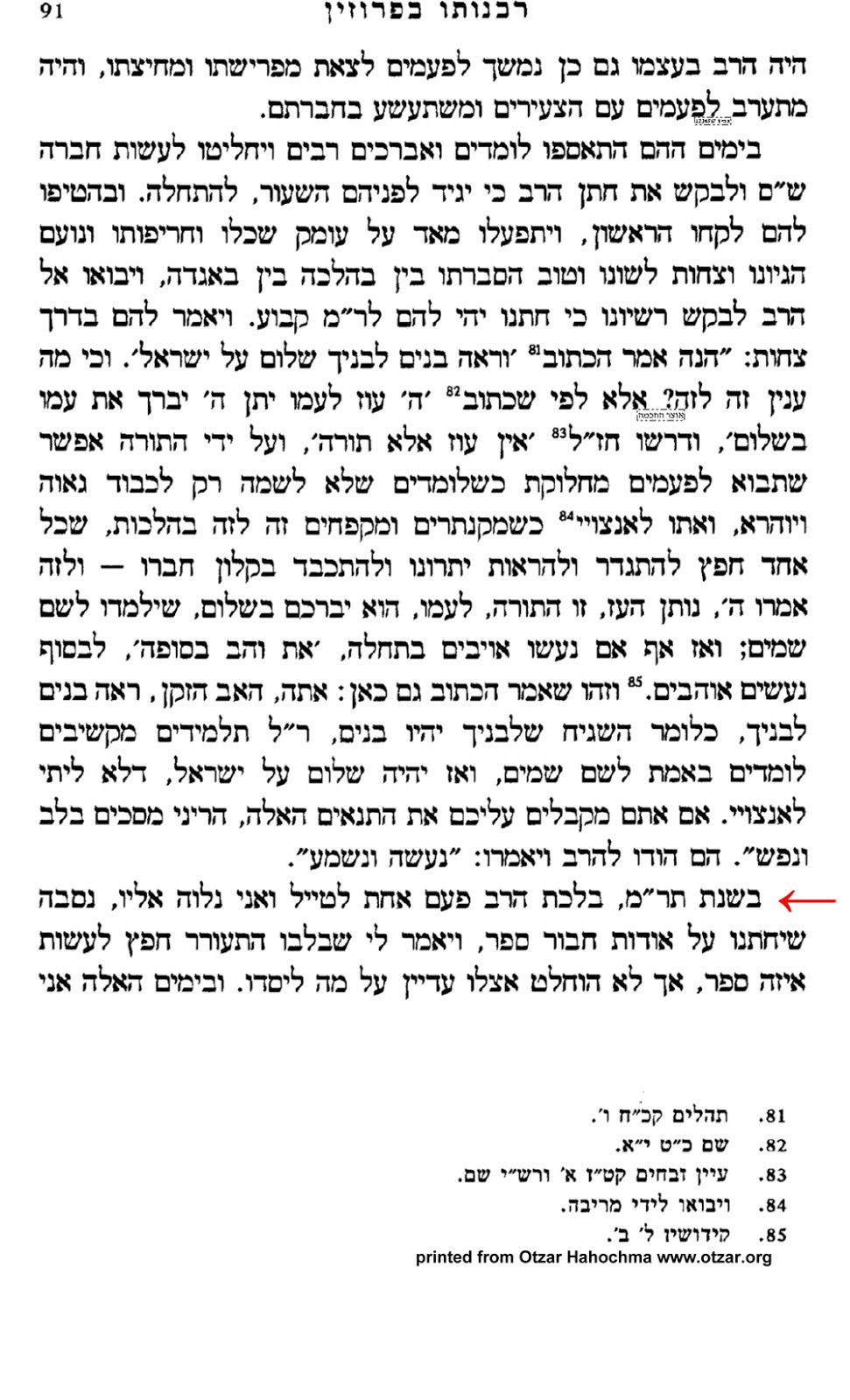
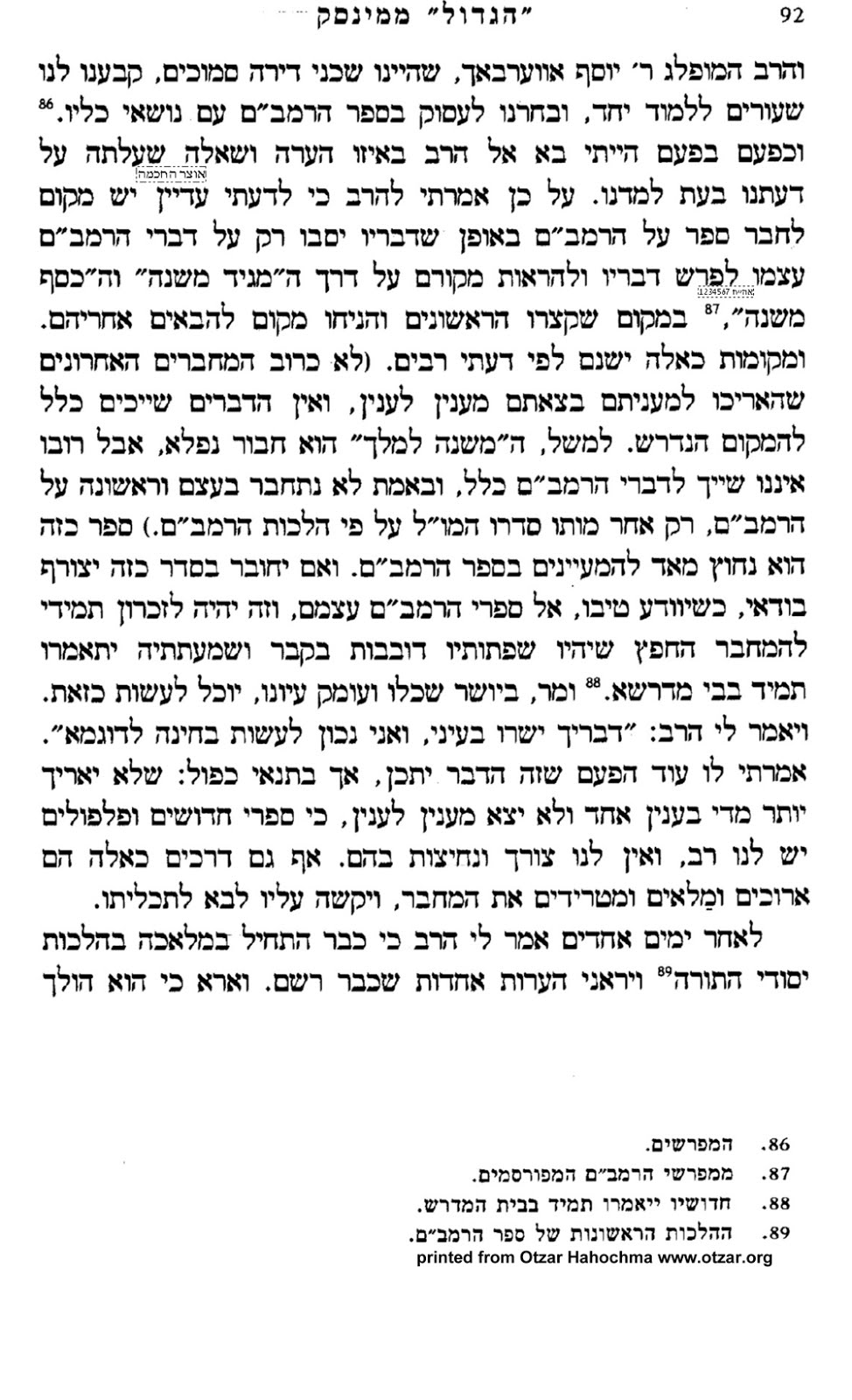
A few years ago (c2000) a fascinating sefer was reprinted called Menuchah u-Kedushah. The sefer was written by R. Yisrael Isserl from Ponevezh. Not much is known about the author except that he was a talmid of R. Hayyim of Volozhin. It’s clear from the sefer that he was a very special person and a big talmid hakham. The haskamot that he received from the R. Naftali Zevi Yehudah Berlin (Neziv), R. Bezalel HaKohen and R. Avraham Eisenstadt, author of the Pitchei Teshuva, show that he was a very prominent, well-known person (for some reason these haskamot were omitted in the reprinted edition). R. Shlomo Elyashiv, the author of the Leshem, also writes that he was an Ish Kadosh, a Holy Man. It appears that he was a melamed [teacher], and (as we will see) it seems that he must have been an excellent one. In the recent reprint, R. Shmuel Auerbach writes that the sefer was famous in particular as a guide in raising children and many followed it and became true Ovdei Hashem. Interestingly, the sefer was originally published anonymously (Vilna, 1864).

In this post I would like to discuss this sefer a bit. The author in his introduction (which, oddly enough, was omitted in the newest reprinted version of the sefer) outlines very clearly what he had wanted to accomplish with this work. Divided into three parts, the first is called Sha’ar HaTefillah, an explaining as to what one should do in order for his tefillot to be accepted. Included are many explanations on different parts of Tefillah. The second part is called Sha’ar HaTorah, which is the way the author feels one should teach children. The third part is called Sha’ar Yichud HaMa’aseh which includes advice how to battle the Yetzer Hara in all different situations.

The sefer reviews many interesting things especially vignettes from R. Elijah Gaon of Vilna (the Gra) and R. Hayyim of Volozhin. Also, included are many beautiful explanations on different areas of Tanakh and Aggadah. Aside from the explanations, this the sefer also includes many halakhot and minhagim. The sefer begins with a nice collection of halakhot of kavod seforim including that the prohibition to use one sefer under another one to bring it closer to you, or leaning completely on seforim like a shtender. To list a few examples of Ta’amei Minhagim brought throughout the sefer: the reason behind the mitzvah to eat on Erev Yom Kippur (pg 51) and giving tzedakah (pg 204). He is very against talking at all during davening; even talking in learning between aliyot (pg 75). The author also wrote a lengthy discussion regarding the proper time to light the Chanukah menorah; opining to light after ma’ariv. The author states that the only reason why R. Elijah Gaon of Vilna lit earlier was because of concern that if he would have waited until after ma’ariv he would have this on his mind the throughout davening, similar to a groom who is exempt from kriat shema (pg 160) due to his preoccupation. When he discusses sitting shiva on ones parents he exclaims ‘do not just sit there making the same mistake most do’; namely, they claim that since it is prohibited for a mourner to learn Torah, they leave a Sefer Iyyov on the stool nearby just to glance at from time to time and fall asleep. Rather, one is supposed to learn the topics that a mourner is allowed to so that one could give one’s parent many merits; there is enough material to learn for three weeks (pp. 88-89)! He writes to his son any shiur that he goes to after he dies he should always say the kaddish de’rabbanan for him; not only the first year (pg 95-96).

Many interesting discussions on various topics, such as the Neshama Yetairah that one gets on shabbat (pp. 49-50) are found throughout the sefer. He also has a lengthy discussion on the now-famous topic (in light of all the biographies on the gedolim) that no great person achieved anything great in life without working very hard for it. The talmudic use of the term “Noch Nafshei” a term of resting, was not hapenstance. Instead, it was used to demonstrate that, in many instance, those persons did not have easy lives, and thus only after death is it approriate to use a term of rest – hence Noch Nafshei. This is in reference to Tana’aim and Amoraim; how much more so in regard to regular people (pp. 79-82). Elsewhere in the sefer he has a long discussion on chumrot, writing very strongly: “one should be concerned that the yetzer hara is bribing him and allowing him to do them so he will be too occupied to observe the ikkar.” As an example for this he gives, he points out that in Minhagei Ha-Gra that he had eaten Matzah Shemurah the whole Pessach. Whereas the author realizes that if because of this chumrah he will have to eat separately from the rest of his family and not have proper simchat yom tov which is a de’oraita, he should not be makpid on eating matzah shemurah which is just a pious action (pp. 155-156).

Another point of interest that he writes is that the Messilat Yesharim was written with ruach hakodesh so listen to what he says (pg 158). When he talks about the sefer Nefesh Ha-Hayyim from his teacher R. Hayyim of Volozhin, he writes “listen to his holy mouth as the sefer is exactly like its name ‘life for the soul’ and one should know that ruach hakodesh is in all the words in the sefer so that it should be accepted by its readers” (pg 69).

After reading all this it would seem to appear that this is a very good work and there should be no problems with anything written in it. However this is not the case. The people who printed it write that in the section called “Sha’ar HaTorah” we were advised by gedolim not to print some parts. This is very strange because as mentioned earlier he had very prominent haskamot from some big gedolim and as the Leshem writes he was a Holy Man, and he was also a known student of R. Hayyim of Volozhin. One is left wondering what in the world could have been wrong with what he had written prompting censor?

In the 1967 reprint of the original edition by Meir Kleiman, the missing pages are included, about five all together. In short, what the deleted material is as follows, he saw many people who had no business becoming teachers taking the job only for the money. He writes that he was a teacher and he would spend a few weeks trying to understand each student what was the best way to deal with him. Another thing he writes is the importantance that boys have a proper understanding of the Hebrew language; not that he has to be a baki in dikduk just to know the basics than it’s easier to learn chumash. Once the boy knows chumash only than should you go on to learn Gemara. When he begins this limud, be careful to go slowly so as not to over burden him. The main point is not to learn enmass, rather emphasis on making sure the student fully understands everything before going further. Instead what happens is the boy only knows how to parrot what the teacher says and on shabbos he shows this off to the father; however nothing of value ever comes out of this. Another thing he writes is in regard to the failure to teach the boys tanakh; not only Gemara as the study of Tanakh is extremely important. Professor Simha Assaf brings much of this edited part in his Mekorot le-Toledot ha-Hinnukh be-Yisrael (vol. 1 Pg 607-613). R. Yitzchak Abadie discusses this whole section in his Teshuvot Ohr Yitzchak (pp. 444-450), available for download at www.HebrewBooks.org.

Reading all of the above, one can only wonder as to what was wrong with printing these parts; the author can not be accused of having haskalic leanings for a few reasons: One, if he did have haskalic leanings, then why allow the rest of the sefer be reprinted. In all honesty, the very thought is quite ridiculous; the Leshem writes he was a Holy Man and a reading of the sefer will show how true that is. Also he was very against learning philosophy saying that only the Rishonim were they on the level to learn it (pg 47).

What’s interesting about all this is many schools in the United States would do well to follow this advice in their educational methods; I am sure it would help many. Not that it’s the solution to all the problems with the children of today but it’s certainly a good start. Interestingly enough R. Yakov Horowitz in a recent article in his column ‘Chinuch Matters’ in the English Mishpacha 143 (Pg 10) called ‘It Doesn’t Start in Tenth Grade‘ writes the same point. R. Yakov Horowitz continues with this theme in the next issue in an article called ‘Training Wheels‘. Of course these columns have been met with opposition. One reader writes (English Mishpacha 145, pg 6) “Torah is acquired thru yegia through no other method can Torah become yours. Making torah easy at the beginning only makes it harder later on. The author mentioned that he is backed by various Achranoim who have suggested alternative methods for teaching torah. It should definitely be mentioned that these methods were unaccepted in Klal Yisroel. Mesorah means tradition passed on Midor Ldor not looking in seforim for unaccepted methods.”

One only wonders what this reader is talking about as shown here a Holy Man and talmid of R. Hayyim of Volozhin wrote these same suggestions as R. Yakov Horowitz and received good haskamot from important known gedolim. Further more as I have mentioned R. Shmuel Auerbach writes that the sefer was famous, in particular, as a guide in raising children and many followed it and became true Ovdei Hashem.


The Source for the Recitation of LeDovid

This post is a followup of an earlier post which discusses the origins of reciting le-dovid hashem ori from rosh hodesh Elul through Simchat Torah. In this post I show a few early sources for saying ledovid and some
reasons why some did not say it. For Profesor Leiman’s lecture on this
topic see here. In my discussion of the various reasons given I deal with the various
Balei Shem especially the two balei shem who share the same name, R. Eliyahu Ba’al Shem.מקור אמירת “לדוד ה’ אורי וישעי” באלול ותשרימאתאליעזר יהודה בראדט

בתקופתנו, תקופת האסופות והלקוטות, מתקיים מאמרו של רבי יהושע “אין בית המדרש בלא חידוש” בעצם האסיפה והליקוט – מלאכה שנעשית קשה מיום ליום, כי אין לך יום ויום שאין כמה וכמה ספרים יוצאים בו, ורובם אינם אלא ליקוטים מספרים אחרים. זו ועוד אחרת, שמלאכה זו דורשת עין בוחנת ושימת לב וידע ביבליוגרפי, ועל כולם – סבלנות ומתינות. הנה הקדמתי את הצטדקותי בטרם אכתוב בענין אמירת מזמור “לדוד ה’ אורי וישעי” בימי התשובה והמועדים, שדשו בו רבים וכבר הלכו בו הנמושות[1].

לראשונה הופיע המנהג בספרו של המקובל ר’ בנימן בינוש הכהן מקראטשין, ‘שם טוב קטן’, שנדפס בזולצבאך בשנת תס”ו, כסגולה לצאת בדימוס זכאי בדין: “הא לך סוד גדול. כל האומר מזמור זה מר”ח אלול עד אחר שמחת תורה, ואפילו גזרה רעה כתובה על האדם מן השמים יכולה לבטלה. ומבטל מעליו כל גזרות רעות וקשות, ויוצא בדימוס זכאי בדין. וצריך להזהר מאוד ומאוד שיאמר זה המזמור ערב ובוקר, דבר יום ביומו מר”ח אלול עד אחר שמחת תורה. אזי הוא מובטח, שיוציא שנותיו וימיו בטוב ויערב לו, ויכניע על ידי זה כל מיני מקטרגים”[2]. ספר זה זכה לתפוצה מרובה ובמאה הי”ח בלבד נדפס למעלה מתשע פעמים[3].לאחר עשור, בשנת תע”ו, הדפיס ר’ בנימן בינוש הכהן את ספרו השני בשם ‘אמתחת בנימן’, ובו נאמר: “סדר הנסירה. אחר העמידה של שחרית יאמר מזמור כז – לדוד ה’ אורי… הא לך סוד גדול. כל האומר מזמור זה מר”ח אלול עד אחר שמחת תורה…”[4] (עמ’ נח).

ואולם, כבר בשנת תס”ט נדפס בהמבורג ‘ספר זכירה’ לר’ זכריה בן יעקב סימנר, ואף בו הובאה סגולת אמירת המזמור בימים אלו: “סוד גדול. האומר מזמור כז מראש חודש אלול עד אחר שמחת תורה…”[5]. וכבר הוכיחו רבים, שר’ זכריה סימנר ליקט לספרו מחיבורים רבים שעמדו לפניו, ואף הרבה להשתמש בספר ‘שם טוב קטן’.לאחר חמש עשרה שנה, בשנת תפ”ד, נדפס בברלין ‘ספר היראה’ כנספח ל‘ספר המוסר’ (שנדפס לראשונה בשנת תל”א בלובלין). שם, באות ט, הובאה הסגולה: “מצאתי כתוב סוד גדול, האומר מזמור כ”ז מראש חדש אלול…”. ‘ספר המוסר‘ נדפס שוב בירושלים בשנת תשנ”ו, ושם (עמ’ מה) העיר ר’ שמואל אשכנזי שבעל ‘ספר היראה’ ליקט דברים אלו מ’ספר זכירה’ ועוד ספרים.
לאחרונה מצאנו כמה שציינו מדעתם, כגילוי ומציאה, שהמקור הקדום של אמירת מזמור זה הוא ספר ‘שם טוב קטן’. מהם אמנה את ר’ ברוך כץ, דברי יוסף, בני ברק תשמ”ז, עמ’ קסג-קסו; סידור ווילנא, ירושלים תשנד, עמ’ 148; ר’ שמואל אשכנזי בהערותיו ל‘ספר זכירה’, ירושלים תשנ”ט, עמ’ 367; מהדיר ‘ספר זכירה’ שראה אור לפני ימים אחדים, בני ברק תשס”ט, עמ’ תקסז; ר’ דוד כהן, סידור אזור אליהו, ירושלים תשס”ח, עמ’ פ[6]; ר’ אליהו יוחנן גוראריה, חקרי מנהגים, חולון, תשס”ז, עמ’ 169[7]. אבל יש לציין שמקור זה היה ידוע למחברים גם בשנים עברו, וכבר ציין לו ר’ שמואל דוד הכהן מונק במכתב משנת תשכ”ט, ‘שו”ת פאת שדך’, או”ח, ח”ב, סי’ קכז, אבל ספר זה לא נדפס כי אם בשנת תשס”א. והקדימו ר’ חיים צבי עהרענרייך בחיבורו הנפלא ‘קצה המטה’ שעל ‘מטה אפרים’, שנדפס לראשונה בקליינווארדיין תרפ”ג, סי’ תקפא ס”ק טו.
על ר’ בנימן בינוש בעל ‘שם טוב קטן’ ראוי לציין לדבריו החשובים של ר’ פנחס קצינלנבויגן בספרו ‘יש מנחילין’ [שהיה מונח במשך שנים רבות בכתב יד, ולא היה ידוע כי אם למתי מעט (ראה: מ’ שטיינשניידר, בספרות ישראל, ווארשא תרנ”ז, עמ’418 ), ובשנת תשמ”ו נדפס בירושלים בשלמותו]: “הלא תדעו שזה המחבר אמתחת בנימין שהיה מקובל גדול היה מוהר”ר בנימין ביניש זצ”ל כאשר היה אתי עמי בביתי, בהיותי חונה בק’ וואלירשטיין בשנת ת”פ לפ”ק ושמעתי ממנו דברים נפלאים והיה בעל שם גדול ומעשיו היו מופלאים, כפי הנראה מספרו אמתחת בנימין הנ”ל שהיה ידו בכל…” (עמ’ צה)[8].

מידידי דן רבינוביץ’ שמעתי הערה חשובה: בספר ‘שירי הלוים’ לר’ יצחק טרעבוולא שנדפס בלובלין בין השנים תל”ז-תמ”ב (לאחרונה נדפס מחדש במהדורת צילום, בתוך ספרו של ר’ פרץ שמואל מאנטל, שירת שמואל, בני ברק תשס”ג), שלדברי המחבר בהקדמתו, מטרתו “למען דעת כל עמי הארץ מגידי התהלים האיך יתנהגו ואי זה שיר יאמרו בימים המובדלים”, מובא על כל יום מימות השנה המזמור המתאים לדעתו לאמירה באותו יום, והנה, ברשימה על חודשי אלול ותשרי לא מופיע שיש לומר מזמור לדוד ה’ אורי. זאת אומרת, שאפילו בין השנים תלז-תמב עדיין לא שמעו על מנהג זה ברוב תפוצת ישראל. ויען שספר זה מרבה ללקט מספרים רבים (ואפילו מכת”י) מלפני זמנו, וכמו שמפרט המחבר בסוף הקדמתו (שם עמ’ קעו-קעז), לאור זה יש להניח שהמנהג אכן נתחדש על ידי ר’ בנימן ביניש הכהן.מטעם היותו מנהג מאוחר, ולא מידי גדולי הדור יצא, היססו רבים מלאמרו. רמז לדבר ניתן למצוא ב‘מעשה רב’. בשחרית כתב (סימן כו): “הש”ץ מתחיל מברוך שאמר, ואין אומרים מזמור שיר חנוכת הבית, ולא שאר פסוקים בצבור קודם תפלה ולא אחר תפלה, רק שיר של יום”. וחזר וטרח גם בערבית וכתב (סימן סו): “תפלת ערבית מתחילין והוא רחום, ואין אומרים פסוקים ולא חצי קדיש, וכן אחר עלינו אין אומרים פסוקים ומזמורים“. אין ספק שכוונתו להפקיע מידי אמירת מזמור זה, שאין לו כל מקור מוסמך, מה גם שבסימן נג כתב מפורש: “גם מראש חדוש אלול עד יום הכפורים אין אומרים קאפיטל כז”. [דברי מעשה רב הובאו ב‘פתחי עולם’ לר’ דוב בער קאראסיק, סי’ תקפא ס”ק ט,  אבל לא למעשה, ראה שם ס”ק ב.] אכן ב‘ספר קונדס’, שהוא חיבור שנכתב תוך נימת ביקורת חריפה על יהודי זמנו (ויתרונו שהוא מסיח לפי תומו את מנהגי זמנו בווילנא), מצינו: “יום ראשון מר”ח אלול עומד על מקום אביו בבית המדרש וצועק בקול גדול… ומגיד תהלים פסוק אחר פסוק“. והמהדיר שם הבין שהכוונה הוא לאמירת מזמור לדוד[9].

ב‘מנהגים בית הכנסת הגדול בק”ק אוסטרהא’ מצינו: “ואין אומרים שום מזמור אפילו בחודש אלול ותשרי אין אומרים המזמור לדוד אורי וישעי”. מנהגים אלו נדפסו לראשונה במחזור ‘כל בו’, חלק ג, ווילנא תרס”ה, עם הערות של ר’ אליהו דוד ראבינאוויץ תאומים – האדר”ת, שכתבם בשנת תר”ס. ושם כתב האדר”ת (סוף אות א): “וגם במניעת מזמור לדוד אורי, דעת הגר”א ז”ל כגאוני בתראי ז”ל, וטעמם נראה מושם טורח הציבור… וגם משום ביטול מלאכה… [לאחרונה נדפסו מנהגים אלו בתוך: ‘תפילת דוד’, קרית ארבע תשס”ב, עמ’ קנז-קעז; ‘תפלת דוד’, ירושלים תשס”ד, עמ’ קלט-קנ. חלקם של המנהגים נדפסו על ידי ר’ יצחק ווייס, ‘אלף כתב’, ב, בני ברק תשנ”ז, עמ’ ט-י]. בספרו ‘עובר אורח’, ירושלים תשס”ג, עמ’ צא אות סה, כתב האדר”ת: “סיפרו לי מה שראה בבית הכנסת שמה גיליון הגדול ממה שהנהיג מרן המהרש”א שם ומהם זוכר שני דברים עי”ש… ושני דברים אלו מופיעים ברשימה זו. [אגב, בתפילת דוד, שם כתב: “כך היא גם דעת רבינו… כתיקון המהרש”א, ומשם בקובץ מפרשים בתוך: מעשה רב, ירושלים תשסט, עמ’ סג. אבל בתפלה לדוד,שם, כתב כגאוני בתראי ז”ל… וכן כתב בהנוסח הנדפס במחזור כל בו.] עכ”פ רואים שמייחסים מנהגים אלו למהרש”א ששימש תקופה מסוימת בעיר זו. משמע מכאן שמנהג זה קיים כבר מזמן מהרש”א, שפעל בין השנים שכ”ה-שצ”ב [ראה: ר’ מנחם מענדיל ביבער, מזכרת לגדולי אוסטרהא, ברדיטשוב תרס”ז, עמ’ 42-46; ש’ הורדצקי, לקורות הרבנות, וורשא תרעא, עמ’ 183; ר’ ראובן מרגליות, תולדות אדם, לבוב תרע”ב, עמ’ יז, צ-צא]. אבל ר’ מנחם מענדיל ביבער עצמו מסתייג (שם, עמ’ 26-27): “של נעלי החומר מעליך כי המקום הזה קדוש הוא, במקום הזה התפללו אבות העולם גאונים וצדיקים… המהרש”ל זצ”ל ותלמידיו, השל”ה הקדוש ז”ל המהרש”א ז”ל ועוד גאונים וצדיקים… המנהגים אשר הנהיגו בה הגאונים הראשונים נשארו קודש עד היום הזה. ומי האיש אשר ירהב עוז בנפשו לשנות מהמנהגים אף כחוט השערה ונקה? ולמען לא ישכחו את המנהגים ברבות הימים כתבו כל המנהגים וסדר התפילות לחול ולשבת וליום טוב דבר יום ביומו על לוח גדול של קלף והוא תלוי שם על אחד מן העמודים אשר הבית נשען עליהם. הזמן אשר בו נבנתה וידי מי יסדו אותה ערפל חתולתו, ואם כי בעירנו קוראים אותה זה זמן כביר בשם בית הכנסת של המהרש”א, ולכן יאמינו רבים כי המהרש”א בנה אותה בימיו, אבל באמת לא כנים הדברים…”.
מקור אחר המצדד באי אמירתו של מזמור לדוד ה’ הוא מר’ רפאל גינסבורג, בדינים ומנהגים לבית הכנסת דחברת האחים, ברעסלויא תקצג, עמ’ 21, כתב: “אין לומר מזמור לדוד אורי וישעי כי הוא מנהג חסידים והוי יהורא, וגם על ידי שמאריכים במזמורים יוצאים האנשים מבית הכנסת ואינם עונים על הקדיש שאחריהם”. יש לציין שספר זה נדיר ביותר ועותק של הספר אינו נמצא בספרייה הלאומית!

אמנם מקור אחר המצדד באי אמירתו שמעתי מפי פרופ’ שניאור זלמן ליימן נ”י. ר’ אהרן הלברשטאם מביא בספרו ‘נזר הקודש’ על מנהגי בית ראפשיץ (ברוקלין תש”ס, עמ’ קמז-קמח) סיפור מעניין: “וסיפר הרה”ח ר’ משה דוד שטרום נ”י מטארנא, שפעם בא הרה”ק רבי שמעון מזעליחוב זצ”ל לבית המדרש של רבינו אא”ז הרה”ק רבי ארי’ ליבש מצאנז זצוק”ל, ושאל את האברכים מפני מה אין רבינו מהרא”ל מצאנז אומר לדוד ד’ אורי, ובשינאווע אומרים, ולא המתין לתשובה אלא המשיך להם, אני יספר לכם מעשה שהיה: פעם בימי רבי אליהו בעל שם היה גזירה שהמושל לא היה לו בנים, וביקש ליהודים שיתפללו עליו, ואם לאו הוא מוכן לערוך צו גירוש על כל היהודים, ובא רבי אליהו בעל שם ואמר להפריץ שיהיה לו בן לי”ב חודש, והבעל שם הק’ סיפר זה המעשה להתלמידים שלו, ואמר שאל יחשוב שהיה זה לרבי אליהו בקל, שקודם הלך לצד הקדושה ולא פעל, ואח”כ לצד הטומאה הסטרא אחרא ולא פעל, עד שפעל על זאת עם הסט”א בעצמו, וסיים הבעש”ט בזה הלשון: מיינט נישט אז דער ר’ אליהו האט באקריגען שיתין פולסה דנורא, נאר מען האט עם געוואלט מאבד זיין פין אלעס נפש רוח ונשמה, נאר היות ער האט זיך מוסר נפש געווען פאר יודען האט מאן אין הימעל גוזר געווען אז מען זאל מבטל זיין צוויי תפלות וואס ער האט מתקן געווען, ואחד הוא לדוד ה’ אורי, ואחד כגוונא[10], עכ”ד הבעל שם טוב הקדוש, וסיים ר’ שמעון מזעליכוב, דידוע על הרה”ק רבי אלימלך שלא אמר כגוונא והרה”ק מאפטע לא אמר לדוד ד’ אורי”[11].

שמענו כאן שקבלה היתה בידי הבעש”ט, שר’ אליהו בעל שם תיקן את אמירתו. ועתה יש לעיין באיזה ר’ אליהו מיירי. ידועים שני רבי אליהו בעל שם, אחד הוא בעל שם מחעלם, תלמידו של מהרש”ל, שהיה אב”ד חעלם בפולין, ונפטר בשנת שמ”ג בערך. שנים הרבה לאחר מותו נדפסו דברי תורתו בשני ספרים: ‘תולדות אדם’, זאלקווא ת”פ, והוא מיוחס בשערו וכן בהסכמת ר’ יואל ב”ר אורי היילפרון מזאמשט, המכונה ר’ יואל בעל-שם השני (נכדו של ר’ יואל בעל שם הראשון), לר’ אליהו בעל שם. הספר נדפס שוב בווילמרשדארף תצ”ד ופעמים רבות נוספות. הספר השני הוא ‘מפעלות אלקים’ שנדפס לראשונה באותה עיר בשנת תפ”ד. שניהם מכילים ברובם סגולות והנהגות רפואות על פי קבלה מעשיות, כעין ספר זכירה. למעשה, לא מופיע בהם סגולה זו של אמירת לדוד ה’ אורי. ר’ אליהו דנן היה מפורסם כבעל שם וכפי השמועה עשה גולם, כמו שכתב נכדו בעל ‘חכם צבי’ (שו”ת חכם צבי, סי’ צג), ונינו ר’ יעקב עמדין (שאילת יעבץ, ח”ב, סי’ פב; מגדל עוז, עליית הטבע, ירושלים תשל”ח, עמ’ 237; מגלת ספר, ירושלים תשל”ט, עמ’ 22; מטפחת ספרים, ירושלים תשנ”ה, עמ’ צח; וראה מה שהביא ידידי ר’ יעקב ישראל סטל, ‘ספר גימטריאות’ לרבינו יהודה החסיד, א, אות קנב, ירושלים תשס”ה, עמ’ תתקפ-תתקפב). אגב, על סיפור גולם זה ראה מש”כ ר’ דוד בער טורש, ‘מאזני צדק’, ווארשא תרס”ה, עמ’ 72: “ולולא דמסתפינא אלחוש לך באודנא שאין להכוחך חלילה מכות מרדות גם באצבע צרדה, אם לבך לא יאמין לדברים זרים כמו אלה אשר נתלו על ארזי לבנון אדירי התורה תקיפי בתראי שהיו אחר חתימת התלמוד, כי אביו החכם צבי ז”ל עצמו השמיענו קול עלות חלושה (סי’ עז) דלא חיישינן למעשה נסים אפילו במקום שבאו עדים והעידו נגד המוסר בידנו ממהלך הטבעי אמרינן סהדי שקרי נינהו והטבע קיים עכ”ל”. מאמר סיכום על הידוע לנו אודות ר’ אליהו בעל שם מחעלם כתב ידידי ר’ משה דוד צ’צ’יק, מאסף ‘ישורון’, יז, ירושלים תשס”ו, עמ’ תרסד- תרסז. וראה עוד: ז’ גריס, ‘ספרות ההנהגות’, ירושלים תש”ן, ועמ’ 97-98.
ר’ אליהו בעל שם השני הוא ר’ אליהו ב”ר משה לואנץ, וכלשונו של ר’ חיים מיכל (אור החיים, ירושלים תשכ”ה, עמ’ 186): “הנודע בשם מו”ה אליהו בעל שם על היותו בקי בקבלה מעשית”. היה תלמידו של מהר”ל מפראג (כלילת יופי, ב, דף קכ ע”א-ע”ב), אב”ד בכמה מקומות ובסוף ימיו בווירמייזא, (ר’ יוזפא שמש בתוך: ש’ איידלברג (מהדיר), ‘ר’ יוזפא שמש דקהילות וורמישא’, ירושלים תשנא, עמ’ ס, הביא סיפור מעניין מה ששמע ממנו בוורמיישא בשנת שפ”ג איך נתקיימה קהילה של יהודים בוורמיישא כבר מימי חורבן בית ראשון[12]) ונפטר בשנת שצ”ו, הדפיס כמה ספרים ביניהם ספרי קבלה. חיבורו ‘אדרת אליהו’ על הזוהר שנדפס לאחרונה, שהחיד”א ראהו בכ”י (שם הגדולים, סוף ערך מהר”ם איסרלס), והיה ברשותו של ר’ אפרים זלמן מרגליות (מעלות היוחסין, ירושלים תשס”ד, עמ’ לג וראה א’ זיו, רבינו משה איסרליש, ניו יורק תשלב, עמ’ קעד). הוא גם עסק בכתבי מהרש”ל, אבל לא היה תלמידו (שם, עמ’ לה)[13]. מאמר סיכום על הידוע לנו אודות ר’ אליהו בעל שם כתב א’ עפשטיין, ‘משפחת לוריא’ [בתוך: כתבי ר’ אברהם עפשטיין, א, ירושלים תש”י], עמ’ שמ-שמט. וראה עוד: א’ לאנדסהוטה, עמודי העבודה,  ברלין תריז, עמ’ 16-17; י’ תשבי, חקרי קבלה ושלוחותיה, ב, ירושלים תשנג, עמ’ 419-432; י’ אלבוים, פתיחות והסתגרות, ירושלים תש”ן, עמ’ 148, עמ’ 190 ועמ’ 275; י’ זימר, בתוך: ר’ יוסף יוזפא שמש, מנהגים דק”ק וורמייזא, א, ירושלים תשמח, עמ’ 48-51; דברי ר’ שלמה המבורגר, שם, ב, עמ’ עד.

ואולם, למרות שברור בעליל שמדובר בשני ר’ אליהו בעל שם[14], רבים נבוכו בענין וטעו וערבבו ביניהם ועשאום לאחד. כמו ר’ אפרים זלמן מרגליות ב‘מעלות היוחסין’ (שם) שכתב על ר’ אליהו לואנץ: “ואם הוא מו”ה אלי’ זקנו של הגאון חכם צבי צ”ע לפע”ד לפי שהוא קורא אותו אבד”ק חעלמא”. ר’ חיים נתן דעמביצער, ‘כלילת יופי’, א, דף עח ע”ב העיר על החכם ש’ פין, ‘קריה נאמנה’, וילנא תרע”ה, עמ’ 62, שטעה בזה. ופרופ’ שניאור זלמן ליימן נ”י כתב מאמר על נושא זה והביא רבים שטעו בזה[15]. על כל פנים, שני ר’ אליהו בעל שם פעלו לפני זמנו של ר’ בנימן בינוש הכהן, והיו מפורסמים בזמנם, ועכ”פ צ”ע על איזה מהם כיוון הבעש”ט[16].לאור כל האמור, יש להרחיב את הערת ידידי דן רבינוביץ שהבאתי למעלה. ר’ יצחק טרעבוולא שכאמור אסף וליקט מתוך ספרים רבים שהקדימוהו, לא שמע על תקנתו של ר’ אליהו בעל שם, בין שמדובר בר”א בע”ש מחעלם, בין שמדובר בר”א בע”ש מוורמייזא, ששניהם הקדימוהו בזמנו והיו מפורסמים בזמנם, והרי ספרו ‘שירי הלוים’ נדפס בלובלין בין שנת תל”ז-תמ”ב, ודבר זה אומר דרשני.
אמנם ניתן לישב מבוכה זו בדוחק, שכיוון לר’ יואל בעל שם, והשמועה לא דייקה בשמועתה. ר’ יואל זה חי באותו פרק זמן של ר’ בנימן בינוש מקראטשין, וראה מה שמסופר עליו ב‘קב הישר’ פרק סט (ירושלים תשנ”ט, עמ’ שמד-שמו) ומשם בספרו של חתנו ‘שמחת הנפש’ (בתרגומו של ר’ שמואל לוריא, ירושלים תש”ס, עמ’ נג) וב‘ספר זכירה’ (ירושלים תשנ”ט, עמ’  עג-עד) וב‘מגדל עוז’ לר’ יעקב עמדין (שם)[17]. וראה ב’קב הישר’ פרק ע (עמ’ שנא) שמביא עוד סגולה ממנו.[18] ור’ יואל בעל שם פעל בין השנים תמ”א-תמ”ב כפי המסופר שם. ולפי דוחק זה מתורץ מדוע אין הסגולה מובאת בספר ‘שירי הלוים’ לר’ יצחק טרעבוולא שנדפס בלובלין בין שנות תל”ז-תמ”ב, כי שמא עדיין לא תיקן תקנה זו, ושמא עדיין לא שמע הימנה באותו זמן, ורק ר’ בנימן בינוש הכהן שהדפיס את ספרו בשנת תס”ו, הוא הראשון שהביאה.
אכן, בספר ‘נהרי א”ש’ (עמ’ קפג- קפד) מסופר על רבי שמעון מזעליחוב: “לא היה מביט בשום דברים הנדפסים מספורי צדיקים כי אין לסמוך עליהם כלל, כי כל כותב הסיפור כותב זאת לפי דעתו ורצונו, ומן דעתו מוסיף או גורע וכל הענין מתהפך להיות מהותו של הכותב, ואין לסמוך כעל זה כלל ליקח מן הספורים הללו… אבל רבינו ז”ל סיפר הדברים שקיבל מרבותיו בעלי רוח הקודש דעיילו ונפקי מן איזה רצון טבעי של בני אדם הגשמיים, והם קבלו מרבותיהם זי”ע…”.
אגב, הטעם שכינו אנשים אלו ‘בעלי שם’, כתב ר’ חיים נתן דעמביצער ב‘כלילת יופי’ (שם): “ולאלה אנשי מופת אשר קמו בתוך בני ישראל מן השרידים אשר רוח ה’ נוססה בם לפעול ישועות בקרב הארץ ע”י תפלתם או על פי קבלת מעשיות, היו רגילים לתת להם כנוי בעל נס או בעל שם”. וראה: ח’ ליברמן, אהל רח”ל, א, ניו יורק תש”מ, עמ’ 5; ש’ עמנואל (מהדיר), ‘תשובות הגאונים החדשות’, ירושלים תשנ”ה, עמ’ 124-127; ז’ גריס, ‘ספרות הנהגות’, ירושלים תש”נ, עמ’ 50; מ”ד צ’צ’יק, מאסף ‘ישורון’ (שם, עמ’ תרסה הערה 6). וראה במקורות שציינתי לעיל הערה 6.
סוף דבר. ברור שמקור המנהג אינו בחמדת ימים, כפי שטעו רבים ובעקבות הזיהוי המוטעה פסלו את קיום המנהג, אלא שהקדימו ‘שם טוב קטן’ בכמה שנים. וראה עוד באריכות: ר’ טוביה פריינד, ‘מועדים לשמחה’, ירושלים תשנ”ח, עמ’ עד-עט.למקורות נוספים לאי-אמירת “לדוד ה’ אורי” באלול, ראה: ר’ יצחק טרגר, ר’ אהרן אויערבאך, ‘הליכות שלמה’, ירושלים תשס”ד, פרק א, הערה 3; ר’ שריה דבליצקי, ‘וזרח השמש’, בני ברק תשס”ח, עמ’ לה, אות ב. וראה קובץ ‘אור ישראל’, ניסן תשנ”ח, גליון יא, עמ’ שר’ יהושע מונדשין מביא בשם ר’ יהודה לייכטאג מלימאזוב (שנתגדל בביתו של בעל ‘דברי חיים’) שמקובל מאליהו הנביא שאין לומר המזמור לדוד ה’ אורי בחודש אלול אחר התפילה…
עוד ראוי לציין, שרוב תפוצות ישראל נהגו לומר לדוד בסוף התפילה, אבל כפי שכתב ר’ בנימין הכהן ראוי לומר אחר תפילת העמידה. וראוי לציין שראיתי אצל חסידי ויזניץ שנוהגים לאמרו אחר נפילת אפיים.

[1] במשך שנים רבות היו רבים סבורים שמקור האמירה הוא בספר ‘חמדת ימים’. ראה: ר’ מרדכי שפיעלמאן, תפארת צבי, ג, ברוקלין תשמ”ט, עמ’ תט, תס. אחרים יחסו את המנהג לר’ חיים הכהן מארם צובה, בעל ‘טור ברקת’. ראה: ר’ יעקב ורדיגר, צלותא דאברהם, א, תל-אביב תשי”ח, עמ’ ת-תא ור’ עובדיה יוסף, חזון עובדיה, ימים נוראים, ירושלים תשסה, עמ’ כד, על פי ר’ יעקב רקח, שערי תפילה, ליוורנו תר”ל, דף לח ע”ב. וראה: ר’ ברוך כץ, דברי יוסף, בני ברק תשמ”ז, עמ’ קסג-קפג (הוא המאמר המקיף ביותר בנושא זה, והרבה קנו ממנו במשיכת עט); ר’ מרדכי שפיעלמאן, תפארת צבי, ד, עמ’ עב; פרדס אליעזר, ברוקלין תש”ס, עמ’ פח-קי; ר’ חיים פרידמן, ‘רק לפני 300 שנה!’, קולמוס, גליון יז (תשרי תשס”ה), עמ’ 4-10; ר’ פנחס מייערס, ‘מקור המנהג אמירת לדוד ה’ אורי בחודש אלול אחר התפילה והטעם שיש בזה מנהגים שונים’, המאור, אב-אלול תשס”ט, עמ’ יא-יג [תודה לפרופ’ שניאור זלמן ליימן שהפנני למקור זה]. ועתה ראה את דברי ידידי ר’ יחיאל גולדהבר, מנהגי הקהילות, ב, ירושלים תשס”ה, עמ’ ח-ט, שהוכיח על פי כתה”י שאין לייחס את המנהג לר”ח הכהן מארם צובה, ואע”פ שהמנהג הופיע בסידור ‘שערי רצון’ מר’ שלמה עמאדי בשנת תק”א, ולדברי שער הסידור – הוא “מלוקט מכתבי ר’ חיים הכהן”, זה הוא מהוספות המהדיר. לאחרונה נדפס כתה”י סידורו של מהר”ח ע”י מכון זכרון אהרן (ירושלים תשס”ט), חלק א – לימות החול, ושם אחר שיר של יום ועוד מזמורים שכותב שטוב לאמרם בימים מיוחדים, לא מופיעה אמירת המזמור ‘לדוד ה’ אורי’.

[2]  מהדורת טשערנאוויץ תרט”ו, דף יא ע”א-ע”ב; מהדורת סיגעט תרנ”א, דף י ע”א-ע”ב. אגב, ראוי לציין שאח”כ, בדף יא ע”א כתב שם טוב קטן: “צריך שיאמר בשני וחמישי מימי אלול כשיש לו תעניות וטבילה וכל עשרה ימי התשובה בכלל ובפרט אחר תפילת שמונה עשרה מזמור הנ”ל לדוד ה’ אורי…”. וראה שם, יח ע”א.

[3] ראה: ז’ גריס, ספרות ההנהגות, ירושלים תש”נ, עמ’ 97. ספר שם טוב קטן קיבל הסכמות מר’ דוד אופנהיים ור’ אברהם ברודא.

[4]  ספר זה קיבל הסכמות מהפנים מאירות ור’ נפתלי הכהן כ”ץ.

[5] במהדורת ירושלים תשנט, עמ’ רנט; במהדורת בני-ברק תשסט, עמ’ תקסז.

[6]  יש לציין שבמהדורת תש”ס (עמ’ עו) כתב: “מקור אמירת לדוד ה’ אורי בחודש אלול הוא מאריזל”. וידוע שסידור זה משתנה ממהדורה למהדורה, ואכמ”ל.

[7]  בסידור עליות אליהו, ירושלים תשסד, עמ’ 114 כתב שמקור של אמירת לדוד הוא ר’ חיים הכהן – על פי ר’ יעקב רקח (הובא לעיל בהערה 1) והשם טוב קטן. 

[8] על ר’ בנימן בינוש ראה: ז’ גריס, ספרות ההנהגות, ירושלים תש”נ, עמ’ יט ועמ’ 97; הנ”ל, הספר כסוכן תרבות, תל אביב תשס”ב, עמ’ 41; ע’ אטקס, בעל השם, ירושלים תשס”ב, עמ’ 15-53[=’מקומם של המאגיה ובעלי השם בחברה האשכנזית במפנה המאות הי”ז-הי”ח’, ציון, ס (תשנ”ה), עמ’ 69-104] בפרט עמ’ 35-41; מ’ רוסמן, הבעש”ט מחדש החסידות, ירושלים תש”ס, עמ’ 23-40; מ’ אורון, מ’בעל שד’ לבעל שם, תל אביב תשס”ג, עמ’ 13-27. על ר’ פנחס קצינלנבויגן ראה: ז’ גריס, ספרות ההנהגות, עמ’ יד-טו, יט; הנ”ל, הספר כסוכן תרבות, עמ’ 65-72; ע’ אטקס, בעל השם, ירושלים תשס”ב, עמ’ 22-33; מ’ אורון, מ’בעל שד’ לבעל שם, תל אביב תשס”ג, עמ’ 20-22.

[9]  מ’ זלקין (מהדיר) ספר קונדס, ירושלים תשנ”ז, עמ’ 62. [על מי המחבר של חיבור זה ראה:  שם, מבוא, עמ’ 15-21; I. Davidson, Parody in Jewish Literature, New York 1966, pp. 211, 227-228].

[10]  לגבי תקנת אמירת ‘כגוונא’ אין רצוני להאריך עתה. ולעת עתה אעיר, כי לפי הידוע לנו, המקור הראשון למנהג אמירתו הוא בספר אור ישראל לר’ ישראל יפה, שנדפס לראשונה בשנת תס”ב. [על ספר זה ראה: שניאור זלמן ליימן, ספרים החשודים בשבתאות: רשימתו של הגאון יעב”ץ זצ”ל, ספר הזכרון לרבי משה ליפשיץ זצ”ל, ניו יורק תשנ”ו, עמ’ תתפט- תתצד, עי”ש בפרט בעמ’ תתפט-תתצ.] ראה: מ’ חלמיש, הקבלה, רמת-גן תש”ס, עמ’ 532-536; הנ”ל, הנהגות קבליות בשבת, ירושלים תשס”ו, עמ’ 246-251; מ’ בלוי ונ’ הלוי, ‘מן הזוהר על סידור התפילה’, קולמוס, גליון יז (תשרי תשס”ה), עמ’ 25-29. וראה עוד: ר’ מרדכי שפילמן, תפארת צבי, ה, ברוקלין תשנ”ט, עמ’ קלא-קלב; ר’ חיים פולק, מבאר השבת, ב, ברוקלין תשס”ח, עמ’ ריב-ריז.

[11] נכתב ביידיש קלוקלת, בדומה לעברית שלו, והא לך תרגומו החופשי: אמר הבעש”ט: אל תחשבו שר’ אליהו קיבל את מבוקשו בחינם, אלא שרצו לאבד ממנו נפש רוח ונשמה, אבל היות שמסר נפשו בשביל בנ”י, אמרו בשמים שדי לבטל שתי תקנות שתיקן, אחד הוא אמירת כגוונא והשני הוא אמירת לדוד ה’ אורי.

בדקתי בספר ‘נהרי א”ש’ שהוא אוסף מאמרים מכתבים וליקוטים מרבי שמעון מזעליחוב, ירושלים תשנ”ג, ושם לא מופיע מעשה זה. [פרופ’ שניאור זלמן ליימן העירני שגם במהדורתו השלישית שי”ל בתשנ”ט ויש בה הרבה הוספות, לא מופיע הסיפור.] וראה ר’ מרדכי שפיעלמאן, תפארת צבי, ד, ברוקלין תשנ”ג, עמ’ עב-עג; הנ”ל, תפארת צבי, ה, ברוקלין תשנ”ט, עמ’ קלא. 

[12]  א’ עפשטיין, ‘משפחת לוריא’ [בתוך: כתבי ר’ אברהם עפשטיין, א, ירושלים תש”י], עמ’ שמה-שמו, ליקט כל מה שמובא בשמו של ר’ אליהו בעל שם בספר מנהגי דק”ק ווירמייזא לר’ יוזפא שמש.

[13]  הוא גם עסק בכתבי הרמ”א ומפני זה הכ”י של הרמ”א על הזוהר היה אצלו, משום שהוא קיבל אותו מר’ אלעזר, אחיו הרמ”א לאחר שהוא סידור הדרכי משה, ראה שם הגדולים ומעלת היוחסין שם, וראה א’ עפשטיין, שם, עמ’ שמ. 

[14] הריי”צ שניאורסון ניסה לטעון בספר הזכרונות (ברוקלין תשט”ו) פרק ס, עמ’ 325-330, שהיו שלושה ר’ אליהו בעל שם: מחעלם; מוורמייזא; ועוד אחד בשם ר’ אליהו בעל שם שתורתו נשתקעה באותם שני ספרים שנזכרו לעיל – תולדות אדם ומפעלות אלוקים. כפי הנראה, טעותו נבעה מכך שלא נזכר בשערי הספרים עובדת היותו מחעלם. ואחריו נמשך מ’ הלל שההדיר לאחרונה את ‘תולדות אדם’, ירושלים תשנ”ד, מבוא, עמ’ 34. ויש לציין שבאחת המעשיות בתוך ‘תולדות אדם’ (סימן פו) נאמר בפירוש שמדובר בר’ אליהו בעל שם מחעלם, וכל בניינו נופל ומתמוטט (הערת ידידי ר’ משה דוד צ’צ’יק). וראה דברי ר’ שלמה המבורגר, בתוך: ר’ יוסף יוזפא שמש, מנהגים דק”ק וורמייזא, ב, ירושלים תשמח, עמ’ קפג.

[15] מאמר זה מופיע רק כאן.

[16] יש לציין כי מאז ומעולם טעו חכמים באנשים ששמותיהם היו זהים, וראה רשימתם של האחים התאומים ר’ אליהו דוד רבינוביץ (האדר”ת) ואחיו ר’ צבי יהודה, בספרם שבת אחים (נכתב בהיותם בני י”ג שנה, נדפס לאחרונה מתוך כת”י שנכתב לפני כמאה וחמשים שנה על ידי מכון אהבת שלום), ירושלים תשס”ג, עמ’ סח-פב, צ-צה, ואכמ”ל. כל המעיין שם יקבל תיכף חלישות הדעת, איך צורבים בני י”ג מגלים בקיאות עצומה וידיעות רחבות בלי כל סיוע טכנולוגי…

[17]  וראה ר’ פנחס קצינלנבויגן, ‘יש מנחילין’ (עמ’ צה ועמ’ פט); ש’ מימון, חיי שלמה מימון, (מהדיר פ’ לחובר), תל אביב תשי”ג, עמ’ 137-138; ע’ אטקס, בעל השם, ירושלים תשס”ב, עמ’ 41-50; ש’ פכטר, שמירת הברית, ירושלים תשסז, עמ’ 221-222. 

[18] חלק מסגולותיו נדפסו בספרי ר’ אליהו בעל שם מחעלם, כפי שנאמר בשערי אותם ספרים.


The Vilna Gaon, Part 1: How Modern Was He?

The Vilna Gaon, Part 1 How Modern Was He?
by Marc B. Shapiro
Eliyahu Stern, The Genius: Elijah of Vilna and the Making of Modern Judaism (New Haven, 2013)
Eliyahu Stern has set for himself a daunting task and argues his case with conviction. He intends to correct a widespread assumption shared not only by the general public, but by the scholarly community as well. According to this narrative, the Vilna Gaon (hereafter the Gaon) should not be seen as a traditionalist defender of the past, but actually a modern Jew and one who helped usher in the modern era in Jewish history. In Stern’s words, “I [have] come to believe that [Jacob] Katz’s and [Michael K.] Silber’s notion of tradition and traditionalism fails to explain the experience of the overwhelming majority of eighteenth- and nineteenth-century eastern European Jews who did not spend their days either combating the Western European secular pursuit of science, philosophy and mathematics or holding onto the same political and social structures of their sixteenth- and seventeenth-century ancestors. Katz and Silber might have been right about [R. Moses] Sofer. . . . But figures such as the Gaon of Vilna or Hayyim of Volozhin (the Gaon’s student and Sofer’s contemporary), who did not express hostility toward modernity, elude their grasp” (p. 7).
This is quite a claim, and it would be a major revision of the historical picture if Stern could prove the point. Stern also argues that the Gaon’s notes to the sixteenth-century legal code Shulhan Arukh were influential in Jews moving away from a “code-based learning culture supported by the kehilah” (p. 11).[1]

By focusing on Talmud study for its own sake rather than for the sake of determining the halakhah, a paradigm shift occurred in which commentary replaced code. This occurred at the very time that the yeshiva took the place of the kehilah, as seen in the establishment of the Volozhin yeshiva by the Gaon’s disciple, R. Hayyim. Thus, the hierarchy of religious authority was restructured, which leads to what Stern refers to as “religious privatization” (p. 11). As he sees it, “The Volozhin yeshiva was founded not in opposition to the cultural and intellectual upheavals of the nineteenth century. It was itself built on the most modern of assumptions, the separation of public and private spheres” (p. 141). Stern even makes the bold claim that in certain respects the Gaon was more modern than Mendelssohn, arguing that “it was the Gaon’s hermeneutic idealism that called into question the canons of rabbinic authority, while Mendelssohn tirelessly defended the historical legitimacy of the rabbinic tradition to German-speaking audiences” (p. 64). In seeking to turn the Gaon into a more modern Jew, one who is not, as standard scholarship assumes, an opponent of philosophy, Stern even argues that the Gaon did not believe in “demons, magic, [and] charms” (p. 129).[2]
After mentioning that the Gaon is embodied in the Jewish residents of Tel Aviv and New York, who live as though they are majorities, Stern concludes his book with this striking assertion: “From the birth of the State of Israel, to the Jews’ involvement in radical anti-statist modern political movements, to the creation of a robust vibrant Jewish life in the United States, Jewish modernity derives much of its intellectual dynamism, social confidence, and political assertiveness from an astonishing source: the brilliant writings and untamed personality of Elijah ben Solomon” (p. 171).
As with all revisionist theses there is bound to be reluctance to accept a new paradigm. The successful revisionist thesis is the one able to withstand the initial skepticism. Does Stern’s thesis fall into this category? Despite his enthusiastic and tempting arguments, I am not convinced. Reading the book, I could not help wonder if, for example, drawing contrasts with the thought of Leibniz offers any real insight into the thought of the Gaon. We know that the Gaon was fearless in emending rabbinic texts, but for Stern, “Elijah’s emendation project addresses the charge that Leibnizian idealism leaves no room for the possibility of progress, redemption, and critique. . . .  Elijah embroidered the theological concept of evil around the idea of textual error” (p. 61). Isn’t this reading too much into what the Gaon had in mind? Why does the approach of the Gaon have to be given such theological weight that Stern can conclude that “emendation is the path toward redemption and a restored original harmony” (p. 62)?[3]

In another example of his revisionist approach, Stern argues that the Gaon did not oppose philosophy. Rather, “Elijah’s problem with Maimonides revolves around issues of linguistics, interpretation, and hermeneutics and not whether it is permissible to read secular philosophy” (p. 130). As noted already, Stern also assumes that the Gaon did not really believe in “demons, magic, charms and other irrational objects” (p. 129). There is no question in my mind that Stern is in error here. Because the Gaon was a traditional Jew, whose approach to the classical rabbinic texts was not influenced by rationalist philosophy, this is precisely why he believed in demons, magic, and charms. The only reason to reject these things, as did Maimonides, is because one is influenced by rationalist thought.
I see no evidence that the Gaon was influenced in any substantial way by such knowledge, and his occasional use of Aristotelian terminology does not by itself indicate real influence. Furthermore, everything in his writings leads one to believe that when it came to the occult his mental universe was no different than the great rabbis of his time and subsequent to him, for whom demons did indeed exist. In his famous attack on Maimonides, found in his comment to Shulhan Arukh, Yoreh Deah 179:13, he specifically mentioned the efficacy of magic, and contrary to Stern this is to be taken literally.[4]

In fact, a few notes later, 179:26-28, which are not mentioned by Stern, the Gaon again wrote about demons, mentioned that one is permitted to consult with them if it is not the Sabbath, and cited talmudic and midrashic texts that show humans interacting with demons.[5] The Gaon’s position in this matter does not need to be explained. Pretty much every traditional Jew in his day believed in demons, and he did as well. It is Maimonides’ opinion that is not traditional.
Stern leaves it as an open question whether the Vilna Gaon called philosophy “accursed” (p. 245). This is obviously an important issue, since if Stern is correct that the Gaon was not really opposed to philosophy, one would not expect him to use the word “accursed.” Yet there is no doubt that the Gaon did indeed use this word. It appears in the first printing of the Gaon’s commentary to the Shulhan Arukh, and its authenticity was attested to by R. Samuel Luria who examined that actual manuscript. Only later was the word removed by the publisher. Contrary to what Stern states, Samuel Joseph Fuenn, Matisyahu Strashun, and Hillel-Noah Maggid Steinschneider do not claim that later editors put in this phrase. The one to make this assertion was R. Zvi Hirsch Katzenellenbogen, and he was hardly a neutral observer.[6]

Several other issues emerge in the book. Stern quotes Aliyot Eliyahu as stating that before the age of thirteen the Gaon was “studying books on engineering for half an hour a day” (p. 38). I am not sure why Stern mentions anything about “thirteen,” as the text is explicit that he was around eight years old. Furthermore, the text says nothing about “engineering.” Rather, it states that the Gaon studied astronomy (tekhunah).

Stern writes that the Gaon “rejected outright” the Shulhan Arukh (p. 60). This is a strange statement being that the Gaon wrote a commentary on the Shulhan Arukh. Furthermore, this commentary was designed to show the earlier rabbinic sources upon which the Shulhan Arukh‘s laws were based. It is true that there are many times when the Gaon disagreed with the Shulhan Arukh. However, what is significant with the Gaon is precisely that he accepted the Shulhan Arukh. He had the stature to reject it had he chosen, and to write his own code, yet he did the exact opposite. By attaching his notes to the Shulhan Arukh he was affirming the work. He personally did not need the Shulhan Arukh and would decide halakhah from the Talmud and rishonim. But when the Shulhan Arukh decided the halakhah correctly, he was content to show the sources for the law, meaning that the work had value and that is why he affirmed it.[7]

Contrary to Stern (pp. 77-78), there is no evidence that the Gaon was influenced by Elijah Levita and the Gaon never mentioned him. When the Gaon wrote that the Masorah disagreed with the Talmud, he was referring to how to spell certain words, and this formulation comes from the Tosafists. He was not in any way identifying with Levita’s notion that the Hebrew vowels originated in post-talmudic times, and was certainly not addressing “the veracity of the cantillations of the Bible” (p. 78). When the Gaon’s son cited Levita, he was also not referring to his view of the vowels, only of the spelling of words.
I do not know what Stern means by “following Nachmanides, the Gaon argues that the book of Deuteronomy was written later than the other four books of the Bible” (p. 80). Quite apart from Nahmanides, this position is found in Gittin 60a, where one view is that the Torah was given “scroll by scroll.” Also on p. 80, Stern states that “the Gaon, in contrast, builds on the historical position laid down by Ibn Ezra that the last verses, though inspired by Moses, were actually ‘arranged’ by Joshua.” This has nothing to do with Ibn Ezra as the Talmud already contains the view that the last verses were written by Joshua (saying nothing about being “inspired” by Moses. [Ibn Ezra also says nothing about the last verses being “inspired” by Moses])
On page 133, Stern quotes a passage from the introduction to R. Judah Epstein’s Minhat Yehudah (Warsaw, 1877) where he writes of “thousands who came to study and the miracle it would take for one to emerge with any teaching ability.” In the Hebrew the final words are “yatza le-hora’ah.” This has nothing to do with teaching but refers to the ability to decide halakhic questions. The expression originates in Kohelet Rabbah 7:49.
Finally, he writes that “when the Volozhin yeshiva opened its doors in 1802, it was the first time that young men from all economic and social backgrounds were afforded the opportunity to study” (p. 150, see also p. 162). I know of no evidence to support this assertion. Both before the Volozhin yeshiva’s opening and after, opportunities for study were limited to those who could afford to support a child away from home, and give up the income he would bring in for the family.
Even though I am not convinced by Stern’s thesis, there is no doubt that this book is filled with learning and insight and has understandably created a good deal of excitement. To appreciate Stern’s efforts and ingenuity, one must read very carefully, and this reading will be rewarded in many ways.
******
The review you have just read (with the exception of notes 1-5, 7, and one sentence in brackets) appeared on the H-Judaic listserv on July 19, 2013. In the review I was limited in terms of space and I also could not use Hebrew. So let me now add some additional points and corrections that could not be included in the original. Before doing so I want to stress that I enjoyed Stern’s book a great deal, and I also learnt much from it. The Gaon’s scholarship is so wide-ranging that anyone who attempts such a daunting task as to write on him must be commended.[8]

Stern should also feel gratified that so many people have chosen to use their precious time to write about his book, even if they disagree with him.
Stern’s first chapter, which puts the Gaon and Vilna in historical perspective, was particularly interesting to me. How many people, for instance, are aware of the following (p. 70): “The roughly 5,500 Jews in and around Vilna (Wojewoda) made up nearly 30 percent of the population, and the 3,500 to 4,000 Jews living within Vilna proper formed an overwhelming majority of the local population.”
I strongly recommend that people read the book, if only to see how the talented author attempts to create a completely new perspective on the Gaon. Almost every page of Stern’s book raises issues that I can comment on, and I could easily have written a hundred page post. I agree with much in the book, and can cite sources in support of a number of points Stern makes. Yet this does not change the fact that I was not convinced by his major arguments. Rather than cite all the things I agree with, let me offer some more comments correcting errors, or offering different interpretations, as well as some tangential observations.
P. 14. Stern tells us that the Gaon’s mother was from Slutzk, and on p. 181 he cites a source that supposedly claims that the Gaon was also born in Slutzk. Yet this is incorrect. The town referred to is not Slutzk but סעלץ. This is the shtetl Selets (or Selcz) around 150 kilometers south-east of Brisk.[9]

This information is also found in the Encyclopaedia Judaica entry on the Gaon. There is another Selets in Belorussia, some eight hundred kilometers away,[10] but this is not the town associated with the Gaon. There is no actual proof that the Gaon was born in Selets, but that was the tradition of the town.[11]
P. 15. Stern records how the Gaon wanted to study medicine but was discouraged by his father who wanted his son to devote himself to Torah study. I don’t know if this has any relationship to the Gaon’s unusual (but not unique) view in opposition to using doctors as opposed to turning to God. According to one report, the Gaon only had this view when it came to internal medical problems, but not external ones (e.g., a burn).[12]
P. 17. Stern mentions the report by R. Samuel Luria that the Gaon travelled throughout Europe to find rabbinic manuscripts. Among the legends of these travels is one recorded in the name of R. Joseph Hayyim Sonnenfeld, quoting R. Joshua Leib Diskin, that when the Gaon visited the Munich library and saw the famous manuscript of the Talmud, he said that he would give all the money in the world in order to put it in genizah, because this Talmud was only R. Ashi’s first version (and thus of no authority). This story appears in Menahem Mendel Gerlitz’s Mara de-Ar’a Yisrael (Jerusalem, 1969), vol. 1, p. 57 n. 49. I can’t say whether or not R. Sonnenfeld ever made this comment (and Gerlitz’s book in general is quite unreliable). What I can say is that the story never happened as described for the simple reason that the manuscript only arrived in Munich in 1806, as noted by R. Raphael Rabbinovicz in the introduction to Dikdukei Soferim, vol. 1, p. 35.[13]
P. 44. “He [the Gaon] and his students reinterpreted a strand of kabbalah developed by Abraham Abulafia. . . . Elijah’s circle borrowed heavily from his ideas regarding the mathematical underpinnings of the world.” Unfortunately, this influence is never sufficiently explained and there is confusion about an important text. Thus, Stern writes:
As Menachem Mendel of Shklov wrote, “The word cheshbon [calculus] comes from the word machshava [thought] and this [calculus] is the first form that emerges from the essence of thought.”[14]
To begin with, I don’t know why cheshbon should be translated as “calculus.” I assume it means mathematics.[15]  But that is a minor point, as the general meaning of the passage is clear and R. Menahem Mendel of Shklov tells us that this approach was shared by the Gaon. The more important point, however, is that the sentence quoted as having been stated by R. Menahem Mendel was not stated by him at all. R. Menahem Mendel tells us explicitly that the sentence comes from an early book, one that predates R. Isaac Luria. What we learn from Moshe Idel is that this is actually a quotation from Abulafia.[16] Yet this information does not appear in Stern’s book, even though it would have strengthened his case.
Stern also states: “Elijah’s son Avraham approvingly cites the much-maligned Abulafia, and bestows the honorific “z”l” (the Hebrew acronym for “may his memory be blessed”) on the controversial medieval thinker.”
Here is the page in R. Avraham’s Rav Pealim.

Unfortunately, Stern must have read too quickly and instead of וז”ל [= וזה לשונו] he read the abbreviation as ז”ל, or perhaps he mistakenly connected the ז”ל on the previous line to ר’ אברהם הרואה
Pp. 44ff. Stern argues that according to the Gaon, matter existed eternally and the world was created from this eternal matter. If this was the case, it would be quite significant. Yet I believe that Stern misunderstands what the Gaon is saying. Stern himself quotes the Gaon as explaining that creation means “created from that which exists above.” As I see it, what this means is that matter “found” in the Divine was brought into the world, e.g., through emanation. But this is not the same as speaking of eternal matter, even eternal matter that is lacking form, as these exist apart from God.
With regard to the Gaon and creation, see also R. David Luria’s commentary to Pirkei de-Rabbi Eliezer, ch. 51 n. 17, where he cites a manuscript comment of the Gaon that the world is eternally created. This same viewpoint is shared by R. Hayyim of Volozhin, Nefesh ha-Hayyim ch. 13. I don’t see how this can be reconciled with the Gaon’s comment at the beginning of Aderet Eliyahu that time itself is a creation, and he further speaks of an actual moment of the world’s creation:
בראשית: ב’ הוא ב’ הזמניי. כמו ביום. מפני שהזמן עצמו נברא והב’ מורה על עת הבריאה שהיה בחלק הראשון מהזמן הנברא
If matter is eternal, as Stern claims, or even eternally created, then time is also eternal. But this is clearly not what the Gaon says in the text just quoted.
P. 80. Stern notes that the Gaon’s interpretation of the Mishnah was not bound to how the Talmud explained matters. This is correct, and many people have written on the matter. I mention this only to call attention to the comments of the great genius, R. Meshulam Roth, in his Kol Mevasser, vol. 2, pp. 120-121, 128-129, who felt constrained to argue against this notion. I think it will be obvious to readers that R. Roth’s interpretations of the Gaon are based on his own dogmatic assumption, which he states explicitly, that it is unacceptable to interpret the Mishnah in a way that diverges from the talmudic interpretation.

P. 97. Stern writes:

Contrast Elijah’s vision with the picture of intimacy expressed by Rabbi Pinchas of Korzec (1726-1791): “Prayer is like intercourse with the Divine Presence. At the beginning of intercourse there are motions. Similarly, there is a need for motion in prayer. One should move when beginning to pray. Later on, one can stand without moving, attached to the Divine Presence with a powerful bond. As a result of the motions alone one can attain dvekut.”
In the note the source for this quotation is given as Likutim Yekarim, 18, and the bibliography tells us that the edition used is Lemberg, 1792 (the first edition). Yet there is some confusion here. R. Pinchas of Koretz indeed wrote a book entitled Likutim Yekarim, but the book where the passage cited comes from is another Likutim Yekarim, one that records the teachings of other early Hasidic teachers. Here is the title page.

Furthermore, the reader looking at page 18 in the first edition of (the correct) Likutim Yekarim will not find anything, as the text is on page 1a. In the 1974 edition the text is found in section 18, but as far as I can tell, these sections were only added in this edition.[17]
Here is the relevant page from the first edition, and the comment referred to is in the last paragraph. The last sentence of the translation quoted above (“As a result . . .”) is not an accurate rendering of the Hebrew sentence that begins מכח מה שמנענע

P. 102: “While it is doubtful that Elijah endorsed or defended Eibeschuetz’s or Luzzatto’s Sabbatian tendencies, he never publicly condemned their works.” Instead of the word “doubtful,” which leaves some room for question, the sentence should say that “it is certain that Elijah never endorsed or defended . . .” I leave aside for now the question of why Stern is so certain that Luzzatto had Sabbatian tendencies, and simply note that the Gaon would have rejected such an assumption in the strongest terms. The Eibeschuetz case is more complicated,[18] but I don’t understand how “Eibeschuetz’s Sabbatian proclivities were revealed when his son Wolff was unmasked as a closet Sabbatian” (p. 99). Since when do the actions of a son determine the stance of a father?
Let us now return to the issue of the Gaon’s view of philosophy, which was mentioned earlier in this post, and when I refer to philosophy I have in mind rationalism. Stern, p. 129, argues that the Gaon was not opposed to philosophy and as evidence for this proposition notes that the Gaon uses Aristotelian terms, cites the Guide once in his Aderet Eliyahu, and procured a copy of Aristotle’s Ethics. He then writes, “This evidence has led some to suggest that Elijah objected to a materialistic or epicurean lifestyle often associated with philosophy, but not to philosophy’s heuristic value.”
While I think that Stern is indeed correct that the Gaon saw heuristic value in philosophy, I was still quite surprised when I read this sentence, since I had never heard of anyone who argued that the Gaon’s only concern with philosophy was the materialistic lifestyle associated with it. When I looked in Stern’s note (p. 246 n. 55) it didn’t help. This is what appears in the note:
See Moshe Philip, ed., Sefer Mishlei im Biur ha-Gra (Petach Tikvah: 2001), 441 and Eliyahu Stern, “Philosophy and Dissimulation in Elijah of Vilna’s Writings and Legacy,” Revue Internationale de Philosophie (forthcoming). On Elijah reading Aristotle, see his letter to Rabbi Shaul of Amsterdam recorded in Tzvi ha-Levi Horowitz, Kitvei ha-Geonim (Warsaw: 1938 [should be 1928]), 3-10.
I don’t know what is intended by the first reference, as there is a typo since the volume does not contain 441 pages. Stern’s forthcoming article can only be discussed when it appears in print, but the book under review does not give any reference to others who argued that the Gaon had no substantive opposition to philosophy. Also, contrary to what Stern states here, the Gaon did not write to R. Saul of Amsterdam asking him to send him the Ethics. The letter Stern refers to was actually written by the Gaon’s brother, R. Yissakhar Ber.[19]

See Kitvei ha-Geonim, p. 4a. On p. 44, Stern states that the letter was written by both the Gaon and his brother. This, I think, is closer to the truth. I say this because the Gaon’s brother requested לקנות בשבילנו ולשלוח לנו, although this could also just be the writing style he used. However, there are lots of reasons why people read books, and this alone does not mean that one is positively inclined to a subject. The greatest of all Jewish philosophers, Maimonides, tells us that he read all the works of Sabian idolatry that he could get his hands on (Guide 3:29). It would also be more significant if instead of the Ethics, the book requested of R. Saul of Amsterdam was Aristotle’s Metaphysics. But I don’t want to make too much of this, since I am convinced by Stern that the Gaon saw some value with philosophy. But contrary to Stern, I would add that the Gaon also saw great dangers in philosophy.
In the note directly following the one just referred to, Stern concludes based upon the introduction of R. Menahem Mendel of Shklov to the Gaon’s commentary to Avot and R. Israel of Shklov’s introduction to his Peat ha-Shulhan that “Elijah was secretly positively inclined to the study of philosophy.” He again refers to his forthcoming article where he develops this point. As mentioned already, discussion of this article must wait until it appears in print. In the meantime, however, it is difficult to accept this point without a clear articulation of what exactly Stern means by “study of philosophy”, since in R. Israel of Shklov’s introduction to Peat ha-Shulhan he writes as follows:
ועל חכמת הפילוסופי’ אמר [הגר”א] שלמד אותה לתכליתה ולא הוציא ממנה רק ב’ דברים טובים . . . והשאר צריך להשליכה החוצה.
R. Israel of Shklov also notes that the Gaon knew חכמת הכישוף which contradicts Stern’s statement that according to the Gaon “references to demons, magic, charms, and other irrational objects and ideas cannot be ignored—though not per se because he thinks they actually exist.” (p. 129).
See also Ma’aseh Rav (Jerusalem, 1906), Siah Eliyahu, p. 21b (no. 61(, which states that the Gaon would not study R. Bahya Ibn Paquda’s philosophically based Sha’ar ha-Yihud (in the Hovot ha-Levavot):
והי’ מחבב הגר”א ז”ל ס’ מנורת המאור וס’ חובת הלבבות זולת שער היחוד ובמקום שער היחוד הי’ אומר שילמדו בס’ הכוזרי הראשון שהוא קדוש וטהור ועיקרי אמונת ישראל ותורה תלוין בו.
There is another passage that is relevant, but as far as I know has not been cited in any of the scholarly discussions about the Gaon and philosophy. R. Hillel Rivlin, Kol ha-Tor (Bnei Brak, 1969), ch. 5:2, quotes the Gaon as saying the following about philosophy, and you can’t get any clearer than this:
את חכמת הפילוסיפיה למדה לתכליתה ולא מצא בה כי אם דברים אחדים שמקורם לוקח מחז”ל ועל השאר אמר, שאין בה לא הגיון ולא צדק ומיוסדת על אפיקורסות אווילית.

As mentioned, you can’t get any clearer than this, but I realize that this is not the Gaon speaking but rather a student, so it is possible to argue that he, and also R. Israel of Shklov, didn’t properly portray their teacher.
The passage that creates so many problems for Stern’s thesis is found in the Gaon’s commentary to Yoreh Deah 179:13. In this text, the Gaon famously attacks Maimonides for being led astray by “accursed philosophy.”

Stern argues that the Gaon does not oppose the study of (even rationalist) philosophy per se. Rather, his opposition is directed at how “a philosophical approach may ignore linguistic nuance” (p. 129). I think this is very unlikely, and it appears to me that Stern is trying to force his interpretation into the words of the Gaon when the more likely, and natural, interpretation is that the Gaon indeed opposes the study of (rationalist) philosophy.[20] (On p. 130 Stern claims that the Gaon was not opposed to the study of “secular philosophy” which is an even more far-reaching claim.) Beyond what the Gaon writes in his comment on the Shulhan Arukh, there is the way he writes it, which unfortunately is not reflected in Stern’s translation. Here is how Stern renders the first part of the text:

All those who came after Maimonides differed [because they did not use his rational allegorical interpretive technique]. For many times we find magical incantations mentioned in the Talmud. Maimonides and philosophers claimed that such magical writings and incantations, and devils, are all false. However, he [Maimonides] was already reprimanded for such an interpretation. For we have found many accounts in the Talmud about magical incantations and writings. . . . Philosophy is mistaken in a majority of cases when it interprets the Talmud in a superficial manner and destroys the sensus literalis of the text. But one should not think that I in any way, Heaven forbid, actually believe in them or in what they stand for.
In this comment the Gaon writes:

והוא נמשך אחר הפלוסופיא הארורה         .
This means that Maimonides “followed after the accursed philosophy.” However, Stern mistakenly translates these words: “Maimonides and philosophers claimed.”
Later in his comment the Gaon writes:

והפלסופיא הטתו ברוב לקחה לפרש הגמרא הכל בדרך הלציי
Stern translates this as “Philosophy is mistaken in a majority of cases when it interprets the Talmud in a superficial manner.” This too is a incorrect translation. What the Gaon is saying is that philosophy misled Maimonides to falsely explain the Talmud. So again, we see the great dangers of philosophy, and how it was able to lead astray even Maimonides. (There is nothing in the Gaon’s comment about “a majority of cases”). The final words quoted from the Gaon, בדרך הלציי, do not mean “superficial manner.” They mean “in a figurative sense.”
What can we say about the Gaon and Maimonides’ Guide? Although I hadn’t investigated the matter properly, for awhile I thought that the Gaon didn’t study the Guide in a serious manner. Anyone who reads Stern will see that this is incorrect. In fact, the Guide was even studied in Vilna during the Gaon’s time. The following passage from Aliyot Eliyahu (Vilna, 1892), p. 13a, should have been cited in the text by Stern as exhibit no. 1, as it is a strong piece of evidence in support of his position. For some reason, it is only summarized in a note (p. 246 n. 58):
וסיפר לי הרב כו’ הישיש מ’ ישראל גארדאן רב בווילנא (אשר היה מכיר היטב את הגאון נ”ע ודירתו היה בחומת אביו וקודם פטירתו היה דר הגאון בחצר בהכנ”ס) אשר היה נכנס ויוצא כפעם בפעם בבית הגאון נ”ע ושמע פ”א אשר בא הרב ר’ טרייטיל ז”ל לפני הגאון והרעיש על אשר ראו עיניו שאנשים קבעו למודם בבהמ”ד בספר מורה נבוכים וביקש שהגאון ימחה בידם והגאון השיבו בחרי אף ואמר ומי יעיז לדבר נגד כבוד הרמב”ם וספרו אשר מי יתנני ואהיה עמו במחיצתו בגן עדן.
There is no question that this report complicates the picture and shows that the Gaon’s view of the Guide was more complex than often portrayed. We see from it that unlike others, the Gaon, despite his strong criticism of Maimonides and general opposition to rationalist philosophy, nevertheless believed that the Guide had value and qualified scholars should not be prevented from studying it. 
After quoting this passage in Aliyot Eliyahu, R. Shlomo Korah adds, “There is a story about someone who asked his rebbe if it is permitted to study the Guide. He replied, ‘The Rambam permits it —הרמב”ם מתיר ”.[21]
Alan Brill has also made the case that the Gaon saw value in philosophy and calls attention to the fact that in a text attributed to the Gaon, there is a summary of a section of the Guide. See his “Auxiliary to Hokhmah: The Writings of the Vilna Gaon and Philosophical Terminology, in Moshe Hallamish, et al., eds., Ha-Gra u-Veit Midrasho (Ramat Gan, 2003), p. 10. This shows that philosophy has value, as I too acknowledge, but this has nothing to do with rationalism, which the Gaon strongly opposed.

It is also worth noting that R. Shneur Zalman of Lyady, in responding to the reported theological objections that the Gaon expressed about early hasidut, wrote as follows[22]:

ומי יתן ידעתיו ואנחהו ואערכה לפניו משפטינו להסיר מעלינו כל תלונותיו וטענותיו הפילוסיפיות אשר הלך בעקבותיהם, לפי דברי תלמידיו הנ”ל, לחקור אלקות בשכל אנושי
In other words, and this is really ironic, R. Shneur Zalman assumes that Gaon was led astray by philosophy and that explains his objections![23]

The reason I had my mistaken assumption that the Gaon didn’t study the Guide in any significant way was because the Gaon didn’t refer to it in his commentary to the Shulhan Arukh, even when he had the opportunity, such as in his note to Yoreh Deah 179:13. Another place where he could have referred to the Guide is in the very first halakhah in Orah Hayyim. R. Moses Isserles is quoting from Maimonides’ Guide, and rather than refer the reader to this, the Gaon offers sources for the Rama’s formulation from rabbinic literature. Yet even before reading Stern’s book I should have seen that the Rama in Darkhei Moshe tells us that he is quoting the Guide, and one should assume that the Gaon saw this text.
This is how R. Isserles begins the Darkhei Moshe (and he begins the Shulhan Arukh similarly):
כתב הרמב”ם בספר מורה הנבוכים חלק ג’ פרק נב שמיד שאדם ניעור משנתו בבוקר מיד יחשוב בלבו לפני מי הוא שוכב וידע שהמלך מלכי המלכים הקב”ה יתעלה חופף עליו שנאמר (ישעיה ו, ג) ) מלא כל הארץ כבודו.
R. Isserles quotes Maimonides as saying that as soon as you wake up in the morning you should think about God. Yet if you look at Guide 3:52 that he is quoting you find something interesting. Here is the passage in Ibn Tibbon’s translation (which is what the Rama used).
מי שיבחר בשלמות האנושי ושיהיה איש הא-להים באמת יעור משינתו וידע שהמלך הגדול המחופף עליו והדבק עמו תמיד הוא גדול מכל מלך בשר ודם ואילו היה דוד ושלמה, והמלך ההוא הדבק המחופף הוא השכל השופע עלינו שהוא הדבוק אשר בינינו ובין הש”י . . . וכבר ידעת הזהירם מלכת בקומה זקופה, משום מלא כל הארץ כבודו.
Where does the Rama get his formulation that as soon as one awakes – מיד שאדם ניעור משנתו – he should think of God? It comes from Maimonides’ words we just read: יעור משינתו. As pointed out by Raphael Speyer,[24] it seems that the Rama simply misunderstood what Maimonides (in Ibn Tibbon’s translation) was saying. The words יעיר משינתו have nothing to do with awakening from sleep in any literal sense. Rather, the expression simply refers to people who are figuratively awakening from their slumber and can now recognize God’s presence. Therefore, there was no need for the Rama in seeking to make his point to include anything about getting up in the morning.
In the Datche’s editor’s response to Speyer, he pointed out another problem with the Rama’s formulation. While the Rama writes of  מלך מלכי המלכים הקב”ה יתעלה חופף עליו, this is not what Maimonides says. According to Maimonides, “this king who cleaves to him and accompanies him is the intellect that overflows toward us and is the bond between us and Him, may He be exalted.” In other words, Maimonides is speaking about the Active Intellect yet the Rama turns this into God Himself. It is because of things like this that Yeshayahu Leibowitz was led to declare that the Rama “didn’t understand philosophy and didn’t understand the Guide of the Perplexed.” He also referred to the Rama’s Torat ha-Olah as a work of “pseudo-philosophy.”[25]

This might seem like an unfair statement, and I am sure that Yonah Ben Sasson would reject it,[26] but consider the following. No one could be regarded as a rabbinic scholar if all he studied was the Mishneh Torah, without examining the talmudic passages upon which the Mishneh Torah is based. In fact, I think all would agree that one can’t really understand the Mishneh Torah without knowing the talmudic sources. By the same token, one can’t really understand the Guide without knowing the Aristotelian sources upon which so much of Maimonides’ words are based. Yet the Rama tells us, in his famous letter to R. Solomon Luria,[27] that he never actually studied Aristotle and his only knowledge of him comes from Maimonides’ Guide and other Jewish sources.
כי אף שהבאתי מקצת דברי אריסטו מעידני עלי שמים וארץ שכל ימי לא עסקתי בשום ספר מספריו רק מה שעסקתי בספר המורה שיגעתי בו ומצאתי ת”ל [תהלה לא-ל] ושאר ספרי הטבע כשער השמים וכדומיהין, שחברו חז”ל ומהם כתבתי מה שכתבתי מדברי אריסטו.
Interestingly, I found one place, Torat ha-Olah 3:47, where the Rama speaks very disrespectfully of Maimonides’ philosophical knowledge, referring to it as foolishness.

ואין לך סכלות חכמתו גדולה מזה
Nevertheless, the Gaon placed the Rama together with Maimonides in his other sharp criticism of the latter[28]:

אבל לא ראו את הפרדס, לא הוא [הרמ”א] ולא הרמב”ם


To be continued
* * * *

Information about my summer trips to Spain, Central Europe, and Italy will be available soon. Anyone interested should check out the Torah in Motion website. Marc Glickman, one of the participants on last year’s tour to Central Europe, described it as follows: “It was great to meet Marc and he was a fantastic guide. The trip was like a living Seforim Blog post (I follow his posts religiously).” Thank you Marc!

Also for those interested, I will be speaking on R. Ovadiah Yosef at Ohab Zedek in NYC on December 17 at 8:15pm. 

[1] Regarding how influential the Gaon was on Lithuanian rabbinic scholarship, see Gil Perl, The Pillar of Volozhin: Rabbi Naftali Zvi Yehuda Berlin and the World of Nineteenth-Century Lithuanian Torah Scholarship (Boston, 2012), pp. 127ff. Perl disputes with Immanuel Etkes and Shaul Stampfer who have argued that the Gaon’s influence has been exaggerated. In terms of the Gaon’s influence on Jewish practice, R. Yaakov Kamenetsky claimed that there were only two places in Lithuania that followed the Gaon’s minhagim, and one of these places was the Gaon’s beit midrash/synagogue (kloiz) in Vilna. See R. Yehoshua Geldzahler, Kodshei Yehoshua (Jerusalem, 1999), vol. 5, p. 1758 (Geldzahler forgot the second place mentioned by R. Kamenetsky.) See also Nathan Kamenetsky, Making of a Godol (Jerusalem, 2002), vol. 1, p. 655.
[2] “In Elijah’s view, references to demons, magic, charms, and other irrational objects and ideas cannot be ignored—though not per se because he thinks they actually exist. (Elijah’s admirer Menashe Illya [1767-1831] recalled ‘that according to his memory,’ Elijah actually ‘criticized those who interpreted Midrash according its [!] literal sense when the Midrash went against reason.’) Elijah’s criticism against Maimonides was based on the belief that one cannot simply deny or gloss over the anti-rational elements that consistently appear in rabbinic literature. Either they belong in the text or they do not; if they do belong, they must be explained. By not including or explaining them, Elijah contends, Maimonides and ‘philosophers’ fail to take seriously the very words and signs that make up the rabbinic tradition.”
[3] In R. Isaac Herzog’s letter about the authority of the Zohar, published by me in Milin Havivin 5 (2010-2011), he quotes R. Abba Werner as saying the following about the Gaon (p. 16):
שהגר”א בבאורו על הזוהר הוא המבקר היותר קשה על הטקסט של הזוהר
R. Mordechai Friedman called my attention to R. Hanokh Ehrentreu, Iyunim be-Divrei Hazal u-ve-Leshonam (Jerusalem, 1978), pp. 184ff., where Ehrentreu prefers a textual emendation of R. Wolf Heidenheim over the emendation suggested by the Gaon. Since I will be dealing with R. Chaim Kanievsky in the next installment, let me mention that he has a tradition that R. Hayyim of Volozhin stated that one of the Gaon’s emendations was mistaken: הגר”א טעה. See R. Hayyim Shalom Segal, Berurei Hayyim (Bnei Brak, 2004), vol. 3, p. 924.
[4] In Aderet Eliyahu to Nahum 3:4, the Gaon writes:
בשלשה דברים ישחית איש את רעהו  . . .  בכשפים: במיני קטורת ממשיכים כחות העליונות אשר מקושרים בלבות בני אדם
[5] See also Aderet Eliyahu to Numbers 23:22 and Hosea 2:20 for other discussions of demons. In Yahel Or (Vilna, 1882), p. 38b (second numbering), the Gaon writes:
 ואמרו כי אמן של שדים נעמי [צ”ל נעמה] הולידה אותן מהנפילים לכן חציין מצד אביהן דומה למלה”ש ומצד אמן לב”א

[6] See Samuel Joseph Fuenn, Kiryah Ne’emanah  (Vilna, 1860), p. 160. In Stern’s book the page number is mistakenly given as p. 169.
[7] Regarding the Gaon and the Shulhan Arukh, see R. Yaakov Hayyim Sofer, Menuhat Shalom (Jerusalem, 2003), vol. 11, pp. 51-52, who shows that because the Gaon did not have access to the early editions of the work, he mistakenly assumed that a word stated by R. Joseph Karo really belonged to R. Moses Isserles. Although there is no question that Sofer is correct, since we are dealing with the Gaon, here is how Sofer prefaces his correction (which also includes the claim that a reference offered by the Gaon is incorrect).
אמנם עם שאיני כדאי כלל וכלל, עפר יעקב, אומר אני אחר נטילת הרשות, שדברי קדשו של רבינו הגדול הגר”א ז”ל, שגבו ממני, ובאפיסותי לא זכיתי להבין דברות קדשו של הגר”א ז”ל.

[8] Regarding the Gaon, many interesting articles appear in Yeshurun 5 (1999) and 6 (1999). R. Dovid Yitzchaki’s contribution, “Havanat Divrei ha-Gra al Da’at Omram,” Yeshurun 5, pp. 502-537, is of particular value. Jacob Israel Dienstag’s bibliography of writings by and about the Gaon is still worth consulting. See Talpiot 4 (1949), pp. 269-356.
[9] See here.
[10] See here.
[11] See Ha-Levanon, Sep. 18, 1872, p. 26.
[12] See R. Moshe Zuriel, Otzrot ha-Gra (Bnei Brak, 2000),  pp. 242f.
[13] See R. Yaakov Wreschner, Seder Yaakov (Jerusalem, 2010), vol. 1, p. 35 (first pagination).
[14] Derekh ha-Kodesh (Jerusalem, 1999), p. 4.
[15] Stern himself translates it as “math” on p. 198 n. 19. Regarding mathematics, in the next post (or maybe the one after) I will defend Stern’s reading of a passage in opposition to the critique of Bezalel Naor here.
[16] See Idel, “Bein ha-Kabbalah ha-Nevuit le-Kabalat R. Menahem Mendel mi-Shklov,” in Moshe Halamish, et  al., eds., Ha-Gra u-Veit Midrasho (Ramat Gan, 2003), p. 174-175.
[17] The text were are discussing is also found in Tzava’at ha-Rivash (Brooklyn, 1998), p. 28 no. 68.
[18] See Sid Z. Leiman, “When a Rabbi is Accused of Heresy: The Stance of the Vilna Gaon in the Emden-Eibschuetz Controversy,” in Ezra Fleischer, et al., eds. Meah Shearim: Studies in Medieval Jewish Spiritual Life in Memory of Isadore Twersky (Jerusalem, 2001), pp. 251-263.
[19] The Gaon had five brothers. See Chaim Freedman, Eliyahu’s Branches (Teaneck, 1997), p. 12.
[20] Let us not forget that the Gaon claimed to have had visions of Jacob and Elijah. This comes from a text written by the Gaon and recorded by R. Hayyim of Volozhin in his introduction to the Gaon’s commentary to Sifre de-Tzeniuta. R. Hayyim also reports that the Gaon said that before he was thirteen years old he started to make a golem, before he concluded that Heaven did not want him to continue. The Gaon further told R. Hayyim that he was visited by R. Shimon Ben Yohai and R. Isaac Luria. All of these things are not characteristic of one with a positive attitude towards philosophy.
[21] Sefat Melekh, vol. 1 (commentary to Mishneh Torah, Sefer ha-Mada [Bnei Brak, 1998], p. 53. R. Korah, Sephardic Chief Rabbi of Bnei Brak, is one of the few Yemenites (are there any others?) who studied under R. Aaron Kotler. See his recollections at the beginning of his Haggadah shel Pesah (2003).
[22] David Zvi Hillman, ed., Iggerot Ba’al ha-Tanya u-Venei Doro (Jerusalem, 1953), p. 97.
[23] See R. Matisyahu Strashun, Mivhar Ketavim (Jerusalem, 1969), p. 125 n. 1.
[24] Datche 55 (17 Av 5769), p. 6.
[25] See his Sihot al Pirkei Ta’amei ha-Mitzvot (Jerusalem, 2003), pp. 723-724.
[26] See his Mishnato ha-Iyunit shel Ha-Rama (Jerusalem, 1984).
[27] She’elot u-Teshuvot ha-Rama, ed. Siev (Jerusalem, 1971), no. 7.
[28] Shulhan Arukh, Yoreh Deah 246:18.


R. David Nieto’s Matteh Dan, Life on Other Planets and Jewish Reactions to Copernicus

R. David Nieto’s Matteh Dan, Life on Other Planets and Jewish Reactions to Copernicus

by Eliezer Brodt


R. David Neito and the Mateh Dan

R. David Nieto was born in 1654 in Venice and died in England in 1728. Aside for being a tremendous talmid hakham, Nieto also had degrees in science, philosophy, and was a medical doctor. He was a Rav, Dayan and Darshan in Leghorn for a while. He then was hired to be Rav of the Sefardi Kehila in England in 1701. Besides for being a multi-talented Rav, he was a prolific writer authoring numerous works. Including on dealing with the calendar Pascologia, another work, De la divina Providencia was authored in his own defense after he gave a sermon claiming that G-d and nature are one, some people in the community called him a heretic for this. A copy of this sermon was sent to the Chacham Zvi who defended R. Nieto. This defense was printed in his Shu”t Chacham Zvi (#18). This incident is also mentioned in R. Jacob Emden’s autobiography Megilat Sefer (Bick Ed.),(p.55). See also Chida in Shem Hagedolim (Erech Mateh Dan) who quotes this; C. Dembeister, Klelas Yofee 1:95b; Cecil Roth, Essays and Portraits in Anglo Jewish History (Philadelphia: Jewish Publication Society, 1962), 118; Jacob J. Schacter, “Rabbi Jacob Emden: Life and Major Works,” (PhD dissertation, Harvard University, 1988), pp. 272 & 331; David B. Ruderman, Jewish Thought and Scientific Discovery in Early Modern Europe (New Haven: Yale University Press, 1995), 317-318]. See also here and here.

Another of R. Nieto’s works is Esh Dat which was written against Nechemiah Chiyyon. As far as halakhic literature we do not have any printed works but R. Nieto did produce works in this field yet they remain in manuscript until today (see Cecil Roth ibid.), one was recently auctioned off at a Asufa auction. Most of his works have never been translated into Hebrew.

Much has been written on R. Nieto in general, just to cite a few sources: see Moritz Steinschneider, Jewish Literature, (1967) p. 263; Israel Zinberg, Toledot Safrut Yisrael, vol. 3, pp. 243-44; especially Cecil Roth, Essays and Portraits in Anglo Jewish History, 113-29, later translated into Hebrew in the Mossad Rav Kook 1968 edition Mateh Dan; Raphael Loewe, “The Spanish Supplement to Nieto’s Esh Dath,” Proceedings of the American Academy for Jewish Research 48 (1981): 267-296; and David B. Ruderman, “Jewish Thought in Newtonian England: The Career and Writings of David Nieto (In Memory of Jacob J. Petuchowski),” Proceedings of the American Academy for Jewish Research 58 (1992): 193-219, later expanded in his work, Jewish Thought and Scientific Discovery in Early Modern Europe, 310-31; and the recently published article by Matt Goldish, “The Spirit of the Eighteenth Century in the Anti-Sabbatean Polemics of Hakham David Nieto,” in Jeremy D. Popkin, ed., The Legacies of Richard Popkin (=International Archives of the History of Ideas – Archives internationales d’ histoire des idées, no. 198 [2008]), 229-243. See, as well, Menachem Butler, “Hakham David Nieto and Hakham Zebi,” the Michtavim blog (14 November 2008), available here, which includes, as well, a picture of R. Nieto. Additionally, R. Nieto is mentioned in the excellent work of historical fiction by David Liss, A Conspiracy of Paper, pp. 109-10. David B. Ruderman shows in his Jewish Enlightenment in an English Key (Princeton Press, 2000), pp.185-86, that R. Nieto was the first Jewish thinker to grapple with Newton in his works although not by name.

R. Nieto is most well known for his Matteh Dan or the Kuzari Hashenei. First printed in 1714, this edition was issued in three versions at the same time, one in Hebrew one in Spanish and one in both Hebrew and Spanish. The Spanish only edition is exceedingly rare. According to one source there are but three complete copies of this edition extant. See Israel Solomons, “David Nieto and Some of his Contemporaries,” in Jewish Historical Society of England Transactions, vol. XII (1931) pp. 26-27. All of the various versions of the first edition include a drawing of Rabenu Hakodesh on the title page which some speculate was done by Nieto as he was an artist (see Roth, ibid, p. 128, but he is mistaken in claiming the drawing was of Moshe when the legend underneath the portrait states that is Rabbenu Hakodesh and the figure is pointing at a book that has the word “Mishna” in large letters). In 1779 the Matteh Dan was reprinted with a beautiful Haskama from the Shages Aryeh (also mentioned by the Chida in his Shem Hagedolim entry on R. Nieto). The title page of the 1884 edition of the Mateh Dan mentions these two Gedolim (Shages Aryeh and Chida) and the Chacham Zvi all endorsing this work. The Steipler (Chayhe Olam) includes the Mateh Dan in a small list of recommended reading material on emunah and refers to the Mateh Dan as “הספר הנפלא”. This work is quoted in many seforim just to cite a few: R. Y. Heller. Maoz Hadas, p. 35a, Meshiv Nefesh (p.18a), R. Kemlar in Talmud u-Maddah numerous times (pp. 16, 31, 58, 69) Shut Beis Mordecahei (#63) and even in some of the recent works on Bircas ha-Chammah, see, e.g., R. J. D. Bleich, Bircas Hachammah, p. 58; R. M.M. Gerlitz, Bircas Hachamah KeHilchosah,p.148; R. A. Brisk, Otzar Hazemanim, pp. 209, 225, 238. R. Meshulam Roth created a curriculum for his yeshiva, he included the Kuzari Hashnei as an essential sefer for his talmidim to read (among other interesting things in the program; see Mivasar Ezra, p.177, and Mivasar Vomer, p. 119); R. Meir Shapira even asked R. Roth if he could use the latter’s curriculum for Yeshivat Chachemei Lublin (see Mivasar Ezra, p. 172).
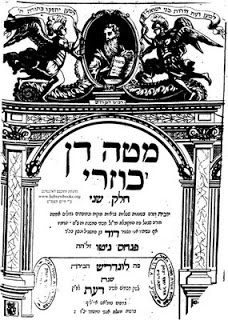


In 1968, Mossad ha-Rav Kook published an edition of the Mateh Dan based on the first printing. This edition is visually very nice, they did a nice job of laying out the sefer including a table of contents before each section of the sefer. But the notes although are helpful are very minimal [all quotes in this post are from this edition].

A few months ago a new English critical-edition of R. David Nieto’s Matteh Dan was translated from the Hebrew by Louis Loewe and completed by Raphael Loewe, published by the Spanish and Portuguese Jews’ Congregation of London, and Mechon Haktav of Jerusalem. This work was edited and prepared for publication by Yehuda Hershkowitz. This new edition is two volumes including a beautiful facsimile edition of the first printing on high quality paper leather bound. The facsimile volume reproduces the original edition of Hebrew with a Spanish translation on the side. The English translation had been done in 1845 by Louis Loewe. [I am aware that there is another English translation of this work published by Yashar Books, although it is only a partial translation and I never had a chance to see it.] This translation of L. Loewe was reprinted in this new set with some of the translation adjusted to our current English but as a whole remains the same. Many small useful notes were added in by the editors Raphael Loewe and Yehuda Hershkowitz. Besides for the nice interesting introduction by R. Loewe this new edition has an excellent overview by Yehuda Hershkowitz entitled “A Brief Survey of Calendar Making” (pp. 318-48). The purpose of Hershkowitz’s overview is to aid the reader in understanding the fifth section of Mateh Dan which deals with the calendar. Some other additions found in this edition were the many comments of R. Moshe Rimoni written in 1794 which were already included in the Mossad Rav Kook edition. In addition to this Yehuda Hershkowitz printed for the first time a manuscript from 1819 written by R. A. Lampronti about life on other planets.This manuscript comes from the now well known Valamadonna collection of Jack Lunzer.

I would like to highlight some of the very many points of interest in the Matteh Dan. The work pretty much starts where the Kuzari ends (hence the alternative title – Kuzari ha-Sheni), and the main focus of the Mateh Dan is to defend the legitimacy of Torah Shel bal Peh. It is written in debate format similar to the Kuzari. In the introduction of his work he writes:

ולפי שיש מחלוקות על מלך כוזר הראשון ועל מלכותו… יש אומרים שהרב המחבר המציא בדעתו מלך ומלכותו אשר לא היה ולא נברא. ויש אומרים שמעשה שהיה כך היה ככתוב בספר כדי שלא לאפושי במחלוקות על הכוזרי שלי אני מודיע נאמנה לכל קורא בספרי שלא נהיה כדברים האלה כי מלבני אני בודאם

The sefer is divided into five sections. In the first section he sets out to prove that the Jews always had Torah Shel Bal Peh from the times of Moshe and onwards. He shows how various Mitzvas its impossible to understand if we do not have Torah Shel Ba’al Peh. One of the many nice pieces in this section that he writes when dealing with the prohibition of carrying on Shabbas (p.12):

איסור משא קל כמעט שמפורש בתורה שהרי דוד המלך ע”ה אמר בדבר ה’ שמים נעשו ובכן היתה הבריאה ביום הראשון אמר השם יתברך יהי אור ויהי אור… ויכלו השמים והארץ וכל צבאם וכתבי וישבות ביום השביעי. נמצא שכששבת לא שבת אלא ממאמר בעלמא שהוא דבר שאינו יכול לגרום לו ליאות ויגעה משני טעמים חדא מפני שבו יתברך שהוא בלתי תכלית וכחו בלתי בעל תכלית לא יתכן ליאות ויגעה ב’ שאפילו תימה ח”ו שהיה ראוי לכך אי אפשר שייעף ויגע על הוצאת שתי מלות בכל יום בלבד נמצינו למדים שהקב”ה שבת ממה שלא היה יכול לייגעו בב’ טעמים, ולכן האיש הישראלי אשר ישבות ממשא כבד בלבד לא ישבות כמו ששבת הקב”ה אבל כשישבות אף ממשא קל אזי באמת שומר שבת מחללו ומחזיק בבריתו יתברך.

In section two he continues proving the truth of Torah Shel Bal Peh. A nice piece in this section is while proving that the esrog is the fruit the Torah requires one to take on Succos he writes (p.25):

בחג הסוכות אמר הכתוב ולקחתם… פרי עץ הדר… ואפשר שהכוונה היא על רמון נאה… אבל הם ז”ל פירשו שהוא אתרוג דווקא ופסלו כל מה שאינו אתרוג ממש כפי הסימנים אשר מסרונו אף על פי שיהיה מאותו המין, וזה גורם הוצאה רבה ועגמת נפש גדולה ליושבי ארצות ואקלים הקרים לפי שצריך שיביאו להם אתרוג מארץ הרחוקים לחוג בו את חג הסכות בהוצאה רבה. ולא עלתה תלונותי כי אין ציבור עני, אלא שלפעמים יש להם ההוצאה אבל לא השבח של המצוה כגון כשלא הגיע לידם אלא בתוך ימי החג או אחריו התאימין אדוני המלך שאנשים חכמים ונובנים בדו כל זה מלבם טעם ויסוד אחר אלא להתשרר על הצבור.

When dealing with the writing of the Mishnayos he writes (p.43):

אלא אפילו לאותן שנזכרו בהם תנאים באין חולק עליהם שכולם קבלה, לפי שרבינו הקודש לא היה אלא מלקט ומסדר ופוסק מה ששמע ואסף מימי התנאים אשר היו לפניו עד האחרונים אשר הוא אחד מהם.

When talking about asmactos he says (p.52):

אסמכתא… כח משפט חז”ל לסמוך העיקר המקובל על איזה פסוק אף על פי שהוא רחוק במטחוי קשתת מפשוטו, כי זה אינו אלא לעורר הזכירה. ובכן ברמז בעלמא סגי, כמו שעושין בני אדם, שקושרין קשר בסודר לזכור איזה דבר.

This understanding of asmactos follows the Rambam and other Rishonim yet there are other Rishonim disagree, at times rather sharply. For example, the Ritva who writes:

ומשום הכי קתני ר”ע שאמר הקב”ה אמרו לפני מלכיות זכרונות וכו’ שכל מה שיש לו אסמכתא מן הפסוק העיר הקב”ה שראוי לעשות כן אלא שלא קבעו חובה ומסרו לחכמים, וזה דבר ברור ואמת, ולא כדברי המפרשים האסמכתות שהוא כדרך סימן שנתנו חכמים ולא שכונת התורה לכך, חו ישתקע הדבר ולא יאמר שזו דעת מינות הוא, אבל התורה (העידה) [העירה] בכך ומסרה חיוב הדבר לקבעו [ל]חכמים אם ירצו כמו שנאמר ועשית על פי הדבר אשר יגידו לך, ולפיכך תמצא החכמים נותנין בכל מקום ראיה או זכר או אסמכתא לדבריהם מן התורה כלומר שאינם מחדשים דבר מלבם וכל תורה שבע”פ רמוזה בתורה שבכתב שהיא תמימה וח”ו שהיא חסירה כלום (ריטבא, ראש השנה דף טז ע”א).

This topic is dealt by many just to list some sources see: R. Yosef Engel, Beit Haotzar,1:190; R. Meshullam Roth, Shu”t Kol Mivasar, 2:21-22; Mivasar Ezra, 20-22; R. Yaakov Hayyim Sofer, Yeshurun 20:678; R. Yonah Martsbach, Aleh Yonah, 101-105; R. Gedaliah Nadel, Betorato Shel Rav Gedaliah, pp. 28-30; R. Gedaliah Nadel, Mila Dehespeda, pp. 130-31. In section three he discusses many specific points in regard to Torah Shel Bal Peh just to list some of the many interesting ones: When dealing with how exactly did arguments begin in Klal Yisrael in the times of the talmedei of Hillel and Shamaei he goes has a lengthy historical discussion of that period to explain what happened listing all the terrible decrees and persecutions that the Jews went through at that time. At the end the Kuzari asks him (p.65):

אבל מה תשיב על שכחת דברים הנוהגים בכל יום כגון קידוש והבדלה שמצינו בית שמאי ובית הלל חולקים בקידוש אם מברכין על היום תחילה או על היין וכן בהבדלה… וכי לא ראו ולא שמעו איך היו מקדשים אבותם ורבותם בשבתות וימים טובים, היאמן כי יספור ששכחו דברים כאלו שהם תמידים? אמר החבר: אין מקום לקושייתך משום דקי”ל סדר ברכות אין מעכבות… ולכן בראשונה כל אחד ואחד היה מקדים או מאחר שהיה רוצה, עד שבאו בית שמאי ובית הלל ועמדו למנין על סדר הברכות ונפסקו ההלכה. ואף על פי כן אם הקדים המאוחרת או איחר המוקדמת יצא. וכן יש לומר בכל המחלוקות שתמצא מזה המין…

[This answer applies to all such questions which others have dealt with at length like how did a argument between Rashi and Rabenu Tam evolve over the order of the Parshiyos in Tefilin why didn’t they check what previous generations did. The answer in short which is given is both were done by some.]

When dealing with the famous question dealt with by many of why can’t Amoraoim disagree with Tannoim he writes (p.68):

שלא חילקו האמוראים על התנאים מפני שהכירו שהיו גדולים מהם בכל הבחינות ודלא כמו שכתב הכסף משנה שקבלו על עצמם שלא לחלוק…

Then he writes that there is a constant yeridot ha-dorot when it comes to people’s knowledge (a point which not all agree with) so he wonders why do we say הלכה כבתראי. So he answers:

על דרך המשל הידוע שננס רוכב על גבי ענק רואה יותר ממה שרואה הענק אף על פי שהננס הוא כנמלה לגבי הענק.

Much has been written on this משל see the Alpha Beta Kadmita Deshmuel Zeriah from R. Shmuel Ashkenazi pp. 322-27; see also S. Leiman, “Dwarfs on the Shoulders of Giants,” Tradition 27:3, pp. 90-94 in both of these articles, the Kuzari Hashenei is not included. Just to add three more sources on the topic, not on either of the previously mentioned extensive lists see Simchat Hanefesh, p. 112; R. Y. Heller, Maoz Hadas, p.34b; A. Lipshitz, Avos Atorah Levonim. p. 175 n.6. On this topic in general see; I. Ta-Shmah, Halacha, Minhag Umitzyius Baskenaz, pp. 58-79; Daniel Sperber, Netivot Pesikah, p. 31 n.51, Joseph Davis, Yom-Tov Lipmann Heller Portrait of a Seventeenth- Century Rabbi, pp. 46-47, and A. Melamad, Al Kesefei Anakim. When listing the מצות דרבנן he writes that (p.72) they are:

מגלה, חנוכה, נר שבת ויום טוב, הלל , עירובין, נטילת ידים, יום טוב שני של גליות, שבעת ימי המשתה, שבעת ימי אבלות וארבע תעניות.

Not all agree with this listing as this topic has been discussed at great length in his usual incredible style by R. Shmuel Ashkanazi in Kovetz Beis Aron ve-Yisrael (issue # 35, pp. 97-114 and issue #38, pp.139-154). While discussing the reason why we do not blow Shofar when Rosh Hashonah falls out on shabas he writes about the masses of the Jews at the time (p.80):

שרוב עם בני ישראל היו עמי הארץ ומיעוטא דמיעוטא היו חכמים, וכיון שרובא היו עמי הארץ ממילא לא היו בקיאין בדוקדוקי מצות ולכן כשחל ראש השנה וסוכת בשבת ילך אצל בקי עם השופר או עם הלולב כדי שיתקע או יברך לו או כדי ללמוד נטילתו או ברכותו ויוליכנו ארבע אמות ברשות הרבים ויבוא לידי איסור סקילה ואף את יתרו בו לא ישמע לקול מוריו כי יאמר שאינו רוצה לבטל המצוה.

When discussing the topic of why we have two days of Yom Tov even thought we understand the calendar today he writes (p.83):

שאם מלך המושל בארץ ישראל קודם ביאת משיחנו ועודנו בגלות יתן רשות לישראל לשבת על אדמתם ולמנות עליהם סנהדרין יחזור העיבור ליושנו והיו מקדשין על פי הראיה כימי קדם קדמתה ואז לא היינו חוגגין לעולם יחד ביום אחד אלא לפעמים ג’ משום שכל דבר שבמנין צריך מנין אחר להתירו, וכיון שכל ישראל הרחוקים מארץ ישראל קבלו עליהם לעשות שני ימים להסתלק מן הספק, צריך שיסכימו כולם גם כן לבטל תקנה זו וזה איפשר דרך טבע מפני שאנו מפוזרים ומפורדים בין כל האומות העולם אחת הנה ואחת הנה ויש כמה וכמה מבני ישראל במדינות רחוקות, אשר אין אנו יודעים זה מזה ולא יש דרך הכרה ביניהם ובינינו בשום פנים, כגון במלכיות פרס והודו וכוש, ובמלכות גינה וטארטאריאה, כפי מה שמצאתי ראיתי בספרי המלחים והההלכים.

R. Menachem Kasher (Torah Shelemah, vol. 13, p. 129) already points out that the Meshech Chochma (Bo, 12:1) and others say the same thing. In section four he deals with many topics related to Chazal and their knowledge in science. He begins this section dealing with what exactly are the seforim chizonim that chazal prohibit one from learning and why are they prohibited (pp. 97-100). He is of the opinion as are many others that there is a connection between kabalah and philosophy (p. 98). He shows that chazal had great knowledge in philosophy (pp. 129-57), geometry, and mathematics including a whole lengthy discussion of the mathematical Gemaras in Succah (pp. 113-25). He also deals at great length showing there tremendous knowledge in understanding the calendar etc. (pp. 182-90). Many others have also shown Chazal knowledge in all areas of science just to mention one interesting work on the topic is R. Y. Kemhlar’s Hatalmud Vmadei Hatevel. In addition R. Nieto also has a lengthy discussion showing there expertise in the and anatomy of humans and animals (pp. 104-06). Others have also shown this for example see Meshiv Nefesh (p. 14b, 22a) R. Aron Marcus, Keses Hasofer (p. 78) and Hatalmud Vmadei Hatevel (p. 24). One additional source related to this is found in Chut Hamishulash (p.29a) where he writes about the Chasam Sofer:

לתכלית גדול הזה לברר הלכה לאמיתו ולהעמיד כל ענין על בוריו הי’ לו לכל שיעורי תורה כלים מיוחדים מדודים מאתו בדקדוק הדק היטב להראות לתלמידיו וכן הי’ לו בארגז מיוחד שני צורות תבנית זכר ונקבה מעשה אומן מופלא והיו נעשים פרקים פרקים וכל חלקי הפנימים מעשה חדש נפלא ללמוד וללמד חכמת הניתוח ולא הראה זה רק לתלמידים מובהקים אשר יראת ה’ אוצרם בעת למדו אתם הלכות נדה וכדומה.

After this R. Nieto brings that “the Kuzari asked him “(pp. 106-07) “I have no doubt that they knew science etc. but how did they have time to learn and time for the sciences”. To which R Nieto replied that they although some were real experts in science like Shmuel but most just knew what was necessary for them to understand those areas of Torah that required such knowledge.

R. David Nieto and life on other planets

He writes about life on other planets a very interesting thing (p. 128):

ר’ מאיר אגוז מצא תוכו אכל קליפתו זרק. וכן ראוי לנו לעשות בסברות חכמי האומות, שכל מה שהוא מנגד לתורתנו הקדושה והתמימה בין שבכתב בין שבעל פה שקץ תשקצנו ותעב תתעבנו כי חרם הוא, אבל מה שאינו נגד דבריה ולא נגד פירושה הרשות ביד כל איש ישראל להאמין או למאן בו לפי שכלו. ובכן כיון שאין שטן ואין פגע רע להאמין שכל הכוכבים בין המהלכים בין הקובעים בגלגל השמיני הם עולמות אשר בהם מכל בעלי חיים, בצדקתה החזקת ולא ארפה. ואפשר שלזה כיוונו רז”ל כשכתבו בסוף מסכת עוקצין עתיד הקבה הוא להנחיל לכל צדיק וצדיק שלש מאות ועשרה עולמו.

R. Pinchas Hurwitz in his Sefer Habris (pp.33-34) also says there could be life on other planets bringing proof from various Chazal and Zohar including the some of the same Chazal that R. Nieto uses.

However not everyone understands this Chazal literally just to list one other explanation R. A. Shor writes:

טעם מספר ש”י עולמות נראה לפי שעשרת הדברות יש בהן תר”ך אותיות נגד תרי”ג מצות ושבע מצות בני נח במספר כת”ר עליון ונראה שכנגדן יש לו לאדם תר”ך עולמות אלא לפי שהאדם נברא דו פרצופין זכר ונקבה ויקרא את שמם אדם וכן כל הנשמות זכר ונקבה נבראו ובין שניהם נשלם ונעשה האדם במלואו וטובו לשמור ולעשות את כל מצות ה’ לכך גם אותן תר”ך עולמות יחדיו יחלוקו מחציתן לזכר ומחציתן לנקבה והיינו ש”י עולמות לכל צדיק וצדיק (תורת חיים, סנהדרין, דף ק ע”א).

[On this Toras Chaim see R. S. Askanazi in Kovetz Beis Aron Vyisroel (issue #38, p.142)]. R. Yosef Zechariah Stern (Ma’amar Betalocas Aggaddos, p. 45) suggests even more that there is a printing mistake and it should say two (שני) not three hundred and ten (ש”י) worlds. [As an interesting bibliographical note R. Yakov Shor [Mishnat R. Yakov, p. 41] this chazal is not really the end of Ukztin rather it was stuck in from elsewhere because we like to end with something good]. This topic has been dealt with by many see for example the Ri Barcellona in his work on Sefer Yetzirah (pp.171-173) where he writes:

יח אלף עלמות שברא… שאפשר שזה העולם חביב לפניו יותר מכל שאר העלמות כי אולי באותן השאר עולמות לא נתן להם תורה… ואולי אפשר נמי לומר כי באותן היח עולמות אין בהם בריות בחטא ועון כמו באלה ואולי אותן הבריות מלאכים רוחות הן שברא המקום לכבודו או אולי קרובים להן והן בלא חטא שאין יצר הרע שולט בהן…

As mentioned earlier, Y. Hershkowitz printed for the first time a manuscript from R. Lampronti about life on other planets where the author deals with this topic at length. See also R. Chasdaei Crescas in Or Hashem (4:2), his rebbe, R. Albo in Ikryim (4:2); Ma’aseh Tuviyyah, 3:1; Sefer Elim, (p. 141a), Kol Yehudah (commentary on Kuzari 2:20 p. 68); Aryeh Kaplan, The Aryeh Kaplan Reader, pp. 170-75; A. Korman, Hemunah Hayisreleis, pp. 275-77; Evulutzyah ve-Yehadus pp.139-40; Y. Shabtei, Sha’ar Yosef vol. 1, p. 152; R. Kemeil, Shar Reveun, p. 269; N. Lamm in Challenge, pp. 354-98. When R. Nieto deals with the hard to understand famous Gemaras of Raba Bar Bar Chanah he writes (p.171):

שמא שנראה דבר תמוה ובלתי ראוי להאמין, כגון מה שסיפר רבה בר בר חנא מההוא טייעא, הוא דבר מורגל במקומות רחוקים מגלילותינו ואם נראה זר בעינינו הוא מפני חסרון ידיעתנו, לא מפני שהדבר בעצמו בלתי אפשר.

In section five he deals with explanation of how our calendar works very extensively and in depth. This section is not easy to understand if one does not have proper background.Just to mention one point from this section as its Inyana Deyomah and many are bothered with this issue – if the calendar according to Shmuel is off so why do we Pasken like him:

.(שמואל היה יודע שיעור שנת רב אדא ומכיר בו שהוא אמיתי ונכון, אך ביקש דרך קצרה וקלה להמון העם ואותה נתן להם למען ידעו בחשבון הגס שיעור השנה בקירוב בלי דקים וחלקים (ויכוח חמישי, אות קמו

[On this topic see: R. Alexander Moshe Lapides, Toras Hagoan R. Alexander Moshe pp.6-8; R. J. D. Bleich, Bircas Hachammah, pp.58-64; R. A. Brisk, Otzar Hazemanim, pp.223-226; R. M.M. Gerlitz, Bircas Hachamah KeHilchosah, pp. 145-59; R. Yehuda Hershkowitz, The Sun Cycle, pp. 137-38] Some other topics he deals with: are stars alive (pp. 125-26), how many Jews were there in the time of the second Beis ha-Mikdsash (pp. 79-80), the invention of the barometer and thermometer (p. 148) and a whole section on explaining the Thirteen Midos that we use to darshan (pp. 89-95). R. Nieto writes that R. Srug was a Talmid of Arizal (p. 99). This point has been dealt with by many, see the fabulous discussion by Y. Avivi in his recent classic work Kabballas ha-Ari (1:224-44); see also R. S. Deblitski, Benu Shenosu Dor Vedor, pp. 50-52; E. Katzman, Toldos Hamegalah Amukos, pp. 36-39; R. A. Marcus, Keses Hasofer, p.6. R. Nieto seems to hold that the Asra Harugei Malchus died during the same time frame (p. 64). This difficult historical riddle has been dealt with by many just to list some sources see Erchei Tanaim Vamorim, (Blau Ed.) vol. 2, pp. 708-15; S. Kraus in his series of articles in Hasholach 1925 (recently reprinted in Mered Bar Kochchba, pp. 239-76) and the recent book on the topic by E. Vilnar, Asreh Harugei Malchus printed by Mossad Rav Kook. R. Zev Rabanowitz writes when talking about this:

ובכלל רואים אנו, שמחברי אגדות כאלה לא היו בקיאים בדברי הימים ובסדרי הדורו, ורבותינו ז”ל הקדמונים בתמימותם האמינו לאגדות הכתובות וייסדו את פיוטיהם על פיהם למען עורר מספד והרבות בכי, ובזמננו מצוה להסירם מן המחזורים והקינות, כי דובר שקרים לא יכון נגד ה’ ותמה אני על הקדמונים שכבר ידעו ולא מחו מלומר פיוטים כאלה. ואולי מחו ולא נשמעו (שערי תורת בבל, עמ’ 410).

R. Nieto and Copernicus

One of the more famous things which R. Nieto is famous for is not accepting Nicolaus Copernicus‘s theories that the earth revolves around the sun and is not stationary.

He writes:

מיום ברוא אלהים אדם ועד קרוב לזמנו כל יושבי תבל ושוכני ארץ האמינו שהששה כוכבי לכת הם גופים חשוכים שמקבלים האור מהשמש, שהוא אחד מהם והגדול שבהם. ועתה האחרונים המציאו שהם ארצות ושהארץ אשר אנו יושבים היא אחת מהן, מפני שסוברים שהשמש באמצע בלי תנועה כמלך במסבו והששה מקיפים… ואם אדם ימאן בסברא הקודמת ויאמין בזאת תחזיקהו למין או אפיקורוס?… ודאי שמתקבלות על הסברא, אבל אין אנו יכולים להחזיק במונח הזה במה שהוא מבטל תנועת השמשף דביהושע כתיב שמש בגבעון דום … הרי שסובב והולך כשאר כוכבי לכת. ואף על פי שבעלי הסברא הזאת נתחבטו לתרץ הקושיא לריק יגיעו, כי אין תשובתם מספקת ולכן נטשתיה וגרשתיה מהסתפח בנחלת ה’… אמרו שהנביא אמר שמש בגבעון דום מפני המון העם דסבירא להו שהשמש מהלך ואינו יודע תנועת הארץ (כוזרי השני, ויכוח רביעי אות קי-קלב. וראה שם אות רנח, וויכוח חמישי אות ד).

The first reference to Copernicus, but not by name in Jewish literature, is by the Maharal who writes:

וכמו שבא אחד שהיה נקרא בעל תכונה חדשה, אשר נתן ציור אחר וכל אשר הבינו הראשונים אשר לפניהם ונתנו הראשונים ציור ומהלך לכוכבים ומזלות ולגרמים השמים סתר את כלם ונתן ציור חכמה חדשה רק שהוא עצמו כתב כי עדיין לא יוכל ליישב את הכל (נתיבות עולם, נתיב התורה, פרק יד).

[See Andre Neher in Jewish Thought and the Scientific Revolution of the Sixteenth Century (Littman Library, 1986), pp. 208-10]. The first reference to Copernicus by name in Jewish literature is by David Ganz in his small work Magen Dovid (of which only one known copy survives in Bodleian Library) first printed in Prague in 1612 (a year before he died). Quoted by Neher, idem p.1; see also, Y. Elbaum, Pseichot ve-Hestagrot, p. 250. What is even more interesting is this small work received Haskomos from R. Yom Tov Heller (author of the Tosfos Yom Tov), R. Ephraim Lenshitz (Klei Yakar) and R. Y. Cohen (son in law of Maharal) all these people were talmidim of the Maharal.[For a copy of this interesting and rare Haskamah of the Tosfos Yom Tov see; M. Hershkowitz, Shnei Kruvim, pp. 105-111; see also J. Davis, Yom-Tov Lipmann Heller Portrait of a Seventeenth- Century Rabbi, pp. 90-91. In Ganz’s other work, Nechmad Ve-Naim (which is really part of Magan Dovid), there is also reference to Copernicus but this work was first printed in 1743. Quoted by Neher, idem, p. 197. In both these works Ganz refers to Copernicus in a very positive light. Although, M.Steinschneider in Jewish Literature writes (p.262) that although Ganz was acquainted with the system of Copernicus Ganz follows the Ptolemaic system. But see the in depth discussion of Neher, idem, pp. 200-04, 224-28; see also A. Ziv, Ha-Ramah, p. 83. Another early reference to Copernicus is by R. Y. Delmedigo in Sefer Elim printed in 1629. In this work as well Copernicus is mentioned in a very positive light. What is even more significant about Ganz and Delmedigo endorsing of Copernicus is because besides for both of them being great Talmedei Chachamim they were both expert astronomers having trained by the worlds greatest experts of their times (Ganz by Tycho Brahe and Delmedigo by Galileo). [For more on Ganz in general see R. M. Strashun, Mivchar Kesavim pp. 234-42; A. Ziv, HaRamah, pp. 82-85;Y. Elbaum, Pseichos Vehestagros, pp. 250-52 and index]. However Nieto was not the only one to oppose Copernicus R. Tuviyyah Cohen did so earlier and much sharper as he writes in Masseh Tuviyyah first printed in 1707:

ראוי לכל פילסוף אלקי שיבטל דעת קופירניקוש ונלוים עליו כי כל אותן ראוי’ שהביא הוא וחבריו הם נגד כתבי הקדוש ודברי נבאי אמת הנאמנים בדבריהם מפני שכתוב בקהלת והארץ לעולם עומדת אבל כפי דעת קופירניקוש איננה עומדת כלל והשמש לא יזרח ולא ישקע… ואם כדבריו כן הוא למה כתוב וזרח השמש ובא השמש… הנך רואה שבכמה מקומות הפסוקים יתנו עידיהן ויצדקו שתשמש והלבנה יותר הכוכבים מסבבים סביב הארץ ולא שהארץ מסבבת סביב השמש ואם יבוא קופירניקוש בטענותיו וראיותיו ומופתיו כזביות אף אתה הקהה את שניו… ודע מה שתשיב לו כי בכור שטן הוא (מעשה טוביה, חלק ב, סוף פרק ג-ד).

[On R. Tuviyyah Cohen and Copernicus see David B. Ruderman, Jewish Thought and Scientific Discovery in Early Modern Europe, pp. 231 & 239-40.] Besides for these two Gedolim opposing Copernicus, R. Yonsan Eybshutz who was also knowledgeable in Astronomy was also opposed as he writes in 1779:

ועבור זה נתטפשו הרבה מתוכנ’ קופרניקוס וסעייתו באמרם שהארץ מסבב אבל שקר נחלו והאמת עד לעצמו כי הארץ לעולם עומדת… (יערות דבש, חלק א, דרוש ד, דף לו ע”א).

(Neher, idem, p. 253, is incorrect when he writes that Eybshutz was positive towards Copernicus’ theory). Here, again, we have Eybshutz’s antagonist, R. Yakov Emden, arguing and defending Copernicus as Emden writes:

ויקרא אלקים ליבשה ארץ… יש מפרשים מלשון רץ וכן פירשו רבותינו ז”ל שרצתה לעשות רצון קונה. ויהיה מזה גם כן סעד לדעת בעלי תכונה החדשה (קאפירניקוס) שהארץ סובבת, ולא תקשי מוהארץ לעולם עומדת [קהלת א’, ד’] כאשר מבואר במקום אחר בס”ד (סידור יעבץ, אשכול, ח”ב, מעמדות ליום שלישי, עמ’ תקפח).

As a bibliographical point the way R. Emeden concludes this piece is by saying כאשר מבואר במא בס”ד (and that is how it is in the first edition). For some reason some, (R. M.M. Gerlitz, Bircas Hachamah KeHilchosah, p. 31, Y. Bloch, Kuntres Hashemesh Begevorso, p.40 and some earlier prints of the siddur) understood this to be an abbreviation that R. Yakov Emden was referring to a work of his called מכתב אלקים which was never printed. While it true that he authored such a work it and it appears to have been lost but it does not talk about such topics based on the extant quotes [See Y. Rafel, Arshet, 3:276 & J. J. Schacter, “Rabbi Jacob Emden: Life and Major Works,” (PhD dissertation, Harvard University, 1988), p.143-144] we have from it from although one can never be sure for certain and the abbreviation could just mean simple כאשר מבואר במקום אחר בס”ד.

[On R. Emden comment see The Sun Cycle by R. Yehuda Hershkowitz p. 18 n.78; J. Elias edition of The Nineteen Letters, p.43]

Although R. Emden writes positively about Copernicus here elsewhere R. Emden writes very negatively about the science of astronomy on the whole including Copernicus:

חכמת התכונה של אומת העולם, רחוקה מכליותי לייחס דעת זו המגונה לרז”ל חלילה וחס להו לרבנן קדישי שיתפארו בחכמת הגויים. רעיוני אנשי העולם הבודים מלבם חכמה שאין לה עיקר ויסוד רק כפי העולה על רוחם נשענים על יסודות הנולדות במוחם לקרב כל דבר אל השכל להוליכו במנהגי הטבע המוחש. ועם כל זה הם עצמן נבוכים מאד. ומודים שאין מציאות אמתי לגלגל יוצא מרכז וגלגל נושא והדומה להם… והרבה כאלה קשות נמצאו באותה חכמה ונתחלקו לכתות כתות בהנחותיה ולא נחו ושקטו גלגלי רעיוניהם. עד שהמציאו תכונה חדשה לגמרי מקרוב באה לא שערוה ראשוניהם (וי”א שנמצא גם בקדמונים מאד מי שחשב עליה כזאת של קופירניקוס) יהי מה אינה ראויה להקרא חכמה כלל. אחר שאינה אל דמיונות ורעיונות ודתיה שונות כפי מחלוקת לבב בני אדם אשר חכמה מה להם… (עץ אבות, אבות פרק ג משנה יח).

[About R. Emden, Copernicus and astronomy in gerneral see: J. J. Schacter, “Rabbi Jacob Emden: Life and Major Works,” (PhD dissertation, Harvard University, 1988), p.620-621,685 nt.55].

André Neher, “Copernicus in the Hebraic Literature from the Sixteenth to the Eighteenth Century,” in Journal of the History of Ideas, Vol. 38, No. 2 (Apr. – Jun., 1977), pp. 211-26 and in his Jewish Thought and the Scientific Revolution of the Sixteenth Century (pp. 251-60) concludes (p. 253): “With the exception of the two earliest works, which we shall speak about in a moment, [Nieto and Cohen, E.B.] all the works on this list remained in the tradition of the pioneers of the sixteenth and seventeenth centuries: that is to say they were theologically positive towards Copernicus, even if they had practical reservations.” To demonstrate his point he lists many sources of mainstream Gedolim in favor of Copernicus.

Natan Slifkin writes in The Challenge of Creation (p.127): “It was not only the Church that strongly opposed the insights of Copernicus. With few exceptions, the rabbis of the seventeenth and eighteenth centuries condemned Copernican astronomy as being opposed to Scripture and as being scientifically flawed. It contradicted the simple meaning of the Scriptural statement that “the world stands forever”, as well as the account in Joshua of time halting by the sun miraculously standing still (as opposed to the earth standing still). “In a footnote listing sources for this statement, Slifkin also refers the reader to Neher; However, in reality, Neher concludes just the opposite. Another positive quote about Copernicus is found in the Yad HaKetnah first printed in 1800 anonymously:

לכת פילוסופים הקדמונים לפני שנים אלפים דעתם שכדור הארץ סובב תמיד. והשמים וכל צבאם עומדים. והפילוסופים שאחריהם קיימו וקבלו, שכל הגללים סובבים והארץ לעולם עומדת. ואחר כך בימים האחרונים זה קרוב לשלשה מאות שנים קם פילוסוף חכם מופלג והחזיק בדעת הקדמונים שהארץ סובבת והשמים עומדים. וחיבר על זה חיבר נפלא עמוק עמוק עד שמתקן כל דרכי התכונה לדעתו וכמובא בהקדמת הספר נחמד ונעים שחיבר בעל המחבר צמח דוד (יד הקטנה, שער י, שער דרכי הניסים, פרק ד).

There are those who show Copernicus theory is found in the Zohar:

ובספרא דרב המנונא סבא, פריש יתיר דהא כל ישובא מתגלגלא בעיגולא ככדור אלין לתתא ואלין לעילא וכל אינון בריין משניין בחזווייהו משינויא דאוירא כפום כל אתר ואתר וקיימין בקיומייהו כשאר בני נשא, ועל דא אית אתר בישובא כד נהיר לאלין חשיך לאלין לאלין יממא ולאלין ליליא, ואית אתר דכוליה יממא ולא אשתכח ביה ליליא בר בשעתא חדא זעירא )זוהר, ויקרא, דף י ע”א).

R. Herzog writes about this (translated from English):

תיאוריה הקשורה לשמו של קופרניקוס… הענין מוזכר באופן לא מפורש במקורות התנאיים. ניסוח מלא ישנו בזוהר בפסקה המצוטטת משמו של רב במנונא סבא. שאלת ייחוסו של ספר הזוהר אינה נוגעת לעניין כי רבי משה די לאון שאליו מייחסים המבקרים את החיבור הנפלא נפטר זמן רב לפני קופרניקוס… (יהדות חוק ומוסר, עמ’ 102)

R. Aron Marcus, writes about this:

יש לציין כי הזוהר מבטל את השיטה הפטולמאית, כבלתי מדעית ונוטה לצד השיטה הקופרניקאית, שהקדים אותה במאות שנים. נוסף על כך לפי דעתו של ר’ שמעון בר יוחאי, הרי השקפות של בני דורו בשטח התכונה, אינן אלא סברות של הדיוטות… (החסידות, תל אביב תשיד, עמ’ 78.).

Interestingly enough A. Neher claims in his Jewish Thought and the Scientific Revolution of the Sixteenth Century (pp. 104-05) that one could imagine that this was written by a pupil of Copernicus! The truth is that R. Yakov Emden on this Zohar writes

:כל ענין זה הולך על דרך חכמי מחקר לא על דרך רז”ל בתלמוד (מטפחת ספרים, עמ’ לז).

However R. Moshe Kuntz (Ben Yochai, p. 81) does not have a problem with Chazal saying this including the Zohar as he has other indications from Chazal like this. But others show that there might be a contradiction in the Zohar about this [see: R. Shpitzer, Nevrashet, Vol.2, p.18a; R. M.M. Gerlitz, Bircas Hachamah KeHilchosah, pp.29-30 and Y. Bloch, Kuntres Hashemesh Begevorso, pp.21-22]. C. Solonski in his introduction to his Kochva Deshvet, (p.14) also brings this Zohar to show that Chazal held like Copenicus. R. P. Hurwitz in his Sefer Habris (p.99) brings the Zohar when dealing with Copernicus but after a lengthy discussion he concludes by disagreeing with Copernicus (pp.98-102). [About this Zohar, See also R. Schick, Seder Haminhaghim, 2:24b; Y. Levi, The Science in Torah, pp.115]. The Chasam Sofer who was known for his knowledge in astronomy [see: Chut Hamishlush p. 29a & Zichronis Vmesoros Al Hachasam Sofer, pp. 58, 102, 305] writes about Copernicus in a work he started writing on astronomy (see ibid p.305) after quoting the Yavetz:

מעניני גלגלים וככבי לכת… . דמזה סיוע לכת קאפירניקוס שהארץ סובבת, ולא תקשי מוהארץ לעולם עומדת כאשר מבואר במקום אחר, עכ”ד. הנה במ”ש שאין קושיא מוהארץ לעולם עומדת, הדין עמו לפע”ד, לא דבר שם מסיבובי ארץ בגלגל, כי גם לדעת הזאת אין הכוונה שהארץ תסוב על צירה, אלא כל הכדור היסודות כמות שהוא, הוא מתגלגל, אשר הארץ באמצעי לו… מכל מקום אין בידי לדחות קופארניקוס ולא צד שכנגדו כי ראיותיהם עצומות משני הצדדים. ולדעת אותה הכת יש לנו תנועה חדשה, מלבד ג’ תנועות שהזכרתי בפרק דלעיל שסימנם אמ”י, ועתה יתחדש התנועה הסבובי’, אמנם אין לנו עסק בדעת זאת הכת, ונייח (ונייחס) תנועה הסבובי’ לגלגלים שאין להם תנועה אחרת זולתי הסבובים הלז (שות חתס, קובץ תשובות, סי’ כו, לאחרונה נדפס גם במאורות הסופר, עניני קידוש החמה, עמ’ צח).

[As an aside the Chasam Sofer was a very big fan of the Yavetz besides for what he writes about Mitpachat Seforim:

הנה נמצא בשכונתך ס’ מטפחת ספרים למהריעב”ץ תמצא שם כי דבר גדול דבר הנביא ז”ל בענין זה הלא ישתוממו רואיו וד”ל (שות חתס, חו”מ ליקוטים, סי’ נט)

See also B. Hamberger, Moriah, 17:1 pp.237-238 who cites many sources about the Chasam Sofer and Yavetz]. Elsewhere the Chasam Sofer writes about Copernicus:

אשר חלק ה’ אותם לכל העמים יש לפרש על פי דאיתא דקופערניקוס אחד מחכמי העמים אמר דהארץ סובבת לקבל אור השמש דאיך עצם השמים הטהורה יסבב וישמש את הארץ והאחרים הביאו ראייה כנכדו דאם הארץ מסבב איך אפשר שיזרוק חץ בעוף וישיגהו ויפול שם כיון שהארץ כבר השתנה מקומה ועל זה השיב די”ל דהארץ וכל אשר עליה וגם האויר מסבב האמנם ראייותיו מכח השכל שאינו רואי שישמש העליון לתחתון הוא רק לפי דיעות האומת העולם אבל לנו בני ישראל אדרבא הארץ אשר בה בני אדם וישראל עם קדושו הם תכלית הבריאה ובעבורם נברא העולם תבל וכל אשר בה וגלגלי השמים ושמי השמים לצורך האדם ואם כן ראוי שישמשו שאר חלקי העולם לעולם התחתון שבו ישראל וגם עי”ז כל העולמות הם אחד ולתכלית אחד נברא דלא כדעת האוה”ע שכל אחד הוא עולם בפני עצמו ולתכליתו נברא וזה שאמר אשר חלק ה’ אותם לכל העמים דאצלם הוא חלק משא”כ אצלנו הכל חד (תורת משה, פ’ ואתחנן, דף טו ע”א).

R. Y. Margolis a Talmid of the Chasam Sofer who also was an expert on astronomy (Zichronis Vmesoros Al Hachasam Sofer, p.305) writes:

אמנם מי שיאמן בה’ ובתורתו ויאמן כי הקב”ה בא במתן תורה ונגלה על סיני הר קטן לא יוקשה אם השמש שהיא א’ ממשרתיו תשמש את הארץ אשר עליה האדם הלומד התורה הזאת, וראי’ מבוררת ממה שאמר הכתוב ויתן אותם אלקים ברקיע השמים להאיר על הארץ הרי’ מבואר כי המאורות הגדולים נבראו להשתמש את הארץ (חזון למועד, סי’ א אות א, וראה גם סוף סי’ח וסי’ ט אות ד).

In 1889 R. Y Ginsburg, printed a sefer on astronomy called Ittim Levinah he endorses Copernicus theories in a few places in the sefer (pp. 7,9 & 409-10). The significance of this sefer is that it received many nice Haskomos from great Gedolim in Europe of the time (over twenty are printed and he received even more) amongst them the Adres, R. Eliezer Moshe Horowitz, R. Eliezer Gordon and R. Eliyhua Chaim Miesles.[See also Archos Rabenu, 1:282-283]. However a few years later a work was printed in Jerusalem called Nevrashet through out the work the author R. Shpitzer attempts to “prove” that Copernicus is wrong scientificaly and is against the Torah (see for example vol. 1, pp. 30b-36b, Vol.2, pp. 5a-12a,14b-17a). He goes so far as to write (1:31a) that none of the Rabonim who gave haskomos to the sefer Ittim Levinah noticed that he goes with Copernicus theories. He brings someone (2:17b) who says that R. Y. Leib Diskin was asked how does Copernicus work out with the Torah:

וזרח השמש ובא השמש וגו’ וענה לו שהכתוב אמר לפי ראות עיני האדם.

But he denies that R. Y. Leib Diskin ever said such a thing [see also Y. Bloch, Kuntres Hashemesh Begevorso p.40]. Even recently there are those who still say that Copernicus is Kefirah see here. Other recent source that do not appear to acknowledge Copernicus is Bircas Hachammah called Otzar Hazemanim by R. A. Brisk where he writes (p.3):

מעגל היומי של השמש: השמש סובבת את הארץ בכל יום… ובהערה 5: יש לציין כי לאסטרונמיה המודרנית ישנה הבנה אחרת בכל מהלכי גרמי השמים היא טעונת שהארץ סובבת סביב השמש ולא השמש סביב הארץ…

Even more recently Y. Bloch put out a booklet called Kuntres Hashemesh Begevorso, 56 pages long demonstrating that Copernicus besides for being against the Torah is false scientifically. In Bircat Hachamah Betekufoseah, R. Genot brings (p.131) from R. Chaim Kanievseky who says:

כי הנוקט כך הריהו כמכחיש מסורת וכופר באמונתנו.

On Copernicus see: Arshet, 2:190 it appears that there was an argument about this between R. A. Worms author of Meorei Or and E. Carmoly [thanks to Dan Rabinowitz for this source]; M. Steinschneider, Jewish Literature, p. 190; C. Solonski, Kochva Deshvet, pp.7-9; R. Zvi Cohen, Bircat Hachamah, pp. 65-68; A. Korman, Evulutzyah Vyehadus pp. 52; R. M.M. Gerlitz, Bircas Hachamah KeHilchosah, pp.26-34; see also N. Gutel in Hishtanyois Nateviyum Be-halacha pp. 172, 183 where he deals with R. Lampronti’s opinion in Pachad Yitzchack on this and p. 190 where he deals with R. Kook’s approach to this. See, David B. Ruderman, Jewish Thought and Scientific Discovery in Early Modern Europe, pp. 266-67 regarding R. Lampronti’s opinion; see also idem, p. 351; David B. Ruderman, Kabbalah, Magic and Science, pp. 99-100; J. Davis, Yom-Tov Lipmann Heller Portrait of a Seventeenth- Century Rabbi, p.167; see also the very recent excellent doctorate of Shua Englman, Harav Samuel Strashun (HaRaShaSh) VHaggahot Al Talmud Bavli, Bar Ilan 2009, p.223. [See also some comments in this thread.]

After completing this post R. Chaim Rapoport sent me an article of his on Jewish attitudes on Copernicus which will be published shortly, in the next Or Yisroel (I did not incorporate any of his sources into this post). See also his Bircat Hachamah Al Pei Minhag Chabad, pp.48-50. [My understanding of this topic in general was enhanced greatly from the work of André Neher, ‘Copernicus in the Hebraic Literature from the Sixteenth to the Eighteenth Century’ in Journal of the History of Ideas, Vol. 38, No. 2 (Apr. – Jun., 1977), pp. 211-226 and in his Jewish Thought and the Scientific Revolution of the Sixteenth Century especially pp. 169-228 & 251-60, but see Y. Tzvi Langerman’s reservations about Nehr’s work in Langerman’s review of Nehr’s work in Isis, vol. 81, no. 1, (Mar. 1990), pp. 105-07, (thanks to Dr. J. Brown for this source)]. In conclusion this sefer is full of important information it’s a shame that none of the editions I have seen have a proper index to the sefer. However as one can see from just from the few samples I brought this sefer has a wealth of material and should be studied. One only hopes that someone will collect all of R. Nieto’s writings translate them (both in other languages and from manuscript) into Hebrew and print a critical edition of these works including a real critical edition of this sefer Mateh Don. Until than one will have to do with this useful new edition. This edition is available for purchase by Biegeleisen, and for more information contact Yehuda Herskowitz at seforimlover-at-yahoo.com.

Kuntres Hashemesh Begevorso

I mentioned the recent booklet printed by R. Y. Bloch called Kuntres Hashemesh Begevorso, 56 pages long demonstrating that Copernicus besides for being against the Torah is false scientifically. I am not in any way qualified to deal with the scientific aspects of this booklet but I would like to point out some inaccuracies in the booklet not dealing with science. In the beginning he writes how the Rambam already writes not like Copernicus (pp. 9-11), that the earth is stationary and its Kefirah to go against this (I am just writing the gist as he builds it up much better but my point is still true) even though some say that the Rambam in the first four chapters of Hiclos Maadah is not Torah so one can argue on but he claims that this is a false Shita about the Rambam and it is against our Emunah to say such a thing he writes:

והגיד לי מרן הגאון רבי יהודה זאב סגל זצוקל המ”מ ממאנטשעסטר דאפילו הי’ אומר כן בעל החת”ם סופר או הנודע ביהודה לא היינו מקבלים דברים כאלה ממנו…

Now the first problem with this is that we have a very well known Godol who does say exactly what R. Bloch says is kefirah to say and that is R. Yakov Kamentsky who writes:

ודברי הרמב”ן אלה הם שעמדו לי בשעה שראינו איך שבני אדם יורדים מעל המטוס על ידי סולם על גלגל הלבנה וחשבתי בלבי מה יענה כעת הרמב”ם ז”ל שכתב שהלבנה היא בעלה צורה רוחנית… אבל כפי שאנחנו מתייחסים לדברי הראשונים שסוברים אנו בגדר של אלו ואלו דברי אלקים חיים אם כן אע”פ שבמקום זה אין הלכה כמותו אבל שיהיו דבריו דברי טעות לא יכלתי להשלים, ואם טעה הרמב”ם בהלכות יסודי התורה מדוע לא יטעה בהלכות שבת וכדומה? והנראה בזה דהנה לכאורה יש לתמוה על כל העינינם שכתב הרמב”ם בארבע הפרקים הראשונים של הלכות יסודי התורה…ובעל כרחנו אנו צריכין לומר שמה שמסר לנו הרמב”ם בפרקים אלו אין זה לא מעשה מרכבה ולא מעשה בראשית אלא כתב כל הד’ פרקים אלה מדעתו הרחבה מתוך ידיעות בחכמת חציונות כלומר שלא מחכמת התורה… ואין לדמות טעויות בהלכות אלו לטעויות בהלכות שבת וכדומה (אמת ליעקב על התורה, עמ’ טו-טז).

[He is not the only one to say such a thing see: Sefer Habris, pp.27-28 & my Bein Kesah L’Asur, p.182].

However, even if one does not want to side with R. Yakov Kamentsky, one can turn to the Rambam himself and what he writes about Chazal’s knowledge of astronomy:

לא תבקש ממני שיסכים כל מה שזכרוהו מענין התכונה למה שהענין נמצא, כי החכמות הלמודיות היו בזמנים ההם חסרות, ולא דברו בהם על דרך קבלה מן הנביאים, אבל מאשר הם חכמי הדורות בענינים ההם, או מאשר שמעום מחכמי הדורות ההם, ולא מפני זה אומר בדברים שאמצא להם שהם מסכימים לאמת שהם בלתי אמתיות או נפלו במקרה, אבל כל מה שאפשר לפרש דברי האדם עד שיסכים למציאות אשר התבאר מציאותו במופת, הוא יותר ראוי באדם המעולה המודה על האמת לעשותו (מורה נבוכים, חלק ג סוף פרק יד).

So if the Rambam could write such a thing on chazal so why can’t somone say the same about the Rambam’s knowledge of astronomy [See also R. Gedaliah Nadel, Betoroso Shel R’ Gedaliah, pp. 79-80].Another mistake in this work is on p. 42 R. Y. Bloch writes that Tycho Brahe was a friend of R. Yonsan Eybshutz. That is simply impossible as Tycho Brahe was born in 1546 and died in 1601 and R. Yonsan Eybshutz was born in 1690! Another inaccuracy in this work is that he claims that the Chasam Sofer was against Copernicus (pp. 32-34) but he fails to quote the statement of the Chasam Sofer in its entirety which is quoted above where the Chasam Sofer specifically writes about Copernicus:

דמזה סיוע לכת קאפירניקוס שהארץ סובבת, ולא תקשי מוהארץ לעולם עומדת כאשר מבואר במקום אחר, עכ”ד. הנה במ”ש שאין קושיא מוהארץ לעולם עומדת, הדין עמו לפע”ד, לא דבר שם מסיבובי ארץ בגלגל, כי גם לדעת הזאת אין הכוונה שהארץ תסוב על צירה, אלא כל הכדור היסודות כמות שהוא, הוא מתגלגל, אשר הארץ באמצעי לו… מכל מקום אין בידי לדחות קופארניקוס ולא צד שכנגדו כי ראיותיהם עצומות משני הצדדים. ..

He only quotes the last line which I put in bold but not the whole piece which shows the Chasam Sofer did not hold its in issue when it contradicts the possuk. Furthermore he gives much more weight to what I brought earlier from Chasam Sofer in Toras Moshe than this piece which is a work on the topic of astronomy. One last point about this work is that he says it is also very problematic to claim דברה תורה כלשון בני אדם to answer all the Pesokim against Copernicus (pp. 23-25). On this a great godol R. Yonah Martzbach who besides for being a Rosh Yeshiva of Kol Torah with R. Shlomo Zalman Aurbach, Martzbach was also a mathametician [On R. Yonah Martzbach see the excellent work from R. B. Hamberger, R. Yonah Martzbach Pirkei Chayov Darco Upolov], writes at length specifically when dealing with Copernicus and says it is not Kefirah and he specifically says that

דברה תורה כלשון בני אדם: לבעלי רוח הקדוש ולהם בלבד מתגלים דברי הטבע וחוקיו מתוך פסוקי המקרא בדברי חז”ל. אנשים אחרים עלולים לטעות בהם. לא נכתבה תורה להיות ספר מדעי הטבע ולא לשם כך אמרו חז”ל מה שאמרו. מי שרצה והיו אי פעם כאלה להוכיח שיש קצת לשמים ממזרח וממעריב, ושהאדמה שטח היא ולא כדורית, הסתמכו על מאמרי חז”ל וטעו, כי לא הבינו ש’דיברה תורה כלשון בני אדם’… וכן דיברו חז”ל, וכן מצוי במליצות תפלותינו ותשבחותינו, ואין המלים אלא לבוש חציוני לדברים עמוקים מאוד מאוד, וחידות להביע בהם סודות… ויש שדיברו בלשון ידיעות תקופתם אל בני דורם. וככל שאדם ירחיב ידיעותיו ישנה דיבורו, אלא שדבר ה’ יעמוד לנצח ודברו ניצב בהלכותיו וברעיונתיהם הנשגבים ומחשבותיהם הטמונות בלבוש דבריהם (עלה יונה, עמ’ עג-עד).

This Kuntres Hashemesh Begevorso is available for purchase at Biegeleisen and Girsa.


Some Highlights of the Mossad HaRav Kook Sale of 2017

Some Highlights of the Mossad HaRav Kook Sale of 2017
By Eliezer Brodt
For over thirty years, starting on Isru Chag of Pesach, Mossad HaRav Kook publishing house has made a big sale on all of their publications, dropping prices considerably (some books are marked as low as 65% off). Each year they print around twenty new titles. They also reprint some of their older, out of print titles. Some years important works are printed; others not as much. This year they have printed some valuable works, as they did last year. See here and here for a review of previous year’s titles.
If you’re interested in a PDF of their complete catalog, email me at eliezerbrodt@gmail.com
As in previous years, I am offering a service, for a small fee, to help one purchase seforim from this sale. The sale’s last day is Tuesday. For more information about this, email me at Eliezerbrodt-at-gmail.com. Part of the proceeds will be going to support the efforts of the Seforim Blog.
What follows is a list and brief description of some of their newest titles.
1.      הלכות פסוקות השלם, ב’ כרכים, על פי כת”י ששון עם מקבילות מקורות הערות ושינויי נוסחאות, מהדיר: יהונתן עץ חיים.
This is a critical edition of this Geonic work. A few years back, the editor, Yonason Etz Chaim put out a volume of the Geniza fragments of this work (also printed by Mossad HaRav Kook).
2.      ביאור הגר”א לנ”ך, שיר השירים, ב, ע”י רבי דוד כהן ור’ משה רביץ
 This is the long-awaited volume two of the Gr”a on Shir Hashirim, heavily annotated by R’ Dovid Cohen.
3.      עיון תפילה, לר’ יעקב צבי מקלנבורג בעל ה’כתב והקבלה’, מהדיר ר’ משה צוריאל
This is a new edition of the beautiful work on Siddur from the Kesav V’Hakabalah, which has not been available for a while.
4.      על התפילה, ר’ דוד צבי הופמן, מאמרים על תהפילה ובית הכנסת שתורגמו ונערכו מהרצאותיו ע”י ר’ יהושע ענבל, קסה עמודים
 This is a small work based on R’ Dovid Tzvi Hoffman’s lectures on Tefilah (translated from German). Of course, being that it’s from R’ Hoffman it’s important to own.
5.      העיקר חסר, ר’ צבי רון, אוצר פירושים על החסרות ויתרות בתנ”ך, תקעד עמודים
This is a large collection from a wide range of sources on the interesting topic of Chasairos V’yeseiros in Tanach.
6.      קונטרס קידוש השם, ר’ ירוחם יהודה ליב פרלמן, הגדול ממינסק, על סדר הרמב”ם הל’ יסודי התורה, עם מראה מקומות, ביאורים ומפתחות ע”י ר’ הלל דוצי’ן, רנד עמודים.
This is an annotated edition of the small work of the Minsker Godol on Kiddush Hashem. For the back story behind why this work was written, see the following passage from R’ Meir Halperin’s classic and extraordinary biography, Hagodol MiMinsk.


7.      וזאת התורה, ר’ דר’, חיים טלבי, מנהגי קריאת התורה בעדות ישראל, 640 עמודים
This is an extremely useful and well organized work, based on the author’s PhD dissertation, dealing with many aspects of K’reiyas Hatorah before, during and after, such as Hagbah, the amount of Aliyos called, standing, selling of Aliyos and Shenayim Mikrah V’echad Targum.
8.      מבית לפרוכת, ר’ אברהם סתיו, פשט, עיון ומשמעות בעבודת יום הכיפורים.
9.      עולם הקרבנות, ר’ צבי אינפלד, ניתוח מעמיק ומקיף עניין הקרבנות.
10.  משפטיך תהום רבה, תגובות הגותיות אורתודוקסיות לשואה, עורכים: גרשון גרינברג אסף ידידיה, 355 עמודים.
This is a very useful collection of fifteen essays of Orthodox Theological Responses to the Holocaust. In 2007, Oxford University Press printed a book in English titled Wrestling with God: Jewish Theological Responses during and after the Holocaust edited by Steven T. Katz, Shlomo Biderman, and Gershon Greenberg (689 pp.). The Oxford volume includes almost of all the essays that appear in this new volume and a few additional important orthodox responses not found in this new Hebrew volume. Its rather strange that there is no mention of the Oxford volume in the various introductions and notes, even though Gershon Greenberg, one of the editors of the Hebrew volume was also one of the editors of the English volume. Moreover, in the Hebrew edition, Greenberg  never cites the Oxford volume; only his essays about each response.
I would just like to add one source to the bibliography about the essays of R’ Kalonymos Shapiro from his Eish Kodesh. Recently, Dr. Daniel Reiser published a beautiful facsimile edition of R’ Kalonymos’ autograph manuscript of this classic  work alongside an annotated transcript. (TOC available upon request).
11.  מאמרי טוביה, רשימות ומאמרים לר’ טוביה פרשל, א-ב.

Just a few years ago, the great Talmid Chacham, writer and bibliographer (and much more), R’ Tovia Preschel, was niftar at the age of 91. R’ Preschel authored thousands of articles on an incredibly wide range of topics, in a vast array of journals and newspapers both in Hebrew and English. For a nice, brief obituary about him from Professor Leiman, see here. Upon his passing, his daughter, Dr. Pearl Herzog, immediately started collecting all of his material in order to make it available for people to learn from. Already by the Shloshim a small work of his articles was released. A bit later, she opened a web site devoted to his essays. This website is constantly updated with essays. It’s incredible to see this man’s range of knowledge (well before the recent era of computer search engines). A few months ago, Mossad HaRav Kook released volume one (424 pp.) containing some of his essays, and right before Pesach volume two was released (482 pp.) This is an extremely special treasure trove of essays and articles on a broad variety of topics. It includes essays related to Halacha, Minhag, bibliography, Pisgamim, history of Gedolim, book reviews, travels and personal encounters and essays about great people he knew or met (e.g.: R’ Chaim Heller, R’ Abramsky, R’ Shlomo Yosef Zevin, R’ Meshulem Roth, R’ Reuven Margolis, Professor Saul Lieberman). Each volume leaves you thirsting for more. At least another two volumes are in preparation by his daughter, Dr. Pearl Herzog. I wish her much Hatzlacha in this great service for readers of all kinds all over the world. Here is a table of contents of the two volumes.
Vol. I:
Vol  II:


Dr. Lange’s Commentary on Koheleth

In a recent post, Dr. Leiman noted that Rabbi Dr. Dovid Tzvi Hoffmann's commentary on Shemot is being translated into Hebrew and printed in the near future.  While the volume on Shemot will be published, a commentary of one of R. Hoffmann's student on Koheles has recently been translated and printed.  Indeed,  there are two editions of the same commentary that have been recently been printed.  The fact that someone who has been ignored for a while then merits to have competing editions of their work is not that uncommon. For example, recently, there has been a renewed interest in the works of the Aderet.  The Adret's commentary on teffilah, Tefilat Dovid, there are three editions when five years ago there were none.

In this case, there are two editions, one in Hebrew and one in English of Dr. Gerson Lange's commentary on Kohelet.  The English edition titled, "The Book of Koheleth," is edited by Yosef Binyamin Fagin and includes a short biography about Dr. Lange. A slightly different version of this biography was printed in volume two of Yeruhaseinu (English section, pp. 22-31). Dr. Lange was a student of Rabbis Hoffmann and Hildesheimer and eventually took over as Director, after the death of R. Dr. Mendel Hirsch of the Israelitischen Religionsgessellschaft Realschule in Frankfort.  In this role as teacher, Dr. Lange taught Kohelet to his students, this work is a product of those classes. 

This is not Dr. Lange's only book, he also translated the Ralbag's Ma'asei Choseiv, a work on mathematics.  Dr. Lange, after obtaining semikh, studied mathematics at the University of Berlin.  In his commentary on Koheleth, he makes use of his mathematical background and even discusses Newton's Theory of Emission in the introduction.The commentary is one of peshat and many times focuses on eytomology to find the peshet.  The English version produces a highly readable translation. 

The Hebrew version, titled Gerash Yerachim, although the original title was, as the English version renders it, The Book of Koheleth, the editor decided to come up with a new title – a point that is not mentioned anywhere in this version. Additionally, this version, according to the editor, is not a translation but adapts Dr. Lange's commentary.  This version contains an introduction and background on Dr. Lange.  The introduction appears to take on a more apologetic tone than the English version.  Specifically, when discussing Dr. Lange the introduction points out that although Dr. Lange went to university buty that "going to university was common amongst the German Jews and without obtaining an advanced degree they could not function in any communal role, even amongst the Orthodox communities . . . [Dr. Lange] was following in the footsteps of his teachers, Rav Ezreil Hedesheimer and R. Dovid Tzvi Hoffmann and going up in holiness the Goan R. [Yaakov] Ettlinger."  Additionally, the introduction goes on to recount how R. Meir Shapira visited a resort near Frankfort, "Dr. Lange would get up at four a.m. and go to R. Shapira to study with him.  When R. Meir [Shapira] came back into Frankfort he proclaimed 'A Jew like [Dr. Lange] shows that there are still beni aliyah amongst the German Jews!'" Whether or not this tone was the intent of the editor, is of course, difficult to discern but worth noting. Finally, a short review of the Hebrew edition appeared in volume three of Yeruhaseinu pp. 399-400.

Both of these versions should be available in your local seforim stores, or the English can be purchased by contacting langebook-at-aol.com