New Auction Catalog

Kestenbaum & Co.’s latest auction catalog for its auction on April 3, 2008, is available online. The auction includes a collection of important bibliography catalogs including, Koheleth David, the catalog of R. David Oppenheimer’s books that eventually went to the Bodleian Libary; Ohel Avraham, catalog of R. Avraham Merzbacher, this catalog was complied by R. Raphael Nathan Nata Rabinowich the author of Dikdukei Soferim; Likutei Shoshanim, the catalog of R. Mattisyahu Straschun’s library (this library in part went to YIVO and part to Hecheil Shlomo, Hecheil Shlomo recently sold this library and YIVO has sold parts of the library as well); Koheles Moshe, the catalog of St. Petersberg library compiled by Shmuel Wiener considered one of the best bibliography catalogs (unfortunately Wiener never completed the catalog).

Another book of interest is Johann Jakob Schudt’s Judisher Merkwurdigkeiten (Jewish Curiosities) (lot 110). This book contains much in the way of providing evidence of what Jewish practice was in the 18th century. R. Goldhaver in his comprehensive article on the origins and spread of custom of kabbalat Shabbat uses Schudt as Schudt is the earliest mention of some Kabbalat Shabbat customs.

Some of the books here belong to important personages. For example, an edition of the Shabbthai Sofer siddur belonging to Sir David Solomons, the first Jewish Sheriff of London and the Lord Mayor of London, he was also one of the first Jews to serve in the British House of Commons. (lot 218). There is a book on agunah that was Chaim Heller’s copy. (lot 245) R. Shlomo Dubno’s copy of Meskhtat Derekh Erets. (lot 265) And, then there is R. Nathan Adler of Frankfort’s copy of Adugath Mordehai. (lot 4)

A few noteworthy first editions also appear in the catalog. First, there is a sixteenth century copy of a machzor according to the Karite rite. (lot 210) This is a very rare machzor, with the only complete copy in the Bodleian Library. Second, there are a few first editions of the Gra’s works including Tospehta Zeraim, Shenoth Eliyahu, Torat Kohanim, and Tikkunei HaZohar. (lots 96-99) There is also the first edition of R. Emden’s She’elot Ya’avetz. (lot 100)

The auction includes the Munich-Heidelberg Talmud that was printed with the help of the United States Army after the Holocaust. (lot 171) A miniature Tehillim that is extremely rare. (lot 55). And, an important edition of Rashi’s commentary on the Torah – it is a Spanish or Sephardic “version” that is distinct from the German/French and Italian versions. (lot 53)
Two manuscripts of interest. A portion of the Hatam Sofer’s commentary to the Torah written in his own hand. (lot 348). Second, is a manuscript of R. Saul Morteira’s work on the Truth of the Law of Moses. The manuscript includes information on the Jews of Recife.


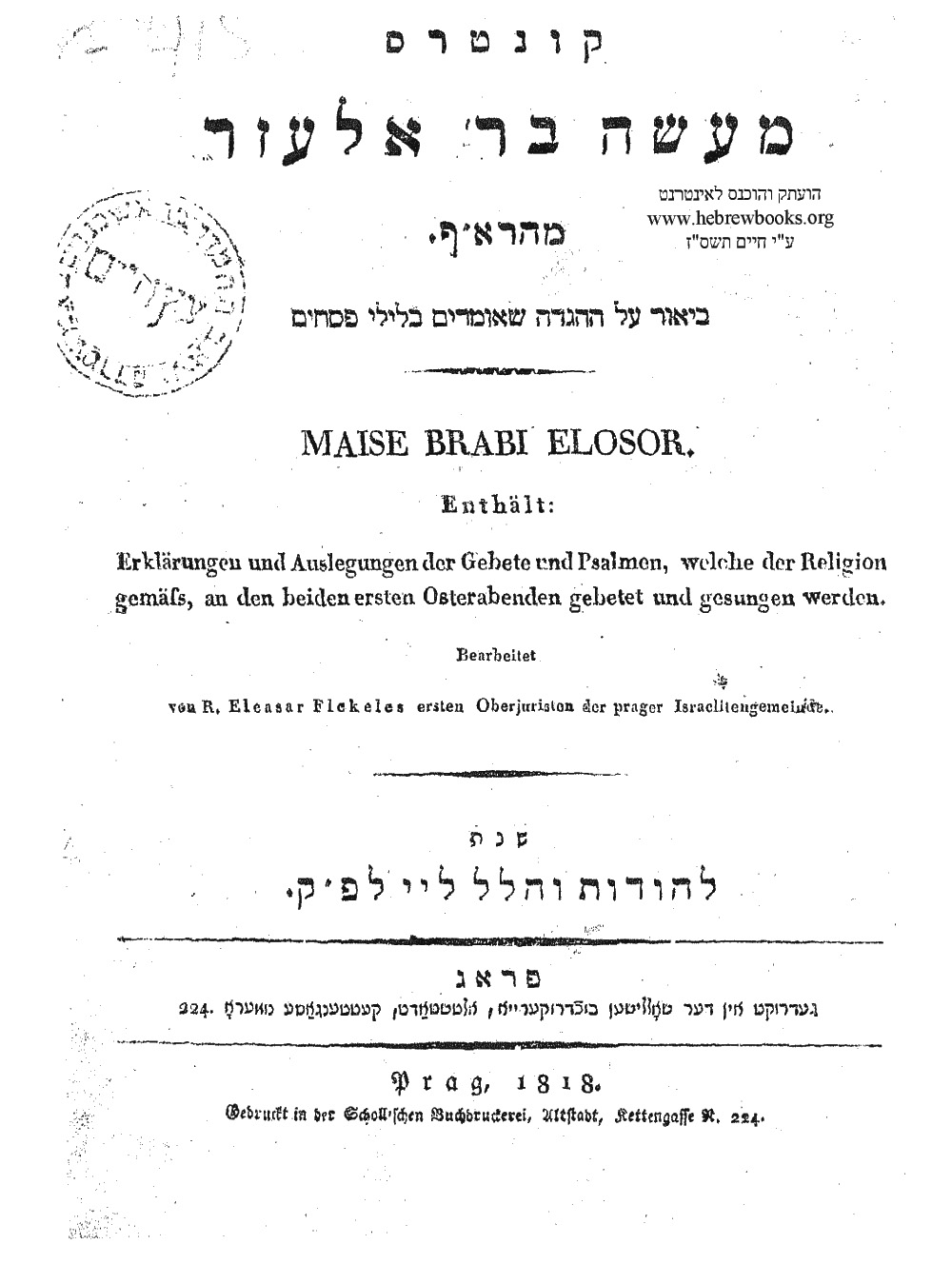
R. Elazar Fleckeles’s Haggadah Maaseh BR’ Elazar

R.  Elazar Fleckeles’s Haggadah Maaseh BR’ Elazar
By Eliezer Brodt
In the past I wrote:
Perhaps the topic which has engendered the most commentary in Jewish literature is the Haggadah shel Pesach. There are all kinds, in all languages, and with all types of commentary, pictures, etc. Whatever style one can think of, not one, but many Haggadahs have been written. So, whether it’s derush, kabbalah, halakha, mussar or chassidus there are plenty of Haggadahs out there. Then, there are people who specialize in collecting haggadahs although they do not regularly collect seforim. In almost every Jewish house today one can find many kinds of Haggadahs. Every year people print new ones; even people who had never written on the Haggadah have had a Haggadah published under their name, based on culling their other writings and collecting material on the Haggadah. When one goes to the seforim store before Pesach it has become the custom to buy at least one new Haggadah; of course one finds themselves overwhelmed not knowing which to pick! Every year, besides for the new Haggadahs being printed, old ones are reprinted, some in photo off-set editions, others with completely retype set.
Some years there are many choices of what to buy; in recent years, while the quantity of Haggadahs being printed has not ebbed, the quality most arguably has. This year, one important and high quality Haggadah that has been retype-set and republished is Maaseh BR’ Elazar by R’ Elazar Fleckeles.
R’ Elazar Fleckeles was born in 1754 in Prague and died there in 1826. He was a direct descendant of R’ Ephraim Luntschitz, author of the Keli Yakar, whom R’ Fleckeles quotes many times throughout his writings. When R’ Fleckeles was 14, he went to study with R’ Ezekiel Landau and spent ten years studying there. R’ Landau, as is evident from his haskamot to R’ Fleckeles works, held R’ Fleckeles in high regard. Additionally, many teshuvot in R’ Landau’s Noda b’Yehuda are addressed to R’ Fleckeles. In R’ Fleckeles’s writings, he quotes many interesting statements from R’ Landau. When R’ Fleckeles was twenty-four, he became the Rabbi of Kojetin, a town in Moravia. However, just four years later R’ Fleckeles returned to Prague to sit on R’ Landau’s Bet Din and serve as a head of a yeshiva. [See also here and here].R’ Fleckeles authored many works on halakha and derush, as well as a commentary on the Haggadah called Maaseh BR’ Elazar. R’ Fleckeles was a skilled halakhist, as is evident from his volumes of responsa, Teshuva m’Ahavah, but his fame also rests on his skills as a darshan. His derashot were published in a four volumes, Olat Chodesh. The fourth volume contains, R’ Fleckeles series of derashot he gave against Shabbatai Tzvi and Jacob Frank (this section has a separate title, Ahavat David) [recently auctioned off as noted here].

Almost all of his works besides his Teshuva m’Ahavah, are very hard to find.
A few years ago a new Boro Park-based Machon called Netzach Yaakov started reprinting his seforim. In 2014 they printed a volume of his Drashot related to Elul and Tishrei along with two works, Chazon LaMoed and Olat Chodesh (437+20 pp.). This beautifully produced work, including an introduction about R’ Fleckeles and a detailed index, matches the content of the actual Drashot.
 A few weeks ago this company released a new edition of his commentary on the Haggadah: Maaseh BR’ Elazar (224 +23 pp).
The Maharil noted in a drasha that he gave before Rosh Hashonah:
כל אדם יחזור וילמוד התפלה והקרובץ מקודם להיות שגורים בפיו בר”ה בשעת התפלה. וכן ילמוד בניו ובני ביתו סדר התפלה, ויריצם סדר הברכות ומלכיות זכרונות ושופרות, כדי שלא יצטרך בר”ה להפסיק בין גאולה לתפלה להראות להם אז הסדר, כי צריכנא לסמוך גם ביום טוב גאולה לתפלה. [וכשחל ר”ה בשבת כל שכן – דצריך אדם לסדר להרגיל התפילה להראות לבני ביתו בתחילה – דאז משנין בכמה מקומות התפילה – והקרובץ [מהרי”ל, עמ’ רעב]
 But specifically more instructive is the Sefer Hamaskil‘s comment:
מה טוב ומה נעים לעיין תמיד דבר בעתו בכל שבוע ושבוע בפירוש חומש ומחזיר וסליחות… ואגדת פסח [ספר המשכיל עמ’ 70].
His basic point being that one should try to prepare before each occasion the tefilos we specific to that occasion – and for Pesach that is the Haggadah.
Many people look all over each year to have nice new pieces of Torah to say over at the seder. This work is full of nice (many) shorter pieces focusing on Peshat and Derush (not Kabbalah) which can be enjoyed by different audiences.
Some General comments on this work;
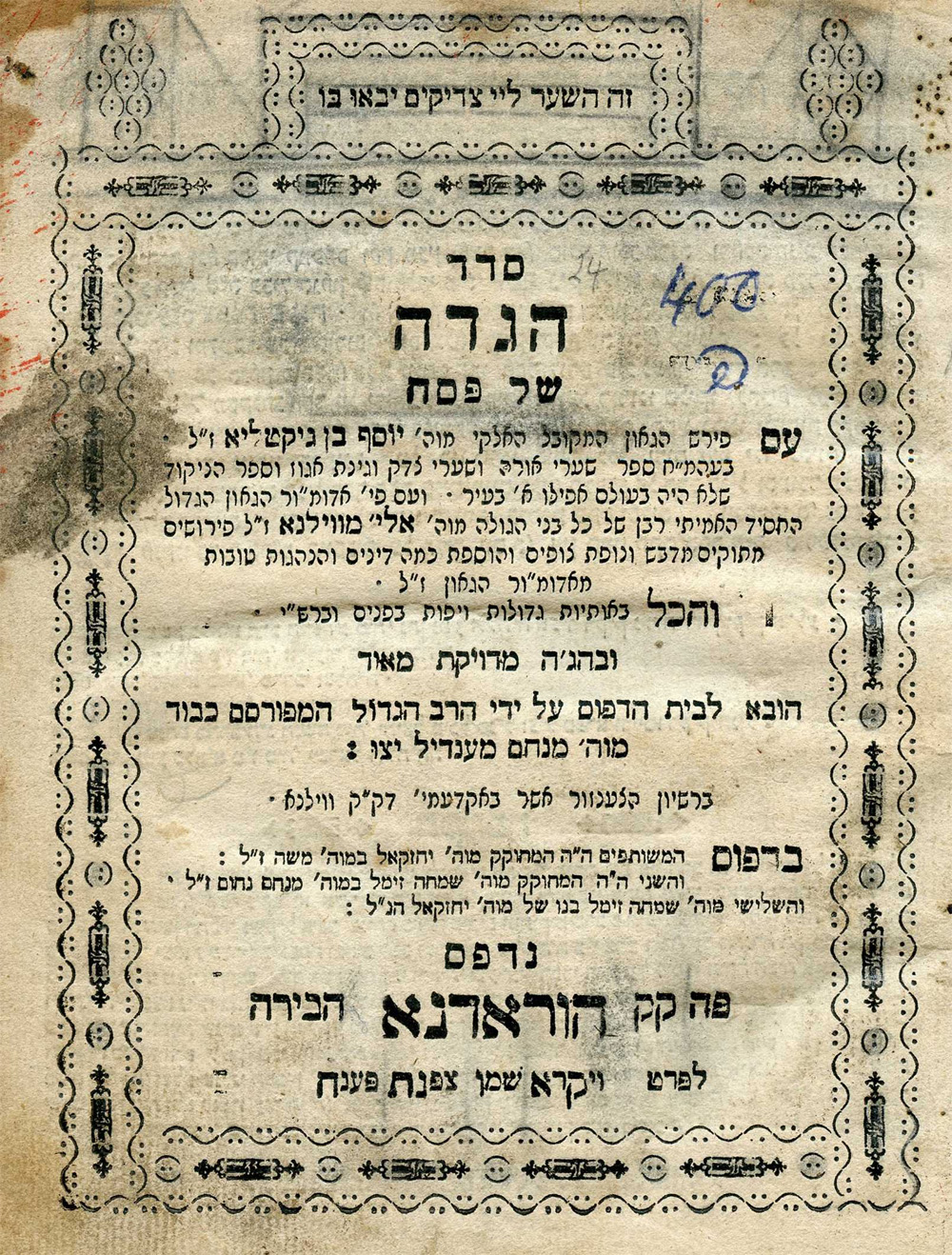
This Haggadah was first printed by the author in Prague in 1818.
Abraham Yaari, in his work A Bibliography of the Passover Haggadah, writes about this work:
הפרט העברי ככתבו עולה תקע”ב אולם יש לקרוא את שני היודין של השם כשם הויה, ואז יעלה תקע”ח, בהתאם לשנה הלועזית 1818, ולהסכמת הצנזור שניתנה באוקטובר 1817 [מספר 418]
For recent Discussion of other works with similar wording see Yakov Speigel Amudim be-Toldot ha-Sefer ha-Ivri; BeSharei HaDefus, pp. 273-296.
In 1944 in Oradea, Romania this work was printed again. It appears that this was the last Haggadah printed in Europe during World War Two. To me it is fascinating that in this turmoil time they bothered to print this work.
Yaari records this edition [number 2308] as does Yitzchak Yudolov in The Haggadah Thesaurus [number 3918]
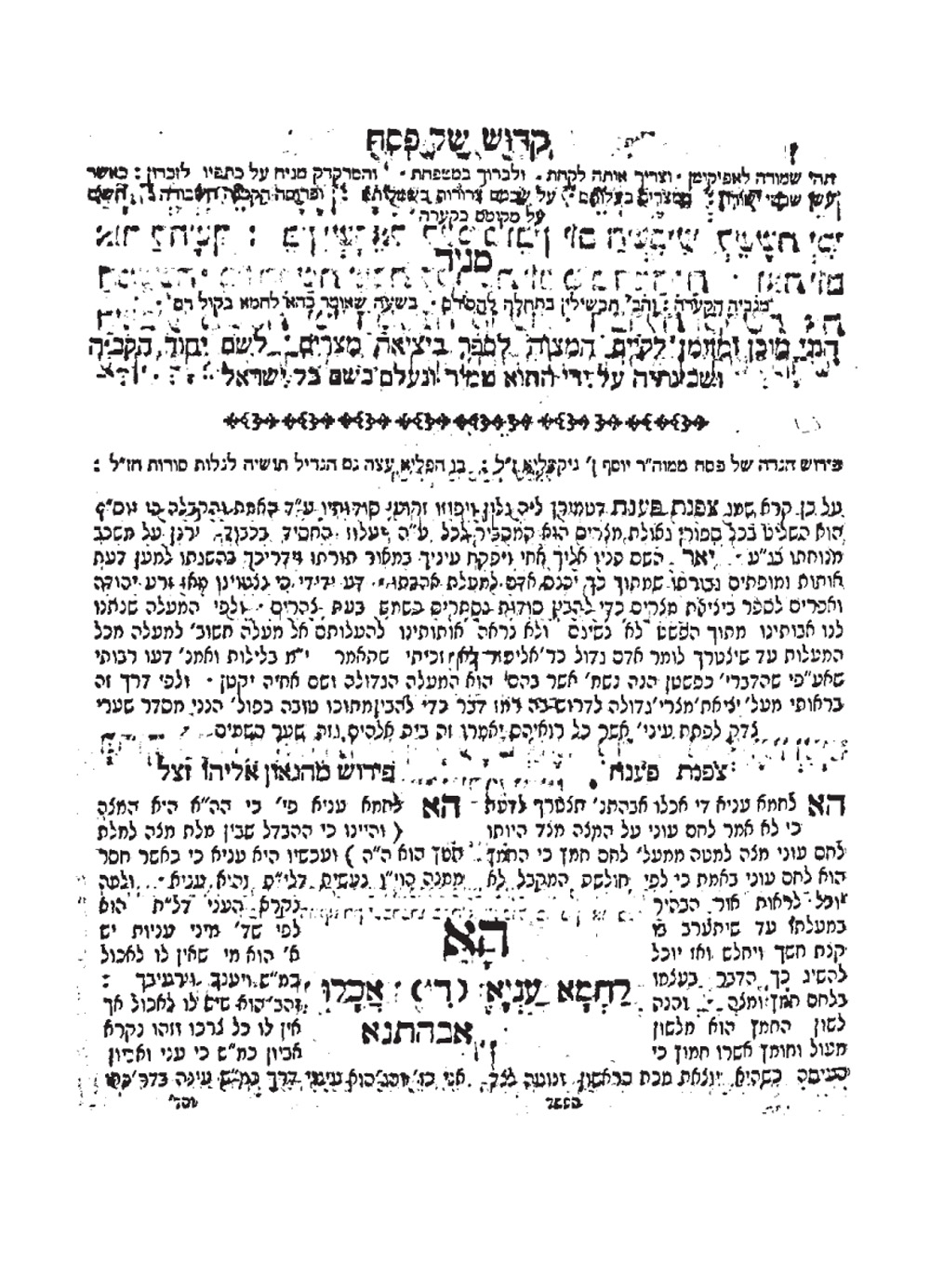
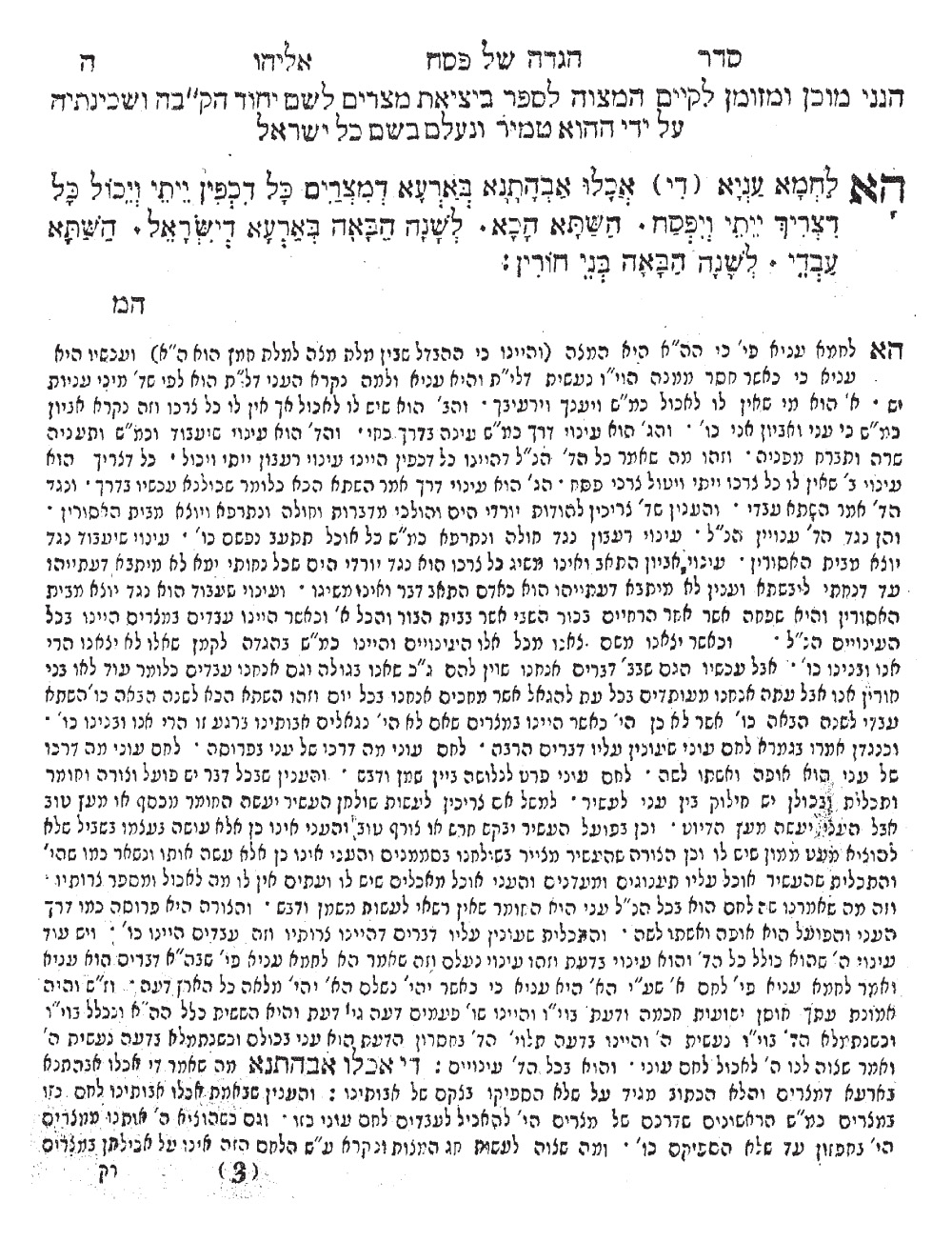
This 1944 edition has an interesting addition, as noted by the publisher. Into the text of the Haggadah the prelude Li Shem Yichud was added:
 ולא הוספתי עליו רק מה שנוהגים לומר לפני כל מצוה לשיחקב”ה וכו’ [=לשם יחוד קודשא…] הצגתי כהסכמת הגאון משאמלויא שליט”א…
In R’ Ehreneich’s second letter to the publisher he writes:

 אבל בזמנינו נתפשט המנהג
של צדיקי הדורות זי”ע לאמרו והגאון המחבר זצ”ל שהוא בעולם האמת
בודאי לא יקפיד ע”ז ויאחז כאו”א ויעשה כמנהגו…


Although it’s very nice that they decided to add this into R’ Fleckeles work and not hide this addition but I do not think they had any right to do such a thing. R’ Fleckeles was very outspoken about saying Li Shem Yichud, to say the least.
דרך כלל יאות לבטל כל התחנו’ ובקשות אלו וכיוצא בהן שנתחדשו מלקוטי האחרונים ומעיד אני עלי שמים וארץ שראיתי אחד הי’ רצה לברך על אתרוג המהודר של רבינו הגאון האמתי נ”ע (כי הי’ תמיד מהדר מן המהדרין אחר אתרוג המהודר בכל מיני הידור וכסף וזהב לא הי’ נחשב בעיניו מאומ’ אף שהאתרוג הי’ בתכלית היוקר) וכאשר ראה שאותו פלוני אמר יה”ר קודם נטילת לולב (הנדפס במחזורים ובלקוטי צבי) כעס ורגז ואמר בקצף גדול האומר יה”ר אינו מניחו לברך על אתרוג שלו ולא הניחו לברך ועיין מ”ש רבינו בספרו נ”ב חלק א”ח סי’ ל”ה דף כ’ ע”ג ובחלק י”ד סי’ צ”ג והרבה יש לי לדבר בענינים האלה וכאלה ומרוב טרדותי לא אוכל להאריך [שו”ת תשובה מאהבה, א, סוף סי’ א][1]
He was following in the path of his Rebbe, the Nodeh BeYehudah, who as is well known was adamantly against the saying of Li Shem Yichud:
ועל הרביעית אשר שאל בנוסח לשם יחוד אשר חדשים מקרוב נתפשט ונדפס בסידור הנה בזה אני משיב עד שאתה שואלני נוסח אמירתו יותר ראוי לשאול אם נאמר כי טוב באמירתו. ולדעתי זה רעה חולה בדורנו ועל הדורות שלפני זמננו שלא ידעו מנוסח זה ולא אמרוהו והיו עמלים כל ימיהם בתורה ובמצות הכל ע”פ התורה וע”פ הפוסקים אשר דבריהם נובעים ממקור מים חיים ים התלמוד עליהם נאמר תומת ישרים תנחם והם הם אשר עשו פרי למעלה וגדול מעל שמים חסדם. אבל בדורנו הזה כי עזבו את תורת ה’ ומקור מים חיים שני התלמודים בבלי וירושלמי לחצוב להם בורות נשברים ומתנשאים ברום לבבם כל אחד אומר אנכי הרואה ולי נפתחו שערי שמים ובעבורי העולם מתקיים אלו הם מחריבי הדור. ועל הדור היתום הזה אני אומר ישרים דרכי ה’ וצדיקים ילכו בהם וחסידים יכשלו בם. והרבה היה לי לדבר מזה אבל כשם שמצוה לומר דבר הנשמע כך מצוה שלא לומר דבר שאינו נשמע וה’ ירחם עלינו. עי”ש באריכות. [נודע ביהודה (קמא) יו”ד, סי’ צג].
A few months ago I mentioned the censorship of this Teshuvah.
This topic of saying Li Shem Yichud will hopefully be discussed at a different time.[2] But just to add some sources.
In 1805, R’ Menachem Mendel of Shklov, one of the main talmidim of the Vilna Gaon, printed the Gra’s work on the Haggadah for the first time.

Before Maggid it says:
הנני מוכן ומזומן לקיים המצוה לספר ביציאת מצרים לשם יחוד הקב”ה…
In a recent edition of the Gaon’s Haggadah the editor writes:
והנה אין גילוי מפורש בדעת רבינו הגר”א ז”ל באמירת לשם יחוד אך אילו ידע רמ”מ ז”ל שרבינו ז”ל מתנגד לאמירתה בוודאי לא היה מדפיסה… [ר’ חנן נובל, הגדה של פסח עם פירוש הגר”א, ירושלים תשע”ג, עמ’ כט, עי”ש].[3]
This same passage appears in later prints of the Gra Haggadah including one printed in Prague in 1813 at the time R’ Fleckeles was very active there. [Worth noting is the censor was R’ Fleckeles friend, Karl Fisher].

Even though it is unclear what the Gra held about saying Li Shem Yichud, another talmid of his appears to write against it. Here is what R’ Menashe M’IIlyah writes about it in Alfei Menashe:

In the beginning of the Haggadah, R’ Fleckeles deals with the famous question as to why there is no Beracha on Sipur Yetzias Mitzrayim, quoting a Shut Besamim Rosh on the topic [see here]. A few lines later he quotes the real Shut HaRosh, with this preface:
ובתשובות הרא”ש המקובלת לנו ראיתי…
Returning to this newest edition of the Maaseh BR’ Elazar.
One nice piece in this Haggadah is his discussion against his Rebbe, the Nodeh Beyhudah, about the Issur of Chametz in Mitzrayim.
He writes:
הנה חדשים מקרוב נדפס ספר מערבי וראיתי…
The current editors do not write to which sefer he is referring. This is the work he is referring to, first printed in 1793:

In 1959, Yitzchak Refael printed numerous additions to this Haggadah in the journal Sinai (45: 22-36). The source of these addenda is R’ Fleckeles personal copy, which he had specially bound with added on margins and blank pages inserted between each page, affording the author ample room for marginalia. After passing through several hands, finally arriving in R’ Maimon’s library. This new version of the work includes all of these addenda, in their proper places. Interestingly enough, neither Yaari nor Yudolov mention these additions in their entries on this Haggadah.Returning to Li Shem Yichud Sharon Flatto writes in her ‘The Kabbalistic Culture of Eighteenth Century Prague’:

Notably a Haggadah was recently discovered that was owned during the late 1780s by Fleckeles…. The margins of this Haggadah contain leshem Yihud formulas to be recited before the blessing on the the four cups of wine penned in Fleckeles’ hand.

In the footnote she writes they seem to have been written between 1784-1790.'(pp. 225-226). While I wish I had more clearer sources about this discovery. She does not note that the Haggadah that R’ Fleckeles himself printed in Prague in 1818 nor in the manuscript updates of R’ Fleckeles to his own Haggadah does he write to say Li Shem Yichud or any such Tefilah in the Haggadah. This newest edition of the Maaseh BR’ Elazar prints the Haggadah like R’ Fleckeles did in 1818 without Li Shem Yichud.

Besides for all these new pieces added into this new edition, the volume also includes a well-written introduction about R’ Fleckeles, including an interesting eye witness account from manuscript of the day he died in Prague. Another plus to the new edition are the numerous sources they added, at times quoting R’ Fleckeles references from his other works.  Finally, there is a very useful index of topics and seforim quoted by R’ Fleckeles at the end of the volume. I really hope they continue to print the rest of R’ Fleckeles works.
To purchase this Haggadah try Girsa in Jerusalem, Biegeleisen in NY or your local seforim store.
Appendix:

One of the seforim noticeably omitted, for the most part, from R’ Fleckeles works, including this Haggadah, is the Zohar.
Much of the sources in R’ Fleckeles writings regarding the Zohar and Kabalah in general has been gathered in Boaz Huss’ recent work, KeZohar Harokeyah (pp. 322-323). Most notable is this piece which I quote here in its entirety:
ועתה אין מן הצורך להשיב את האיש אשר רצה להמצי’ דבר חדש להשביע את האיש הישראלי בספר הזוהר… את זה כתבתי לדעת האיש ההוא שהספר הזוהר כלו קדוש אבל אני אומר הריני נשבע בתורת ה’ שבספר הזוהר נמצאו כמה זיופים וקלקולים אשר הוסיפו ועלה אחת מתלמוד בבלי הויות דאביי ורבא קדוש יותר מכל ספר הזוהר הנה אם אמרו חכמי התלמוד על ברייתא דלא מתנייא בי ר’ חייא ור’ אושיעא מאן ימר דמתרצתא היא דלמא משבשתא היא וספר הזה ודאי לאו בר”ח ורב אושיעא אתמר כי כל הדורות מראש לא זכרו מספר הזוהר מאומה לא בהקיץ ולא בחלום כי הנה אם אמת הדבר שהחבור הזה הוא מהתנא ר’ שמעון בר יוחאי אשר ר’ יהודה הנשיא קבל גם ממנו כמבואר בהקדמ’ הרמב”ם לספרו יד החזק’ איך לא זכר את הספר הזה בחבורו ש”ס משניות או בשום מקום ואף ר’ יוחנן שחיבר תלמוד ירושלמית אינו מזכירו בשום מקום ורבינא ורב אשי שחברו תלמוד בבלי מאה שנים אחר חבור תלמוד ירושלמי והיו סוף אמוראים ולא שמו רמז בכל התלמוד מספר הזוהר ורבה בר נחמני שחובר רבות ושוחר טוב וכיוצא בהם הרבה לא זכרו מחבור רשב”י גם רבנן סבוראי והגאונים והרי”ף והרמב”ם ורש”י ותוס’ והרמב”ן והרשב”א והרא”ש והטור והילקוט שמעוני אשר אסף ולקט כל המדרשות והמכילתות והברייתות כלם לא ידעו ולא ראו ממנו דבר עד שזה קרו’ לשלש מאות שנים ענו ואמרו שמצאוהו ואיזהי כנסיה אשר קבלוהו בכנופיה, כמו תלמוד בבלי וירושל’ וז”ל הרמב”ם בהקדמתו לספר יד החזקה אבל כל הדברים שבגמרא הבבלי חייבין כל ישראל ללכת בהם וכופין כל עיר ועיר וכל מדינה ומדינה לנהוג בכל המנהגות שנהגו חכמי הגמרא ולגזור גזירותם וללכת בתקנותם הואיל וכל אותם דברים שבגמרא הסכימו עליהם כל ישראל עכ”ל ויעיין עוד שם ואין אני חלילה מטיל דופי ופגם בכבוד התנא אלדי ר’ שמעון בר יוחאי כי הוא היה מחסידי עליון אלא אני אומר לאו גושפנקא דרשב”י ועזקתיה חתום עליה ומי שיש לו חצי דעת יגיד כן שהרי נזכרו בספר הזוהר כמה תנאים ואמוראי’ שהיו אחר רשב”י שנים רבות במספר והארכתי בזה במקום אחר מפי סופרים ומפי ספרים כמבואר בס’ מטפחת להגאון מו”ה יעב”ץ זצלל”ה שגזר אומר שחלו בו ידים מזייפים וחשד את החכם ר’ משה דיליון יעיי”ש.
והינה מיום שנתחדש ספר הזוהר הרבה נכשלו ע”י כי כמה דברים סתומים וחתומים אשר המציאו האחרוני’ להתעות בני אדם יושבי חשך השכל, צאו וראו כמה קלקולים רבים קלקלו מאמיני הכלב רע שבתי צבי שבור ואחוזת מרעהו ברכי מסאלנוקא ויעקב פראנק שם רשעים ירקב, ותלו דבריהם בספר הזוהר אשר בודאי לא יאונה לצדיק ר’ שמעון בר יוחאי כל און.
מה טוב ומה נעים, אשר כתבתי בחבורי קטן אשר קראתיו בשם קונטרס אהבת דוד שנדפס בק”ק פראג תק”ס וזה לשוני שם באו ונחזיק טובה וחינות לשני מלכים גדולי אדירי’ אדוננו המשובח המנוח הקיסר יאזעף השני ואדוננו המהולל הקיסר פראנץ השני אשר צפו והביטו בחכמתם הנפלאה, רבות רעות ושבושי דעות תסתעפנה מחלומות והבלים המקובלים, והמה לנזקי בני האדם נזקי הגופות ונזקי הנפשות, ופקדו באזהרה גדולה שלא להביא ספרי קבלה בכל מדינות מלכותם הפקודה הראשונה העכסט האף דעקרעט פאם ב’ נאוועמבר למספרם והשני פאם ז’ יוני למספרם והארכתי שמה בדברים נכונים… (תשובה מאהבה חלק א סי’ כו).
According to Shmuel Werses, Haskalah and Sabbatianism, (Heb.), pp. 68 and Boaz Huss, KeZohar Harokeyah (p.323) this teshuvah has been censored out of the 1912 edition of TM. I have been unable to independently confirm this, as the 1912 editions I have seen (both in NLI and in BIU) have it in full – as do most reprints available today, including the edition found on the HebrewBooks.org website
In another teshuvah on this topic R’ Fleckeles writes:
ובלא”ה כבר כתבתי פעמי’ רבות שאין ראי’ מזוהר שלא נודע ברור מי הוא המאסף והמלקט ספר הזוהר והרבה הוסיפו  (תשובה מאהבה א:סב).
It is worth pointing out that R’ Fleckeles does not dismiss the Zohar completely taking it into account elsewhere in TM; for example in this teshuvah he writes:
מה ששאלני מדוע רובא דעלמא מקילים והולכים בבקר ד’ אמות בלי נטילת ידים שחרית הא כבר כתב המ”א בשם הב”ח בשם תולעת יעקב כל ההולך ד’ אמות בלי נטילת ידים שחרית חייב מית’ עיי”ש וכמה בני תורה אשר אינם שוגגים מקילים ואין להם על מה שיסמכו. ידע ידידי שדבר זה כתב בעל תועלת יעקב בשם הזוהר וכן העתיקו הב”ח, והמג”א השמיט בשם הזהר או מן השמים השמיטוהו כי חפשתי בספר הזוהר יגעתי ולא מצאתי ובעל א”ר האמין לשמועותיו בשם הזוהר והאר”י וצדר להקל עיין סי”א סק”ד ולבסוף מסיק בשם ספר דמשק אליעזר שדבר זה  דוקא בזמנם כמו גילוי וזוגות עיין שם ולענ”ד ליתא בזוהר כלל והרב בית יוסף אשר העתיק בכל פעם דברי הזוהר לא שם רמז מזה ושארי לי’ מארי’ שעשה רוב ישראל לחייבי מיתות שוגגן ישרים יחזו במסכת ברכות דף  סמ”ך ע”ב ישר יחזו פנימו ולענ”ד היא משנת חסידים והזריז הרי זה משובח ואפשר דזוהר מיירי אם מים מצוים לפניו והולך ד’ אמות בלי נטילת ידים ואח”ז ה’ אנה לידי ספר ברכי יוסף וראיתי שמביא דברי הזוהר כת”י וסיים וזה לשונו אלא דשמיע לי מרבני קדישו דזמנין דמיא הרחק מאד מאדם ובלכתם ילכו פחות מד’ אמות כאותה שאמרו גבי שבת עיין שם סימן א’ אות א’ ולשון הזוהר אינו לפני לעיין והנרא’ לענ”ד כתבתי. (תשובה מאהבה חלק א סי’ יד וראה חלק ב סי’ א אות ד)
As an aside, the shitos of R. Fleckeles on the Zohar are bland compared to those of his Rebbe, the Noda Beyehudah, as found in the recently printed drasha of his from manuscript by Dr. Maoz Kahana and M. Silber. I note in passing that this drasha has sparked a debate between them and Dr. Flatto, to which she responded in a later version of the journal Kabbalah.


[1]  See also his Melechas Hakodesh, p. 132
[reviewed here].
[2]  See Moshe Hallamish, Kabbalah (Heb.),
pp. 45-70; Maoz Kahane, MiHaNoda BiYehuda LaHatam Sofer, pp. 89-91 and
pp. 235-236; most recently Shimon Szimonowitz, Haggadah
Aleh Zeis
(2016), pp. 35-78.
[3]  Thanks to R’ Dovid Vieder for this source.


New book announcement: Professor David Henshke’s work on the Seder Night

Book announcement:  New work on the Seder Night
By Eliezer Brodt
דוד הנקשה, מה נשתנה: ליל הפסח בתלמודם של חכמים,
מגנס, 626 עמודים
I am very happy to announce the publication of an important work (in time for Pesach) which I have been eagerly awaiting; Professor David Henshke of the Talmud Department at Bar Ilan University’s long awaited volume, Ma Nishtanah: Leil HaPesach BiTalmudam shel Chachamim. The book was printed by Magnes Press.
Why am I excited about this work?
A few years ago I wrote:
Perhaps the topic which has engendered the most commentary in Jewish literature is the Haggadah shel Pesach. There are all kinds, in all languages, and with all types of commentary, pictures, etc. Whatever style one can think of, not one, but many Haggadahs have been written. So, whether it’s derush, kabbalah, halakha, mussar or chassidus there are plenty of Haggadahs out there. Then, there are people who specialize in collecting haggadahs although they do not regularly collect seforim. In almost every Jewish house today one can find many kinds of Haggadahs. In 1901 Shmuel Wiener, in A Bibliography of the Passover Haggadah, started to list all the different printings of the Haggadah. Later, in 1960, Abraham Yaari, in his work A Bibliography of the Passover Haggadah, restarted the listing and reached the number 2700. After that, many bibliographers added ones which Yaari omitted. In 1997, Yitzchak Yudlov printed his bibliography on the Haggadah,  The Haggadah Thesaurus. This thesaurus contains a beautiful bibliography of the Pesach Haggadahs from the beginning of printing until 1960. The final number in his bibliography listing is 4715. Of course ever since 1960 there has been many more printed. Every year people print new ones; even people who had never written on the Haggadah have had a Haggadah published under their name, based on culling their other writings and collecting material on the Haggadah. When one goes to the seforim store before Pesach it has become the custom to buy at least one new Haggadah; of course one finds themselves overwhelmed not knowing which to pick!
A year later I wrote a post listing an Initial Bibliography of Important Haggadah Literature that is out there.  In that post I discussed various works on the Seder night (regular and academic).
I personally collected and have learned through numerous works of all kinds on the seder night for many years. I am always on the lookout for some fresh new look on the seder night. A few years ago, I came across some articles by Professor Henshke in various publications such as HaMaayan and more academic journals and was hooked. I also heard him speak a few times. A few years ago when I was enrolled in the Talmud Department in Bar Ilan University, I started to go to a class of his once a week; each week, I was simply blown away. Around Pesach time the focus of the class was based on some of his work on the Seder night.
What is the strength and uniqueness of this work?
Professor Henshke shows a command of two worlds which some feel cannot go together, the Yeshivah and Academic worlds. He learned by various greats of the past including R’ Yisroel Gustman, R’ Binyamin Ze’ev Benedict, and R’ Shlomoh Fisher, has served as a maggid Shiur and is extremely familiar with the Yeshivisheh Torah in all areas, including Kodoshim and Taharos. His works shows an incredible command of the relevant sources, from Chazal and onwards, Geonim, Rishonim and Achronim. At the same time he shows the same impressive breadth in academic literature as well as deep understanding and utilization of the various methodologies. He is careful to examine all the material from scratch, including the manuscripts, to the finest details. This allows him to look at the sugyah with a fresh look. Additionally, he is also a great “Mechadish” and has originated many new ideas on various issues. Professor Henshke is an outstanding example of the tremendous benefit in combining both worlds (a topic for a different time). All this is done with Yiras Shamyim and with proper respect of whoever he is dealing with, even when he is arguing with them.
In general, Professor Henshke’s lectures and written material focus on the Peshat. Basing himself upon a meticulous reading of the texts, he then approaches Chazal (Midrashi halacha and Mishna-Tosefta) by putting each halachah into its proper literary perspective (each corpus reflects the Halachos as learned in a different Bais Midrash; that of R’ Yishmael and that of R’ Akiva). This approach, coupled with his phenomenal scope allows him to connect seemingly non-related halachos, weaving an intricate tapestry worthy of both Rosh Yeshiva and scholastic.

Here are Professor Henshke’s own words (from the introduction to this work) explaining what it is he is trying to bring to the table (I have abridged the text and footnotes):

כלום לא נכתב די על ליל הסדר?[1] השאלה… אכן מתבקשת – אף על פי שחיבור זה אינו פירוש להגדה (שאין מספר לביאוריה),[2] ואף אינו דיון תורני בסוגיות ליל הפסח (שדה שאף הוא כבר נחרש עמוקות).[3] תכליתו של ספר זה כפולה – בירור מצווֹת ליל הסדר היסודיות מבחינת תולדות ההלכה בתקופת התנאים והאמוראים (והוא חלקו הראשון שלחיבור), והבהרת התהווּתה של ההגדה התנאית – מימות התנאים עצמם ועד עיצובו של הרובד התנאי בהגדה של ימי האמוראים והגאונים (חלק שני). אף על פי כן, השאלה שבכותרת במקומה עומדת, לפי שסִפרות המחקר על ליל הסדר, שעניינה בתכליות הללו, אף היא כבר רחבה ומסועפת

    ברם, לא מעט מסִפרות המחקר נכתב מתוך מבט חיצוני לגופו של החומר הנחקר. חוקרי ליל הסדר לרוב לא ראו את תפקידם בניתוח מהלכי הסוגיות התלמודיות (המשמשות מקור ראשון לענייננו) מפנימן, אלא בהצבת נקודת מוצא שמחוץ להלכי המחשבה התלמודית – כמנוף לבירור מחודש של התופעות. כך, לדוגמאות אחדות, נחקרה ההגדה על רקע פוליטי,[4] על-פי תרבות הסימפוזיון ההלניסטי,[5] או כתגובה לפסחא הנוצרית ול’הגדתה’[6] – אך נקודות מוצא אלה, שאין כלל ספק בחיוניותן, ראוי להן להישקל דווקא לאחר בירור תלמודי מדוקדק בכל כלי הניתוח

שמדע התלמוד של ימינו מְספק. ומעין דבריו של רא”ש רוזנטל: “לא יהיה בסופו של דבר שום מבוא אל התלמוד אלא בתלמודיות ממש“.[7] אין לדלג אפוא אל מעבר לגופי המקורות – קודם שהללו נתבררו מתוכם ככל שיד העיון משגת.

    כיצד יש להם למקורות להתברר? על שלושה דברים עומד מחקר התלמוד:[8] (א) בירור שיטתי של נוסח המקורות התלמודיים, על יסוד מכלול עדי הנוסח שבידינו ויחסיהם ההדדיים; (ב) הבהרת לשונם של המקורות, על-פי פשוטם בהקשרם ועל יסוד בדיקתם בשאר היקרויות; (ג) על בסיס שני אלה מתאפשרת העֲמידה החיונית על הרכבם הספרותי של המקורות, הבחנת רובדיהם אלה מאלה ועמידה על יחסיהם ההדדיים. קשיים ותמיהות שמערימות הסוגיות השונות מתיישבים תחילה מתוך בירורים פנימיים אלה, אשר מביאים לעמידה על מהלכי החשיבה התלמודיים ותולדותיהם; ומעֵין וריאציה על התער של אוקהם[9] דומה שמלמדת כי דווקא כאשר אין בכל אלה כדי להושיע, יש מקום לפנות אל מחוץ לסוגיות עצמן

    אימוצה של מתודה זו בסוגיא דילן[10] דומה שמשיב כל הצורך על השאלה שהוצגה…, כפי שמתברר בבדיקת הסִפרות הקיימת

 סקירה מפורטת של ספרות המחקר בפרשת ליל הסדר, כפי שנדפסה עד שנת תשנ”ו, מצויה במבואו של יוסף תבורי לחיבורו ‘פסח דורות’ (תל-אביב 1996). במרכזה של ספרות זו עומדות כמדומה הגדותיהם של ד’ גולדשמידט (תש”ך) ורמ”מ כשר (מהדורה שלישית תשכ”ז), כל אחת בדרכה; אך תיאורן של דרכים אלה, יחד עם הצגת שאר הספרות בענייננו, ימצא הקורא במבואו האמור של תבורי. ואילו גוף ספרו הוא ודאי נקודת מפנה בחקר הלכות ליל הסדר; כי בחיבור זה מונחת תשתית שאין לה תחליף בתחום הנדון, וכל מחקר הבא אחריו נזון הימנו.[11] ברם, נוסף לנתונים הרבים שנתגלו ונצטברו מיום הופעת ספרו של תבורי (שבנוי בעיקרו על דיסרטציה משנת תשל”ח) – ויָתר עליהם: דרכי חשיבה וניתוח שנתחדדו מאז – הרי כבר הודיע המחבר עצמו כי “עיקר החידוש שלי הוא בתיאור תולדות הלכות ליל הסדר בתקופה הבתר אמוראית” (עמ’ 27; ההדגשה שלי). ואילו חיבורִי מוקדש בעיקרו לסִפרות התנאים והאמוראים.[12]

    מתוך כלל הסִפרות שיצאה לאור לאחר ספרו של תבורי, אזכיר כאן שני חיבורים שנזקקתי להם רבות. בשנת תשנ”ח יצאה לאור ‘הגדת חז”ל’ מאת שמואל וזאב ספראי. זהו חיבור רב ערך שריכז נתונים הרבה, והוא כתוב בידי אב ובנו, שני היסטוריונים מומחים; אלא שהיסטוריה היא אכן מגמתם, ולא בירורי הסוגיות התלמודיות לשמן… ולא עוד אלא שספר זה מוקדש להגדה דווקא, ומצוות ליל הסדר נידונות בו רק אגבה. מכל מקום, הכרת תודה יש בי אף לחיבור זה, שאי אפשר לחוקר ליל הסדר שלא להיזקק לו

    משנה ותוספתא פסחים הן נושא חיבורו של שמא יהודה פרידמן, ‘תוספתא עתיקתא’ (רמת-גן תשס”ג), שבכללו סעיפים העוסקים בענייננו. כדרכו, אין דבר גדול או קטן במהלך הדברים שפרידמן אינו יורד לסוף עניינו ומבררו כשׂמלה. ברם, נקודת המוצא של חיבור זה היא השיטה הכללית המוצעת בו, בדבר קדמותן של הלכות התוספתא להלכות המשנה המקבילות… מכל מקום, כל אימת שחיבורו של פרידמן נגע בענייננו, מיצוי מידותיו היה מאלף

He has written over 100 articles and two books (here and here) developing and elaborating on his methods.

The current volume is certainly not a light read but it will help one understand numerous sugyos of the seder night in new and in deeper levels than before. It is sure to become the new definitive work on the seder night putting it in a original perspective.

If one is interested in reading some articles by Professor Henshke that were later updated and incorporated into this work, feel free to email me at Eliezerbrodt@gmail.com
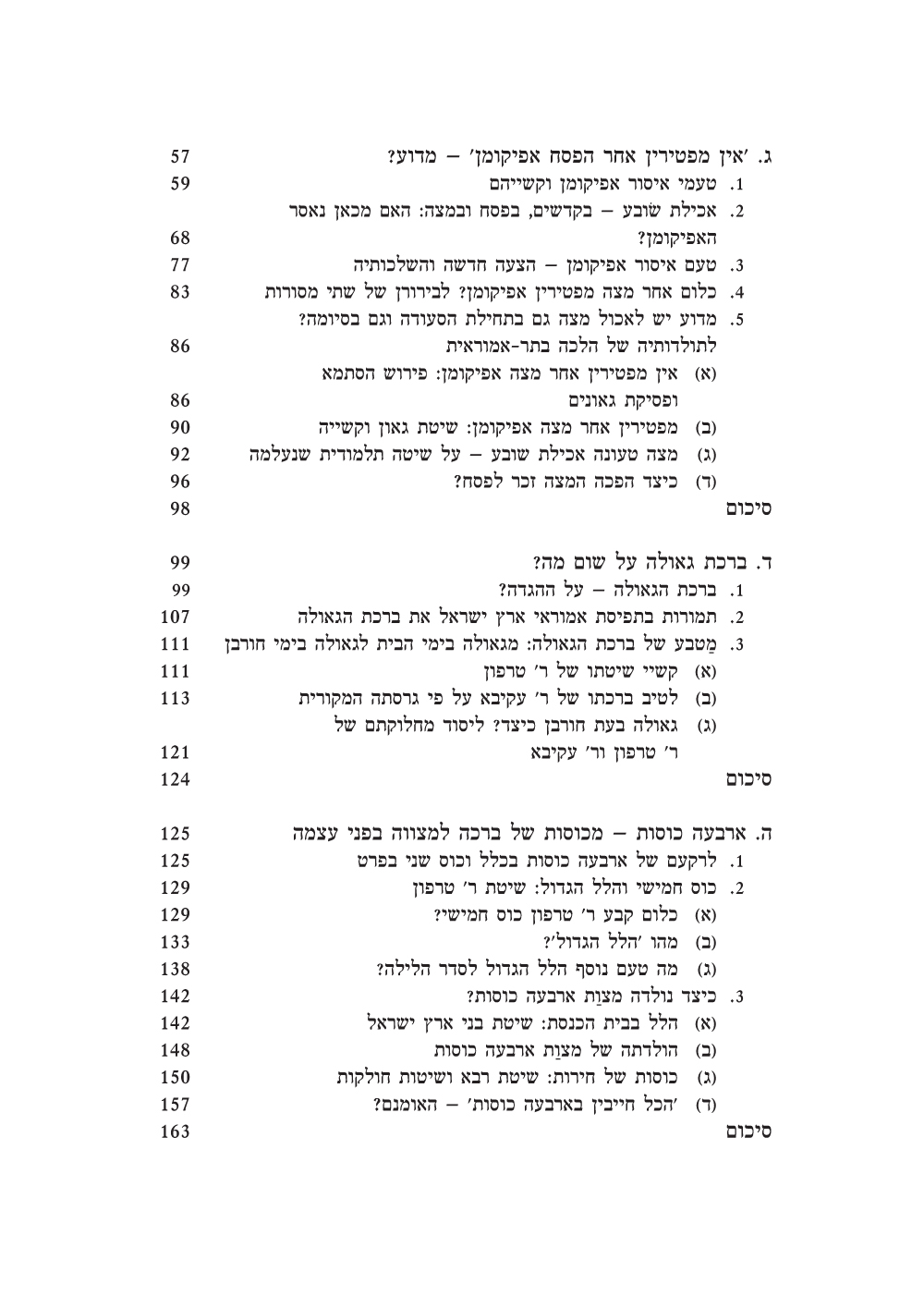
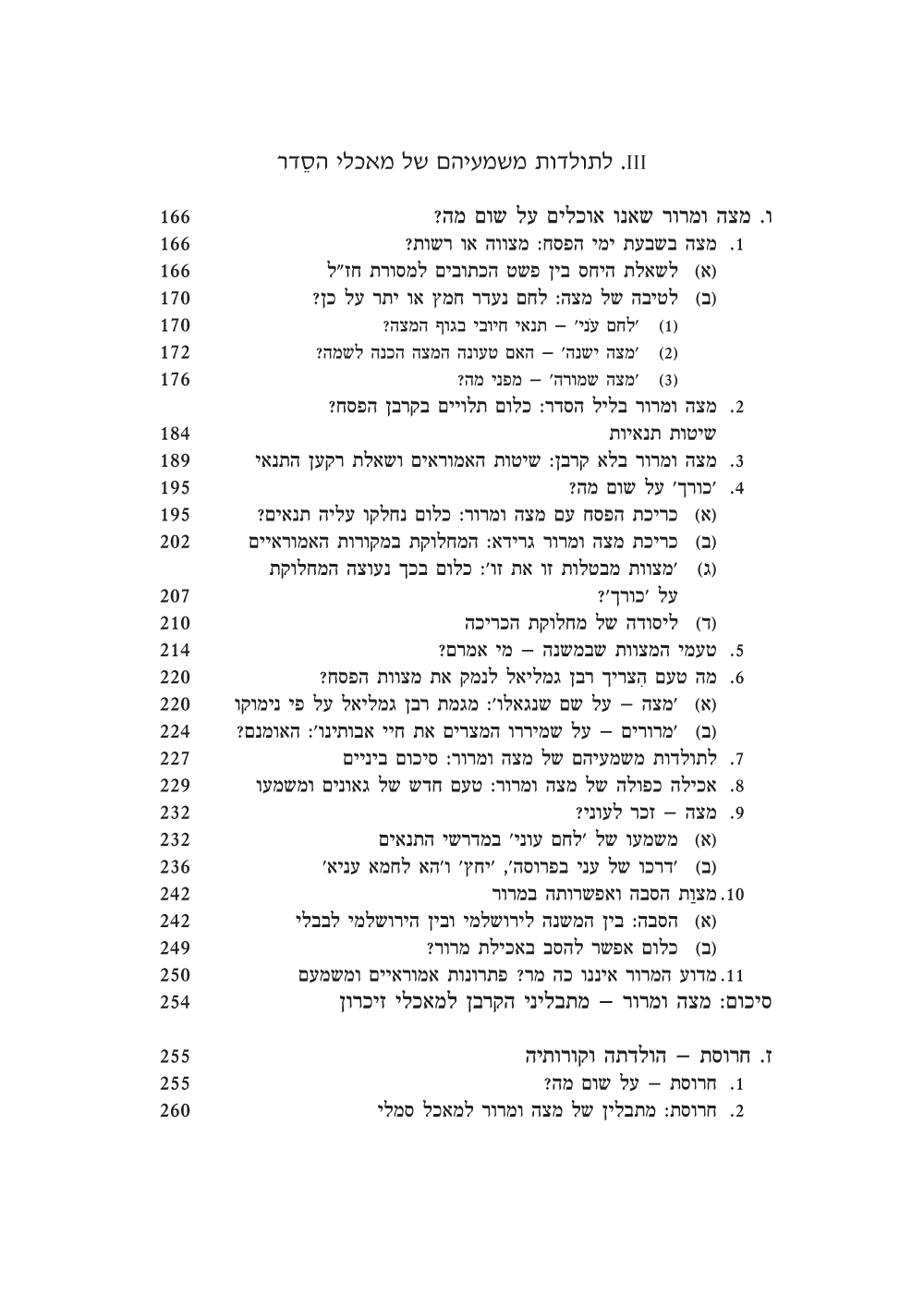
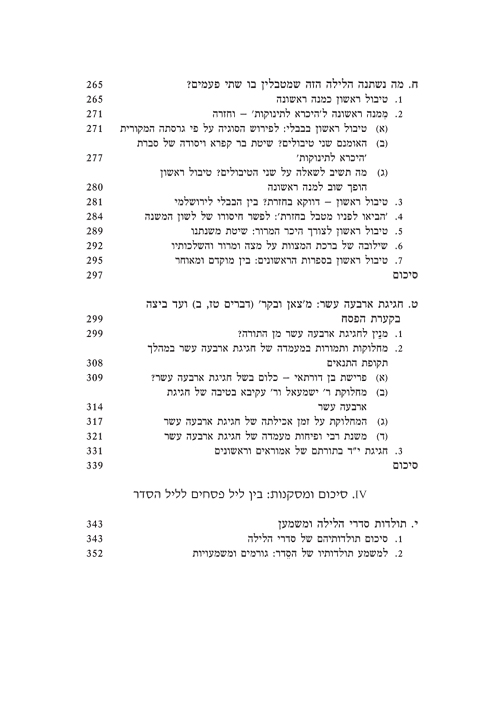
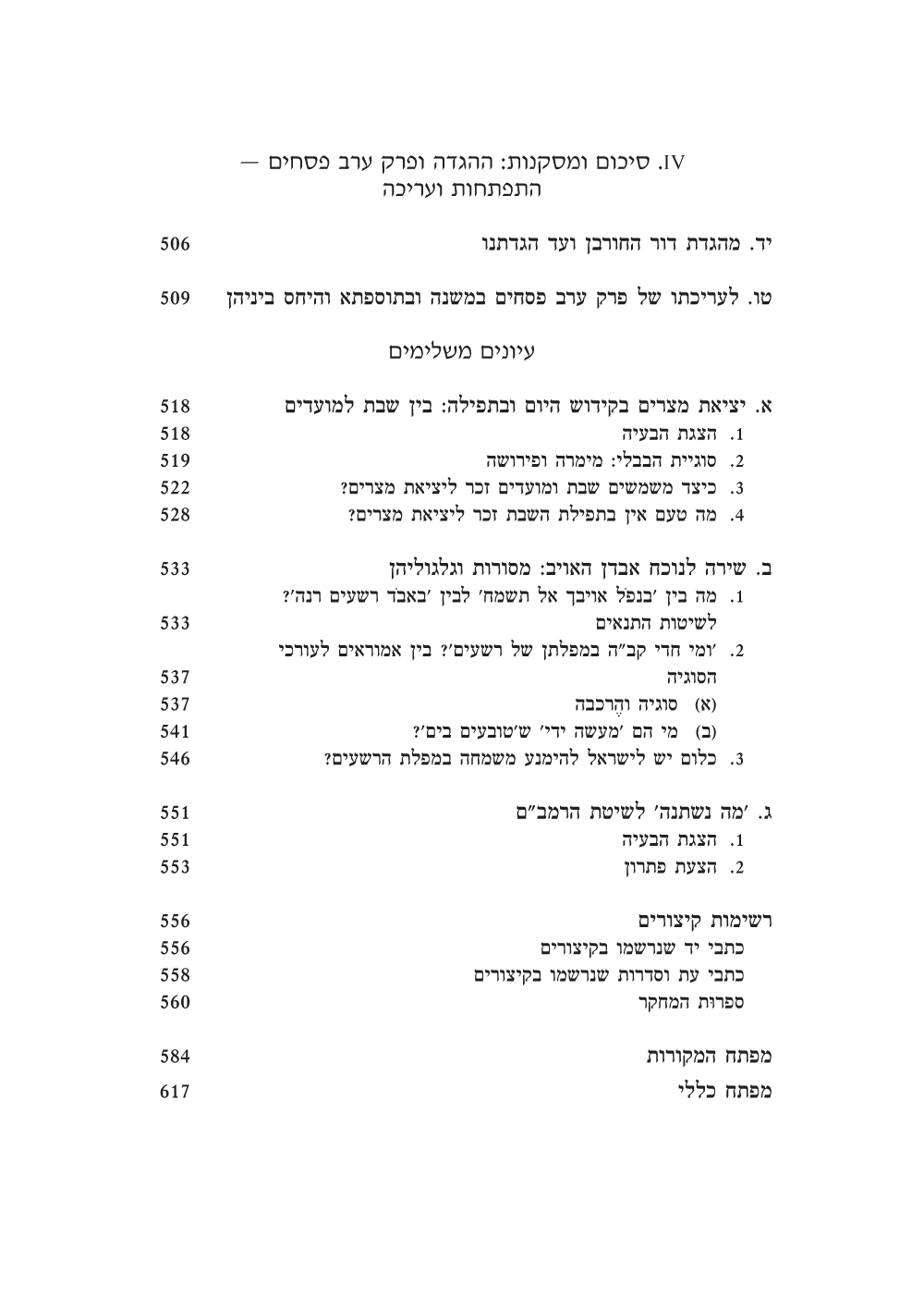
Here are the Table of Contents of this special work.
Simply looking at it gives one sense of some of the issues he deals with.

The book can be purchased via Magnes Press or through me at Eliezerbrodt@gmail.com

Copies of this work will be arriving at Biegeleisen shortly.


[1] הכינוי ‘ליל הסדר’ לליל ט”ו בניסן איננו מחידושי הלשון העברית החדשה, כפי שסבר י’ כנעני, אוצר הלשון העברית,ערך ‘סדר’ (עמ’ 3947), שהרי הוא מתועד כבר אצל מהרי”ל, במפנה המאות י”ד-ט”ו למניינם; ראה מהרי”ל, סדר ההגדה, ח, עמ’ צב. אך ספק אם יש למצאו קודם לכן, והשווה המילון החדש של א’ אבן שושן, ערך ‘ליל’ (עמ’ 812), המייחס את הביטוי לימי הביניים, בלא ציון מקור. הרבה קודם לכן מוצאים אנו את ה’סדר’ גרידא (ראה לדוגמה המקורות שהביא א’ בן יהודה במילונו, ערך ‘סדר’, עמ’ 3971), וכן את ‘סדר ליל פסח’ (ראה למשל ראבי”ה, סי’ תקכד, עמ’ 152). כלום הלעז sederabend הוא פרי תרגום של ‘ליל הסדר’ – או שמא איפכא? בשל המקור המאוחר יחסית של הביטוי ‘ליל הסדר’, נקטנו בכותרת החיבור את הלשון ‘ליל הפסח’. ועל “ליל הפסח” ראה להלן.
[2] ראה: יודלוב, אוצר, שם נרשמו “קרוב לחמש מאות פירושים… ממזרח וממערב, מכל קצות הקשת המחשבתית רבת הגונים והענפים שבעולם האמונה והמחשבה היהודית לדורותיה”, כדברי י”מ תא-שמע בהקדמתו שם, עמ’ ח, והואיל והרישום מגיע שם לשנת תש”ך, הרי כיום יש להוסיף כמובן לא מעט; אך מעֵבר לכך, רשימה זו אינה כוללת אלא את דפוסי ההגדות המלוּות בפירושים, ואילו לביאורי ההגדה שמצאו מקומם בשאר כל הספרות התורנית דומה שאין מספר
[3] ראה, לדוגמה בעלמא, מפתח הספרים שבסוף אוצר מפרשי התלמוד – פסחים, ד: ערבי פסחים, ירושלם תשנ”ד, עמ’ תתסט-תתצח.
[4] ראה למשל פינקלשטיין, א-ב..
[5] ראה למשל מאמרו רב ההשפעה של שטיין, סימפוזיון; על הבעייתיות שבכיווּן זה ראה להלן..
[6] ראה למשל דאובה שצוין להלן…, ובעקבותיו יובל, שני גוים, עמ’ 92; על כך שההנחה שביסוד דברי דאובה אינה מתקיימת, ראה להלן שם בהמשך. רעיונותיו המעניינים של יובל, המתאר את ההגדה כתגובה לנצרות, בעייתיים מבחינת בירור המקורות; ראה על כך עוד, לדוגמה, להלן… בתחום היחס לנצרות מצוי גם חיבורו של ליאונרד, אך הלה מבקש לברר את העניינים גם מתוכם. אלא שאף כאן ניכרת היטב בעייתיות ברקע התלמודי; וראה, לדוגמה, להלן…
[7] רוזנטל, המורה, עמ’ טו
[8] השווה: רוזנטל שם; ספרִי שמחת הרגל, עמ’ 2-1
[9] כבר העירו על ניסוחו של הרמב”ם, בקהיר של המאה הי”ב, לעקרונו של ויליאם איש אוקהם, באנגליה של המאה הי”ד: “אם, למשל, יש ביכולתנו להניח מתכונת אשר על-פיה תהיינה אפשריות התנועות… על-פי שלושה גלגלים, ומתכונת אחרת אשר על-פיה יתאפשר אותו דבר עצמו על-פי ארבעה גלגלים, ראוי לנו לסמוך על המתכונת אשר מספר התנועות בה קטן יותר” (מורה הנבוכים ב, יא, מהד’ שורץ עמ’ 290). ואכמ”ל במקורותיו.
[10] החיבור הנוכחי איננו הראשון שבו מבקש אני לבחון ולהדגים מתודה זו; שני קודמיו (משנה ראשונה; שמחת הרגל) נתמקדו בתורת התנאים..
[11] לחיבורו זה הוסיף תבורי מחקרים נוספים בענייני ליל הסדר, ואלה שנזכרו בחיבורנו רשומים ברשימת ספרות המחקר שבסופו; וראה עוד סיכומו “The Passover Haggadah”, בתוך: S. Safrai et al. (eds.), The Literature of the Sages, II, Assen 2006, pp. 327-338
[12] דיונים בספרות הגאונים והראשונים נערכו כאן כשיש בהם כדי להבהיר את הכיווּנים שהועלו באשר להלכה החז”לית.


Parshat Ki Tisa. The Anointing Oil Revisited.

Parshat
Ki Tisa. The Anointing Oil Revisited.
 By Chaim Sunitsky
In this parsha we have
the instructions of how to make anointing oil:
וְאַתָּה
קַח לְךָ בְּשָׂמִים רֹאשׁ מָר דְּרוֹר חֲמֵשׁ מֵאוֹת וְקִנְּמָן בֶּשֶׂם מַחֲצִיתוֹ
חֲמִשִּׁים וּמָאתָיִם וּקְנֵה בֹשֶׂם חֲמִשִּׁים וּמָאתָיִם וְקִדָּה חֲמֵשׁ מֵאוֹת
בְּשֶׁקֶל הַקֹּדֶשׁ וְשֶׁמֶן זַיִת הִין
All the proportions of
the ingredients are clearly explained except the second. Moshe had to take 500
(shekalim[1]) of
Mar Dror. Kinamon (probably cinnamon) “its half, 250”, K’ne – 250 and Kida –
500. The peculiar expression “its half, 250” is explained in the Talmud (Kritot
5a) to mean that 250 shekalim is taken twice. According to this the expression
“its half” is explaining the half of the weight of Kinamon and that it is
“gezeriat hakatuv” that this spice is not taken at once but rather as two
halves, 250 shekalim each. The total weight of the spices is then
500+250*2+250+500=1750.
Needless to say this
explanation does not seem to be the straightforward meaning of the verse. It is
a lot simpler to consider that mahatzito (its half) is explaining the previous
weight: while Mar Dror is 500, Kinamon is only half of that – 250. Still
practically all the commentators follow the view of our Talmud and even Rashbam
who usually explains according to what he believes to be the pshat. The words
of Rabeinu Bahya (30:23) are that this explanation is the kabala of Hazal
(presumably from Sinai) and that we already knew that half of 500 is 250, so if
we explain the Torah according to the simple meaning, these words are
redundant. However it was noticed already in Biur of Mendelssohn[2] that
our taamim don’t support this explanation, as they should have used a mesharet
to connect “mahatzito” to the next words[3]. He
leaves this as a question of why Baal Hataamim didn’t follow Hazal[4].
However Shadal in his
Chumash commentary brings from Yerushalmi Shekalim[5] (6:1)
that the total weight of the 4 spices was 1500. This implies that the weight of
Kinamon was only 250 as is the straightforward meaning of the verse[6]. We
thus find support for our Mesorah that followed a different tradition and there
was no clear “Mesorah from Sinai” that this verse should be read as the Bavli
suggests[7] but
rather this was one of possible interpretations in out Gemora.

[1] All the weights
are in shekalim although in some sources (Yerushlami Shekalim 6:1) the weights
seem to be in “mane” and not shekalim, it is probably based on a scribal error
[2] See also “Vikuach”
of Shadal (page 96) where he tries to prove from here that the tradition of
taamim is not from Ezra otherwise our Mesorah would not contradict this.
[3] Instead we have
a “tipcha” that connects this word to the previous phrase.
[4] In general the
Tosafot on Shabbat 55b already noticed that our Mesorah sometimes doesn’t
follow the Talmud. We usually follow the Mesorah in regards to the laws of
writing of the Torah. Moreover, the opinion of Masoretic scholars may have
influence on other laws like writing a “get” (see Bet Shmuel at the end of the
laws of writing names of men and women printed after siman 129 of Even Haezer;
see also GR”A, Even Haezer 129:51).
[5] Another
interesting contradiction between Bavli and this perek of Shekalim is the
number of tables in the Second Temple. The Mishna in Shekalim seems to imply
that there was only one table in the Heichal (and therefore presumably one
Menorah), but Talmud Bavli (Yoma 51b) implies that the Second Temple had 11
tables and 11 Menorot just like the First Temple (see Tosafot Rid ad loc who
notices this contradiction). Maybe at the time after the victory of Hanukkah
when the Jewish people were poor, there was only one Menorah and one table, and
at some later time more were made.
[6]Most
commentaries to Yerushalmi say this except for R. Shlomo Sirilio who changes
the girsa in Yerushalmi so as not to contradict the Bavli.
[7] While we are at
it, I’d like to add that regarding Ketoret, where the Torah mentions only 4
species, and Hazal add 7 more, that maybe the remaining 7 spices are not a Sinaic
tradition, see Shir Hashirim Rabbah 3:7 and Ramban (30:34). This would explain
why R. Natan could add Kipat Hayarden and not break the prohibition of “Bal
Tosif”. Maybe the Torah allows taking small quantities of various other spices
as long as the main ingredients were the 4 enumerated in the Torah in equal
proportion.  


Keser vs. Kesher: What’s In A Name?

Keser vs. Kesher: What’s In A Name?[1]
 
I – The Puzzle
Kesher Israel (KI) Congregation has enhanced Jewish life in Pennsylvania’s capital of Harrisburg for almost 115 years. During that time, KI has been blessed with outstanding rabbinic leadership: The famed Rabbi Eliezer Silver[2] first headed the congregation from 1911-1925. He was followed by Rabbi Chaim Ben Zion Notelovitz who served KI from 1925-1932. Rabbi David L. Silver (a son of Rabbi Eliezer Silver) led the congregation from 1932-1983. Rabbi Dr. Chaim E. Schertz served KI as its rabbi from 1983-2008.
Soon after arriving in Harrisburg in 2007, I found myself intrigued by the synagogue’s name. Since the congregation is called Kesher Israel, I just assumed its Hebrew name was קשר ישראל (pronounced ‘Kesher Israel’, meaning Bond of Israel). However, I soon learned that upon being founded in 1902, the synagogue was in fact named כתר ישראל (pronounced ‘Keser Israel’ in classic Ashkenazis – which KI’s founders surely spoke – meaning Crown of Israel). I soon noticed that below the words ‘Kesher Israel Synagogue’ on the cornerstone of KI’s current building (pictured above), appears the Hebrew name כתר ישראל.
This seemingly minor detail puzzled me greatly. Why did a congregation whose proper Hebrew name was כתר ישראל choose to call itself Kesher Israel? Had anyone ever taken note of – or attempted to correct – this inconsistency? During the summer of 2015, I found time to research the matter, and I now have a theory to propose.
II – An Enigmatic Account
In 1997, KI honored its beloved Rabbi Emeritus – Rabbi David L. Silver (1907 – 2001)[3] – with a community-wide weekend celebration on the occasion of his 90th birthday. As part of that celebration, the congregation published “Silver Linings” – a 90 page book of Rabbi D. Silver’s memoirs. Those memoirs were excerpted from some 35 hours of taped interviews conducted from April, 1996 – April, 1997. On pages 43 – 44 of that book we find the following account:
When the shul was founded, it was called Keser . . . which means a crown. Some fellow who was a Hebrew teacher . . . spelled it as C-a-s-s-e-u-r. He should have put it down as K-e-s-e-r. Some people – Lithuanian Jews, I want you to know, because I am of that breed – pronounced and spelled it “sh”. Kesher means “the bond” . . .
My father came here in 1907. He was a good Hebraist and he didn’t like the name. He said, in the Bible when there is the term “kesher” it’s “kesher bodim”[4]. A bond of bodim means rebels, period[5]. My father said that’s no name for a shul and changed it from Kesher Israel to Keser Israel, a crown of Israel. I don’t know whether it happened on the first day he came here but that’s what it became.
Rabbi D. Silver’s eye-opening account of the history of KI’s name is quite enigmatic. In attempting to understand this explanation, the following questions must be answered:
1)      If the congregation’s original name was in fact ‘Keser Israel’ (כתר ישראל), why would Lithuanian Jews have pronounced it ‘Kesher Israel’?
2)      If the congregation’s original name actually was ‘Keser Israel’, what exactly did Rabbi Eliezer Silver change?
3)      As the synagogue is called ‘Kesher Israel’ to this very day, what did Rabbi D. Silver mean when he reported that his father had successfully changed its name from ‘Kesher Israel’ to ‘Keser Israel’?
III – Sabesdiker Losn
In the Book of Judges, we learn of a terrible civil war that flared up between the tribes of Ephraim and Manasseh. As the beaten forces of Ephraim attempted to retreat across the Jordan River we read (Judges 12:5-6):
5 – And the Gileadites seized the crossings of the Jordan that belonged to Ephraim; and it was that when any of the survivors of Ephraim said, “Let me go over,” and the men of Gilead said to him, “Are you an Ephraimite?” and he said, “No.”
6 – And they said to him, “Say now ‘Shibboleth,’ ” and he said “Sibboleth,” and he was not able to pronounce it properly, and they grabbed him and slew him at the crossings of the Jordan; and there fell at that time of Ephriam, forty-two thousand.
At that point in Jewish history, the tribe of Ephraim was unable to correctly pronounce the hushing sound of the Hebrew letter “Shin” in the word “Shibboleth”. They instead pronounced the word with the hissing sound of the Hebrew letter “Sin”, and the word came out as “Sibboleth”.[6] With their identities compromised, many Ephraimites lost their lives.
In the course of my research, I learned that the inability of many Lithuanian Jews to properly distinguish between the hushing and hissing sounds of the Hebrew letters “Shin” and “Sin” was once common knowledge. Like the Ephraimites before them, many Lithuanian[7] Jews also pronounced the word ‘Shibboleth’ as ‘Sibboleth’.[8] As a result of their enunciation, other Yiddish speakers jokingly referred to the Lithuanian dialect of Yiddish as ‘Sabesdiker Losn’. In an often quoted article on Sabesdiker Losn, Prof. Uriel Weinreich writes:
One of the most intriguing instances of non-congruence involves a peculiar sound feature of the northeastern dialect of Yiddish: the confusion of the hushing series of phonemes (š, ž, č) with the hissing phonemes (s, z, c), which are distinguished in all other dialects . . . This dialect has come to be known as sábesdiker losn ‘solemn speech’ (literally ‘Sabbath language’), a phrase which in general Yiddish is šábesdiker lošn, with two š’s and an s. This mispronunciation of it immediately identifies those who are afflicted with the trait; to them the term litvak is commonly applied.[9]
Later in that same article Weinreich writes:[10]
The Ephraimites . . . paid with their lives for their inability to distinguish hissing and hushing phonemes in a crucial password. No litvak has ever been slain for his sábesdiker losn, but he has been the butt of innumerable jokes. The derision with which the feature was regarded by other Yiddish speakers sent it reeling back under the impact of “general Yiddish” dialects from  the south . . . In addition to dialectical pressure from the south, there were other influences tending to introduce the opposition, as it were, from within. There was for example, the growing need to learn foreign languages in which hissing and hushing phonemes are distinguished, and the promotion of Standard Yiddish by the schools, the theater, and political and educational organizations.[11]
As we have seen, many Lithuanian Jews were unable to distinguish between hushing and hissing sounds. While this led many to pronounce ‘Shibboleth’ as ‘Sibboleth’ (hence the term Sabesdiker Losn), this was not always the case. There is much evidence that in some locales, the inability of Lithuanian Jews to distinguish between the hushing and hissing sounds resulted in the exact opposite: they pronounced the word ‘Sibboleth’ as ‘Shibboleth’.[12]
In his article dealing with Sabesdiker Losn, Prof. Rakhmiel Peltz[13] quotes sources showing that many Lithuanian Jews mispronounced their words in the following manner:

. . . šuke ‘Sukkoth tabernacle’, šimkhe ‘joy, festivity’, šeykhl ‘reason, sense’, šider ‘prayer book’ . . .  [14]

A fascinating episode involving none other than Rabbi Eliezer Silver himself relates to this point, and can be found in the book “A Fire In His Soul”. A good part of that volume documents the activities of the Vaad Hatzala – the emergency rescue committee which worked so hard to save Jewish lives during the dark years of the Holocaust.[15] Soon after the fighting ended, the committee sent Rabbi E. Silver to the war-ravaged European continent to aid Jewish refugees and survivors. The following colorful incident is recorded:[16]
Rabbi Eliezer Silver, acting as a Vaad representative and president of the Agudas Harabonim, spent three months visiting Holland, Belgium, France, Czechoslovakia, Germany and Poland. Wearing a surplus American Army uniform purchased for this mission, he moved about freely, distributing funds to build mikvaos, yeshivas and kosher kitchens. He also located children who had been in hiding throughout the war.
This bearded rabbi in uniform did experience some awkward moments. When an allied soldier saluted him, Rabbi Silver did not respond in kind, causing the soldier to doubt his credentials. When Occupation officials asked to see his military identification – after all, he was a man in uniform – Rabbi Silver stared defiantly and proclaimed, “I don’t need papers. I am the Chief Rabbi of the United States and Canada!” (It came out “United Shtates” in Rabbi Silver’s characteristic accent.) Understandably, the American authorities did not believe him and were not inclined to let him go.
Chagrined, Rabbi Silver pointed to the telephone and barked, “Call Shenator Taft. Tell him Shilver’s here!” The officials looked at each other. They didn’t know that the small man, seething with almost comical anger, enjoyed a personal and political friendship with the powerful Ohio Senator Robert Taft.[17]
Rabbi Silver’s “characteristic accent” described above is a rare glimpse into how his Lithuanian upbringing and pronunciations affected his ability to articulate his words. Rabbi Eliezer Silver was born in the hamlet of Abel – in the Kovno province of Lithuania in 1881.[18] His pronunciation of “Shtates”, “Shenator”, and “Shilver” was most likely the result of his growing up in an environment where no distinction was made between hissing and hushing sounds in the Yiddish spoken all around him. In his case (and probably in the case of many others in his locale), words that should have been pronounced with a ‘hiss’, were instead pronounced with a ‘hush’.[19]
With this better understanding of how many Lithuanian Jews pronounced their words, I believe we can now solve the mystery of KI’s name.
IV – Solving the Puzzle: A Theory
Making use of KI’s historical records, I propose the following theory:
KI was founded in 1902. The congregation was officially named כתר ישראל in Hebrew, and was given the English name of ‘Casseur Israel’ – instead of the more straight-forward ‘Keser Israel’. This can be clearly seen from a document – dated January 1, 1903 – presented to Mr. Max Cohen (a founding member) which stated that he had purchased a pew in his new Harrisburg synagogue. This certificate was signed on behalf of “The Trustees of the Congregation – Casseur Israel, Harrisburg, Pennsylvania”. The document was also embossed with the new congregation’s official seal. In English, the stamp reads “Congregation Casseur Israel – Harrisburg, Pa.” In Hebrew it reads, “חברה כתר ישראל – האריסבורג פא”  [20]
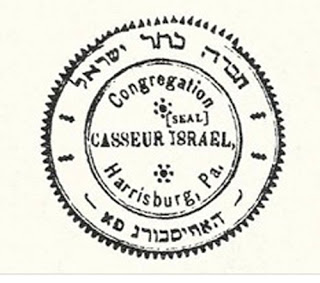
Although KI was chartered as ‘Casseur Israel’ in October of 1902, the Lithuanian founders and members of this new synagogue pronounced its name as ‘Kesher Israel’. This was a result of the manner in which their version of Sabesdiker Losn Yiddish affected their enunciation of the hissing and hushing sounds.[21] As a result of the way in which the congregation’s members pronounced their own synagogue’s name, local newspaper articles began referring to the synagogue as ‘Kesher Israel’ – as early as 1903 (just months after the congregation was founded).[22]
Though Rabbi Eliezer Silver arrived in Harrisburg in 1907, he was not officially hired by KI to serve as their spiritual leader until February 11, 1911.[23] In 1908, shortly after Rabbi E. Silver arrived in Harrisburg – but still three years before he would become KI’s first rabbi – the six-year-old congregation hired a local Yiddish printer to write up its constitution.[24] The following detail on the constitution’s cover page[25] is striking: Although the synagogue’s official seal used in 1903 listed the new congregation’s Hebrew name as חברה כתר ישראל (Keser Israel Congregation), KI’s 1908 constitution records the Hebrew name of the synagogue as חברה קשר ישראל (Kesher Israel Congregation).[26] This was a result of either:
A)   The printer – unfamiliar with the congregation’s official Hebrew name of  כתר ישראל – published a document in which he spelled the congregation’s Hebrew name true to the way its own members all pronounced it – קשר ישראל – Kesher Israel.
B)   The version of Lithuanian Yiddish spoken by so many of the congregation’s founders and members caused them to refer to the synagogue as ‘Kesher Israel’ from the day it was founded. Perhaps by 1908 a movement arose within KI to have its Hebrew name officially changed from כתר ישראל (Keser Israel) to קשר ישראל (Kesher Israel). This proposed switch would enable the young congregation to have complete consistency between; 1) the synagogue’s Hebrew and English names, 2) what all of KI’s founders and members already called it, and 3) the name used by all the newspapers when referring to the congregation.

When KI hired Rabbi Eliezer Silver as its rabbi in 1911, he accepted the pulpit of a synagogue whose Hebrew name had begun as כתר ישראל (Keser Israel), but for one reason or another, was now given the Hebrew name of קשר ישראל (Kesher Israel) in its official constitution. Rabbi E. Silver could live with the fact that everyone pronounced the congregation’s name as ‘Kesher Israel’ (and from what we have seen above, he most probably pronounced it that way as well) – and did not even mind if they spelled it that way in English. However, seeing the synagogue’s name spelled in Hebrew as קשר ישראל was too much for Rabbi E. Silver to bear. Having mastered Biblical and rabbinic literature, he clearly knew the negative connotations of the word קשר . He associated that word with conspiracies and rebellions – concepts which he strongly believed had no place in a Jewish house of prayer that was to be loyal to G-d and Jewish tradition. As such, Rabbi E. Silver insisted that KI’s official Hebrew name should revert back to כתר ישראל (Keser Israel). He insisted on this Hebrew name for the synagogue despite the fact that (he and) his fellow Lithuanian Jews pronounced the congregation’s name as ‘Kesher Israel’ – and would continue spelling it that way in English as well.[27]
Rabbi E. Silver’s efforts to ensure that KI would retain its original Hebrew name of כתר ישראל (Keser Israel) can be seen in two early projects of his.
A)      Upon his arrival in Harrisburg, Rabbi E. Silver instituted a Hevra Shas – wherein he studied the Talmud together with members of Harrisburg’s Jewish community each morning and evening.[28] Rabbi Silver’s Hevra Shas moved into KI’s facility after he became its rabbi in February of 1911.[29] A large hand painted sign proudly displaying the names of the dedicated members (and supporters) of that Talmud study group was created – and still hangs in one of KI’s offices. At the top of that sign, the following Hebrew words appear: בית הכנסת כתר ישראל חברה ש”ס – האריסבורג, פא.  (Keser Israel Synagogue Hevra Shas – Harrisburg, PA.).[30] The wording of KI’s name on that sign reflects Rabbi E. Silver’s goal of reclaiming כתר ישראל as the congregation’s official Hebrew name.

B)      In 1917, KI commissioned an artisan to create a special ‘Pinkus HaZahav’ or Golden Book. This incredibly large and heavy leather-bound volume (hand-written in beautiful Hebrew calligraphy) contains a brief history of the congregation.[31] The bulk of the volume consists of a ledger listing the names of those who had made significant pledges towards the new building KI would soon move into. [32] On the book’s front cover, the congregation’s name is written in Hebrew as חברה כתר ישראל. Like the Hevra Shas sign, the wording of KI’s name on its special Golden Book reflects Rabbi E. Silver’s goal of reclaiming כתר ישראל (Keser Israel) as the congregation’s official Hebrew name.[33]
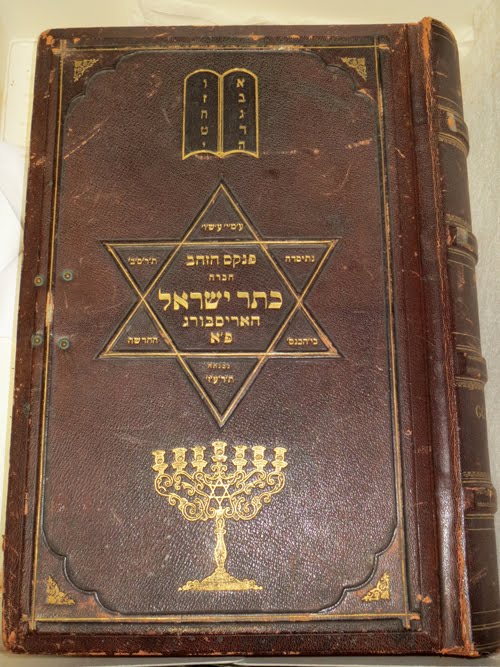
In addition to explaining Rabbi David L. Silver’s above-cited enigmatic account, I believe the puzzle of how a synagogue, with the Hebrew name of כתר ישראל (Keser Israel), ended up with the English name of ‘Kesher Israel’ has now been solved.
VI – Conclusion
Upon reflection I realize that the only time the membership of KI hears the congregation referred to as כתר ישראל (Keser Israel) is after the solemn Yizkor memorial prayers, which are recited during the holidays. At the conclusion of Yizkor, special collective Kel Maleh memorial prayers are recited on behalf of the deceased members and relatives of the congregation.[34]  Since my arrival in 2007, I listened closely as KI’s Cantor Seymour Rockoff would clearly enunciate the words קהילת כתר ישראל (Keser Israel Congregation) during that prayer – pronouncing the synagogue’s Hebrew name exactly as Rabbi Eliezer Silver would have wanted.
Following Cantor Rockoff’s sudden passing in the summer of 2015,[35] I recited those collective Kel Maleh prayers at KI this past Shemini Atzeret (5776). As I clearly pronounced the words קהילת כתר ישראל, I thought about all the history behind KI’s name. I also envisioned Rabbi Eliezer Silver grinning as he tipped his signature black silk top hat in my direction.
___________
רַבִּי שִׁמְעוֹן אוֹמֵר, שְׁלשָׁה כְתָרִים הֵם, כֶּתֶר תּוֹרָה וְכֶתֶר כְּהֻנָּה וְכֶתֶר מַלְכוּת, וְכֶתֶר שֵׁם טוֹב עוֹלֶה עַל גַּבֵּיהֶן.
Rabbi Shimon would say: There are three crowns – the crown of Torah, the crown of priesthood, and the crown of royalty – but the crown of a good name is the most valuable of them all.
(Pirkei Avot 4:13)

                 
Rabbi Eliezer Silver in his younger and older years.
[1] This article is dedicated to the memory of Cantor Seymour Rockoff – Harav Eliyahu Shalom ben Harav Chaim Shmuel, z”l. With his melodious voice and meticulous attention to the details of prayer, Cantor Rockoff greatly enhanced Kesher Israel Congregation’s services from 1986 – 2015.
[2] (1882-1968). For an excellent biography of Rabbi E. Silver, see Rakeffet-Rothkoff, Aaron. The Silver Era: Rabbi Eliezer Silver and His Generation. Jerusalem: Feldheim Publishers, 1981. This out-of-print book was republished by the Orthodox Union and Yeshiva University Presses in 2014.
[3] Yeshiva University placed an obituary for Rabbi D. Silver – one of its oldest rabbinic alumni – in The New York Times on July 11, 2001. It can be viewed online here.
[4] I am confident that the word Rabbi D. Silver used in the interview from which this account was excerpted was “Bogdim” and not “Bodim”. The term “Kesher Bogdim” means a band of traitors, and can be found in Maimonides’ Mishneh Torah Hilkhot Sanhedrin 2:14, Shulhan Arukh Hoshen Mishpat 3:4, and according to the Vilna Gaon (note 22 there) the expression is based on the term “Kesher Reshaim” – a band of evil-doers – used by the Talmud in BT Sanhedrin 26a.
[5] For examples where the word ‘Kesher’ is used in describing conspiracies in the Bible see: I Samuel 15:12, I Kings 16:20, II Kings 11:14, II Kings 12:21, II Kings 14:19, II Kings 15:15, II Kings 15:30, and II Kings 17:4.
[6] In his commentary to Judges 12:6, Rabbi Dovid Kimhi (1160 – 1235) notes that in his day, many in France were also unable to properly pronounce the hushing sound of the letter “Shin”.
[7] The region which Jews historically referred to as “Lithuania” or “Lita” included the territory of present-day BelarusLatvia, and Lithuania – and even parts of EstoniaPolandRussia, and Ukraine.
[8] See Turei Zahav note 30 to Shulhan Arukh Orah Haim 128:33
[9] Weinreich, Uriel. (1952). Sábesdiker Losn in Yiddish: A Problem of Linguistic Affinity. Word, 8, page 58. I thank Vilnius-based Professor Dovid Katz for making me aware of this important article.
[10] Ibid, page 70.
[11] While researching this topic, I took note of the fact that while Sabesdiker Losn was such a new concept to me, many Yeshiva graduates in their sixties whom I interacted with instantly recognized this phenomenon. Several shared with me fond memories of their older Lithuanian-born and educated teachers who would refer to ‘Rasi’ instead of ‘Rashi’. (For one such light-hearted published account see page 40 in Rakeffet-Rothkoff, Aaron. From Washington Avenue to Washington Street. Jerusalem: Gefen Publishing House / OU Press, 2011.) Why then was the concept of Sabesdiker Losn so new to me? I soon realized that in addition to Prof. Weinreich’s explanations (above) regarding the disappearance of Sabesdiker Losn, there was another factor which he never could have foreseen: the utter decimation of Lithuanian Jewry during the Holocaust. As a child who only began his Jewish day school education in the late 1970’s, I simply never had the chance to interact with authentic Lithuanian-born and educated teachers like many Yeshiva graduates a generation or two older than me had.  
[12] As such, this version of Lithuanian Yiddish might be described as “Shabeshdiker Loshn”. I thank Dr. Edward Portnoy of Rutgers University’s Department of Jewish Studies and YIVO’s Academic Advisor, as well as Isaac Bleaman – a doctoral student in the Department of Linguistics at New York University – for clarifying this important point for me.
[13] Peltz, Rakhmiel. (2008). The Sibilants of Northeastern Yiddish: A Study in Linguistic Variation. In Kiefer, Ulrike and Neumann, Robert and Herzog, Marvin and Sunshine, Andrew and Putschke, Wolfgang (eds.), EYDES (Evidence of Yiddish Documented in European Societies), 241-274. Berlin, New York: Walter de Gruyter – Max Niemeyer Verlag. Page 255.
[14] Peltz also notes (page 255) that some Lithuanian Jews even confused the hissing and hushing sounds within the same term / phrase. For example, some might refer to a house of study / prayer as the bešmedres instead of besmedraš. One rabbi I communicated with told me he remembered hearing a highly-regarded Lithuanian-born and educated rabbi refer to his NY study hall as the bešmedres.
[15] For more information on Rabbi E. Silver’s work with the Vaad Hatzala, see Rakeffet-Rothkoff (ibid.) pages 186-250.
[16] Bunim, Amos. A Fire in His Soul: Irving M. Bunim, 1901-1980, the Man and His Impact on American Orthodox Jewry. Jerusalem: Feldheim Publishers, 1989. Pages 166-7.
[17] The story concludes with Senator Taft eventually being reached in Washington, DC. After vouching for Rabbi Silver, the rabbi was released and allowed to continue his mission on behalf of the Vaad Hatzala.
[18] Rakeffet-Rothkoff (ibid.) page 43.
[19] In addition, Rabbi Hershel Schachter of Yeshiva University’s Rabbi Isaac Elchanan Theological Seminary related to me that he remembers hearing Rabbi Eliezer Silver pronounce Cincinnati – the city where he served as rabbi for close to 40 years – as “Shinshinati”.
[20] Pictures of this document and its accompanying stamp can be seen in KI’s 75th Anniversary Yearbook (1977) pages 5 – 6.
[21] i.e. they pronounced the word ‘Sibboleth’ as ‘Shibboleth’. In suggesting an explanation for KI’s name, someone already alluded to this point on the Shul’s Wikepedia page (here) with the following sentence: “One explanation is that the “s” and “sh” sounds were conflated in the Lithuanian Yiddish pronunciation of the time.” This was attributed to the following sentence on YIVO’s website (here):” . . . much traditional Lithuanian Yiddish collapses the hushing and hissing consonants (“confusion of sh and s sounds”), a feature most Litvaks have tried to overcome in recent generations.” See footnote 12.
[22] See for example, (1903, April 2). Jewish Synagogue Gets a Cemetery. Harrisburg Daily Independent, page 1, and (1903, April 9). Passover Services. HarrisburgTelegraph, page 3.
[23] See KI’s 75th Anniversary Yearbook (1977), page 4, and Rakeffet-Rothkoff (ibid.) page 53 which record that from 1907 – 1911, Rabbi E. Silver served the entire Orthodox Jewish community of Harrisburg – and was not employed by any one congregation exclusively.
[24] Interestingly, like Rabbi E. Silver, it seems that KI’s Lithuanian founders were also from the Kovno region. One finds the directive to follow the customs of Kovno at least twice in KI’s constitution (see KI constitution pages 8 and 22).
[25] A picture of this constitution’s cover page appears on page 5 of KI’s 75th Anniversary Yearbook. I thank Rabbi Ahron Silver (Rabbi David L. Silver’s son) of Jerusalem, Israel for e-mailing me photos he took of this important historical document. I also thank KI’s Dr. Sandy Silverstein and Dr. Mark Cohen for helping me obtain an original copy of this constitution.
[26] The congregation is referred to as קשר ישראל several times within the constitution as well – but never as  כתר ישראל.
[27] It seems that while Rabbi Eliezer Silver was quite concerned with the congregation’s Hebrew name, he did not concern himself in ensuring the congregation’s English name would be firmly registered as ‘Keser Israel’. I would suggest that the spelling of the synagogue’s English name was of little or no concern to Rabbi E. Silver. After all, it was the Hebrew word קשר which conjured up all sorts of negative connotations in his mind – not the English transliteration of that word.
[28] Rakeffet-Rothkoff (ibid.) page 54, and KI’s 75th Anniversary Yearbook (1977), page 4.
[29] Kesher Israel’s 1949 Dedication Book page 11. Interestingly, this book was published the same year it dedicated its new building. Just like the congregation’s new cornerstone, the Dedication Book records the Hebrew name of KI as  כתר ישראל, and its English name as ‘Kesher Israel Synagogue’.
[30] Just beneath the words:בית הכנסת כתר ישראל חברה ש”ס – האריסבורג, פא.  (Keser Israel Synagogue Hevra Shas – Harrisburg, PA.) on that sign, appear the words:  נתיסדה ע”י הרב מהר”א זילבער שליט”א, זאת חנוכה  התרס”ח (Established by the rabbi our teacher Rabbi Eliezer Silver, may he live for many good and long days, the 8th day of Hanukah, 5668). That date corresponds to December 8, 1907. While the Hevra Shas may have begun studying the Talmud together in Harrisburg on that date, KI would not have created this sign – which claimed the Hevra Shas as its own – until some time after February of 1911 when Rabbi E. Silver officially became KI’s rabbi.
[31] For a nice write-up on this special book, see here.
[32] Though the book contains several hundred pages, only the first 16 were ever used.
[33] On the book’s back cover, KI’s name is written in English as ‘Keser Israel Congregation’. That is the only example I could find where KI’s English name was ever officially recorded that way.
[34] While only those who have lost a parent remain in the sanctuary during the actual recitation of Yizkor, the entire congregation gathers again in KI’s sanctuary for the collective Kel Maleh prayers once Yizkor has been completed.
[35] For more on Cantor Rockoff, see here.


A Picture is Worth a Thousand Questions – Part II

A PICTURE IS WORTH A THOUSAND QUESTIONS – PART II (Part I)
by Eli Genauer

The classic Vilna Shas, published by the firm of the Widow and Brothers Romm, was completed during the years 1880-86. It was the most complete and accurate edition of the Talmud printed until that time, containing many new Peirushim and using new sources to ensure the accuracy of text. This fact was not lost on the chief editor Shmuel Shraga Feiginsohn as he states in the famous Achris Davar at the end of Maseches Nidah.

“We did not print a Shas like every other Shas,… by copying what came before us like a monkey. We wanted to create something entirely new and to illuminate it with an entirely new light”

My purpose here is to concentrate on one small Sugya in Shas , the commentary of Rashi on it, with the accompanying diagrams in the Vilna edition. I will then show diagrams from some previous editions of the Talmud that are more illustrative and more accurate. Perhaps the reader will then conclude that there were some portions of previous editions that the Vilna Shas should have copied rather than the one that it did.

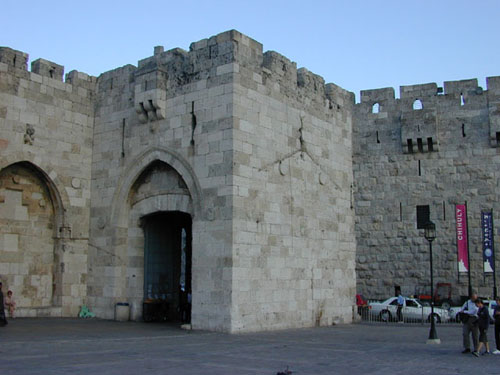
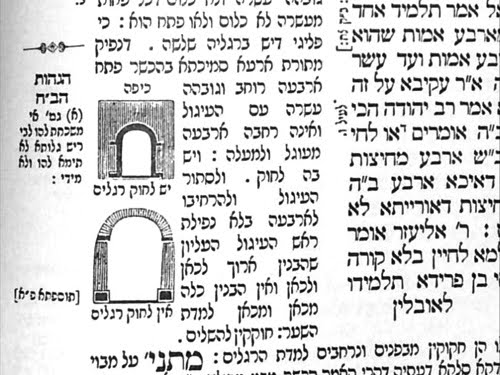
The Gemara on Yoma 11b discusses doorways that are or not required to have a Mezuzah. It then discusses one type of doorway for which there is a Machlokes between Rav Meier and the Rabbanan and that is the so called Shaar Madai. As Rashi there explains it, a Shaar Madai is a gate in the wall of a city which has within it an arched doorway (Kipah) and was used commonly in Madai. For our own purposes, think of the Shaar Yafo which is substantive structure in itself and within it is the actual doorway into the old city.

As a bit of background, for a doorway to require a Mezuza it needs to have three elements. It has to be at least four Tefachim wide on the bottom and the top, it’s side posts ( Raglayim) have to be ten tefachim high, and it has to have a lintel on top. The Gemara states that the only case of Shaar HaMadia where there is disagreement in Halacha between Rav Meier and the Rabbanan is this: The doorway starts with a width of 4 Tefachim on the bottom, each side of the doorway ( Regel) rises up straight at least 3 Tefachim so that at that point there are still 4 Tefachim between them, but then the doorway starts curving inwards, rising on each side to a height of 10 Tefachim. However, at that point, there is no longer 4 Tefachim in width between the two sides. Rav Meier says that if the gate structure( the Chomah) itself is at least 4 Tefachim wide at a height of at least 10 Tefachim, we apply the concept of “Chokekin L’Hashlim” to this case. Chokekin L’Hashlim is a Halachic concept which literally means that we “excavate to complete ( the required measurement)”.Rav Meier says that if the walls surrounding the archway are thick enough that had they been excavated, the doorway could be made 4 Tefachim wide for a height of ten Tefachim, then the doorway requires a Mezuzah. The Rabbanan disagree and say that even this type of Shaar Madai does not require a Mezuzah.

Let’s go through the Rashi: “V’Yaish B’Ragleha Shlosha” “The sides of the doorway rise up ( at least) three (Tefachim)”….still maintaining a width between them of four Tefachim….but the width between them is not four Tefachim at the height of ten Tefachim…because before the sides rise to the height of ten Tefachim, they narrow to a width of less than four Tefachim…but you can expand the emptied out space contained in the encompassing structure ( The Chomah) to the width on the bottom ( 4 Tefachim)… for the gate structure does not parallel the inner doorway like this (“Kazeh”)…rather the wall ( meaning the gate structure)is longer on top than the doorway opening like this (“Kazeh”)

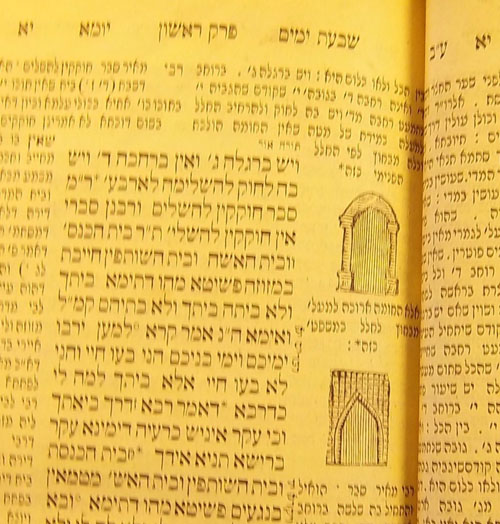
There are very nice diagrams of the two possibilities mentioned by Rashi in the 1829-1831 edition of the Shas printed in Prague by Moshe Yisrael Landau, grandson of the Nodah B’Yehudah.

It is very clear from the diagrams that the first possibility mentioned by Rashi ( the one that is not referred to in the Gemara) is where both the doorway and gate structure curve inwards so that neither of them has a width of 4 Tefachim on top. The actual case discussed by the Gemara ( the second possibility of Rashi) is where the doorway curves in to be less than four Tefachim on top, but the gate structure itself retains at least the width of four Tefachim on top and is also straight on top.

Similar diagrams appear in the Lemberg small and large folio editions of 1862, and the Vienna edition of 1841. Here is what the small folio version of the Lemberg edition looks like.

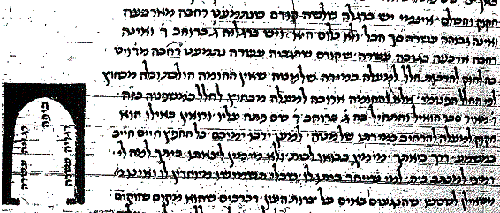
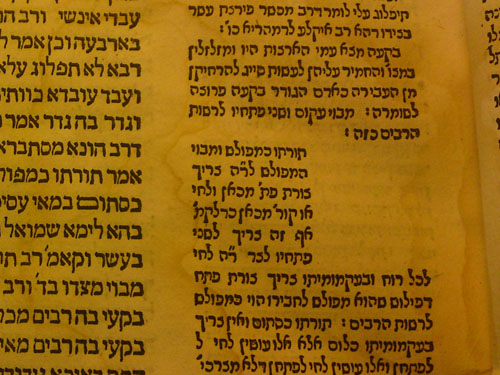
Before we take a look at the diagrams presented in the Vilna Shas, let us look at these diagrams in much earlier editions so we can trace their development. The only manuscript copy of Rashi that I was able to obtain (courtesy of Dr. Ezra Chwat at Hebrew University) looks like this.

The first thing you notice is that this manuscript does not have the word “Kazeh” after the first case, rather just referring to the second case. The illustration for the second case shows a curved doorway within a rectangular structure, exactly the way we have seen it in the Prague, Vienna and Lemberg editions. This illustration also seems to indicate that the sides of the inner doorway must be at least 10 Tefachim high before curving inwards. The words “Ragleha Asarah” are inside the doorway structure making it appear that they apply to the sides of the doorway being ten Tefachim before they curve inwards. This seems to be the case where even the Rabbanan agree that a Mezuzuah is needed. The diagram goes against Rashi’s Lashon here which is “She”kodem She’Higbiah Asarah,Nisma’et Rechava Mi’Daled”.

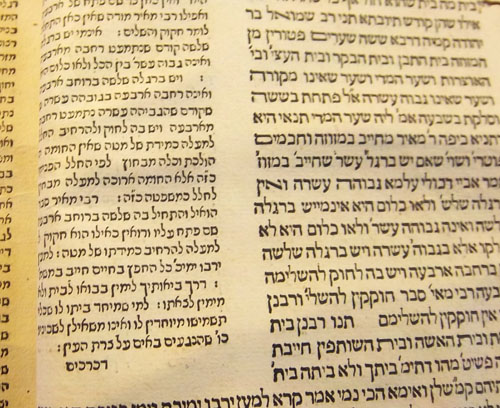
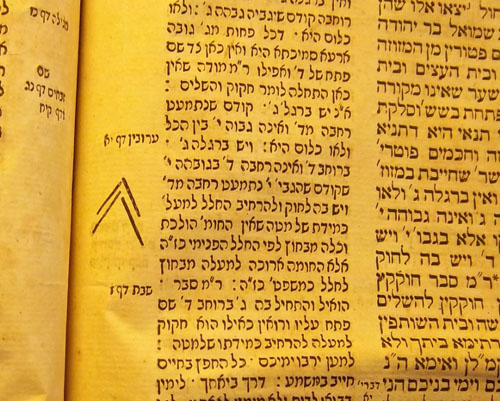
Advancing to the printed edition, we first look at Bomberg 1521.

The Bomberg scholars must have had a Rashi manuscript which had the word “Kazeh” after both the first and second case in Rashi. However, they did not leave any room for it to be filled in by hand as in other Masechtos which have missing drawings. Here is an example of such a situation in the Bomberg Eiruvin.

Moving forward I did not find these diagrams from Yoma 11b in the Constantinople 1585 edition, the Frankfurt on Oder 1698 edition ( even though it has the diagrams from Eiruvin ), or the Amsterdam 1740 edition. I did find fairly accurate diagrams in an Amsterdam 1714 edition but I believe they were drawn in.

The first edition I found these printed diagrams in was Amsterdam 1743 from the Proops printers. Here is what it looks like.

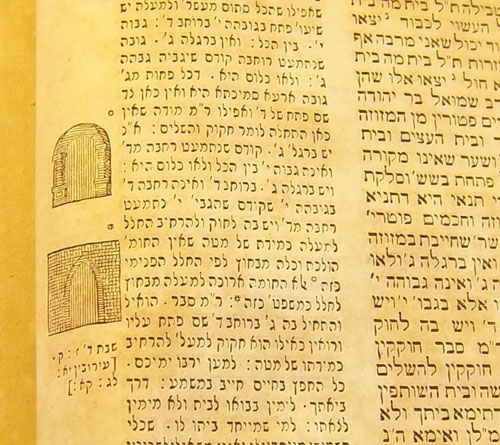
I did not find this diagram ( maybe it is two diagrams?) very helpful in understanding what Rashi meant when he said “Kazeh”. The diagram seems almost humorous to us, but imagine how many eyes studied this diagram and tried to make sense of it.

As mentioned before, by 1831, there were very helpful diagrams in editions printed in Prague, Vienna and Lemberg. The same cannot be said of the Zhitomir edition of 1864 which looks like this.

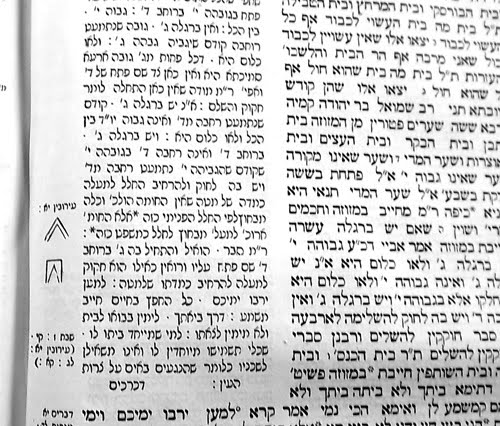
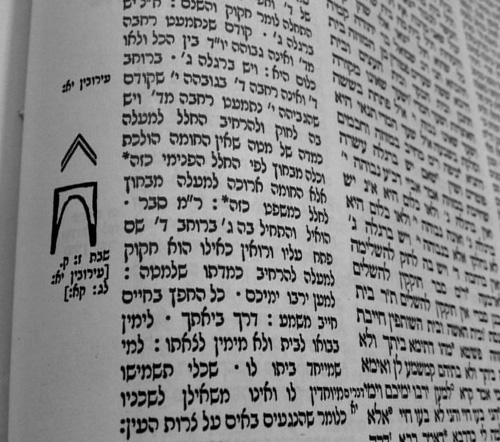
The first diagram is not nearly as accurate as the one in the previously mentioned editions. It mainly tries to show that the structure of the gate parallels the doorway by “curving” inwards. The second diagram which resembles a tooth, shows the doorway narrowing as it extends upwards with the gate structure maintaining its rectangular shape. My opinion is if a Rashi says Kazeh, the diagram should be as helpful as possible. No one expects a sophisticated illustration but it should be something that clearly shows what Rashi meant. In this case, I think the diagram should look like a doorway within a gate or walled structure.

We finally get to the Vilna Shas. The editors of this Shas clearly had the Vienna, Prague and Lemberg editions at their disposal. They knew what these diagrams could look like. Yet their diagrams look very much like the Zhitomir edition, with a little improvement on the second diagram.

It is possible they did not have the technology to replicate the Prague 1831 edition but that seems unlikely, because in a parallel Sugya in Eiruvin 11b they have diagrams that look like this.

Maybe they had a Rashi manuscript that made the first diagram look like this ^. But even so, I think they should have tried to make things as clear as possible and the two diagrams they chose just do not do that.

Perhaps the ultimate irony in this whole Sugya is that not only may the diagrams be incorrect, but even the term “Shaar Madai” may be incorrect. The Rashash notes that in K’sav Ashuris, a Mem and a Tes look similar, and because of a Ta’us Soferim, the term Madai was used instead of the correct “Shaar Taddi”, which was a gate on the Har Habayis.