This High Holidays: Are we Praying to be Raised or Praying to be Lowered?

This High Holidays:
Are we Praying to be Raised or Praying to be Lowered?

Yaakov Jaffe

The high note of the Yamim Noraim service, both literally and figuratively, growing up, was the two-word phrase “mi yarum,” “who will be raised,” halfway through the U-Netaneh Tokef piyyut. These two words proceed the congregation’s cry of the now-anthem of the day “Repentance, prayer, charity can remove[1] the evil of[2] the decree,” and the two-word phrase carries a special intensity.[3] “Who will be raised” ought to carry a special message for Rosh Hashanah and Yom Kippur, [4] although what that message might be requires special consideration.

For the first two paragraphs of this piyyut, the tension builds, leading up to the two words “who will be raised.” The speaker considers the frailty of humanity, and the gravity of the judgment that takes place on the High Holidays. Said tension reaches its climax through a long list of potential passings ending with “mi yarum,” ready to be released with the congregation’s reply. Using word-painting, many Shliach Tzibbur will ominously lower his voice at the words “mi yishafel,” “who will be lowered,” and then raise it both in pitch and in amplification triumphantly asserting “mi yarum,” “who will be raised,” the preferred outcome which ends the paragraph.

Yet, one can ask whether being raised is really the preferred outcome. Do we really pray to be raised and achieve a position of more prominence, power, or dominance instead of being lowered? Inspecting the prayer at length will help us understand the meaning of these words, and whether being raised or lowered is the better result. The question can be answered on two different levels – both investigating what the original author intended, and also what the individual reciting the prayer in synagogue ought to feel today.

Key to answering this question is the unusual order of four words in the center of U-Netaneh Tokef, “who shall become poor and who shall become wealthy; who will be lowered and who will be raised.”  Not all versions of the piyyut feature this order, and understanding the thinking behind the order is crucial to understanding which of those four outcomes we aspire towards and which we prefer to avoid.  Inspection of the piyyut as a whole is vital to understand how the individual at prayer arrives at these key words, and so a brief introduction to U-Netaneh Tokef follows below.

A Piyyut of Human Mortality and Divine Magnificence

U-Netaneh Tokef is of uncertain origin, found in the standard liturgy of today and also as far back as the Cairo Geniza.[5] Serving as an introduction to Kedushah,[6] it consists of four paragraphs, and each of the four find a different way to contrast human mortality and Divine magnificence. For example, the third paragraph contrasts the ephemerality of humanity with God (“And you are, He, King, Living and Everlasting).[7] The fourth paragraph lists many great praises of the name of Hashem who has no limit and no end. Thus, the piyyut is more a praise or description of God, than it is a prayer to God; we ask little from Hashem in these words, mostly describing him, as is fitting for a Siluk piyyut and the start of kedusha.

A dramatic first paragraph describes the day of judgement,[8] comparing humanity to soldiers or sheep, where God determines the decree of each creature, to life or to death.[9] God is judge, arguer, knower, witness, scribe, sealer, counter – without any assistant or rival. Both the shepherd and general determine which of their flock and troop would die, without taking appeals from specific soldiers or sheep. The general and shepherd sometimes might not even have any deep, thoughtful criteria who lives and who dies.[10] In contrast, the profound, novel idea of the high holidays, according to this piyyut, is that Hashem is different in giving the Jew on the high holidays the capacity to change the decree from the negative side of the ledger to the positive side through a direct appeal for a change. The power of the piyyut is how it builds to create the concept of an awesome God, with scurrying fearful angels beside Him,[11] who has full, unchallenged, unappealable control over judgement, only to then later break the model and show that reprentance and prayer provides an alternative option where humanity can change the decree.

The first paragraph is replete with allusions to Biblical verses and to Midrashim that make this core point,[12] using meter and rhythm to build tension. The paragraph consists of 26 phrases, many of which operate as pairs. Some are rhyming pairs (hayom-ayom, malchutekha-kisekha, nishkahot-zichronot, yitaka-yishama, yeichafeizun-yocheizun, edro-shivto), while other pairs use using Biblical Parallelism, and share the same content twice in different words (checking his flock-passing under the rod, cut the endpoint for every creature-inscribe the decree of their judgment, the day of judgment has come-to count all the legions of Heaven in judgment). Everyone’s signature appears in the book of recollections, attesting to the truth of what has happened (Sifri to Devarim 32:4 based on Job 37:7). The book miraculously is even read on its own (recalling Megilah 15b’s interpretation of Esther 6:1). The paragraph ends with three verbs describing God meeting out judgment: counting and measuring each creature, cutting the end for every creation, and then inscribing or writing their decree.

A Dozen Pairs of Life and Death Outcomes

The second paragraph reviews a series of life outcomes in pairs, culminating in the question of who will be raised and who will be lowered.  It is important to recognize that in general, the more negative outcome appears second. This pattern suggests that being raised, second in its pair, might be the more negative of the two outcomes.

The second paragraph begins with three lines that set the stage for this somber section: how many will be die or be born,[13] who will live or die, and whether it will be in the proper time.[14] The second and third of these three lines contain each a pair of outcomes beginning with “mi.” Recalling the paradigm of troops and sheep, the commander or shepherd decides which of the group lives and which dies – not exactly judging each individual on his or her own, just deciding how many will live and how many will die. This introduction is followed by five pairs of types of deaths, with the more negative listed second:

Who by water and who by fire” [water=strangulation; fire is worse, Sanhedrin 37b][15]
Who by sword and by wild animal.” [Animal=stoning is worse, Sanhedrin 37b, Eicha 4:9]
Who by famine and who by thirst (dehydration).” [Thirst is worse, Rashi Bamidbar 20:3]
Who by earthquake and who by plague” [Protracted, painful death of plague is worse]
Who by strangulation and who by stoning” [Stoning is worse, Sanhedrin 49b)

The paragraph ends with five pairs of outcomes, with a more positive outcome juxtaposed with a negative outcome. Here, again, the inferior outcome typically comes second – at least in older versions of the piyyut. Below is a translation of the five pairs, using the verbiage of most Mahzorim but with the negative outcome appearing last, which is how they appear in some Mahzorim.16

Who shall rest and who will move around[17]
Who shall be quieted and who will be torn[18]
Who shall be made serene and who will be rebuked[19]
Who shall be made rich and who shall be made poor[20]
Who shall be raised and who shall be lowered[21]

The second paragraph, in sum, is a litany of a dozen possible outcomes, many of them negative. The listener feels the tension build, waiting for it to be released through the cathartic chant “repentance, prayer, and charity.” One of the numerous bad outcomes seems to be being lowered, and thus we hope instead to be raised; the negative outcome, being lowered, appears last.

Reversing the Last Pair of Outcomes

It is common practice today to reverse the final two outcomes, “raised” and “lowered” to result in a new line “who shall be lowered and who shall be raised.” Some also reverse the penultimate pair, rich and poor.[22] Why reverse the pair and end with what appears to be the positive conclusion and not the negative one? Two answers present themselves, a conventional answer, presented in the paragraphs that follow, and a more speculative answer which will be presented in the following sections. The conventional answer maintains that being “raised” is indeed the preferred outcome, while the more speculative suggestion wonders if being “lowered” is the better outcome.

It is ancient Jewish practice to end units of liturgy with a positive conclusion. Many of the most sad or pessimistic liturgical prayers, including the Kinot and Slichot, often end with a final line that is positive. By rule, the first six Aliyot of Torah reading must end with something positive and readings of the Haftarah, Megilot, and the recitation some chapters of Tehillim (such as Chapter 94 on Wednesdays) are often tweaked to ensure the endings are positive.

It is therefore unsurprising to find that in most congregations the final pair or two pairs in the second paragraph, are each reversed, ostensibly so the paragraph ends positively, at a high note with a positive outcome. Consequently, there are ten pairs where the worst outcome is second, and then in the final one or two pairs, the order is reversed, and the worst outcome is first. Musically, ending positively also allows the prayer leader to end this central moment of the prayers with a dramatic, musical flourish, often not at the cadence point but an octave or two higher than it, thereby readying the congregation to respond.

Yet, in the next section, we speculate whether there is an an alternative reason for reversing the order of the final line prayer, which preserves the pattern of the rest of the paragraph, with the negative outcome appearing second. In this alternative, later publishers argue that the Jew actually prefers the outcome of being lowered before God instead of being raised as a pseudo-rival to Him, so the reversal places the negative choice last as it has been across the entire piyyut: “Who shall be lowered” – a good outcome – instead of “and who shall be raised,” a surely negative result.

This question can be asked on multiple levels:

  1. What the original author think when he composed the pair raised/lowered?
  2. What was the thinking of the publishers or editors who reversed the order and put being lowered first and raised second?
  3. And beyond the history, what should the individual at prayer think when reading these words on the high holidays?

Biblical and Mishnaic Ethical Teachings about being Raised or Lowered

The book of Yeshayahu features a three-chapter prophecy about the greatness of God and the misplaced arrogance of humanity.  Many themes of this chapter are apropos of the high holidays, and indeed Isaiah 5:16 is used to end the blessing of God’s holiness on the high holidays, moments after the conclusion of U-Netaneh Tokef: “And Hashem, Master of Legions, became high through judgment, and the holy God become holy through Tzedakah.”  The section of Yeshayahu commands humanity to change their haughty attitude and lower themselves in the presence of the Almighty.  Indeed, the prior verse (5:15) reads “and a human being is let down and a person is lowered (vayishpal), and the eyes of the high ones shall be lowered (tishpalnah).”  Twice in the verse, the prophet teaches that humanity should conduct itself in a posture of being lowered, ceding the high, exalted space for their Creator.

The root to be lowered, sh-p-l appears fifty-three times in the Tanach in verb and adjective form, in both Biblical Hebrew and Biblical Aramaic; two of the fifty-three appear in the above cited verse. It also can be used as a noun, although with slightly different meaning. The word is often contrasted with height, to be “gavoha,” but at times is also contrasted with being raised, and the root r-v-m.

The plurality of the fifty-three times appears in the Book of Isaiah. A lengthy prophecy at the start of the book is focuses specifically on the idea of lowering the raised, making the “rum” into “shafel” (Isaiah 2:9, 11, 12, 17).[23] The thrust of this prophecy is that a human being should strive to be lowly, not to be haughty and raised, and that any person who is not yet lowly should strive to become so. The chapter makes no mention of any other individuals, righteous or not, who should be raised, because that position is reserved for God. No human should be raised, and being raised is synonymous with sin. This prophecy doesn’t read as a typical description of sin and punishment, where the wicked are lowered for their sins, it reads as amoral argument that all of humanity should be willing to be lowered.

The Haftarah for the morning of Yom Kippur (57:15) is one of two prophecies (also 32:19) where God looks favorably towards those who have already acquired the characteristic of being lowly. Again, being lowly is not a negative social or economic condition to be ameliorated, but a moral condition to be pursued. Some books of the Bible seem to focus on the lowering of the haughty (Isaiah 25:11-12) or the undeservedly raised “ramim” (Isaiah 10:33, 26:5), which leaves open the unstated possibility that certain meritorious individuals do deserve to be raised.  God will occasionally lower something as a punishment (13:11, 29:4, 57:5) or for pragmatic reasons (40:4), but the citations in the Book of Yeshayahu and in the parts of the book that find echoes in the high holiday prayer service, focus exclusively on God lowering humanity to the proper register, without raising anyone in response. 

The ethical books of the Bible convey the same sense. Proverbs 16:19 and 29:23 both recommend that an individual be of lowly spirit, “shafal ru`ach,” rejecting being of a high spirit. Psalms 75:6-8 explains that a human being should not strive to be raised, because God determines the lowly and raised. Psalms 138:6 says that God is raised and looks positively at the lowly. This idea is also echoed in Avot in at least three occasions (4:4, 4:10, 5:19). It would be odd to have intention on Yom Kippur to become something that the ethical teachings recommend against![24] The role models of Judaism are known for their humility and how they lower themselves (see Bamidbar 12:3, Rashi Devarim 32:44 “hishpil atzmo”), and we should act in the same way.

Most people at prayer argue for the reverse, that the author intended “raised” as the positive outcome and “lowered” as the negative outcome. The pair of wealthy/poor and raised/lowered appear in the exact same order in Chanah’s prayer, the Haftarah of Rosh Hashanah (2:7) “Hashem brings poverty and makes wealthy, lowers even raises;” in this context wealth and being raised are both positive outcomes. And there are a minority of Biblical passages which value raising the lowly and set lowliness as a situation to be avoided (Jeremiah 13:18, Ezekiel 17:6, 14, 24; Ezekiel 29:14-15, Malachi 2:9, Psalms 147:6, Job 5:11, Daniel 7:24). With evidence on both sides, we cannot know for certain what the original author intended, or what the editor who swapped the order intended. Still, a majority of Biblical verses, those cited above along with numerous other ones (Shmuel 2:6:22, 2:22:28=Psalms 18:28 [lower the raised], Ezekiel 21:31, Job 22:29, 40:11, Daniel 4:34, 5:19-22,), convey the idea that it is better to be lowly, not to be raised.[25]

Hints in the Piyyut: Supporting Being Lowered

The general sense of the piyyut gives multiple clues that the correct disposition for a human being is lowliness. The entire third paragraph contrasts between God’s greatness and man’s insignificant lowness: flesh and blood which will end as dust (Genesis 3:19), compared to broken pottery (Bereishit Rabbi Loc. Cit. [14:7]), dry grass & wilting sprout (Yeshauahu 40:7), passing shade (Psalms 144:4), ceasing cloud (Job 7:9), blowing breeze (Yeshayahu 40:7), flying dust (Isaiah 5:24), and a dream that flies away (Job 20:8). Human beings shouldn’t be raised, they should recognize how small they are compared to God!

Even the majestic and grand first paragraph still hints that even God’s own true nature is also defined not through His loftiness, but through His modesty. When describing the commotion among the angels on the day of judgment, God’s essence is not captured through thunder, lighting or earthquake, but through the thin, soft voice that Elijah heard (Kings 1:19:11-12). This concept of God’s greatness is implicit in the piyyut’s focus less on the power of God, and more on God’s unwavering truth. The word truth appears three times in the piyyut (twice dramatically beginning sentences); power and exaltedness are less critical than softness, honesty, consistency, and truth.[26]

Though the end of piyyut does mention briefly the unlimitedness[27] of God’s years and our inability to estimate the greatness of God’s chariots, the ecstatic praises that end the poem are also focused more on God’s honesty, kindness, and forbearance than on His power. Thus, though at the start of the piyyut, God is contrasted with humanity in such his way that His all-powerful being leads to fear, at the end, God is contrasted with humanity in a way that leads to optimism; Hashem is unique through a kindness and calmness that makes repentance possible. God’s nature, name, or “Sheim” doesn’t change – in contrast to temporary human beings, and therefore one has a guarantee that God is “slow to anger and easy to be appeased” (Avot 5:11), never wishing for the sinner to die but instead waiting each day for him to repent (Ezekiel 18:22, 32).[28]

Being raised and exalted is of limited value in the logic of this piyyut, but being soft, humble, and truthful is of a significant value. If that is what we expect from God, should we expect any less from people?

Kavanah and Tefilah

On the high holidays, the Jew will recite pages and hours of prayers, inspired and motivated by specific lines, tunes, or moments, but the prayer experience often deprives us of considering the larger outlook or theology of particular prayers. One reciting any piyyut ideally must contend with the original intent of the original author, along with any possible editors that may have exchanged the order of any of the phrases. Yet, even if the original editor had intended one reading, the individual reciting the prayer must select their own an interpretation for the prayers we recite. In this case, do we hope hoping for a year where we are raised, becoming “a head and not a tail” (Rosh Hashanah meal liturgy, based on Devarim 28:13), or a year where we are lucky to develop a lowly affect and personality and to avoid haughty self-concept.

U-Netaneh Tokef ends with the words “our names, you called with Your name” conveying that we have a close relationship with God, representing Him in such a way.[29] In a song that praises God for his patient choice to delay punishment and allow for repentance, eschewing the role of indifferent general and shepherd and instead enwrapping in the cloak of justice and sitting on the throne of truth – should we not try to be the same way? And in that vein, perhaps we should pray this year to have the honor to be inspired to successfully lower ourselves, and to avoid self-aggrandizement and self-raising.

[1] A note on the grammar and word choice: “Remove,” is in the Hebrew “ma`avirin,” using the Hiphil form of the root `-v-r, which literally means to move to the other side, but here means to remove entirely. It is sometimes taken figuratively to mean “to remove” in the Tanach, such as in Esther 8:3. See later note about the repeated use of this root in the piyyut.
[2] The phrase “evil of the decree,” implies that some part of the decree might not be evil and ought to remain. Earlier sources in the Jewish tradition talk instead about removing a “decree” entirely, not specifically “the evil of the decree,” although later sources, particularly the ones composed after U-Netaneh Tokef use the phrase “evil of the decree” as well.

Our text of Avinu Malkeinu also uses this construction, “evil of the decree,” but Rav Amram Gaon’s earlier version of Avinu Malkeinu does not have it, and so it is possible that our Avinu Malkeinu was changed to match this piyyut, or that this piyyut follows a different version of Avinu Malkeinu, as it is not entirely clear which of these tefilot was written first and thus which might have influenced the other – or if they are both influenced by a third source.
[3] Rosh Hashanah 16b lists four things that can remove the negative outcomes of the decree: charity, prayer, changing the name, and changing one’s actions (repentance); these are three of the four.
[4] Though the piyyut mentions both Yom Kippur and Rosh Ha-Shanah, its focus is on Rosh Ha-Shanah, as it includes the words “And write their decree” which reflects the events of the Day of Judgment more than the Day of Atonement when the decree is sealed (Rosh Hashanah 16b). The piyyut also walks through the four parts of the internal blessings of the Rosh Ha-Shanah service (Rosh Hashanah 32a) in order: (1) “And we shall relate the severity of the holiness of the day”….. (2) “And through this (or, on it) your Kingdom shall be elevated”…. (3) “And you will open the book of Remembrance and it shall be read on its own,” (4) “And it shall (be) blown with a great Shofar” [Isaiah 27:13, about the redemptive era].
[5] Isaac of Viena (Ohr Zarua`276), citing Ephraim of Bonn, attributes the Piyut to Amnon of Mainz. As to whether he was the original author or transmitter of the prayer, see Avraham Frankel, “The Historical figure of Rabbi Amnon of Mainz and the development of the Piyyut ‘U-Netaneh Tokef’ in Italy, Germany, and France,” Tzion (2002), 125-132, and sources cited therein.
[6] As a Siluk piyyut, the words “and we shall pronounce Kedusha to you” precedes the beginning of U-Netaneh Tokef. As it functions as a transition to Kedusha, the end of U-Netaneh Tokef asks G-d to sanctify his name, just as the angels and people do using the words of Kedusha.
[7] G-d is called “living and everlasting” in Aramaic in Daniel 6:27.
[8] As noted above, the piyyut refers to the annual day of judgment on Rosh Hashanah, although Wolf Heidenheim, Mahzor Rosh Ha-Shanah (Rodelheim, 1880), 77a was of that view that it refers to the day of judgment at the end of days, instead.
[9] Ranon Katzuf, “U-Netaneh Tokef” Daf Shevui:Bar Ilan 985 (2012), discusses these two elements of the Piyut at length. Rosh Hashanah 16a already established that humanity is judged “Kivnei Maron,” although the meaning of that phrase is unclear. The Talmud (18a) gives a variety of explanations for the phrase, including sheep [who are counted when being tithed (Rashi)], and soldiers [who are counted going out to war (Rashi)].

The first explanation, sheep, takes “Maron” to be Hebrew, cognate with Aramaic “imrana,” while the second explanation, soldiers, believes “Maron” is a loan word from the related Latin word “numerus” which refers to an army formation. The first explanation also takes its cue from the verb “to pass,” found by the animal tithe.

The author of U-Netaneh Tokef clearly has both meanings of the phrase in mind. Before using the phrase of the Mishnah, that all creatures pass before G-d “ki-vnei maron,” the piyyut refers to how the troop of heaven, “tzva marom,” is judged, signaling the second meaning of the phrase, referring to soldiers. Just after using the key phrase “ki-vnei maron,” the author compares G-d’s actions to a shepherd checking his flock (Yechezkel 34:12), passing them under his rod (Leviticus 27:32, Jeremiah 33:13). Thus, both meanings are intended and signaled, one before the use of the ambivalent phrase and one just after.

The meaning of the Aramaic “imrana” is, itself, also unclear. Rashi takes it to be equivalent to “imra,” meaning lamb, in Aramaic, although the words are slightly different from each other.
[10] Katzuf notes that in the case of the animal tithe, which according to some is determined by Rosh Hashanah (Rosh Hashanah 2a), 1 out of every 10 sheep is sentenced to be sacrificed. In the case of the Roman decimatio, 1 out of every 10 soldiers is similarly sentenced to death in punishment for a collective crime. In both cases, 1 out of 10 is killed, but their death is not the result of a unique, specific judgment of each specific subject, rather a certain percentage of the group dies, and the selection of specific ones are arbitrary. Vayikra 27:33 even requires that the shepherd not compare between good and bad when deciding who will die. In that vein, sometimes, the death of human individuals over the course of a year might seem to be similarly arbitrary.

Alternatively, one could distinguish and say that soldiers are evaluated based on their fitness are past record of performance, while specifically sheep are judged as a group and without an eye to specific members of the group as individuals. In any event, the piyyut begins by implying humanity is judged in the same way, before later providing the alternative account, that repentance allows us to be judged uniquely based on our own accomplishments in the past year.[
[11] A note on the Biblical sources for the wording: “u-malachim yeichapheizun,” “and angels will hurry,” is based on Psalms 104:7, where the verb appears although the subject of the verb is unclear; it probably refers to the waters but could be taken to refer to angels which appeared earlier in verse 4. The line ends “ve-chil u-re’adah yocheizun,” fear and dread will grab them,” with a rhyming verb and similar vowel pattern, based on Yeshayahu 13:8. Though the two verbs look the same, they are grammatically different, however. The former is a standard third person plural verb with an added nun for sound with no grammatical importance; the latter is a third person plural verb with a suffix, “grab them.”
[12] A note on the Biblical sources for the wording: sources include: “awesome and frightening” (Habakuk 1:7), “raise your monarchy” (Numbers 24:7), “establishing a throne with kindness and truth” (Isaiah 16:5), judging the “troop of heaven” (Isaiah 24:21), “not clear in Your eyes” (Job 15:15).
[13] A note on the grammar and word choice: The piyyut will later use the convetional root for death, m-t-h, but here uses an alternative “who will pass,” with the root `-v-r, to pass. Normally the word is used literally in the Bible, but can be used to mean to end or cease, such as in Melachim 1:15:12. (It does not refer to death in the Bible, but does in the Mishnah, such as Avot 5:21).

There are four possible poetic reasons for the use of the word in this context: (1) It alliterates nicely with the next clause, how many will be born, “kamah yibarei’un”. (2) It can also be translated “how many will be forgiven,” as G-d passes over the sin, as in Micha 7:18, the final words of the Haftara of Shabbat Shuva. (3) The root had been used earlier in the piyyut twice for the sheep passing before the shepherd and once for G-d’s judgment of humanity, and so it echoes the earlier paragraph; the root will be used later when describing the passing shade. See also note 1. (4) It provides poetic variation from the word for death, used in the next line.[
[14] It is beyond the scope of this essay to consider Judaism’s view if people have set lifespans destined to them or not. This line implies they have a set lifespan that can be shortened in the event of sin. See Rashi to Genesis 5:24, 15:15, 17:14, Iyov 4:18 who describes death before a set time, often using the phrase “before his time” that is not found in the earlier Midrashim.
[15] Rabbi Soloveitchik’s custom was to follow Heidenheim, 77b and to reverse the order of these two clauses, possible preferring to preserve the order of the verse (Tehillim 66:12), over the idea of keeping the worse death second.
[16] See Daniel Goldschmidt, Mahzor Le-Yamim Noraim (Jerusalem: Academy, 1970), 169-172 and the alternative versions cited therein.
[17] A note on the Biblical sources for the wording. The verb “to rest” is found often in the Bible. The verb “to move around,” n-u-`, appears in many occasions in the Bible, meaning to move around but also to be scared or to shake. When the word appears in passive voice (such as Amos 9:9 and Nahum 3:12) it means to be shaken by others. Here, the word is in the standard active form and would mean to move around (as in Tehillim 109:10, 107:27). In Hebrew grammar, to move and to rest are opposites, as they name the two types of Sheva’s: a voiced (na`) and unvoiced (nach) one, though in Biblical and Mishnaic Hebrw they are not opposites. The author is juxtaposing the words based on how they appear in grammar, not in the Bible.
[18] It is not intuitive that these two would be opposites. The verb sh-k-t is often the opposite of going to war (or ironically, the previous verb, to move around, see Isaiah 7:2-4), not being torn.

A note on the grammar and word choice:

Goldschmidt vowelizes the first word in hiphil form, “yashkit,” “make quiet” as in Psalms 15:18, Isaiah 7:4. Heidenheim vowelizes the word in the niphal form, “yishakeit,” but the word never takes that form in the Bible.

Goldschmidt vowelizes the second word in pual form, “yetoraf” as in Genesis 37:33, 44:28.

Heidenheim vowelizes the word in the niphal form, “yitareif” as in Exodus 22:12.
[19] A note on the Biblical sources for the wording: Sh-l-v appears in the Bible in verb form only once (Job 3:26), although it does appear in noun and adjective form a few times. It appears here in the niphal form, “yishaleiv,” be made serene. Y-s-r means to be punished or rebuked. It appears here it hitpael form, see Ezekiel 23:48.
[20] A note on the grammar and word choice: The verb to become wealthy `-sh-r normally appears in the hiphil form in Tanach, and for Goldschmit takes that form here, “ya`ahir” as in Psalms 49:17. Heidenheim vowelizes the word in the niphal form, “yeiasheir.”

The notion G-d causes wealth and poverty also appears in Shmuel 1:2:7 but in slightly different verbiage “Hashem morish u-ma`ashir.” The two Mahzorim also disagree about whether the other word is vowelized yeiani or ya`ani.”
[21] “Yarum” means to rise up, as in Tehilim 27:6 and elsewhere. Heidenheim has “yishapeil” in niphal while Goldschmidt has yeshupal in pual. The Tanach uses a third form, yashpil in hiphil (Tehillim 75:8).
[22] Rabbi Soloveitchik’s custom was only to reverse the final pair.
[23] I discuss this prophecy at length, while also applying it to its historical context, in Isaiah and his Contemporaries, (Kodesh Press, 2023), 44-46.
[24] See also Rashi to Devarim 7:7 for further discussion of this idea.
[25] Ironically, Psalms 136:23 can be read either way, that being lowly is a meritorious condition that led G-d to recall us, or a pathetic condition that similarly caused G-d to recall us. Daniel 4:14 has similar ambivalence.
[26] Truth is God’s signature, Shabbat 55b. Some Chazanim highlight the central role truth plays in the piyyut by beginning to read out loud from this word, the two times it begins a sentence. Ohr Zarua` sees in this line an acceptance of G-d’s true justice that even when the bad decree befalls us, we still deserve what happens to us.
[27] Using the same word, kitzvah, used early to refer to the set time of the lives of the various creatures.
[28] The song ends with praise of G-d’s name, the Tetragrammaton, which captures how God is eternal and does not change. This impacts the process of repentance and punishment in two ways. First, because G-d does not change, the judgment is always truthful; He is not given over to fits of improper anger and the like. Second, because God is eternal, He has no need to hasten to anger and can wait, because there will always be future opportunities for punishment (Rashi Devarim 32:43), and so the individual has time for repentance.

The piyyut says we cannot express the hidden aspects of the name, see Pesahim 50a.
[29] Artscroll connects this line to Rashi Bamidbar 26:5. Heidenheim connects it to Jeremiah 14:9 or Devarim 28:10. It also may be that the line is inspired by none of these sources. Whatever the origin of the phrase, it clearly speaks to our relationship with G-d.
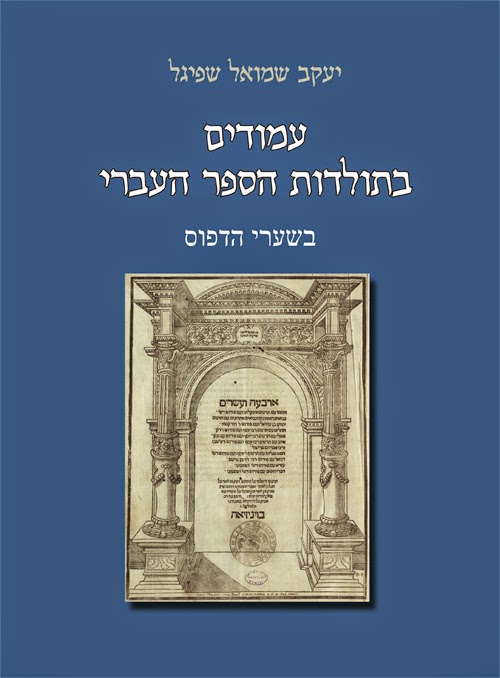
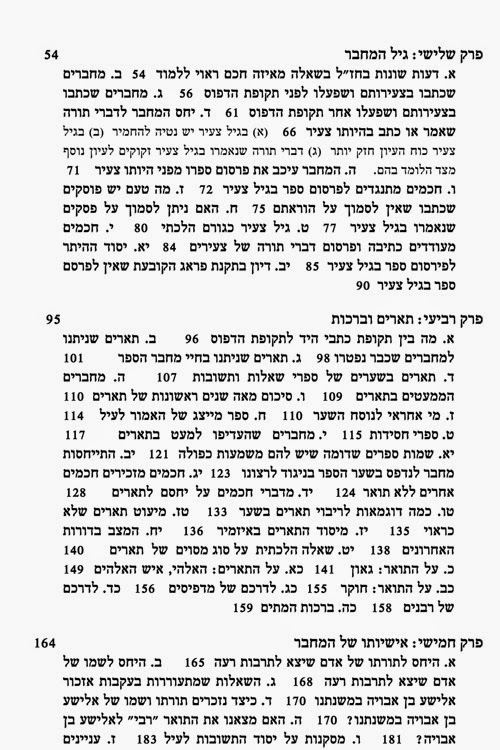
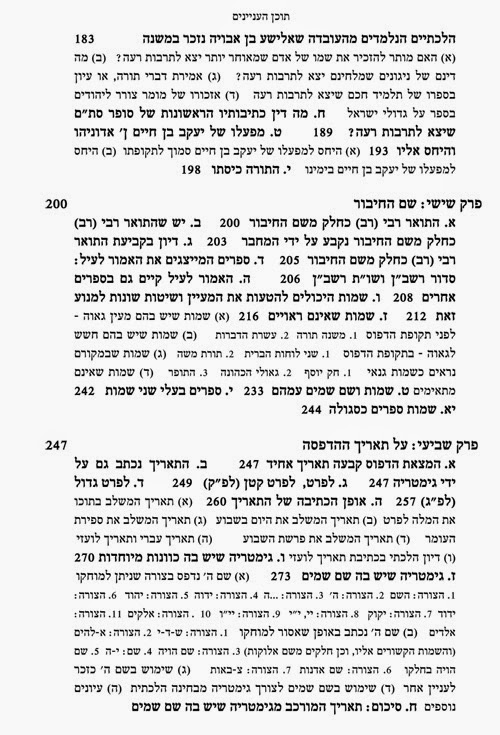
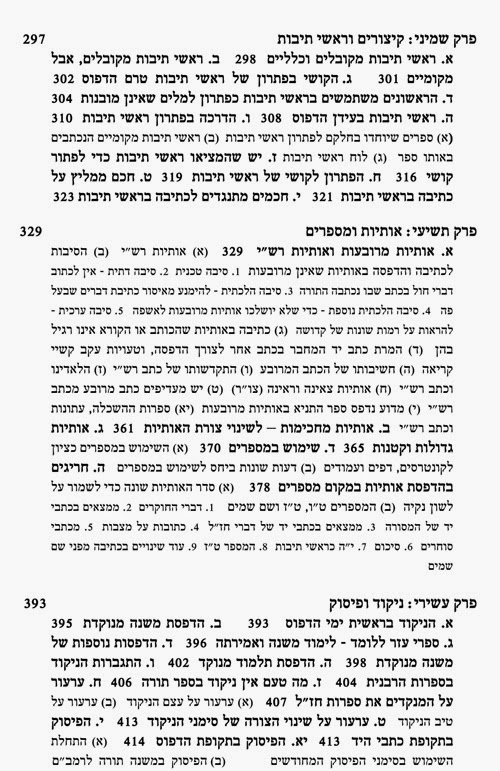
Chapter from Y. S. Spiegel’s Amudim be-Toldot ha-Sefer ha-Ivri (Volume Three)

Yaakov Shmuel Spiegel’s
new book has just appeared, as announced here. It is titled Amudim be-Toldot ha-Sefer
ha-Ivri: Be-Sha’arei ha-Defus. The Seforim Blog is happy to present this selection from pages 84-90.
Those interested in purchasing a copy of the book should contact Eliezer Brodt
at eliezerbrodt@gmail.com
י. חכמים מעודדים כתיבה ופרסום דברי
תורה של צעירים
מן
הראוי לדעת כי היו חכמים שעודדו כתיבה תורנית של תלמידי חכמים צעירים, וראו בכך מנוף
להכשרתם לעתיד. ר’ יונה נבון רבו של החיד”א נהג כן ביחס לתלמידו, ומן הסתם כך
נהגו חכמי ירושלים באותה העת, אף שאין לנו ידיעה מפורטת על כך.[1]
מאוחר
יותר שמענו על נוהג מעין זה גם בג’רבה. ר’ כלפון משה הכהן כתב באחת מתשובותיו את
סדר הלימוד הרצוי כדי לגדל דור של תלמידי חכמים. הוא עמד גם על הדרך שבה ילמד
המורה את תלמידו לכתוב תשובות להלכה, וכך כתב:[2]
ויזרזם
לעיין בדבר ולערוך עלי גליון בכתב ידם נוסח תשובה על זה כפי מה שתקיף ידיעתם מאותם
המקורות, ולהביא איש איש מה שכתב בזה לפניו, ויקח בידו את כל הכתוב מהם, וישאל לכל
אחד מסקנתו בזה טעמו ונימוקו. וכל אחד ישיב לפניו הנראה לו בעל פה. ואח”כ
יראה אם מה שכתוב ממנו מתאים אל מה שאמר בעל פה…
גם
ממקורות נוספים אנו למדים כי בתוניס[3]
ובין חכמי הספרדים בירושלים, היה נהוג שיש ללמד את התלמידים כיצד יש לכתוב תשובות
הלכתיות. אמנם כתיבות אלו היו כתיבות פנימיות, שעברו את הביקורת של הרב. אם הרב
עבר עליהן ומצאן שהן כהלכה, יש להניח שיש אפשרות לפרסמן ברבים.[4]
דברים
בזכות הדפסת חדושי תורה של חכם צעיר שמענו מפי ר’ חיים אלעזר שפירא:[5]
שמעתי בשם גאון מובהק
וצדיק אחד ז”ל, שהיה כמה פעמים נותן הסכמות לתלמיד חכם חריף ובקי צעירי ימים
על חיבוריהם ואמר, אם כי אין החיבור נחוץ להעולם להדפיסו, אך עכ”פ ע”י
זה מלהיב ומרהיב לבבם לשבת ולעסוק בתורה בעיון לחבר החיבורים, כי בדבר שרוצים
לפרסם ולהדפיס לעיני העולם מדקדקים הרבה למצוא דרך סלולה, שלא ישיגו עליו על
חידושיו, וע”י זה מיגעים ומתמידים בתורה ביותר.
נמצא
שההסכמה אינה מאשרת בהכרח שהחידושים ראויים להדפסה. מטרתה העיקרית היא לעודד את התלמידים
שיעסקו בתורה, והמסכים סומך על התלמיד שדבריו ראויים.
על
ר’ אליהו בומבך מסופר כי דרשת הבר מצוה שלו הפליאה מאוד את השומעים, ולכן:[6]
הבחור
אליהו העלה את דרשתו על ספר, ולבקשת רבים חפץ להדפיסו ולהפיצו בישראל להנות בהם בני
אדם, ואסכים מריה על ידיה הוא אביו הגדול שהתייעץ בדבר עם אביו הה”ג[7]
מיאברוב, ונמנו וגמרו להדפיסו כליל בהדרו, למען הלהיב לבבו להוסיף אומץ בשקידה על
דלתי התורה, וגם משום קנאת סופרים תרבה חכמה, להרבות התמדה אצל בני גילו.
יא. יסוד ההיתר לפירסום ספר בגיל צעיר
ראינו אפוא שהיו חכמים שהתנגדו לפרסום ספר בגיל צעיר.
אבל יש הסבורים אחרת, והתירו לעשות זאת כפי שיבואר עתה.
במסכת עבודה זרה דף יט ע”ב נאמר:
אמר
רבי אבא אמר רב הונא אמר רב, מאי דכתיב כי רבים חללים הפילה (משלי ז, כו), זה
תלמיד שלא הגיע להוראה ומורה. ועצומים כל הרוגיה (שם), זה תלמיד שהגיע להוראה
ואינו מורה. ועד כמה, עד מ’ שנין. והא רבא אורי, התם בשוין.
האמור
בסוגיה זו שימש יסוד לקביעת גיל התמנות תלמידים לדיינים, נושא שהיה בו ויכוח גדול
בין מרן ר’ יוסף קארו לבין ר’ משה מטראני (מבי”ט), ונזקקו לו גם חכמי הדור
בתשובותיהם.[8] עמדתו של
ר”י קארו היא:[9]
וכתב
הר”ש בר צמח בסי’ קנ”ח[10]
וכן מנהג פשוט בכל קהלות תוגרמא להעמיד ת”ח בחורים שהגיעו להוראה לדין
ולהורות במקום שיש גדולים מהם בחכמה והם זקנים יותר מארבעים שנה ולא נשמע מעולם
פוצה פה ומצפצף, וכן ראיתי מורי הר”י בירב היה ממנה במקומו פה צפת תוב”ב
דיינים שלא הגיעו למ’ שנה… למדנו כי כל מי שהגיע להוראה בחכמתו אעפ”י שאינו
אלא בן י”ח שנים יורה יורה ידין ידין, וכל המעכב על ידו מעכב אותו מלעשות
מצות עשה מן התורה לדון את חבירו דכתיב בצדק תשפוט עמיתך (ויקרא יט, טו).
לאמור,
ניתן למנות דיינים גם לפני שהגיעו לגיל ארבעים.
הרדב”ז
היה בין אלה שנזקקו לויכוח, ובין שאר דבריו כתב:[11]
אבל
האידנא שכבר יש כמה הלכות פסוקות וכמה ספרים וכמה שאלות לגאונים ז”ל אם הגיע
להוראה יכול שפיר להורות מתוך הספרים אפילו בפחות ממ’, שהרי יכול לעמוד על מה
שכתוב בספרים. וגדולה [מזו] כתוב בהגהה [הגהות מיימוניות הל’ תלמוד תורה פ”ה ה”ב]
שכל פסק שאדם רואה בפירוש בספר מספרי הגאונים יכול להורות אפילו בימי רבו ואפילו
תלמיד גמור, רק לא יורה דבר מלבו ולא יסמוך על ראיותיו ולא ידמה מילתא למילתא
מדברי עצמו ע”כ… ומעשים בכל יום שהבחורים מורים הוראות ואין פוצה פה ומצפצף.
ומיום בואי פה באו אלי כמה קונדרסים מצפת תוב”ב מורים והם בחורים, ומהטעם
שכתבתי.
לאמור,
יש הבדל בין זמן התלמוד שבו הלימוד היה בעל פה, לבין זמן הגאונים ואילך שבו הדברים
נכתבים בספר. כדבריו כתב גם הרשד”ם, שאף הוא נזקק לויכוח. אלו דבריו:[12]
אמנם נראה בעיני דבר ברור, דבזמננו הרשות נתונה על כל פנים
לכל תלמיד חכם שהגיע להוראה אפילו שלא הגיע לשנים, כל עוד שלא יהיה בפני רבו מובהק,
דבזה איני רוצה לסמוך על הטעם הנזכר, כיון דחמיר כל כך דיש בו מיתה, אבל אשארא
סמכינן להורות, כיון שהחבורים הם המורים. וכל זה בתנאי שזה התלמיד בדוק ומנוסה
למעיין ומבין בתלמוד ובספרי הפוסקים והמחברים ז”ל. זה אני אומר כפי האמת ממה
שהורוני מן השמים כפי הדין החתוך, אבל אין ספק שראוי לגדור גדר בזמננו זה כי רבו
בקיעי הזמן, השועלים קטנים מחבלים כרם ה’ צבאות, היו עבדים ליצרם כל ימיהם, ובלא
דעת ותבונה ביד רמה יושבים על כסא ההוראה, ושרים לפי ערכם בחכמת התורה, ושלא היה
להם עסק אחר כל ימיהם הולכים לרגליהם כעבדים. על זאת ישתומם כל חסיד, כי אין ספק
כי בזה יצא משפט מעוקל, ושופט כל הארץ מלכנו יושיענו ויקיים מקרא שכתוב ואשיבה
שופטיך כבראשונה (ישעיהו א, כו) גו’.
לאמור,
רדב”ז ורשד”ם הסכימו אף הם שמותר להורות גם לפני גיל ארבעים אבל נימוקם
שונה מנימוקו של ר’ יוסף קארו, ויש בו חידוש. לאמור, כיום אין האדם מורה הוראה,
אלא הספרים הנמצאים בינינו הם הם המורים. לאמור, המורה מגלה לציבור את הכתוב בספר,
ותו לא. זאת כמובן בתנאי שהוא מבין את הכתוב בספר, וכמו שהדגיש זאת רשד”ם.
ר’
עובדיה הדאיה דן בנושא זה באורך רב, וכדי שלא להאריך אביא מדבריו רק מה שנוגע
לענייני ספרים:[13]
ודע
דמכל האמור תשובה מוצאת למה ששמעתי… ומעיד בגודלו שראה לכמה גאונים שקדמוהו,
שהיו מדקדקים שלא ליתן הסכמתם על ספר שו”ת אם מחברו פחות מארבעים שנה.
באופן
דהנך רואה דאין מקום לכל דברי המפקפקים הנ”ל, והוא הדבר גם על המפקפקים בענין
ההסכמות[14]
ומכל שכן לדברי מהרשד”ם והרדב”ז ודעמייהו דבזה הזמן דרבו ספרי הפוסקים והתשובות
אין התלמיד חכם המורה אלא הספר, דודאי דאין מקום חשש פקפוק בזה. דהרי כל מה שהעלה
על ספר הוא ממה ששאב מדברי הפוסקים ראשונים ואחרונים. וא”כ לא הוא המורה, אלא
הספרים שמהם שאב. וא”כ כל שניכר מספרו שהוא מעיין ומבין בתלמוד ובספרי הפוסקים
והמחברים ובעל סברה, ודאי דיכולים להסכים על ספרו בלי שום פקפוק.
מדבריו
עולה כי מותר להסכים על ספר שו”ת, שמחברו לא הגיע לגיל ארבעים. ההסבר לכך הוא
כפי שכבר ראינו לעיל. לאמור, לא החכם הוא המורה, אלא הספרים הם המורים. כמובן כל
זאת בתנאי שאנו רואים כי המחבר אכן מבין את אשר לפניו.
אלא
שבהמשך התשובה (אות כד) הרב הדאיה מסתייג קצת:
הן
אמת דכבר ראיתי להרב פנים במשפט (למר בריה דהרב פתח הדביר) בסי’ יו”ד שכתב
פקפוק זה בענין ההסכמות מגאוני אשכנז שהביא דברי הגאון מרדכי בכהמר”ר צבי
הירש ז”ל שכתב בהקדמתו לספר עמודי עולם…[15]
האמנם נראה ברור כי כל הגאונים הנ”ל תפסו במושלם להלכה כדעת מור”ם
ז”ל ביו”ד סי’ רמ”ב סל”א שפסק להדיא דאין לאדם להורות עד מ’
שנה אם יש גדול ממנו בעיר אף על פי שאינו רבו, יעו”ש. אמנם אנן בדידן שקבלנו
הוראות מרן ז”ל, ועינינו הרואות דהשמיט דין זה בשלחנו הטהור כאשר עשה
הרמז”ל בחיבורו. וגם ראינו לכל גדולי הפוסקים הנ”ל, ששתו בחלקות בין זמן
התלמוד לזמן הזה, ודאי דאין לנו לחוש לזה. ומכל שכן דיש לומר בשופי, דגם
מור”ם לא דיבר אלא בהוראה שבע”פ ומשום כבוד רב העיר דקשיש מיניה. אך אם
ההוראה היתה בכתב בדרך שו”ת ועינינו הרואות דהיא הוראה נכונה, מה מקום לחשוש
שלא להסכים עליה, ובפרט דספר שו”ת נמסר לרבנים והם כבר יכולים להכריע בדעתם
הרחבה ובבינתם אם לקרב אם לרחק, ואין שום חשש תקלה ח”ו. וכן אתה תחזה להרב
פנים במשפט שם שסיים וז”ל, מיהו חזינן לגאוני רבני ספרד דלא חשו לכך ולא
נמנעו לתת הסכמה לספר פסקים שחיבר אחד שהוא פחות ממ’ שנה. ונראה טעמם שהמרביץ תורה
לא יסמוך לגמרי על ספר אותו הפוסק, אם לא ישא ויתן בענין בכל ספרי הפוסקים והמוסכם
לדעתו מפי סופרים ומפי ספרים יורה ידין עכ”ל. ומכל שכן לפי מה שבא בנותן טעם
הרב ריח שדה ז”ל, שיש מקום לחוש לזה לרפיון התורה, בראותם כי אינם מתחשבים
הרבנים הגדולים לדבריהם, דבודאי דאדרבא דחיובא רמיא על רב העיר לחזק את ידיהם ביתר
שאת, להוסיף אומץ וחוזק בלימודם להגדיל תורה ולהאדירה, ואיתיה בזכייה, שעל ידו
מלאה הארץ דיעה, והתורה רבה בישראל, ומה’ יפיק רצון, ועליו תבא ברכת טוב, אמן.
שומע
אתה מדבריו, כי נכון הוא שהיו רבנים אשכנזיים שמיאנו לתת הסכמה על ספר שמחברו לא
הגיע לגיל ארבעים, וזאת בהסתמך על דברי הרמ”א. אבל חכמי הספרדים אינם פוסקים
כמותו, אלא כמרן בשולחן ערוך שלא הזכיר את המגבלה של גיל ארבעים, ולכן חכמי
הספרדים הסכימו על ספרים שמחברם צעיר.
ברם,
הרב הדאיה מחדש שאפשר שגם הרמ”א יסכים לכך, כיון שהאיסור של גיל ארבעים חל רק על הוראה בעל פה. מה עוד שיש חשיבות לעודד
מחברים צעירים, כדי להגדיל תורה.
בדומה
לכך כתב גם ר’ עובדיה יוסף:[16]
ולפ”ז
כיון שאין לנו הגבלה של ארבעים שנה לענין הוראה, כל שהגיע להוראה, וכדתנן אל תסתכל
בקנקן אלא במה שיש בו [אבות ד, כ]. מעתה גם בחיבורים ופסקים אין לנו להגביל הזמן
שלא להדפיס עד מ’ שנה. ואף על פי שיש לחלק בין הוראה לשעתה ובמקומה, לחיבורים
המתפרסמים בכל תפוצות ישראל להבין ולהורות לשעה ולדורות, מ”מ אין לנו שום
יסוד מוסד לאסור בזה, מאחר שהמחבר הגיע להוראה ע”פ עדות גדולי הדור אשר יתנו
עדיהם ויצדקו. ואף על פי שהרמ”א ביו”ד (סי’ רמב סל”א) כ’ שאין לאדם
להורות עד ארבעים שנה. ע”ש. [וע”ע בתשובת המבי”ט סי’ רפ[17]].
אנן בדידן בתר הוראות מרן אזלינן. ובפרט שהעיד בגדלו שכן המנהג פשוט וברור, ומעשה
רב של רבו הגאון מהר”י בי רב. וכנ”ל. ואף להרמ”א י”ל דשאני
דין מחבר ספר בהלכה להפיצו ברבים, דיהיב דעתיה טפי לעיין היטב בספרי הפוסקים לבל
ימצא שם בדק, ואינו דומה למורה הוראה ומשיב לשואלו דבר בדרך הוראת שעה, שיש מקום
לחוש פן לא יעיין היטב בהלכה וידמה מילתא למילתא, בעוד שרב המרחק ביניהם, ויהי בכזיב
בלדתה אותו.[18]
לאמור,
לדעת חכמי הספרדים, אם ניתן למנות דיין שלא הגיע לגיל ארבעים ודאי שניתן גם לחבר
ספר לפני גיל ארבעים.[19]
אמנם לדעת חכמי האשכנזים, שיש הגבלה של גיל ארבעים למינוי דיינים, יש מקום לטעון
שאולי אין לחבר ספר לפי גיל ארבעים. ברם לדעת ר”ע יוסף, אדם המחבר ספר הרי
חזקה עליו שהוא בודק בעומק את דבריו טרם שיפרסמם. בזה הוא עדיף ממורה הוראה, שצריך
להשיב כמעט באופן מיידי. עדיפות זו של מחבר ספר היא הנותנת לו היתר לפרסם ספר גם
לפני גיל ארבעים.
אלא
שבהמשך הדברים סייג ר”ע יוסף מעט את דבריו:
וא”כ
גם לענין חיבורים ופסקים יש להקל להדפיסם ולהגדיל תורה ולהאדירה, ועל צד היותר טוב
יודיע המחבר בהקדמתו שלא יסמכו על חיבורו לפסוק ממנו למעשה כי אם אחר העיון היטב.
אבל להמנע מלהדפיס מכל וכל, היא חומרא המביאה לידי קולא, שכמה הפליגו חז”ל
בעונש מי שמונע בר (סנהדרין צא סע”ב).
ר”ע
יוסף לא הדגיש בדבריו עד עתה באיזה ספר מדובר, והדעת נותנת שכוונתו היתה לכל ספר
תורני. אכן ביחס לספר הלכתי נוספה עתה הסתייגות מסויימת. לעומתו, ר”ע הדאיה
ציין בדבריו במפורש שהוא מדבר על ספר שו”ת, ואפשר שרק לגביו התיר פרסום בגיל
צעיר. מכל מקום הצעתו של ר”ע יוסף שיש להודיע כי אין לסמוך על החיבור לפסק
הלכה, דומה שהשפיעה על מחברים רבים כפי שנראה בהמשך.
גם
ביחס לאשכנזים הביע ר”ע יוסף בהמשך תשובתו הסתייגות מסויימת:
ומעתה
נראה דעכ”פ לחבר ולהדפיס חיבורים בהלכה בדיני ממונות אף להרמ”א ודעימיה
יש להקל גם בפחות מארבעים שנה. ואף על פי שעדיין יד הדוחה נטויה לומר שבהדפס
חיבורים בהלכה גרע טפי, כי הדבר נשאר לדורות עולם, ויורו המורים שאינם בקיאים
לעמוד על שרש הדברים ועיקרם, ועי”ז רבה המכשלה, מכל מקום כיון שלא כל חכם
מצוי לפסוק דיני ממונות רק הבקיאים בש”ס ופוסקים, וברוח מבינתם יעמדו על דברי
המחבר היכונו דבריו אם לא, ומה גם שכל זה לאחר קבלת ההסכמות מגדולי הדור שיודעים
ומכירים המחבר בחכמתו ויראתו, לכן אין לחוש לזה כלל. ומצוה קעביד להגדיל תורה
ולהאדירה.
בין
חכמי האשכנזים[20] מצאתי
התייחסות לנושא בדברי ר’ יוסף ליברמן, ואביא את מסקנתו:[21]
להדפיס
דברים הנוגעים להלכה יש להמנע עד היותו בגיל מ’ שנה, ואם כתב לפני כן ורוצה
להדפיסם אחרי כן בהיותו כבר בן מ’, צריך לעבור עליהם עוד פעם, דאם לא כן מאי אהני
שמדפיס אח”כ, אדרבא עוד גרע דמטעה הבריות שאינם יודעים שמשנות ילדותו הם. וצעיר
הרוצה להדפיס צריך ת”ח מבוגר בן מ’ לעבור עליהם בעיון. אבל כל זה רק במי
שמעצמו מברר ופוסק הלכה מראיות וסברות שלו, ואין בכלל זה מחברי ליקוטי הלכות מדברי
פוסקים קודמים, כגון ספרי “כהלכתו” של דורינו שאינם אלא מאספים דברי
קודמיהם, באלה אם רבני גאוני הזמן יסכימו שהמחבר הולך ישר וראוי לכך הרי הם מזכי
הרבים.
ר’
נתן גשטטנר סבור אחרת. אלו דבריו:[22]
הרי
חזינן עד כמה חרדו גדולי עולם אלו זכר צדיקים לברכה שלא לפרסם פירות בוסר הנוגעים
להלכה, ומכל שכן ספרי לקוטים של הלכות פסוקות אשר יד הכל ממשמשים בהם ואינם
מיועדים דוקא לתלמידי תכמים היודעים להבחין בין תכלת לקלא אילן, הרי ודאי שאינו
ראוי לעסוק בכאלה אלא לתלמיד חכם מופלג שהורגל לעיון והתעמקות שנים רבות, ואף
שתקנת גאוני פראג[23] נראה שלא
נתפשטה, דהא עינינו הרואות שהרבה גדולים הבאים אחריהם הדפיסו ספריהם בהלכה טרם
שמלאו להם ארבעים לבינה, ואף הגאונים הללו לא תקנו זאת אלא בקהלתם וכמבואר בלשון
הכרוז “ראינו לתקן תיקון בקהלתינו”. אבל עכ”פ ניתן ללמוד מדבריהם
הקדושים כי לאו כל הרוצה ליטול את השם יבוא ויטול, ואין ראוי לעסוק בפרסום הלכות
הנוגעות למעשה אלא לתלמידי חכמים בעלי עיון שדעתם נתיישבה עליהם.
גם
נראה דעיקר הקפידא היתה שלא להדפיס קודם שנת הארבעים בירורים הלכה למעשה, אבל
לענין הדפסת ספר של ביאורי סוגיות ופלפולא דאורייתא, שאינו בא להסיק ולפסוק הלכה,
הנה בזמן הזה של עוקבתא דמשיחא שנתקיים בנו אמרם (סוטה מט:) חכמת סופרים תסרח
ויראי חטא ימאסו והאמת תהא נעדרת… ודאי שחיוב גמור על השרידים אשר ה’ קורא,
תלמידי חכמים צעירים העוסקים בתורת ה’, להפיץ מעייני חכמתם חוצה, ויש בכל ספר
שמחברו הוא ירא שמים ישר הולך משום קידוש שם שמים ברבים, להראות לעיני עם הארץ כי
לא פסקה אהבת התורה מישראל… ואדרבה חשיבות גדולה היא לעורר ולעודד את צעירי הצאן
לחדש חידושין דאורייתא ולכתבם עלי גליון וגם לפרסמם בדפוס, אבל בתנאי שהדברים הם
פרי עיון והעמקה ויגיעה בגופי תורה.
העתקתי
חלק ניכר מדבריו, כדי שהמעיין יראה מה בינו לבין ר”י ליברמן.

[1]       ראה על
כך מ’ בניהו, רבי חיים (לעיל הערה 35), עמ’ יא-יב.
[2]       שו”ת
שואל ונשאל, ח”ה, יו”ד סי’ קיט. הוא חזר על כך במקומות נוספים. ראה
בספרו ברית כהונה, ג’רבה, תש”א, או”ח מערכת ל, אותיות טו (שם גם ציין
למקומות נוספים שבהם חזר על דבריו), טז.
[3]       ראה ר’
מאיר מאזוז (נאמ”ן), דרכי העיון, בני ברק, תשע”ב2, דפים
קנח-קס, ואף שמדובר שם בג’רבא, שלא היה לה כל כך קשר לתוניס, בכל זאת המחבר כתב
בראשית דבריו כי הוא מדגים את דרך “העיון התוניסאי”, וראה גם דבריו בדף
קנח ע”ב ד”ה נעבור.
[4]       הנה
החיד”א בשו”ת חיים שאל ח”א סי’ סג הדפיס תשובה של רבו, ואחריה סי’
סד הדפיס את תשובתו שבה דן בדברי רבו, ולפי מ’ בניהו, רבי חיים (לעיל הערה 35),
עמ’ יא, הערה 24, החיד”א היה אז בן חמש עשרה-עשרים שנה.
[5]       דברי
תורה, ירושלים, תש”מ, ח”ו, אות מה.
[6]       ראה
לעיל הערה 118, בתולדות המחבר (אין ציוני דפים).
[7]       הרב
הגאון, הרב הגדול.
[8]       על
הויכוח ראה מ’ בניהו, ‘האסכולות של המבי”ט ושל מרן רבי יוסף קארו וההתכתשות
ביניהן’, אסופות, ג (תשמ”ט), עמ’ טז-כד, ובספרות שם, וחזר על כך בספרו יוסף
בחירי, ירושלים, תשנ”א, עמ’ מח-נג. באור ישראל סד (תשע”ב), עמ’ לד-לו,
נדפסה תשובתו של ר’ מרדכי הענא מכתב יד בעניין זה.
[9]       שו”ת
אבקת רוכל סי’ רא. תשובה זו אנונימית, אבל כבר קבעו כי היא של ר”י קארו, שהרי
הוא מזכיר בה את ספרו בית יוסף.
[10]     לפנינו
נמצא כן בתשב”ץ, ח”א, סי’ קנט.
[11]     שו”ת
רדב”ז, ח”ו, סי’ ב אלפים קמז.
[12]     שו”ת
רשד”ם, חו”מ, סי’ א, מהד’ ר”ד אביטן, ירושלים, תשס”ח, דף ח
ע”א.
[13]     שו”ת
ישכיל עבדי, ח”ב, חו”מ, סי’ א, אותיות כב, כג.
[14]     כדאי
לציין: הרב הדאיה סבור שההסכמות בדורנו אין להן כל תוקף, כיון שברור שהמסכים לא
עבר על כל הספר אלא המסכימים “סומכים על חזקה על חבר שלא יוציא מתחת ידו דבר
שאינו מתוקן, וגם סומכים על המעיין שבדעתו הרחבה יכול להכריע אם לצדק אם לשבט ולכן
אין שום צורך בהסכמות, ולא נצרכה אלא לברכה”. כך כתב בהסכמתו לספרו של
ר”מ מימון, הלכה למשה, ירושלים, תשי”ח.
[15]     הבאנו את
הדברים לעיל, ראש סעיף ו.
[16]     שו”ת
יביע אומר, ח”ד, חו”מ, סי’ א.
[17]     שורה זו
במקור.
[18]     מליצה על
פי בראשית לח, ה: והיה בכזיב בלדתה אותו. כלומר, המורה הוראה יכול לטעות.
[19]     ר’ אברהם
יקותיאל אוהב ציון, שו”ת יעלת חן, ח”א, ירושלים, תשס”ט, בהקדמה
שערי ח”ן, דף א ע”ב, כתב שאם חיבר את התשובות בהתיעצות עם חבריו, ניתן
לפרסם אותן לפני שהמחבר הגיע לגיל ארבעים.
[20]     על פי מה
שכתב ר’ צבי יברוב, מעשה איש, בני ברק, תשנ”ט, ח”ב, עמ’ ע-עא, עולה כי
החזון איש תמך בהדפסת ספר בגיל צעיר ואילו רז”ר בענגיס התנגד לכך.
[21]     משנת
יוסף, שבעים דרשות ומאמרים, ח”א, ירושלים, תשנ”ח, מאמר ז, עמ’ פז.
[22]     שו”ת
להורות נתן, חי”א, סי’ צג, אותיות ז-ח.
[23]     על תקנה
זו נעמוד לקמן בסעיף יב.


New Book Announcement: Amudim be-Toldot ha-Sefer ha-Ivri (Volume Three)

New Book
Announcement: Amudim be-Toldot ha-Sefer ha-Ivri (Volume Three)
By Eliezer
Brodt
I am very
happy to announce the recent publication of an important work, which will be of
great interest to readers of the Seforim blog. The third volume of, Amudim
be-Toldot ha-Sefer ha-Ivri
by Professor Yaakov Shmuel Spiegel, of Bar-Ilan
University’s Talmud department.
As I have
written in the past, Professor Spiegel is one of the most prolific writers in
the Jewish academic scene, authoring of over 160 articles and 18 books (16 of
those are publications for the first time of works which remained in
manuscript).  Many suspect he possesses Hashbot
Hakulmos
(automatic writing).
His
articles cover an incredibly wide range of subjects related to many areas of
Jewish Studies, including history of Rishonim, piyutim authored by
Rishonim, bibliography and minhaghim, to name but a few. His uniqueness
lies not only in the topics but also that his work has appeared in all types of
publications running the gamut from academic journals such as Kiryat Sefer,
Tarbiz, Sidra, Alei Sefer, Assufot, Teudah, Kovetz
Al Yad
and also in many prominent Charedi rabbinic journals such a Yeshurun,
Yerushasenu, Moriah, Sinai and Or Yisroel. It is
hard to define his area of expertise, as in every area he writes about he
appears to be an expert!
He has
edited and printed from manuscript many works of Rishonim and Achronim on Massekhes
Avos and the Haggadah Shel Pesach. He is of the opinion, contrary
to that of some other academics, that there is nothing non-academic about
printing critical editions of important manuscript texts. Although there is a
known “belief” in the academic world, “publish or perish,” which some claim is
the cause of weak articles and books, at times, Spiegel’s prolific output does
nothing to damper the quality of his works. Another point unique to Speigel’s
writings, besides his familiarity with all the academic sources, he shows great
familiarity with all the classic sources from Chazal, Geonim, Rishonim and
Achronim, to even the most recent discussions in Charedi literature – this bekius
(breadth) was apparent well before the advent of search engines of Hebrew books
and Otzar Ha-hochmah. Alongside all this is his penetrating analysis and
ability to raise interesting points.
Some of
these articles were collected into a volume called Pischei Tefilah u-Mo’ad,
which was reviewed a few years back here
on the seforim blog. This volume is currently out of print.
One of
Professor Spiegel’s main areas of interest has been the History of the Jewish
Book. He has written numerous articles on the subject and even published
two books on this topic in a series called Amudim be-Toldot ha-Sefer ha-Ivri.  Volume one was first printed in 1996 and is
called Amudim be-Toldot ha-Sefer ha-Ivri: Haghot u-Maghim. It was
reprinted with numerous additions in 2005 (copies are still available). It was
reviewed by Dan Rabinowitz and me, a few years back here
on the Seforim Blog.
The second
volume is called Amudim be-Toldot ha-Sefer ha-Ivri; Kesivah Vehatakah.
This volume is currently out of print and will hopeful be the subject of a book
review by Dan Rabinowitz and myself in the next few months.
I think
that anyone who has an interest in the Jewish Book will enjoy this work
immensely.
In the near
future I hope to review this work in depth. Next week the blog will feature
some sample pages of this new work.
For a short
time I will be selling copies of this work for $32. The price includes airmail
shipping (to the US UK or Canada). Copies are also available at Biegeleisen.
For more information about purchasing this work, feel free to contact me at
Eliezerbrodtatgmail.com
To get a
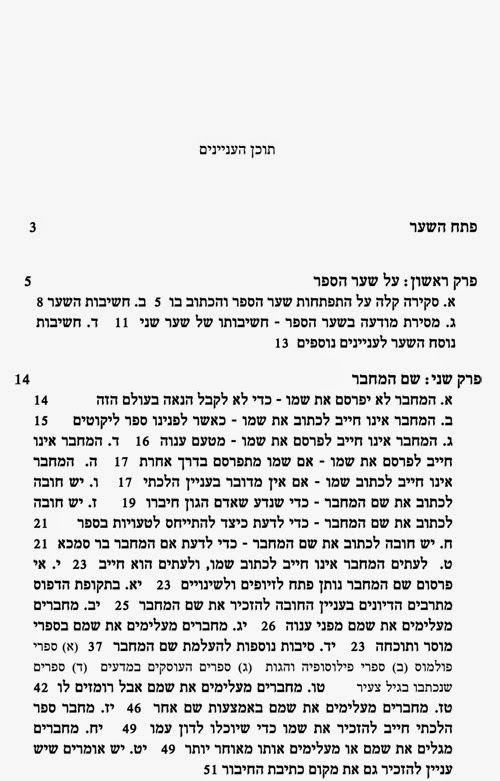
sense of what exactly this new book is about, I am posting the Table of Contents
here:


Quiz Answers; Response to Criticism; Rav Schwab Writes to the Rogochover

Quiz Answers; Response to Criticism; Rav Schwab Writes to the Rogochover

Marc B. Shapiro

1. Let me begin with the riddles from my last post here.

A. Where do we find that Shammai not only disagrees with Beit Shammai, but also agrees with Beit Hillel?

B. In the days of the tannaim a certain item was unquestionably muktzeh. However, in the post-talmudic period, some hold that this item is no longer muktzeh. What item am I referring to? Provide the actual source in the Talmud and later authorities to justify your answer.

The answer for number 1 that I intended is found in Orlah 2:4-5. Mike Wiessenberg, David, Shimi, and Sam got this right.

Yet Moshe Schwartz offered a different answer which I think is also correct. He wrote:

From the baraisa brought down in Beitzah 20a, it could be suggested that only Beis Shammai held that one can’t bring an olah on Yom Tov, but from the fact that Bava Ben Buta said the halacha is in accordance with Hillel, it can be inferred that he is testifying to Shammai’s opinion as well. Especially since the Gemara in Shabbos 15a doesn’t ask from the machlokes of olah on Yom Yov when it says that there was only three times that Hillel and Shammai argued.  So, all this suggests to me that here Shammai was in agreement with Beis Hillel and Hillel himself that you can bring an olah on Yom Tov. See also Tosafos in Chagigah 7b.

For number 2, no one gave the answer I intended: In the days of the tannaim a get was muktzeh. That was because you could not do anything with it on Shabbat. You could not even use it to learn the halakhot of writing a get since Torah learning was to be entirely oral. Yet after the Oral Law was written, R Moshe Isserles states, Even ha-Ezer 136:7, that according to some it is now permitted to handle a get on Shabbat as it is not muktzeh. In other words, since you can learn various halakhot by examining the get, one is now permitted to do so on Shabbat. That this is what R. Isserles means is made clear by his comment in Darkhei Moshe, ibid.:

בזמן הזה שנתנה תורה שבע”פ לכתוב לכ”ע מותר לטלטל גט שהרי אדם יכול ללמוד ממנו כמה הלכות גטין

It is interesting to note that while in Darkhei Moshe R. Isserles says that everyone agrees with this opinion, in the Shulhan Arukh he writes “some say”.

The Beit Yosef, Even ha-Ezer 136, also says that everyone agrees that today it is permitted to carry a get, but in the Bedek ha-Bayit he questions this permission.

As mentioned, during the era when the Oral Law was not written all agree that a get was muktzeh (and the same law would apply to a ketubah) since all learning had to be oral. What I don’t understand, and maybe some of our learned readers can enlighten me, is what are we to make of what the Talmud refers to as megilat setarim. These were private notebooks that the Sages had during the period when the Oral Law could not be written down for the public. In order not to forget what they were taught, the Sages wrote things down. Rashi, Shabbat 6b and Bava Metzia 92a, tells us that these notebooks had to be hidden. However, Maimonides, in his introduction to the Mishneh Torah, also notes that the Sages recorded both what they were taught and their own independent Torah insights. Yet, unlike Rashi, he does not mention that they hid their notebooks. Furthermore, unlike Rashi, Maimonides does not view the permission to write down Torah thoughts as intended solely to prevent forgetting. For him, Torah she-be-al Peh signifies that Torah is transmitted orally rather than through written means. Nevertheless, it was never forbidden to write down the Oral Torah for personal use; it was kept hidden only to prevent its use for public teaching.[1]

According to Rashi, in the era of Torah she-be-al Peh one was not allowed to study the Oral Law from a written text. Writing it down was permitted only as an emergency measure, to prevent forgetting, but under normal circumstances it was forbidden. On this view, it makes sense that a get would be considered muktzeh. However, according to Maimonides, it was never forbidden to write down the Oral Law for private use. Since, in his opinion, one could study the Oral Law privately from written texts, why should a get be muktzeh? How is it different from a private notebook used for study? If anyone has an answer to this, I would be interested to hear it.

R. Meir Mazuz offers another interesting example of how halakhah has evolved in response to changing realities. Shulhan Arukh, Orah Hayyim 320:6, states: “One is permitted to squeeze lemons [on Shabbat].” R. Mazuz explains that this ruling is not mentioned by the Geonim or by Maimonides because, in their time, lemons were only primarily for medicinal purposes rather than as a food. Consequently, squeezing them for drinking would have been considered forbidden on Shabbat. This is in line with the halakhah recorded in Shulhan Arukh, Orah Hayyim 328:37: “Anything that is not eaten or drunk by healthy people is forbidden to be eaten or drunk for medicinal purposes [on Shabbat].”

2. In my article “The Brisker Method Reconsidered” and also in my book Studies in Maimonides and His Interpreters, I refer to how R. Hayyim Soloveitchik ignored Maimonides’ own explanation to the sages of Lunel of Mishneh Torah, Hilkhot Nizkei Mamon 4:4.[2] Maimonides informed them that their text of the Mishneh Torah was incorrect and supplied the proper reading. However, R. Hayyim, in his commentary, disregarded Maimonides’ correction, illustrating how the Mishneh Torah had taken on a life of its own such that there was no perceived need to follow even Maimonides’ own assertion that the text was mistaken.[3]

In a recent article, Rabbi Elisha Friedman takes issue with my point:[4]

To correct the record it is worth pointing out one error in Shapiro’s overall excellent discussion of this subject. One of his central proofs for his approach, which he repeats in his Studies in Maimonides and His Interpreters (University of Scranton Press, 2008), 55, refers to R. Hayyim’s explanation in Hilkhot Nizkei Mamon 4:4. The problem is that Rambam, in a letter, revised the text of this halakha, as R. Yosef Karo in his commentary Kesef Mishneh, ad loc., cites. R. Hayyim completely omits any mention of this revision in his discussion, which leads Shapiro into a reflection of how to view halakhic works which are based on faulty texts. This point is made even more emphatically in the book he is reviewing, Norman Solomon, The Analytic Movement: Hayyim Soloveitchik and His Circle (Scholars Press, 1993), 219. While the overall point—that R. Hayyim is impervious to such textual matters—is undoubtedly correct and can be proven from other explanations in his work,[5] Solomon and Shapiro’s example is in fact not one of them. The piece is unrelated to the words Rambam changed in his letter; it works according to all versions. R. Hayyim proves that Rambam must be referring to an animal which pays damages from its own value and then wonders why this halakha appears in the context of the watchman’s larger responsibility for damages. Quoting Rambam’s responsum might have been proper scholarly etiquette for the sake of accuracy, but it would not have changed the overall trajectory.

Let us examine this case. Maimonides writes as follows in Hilkhot Nizkei Mamon 4:4:

When a person entrusts his animal to an unpaid watchman, a paid watchman, a renter or a borrower, these individuals assume the owner’s responsibilities. If the animal causes damages, the watchman is held liable. When does the above apply? When they did not guard the animal at all. If, however, they guarded the animal in an excellent manner, as they should, and it got loose and caused damage, the watchmen are not liable, and the owners are liable.

The problem with this halakhah is that if the watchman guarded the animal properly, and it still got out, why should the owner be liable? Maimonides was asked about this by the Sages of Lunel and he told them that they should correct their texts to read: “If, however, they guarded the animal in an excellent manner, as they should, and it got loose and caused damage, the watchmen are not liable. If the watchmen guarded the animal in an inferior manner, they are not liable if they are unpaid. Instead, the owners are liable, even if the animal kills a person. The watchman is liable if he is paid, a renter, or a borrower.”

What I said—and what Friedman criticizes—is that R. Hayyim offered an analysis of the mistaken text. Looking again at R. Hayyim, I see no reason to retract what I wrote, and I don’t understand how Friedman can criticize me. The issue isn’t whether one of R. Hayyim’s hiddushim works with both the mistaken text and the corrected text. The issue is, as I said, that R. Hayyim analyzes and explains the mistaken text. He does not pay attention to Maimonides’ correction, which he knew as it is mentioned in the Kesef Mishneh. Thus, right at the beginning of R. Hayyim’s commentary to Nizkei Mamon 4:4 he writes:

וא”כ הא קשה רישא שכתב הרמב”ם שבשמירה מעולה הבעלים חייבין, ואמאי חייבין כיון דעיקר הנגיחה הויא נגיחה של פטור

Yet in the corrected text of the Mishneh Torah, it never states that the owners are liable. R. Hayyim continues discussing the uncorrected text, leading the Hazon Ish in his comment on this passage to write: וכבר כתב הכ”מ בשם הר”מ בעצמו שהוא ט”ס

In R. Hayyim’s commentary to Nizkei Mamon 4:11, which I additionally mention in Studies in Maimonides and His Interpreters, his analysis also ignores the corrected text. He cites the uncorrected text and states:

הרי דדעת הרמב”ם דרק בזמן שהשומרין פטורין הוא דהבעלים חייבין

He also writes:

ולפ”ז הרי לכאורה יש למידק מדנקט הכא הרמב”ם הך דינא דהבעלים חייבין

Yet as we have seen, in his responsum to the sages of Lunel, Maimonides says that the underlined words are a mistake, meaning that R. Hayyim’s presentation of Maimonides’ view is not in accord with his corrected text.

In response to what we have just seen from R. Hayyim, the Hazon Ish writes:

צ”ע למה לא נקבל מש”כ הכ”מ בשם רבו בתשובתו לחכמי לוניל

In other words, the Hazon Ish calls attention to the fact that R. Hayyim, in his explanation, operates on the assumption that the printed text is correct, while ignoring Maimonides’ responsum in which he states that the text is mistaken.

In Studies in Maimonides and His Interpreters, p. 55 n. 232, I refer to R. Eliyahu Soloveitchik’s note to an article by Prof. Shlomo Zalman Havlin.[6] Let me cite his words, stated with regard to Nizkei Mamon 4:4, as I think they explain well the phenomenon we are discussing and are in line with my approach.

אמנם עיון בספר חידושי רבנו חיים הלוי מראה (וזוהי גם רוח הדברים בבית מדרשו) שכשהוא נפגש עם שינויי גירסה מסוימים בגמרא או ברמב”ם, אין הוא דן בשאלה “מה יצא מתחת קולמוסו של מר בר רב אשי או של רבנו משה בן מימון”, הוא גם לא דן בשאלה הכללית יותר “מהו הנוסח הנכון”. רבי חיים מתייחס לשינויי גירסה אצל הקדמונים כאל כל מחלוקת אחרת בפשט הסוגיה, שלומדים את שתי הדעות בשווה ואלו ואלו דברי אלקים חיים. מבחינה פרשנית אפשר לומר שרבי חיים קידש את אשר היה לפניו והרחיק את עצמו מכל דיון בשאלות עובדתיות היסטוריות, ובמקומו עסק בחקר התבונה הטהורה של תורתינו הקדושה . . . ומאחר שאין ענייננו “בירור הנוסח” אלא לומדים אנו את הנוסחאות השונות, לכן גם כשהרמב”ם בתשובה מגיה את דברי עצמו, ומנמק את הנוסח הנפוץ בטעות מעתיקים, העובדה שלפני המגיד משנה היה נוסח מסויים ברמב”ם (הנוסח הנפוץ) דיה היא כדי לקבוע שהנוסח הזה תורה הוא, ויש להתייגע על פירושו.

The very point I made, and which Friedman criticizes, is also made by R. Yehoshua Inbal.[7] He writes:

והרי הגר”ח קיצוני בדבר עוד הרבה יותר מהחזו”א, וכנודע גם במקום שהרמב”ם עצמו הסביר את דבריו, והובאו הדברים בנו”כ, וגם במקום שהרמב”ם שלפנינו ט”ס לפי עדות הרמב”ם עצמו המובאת בנו”כ, התעלם מכך הגר”ח.

In his note to this passage, he refers to Nizkei Mamon 4:4 and Maimonides’ correction of the text, and then states:

אבל הגר”ח לא קיבל גילוי זה ומיישב הג’ הישנה ובסו”ד כותב שזה גם ד’ הרמב”ם

I realize that Friedman can criticize Inbal just as he criticized me, but I feel comfortable knowing that I am in such good company.[8]

Turning to a related issue, the Hazon Ish is often cited as one who was opposed to the Brisker approach. However, the most famous opponent was R. Jacob David Wilovsky, the Ridbaz. I have discussed his opposition to what he called “chemistry” (which includes the Brisker method) in earlier posts here, and here. In my earlier writing about the Ridbaz, I was unaware of another example of his criticism of the analytic approach. This appears in his Nimukei Ridbaz, Parashat Terumah, p. 24a:

שבעו”ה נתפרצה במדינות ליטא וביחוד בזאמוט ע”י איזה רבנים לימוד בדרך הכאמי או הגיון והוא לא רוח התורה אך רוח זרה באה מבחוץ והכניסו בעו”ה להתורה שבע”פ ונתפשטה לימוד הזה אצל בחורים בעו”ה עד שהתורה לבשה צורה אחרת בעו”ה והמבינים מועטים והוא רחום יכפר עון

Regarding the Hazon Ish’s critique of R. Hayyim’s hiddushim, R. Elyakim Schlesinger reports that this was not intended for public consumption, meaning that it never should have been published.[9]

R. Hayyim Dov Ber Gulevsky, the grandson of R. Simcha Zelig Reguer, also claimed that the critique of the Hazon Ish was published against the wishes of the Hazon Ish’s family.[10]

והנה בשלהי קיץ שנת תשל”ה, שמוע שמעתי שיצאו אנשים בלתי הגונים, ולא שמעו לקול הורים ומורים, ולמשפחת הגאון החסיד צדיק יסוד עולם בעל החזון איש. והוציאו במרמה נגד רצונם את ההשגות שהחסיד הנ”ל רשם על ספר חדושי רבינו חיים הלוי. והדפיסו את זה יחד עם הספר חדושי רבינו חיים הלוי

R. Hayyim Kanievsky also reported that his father, the Steipler, was unhappy that the Hazon Ish’s critique had been printed, though not because he feared it would be seen as disrespectful. Rather, his concern was that among the Hazon Ish’s comments were some weak proofs. Readers might mistakenly assume that these weak arguments formed the basis of the Hazon Ish’s position, when in fact they were merely supplementary points that did not affect his fundamental argument.[11]

3. In Renewing the Old, Sanctifying the New, I discuss R. Kook’s view about the substitution of vegetarian sacrifices in place of animals. I also refer to what the Nazir—who unlike R. Kook was a vegetarian—says about this. Unfortunately, I overlooked an important passage from the Nazir that appears in Elchanan Shilo, Yahadut Kiyumit (Tel Aviv, 2017), p. 199. This text, written after the Six Day war, was published by Shilo from manuscript:

כל רוחי מתקומם לזביחת זבחים ולהזאת דמם. הן אנו מנוזרים מבשר בהמות ועופות, אני בערך ששים שנה, ובני ביתנו כל ימי חייהם. וכיצד תהי עבודת הקודש והמקדש בזביחת בעלי חיים והזאת דמם
אמנם זה רוח טהור, כמו רוח הקודש, המתקומם נגד זה. אבל זאת היא חוקת התורה, חוקה חקקתי, גזרת התורה, ואין לנו רשות להרהר אחריה
אמנם כבר קדמו חכמינו ז”ל ואמרו בגלוי, עתידים כל הקורבנות שיתבטלו, חוץ מתודה. וכן בשערי אורה. ואולי מתקרב ובא העתיד לבא. ומשום זה מן השמים המניעות והמכשולים, לעכב שלא תתחדש עבודת המקדש בזבחים, כמו קרבן פסח. אמנם יכולה להתחדש העבודה במקדש, בהקרבת המנחות

The Nazir wonders if the future time when there will be no animal sacrifices is almost upon us. This would explain why we are precluded from rebuilding the Temple at present, so as to prevent us from having to offer animal sacrifices. In other words, the Temple will only be rebuilt after we have forsaken animal sacrifices and have moved into the era when only vegetarian sacrifices will be acceptable to God.

4. In a nice post on the Seforim Blog here, R. Shmuel Lesher dealt with aspects of R. Shimon Schwab’s approach to R. Samson Raphael Hirsch. I would like to add a few points.

Lesher deals with the famous letter from R. Schwab to the East European gedolim asking about the validity of the Hirschian approach. Lesher writes: “There seems to be some discrepancies among those who record the story. Marc B. Shapiro dates the letter to 1933, whereas Jacob J. Schacter says it was 1934. Most surprising is R. Dr. Norman Lamm’s assertion that the question was posed from America.”

The letter was sent in 1933. I know this because R. Joseph Rozin’s reply has been published in Leo Levi’s Sha’arei Talmud Torah, p. 348. It is dated 25 Adar, 5693 which corresponds to March 23, 1933. In fact, a copy of R. Schwab’s original letter, which identifies him as assistant rabbi in Darmstadt— the senior rabbi was R. Yonah Merzbach—survives in the R. Joseph Rozin archives at Yeshiva University. It is dated Erev Shabbat, Parashat Ki Tisa, 5693. This corresponds to March 17, 1933. Based on the replies that R. Schwab received, I believe that the identical letter was sent to all the rabbis R. Schwab turned to in 1933.

Leo Levi at one time mistakenly assumed that R. Schwab wrote the letters when he was a yeshiva student in Lithuania.[12] Lesher correctly writes: “Contrary to what Dr. Levi writes that R. Schwab was still a student in a Lithuanian yeshiva when he posed the question, R. Schwab had already left the Mir Yeshiva by 1931.”

But then, Lesher also writes:

Nevertheless, there is reason to believe that Dr. Levi’s record of the story should be the most accurate. In addition to publishing the four responses to R. Schwab, Dr. Levi writes in his Torah Study: A Survey of Classic Sources on Timely Issues (New York: Feldheim, 2002), 363n13, available here, that R. Schwab himself shared R. Yosef Rozen’s response with him personally. It is unlikely that Dr. Levi would not have gotten the context of the letters accurately from R. Schwab. Perhaps one can suggest in Dr. Levi’s defense, that R. Schwab may have posed the question at least twice. Once when he was a yeshiva student in Lithuania and then again in writing later when opening a yeshiva in Bavaria.

Yet this is needless speculation, as there is no question that in the text referred to in note 12 Levi was mistaken about the context of the letters. (As we shall soon see, Levi would get something wrong much more significant than this). In fact, in a later article, Levi correctly writes that R. Schwab sent the letter to the gedolim when he was a young rabbi in Germany, but he was wrong is stating that R. Schwab wrote it when it was rabbi in Ichenhausen.[13] As mentioned, he actually sent it before this, when he was assistant rabbi in Darmstadt.

In Ha-Pardes, December 1939, R. Schwab published what he later said was the letter he sent to the gedolim.[14] Yet this is not correct. The article in Ha-Pardes only includes his halakhic discussion about secular studies, which was the main part of the letter.[15] Missing from Ha-Pardes is the introduction to the letter, which is itself a fascinating historical document that illustrates R. Schwab’s disillusionment with the German Orthodox Torah im Derekh Eretz approach. It is published here for the first time, and in the transcription I have added paragraphs for ease of reading:[16]

מו”צ דק”ק דארמשטאדט והגליל

Rabbin. Ass. S. Schwab

Darmstadt

בעה”י דארמשטאדט עש”ק פ’ כי תשא תרצ”ג לפ”ק
החיים הברכה והשלו’ יחולו על מרום פסגת ראש הר קדש ה”ה עטרת תפארת גאון יעקב מחמד עינינו נשיא ישראל שר התורה קדוש וטהור יאמר להוכקשת”ר רשכבה”ג אדמו”ר מרן הגאון האדיר מו”ר הג”ר יוסף ראזין שליט”א ראב”ד דק”ק דווינסק יע”א

אחרי קידה והשתחוי’ מול הדרת קדשו ופ”ש כנכון!

בזה אגיש נגד פני כקשת”ר שליט”א שאלה חשובה למעשה בבקשה שטוחה שכשת”ר ימחל נא בטובו להשיבני דבר ולהודיעני שמעתתא אליבא דהלכתא בענין דלקמן וכוונתי ללבן ולברר האמת לאמיתו בשאלה זו ואציעה שאלתי ובקשתי בזה רק לידע הלכתא בקושטא ותורה היא וללמוד אני צריך ומעומק מקור חכמת תורתו ידלה נא כשת”ר לי מים חיים ויורני דרך הישר ואורח מישור אלך בה בס”ד

הנה בודאי ידוע להוכקשת”ר שיטת רוב יהודי אשכנז החרידים [!] על דבר ד’ ומקורם הטהור הוא הגרש”ר הירש זצ”ל בענין התחברות חכמת התורה עם חכמות אומות העולם וסברתם היא שכך פירוש המשנה באבות: “יפה תלמוד תורה עם דרך ארץ”, כלומר ללמוד חכמת התורה ביחד עם חכמות חצוניות ויסדו מכאן שיטתם שכל מה שרוח האדם פועל טוב בעולם – ר”ל כל מה שקוראין בלשון אשכנז קולטור ה”ה התרבות האנושית וכל מה שסופריהם וחכמיהם של האומות מפרסמים ומודיעים ומלמדים בעולם – שכל זה נובע ממקור חכמתו של הקבה”ו החונן לאדם דעת ולכן ראוי להגות בכל החכמות ולהתעסק עמן ובכלל להיות “געבילדעט” ככל הגוים אשר סביבותינו ואומרים שגם בדורות הראשונים היתה השיטה הזאת מקובלת בקרב עם ישראל כמו במדינות ספרד שגם שם היו לאנשים היותר חשובים שבכלל ישראל עסק עם כל חלקי החכמה והיתה להם יד בפילוסופיא, ברפואה, בתבונה, ובהנדסה ובשאר המדעות ומציאות זו משמשה לאחבנ”י כאן במדינותינו לראי’ חזקה לתמוך שיטתם. (ובפרט שחושבים הם שע”י התגשמותה של השיטה הזאת תהא להם אפשרות להראות לאפקורסים שיכול אדם להיות בעל תורה ויראה וגם בעל תרבות ומדע. ואין אחת מפרעת חברתה אלא אדרבא יחדיו תהיינה תואמות בשלמות.)

כך שיטתו של הגרש”ר הירש זצ”ל והבאים אחריו המשיכו מזה להתיר לעצמם כל מיני עניני החיצוניות, ועל פי שיטתם הזאת מותר בעיניהם ללמוד כל מיני ספרים חצונים בין ספרי טבע ופילוסופיא בין ספרי אפיקורסים ומינים וכופרים וגם ספרי משוררים שונים ואף ספרי “ראָמאַנעֶן” שבהן נכרכו דברי חכמה ומדע עם דברי חשק וספורי אהבת נשים – ושבר אל שבר יחדיו ידובקו – וגם מותר לגמרי בעיניהם לבקר באוניברסיטאות ששם מתעסקים בקביעות בכל מיני חכמה ומדע ואף הרבה פעמים בתוכן עניני מינות ממש, וגם הבקור בבתי טיאטראות כהיתר גמור נחשב להם שאומרים שבל ישגיחו בדברי עגבים שבהן אך ורק ימצאו ענין בחכמת אומנות – הבימה ובחכמת מעשה הציורים והתוארים שישנם שם – ולא אדבר עוד לא על אדות ענין לימודי החול שילמדו את בניהם עפ”י חוקי הממשלה וגזירת המלכות ואפשר שג”כ יש קצת היתר משום אומנות שכמעט א”א למצא פרוטה מספקה במדינות אלו מבלי איזה ידיעות באותן החכמות וגם בזה לא אדע בעניי עד עתה יסוד חזק של היתר ודאין. אולם לא על זאת עיקר שאלתי שכעת לפ[עמים] אפשר נדונים כמוכרחים עפ”י דינא דמלכותא ללמוד קצת חכמות כלליות בבתי ספר עממיים של כל אתר ואתר אך בראש וראשון אדאג איך למצא היתר לאותם שלומדים בלי הכרח רק מחפץ לבם חכמות אחרות מלבד תלמוד תורה בפרט בבתי הגימנסיות וכדומה

וגם אבקש לידע בבירור פירוש המשנה “יפה ת”ת עם ד”א” אם אפשר בעולם לפרשה על אופן שפרשו תלמידי הג’ רש”ר הירש זצ”ל להתאם תורה וחכמות אחרות יחד, כי כמדומה שהיתה בזמנם אז הוראת שעה אך אין להביא ראי’ מש”ס ופוסקים ליסד הוראת שעה שאין הלכה כמותה בשאר העתים ולפי כל הנ”ל לא היתה מעולם לבי שלמה עם בעלי השטה הנזכרת

R. Schwab lays out the case as follows: Most German Orthodox follow the path of R. Samson Raphael Hirsch regarding joining Torah with worldly wisdom, and they think that this is the meaning of the passage in Avot, “Yafeh Torah im Derekh Eretz”. They believe that culture and literature arise from the wisdom that God grants to humanity, and therefore one should engage in these pursuits in order to become cultured, just like non-Jews. They also maintain that this reflects how Jews lived in medieval Spain, where they were involved in philosophy, medicine, astronomy, and other sciences. Furthermore, they argue that this approach best demonstrates to heretics that one can be a pious and learned Jew while also being cultured and educated. In this way, the different aspects of one’s personality coexist harmoniously rather than creating tension.

R. Schwab states forthrightly that this was the approach of Hirsch, and that those who followed him continued in this path, permitting for themselves all sorts of “external things.” Thus, they studied all kinds of books in science and philosophy, including works written by heretics, as well as poetry and novels in which insights of wisdom and science were interwoven with erotic themes. In their view, it is entirely permissible to attend universities, even though one may encounter heretical ideas. They likewise regard going to the theatre as permissible, advising that any erotic elements simply be ignored.

R. Schwab explains that his question does not concern young people who study secular subjects, since this may be considered obligatory due to government requirements. Moreover, such study may be permitted because it is virtually impossible to earn a livelihood without some secular education. His concern, rather, is with those who engage in secular studies not out of necessity, but out of a desire to immerse themselves in Western culture. He also wants to know if the Mishnah’s expression, “Yafeh Talmud Torah im Derekh Eretz,” can really be understood in accord with the approach of Hirsch’s students, that one should join Torah together with secular studies. He assumes that Hirsch’s approach was a hora’at sha’ah but you cannot apply a hora’at sha’ah to other times. R. Schwab confesses that because of the considerations he lays out, he was never comfortable with the German Orthodox approach to Torah im Derekh Eretz. (In his 1966 work, These and Those, R. Schwab recognized that his earlier understanding, that Torah im Derekh Eretz was intended by Hirsch as a hora’at sha’ah, was a mistake.)

This is the introduction to his letter which is followed by the halakhic section of the letter, and it is this section which was published in Ha-Pardes.

Interestingly, a year after R. Schwab sent his letter to the gedolim of Europe, he sent a shorter but similar letter to R. Kook, together with the halakhic section that had been sent to the other gedolim and would later appear in Ha-Pardes. This letter to R. Kook was first published by Levi.[17] It is striking that R. Schwab, who is identified with the Hirschian separatist ideology, nevertheless included R. Kook among the gedolim he consulted. He also addressed R. Kook with exalted titles:

הגאון הנפלא בצדקתו ובחכמת תורתו מרן הגרא”י הכהן קוק

There is no record of Rav Kook replying to R. Schwab.

One point that Levi does not note is that in the halakhic section sent to R. Kook, R. Schwab added a paragraph that is not found in the original article sent to the gedolim, in which he again expresses his view that Hirsch’s approach was a hora’at sha’ah.

האף למ”ד כי שיטת הגרש”ר הירש זצוק”ל שיש חיוב בלימוד כל חכמות האומות בכדי להתאים התרבות האנושית עם חכמת התורה, בתכלית להיות “געבילדעט” ככל הגוים אשר סביבותנו, כי שיטה זאת שאינה מורה היתר בתנאים המובאים הנ”ל רק מלמד גם חיוב – זו היתה רק ואך הוראת שעה בזמנו ועתו, ויש לחקור אם ההוראה חלה ג”כ בזמננו אנו. עיין געזאמעלטע שריפטען צד 449, 456 חוברת ב’ ועוד מקומות [ועי’ בעל חתם סופר בספרו “תורת משה” פרשת שמות ופרשת בשלח]

Let us now return to Levi, who is cited in Lesher’s post. Although Levi considered himself an advocate of Hirschian Torah im Derekh Eretz, his understanding represents a very restricted version of Hirsch’s ideas. Indeed, his conception of the content of Torah im Derekh Eretz appears to be largely identical to that of R. Schwab. If you examine Levi’s Sha’arei Talmud Torah or his article “Torah im Derekh Erets in Our Time”,[18] the advocacy of secular studies is in order that one is able to make a living—Torah im Parnasah—as through work we join with God in perfecting the world. Levi also regards knowledge of science as an integral part of Derekh Eretz, and he further maintains that art and music, when used in the service of God, are also included within Derekh Eretz.

Yet the humanities, the bedrock of Western Civilization, are completely absent from Levi’s understanding of Torah im Derekh Eretz. Despite the fact that he writes that according to Hirsch, “the Torah affirms all that is true in modern culture,”[19] his presentation of Hirsch’s views completely ignores what modern culture means. He even claims that “it may be argued that it [Hirsch’s Torah im Derekh Eretz educational system] was a hora-at sha’ah, a temporary measure.”[20] Since the notion of Torah im Derekh Eretz as a temporary measure stands in fundamental opposition to Hirsch’s own understanding, Levi’s acknowledgment that this might indeed reflect Hirsch’s view highlights the problematic nature of his approach. I say this even though, after mentioning the point about hora’at sha’ah, Levi adds: “though even if we grant this [that the Torah im Derekh Eretz educational system was a hora’at sha’ah], there may be good reason to maintain that its time has not yet passed.”[21] His footnote to this last sentence is itself enlightening as to how Levi understood Torah im Derekh Eretz.

Today science and technology play an increasingly pervasive role, as we rely more and more on technological devices for our daily needs. Hence all that our sages have said about the importance of scientific knowledge applies today with even greater force.

It would therefore seem that R. Hirsch’s hora-at sha’ah, issued 150 years ago, is no less applicable now. However, any decision on this issue must be made by those rabbinic leaders who are shouldering the responsibility for the community’s spiritual welfare.

Here we see that the Torah im Derekh Eretz educational system is unequivocally regarded as a hora’at sha’ah, unlike in the earlier text, where he presents this as a debatable point.[22] He portrays Torah im Derekh Eretz as focused on science and technology. Finally, Hirsch’s imprimatur is not reason enough for it to be regarded as a valid approach, but contemporary rabbinic leaders must decide on the matter.

In a later article, Levi also notes how Hirsch not only advocated the study of science but also history. He then states:[23]

He encourages the study of nature, of the nature of man (through psychology and anthropology), and of history—but not the study of the humanities, which deal with the meaning of the world, man’s place in the world, aspirations and values, goals and ideas. Even when, on one occasion, dictates of good manners compelled him to eulogize a gentile poet, he praised that poet for having absorbed many lofty Jewish teachings, and for having enriched the gentile world by clothing those teachings in an inspiring form. Nowhere, however, in an address of fourteen pages, did he imply that we, as Jews, should—or need to—absorb ideas from a Gentile.

Levi is referring to Hirsch’s famous speech on Schiller, delivered on the hundredth anniversary of his birth. He is saying that Hirsch felt forced to deliver his speech in order that his school not be seen as departing from what was proper. Elsewhere, he makes the outlandish assertion that Hirsch only “permitted” reading German literature in order to learn the language, but not in order to know the content! [23b]

Contrary to Levi, the issue for Hirsch was not whether Jews need to absorb ideas from non-Jews, but if there is value in non-Jewish wisdom. The notion that Hirsch did not encourage the study of humanities is completely false. He, and his followers, believed strongly that great works of literature can often teach lessons fully compatible with authentic Torah teachings, and these writings are therefore to be included in “Derekh Eretz”. In his Schiller speech he explicitly states that “our forefathers in their wisdom have taught us to look among the ‘wise men of all nations’ for the ‘spirit of wisdom imparted by God to mortals.’”[24] Will anyone be surprised to learn that the study of German literature was included in the curriculum of Hirsch’s school. This was to remain a distinctive feature of Hirschian philosophy. I discuss this at greater length in my article “Rabbi Samson Raphael Hirsch and Friedrich von Schiller,” available here.

Naomi Schwab Schendowich has recently written that Hirsch’s intention in instituting Torah im Derekh Eretz in his school “was that the pupils should have intensive Torah studies as well as a wide secular education in preparation for earning a livelihood.”[25] Yet listen to what Hirsch himself says, completely rejecting the notion that Torah im Derekh Eretz is exclusively about earning a livelihood.

A good secular education can give our young people substantial new insights, added dimensions that will enrich their religious training. . . . Any supporter of education and culture should deplore the fact that when these secular studies are evaluated in terms of their usefulness to the young, too much stress is often placed on so-called practical utility and necessity. Under such circumstances the young are in danger of losing the pure joy of acquiring knowledge for its own sake, so that they will no longer take pleasure in the moral and spiritual benefits to be obtained from study.[26]

* * * * * * * *

[1] See R. Bezalel Zolty, Mishnat Yaavetz, Orah Hayyim, p. 95.

[2] For a recent academic article that deals with R. Hayyim, see Sergey Dolgopolski, “Constructed and Denied: ‘The Talmud’ from the Brisker Rav to the Mishneh Torah” in  James A. Diamond and Aaron W. Hughes, eds., Encountering the Medieval in Modern Jewish Thought (Leiden, 2012), pp. 177-200. Despite the title referring to the Brisker Rav, the article is about R. Hayyim. This reminded me of something interesting. I know someone who delivered a Daf Yomi shiur to a Hasidic audience. Unsure how they would react if he quoted Joseph B. Soloveitchik by name, he instead referred to him as the Brisker Rav.

[3] Here are two other points of note regarding R. Hayyim’s commentary.

1. At the end of the introduction the sons include a four-line remembrance of their mother.

2. It is reported that when R. Hayyim’s commentary was published in 1936, R. Baruch Ber Leibowitz had a ceremony whereby the book was brought into the beit midrash together with music, just as if it were a new Sefer Torah. Students even danced with the book from R. Baruch Ber’s house until the yeshiva. See R. Dov Eliakh, Be-Sod Siah, p. 212.

[4] “Rambam of Brisk: R. Hayyim Soloveitchik’s Relationship with Mishneh Torah,” Tradition 5 (Summer, 2024), p. 2 n. 2.

[5] Friedman, however, points to one example where R. Hayyim suggests that the text of the Mishneh Torah is in error. See Hiddushei R. Hayyim HaleviEdut 21:9. R. Hayyim supports his suggestion by claiming that his preferred reading appears in an old manuscript. However, this raises the question of where he obtained this information, since the Frankel edition of the Mishneh Torah reports that no manuscripts preserve an alternate reading. See Hiddushei R. Hayyim HaleviEdut 21:9 and Friedman, “Kelalei Ha-Gaon Rabbi Hayyim mi-Brisk be-Veur ha-Rambam,” Alumot 1 (2026), pp. 390-391.

[6] “Ha-Yahas li-She’elat Nusah be-Sifrei Hazal,” in Yoel Catane and Eliyahu Soloveitchik, eds., Beit ha-Va’ad (Jerusalem, 2003), pp. 27-28, n. 28.

[7] “Yesodot ve-Ekronot Parshanut ha-Talmud,” Ha-Otzar 6 (Av 5777), p. 266.

[8] See also R. Raphael Amihai Hadad in the recently published Ha-Mashbir, vol. 12 (2026), p. 126:

ושמעתי בשם הגרב”ש דויטש זצ”ל שאף שהגר”ח בחידושו הידוע על “שומר שמסר לשומר” (הלכות נזקי ממון פ”ד ה”ד), בונה מערכת שלמה ליישב ולהסביר דברי הרמב”ם בעוד שהרמב”ם עצמו בתשובתו לחכמי לוניל (הובא במעשה רוקח שם) תולה את זה בטעות סופר, “דומה, כי גם אילו היה הגר”ח יודע את תשובת הרמב”ם, לה היה חוזר בו”

This volume of Ha-Mashbir, edited by the indefatigable Rabbis Yissachar Dov Hoffman and Ovadya Hoffman, is as usual a fascinating publication. It includes a previously unpublished commentary by R. Ovadiah Yosef on Tehillim. It also includes letters I received from R. Meir Mazuz in the years after the publication of Iggerot Malkhei Rabbanan. You can see the letters here.

[9] Ha-Dor ve-ha-Tekufah, p. 48. Truth be told, I am hesitant to quote anything from this book. I say this because the following passage (p. 32), citing R. Isaac Zev Soloveitchik in explaining why R. Kook came to London, is so historically uninformed that it raises questions about the reliability of the entire book. There is no way that R. Isaac Zev could have said what he is quoted as saying.

פעם שאל אותי אם יודע אני איך הגיע רב קוק ללונדון, וסיפר לי כי הוא הורחק מישיבת וואלוז’ין לפי שהי’ קייליקער, ועסק בלימודי השכלה, ואח”כ התחתן וחפש רבנות, כשמוע הגר”ח ז”ל שהוא מחפש רבנות, חרה לו ז”ל מאוד, אמרו לו הלא כבר עשה תשובה, אמר להם וכי ממנים בעל תשובה להיות רב, וכתב הגר”ח לכל העירות שבליטא שלא יקבלוהו לרב, ולכן הוכרח לברוח ללונדון

The statement that we would not appoint a baal teshuvah as rav of a community, which was widely accepted throughout the generations, refers to the classic baal teshuvah, namely, someone who “went off the derekh” and then repented. It does not refer to a “tinok she-nishbah,” i.e., someone born into a non-religious family—either a Converso family or a modern non-Orthodox family—who later in life became religious. The same can be said about a hazzan, concerning which Ta’anit 16b states that he must not have had a bad reputation in his youth. See R. Moshe Sternbuch, Teshuvot ve-Hanhagot, vol. 1, no. 99; R. Netanel Meoded, Mizrah Shemesh, vol. 4, no. 1. See also R. Sternbuch, Teshuvot ve-Hanhagot, vol. 2, no. 462, who sees value in having a baal teshuvah as a darshan. R. Avraham Shapiro has a different perspective; see his Rosh Devarkha (Jerusalem, 2010), p. 565:

כאשר ראה הסבא מסלובודקה זצ”ל שכל הישיבה שלו הלכה לשמוע את הרצאתו של החוזר בתשובה – הרב בירנבוים זצ”ל – הוא אמר: אני הייתי רגיל שבעל תשובה יושב בפינה ובוכה, והיום, יושב על במה ונותן הרצאות

I would only make two points about this passage. The first is that Nathan Birnbaum was a classic baal teshuvah in that he abandoned Orthodoxy before later returning, so his situation is not comparable to current baalei teshuvah who grew up irreligious. Second, Birnbaum was not a rabbi, a mistake that can be attributed to the editor of the book, as R. Shapiro would never have referred to him with the rabbinic title. In R. Shapiro’s Siah Ish, attached to his Hag ha-Sukkot (Jerusalem, 2012), p. 96, R. Shapiro’s comment about Birnbaum also appears. Yet here he refers to “Dr. Nathan Birnbaum,” which is what R. Shapiro would have said.

[10] Gulevsky, Lahat ha-Herev ha-Mithapehet, pp. 5-6.

[11] Kanievsky, Orhot Rabbenu (new ed.), vol. 4, p. 169.

[12] See Levi, “Rabbi Samson Raphael Hirsch – Myth and Fact,” Tradition 31 (Spring 1997), p. 11, called to my attention by Lesher.

[13] Ha-Ma’yan 48 (Nisan 5768), p. 37.

[14] See Jacob J. Schacter, “Torah u-Madda Revisited: The Editor’s Introduction,” Torah u-Madda Journal 1 (1989), p. 15, n. 1.

[15] There are also a few minor differences between the original letter and what appears in Ha-Pardes. The following sentence is only found in Ha-Pardes.

ואם אסור מן הדין בודאי גם כן משום פרנסה אסור ובפרט אם יכול האדם למצא אומנות אחרת נקיה וקלה אף גם שאינו מרויח כך כך

[16] The letter is found in the R. Joseph Rozin Collection, Yeshiva University Archives, MS. no. 1142. I thank Yeshiva University for permission to publish the letter. You can see the original letter here.

[17] Ha-Ma’yan 48 (Nisan 5768), pp. 38-39.

[18] Tradition 28 (Fall 1993), pp. 46-81.

[19] “Torah im Derekh Eretz in Our Time,” p. 68.

[20] Ibid.

[21] Ibid.

[22] When Levi reprinted R. Schwab’s article on Torah im Derekh Eretz in Ha-Ma’yan 48 (Nisan 5768), pp. 38-39, he is clear that Hirsch did not regard Torah im Derekh Eretz as a hora’at sha’ah. See ibid., p. 37.

[23] “Rabbi Samson Raphael Hirsch – Myth and Fact,” pp. 7-8.

[23b] Ha-Ma’yan 48 (Nisan 5768), p. 38 n. 12.

[24] Hirsch, Collected Writings, vol. 9, p. 146.

[25] Schendowich, Hermann Schwab: Historian of German Jewry, His Life and Shorter Works (Jerusalem, 2022), p. 79 n. 24.

[26] Hirsch, Collected Writings, vol. 7, p. 88.


A Preliminary Bibliography of Recent Works on Birkat ha-Chamah

A Preliminary Bibliography of the Recent Works on Birkat ha-Chamah by Eliezer Brodt & Ish Sefer There are many works and articles on this topic and, as such, this is merely a preliminary attempt to deal with this burgeoning area of Jewish literature. [See also here]. For a great bibliographic note on the development of Seder Birkat ha-Chamah, including publications relating to birkat ha-chamah, see R. J. D. Bleich, Birkat ha-Chamah, pp.128-133. JNUL has put up a many of the editions of relating to subject here, here, here, here, here, here, here, here, here, here, here, here, here, here, here, here, here, here, and here. That's right, the JNUL has 19 editions (!) of the Birkat ha-Chamah starting with the first in 1785 through 1981 Edah Haredit edition.  These editions come from such disparate places as Egypt, Tunis, India, and Iraq.   But, now, turning to the editions currently in print.Boker Yizrach from R. Meldola was reprinted again and it includes a later edition with a Pirush Sharei Mizrach from R. Yekusiel Kamelhar (about him in general see this book).Tekufos ha-Chamah u-Berckoseh of R. Yechiel Michel Tukuchensky was reprinted again. A new work on this topic is called Otzar ha-Zemanim by R. A. Brisk. This work is 336 pages is beautifully type-set, well organized, very strong in halacha and it has a bit on the astronomical aspects of birkat ha-chamah.Another work on this topic is by R. M.M. Gerlitz called Birkat ha-Chamah ke-Hilkhoto. On the prior edition, R. J. D. Bleich writes that Gerlitz's book is the most comprehensive work on the topic. This work is an expanded version of its earlier edition, and is now 558 pages. This work is strong in both astronomy, devoting 190 pages to the topic, and strong in the halacaha aspects. It also has many responsum relating to this topic and includes dershot that were said at prior birkat ha-chama by various Gedolim. In addition, this new edition has many letters to R. Chaim Kanievsky on the topic (a recent "minhag" of all works on halacha). To just mention one interesting discussion which R. M.M. Gerlitz deals with is the Ozstrosver's now famous statement that it is extra special if Birkat ha-Chamah falls out on Erev Pesach (pp.115-18). Another nice addition to R. Gerlitz's revised edition is R. Yakov Emden's comments (pp.479-94) all about birkat ha-chamah. These comments were originally printed in the back of the 1757 edition of Megilat Tannit and were omitted from later editions of Megilat Tannit. As such, R. Emden's comments escaped the notice of many of the people learning this topic. Aside from R. Emden's discussion about birkat ha-chamah, he also deals with the Frankist movement and states that one can inform on them to the government (he also deals with Christianity). However,  R. Gerlitz cuts out a page of this – where R. Emden listed some of the Frankists sins – Gerlitz argues that there is no need  to print this today. Today with the amazing web data base of free seforim at Hebrew books one can see this rare edition here and the pages on birkat ha-chamah here and the edited pages here. One thing lacking from this otherwise excellent edition is a proper index of topics discussed.Another work is called Birkat ha-Chamah be-Tekufoseah by R. Genot. This work is 748 pages and is very strong in the astronomy aspects but weaker in the halacha aspects. On the bibliographical front, it reproduces many different editions of Birkat ha-Chamah. He also includes the comments of R. Emden but in a much more abbreviated form than R. Gerlitz. One interesting thing (p.276) a quote from a manuscript from 745 years ago of how the beracha was recited by the Chazan after Ma'ariv! One big mistake in this work when dealing with the famous question of if the calendar according to Shmuel is off so why do we follow Shmuel's opinion,  R. Genot prints a photocopy of the original Halevonon article of R. Alexander Moshe Lapides he then writes: בעוד שהקושיא בת מאות השנים על אמיתות תקופת שמואל נידונה בספרי האחרונים נתפרסמו מאמרים אחדים גם בכתבי עת, שלא עלו על שולחנם של שלומי אמוני ישראל. הבאונם אך כקוריוז משלים לנושא רחב זה , ואם יש בהם משפטים הנוגדים את מסורתנו, הרי הם דברים שאין בה ממש (עמ' 424). He obviously does not know who R. Alexander Moshe Lapides was – a talmid  chaver of R. Yisroel Salanter and one of leading Litvish Gedolim of his time. As an aside this piece was recently reprinted in the excellent edition of Torat ha-Goan R. Alexander Moshe pp.6-8. Another work is from R. Zvi Cohen called Birkat ha-Chamah, 383 pages. This sefer is like all his others, full of excellent information from a very wide range of sources. This work is expanded from earlier edition and is strong in halacha aspects but not as strong in astronomy. Another work on the topic is called Seder Bircas Kiddish Hachamah by R. Strohli, 203 pages.Of great interest to me in the works of R. Brisk, R. Gerlitz, R. Genot, R. Cohen and R. Strohli [a version of this appeared in the recent Journal Etz Chaim volume 8] is how they list sources of Gedolim throughout the ages how they each did this beracha.  In doing so, these works quote many rare sources although, at times, they overlap each other (next time around someone just has to take all the works on the topic and put it together into one volume). One source which escaped them (except for The Sun Cycle p. 23) is found in a autobiography from the early 1600's where the author describes as follows:  כט אדר שעז בהיותי בק' ורנקבורט נתחדש החמה כי כן נעשה כל כח שנה מחזור החמה ולא נעשה כזאת עוד עד ער"ח ניסין ארבע מאות וחמשה אשרי המחכה ויגיע לימים אלו והלכו כל הקהל בשעה ג' על היום על בית הקברות ויום מעונן היה ועמדתי בתוכם ואמרנו פה אחד ברוך עושה מעשה בראשית (ר' אשר ב"ר אליעזר הלוי, ספר זכרונות, עמ' 7).  Another interesting thing we see from this account is the strange minhag to say birkat ha-chamah in the cemetery or near it. This strange minhag is only mentioned briefly by R. Genot in Birkat ha-Chamah be-Tekufoseah (p. 290) and discussed at greater length by R. Gerlitz in Birkat ha-Chamah ke-Hilkhoto (pp. 231-233) (otherwise I have seen no mention of this strange custom). It seems this was the minhag in Frankfurt according to the Yosef Ometz but R. Chaim Rapoport in Birkat ha-Chamah Al Pei Minhag Chabad (p. 80-81) cites the Alei Tamar who argues that this is an incorrect reading of Yosef Ometz and they did not say the beracha at the cemetery. However from this account we see that they indeed did say it at the cemetery. [See also E. Prins comments on this Yosef Ometz in Parnos le-Dorot, p. 292.]Another work is called Birkat ha-Chamah Al Pei Minhag Chabad, from R. Chaim Rapoport 167 pages. This edition includes a section of the halachot in English. Of special interest in this work of R. Rapoport and that of R. Strohli is their sections dealing with women and this beracha. In English, there is  R. J. D. Bleich, Birkat ha-Chamah, 243 pages. This work is extremely well written, as R. Bleich excels at making extremely complicated things sound easy.  It deals with astronomy and halacha aspects very comprehensively for scholar and layman alike. Just to mention one interesting source, not only related  to birkat ha-chamah, is that when discussing aleinu and the censorship of the statement  שהם משתחוים להבל וריק ומתפללים אל אל לא יושיע that the Mahril Diskin held one has to be careful to say it because of משנה ממטבע שטבעו חכמים בברכות. R. Bleich writes that he saw in the siddur of R. Reven Grozovsky that this phrase was written in the siddur. Just one complaint with this particular edition is it is very annoying the way the pages are set up as a Hebrew book even though it is written in English making the pages confusing going from one page to the next. Additionally, one thing lacking from this otherwise excellent edition is a proper index of topics discussed. Another work also in English is from R. Yehuda Hershkowitz, The Sun Cycle, 213 pages printed by Tuvia's. The strength of this work lies in its uniqueness not to merely retread the same ground the above works deal with.  R. Hershkowitz, notes in the introduction that he does not see any point in replicating the seforim already out there on the topic. Instead, he chose to deal with the deeper meaning of the prayers and the beracha in general. He has extensive comments on the tefilos (according to kabbalah and machasvah). He also includes an excellent in depth chapter about the astronomical aspects of this topic. Most of the book is in English but he includes all the tefilos in Hebrew with a translation, notes and an in-depth scholarly chapter on the sugyah in Berkhot, regarding birkat ha-chamah, discussing the Bavli, Yershalmi and Tosefta. One thing lacking from this otherwise excellent edition is a proper index of topics discussed.
One interesting aspect in this work is as mentioned most of these works provide (just some better than others) accounts showing different birkat ha-chamah accounts through out history. Hershkowitz shows that the earliest possible source is from about 1300 years ago in various early paytanim (see The Sun Cycle p.15). Another interesting discussion which he deals with is the definition of the word סלה that it might mean refrain meaning repeat, which means it was intended for the choir to repeat it (see The Sun Cycle pp.68-70).

One interesting point regarding birkat ha-chamah is that although we hold that one makes the beracha with shem u-malchut, the Maharal did not. An explanation for the Mahral's practice appears in R. Moshe Kunitz's Ben Yochai:ומהאי טעמא נראה שהגאון האדיר אבי זקני מהר"ל מפראג ז"ל היה מברך ברכת קידוש החמה בלא שם ומלכות, לפי שבערוך (ערך חמה) כ' ב' פירושים אהא דתני ברכות נט רע"ב הרואה חמה בתקופתה מברכין וכו' ולפי הב' אשתמיט מאמר אביי שם בש"ס ישינם לכן נראה דברכה קבועה כל כח שנין איתקין אחר חתימת התלמוד ומש"ה לא בירך בשם ומלכות (בן יוחאי, שער שבעי סי' רפא, דף קמא ע"א).  
What is even more interesting is this account is referenced by R. Akiva Eiger who quotes it in his notes to Shulcahn Orach O.C. 229:2. The reason why this is interesting is because of who R. Kunitz was.  In particular, he had very strong Haskala leanings and was even linked with R. Aaron Chorin a leading figure of the early Reform movement. R. Moshe Sofer referred to Chorin as Acher as a play on Chorin's name and, in R. Sofer's view, Chorin's opinions.  In part, Kunitz's connection to the Reform movement is based on a letter that appears in Nogah TzedekNogah Tzedek, printed Dessau, 1818, is written to justify various changes such as the using the Sefadic pronunciation, doing away with the silent Shemoneh Esreh, and the inclusion of musical instruments, such as the organ, even on Shabbat.  At the end of this volume, pp. 27-28, Kunitz's letter addressing these issues appears.  On the first issue, the Sefardic pronunciation, Kunitz says this is fine, and notes that R. Nathan Adler (R. Sofer's Rebbi) used the Sefardic pronunciation. Regarding abolishing the silent amidah, he is against this. Regarding the final issue, the use of music, Kunitz again takes a permissive view and allows for musical accompaniment, although he doesn't discuss Shabbat. 
The "Traditional" response to Nogeh Tzedek (and its related works) was not short in coming. The traditionalists banded together sending out letters and collected the responses in a single volume, Eleh Divrei ha-Brit, Altona, 1819. On this aspect see M. Samet, Ha-Chadash Assur min ha-Torah pp.241-42 (and index) and this thread, this thread, and this thread.Returning to Kunitz's work, Ben Yochai, one of the aspects of this work is explaining why some time Rashbi is referred to as ר' שמעון and others as ר' שמעון בר יוחאי. His basic theory is that before he went into cave he is referred to as ר' שמעון and only after the cave is he called בר יוחאי. Indeed, on the title page of the book there is an illustration of the "cave."  In truth, however, this theory is a mistake as Yechosei Tannim Vamorim the Rebbe of the Rochach writes just the opposite:  וכן דברי ר' שמעון בן יוחי ורוב פעמים דברי ר' שמעון אלא כולן בבחרותן קודם שהובהקו לרבים ולכשנעשו ראשי ישיבות הוזכרו סתם (יחוסי תנאים אומוראים, מהדורת מימון, עמ' שצא). Another large part of Ben Yochai deals with R. Yakov Emden's comments on the Zohar in Mitpachas Seforim.  R. Kunitz answers each one of R. Emden's 280 comments. A more recent attempt to deal with R. Emden's criticisms of the Zohar was mounted by  R. Reuven Margolis in his notes to his edition of the Zohar, Nitzotei Zohar. See R. Zevin excellent review on Margolis's Zohar in his Soferim Ve-Sefarim, (Midrash ve-zohar …, pp.31-32).  Yet at the same time, R. Margolis writes in Arshet 2, pp. 336-337 that one has to check carefully into each thing which Kunitz says. It is not only R. Margolis that question Kunitz's work.  Rosenthal in his excellent bibliography, Yodeah Sefer, comments on the Ben Yochai: ואתה הקורא בראותך את ספר הגדול למראה הזה עם כל אורך לשונו ובקיאותו לעור עין כל קורא, אל תבטחבו ואל תשע אל דבריו. לך נא וקרא בדברי המחברים אשר באו אחריו כמו בספרי כרם חמד, תעודה בישראל, בית יהודה, ושרשי לבנון והוא מחברת הראשונה מבית האוצר, ופרחי צפון, וכלם יענו ויאמרו כי כל דבריו הבל ואין בהם מועיל, וכל דבריו הטובים אשר נמצאו בספרו, אשר בהם התראה לעין הקורא כבקי בכל ספרי העברים, גנב מספר סדר הדורות.
On this work of Kunitz in general see Boaz Huss, Ke-Zohar ha-Rokiyah, pp. 321, 333, 343-44.

In the fascinating sefer (subject of its own post hopefully shortly) on Zohar called Matzav Hayashar by R. S. Z. Dober, Dober accuses Kunitz many times of plagiarism (1:2a, 7a). The only compliment R. Dober gives Kunitz is that he had a nice library (2:60) and that R. Dober is a good judge of that as he had a great library too.  Kunitz's work Ben Yochai is quoted by many just to list a few Shut Sich Yitzchak (67,116, 414, 464), Shut Afrekasta Danyah, (1:1&27) and R. Ovadiah Yosef in all his seforim. In the incredible sefer Ha-Meir Laretz he has a few comments on his Teshuvos Hamesaref (see pg 85a). Another work of Kuntz is Ma'ashe Hakhamim, Beis Rebbi, Vienna, 1805.  This work is a biography of R. Yehuda ha-Nasi, Rabbenu ha-Kodosh.  An abridged version, titled Toldot Rebbi Yehuda ha-Nasi, appears at the beginning of the Tifferet Yisrael Mishnaot.  Although, in the latest version of the Tifferet Yisrael, Zekher Hanoch edition, the Toldot have been removed.  According to the publisher, Moznayim, it was Kunitz's reputation that was cause for removal.  Ironically, in this latest edition, the publishers seem to have overlooked a much more controversial statement in their edition. There is an article titled, Ma'amar 'al Dikduk Lashon ha-Mishna that includes a footnote that argues that many parts of Kohelet were written later than the traditional dating. See p. 13b, note *. (Thanks to Dr. Marc Shapiro for calling this to my attention.)  This passage remains in the Zekher Hanoch edition. While Ma'ashe Hakamim, until recently, received widespread dissemination through the inclusion in the Mishnaot, not everyone felt it was a worthwhile sefer.  Indeed, Rosenthal, again in Yodea Sefer is very critical of this work, as well as Kunitz's other work, Sefer ha-Iyun.  See Yodeah Sefer, letter Bet, no. 224, and letter Mem, no. 1208.  The only sefer of Kunitz that escaped Rosenthal's wrath is Kunitz's Ha-Matzref, although Rosenthal doesn't have any entry for that work at all. 


Daniel J. Lasker – Birkat Ha-Hammah 5769

Get Ready – It’s Almost Time to Bless the Sun
by Daniel J. Lasker

Daniel J. Lasker is Norbert Blechner Professor of Jewish Values at Ben-Gurion University of the Negev, Beer Sheva, and is chair of the Goldstein-Goren Department of Jewish Thought. His landmark work Jewish Philosophical Polemics against Christianity in the Middle Ages, originally published in 1977, was recently republished with a new introduction in 2007.   

This is Professor Lasker’s second post at the Seforim blog. His previous post about ve-ten tal u-matar li-verakha was entitled “December 6 Is Coming: Get Out the Umbrellas,” and is available here.

לזכר אבי מורי ז”ל
In less than two months, on April 8, 2009 (Erev Pesah, 14th Nisan, 5769), the once- in-28-years Blessing of the Sun (Birkat ha-Hammah) will be recited, celebrating the occasion when the sun returns to the position where it was when it was first created, on the same day of the week and the same hour of the day as it was then. For those with short and medium range memories, and for those who were toddlers or perhaps not even born in 1981, it is useful to review the reason for this ceremony, one of the very few Jewish events which follow a solar calendar rather than our standard Jewish luni-solar calendar. This year’s Blessing is the first one in the internet age, so it is appropriate to publicize it on a blog; one can only imagine what technological breakthroughs will be around at the time of the next Blessing in 2037.
The Talmud Berakhot 59b states: “He who sees the sun at its tekufah, the moon in its power, the stars [or planets] in their orbits, and the signs of the zodiac in their orderly progress, should say, ‘Blessed be the Maker of Creation’ (ברוך עושה בראשית).” The Talmud continues: “And when is that? Abbaye said: ‘Every twenty-eight years when the cycle is repeated and Tekufat Nisan falls in Saturn on the evening of Tuesday, going into Wednesday.” It should be noted right away that Abbaye is commenting only on the first event described in the baraita, namely, “seeing the sun at its tekufah,” and that parallel passages (Tosefta Berakhot 6:10, Jer. Berakhot 9:2 [13d], and Leviticus Rabbah 23:8) do not include Abbaye’s explanation. It is that explanation, however, which is the basis of the ceremony of Birkat Ha-Hammah.
What does Abbaye’s comment mean? First of all, Tekufat Nisan refers to the vernal equinox, the exact time when spring begins, when the sun rises exactly in the east and sets exactly in the west. Since night and day are then equal, sunrise and sunset on those days are at 6:00 AM and 6:00 PM respectively (in local time; not necessarily in standard time). Second, the ancients believed that there are seven planets (Sun, Moon, Mars, Mercury, Jupiter, Venus and Saturn); and each hour of the day is controlled by a different planet on a weekly rotation (each planet controls 24 different hours during the week, repeating the cycle every seven days). For instance, the planet which controls the 6:00 AM hour names that particular day: Sunday (Sun); Monday (Moon); Tuesday (Mars – think the French mardi); Wednesday (Mercury – mercredi); Thursday (Jupiter –jeudi); Friday (Venus – vendredi); and Shabbat/Saturday (Saturn). The 6:00 PM Tuesday hour, namely the onset of Wednesday according to the Jewish practice of beginning the day at night, is Saturn; thus, “Saturn on the evening of Tuesday, going into Wednesday.” According to Abbaye, when the vernal equinox falls every 28 years on Tuesday at 6:00 PM, the blessing of the sun is to be said. Since at the time of equinox the sun sets on Tuesday at 6:00 PM, the halakah maintains that the Blessing of the Sun is to be recited on Wednesday morning after sunrise. April 8, 2009, is the Wednesday after the Tuesday on which Tekufat Nisan occurs at the 6:00 PM for the first time in 28 years.
But why does the vernal equinox fall at 6:00 PM on Tuesday night once every 28 years? This assertion is based on a number of assumptions: 1) The world was created in Nisan (actually at the end of Adar) and not in Tishrei (actually the end of Elul), following R. Yehoshua’s view in Rosh Hashanah 10b-11a. 2) When God created the sun on the fourth day, He wasted no time and did so at the very first minute of the fourth day, namely, what we call Tuesday evening at 6:00 PM. 3) The sun was created at the moment of the vernal equinox (Tekufat Nisan). 4) The solar year is exactly 365 ¼ days long. On the basis of this calculation, the tekufot (the equinoxes and the solstices) progress each year by one day and six hours (365 ¼ days is 52 weeks, one day and 6 hours). If the first Tekufat Nisan was on Tuesday night at 6:00 PM, the next one is Wednesday night at midnight; the next one was Friday morning at 6:00 AM; then Saturday at noon; Sunday night at 6 PM, and so forth. The first time after creation that Tekufat Nisan fell again on Tuesday night at 6:00 PM was in the year 29 AM, 28 years after creation. On 14th Nisan, 5769, the vernal equinox will be at 6:00 PM on Tuesday for the 207th time (5769/28 = 206 with a remainder of 1). To celebrate this event, the blessing “Blessed be the Maker of Creation” will once again be recited.
The perceptive reader may have noticed that the assumptions upon which the obligation to recite the Blessing of the Sun are based are highly problematic. There are more than seven planets and they do not revolve around the earth (which itself is a planet); and most people do not believe that each hour of the day is ruled by a different planet. Our celebration of Rosh Hashanah on the first of Tishrei seems to indicate that the world was not created in Nisan (e.g., we say: היום הרת עולם). The Bible gives no indication that the sun was created on the equinox (either vernal or autumnal), or that it was created at 6:00 PM on Tuesday night (after all, before the creation of the sun, there was no 6:00 PM). But most significantly of all, the year is not exactly 365 ¼ days long.
There are a number of consequences of the discrepancy between the actual length of the year and the approximate length of 365 ¼ days (called Tekufat Shmuel [cf. Eruvin 56a], which is the same calculation which is at the base of the Julian calendar; see my contribution to the Seforim blog on November 30, 2007, in the context of a discussion of the prayer for rain in the diaspora, also calculated according to Shmuel’s imprecise length of the year). One consequence is that the Blessing of the Sun is moving progressively forward vis-à-vis the Gregorian calendar. In 2121 the blessing will be said on April 9, not April 8. In 2205 it will be said on April 10, and so on (the Hebrew date changes every time since the Blessing is based on the solar calendar). More importantly, however, the Jewish world is blessing the sun as it returns to its original time at the vernal equinox on a date which has nothing to do with the true vernal equinox (which is this year on March 20, 11:44 UTC).
Why, then, do observant Jews observe a commandment which is so questionable (especially this year when it falls on the eve of Pesah, not the most convenient time to have a ceremony which is intended to be performed in as large a group as possible – ברוב עם הדרת מלך)? Is it just another example of Jewish stubbornness and inertia – holding onto an ancient ceremony even when it is based on questionable assumptions (perhaps like the second day of holidays in the diaspora because of calendrical doubts which were laid to rest over a thousand years ago)? Or is it a sign that in matters of religion, especially when it comes to halakhah, logic is not the only important factor or perhaps not a factor at all. The Hatam Sofer ruled (Responsa, Orah Hayyim 56) that once the great Rabbis of Israel (Maimonides [H. Berakhot 10:18], Yosef Karo [Orah Hayyim 229:2], et al.) had codified the practice of blessing the sun, the matter was closed. It would seem that, indeed, tradition, even illogical tradition, has had a strong hold on Jews; it is this Jewish loyalty to tradition which has maintained us during our long history.
And so, let us hope that on this 14th of Nisan/April 8, the skies will be clear, the sun will be bright, and we can once again thank God for making the works of creation!