The Pesach Drasha of the Rokeach

The Pesach Drasha of the Rokeach
by Eliezer Brodt
By way of introduction, in the Shulchan Aruch it is written that thirty days before Pesach one should learn the halachos of Pesach. As Pesach is fast approaching, it is appropriate to discuss anew a post from five years ago, of which this is an update.
Every once in a while we are privileged to have the venerable printing house Mekizei Nirdamim release something special from the great rishonim (aside from their great journal Kovetz Al Yad).[1] Five years ago they published a critical edition of a Pesach Drasha of R. Eliezer Rokeach of Worms for the first time, edited by Professor Simcha Emanuel. In this post I would like to discuss some of the many things of interest in the work and also comment in general on the great job of Simcha Emanuel did with this work.
One of the reasons why I am updating this post is I was just told by Mekezei Nirdamim that they only have a few remaining copies and it will not be reprinted. I am selling copies for $16, while supplies last. For more information feel free to contact me at eliezerbrodt@gmail.com.
Part of the proceeds of this sale will be going to help support the efforts of the Seforim Blog.
This drasha seems to have been an actual drasha that the Rokeach delivered, although it is pretty obvious from the length that it was not said at one time but probably a compilation of a few derashos recited at different times. The style is mostly halacha, with a bit of aggadah in the beginning and also scattered throughout. He goes through many halachos of Pesach starting with kashering the utensils, getting rid of the chametz, and baking the matzos. He then continues on at great length to discuss all the aspects of the Seder. Then he deals with what to do if one finds chametz on Pesach and he ends with some halachos of Yom Tov in general.
I would like to mention some of the interesting points found in the actual drasha. First, the Rokeach records that his family custom was when they burned the chametz they would do so with the lulavim and hoshanos which they had saved from Sukkos (p.79). [2] While talking about the minhag to bake matzos Erev Yom Tov he writes that one should not bake the matzos for the second night until the second night itself, because of chavivah mitzvah bi’shaatah (p. 92). [3] He states that one should go to the Mikvah before Yom Tov. [4]
The Rokeach writes that if the Yom Tov falls out on Shabbos we do not smell hadassim for besamim on Motzei Shabbos, because there is no loss of the extra soul, as the soul remains for the duration of Yom Tov. (p. 93).[4a] In a note Professor Emanuel points out that others disagree with this point and hold that one does in fact make a blessing on the besamim when Saturday night is still Yom Tov. While talking about the washing for karpas he writes that one should make ‘al nitelas yadaim (p. 96), whereas today we do not. [5] He then goes on to say that we eat a full kezayis for karpas, which is something we also do not do – we purposely eat less than a kezayis. [6] (p. 97, 152). He notes his family minhag was to hold the cup of wine during the recitation of vehi she’amdah (p. 99 and p. 126) [7], the common custom today.
He describes how his family poured out the wine when they said the ten Makkot (p. 101, see also, p. 127). The importance of this last custom is that until the publication of this drasha, although many have recorded this custom in the name of the Rokeach, it appeared in none of his writings (as I plan on discussing at length in a forthcoming article). In regard to washing mayim acharonim at the seder, although others argue he writes one should wash (p. 106). [8]
In addition to all this Professor Emanuel has included extensive notes and comments throughout the drasha, which are excellent. These provide additional sources for various things mentioned in the drasha, also including interesting sources from unpublished manuscripts.
To list some of the topics that he deals with in the notes: Making matzos with pictures on them (pp. 129-134), about the nussach of the Haggdaah that some said רבון עלומים וכו after ביד חזקה (pp. 53- 57) [9], and reasons for the prohibition of kitniyos (p. 51).[10]
One very interesting thing which Emanuel points out is the difference about how a name is spelled in various manuscripts. Specifically, whether the Rokeach’s father-in-law was Eliezer or Elazar. If it was Elazar than it turns out that the Rokeach, whose first name was also Elazar, apparently ignored the will of his teacher, Rebbi Yehuda ha-Hassid – who disallows such marriages in his famous Tzavaah. Although, most likely, the Rokeach was married even prior to coming in contact with Rebbi Yehuda ha-Hassid, his practice demonstrates that people, prior to Rebbi Yehuda ha-Hassid’s pronouncement did not observe or even know of this custom. (pp. 57- 59). Emanuel than brings early evidence that part of the Tzavaah were strictly for the family.[11]
In this work we find an early source not related to Pesach but to Shavous – such as to eat Milchigs (p. 39, 110). [12]
Aside from this small work (152 pp.) containing this very important drasha of the Rokeach it also includes many important pieces of information in regard to the Rokeach in general and especially to two works of his that were unknown. There is a lengthy discussion about a sefer of the Rokeach on shechitah and treifos as well as another sefer – Sefer Ma’aseh Rokeach.
[1] For more information on this special, 150-year old publishing house, see the pamphlet printed by them in 1964, called Chevrat Mekizei Nirdamim.
[2] For further on this custom see Sefer HaMaskil pp. 33-34; the important comment of R. Honig in Yerushaseinu 1 (2007), pp. 208-209; Sefer Kushiyos pp. 168-169 and the notes therein; D. Sperber, Minhagei Yisrael, vol. 2 p. 193. See also what I wrote in Yerushaseinu 2 (2008), p. 219.
[3] For general sources on baking Matzos on Erev Pesach see Rabbi. G. Oberlander, Minhag Avoseinu Beyadeinu, pp. 327-255.
[4] For a very detailed discussion of this topic see my Bein Kesseh Le-assur, pp.48-96.
[4a] See; Shmuel and Zev Safrai, Haggadas Chazal, pp.54-55.
[5] See; Haggadah Shevivei Eish, p. 152; Y. Tabory, Pesach Dorot, pp. 216- 244. See also what I wrote in my Bein Kesseh Le-assur, p. 152.
[6] See; Y. Tabory, Pesach Dorot, pp. 264-265.
[7] See; Haggadah Shevivei Eish p. 109.
[8] See; Tabory, ibid, p. 244-249.
[9] See; Pirush Meyuchas le-Rashi in the Torat Hayyim Haggadah, p. 110; Shmuel and Zev Safrai, Haggadas Chazal, pp. 84-85; Simcha Emanuel, “‘When God Descended to Egypt’: The Story of a Passage in the Passover Haggadah,” Tarbiz 77:1 (2008): 109-132 (Hebrew).
[10] See; Y. Ta-Shma, “Prohibition of Kitniyot on Pesach,” Early Franco-German Ritual and Custom (Jerusalem: Hebrew University Magnes Press, 1992), pp.271-282 (Hebrew); Rabbi. G. Oberlander, Minhag Avoseinu Beyadeinu, pp. 410-438.
[11] On all this see also my Likutei Eliezer, pp. 51-53.
[12] See; Rabbi. G. Oberlander, Minhag Avoseinu Beyadeinu, pp.623-647. I hope to return to this topic shortly.


David Glasner — Responses to Comments and Elaborations

Responses to Comments and Elaborations
David Glasner

David Glasner, an economist at the Federal Trade Commission, is a great-grandson of Rabbi Moshe Shmuel Glasner, the topic of his recent post, “The Saga of Publishing the Works of Rabbi Moshe Shmuel Glasner: The Issue of Inclusion of Zionism and Rav Kook,” at the Seforim blog.

This is his second contribution to the Seforim blog.

I thank all those who have responded to my posting of February 15. I have for the most part not engaged in a back and forth with those who have commented for a variety of reasons but mainly a desire to avoid getting too caught up in discussions that could easily take up an inordinate amount of my time.

Adderabbi wrote to inquire whether my father was his grandfather’s friend in Baltimore. The answer is yes. My parents were very fond of your grandparents, and it was a great loss to them when your grandfather passed away suddenly a number of years ago and again when your grandmother passed away not too long after that. My older brother is the one from State College, PA. And my question to you is whether Eugene is your father or your uncle.

About the fate of my unpublished introduction, I hope to revise it and submit it to a suitable Hebrew language journal for publication. I think we’ll just have to wait and see whether it ever gets posted on this blog.

I thank Yehudah Mirsky for his multiple contributions. After his first mention of Rav Amital, I immediately thought of the achingly beautiful tribute he wrote in memory of his Rebbi, R. Haim Yehudah Levi, a grandson of the Dor Revi’i. Rav Amital delivered a hesped at my father’s burial in Jerusalem just over three years ago and mentioned the closeness that he felt to the family of the Dor Revi’i and how important he believed it is to preserve the legacy of morality and justice and honesty that the Dor Rev’i represented. It is also a pleasure to renew, even if only via cyberspace, my acquaintance with Yehudah, with whom my wife and I enjoyably spent many a Friday evening in the splendid company of my illustrious cousins Menahem and Ruth Schmelzer, their family and friends.

Anonymous (02.16.08 – 6:47 pm) charged me with complicity in suppressing the truth about my great-grandfather. Well, obviously there were multiple values at stake and the outcome represented some sort of balancing of those not entirely congruent values. Did I clarify that for you? I also thank anonymous (2:17.08 – 12:31 am) for what I understood to be a sympathetic comment about the difficulty of the situation in which I found myself.

Thanbo asked about the new edition of Dor Revi’i published about five years ago. I had no role in that enterprise. I can’t really comment about its physical dimensions or about future editions.

Zalman Alpert is clearly more conversant with Haredi demographic trends than I, but I will just add another interesting tidbit, which is that although Hassidus was making inroads in Hungary before WWII, it was only after WWII that the great majority of Haredi Hungarian Jewry attached themselves to one or the other of the Hassidic dynasties. The Klausenburger Rebbe, for example, obviously had many thousands more Hasidim after the war than he ever did before the war. In my own family, my maternal aunt and uncle from fine upstanding Oberlanderish extraction became staunch Belzer Hasidim after the war. Hungarians I think did come to predominate after the war in a number of sects that, like Belz, were not mostly Hungarian before the war. While there may be something in Zalman Alpert’s conjecture that being from a separatist Hungarian background helped preserve the Dor Revi’i’s standing among the Haredim, I am not inclined to think that it mattered very much. His Zionism was of such an outspoken nature that he was reviled in his own time as a turncoat and a traitor to his roots and his upbringing. Indeed, the animosity toward him resulted from an existential feeling that his Zionism was not a mistake but a kind of treachery. By the way, there are at least two places in which he explicitly addresses the question of separation. First in a teshuvah (shut dor revi’i, 2:86, dated seder tetzaveh 5657) defending separation against the criticism of separation made by the rishon l’tzion, Rabbi Yakov Shaul Elisher (interestingly the only (?) other defense of separation against this criticism was by my great-great-grandfather, R. Amram Blum in shut beit she’arim). This teshuvah is largely a rhetorical recitation of the outrages perpetrated by the Neologs in trying to force the Orthodox to yield to their state-sanctioned domination, and a plea to Rabbi Elisher not to be duped by the misrepresentations made by the Neologs. Almost 25 years later, the Dor Revi’i revisited the question of separation in his essay on Zionism (my English translation is posted on http://www.dorrevii.org/). In the latter essay, he took a more analytical approach to the question of separation, arguing that separation was defensible only on the grounds that the hidden agenda of the Neologs was to promote assimilation. Since Zionism was aimed at maintaining the Jewish national identity, the precedent of separation was therefore irrelevant to the question whether cooperation by the Orthodox with irreligious Zionists was justified. He further accused the Haredim of his day of competing with the Neologs in unedifying displays of Hungarian patriotism (e.g., describing themselves as Magyars of the Mosaic faith), a withering condemnation that surely did not endear him to his Haredi antagonists. About Professor Moshe Carmilly-Weinberger, I didn’t forget him, but I wasn’t writing a comprehensive religious history of Klausenburg, so, with all due respect to him, I didn’t feel that he was particularly relevant to the story I was telling. But having warmed to the subject, I will note that in one of his writings (or perhaps a talk that someone once told me about) he described his boyhood experience of being taken by his father to see the Dor Revi’i and the lasting impression that the encounter made on his memory. I don’t have any statistics at my fingertips, but I would be really surprised if the Neolog community was much more than a tenth the size of the Orthodox community in Klausenburg.

Anonymous (2.17.08 – 12:01 pm) asks about the friendship between Rav Glasner and R. Shaul Brach. This relationship was certainly between my grandfather, R. Akiva (about whom more will be said below) and R. Brach. I have no specific information about their relationship except that R. Brach was one of a number of highly regarded Haredi rabbis from whom my grandfather obtained glowing haskamot for his first book, Dor Dorim. The choice of the title (as well as, if one reads carefully, the hashqafic discussion in the introduction) and the choice of rabbis to write haskamot show how delicate a balance my grandfather was trying to maintain between loyalty to his father and achieving a reconciliation with his father’s enemies.

To Yaakov R., without going into any details, I can assure you that the cast of characters involved in the story I told was international. I also did not mean, and am sorry if anyone thinks that I tried, to “bash” Haredim or to satirize them. If they appear in a less than favorable light, it is not because they are bad people, but because they face social pressures to conform that are very difficult to withstand.

Anonymous (2.19.08 – 7:13 am) wants to know if there is unpublished material of the Dor Revi’i. Yes, unfortunately there is a lot that has never been published, and, even more unfortunately, no one seems to know what has become of it. At the end of his introduction to Hulin, he mentions that he hoped to arrange and publish his hidushim on “rov sugyot ha-shas” as well as many hundreds of teshuvot and divrei aggada which he had in manuscript. He presumably took most of that with him to Palestine in 1923. I recall reading in some source, whose identity, to my great consternation, I can no longer recall, that his unpublished manuscripts were held by Mosad ha-Rav Kook. When I contacted someone in the mosad about those manuscripts, I was told that they had no knowledge of their existence and that in any case all extant manuscripts in Israel had been photographed and were held in the microfilm collection of the Jewish National Library. The only holdings of microfiche of works of my great-grandfather held by the JNL are of the 200 or so teshuvot that somehow came to light in the mid-1970s that were published in two volumes of shut dor revi’i.

To Zalman Alpert, since you mention the story about R. Koppel Reich, I will just note that Koppel Reich’s son married a daughter (possibly the oldest) of the Dor Revi’i. They died in the Holocaust and left no survivors. About my grandfather’s speech at the Knessiah Gedolah in 1937 at Marienbad, my father accompanied his father on that occasion (he was then 19). He told me that his father decided to join Agudah at that time, because at that meeting the Agudah dropped its opposition to the creation of Jewish state in Palestine. According to my father, that was the matir for his father to join Agudah, which contributed to his own fence-mending and furthered his (ultimately futile) desire to re-unite the Orthodox community in Klausenburg. As I pointed about above, to achieve that goal, my grandfather always sought to mend fences with his father’s enemies (though certain well known relatives of my dear and learned friend Mechy Frankel were utterly implacable), and he even made every effort to maintain cordial relations with Rabbi Halberstam. I have heard, though I have been unable to confirm, that at the wedding of one of his daughters he was mekhabeid Rabbi Halberstam with a brakhah at the hupa. At any rate, it was the change of position by Agudah that led my grandfather to join Agudah and make the speech from which you quoted. I was once told by my grandmother’s brother that in Mizrahi circles his speech was viewed as a betrayal and resulted in his not being offered a suitable rabbinical post in Israel after 1948 when he might have been receptive to such an offer. In the end, however, the resolution adopted in Marienbad in 1937 (which also precipitated the creation of Neturei Karta in outraged protest) reflecting the position of the majority in attendance at Marienbad was effectively negated by the determined opposition of Rabbis A. Kotler and E. Wasserman with the enthusiastic support of the Hungarian anti-Zionists. I would add as a postscript that b’sof yamav, my grandfather made totally clear his true convictions when in 1956 only a few months before his petirah (29 tishri 5717) he wrote a teshuvah ruling that one is obligated to say Hallel on Yom ha-Atzmaut. My translation of that teshuvah is available on the Dor Revi’i website (http://www.dorrevii.org/).

To Lawrence Kaplan, you are probably right to be surprised. While I knew that Rabbi Kook was not a hero to Haredim and his books were not recommended, I did not imagine that the mere mention of his name in connection with another person would suffice to pahsel the other person as well. I also thought that the fact that Rabbi Shlomo Zalman Auerbach and Rabbi Elyashiv were his students and always remained devoted to him and his memory provided a certain amount of cover for him. Nor did I imagine that there was anyone who knew about the Dor Revi’i that did not also know that he was a Zionist. Live and learn.

I’m not sure why the esteemed and learned Dr. Frankel seems to have a problem with my dating of events in Klausenburg near the time of the Dor Revi’i’s departure. Those dates are well established in publicly available sources. He is correct to say that the Klausenburg secessionists were not the first Sephardic community to be formed in Hungary, but the existence of earlier Sephardic communities elsewhere in the vicinity does nothing to establish that the Klausenburg chapter predated 1921. Whatever it was that happened in 1873 (and Dr. Frankel provides no details or documentation to support his assertion about that date), it was evidently short lived. If Dr. Frankel believes otherwise, I would most respectfully invite him to provide any information that he might have about the leadership (rabbinical or otherwise) or the makeup of the community in the nearly five decades between 1873 and 1921. It is well-established that there was a Neolog breakaway in Klausenburg in the 1880s (one oft-cited reason for which was my great-grandfather’s affection for Hassidim and Hassidut). That breakaway, at least, did last until the Holocaust. And I thank my friend for his nostalgic (to me, at any rate) references to bygone times when we were neighbors in geographic as well as hashqafic space.

Comments by Steve Brizel and Michoel Halberstam suggest that my posting misled them into thinking that something that the Dor Revi’i wrote was suppressed. That is not, repeat not, the case. What I withhold, out of consideration for the feelings of those who would have been embarrassed, offended, or would have felt otherwise aggrieved, by seeing such a reference in the newly published volume of his works was my introduction about the life and character of the Dor Revi’i, which mentioned both his Zionism and his close friendship with Rabbi Kook. I would just like everyone to be clear on those facts.


Mayim Hayyim, the Baal Shem Tov, and R. Meir the son of R. Jacob Emden

Sources contemporary to the Baal Shem Tov that attest to his deeds, or that even discuss him at all, are sparse. Although some secular sources, including tax records and other documents, have recently been unearthed by academic researchers, there is a paucity of Jewish texts. Most of the “historical” record regarding the Baal Shem Tov comes from a collection of stories, Shivhei Ha-Besht.[1] That work, however, was collected much later and is less reliable than others when assessing the Baal Shem Tov. [2] One important text regarding the Baal Shem Tov, however, appears in the Teshuvot Mayim Hayyim.

Mayim Hayyim was published in Zhitomer by Shapira press. The Shapira press is well-known for publishing hassidic works, and the press was originally in Slavita. As a result of dubious circumstances, the press moved to Zhitomer and in 1857 the Mayim Hayyim was published.[2a] While the publication of that book took place long after the Baal Shem Tov’s death in 1760, Mayim Hayyim consists of responsa both from the time of the Baal Shem Tov and later. Mayim Hayyim mainly consists of the responsa of R. Hayyim HaKohen Rapoport (1772-1839), was published by R. Hayyim’s son, R. Yaakov HaKohen Rapoport. R. Yaakov HaKohen Rapoport included material from other relatives as well (i.e., aside from his father, R. Hayyim). One such responsum is from R. Meir, son of R. Jacob Emden, who we shall return to later.

This undated responsum begins with a technical question regarding a lesion found in the lungs of an animal after shechitah. The slaughterer could not remove the lesion and took it to the local rabbi in Medzhybizh, a Rabbi Falk, who appeared to be unsure of the status of the animal. Based upon the remainder of the responsum, however, R. Falk eventually permitted the animal. It appears that some disagreed with the decision of R. Falk and thus sent the question to R. Meir to see if the local rabbi got it right. In an effort to ensure that R. Meir would get the whole story, it was recorded and signed by R. Mordechai, the ne’eman (literally, the trustee; but in this context, probably the secretary); the following appears after the question:

In our presence, the court signed below, our teacher, the aforementioned Mordecai, related all that is written above as testimony and then wrote all of this in his own handwriting and signed it with his very own signature. Therefore we have confirmed it and substantiated it as proper
Signed Israel BA”Sh [Ba’al Shem] of Tluste [this was the city the Baal Shem Tov lived prior to moving to Medzhybizh]
Signed Moshe Joseph Maggid Mesharim of Medzhybizh [3]

Thus, one of the three signatories was R. Israel Baal Shem Tov. The questioners then continue to flesh out their question as to whether or not Rabbi Falk paskened correctly. As Moshe Rosman notes, this question places the Baal Shem Tov as an important figure within Medzhybizh. That is, the Baal Shem Tov involved himself in this controversy, a controversy that may have resulted in the dismissal of their local rabbi. Furthermore, this episode illustrates how the Baal Shem Tov was important enough to be one of the three persons picked to sign on this letter. As Rosman states: “this incident presents a dimension of the Besht not usually emphasized by the interpreters of the hagiographic stories about him in Shivhei Ha-Beshet. It makes it difficult to portray him – as has often been done – as an unalloyed populist figure, alienated from the rabbinic or political establishment” (118).

Aside from the above value of the letter, there is the additional importance of how R. Meir treated the Baal Shem Tov, thus providing a contemporary account on how others viewed the Baal Shem Tov. Although the letter was from three people, R. Mordechai, R. Moshe Joseph and the Baal Shem Tov, R. Meir in his response only addresses himself to the Baal Shem Tov. Moreover, the honorifics R. Meir uses demonstrates that he surely held the Baal Shem Tov in the highest regard. R. Meir addressed the Baal Shem Tov as:

Champion in Yehuda and Israel! He who succeeds there at the small and the great. He provides balm and medicament to the persons without strength. He is great in Bavel and famous in Teveriah and has prevailed in all things. The great sage, the eminent rabbi, famous for his good name, our teacher Israel, may God protect and bless him. And all of his colleagues, all of them beloved rabbis, the great and eminent sage, our teacher Gershon, may God protect and bless him; and those who I don’t know [by name] I greet; may they all be granted the highest blessing.

As is apparent from the titles provided, “champion in Yehuda and Israel” and with the use of the terms “the great sage, the eminent rabbi” that R. Meir held the Baal Shem Tov in very high regard. Additionally, from both the Baal Shem Tov’s own use of “Baal Shem” to describe himself and R. Meir’s mention that the Baal Shem Tov “provides balm and medicament to persons without strength,” the term “Baal Shem” as used here refers to a medicine man. That is, aside from whatever else the Baal Shem Tov was known for, he was known for being a healer – thus Baal Shem means healer. This understanding is confirmed by tax records that refer to the Baal Shem Tov as a “Doctor.” From all this is should be apparent that the Baal Shem Tov was respected by his peers and was known outside of Medzhybizh while he was there.[4]Teshuvot Mayim Hayyim
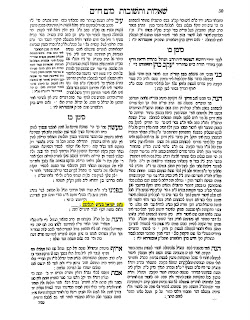
There is a question, however, regarding when the foregoing letter was written. Most place it sometime around 1744, but, at the latest, 1747. They do so based on the mention of “our teacher Gershon.” They understand that the Gershon referenced here is Avraham Gershon of Kutower, the Baal Shem Tov’s brother-in-law. As R. Gershon moved to Israel in 1747, and the letter mentions R. Gershon, it must have been while he was still in Medzhybizh.[5] Personally, I think that that conclusion assumes that R. Meir was intimately familiar with R. Gershon’s whereabouts. While there is no doubt that R. Meir heard of R. Gershon, it does not automatically follow that he was informed regarding when R. Gershon moved to Israel. It could very well be the letter was written after R. Gershon left for Israel and R. Meir then merely assumed that R. Gershon was still living in Medzhybizh – it is not as if there was an announcement in the Międzybórz Times or at OnlySimchas.com that R. Gershon had made Aliyah! Either way, this letter was written while the Baal Shem Tov was alive, and provides a virtually unimpeachable source for his participation in the community-at-large and about how others viewed him. I don’t think Rosman is exaggerating when he says that “[t]his responsum, then, would seem to be an excellent starting point for attempting to gauge the Besht’s position in his community and his relationship to the political and religious establishment” (119).

Aside from the above points that can be gleaned from this responsum, R. Shlomo Yosef Zevin, in an article that originally appeared in Sinai and has now been reprinted in the nice, new edition of his le-Ohr Halakhah uses this responsum for a different purpose. R. Zevin wants to disprove the notion that “the Hassidim and their Rebbes don’t care about studying the revealed Torah and thus they did not spend much time on studying talmud and poskim.” R. Zevin notes, as well, that this attitude towards Hassidim was prevalent right from the start of the Hassidic movement. That is, “even today, those who are not hassidim allege that the founder of the Hassidic movement, the Baal Shem Tov, was not a ben torah, heaven forbid.” R. Zevin totally rejects this notion as “false and incorrect.” As proof the Baal Shem Tov was indeed learned R. Zevin cites to the above responsum. R. Zevin explains:

In the Shu”t Mayim Hayyim from R. Hayyim Kohen Rapoport from Austria, printed there is a responsum from Medzhybizh regarding a lesion in the lung, from the Baal Shem Tov to the gaon R. Meir, the son of R. Jacob Emden, who was the chief rabbi in Constantine, and the response from the goan [R. Meir] to him [the Baal Shem Tov]. As is common knowledge, the Baal Shem Tov was not the Rabbi of Medzhybizh, even so the Baal Shem Tov is one of the signatories to the letter, singing it “Yisrael Baal Shem of Tluste” – “and the Maggid Mesharim of Medzhybizh.” [6] The response of R. Meir is a long one. R. Meir was not a hassid. It is important to note the honorifics R. Meir uses at the beginning of his response: “Champion in Yehuda and Israel! He who succeeds there at the small and the great. He provides balm and medicament to the persons without strength. He is great in Bavel and famous in Teveriah and has prevailed in all thins. The great sage, the eminent rabbi, famous for his good name, our teacher Israel, may God protect and bless him. And all of his colleagues, all of them beloved rabbis . . .” And would a goan [R. Meir] who is not a hassid uses such language on someone who is not a godal b’torah?

Therefore, R. Zevin, with this responsum, demonstrates that the notion that the Baal Shem Tov was not learned and not respected is utterly false.

Until now, we have been focusing on the Baal Shem Tov, but there is another important person in this responsum, the author – R. Meir (1717-1795)[7], the first born son of R. Jacob Emden.[8] R. Meir was the rabbi in Constantine in the Ukraine. R. Meir was highly respected in the area, as is demonstrated by this responsum. This is so, as you will recall, in that the purpose of the responsum was to settle a controversy in the town of Medzhybizh – a controversy between the local rabbi and some of the persons in the town. This was a serious controversy — indeed the petitioners describe it as “a fire burning in the community” — and, especially in light of R. Meir’s response, where he notes that the rabbi was wrong and if the rabbi refuses to admit that he is wrong, he is to be dealt with as a zakan maamrei as the rabbi, according to R. Meir, is denying a portion of the torah. This was no small matter. As the three persons picked R. Meir to adjudicate the matter, they must have respected him and thought that his answer, what ever it would be, would settle the issue.

Unfortunately, until now, we only had a tiny amount of written material from R. Meir, the bulk of which appears in Mayim Hayyim. Specifically, of the six extant responsa from R. Meir, four can be found in Mayim Hayyim. Now the reason they are included in Mayim Hayyim is because R. Meir is related to R. Hayyim HaKohen Rapoport.[9] What is shocking is that in his introduction to the Mayim Hayyim, R. Yaakov HaKohen Rapoport, publisher of the Mayim Hayyim, uses his relationship to R. Meir as the sole reason for publishing R. Meir’s responsa. That is, although the Mayim Hayyim was published by the Shapira hassidic publishing house in Zhitomer, and done so in the mid-19th century, R. Yaakov HaKohen Rapoport never mentions that he includes a responsum — the only one of its kind — from the Baal Shem Tov. Instead, the reason for the inclusion of the responsum is R. Meir.

As mentioned previously, today, Shmuel Dovid Friedman has attempted to fill the void of R. Meir’s works in publishing the first volume of R. Meir’s hiddushim. These hiddushim are on Mishnayot Seder Nashim and on the Rambam’s Mishneh Torah. The title of the book is taken from the above responsum. As R. Meir was referred to as “HaMeor HaGodol” thus the title of this new work is HaMeor HaGodol. See Meir Konstantine, HaMeor HaGodol, ed. R. Shmuel Dovid Friedman (Brooklyn, NY, 2007), [30], 352. [6]

While the publication of the Hiddushei Torah of R. Meir is indeed welcome, this particular work is plagued with numerous deficiencies. Firstand foremost is the problem with the manuscript itself. It does not appear that the Meor HaGodol was published from R. Meir’s actual manuscript. Instead, R. Meir’s manuscripts were copied over time by the Bick family and it is from these copies that the Meor HaGodol is comprised. Thus, there is no independent method of verifying that this material actually came from R. Meir. Aside from the manuscript, the introduction is rather bizarre. The introduction includes various stories about R. Meir, most of which focus on his relationship to hassidim. The bulk of the stories are then shown to be false, but only in the footnotes. So, the body of the text are the stories and then a careful reader will see that most of the stories likely never occurred. For instance, there is a story that R. Meir’s daughter — when R. Meir was sick and unbeknownst to him– sent a request to the Baal Shem Tov to ask him to heal R. Meir. The editors of Meor HaGodol, in note 49, then say it is hard to reconcile the story with the facts known about R. Meir. Or, another example is that the introduction includes a story that after R. Meir became a hassid — there is no evidence that he ever did so, but the story assumes so — his father, R. Jacob Emden, disowned R. Meir. Again, the editors, in note 59, state that “there are many difficulties with this story” and then proceed to enumerate them. Why a story for which there is no support would be included to begin with is left unexplained. Perhaps the reason is that the editors are unduly interested in demonstrating that R. Meir was a full hassid (indeed, the main chapter in the introduction is entitled “[R. Meir’s] Connection with the Baal Shem Tov”). It is particularly ironic that they present such shaky evidence in light of the fact the responsum in Mayim Hayyim from R. Meir is the only objective contemporaneous evidence of the Ba’al Shem from a Jewish source.

Moreover, the introduction seems to have missed and, in fact purposely left out, some material. Specifically, in note 3, the editors of HaMeor HaGodol note that R. Jacob Emden at some point added the name Yisrael. In the introduction they then attempt to understand what precipitated this change. They cite the following from R. Jacob Emden’s Hitavkut, (p. 112,a)

מבטן אמי קראני יעקב, אליו פי קראתי ורומם תחת לשוני, והוא יתברך שלחני בשמי קראני, וכעת הראני לקרוא שמי ישראל וכו’, ע”כ


“from birth I was called Yaakov, this is what I was called and my name elevated, and then God sent [a message] to me that I should be called in God’s name, and thus I will now be called Yisrael.”

Although we can see from that quote that R. Emden added his name, the introduction does not tell us exactly why. What is astounding is that the editors ought to know why R. Emden added his name. The reason is because the above quote from Sefer Hitavkut continues beyond the portion quoted and explains that the name Yisrael was added because it was a testament that R. Jacob Emden was correct in his battle with R. Jonathan Eybeschütz. Instead, the editors cut off the quote right before R. Emden explains precisely that. Therefore, I assume that the omission is because they would rather not bring up that R. Emden had a fight with R. Eybeschütz, or that R. Emden viewed himself as having been correct. It is worth noting that the Sefer Hitavkut is not the only place R. Emden offers his victory as the reason for the name change. Rabbi Dr. Jacob J. Schacter, on page 754 (n.11) of his dissertation about Rabbi Jacob Emden (Harvard, 1988), refers to a passage in Mitpachat Sefarim (p. 118 in the Lemberg, 1871 ed. and p. 171 in the most recent 1995 ed. – provided below) where R. Emden says “that after he battled with IS”H [R. J. Eybeschütz] a name was added” — a play on the verse in Genesis 32:24, 28. So it is incorrect to assert, as the editors of HaMeor HaGodol do, that “why and when R. Emden’s name was changed is unclear.” Rabbi Schacter also notes that Emden’s earliest reference “to himself as ‘Yaakov Yisrael’ is in a responsum SY [She’elat Yaavetz] II:24) dated February 22, 1765. In another responsum dated just six days later (SY II:144), Emden was addressed as ‘Yaakov Yisrael.’ For other references to this name, see SY II:25, 71, 72, 73, 112, [and] 146” (p. 754, n.11 – special thanks to Rabbi Schacter for his discussions with Menachem Butler about this aspect about Rabbi Jacob Emden).

Thus, in the editors’ effort to highlight the connection of R. Meir to hassidim, they downplay any opposition R. Meir’s father, R. Jacob Emden, had to hassidism (see n.59). They apparently were unaware (?) that an additional important statement from R. Jacob Emden has recently been published. (see here )

One final note. It is particularly disappointing today to find a sefer that does not contain an index. With technology as it is today, publishers easily should be able to provide a decent index to a book; it is quite surprising, then, that Meor HaGodol, does not contain an index.

Notes
[1] There are other sources as well, including letters. Many of the letters are highly controversial as to their authenticity. See Moshe Rosman, Founder of Hasidism: A Quest for the Historical Ba’al Shem Tov (University of California Press, 1996), 99-113, 119-126; Nahum Karlinsky, Historia SheKeneged (Jerusalem, 1998); and Immanuel Etkes, The Besht: Magician, Mystic and Leader (UPNE/Brandeis University Press, 2005), chapter six, “The Historicity of Shivhei Habesht,” 203-248, among many other sources.
[2] See Rosman, Founder of Hasidism, 143-155 and 162-8 (lending credence to some of the stories in Shivhei Ha-Besht based on governmental records), as well as his earlier article, “The History of a Historical Source: On the Editing of Shivhei Ha-Besht,” Zion 58 (1993): 175-214, and in his recently published monograph, Stories That Changed History: The Unique Career of Shivhei Ha-Besht (=The B.G. Rudolph Lectures in Judaic Studies, new series, 5) (Syracuse University Press, 2007), Rosman notes how through this text of some two hundred stories, one can “explore such themes as the Besht’s miraculous birth and childhood, his initiation into the mystical secrets, his revelations, his prayers, his dreams, his travels, his encounters with noblemen and priests, his contests with doctors, his attraction of various associates, and, most of all, the miracles, large and small, that he performs” (1). Rosman notes, as well, that over the past sixty years alone, “there have been five new Hebrew editions, some printed more than once; one Yiddish and two Hebrew reworkings; a German translation and critical edition, and an English translation printed four times. All this was in addition to various adaptations in fiction and in educational materials used by all types of Jewish schools, from Israeli secular to American Reform and Brooklyn Ultra-Orthodox” (24), and Rosman notes quite humorously how “Shivhei Ha-Besht has been analyzed as inspirational literature, political tract, holy writ, silly stories, historical source, and theological doctrine. It has entertained, inspired, embarrassed, inspired repentance, and formed the basis for doctoral dissertations. For nearly two hundred years it has been read with passion and diligence by people of many approaches and predilections. In search for the wellsprings of modern Jewish culture, it surely represents a unique source” (20).
[2a] For a discussion of the Shapira press see Ch. B. Friedberg, History of Hebrew Typography in Poland (Tel Aviv, 1950), 104-09 (discussing the Slavita period) and 135 (discussing the Shapira press in Zhitomer). For what precipitated the move, see Saul Moiseyevich Ginsburg, The Drama of Slavuta, trans. by Ephraim H. Prombaum (Lanham, Maryland, 1991).
[3] I have essentially used Rosman’s translation of this responsum.
[4] See Rosman, Founder of Hasidism, at 168.
[5] Dinur, B’Mifaneh HaDorot, vol. 1, pp. 205-6, cited in Rosman, Founder of Hasidism, 119 n.29.
[6] This is actually incorrect. The Baal Shem Tov does not sign himself as the Maggid of Medzhybizh, rather the final signatory, R. Moshe Yosef signs himself as the Maggid.
[7] 1795 is the death date given in HaMeor HaGadol, (there are no page numbers provided in the introduction thus I will use the footnote numbers to attempt to give a rough citation) at n.60. The source given is “a letter from R. Mordechai Blechman z”l the chief rabbi of Constantine to R. Hayyim Bick the chief rabbi of Medzhybizh.” The editors of HaMeor HaGodol, however, fail to provide where this source is located, i.e. is it in their possession, is it in some library or perhaps somewhere else. Moreover, they do not provide the context of the letter – was R. Meir’s death date mentioned in passing or was that the focus of the letter. Nor do they mention how R. Blechman knows this date. Did he pull it off of R. Meir’s tombstone or was it simply a legend? This sort of lack of information plagues the entire introduction of the Meor HaGodol.
This same death date, however, is given by Abraham Bick, Rebi Yaakov Emden (Jerusalem, 1974), 17, 182. Bick doesn’t either provide a source for this date. See also id. at 17-8, citing to where R. Jacob Emden and others quote R. Meir. About Bick’s 1974 biography, Schacter writes in his dissertation, that this work “is uncritical, incomplete and simply sloppy. it is barely more useful than an earlier historical novel in yiddish about emden by the general author with the same title published in New York, 1946. In general, all of Bick’s work is shoddy and irresponsible and cannot be taken seriously.” See Jacob J. Schacter, “Rabbi Jacob Emden: Life and Works,” (PhD dissertation, Harvard, 1988), 17.
The editors of HaMeor HaGodol explain that most of the biographical information on R. Meir comes from Kitvei HaGeonim (Pietrokov, 1928), 127-30, n.3. Additionally, R. Meir is mentioned a few times in his father’s autobiography, Megilat Sefer, Kahana ed., (Warsaw, 1896), 104 and 110. R. Jacob Emden mentions that he was unable to attend R. Meir’s wedding in 1732 even as his wife attended, though as Schacter notes in his dissertation, R. Emden had “travel[ed] to Amsterdam during this period” (152, n. 126).
[8] R. Meir was related to R. Rapoport through the marriage of R. Meir’s daughter to R. Hayyim HaKohen Rapoport’s grandson, Dov Bear. See R. Jonathan Eybeschütz, Luchot Edut (Altona, 1755), 62a. Additionally, R. Meir was the brother-in-law of R. Shlomo Chelm, author of the Merkevet HaMishna. One of the responsum in Mayim Hayyim, no. 28, from R. Meir is to R. Shlomo.
[9] In fact, this is the only reason why the responsum that includes the mention of the Ba’al Shem Tov appears in Mayim Hayyim. As mentioned above, when the Mayim Hayyim was published, it was done so not by R. Hayyim HaKohen Rapoport, the author of the bulk of the teshuvot, but instead by his son R. Yaakov. R. Hayyim had died prior to publishing his own works. Thus, R. Yaakov decided to include not only his father’s responsa but those from other relatives, as well. Thus, the Mayim Hayyim contains two title pages. After the first title page, the approbations that R. Hayyim received for his responsa are included (one additional later approbation is included but the main are addressed to R. Hayyim). R. Yaakov then included a second title page after which two additional approbations are included. These approbations were collected by R. Yaakov and mention not only R. Hayyim’s responsa but the inclusion of other luminaries including R. Meir. The second title page is used a division between the two types of approbations, those directed at R. Hayyim and those at the book Mayim Hayyim. It is worthwhile noting that in the electronic editions they have removed the second title page. For instance, www.hebrewbooks.org only includes the first. This is but one example of the need to actually obtain a hard copy of a book and not solely rely on such databases. See Anthony Grafton, “Future Reading, Digitization and its Discontents,” The New Yorker (Nov. 5, 2007) and his New Yorker web-supplement, “Adventures in Wonderland,” for other limitations of digitization.


Anonymous Sefarim

Although, taken for granted today, there is a rather interesting discussion regarding putting ones name on one’s sefer. The early Jewish books we have- Tanak, Mishna and Talmud, the authors or compliers did use their names. It appears that this practice started in the times of the patanim. R. Yehuda haHasid says

In the early days, the patanyim – the ones that appear in Tanakh – did not use acrostics. Further, early blessings that were fashioned by the Great Assembly do not either have such attributions. However, when wicked people began creating songs of nothing . . .and people could not discern what the righteous people had written and what these wicked people wrote, the righteous people began putting their names in the acrostic . . . and with this the wicked could no longer take credit for poems that were not theirs.

Sefer Hasidim (ed. Wistinetzki), Frankfort 1924, no. 470, p. 133.

Thus, the practice of taking credit for one’s written came in order to allow the reader to know the provenance of the work. Others claim the use of the acrostic was just borrowed from non-Jewish sources. Be it as it may, these claims only date the usage of the writing the authors name to the time after the Talmud.

Some, however, go to some length to show that even in the books of Tanakh and the Mishna the authors or compliers did, at the very least, hint to their name. The Midrash Tanchuma explains why the letter Hey in the verse in Hazenu (Devarim 32:6) H-l’shem tigmilu zot (ה-לה’)is separate from the name of God. The Midrash explains that this unusual separation is to “tell the reader to take the first letters of the verses up until this verse. The Hey (ה) from האזינו, the Yud (י) from יערף, the Kuf (כ) from כי שם, the Hey (ה) from הצור, the Shin (ש) from שחת לו, and finally the Hey (ה) from ה-לה’. Those letters numerical value equal the name of Moshe as this is Moshe signing his name just as a person who finishes his book signs his name to it.” (Tanchum Hazenu 5). Though some note that this quote may have actually been inserted later, it does demonstrate that at a fairly early time people felt it was important to claim authorship to their own work.

At times, however, there were some even long after the Talmud who wrote works in an anonymous fashion. One book provoked a discussion that sheds some light on the above discussion. R. Shmuel Aboab (1610-1694), wrote the ethical work Sefer HaZikronot, first published in 1631 in Prague, recently reprinted in 2001. However, the book was published anonymously. R. Hayyim Yosef David Azulai (Hida) in his bibliographical work, Shem HaGedolim, has an extensive discussion on the entry for the Sefer HaZikronot whether one should or should not note that one is acatully the author of a book. Hida quotes another passage in the Sefer Hasdim that offers an explanation why some do not note they are the author. “The early ones did not write their names on their works for example who wrote Torat Kohanim, Mehilta etc. so that they would not derive benefit from this world and lose any reward they will have in the world to come.” Sefer Hasidim, ed. R. R. Margolis no. 367. However, Hida notes that although for the “early ones” such as the those before the time of the Geonim, they did not reveal their authorship, from the times of the Geonim this has become common practice and thus in today there is no longer a reason to hide who the author is. Hida explains that the nature of R. Aboab’s book was the reason he did not reveal his authorship. The Sefer HaZikronot is a book of exhortations, a mussar book, as R. Aboab did not want to appear as more righteous in giving ethical direction he decided to remain anonymous.

Interestingly, the Hida nor anyone else, ever mention any prohibition in revealing the name of an anonymous work.

Sources: Yakov Shmuel Speigel, Amudim b’Toldot HaSefer HaIvri – Kitiva V’Hatakato, Ramat-Gan 2005, pp. 307-317; R. Hayyim Yosef David Azuali, Shem HaGedolim, Jerusalem 1997, vol. 2 Sefarim, 46-49.

ADDITIONAL NOTE: for further on the pronunciation of the word ה-לה’ see David Yishaki, in R. Jacob Emden, Luah Eres, 2000, appendix.


Hot Tears For A Close Friend: Rabbi Eitam Henkin HY”D

Hot Tears For A Close Friend: Rabbi Eitam Henkin HY”D
by
Rabbi Yechiel Goldhaber
translated by Daniel Tabak
I shall never forget when I first met Rabbi Eitam Henkin HY”D three years ago. At the time I had begun preparing a study on the parting of minds in the kollels of the Old Yishuv in Jerusalem 150 years ago. I managed to get my hands on a lot of rare sources, but the morass of material only beclouded the depths of the goings-on in the city at the time. The main purpose of my study was to ascertain the causes of dispute between the various ethnic groups and kollels, but the facts grew ever larger and more ramified, and soon obscurity overtook clarity. As the saying goes, I could not see the forest for the trees.
One key element in the conflict centered upon Rabbi Yechiel Michel Pines. On the one hand, Rabbi Shmuel Salant viewed him as an ally, but on the other, Rabbi Yehoshua Leib Diskin, head of the rabbinical court of Brisk, loathed him. My study successfully identified this dispute as one of the main points of contention that whipped everyone in the city into a frenzy, a flashpoint whose consequences lasted decades.
Needless to say, I had the articles by Eitam Henkin about Rabbi Pines in front of me. I read them multiple times, and felt as if he had lived and breathed the alleyways of the Old City in those times. I struck up a connection with him,and he shared with me his textured perspective of the city with all its troubles. From then one, not two weeks passed when we did not speak by telephone about it.
About a year ago I needed to finish an article on Rabbi Shmuel Salant’s search for a rabbi who would support him as he entered his twilight years. I uncovered some rare documentation that shed new light on this episode, but to my dismay, I could not find anyone with whom to speak in order to clarify this complicated issue. Only Eitam Henkin lent me his ear.
In the meantime, we continued to speak about his great-grandfather Rabbi Yosef Eliyahu Henkin zt”l. I would contribute some of what I knew, and he would include me in his work on collecting and compiling material about his great-grandfather. Our discussions took us from Lithuania all the way to the United States, and everything in between.
We wrote each other a lot, and we had many conversations. He would begin each conversation by saying that he was very busy with his studies and editing articles, yet he still devoted many minutes to me.
I tried to get a hold of Eitam Henkin many times on the phone to obtain some point of clarification, but he was not always available. Quite often his wife Na’ama HY”D picked up the phone and I would“complain” that I was having trouble “catching” him on the phone. When I explained to her the urgency of the matter, because I had to publish the article in two weeks’ time, her answer was characteristic of a Torah scholar’s wife! She would respond very simply: “my husband is soaring in Torah study. I too take care not to disturb him.” When I heard sentences like those, I felt deep embarrassment.
His textual analysis was razor-sharp; he took pains with every word and letter. More than he questioned the written letter he investigated and interrogated the unwritten word or sentence absent from the document — “why was it missing?” he would ask, along with a barrage of similar questions.
His answers and conclusions were honest and artless; one never found him resolving a perplexity with a forced answer. How rare is that! His level of understanding in any given topic was very advanced, as someone who had completed many tractates of the Talmud along with their commentaries.
His modesty far exceeded what one could guess. He never boasted. His honesty was ever-present, in every field and topic, be it in Torah study, academic research, or this-worldly life.
Our final conversation took place between Rosh Hashanah and Yom Kippur. I called him to wish him a Shana Tova. I mentioned the well-known bafflement about the statement of the Rabbis that there were never such good days for the Jewish people as Yom Kippur, when Jewish girls would involve themselves in happy matters…but is it not the most frightening day of the entire year? He responded on the spot:
“If every positive thing leads to happiness, then isn’t it logical that something negative that becomes positive should generate even greater joy? Within the darkness light can be seen. That is the deeper truth of repentance done out of love, from which willful sins are treated as merits; the negative causes an outburst of happiness. The Jewish girls chose this day specifically to concern themselves with matters of love, for there is no love quite like God’s love for his wayward servants who have reconciled themselves with him.”
Such words befit the one who uttered them…
Few are comparable to this wise young man, whose comings and goings were marked by humility, who was as familiar with the paths of the Heavenly Jerusalem as he was with the roads of Mateh Binyamin.
May Eitam and Na’ama’s memory be blessed.


The Legend of R. Yehuda Halevi’s Death: Truth or Fiction & the Cairo Genizah

The Legend of R. Yehuda Halevi’s Death: Truth or Fiction & the Cairo Genizahby Eliezer Brodt

A few years ago on the Seforim Blog I dealt with the famous legend of R. Yehuda Halevi’s death (link). More recently in Ami Magazine (# 32) I returned to this legend and related topics. This post contains new information as well as corrections that were not included in those earlier articles.

R. Yehuda Halevi was born in the year 1075 in Toledo, Spain, and died in 1141.[1] He is famous in Jewish history for being a great paytan,[2] authoring hundreds of beautiful piyutim. However, he is even more famous for authoring one of the most important Jewish philosophical works of all time, the Kuzari. This work is written in dialog form between a king and a Jew who is persuaded to convert to Judaism. The Jew defends Yiddishkeit, dealing with many issues of philosophy and various Mitzvos among other topics. This work was written by R. Yehuda in Arabic, but was translated into Hebrew in 1167. It was learned by many throughout the centuries, and numerous works were written to explain it.[3] The Kuzari had a tremendous impact on Jewish thought through the centuries and continues to do so today. In this article, I hope to deal with two legends told about R. Yehuda Halevi: one about how he met an untimely death when he got toEretz Yisroel [4] and the other about him being the father-in-law of Ibn Ezra.

Among the more famous kinos that we recite on Tisha B’Av is Tzion Halo Tishali. This piyut is about the author’s passion to walk on the holy soil of Eretz Yisrael and to pray at the Kevarim. Throughout the Kuzari and in many of his piyutim we find a strong emphasis of his love for Eretz Yisroel[5]. R’ Yosef Dov Soleveitchik, when talking about R’ Yehuda Halevi in his lectures on the Kinos, said “Rabbi Yehuda Halevi adored everything about Eretz Yisroel; he was madly in love with Eretz Yisroel. I have never known anyone so in love with Eretz Yisroel as Rabbi Yehuda Halevi. There were many others who went to Eretz Yisroel, but they did not confess their love for the land in such terms as he did”.[6]

Already in the Machzor from Worms written in 1272 and in the Nuremburg Machzor written in 1331 we find this kinah was said on Tisha Bav. The piyut, however has become famous for a different reason.[7]

In the Artscroll commentary on the Kinos, R. Avraham Chaim Feuer writes:

An ancient manuscript states that R. Yehuda Halevi composed this kina while journeying towards Eretz Yisroel and recited it when he reached Damascus, facing the direction of Zion. Although many historians believe that R. Yehuda Halevi only got as far as Egypt, never even reaching Damascus, tradition has it that he finally reached Jerusalem (circa 1145).[8] There he fell to the ground in a state of ecstasy… As he was embracing the dust near the temple mount, he was trampled and killed by an Arab horseman.[9]

R’ Yosef Dov Soleveitchik, when talking about R’ Yehuda Halevi in his lectures on the kinos, said,

“While we know that he left for Eretz Yisroel, we know nothing about him from the date of his departure from Egypt. A story is told, I do not know if it’s true, that when he arrived in Eretz Yisroel, he fell on the soil… at that very moment a Bedouin on a horse rode over him and killed him. Now they say there is documentary evidence that he died in Egypt on his way to Eretz Yisroel. I do not know about it.”[10]

The story has certainly entered Jewish popular culture. In 1851 Heinrich Heine published his Romanzero, and in the section of ‘Hebrew Melodies’ he writes of “Jehuda ben Halevy’s” death at the hands of an “impious Saracen” horseman:

Calmly flow’d the Rabbi’s life-blood,
Calmly to its termination
Sang he his sweet song.—his dying
Sigh was still—Jerusalem!

In this article I intend to discuss this legend of R. Yehuda Halevi’s death. Did he actually reach Eretz Yisrael? When did he compose the piyut of Zion Haloeh Tishali? Why did he want to go to Eretz Yisroel so badly, considering that it was very dangerous in his time?

By the way of introduction, it is worth noting the words of R’ Elazar Ezkiri in his classic work Sefer Chareidim. He says that everyone is supposed to love Eretz Yisroel and go there… therefore the Amoraim would kiss the ground when they came,[11] and it’s good to recite the piyut Shir Yedidus composed by R’ Yehuda Halevi . . . [12] Apparently Rav Yehuda Halevi is considered a first stop for expressing such affection.

R. Abraham Zacuto (1452-1514) in Sefer Yuchsin (first printed in 1566) writes that “R. Yehuda Halevi was fifty [years old] when he came to Eretz Yisroel and he is buried together with his first cousin, Ibn Ezra.”[13] Later, however, R. Zacuto writes that R. Yehuda Halevi is buried with R. Yehuda bar Ilay in Tzefat.[14] Setting aside the apparent contradiction regarding R. Yehuda Halevi’s burial place, in both of these descriptions R. Yehuda Halevi is depicted as having actually made it to Eretz Yisrael. Notably absent, however, is the legend of an Arab/Bedouin horseman killing him.

The earliest source for the Arab horseman legend only appears in R. Gedaliah Ibn Yachia’sShalsheles Hakabbalah, first published in Venice in 1587, over four hundred years after R. Yehuda Halevi died. He states that he heard this legend from “an old man”.[15] Although theShalsheles Hakabbalah appears to be the source for R. Feuer’s statement above, the Shalsheles Hakabbalah has one addition to the legend — omitted by R. Feuer — that R. Yehuda Halevi recited the kinah of Zion Halo Tishali right before the Arab horseman killed him.[16]
The next time that this legend appeared in print, after its mention in the Shalsheles Hakabbalah, is by R. David Conforte (1618-1678) in his Koreh Hadoros (first printed in Venice, 1746),[17] followed by R. Yechiel Halperin (1660- 1749) in Seder Hadoros (first printed in Karlsruhe, 1769).[18] It was then repeated by R. Wolf Heidenheim in his edition of the Kinos. R. Yehosef Schwartz (1804-1865) in his Tevous Haaretz also brings this legend.[19] By the 19th century, this legend became, perhaps, the most famous story about R. Yehuda Halevi, since not much else was known about him.

Adam Shear called attention to an edition of the Kuzari printed in 1547 which says on the front page:כוזרי חברו בלשון ערבי החכם הגדול אבי כל המשוררים רבי יהודה הלוי הספרדי ז”ל אשר קדש שם שמים בויכוחו הישר הזה… (ראה: ארשת א, עמ’ 67).

This term is usually used for martyrdom. Shear suggests that perhaps it comes from this story, later mentioned by the Shalsheles Hakabbalah,[20] although he concludes that the idea is far-fetched.

In 1840 R. Shmuel David Luzzatto (ShaDaL) in his collection of the Diwan containing the poems of R. Yehuda Halevi, Besulas Bas Yehuda, questions the legend on the grounds that Jerusalem was in the hand of Christians at the time, and Arabs were not allowed in the city. Furthermore, even if there were Arabs around, they would not have done such a brazen act right at the city gate.[21] So Shadal concludes that he died on his way from Egypt, never even reaching Eretz Yisroel.[22] S. Fuenn accepts the conclusion of Shadal.[23] R. Michael Sachs in his work Die religiöse Poesie der Juden in Spanien also accepts Shadal’s conclusion because he notes that while Ibn Ezra refers to him in his work on Chumash he does not mention anything unique about his death,[24] he just says שאלני ר’ יהודה הלוי מנוחתו כבוד.Around the same time R. Matisyahu Strashun reached the same conclusion, perhaps independently. In a letter written in 1841, he questioned the veracity of the legend,[25] alsopointing out that Jerusalem in the times of R. Yehuda Halevi was ruled by Christians and not by Arabs. R. Strashun allows that although it is possible that R. Yehuda Halevi composed Zion Halo Tishali when he got to Jerusalem — not that we know that he did — the part of the story about the Arab killing him is certainly not true. As a general matter, R. Strashun notes that it is well known that the Shalsheles Hakabbalah is an unreliable source.[26]Simon Dubnov suggests that there is a kernel of truth to the story –that some Crusader must have killed a Jew right after he arrived in Eretz Yisroel.[27]Israel Zinberg suggests that, most likely, R. Yehuda Halevi returned home to Spain after visiting Eretz Yisrael, based on the fact that R. Shlomo Parchon, a student of R. Yehuda Halevi who lived in Spain, quotes a statement from R. Yehuda Halevi “after R. Yehuda Halevi was in Egypt”.[28]Specifically, R. Yehuda Halevi had told Parchon that he was doing teshuva and therefore no longer composing.[29] Zinberg therefore argues that this statement to Parchon must have taken place after R. Yehuda Halevi was in Egypt; thus R. Yehuda Halevi must have returned to Spain.[30] David Kaufmann also used R. Shlomo Parchon as a source to deduce how R. Yehuda Halevi died. Kaufmann points out that had R. Yehuda Halevi died in such a spectacular fashion as the legend has it, R. Shlomo Parchon would have been sure to note it. Since R. Parchon makes no note of this extraordinary death, R. Yehuda Halevi must have died a natural death.[31] InAmudei Avodah, Landshuth also questions the legend due to lack of evidence that R. Yehuda Halevi ever made it to Eretz Yisrael.[32]

In regard to the piyut, Zion Haloh Tishali, Leser Landshuth cites different opinions about where it was written: either in Spain, Damascus, or Syria.[33] Yitzhak Baer[34] and David Kaufmann cite a manuscript housed at Oxford which says that R. Yehuda Halevi said this piyut when he got to Yerushalayim.[35]

Earlier I mentioned that the Sefer Yuchasin writes that R. Yehuda Halevi was fifty years old when he came to Eretz Yisrael, and he is buried with his first cousin, Abraham Ibn Ezra. Later he writes that he is buried with R. Yehuda bar Ilay in Tzefas. In the Travels of R. Benyamin of Tudela, written around the year 1170, which is only thirty years after the R. Yehuda Halevi died, R. Benjamin records that he visited the grave of R. Yehuda Halevi in Tiveriah.[36] It’s interesting to note that in the travels of R. Pesachya of Regensburg which were written right after R. Benyamin of Tudela’s (around 1180) there is no mention of the grave of R. Yehuda Halevi.[37]

In the travels of R. Yitzchak ben Alfurah, written around 1441, he also writes that he visited the graves of Ibn Ezra and R. Yehuda Halevi.[38] In a different anonymous list of Kevarim in Eretz Yisroel from the fifteenth century, recently printed from manuscripts from the Ginsburg Collection, it also records that Ibn Ezra and R. Yehuda Halevi are buried next to each other.[39]All of these sources provide strong evidence that R. Yehuda Halevi actually made it to Eretz Yisrael. Nevertheless, an anonymous traveler in 1473[40] and R. Yosef Sofer in 1762 write that they visited the grave of Ibn Ezra but make no mention that R. Yehuda Halevi is buried there as well.[41] In the travels of R. Moshe Yerushalmi from 1769, he writes that he visited the graves of Ibn Ezra and R. Shlomo Ibn Gabirol , but no mention is made of the grave of R. Yehuda Halevi.[42] A manuscript from the author of the Koreh Hadoros, seems to indicate that R. Yehuda Halevi was buried in Jerusalem.[43] It should of course be noted that the location of Ibn Ezra’s death in Eretz Yisroel is itself problematic. Although Sefer Yuchasin brings the opinions that he is buried in Eretz Yisroel, he initially states that he died in Calahorra, Spain. Furthermore, Rabbi Moshe of Taku – an earlier source than Sefer Yuchasinwrites of a legend told to him by Jews of England that Ibn Ezra died there, after encountering a number of sheidimwhich appeared to him as black dogs.

Another piece of evidence can be found inn some early manuscripts, where we find before the kinah the following superscription:

זאת הקינה יסד ר’ יהודה קשטלין לפני הר ציון

But even more than that Rabbi Holzer discovered in a manuscript written before 1300 (which he is preparing for print) , which has the following statement:

יסוד רבינו יהודה הלוי הקשטלין אשר יסדה תחת הר ציון בבואו לירושלים עם המלך מספרד וראה הר ציון שמ(ו)[ם] נשא את קולו ובכה על חורבנו ואמר ציון הלא תשאל

See The Rav Thinking Aloud, p. 222. I would like to thank Zecharia Holzer for bringing this source to my attention. What is important about these sources is that they are before theShalsheles Hakabbalah.

To sum up, there are early sources which imply that R. Yehuda Halevi did indeed arrive in Jerusalem. But with regard to the legend that he was trampled at the gates as soon as he got there, it is much more questionable.
Over one hundred years ago the Cairo Genizah was discovered and collected from an attic of theBen Ezra shul. Due to this incredible find, every area of Jewish literature and history has been greatly enriched.[44] Just to list some of the many areas that were enhanced by this discovery: many works of the Geonim and manuscripts related to the Rambam were found[45] as well aspiyutim of great people. Knowledge of Jewish history, especially from the time period of the Geonim[46] and onwards was greatly improved by this discovery. Additionally, many years after the Cairo Genizah was originally found and its great treasures published, even more discoveries were made based on documents that were supposed to have been discarded since they were thought to have no value. Many of these later discoveries were made by the great Genizah scholar Shlomo D. Goitein. Starting in 1954, Goitein printed his discoveries with his explanations of the material in various journals and then later on, in his classic series A Mediterranean Society which documents in great detail every aspect of Jewish life based on those finds.

One area that benefited greatly from the later discoveries of Goitein was the history of R. Yehuda Halevi. Before this discovery, the biography of R. Yehuda Halevi was written by the early scholars of Jewish history such as Shadal[47], David Kauffman, Chaim Schirmann and many others. Their work was based heavily on the poems of R. Yehuda Halevi, for this was just about the only source. These poems existed in many manuscript collections. For example, R. David Conforte (1618-1678) in his Koreh Hadoros mentions seeing one such collection.[48] Before the aforementioned discoveries, all that was known about R. Yehuda Halevi was that he was a great poet, a medical doctor,[49] and an Askan. He was possibly a talmid of the Rif[50]and was certainly close with the Ri Migash, and may have even been his secretary for a short time.[51]And of course, in addition to his piyutim he was most famous for his important work of Jewish thought, the Kuzari.

However, among the Genizah discards Shlomo D. Goitein found many documents relating to R. Yehuda Halevi, all written around 1130-1141, including many in R. Yehuda Halevi’s own handwriting! Many of these documents can be viewed online today. Starting in 1954, Goitein printed his discoveries with his explanations of the material, in various journals, mostly inTarbitz. Later on, in his classic multi-volume A Mediterranean Society (volume V, pp. 448-468), he included an excellent chapter on R. Yehuda Halevi based on all the material which he had found over the years. Most of his interpretations of the material he discovered have been accepted by Professors C. Schirmann and Ezra Fleischer, renowned experts on Piyut.

In A Mediterranean Society, Goitein writes, “a full publication of all the geniza letters referring to Judah Halevi would fill a book.”[52] Although Goitein never got around to writing that book, in 2001, Professors Moshe Gil and Ezra Fleischer did write such a book. The title of the book isYehuda Halevei U’vnei Chugo, and it is a six hundred and forty page study of all the material from the genizah discovered by Goitein relating to R. Yehuda Halevi. This book includes all the original documents (55!) with notes and an in-depth history of all that can be gleaned from these letters. The discoveries of Goitein, followed by Gil and Fleischer are simply astounding.
For the purposes of this article, we will focus on discoveries related to R. Yehuda Halevi’s journey to Eretz Yisrael[53]. The relevant documents were written by a Cairo business man named Abu Said Halfon who was a very close friend of R. Yehuda Halevi. I should mention at the outset, that we have more in depth information of R. Yehuda Halevi’s last year of his life from these letters than we have of the rest of his life. It is also incredible to see from these letters how popular R. Yehuda Halevi was and how beloved he was by everyone.[54] This was before the Kuzari was widely read and learned, since R. Yehuda Halevi had just completed this work right at that time. A description of him from the letters reads, “God has been beneficent to you and sent you the quintessence and embodiment of our country our refuge and leader the illustrious scholar and unique and perfect devotee rabbi Judah the son of Halevi”.[55]

What follows is a brief time-line of R. Yehuda Halevi’s journey to Eretz Yisrael based on the research of the aforementioned professors.[56] In 1129, when R. Yehuda Halevi was fifty four years old, he decided to make the journey to Eretz Yisrael. In the year 1130, R. Yehuda Halevi began his journey. He intended to travel through Egypt. We don’t know why he didn’t. But we do know that he ended up in North Africa. In North Africa, he became good friends with Ibn Ezra. For some unknown reason, he ended up back in Spain.[57] Not too much information is known about why this journey to Eretz Yisrael did not end up happening. Ten years later, in 1140, R. Yehuda Halevi began the journey again. He ended up in Alexandria on September 8. He had intended to leave from Egypt to Eretz Yisrael immediately, but was delayed. He ended up staying in Cairo until Pesach. After that he returned to Alexandria. A few days before Shavuos of 1141, he boarded the boat, and on Shavuos, he set sail to Eretz Yisrael.[58] A letter written about 6 months later indicates that R. Yehuda Halevi was no longer alive. It seems that he was alive for 2 months in Eretz Yisrael and that he died in either Tammuz or Av.[59] We don’t have any information about his stay in Eretz Yisrael. It would seem that either he got sick or died a natural death. From the documents there is no clear answer as to whether the legend is true or not (except by omission). It’s rather disappointing that with all the manuscripts discovered in the Cairo Geniza that enriched us with an in-depth, heavily detailed history of R. Yehuda Halevi’s last years until he left to Eretz Yisrael, we do not know anything more, but of course the documents could not refer to the unnatural death if that had not happened or been dreamed of yet.

However, there is one letter written three months after the death of R. Yehuda Halevi that does seem to indicate that perhaps the legend is true. The letter reads as follows (the ellipses appear in the original):

ולא נעלם ממנה אודות רבינו יהודה הלוי הצדיק החסיד זק”ל אשר עליו באמת ניבאו נביאי האמת עין לא ראתה, ההיה גבור ביראת אלהים ובתורתו, ומאמרי פעליו מעידים צדקו, באודותיו ירונו כצפורים בעתותן למנוחת עולם הוטע כבוד גן אלהים, וברמה הוא נשא נס גדולותיו והליכות גבורותיו, אשר תרונה ביקרו, והתיקר… וביקרו, ותמונת ה’ הביט… בשדה צען להאירה… זק”ל לא… צור… מחנה שדי… להתנחל לרשת… עזי…וישם… בדמות השכינה ובמראה… בשערי ירושלים

This letter was first printed by Jacob Mann in 1920 but he dismissed the possibility that it was referring to the author of the Kuzari.[60] Goitein highlights the line “ולא נעלם ממנה אודות רבינו יהודה הלוי הצדיק החסיד זק”ל,” which would seem to indicate that his death was not natural (calling him a kadosh is typically reserved for martyrs). Note that the last words, בשערי ירושלים, would seem to support the legend. However, the letter is damaged and hard to read so one cannot say anything conclusively. However Fleischer is willing to use the letter, even with its missing parts, to support the legend. Especially since, he says, the author of the letter used the word קדוש twice in the phrase זק”ל instead of the usual ז”ל. He also has other proofs from a careful reading of the letter. Fleischer concludes from this that the legend about R. Yehuda Halevi’s death is not so far-fetched. In light of this possibility, Fleisher notes, that one should be careful not to make fun of legends.[61] Additionally ,there is also another letter in this collection that refers to R. Yehuda Halevi as a kadosh.[62]

We have shown, in light of the documents discovered in the Cario Genizah that R. Yehuda Halevi did indeed make it to Eretz Yisroel. And it would seem that there is also a good chance that the story that the Shalsheles Hakabbalah brings is true, and that he died a strange death through unnatural causes. The question remains as to why he decided to go to Eretz Yisroel at that time.[63] There were no real communities of any sort there, traveling was dangerous, and he was an older man. It is clear from many of his poems and especially from specific passages that he had a tremendous love for Eretz Yisroel. Professor Elchanan Reiner notes that he was one of the first known people that actually made the dangerous voyage to Eretz Yisroel in the times of the Rishonim. Reiner says that it was due to his strong desire to daven there, especially at various Kevarim.[64] There is strong support for this, especially in his kina Zion Halo Tishali,where he mentions this desire to daven at the kevarim. Ezra Fleischer suggests that R. Yehuda Halevi thought others would follow him to Eretz Yisroel.[65]

Goitein writes: “one might argue that the themes of Israel’s uniqueness, of the holiness of Palestine… are overdone in the Kuzari and in Ha-levi’s poetry. They are but for good reasons. It was a time of extreme urgency. Constant and gruesome warfare was going on in Spain. As Judah Ha-Levi emphasizes in his poems, whenever Christians and Muslims fought each other, the Jews were affected most by the disturbance of peace. The feeling of impotence in the absence of any signs of relief was dangerous forebodings of despair and loss of faith… All in all, the voice of encouragement ringing out from Ha-levi’s poems was stronger than whimpers of despair.”[66]

Rabbi Yehuda Leib Gerst, without seeing what Goitein wrote, suggested that since this was a time that Jews were downhearted, especially about Eretz Yisroel, he wanted to reawaken love for Eretz Yisroel. Even though it was dangerous to go at that time and it seems that many tried to convince him not to go, he still gave up everything: family, friends and a comfortable life style. He writes that even if the story of the Shalsheles Hakabbalah did not happen exactly as he heard it, his trip to Eretz Yisroel still caused a tremendous Kiddush Hashem.[67]

Although R. Yehuda Halevi’s trip did increase the Jewish people’s hope and did increase its emphasis on Eretz Yisrael, it is not clear that this was his own personal intention for going. In one of the letters discovered in the Geniza, it sounds as if he wanted to go quietly. He knew his days were numbered and he wanted to be in Eretz Yisrael alone.[68]

There is one last point worth mentioning: R’ Shlomo Yosef Zevin wrote a beautiful piece that shows that in addition to the Kuzari being a philosophical work, it also has many halachic aspects and was accordingly used by many.[69] One recent example is in the famous controversy between the Chazon Ish and many other gedolim regarding the placement of the International Dateline – specifically regarding which day the bochurim of the Mir yeshiva should celebrate Yom Kippur in Japan. One of the main sources on the topic of the Chazon Ish was the Kuzari.[70]Regarding the halachic aspect of going to Eretz Yisroel, the Kuzari writes that it is a Mitzvah even nowadays, making him one of the earliest sources to say such a thing. Even more importantly, he says one should go even if it’s dangerous.[71] In this light, it is evident why he made this trip: he held that he was halachically obligated to even though it was dangerous![72]

I would like to conclude with one last point that is related to all this. I mentioned earlier that R. Abraham Zacuto in Sefer Yuchasin writes that “R. Yehuda Halevi was fifty [years old] when he came to Eretz Yisroel and he is buried together with his first cousin, Ibn Ezra.[73] Now we know that there was certainly a strong connection between Ibn Ezra and R. Yehuda Halevi. D. Kaufmann gives a listing of the many times which Ibn Ezra quotes R. Yehuda Halevi throughout his works.[74] In addition, there are many other places in his works which clearly indicate that R. Yehuda Halevi had a great influence on his works.

R. Azariah de Rossi, in his Me’or Eynaim, writes that R. Yehuda Halevi was Ibn Ezra’s father-in-law (chapter 42). Koreh hadoros also brings this down. R. Immanuel Aboab in his Bemavak ‘al Erko shel Torah, written in 1615, claims that Ibn Ezra was both R. Yehuda Halevi’s son-in-law as well as a cousin.[75]

The Shalsheles Hakabblah brings a legend which he had heard about how exactly Ibn Ezra became the son-in-law of R Yehuda Halevi.[76] The gist of the story was that R. Yehuda Halevi was working on a poem and he got stuck. He left his notebook open and went away, and when he returned, he found the poem completed. It turned out that Ibn Ezra had completed it, and because of this, R. Yehuda Halevi let him marry his only daughter. There are many versions of this story, but strangely, if this were true, in the many times that Ibn Ezra quotes the Kuzari in his works, he never once refers to him as his father-in-law.[77]

R. Yehuda Al-charizi writes in his Sefer Tachkemoni, (written between 1195-1234) that Ibn Ezra had a son Yitzhak who was also a great poet but he tragically left the proper path, apparently converting to Islam.[78] Some took this as a license and went so far as too say that any of the problematic ideas[79] mentioned in the writings of Ibn Ezra were added in by this son.[80] For many years scholars were searching for more details about this sad saga. Finally they found a collection of Yitzchak’s poems which they hoped would shed some light on the matter, but the owner wanted a ridiculous sum of money for it. It was not purchased, and during the Second World War it was lost. Eventually, the collection was found and printed but it turned out that it did not really shed much light on this story.

However, in the same documents that Goitein found about R. Yehuda Halevi, there were many mentions of Yitzchak Ibn Ezra (some in the documents written by R. Yehuda Halevi himself). Both Goitein and Fleischer concluded that although R. Yehuda Halevi was not the father-in-law of Ibn Ezra, his son Yitzchak did marry R. Yehuda Halevi’s only daughter.[81] They go so far as to show that Yitzchak and his wife, R. Yehuda Halevi’s daughter, were supposed to follow him to Eretz Yisroel eventually. So there was indeed a family connection between Ibn Ezra and R. Yehuda Halevi. There is even a letter with instructions from R. Yehuda Halevi for a Yehuda ibn Ezra which some want to suggest was his grandson, son of Yitzchak![82] In Sefardi communities it is not unique at all to name after a living relative.

In conclusion I have shown based on documents from the Cario Genizah that it is likely that the legend recorded by Shalsheles Hakabbalah regarding R. Yehuda Halevi is true and he did indeed make it to Eretz Yisroel and that he died an unusual death. We also see from these documents that the legend which is brought by many that there was a family connection between R. Yehuda Halevi and Ibn Ezra is also true, as Yitzchak, Ibn Ezra’s wayward son married R. Yehuda Halevi daughter.

I would just like to conclude with a great quote from the Chazon Ish which I think is very appropriate here:

דברי הימים וקורות עולם הם מאלפים הרבה את החכם בדרכו, ועל תולדות העבר ייסד אדני חכמתו. ואמנם בהיות האדם אוהב לחדש ולהרצות לפני הקהל, נצברו הרבה שקרים בספרי התולדות, כי בן אדם אינו שונא את הכזב בטבעו, ורבים האוהבים אותו ומשתעשעים בו שעשועי ידידות, ועל החכם להבר בספורי הסופרים לקבל את האמת ולזרות את הכזבים, וכאן יש כר נרחב אל הדמיון, כי טבע הדמיון למהר ולהתקדם ולהגיד משפט, טרם שהשכל הכין מאזני משפט לשקול בפלס דבר על אפנו, והדמיון חוץ משפטו כרגע, מהו מן האמת ומהו מן הכזב (אמונה ובטחון, פרק א אות ח).

[1] For his basic history see Y. Baer, A History of the Jews in Christian Spain, 1, pp. 66-77;Encyclopedia Judaicia, 11, pp. 492-501; Yehudah Halevi, A. Doron, Ed. 1988 and the sources in note 4. See also S. Werses in B-Orach Maadah, (Aron Mirsky Jubilee volume), pp. 247-86.
[2] See for example what R. Menahem di Lonzano writes:כי היה מנהג ישראל… לשורר לש”י בליל שבת… וחשובי קדמוני המשוררים… ורבי יהודה הלוי… (דרך חיים, דף כג ע”א).
[3] Its influence is the subject of the beautiful book, A. Shear, Kuzari and the Shaping of Jewish Identity, 1167-1900, Cambridge: Cambridge University Press, 2008 (based on his Phd, The Later History of a Medieval Hebrew Book, Studies in the Reception of Judah Halevi’s Sefer Ha Kuzari, University of Pennsylvania, 2003).
[4] For some more information on R’ Yehuda Halevi in relation to this topic: See; D. Kaufmann, Mechkarim Besafrus Haivrit Byemei Habenyim pp. 166-207; C. Schirmann, Toldos Hashirah Haivrit Besefard Hamuslamit, pp. 441-443; M. Ish Sholom, Kivrei Avos, 1948, pp. 190-192;Kovetz R. Yehudah Halevi, 1950, pp. 47-65; Y. Burlu, R’ Yehuda Halevi, 1968; Zev Vilnay,Matzevos Kodesh Beretz Yisroel 2:298-299; E. Reiner revisited this in, Pilgrims and Pilgrimage to Eretz Yisrael (1099-1517),(PhD dissertation, Hebrew University of Jerusalem, 1988), pp. 30-33; T. Ilan, Kivrei Tzadikim, 1997, p. 255; A. Shear, The Later History of a Medieval Hebrew Book, Studies in the Reception of Judah Halevi’s Sefer Ha Kuzari, (PhD dissertation, University of Pennsylvania), 2003, pp. 95, 513-514; Y. Yahalom, Judah Haevi: A life of Poetry, Jerusalem 2008, pp. 7-8; R. Scheindlin, The Song of the Distant Dove: Judah Halevi’s Pilgrimage (Oxford University Press, 2008), pp.150-152, 249-252; Hillel Halkin, Yehuda Halevi (New York: Nextbook/Schocken, 2009), pp. 236-242. See also Lawrence J. Kaplan, The Starling’s Caw’: Judah Halevi as Philosopher, Poet, and Pilgrim, Jewish Quarterly Review 101:1 (Winter 2011): 97-132; David J. Malkiel – Three perspectives on Judah Halevi’s voyage to Palestine, Mediterranean Historical Review, Vol. 25, No. 1, June 2010, 1–15. (Thanks to Menachem Butler for the last two sources).
[5] For more sources on R. Yehuda Halevi and his love of Eretz Yisrael, see: D. Kaufmann, (supranote 4), pp. 193-194; A. Shear, supra, pp. 516-517; C. Schirmann, Letoldos Hashirah Vehadramah Haivrit, vol. one, pp. 319-341; C. Schirmann, Toldos Hashirah Haivrit Besefard Hamuslamit, pp. 466-480. Franz Kobler, A Treasury of Jewish Letters, vol. one, p. 155; Abraham Haberman,Toldos Hashirah Vhapiyut, vol. one, p. 185; R’ Yosef Dov Soleveitchik, Lord is Righteous in All His Ways: Reflections on the Tish’ah Be-Av Kinot,pp. 304-312.
[6] R’ Yosef Dov Soleveitchik, Lord is Righteous in All His Ways: Reflections on the Tish’ah Be-Av Kinot,p. 304.
[7] On this Piyut and how famous it became see A. Doron in B-Orach Maadah, (Aron Mirsky Jubilee volume), 1986, pp. 233-238[=Yehudah Halevi, A. Doron, Ed. 1988, pp. 248-254]; B. Bar Tikvah, Sugot Vesugyot Be-fiyut Hapravencali VeHakatloni, pp. 395-425; I. Davidson, Otzar Ha-shira Ve-hapiyut, 3, pp. 321-322.
[8] Below I demonstrate that this date is incorrect and that the correct death date is 1141.
[9] The Complete tisha B’av Service, 1998, p. 328. See also R. Yakov Weingarten, Kinos Ha-Mifurush, 1988, p. 43, 276; Rabbi Berel Wein, Patterns in Jewish History, 2011, pp. 75-76 (as an aside its worth mentioning that this book is excellent).
[10] The Lord is Righteous in All His Ways: Reflections on the Tish’ah Be-Av Kinot, p. 303. [I would like to thank my friend Rabbi Dov Loketch for bringing this source to my attention]. In the new edition of the Rav’s Kinos this is recorded slightly differently.
[11] See the Gemarah at the end of Kesuvot.
[12] Sefer Chardeim, p. 208. See also his Mili Deshmayhu, pp. 4-5. The truth is the author ofShir Yidddus was not R. Yehuda Halevi, see R. Menachem Krengel in his notes to Shem Hagedolim, p. 35a; I. Davidson, Otzar Ha-shira Ve-hapiyut, 1, p. 348.
[13] p. 217, Filipowski ed.
[14] id., p. 219.
[15] Shalsheles Hakabbalah, p. 92.
[16] Shalsheles Hakabbalah, p. 92.
[17] Koreh Hadoros, p.33. He writes that he heard it from ‘old people’ and then saw it in theShalsheles Hakabbalah.
[18] Seder Hadoros, p. 201
[19] Tevous Haaretz, p.443. Benjamin the Second, in his book, Asia & Africa from 1846-1855, also brings down this story (p.13) but it only appears in the English edition of his work not in the Hebrew.
[20] A. Shear, Kuzari and the Shaping of Jewish Identity, 1167-1900 (Cambridge: Cambridge University Press, 2008, pp.162-163.
[21] Besulas Bas Yehuda, pp. 25-29.
[23] Knesset Yisroel,1, p. 400.

[24] Die religiöse Poesie der Juden in Spanien, Berlin: Veit, 1845, pp. 287-291.

[22] Interestingly enough, David Kaufmann uses other evidence to prove that the poems of R. Yehuda Halevi indicate that Jerusalem was under Christian rule (Mechkarim Besafrus Haivrit Byemei Habenyim p. 194). See also Sefer Yerushalyim 1099-1250; M. Ish Shalom, Betzalon Shel Malchus, p. 234. A.M. Luncz in his edition of Tevous Haaretz, p. 443 also did not believe the story.[25] See my article in Yeshurun 24 (2011), pp. 467-468.[26] Mivchar Kitavim, pp. 215-216. See also Chida, Shem Hagedolim, Vol. 1, p. 2, Vol. 2, p. 24; A. David, Mifal Histographi shel Gedaliah Ibn Yachi, Baal Shalsheles Hakabbalah,(PhD dissertation, Hebrew University Jerusalem, 1976) and E. Yassif in Sippur Ham Haevrei pp. 351-371.[27] Kovetz R. Yehudah Halevi, 1950, p. 29. See also A. Aderet, Itineraries in Yiddish to Eretz Yisroel in the 17th and 18th century, (Heb.), Phd Bar Ilan 2006, p. 236.
[28] Machberes Hauruch p. 5.
[29] Independently, we know that during R. Yehuda Halevi’s stay in Egypt he was a prolifi composer. Perhaps, what is meant by the above story, is that he was going to limit the focus of future compositions, not that he was abandoning composing entirely.
[30] Toldos Safrus Byisroel, vol. 1, p. 115. On this trip to North Africa see Yehudah Halevei U’vnei Chugo, p. 192.
[31] Mechkarim Besafrus Haivrit Byemei Habenyim p. 195.
[32] Amudei Avodah, p.70.
[33] Amudei Avodah, p.76.
[34] Kinos p. 130.
[35] Mechkarim Besafrus Haivrit Byemei Habenyim p. 195. Shadal writes it was written in Spain.
[36] There are actually various readings of these words in the manuscripts, but Adler accepts this as the correct reading See his edition of The Itinerary of Benjamin of Tudela, London 1901, p. 29. R. Scheindlin (note 5), p. 276 disagrees with Adler’s reading.
[37] See Masos Eretz Yisrael, pp. 51-53 and Kovet Al Yad 13:267-269.
[38] Avraham Yari, Masos Eretz Yisrael, p. 110. Also see J. Prawer, Toldos Hayehudim Bemamleches Hazelvonim, p. 150
[39] Kovet Al Yad 14:292.
[40] Masos Eretz Yisroel, p. 113.
[41] Iggrot Eretz Yisroel, p. 301.
[42] Masos Eretz Yisroel, p. 438. I would venture to say the author confused R. Shlomo Ibn Gabriel with R. Yehuda Halevi. Both being famous composers, they are sometimes confused. Furthermore, we have no source that R. Shlomo Ibn Gabriel ever came to Eretz Yisrael (aside from a very late letter written in 1747 printed in Egrot Eretz Yisrael, p. 273). (See also David Kaufmann, p. 205 and Sinai, vol. 28, p. 290). I have written about this elsewhere. See also R. Moshe Riescher, Sharei Yerushlayim. p. 151, 145.
[43] Sinai vol. 28, p. 284.
[44] There are a great many articles on this topic see: R. Brody in B. Richler, Hebrew Manuscripts: A Treasured Legacy, Ofek 1990, pp. 112-133; N. Danzig, A Catalogue of Fragments of Halakha and Midrash from the Cairo Genizah in the Elkan Nathan Adler Collection of the Library of The Jewish Theological Seminary of America (New York, 1997), 3-39 (Hebrew); A. Hoffman and P. Cole, Sacred Trash: The Lost and Found World of the Cairo Geniza (New York: NextBook/Schocken, 2011). See also E. Hurvitz, Catalouge of the Cairo Geniza Fragments in the Westminster College Library, Cambridge, N.Y. 2006
[45] See for example Yehsurun, 23 (2010), pp. 13-34; S. D. Goitein Moses Maimonides, Man of Action – A Revision of the Master’s Biography in Light of the Geniza Documents, Hommage à Georges Vajda: études d’histoire et de pensée juives. Louvain: Peeters 1980, pp. 155-167.
[46] R. Brody, The Geonim of Babylonia and the Shaping of Medieval Jewish Culture (New Haven and London: Yale University Press, 1998)
[47] Shadal first printed a collection of his poems in 1840 but, continued working on it for the many years. Right after he died, in 1864 the Mekizei Nirdamim Publishing House printed as its first work a more complete edition of R. Yehuda Halevi’s poems from Shadal.
[48] p. 32.
[49] D. Kaufmann, (note 5), p. 175; C. Schirmann, Toldos Hashirah Haivrit Besefard Hamuslamit, p. 437; Yehudah Halevei U’vnei Chugo, p. 177.
[50] D. Kaufmann, (note 5), p. 169.
[51] D. Kaufmann, (note 5), p. 170; C. Schirmann, Toldos Hashirah Haivrit Besefard Hamuslamit, p. 435; Yehudah Halevei U’vnei Chugo, p. 59, 122; Y.Ta- Shema, Rebbe Zerachia Halevi, 1992, p. 37.
[52] A Mediterranean Society, p. 462.
[53] There is a lot related to R. Yehuda Halevi in these documents unrelated to this article. Such as an autograph letter where he discusses why he wrote his classic work Kuzari. See Yehudah Halevei U’vnei Chugo, pp.182-184; A Mediterranean Society, p. 456, 465; Mordechai A. Friedman, Judah Ha-Levi on Writing the Kuzari: Responding to a Heretic, in B. Outhwaite and S. Bhayro, eds., ‘From a Sacred Source’: Genizah Studies in Honour of Professor Stefan C. Reif (Leiden 2011), 157-169. (Thanks to Menachem Butler for this last source). Some of the other autograph letters show him dealing with Pidyon Shivuyim. See A Mediterranean Society, p. 462-465; Yehudah Halevei U’vnei Chug, p.178-181. See also Mordechai A. Friedman, “On Judahha-Levi and the Martyrdom of a Head of the Jews: A Letter by Halfon ha-Levi ben Nethanel,” in Y. Tzvi Langermann and Josef Stern, eds., Adaptations and Innovations: Studies on theInteraction between Jewish and Islamic Thought and Literature from the Early Middle Ages to the Late Twentieth Century, Dedicated to Professor Joel L. Kraemer (Leuven: Peeters, 2007), 83-108.
[54] Yehudah Halevei U’vnei Chugo, pp. 202-203. See also R. Yehuda Al-charizi, Sefer Tachomoni, 1952, pp. 46-48
[55] Yehudah Halevei U’vnei Chugo, p. 330. The translation is from S. Goitein, A Mediterranean Society, volume V, p. 289.
[56] See also C. Schirmann, Toldos Hashirah Haivrit Besefard Hamuslamit, pp. 421-480.
[57] This is the trip mentioned above from R. Shlomo Parchon. It is pretty clear that he was good friends with Ibn Ezra even before this.
[58] Yehudah Halevei U’vnei Chugo, p. 483. On the significance of his departure being on Shavuos see Y. Ta-Shema, Halacha, Minhag U-mitzios Be-Ashkenaz 1100-1350, 2000, p. 179; J. Katz, The Shabbes Goy, 1989, pp. 35-48.
[59] Yehudah Halevei U’vnei Chugo, pp. 253-254, 494, 495.
[60] The Jews in Egypt and in Palestine under the Fatmid Caliphs, 1, 1920, pp. 224-225.
[61] Yehudah Halevei U’vnei Chugo, pp. 254-256, 484-490. See also Goitein in Tarbitz, 46:245-250.
[62] Yehudah Halevei U’vnei Chugo, p. 256, 496.The truth is this proof alone is not enough as a friend pointed out to me in Genizah documents we do find זקל and זל for example if one looks in the Shut of R. Avraham ben HaRambam printed by Goitein, in 1937 which is based on documents from the Cario genizah one will see זל, זצל andזקל for זל andזצל see p. 1,4, 7,10,13,26 & many more place. Forזקל see p. 9,104, 161,170. A search on the Princeton Genizah Project shows thatזל and זצל are much more common than זקל but זקל does appear over 36 times.
[63] For other possible explanations why R. Yehuda Halevi wanted to go to Eretz Yisroel see. S. Abramson, Kiryat Sefer, 29 (1953), pp.133-144; David J. Malkiel – Three perspectives on Judah Halevi’s voyage to Palestine, Mediterranean Historical Review, Vol. 25, No. 1, June 2010, 1–15. Also see J. Prawer, Toldos Hayehudim Bemamleches Hazelvonim, pp. 154-156.
[64] Reiner, (note 5).
[65] Pe’amim 68, pp. 4-15.
[66] A Mediterranean Society, volume V, pp. 449-450. On the political situation in the times of the Kuzari, see Y. Baer, Mechkarim, pp. 251-268.
[67] Peletas Beis Yehudah, 1971, pp. 84-88. (I would like to thank my friend Rabbi Eli Meir Cohen for bringing this source to my attention.)
[68] Yehudah Halevei U’vnei Chugo, p. 205.
[69] Le-Or Ha-Halachah, 2004, pp. 358- 377.
[70] Chazon Ish, Kuntres Yud Ches Shoess, p. 186. See also Genazim Ve-shut Chazon Ish, pp. 205-290 just printed this week [make sure to get it while it is still around] See also here for an interesting work on the topic. See B. Brown, Ha-Chazon Ish, 2011, pp. 612-637. See also R Alexander Moshe Lapides, Toras Hagoan Rebbe Alexander Moshe, p. 20, 23; see also R Chaim Zimmerman, Agan Ha-sahar, p. 427. R. Aryeh Rabinowitz, Toras Haolam Ve-Hayehadus, part 4, 29a. [As an aside, on this author see what the Chazon Ish writes:

וראיתי להגאון האדיר ר’ אריה ממינסק בספרו באר היטב… (חזון איש, קדשים ס’ כו אות טז).

The Chazon Ish does not use such language frequently. [Thanks to my Uncle, Rabbi Sholom Spitz for pointing out this source to me].

The truth is this whole issue is not so simple as the Ravad comments on the Baal Ha-Maor:

והריח אשר הריח מן הכוזרי ומחבורי רבי אברהם ב”ר חייא הספרדי כי הם פירשו ההלכות הללו על זה הדרך עצמו והוא מתעטר בעדים שאינם שלו, אין לנו ללמד מדברי מי שאינו מאנשי התלמוד לפי שהם מסבבים פני ההלכה לדבריהם כאשר לא כן. וכבר שמענו כי הנשיא רבי יצחק ב”ר ברוך ז”ל שהיה בקי בזו החכמה והיה בקי בהלכה שבר את הדברים האלה ויישר כחו ששבר… ועם כל זה ואריכות דבריו אין הלכה יוצאה לאור מדבריו, רק ממה שכתב בספר הכוזרי…יוצא לאור לפי הסברא ההיא(כתוב שם, לראב”ד, ראש השנה ה ע”א).

He is complaining that he plagiarized from the Kuzari but we do not pasken like him anyways…and was not a talmudist! The truth is it is possible that the Chazon Ish gave much more weight to Kuzari as he held there is no such thing as being a Baal Aggdah alone. I am referring to the censored passage from the Chazon Ish Emunah U-bitchon where he writes:

אלה שלא זכו לאור הגמ’ בהלכה, המה משוללים גם מאגדה באפיה האמיתי. כי בהיותו חסר לב חכמה, אי אפשר לו לקנות מושגים שמימיים אמיתיים, גם אינו מסוגל ללימודים מישרים. ומה שהזכירו בגמ’ בעלי אגדה – היינו חכמים בהלכה שהוסיפו עיונם גם באגדה, אבל לא יתכן להיות ריק מהלכה ולהיות בעל אגדה. ויתכן אנשים שעסקם בהגיונות בני אדם כעין פילוסופי’ ריקנית, פעם במדות פעם בקורות הדורות ועוד כיוצא בהם, ומשתדלים לקבוע הגות לבם במסגרת התורה, ויתכן שיצליחו למשוך לב השומעים ולהנעים זמירות באזני המקשיבים. ואמנם אלה אין להם חלק בתורה, לא בהלכה ולא באגדה, כי כיסוד ההלכה יסוד האגדה. אין אגדה הגיון לב – האגדה היא חלק התורה שקבלנוה דור אחר דור, אשר מסרה משה ליהושע ויהושע לזקנים וכדתנן באבות. ולהיות בעל אגדה החובה להיות בקי במקרא בתורה בנביאים וכתובים, להיות בקי בכל אגדות שנאמרו בגמ’ בקיאות נאמנה, להיות בקי במדרש בקיאות שנונה ומסודרת, ואחר כך לשאת ולתת בהן בהבנת המסקנות שבהם, וכמו שלא יתכן חכם בהלכה בלא קנין הבקיאות המרובה.

So the Kuzari had to be a star Talmudist too. On this issue see Y.Ta- Shema, Rebbe Zerachia Halevi,1992, p. 4; I. Twersky, Rabbad of Posquieres, p. 266.

On these censored pieces of the Chazon Ish see B. Brown, Ha-Chazon Ish, 2011, pp. 166-167 (and see here). It’s worth mentioning these pieces have been finally printed in an authorized version from the family this week in a work called Genazim Ve-shut Chazon Ish, pp. 106-112.Besides for the Ravad writing against the Kuzari on this topic see also in the sefer Divrei Chachomim on the dateline, p. 27:

וראיתי כי אין ללמוד להלכה מדברי הכוזרי הנ”ל, כי כמו שאין למדין הלכה מן ספרי המקובלים… כן אין למדין הלכה מן ספרי מחקר ודרוש כהכוזרי…
[71] Kuzari, 5:23.
[72] See Y. Zisberg, Medieval Rabbinic Attitudes towards the Land of Israel and the Religious Obligation of its Settelment, (PHd Bar Ilan 2007), pp. 48-57 who has an excellent discussion on this topic.
[73] It is not clear if Ibn Ezra ever even made it to Eretz Yisroel see N. Ben Menachem, Inyani Ibn Ezra, pp. 182-190, 239; Uriel Simon, Transplanting the Wisdom of Spain to Christian Lands: The Failed Efforts of R. Abraham Ibn Ezra, Simon Dubnow Institute Yearbook 8 (2009) 139-189; Zisberg, supra, pp. 58-68. Regarding where he is buried see: M. Ish Sholom, Kivrei Avos, 1948, p.189; Zev Vilnay, Matzevos Kodesh Beretz Yisroel 2:299; T. Ilan, Kivrei Tzadikim, 1997, p. 255.
[74] supra p. 206. See also Yakov Reifman, Iyunim BeMishnat Harav Ibn Ezra, 1962, pp. 95-97, 56; N. Ben Menachem, Inyani Ibn Ezra, pp. 225-233; Y. Ibn Shmuel, Kuzari, pp. 371-372; E. Fleischer, Hashira Haivrit Besefard, 2, pp. 266-267. However see A. Shear, Kuzari and the Shaping of Jewish Identity, 1167-1900 (Cambridge: Cambridge University Press, 2008, p. 23 and his doctorate, The Later History of a Medieval Hebrew Book, Studies in the Reception of Judah Halevi’s Sefer Ha Kuzari, (PhD dissertation, University of Pennsylvania, 2003, pp. 96-97) who concludes that Ibn Ezra did not see the Kuzari’s work.
[75] p. 247.
[76] pp. 92-93.
[77] N. Ben Menachem, Inyanei Ibn Ezra, pp. 233-240, 346-356 collected many version of this Legend. See also: R. Dovid Ganz, Tzemach David, p. 121; R. Yosef Sambori, Divrei Yosef, p. 100;Shut Chavos Yair, siman 248; R’ Yosef Dov Soleveitchik, Lord is Righteous in All His Ways: Reflections on the Tish’ah Be-Av Kinot, p. 304-305; Kovetz R. Yehudah Halevi, 1950, pp. 84-93. See also A. Shear, Kuzari and the Shaping of Jewish Identity, 1167-1900 (Cambridge: Cambridge University Press, 2008. p. 298.

Interestingly enough the Meiri in his Seder Hakablah and the Sha’ari Zion make no mention of this relationship between Ibn Ezra and R. Yehuda Halevi.
[78] Sefer Tachkemoni, 1952, p. 45.
[79] A topic worthy of its own article in the Future B”h.
[80] N. Ben Menachem, Inyani Ibn Ezra, p. 255.
[81] Yehuda Halevei U’vnei Chugo pp. 148-173. Many agree with this suggestion but some still disagree (see ibid, pp. 250-251). See Halkin, (note 5) pp. 330-335. For more on this whole sad affair with the son of Ibn Ezra see E. Fleischer in Toldos Hashirah Haivrit Besefard Hanotzrit, pp. 71-92; E. Fleischer, Hashira Haivrit Besefard, 2, pp.264-270. See also Y. Levine, Avrhom Iban Ezra, 1970, p. 17.
[82] Yehuda Halevei U’vnei Chugo pp. 491-494. See also E. Fleischer, Hashira Haivrit Besefard, 2, pp. 270-273; D. Kaufmann (note two), p. 190, 201.

Interestingly enough the Meiri in his Seder Hakabbalah and the Sha’ari Zion make no mention of this relationship between Ibn Ezra and R. Yehuda Halevi.