R. Shmuel Ashkenazi: "Gaon" Equals 60?

                                                  "Gaon" Equals 60?                     

(Another chapter of R. Shmuel Ashkenazi's Latest Work)

Unfortunately, the amount of responses regarding assisting the publication of R. Ashkenazi's was underwhelming (a total of one contribution) so it is still uncertain when the seforim will actually be published. Until then – here is another chapter. For more information to contribute (any amount is extremly helpful) contact me at eliezerbrodt-at-gmail.com.

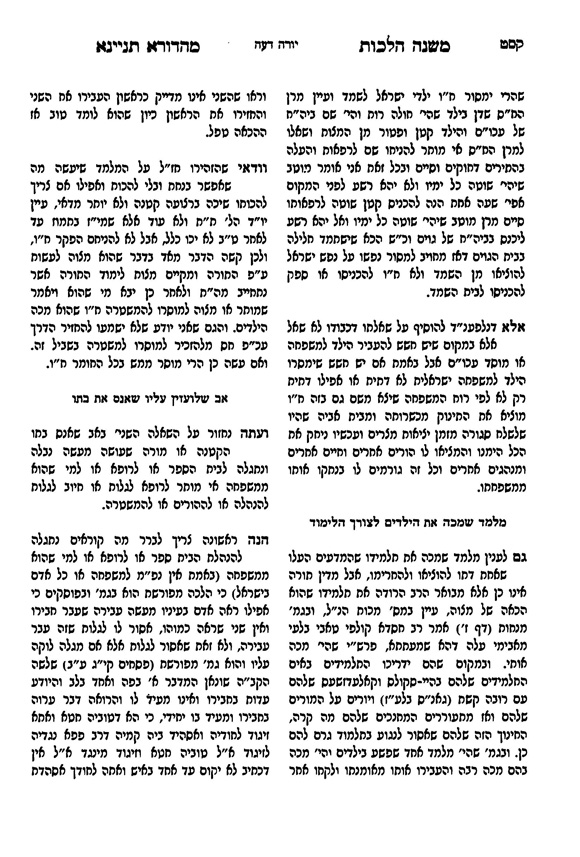
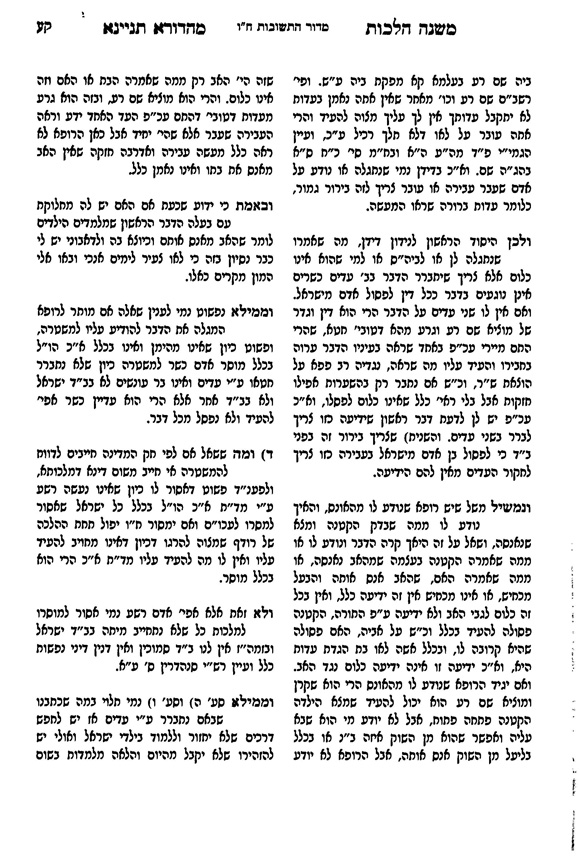
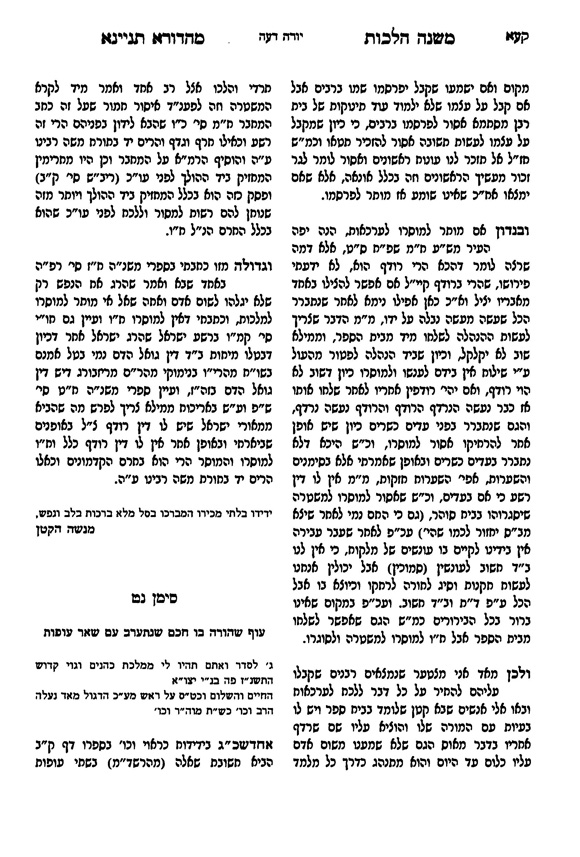
גאון בגימטריא ששים

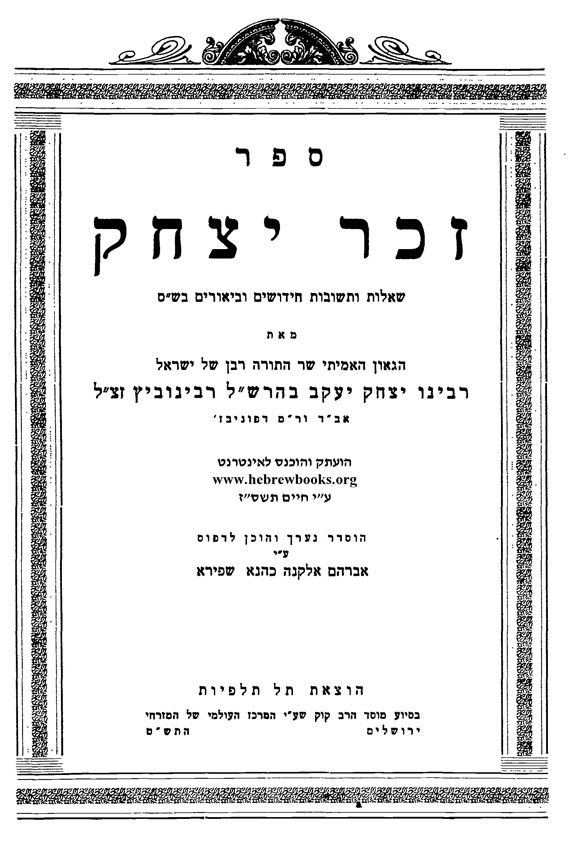
א. גאון = 60 כתב ר' זכריה סימנר בספר זכירה, שהדפיס בשנת תסט בהמבורג (במהדורת ר' שלמה אבא שאול, ירושלים תשנט, סוף עמ' 277): מצאתי כתוב הטעם שקורין בשם גאון מי שבקי בכל ששים מסכתות, כמנין גאון.ואנא שמואל זעירא לא ידענא היכן מצא כתוב כן. אך הדברים כבר נאמרו ע"י ר' מנחם בר' שלמה המאירי [ה'ט-עה]: מהם בתלמוד תלתא סדרי, ר"ל מועד נשים נזיקין, והוא היה נקרא אצלם חכם. ומהם בתלמוד ד סדרי, ר"ל בתוספת סדר קדשים, והוא היה נקרא אצלם רב. ומהם בתלמוד שתא סדרי, ר"ל בתוספת סדר זרעים וטהרות, ואז היה ראוי להקרא גאון. רמז לששים מסכתות שבששה סדרי, כמנין גאון. אלא שאף על פי כן לא היו קורין אותו כן אלא אם כן נסמך מפי גאון בהסכמת הישיבה (סדר הקבלה, הוצאת מכון אופק, ירושלים תשנה, עמ' 124-123).וכן מצאנו אצל בן דורו, המקובל ר' יצחק דמן עכו, בספרו מאירת עינים, ראש פרשת חקת, שהוא מונה כל מסכתות הש"ס ומסכם: סך כל המסכתות סג. חשוב ג בבי אחת וסנהדרין ומכות אחת, נמצאו ששים, כמנין גאון. וכל מי שיודע כולם נקרא גאון.אחריהם מצינו לר' דוד אבן-זמרא [רדב"ז; רלט-שלג]: בדרך כלל אומר לך, שאין דרכנו לקרא גאון אלא לאותם שהיו אחר רבנן סבוראי, קודם הריא"ף ז"ל. ושמעתי אומרים, שתנאי הגאון היה, שיהיה יודע שיתא סדרי על פה, גמרא ומשניות. אבל מה נעשה לדורות אחרונים, שכבר נהגו[1] (שו"ת הרדב"ז, ליוורנו תיב, סימן קז; במהדורת ר' אהרן וואלדן, ח"ד, סוף סימן אלף קעח).שמועה זו ששמע רדב"ז שמע גם בן דורו ר' אליהו בחור [רכט-שט], שכתב בספרו תשבי, ערך גאון: קצת החכמים שהיו אחרי האמוראים נקראו גאונים, כגון רבי שרירא גאון, רבי סעדיה גאון[2]. ושמעתי, שנקראו כן, בעבור שהיו בקיאים בכל התלמוד, שהם ששים מסכתות. גאון בגימטריא ששים.אחריהם מצאנו לר' דוד קונפורטי, בספרו קורא הדורות (פרק ה, ויניציאה תקו, דף ה ע"ב; פיעטרקוב תרנה, דף ה רע"ג): ומצאתי כתוב, שיש אומרים כי הגאונים נקרא כל אחד מהם בלשון גאון, על שם שהיה יודע ס מסכתות, כמנין תיבת גאון.אחריו כותב ר' חיים יוסף דוד אזולאי [חיד"א; תפד-תקסו], בספרו ועד לחכמים (עי' להלן): גאון. אמרו קדמונינו, שבחרו בשם זה, שהוא גימטריא ששים, לרמוז, שהוא בקי בששים מסכתות.ואחרון אחרון הוא ר' מנחם מנדל משקלוב [נפ' תקפז], הכותב בהקדמתו למסכת אבות עם פירוש הגר"א, שקלאוו תקסד: ושמעתי מפה קדוש של אדומ"ר גאון העולם רבינו הגדול והקדוש החסיד זלה"ה, טעם למה שקראו לכל ראשי הדור שאחר זמן התלמוד בשם גאון, ע"פ מ"ש במדרש שיר השירים [ראה להלן]: ששים המה מלכות, אלו ששים מסכתות של הלכות כו'. ע"ש. ובדורות הראשונים שאחר זמן חיבור התלמוד לא סמכוהו לאחד שינהיג כל דורו, עד שהיו סדורים לו כל הששים מסכתות בע"פ … ולכן קראו לראש הדור שלהם בשם גאון, שעולה במספרו ששים, לרמז על ששים מסכתות הנ"ל. עכ"ל תלמיד הגר"א מפי רבו.ולא שמע השומע שהגאון אמר זאת בשם התשבי, אלא שהוא הוסיף והביא מן המדרש אסמכתא למנין המסכתות. עי' עליות אליהו, שטטין תרכא, עמ' 86, הערה קיא.והנה על דברי התשבי העיר ר' ישעיה ברלין פיק [תפה-תקנט], בהקדמת ספרו שאילת שלום על השאילתות (דיהרנפורט תקמו): מספר המסכתות ידוע שהם ששים ושלש, והסמ"ג נתן סימן ולבך יהי גס בהן. ואפילו לדעת הרמב"ם, בהקדמתו לסדר זרעים, דקחשיב תלתא בבי לחדא מסכתא – – –[3], עכ"פ הוו ששים ואחת מסכתות – – – [4]וכן הוא כותב בהקדמת ספרו יש סדר למשנה (נדפס מתוך כ"י אוקספורד, בסוף הכרך הראשון של משניות, דפוס ראם בוילנה): דע. בסוף ספר הסמ"ג והבאור למהר"א שטיין, כתב בזה"ל: סימן לשית סדרי משנה זמ"ן נק"ט: זרעים. מועד. נשים. נזיקין. קדשים. טהרות. וחלקם לס"ג מסכתות. וסימנך כללא נקוט בידך: ולבך יהא גס בהן. והמסכתות חלק לתקכד פרקים. וסימנך על קדשך ותפארתך. עכ"ל. ועכ"ל הגרי"ב[5].עשר שנים לאחר שספר שאילת שלום ראה אור, הדפיס חיד"א את ספרו ועד לחכמים, חלק א ליוורנו תקנו, ובראשו, סימן א[6], הוא מתרץ: ומה שהעיר [הגרי"ב] על מנין המסכתות, הנה ברעיא מהימנא והתקונים, כמה זמני[7] אמרו, שתין מסכתות. ונראה, דמעשרות ומעשר שני נחשבות לאחת. והכי מוכח ממה שכתב מז"ה ז"ל בחסד לאברהם, בדפוס ובכ"י, במטתו של שלמה, שהיו ששים דפין ובכל דף כתוב מסכתא. ובכ"י מפורש, שסדר זרעים הם עשרה מסכתות. ובהכי אתי שפיר.מנין אחר מצאתי בפירוש מהרז"ו: ושמעתי, שגם שבת עירובין נחשבים גם כן למסכת אחת. ראה להלן, פרק ב.מנין שונה הובא בחדושי הרש"ש מתוך ספר ערוגת הבושם: ויהיו הששה סדרים נחלקים לששים מסכתות, מלבד אבות אשר היא משלים ודרך ארץ. עי' להלן, פרק ב.ועל כל אלה הנִחושים עולה המנין היצוק ביציקה איתנה והוא המחבר סנהדרין מכות למסכת אחת, כאשר הובא לעיל מספר מאירת עינים. כן במשניות, כ"י קופמן ובכ"י פרמה ובקטעי הגניזה בקמברידג'. לדוגמא, ראה: גנזי משנה של ר' אברהם יצחק כץ (ירושלים תשל, דף פז ע"ב), קטע ממסכת מכות, שנמצא בגניזה הקהירית והוא שמור באוסף אנטונין בלנינגרד, ובראש פ"ג רשום: פרק יד [של סנהדרין]!וכן העיד ר' שלמה עדני [שכב-שצב?], בפירושו מלאכת שלמה, סוף מכות: כתב הר"ר יהוסף [אשכנזי] ז"ל: וברוב הספרים כתוב בסוף זו המסכתא: נגמרה סנהדרין פרק יד!וכן כותב בן דורו, ר' אברהם אזולאי [של?-תד], בספרו אהבה בתענוגים על משנת נזיקין, בפתיחה למסכת מכות (ירושלים תשמו, ראש דף קנו): בספר א'[חד] כ"י קדמון מצאתי כתוב. פרק י"ב, כיצד העדים נעשים זוממין. וקאי אמנין פרקי מסכת סנהדרין. וכתב פרק י"ג במקום פרק ב. וכן על זה [ה]דרך בכל הפרקים[8]. ובסוף זו המסכתא כתוב נגמרה מסכת סנהדרין י"ד פרקים. משמע דמכות שייכא עם סנהדרין. וכן כתב הרמב"ם ז"ל. מסכת מכות היא נקשרת בנוסח א'[9] עם סנהדרין, ובכללה היא מנויה – – -וזה לשון ר' שלמה עדני, בספרו מלאכת שלמה, למסכת מכות א א: וכתב הר"ר יהוסף [אשכנזי] ז"ל: בכל הספרים גרסינן מכות אחר סנהדרין, ובס"א [ובספרים אחרים]: פ'[רק] שנים עשר וקאי אסנהדרין. ע"ש.והוסיף לכתוב בסוף המסכת: כתב הר"ר יהוסף ז"ל: ברוב הספרים כתוב בסוף זו המסכתא נגמרה סנהדרין פרק יד. משמע, שמסכת מכות שייכא גם היא לסנהדרין. כמו הבבות. עכ"ל. כלומר: כמו ששלוש הבבות מסכת אחת הן, כן סנהדרין ומכות!גם בראש פרק ב: ס"א פרק יג. וקאי אסנהדרין.ובראש פרק ג: ס"א פרק ארבעה עשר. וקאי אסנהדרין.וכן במתניתא דבי מערבא סנהדרין ומכות חדא מסכתא ובה ארבעה עשר פרקים! וזה מוכח מגוף דברי הירושלמי בפרק (א) [יב], סוף הלכה יד: תנינן הכא מה דלא תנינן בכל סנהדרין!אף בקטע ירושלמי מבין כתבי הגניזה בבודאפשט, שפרסם שלמה וידר בתרביץ, יז (תשו), עמ' 129 ואילך, פרק כיצד העדים (פ"א של מכות) הוא פרק יב של סנהדרין!עי' גם: גנזי שכטר, ב, עמ' 395, ומבוא לנוסח המשנה, לרי"נ אפשטיין, עמ' 983.וכחמש מאות שנה קודם ר' שלמה עדני כבר כתב הרמב"ם, בהקדמה לפירוש המשנה, ד"ה והחלק הששי: אבל מסכת מכות היא נקשרת בנוסחאות עם מסכת סנהדרין ובכללה היא מנויה! עכ"ל. ברם הרמב"ם עצמו סבור, כי מסכת מכות "היא מסכת בפני עצמה, ונסמכה לסנהדרין".גם הר"ן (חידושי סנהדרין, דף מד ע"ב) לומד מדברי הגמרא בריש מכות, שסנהדרין ומכות "הכל מסכתא אחת"! ב. מנין המסכתותאנחנו אמנם מונים ששים ושלוש מסכתות, אבל למנין הקדמונים אינן אלא ששים.וכן דרש ר' יצחק: ששים המה מלכות [שה"ש ו ח], אלו ששים מסכתיות של הלכות (שהש"ר, ו ט ב). והכוונה לשלול מסכת אבות, שאינה מדברת מהלכות [- – -]. וזה לשון [ר' שמואל ארקיוולטי, בספרו] ערוג(ו)ת הבשם [ויניציאה שסב], בפ"ט: ויהיה הש"ס נחלקים לששים מסכתות, מלבד אבות אשר היא משלים ודרך ארץ (חדושי הרש"ש לבמדבר רבה, פרשה יג, הערה כג).ובפירוש מהרז"ו (כאן): הכוונה על ששים מסכתות של ששה סדרי משנה: זרעים יב [צ"ל: יא], מועד יב, נשים ז, נזיקין יוד, קדשים יוד [צ"ל: יא], טהרות יב – הרי ששים ושלש(ה) מסכתות. מסכתות ב"ק ב"מ וב"ב נחשבים למסכת אחת. ושמעתי, שגם שבת עירובין נחשבים גם כן למסכת אחת. הרי סמך מסכתות בש"ס[10].וכן דרשו בתנחומא (קרח, יב), ומשם בבמדבר רבה (יח כא): ששים המה מלכות. ששים מסכתות.כן מצאנו מנין ששים מסכתות ברעיא מהימנא (פינחס, רטז סע"א): לקבל ששים מסכתות. ובתקוני הזוהר (תקונא תליסר, דף כט רע"ב): לקבל שתין מסכתות; (תקונא חד ועשרין, מד ע"א): אורייתא דבע"פ דאיהי סלע – על ס, דאינון שתין מסכתות. ובתקונים נוספים (תקונא שתיתאה, עמ' 288): ששים המה מלכות, דאינון שיתין סדרי משנה וסלקין לשית מאה ולששים רבוא. והגיה הגר"א: שתין מסכתות; (תקונא עשיראה, עמ' 294): שתין הלכות, דאינון ששים המה מלכות. ובתקוני זוהר חדש (קח ע"א = השמטות לזוהר, ח"א, רנג ע"א): שתין מסכתות ושית סדרי משנה.אמנם לדברי רב הונא בבא קמא ובבא מציעא דינם כתרי מסכתי[11] אך הקדמונים קבלו דעתו של רב יוסף האומר: כולה נזיקין חדא מסכתא היא[12]. ופירש רש"י[13]: נזיקין כולהו. תלתא בבי. עכ"ל. וכן מפורש באגרת רב שרירא גאון (מהדורת הימאן, לונדון תרעא, עמ' 36): ורב יוסף … אומר בבבי דנזיקין, דכולהו חדא מסכתא נינהו.וכן צוין בכ"י קמברידג' ובכ"י קופמן, בתחילת בבא קמא: מס' נזיקין. ובסוף בבא בתרא: חסלת נזיקים. פרקים ל.וכבר אמרו חז"ל: נזיקין ל פרקים, כלים ל פרקים (ויקרא רבה, יט ב. עי' שם בחדושי הרד"ל, הערה ה). ואנא לא ידענא מאי שנא מסכת נזיקין ממסכת כלים? אמנם בתוספתא מחולקת מסכת כלים לשלוש בבות, בדומה למסכת נזיקין!  
[1] כלומר, שכבר נהגו לכתוב תואר הגאון גם על מי שאינו בקי בש"ס…[2] הפך את סדרם הכרונולוגי. רב שרירא גאון נפ' בשנת ד'תשסו, ורב סעדיה גאון – בשנת ד'תשב![3] אגב אעיר, כי בעקבות הרמב"ם הלך בעל ספר הפליאה והוא מונה כל מסכתות הש"ס: זרעים … יא מסכתות. מועד … משקין והוא מועד קטן … יב מסכתות. נשים … גיטין, סוטה … ז מסכתות. נזיקין בבא קמא בבא מציעא בבא בתרא מסכת אחת … ח מסכתות. קדשים … יא מסכתות. טהרות … פרה אדומהמכשירין, ידים, זבים, טבול יום, עוקצים, יב מסכתות. והנה הם סא מסכתות ותקכג פרקים (ספר הפליאה, פשמישל תרמד, דף כה ע"ב).[4] מספר המסכתות והסימן ולבך יהי גס בהן לא נדפס בסוף סמ"ג, לר' משה מקוצי, אלא בסוף ביאורי רי"א שטיין לסמ"ג (ויניציאה שז, דף שיד ע"א): ויען כי בספר הנכבד הזה ובמורה מקום שנתוסף בו, לרוב פעמים, לא הוזכרו בו כי אם שמות הפרקים לבד, ובאולי יש בתלמידים אחד מני אלף שלא ידע מקום תחנות איזו פרק באיזה מסכתא הוא, אמרנו להדפיס בסוף הספר מספר צבא כל המסכתות ולקרא בשם כל פרקיהם, למען יהיה הספר הזה שלם בכל תועלתיו / והיו בו אותות אותתיו / וכל דורשיו לא יחסרו מכל טובותיו. ותפסנו בהם הדרך איש איש על דגלו באותות אשר סידר ומסר לנו ראש החכמים וסוף התנאים רבינו הקדוש ע"ה, בהעלותו על ספר ענן הכבוד ספיר ספירי / אמרי משנה בשית סדרי, זכר לדבר והיה אמונת, עת"ך, חוס"ן, ישועו"ת, חכמ"ה, ודע"ת, והם זרעים, ומועד, נשים, נזיקים, קדשים, וטהרות, וסימניך זמ"ן נק"ט. וחלקם לסג מסכתות. וסימניך. כללא נקוט בידך ולבך יהא ג"ס בהן. והמסכתות חלק לתקכד פרקים, וסימניך ע"ל קדש"ך ותפארתך. עכ"ל.בדפוס-צלום של ביאורי רי"א שטיין, שנדפס בשנת תשכא בירושלים, השאירו המדפיסים הרשלנים את הכותרת בראש הדף [המסומן: סד!]: רמזי פרקי שיתא סדרי משנה, ואִלו את הרמזים עצמם השמיטו![5] כאן הוא דייק בהעתקתו וביחוס הדברים למי שאמרם! עי' הערה קודמת.[6] =שם הגדולים, מהדורת בן-יעקב, מערכת גדולים, אות א, סוף סימן קמה.[7] ראה להלן, פרק ב.[8] דבריו בכל הפרקים (שבלשון רבים) מתייחס לפרק אחד בלבד, לפרק ג![9] צ"ל: בנוסחא'. כלומר: בנוסחאות.[10] ור' ברוך אפשטין [תרכ-תשא], בתורה תמימה, הערה יג, העתיק דברי מהרז"ו מבלי להזכירו, וכדרכו בקודש![11] ראה: בבא קמא קב סע"א; עבודה זרה ז ע"א.[12] שם ושם.[13] במסכת עבודה זרה שם.


The Anonymous Author of Tikkunei Zohar and Ra‘ya Mehemna: An Antinomian or a Radical Maimonidean?

The Anonymous Author of Tikkunei Zohar and Ra‘ya Mehemna: An Antinomian or a Radical Maimonidean?

By Bezalel Naor

Today, it is an accepted fact in scholarly circles that Tikkunei Zohar and Ra‘ya Mehemna form a single unit that postdates the main body of Zohar.[1] More than one reader has been scandalized by statements in Tikkunei Zohar and Ra‘ya Mehemna likening the Mishnah to a shifhah or maidservant.[2] Predictably, in response, there grew an apologetic literature that attempts to justify how such shocking statements are compatible with normative Halakhah.[3]

One cannot rule out altogether the assertion by various secular historians that these pejorative statements betray an antinomian streak,[4] though to be certain, such statements of Tikkunei Zohar and Ra‘ya Mehemna are not situated in the present but deferred to the future. With this proviso, they are no more “antinomian” than the statement of Rav Yosef in the Talmud: “Mitsvot (commandments) are nullified in the future.”[5]

I wish to present a hitherto unexplored possibility. It seems likely that the anonymous author of Tikkunei Zohar and Ra‘ya Mehemna (which surfaced in Spain in the first decades of the fourteenth century)[6] was not so much an antinomian as a radical Maimonidean. It is in this light that we should understand negative statements issuing from the author regarding the study of Mishnah or those comparing the various Talmudic exercises and mental gymnastics to the backbreaking labor to which the Children of Israel were subjected in Egyptian exile.[7] These do not spring from an anti-halakhic mindset but rather from taking at face value Maimonides’ syllabus as laid out in his introduction to Mishneh Torah:

Hence, I have entitled this work Mishneh Torah (Review of the Law), for the reason that a person, who first reads the Written Law and then this [compilation], will know from it the whole of the Oral Law, without having need to read any other book between them [italics mine—BN].

We should be asking ourselves: Are there any historical grounds to assert that in Spain in the early 1300s there were halakhic Jews who openly—we should add, brazenly—promulgated the Maimonidean curriculum to the exclusion of Talmudic studies and the concomitant exercise of pilpul?

I offer the words of Joseph Ibn Kaspi:

Therefore my rabbis, listen to me and God will listen to you! I see that it is the intention of those among you who engage in Gemara, novellae and opinions (shitot),[8] to know proofs for the practical commandments, for you are not satisfied with the tradition from Mishneh Torah composed by Rabbenu Moshe [i.e. Maimonides], though he said: “And one shall have no need of any other book between them [Italics mine—BN].”

Here is an example. Ha-Rav ha-Moreh [i.e. Maimonides] wrote in his laws: “A sukkah that is higher than twenty ammah is invalid.”[9] Yet you despair and are without comfort until you know whether the reason is because “the eye does not rest upon it,” or because “one is not sitting in the shade of the sekhakh (overhead boughs) but of the walls,” or because “the sukkah must be a temporary dwelling,” as written in the Gemara.[10] Even this will not satisfy the very punctilious (mehadrin min ha-mehadrin) until they have added problems and opinions (shitot)[11]: “If you should say,” “one may say,” etc.

Truly, I admit that this is good, but why is the knowledge of proofs an obligation in regard to practical commandments, while not [even] an option,[12] but an outright prohibition when it comes to commandments of the heart? What sin has been committed by these four commandments of the heart (that I mentioned) that you do not treat them in the same manner but are satisfied by a weak tradition of few words, wanting comprehension?[13]

Who was Joseph Ibn Kaspi? Born either in Arles, Provence or Argentière, Languedoc,[14] around the year 1280, he passed in 1345 on the island of Majorca. His was a peripatetic life. The first period of his life was spent in the south of France. Later he gravitated to Barcelona, where his married son David resided. At approximately age thirty-five he travelled to Egypt for several months,[15] hoping to acquire there the intellectual legacy of Maimonides from the Master’s fourth and fifth generation descendants but was sorely disappointed in this respect. He even entertained the thought of traveling to Fez, Morocco in search of wisdom,[16] but that particular journey never materialized.

Ibn Kaspi’s reputation is that of an ultra-rationalist. His naturalistic explanations of events in the Bible far exceed even those of Maimonides; for that reason his opinions were marginalized. Though there is an abundance of manuscripts, it was only in the nineteenth century that Ibn Kaspi’s works were published from manuscript. (A few still remain in manuscript.) To this day, his interpretations have yet to “mainstream.”

My juxtaposing the Maimonidean enthusiast Joseph ibn Kaspi to the anonymous author of the kabbalistic works known as Ra‘ya Mehemna and Tikkunei Zohar may strike the reader of this essai as bizarre. Besides their contemporaneity, what basis is there for this juxtaposition?

Geographically, there are certainly grounds for relating the two authors to one another. Though separated by the Pyrenees, there was much traffic, intellectual and otherwise between Provence and Northern Spain. Some of the greatest families of Provencal scholars originated in Spain: the Kimhis, Joseph and his son David, who excelled as grammarians and Bible exegetes; and the Tibbonides, Judah and his son Samuel, who were the premier translators of classic philosophic works from Judeo-Arabic to Hebrew. And the traffic was two-way. Prominent Provencal families wended their way to Sefarad. The halakhist Rabbi Zerahyah Halevi (“Ba‘al ha-Ma’or”), a native of Gerona, established his career in Narbonne, only to return to Gerona at the end of his days. (His great-grandson was the Talmudist Rabbi Aharon Halevi of Barcelona.)[17] Ibn Kaspi is an example of a Provencal scholar who relocated to Catalonia: Barcelona, and eventually, the Balearic isle of Majorca. Thus, there could easily have been a sharing of ideas between southern France and northern Spain.[18]

In terms of mindset, the border between rationalist philosophy and kabbalah was especially porous at this time. Whoever authored Ra‘ya Mehemna and Tikkunei Zohar, carried with him much Maimonidean baggage. Linguistically, it is apparent to any student of the Ra‘ya Mehemna and Tikkunim that they are rife with the philosophic jargon made popular by the Tibbonides’ translations from Judeo-Arabic.[19] And let us not forget that the very backbone of Ra‘ya Mehemna is an enumeration of the commandments à la Maimonides’ Sefer ha-Mitsvot. (Rabbi Reuven Margaliyot isolated these commandments and presented them in orderly fashion in the introduction to his edition of the Zohar.)

*

When we put it all together it makes perfect sense. As shocking as some of its bold statements may be, the literary oeuvre of Ra‘ya Mehemna and Tikkunei Zohar cannot be construed as issuing from the mind of an antinomian. An antinomian would not go to the bother of constructing a Book of Commandments after a fashion. Rather, I maintain that the downgrading of the study of Talmud in general, and Mishnah in particular, should be attributed to a radical adoption of Maimonides’ curriculum of studies, whereby his halakhic magnum opus Mishneh Torah has superseded the study of Mishnah and Gemara.

In this respect, Maimonides’ devotees in Provence and Spain ventured beyond the Master himself. Maimonides penned a convincing letter to Rabbi Pinhas, the Dayyan (Justice) of Alexandria,[20] that regardless of what he wrote in the introduction to Mishneh Torah, the traditional study of the Talmudic tractates (albeit as summarized in Alfasi’s Halakhot) continues unabated in his beit midrash.[21] The curriculum that Maimonides once proposed remained an abstraction. It seems that Egyptian Jewry was not overly receptive to this innovation. Only well over a century later, did this great intellectual experiment of Maimonides, Mishneh Torah, a “hivemind of halakhah,[22] designed to replace the “dialectics of Abayye and Rava,” find foot soldiers in the likes of Ibn Kaspi and the anonymous author of Ra‘ya Mehemna and Tikkunei Zohar. They launched their campaign from the soil of Provence and Spain.

Our thesis does not ride on the reputation of Joseph ibn Kaspi. Ibn Kaspi’s statement is perhaps the most outspoken and provocative call for adoption of Maimonides’ Mishneh Torah as a way of bypassing Talmudic studies, yet there are other testimonies (from the least expected quarter) that the exclusive study of Mishneh Torah was starting to gain traction in medieval Spain.

The great halakhist Rabbi Asher ben Yehiel (Rosh) emigrated from Germany to Spain at the turn of the fourteenth century and eventually emerged as the Rabbi of Toledo, Castile, where he left his stamp on the shape of Castilian Halakhah.[23] Evidently, Rabbi Asher had cause to fulminate against authorities who decided questions of practical Halakhah based solely on the rulings of Mishneh Torah without recourse to Talmud.

Rabbi Asher writes:

I heard from a great man in Barcelona who was eminently familiar with three orders [of the Talmud, i.e. Mo‘ed, Nashim and Nezikin]. He said: “I am amazed at people who have not studied Gemara and adjudicate based on their reading in the books of Maimonides, of blessed memory, believing that they understand them. I know myself, when it comes to the three orders that I studied, I am able to understand when I read Maimonides’ books. However, his books that are based on Kodashim and Zera‘im—I do not understand at all. And I know that it is that way for them regarding all his books![24]

*

Rabbi Yahya Kafah (1850-1931) was not wide of the mark when he asserted that those statements in Zoharic literature that undercut the Talmud (comprised of Mishnah and Gemara) were designed to enhance the prestige of the Kabbalah. (By the same token, one may safely say that Ibn Kaspi’s desire to streamline the study of Halakhah, stemmed from his valorization of Philosophy.)

Logically, our next question should be: What was Maimonides’ own stake in proposing that his compendium Mishneh Torah take the place of protracted Talmudic studies? Maimonides provides a simple answer to this question in his introduction to Mishneh Torah:

At this time, severe vicissitudes prevail, and all feel the pressure of hard times. The wisdom of our wise men has disappeared; the understanding of our prudent men is hidden. Hence, the commentaries of the Geonim and their compilations of laws and responses, which they took care to make clear, have in our times become hard to understand so that only a few individuals properly comprehend them. Needless to add that such is the case in regard to the Talmud itself—the Babylonian as well as the Palestinian—the Sifra, the Sifre and the Tosefta, all of which works require a broad mind, a wise soul and lengthy time, and then one can know from them the correct practice as to what is forbidden or permitted, and the other rules of the Torah.

On these grounds, I, Moses the son of Rabbi Maimon the Sefardi, bestirred myself…[25]

While perhaps not the ideal curriculum, the exigencies of the time demanded the production of a bold new work on the order of Mishneh Torah that would preserve the practice of Halakhah for the masses ill-equipped to make their way through the labyrinthine discussions of the Talmud or even the decisions of the Gaonica (originally intended to clarify the canons of Jewish Law).

But was there perhaps another purpose of Mishneh Torah that Maimonides kept to himself and was not willing to divulge in writing? In Hilkhot Talmud Torah (Laws of the Study of Torah), Maimonides would proceed to sketch the traditional trivium of Mikra (Bible), Mishnah and Talmud, [26]such that Pardes (the esoteric teachings of Judaism) comes under the rubric of “Talmud”[27]; and that furthermore, the mature scholar who has covered the requisite literature and is thus no longer bound by the daily trivium, “will devote all his days exclusively to Talmud, according to the breadth of his mind and the composure of his intellect.”[28]

Was the condensing of Talmud into Mishneh Torah Maimonides’ master plan to free time for the study of Pardes or esoterica? Should that prove true, then Ibn Kaspi’s interest,[29] and mutatis mutandis that of the Tikkunei Zohar and Ra‘ya Mehemna, was not so very different from that of HaRav HaMoreh.[30]

[1] This fact was recognized two and a half centuries ago by the discerning eye of Rabbi Jacob Emden. See Emden’s Mitpahat Sefarim, Altona 1768, Part 1, chap. 3 (6b); chaps. 6-7 (16b-17b); Lvov 1870, pp. 12, 37-39.

Whereas Zohar itself has come to be associated with the name of Rabbi Moses de Leon, no single name surfaces in regard to Tikkunei Zohar and Ra‘ya Mehemna (though there are some who would attribute the latter to a yet unidentified disciple of De Leon).

It should be mentioned in passing that even in regard to the authorship of the Zohar there has been a sea change in scholarly thinking. Unlike Scholem, who was convinced that the single author of the Zohar was Rabbi Moses de Leon, current thinking (spearheaded by Yehuda Liebes) rejects this notion of single authorship and assumes the Zohar to be a collaborative or composite work on the part of a mystic fraternity or haburah.

[2] See Zohar I, 27b. This is actually a segment of Tikkunei Zohar that the Italian printers in 1558 mistakenly embedded in Zohar. See Editor Daniel Matt’s note to the Pritzker edition of the Zohar, vol. 1 (Stanford, California: Stanford University Press, 2004), p. 170, note 499. See also the Introduction to Tikkunei Zohar (Vilna, 1867), 15b and gloss of the Vilna Gaon, s.v. shalta shifhah.

And see the Tikkunim appended to Tikkunei Zohar (Margaliyot ed.), tikkun 9 (147a).

By the same token, there are passages where the Mishnah is related to Metatron, the “‘eved” (male servant). See e.g. Ra‘ya Mehemna in Zohar III, 29b; and The Hebrew Writings of the Author of Tiqqunei Zohar and Ra‘aya Mehemna (Hebrew), ed. Efraim Gottlieb (Jerusalem: The Israel Academy of Sciences and Humanities, 2003), p. 1, line 3.

Moshe Idel has demonstrated that this motif whereby the Mishnah is juxtaposed to Metatron is to be found in the obscure work of Rabbi Abraham Esquira, Yesod ‘Olam (Ms. Moscow, Günzburg 607, 80a-b). See Idel’s introduction to The Hebrew Writings of the Author of Tiqqunei Zohar and Ra‘aya Mehemna, pp. 23-24, 27-28. Inter alia, Esquira’s text makes mention of “six hundred orders of Mishnah.” This is a reference to b. Hagigah 14a. See Rashi there s.v. shesh me’ot sidrei Mishnah. Thus, p. 23, n. 76 of Idel’s introduction is in need of correction. By the same token, Esquira’s “seven hundred orders of confusion” (“shesh me’ot sidrei bilbulim”) is a parody of the “seven hundred orders of Mishnah” in b. Hagigah 14a. See Idel, ibid. p. 28, n. 105.

Concerning the juxtaposition of the six-lettered Metatron, the servant, to the six days of the work week, see the Vilna Gaon’s gloss to Tikkunei Zohar (Vilna, 1867), tikkun 18 (33b), s.v. be-gin de-Metatron. There is precedent in a Teshuvat ha-Ge’onim (Gaonic responsum) for restricting the activity of the angelic realm to the six days of the week and reserving the seventh Sabbath day for Israel’s sphere of influence. See Tosafot, Sanhedrin 37b, s.v. mi-kenaf ha-’arets zemirot shama‘nu; and Rabbi Reuven Margaliyot, Margaliyot ha-Yam ad locum, and idem, Nitsutsei Zohar to Ra‘ya Mehemna in Zohar III, 93a, note 2.

Later, in sixteenth-century Safed, Rabbi Isaac Luria advised reserving the Sabbath day for the exclusive study of Kabbalah (“as was the custom of the early ones”), while relegating the study of Halakhah to the six work days. This is hinted to in the two verses “Hishtahavu la-Hashem be-hadrat kodesh” (whose initials form the word “Kabbalah”) and “Hari‘u la-Hashem kol ha-’arets (initials “Halakhah”). See Rabbi Hayyim Vital, Peri ‘Ets Hayyim (Dubrovna, 1804), Sha‘ar ha-Shabbat , chap. 21 (103c); Rabbi Jacob Zemah, Nagid u-Metsaveh (Lublin, 1881), 25b. And see Peri ‘Ets Hayyim, Sha‘ar Hanhagat ha-Limmud, s.v. kavvanat keri’at ha-Mishnah (85a): “Know that the Mishnah is Metatron in Yetsirah…”

In the Ra‘ya Mehemna in Zohar III, 279b, the Mishnah is referred to as the “shifhah…the female of the ‘eved, na‘ar (“lad”). “Na‘ar” or “lad” is yet another epithet for Metatron; see b. Yevamot 16b (based on Psalms 37:25) and Tosafot ad loc. s.v. pasuk zeh sar ha-‘olam amaro. Just as Metatron is referred to as “‘eved,” “for his name is like that of his Master” (b. Sanhedrin 38b). Both Metatron and Shadai have the numerical value of 318. (In Ra‘ya Mehemna in Zohar III, 82b it is spelled out that “Metatron is a good servant, a faithful servant to his Master.”)

In Ra‘ya Mehemna, in Zohar III, 276a, three of the most difficult tractates of the Mishnah are singled out for derision, ‘Eruvin, Niddah and Yevamot, as they are assigned the acronym ‘Ani (poor man).  The Vilna Gaon points out that the derogation of the rabbis, students of the Mishnah, is not absolute, but only relative to the “ba‘alei kabbalah” (“masters of the Kabbalah”). See Yahel ’Or, ed. Naftali Hertz Halevi (Vilna, 1882), Tetse, 276a, s.v. ve-i teima.

Earlier in that passage (Zohar 275b) we have the underhanded compliment, Hakham Mufle Ve-Rav Rabbanan” (“Outstanding Sage and Rabbi of Rabbis”), whose initials spell the word “hamor” (jackass). (This cynical remark found its way into the modern mystery novel by Richard Zimler, The Last Kabbalist of Lisbon [Woodstock, NY: The Overlook Press, 1998], p. 44.)

One who found absolutely outrageous the labeling of the Mishnah as a “shifhah” was the Chief Rabbi of Sana‘a, Yemen, Rabbi Yahya ben Shelomo (Sliman) Kafah (1850-1931). See his ‘Amal u-Re‘ut Ru’ah va-Haramot u-Teshuvatam (Tel-Aviv, 1914; limited facsimile edition Jerusalem 1976), p. 12. Available at hebrewbooks.org.

‘Amal u-Re‘ut Ru’ah va-Haramot u-Teshuvatam is Rabbi Kafah’s rejoinder to the bans placed upon him by the various batei din (courts) of Jerusalem—Ashkenazic, Hasidic and Sefardic. It struck Rabbi Kafah as highly ironic that he, a staunch defender of Talmudic Judaism, was placed under the ban, while the Zohar, with its numerous derisions of Talmud and its students, was upheld and, what is more, sanctified. Ibid. p. 14.

The constraints of space do not allow us to explore the controversy regarding the Zohar that erupted in Yemen in the early part of the twentieth century between Rabbi Kafah and his disciples, the self-styled Darda‘im, on the one hand, and their opponents, to whom they referred as ‘Ikeshim. (The first label is based on the Midrashic pun on Darda‘ [1Kings 5:11] as Dor De‘ah, “a generation of knowledge”; the second comes from Deuteronomy 32:5, “dor ‘ikesh u-petaltol,” “a perverse and twisted generation.”) At the instigation of his critics, Rabbi Kafah was jailed on more than one occasion by the Muslim authorities. (Rabbi Kafah alludes to this in ‘Amal u-Re‘ut Ru’ah va-Haramot u-Teshuvatam, p. 14.)

The man who acted as a peacemaker between the warring factions was none other than Rabbi Abraham Isaac Hakohen Kook. While upholding Rabbi Kafah’s status as an unusual Torah scholar, Rabbi Kook conveyed to him that he had erred in taking literally passages that were intended to be understood metaphorically. See Igrot ha-Rayah, vol. 2, ed. RZYH Kook (Jerusalem: Mossad Harav Kook 1961), no. 626 (pp. 247-248); Haskamot ha-Rayah, ed. Y.M. Yismah and B.Z Kahana (Jerusalem, 1988), no. 41 (pp. 46-47); Ma’amrei ha-Rayah, vol. 2, ed. Elisha Aviner (Langenauer) (Jerusalem, 1984), pp. 518-521. An incomplete variant of the letter in Haskamot ha-Rayah was published by Rabbi Moshe Zuriel, Otserot ha-Rayah, vol. 1 (Rishon LeZion, 2002), no. 76 (p. 447). See further Rabbi Zevi Yehudah Hakohen Kook, Li-Sheloshah be-Ellul I (Jerusalem, 1938; photo offset Jerusalem, 1978), par. 107 (p. 46).

For Rav Kook’s involvement with the Yemenite community and facilitating their ‘aliyah at the beginning of the twentieth century, see ibid. par. 42 (p. 21); and recently Ben Zion Rosenfeld, “Yahaso shel ha-Rayah Kook le-Hakhmei ha-Mizrah bi-Tekufat Yaffo 5664-5674 (1904-1914)” [“HaRav Avraham Isaac HaCohen Kook and his Attitude Regarding the Sephardi Sages During His Stay in Jaffa 5664–567 4(1904–1914)”], Libi ba-Mizrah (My Heart Is in the East) 1 (2019), pp. 287-290.

[3] See Rabbi Hayyim Vital, introduction to Sha‘ar ha-Hakdamot (printed as an introduction to the standard editions of ‘Ets Hayyim); Rabbi Shneur Zalman of Liadi, Iggeret ha-Kodesh (4th section of Tanya), chap. 26 (especially 143a). And see Rabbi Dov Baer Shneuri, Bi’urei ha-Zohar (Brooklyn, NY: Kehot, 2015), Bereshit (to Zohar I, 27b), 5a-8d.

[4] Heinrich Graetz, History of the Jews, cited in Gershom G. Scholem, “The Meaning of the Torah in Jewish Mysticism,” in idem, On the Kabbalah and Its Symbolism (New York: Schocken Books, 1970), p. 70, n. 1.

[5] b. Niddah 61b.

Contra Graetz, Scholem, referring to “the ambiguity of certain statements about the hierarchical order of the Bible, the Mishnah, the Talmud, and the Kabbalah, which are frequent in the Ra‘ya Mehemna and the Tikkunim, and which have baffled not a few readers of these texts,” states categorically: “It would be a mistake to term these passages antinomistic or anti-Talmudic” (op. cit. p. 70). Rather, to describe the peculiar posture of the Ra‘ya Mehemna and the Tikkunim, Scholem coins the term “utopian antinomianism” or “antinomian utopia” (op. cit., pp. 80, 82).

Other secular scholars who objected to Graetz’s judgment concerning the controversial passages in the Zohar (or to be more precise, Tikkunei Zohar) were Bernfeld and Zinberg. See Heinrich Graetz, Geschichte der Juden, 7, Beilage 12; Shim‘on Bernfeld, Da‘at Elohim, Part 1 (Warsaw, 1897), pp. 396-397, note 1; Israel Zinberg, A History of Jewish Literature, vol. 3, transl. Bernard Martin (Cleveland: The Press of Case Western Reserve University, 1973), pp. 55-56.

[6] Scholem and Idel would date Tikkunei Zohar and Ra‘ya Mehemna as early as the end of the thirteenth century (bringing the work in contact with Rabbi Moses de Leon). See Idel’s introduction to The Hebrew Writings of the Author of Tiqqunei Zohar and Ra‘aya Mehemna, pp. 10, 25-26, 29. Tishby established the years 1312-1313 as the terminus ad quem for the composition of Tikkunei Zohar based on its Messianic expectations for those years. Cited in Idel, ibid. p. 10, n. 7. See also p. 23. Idel, relying on Liebes, would make the terminus ad quem a year earlier, 1311. (Ibid.)

[7] See Zohar I, 27a:

They embittered their lives with hard labor (‘avodah kashah)—with kushya (difficulty);

with mortar (homer)—with kal ve-homer (a fortiori);

and with bricks (levenim)—with libun hilkheta (clarification of the law);

and with all [manner of] labor in the field—this is Beraita;

all their labor—this is Mishnah.

Though mistakenly embedded by the Italian printers back in 1558 in the text of the Zohar, this is actually a segment from the later work Tikkunei Zohar. See above note 2.

This same anachronistic interpretation of the verse in Exodus 1:14 is found (with slight variations) in the Ra‘ya Mehemna, again embedded in Zohar III, 153a, 229b (though in this case explicitly identified as Ra‘ya Mehemna). See also Tikkunei Zohar, tikkun 21 (Margaliyot ed. 44a); the additional Tikkunim appended to Tikkunei Zohar, tikkun 9 (147a); and the Tikkunim appended to Zohar Hadash (Margaliyot ed.), 97d (where the end of the verse is interpreted, “be-pharekh—da pirkha”), 98b, 99b.

And see now, The Hebrew Writings of the Author of Tiqqunei Zohar and Ra‘aya Mehemna (Hebrew), ed. Efraim Gottlieb and Moshe Idel (Jerusalem: The Israel Academy of Sciences and Humanities, 2003), pp. 39-40.

This degradation of Talmudic hermeneutic was duly noted by Rabbi Kafah (see above note 2). Kafah believed that the not so hidden agenda of the anonymous writer was to promote the study of Kabbalah at the expense of the study of Talmud. See ‘Amal u-Re‘ut Ru’ah va-Haramot u-Teshuvatam, p. 12: “The entire purpose of the author of the Zohar is to cause the Mishnah and the Talmud to be forgotten from Israel, to stop up the mouth of the well of living waters from which flow the ways of the Oral Law, and have them occupy themselves with his new Torah.”

[8] The primary meaning of the Hebrew word shitah is a line; hence, a line of thought. For its derivative usage in medieval rabbinical literature, see Mordechai Breuer, ’Ohalei Torah (Jerusalem: Shazar Center, 2004), pp. 109, 510; Ya‘akov Spiegel, ‘Ammudim be-Toledot ha-Sefer ha-‘Ivri, vol. 2 (Ramat Gan: Bar Ilan, 2005), p. 442; and lately, Hayyim Eliezer Ashkenazi, “Heker ve-‘Iyun be-Sifrei Rishonim (4),” Yeshurun, vol. 40 (Nisan 5779), p. 930, n. 7.

In the London Beth Din Ms. 40 (designated in the microfilm collection of the National Library of Israel, F4708), f.30, this word reads “mishnayot,” rather than shitot, but the reading is unlikely, to say the least. Cf. below n. 11.

[9] Maimonides, MT, Hil. Sukkah 4:1.

[10] The three opinions are found in b. Sukkah 2a.

[11] In the London Beth Din ms. for “shitot” there occurs the grotesquerie “shtuyot” (foolishness).

[12] The London Beth Din ms. has the superior reading eino reshut o makom patur.”

[13] Joseph ben Abba Mari ibn Kaspi, Sefer ha-Mussar/Yoreh De‘ah, chap. 15.

Ibn Kaspi’s Sefer ha-Mussar was published in a couple of collections: Eliezer Ashkenazi of Tunis’ Ta‘am Zekenim (Frankfurt am Main, 1854); and Isaac Last’s ‘Asarah Klei Kesef (Pressburg, 1903). Our particular chapter (15) appeared earlier in the introduction to Ibn Kaspi’s ‘Ammudei Kesef u-Maskiyot Kesef, ed. Salomo Werbluner (Frankfurt am Main, 1848), p. xv. In Ta‘am Zekenim our quote appears on 53a; in ‘Asarah Klei Kesef on p. 70.

Sefer ha-Mussar was written for Ibn Kaspi’s twelve year old son Shelomo residing in Tarascon (Provence). According to the colophon, it was completed in 1332 in Valencia (Catalonia).

[14] Moshe Kahan is of the opinion that Joseph himself was born in Arles, and that it was his ancestors who hailed from Argentière (hence the Hebrew surname Kaspi). See M. Kahan, “Joseph ibn Kaspi—From Arles to Majorca,” Iberia Judaica VIII (2016), pp. 181-192.

[15] Kahan dates the journey between the years 1313-1315, and writes that Ibn Kaspi stayed in Egypt for about five months. Op. cit. p. 182.

In Mishneh Kesef I, ed. Isaac Last (Pressburg, 1905; photo offset Jerusalem, 1970), chap. 14 (pp. 18-19), Ibn Kaspi writes that about two years ago, at approximately age thirty-five, he went down to Egypt. The colophon of the book (p. 168) is datelined Arles, 1317, which would mean that the Egyptian expedition took place about the year 1315.

In Sefer ha-Mussar, which according to the colophon was completed in Valencia in 1332, we receive a slightly different picture. In the introduction, Ibn Kaspi writes that twenty years previous he wandered to Egypt; the total trip, from beginning to end, lasted five months. If we take him at his word, the trip to Egypt was in 1312. What is clear is that the actual sojourn in Egypt was less than five months.

[16] Introduction to Sefer ha-Mussar. In chap. 15, Ibn Kaspi spells out his fascination with Fez: “The Jews find repulsive and abandon today the Guide…the Christians respect and exalt it, and have translated it [to Latin]. All the more so the Ishmaelites; in Fez [italics mine—BN] and other lands, they established study-houses to learn the Guide from the mouth of Jewish scribes.”

[17] See Israel Ta-Shma, Rabbi Zerahyah Halevi (Ba‘al ha-Ma’or) u-B’nei Hugo (Jerusalem: Mossad Harav Kook, 1992), pp. 2, 16; Hayyim Eliezer Ashkenazi, “Heker ve-‘Iyun be-Sifrei Rishonim (4),” p. 933, n. 17.

[18] Though scholars assume a Castilian—rather than a Catalonian—provenance for Tikkunei Zohar and Ra‘ya Mehemna, I do not see that as a major obstacle. Surely, the main flow of traffic was between Provence in the south of France and Catalonia in the north of Spain, but for Jews, Sefarad was an overarching unity, no matter the local potentates into which it was fragmented. Thus, in 1305, the Rabbi of Barcelona, Catalonia, Rabbi Solomon ben Abraham ibn Adret (Rashba) was able to place a newly arrived German émigré, Rabbi Asher ben Yehiel (Rosh) in the rabbinate of Toledo, Castile. (See Avraham Hayyim Freimann, Ha-Rosh ve-Tse’etsa’av, trans. Menahem Eldar [Jerusalem: Mossad Harav Kook, 1986], pp. 28-29.)

Sometimes, within a single family one finds both strands of Kabbalah, Castilian and Catalonian. Isaac ibn Sahula, native of Guadalajara, Castile, author of the bestiary Meshal ha-Kadmoni (1281), as well as a kabbalistic commentary to Song of Songs, was a disciple of Rabbi Moses of Burgos, as well as an assumed associate of Rabbi Moses de Leon. (The first reference to the Midrash ha-Ne‘elam, an early stratum of the Zoharic literature, is found in Ibn Sahula’s Meshal ha-Kadmoni.) His brother, Meir ibn Sahula, on the other hand, prided himself on his Catalonian and Provencal pedigree, being a disciple of “Rabbi Joshua ibn Shu‘aib and of Rabbi Solomon ben Abraham ibn Adret (Rashba), who received from Nahmanides, who in turn received from Rabbi Isaac the Blind, son of Rabad of Posquières, who in turn received from Elijah the Prophet.” So writes Meir ibn Sahula at the conclusion to his commentary on the Bahir, “’Or ha-Ganuz.”

(Yehuda Liebes speculated that the especially acerb remarks that precede this peroration are directed against recent developments in Castilian Kabbalah, namely the Zohar. See Y. Liebes, Studies in the Zohar [Albany: State University of New York Press, 1993], pp. 168-169, n. 50. However, in all fairness, the description of those “who expound books and books of the nations, and transcribe therein their gods, and call them ‘Secrets of the Torah’ [Sitrei Torah],” sounds more like an attack on Maimonides and his followers who construe Aristotelian philosophy as Sitrei Torah, than an assault upon the Zohar. At the end of his lengthy footnote, Liebes conceded this distinct possibility.)

Thus, the division of Spanish Kabbalah into discrete units of Castilian versus Catalonian traditions need not prejudice us against the possibility of penetrations and influences that defy this dyadic model. One needs to complexify the general picture of Spanish Kabbalah in order to appreciate the multiplicity of forces at work. Binaries are helpful as historic guidelines but they can never do justice to the complexity of lived reality.

[19] Tishby collected some of these Tibbonide neologisms, starting with “nefesh ha-sikhlit” or “intellectual soul” (Ra‘ya Mehemna in Zohar III, 29b). See Isaiah Tishby, Mishnat ha-Zohar, vol. 1, 2nd printing with corrections (Jerusalem: Mossad Bialik, 1949), pp. 77-78.

One can well appreciate how the Chief Rabbi of Sana‘a, Yemen, Yahya ben Shelomo Kafah, a most outspoken opponent of the Zohar, typified its author as “the philosopher, author of the Zohar” (“ha-philosoph mehabber ha-Zohar”). See his ‘Amal u-Re‘ut Ru’ah va-Haramot u-Teshuvatam, pp. 12-16.

Besides the obvious use of Maimonidean terminology, there is the subtle copying of categories. An example would be the way in which the author of Tikkunei Zohar patterned his “hamesh minim” (“five species” or “five sects”) of the ‘Erev Rav (Mixed Multitude) after Maimonides’ “hamishah minim” (“five sectarians”). The passage from Tikkunei Zohar was incorporated by the printers in Zohar I, 25a. (The note in Derekh Emet alerts the reader that the material correlates to Tikkunei Zohar, tikkun 50. In the new Pritzker edition of the Zohar, the passage from Tikkunei Zohar has been removed.) Maimonides’ “hamishah minim” are found in MT, Hil. Teshuvah 3:7. This is just a random sample of the pervasive influence of Maimonides on the author of Tikkunei Zohar and Ra‘ya Mehemna.

Cf. the direct quote from Maimonides, Hil. Teshuvah 3:6 in Isaac ibn Sahula’s Meshal ha-Kadmoni (Venice, 1546), Sha‘ar ha-Rishon (10a), s.v. va-yo’el ha-tsevi le-va’er. And see now Sarah Offenberg, “On Heresy and Polemics in Two Proverbs in Meshal Haqadmoni” (Hebrew), Jewish Thought 1 (2019), pp. 64-65. Recently, Hartley Lachter has attempted to demonstrate that the general tenor of Meshal ha-Kadmoni is esoteric; see H. Lachter, “Spreading Secrets: Kabbalah and Esotericism in Isaac ibn Sahula’s Meshal ha-Kadmoni,” Jewish Quarterly Review, Vol. 100, No. 1 (Winter 2010), pp. 111-138.

[20] It should be noted, for whatever it is worth, that Pinhas ben Meshullam was a Provencal rabbi who took up the post of Dayyan of Alexandria, Egypt. It would be pure conjecture on my part to posit that his critique of Maimonides reflected the way in which Mishneh Torah had been received in Provence. It is equally possible that Pinhas’ critique was not based on actual observation of the Provencal reception of Mishneh Torah.

[21] See Igrot ha-Rambam, ed. Yitzhak Shilat, vol. 2 (Jerusalem, 1988), pp. 438-439; quoted in Bezalel Naor, The Limit of Intellectual Freedom: The Letters of Rav Kook (Spring Valley, NY: Orot, 2011), pp. 297-298.

[22] The term “hivemind” referred originally to the coordinated behavior of a colony of insects (bees or ants) which to an outside observer, appears the workings of a single mind. In the age of the Internet, it refers to the collectivity of the users who function as a single mind in expressing their thoughts and opinions. This is, in effect, what Maimonides created in Mishneh Torah. As he stated it so eloquently in the introduction to that work:

I…intently studied all these works, with the view of putting together the results obtained from them in regard to what is forbidden or permitted, clean or unclean, and the other rules of the Torah—all in plain language and terse style, so that thus the entire Oral Law might become systematically known to all, without citing difficulties and solutions or differences of view, one person saying so, and another something else [italics mine—BN]—but consisting of statements, clear and convincing, and in accordance with the conclusions drawn from all these compilations and commentaries that have appeared from the time of Rabbenu ha-Kadosh [i.e. Rabbi Judah the Prince] to the present, so that all the rules shall be accessible to young and old, whether these appertain to the (Pentateuchal) precepts or to the institutions established by the sages and prophets, so that no other work should be needed for ascertaining any of the laws of Israel, but that this work might serve as a compendium of the entire Oral Law…

(Moses Hyamson translation with correction)

[23] See A.H. Freimann, Ha-Rosh ve-Tse’etsa’av, chap. 4 (pp. 32-41).

[24] She’elot u-Teshuvot ha-Rosh 31:9; quoted in Bezalel Naor, The Limit of Intellectual Freedom, pp. 300-301.

[25] Translation of Moses Hyamson with slight alterations.

[26] b. Kiddushin 30a. See Tosafot there s.v. lo tserikha le-yomei.

[27] MT, Hil. Talmud Torah 1:11.

[28] Ibid. 1:12.

[29] In Sefer ha-Mussar, chap. 10, Ibn Kaspi lays out a study plan for his twelve year old son, Shelomo. He advises Shelomo to spend the next two years studying Bible and Talmud. From fourteen to sixteen, he should turn his attention to ethics: Proverbs, Ecclesiastes, Avot with the commentary and introduction of Maimonides, Hilkhot De‘ot of Sefer ha-Madda‘, as well as Aristotle’s Nicomachean Ethics. Starting at age sixteen, for the next two years, he should tackle the Halakhic codes of Alfasi, Rabbi Moses of Coucy [i.e. Sefer Mitsvot Gadol or SeMaG] and Maimonides, and pursue the study of logic. At age eighteen, he would be well advised to study natural science for two years. Finally, at age twenty, Shelomo should commence studying Aristotle’s Metaphysics and Maimonides’ Guide. (He is also advised to take a wife at that time.)

[30] See Maimonides’ famous parable of the King’s palace in Guide of the Perplexed III, 51.
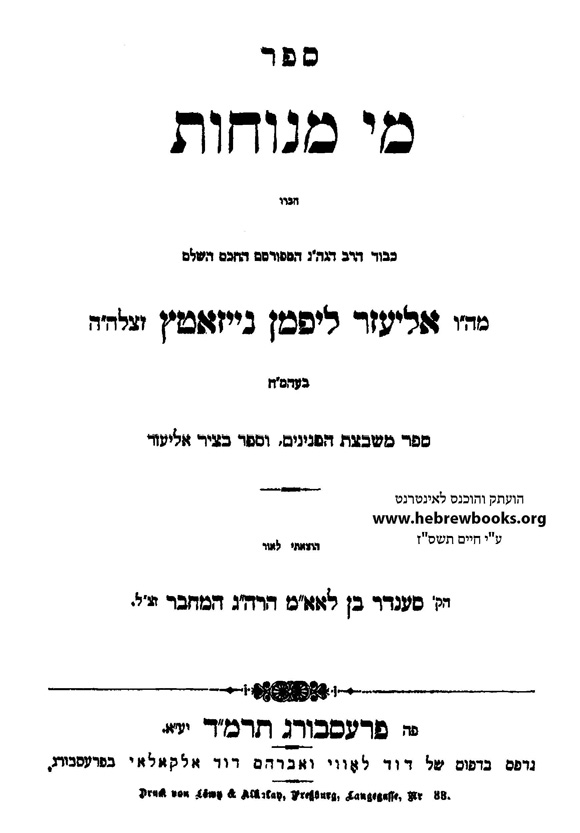


Notes on RASHI, ArtScroll Censorship, and Emendation of Rabbinic Texts

Notes on RASHI, ArtScroll Censorship, and Emendation of Rabbinic Texts
By David Shasha
A new post on the Seforim blog by Professor Marc Shapiro discusses the problem of ArtScroll publishers and the way that it routinely censors rabbinical texts:
Shapiro looks at the issue of RASHBAM’s commentary to Genesis 1, a big problem for Orthodox literalists.
Here is a post from Failed Messiah that explains the difficulty:
RASHBAM is the grandson of RASHI and the brother of Rabbenu Tam; a central figure in one of the most illustrious of all the rabbinical dynasties in the Ashkenazi tradition.
RASHBAM’s comment to Genesis 1 asserts that, according to the literal meaning of the text, the day, contrary to Jewish law, begins in the morning and not the evening.
I will leave the legal controversy to Shapiro and others, but would like to discuss his point on textual emendation.
It is interesting to see the plethora of Ashkenazi figures that Shapiro cites, including Rabbenu Tam and Abraham ben David (RABAD) to support the idea that no texts should be emended based on personal opinion.
The problem with this formulation is that the principle of textual emendation was most emphatically adopted by RASHI, the most important figure in the Ashkenazi rabbinical tradition.
Jose Faur in his classic article “The Legal Thinking of the Tosafot” discusses the matter in some detail:
He notes the freedom Ashkenazi rabbis accorded themselves to emend texts:
The Franco-German school had a liberal attitude toward the text of the Talmud, It is well known that this school felt free to amend, interpolate and delete from the text of the Talmud.
Referencing the classical Ashkenazi source Sefer ha-Yashar and academic discussions by Joseph Weiss and Benjamin Lewin, Faur explains that RASHI’s famous “Hachi Garsinan” – the code term for his many emendations of Talmudic texts – was a central part of the Ashkenazi rabbinical heritage:
The liberal attitude toward the text is reflected in the Franco-German position that the Talmudic text was not put into writing until post-talmudic times, late in the Middle Ages. Accordingly, the Talmudic text was never authoritatively fixed. Since there was no authoritative transmission of the text, it was subject to further development and errors.
We have seen this principle dangerously expanded in the current school of academic Talmud studies which holds that the Talmud was not completed until the late Geonic period, when the bulk of what is called the STAM (anonymous) layer of the corpus was written; contrary to the traditional formulation found in the canonical Epistle of Sherira Ga’on.
For more on the current scholarly revolution against the normative Jewish tradition, led by David Weiss-Halivni, see the following books:
Without any actual documentary or historical evidence, the revisionist scholarship – similar to German Higher Criticism of the Hebrew Bible – demands that we see different historical strata in the Babylonian Talmud.  This would undermine its literary unity and its historical presentation of the classical rabbinic tradition as formulated in the academies of Sura and Pumbedita.
The new scholarship claims that the text is a frightful hodge-podge of confused materials that is often sloppily and incoherently edited.  Texts are ignorantly assembled by anonymous rabbis who lack a historical connection to their predecessors.  It is all a fabrication lacking the firm authority of tradition.
The close of the Talmudic canon, as formulated by Sherira Ga’on in his famous Epistle, is in the 6th century:
Jose Faur has written an excellent treatment of the matter in his “Textuality in the Rabbinic Tradition,” chapter 4 of his book Golden Doves with Silver Dots, which is an important corrective to this benighted revisionism:
A good deal of the current scholarship attacking the Geonic tradition and its dating of the Talmudic corpus seeks to aggressively negate Faur’s assertions about the Oral Law and its textual manifestations. The written form of the Talmud and the tradition of emendation by Ashkenazi rabbis, and now academic scholars, has thus become part of a larger problem of the authority of the Oral Law in contemporary Judaism. Shapiro claims that the Ashkenazi rabbis, and their Sephardic followers like Moses Nahmanides, were firmly against this method of emendation, even though the leader of their school, RASHI, was a strong proponent of it:
The following discussion by Jacob Neusner reviews the salient points involved the matter of RASHI and the Tosafist School:
Neusner claims that RASHI emended the Talmudic text over 2,300 times based on his own personal opinion!
It is interesting to note both the parallels and differences between the emendation process in the older Ashkenazi tradition and the way it is now being deployed by Ultra-Orthodox fundamentalists like ArtScroll.  The idea of censorship has become a very modern way of dealing with inconvenient historical details.  So while the substantive elements of RASHI and ArtScroll are indeed quite different it should be noted that the role of PILPUL and “Da’as Torah,” the imposition of personal opinions and values on Jewish texts, remain a central part of Ashkenazi rabbinic authoritarianism and its modern academic offshoots.
The historical dialectic is quite striking.
In addition to the emendation process during the early Middle Ages in Germany and France, the Ashkenazi tradition as embodied in the PILPUL methodology of Rabbenu Tam and the Tosafists developed the “Davqa/Lav Davqa” method of analysis which would interpret texts in a relativistic manner.  Some texts were, Davqa, to be interpreted as written, others, Lav Davqa, were not to be interpreted as written.
Again, it is Jose Faur who has been best able to decode this casuistic methodology, finding a connection with the hermeneutics of Peter Abelard and his Scholastic apologetics:
The Tosafot, occasionally, prefaced their analysis of the Talmud by declaring that the sense of the text is lav davqa (not exact). The lav davqa methodology revolutionized the study of the Talmud and changed the content of Jewish law. This methodology is grounded on the assumption that the rabbinic texts may be interpreted not in accordance to their usual sense. The methodology, as well as the philosophy of language that it projected, was brilliantly formulated by Abelard. Abelard, in his attempt to reconcile the conflicting views found in the writings of the Church Fathers, formulated the semantic principles that the same word may be differently used by different writers.
Here is how Faur sums up the matter:
It is intellectually acceptable to describe things not in accordance to what they really are.
This explication ties together the various anti-rational strains that are inherent to the Ashkenazi rabbinical tradition and its modern exponents.
In the end it affirms the absolute power of the interpreter over the text, the rabbi over the Law. It removes agency from the community and dangerously invests absolute power in the rabbinical class.
It is therefore quite interesting to read Shapiro’s attack on ArtScroll which does not at all reference the history of RASHI’s emendations, the PILPUL method of the Tosafot, or the shocking revisionism of contemporary Judaic scholars which has essentially sought to eviscerate the historical integrity of the Talmudic tradition.


Book Review: Yosie Levine, Hakham Tsevi Ashkenazi and the Battlegrounds of the Early Modern Rabbinate

BOOK REVIEW

Yosie Levine. Hakham Tsevi Ashkenazi and the Battlegrounds of the Early Modern Rabbinate. London: Littman Library, 2024. xiv, 266.

Reviewed by Bezalel Naor

Yosie Levine has tackled the enigmatic figure of Hakham Tsevi Ashkenazi (1658-1718), a man whose title alone beggars the imagination. At first blush, the terms “Hakham” and “Ashkenazi” present an oxymoron. The term “Hakham” is generally reserved for Sephardic sages. (An outlier would be Hakham Isaac Bernays of Hamburg [1792-1849], but that is a discussion for another paper.) Hakham Tsevi went so far as to add to his signature the letters samekh teth, in typical Sephardic fashion. (Levine grapples with the significance of the suffix on pages 206-207.)[1]

Reared in Budin (today Budapest),[2] then under Ottoman rule, our protagonist lived at various times in the Balkans (Adrianople, Belgrade, Constantinople, Salonika and Sarajevo), Central Europe (Altona, Hamburg, Wandsbek) and Western Europe (Amsterdam and London). This straddling of Ashkenazic and Sephardic communities produced a hybrid: Hakham Tsevi Ashkenazi.

In the final chapter of the book, entitled “Afterlife: The Response of Modern-Day Posekim to Hakham Tsevi’s Early Modern Responsa,” the author demonstrates how certain positions of Hakham Tsevi which seemed outlandish and even revolutionary at the time, have come home to roost in the twenty-first century.

First, there is the Hakham’s responsum discussing whether an artificial man, a golem, can be counted in a minyan or prayer quorum of ten.[3] The Talmud (Sanhedrin 65b) recounted how Rava created a man by employing Sefer Yetsirah. The Hakham’s own ancestor, Elijah Ba‘al Shem of Chelm, created such a humanoid. (The Hakham’s son, Rabbi Jacob Emden, would later address this very issue in his responsa.)[4] In our own age of robotics and Artificial Intelligence, one anticipates a robust halakhic literature on the subject of the golem. (The golem of the Gemara was bereft of the power of speech, so in that respect, present-day robots are certainly superior.) An area of Halakhah that immediately comes to mind is Nezikin, torts or damages.

An outspoken responsum of the Hakham directed Diaspora Jews visiting the Land of Israel to observe but a single day of Yom Tov in conformity with local custom.[5] A the time it was written, Hakham Tsevi’s decision flew in the face of the accepted practice, whereby Diaspora Jews observed two days of the festival during their sojourn in the Land, in conformity to their place of origin. Writing from Safed in the sixteenth century, Rabbi Joseph Karo attested that pilgrims to the Land would assemble their own minyan, in which they recited the prayers for the second day of Yom Tov in exile, a practice sanctioned by the gedolim of old.[6]

Hakham Tsevi’s own son, Rabbi Jacob Emden, respectfully disagreed with his father’s opinion. In a lengthy responsum, he militated for the two-day observance.[7]

According to Levine, the 1903 decision of Rabbi Elijah David Rabinowitz-Te’omim (Aderet) in Jerusalem, invoking and inveighing with Hakham Tsevi’s responsum, was a first.[8] In Levine’s words: “This ruling represented a radical break with established norms and constituted a watershed in the reception history of Hakham Tsevi’s responsum” (page 197).[9]

Earlier, Levine writes that Rabbi Shneur Zalman of Liady (1745-1812) was “sympathetic to Hakham Tsevi’s ruling in principle” (p. 195). The footnote refers us to Rabbi Shneur Zalman’s Shulhan ‘Arukh 496:11. This reference requires some unpacking. While Rabbi Shneur Zalman’s ruling just happened to coincide with that of Hakham Tsevi, it was certainly not the basis of his ruling. Rather, he based his decision on a rishon, the medieval authority Rabbi Eliezer ben Nathan (Ra’avan) of Mayence. Ra’avan, in turn, followed in the footsteps of Rabbenu Hananel ben Hushiel of Kairouan.[10]

(An aside: Rabbi Abraham David Lavut of Nikolayev [1814-1890], a disciple of Rabbi Menahem Mendel Schneersohn of Lubavitch [Tsemah Tsedek], brought to the discussion a mystical element, whereby the “illumination” [he’arah] of the Festival takes a day longer to reach the Diaspora.[11] The late Rabbi Baruch Na’eh, of blessed memory, impressed upon this writer in no uncertain terms that the Alter Rebbe’s pesak was derived from Rabbenu Hananel—which is to say Ra’avan—and not from these mystical considerations.)[12]

Aderet’s contemporary, Rabbi Hayyim Soloveichik of Brisk, also maintained that visitors to Erets Yisrael should observe but a single day of Yom Tov, but unlike Aderet, he did not see the need to invoke the authority of Hakham Tsevi. Neither did he seek support in the work of the rishon, Rabbi Eliezer ben Nathan (as did Rabbi Shneur Zalman). As it is often quipped, “Reb Hayyim was a rishon!”[13]

In more recent times, Rabbi Tsevi Pesah Frank was open to the thinking of the Hakham Tsevi (though he countered that the law might devolve upon the individual, “a-karkafta de-gavra”).[14] On the other hand, Rabbi Shelomo Zalman Auerbach rejected the ruling of the Hakham Tsevi.[15]

This issue remains a heated debate to this day. Some Diaspora Jews keep two days in Erets Yisrael, while others observe but one day.

*

Perhaps the most infamous, and certainly the most traumatic of Hakham Tsevi’s controversies, was his confrontation with crypto-Sabbatian Nehemiah Hiyya Hayyon in Amsterdam in 1713. Hayyon, a man of dubious character, arrived in town from the East (he claimed to be from Safed), intent on publishing his literary oeuvre. Hakham Tsevi served at that time as Rabbi of the Ashkenazic community of Amsterdam. Upon perusal of Hayyon’s book ‘Oz le-Elohim, printed in Berlin earlier that year, Hakham Tsevi discovered that the work contained arch-heresy. (For a long time, it was thought that this was the theology of Shabbetai Tsevi. Today, the scholarly consensus is that ‘Oz le-Elohim is in fact an offshoot of the theology of Abraham Miguel Cardozo [1627-1706].)[16]

Hakham Tsevi proceeded to issue a broadside banning the book. (Levine provides a facsimile on page 168.) One would imagine that the preeminent sage would have easily prevailed over the rascal. Actually, the outcome was the exact opposite. Hayyon remained in Amsterdam and Hakham Tsevi was routed, beating a retreat to London. (Elisheva Carlebach treated this sorry chapter in Jewish history in her biography of Hakham Tsevi’s ally in the affair, Rabbi Moses Hagiz, The Pursuit of Heresy.) It turned out that the Sephardic Hakham of Amsterdam, Solomon Ayllon, was himself a crypto-Sabbatian. Presented with the political clout of the powerful Spanish-Portuguese Mahamad (or Ma‘amad), and ultimately, the Dutch authorities, Hakham Tsevi was forced to flee.

One finds it of interest that Hakham Tsevi’s broadside skirts the issue of the mistaken belief in the pseudo-Messiah Shabbetai Tsevi. (You might call that “the elephant in the room.”) Instead, it focuses on how scandalous is this strange notion that Levine felicitously refers to as Hayyon’s “belief in a First Cause that was decoupled from the revealed God of Israel” (page 167).

Since Levine has discussed the afterlife of Hakham Tsevi’s literary legacy, I should like to take this opportunity to explore the afterlife of Hayyon’s—or more precisely, Cardozo’s theology.

Today one puzzles over vestiges of the opposition of the Sibah Rishonah (First Cause) and Elohei Yisrael (God of Israel) that survive in the reputable works of Rabbi Baruch of Kosov (Yesod ha-Emunah)[17] and Rabbi Israel Hapstein, the Maggid of Kozienice (‘Avodat Yisrael).[18] Should we suspect these authors of being closet Sabbatians?

We need to disentangle theology from sociology. Espousal of this kind of theology does not necessarily connect one to the Sabbatian movement.

It is plausible (though unlikely) that even the way Cardozo himself came to his theology was coincidental to his attraction to the Sabbatian movement. Prima facie, what one observes in Cardozan theology is the convergence of two worlds: that of the philosopher and that of the kabbalist. The Marrano physician, educated at Salamanca in general philosophy, encountered, upon reentry to the Jewish fold, an opposed worldview of a particularistic Judaic nature. The valorization of Elohei Yisrael over the Sibah Rishonah is a celebration of Cardozo’s conversion (or re-conversion) to Judaism. The “decoupling,” or to use the Hebrew term, the pirud that so scandalized Hakham Tsevi, is an outgrowth of the maelstrom, and perhaps unresolved tension, within Cardozo’s soul.

Hakham Tsevi was outraged by the proposition of a First Cause without will (ratson) and intention (kavanah). Similarly irksome was the notion that on the ultimate level of divinity, chosenness disappears. The first proposition is articulated by Rav Kook.[19] The second, by Rabbi Dov Baer Shneuri of Lubavitch (Mitteler Rebbe).[20] Would Hakham Tsevi consider these writings beyond the pale? Perhaps not.

As long as unity (yihud)—for lack of a better term, monotheism—is maintained, one remains within the mainstream of Jewish belief. It was precisely the “decoupling” of these two elements—the universalist and the particularist—that provoked the defender of the faith. The Hakham recognized shtei reshuyot (dualism)[21] when he saw it. No amount of sophistry could camouflage an incipient idolatry.

Again, we need to distinguish between Cardozo’s Messianism and his theology. And even then, there is required a refinement before that theology can mainstream. (Just as Rav Kook entertained the thought that by a process of purification or tseruf, Spinoza’s pantheism might one day be rehabilitated. No longer would Spinoza be referred to as Maledictus but Benedictus.)[22]

Notes

  1. Hakham Tsevi’s son, Jacob Emden, continued the practice, signing responsa “Ya‘abets Samekh Teth.” Ya‘abets is the initials of Ya‘akov ben Tsevi.
  2. Also referred to in German as Ofen.
  3. She’elot u-Teshuvot Hakham Tsevi, no. 93.
  4. She’elat Ya‘abets II, no. 82.
  5. She’elot u-Teshuvot Hakham Tsevi, no. 167. He reasoned that should one observe an additional day in Erets Yisrael, one would thereby be in violation of Bal Tosif (Thou shalt not add). See Rosh Hashanah 28b, regarding one who sleeps in the sukkah on Shemini ‘Atseret.
  6. See Rabbi Joseph Karo, She’elot u-Teshuvot Avkat Rokhel, no. 26
  7. She’elat Ya‘abets, Part One, no. 168.
  8. See Rabbi Elijah David Rabinowitz-Te’omim, Kuntress Shevah ha-Arets, in Be-Shemen Ra‘anan, vol. 2, ed. Ben Zion Shapira (Jerusalem, 1991), p. 209, par. 35. The reference to Hakham Tsevi’s responsum should read no. 167 (not no. 147).
  9. Rabbi Elijah David Rabinowitz-Te’omim (known by the acronym Aderet) served as the assistant to Rabbi Samuel Salant, Rabbi of Jerusalem. Aderet was the father-in-law of Rav Kook, who would go on to become Ashkenazic Chief Rabbi of Erets Israel. Evidently, Rav Kook—unlike Aderet—did not accept the ruling of Hakham Tsevi. See Rabbi Avraham Yitzhak Hakohen Kook, Orah Mishpat, no. 125.
  10. See the commentaries of Ra’avan and Rabbenu Hananel to Pesahim 51b-52a. Rabbenu Hananel’s reading differs from our own. In our version, Rav Safra travels from Erets Yisrael to Bavel. In Rabbenu Hananel’s version, Rav Safra travels from Bavel to Erets Yisrael. The conclusion is that in places of habitation (yishuv), one must conform to local custom (and observe a single day of Yom Tov); in the desert (midbar), one maintains one’s original custom of two-day observance. See the letter of Rabbi Meir Don Plotzki published in Rabbi Shelomo Zalman Ehrenreich’s edition of Ra’avan. Unfortunately, Rabbi Ehrenreich terribly misunderstood the reference to Ra’avan in Rabbi Shneur Zalman of Liady’s Shulhan ‘Arukh. This misreading persisted in Rabbi Yitzhak Flakser’s Sha‘arei Yitzhak.
    See Rabbi Eliezer ben Nathan of Mayence, Even ha-‘Ezer/Sefer Ra’avan, ed. Shelomo Zalman Ehrenreich (Simleul, 1926), Pesahim, 162b (text of Ra’avan), 161d-162c (supercommentary of Even Shelemah); Rabbi Yitzhak Flakser, Sha‘arei Yitzhak, vol. 1 (Jerusalem, 1999), Hilkhot Yom Tov Sheni, chap. 3.
    In a stroke of originality, Rabbi Moshe Sternbuch suggested that this variant of Rabbenu Hananel might have been the source of Maimonides’ startling ruling (Hilkhot Kiddush ha-Hodesh 5:12) that in the desert of Erets Yisrael one observes two days of Yom Tov. See Rabbi Moshe Sternbuch, Mo‘adim u-Zemanim, Part III (Pesahim) (Jerusalem, n.d.), chap. 121 (62a).
    First published in Prague in 1610, Ra’avan was available to Rabbi Shneur Zalman of Liady. Rabbenu Hananel’s commentary to Pesahim, on the other hand, did not become available until 1868, when it was published in Paris (from a Munich manuscript) by Rabbi Yosef Halevi Stern.
  11. Rabbi A.D. Lavut, Sha‘ar ha-Kollel (Brooklyn, 2005), 1:2 (1b-2a).
  12. Rabbi Baruch Na’eh in private conversation with the writer (BN) before Pesah of 1987. He was the son of the famed Habad halakhist Rabbi Abraham Hayyim Na’eh, author of Ketsot ha-Shulhan (on Shulhan ‘Arukh Harav). Rabbi Barukh Na’eh authored two volumes of Gemara Shelemah Pesahim.
    Inter alia, see the reaction of Rabbi Meir Mazuz when presented with the Sha‘ar ha-Kollel. Recorded in She’elot u-Teshuvot Ish Matsli’ah, vol. 1, 2nd edition (B’nei Berak, 1989), Orah Hayyim, no. 40 (116b). Rabbi Matsli’ah Mazuz’s posture as a posek–similar to that of the Hakham Tsevi (Part One, no. 36)—was that the Kabbalistic perspective must never result in a bouleversement of the Halakhah. See Levine, pp. 84-86. Also, Rabbi Jacob Emden’s lengthy responsum in She’elat Ya‘abets, Part One, no. 47.
  13. See Rabbi Tsevi Yosef Reichman, Reshimot Shi‘urim, Sukkah (New York, 1990), p. 227; Rabbi Tsevi Schachter, Nefesh Harav (Jerusalem, 1994), p. 84; Levine, Hakham Tsevi, p. 198.
    Another Lithuanian posek who inclined to the one-day observance was Rabbi David Friedman of Karlin. See She’elat David (Piotrkow, 1913), Kuntress ha-Minhagim, 11b, footnote. One should not be surprised that he did not mention Hakham Tsevi. Reb Dovid Karliner was famous for his eschewal of Aharonim (later-day authorities)!
  14. Har Tsevi, Orah Hayyim, vol. 2 (Jerusalem, 1973), no. 78 (126b).
  15. See the letter of Rabbi S.Z. Auerbach to Rabbi Yitzhak Flakser in Sha‘arei Yitzhak, vol. 1 (Jerusalem, 1999), Hilkhot Yom Tov Sheni, chapter 17.
  16. See Yehudah Liebes, On Sabbateanism and Its Kabbalah (Hebrew) (Jerusalem, 1995), pp. 35-36.
    For a cornucopia of Cardozo’s literary output, see David J. Halperin, Abraham Miguel Cardozo: Selected Writings (Mahwah, New Jersey, 2001).
    Rabbi Yahya Kafah of San‘a, Yemen, mistook ‘Oz le-Elohim for a work of mainstream Kabbalah. Rav Kook set him straight that this is in fact a heretical work. See Rabbi Yahya Kafah, Milhamot Hashem (Jerusalem, 1931); RAYH Kook, Ma’amrei ha-Rayah, vol. 2 (Jerusalem, 1984), p. 520; idem, Haskamot ha-Rayah (Jerusalem, 1988), no. 41, p. 46; idem, letter and pesak din in front matter of anonymous Emunat Hashem (Jerusalem, 1937).
  17. See Rabbi Baruch of Kosov, ‘Ammud ha-‘Avodah (Chernowitz, 1863), Kuntresim le-Hokhmat ha-Emet, 128d. In the newer edition, Yesod ha-Emunah, ed. Ya‘akov Aharon Ilowich (Monsey, NY, 2007), Kuntresim le-Hokhmat ha-Emet, par. 206 (p. 488). And see Esther Liebes, Ahavah vi-yetsirah be-haguto shel R. Baruch mi-Kosov (Ph.D. dissertation, Hebrew University, 1997), pp. 279-280.
  18. In the Pe’er mi-Kedoshim edition of ‘Avodat Yisrael (B’nei Berak, 2013), 290b. The context is a kavanah for Rosh Hashanah.
    See the lengthy discussion in Bezalel Naor, Navigating Worlds: Collected Essays (New York, 2021), pp. 529-530.
  19. Siddur ‘Olat Re’iyah, vol. 1, p. 23, s.v. Le-shem yihud; p. 111, s.v. Atah hu ‘ad she-lo nivra ha-‘olam.
  20. Rabbi Dov Baer of Lubavitch, Imrei Binah (Brooklyn, 2018), Sha‘ar Keri’at Shema‘, par. 94 (120c); quoted in Bezalel Naor, The Project of Hasidism (New York, 2025), p. 108.
  21. Mutatis mutandis, we find in the Mishnaic era the heretic Elisha ben Abuyah (Aher) constructing a duality of the Unmoved One (“no sitting or standing”) and Metatron, the advocate of Israel (“sitting and writing the merits of Israel”). See Hagigah 15a; and the reading of Maimonides, Commentary to the Mishnah, Introduction to Perek Helek (Sanhedrin chap. 10), the third fundamental (Kafah edition, p. 141).
  22. Rav Avraham Yitzhak Hakohen Kook, Pinkas Rishon le-Yaffo, par. 117, in Kevatsim mi-Ketav Yad Kodsho, ed. Boaz Ofen (Jerusalem, 2006), p. 146.
    It seems such a purification of Cardozan theology was uppermost in the mind of Rabbi Pinhas Elijah Hurwitz of Vilna. See his Sefer ha-Berit (Brünn, 1797), Part One, ma’amar 20, chap. 15 (109a-111a). After presenting the opposition of the First Cause and the God of Israel (the hallmark of Cardozo’s theology), Hurwitz quotes the Italian kabbalist Rabbi Joseph Ergas (author of Shomer Emunim) in his polemic work, Tokhahat Megullah & Ha-Tsad Nahash (London, 1715) against Hayyon and Abraham Cardozo. The upshot is the integration of the two aspects of the divinity within an acceptable orthodox framework. Concerning Ergas’ anti-Sabbatian polemic, see Bezalel Naor, Post-Sabbatian Sabbatianism (Spring Valley, NY, 1999), pp. 145-149.Hurwitz has misquoted Tokhahat Megullah f.12. For “Hu mitparesh bi-fe‘ulotav ve-ne‘elam be-‘atsmuto,” read: Hu mitparsem bi-fe‘ulotav ve-ne‘elam be-‘atsmuto.


New Writings from R. Kook and Assorted Comments, part 5

New Writings from R. Kook and Assorted Comments, part 5
by Marc B. Shapiro
Continued from here.
The next post (or perhaps the one following) will return to my analysis of R. Kook’s recently published Li-Nevokhei ha-Dor with which this series began. Yet before doing so, there are a number of other points I would like to make and respond to some comments and questions.

1. In previous installments I have mentioned how R. Kook compares the Torah scholars and the masses, and how the masses have elements of natural morality that are not to be found among the scholars. This is not the only provocative distinction R. Kook makes. He also distinguishes between the great tzadikim and everyone else. These two groupings are, of course, different in many ways. Yet one of the most interesting distinctions R. Kook makes—and one can find parallels to this in Ibn Caspi and hasidic texts— is that for the elites the nitty-gritty of halakhic study can have a negative affect on their spiritual life. Here is what he writes in Shemonah Kevatzim 1:412:

האדם הגדול כשהוא מכניס את עצמו יותר מדאי במדת הפרטים, בין בלימודם בין בחרדתם, הרי הוא מתקטן, ומעלתו מתמעטת, וצריך לשוב בתשובה מאהבה, מתוך גדלות הנשמה, לקשר את תוכן חיי נשמתו בענינים גדולים ונשגבים.

R. Kook goes so far as to say that for these elites the very practice of mitzvot is not part of their spiritual identity per se. They have, as it were, moved beyond this, and their involvement with the practical sphere of mitzvot is based on their connection to the larger world.[1] I think that this passage, from Shemonah Kevatzim 1:410, is the most antinomian in all of R. Kook’s writings. In it we also see how problematic the halakhic details of life are to the special personality who wants to soar the heights of spirituality and yet has to be involved with practical halakhic matters. I think it obvious that R. Kook is reflecting his own personal spiritual struggle here. On the one hand, he wants to lose himself in love of and experience of God, to bind his soul with the divine. On the other hand, as a practicing rabbi he was called upon day in and day out to answer all sorts of everyday halakhic questions. One can imagine him alone in his study, enraptured in mysticism, even nearing prophetic insights, and someone comes to his door asking him to determine the kashrut of a dead chicken. With this he is brought down to the mundane halakhic world.[2]
ישנם אנשים גדולים כאלה, שמהלך רוחם הוא כל כך נשא, עד שמצדם אם כל העולם היה במעמדם, היו המצות בטלות כמו שיהיה לעתיד לבוא, לימות המשיח או תחיית המתים. והם בכל זאת מקושרים הם במצות הרבה מאד, לא למענם, כי אם למען העולם כולו, המקושר עמם. וכשהם באים אל הפרטים, לעסוק בהם מצד עצמם, מוצאים הם סתירות נפשיות גדולות האלה, שהם נמוגים מרוב יגונם. וכשבאים לעסוק בתורה ובמצות בפרטיות בשביל העולם, יושפע עליהם מעין של גבורה ושל קדושה, שאין דומה לו.
Let me also return to the issue of the Jewish masses’ natural morality vs. the rabbinically tuned morality of the scholars, and how according to R. Kook the former is superior to that of the latter. I was asked if I can provide some examples of this. I think the most obvious such example is the response to sexual abuse that we have witnessed in the Orthodox world. While the natural impulse of the masses was that abusers must be immediately removed from any contact with children, many of the learned rabbis were able to come up with all sorts of reasons why this was not necessary, and why the police should not be called. Over time the view of the rabbinic class has evolved and many of them now advocate a strong response to sexual abuse. However, what took them a long time to get to was immediately understood by the Jewish masses, and they understood it intuitively. Years from now people will wonder how it was that rabbis refused to protect children. It will be incomprehensible to them how this could have happened. We who lived through this experience know that it was precisely the pressure on the ground, from the Jewish laypeople (and the bloggers and newspapers), that forced changes in this matter.[3] Here I think is a good example where talmudic learning led scholars לטהר את השרץ בק”ן טעמים, while the Jewish masses, with their intuitive natural morality, saw that evil must be exposed and they emerged victorious.[4]

The same phenomenon was seen in the Leib Tropper affair, where once again it was the masses, together with a couple of indefatigable bloggers, who saw what was really going on, and forced the issue. This happened while many leading rabbis continued to stand by Tropper. They were oblivious to what was unfolding before their eyes and what was obvious to everyone but them.[5] And let’s not forget about all the gedolim who signed a letter in support of the monster Elior Chen.[6] It is difficult to make sense of these terrible lapses of rabbinic judgment with a haredi Daas Torah perspective, but with R. Kook’s analysis all becomes clear.

I thought of R. Kook’s comments on the intuitive morality of the masses after hearing a few shiurim on the subject of lo tehanem. One of them has since been removed from the site. Listening to these shiurim was shocking to me, not simply because I found the views discussed at odds with what everyone in my community regards as basic Jewish values (and matters about which we would be quick to criticize non-Jews if they ever spoke this way). What was particularly surprising was how the speakers, all learned talmudically, have fallen into what I would call the textualist trap of Centrism. What this means is that the written word has become so sanctified that they feel it is their obligation to resurrect every halakhah recorded in the standard codes in order improve the masses’ behavior.

Yet for all their learning, these rabbis don’t appreciate that there are some halakhot that simply fell out of practice. This happened in pre-modern times, before there were Reform and Conservative movements. In other words, it happened at a time when communities had the status of kehillah kedoshah. Because of this, historically the poskim generally tried to be melamed zekhut on the actions of the people, on the assumption that kol hamon ke-kol sha-dai, which is in line with how R. Kook understood the pious Jewish masses. That explains why, to give just one example, confronted with the fact that pious people did not wash before eating wet food, the vast majority of poskim tried to find a justification for this. They did not lecture the people about how they were sinning and try to resurrect a practice that had fallen out of fashion. Their assumption was that there must be some justification for the practice of the masses, even if it is not readily apparent.[7]

As Haym Soloveitchik discussed in “Rupture and Reconstruction,” there is today no faith in the practice of the masses. Therefore, instead of justifying the practices which oppose the textual tradition, the rabbis are attempting to reestablish the textual tradition. The problem with this is that there is also what I call an aggadic tradition, where values and morality were passed on, and this sometimes was in tension with the letter of the law. The Jewish people, acting with their innate Torah-intuitive morality, developed an approach, and this was recognized as legitimate until recent times.[8] So we now have a situation where shiurim are being given on the prohibition of lo tehanem telling people all sorts of things about how to relate to non-Jews that no one, and this includes great rabbis, ever paid attention to (e.g., one can’t say that X is a good baseball player!).

I am not going to get into the halakhic justification which can be offered as to why the pious Jewish people didn’t follow the letter of the law. There is indeed halakhic justification. (See R. Eliezer Waldenberg, Tzitz Eliezer, vol. 15 no. 47.) Yet my point is that the Jewish people didn’t need any specific halakhic justification, because they knew from their intuitive natural morality what was proper. This is what R. Yehudah Amital meant when he said that growing up in Hungary he never heard anyone talk about “halakhah this, and halakhah that”.[9] As R. Amital pointed out, the people who speak like this, who have an endless focus on halakhic particulars, are those who have lost touch with the tradition. In a traditional society there is no need for one to delve into endless halakhic details, as simply by growing up in this society one knows how to conduct oneself. In a traditional society, you don’t need books to tell you, for example, how big the matzah needs to be and how much water you need to wash your hands, and by the same token you don’t need books to tell you what you can and can’t say about the Mets’ leading slugger or whether or not you can give your maid a gift on her birthday. There has been so much discussion about how Haredism is a modern invention, but the truth is that Centrism, with its Pan-Halakhism, is just as much a modern invention as haredism. Looking around, it is actually some groups of Hasidim who are the only real traditionalists, the ones who have a mesorah and who don’t need to constantly look into a book to tell them how they should live. As the great Hungarian scholar Ludwig Blau put it, “A drop of tradition is worth more than a ton of acumen.”[10]

2. In my last post I summarized R. Eleazar Ashkenazi’s position in his Tzafnat Paneah, pp. 29-30, as follows:

He also offers another explanation for the lengthy lifespans [in the Torah], namely, that the Torah recorded what the popular belief was, no matter how exaggerated, and Moses was not concerned about these sorts of things. In other words, just like today people say that the Torah is not interested in a scientific presentation of how the world was created, R. Eleazar’s position is that the Torah is not interested in a historically accurate presentation.
Dr. Eric Lawee, who has a chapter on Ashkenazi in his forthcoming book, wrote to me that he reads Ashkenazi differently than I did. I went back to the text and thanks to Lawee, I would like to clarify some of what I wrote.[11] It appears that the first part of Ashkenazi’s comment is merely stating that the Torah recorded exaggerated numbers as figures of speech, much like the Land of Israel is described as flowing with milk and honey which was never meant to be understood literally. Although it is true that people understand the lifespans literally, Ashkenazi sees this as a misinterpretation of the Torah. In other words, it is not correct to say that the Torah recorded the exaggerated numbers because that was what the people believed.

Yet in this very discussion, Ashkenazi also states that the exaggerated numbers are only found in the very ancient stories. However, with regard to events closer to Moses’ time the latter was more careful about recording the details accurately. It is because of this comment that I wrote that Moses left the stories of the distant path cloaked in legend. I should have also clarified that Ashkenazi is only referring to the ענייניהם ושנותיהם of the ancients who are not part of the prophetic tradition which includes Adam, Noah, and the Patriarchs. Here Ashkenazi does seem to be saying that the Torah records popular conceptions, for if not from these conceptions, where did Moses get the inaccurate information that he recorded?

It is possible to explain that the lengthy lifespans of people like Adam and Noah, whom Ashkenazi stresses were of concern to Moses and he was therefore careful with regard to their details, were always intended be understood figuratively. However, with regard to the others mentioned in the early chapters of Genesis, Ashkenazi speaks of הגוזמות הספוריים הבלתי מדוקדקים , and here it seems that he does advocate the notion that the Torah is including material that was popularly believed, even if not accurate.[12] He also writes about how certain matters in the Torah were recorded בבלבול ובקיצור מופלג ומקומותיהם ומקריהם שלא בדקדוק One such matter is the genealogies, about which he writes: לא היתה הכוונה לדקדק במספר שנות חיי כל איש כי אם על דרך כלל

Ashkenazi’s viewpoint is interesting because he acknowledges that in certain factual matters the Torah is not exact, and indeed this is not a concern of the Torah. This sounds very similar to how many people explain the first few chapters of Genesis. Yet it is much less common for Orthodox spokesmen to extend this approach to later chapters of the Torah, e.g., to say that say the genealogies recorded are not accurate. But is there a conceptual difference between saying that the Torah is not interested in presenting creation in a historically accurate form, and that is why there is no mention of billons of years or of evolution, and saying that the Torah is not interested in exact genealogies, but simply presents what was commonly thought and this explains the lengthy lifespans? If there is no conceptual difference, where does one draw the line? Surely there are some parts of the Torah in which factual history must be assumed. This is an issue that has not yet been adequately dealt with, and I will soon be publishing a letter by a great Torah scholar which refers to this problem.

3. In the last post I cited an example where R. Shalom Messas was criticized for not understanding an Aggadah literally. More than one person thought that I should have cited sources showing how foolish it is to take bizarre aggadot literally. It is, of course, easy to cite such sources, beginning with the Rambam’s Introduction to Perek Helek.[13] Most of these are quite famous, so let me call attention to a book not so well known. It is R. Eliezer Lippmann’ Neusatz’ Mei Menuhot, published in 1884. Here is its title page.

Neusatz was a student of the Hatam Sofer, and this book appears with the approbation of R. Simhah Bunim Sofer (the Shevet Sofer).


Here is the first page of the approbations to his book Be-Tzir Eliezer. Pay careful attention to how R. Abraham Samuel Sofer (the Ketav Sofer) describes Neusatz’ standing as a student of the Hatam Sofer.
On p. 16a, after citing Maimonides’ words that the majority err in understanding aggadot literally, Neusatz comments that this was the situation in earlier times, which were less religiously sophisticated than later generations. The proof that the earlier generations were religiously naïve is that belief in divine corporeality was widespread then. According to Neusatz, people who were so mistaken about God that they imagined him as a corporeal being would obviously not be able to understand Aggadah in a non-literal fashion. He contrasts that with the generation he lived in, which was able to properly understand Aggadah.

אמנם בדורנו זה נזדככו יותר הרעיונות ונלטשו הלבבות והמושגים האלהיים הנשגבים האלה מצטיירים בלבות המאמינים בטוהר יותר ורוב זוהר, ונתמעטו אנשי הכת הזאת, ותה”ל רובם יודעים שחז”ל כתבו אגדותיהם ע”ד משל ומליצה וחדות וכפי הצורך אשר היה להם לפי ענין הדורות אשר היה לפניהם, פנימיותם הם ענינים אמתיים נשגבים עומדים ברומו של עולם.
I assume that Neusatz would say that the traditional notion of the generations declining only refers to the scholars, as it is obvious from his words that when it comes to the masses the generations have been getting better.

Neusatz also has an interesting explanation as to why certain prophecies, in particular those of Ezekiel, are not written in proper grammatical Hebrew. This was already commented on by Abarbanel. Abarbanel simply attributes this to Ezekiel’s and Jeremiah’s unpolished Hebrew skills![14] He further claims that this is why there are an abundance of keri u-khetiv, ketiv ve-lo keri etc. in the book of Jeremiah. The original Hebrew had to be corrected!

Neusatz has a different approach to explain certain prophets’ apparent deficiencies in the Hebrew language. He explains that since the prophets were speaking to the lower classes, and they wanted their message to sink in, they adjusted their language accordingly. (Mei Menuhot, pp. 13b, 34b). This is also how he explains certain passages in the book of Ezekiel which would appear to be at odds with modest and proper speech. Since the prophet was speaking to the masses, he had to use their coarse language (p. 35a). This is no different than politicians today, who adopt a certain mode of speech to connect with the listeners. It also explains many of R. Ovadiah Yosef’s outrageous comments. In speaking to the masses he forgets who he is, and uses the sort of lower class language that allows him to connect with his listeners, but that is not acceptable for someone in his position.

Neusatz calls attention to R. Joseph Albo’s comment, Sefer ha-Ikarim 3:25, that even the Torah was written so as to speak to its various audiences, which included not just the wise people but also the foolish ones:

לפי שהתורה לא נתנה לחכמים ולמשכילים בלבד, אבל לכל העם מקצה גדולים וקטנים חכמים וטפשים, ראוי שיבואו בה דברים מוכנים [צ”ל מובנים כמ”ש במהדורת הוזיק] לכל.
Neusatz is also explicit that very few aggadot are actually the result of the Sages’ ruah ha-kodesh (p. 32a). He states that Maimonides’ astronomical views in the Mishneh Torah do not come from a holy source, but from the Greeks, and in our day must be rejected (p. 38a). He also acknowledges that at times the Sages’ opinions were based on the best scientific knowledge of their time, which we now know is mistaken (pp. 36a-36b, 38a-38b). On page 39b he discusses Maimonides’ rejection of astrology. The problem with Maimonides’ position is that the Talmud clearly accepts astrology. In Studies in Maimonides and His Interpreters I argue that Maimonides must have assumed that the greatest of the Sages rejected astrology. Yet the problem is that although Maimonides might assume this, is there any rabbinic source to justify this assumption? Neusatz argues that there is. There is a famous rabbinic statement in Shabbat 156a: אין מזל לישראל This means that Israel is not under the planetary influence. However, the statement is not a denial of the efficacy of astrology per se, and indeed assumes that the nations of the world are under the planetary influences. In very original fashion, Neusatz argues for a different understanding of the statement that he believes was shared by Maimonides:

והנה ידוע דעת הרמב”ם שהמזל אינו פועל כלל ונ”ל דס”ל שזה הוא כונת ר’ עקיבא ור’ יוחנן ורב ושמואל ורב נחמן ב”י בסוף מסכת שבת שאמרו אין מזל לישראל, וכונתם שאין ראוי לישראל עם חכם להאמין שמזל פועל.

In other words, אין מזל לישראל means that it is not proper for a smart people like the Jews to believe in the efficacy of astrology!

Neusatz also discusses Maimonides’ general attitude towards superstition, and argues that today, when all the superstitious beliefs have been proven false, it is a religious requirement to advocate Maimonides’ approach in these matters (p. 40b). As to why the Sages appear to believe all these superstitions, Neusatz assumes that they had to deal with the masses who were enmeshed in these notions, and that as long as the superstitious ideas were not idolatrous, the Sages were willing to tolerate them (p. 41ff. This is exactly Meiri’s view with regard to Zugot, but Neusatz had no way of knowing this as this section of the Meiri had not yet appeared in print.) Neusatz adopts the same view with regard to demons, which like Maimonides he too sees as non-existent (pp. 43ff.).[15]

Neusatz sees no harm in the Sages using common figures of speech if they never actually took them literally. Just as today we use expressions such as “the devil is in the details,” so too the Sages would refer to phenomena as due to a demon even though they didn’t believe this literally. To support this assumption, he brings a very interesting example where the Sages even used a mythological image (p. 45a). Pirkei de-Rabbi Eliezer, ch. 6, in speaking of the sun, writes: “The sun rides in a chariot and rises, crowned as a bridegroom.” This is obviously taken from the Greek myth of Helios, the god who drives the chariot of the sun across the sky every day. Yet despite this mythological origin, which Neusatz assumes must have been known to the Sages, the image appears in a Midrashic text. Neusatz writes:

ומי לא יבין? שרק על צד יופי הדבור והמשל אמרו כן לציירה כפי פעולתה, באשר מימי קדם ועד היום מפורסם משל זה לפעולת השמש ניתן לה מאת בעלי הממשילים (קראם הרמב”ם טלסמאות ובל”א מיטאלאגיע) ועד היום מציירים הממשילים את פעולת השמש בתמונה זו וכנודע.
It is in his discussion of demons that Neusatz brings amazing testimony from the Hatam Sofer, rejecting the authenticity of the vast majority of what is included in the book known as the Zohar.[16] Before quoting it, let me repeat that this book has the haskamah of the Hatam Sofer’s grandson, R. Simhah Bunim Sofer (the Shevet Sofer). Here is what Neusatz writes on p. 43b:
בפירוש שמעתי כן מפה קדוש אדומ”ו גאון ישראל קדוש ד’ מכובד מוהר”ר משה סופר זצוק”ל אב”ד ור”ם דק”ק פרעשבורג שאמר בפני רבים מתלמידיו, אלו היה יכולת ביד אדם להעמיד מדרשי רשב”י על טהרתן לבררם מתוך מה שנתחבר אליהם מחכמי הדורות שאחריו לא יהיה כולו רק ספר קטן הכמות מאד מחזיק דפים מעוטים.
The Hatam Sofer is often portrayed as both a religious extremist as well as lacking a critical sense. The first assumption, that he was an extremist, is absolutely false and is a creation of the nineteenth-century Reformers. I won’t go into it here, but suffice it to say that the Hatam Sofer was often a very lenient posek, the exact opposite of what people mean by “extremism”.

As for not having a critical sense, this too is false. I am not saying that he viewed matters as did R. Zvi Hirsch Chajes or R. Solomon Judah Rapoport,[17] but the quotation from Neusatz shows that the Hatam Sofer was much more complex than he was caricatured by his opponents. There are numerous examples that could be cited to illustrate this. In Limits of Orthodox Theology I mentioned that the Hatam Sofer leaned towards Ibn Ezra’s view that the entire last chapter of Deuteronomy was not written by Moses. He also wondered whether the Targum on Ruth was of Sadducean origin.[18] Another example relates to what was discussed in this post regarding the Jerusalem Talmud’s view that there is a mistake in the book of Jeremiah. (I neglected to mention that the J. Talmud there also states that there is a mistake in the book of Ezekiel.) According to the Hatam Sofer, the mistake in our book of Jeremiah is due to an erroneous emendation that dates back to biblical times.[19]

4. In my last post I quoted what R. Itzele of Ponovezh said about the superiority of the religious masses’ outlook to the Daas Torah of the gedolim. I had originally quoted this in an earlier post and referred to what R. Avraham Shapiro said about it. R. Avraham, before he became known as the Rosh Yeshiva of Merkaz ha-Rav and Chief Rabbi of Israel, had published R. Itzele’s teshuvot, Zekher Yitzhak, in 1949. Here is the title page of the book (taken from hebrewbooks.org).
Unfortunately, the version on Otzar ha-Hokhmah has been censored. Here is the title page at it appears on Otzar ha-Hokhmah, with no indication as to who brought the book to publication.

The Otzar ha-Hokhmah version is also missing R. Avraham’s learned introduction. I have no doubt that Otzar ha-Hokhmah is innocent in this matter, and was unaware that the volume it put online had been tampered with. (If you have Otzar ha-Hokhmah there is actually no reason to use the first edition of Zekher Yitzhak, as a second edition, with an additional volume, was published by Machon Yerushalayim in 2000, and this is also found on the Otzar.)

All this is by way of introduction to saying that a couple of people wondered if R. Avraham had any interesting ideas in addition to being a posek and Talmudist.. Many people indeed only see him in the latter mold. I remember some years ago when I asked an acquaintance in Israel how it was possible that some people in Merkaz ha-Rav were willing to go against the Rosh Yeshiva, R. Avraham, and establish Yeshivat Har ha-Mor. It was explained to me that “if you want to know if something is muktzeh, then you should ask R. Avraham. But in terms of hashkafah, R. [Zvi] Tau is the one to follow.”

Yet I think this is an exaggeration, and those who are interested in R. Avraham can find lots of interesting things in his book Morashah, as well as in the two volumes published on R. Avraham by R. Yitzhak Dadon, Imrei Shefer and Rosh Devarkha. (Dadon is the man – ספרא וסייפא – who killed the terrorist who attacked Merkaz a few years ago.) I have also given two lectures on R. Avraham at Torah in Motion that can be downloaded.

R. Avraham knew an enormous amount about the history of great Torah scholars, and while he didn’t have a critical sense, he knew when a story was nonsense.[20] For example, R. Shalom Schwadron told a story about how when R. Kook, R. Isser Zalman Meltzer, and R. Moshe Mordechai Epstein were together once, they decided that each one should repeat a tractate of Talmud by heart.[21] That was the extent of their conversation. R. Avraham thinks that the story is, to put it bluntly, crazy. No normal person could sit and listen to someone else rattle off an entire tractate. Furthermore, are we supposed to think that these gedolim had no Torah to speak to each other about and that they would be happy to just sit and listen to the other repeat the Talmud? (Imrei Shefer, p. 269).

A valuable story is recorded in Imrei Shefer, p. 34. One of the students asked as follows: If when peeling a cucumber he mistakenly took off some of the cucumber itself, is that is regarded as ba’al tashhit? The students started laughing upon hearing this question, but R. Avraham became very serious. He replied:
זו שאלה של “עצבנות”, יש עצבנות ביראת-שמים, לכן מגיעים לשאלות כאלה. אדם נורמאלי מקלף וזהו! אסור לבחורים להגיע למצב של שאלות כאלה.
We see from here that R. Avraham was aware that there is a fine line between religious practice and obsessive-compulsive behavior. Many readers have probably come into contact with individuals who unfortunately have crossed the line. It is interesting to speculate if observance of halakhah can sometimes lead to obsessive-compulsive behavior or if it is simply that an obsessive-compulsive personality is able to function very well in the halakhic system. As for humrot and hiddurim, which many critics see as connected with obsessive-compulsive behavior, R. Avraham had a simpler approach. He believed that the humrot we see are simply because people have more money today than in the past. When you have money, you can adopt hiddurim that no one dreamed about years ago.[22]

Since many people who read this blog are very interested in R. Joseph B. Soloveitchik and his family, let me mention something fascinating in Imrei Shefer, p. 251. R. Yehoshua Magnes, one of R. Avraham’s leading students, is quoted as follows (and the information certainly come from R. Avraham): R. Moses Soloveitchik supported R. Isaac Rubenstein. The extremists wanted to put R. Moses in herem until R. Baruch Ber Leibowitz told them in no uncertain terms that one doesn’t put “the son of the Rebbe” in herem!

This is referring to the great dispute in Vilna over the chief rabbinate in the late 1920s. The Mizrachi decided to put forth their own candidate, Rubenstein, who emerged victorious. This was seen as a terrible slap in the face to R. Hayyim Ozer Grodzinski, who until then was regarded as the unofficial chief rabbi of Vilna. The election of Rubenstein was also a rejection of the tradition that, since the late eighteenth century, there was no chief rabbi in Vilna.[23]

This story, assuming it is true, answers a perplexity I had for some time. Making of a Godol, p. 749, relates how some Polish rabbis were so upset at R. Moses Soloveitchik that they threatened to put him in herem. In response to this threat, R. Baruch Ber is quoted as saying that one doesn’t put the son of the Rebbe in herem. The story quoted by Kamenetsky has to do with a rabbinical dispute between a certain Agudist rabbi and a Mizrachi shochet. We are told that R. Moses opposed R. Zvi Hanokh Levin’s support of the rabbi. Yet why would this occasion a herem? Others have assumed that the rabbis may have wanted to place him in herem for accepting the position at the Warsaw Takhkemoni, the Mizrachi school. Yet again, why would this lead to a herem? R. Hayyim’s great student, R. Shlomo Polachek, the Meitchiter, also taught at a Mizrachi school.

Assuming the information in Imrei Shefer is correct, all is understandable. If R. Moses supported R. Isaac Rubenstein, then the herem would make perfect sense. Here was an issue in which the entire rabbinic world had joined together to support R. Hayyim Ozer. The great dayan of Vilna, R. Henokh Eiges, the Marheshet, resigned from the Mizrachi on account of the slight to R. Hayyim Ozer’s honor. R. Aaron Rabinowitz, the son-in-law of R. Reines, the founder of Mizrachi, did likewise.[24] To support Rubenstein would thus be viewed as a terrible betrayal of rabbinic solidarity, which in the rabbinic mind would be deserving of a herem.

Why would R. Moses have supported Rubenstein? Presumably this was tied in with his opposition to Agudat Israel. It is known that he was quite opposed to the Agudah, claiming that in this opposition he was simply following in the path of his father, R. Hayyim .[25] In fact, this opposition explains another interesting point. In Keneset Yisrael 10 (1932), a journal published by the Hazon Ish’s brother and brother-in-law, there appears an article by “Shlomo Kohen.” Kohen was one of the Hazon Ish’s students, but the article was by the Hazon Ish. Why did the Hazon Ish not want to sign his own name to it? The article is directed against another article published by R. Moses Soloveitchik in Ha-Pardes, in which he cited the hiddushim of his son, R. Joseph Baer. As the Steipler explained, the Hazon Ish wanted to disprove what R. Moses wrote (in the name of his son) because R. Moses was associated with the Mizrachi (teaching at Takhkemoni) and he therefore wanted to diminish his stature (לבטלו).[26] In other words, the fact that the Hazon Ish decided to dispute with R. Moses (and he rarely disputed with contemporaries) was not because he so respected the latter, but the exact opposite.[27]

With regard to Mizrachi rabbis, let me quote something else repeated by R. Avraham Shapiro: The Hafetz Hayyim once wrote to a certain Mizrachi rabbi with all sorts of elaborate titles. When R. Velvel Soloveitchik was asked how the Hafetz Hayyim could write with such respect to a Mizrachi rabbi, R. Velvel responded that this is what happens when you don’t listen to any lashon ha-ra! (Imrei Shefer, p. 271). He said this as a criticism of the Hafetz Hayim. In other words, sometimes you need to listen to lashon ha-ra in order to know how to properly evaluate people. (R. Avraham was very upset with this story and doubted its veracity, although the comment is very much in line with how R. Velvel would express himself.)

Regarding Imrei Shefer, I was very happy to see on p. 267 that R. Avraham studied Kitvei R. Weinberg, which I published a number of years ago. Both volumes of this work are now available on hebrewbooks.org.

5. People continue to write to me about my earlier posts on R. Kook.[28] Many are fascinated with R. Kook’s position on sacrifices that I discussed here.
Let me therefore call attention to another recently published text, found in R. Tsuriel’s Peninei ha-Re’iyah, p. 212. (It earlier appeared in Meorot ha-Re’iyah, Haggadah shel Pesah, p. 225.). This is actually the text from which R. Kook’s famous words in Olat ha-Re’iyah, p, 292, are taken. There R. Kook envisions a future of vegetable sacrifices.


Olat ha-Re’iyah was published in 1939, after R. Kook’s death. Now that the original text of R. Kook’s words has been published, we can see how R. Zvi Yehudah did not merely “abridge” his father’s text, as Tsuriel puts it, but clearly censored it to soften its radicalism, which is a pattern seen again and again in R. Zvi Yehudah’s editing.

What appears in R. Kook’s original text is further elaboration about how in Messianic days the animals will be raised in intelligence to the level of man, and he even brings a biblical verse in support of this notion. Isaiah 43:20 reads: “The beasts of the field shall honor Me, the jackals and the ostriches.” The fact that animals are portrayed as honoring God shows that they will move beyond behavior based purely on instinct. Then R. Kook writes as follows, and pay careful attention to what I have underlined, which is undoubtedly the reason why R. Zvi Yehudah thought he had to censor the text.
אם כן יהיה כערך האדם עכשיו. על כן לא יהיה צריך לקרב מהם ולהקריב, ויהיה איסור בזה, ותהיה ההקרבה רק מנחה מהצומח, שהוא לא ישכיל עוד על שיעלהו בפועל. על כן תערב המנחה, ולא שאר קרבן מהחיים.

Here R. Kook isn’t just expressing a preference for vegetable sacrifices, but telling us that it will actually be forbidden to offer animal sacrifices.

Regarding Tsuriel’s Peninei ha-Re’iyah, some of the passages from R. Kook cited from manuscript are quite valuable. See e.g., p. 385, where R. Kook states that when it comes to a war to defend the Jewish people even the tribe of Levi goes out to fight. What this means, of course, is that R. Kook would be opposed to any draft exemption for yeshiva students.

In addition, Tsuriel has selected passages from R. Kook’s writings and arranged them in order of the various parshiyot, so that one can always find a good piece for a devar Torah. For parashat Metzora (p. 231), he quotes R. Kook’s statement in Ezrat Kohen, no. 21, that even if one expresses heretical thoughts, this doesn’t mean that he really is a heretic. Rather, it could be that he is simply trying to show that he is in line with what “the world” is saying, but it doesn’t mean that he really believes it.

This is just one more angle whereby R. Kook tries to defend the modern free-thinkers. His most famous defense is that modern heretics have the status of onsin, in that the environment today almost forces them into their false beliefs so that they cannot be held responsible for their views. He also states that those who express heretical beliefs are not really certain of their heresy, and it is only one who is certain in this who is to be regarded as a heretic.

With the publication of Shemoneh Kevatzim we see that R. Kook goes even further and completely removes the orthoprax individual from the status of heretic. I quoted the relevant passage here.
We see from R. Kook that one who holds a heretical belief, but lives as an observant Jew in his daily life, is regarded as part of the Torah community. As I put it in my earlier post: Two important things stand out. First, while not condoning orthopraxy, R. Kook states that one who is observant, despite the fact that he denies ikkarim, is to be regarded as an erring Jew, not as a heretic. R. Kook’s position is a complete rejection of the idea that people who are shomrei Torah u-mitzvot can be read out of the fold and be regarded as heretics because of their incorrect beliefs. The second important point is that he rejects the Rambam’s entire theological conception of Principles of Faith and aligns himself with the Ra’avad, showing once again that the Rambam’s position has not attained unanimity.[29]

Had R. Zvi Yehudah printed this text, we might have been spared some of the heresy hunting in the religious Zionist world, and discussions of whether one can drink this or that observant Jew’s wine due to the fact that he might have some heretical thoughts. In fact, it is only with the publication, uncensored, of R. Kook’s writings that the “lights” of his soul are revealed in all their grandeur. What other spiritual leader with unconventional views could declare that he is ready to fight the entire world for the truth as he sees it, to proclaim his views without any compromises and without worrying about what the “world” will say? While I greatly respect R. Herzog, R. Weinberg, and R. Soloveitchik, they certainly could never say the following (Pinkasei ha-Re’iyah [2010], vol. 2, p. 201):

“אם אני מוכרח להיות איש ריב לכל העולם מצד הנטיה של האמת העמוקה שבנפשי, שאינה סובלת שום הטיה של שקר, אי אפשר לי להיות איש אחר. וצריך אני להוציא מן הכח אל הפועל רק את יסודות האמת העקריים הצפונים ברוחי, בלא שום התחשבות עם מה שחושב העולם בכל הסכמותיו.” זהו הפתגם של דורש האמת, המתעורר בגבורתו העליונה.

See also ibid., p. 208, where we see his self-image as a prophet of old, and that no one other than he can see clearly what is taking place in the world:

מה יש עכשיו בעולם? וכי מפני שאין שום איש, ושום למדן ביחוד, רוצה להביט מה שיש עתה בעולם, וכי בשביל כך, גם אנכי לא אביט? לא! אני אינני משועבד להרבים. הנני הולך במסילתי, בדרך הישרה, ישר אביט.
R. Kook’s commitment to his path, despite the controversy that ensued, was a trait also seen in R. Shlomo Goren, with all the tragic consequences, both personal and professional. Perhaps the Lubavitcher Rebbe is the only one after R. Kook who was able to successfully chart a path undisturbed by the opposition, and without any need for compromise.

One other passage from R. Kook’s recently published Pinkasei ha-Re’iyah vol. 2, p. 207, is worth noting. While tolerance of opposing viewpoints is often viewed as characteristic of a watered-down commitment to one’s own belief, R. Kook adopts a different perspective:

הסבלנות בדעות, כשהיא באה מלב טהור ומנוקה מכל רשעה, אינה עלולה לקרר את להבת רגש הקודש שבתוכן האמונה הפשוטה, מקור אושר החיים כולם, כ”א להרחיב ולהגדיל את יסוד ההתלהבות המקודשת לשמים.


To be continued.
[1] For a different perspective, see the recently published Pinkesei ha-Re’iyah, vol. 3, p. 69, where R. Kook states that one might have expected non-Jewish philosophers, since they are not involved with practical mitzvot, to be able to attain a higher grasp of theological truths, as they can devote themselves exclusively to this. Yet R. Kook explains that this is not the case.
[2] In R. Soloveitchik’s Halakhic Man we also see his dissatisfaction with practical halakhic decision-making. His alternative to this is theoretical halakhic study, which is very different than what R. Kook saw as his goal. In the hasidic world, the communal rav was relegated to the role of halakhic technician, while the focus of spiritual leadership was the Rebbe, who did not involve himself in practical halakhic rulings.
[3] Together with the crackdown on sexual abuse, there have been other changes as well. In my youth there were teachers who would punish students physically. This was, in fact, the traditional method of disciplining students, and is mentioned in Makkot 2:2, Bava Batra 21a, Mishneh Torah, Hilkhot Talmud Torah 2:2, Rotzeah u-Shemirat ha-Nefesh 5:6, and Shulhan Arukh, Orah Hayyim 551:18, Yoreh Deah 245:10. See also the picture from the 1395 Coburg Pentateuch, of a teacher with his whip, available here.
It is clear from the rabbinic sources that the physical punishments were not designed to inflict real pain, although one wonders whether the picture from the Coburg Pentateuch reflects a harsher reality. See Elliot Horowitz, “The Way We Were: ‘Jewish Life in the Middle Ages,’” Jewish History 1 (Spring 1986), pp. 81-82. In any event, today, what parent will allow the teacher to lay a hand on his child, even if the pain is minor?
Even though, as mentioned, teachers were never supposed to inflict real pain, I think it is fair to say that the physical punishments over the generations sometimes did get out of hand (see next note). I recall vividly one rebbe who would squeeze kids’ arms and even throw them against the wall. Today, in every Modern Orthodox school and even some haredi schools, that type of behavior would be grounds for immediate termination. Regarding how students were physically punished in the great yeshivot, we have reports of Roshei Yeshiva and mashgichim who would slap students in the face. See e.g., Moshe Tzinovitz, Mir (Tel Aviv, 1981), p. 464; Shaul Stampfer, Ha-Yeshivah ha-Litait be-Hithavutah (Jerusalem, 2005), p. 335 n. 76. Even R. Naftali Zvi Judah Berlin, who was a very gentle person, would occasionally slap a student in the face. On one occasion this even led to the students going “on strike” (i.e., ceasing all Torah study) in protest against the Netziv’s action. They viewed the slap as an insult to the entire student body since this was the sort of thing one would expect a melamed to do in a heder, not the rosh yeshiva of the great Volozhin. The Netziv was forced to publicly apologize to the entire student body. See M. Eisenstadt, “Revolutzyah ba-Yeshivah,” Ha-Tzefirah, 1 Sivan 5676; Stampfer, Ha-Yeshivah ha-Litait, pp. 128-129, 149.
On at least one occasion, a student certainly deserved being slapped in the face. It happened at Telz in 1905. At this time there were two mashgichim, and as was often the case at the great yeshivot, the students were very opposed to the mashgichim. (A few years earlier the students had gone on strike due to the invasive actions of a previous mashgiach, R. Aryeh Leib Hasman. See Stampfer, Ha-Yeshiva ha-Litait, p. 334.). One of the students waited above and when given the signal poured a bucket of fish sauce upon the mashgiach. R. Eliezer Gordon, the Rosh Yeshiva, slapped the suspected student on the face. Simcha Assaf, who records the story, tells us that this was the only time Gordon ever did such a thing. See Assaf, “Shenot ha-Limudim sheli bi-Yeshivat Telz (5665-5668),” in Immanuel Etkes and Shlomo Tikochinski, eds., Yeshivot Lita (Jerusalem, 2004), p. 235.

I have seen haredi authors who argue that opposition to physical punishment in school is a sign that people have moved away from “Torah values” in favor of modern psychology. See R. Chaim Rapoport’s response to this approach in his wonderful discussion of the issue in Datche 41 and 41 (2008). See also R. Avraham Steinberg, Encyclopedia Hilkhatit Refuit, vol. 6 cols. 767-768.

Another change in our era is that signs of physical affection between a rebbe and student, which at one time were very important especially as the rebbe served as a father figure, are no longer acceptable. A student cannot even sit on his rebbe’s lap, as was done in years past. It is reported that when R. Hayyim Soloveitchik visited his great student, R. Baruch Ber Leibowitz, who at this time was serving as rosh yeshiva of Keneset Beit Yitzhak in Slobodka, R. Baruch Ber sat on R. Hayyim’s lap. Just like he sat on R. Hayyim’s lap when he was a young student, R. Hayyim wanted R. Baruch Ber to sit on his lap when he was a grown man. See Making of a Gadol, p. 87. The fact that we could never imagine something like this happening today shows how different our mindset is. There are loads of stories of rebbes kissing their students. R. Zvi Yehudah Kook was known in particular for this. See e.g., Iturei Yerushalayim, no. 55 (2011), p. 4. Here are three stories from R. Shlomo Riskin’s recently published memoir, Listening to God, which also bring us back to a more innocent time.
I couldn’t wait to share my discovery [of Darwin’s theories and how they could help explain the Torah] with my rebbe, Rav Mandel, that Monday morning. I brought him the book, and showed him the relevant passages—totally ignorant of the “red flag” raised in religious circles by the mere mention of Darwin. Rav Mandel barely took the book in his hand; he slapped my face, and then kissed my forehead. “Your interpretations are magnificent, but it is forbidden to read such heretical literature,” he said gently. I smarted at the slap, felt vindicated by the kiss, and continued to adore my rebbe. . . . “ (p. 51)
Riskin describes being tested by Dr. Samuel Belkin.
He asked me which Talmudic tractate I was studying, spoke to me “in learning,” and gave me a section of Gemara and the Tosafot commentary to read. He then came around the desk where I was sitting, kissed me on the forehead, and said to Tante, “you’re right, He can have a full scholarship to Yeshiva University.”(pp. 67-68)
After Riskin passed the examination to become a city rabbi in Israel, “Rabbi [Shaul] Yisraeli rose—and visibly moved—kissed me on the forehead.” (p. 369)
In general, I have to say that Riskin’s book is quite interesting. I must note, however, that in a number of places where he is critical of people or tells a story that might be embarrassing, Riskin refers to individuals by their initials. If he did so in order to leave the figures anonymous, he was not entirely successful, since in a few cases it is not that hard to figure out whom he had in mind.
[4] Unfortunately, refusal to protect children is not a new thing. See this post where I mentioned even allowing rapists to go free.
What is new is that parents are now beginning to stand up. Here is a passage from a nineteenth-century memoir from which we see that in the past even murder was covered up. (The case described is definitely not manslaughter, which is what is described in Makkot 2:2 and Rambam, Hilkhot Rotzeah u-Shemirat ha-Nefesh 5:6. Incidentally, the latter two sources are only speaking about a society in which teachers were permitted to hit the students, and have no applicability today vis-à-vis most of the Orthodox world.)
One of the angry teachers I mentioned was nicknamed David with the tangled hair, as his head was covered with a mass of knotted hair. He was hot-tempered and frightening, and often came to within an inch of killing a pupil. When particularly enraged, he would lift a child up and ferociously throw him to the ground, so that he landed like a corpse. That actually did happen once. After the funeral the parents of the deceased never dared accuse him of murdering their child. They accepted it as preordained that their son should die while learning Torah, and so did the rest of the community. No one considered the melamed a murderer. Even the sons of M.S. who made it their business to ferret out sinners in the town, in order to cause strife and contention, kept silent on this matter, and David the melamed kept on teaching as if nothing had happened.
Yekhezkel Kotik, Journey to a Nineteenth-Century Shtetl (Detroit, 2002), p. 145. On p. 431, David Assaf, the editor, calls attention to a different memoir which tells of a child dying as a result of his melamed’s beating. On p. 145, Kotik also speaks of another melamed who “would take all his anger out on that particular part of the boy’s anatomy that is generally not mentioned in print.”
(In some segments of the hasidic world the cover-ups unfortunately also continue. Had the New Square madman succeeded and killed the five people in the house he was intent on burning down, does anyone think that the community would have assisted the police in finding the murderer? In a future post I will mention cases of murder and attempted murder carried out for “pious” reasons.)
After my previous post on ultra-Orthodox tolerance of sexual abuse, there were some who doubted that there is any rabbinic support for this. Those who can read Hebrew, please read the following responsum from R. Menasheh Klein, Mishneh Halakhot, vol. 16, pp. 169-171.
According to Klein, there is never a time when sexual abuse can be reported to the police, even if a child is being continuously raped. That is because there are never two male witnesses who see the abuse. If someone does report the abuse, it is a mitzvah to kill the moser. If anyone has a difficult time understanding why a segment of the hasidic world time and again offers support for the perpetrator and ostracizes the victim, this is all the explanation you need. From their perspective, the victim who goes to the police is worse than the sexual abuser. Based on Klein’s understanding, I don’t think there is a “heter” for a woman who has been raped by a Jew to go to the police, because there is no halakhic evidence of a crime. (He also says that it is forbidden to turn in a murderer. In case anyone needs to be reminded how crazy this viewpoint is, I am writing these words only a few hours after the monster who killed Leiby Kletzky was identified.)

A friend insists that there is no difference between Klein’s position and that of Agudat Israel. This is not true at all. Whereas Klein states that someone can never be turned in to the police, the Agudah position is that a molester can be turned in, but only after a rabbi gives approval. The Agudah position continues to develop, and I have no doubt that in the end the Agudah will end up holding a position identical to that of the RCA. I also think that it is public pressure that will move Agudah in this direction, as public pressure has been responsible for all the adjustments in the Agudah’s position that we have seen until now.
Yet even without public pressure, the current Agudah position is so untenable, that it will have to be updated. For one, it asks people to violate the law. The law is clear that some people are obligated to contact the police when they suspect child abuse. By insisting that a rabbi be consulted before doing so, mandated reporters are being put in the position of being told by a rabbi to refrain from doing something that the law requires. Do the Agudah constituents realize that listening to the rabbi in these circumstances can open them up to both criminal and civil penalties?

As for the rabbis, I can’t imagine who would agree to be on the Agudah’s panel of rabbis that will examine accusations of abuse in order to determine if it is permitted to go to the police. If one of these rabbis rules that the evidence is not compelling and it is therefore forbidden to go to the police, and the rabbi is wrong, he opens himself (and the mandated reporter) to a lawsuit by the parents of the molested child. Whatever the ultimate verdict, the lawyer fees alone will end up bankrupting the rabbi. Is the Agudah prepared to set up a fund to defend rabbis sued by parents of molested children? Certainly not, which is why no rabbi who is thinking straight will ever agree to put himself in such a circumstance. The Agudah’s position also leaves the organization itself vulnerable to a lawsuit by parents of victims.

Finally, unlike so many of the cynics in our community, I don’t think the Agudah position is all about protecting rabbis, guilty or not. I really do believe that the Agudah recognizes that there is a problem. It is convinced that the rabbis it will charge with examining abuse cases will indeed make sure that molesters are turned in. The problem, however, is that we have seen all this before. We have seen over and over again that it is precisely the rabbis who have failed in this matter, often because they are not willing to turn on their own. It was precisely because of this that the community of laypeople rose up and said “No more.” One doesn’t need to be a prophet to see that by relying on individual rabbis to determine if an accusation of sexual abuse is credible, there will continue to be cover-ups. (Am I wrong in assuming that these cover-ups never would have happened if women were in charge? Would mothers ever have permitted child molesters to continue to prey on the young?)
The Agudah position is thus both a public relations and legal disaster in the making. The Church tried such an approach already and it doesn’t work. I don’t understand why such smart people in the Agudah don’t see how their new position is doomed to failure.
[5] See here where I attribute the rabbinic silence to the money Tropper was handing out. I also brought proof that even great rabbis are not immune to being influenced by money. Regarding this point, see the recent biography of R. Zvi Pesach Frank written by Shabbetai Dov Rosenthal, Geon ha-Hora’ah (Jerusalem, 2011),, vol. 1, pp. 410-411. A letter from R. Frank is published in which he criticizes members of the Israeli Chief Rabbinate (of which he was a member). The subjects of his criticism were gedolei Yisrael, and yet he accuses them of being improperly influenced by Israeli government money. He adds:
מי לנו גדול מהכהן הגדול שלא צירפוהו לדון בענין עיבור השנה, שהיה חשש נגיעה שמפני הקור יכריע שלא לעבר השנה
[6] See e.g., here.
[7] I hope to treat this phenomenon in great detail when I am able to complete my article on contemporary halakhic practices in opposition to the Shulhan Arukh.
[8] There are loads of sources that speak of the great weight to be assigned to the practices of the Jewish people, even when these practices appear to violate the textual halakhah. For one example, see R. Solomon Laniado, Beit Dino shel Shlomo (Jerusalem, 1986), Orah Hayyim no. 17 (p. 96): שכל מה שנהגו ישראל שכינה מוסכמת עמהם
Laniado (died 1793) was the chief rabbi of Aleppo.
[9] See my post here.
[10] Moshe Carmilly-Weinberger, ed., The Rabbinical Seminary of Budapest 1877-1977 (New York, 1986), p. 77.
[11] I would also like to mention a recent article by Lawee that deals with some issues relevant to earlier installments of this series, such as the possibility of errors in the biblical text. See Lawee, “Isaac Abarbanel: From Medieval to Renaissance Jewish Biblical Scholarship,” in Magne Saebo, ed., Hebrew Bible/Old Testament (Goettingen, 2008), vol. 2, p. 210, who calls attention to Ibn Ezra, Ex. 25:29, who claims that there is a mistake in the Book of Chronicles. He also notes Abarbanel’s commentary to I Kings 10:22, which suggests another error in Chronicles, due to Ezra misunderstanding a verse in the Book of Kings.
[12] Elsewhere, Ashkenazi speaks of Moses having access to historical records, but there he assumes that these records are accurate. See Epstein, Mi-Kadmoniyot ha-Yehudim, p. 136:
כי כל התורה ברוח הקדש כתבה משה וידע שמות אלופי אדום ומשכנותם ומלכיהם ידועה [!] גמורה מפי ספרים ומפי סופרים ונודע לו האמת ונכתב בספר.
[13] See also this earlier post of mine.
[14] See Abarbanel’s introductions to Jeremiah, p. 298, and Ezekiel, p. 434. In the latter source he writes:
הן אמת שיחזקאל הנביא לא היה בקי בלשון הקדש ולא בכתיבתו
For other references, see Eric Lawee, Isaac Abarbanel’s Stance Toward Tradition )Albany, 2001), p. 276 n. 46.
[15] On p. 46a he offers a different perspective which I don’t think can be brought into line with what he says earlier. Here he accepts the existence of some sort of demonic beings, and claims that the superstition is only that humans can interact with and influence them. Neusatz’ book was published posthumously, and it is possible that had the author been alive he would have worked out a more consistent theory.
[16] In the next issue of Milin Havivin, I deal with Orthodox views of the Zohar. In the meantime, I was surprised to find that R. Berel Wein describes the Zohar in an unsympathetic manner. Although some may claim that Wein was only presenting the history, his less than reverential attitude towards the book comes across very clearly, even if he didn’t consciously intend this. See the video here.

For another surprising piece by Wein (called to my attention by Mel Barenholtz), see here.
Wein describes Midrash as “legend.” While this might be a term used by academics (and is in the title of Louis Ginzberg’s great work), the Yeshiva World has always rejected the word as a proper description. Wein’s entire article can be seen as a reflection on the fact that rabbis, in their sermons, quote all sorts of Midrashim as if they are historical, which they are of course not. So what value do these “legends” have, and why should we use them to fill in the “missing parts” of the biblical text? That is the question Wein deals with.
In fact, Wein’s entire article, with its demand for truth in history and the need to abandon fantasy, is the sort that in today’s day and age could generate a herem. Here, for example, is one very provocative sentence: “Many times legend becomes myth. Myth is a sense of human recognition that the story being told is not factual but it nevertheless changes legend from history or biography into literature and philosophy – sometimes sacred holy literature and philosophy.” (emphasis added). And how about this paragraph, which uses the word “mythology,” certainly knowing the knee-jerk reaction it will provoke among people.

The Torah does not deal with myth per se. Yet the Flood and Noah’s ark, the Tower of Babel, the centrality of the land of Israel, factual as they all are in the biblical narrative, nevertheless were all combined to create a basis for the holy mythology of the Jewish people. In addition, the idea that the “events of the works and decisions of our founders, the fathers of Israel, are a sure guidepost for their descendants” helped strengthen a mythology that binds the Jewish generations together and gives us insights into the values of Judaism and historical events, past and present (emphasis added).

In speaking of the Flood, Noah’s Ark and the Tower of Babel, Wein states that they are factual “in the biblical narrative.” Does this mean to imply that they are really not historical events, but it is only in the biblical narrative that they are regarded as factual? Since these events, Wein tells us, are among the great myths of Judaism, and he just finished telling us that myth is not factual, this seems to be what he is saying.
[17] These two scholars would never have said, as did the Hatam Sofer, that Yiddish was invented by the medieval Jewish sages to keep Jews separate from non-Jews. See She’elot u-Teshuvot Hatam Sofer, Even ha-Ezer, vol. 2 no. 11. There are many other examples that show that the Hatam Sofer was still very much part of the medieval worldview, which is why I state that he is a complex figure. For instance, he still leaned towards Ptolemaic astronomy, centuries after Copernicus (although he acknowledged that the issue was complicated). See Eliezer Brodt’s post here.
Another example is the Hatam Sofer’s famous comment that he doesn’t understand the value of Jews training to be doctors in medical schools where they dissect non-Jewish bodies. Since Jews keep kosher, how can the information obtained from non-Jewish bodies be applicable to them? See Hiddushei Hatam Sofer, Avodah Zarah 31b. Yet I think it is more important is that in this very passage the Hatam Sofer also laments how there is no Jewish medical school.
[18] See Lishkat Soferim to Even ha-Ezer 17:43 (found in standard editions of the Shulhan Arukh).
[19] Derashot Hatam Sofer, vol. 1, p. 331b. This text is discussed here.
[20] The same was true with R. Moshe Feinstein. See R. Aharon Felder’s recently published Rishumei Aharon, pp. 18-19. This book has lots of interesting stories about R. Moshe. Felder is not afraid to point out how R. Moshe, unlike other Roshei Yeshiva, had a more moderate viewpoint when it came to attending college. See pp. 19-21. See also p. 21 for the following story, which shows R. Moshe as a real down-to-earth person, who was far removed from “frumkeit” and had little patience for the aspiring pietist:
פעם ניגש למו”ר זצ”ל חתן ביום חתונתו וביקש לדעת איזו כוונה צריך לכוין בשעת ביאת מצווה. פנה אליו מו”ר זצ”ל וענה “איני מאמין שתוכל לכוין כלל וכלל”. והוא לא הסתפק והמשיך לשאול שוב את שאלתו, אם אני יכול לכוין מה הכונה הראויה לאותו זמן? ומו”ר זצ”ל לא הגיב, ורק המשיך ללכת לדרכו.

For another such story, see p. 20 where he records how R. Moshe told a certain Rosh Yeshiva that it was inappropriate for him to refuse to be mesader kidushin just because there would be mixed seating at the wedding. See also p. 22 that R. Moshe refused to write a letter to the judge on behalf of one who was to be sentenced for drug dealing. R. Moshe told the criminal’s father that his son damaged people’s lives and therefore “Let him sit in prison.” On p. 28 he quotes R. Moshe’s positive view of R. Kook. On p. 73 he quotes R. Moshe that a male massage therapist can massage a woman if he does not have a continuing professional relationship with her (!), a man can cut a woman’s hair, and a male teacher or principal can be present when girls in the school sing as the assumption is that he is involved with other things and not paying attention.
What many will regard as a surprising pesak appears on p. 36:
מותר להיות Wine Tester ולטעום סתם יינם, באופן שפולט ואינו בולע
I assume this pesak is based on Rama, Shulhan Arukh, Yoreh Deah 108:5, who is speaking about יין נסך, implying that it is permitted to taste but not swallow סתם יינם. See also Pithei Teshuvah, Yoreh Deah 98:1, for the view that it is permitted to taste, but not swallow, things forbidden by the Sages.
(Regarding tasting without swallowing, see Shulhan Arukh, Orah Hayyim 567:1-3. Based on the Rama in 567:3 it would appear that it is permissible to chew gum on a fast day other than Yom Kippur.)
Although I can’t be certain, I find it hard to believe that R. Moshe would require the wine taster to make a blessing on the non-kosher wine. If so, then R. Moshe would presumably agree with those poskim who have ruled that one does not make a blessing on gum and that you can chew it before morning tefillah. See what I wrote here.
See R. Yitzhak Barda, Yitzhak Yeranen, vol. 2, no. 11, and R. Moshe Levi, Birkat ha-Shem, vol. 2, pp. 41ff., vol. 5, pp. 537ff., for complete discussions of the topic. R. Meir Mazuz also holds that one does not make a blessing on gum. See Or Torah, Tamuz 5771, p. 973. The logic of this viewpoint is explained by the Beit Yosef, Orah Hayyim 210:
ולי נראה דברכה לא בטעימת חיך תליא אלא באכילה תליא כדכתיב ואכלת וברכת ואכילה היינו הנאת מעיים כדברי הרא”ש ז”ל
Speaking of gum, I wonder if R. Moshe would agree with R. Yitzhak Abadi that all the standard gums (Wrigleys, Trident, etc.) are kosher. See Or Yitzhak, vol. 1, Yoreh Deah no. 24:
כפי שבררנו החלק הטעים והמתוק שבו אין בו שום שאלה, ומה שנשאר הגומי אח”כ וממשיכים ללועסו אין בו לא טעם ולא ריח, והרי הוא כעץ בעלמא ושרי ללועסו כל היום כולו אף אם עירבו בו מדברים האסורים.
The kashrut organizations assume that gum needs a hashgachah. Here is what R. Zushe Blech has to say on the subject
The need for reliable Hashgacha for gum stems from many ingredient concerns. Plasticizers can be pure lard or tallow and emulsifiers are also often made from animal fats. Flavors and glycerin can also be completely non-Kosher. Even if all of the ingredients in a Kosher gum were acceptable, the equipment on which the product is made requires a Kashering from non-Kosher productions. Although the gum itself is not swallowed, these fats and flavors migrate from the gum into the mouth.
See here. (What does Blech mean by “reliable Hasghacha”? Does it mean that hashgachot that disagree with his understanding are not “reliable”?)
Let’s leave flavors out, as none of the flavors in the major gums are non-kosher. Let’s also leave out the issue of equipment, since this is not a real halakhic concern (as anyone who has ever lived in a place other than Israel and America, and thus has to buy foods without hashgachah, is well aware.) The issue is glycerin, emulsifiers etc. I don’t understand why this should be a problem. Even assuming that it is forbidden to swallow these things as part of a food, why would it be prohibited to simply chew on these tasteless items? Is there any kashrut problem when my son chews on his pigskin baseball glove while waiting patiently for a ball to be hit to him?
Returning to Felder, I give him credit for not being embarrassed to tell us how he once asked R. Moshe the following idiotic question (p. 20):
פעם הלכתי עם מו”ר זצ”ל לניחום אבלים, ולפני שנכנסנו לרכב ביקש ר”מ אחד מישיבת “רבינו יצחק אלחנן”, אם יכול להצטרף לנסיעה כי בית האבלים היה בקרבת מקום לשכונה של הישיבה הנ”ל. ושאלתי את מו”ר זצ”ל האם מותר לנו לקחת את אותו ר”מ לאותה ישיבה? וענה לי “למה לא, הרי נמצאים שם הרבה גדולי ראשי ישיבה שמלמדים תורה”.
Could it be that Felder didn’t know that R. Moshe’s great student, R. Nissan Alpert, taught at YU, or that his son-in-law, R. Moshe Tendler, likewise did? Did he not know that R. Moshe had close relationships with many of the Roshei Yeshiva at YU, and was colleagues with them in Agudas ha-Rabbonim?
While on the subject of teachers at YU, here is a page of a letter, never before published, by R. Yaakov Kamenetsky. It was sent to his son, R. Nosson, whom I thank for giving me permission to publish it. (The notations on the side of the letter are by R. Nosson.) In the letter, R. Yaakov admits that it would have been better for him to teach at YU, since the YU musmachim have a much more significant role in American Orthodoxy than those he was teaching. However, what prevented him from doing so is how this would appear to his sons. They would wonder, if YU was good enough for him to be part of the faculty, why did he think it so important to send his sons to haredi yeshivot?
[21] Kol Hotzev (Jerusalem, 1999), pp. 178-179.
[22] Among my children’s generation, many kids believe that there is a halakhic requirement to have two sinks. Some of these kids have literally never been to a kosher home which doesn’t have this. If they saw such a home, they would probably assume that there must be a heter for one sink, but only for those who can’t afford to redo their kitchens.
[23] R. Joseph B. Soloveitchik wrote of the difficulties R. Hayyim Ozer had, and strongly identified with the latter. See his hesped for R. Hayyim Ozer in Divrei Hagut ve-Ha’arakhah (Jerusalem, 1982), p. 194:
הגאון ר’ חיים עוזר לחם על זה בחרוף נפש. הוא סבל הרבה בעטיה של שיטה זו, סבל יסורי נפש ורוח. בשעה שהרבה מאחינו נכונים היו למסור את החושן לידי זרים ולהסתפק בציץ. עמד הוא בפרץ ומחה נגד זה.
The truth is that R. Soloveitchik is incorrect when he writes עמד הוא בפרץ ומחה נגד זה R. Hayyim Ozer did not protest the slight to his honor, or lead the opposition to Rubenstein. It was the other sages, including the Hafetz Hayyim and the Hazon Ish, who took the reins in this matter. Regarding the Hazon Ish, see Binyamin Brown, Ha-Hazon Ish (Jerusalem, 2011), p. 53.
[24] See Aharon Sorasky, Rabban shel Yisrael (Bnei Brak, 1971), p. 115; Moshe Tzinovitz, Ishim u-Kehilot (Tel Aviv, 1990) p. 240. Rabinowitz was the father-in-law of R. Avigdor Zyperstein, who taught at YU. In Vilna, the center of European Jewish scholarship, an Agudah rav, Grodzinski, and a Mizrachi rav, Eiges, sat on the same beit din and worked closely together. In Europe, every small town had a rav. Sometimes the rav was an adherent of Agudah, and other times a follower of Mizrachi. But as far as the townspeople were concerned, that didn’t matter. He was the rav and if there were halakhic questions in the town he was the one to decide them. If you were an Agudist and the rav was a Mizrachi man, when you had a halakhic question you would go to your rav. The politics of the Jewish world did not interfere when it came to halakhah. Furthermore, the various Agudat Rabbanim in Europe (and also in the U.S.) welcomed all rabbis, regardless of where one stood in the Agudah-Mizrachi dispute. In the post-World War II world, however, the haredi world has entirely changed all this and rewrote the rules. They were able to convince their followers that unless a rav follows the haredi Daas Torah he is not a reliable rav, and therefore he should not be consulted on halakhic matters. In other words, the halakhic competence of a rav was made dependant on his political outlook. This is a complete break with Jewish tradition, as it existed in Europe. While some might regard this development as simply another example of haredi “shtick”, I think it is more significant as it illustrates once again that haredi Judaism can be just as modern and revolutionary as that which it sees itself as fighting against.
[25] See Zvi Weinman, Mi-Katovitz ad Heh be-Iyar (Jerusalem, 1995), pp. 52ff.
[26] E. Horowitz, Orhot Rabbenu (Bnei Brak, 2005), vol. 5, p. 169
[27] See Brown, Ha-Hazon Ish, pp. 55-56.
[28] One well-known haredi rav wrote to me as follows:
I just read your post . . . regarding the abolishment of animal sacrifices. Barukh sheKivanti l’Da’ato shel Harav Kuk when I once told my students at . . . (and advised them to keep it under wraps) that perhaps a future Sanhedrin will find a drash to do that. But I had a caveat in that our present moral sensitivities were formed during the Exile in which we were enslaved to general, non-Jewish thinking. Therefore, after the Messiah arrives and we are able to think independently, and until we are on own long enough to form our own, Jewish ideas, all we will be able to do is continue from where we left off at the Destruction of Ba’yit Sheni. Only after some time has passed may the Sanhedrin decide that animal sacrifices ought to be abolished. This approach explains why the Rambam sets down Hilkhot Korbanot though he may have been prepared to abolish them had he been sitting on the Sanhedrin. It’s for that interim time — between the arrival of Mashiah and whenever the Sanhedrin makes its Judaism-inspired [changes].
He then added the following critical note:
Within the blog you used a term which ruffled my sensibilities: “Messianic Judaism.” Simply because that term has been usurped and corrupted by Christians who call themselves “Messianic Jews,” you should have written “Messianic-Era Judaism”.
[29] R. Isaac Hutner is quoted saying something very similar to that of R. Kook.. See R. Yitzhak Alster, Olat Yitzhak (Jerusalem, 2003), vol. 1, p. 188 (referred to by Bezalel Naor, The Limit of Intellectual Freedom [Spring Valley, 2011]):
שאין דנים הכופר עפ”י מחשבתו ודבורו לחוד עד שעושה מעשה מומרות. וכך היה לשונו: איך וואלט ניט געפסקנט אויף אימיצר אז אעהר איז אן אפיקורס סיידן איך וואלט געזעהן א ריעותא אין זיין מצוות מעשיות, כאיטש אפילו אפיקורסוס איז נישט תלוי אין מעשים, אבער מעלע וואס א מענטש רעדט – ער גלויבט אליין נישט וואס ער רעדט


Lekah Tov – What’s in a Name?

Lekah Tov What’s in a Name?
by Marvin J. Heller[1]

For I give you good doctrine (lekah tov); do not forsake My Torah (Proverbs 4:2).

The entitling of Hebrew books is a subject of considerable interest, varying as it does from the more common manner of labelling comparable works. Book titles generally reflect a book’s subject matter. In contrast, however, Hebrew book titles often reflect a subtle theme, considerably wide-ranging between books with a like title.

This subject has been addressed previously, by me and by others, in the latter case even in book format, and as the subject of encyclopedia articles. My previously addressed book titles are Adderet Eliyahu and Keter Shem Tov.[2] What the books with those titles and Lekah Tov have in common is that the books so entitled frequently do not share common subject matter.

Our listing of editions entitled Lekah Tov, a popular title, is based on the editions recorded in bibliographic works, primarily Ch. B. Friedberg’s Bet Eked Sepharim, which covers the period 1474 through 1950, and Yeshayahu Vinograd’s Thesaurus of the Hebrew Book, which covers titles printed from 1469 through 1863. Shabbetai Bass’ (1641-1718) Siftei Yeshenim (Amsterdam, 1680), the first bibliography of Hebrew books by a Jewish author, records five works entitled Lekah Tov. Isaac Benjacob, in his Oẓar ha-Sefarim, records fourteen works (through 1863) entitled Lekah Tov.[3]

The editions of Lekah Tov described in this article are the earliest editions from the sixteenth and seventeenth centuries and one title from the first decade of the eighteenth century, that is, in 1704. The order of the works addressed in this article is in chronological order, that is the order in which they were printed, rather than the time of writing or the author’s names.

I

We begin with four sixteenth century editions of Lekah Tov, the lead edition being R. Tobias (Tovyah) ben Eliezer’s Lekah Tov, known as Pesiḳta Zuṭarta (Venice, 1546), followed by R. Moses ben Levi Najara Lekah Tov (Constantinople, 1575), then R. Yom Tov ben Moses Zahalon’s commentary on the book of Esther, and R. Abraham ben Hananiah dei Galicchi Jagel’s Lekah Tov (Venice, 1595).

R. Tobias (Tovyah) ben Eliezer: Our first Lekah Tov, by R. Tobias (Tovyah) ben Eliezer (eleventh cent.), is also known as Pesiḳta Zuṭarta. A midrashic commentary on the Pentateuch and the Five Megillot, it published in רננ”ו (306 = 1546) at the renowned press of Daniel Bomberg in folio format (20:93 ff.). Bomberg, a non-Jew, came to Venice from Antwerp, obtained a privilege from the Venetian Senate to print three books, and issued as his first imprint a Latin Psalterium (1515). Soon after, in December, 1515, Bomberg requested and received the right to print Hebrew books, with a monopoly based on the expenses already incurred with such an activity. By the time his press closed, more than four decades later in 1548/49, it had published between two hundred to two hundred fifty titles, covering the gamut of Jewish literature, encompassing liturgy, Talmud, halakhah, philosophy, and grammatical works, books of high quality.

1546, Venice


R. Tobias (Tovyah) ben Eliezer 1880, Vilna
Courtesy of the National Library of Israel

Tobias (Tovyah) ben Eliezer’s (eleventh-twelfth centuries) place of residence has variously been given as Kastoria, Bulgaria, while others suggest Ashkenaz. Isidore Singer and M. Seligsohn suggest that Tobias might have been a native of Mayence (Mainz) and a son of Eliezer ben Isaac ha-Gadol, a teacher of Rashi. Ashkenaz is given suggested because Lekah Tov was written after 1097 and reference is made several times to the tribulations of the Crusades. In parashat (weekly Torah reading) Emor (Leviticus 21:1 – 24:23), for example, Tobias writes about the slaughter of the Jews in Mainz. However, as Tobias also frequently attacks Karaites and shows a knowledge of Mohammedan customs, it is suggested, by Solomon Buber, that that he was a native of Castoria in Bulgaria. Towards the end of his life Tobias settled in Eretz Israel.[4]

The pillared title-page of Lekah Tov has a header that, in a small font, states “There is neither wisdom, nor understanding, nor counsel against the Lord” (Proverbs 21:30). Below it is the phrase “the light of the righteous [will rejoice]” (Proverbs 13:9). Below in a larger font, is the title, given as Pesikta Zutarta, included here because later editions entitle and record Pesikta Zutarta as Lekah Tov.

This edition is on Vayikra, Bamidbar, and Devorim (Leviticus, Numbers, and Deuteronomy). Because the first edition was based on an incomplete manuscript which was lacking a first page, the printer entitled it Pesiḳta based on the word piska leading the words in the text. Tobias had entitled the work Lekah Tov because of the allusion to his name (tov, Tovyah, Tobias) in the title and begins each weekly Torah portion with a header verse with the word tov. For example, parashat Kedoshim begins with “Depart from evil, and do good (tov); seek peace, and pursue it” (Psalms 34:15); parashat Beha’aloscha “How sweet is the light, and it is good (tov) for the eyes to behold the sun!” (Ecclesiastes 11:7); and parashat Hukat “ You are good (tov) and beneficent, teach me Your laws.” (Psalms 119:68).

Tobias supports the literal meaning of the text but also quotes aggadot, midrashim, and the Talmud. He gives the grammatical meaning of words and quotes many halakhot, a recurrent source being R. Achai Gaon’s She’eltot. Tobias frequently refers to his father R. Eliezer, whom he refers to as ha-gadol or ha-kodesh (the great or the holy). As noted above, he attacks the Karaites and has a thorough knowledge of Mohammedan customs.

Tobias’ Lekah Tov has been cited by such leading rabbinic writers as R. Abraham ibn Ezra, R. Asher ben Jehiel (Rosh), R. Zedekiah (ha-Rofei) ben Abraham (Shibbolei ha-Leket), R. Menahem ben Solomon (Sekhel Ṭov, Even Boḥan), Rabbenu Tam, R. Isaac ben Abba Mari (Ba’al ha-Ittur), and R. Isaac ben Moses of Vienna (Or Zarua).[5]

Several editions of Tobias’ Lekah Tov on the Megillahs have been printed. The first reprint on the Torah commentary was in Vilna (1880) followed four years later by a second printing (1884), both by R. Solomon Buber at the Romm press.

R. Moses ben Levi Najara: Our next Lekah Tov is a commentary on the Torah with reasons for the mitzvot by R. Moses ben Levi Najara. This edition of Lekah Tov was printed in Constantinople at the press of the brothers, Jacob and Solomon ibn Isaac Jabez in folio format (20:150 ff.). They had printed previously in Salonica, for a brief interval in Adrianople and, after an outbreak of plague in Salonica in approximately 1570-72, Joseph Jabez sold his typographical material to David ben Abraham Azubib and left that city to join his brother Solomon in Constantinople. Solomon Jabez, had, in 1559, settled in Constantinople, founding a press that was active for about three decades. The brothers, issued more than forty titles in Constantinople.[6]

R. Moses ben Levi Najara was born in Turkey in c. 1502, perchance from a family whose origins were in Nájera, Spain. The family head, Levi Najara, settling in Constantinople after the expulsion of the Jews from Spain in1492. Moses Najara served as rabbi in Danaiditsch, spent time in Safed where at the age of thirty Najara was considered among the leading rabbinic scholars of Safed. In that location Najara was a student of R. Isaac Luria (Ari ha-Kodesh). He subsequently served as rabbi in Damascus. Moses Najara’s son, Israel Najara (c.1555 – c. 1625) was a noted poet, author of Zemirot Yisrael (Safed, 1587).

1575, Constantinople, Moses ben Levi Najara
Courtesy of the National Library of Israel

The title-page of this edition of Lekah Tov has a decorative border of florets, typical of Jabez brother publications. It dates the beginning of work to Friday, 4 Shevat, then gives the year with the chronogram “Truth will sprout from the earth אמת מארץ תצמח (331 = January 10, 1571) [and righteousness will peer from heaven]” (Psalms 85:12). The dating of this edition of Lekah Tov is problematic. With the exception of Shabbetai Bass, who gives the Hebrew chronogram date, the above bibliographic sources date publication as 1575, as does the National Library of Israel, despite the date on the title-page of מארץ (331 = 1571). Avraham Yaari transcribes the text of the title-page and then also dates it 1575.[7] In contrast to the preceeding, Abraham David, M. Franco, and Shimon Vanunu, respectively writing entries for the Najara entry in the Encyclopedia Judaica, the Jewish Encyclopedia, and Encyclopedia Arzei ha-Levanon, all date Lekah Tov to 1571. This is also the case for Isaac Benjacob who, in his Oẓar ha-Sefarim, dates publication to 1571.[8] Perchance, indeed likely, one early source erred and the later works copied and repeated the error without ever seeing the book. Another apparent error is the weekday date for the beginning of work as Friday, 4 Shevat. In 1571 that was a Sunday and in 1575 a Saturday, so that, whichever year is correct, the date for the beginning of work also appears to be in error.

There is an introduction from Najara in which he informs that he has entitled Lekah Tov for it is a good and important study, one that will guarantee the completion of their souls, truly and completely, as it was given at Sinai, to them for a goodly portion. The text follows, organized by parashah, in two columns in rabbinic letters and homilies on the Talmud, Mechiltah, Sifrah, and Sifri.

This is the only edition of Moses ben Levi Najara’s Lekah Tov. Sha’ar ha-Kelalim, published in the beginning of R. Hayyim Vital’s Etz Hayyim, is attributed to Najara in several manuscripts.

R. Yom Tov ben Moses Zahalon: Commentary on the book of Esther by R. Yom Tov ben Moses Zahalon. Entries in this article are supposed to be in chronological order of printing and this Lekah Tov was published two years after the preceding entry. However, bibliographical sources record and discount a possible, albeit questionable, Constantinople [1565], which is not noted in Avraham Yaari’ Hebrew Printing at Constantinople so that we too are discounting it. The definite publication of Zahalon’s Lekah Tov was in Safed on Friday, Rosh Hodesh Sivan, in the year “[Hear, O Lord, and have mercy on me;] O Lord, be my help! ה” היה עזר לי ([5]337 = Friday, May 27, 1577)” (Psalms 30:11) in quarto format (40: 83, 1 ff.) by Eliezer ben Isaac Ashkenazi.

This Lekah Tov is not only the first book printed in Safed, it is the first book printed in Asia, excluding Chinese imprints. Eliezer ben Isaac Ashkenazi who had printed previously in Lublin for almost two decades, leaving, with his son, to dwell in Eretz Israel – printing also, for a short time on the way, in Constantinople – anticipating that he would print books for a European market eager to purchase books from the land of Israel. Eliezer Ashkenazi became partners with Abraham ben Isaac Ashkenazi, mentioned in the colophon (apparently not a relative), the former supplying the expertise and typographic material, the latter the location and the financing.[9]

R. Yom Tov ben Moses Zahalon (Maharit Zahalon, 1558-1638), born to a Sephardic family in Safed, was a student of R. Moses Bassudia and R. Joseph Caro. He received semicha (ordination) from R. Jacob Berab II. Highly regarded by his contemporaries, who often requested his opinion on complex halakhic issues, Zahalon was a person of great integrity, not influenced by status. For example, it was his opinion, although he had the utmost respect for Caro, that the Shulhan Arukh was, “a work for children and laymen.” Zahalon made several trips as an emissary of the community in Safed to Italy, Holland, Egypt and Constantinople.[10]

1577, Safed, R. Yom Tov ben Moses Zahalon
Courtesy of the Library of the Jewish Theological Seminary

Lekah Tov was written by Zahalon at an early age, seventeen or eighteen, to send, as stated on the title page, for mishlo’ah manot (Purim gifts), to his father. Also on the title page is the prayer that, “the Lord should grant us the merit to print many books, for “from Zion shall go forth Torah, and the word of the Lord [from Jerusalem]” (Isaiah 2:3).

On the verso of the title page is a brief introduction, in which Zahalon refers to the burning of the Talmud in Italy and remarks that, “Great was the cry of the Torah before God and when He remembered the covenant that He made with us at Horeb (Sinai), the Lord roused the heart of the printer Eliezer [so that] honor dwelled in our land . . .” He encourages others to also print their books at the press in Safed. A second brief introduction from Joseph ben Meir follows, and then a longer introduction from the author. Zahalon informs that the book was named Lekah Tov because it has a reference to his name and because of the words of earlier sages on, “For I give you good doctrine (lekah tov); do not forsake my Torah” (Proverbs 4:2). The commentary, which is lengthy, includes both literal, homiletic, kabbalistic, and messianic interpretations. Zahalon does not reference a large number of other works. At the end of the volume is a copy of Marco Antonio Giustiniani’s (Justinian) device, a reproduction of the Temple in Jerusalem. Ashkenazi had used this mark previously in Constantinople.[11]


Zahalon was the author of more than 600 responsa, only partially printed (She’elot u’Teshuvot Yom Tov Zahalon, Venice, 1694); additional volumes of responsa and novellae on Bava Kamma were printed in Jerusalem (1980-81); and an extensive commentary on Avot de-Rabbi Natan entitled Magen Avot, still in manuscript.

R. Abraham ben Hananiah dei Galicchi Jagel: Catechism, or handbook on the principles of the faith, for Jewish youth by Abraham ben Hananiah dei Galicchi Jagel (1553-after 1623). This is the first edition of Jagel’s popular and much reprinted Lekah Tov. A small work, it was published as an octavo (80: 18ff.) by the press of Giovanni di Gara in Venice in 1595. Parenthetically, although the name Giovanni is given in non-Hebrew sources, the Hebrew name, which appears on the title-pages is Zoan, that is, Iohannes. The di Gara press, active from 1564 to 1611, is credited with more than 270 books, primarily in Hebrew letters, and only infrequently in non-Jewish languages.[12]

Jagel was born to the Galicchi (Gallico) family, one of the four noble families exiled from Jerusalem to Rome. The family name Jagel is taken from the liturgy of the afternoon Sabbath services (Abraham would rejoice יגל). Much of what is known about Jagel’s life is from Gei Hizzayon, an autobiographical and ethical work in the style of Dante. He settled in Luzzara, in the vicinity of Mantua in the 1570s, where, after his father’s death, he inherited the latter’s banking business, a venture, by his own admission, for which he was unqualified.

Jagel, mistakenly identified as Camillo Jagel, a censor of books from 1611, has been accused of apostasy. This identification has, however, been shown to be false. Jagel also had difficulties with business associates, particularly Samuel Almagiati, which resulted in their arranging his incarceration on several occasions, for carrying a small dagger, dining at night with a Christian, and for slander. In the last and longer imprisonment, he composed portions of Gei Hizzayon. Jagel later practiced medicine, but retained close ties with several Jewish bankers, among them Joseph ben Isaac of Fano, to whom Lekah Tov is dedicated. Jagel instructed Fano’s children, when, perhaps, he wrote Lekah Tov. In 1614, together with another banker, Jagel was kidnapped, but was able to pray three times a day with Tefillin and eat permitted foods only (Gei Hizzayon).

1595, Venice, Abraham ben Hananiah dei Galicchi Jagel
Courtesy of the Dorot Jewish Division, New York Public Library

Lekah Tov, the first catechism by a Jew, is stylistically copied from and conforms to the Catholic catechism of Peter Canisius (1521-97). It summarizes the principles of Judaism, based on Maimonides’ Thirteen articles of Faith, emphasizing Judaism’s moral and ethical aspects. Jagel also copied passages from Canisius = catechism, but without violating Jewish dogma and beliefs. The dedication, in Renaissance style, begins, “how a servant may benefit to find favor in the eyes of his lord,” followed by the introduction, in which Jagel defines his purpose as, to make a fence for the Torah and state the principles of Judaism, so that they should be fluent in the mouths of all, as did the prophets. He concludes that it is in truth a lekah tov (good doctrine, Proverbs 4:2) that I give you. The text is in the form of a dialogue between a rabbi and student, emphasizing the proper conduct for attaining happiness in the hereafter. Seven classes, each of sin and of virtue, are enumerated. The section on love towards one’s neighbor is quoted extensively in the Shelah’s Shenei Luhot ha-Berit.[13]

Lekah Tov has been reprinted thirty times, and translated into Latin, German, English, and Yiddish. Western European editions, beginning with a 1658 (Amsterdam) edition published by Naphtali Pappenheim, to compensate for insufficient Torah study. Pappenheim writes that Lekah Tov, a concise summary of the principles of the Torah, is suitable for all ages. A Yiddish edition (Amsterdam, 1675) by Jacob ha-Levi was intended for those who had difficulty with the Hebrew text and were engaged in earning a livelihood, not studying Torah sufficiently and who felt that it should be read daily by everyone.

Several editions were published by apostates, who found its style comfortable, and Christian-Hebraists, who wished to learn about Judaism, both utilizing it for missionary purposes. Eastern European editions are associated with precursors of the Haskalah in Russia. Jagel’s other works are Eishet Chail (Venice, 1606), an ode to womanhood and a code of behavior; Beit Ya’ar Levanon, a scientific encyclopedia, mostly unpublished; Be’er Sheva, also an encyclopedic compendium, and works on philosophy, astrology, and halakhah, also unpublished.

II

R. Moses ben Issachar Sertels: A Hebrew Judeo-German (Yiddish) glossary on the Prophets and Hagiographa, printed at the renowned Gersonides press in Prague, headed, from 1601, by Moses ben Joseph Bezalel Katz, his name appearing on the title-page. It was published in quarto format (40:284 ff.) in the year “Now I know that the LORD will give victory to His anointed עתה ידעתי כי הושיע ה” משיחו (364 = 1604)” (Psalms 20:7) in conjunction with Sertels’ Be’er Moshe (1605, 40: 104 ff.), a comparable work on the Torah, Hagiographa and Megillot.

Sertels (d. 1614-15) has been described by Aleander Kisch, et. al, as an exegete, resident in Prague in the first half of the seventeenth century. His name a “(סערטלש) is a matronymic from ‘Sarah.’” Olga Sixtová informs that he “shows up at the turn of the 17th century as one of the most active figures in Prague Yiddish (and Hebrew) book printing, as such he deserves more of our attention.” Sixtová writes that Sertel and his family came from Germany, likely from the Wurzburg area. A son, Issachar, died in Venna in 1625 and a daughter, Shendel, in Prague in 1631. His mobility is reflective of a Ashkenaz Jewish family, more so than of a settled Christian population. Sixtová also notes that the surname name Sertel (variously Sertl[e]in, sertl, Sertln), was after Sarah, his mother.[14]

Sertels’ Lekah Tov is described by Moritz Steinschneider as “a glossary on Pent. etc. (Moses explained), in which text is expressed separately and together with the text. Beginning as a paraphrase preceding it, in which is completed the version of words or sentences together with the expositions.”[15] It is similarly described by Otto Muneles, who records Lekah Tov together with “be’er Moŝe . . . lekah. Prag 1604, 40. (Yidd. Glossary on the Prophets and Hagigrapha.).[16] Be’er Moshe, is also glosses and notes in Yiddish.


1604, Prague, R. Moses ben Issachar Sertels
Courtesy of the National Library of Israel

Sixtová writes that Sertel’s glossaries reflect his long years and experience as a teacher. In the preface to Be’er Moshe he suggests that it could be used in place of a teacher, as the rabbis, who wander from place to place lack the time to go through the entire text with their pupils. 

The title-page of Lekah Tov has a somewhat lengthy text which begins that it is an attractive explanation in [Ashkenaz] (Judeo-German), informing that it is done with understanding and wisdom on the twenty-four books [of the Bible], of great benefit to the aged and the young. Further on Sertels notes that it was written with “an iron pen (stylus)” (Jeremiah 17:1; Job 19:24) and he entitled it Lekah Tov and included reasons. The text begins with Joshua and concludes with Daniel and Chronicles. Lekah Tov is primarily set in Vaybertaytsh, a semi-cursive type generally but not exclusively reserved for Yiddish books, so named because these works were most often read by women and the less educated.[17]

Strangely, Lekah Tov, which preceded Be’er Moshe, is recorded as a supplement to that work. Moreover, Lekah Tov, as noted above, is comprised of 284 ff. whereas Be’er Moshe, is comprised of 104 ff.

R. Abraham ben Hananiah dei Galicchi Jagel: As noted above, Jagil’s Lekah Tov has been translated into several languages. An example of these translations is the 1679 Latin edition with the title Catechismus Judaeorum. It was published in London at the press of Anne Godbid & J. Playford in duodecimo format (160: [26], 58, 58 pp.).


1679, Catechismus Judaeorum (Lekah Tov), Abraham Jagel, London
Courtesy of the National Library of Israel

It is a bi-lingual Hebrew-Latin c6atechism, or handbook on the principles of the faith, based on Maimonides’ thirteen principles of faith, for Jewish youth. Lekah Tov was written at a time when catechisms became popular as a genre due to the Reformation and Counter-Reformation. It is the first such work written for Jews. This notwithstanding, Lekah Tov became popular not only with practicing Jews but also with non-Jews and converts as a window into the beliefs of Judaism.

More unusual is this edition, the first Hebrew-Latin translation. It was prepared by an apostate, Ludovicus de Compeigne de Viel, who had been engaged by Colbert, Louis XIV’s minister of finance, to translate Maimonides’ Yad ha-Hazakah into Latin. Originally a convert to Catholicism, he subsequently converted to Protestantism under the tutelage of Henry Compton, Bishop of London.[18]

The title page, entirely in Latin, is followed by a dedication to Compton [3-10], an introduction in Latin with Hebrew [11-19] which traces the history of Jewish theology and works on Judaism, and errata. The text is in Hebrew and Latin on facing pages, each with its own pagination. The Latin text has marginal biblical references. The volume concludes with a prayer and a colophon from Meshullam ben Isaac. De Viel’s purpose, as expressed in the introduction, is to demonstrate the similarity of much Jewish and Christian doctrine. He also paraphrases Jagel’s introduction. The popularity of Lekah Tov with non-Jews may be partially attributed to the false belief, based on a misidentification, that Jagel had converted to Christianity; that unlike other works by apostates it was used to emphasize similarities rather than differences between the two religions; and that c7atechisms were part of the conversionary experience. None of this was Jagel’s intent when he wrote Lekah Tov, which was intended solely for Jewish youth.

Translations of Lekah Tov in our period were p8rinted previously in Amsterdam (1658, 1675 [Yiddish]), 9and reprinted in London (1680 [English]), Amsterdam (1686), Leipzig (1687 [Hebrew-Latin]), Franeker (1690 10[Hebrew-Latin]), Frankfurt am Oder (1691[Hebrew-Latin]), and Leipzig (1694 [Hebrew-German]).[19]

III

R. Eliezer Lipman ben Menahem Maneli (Menli) of Zamosc: Discourses and explanations of Talmudic aggadot and midrashim by R. Eliezer Lipman ben Menahem Maneli (Menli) of Zamosc, published at the Frankfurt on the Oder press of Michael Gottschalk. Originally a bookbinder and book-dealer, Gottschalk was brought into the press by Johann Christoph Beckmann, a professor of Greek language, history, and theology at the University of Frankfurt on the Oder. The latter, to, whom the press originally belonged, found that he had insufficient time to operate the press and he contracted with Gottschalk to operate the press. Among the latter’s publications is the Frankfurt on the Oder Talmud (1693-99).[20]

The title-page has a decorative frame comprised of two cherubim blowing horns at the top, at the bottom an eagle with spread wings. Within the wings is a carriage and figures, and in the middle of this scenario is a depiction of the Patriarch Jacob meeting Joseph in Egypt.[21] The text of the title-page begins “[The] wise man, hearing them, will gain more wisdom (Lekah ha-tov) ישמע החכם ויוסף הלקח הטוב” (cf. Proverbs 1:5). The initial letters of the first four words in that phrase enlarged, spelling the Tetragrammaton.


1704, Frankfurt on the Oder, Eliezer Lipman ben Menahem Maneli
Courtesy of Hebrewbooks.org

The title-page is followed by several pages of approbations, from fourteen rabbis, two pages of material that had been omitted from the text, an introduction that begins “come and partake of my food and drink of the wine that I mixed” (Proverbs 9:5). Below it a listing of the section heads, the author’s apologia, his introduction, further apologia, and finally the text, set in a single column in rabbinic letters.

IV

Seven editions of Lekah Tov have been described in this article, representing editions of that work published in the sixteenth and seventeenth centuries, as well as one work published in 1704. Among them are two editions of Abraham Jagel’s popular Lekah Tov, that is a Hebrew and a bilingual Hebrew-Latin edition. These works are varied, beginning with a midrashic commentary on the Pentateuch and the Five Megillot; a commentary on the Torah with reasons for the mitzvot; a commentary on the book of Esther; a Hebrew-Judeo-German (Yiddish) glossary on the Prophets and Hagiographa; discourses and explanations of Talmudic aggadot and midrashim, and as already noted, two editions of Abraham Jagel’s popular Lekah Tov.

These works encompass Bible commentaries, a glossary, and a Jewish catechism. None of these works are polemic, but rather, in keeping with the verse from which the title is taken “For I give you good doctrine (lekah tov); do not forsake My Torah (Proverbs 4:2), they are intellectually challenging and inspiring. That authors, from disparate places, and perchance cultures chose this title for their works, is clear, for the books described in this article represent “good doctrine.”

[1] I would like to express my appreciation to Eli Genauer for reading this paper and his editorial; comments.
[2] Previous articles on the varied use of a single book titles by Marvin J. Heller are “Adderet Eliyahu; a Study in the Titling of Hebrew Books” in Studies in the Making of the Early Hebrew Book (Brill, Leiden/Boston, 2008), pp. 72-91; and “Keter Shem Tov: A Study in the Entitling of Books, Here Limited to One Title Only,” http://seforim.blogspot.com, December 17, 2019 reprinted in Essays on the Making of the Early Hebrew Book, (Brill, Leiden/Boston, 2021), pp. 85-111. Menahem Mendel Slatkine wrote a two- volume work, Shemot ha-Sefarim ha-Ivrim: Lefi Sugehem ha-Shonim, Tikhunatam u-Te’udatam (Neuchâtel-Tel Aviv, 1950-54) on book names, Abraham Berliner, Joshua Bloch, and Solomon Schechter wrote articles on the subject and there are encyclopedia entires on the subject.
[3] Shabbetai Bass, Siftei Yeshenim (Amsterdam, 1680), pp. 35-36 nos. 44-48; Ch. B. Friedberg, Bet Eked Sepharim, (Israel, n. d), lamed 745-54 [Hebrew]; Isaac Benjacob, Ozar ha-Sefarim (Vilna, 1880, reprint New York, n. d.), p. 17 nos. 329-37; Yeshayahu Vinograd, Thesaurus of the Hebrew Book. place, and year printed, name of printer, number of pages and format, with annotations and bibliographical references I (Jerusalem, 193-95), p. 71 [Hebrew].
[4] Isidore Singer, M. Seligsohn, “Tobiah ben Eliezer,” Jewish Encyclopedia v. 12 (New York, 1901-06), pp. 169-71.
[5] Mordechai, Margalioth, ed., Encyclopedia of Great Men in Israel II (Tel Aviv, 1986), cols. 565-69 [Hebrew]; Shmuel Teich, The Rishonim: biographical sketches of the prominent early rabbinic sages and leaders from the tenth-fifteenth centuries, ed. Hersh Goldwurm (Brooklyn, 1982), p. 186; https://en.wikipedia.org/wiki/Tobiah_ben_Eliezer#Lekach_Tov.
[6] C. B. Friedberg, History of Hebrew Typography in Italy, SpainPortugal, and Turkey (Tel Aviv, 1956), pp. 134, 144 (Hebrew).
[7] Avraham Yaari, Hebrew Printing at Constantinople (Jerusalem, 1967), pp. 117-18 no. 183 [Hebrew].
[8] Isaac Benjacob, Oẓar ha-Sefarim (Vilna, 1880; reprinted New York, 1965), p. 269 no. 380; Abraham David, “Najara,” Encyclopedia Judaica 14 (Jerusalem, ) pp. 760-61; M. Franco, “Moses Najara,” 9 Jewish Encyclopedia (New York, 1901-06), p. 151; Shimon Vanunu, Encyclopedia Arzei ha-Levanon. Encyclopedia le-Toldot Geonei ve-Ḥakhmei Yahadut Sefarad ve-ha-Mizraḥ III (Jerusalem, 2006), p. 1574 [Hebrew]. A possible solution to the misdating was suggested by R. Aharon Berman, who wrote in a private communication dated December 5, 2023, “I would guess that the words on the line after “me’eretz” indicate that we are counting the 4 letters of the word “me’eretz” as part of the date. That is 331 + 4 equals 335.”
[9] Concerning Eliezer ben Isaac Ashkenazi see Marvin J. Heller, “Early Hebrew Printing from Lublin to Safed: The Journeys of Eliezer ben Isaac Ashkenazi,” Jewish Culture and History 4:1 (London, summer, 2001), pp. 81-96, reprinted in Studies in the Making of the Early Hebrew Book (Leiden/Boston, 2008), pp. 106-20.
[10] Hersch Goldwurm, The Early Acharonim: Biographical Sketches of the Prominent Early Rabbinic Sages and Leaders from the Fifteenth-Seventeenth Centuries (Brooklyn, 1989), pp. 127-28; Mordechai, Margalioth, ed., Encyclopedia of Great Men in Israel III (Tel Aviv, 1986), cols. 735-36 [Hebrew]; Abraham Yaari, Sheluhei Erez Yisrael (Jerusalem, 1951), pp. 236 [Hebrew]; Avraham Yaari, Sheluhei Erez Yisrael I (Jerusalem, 1951), pp. 238-40 [Hebrew];
[11] Concerning the widespread us of the temple device see Marvin J. Heller, “The Cover Design, ‘The Printer’s Mark of Marc Antonio Giustiniani and the Printing Houses that Utilized It,’” Library Quarterly, 71:3 (Chicago, July, 2001), pp. 383-89, reprinted in Studies, pp. 44-53; Avraham Yaari, Hebrew Printers’ Marks (Jerusalem, 1943), pp. 11 and 129-30 nos. 16-17 [Hebrew].
[12] Concerning the Di Gara press see A. M. Habermann, Giovanni di Gara: Printer, Venice 1564-1610. ed. Y. Yudlov (Jerusalem, 1982) [Hebrew].
[13] Morris M. Faierstone, “Abraham Jagel’s Leqah Tov and Its History,” The Jewish Quarterly Review LXXXIX (Philadelphia, 1999), pp. 319-50; David B. Ruderman, Kabbalah, Magic, and Science: the Cultural Universe of a Sixteenthcentury Jewish Physician (Cambridge, 1988), pp. 8-24, 158-68.
[14] Executive Committee of the Editorial Board, Aleander Kisch, “Moses Saerteles (Saertels) b. Issachar ha-Levi” J. E. 9, p. 92; Olga Sixtová, “The Beginnings of Prague Hebrew Typography 1512-1569,” in Hebrew Printing in Bohemia and Moravia, Ed. Olga Sixtová (Prague: Academia, 2012), pp. 67-68.
[15] “in ejus Glossario in Pent. etc. (Explicavit Moses), quod seorsim expressum et una cum textu (1604-5. etc.). [Incipit ut Paraphr. praecedens, sed in Ed. I. foll.12 absolvitur, sistitque Versionem verborum seu sententiarum una cum Expositionibus].” Moritz 2Steinschneider, Catalogus Liborium Hebraeorum in Bibliotheca Bodleiana (CB, Berlin, 1852-60), cols. 2428-29 no. 7038.
[16] Otto Muneles, Bibliographical survey of Jewish Prague: The Jewish State Museum of Prague (Prague, 1952), p. 29 no. 63-64.
[17] Concerning the early use of Vaybertaytsh see Herbert C. Zafren, “Variety in the Typography of Yiddish: 1535-1635,” Hebrew Union College Annual LIII (Cincinnati, 1982), pp. 137-63; idem, “Early Yiddish Typography,” Jewish Book Annual 44 (New York, 1986-87), pp. 106-119. In the former article, Zafren informs that the first book in which Yiddish was a segment was major was Mirkevet ha-Mishneh (Sefer shel R. Anshel), a concordance and glossary of the Bible (Cracow, 1534/35). In the latter article he suggests that the origin of Vaybertaytsh, which he refers to as Yiddish type, was the Ashkenaz rabbinic fonts, supplanted by the more widespread Sephardic rabbinic type which prevailed in Italy (p. 112).
[18] Morris M. Faierstone, op. cit.
[19] Charles Berlin and Aaron Katchen, eds. Christian Hebraism. The Study of Jewish Culture by Christian Scholars in Medieval and Early Modern Times (Cambridge, Ma., 1988), p. 44 no. 71; L. Fuks and R. G. FuksMansfeld, Hebrew Typography in the Northern Netherlands 1585 – 1815 (Leiden, 1984-87), II pp. 249 no. 283, 267-68 no. 332; Cecil Roth, Magna Bibliotheca Anglo-Judaica; a Bibliographical Guide to Anglo-Jewish History (London, 1937), pp. 329 no. 5, 428 no. 1.
[20] Concerning the see Gottschalk press and the Frankfurt on the Oder Talmud (1693-99) see Marvin J. Heller, Printing the Talmud: Complete Editions, Tractates, and Other Works and the Associated Presses from the Mid-17th Century through the 18th Century, (Brill, Leiden/Boston, 2019), pp. 47-73
[21] Concerning the eagle motif on the title-page of Hebrew books see Marvin J. Heller “The Eagle Motif on 16th and 17th Century Hebrew Books,” Printing History, NS 17 (Syracuse, 2015), pp. 16-40, reprinted in Essays on the Making of the Early Hebrew Book, (Brill, Leiden/Boston, 2021), pp. 5-29.