Ghosts, Demons, Golems and their Halachik Status

One explicit mention of a ghost appears in the Talmud Ketubot 103a. The Talmud records that every week Rebbi used to return to his house after he died. The Talmud, however, does not record what Rebbi used to do when he came back. The Sefer Hassidim states that Rebbi was different than other dead people in that he was considered almost fully alive. Rebbi, according to the Sefer Hassidim, would make Kiddush for his family.[1]

A much later instance of an interaction with a ghost is found in R. Pinchas Katzenellenbogen’s (1691-1765/1767) Yesh M’Nechalin. R. Katzenellenbogen happened across a man who had the last two of his fingers bent back and connected to his palm. R. Katzenellenbogen inquired whether the man was born that way. The man explained that he was not and instead this happened when he had attended a fair. There were hundreds of people in a large room preparing for the next day’s events. Suddenly, the door of the room opened on its own. Standing at the doorway was a women dressed in tachrichim (death clothes). One person, screamed that it was his dead mother. Someone got up and slammed the door shut only to have the door open by itself again with the woman standing there. This man then went and pushed the “ghost” and from that day on his fingers were permanently connected to his palm.

Continuing on the theme of dead or other beings which interact with those still alive, we come to a rather strange question which has occupied the minds of many people for the last 800 years. The question is what is the status of someone who has intercourse with a demon? The first to mention this question is R. Isaac of Vienna (1200-1270) in his work Or Zarua. He states that intercourse with a demon is halackically meaningless. He cites a midrash which has a hassid (pious one) who was seduced by a demoness on Yom Kippur. Afterwards he felt very bad about this, but Elijah the Prophet visited him and asked him why he was sad. After the hassid explained what happened Elijah said don’t worry it was only a demon. The Or Zarua therefore says as Elijah appeared to him and he told him it was ok, intercourse with a demon is not a problem.

Now, the Or Zarua was not addressed at an actual question, however, R. Meir of Lublin (1558-1616) was asked about an “actual” case where a woman had intercourse with a demon and thus could she remain married to her husband. Although R. Meir was unaware of the Or Zarua he independentally came to the same conclusion – she was still permitted to remain married as intercourse with a demon has no effect. Least one say this is all in the realm of theory or not followed, the Beit Shmuel the classic commentary on Shulhan Orach Even haEzer quotes this law of R. Meir of Lublin (Even haEzer 6:17).

The question of intercourse with a demon seems to have come up without respect to the local or time period. R. Hayyim Yosef David Azulai (Hida) discusses “groups of women who go out to the forest” and conduct rituals with music and it seems they were visited or engaged in intercourse with demons. The Hida follows the ruling of R. Meir of Lublin and permits these women.

In Hungary in the 19th century there was a celebrated case where a woman became pregnant while her husband was away and she claimed the “father” was a demon. It appears the child was not deemed a mamzer (bastard) and the woman was allowed to remain married.

Now, there were some who questioned this whole line of reasoning and said that if one engages in intercourse with what appears to be human even if they are a demon it is of no moment. Thus, a married woman would be prohibited to remain married. The first to come to this conclusion was R. Yitzhak Binyamin Lipman (17th century) in his Nahlat Binyamim. Additionally, R. Yosef Zechariah Stern says if one follows the above rulings, what is stopping anyone who commits adultery to just claim it was a demon.

Moving on from demons, we now go to beings created via the Sefer Yetzirah. The Sefer Yetzirah (Book of Creation) is a work which allows via manipulation of various names of God to create things. Many have dealt with the halakhic status of such creations. For instance, R. Meir Leibush (1809-1879) in his work the Malbim says the reason Abraham was able to give the angels milk and meat together was Abraham did not give them meat from a born cow. Rather, the Malbim points to the verse which says “the calf which he [Abraham] made.” Malbim explains the words “he made” are literal, i.e. Abraham created the calf via the Sefer Yetzirah and thus was able to feed them both this meat and milk at the same time.

R. Isaiah Horowitz in his work Sheni Luchot HaBrit (Shelah) similarly understands the controversy between the brothers and Joseph. Specifically, Joseph, according to some Midrashic sources three negative things about the brothers – they at ever min ha-hai, they engaged in intercourse with Canaanite females and they embarrassed the children of the servants. The Shelah explains all three were based upon the Sefer Yetzirah. He explains that the Sefer Yetzirah was written by Abraham and passed on to Isaac and then to Jacob. The brothers, however, felt the sons of the servants were not worthy of such an important work (thus speaking ill or embarrassing them). Additionally, the brothers acted on the book and created animals which they ate from before killing them as there was no need being they were created via the Sefer Yetzirah. Further “it is possible that the tribes [the brothers] had created a woman” and it was these things Joseph saw and misunderstood to be regular beings. Again, according to the Shelah, intercourse or otherwise with beings from other worlds pose no halakhic issues. It is not surprising the Shelah took this position as the Shelah’s teacher was R. Meir of Lublin the one who permitted the woman who had intercourse with a demon to remain married.[2]

Perhaps the brothers were not the only ones to make women for this purpose, it is recorded (albeit much later) that R. Solomon Ibn Gabriol (1021-1058) created a woman to “serve” him. But, when the authorities found out he was forced to show it was merely wood and not a person.[3]

At the end of the forgery Niflot HaMaharal (the most comprehensive source for the false legend the Maharal of Prague created a golem) there is a discussion of various aspects of a golem. For instance, whether a golem would create impurity after it was “killed” (it would not) and the like. In regards to intercourse they state that “a golem can not reproduce nor does it have desires for the opposite sex.” It would seem that in the Paul Wegner 1920 silent movie classic “Der Golem” he disagreed with that premise. Part of the plot line is the Golem falling in love with the Maharal’s daughter; the nobleman’s son also does and she in fact runs off with him only to have the Golem rescue her. (It seems the Simpsons also follows with a similar plot line.)

As a final note, it is worthwhile mentioning that going the route of trying to connect with the other world does have it perils. R. Yaakov Ettlinger, in his Binyan Tzion describes a case where a woman met a man who told her he was Elijah the prophet and through their union the Messiah would be produced. The woman believed him, only to find out after the fact the person was con man. R. Ettlinger deals with whether in such a case she can remain married to her husband. So, ultimately one should make certain they verify the credentials of any demon, golem or ghost prior to engaging in any questionable acts.

Sources: Yesh M’Nechalin, 267-68; Hannah Sprecher, “Diabolus Ex-Machina: An Unusual Case of Yuhasin” in Jewish Law Association Studies VIII: The Jerusalem Conference Volume, 183-204; J.H. Chajes, Between Worlds: Dybbuks, Exorcists, and Early Modern Judaism (who although discusses the topic of intercourse with a demon appears to have been unaware of Sprecher’s article which contains many more sources than Chajes cites or discusses); Moshe Idel, Golem, esp. pp. 213-241 (which was reprinted almost in its entirety in a Torah u-Madda Journal 9 (2000) article by Dr. John Loike available here (PDF); R. Yudel Rosenberg, Niflot HaMahral (Pitrokav, 1909), pp. 71-74; R. Yaakov Ettlinger, Binyan Tzion, no. 164; Shnayer Z. Leiman, “The Adventure of the Maharal of Prague in London; R. Yudl Rosenberg and the Golem of Prague,” Tradition 36:1 (2002): 26-58; see also the account in Kav Ha-Yashar from R. Moshe Koidonover, translated by Zinberg, A History of Jewish Literature, vol. 6, pp. 161-63.

[1] See the discussion in the R. Reuven Margulies edition how he could have been motzei them if he was dead. Sefer Hassidim, no. 1129.

[2] Interestingly, Idel in his book Golem, appears to have been unaware of the connection between the Shelah and R. Meir of Lublin.

[3] In the halakhic realm, most are already familiar with the well-known question first posed by R. Tzvi Ashkenazi and elaborated on by his son R. Ya’akov Emden, whether a golem could be counted for a minyan (quorum).


New Books from Biegeleisen

New Books from Biegeleisen

While Eliezer is in the midst of preparing a comprehensive list of new seforim issued in the past months, I wanted to provide a shorter list of new seforim that I have recently received from Biegeleisen.  All of these are of course available at Biegeleisen in Boro Park (and I assume elsewhere as well) and some will be reviewed in greater detail in the coming months. 

Batim le-Vadim, Yaakov Mosowitz, Beni Brak, 2008, 663 pp. a collection of laws and customs relating to marriage as well as the laws relating to mahzir gerushato.  The book covers both first marriages as well as second.

Sodei Humash ve-sha'ar, Students of Rebbenu Yehuda ha-Hassid, ed. Yaakov Stal, Jerusalem, 2009, 228 pp.  This is another work from the school of Yehudah ha-Hassid edited by R. Stal.  R. Stal's prior works in this area are excellent.  Eliezer has reviewed two here and here.

Kitzur Nahlat Shivah, Shmuel ha-Levi Segal & Asher Anshel Greenwald, ed. Yehezkel Shraga Shwartz, Beni Brak, 2009, 2 vols., 315, 649 pp.  This reprint, done by Otzar ha-Poskim, follows Otzar ha-Poskim's reprint of the full Nahlat Shivah.   This contains a short introduction as well as notes on the text. 

Pirush ha-Melitz Bentotam, Tzvi Fishbein, [n.p.], 2009, 567 pp.  A commentary on the Targum Yohnathan ben Uzzeil for the parshiyot Shemot Beshalach.  The commentary is divided into two parts, the first, beiurim is an straightforward explanation of the text, while the second, Iyunim, discusses the implications of the text in great detail providing both other rishonim's take as well as the relevant achronim.

Otzar Hemdat Yamim, David Shlomo Kosovitski-Schorr, Beni Brak, 2008, 885 pp. This work collects close to all the mentions of the controversial work Hemdat Yamim in other works.  Additionally, rather than just provide quotations, full pages are reproduced which is an added boon to the interested bibliographer.  Kosovitski-Schorr's stated purpose is to show that the author of Hemdat Yamim was active during the years 1599-1639.

Ve-Zarch ha-Shemesh, Shirah Devlisky, Beni Brak, 2008, 101 pp.  A collection of custom of R. Devlisky's congregation in Beni Brak with notes and sources for said customs.

Ma'aseh Rav, Jerusalem, 2009, 423, [102] pp.  This is a new edition of the Ma'aseh Rav which collects the customs of the Gra. This edition includes some additional notes and supposedly is a "critical edition."  They also include a photomechanical reproduction of the 1832 edition of the Ma'aseh Rav as well as the Tosefot Ma'aseh Rav.  Unfortunately, the editors seem to be unfamiliar with a few points about the 1832 edition.  First, they fail to include both title pages.  The 1832 edition contains two distinct title pages, only one is included. Second, and more importantly, Dr. Jordan Penkower has already suggested that the 1832 edition while the first edition chronologically in terms of publication date may not actually reflect the first edition of the Ma'aseh Rav.  Instead, according to Penkower as well as Yeshayahu Vinograd the bibliographer of all the Gra's works, the second edition, Lemberg, 1833 is actually the "mahdurah kama" of the Ma'aseh Rav.  See J. Penkower, "Minhag and Massorah: On the Recent Ashkenazic Custom of Double Vocalization of Zeikher Amalek," in Rimon Kasher, Moshe Zipor, Yitzhak Zafati, eds., Studies in Bible and Exegesis (Ramat Gan: Bar-Ilan University Press, 1997; Hebrew), 82-85; Y. Vinograd, Thesaurus of the Books of the Vilna Gaon, Kerem Eliahu, Jerusalem, 2003, entry 809.

Sefer haKol Bo, the critical edition of the Kol Bo has been completed in eight volumes bound in four volumes.

She'elot u-Teshuvot Rebi Akiva Yosef, Akiva Yosef Schlesinger, Jerusalem, 2008, 2 vols., 403, 397 pp.  The responsa of the eclectic R. Akiva Yosef Schlesinger on Orah Hayyim and Yoreh Deah with notes and an introduction. 


The 93 Beit Yaakov Martyrs: A Modern Midrash

The 93 Beit Yaakov Martyrs: A Modern Midrash
By Rabbi Ari Kahn
On January 8, 1943 an article appeared in The
New York Times which the fate of 93 young women[1] who took their own lives
rather than serve as prostitutes for the German enemy.[2] The article makes
reference to a letter written some time earlier in which the plight of these
young women was described in “real time.”
11 August 1942
My dear friend Mr.
Schenkalewsky in New York,
I do not know whether
this letter will reach you. Do you know who I am? We met at the house of Mrs.
Schnirer[3] and later in Marienbad.[4] When this letter will reach you, I will
no longer be among the living. Together with me are ninety-two girls from Beis Yaakov.
In a few hours it will all be over. Regards to Mr. Rosenheim[5] and to our
friend Mr. Gutman,[6] both in England. We all met in Warsaw at our friend
Shulman’s, and Sholemsohn was also there. We learned that the land to which
this letter goes has sent us bread. We had four rooms. On July 27th
we were arrested and thrown into a dark room. We have only water. We learned
David[1]
by heart and took courage. We are girls between 14 and 22 years of age. The
young ones are frightened. I am learning our mother Sarah’s[8] Torah with them,
[that] it is good to live for God but it is also good to die for Him. Yesterday
and the day before we were given warm water to wash and we were told that
German soldiers would visit us this evening. Yesterday we all swore to die.
Today we are all taken out to a large apartment with four well-lit rooms and
beautiful beds. The Germans don’t know that this bath is out purification bath
before death. Today everything was taken away from us and we were given
nightgowns. We all have poison. When the soldiers will come we will take it.
Today we are together and are learning the viduy (confession) all day long. We
are not afraid. Thank you my good friend for everything. We have one request:
Say kaddish for us, your ninety-three children. Soon we will be with mother
Sarah.
                        Yours,
                        Chaya Feldman from Cracow
This story has been retold many times and in
many ways over the years.[9] While initially considered factual by many, including
the author of the New York Times article who brought the story to the attention
of the American public, over time the story’s authenticity has come into
question. Today, the incident is generally considered fictional,[10] or in the
words of Baumel and Schacter, as a typology.[11]
The lack of historicity[12] has been “discovered”
by other writers, bloggers, and even the Haredi establishment; the latter
initially lionized the heroines, but now seems to be aware that various elements
of the account are fictional.[13] We should stress that although many years
have elapsed, there is no certainty regarding the historicity of the events, although
certain elements of the story have been proven contradictory and were, at the
very least, embellished.[14]
The New York Times article explained that the
letter describing the incident had been smuggled out of Europe and had made its
way to a supporter of the Beis Yaakov movement in New York. The translated
letter, reprinted in full (although it obscured all proper names in order to
protect those still residing in Europe), was credited to the teacher of 92
young pious women who were taken captive by the Gestapo for the purpose of
prostitution. In order to save themselves from this fate, all 93 committed
suicide.
Even if the story is fictional, it is shocking
on many levels. First and foremost, readers at the time it was circulated and
in the decades that followed had no difficulty believing that such an incident
could have happened. In light of the actual atrocities perpetrated on the Jews
of Europe in the 1940’s– and for hundreds of years prior to the Holocaust – the
tale’s premise was heartbreakingly plausible. There are documented precedents
for Jewish martyrdom, including mass suicide, from as early as the First
Century C.E, throughout the crusades, and beyond. Baumel and Shacter’s
treatment of this particular incident is precisely in the context of Jewish
martyrdom.
Be that as it may, the creation of a fictional
tale regarding martyrdom during the Holocaust is a very serious and troubling
matter. Holocaust deniers need not be supplied any such convenient excuse to
discount or dismiss the horrors of those dark years. What could the author of
this letter have been thinking? Why would he or she have felt it necessary to
create the letter and publicize it in the mainstream media? Apparently, the Holocaust
that was being visited upon the Jews of Europe was not making headlines in the
United States. The perpetrator of this “hoax” may likely have felt that if the
deaths of millions was personalized and personified by the plight of young,
virginal Jewish women, perhaps the American Jewish community would be shaken
from its lethargy. The author (whose identity has never been revealed) may or
may not have attempted to deceive the reader; the factuality of the tale was a
secondary concern. In the grand scale of things, it hardly mattered whether or
not this particular incident had occurred; the particulars pale in comparison
to the actual, factual atrocities being committed every day, all over Europe.
Aside from the motivation behind the letter and
the historicity of the story it tells, other questions must be addressed. Even
fiction has a discernable logic, especially when the author is working within
the parameters of a particular tradition or typography of martyrdom. A careful
reading of the letter reveals specific elements of
the tale that firmly establish it not only as typography, but also as a modern “midrash” or kinah
(lamentation or elegy).
The first and most crucial question revolves
around the number of victims: Why did “the author” of the article specifically
choose the number 93? Is this a random, inconsequential number, or does it have
any significance in terms of Jewish martyrdom? The number 93 does appear in a
few sources. Most notably, for our purposes, it is mentioned in passing, and
goes almost unnoticed, in a kinah (numbered
15 or 16 in different editions) authored by R. Elazar HaKalir that is recited
on Tisha b’Av, the saddest day in the Jewish calendar:[15]
זְכֺר אֲשֶׁר עָשָׂה צָר בְּפִנִּים.
Remember what
the enemy (Titus) did inside
שָׁלַף חַרְבּוֹ וּבָא לִפְנַי וְלִפְנִים.
He drew his
sword and went inside the holy of holies
נַחֲלָתֵנוּ בִּעֵת כְּטִמֵּא לֶחֶם הַפָּנִים.
He kicked aside
our heritage when he defiled the showbread
וְגִדֵּר פָּרֺכֶת בַּעֲלַת שְׁתֵּי פָנִים:
And he pierced
the curtain which was double sided.
יְתוֹמִים גִּעֵל בְּמָגֵן מְאָדָּם.
He caused
disgust to orphans with his blood soaked shield
וַיְמַדֵּד קָו כְּמַרְאֶה אֲדַמְדָּם.
And he drew
(measured) a line the color of blood
מֵימֵינוּ דָלַח וְהִשְׁכִּיר חִצָּיו מִדָּם.
Our water was
sullied as his arrows were full of blood
כְּיָצָא מִן הַבַּיִת וְחַרְבּוֹ מְלֵאָה דָם:
When he left the
house (Temple) his sword was full of blood

עַל הֲגוֹתוֹ הַוּוֹת גָּבֶר. וְנָטָה אֶל אֵל יָדוֹ
לְמוּלוֹ להתְגַבֵּר. מִצְרַיִם וְכָל לְאֺם אֲשֶׁר בָּם גָבַר וַאֲנִי) בְּתוֹךְ אִוּוּיוֹ אָרוּץ אֵלָיו בְּצַוָּאר:

אֲבוֹתֵינוּ זָרָה כְּהִכְנִיסוּ
בַּחוּרָיו אָכְלָה אֵשׁ.
Our forefathers
brought in a strange fire and were swallowed by fire
וְזֶה צֺעָה זוֺנָה) נ”א זוֹנָה צוֹעָה) הִכְנִיס
וְלֹא נִכְוָה בָּאֵשׁ.
And this one
strolled in with a harlot and was not burned by fire.
One recurring image in this kinah is the enormous amount of blood
being spilled, which leads to the theological problem with which the author
grapples: How does God allow the enemy to perform such outrages? Why is he not
stopped? Specifically, haKalir contrasts the deaths of Nadav and Avihu, sons of
Aharon the High Priest, who brought an unsanctioned offering and were consumed
immediately by heavenly fire, whereas Titus defiled the sanctuary and went so
far as to cavort with a harlot in the holy place, but remained unharmed.
עֲבָדִים חִתּוּ בְּתוֹכוֹ לַבַּת אֵשׁ. וְעַל מֶה בְּבֵית אֵשׁ מִמָּרוֹם
שָׁלַח אֵשׁ:
Servants (of God) raked His Tabernacle
with flames of fire. Why, to the House of [sacrificial] fire did He send down a
fire from on high?
בְּנַפְשֵׁנוּ טָבַעְנוּ
כְּהוֹצִיא כְּלֵי שָׁרֵת.
Our spirits sank
when the holy vessels were removed
וְשָׂמָם בָּאֳנִי שַׁיִט בָּם לְהִשָּׁרֵת) נ”א לְהַשְׁרֵת).
They were placed
on a ship there to be used for his own purposes
עוֹרֵנוּ נָמַק כְּהִשְׁכִּים מְשָׁרֵת.
Our skin crawled
when the High Priest awoke
וְלֹא מָצָא תִּשְׁעִים וּשְׁלשָׁה כְּלֵי שָׁרֵת:
And
did not find the 93 (holy)Temple utensils

נָשִׁים כְּשָׁרוּ כִּי
בָא עָרִיץ. בְּקַרְקַע הַבַּיִת נְעָלָיו הֶחֱרִיץ. שָׂרִים לֻפָּתוּ כְּבוֹא) נ”א בְּבוֹא) פָּרִיץ.
Women stared at the approaching tyrant, scarring the floor of
the Temple with his boots. Princes panicked with the general’s arrival
בְּבֵית קֺדֶש הַקֳּדָשִׁים צַחֲנָתוֹ הִשְׁרִיץ:
And the holy of
holies he sprayed with his filth (semen).
Here, sandwiched between references to a sexual
outrage perpetrated in the Temple, the number 93 is found, referring to the
missing holy Temple vessels. Rabbi Joseph B. Soloveitchik[16] explained this
reference as follows: The Mishnah (Tamid
3:4) tells of 93 utensils used in the Temple.[17] After Titus plundered the
utensils, the High Priest was completely unaware of the sacrilege; remarkably, he
had been carrying on with his own business and was unaware of the desecration perpetrated
by Titus – unaware that the 93 vessels had been loaded onto a boat, and were
already on the way to Rome,[18] to be used – and defiled – by the evil,
lecherous Titus.
This verse of the kinah is actually quite difficult to understand; how is it possible
that the Kohen Gadol could have been unaware of the destruction that was taking
place? Our anonymous letter writer seems to have been grappling with that very
same question in a new variation: How could America’s Jews be unaware of the
destruction of European Jewry? The writer apparently adopted the 93 holy vessels
of the kinah and translated them into
a metaphor: 93 pure, holy women were taken captive by a brutal, immoral enemy
for his own use. The other elements of the kinah
sexuality and defilement of what is holy, prostitution, as well as a
great deal of spilled blood – all found their way into the modern version of
the story of destruction, as well.
The concluding section of the kinah retells an incident reported in the Talmud[19] regarding a different
type of “holy vessel” that had
been captured and carried off to Rome in a boat.
אַתָּה קָצַפְתָּ וְהִרְשֵׁיתָ לְפַנּוֹת.
You were angry
and allowed an expulsion
יְלָדִים אֲשֶׁר אֵין בָּהֶם כָּל מאוּם מִשָּׁם
לְהַפְנוֹת
.
Children without any
blemish were expelled from there
לָמָּה רָגְשׁוּ גוֹיִם וְלֹא שַׁעְתָּ אֶל הַמִּנְחָה פְּנוֹת.
Why do the
nations storm in, and you do not heed the mincha offering
וְשִׁלְּחוּם לְאֶרֶץ עוּץ)כּוּשׁ) בְּשָׁלֹשׁ סְפִינוֹת:
They were carried
off to the land of Utz[20] (or Kush) in three ships

הֲשִׁיבֵנוּ שִׁוְּעוּ כְּבָאוּ
בְּנִבְכֵי יָם
.
“bring us back”
they pleaded, as they entered the depth of the sea
 וְשִׁתְּפוּ עַצְמָם יַחַד לִנְפּוֹל
בַּיָּם
.
And they joined
(conspired) to throw themselves into the sea
שִׁיר וְתִשְׁבָּחוֹת שׁוֹרְרוּ כְּעַל יָם.
Song and praise
they sang like upon the sea
כִּי עָלֶיךָ הוֹרַגְנוּ בִּמְצוּלוֹת יָם:
For
your sake we were killed in the depths of the sea
כִּי תְהוֹמוֹת בָּאוּ עַד נַפְשָׁן.
For the water
came and took their lives
 כָּל זֺאת בָּאַתְנוּ וְלֹא שְׁכַחֲנוּךָ
חִלּוּ לְמַמָּשָׁן.
“All of this
happened to us and You we did not forget” – they began to murmur
תִּקְוָתָם נָתְנוּ לְמֵשִׁיב מִבָּשָׁן.
They
placed their hope with He who will retrieve from the Bashan
וּבַת קוֹל נִשְׁמְעָה עוּרָה לָמָּה תִישָׁן:
And a voice rang
out from heaven, “Awake! Why do you sleep?”
The kinah
here retells, in poetic language, an episode recorded in the Talmud:
תלמוד בבלי מסכת גיטין דף נז עמוד ב
אָמַר רַב יְהוּדָה, אָמַר שְׁמוּאֵל, וְאִיתֵּימָא
רַבִּי אַמִּי, וְאָמְרֵי לָהּ בְּמָתְנִיתָא תַּנָּא, מַעֲשֶׂה בְאַרְבַּע מֵאוֹת
יְלָדִים וִילָדוֹת
שֶׁנִּשְׁבּוּ לְקָלוֹן, הִרְגִּישׁוּ בְעַצְמָן לְמָה
הֵן מִתְבַּקְּשִׁים, אָמְרוּ, אִם אָנוּ טוֹבְעִים בַּיָּם, אָנוּ בָּאִין לְחַיֵּי
הָעוֹלָם הַבָּא? דָּרַשׁ לָהֶן הַגָּדוֹל שֶׁבָּהֶם, “אָמַר ה’ מִבָּשָׁן
אָשִׁיב, אָשִׁיב מִמְּצֻלוֹת יָם“. “מִבָּשָׁן אָשִׁיב”, מִבֵּין
שִׁנֵּי אֲרָיה אָשִׁיב. “מִמְּצֻלוֹת יָם”, אֵלּוּ שֶׁטּוֹבְעִין בַּיָּם.
כֵּיוָן שֶׁשָּׁמְעוּ יְלָדוֹת כָּךְ, קָפְצוּ כֻּלָּן וְנָפְלוּ לְתוֹךְ הַיָּם.
נָשְׂאוּ יְלָדִים קַל וָחֹמֶר בְּעַצְמָן, וְאָמְרוּ, מָה הַלָּלוּ שֶׁדַּרְכָּן לְכָךְ
– כָּךְ. אָנוּ, שֶׁאֵין דַּרְכֵּנוּ לְכָךְ – עַל אַחַת כַּמָּה וְכַמָּה. אַף הֵם
קָפְצוּ לְתוֹךְ הַיָּם. וַעֲלֵיהֶם הַכָּתוּב אוֹמֵר, (שם מד) “כִּי עָלֶיךָ
הֹרַגְנוָּ כל הַיּוֹם, נֶחְשַׁבְנוּ כְּצֹאן טִבְחָה”.
Rav Yehudah said in the name of Shmuel – or it may be R.
Ammi, or, as some say, it was taught in a baraita:
Four hundred boys and girls were carried off for immoral purposes. They understood
for what purpose they were taken and said to one another, ‘If we drown
ourselves in the sea, we will we have a share the world to come?’ The eldest
among them expounded the verse, ‘God said, “I will retrieve from Bashan, I will
retrieve from the depths of the sea.” “I will retrieve from Bashan,” from
between the lion’s teeth. ‘I will retrieve from the depths of the sea” refers
to those who drown themselves in the sea.’ When the girls heard this, they all
leapt into the sea. The boys then drew a conclusion for themselves, and said,
‘If these (girls), who would be used in a natural act, (killed themselves) in
this way, so, we, who will be used in an unnatural act, should certainly kill
ourselves!’ They also leaped into the sea. Of them Scripture says [Psalms
44:23], ‘For Your sake we are killed all the day long, we are counted as sheep
for the slaughter.’ (Talmud Bavli Gittin 57b)[21]
Four hundred young men and women, who were
taken for illicit purposes to Rome, sensed what the objective of their captivity
would be, and they questioned whether heaven awaited them if they took their
own lives. The oldest among them taught that indeed they would have a place in
heaven, and the girls, followed by the boys, all killed themselves. Rabbi
Elazar haKalir’s kinah is unmistakably
based on this Talmudic account of the mass suicide of 400 righteous, innocent
young people; interestingly, Baumel and Schacter
cite the Talmudic passage, yet do not cite the kinah. On the other hand, Rabbi Soloveitchik, when explaining this kinah, also retold the story of the
“group of young women in Warsaw who were selected by the Germans…,”[22] yet he did
not draw the parallel in terms of the number 93. Apparently, he seems to have
intuited the relationship between these episodes as a thematic association
alone. Indeed, the theme of young, innocent people who choose martyrdom over
defilement is certainly a strong enough connection between the two episodes, but
the imagery of the kinah goes far
beyond the general idea that lies in the background. The imagery employed by
the kinah is very precisely woven
into the letter regarding the 93 Beis Yaakov students, and the number 93 is
most certainly not a random choice by the author of the letter. The context in
which the number 93 appears within the kinah
that makes the letter-writer’s reference unmistakable.
We cannot help but notice the timing of this
“incident”: The letter is dated August 11th 1942, and it speaks of events
that began on July 27th 1942 (13 Av 5702). In other words, the
letter was written a few weeks after Tisha b’Av, regarding events that
transpired only days after Tisha b’Av. It is not difficult to imagine that the
author of the letter, reading the kinot
that describe horrors that had befallen the Jewish People two millennia earlier,
was inspired to “update” Elazar haKalir’s kinah,
and to tell a more current story. All the elements of the shoah are there in the kinah,
but the letter goes beyond the general themes of the typography of
martyrdom, utilizing very particular elements of the kinah – outrages of a sexual nature, desecration of something holy,
the number 93, the holy “vessels,” prostitution, and the choice of death over
defilement.
We may say, then, that the author of the letter
was inspired by the kinah. Rather
than an attempt to mislead the reader, the letter was composed as a call to
action. A well-known part of the liturgy of Jewish suffering was updated,
translated into 20th Century language, in order to alert readers to
the Twentieth-Century version of hell known as the Holocaust. The author of the
letter created, for all intents and purposes, a new, modern midrash or kinah, based on woefully familiar motifs
and images of the Jewish experience throughout history. The author intended,
more than anything else, to force the reader to conjure up the concluding line
of Elazar haKalir’s kinah: “Awake! Why do you sleep?” As in the original kinah, it is not completely clear to whom this line is addressed –
to the reader, or to God Himself?
In Elazar haKalir’s kinah, the Kohen Gadol was deep in slumber; he slept through the
destruction, and he who went looking for the missing 93 holy utensils only
after it was too late. Apparently, the author of the letter transposed the
leaders of orthodoxy with the Kohen Gadol; his/her cry was directed at them.
How could they “sleep” through the blood, the fire, the death and the
defilement of all that was holy that was ravaging Europe? The letter was a cry
for help, a means of pleading with the new “Kohen Gadol,” the leaders of Orthodox
Jewry’s major institutions, to awaken from their slumber.
Footnotes:
[1] For
background on this topic, see Judith Tydor Baumel and Jacob J. Schacter, “The 93 Beth Jacob Girls of Cracow: History or Typology?” in
Jacob J. Schacter, ed., Reverence,
Righteousness, and Rahamanut: Essays in Memory of Rabbi Dr. Leo Jung
(New
York: Jason Aronson, 1992), 93-130. Professor Baumel first introduced me to
this topic.
[2] “93 Choose
Suicide Before Nazi Shame,” New
York Times (January 8, 1943), 8. The letter had been read publicly on January 5th
1943 at a meeting of the Vaad HaHatzalah.
The article in the Times was based on an abridged translation by Rabbi Leo
Jung, which also allowed some errors to creep in, not least of which was
replacing Warsaw for Cracow. See Baumel and Schacter, 97n15.
[3] Sarah
Schenirer, founder of Beis Yaakov.
[4] See Baumel
and Schacter, who explain that
this is a reference to the 3rd Knessiah Gedolah of the World
Agudath Israel movement, which took place in Marienbad in 1937.
[5] Rabbi Jacob
Rosenheim was president of the World Agudath Israel movement, and president of
the World Beis Yaakov movement.
[6] Harry
Gutman, secretary of the World Agudath Israel movement.
[7] The
reference is to the Book of Psalms (Tehilim).
[8] Sarah
Schenirer, founder of Beis Yaakov, was commonly referred to in this way by her
students. See Em B’Yisrael (Tel Aviv, 1955), cited in Baumel and Schacter,
96.
[9] See Baumel
and Schacter, 93-130.
[10] Ibid. 104;
also see note 49, in which Dr. Hillel Seidman is quoted as saying that the
story never happened and that he knows who invented it.
[11] Ibid.
[12] Ibid. p.
102. Yad Vashem has a folder on the supposed incident, and the conclusion of
their research is that the events never happened.
[13] See here;
here;
and here.
[14] Baumel and
Schacter do not discount the possibility that the story actually happened, see
pp. 126-127, where they write: “The impossibility of reconstructing the route
which the letter took in occupied Europe, the lack of corroborative witnesses
and, most of all, our discussions with knowledgeable individuals do not allow
us to state with any degree of certitude that the incident described in the
letter did, indeed, occur. In fact, we have serious doubts that it occurred.
However, we hope to have demonstrated that the historical evidence adduced
against the likelihood of the story having occurred is not conclusive because
for each historical argument it is possible to mount a counterargument.
Finally, in response to those claiming that the incident is ‘unlikely’ to have
occurred, let us remind the reader that the period in question one during which
the most unlikely events did occur, when the entire communities were wiped out
without leaving even a single survivor. Thus, while ‘unlikeliness’ is an
argument which may be used in normal times, this was a time period during which
‘unlikely’ events occurred on a daily basis.”
[15] After
writing this essay I discovered that Esther Farbstein pointed out, in passing,
the significance of the number 93. See Esther Farbstein, b’Seter Ra’am (Jerusalem: Mossad
Harav Kook, 2002), 616n92. This is not mentioned, however, in the article by Judith
Tydor Baumel and Jacob J. Schacter.
[16] Rabbi
Joseph B Soloveitchik, The Koren Mesorat
Harav Kinot,
Simon Posner, ed.
(Jerusalem, OU Press and Koren Publishers, 2010) [hereafter, Kinot Mesorat
Harav], p. 367.
[17] “They went
into the chamber of the vessels and brought out from there ninety-three vessels
of silver and gold.”
[18] See Yalkut Shimoni Kohelet,
978, cited in Kinot Mesorat Harav,
p. 366.
ילקוט שמעוני
קהלת – פרק ח – רמז תתקעח
ובכן
ראיתי רשעים. זה טיטוס הרשע שנטל את הפרכת ועשאו כמין גורגתני והביא כל הכלים
שבמקדש והניחם בו והושיבו בספינה לילך ולהשתבח בעירו שנאמר ובכן ראיתי רשעים
קבורים ובאו וממקום קדוש יהלכו וישתכחו בעיר, אל תקרי קבורים אלא קבוצים, אל תקרי
וישתכחו וישתבחו, ואיבעית אימא קבורים ממש דאפילו מילין דמטמרן מגליין להון. דבר
אחר ובכן ראיתי רשעים קבורים, וכי יש רשעים קבורים באים ומהלכים, אלא א”ר
סימון אלו הרשעים אלו הרשעים שהם מתים וקבורים בחייהם שנאמר כל ימי רשע הוא מתחולל
[מת וחלל], ואתה חלל רשע]. דבר אחר מדבר בגרים שהם באים ועושים תשובה, וממקום קדוש
יהלכו ממקום שישראל מהלכים ונקראים קדושים. וישתבחו בעיר שהם משכחים מעשיהם הרעים.
דבר אחר וישתבחו בעיר שהם משתבחים במעשיהם הטובים. גם זה הבל אין זה הבל שעובדי
אלילים רואים אותם היאך הם באים ומתגיירים ואינם מתגיירים גם זה הבל:
[19] This passage is cited by
Baumel and Schacter on p. 121, and the midrashic parallel on p. 122; also see
note 96.
מדרש זוטא –
איכה (בובר) פרשה א
[כא] אמר רבי [יהודה אמר] שמואל ואמרי לה
במתניתא תנא מעשה בארבע מאות ילדים וילדות שנשבו לקלון (ולחרפה), והרגישו בעצמן
למה הן מתבקשין, אמרו זה לזה אם אנו טובעין בים [אנו באים לחיי העולם הבא דרש להם
הגדול שבהם אמר ה’ מבשן אשיב אשיב ממצולות ים (תהלים ס”ח כ”ג), אמר ה’
מבשן אשיב מבין שיני אריות, ממצולות ים אלו שטובעים בים, כיון ששמעו ילדות כך עמדו
כלן וטבעו את עצמן בים] נשאו ילדים קל וחומר בעצמם ומה הללו שדרכם לכך טבעו את
עצמן, אנו שאנו זכרים על אחת כמה וכמה, עמדו כולם וטבעו את עצמם, ועליהם מקונן
ירמיה ואמר כי עליך הורגנו כל היום נחשבנו כצאן טבחה (תהלים מ”ד כ”ג).
[20] Utz is
mention in Megilat Eicha 4:21, as well as Iyov (Job) 1:1, which deals with the
suffering of the righteous.
[21] This passage is found in the Talmud, amongst
other passages dealing with the destruction of the Temple. The section is
aggadic, and does not necessarily deal with the legal (halachic) question: Is
martyrdom the correct behavior in such cases? At first glance the purpose of
the passage is to lament the tragedy of martyred children, “like sheep to the
slaughter,” and of the horror that made such a decision necessary in the first
place. For more on the complexity of utilizing these sources when discussing
martyrdom, an old Ashkenazi “tradition,” see Haym Soloveitchik, Collected Essays, vol. 2 (Oxford –
Portland, Oregon: The Littman Library of Jewish Civilization, 2014), 219-287.
[22] Kinot
Mesorat Harav,
Simon Posner, ed.
(Jerusalem, OU Press and Koren Publishers, 2010), p. 372; also see Rabbi Joseph
B. Soloveitchik, The Lord is Righteous in
All His Ways:
Reflections on the
Tish’ah be-Av Kinot,
ed. Jacob J. Schacter (Jersey City: Ktav, 2006), 292,
293.


A Gift for Rabbi Chaim Yosef David Azulay: On R. Yaakov Shimshon Senigallia, author of the Machshirei Pischa haggada, and his relationship with Rabbi Chaim Yosef David Azulay,‘the Chida’.

A Gift for Rabbi Chaim Yosef David Azulay: On R. Yaakov Shimshon Senigallia, author of the Machshirei Pischa haggada, and his relationship with Rabbi Chaim Yosef David Azulay,‘the Chida’.

Moshe Maimon, Jackson NJ

Every antique sefer collector has his specialty. Some collect first prints, some collect classic editions and some collect the prints from a specific European press. The genres vary as well, with some focusing more on Kabbalah while others focus more on polemical literature. Yet, every collector will tell you, that each sefer has a story, and when you examine the individual characteristics of the sefer, the personalities involved with the sefer – whether it be the author or previous owner or the like – verily come alive and step off the pages to tell you their story.

One such cherished possession in the collection of a friend of mine, is the 1788 edition of the classic haggada, Pesach Me’uvin, by R. Chaim Benveniste, chief rabbi of Izmir in the tumultuous era of Sabbatean messianism and its after wake, and author of the important and voluminous halachic compendium, Kneset HaGedolah which collects and analyzes the considerable halachic literary output of the preceding centuries.

Benveniste’s haggada Pesach Me’uvin, first published in Venice 1692, is likewise an important compendium of halachic rulings pertaining to Passover and the seder night, and is widely quoted in the standard halachic sources. It has since been printed many times, up to the most recent edition (Lakewood 1997) in which the manuscript glosses of R. Yaakov Emden were included. A unique feature of the first publication is that it was printed simultaneously in two editions – one containing the Sephardic rite and one containing the Ashkenazic rite.

The 1788 edition is the second edition of this haggada and it was published in Livorno (Leghorn) by a young and promising scholar from an aristocratic Italian family, R. Yaakov Shimson Shabetai Senigallia of Ancona. Along with the Pesach Me’uvin, this edition included the original work of the publisher, R. Senigallia, called Machshirei Pischa, which continued the work of R. Benveniste concerning the laws of kashering kitchen utensils for Passover. 

This would prove to be the first of many scholarly contributions by R. Senigallia, and by the time of his death in 1840 he had built up a reputation as a great scholar, as well as a pious and saintly individual, with many important publications to his credit.[1] This work too would stand the test of time, and a hundred years later, in 1889, when the Netziv of Volozhin had his own commentary on the haggada, Imrei Shefer, published in Warsaw, he had it printed together with the Pesach Me’uvin and Machshirei Pischa.

At some point during the Chida’s tenure in Livorno, R. Senigallia became personally acquainted with him,[2] and the two would maintain a friendly correspondence throughout the years. R. Senigallia would refer frequently in his writings to the Chida’s own works, always with great honorifics, and after the passing of the latter, R. Senigallia was wont to chastise a fellow rabbinic scholar when he felt not enough deference had been shown in arguing with Chida’s halachic rulings.[3]

Before presenting the Chida’s copy of R. Senigallia’s haggada, a brief summary of the surviving record of their correspondence, preserved in the Chida’s letters published by Dr. C. Rosenberg,[4] is in order. Only one actual letter to R. Senigallia from the Chida has survived (#7 p. 11), a critical edition of which is appended at the end of this article, but in his other letters the Chida often makes mention of R. Senigallia, from which we can reconstruct a partial record of their correspondence and from which we can gage the nature of the close relationship they shared. 

The earliest mention of R. Senigallia is in a letter (#3 p. 7) the Chida wrote in the summer of 1787 to his erstwhile pupil and confidante, R. Yoel Camis of the Ancona Beth Din, in which he shares that he had received requests from R. Senigallia and R. Elia Nahamo, they too of Ancona, to give his haskama on the forthcoming publication of R. Senigallia’s aforementioned haggada. The Chida writes that he is unable to comply as he has already made a firm decision not to grant any haskama, and he has already had occasion to turn down many persistent entreaties from close acquaintances on account of this decision.[5 ] Concurrently, the Chida requests of R. Camis to make peaceful overtures towards the aforementioned rabbis and beg them to excuse him.

The mention of R. Senigallia in this letter is not accompanied by the terms of endearment we find in later references to him in the Chida’s letters, and perhaps we may surmise from this that they had not yet developed the close relationship they would later share. This assumption is bolstered by the fact that R. Senigallia apparently did not feel he could rely on the merit of his own relationship in approaching the Chida, and therefore turned to R. Nahamo, whose own haskama graces the sefer, for help in requesting the Chida’s haskama.[6]

Aside for the one letter in the collection addressed to R. Senigallia, the remaining references to R. Senigallia are found in the Chida’s letters to his son, R. Raphael Yeshaya Azulay, who had assumed the position of Chief Rabbi of Ancona in the summer of 1788. The Chida played an integral role in the negotiations with communal leaders to have his son elected to this position,[7] and he remained very appreciative of the efforts of the Anconians who had helped with this appointment.[8] It is difficult to ascertain if R. Senigallia had himself assisted in this matter, but the fact remains that from this point forward, he is mentioned frequently in the letters from the Chida to his son,[9] and we may rightly surmise that he had quickly become a close member of the inner circle of the new rabbi of Ancona.

Almost all of the references to R. Senigallia are in the context of the Chida’s request that his son extend warm greetings to R. Senigallia in his name, and the Chida often adds that he prays for R. Senigallia constantly. The Chida also says as much himself in his letter to R. Senigallia, where he also makes mention of his learning and praying for a few other philanthropists in Ancona as well. Likely this is indicative of the gratitude the Chida felt towards these individuals for the financial support they may have extended to the Chida,[10] and this is why the Chida wanted them to know that he was repaying his debt of gratitude.

Besides for learning and praying for the merit of his benefactors, the Chida would also honor them with his letters, and his holiday greetings to R. Senigallia in the letter to him preserved in this collection (a critically edited version of which is appended below) would seem to fit that bill perfectly.[11] Yet, the terms of endearment with which the Chida consistently refers to R. Senigallia, such as ידידינו אהובינו (our very dear beloved) and מאור עינינו (the light of our eyes), indicate clearly the genuine affection he felt for the latter. In one letter (#22 p. 35) he calls him ידידינו חמודינו נשמת רוח חיים (our very dear cherished breath of life), in which חיים meaning life, is a double entendre, also being the Chida’s first name – indicative of how important R. Senigallia was to him.

The letters also discuss other interactions the Chida had with R. Senigallia, such as the gifting to him of the Chida’s works Sha’ar Yosef (#24 p. 39) and Shem HaGedolim (#32 p. 49), or the distribution through him of other sefarim (#26 p. 43; #51 p. 67). We learn from these letters of instances (#10 p. 18; #11 p. 21) where R. Senigallia had turned to the Chida for his assistance in communal affairs, and in one case (#36 p. 53), the Chida asks his son to reply in his name regarding a request made of him by R. Senigallia for a segula needed for an acquaintance who had taken ill.[12]

All in all, this sampling serves well in painting a picture of a cordial relationship that blossomed with time and eventually became a deep and abiding friendship. At one point, their correspondence had reached a point where the Chida would become greatly distressed when too much time had elapsed without a letter from R. Senigallia (#25 p. 42), and by 1793, five years after R. Senigallia had published his Machshirei Pischa, a scant two weeks without hearing from him would give the Chida pause (#34 p. 52).

We are now in position to better appreciate the Chida’s inscription in the copy of this haggada gifted to him by R. Senigallia. We don’t know for certain when the haggada was given, but knowing of R. Senigallia’s interest in having the Chida’s recommendation on his work, it is likely that it was gifted shortly after it was published. The Chida’s apparent delight in the gift is evident in his inscription:

 מתנה מנצב על הכושרים מכשירי פסחא ששי”ם ושמחים יצ”ו להצעיר חיד”א ס”ט

Loosely rendered, it reads thus (and we emphasize “loosely”, as the Chida’s melitza is not given to literal translation): “A present from the one who stands over and guides those who are kashering and readying the preparations for Pesach joyously and happily to the humble Chida”. This clever inscription incorporates the title of the sefer Machshirei Pischa (“preparations for Pesach”), the nature of the sefer (“stands over and guides those kashering”) and even the name of the author whose initials make up the word ששים (“joyously”).[13]

Evidence of the Chida’s having studied the sefer comes from his gloss on the last page of the Machshirei Pischa section where R. Senigallia references the discussion of the Safed practice for kashering baking utensils. R. Senigallia quotes the sefer Eshel Avraham (Orach Chaim 453)14 who in turn quotes the respona of R. Yosef David of Salonika, Shu”t Bet David (Salonika 1740), who discusses this practice. R. Senigallia further cites the responsa of R. Moshe Amarilio, Shu”t Dvar Moshe (#30) who he says also discusses this particular practice. 

The Chida’s sharp eye, tremendous bekiut and keen bibliographical sense were on full display in his comment on this:

הוא טעה והלך אחר טעותו וברור כי במקום בי”ד שכתוב באשל אברהם צ”ל דבר משה והסי’ מוכיחים ופשוט והכותב שראה דבר משה לא הרגיש ואין להאריך

The Chida was quick to realize that by citing Shu”t Dvar Moshe as an additional source to the Bet David cited in Eshel Avraham, R. Senigallia was unwittingly duped by a typographical error in the Eshel Avraham. When the Eshel Avraham originally cited the Bet David, it was a mistake (as evidenced by the inaccurate citation), and in fact should read Dvar Moshe, which, it turns out, is the only source to discuss this practice.

I imagine that over the course of their long and fruitful correspondence, the Chida must have had occasion to bring this correction to the attention of R. Senigallia, and I imagine R. Senigallia must have been just as overjoyed – ששי”ם – with the knowledge of the Chida’s delight in his gift and his interest in the sefer, as we have been to learn all about the lives and emotions of these two great individuals as they come to life and step right off the pages of this cherished haggada.

*****

[1] See the entry for R. Senigallia in R. Mordechai Shmuel Girondi’s Toldot Gedolei Yisrael (Trieste 1853, p. 158). It should be noted that the list of publications there is scant compared with the fuller listing in Dr. C. Rosenberg’s Igrot M’Harav Chida (Budapest 1927, pp. 11-12). It should be further noted that some of the titles listed in R. Girondi’s work as manuscripts, such as Yaakov L’chok and Shomer Shabbat, had actually been published earlier together with other works of R. Senigallia. For a complete bibliography of his works, in print and in manuscript, see the entry for R. Senigallia in Asher Salah’s Le Republique Des Lettres, Brill 2001, p. 617.
[2] One meeting is recorded by R. Senigallia in his responsa, Meged Shamayim, Livorno 1844, p. 22a, in which R. Senigallia remembers debating the Chida with regards to a problematic text in Shu”t Rashbash. This meeting is said to have take place twenty years before the writing of this responsum, though the responsum is undated and all we know is that it was written after the Chida’s passing in 1806. Presumably, R. Senigallia was in Livorno for the 1788 printing of Machshirei Pischa, and perhaps that is when he met with the Chida, though there is no way to know for certain. R. Avraham Tikotzky writes in his preface to the Jerusalem 1986 edition of R. Senigallia’s Matan B’seter – Niddah (p. 10) that the Chida never met with R. Senigallia in person save for the one time when the Chida saw R. Senegallia as a youth (כשהחיד”א ראה את רבינו בעודו בחור). No source is given for this contention, and this is hardly evident from the aforementioned source in Meged Shamayim.

Despite the more than 200 miles separating Ancona on Italy’s east coast and Livorno on her west coast, it is likely that over the course of the Chida’s twenty six or so years in Livorno the two had more than one occasion to meet up, either in Livorno or Ancona. This is all the more likely when we consider that the Chida’s eldest son served as Chief Rabbi in Ancona from 1788 and on, and on at least one occasion, in the summer of 1791, the Chida did make the journey to Ancona to visit with him (See letter 22 on p. 34 and Dr. Rosenberg’s note there, see also p. 12 fn. 3 where he surmises the Chida’s wife, whose warm regards for R. Senigallia’s wife are expressed in the Chida’s letter to him, owed her acquaintance with Mrs. Senigallia to this visit).
[3] See Meir Benayahu’s biography: Rabbi Chaim Yosef David Azulay (Jerusalem, 1959 pp. 122-123, the reference in Asher Salah’s aforementioned bibliography to pp. 112-113 in this book should be corrected).
[4] Hatzofeh L’Chochmat Yisrael, Vol. 11 (Budapest 1927, pp. 241-309). This collection has likewise been printed in a separate pamphlet, also in Budapest 1927 (available here), and the references to this work in the present article follow the pagination in this pamphlet.
[5] The Chida emphasizes this point with the following melitzah (wordplay): ואין לדרוש בקל וחומר כי אם בגזרה שוה. This phrase which is a spinoff of the Talmudic phrase found in Pesachim (66a) and elsewhere (דאין אדם דן גזירה שוה מעצמו אלא קל וחומר) has been explained by Dr. Rosenberg in a footnote to mean that Chida’s refusal to grant haskamot was on account of his humility; he did not want to appear important (חמור) at the expense of others (קל), but rather wished to be viewed as an equal (שוה).

Whether this is indeed the Chida’s rationale for withholding his haskamot is debatable (and Benayahu in his biography (pp. 96-97) has made the convincing case that there must have been other factors as well), but it is clear that Dr. Rosenberg, who in any event had little appreciation for the melitzah of the Chida (as per his own comments in the introduction to his edition of Igrot), missed the innuendo in this melitzah as well. In this context, it is clear that what the Chida meant to say was that he does not want to be strict (חמור) with some requests for haskamot and lenient with others (קל), but rather must apply his decision (גזרה) to everyone equally (שוה).
[6] Benayahu writes in his biography (p. 97) that R. Senigallia had turned to R. Camis for help in obtaining the haskama, but this is a mistake and should say R. Nahamo in place of R. Camis, as is evident from the above quoted letter. R. Tikotzky, who seems unaware of Dr. Rosenberg’s edition of Igrot, shows his hand when he writes in his preface to the Jerusalem 1986 edition of R. Senigallia’s Matan B’seter – Niddah (p. 10): כשעמד רבינו להדפיס בשנת תקמ”ז את הספר “פסח מעובין” עם הוספותיו בשם “מכשירי פסחא” הכולל דיני ליבון והגעלה, ביקש מחברו ר’ יואל חמיץ מאנקוה (צ”ל אנקונה) כי ישפיע על החיד”א שיתן הסכמה לספר.
[7] See the documents detailed by Benayahu in his biography from p. 504 and on. Some important documents from this episode are reproduced, transcribed and translated in R. Dessler’s Shnot Dor V’dor vol. 2 (Jerusalem 2004, pp. 71-98).
[8] Cf. Dr. Rosenberg’s comments on p. 18 fn. 5.
[9] He is mentioned in 15 out of the 47 letters the Chida wrote to his son in this collection (they are: #10,11,22,24,25,26,32,33,34,36,37,40,45,46,51).

According to Dr. Rosenberg, the additional mention of סי’ ר’ יעקב, among the addressees to whom the Chida mailed letters from Firenze (listed in a 1791 letter to his son, #23 p. 37), is none other than our R. Senigallia, however I am inclined to doubt that on account of the fact that the Chida always refers to him by the name or initials of יעקב שבתי, and also always preceded with the honorific כמה”ח, which stands for כבוד מורנו החכם (contra Dr. Rosenberg p. 67 fn. 5). More likely, this סי’ ר’ יעקב is to be identified with סי’ יעקב who was one of the wealthy patrons of the community mentioned in letter #24 (p. 39), as the title סי’ (Signor), a respectful title for a layperson, would suggest.
[10] Among the Chida’s personal effects, we find a paper published in Benayahu’s biography (pp. 466-467) containing the Chida’s accounting of income for the year 1781, among which are listed several entries of subsidies he had received from various philanthropists. From what we can glean from the Chida’s correspondence, these subsidies most likely took the form of sponsorships for the Chida’s prolific sefarim output (cf. p. 38 fn. 2; p. 48 fn. 1 – the reference there to letter #23 should be corrected to #24; see also #34 pp. 51-52).
[11] Cf. #46 p. 63 where the Chida writes to his son informing him of the letter he had penned to R. Senigallia, along with that of another patron, and also asks him to deliver the letters and to elaborate on them on his own in order to compensate for the brevity of these letters.
[12] Interestingly, none of our letters are indicative in any way of a scholarly correspondence between the two, and I know of no basis for the claim put forth by R. Tikotzky in his preface to the Jerusalem 1986 edition of R. Senigallia’s Matan B’seter – Niddah (p. 10): בין החיד”א לרבינו נסבו בדרך כלל המכתבים מענייני הלכה ופלפול, אך אף בענייני קבלה החליפו מכתבים ביניהם, והחיד”א אף כותב לבנו, כי שלח קמיעות רבות לאנקונה מקום מושבו של רבינו (Our rabbi and the Chida generally corresponded in pipulistic and Halachic matters, however they also corresponded in kabbalistic matters, and in fact, the Chida even writes to his son of the many kemayas he had sent to Ancona where our rabbi resided). As far as I can tell, the only kernel of truth in this flight of fancy is the (one and only) kemaya the Chida sent to R. Senigallia, mentioned in his letter to him, and referenced in various letters to the son; however this kemaya was not intended for R. Senigallia at all, but to be used as an amulet for an ailing patron, and in any event says nothing about any supposed kabbalistic dealings between the two rabbis.
[13] This is so because the Chida uses מ for the last name, for מסיניגאליא. Although on the title page the last name is spelled סיניגאליא without the prefix מ (from), the name indicates that the family hailed from the city of Senigallia, and our rabbi sometimes spells it himself with the מ, such as on the title page of his Abir Yaakov (Pisa 1811).
[14] This is the work of R. Avraham Oppenheim first published in Amsterdam 1769 and printed in the margin of most editions of the Shulchan Aruch, and should not be confused with the similarly named work by R. Avraham David Wahrman of Butchatch, whose own Eshel Avraham, found in the back of contemporary editions of the Shulchan Aruch, was first printed in 1889, a hundred years after the Machshirei Pischa. I note this because there appears to be some confusion about this, and even the tremendously helpful Sefaria website has the former sefer listed under the authorship of the latter.


ADDENDUM:

העתק מכתבו של הרחיד”א לר’ יעקב שמשון סיניגאליא ע”פ צילום כת”י[15]5

ב”ה  ער”ח ניסן תקנ”ה[16]6

ידידנו ואהובינו חכם לב איש חסיד[17] כמהח“ר יעקב שמשון סיניגאליאה[18] יצ”ו נר”ו

ונתתי ש'[19] בארש[20]. מקוצר רוח ממה שעברתי אברים קודמין[21] יעברו חלושים[22] ודחקתי לכתוב 

שתי אותיות בפרו”ס הפסח[23] כפור”ס מן החיים[24] סוכת ש’ ולברך שמו הטוב ולכל אשר באהלי יעקב 

יחוגו הג הפסח לחיי“טם ט ולש’ ובעושר וכבוד ושמחה רבה כי”ר 

מעיד אני עלי שמים וארץ כי ברוב הימים אני מברך שמו ושם אהוב ונחמד סי’ ש”םמיצ”ו 

וסי’ יש”ע יצ”ו ואני לומד איזה ד”ת לשם יש”ע וכה יאמר להם ושלחתי הקמיעאה ליד יש”ע

על יד יאו”ר לי[25] הבן יקיר נר”ו. מצד נ”ב להגברת נ”ב מ’ ש”ר ולהבנים היקרים אצוה את ברכתי 

ברכת הדיוט. לגיסיו האהובים יצ”ו ש”ר. לכל שואל בש’ ש”ר. ואני תפלה הצעיר וזעיר 

מתפלל בעדו תמיד 

חיד”א ס”ט

אהובינו סי’ יש”ע יצ”ו יעלה עלי

‘הכתוב כאן כאלו לו לבת נתנת הארש וש


  1. בספריית בית המדרש לרבנים מספר 5397 (ניתן להוריד צילומו כאן, והמכתב מופיע בעמ’ 18 בתדפיף). המכתב נדפס ע”פ כתה”י ע”י ח’ רוזנברג בספרו ‘אגרות מהרב חיד”א’ (בתדפיס מיוחד מתוך ‘הצופה לחכמת ישראל’ שנה יא, בודפסט תרפ”ז, עמ’ 11-12, ניתן לצפות בו כאן). העתקתו של רוזנברג לקויה בחסרות ויתרות (לרוב בלתי משמעויות) שתוקנו כאן בגוון אדום. תודתי נתונה בזה למכובדי הרב שלמה דיין נר”ו שעזר על ידי בפיענוח כתה”י.
  2. באותו יום ערך מכתב לבנו (אגרות מהד’ רוזנברג עמ’ 62-63), ובין הדברים כתב לו אודות מכתבו הנוכחי להריש”ש סיניגאליא: “בדוחק אני כותב שתי שורות לסי’ ש”ם וכמהחרי”ש הי”ו נא לתתם בידם וישלח דברו להשלים ולגמור חסרי”.
  3. אני משער שתואר זה, הבנוי כנראה על לשון הכתוב במשלי (יא:יז) ‘גומל נפשו איש חסד’ (וממנו בפיוט יגדל ‘גומל לאיש חסד כמפעלו’) מרמז על חסדו של הריש”ש סיניגליה שתיווך בין הרחיד”א להגבירים הנרמזים במכתב זה ושכנראה התפרנס הרחיד”א מהם באיזה שהוא אופן (מן הסתם ע”י התרמתם להדפסת ספריו), ולכן חש הרחיד”א כלפיהם יחס של גומלים, והוא מברך את שמם ולומד ומתפלל בעדם. להגביר האחד ‘ש”ם’ ערך הרחיד”א מכתב נוסף באותו יום כנזכר באגרתו בהערה הקודמת, ולהגביר השני ‘יש”ע’ שלא ערך לו מכתב בפני עצמו (אולי מפני חולשת בריאותו) הוסיף שתי שורות הנכתבות להלן בסוף המכתב (המועתקות כאן לראשונה) להודיע לו שיקרא אגרת זו הנוכחית כאילו שהיא נכתבה אליו בעצמו.
  4. לא הרגיש המעתיק שנשמר הרחיד”א מלכתוב האותיות יו”ד וה”א ברצף ממדת חסידות, ולכן יש שאף שינה וכתב אל”ף במקום ה”א כמו ‘יאודה’ במקום ‘יהודה’, וכן אצל שם בנו הר”ר רפאל ישעיה נהג לפעמים לכתוב ‘ישעיא’ כנראה מצילומי הכתיב שע”ג המטעפות בתוך קובץ כתה”י, ואולם המעתיק העתיק תמיד ‘ישעיה’ באין מבין.
  5. קיצור ל’שלום’ (וכזה תמצא עוד שבע פעמים להלן), וכבר בספרו ברכי יוסף (או”ח פה:ח) צידד הרחיד”א כשיטת האומרים ששלום הוא מן השמות שאינן נמחקין ואשר אין לכותבן באגרות שלומים.
  6. מליצה ע”פ לשון הכתוב (ויקרא כו:ו) ‘ונתתי שלום בארץ’, ונשתמש בה הרחיד”א בעוד כמה אגרות, ור”ל הנני מקדם פניך בדיבור (ארש) של שלום.
  7. מליצה ע”פ לשון חז”ל שאנו אומרים בתפלה כל יום בסדר המערכה, ובפירושו כתב ר’ חנניה חביב אזולאי בהערה לאגרות הרחיד”א מהד’ רוזנברג (עמ’ 44) ש’קודמין’ ר”ל החליים הישנים שבאיברי גופו, ואולם לדידי חזי לי שהכוונה לאברים שבחלק הקדימה שבגוף כמו האיצטומכא, שכן סבל הרחיד”א בימים אלו הרבה מחולי המעים כנזכר באגרתו מט”ו אדר בשנה זו (עמ’ 61) ע”ש. 
  8. מליצה ע”פ לשון הכתוב בבמדבר (לב:ל) ‘יעברו חלוצים’. על חולשת אבריו והתרופפות מצב בריאותו בימים אלו, ראה אשר כתב הרחיד”א באגרת לבנו באותו יום  (עמ’ 63): “שם כתבתי כי הא גופא קשיא וכאבי נעכר ועתה רווח פורתא שאין הענין בחוזק כאשר היה ה’ ירפאני רפואה שלמה”. ואולם למרבה הצער תקוותיו של הרחיד”א להחלמה גמורה לא התגשמו, ראה אשר כתב אח”כ באגרת לבנו (אגרות מהד’ רוזנברג עמ’ 13): “נהייתי ונחליתי יותר מחודש וכל הפסח לא יכולתי לילך אפילו לישיבה ועד האידנא חייך הידיד לא איפרק מחולשא”.
  9. חמשה עשר יום לפני הפסח נקרא פרוס הפסח בלשון המשנה (שקלים ג:א), ומליצת הרחיד”א רומזת שהוא פורס בשלומו בפרוס הפסח (שכן נכתב המכתב ער”ח ניסן כנזכר בתאריך).
  10. מליצה ע”פ לשון הגמ’ בקידושין (סו:): “אמר ליה ר’ טרפון: עקיבא כל הפורש ממך כפורש מן החיים”, והכוונה כאן ש’חיים’ (שמו הפרטי של הרחיד”א) מבקש שיפרוס סוכת שלומו של הנמען.
  11. מליצה שגורה בפי הרחיד”א לבנו בכורו ר’ רפאל ישעיה אב”ד אנקונה, המכילה ר”ת של שמו (י-שעיה א-זולאי ר-פאל), וכאן היא בנויה על לשון הכתוב בשמות (ב:ה): ‘על יד היאור’, וביחזקאל (כט:ג): ‘לי יאורי


Afikoman – “Stealing“ and Other Related Minhagim

Afikoman – “Stealing“ and Other Related Minhagim*
By Eliezer Brodt


One of the most exciting parts of Seder night for kids is the “stealing” of the afikoman. Children plan well in advance when the best time would be for them to steal it, where they will hide it, as well as what they should ask for in exchange for it. Not surprisingly, toy stores do incredibly good business both during Chol Hamoed and in the days following Pesach because of this minhag. In this article I would like to trace the early sources of this minhag and also discuss rabbinic responses to it.[1]


That the minhag of stealing the afikoman was observed widely in recent history is very clear. For example, Rebbetzin Ruchoma Shain describes how she stole the afikoman when she was young; her father, Rav Yaakov Yosef Herman, promised her a gift after Yom Tov in exchange for its return.[2] Raphael Patai describes similar memories from life in Budapest before World War II.[3] In another memoir about life in Poland before the war, we find a similar description,[4] and in Alexander Ziskind Hurvitz’s Yiddish memoir about life in Minsk in the 1860s, he writes that he stole the afikoman on the first night of Pesach, that his father gave him nuts in return, and that he was warned not to steal it on the second night.[5]


Interestingly, there were occasions when the stealing of the afikoman involved adults as well. For example, in his informative memoir about life in Lithuania in the 1880s, Benjamin Gordon describes stealing the afikoman with the help of his mother,[6] and going back a bit earlier, we find that Rav Eliezer Shlomo Schick from Hungary was encouraged by his mother to steal the afikoman and to ask his father for something in exchange.[7]


But even those who recorded this minhag occasionally referred to it in less than complimentary terms. For example, in 1824 a parody called the Sefer Hakundos (literally, the “Book of the Trickster”) was printed in Vilna,[8] which describes how the “trickster” has to steal the afikoman and claim that someone else stole it.[9] In fact, this custom is even found in the work of a meshumad printed in 1856.[10]


Opposition to the Minhag


Given the implication that this minhag not only encouraged stealing but actually rewarded children for doing so, there were many who opposed it, including the Chazon Ish,[11] the Steipler,[12] Rav Shlomo Zalman Auerbach,[13] the Lubavitcher Rebbe[14] and Rav Tzvi Shlezinger.[15] Rav Shemtob Gaguine writes that Sefardim do not have the custom of stealing the afikoman, and he explains that this is because it is forbidden to steal even as a joke since it encourages stealing.[16] And Rav Yosef Kapach writes that this was not the minhag in Teiman as it is forbidden to steal, even for a mitzvah.[17]


Rav Aron of Metz (1754-1836) protests against this minhag in his work Meorei Or, as the goyim will say that the Jews are trying to teach their children to steal, as they did in Mitzrayim.[18] The question is, what does he mean?


In the anonymous work of a meshumad printed in 1738, we find a detailed description of the stealing of the afikoman by the youngest child and how he tries to get a reward for it from his father. He writes that the reason for this minhag is to teach the child to remember what the Jews did in Mitzrayim—that they borrowed from the Egyptians and ran away with the items.[19] This was the concern of Rav Aron of Metz. It is possible that this is why Rabbi Yair Chaim Bacharach of Worms writes in Mekor Chaim that there is reason to abolish this minhag.


How far back can this minhag be traced, and what is the source for it?


In most of the Rishonim and early poskim, in describing the part of the Seder called Yachatz, we find mention of breaking the matzah. Some go so far as to say that the leader of the Seder puts it on his shoulders and walks a bit with it (others do this only later on, when they eat the afikoman).[20] Some mention putting it under a pillow to watch it,[21] but there is almost no mention of children stealing it. The earliest source for the custom of stealing the afikoman that I have located is the illustrated manuscript Ashkenazic Haggadah, known as the Second Nuremberg Haggadah, written between 1450 and 1500. On page 6b, the boy puts out his hand to get the afikoman from his father. Later on in the Haggadah (p. 26b), in the section called Tzafun, the leader asks for the afikoman that the boy had hidden.[22] However, in almost all the many works related to the Seder, we do not find such a custom mentioned.


Although it’s mentioned in the Second Nuremberg Haggadah, we do not find it mentioned again after that for many years. Worth noting, for example, is that in the famous illustrated Haggadah of Prague (1526), there is no mention or picture of such a thing.[23]


In the work Siach Yitzchak of Rav Yitzchak Chayes (1538-1610), which is a halachic work on the Seder night, first printed in 1587, there is mention of the stealing of the afikoman, but not exactly the way we do it today.[24]


Rabbi Yair Chaim Bacharach of Worms (1638-1702) writes in Mekor Chaim that the children had a custom to steal the afikoman.[25]


One of the earliest printed references can be found in the work Chok Yaakov on hilchos Pesach by Rabbi Yaakov Reischer (1660-1733), first printed in 1696 in Dessau. He wrote that in his area, children had the custom to steal the afikoman.[26]


Rav Yosef Yuzpha of Frankfurt also cites this custom in his Noheg Ketzon Yosef, first printed in 1717.[27] Rav Yaakov Emden (1698-1776) cites the custom as well.[28]


Where does this minhag come from? Many Acharonim[29] point to the Gemara (Pesachim 109a), which mentions that we are “chotef” the matzos on the night of Pesach for the children.[30] What does “chotef” mean in this context? The Rishonim offer different explanations.[31] The Rambam writes that on this night one has to make changes so that the children will notice and ask why this night is different, and one answers by explaining to them what happened. The Rambam adds that among the changes we make are giving out almonds and nuts, removing the table before we eat, and grabbing the matzah from each other.[32] Rabbeinu Manoach points to the Tosefta as the source for the Rambam that “chotef” means to grab.[33] Some Rishonim, quoting the Tosefta, write clearly that it means to steal.[34]


The truth is that, based on the Rambam, we can understand where this minhag came from. The night of Pesach is all about the children. The Seder night is a time when we do many “strange” things with one goal in mind—to get the children to notice and ask.[35] The purpose of this is to fulfill the main mitzvah of the night—sippur yetzias Mitzrayim. The mitzvah of zecher l’yetzias Mitzrayim lies behind many mitzvos. The reason for this, says the Chinuch, is that Yetzias Mitzrayim was testimony that there is a God Who runs the world, and that He can change what He wants when necessary, as he did in Mitzrayim.[36] Elsewhere, the Chinuch adds that the reason Yetzias Mitzrayim is related to so many mitzvos is that in doing a variety of activities with this concept in mind, we will internalize the importance of this historic event.[37]


“Strange” Things at the Seder


Following are some of the various minhagim that are intended simply to get the children to ask questions.


The Gemara (Pesachim 109a) mentions that they gave almonds and nuts so that the children should stay awake.[38] All the various aspects of the Karpas section of the Seder, according to many, are for the purpose of prompting them to ask[39] what’s going on—from washing before eating vegetables[40] to omitting a brachah on the washing,[41] dipping the vegetable into salt water, and eating less than a kezayis,[42] breaking the matzah at Yachatz,[43] lifting the ke’arah before saying “Ha Lachma Anya,”[44] switching to Hebrew at the end of “Ha Lachma Anya,”[45] removing the ke’arah before reciting the Haggadah[46] (or removal of the table), giving even the children four cups of wine, and pouring the second cup at the beginning of the Haggadah.[47] Although numerous reasons are given for these minhagim, one common reason is that they are intended to spark the children’s curiosity, which leads to a discussion of Mitzrayim and all the miracles that took place there.


According to the Rambam, this is what lies behind the stealing of the afikoman—it is yet one more thing that we do to get the children involved and prompt them to ask questions. All this can explain another strange custom. The Chida writes that at a Seder he attended during his travels, a servant circled the ke’arah around the head of each male at the Seder three times, similar to what many do during kaparos with a chicken.[48] There are even earlier sources for such a minhag.[49]


Additional Sources in Favor of “Stealing”


At the Seder of the Chofetz Chaim and his son-in-law, the children did steal the afikoman.[50] In Persia, we find that some had this custom as well.[51] Rav Yisroel Margolis Yafeh, a talmid of the Chasam Sofer, also defends the minhag of stealing the afikoman.[52]


Earlier, I mentioned that Rav Shlomo Zalman Auerbach was against stealing the afikoman. Interestingly enough, his rebbe, Rav Dovid Baharan Weisfish, did allow it.[53] Rav Avigdor Nebenzahl writes that he did not understand the reasoning of his rebbe, Rav Shlomo Zalman, since it did not encourage the children to steal but simply helped them stay awake.[54]


There is a much earlier work that offers a similar premise. Rav Yosef Yuzpa of Frankfurt writes in his work Noheg Ketzon Yosef that one should not discontinue the minhag that children steal the afikoman and get something in return from their father, as this keeps them awake and they discuss Yetzias Mitzrayim.[55] And as far as the argument that stealing is never permitted, Rabbi Weingarten points to Hilchos Purim, in which we find that some level of damage is permissible for the sake of simchas Yom Tov.[56]


Other Reasons for This Custom[57]


Rabbi Yair Chaim Bacharach of Worms writes in Mekor Chaim that the reason for custom is to teach children to cherish the mitzvos.


Related to all of this is an interesting teshuvah in the anonymous work Shu”t Torah Lishmah. The author was consulted by a talmid chacham who had visited a family on the Seder night, and the head of the household put out a stack of matzah before beginning the recital of the Haggadah so that everyone could recite it over a piece of matzah. When he brought out the matzah, everyone ran to grab a piece. The guest was upset about this, and they explained to him that the purpose was to demonstrate their love for the mitzvah. The guest felt that it was an embarrassment to the mitzvah to act in such a coarse way; in addition, there is an issue not to grab bread greedily. The author of Torah Lishmah pointed to the Gemara in Chullin (133a), which suggests that since they were doing it to show their love for the mitzvah, it was not a problem.[58]


Rav Moshe Wexler, in Birkas Moshe (1902), gives a simple reason for this minhag. We are concerned that we will forget to eat the afikoman; what better way to remember than to have a child remind you since he wants to get his reward?[59]


Deeper Message Behind the Minhag


One last idea about this minhag, which is very much worth quoting, comes from Rabbi Shimon Schwab:


“I personally do not care for the term ‘stealing the matzah.’ It is un-Jewish to steal—even the afikoman! The prohibition against theft includes even if it is done as a prank (see Bava Metzia 61b)… Notwithstanding the fact that children taking the afikoman is not stealing because it is not removed from the premises, it would still be the wrong chinuch to call it ‘stealing.’ Rather, I would call it ‘hiding the matzah,’ to be used later as the afikoman, which is called ‘hidden.’


“There is an oft-quoted saying, although not found in any original halachic source, that all Jewish minhagim have a deep meaning… Thoughtful Jewish parents of old, in playing with their children, always incorporated a Torah lesson into their children’s games. Similarly, the minhag of yachatz, whereby we break the matzah into a larger and smaller piece, with each being used for its special purpose, is also deeply symbolic. The smaller piece, the lechem oni, the poor man’s bread, is left on the Seder plate, along with the maror and charoses. However, the larger piece is hidden away for the afikoman by the children, who who will ask for a reward for its return, and it is then eaten at the end of the meal.


“I heard a beautiful explanation for the symbolism of this minhag from my father. He explained that the smaller piece of matzah, the lechem oni, represents Olam Hazeh, with all its trials and tribulations. This piece is left on the Seder plate along with the maror and charoses, reflecting life in this world, with all its sweet and bitter experiences. However, the larger, main piece, which is hidden away during the Seder, to be eaten after the meal as the afikoman, represents Olam Haba, which is hidden from us during our lives in this world. The eating of this piece after the meal, when one is satiated, is symbolic of our reward in Olam Haba, which can be obtained only if we have first satiated ourselves in this world with a life of Torah and mitzvos. The children’s request for a reward before giving up the afikoman is symbolic of our reward in Olam Haba, which is granted to us by Hakadosh Baruch Hu if we have earned it.”[60]


There is an additional widespread custom of saving a piece of the afikoman for after Pesach.[61] Where does this minhag come from?


In her memoirs, Pauline Wengeroff (b. 1833 in Minsk) wrote: “In some Jewish homes, a single round matzah was hung on the wall by a little thread and left there as a memento.”[62] Mention of this custom is found in the work of a meshumad printed in 1794,[63] and another from 1856.[64] Chaim Hamberger also describes witnessing someone breaking off a piece of the afikoman and saving it as a segulah.[65] The Munkatcher Rebbe used to give out a piece of the afikoman, which some would save for the entire year.[66] In Persia, some also had the custom of saving a piece of the afikoman.[67]


In a book[68] filled with humor, which received a haskamah from Rav Chaim Berlin, a rich man complains to his friend that the mice are eating his clothes. His friend suggests that he sprinkle the clothes with the crumbs of the afikoman that he saves each year. He guarantees that the mice will not eat the clothes as the halachah is that one cannot eat anything after the afikoman!


In an even earlier source, the Magen Avraham—Rav Avrohom Gombiner’s classic work on the Shulchan Aruch, first printed in 1692—he makes a cryptic statement in Hilchos Yom Tov (not in Hilchos Pesach) in a discussion of making holes in meat, saying that one should hang the afikoman in such a way that he can make a hole in it with a knife.[69] What is he referring to?


Rabbi Yaakov Reischer (1660-1733), in Chok Yaakov on hilchos Pesach, first printed in 1696, writes that there is a custom to break off a piece of the afikoman and hang it, and he points to this Magen Avraham as proof.[70] Neither of these sources gives us insight into the reason for the practice, but it is clear that it is a segulah done with the afikoman.


The answer may be found in another work of Rabbi Yaakov Reischer. He was asked about his thoughts on the Kitzur Shlah, who writes that there is a problem with hanging the afikoman since it is a bizayon [disgrace] for the food, which is a halachic issue.[71] Rav Reischer says that it is not an issue since it serves to remind us of Yetzias Mitzrayim. He adds that his father and teachers observed this custom.[72]


Rabbi Yair Chaim Bacharach of Worms also writes that the reason for the minhag to hang a piece of the afikoman is zecher l’yetzias Mitzrayim.[73]


But why isn’t there an issue of bizui ochlin? Perhaps we can understand it based on Rav Avigdor Nebenzahl’s[74] explanation of the general issur of bizui ochlin, which is that bread is a special gift that Hashem gives us from Olam Haba so it is prohibited to use it in an embarrassing way. However, here one is using it for the mitzvah of zecher l’yetzias Mitzrayim, so maybe that’s why Rav Reisher held that it was not an issue.


From these sources it appears that hanging the matzah has nothing to do with any segulah but is simply zecher l’yetzias Mitzrayim.


The Kitzur Shlah, however, suggests that if one wants to observe this minhag, he should not hang the piece of afikoman but should carry it around with him. He adds that this segulah is a protection from thieves.[75] Rabbi Yair Chaim Bacharach of Worms also mentions that the piece of afikoman is a segulah for protection when traveling, but he does not quote a source for this.


In other early segulah sefarim, we find different segulos associated with the afikoman. In a rare work first printed in 1646, we find that it protects one from mazikim. At the end of the same work, the author writes that it can protect one from drowning at sea[76]; Rav Binyamin Baal Shem makes the same statement.[77] Rabbi Zechariah Simnar’s Sefer Zechirah, first printed in 1709, states that the piece of afikoman protects one from mazikim. This last source is an additional reason for the widespread observance of the custom because the sefer was extremely popular in its time and was reprinted over 40 times.[78]


One famous personality who actually used this segulah was Sir Moses Montefiore. When he found himself in the midst of a terrible storm, he cast a piece of afikoman into the sea. His family used to commemorate this miracle each year.[79]


In the anonymous work of a meshumad printed in 1738, he says it is used to ward off the evil eye.[80] Rav Yisachar Shlomo Teichtal has a very interesting teshuvah on this segulah. He writes that in the Shulchan Aruch it appears that the afikoman has all the dinim of the korban Pesach; with that comes the problem of leaving behind even one piece. He says that one should leave a piece behind for this segulah only from the matzah of the second night. He says that the people in Eretz Yisrael should save a regular piece of matzah. He then cites the Yosef Ometz, who writes that he made sure not to lose one crumb of the afikoman, so how could one possibly save a piece for the entire year?[81] His suggestion at the end is that it is better to save a regular piece of matzah.


Rav Chaim Hakohen, a talmid of Rav Chaim Vital, writes in his work Tur Barekes that there is a special segulah to save and hang a piece of matzah for the entire year and that it protects one from mazikim.[82] This practice is also cited in the very popular anonymous work Chemdas Yamim, which was first printed in 1731.8[3] Rabbi Moshe Chagiz (1671-1751) writes the same about the segulah, [84] as does Rav Dunner.[85] All of these sources appear to say that the segulah is not specifically associated with a piece of the afikoman.


Until 2010, these was the array of earlier sources known for this custom. In 2010, a fascinating manuscript of Rav Chaim Vital (1543-1620) was printed for the first time—Sefer Hape’ulos.[86]


Rav Chaim Vital is best known in the realm of Kabbalah; he was the primary student of the Arizal, entrusted with disseminating his teacher’s works.


What makes Sefer Hape’ulos especially interesting is that we see Rav Chaim Vital in a different light than he was previously known. In the first part of this work we see him as a doctor of sorts. He provides remedies to people for all kinds of illnesses—asthma, infertility, headaches, toothaches and many other conditions. Much of his advice was based on segulos and the like. In this work, he shows a familiarity with medical procedures of that period. He quotes advice that he had read in various medical works. There is also a section on alchemy.


The whereabouts of the actual manuscript are a mystery.


Rumors are that it is being sold page by page as segulah, and each page fetches a large sum of money. But copies of the manuscript are accessible on various databases.


In this work, Rav Chaim Vital writes that to calm the sea in a storm, one should take a kezayis of the afikoman and throw it into the sea.[87]


According to this statement, we see that Rav Vital does not agree with the sources saying that the afikoman should be regarded as regular matzah. Furthermore, we see that he was not concerned with Rav Teichtal’s issues as he was in Eretz Yisrael and he still said the afikoman should be used.


Burning With the Chametz


One last aspect of the treatment of the afikoman comes from Rav Schick, who says that since the afikoman is eaten as a zecher of the korban Pesach, we should keep a piece of it to burn with the chametz in order to remind us that any leftovers of the korban Pesach were to be burned.[88] Rav Dunner did the same.[89] The aforementioned work of a meshumad, printed in 1856,[90] mentions this aspect of the custom.


* A version of this article was printed in April of last year in Ami Magazine.


[1] For sources on this topic that helped me prepare this article R’ Moshe Katz, Vayaged Moshe, pp. 118-120; R’ Moshe Weingarten, Seder Ha-Aruch 1 (1991), pp. 336-338; R’ Y. Lieberman, Chag Hamatzos, pp. 458-460; R’ Avrohom Feldman, Halacha Shel Pesach, pp. 299-302; R’ Chaim David Halevi, Shonah Bishonah (1986), pp. 144-148; R’ Tuviah Freund, Moadim Li-Simcha (Pesach), pp. 340-354 [=Tzohar 2 (1998, pp. 196-206]; Pardes Eliezer, pp. 158-172; S. Reiskin, Yedah Ha-Am, 69-70 (2010), pp. 114-121 [Thanks to R’ Menachem Silber for this source]. See also, R’ Melamed, Hadoar 69 (1990), pp. 13-14.
[2] Ruchoma Shain, All for the Boss, (Young readers edition) (2008), pp. 6-7.
[3] Raphael Patai, Apprentice in Budapest: Memories of a world that is no more (1988), p. 156.
[4] Norman Salsitz, A Jewish Boyhood in Poland: Remembering Kolbuszowa (1999), pp. 166-167.
[5] A. Z. Hurvitz, Zichronot Fun Tzvei Dorot (1935), p. 138.
[6] Benjamin Lee Gordon, Between Two Worlds: The Memoirs of a Physician (2011), p. 24.
[7] R’ Shlomo Tzvi Schueck, Seder Haminhagim, (1880) p. 69b. About R’ Schueck, see Adam Ferziger, “The Hungarian Orthodox Rabbinate and Zionism: The Case of R. Salamon Zvi Schück”, Eleventh World Congress of Jewish Studies (Jerusalem, Israel, July 1993). I hope to return to him in a future piece.
[8] See the critical edition of this work printed in 1997, p. 67.
[9] P. 64.
[10] H. Baer, Ceremonies of Modern Judaism (1856), p. 149.
[11] R’ Z. Yavrov (ed.), Ma’aseh Ish Vol. 5 (2001), p. 19.
[12] R’ A. L. Horovitz (ed.), Orchos Rabbeinu Vol. 2 ( p. 78.
[13] R’ Y. Turner & R’ A. Auerbach (ed.), Halichos Shlomo (Moadei Hashanah: Nissan-Av) (2007) p. 260; R’ T. Freund, Shalmei Moed, (2004) p.400.
[14] R’ M. M. Schneersohn, Haggadah Shel Pesach Im Likutei Tamim Vol. 1 (2014), p. 11. See also p. 179.
[15] R’ Y. Shlezinger, Meorot Yitzchak (2012) p. 345.
[16] R’ S. Gaguine, Keser Shem Tov Vol. 3 (1948), p. 176.
[17] Halichos Teiman (1968), p. 22. See also, R’ Razabi, Hagadah Pri Etz Chaim, p. 337-338; R’ Harari, Mikroei Kodesh, p. 209.
[18] Meorei Or, Od Lomoed, p. 178a. The Orchos Chaim (Spinka). 473:19 quotes this piece. See R’ Yisachar Tamar, Alei Tamar, Moed 1, p. 311. On this work see the important article of Yakov Speigel, Yerushaseinu 3 (2009, pp. 269-309. About this specific piece see Ibid, pp. 279-289; R’ Dovid Zvi Hillman, Yeshurun 25 (2011), p. 620.
[19] Gamliel Ben Pedahzur, The Book of Religion, Ceremonies and Prayers of the Jews, London 1738, pp. 54-55. On this work see C. Roth, Personalities and Events in Jewish History, pp.87-90, David B. Ruderman, Jewish Enlightenment in an English Key, Princeton University Press 2000, pp. 242-49.
[20] See Hanaghot HaMarshal, pp. 10-11; Magen Avraham, 473:22; Chidushel Dinim Mei-Hilchos Pesach, p. 38. See Rabbi Chaim Benveniste, Pesach Meuvin, 315; Vayagid Moshe, pp. 116-117. There are numerous sources for putting on short skits at the seder I hope to return to this in the future.
[21] See Rabbi Yechiel Heller, Or Yisharim, p. 3b; R’ Reuven Margolis, Haggdas Baer Miriam (2002), p, 26.
[22] The Haggadah is now online here (http://jnul.huji.ac.il/dl/mss-pr/mss_d_0076/). See Bezalel Narkiss and Gabriella Sed-Rajna article about this Hagdah available there. Thanks to Rabbi Mordechai Honig for pointing me to this source.
[23] On this haggadah see Y. Yudolov, Otzar Haggadas, p. 2, # 7-8. See also Rabbi Charles Wengrov, Haggadah and Woodcut, (1967), pp, 69-71; the introduction to the 1965 reprint of this Haggadah; Yosef Yerushalmi, Haggadah and History, plate 13; See also Yosef Tabori, Mechkarim Betoldos Halacha (forthcoming), pp. 461-474. I hope to return to this Hagdah in a future article.
[24] Sich Yitzchack, p. 21a. About this Gaon see the Introduction of R’ Adler in his recent edition of his Pnei Yitzchchak- Apei Ravrivi.
[25] Mekor Chaim, Siman 477. This incredible work was first printed from manuscript in 1988.
[26] Chok Yaakov, 472:2. About him see S. Shilah, Asufot 11 (1998), pp. 65-86.
[27] Noheg Ketzon Yosef, p. 222.
[28] See his siddur, volume 2, p. 48. This comment is from the recent additions printed from the manuscript of his siddur.
[29] The first to tie it to this Gemarah was Chok Yakov (1696), R’ Yakov Emden; R’ Yedidya Thia Weil, Marbeh Lisaper, (1791), p. 7a; R’ Shimon Sofer (son of the Chasam Sofer), Mectav Sofer p. 110b; R’ Tzvi Segal, Likutei Tzvi, (1866) p. 28; R’ Shlomo Tzvi Schueck, Seder Haminhaghim, (1880) p. 69b; Sefer Matamim, p. 154; Meir Ish Sholom, Meir Ayin Al Seder Vehagadah Shel Leli Pesach, (1895), p. 34; Rabbi Yeshayah Singer, Mishneh Zichron, (1913) p. 180; R. Avraham Eliezer Hershkowitz, Otzar Kol Minhaghei Yeshrun (St. Louis, 1918), p. 136. See also Daniel Goldschmidt, Haggadah Shel Pesach (1948), p. 22 [This piece does not appear in his later edition]. See the interesting Teshuvah on this from R’ Munk, Pas Sudecha, Siman 51.
[30] Related to this, see Shu”t Torah Lishmah, #138 where he describes a custom on the Seder night.
[31] See Rashi; Rashbam; Riaz.
[32] Rambam, Chometz Umatzah 7:3.
[33] See R’ Saul Lieberman’s Tosefta Kifshuto, Pesachim, p. 653; R’ Yisachar Tamar, Alei Tamar, Moed 1, p. 311; Meir Ish Sholom, Meir Ayin Al Seder Vehagadah Shel Leli Pesach, (1895), pp. 34-35; Yosef Tabori, Pesach Dorot, p. 254; Shmuel & Zev Safrai, Haggadas Chazal, (1998), pp. 47-48.
[34] See Rashbam; Sefer HaMichtam; Maharam Halewa; Rabbenu Yerchem; Meiri. See also Ri Melunel and the Nimukei Yosef. See also Mahril, p. 114.
[35] This topic is dealt with at great length in Rabbi Mordechai Breuer’s Pirkei Mo’adot, pp. 171-192; Shama Friedman, Tosefta Atiktah, pp. 439-446. See also Rabbi Yosef Dubovick’s unpublished paper on the topic [many thanks to him for making it available to me]. See also Hagada Shel Pesach, Mesivtah, pp. 101-107. For more on this see the excellent recent work of Dovid Henshke, Ma Nishtna (2016), pp.271-299, 397-405.
[36]. See Chinuch Mitzvah 10.
[37] Chinuch Mitzvah 20.
[38] See R’ Chaim Berlin, Nishmat Chaim, p. 179. Yechezkel Kotik describes in his memoirs (Ma She’ra’iti, p. 164) getting nuts on Erev Pesach. See also Pauline Wengeroff, Rememberings, p. 44 who also describes getting nutson Pesach.
[39] See R’ Chaim Berlin, Shut Nishmat Chaim (Bei Brak), Siman 50.
[40] Chock Yakov, 473:28 see also Mahril, p. 98; Yosef Tabori, Pesach Dorot, (1996), pp. 212-244; R’ Yosef Schachar, Hod Vhadar Kevodo, pp. 124-125 [A Letter of Rabbi Chaim Berlin]; my Bein Keseh La-asur, pp. 148-153.
[41] See Yosef Tabori, Pesach Dorot, ibid.
[42] See Drasha of the Rokeach, p. 97
[43] Seder Hayom, p. 153
[44] Drasha of the Rokeach, p.98.
[45] Drasha of the Rokeach, p.98.
[46] See Drasha of the Rokeach, p. 9. But see Magan Avrhom 473:25 and Chock Yakov 473:33.
[47] See Magan Avrhom, 473:27; Seder Haaruch, 1, p. 388-390.
[48] Maagal Tov, pp. 62. On this work see my article in Yeshurun 26 (2012) pp. 853-874 and my earlier article in Ami Magazine, September 27, 2012 Is the Zoo Kosher?
[49] See the collection of sources in Rabbi Tovia Preshel, Or Yisroel 15 (1999),pp. 149-151; Rabbi Yisroel Dandorovitz, Yechalek Shalal (2014), pp. 92-98. It appears that the Barcelona Haggadah, produced after 1350, is the earliest record of the custom to place the Seder Plate on someone’s head during the recitation of Ha Lahma Anya [Thanks to Dan Rabnowitz for this source].
[50] Hagadas HaGershuni, p. 58
[51] Yehudei Poras, pp. 25, 26-27.
[52] Shut Mili D’avos (3:14).
[53] Orech Dovid, p. 107
[54] Hagadah Yerushlyim Bemoadeah,p. 55. See also R’ Harari, Mikroei Kodesh, p. 209
[55] Noheg Ketzon Yosef, p. 222.
[56] Seder Haaruch 1, p. 338. However see the Aruch Hashulchan 696:10 who says today we are not on such a level.
[57] For additional reasons see R’ Shimon Sofer (son of the Chasam Sofer), Mectav Sofer p. 110b; R’ Yisroel Margolis Yafeh, Shut Mili D’avos (3:14); Rabbi Yeshayah Singer, Mishneh Zichron, (1913) p.67a.
[58] Shut Torah Lishma, #138. On this work see: M. Koppel, D. Mughaz and N. Akiva (2006), New Methods for Attribution of Rabbinic Literature Hebrew Linguistics: A Journal for Hebrew Descriptive, Computational and Applied Linguistics; M. Koppel, J. Schler and E. Bonchek-Dokow (2007), Measuring Differentiability: Unmasking Pseudonymous Authors, JMLR 8, July 2007, pp.1261-1276; R’ Y. Liba, Shevet MeYehudah, pp. 213-236; R’ Yakov Hillel, Ben Ish Chai (2011), pp. 410-422; (excellent) intro-
duction to the new edition of this work; Levi Cooper, A Bagdadi Mystery: Rabbi Yosef Chaim and Torah Lishmah, JEL 14;1 (2015), pp 54-60.
[59] Birchat Moshe, pp. 15-16
[60] Rav Schwab on Prayer, pp. 542-543.
[61] R’ Menachem Kasher, Torah Shlemah, 12:286; Rabbi Moshe Weingarten, Seder Ha-Aruch 2 pp.244-245; Pardes Eliezer, pp.172-179. The most recent discussion of this custom is by R’ Bentzion Eichorn where he devoted a complete work called Simchat Zion (2008) (73 pps.) devoted to the many aspects of this minhag. See also D. Sperber, The Jewish Life Cycle, p. 585.
[62] Rememberings, p. 45.
[63] H. Isaacs, Ceremonies, Customs Rites and Traditions of the Jews, London 1794, pp. 111.
[64] H. Baer, Ceremonies of Modern
Judaism, Nashville 1856, p. 149.
[65] Tzefunot 11 (1991), p.97.
[66] Darchei Chaim Ushalom, pp. 193-194.
[67] Yehudei Poras, p.27.
[68] Osem Bosem, p. 35.
[69] Siman 500:7. For a possible early source for this dating to 1550 see Y. Yuval, Two nations in your Womb, p.245.
[70] Chok Yakov, 477:3.
[71] Kitzur Hashilah, p. 67a. See Hatzofeh Lichochmas Yisroel 9 (1925), pp.235-241 for an additional problem with observing this custom.
[72] Shut Shevous Yakov, 3:52.
[73] Mekor Chaim, Siman 477.
[74] Yerushalayim BeModeah (Purim), p. 258.
[75][76] Derech HaYashar, p. 8, p. 42.
[77] Amtachas Binyomin, p. 18.
[78] Sefer Zechira, p. 271. On this work see my Likutei Eliezer, pp. 13-25.
[79] See Cecil Roth, Personalities and Events in Jewish History, p. 85. See also Abigail Green, Moses Montefiore: Jewish Liberator, Imperial Hero (Cambridge, Mass. Harvard University Press, 2010, pp. 82-83 and 447 n.104. [Thanks to Menachem Butler for this last source].
[80] Gamliel Ben Pedahzur, The Book of Religion, Ceremonies and Prayers of the Jews, London 1738, p.78. Earlier on p. 55 he mentions some carry it with them as a segulah when traveling to stop a storm.
[81] Mishnat Sachir, # 122.
[82] See also R’ Dovid Zechut, Zecher Dovid, 3:27, p. 183.
[83] Chemdas Yomim, Pesach, p. 26 b. On this work see my Likutei Eliezer, p. 2.
[84] Eleh hamitzvos 19, p. 58.
[85] Minhagehi Mahritz Halevi, p. 167-168.
[86] On this work see Gerrit Boss, extensive article “Hayyim Vital’s Practical kabbalah and Alchemy; a 17th Century book of secrets” in the Journal of Jewish Thought and Philosophy, Volume 4, pp. 54-112. See also my Likutei Eliezer, pp.46-89.
[87] Sefer Hape’olot p. 241. In 2015 a beautiful haggadah, Hagaddas Medrash BiChodesh, (2015), was printed for the first time of R’ Eliezer Foah (died 1658) talmid of the Remah Mi Pano where he also brings this segulah of throwing it in to the sea (pp. 19-20). The editor incorrectly writes that this is the first source for this segulah.
[88] Siddur Rashban, 33b.
[89] Minhagehi Mahritz Halevi, p. 167-168.
[90] H. Baer, Ceremonies of Modern Judaism, Nashville 1856, p. 149.
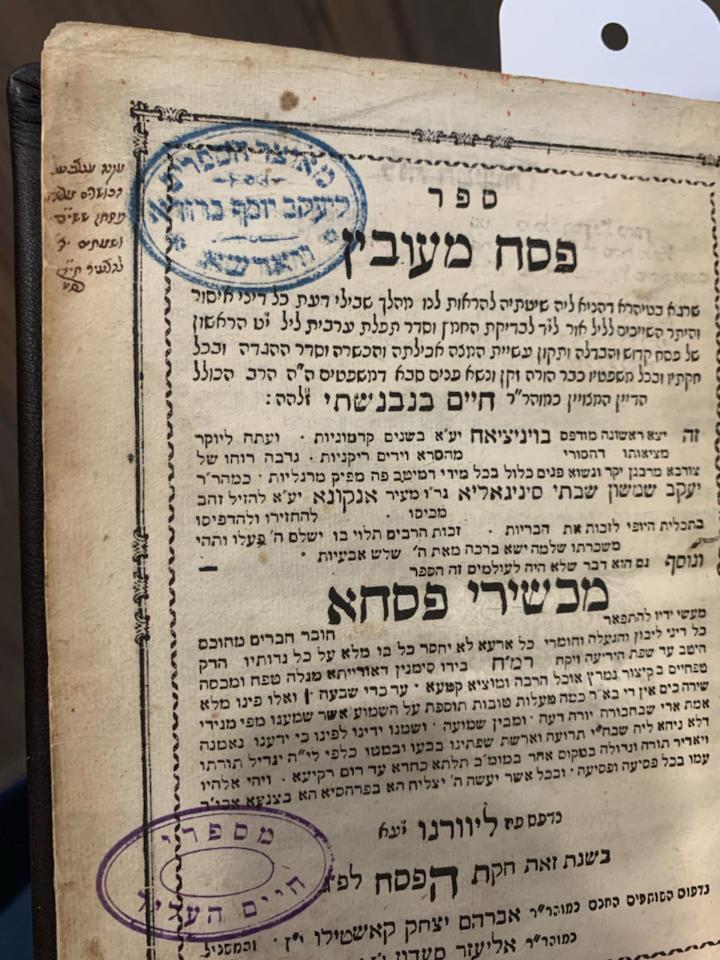
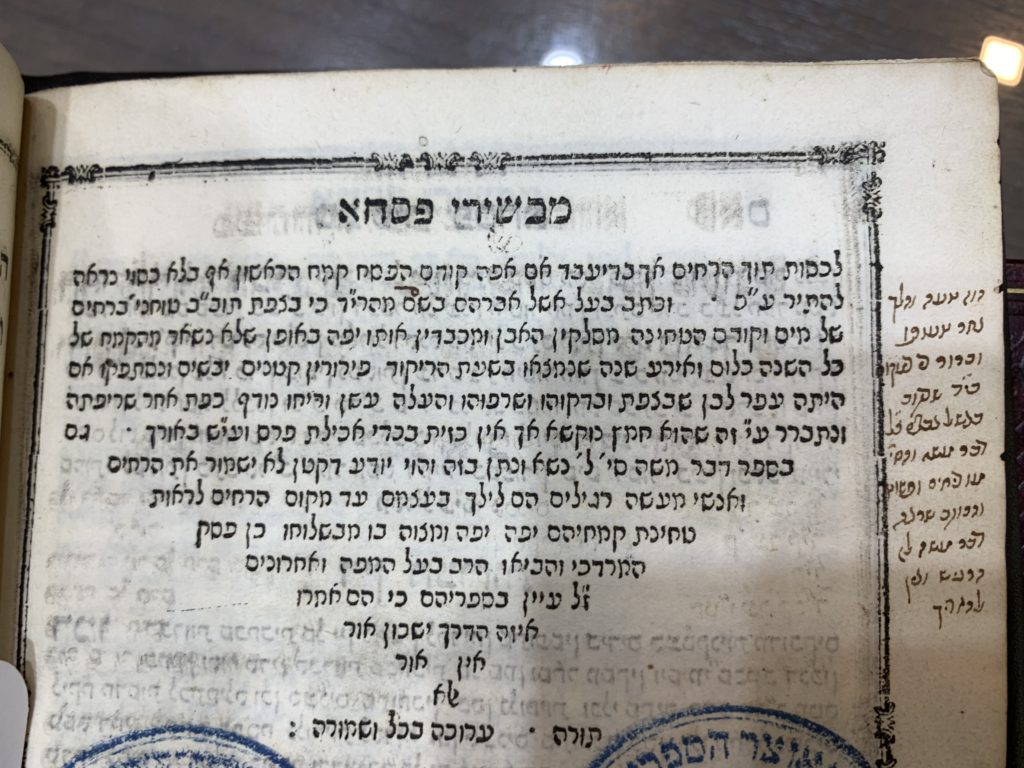
Hakirah, Metzitzah, and More


Hakirah, Metzitzah
, and More
Marc B. Shapiro

Hakirah has performed a valuable service in dealing forthrightly with the matter of homosexuality. Issue no. 13 (2012) contains R. Chaim Rapoport’s “Judaism and Homosexuality: An Alternative Rabbinic View,” which I think is an outstanding presentation of the alternative to what has seemingly become the “official” haredi position in this matter. This “official” position is, in my opinion, so misguided that I would like to say a few words on the topic, since R. Rapoport did not go far enough in his criticism.
To remind readers, Hakirah no. 12 had a discussion on homosexuality with R. Shmuel Kamenetsky. This was followed by the publication of a document signed by many rabbis which follows R. Kamenetsky’s approach. It is available here. (The document is also signed by an assortment of mental health professionals,  rebbitzens and “community organizers”.)
There are so many problems with the approach found in this document (called a “Torah Declaration”), some already noted by R. Rapoport in his response to R. Kamenetsky, that it would take a lengthy piece to go through them all. Let me just call attention to a few points that I don’t think have been made yet. To begin with, while many rabbis have signed this document, including a number that I know personally, I have yet to speak to someone who actually believes what the document says, and this includes the people who have signed it! Many will regard what I have just said as pretty shocking, in that I have declared that people who signed the document do not believe what it says. Yet I know this to be true, at least with regard to some of the signatories (those that I know personally), and I suspect that other than R. Kamenetsky, it might be that no one who signed the document really believes what it says (and it wouldn’t be the first time that people sign declarations that they really don’t believe in).
Let me explain what I mean. According to the document,
Same-Sex Attractions Can Be Modified And Healed. From a Torah perspective, the question whether homosexual inclinations and behaviors are changeable is extremely relevant. . . . We emphatically reject the notion that a homosexually inclined person cannot overcome his or her inclination and desire. . . . The only viable course of action that is consistent with the Torah is therapy and teshuvah. The therapy consists of reinforcing the natural gender-identity of the individual by helping him or her understand and repair the emotional wounds that led to its disorientation and weakening, thus enabling the resumption and completion of the individual’s emotional development.
The ideas just quoted are the very foundation of the Torah Declaration, and as we see in his Hakirah interview, R. Kamenetsky has been convinced by the dubious proposition that homosexuals can change their sexual orientation. He goes so far as to say that “no one is born gay with an inability to change” (p. 34 [emphasis added]. Not long after the appearance of the interview and the Torah Declaration, the man most prominently identified with the notion that gays can change publicly rejected his earlier viewpoint.)
Whether people can change their sexual orientation is a scientific or psychological issue, no more and no less. The first objectionable point of R. Kamenetsky’s approach is turning this into a matter of theology. Indeed, R. Kamenetsky has created a new dogma in Orthodoxy. According to him, believing that a homosexual can change his orientation is a basic Torah value. The reason for this is stated in the document: “The Torah does not forbid something which is impossible to avoid. Abandoning people to lifelong loneliness and despair by denying all hope of overcoming and healing their same-sex attraction is heartlessly cruel. Such an attitude also violates the biblical prohibition in Vayikra (Leviticus) 19:14 “and you shall not place a stumbling block before the blind.”[1]
There you have it. Human beings are deciding what God can and cannot do and declaring that it is impossible for someone to be created with an inalterable homosexual nature. That this is completely incorrect is acknowledged by none other than the most extreme advocates of reparative therapy. They themselves acknowledge that there is a significant percentage of people who cannot change their orientation. They have never claimed that everyone can change. What the document gives us, therefore, is a theological statement that is rejected by all scientists and psychologists, including the ones who provide the very basis for reparative therapy. That itself should be reason enough to reject it. (On Nov. 29, 2012 the RCA acknowledged “the lack of scientifically rigorous studies that support the effectiveness of therapies to change sexual orientation.” See here.)
This relates to my point above that no one really believes what they signed. To those who doubt what I say, do the following experiment and report back if your results differ. Ask someone who signed the document if he really believes that every homosexual can change his sexual orientation. The answer you will get will be “Of course not everyone. You can never speak about everyone. But many (or most) can change.” In other words, the signatories will acknowledge that they diverge from the document on a basic point. You will have to ask them why they signed a document if they don’t accept everything it says, and the response will probably be that there is much about the document that they do accept, and that is why they signed it. But I repeat my point that this is an unusual document in that I don’t think that there is any signatory, with the possible exception of R. Kamenetsky, who accepts the Torah Declaration on Homosexuality in its entirety.

Furthermore, it is not a “liberal” idea to say that people can’t change their sexual inclinations. By looking at another example we can see that it is indeed nonsense to say that everyone can change their sexual orientation and recreate themselves as typical heterosexuals. There are some men who have strong urges for pedophilia. No matter what they do, and how much therapy they get, they can’t get rid of these urges. (I am obviously not comparing homosexuals with pedophiles, or implying that there is any connection between the two. I am only using the example of pedophiles to make a point.[2]
) If we adopt the theology of the Torah Declaration, it means that even hardened pedophiles, who have abused lots of children, can change, because God wouldn’t create someone without a possibility for a healthy sex life. Yet we know that this isn’t the case, and some people simply can’t change. They might be able to control their urges, but as they have told us again and again, the urges don’t go away. It is hardwired into them. (Is it perhaps the false theological notion expressed in the Torah Declaration that explains why yeshivot continued to allow known pedophiles to work? That is, did the rabbis assume that just because someone sexually abused children last week, there is no reason to think he can’t repent and cease to be a danger this week?)
And what about the people who are created with uncontrollable urges to kill? We know about these people, as they usually become murderers. And what about the people who are created with diseases that kill them before they are able to marry and have children, or the ones created without arms so they can’t wear arm tefillin[3]? In other words, sometimes people are created a certain way and they are not what we regard as normal. That is the world, and we simply can’t understand why things are the way they are. But one thing I would hope that we can agree on is if people can keep their faith in a good God even while knowing that some children are born with terrible illnesses that will cause their death, it certainly should not shake their faith to believe that some people are born with inalterable homosexual urges. A homosexual who can’t be changed hardly presents a challenge to theodicy the way a child with cancer does, so I can only wonder why the Torah Declaration feels that only the former is theologically untenable.
All traditional sources cited in support of the Torah Declaration’s assumption that people can change their orientation only refer to behavior. That is, it is an accepted belief that all people have the ability to control their behavior. Without this belief, the notion of a mitzvah doesn’t make sense. This distinction between orientation and behavior is so obvious that I don’t know how so many learned rabbis overlooked the document’s collapsing the two categories.
The more problematic element of the document, which I have already mentioned and which verges on the blasphemous, is that the Torah Declaration presumes to tell God what he can and cannot do. Based on the human intellects of the authors of the document, they establish as dogma that God would never create someone whose only sexual attraction is to his own gender. This is all very nice, but since when can humans dictate to God what he can and cannot do? If God “wants” to create a person who only has same-sex attraction, He can, and the proper response is silence, since we can’t understand why God would do that. Humans don’t have all the answers, and the Torah Declaration should stop pretending that we do. Whether homosexuality is nature or nurture is something the scientists and psychologists can discuss, but contrary to the document, all of the evidence is that there are plenty of people who cannot be “fixed.”
2. In my last post I mentioned that Agudat Israel has transformed itself into a lobbying organization. One of the areas they have been involved with is metzitzah ba-peh, so let me say a few things about this. It is really incredible how for many the debate around metzitzah ba-peh has become one in which the Modern Orthodox are one side, and the traditionalists on the other. I say this because the truth is that the virtually all of the rabbinic greats of Lithuania approved of metzitzah without oral contact. Alexander Tertis’ Dam Berit is a valuable resource that all interested in this matter must consult. Here is the title page.
On p. 33, R. Shlomo Cohen, the famed dayan of Vilna, says the following about metzitzah, which is very relevant to what we ourselves have seen (namely, the rejection of the firm opinions of countless doctors and scientists on the matter, all in the name of tradition).
דבר הזה אינו שייך לרבנים רק לרופאים המומחים ולכן אין לי מה להשיב על שאלתו
According to R. Shlomo, the question of how to perform metzitzah is entirely a medical issue, and the rabbis therefore have nothing to say on this matter, much like in all other halakhot dealing with medical issues the opinions of the doctors are determinative. (It hardly needs to be said that in matters of pikuah nefesh the opinions of thousands of experts, including the world’s most outstanding authorities, cannot be overruled by one idiosyncratic figure who appears to be motivated by non-scientific concerns.) 
Also of interest is that in 1906 R. Hayyim Ozer Grodzinski reported that in Vilna virtually all of the mohalim did metzitzah with a sponge. He wasn’t happy with this, but this was the reality.[4]
An interesting tidbit regarding metzitzah ba-peh is found in the Taz, Orah Hayyim 584:2. Here he mentions that he heard that R. Feivish of Cracow, when he circumcised on Rosh ha-Shanah, would not clean the blood out of his mouth. Rather, he would blow the shofar with the blood in his mouth so that the mitzvot of milah and shofar were joined.
Finally, for those who want to understand why it was only in the nineteenth century that metzitzah came to be regarded as central to the mitzvah of milah, Jacob Katz’s article “Polmos ha-Metzitzah” in his Ha-Halakhah ba-Metzar is crucial. In short, the centrality of metzitzah, and its description as a basic part of milah, is a product of the Orthodox defense of metzitzah in the face of Reform attacks. I think we are seeing something similar today. The digging in of haredi heels in defense of metzitzah ba-peh, complete with over-the-top rhetoric, is understandable (to a certain extent) and due precisely to the fact that it is an outside force that is threatening the practice. Had their own poskim suggested what the government is now insisting on, we would not have seen the same reaction. Yet it is still difficult for outsiders to grasp why some rabbinic leaders of these communities seem entirely oblivious to any medical dangers associated with the practice,  וסלחת לעונם כי רבנים המה
Let me say a few more things about metzitzah ba-peh. 

1. I saw on one of the blogs (I can’t locate it at present) that someone stated as self-evident that metzitzah ba-peh is only done with babies, not adults. The truth is that while the accepted opinion is indeed that metzitzah ba-peh is only done on babies (and maybe also on older child converts – I haven’t been able to find an answer to that), there are indeed opinions that even adult converts have to have metzitzah ba-peh performed on them. R. Moshe Klein (the son of R. Menasheh), Mishnat ha-Ger, p. 71, states without qualification that a convert has to have metzitzah, and if the mohel is afraid of catching a disease he should inquire of a posek if it can be done without the mouth. However, R. Yitzhak Yosef, Yalkut Yosef, Hilkhot Milah 6:1, rejects this viewpoint and states that there is no metzitzah, ba-peh or otherwise, with an adult convert.

2. According to R. Marcus Horovitz, Mateh Levi, vol. 2, Yoreh Deah no. 60, R. Samson Raphael Hirsch was prepared to accept the government’s abolishment of metzitzah without objection. It is difficult to square this assertion with Hirsch’s writings on the topic that show him as a strong defender of the practice.[5] Is it possible that Horovitz’s comment, meant as a criticism of Hirsch, reflects the difficult relationship these two men had?
3. In Iggerot Moshe, Yoreh Deah I, no. 223, R. Moshe Feinstein, in writing to a hasidic rebbe, expresses the standard viewpoint that metzitzah is only a medical procedure and has nothing to do with the mitzvah of milah. There is nothing surprising here. However, his correspondent had written otherwise, that metzitzah was an essential part of the mitzvah. In response to this, R. Moshe writes: חושב אני שהוא רק פליטת הקולמוס. The language R. Moshe uses implies that he did not know that among the hasidim metzitzah isindeed viewed as part of the mitzvah. Is it possible that R. Moshe was unaware of this? I don’t think so. It would appear, therefore, that the words I just quoted are a polite way of R. Moshe telling his correspondent that “what you wrote is without any substance.”
4. In 1994 R. Schachter’s Nefesh ha-Rav appeared. On p. 243 he states that R. Soloveitchik thought that today there is no need for metzitzah at all, not just metzitzah ba-peh. I remember how shocked I was when I read this, and was certain that it had to be wrong. As far as I know, no Orthodox authority has ever agreed to abandon metzitzah entirely, and I therefore couldn’t believe this report. My doubts were strengthened by the fact that R. Schachter quotes the Tiferet Yisrael as agreeing that metzitzah could be abandoned, when the truth is that the Tiferet YisraelShabbat 19:2, says the exact opposite, that metzitzah must be continued no matter what the doctors say.
As part of this post I wanted to include this page of Nefesh ha-Rav, so I went to Otzar ha-Hokhmah to download a PDF. Here it is.

Lo and behold, the copy on Otzar ha-Hokhmah is the third edition published in 1999, and there is a note on this page in which R. Schachter states that he has been told that what he wrote was incorrect, and that R. Soloveitchik only opposed metzitzah ba-peh. This makes much more sense and is what I assumed all along, so I was happy to see that my suspicions were confirmed.

R. Schachter recently spoke publicly about metzitzah ba-peh, and he is entirely opposed to it.[6] You can listen to his talk here.
Some might be surprised to hear R. Schachter say, after explaining that the Sages followed the most advanced medicine of their times, “When we look back at Chazal, look at medical statements in the Gemara, we laugh. . . . So you look back in the Gemara, it’s ridiculous, but the Gemara, in the days of the Tannaim, they were following the latest information of the doctors of their generation, of the scientists of their generation.”
I have to say, however, that R. Schachter is mistaken in his description of how the Hasidim understand metzitzah ba-peh. He incorrectly assumes that no one really regards it as a basic part of the mitzvah, i.e., halakhah le-Moshe mi-Sinai. “You know and I know and we all know that it is not halakhah le-Moshe mi-Sinai.” He claims that all those who do say it is halakhah le-Moshe mi-Sinai are exaggerating for rhetorical purposes, much like the expression yehareg ve-al yaavor is used for all sorts of things but is not meant to be taken literally. (R. Schachter himself created a good deal of controversy a couple years ago when he said that the refusal to ordain women was a matter of yehareg ve-al yaavor.)
Finally, I would like to make a general statement about how many in the Modern Orthodox world have been relating to metzitzah ba-peh. There is no question that for those in this segment of Orthodoxy, metzitzah ba-peh should not be done, both for medical reasons and also, I have learnt, for aesthetic reasons. With regard to the latter point, there is a sense among many in the Modern Orthodox world, and I myself have heard this and seen it in writing, that metzitzah ba-peh is “disgusting”. I understand that this is how people feel, but it is an improper feeling. Until the nineteenth century, metzitzah ba-peh was universal at every circumcision. How can observant Jews regard a practice that was basic in every Jewish community of the world as “disgusting”? I understand that it doesn’t fit in with today’s aesthetic sense, and that itself is perhaps reason enough for people not to do metzitzah ba-peh. However, everyone should be careful to avoid any denigration of metzitzah ba-peh that does not originate in medical concerns.
Don’t get me wrong, as I don’t mean that every practice that we find in Jewish communities throughout history should get such a “pass”, but here we are talking about a universal practice over thousands of years. It can’t be denied that there were “repulsive” and “gruesome” practices in Jewish communities.[7] Here are two cited by Shlomo Sprecher in his article mentioned in note 6: 1. Barren women would swallow the foreskin of newly circumcised boys as a segulah so that they could become pregnant. 2. Epileptics drank a potion that contained a girl’s first menstrual blood as a segulah to cure them of their epilepsy.[8]
I recently found another bizarre segulah that also falls under the rubric of “repulsive”, and I think that it would probably also be regarded by law enforcement as a form of sexual abuse. It comes from R. Zvi Hirsch Kaidonover (1646-1712), Kav ha-Yashar, ch. 51. For obvious reasons I am not going to translate this into English.
ועוד סגולה נפלאה לתינוק הנולד שלא יקרה עליו חולי נכפה בר מינן, מיד כשנולד ישימו בפיו ברית קודש של תינוק ויהיה ניצול כל ימיו מחולי נכפה
3. Following one of my previous posts I had correspondence with a reader and the discussion turned to the issue of how much of rabbinic literature is inner directed, that is, from intellectuals to other intellectuals.[9] I assume that this was the mindset of the Sages, and this explains some texts that I don’t think would have been recorded had there been an expectation that the masses would ever see them. In particular, I have in mind the talmudic stories that do not reflect well on certain rabbis. If we understand these texts as scholars talking to other scholars, then it makes sense that they would criticize each other, and even make fun of one another.[10] People in a closed community (in this case, the rabbinic elite) converse with one another in a different way than when outsiders are allowed in.[11] The problem is when the masses are studying Talmud, as today, that they have a difficult time with these texts, and Artscroll needs to explain them in an appealing fashion.
Here is one example of the sort of story I am referring to, that I assume was designed for internal consumption only, as it doesn’t reflect well on one of the Sages who is portrayed as being quite rude and insensitive. Taanit 20a-20b:
Our Rabbis have taught: A man should always be gentle as the reed and never unyielding as the cedar. Once R. Eleazar son of R. Simeon was coming from Migdal Gedor, from the house of his teacher, and he was riding leisurely on his ass by the riverside and was feeling happy and elated because he had studied much Torah There chanced to meet him an exceedingly ugly man who greeted him, “Peace be upon you, Sir”. He, however, did not return his salutation but instead said to him, “Raca,1 how ugly you are. Are all your fellow citizens as ugly as you are?” The man replied: “I do not know, but go and tell the craftsman who made me, ‘How ugly is the vessel which you have made’.” When R. Eleazar realized that he had done wrong he dismounted from the ass and prostrated himself before the man and said to him, “I submit myself to you, forgive me”. The man replied: “I will not forgive you until you go to the craftsman who made me and say to him, ‘How ugly is the vessel which you have made’.” He [R. Eleazar] walked behind him until he reached his native city. When his fellow citizens came out to meet him greeting him with the words, “Peace be upon you O Teacher, O Master,” the man asked them, “Whom are you addressing thus”? They replied, “The man who is walking behind you.” Thereupon he exclaimed: “If this man is a teacher, may there not be any more like him in Israel”! The people then asked him: “Why”? He replied: “Such and such a thing has he done to me.” They said to him: “Nevertheless, forgive him, for he is a man greatly learned in the Torah.” The man replied: “For your sakes I will forgive him, but only on the condition that he does not act in the same manner in the future.” Soon after this R. Eleazar son of R. Simeon entered [the Beth Hamidrash] and expounded thus, A man should always be gentle as the reed and let him never be unyielding as the cedar. And for this reason the reed merited that of it should be made a pen for the writing of the Law, Phylacteries and Mezuzoth.[12]
It appears that we see a continuation of this internal conversation in post-talmudic times. For example, I don’t think the rishonim who so harshly criticize their colleagues — I am referring to the colleagues they respected — would speak this way in a derashah before the common man. However, in internal dialogue they exercised more freedom. I think this can also explain the strange way that R. Isaac of Corbeil, the author of Sefer Mitzvot Katan, is referred to. He is called בעל החוטם. According to tradition, he was called this לפי שהיו לו שערות על החוטם.[13] Here too, I think that this was a humorous nickname that his colleagues knew him as, but not something that the average person would be expected to use. (Those who went to BMT will probably recall how various rabbis would speak of “Whitey Horowitz”. I don’t recall students ever referring to R. Moshe Horowitz this way.)  
I came across another example of what appears to be “internal conversation” from modern times that I think readers will find interesting. Both are found in R. Pinchas Miller’s Olamo shel Abba. Miller’s father, R. Asher Anshel Yehudah Miller, was a posek and author of seforim. I can’t imagine that the following comment, cited in the name of R. Shmelke of Nikolsburg, was something Miller, or R. Shmelke, wanted the masses to hear. Rather, I assume that it was an insider’s joke, designed to be shared among colleagues.
Shabbat 118b states that if Israel observes two Sabbaths properly they will immediately be redeemed. R. Shmelke explained that this refers to Shabbat ha-Gadol and Shabbat Shuvah. It is traditional that on these Sabbaths the rabbis give derashot before the community. R. Shmelke added that the rabbis act as if what they are saying is original to themselves, even though they have taken it from others. The Sages say that if you repeat something in the name of one who said it, you bring redemption to the world (Avot 6:6). Based on this text in Avot, R. Shmelke explained the above talmudic passage as follows: “If Israel observes two Sabbaths properly”, that is, if the rabbis who give the derashot on Shabbat ha-Gadol and Shabbat Shuvah (“two Sabbaths”) actually acknowledge where they get their ideas from (“repeat something in the name of one who said it”), “immediately Israel will be redeemed” (p. 501). This is such a provocative text because not only does it accuse the rabbis of plagiarism, but it states that the redemption itself is being delayed because of their behavior. If it was repeated by the masses it would be regarded as terribly degrading of the rabbis, but seen as a somewhat playful “derashah” to be shared among rabbinic colleagues, it loses much of its sharpness.[14]
There is another interesting passage on p. 326, which despite being humorous, I would have also assumed could only be said among colleagues. Yet Miller’s son tells us that his father used to repeat the following in his derashah at weddings: We know that it is a mitzvah to help the bride and groom to rejoice, but the rabbis come to weddings and instead of doing this, they deliver a long derashah and speak words of mussar to the young couple and thus disturb their joy.[15] That is why at the sheva berakhot we state שמח תשמח רעים האהובים כשמחך יצירך בגן עדן מקדם. In other words, we wish the bride and groom that their joy should be complete like the joy Adam felt when Eve was created for him, because in their time, in the Garden of Eden, there were no rabbis around who were able to disturb their joy!
* * * *
4. I want to call attention to a book that has just appeared. Its English title is Jewish Thought and Jewish Belief and it is edited by Daniel J. Lasker. You can read more about it here. It is available for purchase at Bigeleisen.
This is just the latest in a series of valuable books published by Ben Gurion University Press as part of the Goldstein-Goren Library of Jewish Thought. The articles that I think readers of this blog will find particularly interesting are David Stern, “Rabbinics and Jewish Identity: An American Perspective;” David Shatz, “Nothing but the Tuth? Modern Orthodoxy and the Polemical Uses of History,” Baruch J. Schwartz, “Biblical Scholarship’s Contribution to the Concept of Mattan Torah Past and Present;” Menachem Kellner, “Between the Torah of Moses and the Torah of R. Elhanan;” Tovah Ganzel, “‘He who Restrains his Lips is Wise’ (Proverbs 10:19) – Is that Really True?” and the symposium on Jewish thought in Israeli education, with contributions from R Moshe Lichtenstein and Adina Bar Shalom (R. Ovadia Yosef’s daughter).
Here are a few selections from Shatz’s article:
To be clear, academics, I find, generally shun blogs that are aimed at a popular audience because the comments are often, if not generally, uninformed (and nasty). A few academics do read such blogs, but do not look at the comments. One result of academics largely staying out of blog discussions is that non-experts become viewed as experts. Even when academics join the discussion, the democratic atmosphere of the blog world allows non-experts to think of themselves as experts and therefore as equals of the academicians. Some laypersons, though, as I said earlier, are indeeed experts in certain areas of history.
(In this quotation, one could also substitute “rabbis” or perhaps better, “poskim”, for “academics”, and “areas of halakhah” for “areas of history.”) Shatz is specifically speaking about historians, and contrasting experts vs. non-experts in this area. Yet when it comes to the sort of things I often write about here, I can attest that it is usually non-academics who are the real experts. Time and again I am amazed at the vast knowledge of so many of the people who read this blog. As for the general phenomenon of blogs, there are many people who for whatever reason (usually lack of interest, ability, or patience) are not going to write lengthy articles. Yet they often have a great deal to contribute, much of which is very important to the world of scholarship (almost always in terms of uncovering unknown sources and correcting earlier errors, as opposed to offering new interpretations or original theories). Academics ignore this to their own loss.[16]
In my future book I refer to numerous blog posts, and posts from the Seforim Blog have already been mentioned in a number of scholarly publications. My own reason for writing posts is because most of the material I discuss is, I think, interesting and sometimes even important. While this material is often not of the sort that can be included in a typical article, the genre of the blog post suits them just perfectly. Speaking of the Seforim Blog in particular, its readership encompasses a very large percentage of English speaking traditionally learned Jews of all backgrounds, beliefs, and professions (from Reform rabbis to Roshei Yeshiva and poskim, and everything in between). Thanks again are due to Dan Rabinowitz for providing this unique and wonderful platform.
Here are two more quotes from Shatz:
Be the causes what they may, there is an intramural struggle among the Orthodox, a competition for the soul of Orthodox Judaism, and the primary weapon with which it is being waged is history. For Modern Orthodox Jews today, instead of history being a threat to belief, as in earlier periods, it has become a way of arguing for one version of Othodoxy over another. And it is used for polemical purposes far more than philosophy. There are today few Orthodox philosophers, but comparatively many Orthodox academically trained historians.
Can the Modern Orthodox explain why it is admissible for Hummash and the Sages (in aggadot) to write non-accurately and provide inspiration and memory, but inadmissible for those on the right to write in that genre?
My article in Jewish Thought and Jewish Belief is entitled “Is there a ‘Pesak’ for Jewish Thought.” Those who publish know that it is often the case that only after it is too late does one realize that one’s article or book omits something important. Here too that was the case. In the article I discuss Maimonides’ view in Guide 3:17 that there is no punishment without transgression. That is, he rejects the notion of yissurin shel ahavah. I note that Maimonides claims that this is the opinion “of the multitude of our scholars,” and he cites R. Ammi’s opinion in this regard from Shabbat 55a. What is significant is that later in the sugya the Talmud states that R. Ammi’s opinion was refuted. Maimonides ignores this rejection, and even states that R. Ammi’s opinion is the majority view. This illustrates how Maimonides felt free to reject a talmudic viewpoint in a non-halakhic matter, even when it seems that the opinion is deemed authoritative by the Talmud.
What I unfortunately neglected to mention is that in Guide 3:24 Maimonides also deals with yissurin shel ahavah. Here he acknowledges that there are talmudic sages who accept this notion, but he adds that his own opinion, i.e., the rejection of yissurin shel ahavah, “ought to be believed by every adherent of the Law who is endowed with intellect.” In our own language, we might say that this viewpoint should be obvious to anyone with “half a brain.” Yet this is quite a shocking statement when one considers that there were talmudic sages who had a different perspective. Did Maimonides regard them as lacking intellect?
Here is another point I would like to add: In my Limits of Orthodox Theology I argue that it is most unlikely that Maimonides would choose to establish something as a dogma if it was a matter of debate among the Sages. (If establishing dogma was simply part of the halakhic process, this would not be problematic.) I see that R. Shlomo Fisher apparently has the same perspective, as he writes in his Hiddushei Beit Yishai, no. 107 (p. 413):
וגוף הדברים שכתב הרמב”ם בפה”מ ועשאן עיקר גדול תמוהין מאד. חדא, אם הם עיקר גדול היכי פליג עלה ר’ יהודה.
The issue of deciding matters of hashkafah in a halakhic fashion has also recently been discussed by R. Yaakov Ariel in his new book Halakhah be-Yameinu, pp. 18ff. I have to say that the more I read by Ariel the more impressed I am, as everything he writes is carefully formulated and full of insight. He strikes me as very open-minded with a good grasp of Jewish philosophy. He is, of course, also an outstanding posek. I now understand why it was so important for the haredim, under R. Elyashiv’s lead, to prevent him from being elected Ashkenazic Chief Rabbi of the State of Israel. What the haredim wanted, and were successful in this, was to destroy the Chief Rabbinate as a force to be reckoned with. The way to do this was to make sure that its occupant would be nothing but a “crown rabbi”. That is, they wanted to appoint a chief rabbi who is a figurehead, who interacts with the government on behalf of the haredi leadership, who goes around the world speaking about Jewish topics to the masses, and who can deal with non-Jews. What they absolutely did not want in a chief rabbi was a figure who had any rabbinic standing and who could thus challenge haredi Daas Torah.
At a time when much of the right wing religious Zionist world appears to have gone off the deep end, R. Ariel stands as a voice of sanity. Be it his attack on Torat ha-Melekh (a book which I still plan on discussing) or his strong rejection (together with R. Aharon Lichtenstein and R. Nachum Rabinovitch) of the outrageous letter written by Rabbis Tau, Aviner and others in support of Moshe Katzav, or his defense of women voting (arguing that today R. Kook would not be opposed; Halakhah be-Yameinu, p. 189) he shows that right wing religious Zionism need not be identified with the craziness we have been accustomed to see in recent years. 
Let us return to his recent essay where he argues, in opposition to what I wrote in my article, that Maimonides often does “decide” in matters of hashkafah no different than in halakhah. To illustrate his point, Ariel notes that there is a dispute among the Sages about whether there are reasons for commandments. He claims that Maimonides מכריע ופוסק  in accord with the position that there are reasons. He concludes:
אף על פי שלדעתו כללי ההלכה אינם חלים בענייני אמונה, בכל זאת ניתן להכריע את האמונה על פי דרך הלימוד הנקוטה גם בהלכה.
The notion of a pesak emunah, if it is to be parallel to a pesak halakhah, would mean that after Maimonides gives his pesak, in his mind it is now forbidden to adopt the other viewpoint (just as when Maimonides rules that something is forbidden on Shabbat) .Yet where does Maimonides ever say that there is an obligation to accept his viewpoint about reasons for the commandments? What Maimonides does is show why his viewpoint is correct, and Ariel cites these sources. But just because Maimonides wants his readers to adopt his own viewpoint, in what way is this a “pesak emunah”? Maimonides is simply expressing his strongly held belief. He is not ruling alternative positions out of bounds, as he does in deciding halakhah. This appplies as well to the other examples Ariel brings to prove his point. All he has established is that Maimonides argues for a position in matters such as the nature of prophecy and providence, but that is far removed from the notion that Maimonides saw his opinions as halakhically binding. On the contrary, just because Maimonides tells us what he thinks the Torah’s position is in a matter such as providence, he had no expectation that the masses would (or in some cases even should) follow him in this, and he was fully tolerant of the masses holding to their errant opinions as long as the matter was not an authentic dogma.
5. I have now finished my book on censorship. I can’t say when it will appear as it still has to be properly edited, typset etc., but hopefully this won’t take too long. I have loads of interesting material that for various reasons I was unable to include in the book, so the Seforim Blog will give me a good opportunity to bring it to the public’s attention. Let me begin with something sent to me by Rodney Falk.
Professor Louis Henkin, the son of R. Joseph Elijah Henkin, died in 2010. Here is his obituary as it appeared in Ha-Modia.


Notice what is missing! The obituary won’t even mention who his father was. Had Louis Henkin been a businessman or a doctor this information would not have been excluded, of this there is no doubt. But it is considered a disgrace to R. Henkin’s memory that his son was an intellectual, one who lived the life of the mind, and yet he didn’t become a rav or a rosh yeshiva . People in the haredi world can understand how not everyone is cut out to be a rosh yeshiva or sit in kollel, and these “unfortunates” are therefore forced choose a profession. But apparently, the notion that one who has the brains and intellectual stamina to become a great scholar might choose to devote himself to non-Torah subjects borders on the blasphemous for Ha-Modia. As such, while Louis Henkin can be acknowledged for his achievements, he has to be severed from his father’s house (the same father who sent him and his two brothers to Yeshiva College).
I think Yoel Finkelman has put the matter quite well in discussing the larger issue of which this example is  part and parcel of:
Haredi writers of history claim to know better than the great rabbis of the past how the latter should have behaved. Those great rabbis do not serve as models for the present. Instead, the present and its ideology serve as models for the great rabbis. Haredi historiography becomes a tale of what observant Jews, and especially great rabbis, did, but only provided that these actions accord with, or can be made to accord with, current Haredi doctrine. The historians do not try to understand the gedolim; they stand over the gedolim. Haredi ideology of fealty to the great rabbis works at cross purposes with the sanitized history of those rabbis.[17]
6. Rabbi Jason Weiner, a fine musmach from Yeshivat Chovevei Torah, has recently published a Guide to Traditional Jewish Observance in a Hospital. Formerly assistant rabbi at the Young Israel of Century City, he now serves as Senior Rabbi and Manager of the Spiritual Care Department at Cedars-Sinai Medical Center in Los Angeles. The book comes with approbations from R. Asher Weiss and R. Yitzchok Weinberg, the Talner Rebbe, and the halakhot in the book have been reviewed by Rabbis Gershon Bess, Nachum Sauer, and Yosef Shuterman. The book can be downloaded here.
7. Some readers have asked me about upcoming shul lectures. Here is what is on my schedule through Passover.
Feb. 15-16: Sephardic Institute of Brooklyn
March 1-2: Beth Israel, Miami Beach
March 8-9: Shearith Israel, New York
March 15-16: Beth Israel, Omaha
If any readers are interested in having me speak at their shuls, please be in touch.
8. No one got the answer to the last quiz, so let me do it again. The winner gets a copy of one of the volumes of R. Hayyim Hirschensohn’s commentary on Rashi. If you know the answer to the question, send it to me at shapirom2 at scranton.edu.

What was the first Hebrew book published by a living author?

[1] What does this last sentence mean? How can an attitude violate a biblical prohibition?

[2] As a good illustration of changes in attitude in the last forty years, here is what R. Norman Lamm wrote in his classic article on homosexuality in the 1975 yearbook of the Encyclopaedia Judaica. Such a sentence would, today, be quite politically incorrect, and regarded by gays as incredibly offensive: “Were society to give its open or even tacit approval to homosexuality, it would invite more aggresiveness on the part of adult pederasts toward young people.” 
[3] R. Meir Schiff (Maharam Schiff) is unique in believing that one without arms should put the tefillin shel yad on the head, together with the tefillin shel rosh. This is the upshot of his comment to Gittin 58a.
[4] See R. Sinai Schiffer, “Mitzvat ha-Metzitzah,” p. 106 (printed together with R. Sinai Adler, Devar Sinai [Jerusalem, 1966])
[5] See Eliyahu Meir Klugman, Rabbi Samson Raphael Hirsch, pp. 292-293.
[6] “Following in the Footsteps of Our Fathers,” Nov. 13, 2012.
[7] The words are those of Shlomo Sprecher from his article on metzitzah in Hakirah 3 (2006), p. 51.
[8] Speaking of drinking, take a look at this strange passage. It appears in R. Hayyim Rabbi’s letter at the beginning of R. Haggai Ben Hananyah’s Nimukei Levi (Ashdod, 2008), p. 2. Add this to the long list of texts that I refuse to translate.
בדין חלב אשה. נשאלתי פעם, אם בזמן תשמיש עם אשתו, החלב שלה אסור עליו, או שבעל ואשתו כגופו, ואין בו דין של יונק שרץ. ובפרט לטעם שמא יינק מבהמה טמאה, ובאשתו כגופו שהתירו לו בשעת פיוס וכו’, לא גזרו בזה. ויתכן שמותר כדין פסיק רישיה בדרבנן. ובנידון כזה, שזה חשש גזירה, גם בניחא ליה יש מקום להתיר. כן נראה לכאורה.
[9] The previous post is found here.
In the comments, Yehudah Mirsky wrote:

Fwiw, as I recall, Steve Wald in his book on Eilu Ovrin shows that the genuinely awful am-haaretz passages in Pesachim are a later stammatic addition, and that Jeff Rubinstein argues has a chapter on this in his “The Culture of the Babylonian Talmud” where he argues both that that sugya in Pesachim is sui generis in Hazal and – interestingly – reflects the Stammaim’s needing to justify their very scholastic lifestyle vis-a-vis people who were working for a living. Rubinstein cautions that the whole sugya may have been intended as a series of private jokes and need not necessarily reflect actual social relations between the stammaim and their surrounding society.

[10] Yeshayahu Leibowitz quipped that the Sages must have had a good sense of humor, since they included the following passage in the Talmud: תלמידי חכמים מרבים שלום בעולם. See Sihot al Pirkei Ta’amei ha-Mitzvot (Jerusalem, 2003), p. 289. In all seriousness, however, there are indeed humorous passages in the Talmud, as pointed out by R. Moses Salmon, Netiv Moshe (Vienna, 1897), pp. 45-46. Here is one example he gives (Bava Batra 14a).:
The Rabbis said to R. Hamnuna: R. Ammi wrote four hundred scrolls of the Law. He said to them: Perhaps he copied out the verse  תורה צוה לנו משה
Salmon claims that anyone with a bit of sense can see that R. Hamnuna’s reply is a wisecrack made in response to the obvious exaggeration about R. Ammi.
Nehemiah Samuel Leibowitz states that even in the Zohar we have passages that show a humorous side. One of the many examples he points to is Zohar, Bereshit, p. 27a:
וימררו את חייהם בעבודה קשה בקושיא. בחומר קל וחומר. ובלבנים בלבון הלכתא. ובכל עבודה בשדה דא ברייתא. את כל עבודתם וגו’ דא משנה.
See Leibowitz, “Halatzot ve-Divrei Bikoret be-Sefer ha-Zohar,”Ha-Tzofeh le-Hokhmat Yisrael 11 (1927), pp. 33-45. For more on humor in the Talmud, see Yehoshua Ovsay, Ma’amarim u-Reshimot (New York, 1946), ch. 1; R. Mordechai Hacohen, “Humor, Satirah, u-Vedihah be-Fi Hazal,” Mahanayim 67 (5722), pp. 8-19.
[11] Such a community also establishes special rules for itself, of which I can cite many examples. Here is one, from R. Solomon Luria, Yam Shel Shlomo, Bava Kamma 8:49:
ואם חוזר בפעם השלישי א”כ הוא משולש בחטא, אזי אין מניחין כלל לפדותו מן המלקות אלא ילקה בב”ד ודיו, אם לא שהוא בר אורין שאין ראוי להלקותו
After all we have seen in the last few years, I am quite certain that today the average person would not accept that when it comes to criminal matters that the rabbis should be given special privileges and exemptions.
[12] See also Va-Yikra Rabbah 9:3 where it describes how R. Jannai called his host “a dog”, and then learnt how wrong he was.
[13] See the introduction to the Constantinople 1510 edition of the work, reprinted in the Jerusalem, 1960 edition.
[14] On p. 187 Miller offers a different perspective. Here he quotes another rabbi who said that if necessary it is OK for one to repeat another’s hiddushim in the Shabbat ha-Gadol derashah, because the Sages tell us (Pesahim 6a): שואלין ודורשין בהלכות פסח.  This means:
מותר “לשאול” מאחרים בשעת הדחק ולדרוש בהלכות פסח
[15] I am told that it is still the practice in certain communities for the rabbi to deliver a derashah at a wedding..
[16] I think in particular of S.’s wonderful blog On the Main Line, which routinely provides important, and until now unknown, primary sources that are vital to a wide range of areas of scholarship.
[17] Strictly Kosher Reading, p. 122.