Everything is Illuminated: Mining the Art of Illustrated Haggadah Manuscripts for Meaning
Everything is Illuminated: Mining the Art of Illustrated Haggadah Manuscripts for Meaning
We have discussed haggadah illustrations in the past (see the links at the end of this post) and we wanted to expand and update upon that discussion for this year. In this post we focus on Hebrew illuminated haggadah manuscripts, and in the follow-up post will turn our attention to printed illustrated haggadot.
While there is not as large of a body of Jewish art as that of art in general, historically Jews have appreciated the visual arts early in their evolution into a nation. Aside from the biblical forms, we have evidence of art dating to the second century of the common era in the well-known frescos at the Dura-Europos synagogue.[1] But, such appreciation was not limited to second century Palestinian Jews, as evidenced from the discussion below, this appreciation continued, almost unabated, until the modern period. It was not just the artist class or wealthy acculturated Jews that were exposed to and admired this medium. For example, in the 1560 Mantua haggadah, one of the more important printed illustrated haggadot, the wise son appears to be modeled after Michelangelo’s Jeremiah in the Sistine Chapel (view it here: link).
Lest one think that it is highly unlikely that a 16th century Italian Jew would have even entered the chapel, let alone been familiar with this painting, a contemporaneous account of Jewish art appreciation disabuses those assumptions. Specifically, Giorgi Vasari, the 16th century artist and art historian, in his Lives of Excellent Painters (first published in 1560), records regarding Michelangelo’s statute of Moses – that is a full statute depicting the human form and was placed in the church of San Pietro in Rome – that “the Jews [go] in crowds, both men and women, every Saturday, like flocks of starlings, to visit and adore the statue.” That is, the Sabbath afternoon activity was to go to church to admire the statute of Moses, that is more famous for having horns than its Jewish visitors.[2]
Hebrew Manuscripts Background
A brief background regarding Hebrew manuscripts before delving into the illuminated haggadah manuscripts. Details regarding manuscripts, the name of the copyist, the date, and the place where the manuscript was written, were supplied not at the beginning of the book – as is the convention with printed books and title pages – instead in manuscripts this information is provided at the end. For this reason, the scribe’s note containing the information was called a colophon – from the Greek word kolofon, meaning “summit” or “final point.”[3]
Number of Hebrew mss.
A cautious guess of the number of extant Hebrew manuscripts in existence is between 60,000 -70,000 “but no more than 30-40 thousand of them predate the middle of the sixteenth century.”[4] Of the 2-3 hundred thousand Hebrew manuscripts presumed in existence in Europe at the beginning of the fourteenth century, probably no more than four to five thousand are extant today, possibly even less. “From the tenth century (before which information is very scarce) to 1490 (when the influence of printing books began to be felt)” there are an estimated one million manuscripts, meaning, “that 95 per cent of manuscripts have disappeared.”[5] In addition, the early printed books – incunabula – had similar survival rates.
The dearth of manuscripts has left a significant hole in our knowledge of major Jewish texts. For example, there is only one complete manuscript of the Palestinian Talmud (1289) and two partial manuscripts. The Babylonian Talmud fared slightly better, with one complete manuscript (1342) and 63 partial manuscripts in libraries, with only 14 dating from the 12th & 13th centuries.[6]
One of the partial TPs is known as the Vatican Codex 133 – and worth mentioning is the Vatican and its role regarding Hebrew manuscripts. While there is no doubt that the Church had a significant hand in reducing the number of manuscripts – in reality the destruction of Hebrew manuscripts was the work of the Jesuits and not the Roman Catholic Church. Indeed, the Church confiscated and, thus in some instances preserved Hebrew manuscripts. Consequently, we have a number of important Jewish texts that survive in the Vatican library. Today, many of these manuscripts have been published. The incomplete manuscript of the TP is but one example. Additionally, regarding the use of (rather than just reprinting) the Vatican library, for at least late 19th century, Jews had access to the library. For example, R. Raphael Nathan Rabinowitz, who authored a monumental work on Talmudic variants provides that “I prayed to God to permit me entrance to the Vatican library to record variant readings” his prayer was answered, and he received permission not only to use it during regular hours but “even on days that it was closed due to Christian holidays, when the library was closed to all, and even more so Jews.”[7] In total he spent close to 9 months in the library. In addition, Rabbi Rabinowitz’s presence and special status at the Vatican library was instrumental for the editing of the Vilna Talmud, where he secured permission for the Romm-employed copyists to work with manuscripts of the commentary of Rabbenu Hananel, even though they arrived in Rome during the summer season when the library was closed.
Of the estimated one million Hebrew manuscripts from the 10th century until 1490, approximately 5% have survived. As mentioned, religious persecution was one reason, but the main reasons are (1) deterioration from use, (2) accidents, and (3) reuse. The first two are self-explanatory, the third requires a bit of explanation. From the times that manuscripts were written on papyrus, unwanted manuscripts were scraped or washed and then reused. (This papyrus recycling was not confined to reusing for books, papyrus was used from wrapping mummies, burned for its aroma, and used, according to Apices, to wrap meat for cooking). Similarly, leather and parchment were recycled, in the more egregious examples for shoe leather but in many cases for book bindings. The latter reuse would be critical to the survival of numerous Hebrew manuscripts which have now been reclaimed from bindings. It is estimated that there are 85,000 such binding fragments. “The commonest use of written folios, however, was in bindings, whether for binding strips, end papers, or covers.”[8]
Illuminated Hebrew Manuscripts
The “earliest examples of Jewish book illumination are tenth-and eleventh-century Bible codices written in the Orient or Near East. The illuminations are not figurative but consist of a number of decorative carpet pages adorned with abstract geometric or micrographic designs preceding or following the Biblical text.”[9] While these early illuminated manuscripts did not contain human figures, they did contain the first iterations of something unique to Jewish manuscripts, “one form of manuscript depiction unique to Jewish manuscripts is micrography with the earliest examples of this art may be found in the tenth-century Bibles written in the Orient.”[10] A beautiful example of this art can be seen in the carpet pages for the Leningrad Codex.
Similar non-representational geometric art was incorporated into Islamic art to avoid graphic representation. Consequently, symmetrical forms were created which required advances in math theory to accommodate the ever more complex art.
Hebrew manuscripts did not adopt the Islamic convention – for the most part – and the earliest illustrations of human figures appear in Franco-Ashkenazic manuscripts – bibles – of the thirteenth century.
The earliest extant illustrated haggadah[11] is what is known as the Birds’ Head Haggadah dated to the early 1300s. The moniker “Birds’ Head” comes from the fact that the illustrator used birds heads/griffins in place of human heads. This manuscript is not the only Jewish manuscript to use zoophilic (the combination of man and beast) images. Zoophilic images can be found in a variety of contexts in Jewish manuscripts. For example, in the manuscript known as Tripartite Machzor, men are drawn normally while the women are drawn with animal heads.[12] The name of this Machzor comes from the random fact that the manuscript was split up into three. At times manuscripts are titled by location (Leipzig Mahzor), history (tripartite) or owner. In one example, the “Murphy Haggadah” “ suffered a fate all too common to many Hebrew texts. Before the Second World War the manuscript belonged to Baron Edmond de Rothschild. During the war it was stolen and sold to an American, F.T. Murphy, who bequeathed it to Yale University, his alma matter. For years it was known as the “Murphy Haggadah” until, in 1980, a Yale scholar, Prof. J. Marrow, identified as belonging to the Rothschilds. The manuscript was returned to the Rothschild family and presented by the Baroness Dorothy to the Jewish National Library.[13]
When it comes to the Birds’ Head manuscript, a variety of reasons have been offered for its imagery, running the gamut from halachik concerns to the rather incredible notion that the images are actually anti-Semitic with a bird’s beak standing in for the Jewish nose trope and the claim that the ears on the “birds” are reminiscent of pigs’ ears. Generally, those claiming halackhic, or more particular pietistic reasons, do so because they are unable “to conceive of such a bizarre and fanciful treatment of the human image as emerging from anywhere other than the twisted and febrile imagination of religious fanatics.”[14] But, in reality the use of bird’s head in lieu of human “reflects a liberal halakhic position rather than an extreme one.”[15] The camp of Yehuda ha–Hassid would ban all human, animal and celestial depictions, a more liberal position from this perspective permits animal images. And, while that position doesn’t explicitly permit a depiction half-animal half-human, the zoophilic images appear to show they were allowed, as the illuminator and owner of the Birds Head Haggadah agreed with that position.
Aside from halakha, and the meaning or lack thereof behind “birds”, a close examination how the illuminator used this convention yields surprising nuance and commentary.
While most of the images carry a bird’s head, there are a few exceptions. Most notably, non-Jews, both corporeal and spiritual do not. Instead, non-Jewish humans as well as angels have blank circles instead of faces. But, there is one scene that poses a problem. One illustration shows the Jews fleeing Egypt (all with birds’ heads), being pursued by Pharaoh and his army. Pharaoh and his army are depicted faceless.
But, unlike the rest of the figures in Pharaoh’s army, two figures appear with birds’ heads. Some write this off to carelessness on the illustrator’s part. Epstein, who credits his (then) ten-year old son for a novel explanation, offers that these two figures are Datan and Aviram, two prominent members of the erev rav, those Jews who elected to remain behind. Indeed, they are brandishing whips indicative of their role as nogsim (Jewish taskmasters, or the precursor to Jewish Sonderkommando). While the illustrator included them with the Egyptians, he still allowed them to remain with their “Jewish” bird’s head. This is a powerful idea regarding the idea of sin, and specifically, the Jewish view that even when a Jew sins, they still retain their Jewish identity – their “birds head.” Sin, and including sinners as Jews, are motifs that are highlighted on Pesach with the mention of the wicked son and perhaps is also indicated with this illustration. The illustrator could have left Datan and Aviram out entirely or decided to mark them some other way rather than the Birds’ head. Thus, utilizing this explanation allows for the illustrator to enable a broader discussion about not only the exodus and the Egyptian army’s chase, but expands the discussion to sin, repentance, Jewish identity, inclusiveness and exclusiveness and other related themes.[16]
Once we have identified the Jews within the haggadah, we need to discuss another nuance in their depiction. The full dress of the adult male bird is one with a beard and a “Jewish hat,” pieus conutus – a peaked hat, or the Judenhut. Children and young servants are bareheaded. But, there are three other instances of bareheadness that are worthy of discussion. (1) Joseph in Egypt, (2) the Jews in Egypt and (3) Datan and Aviram. The similarity between all three is that each depicts a distance from god or Jewish identity. Joseph, unrecognizable to his brothers, a stranger in a strange land, and while inwardly a Jew, externally that was not the case.
The Jews in Egypt had sunk to the deepest depths on impurity, far from God. Finally, as we discussed previously, Datan and Aviram are also removed from god and the Jewish people. Again, the illustrator is depicting Jews – they all have the griffin heads – but they are distinct in their interaction with god and the Jewish people.[17]
Using this interpretation of the griffin images, yields yet another subtle point regarding inclusion, and also injects some humor into the haggadah. The dayenu panel has splitting of the sea, the manna and the giving of the Torah. The middle panel is less clear. Some posit that it is the Jews celebrating at the sea, but there is no indication of that because in most manuscripts, that includes Miriam, and the Egyptians drowning, not just five random images.
Instead, it appears that the person to the left is speaking (his hand is over his heart a medieval convention to indicate speech), and they are approaching the older figure on the left. All are griffin headed and Judenhut attired – so Jews and regular ones. Between the splitting of the sea and the manna and quails the Jews complained to Moses. Its possible that this is what is being depicted here, the complaining Jews, and the illustration serves as a testament to God’s patience and divine plan, the theme of dayenu, that even though we complained and did X, God still brought the manna, quail and Torah.[18]
If these are in fact the complainers, we can theorize about another detail of the image. Above the figure at the left and the right, is faint cursive (enhanced here for visibility as much as possible) that reads: “Dass ist der Meirer (this is Meir) Dass ist der Eisik (this is Issac).”[19] Thus Meir and Issac are being chided – but not kicked out – for complaining too much (rather than representing an unclear image of the Jews celebrating at the sea or just evidencing poor dancing).
Continuing through the dayenu we get to the giving of the Torah, and again, the nuance of the illustrator is apparent
.
Two tablets were given at Sinai, but the actual Pentateuch is comprised of 5 books. Thus, to capture that the 5 are a continuity of the two, as they are transmitted down, they transform into five tablets. What about the ram/lamb at the bottom? Some have suggested that it is the Golden Calf. But it is unlikely that such a negative incident would be included. Instead, assuming that continuity or tradition is the theme, this lamb is representative of pesah dorot that is an unbroken tradition back to Sinai and unconnected with the Christian idea of Jesus as a stand in for the lamb. Immediately prior to dayenu we have the Pesach mitzrayim with the figure’s cloak blowing back due to the haste.
Thus, the dayenu is bracketed by the historic Pesach and the modern one – all part of the same tradition. [20]
It is worth mentioning that the Birds’ Head Haggadah is currently in the news. An item recently appeared about how the heirs of Ludwig Marum and his wife Johanna Benedikt, the owners of the haggadah prior to the Nazi era, are pressing the Israel Museum to recognize their family’s title, and pay them a large sum of money (but only a fraction of its estimated value). The Israel Museum acquired the haggadah for $600 from a German Jewish refugee in 1946. (link).
Turning to Spain, one of the most beautiful illuminated haggadot is the “Golden Haggadah.” Just as the Ashkenazi Bird’s Head has depth to the illustrations, the Golden Haggadah can be mined for similar purpose. Each folio is comprised of four panels. And while they appear to simply depict the biblical narrative, they are so much more.
In an early panel we have Nimrod throwing Abraham into the fire and later Pharaoh throwing the males in the Nile, both Nimrod and Pharaoh are similarly depicted, on the throne, with a pointed finger indicating their equivalence in denying god.
The folio showing the Joseph story has the brothers pointing in the same manner as Pharaoh and Nimrod – the illustrator showing his disdain for the mistreatment and betrayal and equating it with the others.
But, that is not all. Counting the panels there are 9 between Nimrod and Joseph and 9 between Joseph and Pharaoh. Taken together, these illustrations “renders an implicit critique of the attitude of that Jewish history is nothing but an endless stream of persecution of innocent Israel by the bloodthirsty gentiles. Yes, it is acknowledged, these gentile kinds might behave villainously in their persecution of Jews. But groundless hatred between brother and brother is on par with such terrible deeds, and sometimes sinat hinam can precipitated treachery as destructive as persecution by inveterate enemies.”[21]
One other striking feature of the Golden Haggadah is the inclusion of women. There are no fewer than 46 prominent depictions of women in the haggadah. Indeed, one reading of the exodus scene has a woman with a baby at the forefront leading the Jews out of Egypt behind Moses.
This may be a reference to the midrash that “in the merit of the righteous women the Jews were redeemed.”[22] The difference in the exodus scene is particularly striking if one compares it to the Ashkenaz Haggadah – Moses clearly at the front, and the most prominent woman in the back.
Of course, it is completely appropriate for the inclusion of women in the haggadah as women and men are equally obligated to participate in the seder. Another example of the prominence that woman play in the Golden Haggadah iconography is the scene of Miriam singing includes the largest images in the haggadah, the women occupying the full panel. We don’t know why the illustrator chose to highlight women – was it for a patron or at a specific request.[23]
The Golden Haggadah is not the only manuscript that includes women in a prominent role in the illustrations. The Darmstadt Haggadah includes two well-known illuminations that place woman at the center. The illuminations adoring other Darmstadt serve a different purpose than the Golden or Birds’ Head, they are purely aesthetic.[24] Thus, the inclusion of women may not be linked to anything in particular. At the same time, it is important to note that in terms of reception, that is, how the reader viewed it, the focus on women was not cause for consternation. One other note regarding the haggadah, the last panel is a depiction fountain of youth. Note that men and woman are bathing – nude – together, which seems odd to a modern viewer (and, again, apparently did not to the then contemporary reader). And, while admittedly not exactly the same, the 14th century R. Samuel ben Baruch of Bamberg (a teacher of R. Meir of Rothenberg) permitted a non-Jewish woman to bath a man so long as it was in public to reduce the likelihood of anything untoward occurring.[25]
Before we leave the Darmstadt Haggadah, we need to examine the panel facing the Fountain of Youth. This panel depicts a deer hunt.
As mentioned above, this image is not connected to the text and instead is solely for aesthetic purposes. The hunting motif is common in many medieval manuscripts, and in some a unicorn is substituted for a deer. While the unicorn has Christological meaning, on some occasions it also appears in Hebrew manuscripts.[26]
While the use of the hunting scene in the Darmstadt Haggadah was unconnected to the haggadah, in others it was deployed for substantive purpose.[27] [As an aside, it is possible that Jews participated, possibly Rabbenu Tam, in hunting, or at least its falconry form.[28]] As is well-known, the inclusion of the hare hunt is to conjure the Talmudic mnemonic regarding the appropriate sequence over the wine, candle, and the other required blessings, or YaKeNHaZ. “To Ashkenazic Jews, YaKeNHaZ sounded like the German Jagen-has, ‘hare hunt,’ which thereby came to be illustrated as such in the Haggadah.”[29]
Generally, Jews seem to have issues with botany. We struggle to identify which of the handful of fruits and vegetables mention in the Bible and Talmud. But on Passover, the marror an undefined term, proves particularly illusory. Today, there is no consistency regarding what is used for marror with it running the gamut from iceberg lettuce to horseradish root. While we may not be able to identify it with specificity, we know what its supposed to taste like – bitter. Manuscripts may provide some direction here. There are two depictions in illuminated haggadot. One of a leafy green, found in numerous examples, from a fragment from the Cairo Geniza to the Birds’ Head, and that of an artichoke.[30] If it is a leafy green, it must be a bitter one – and that changes based upon time, place and palate. For example, 30 years ago romaine lettuce was only the bitter lettuce widely available. But, among lettuces, it is far from bitter, and today, there are a variety of truly bitter lettuces available, arugula, mustard greens, dandelion, mesclun, etc. Another leafy and very bitter option that is found in illuminated haggadot is the artichoke. The artichoke is extremely bitter without proper preparation. Indeed, from just touching the leaves and putting them in your mouth you can taste the bitterness. The Sarajevo Haggadah and brother to the Rylands both have artichokes.
The association of the artichoke with Passover is more obvious when one accounts for Italian culinary history. Specifically, artichokes are associated with Jews and Passover. Carcoifi alla giudia – literally Jewish style artichokes “is among the best known dishes of Roman Jewish cuisine.” Artichokes are a spring thistle and traditionally served at Passover in Italy. Whether or not from a culinary history this dish sprung from the use of raw artichoke for marror is not known, but we can say with certainty that artichokes have a considerable history when it comes to Passover.
Horseradish only became popular, in all likelihood, because an early Pesach, would be too soon for any greens and thus they were left with horseradish – which is not bitter at all, instead it is spicy or more particularly hot. In Galicia in the 19th century the use of horseradish was so ingrained that permission was even granted and affirmed for people to use less than a kezayit and still recite the blessing. In light of this, the custom yields the possibility that all sort of other spicy items be used for marror including very hot jalapeño peppers, for example.[31] Since we are discussing herbs, it is also worth noting that recently rulings regarding the use of marijuana and Pesach have been issued both in Israel and the United States (here), for our discussion on marijuana and Pesach please see here.
One manuscript captures the uncertain identification of marror. In the Tubingen Haggadah, the place where the illustration for marror is left blank, presumably to permit the owner to fill in what they are accustomed to use.
Marror is not the only vegetable that is eaten during the seder, another difficult to identify is the karpas. Today there are a variety of items used, and in reality, any dip-able vegetable will suffice, historically, it seems that lettuce or celery was used. The Birds Head provides that “lattich (lettuce) and eppich (celery) should be used. These are traditional salad foods, which, in the normal course of things, would be dipped or tossed with a dressing. A dressing can be a simple as vinegar, and indeed, in many medieval haggadot, hometz or vinegar is used to dip. We can trace the change from the more obviously salad oriented vinegar to saltwater where in the Darmstadt Haggadah, a later hand wrote on top of hometz – mei melekh. While it appears nearly universal that hometz was used, its disfavor may be connected to a rule unrelated to Passover. Since the Middle Ages, there is a dispute whether or not vinegar falls under the ambit of stam yenam. Thus, the change to saltwater may be more of a reflection about views on what constitutes stam yenam and less to do with tears.
One final food item is the haroset preparation. Apples are familiar and linked to the midrash regarding birthing under an apple tree, in the Rothschild Machzor and the 2nd Nuremburg haggadah, cinnamon is called for because “it resembles straw.” It also concludes that “some incorporate clay into the haroset to remind them of the mortar. For those wanting to replicate this addition, edible clay, kaolin, is now easily procured, and there is even a preparation that creates stone-like potatoes, perfect for the seder.
To be continued… but until then see these posts Halakha & Haggadah, and regarding some illustrations in the iconic Prague 1526 Haggadah, here and also Elliot Horowitz’s discussion.
[1] E.L. Sukenik, The Dura-Europa Synagogue and its Art, Bialik Press, Jerusalem:1947. See also, Gabrielle Sed-Rajna, Jewish Art, transl. Sara Friedman & Mira Reich, Harry N. Abrams, Inc., New York: 1997, 9-13; 20-29;114-39.
[2] Two Prague Haggadahs, Valmadonna Trust Library, Italy:1978, 16 n.16 (the citation should read p. 435, not p. 345)
[3] Binyamin Richler, Hebrew Manuscripts: A Treasured Legacy, Cleveland/Jerusalem: Ofeq Institute, 1990, 20.
[4] Id. at 58.
[5] Colette Sirat, Hebrew Manuscripts of the Middle Ages, ed. & transl. Nicholas de Lange, New York: Cambridge University Press, 2002, 234.
[6] Id. 242-43.
[7] R. N. Rabinowitz, Dikdukei Soferim, Munich: E. Hovner, 1881, vol. 11, Tractate Baba Bathera, 7.
[8] Sirat, Hebrew Manuscripts, 235-38.
[9] Richler, Hebrew Manuscripts, 45.
[10] Id. 48.
[11] Interestingly, illuminated haggadot did not end with the introduction of printing, there are a number from the 18th century and beyond.
[12] See B. Narkiss, Hebrew Illuminated Manuscripts, Jerusalem: Keter Publishing House, 1969, 106.
[13] Richler, Hebrew Manuscripts, 47.
[14] Marc Michael Epstein, The Medieval Haggadah: Art, Narrative, and Religious Imagination, New Haven & London: Yale University Press, 2011, 50-51. See the other discussions of this book, here.
[15] Id. 51.
[16] Id. 51-53, 71-72. Much of the discussion regarding this haggadah and the Golden Haggadah is reliant upon Epstein’s thorough analysis of these manuscripts.
[17] Id. 65-68, 71-72.
[18] Id. 87-90.
[19] M. Spitzer & B. Narkiss, “General Description of the Manuscript,” in The Bird’s Head Haggada of the Bezalel National Art Museum in Jerusalem, ed. by M. Spitzer, Tarshish Books: Jerusalem, 1967, 23.
[25] Elliot Horowitz, “Between Cleanliness and Godliness,” in Tov Elem: Memory, Community & Gender in Medieval & Early Modern Jewish Societies, ed. E. Baumgarten, et al., Bialik Institute, Jerusalem:2011, *38-*39.
[26] Piet van Boxel, “The Virgin & the Unicorn: A Christian Symbol in a Hebrew Prayer Manuscript,” in Crossing Borders, Hebrew Manuscripts as a Meeting-place of Cultures, ed. Piet van Boxel & Sabine Arndt, Bodleian Library, University of Oxford:2009, 57-68.
[27] The hare hunt image appears in Seder Zimerot u-Birkat ha-Mazon, Prague 1514, in the Shevuot portion. Of course, the mnemonic applies to any holiday that potentially falls on a Saturday night. See B. Roth, “Printed Illustrated Hebrew Haggadot,” Areshet, vol. 3 (1961), 8.
[28] See Leor Jacobi, “Jewish Hawking in Medieval France: Falconry, Rabbenu Tam, and the Tosefists,” in Oqimta 1 (2013) 421-504, available here.
[29] Y. Yerushalmi, Haggadah & History, The Jewish Publication Society, United States:1997, plate 15.
[30] The various manuscript depictions of marror are collected in Mendel Metzger, La Haggada Enluminee, Brill, Leiden:1973, figs. 242-65.
[31] Levi Cooper, “Bitter Herb in Hasidic Galicia,” Jewish Studies, an Internet Journal, vol. 12, 2013 (available here).
Summary of Jordan Penkower on reading Zekher or Zeikher Amalek
Summary of Jordan Penkower on reading Zekher or Zeikher Amalek
This post originally appeared here. It is a summary of Prof. Jordan Penkower’s Minhag u-Mesorah: ‘Z-kh-r Amalek’ be-hamesh o be-shesh nekudot by his student Yosef Peretz. It appears here with permission, with some additions by the Seforim Blog editor.
It is common practice in most Ashkenazi congregations to read the words z-kh-r Amalek, in Deut. 25:19, twice: once with a tzere under the zayin (zeikher) and once with a segol (zekher). Sephardic congregations, however, who do not distinguish between the pronunciation of these two vowels, read it only once, and they point it with a tzere. What is the origin of this practice, when did it begin, and is this double reading necessary to fulfill the command of reading these verses of Parshat Zakhor, the special reading on the Sabbath before Purim? These questions are discussed in several articles by R. Mordechai Breuer and Dr. J. Penkower,[1] two of the most eminent among contemporary scholars of the masorah and Biblical text. In their opinion, zeikher with a tzere is beyond a shadow of doubt the original and correct pointing of the text; and that is how the verse should be read in Parshat Zakhor. It must be stressed that the custom itself of a double reading is quite surprising and completely unique in Torah reading, for it was customary to decide in favor of one reading or another whenever there was a conflict between variant readings, pointing of vowels, or assignment of cantillation marks (as in cases of kri and ktiv, where a word is written one way but read another). R. David Kimhi, in his Sefer ha-Shorashim (in the manuscript versions), was the first to note the discrepancies regarding the pointing of these vowels in Sephardic biblical manuscripts. Under the root z-kh-r he says: “‘blot out the memory (zekher) of Amalek’ (Deut. 25:19), with six dots (i.e., segol twice), but ‘praise [in remembrance of (le-zekher)] His holy name’ (Ps. 30:5), with five dots (i.e., a tzere and a segol), and this occurs nowhere else; thus it appears in some books [i.e. manuscripts of the bible containing the Masorah]. But in others, z-kh-r is always pointed with five dots.” In other words, Radak noted that in some books he found z-kh-r pointed with segol and in others, with tzere. In printed editions of Sefer ha-Shorashim, however, beginning with the Venice edition and carrying through the 19th century, Radak’s remark concludes with the words “and this occurs nowhere else.” In other words, he found zekher in Parshat Zakhor always pointed with double segol.[2] Here is a typical example in a manuscript (from 1481): And here is the Venice edition:Here is the manuscript text restored in Biesenthal and Lebrecht’s Berlin 1847 edition: Various prayer books and Pentateuchs published in the 16th, 17th and early 18th centuries were redacted according to Radak’s remark as it appears in these printed editions; for example, the siddur of R. Shabtai Sofer (in the word zekher in the Ashrei prayer and in the prayers on the eve of the New Year), and Meor Einayim, the Pentateuch published by R. Wolf Heidenheim.* The Basel 1579 Seder Tefillot Mi-kol Ha-shanah (Ashkenaz): The manuscript of R. Shabtai’s siddur: In 1832, about fifteen years after publication of Heidenheim’s edition, a book by R. Issachar Baer appeared, entitled Ma`aseh Rav, containing a description of the practices of the Vilna Gaon. The author mentions that the Gaon’s disciples disagreed over the way their teacher used to read the word zekher in Parshat Zakhor. The author attested as follows: “When he would read Parshat Zakhor, he would say zekher, with a segol under the letter zayin. R. Hayyim of Volozhin, however, whose endorsement is on the book, wrote there, `As for his writing that in Parshat Zakhor one should read [z-kh-r] with six dots, I heard from the saintly person [i.e., the Gaon of Vilna] that he read with five dots (=zeikher).’ I do not know whether those hearing him were mistaken, and thought they heard segol twice, or whether he changed his practice in his later years.” Here is the text, with the footnote referring to R. Hayyim of Volozhin’s testimony:
Here is R. Hayyim’s testimony in his approbation at the beginning of this work:
Approximately eighty years later, R. Israel Meir Ha-Cohen, otherwise known as the Hafetz Hayyim, came out with his Mishnah Berurah on the Shulhan Arukh. Since the special reading of Parshat Zakhor is a command from the Torah, and there was some doubt as to the correct reading, he ruled that the words z-kh-r Amalek should be read twice. In his own words, “Some people say it should be read as zeekher Amalek (Deut. 25:19) with a tzere, and others say that it should be read as zekher Amalek with a segol; therefore the correct practice is to read both ways, to satisfy them both” (Mishnah Berurah 685.18). Later, a variety of customs emerged in this regard. Some readers only repeat the two words, z-kh-r Amalek, while others repeat the entire phrase, timhe et z-kh-r Amalek, and still others repeat the entire verse.[3] Here is the Mishnah Berurah: As mentioned above, Rabbi Breuer and Dr. Penkower note that the correct pointing of z-kh-r is with a tzere and the custom of double reading is unfounded. This follows from the arguments they cite from the masorah, from the ancient and highly precise Tiberian manuscripts and teachings of the Masoretes. R. Jedidiah Solomon Norzi, a seventeenth century masoretic scholar, held to be the final arbiter on the text of the Bible,[4] wrote a work entitled Minhat Shai, in which he remarks on inaccuracies that entered all the books of the Bible in the 1547-1548 Venice edition of Mikraot Gedolot and other editions published around then.[5] He says nothing about zekher ,which is pointed with a tzere followed by segol, from which it follows that he agreed with this pointing and had no doubts about it being correct.[6] Minhat Shai from the first edition (Mantua 1742-4): The most conclusive proof is found in ancient manuscripts, dating to the time of the masorah, and held to be very precise in their pointing and cantillation marks: the Leningrad manuscript (known as B19),[7] the Sassoon 1053 manuscript and others. All point z-kh-r with a tzere under the zayin.[8] Leningrad manuscript: Today we have in our hands a famous ancient manuscript, the Keter Aram-Tzova,[9] the most ancient and best authorized text of the entire Bible. The pointing and masoretic annotation of this manuscript were done in Israel over one thousand years ago by Aharon Ben-Asher, considered the greatest Masorete of all generations. Due to Ben-Asher’s precision and reputation, Maimonides chose to base his Hilkhot Sefer Torah on Ben-Asher’s work.[10] In the 15th century, at the latest, the Keter manuscript was transferred to Aleppo, Syria, where it was stored in the Sephardic synagogue until the riots against the Jews of Aleppo (Aram Tzova) that broke out in 1948, during which the manuscript was damaged, most the entire Pentateuch being lost, including Parshat Zakhor. Because the Keter manuscript was so special, the Jews of Aleppo did not allow others to photograph the manuscript or to examine it. Whoever wished to clarify a question of variants in the text had to write down the query and the person in charge would relay the version found in the Keter. The most famous of those addressing queries was R. Jacob Saphir, who submitted over five hundred questions, seeking to find out what variant appeared in the Keter. Fortunately, one of his questions pertained to the pointing of z-kh-r in Parshat Zakhor. The question and response were as follows: “(Deuteronomy) 25:19 z-kh-r h”n [question]. Yes [response].” In other words, is the word z-kh-r pointed in the Keter with five dots [h”n = hamesh nekudot, five dots,i.e., tzere followed by segol]? The answer provided by the keeper of the manuscript, R. Menashe Sitton, was” yes”.[11] The entry in the published version of this manuscript (Rafael Zer Meorot Natan Le-rabbi Ya’akov Saphir, Leshonenu 50:3,4 Nisan-Tamuz 5746): Dr. Penkower examined the pointing of z-kh-r in dozens of medieval manuscripts and found that in those manuscripts reputed to be more precise (some of the Sephardic ones) it was pointed with a tzere, and in those reputed to be less precise (some of the Sephardic ones and most of the Ashkenazi ones) it was pointed with a segol. These findings led him to note, “If we were to start taking into account the pointing in manuscripts far removed from the precise Tiberian ones, and were to begin reading doubly all instances of variation between them and the precise manuscripts, the Torah reading each week would last an inordinately long time.”[12] All editions of the Bible today point z-kh-r with tzere followed by segol, leaving no vestige of the double segol variant. One cannot but agree with R. Breuer and Dr. Penkower that there is no need for Ashkenazim to read zekher, for zeikher will suffice. To sum up: * R. David Kimhi mentions two methods of pointing which he observed in Sephardic manuscripts: zekher and zeikher. * The disciples of the Vilna Gaon disagreed about how their Rabbi used to read this word in Parshat Zakhor, whether with a tzere or a segol. * Because of uncertainty as to which was correct, the Mishnah Berurah ruled that z-kh-r Amalek should be read twice, once with tzere and once with segol. * The findings presented by R. Breuer and Dr. Penkower prove conclusively that the correct and original pointing of this word is zeikher (with a tzere). Therefore, in their opinion, one should return to the ancient practice, and all Jewish communities ought to read the word only once, as zeikher. [1] M. Breuer, “Mikraot she-yesh lahem hekhre`a,” Megadim 10 (1990), pp. 97-112; J. S. Penkower, “Minhag u-Mesorah: ‘Z-kh-r Amalek’ be-hamesh o be-shes nekudot” (with appendices, in R. Kasher, M. Tzippor and Y. Tzefati, eds., Iyyunei Mikra u-Farshanut, 4, Bar Ilan University Press, Ramat Gan 1997, pp. 71-127. [2] Penkower (loc. cit., p. 80 ff.) discusses at length the differences between manuscript and printed versions of Sefer ha-Shorashim. [3] On other practices, see Penkower, loc. sit., p. 71, n. 1. [4] Y. Yevin, Mavo la-Masorah ha-Tverianit, Jerusalem 1976, p. 101 ff. [5] J. S. Penkower, Ya`akov Ben Hayyim u-Tzmihat Mahadurat ha-Mikraot ha-Gedolot I-II (Dissertation), Jerusalem 1982. [6] R. Jedidiah Solomon Norzi was preceded by another important masoretic scholar, R. Menahem de Lonzano, author of Or Torah. In his book, he remarks on the same editions of Mikraot Gedolot on the system of vowel pointing and cantillation marks, but also says nothing about z-kh-r being pointed with a tzere followed by segol. [7] The printed Bible published for the IDF, prepared by Prof. A. Dothan, is based on this manuscript.[8]For further detail, see R. Breuer’s article (cited in n. 1), p. 110, and Penkower’s article (cited in n. 2), p. 101. [9] This manuscript is also known as the Aleppo Keter, or simply the Keter for short. [10] Several printed Bibles based on the Keter are available today. The most important of these is undoubtedly the Mikraot Gedolot- ha-Keter, redacted and edited by Prof. Menahem Cohen, Bar Ilan University Press, Ramat Gan 1992 and following years. Thus far five volumes have been published, covering the following six books of the Bible: Joshua-Judges (including a general introduction to the edition), Samuel I and II, Kings I and II, Isaiah, and Genesis vol. 1. [11] The manuscript containing these questions and responsa is known as Meorot Natan. See here. [12] At the Project on Bible and Masorah at Bar- Ilan University, headed by Prof. M. Cohen, dozens of medieval manuscripts of the Bible were examined, and the findings of these studies reinforce Penkower’s conclusions regarding variant pointings in the manuscripts. * Seforim Blog editor note: the issue is discussed in the En Hakore commentary included by Heidenheim in Humash Meor Einayim, only in the parashah of Amalek in Exodus 17, not in Deuteronomy. En Hakore is a masoretic commentary by R. Yekutiel (or Zalman) Ha-nakdan who lived in Prague in the 13th century. Here is how it appears in Heidenheim’s Humash Meor Einayim. However, it appears to be a misstatement to say that Heidenheim was among those whose work was “redacted according to Radak’s remark,” for while there is no example of Zekher from Psalms to compare with in his Humash Meor Einayim, Zekher is also pointed with tzere , rather than segol, in the Ashrei prayer included in Humash Moda Le-vina. This would seem to indicate that he did not follow the Radak. He merely published En Hakore, which dealt with the issue raised by Radak.
1. In the last post I wrote: “R. Hayyim Soloveitchik is reported to have said that if the messianic era will bring even one Jewish death, then he doesn’t want it, and if we had a choice in the matter the halakhah would require us to reject the Messiah in such a circumstance.” A perspective quite different than that of R. Hayyim was offered by R. Menahem Mendel of Rimanov. He thought that it would be good if Jews, even many Jews, were killed during Napoleon’s war against Russia, as he believed that this loss of life would bring the redemption.[1]
ואמר כי לדעתו טוב שישפכו דם ישראל ומפריסטיק עד רימנוב ילכו עד ארכבותיהם בדם ישראל כדי שיהי’ הקץ לגאולתנו
R. Moshe Sternbuch has an interesting passage, the upshot of which is that we shouldn’t be so anxious for the Messiah to come, as from at least one perspective, namely, the reward given those who observe the Torah in the pre-messianic era, it is better for us without the Messiah.[2]
וקבלה שמעתי שכמה צדיקים וקדושי עליון לפני פטירתם אמרו כשיעלו למרום לא ינוחו אלא יתחננו ויפצירו שמשיח יבוא ונזכה כבר לגאולה, ובאו אח”כ לתלמידיהם בחלום וגילו שבעולם האמת רואים את הכל אחרת, כשרואים את השכר הגדול הגנוז לעולמים למי ששומר אמונים כראוי לתורה ומצוות בסוף הגלות בזמן הסתר תוך הסתר, אינו [!] מפציר כ”כ לביאת המשיח שאז לא יהא כבר נסיונות ושכר רב, וכ”ש בני תורה בזמנינו שהם כצבא ה’, שכר כפול ומכופל
There are a few more things about the Messiah that I could not include in the last post. I mentioned reasons why rabbinic leaders offered dates for the Messiah’s arrival even though the Talmud, Sanhedrin 97b, states: “Blasted be the bones of those who calculate the end (i.e., the Messiah’s arrival).” I neglected to quote the even stronger passage in Derekh Eretz Rabbah, ch. 11:
רבי יוסי אומר הנותן את הקץ אין לו חלק לעולם הבא
An interesting perspective is suggested by R. Isaac Abarbanel who claims that the opposition to calculating the date of the Messiah was only directed against those who do it by astrological means. However, the talmudic sages did not oppose those who calculate the end by using biblical texts. He also adds that this lack of opposition is only when those who offer predictions are clear that their predictions are not absolute.[3]
I mentioned the concept of Messiah ben Joseph. It is worth noting that Samuel Feigenzohn argues that any passage in rabbinic literature that mentions Messiah ben Joseph, such as Sukkah 52a-b, is a heretical insertion by the early Christians and refers to Jesus (son of Joseph)![4]
Regarding R. Akiva and Bar Kokhba, it is significant that R. Jonathan Eybeschuetz writes that R. Akiva declared Bar Kokhba the Messiah, not because he really believed this – although presumably he had hope that it might be the case – but in order to give strength to the Jewish people, so that they not despair in the face of all their difficulties. In doing so, R. Akiva was following in the path of earlier sages and even prophets who also proclaimed that the Redemption was near even though they did not believe this, or at least were not certain of this. R. Eybeschuetz even sees the rabbinic obligation to observe certain agricultural laws in parts of the Diaspora as part of this plan to keep Jews believing in the soon-to-come Redemption.[5]
ואמר במדרש [איכה פ”א נד] קראתי למאהבי המה רמוני, הם נביאים שתקנו תרומה וחלה בבבל, וכי חייב חוץ לארץ בתרומה, אלא שרמוני. והקשה היפה ענף, ודאי שאמרו להם כי מהתורה פטור רק הם תקנוהו, כי ח”ו לומר להם דין שקר על דבר שמהתורה . . פטור, ולהורות שלא כהלכה, ועל כן תפוג תורה, וכמה מכשולים יבואו על ידי כך, ולאין ספק שאמרו להם שהוא רק חומרא וגזירה שלהם, וא”כ מה רמוני, ומה ערמה יש בזה . . .
אבל הענין, כי אילו ידעו ישראל ההולכים בגולה שיהיה קץ כל כך ארוך, וישבו זמן רב כזה בעוונותינו הרבים בגולה, היו מאבדים עצמם לדעת לרוב השבר, והיה נאבד שארית יעקב, ובפרט בזמן השמדות, בעו”ה לא היו אוזרים חיל כל כך לעמוד בנסיון. ולכך התחכמו תמיד לקרב הקץ, לומר חזו דאתא, חזו דאתא, ובזה חזקו ידים רפות וברכים כושלות אמצו. ותמיד בבוא עקא וגזירא לישראל, תלו אותו בחבלי משיח לומר, הנה מלכנו יבא ויושיענו. ולכך רבי עקיבא תיכף אחר חורבן התחיל לומר משיח על בן כוזיבא וכדומה, כולם כדי לחזק ומבלי להכניע לבבות בני ישראל. ולכך נסתם ונסתר הקץ, שלא ידעו אריכות הגלות.
ועל זה צווח ירמיה (ירמיה יג, יז) במסתרים תבכה נפשי, וכוונתו על קץ שהוא נסתר כל כך עד שלבא לפומא לא גליא, על זה תבכה נפשי, כי זהו לאות שיהיה לזמן ארוך למאוד מאד. והנה לכך הנביאים וחכמי קדם התחכמו לתקוע בלבב ישראל כי קרובה ישועת ה’ לבוא, ובל יתייאשו מן רחמים, ולכך תקנו תרומות ומעשרות בחוץ לארץ באומרם הטעם, מחר ישובו לארץ ישראל ויאמרו כמו שאכלנו בחוץ לארץ בלי תרומה כן בארץ ישראל נאכל בלי תרומה, ושם חיוב גמור, ולכך תקנו אף בחוץ לארץ, והרגל נעשה טבע, וזהו אם הגאולה מהר מהר, אבל אם היא לזמנים ארוכים, ויעברו קרוב לב’ אלפים שנה, מה צורך לתיקון הזה, הלא דורי דורות לא יצטרכו לזה, והנח לחכמים שיהיו בדור אחרון, ואם כן ברואים ישראל שתיקנו כך, ישפטו לאות אמת כי תהיה מהר הגאולה, וזו היתה עורמת נביאים וחכמים.
וזהו אמרו, קראתי למאהבי המה רמוני, כי תקנו תרומות ומעשרות בחוץ לארץ, שאחשוב שישועה תהיה מהר, ובעו”ה עברו דורי דורות, ואין קול ישועה.
In terms of hoping for the Messiah’s arrival, R. Moses Sofer makes a fascinating point. He claims that to pray for the Messiah to come shows a lack of faith, because God has already promised that we will be redeemed. Therefore, he says that one should pray that the Messiah come speedily as this is something extra that has not been promised.[6]
אע”פ שבטוחים אנחנו בביאת המשיח והמתפלל עליו הוא מחסרון אמונה אבל מ”מ יתפלל שימהר ויחיש במהרה בימינו
Once the Messiah arrives, he stills needs to be accepted by the people. Thus, R. Yaakov Kamenetsky stated that the Messiah will have to be a real Torah scholar so that the Litvaks accept him, he will have to pray with enthusiasm so the hasidim accept him, he will have to fight against the evildoers so the zealots accept him, and he will have to rebuild the Land of Israel and work on its behalf so the Religious Zionists accept him.[7]
Let me make another point about the Messiah. The Jerusalem Talmud, Kilayim 9:3 states:
רבי מאיר הוה אידמך ליה באסייא אמר אימורין לבני ארעא דישראל הא משיחכון דידכון
ArtScroll translates:
R’ Meir was dying in Asia. He said [to those surrounding him], “Tell the residents of Eretz Yisrael, ‘This your great one [who has passed away here. Please assist in bringing him to Eretz Yisrael for burial].’”
The first thing I should mention is that there should have been a note on the word “Asia,” as most people who see this word this think about territory such as Russia or China. However, as Jastrow points out, when the word appears in rabbinic literature it usually refers to what we call Asia Minor, which is today part of Turkey.[8] Interestingly, Jastrow himself, following Adolphe Neubauer, assumes that in this case what the Talmud refers to is a town called Essa, east of the Sea of Galilee.[9] However, the commentators, both traditional and academic, generally agree that the Talmud here refers to Asia Minor.
The last part of the sentence has R. Meir saying הא משיחכון דידכון. What does this mean? The literal translation is “This is your Messiah.” Is it possible that R. Meir would refer to himself this way? ArtScroll thinks not and in its note justifies its translation as follows:
The term משיחה is used sometimes in the sense of authority and greatness [and not anointment] (Rashi to Exodus 29:29, from Sifri, Korach §2). That seems to be its sense here.
ArtScroll’s approach is found in the standard commentaries to the Yerushalmi, including that of R. Hayyim Kanievsky, but other approaches have also been suggested.[10]
2. Returning to the passage from R. Hayyim quoted at the beginning of this post, R. Joseph B. Soloveitchik had a different perspective than his grandfather.[11] Here is what he writes in Kol Dodi Dofek, available here
Second, the knock of the Beloved was heard on the battlefield. The tiny defense forces of [the State of] Israel defeated the mighty Arab armies. The miracle of “the many delivered into the hands of the few” materialized before our eyes, and an even greater miracle happened! God hardened the heart of Ishmael and commanded him to go into battle against the State of Israel. Had the Arabs not declared war on Israel and instead supported the Partition Plan, the State of Israel would have remained without Jerusalem, without a major portion of the Galilee, and without some areas of the Negev.
R. Soloveitchik sees it as a positive thing that God hardened the hearts of the Arabs so that they went to war against Israel, allowing Israel to conquer more territory than it was given in the Partition Plan. Yet this war brought about many deaths, so wouldn’t R. Hayyim say, “How can we see this as a good thing, and a miracle no less, that God ‘hardened the heart of Ishmael’?”
In a talk after the Six Day War, R. Soloveitchik offers what appears to be a different perspective than what I just quoted, as he stresses the importance of human life over territory, including the Western Wall. The following appears on the Mesora.org website here and was originally posted here.[12] I have underlined the crucial words for the purposes of this post.
Rav Joseph B. Soloveitchik on Territorial Compromise
[Translation of a five-minute segment of the Rav’s 1967 Teshuva drasha (although the drasha was summarized in “Al Hateshuva”, this portion never appeared. From Arnold Lustiger)
I don’t intend here to engage in politics, but this is a matter that has weighed heavily upon me since last June. I am very unqualified to assess the extent of the deliverance that the Ribono Shel Olam accomplished on behalf of Klal Yisrael and the Jewish victory over those who hate Israel. But in my opinion, the greatest deliverance, and the greatest miracle, is simply that He saved the population of Israel from total annihilation. Don’t forget that the Arabs were Hitler’s students, Amalek, and in regard to the Arabs there is a Mitzvah of utterly blotting out Amalek’s memory. Today, they are Hitler, they want to uproot the Jewish people, and it is possible that Russia is together with them in this regard, so the status of Amalek falls upon Russia as well. The blood congeals when one considers what would have happened to the Yishuv, to the hundreds of thousands of religious Jews, of gedolei Yisrael, or to all the Jews in Israel for that matter — “there is no difference” — all Jews are Jews. This is the greatest salvation — but also that the State itself was saved. Because even if the population would remain alive, but if God forbid the State of Israel would fall, there would be a wave of assimilation and apostasy in America as well as in all Western countries. In England I heard that Rothschild said that Israel’s victory saved Judaism in France. He is 100% correct — this was better articulated by him than many Rabbis in Israel regarding the ultimate significance of the victory.
But one thing I want to say. These reasons constitute the primary salvation behind the Six Day War. Indeed, we rejoice in the [capture of] the Western Wall, in the Cave of the Patriarchs, in Rachel’s tomb. I understand the holiness of the Kotel Hamaarovi. I studied Kodshim since I was a child: Kidsha le’asid lavo, kedushas makom, kedushas mechitzos, lifnei Hashem — these are concepts with which I grew up in the cradle. The Kotel Hamaarovi is very dear, and the Har Habayis is very dear to me: I understand the kedusha perhaps much more than many religious journalists who have written so much about the Kotel Hamaarovi. But we exaggerate its importance. Our Judaism is not a religion of shrines, and it seems from this that it lies in the interests of the Ministry of Religions to institute a [foreign] concept of holy sites in Judaism — a concept we never had.
We indeed have the concept of kedushas mokom, this is the Bais Hamikdash, [but] graves are not mekomos hakedoshim. As important as kivrei tzaddikim are, they are not holy. Perhaps there is a different halacha. To visit kivrei tzaddikim is important, like mekomos hakedoshim. I will tell you a secret — it doesn’t matter under whose jurisdiction the Kotel Hamaarovi lies — whether it is under the Ministry of Parks or under the Ministry of Religions, either way no Jew will disturb the site of the Kotel Hamaarovi. One is indeed on a great spiritual level if he desires to pray at the Kotel Hamaarovi. But many mistakenly believe that the significance of the victory lies more in regaining the Kotel Hamaarovi than the fact that 2 million Jews were saved, and that the Malkhut Yisrael was saved. Because really, a Jew does not need the Kotel Hamaarovi to be lifnei (in front of) Hashem. Naturally, mikdash has a separate kedusha which is lifnei Hashem. But there is a lifnei Hashem which spreads out over the entire world, wherever a Jew does not sin, wherever a Jew learns Torah, wherever a Jew does mitzvos, “minayen sheshnayim yoshvim ve’oskim beTorah hashechinah imahem” — through the entire world.
I want you to understand, I give praise and thanks to the Ribono Shel Olam for liberating the Kotel Hamaarovi and for liberating and for removing all Eretz Yisrael from the Arabs, so that it now belongs to us. But I don’t need to rule whether we should give the West Bank back to the Arabs or not to give the West Bank to the Arabs. We Rabbis should not be involved in decisions regarding the safety and security of the population. These are not merely Halakhic rulings. These decisions are a matter of pikuach nefesh for the entire population. And if the government were to rule that the safety of the population requires that specific territories must be returned, whether I issue a halakhic ruling or not, their decision is the deciding factor.
If pikuach nefesh supersedes all other mitzvos, it supersedes all prohibitions of the Torah, especially pikuach nefesh of the yishuv in Eretz Yisrael. And all the silly statements I read in the newspapers — one journalist says that we must give all the territory back, another says that we must give only some territory back, another releases edicts, strictures and warnings not to give anything back. These Jews are playing with 2 million lives. I will say that as dear as the Kotel Hamaarovi is, the 2 million lives of Jews are more important.[13] We have to negotiate with common sense, as the security of the yishuv requires. What specifically these security requirements are, I don’t know, I don’t understand these things. These decisions require a military perspective, which one must research assiduously. The borders that must be established should be based upon that which will provide more security. It is not a topic appropriate for which rabbis should release statements or for rabbinical conferences.
3. In the last post I mentioned a couple of great rabbis from earlier eras, and how the praise they were offered for mastering the Talmud is nowhere near what is said about great rabbis in more recent years. A few people emailed me with examples of how different rabbis in modern times are praised for having completed Shas twenty or thirty times. R. Kook’s father stated that when his son, R. Abraham Isaac Kook, was in Volozhin he completed 60blatta day be-iyun.[14] Chaim Meiselman, whose videos about seforim can be seen here, called my attention to R. Samuel Darmstadt of Mannheim (died 1782),[15] who is reported to have completed Shas 112 times.[16] But this is nothing compared to what R. Shlomo Lorincz writes about R. Moshe Feinstein. He reports in the name of R. Reuven Feinstein that R. Moshe completed Shas over two hundred times. (R. Reuven denies having said this.) If that is not enough to impress you, he also states that R. Moshe finished Tractate Shabbat every week, and he quotes an unnamed member of R. Moshe’s family who claims to have been at a siyum where R. Moshe completed Shabbat for the thousandth time.[17] One would think that a member of the Kenesset for over thirty years would know enough not to repeat such an obviously ridiculous and impossible story.
4. In June 2018 Yaacov Sasson published a letter, found in the Israel State Archives, from R. Joseph B. Soloveitchik to President Chaim Herzog dealing with R. Meir Kahane. See here. In two later posts it was claimed that this letter is a forgery. See here and here. After careful analysis, I, too, agree that the letter is a forgery. (I also know that had I discovered the letter, I would have been very excited to publish it and would have never considered the possibility of forgery.)
Sasson does not mention that the Chaim Herzog archive also contains Herzog’s reply to the Rav upon receipt of the letter. One can only wonder what the Rav’s reaction was when he received this correspondence responding to the forged letter.
I found an interesting letter from Kahane in the Israel State Archives.[18] R. Dov Katz’s reply to Kahane is from December 22, 1954, which means that Kahane’s letter was written when he was 22 years old. Kahane’s letter was not addressed to an individual chief rabbi, but the Chief Rabbinate as a whole. It deals with something he was concerned with his entire life, namely, the place of non-Jews in the State of Israel. In his later years, Kahane was adamant that it was against halakhah for non-Jews to have any political role in Israel, including serving in the Knesset. Here we see that he was not sure about the matter, and wonders if the Meiri’s more liberal view on these sorts of issues should be our guide. It is not surprising that in his response R. Katz dodges the issue.
Regarding Kahane, a few days before his November 5, 1990 assassination, he delivered a public lecture at Brandeis University. I uploaded the video to YouTube.
In 1985 Kahane debated Brandeis Hillel Director Rabbi Albert Axelrad. Only a portion of this debate survives, and I have uploaded it to YouTube.
For R. Shear Yashuv Cohen’s response to Kahane, referring to him as an am ha-aretz, see here. Among other things he writes:
כל מי שחושב, שאפשר לקחת את הסעיפים מ”משנה-תורה” לרמב”ם ולהפוך אותם לחוק המדינה כמות שהם, בלי להתחשב בנסיבות, הוא לא רק עם-הארץ, הוא יותר מזה, הוא טועה ומטעה את הרבים. משום שהרמב”ם לעצמו היה כותב את הלכותיו בפני המדינה, עם בעיותיה העכשוויות, אחרת מאשר הוא כתב אותן בזמנו. לא שהתורה משתנית, חלילה, אלא המושגים החברתיים הם אחרים ולכן הניסוח של ההלכה מוכרח להיות מחודש. ניסוח של הלכה נצחית צריך להתמודד עם בעיות חדשות שעולות לפני הפוסק. אי אפשר לפסוק היום על סמך ניסוח קדום ומבלי להביא בחשבון את השינויים שחלו מאז ועד היום
4. During the Rosh ha-Shanah and Yom Kippur prayers there are times when we prostrate ourselves. Many people use a cloth for this even though technically, if the floor is not stone, there is no need. Where are people supposed to put the cloth, under their head or under their knees? I have looked around and also asked people from a variety of synagogues, including Modern Orthodox, yeshivish, and Hasidic. What I have learned is that while many put the cloth under their head, many also, in all sorts of Orthodox shuls, put it under their knees. In some shuls, almost everyone puts it under their knees.
The ArtScroll Machzors for Rosh ha-Shanah and Yom Kippur state the following in Musaf before Alenu (and I have underlined the relevant sentence):
The Torah forbids one to prostrate himself (i.e., with outstretched arms and legs) on a floor of hewn stone (Leviticus 26:1). The Sages forbade complete prostration even on a floor not of hewn stone, and they forbade even kneeling (without outstretched limbs) on a stone floor. Therefore, if the synagogue has a stone floor, one must cover the surface upon which he will kneel (Rama, Orach Chaim 131:8; Mishnah Berurah §40). There are some views, however, that it is preferable to cover the floor no matter what it is made of. This is the source of the general practice to put something on the floor when kneeling, even if the floor is surfaced with linoleum or carpeting.[19]
ArtScroll states that if there is a stone floor then you must cover the surface upon which you kneel. It doesn’t say to cover the surface upon which you place your head. This means that according to ArtScroll the cloth should be under your knees.
Yet this is mistaken, and the sources ArtScroll cites do not support this claim. Rama, Orah Hayyim 131:8 states:
וכן אסור לכל אדם ליפול על פניו בפישוט ידים ורגלים אפילו אם אין שם אבן משכית אבל אם נוטה קצת על צדו מותר אם אין שם אבן משכית וכן יעשו ביו”כ כשנופלין על פניהם אם יציעו שם עשבים כדי להפסיק בין הקרקע וכן נוהגין
The Rama says nothing about covering the surface where you kneel, and neither does the Mishnah Berurah. The point of the Rama is that on Yom Kippur, when you bring your head entirely to the ground – he does not mention doing this on Rosh ha-Shanah – that you need to have something separating between your head and the ground. The Mishnah Berurah, in the section directly after the one referred to by ArtScroll, 131:41, is explicit that the issue is one’s head touching the floor not one’s knees.
ודוקא כשפניו דבוקים בקרקע אבל אם שוחה בתפלה אפי’ יש שם רצפה שרי
A complete discussion of this issue, with the point of correcting the widespread error, is found in R. Elhanan Printz, Avnei Derekh, vol. 4, no. 99.[20]
5. Since theMishnah Berurah just quoted mentions the word רצפה, let me say something about this as well. There is a common mistake that many readers of Megillat Esther make. From speaking to people, and watching online videos, it seems that at least 75 percent of Ashkenazim who read the Megillah make this mistake. Among Sephardim it is significantly less.
The fifth word from the end of the sentence reads רִֽצְפַת. However, when the Megillah is read this word is usually pronounced as ritzpat. This is a real mistake, the sort that should be corrected. Since it is not pleasant to correct the Megillah reader during the reading, the best thing is to speak to him (or her) beforehand.
The reason this mistake should be corrected is that if you read the word as ritzpat, it is actually a different word, with a different meaning, than the word that appears in the Megillah: רִֽצְפַת. In the Bible, the word for floor or pavement is רִֽצְפָה. There is no dagesh in the פ. For example, II Chron. 7:3 reads:
People make the mistake in reading the Megillah since in modern Hebrew, unlike biblical Hebrew, “floor” is ritzpah, with a dagesh in the פ. Eliezer Ben Yehudah in his dictionary, s.v. רצפה, already noted the mistake of Hebrew speakers (כטעות המדברים) who put a dagesh in the פ of רצפה when saying “floor”. Languages change so today we would not say that this is a mistake, but when reading from the Megillah on Purim it certainly is an error, and one that should be corrected.
Some people who are careful readers see that there is no dagesh in the פ and therefore read the word in the Megillah as ritzfat. However, this is also incorrect. If you look in the Bible you will find that all the times the words רצפה and רצפת appear there is a gaya after the ר. You can also see this in the two examples given above. This indicates that the shewa under the צ is a vocal shewa. There are different traditions as to how exactly to pronounce the vocal shewa, but all are in agreement that pronouncing this word as ritzfat is a mistake (though it is not a mistake that needs to be corrected). You can hear the outstanding ba’al keriah R. Jeremy Wieder read the verse here.
6. Since the publication of Changing the Immutable, I have discovered many more instances of censorship, almost enough for a volume 2. Readers have also alerted me to a number of examples, and let me now share one that I was recently sent.
In the Ralbag’s commentary on the Torah, for each parashah he includes all sorts of lessons under the heading תועלת. Here is a page from parashat miketz (in the Birkat Moshe edition).
In no. 13 Ralbag states that the Torah teaches us to avoid inappropriate sexual relations, which only people lacking in intelligence fall into. He adds that Reuben, who slept with Bilhah, is portrayed in the Torah as a חסר דעת, which I guess could be translated as “imbecile.” He gives another example of Reuben’s foolishness in that when attempting to reassure Jacob that he would bring Benjamin back to him after taking him down to Egypt, Reuben states: “Thou shalt slay my two sons, if I bring him not to thee.” Ralbag sees this as unbelievable stupidity, since if Jacob were to lose Benjamin, how would he be comforted by killing two of his own grandchildren?
Here is the corresponding page from the work Toaliyot ha-Ralbag (Jerusalem, 2006). This volume is a collection of all the Ralbag’s “lessons” from the parashiyot of the Torah.
As you can see, lesson no. 13 has been deleted. I am actually surprised that the publisher did not simply renumber the lessons, so people would not realize that no. 13 is missing. The “problem” with what Ralbag wrote is not simply his judgment about Reuben’s intelligence, but that he also understands Reuben to have slept with Bilhah, following the simple meaning of Genesis 35:22 as opposed to the talmudic explanation (Shabbat 55b) that the verse is not to be understood literally.[21]
Once again, we can only wonder where a 21st century editor gets the idea that it is OK for him to censor the writings of one of the great rishonim.
7. In the past, I have shown how material I have posted on the Seforim Blog has appeared in other places, sometimes with acknowledgment and other times without. I also have shown how pictures posted here have become public domain and understandably no one even remembers where they first appeared, and this is indeed the case with all images posted online. Here is another example which I recently came across. In an earlier post I included this picture of myself with the late Rabbi Aharon Felder.
Both The Yeshiva World here and the Keystone-K Kashrus organization here have the following picture of R. Felder on their websites.
I am happy that in looking for a picture of R. Felder they thought that the one he took with me was nice enough to use. In a circumstance like this, there is nothing wrong with cropping the picture (unlike, for instance, in pictures of historical significance, like when R. Soloveitchik was removed from a picture with R. Aaron Kotler or the Hafetz Hayyim’s wife was removed from the famous picture of her standing behind her husband).
I had thought that in this post I would discuss R. Mordechai Elefant’s memoir and offer my take on it, but I see that the post is already long enough so I will return to this in the future.
***************
[1] R. Zvi Ezekiel Michaelson, Ateret Menahem, pp. 35b-36a (no. 182).
[2] Teshuvot ve-Hanhagot, vol. 4, p. 206.
[3] Ma’aynei Yeshuah, printed in Abarbanel’s commentary to the Prophets, p. 283.
[4] Elbonah shel Torah (Berlin, 1929), pp. 24a-b. See similarly Joseph Judah Leib Sossnitz, Ha-Maor (Warsaw, 1889), p. 103.
[5] Ye’arot Devash, vol. 2, Derush 6 (p. 95 in the Jerusalem 1988 edition). See R. Chaim Rapoport, “Shitat ha-‘Ye’arot Devash’ be-Inyan Rabbi Akiva u-Ven Koziva,” Kovetz Divrei Torah 27 (5770), pp. 101-105. The words I have underlined were previously emphasized by R. Rapoport. Elsewhere, R. Eybeschuetz presents a different perspective and states that R. Akiva erred in declaring Bar Kokhba the Messiah. By saying that R. Akiva erred it means that R. Akiva really believed what he said. See Elyasaf Frisch in Ha-Ma’yan 57 (Nisan 5777), pp. 84-85. Because he views R. Eybeschuetz’s opinion as shocking, R. Yaakov Koppel Schwartz suggests that the passage, or at least the section dealing with Bar Kokhba, is not authentic but is either a “mistake” (whatever that is supposed to mean) or was inserted by an unknown heretic. See Yekev Efraim: Mikhtevei Torah, vol. 5, p. 215.
In discussing R. Akiva’s belief that Bar Kokhba was the Messiah, Maimonides writes (Mishneh Torah, Hilkhot Melakhim 11:3):
והוא היה אומר עליו שהוא המלך המשיח ודמה הוא וכל חכמי דורו שהוא המלך המשיח עד שנהרג בעוונות
R. Zvi Yehudah Kook claimed that out of respect Maimonides did not use the wordטעהwith reference to R. Akiva and the other sages. Instead, he used the word דמה. See Yosef Badihi, Yosef Lekah (Jerusalem, 2012), p. 224. See, however, R. Chaim Rapoport, “Be-Inyan Ben Koziva ha-Melekh ve-ha-Lekah Mimenu le-Dorot,” Kovetz Hearot u-Veurim 920 (5766), pp. 11ff., who cites passages from the Mishneh Torah that show that when Maimonides uses the word דמה it means טעה.
One other point about the word דמה is worth noting. In the Bible you find this word, but you also find a similar word whose root is דמם. (There is a another word which also has the root דמה, and means “to cease”, see e.g., Lamentations 3:49. But I will not deal with it at present). The difference between דמה and דמם is seen clearly in a verse that we all know, as it is a part of the daily prayers (Exodus 15:16):
בִּגְדֹל זְרוֹעֲךָ יִדְּמוּ כָּאָבֶן
In this verse, the word ידמו comes from the root דמם. As noted by R. Seraya Deblitsky, in his haskamah to R. Yehudah Aryeh Gutman, Kelalei Ta’amei ha-Mikra (Brooklyn, 2001), it is vital that the ba’al keriah reads the word ידמו with a vocal shewa on the ד (indicated by the dagesh). The words then mean: “By the greatness of thine arm, they are as still as a stone.” If, however, ידמו is read with a silent shewa, it means that the word comes from the root דמה. In that case, the verse means that the Egyptians “appear like a stone”. Correct me if I’m wrong, but it appears clear to me that if ידמו is read this way that the ba’al keriah should be corrected, as the word has a different meaning than what it should have.
[6] Torat Moshe ha-Shalem, vol. 2, p. 66 (parashat Be-Shalah, s.v. מה תצעק אלי). See R. Yaakov Koppel Schwartz, Likutei Diburim, vol. 3, p. 179.
[7] Emet le-Yaakov al Nevi’im u-Ketuvim (Jerusalem, 2015), p. 424 n. 4.
[8] Regarding this place, see Michael Guttmann, Mafteah ha-Talmud, vol. 3, s.v. אסיא.
[9] Neubauer, La géographie du Talmud (Paris, 1868), p. 38.
[10] See e.g., R. Zechariah Frankel, Darkhei ha-Mishnah (Leipzig, 1859), p. 155 n. 7, who suggests a textual emendation. For other suggestions, see R. Jacob Brill, Mavo ha-Mishnah (Frankfurt, 1876), pp. 162-163; R. Judah Leib Landesberg, Hikrei Lev (Satmar, 1909) vol. 4, p. 44; R. Hayyim Fishel Epstein, Teshuvah Shelemah, vol. 2, Yoreh Deah,no. 15.
R. Elijah ben Solomon ha-Kohen,Mizbah Eliyahu(Izmir, 1867), p. 229b, writes:
שרבי מאיר הכיר בעצמו שאם הדור היה זכאי היה ראוי הוא להיות משיח. וכשמת וראה שלא זכה הדור גילה להם הדבר ומה שגרמו עוונותיהם
Interestingly, in the days of R. Saadiah Gaon there was a Karaite scholar named Hasan ben Mashiah, who generally is referred to as simply בן משיח. Ibn Ezra mentions him in the introduction to his commentary on the Torah. In this case משיח must have been an actual name. The nineteenth-century rabbinic scholar R. Israel Moses Hazan, author of Kerakh shel Romi, would occasionally sign his name משי”ח (the letters of his name), but more often he would use המשי”ח (the ה standing for הרב). You also find him writing about himself: אמר המשי”ח
[11] Although he idealized his grandfather, R. Soloveitchik was not a blind follower. See Zorah Warhaftig, Hamishim Shanah ve-Shanah: Pirkei Zikhronot (Jerusalem, 1998) pp. 100-101, who reports that he was told by R. Soloveitchik that his grandfather made three mistakes: 1. He opposed the new aliyah to Eretz Yisrael, as he was worried that it would lead to a religious decline among the settlers. 2. He did not grasp the significance of Jewish immigration to America. 3. He thought that the religious life of Brisk would not be affected by the societal changes sweeping Europe.
[12] See also the recently published letter of the Rav to Prof. Ernst Simon in Yair Kahn and Kalman Neuman, “A Rabbinic Exchange on the Disengagement: A Case Study in R. Aharon Lichtenstein’s Approach to Hilkhot Tsibbur,” Tradition 47 (Winter 2014), pp. 161-162, 185-186, available here.
[13] The Rav has often been quoted as saying that it if it cost even one life to recapture the Kotel, it was not worth it.
[14] See R. Yehoshua Kaniel’s eulogy for R. Kook in Me-Avnei ha-Makom 11 (2000), p. 57. I wonder how many pages a day this amazing kid is doing? At age 11 he already knew the entire Mishnah by heart.
[15] See Isak Unna, Die Lemle Moses Klaus-Stiftung in Mannheim (Frankfurt, 1908), pp. 13-14.
[16] Unna, Die Lemle Moses Klaus-Stiftung in Mannheim, p. 63.
[17] Shlomo Lorincz, Bi-Mehitzatam shel Gedolei ha-Torah, vol. 2, p. 610. He also reports that R. Moshe reviewed fifty pages of Talmud a day, and that he had a siyum upon completing the Shulhan Arukh for the seven hundredth time.
[18] File 8564/4, new call no.: 000i8nt. The file can be seen here.
[19] Is this indeed the general practice? In my experience it seems that many people do not put something on the floor if there is a carpet. See also R. Aharon Leib Steinman’s Ke-Ayal Ta’arog be-Inyanei ha-Moadim, p. 423:
הרה”ג רבי דוד הילמן שלח לשאול את רבנו האם בבתי כנסת שהרצפה מעץ צריך לכרוע בהפסק על פניהם או לא, דהרי כל החסרון הוא באבן דמחזי כאבן משכית ולא בעץ. וענה רבנו שבעיר בריסק הרצפה היתה מאבן וע”כ כולם עשו כורעים עם הפסק, אבל במשך השנים יצא לו להתפלל גם בבתי כנסת מעץ ושם רוב האנשים עשו כורעים בלי הפסק מלבד כמה יחידים (מפי נכדו הרה”ג ר’ אשר שטינמן. ועי’ הליכות שלמה תפילה יט, ו [צ”ל ח] שבשטיח מחובר שהוא קבוע המנהג להחמיר, אם כי מעיקר הדין מותר
[20] Regarding ArtScroll, someone I know mentioned that he thinks it is surprising that ArtScroll does not have יתגדל ויתקדש with a tzere under the ד in accord with the Mishnah Berurah’s opinion (56:2), or at least mention that this is the opinion of the Mishnah Berurah. As he put it, in yeshivish circles, the Mishnah Berurah is king and ArtScroll comes from that world.
I don’t think it is surprising that they did not change the text (although I would have expected them to note the different vocalization in a note). ArtScroll is producing a siddur for the Jewish community as a whole, and the overwhelming majority of people pronounce the words with a patah under the ד. In fact, I am sure that there are a number of other examples where ArtScroll does not follow the Mishnah Berurah’s opinion. I found one such case: In 8:10 the Mishnah Berurah states that when putting on one’s Tallit, in the blessing להתעטף בציצית, there should be shewa under the ב in the word בציצית. Yet ArtScroll places a patah under the ב which is the standard Ashkenazic practice. In fact, other than Tehillat Hashem (Chabad), are there any other current Ashkenazic siddurim that have a shewa under the ב?
[21] For other rishonim who reject the talmudic reinterpretation of the verse, see Changing the Immutable, p. 5.
Jacob ben Elhanan Heilbronn – A Multi-faceted Erudite Scholar
Jacob ben Elhanan Heilbronn – A Multi-faceted Erudite Scholar
Jewish history and literature is replete with individuals of stature, men of repute, leaders in their generation, whose memory has not fared well over time. Their reputations and accomplishments notwithstanding, they are not well remembered today, excepting in rabbinic or academic circles. This is, of course, not only a Jewish phenomenon, but our concern is with one individual in particular, prominent in his time in the Jewish community, justifiably so, but, outside of the aforementioned circles is, for the most, forgotten today. Among those who were prominent in their time but are not well known by the general public is R. Jacob ben Elhanan Heilbronn.
Heilbronn (or Halpron), a late sixteenth and early seventeenth century rabbi, was a highly regarded Talmudic scholar, evident from the esteem in which he was held by his correspondents and in the approbations to his work, as well as being a mathematician. Heilbronn was the author, compiler, and translator of several varied books on different subjects, indicative of his erudition. In this article we will briefly recount Heilbronn’s life and career and then, in somewhat greater detail, describe his literary works. Mordecai Samuel Ghirondi and Hananel Neppi, suggest that Heilbronn was a student of R. Samuel Judah Katzenellenbogen (1521-97) the son of R. Meir Katzenellenbogen (Maharam of Padua, 1473–1565).[2] Born in Italy to an Ashkenaz family, Heilbronn studied in Prague, afterwards traveling through cities in Germany and Italy, earning his livelihood from teaching. Heilbronn was also a tutor, among his students were the children of R. Nehemiah Luzzatto in Venice, for whom Heilbronn included a eulogy in his Nahalat Ya’akov (below).[3]
Jacob Heilbronn’s brother was R. Joseph ben Elhanan Heilbronn, who eventually settled in and became a resident of Posen. Also a person of repute, today Joseph Heilbronn is considered a German Jewish scholar. However, not only is he also poorly recalled, when Joseph Heilbronn is remembered, it is often as Jacob Heilbronn’s brother. Joseph Heilbronn was the author of Em ha-Yeled (Prague, 1597) a popular elementary Hebrew grammar, among the earliest of children’s grammar books, reprinted several times. The title-page of Em ha-Yeled informs that it is concerned with the grammar of words, for a child of seven, to familiarize him with word structure, the letters comprising word structure, tenses, future and past, singular and plural, male and female. The purpose is so that he will be able to speak the holy tongue (Hebrew) clearly and to write grammatically. Joseph Heilbronn’s other works are Me’irat Einayim (Cracow or Prague, c. 1600), an index of the taryag mitzvot according to Maimonides; and Kol ha-Kore (Cracow c. 1602), brief rules of grammar for schools based on the work of R. Elijah Levita (Bahur, 1469-1549).[4]
Jacob ben Elhanan Heilbronn, after teaching Torah in several communities, eventually settled in Padua where he was engaged as rabbi. Padua, a city of some distinction, counted among its residence such distinguished sages as R. Samuel Archivolti (Arugat ha-Bosem, c. 1515–1611), R. Simhah Luzzatto (1583–1663), and was home to a medical school which admitted Jewish students and therefore attracted Jews throughout Europe.[5]
I
Turning to Heilbronn’s literary activity. His works are in Yiddish (Judeo-German), Hebrew, and even in Italian, reflecting the composition and needs of contemporary Jewry. The Yiddish texts, three are noted here, were all printed at the press of Giovani di Gara. That press, active from 1564 to 1611, printed more than 270 books, primarily in Hebrew letters, and only infrequently in non-Jewish languages. Of that number, almost a third are seventeenth century imprints. Di Gara published a wide variety of books, encompassing liturgical works, Bibles, responsa, haggadot, and important first titles by authors. Given the positive reputation of the di Gara press it is not surprising that Heilbronn chose to print several of his titles with the di Gara press.
Heilbronn’s Yiddish titles are set in Vaybertaytsh, a semi-cursive type generally but not exclusively reserved for Yiddish books, so named because these works were most often read by the less educated and women.[6] These books were clearly meant for an Ashkenazi audience, for books in Vaybertaytsh were certainly not directed or intelligible to a market outside that community, but also evidence that that market was sufficiently large enough to justify the publication of works for a particular element of rather than for the entire Jewish community.
Orech Yamim – We begin our review of Heilbronn’s literary activity with his translations into Yiddish of several short but substantial works. The first of these titles is Orech Yamim, an ethical work by R. Samuel ben Jacob Benveniste, one of the sages of medieval Spain. The words Orech Yamim appear in several biblical verses, but based on Benveniste’s references, the appropriate verse appears to be “With long life (orech yamim) I will satisfy him, and show him My salvation” (Psalms 91:16).
Orech Yamim is an ethical manual for parents and children emphasizing the education of children, as well as addressing the subjects of haughtiness and humility.[7] There is a dedication by Heilbronn to Rosa, wife of the officialקצין R. Nehemiah Luzzatto of Venice.[8]
First printed in Constantinople (c. 1580), Orech Yamim has proven to be a relatively popular work; it has been reprinted several times in various locations and translated into different languages, most often Yiddish, beginning with this Venice edition in 1599. Approximately a year after this edition appeared a Hebrew edition was published, also in Venice.[9] The 1599 Yiddish edition was printed as an octavo (80: 16 ff.) at the Venetian press of Giovanni di Gara. This is in contrast to the c. 1600 Hebrew edition, also printed in Venice, but at the press of Daniel Zanetti as a sixteenmo (160: 7ff.).[10] There was, three centuries later, even an Arabic edition (Baghdad, 1929).
Keter Malkhut – In 1600, the di Gara press published Keter Malkhut, Heilbronn’s Yiddish translation of R. Solomon ben Judah Ibn Gabirol’s (Arabic Abu Ayyub Sulayman ibn Yahya ibn Gabirul; Latin Avicebron, c. 1021-1057) Keter Malkhut. issued in octavo format (80: 24 ff.) Keter Malkhut has been described as,
rhymed prose dealing in high style with the essence of God, the work of the creation, with a description of the “spheres,” and a confession of the low condition of man, prone to sin. . . ;.
Keter Malkhut opens with praise for the Creator and an account of His attributes: His unity, existence, eternity, and life and His greatness, power, and divinity. God is also described as “Light,” according to the neoplatonic image of the deity, “Thou art the supreme light and the eyes of the pure soul shall see thee” (tr. Lewis, 31). Nevertheless, Gabirol stresses that God and his attributes are not distinguishable: we refer to attributes only because of the limited means of human expression.[12]
There is a dedication to Kilah, the wife of the officialקצין R. Mendel Ottolenghi, presumably a member of the renowned Italian family of that name.[13]
Dinnim ve-Seder (Seder Meliḥah) – In 1602, Heilbronn published Dinnim ve-Seder (Seder Meliḥah), an important work on the principles of salting meat. This edition, in Yiddish, is based on R. Moses Isserles’ (Rema, c.1525/30–1572) Torat Hattat, which in turn follows the Sha’arei Dura of R. Isaac ben Meir Dueren (late 13th century) with additions according to the customs of Polish and German Jewry. The Rema, among the foremost halakhic authorities and the leading decisor for Ashkenazim, is best known for his Haggahot or ha-Mappah, glosses on the Shulhan Arukh. Dueren, a German halakhic authority, resident in Dueren in Germany, was an authority on the laws of issur ve-hetter (dietary laws)..
The Rema’s purpose in writing Torat Hattat was that due to the popularity of Sha’arei Dura, a work of considerable brevity, people wish to learn it while [standing] on one foot. Torat ha-Hattat is not, however, merely a clarification of Sha’arei Dura, although arranged according to and following the former work, but its purpose, as Rema writes, is not only to add contemporary customs, to which Rema placed great weight, but to teach practical halakhah. Furthermore, many of the laws, particularly in the area of issur ve-hetter, as explained by R. Joseph Caro (1488 –1575) in his Shulhan Arukh, which had become widespread, are not applicable in these lands, that is Poland and other Ashkenazi communities.
Torat Hattat was first printed in Cracow in 1569, and reprinted in 1577 and 1590. This, the first Yiddish edition, was published by the di Gara press in octavo format (80: 8 ff.). It has a dedication to Moskita, daughter of R. Hezkiah Perinto. There is also a memorial address on the death of R. Avigdor Cividal (Zuidal, d. 18 Heshvan, [5]362 = November 18, 1601), rabbi in Venice.[14]
These three titles, translations of distinguished works into Yiddish by Heilbronn, are varied. Orech Yamim and Dinnim ve-Seder, while quite different in subject matter, the former an ethical manual emphasizing the education of children, as well as addressing the subjects of haughtiness and humility, the latter dealing with the principles of salting meat, are eminently practical works, addressing that part of the community that was less learned but had a serious need for the books’contents. In contrast, Keter Malkhut, while unquestionably a work of great value does not appear to fit the practical pattern of the two other works. Heilbronn’s motivation is publishing Keter Malkhut is unclear.
Even less clear is Heilbronn’s purpose in dedicating each of these works to apparently unrelated women, even if married and women of great virtue. That would appear, unless with good reason or of close relatives, to be inconsistent with Jewish values. One needs assume that Heilbronn, a respected rabbi, translator of an ethical work, had good reason for doing so, even if for reasons that are unclear, but were appropriate.
II
Kizzur Abrabanel– We turn now to Heilbronn’s Hebrew works.[15] The first of Heilbronn’s three Hebrew titles is Kizzur Abrabanel, an abridgement of Don Isaac ben Judah Abrabanel’s (1437–1508) commentaries on Pirkei Avot and the Pesah Haggadah. A noted statesman, biblical exegete, and philosopher, Abrabanel’s works encompass commentaries on the Torah, most books of the Bible, and philosophical works. Abrabanel served as an advisor and financier to kings in Portugal and Spain, electing to go into exile at the time of the expulsion of the Jews from Spain in 1492. Among his books are these commentaries on Pirkei Avot, entitled Nahalat Avot, and on the Pesah Hagadah, entitled Zevah Pesah.
Kizzur Abrabanel is an abridgement of Nahalat Avot and Zevah Pesah; it was published in 1604-05 in Lublin at the press of Zevi ben Abraham Kalonymous Jaffe as a quarto (40: 79, [1] ff.). Both titles, apart from the abridgement, were printed in Constantinople in 1505 and reprinted several times in the sixteenth century; Nahalat Avot was reprinted in Venice (1545, 1567) and Zevah Pesah was reprinted in Venice (1545), Cremona (1557), Riva di Trento (1561) and Bistrowitz (1592). Both works have proven popular, were republished several times, particularly Zevah Pesah.
Abrabanel’s style in those works, as in his other commentaries, is lengthy, deep and thorough, but eminently readable. Nevertheless, it is the length of his commentaries that made an abridgement attractive.
The title page describes Kizzur Abrabanel as having been written by Heilbronn, known by all as Hertzkes, who diligently sat in the tent of Torah where sat the sages full of mitzvot like a pomegranate and saw that lengthiness hindered others from doing so. Heilbronn, therefore, for the public good, abridged these works so that they could be quickly read. The title page is dated Wednesday, 25 Sivan 364 (June 2, 1604). The colophon dates completion of work to Friday, Rosh Hodesh Adar “and Jacob had scarcely gone out from the presence of Isaac ויהי אך יצא יצאיעקב מאת פני יצחק (365 = 30 Shevat = February 18, 1605)his father” (Genesis 27:30). On the verso of the title page is an approbation signed by eight geonim in Jaroslav. Next is Heilbronn’s introduction
the commentary of the great Rav, wonder of the generation [Don Yitzhak] Abrabanel on Avot and the Pesah Haggadah, a truly wonderful commentary, accepted by everyone, joining all the Mishnayot and ma’amarim together into one tent which was not done by other commentators, before and after. It was the desire of all to continually delve into and delight in it daily and “find rest for their souls” (cf. Jeremiah 6:16). . . .
1604, Kizzur Abrabanel
Courtesy of the National Library of Israel
Heilbronn continues that due to the lengthiness of Abrabanel’s commentary, perhaps excessively, people are unable to read and complete it, and therefore but “one from a city, and two from a family” (Jeremiah 3:14) even begin it and it lays in the corner of the house “all grown over with thorns, and nettles had covered it over” (Proverbs 24:31). He has therefore prepared this abridgement and taken the queries with which the Abrabanel customarily begins each section and placed them at the end of the work.
The text of Kizzur Abrabanel follows, in two columns, the text of each work in a square unvocalized font, followed by Abrabanel’s commentary in rabbinic letters. Kizzur Abrabanel is comprised of the commentary to Pirkei Avot, from 46b the commentary on the Pesah Haggadah, and at the end the queries with which the Abarbanel began topics in Avot (69a-75b) and the Haggadah (76a-79b).[16]
Despite being an attractive and functional volume, Kizzur Abrabanel has not, unfortunately, been reprinted, this being the only edition of Kizzur Abrabanel.
Nahalat Ya’akov – Our second Hebrew title is Nahalat Ya’akov, responsa and halakhic novellae. Nahalat Ya’akov was published in Padua in 1622 at the press of Gaspare Crivellari in quarto format (40: 51 ff.).
The title page of Nahalat Ya’akov has a six-part frame comprised of floral patterns. The text states that Nahalat Ya’akov is responsa on halakhic matters (dinim) concerning monetary issues, dietary laws(issur ve-heter), and commentary on various subjects in Tosafot and Rashi. These were collected and assembled from “elderly rabbis רבנן קשישי (Berakhot 30a, 46b) who were in his days,” and to whom he submitted queries and received responses, טו”ב (17) in number and enumerated by name on the following page. The title page has the Hebrew date שפ”ג ([5]383) and the Arabic numeral date 1622, indicating that it was printed in the final months of 1622, when the new Jewish year has begun and the secular year had not yet concluded.
1622, Nahalat Ya’akov
Courtesy of the Fales Library and Special Collections, New York University
The verso of the title page is blank. Folio 2a has the names of the rabbis, all distinguished, with whom Heilbronn corresponded, and whose responses make up a substantial portion of Nahalat Ya’akov. Among them are R. Abraham Menahem Kohen Rapa Porto (Rapaport, Minhah Belulah), Judah Katzenellenbogen, Avigdor Cividal, Mordecai Jaffe (Levush), and Isaiah Horowitz (Shelah ha-Kodesh), the last, along with R. Kalonymus ben Samuel ha-Kohen, providing approbations. There is an introduction in a single column in rabbinic type from Heilbronn, who writes that “‘Nahalat Ya’akov (the heritage of Jacob, Isaiah 58:14) your father,’ this is my portion from all my labors and exertions.” There is a dedication to his benefactor R. Simḥah Luzzatto.
Heilbronn entitles it Nahalat Ya’akov for two reasons: it is all that he has accomplished to be an inheritance to the children of Jacob; and secondly, all will see that in it are “words of delight; [and words of truth] written in proper form.” (Ecclesiastes 12:10). The text is set in two columns in square type. The volume concludes with an index. This is the only edition of Nahalat Ya’akov.
Shoshannat Ya’akov – Our final Hebrew title, Shoshannat Ya’akov, Heilbronn’s introduction to arithmetic with mathematic puzzles. It was published together with R. Eliezer ha-Gadol’s (R. Eliezer ben Isaac of Worms, 11th cent.) Orhot Hayyim.The combined work, with the title-page heading Orhot Hayyim, was published in Venice at the press of Giovanni Caleoni in 1623 as a sixteenmo (160: 12 ff.). Orhot Hayyim is a popular ethical will often erroneously credited to R. Eliezer ben Hyrcanus (1st-2nd cent.), but also appearing with R. Asher ben Jehiel (Rosh, c. 1250-1327as the author.
Shoshannat Ya’akov, our title of interest, is, as, noted above, an introduction to arithmetic with mathematic puzzles. The title-page emphasizes Orhot Hayyim, stating,
is the testament of R. Eliezer ha-Gadol, which he commanded his son Hyrcanus at the time of his passing. It was brought to press by R. Jacob Heilbronn for the public good. He has added at the end an addition of his own from his “wisdom and knowledge” (Ecclesiastes 1:16, 2:26) in arithmetic to be able to understand his fellow’s calculations and to write with allusions in the manner of esotery and appetizers of wisdom. This addition is entitled Shoshannat Ya’akov to instruct to teach the youth of the children of Israel knowledge and stratagem in concealed secrets. . . .
Shoshannat Ya’akov, includes, in addition to its arithmetic content, riddles and epigrams. Both works are set in a single column in rabbinic type, with Shoshannat Ya’akov beginning on 8a. It does not have a separate title page but rather a one-line header giving the title. At the end of the volume is verse by R. David ben Shemariah Morpurgo. An example of the contents in Shoshannat Ya’akov is the last entry (11a),
To speak in allusions so that those standing by the speaker will not understand except for his companion who knows the matter as do you but none other.
First, I will instruct you in the alef bet and afterwards how to arrange words with the five fingers of the right hand beginning with the thumb. . . .
1623, Orhot Hayyim / Shoshannat Ya’akov,
Courtesy of the Library of Agudas Chassidei Chabad Ohel Yosef Yitzhak
Moritz Steinschneider, likely referring to this work, writes informs that “arithmetical puzzles were framed in Germany by JACOB BEN ELIAKIM (613 [sic]) for primary instruction and an exercise of subtlety.”[17]
Orhot Hayyim has been frequently reprinted. This is, however, the only edition of Shoshannat Ya’akov.
III
Mitzvot Nashim – We conclude with Heilbronn’s most popular (successful) work, based on the number of times it was reprinted, that is, Mitzvot Nashim, or, in Italian,
Precetti da esser imparati dalle donne hebree
The above meaning precepts to be learned by Hebrew women, and continuing that it was composed by Rabbi Bini amin D’harodono (R. Benjamin Aaron ben Abraham Slonik, Solnik, c. 1550 – c. 1619) and that it was translated by Rabbi Giacob Halpron (Jacob Heilbron) into Hebrew for women with a fear of God. Precetti da Esser Imparati is a translation into Italian of R. Benjamin Slonik of Grodno’s (c. 1550 – c. 1619) Yiddish Seder Mitzvot Nashim (a lovely booklet for women). Precetti da Esser Imparati was published in Venice in 1616 at the press of Giacomo Sarzina as a 20 cm. book ( [10], 3-101, [11] pp.).
The title-page is followed by a dedication to Alla Molta Magnifica et Nobilissima Signora Osservandissima, La Signora Bona Consorte Delmolto Magnifico, & Nobelissimo Signor Lazero d’Italia Hebreo in Mantova (below, left). Again, a dedication to a woman, with the comment noted earlier.[18] It should be noted, however, that there is no impropriety suggested, as the dedications are not only done publicly but in books with approbations from highly regarded rabbis.
1616, Mitzvot Nashim – Precetti da esser imparati dalle donne hebree
Courtesy of the National Library of Israel
Mitzvot Nashim is on the three mitzvot specific to women, the laws of niddah, hallah, and lighting of Sabbath candles, which, if not observed, “are the three transgressions for which woman die in childbirth” (Shabbat 31b). The text, in Italian with occasional Hebrew, is comprised or one hundred thirty-seven chapters followed by a listing (below, right) of the mitzvot; 76 for niddah, 77-87 for hallah, and 88-101 for lighting Sabbath candles.
In his detailed work on Seder Mitzvot ha-Nashim, Edward Fram suggests Slonik’s efforts were educational rather than legislative in insuring proper observance of commandments. He had to consider that the book was for both readers and listeners, for both the pious and rebellious. Israel Zinberg, in his brief description of this title, describes it as being “in a tender, gentle tone ‘the little book for women’ teaches the Jewish wife and mother how she ought to conduct herself in her family life and religious-social life.” Most chapters are brief but several are quite lengthy and, in addition to the halakhic detail, include ethical, motivational and homiletic supporting material which certainly enhanced the books popularity.[19]
Slonik’s Mitzvot Nashim been a popular and much reprinted work. Four editions, beginning with a Cracow 1577 edition, are known for the sixteenth century, three printed in Slonik’s lifetime, and six are recorded for the seventeenth century, beginning with a Yiddish edition, Ein Schon Frauen Buchlein (Basle, 1602). Heilbronn’s Italian translation (Venice, 1616) has also proven to be popular and has been republished.[20]
IV
We began by noting that Jewish history and literature is replete with individuals of stature, whose accomplishments notwithstanding, are not well remembered today. Among those who were prominent in their time but are not well known by the general public today is R. Jacob ben Elhanan Heilbronn. A review of his life and accomplishments, particularly the books he authored and printed, suggests that he indeed was a person of accomplishment, deserving more than a passing glance. A peripatetic individual, Heilbronn appears in several locations in Europe before finally accepting a position as rabbi and settling in Padua.
It is his books that are of greatest interest and set him aside from many of his contemporaries. While his works, in most cases, are not original, they are of merit, being tri-lingual, in Yiddish, Hebrew, and Italian. They are generally adaptations of the successful and important works of others. In translating and abridging those works, Heilbronn has made them available to a much larger public, one that likely might not otherwise havehad access to them. His books encompass ethical and halakhic subjects, even a mathematic work, in Yiddish, abridgements in Hebrew, and finally in Italian, making it clear that Heilbronn, in his selection of these works was erudite, and in his preparing them for a larger readership shows his concern for that public.
Admittedly, these books, abridgments and translations into Vaybertaytsh, are not such as to capture the imagination of intellectuals and academics, yet they demonstrate a concern and interest in the needs of the wider community that was, is often overlooked. Heilbronn did not do so. Indeed, Heilbronn, a rabbi in the fullest sense of the word, was, of a surety, a person of accomplishment and erudition, one concerned with the needs of his public.
[1] I would, once again, like to express my appreciation to Eli Genauer for reading the article and his comments.
[2] Mordecai Samuel Ghirondi and Hananel Neppi, Toledot Gedolei Yisrael u-Ge’onei Italyah ve-Hagahot al Sefer Zekher Tzadikim li-Berakhah (Trieste, 1853, reprint Brooklyn, 1993), p. 173 [Hebrew].
[3] Jacob Hirsch Haberman, “Heilbronn, Jacob ben Elhanan,” Encyclopaedia Judaica vol. 8, (2007) p. 766.
[4] Jacob Elbaum, Openness and Insularity. Late Sixteenth Century Jewish Literature in Poland and Ashkenaz (Jerusalem, 1990), pp. pp. 48, 264 [Hebrew]. Concerning Joseph Heilbronn’s Em ha-Yeled see Marvin J. Heller, The Sixteenth Century Hebrew Book: An Abridged Thesaurus II (Brill, Leiden, 2004), pp. 872-73.
[5] Concerning Hebrew printing in Padua see Marvin J. Heller, “‘There were in Padua almost as many Hebrew printers as Hebrew books.’ The Sixteenth Century Hebrew Press in Padua,” Gutenberg-Jahrbuch (Mainz, 2003), pp. 86-92, reprinted in Studies in the Making of the Early Hebrew Book (Brill, Leiden/Boston, 2008) pp. 121-30.
[6] Concerning the early use of Vaybertaytsh see Herbert C. Zafren, “Variety in the Typography of Yiddish: 1535-1635,” Hebrew Union College Annual LIII (Cincinnati, 1982), pp. 137-63; idem, “Early Yiddish Typography,” Jewish Book Annual 44 (New York, 1986-87), pp. 106-119. In the former article, Zafren informs that the first book in which Yiddish was a segment was major was Mirkevet ha-Mishneh (Sefer shel R. Anshel), a concordance and glossary of the Bible (Cracow, 1534/35). In the latter article he suggests that the origin of Vaybertaytsh, which he refers to as Yiddish type, was the Ashkenaz rabbinic fonts, supplanted by the more widespread Sephardic rabbinic type which prevailed in Italy (p. 112).
[7] Shimon Vanunu, Encyclopedia Arzei ha-Levanon. Encyclopedia le-Toldot Geonei ve-Ḥakhmei Yahadut Sefarad ve-ha-Mizraḥ IV (Jerusalem, 2006), p. 2175 [Hebrew]
[8] A. M. Habermann, Giovanni di Gara: Printer, Venice 1564-1610. ed. Y. Yudlov (Jerusalem, 1982), p. 92 no. 186 [Hebrew].
[9] Yeshayahu Vinograd, Thesaurus of the Hebrew Book. Listing of Books Printed in Hebrew Letters Since the Beginning of Printing circa 1469 through 1863 II.(Jerusalem, 1993–95), p. 261: nos. 870, 890 [Hebrew].
[10] Sixteenmo (sextodecimo) refers to the size of book page resulting from folding each printed sheet into sixteen leaves (thirty-two pages).
[11] The images of Orech Yamim and Dinnim ve-Seder were reproduced from the library site from microfilm, accounting for their darker appearance.
[12] Angel Sáenz-Badillos and Shlomo Pines, “Gabirol, Solomon ben Judah, Ibn,” Encyclopaedia Judaica, vol. 7 pp. 321-327.
[13] A. M. Habermann, Giovanni di Gara, p. 97, no. 196.
[14] A. M. Habermann, Giovanni di Gara, p.105, no .213.
[15] The description of the Hebrew books in this section are extracted, with modifications, from Marvin J. Heller, The Seventeenth Century Hebrew Book: An Abridged Thesaurus (Leiden/Boston, 2011), var. cit..
[16] Isaac Yudlov, Ginzei Yisrael, The Israel Mehlman Collection in the Jewish National and University Library (Jerusalem, 1984), p. 39 no. 125 [Hebrew with English Appendix]; idem, The Haggadah Thesaurus. Bibliography of Passover Haggadot From the Beginning of Printing until 1960 (Jerusalem, 1997), p. 6 no. 42 [Hebrew].
[17] Moritz Steinschneider, Jewish Literature: from the eighteenth century with an introduction on Talmud and Midrasch: A historical Essay (Hildesheim, 1967), p. 261.
[18] In all fairness, while these dedications do seem to stand out, particularly given seventeenth century and Jewish sensibilities, I must note that I too have dedicated books to women. My first book is dedicated to my wife, Shoshana; my second book is dedicated to my parents and to my in-laws, mention being made by name of both my mother and of my mother-in-law.
[19] Edward Fram, My Dear Daughter. Rabbi Benjamin Slonik and the Education of Jewish Women in Sixteenth-Century Poland (Cincinnati, 2007), pp. xvi-xvii, var. cit.; Israel Zinberg, A History of Jewish Literature VII (New York, 1975), translated by Bernard Martin, pp. 142.
[20] The popularity of this work can be seen by recent auction history. Two editions of Mitzvot Nashim, Precetti da Esser Imparati, the 1616 Venice and the 1625 Padua, editions were sold at auction by Kedem Auction House on May 23, 2017 for $3300. An auction for the Italian 1616 edition by Kestenbaum & co on November 17, 2017, Auction 74 lot 204 estimated. price: $600 – $900 and realized $1,300. Three additional auctions, for the 1717 edition beginning with Virtual Judaica, February 25, 2014, Lot 38646, price realized 200.00; by Winner’s Auctions on November 29, 2017, Lot 357, estimate $200-300, price realized $180; and again by Kedem Auction House, Auction 013, on May 2, 2018, price realized $150.00.
A year in Berlin: The Beginning of Hebrew Printing in Berlin in c. 1699
A Year in Berlin: The Beginning of Hebrew Printing in Berlin in c. 1699
by Marvin J. Heller
The publishing of Hebrew books in Berlin is a relatively late phenomenon. The article provides a background to early Hebrew printing and then discusses the first Hebrew press in Berlin. It addresses Jewish history in Berlin, explaining why Hebrew printing began there at the end of the seventeenth century, almost two hundred and fifty years after it began elsewhere. Several unique works, rather than the usual communal prayer books and bibles, are described in some detail in the article.
Hebrew printing has a rich and lengthy history. The first Hebrew books were printed close to the mid-fifteenth century, in 1469 and 1472, approximately a decade and a half after Johann Gutenberg printed the first Bible in c. 1455 in Mainz, Germany. Those first Hebrew books, printed in Rome by Obadiah, Menasheh, and Benjamin of Rome, and several who followed, are undated. Their name appears in the colophon of R. Moses ben Nahman’s (Nahmanides, Ramban, 1194–1270) Torah commentary[1] The first dated Hebrew book was Abraham ben Garton ben Isaac’s edition of Rashi’s Torah commentary (Reggio di Calabria, 1475, completed 10 Adar, 5235 = Friday, February 17, 1475). It was followed soon after by Jacob ben Asher’s Arba’ah Turim, printed in Piove di Sacco, Padua province on 28 Tammuz, 5235 (July 3, 1475).[2]
A conservative listing of Hebrew books that can be said with certainty to have been printed prior to 1500 are, according to A. K. Offenberg, 139 titles, which he writes “may yet be too high.”I[3] In an index Offenberg records close to twenty locations in which Hebrew incunabula were printed, in Italy, Spain, and a 1493 Constantinople edition of the Arba’ah Turim.[4] Among the more notable locations in which Hebrew printing occurred in the incunabular period are Mantua, Bologna, Ferrara in Italy, and Guadalajara in Spain.
In contrast to the small number of incunabular imprints, approximately 2,700 titles were printed in the following century, that is, from 1500-1599. To be more precise, 2,672 Hebrew titles (or books with Hebrew letters) were printed, according to Yeshayahu Vinograd, in the sixteenth century. In the seventeenth century the number of Hebrew books published increased to 3,526 entries.[5] The primary centers of Hebrew printing in those centuries were, respectively, Venice and Amsterdam. Parenthetically, the latter’s imprints were sufficiently popular that publishers in other locations frequently wrote with a small font “printed with” and in a large font “Amsterdam,” and again in a small font “letters.” Below, again in a small font, the actual place of printing.[6]
That Hebrew printing began so much later in Berlin than in other centers of printing might seem unlikely, given the subsequent importance of that city’s Jewish community and press. However, it is not surprising in light of the early history of Berlin Jewry, which was difficult, indeed stormy. Expelled in the middle-ages, during the Black Death, Jews were allowed to return in 1354, but not permitted a synagogue. There is no further mention of Jews until the sixteenth century. Subsequently, Jews were expelled and readmitted several times. Gotthard Deutsch and A. Freimann write that “The real history of the Jewish community of Berlin does not begin until the year 1671.” At that time, Jews expelled from Vienna were admitted to Berlin. On Jan. 3, 1676, a decree was issued which stated “die Juden in Berlin in ihren Freyheiten und Privilegien nicht zu turbiren, noch zu kränken, sondern sie vielmehr dabey gebürend zu schützen” (not to disturb or worry the Jews of Berlin in their grants and privileges, but to protect them properly).”[7]
Hebrew printing in Berlin began soon after, that is, in the last decade of the seventeenth century. According to the Jüdisches Museum Berlin, Hebrew printing in Berlin, “which commenced later than in other German cities,” began when Daniel Ernst Jablonski published a Hebrew Bible in 1699.[8] Yeshayahu Vinograd, in the Thesaurus of the Hebrew Book, records eleven works printed from 1690 through 1699, eight in the latter date. He begins with a 1690 quarto format (40) Bible attributed to a Knebell, who Moritz Steinschneider describes in his entry for the 1699 Bible as “Opera et impensis Jo. Henri Knebel . . .” (the works and expenses of Jo. Henri Knebel),” the printer given as Jablonski.
The 1690 Bible entry is followed by two 1698 octavo editions (80: 90 pp., no pagination given for the second edition) of Psalms both in the Bodleian library and then the 1699 imprints.[9] Steinschneider dates the first Psalms as “3–9 Tischri 458 (18-24, Sept. 1697), the second as [ca. 1697-9]. These are followed by an edition of Bereishit (Genesis).[10] Also printed at this time was a siddur (prayer book) and another edition of Psalms. All of these works, as well as the following titles, were printed at the Jablonski press.
Daniel Ernst Jablonski’s (1660-1741) involvement with Hebrew printing is surprising given his background and career. He was the son of Peter Figulus, a minister of Unity of the Brethren (Unitas fratrum) and grandson of Johann Amos Comenius, the last bishop of the Unity. Jablonski served as a preacher at Magdeburg in 1683, and from 1686 to 1691 as head of the Brethren College at Polish Leszno (Lissa), a position filled by his grandfather. In 1691, Jablonski was appointed court preacher at Königsberg by the elector of Brandenburg. In 1693, he was transferred to Berlin as court preacher, and in 1699 he was consecrated a bishop of the Unity of the Brethren, where he worked to bring about a union between the followers of Luther and Calvin. In 1700, Jablonski became a member of the Academy of Sciences (Brandenburgische Societät der Wissenschaften), serving between 1710 and 1731 as director of Philology and Oriental Studies and, from 1733 and 1741, as president of the Academy.[11] He was also the author of several books on Christian theology and philosophy.
In Berlin, Jablonski established a Hebrew printing press. Vinograd very conservatively crediting him with having printed as many as twenty titles. However, a significant multiple of that number of titles were printed in Berlin at that time with no printer’s name assigned to them in the Thesaurus, or, in some instances, attributed to an editor at the press.[12] Concerning Jablonski’s heading a Jewish press in Berlin, it may not seem as improbable as it appears. Jews could not initially obtain licenses to own a printing-press, so that of necessity, the owner had to be a non-Jew, although the managers and workers were usually Jewish. Jablonski employed a number of Jewish workers at his press. The most important was Judah Loeb ben David Neumark (d. 4 Nissan = April 9, 1723) from Hanau, author of Shoresh Yehudah (Frankfort on the Main, 1692), the manager of and an editor at the Jablonski printing-house.[13]
Another of Jablonski’s achievements relates to the printing of the Talmud. He was instrumental in securing approval for Michael Gottschalk, the Frankfurt an der Oder printer, and Johann Christoph Beckman, professor of theology at the University of Frankfurt an der Oder, to publish the Frankfurt an der Oder Talmud (1697-99). Jablonski’s opinion was requested by Friedreich III, Elector of Brandenburg, after Gottschalk and Beckman sought permission to print the Talmud. Jablonski’s measured response was, overall, positive; he found the Talmud to be, with reservations, a work of value, and recommended that Friedreich approve the request to republish that work. Jablonski subsequently printed the first Frankfurt on the Oder/Berlin Talmud together with Gottschalk (1715-22).
We turn now to the more distinct books published at the Jablonski press, that are non-biblical nor prayer books, although the press issued both. Our first title is Azmot Yosef, novellae on tractate Kiddushin by R. Joseph ben Isaac ibn Ezra (c. 1560–1620), attributed in bibliographies to Neimark, as it is his name that appears on the title-page. Perchance, he managed the press and Jablonski was the proforma owner.
Azmot Yosef – Azmot Yosef was published in folio format (20: 125 ff.) in the year “[Show me a sign of] Your favorאות לטובה ( 459 = 1699) that my enemies may see and be frustrated because you. O Lord, have given me aid and comfort (Psalms 86:17). R. Joseph ben Isaac ibn Ezra (c. 1560–1620) was a scion of the renowned Ibn Ezra family of Spain. Publication of Azmot Yosef is attributed by Vinograd to L. Neimark. Joseph ben Isaac Ibn Ezra was a student of 1R. Samuel de Medina (Maharashdam, 1506-89) and of R. Aaron ben Solomon ben Hasson (16th Cent.). Ibn Ezra subsequently headed the yeshivah of Don David ben Yahya, where he had several eminent students, among them R. Shabbetai Jonah. He later left Salonika for Constantinople, and afterwards served as rabbi in Larissa and Sofia.[14]
The first paragraph of the title-page, a reprint of the first edition, states that it is an explanation of the rules by which the Torah is explicated, and that it is:
a commentary in iyyun and pilpul (deliberation and casuistry) of tractate Kiddushin, from the beginning until the end, on the Talmud, Rashi, Tosafot, Rif, Rambam, Rosh, his son the Ba’al ha-Turim, and others on the laws of kiddushin (betrothal). After the iyyun and pilpul I conclude with the halakhah . . . .
Also, for the benefit of the students [I explain] the rules of [kal ve-homer] (a fortiori inference), dayyo (sufficiency), and other rules: I also delve deeply into the passages of parah ve-rahel in Kol ha-basar and at the end of Kaitzad ha-regel.
The second paragraph, somewhat lengthy, informs that Azmot Yosef was printed previously in Salonica in 1601, further expounds it virtues, and informs that it is being printed for the second time in the praiseworthy city of Berlin and extols Friedreich III.
Azmot Yosef
Courtesy of the Library of Agudas Chassidei Chabad Ohel Yosef Yitzhak
In addition to the peshat (clear meaning of the text) on Kiddushin, Azmot Yosef also addresses Talmudic methodology. Ibn Ezra was also the author of Rosh Yosef, novellae on the Tur, Ḥoshen Mishpat, of which the part on taxes and associated communal issues was published as Massa Melekh (Salonica (1601). Some of his responsa were published in the responsa of R. Shabbetai Jonah, R. Solomon ha-Kohen, and R. Samuel Hayyun.
Azmot Yosef is an important work on Kiddushin and has been reprinted several times. Initially printed in Salonika (1601), as noted above, at the press of Abraham and Joseph Bath Sheba, this is the second edition; four additional printings of Azmot Yosef are recorded in the Bet Eked Sepharim, the most recent a Warsaw edition (1883).[15]
Gefen Yehidit – Our next work, Gefen Yehidit is a multi-part work, primarily on ethics, by R. Ze’ev Wolf ben Judah Leib of Rosienie. It was published in a smallsextodecimo format (160: 59 ff.)
Gefen Yehidit
Courtesy of the National Library of Israel
The title page of Gefen Yehidit has a brief text that states that it is:
A book, small in size but of great quality. It speaks of matters of ethics and reverence in a clear language . . . The author should have merit. He is one of the maskilim (a person of understanding) and in this small book he demonstrates his expertise and sharpness. . .
Included is Sefer Luah ha-Hayyim which speaks of remedies in order that a person should be healthy and strong in order to serve his God continuously.
The title page is dated “a sign for good אות לטובה (459 = 1669)” (Psalms 86:17). Next is the introduction (1b-2a) of R. Judah Leib Hanau,[16] who brought the book to press. In his introduction, Ze’ev Wolf begins with a quote from Midrash Ruth in which Rav Ashi says that this Megillah is not primarily wisdom nor Torah, but to learn from it gemillut hasadim (acts of kindness), so too the work that he is writing. He informs that he has had a difficult life, and frequently quotes from the Zohar.
The text, in a single column in rabbinic letters, is comprised of Gefen Yehidit, a work of mussar (ethics); an accounting (39a-40b), beginning with and based on the memorial prayer El Malei Rahamim, of what befell the Jews of Podhajce (Podgaitsy), Ukraine in 1677 during a Tartar incursion and massacre of the Jews; followed by a dirge (40b-41a); Zemer le-Purim (42a-46b), verse for that festival in both Hebrew and Yiddish, translated word for word into the latter language because that is the language of Ashkenazim; and concluding with Luah ha-Hayyim (47a-59b), a popular medical work.
Gefen Yehidit has been reprinted several times, beginning with a Hanau (1717) edition.
Luah ha-Hayyim – Although included in Gefen YehiditLuah ha-Hayyim is an independent work. In contrast to the other additional parts of the former title, Luah ha-Hayyim has its own title-page. Written by R. Hayyim ben Benjamin Ze’ev Bochner,[17] (for our ealier discussion regarding Bochner on the SEfohere), a prolific writer, whose works include Orḥot Ḥayyim, a commentary on R. Isaac Tyrnau’s Minhagim(1669, Prague), Mayim Ḥayyim, homilies and comments on Bible and Talmud, and Toẓeot Ḥayyim on grammar. This edition of Luah ha-Hayyim is based on earlier edition printed by Johann Christoph Wagenseil (Altdorf, 1687), also part of a larger work.
Luah ha-Hayyim
Courtesy of the National Library of Israel
The title-page states that it is:
Luah ha-Hayyim
“It will be a cure for your body [a tonic for your bones] (Psalms 3:8) etc.” “They are life to him who finds them; healing for his whole body (Psalms 4:22):
Abbreviated rules of conduct for a person in the matter of healing to maintain a healthy body and it is a primary principle in the service of the Lord. In order to benefit the public, we have printed anew R. Hayyim ben Benjamin Ze’ev Bochner of Cracow’s work. It received in the past approbations from leading medical authorities for all these words are true and correct to those who are knowledgeable and meritable.
This is followed by approbations of two doctors from Lublin. An example of the text (51a-52b) is:
a clear white wine , sweet and aromatic, is healthy and caring. If one drinks a measure of wine, it is a balm for the body, for it increases bodily heat and strengthens as a lion. It gladdens the heart and hones the mind. It also helps in the digestion of food. The measure of a reviis as the amount to drink is logical.[18] More than this measure one should cease and desist. However, if one is accustomed to become inebriated from it and drinks more then enough than the head is ill and the heart is pained. One whose nature is warm and thirsts to drink should mix a little water every time. Honey that is clear and of average sweetness and strength is somewhat comparable to the nature of wine in all respects. . . .
A popular work the Thesaurus of the Hebrew Book records twelve editions of Luah ha-Hayyim, but again these are generally not independent publications.[19]
Keter Torah – Keter Kehunah – our final publication, is a Kabbalistic work on Psalms and liturgy by R. Joseph ben Moses (Ashkenazi), darshan of Przemyslany (17th cent.) Printed in quarto format (40: 91, 62-66, [1]; 76 ff.) Keter Torah and Keter Kehunah are, respectively, the second and third parts of Keter Yosef, the first part of which was printed in 1700.[20] Joseph ben Moses, who was a darshan (preacher), served as rabbi and dayyan in Przemyslany.
Each part was printed separately and has its own title page, albeit with the same frame but somewhat varying text. The pillared frame has cherubim at the top and at the bottom of the frame an eagle with a shield, and holding a sword in one talon and a scepter in the other. In its beak is a banner with the date of the respective volume.[21]
The title page of Keter Torah states that it is the second part of Keter Yosef,
A holy workbook, old replete with new, a desirable commentary, where is its like? On Psalms by the author of Zafenat Pa’ne’ah and Haluka de-Rabbanan. He is the great darshan, grandson of the gaon R. Abraham Ashkenazi, descended from Rashi, son-in-law of R. Abraham av bet din in Luntshits, and a branch and descendant of R. Saul Wahl.
It is dated “Now Israel loved Joseph אהב את יוסף וישראל (459 = 1699)” (Genesis 37:3). Keter Torah has an introduction from the author followed by the text, comprised of Psalms in the middle of the page in square vocalized letters with Joseph’s expansive commentary, Keter Yosef, on the sides in rabbinic letters. The text is divided by the days of the week and has the heading Keter Yosef. The title page of Keter Kehunah states that it is part three of Keter Yosef and that
It is the threefold part that “is not quickly broken” (cf. Ecclesiastes 4:12). In it are found at intervals some sharp novellae on Tosafot and gemara. I have entitled it Keter Torah on the order of the avodah (divine service) for the entire year. It is by the great darshan . . .
Keter Kehunah Courtesy of Hebrewbooks.org
Keter Kehunah is dated “This is the Torah of the burnt offering זאת תורת העולה (459 = 1699)” (Leviticus 6:2). Here, too, the text is comprised of the liturgy of the daily ma’amadot (division of prayers) in the center of the page in square vocalized letters, the commentary Keter Yosef on the sides in rabbinic letters, and the heading Keter Yosef. After the daily ma’amadot are bakashot for the day and bakashot in the manner of Kabbalah. The daily ma’amadot are followed by kabbalistic prayers for special occasions such as selihot for Mondays and Thursdays, fast days, Rosh Hodesh, Shabbat with special Torah readings, Shabbat Teshuvah, Hanukkah, Purim, brit milah, kinnot for Tishah be-Av, and for dreams. There is also a prayer for someone incarcerated from R. Leone (Judah Aryeh) Modena.
This is the sole edition of any of the parts of Keter Yosef. Joseph was also the author of a commentary included in Haggadah Haluka de-Rabbanan (Amsterdam, 1695), a commentary on the Passover Haggadah; Ketonet Passim (Lublin, 1691), discourses on festivals and the Haggadah; and Zafenat Pa’ne’ah he-Hadash (Frankfurt am Oder, 1693-94, above) on diverse subjects.
In conclusion, we have described individual publications that are not part of the customary frequently printed works comprising traditional and necessary parts of Jewish literature, that is, biblical and liturgical books, although, as noted above, such works were also published by the Jablonski press. The subject matter of these other varied books addressed here encompasses Talmudic novellae, ethics, medical recommendations, and a Kabbalistic work.
What is particularly noteworthy is, given the late start of Hebrew publishing in Berlin, that it rapidly became a center of Hebrew printing. The Thesaurus records 457 titles issued by the Berlin press in the following century (1700-1799), a remarkable growth for a new press that had hardly published any books in the previous century and for a community that was initially young and relatively small compared to other Jewish communities. Despite the small number of works published in that early period, at the end of the seventeenth century, the books published not only addressed communal needs, but also included a variety of valuable works expressing the varied intellectual needs and interests of the community. It quickly grew from a small but press that had from its beginning began by serving its community with needed and valuable varied works to a press of significance.
[1] Concerning those first Hebrew imprints see Moses Marx, “On the Date of the Appearance of the First Hebrew Book,” in Alexander Marx Jubilee Volume (New York, 1950), pp. 481-501.
[2] The above dates are Julian dates. The dates in the Gregorian calendar, adopted in Rome in 1582 in place of the Julian calendar are, for Rashi’s Torah commentary, February 26, 1475. The Gregorian date for the Arba’ah Turim would be July 12, 1475. [3] A. K. Offenberg, Hebrew Incunabula in Private Collections (Nieuwkoop, 1990), p. xxiii-xxv, 186-94. It should be noted that other authorities cite a higher number of titles for the incunabular period. A significantly lower number is given by Richard Gottheil and Joseph Jacobs in “Incunabula” Jewish Encyclopedia vol. 6 (New York, 1901-06), p. 575 who write that 101 works printed in Hebrew letters can be identified as certainly printed before 1500. In contrast, according to Herrmann M.Z. Meyer / Angel Sáenz-Badillo, write there are “175 (207) editions printed with Hebrew letters ascertained by copies preserved in public collections.” “Incunabula” (Encyclopedia Judaica, vol. 9 (Jerusalem, 2007),vol. 9 pp. 757-58. [4] The dating of the 1493 Constantinople edition of the Arba’ah Turim has been questioned, many bibliographers consider the correct date to be 1503. Offenberg in a convincing article, substantiates the correct date as 1493 (Offenberg, “The First printed Book Produced at Constantinople (Jacob ben Asher’s Arba’ah Turim, December 13, 1493),” in A Choice of Corals: Facets of Fifteenth-Century Hebrew Printing, pp. 102-32. [5] Yeshayahu Vinograd, Thesaurus of the Hebrew Book. Part I Indexes. Books and Authors, Bibles, Prayers and Talmud, Subjects and Printers, Chronology and Languages, Honorees and Institutes. Thesaurus of the Hebrew Book (Jerusalem, 1993-95), pp. xxiv-xxvi [Hebrew]. [6] Mozes Heiman Gans describes this practice, writing “so highly-prized were books ‘printed in Amsterdam’ or ‘be-Amsterdam’ that cunning rivals invented the phrase ‘nidfaske-Amsterdam’, i.e. in the manner of Amsterdam, hoping to deceive the readers by relying on the similarity of the Hebrew k and b.” Mozes Heiman Gans, Memorbook. History of Dutch Jewry from the Renaissance to 1940 with 1100 illustrations and text (Baarn, Netherlands, 1977), p. 140: Also see Marvin J. Heller, “Who can discern his errors? Misdates, Errors, Deceptions, and other Variations in and about Hebrew Books, Intentional and Otherwise: Revisited,” http://seforim.blogspot.com/, Sunday, July 03, 2016, reprinted in Essays on the Making of the Early Hebrew Book (Leiden/Boston, 2021), pp. 507-36. [7] Gotthard Deutsch, A. Freimann, “Berlin,” Jewish Encyclopedia vol. 3. pp. 69-71. [8] Jüdisches Museum Berlin: https://www.jmberlin.de/en/collection-hebrew-printing-in-berlin. [9] Moritz Steinschneider, Catalogus Liborium Hebraeorum in Bibliotheca Bodleiana (CB, Berlin, 1852-60), col. 112 no. 702; Vinograd, Thesaurus of the Hebrew Book. Part II, p. 111. [10] Steinschneider, nos. 694, 1050, 1028. [11] https://en.wikipedia.org/wiki/Daniel_Ernst_Jablonski. [12] Vinograd, Thesaurus of the Hebrew Book. Part I, p. 451. [13] Ch. B. Friedberg, History of Hebrew Typography of the following Cities in Central Europe: Altona, Augsberg, Berlin, Cologne, Frankfurt M., Frankfurt O., Fürth, Hamberg, Hanau, Heddernheim, Homberg, Ichenhausen, Neuwied, Wandsbeck, and Wilhermsdorf. Offenbach, Prague, Sulzbach, Thannhausen from its beginning in the year 1513 (Antwerp, 1935), pp. 87-88 [Hebrew]. [14] See Ya’akov Shemuel Speigel’s introduction to Ibn Ezra’s responsa for additional biographical information. She’elot u-Teshuvot Rebi Yosef ibn Ezra, ed. Ya’akov Shemuel Speigel (Jerusalem, 1989), 5-30. Speigel specifically discusses Azmot Yosef, its editions and its reception. Id. 21-24. [15] Ch. B. Friedberg, Bet Eked Sepharim,(Israel, n. d), ayin 1064 [Hebrew]. Eli Genauer updated the Bet Eked entry, which records books from 1474-1950, informing that later editions of Azmot Yosef were published in Jerusalem by Levin-Epstein in 1951, 1958, 1962, 1969, and 1976. There was also a Warsaw 1912 and a New York edition form the 1950’s as well as a Jerusalem 1988 edition, all attesting to the popularity of Azmot Yosef. Genauer quoted a yeshiva student’s joke concerning Azmot Yosef “how do you know that Jews were learning Maseches Kiddushin when they left Mizrayim [Egypt]? Because it says they took the Atzmos Yosef [bones of Joseph’ with them” (Exodus 13:19) and is also included in Kovets Mifarshim ‘al Meskhet Kiddusin, published in 2000 and 2019. [16] He is the father of the famed grammarian Shlomo Zalmen Hanau. On some of his title pages, he indicates that his father was a sha”tz (cantor). [17] For our discussion regarding Bochner and his works, see our post on the Seforim Blog, “Hayyim Ben Benjamin Ze’ev Bochner: Kabbalist, Talmudist, and Grammarian.” [18] A reviis equals 1-½ eggs (see Mishna Berura 271:68) https://oukosher.org/halacha-yomis/what-is-the-volume-of-a-reviis/. [19] Vinograd, Thesaurus of the Hebrew Book. Part I, p. 67 [20] Regarding the possible Sabbatian elements in this work, see Shnayer Leiman, Sefarim Ha-Hashudim be-Sha’abatot, in Sefer ha-Zikhron le-Reb Moshe Lipschitz, Rafael Rosenbaum, ed., (New York, 1996), p. 887. [21] Concerning the eagle motif see Marvin J. Heller, “The Eagle Motif on 16th and 17th Century Hebrew Books,” Printing History, NS 17 (Syracuse, 2015), pp. 16-40, reprinted in Essays, pp. 5-29.
Towards A Reappraisal of the Recent Works of Rabbi Shelomoh Luriah (Maharshal)
Towards A Reappraisal of the Recent Works Of Rabbi Shelomoh Luriah (Maharshal) By Rabbi Eliezer Brodt
As previously mentioned on the Seforim blog by myself and others, our generation is privileged to something no previous generation has seen, a sheer volume of Jewish books being printed and reprinted. Many of these works are seeing print for the first time – works of Rishonim and Achronim on all sorts of topics brought to the public eye from manuscript form. Some of these printings are beautiful editions, critically edited, and even glossed with illuminating marginal annotations. Other times the only benefit is to see the change from an illegible typeface to a clear block print (oft as not without any particular in the editing). In many cases, specific institutions are founded solely to deal with works from a particular religious group, while at other times, entire publishing houses are established that deal with the writings of one particular author. Recently one Godol, the great prolific writer, the Aderet (Rabbi Eliyahu David Rabinowitz-Teomim), famous for, amongst many things, being the father-in-law of R Kook, has had over five distinct groups working on printing his writings although almost none of his writings were published in his lifetime.
Recently, a rather modest institute called Makhon Iyay HaYam has begun reprinting as well as publishing for the first time, the many writings of the great gaon R. Shelomoh Luria, Maharshal. To date, this Makhon has already printed a few of his works and is currently working on many more. In this post, I would like to discuss this great person, the Maharshal, some of his printed works, and the current and future projects of this particular Makhon. As much has already been written on this great goan, including several biographical sketches, as well as a dissertation by Dr. Meir Raffeld on the Maharshal’s magnum opus, Yam Shel Shelomoh (more later), I have limited myself to but a few highlights.
The Maharshal was born circa 1510 (most likely in the city of Brisk or Posen), and died in 1573 in Lublin. He was a Rav in many cities, including Brisk,[1] Ostra and Lublin.[2] Alongside the rabbinate, the Maharshal established and ran yeshivot, training many famous students. Amongst these students are, notably, R. Yehoshuah Falk Katz (author of the Preisha), R. Moshe Meis (author of Mateh Moshe on minhagim as well as Hoel Moshe on Rashi; more on him later), R. Shelomoh Efrayim Lunschitz (author of the Kli Yakar), R. Chayim of Friedberg (author of Sefer HaChayim and brother of the famous Maharal of Prague), and R. Eliyahu of Chelm (the great-great-grandfather of the Hakham Zvi and Rabbi Jacob Emden, famous for being the only latter day Godol to have created a documented golem (see here for Prof. Shnayer Z. Leiman’s post, “Did a Disciple of the Maharal Create a Golem?” at the Seforim blog) all studied in the Maharshal’s Yeshiva. As an historical aside, it is worth pointing out that in the biography printed by R. Chechik, Sefer Chasdei Hashem (Yerushalayim, 5767, pg. 3), R. Chechik makes the claim that the major talmidim of the Maharshal studied in his yeshiva in Lublin. This appears highly implausible as the Maharshal only came to Lublin in 1569, and by then most of his talmidim were already accomplished poskim. More likely these students studied in one of the Yeshivot the Maharshal headed prior to the Maharshal’s Yeshiva in Lublin.
R. Shelomoh Luria was a contemporary of and related to R. Moshe Isserles, the Rama. In his Maalot Hayuchsin (Yerushalayim, 5764), p. 15, R. Efraim Zalman Margolis traces the various ways in which the Rama and the Maharshal were related. Among those was through the marriage of Maharshal’s daughter Miriam to Rama’s brother Eliezer. Additionally, these two Gedolim carried on extensive correspondence between themselves, some taking a rather sharp tone (most noted are those letters regarding the study of philosophy and dikduk). Yet, as R. Efraim Zalman Margolis notes, the utmost respect and esteem was maintained between the two. In fact, they seem to have been keenly interested in the other’s works, there is evidence that they read the other’s work prior to publication. (See Klilas Yoffe p. 9b and Maalot Hayuchsin of R. Efraim Zalman Margolis, pp. 27-28.) [3]
While both the Rama and the Maharshal were well respected and many of the Poskim of that generation were the Maharsha’s students, in a choice between the two regarding how to decide halakha, the Rama is the clear winner. The Shelah HaKadosh, however, bemoans the fact the Maharshal’s decisions were not accepted. This is so as the Maharshal followed the Rama (i.e. the Maharshal died later) and, as such, should have been awarded consenting rulings out of principle (halachisha k’basrayi). As a result, the Shelah HaKadosh calls upon those who fear Hashem to take upon themselves all stringent dissenting opinions of the Maharshal in opposition to the Rama (Shnei Luchot HaBrit, Shaar Ha’Otiyot, #100, Kedushah).
The Maharshal is well-known for his caustic tone in his writings. Many biographers note his use of rather sharp epithets in his works concerning other Gedolim. R. Chaim Dembitzer cites many instances where the Maharshal writes sharply against various Rishonim (Klilas Yoffe p. 11). But, some have questioned the focus on the Maharshal’s tone. For instance, Shmuel Abba Horedesky, who authored a biography on the Maharshal, Kerem Shlomo, included a discussion of the Maharshal’s caustic tone. Horedesky sent his book to the Sdei Chemed, and in a recently published letter, the Sdei Chemed sharply critiques Horedesky’s inclusion of that portion on the Maharshal.[4] (Dr. M. Raffeld, in his dissertation also bemoans the misguided focus of previous historians at these caustic remarks instead of researching the more unknown eras of the Maharshal’s life).
Aside from his goanus, the Maharshal was an extremely prolific writer, writing on many areas. Some of his more famous works include an outstanding work on Shas called Yam Shel Shelomoh. For itself, the work is pretty well known, unfortunately it is not used to its full potential in today’s yeshivah world (this due to many reasons, most importantly the current mahalach halimud) although of late it has been reprinted in a nice block print edition. The style of the Yam Shel Shelomoh is oriented toward halakha. Typically, each topic is examined systematically from its beginning sources, through the Rishonim and through (the then) current minhag (see further Dr. M. Raffeld). This work has not reached us in its entirety, as parts are missing from those mesechtos present. Furthermore, it is clear from many places in his writings as well as quotes from his talmdim that he wrote more than what we have. (To date we have volumes on seven masekhtot, but according to various sources, the Maharshal wrote on sixteen masekhtot. Dr. Raffeld attempts to construct a list of the remaining nine; not all agree to this listing and several substitutes have been suggested). I seem to recall that recently they discovered the volume of Yam Shel Shelomoh on masekhet Baba Batra, but the collector who owns it does not allow anyone to print it and is only willing to sell it for a very large sum of money. Likewise, rumors of Yam Shel Shelomoh on masekhet Shabbat have been circulating among professional circles, without any concrete evidence.
In addition to the Yam Shel Shelomoh on the Gemara, the Maharshal penned many other notes on many masekhtot, dealing with, among his personal novella, the correct girsa’ot of the Gemara. Known today as Hagahot Hokhmat Shelomoh, this work was originally printed as a separate volume. Present-day editions of Gemara find some of the comments having added into the text of the Gemara and Rashi over time, and the authorship erased along with the original gloss. The remaining glosses are printed in the back of almost all recent editions of the Gemara. In his editing, the Maharshal used old manuscripts, as well as variant texts. In a lengthy article in Alei Sefer, vol. 15, Y. Ron deals with this work. Later on Professor Yaakov Shmuel Spiegel dealt with this work in his classic Amudim be-Toldot ha-Sefer ha-Ivry, Hagot u-Maghim (pp. 279-285). Hokhmat Shelomoh on Masekhet Gitten has been recently reprinted by R. Y. Satz, (Toronto: Otzreinu, 1990). The foreword includes a detailed article elaborating on the need to reprint this work, basing the glosses on the exact comments of the Gemara used by the Maharshal. Large amounts of the glosses have been deleted by editors who mistakenly attributed them to lines already corrected, while in fact the Maharshal had another point in mind.
A partial list of the Maharshal’s other famous works include Teshuvot Maharshal, responsa quoted by all poskim; glosses on Rashi al haTorah called Yerios Shlomo, reprinted several times of late; glosses to Sefer Shaarey Dura by R. Yitzhak of Duren called Ateret Shelomoh. He also wrote glosses on the Sefer haMitzvot haGadol (SMaG) by R. Moshe of Coucy, called Amudei Shelomoh. Makhon Yerushalayim has issued a critical edition of this work, in three volumes, based on manuscripts and first prints, replete with footnotes by R. Yosef Luban. In addition to stand-alone volumes, the Makhon has also included the Maharshal’s valuable glosses in their critical edition of the Sefer haMitzvot haGadol.
Now for the works printed by Makhon Iyay HaYam:
As previously mentioned, the Maharshal routinely wrote marginal notes on a vast number of seforim. Of the most popular, were his glosses on the side of the Tur. In large, these notes are quoted by his talmid, R. Yehoshua Falk Katz, the Preisha, as well as the Bach (Sefer Bayit Chodosh) and many other Poskim, but until this century, these notes were never printed. In 1957, the editors of Tur Hotzaat ‘El Hamikoros’ commissioned R. S. Werner to ‘liberate’ these notes from manuscript ‘captivity,’ allowing for a tremendous find for the halakhic world. Unfortunately, thirty simanim in Yoreh Deah were lost from the copyist, and were listed as missing in the manuscript. In 1995, R. A. Chavatzelet published these simanim in a Sefer Zikaron for R. Werner, with the intention of completing the sefer on Yoreh Deah.
While researching another work, R. Y. M. Dubovick found citations to glosses not printed in R. Chavazelet’s addendum. Further perusal revealed the existence of more manuscripts in libraries worldwide that R. Werner was unaware of, and of which R. Chavatzelet had not availed himself. With more accurate texts, and numerous additional pieces not found in the manuscripts R. Werner had been given, it was clear of the need to edit the hagahot from the beginning. R. Dubovick decided to print this whole work again with all the corrections and missing pieces. First, R. Dubovick published an expository article in the journal Yeshurun (vol. 11) listing many missing parts on Yoreh Deah. In 2000, he issued a limited printing of the hagahot on Even HaEzer (including hagahot on the last ten simanim, a notable lack in R. Werner’s edition). More recently, he released a critical print of the first sixty simanim of Tur, Yoreh Deah with footnotes, surrounding the text of the Tur (Crimea, 1558) as used by the Maharshal. Therein, he references all the relevant writings of the Maharshal and his talmidim to the glosses on the Tur, as well as citations of these glosses by the poskim.
R. Dubovick intends to conclude the rest of Yoreh Deah in the near future and deal with Orah Hayyim and Hoshen Mishpat next, and finally, a reissue of Even HaEzer.
The focus of this recent volume on Yoreh Deah is the Sefer Ateret Shelomoh a commentary on the Shechitos u’Bedikos of R. Yaakov Weil, the hagahot on Tur an addendum to this rare work. As little as less than a hundred years ago every shochet had been tested specifically on this work, and virtually every small-town rav had to be an expert in this area as well. Many of the she’elot presented to a local rav were on these very topics and could not be referred to another Rav, as by than the animal would spoil. Nowadays, a shochet is tested on Sefer Beit David (R. David Tschechovitz), and unfortunately, the shechitot and bedikot of R. Yaakov Weil are almost unknown by anyone today, save for the occasional excerpt in other seforim.
Seeing how this valuable work has not been reprinted with the Maharshal’s notes in the past 400 years, Makhon Iyay HaYam recently undertook this project to enrich the public with yet another one of the Maharshal’s many invaluable works, reprinting the text based on the only two printings, and a manuscript fragment. R. Dubovick set himself to the task, painstakingly annotating along the way with extremely thorough notes on the entire sefer. Albeit some times his notes are a bit lengthy, there is a wealth of singular information contained in them, both on the halakhic field as well as the bio-bibliographic, which the editor could not deny the public, and did not omit them from print. A few examples; when the Maharshal quotes his grandfather, R. Yitzchok Klauber, noted are many of the places where the Maharshal cites his grandfather, throughout his many seforim (p. 3, n.6), along with a brief biographical sketch. [5] The same style note can be found when the Maharshal mentions his father-in-law R. Kalonymus (Kalman) Havarkstein-Yerushalmi; a listing of other citations, along with a thumbnail bio, including the Maharshal’s wife’s name (p. 38, n.28). With an eye on the halakhic ramifications of reprinting this sefer, R Dubovick notes that R. Efraim Zalman Margolis highlighted the importance of studying this sefer for those learning shechita, and yet, due to the sefer having been published as an addendum to the sefer, Sha’arei Dura, and not having a distinct title page from the Sha’rei Dura, remained unknown. (Introduction to Ateres Shlomo, see also Ma’alos haYhuchsin, p. 35) Additionally, regarding R. Efraim Zalman’s work on treifus in lungs (Rosh Efraim), R. Efraim Zalman states that Shechitot u’Bedikot were written last, even after Yam Shel Shelomoh, and the Halakha should be fixed accordingly, even against a dissenting opinion in Yam Shel Shelomoh (p. 38, n.27). In addition, he includes interesting sources to the practice of watering cattle before shechita (p. 55, n.92), as well as bringing to light a fascinating source to the puzzling minhag of peeling off sirchos (lesions) from the lung (p. 64, n.129).
The Maharshal’s extreme regard for maintaining minhagei Ashkenaz and their halakhic impact are spread throughout both his and his talmidim’s many writings. One can especially find this true with regard to R. Moshe Meis’ classic work Mateh Moshe. A while back, a manuscript was discovered of some minhaghim of the Maharshal called Hanhagot HaMaharshal. Dr. Y. Refael printed this work in a Sefer Hayovel and then later on as a separate pamphlet. These minhagim were written anonymously, and the editor attributes them to R. Moshe Meis, author of Mateh Moshe, and known to have been a personal member of the household of his teacher, R. Shelomoh Luria. As these minhagim do not cover the whole year, Dr. Refael concludes that the text is only a segment of a much larger work, which had unfortunately been lost. Interestingly enough, R. Shmuel Ashkenazi told me recently he did all the work in annotating this sefer and preparing it for print, although for some reason he wasn’t credited for it. (While this edition was printed from a manuscript, copied expressly for R. Nachum Ber Friedman of Sadigura (Areshet, vol. 1 397-98), there is another, variant edition, printed in the back of some copies of Nagid uMitzaveh (Sinai, vol. 63, p. 96)).
Among the interesting minhagim included in here is: [6]
מורי מוהר”ש אמר שקצת מינות באמירת י”ג עיקרים שתקנו באני מאמין שיש בו י”ג עיקרים, כי קצת אומרים וחושבים בלבם כשמאמינים בי”ג עיקירים אף על פי שעשו כל התועבות שבעולם ר”ל מכל מקום יש להם תקנה ואינו כן אלא אפילו מדברי חז”ל הוא עיקיר אחד, כמו שמצינו שאמר מה נאה הלכה זו ולא משבח האחרות גם כן אינו עושה כהוגן. ולא נתקנו אלו הי”ג עיקירים רק בשביל פילסוף מימים הקדמונים שהיו עושים עיקרים בכללים ולא עשו כמנין הללו באו חז”ל ותקנו גם כן בכלליהם וכן ביגדל אלקים חי נתקן י”ג עיקירם גם כן ולא אמר מורי אחד מהם ולא יגדל ולא אני מאמין”.
Also, the Maharshal discusses the Shir HaYichud, and offers a rather radical explanation of who the author of Shir HaYichud was: [7]
ביום טוב אחרון של פסח ביום ב’ אירע שנפל נר על דף של סידור ואמר בחור אחד בבית הכנסת של מורי מהר”ש לכבות אותו ולהציל ספרי קודש מדליקה. ואמר אפשר מותר ובפרט ביום ב’ של יום טוב שהוא דרבנן ובחור אחד אמר שהוא משיר היחוד ואמר מורי מהר”ש אל תבכו, גם זה לטובה שנשרף, שהוא סובר שלא בר סמכא עשאו, שמין עשאו
Similarly, in the Siddur Siddur Shabtei Sofer, vol. 1 pp. 89-90, R. Shabtei records in the name of the Maharshal:
והנה נוהג’ ברוב קהלות אשכנז לומר שיר היחוד הזה בכל יום רק במדינת רוסיא בקהלות אשר נהג בהם רבנות הגאון מהר”ר שלמה לוריא ז”ל אין אומרים אותו כל עיקר. ושמעתי מפי רבים מזקני הדור שהגידו לי ששמעו את מהרש”ל שהיה דורש בק”ק לבוב ובק”ק לובלין בתחלת בואו לנהוג שם רבנות ואמר בדרשותיו שאין לומר שיר היחוד מפני שמצא שחיבר אותו מין, ובעבור זה היה מוחה בכל הקהלות מושבותיו מלאמרו
Another rather unknown work of the Maharshal, is his Zemirot for Shabbat. While this work has been printed many times, not one of these editions has been reprinted based on the first printing and manuscript and many of the modern printings have actually detracted from the sefer’s integrity. This rare sefer is comprised of songs the Maharshal composed for Shabbat and Motzei Shabbat, with the author’s commentary to those songs. Included in his explanations are many halakhot and minhagim of Shabbat. Some examples of which are; women should wear a special garment when lighting the Shabbos candles; a reference to the custom of wearing a kittel on Shabbos. Another example, he praises the people of Ashkenaz for having a set system with regard to hosting yeshiva students for Shabbat meals. (Interestingly enough, while Prof. Simha Assaf mentions this minhag in his biographical sketch of the Maharshal printed in Sefer haYovel Lichvod Prof. L. Ginzburg, he makes no note of it in his Mekorot LeToldot HaChinuch biYisrael, even though he does mention several other sources to this custom pp. 229, 236, 633). [8]
Here too, R. Dubovick is working on reprinting these zemirot, along with an excellent commentary of his own on this work. A few samples of his efforts have been published in the journal Yeshurun (vol. 16). Here, I was simply amazed at the sources and comments of R. Dubovick regarding the various points of the Maharshal. One only hopes he will finish this work soon along with all his many projects relating to the Maharshal.
Notes: I would like to thank R Y. M. Dubovick and Dan Rabinowitz in for their extremely helpful suggestions and sources in writing this post.
[1] On the Maharshal’s tenure in Brisk see the letter of R. Nosson Rabinovitch (author of Dikdukei Sofrim) in Eyur Tehilah p. 198.
[2] On the Maharshal’s time in Lublin, see the story brought in Simchas Hanefesh (see here for an earlier post, “Simchat ha-Nefesh: An Important But Often Ignored Work on German Jewish Customs,” at the Seforim blog) from R Yehudah Chassid pg 109-110. A similar story is quoted by the Chida in Shem haGedolim, erech R Avrhoum Mocher Yerokos.
[3] For a recent lengthy discussion of these correspondences, see Y. Elbaum in his Pisichut Vehistagrot (pg 156 and onwards), as well Dr. Asher Siev’s biography of the Rama (1972). For the exchange of letters between Rama and Maharshal on philosophy, as part of the appendix of translations of primary texts from 16th-century East-European Jewish Thought, see Leonard Levin, “Seeing With Both Eyes: The Intellectual Formation of Ephraim Luntshitz,” (Ph.D., Jewish Theological Seminary of America, 2003), 299-284, esp. 299-311.
[4] On the caustic comments of the Maharshal see Iggerot S’dei Chemed, vol. 1, siman 11, pp. 24-25; see also R. Barukh haLevi Epstein, Mekor Barukh, Introduction, pp. 89-93.
[5] For more on the Maharshal’s grandfather see M. Rafeld, in Daniel Sperber, Minhagei Yisrael (Jerusalem: Mossad Harav Kook, 2007), 8:174-96.
[6] For more on Ani Manmin see HaSiddur, pp. 232-36; Marc B. Shapiro, The Limits of Orthodox Theology: Maimonides’ Thirteen Principles Reappraised (Oxford: Littman Library of Jewish Civilization, 2004), pp. 19-20 (citing opinion of the Maharshal).
[7] For more on this topic see: A. Berliner, Kesavim Nevcharim, vol 1 pg 145-170; R. Dovid Hanazir , Kol Haneveha pgs 124, 143-144; H.J. Zimmels, Askenazim and Sephardim, pp. 132-134; A Haberman, Shiur Hayichud Vhakovod (intro), Y. Dan, Shiur Hayichud (facsimile edition) with the commentary of R. Yom Tov Muelhausem, Introduction; R.Y. Stal, Sefer Gematryios L’Rabenu Yehudah Hachassid, vol 1 pg 32-38; R. Y. Golhaver Minhaghei Hakehlos, vol 1 p. 132: and my forthcoming article in the Yerushasenu volume two.
[8] Another person who missed this source while discussing this topic is Mordechai Breuer, in his comprehensive book on the Yeshivot, Oholei Torah: The Yeshiva, Its Structure and History (Merkaz Zalman Shazar 2003), pp. 405-409.
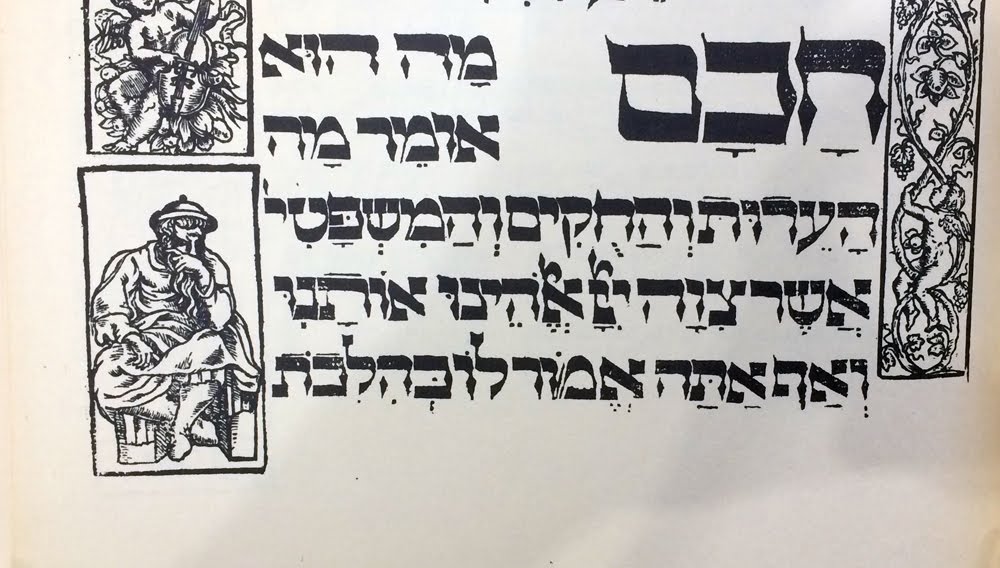
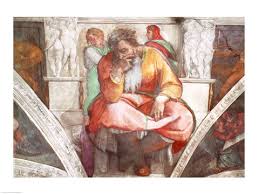
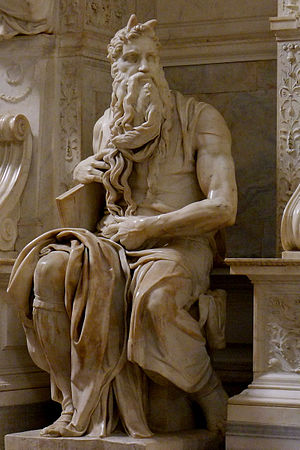


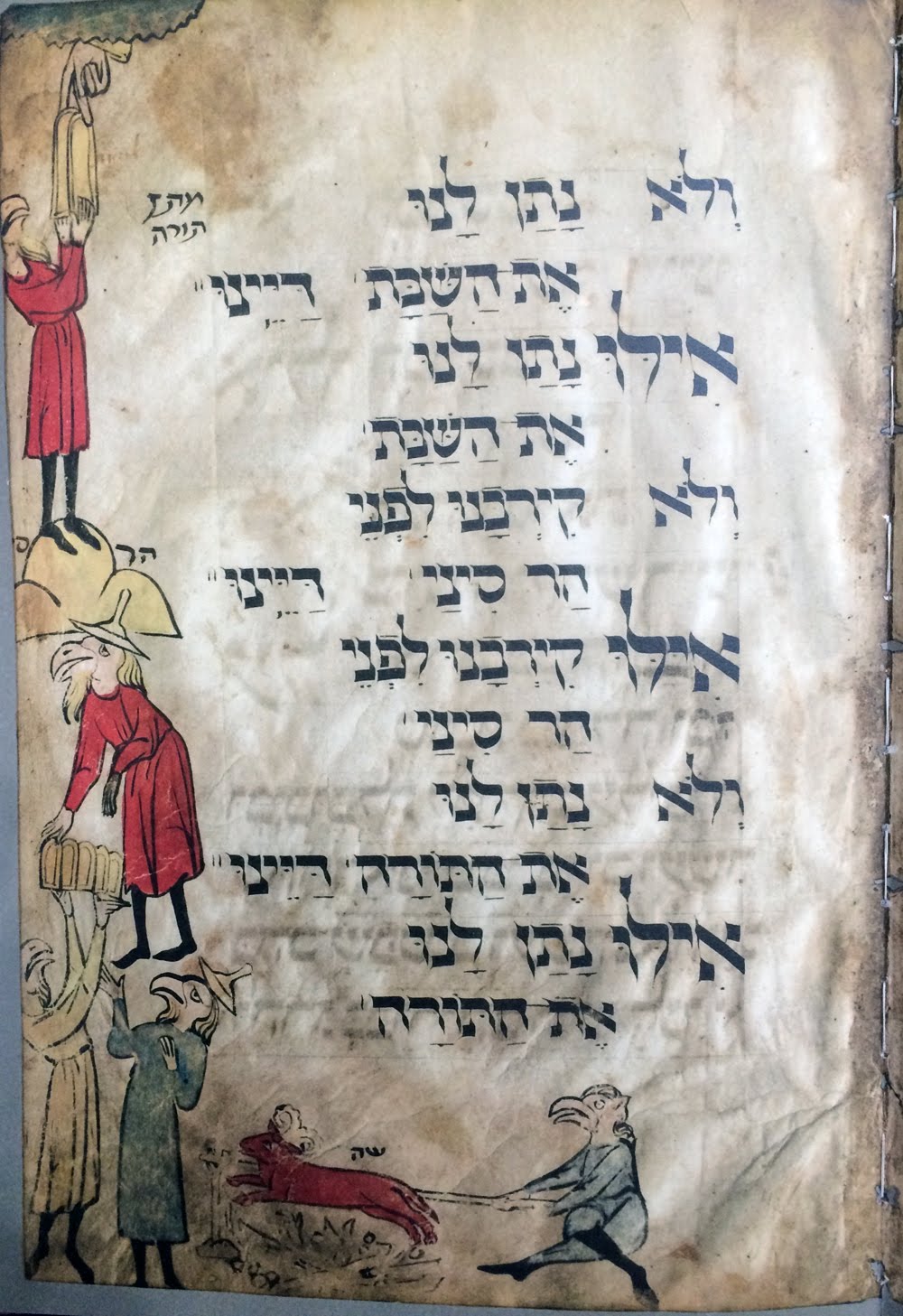

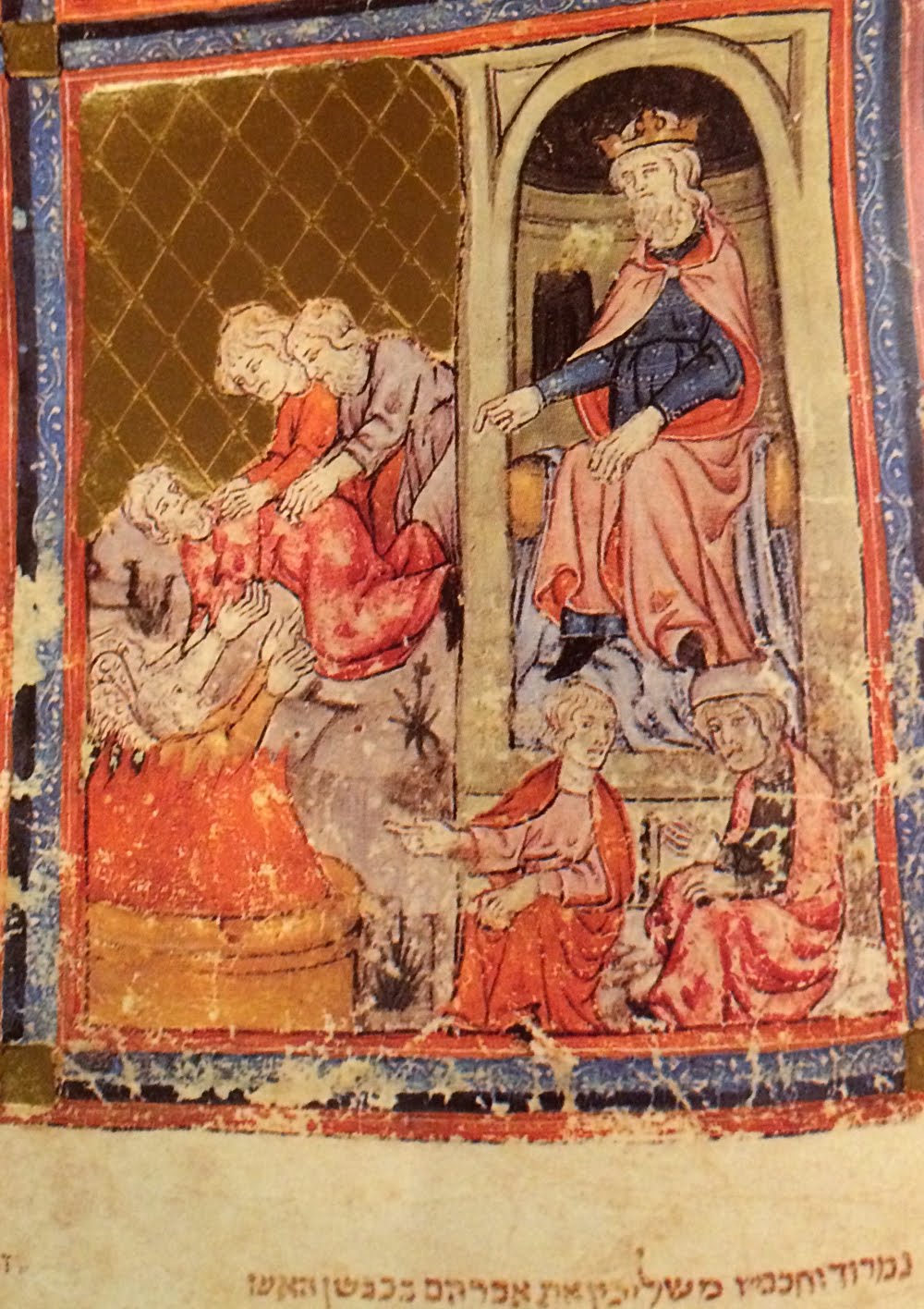
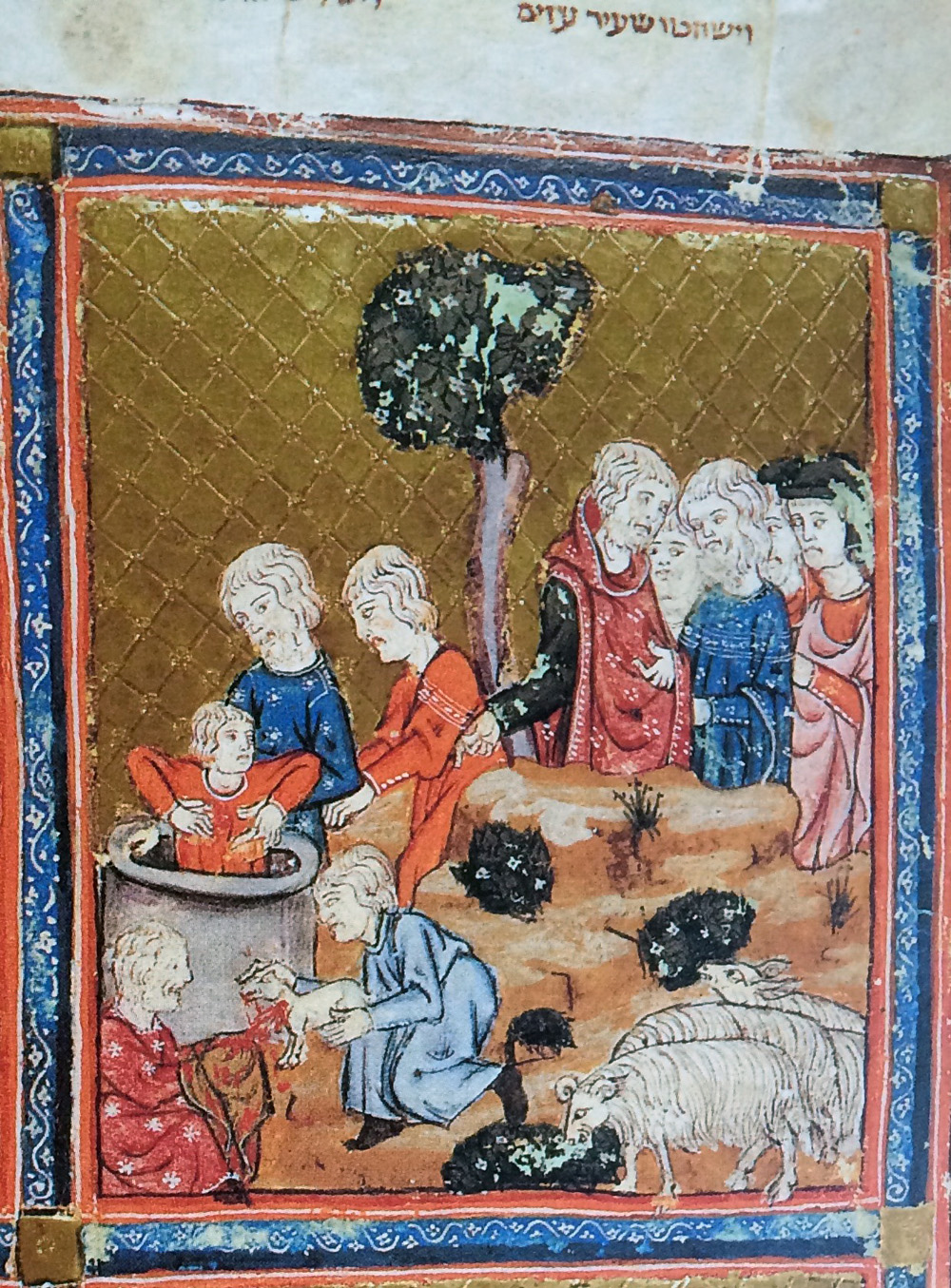


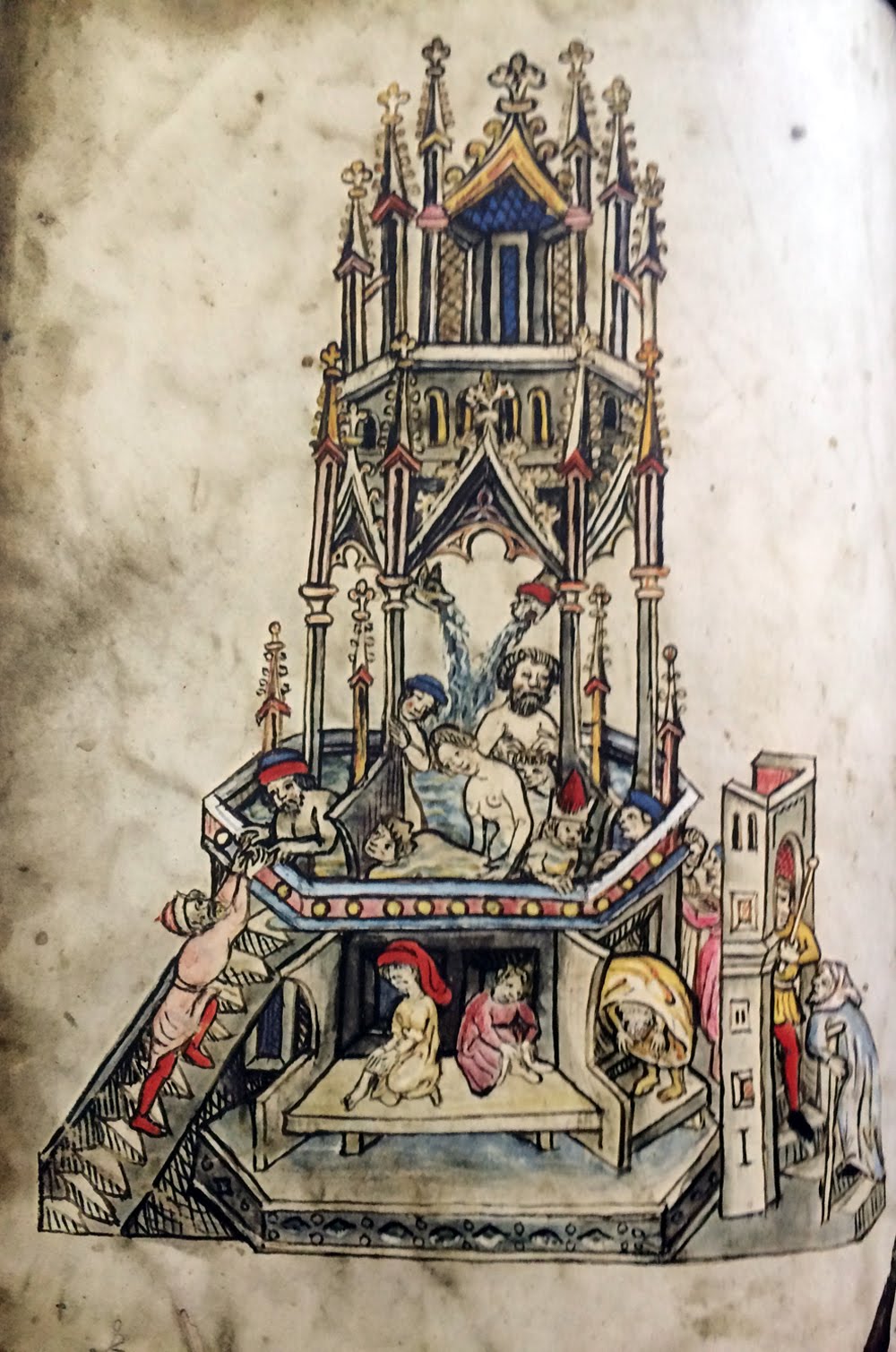

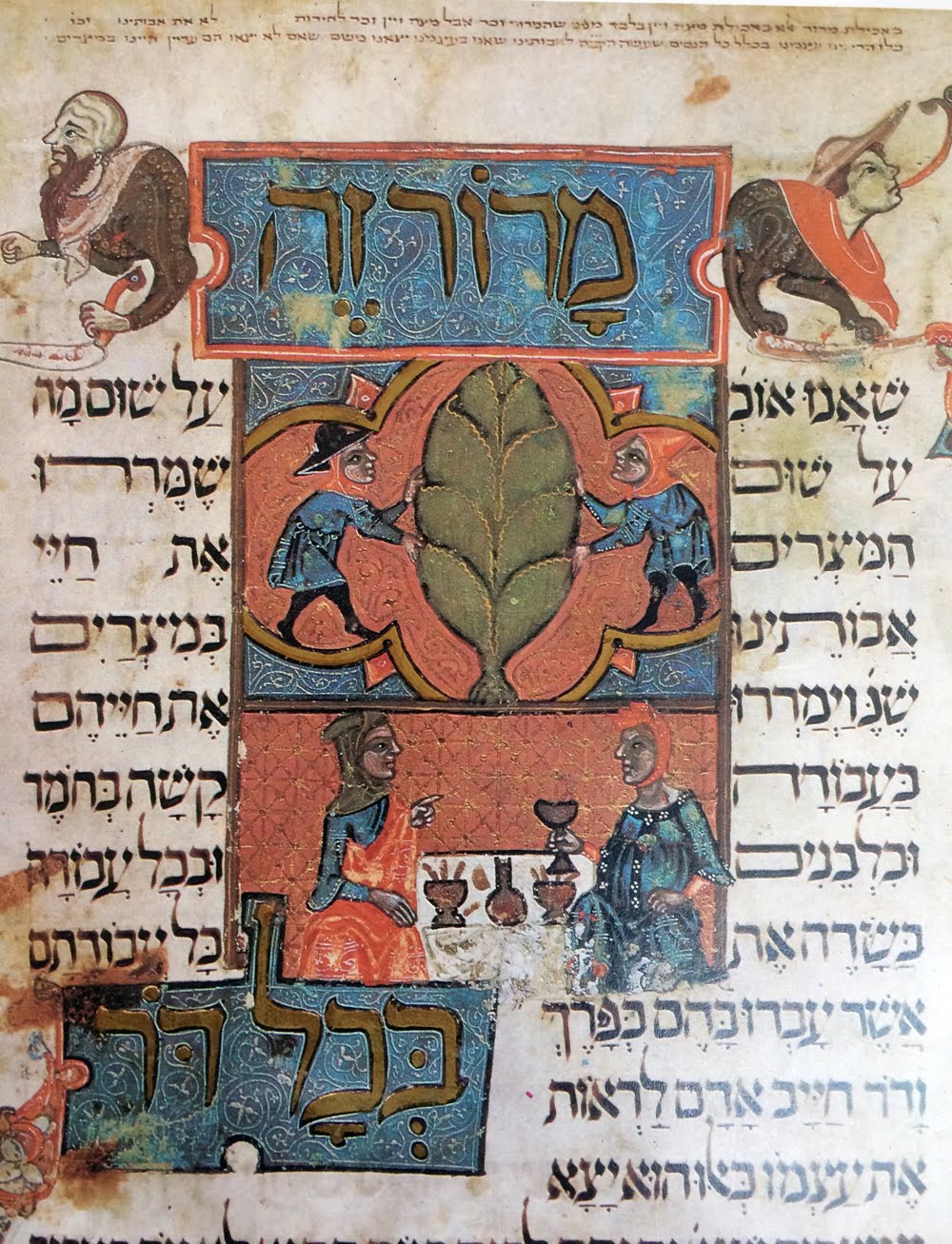


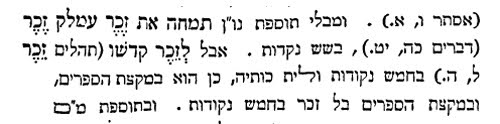
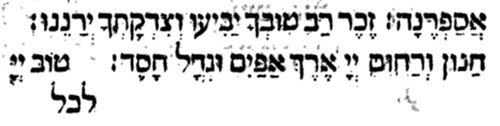
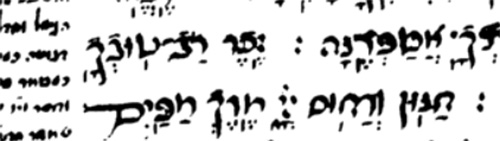 In 1832, about fifteen years after publication of Heidenheim’s edition, a book by R. Issachar Baer appeared, entitled Ma`aseh Rav, containing a description of the practices of the Vilna Gaon. The author mentions that the Gaon’s disciples disagreed over the way their teacher used to read the word zekher in Parshat Zakhor. The author attested as follows: “When he would read Parshat Zakhor, he would say zekher, with a segol under the letter zayin. R. Hayyim of Volozhin, however, whose endorsement is on the book, wrote there, `As for his writing that in Parshat Zakhor one should read [z-kh-r] with six dots, I heard from the saintly person [i.e., the Gaon of Vilna] that he read with five dots (=zeikher).’ I do not know whether those hearing him were mistaken, and thought they heard segol twice, or whether he changed his practice in his later years.”

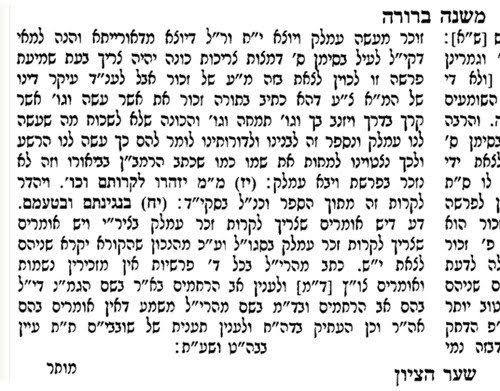

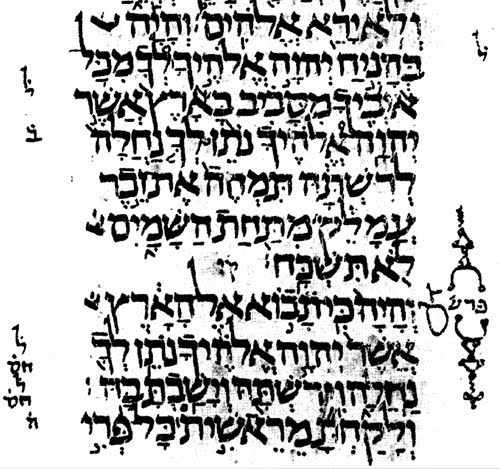

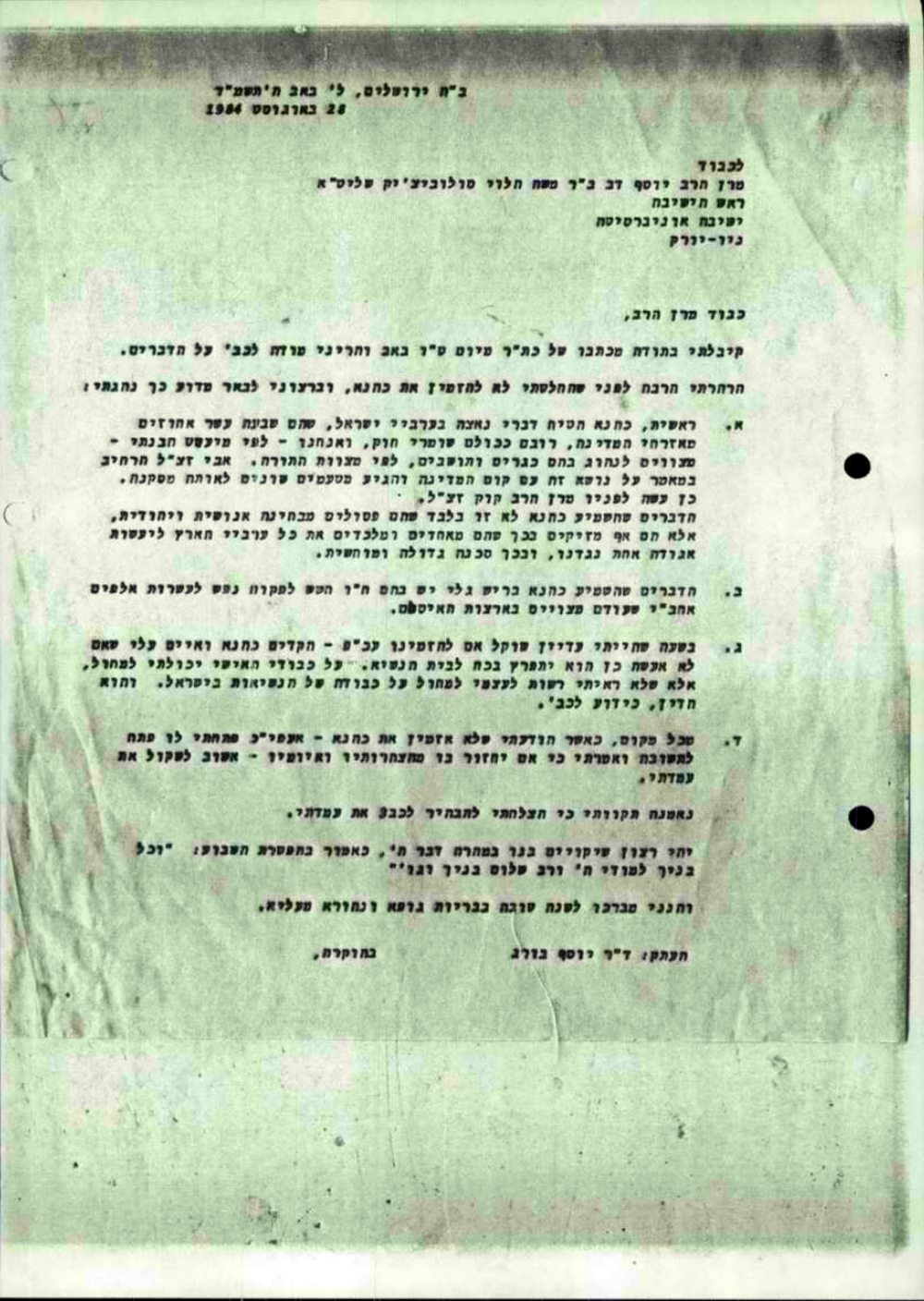


_html_m5183926c.jpg)
_html_748b80e9.jpg)
_html_19471789.jpg)
_html_45a00c98.jpg)