Recent Notes On Hebrew Pronunciation

Recent Notes On Hebrew Pronunciation

By Rabbi Avi Grossman

Edited by Mr. Jonathan Grossman 

Many of the ideas discussed in this article were in my notebook for some time, and just as I was getting around to preparing them for publication, my prolific colleague Rabbi Reuven Chaim Klein sent a copy of Professor Geoffrey Khan’s The Tiberian Pronunciation Tradition of Biblical Hebrew to me. After reading it and briefly corresponding with the author, I concluded that it was time to release this article. Professor Khan invites the yeshiva world to read his book, available for free at this link, and to check out his website. Full disclosure: although Prof. Khan’s research is enlightening, not only do I not agree with or endorse everything he claims, I do not believe that certain points are admissible as halachic sources in the Bet Midrash. 

With regards to the details of halachic pronunciation, I have already released my own book wherein I try to show how the rishonim would pronounce Tiberian Hebrew, and I direct readers to Rabbi Bar Hayim’s videos on the subject. Rabbi Bar Hayim follows the views of Rabbi Benzion Cohen. All of us are attempting to recreate something that we cannot really know, and for now, we still have to debate the fine details. I seriously doubt that the Masoretes spoke a ritual Hebrew that sounded exactly the way any of us describes it. 

Before getting into the nitty gritty of Prof. Khan’s arguments, I would like to introduce some basic ideas that can be gleaned from an elementary, comparative study of Arabic.

A few years ago I took some classes in modern spoken Arabic, which I hoped would help me begin to read Maimonides’s original writings. Aside from helping me realize how there is so much I have to learn about that language, it helped me learn more about Biblical Hebrew. Fifteen years ago, when I started working on what would become my aforementioned book about Masoretic Hebrew, I wondered about certain missing consonants. Thankfully, those and many other questions I had have been somewhat answered, and I now wish to present some of my own findings. I realize that for some, these may not be so novel, but my intention is to bring them to the attention of those in the yeshiva world who, for whatever reason, would enjoy learning about this but will not come across these issues in their regular courses of study.

Concerning the Consonants:

Arabic has only a cursive form, unlike our Hebrew which has had over the course of time many forms, including the common, Assyrian block form and the various cursive forms, which thanks to the advent of modern-Hebrew education has become much more standardized. Also, many letters have up to four forms: the isolated (stand-alone) form, the initial form, which the letter takes at the beginning of the word or in the middle of the word when the previous letter is cursively non-connective, the medial form, and the final form. For some letters, there is significant overlap. See a chart here, for instance. 

The Arabic letter alif is basically the Hebrew alef, but it is used much more often as a mater lectionis, the Latin translation of the Hebrew אם קריאה. (See below.) 

The Arabic equivalent of bet, ba, is always strong, meaning that in most forms of Arabic there is no letter that represents the weak bet sound, that of V, while the Arabic equivalent of pei, fa, is always weak, and never strong.This means that in most forms of Arabic there is no letter that represents the strong pei sound, that of P. Thus, many native Arabic speakers have a hard time pronouncing foreign words that have the P or V sounds. Today, in Israel at least, the solution is to use the stop, B, to also represent the P, thus giving us words like بيانو, biano, for piano, while the V sound is a variant of the fa, ف, and sometimes it is marked with three dots on top instead of one to indicate the V. Consequently, Israelis who pronounce their surnames that begin with vav in the standard, European-influenced accent, e.g. Vaynshtain instead of Weinstein, have the Arabs spell their names with a variant of fa

Unlike in Hebrew, the diacritical dots you find above and below certain Arabic letters are not vocalizations but rather critical components of the letters. It seems that early on the diacritics were used to distinguish between alternate sounds created by single letters, like the dagesh qal is and was used to distinguish between sounds made by single letters, while other letters originally had unique forms, but evolved into identical forms, and the diacritics were introduced in order to preserve the distinctions. The initial and medial forms of the Arabic letters ba, nun, ya (the equivalent of the Hebrew yod), and ta (the equivalent of the Hebrew tau) are orthographically identical and distinguished by the diacritics, the ba with one dot below, the ya with two; the nun with one above, and the ta with two, even though in all of the earlier Semitic alphabets, the equivalent consonants had distinct forms. This has made Arabic very receptive to new letters: it is very easy to modify an already existing letter form by adding anywhere from one to three dots as a superscript or subscript. In Hebrew, we still have not completely assimilated new consonantal symbols into new letters (the ג׳, ץ׳, ז׳, etc.), and the typical method of representing them looks out of place in context. 

Gimmel: In many languages, the hard G sound has been assimilated to a soft one, and this is as true in Arabic as it is with certain English words. However, the Arabic jim is not always pronounced like a J, which, as I pointed out in my book, is a combination of the D sound followed by a voiced shin (SH) sound, or the voiced equivalent of the CH sound achieved by clustering the T and SH sounds. Rather, jim makes the voiced shin sound (the G in massage) on its own. Also, the jim is still pronounced like a hard G in some countries, such as Egypt. 

Dal is the Arabic equivalent of our dalet, and it, like our dalet, has a weak, fricative counterpart, the dhal, (as in “the”), although unlike Hebrew, in which the weakness or strongness of the bet, gimmel, dalet, kaf, pei, or tau (the “beged kefet” letters) depends on the form of the word, and one set of rules governs all of these letters, in Arabic it seems that dal and dhal no longer have such a relationship, and as above, are now considered separate letters. 

The Arabic waw serves the same purposes as our vav. More on that soon. 

Het has its equivalent in the Arabic ha, while the sound of our kaf’s weak counterpart, khaf, appears in Arabic as a variation of the ha, pronounced kha, and the latter is represented by writing the former with an additional upper dot: ح and خ, respectively, while the one with a lower dot, ج, is the aforementioned jim. This seems to indicate that the weak sound of the khaf that distinguishes our Hebrew so much from English is a historical latecomer, and that while we first made it a variation of kaf, the Arabs made it a variation of het, and indeed, since in most Jewish circles the het is pronounced (incorrectly) as a khaf, perhaps the Arabs were just anticipating us. Many academics claim that the sound migrated; even in Hebrew the sound of the khaf was made by the het in certain words, but later, when all hets were pronounced alike, the sound was given to the weak kaf. This would explain why, for instance, certain proper nouns have been historically transliterated unusually. E.g., Jericho, Rachel, etc.

The Arabic counterpart of tet is the ta, but unlike our Hebrew tet which has no voiced counterpart, like tau has dalet and samech has zayin, the Arabic ta does have a voiced counterpart, the dad, ض, which is the D in words like Ramadan. Just like English transliterations of Hebrew commonly lose the distinction between tau and tet, they also lose the distinction between dal and dad, and in many systems used to teach Arabic to Hebrew speakers, they simplify the dad and tell them that just like they always pronounce the tet like a tau, they can pronounce the dad like a dal.

The Arabic counterpart of the yod is ya, and it pretty much behaves like the yod, but has traditionally been used as a mater lectionis even more than yod has. For example, many transliterations of Hebrew into Arabic not only use the ya to represent the Hebrew tzeirei, they even use the ya to represent the segol in open, accented syllables.

I was asked concerning the yod in second-person-possessive male suffixes, as in, for example בנֶיךָ ba-NE-cha: if the yod is not meant to be pronounced as part of the segol vowel, why is it even there? My proposed answer is that it is there to distinguish the singular from the plural, along the lines of the silent yod in the third person counterparts of those nouns, for example in בנָיו ba-NAW, which most never even get around to wondering why we do not pronounce as ba-NAYW. I believe that the yod in words such as בניו may have once been pronounced, and this explains the suffix’s relationship to its Aramaic counterpart, וֹהִיx or וֹיx. In essence, the two languages present the combined sound of the low vowel with the two semivowels, just that in Hebrew the Y sound preceded that of the W, whereas in Aramaic the W sound preceded the Y. Similarly, up until the common era, decisors would represent the western sound of “OW” (as in “brown” and Ashkenazi surnames with “baum” in them) in Yiddish and Yiddish-influenced written Hebrew as וֹי, “oy,” despite the inaccuracy. In any event, the silent yod in the plural possessive suffix is a critical indicator of the plural state, even more so than the potential vav of the holam in words like אבֹתֶיך  and עֹלֹתֵיכם. As a matter of fact, the vast majority of these words are written in the Torah with the yod and not the vav, and even when there is no need for a possessive or constructive suffix, the vav of the (generally) feminine plural suffix is usually omitted. Rather, the holam is usually written plene when the vav (or the yod that it replaces) is part of the root of the word. Thus, there is always a vav after the first tau in the word Torah (of the root yod-reish-silent hei) and its derivatives, but more often than not there is no vav after the reish indicating the plural of Torah.)

Sometimes, at the end of words, the alif is in the form of a ya minus the two lower dots that  distinguish the ya from the ta, ba and nun. Such an alif is called an alif maqsura (a “shortened alif”), and is often used in place of the ya that was part of the root word. See below for how this may relate to the phenomenon of the equivalency of yod and silent hei as the third letter of many Hebrew roots.

The Arabic counterpart of kaf, ka, is always strong. This would remind us of the instances in which the suffix khaf in Hebrew is strong, as in ארוממךָּ, although in spoken Arabic, what was once the sound of qamatz/patah after the suffix ka has now been placed before the kaf, such as in possessives that end with the sound “ak” instead of “ka.”  Similarly, the possessive suffix is pronounced “kha” in Hebrew, while in Aramaic it is pronounced as “akh.” 

The Arabic counterpart to lamed, lam, is often orthographically combined with the alif that precedes it or comes after it. Certain Hebrew printers would use a combined letter for alef and lamed; I do not know who learned from whom (no pun intended), or if it is just a coincidence. 

Samech has no true Arabic counterpart because the Arabic sin corresponds to both the Hebrew sin and samech. Considering how the samechsin redundancy in other Semitic languages predates the Arabic’s language’s evolution, this is understandable. Yiddish also has this phenomenon: in native Yiddish words, only samech is used to represent the S sound, and the sin is only used for words that have their source in semitic languages. Rav Mazuz recently pointed out that in Rashi-era French, not only did the samech and sin sound like an S, but the shin also did, and this is why when Rashi invokes French, the shin is usually used for the S sound. 

Ayin exists also in Arabic, although orthographic variants thereof, specifically the addition of a diacritic dot above, changes the ayin to a ghayn. (I would have expected the aforementioned jim to therefore to be an orthographic variant of this letter instead of the ha.) Many have pointed out that early Greek translations of personal nouns such as ra’am, ‘amora and ‘aza have used the progenitor of the latin G, and this would indicate that Hebrew once had a similar dual use for the ayn symbol, and as Professor Khan has shown me, the jim was once actually the equivalent of a hard G, and still is in some places, so it would be a natural and eventual variant of the ghayn

Pei’s equivalent is the fa. It has this weak form, and never a strong form. As I wrote above, modern Israeli Arabic uses a new variant of the ba, but with three lower dots, to represent the P sound. 

The tzadi has the Arabic sad. Further, the sad has a voiced counterpart, ظـ, ẓāʾ, the most recently developed letter in the Arabic language, and the sad and tet are already variants of each other, with the ta being a sad with a vertical line. Strangely, the voiced counterpart of the ta is a sad with an extra dot, ضـ, while the voiced counterpart of the sad, the ẓāʾ, is a ta with a dot. I would have done the opposite. Years ago I wondered why Hebrew did not have these letters. I now realize that they are just too inconvenient, or else we could also expect to see the fricative forms of both the tet and the dad in Arabic. Thus, Arabic developed and maintained letters to represent many of the consonantal sounds that were either lost by spoken dialects of Hebrew, or were never present in Hebrew. Considering that the twenty-two-letter Hebrew alphabet is considered sacrosanct by the Hebrews, and that even the weak sounds from the six beged kefet letters did not earn their own letters, I do not believe we will see new Hebrew letters to represent these sounds any time soon, although the sound of the jim (represented in Modern Hebrew by ג׳) and the modern English CH (represented by צ׳), for instance, are today ubiquitous. I was prompted to think about this by my daughter, who, in second grade, was mindful enough to point out that her version of the Alphabet had both bet and vet, but Ashrei, as printed in her siddur, only had a verse for bet.

Modern Hebrew tutorials for spoken Arabic use the samech to represent the Arabic sad, because the samech is much closer to the way sad should be pronounced than the way the Modern Hebrew tzadi is, although on some street signs, proper nouns with sad’s are rendered with tzadi in Hebrew, e.g. the town of Musmus in the Galilee is מוצמוץ, which delighted my daughter. Also, the ubiquitous condiment hummus, although spelled חומוס in modern Hebrew, should be spelled חֻמֻץ to accurately reflect its Arabic spelling. There are even some families here in Israel that do not eat chickpeas on Passover not because they are legumes but because back in the old country, the word was too similar to חמץ, “leaven.”

Quf: Many people know that the Hebrew quf should be pronounced like the true Arabic quf, what the speech professionals call the voiceless uvular stop, or, to the rest of us, the sound made by pressing the tongue farther back in the mouth, but like the quf in Modern Hebrew, the Arabic quf has also suffered from neglect. In some places it is pronounced like a hard G, while in others it is pronounced like a K, as we do, and sometimes, especially in local dialects, it is not pronounced at all, and is basically treated like an alif. For example, local speakers refer to Jerusalem as al-uds instead of al-quds, and even al-uds often comes out as il-uts, all of the previous with a short vowel sound. Or the imperative of stand up is um instead of qum, and daqiqeh, minutes, becomes da’i’eh

Reish: The Arabic sign for reish is the zayn with an additional dot on top, which may indicate the closeness of the two sounds. According to Sefer Yetzira, the reish is produced by the teeth, just like the zayin and samech.  

Shin and sin are one symbol, with the shin having three dots on top. They both even resemble the Assyrian shin: س ش. The extra tails do not appear mid word.

Tau: Both the strong and weak tau have Arabic counterparts, the ta and tha, respectively, with the former with two dots, the latter with three. As we mentioned, the strength of the Hebrew beged kefet letters depends on a letter’s position in a given word, while in Arabic that is not the case. 

More interestingly, the ta has a common silent form, called “ta marbuta,” literally, a “sad ta,” that appears as the feminine suffix roughly equivalent to the qamatz-silent-hei suffix in Hebrew. Interestingly enough, this ta marbuta is silent, like our hei, and is even written as a ha but distinguished by the characteristic two dots on top, just like a ta. That is, orthographically it is a combination of ha and ta. Just like the Hebrew hei suffix becomes an actual tau in various construct states, the ta marbuta becomes an actual ta in construct states. For example, the Arabic word for automobile is sayara, while “his car” is sayarato. When we consider Hebrew, we often think of the silent hei as converting to tau in construct forms, whereas from this point of view, the tau can be considered the default letter, and the hei that exists in isolated forms is the simplified form. This explains, for instance, why we encounter words like zimrath as in עזי וזמרת י-ה and aqereth in מושיבי עקרת הבית are spelled with the tau although they are not in the construct state. (Hat tip: Rabbi Yedidya Naveh of Koren Publishers.)

This is reminiscent of the phenomenon in Hebrew that in certain roots, the final silent hei become a tau in certain conjugations, e.g. ראה is ראתה in the feminine, while in other conjugations it becomes a yod, e.g., as in ראיתי and ראינו. Had an alef been in those roots, it would have stayed in both types of conjugations: the feminine of ברא is ברָאת, and the first persons are בראתי and בראנו.

Concerning the possessive suffixes, in spoken Arabic the male form is as in Hebrew, an O sound, but it is written with a silent ha, reminiscent of uncommon instances where the mater lectionis is also hei for the holam, as in שלמֹה, שילֹה, אהלֹה, and סֻכֹּה. Whereas in Hebrew, the female possessive suffix is usually qamatz-nonsilent (mappiq) hei, and this is mostly overlooked in spoken Hebrew. I know of no one, (not even the usual professionals who otherwise pronounce things properly) who actually tries to pronounce the mappiq hei in conversation. The equivalent suffix in spoken Arabic is much easier to say, as it is written as ha-alif, and is pronounced as “ha.”

The lack of a local Arabic equivalent to the hard G sound made by gimmel has led to some interesting inconsistencies regarding how to spell Ben Gurion, which comes up often considering all the places named after him. Some spell his name with a jim, others with a ghayn, and others with the new, hard-G gim, the aforementioned jim but with three dots instead of one. The first version enjoys the precedent that the Hebrew gimmel has been represented by the Arabic jim, and it is up to the reader to know that historically both were pronounced as G, while the second version enjoys the precedent that foreign words with a hard G have been represented with a ghayn because vocally it is is closest to the hard-G sound. For example, in Arabic a gorilla is called a ghorilla. Indeed, in this case they would be pronouncing “Gurion” with a form of gimmel, just the weak form. I have noticed that, especially around the eponymous airport, all three Arabic spellings of Gurion are commonplace.

Otherwise, many Israeli street signs can be seen as the work of vigilant trolls, who mock the way most Jews pronounce the tzadi, vav, tet, and quf incorrectly. For example, the signs pointing to my town, Kochav Yaakov-Tel Zion, appear as they should in Hebrew, כוכב יעקב – תל ציון, but in Arabic they are rendered as كوخاڤ ياكوڤ تل تسيون, which, represented in Hebrew characters, is כּוכאבֿ יאכּובֿ תל תשיון. That is, although the Biblical name of Jacob has a well-known classical rendering in Arabic, because the Jews pronounce the ayin and quf as alef and kaf respectively, they are rendered as such, and the same with the tzadi of Zion, rendered ts because that is how it is pronounced. Similarly, place names with tet are transliterated with the counterpart of tau, ta, because that is how it is incorrectly pronounced. An example: טירת צבי, Tirat Zvi, is rendered by the Arabic equivalent of תיראת תשבֿי. Lastly, פתח תקוה is (thankfully) transliterated into formal English as Petah Tiqwa, but in Arabic it is   ‎بتاح تكفا, or in Hebrew characters, פּתאח תכּבֿא, although it would have been more egregious had they rendered the first word as פתאך.

The Vowels

The Arabic counterpart of the dagesh hazaq is the shadda, a small W or shin-like symbol written above the letter indicating its gemination. The counterpart of the sh’wa nah (silent sh’wa) indicating that the consonant closes the previous syllable is the sukkun, which appears as a small circle above the letter in question.  

As a general rule, the major vowels are represented with their plene spellings, while the minor vowels are defective, and the ya represents what sound like the Hebrew tzeirei and hiriq, while the waw represents the holam and shuruq sounds. However, there is more ambiguity with regard to the representations of the minor vowels: there is one vowel superscript symbol that represents the short patah sound, and not coincidentally it is called fat-ha, while a single waw-like superscript is used to represent both the equivalents of the qamatz qatan and qubbus, and a single subscript dash represents the equivalents of the short segol and hiriq. Surprisingly, accented, segols in open syllables are transliterated into Arabic also as plene. For example, Petah Tiqwa, above, is sometimes spelled with a yod after the pei equivalent, פיתאח. And, along those lines, many of the counterparts of the qamataz gadol are represented by an additional alןf, as are patahs in open-accented syllables. Thus, names like Ibrahim (Abraham) and Binyamin are written with alif’s after the reish and ya respectively, and in Israel place names with the words sha’ar and har are represented by the Arabic equivalents of האר and שאער. This far more liberal use of the alif to represent the presence of vowels is also characteristic of Yiddish, in which the alef has completely transformed from a mater lectionis into a vowel-letter, although I would be very grateful if someone could enlighten me as to why in Yiddish, our ancestors chose to represent the segol with the ayin. I cannot fathom even a tenuous connection between that particular vowel and the consonant.

Concerning mater lectionis it must be noted that although in many of the languages under discussion they are silent place holders that do not affect the pronunciation, once upon a time they did. It is not due to some arbitrary decision or convenience that the prophets chose to represent the holam and shuruq sounds, for example, with a waw. Rather, it is because the vav and yod once were, and often should still be, a natural, necessary, and logical component of the vowels’ pronunciations, and as I wrote about in my book, the true hiriq and shuruq sounds cannot be articulated without the natural semivowels that complete them, and when they are followed by guttural letters that necessitate the additional patah g’nuva, or the epenthetic in Prof. Khan’s jargon, the semivowel is even geminated. 

Plural suffixes: Instead of im, יםx, in Arabic, as in Aramaic, “in” is often used. In feminine forms, instead of oth, ותx,  ات, which is the equivalent of אתx, is used. However, many nouns have a unique plural form that does not employ a suffix or any set rule of new vowel structure.

And now for the nitty-gritty of Prof. Khan’s book. The second volume of Khan’s work is a translation of the Hidāyat al-Qāri, which was written by a prominent grammarian, and it and other Karaite works and documents make up a significant portion of his sources. Although there may be that which we can learn from both Karaite and Samaritan sources, they can hardly be considered by traditional Jews to be sources for anything halacha l’ma’aseh. For example, the notion that the shuruq form of vav hahibbur before labial letters is pronounced as “wu,” and not “u,” is very hard for me to believe, especially because it contradicts most modes of pronunciation among world Jewry, and makes one wonder why such a vav would not therefore be considered a complete syllable unto itself. As I wrote about last time, an analysis of the trop indicates that the Masoretes did not not count the prefix vav as a syllable even when it was pronounced as a shuruq. If they had been pronouncing such a vav as “wu”, it would count as a full syllable, especially if it preceded a letter with a sh’wa. I believe that even the Karaites and Samaritans themselves do not pronounce it that way anymore, if they ever did. R’ Schachter likes to relate a story about a conversation between Rabbi Soloveitchik and Rabbi Saul Lieberman, in which the former was dismissive of certain medieval sources, because just like today when we have pseudo-scholars who write halachic nonsense, they also had such things back then. Just because you can find that Karaites distinguished between the mobile and silent sh’was using different criteria from ours, we should do as they do?!

I would also like an explanation as to why, considering the mountain of proof that the vav was and should be pronounced like a W and not like a V, he recommends that it be pronounced as a V in certain instances. It is inconsistent in theory as well as in practice. However, it is interesting to note that historically Jews in Palestine began to assimilate the vav into a V sound around the same time that speakers of Greek began to assimilate the sound. Although I am happy to let people speak however they may like, I would strongly recommend against this and another common phoneme, namely the Modern Hebrew pronunciation of reish. Both made it into Modern Hebrew via Yiddish, and both make Modern Hebrew sound unpleasantly Germanic. For example, the word aquarium is both pleasant and easy to pronounce, and sounds like a fun place to visit with children, while ak-VA-ghi-um is jarring, hard to pronounce, and sounds sinister. If most can pronounce the vav and reish properly, they should try to do so. For those who may ask, I spell the name of the letter v-a-v in order to distinguish it from the Aarabic waw, although I believe that it makes the W sound. 

Prof. Khan’s take on orthoepy on page 101 fits with my point here that the Sifrei Emet have a higher tendency toward conjunctive cantillation marks than the rest of the books of the Bible. Along similar lines, you will find that in the majority of the biblical books, the non-Emet books, the lower level disjunctives, which therefore also occur earlier in a particular half of a verse, tend to be musical flourishes, and not unsurprisingly, can have many more conjunctive words (i.e., words marked with conjunctive trops) preceding them. For example, silluq and ethnah have at most one conjunctive word connected by either a mercha or munah, respectively, and the second-level disjunctives like tip’ha and zaqef have at most two conjunctives, while the pazer and t’lisha g’dola often have four or five conjunctives, and even up to seven at my last count. (Often, a string of connective words form one adjectival phrase beginning with asher, that or who, even if that phrase itself has many parts of speech.) Jacobson has already pointed out that there are no disjunctives lower than these, and therefore, even at preceding words where we would expect disjunctives, we find conjunctives. There is thus a proportional relationship between musicality and connectivity. 

A recurring argument is that when the Karaite transliterations into Arabic omit mater lectionis, the indication is a short vowel in the original Hebrew. I disagree, because we see that the farther back we go in Biblical Hebrew, fewer and fewer long vowels, especially qamatz and holam, are in the plene form. Incidentally, some have asked me for rules of thumb as to when the holam is plene or deficient. I have two of them: 1. In post-biblical Hebrew, the accented holam of segolate nouns is deficient (e.g., חֹדֶש, עֹשֶק, אֹכֶל, etc.) while in participles, the holam is unaccented and written in the plene form (e.g., אוֹכל, עוֹשֶק, etc.). In Biblical Hebrew, the older the book, the less likely these participles are to have the vav. 2. In the Torah and the earlier biblical books, the holam is often deficient when it is part of a plural suffix. Those words in which it is written plene, e.g., in בנות, are the exceptions. However, when the vav is part of the root, it usually is written, for example when the root of the word is yod-reish-(silent) hei and the conjugation is in the hif’il, which is why the word תורה and its variants are written in the plene form. 

Pg. 113. I used to joke that the common Ashkenazi practice of distinguishing between qamatz and patah and tzeirei-segol was an enactment of the biennial convention of Ashkenazic Jewry, for if you were to claim that qamatz and patah used to sound the same, and tzeirei-segol sounded the same, why do Ashkenazim distinguish between? However, Prof. Khan seems to say that it was apparently the case, and we are left looking for an explanation as to how our ancestors figured out the difference in theory and adopted it in practice. 

The argument on page 409 regarding epenthetic vowels fits with the argument I made previously about the pronunciation of ohela.

Pg. 428: Yaamdu. I believe that Prof. Khan and I are making similar proposals, except that he is using much more advanced terminology. 

Pg. 450: As per the brilliant and indispensable treatise on cantillation found in the classic Tiqqun Mishor, I believe that it is much easier to explain the vocalization of the word מה (ma) with the rules governing the hei hay’dia, the definite article. The atei merahiq (dehiq) explanation may account for the dagesh in the first letter of the second word, but it does not account for the variety of possible vowels: segol, qamatz, patah, etc. that parallels that of the hei hayedia and that can be explained using the general principles of vowel shifts. 

Pg. 509. Is the masoretic hyphen supposed to be called a מַקֵּף or מַקָּף? I can entertain either, just like the exact vowelization (and names for that matter) of the words we use for the vowels are also pretty dynamic, and the same can be said of the trop. 

Pg. 519: Prof. Khan does not find any lengthening of the vowel in the syllable marked by the metiga of the zaqef gadol, nor of the geresh of the ravia mugrash. As I wrote earlier, I am of the belief that these particular symbols are quite arbitrary, and their placement is less about accentage, etc., and more about distinguishing them from similar symbols, and explains why trop like the dehi and t’lisha gedola are always marked on the first syllables even if those syllables are not accented. 

Pg. 524: Concerning the verb להניח, Prof. Khan offers that the forms which have the dagesh are not reflective of a different root altogether, but rather are a convention to create a distinctive meaning. The forms with the weak nun imply “to give rest,” while the forms with the strong nun imply placement. It would thus seem logical that the blessing on laying t’fillin should be להַנּיח תפלין and not להָניח תפלין. However, most siddurim follow the Shulhan Aruch’s ruling (Orah Hayim 25:7) to use the latter formulation, and indeed, the Mishna B’rura there explains that the weaker form implies placement, while it is the strong form that implies handing over. However, in the original source in the Beth Yosef, it is mentioned that there is no actual difference in meaning between the two forms, but the weak form is preferred because it is the one used in the verse (Ezekiel 44:30), להָניח ברכה, “to place a blessing within your house.” The Vilna Gaon seems to endorse this view. 

The following is from a letter I wrote to the publishers of the Makbili edition of the Mishneh Torah:

במהדורתכם, בהלכות תפילין, פרק ד׳, כל פעם שמדובר על מעשה הנחת תפילין וברכתה, הנו״ן דגושה והתנועה לפניה או חיריק חסר או פתח, ושתיהן תנועות קלות, וזה למרות דעת השולחן ערוך וכמה אחחרונים שצ״ל נו״ן רפה והתנועה לפניה או קמץ או צירה, ושתיהן תנועות גדולות. לדעת מרן הבית יוסף, זה בגלל שהנחת תפילין שורשו נו״ח, ומעשה ההנחה הוא בבנין הפעיל, לעומת הנחה בנו״ן דגושה, שהיא באה משורש אחר ומשמעותה לשון עזיבה

?האם דעתו של הרמב״ם מפורשת שכן צריכים להגות ״הנחה״, או האם יש לכם סיבה אחרת בשיטת הניקוד

In short, they decided to vowelize l’haniah t’fillin, the blessing on laying t’fillin, with a dagesh in the nun, l’hanniah t’fillin. This is in contrast to most known opinions, including that of the Shulhan Aruch. Whose opinion were they following, bearing in mind that Maimonides himself did not actually state anything in regards to the matter and his own editions of the Mishneh Torah were not vowelized?

The editor answered that

:זוהי תמצית תשובת ד”ר יחיאל קארה, עורך המשנה של המהדורה לענייני ניקוד

במהדורתנו ניקדנו על פי המסורת התימנית, וכן הוא גם בכ”י קאופמן של המשנה. אכן במקרא אפשר שיש מקום להבחין בין “והניח לכם מכל אויביכם” ב-נ’ פשוטה לעומת “והניחם שם” ב-נ’ דגושה, כהבדלה בין נתינת מנוחה לבין שימה, אך הדבר אינו מוחלט, ובכל מקרה מדובר במה שמכונה “פועל עלול”, שבו יש תנועה בין הגזרות השונות. וראה גם במילון אבן שושן, שמביא את שתי הצורות בלא להבחין ביניהן

Or in short, that there is a Yemenite tradition that it should be that way. Indeed, one Yemenite rabbi showed me some Yemenite codes that explicitly record the practice.

A few years ago, I found what may be the source for the Yemenite/Maimonidean tradition.  According to the Shulhan Aruch, the three-letter root of l’haniah is nunyod (or waw)-heth. Thus, all the letters of the root are present in that conjugation, and thus do not require any letter to be geminated in order to compensate. However, In The Guide for the Perplexed, 1:67, Maimonides wrote (Friedlander translation):

Our Sages, and some of the Commentators, took, however, nuaḥ in its primary sense “to rest,” but as a transitive form (hif’il), explaining the phrase thus: “and he gave rest to the world on the seventh day,” i.e., no further act of creation took place on that day.

It is possible that the word wayyanaḥ is derived either from yanaḥ, a verb of the class pe-yod, or naḥah, a verb of the class lamed-he, and has this meaning: “he established” or “he governed” the Universe in accordance with the properties it possessed on the seventh day”; that is to say, while on each of the six days events took place contrary to the natural laws now in operation throughout the Universe, on the seventh day the Universe was merely upheld and left in the condition in which it continues to exist. Our explanation is not impaired by the fact that the form of the word deviates from the rules of verbs of these two classes: for there are frequent exceptions to the rules of conjugations, and especially of the weak verbs: and any interpretation which removes such a source of error must not be abandoned because of certain grammatical rules. We know that we are ignorant of the sacred language, and that grammatical rules only apply to the majority of cases.

Thus, it seems that in the form l’hanniah, the yod of the beginning of the shoresh has been left out, necessitating the dagesh in the second letter of the root, the nun. However, Maimonides acknowledges the apparent difficulty: usually, when the first letter of a root is yod, verbs in the hiph’il conjugation are vowelized with a full holam after the prefix, for example להוציא from יצא and להושיב from ישב, and even להוליך from הלך, which does not even have a yod

Pg. 599-600: The discussion reminds me of my epiphany concerning the Vilna Gaon’s pronunciation of זֵכר. The difficulty native speakers have when trying to distinguish between sets of similar sounds is very frustrating, especially when they attempt to add their own vowelizations. I tell Israeli schoolteachers that it is not even worth it for them to try, because when it comes to qamatz-patah and segol-tzeirei, they will always get it wrong. 

Finally, Prof. Khan is not alone in advocating that the sh’wa na’ of Tiberian Hebrew be pronounced basically like a hataf patah. Support for this position comes from written testimony that describes it as such. However, I do not accept this. It seems to me today, linguists discuss dozens of types of vowels, and spoken English, for example, utilizes dozens of vowel sounds, but in the medieval period, they used to only discuss three, and then five, different vowel qualities. It makes sense that to them, the sh’wa would have to fit into one of those descriptive categories even if we now have the tools to be more specific. Further, if the sh’wa was supposed to sound like a hataf patah in the majority of cases, why did the Msaoretes choose the sign of the sh’wa, which half the time is used to mark a letter that closes a syllable, and not the hataf patah, which they had already created to mark specific sh’wa’s? Also, it would be a practice that contradicts the living custom of most of Jewry, and would require a thoroughly novel explanation as to why the pronunciation of the vav hahibbbur changes before words that begin with a letter vowelized with sh’wa. However, I also believe that a sh’wa should not be pronounced identically to the short I sound as is common in most places today. The best description of the sound that I can offer today is the sound in the word “the,” as in “I went to the store.”

Concerning Vav Hahippuch

As opposed to the conjunctive vav, the vav hahippuch generally turns a past-tense verb into future tense, and a future-tense verb into past tense. Many thus believe that the hippuch, inversing, refers to the tense. But, the vav hahippuch inverses a lot more:

The accentage: In most past-tense verbs converted to future, the accent is shifted from the middle syllable, if that is its position, to the last syllable. E.g. a-HAV-ta is “you loved,” whereas w’A-hav-Ta is “you shall love”. (Most speakers of Hebrew are unaware that the past-tense second person plural verbs are accented on the last syllable: אהבתם is ahav-TEM, and not aHAV-tem, and when marked with the vav hahippuch stay accented as such.) Notable exceptions occur in verbs with yod/silent hei as the last letter of the root. E.g., w’a-SI-tha, “you shall make,” is accented on its middle syllable even though it is future tense. Once again it is verbs of this category that are the major exception; last time I pointed out that the singular masculine past-tense conjugations of these verbs do not follow the rule of athei merahiq. In the case of a future-tense verb made past, the accent is shifted from the last syllable to an earlier one. (e.g., ya-QUM becomes way-YA-qom, and yo-MAR becomes way-YO-mer).  

The syntax: Standard form would be subject-verb-object. When vav-hahippuch is utilized, the order is verb-subject-etc.. This is the usual form used throughout the Bible when describing events, and usually in chronological order. When I teach about vav hahipppuch, this is the first indication: Does the verb start the sentence or clause instead of the subject? If yes, then you most likely have vav hahippuch.

Lastly, the vocalization is changed, at least from future to past. Instead of simply being marked with a sh’wa, or whatever would have taken the sh’wa’s place based under other considerations (e.g., becoming a shuruq before labial letters), the vav hahippuch is vowelized with either a patah before the future-prefix tau, yod, or nun, or a qamatz before the future prefix alef, which cannot receive a dagesh. Thus, when you have a vav hahippuch before a first-person singular pi’el verb like avaqqesh, which starts with an alef vocalized with a hataf patah, the vav hahippuch will be marked with a qamatz. There are two practical applications with regard to the meaning: If the vav preceding such a verb was not a vav hahippuch, it would be marked with an ordinary patah and the verb is in standard future-tense form, and therefore the reader must distinguish between the two. If he does not, he should be corrected, and normally, the vocalization of the vav hahippuch actually matters.  However, the vocalization of the vav hahibbur, which can prefix all parts of speech, is not critical, i.e., whether one pronounces it with a sh’wa, or any vowel, or as a shuruq, does not affect the meaning and intent. Because vav hahippuch only prefixes verbs, any time a vav prefixes anything but a verb, I would not correct the reader if he pronounces it with the wrong vowel. For example, if one were to read וגדולה as vig-do-LA  instead of ug-do-LA, or ושמעון as wa-shim-’ON instead of w’shim-’ON.

As far as I can tell, classical Aramaic has no vav hahippuch, and perhaps others can weigh in on whether such a form exists in other semitic languages.  

Once one is familiar with the style of the vav hahippuch, he will notice that certain verses (or parts of verses) actually follow standard syntax: The subject will precede the verb, which will be in the correct tense. In such cases, the subject may be preceded by a vav hahibbur, and the overall indication will be that the information expressed is that which had happened previously. I.e., such a style of syntax indicates the past perfect. Some examples:

Genesis 4:1: והאדם ידע את חוה אשתו, “The man had known his wife, Eve.” Many scholars have pointed out that this indicates that Eve had at least conceived her first children before Adam ate of the forbidden fruit, with the Midrash even describing Cain’s birth the day Adam and Eve were created.

Genesis 14:1: עָשׂוּ מִלְחָמָה אֶת-בֶּרַע מֶלֶךְ סְדֹם, “They had made war against Bera, King of Sodom, etc.” As is evident from the subsequent verses, the initial war preceded the events of the running narrative by some fourteen years.

Genesis 18:17: וַה׳ אָמָר הַמְכַסֶּה אֲנִי מֵאַבְרָהָם אֲשֶׁר אֲנִי עֹשֶׂה “And the Lord had said, would I conceal from Abraham that which I am doing?” That is, God had already decided, so to speak, that He would inform Abraham of the judgment against Sodom and Gomorrah. 

If you read II Samuel 2, it seems that Abner crowned Ishbosheth in the aftermath of Saul’s death, shortly before or right around the time David was crowned king of Judah, and considering that the verse describes how Ishbosheth’s kingdom gradually expanded as more tribes accepted him, it seems to me that it took David five and a half years after Ishbosheth’s death to then be accepted as king over all of Israel, and in support of the Ttosafists’ classical position against that of  Rashi’s (Sanhedrin 20a) , it took some time before Ishboshesh was accepted  by all of the tribes, but the five years of no kingdom seem to have been after his death, as the tribes came around to accepting David as king.  


Comments on This and That, part 2

Comments on This and That, part 2
by Marc B. Shapiro

Continued from here.

Barth’s opinion was shared by R. Joseph Hertz, who referred to Song of Songs as a “collection of ancient lyrics of the spring-time and youthful love.”[1] Some might regard this as a radical, even un-Orthodox opinion, but from Avot de-Rabbi Natan 1:4, we see that the early Jewish leaders did not regard the Song of Songs (and Ecclesiastes and Proverbs) as anything special.


Originally, it is said, Proverbs, Song of Songs, and Ecclesiastes were suppressed, for since they were held to be mere parables and not part of the Holy Writings [the religious authorities] arose and suppressed them. [And so they remained] until the men of Hezekiah came and interpreted them.

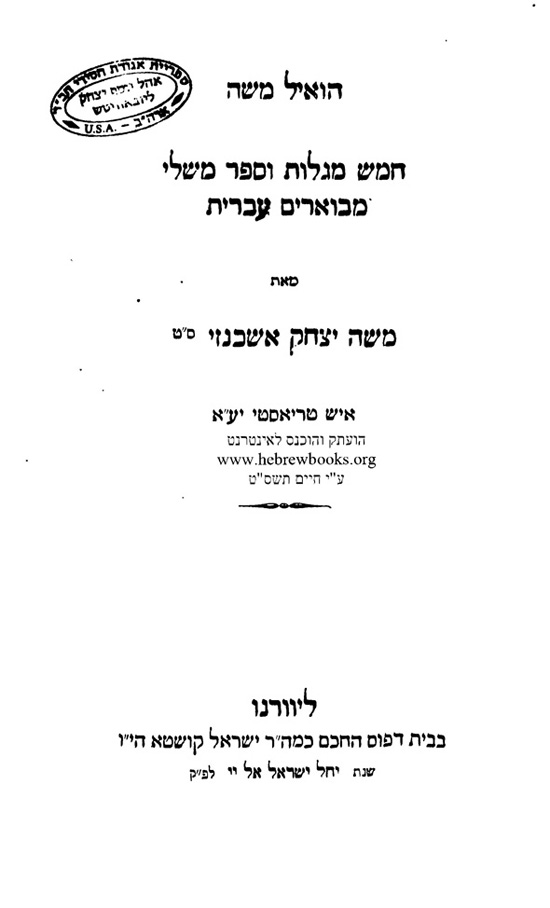
I already quoted a couple of times from R. Moses Isaac Ashkenazi’s Ho’il Moshe, so let me mention that in the introduction to his commentary on Song of Songs, he assumes that the book was indeed sung as part of the wedding celebrations, and as with Barth, he thinks that this was the original purpose of Song of Songs. He also suggests that perhaps שיר השירים אשר לשלמה  does not mean that Solomon wrote it, but that it was written for Solomon. He compares this to Psalm 72:1 which begins לשלמה and means “[A Psalm] for Solomon.” Interestingly, he also thinks that the Shulamite (7:1) is none other than Abishag the Shunamite.[2] Here is the title page of his book.


While Artscroll sees a literal interpretation of Song of Songs as blasphemous, Ashkenazi (together with Breuer and Barth) sees the book as teaching the values that make for a successful marriage. This viewpoint is also expressed in the introduction to the Soncino translation:

The main moral of the Book is that love, besides being the strongest emotion in the human heart, can also be the holiest. God has given the gift of love to sweeten the toil of the laborer, as in the case of Jacob to whom the fourteen years in which he toiled for Rachel appeared but a few days, for the love he had for her (Gen. xxix. 20). Love transfigures and hallows, but it’s a boon that requires zealously to be guarded and sheltered from abuse. This Book pictures love as a reward enjoyed only by the pure and simple, a joy not experienced by the pleasure-seeking monarch and the indolent ladies of the court. It is a joy reserved for the loyal and the constant, and is denied to the sensual and dissolute.

Ashkenazi concludes with these strong words:

גם אם נפרשהו ע”ד הפשט, נוכל ללמוד ממנו דברים נאותים. . . . רק אנשי חונף העושים מעשה זמרי ומבקשים שכר כפנחס יטילו בו דופי, בעוד שהם בשבתם על השולחן בבית חתן וכלה יוציאו מפיהם דברי נבלה המלבינים פני כל אדם ישר השמועה; והלואי ואולי היו משוררים שיר נחמד זה בסעודת חתנים. ויופי הקולות והנגינה ישמחו הלבבות ויגדילו חשק חתן וכלה זה לזה, ויגביהו לבות הבחורים והעלמות ברחשי הכבוד הראוים והנאותים להם.

Finally, let me mention Amos Hakham’s introduction to the Daat Mikra edition of Shir ha-Shirim. While he isn’t sure if the entire book can be traced to wedding feasts, he is certain that this is so for at least one section, namely, the song that ends in 5:1:: “Eat, O friends; drink, yea, drink abundantly, O beloved.” How could this not originate in a wedding feast? As for dance songs, Hakham points to 7:1 as an example: “Return, return, O Shulamite; Return, return, that we may look upon thee.” As with those already cited, Hakham argues that the allegory only adds a deeper level to our understanding, but it in no way discounts the peshat of the verses.[3] This is in direct opposition to Artscroll’s position that “The literal meaning of the words is so far from their meaning that it is false” (Artscroll Pesach Machzor, p. 567).

Hakham also calls attention to Va-Yikra Rabbah 9:6, where R. Yohanan understands Song of Songs on the peshat level to be referring to a real married couple. Based on two verses in Song of Songs, R. Yohanan derives “that a bridegroom should not enter the bridal chamber unless the bride gives him permission.”

Hakham states: “It is unimaginable that prophecy would use matters that are distasteful in themselves as an allegory for holy and pure matters.” Here is how he sums up his main point (pp. 8, 9):

כלומר שאמנם לפי המשמעות המילולית הפשוטה מתוארת בשיר השירים אהבה שבין דוד ורעיה שהם שניהם בשר ודם, אלא שבהיות אהבה זו תמה, זכה, טהורה וקדושה, ראויה היתה שתשמש סמל ודוגמה לאהבה נעלה יותר. . . . טעות ביד מי שחושב, שחז”ל דרשו את שיר השירים על דרך הרמז משום שבפירושו כפשוטו היה נראה בעיניהם כשיר העוסק בענינים שאינם ראויים להכלל בכתבי הקודש. לא כן הדבר. כבר העירו גדולי המפרשים שאין להעלות על הדעת, שהנבואה תקח עניינים מאוסים כשלעצמם כמשל לענינים קדושים וטהורים, אלא ודאי שכמו הנמשל כן גם המשל קודש הוא. ואם מצאנו שהנבואה ממשילה את הברית שבין כנסת ישראל ובין הקב”ה כברית שבין איש ואשתו, משמע שהברית הזאת שבין איש ואישה קדושה היא ונעלה. וכבר אמרו חז”ל: איש ואשה, זכו – שכינה ביניהן.

I would assume that if a Modern Orthodox Machzor for Passover is ever published, that Hakham’s perspective will be the one to be included rather than what we find in Artscroll.

R. Zvi Yehuda has the same perspective, writing that the literal meaning has an independent existence, and “it too is raised to the level of holiness, not just on account of the nimshal, but on its own strength.”[4] He quotes Rashi who in his introduction to Song of Songs stresses that the allegory must be attached to the peshat of the verse:

ואף על פי שדברו הנביאים דבריהם בדוגמא, צריך ליישב הדוגמא על אופניה ועל סדרה.

Yehuda brings a wonderful example of this. Song of Songs 4:1 reads: “Behold, you are fair, my beloved; behold, you are fair; your eyes are [like] doves; from within your kerchief your hair is like a flock of goats that streamed down from Mount Gilead.” Rashi explains the second part of the verse as follows: “This praise is a paradigm of the praise of a woman beloved by her bridegroom. Within your kerchief, your hair is beautiful and glistens with brilliance and whiteness like the hair of white goats descending from the mountains whose hair gleam in the distance.” The biblical text does not give any color to the goats, and Yehuda notes that the standard approach is that the goats are black, so that the hair being praised is also black. Yet Rashi speaks of light hair as being beautiful, and therefore he understands the color of the goats differently. Based on this, Yehuda concludes that “Visions of female beauty, in his [Rashi’s] time and place, influenced his commentary.”

The fact that the mashal needs to reflect reality is seen in another Rashi as well (not cited by Yehuda). Song of Songs 7:5 reads אפך כמגדל הלבנון. Rashi writes: “I cannot explain this [אפך] to mean a nose, either in reference to its simple meaning or in reference to its allegorical meaning, for what praise of beauty is there in a nose that is large and erect as a tower? I say therefore that אפך means a face.”
If the allegory is all that is important, then Rashi would not have a problem. He could translate אפך as nose, which is the literal translation,[5] and offer the allegorical explanation. Yet precisely because it is important that the peshat be coherent, Rashi is forced away from the literal meaning, for what man can praise his bride as being beautiful for having such a nose?[6]

One other interesting point that I learnt from Yehuda’s article is that the rishon, R. Avigdor Kohen Tzedek, gives the following strange explanation for why God’s name doesn’t appear in Song of Songs.[7]

ולא נכתב שם קודש בשיר השירים לפי שנאמר כל הספר בלשון חשק ואהבה ואינ’ דרך כבוד להזכיר השם ב”ה על דבר חשק.

Yehuda also cites the sharp comment of R. Solomon Akriti in R. Joseph Kafih, ed., Hamesh Megilot (Jerusalem, 1962), p. 19:

ואחרי אלה ההערות אינני רואה שיסופק שום משכיל בדברי הספר לחשב בם שהם כפשוטם, ואלו היו כפשוטם לא היו חולי חולין בעולם כמותם, ולא היה נזק גדול לישראל כיום שניתן להם שיר השירים, כי פשוטו יעורר תאוה וביותר תאות המשגל אשר היא המגונה מכלם

Yet after quoting these passages, which Artscroll would be very happy with, Yehuda takes his place with the others I have referred to and insists on the validity, and holiness, of the peshat interpretation (p. 478):

שיר השירים, על כל בחינותיה ורבדי מובניה – ואף לפי פשוטה – היא “קודש קודשים”. האהבה האנושית המתוארת בה – מתרוממת לגובהי קדושה.

He concludes (p. 481) that it is a mistake to think that the Sages explained Song of Songs allegorically because they had a problem with its literal meaning. According to Yehuda, the opposite is the case, and it is precisely because the Sages valued the literal meaning of the book that they explained it allegorically. It is because they saw the human love described in the book as so exalted that they were prepared to also view the book as an allegory for heavenly love.

With reference to Song of Songs, there is another reason why it is important to know the peshat. Maimonides’ Hilkhot Teshuvah 10:3, speaks about the love of God. He compares it to the love of a woman. Just as one who is in love constantly thinks about the woman, so too should be your love for God. He concludes that “The whole book, Song of Songs, is an allegory on this subject.” In other words, only one who understands what human love is all about can move to the next level and achieve love of the Divine. This is elaborated upon by R. Mordechai Gifter in his Hebrew preface to the Artscroll Shir ha-Shirim. One can only wonder why Artscroll did not see fit to translate R. Gifter’s important words into English. R. Gifter even mentions the importance, indeed centrality, of sexual desire. He does so not to speak of its great danger, as is often the case, but to stress how vital the sexual urge is even from a spiritual sense:

וכל זה מבו’ בדבריו של ר’ יצחק דמן עכו ז”ל שהביא בראשית חכמה – בסוף פ”ד משער האהבה – שמי שלא חשק לאשה הוא דומה לחמור ופחות ממנו והטעם כי מהמורגש צריך שיבחין העבודה האלקית.

He also writes:

שכל הלשונות שבמשל הן עצמיים ובשרשם העליון ענינם נשגב למאד, אלא שהענינים הרמים אלה משתלשלים ויורדים מעולם לעולם עד שמגיעים אלינו מצטיירים לנו צורה זו הנאותה לפי מציאות האדם בעולם הזה.

With regard to Artscroll, everyone knows that the “translation” they provide of Song of Songs is allegorical. In the Passover Machzor that is all you get, but in their separate edition of Song of Songs they do provide the literal translation in the commentary, for those who wish to look at it. Artscroll’s approach vis-à-vis the Song of Songs has been the subject of harsh criticism in the Modern Orthodox world, especially from its intellectual elite. In fact, I think when people criticize Artscroll, this is one of the things that is high on the list of what annoys them.

Yet it must also be noted that Artscroll’s method of translation is exactly what the Targum does.(See also R. Nahum Finkelstein’s Yiddish “translation” of Song of Songs [Jerusalem, 1929]) So it is not like Artscroll invented this approach. In addition, there is a responsum of R. Joseph Hayyim in Rav Pealim, vol. 1, Yoreh Deah no. 56, that is relevant. Here he states that a teacher in Baghdad translated the Song of Songs into Arabic, and the children copied this translation. R. Joseph Hayyim opposed this, stating that one should not teach the children and the masses the literal meaning of the words because they are not meant to be understood literally. The literal meaning of the book, he states, is no different than a love song (he adds “has ve-shalom”),[8] and unlike the opinions we have already noted, for R. Joseph Hayyim (as with Artscroll) the literal meaning of the Song of Songs is obscene.[9] The same viewpoint is expressed by the nineteenth-century R. Elijah Schick in his Ein Eliyahu, Yadayim 3:1:

כל הכתובים יש פשטות ג”כ אבל בשיר השירים אין שום פשטות אלא הכל קאי על יראת שמים וקבלת עול מלכות שמים, כי על פי פשט היא דברי חשק וזה אי אפשר לומר וקאי הכל על דביקות בה’.

Today we have an interesting phenomenon. When the Targum was written the vernacular was Aramaic, so the typical Jew would not be able to understand Song of Songs in the original. Only the scholar could understand the actual words, and he would know that they were to be interpreted allegorically. Today, in America, the situation is the same, as the typical Jew also cannot understand the Hebrew. Artscroll’s English “translation” therefore serves the same function as the Targum did centuries ago.

Yet what about Israelis? We now have a situation where “the masses” can understand the Hebrew Bible since Hebrew is their vernacular. This is a completely new phenomenon. How are these masses to be protected from reading the text literally, for as we have seen, Artscroll tells us in the Pesach Machzor that “the literal meaning of the words is so far from their meaning that it is false”? In the Introduction to the Artscroll Shir ha-Shirim, p. lxiv, we are told that when the words שני שדיך, “your bosom” [Artscroll won’t use the word “breasts”] refer to Moses and Aaron, this is not

departing from the simple literal meaning of the phrase in the least. Song of Songs uses words in their ultimate connotations. Just as geshem, rain, means the power of stimulating growth, shodayim, the bosom, refers to the Heavenly power of nourishment. . . . They [Moses and Aaron], Israel’s sources of spiritual nourishment, are not implied allegorically or derived esoterically from the verse; the verse literally means them.

In other words, Shir ha-Shirim (in this instance, at least) is not even speaking about a woman, not even on the level of peshat. I have to admit that all this seems like a lot of double-talk to me. I can understand if you tell me that “breasts”, excuse me, “bosom”, allegorically means “Moses and Aaron.” But when you tell me that even the literal meaning of shodayim is “Moses and Aaron”, that’s when I have difficulty.

(Speaking of haredi circumlocutions, since the Agudah convention is in a few days I can’t resist mention of the following. A letter was sent out to attendees inviting them to a breakfast at which they will be addressed by a psychologist and and rabbi-lawyer. You can see the letter here. Notice that the letter speaks about how “the issue of child abuse has become a major topic in our society and children in our community have been and continue to be at risk.” Of course, child abuse is not the issue at all. We are not being confronted on an almost weekly basis with stories of children in our communities being beaten or anything like that. What we have is child sexual abuse, and yet the author of this letter can’t even bring himself to say the word “sexual.” It’s like we are all in grade school and this word is off-limits.)

One opinion in Shir ha-Shirim Rabbah 1:10 states that Solomon wrote Song of Songs in his youth. This is elaborated upon by R. Hayyim Jeremiah Flensburg, Markevot Ami (Vilna, 1910), p. 6. He explains how Solomon’s words are indeed drawn from the real world he experienced, which once again shows how important the peshat, the literal meaning of the words are:

שאף שהנמשל של שיר השירים הוא קודש קדשים, עכ”ז מתוך המשל שעשה לעטוף בו הנמשל, ניכר שהיה אז ילד, שהוא נשא משלו מחתן וכלה, ומגנים ושושנים יפים, ומכל הדרת האביב, וזמרת צפרים.

R. Yosef Ben Arzah, in his popular Yosef Da’at, Bava Kamma 97, also explains in this fashion.

וידוע, האהבה זמנה בימי הנעורים, משא”כ בימי הזקנה “ותפר האביונה”. וכמו שאמרו ששלמה המלך עליו השלום, בילדותו אמר שיר השירים, שהוא תוקף האהבה.

When Ben Arzah writes that the time of love is the youth, he is clearly referring to sexual love, for he follows this by noting that this is not the case in old age when (quoting Eccl.12:5) “[sexual] desire fails.” In other words, the Midrash means that because Solomon wrote the Song of Songs in his youth, that is why it has sexual imagery, for sexual love is strongest when one is young.[10]

I don’t think anyone is going to suggest that Artscroll produce a Hebrew version of its allegorical translation and that this is what the masses should be looking at during the reading of Song of Songs. But why not? If it is religiously objectionable for English speakers to be exposed to the literal meaning of the words of Song of Songs, then it is just as objectionable (if not more so) for Hebrew speakers to read the actual words and understand them literally.

Despite my facetious comment, no one has ever assumed that the Israeli masses should be told not to look at the actual text of Song of Songs. Rather, they are provided with commentaries that explained what the allegorical meaning of the text is. If it is therefore acceptable for Israelis to first understand the text literally, and then see what the allegorical meaning is, I ask Artscroll, why can’t American Jews be given the same prerogative, namely, to have a literal translation together with a commentary that offers the allegorical interpretation?

Finally, let me mention that for Sefer Hasidim it was important to know what the Song of Songs literally meant, for he declares that all the parts of a woman’s body mentioned in the book are forbidden to be seen. See no. 110: שער באשה ערוה לגלות וכל האמור בשיר השירים כגון בטנך ערימת חטים שוקיו עמודי שש שני שדיך וכו’ וכל שדרך לכסות ערוה לאשה לגלות He repeats this in no. 614 where he also adds the following, which never became normative halakhah: צריך להזהר שלא ישמע קול אשה והוא הדין לאשה שלא תשמע קול איש.

Adopting this position might be a good strategy for those who have been trying unsuccessfully to shut down the Jewish concert scene. They haven’t been able to convince the haredi masses that these are in any way problematic, especially when men and women sit separately. But perhaps the new humra that could achieve their objective is that it is forbidden for women to hear men singing. A few years of indoctrination of this view in the various Bais Yaakovs should be able to convince the younger generation, and would mean the end of the haredi concerts.[11]

* * *

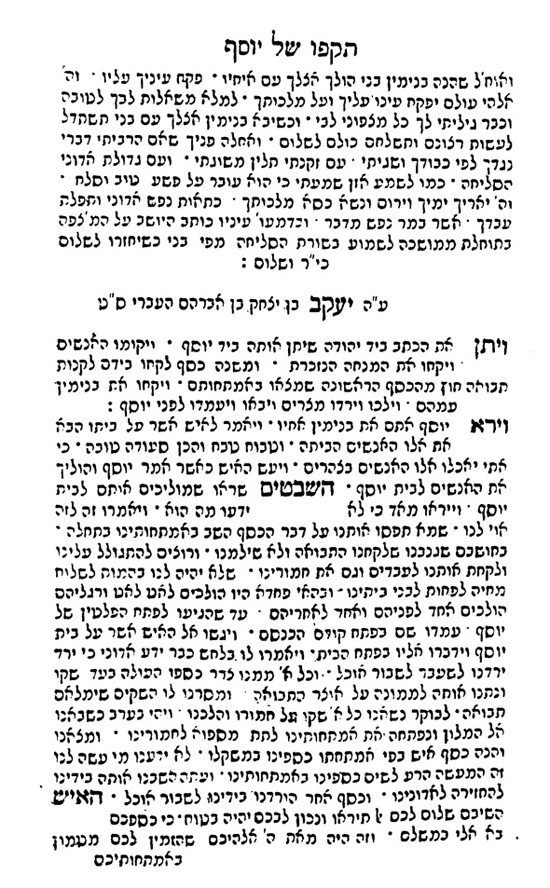
Returning to my post on Adon Olam, the other point dealt with in that post was the meaning of the abbreviation ס”ט. I don’t think anyone who read the post still thinks that it means “Sephardi Tahor.” But in case there are still any doubters, let me offer the following. Here is a page from R. Joseph Shabbetai Farhi’s Tokfo shel Yosef (Livorno, 1846), p. 38b. It contains the end of a letter from none other than Jacob the Patriarch, and you can see clear as day that he also signed himself ס”ט. Now if that isn’t a proof, I don’t know what is. . . .


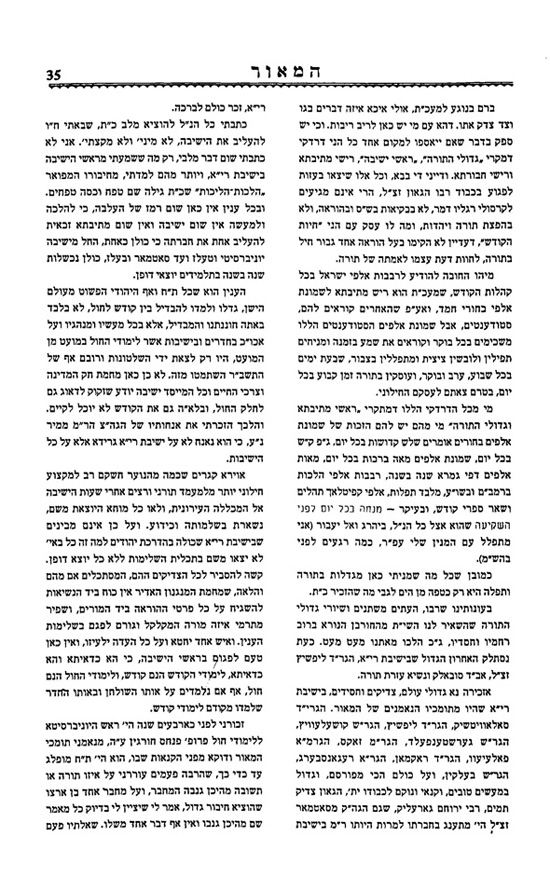
There was, in fact, one person who did refuse to change his mind, even after I presented him with the evidence. I refer to the late R. Meir Amsel, editor of Ha-Maor. Amsel is deserving of his own post, having edited Ha-Maor for over fifty years. If I were to ever write a history of Orthodox Jews in America, this journal would be an important source, together with its competitor, Ha-Pardes, because in these journals one finds most of the important issues that were part of the American Orthodox experience. Ha-Maor was the more extreme of the two journals, and all sorts of polemics were carried in its pages. But it would also contain all sorts of surprises, and Amsel’s viewpoints were not always predictable. Yet as I mentioned, he didn’t accept what I told him, and changing his mind even in the face of evidence to the contrary was not something he was prepared to do.

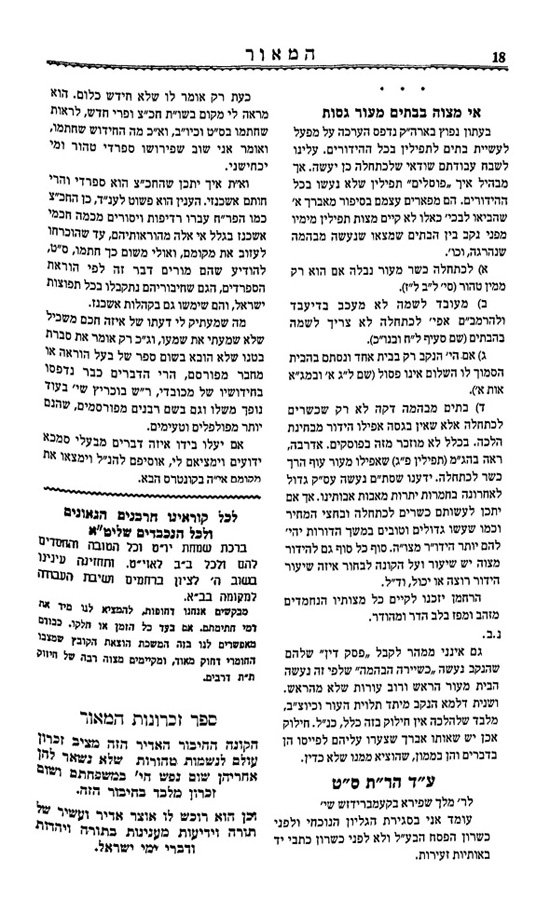
Imagine my surprise when after sending Amsel a letter on the topic he published his response in his journal (Jan.-Feb., 1993). Here it is.

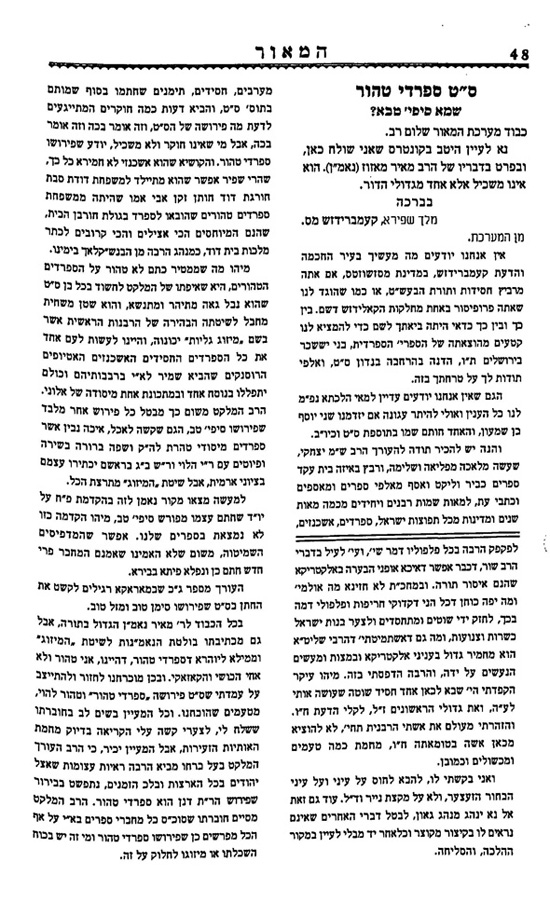
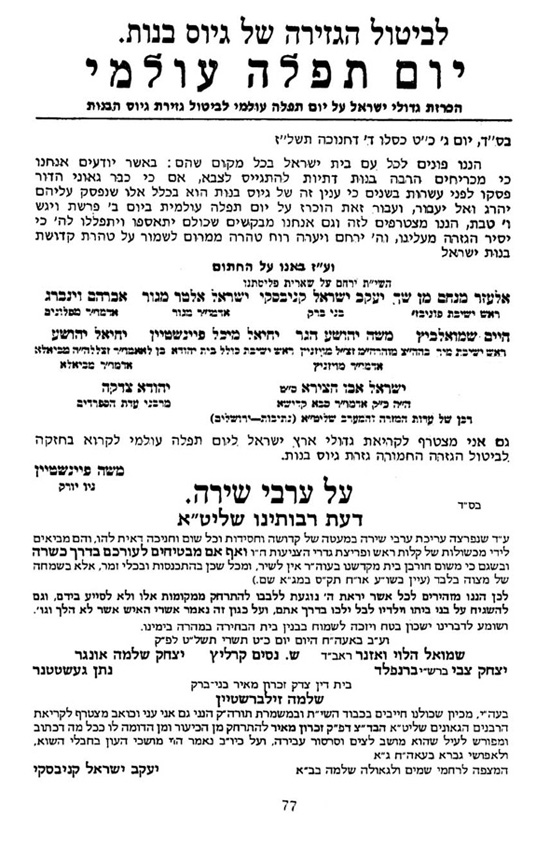
I sent him a second letter which he published, together with his response, in the March-April 1993 issue. Notice how he subtly mocks me at the beginning of this reply.


I didn’t take offense at the mocking as this was classic Amsel. Few had such a sharp pen as he, and woe to those he turned it against. To give one example of his many polemics, readers of the journal will never forget how he targeted R. Elya Svei. Yet he wouldn’t mention him by name. Instead, and as a way to show how little he thought of Svei, he referred to him as “the melamed in Philadelphia.”[12]

The March-April 1993 issue of Ha-Maor, in which he responded to me, is of broader interest for another reason. It contains his hesped for R. Joseph B. Soloveitchik, who had recently passed away. In this hesped he mentions a few things, among them that the Rav told him that he wasn’t really a Zionist, and that while Yeshivat R. Yitzhak Elhanan was not in accord with his family’s philosophy, nevertheless he taught there as it provided intellectual freedom.

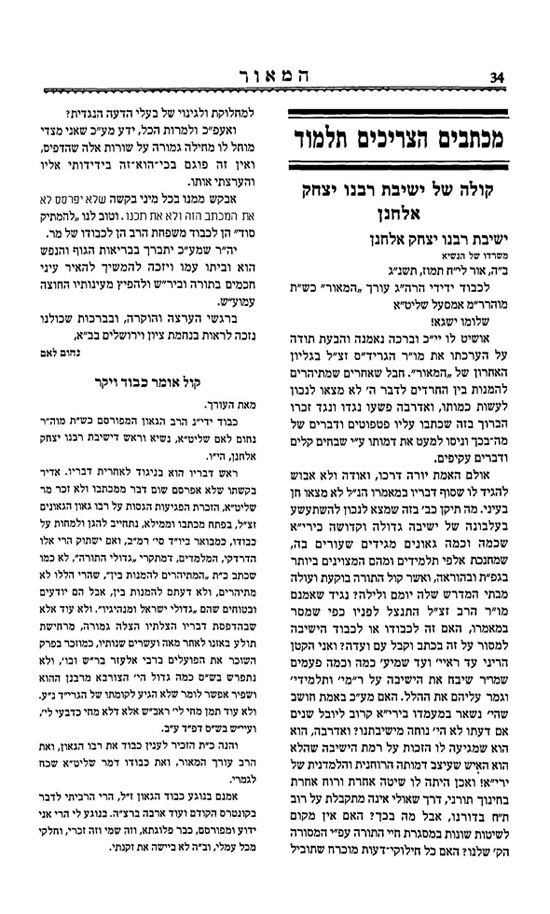
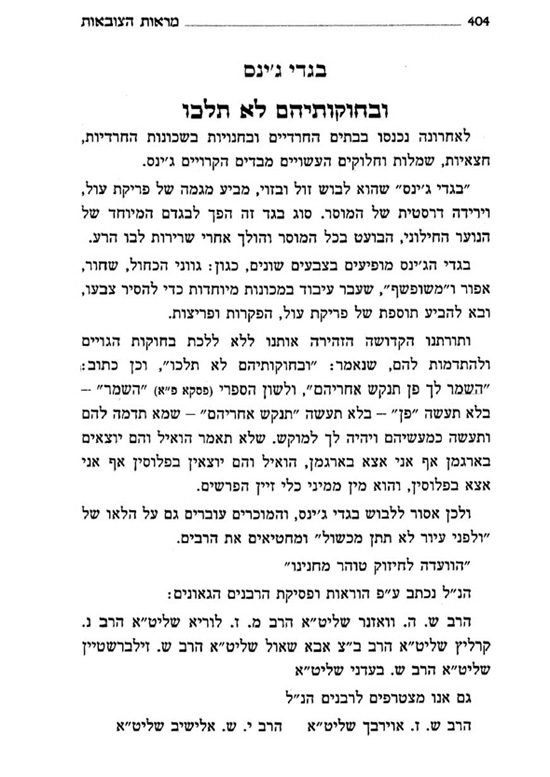
In the next issue (June-July, 1993), Amsel printed a letter he received from R. Norman Lamm, thanking Amsel for what he wrote about the Rav, and also criticizing him for mentioning the point about the Rav not feeling connected to RIETS. Note how Lamm specifically asked Amsel not to publish his letter, and Amsel published it anyway.

Also, look at the first paragraph on p. 35, as it shows how the Hungarian extremist Amsel was happy to point out how Lamm was head and shoulders above those in the Lithuanian yeshiva world. (I wonder, where did Amsel get the crazy figure of eight thousand students, that he mentions in the second paragraph? Even if you include the post-graduate schools you won’t get to that number. Did Amsel even realize that non-Jews attend Yeshiva University’s medical and law schools?)


* * *

In my original post on Adon Olam I dealt with Artscroll, so here is as good a time as any for some assorted Artscroll comments.

The custom on Rosh ha-Shanah is to sound additional shofar blasts towards the end of the morning prayers. Most sound these blasts after Musaf of Rosh ha-Shanah, while some sound thirty of them during the silent Amidah. There is no talmudic source for this practice. Why then do we do it? Here is how the Artscroll Machzor explains the matter, citing Eliyahu Kitov’s Sefer ha-Toda’ah as the source:

The source of this custom is the Scriptural narrative of the triumph of Deborah the Prophetess over Sisera, the Canaanite conqueror. In her song of gratitude for the victory, Deborah noted that Sisera’s mother whimpered as she worried over the fate of her dead son. Her friends comforted her that he had surely won a great victory and was apportioning spoils and captive women among his officers and troops (Judges 5:28-30). According to the Midrashic tradition she whimpered and groaned 101 times. Although one cannot help but feel sympathy for a worrying, grieving mother, one must be appalled at the cruelty of a mother who could be calmed by the assurance that her son was busy looting and persecuting innocent victims. The Jewish concept of mercy is diametrically opposed to such barbarism. By sounding the shofar one hundred times, we seek to nullify the forces of cruelty exemplified by Sisera and his mother, and bring God’s compassion upon us. Although she whimpered one time more than a hundred, we do not sound the shofar 101 times, because we, too, feel the pain of a mother who loses a child, even one as loathsome as Sisera.

The first thing to note is that for some reason, the explanation offered by the Taz is ignored. According to the Taz, the reason for the extra blasts is because people might not have properly heard the earlier kolot (Orah Hayyim 596:1). Furthermore, despite what is written, there is no source that speaks of Sisera’s mother whimpering 101 times. What we have is a story in the Arukh s.v. ערב , about Sisera’s mother (אימיה דסיסרא) and her one hundred cries or laments (פועיות This does not mean whimpers! The Arukh cites the story as coming from the Jerusalem Talmud. It is lacking in our versions of the Talmud, but the term “Yerushalmi” was also used for various Midrashim written in the Land of Israel.)

Ashkenazim, therefore, indeed sound the shofar the same amount of times as Sisera’s mother’s cries. Yemenites and Sephardim, on the other hand, blow an extra kol at the end, called Teruah Gedolah,[13] so they actually sound 101 blasts. Many explain that they do this precisely in order to be different than Sisera’s mother.

Here for example is what R. Ovadiah Yosef states, Shiurei Maran ha-Rishon le-Tziyon (Jerusalem, 2008), vol. 1, p. 75:

והנה אם סיסרא פעתה ובכתה מאה בכיות, ואנו תוקעים מאה תקיעות ועוד אחד, כדי לבטל הקטרוגים הנמשכים מהבכיות שלה . . . וזהו “הן אתם מאין ופעלם מאפע.” “מאין” = 101 הן ה100 פעיות של אם סיסרא שבמאה ואחת תקיעות שלנו ה’ מכפר לנו, ומתקנים אנו את הפעיות [“אפע” נוט’ פעיות אם] של אם סיסרא.

The Arukh’s explanation is quoted in a number of medieval sources, Yet what is the logic here? Why would anyone have thought of connecting Sisera’s mother’s cries with how many shofar blasts we sound, as they have nothing to do with each other? Is it really possible that how we blow the shofar has anything to do with what the mother of the wicked Sisera did?

It has been suggested by R. Hayyim Yehudah Ehrenreich[14] and R. Menachem M. Kasher[15] that there is a copyist’s error in the Arukh, and instead of reading it should read אמנו שרה , or something along these lines. This suggestion is made based upon the following passage in Pirkei de-Rabbi Eliezer ch. 32:

When Abraham returned from Mount Moriah in peace, the anger of Samael [Satan] was kindled, for he saw that the desire of his heart to frustrate the offering of our father Abraham had not been realized. What did he do? He went and said to Sarah: “Hast thou not heard what has happened in this world?” She said to him: “No.” He said to her: “Thy husband, Abraham has taken thy son Isaac and slain him and offered him up as a burnt offering upon the altar.” She began to weep and to cry aloud three times corresponding to the three Tekiot, three howlings corresponding to the Teruot. and her soul fled, and she died.

In this text we have a connection made between the cries of Sarah and the blowing of the shofar. Here it states that she cried three times corresponding to the Tekiah and three times corresponding to Teruah. (What we call Shevarim is one possibility for how the Teruah should be sounded.) Alternate versions have Sarah crying aloud six times or ninety times.

We still have the problem: How did the name Sarah become confused with Sisera? It turns out that there is indeed a connection between the mother of Sisera and the shofar. Rosh ha-Shanah 33b states:

The length of the Teruah is equal to the length of three yevavot. But it has been taught that the length of the Teruah is equal to three Shevarim. Abaye said: Here there is really a difference of opinion. It is written, It shall be a day of Teruah unto you [Num. 29:1], and we translate [in Aramaic], a day of yabava, and it is written of the mother of Sisera, Through the window she looked forth [va-teyabav; Judges 5:28]. One authority thought that this means drawing a long sigh, and the other that it means uttering short piercing cries.

We see from here that the Sages, in attempting to figure out how the Teruah should be sounded, looked for evidence in a biblical passage dealing with Sisera’s mother. Since she is thus connected to the Shofar blowing, it is not hard to see how the other passage, which describes how Sarah cried, could have morphed into Sisera’s mother.

The problem with this suggestion, one must acknowledge, is that we have no evidence of a text that has Sarah crying one hundred times. Yet it is certainly possible that this tradition did exist, and is now lost.

Here are some more comments about Artscroll. In the original post I mentioned how in the Artscroll Siddur, p. 870, it mistakenly places R. Elaazar Kalir in the second century. R. Avrohom Lieberman pointed out to me that in the original edition of this Siddur they placed Kalir centuries later. Here is a copy of the page.

The change was obviously made in response to criticism. Yet they should have stuck with the original version, since what appears in the “corrected” edition is mistaken. I assume that Artscroll knows it is mistaken, but leaves it in anyway so as not to antagonize its critics.

Before Lekhah Dodi the Artscroll Siddur writes: “לכה דודי is recited responsively. In most congregations, the chazzan repeats each verse after the congregation. In others the procedure is reversed.” More Artscroll siddurim are sold to Modern Orthodox synagogues than to anywhere else. This is especially the case due to the RCA version of the siddur. So wouldn’t one expect that the instructions would reflect reality? In my entire life I don’t think that I have ever been in a Modern Orthodox synagogue that recites Lekhah Dodi responsively. While in the previous post I wrote how the Artscroll instructions have changed how Modern Orthodox synagogues recite Hallel, as far as I know no synagogue has given up the practice of communal singing for Lekhah Dodi because of this particular instruction. As it stands, this particular instruction is a sign of how little Artscroll respects the customs of the Modern Orthodox world.

Also on Friday night, the Siddur states that each stanza of Shalom Aleikhem is recited three times. Why not mention that there is also a common practice to only recite each stanza one time?

In the Machzor for Sukkot, p. 132, in discussing the different practices when it comes to wearing tefillin on hol ha-moed, it states: “It is not proper for a congregation to follow contradictory customs. Thus, if one whose custom is not to wear tefillin during Chol haMoed prays with a tefillin-wearing minyan, he should don tefillin without a blessing. Conversely, if one whose custom is to wear tefillin prays with a non-tefillin-wearing minyan, he should not wear his tefillin while praying but may don them at home before going to the synagogue.” The source for this ruling is the Mishnah Berurah. Yet with the exception of hasidic synagogues, where I presume everyone does the same thing, this ruling is no longer applicable. In all the synagogues I have ever been in, both Modern Orthodox and non-hasidic haredi, there is no one minhag and everyone does what his family practice is. In other words, the minhag today is for everyone to follow his own personal minhag, and shuls do not have a “custom” in this regard.

Also in the Sukkot Machzor, p. 957 (as well as in the other Machzors), it writes as follows: “It is virtually a universal custom that those whose parents are still living leave the synagogue during Yizkor. This is done to avoid the ‘evil eye,’ i.e., the resentment that might be felt by those without parents toward those whose parents are still living.” Can one conclude from this that Artscroll has a Maimonidean approach to the concept of the “evil eye”?

Quiz

In past posts I have offered a quiz and given out prizes to the ones who answered the questions. People have wondered why I stopped doing this. The answer is simple: I didn’t have anything to give out. But now I have a few items so I can do some more quizzes. For the winner of this one I can give a CD of the music of R. Baruch Myers, rav of Bratislava. Rabbi Myers is a trained classical musician and his music is very different from what you think of when you think hasidic music. Unlike in the past, I will not give the prize to the one who answers the question first. This is unfair as due to the different time zones, some people won’t see the question until it has already been answered. I will give people a couple days and if more than one has answered correctly, I will randomly choose a winner. You will also have to answer two questions, in different genres. Yet even if you only know the answer to one, send it in, for if no one gets both answers, I will give it to a person who got one correct. Send answers to shapirom2 at scranton.edu

Question 1: The word for turkey is תרנגול הדו There is a dagesh in the dalet. Why? Bring a proof for your answer from Berakhot between page 34a and 38a.

Question 2: There is a rabbinic phrase that today is used to praise a Torah scholar, but in talmudic days was used in a negative fashion (at least according to Rashi). What am I referring to?

* * * *

Some people have asked me if I am leading a Jewish history trip to Europe this summer. Actually, I am leading two trips, one to Italy and the other to Central Europe. (The latter is a repeat of the sold-out trip from last summer). Both trips are sponsored by Torah in Motion and details will be available soon.


* * * *

Here is something I think readers will enjoy. It is a picture from Prof. Isadore (Yitzchak) Twersky’s wedding. I thank R. Aharon Rakefet for sharing the picture. According to R. Rakefet, the man second to the left, whose face is obscured by an unknown rabbi, is R. Zev Gold. (R. Rakefet claims that the hair gives it away.) Beginning with Gold, we find Dean Samuel Sar, Isadore Twersky (standing) R. Dovid Lifshitz, R. Eliezer Silver, the Rav, R. Chaim Heller, R. Meshullam Zusia Twersky, Tolner Rebbe of Boston, R. Moshe Zvi Twersky, Tolner Rebbe of Philadelphia.

[1] Authorized Daily Prayer Book, p. 790.

[2] This identification has recently been advocated by Christopher W. Mitchell in his massive work, The Song of Songs (St. Louis, 2003), pp. 130ff.

[3] Medieval commentators, notably Ibn Ezra, put a great deal of effort into explaining the peshat. See also the medieval commentary on Song of Songs written by R. Joseph Ibn Aknin, entitled Hitgalut ha-Sodot ve-Hofa’at ha-Meorot (Jerusalem, 1964). Ibn Aknin provides a three part commentary, with one section focused on peshat, and the other two on derash and sod. From more recent times, see R. Samuel Naftali Hirsch Epstein, Imrei Shefer (Vilna, 1873), and R. Eliyahu Halfon Shir ha-Shirim im Perush Ateret Shlomo (Nof Ayalon, 2003).
[4] “Shir ha-Shirim” Kedushatah shel ha-Megilah u-Farshanutah,” Sinai 100 (1987), p. 475.
[5] Soncino explains: “The comparison is between the well-proportioned nose and the beautiful projecting tower.”
[6] This point was made by R. Isaac Jacob Reines. See R. Judah Leib Maimon, ed., Sefer Rashi (Jerusalem, 1956), vol. 2, pp. 12-13. See also Rashi to Song of Songs 1:2 “Let him kiss me with the kisses of his mouth.” Rashi comments: “In some places they kiss on the back of the hand or on the shoulder, but I desire and wish that he behave toward me as he behaved toward me originally, like a bridegroom with a bride, mouth to mouth.” Artscroll does not mention this Rashi. The Vilna Gaon has an interesting comment on this verse. He notes the plural “kisses,” and explains: כמו שנושק הבעל לחשוקתו א’ על מה שמתחברת עמו והב’ על שאינה מתחברת באחר
[7] Perush Shir ha-Shirim (Jerusalem, 1971), p. 11.
[8] See also Ibn Ezra’s introduction to Song of Songs: וחלילה חלילה להיות שיר השירים בדברי חשק Despite saying this, he still feels it is important to explain the peshat.
[9] See also Rav Pealim, vol. 4, Sod Yesharim no. 11, where R. Joseph Hayyim explains why God’s name does not appear in the Song of Songs.
[10] Since we are speaking of love, I should also mention Elhanan Reiner’s provocative claim, put forward in very stylistic Hebrew, that R. Yair Haim Bachrach’s responsum, Havot Yair, no. 60, is not a real case, but simply a fictional love story that Bacharach inserted into his responsa. See here. For Raphael Binyamin Posen’s response see here, and Reiner responds to Posen here.
[11] Incidentally, the opposition of haredi gedolim to these concerts is often portrayed as if the only issue is tzeniut, and therefore, when men and women sit separately there should be no problem. This is a complete distortion of the issue, for even without tzeniut concerns, the main reason for the opposition, and I know this will be hard for American haredim to stomach, is that the Israeli haredi gedolim are opposed to all musical entertainment, and “fun” in general, when not connected to simchah shel mitzvah, such as Purim, a wedding, etc. Concerts are doubly problematic since these gedolim believe that is forbidden to listen to live music when not connected to a seudat mitzvah. Here is one proclamation that makes this clear (from Hashkafatenu [Bnei Brak, 1985], p. 77).

In R. Yaakov Yisrael Lugasi’s Mar’ot ha-Tzovaot (Jerusalem, 2009), p. 401, he states flatly: “The entire concept of entertainment is pasul. This is a condition of moshav leitzim and throwing off the yoke, and is the culture of the non-Jews and the secularists.” Interestingly, a few pages after this, Lugasi prints the herem against wearing jeans skirts. For those who never saw it, here it is.

[12] It is no secret that R. Svei was a polarizing figure in Orthodoxy, even in haredi circles. This is also seen in the book on R. Ahron Soloveitchik written by his son, R. Yosef. It was uploaded to the internet a few weeks ago and until recently was found here. Since many people downloaded the book when it was up, I think it is worthwhile to make some comments about it. I understand that it is a preliminary version of what will be published in book form. I hope the author takes the necessary time to revise it properly, because as it stands, it is an unfortunate publication. On the positive side, it includes a great deal of Torah from R. Ahron, and shows his strong insistence on honesty when it comes to dealing with non-Jews and the government. There are also wonderful tidbits of historical interest. See p. 5 that R. Baruch Ber Leibowitz used to stand up for R. Ahron when he was a child, since he was, after all, the grandson of the Rebbe (R. Hayyim).

See also p. 404 for the following incredible statement: “Rav Ahron told his son that it is not right to print his brother’s דרשה of יוסף ואחיו about the Mizrachi because his brother regretted saying this דרשה ” This is perhaps the most important derashah the Rav ever delivered and is a basic text of study for religious Zionists. It explains how the Rav could break from his family tradition and become a Zionist. It is also the derashah that R. Shakh attacked, saying that it contained דברים שאסור לשומען וכש”כ להפיצן ברבים (Mikhtavim u-Ma’amarim, vol. 4, no. 320). What are we to make of R. Ahron stating that the Rav regretted this derashah?

Among other passages that caught my eye, see e.g., p. 6, where R. Ahron tells a bubba maisah about a rabbi in Auschwitz who killed some twenty Nazis with a chair. On p. 327 R. Ahron claims that Bible Criticism “paved the road for the Nazi ideology.” On this page he also states that Catholics do not support Bible Criticism. This is incorrect. The Catholic Church accepts Bible Criticism and does not see this as harming the holiness of the Bible. In fact, there are only two religious groups that do not accept the academic approach to the Bible, namely, Christian fundamentalists and (most) Orthodox Jews. (In a future post I will explain why I use the word “most”.

Why do I say that this is an unfortunate publication? Because there is a way to write and a way not to write, and someone who is very upset about how his father was treated is not the best person to review important incidents in his life. I can’t see how anyone could believe that the book brings honor to R. Ahron. I am impressed, however, that despite the harshly polemical tone, the author included documents directed against R. Ahron, as this helps with the historical record.

I have to say that after reading the publication, I think I have a better understanding of why R. Ahron had so many difficulties. In order to be a successful leader, one must, at times, be willing to compromise. One must also recognize when the time for battle is over. R. Ahron was so guided by the truth as he saw it, that he appears to have been unable to do this. For him, it was worth fighting a battle to make a point, even if there was no chance of emerging victorious and it would cost lots of money to do so. (I refer to his attempt to cancel the sale of the Chicago Mizrachi building to Buddhists.)

When publishing the letter of the other faculty members of Hebrew Theological College stating that they do not want R. Ahron in a leadership position, the author would have been wise to explain the different perspectives of the protaganists, rather than heaping abuse on them. The same is true when it comes to how he describes the haredim. There is no question that many of his complaints are justified. This is especially the case when he deals with the support given by the haredi gedolim to Elior Chen, which makes everything else pale in comparison. Yet despite this, the language Soloveichik uses in is really over the top.

I also can’t imagine that the family of the Rav will be happy to see how he too makes appearances in the book. Is it really appropriate to quote the Rav’s harsh comment against a certain Agudah leader? And I have a more fundamental question with regard to this last example. When two people agree to take their dispute to a beit din, not a government beit din but a private beit din, don’t they have an expectation of confidentiality? This is especially the case when one of the disputants is still alive. What gives the author the right to reveal the content of a private dispute brought before a private beit din, even if one of the participants did act in a disgraceful manner?

Apropos of R. Ahron, let me mention two things he told me so as to preserve them for posterity.

1. He stated that because of what R. Moshe Stern wrote about the Rav, one should not quote Stern in halakhic discourse. In truth, as I later learnt, it is not so clear that Stern’s harsh comments (pigul, metuav) are about the Rav. It is possible that he is referring to teaching and study at Yeshiva University. (See David Berger in Tradition 27 [Winter 1993], p. 94.) I will let readers judge for themselves. The text appears in Be’er Moshe, vol. 8, no. 3.

2. R. Ahron told me, halakhah le-ma’aseh, that if you have food in the oven when Shabbat starts, that this food can be returned to the oven on Shabbat morning in order to heat it up. I have heard that the Rav gave the same pesak to NCSY, but I have not confirmed this.

[13] See Shulhan Arukh, Orah Hayyim 596:1; Sefer Zikaron Divrei Shelom Hakhamim (Jerusalem, 2003), p. 264.
[14] Otzar ha-Hayyim, Tevet 5695, pp. 87-88.
[15] Ner Maaravi 2 (1925), pp. 227-228; Divrei Menahem, vol. 4, no. 13.


Disputatious Divorces: Public Controversies over Gitten and Couple Relations

Disputatious Divorces: Public Controversies over Gitten and Couple Relations
by Marvin J. Heller[1]

God said “It is not good that man be alone: I will make him a helper, a counterpart to him.
Therefore, a man shall leave his father and mother and clings to his wife, so that they become one flesh. (Genesis 2:18, 24)
As a rose among the thorns, so is my beloved among the young women.
As an apple tree among the forest trees, so is my beloved among the young men (Song of Songs 2:2,3).
A man takes a woman [into his household as his wife] and becomes her husband. She fails to please him because he finds something obnoxious about her, and he writes her a bill of divorcement (Sefer Keritut, get), hands it to her, and sends her away from his house (Deuteronomy 24:1).

The Bible makes clear that the normal relationship is for men and women to marry and have a warm conjugal relationship, stating this near the opening of Genesis, the first human relationship being formed on the sixth day of creation, the day the both man and women were created. This relationship is emphasized by King Solomon in the Song of Songs (Shir ha-Shirim) who, as noted above, describes the affection each member of a couple has, should have, for each other. Alas, unfortunately, this is not always the case. When that unfortunate occurrence occurs, the Torah mandates a procedure for terminating the relationship, hopefully with a minimum of animosity and acrimony.

In contrast to the above, several contentious divorces in the Jewish community, in the sixteenth through eighteenth centuries, had a very public countenance, this in contrast to the concept that divorce is a private affair. In all of these instances the disputations and the opinions of the prominent rabbis involved were recorded in numerous books of responsa. This article looks at several of those divorces and related publications, one in which none of the participants were Jewish. In that instance, however, halacha was a matter of interest. Background of the disputes are discussed in this article and several of the leading related publications are described. Five contentious divorces are addressed in this article in chronological order, excepting the English royal divorce addressed at the conclusion of the article.

I

1566 – Tamari-Venturozzo affair – We begin with the controversial divorce known as the Tamari-Venturozzo Affair, after its participants, Samuel (Shmuel ha-katan) ben Moses Ventura of Perugia, known as Venturozzo and Tamar, the daughter of Joseph ben Moses ha-Kohen Tamari, “the leading physician in Venice.” Shlomo Simonsohn, begins his description of the “divorce scandal” writing that in contrast to other communal disputes the Tamari-Venturozzo affair, an issue of Jewish law, “roused the Jewish public throughout Italy” and social conflict in the communities.[2]

In 1560, Samuel Venturozzo, was promised, (engaged to) Tamar (Tamari). Three months after the betrothal a dispute between Venturozzo and Tamari, the latter close to the Venetian government, occurred, the former reputedly for violating his marriage vows, customarily made at in Italy at the time of betrothal. As a result, Venturozzo left Venice, claiming that he fled the city because Tamari had reported him to the authorities. Venturozzo moved about in Italy, pursued by Tamari, who demanded a get (bill of divorce) for his daughter, as erusin (betrothal) involving the exchange of marital vows, that is, apart from and prior to nissu’in (marriage), had taken place, necessitating a get.

After four years, Tamari brought the case to the Maharam of Padua (R. Meir ben Isaac Katzenellenbogen, 1482-1565), among the leading rabbis in Italy. He ruled, on February 27, 1564 (4 Adar, 5324), that within a month Venturozzo must either consummate the marriage or divorce Tamar. After considerable difficult negotiations, Venturozzo returned to Venice and formally divorced Tamar, giving her a get. This did not, however, conclude the matter. Venturozzo subsequently reputed the divorce, claiming that he had been compelled to grant the get; Tamari charged that Venturozzo was mercenary. Furthermore, Tamari claimed that Venturozzo’s charges, after the fact, did not negate the get. Rabbinic and secular authorities were marshaled by both sides, in Venice on behalf of Tamari, the rabbinate in Mantua, and Cosimo I, Duke of Florence, on behalf of Venturozzo, who would later be librarian for the Duke’s Hebrew books. Even the Church, represented by Cardinals and the Inquisition, became involved. The dispute occupied the attention of Italian Jewry for seven years.[3]

According to Robert Bonfil the Tamari-Venturozzo controversy was one of several within the Italian-Jewish community. Each dispute involved numerous rabbis, none with sufficient authority to render a final decision. He writes that “the personal authority of the individuals involved was severely weakened by some harsh facts which came to light in the wake of these conflicts.” Furthermore, social tension between ethnic groups was aggravated. “Even in the case of the Tamari-Venturozzo divorce, the Mantua community was divided into two camps: the scholars of the Ashkenazic yeshivot on the one hand, and R. Moses Provenzali and the Italian community on the other.[4]

This dispute over the get divided the Ashkenazic and Sephardic communities of Italy, and, prior to its resolution, involved a wide spectrum of rabbinic authorities, in such locations as Venice, Florence, Ferrara, and Mantua, as well as Italian officialdom and even beyond Italy, in such diverse locations as Salonika, Constantinople and Eretz Israel. Polemic tracts and collections of responsa were issued for and by both sides.

Several works of responsa address this dispute, of those noted here, one was printed in Venice, R. Baruch Uziel ben Baruch Hazketto’s Hatzaah al Odot ha-Get, and two were published in Mantua, R. Samuel ben Moses Venturozzo’s Elleh ha-Devorim and R. Moses ben Abraham Provencal’s Be’ur Zeh Yaza Rishonah.[5]

1566, Hatzaah al Odot ha-Get
Courtesy of the National Library of Israel

Hatzaah al Odot ha-Get (Proposal on the matter of the get given by Samuel known as Venturozzo) is a collection of responsa from a number of rabbis in support of Tamari. It was published at the press of Giorgio di Cavalli (Venice, 1565) in a small format (21 cm. 77 ff.). Cavalli, a scion of an ancient Veronese family made Venetian patricians, was an active printer of Hebrew books from 1565 to 1567, issuing more than twenty Hebrew titles. His pressmark was an elephant bearing a turret.

Hatzaah al Odot ha-Get was published by the Tamari family and the rabbis of Venice who supported the family. The book was published at intervals and subsequently assembled as a complete work. R. Baruch Uziel ben Baruch Hazketto (d. 1571, Hazketto is a Hebraized form of his name: ḥazak, forte, פורטי, “strong”).[6] The title-page of Hatzaah al Odot ha-Get states that it’s subject matter is the get given by the young Samuel known as Venturozzo. It is dated 8 Tishrei השכ”ו ([5]326 = Monday, September 3, 1565) and “contains all the details, in general and in particular, from beginning to the end. . . . and in it can be found all the facts of the divorce.” The text begins with an account of the affair from the Tamari perspective. It is followed by correspondence and rulings supporting the Tamari family from rabbis who express their opposition to R. Moshe Provencal (Provencali), who led the rabbis of Mantua, and his supporters, the leading adherents of the Venturozzo position.[7]

Elleh ha- Devorim represents the Venturozzo family’s position. It was published in quarto format (40: pp. 46 ff.) with the assistance of R. Moses ben Abraham Provencal. Although the title-page states it was printed in Mantua the publisher is not known. In addition, a second, this the primary work representing the Tamari family position, was Provencal’s Be’ur Zeh Yaza Rishonah.

R. Moses ben Abraham Provencal (1503–1575), born in and rabbi of Mantua was a prominent Talmudist and among the preeminent contemporary Italian rabbis. Among the many works for which he is known, in addition to his responsa, are an approbation for the printing of the Zohar (Mantua, 1558–60), and other varied works.[8] A leading supporter of Venturozzo, Provencal (1503-1575), invalidated the get, contending it was given under duress. His position was opposed by many rabbis in Italy, as well as rabbis throughout Italy and Turkey. Provencal wrote to the Venetian rabbinate informing them that Tamar could not remarry until the matter was resolved. The Venetian rabbinate sought and gained the support of the rabbis (six) in the Ashkenaz yeshiva in Mantua, who “banned” Provencal, an activity supported by several prominent rabbis in Italy and abroad. Provencal was actually put under house arrest by the authorities in Mantua for his position.[9] Much of the Italian rabbinate supported Provencal.

1566, Elleh ha- Devorim
Courtesy of the National Library of Israel


1566, Be’ur Zeh Yaza Rishonah
Courtesy of the National Library of Israel

Provencal’s Be’ur Zeh Yaza Rishonah is a small work. It was printed in Mantua in octavo format (80: [22] pp.), the press, as noted above, unknown. The title-page describes Be’ur Zeh Yaza Rishonah as including all the laws concerning women on divorce and betrothal when discord occurs between a man and his wife and the monetary issues when they bring their case to judgment. In addition to the works described here Simonsohn notes several other related responsa, some still in manuscript.

When the matter became so heated there were riots, suppressed by the civil authorities, in Milan. Soon after, however, the public lost interest in the affair and it was quickly forgotten. At the end of the century Provencal’s grandchildren were unable to sell copies of his pamphlet still in their possession.

(TSB Editor note: For more about this controversy see Eliezer Brodt’s recent presentation available here.)

II

Divorce of Vienna, 1611 – Our second contentious divorce, a cause celebre known as the Divorce of Vienna (Get Mi-Vi’en) concerns a young man from Poland, sixteen years of age, who married a young woman from Vienna. He became severely ill. The couple did not have any children. Persuaded by his wife’s family, the husband agreed to divorce his wife, to give her a get, so that she would not have to undergo halitzah after his passing.[10] At the time of the divorce, the husband’s position was based on his being informed that if he recovered the marital relation would be resumed. He was provided with written and oral assurances that if he recovered, he could remarry his wife. The young man did recover, but his wife declined to resume the prior relationship and return to her [ex]husband. The issue came before R. Meir ben Gedaliah of Lublin (Maharam of Lublin, 1558–1616) who determined that because of the husband’s understanding of the situation and recovery the original divorce was invalidated.

Another rabbi of repute to whom the question of this divorce was also addressed was R. Mordecai Jaffe (Levush, 1530-1612). It was his position that the verse in Deuteronomy (24:1–2) that only if his wife does not please him, as in the header verse “he writes her a bill of divorcement, hands it to her, and sends her away from his house . . . And she shall go out of his house and became a wife to another man …” It was the Levush’s contention that a woman can remarry only if she did not find favor in her husband’s eyes. If, however, the divorce was due to other reasons, a “divorce of love” is Jaffe’s term, it “is not effective as an instrument empowering marriage to another.”

In contrast to the above, in a synod of the Polish and Russian rabbinate, R. Shmuel Eliezer Edels (Maharsha, 1555-1631) determined that, given the prior understanding, the divorce was valid. Similarly, R. Joshua Falk (1555-1614), author of Beit Yisrael commentary on the Arba’ah Turim as well as Sefer Meiros Enayim on the Shulkhan Arukh argued that the get was valid, as no explicit condition had been written in the get. Finally, the wife’s family did not permit the remarriage.[11]

(TSB Editor note: For more about this controversy see Eliezer Brodt’s recent presentation available here.)

III

Urbino 1727 – Our next contentious divorce, this quite different from our other separations, took place in Urbino, at one time capital of the province of Pesaro e Urbino, duchy of Urbino, but subsequently later a portion of the States of the Church. Jews may have been resident in Urbino as early as the thirteenth century, albeit in small numbers. The details of the divorce and the participants in the ensuing divorce are detailed in R. Isaac ben Samuel Lampronti’s (1679-1756) multi-volume encyclopedia entitled Pahad Yitzhak, most parts printed posthumously.

Lampronti, a physician, rabbinic scholar, and head of the yeshiva in Mantua, a Sephardic sage in Italy, began to assemble the contents of Pahad Yitzhak when a student in Mantua. It is an encyclopedic and comprehensive work on Jewish subjects, arranged alphabetically. Lampronti worked on Pahad Yitzhak his entire life, but only beginning to publish it when elderly. A thirteen-volume work, the first volume (Venice, 1750) of Pahad Yitzhak was printed at the Bragadin press. It is the only part of Pahad Yitzhak to be published in Lampronti’s lifetime; it is on the letters א and ב. The remainder of the work was published posthumously.[12] Publication of Pahad Yitzhak was completed in Berlin (1885-87), the final volumes published by the Meḳiẓe Nirdamim Society.[13]

1750, Pahad Yitzhak 
Courtesy of Jewish National Library


1866, Pahad Yitzhak
Courtesy of HebrewBooks.org

The case of the Urbino divorce is addressed in Pahad Yitzhak, volume 7 (Lyck, 1866), under the heading safek (doubt). Ninety pages reproduce the various works, responsa, and related correspondence concerning this dispute. The detailed Pahad Yitzhak entry on the disputed Urbino divorce is summarized by Cecil Roth in an article on the dispute. The remainder of this article entry is a concise recapitulation of that summary.[14]

In this occurrence Consolo Moscato, a very attractive orphan girl, was resident in Urbino. She was sought after by many of the local young men, but she chose to wed her cousin Solomon Vita Castello. The match was arranged, but did not take place immediately, Consolo’s father having passed away and her mother, signora Diana, remarried. The couple lived under the same roof, in the home of an aunt. Due to difficult economic conditions the year stipulated for the wedding passed and it was three years before anything was done. At the end of June, 1727 Castello purchased attractive attire for the bride from a merchant for no less than twelve zecchins.

Soon after, however, the groom became ill and his mind was affected. Castello threw himself down a well; quickly saved he was bound hand and foot to prevent another attempt. His madness was followed by periods of lucidity “or what was convenient to consider lucidity.” Castello had relapses, at which time he called upon the Saints for assistance. When his kinsfolk stopped this speech, he responded with blasphemies. When this became known priests were sent by the church authorities to save his soul. There was concern that the church would seize Consolo to accompany Castello. She therefore fled, in terror, to her mother’s home and took steps to annul her engagement.

Subsequently, Consolo became betrothed to Moses Samuel Guglielmi on Friday, October 17, 1727, freeing her from Castello, with whom she had not undergone a formal ceremony. Soon after, however, Castello regained his health and found, to his dismay, that his bride had been estranged. Consolo was now prepared to cancel her new relationship and return to Castello. However, a local rabbi, R. Judah Vita Guglielmi, a relative of Moses Guglielmi, ruled that Consolo’s renewed relationship to Castello was illegal. Consolo and Castello secretly married. It was alleged that Guglielmi had even employed a non-Jewish sorceress to break the couples’ bond. R. Judah Vita Guglielmi, seeing his authority flouted appealed to other rabbis, as did the other side. Leading rabbinic authorities in Italy became involved. After serious contentiousness on both sides, it was agreed unanimously, in the decision of R. Solomon David del Vecchio, that Consolo must be divorced by both of her suitors, neither of whom could be considered her husband. Castello subsequently demanded repayment for his expenses refusing to grant her freedom, with the result that he was excommunicated. He finally consented, the excommunication was withdrawn, bringing the Urbino dispute to a conclusion.

IV

Cleves, 1766-67 – In 1766-67, a dispute arose over a get in Cleves (Kleve), a city in the historic duchy of Westphalia in western Germany, less than 5 miles (8 km) south of the Dutch border. Jews are mentioned in Cleves as early as 1142 and were granted a charter of privilege in 1361. They received patents allowing them freedom of movement (Geleitbriefe) in 1647–51 and 1713–20. Nevertheless, Jewish residence there was small, numbering only four families in 1661, 19 in 1739, and 22 families in 1787.[15] The small number of Jews notwithstanding, there too a dispute over a divorce, the get of Cleves, was contentious and became a wide spread dispute involving leading rabbinic authorities.

Here too the dispute concerns a husband who had intermittent mental illness. In this case the subject was the marriage Isaac (Itzik) ben Eliezer Neiberg of Mannheim to Leah bas Jacob Guenzhausen of Bonn, on Elul 8, 5526 (August 14, 1766). On the Sabbath after the wedding, Isaac (Itzik), took the dowry of 94 gold crowns and disappeared. He was subsequently found, after a widespread search, two days later, in a gentile home in Farenheim and returned home. Not long afterwards, Isaac told his wife’s family that he could no longer remain in Germany because he was in serious danger and that he had to immigrate to England. Isaac stated that he was prepared give Leah a get so that she would not be an agunah (technically still married and unable to rewed). Leah agreed and Cleves was chosen as the place where the get would be given. Afterwards, Leah returned to Manheim and Isaac preceded to England. Although he gave his wife a get the validity of the divorce was questionable; it is necessary that one giving a get be of sound mind. As a result, the validity of the get became an issue of contention between rabbinic authorities in Western Europe.[16]

The divorce was given, on 22 Elul, 5526 (August 27, 1766), under the direction of R. Israel ben Eliezer Lipschuetz, the av bet din (head of the rabbinic court) of Cleves. When Isaac’s father learned of the divorce, he suspected that the whole affair had been arranged by Leah’s relatives in order to extract the money for the dowry from Isaac. Isaac’s father then turned to R. Tevele Hess of Mannheim, who determined that the get was not valid, Isaac not having been of sound mind when he gave it to Leah. Hess sought support for his position, turning to the bet din (rabbinical court) of Frankfurt, headed by R. Abraham ben Zevi Hirsch of Lissau. Abraham ben Zevi Hirsch supported Hess’s ruling but that was not the case with other prominent rabbis such as R. Naphtali Hirsch Katzenellenbogen of Pfalz, R. Eliezer Katzenellenbogen of Hagenau, and R. Joseph Steinhardt of Fuerth. While Abraham ben Zevi Hirsch agreed and even demanded that Lipschuetz invalidate the get, agreeing that Leah was still a married woman, the others did not support him, saying the divorce was valid and Leah might remarry. Furthermore, many other prominent rabbis also validated the get.[17] The Frankfurt rabbinate, here influenced by the Frankfurt am Main dayyan (judge) R. Nathan ben Solomon Maas opposed the validity of the get, publicly burning the supportive responsa of the other rabbis, condemning their support of Lipschuetz and his position. Finally, the couple remarried, and in respect of R. Abraham of Frankfurt, did so without any of the traditional blessings at the ceremony. Instead, Isaac said “with this ring you are still married to me.”

The above events are recorded in two works, both validating the get. R. Aaron Simon ben Jacob Abraham of Copenhagen’s Or ha-Yashar are favorable responsa published in the year “as a sign for rebellious ones לאות לבני מרי (529 = 1769)” (Numbers 17:25) in Amsterdam by Gerard Johan Yanson at the press of Israel Mondavo. Aaron Simon was the secretary of the Jewish community of Cologne. He was also the author of Bekhi Neharot, on the flood in Bonn in 1784 (Amsterdam, 1784). He expresses his agreement with and support of Lipschuetz in Or ha-Yashar.[18] The title-page of that work informs that it was completed in the month that the Torah was given to Israel (Sivan) and is dated “as a sign for rebellious ones לאות לבני מרי (529 = 1769)” (Numbers 17:25). Or ha-Yashar is a 19 cm. ([7], 111, [1], ff.) work. Aaron Simon ben Jacob had followed the events and had himself played a part in the granting of the get. Or ha-Yashar records the complete episode of the Cleves divorce.[19]


1769 Or ha-Yashar
Courtesy of Hebrewbooks.org

1770, Or Yisrael
Courtesy of Hebrewbooks.org

The following year Lipschuetz published Or Yisrael in defense of his position. It is dated with the popular phrase “[Rock of Israel], arise to the aid of Israel קומה בעזרת ישראל (530 = 1770)” in defense of his position. Or Yisrael was published in Cleve at the press of the widow Sitzman as a 20 cm. (120 ff.) work. It is the only Hebrew book to have been printed in Cleve. Or Yisrael is comprised of thirty-seven responsa, primarily concerned with the Cleve divorce. Responsa 34-36, which are very critical of the Frankfurt rabbis, were omitted in their entirety, the numeric order of the printed responsa being 33, 37, while responsum 33 was printed with modifications.[20]

A negative result of this controversy was similar to that of the Tamari-Venturozzo controversy, as noted above. Here too, Mordecai Breuer suggests that in the polemic over the Cleves get “rabbis and rabbinical courts from various communities likewise fought against each other with fierce antagonism. . . . and the Cleves divorce, undoubtably had a detrimental effect on the standing of the rabbinate.”[21]

Or ha-Yashar was reprinted once, in Lvov (1902). This is the only edition of Or Yisrael.[22]

(TSB Editor note: For more about this controversy see Eliezer Brodt’s recent presentation available here.)

V

Henry VIII – We conclude with what is the most unusual of our contentious public divorces, that of Henry VIII (June 28, 1491 – January 28, 1547) king of England. Henry reigned from April 22, 1509 until his death in 1547. He is an important and influential figure in English history. Henry took England out of the Roman Catholic Church, had Parliament declare him, in 1534, supreme head of the newly founded Church of England, beginning the English Reformation. He did this because the pope would not annul his marriage to Catherine of Aragon, who had not provided him with a male heir.[23]

Henry’s first marriage – he married six times, this apart from mistresses – was to the Infanta Catherine of Aragon (1485-1536) in 1509.[24] Catherine was the daughter of King Ferdinand and Queen Isabella of Spain and the widow of Arthur, his elder brother. Arthur and Catherine did not have children; the related question of levirate marriage, the question of its application to them, will be addressed below. Henry was eighteen at the time and Catherine five years older when they wed. The marriage was a political union, as were many royal marriages at the time. Henry and Catherine did have a child, Mary, born in February 1516. Of the many pregnancies and several births that Henry would have from his many wives, Mary was the only child to survive.[25]


Henry VIII
Hans Holbein the Younger

Catherine was reportedly devoted to her “young, athletic, charming husband.” She was a committed wife and very much wanted to give her husband a male heir. Their first child was a daughter, stillborn in 1510. She was followed by a son, named Henry, born in January 1511, but he lived only 52 days. In October, 1513, Catherine miscarried; in February 1515, she had a stillborn son. “In February 1516, there was happiness as Princess Mary was born. There was joy in the sign that Catherine could bear a vital child which kept alive the hope of a son.” There was, however, sadness with this birth, Catherine having been informed two weeks earlier that her father had passed. One more child was born to the royal couple, in 1518, a stillborn daughter, the last of their children.

After eighteen years of marriage and seven pregnancies, Henry despaired of having a male son with Catherine of Aragon. Winston Churchill writes that by 1525 she was forty years old. Five years earlier, Catherine had been privately mocked by Francis I, king of France, “saying she was already ‘old and deformed.’ A typical Spanish princess, she had matured and aged rapidly; it was clear that she would bear Henry no male heir.”[26]

Henry did have an illegitimate son, daughter of a maid in the court, named Henry, who was made duke of Richmond, but was not an option as successor. Henry VIII became enamored with Anne Boleyn (ca. 1504-1536), a lady in waiting to Catherine, whom he secretly wed in Whitehall Palace. He then attempted to discredit his marriage to Catherine.[27] Henry’s marriage to Anne was also not successful. Anne Boleyn was not a submissive woman. In April 1566, three years later, Anne was accused of high treason, adultery, incest with her brother George, and plotting to kill the king, and tried before a jury. On 15 May, four days later, she was convicted and beheaded. These charges, investigated by historians, are rejected as false.[28]

Henry submitted a request to Pope Clement VII that his marriage to Catherine be dissolved. The pope, however, did not agree to Henry’s request. Cecil Roth writes that the pope would have been prepared to “grant the favor” and annul the marriage but for fear of Catherine’s nephew, Emperor Charles V, who was opposed due to the slight he felt this put upon his house.[29] Henry’s marriage to Catherine was, from a religious, Biblical perspective, questionable, marrying a sibling’s wife, even if he was deceased, being prohibited. The exception to this is where the deceased brother did not have offspring, in which case the commandment of levirate marriage becomes operative.

A complex issue, biblical interpretation and Hebrew tradition assumed importance. Jewish interpretation of scriptures was not readily accessible, as the Jews had been expelled from England by Edward I on 18 July 1290. It was to Italy, therefore, with its notable Jewish community, particularly to the Venice community, that the protagonists turned.[30] Henry sent Richard Croke, an eminent classical scholar and royal tutor, to Venice to seek adjudications on the subject.

Responses both in favor and opposed to Henry’s request are found among the rabbinic authorities in Venice. Among the people that Henry consulted was Mark Raphael, a convert to Christianity who reputedly had previously held a high rabbinic position in Venice.31 The subject of Henry’s query was of the legality, according to Jewish law, of his levirate marriage to Catharine.[32]Raphael, who arrived in London on Jan. 28, 1531, held that while Henry’s marriage to Catherine was legal, the king might nevertheless take a second wife conjointly with the first wife. This decision was not acceptable, so Raphael suggested that, as Catherine’s marriage to Arthur had born no children, and Henry had married Catherine without the intention of continuing his brother’s line, that marriage was not legitimate but rather invalid. This position was presented to Parliament, Raphael subsequently being rewarded, being given special import rights in 1532.[33]


Response of Jacob Rafael Peglione of Modena, relating to Jewish marriage law that might apply in the divorce of King Henry VIII from Catherine of Aragon. Italy, 1530.
Courtesy of British Library Board
https://www.timesofisrael.com/dont-divorce-her-rabbis-letter-to-henry-viii-at-heart-of-british-library-show/

Members of the Venetian rabbinate in general were not positive, not supportive of Henry’s position. Among those approached by Henry’s representatives was R. Jacob Raphael Jehiel Hayyim Peglione of Modena. He, however, determined in a responsum that the marriage could not be dissolved. In addition to rabbinic opposition several prominent Venetian physicians opposed Henry’s position, among them Elijah Menahem Halfon, a Talmudist, physician, and kabbalist and Jacob ben Samuel Mantino, physician and translator of philosophical works.[34]

Henry VIII’s offspring did include one son, born to Jane Seymour, a sickly boy, who ruled as Edward VI (1547 – 1553). Edward was succeeded on the throne by Henry’s daughter, Mary, from Catherine of Aragon ( 1553 – 1558), a devout Catholic, remembered today as Bloody Mary, for her attempt to restore Catholicism as the state religion with utmost severity. Henry’s last offspring to rule was the daughter of Anne Boleyn, who ruled as Elizabeth I (1558-1603, reigned from 1558). Elizabeth, was, in contrast to what one might expect from Henry’s relationships with his wives and with Anne Boleyn in particular, that being a short marriage concluding with Anne’s beheading, a popular, successful, and among England’s most preeminent and perchance most significant monarch.

Conclusion – We have addressed five public and contentious divorces. What they have in common is that they were all public and controversial, the opposite of what all parties generally attempt to avoid when marriages fail. As noted at the beginning of this article, what should be a positive and affirmative relationship, should, when it fails, be a private and hopefully not overly contentious dissolution of an unsuccessful bond. The cases described here, over three centuries, were public and unpleasant affairs. They attracted attention not because of the distinction of the subject individuals in the divorces but rather because of the rabbinic participants who were called upon to resolve the issues. The exception to all of this is the divorce of Henry VIII, not Jewish, but whose advisers called upon rabbinic authorities for support.

Again, the above notwithstanding, marriage is meant to be a joyful and positive relationship, as we find in the verses from King Solomon:

As a rose among the thorns, so is my beloved among the young women.
As an apple tree among the forest trees, so is my beloved among the young men.

[1] Once again, I would like to thank and express my appreciation to Eli Genauer for his review and helpful comments on the article.
[2] Shlomo Simonsohn, History of the Jews in the Duchy of Mantua (Jerusalem, 1977), pp. 501-04.
[3] Simonsohn, History of the Jews in the Duchy of Mantua.
[4] Robert Bonfil, Rabbis and Jewish Communities in Renaissance Italy (London, Washington, 1993), pp. 107-08. Among the other disputes noted by Bonfil are the Finzi-Norzi controversy, the dispute over the mikveh of Rovigo, and a dispute over the use of gentile wine. Concerning other disputes over gentile wine see Marvin J. Heller, “R. Nathan Nata ben Reuben David Tebele Spira and his Works: Among them Ma’amar Yayin ha-Meshummar, on the prohibition against drinking Stam Yeinam (gentile wine), and Contemporary Books on that Subject” Seforim blog, June 26, 2023, reprinted in Further Essays on the Making of the Early Hebrew Book . . .
[5] All three titles were sold by Kedem Auction House, November 23, 2021, Auction 83 part 1. Elleh ha-Devorim, lot 12: Estimate: $6,000 – $10,000 Sold for: $5,000; Be’ur Zeh Yaza Rishonah, lot 13: Estimate: $6,000 – $10,000 Sold for: $5,750; Hatzaahh al Odot HaGet, this the copy of R. Akiva Eger, Estimate: $15,000 – $20,000 Sold for: $21,250, all three sale prices include the buyer’s premium.
[6] Umberto (Moses David) Cassuto, “Forti, Baruch Uziel ben Baruch,” vol. 7 Encyclopedia Judaica, p. 133.
[7] For a detailed listing of the supporting rabbis and the contents Shmuel Glick, Kuntress Ha-teshuvot He-Hadash: A Bibliographic Thesaurus of Responsa Literature Published from ca. 1470-2000 I (Jerusalem, Ramat-Gan, 20006), p. 277 no.1120.
[8] Mordechai Margalioth, ed., Encyclopedia of Great Men in Israel IV (Tel Aviv, 1986), cols. 1143-44 [Hebrew]; Shimon Vanunu, Encyclopedia L’Chachmei Italia (Jerusalem, 2018), pp. 345-46 [Hebrew].
[9] Simonsohn, p. 502.
[10] Halizah is the biblically mandated ceremony performed by the brother of a man who dies childless and who dies not want to marry his sister-in-law (yibum). Concerning halizah see my Jewish Learning https://www.myjewishlearning.com/article/halitzah-the-ceremonial-release-from-levirate-marriage/.
[11] J. David Bleich, Contemporary Halakhic Problems, vol. 1 (New York, 2018), available at https://www.sefaria.org/Contemporary_Halakhic_Problems%2C_Vol_I%2C_Part_I%2C_CHAPTER_V_Medical_Questions.1?lang=bi&with=all&lang2=en chapter VII Part I, Chapter VII Marriage, Divorce and Personal Status. Also see https://bethdin.org/the-proper-timing-of-a-get/.
[12] Shimon Vanunu, Encyclopedia Arzei ha-Levanon. Encyclopedia le-Toldot Geonei ve-Ḥakhmei Yahadut Sefarad ve-ha-Mizraḥ III (Jerusalem, 2006), pp. 1305-07 [Hebrew]; ibid. Encyclopedia L’Chachmei Italia, pp. 282-84 [Hebrew].
[13] The Meḳiẓe Nirdamim Society (lit. “rousers of those who slumber”), founded in 1862, was the first society to publish medieval and later Hebrew literature (Israel Moses Ta-Shma, “Meḳiẓe Nirdamim,” vol. 13, Encyclopedia Judaica, p. 797).
[14] Cecil Roth, “Romance at Urbino” in Personalities and Events in Jewish History (Philadelphia, 1961), pp. 275-282.
[15] Chasia Turtel, “Cleves,” vol. 4 Encyclopedia Judaica (Jerusalem, 2007), p. 759.
[16] Shlomo Tal, “Cleves Get” vol. 4 Encyclopedia Judaica, p. 760. The following account is primarily based on that entry.
[17] Among this latter group were R. Saul ben Aryeh Leib Loewenstamm of Amsterdam, R. Jacob Emden, R. Ezekiel Landau of Prague, R. Isaac Horowitz of Hamburg, R. David of Dessau, R. Aryeh of Metz, R. Elhanan of Danzig, R. Solomon ben Moses of Chelm, and a minyan (ten) scholars of the klaus (bet-midrash) of Brody.
[18] Heinrich Haim Brody, “Aaron Simeon ben Jacob Abraham of Copenhagen,” vol. 1 Encyclopedia Judaica, p. 221.
[19] A detailed discussion based on these works in English may be found in Aaron Rathkoff, “The Divorce in Cleves, 1766” Gesher 4:1 (New York, 1969) pp. 147-69.
[20] The highly controversial omitted and modified responsa were from R. Isaac ha-Levi Horowitz, R. Aryeh Leib of Hanover, and a proclamation from the author (Glick, Kuntress Ha-teshuvot), p. 46 no. 171). Or ha-Yashar was sold at auction by Kedem Auction House on April 2, 2014, lot 334. The asking price was $400. Sale price was $500. This was the copy of R. Samson Raphael Hirsch (Kedem-Auctions.com).
[21] Mordecai Breuer and Michael Graetz, German-Jewish History in Modern Times ed. Michael A. Meyer, asst. ed. Michael Brenner, translator William Templer vol. 1 (New York, 1996), p. 259. The Hamburg amulet controversy refers to the dispute between R. Jacob Emden and R. Jonathon Eybeschutz over in which the former accused the later of having written an amulet with hidden allusions to Shabbetai Tzevi.
[22] Ch. Friedberg, Bet Eked Sefarim, (Israel n.d.), alef 1155, 1160 [Hebrew].
[23] https://www.britannica.com/biography/Henry-VIII-king-of-England.
[24] Henry’s other wives were Anne Boleyn, Jane Seymour, Anne of Cleves, Catherine Howard and Catherine Parr.
[25] https://www.history.com/news/henry-viii-wives  ; https://www.encyclopedia.com/people/history/british-and-irish-history-biographies/catherine-aragon. Until her death Catherine insisted that her marriage to Arthur was never consummated.
[26] Winston Churchill, A History of the English-Speaking Peoples, vol. 2, p. 46. Although Churchill discusses Henry VIII’s divorce in some detail, he makes no mention of the involvement of rabbinic authorities, either an oversight by him or perhaps an over emphasis of their importance by Jewish sources. 

[27] https://www.encyclopedia.com/ var. cit.
[28] Catherine Howard was also charged with adultery and executed on February 13, 1542 (https://www.britannica.com/question/Why-did-Henry-VIII-kill-his-wives).
[29] Cecil Roth, The Jews in the Renaissance (1959, reprint New York, 1965), pp. 158-61.
[30] Cecil Roth, The History of the Jews in Venice (Philadelphia, 1930), p. 79; ibid. The Jews in the Renaissance.
[31] Raphael is credited with the invention of an improved invisible ink, as well as a number of theological treatises in Hebrew, “still not discovered,” at the instigation of Francesco Giorgio, a kabbalist of the Franciscan Order. It was Giorgio who converted Raphael to Christianity and translated the manuscripts for the king. (https://www.encyclopedia.com/religion/encyclopedias-almanacs-transcripts-and-maps/raphael-mark).
[32] Levirate marriage, based on the verse (Deuteronomy 25:5-6) “When brothers dwell together and one of them dies, and he has no child the wife of the deceased shall not marry outside to a strange man; her brother-in-law shall come to her and take her to himself as a wife, and perform levirate marriage.” The purpose being that offspring shall bear the name of the deceased brother, thereby perpetuating his name, or memory. In the absence of that marriage a ceremony entitled halitzah is to be performed.
[33] Isidore Singer, Joseph Jacobs “Mark Raphael,” Jewish Encyclopedia, X (New York, 1901-06), p. 319.
[34] Kaufmann Kohler, Isaac Broydé, “Halfon, Elijah Menahem,” Jewish Encyclopedia, VI, p. 170, relate that Halfon was not only recognized as a Talmudic scholar, but that a responsum of his (no. 56) is included in R. Moses Isserles’ responsa; Gotthard Deutsch, Isaac Broydé, “Mantino, Jacob ben Samuel” Jewish Encyclopedia, VIII, pp. 297-98.70.


The Pew Report and the Orthodox Community (and Other Assorted Comments), part 1

The Pew Report and the Orthodox Community (and Other Assorted Comments), part 1
Marc B. Shapiro
1. Here is a short piece I wrote a right after the appearance of the Pew Report. (The endnote is not part of the original article.)
There has been a great deal of discussion in the wake of the recent release of the Pew Research Center’s “Portrait of Jewish Americans.” Some have focused on the report’s evidence of increasing intermarriage and lack of any Jewish connection of many in the younger generation. Others have zeroed in on some of the survey’s anomalies and results that are simply not correct. For example, the survey informs us that 1% of Ultra-Orthodox Jews had a Christmas tree last year. I would be willing to bet that in the entire world there isn’t even one Ultra-Orthodox Jew with a Christmas tree, and 1% means at least a few thousand Ultra Orthodox households have Christmas trees. After adding in the Modern Orthodox, we are told that 4% of Orthodox Jews have Christmas trees. Being that the survey places the Orthodox at 10% of the Jewish population, and also tells us that there are 5.3 million adult Jews (another one the survey’s surprises), this leads to the result that more than 21,000 adult Orthodox Jews have Christmas trees in their homes.Since these results are not just improbable, but impossible, it raises the general question of how reliable the survey is when it comes to the Orthodox. Can anyone believe the survey when it tells us that in the 18-29 age bracket the Modern Orthodox only account for 1% of the country’s Jews while the Ultra-Orthodox account for 9%, or that in the 30-49 age bracket, the Modern Orthodox are 3% and the Ultra Orthodox 10%. We are also are told that 24% of Ultra-Orthodox Jews handle money on Shabbat but only 19 percent of Modern Orthodox Jews do so. (Who was it that said the Ultra-Orthodox are frummer than the Modern Orthodox?!)

When you read results like these you can only wonder what went wrong, and I hope we get some explanation as to how such results were generated. (Professor Jonathan Sarna has written to me that all surveys have absurd results for various reasons, and “one is to look at broad trends and ignore absurdities.”) Perhaps there was confusion about the way the questions were asked. Such confusion is the only way I can explain that only 64% of the Ultra-Orthodox agree that a person can be Jewish if he works on the Sabbath. The truth is that every Ultra-Orthodox Jew knows that a person who works on the Sabbath is still Jewish (albeit a sinning Jew). I presume that those who answered “no” to the question understood it to be asking if one can be a “good Jew” and work on the Sabbath. (In case anyone has been wondering, I use the term “Ultra-Orthodox” since that is what the survey uses. I don’t know why no one told the survey directors that this term is no longer regarded as appropriate.)

The sort of anomalies I have mentioned appear to be confined to matters of religious life, and other areas seem more believable. For example, we are told that 37% of Modern Orthodox households have incomes in excess of $150,000, which places them in the top ten percent of Americans. This strikes me as on the mark and illustrates one of the great problems with Modern Orthodoxy in the United States. Anyone who has been to Israel knows that there are non-haredi Orthodox Jews in all areas of life. You see men with kippot who are bus drivers, security guards, and doing every other job imaginable. Yet in the United States, Modern Orthodoxy has become largely an upper middle class phenomenon. The cost of a Modern Orthodox lifestyle, which includes expensive schools and camps, is simply beyond most people’s reach. I believe that this cost is a major reason why the Modern Orthodox camp has not picked up much in the way of ba’alei teshuvah.[1]

I have no doubt that many of the non-Orthodox admire the Modern Orthodox lifestyle, and would be willing to try it out, before learning the cost. Many non-Orthodox would also be happy to send their kids to Modern Orthodox schools, but they are not going to sacrifice a middle class lifestyle for this. Those who grow up Modern Orthodox and remain in the community are prepared to make the financial sacrifices (as well as limiting how many children they have). But for those who are not part of the community, the entry fee is simply too high. Needless to say, there are also those among the Modern Orthodox who drift away because of the financial cost, and this drifting often begin when the first child is enrolled in public school. As I see it, the financial burden is the great Achilles’ heel of Modern Orthodoxy, and what prevents it from any real growth. By the same token, those of us in the Modern Orthodox world must recognize that one of the great strengths of the haredi community is that there is room in it for everyone, from the wealthy real estate developer to the blue-collar worker. If, as so many predict, the future of American Orthodoxy is with the haredim, money (or lack of it) will play an important role in this story.

* * * * * *
The Pew Report reported very high levels of intermarriage in the Jewish community.[2] Yet even among those who would never dream of intermarrying, we know that some engage in sexual relations with non-Jews. There is an interesting responsum in this regard by the late R. Moshe Stern, the Debrecener Rav, Be’er Moshe, vol. 4 no. 141.
R. Stern testifies to receiving numerous questions regarding this matter by the very people engaged in such behavior. For those who don’t know anything about R. Stern and who asked him questions, I can tell you that these were definitely not Modern Orthodox people or members of the Lithuanian yeshiva world.[3]
This volume of Be’er Moshe was reprinted in 1984 without any changes. However, sometime after that the volume was reprinted again. There is no indication of when this took place, as the title page is the same as the 1984 edition. (Presumably, the reprint was after R. Stern’s passing in the summer of 1997.)
Someone called my attention to how the responsum appears in this most recent reprint.
The censorship of this responsum can only have one purpose, namely, so that people don’t learn about how some members of R. Stern’s community were having sexual relations with non-Jewish women.
What is the remedy for these men who are intimate with non-Jewish women? Repentance, of course. Yet there is a very strange opinion as to how to go about this repentance. R. Solomon Ephraim Luntshitz, in his Keli Yekar[4] to Numbers 19:21, says something which is so “out of the box” that I am shocked that it has not yet been censored from the Mikraot Gedolot. (Yes, I realize that it is just a matter of time.)

R. Luntshitz is discussing the statement in Yoma 86b: “How is one proved a repentant sinner? Rav Judah said: If the object which caused his original transgression comes before him on two occasions, and he keeps away from it. Rav Judah indicated: With the same woman, at the same time, in the same place.” In context, this means only what it says, but not that someone should actually put himself in this situation. Yet this is exactly the lesson R. Luntshitz derives.
He refers to Berakhot 34b, “In the place where penitents stand even the wholly righteous cannot stand.” R. Luntschitz cites an opinion that the ba’al teshuvah (penitent) of a sexual sin has to put himself in the exact same situation as he was before, that is, to be alone with the very same woman and overcome his inclination. This is not permitted to one who is “wholly righteous” since he is forbidden to put himself in this situation. But the penitent needs to do this in order for his repentance to be complete, and this explains how a wholly righteous one cannot stand where the penitent stands, since the penitent has to put himself in a situation that would be forbidden for the righteous one. R. Luntshitz explains that the very act of repentance, i.e., being alone with the woman, “makes the pure [the tzaddik] impure and the impure [the sinner] pure.”
This is a strange passage for any number of reasons, not least of which that the action of being alone with the woman is itself sinful, even if it never leads to any sexual activity. Yet R. Luntshitz tells us that in this case we have an exception, and true repentance requires intentionally putting oneself in the exact same situation one was beforehand and this time overcoming one’s inclination. Of course, there is no guarantee that the person will emerge successfully from this self-imposed test. R. Israel Isserlein reports such an occurrence, where an individual put himself in this situation in order to achieve proper repentance, but ended up sinning again![5] Sefer Hasidim earlier warned against falling into precisely this trap.[6]
R. Luntschitz’s point is also found in his Olelot Ephraim, vol. 2, no. 228, showing that he was entirely convinced of his position.
R. Luntschitz was the rabbi of Prague, yet a later incumbent of this position, R. Ezekiel Landau, strongly rejects R. Luntschitz’s point. He acknowledges that many shared R. Luntschitz’s error, which I think is interesting since I can’t imagine anyone having such an opinion today.[7] R. Landau doesn’t tell us who else advocated R. Luntschitz’s view, but R. Mordechai Harris,[8] R. Dovid Yoel Weiss,[9] R. Yaakov Levi,[10] and Nahum Rakover[11] provide sources. Among these sources are R. Joseph ben Judah Loeb Jacob, Rav Yevi (Netanya, 2012), to Psalms 36:3, who quotes the Baal Shem Tov as offering the same approach as R. Luntschitz.
Jewish men getting together with non-Jewish women is, of course, not a new thing. The Talmud, Sanhedrin 82a, already refers to this possibility with regard to Torah scholars (!), concluding: “If he is a scholar, he shall have no awakening [i.e., teaching] among the sages and none responding among the disciples.”[12] Avodah Zarah 69b-70a deals with the status of kosher wine on the table when Jewish men are sitting together with a non-Jewish prostitute. Yom Tov Assis, in his article “Sexual Behaviour in Mediaeval Hispano-Jewish Society,”[13] discusses the situation in Spain where it was not uncommon for Jews to have non-Jewish mistresses.[14] Avraham Grossman also deals with this matter and his discussion includes other parts of medieval Europe as well.[15]
In R. Judah ben Asher’s responsa (Zikhron Yehudah, no. 91), we are told about the problem of Jews having sex with their non-Jewish slave girls (and also having impregnating them). A few centuries later, R. David Ibn Zimra testifies that there were men, learned in Torah, who even thought it was permissible for them to have sex with their slaves.[16]
The fact that the prohibition on occasional sexual relations (דרך זנות) with non-Jewish women is only rabbinic[17] no doubt contributed to many not taking it very seriously.[18] Maimonides, Hilkhot Issurei Biah 12:2, writes:
אבל הבא על הגויה דרך זנות מכין אותו מכת מרדות מדברי סופרים גזירה שמא יבוא להתחתן. ואם ייחדה לו בזנות חייב עליה משום נידה, ומשום שפחה, ומשום גויה, ומשום זונה. ואם לא ייחדה לו אלא נקרית מקרה אינו חייב אלא משום גויה. וכל חיובין אלו מדבריהן.
R. Moses Isserles [19] even mentions the view of the Tur that intermarriage itself (דרך אישות) is only a rabbinic prohibition.[20] The Bah explains the Tur’s view, Even ha-Ezer 16, as follows, leaving no doubt as to the matter:

אבל בשאר אומות . . . אין בהן איסור כלל מן התורה ואפילו בא עליהן דרך אישות אלא גזירה דרבנן.
This approach, incidentally, could explain how Esther married Ahasuerus, as the prohibition on intermarriage was not yet established.
Maimonides disagrees with the Tur and assumes that there is a biblical prohibition to marry any non-Jew (דרך חתנות), not simply the seven Canaanite nations. Therefore, he claims that Solomon converted all the women he married.[21] However, R. Raphael Berdugo disagrees, and states that there was no halakhic problem with Solomon marrying these women without converting them.[22] This leads him to discuss the story of Pinhas killing Zimri and the whole concept of kana’in pog’in bo. R. Berdugo explains that kana’in pog’in bo only applies when dealing with sexual relations that are public, promiscuous, and the woman is an idolator.[23]
ולא אמרו קנאין פוגעין בו אלא דרך הפקר ועובדת ע”ז ובפרהסיא.
According to R. Berdugo, following the Tur, Jews who are married to non-Jews are only violating a rabbinic prohibition. I mention this since I recently met someone who thought that in messianic days intermarried Jews will be subject to kana’in pog’in bo. I originally thought that this was a clear error. If you look at Maimonides’ formulation, Hilkhot Issurei Biah 12:4, you find that contrary to R. Berdugo he indeed includes all non-Jews, not just idolators, as subject to kana’in pog’in bo. (And see his very strong words against Jewish-Gentile sexual relations in Hilkhot Issure Biah 12:6-7.) Yet he is just as explicit that the sexual intercourse has to be public, just like with Zimri.
כל הבועל גויה בין דרך חתנות בין דרך זנות אם בעלה בפרהסיא, והוא שיבעול לעיני עשרה מישראל.
Based on this, it was clear to me that according that according to Maimonides (following Avodah Zarah 36b) an intermarried Jew is not subject to kana’in pog’in bo, as living together is not the same thing as שיבעול לעיני עשרה. Even if one were to reject this point, in the very next halakhah Maimonides states:
ואין הקנאי רשאי לפגוע בהם אלא בשעת מעשה כזמרי . . . אבל אם פירש אין הורגין אותו.
This means that the act of zealotry must take place during the actual sexual act, or at least this is what I thought. But when I investigated a bit I learnt that while my understanding is shared by many, there are also many who assume otherwise. For example, the always interesting R. Shemariah Menasheh Adler states that an intermarried man is indeed subject to kana’in pog’in bo.[24] He claims that Maimonides’ statement just quoted only refers to one who is engaged in an act of promiscuous sex in public. With such a man he can only be killed in the act, but Maimonides is not referring here to a man who is publicly living with a non-Jew. In such a case, R. Adler claims, there is no need for the zealotry to be בשעת מעשה. As for Maimonides’ explicit words כל הבועל גויה בין דרך חתנות R. Adler claims that this only refers to the first act of marital sexual intercourse, and that it needs to be in public for kana’in pog’in bo to be applicable, but not once they have already established a home and are living together. R. Adler also quotes R. Solomon Kluger[25] as agreeing with his basic point, and I have found others as well.[26]
We have seen lots of strange stuff in recent years. Is it only a matter of time before someone disgusted with the high rate of intermarriage decides to act the part of kana’in pog’in bo?
It is also worth noting that most commentators and halakhists assume that kana’in pog’in bo only applies when there is a Jewish man and a non-Jewish woman, not the reverse. Despite this, we indeed have some examples in Jewish history of “honor killings”. For example, in 1311 a Jewish woman who married a Christian and became pregnant was killed by her brothers.[27]
In 1557 an Italian Jew killed his sister because her alleged sexual activity embarrassed the family. Elliot Horowitz, who mentions this case, adds: “Azariah Finzi, the girl’s father, saw fit to defend this action by his only son, asserting that it was ‘inappropriate for one calling himself a Jew, especially a member of one of the best families, to suffer a veil of shame upon his face, being mocked by all who see him for the blemish attached to his family’s reputation.’”[28]
In Teshuvot Hagahot Maimoniyot to Sefer Nashim, no. 25 (found in the standard printings of the Mishneh Torah), there is a responsum which describes how a woman cheated on her husband, apparently with a local non-Jew, and became pregnant. According to her father, she also killed her baby (“the mamzer”[29]) after it was born. Her father, worried that she would apostatize, asked, indeed pleaded with, the local rabbis to permit him to kill his daughter by drowning her in the river. The rabbis turned the request down.
בא אביה של שרה לפני שנים ממנו החתומים למטה ובא לימלך בנו להורות לו אם מותר להרוג בתו לטובעה בנהר ולאבדה מן העולם . . . [אמר אביה] אני מבקשכם בכל מיני תחינה שתתירו לי להורגה.
The case is actually quite sad since she was probably a teenager in over her head. The responsum describes how she would run away from home but her mother would convince her to come back. When her father rebuked her for her behavior, her reply was, “I am not the first woman who did something bad.”R. Asher Ben Jehiel, She’elot u-Teshuvot ha-Rosh 18:13, deals with a case of a woman who was intimate with a non-Jew and became pregnant from him. R. Asher affirms the local rabbi’s decision to cut off her nose. (See also R. Matityahu Strashun, Mivhar Ketavim [Jerusalem, 1969], p. 158 n. 3.)

Also relevant is a very strange story recorded in Ta’anit 24a. It begins by telling us that R. Yose ben Abin left his teacher, R. Yose of Yokeret. His reason was, “How could the man who showed no mercy to his son and daughter show mercy to me?” Let’s leave aside the story of R. Yose of Yokeret and his son. Here is what the Talmud records about him and his daughter.
He had a beautiful daughter. One day he saw a man boring a hole in the fence so that he might catch a glimpse of her. He said to the man, “What is [the meaning of] this?” The man answered: “Master, if I am not worthy enough to marry her, may I not at least be worthy to catch a glimpse of her?” Thereupon he exclaimed: “My daughter, you are a source of trouble to mankind, return to the dust so that men may not sin because of you.”
Although he did not physically kill his daughter, he did express the wish that she die (according to some it was an actual curse), and in the opinion of many commentators this is exactly what happened (see Hagahot ha-Bah, ad loc.). What makes this text so shocking is that the daughter was entirely innocent of any improper behavior. In other words, it was her very existence as a beautiful woman that created the problem, and as such it was better that she simply exit this world before any more men were led into sinful thoughts. I see no way that this story can be brought into line with mainstream rabbinic thought, despite many attempts to do so.[30] (At a future time I can present some lessons that contemporary moralists have derived from this story, which also are quite shocking.)
Returning to the matter of Jewish-Gentile sexual relations, while the Shulhan Arukh, Even ha-Ezer 16:1, following Maimonides, Hilkhot Issurei Biah 12:2, tells us that occasional sexual relations (i.e., no marital relationship) with a non-Jewish woman is only rabbinically prohibited,[31] R. Nissim of Gerona disagrees. Yet if we are indeed dealing with a Torah prohibition then what does the Talmud[32] mean when it states that the Hasmonean Beit Din decreed against sex with a non-Jewish woman? If it was already forbidden according to the Torah, there would be no need for such a decree.
R. Nissim suggests that the Hasmonean Beit Din’s decree was designed to add an additional penalty onto an already existing prohibition. It is not that occasional sex with a non-Jewish woman was banned by the Hasmonean Beit Din, but they merely added the penalty of lashes. The reason for this, R. Nissim points out, is that sometimes people are not concerned about heavenly punishments like karet, but they are concerned with an earthly punishment.[33]
Yet this is a minority view, and the standard approach is that there is no biblical prohibition on occasional private sex with a non-Jewish woman. Here is how the Encylopedia Talmudit sums up the matter[34]:
הבא על הגויה דרך זנות, איסורו מדברי סופרים, גזרה שמא יבוא להתחתן.
(In case people are wondering, I don’t think that this is the sort of information that should be spread among the masses, precisely because that some people might decide that violating a rabbinic prohibition is not such a big deal.)
I keep stressing Jewish men and non-Jewish women, since the situation of Jewish women and non-Jewish men has its own issues that should be postponed to another post. But with regard to Jewish women who are intermarried, let me note that according to R. Ovadiah Yosef, such a woman should be told to go to the mikveh. He also adds that she should not tell the mikveh lady about her situation (I assume because she might then be refused entry).[35]
To be continued.

* * * * * *


In an earlier post here I mentioned some of the shocking things said by R. Chaim Kanievsky about R. Shmuel Auerbach. Someone asked me if I could put together a list of the harshest things said by Torah scholars about their contemporaries. This would be an interesting project, and we can also find some very harsh things in this regard in talmudic and midrashic literature. I must stress, however, that often these shocking (to our ears) statements are not as harsh as they sound, since they were not meant to be taken literally. Some rabbis use figures of speech that everyone understands are simply part of a literary genre.
Here is one such example. R. Abba Mari of Lunel, in his attack against the Jewish rationalists, tells us that if he had the power he would do as follows to his opponent[36]:
אקרע סגור לבו להיות בדמו ממרס.
This means “I will cut open his heart so as to stir his blood.” I am sure people in medieval times would also be offended by such a statement. Yet its meaning then was far removed from what it would mean today, and if any of our contemporaries spoke like this we would assume he needed to be institutionalized.
After reading the post, some also wrote to me to express dissatisfaction with the rabbinic leadership in the haredi world. Contrary to what some think, this sort of feeling is not new, and in every generation people have been disappointed with the rabbinic greats. Here, for example, is what appears in the anonymous letter printed at the beginning of R. Mordechai Benet’s Parashat Mordechai.
ואף הגדולים וחכימי דרא לא משגיחים רק לעצמם בלחודוהי לזכות עצמם בלחוד אבל לא לזכות דרא לעורר תשובה בעלמא.
Finally, a couple of people corresponded with me regarding the stories of great rabbis who had totally sublimated their emotions. There are other stories that could be told of rabbis who were not even (at least outwardly) emotionally affected by the death of a child. This is sometimes held up as an example of piety and acceptance of God’s decree. Yet R. David Ibn Zimra (Radbaz) had an entirely different perspective.[37] Regarding one of the “gedolei ha-dor” who when his son died did not shed a tear, Radbaz was asked if this is a good characteristic or not. In his reply, Radbaz does not mince words about how wrong this is, seeing such “piety” as cruel, un-Jewish, and evidence of a psychological problem (to use a modern formulation):
זו מדה רעה מורה על קושי הלב ועל רוע תכונת הנפש והיא מדת אכזריות והוא דרך הפילוסופים האומרים כי זה העולם הכל הוא מעשה תעתועים
[1] Alan Brill has recently written as follows:
Centrism requires its members to live in the top six percent of U.S. income. The community is known for kitsch engagements and weddings, and other signs of conspicuous consumption in the name of religion. In the face of the recent economic downturn many will remain in the community and follow whatever guarantees survival in suburbia.
“The Emerging Popular Culture and the Centrist Community,” in Yehuda Sarna, ed., Developing a Jewish Perspective on Culture (New York, 2014), p. 30. As with everything else Brill writes, this essay is well worth reading. On this same page he refers to the fact, noted by others, that for most Centrist Orthodox Jews, their Orthodoxy has nothing to do with doctrine but is about lifestyle and family values.
Being Orthodox is about family on Shabbat, shiva calls, hospital visits, sharing simchas, and helping others. They consider the warmth of the community as their Orthodox Judaism, yet are oblivious to doctrine and practice demarcations. . . . Many define faith as “everyday morality” rather than institutional commitment or theological Orthodoxy.
I would add that not only is this not new, I believe it is how traditional Judaism has always functioned and is applicable to much of the haredi world as well. In other words, many in the Orthodox world would agree with the Reconstructionist saying, “Belonging is more important than believing.” See Mel Scult, The Radical American Judaism of Mordecai M. Kaplan (Bloomington, 2014), p. xiii.
From Brill’s article I learnt that Aish Hatorah put on a recent Purim megilah reading “that featured as emcee and guests of honor the non-Jewish Chris Noth, who played Mr. Big on Sex and the City, and Snooki, of the MTV show Jersey Shore.” See also here. Brill uses this example, and others, to show the influence of contemporary culture.
I am fascinated by how the haredi world tolerates this sort of thing in the name of kiruv. I personally am very turned off by this, but am apparently in the minority. When I told a couple of twenty-somethings that I think that the following Aish video, with almost three millions hits, makes a mockery of what Yom ha-Din is all about, they thought I was simply out of touch. Yet as I noted to them, contrary to the implication of the video, Rosh ha-Shanah is indeed about spending the day in synagogue in prayer, not about having fun and breakdancing to non-Jewish music.
[2] See my earlier discussions of intermarriage here and here.
Regarding another type of “intermarriage”, see Francesca Trivellato, The Familiarity of Strangers (New Haven, 2009), p. 94, that Sephardim in seventeenth-century Amsterdam were forbidden by their community to marry Ashkenazim. (Poor Sephardim were also given a higher charity subsidy than Ashkenazim.)
[3] See Be’er Moshe, vol. 4, no. 146:26-27, where R. Stern speaks very strongly against the practice in Boro Park and Willamsburg of  men and women going for walks on Shabbat on Yom Tov, as this leads to a mingling of the sexes.
[4] For some reason the title of this commentary is almost always written as Keli Yakar, yet the second word should be Yekar, as appears in Prov. 20:15.
[5] Leket Yosher, ed. Kinarti (Jerusalem, 2010), Hilkhot Yom ha-Kippurim, p. 304.
[6] Sefer Hasidim, ed. Margaliyot, no. 167. While preparing my Torah in Motion classes on R. Joseph Hayyim I found a strange passage in his Ben YehoyadaSotah 36b. Although the Talmud, ibid., records the view that Joseph intended to sin with Potiphar’s wife, R. Joseph Hayyim says that this is not to be taken literally. Rather, Joseph’s intention was to inflame his lust for her so that would then be able to overcome it which would be a great spiritual victory. He says the same thing about King David and Abigail. Although the simple meaning of the Talmud, Megillah 14b, is that David wished to have sex with her, R. Joseph Hayyim states that here, too, all David wished was to arouse his lust in order to then overcome it.
וכן היה הענין אצל דוד הע”ה, בענין אביגיל כשתבע אותה דודאי חלילה לנו לחשוב על אותו צדיק אשר לבו חלל בקרבו, שביקש לחטוא בא”א, אלא כוונתו היתה לעורר התאוה בקרבו, ולהעביר אש החשק בלבבו, כדי שבעת שיגיע לנקודת המעשה ינתק עבותות התאוה, ויכבה אש החשק כרגע, ויחדל ויפרוש מעשות רע
(R. Luntshitz, in the passage from Keli Yekar I cited, specifically states that only one who has already sinned in such a fashion and is engaged in repentance can put himself in this situation, but a tzaddik is absolutely forbidden to do so).
R. Joseph Hayyim’s comment reminds me of the notion that one who has not sinned, and thus has nothing to repent for, should purposely commit a sin. This will then allow him to fulfill the mitzvah of teshuvah, which he would otherwise not be able to do. In a future post I will discuss this.
Regarding King David, I found something quite strange in Etan Levine, Marital Relations in Ancient Judaism (Wiesbaden, 2009), p. 129. Levine writes: “And though the sages hardly regarded extramarital affairs as meritorious, their antipathy to divorce led some of them to opine that extra-marital relations with an unattached, sexually-permitted female was preferable to terminating a marriage.” This might be true, but no valid source is cited to support this idea.. In his note to the quoted passage, Levine writes: “King David’s case was interpreted as proof: it was to prevent his divorcing any of the 18 wives permitted to a king that he was allowed to sexually tryst (יחוד) with Abishag without marrying her (I Ki. 1:1f.). See the Babylonian-born Simeon bar Abba (d. ca. 310CE), a disciple of Rabbi Johanan whose homily he cites in Tb Sanhedrin 22a.” To begin with, R. Shaman (שמן) bar Abba is not quoting R. Johanan in Sanhedrin 22a. What he says is that the fact that David was permitted yihud with Abishag shows how much divorce was disapproved of, for otherwise he would have divorced one of his wives and married Abishag. But where does Levine get the notion that yihud means “sexually tryst.” The Bible itself (!) is explicit that David “knew her not.”
[7] Derushei ha-Tzelah (Warsaw, 1886), derush 1, no. 11.
[8] Yad Mordechai (Jerusalem, 1955), pp. 43-44.
[9] Megadim Hadashim: Berakhot (Jerusalem, 2008), pp. 360-361.
[10] Gan Naul (n.p., 2009), pp. 108ff.
[11] Takanat ha-Shavim (Jerusalem, 2007), pp. 588ff., 595ff.
[12] The Talmud’s teaching (quoted by Shulhan Arukh, Even ha-Ezer 16:2) is very clear, and events of recent years have shown us that even Torah scholars are not immune to such behavior. Yet I can’t say I was surprised to find that even these clear words are distorted. R. Gedalyah Axelrod, Migdal Tzofim, p. 148 (parashat Pinhas), states that the Talmud and Shulhan Arukh couldn’t really mean that a Torah scholar might have sexual relations with a non-Jew. Therefore, he explains that they really mean that the Torah scholar causes others to do so, by performing fraudulent conversions, and these “converted” women (who are still halakhically non-Jewish) then marry Jews. This is very nice darshanut, but how can anyone take this seriously as an actual explanation of the Talmud and Shulhan Arukh? The Maharal knew better, and in Derekh Hayyim 4:4 he gives the following example:
עשרה תלמידי חכמים יושבים ואחד נכנס לבית זונות ולא נודע איזה שזה מחלל שם שמים בסתר.
See also R. Hayyim Vital, Sefer ha-Hezyonot, ed. Eshkoli (Jerusalem, 1954), p. 33: 

ליל שבת שעברה שכב תלמיד חכם הנקרא בעדת הספרדים “חכם” עם גויה אחת

[13] In Ada Rapoport-Albert and Steven J. Zipperstein, ed., Jewish History: Essays in Honour of Chimen Abramsky (London, 1988), pp. 25-59.

[14] See Sefer Hasidim, ed. Margaliyot, no. 701, that the level of Jewish sexual morality will mirror what appears in society at large.
כמו שמנהג הנכרים כן מנהגי היהודים ברוב מקומות כגון אם הנכרים גדורים בעריות כך יהיו בני היהודים הנולדים באותה עיר.
See also R. Solomon Ben Adret, She’elot u-Teshuvot ha-Rashba, vol. 1, no. 1209:
ובנות ישראל צנועות הן אלא שהדור מנוולתן.
I was surprised to see Michael Satlow write: “There is no rabbinic law against intercourse with a prostitute.” Tasting the Dish: Rabbinic Rhetorics of Sexuality (Atlanta 1995), p. 166. This is incorrect, as Sanhedrin 82a explicitly states:
בית דינו של חשמונאי גזרו הבא על הכותית [ס”א הגויה] חייב עליה משום נדה שפחה וכו’
See also Geoffrey Alderman’s article, “It is Not a Sin to Visit a Prostitute,” in his The Communal Gadfly (Brighton, 2009), pp. 267-268. I don’t know how he can write such nonsense as the following:
As far as I am aware, there is no general halachic prohibition on Jewish men sleeping with prostitutes, unless the whore is herself Jewish. If not, then, according to the Talmud, a Jewish man who feels the need to visit a prostitute must simply take care to do so in a town in which he is not known – which strikes me as very sound advice.
If the whore is Jewish, however, we are faced with the certainty of multiple acts of adultery [!], all of which are prohibited. This is because intercourse is itself a form of marriage. So the first Jewish man a prostitute consorts with becomes her husband [!]; if she wishes to consort with anyone else, this first Jewish customer will have to give her a get [!]. So will the second, and so on. [!] (I am ignoring for my present purposes, considerations of mikveh, since I have yet to learn of any brothel that has one.)
It is actually a common kabbalistic view that one who has sex with a non-Jewish woman will be reincarnated as a Jewish prostitute. See e.g., R. David Ibn Zimra, Metzudat David, no. 612.
[15] Hasidot u-Mordot (Jerusalem, 2001), pp. 229ff.
[16] She’elot u-Teshuvot ha-Radbaz, vol. 1, no. 48.
[17] See Sanhedrin, 82a, Avodah Zarah 36b, Mishneh Torah, Hilkhot Issurei Biah 12:1-2; Shulhan Arukh, Even ha-Ezer 16:1, and the commentaries ad loc. R. Moses Isserles, Darkhei Moshe, Hoshen Mishpat 34:4, writes:
בא על הגויה לא מיפסל רק מדרבנן דהא אינו אלא מגזירת בית דין של חשמונאי.
R. Shlomo Goren, Mishnat ha-Medinah (Jerusalem, 1999), p. 142, points out that sex with a non-Jewish woman does not fall under the category of arayot, even rabbinically.
ועל אף חומר האיסור אין זה מגדרי איסור עריות אפי’ מדרבנן.
R. Joseph Kafih, commentary to Mishneh TorahIssurei Biah 12:2, raises a problem with the standard understanding of Maimonides that occasional sex with a non-Jewish woman is only a rabbinic prohibition. Even though Maimonides, Issurei Biah 12:2, writes ולא אסרה תורה אלא דרך חתנות, what is one to do with halakhah 9 [no. 8 in R. Kafih’s edition] which implies the opposite? R. Kafih writes
ומה יעשה בדברי רבנו לקמן הל’ ח שגויה הנבעלת לישראל תיהרג מפני שבאה תקלה לישראל על ידה, ולדבריו [דברי המעשה רקח] שאין אסור דאוריתא איזה תקלה באה על ידה?
Presumably, Maimonides in halakhah 9 is only referring to a public sexual act, which would be regarded as a biblical violation.
[18] After writing this sentence I found that R. Solomon Ibn Verga said the same thing. See Shevet Yehudah (Jerusalem, 1955), p. 134: 

כבר התחילו בספרד לתת עיניהם בבנות הארץ מרוב ההרגל וקצתם לקחו היתר לאמר כי אין בו אלא מלקות

I don’t mean to imply that there wasn’t sexual immorality involving Jewish men and Jewish women, as there was plenty of this as well. R. Asher ben Jehiel, Teshuvot ha-Rosh, nol. 37:1, even speaks about the practice of engaged couples living together (לדור ביחד) before marriage. He tells us that the women did not go to the mikveh since they were embarrassed to do so before marriage. But they weren’t embarrassed to live together before marriage.

[19] Even ha-Ezer 16:1.
[20] Since the consequences of intermarriage are so devastating, one must wonder why there is no explicit biblical prohibition. Be that as it may, in coming years watch for the Conservative movement to halakhically legitimize intermarriage by relying on the view that it is only rabbinically prohibited. As with other rabbinic prohibitions previously abolished by the Conservatives, they will argue that this too can be set aside for important societal concerns.
Maggid Mishneh, Hilkhot Ishut 1:4, recognizes that one cannot logically explain why certain sexual acts are biblically prohibited and others had to wait for the Sages to prohibit them.
ואל תתמה היאך תהיה הישראלית ביאתה בזנות בלאו והגויה מדברי סופרים לפי שאיסור העריות הוא בגזירה ודבר שאין לו טעם בכל פרטיו. והנה תראה שאם חמותו היא בסקילה [צ”ל בשריפה] ואם אמו מדברי סופרים בלבד ונדות בישראלית הוא מן התורה בכרת ובגויה אין נדות כלל אלא מדברי סופרים.
Regarding the Tur’s assertion that there is no biblical prohibition to marry women who are not of the Canaanite nations, this has been hard for many to accept. The Arukh ha-Shulhan, Even ha-Ezer 16:2, states that “it appears to me” that even according to this opinion, if the Jewish man and non-Jewish woman actually live together there is a Torah prohibition. How could the Arukh ha-Shulhan say this when the Tur, Even ha-Ezer 16, states explicitly that contrary to Maimonides, sexual relations דרך אישות with contemporary non-Jewish women does not incur a biblical penalty? Is there a real distinction between sexual relations דרך אישות and living together as husband and wife?. Here are the Arukh ha-Shulhan’s words (following which he cites a talmudic proof for his understanding):
ומ”מ יראה לי דאפילו להחולקים על הרמב”ם מ”מ אם היא בביתו ובועל אותה תמיד כדרך איש ואשתו חייב עלה מדאורייתא
For others who argue that despite the simple sense of his words, the Tur must hold that there is still a biblical prohibition for a Jew to marry a non-Jew, see Otzar ha-Poskim, Even ha-Ezer 16:1. See also R. J. David Bleich, Contemporary Halakhic Problems, vol. 2, p. 273.
Nevertheless, the severity of the stricture against intermarriage tends to indicate that, even according to the Tur, some form of biblical prohibition against intermarriage with non-Jews who are not members of the Seven Nations must exist. The question to be resolved is the nature of the biblical prohibition.
With reference to those who have argued that intermarriage (and even non-marital Jewish-Gentile sexual relations) violates Torah law, Shaye J. D. Cohen writes: “This may be good halakhah and good preventative medicine, but it is bad history and bad exegesis.” “From the Bible to the Talmud: The Prohibition of Intermarriage,” Hebrew Annual Review 7 (1983), p. 30.
[21] Hilkhot Issurei Biah 12:2, 13:14.
[22] Mesamhei Lev (Jerusalem, 1990), commentary to ch. 1 (p. 229).
[23] See Hilkhot Issurei Biah 12:5 that there is no kana’in pog’in bo when it comes to a ger toshav.
[24] See Geulat Yisrael (London, 1950), pp. 95ff.
[25] Commentary to Even ha-Ezer 16:2, in the standard eds.
[26] See also R. J. David Bleich, Contemporary Halakhic Problems, vol. 2, pp. 275ff., who argues that intermarriage is the equivalent of a public act of sexual intercourse, and thus biblically forbidden according to all.
[27] See Renée Levine Melammed, “The Jewish Woman in Medieval Iberia,” in Jonathan Ray, ed., The Jew in Medieval Iberia 1100-1500 (Boston, 2012), p. 272.
[28] “Jewish Confraternal Piety in Sixteenth-Century Ferrara: Continuity and Change,” in Nicholas Terpstra, ed., The Politics of Ritual Kinship (Cambridge, 2000), p. 159.
[29] Although her father called the baby ממזר מן הגוי, the term was only being used colloquially, since a child of a non-Jew is not halakhically a mamzer.
[30] R. Samuel Edels, Maharsha, ad loc., states explicitly that R. Yose of Yokeret was wrong in cursing her so that she die. )How many other examples do we have of commentators criticizing talmudic sages?) However, I don’t think Maharsha’s approach will make matters much easier for many readers, because he suggests that instead R. Yose should have cursed her that she become ugly!
ולא יפה עשה לקללה שתשוב לעפרה בשביל כך אלא כי אם לקללה שתשוב לשחרוריתה.
R. Mordechai Karvalho of Tunis, Meira Dakhya (Livorno, 1792), ad loc., also wonders why the daughter had to die. After all, “are we commanded to kill everyone who is beautiful?” He suggests that R. Yose should have kept her inside the house so no man would ever see her.
ובתו ג”כ היא לא עשתה שום עבירה וא”כ היל”ל להחביאה בחדרי חדרים שלא יראה אותה שום אדם ולא ימיתינה וכי מי שהוא יפה תאר מצווין אנו להמיתו
This idea, of keeping unmarried women off the street, is found in various Jewish sources. In his recently published Asaf ha-Mazkir, p. 61, R. Meir Mazuz refers to R. David Kimhi’s commentary to 2 Sam. 13:2: 

ודרך הבתולות בישראל להיות צנועות בבית ולא תצאנה החוצה
R. Mazuz also refers to R. Asher ben Jehiel, Piskei ha-Rosh, Ketubot 7:15, who says that in Spain the בנות, which I assume also means unmarried women, would only go to the bathhouse in the middle of the night, since they were accustomed not be seen outside. In order to show that this was the practice of the pious women of medieval Spain, R. Mazuz cites another source, Tikunei Zohar, no. 58:
צריכא ברתא דאיהי בתולה למהוי סגורה ומסוגרת בבית אביה

With reference to my question at the beginning of this note, R. Mazuz, Asaf ha-Mazkir, p. 128, cites the great R. Raphael Joseph Hazan, Hikrei Lev, vol. 1, Yoreh Deah, no. 26 (p. 29b), that R. Simeon ben Yohai was mistaken in thinking that animals are subject to individual providence:


דרשב”י לא ידע . . . אבל האמת אינו כן
R Mazuz cannot accept this sort of language when dealing with R. Simeon ben Yohai:
דמה כוחנו לחלוק על רשב”י בסברא בעלמא, ומה ידענו ולא ידע

Not noted by R. Mazuz is that R. Hayyim Palache cites R. Hazan without objection. See Amudei Hayyim (Izmir, 1875), p. 101a.
[31] In Hilkhot Issurei Biah, 12:6 (followed by Shulhan Arukh 16:2), Maimonides writes that if one who had sex with a non-Jewish woman is not killed by kana’im or given lashes by beit din עונשו מפורש בדברי קבלה שהוא בכרת. The context of this halakhah, and the previous ones, is an act of public sexual relations, the sort that is a Torah violation and subject to kana’in pog’im bo. Yet some understand Maimonides to be also referring to private sexual relations דרך זנות. See Beit Shmuel, Even ha-Ezer 16:4. This position is hard to understand, since as has been pointed out by others, how can there be karet on a rabbinic prohibition? A punishment of karet would seem to imply that we are dealing with a Torah violation, yet Maimonides is explicit that this is not the case with non-public and non-marital sexual relations with a non-Jewish woman. This problem leads R Yosef Rein, Penei Yosef: Sanhedrin (Bnei Brak, 2009), p. 648, to offer the original suggestion that Maimonides is talking about כרת מדרבנן. To complicate the matter even more, in Sefer ha-Mitzvot, neg. com. no. 52, Maimonides indeed states that there is karet for non-public sexual relations with a non-Jewish woman, which contradicts his position in the Mishneh Torah. R. Kafih, in his commentary on Sefer ha-Mitzvot, explains:

כלומר שעונשו חמור כחייבי כרתות
Needless to say, this is a very unlikely explanation, and if Maimonides wanted to say what R. Kafih writes, he could have easily done so instead of speaking of actual karet.
[32] Sanhedrin 82a, Avodah Zarah 36b.
[33] See Hiddushei ha-Ran, Sanhedrin 82a, and also R. Aryeh Leib Heller, Avnei Miluim, Even ha-Ezer 16:1:3. R. Simhah Lieberman, Bi-Shevilei ha-Amim, no. 14, has a very good discussion of the matter. See also the sources showing the seriousness of the offense in R. Michael Bacharach, Arugat ha-Bosem, Even ha-Ezer 16:2. R. Aviad Sar Shalom Basilea also argues against those who claim that occasional sexual relations with a non-Jewish woman is only rabbinically prohibited. See Emunat Hakhamim (Mantua, 1730), ch. 29. Among the points he makes is if occasional sex with a non-Jewish woman is only rabbinically forbidden, then what is the point of the yefat toar law? This is a special law that permitted what otherwise was already forbidden. He also quotes R. Judah Briel that sex with a non-Jewish woman is included as part the prohibition of wasting one’s seed. (It is not clear if R. Briel is speaking homiletically or halakhically. See also Torah Shelemah, Ex. 20, no. 334, for the midrashic statement that one who has sex with a non-Jewish woman violates fourteen [!] separate Torah prohibitions. Regarding this statement, see also Louis Epstein, Sex Laws and Customs in Judaism [New York, 1967], p. 176.)
R. Basilea’s point about yefat toar can easily be refuted. See e.g., Mizrachi to Deut. 21:11 who suggests that the entire point of the law is to permit sex with a married non-Jewish woman, something that otherwise would be forbidden. It implies nothing about occasional private sex with an unmarried non-Jewish woman, which was permitted in the days of the Torah.
כיון שבבית שהוא בצינעה בא עליה הביאה ראשונה למה לי קרא להתירה הא לא אסרה תורה אלא דרך חתנות אבל דרך זנות בביאה ראשונה שאינה אלא מפני יצרו הרע אין איסורה אלא מדברי סופרים ולמה לי קרא למשרייה ושמא יש לומר דמשום אשת איש איצטריך קרא להתירה וצ”ע . . . כל הפרשה הזאת לא נכתבה אלא באשת איש . . . מדאצטריך קרא להתירה בשעת שביה מכלל שבאשת איש דאסירא בעלמא קמיירי, דאי בפנויה [שריא] אפילו בעלמא, כ”ש בשעת שביה, וזהו הנכון אצלי
According to some, another novelty of the yefat toar law is that it also permits rape, which otherwise is forbidden.See also James Diamond, “The Deuteronomic ‘Pretty Woman’ Law: Prefiguring Feminism and Freud in Nahmanides,” Jewish Social Studies 14 (Winter 2008), pp. 61-85.

I previously discussed yefat toar here and here.
To the sources I cited, add R. Eliezer of Metz, Sefer Yereim, ed. Schiff, no. 20, who specifically states that a yefat toar cannot be raped ([called to my attention by R. Chaim Rapoport], and see Toafot Re’em, ad. loc., note 13, that this is already a talmudic dispute).
On the other hand, Maggid Mishneh, Hilkhot Ishut 14:17, states:
וענין יפת תואר חדוש הוא ולא התירה אותה תורה אלא כנגד יצר הרע . . . ובעלה בעל כרחה
R. Pinhas Horowitz, Ha-Makneh, Kiddushin 22a, understands Rashi to permit rape of a yefat toar (I haven’t seen others who agree with this).
מה שפירש”י ז”ל דקידושין תופסין בה אין לפרש שיכול לקדש אותה בע”כ דלא מצינו קידושין בע”כ כי אם ביבמה אלא דע”כ הכי קאמר קרא דלאח’ הגירות בת ליקוחין היא אם מתרצית להתקדש לו ואם לא מתרצת יבא עלי’ בע”כ דהיינו שהתירה התורה נגד היצה”ר
It is precisely with these sorts of passages in mind that, as I have quoted on a number of occasions, R. Jehiel Jacob Weinberg states that when there is a dispute among the early authorities, we should decide the halakhah in accord with contemporary sensibilities.
ואגלה להדר”ג [הגרא”י אונטרמן] מה שבלבי: שמקום שיש מחלוקת הראשונים צריכים הרבנים להכריע נגד אותה הדעה, שהיא רחוקה מדעת הבריות וגורמת לזלזול וללעג נגד תוה”ק (כתבי הגאון רבי יחיאל יעקב וויינברג, חלק א סי’ לב).
See also my post here.There are a number of laws in the Torah that are not in line with modern conceptions of morality (the one most in the news these days deals with homosexuality). But I think yefat toar is unique in that I have never seen an English language discussion of the law in an Orthodox publication that actually deals with its parameters in any detail, and cites what the rishonim say about the law. (Searching on the internet I found Jacob Bernstein, “Eshet Yefat To’ar: A New Look” here, but this too does not elaborate in sufficient detail on the morally difficult aspects of the matter.) Could it be that this law is more morally problematic for moderns than the laws dealing with homosexuality and slavery of which we have seen endless discussions? And if so, why?

Here is one final source regarding yefat toar. R. Reuven Katz, Duda’ei Reuven, vol. 2, p. 217, states explicitly that the heter of yefat toar is not proper or ethical, but nevertheless in necessary. While this is a quite provocative formulation, it really reflects the outlook of the Sages. Nevertheless, I don’t know if any contemporary halakhic authorities would write this way (emphasis added).
אמנם קיים בנסיבות מיוחדות היתר לדבר שאינו הגון ומוסרי, כיון שהתנאים אינם יכולים להתעלם מתופעה זה
Regarding rape, there is one other strange thing I would like to share. Maimonides, Hilkhot Ishut 15:17, forbids marital rape. In a case where a woman is in a situation of yibum, and she does not want the Levirate marriage, she is not forced and instead the man must take part in the halitzah ceremony (although according to Maimonides she is regarded as a moredet). See Hilkhot Yibum ve-Halitzah 1:2, 2:10. However, there is a special halakhah when it comes to yibum that even if the man forces her to have sex, it is still a valid yibum and she becomes his wife. (Hilkhot Ishut 2:3).
R. Isaiah of Trani (the Elder), Teshuvot ha-Rid, ed. Wertheimer (Jerusalem, 1987), no. 59, responds to an unnamed questioner who thought that it was permissible for a levir to force his sister-in-law to have sex with him (i.e., to rape her). R. Isaiah expresses his surprise that anyone could make such a mistake (although he acknowledges having heard of others who also erred in this way):
מה שכתבתה [!] למה אין כופין את היבמה להתייבם לא נכונו הדברים האלה לומר לאיש חכם, שלא עלתה על לב אדם שנכפה את היבמה להתייבם . . . אם היבמה אינה רוצה להתייבם והיבם רוצה שנכוף אותה לפניו לא היה ולא נברא
R. Isaiah then states that if the levir was chasing after the woman to rape her (in order to fulfill the mitzvah of yibum), we are commanded to save her from him, even if we have to kill him. (See R. Avraham Shapiro, Shiurei Maran Ha-Gaon Rabbi Avraham Shapiro: Yevamot, Gittin [Jerusalem, 1995] p. 170.)
So far we haven’t seen anything surprising. But in his note to R. Isaiah’s responsum, the editor, R. Avraham Yosef Wertheimer, writes as follows:
ומש”כ רבינו דמצוה להצילה מידו זה חידוש גדול דהא עכ”פ הוא מקיים מצות יבום ולמה עלינו למנוע ממנו אותה מצוה
Wertheimer doesn’t understand why R. Isaiah thinks it is necessary to stop the levir from raping the woman, since after all, he is intending to perform a mitzvah. How Wertheimer could write this after seeing what R. Isaiah explains in his responsum is beyond me.
In a future post I will discuss how the commentators deal with Maimonides, Hilkhot Melakhim 4:4, which appears to be saying that the king may take women as his wives and concubines even against their will.
[34] Vol. 5, s.v. goy, col. 297. See also vol. 3, s.v. boel aramit.
[35] Ma’yan Omer, vol. 7, p. 26. See, however, ibid., p. 294, that on another occasion R. Ovadiah saw no need to instruct intermarried women to go to the mivkeh (and see ibid. for the editor’s explanation of the different answers). See also R. Rafael Evers, Va-Shav va-Rafa, vol. 3, no. 147, for R. Yitzhak Shmuel Schechter’s responsum stating that an intermarried woman should go to the mikveh. This is a very practical question today. Pretty much every outreach minyan has attendees who are intermarried or living with non-Jews. I have also come across people in such circumstances in regular Modern Orthodox synagogues.
When it comes to sexually active single women, both R. Ovadiah and R. Moshe Sternbuch believe that they should be allowed to use the mikveh if they so desire. See Ma’yan Omer, vol. 7, pp. 234, Teshuvot ve-Hanhagot, vol. 1, no. 484. See also Ma’yan Omer, vol. 7, p. 261, that we should not advise women to do this (i.e., it is only if they come on their own that they should be allowed to use the mikveh).
[36] Teshuvot ha-Rashba, ed. Dimitrovsky, vol. 1, p. 639. See Neuman, The Jews in Spain (Philadelphia, 1944), vol. 2, p. 125.
[37] She’elot u-Teshuvot Ha-Radbaz, no. 985. See also R. Solomon Schueck, Torah Shelemah (Satmar, 1909), vol. 2, p. 114b-115a.


The Cup for the Visitor: What lies behind the Kos Shel Eliyahu?

The Cup for the Visitor: What lies behind the Kos Shel Eliyahu?
By: Eliezer Brodt
 
In this post I would like to deal with tracing the early sources for the Kos Shel Eliyahu. A version of this article was printed last year in Ami Magazine (# 65).  This post contains a few corrections and additions to that version. A much more expanded version of this article will appear in Hebrew shortly (IY”H).
One of the memorable parts of the seder night is during Shefoch Chamascha when we open the door for Eliyahu Hanavi to come inside and drink from the Kos Shel Eliyahu. Children all over the world look carefully to see if there is less wine in the cup after he leaves, while many adults ‘accidently’ shake the table to make sure that there is less wine. What are the sources of this custom? When do we pour the kos of wine and what should we do with the leftover wine from the kos—drink it, spill it out, or save it? In this article I hope to trace this custom to its  earliest known sources and to discuss some other aspects of the seder night related to this topic.[1]
I would like to point out that my intention in this article is not to collect all the sources and reasons on these specific topics but rather to focus on the earliest sources and how these various minhagim came about.[2]
To begin with, it is worth pointing out that as far as we know today, there is no mention of the concept of Kos Shel Eliyahu in all of the literature that we have from the Geonim and Rishonim. Neither is there mention of it in the Tur, Shulchan Orach, Rema, or other early commentators on the Shulchan Orach.
One of the earliest mentions of a Kos Shel Eliyahu can be found in Rabbi Yaakov Reischer’s (1660-1733) work, Chok Yaakov, on Hilchos Pesach, first printed in 1696, in Dessau. He wrote that in his area, people had the custom to pour an extra glass of wine and call it Kos Shel Eliyahu.[3] He does not mention a reason for this custom, or at what point during the seder it is done, nor does he connect it to the opening of the door during Shefoch Chamascha or the idea Eliyahu Hanavi comes to the Seder.
Rabbi Chaim Benveniste (1603-1673), famous for his work Knesses Hagedolah, in his work on Pesach called Pesach Meuvin, first printed in 1692, writes that he saw some Ashkenazi Jews that leave an empty glass in the middle of the table for the leftovers of each cup of wine, and they call it Kos Shel Eliyahu. He writes that he liked this minhag so much that he started doing it himself, and he drank this glass during the Meal.[4] Here too, there is no connection made between the Kos Shel Eliyahu and opening the
door during Shefoch Chamascha for Eliyahu Hanavi.
In 1728, Rabbi Moshe Chagiz (1671-1751), printed part of a work of his, on minhagim, in the back of Sefer Birchat Eliyahu[5]. He writes that he was asked about the custom of Ashkenazi Jews to pour a cup of wine at the beginning of the seder for Eliyahu Hanavi, and that after the seder the head of the household slept next to this full glass of wine. Rabbi Moshe Chagiz was asked if observing this custom was a problem of nichush [divination].
Rabbi Chagiz replied that it was not a problem of nichush at all. He explained that the reason for this custom was similar to the reason we prepare a special chair for Eliyahu Hanavi at a bris milah.[6] Eliyahu Hanavi witnesses that the bris is performed. So too, on Pesach, Eliyahu Hanavi is supposed to be a witness that the Korban Pesach is done properly. The Korban Pesach is dependent on milah, since the halacha is that only someone with a bris milah can eat the Korban Pesach.[7] However it is important to point out that according to this reasoning, Eliyahu Hanavi does come to the seder, but it would seem that this would apply only during the times when the Korban Pesach was eaten.


New early sources for Kos Shel Eliyahu
 
Until 1984 these were the three earliest sources that made any mention of Kos Shel Eliyahu. In 1984, Rabbi Binyomin Nuzetz printed parts of a manuscript of Rabbi Zeligman Benga on Pesachim. Rabbi Benga was a grandson of Rabbi Menachem Tzioni and a close talmid of the Maharil, and he died around 1471. Rabbi Benga writes that he noticed some people pour a special glass of wine and call it Kos Shel Eliyahu. He writes that a possible reason for this is that we pour wine for Eliyahu Hanavi, since we are expecting him to come and he will need wine for the Arba Kosos.[8] This source helps us date the Kos Shel Eliyahu a few hundred years earlier than previously thought. Previously, the earliest source was printed in1692. What is interesting about this source is that he was not sure where the minhag came from and, again, he mentions no connection to Shefoch Chamascha.
In 1988, the department in Machon Yerushalayim that prints early works of German Jewry printed two volumes from manuscript from Rabbi Yuzpeh Shamash (1604-1678) of Worms. Rabbi Yuzpeh Shamash writes that it was the custom in Worms at the beginning of the seder to pour one extra cup of wine. Just as we say in the Haggadah, “Kol dichfin yesev v’yachul,” we prepare a glass for the guest who might come. This glass is called Kos Shel Eliyahu since this is the guest we await. Rabbi Yuzpeh Shamash brings another reason why it is called Kos Shel Eliyahu:
because it is a segulah to say “Eliyahu” to get rid of mazikim [destructive forces], and we do various things on the seder night to chase away the mazikim.[9]
In 1985, a manuscript of Rav Yaakov Emden was printed in the Kovetz Kerem Shlomo of Bobov. This manuscript contained Rav Yaakov Emden’s notes on the Pesach Meuvin of Rabbi Chaim Benveniste. He says that there is a minhag to have a Kos Shel Eliyahu but not to pour leftover wine in a cup for him—that would not be an honor for him at all. He points out that the Chazal say not to drink from a cup that someone else drank from.[10]


Additional Reasons for Kos Shel Eliyahu
 
Rabbi Aron of Metz (1754-1836) suggested that the origin of the Kos Shel Eliyahu is that on Pesach the head of the household does not pour for everyone. Therefore, out of convenience, people would leave a big cup in the middle of the table for everyone to take from. Once the children started asking what the cup was for, they would tell them it was a cup for Eliyahu Hanavi.[11]
Rabbi Mordechai Gimpel Yaffe suggests an original possibility for the Kos Shel Eliyahu. The halacha is that when one makes a seudah he should leave over a little space empty as a zecher l’churban. He says that on Pesach, a glass of wine was left over as a zecher l’churban. It was called Kos Shel Eliyahu to represent the hope that Eliyahu Hanavi would come quickly to correct the Churban.[12]
Rabbi Shimon Falk asks the following question: The halacha is that one cannot bring a full loaf of bread to the table before bentching, since it looks like one is doing it for some form of idol worship. So why isn’t it a problem to prepare a glass of wine for
Eliyahu Hanavi? Rabbi Falk suggests that it this might the reason we do not find any mention of a Kos Shel Eliyahu in the Gemara, but today, when there is no one amongst the goyim who worship in this manner, it’s not a problem.[13]


Maharal Haggadah
 
In 1905, in Warsaw, Rabbi Yudel Rosenberg printed the Haggadah of the Maharal which he claimed was from a manuscript of the Maharal’s son in law. In this Haggadah there is a lengthy discussion of the number of glasses of wine one should drink at the seder. The Maharal concludes that one has to drink five cups of wine and that this fifth cup is the Kos Shel Eliyahu.[14] If this is correct we have an early source for Kos Shel Eliyahu, the Maharal, and based on his words we would have many more early sources, since various Rishonim listed by the Maharal mentions the fifth glass of wine.
However, it has been proven that, although Rabbi Rosenberg was a tremendous talmid chacham, he was also a forger. He may have possibly had good intentions behind his forgeries.[15] His most notable forgery was the story about the Maharal’s golem.[16]
Rabbi Avraham Benidict devoted two articles to proving that this Haggadah is a forgery.[17] One of the points he discusses relates to our topic. In 1582, the Mahral publised his work about Pesach and the seder titled Gevuros Hashem. In this work, the Maharal writes that one may drink a fifth cup, but he doesn’t connect the fifth cup to Kos Shel Eliyahu.


The Fifth Cup of Wine
 
However, whether or not the Maharal said that one has to drink a fifth cup, and whether or not he says that this is the Kos Shel Eliyahu, there are others that make a connection between the fifth cup and Kos Shel Eliyahu. A small introduction is needed. The Mishnah at the beginning of Arvei Pesachim says that even a poor person has to have four cups of wine at the seder. Later on, the Mishna and Gemara discuss exactly when the cups should be poured and drunk. The Gemara (119a) says that Reb Tarfon held that the fourth cup should be drunk after we say Hallel Hagadol. Many Geonim and Rishonim interpret this to be referring to a fifth cup of wine. In 1950 Rabbi Menachem Kasher printed a booklet collecting all the Geonim and Rishonim that deal with this issue and he showed that many held that one should, but does not have to, drink a fifth cup of wine.[18] It is worth noting that in Teiman[19] and in Italy,[20] many people drink a fifth cup of wine at the seder because of this. None of the sources that Rav Kasher collected tie this fifth cup to the Kos Shel Eliyahu.
Some bring in the name of the Gra,[21] others in the name of Rabbi Ephraim Zalman Margolis,[22] an interesting explanation for the development of the Kos Shel Eliyahu. There is an argument in the Gemara in Pesachim (119a) whether one needs to drink the fifth glass of wine. There is no final halacha given. Because we are not sure what to do, we prepare a cup of wine, but do not drink
it. The reason it is called Kos Shel Eliyahu is that Eliyahu is going to come and tell us what the din is.[23]
So according to this Gra, Kos Shel Eliyahu is not really a new concept. It always existed, as the numerous sources that Rav Kasher collected demonstrate, but it was not called Kos Shel Eliyahu.
Many times we have different versions of something said over in the name of the Gra. Sometimes that is because things were added to what he actually said. In this case, one version has the Gra saying this idea a bit differently, that the opinion in the Gemara that one should drink a fifth cup of wine was Reb Eliyahu, so the fifth cup is called Kos Shel Eliyahu after him. This version concludes that this reason was revealed to the Vilna Gaon because his name was Eliyahu, as well. The problem with this version is that as far as we know there was no Tanna or Amorah with the name Eliyahu and that the person who said to drink a fifth cup of wine was Reb Tarfon.[24]
Be that as it may, it is likely that there are early sources for a fifth cup of wine at the seder and at some point its name became Kos Shel Eliyahu. But none of these explanations (except for that of Rav Moshe Chagiz) tie the cup to Eliyahu coming to the seder.


The Custom of Opening the Door
 
There is a custom of many that before we begin saying Shefoch Chamascha someone opens the door. What is the source for this minhag? One of the earliest sources of keeping the door open the whole night of Pesach is found in the Geonim. Rav Nissim Gaon says that one should be careful to leave open the doors the whole night.[25] The Manhig explains that this is because the night of Pesach is Leil Shimurim and if Eliyahu will come the door will be open and we would be able to run and greet him.[26] The Rama writes in the Darchei Moshe that because of this we open the door when saying Shefoch Chamascha, to show that we believe in Hashem and that Moshiach should come.[27] So it is clear from this that there is some connection between Shefoch Chamascha and Moshiach coming, but there is no mention in the Geonim and Rishonim that Eliyahu comes when we open the door. Rather it is understood to be a preparation for his eventual coming. It is worth pointing out that not everyone said Shefoch Chamascha[28]
and that there are many different versions of what is said by Shefoch Chamascha.[29]
Rabbi Yosef Hann Norlingen (1570-1637) writes in Yosef Ometz (first printed in 1723) that in Frankfurt there was a custom that when the door was opened by the head of the house at Shefoch Chamascha someone would come in the door, to show our belief that Moshiach will come.[30]
However, Rabbi Yair Chaim Bachrach of Worms writes in Mekor Chaim that the minhag that some had to have the form of a person appear when the door was opened at Shefoch Chamascha was not proper.[31]


Woodcuts and Pictures From Early Haggadahs
 
Some have claimed that there is no basis for a connection between Shefoch Chamascha and Eliyahu coming to the seder. However, as I will demonstrate, this is not so. Some of the earliest Haggadahs printed include many woodcuts and pictures of various aspects of the seder. These Haggadahs are a great resource to help find early sources of how various things were done at the seder.[32] Regarding Eliyahu Hanavi coming to the seder, Professor Sperber noted[33] that in a few of these Haggadahs there are pictures by Shefoch Chamascha of a man on a donkey in some of them he is being led by someone, for example, in the Prague Haggadah printed by Gershon Cohen in 1527.[34] The pictures were updated in a Haggadah printed in Prague in 1560. Another early Haggadah that has such pictures by Shefoch Chamascha can be found in the Haggadah printed in Mantuvah in 1550.[35] Yosef Guttman collected fifteen illustrated Haggadah manuscripts from the fifteenth century which all show a man on a donkey by Shefoch Chamascha.[36] From all this evidence it is clear that already a few hundred years ago there
was a belief that when the door is opened by Shefoch Chamascha that there is a connection to Eliyahu Hanavi and Moshiach.
Mantua 1550:
Prague 1556:
Prague 1590:


Sleeping Near the Kos Shel Eliyahu
 
In 1958, Rabbi Yosef Avidah wrote a small work devoted to gathering all the known information about the Kos Shel Eliyahu. He makes the following interesting observation. Rabbi Moshe Chagiz writes that the custom was that the head of the house slept near the Kos Shel Eliyahu the whole night but he does not say why. He suggests that the reason for this was similar to the reason for sleeping with the door unlocked to show we eagerly await Eliyahu’s and Moshiach’s arrival. He goes further to show that there is an early source for this minhag. The Leket Yosher writes that his Rebbe, Reb Yisroel Isserlin, author of the Terumas Hadeshen,
used to sleep on Pesach on the bed that he leaned on during the meal and he does not know what his reason for this was.[37] Rabbi Avidah suggests that he was sleeping there to remind himself of the concept that on Pesach night we show that we eagerly await Moshiach.[38]
It is interesting to note that the Likutei Chaver from Rabbi Chaim Plaut, a talmid of the Chasam Sofer, writes that the Chasam Sofer would keep the cup the entire night and use it for Kiddush the next morning.[39] This would seem to have a connection to the same idea.
However it is worth pointing out that these don’t point to a connection between Kos Shel Eliyahu and Shefoch Chamascha.


Opening the Door and Zugos
 
Another nice possibility given to explain the opening of the door by Shefoch Chamascha is from the Bais Halevi. The Rama says we open the door to show that it’s Leil Shimurim. The Bais Halevi comments that according to this it would make more sense to open the door at the beginning of the seder not at the end specifically when we say Kol dichfin yesev v’yachul ?[40] He answers that the Gemara in Pesachim (109 b) asks how can there be a halacha to drink four cups of wine if there is a danger to eat or drink things in pairs—which is known as zugos. The Gemara answers since it is Leil Shimurim, there is no danger. So the Bais Halevi says that we specifically open the door when the fourth cup is drunk to explain to the person who would ask why isn’t there a problem of zugos. We show him that it’s not a problem because it is Leil Shimurim as we open the door.[41]


Additional Reasons for Opening the Door by Shefoch Chamascha
 
 A similar explanation for the opening of the door specifically by Shefoch Chamascha is suggested by Rabbi Yosef Zechariah Stern. He says the Gemara in Pesachim says another way that there is no problem of zugos is if one opens the door to the street. So that is why we open the door specifically at this point in the seder.[42]
Others suggest the reason for the opening of the door by Shefoch Chamascha was to show the gentile neighbors that the accusations against the Jews about using blood of Christians and the like are false.[43] Rabbi Shmule Ruzuvski suggested that the
possible reason why the door is opened by Shefoch Chamascha is that when we used to eat the Korban Pesach the halacha
is that one cannot take any of it out of the house so they used to lock the door. After bentching, they would go to the roof to say Hallel, so they opened the door.[44]
A Very Original Explanation for this Custom of Eliyahu Hanavi and the Seder
 
One possible explanation of why Eliyahu Hanavi is associated with the seder could be the following: Rabbi Yuzpeh Shamash writes[45] that on Pesach night we say Eliyahu and Moshiach will come because mazikin run away from a place where they recite Eliyahu’s name. He says that because of this some make a picture of Eliyahu and Moshiach for the children so that the children seeing it will say “Eliyahu,” causing the mazikin to disappear.[46] Interestingly enough he writes that this could also be the reason it is called Kos Shel Eliyahu to get rid of the mazikin.[47] According to all this, what lies behind saying Eliyahu’s name at the seder is simply a desire to get rid of mazikin.
Earlier I mentioned the Bais Halevi and others who say that the opening of the door at the seder by Shefoch Chamascha is to get rid of mazikin. According to Rabbi Yuzpeh Shamsash this was the also reason some used to draw pictures of Eliyahu and Moshiach.


Eliyahu Actually Comes
 
There are quite a number of stories concerning Eliyahu at the seder just to list some of them:
 The Yismach Moshe once sent some of his chassdim to eat the seder with the Chasam Sofer. When they returned they told him that \in the middle something strange happened. A farmer came in. He drank a cup of wine that the Chasam Sofer gave him and then the Chasam Sofer drank from the cup after him. The Yismach Moshe told them that this was Eliyahu Hanavi.[48]
The Chiddushei HaRim once was speaking about the greatness of the Nodeh B’Yehuda. He said that when the Noda B’Yehuda would say Shefoch Chamascha he would escort Eliyahu Hanavi all the way to the street. The Noda B’Yehuda said, “It’s not that I actually see him, but rather \that I believe so strongly that he does come to everyone, and this emunah is better than gilui Eliyahu![49]
Rabbi Yitchock Weiss writes that Rabbi Shneur Lublin, author of the Shut Toras Chesed, did not allow anyone to eat at his seder,
He also told said that Eliyahu or a messenger comes to every great person on the night of the seder.[50]
The Belzer Rebbe would great Eliyahu when he opened the door by Shefoch Chamascha.[51]
 
Rabbi Yitchock Weiss writes that Rabbi Chaim Gottlieb of Stropkov would be visited by Eliyahu Hanavi at the seder. Many
wanted to come to see this so they asked him permission to come. He answered, “Why not?” While they were there, they fell into a deep sleep until the seder was over.[52]


Conclusion
 
In conclusion there are definitely early sources that talk about a fifth cup of wine at the seder. According to some, this fifth cup at some point started being called Kos Shel Eliyahu. Starting from the late 1400s we find that people would pour a special kos, and call it Kos Shel Eliyahu.  I have shown that there are early sources for opening the door at Shefoch Chamascha that give various reasons. I also showed that there are many drawings by Shefoch Chamascha of a man on a donkey and Eliyahu found in the early manuscripts and printed illustrated Haggadahs. This would logically lead us to conclude that there was a belief that he did indeed come to visit when the door is opened and I offered another possible explanation for all this. May we be zocheh for Eliyahu to come with Moshiach this year at the Leil Haseder.

NOTES

[1] For sources on this topic that helped me prepare this article See Rabbi Yosef Zecharia Stern, Zecher Yehosef, pp. 39-40; Rabbi Moshe Weingarten, Seder Ha-Aruch 1 (1991), pp.576-582; Shmuel & Zev Safrai,Haggadas Chazal, (1998), pp.177-178; Rabbi Gedaliah Oberlander, Minhag Avosenu Beydenu, 2, pp. 392-409; Rabbi Tuviah Freund, Moadim Li-Simcha (Pesach), pp. 358-376; Pardes Eliezer, pp. 180-243. These collections of sources were useful but it is worth noting that much earlier than all these collections many of the sources on this topic were already collected by Rabbi Yosef Avidah in 1958, in a small work called Koso
Shel Eliyahu
. As I mentioned a few weeks ago I recently reprinted this work with additions from the author’s copy. Another earlier useful article on the topic is from Yehudah Rosenthal, Mechkarim 2, pp. 645- 651. For general useful collections of material related to Eliyahu Hanavi see the two volume work Romot Gilod from Rabbi Eliezer Veisfish, (2005) and the earlier work of Aharon Weiner, The Prophet Elijah in the Development of Judaism (1978). I would like to thank my good friend Yisroel Israel for help with the beautiful pictures to accompany this article.
[2] I hope to return to all this in my forthcoming article in Hebrew on this topic.
[3] Chok Yaakov, end of Siman 480.
[4] Pesach Meuvin (1997), p. 124, #182.
[5] See also the end of his Shut Shtei Lechem. Rabbi Freund (above note 1), p. 359 was apparently not aware of where this piece was printed first. This explanation is also brought in Rabbi Dovid Zecut, Zecher Dovid, Mamar Rishon, Chapter 26, pp. 174-175. See Elisheva Carlbach, The Pursuit of Heresy, (1990) esp. pp. 247-249.
[6] I hope to return to this topic in a future article.
[7] See Hagadat Baer Miriam of Rabbi Reven Margolis (2002), p. 90-91 where Rabbi Magolis brings a similar idea from the Toras Emes.
[8] Moriah, 13, (1984), n. 146-147, p. 17. See Chidushei MaHarz Binga, (1985), p.195.
[9] Minhaghim De-Kehal VerMeizah, (1988), p. 85-86.
[10] Kovetz Kerem Shlomo, 76 (1985) p. 7
[11] Meorei Or, Pesachim. On this work see the important article of Yakov Speigel, Yerushaseinu 3 (2009, pp. 269-309.
[12] Techeles Mordechaei in Keser Kehunah, (2004), p. 40. See also his Hagadas Mordechai, p. 75.
[13] Shut Shem Mishimon, (2003) 2, pp. 100-101.
[14] Hagdah Shel Pesach, Loshon Limudim , 1905, pp. 65-66.
[15] See Meir Bar Ilan, Alei Sefer 19 (2001), pp. 173-184.
[16] On all this see the excellent work from Dr. Shnayer Leiman, 2004, The Adventure of the Maharal of Prague in London. See also E. Yassif, Ha-golem Me-Prauge U- Massim Niflayim Acharyim, (1991).
[17] See Moriah 14 (1985) n. 3-4, pp. 102- 112; Moriah 16 (1989) n. 9-10, pp. 124- 130. See also Y. Yudolov, Otzar Hagadas, p. 171, #2299; Rabbi Shlomo Fischer, Tzefunot 3 (1989) p. 69.
[18] Kos Chemeshi, Later reprinted in the back of Haggadah Shelimah, pp. 161-177. See also Yosef Tabori, Pesach Dorot, (1996), pp. 325-341; Shmuel & Zev Safrai,Haggadas Chazal, (1998), pp. 40-41.
[19] See Rabbi Yosef Kapach, Ha-Liechos Teiman (1968), pp. 22-23. See also Rabbi Y. Ritzabi, Aggadata Depischa, (1996), pp. 388-390; Moshe Garba, Mechkarim BeSidurei Yeiman 1 (1989), pp. 139-141
[20] See Machzor Roma (1485), p. 73b [in the facsimile edition of this Machzar printed in 2012]. See also Sefer Ha-Tadir, (1992), p. 217.
[21] See the excellent article of Rabbi Y. Avidah in Hatzofeh (1958) which I
recently
reprinted in his Koso Shel Eliyahu pp. 53-57where he explains why he does not believe that the Gra actually said this idea.
[22] Hagdah Shel Pesach shel Haflah.
[23] See Likutei Tzvi, p. 28; Pineinim MeShulchan Ha-Gra, pp. 112-113; Hamoer Ha-godol, pp. 126-127. See also Rabbi Yeruchem Fishel Perlow in his notes to the Chidushel Dinim Mei-Hilchos Pesach, pp.29-30 who gives this explanation himself. See also A. Hopfer, Ha-Tzofeh Le-chochmas Yisroel, 11 (1927), pp. 211-21; Rabbi Shlomo Zalman Auerbach, Shalmei Moed, p. 404.
[24] This version appears in the beautiful Haggadah Beis Avrhom- Beis Aron (p.117b) where the author heard this from The Belzer Rebbe T”l in the name of the Gra. On all this see Yaakov Speigel, Yeshurun 7 (2000), p. 728-730. See also Shut Ber Sheva, end of siman 73; Rabbi Yosef Zecharia Stern, Mamar Tahaluchos HaAgdot, p. 26.
[25] Rav Nissim Goan, (Abramson) p. 278.
[26] Sefer Ha-Manhig, 2. p. 423-424. See Daniel Sperber, Minhagei Yisroel, 3, pp. 81-82.
[27] For a discussion of the opening of the door see Rabbi Yosef Avidah, Koso Shel Eliyahu, pp. 4-8. See also his work Bershis Be-mlitzah Ha-ivrit, (1938), pp. 40-43. For an early illustration of the opening of the door at Shefoch Chamascha see Therese and Mendel Metzger, Jewish Life in the Middle ages, (1982),p. 380.
[28] For example, in Italy they did not say it. See Machzor Roma (1485); Machzor Moscovitz, (2005), p.29. See Yitzchack Yudolov, Kovetz Mechkarim Al Machzor Ki-Minhag Bnei Roma (2012), pp. 17-18.
[29] See Daniel Goldshmidt, Haggadah Shel Pesach (1960), pp. 62-64; Haggadah Sheilmah, pp. 177-180. See also Yosef Tabori, Mechkarim Betoldos Halacha (forthcoming), pp. 370-389; Shmuel & Zev Safrai,Haggadas Chazal, (1998), pp.174-175.
[30] Yosef Ometz , p. 172, #786.
[31] Mekor Chaim, end of Siman 480.
[32] See Cecil Roth, Areshet 3 (1961, pp. 7-30, especially, pp. 14-1. See also Richard Cohen, Jewish Icons, (1998), pp. 90-100; U. Schubert, Emunos HAsefer HaYehudit (1993); Marc Epstein, The Medieval Haggadah: Art, Narrative, and Religious Imagination (2011), especially, pp. 80-84.
[33] Minhaghei Yisroel 4, pp. 168-170.
[34] On this haggadah see Y. Yudolov, Otzar Haggadas, p. 2, # 7-8. See also Rabbi Charles Wengrov, Haggadah and Woodcut, (1967), pp, 69-71; the introduction to the 1965 reprint of  his Haggadah; Yosef Yerushalmi, Haggadah and History, plate 13; See also Yosef Tabori, Mechkarim Betoldos Halacha (forthcoming), pp. 461-474.
[35] On this rare Haggadah see Y. Yudolov, Otzar Haggadas, p. 3, # 14.
[36] The Messiah at the Seder—A Fifteenth Century Motif in Jewish Art, pp. 29-38 printed in Sefer Rephael Mahaler (1974). See also his Hebrew manuscript Painting (1978), pp. 98-99. See also the Illustration of the Washington Haggadah 1478 in Betzalel Narkiss, Hebrew Illuminated manuscripts, pp. 140-141,34.
[37] Leket Yosher, p. 86.
[38] Koso Shel Eliyahu, pp. 12-13.
[39] Likutei Chaver Ben Chaim, 5 (1883), p. 110 b.
[40] The truth is as previously mentioned originally that was indeed the custom.
[41] Bais Ha-Levi, Parshas Bo, p. 15. The Chasam Sofer says this same idea in his notes to Shulchan Orach, 480.
[42] Rabbi Yosef Zecharia Stern, Zecher Yehosef, p. 39. See also Mishna Zicron (1923), p. 138; Rabbi Tzvi Farber, Kerem Hatzvi, p. 79. See the comments of the Dvar Yehoshuah on this printed in Hagadat Baer Miriam of Rabbi Reven Margolis (2002), p. 91.
[43] Likutei Tzvi, p. 29; Rabbi Shlomo Schick, Siddur Rashban, p. 32; Hagaddas Ha-Malbim (1883), p.50 (editor’s note).
[44] Mikrai Kodesh (Harri), p. 548.
[45] Rabbi Oberlander and Freund (above note 1) incorrectly thought that this comment is from the Chavos Yair.
[46] Minhaghim De-Kehal VerMeizah, (1988), p. 87. Rabbi Gedaliah Oberlander, Minhag Avosenu Beydenu, Rabbi Tuviah Freund, Moadim Li-Simcha, and Pardes Eliezer, all quote this piece of Rabbi Shamash But they did not realize what he was really saying.
[47] Minhaghim De-Kehal VerMeizah, p. 86.
[48] Orchos Hasofer, p. 115.
[49] Or Pnei Yitchak, p. 16.
[50] Elef Kesav, p. 21.
[51] Elef Kesav, p. 72.
[52] Elef Kesav, p. 97.


Kuntres ‘al Inyan Shabbat HaChatuna – A “Found” Book

Many times the rarity of a book is due to a controversy; either because it was limited in scope, i.e. was a polemic, and thus was no need to print thousands of copies or because of bans and the like. One such book is Kuntres ‘al Inyan Shabbat HaChatuna by R. Eliezer Supino (d. 1746). Until recently, it was thought this book no longer existed. But, a single copy (Unicum) was located and it has now been reprinted.

The book, as the title implies, discusses the Shabbat following ones wedding know as Shabbat HaChanutah or Shabbat haHatan. It was customary in many communities, mainly Sefardic but there is also evidence for some Ashkenazi as well, on this Shabbat, aside from the regular reading from the Torah, the parsha of V’Avrahom Zakan Bo B’Yamim was read for the groom. One may be asking so what could have possibly have been the controversy? In one community, Pisa, Italy, where R. Eliezer Supino was the Rabbi, rather then read the special parsha as the maftir, they read it for the 7th aliyah. That is, they finished the torah portion in 6 alyiot and for the seventh read the special parsha.

The question is whether as part of the seven obligatory aliyot can you read a parsha that is merely a custom? To this, R. Supino said yes. Well, somewhere between 1735-36 on one such Shabbat, there was a vistor from another city, Livorno, who witnessed this. [There is some question who this person was.] What basically happened was he went back to Livorno and told R. Dovid Meldola (1714-1810), a hazan, judge, and teacher in the Yeshiva in Livorno. R. Meldola thought strongly that R. Supino was 100% incorrect in allowing for such a custom, and now we have the start of the controversy. In the end, R. Meldola, in his Divrei Dovid (Amsterdam, 1753) devotes a considerable number of pages (18 simanim) to this topic – all attempting to show that R. Supino is wrong. R. Meldola didn’t stop there, he first elicited the help of a host of other important Rabbis who would say he was correct. This include, inter alia, R. Aryeh Lowenstamm the chief Rabbi of Amsterdam, R. Ya’akov Yehoshu Rabbi in Frankfort and the author of the Peni Yehosha, R. Yehzkeil Katzenelllenbogen the chief Rabbi of the tripe community AH”W, and some additional, lesser known (today) Rabbis.

R. Meldola didn’t stop at printing his own book on the topic, he wanted to make sure his book would be the only record of events. First, I must point out that R. Meldola published his book after R. Supanu (and other important figures) died so there was no one to dispute his events. Second, R. Supino, did not wait until anyone died, rather he published his version and the defense of his position in Kuntres ‘al Inyan Shabbat HaChatuna. Sometime around 1743, R. Supanu sent this to Amsterdam to be printed (Livorno, at the time didn’t have a printing press). But, after it was printed, R. Meldola got wind of the publication, and when it arrived by ship to Livorno, all the copies were seized. After reading it, word was sent to Amsterdam that all remaining copies should be destroyed. The printer gave everything up and all were destroyed. Thus, until now, it was thought this book was totally lost.

Shmuel Glick, the editor of the new Kuntres haTeshuvot, was looking through all the libraries to find all the responsa literature, and in Schocken Library he found the only remaining copy in the world of this book. The copy he found also contains some annotations which Glick thinks are that of R. Supanu himself. In this republication, Glick has done a beautiful job (as well as Mossad HaRav Kook). First, he includes an extensive introduction where all the above is from. Second, as mentioned above, until now we had a one sided story of the events, now we have both sides. Glick discusses and highlights the various differences between R. Meldola’s and R. Supino’s versions of the events. Third, he has completely reset the type of the book and included notes as well. Fourth, he then includes a photo reproduction of the actual work. And, finally, he includes to letters from R. Supino which were in manuscript.

In part, the reason this work is important aside from the actual question is its broader implications for the force of custom. R. Supino’s basic argument is the additional reading for the groom is a custom – but as a custom has the same status as the rest of the regular parsha. R. Meldola disputes this understanding of custom.

While this edition is excellent, I want to point out two small things, one is typographical error and the other not an error but an elaboration. The main footnote (which is terrific in scope) which discusses the custom of the special reading for the groom is in the Introduction, footnote 6. But, the references to it in the actual Kuntres (e.g. footnote 2, 62, 158) it refers to it as footnote 2. The second minor point is in a footnote (p. 28 n. 146), Glick discusses the usage of the saying מנהג ישראל תורה, but left off perhaps the most comprehensive discussion of this usage in R. Shmuel Ashkenazi’s Alfa beta kadmita, pp. 210-18.

In all, Shmuel Glick should be commended for an excellent work of a fascinating book. The book is printed by Mossad HaRav Kook and should be available wherever finer seforim are sold.